Transforming your backyard into a functional yet beautiful oasis often involves finding the perfect balance between recreation and aesthetics. When you think of a trampoline, you might imagine a bulky eyesore that disrupts your lawn, but modern landscaping offers incredible solutions to integrate it seamlessly. By focusing on thoughtful design, you can turn a play area into a stunning focal point that enhances your property value. Whether you prefer the sleek look of an in-ground setup or want to surround an above-ground model with lush greenery, the possibilities are endless. These curated strategies will help you blend family fun with high-end garden style for a truly viral-worthy outdoor space that everyone enjoys.
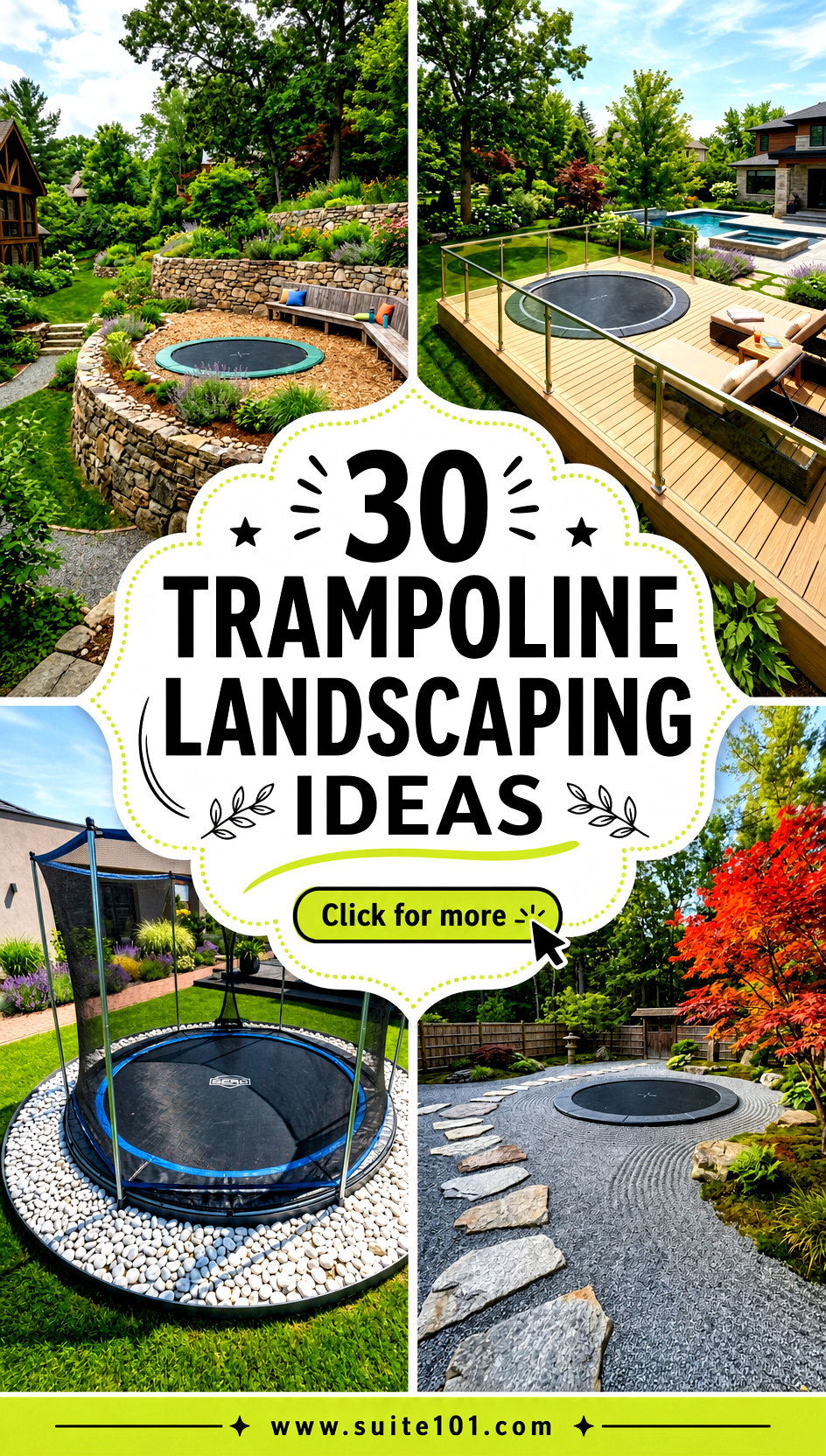
1. In ground trampoline installation
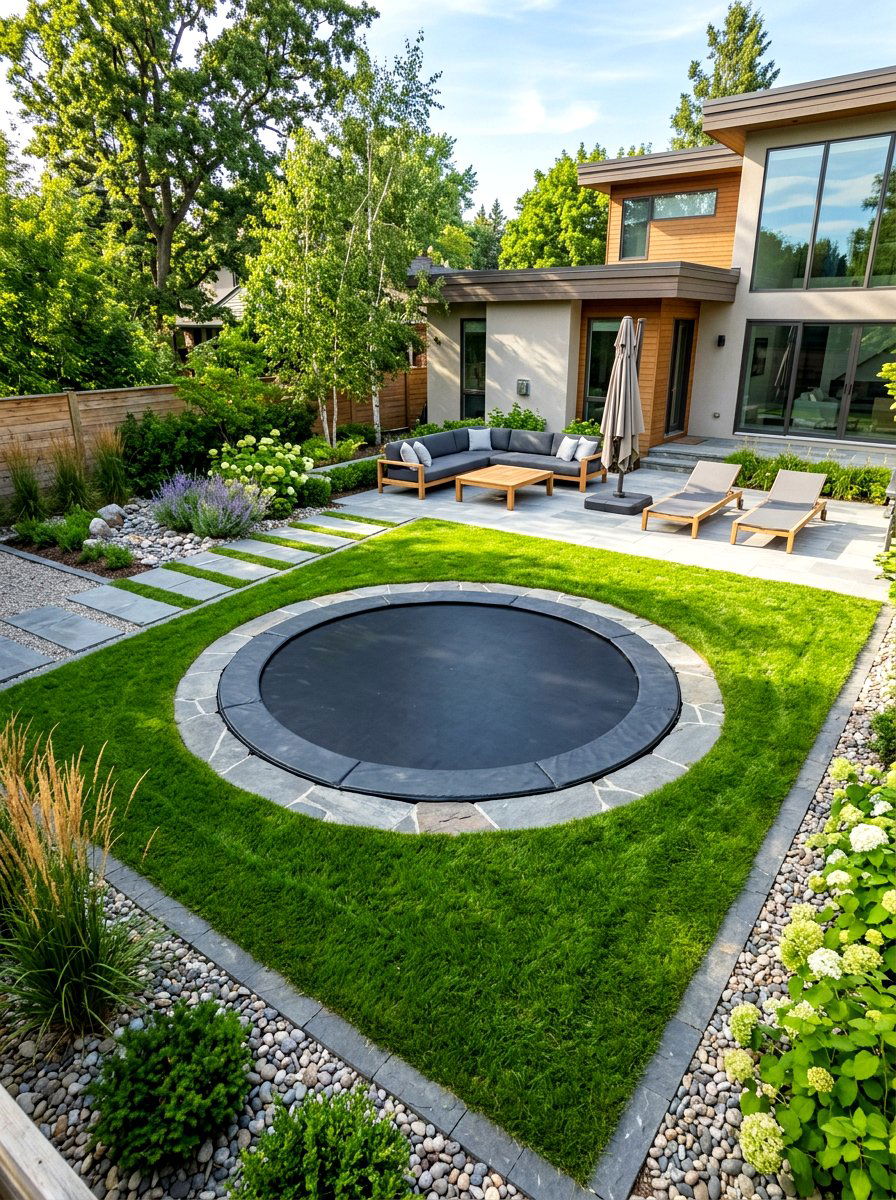
Installing an in-ground trampoline is the ultimate way to create a streamlined look in your backyard. This method involves excavating a pit that matches the dimensions of your frame, allowing the jumping surface to sit flush with the grass. Not only does this eliminate the visual clutter of a large metal frame, but it also significantly improves safety by removing the fall height. You can surround the edge with soft turf or rubber tiles to create a seamless transition from the lawn to the play zone. It is a sophisticated approach that makes the equipment feel like a permanent, intentional part of your landscape architecture while maintaining open sightlines.
2. Backyard trampoline mulch border
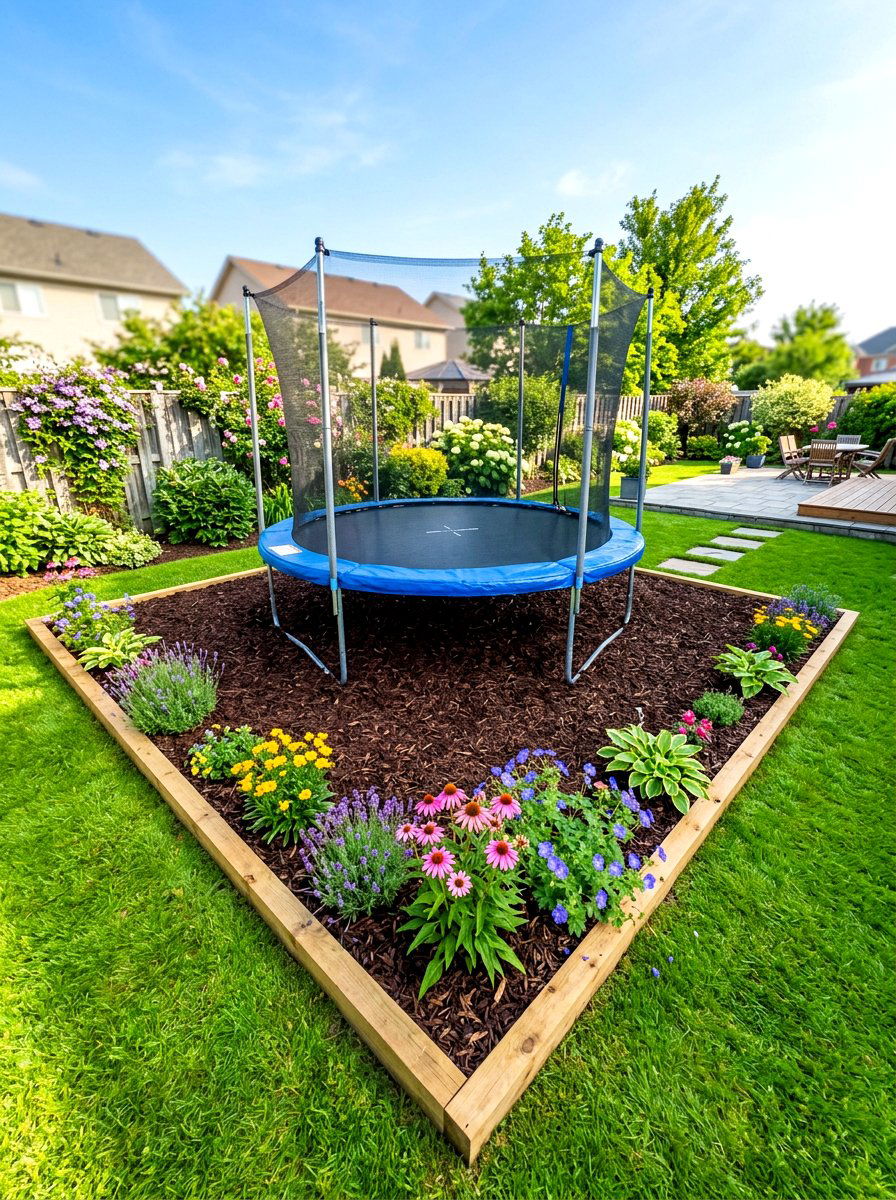
Creating a dedicated mulch border around your trampoline is a practical and visually appealing way to define the play space. Using high-quality wood chips or dark bark mulch helps to suppress weed growth and provides a soft landing surface for jumpers. This border acts as a buffer between the jumping zone and your manicured lawn, preventing grass from being trampled by heavy foot traffic. You can edge the mulch with stone or timber to keep the materials contained and neat. This design choice adds a rich, organic texture to your garden while making the trampoline area feel like a cozy, well-maintained retreat for the kids.
3. Trampoline retaining wall
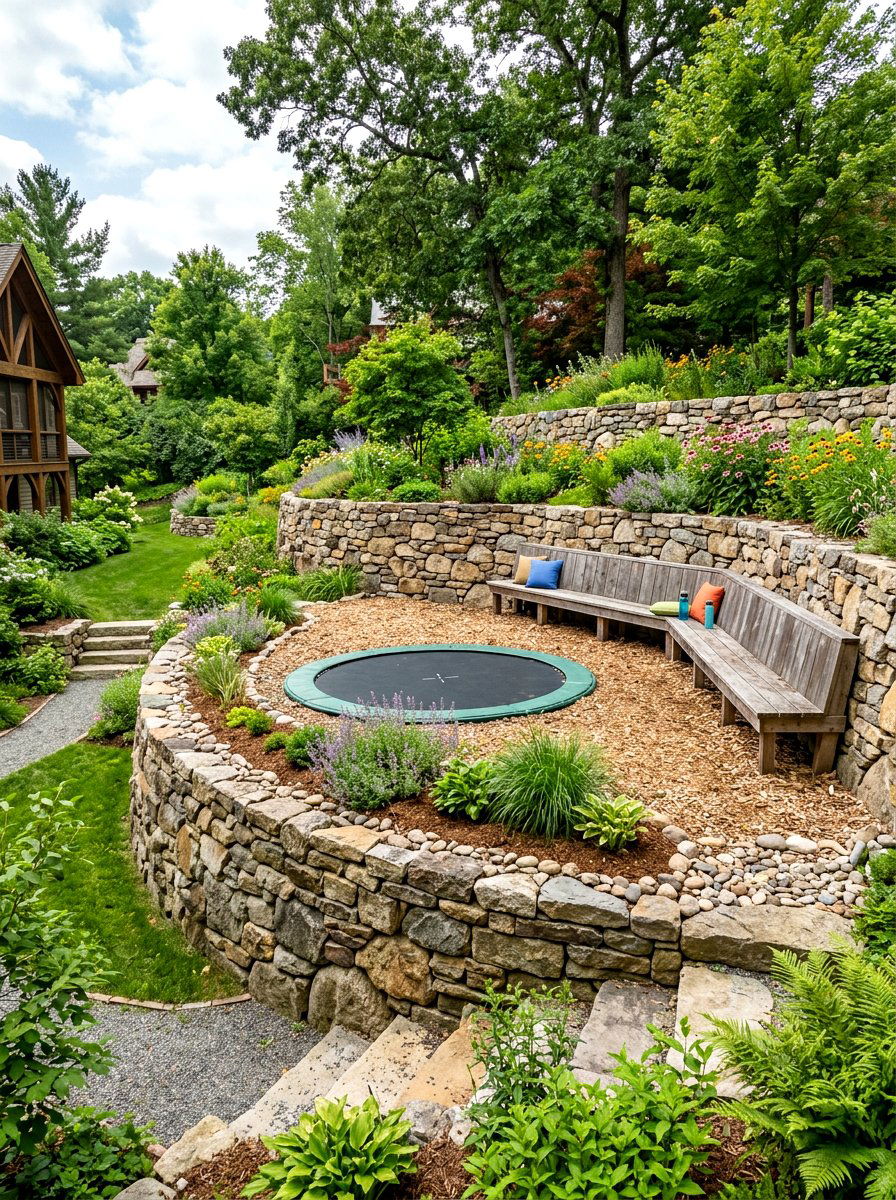
When dealing with a sloped yard, a trampoline retaining wall can provide both structural support and a stunning design element. By leveling a section of the hill and securing it with a low stone or timber wall, you create a flat, safe area for the equipment. This wall can also double as built-in seating for parents who want to supervise the fun comfortably. Using natural fieldstone or modern concrete blocks allows you to match the wall to your existing hardscaping. This approach transforms a challenging landscape feature into a functional multi-level garden that looks professional, organized, and perfectly integrated into the terrain.
4. Sunken trampoline drainage
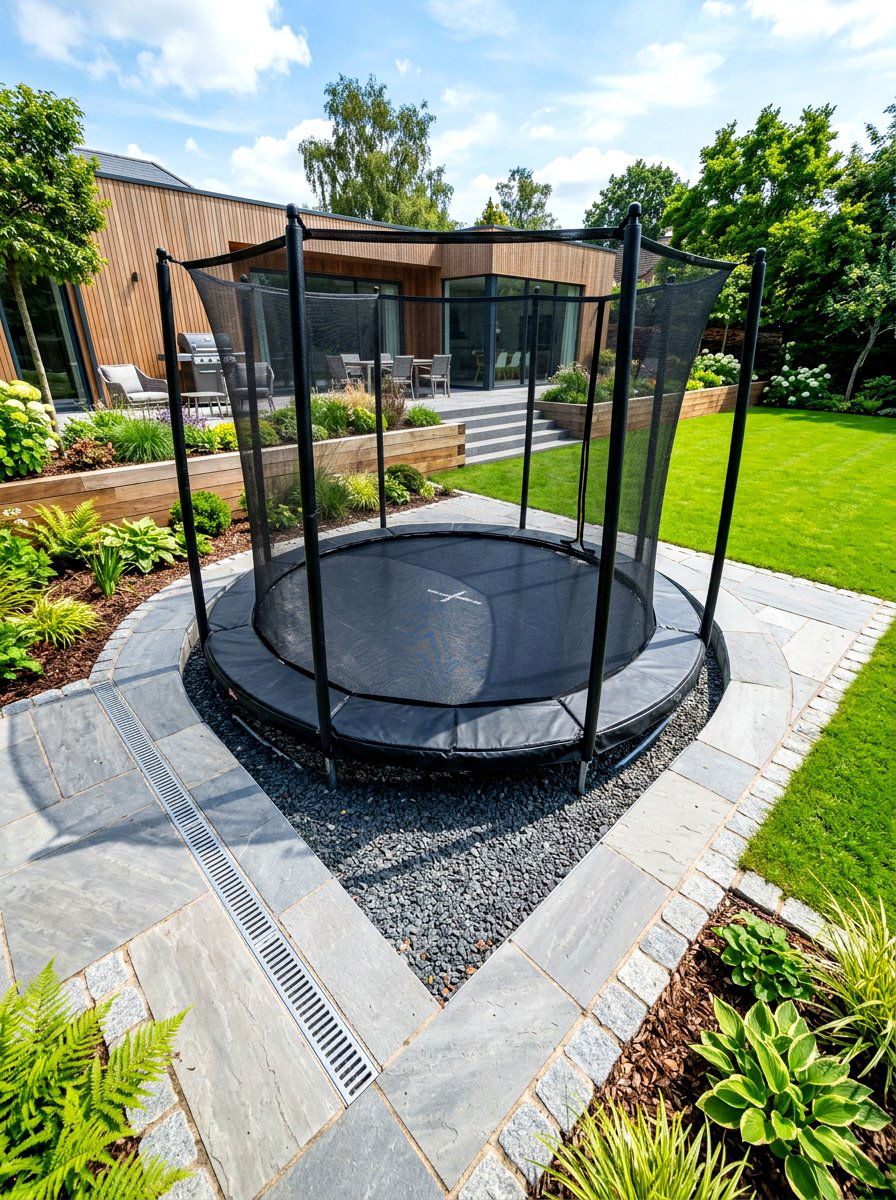
Proper sunken trampoline drainage is a critical component for any in-ground setup to prevent water from pooling beneath the mat. Installing a perforated pipe or a French drain system at the bottom of the pit ensures that rainwater moves away from the frame efficiently. You should also line the bottom with a layer of gravel to facilitate fast drainage and prevent mud buildup. Keeping the area dry protects the metal components from rust and extends the life of the jumping mat. A well-engineered drainage solution ensures your play area remains usable year-round, even after heavy storms, while maintaining the overall health of your garden.
5. Trampoline safety padding
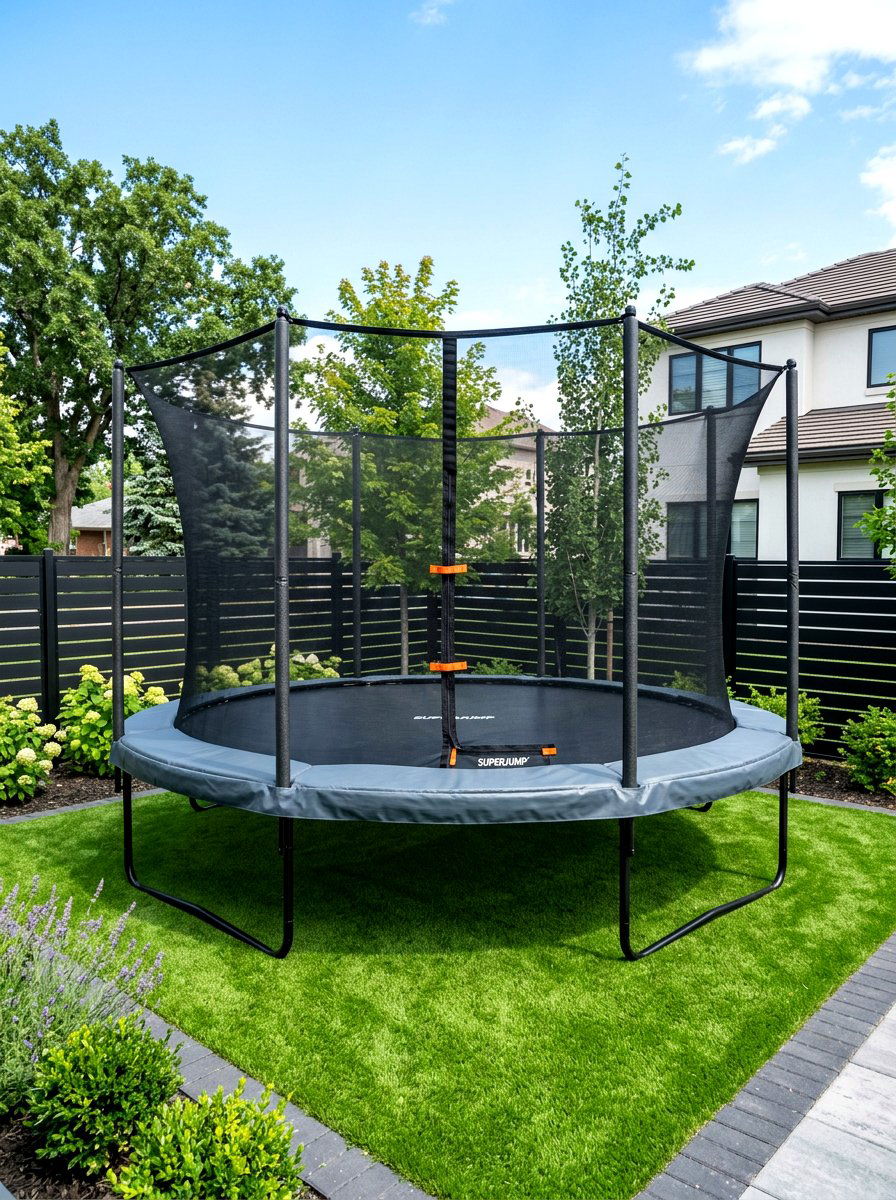
Upgrading your trampoline safety padding is an easy way to enhance both the protection and the style of your backyard equipment. Modern padding comes in various colors and high-density foam options that can be coordinated with your garden's color palette. Choosing a neutral tone like forest green or slate grey helps the structure blend into the surrounding vegetation more naturally. Quality padding should be UV-resistant to prevent fading and cracking under the sun’s harsh rays. By investing in premium, thick pads, you ensure a softer landing for children while giving the trampoline a polished, well-kept appearance that complements your outdoor decor.
6. Artificial grass around trampoline
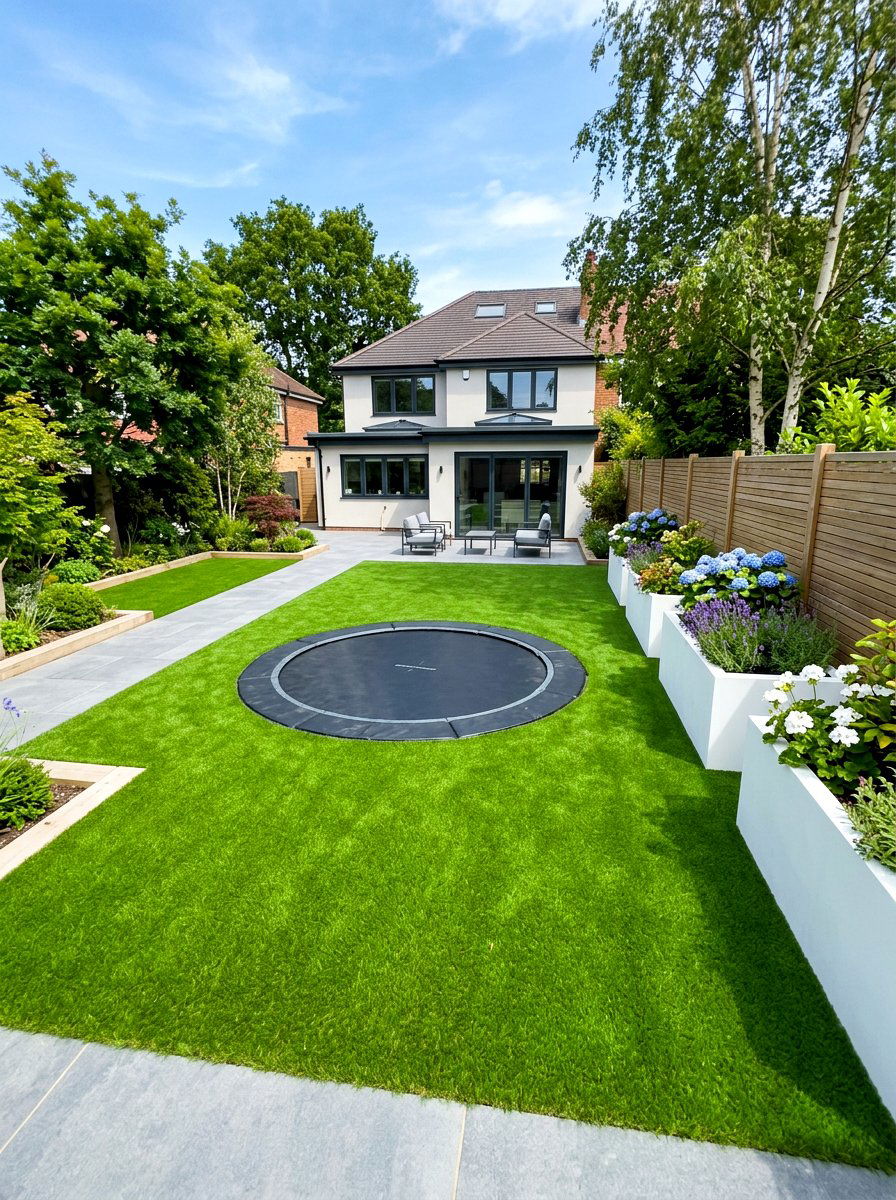
Installing artificial grass around your trampoline is a low-maintenance solution that keeps the play area looking pristine throughout the year. Real grass often struggles to grow beneath or directly around a trampoline due to shade and constant foot traffic. Synthetic turf provides a durable, evergreen surface that requires no mowing, watering, or fertilizing. It also offers a consistent, soft cushion for anyone stepping off the mat. You can easily trim the turf to fit perfectly around the legs of an above-ground model or flush against an in-ground frame. This choice results in a clean, mud-free environment that always looks professionally landscaped.
7. Trampoline lighting
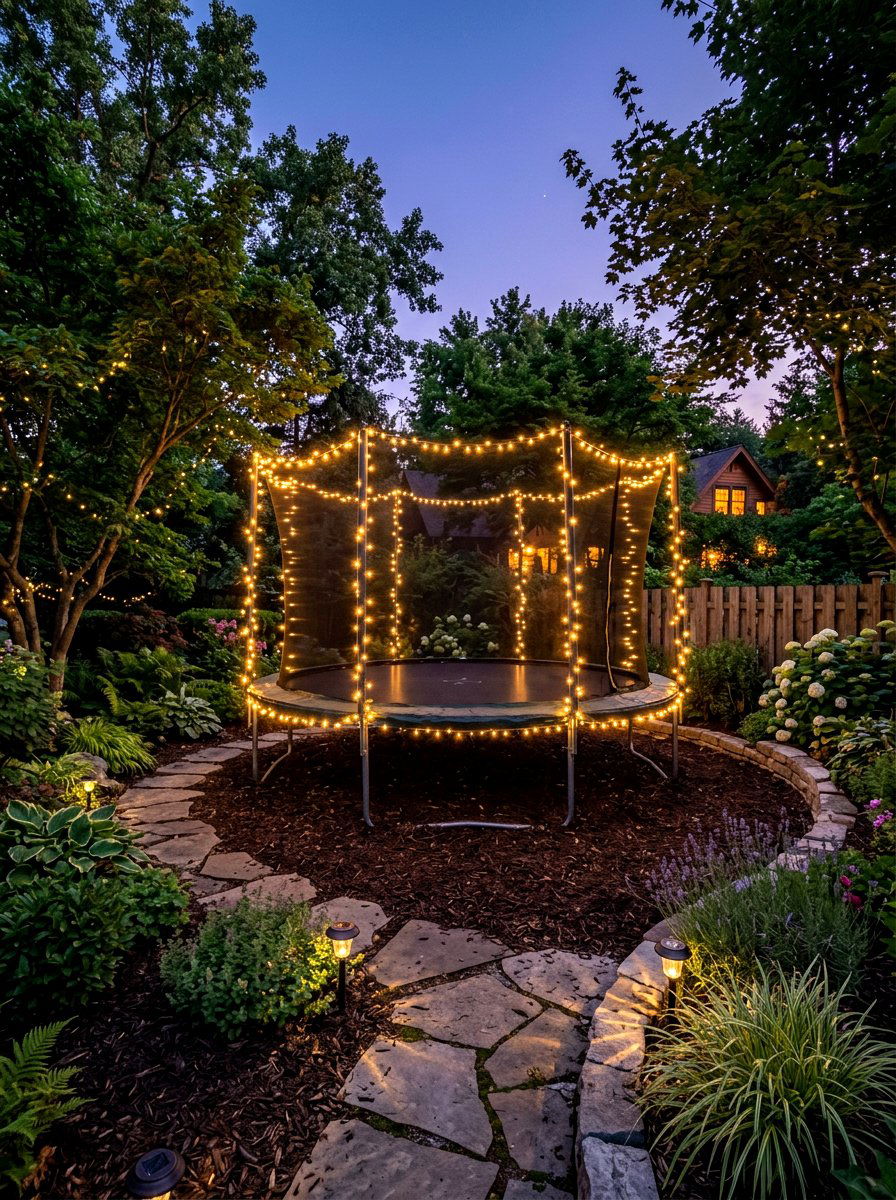
Adding trampoline lighting can transform your backyard into an enchanting nighttime playground for the whole family. Solar-powered LED string lights wrapped around the enclosure poles or tucked under the rim of an in-ground unit create a soft, magical glow. You could also install path lights or spotlights nearby to illuminate the surrounding landscape for added safety during evening jumps. These lighting features not only extend play hours but also turn the trampoline into a beautiful glowing feature in your garden design. Using warm white bulbs creates a cozy ambiance, making the play zone feel like an inviting extension of your outdoor living space.
8. Privacy screen for trampoline
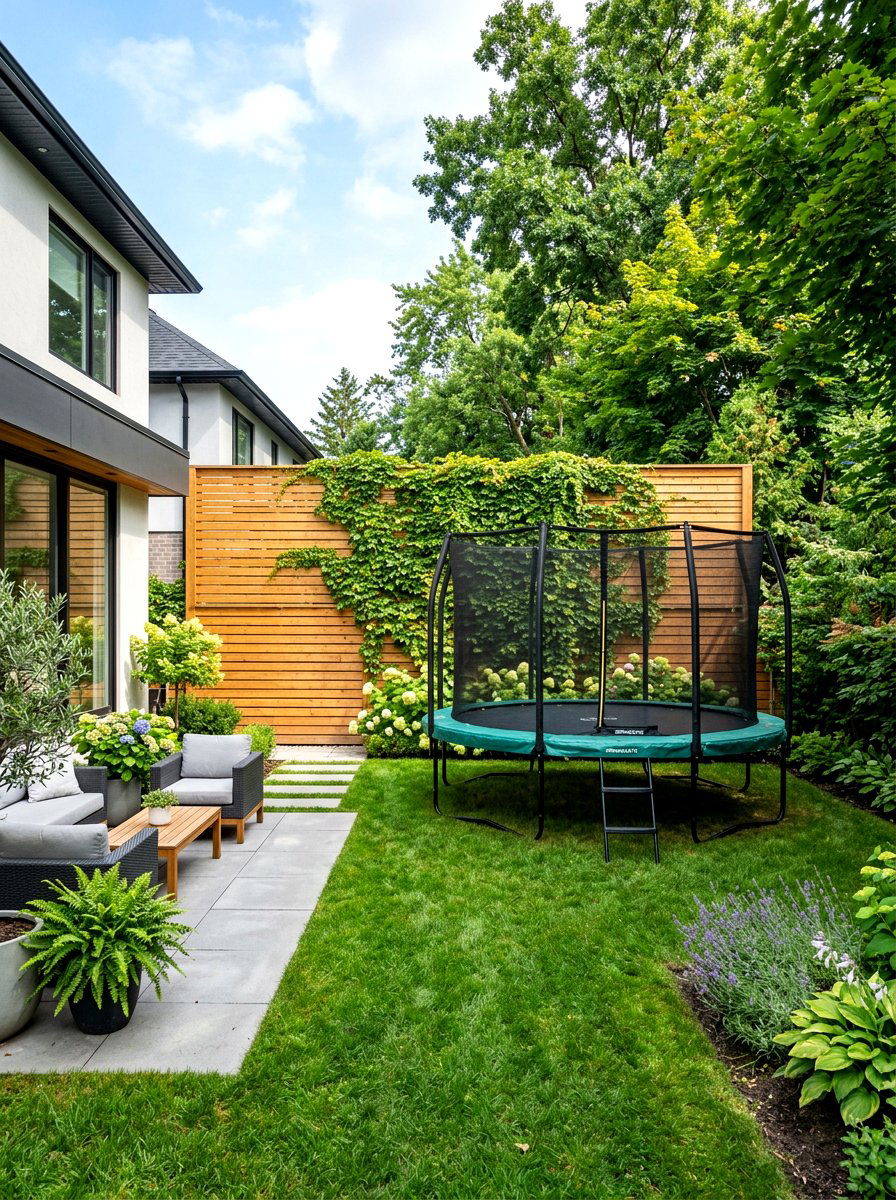
A privacy screen for your trampoline area is perfect for creating a secluded and focused environment for play. You can use decorative wooden lattice, horizontal slat fences, or even tall bamboo panels to block views from neighbors. These screens also serve as an excellent backdrop for climbing plants like ivy or jasmine, adding a touch of greenery to the structure. By framing the trampoline with a stylish partition, you define the play zone as a separate "room" within your garden. This setup provides a sense of security for children while keeping the bulky equipment hidden from your main patio or dining areas.
9. Trampoline garden border
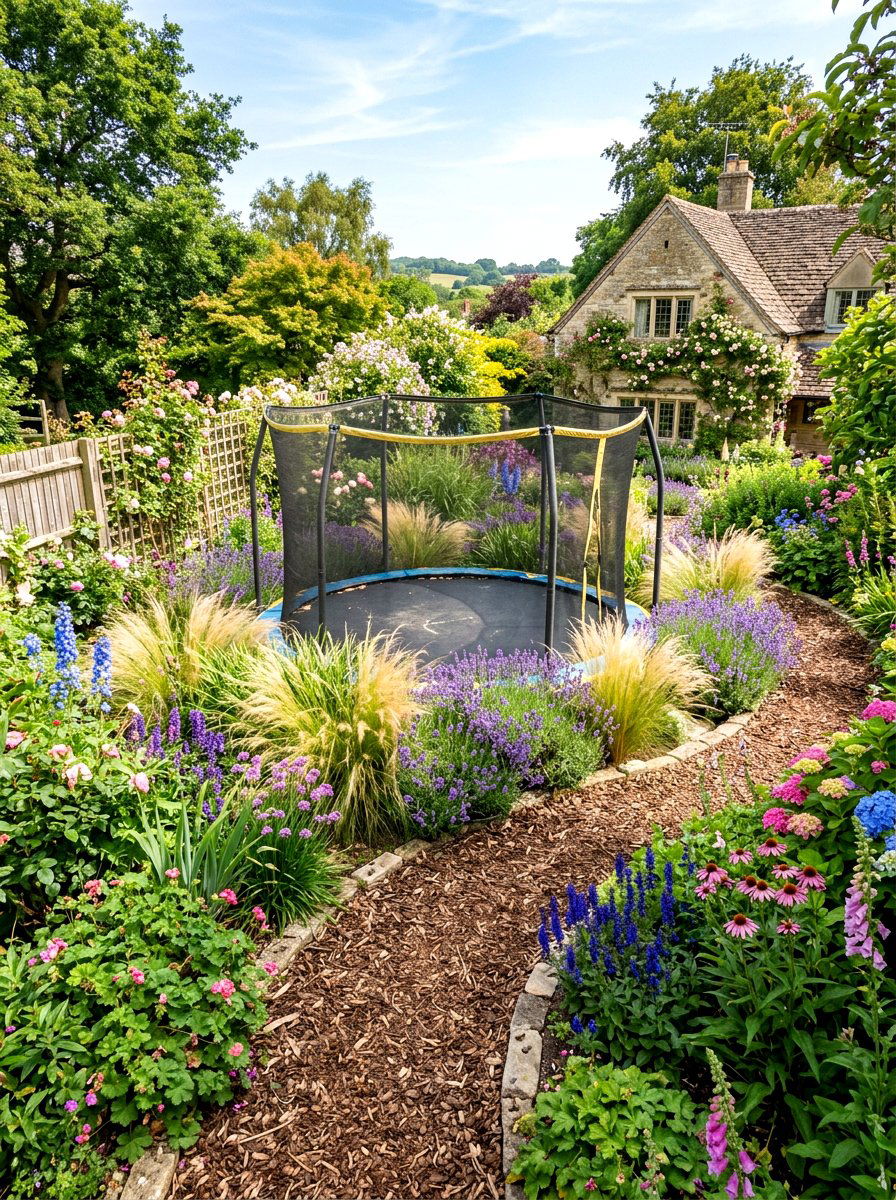
Designing a lush trampoline garden border is a wonderful way to soften the industrial look of the equipment. By planting a mix of low-maintenance shrubs, ornamental grasses, and perennial flowers around the perimeter, you anchor the structure into the natural landscape. Choose hardy plants that can withstand the occasional stray ball or footstep without losing their beauty. Tall grasses like Miscanthus or fountain grass provide movement and texture, while colorful blooms add seasonal interest. This botanical approach makes the trampoline feel like a hidden gem nestled within a vibrant garden, rather than just a standalone piece of plastic and metal.
10. Deck around trampoline
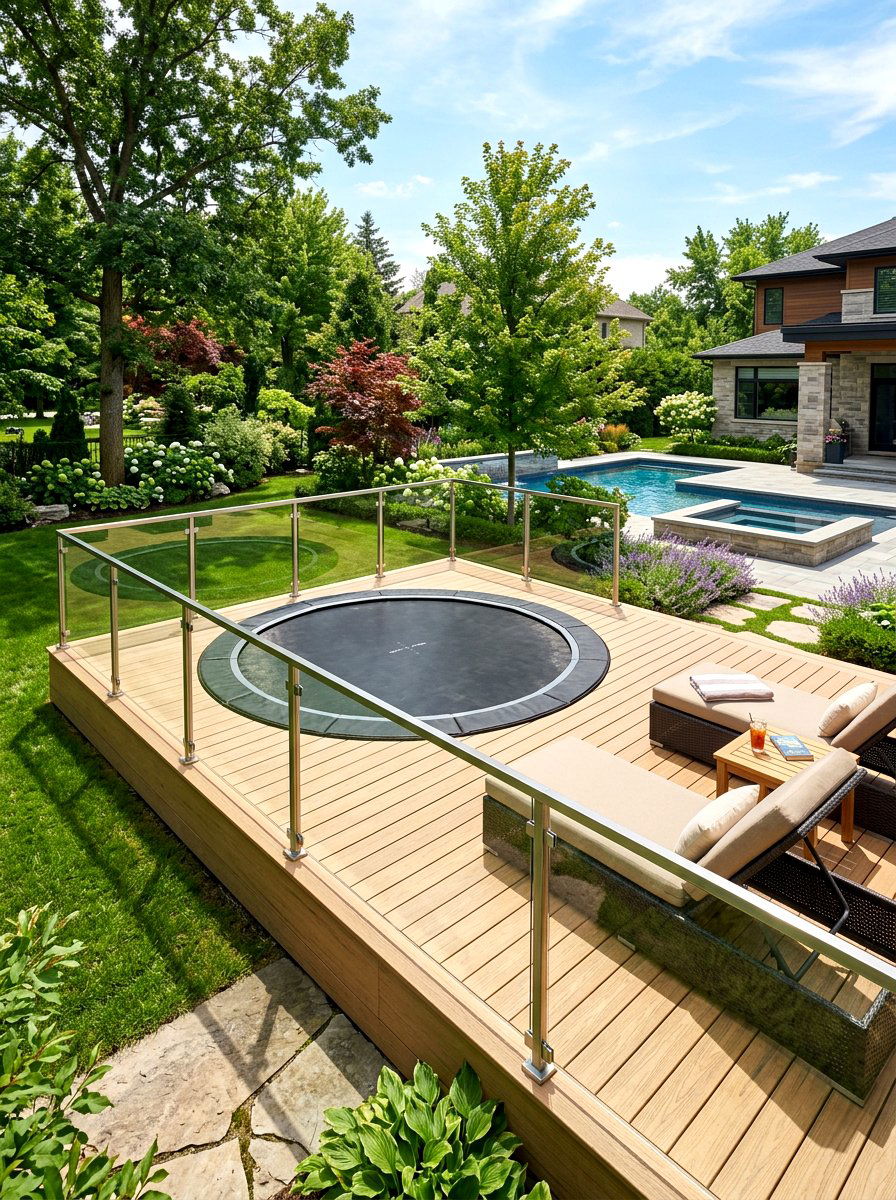
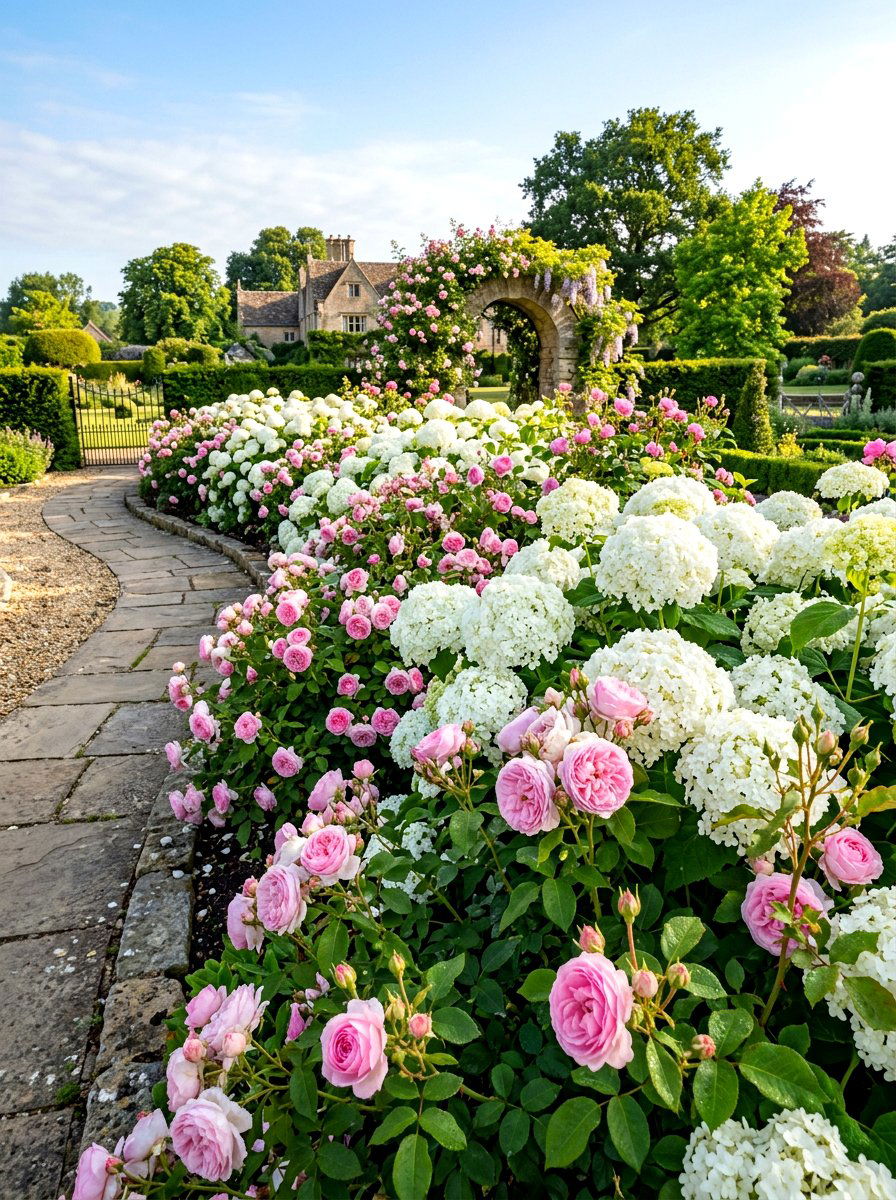
Building a custom deck around your trampoline creates a high-end, integrated look that is perfect for modern backyards. A wooden or composite platform can be built to the height of an above-ground trampoline, allowing users to walk straight onto the mat from the deck. This design eliminates the need for ladders and provides a clean, stable surface for lounging or watching the kids play. You can incorporate built-in planters or storage benches into the deck design for added functionality. A well-crafted deck turns the trampoline into a permanent architectural feature that blends flawlessly with your home’s outdoor entertainment zones.
11. Trampoline seating area
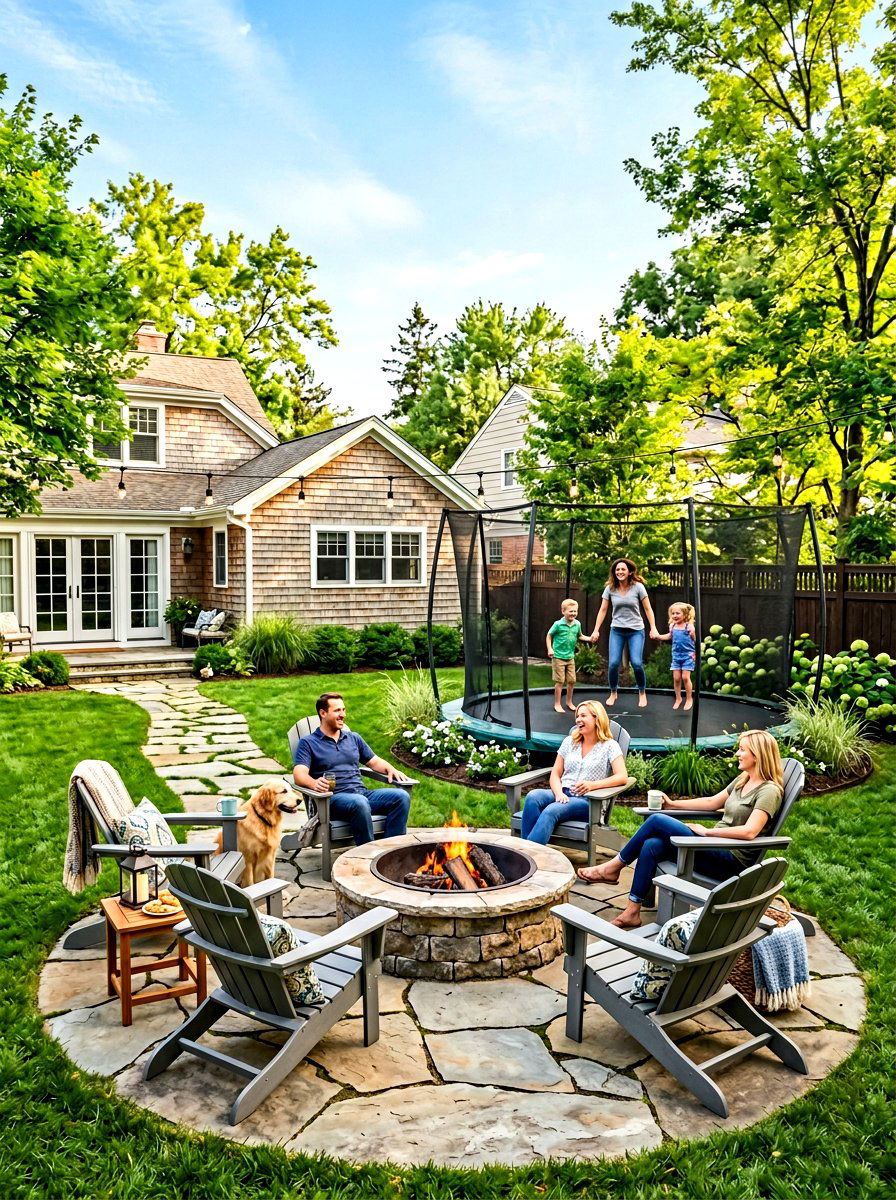
Creating a dedicated trampoline seating area nearby ensures that the play zone is a social hub for the entire family. You can arrange weather-resistant Adirondack chairs, a cozy outdoor sofa, or even a simple stone bench within viewing distance of the jumpers. This setup allows parents to relax and socialize while keeping a close eye on their children's activities. Adding an outdoor rug or a small side table for drinks can make the space feel like a complete lounge. By treating the trampoline area as a destination for relaxation, you encourage more time spent outdoors and turn playtime into a shared family experience.
12. Trampoline flower bed
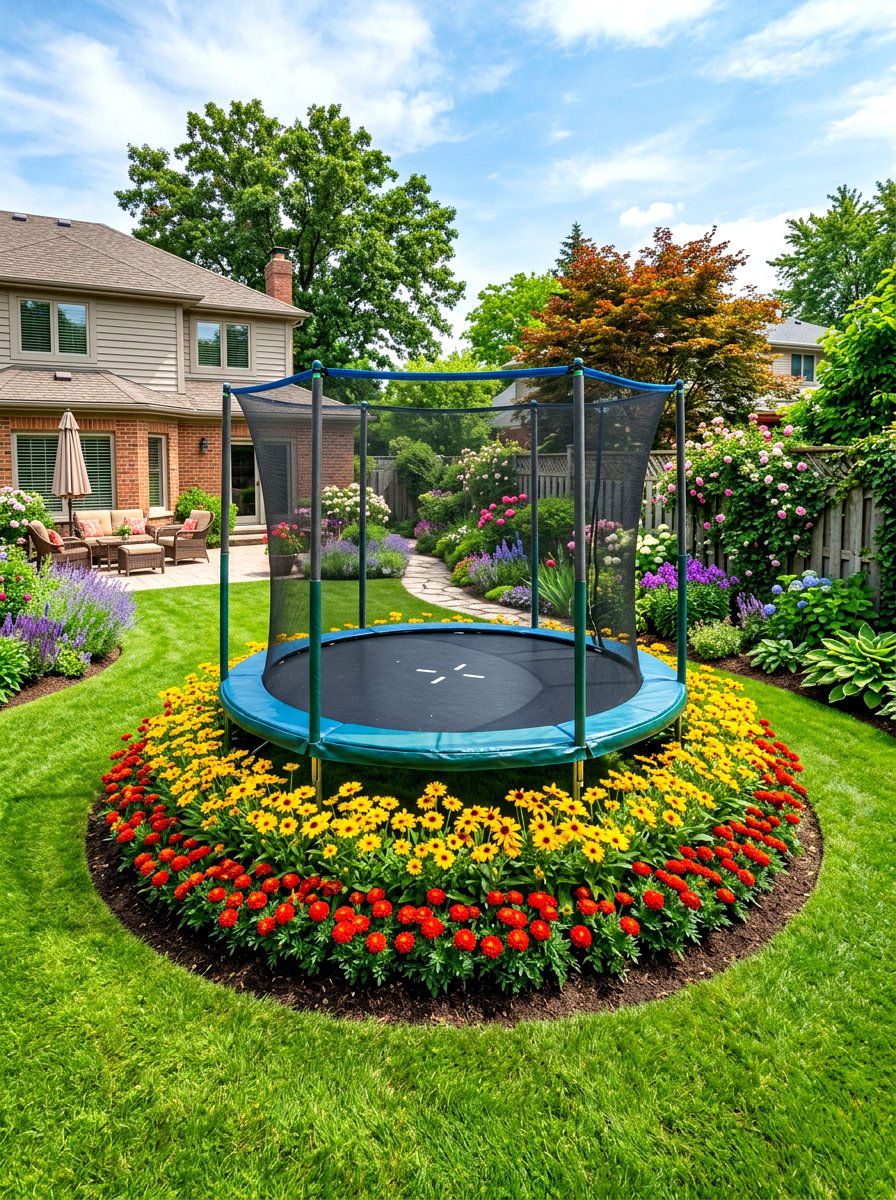
A vibrant trampoline flower bed can turn a simple play area into a colorful masterpiece that brightens your entire backyard. Surround the base of the frame with a mix of sun-loving annuals and perennials to create a blooming ring of color. Selecting a variety of heights and textures, such as lavender, marigolds, and salvia, adds depth to the design. Ensure you leave a small path for access so the flowers aren't crushed by excited jumpers entering or exiting. This floral touch not only masks the metal legs but also attracts butterflies and hummingbirds, making the play zone a lively and beautiful part of your garden.
13. Stone paver path
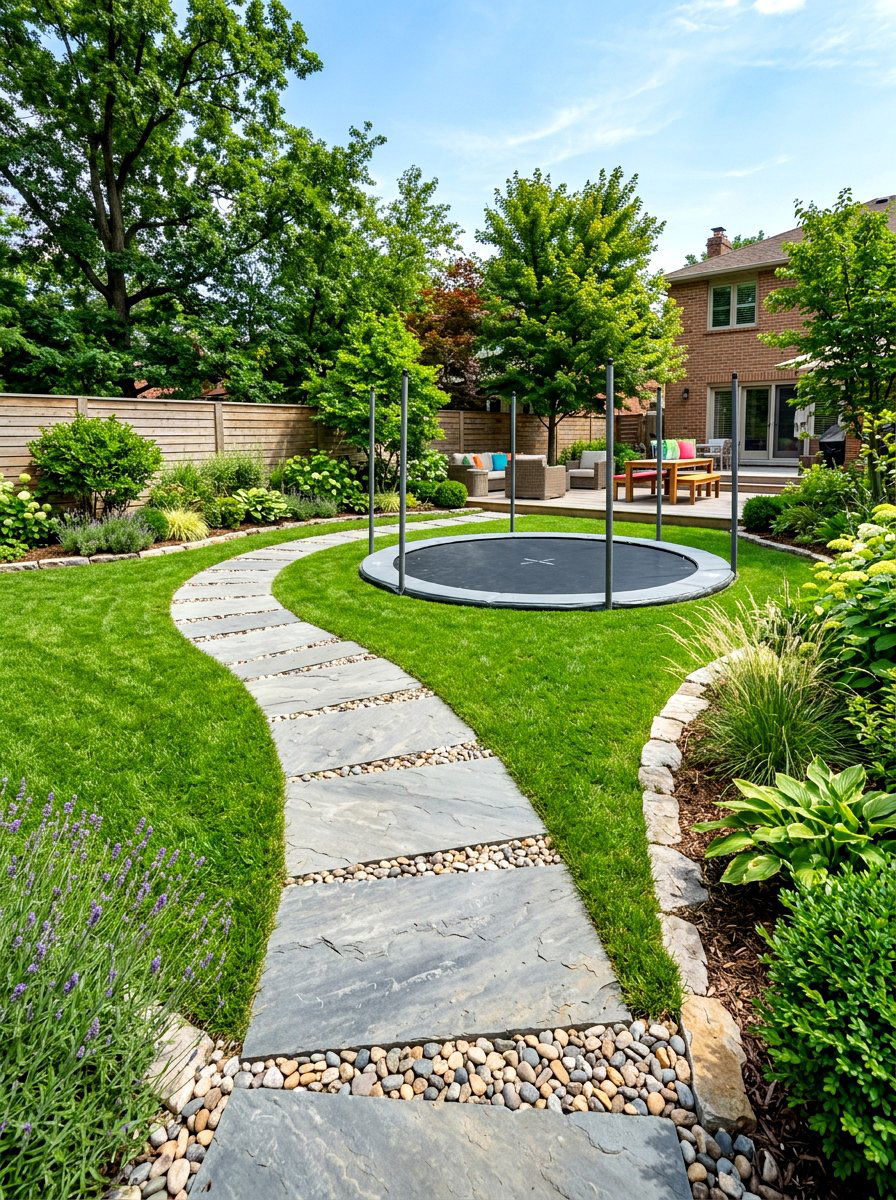
Installing a stone paver path leading to your trampoline prevents your lawn from becoming worn and muddy over time. Large flagstones, slate tiles, or simple concrete pavers can create a stylish and functional walkway through your yard. This path guides foot traffic and keeps dirt from being tracked onto the jumping mat, which helps keep the surface clean. You can fill the gaps between the stones with moss or small pebbles for a more natural, organic look. A well-defined path adds structure to your garden layout and makes the trampoline feel like a carefully planned destination within your outdoor sanctuary.
14. Trampoline shade sail
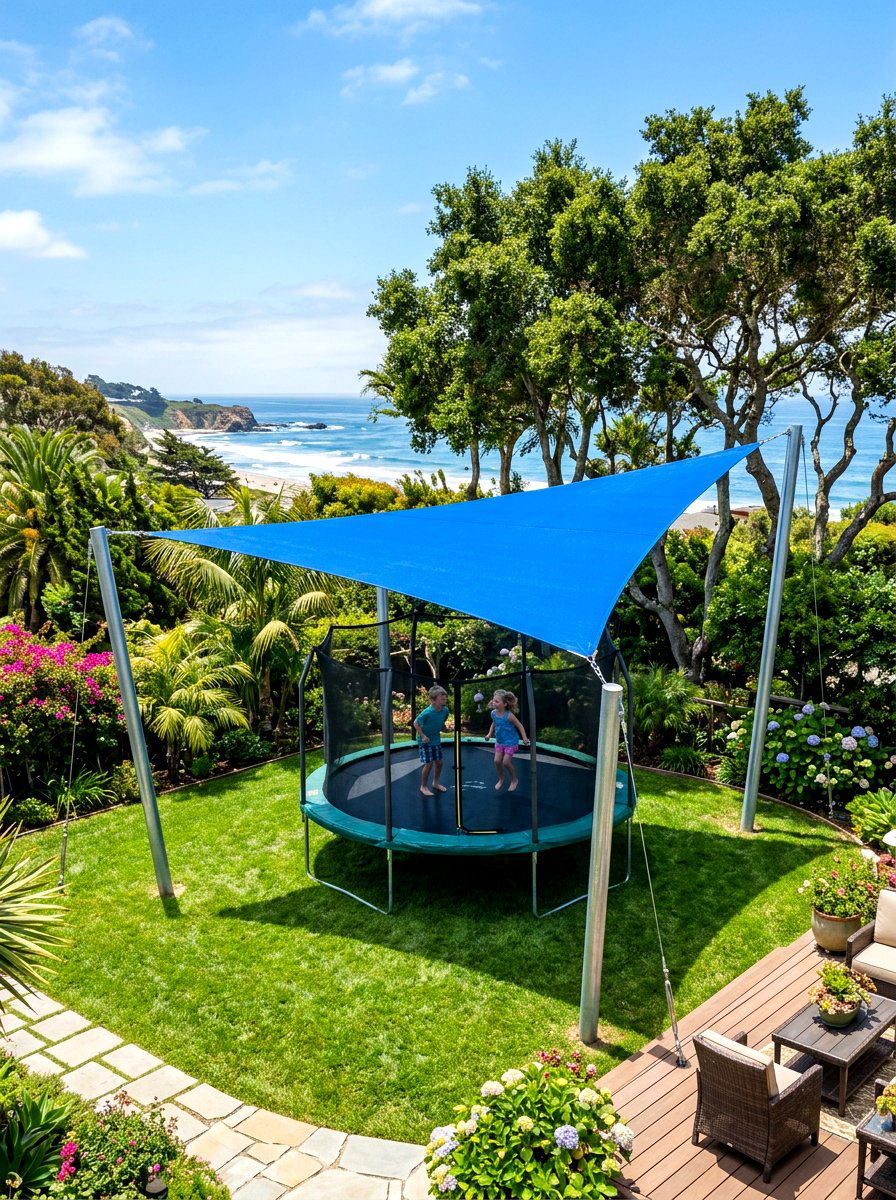
Adding a trampoline shade sail is a brilliant way to protect jumpers from the hot sun while adding a modern architectural element to your yard. These durable fabric canopies can be anchored to nearby posts or trees to provide a large area of UV protection. Available in various colors and geometric shapes, they can be matched to your home's exterior or garden decor. Beyond keeping the jumping surface cool, a shade sail creates a breezy, comfortable atmosphere for long summer afternoons of play. It is a stylish and practical addition that ensures your kids can enjoy the trampoline safely even during peak daylight hours.

15. Modern trampoline enclosure
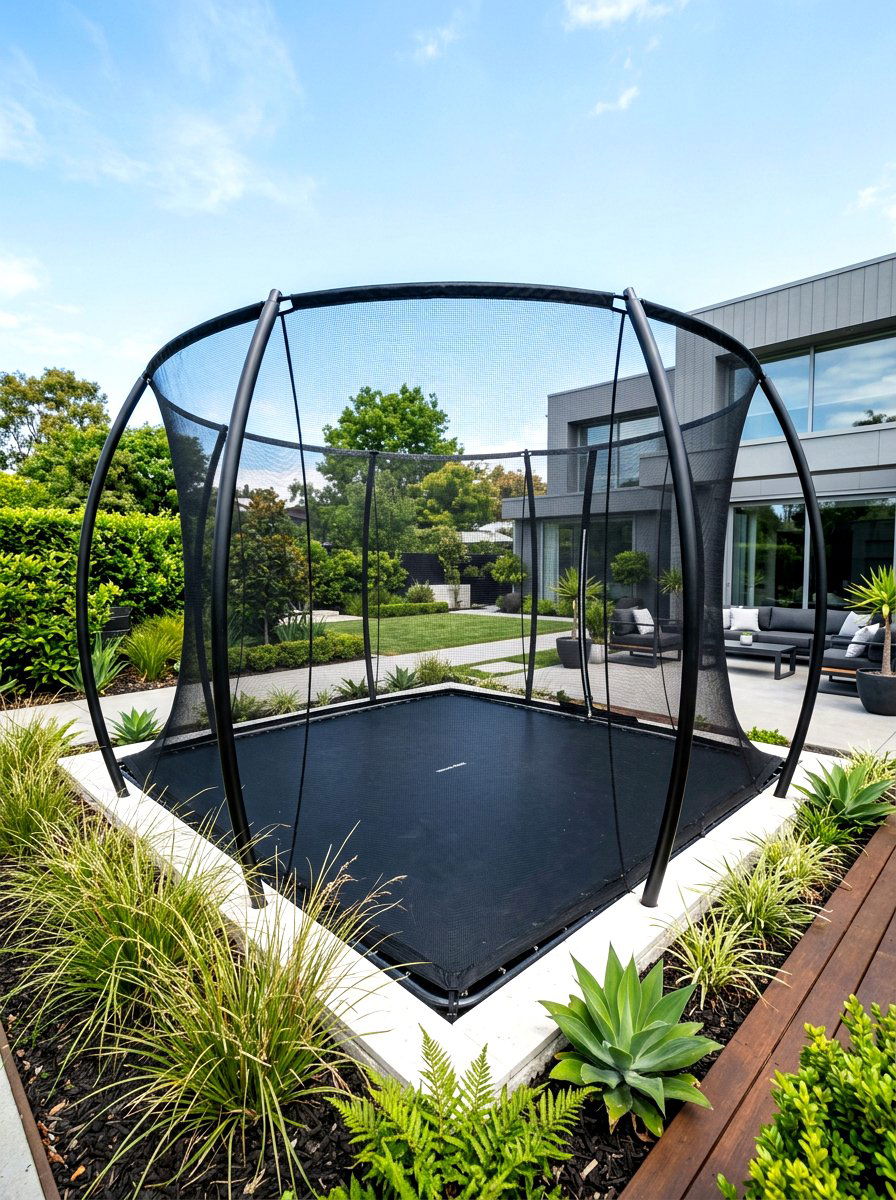
Choosing a modern trampoline enclosure can significantly improve the aesthetic appeal of your backyard while providing essential safety. Look for high-quality nets with curved poles and sleek, dark hardware that looks more like a contemporary structure than a toy. Many modern designs feature hidden springs and internal netting that create a clean, streamlined silhouette. This minimalist approach allows the trampoline to blend into a sophisticated landscape without appearing cluttered or distracting. By selecting a model with high-end materials and a refined design, you ensure that your children's play area contributes positively to your overall garden style and modern home vibe.
16. Trampoline slope landscaping
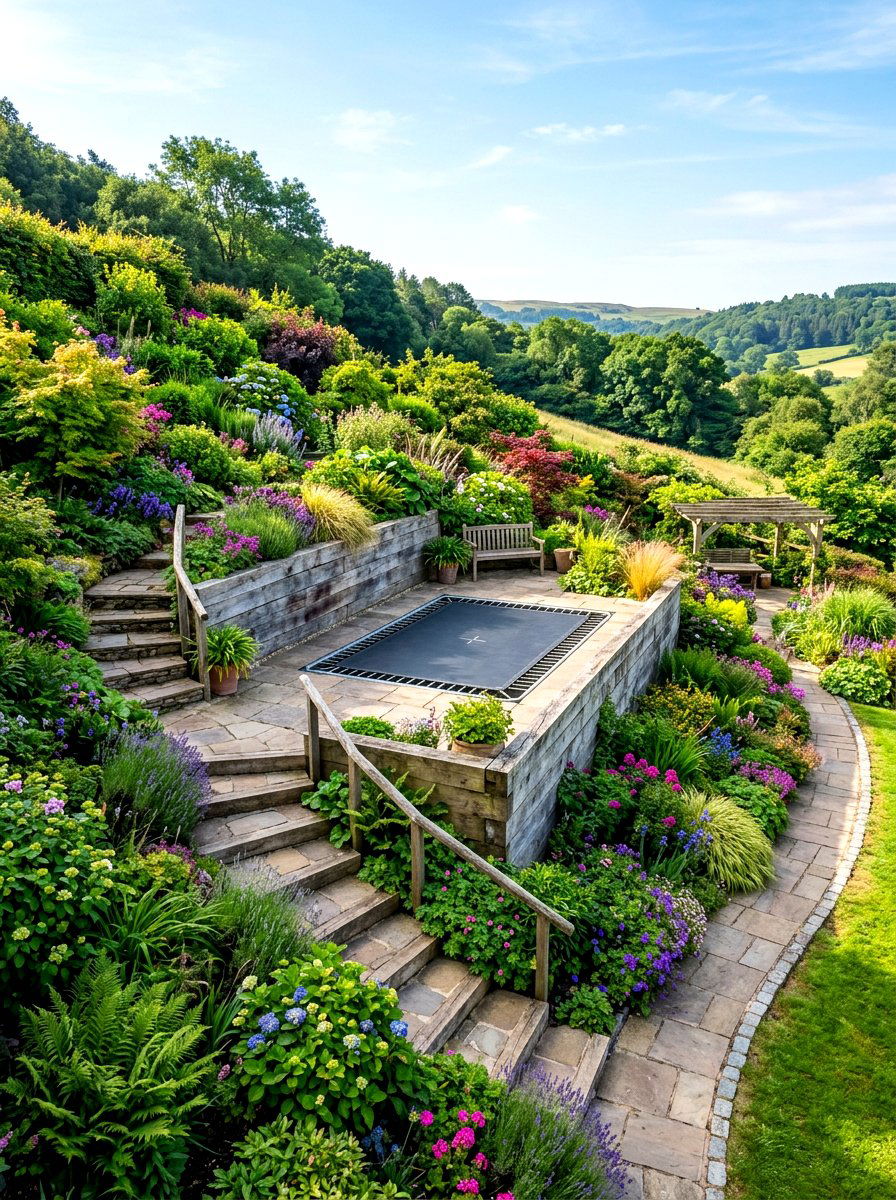
Effective trampoline slope landscaping can turn a difficult hill into a creative and functional play zone for your family. By carving out a flat terrace into the hillside and reinforcing it with a sturdy retaining wall, you create a level base for the equipment. You can use the surrounding incline to install a slide or a set of stone steps that lead down to the trampoline. Planting the slope with creeping groundcovers or drought-tolerant shrubs helps to stabilize the soil and adds a lush, green backdrop. This multi-dimensional approach makes the most of your yard’s natural topography while creating a visually interesting layout.
17. Tropical garden trampoline
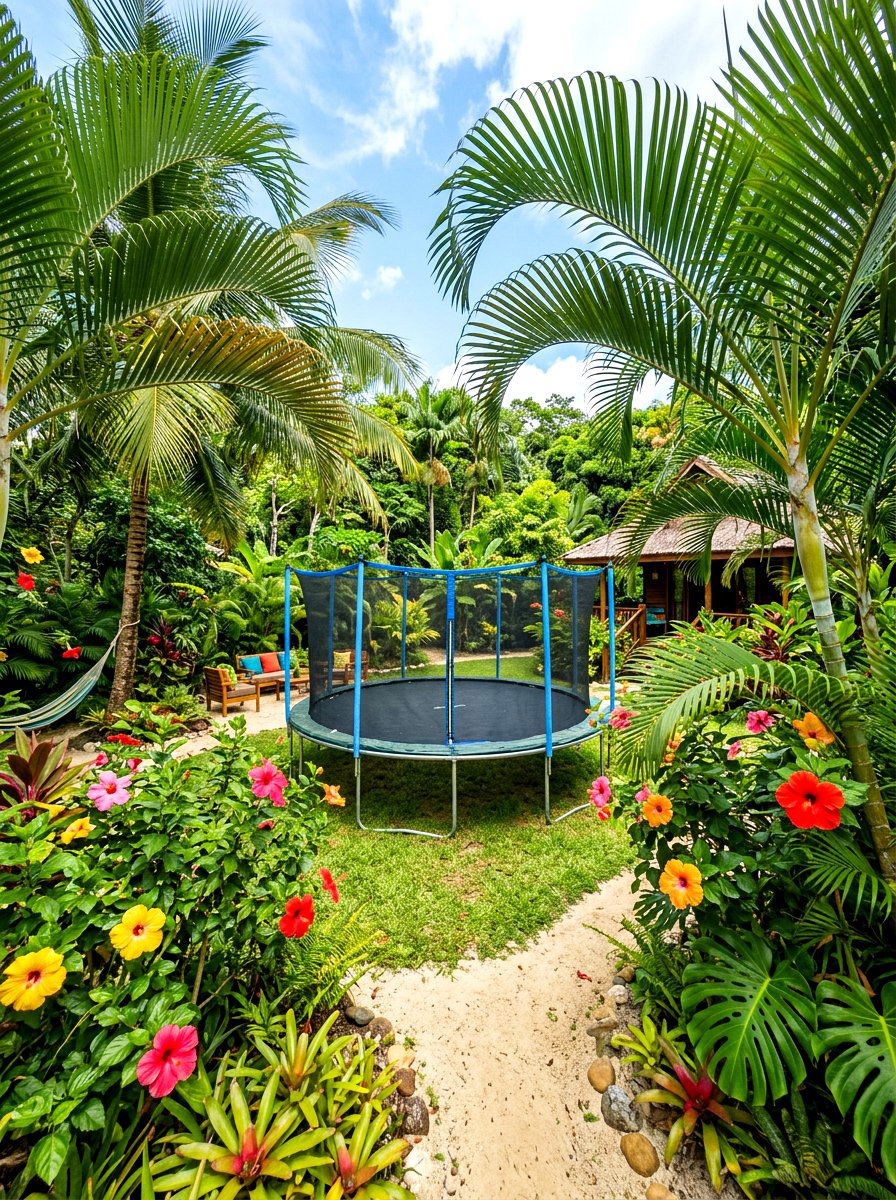
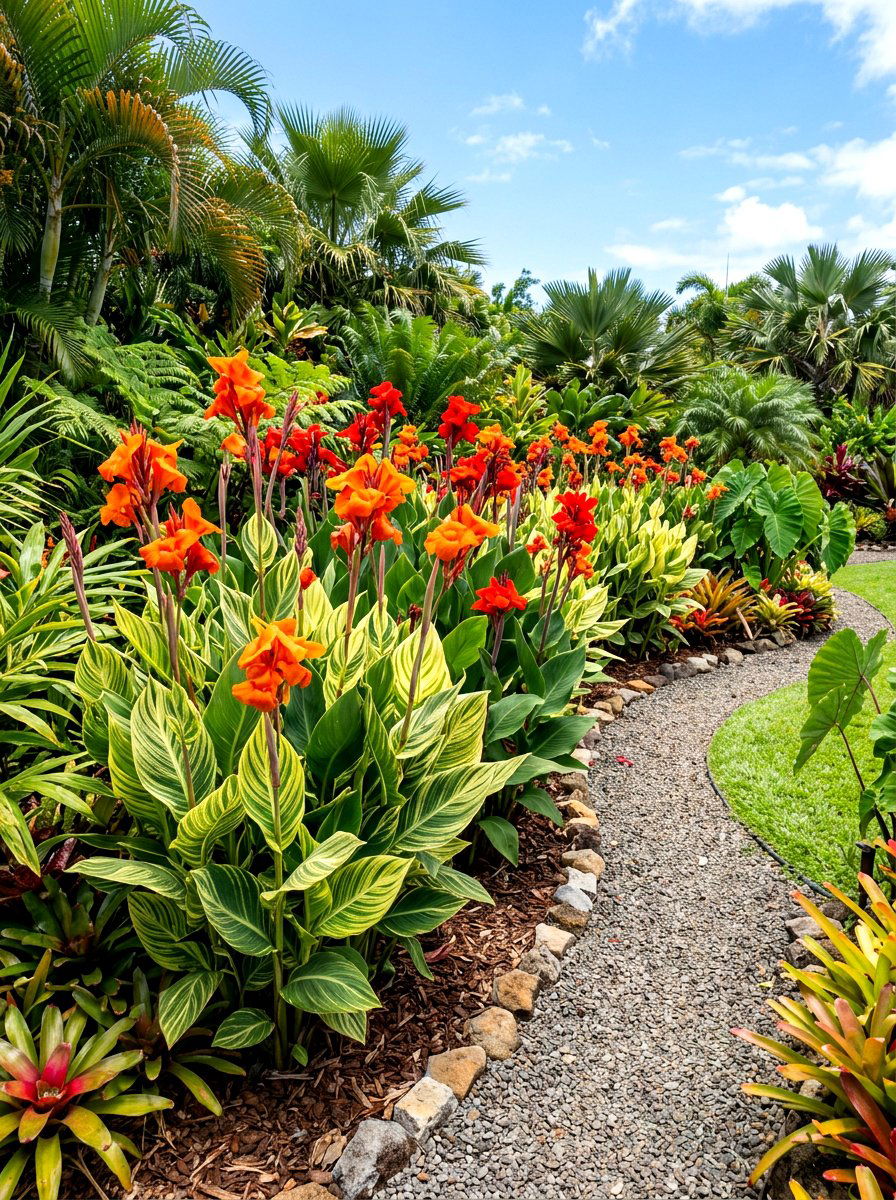
A tropical garden trampoline setup can make every jump feel like a vacation in your own private backyard paradise. Surround the area with large-leafed plants like hostas, canna lilies, and hardy palms to create a dense, exotic feel. Using a thick layer of dark mulch or even sand can enhance the island vibe while providing a soft landing surface. You could also add a bamboo fence or a thatched-roof gazebo nearby to complete the look. This theme works exceptionally well in warmer climates and turns the play area into a lush, vibrant retreat that feels miles away from the everyday world.
18. Desert landscape trampoline
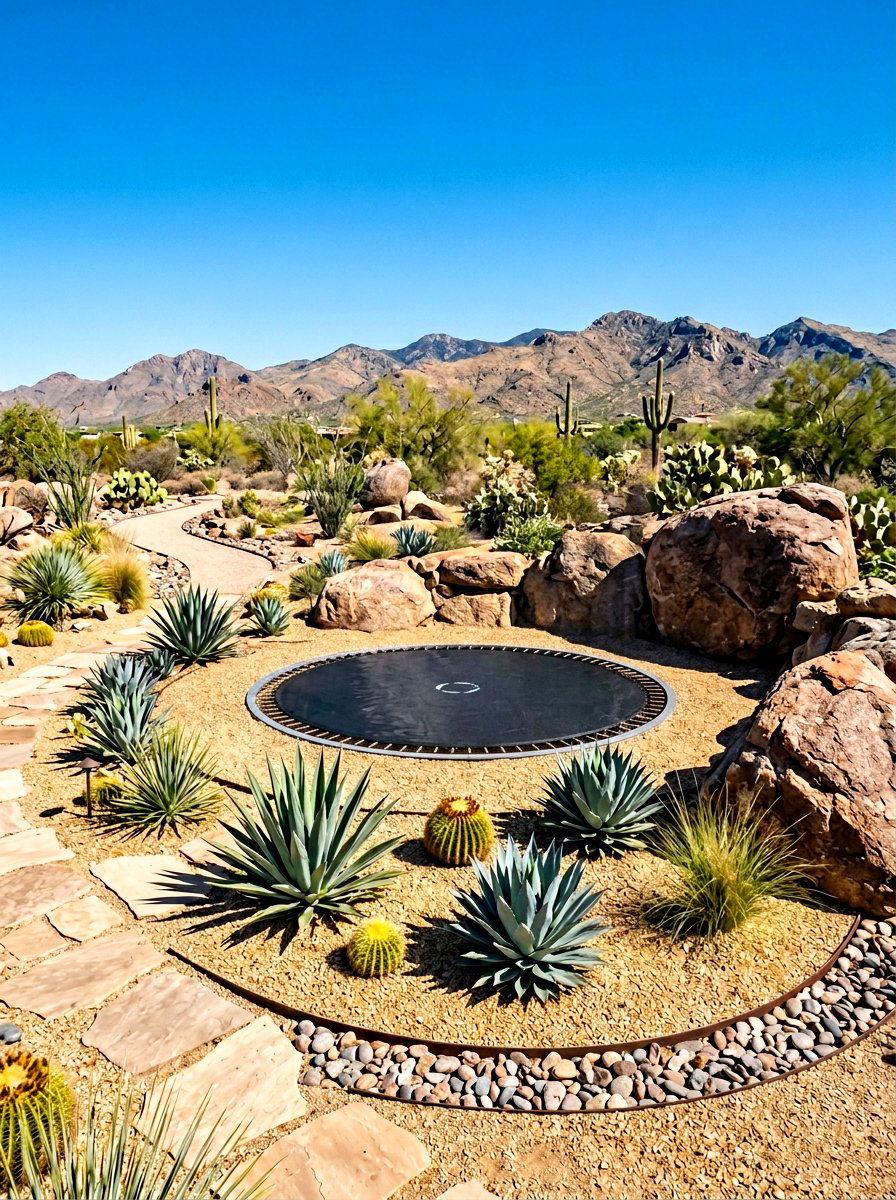
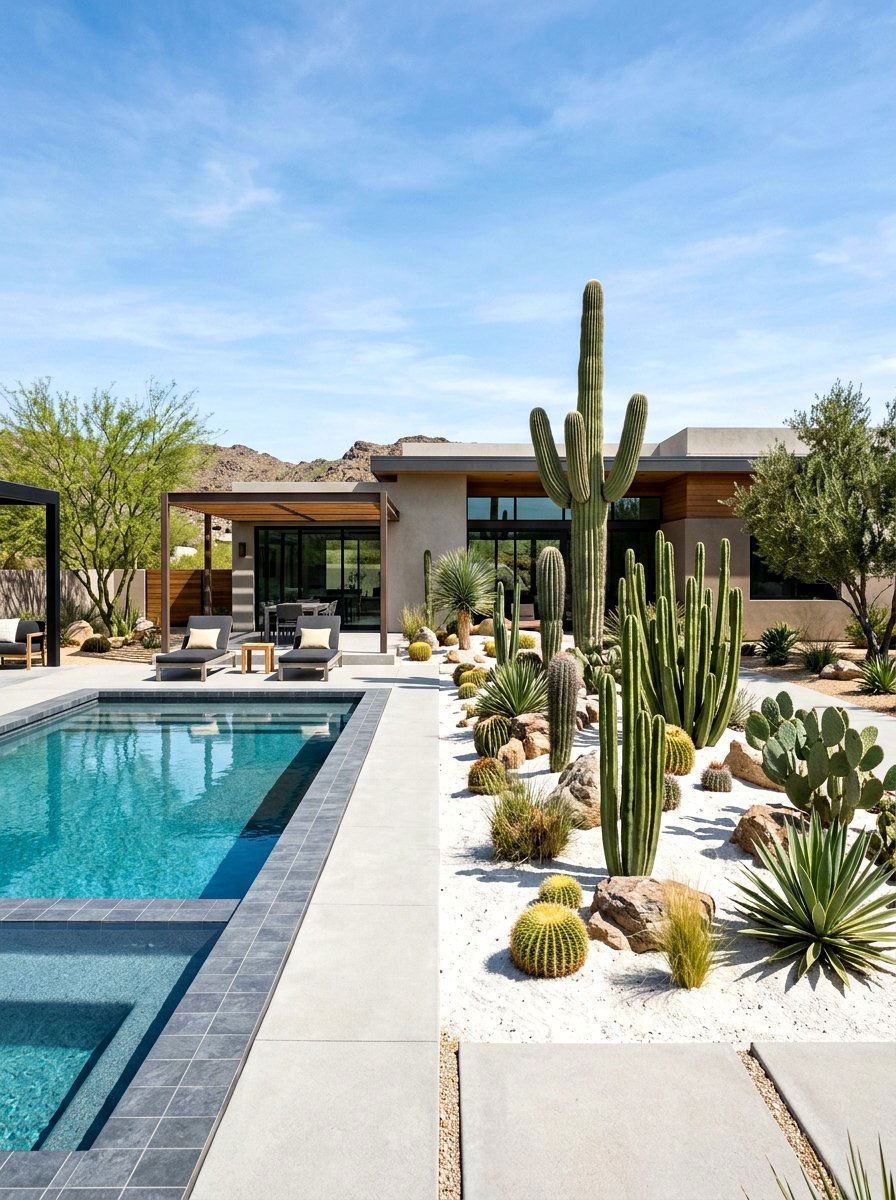
Designing a desert landscape trampoline area is a low-maintenance and visually striking option for arid climates. Instead of grass, use a combination of decomposed granite, crushed stone, and drought-resistant succulents to surround the jumping zone. Large boulders can be placed strategically to add natural height and character to the design. This xeriscape approach saves water and creates a clean, modern aesthetic that highlights the unique beauty of desert flora. Agaves and yuccas planted at a safe distance provide architectural interest without creating a hazard for jumpers. It is a sophisticated way to integrate play equipment into a dry, sun-drenched garden environment.
19. Kids play zone trampoline
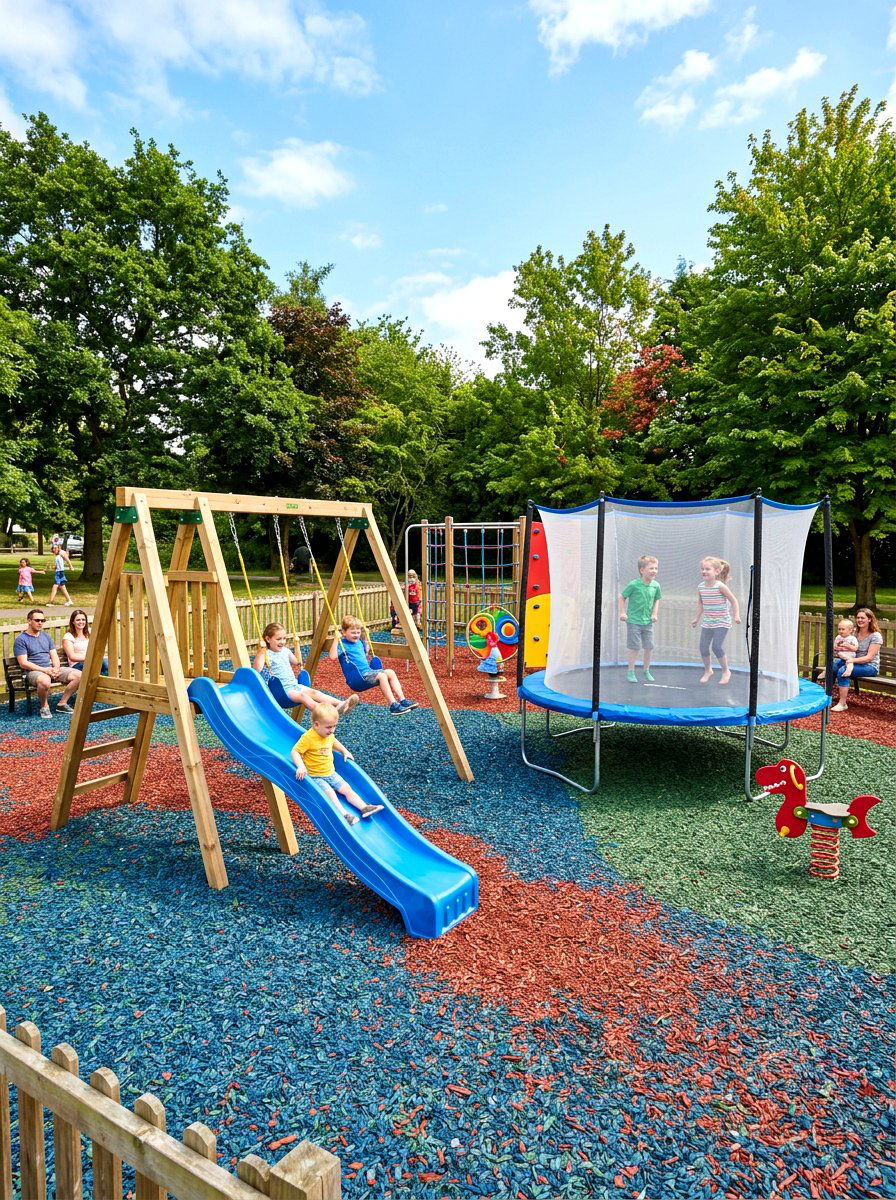
Creating a comprehensive kids play zone trampoline area turns your backyard into the ultimate destination for active childhood fun. You can group the trampoline with other play equipment like a wooden swing set, a sandbox, or a climbing wall. Using consistent materials, like rubber mulch or artificial turf across the entire zone, creates a unified and professional look. Adding a chalkboard wall or a small playhouse nearby encourages imaginative play beyond just jumping. This designated area keeps toys and active play contained in one section of the yard, allowing the rest of your landscape to remain a peaceful and organized retreat.
20. Minimalist trampoline backyard
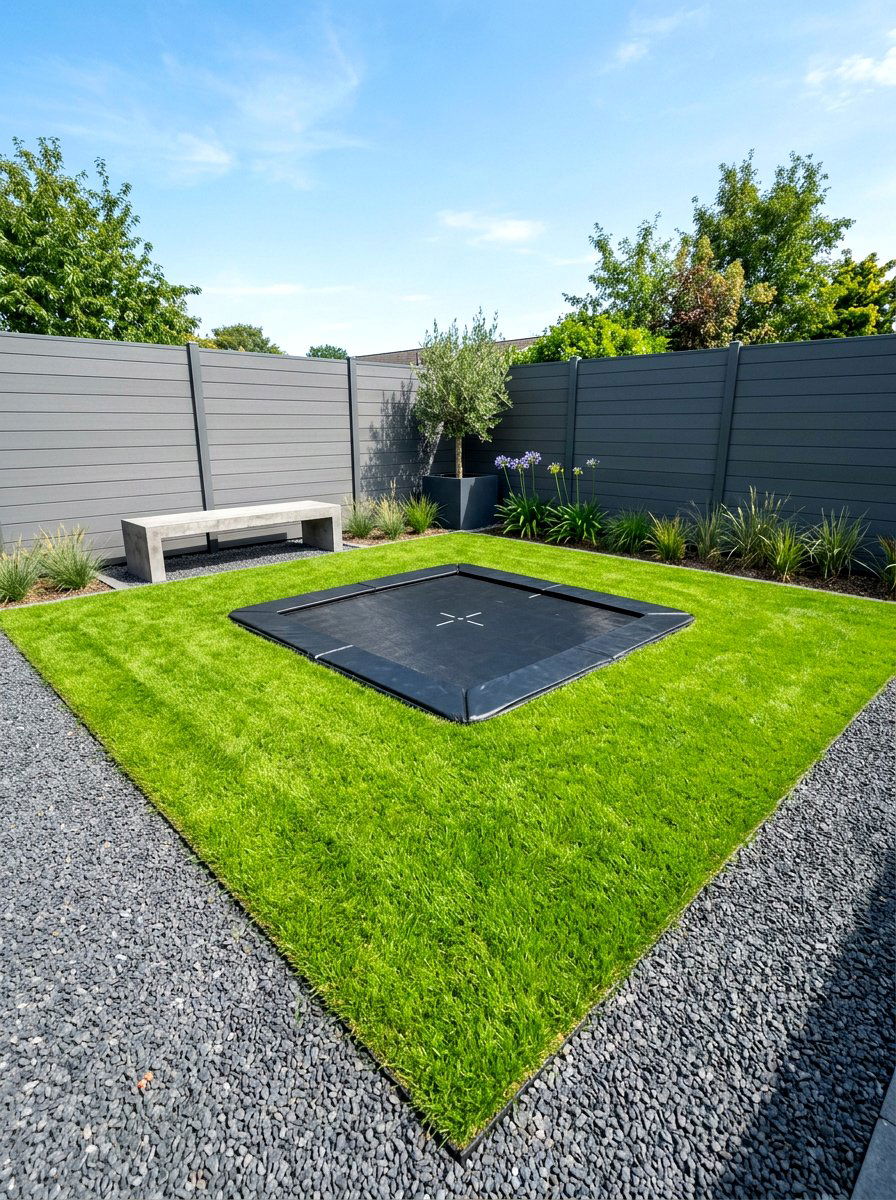
A minimalist trampoline backyard focuses on clean lines, neutral colors, and a lack of unnecessary clutter for a sleek look. Choose an in-ground model with a black or grey safety pad to maintain a monochromatic color scheme. Surround the area with a simple border of white pebbles or a perfectly manicured square of lawn. Avoid overly decorative plants and instead opt for a few structured boxwood hedges or a single architectural tree. This design philosophy emphasizes space and simplicity, ensuring the trampoline is a functional piece of equipment that doesn't overwhelm the serene, modern atmosphere of your high-end outdoor living space.
21. Trampoline pebble border
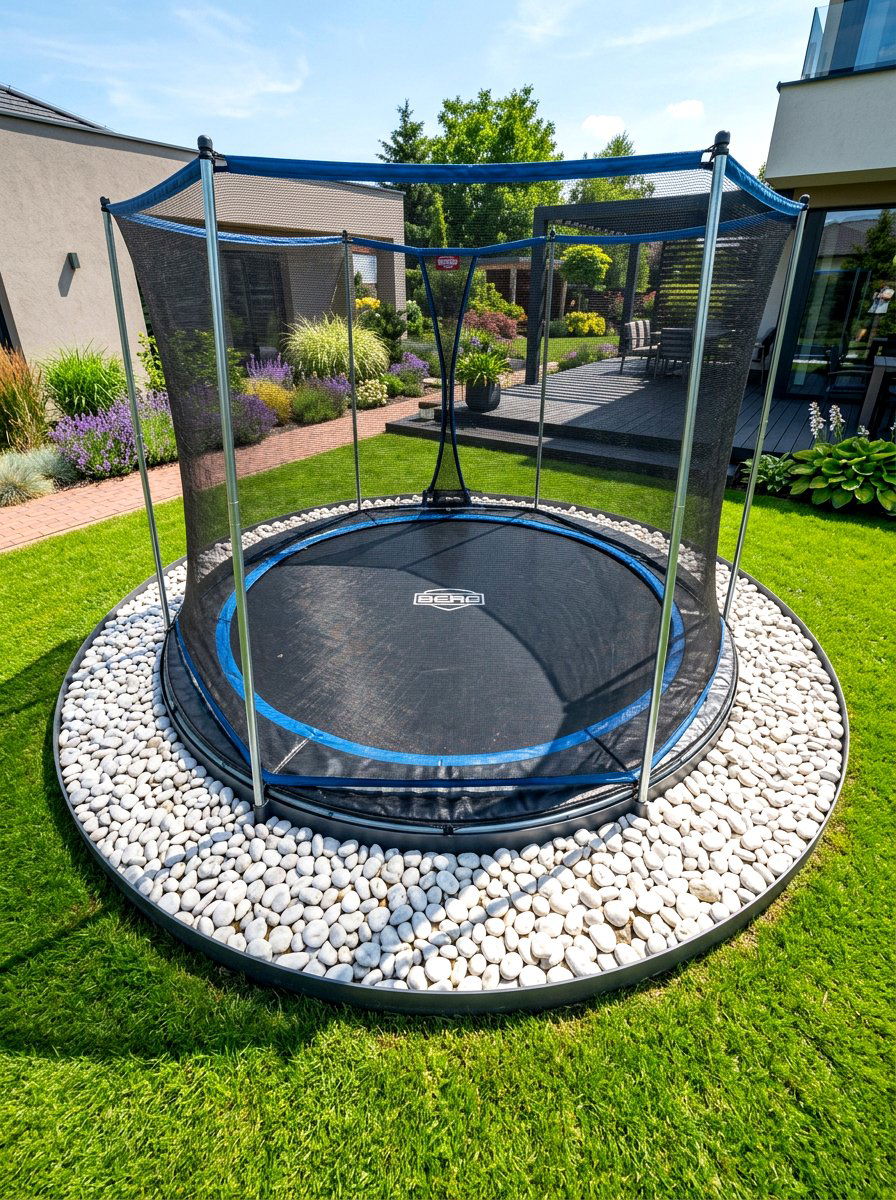
A trampoline pebble border offers a clean, contemporary look while providing excellent drainage and a weed-free perimeter for your play area. Using smooth river stones or white marble chips creates a beautiful contrast against green grass or dark mulch. This border helps to clearly define the jumping zone and prevents the mower from getting too close to the frame and legs. You can use flexible edging to create a perfect circle or a modern rectangle around the equipment. The texture of the pebbles adds a sophisticated touch to your landscaping, making the trampoline area look polished, intentional, and very easy to maintain.
22. Under trampoline weed barrier
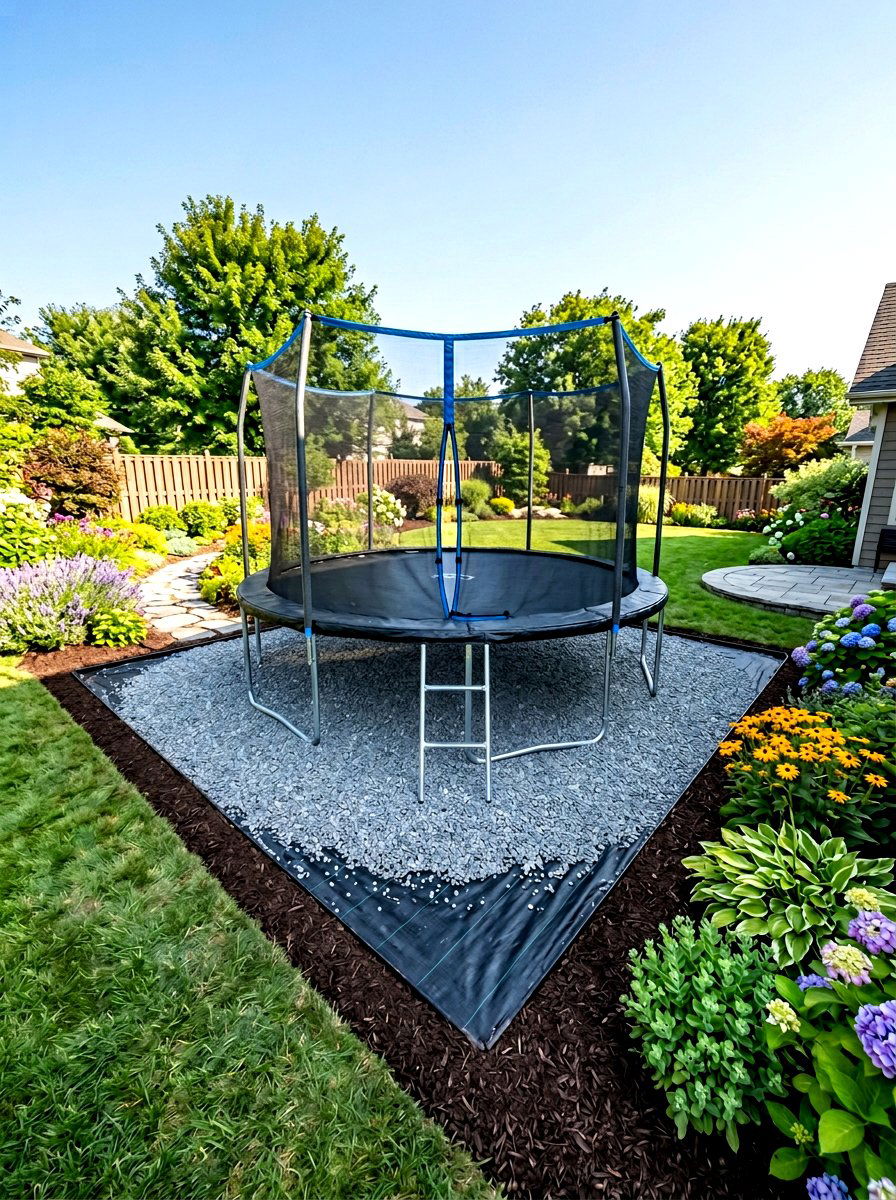
Installing an under trampoline weed barrier is a foundational step that keeps the area beneath your jumping mat looking tidy and professional. By laying down a heavy-duty landscape fabric before adding gravel or mulch, you prevent unsightly weeds and grass from poking through. This is especially important for above-ground models where the space underneath is visible and difficult to mow. Covering the fabric with a layer of pea gravel or wood chips ensures that the area remains dry and mud-free. This simple preparation step reduces long-term maintenance and keeps your entire play zone looking crisp and well-cared-for throughout the changing seasons.
23. Trampoline trellis wall
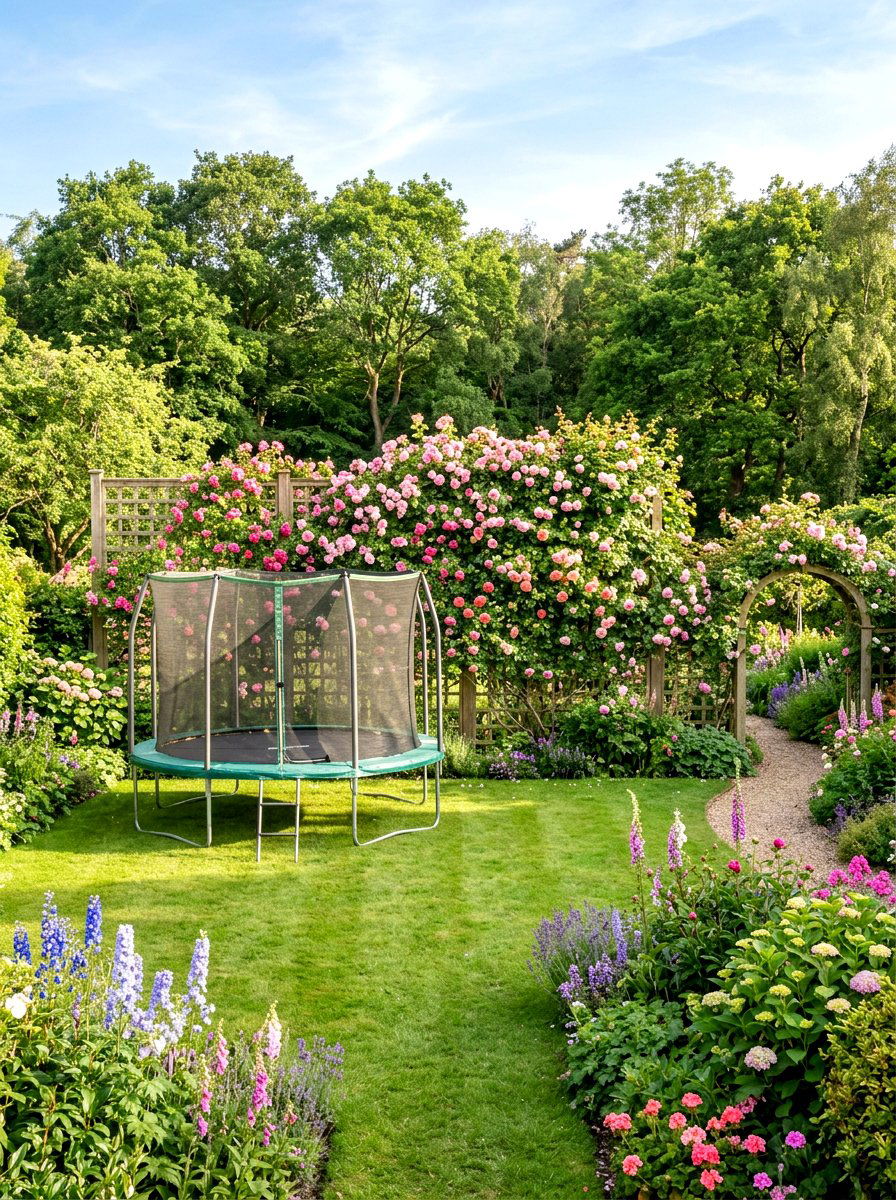
A trampoline trellis wall is a creative way to provide privacy and a vertical garden element to your play space. You can install a wooden or metal trellis behind or around the structure to support beautiful climbing vines like clematis or honeysuckle. This "living wall" acts as a natural screen that softens the look of the trampoline and provides a pleasant fragrance for jumpers. During the summer months, the dense foliage offers a bit of extra shade and wind protection. This design choice blends the play equipment with the natural world, turning a large metal object into an integral part of your garden's vertical beauty.
24. Nighttime trampoline garden
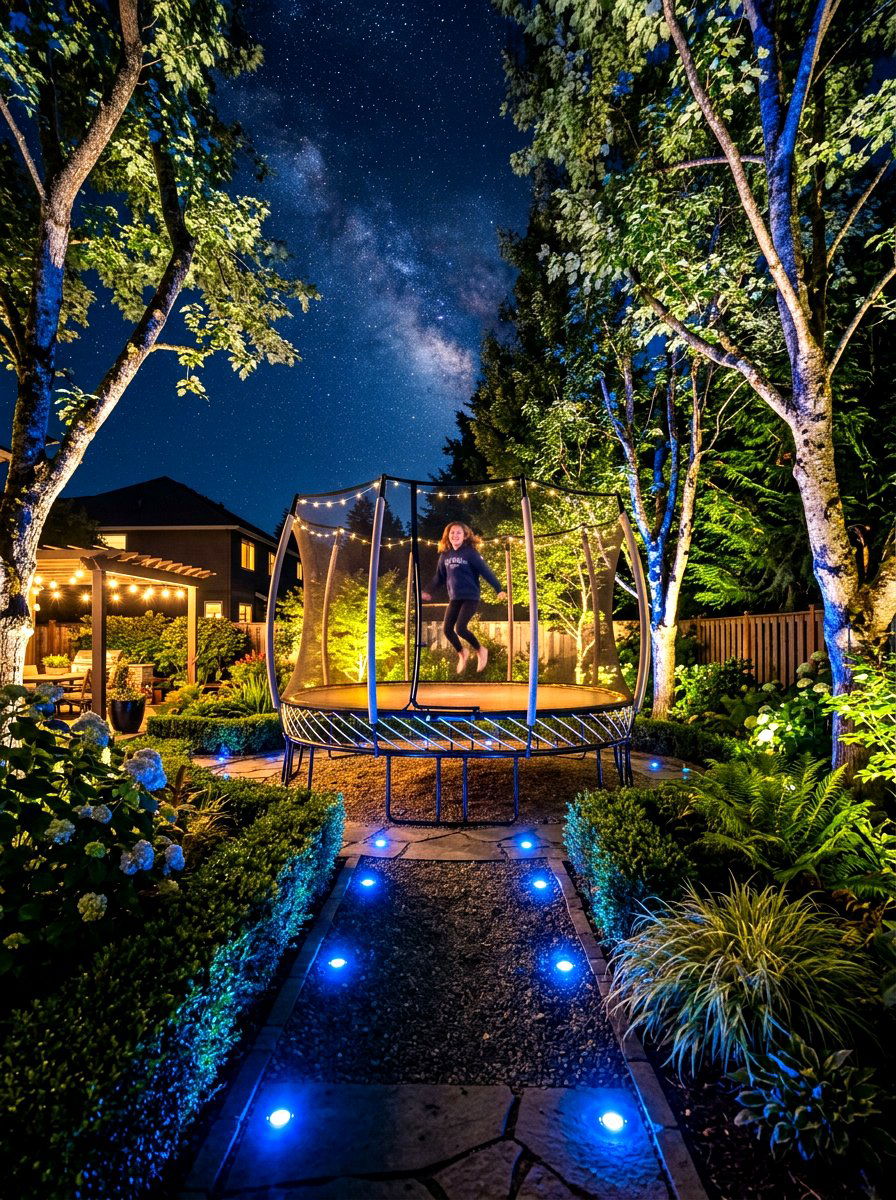
Designing a nighttime trampoline garden allows the fun to continue long after the sun goes down in your backyard. Use a combination of uplighting on nearby trees and soft pathway lights to guide jumpers safely to the mat. You can even find glow-in-the-dark pebbles to line the border or use color-changing LED strips for a festive, party-like atmosphere. Ensuring the area is well-lit not only improves safety but also creates a beautiful visual scene from your home's windows. This approach makes the trampoline a versatile feature that adds to the evening charm of your landscape, perfect for late-night summer jumps under the stars.
25. Rustic wood trampoline frame
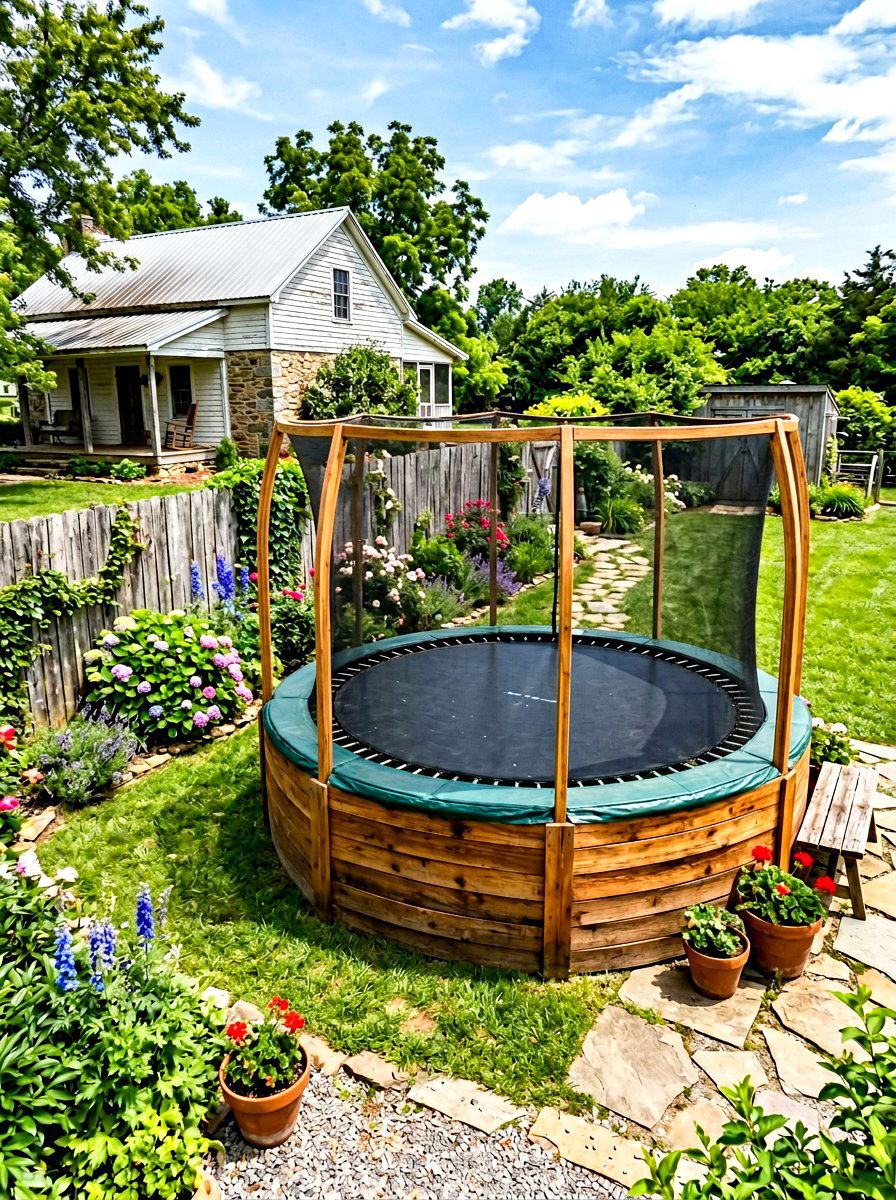
Creating a rustic wood trampoline frame is a fantastic way to disguise an above-ground unit and make it match a farmhouse or cottage-style garden. You can build a decorative wooden skirt around the base using reclaimed timber or cedar planks to hide the metal legs and the space underneath. This creates a more built-in, furniture-like appearance that feels warm and organic. Adding a small wooden gate or steps can further enhance the rustic charm of the design. This DIY-friendly project allows you to customize the look of your trampoline so it feels like a handcrafted addition to your cozy, natural backyard retreat.
26. Zen garden trampoline
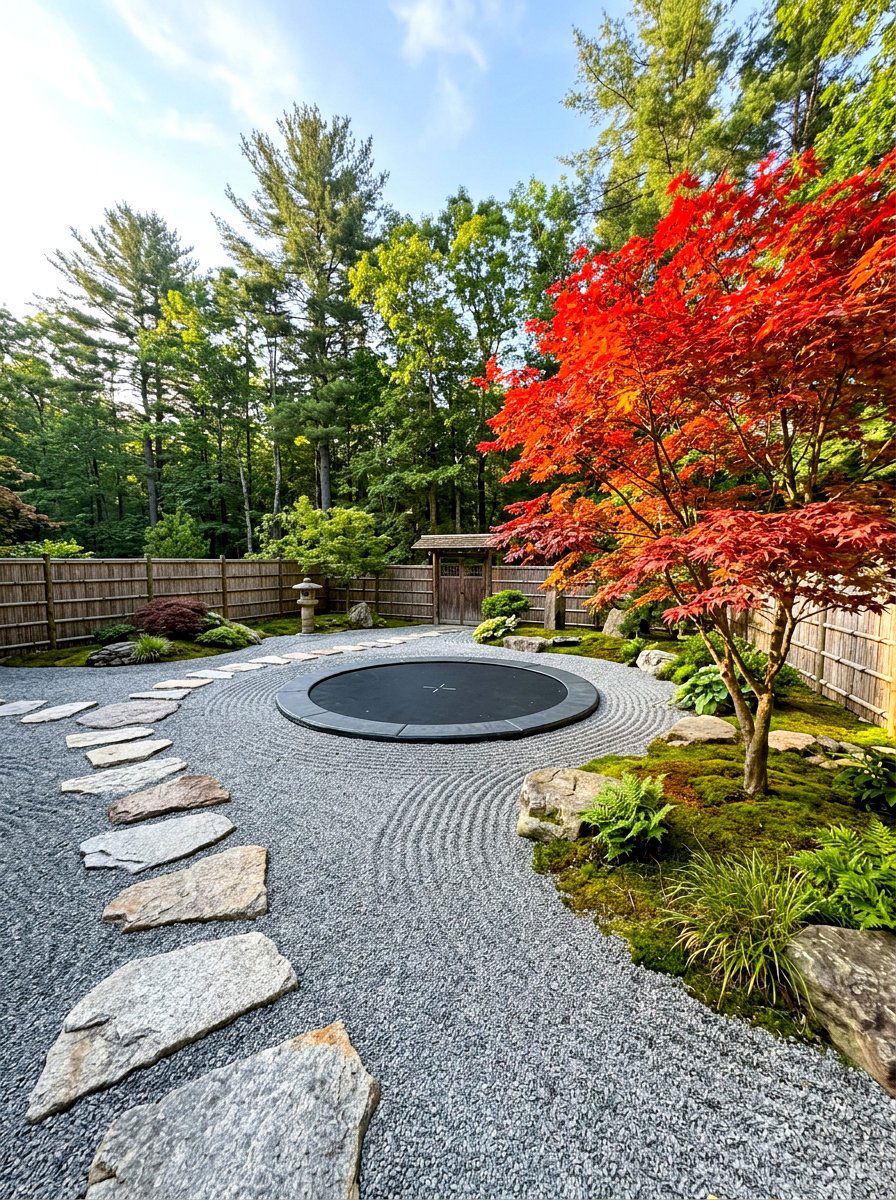
A Zen garden trampoline theme focuses on creating a calm, balanced, and harmonious environment for both play and meditation. Surround an in-ground trampoline with raked sand, smooth boulders, and carefully placed Japanese maples for a tranquil aesthetic. Using a neutral-colored jumping mat and safety padding helps the structure remain inconspicuous within the peaceful setting. You might include a small stone water basin or a bamboo fountain nearby to provide soothing sounds. This unique approach proves that high-energy play equipment can coexist with a serene landscape design, offering a space that promotes both physical activity and mental relaxation for the whole family.
27. Trampoline hedge screen
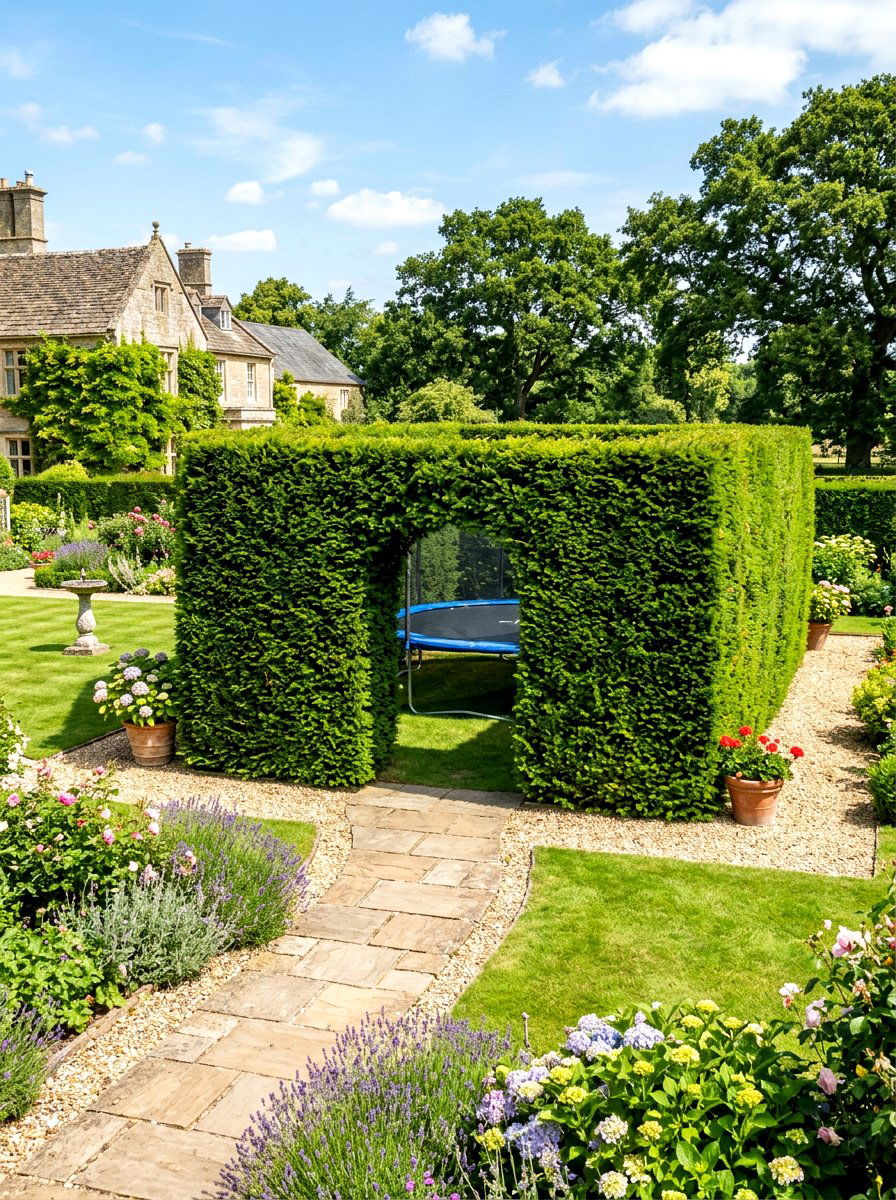
Using a trampoline hedge screen is a traditional and effective landscaping method to hide bulky equipment while adding green structure to your yard. Tall, evergreen plants like arborvitae, boxwood, or privet can be planted in a semi-circle or square around the play area. As these plants grow together, they form a thick, living wall that provides excellent privacy and wind protection. This natural barrier also helps to dampen the noise of jumping and laughing, which can be a courtesy to nearby neighbors. A well-maintained hedge adds a timeless, formal quality to your garden while keeping the play zone tucked away.
28. Contemporary trampoline pit
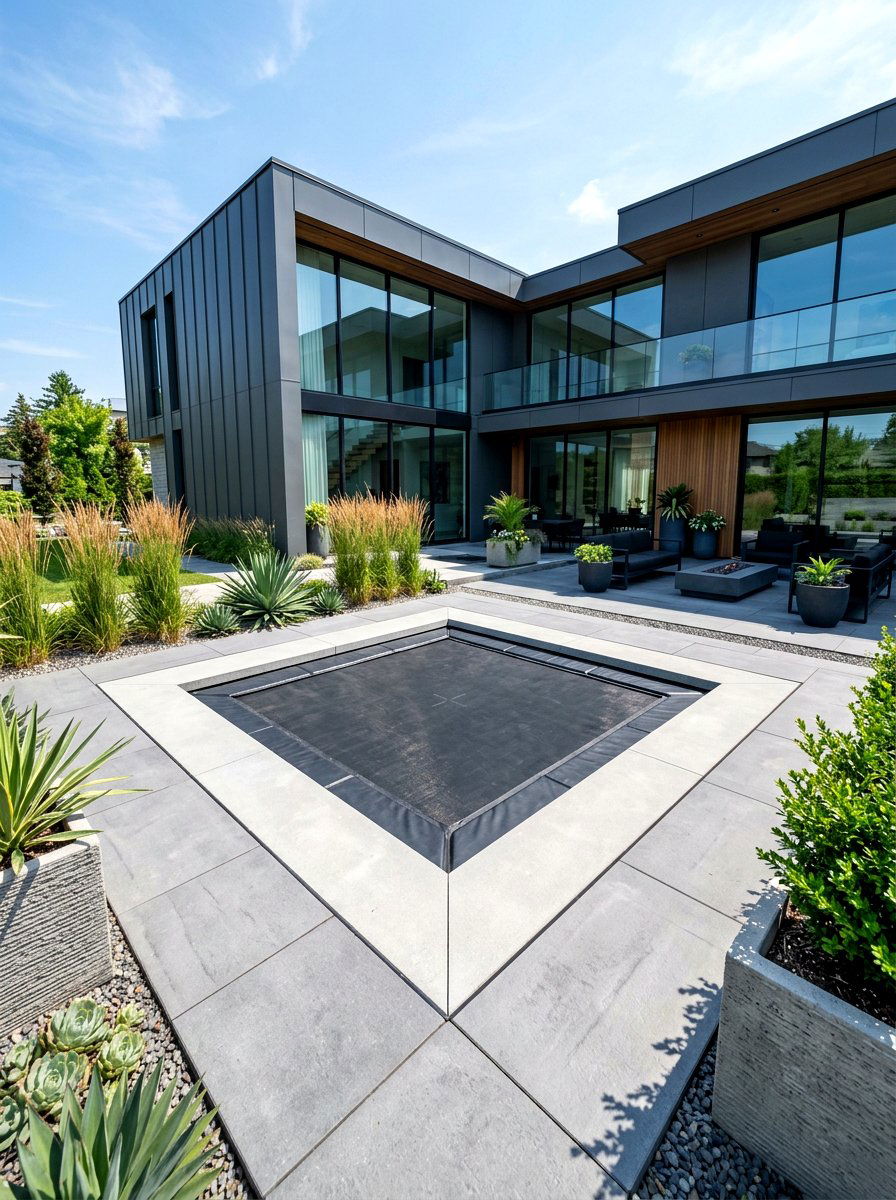
A contemporary trampoline pit is the hallmark of a high-end, architect-designed backyard that prioritizes clean lines and modern luxury. This involves a precisely excavated in-ground installation often finished with sleek concrete or metal edging. The surrounding area might feature minimalist gray pavers or a smooth poured concrete patio that extends right to the edge of the mat. This look is perfect for homes with a strong modern aesthetic, as it treats the trampoline as a geometric feature of the landscape. It is a bold, sophisticated choice that transforms a piece of playground equipment into a striking example of modern outdoor design.
29. Trampoline cedar chips
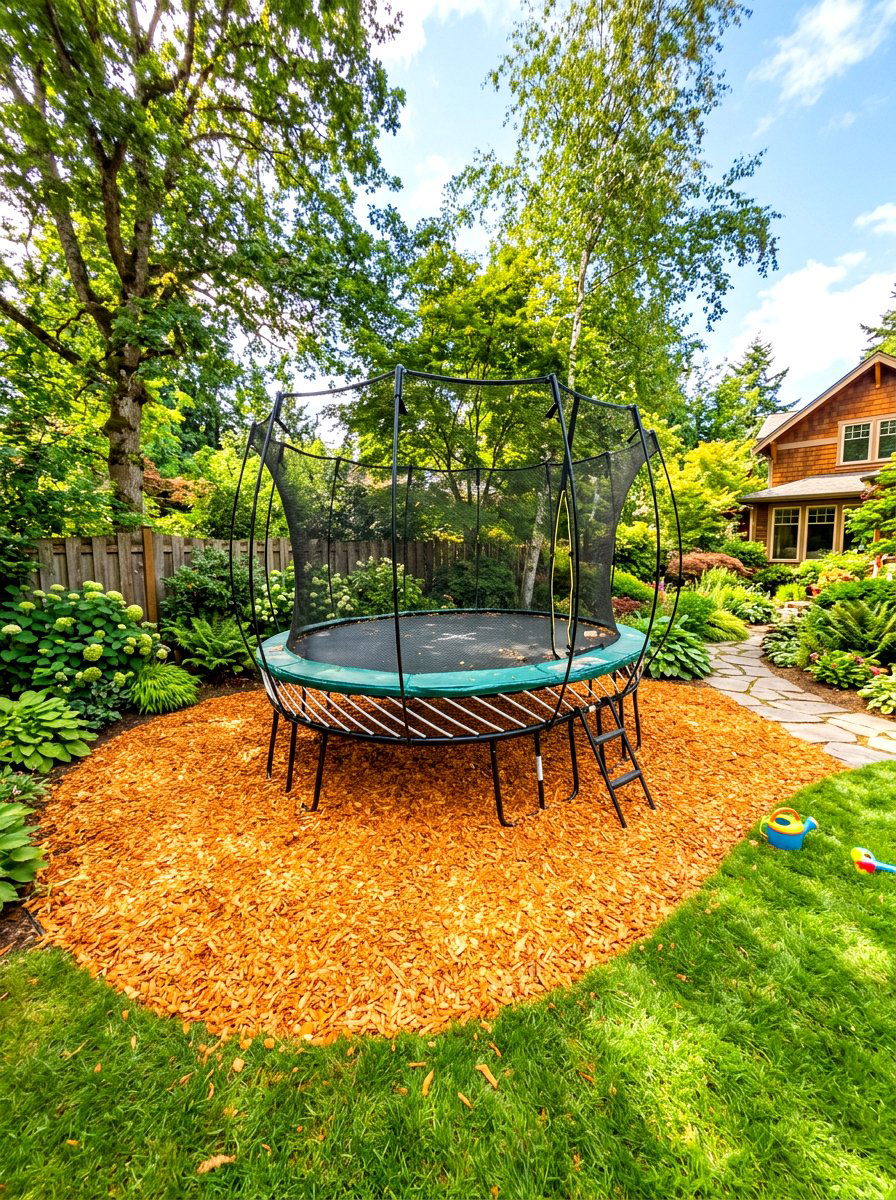
Using trampoline cedar chips as a ground cover is both a functional and sensory-rich choice for your backyard play area. Cedar is naturally resistant to decay and insects, making it a long-lasting option for a soft landing surface. The warm, reddish-brown color of the wood chips adds a beautiful organic tone to your garden, while the fresh scent creates a pleasant atmosphere for jumpers. Cedar mulch is also excellent for suppressing weeds and retaining soil moisture in nearby flower beds. This choice provides a clean, professional look that feels high-quality and safe, making the trampoline zone an inviting place for kids to spend time.
30. Vertical garden trampoline
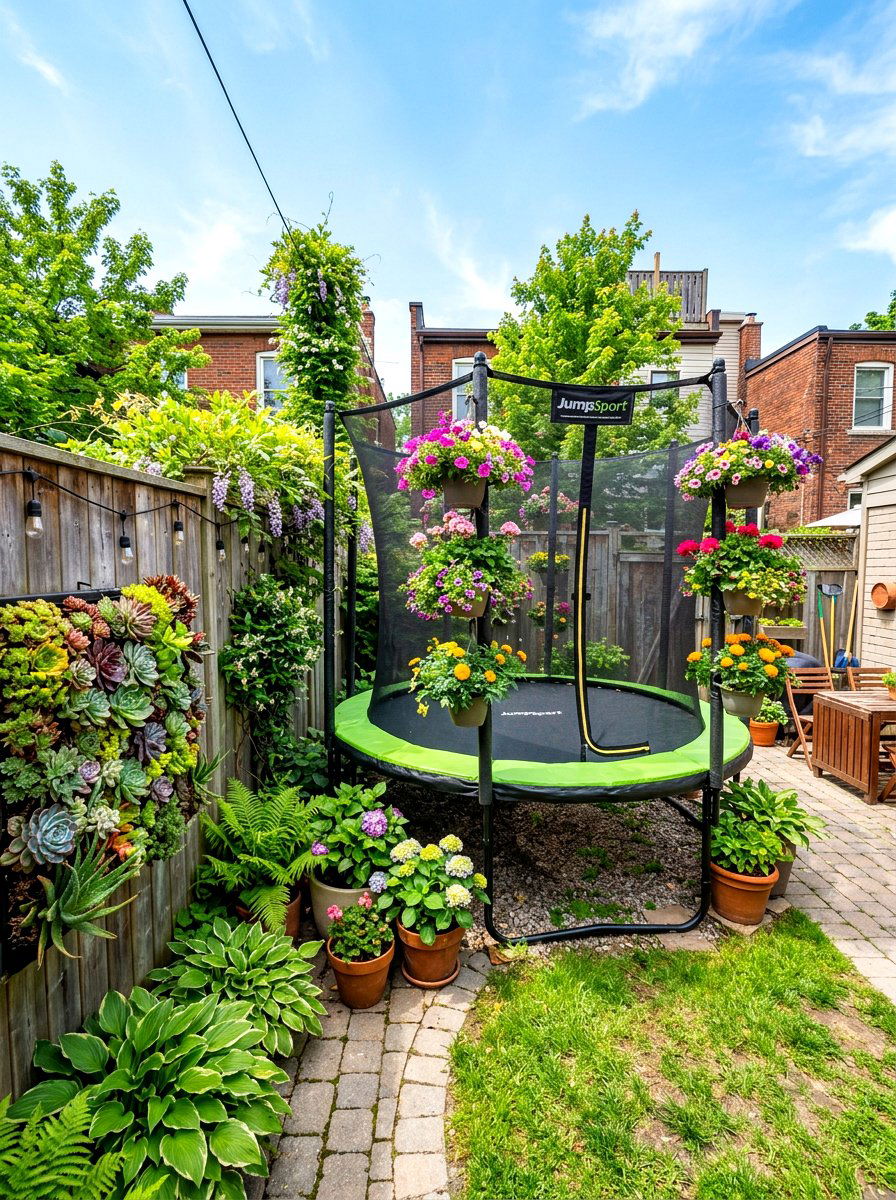
Integrating a vertical garden trampoline design is a smart way to add greenery and style to a small backyard with limited space. You can mount wall-mounted planters or a series of hanging pots on the enclosure poles or a nearby fence to create a lush, upward-growing landscape. Planting herbs, succulents, or cascading flowers like petunias adds life and color at eye level for the jumpers. This vertical approach keeps the ground clear for play while ensuring the area feels vibrant and full of life. It is a creative solution that maximizes every inch of your yard, turning the trampoline into a multifunctional garden feature.
Conclusion:
Designing a beautiful and functional trampoline area is a rewarding project that transforms your backyard into a versatile space for play and relaxation. By choosing the right landscaping techniques, such as in-ground installation, custom decking, or lush garden borders, you can integrate this popular equipment without sacrificing style. Each of these ideas offers a unique way to enhance safety while contributing to a polished, professional look for your outdoor sanctuary. Whether you prefer a modern, minimalist vibe or a tropical, plant-filled retreat, thoughtful planning ensures your trampoline is a beloved feature. Start your backyard transformation today and create a stunning environment that your whole family will cherish.

Related posts: