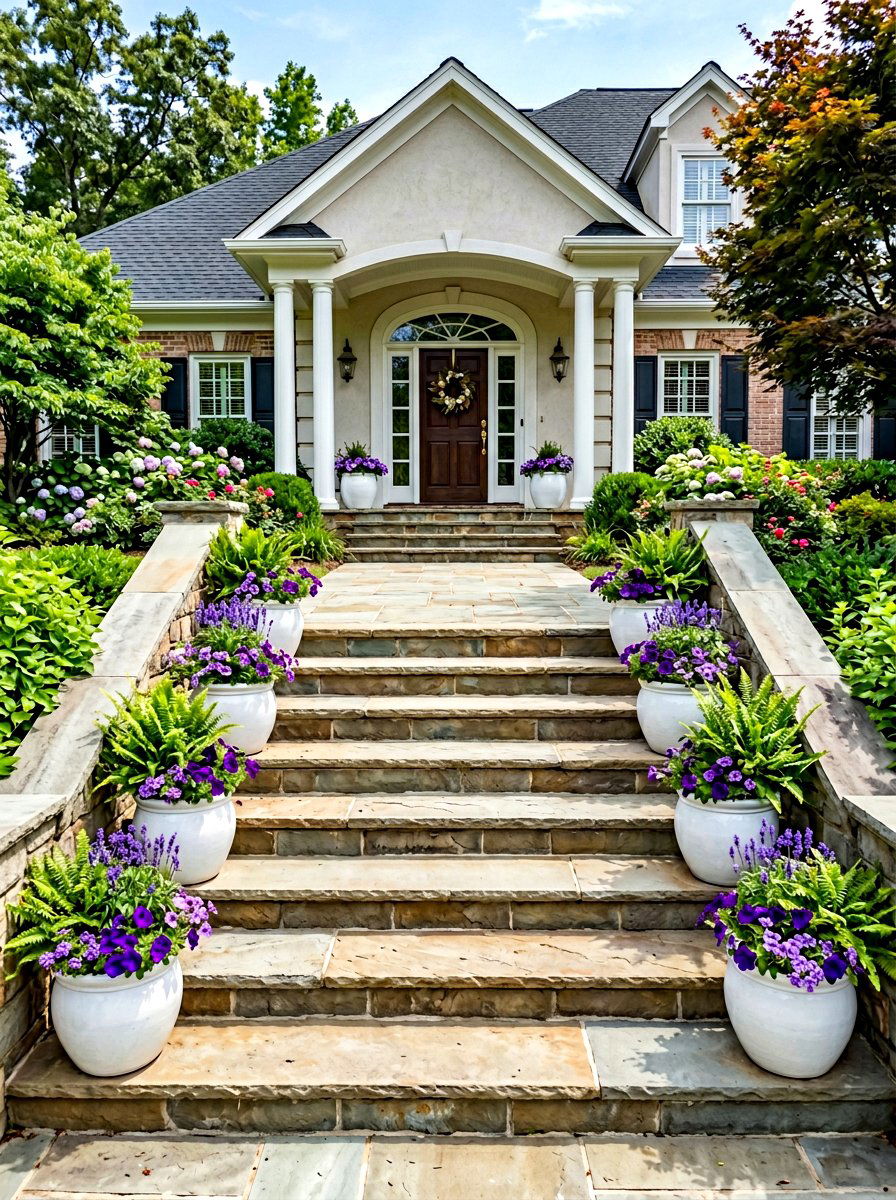
Transforming your home’s exterior often begins with a thoughtful approach to depth and dimension. Layered front yard landscaping is a powerful technique that uses varying heights and textures to create a lush, professional appearance. By arranging plants from shortest to tallest, you guide the eye across a beautiful tapestry of greenery that feels both intentional and welcoming. This method not only boosts your curb appeal but also allows you to maximize your available space, whether you have a sprawling lawn or a tiny plot. In this guide, we will explore thirty unique ways to implement this stunning style for a truly viral-worthy home entrance that neighbors will admire.
1. Low Maintenance Layered Front Yard
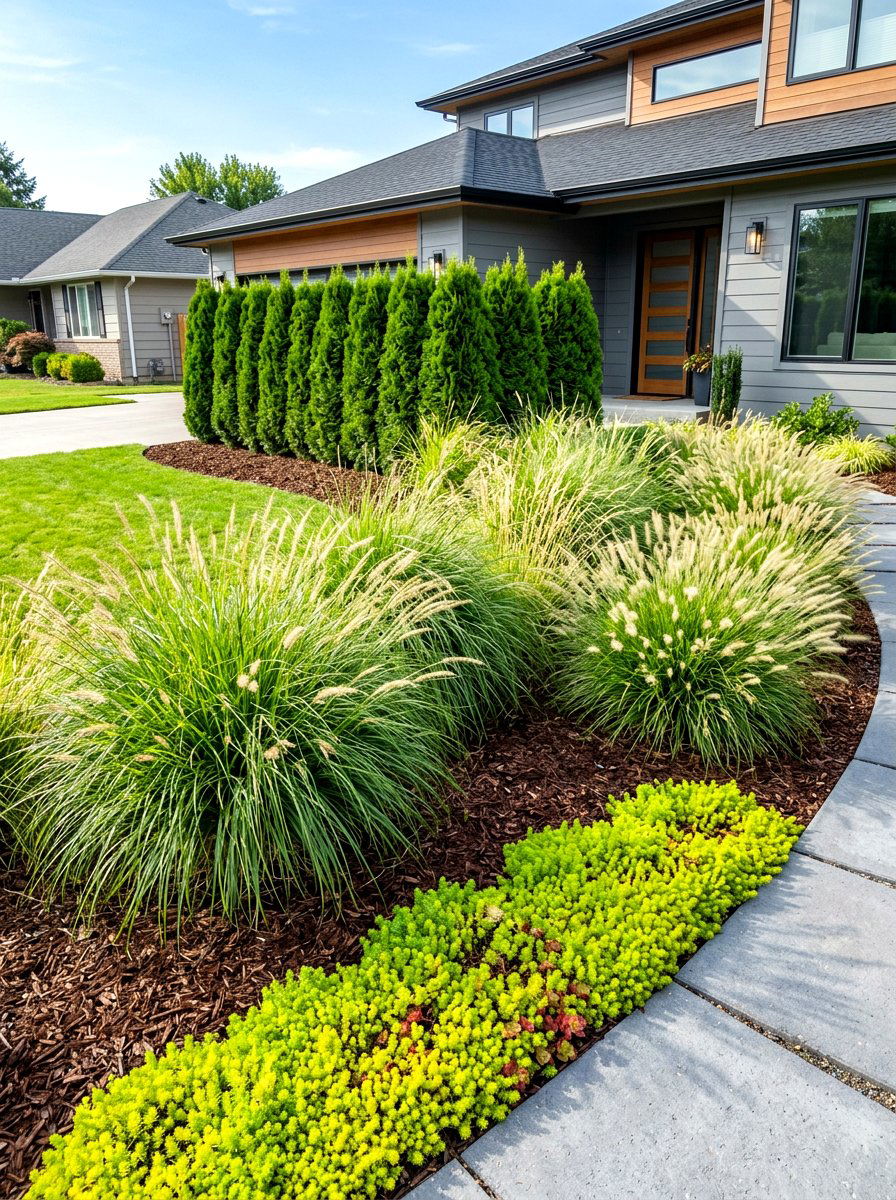
Have you ever wanted a high-end look without the endless weekend chores? A low maintenance layered front yard is the perfect solution for busy homeowners who still want an impressive entrance. You can achieve this by selecting hardy evergreen shrubs that provide year-round structure without needing frequent pruning. Start with a back row of tall hollies or junipers to create a solid green wall. In the middle, add some ornamental grasses that only require a quick trim once a year. For the front layer, use a thick bed of wood mulch paired with drought-resistant sedum. This creates a clean and organized look that remains beautiful throughout the changing seasons.
2. Modern Layered Landscape
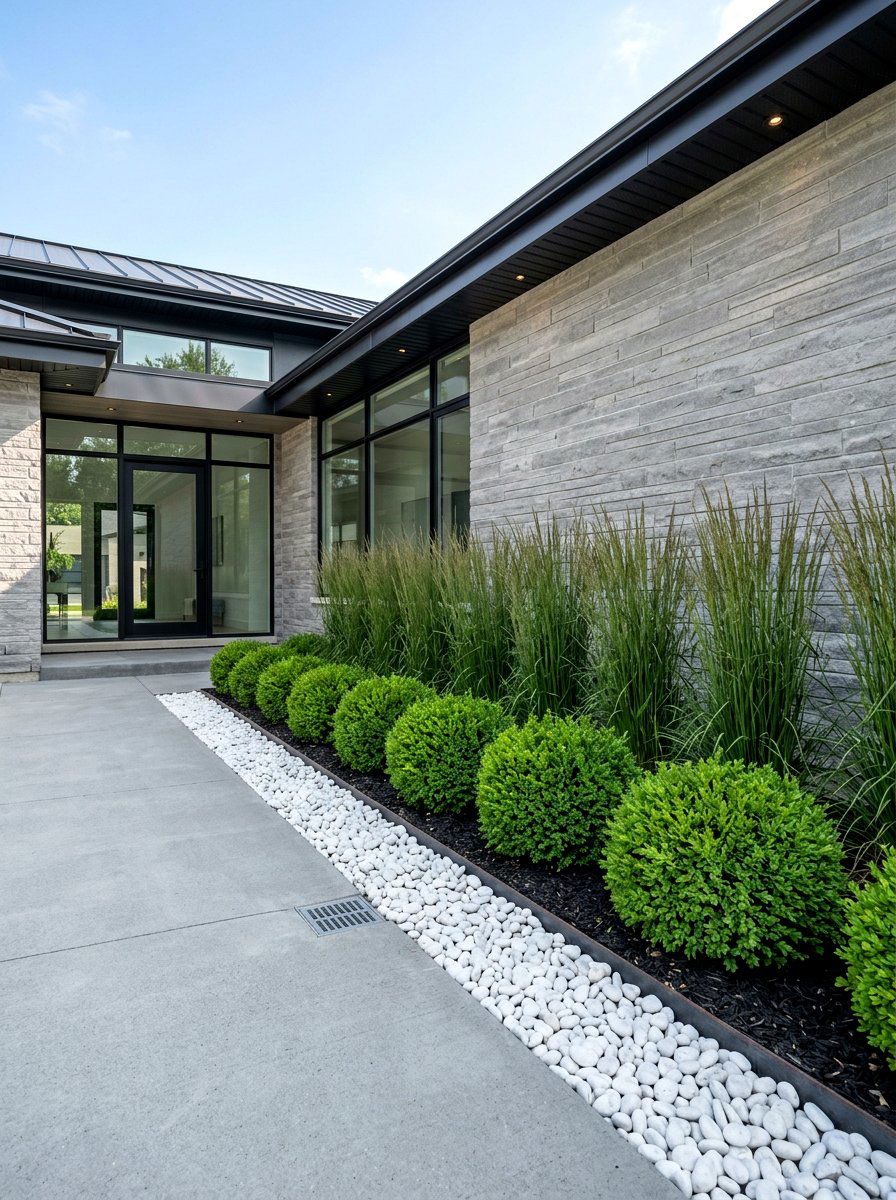
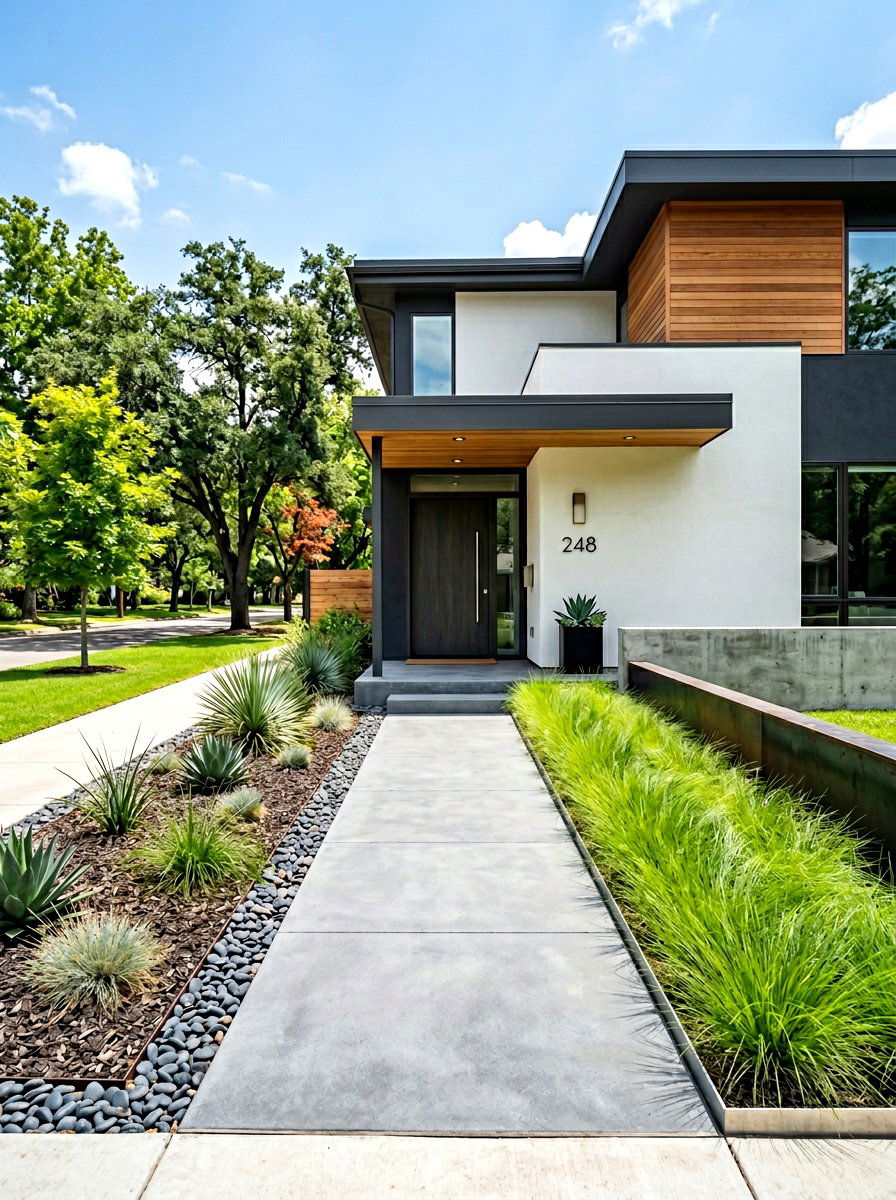
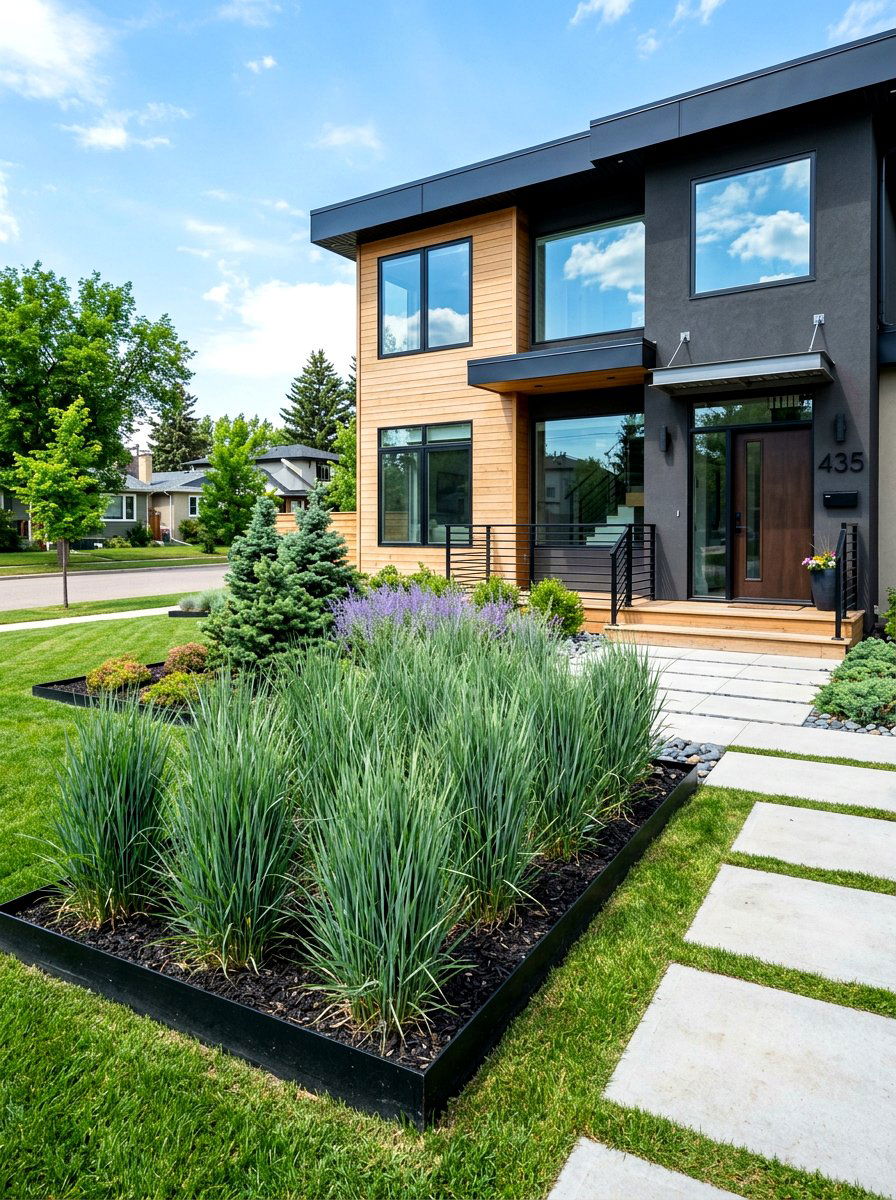
Does your home feature sharp lines and contemporary architecture that need a matching exterior? A modern layered landscape emphasizes clean geometric patterns and a limited color palette to create a sophisticated vibe. You might use tall, upright grasses like Karl Foerster in the back to provide vertical interest against the house walls. The middle layer could consist of perfectly rounded boxwoods that offer a sculptural feel. For the ground level, consider a crisp border of white river stones or a very low-growing silver carpet plant. This structured approach feels very intentional and high-end. It provides a striking contrast that makes any modern home stand out in the neighborhood.
3. Drought Tolerant Layered Garden
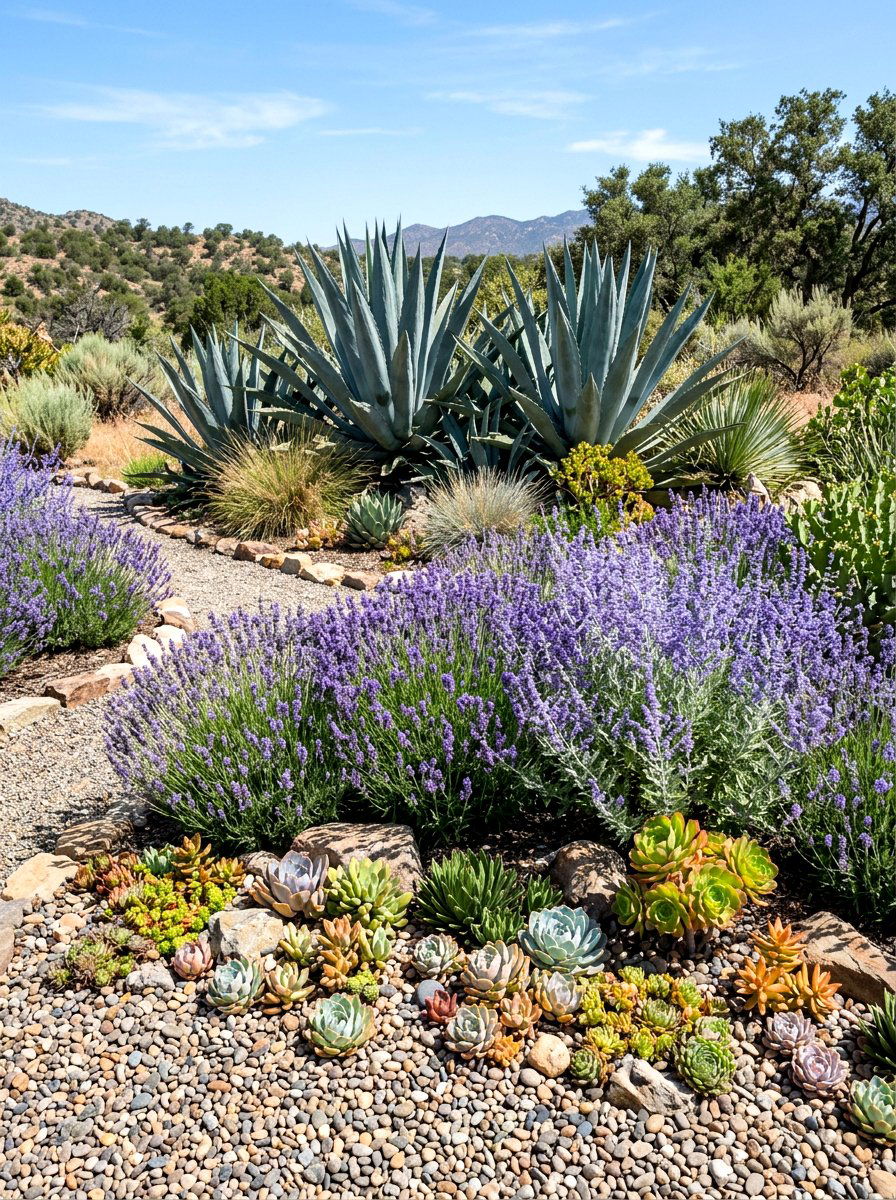
If you live in a region with limited rainfall, you can still have a lush and inviting front yard. A drought tolerant layered garden uses xeriscaping principles to save water while providing plenty of visual depth. Start by placing tall, statuesque yuccas or agaves in the background to serve as focal points. In the middle tier, you can introduce purple sage or lavender, which both thrive in dry conditions and provide wonderful fragrance. The front edge can be finished with a mix of colorful succulents and crushed granite. This layers different textures and heights without requiring a heavy watering schedule. It is a sustainable and beautiful way to landscape.
4. Cottage Style Layered Flower Bed
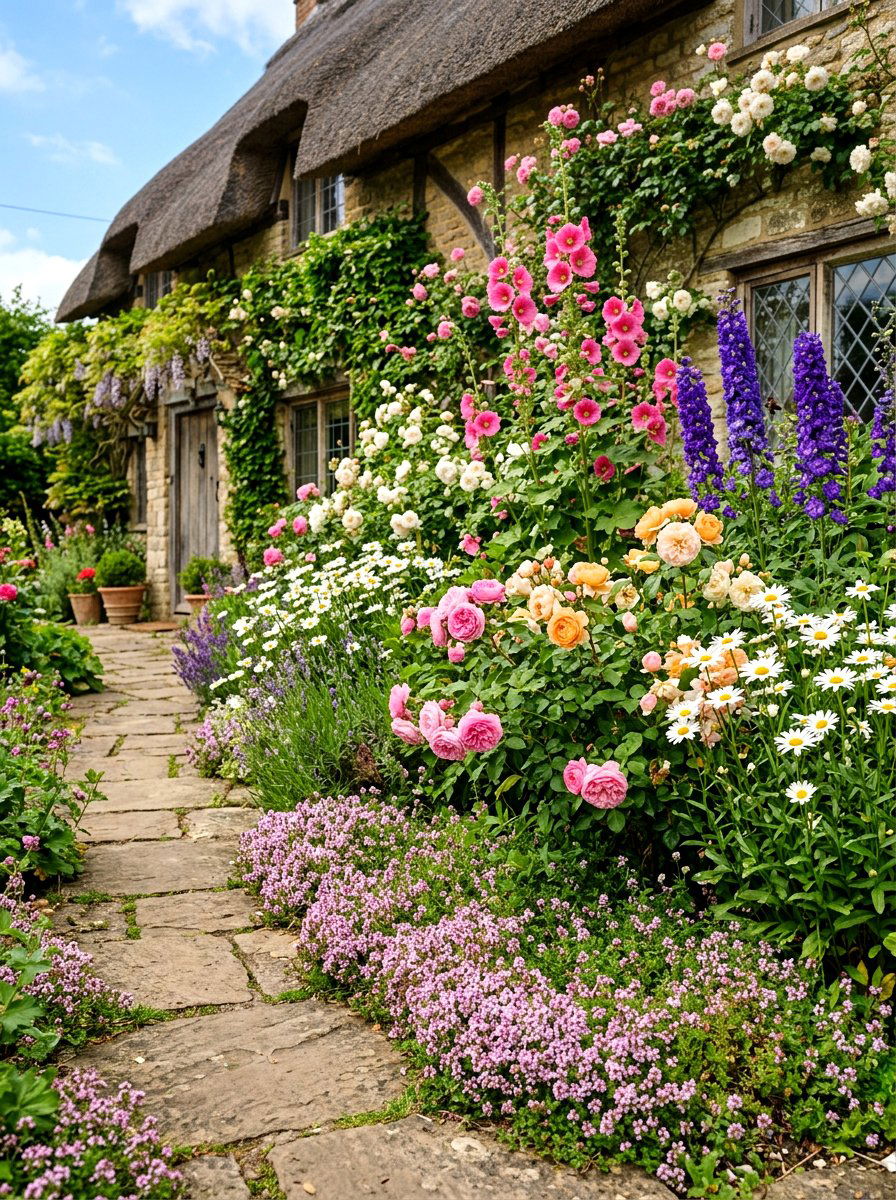
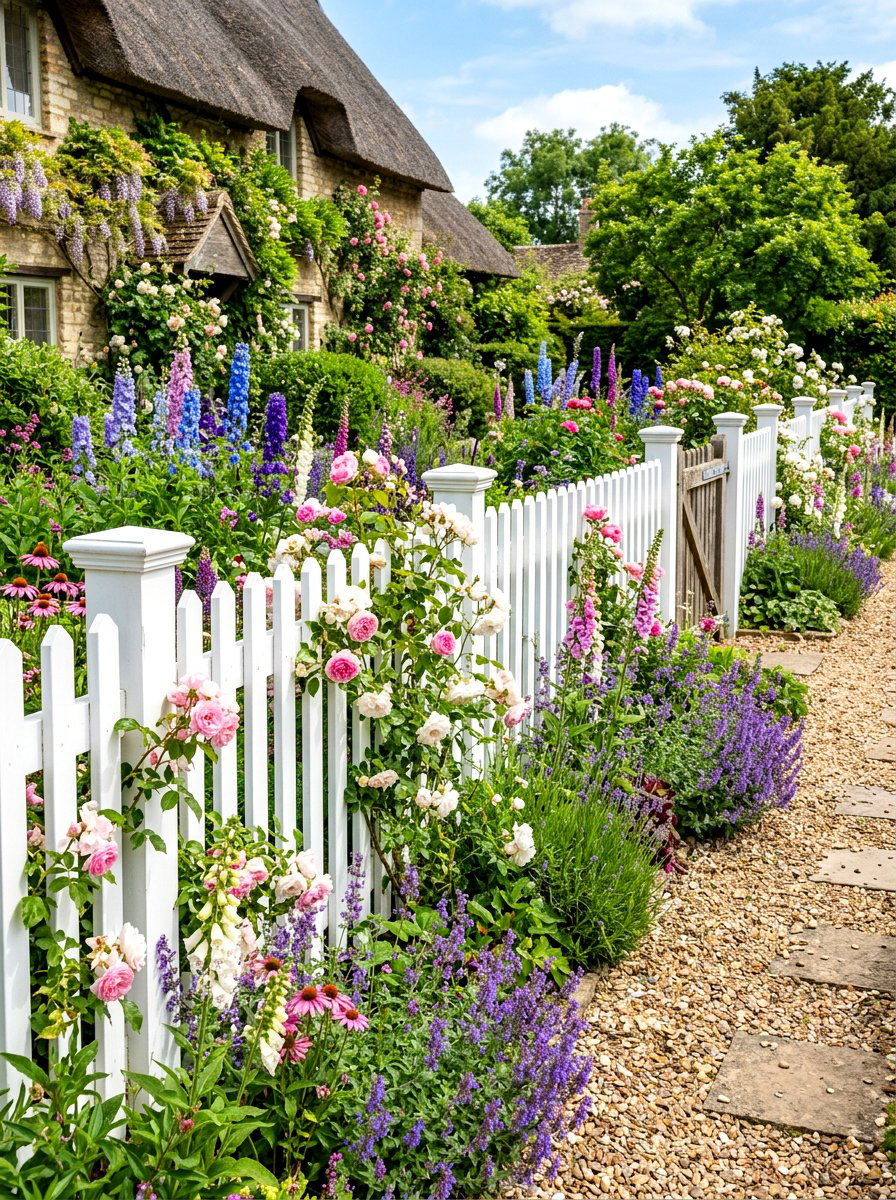
Can you imagine walking through a whimsical garden every time you arrive home? A cottage style layered flower bed is all about abundance, color, and a relaxed, romantic feel. The back layer should feature tall, swaying flowers like hollyhocks or delphiniums that provide a high backdrop. In the middle, plant dense clusters of roses, daisies, and lavender to fill the space with scent and texture. The foreground can be softened with low-growing creeping thyme or sweet alyssum that spills over onto the walkway. This layered approach creates a charming, "overgrown" look that is actually very well-planned. It brings a touch of magic to any suburban front yard.
5. Evergreen Layered Foundation Planting
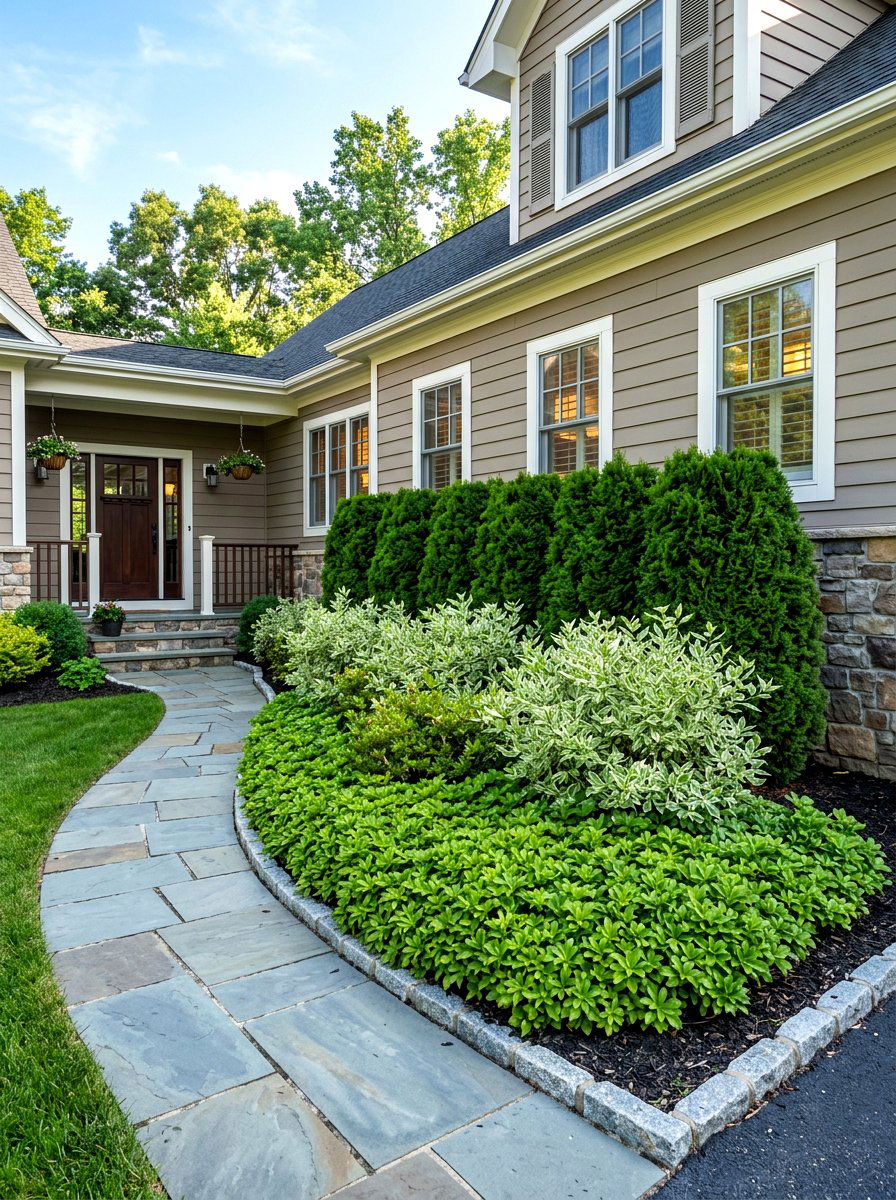
Is the area directly in front of your house looking a bit bare and unfinished? An evergreen layered foundation planting ensures that your home looks beautiful even in the middle of winter. The tall background layer should consist of upright evergreens like arborvitae or yews to hide the foundation walls. The middle tier can include medium-sized shrubs with interesting foliage, such as pieris or dwarf conifers. For the very front, use low-growing evergreen groundcovers like pachysandra or wintercreeper. This three-tiered green approach provides a permanent structure that serves as a backdrop for seasonal flowers. It makes your home feel anchored and established throughout the entire year.
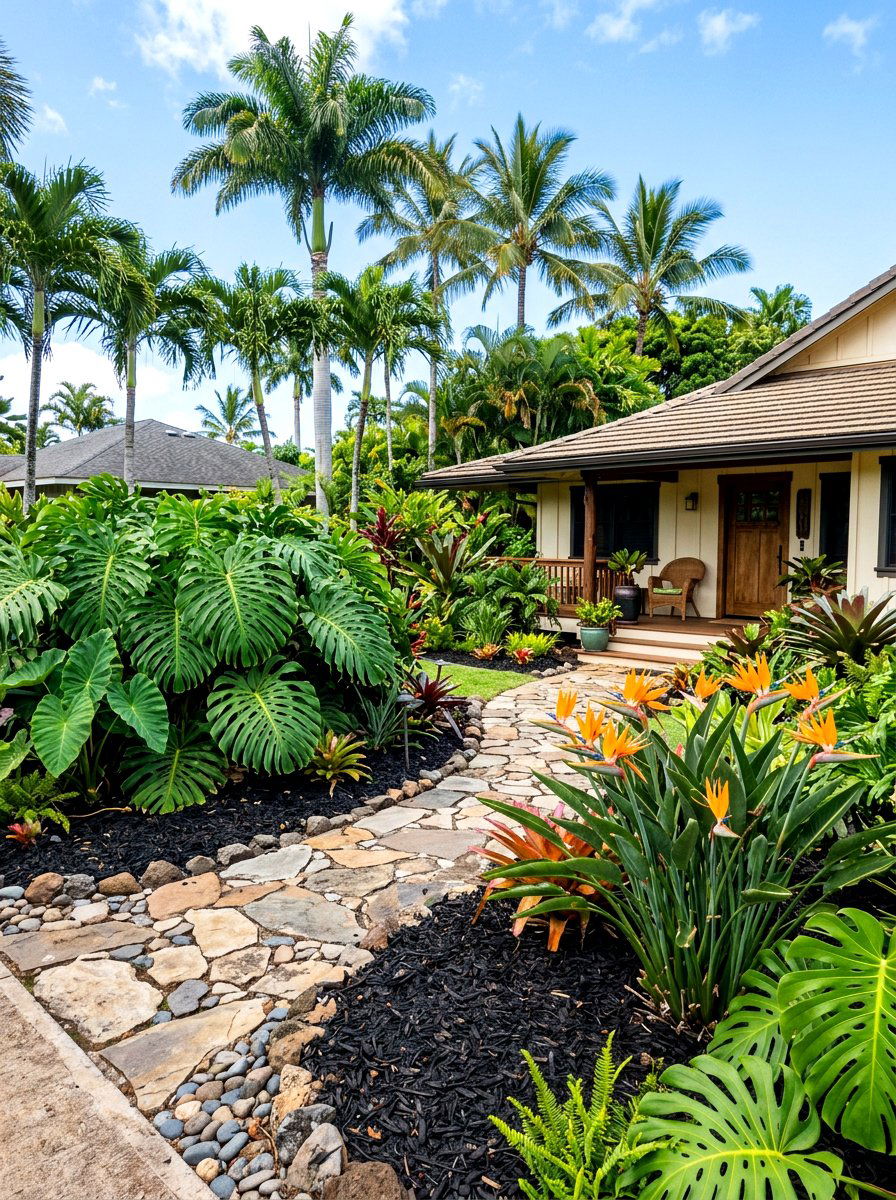
6. Tropical Layered Curb Appeal
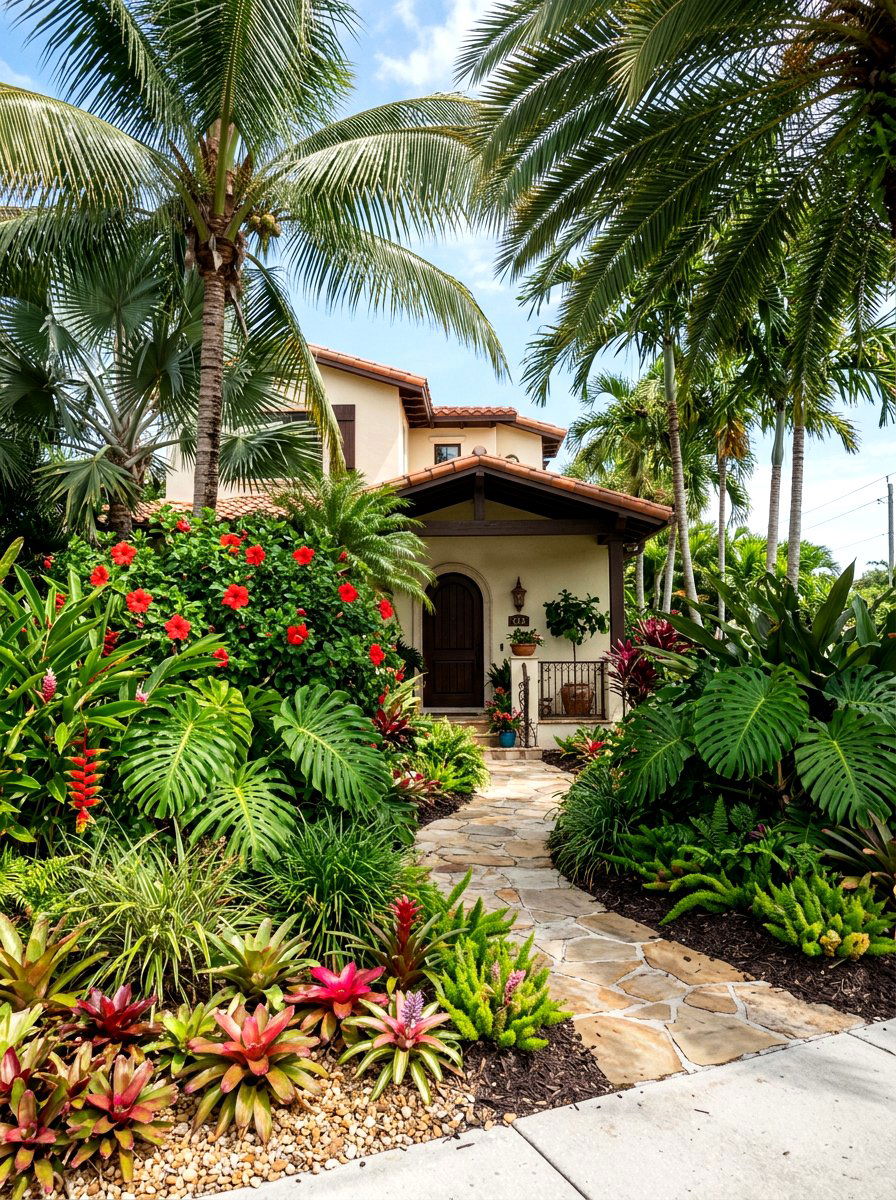
Would you like to feel like you are on vacation every time you step outside? Tropical layered curb appeal uses large, bold leaves and vibrant colors to create a jungle-like atmosphere. You can start with tall palms or banana trees to provide height and a lush canopy. In the middle layer, plant large-leafed philodendrons, hibiscus, or bright ginger plants for a burst of exotic color. The front layer can be finished with smaller bromeliads or neon-colored sweet potato vines. This dense layering of tropical foliage creates a sense of privacy and luxury. It is an excellent way to turn a standard front yard into a spectacular and lush retreat.
7. Small Front Yard Layered Greenery
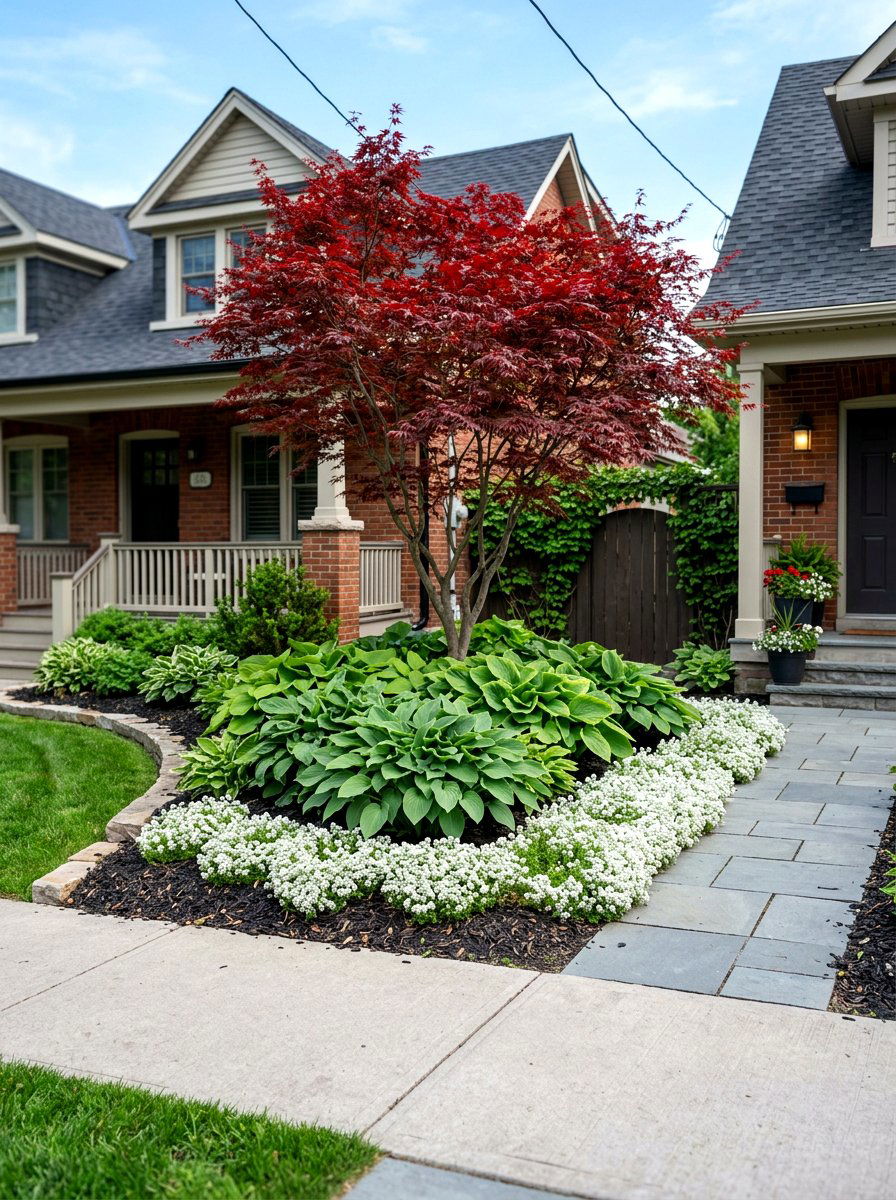
How can you make a tiny front plot feel much larger and more significant? Small front yard layered greenery focuses on using vertical space and compact plant varieties to add depth without clutter. Use a single ornamental tree, like a Japanese Maple, as the tallest background element to provide a focal point. Surround it with a middle layer of dwarf shrubs or perennials like hostas that won't overwhelm the space. Finish the edge with a thin border of low-growing annuals or moss. By carefully staggering these heights, you create a sense of perspective that makes the yard feel deeper. It proves that you do not need much room to be stylish.
8. Sloped Front Yard Layered Landscaping
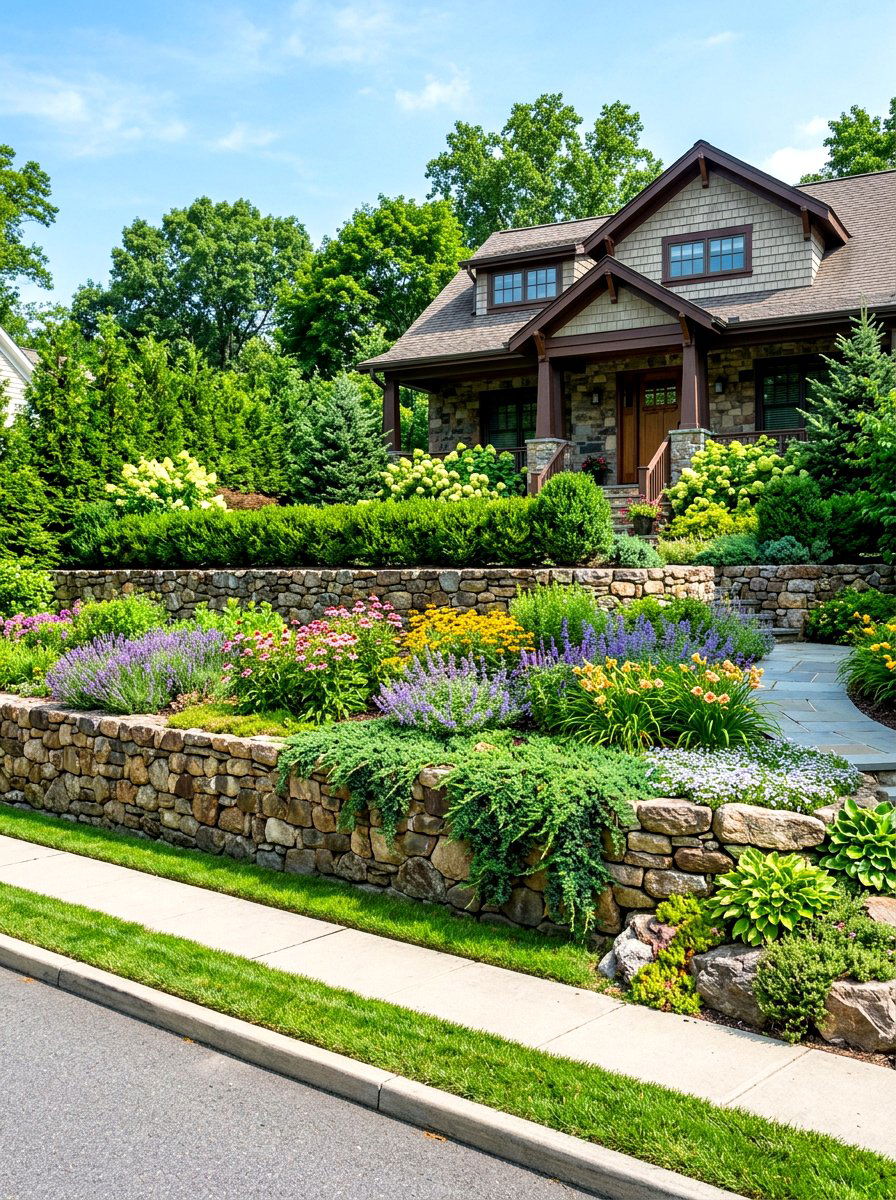
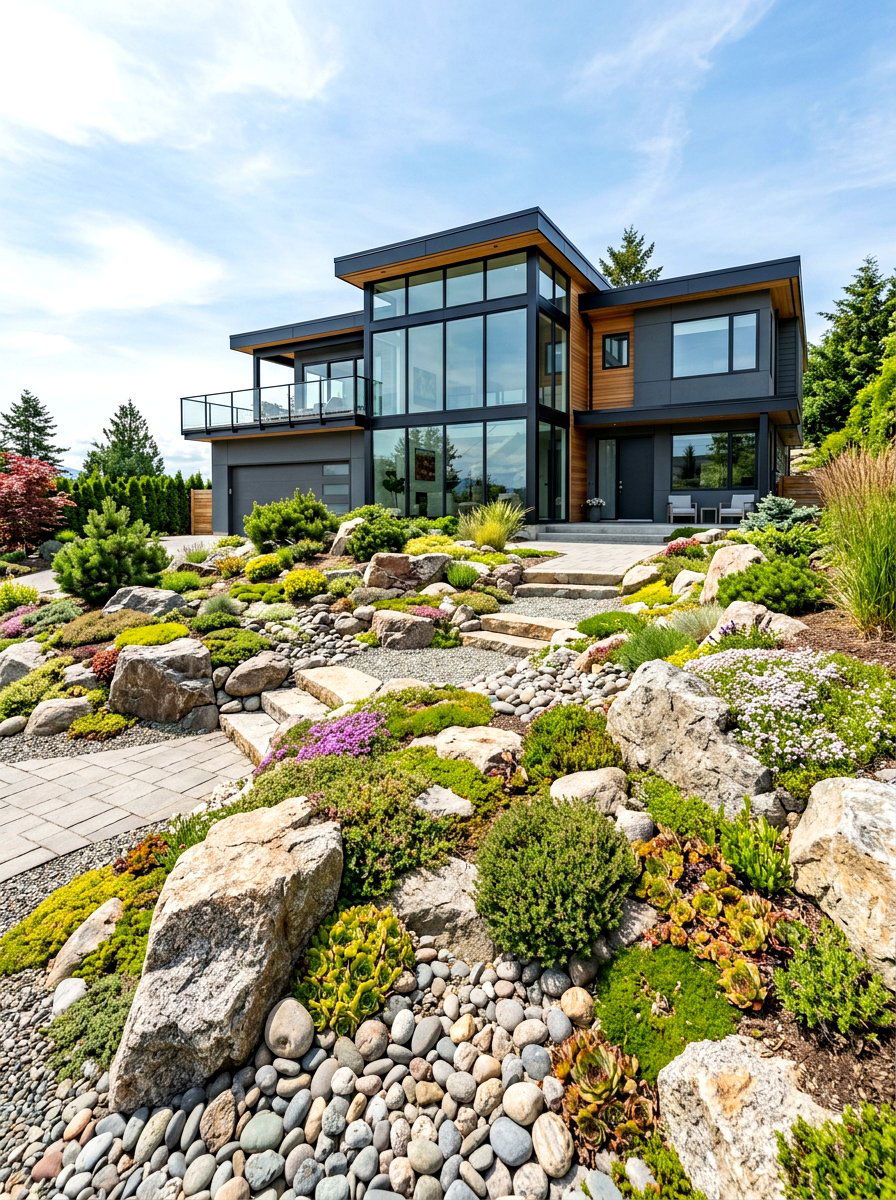
Do you struggle with a hilly or uneven lawn that is difficult to mow? Sloped front yard layered landscaping turns a challenging terrain into a tiered masterpiece of greenery. You can build stone retaining walls to create level terraces that act as natural layers. The highest tier can hold tall shrubs or small trees, while the middle terraces feature a mix of flowering perennials. The lowest level, near the sidewalk, can be filled with cascading groundcovers that soften the stone edges. This tiered approach prevents erosion and adds incredible visual interest to your home. It transforms a difficult slope into a highlight of your property’s overall exterior design.
9. Rock Garden Layered Border
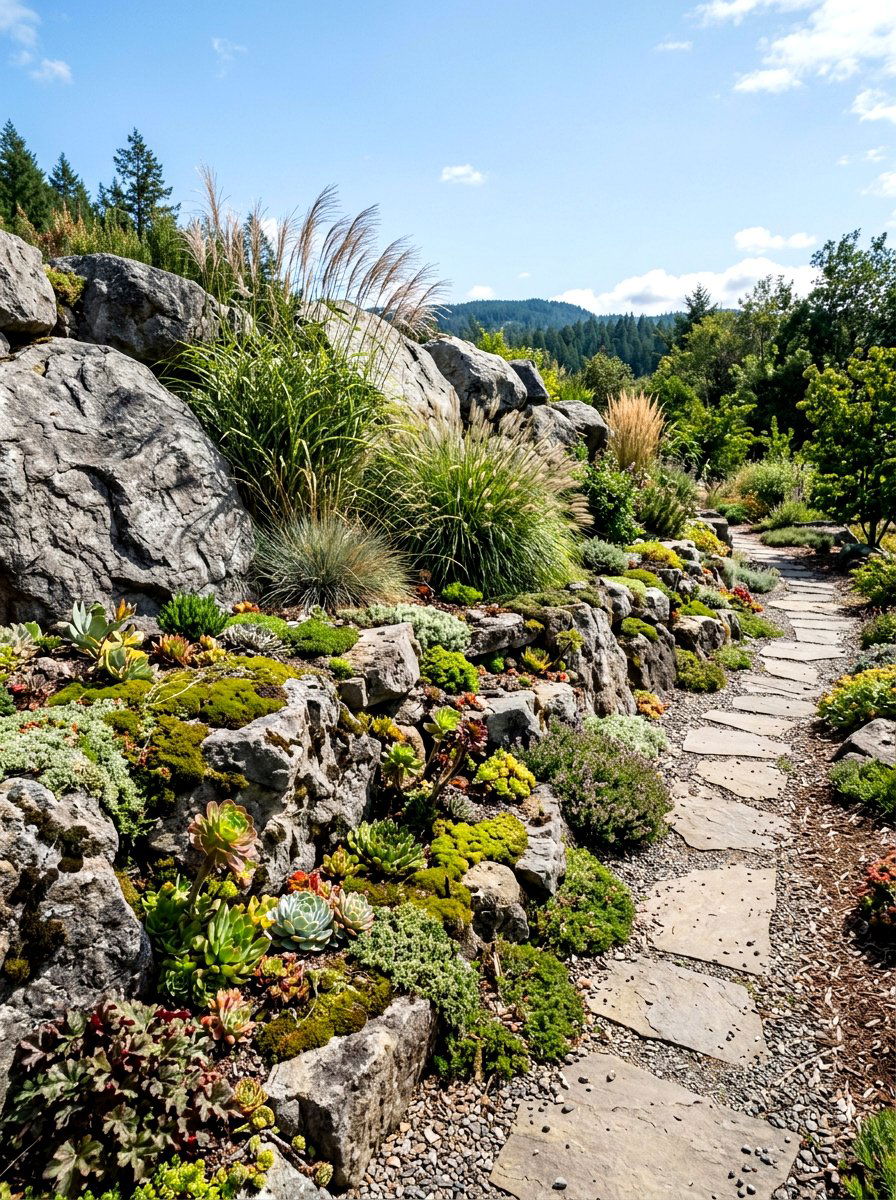
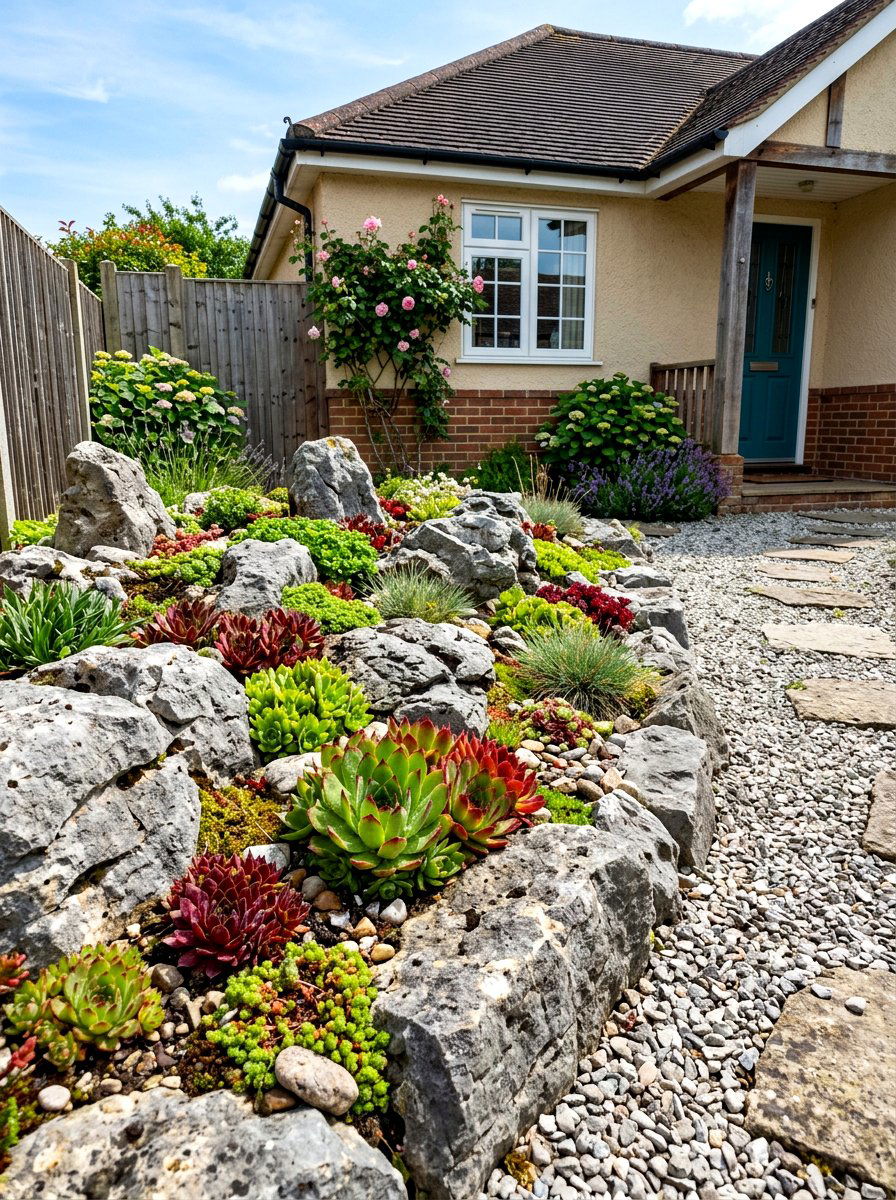
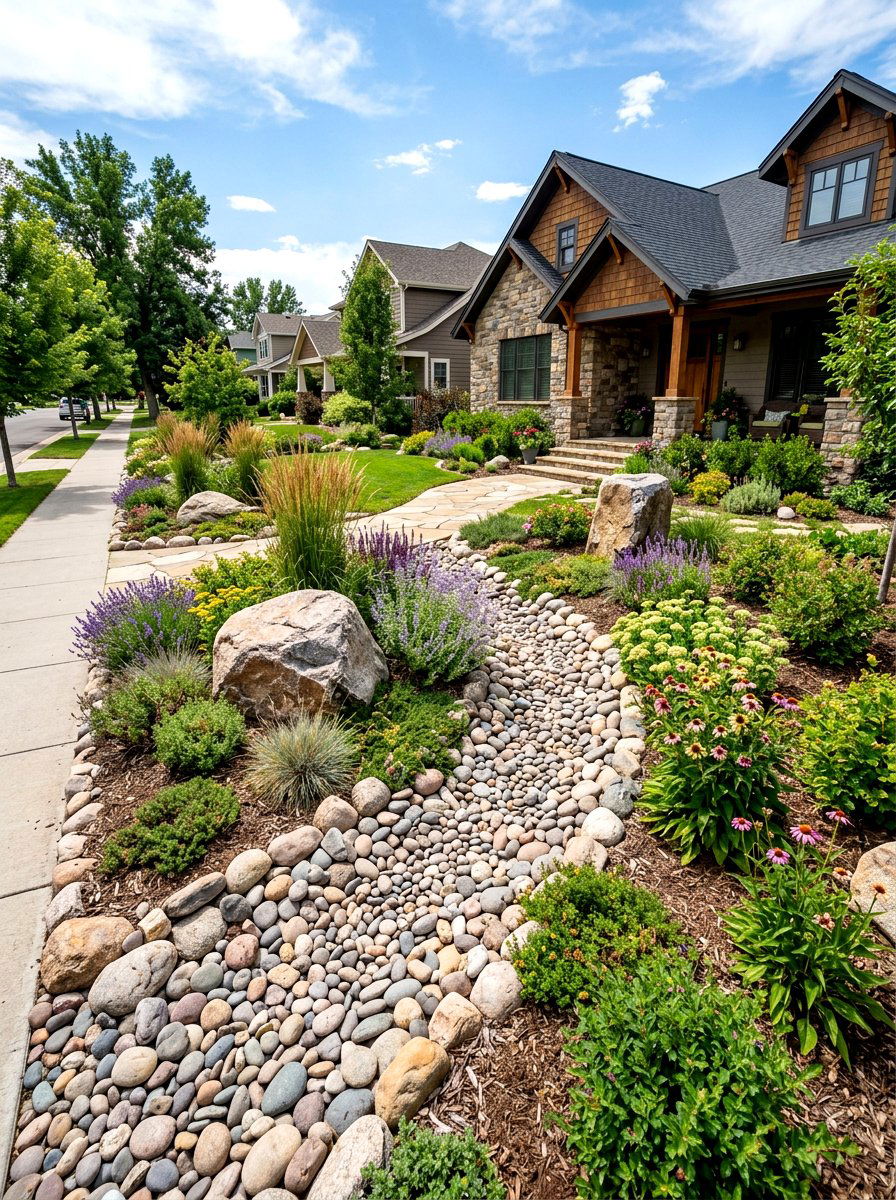
Are you looking for a way to combine natural stone elements with soft plant life? A rock garden layered border uses boulders and smaller stones to create a rugged yet refined landscape. You can place large feature rocks in the back to establish height and structure. Between and behind these stones, plant tall ornamental grasses or hardy pines. The middle layer can feature mid-sized alpine plants that nestle into the crevices of the rocks. Finally, use tiny succulents and mosses to fill the gaps at the very front. This layering of hard and soft materials mimics high-altitude landscapes. It provides a unique and textural entrance for any mountain or desert home.
10. Native Plant Layered Garden
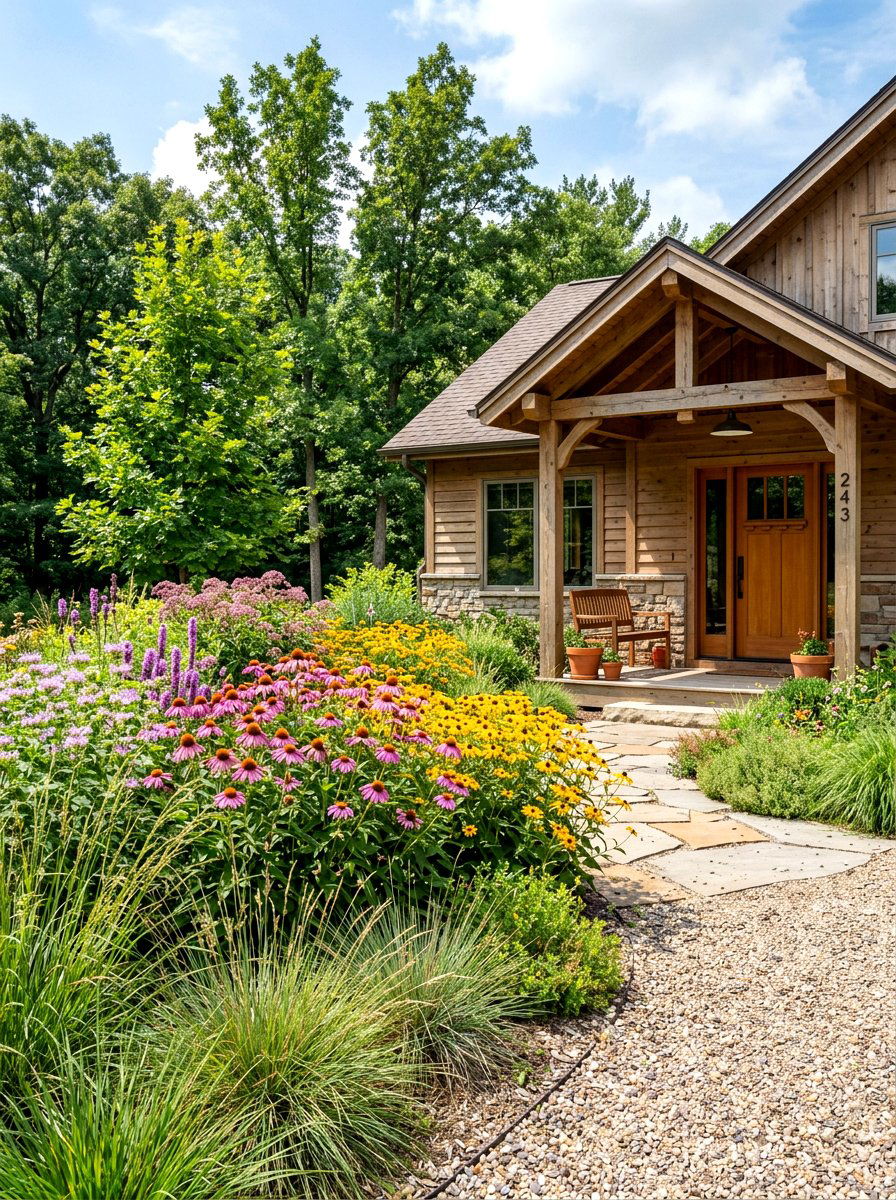
Why not support your local ecosystem while making your house look beautiful at the same time? A native plant layered garden utilizes species that naturally thrive in your specific climate. Start with a backdrop of native trees or tall shrubs that provide food and shelter for local birds. In the middle, plant a variety of local wildflowers like coneflowers or milkweed to attract butterflies and bees. The front layer can consist of native grasses or low-growing wild strawberries. This layered approach is incredibly resilient and requires very little extra water or fertilizer once it is established. It creates a wild, natural beauty that feels perfectly at home in your region.
11. Raised Bed Layered Front Yard
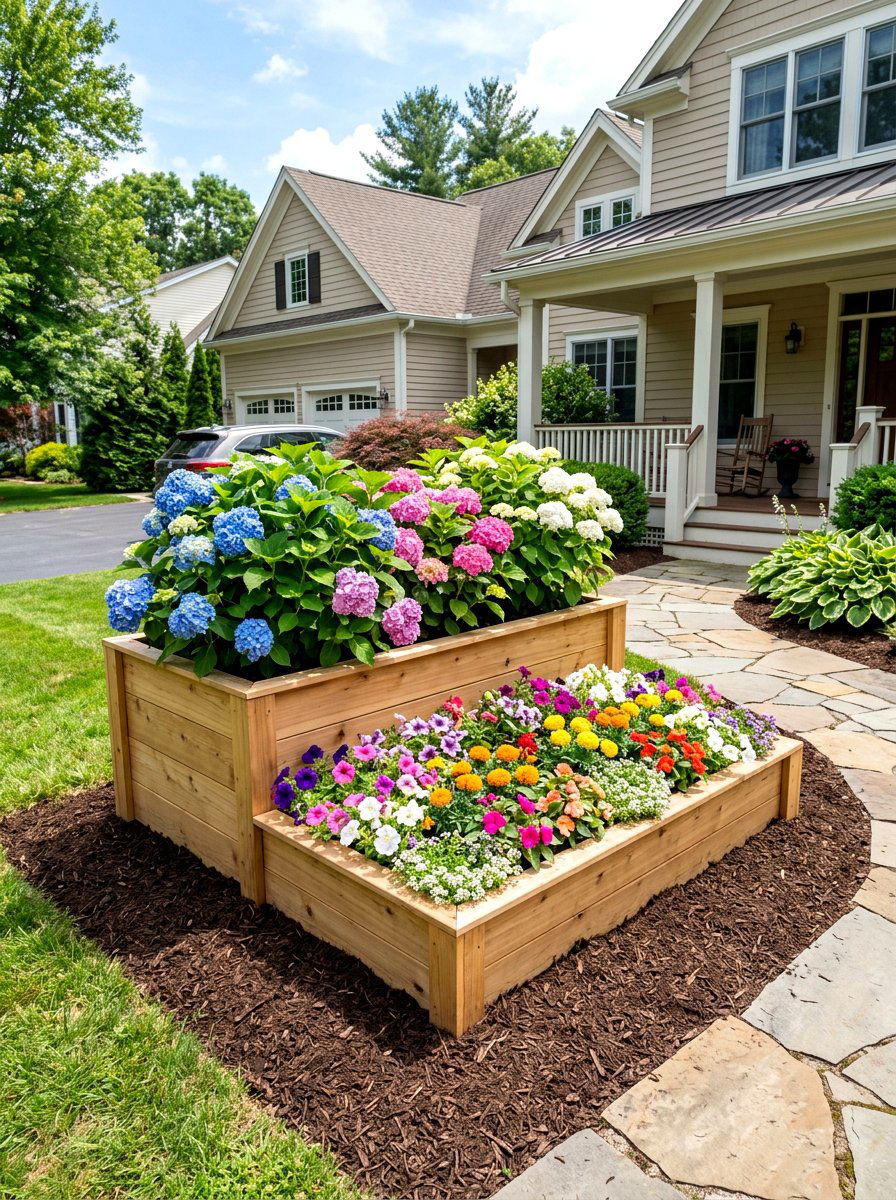
Could your front yard benefit from more structure and a cleaner, organized appearance? A raised bed layered front yard uses built-in planters to define different heights and zones. You can construct a tall planter in the back against the house for large shrubs or climbing vines. A second, lower planter in front of it can hold a variety of colorful perennials or seasonal flowers. The ground level around the planters can then be finished with a neat layer of mulch or gravel. This style creates very clear lines and prevents different plant species from growing into each other. It is a great way to manage soil quality and improve garden drainage.
12. Minimalist Layered Landscaping
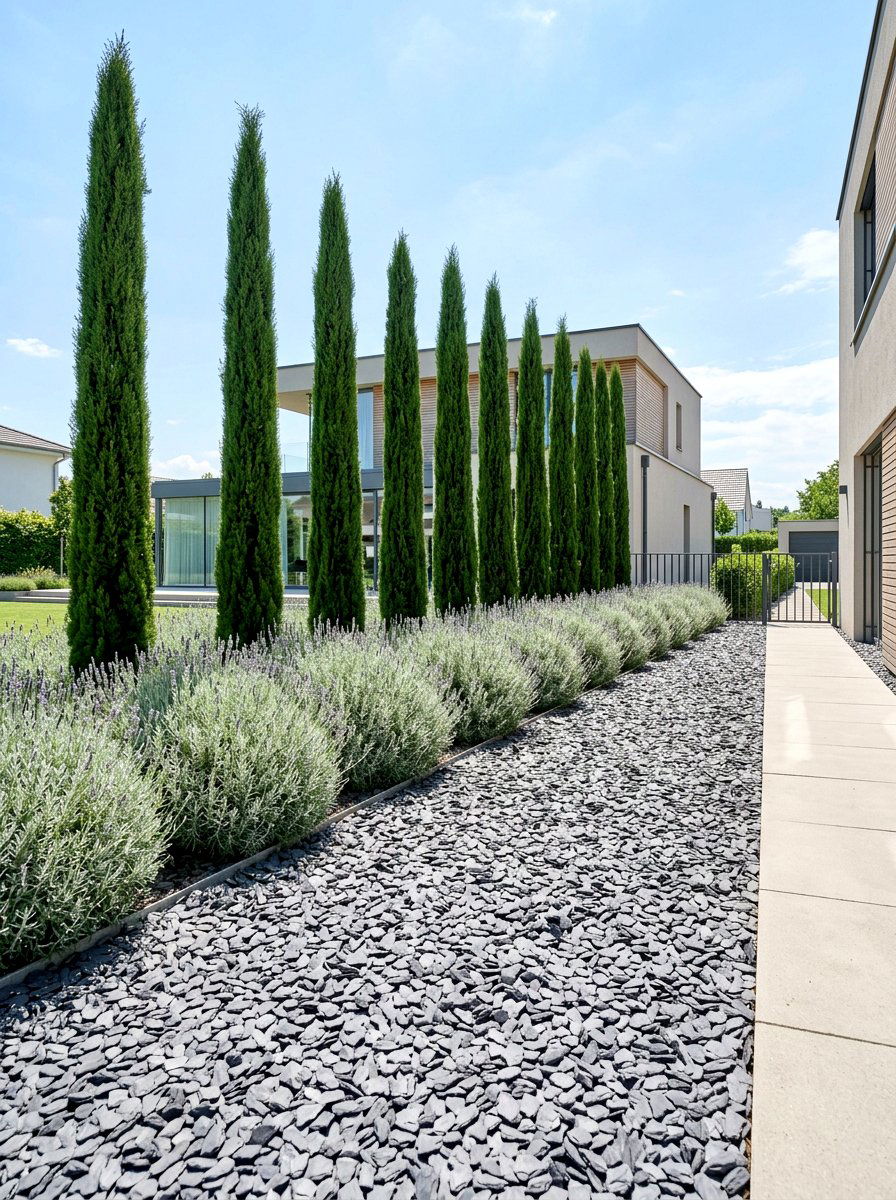
Is your style more about "less is more" and keeping things extremely tidy? Minimalist layered landscaping focuses on a few high-impact plant choices arranged in a very clean and orderly fashion. You might choose a single row of tall, thin Italian Cypresses for the background to create vertical drama. In front of them, use a single type of medium shrub, like silver-leafed lavender, for a consistent middle layer. The ground can be covered with a uniform layer of dark grey slate or black mulch. This simplified layering emphasizes the architectural form of the plants rather than a variety of colors. It results in a very calm and modern-looking home entrance.
13. Traditional Layered Front Garden
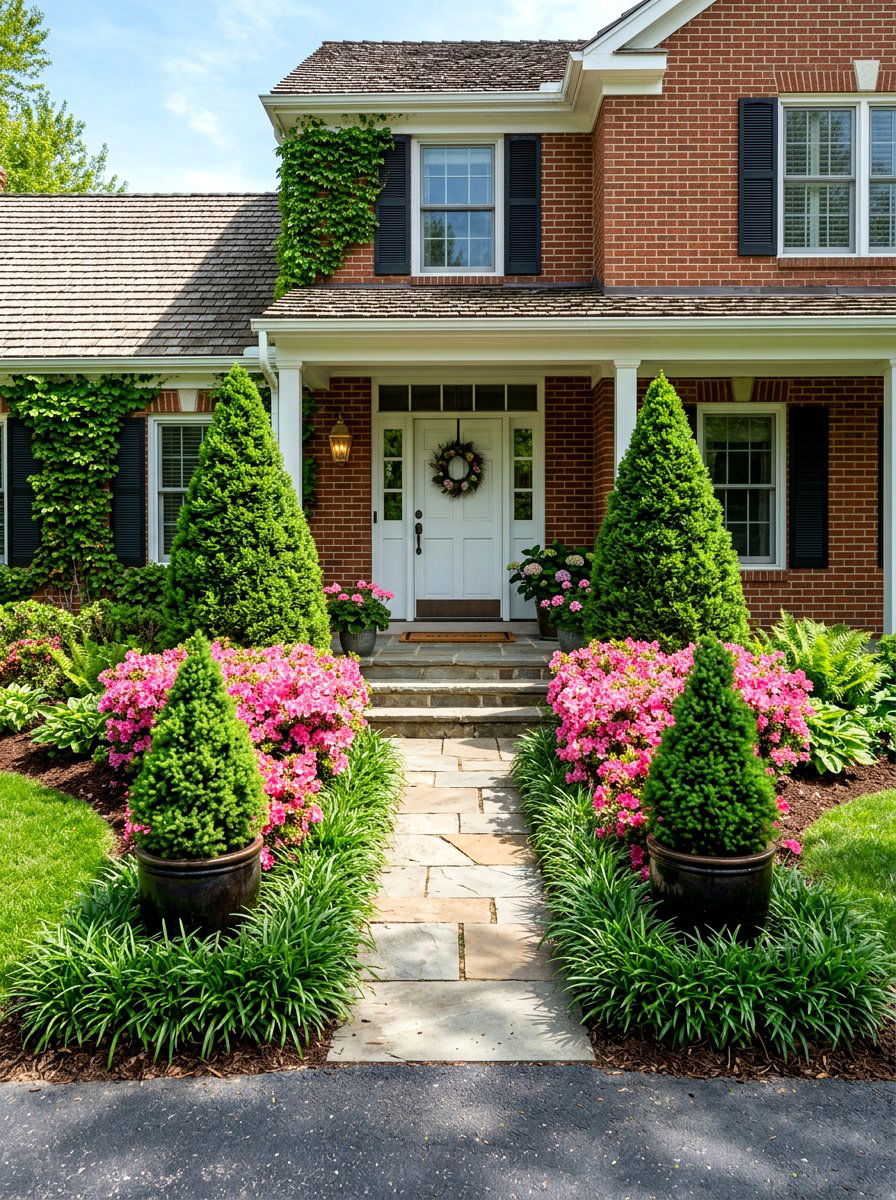
Do you want a timeless look that perfectly complements a classic brick or siding home? A traditional layered front garden relies on symmetry and classic plant choices to create a welcoming atmosphere. You can frame the front door with tall, conical evergreens or flowering dogwood trees in the back. The middle tier often features hydrangeas or azaleas that provide a soft, rounded shape and beautiful blooms. The front border is usually finished with a neat row of liriope or pansies. This balanced arrangement feels very formal and prestigious. It is a tried-and-true method for increasing property value and ensuring your home has a polished and sophisticated street presence.
14. Woodland Style Layered Landscape
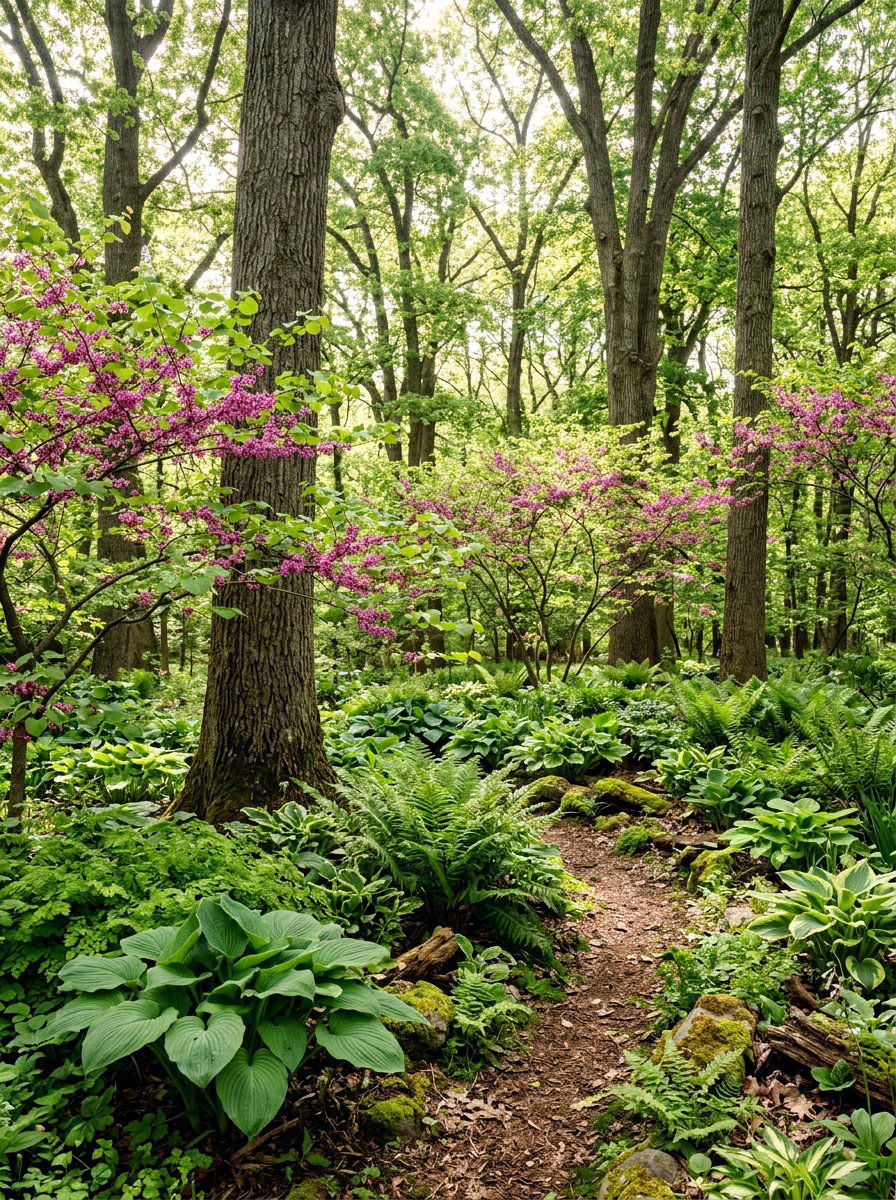
Does your home sit near a forest or have several large, mature shade trees? A woodland style layered landscape works with the shade to create a cool and mossy forest floor effect. Start with the existing tall trees as your canopy layer. Underneath them, plant an understory of smaller trees like redbuds or Japanese Maples. The next layer should consist of shade-loving shrubs like rhododendrons or mountain laurels. Finally, cover the ground with a thick carpet of ferns, hostas, and wild ginger. This layering creates a peaceful and naturalistic vibe that feels like a hidden sanctuary. It is the perfect way to turn a dark yard into a lush retreat.
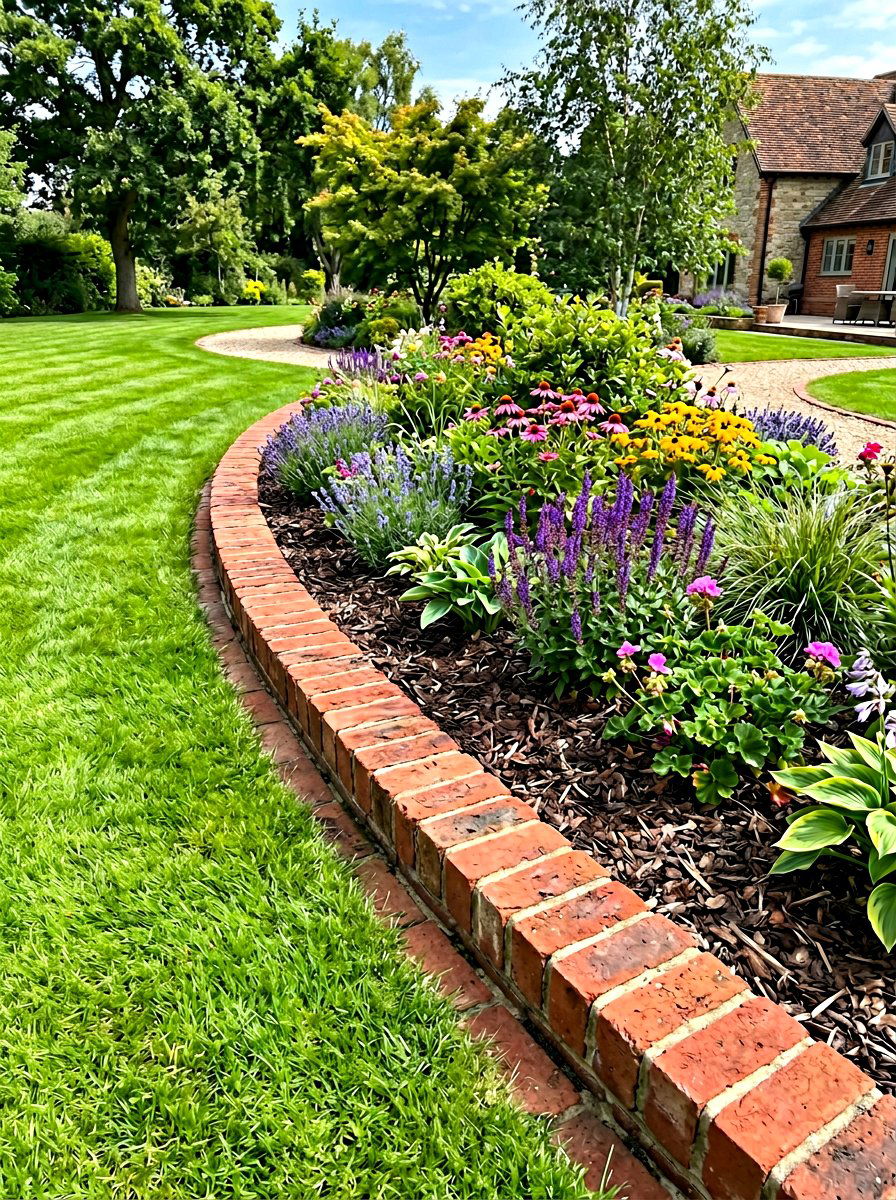
15. Coastal Layered Garden Aesthetic
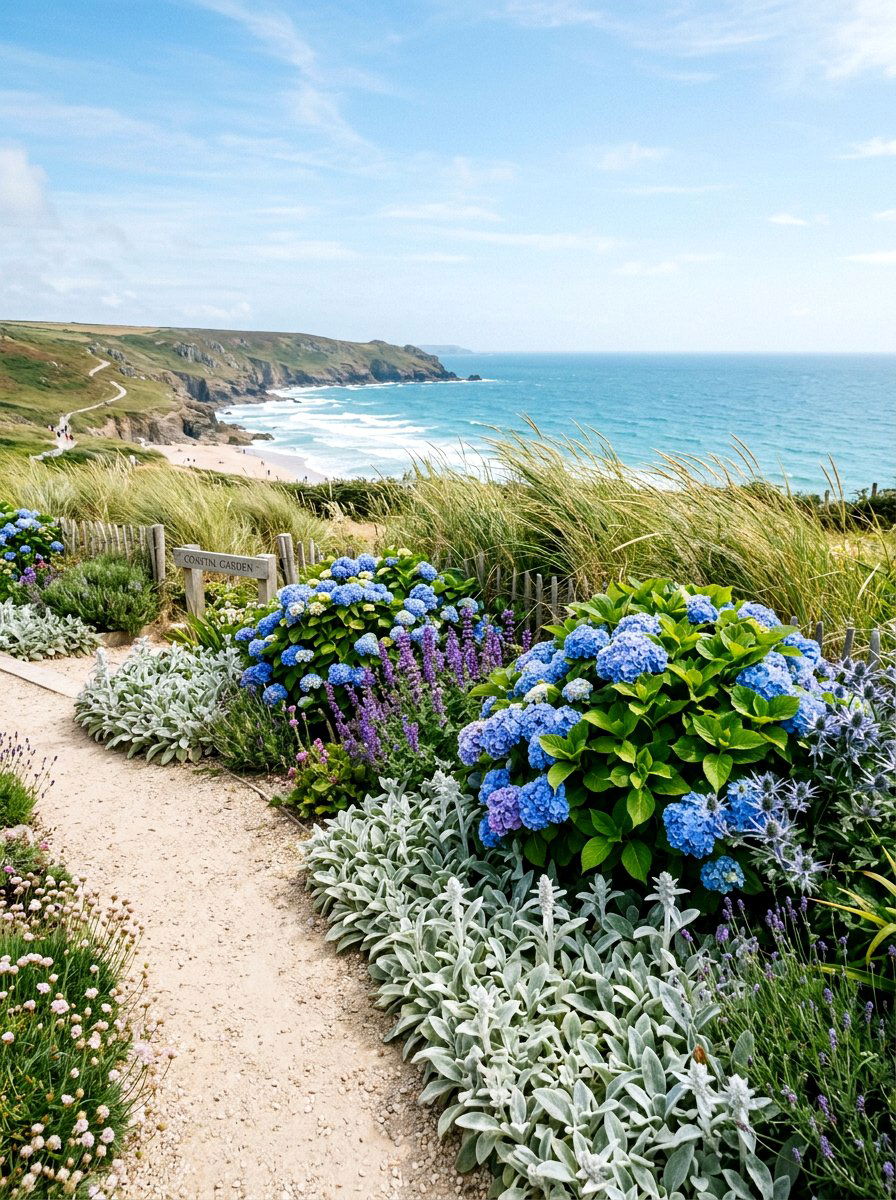
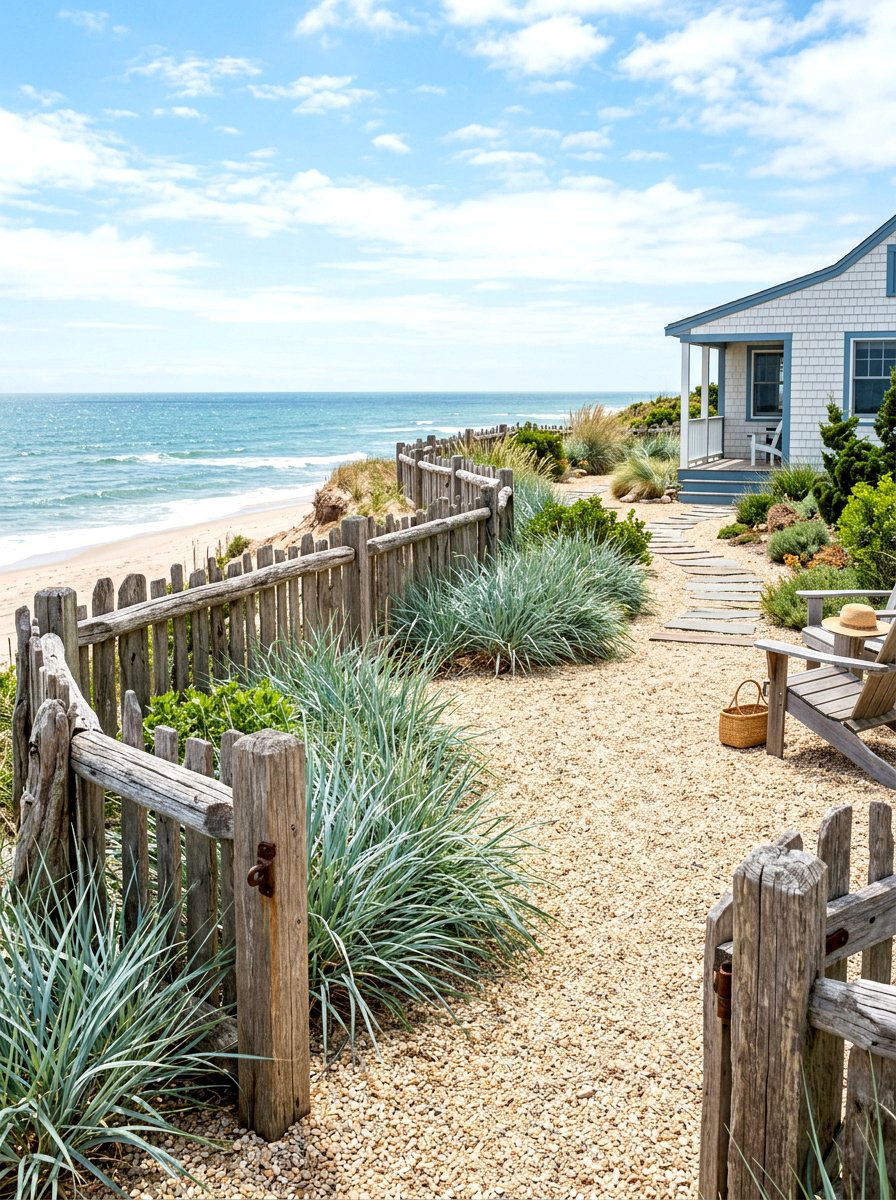
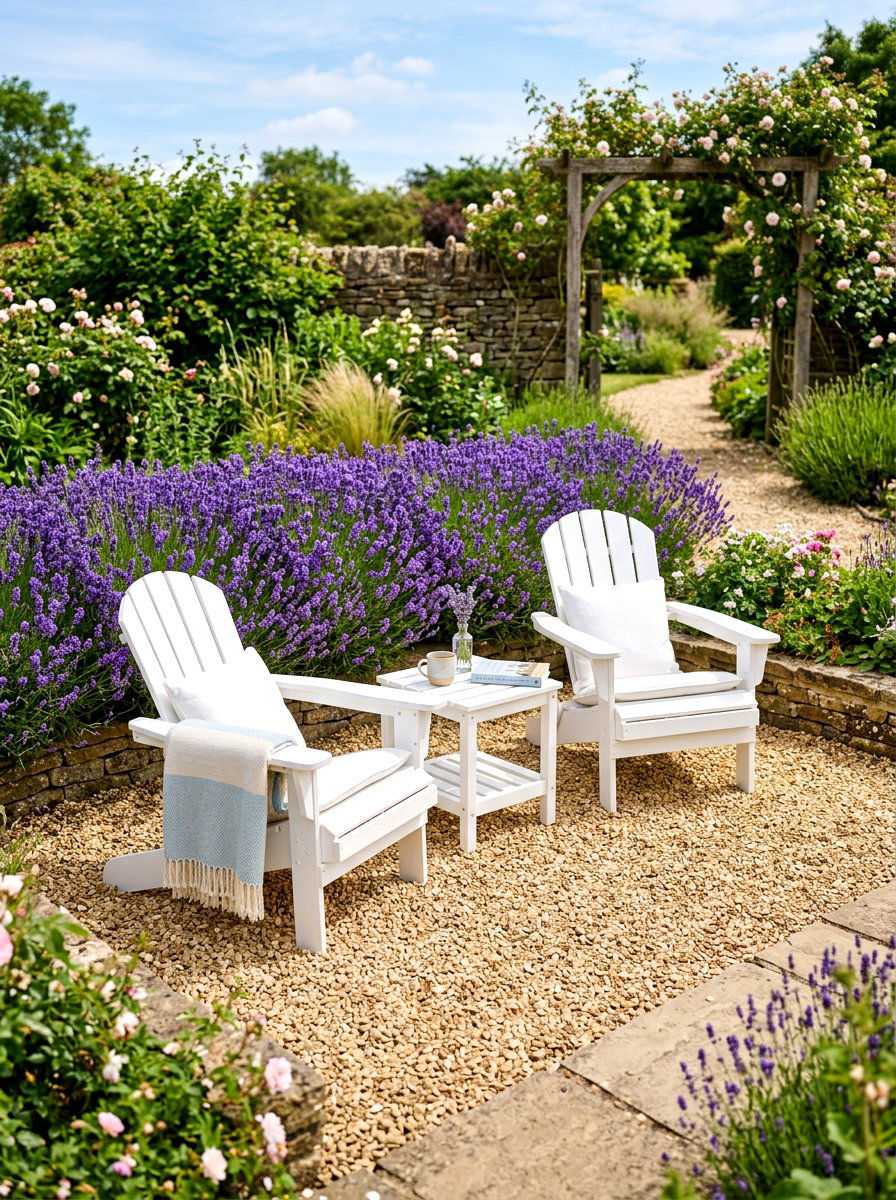
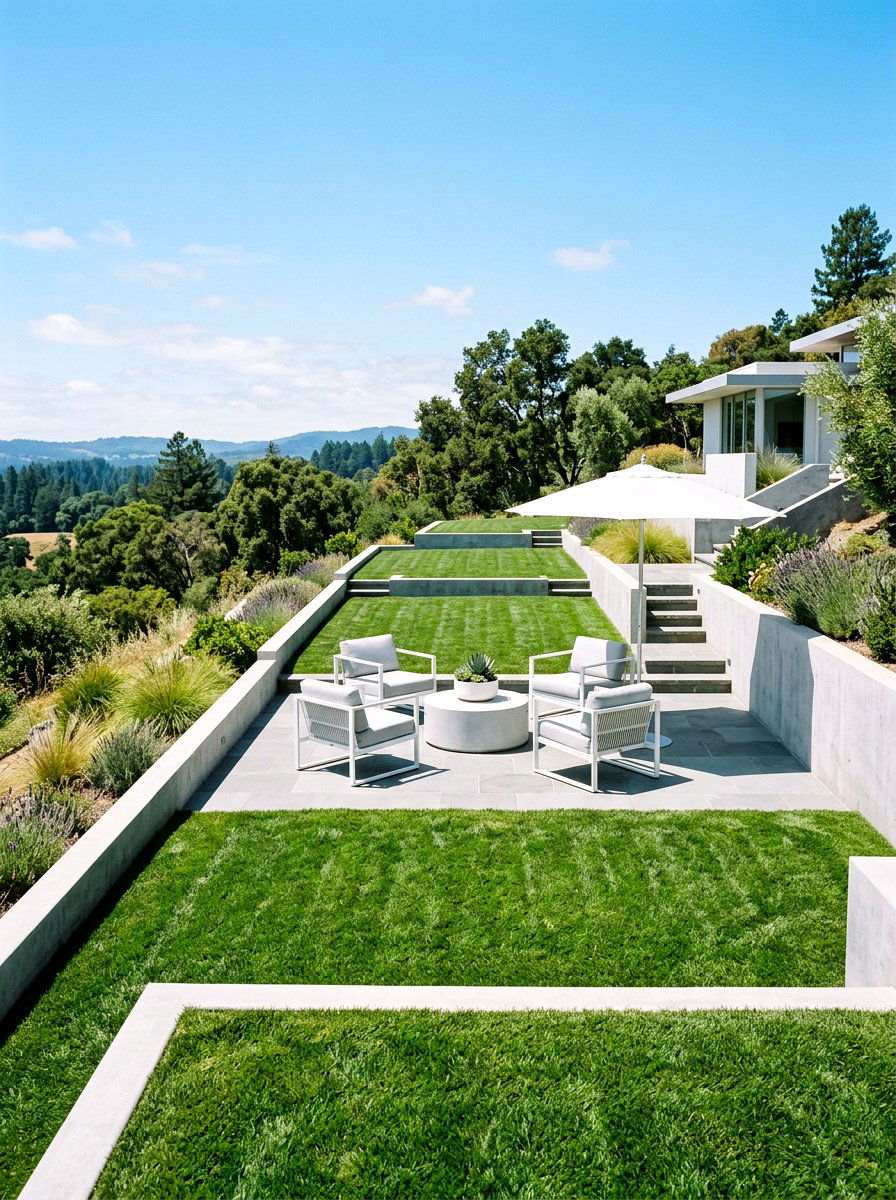
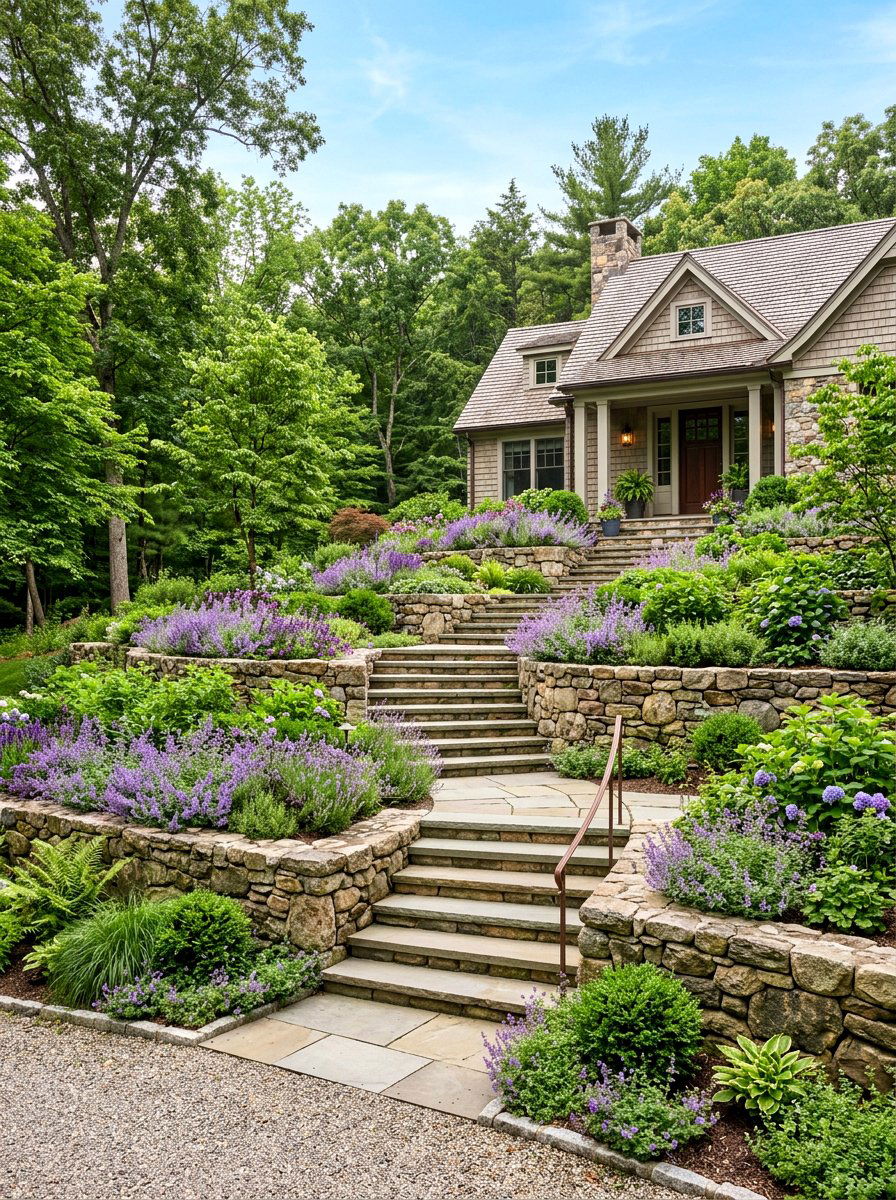
Are you living near the shore and need plants that can handle salty air and sandy soil? A coastal layered garden aesthetic uses breezy textures and soft colors to evoke a seaside feeling. The back layer can feature tall, salt-tolerant grasses or rugged bayberry shrubs. In the middle, plant blue-toned flowers like sea holly or hydrangeas that thrive in coastal light. The front layer can be finished with creeping junipers or soft-textured lamb’s ear. Using sandy-colored gravel as a mulch layer further enhances the beachy vibe of the space. This layered look feels light, airy, and perfectly suited for a relaxed life by the water.
16. Shady Front Yard Layered Plants
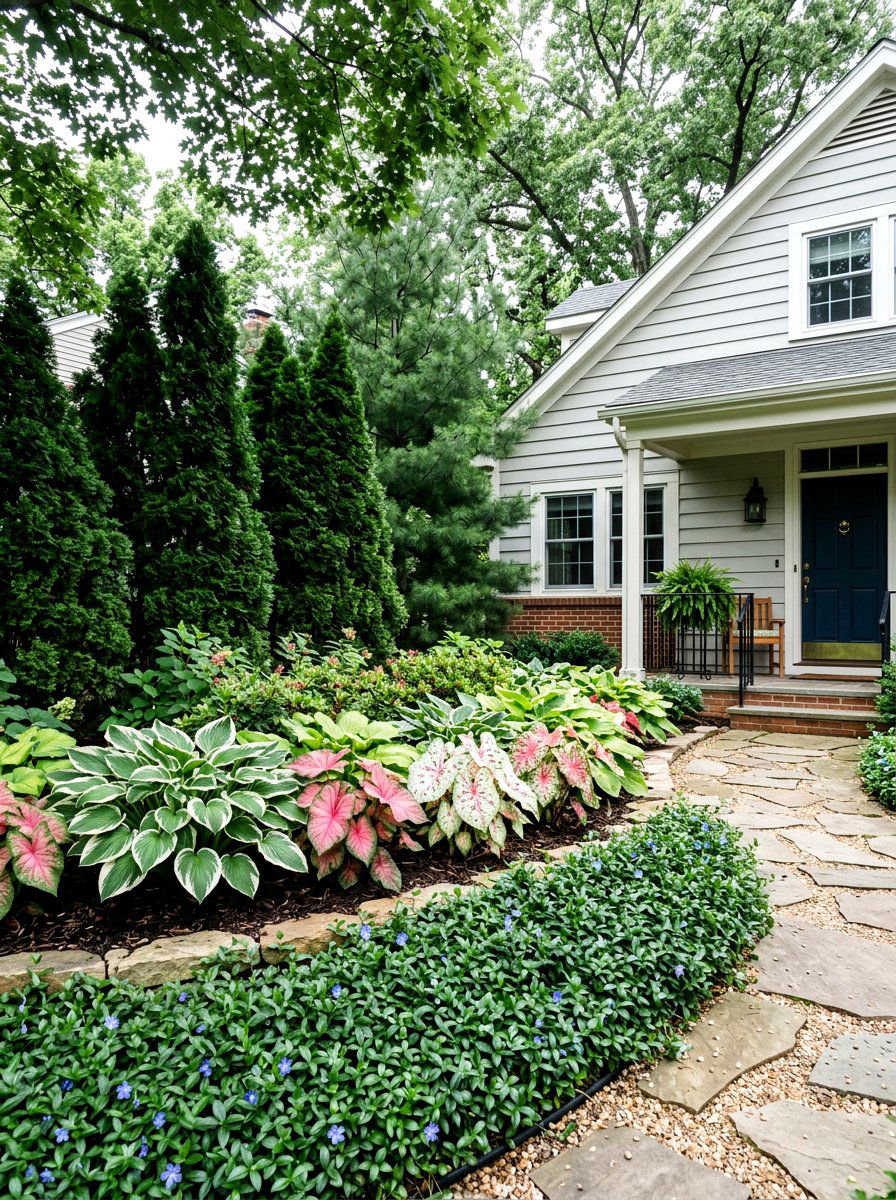
What can you do with a front yard that receives very little direct sunlight during the day? A shady front yard layered plants design turns low-light conditions into an advantage by focusing on foliage variety. The background layer can feature tall, shade-tolerant evergreens like hemlocks. In the middle, you can use large-leafed hostas or colorful caladiums to add visual weight and brightness to the shadows. The foreground can be filled with delicate groundcovers like sweet woodruff or vinca minor. Because shade gardens rely on greens and textures, this layered approach creates a very sophisticated and calm environment. It feels lush and cool even on the hottest summer days.
17. Sunny Front Yard Layered Border
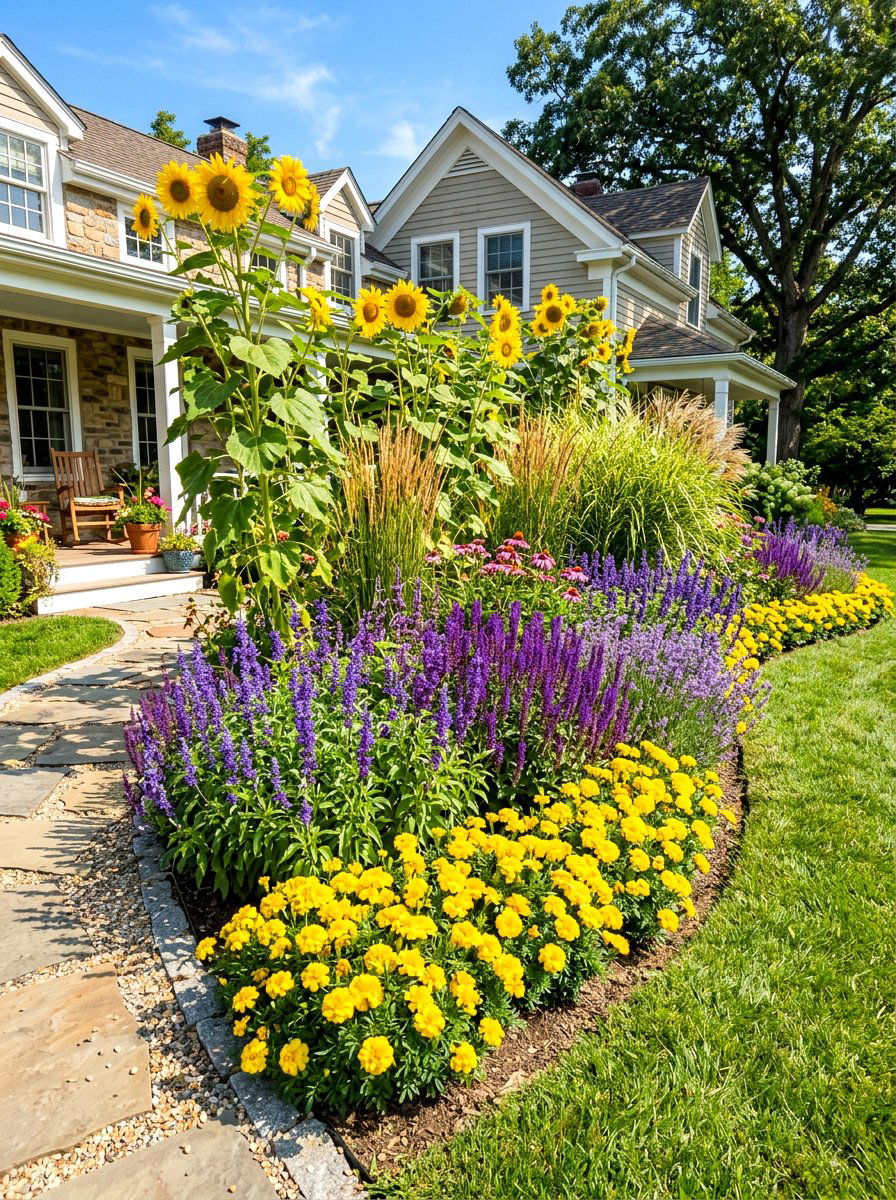
Does your front yard sit in the bright sun all day, making it the perfect spot for blooms? A sunny front yard layered border is a celebration of color and light-loving plant species. The tallest back layer can include sun-drenched sunflowers, ornamental grasses, or tall hibiscus plants. The middle tier should be packed with vibrant perennials like black-eyed Susans, salvia, and purple coneflowers. For the front edge, use low-growing annuals like petunias or marigolds that will bloom continuously in the heat. This layered configuration ensures that every plant gets the light it needs without being shaded out. It creates a high-energy and cheerful greeting for your home.
18. Boxwood Layered Foundation Hedge
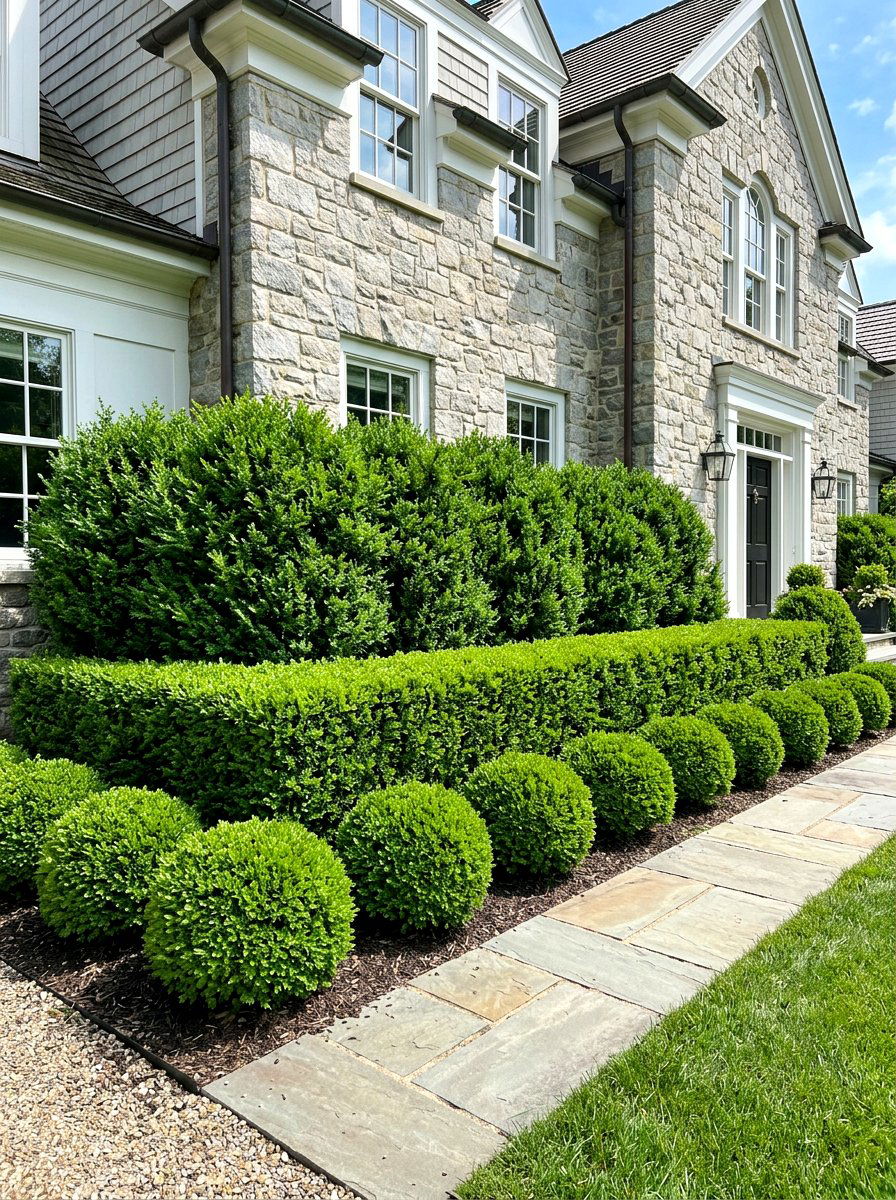
Are you a fan of formal gardens and the neat look of perfectly trimmed hedges? A boxwood layered foundation hedge uses different sizes of the same plant to create a structured and architectural green wall. You can plant a tall, unclipped boxwood variety in the back to provide a soft green background. In front of that, place a row of medium boxwoods trimmed into a neat rectangular shape. The final front layer can consist of dwarf boxwoods maintained as small, tight globes. This layering of the same species in different forms creates a monochromatic yet highly textured appearance. It is a classic choice for a timeless and elegant front yard.
19. Perennial Layered Flower Garden
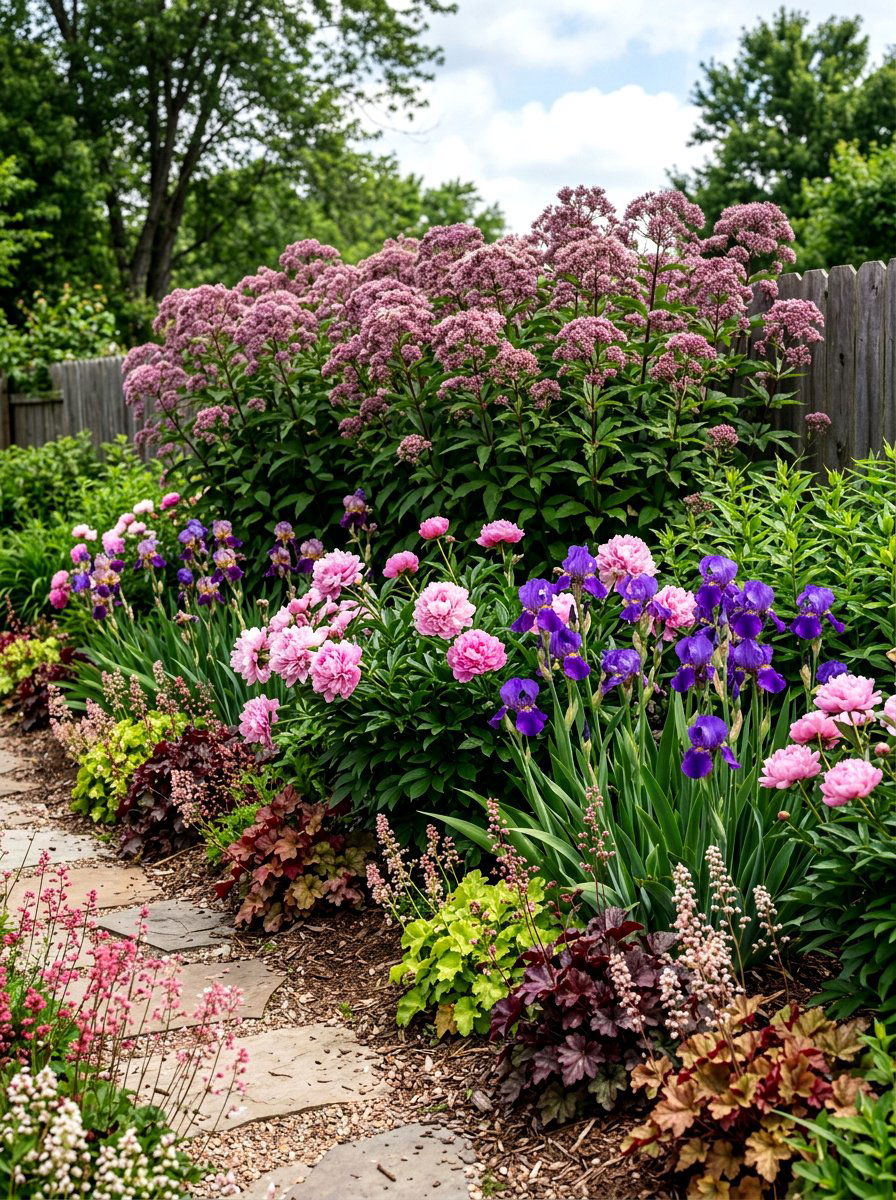
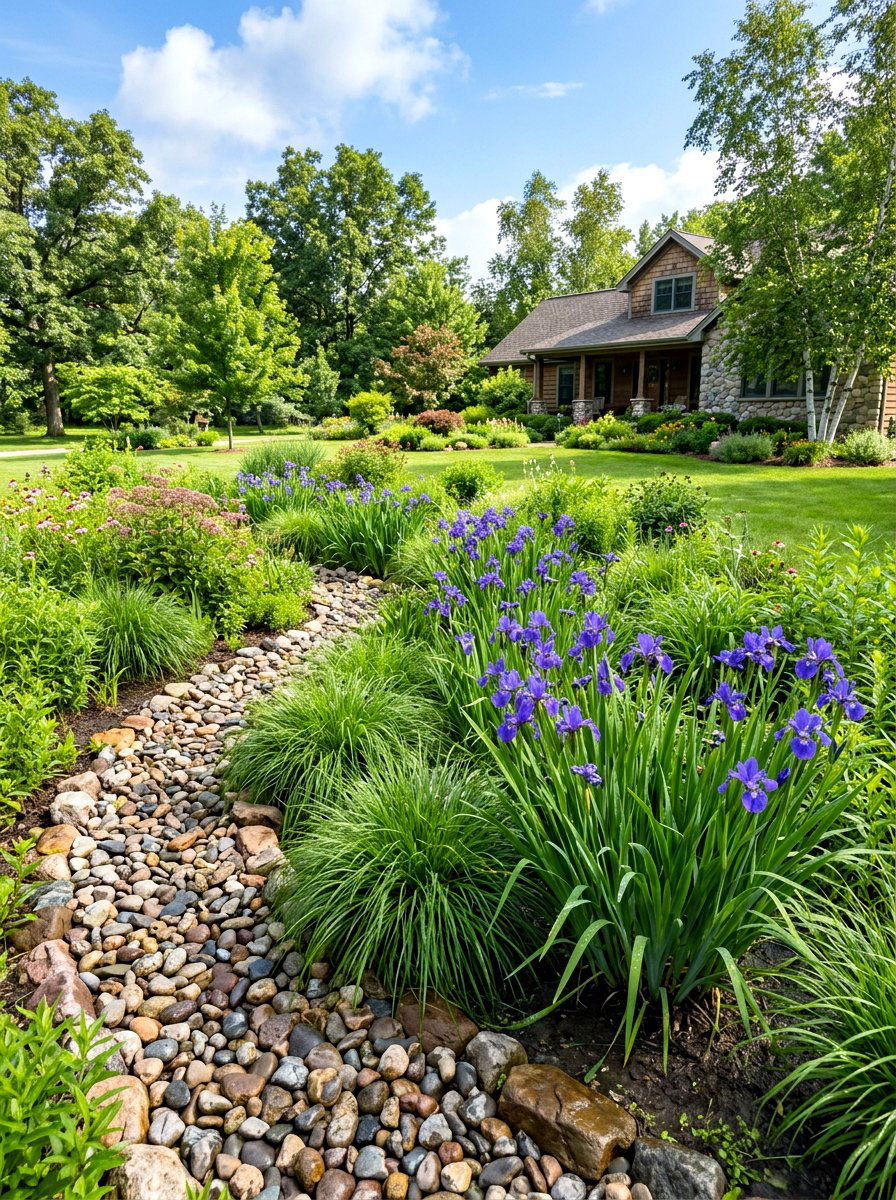
Would you like a garden that grows back bigger and more beautiful every single year? A perennial layered flower garden is a smart investment that provides long-term beauty with less replanting. You can start with tall, structural perennials like Joe Pye weed or ornamental grasses in the back. The middle layer is perfect for medium-height favorites like daylilies, peonies, and Siberian irises. The front of the bed can be reserved for low-growing coral bells or creeping phlox. Because these plants return annually, the layers will naturally fill in over time to create a dense and lush look. It is a sustainable way to keep your front yard looking full.
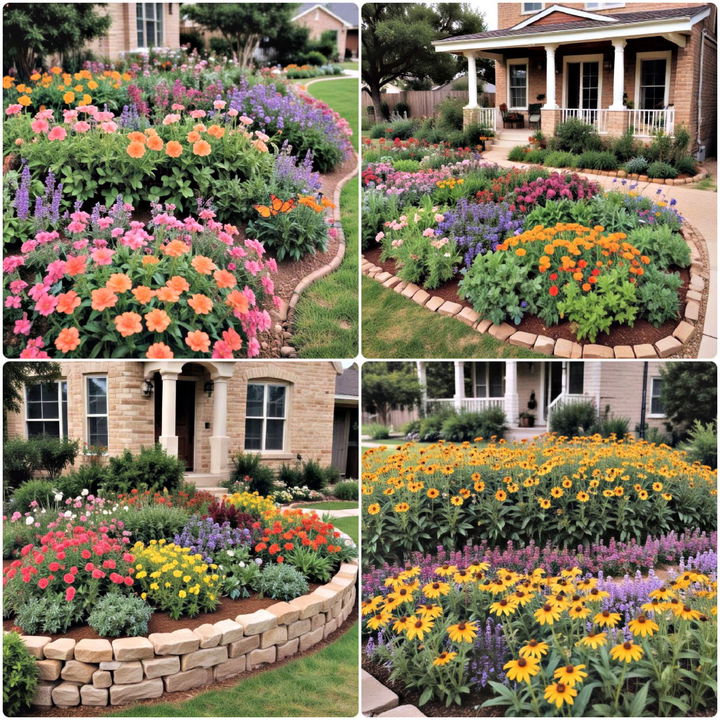
20. Contemporary Layered Walkway Landscaping
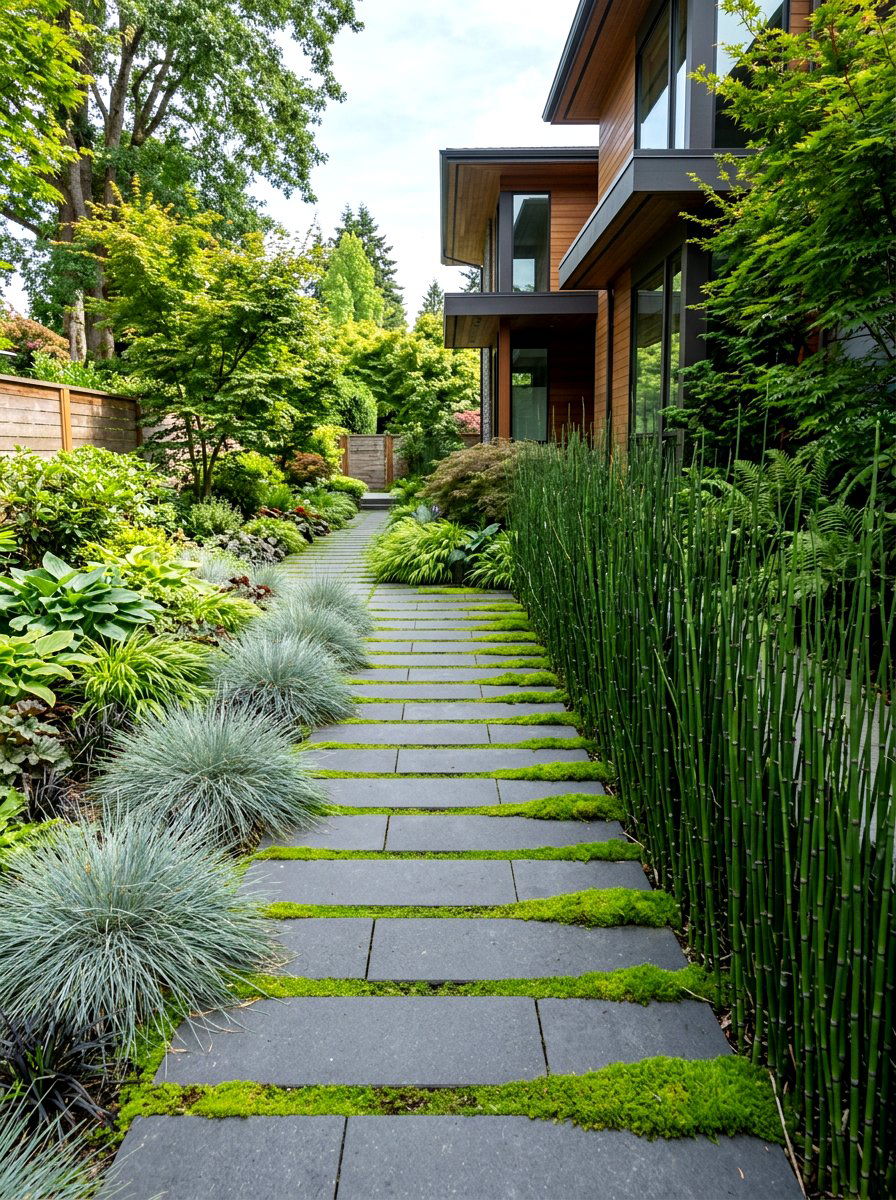
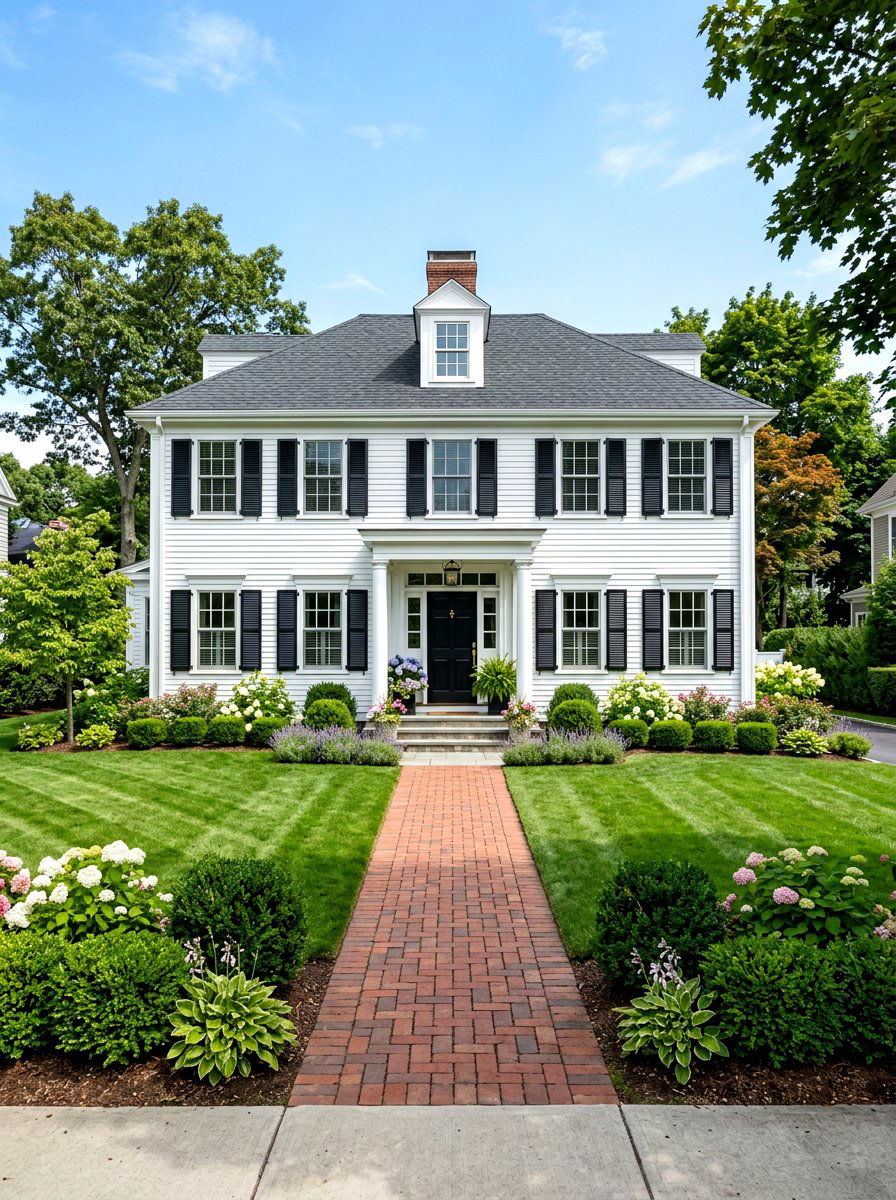
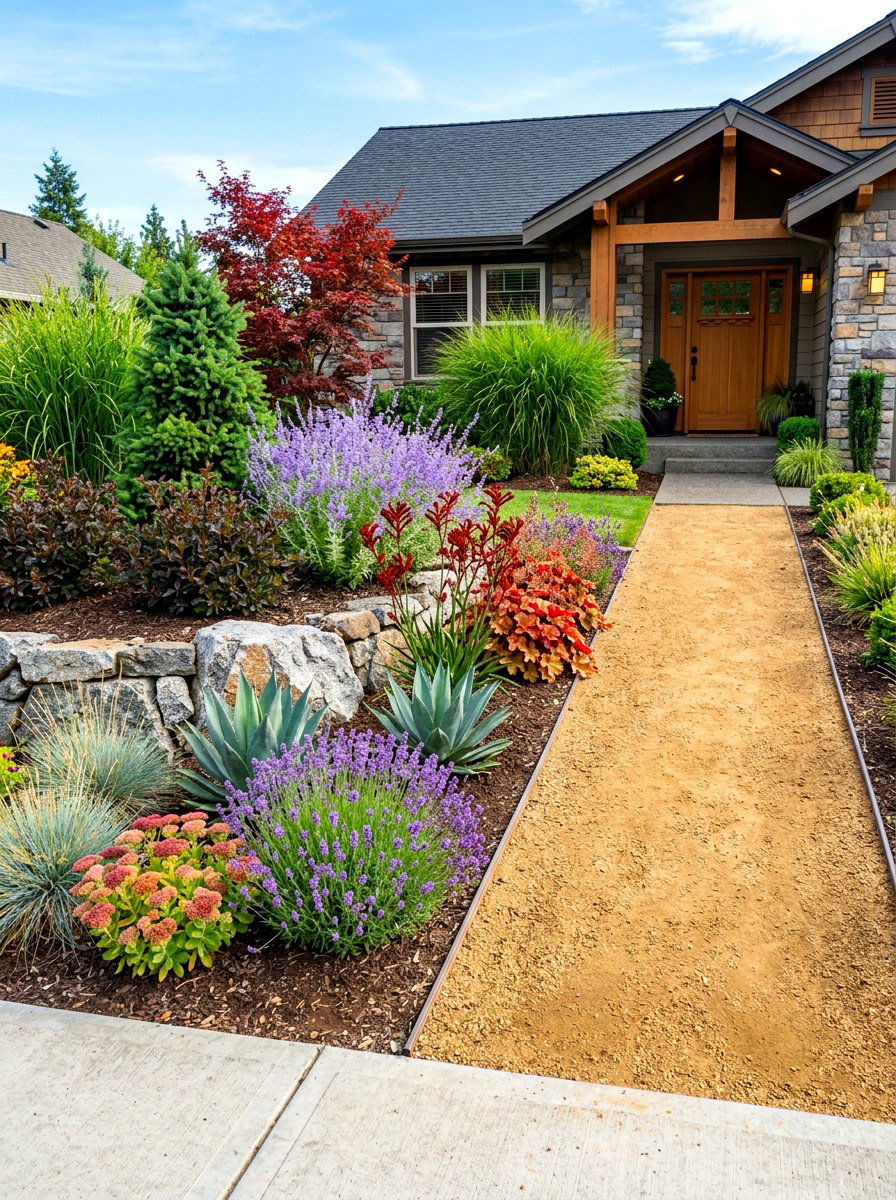
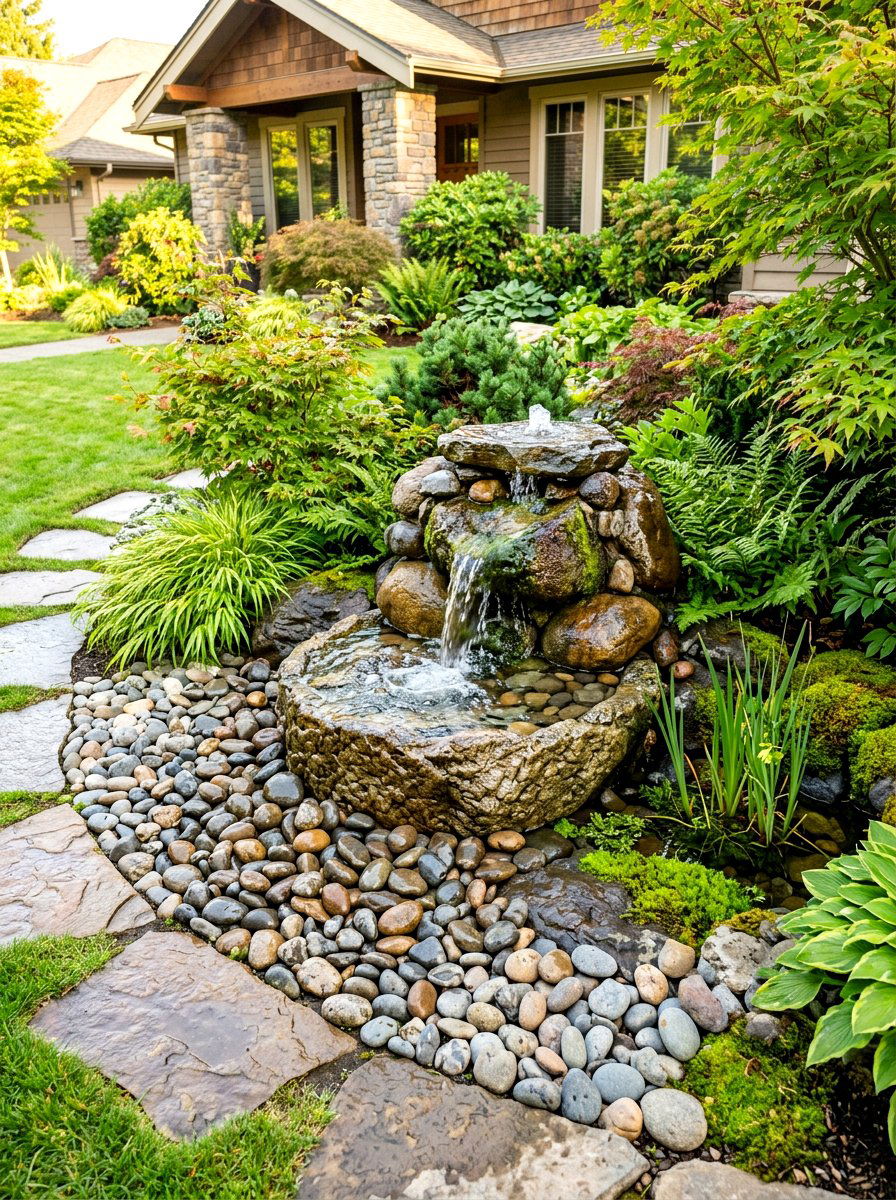
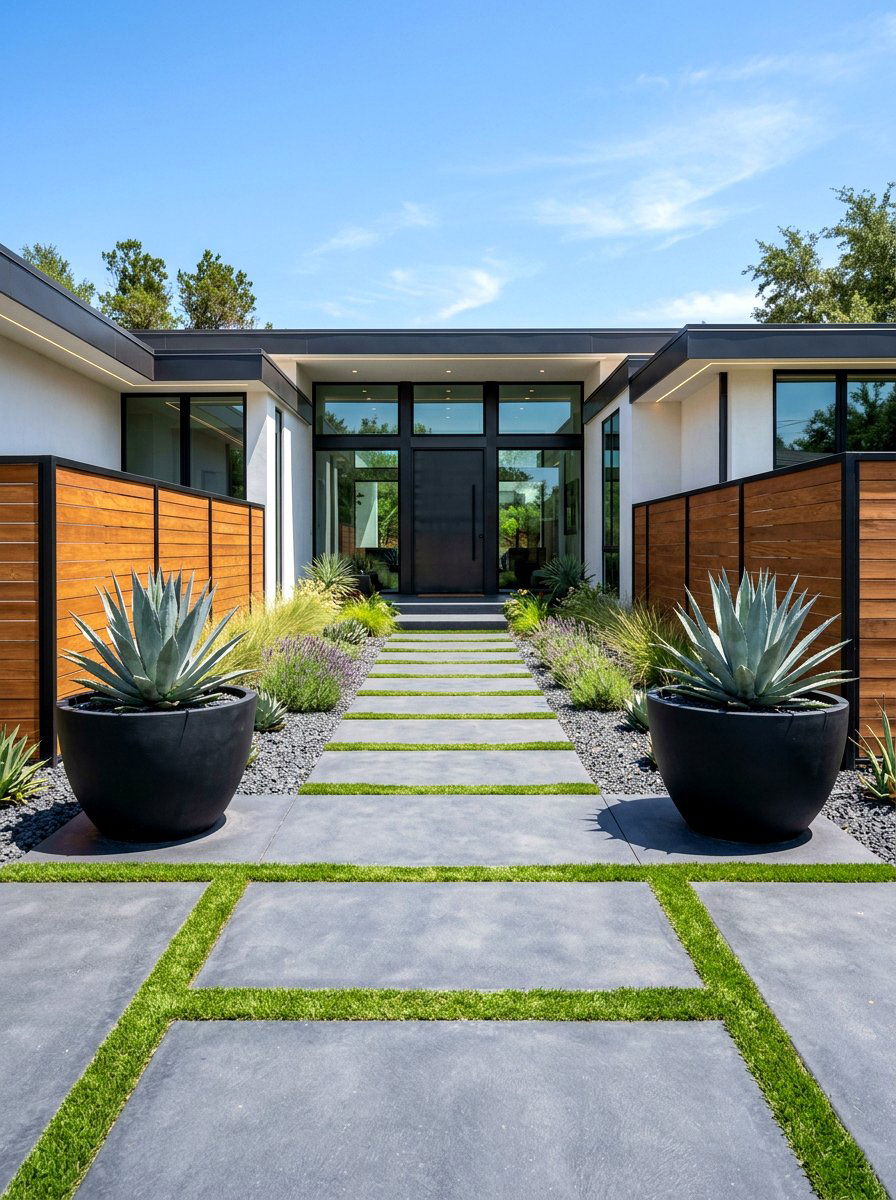
How can you guide guests to your front door in a way that feels modern and stylish? Contemporary layered walkway landscaping uses the path itself as a central design element. You can line the walkway with tall, narrow plants like horsetail reed or bamboo in the back to create a sense of movement. In the middle, add lower mounds of blue fescue or small ornamental grasses. The very edge of the path can be softened with flat groundcovers like Irish moss that grow between pavers. This layered approach makes the walk from the car to the house feel like a journey through a well-designed art gallery or modern park.
21. Farmhouse Style Layered Garden
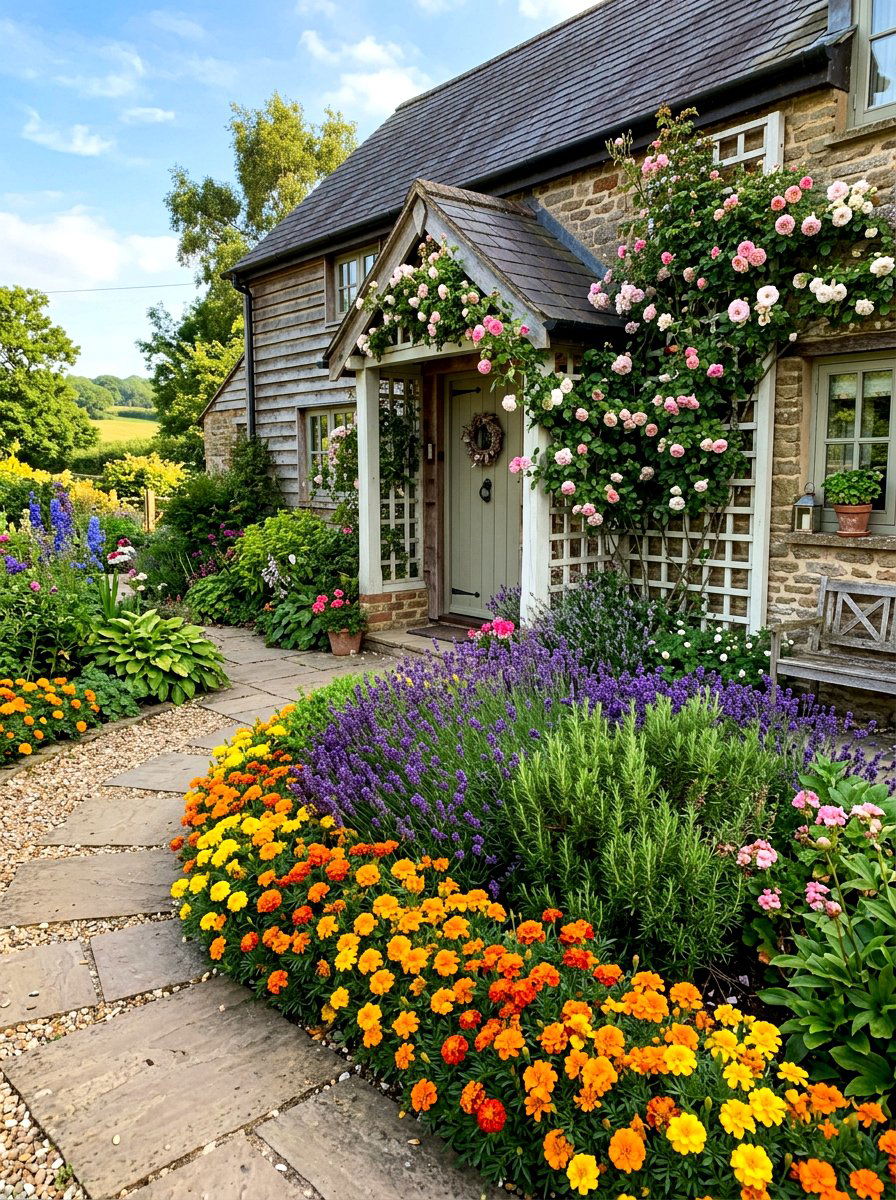
Are you looking for a cozy and welcoming look that matches a rustic or farmhouse home? A farmhouse style layered garden combines productive plants with decorative flowers for a charming and functional entrance. The back layer can feature tall climbing roses on a wooden trellis or a row of sunflowers. In the middle, mix flowering shrubs like lilacs with edible herbs like rosemary and sage. The front layer is perfect for classic flowers like lavender or marigolds that protect the other plants from pests. This layered approach feels very organic and homey. It brings a sense of traditional country living to any suburban or rural property.
22. Japanese Inspired Layered Landscape
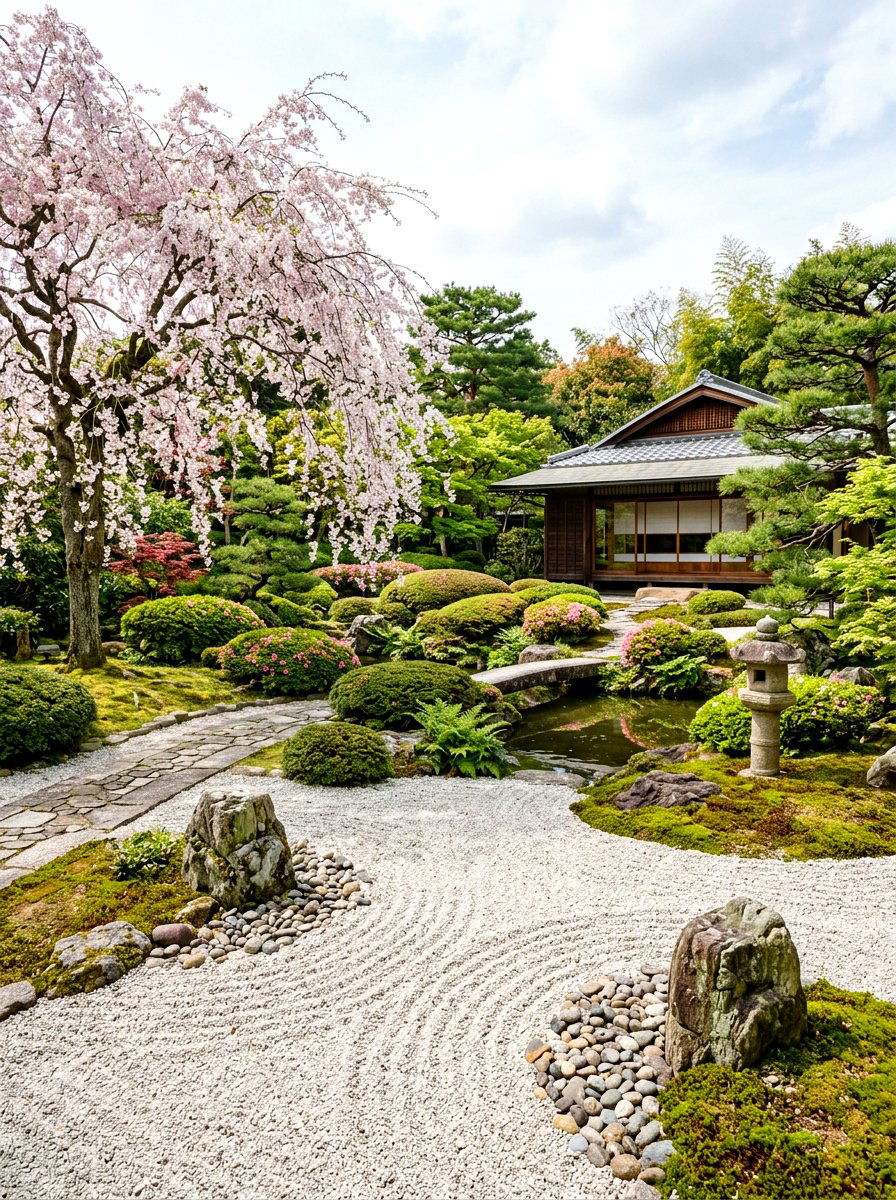
Could your front yard benefit from a sense of peace, balance, and quiet reflection? A Japanese inspired layered landscape uses asymmetrical balance and natural forms to create a Zen-like atmosphere. The background often features a sculptural evergreen or a weeping cherry tree. The middle layer can consist of carefully pruned azaleas or cloud-trimmed shrubs that mimic the shape of rolling hills. For the ground layer, use a combination of fine moss and raked gravel or smooth river stones. This layering emphasizes the space between plants as much as the plants themselves. It results in a very tranquil and artistic front yard that feels like a private sanctuary.
23. Desert Style Layered Xeriscaping
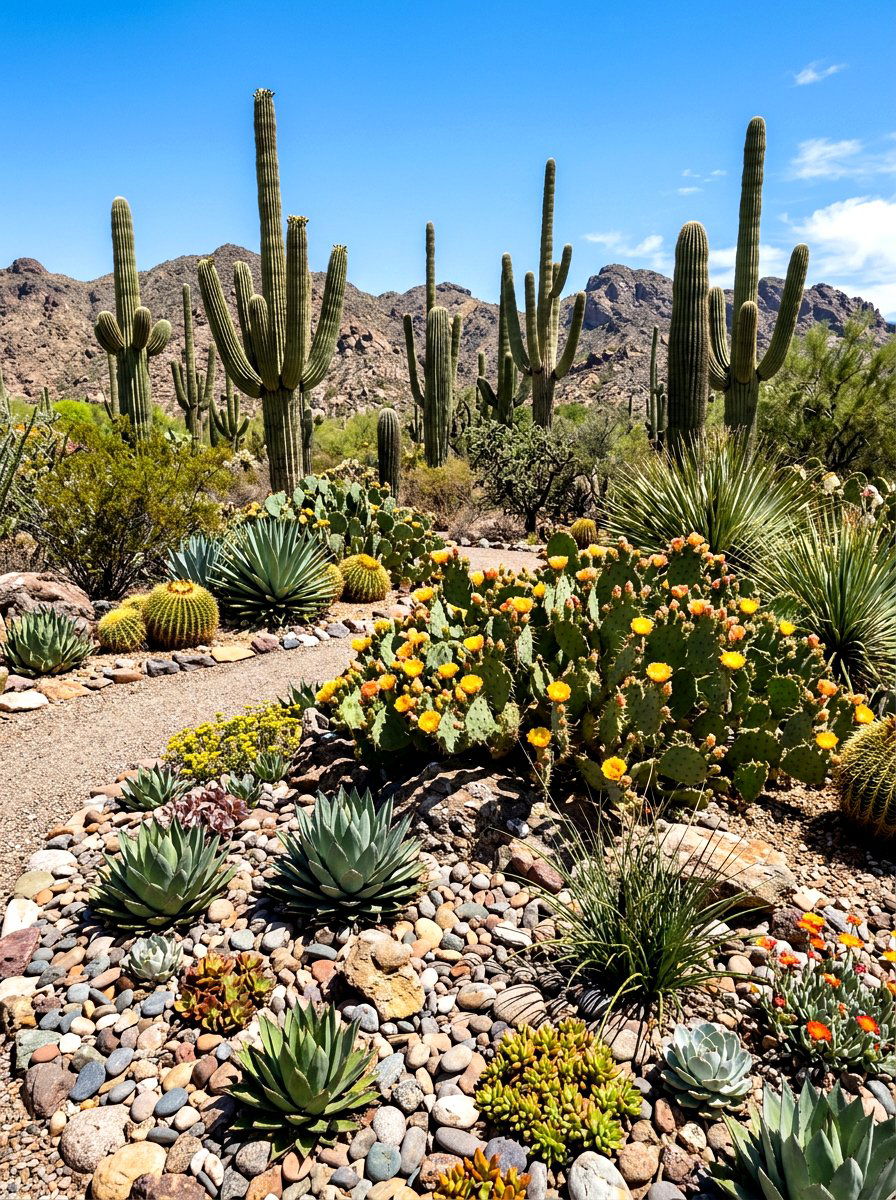
Do you want a landscape that is both incredibly tough and visually striking in a dry climate? Desert style layered xeriscaping uses the unique shapes of arid-land plants to create a high-contrast garden. You can use tall saguaro or pipe organ cacti in the back to provide dramatic vertical lines. The middle tier can include colorful prickly pear or flowering desert spoons. The ground layer is typically finished with a mix of small gravel and low-growing succulents like ghost plants. This layered approach focuses on the different textures and silhouettes of the plants. It creates a stunning and sculptural front yard that requires almost no water at all.
24. Colorful Layered Front Yard
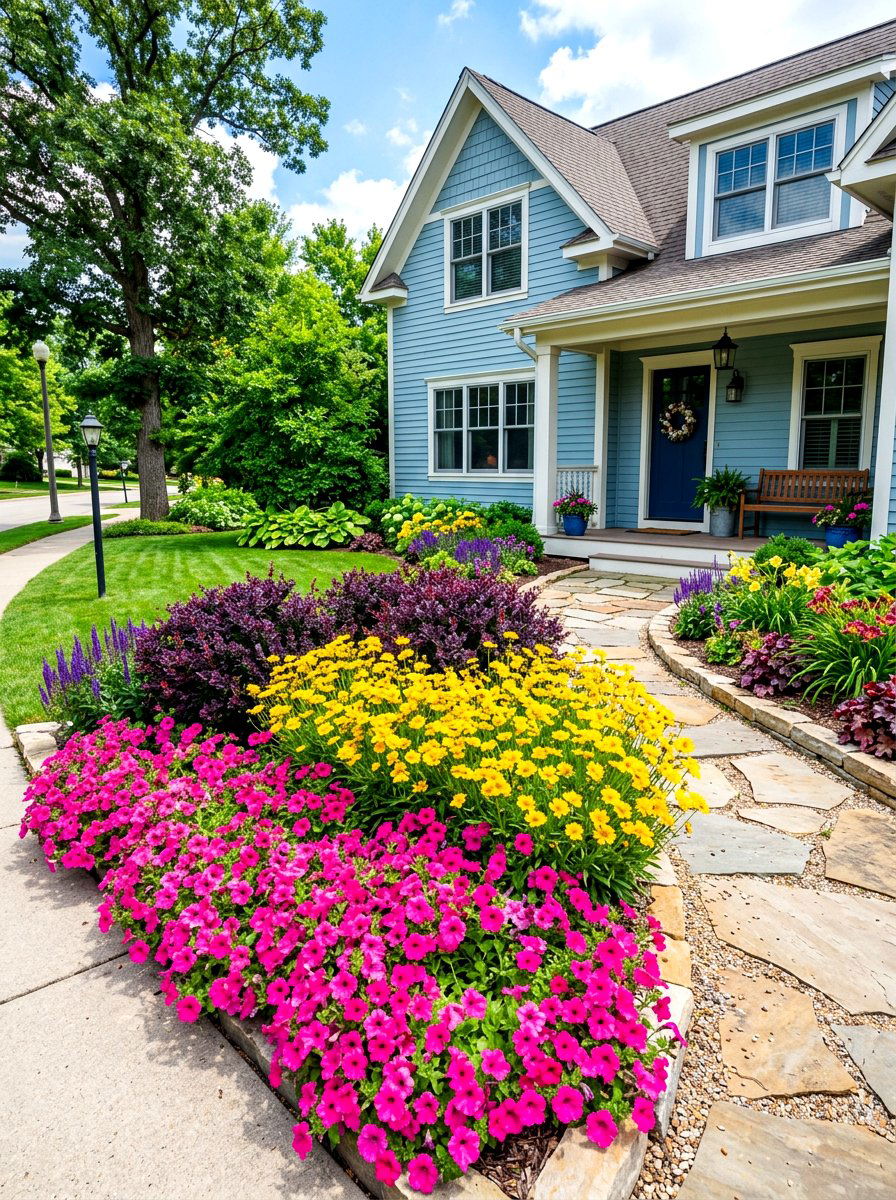
Is your goal to have the most vibrant and eye-catching house on the entire street? A colorful layered front yard uses contrasting hues to create a high-impact visual display. You can start with a back layer of dark purple barberry shrubs to make the colors in front pop. The middle layer can be filled with bright yellow coreopsis and hot pink zinnias. The front edge can be finished with electric blue lobelia or white alyssum for a clean finish. By layering these different colors, you create a sense of energy and excitement. This approach is perfect for homeowners who want to show off their personality through their landscape.
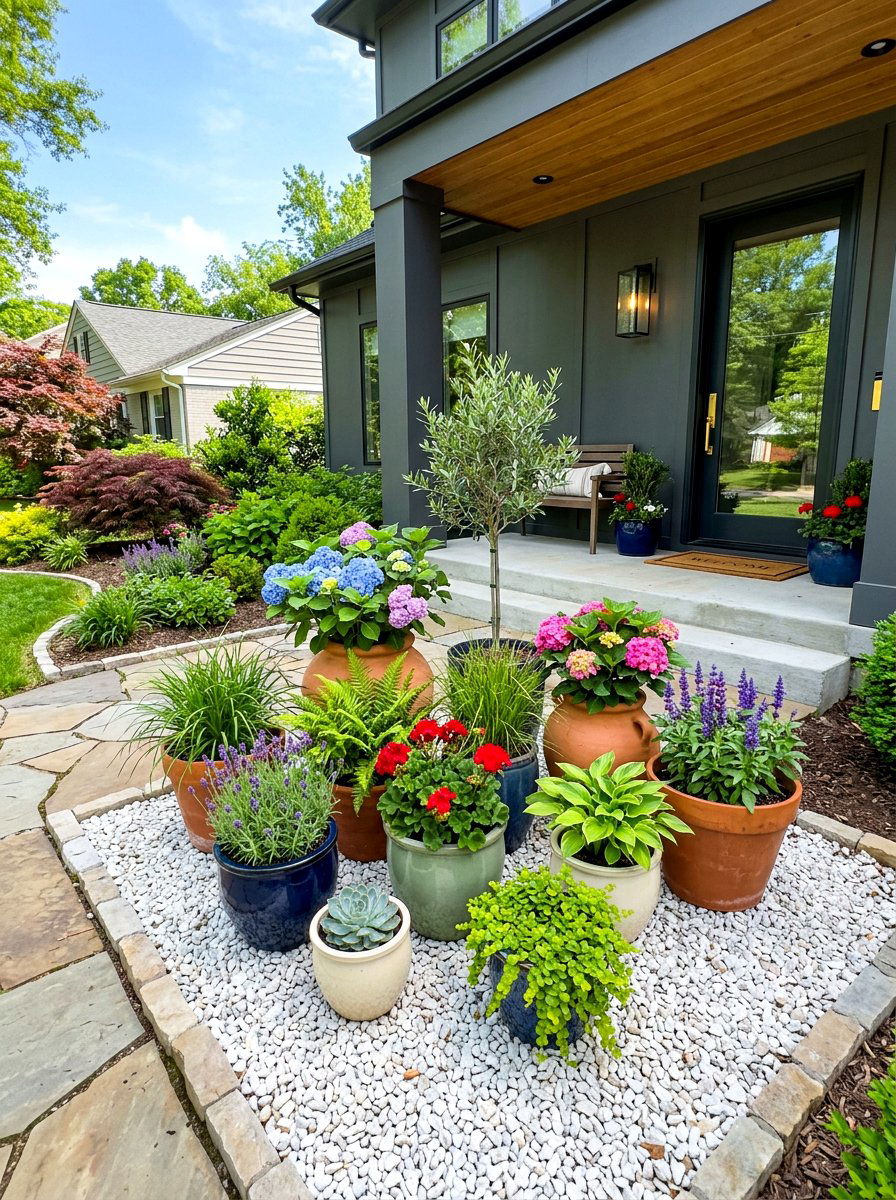
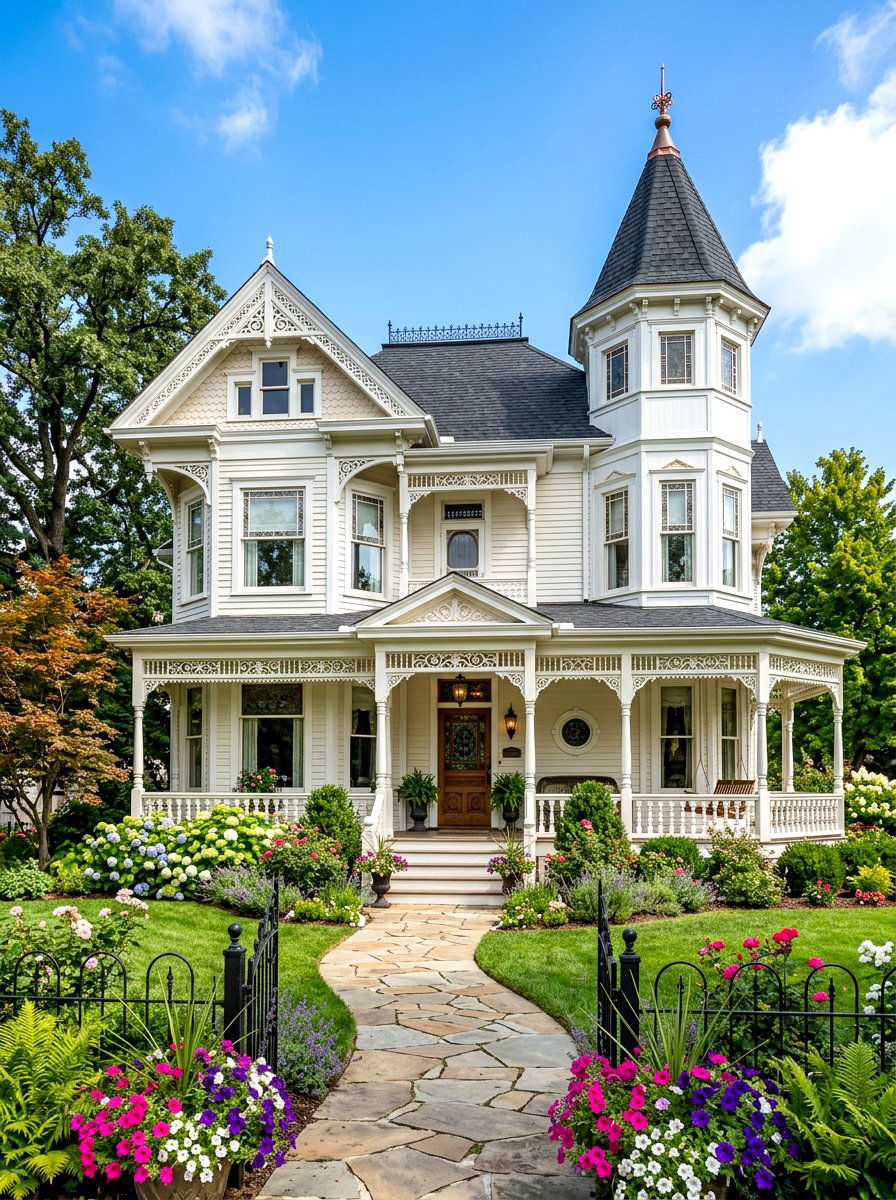
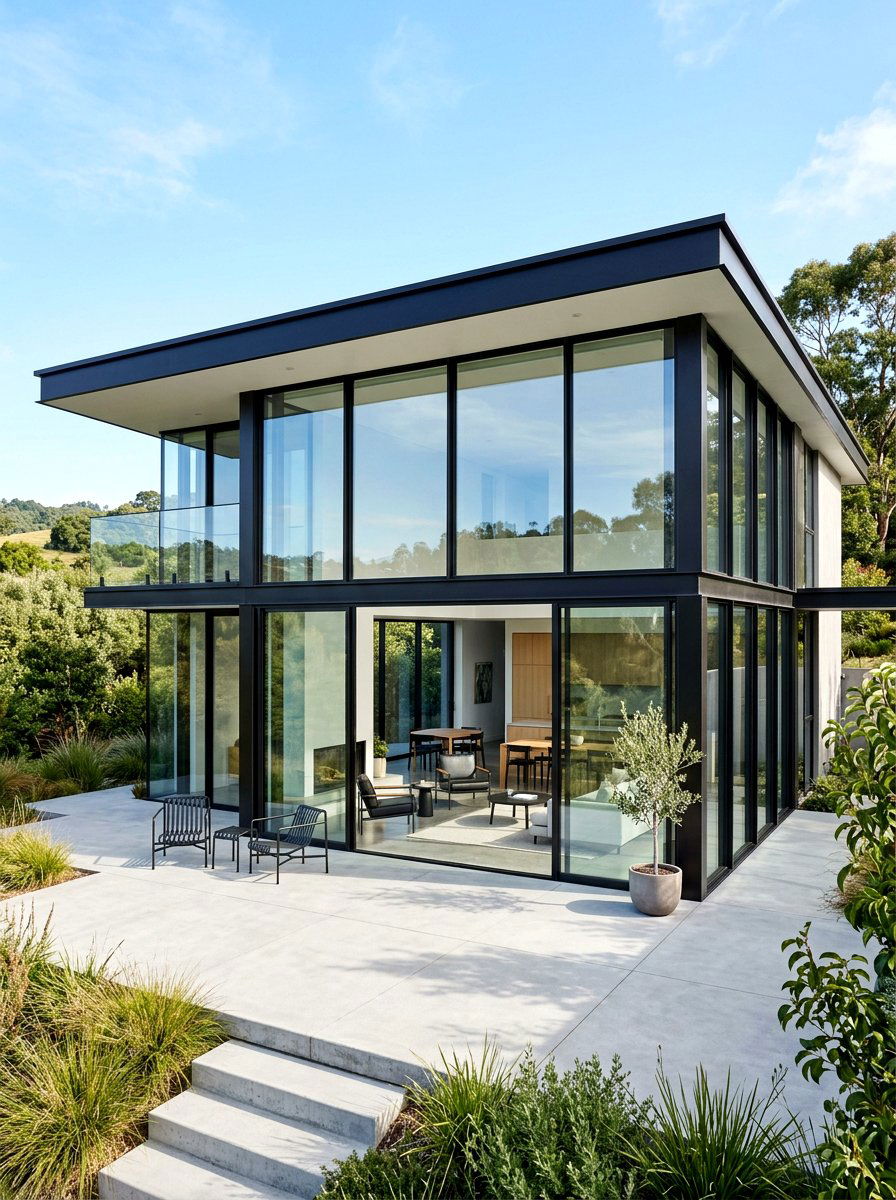
25. Symmetrical Layered Entrance Garden
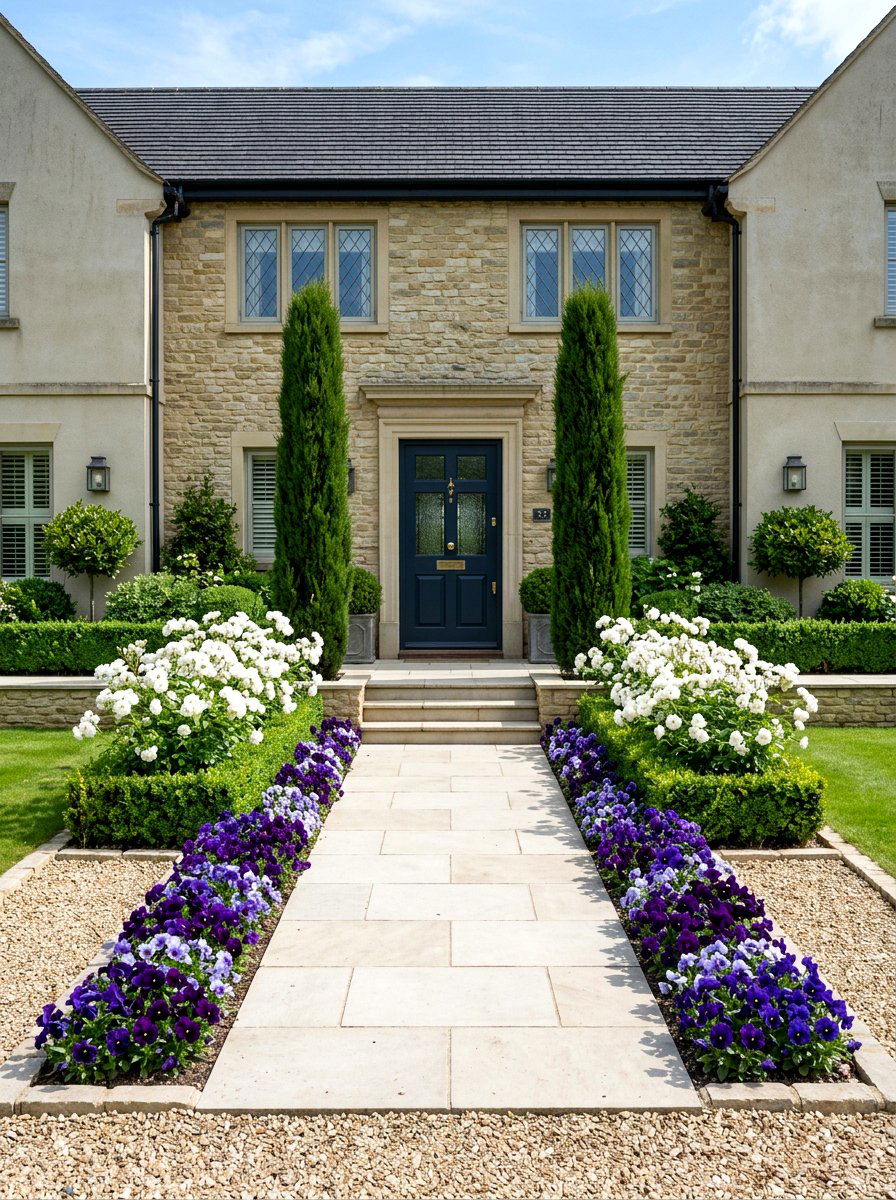
Do you love the feeling of order and balance when you look at a beautiful home? A symmetrical layered entrance garden creates a mirroring effect on both sides of your front door or walkway. You can place two identical tall trees, like emerald green arborvitae, in the back to frame the house. In front of them, use two matching rows of medium shrubs or roses. The final layer consists of identical borders of low flowers or boxwoods. This formal layering technique makes the entrance feel grand and important. It is a very effective way to draw the eye directly to your front door and create a classic look.
26. Asymmetrical Layered Landscaping
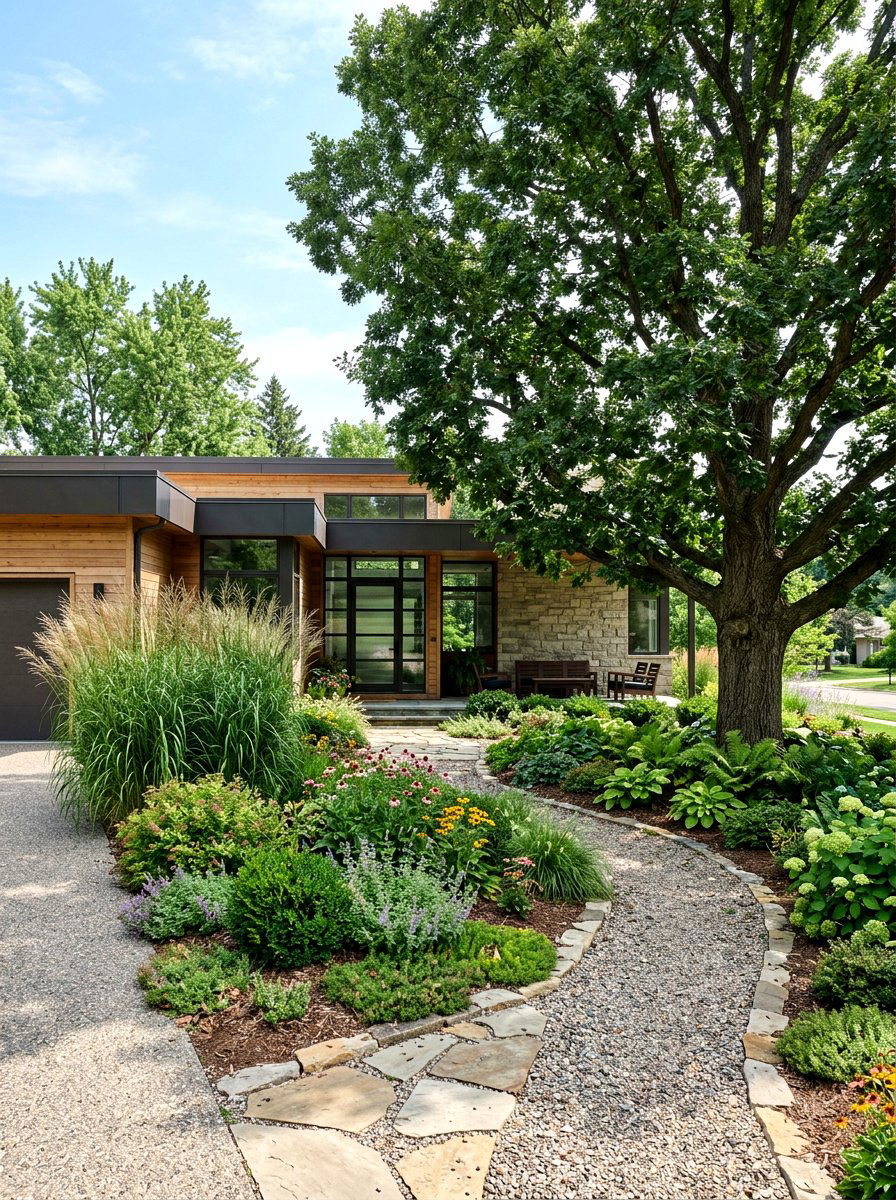
Are you looking for a more relaxed and natural look that still feels very intentional and designed? Asymmetrical layered landscaping uses different plant groupings on each side of the yard to create a balanced but not mirrored look. One side might have a tall, bushy oak tree in the back, while the other side features a cluster of tall grasses. The middle and front layers then use different heights and textures to keep the eye moving across the space. This approach feels more modern and casual than traditional symmetry. It allows you to highlight different features of your home’s architecture in a very unique and creative way.
27. Tall Tree Layered Background
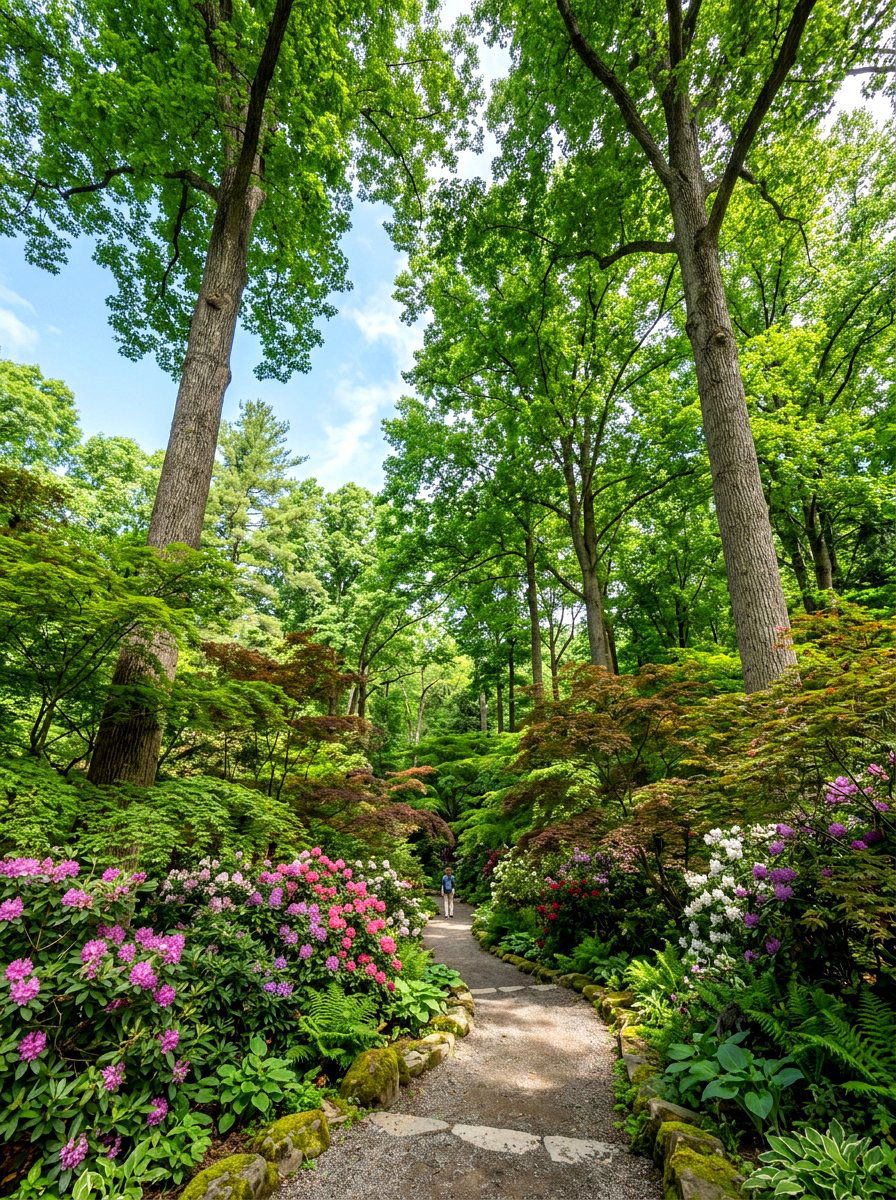
What is the best way to anchor your entire front yard and provide a sense of scale? A tall tree layered background uses the vertical height of mature trees to create a sense of enclosure and privacy. You can plant large canopy trees like maples or oaks at the very back of your garden beds. Underneath these giants, you can layer smaller ornamental trees and then medium-sized shrubs. This creates a forest-like canopy that protects the smaller plants below from harsh wind and sun. It makes your front yard feel much older and more established than it actually is. This layering of scale is essential for a professional look.
28. Groundcover Layered Foreground
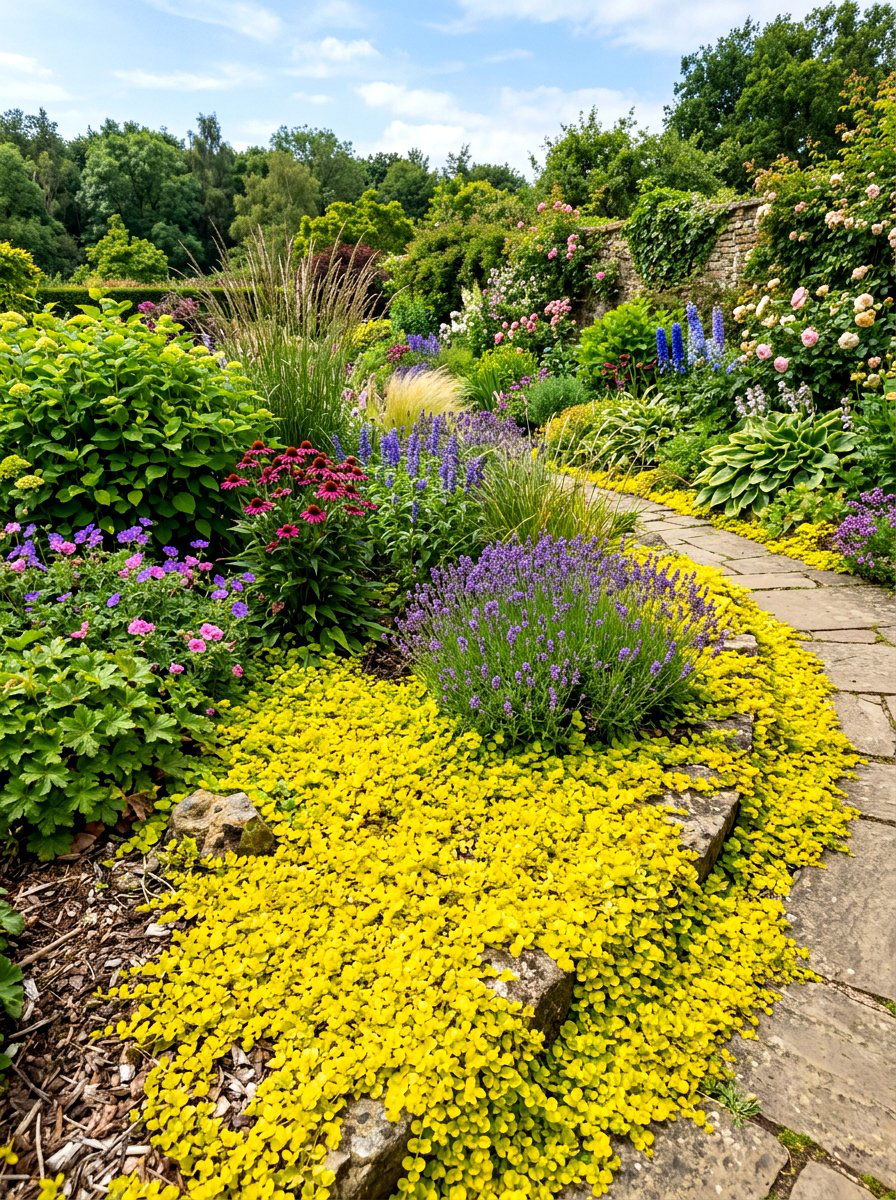
How can you fill in the gaps and create a lush carpet of green at the very front of your yard? A groundcover layered foreground focuses on the lowest tier of the garden to provide a finished and polished appearance. You can use sprawling plants like creeping jenny or blue star creeper to cover the soil between taller shrubs. These plants act as a living mulch that suppresses weeds and keeps the soil cool. By having a dense and healthy front layer, the rest of the garden looks much more intentional and well-cared for. It is the perfect finishing touch that ties all of the taller layers together beautifully.
29. Privacy Layered Front Yard Screen
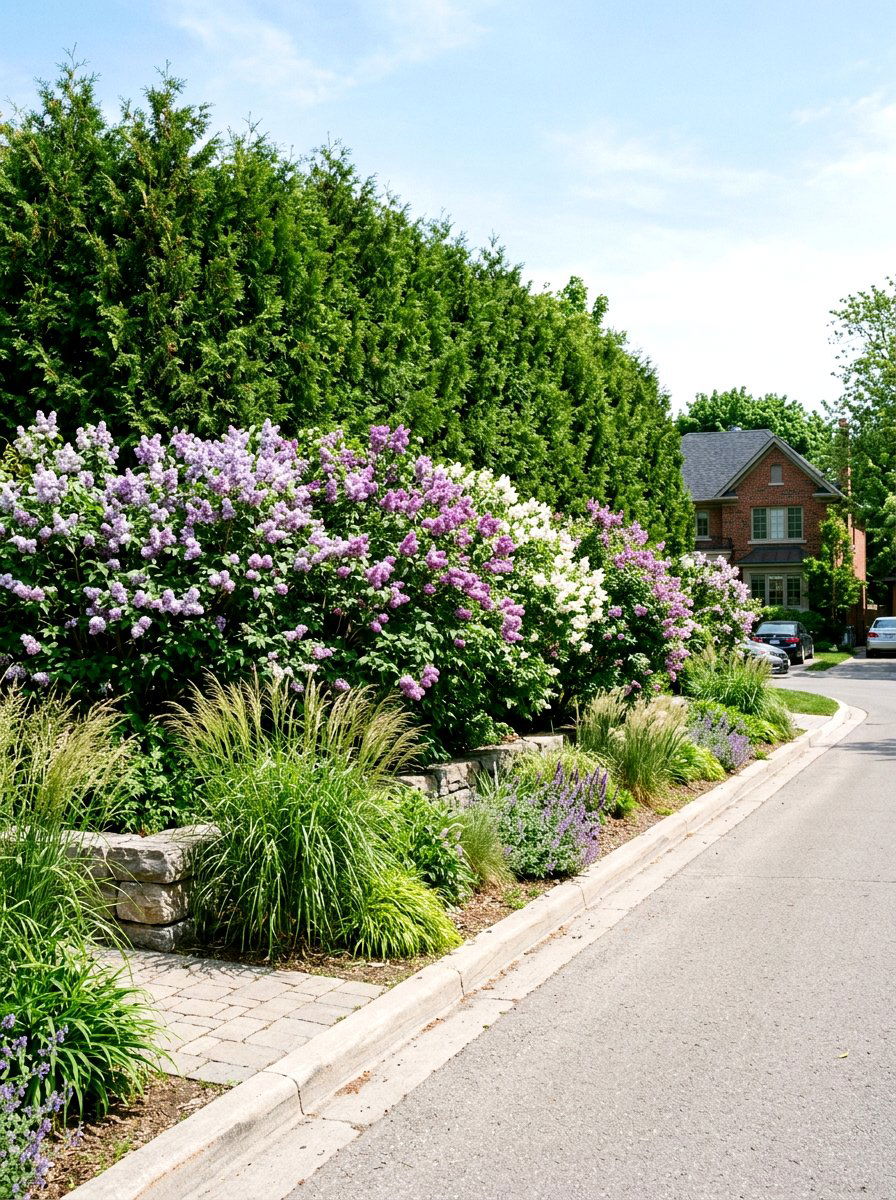
Do you want to block the view from the street without building a tall and unfriendly fence? A privacy layered front yard screen uses thick plantings of different heights to create a natural and beautiful barrier. The back layer should be a tall, dense evergreen hedge that completely blocks the line of sight. In front of that hedge, you can add a layer of flowering shrubs to soften the green wall. Finally, a front layer of perennials or grasses adds color and keeps the screen from feeling too heavy or monolithic. This approach gives you the seclusion you want while still maintaining a very friendly and attractive curb appeal.
30. Retaining Wall Layered Landscape
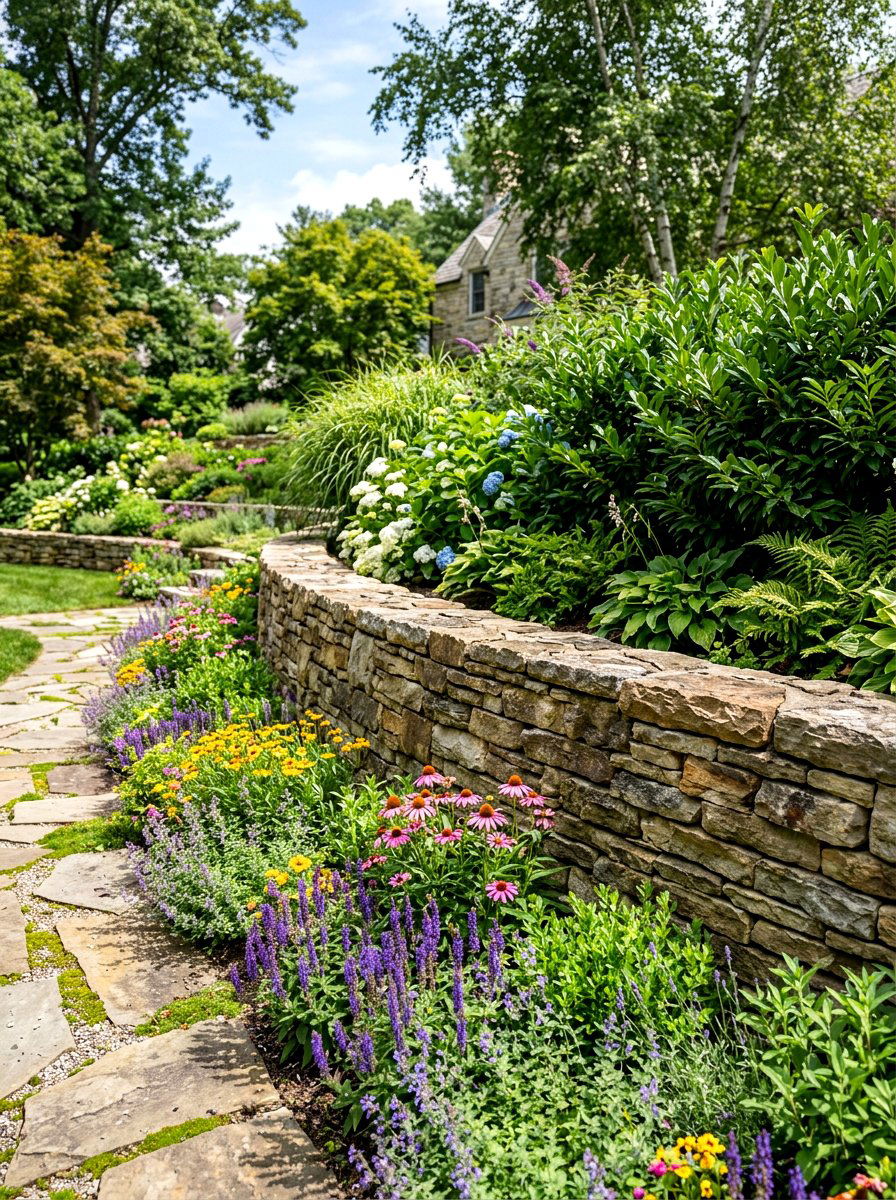
Is your yard very flat and in need of some extra height and visual interest? A retaining wall layered landscape uses man-made structures to create artificial layers and tiers where none existed before. You can build a low stone or timber wall to elevate a section of your garden bed. This allows you to plant tall shrubs on the higher ground and lower flowers on the original ground level. This change in elevation instantly adds depth and makes the yard look much more professional. It also provides a great place for guests to sit or for you to place decorative lanterns and pots for a personal touch.
Conclusion:
Creating a layered front yard is one of the most effective ways to enhance your home’s aesthetic and overall value. By thinking in tiers — background, middle, and foreground — you can turn a simple patch of grass into a dynamic and living work of art. Whether you prefer the structured look of a modern landscape or the wild beauty of a cottage garden, layering allows you to express your unique style. Remember to choose plants that fit your local climate and maintenance level to ensure your garden thrives for years to come. With these thirty ideas as your inspiration, you are ready to design a stunning front yard that truly makes a lasting first impression.

Related posts: