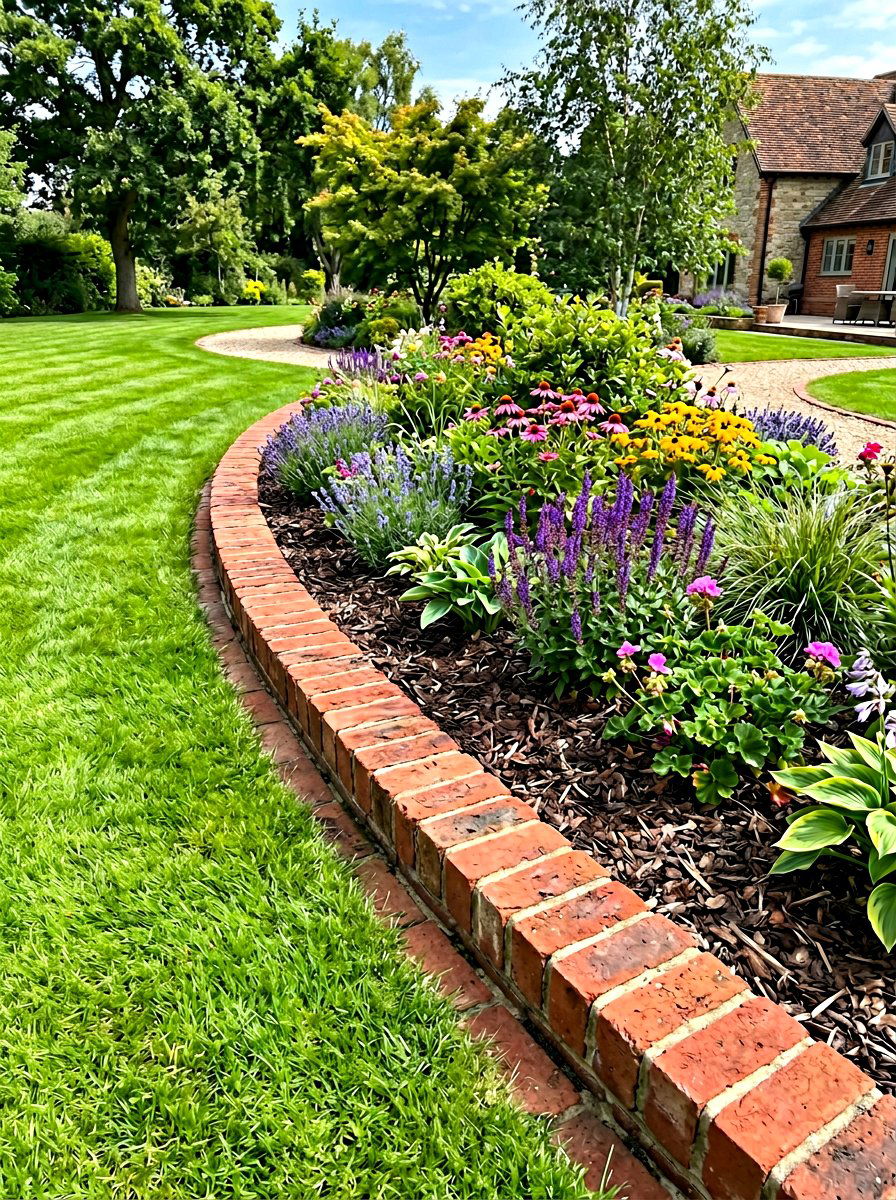
Creating a beautiful home starts with the very first thing people see when they pull up to your driveway. An asymmetrical front yard provides a dynamic and modern look that feels much more natural than traditional formal styles. This approach uses different plants, textures, and heights on each side of the entrance to create a balanced but non-mirror image. It allows for a more relaxed and artistic expression of your personal style while boosting curb appeal significantly. You can mix tall trees with low-growing shrubs or use heavy stone features to balance out delicate flower beds. This guide explores thirty unique ways to master this aesthetic for your home exterior while keeping maintenance low and style high.
1. Modern Rock Garden
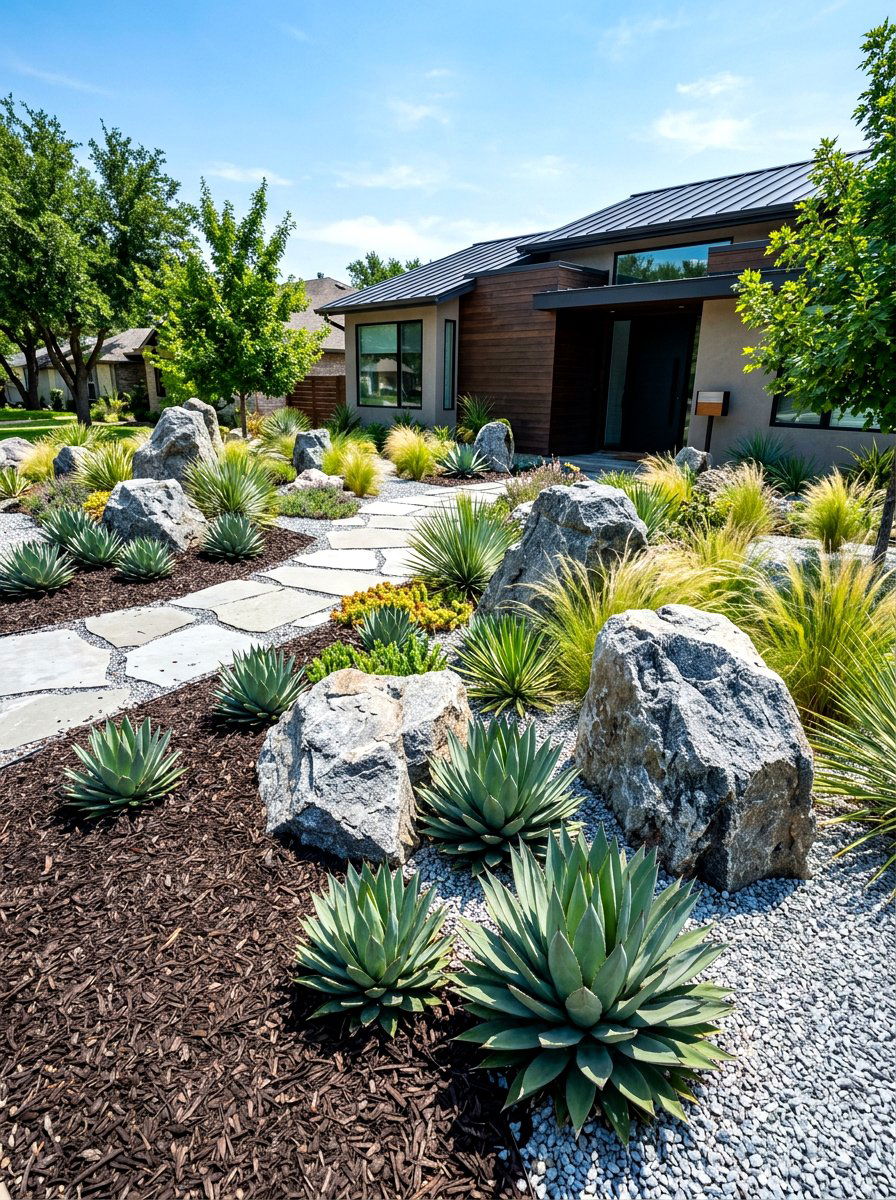
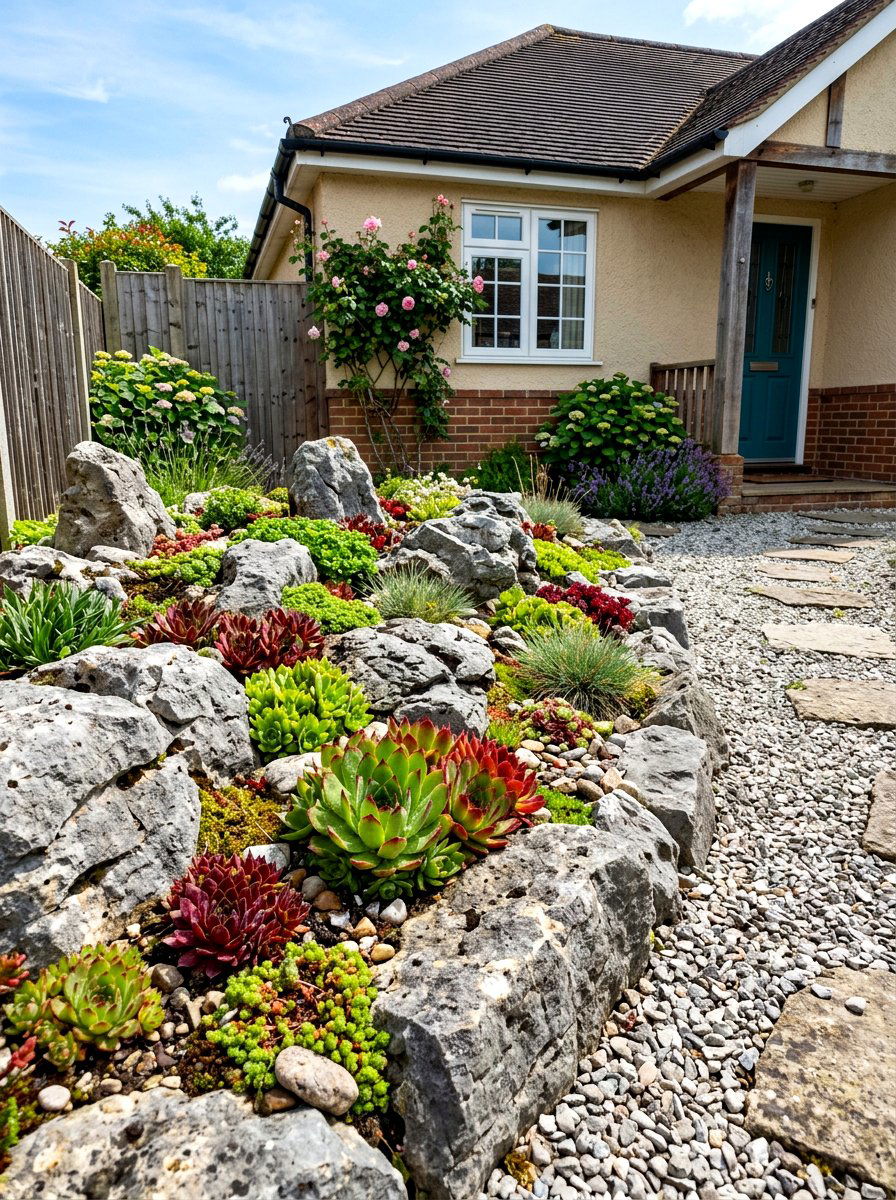
Integrating a modern rock garden into your front yard creates a striking visual impact that requires very little upkeep. Instead of using rows of identical shrubs, you can place large boulders on one side of the walkway to ground the space. Surround these heavy elements with smaller river rocks and drought-tolerant plants like agaves or ornamental grasses. This setup creates a sense of movement and organic flow that looks intentional but not stiff. The contrast between the hard, grey stones and the soft, green foliage provides a sophisticated texture. It is a perfect solution for homeowners looking for a clean, contemporary look that stays beautiful all year round without water.
2. Desert Landscaping
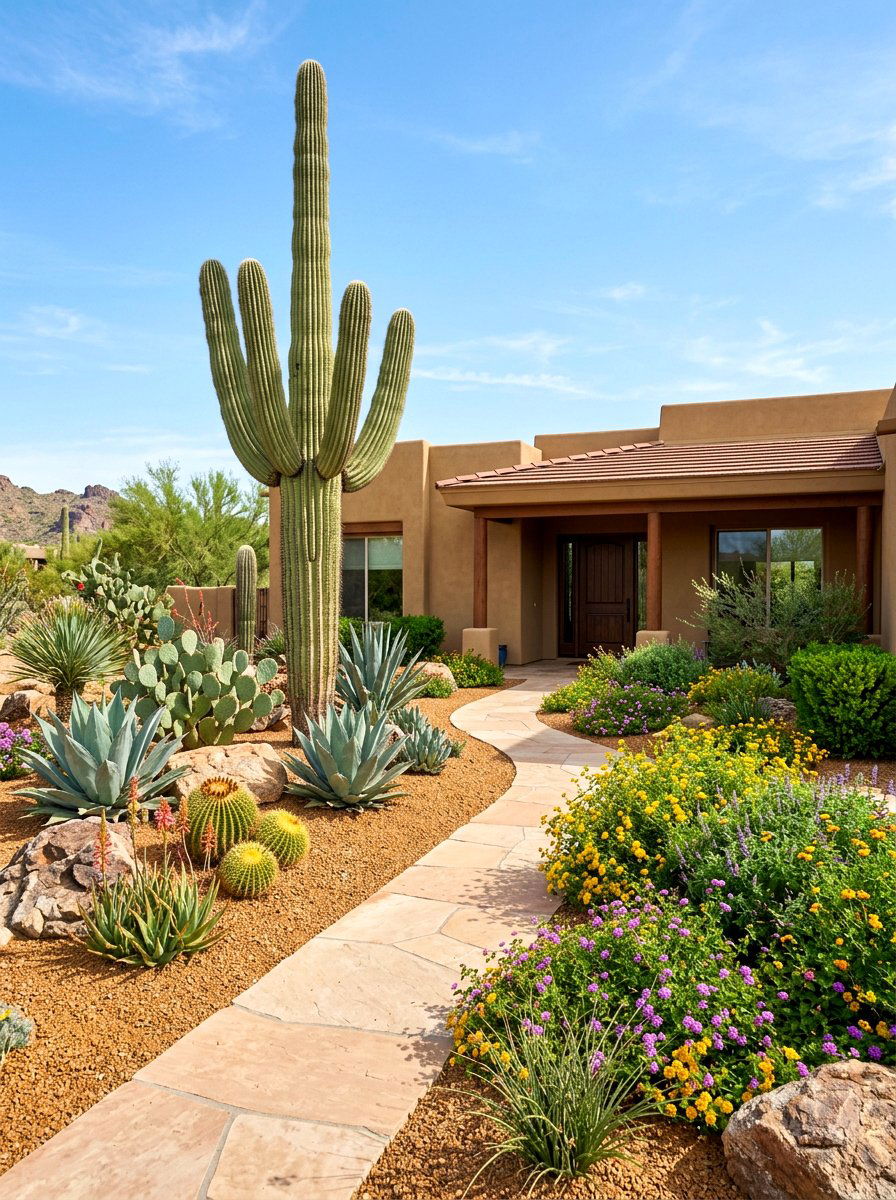
Desert landscaping is an excellent way to embrace an asymmetrical layout while saving water and energy. You can focus on using various heights of cacti and succulents to build a layered look that feels full and lush despite the dry climate plants. Place a tall saguaro or a cluster of yuccas on one side of your property to act as a natural focal point. Balance this height on the opposite side with low-spreading ground covers like gold mounds or creeping thyme. The use of warm-toned gravel or decomposed granite helps tie the entire look together. It creates a warm, inviting entrance that feels both rugged and refined for any home style.
3. Native Plant Bed
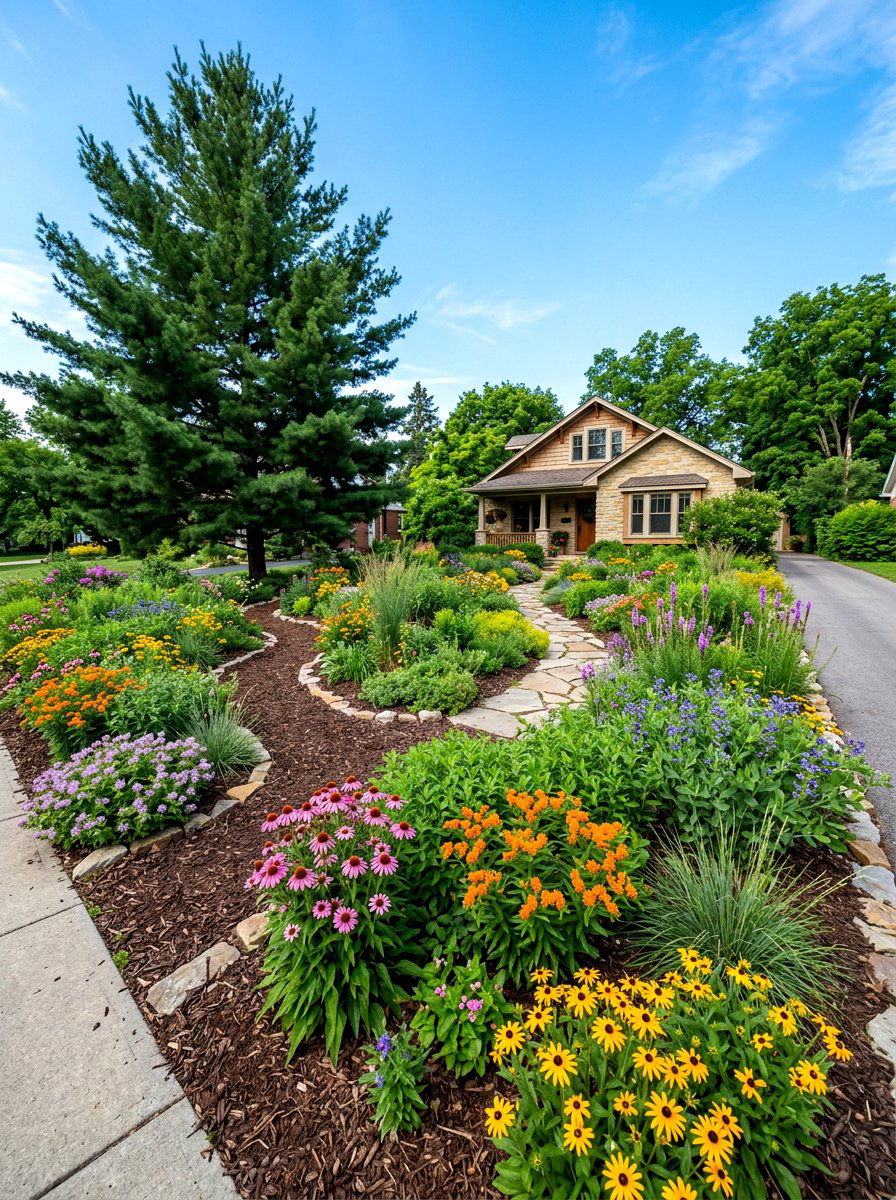
Using a native plant bed allows you to create an asymmetrical design that supports the local ecosystem while looking beautiful. You can group indigenous flowering perennials on one side of your porch to create a burst of seasonal color and texture. On the other side, consider using a single native evergreen tree to provide year-round structure and visual weight. This imbalance feels natural because it mimics how plants actually grow in the wild. Native species are typically hardier and require less fertilizer or supplemental watering once they are established in your soil. This approach ensures your front yard remains vibrant and healthy throughout the changing seasons with very minimal effort.
4. Flagstone Walkway
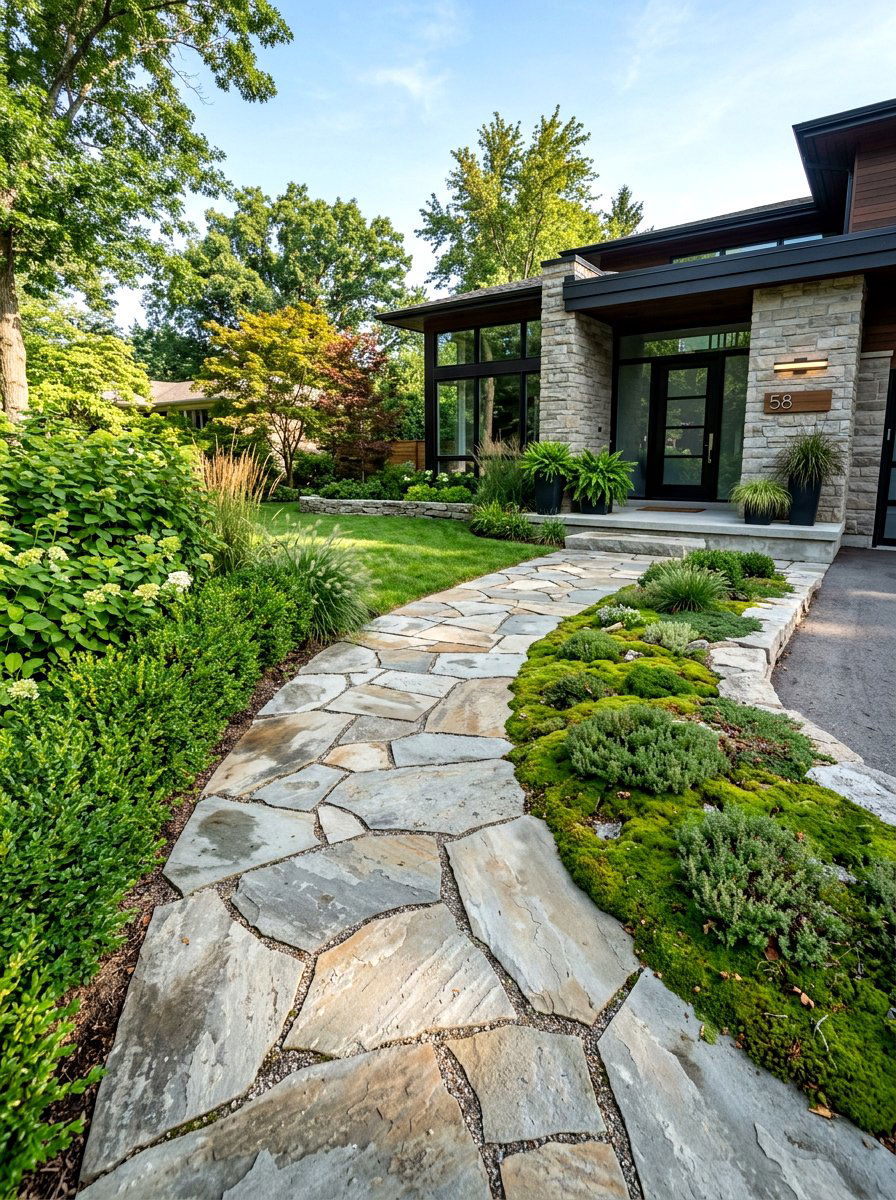
A flagstone walkway is a perfect centerpiece for an asymmetrical front yard because its irregular shapes naturally guide the eye. You can design the path to curve gently toward your front door, leaving larger planting pockets on the outer curve for tall shrubs. On the inner curve, keep the vegetation low with moss or creeping sedum to emphasize the stones' natural beauty and texture. This creates a sense of journey and discovery as guests approach your home entrance. The earthy tones of the flagstone complement almost any exterior paint color while providing a durable surface. It transforms a simple functional path into a beautiful landscape feature that feels timeless and high-end.
5. Tiered Retaining Wall
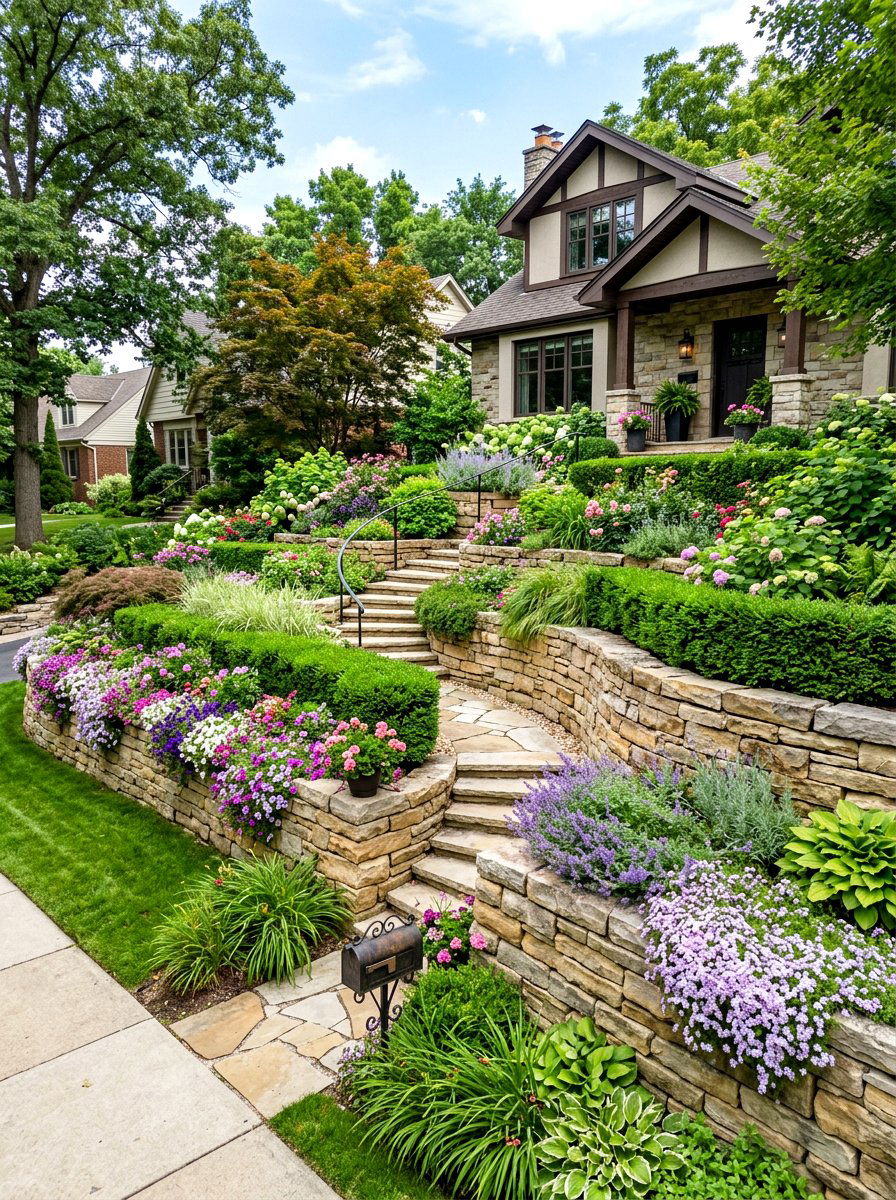
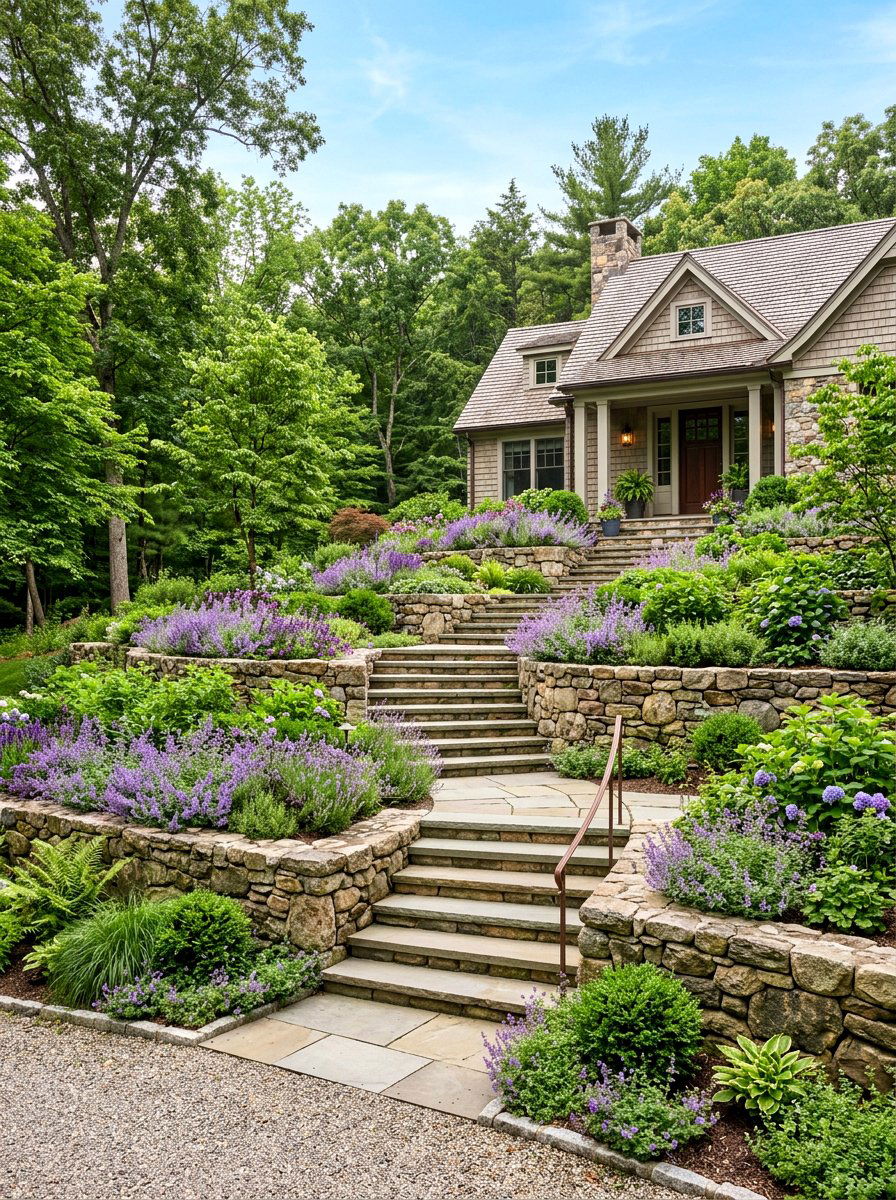
If your front yard has a slope, a tiered retaining wall can turn a difficult hill into a beautiful asymmetrical masterpiece. You can build the walls at different heights and lengths to follow the natural contours of your land rather than making them perfectly straight. Use one level for a mix of cascading flowers and another for structured boxwood hedges to create a rich variety of textures. The varying elevations naturally create an asymmetrical balance that draws the eye upward toward the home. Adding small built-in lights to the stone faces can highlight the layers during the evening. This design adds significant structural value and prevents soil erosion effectively.
6. Gravel Path
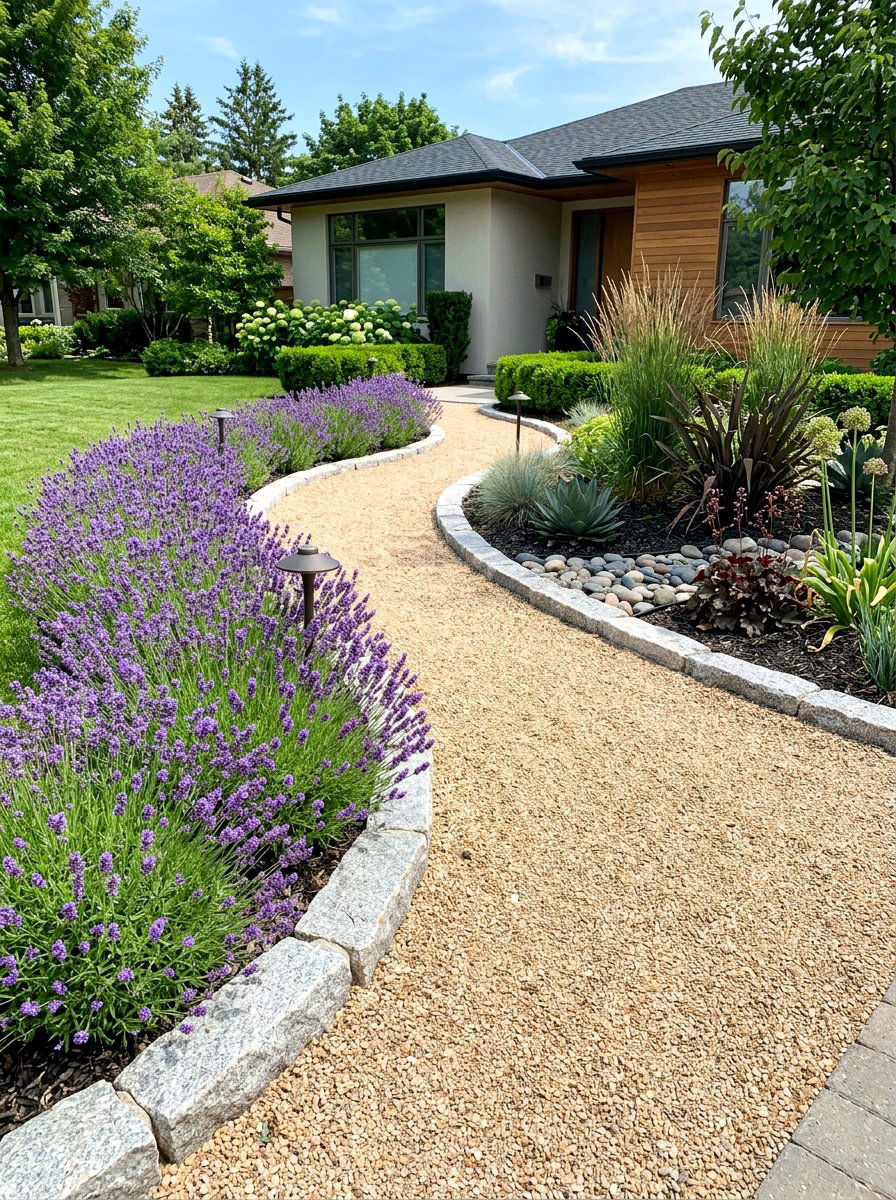
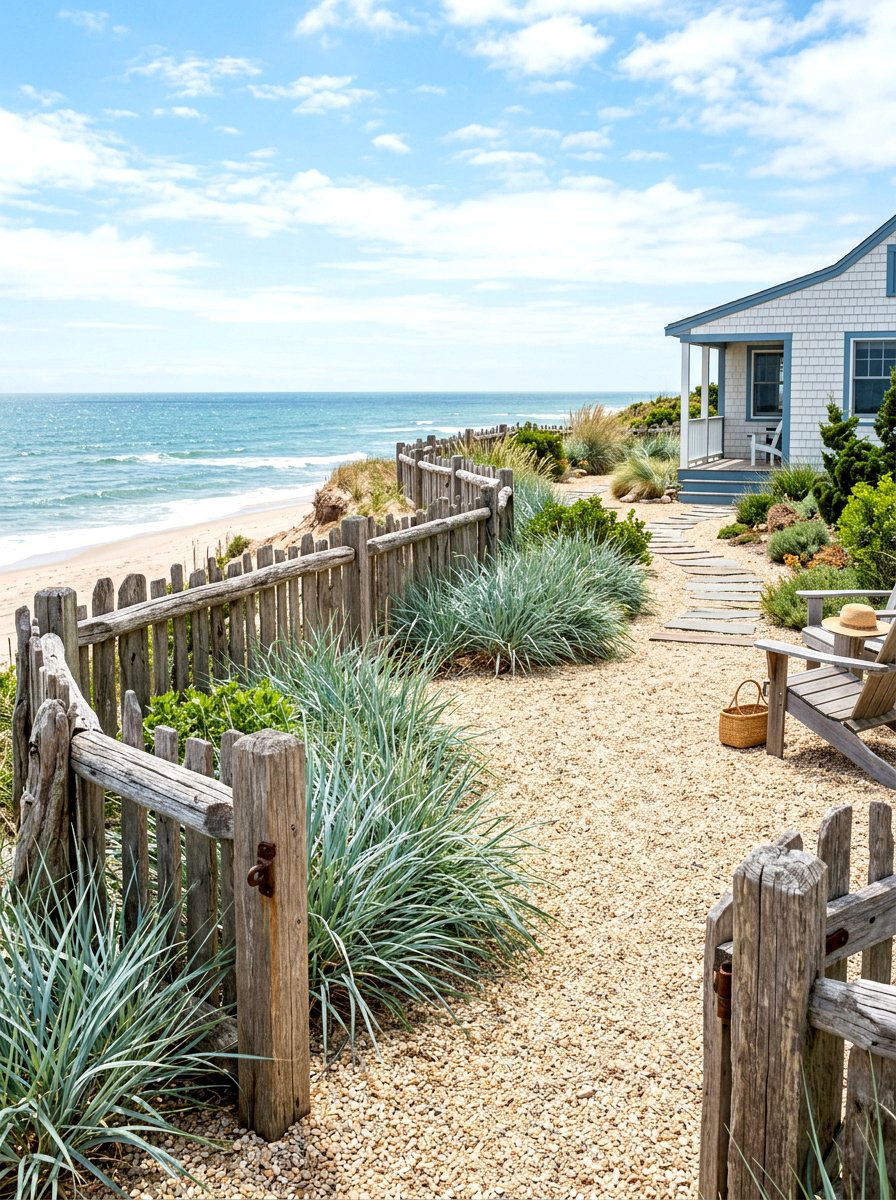
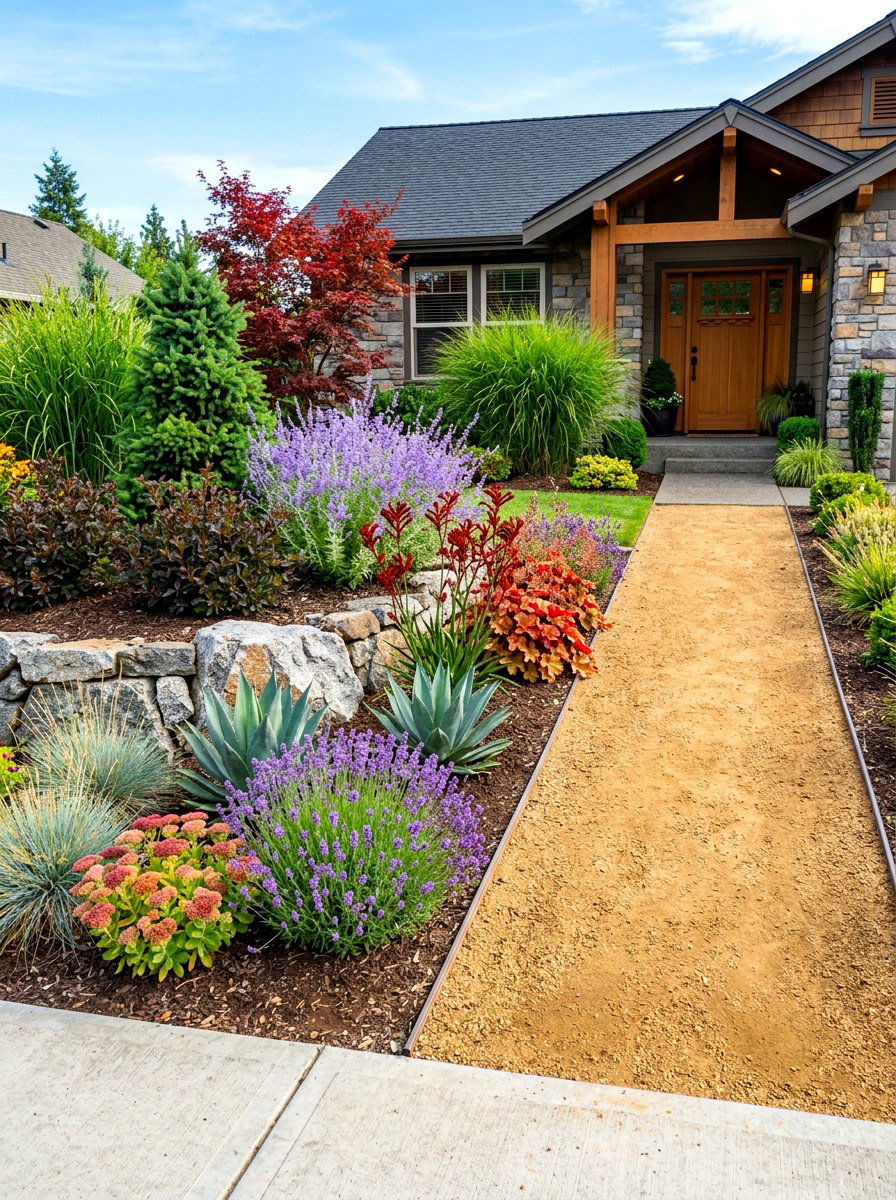
A gravel path offers a relaxed and crunchy texture that works wonderfully in a more informal, asymmetrical front yard design. You can edge the path with large, jagged stones on one side and a soft line of lavender on the other. This creates a beautiful contrast between the hard landscaping and the fragrant, swaying flowers. Gravel is highly permeable, which helps with drainage and prevents puddles from forming near your foundation after a heavy rain. It is also an affordable material that you can easily install yourself over a weekend. Choosing a color that matches your home’s stone or siding helps the path feel like a permanent, intentional part of the plan.
7. Tropical Garden
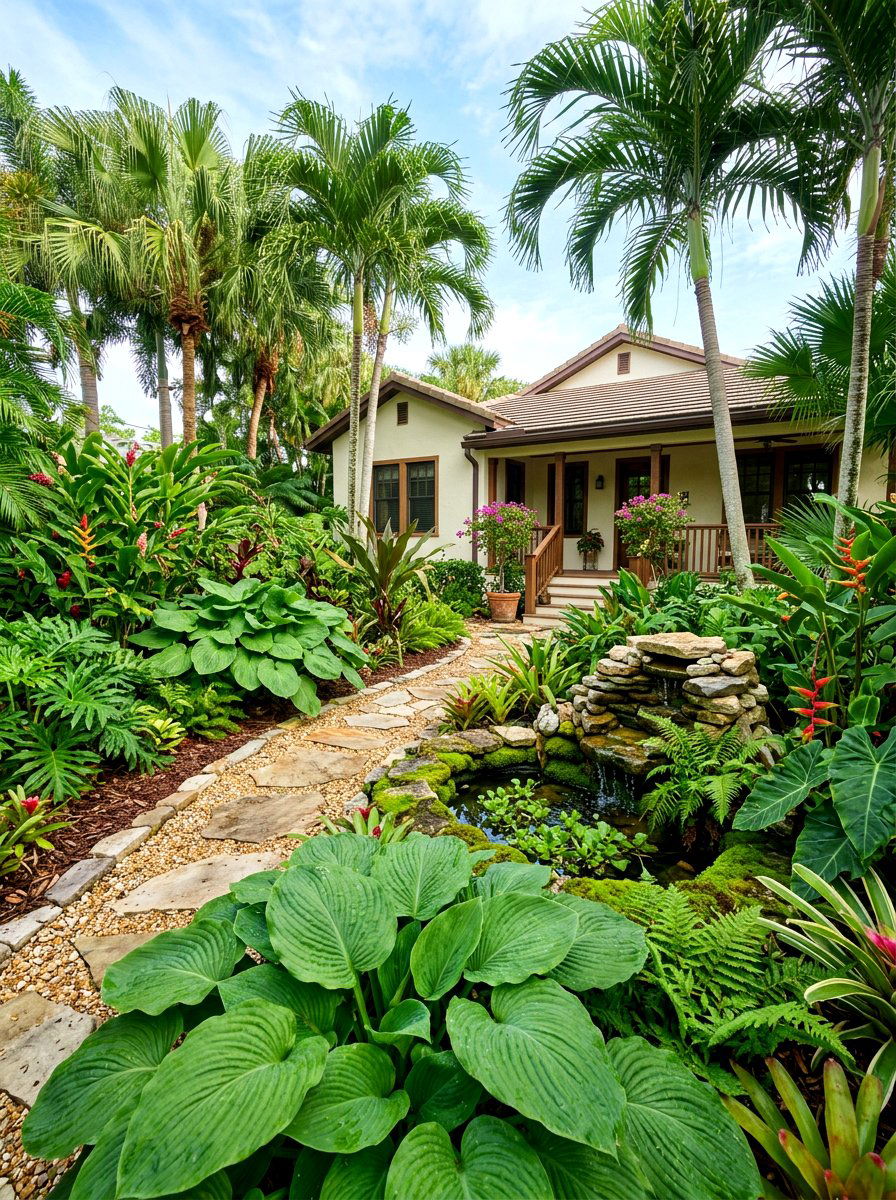
Creating a tropical garden in your front yard brings a vacation-like atmosphere to your everyday life through lush, oversized foliage. You can use large-leafed plants like hostas or palms on one side of your entryway to create a sense of privacy and enclosure. Balance this heavy greenery with a smaller, more delicate water feature or a group of bright flowering bird of paradise plants. The key is to use different heights and leaf shapes to keep the eye moving across the space. Tropical designs often look best when they are slightly overgrown and wild, which fits the asymmetrical philosophy perfectly. It creates a bold, vibrant statement that makes your home stand out.
8. Xeriscape Yard
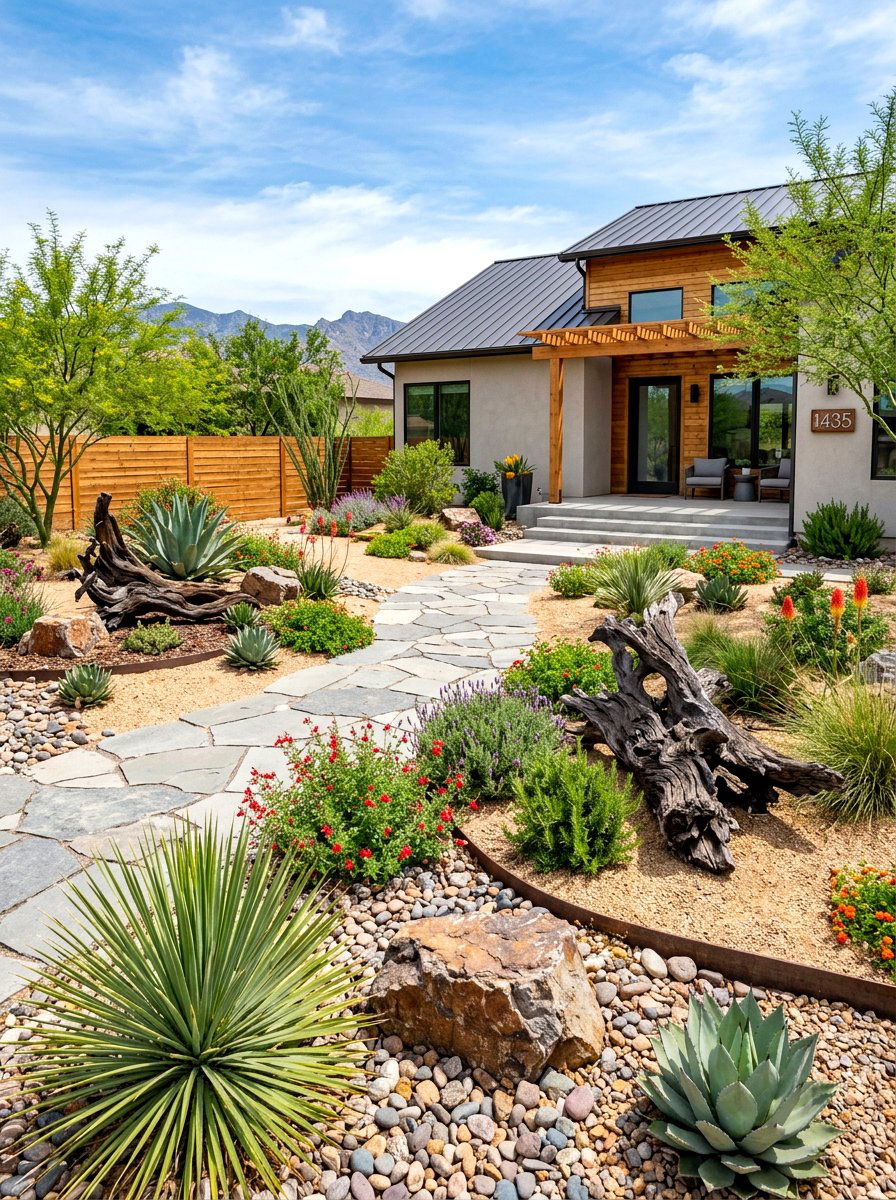
A xeriscape yard is a smart, sustainable choice that uses asymmetrical principles to create a visually interesting, water-wise environment. You can arrange groups of drought-resistant shrubs and ornamental grasses in organic, kidney-shaped beds across the yard. By avoiding symmetrical rows, the landscape feels more like a natural meadow or a dry riverbed. Use large pieces of driftwood or decorative boulders to add height and interest where water-hungry trees might usually go. This design reduces your utility bills while providing a modern, textured look that requires almost no mowing or pruning. It is an environmentally friendly way to boost your curb appeal and show off your unique design sensibility.
9. Ornamental Grass Bed
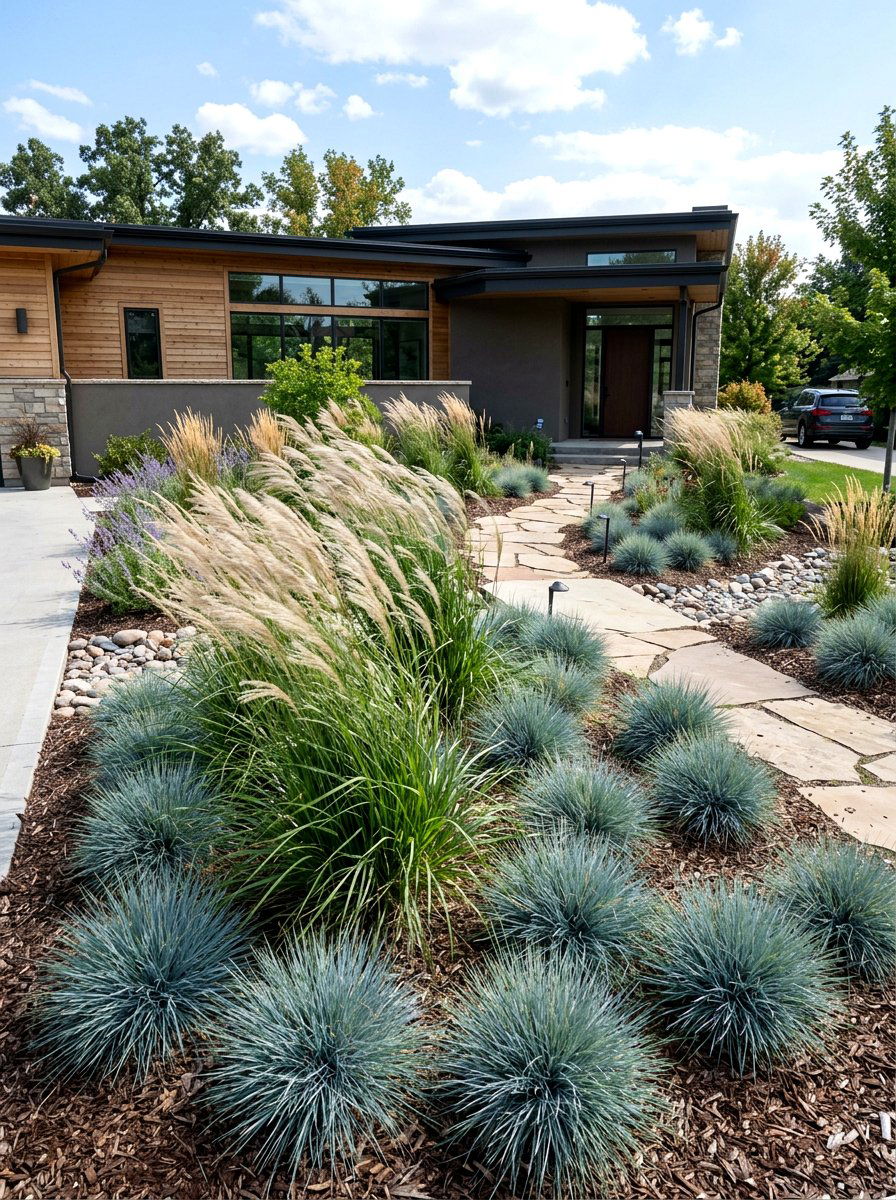
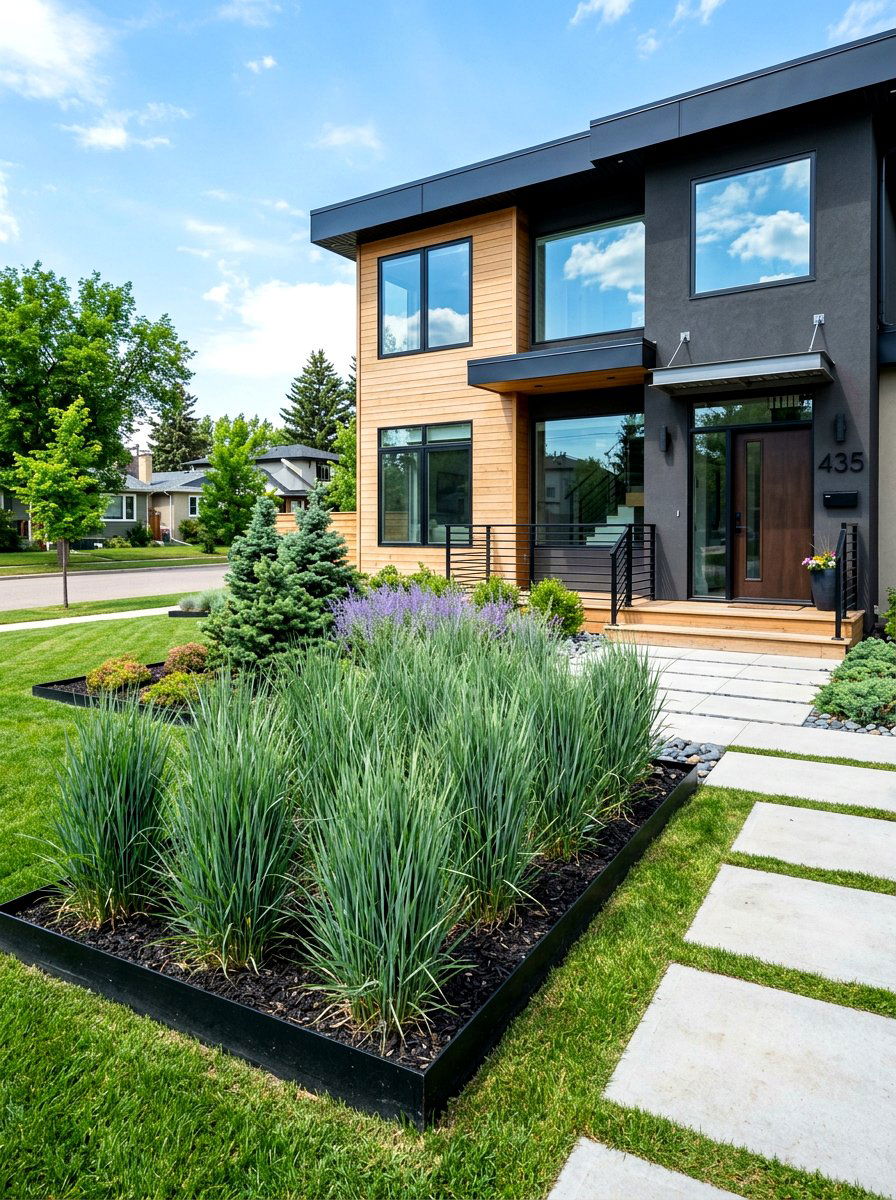
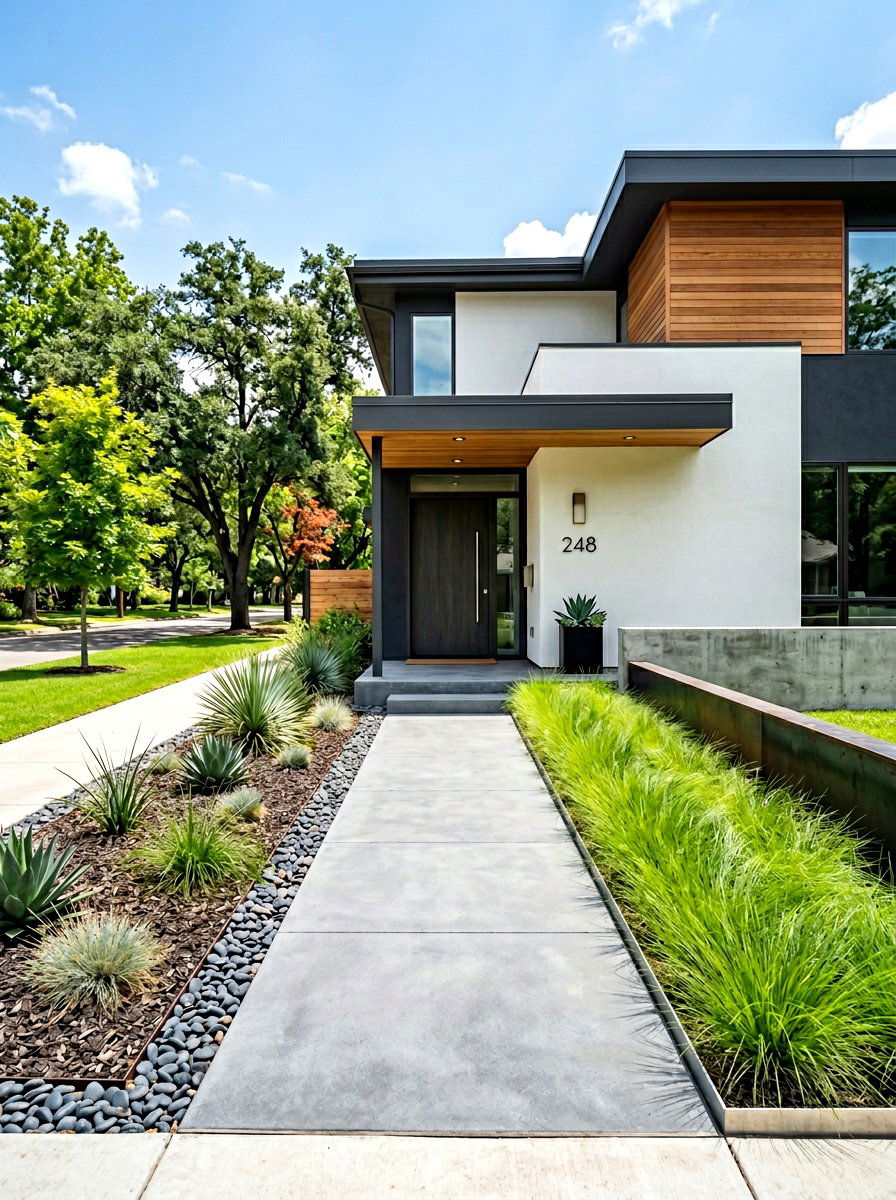
Ornamental grass beds are fantastic for adding movement and a soft, wispy texture to an asymmetrical front yard layout. You can plant tall varieties like Maiden Grass on one corner of the house to soften the architectural lines and provide privacy. Balance this height with shorter, mounding grasses like Blue Fescue or Mondo Grass in a different area of the yard. The way the wind moves through the blades creates a dynamic experience that static plants simply cannot match. These grasses often change color with the seasons, offering golden hues in the autumn and winter. They are exceptionally low-maintenance and provide a contemporary, sophisticated look that fits any modern home exterior.
10. Mulch Bed
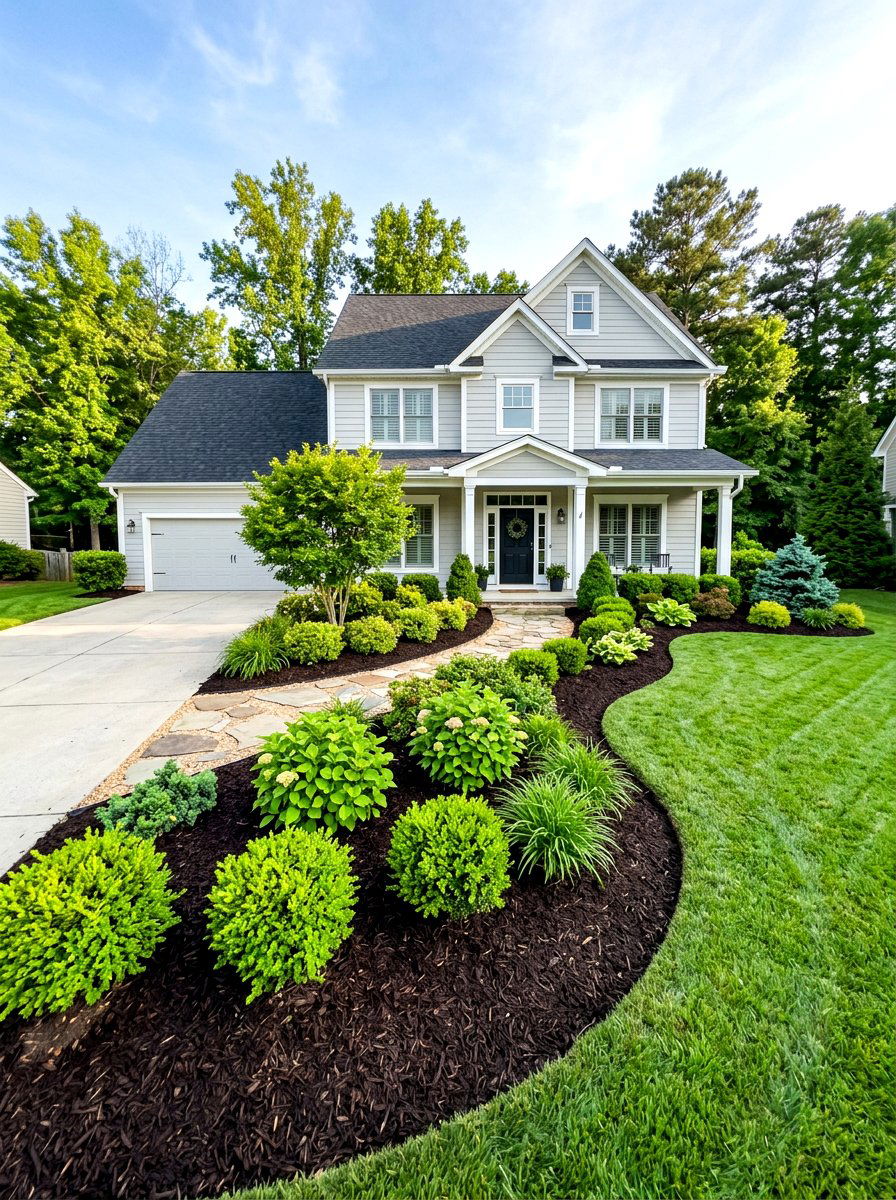
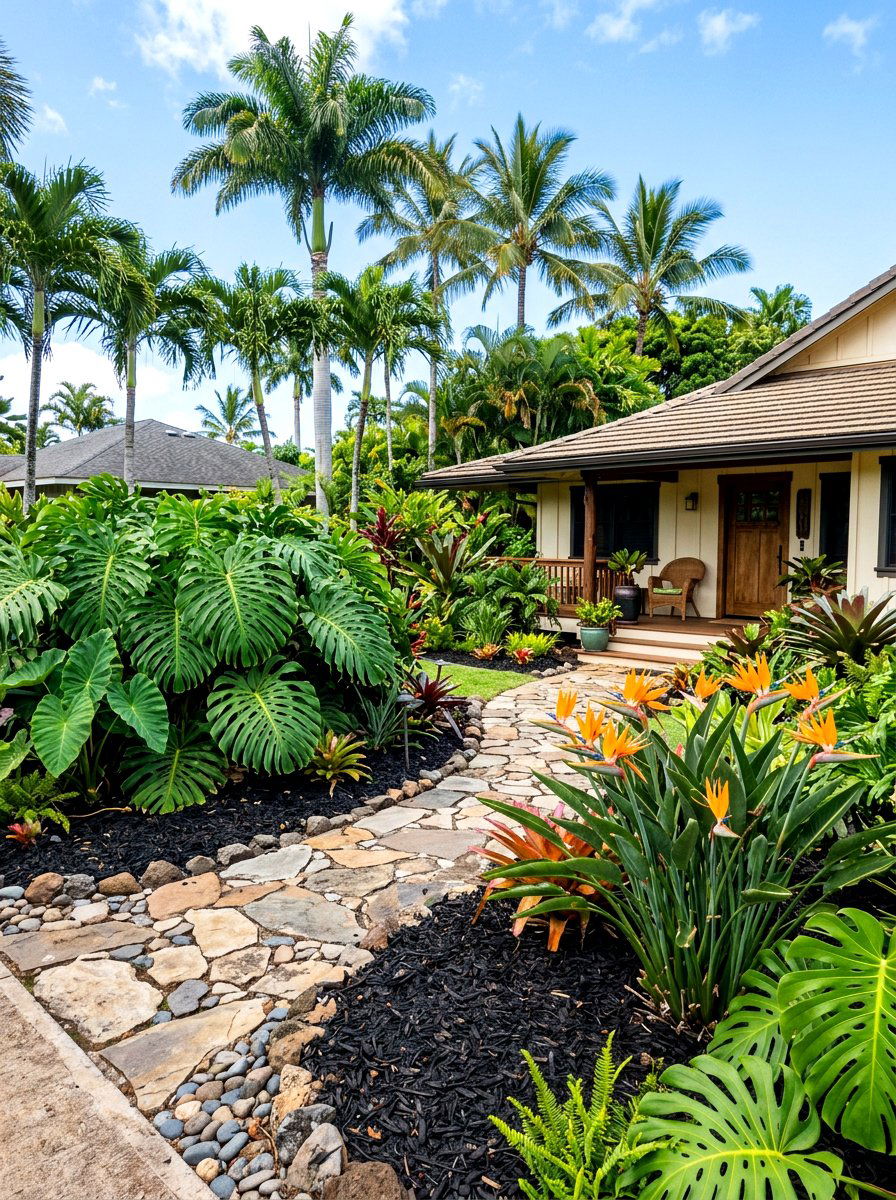
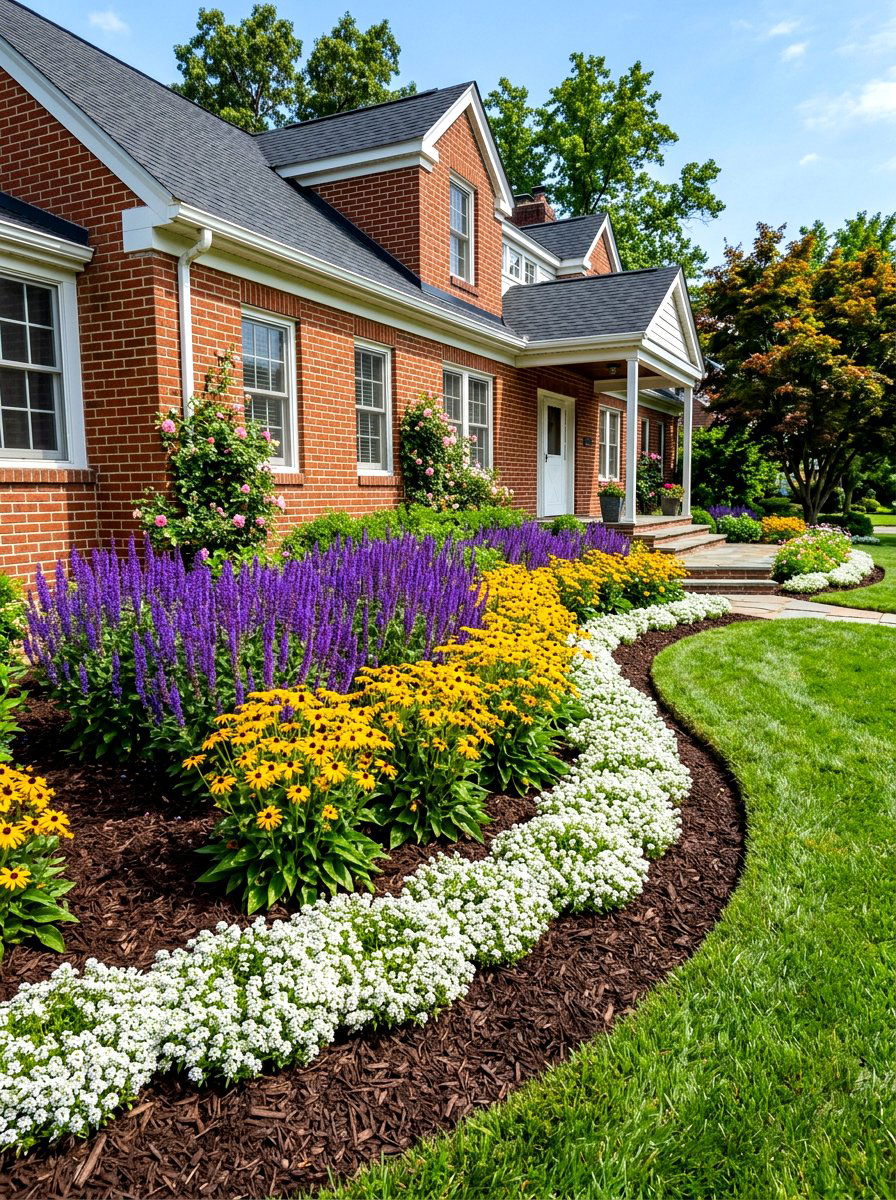
A well-designed mulch bed acts as a clean canvas for an asymmetrical front yard, allowing individual plants to truly shine. You can use dark wood mulch to provide a high-contrast backdrop for bright green shrubs or colorful perennial flowers. Arrange your plants in odd-numbered clusters rather than straight lines to enhance the natural, asymmetrical feel of the space. Mulch helps retain moisture in the soil and suppresses weeds, making your gardening chores much easier over time. It also defines the edges of your lawn, giving the entire yard a polished and professional appearance. Regularly refreshing the mulch keeps the colors deep and the yard looking pristine throughout the entire year.
11. Paver Walkway
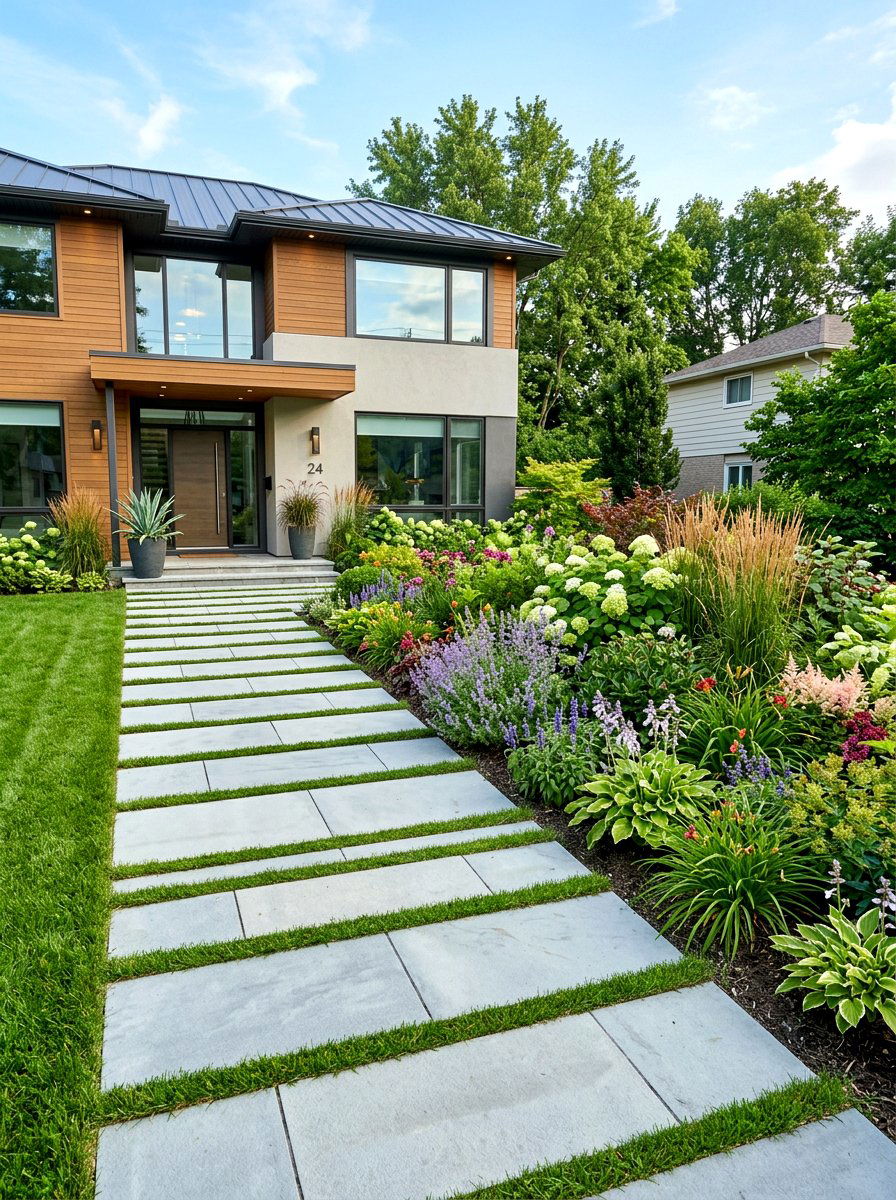
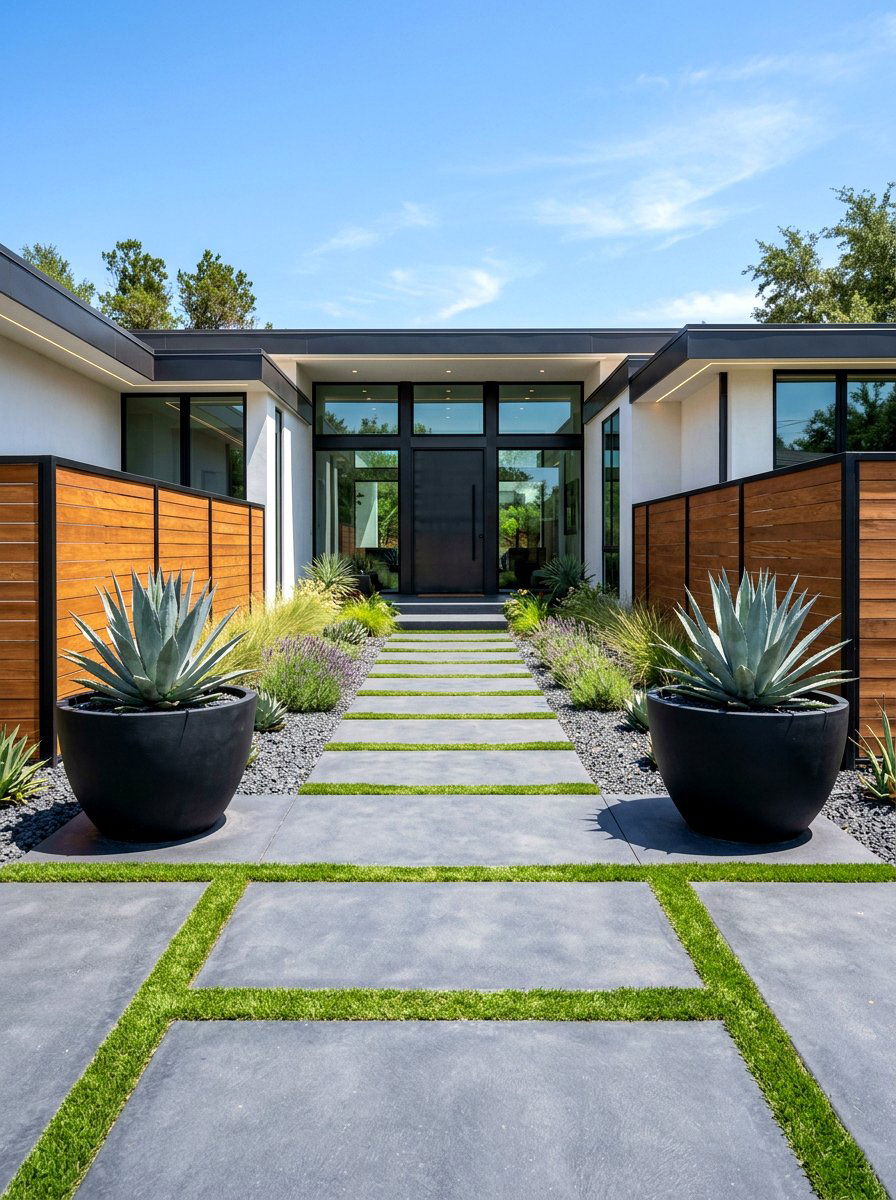
A paver walkway provides a structured and clean look that can still feel very organic in an asymmetrical landscape design. You can use oversized rectangular pavers with wide gaps filled with grass or thyme to soften the overall appearance. By offsetting the path from the center of the yard, you create space for a large garden bed on one side. This allows you to plant a mix of heights that would feel too crowded in a symmetrical layout. The durability of pavers ensures a safe, non-slip surface for your guests in all weather conditions. It is a classic choice that adds a sense of permanence and architectural value to your front property.
12. Flower Border
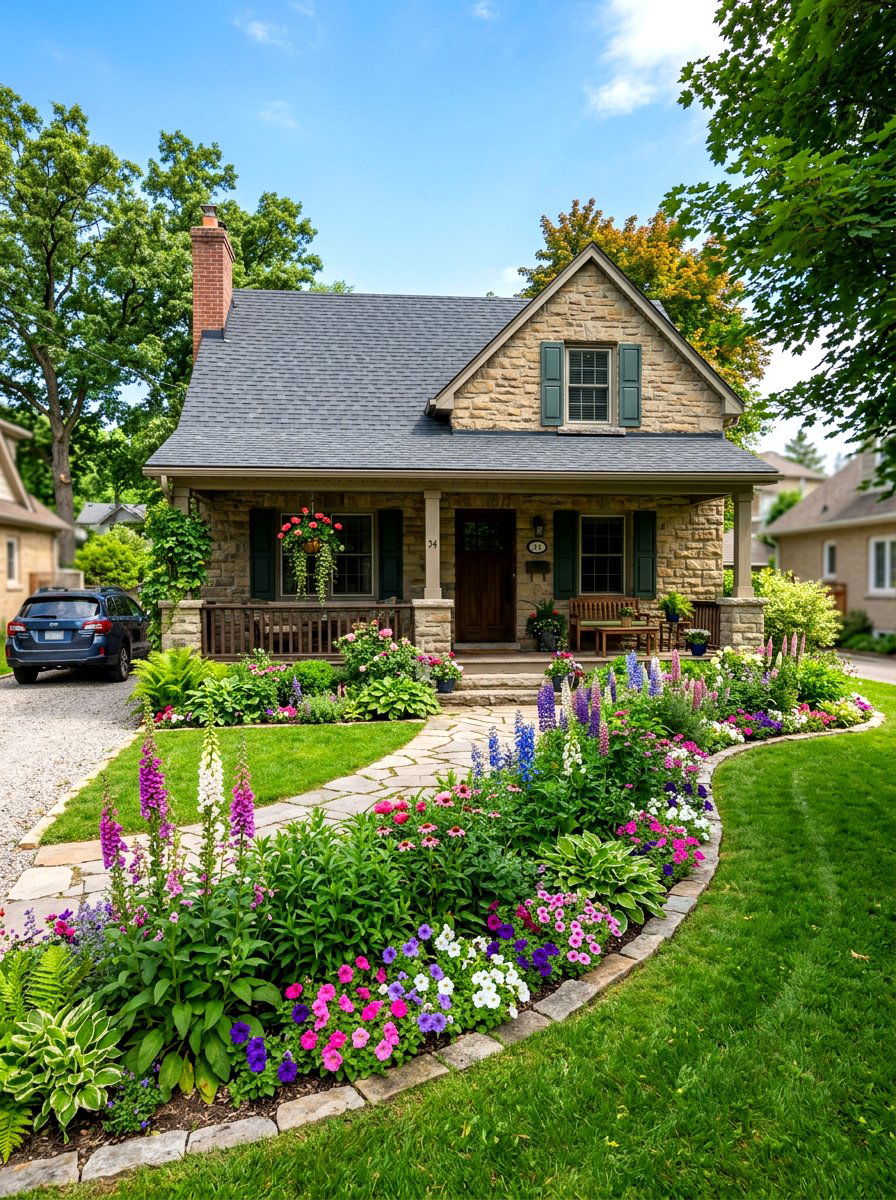
A flower border along your front porch or walkway is a timeless way to introduce color and fragrance into your home entrance. In an asymmetrical design, you might have a wide, curving flower bed on the left and a narrow, straight one on the right. This creates visual interest by making each side of the path a unique experience for the person walking through it. Mix perennials with annuals to ensure that something is always in bloom from the spring through the late fall. Using a variety of heights, from tall foxgloves to low-growing petunias, adds depth and dimension. It makes your home feel welcoming and full of life for every visitor.
13. Succulent Garden
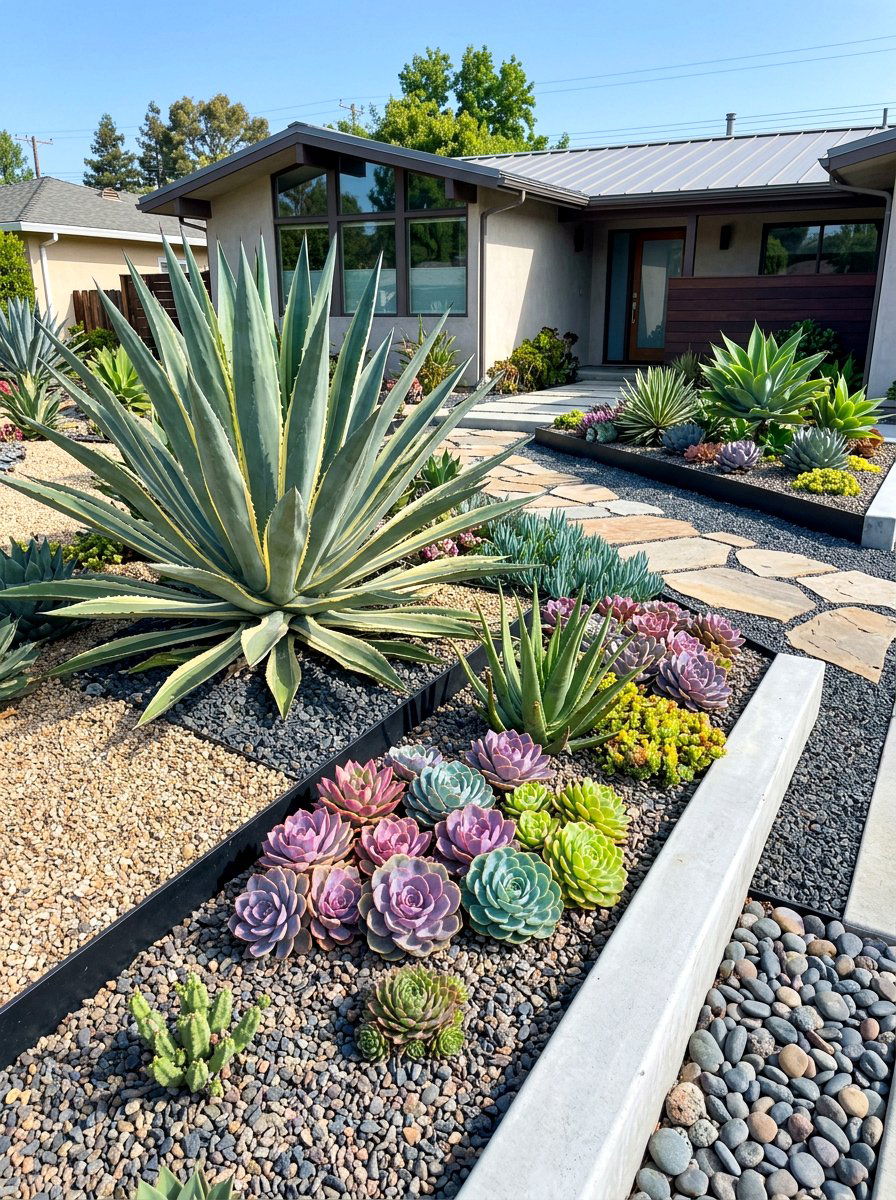
A succulent garden is a trendy and low-maintenance way to achieve a stunning asymmetrical look in a small front yard space. You can arrange different types of succulents, such as echeveria and jade, in clusters that vary in height and color palette. Use a large agave as a dramatic focal point on one side of the garden to draw immediate attention. On the other side, use smaller, trailing succulents to spill over the edge of a stone border or planter box. The geometric shapes of these plants provide a modern, sculptural quality that looks beautiful year-round. They require very little water, making them an ideal choice for busy homeowners or dry climates.
14. Japanese Maple Focal Point
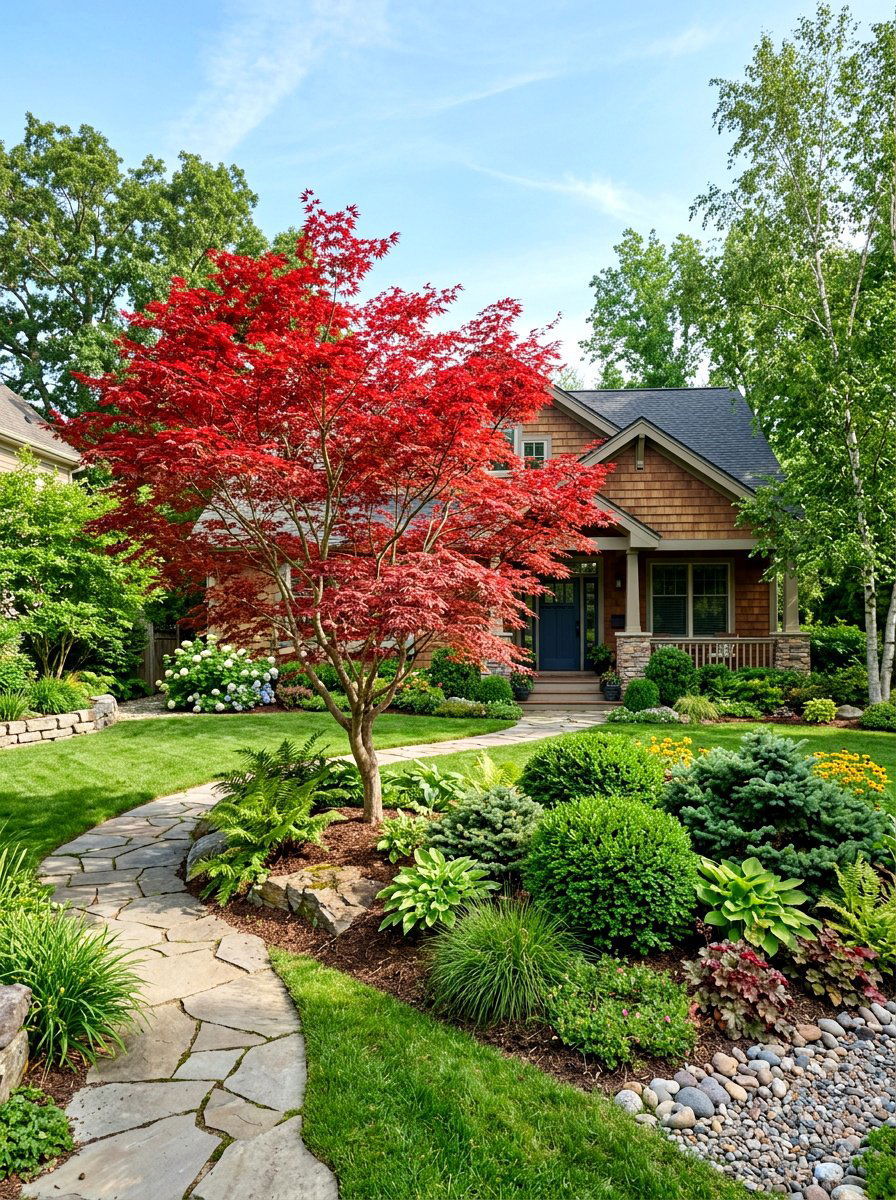
Using a Japanese Maple as a focal point is a sophisticated way to ground an asymmetrical front yard with color and grace. The delicate, lacy leaves and unique branch structure of the tree provide a beautiful silhouette against the side of your home. You can place the tree off-center and balance its visual weight with a group of low, rounded shrubs on the opposite side. During the fall, the vibrant red or orange foliage creates a spectacular show that serves as a natural work of art. This approach relies on a single, high-quality element to define the space rather than a cluttered mix of many different types of smaller plants.
15. Cottage Garden
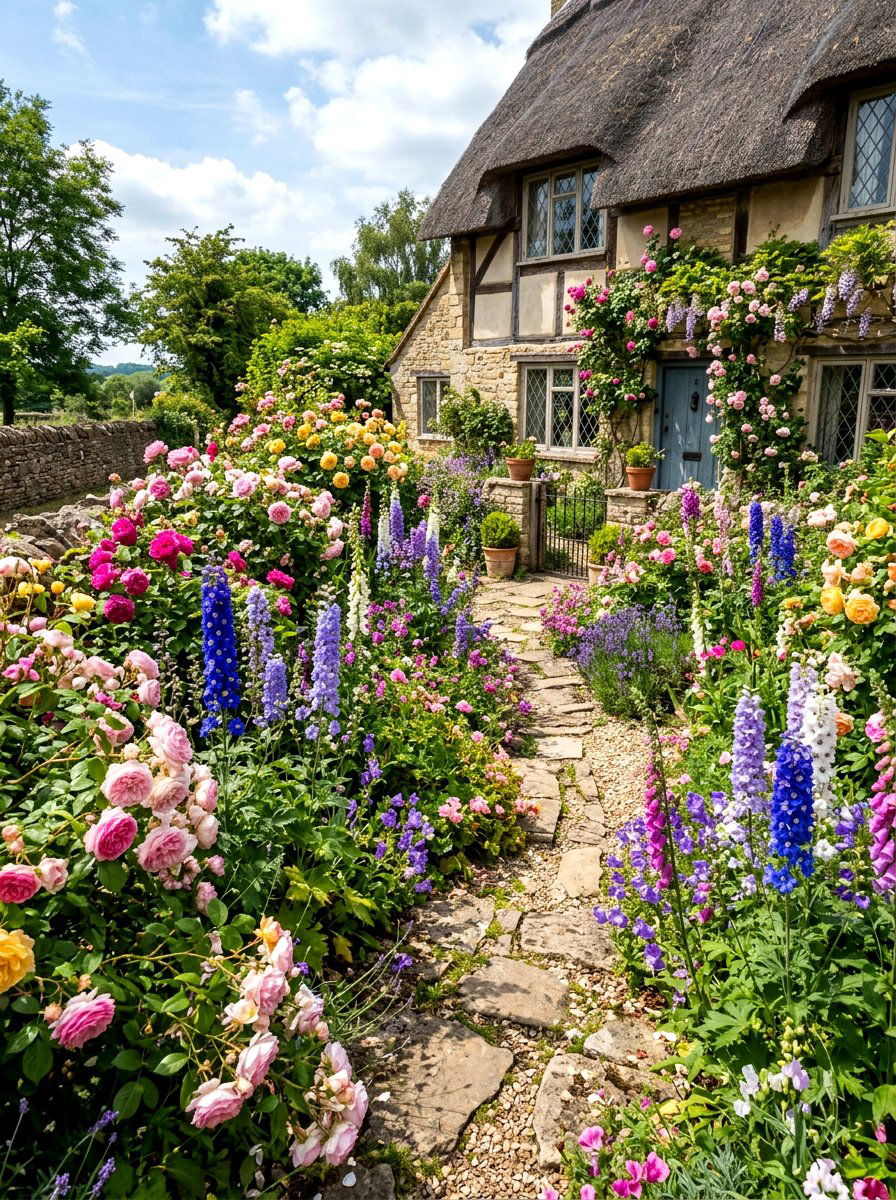
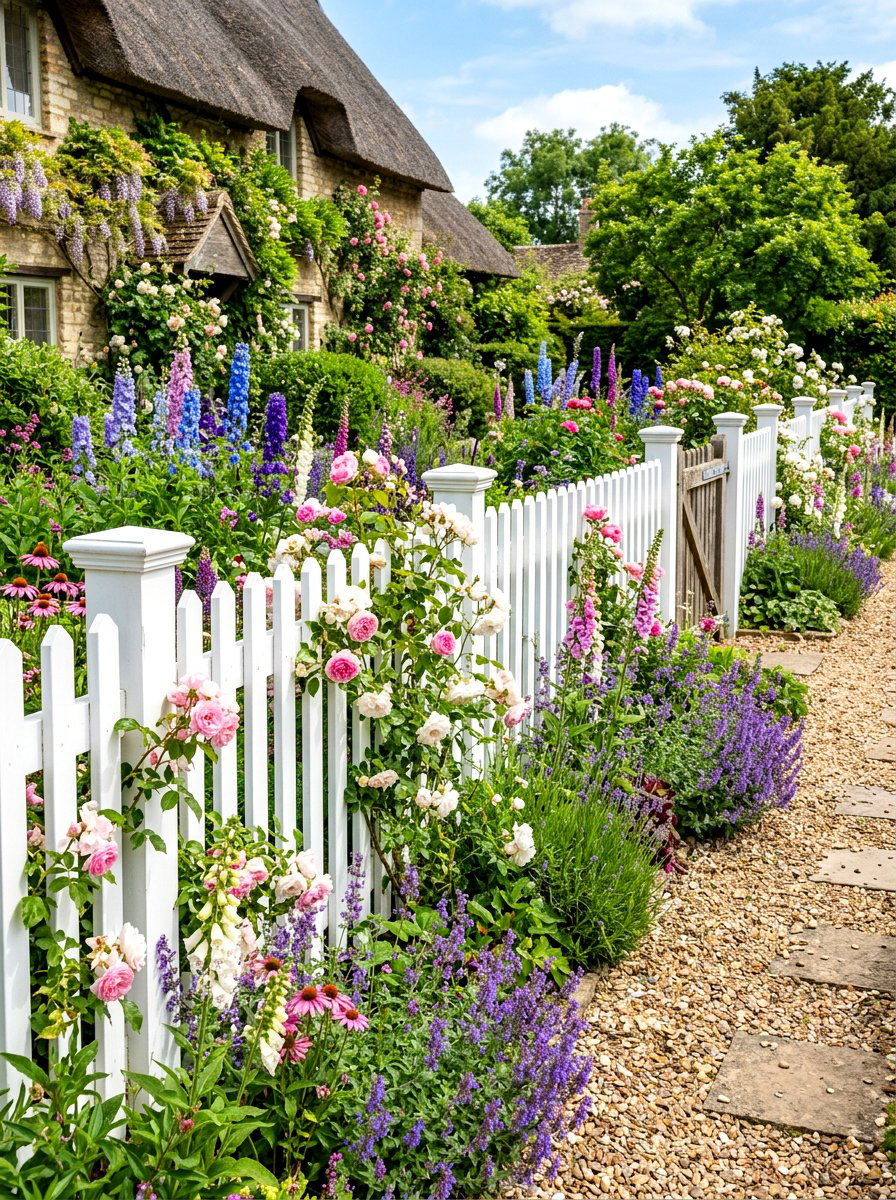
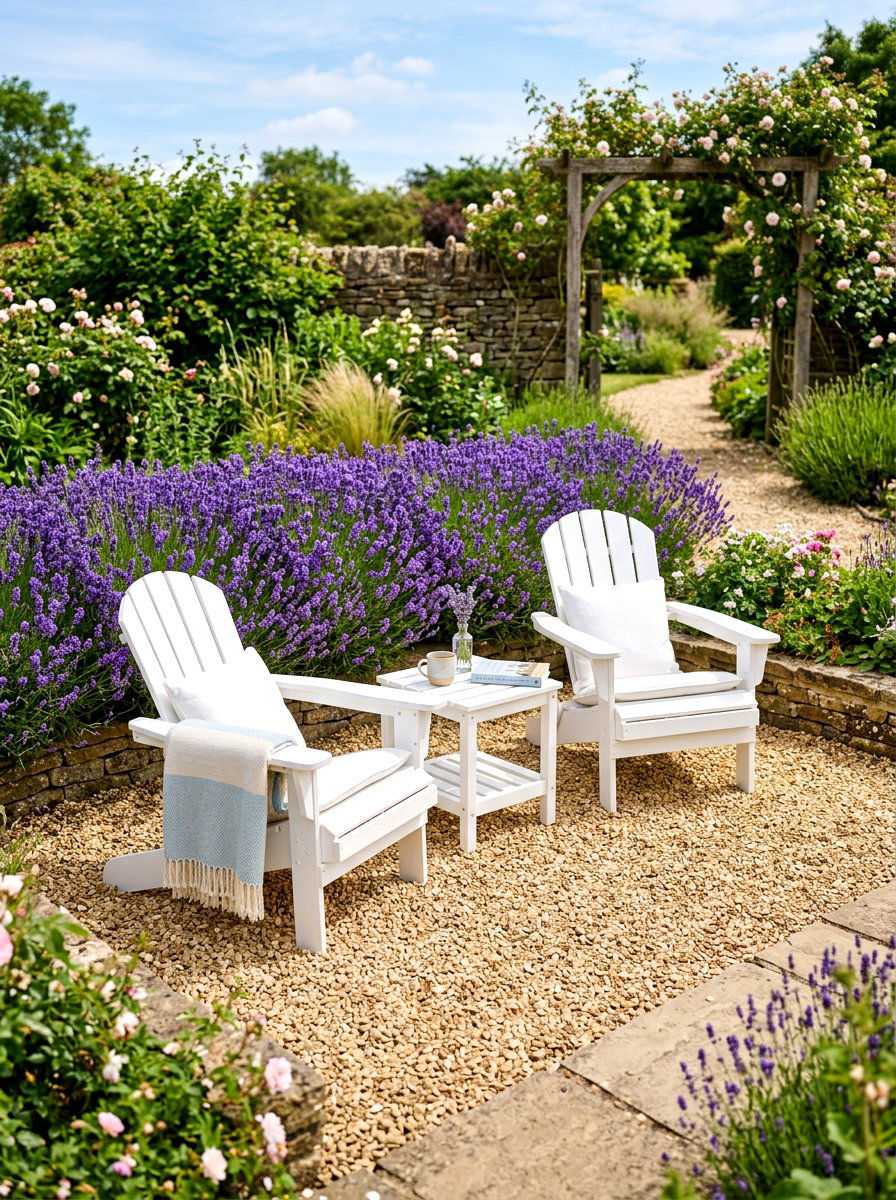
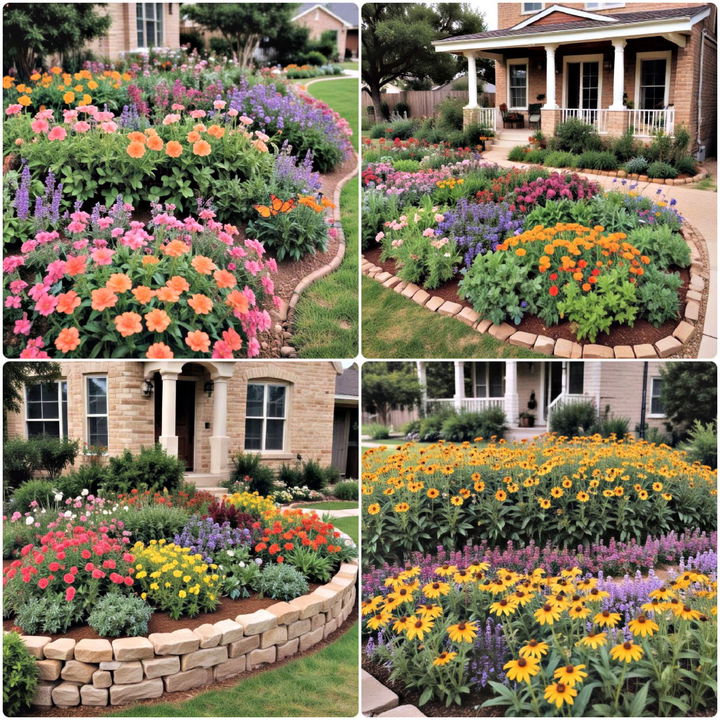
A cottage garden is the ultimate expression of asymmetrical beauty, characterized by a lush, informal, and slightly chaotic mix of flowers. You can fill your front yard with roses, delphiniums, and peonies that spill over onto the paths and climb up the walls. There are no straight lines or perfect symmetry here, which gives the garden a romantic and timeless feeling. Use a rustic wooden fence or a stone birdbath as a secondary focal point to add some structure to the greenery. This style of landscaping is perfect for those who love to spend time outdoors tending to their flowers. It creates a charming and fragrant welcome that feels incredibly personal.
16. Modern Minimalist Yard
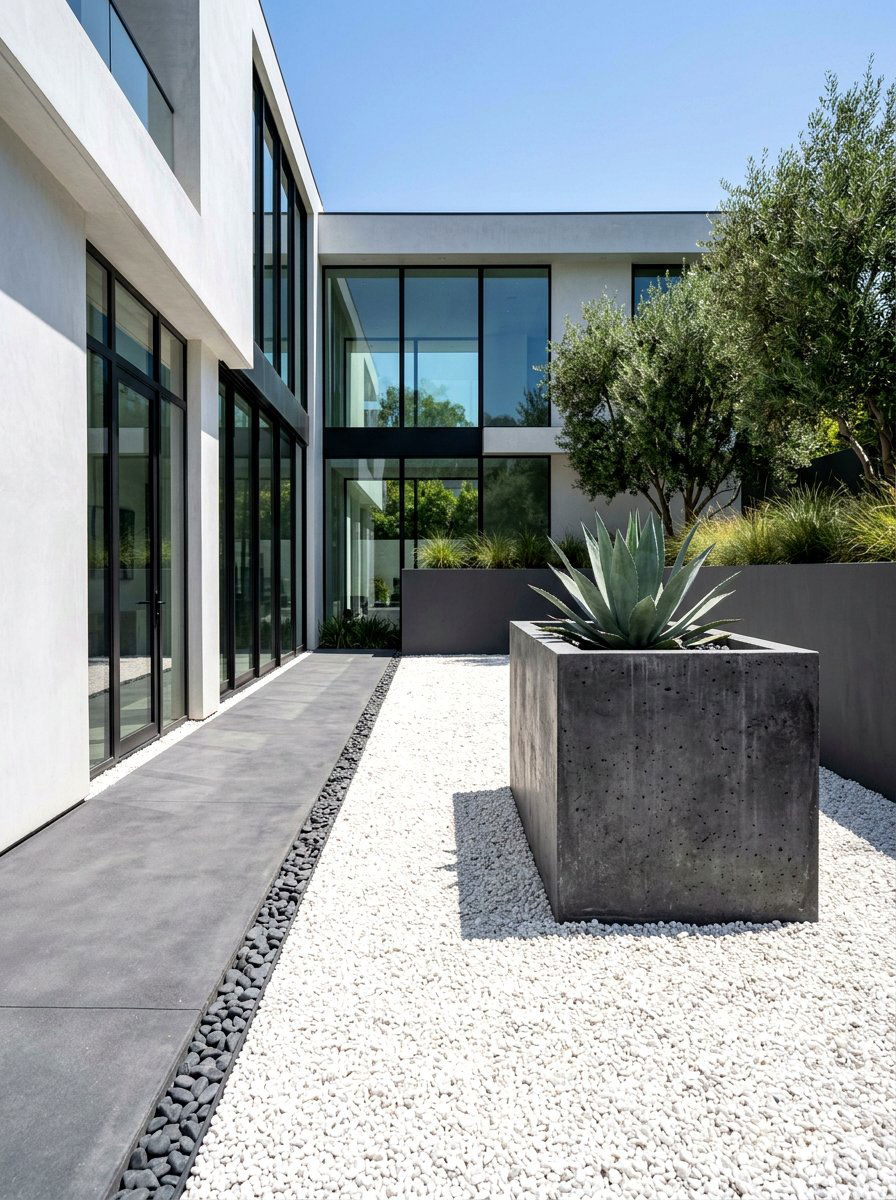
A modern minimalist yard focuses on a few high-quality elements and clean lines to create a powerful asymmetrical statement. You might use a single concrete planter filled with a tall architectural plant on one side of the modern front door. On the other side, a large area of white pebbles can provide a stark, clean contrast to the dark house siding. This style relies on the "less is more" philosophy to highlight the beauty of the materials and the home's architecture itself. It is a very low-maintenance option that stays looking sharp and professional with very little effort. The simplicity of the design makes it feel very peaceful and incredibly sophisticated.
17. Sloped Front Yard
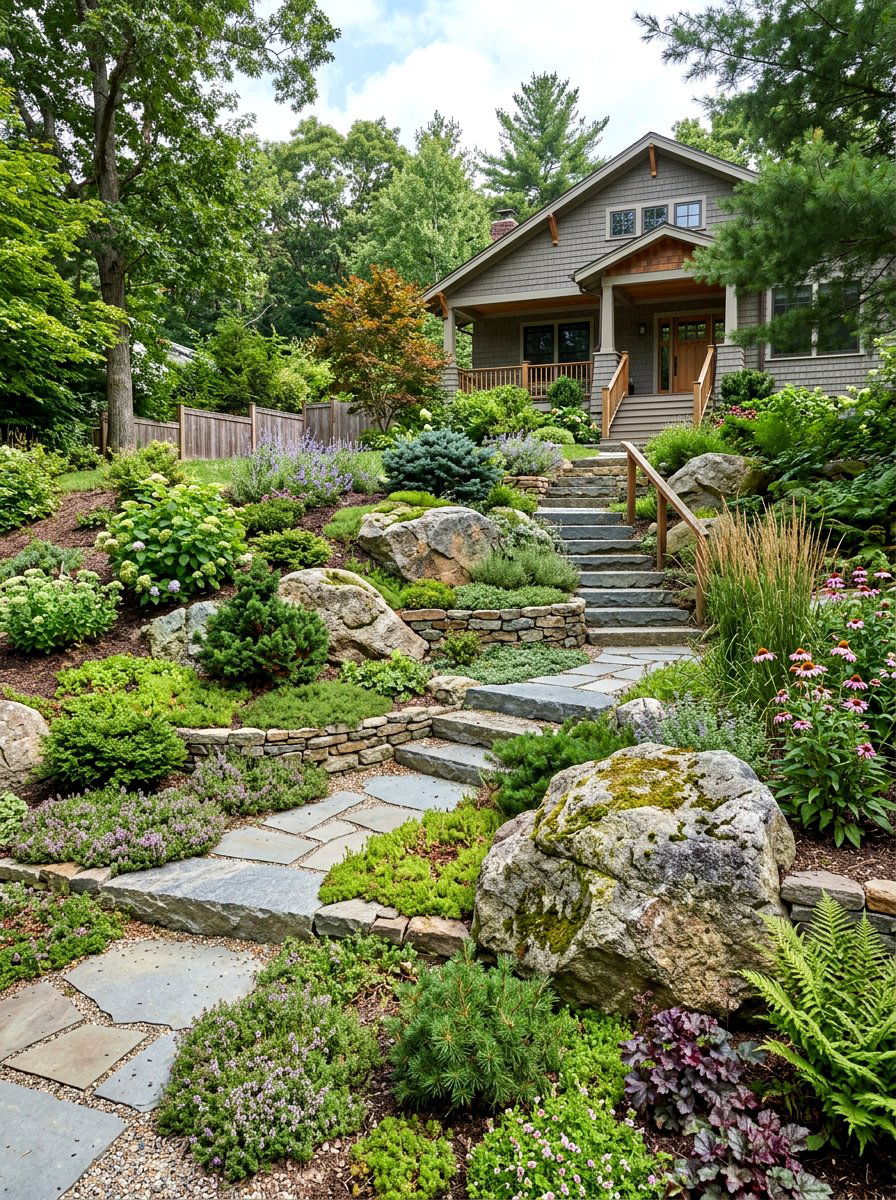
Managing a sloped front yard can be challenging, but it offers a fantastic opportunity for a creative and asymmetrical landscape design. You can use large natural boulders to create a series of small plateaus that hold different types of vegetation and soil. Instead of a uniform staircase, design a winding path that zig-zags up the hill to make the climb feel more like a walk. This breaking up of the slope prevents the yard from looking like a flat wall of green from the street. You can plant taller trees at the bottom to provide privacy and lower ground covers at the top. This approach turns a landscaping problem into a stunning architectural feature.
18. Raised Garden Bed
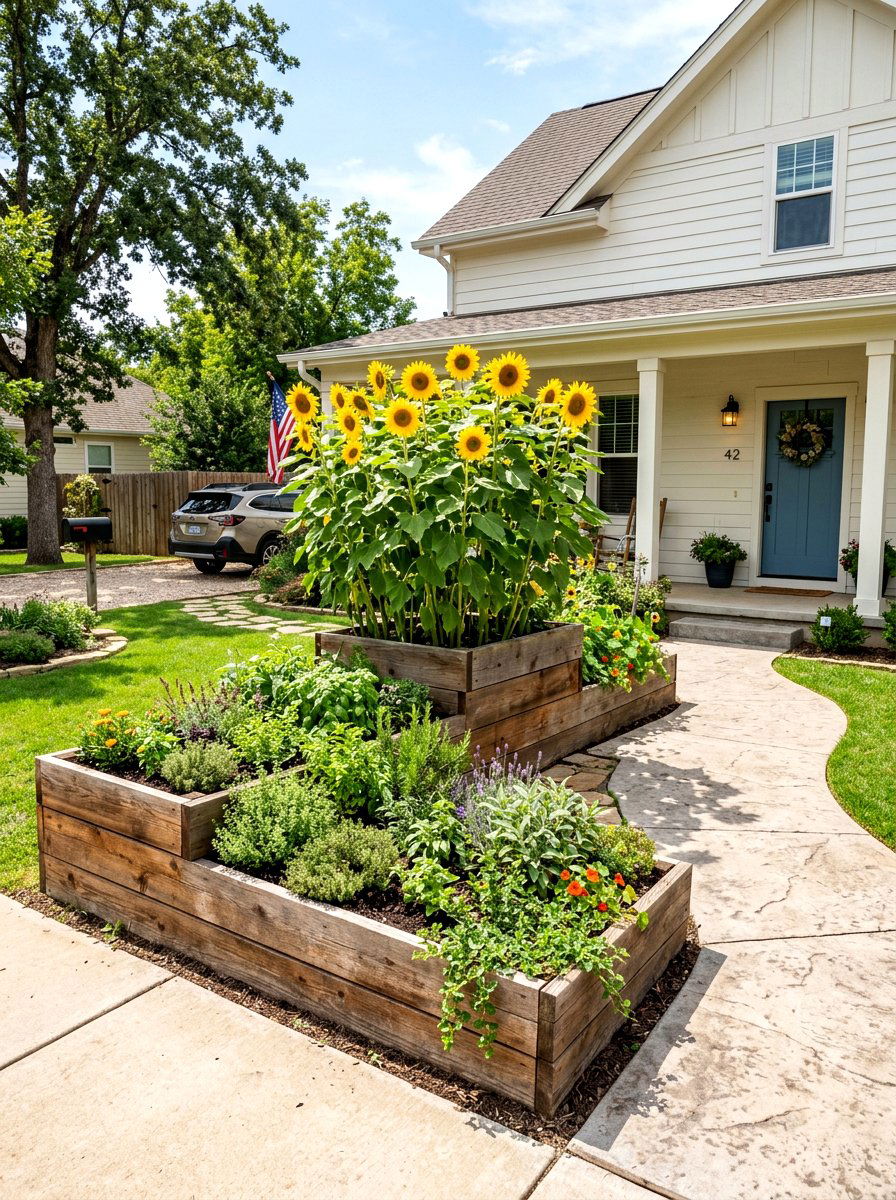
Raised garden beds are an excellent way to introduce different levels and clean edges into an asymmetrical front yard layout. You can build wood or stone beds at varying heights and arrange them in an L-shape around a corner of your home. This adds vertical interest and allows you to control the soil quality for more demanding plants like vegetables or roses. Filling one bed with tall sunflowers and another with low herbs creates an immediate and interesting visual imbalance. Raised beds also make gardening easier on your back by bringing the plants closer to your reach. They provide a tidy, organized look that keeps your front yard from feeling too cluttered.
19. Natural Stone Wall
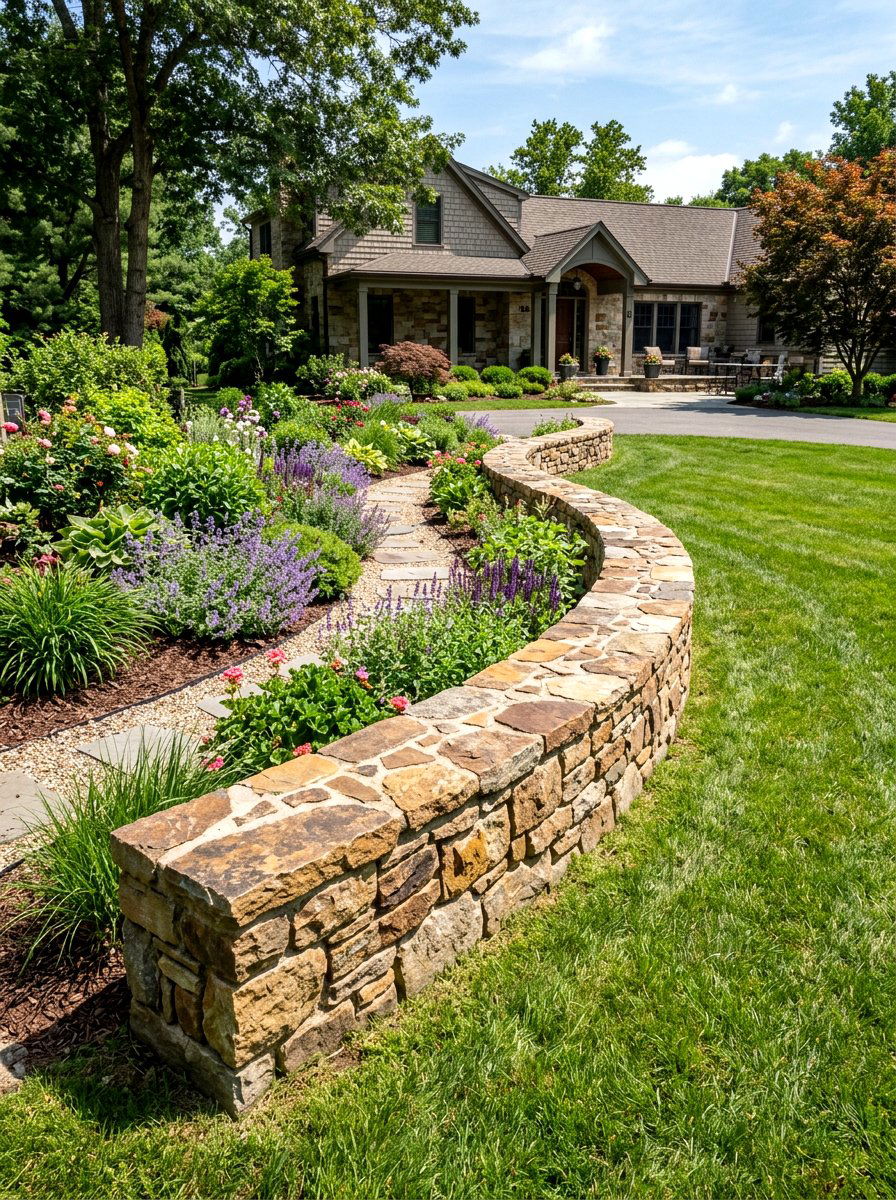
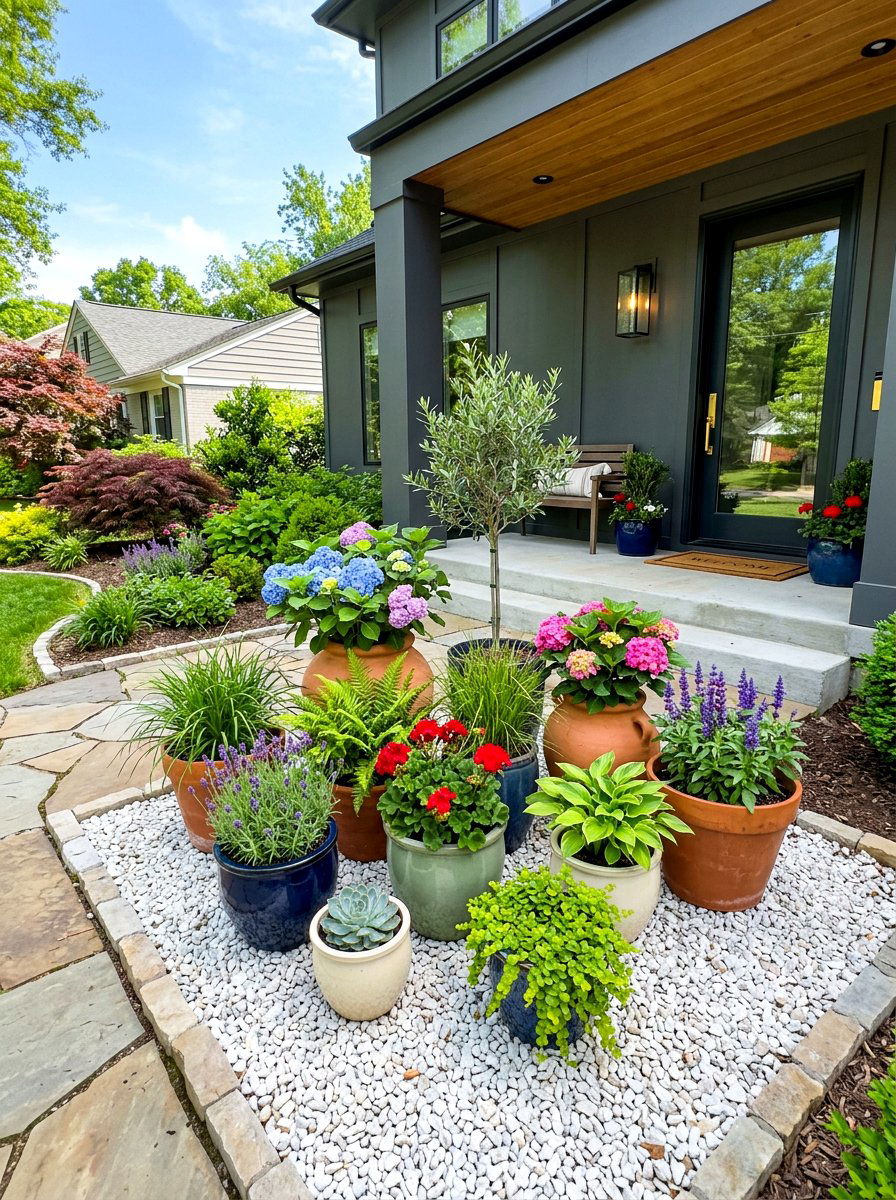
A natural stone wall provides a sturdy and beautiful boundary that fits perfectly into a rustic or modern asymmetrical landscape. You can build a low wall that curves along one side of your property to define a garden bed or seating area. By leaving the other side open or using a different material like a hedge, you create a balanced but non-identical look. The varying colors and shapes of the natural stones add a sense of history and craftsmanship to your home’s exterior. These walls are incredibly durable and require almost no maintenance once they are properly installed. They also serve as a great backdrop for displaying smaller potted plants or seasonal decorations.
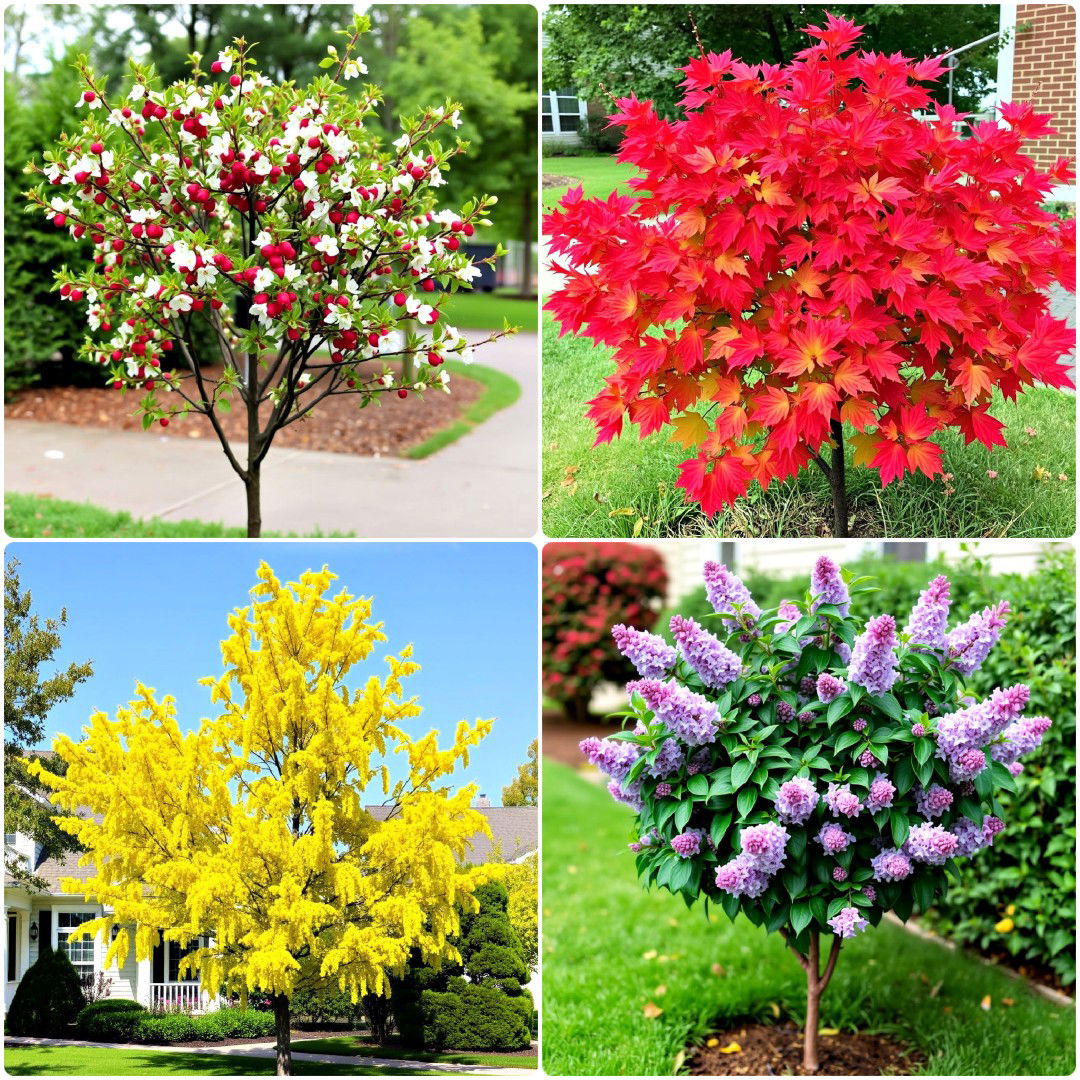
20. Perennial Garden
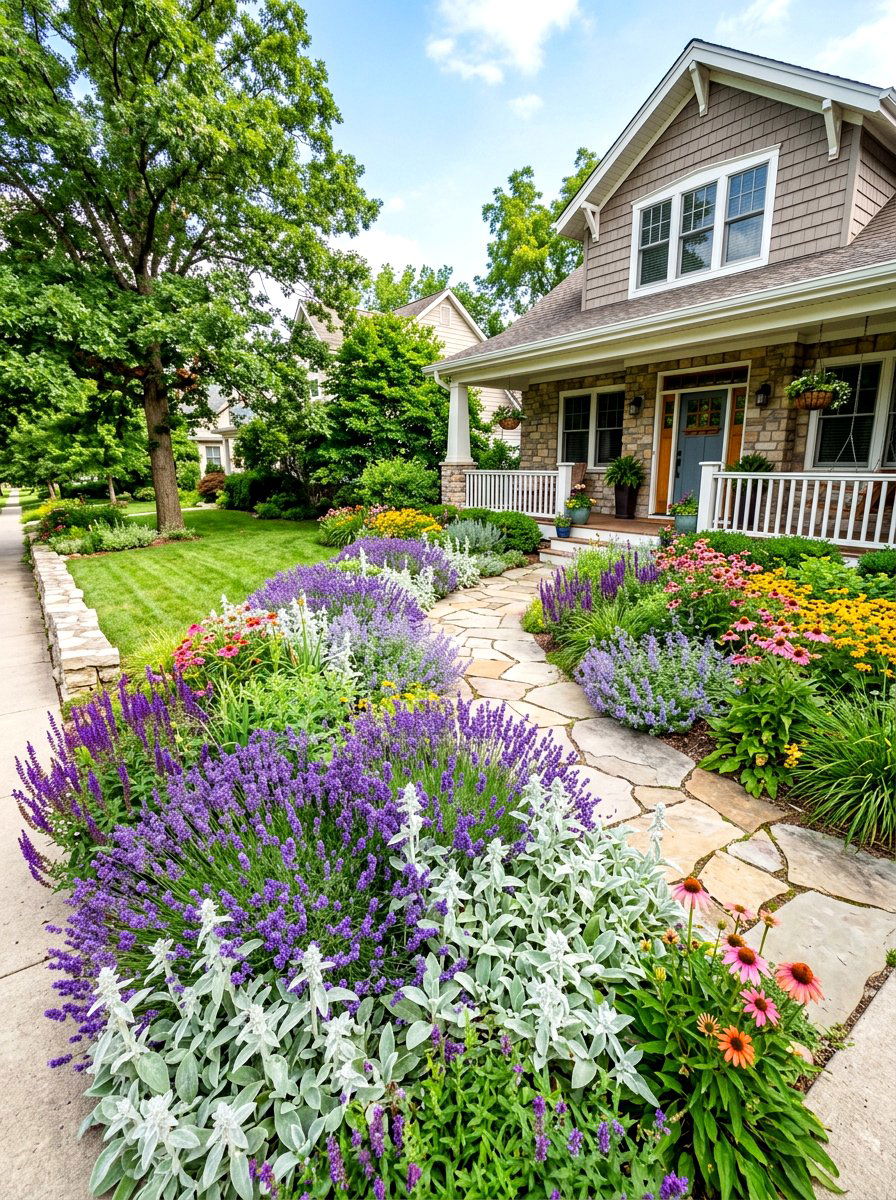
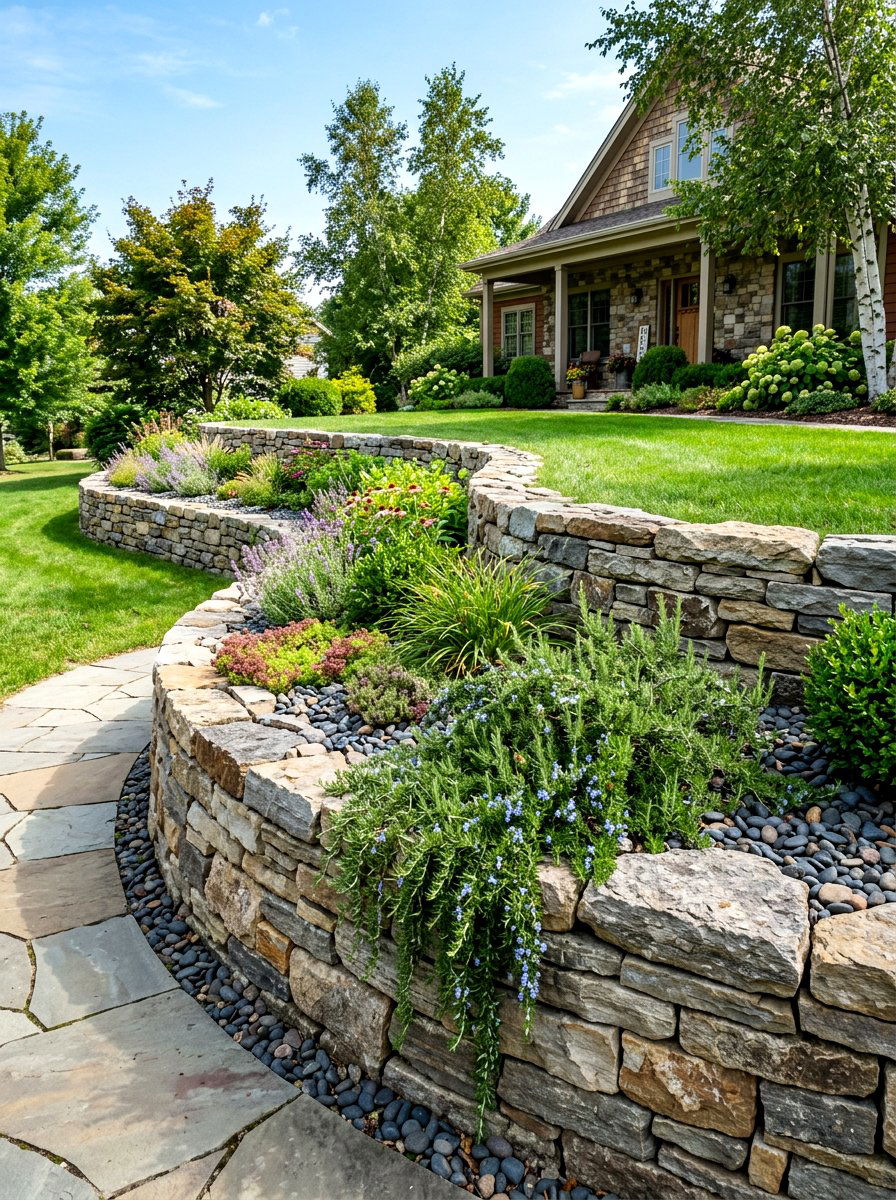
A perennial garden is a wonderful long-term investment for an asymmetrical front yard because the plants return bigger and better every year. You can design a large, irregular bed that flows across the yard, featuring a mix of textures from fuzzy lambs ear to spiky lavender. By placing the largest perennials toward one end, you create a natural visual weight that you can balance with smaller groupings. Perennials offer a changing color palette throughout the seasons, ensuring your yard never looks boring or static. This type of garden encourages birds and butterflies to visit, adding even more life and movement to your home's front entrance during the warmer months.
21. Low Maintenance Landscaping
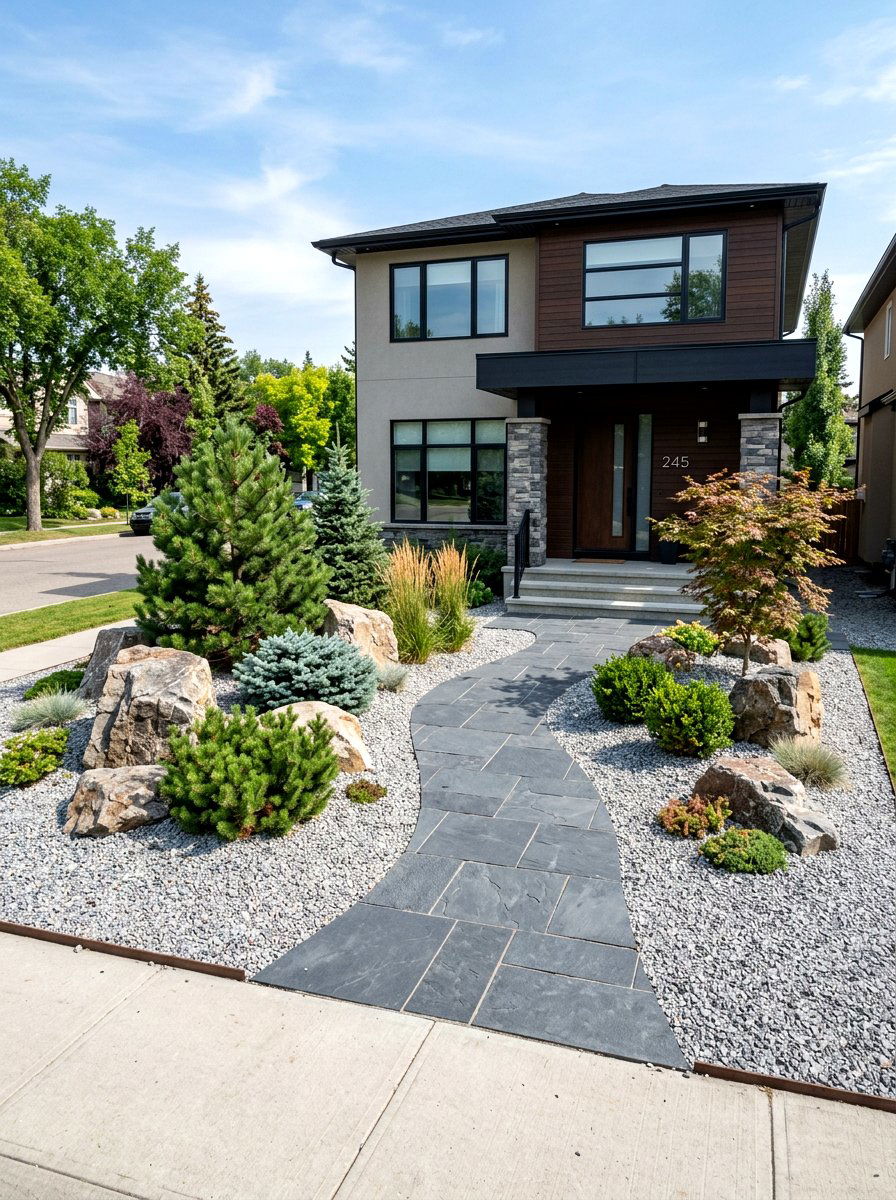
Low maintenance landscaping is a top priority for many homeowners, and an asymmetrical design can actually make this much easier to achieve. By using large-scale elements like decorative boulders, gravel, and hardy shrubs, you reduce the amount of lawn that needs weekly mowing. Arrange these elements in a way that feels natural and unforced, avoiding the need for perfect pruning or shaping of hedges. Use weed-barrier fabric under your stone or mulch beds to keep the maintenance tasks to a minimum. This style of yard looks great even if it is not perfectly manicured, which is the beauty of an asymmetrical approach. It allows you to enjoy your home more.
22. Wildflower Meadow
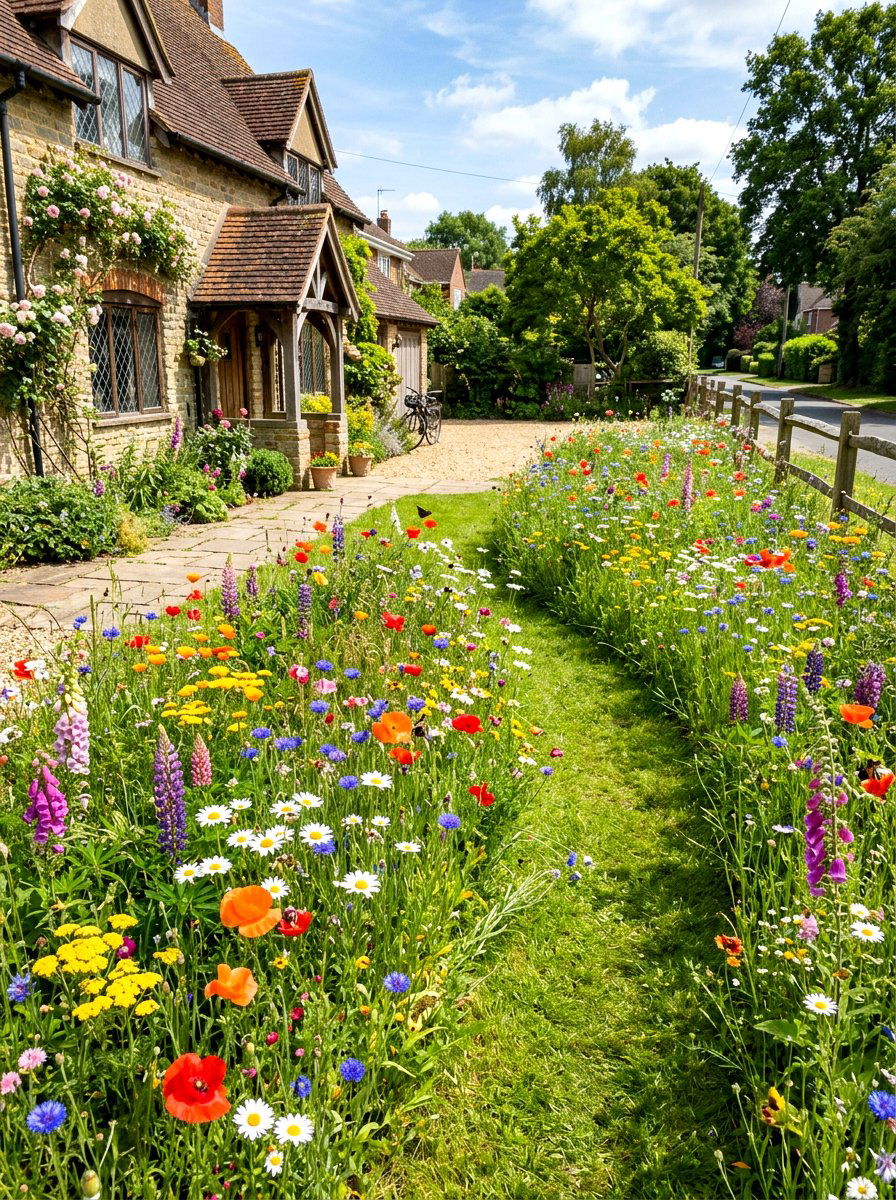
A wildflower meadow is a gorgeous and eco-friendly way to fill a large front yard with an asymmetrical, natural aesthetic. You can sow a mix of native seeds that will grow into a tall, waving carpet of color and life. This approach requires very little water or fertilizer and provides a vital habitat for local pollinators like bees and butterflies. Because the flowers grow in random patches, the yard has an inherently asymmetrical and organic feel that changes every week. You can mow a simple, clean path through the meadow to create a sense of order and intention. It is a low-cost way to create a high-impact, beautiful front garden.
23. Stepping Stone Path
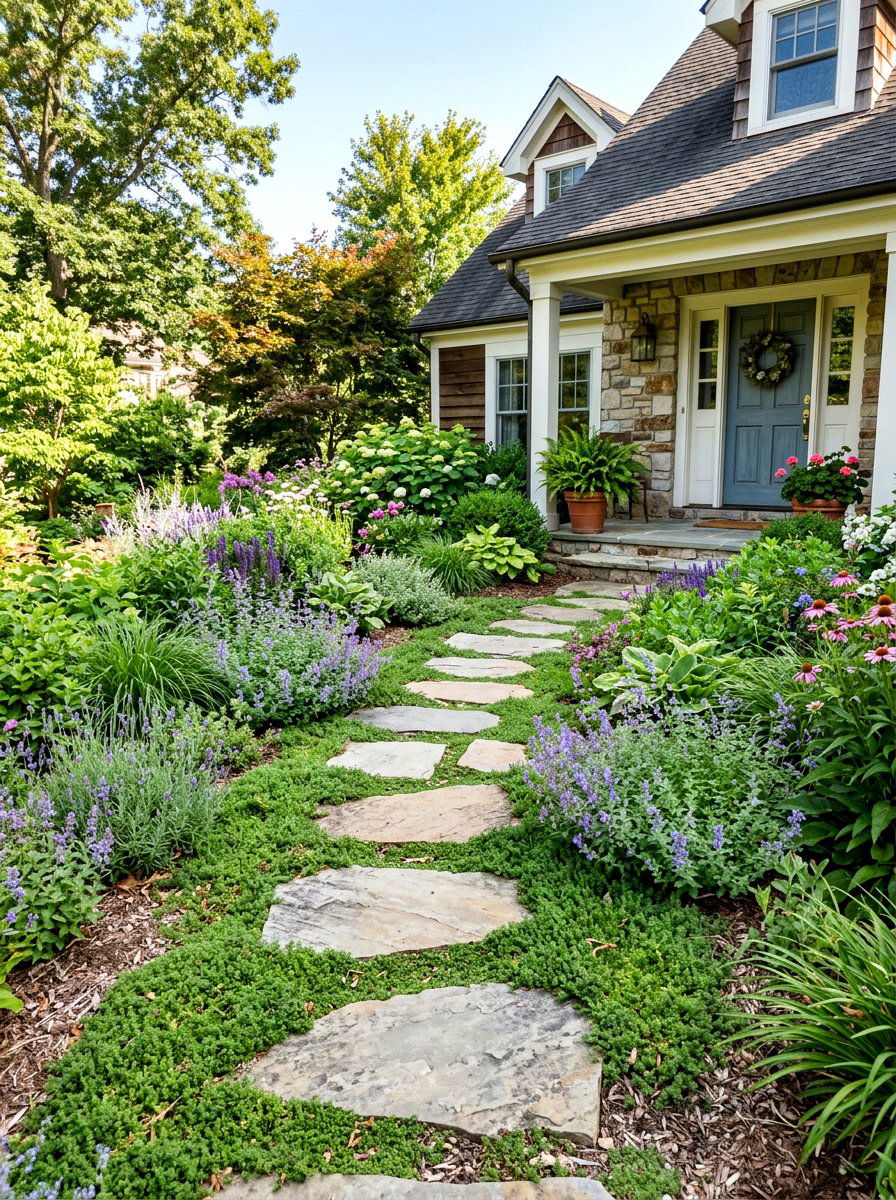
A stepping stone path is a charming and practical addition to an asymmetrical front yard that feels much lighter than a solid walkway. You can use large, flat stones placed at irregular intervals to create a playful and inviting route through your garden beds. Surround the stones with low ground covers like creeping thyme or Irish moss to soften the edges and add a touch of green. This design allows you to meander through your plants, giving you a closer look at your favorite flowers and shrubs. It is an easy DIY project that can be completed in a single afternoon. Stepping stones provide a rustic, natural feel that complements any casual home style.
24. Evergreen Shrub Border
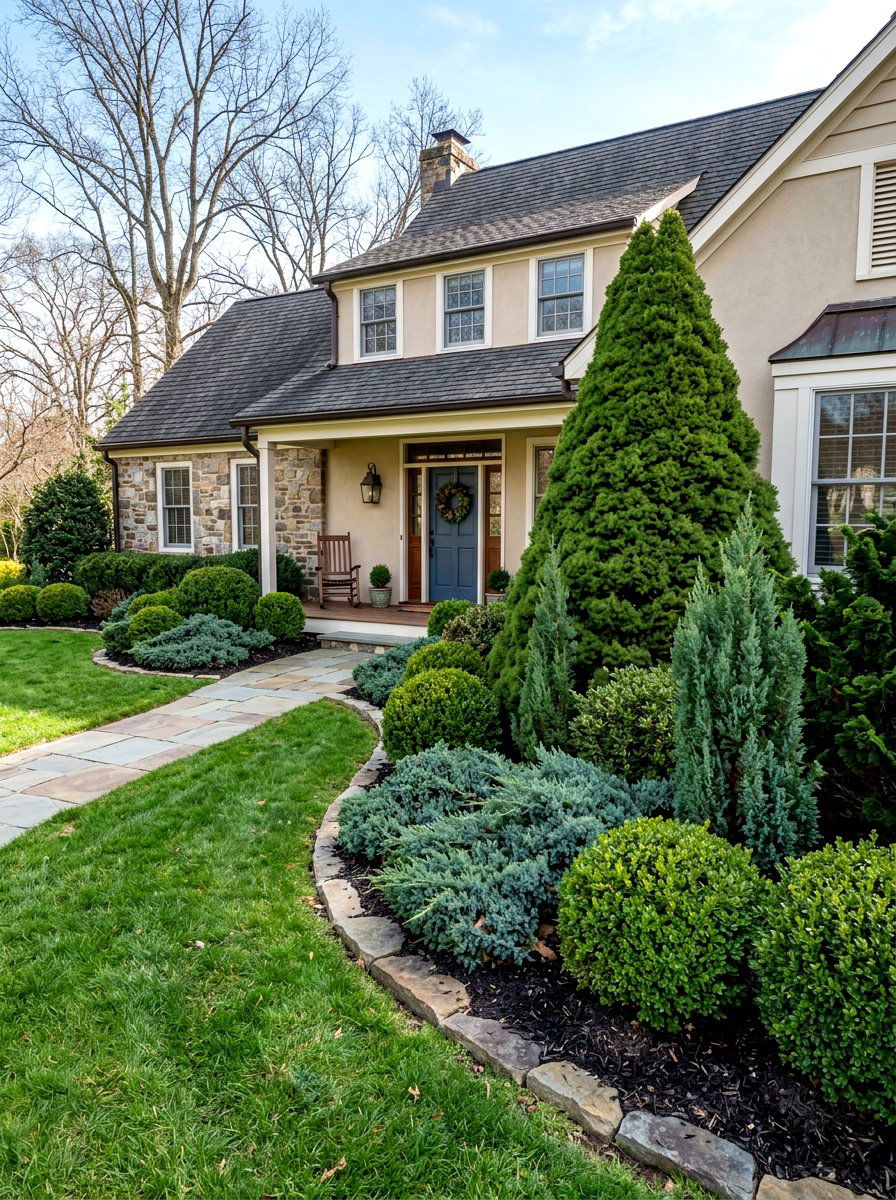
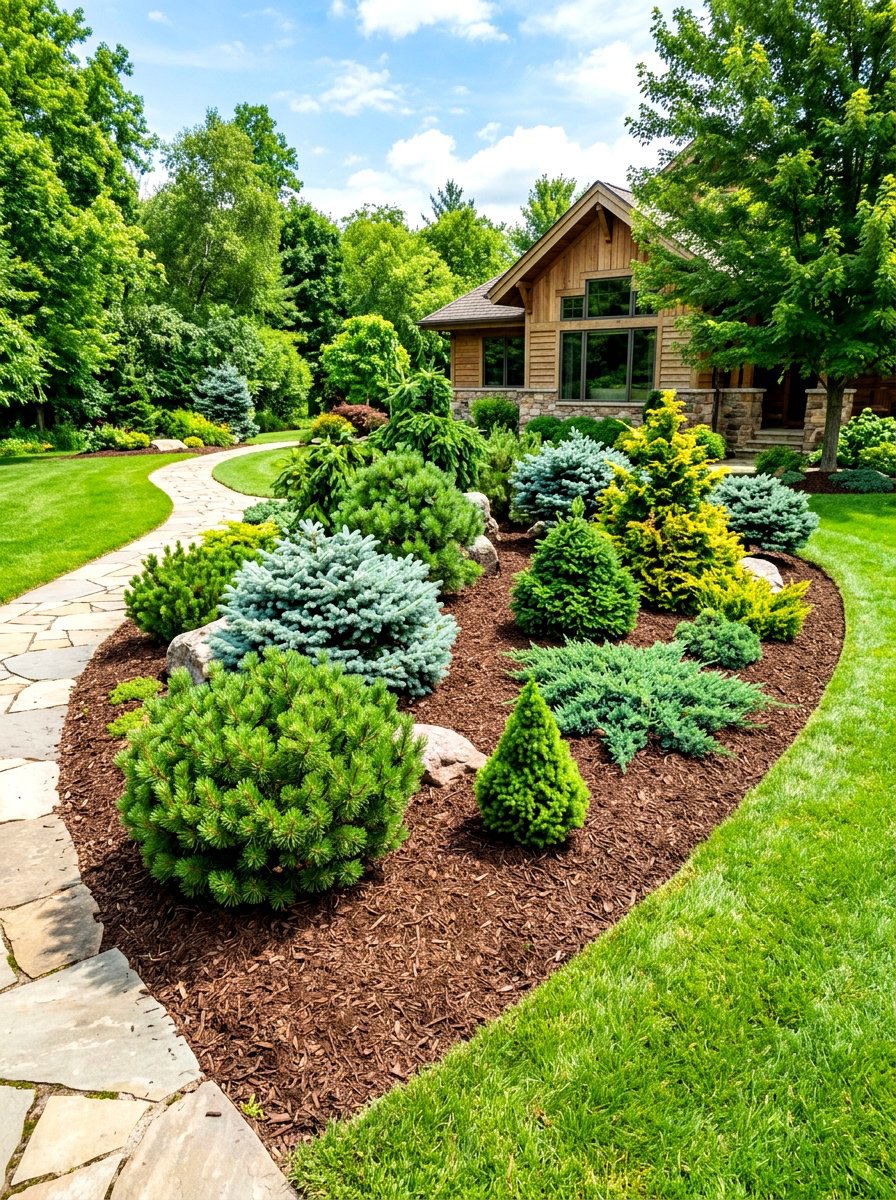
Using an evergreen shrub border is a smart way to ensure your asymmetrical front yard stays green and structured even during the winter. You can plant a mix of different evergreen varieties, like boxwood, yew, and juniper, to create a textured and layered look. Place a tall, conical evergreen on one side of your garage or entrance to add vertical interest and a sense of permanence. Balance this with a group of lower, rounded shrubs on the other side to keep the composition from feeling too heavy. Evergreens provide a great backdrop for colorful seasonal flowers and help to screen out unwanted views or noise from the street year-round.
25. Boxwood Hedge Row
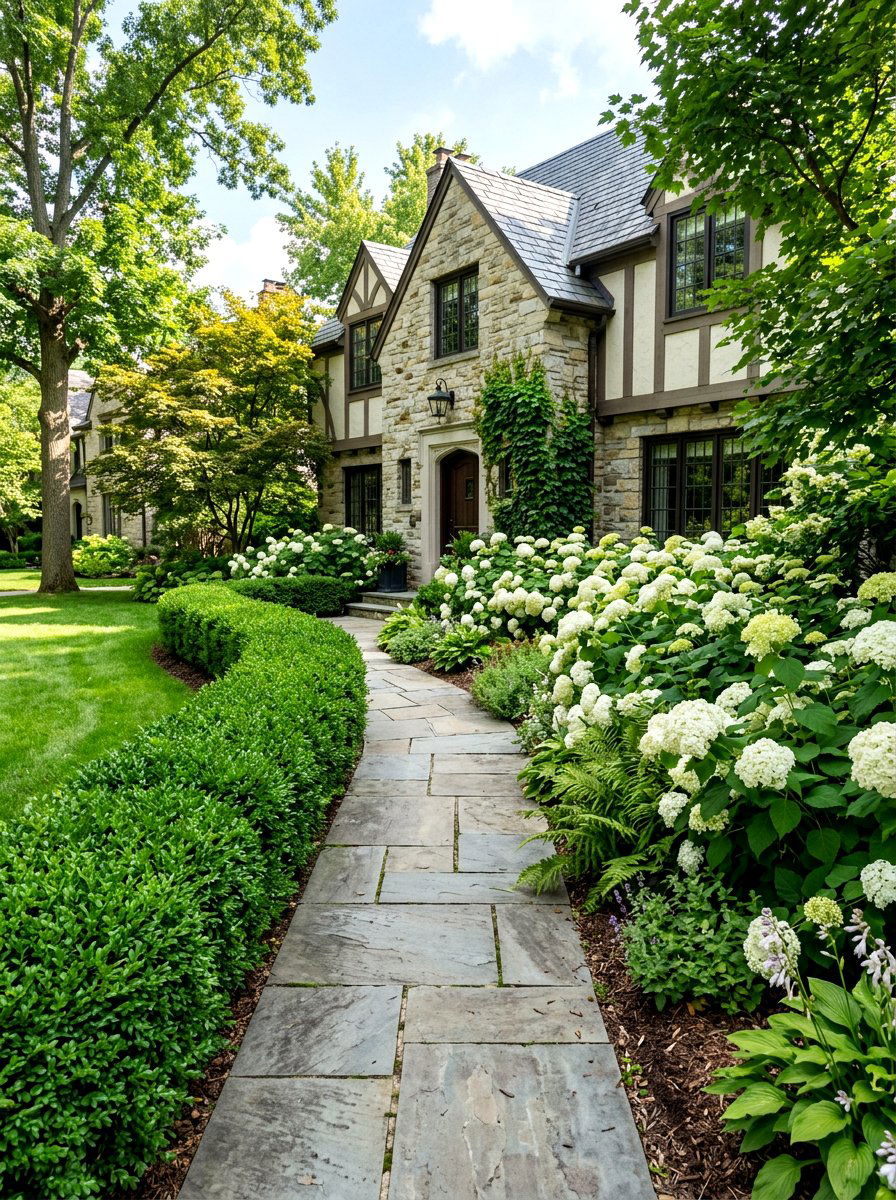
A boxwood hedge row can provide a touch of formal structure within an otherwise asymmetrical and relaxed front yard design. You might use a short, neatly trimmed hedge on just one side of your walkway to define the path and add a clean line. On the opposite side, allow more wild and flowing plants like hydrangeas to grow freely to create a beautiful contrast of styles. This mix of formal and informal elements is a key part of successful asymmetrical landscaping. Boxwoods are very hardy and can be shaped into almost any form you desire. They offer a deep green color that looks sophisticated against a brick or stone house exterior.
26. Contemporary Wood Planter
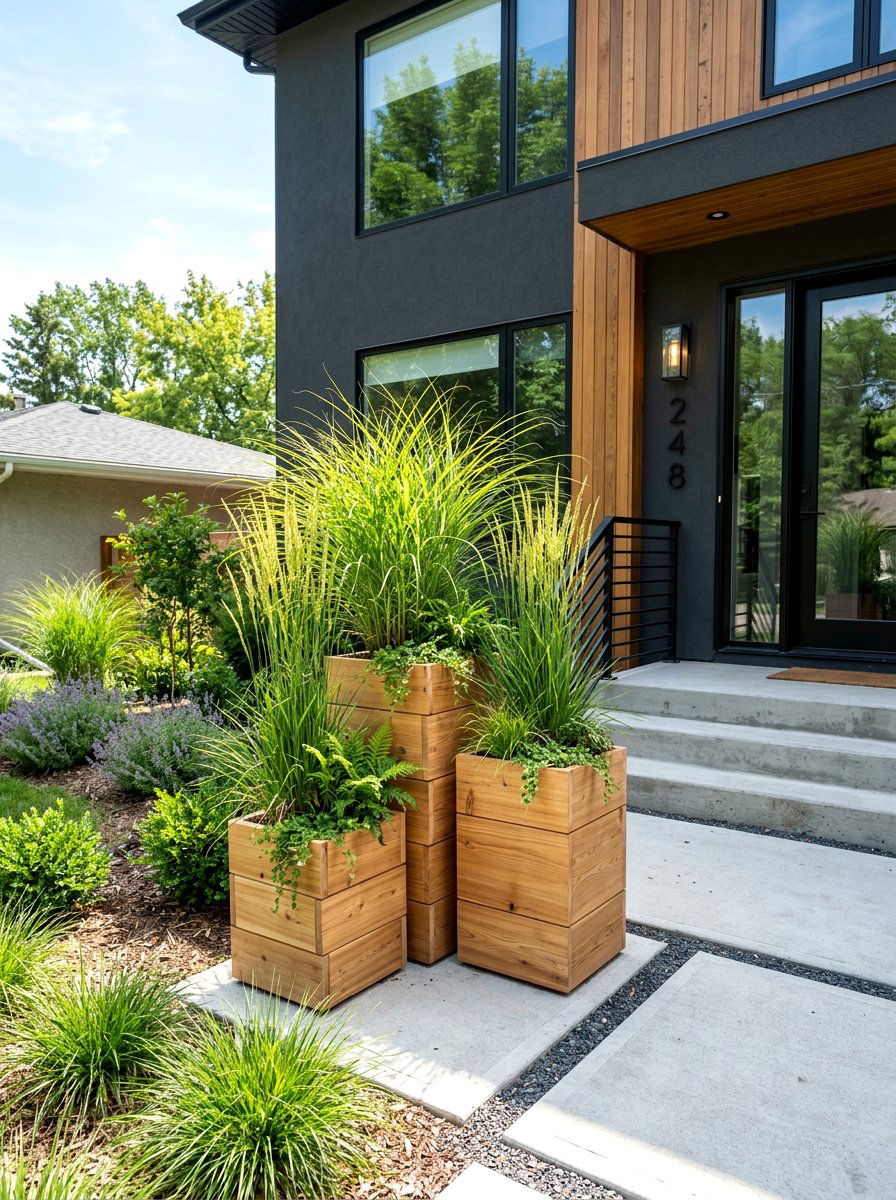
Contemporary wood planters are a fantastic way to add warmth and height to a modern asymmetrical front yard layout. You can build or buy tall rectangular planters made of cedar or redwood and place them in an asymmetrical grouping near your steps. Fill them with a mix of tall grasses and trailing vines to create a lush, multi-dimensional look that changes with the light. The natural wood grain provides a beautiful contrast to concrete walkways or metal house numbers. Using planters also allows you to easily swap out your plants for different seasons, keeping your curb appeal fresh. They are an ideal solution for small yards where ground space is limited.
27. River Rock Bed
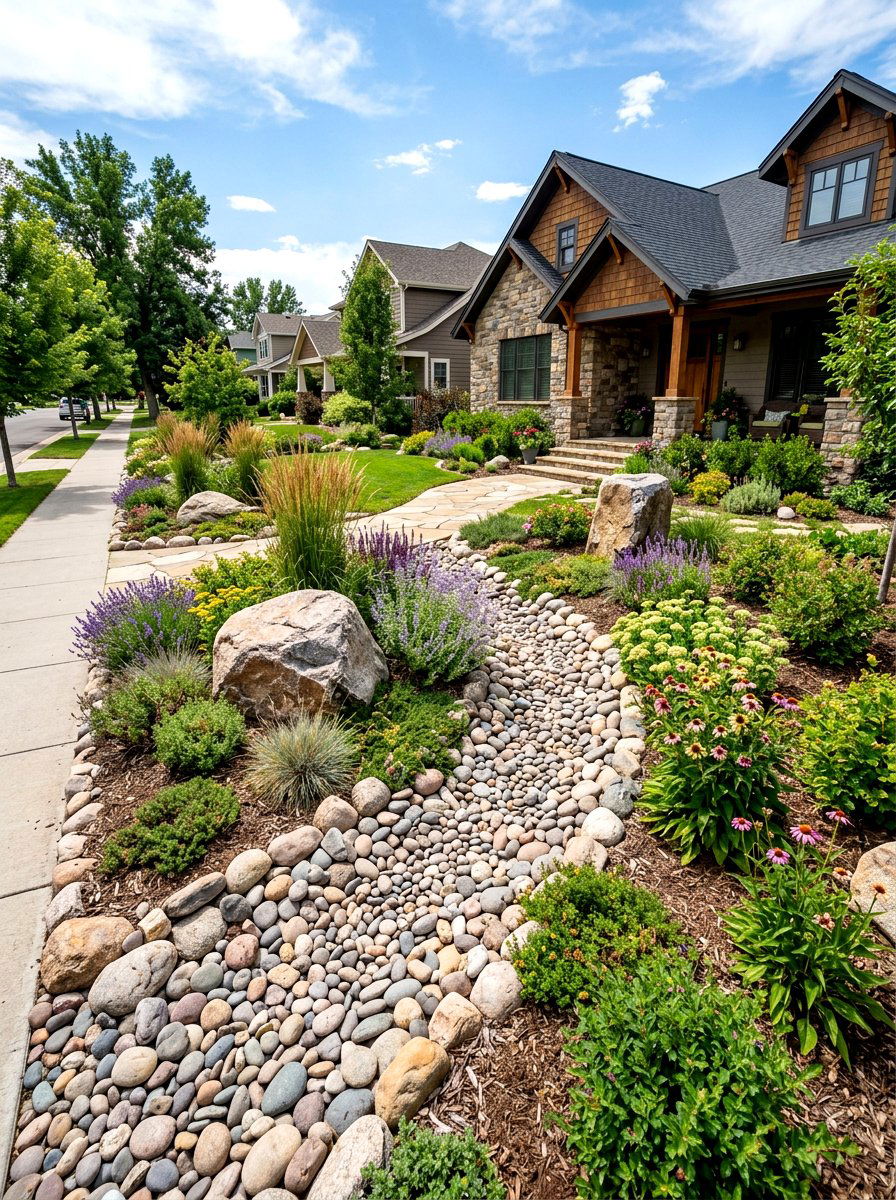
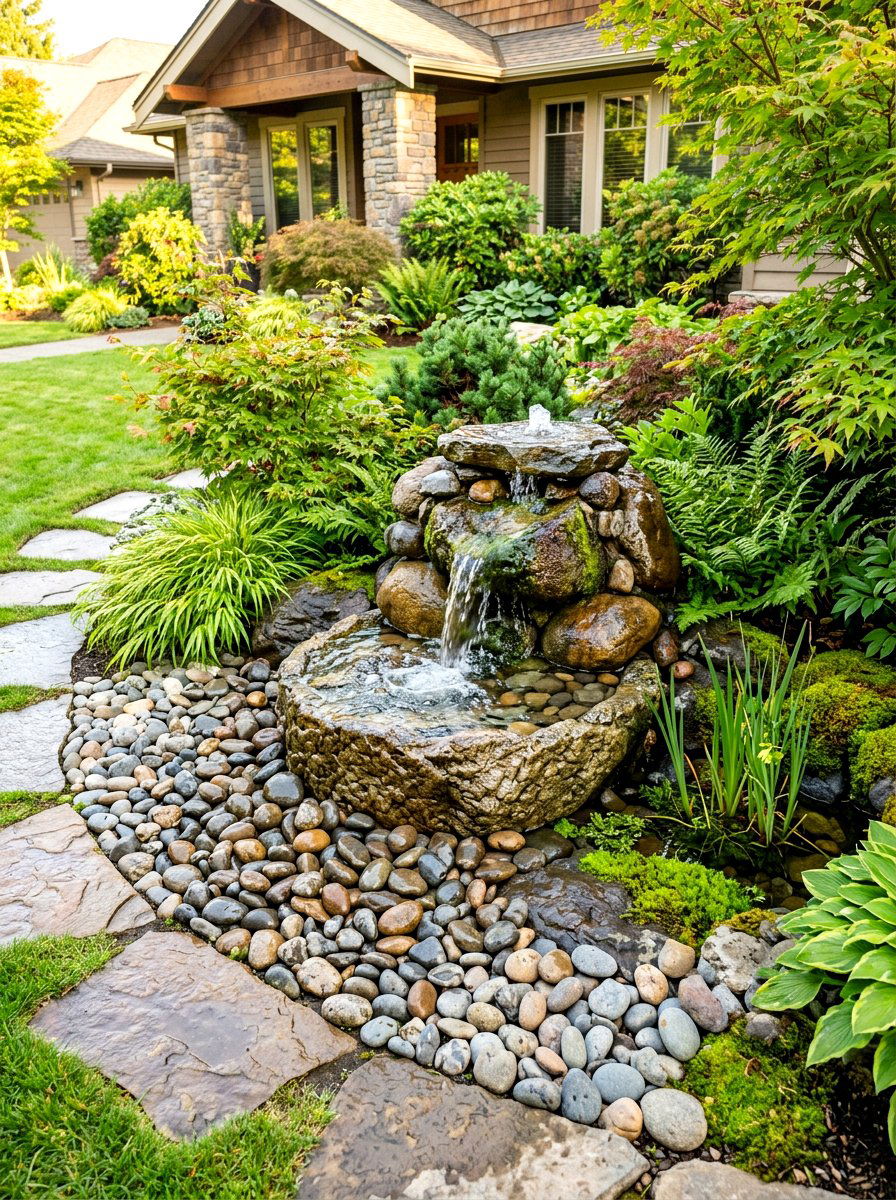
A river rock bed is a beautiful and functional feature that adds a sense of calm and Zen to an asymmetrical yard. You can design a "dry creek bed" that winds through your plants, using different sizes of smooth, rounded stones to mimic a natural stream. This feature is excellent for managing drainage issues while providing a unique texture that stands out from the traditional mulch or grass. Place a few larger boulders along the edges of the rock bed to create a more realistic and grounded appearance. The grey and tan tones of the rocks work well with almost any plant color. It is a very low-maintenance feature that looks good forever.
28. Large Specimen Tree
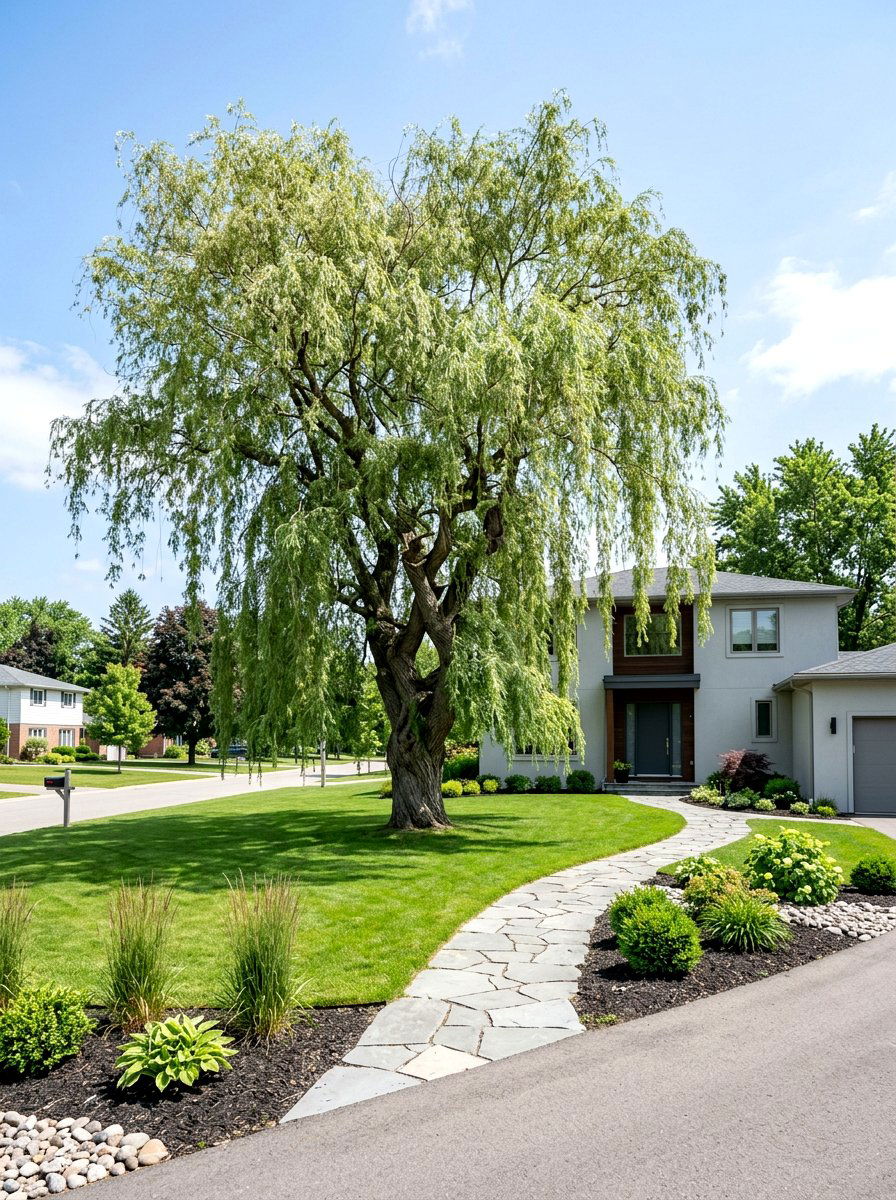
Focusing your entire front yard design around a large specimen tree is a bold and effective way to master asymmetry. Choose a tree with a unique shape or striking bark, like a Weeping Willow or a River Birch, and place it off-center. This tree becomes the anchor for the rest of your landscaping, which can then be built out with smaller shrubs and flowers. The canopy of a large tree provides shade and a sense of maturity to a newer home or a bare lot. It creates a vertical element that draws the eye and gives the property a sense of scale and importance. A single tree is often all you need to start.
29. Modern Fence Border
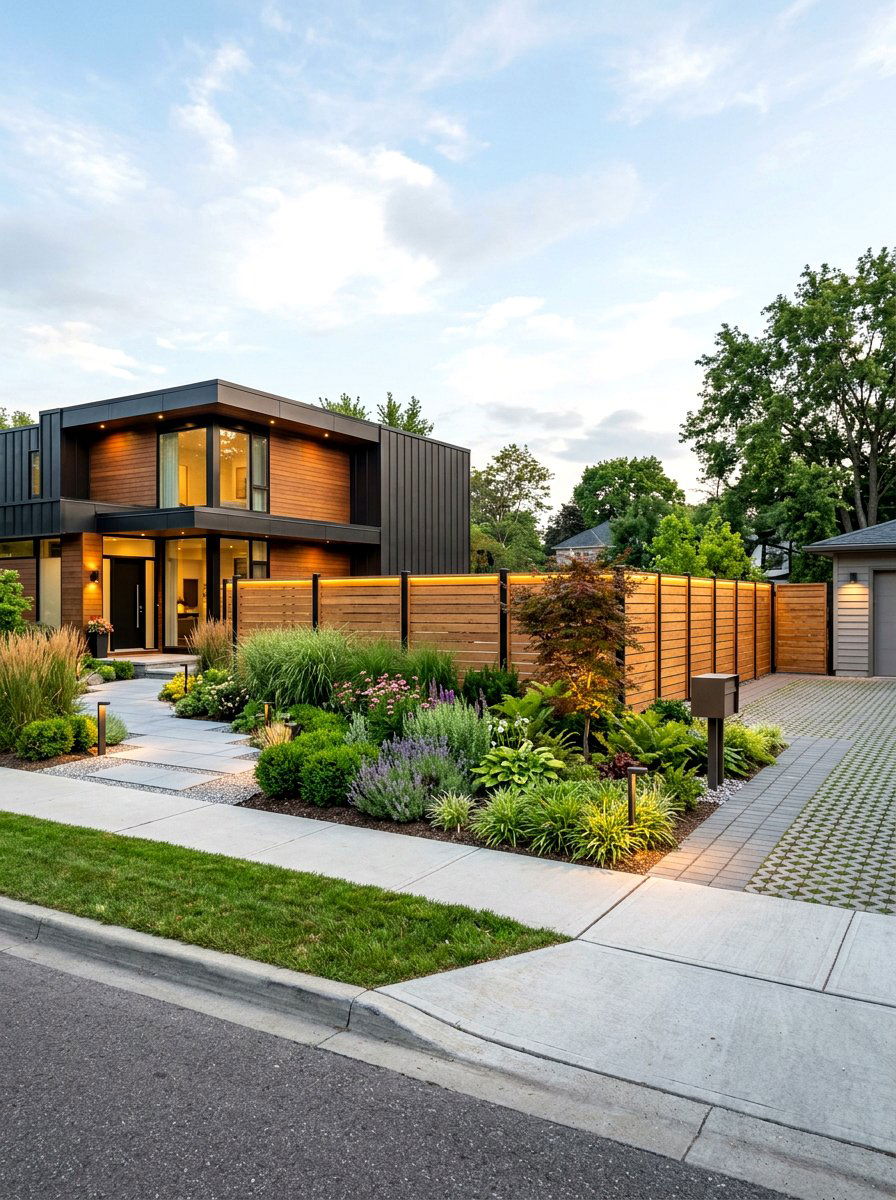
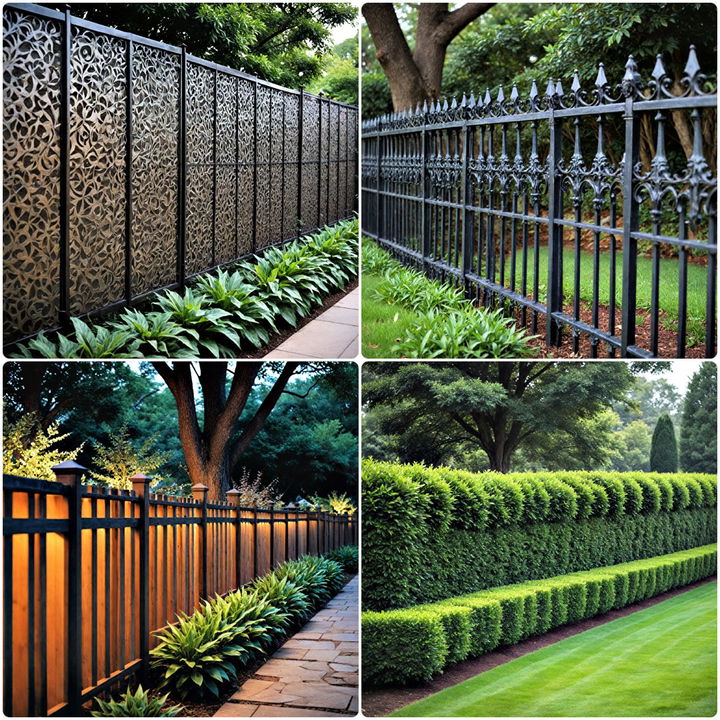
A modern fence border can act as a beautiful frame for your asymmetrical landscaping while providing privacy and security. You can use horizontal wood slats on one section of your yard to create a clean, contemporary look that feels very architectural. Balance this structured wall with a soft, flowing planting bed on the other side of the driveway or walkway. This creates a sense of enclosure without making the yard feel completely blocked off from the neighborhood. You can even use the fence as a backdrop for climbing plants or modern outdoor lighting. A well-designed fence adds immediate value and a polished, professional look to your entire property.
30. Ground Cover Bed
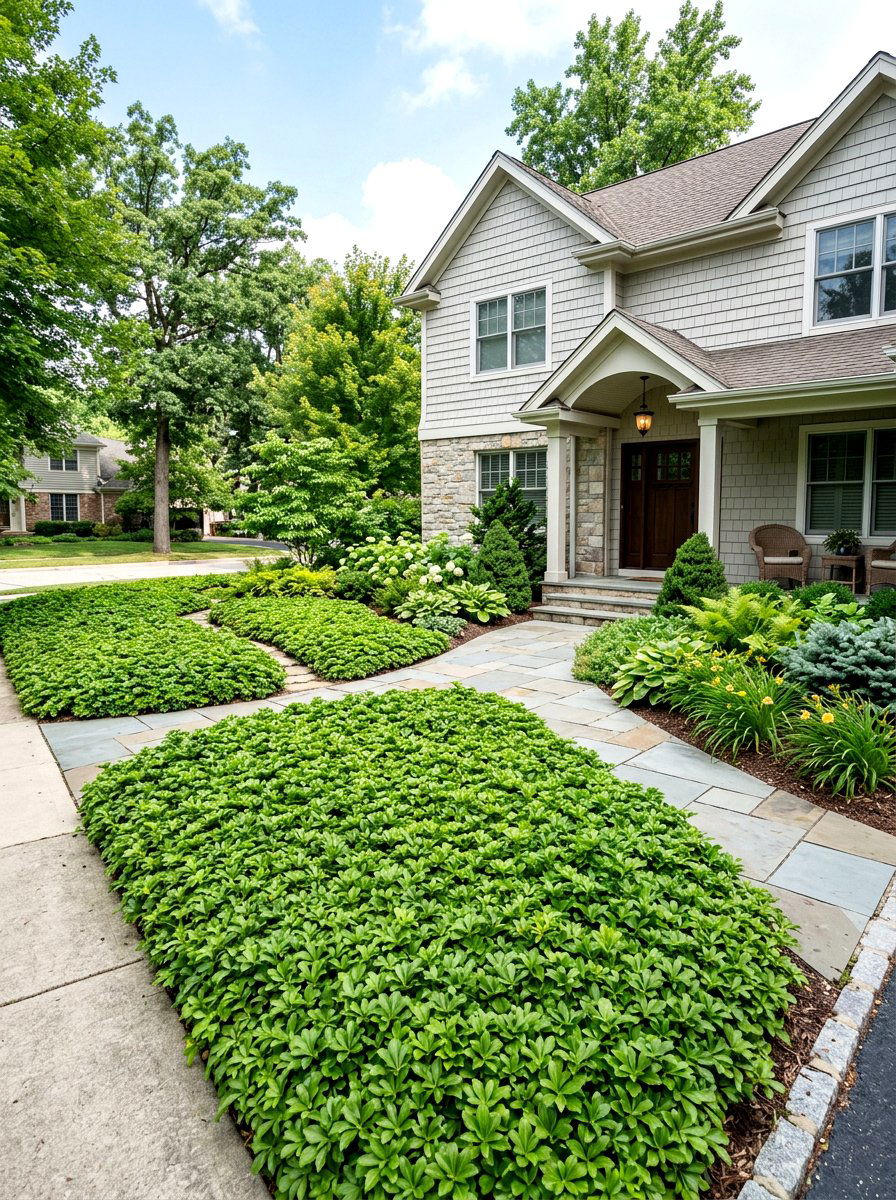
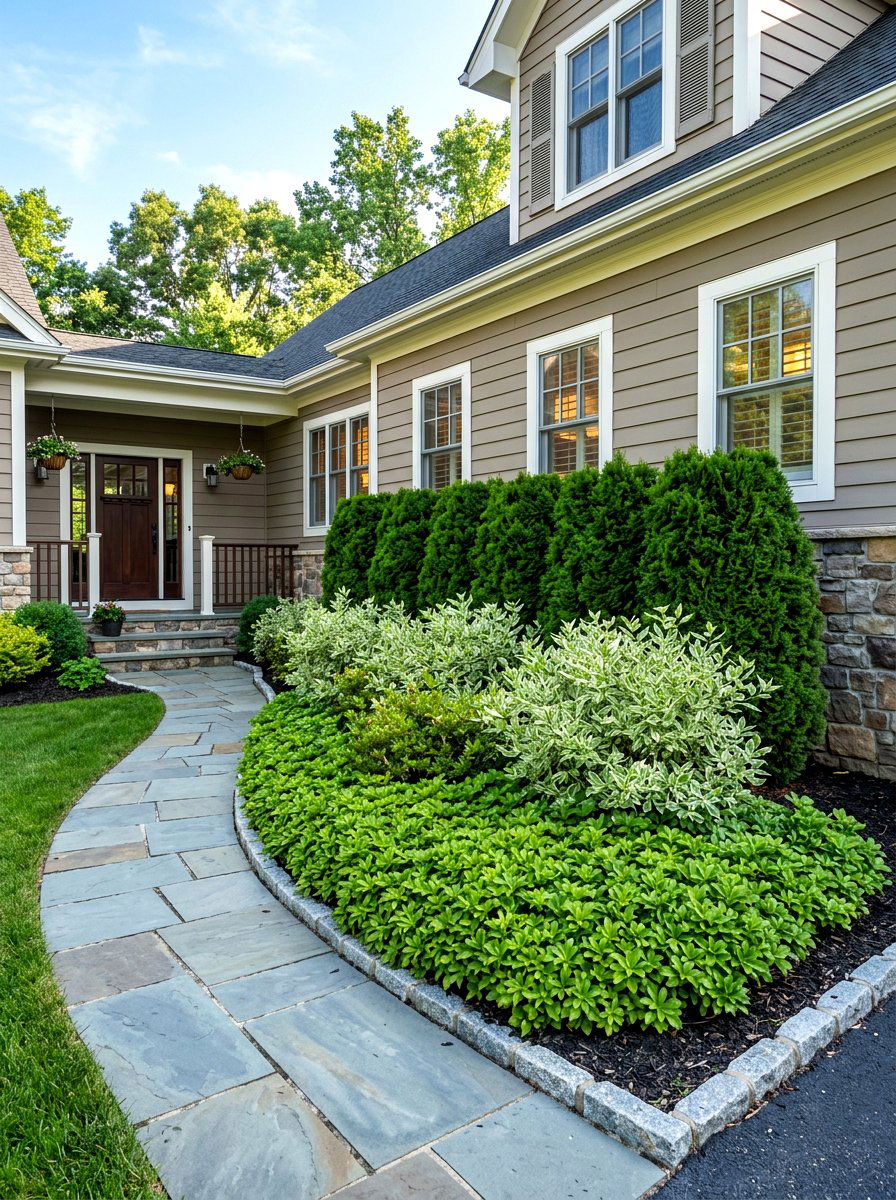
A ground cover bed is a smart alternative to a traditional lawn, offering a lush and textured look that is much easier to maintain. You can use different varieties of ground covers, such as pachysandra or periwinkle, to create large, asymmetrical patches of green throughout your yard. This approach eliminates the need for a mower and reduces the amount of water and fertilizer required for a healthy yard. By mixing different leaf shapes and shades of green, you can create a subtle and sophisticated pattern on the ground. Ground covers are also excellent for suppressing weeds and protecting the soil from erosion. It is a modern, environmentally friendly way to landscape.
Conclusion:
Designing an asymmetrical front yard is a journey into creating balance through variety and artistic expression rather than rigid repetition. By embracing different heights, textures, and materials, you can craft a landscape that feels both organic and deeply intentional for your specific home. Whether you choose a modern rock garden or a lush cottage style, the key is to focus on how each element interacts with the whole. This approach not only boosts your property value but also provides a more interesting and welcoming environment for you and your guests. Start with a few core elements and let your personal style grow into a beautiful, unique outdoor space.

Related posts: