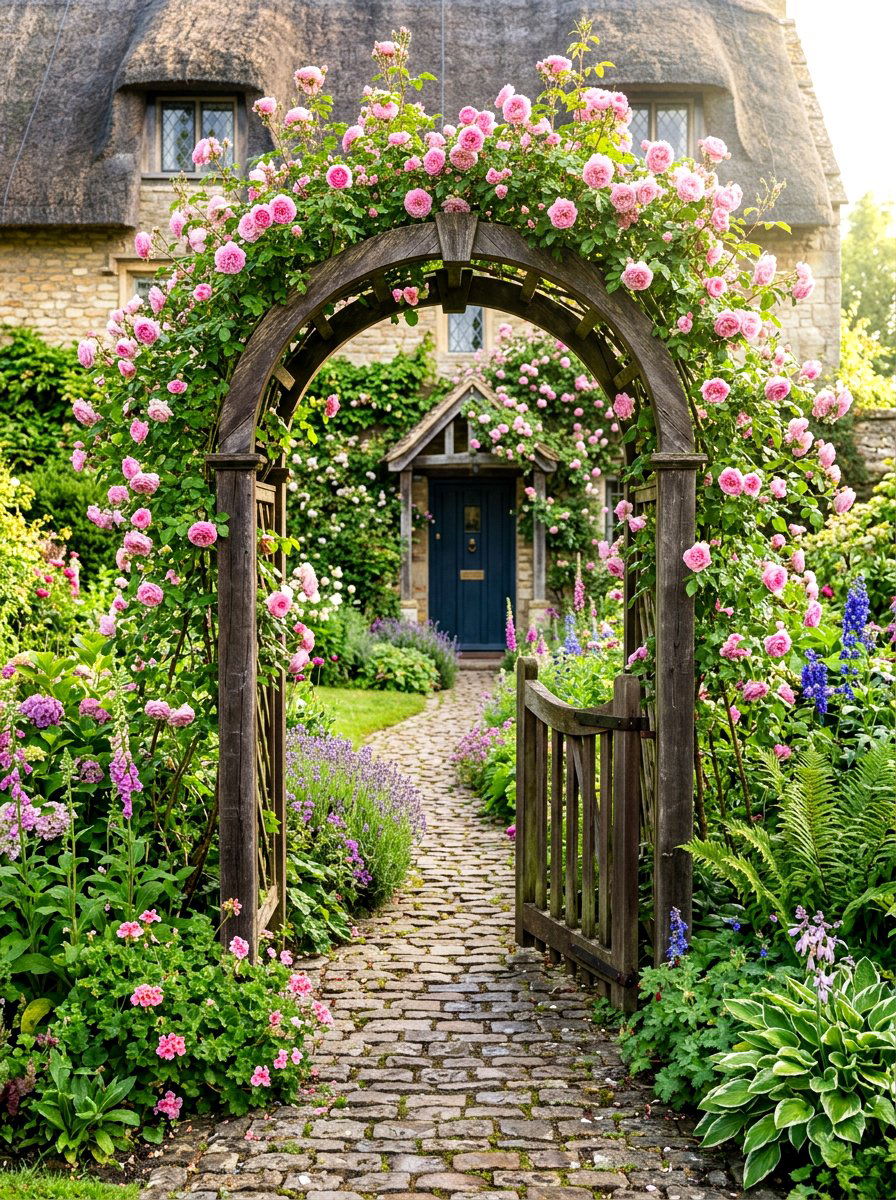
Achieving a beautiful home exterior often involves breaking the traditional rules of symmetry to create something truly unique and visually engaging. Asymmetrical curb appeal is becoming increasingly popular because it allows for more creativity and a personalized touch that standard mirrored layouts simply cannot offer. Instead of matching everything perfectly from left to right, this approach focuses on balance through weight, texture, and height variations. By using different materials, plants, and architectural features, you can draw the eye across the entire facade of your home. This guide explores thirty ways to master this modern aesthetic, ensuring your property stands out in the neighborhood while maintaining a high-end, professionally designed look that feels organic.
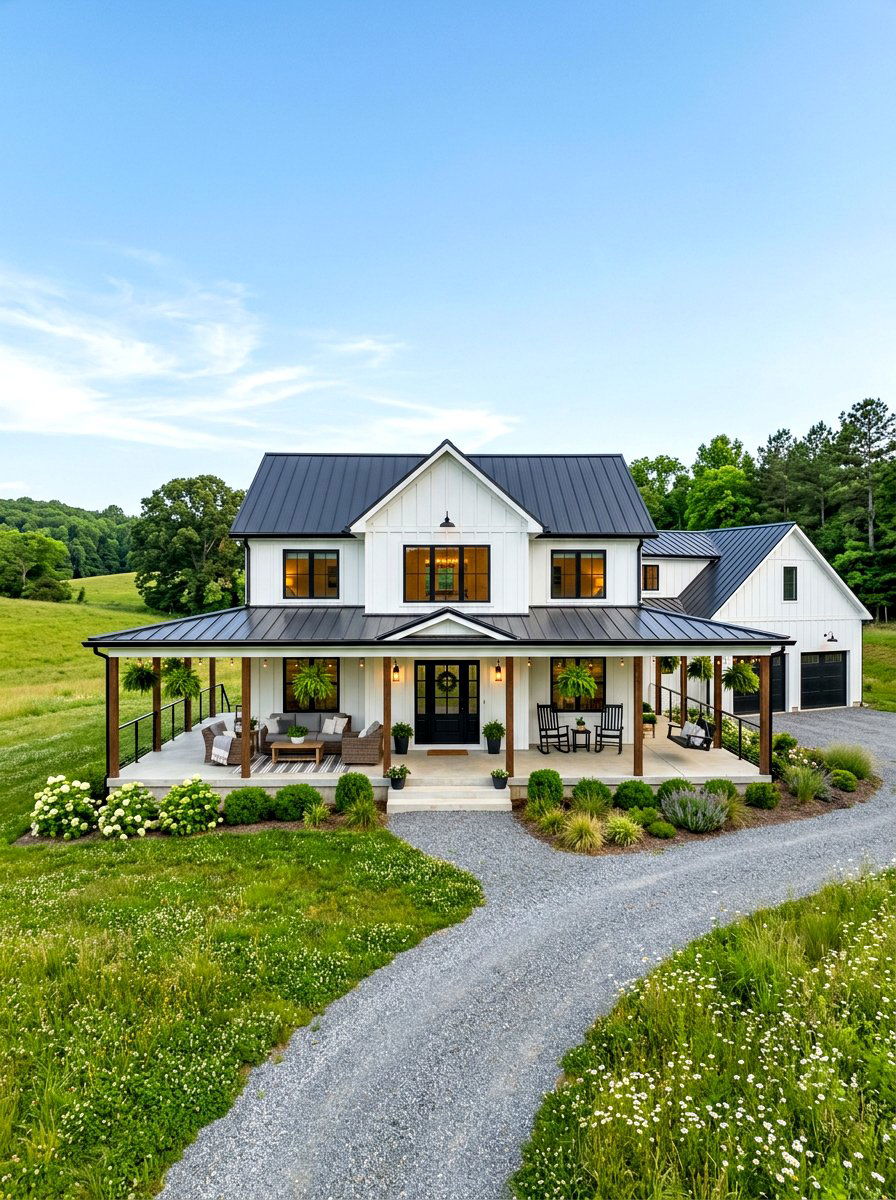
1. Modern Farmhouse Exterior
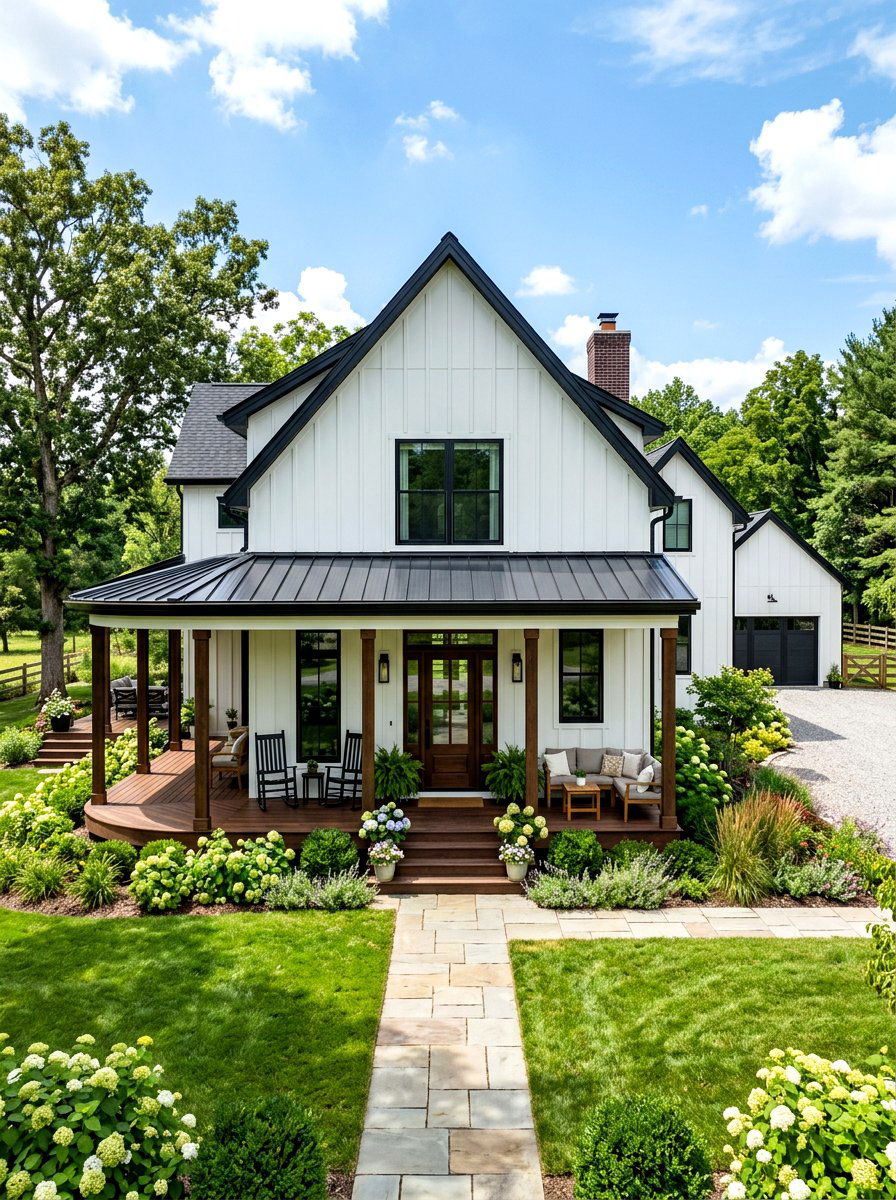
Modern farmhouse architecture frequently embraces an asymmetrical layout to create a relaxed yet sophisticated look. You can see this in how a large porch might extend only to one side of the main house body. Using vertical board and batten siding on one section while using horizontal lap siding on another creates a beautiful visual contrast. The lack of perfect symmetry makes the home feel more approachable and lived-in rather than stiff and formal. Adding a large gabled roof on one end balances out a smaller porch area on the other. This style relies on clean white lines and dark accents to tie everything together perfectly.
2. L Shaped Walkway
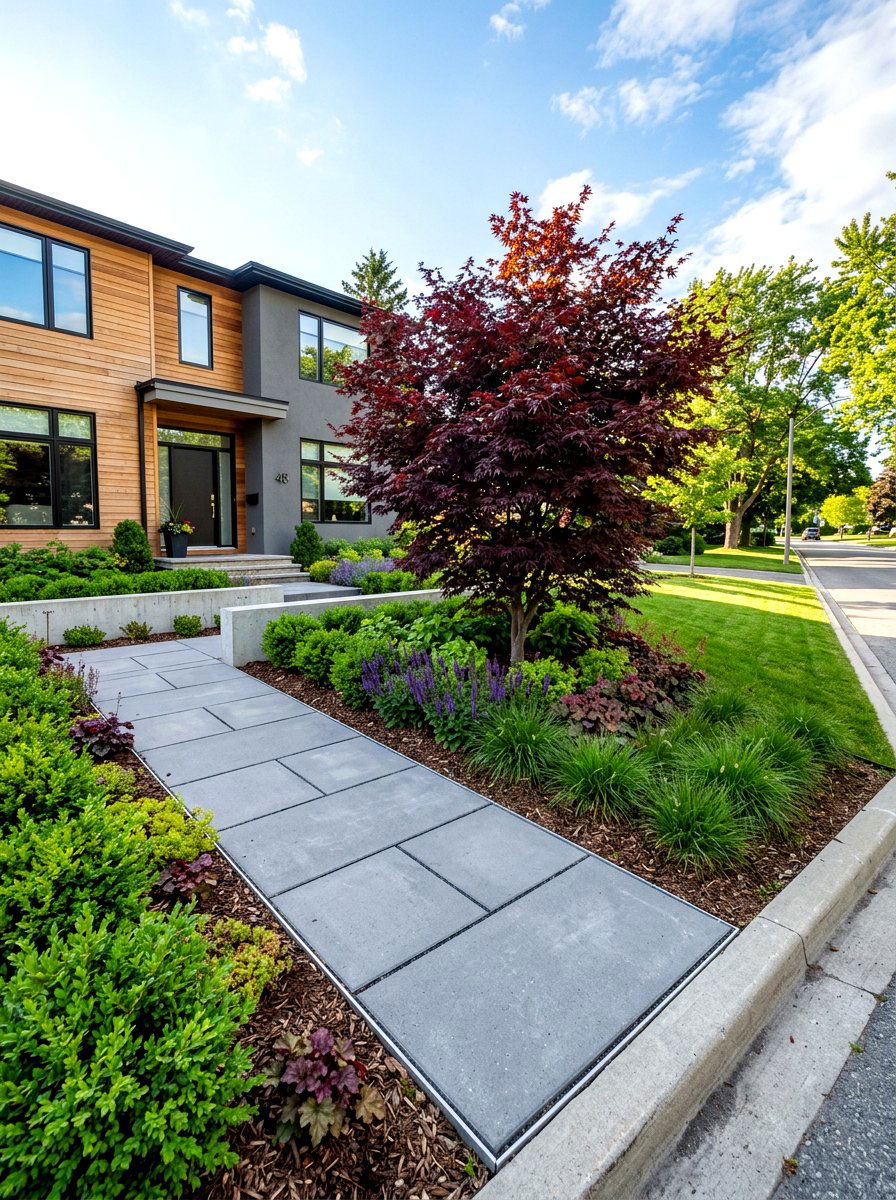
An L-shaped walkway is a fantastic way to introduce an asymmetrical flow to your front yard. Instead of a straight line leading directly to the front door, this design encourages guests to take in the landscape. It creates a natural corner where you can place a specimen tree or a cluster of varied shrubs. The hardscape materials like concrete or stone provide a solid anchor for the softer elements of the garden. By curving or turning the path, you break up the boxy feel of a standard lot. It makes the journey to your entrance feel like a curated experience rather than a quick walk.
3. Tiered Garden Bed
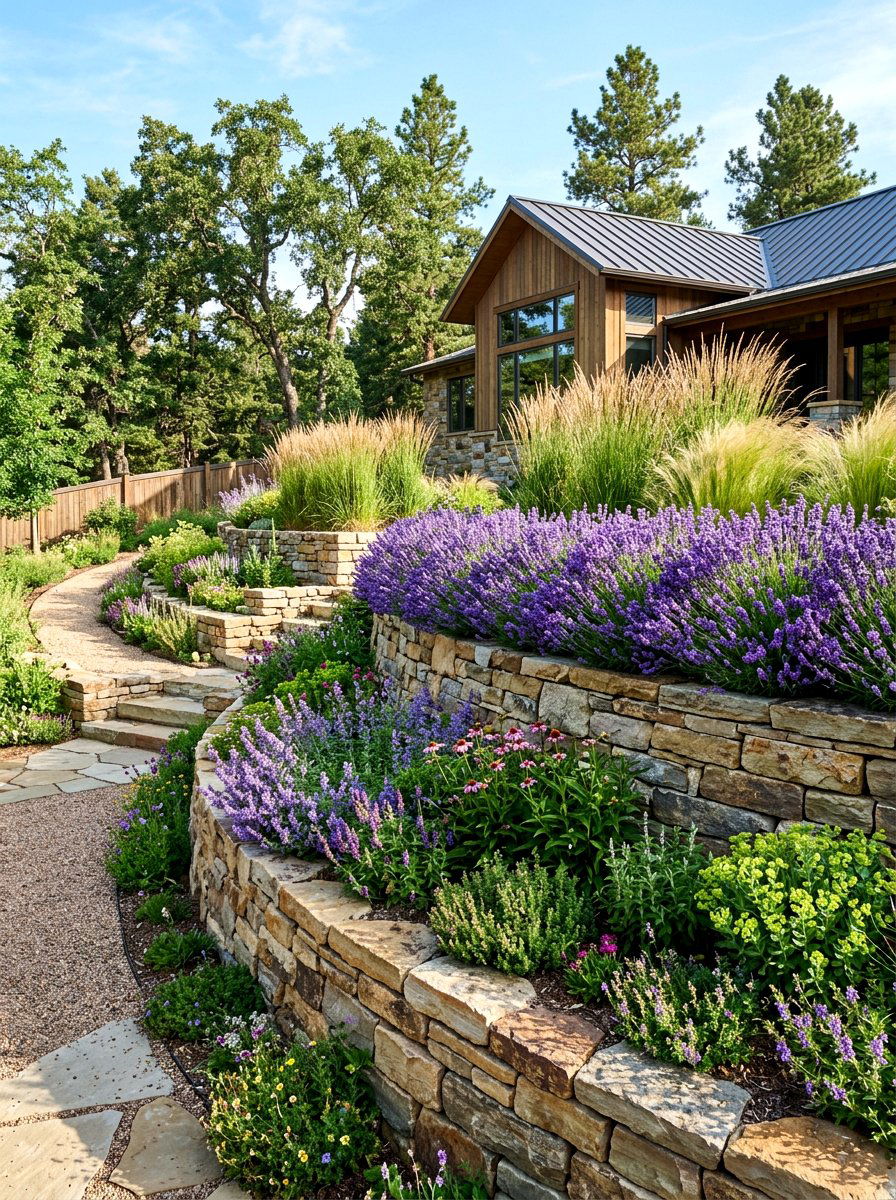
Using tiered garden beds is a clever way to manage a sloping yard while adding asymmetrical depth. You can use different heights of stone or wood to create levels that step down with the natural terrain. This prevents the front of the house from looking flat or boring. Planting tall grasses on the highest tier and cascading flowers on the lower levels creates a waterfall effect for the eyes. The staggered levels allow for a diverse range of plant species that wouldn't thrive in a flat bed. It adds a structural element that feels both organized and wild, enhancing the overall home character significantly.
4. Off Center Front Door
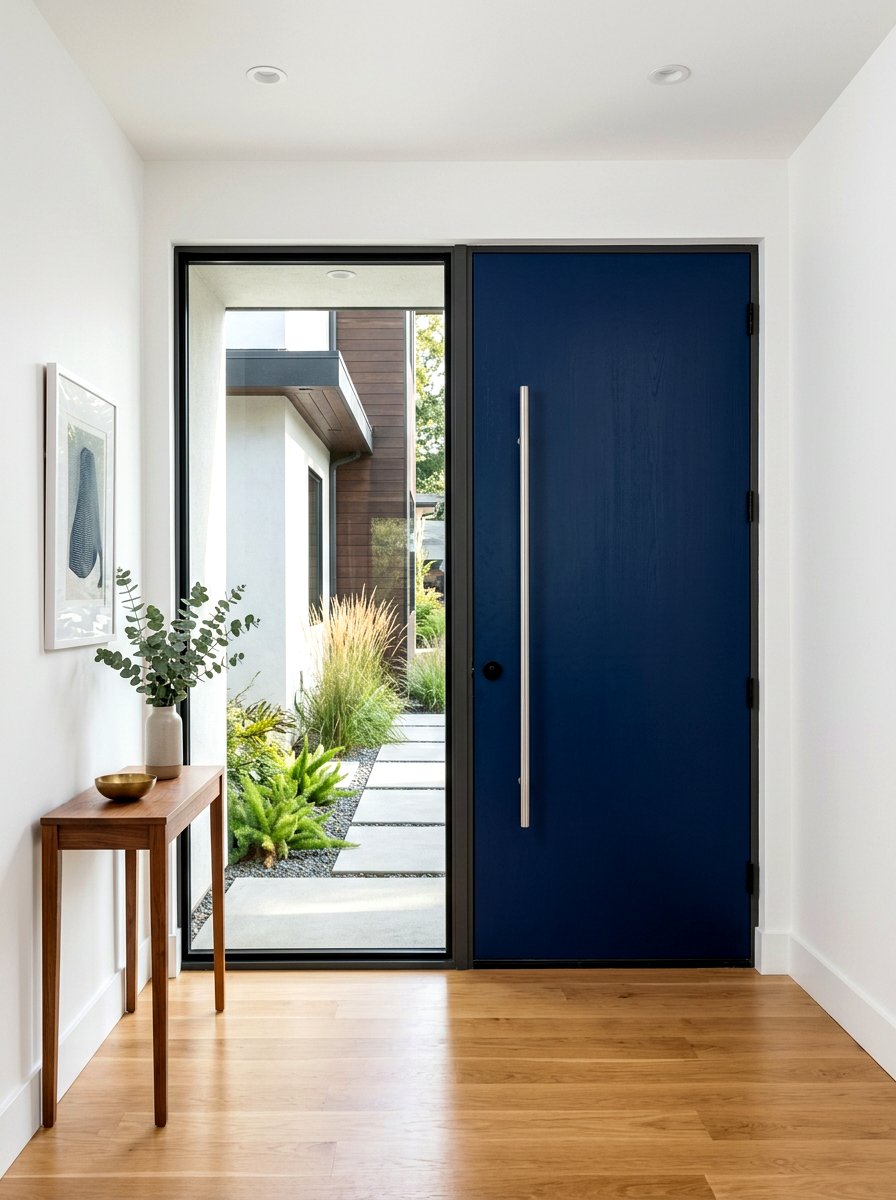
Have you ever noticed how an off-center front door can make a house look much more contemporary? This design choice allows for a larger window or a feature wall to sit next to the entrance. It breaks the traditional "door in the middle" mold and gives the home a unique personality. You can balance the visual weight of the door by placing a large, tall planter on the opposite side. This creates a sense of equilibrium without needing everything to be a mirror image. Using a bold color on an off-center door further emphasizes this modern architectural statement while drawing people toward the entry.
5. Mixed Material Siding
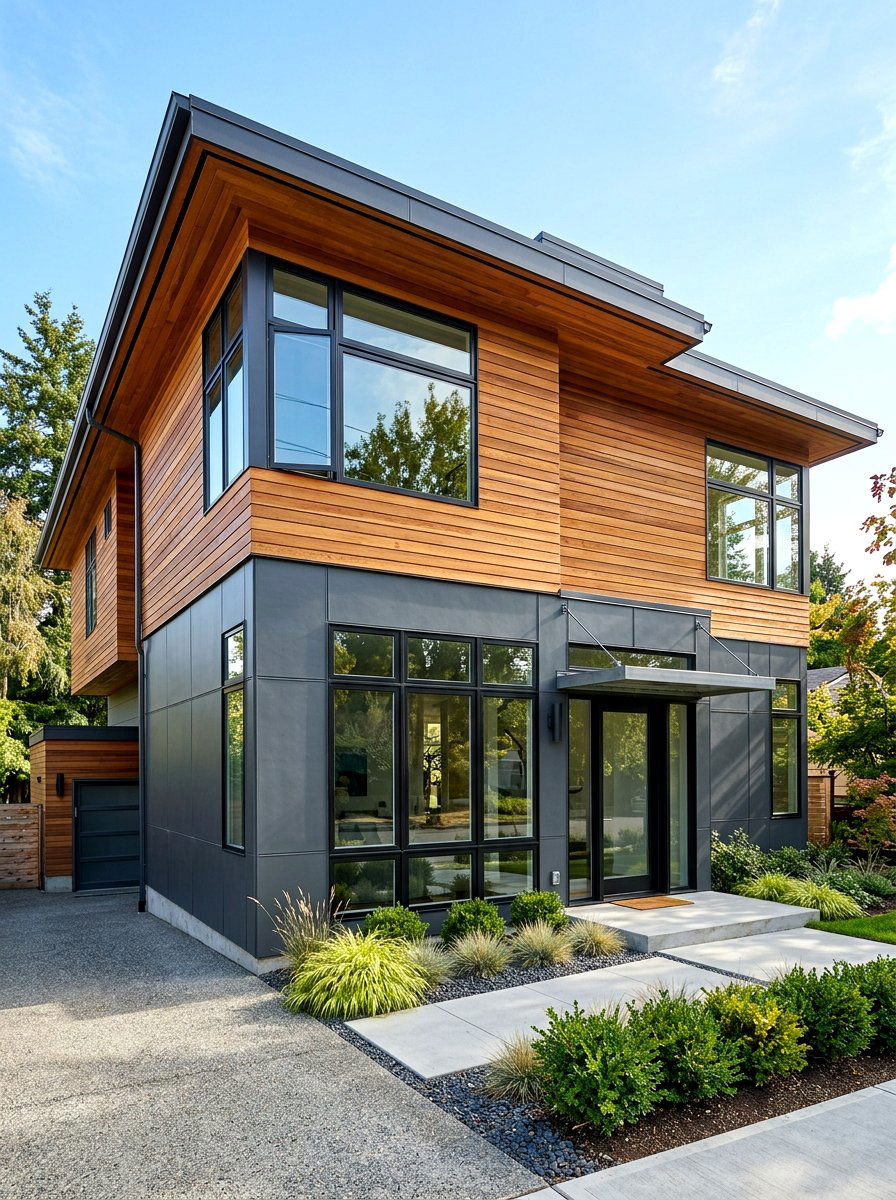
Combining different siding materials is a bold way to achieve an asymmetrical look that feels intentional and upscale. You might use natural cedar shingles on one portion of the house and smooth gray metal panels on another. This mix of warm wood and cool metal creates a visual tension that is very appealing. It breaks the house into distinct zones, making the architecture feel more complex and interesting. The variety of textures ensures that the house catches the light differently throughout the day. This approach works best when the colors are kept in a cohesive palette to maintain a sense of unity.
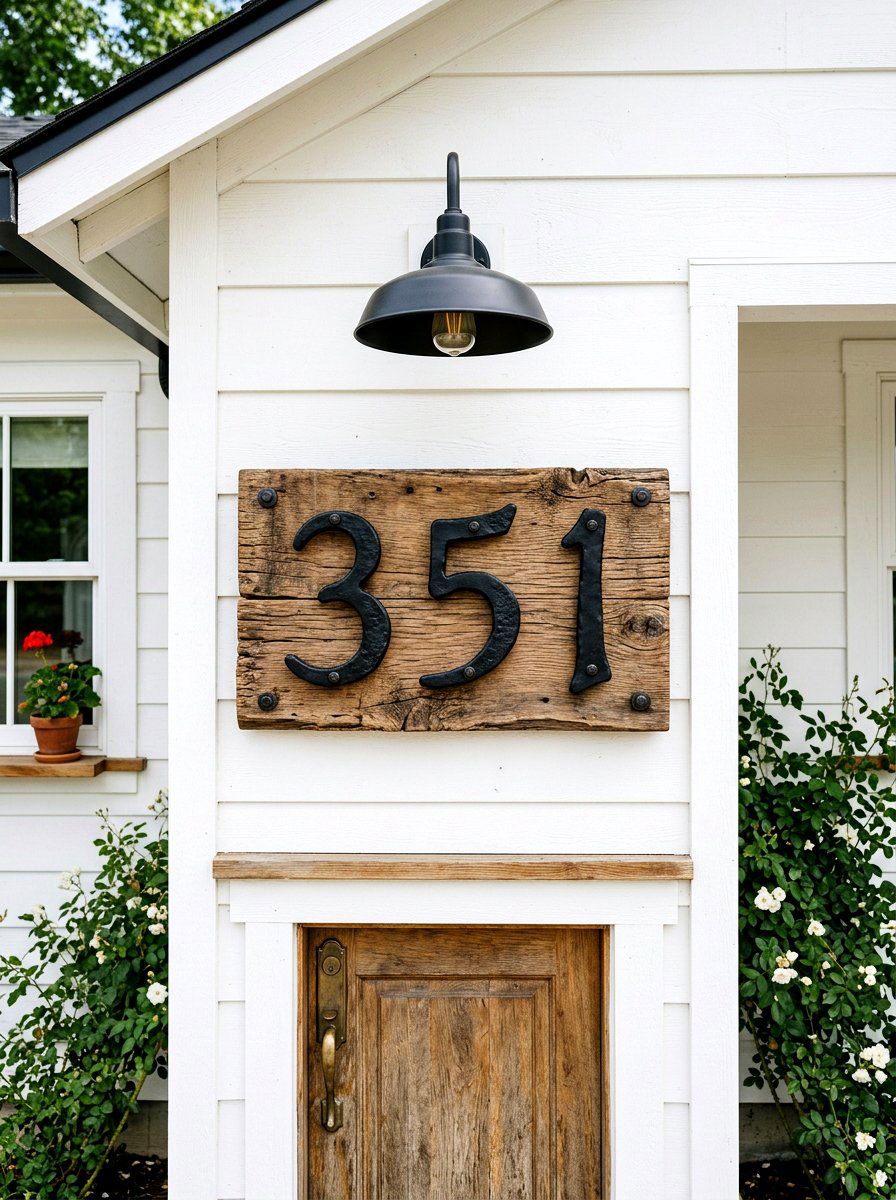
6. Modern House Number
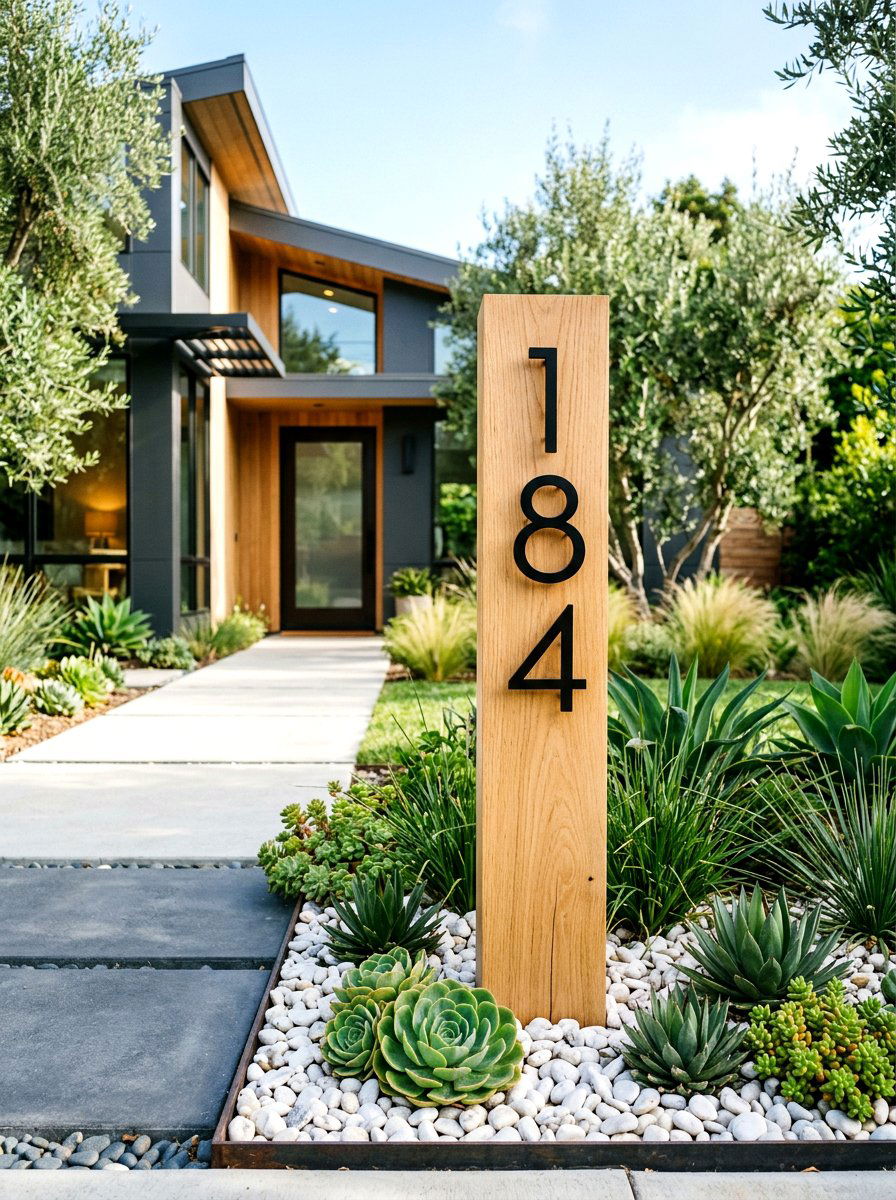
A sleek, modern house number can serve as a small but mighty asymmetrical focal point. Instead of placing numbers directly above the door, try mounting them vertically on a separate pillar or a large rock. You can also place them on a dedicated wood plaque that is offset from the entrance. This draws the eye to a specific spot and adds a touch of graphic interest to the facade. Choosing a high-contrast font makes the numbers readable while doubling as a piece of outdoor art. It is a simple update that makes a huge difference in how modern your home feels.
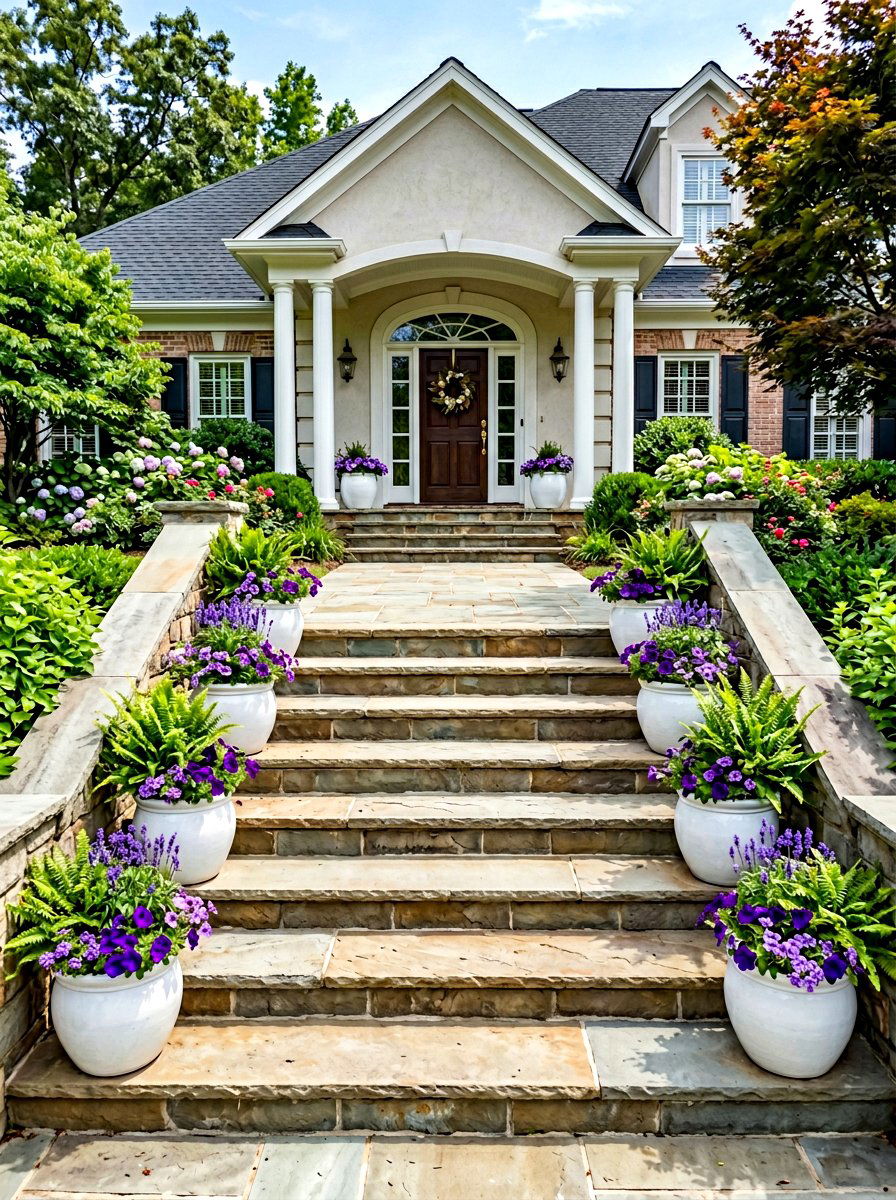
7. Large Planter Box
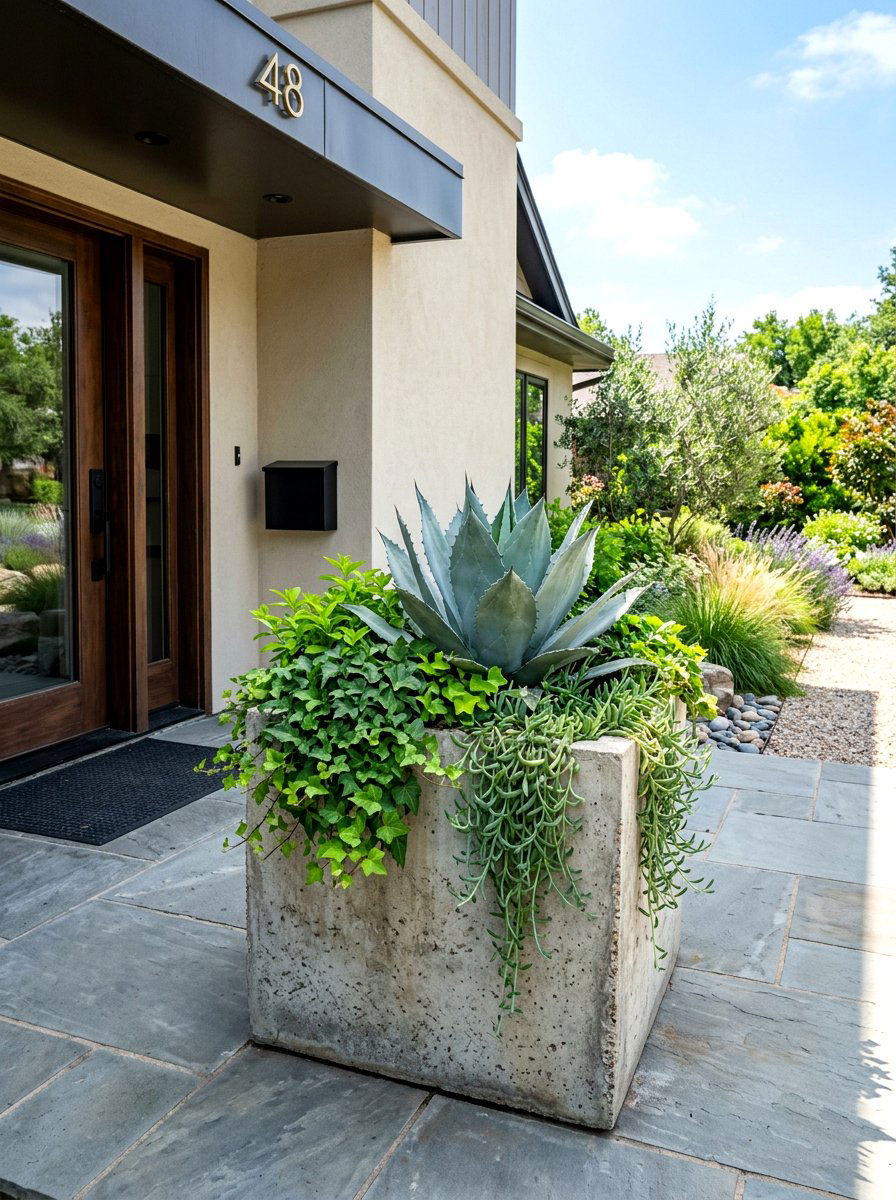
Integrating a large, oversized planter box on just one side of your entrance creates an immediate asymmetrical impact. These heavy containers can be made from concrete, corten steel, or stained wood to match your home’s style. Filling them with a mix of architectural plants like agave or tall boxwoods adds vertical interest. The planter acts as a heavy visual anchor that balances out a large window or a garage on the other side. Because it is a separate element, you can move it or change the plants seasonally to keep the look fresh. It adds life and structure to the entryway.
8. Metal Wall Siding
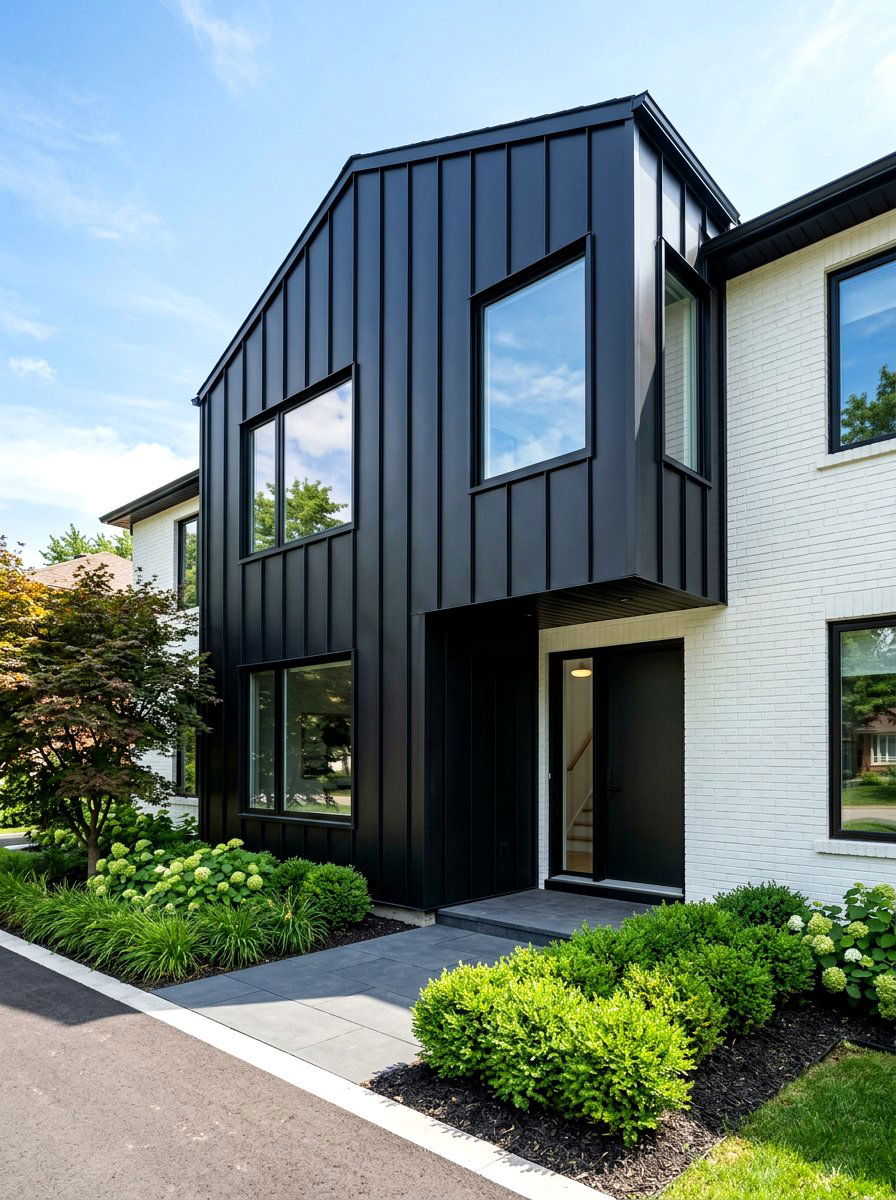
Using metal wall siding on a single architectural feature can create a stunning asymmetrical accent. Many modern homes use standing seam metal panels on a projecting gable or a side wing to create contrast. The industrial feel of the metal pairs beautifully with more traditional materials like brick or stone. This technique highlights specific parts of the home's shape that might otherwise be overlooked. The vertical lines of the metal panels draw the eye upward, making the house appear taller. It is a durable and low-maintenance choice that provides a sharp, clean finish to any modern or contemporary residential exterior.
9. Vertical Slat Fence
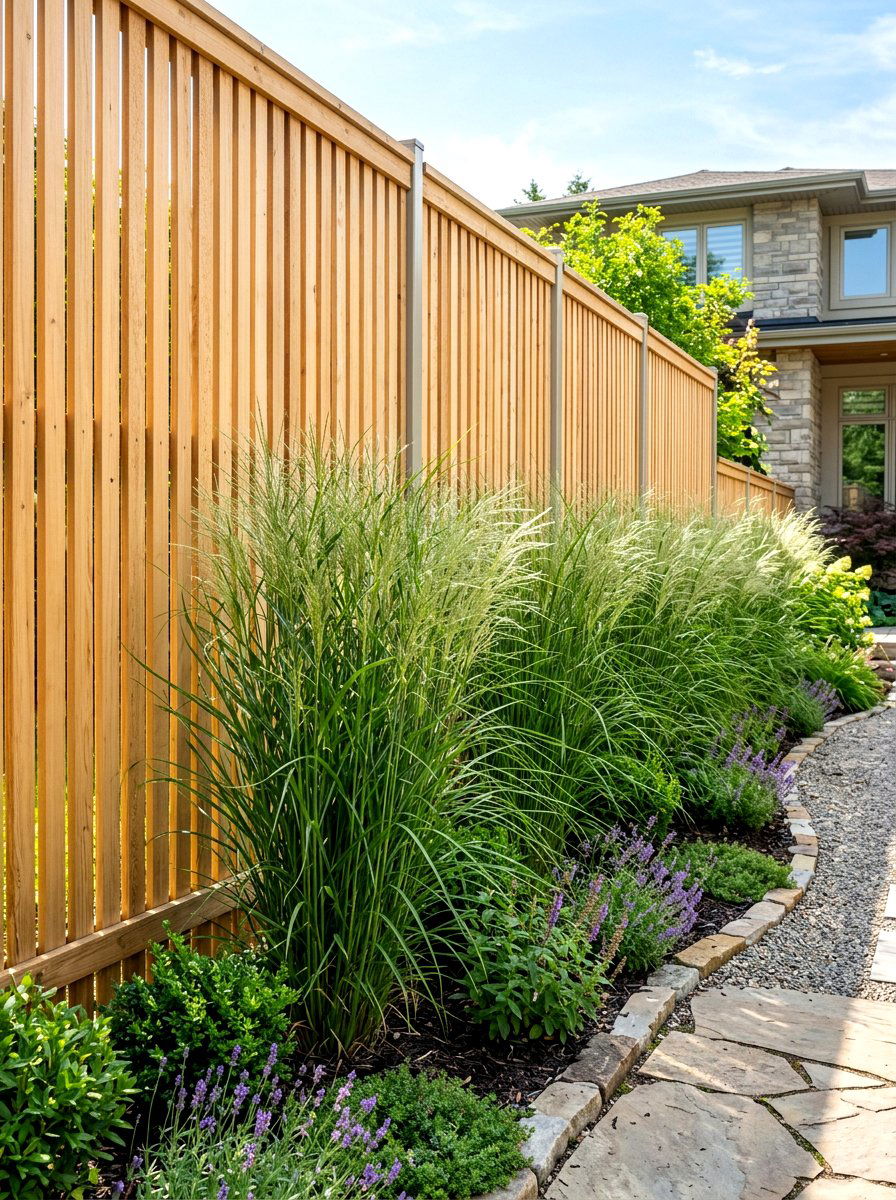
A vertical slat fence is a popular choice for adding privacy while maintaining an airy, asymmetrical feel. By placing a short section of this fencing on only one side of the yard, you create a dedicated "zone" for a garden or seating area. The gaps between the slats allow light to filter through, preventing the structure from feeling too heavy or closed off. You can use different wood stains or black metal to coordinate with your home’s trim. This type of fencing looks particularly good when paired with soft, flowing ornamental grasses that peek through the slats for a layered and natural effect.
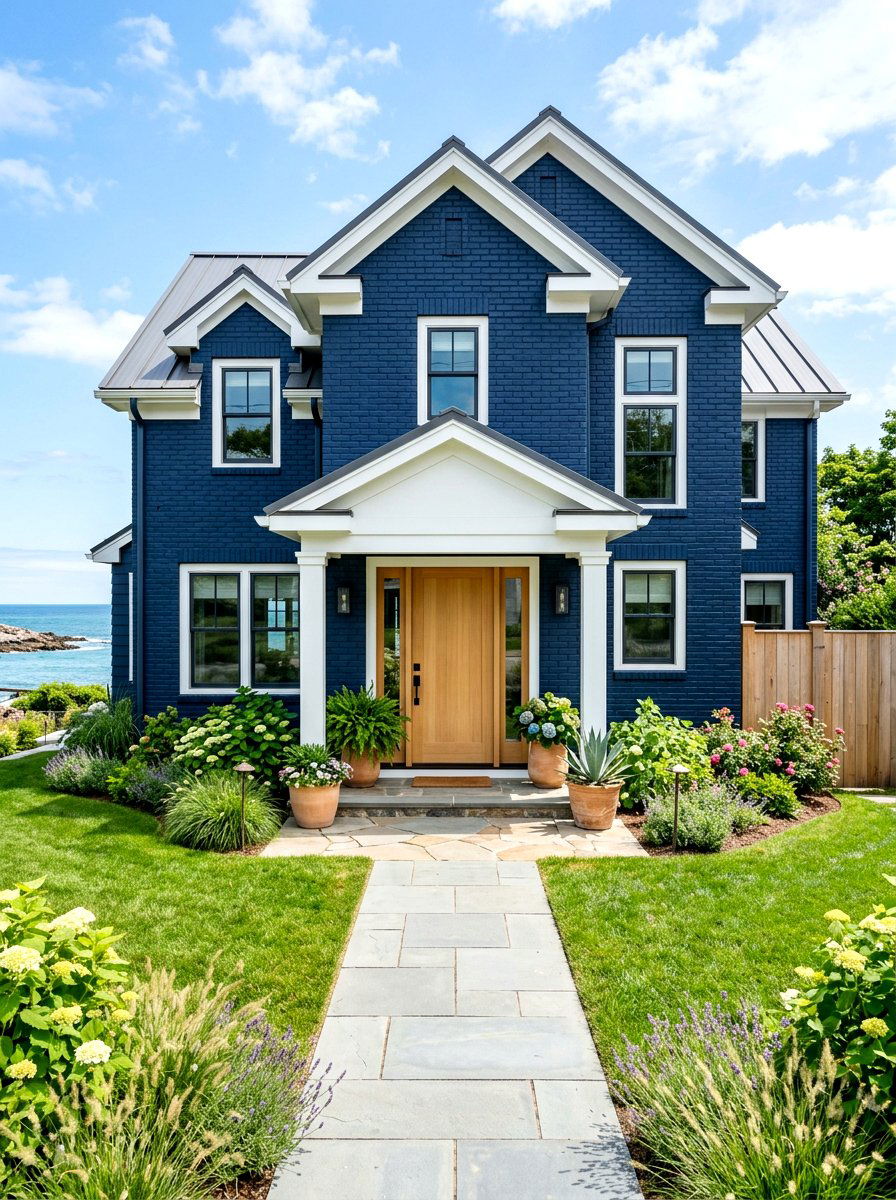
10. Sloping Front Yard
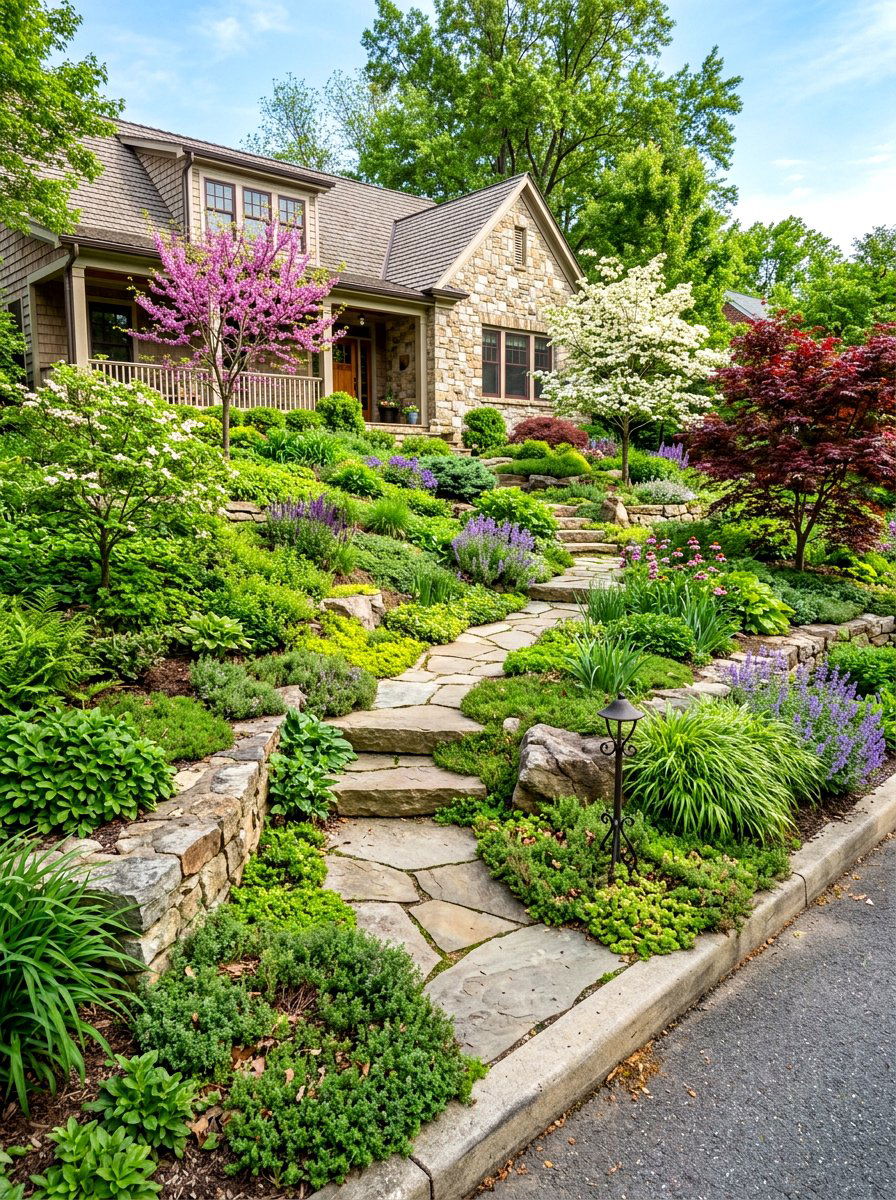
Working with a sloping front yard allows you to embrace natural asymmetry through creative grading and planting. Instead of trying to level the ground, you can use the incline to create a series of winding paths and rock gardens. This creates different vantage points as you move toward the house. Taller trees can be placed on the lower side to balance the height of the house on the uphill side. Using a mix of groundcovers and shrubs ensures that every level of the slope has something interesting to look at. It turns a challenging landscape into a beautiful and multi-dimensional outdoor space.
11. Stone Retaining Wall
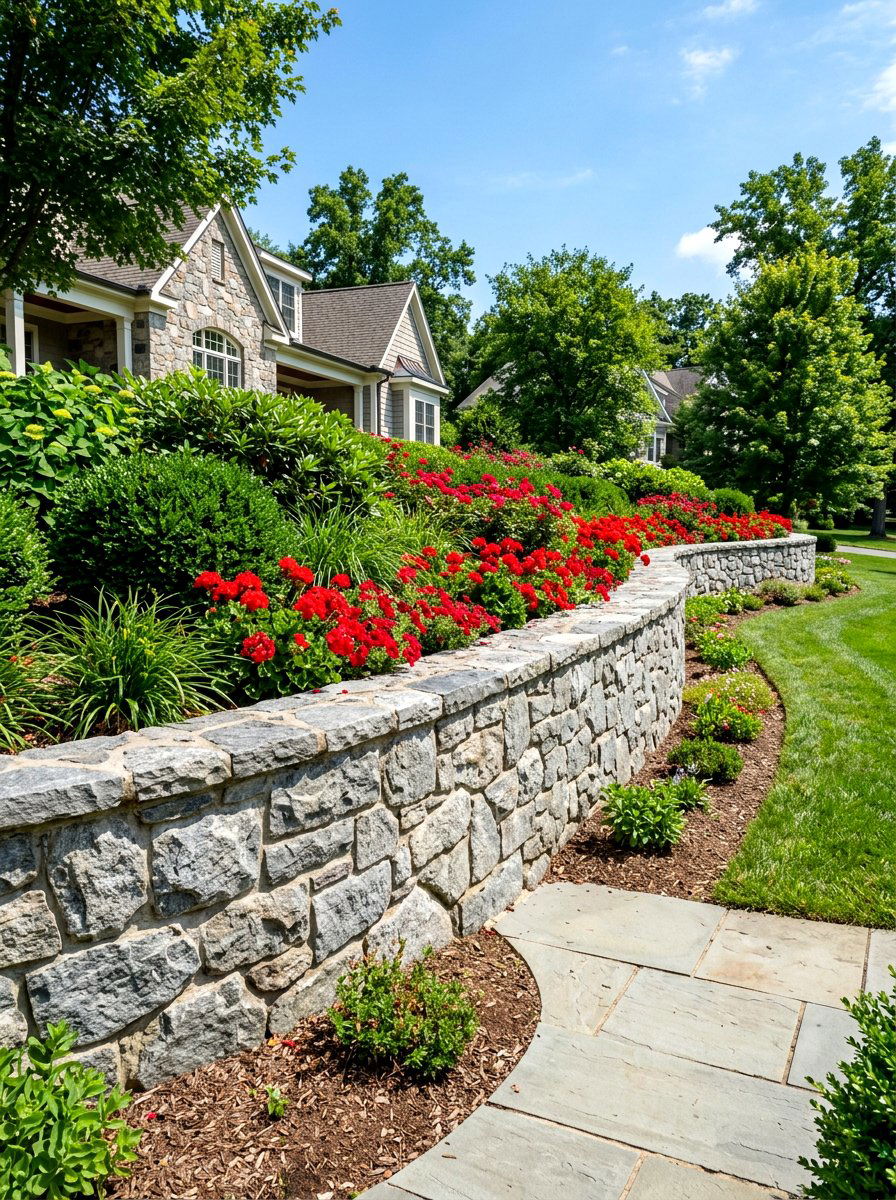
A stone retaining wall is a classic structural element that works perfectly in an asymmetrical landscape. You can build a wall that curves around one side of a driveway or follows the edge of a tiered garden. The natural texture of the stone adds a rugged, earthy feel that contrasts with smooth house siding. These walls provide a clean edge for planting beds, making the entire yard look more manicured. By varying the height and length of the wall, you can guide the eye toward the front door. It is a permanent feature that adds significant value and timeless style to your property.
12. Mid Century Frontage
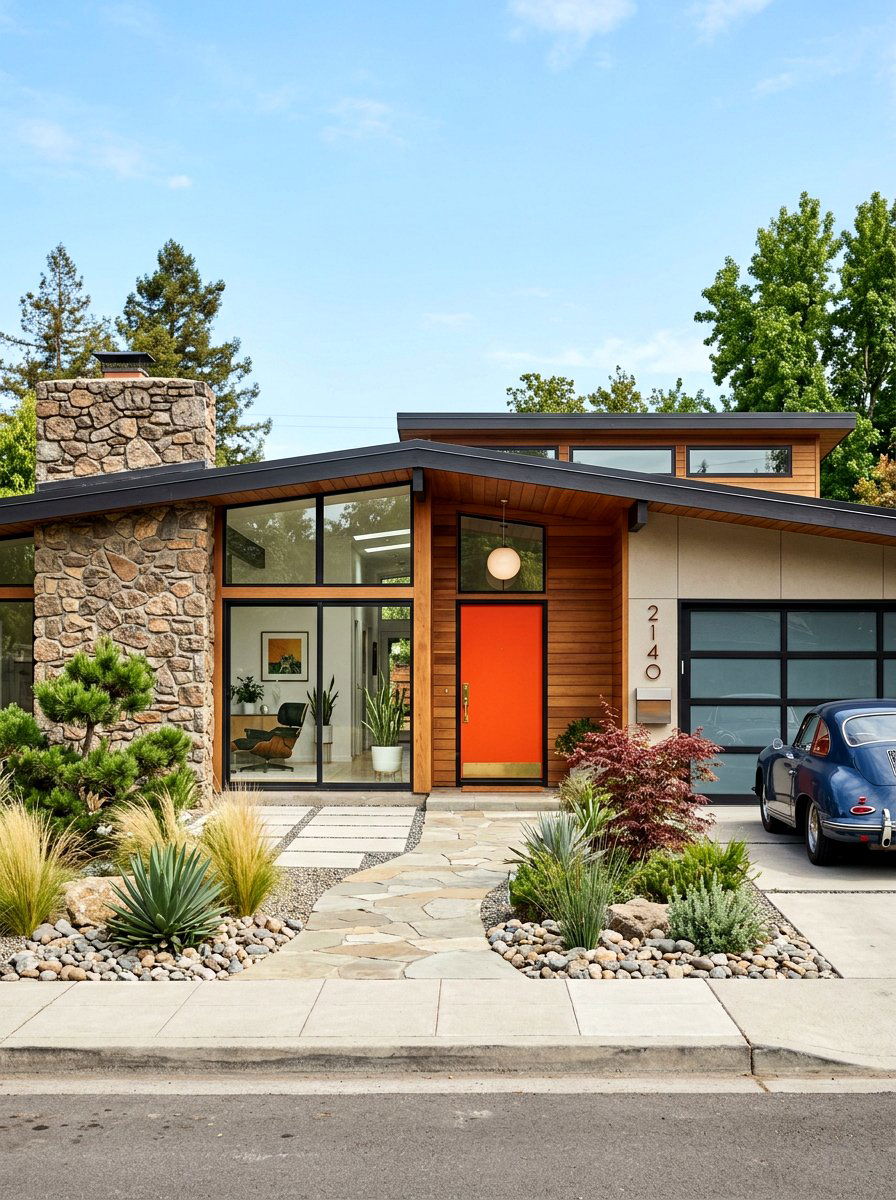
Mid-century modern homes are famous for their asymmetrical layouts and low-slung rooflines. You can capture this look by emphasizing horizontal lines on one side of the house while leaving the other side more open. Large glass panes and clerestory windows are hallmark features that create a light, airy feel. Balancing a heavy stone chimney with a lightweight wooden screen is a classic mid-century move. This style celebrates the connection between the indoors and outdoors, often using large planters and simple greenery. It creates a cool, retro vibe that feels very relevant in today's modern neighborhoods and exterior home design trends.
13. Black Window Frame
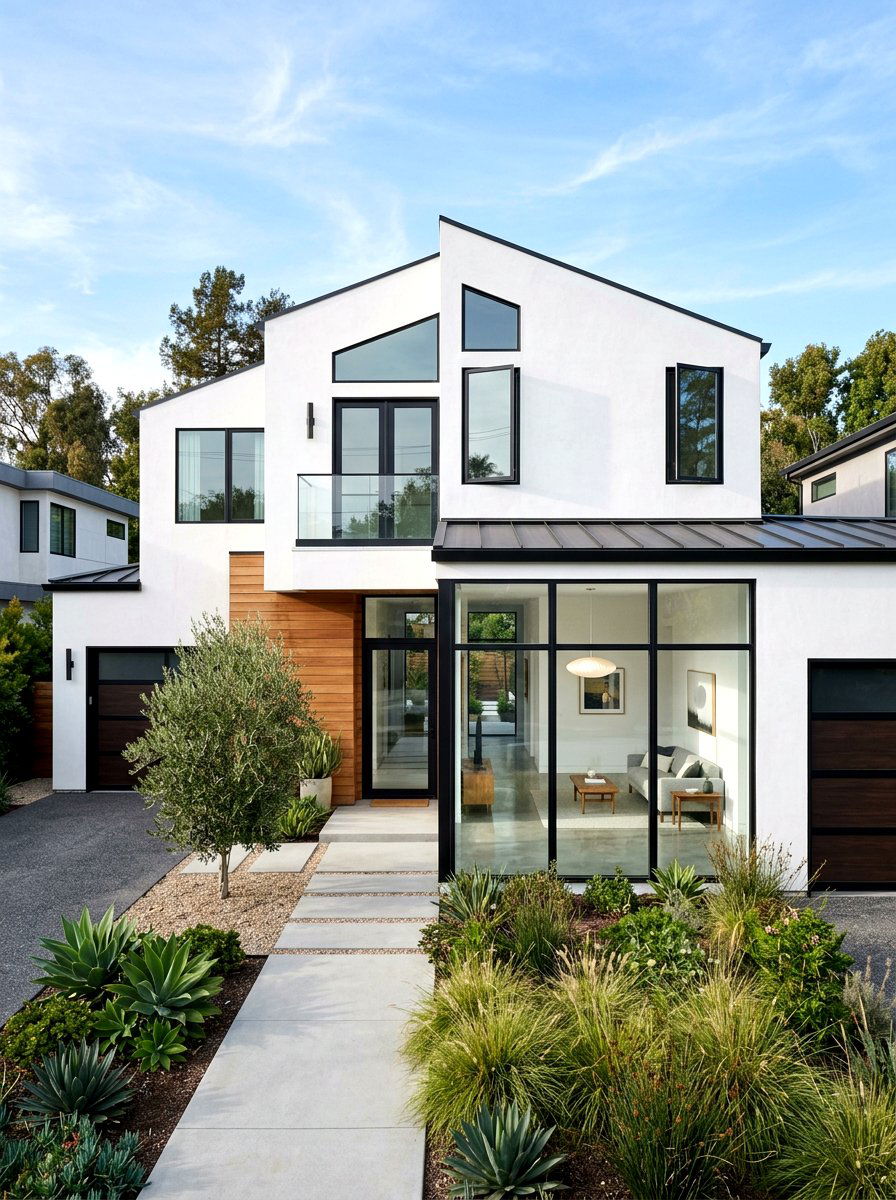
Replacing standard white frames with black window frames is an easy way to add sharp, asymmetrical contrast. Black frames act like a picture frame for the views inside and outside your home. If your windows are different sizes or placed unevenly, the bold black color helps to unify them visually. It makes even the simplest window layout look high-end and custom-made. On a light-colored house, these dark outlines create a striking graphic effect that draws attention to the architecture. This look is very popular in modern and industrial styles because it provides a clean, contemporary finish that never goes out of style.
14. Concrete Paver Path
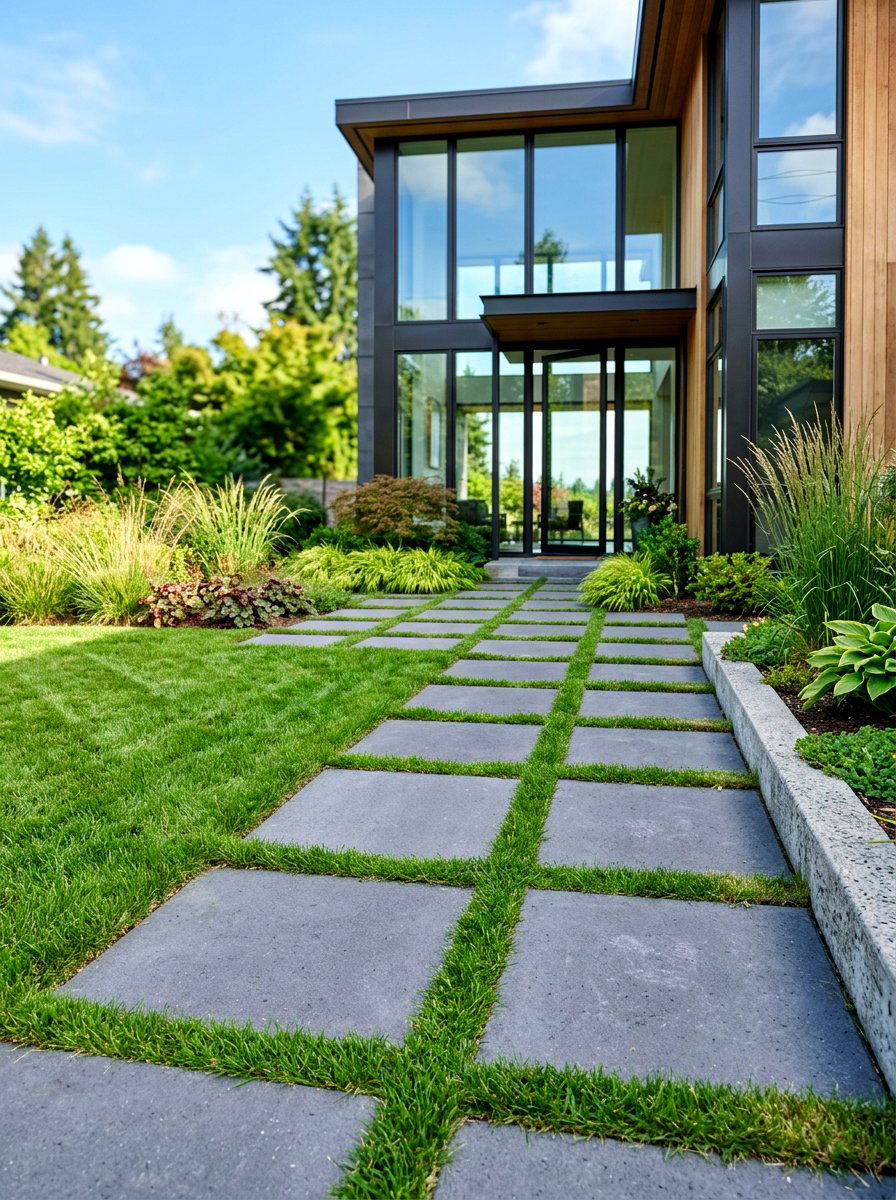
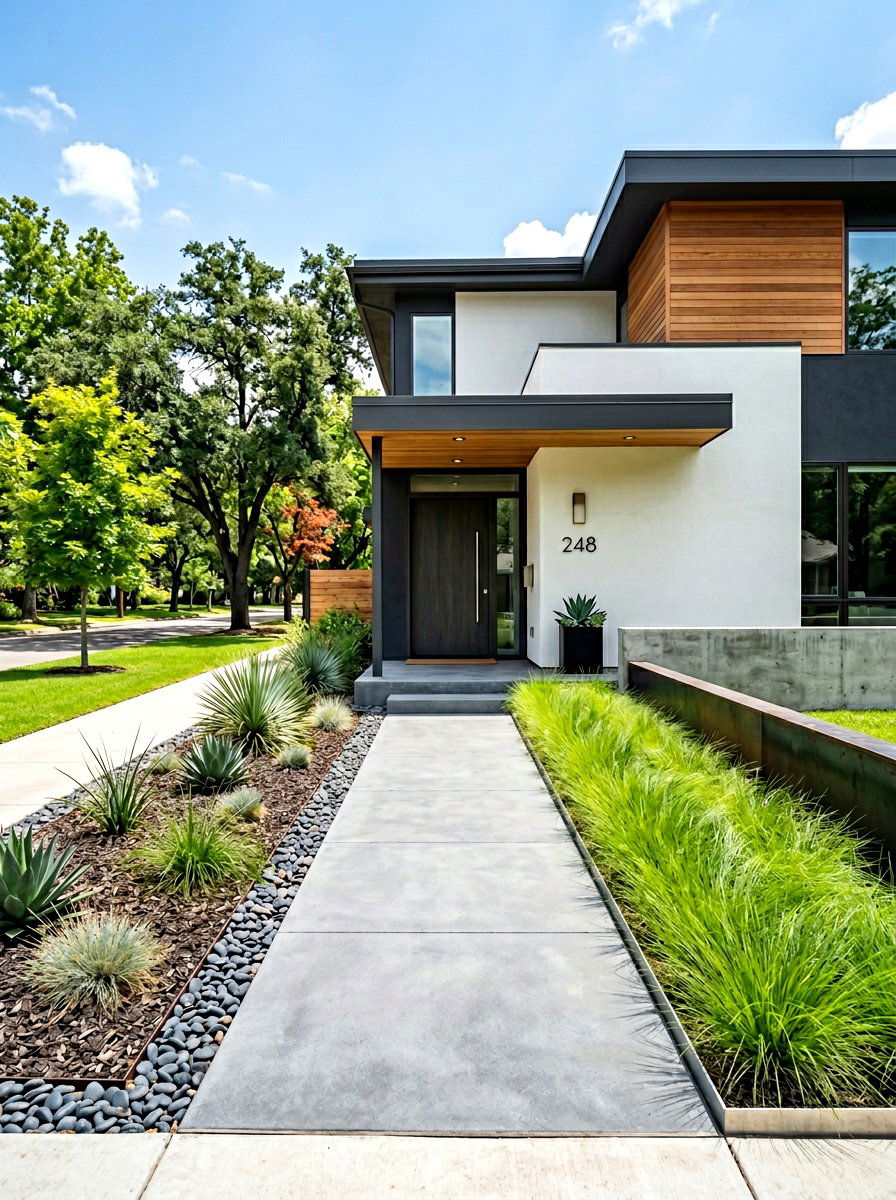
Creating a path with oversized concrete pavers is a modern way to lead people to your door with asymmetrical flair. Instead of a solid sidewalk, you can space the pavers out and fill the gaps with grass or pebbles. This "stepping stone" look feels much more organic and less rigid than traditional concrete. You can stagger the pavers to create a wide, irregular walkway that feels like a natural part of the garden. The light gray color of the concrete looks excellent against green lawns or dark mulch. It is a functional and artistic way to improve your home's entry sequence.
15. Wood Entry Screen
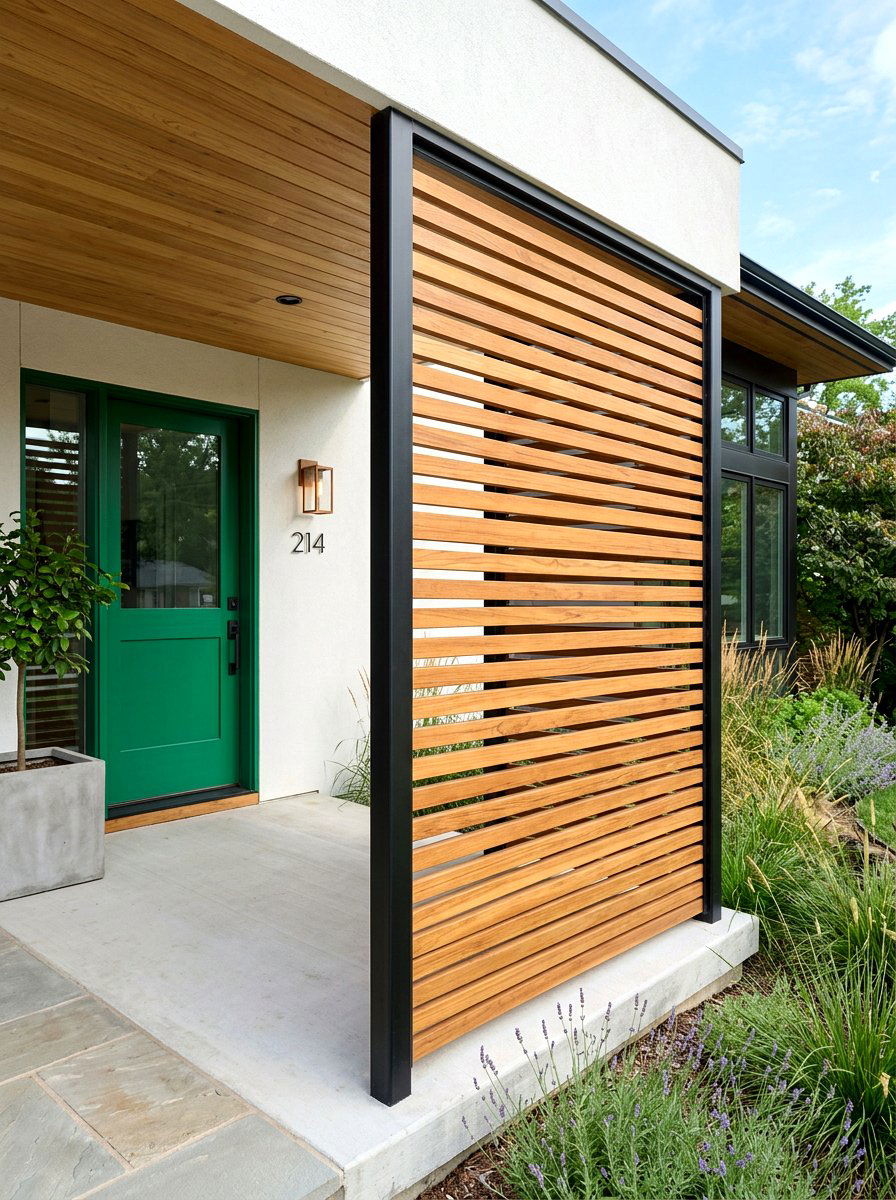
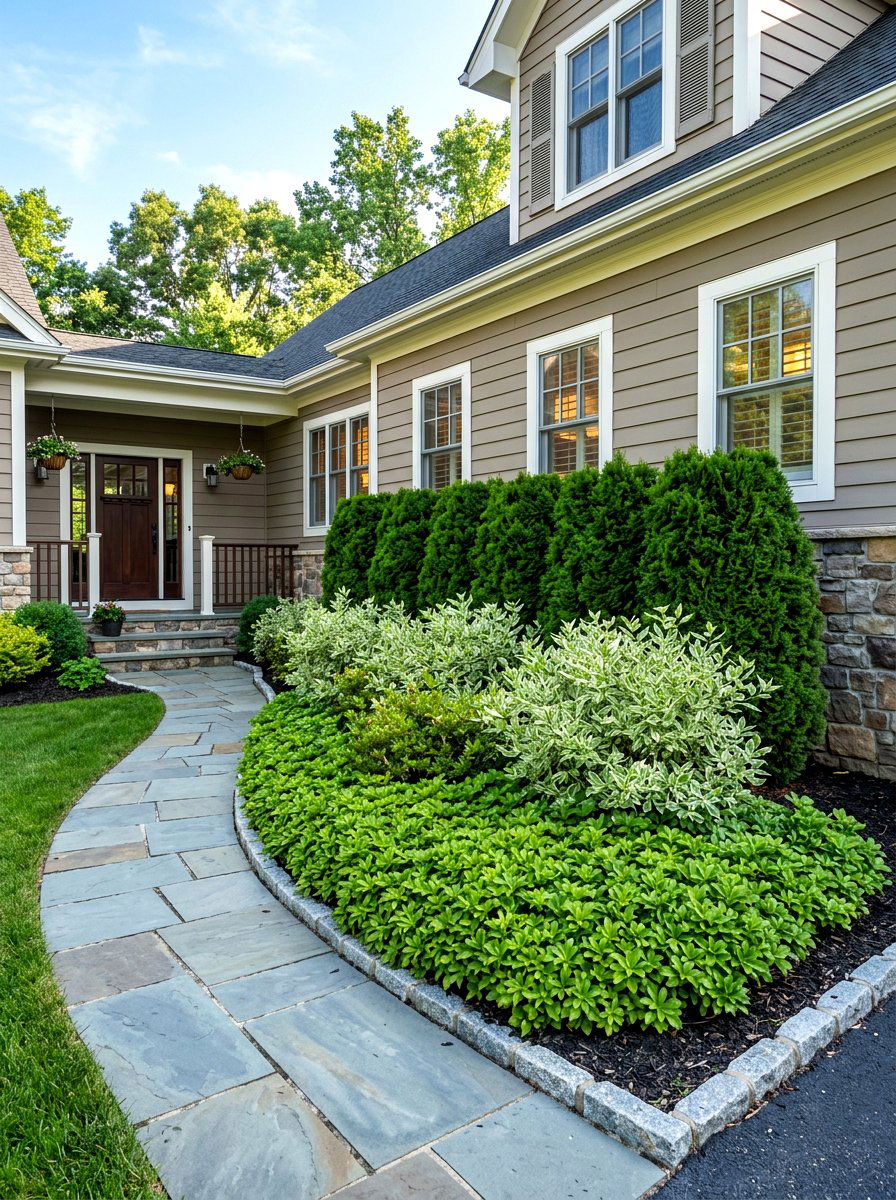
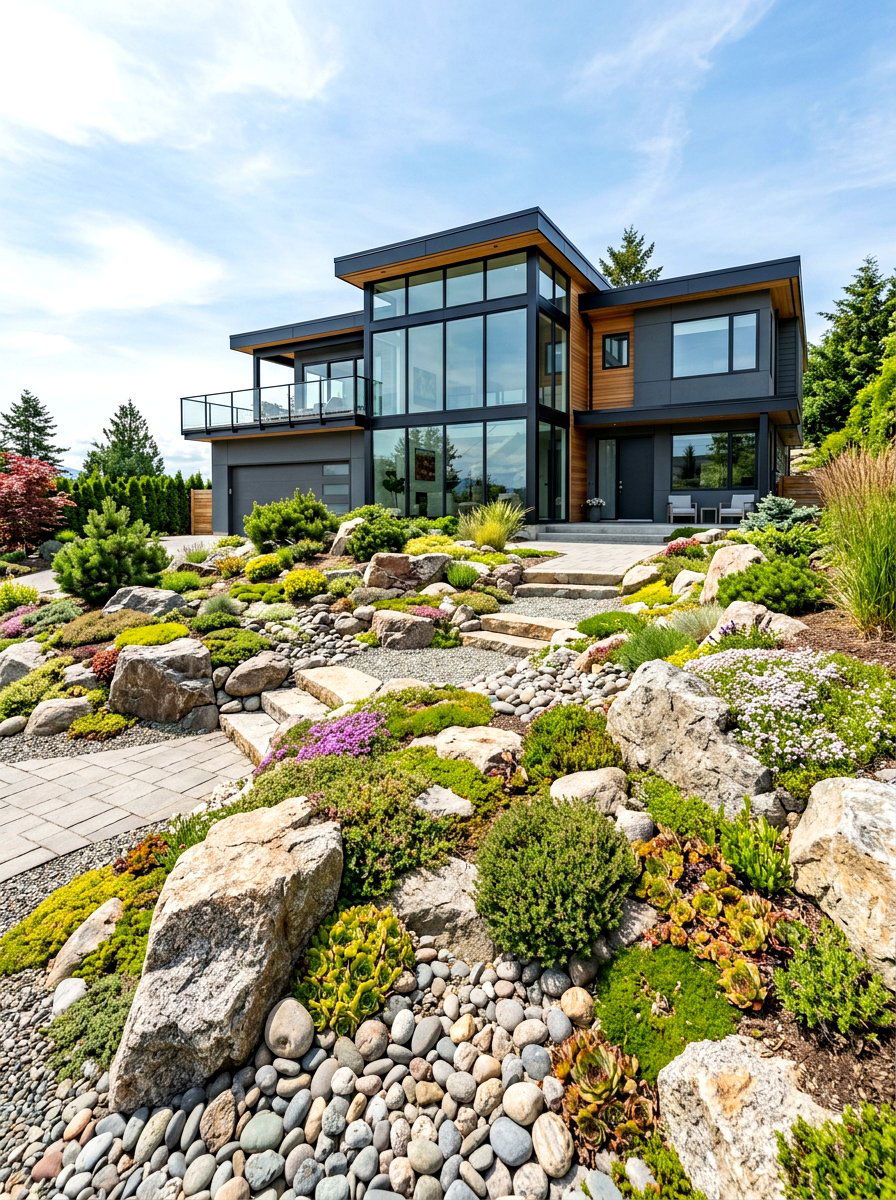
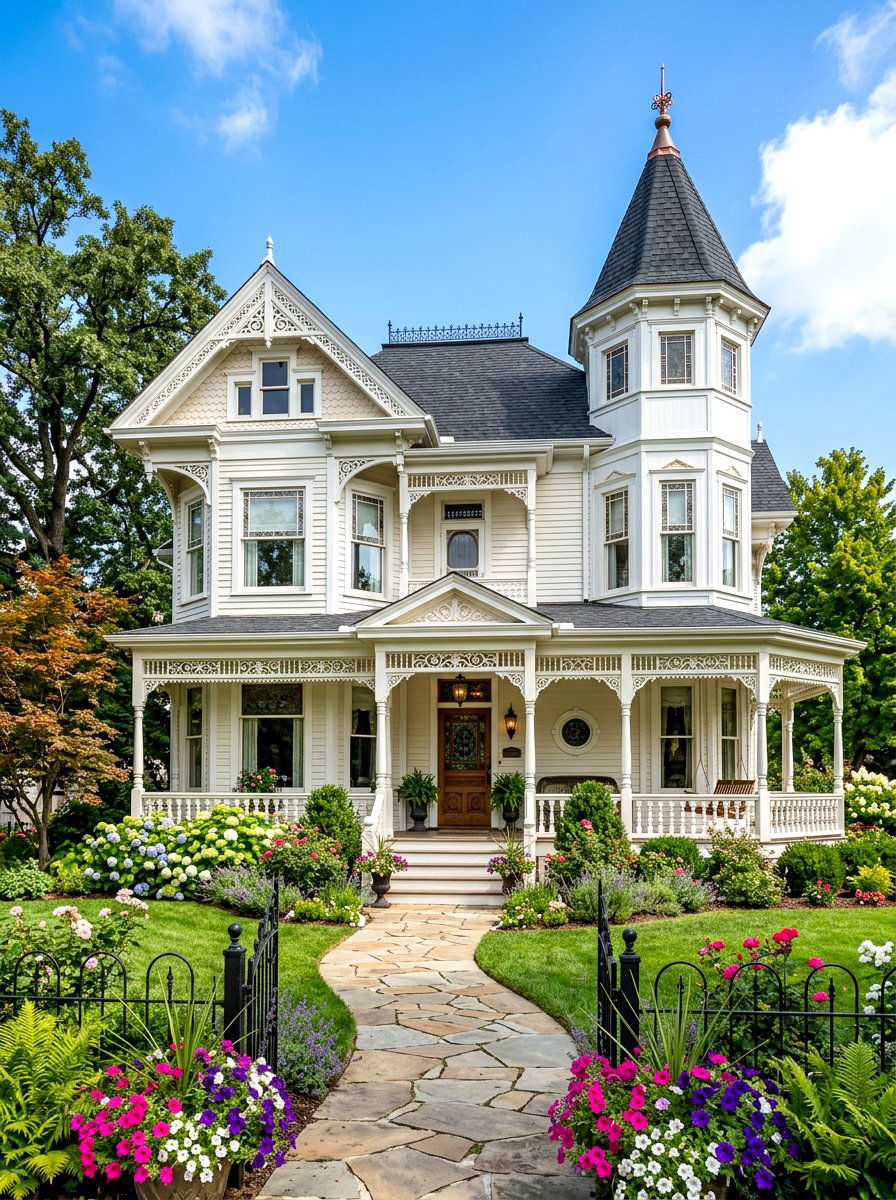
Adding a wood entry screen provides privacy and a beautiful asymmetrical architectural detail to your front porch. These screens are often made from horizontal slats of cedar or mahogany and are placed to one side of the door. They block the view of a trash area or a side window while letting breeze and light through. The warmth of the wood adds a welcoming touch to a modern home that might otherwise feel too cold. It creates a dedicated foyer area outside, making the transition into the house feel more private. It is a great way to add texture and verticality.
16. Large Picture Window
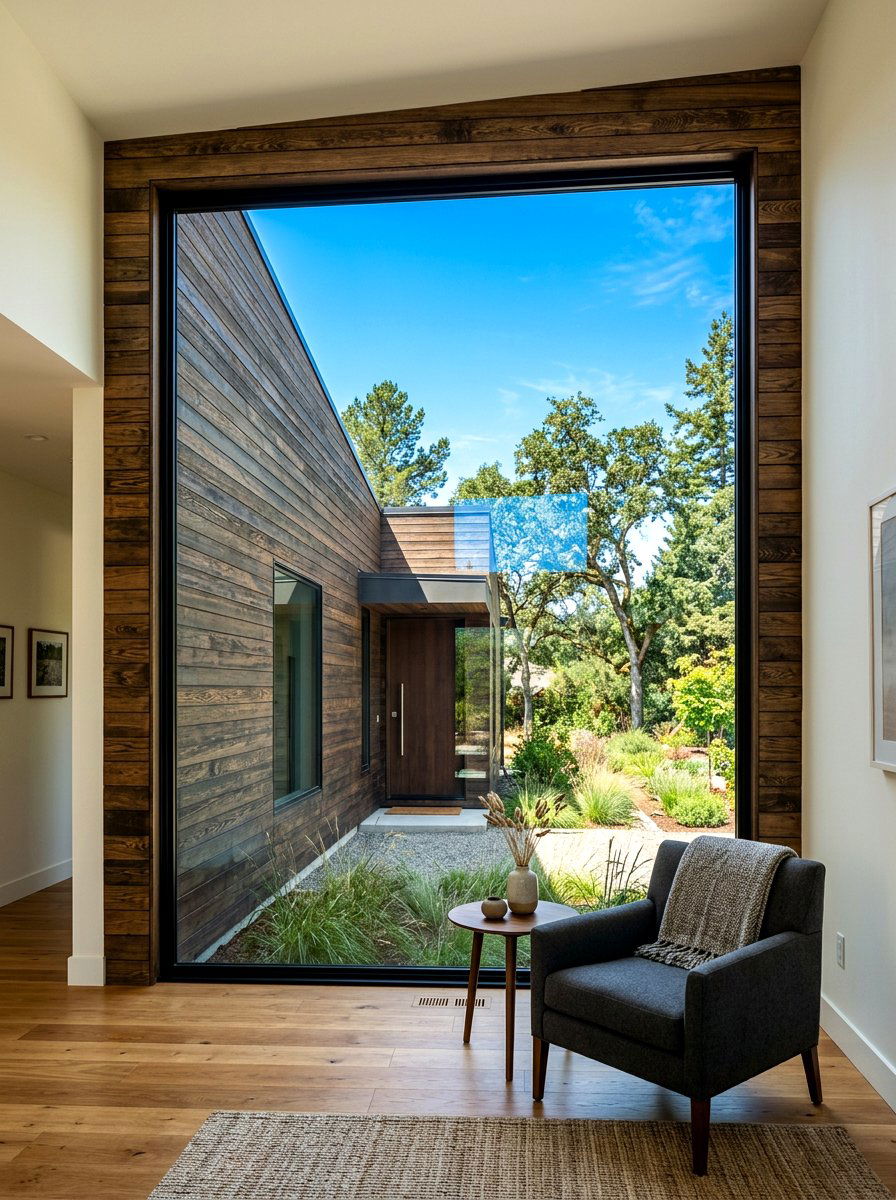
A large picture window placed on one side of the facade can completely change the visual weight of your home. This feature invites natural light into the interior while creating a massive focal point on the exterior. Because it is much larger than the other windows, it naturally creates an asymmetrical balance. You can style the interior with a beautiful lamp or a tall plant that is visible from the street. This connects the life inside the home with the curb appeal outside. It makes the house feel open, spacious, and very modern, especially when the window has a minimal and sleek frame.
17. Decorative Gravel Mulch
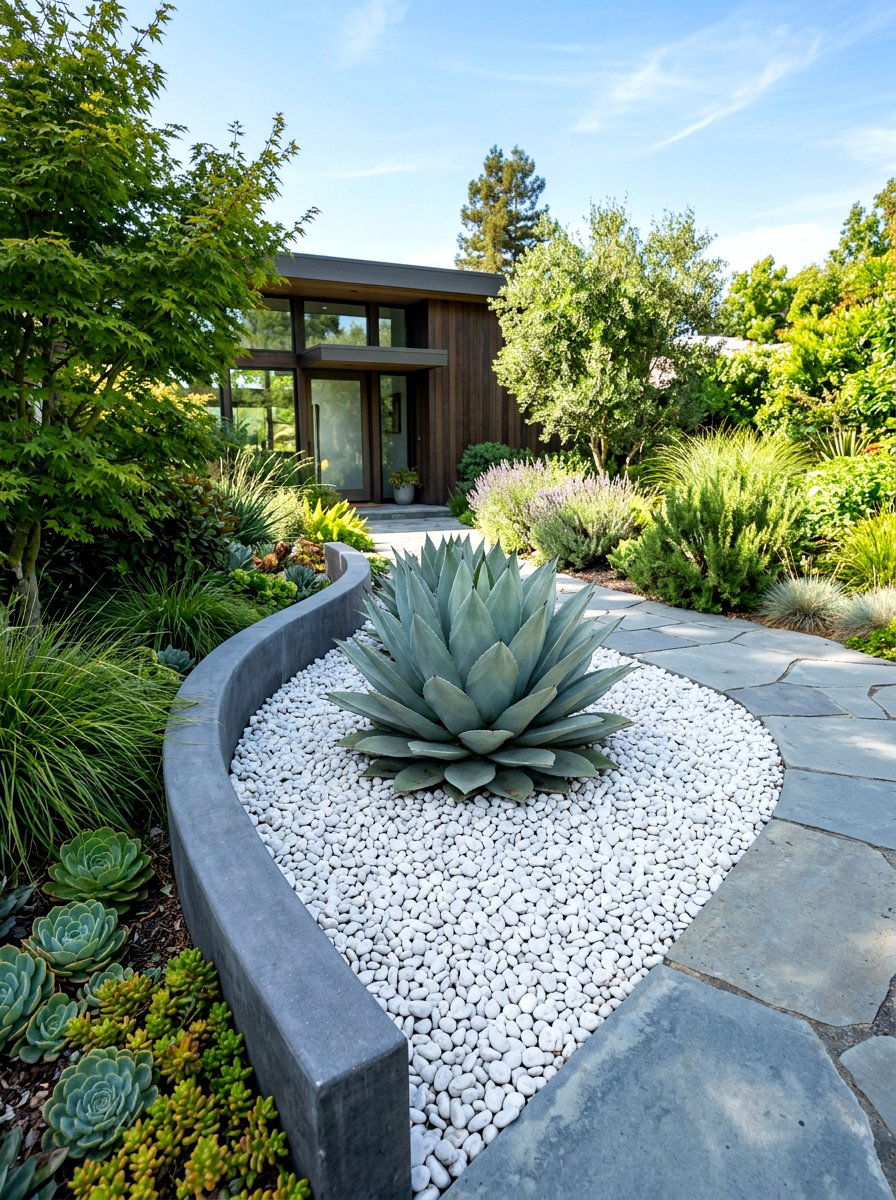
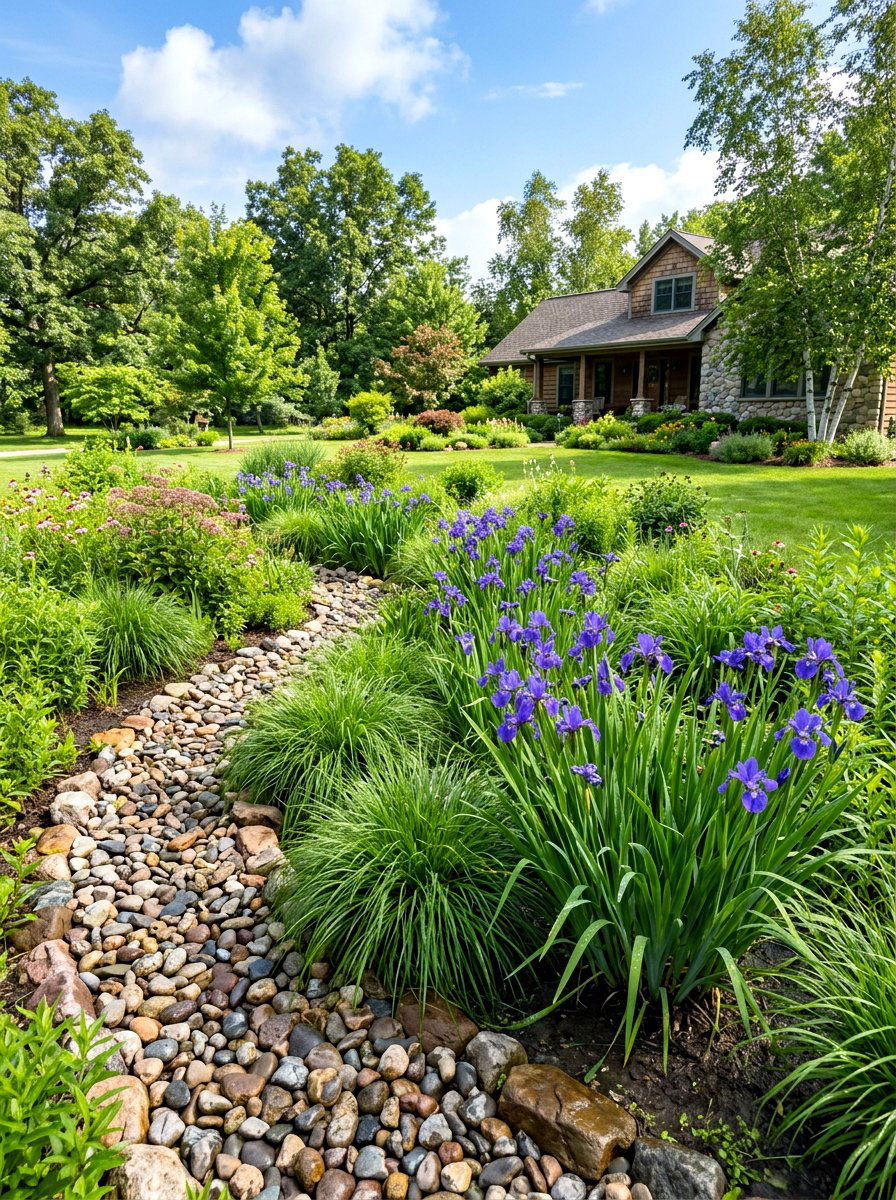
Using decorative gravel instead of traditional wood mulch adds a clean, asymmetrical texture to your garden beds. You can use different colors of stone, like white marble chips or dark lava rock, to create distinct zones. Placing a bed of gravel under a single tree or around a cluster of boulders creates a dry creek bed look. This is a low-maintenance option that stays in place much better than wood chips. The hard surface of the stone provides a nice contrast to soft green foliage and colorful flowers. It gives the landscape a finished, professional look that is very popular in modern designs.
18. Native Plant Garden
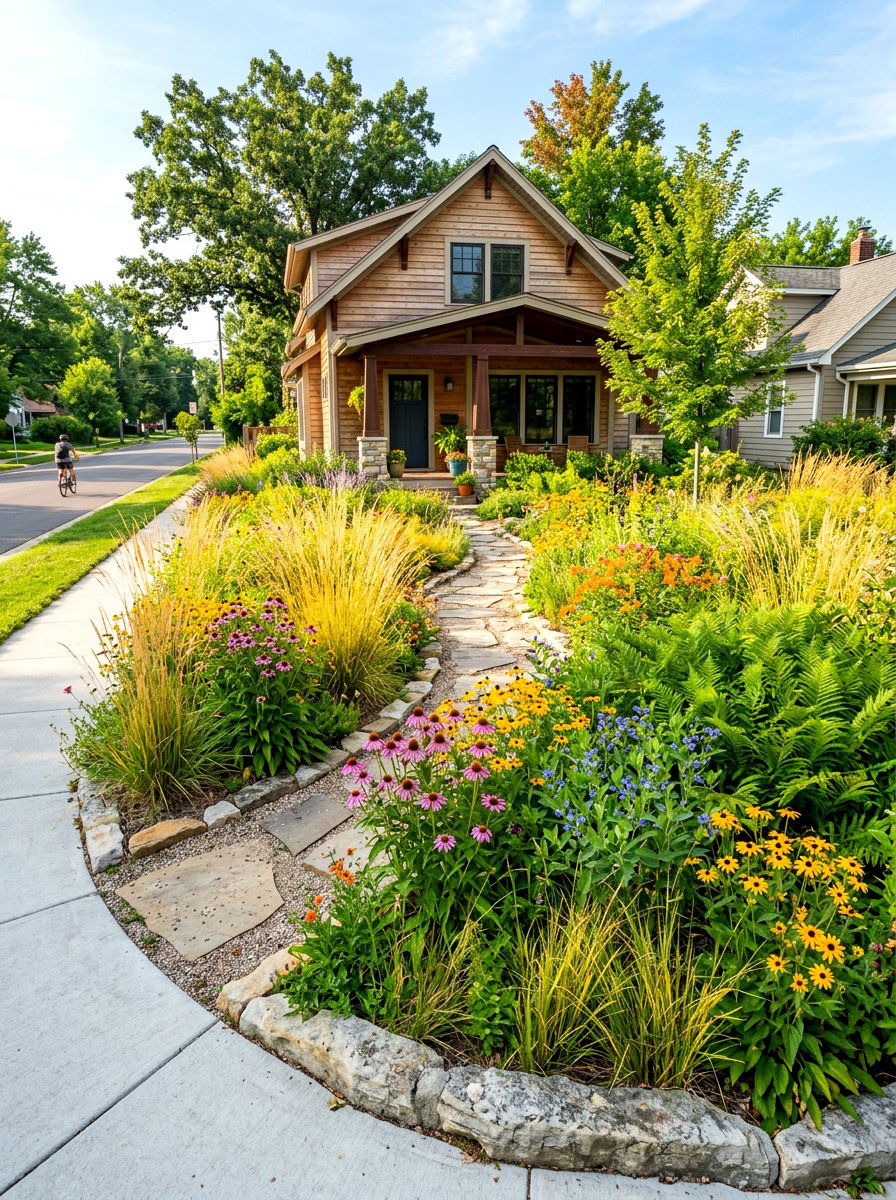
Planting a native plant garden is a wonderful way to achieve a lush, asymmetrical look that is also eco-friendly. Native plants often have varied shapes and growth patterns that look more natural than rows of identical hedges. You can group different species together to create a tapestry of colors and textures that changes with the seasons. This approach supports local wildlife like bees and butterflies while requiring less water and care. The wilder, more organic look of a native garden balances the straight lines of a modern house. It feels like a piece of the natural world is right on your doorstep.
19. Modern Porch Lighting
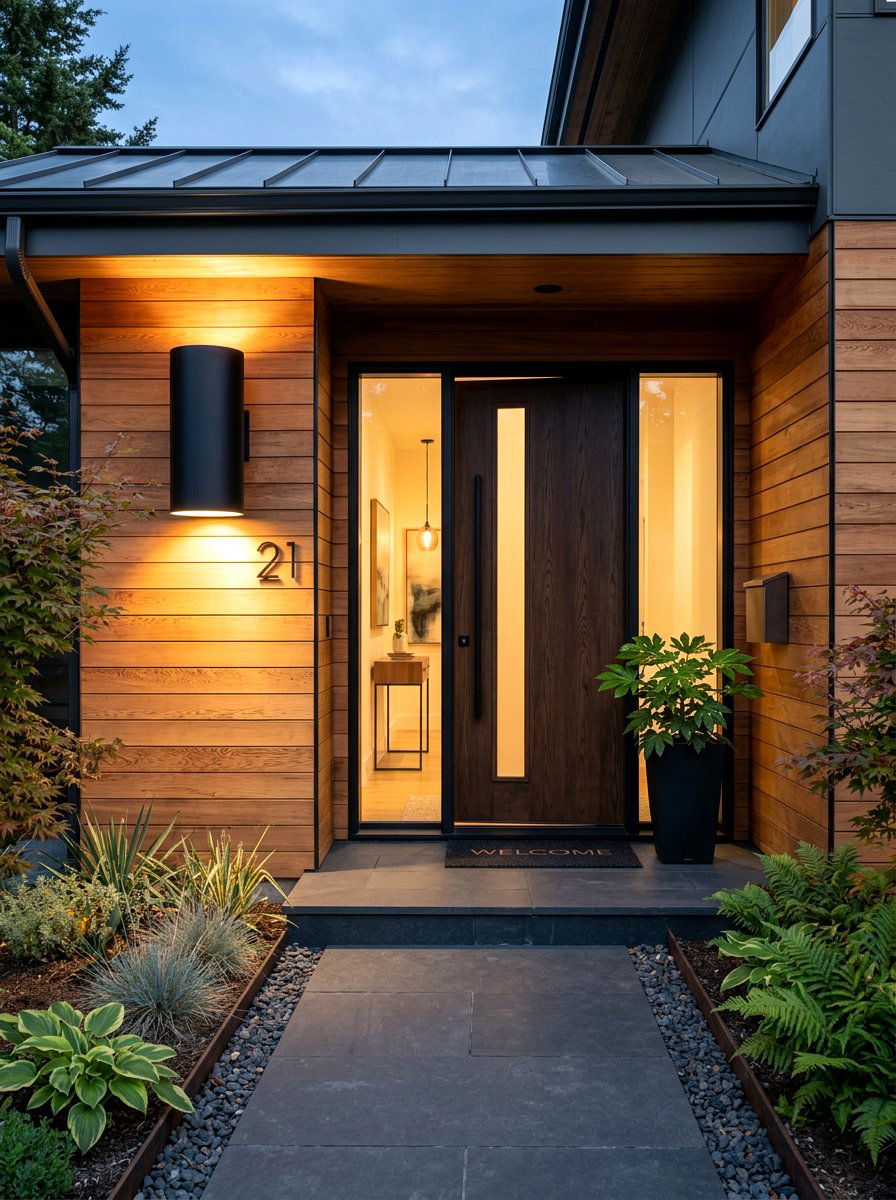
Updating your porch lighting with modern, asymmetrical fixtures can instantly boost your home’s evening curb appeal. Instead of matching lanterns on both sides of the door, try a single, oversized sconce on the side with more wall space. You can also use recessed path lights to lead the way to the entrance. Choosing fixtures with clean lines and matte finishes like black or brass adds a sophisticated touch. Good lighting highlights the textures of your siding and the shapes of your plants after the sun goes down. it makes your home look safe, inviting, and beautifully curated throughout the night.
20. Painted Front Door
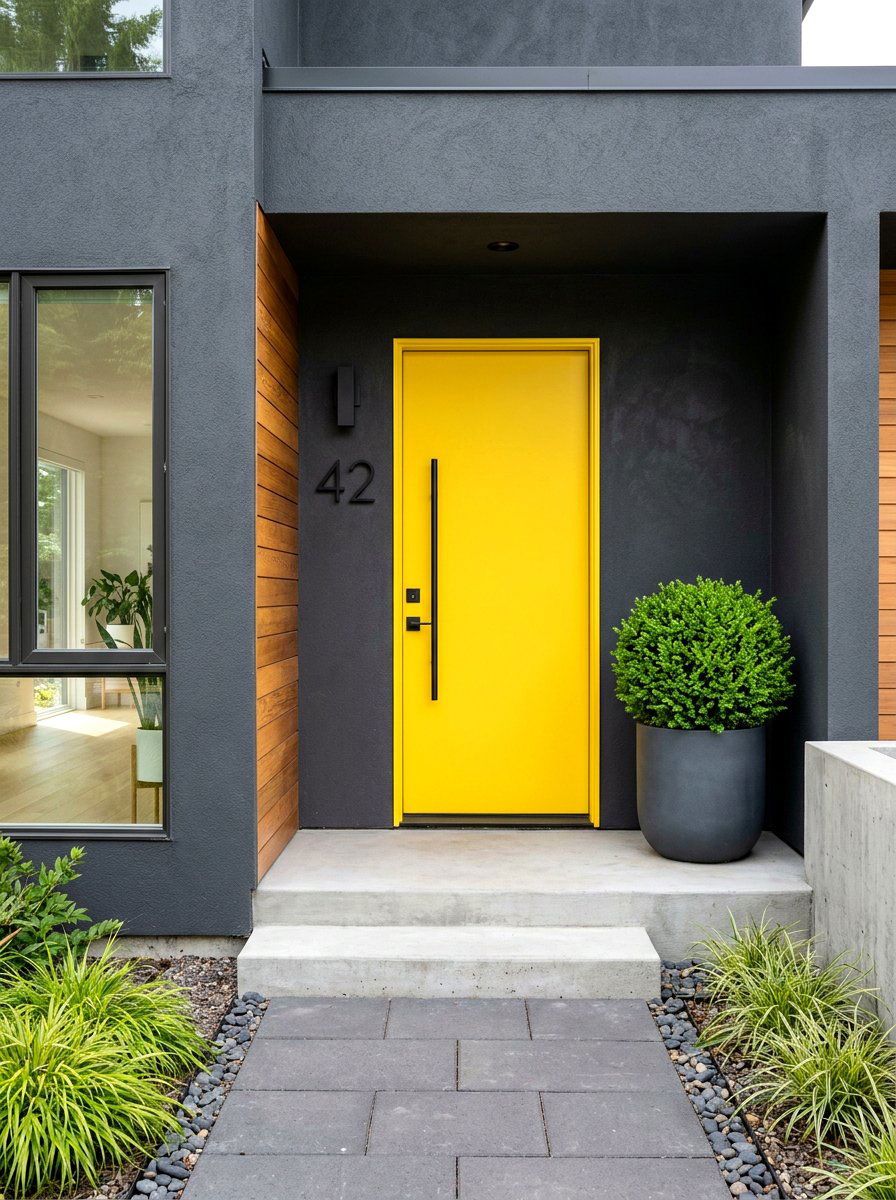
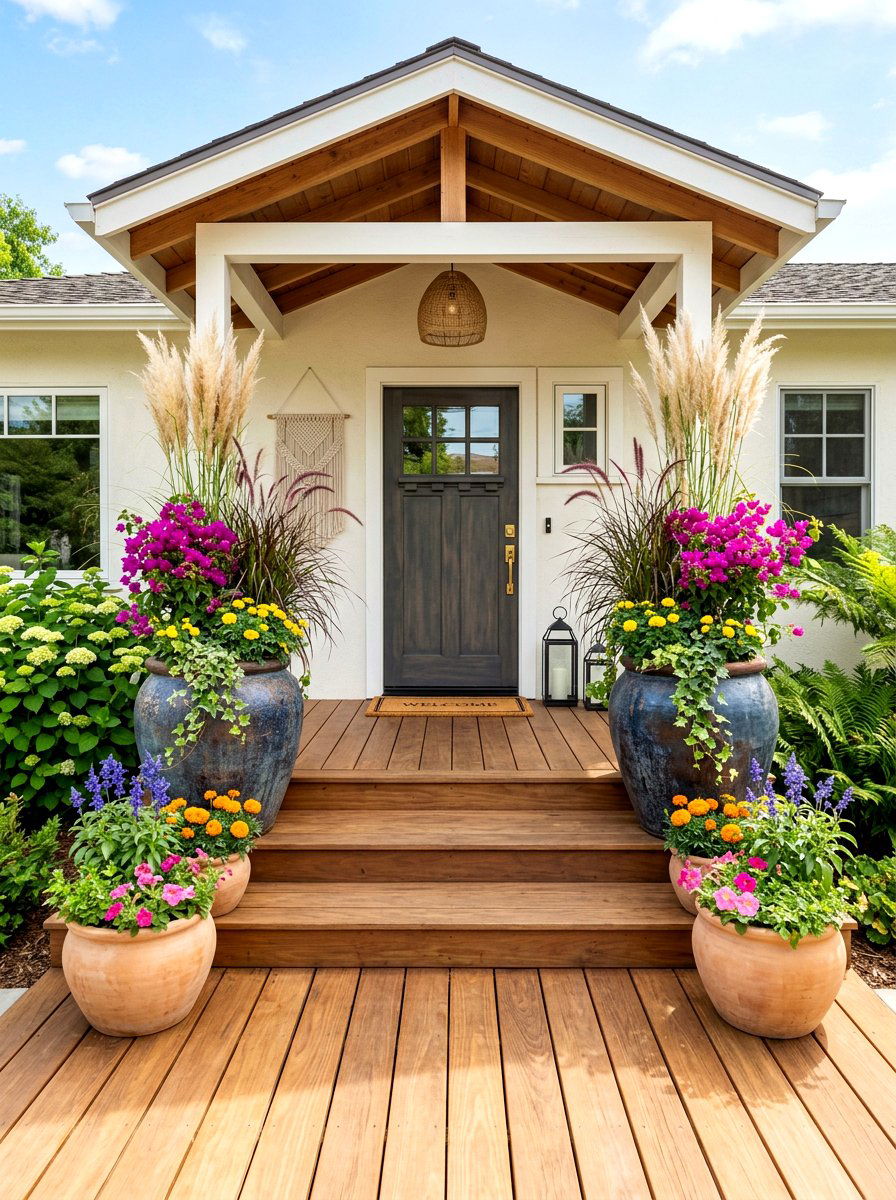
Is choosing a vibrant color for your entry a good way to shift visual focus? A painted front door serves as a powerful focal point that can offset an asymmetrical house layout. When your home has more windows or volume on one side, a bright door on the opposite side creates much needed balance. You might choose a bold navy, a sunny yellow, or a deep sage green to make the entrance pop. This simple change instantly draws the eye toward the "heavy" side of the home’s entry sequence. It is an affordable way to enhance curb appeal while celebrating the unique proportions of your home.
21. Glass Garage Door
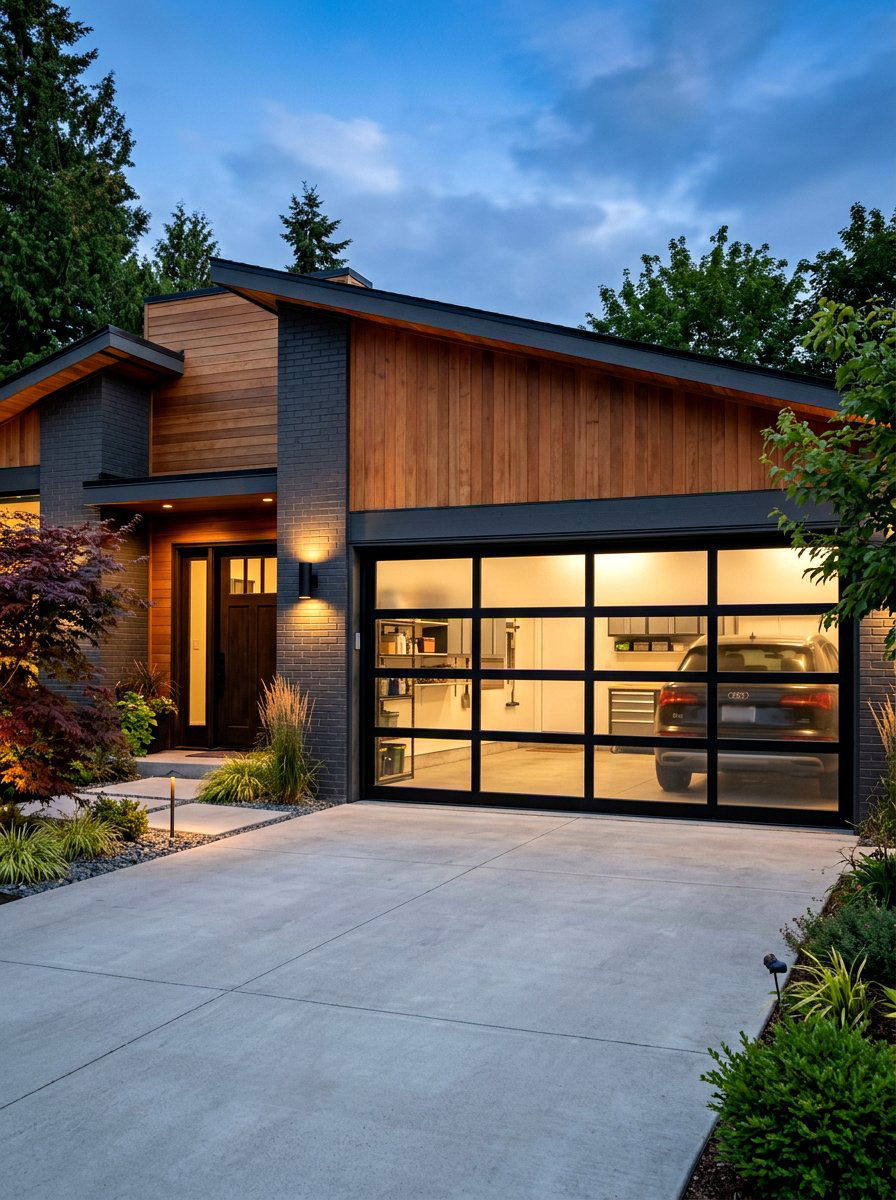
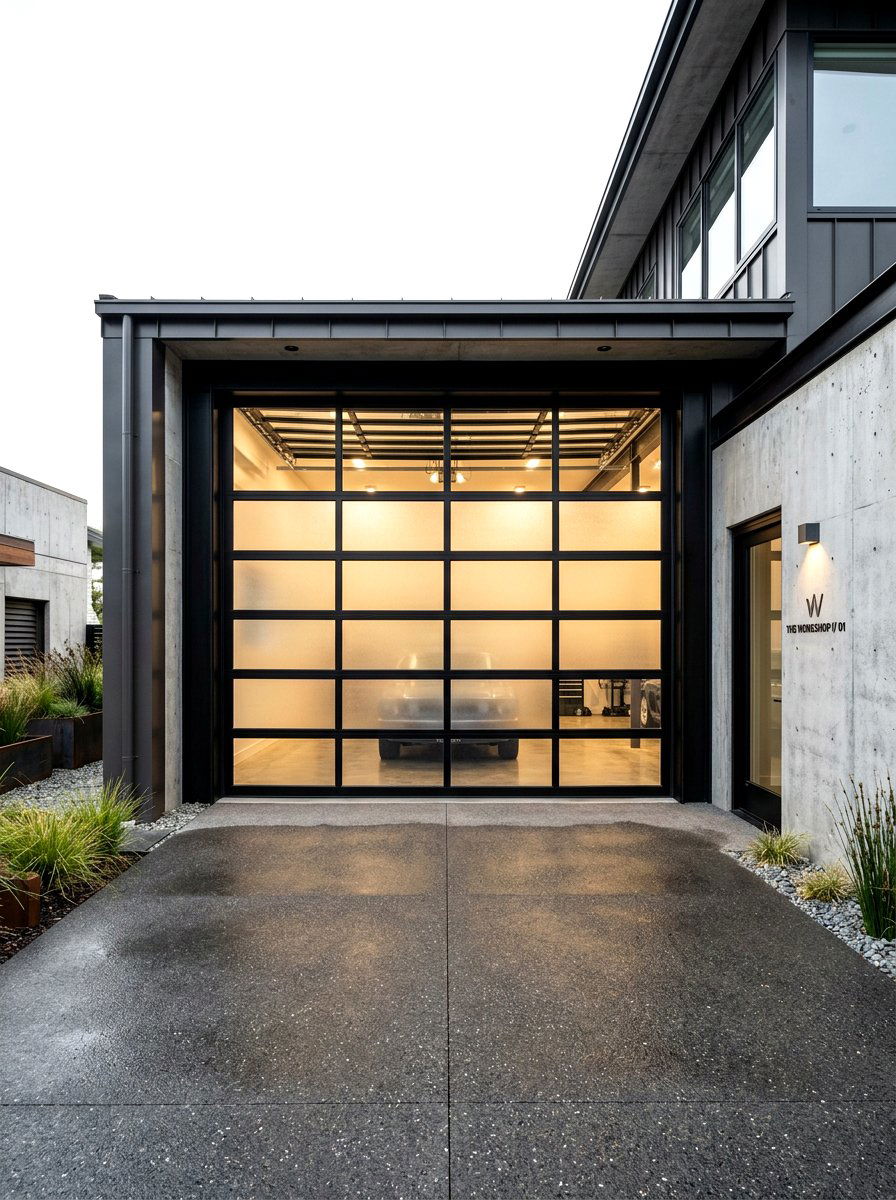
Installing a glass garage door is a high-impact way to add modern, asymmetrical style to a large part of your facade. These doors feature frosted or tinted glass panels in a metal frame, creating a sleek and industrial look. They allow natural light into the garage during the day and glow beautifully at night. Because a garage is often located on one side of the house, it is a naturally asymmetrical feature. Using a high-style door makes it look like an intentional design choice rather than just a functional necessity. It completely transforms the overall look of a standard suburban or urban home.
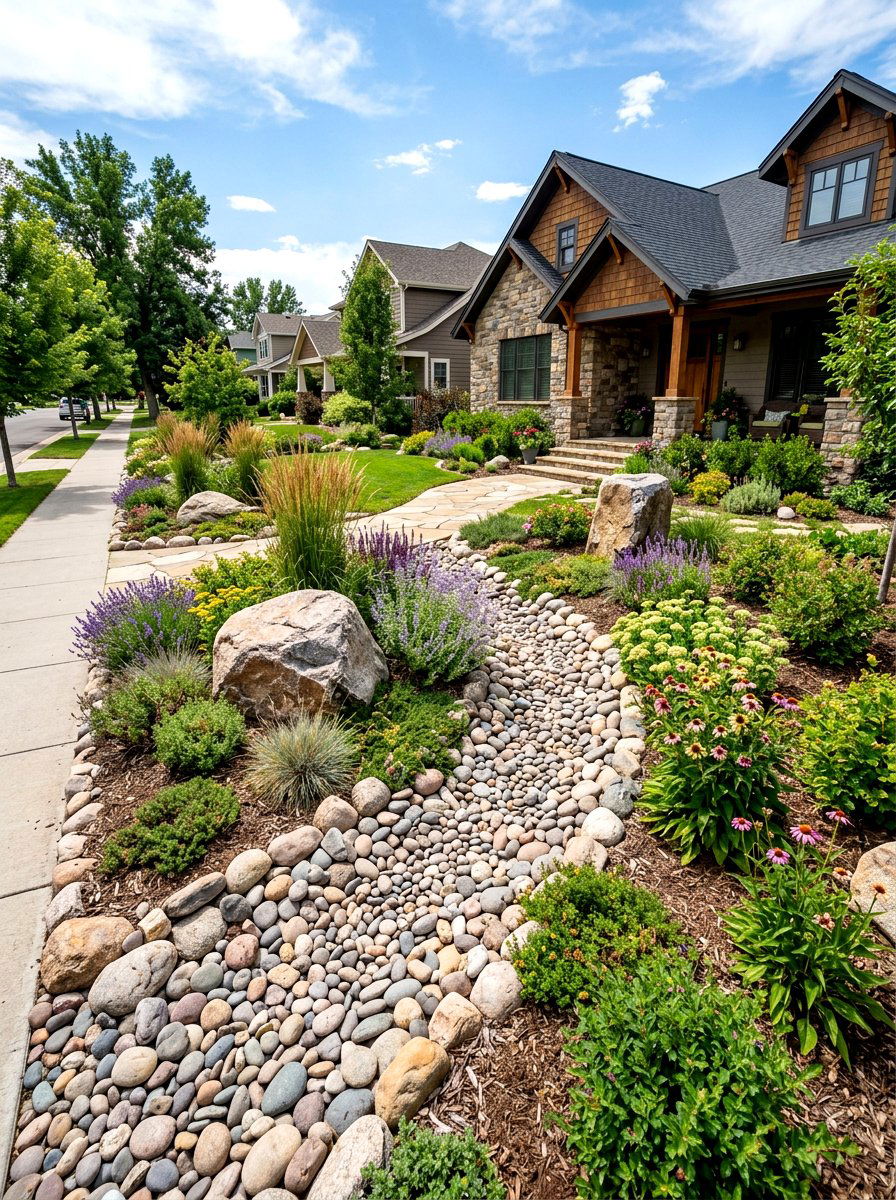
22. Natural Rock Garden
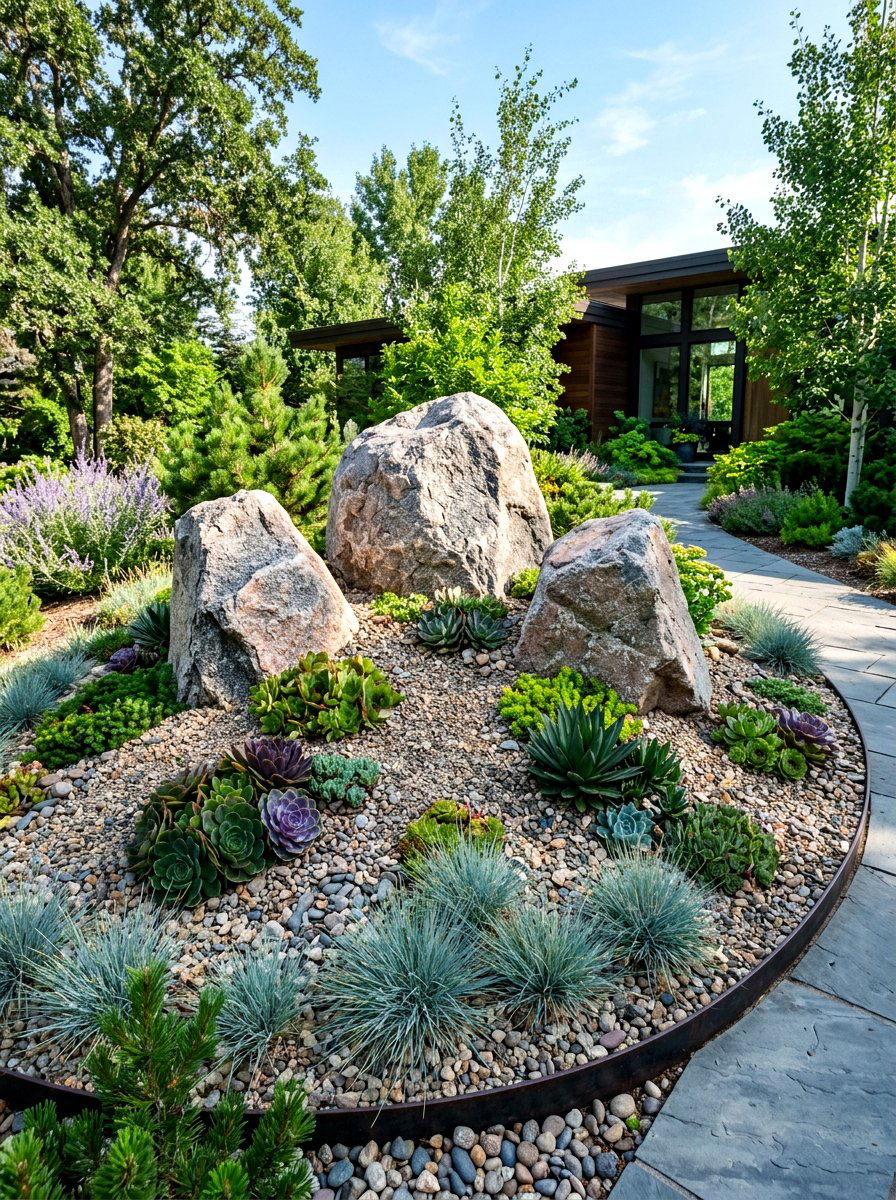
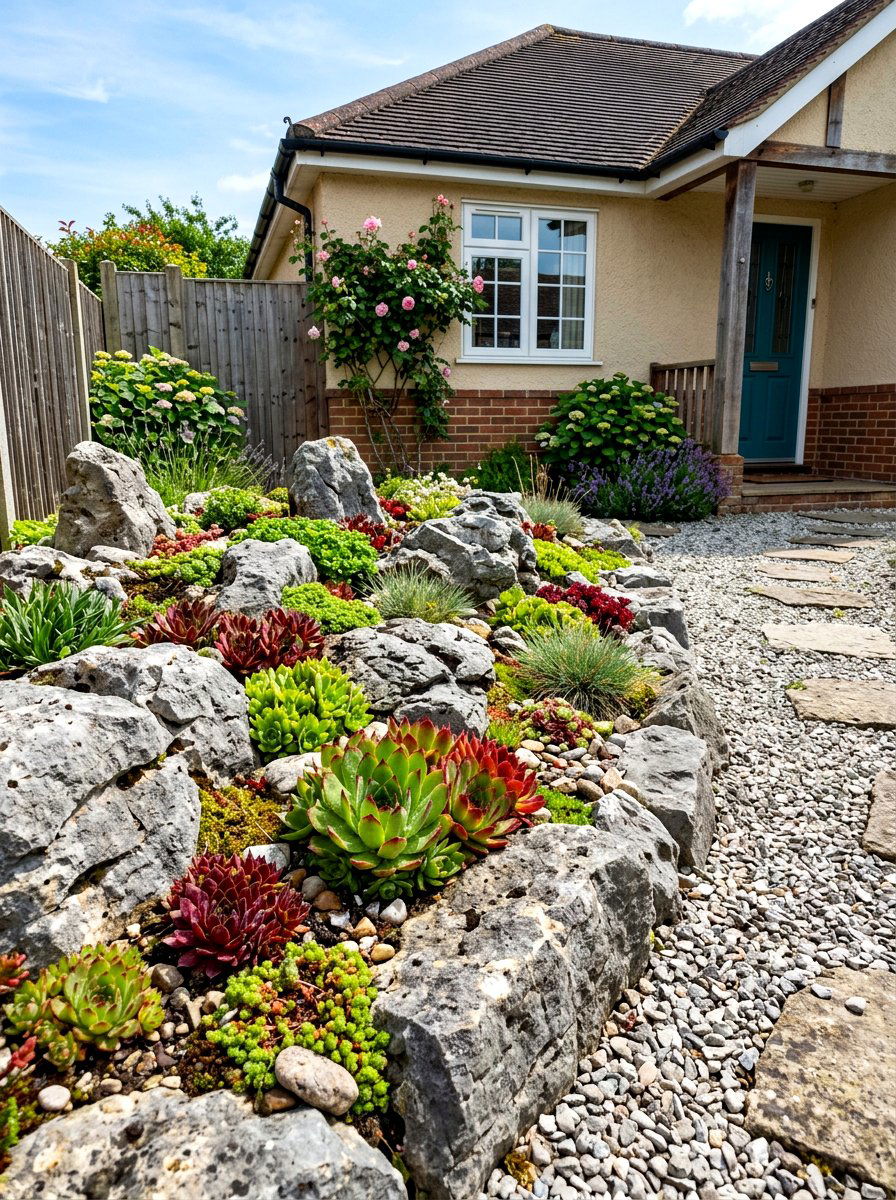
A natural rock garden uses boulders and smaller stones to create an asymmetrical, low-maintenance landscape feature. You can group several large rocks together on a mound to create a sense of height and drama. Intersperse small succulents or alpine plants between the stones for a pop of color and life. This type of garden works especially well in dry climates or on parts of the yard where grass won't grow. The permanent nature of the rocks means this feature looks great year-round without any pruning or watering. It adds a rugged, sculptural element that feels grounded and very substantial from the street.
23. Cantilevered Roof Line
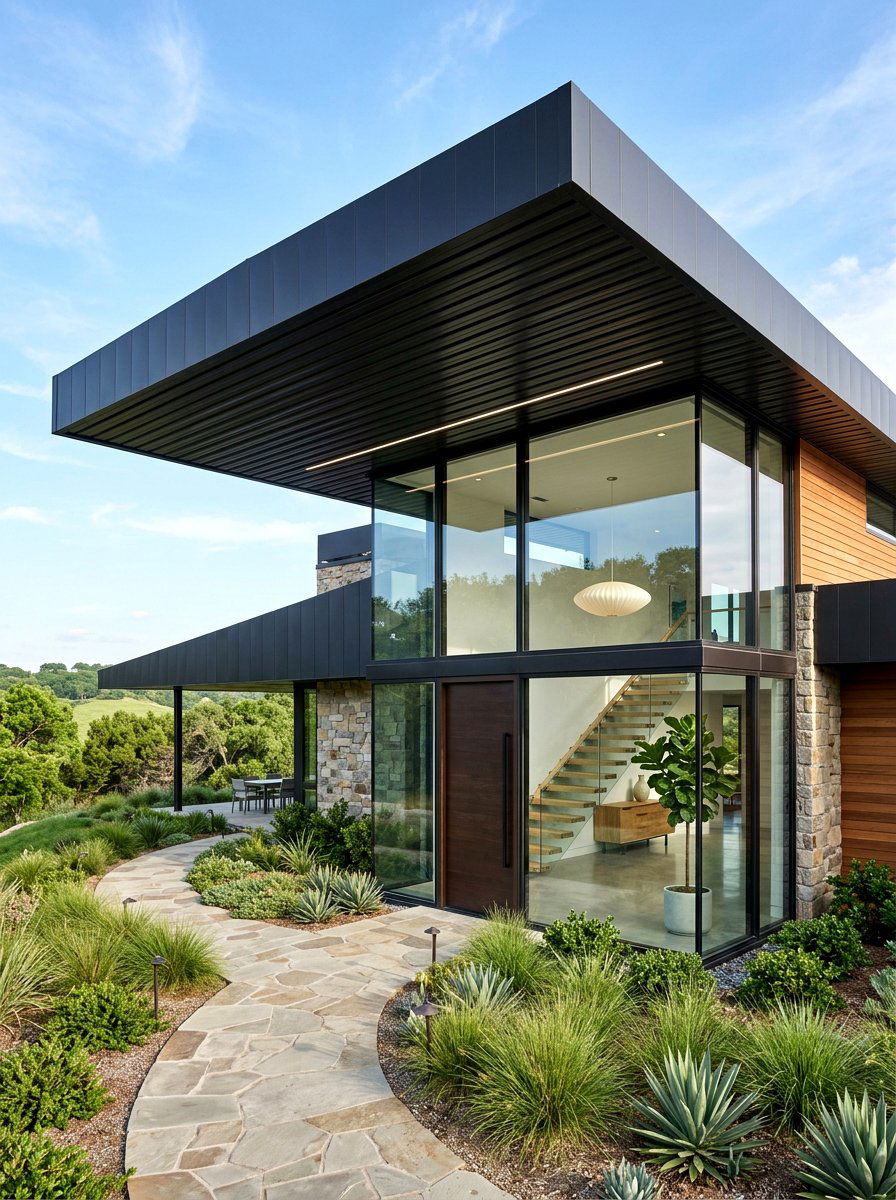
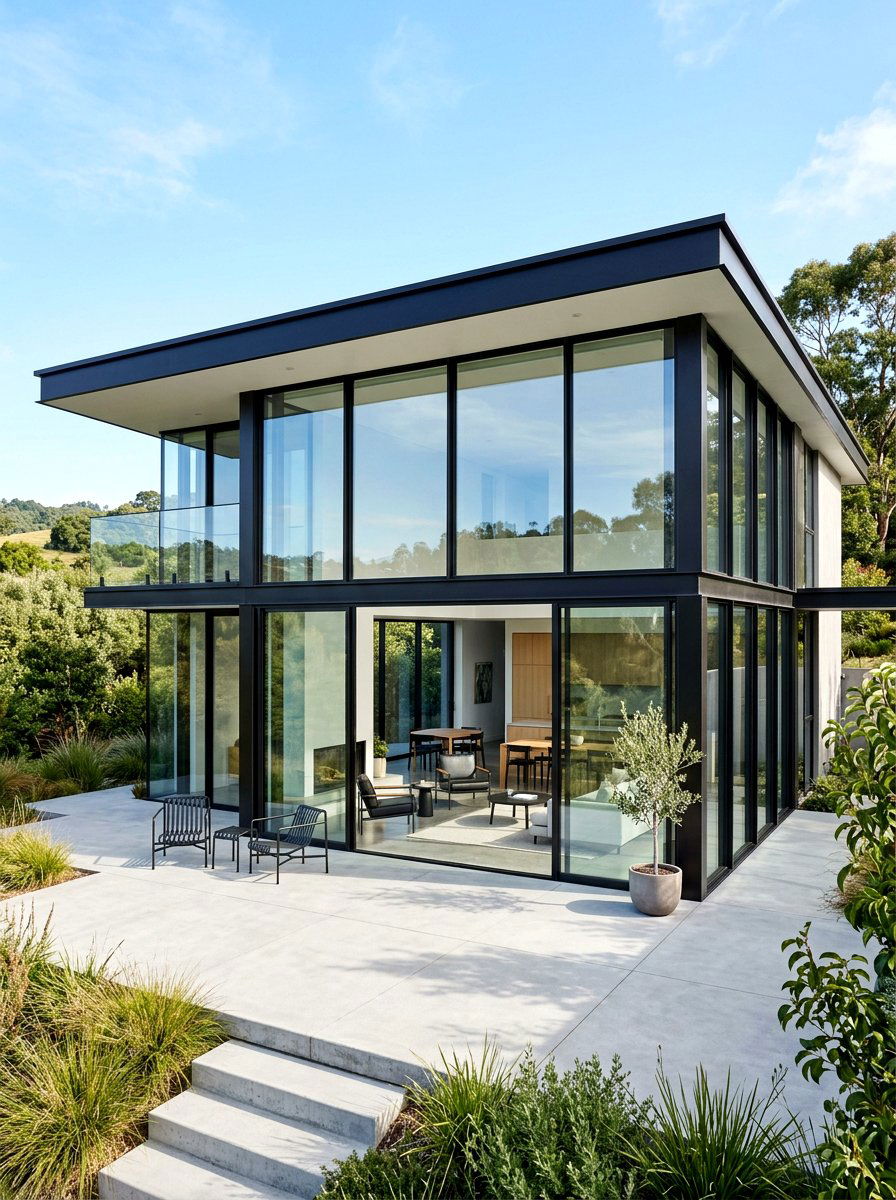
A cantilevered roof line is a bold architectural statement that creates a striking asymmetrical silhouette. This design features a roof that extends out past the walls of the house without any visible support pillars. It provides a modern, floating look that is very popular in contemporary architecture. The deep overhang creates shade for windows and protects the entryway from rain. It also adds a sense of movement and direction to the building's shape. This feature looks best when paired with large glass windows and simple siding. It makes the house look like a piece of modern art nestled in the landscape.
24. Ornamental Grass Border
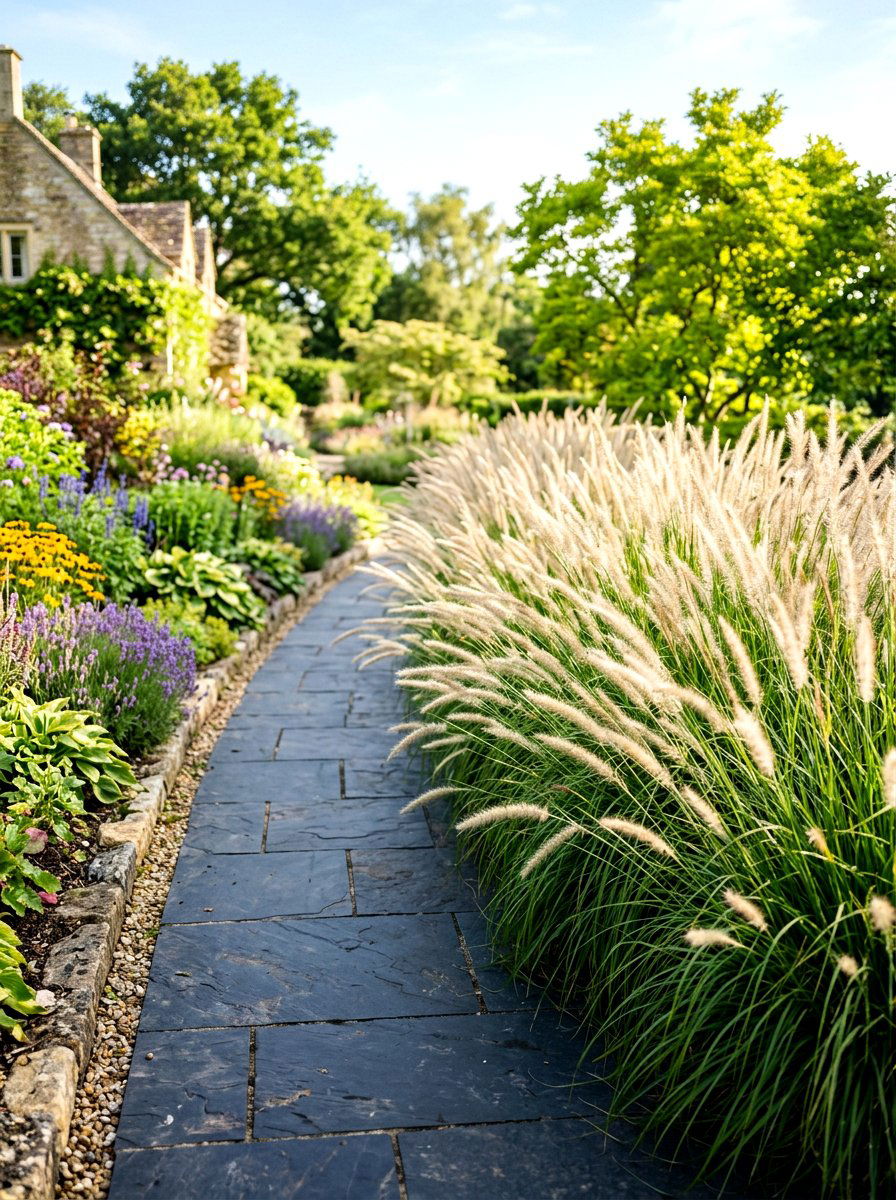
Using ornamental grasses as a border is a soft way to introduce asymmetrical height to your yard. These plants come in many varieties, from short blue fescue to tall, feathery pampas grass. By planting a dense row on only one side of a path, you create a sense of mystery and privacy. The grasses sway in the wind, adding movement and sound to the garden. They look beautiful even in the winter when they turn a golden tan color. Grasses are very hardy and easy to grow, making them a perfect choice for adding texture and volume to any modern front yard.
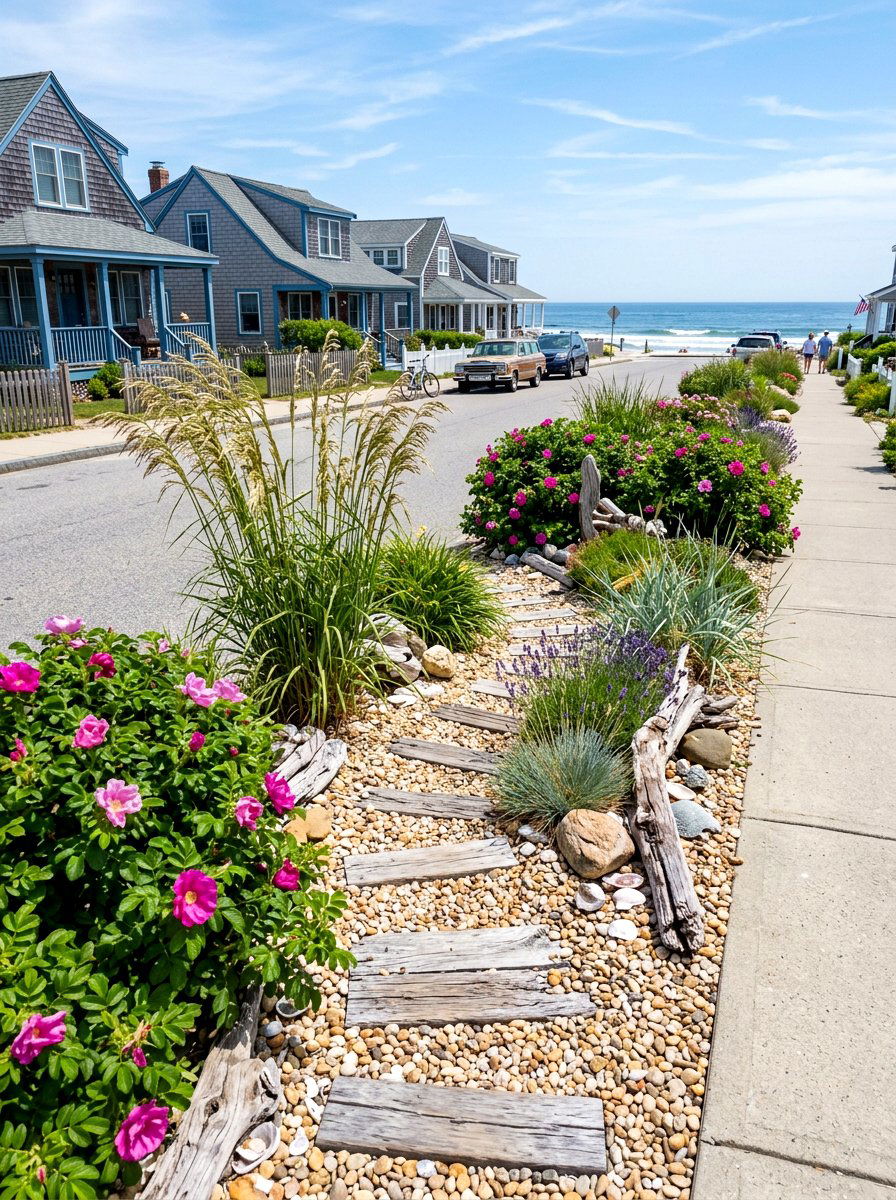
25. Wall Mounted Mailbox
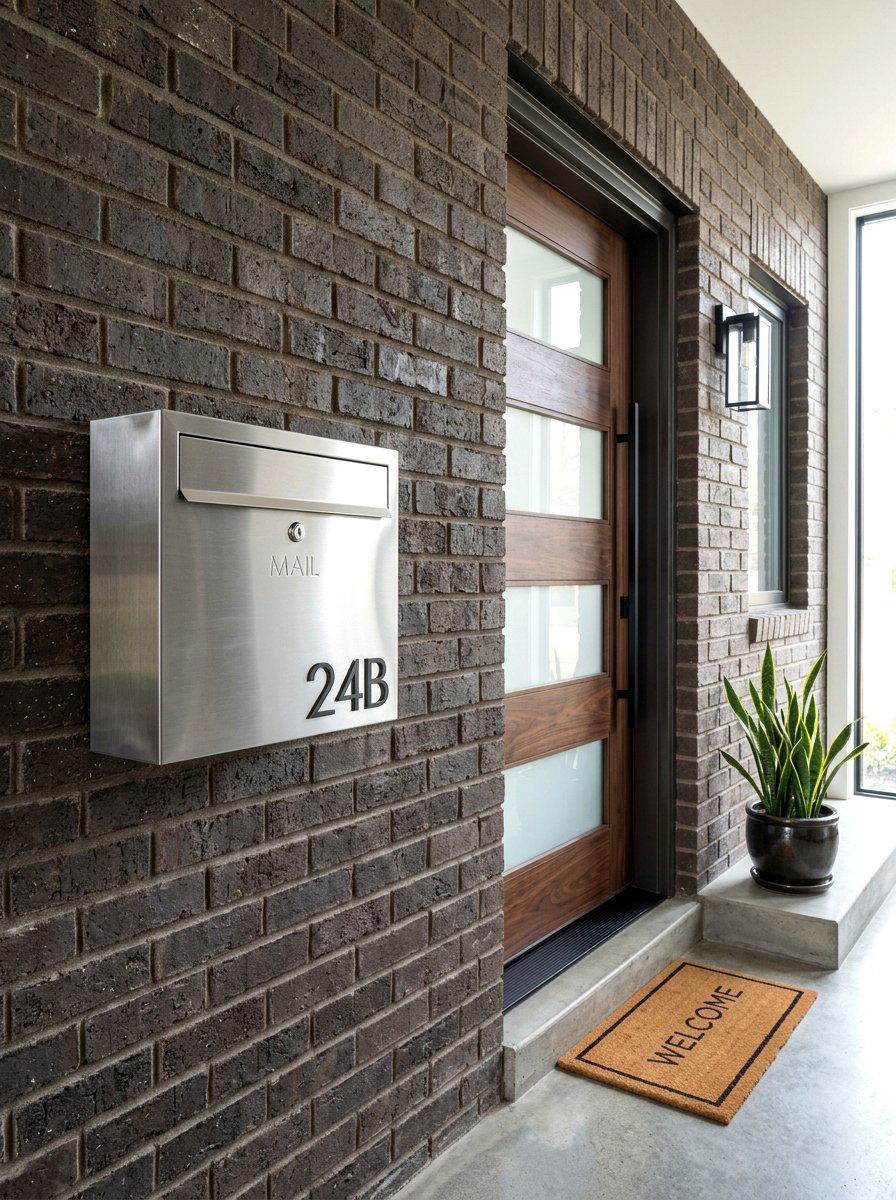
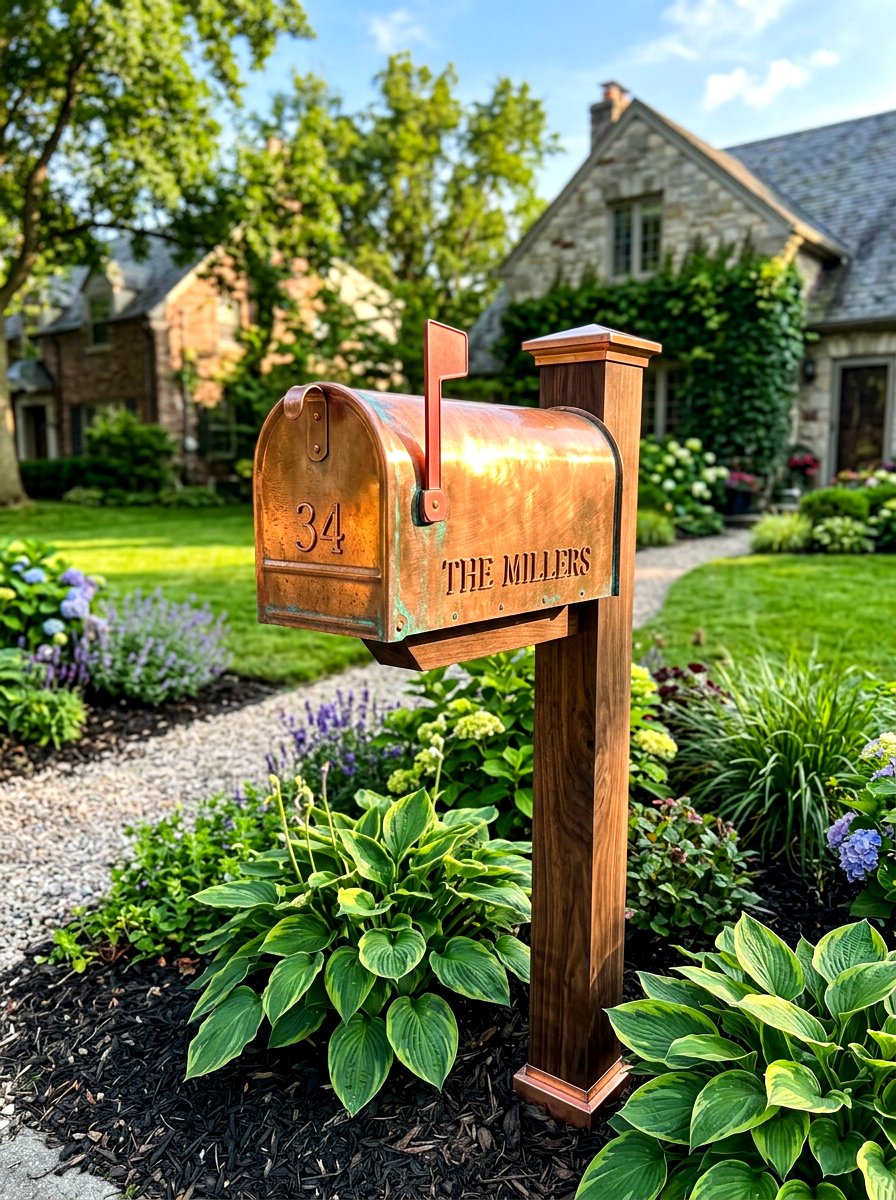
Replacing a standard post mailbox with a wall-mounted version can clear up your yard and add an asymmetrical detail to your siding. Choose a modern mailbox with a clean shape and a high-quality finish like stainless steel or black powder coat. Mounting it next to the front door or on a separate feature wall makes it part of the home 's architecture. It is a small detail that shows you have put thought into every element of your home' s exterior. This also frees up space in the garden for more plants or a wider walkway. It is a functional and very stylish upgrade.
26. Metal Front Gate
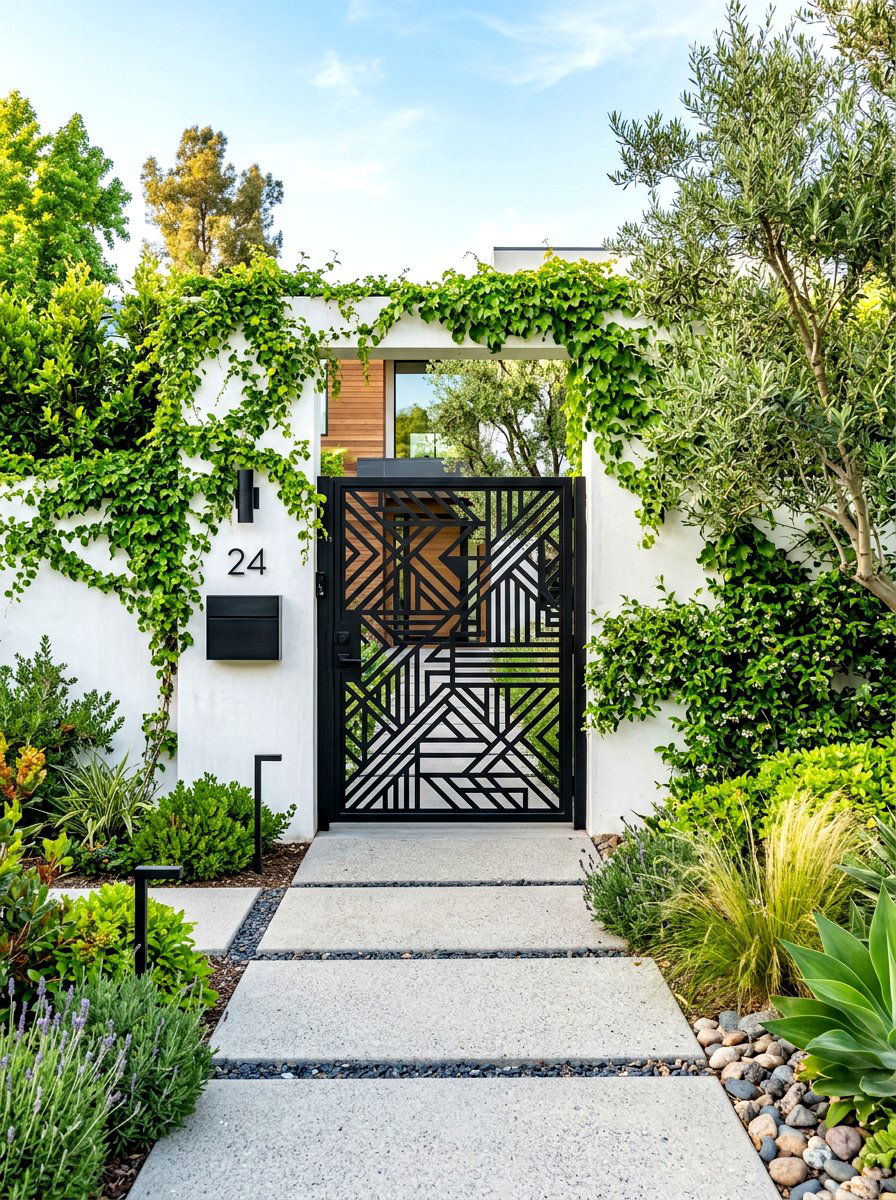
A custom metal front gate can provide an asymmetrical entrance point that feels secure and sophisticated. You can use a gate with horizontal bars or a laser-cut pattern to create a unique look. Placing the gate off-center from the main path adds a sense of privacy and intrigue. It marks the transition from the public sidewalk to your private garden space. A dark metal gate looks fantastic against a white stone wall or a lush green hedge. It is a durable feature that adds a sense of luxury and high-end design to the very edge of your property for all to see.
27. Outdoor Bench Seating
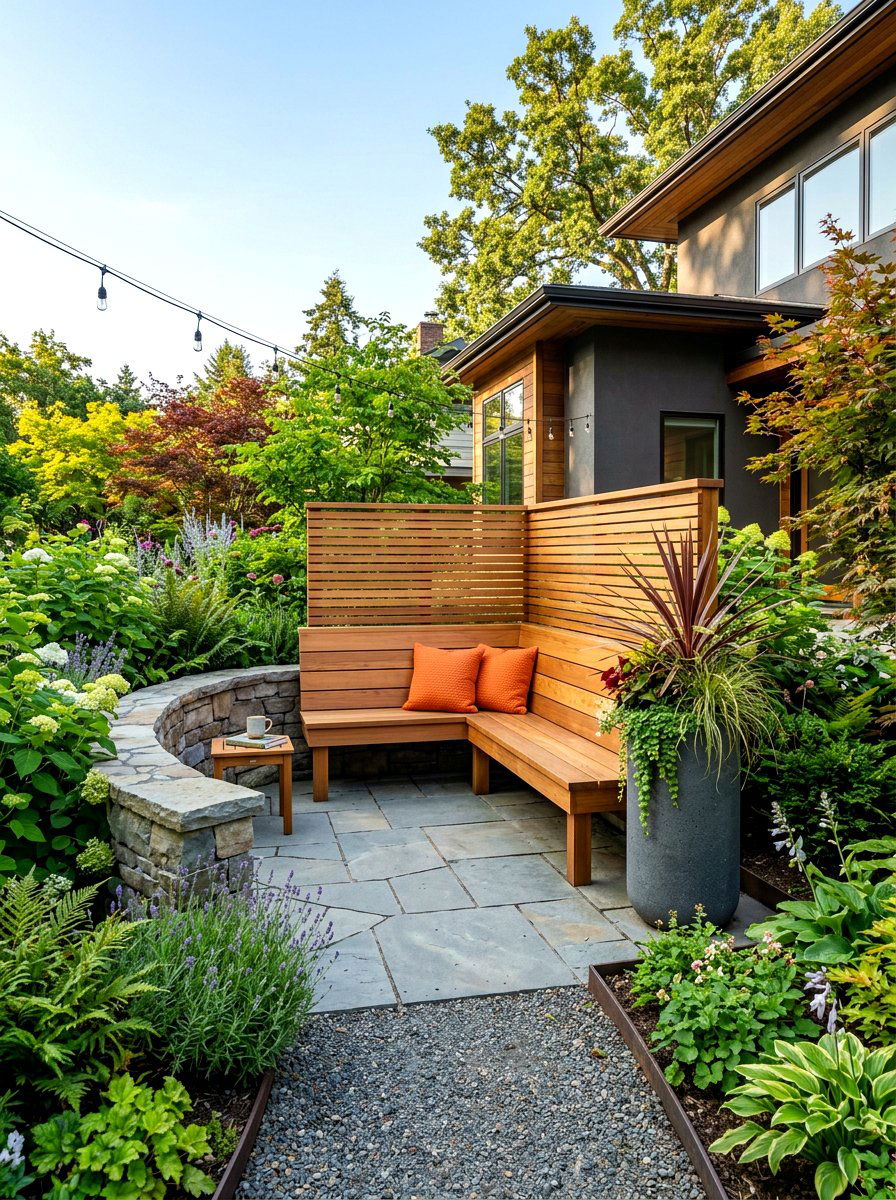
Adding an outdoor bench on one side of your porch or garden creates a cozy, asymmetrical social area. A simple wooden bench or a modern concrete seat provides a place to sit and enjoy the neighborhood. You can surround the bench with potted plants or place it under a single shade tree. This adds a "human element" to the landscape, making the house feel more lived-in and friendly. It breaks up a large expanse of wall or lawn with a functional and attractive piece of furniture. It is a great way to encourage "front yard living" and connect with your neighbors more often.
28. Landscape Boulder Detail
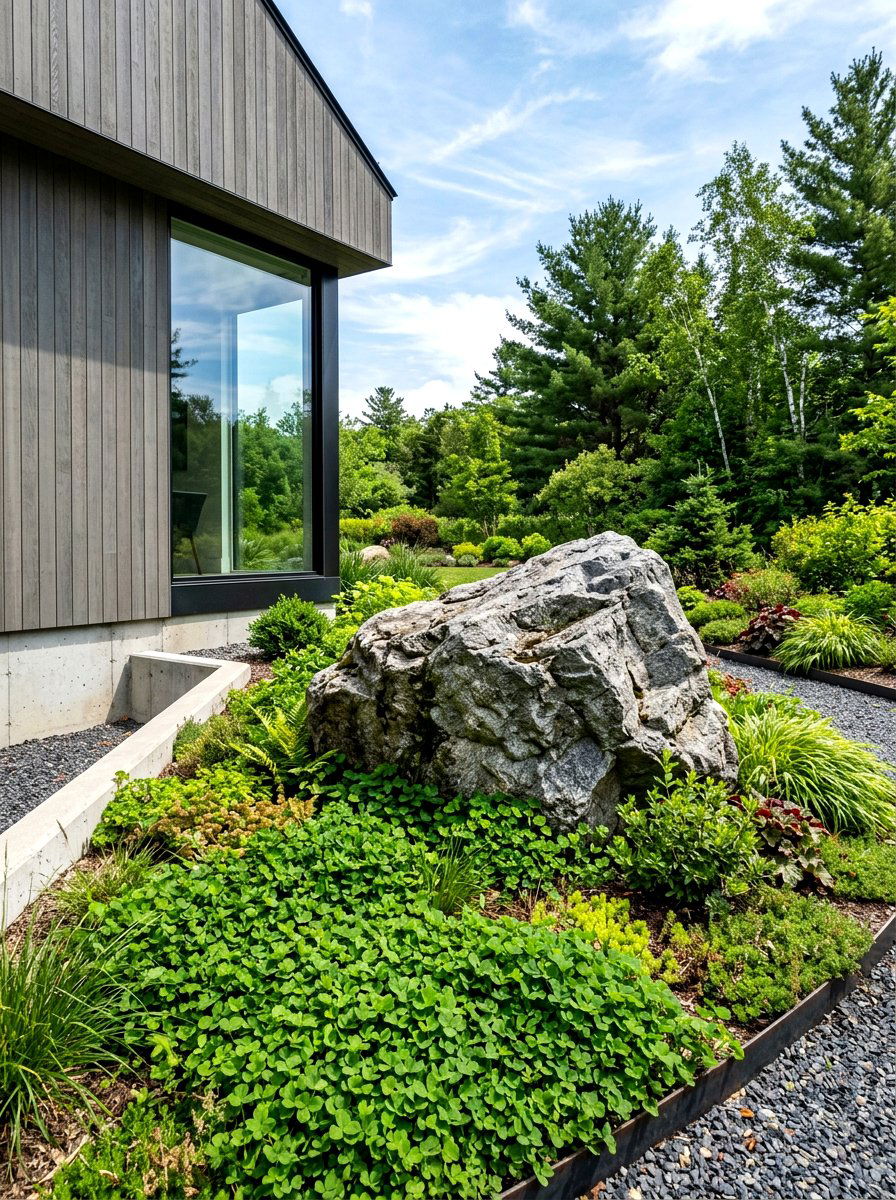
Using a single, massive boulder as a landscape detail is a great way to add asymmetrical weight to a large lawn. These rocks act like natural sculptures and provide a sense of permanence to the yard. You can place the boulder near the corner of the house or at the edge of a driveway to define the space. Planting low groundcovers around the base of the rock makes it look like it has always been there. Boulders come in many colors and textures, so you can choose one that perfectly matches your home's stone accents. It is a simple but very powerful design move.
29. Porch Patio Furniture
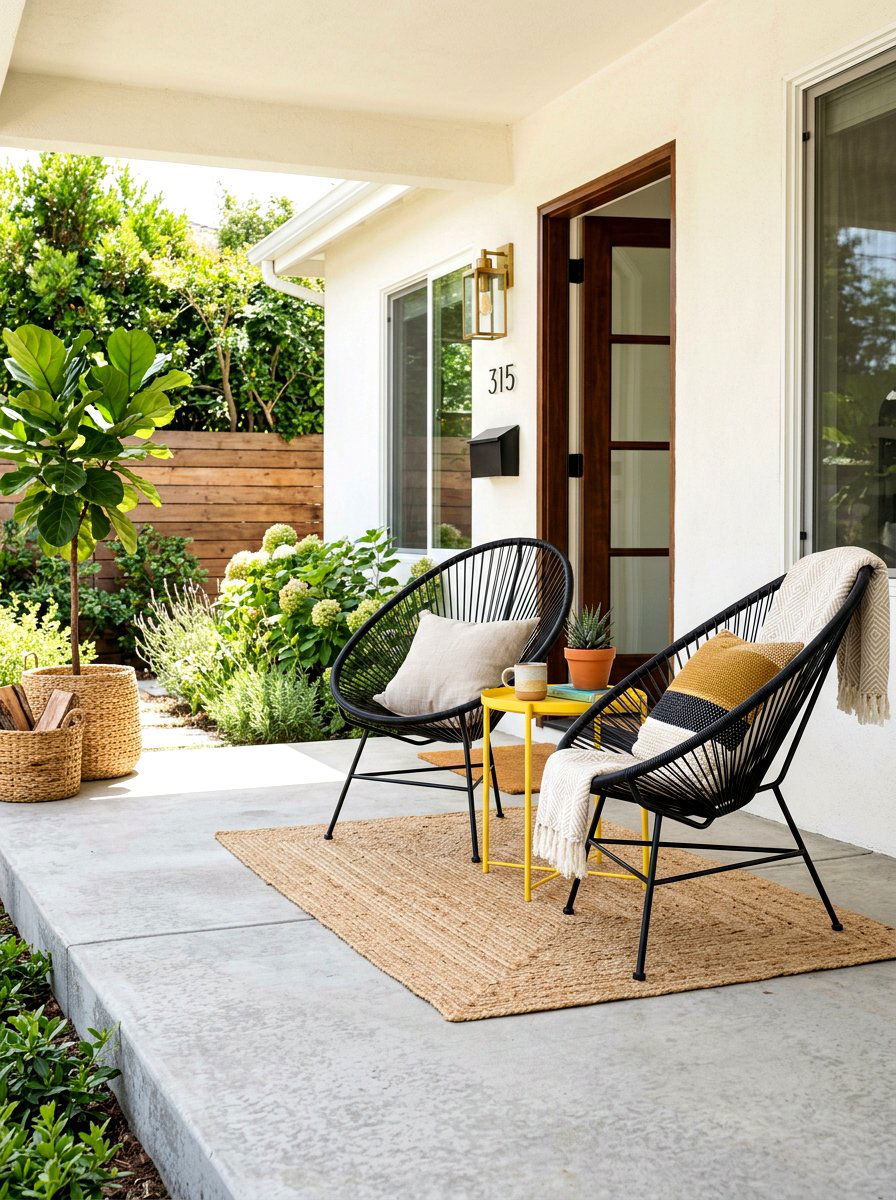
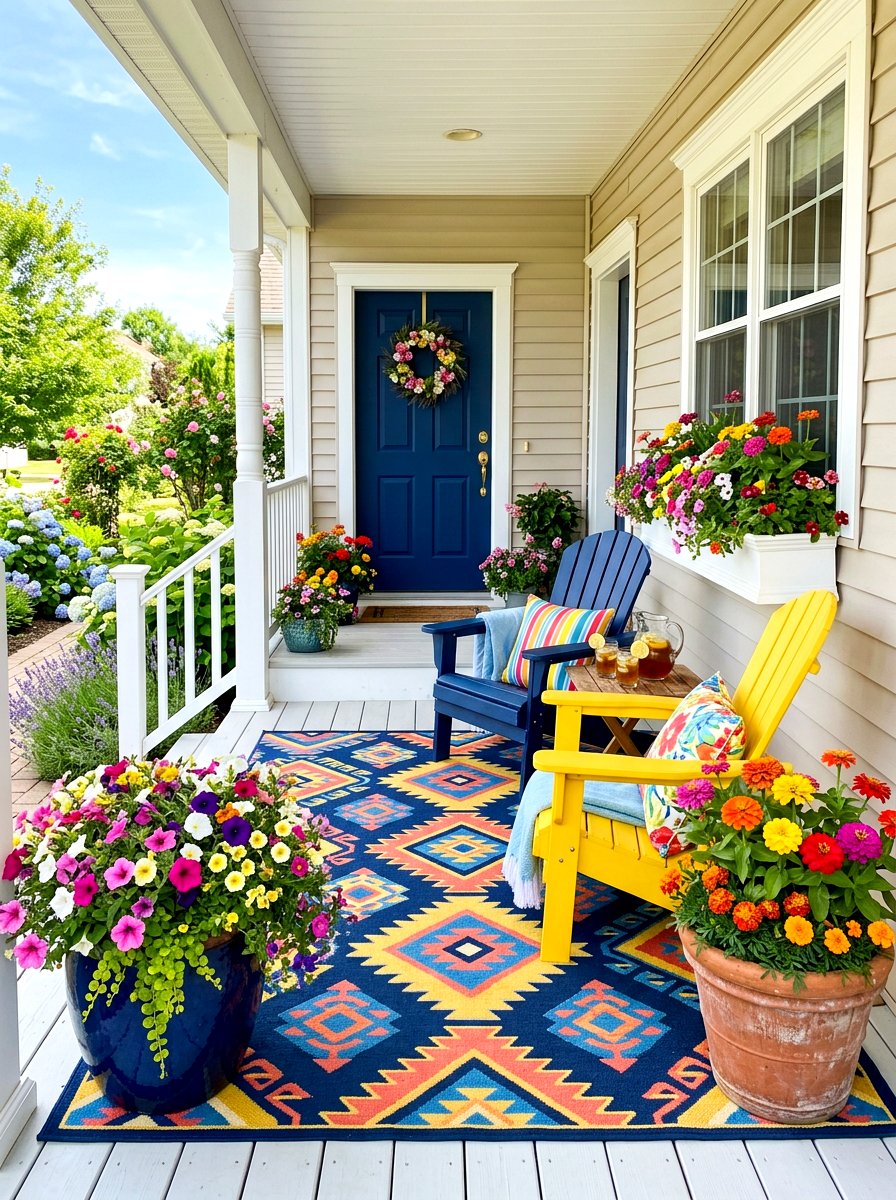
Styling your front porch with modern patio furniture on just one side is a practical way to achieve an asymmetrical look. A pair of sleek chairs and a small side table create an inviting spot for morning coffee. Using bold colors or interesting shapes for the furniture makes the porch look like a curated outdoor room. This shifts the focus away from the center of the house and toward a specific lifestyle area. It adds a pop of personality and comfort to the entry. High-quality outdoor fabrics ensure that your furniture stays looking great through all kinds of weather throughout the year.
30. House Paint Colors
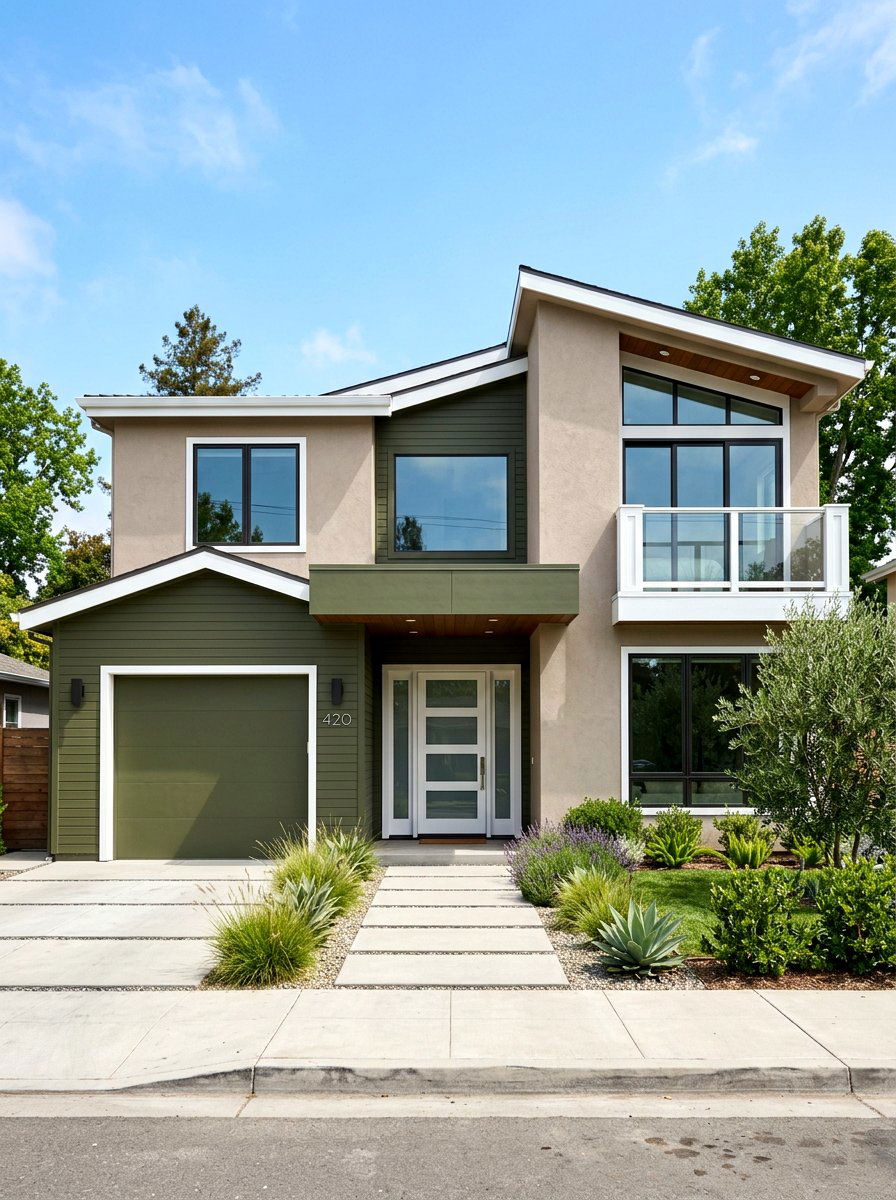
Using two or three different paint colors on your home's exterior can emphasize its asymmetrical shapes. You might paint the main body a neutral gray while highlighting a projecting section with a darker charcoal. Using a light color on the recessed parts of the house makes them appear deeper and more interesting. This technique adds depth and dimension without requiring any structural changes. It is a very effective way to modernize an older home with an unusual layout. Choosing a cohesive color palette ensures that the home looks balanced and professional. It is one of the most impactful ways to boost your curb appeal.
Conclusion:
Embracing an asymmetrical approach to your home exterior is one of the most effective ways to create a modern and memorable look. While symmetry offers a sense of traditional order, asymmetry provides a dynamic and artistic feel that truly reflects contemporary living. By focusing on the balance of different shapes, materials, and colors, you can transform a standard house into a striking architectural statement. These thirty concepts demonstrate that you do not need perfect mirror images to achieve a high-end appearance. Whether through landscaping or structural changes, the key is to play with visual weight and texture. Start small with new lighting or go big with a tiered garden to elevate your home’s presence on the street.

Related posts: