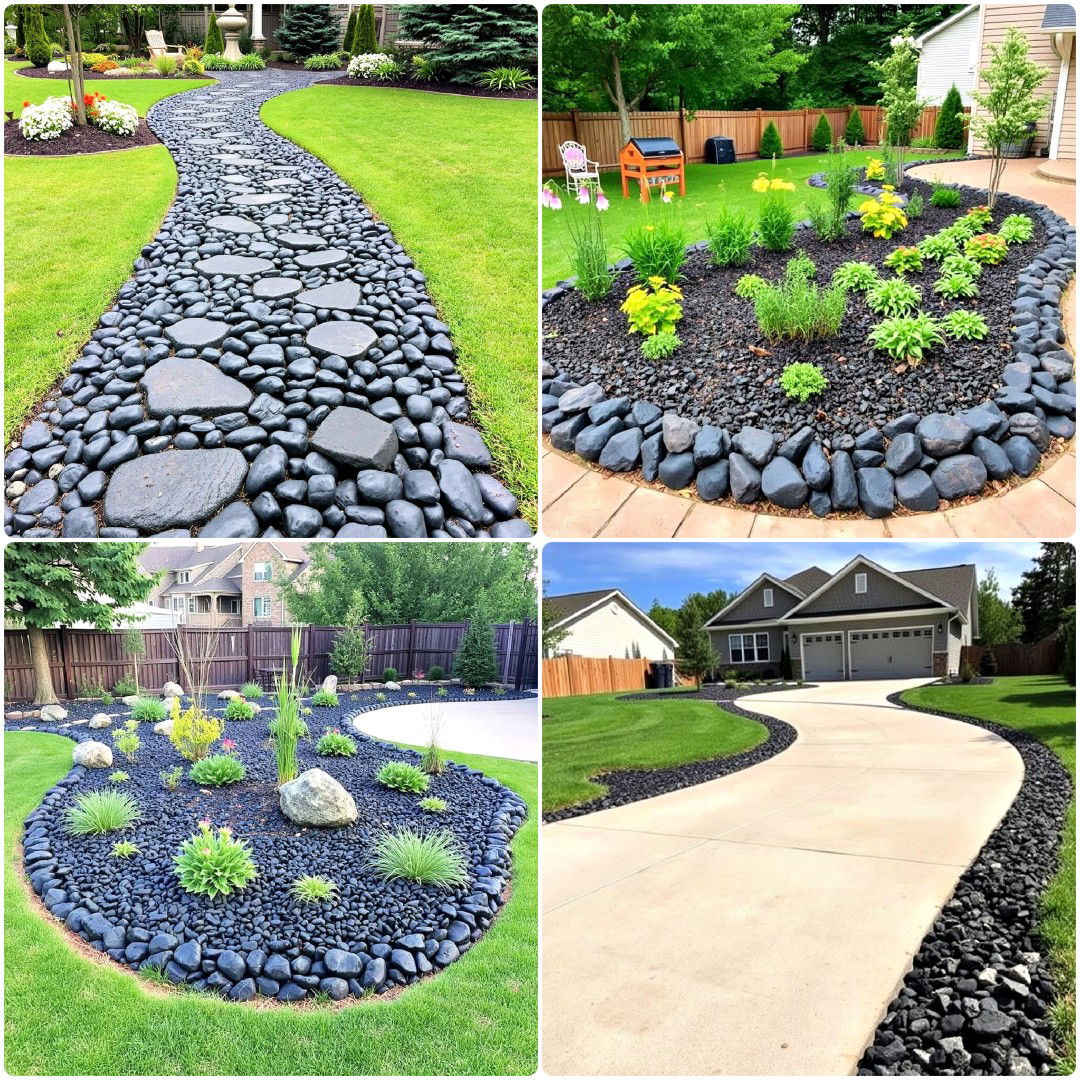
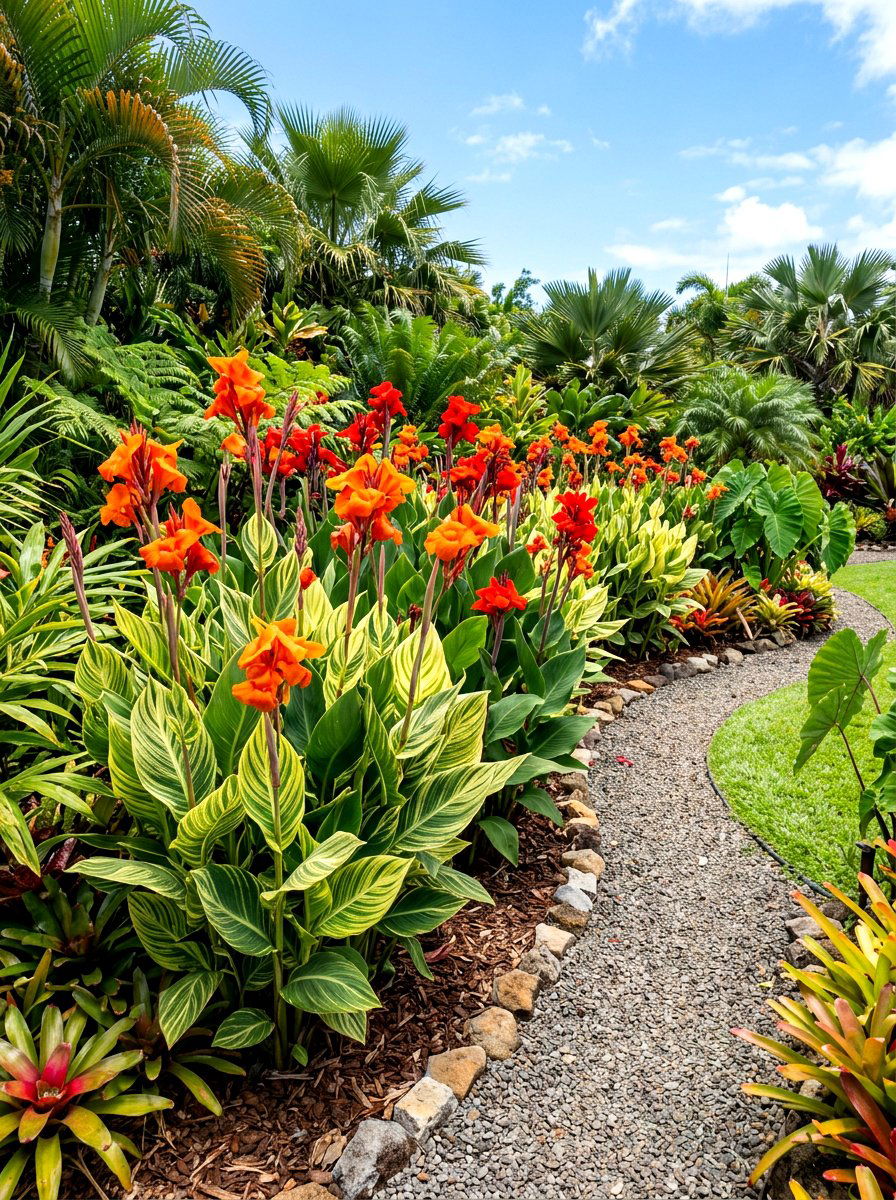
River rock landscaping transforms any outdoor space into a serene, low-maintenance haven that radiates natural elegance and structural beauty. These smooth, water-worn stones offer an incredible variety of colors, sizes, and textures, making them one of the most versatile materials for modern homeowners. Whether you are looking to solve drainage issues or simply want to boost your curb appeal, river rocks provide a permanent solution that looks better with age. They replace messy organic mulch, define clear boundaries between different garden zones, and create a sophisticated backdrop for vibrant greenery. This comprehensive guide explores thirty creative ways to integrate these timeless stones into your yard for a Pinterest-worthy transformation.
1. Dry Creek Bed
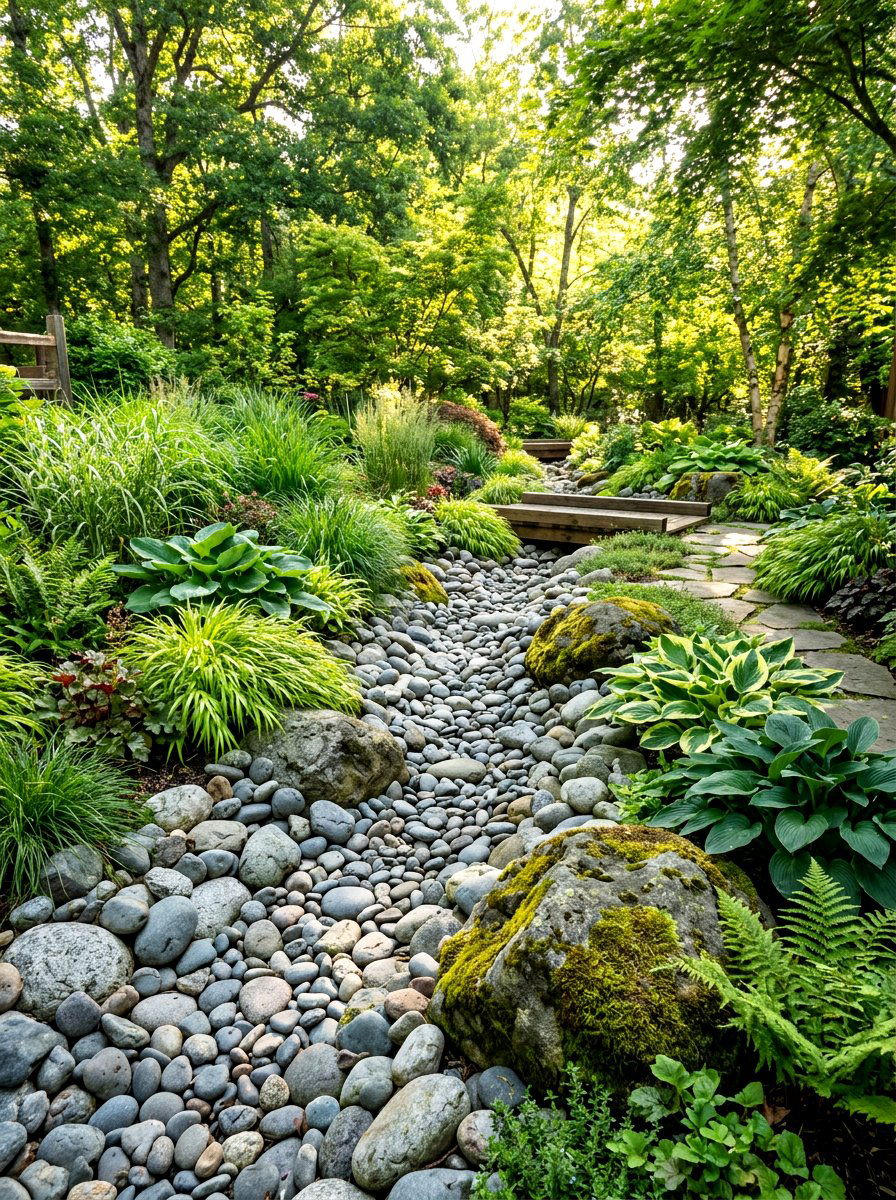
Creating a dry creek bed is one of the most effective ways to manage water runoff while adding a striking visual element to your backyard. You should use a mix of large boulders and smaller smooth stones to mimic the look of a natural stream that has temporarily dried up. This feature works beautifully in areas where grass struggles to grow due to heavy rain or poor soil quality. By varying the rock sizes and adding native grasses along the edges, you create a realistic landscape feature that guides the eye through the garden. It is a functional choice that also serves as a stunning focal point during dry seasons.
2. Garden Bed Edging
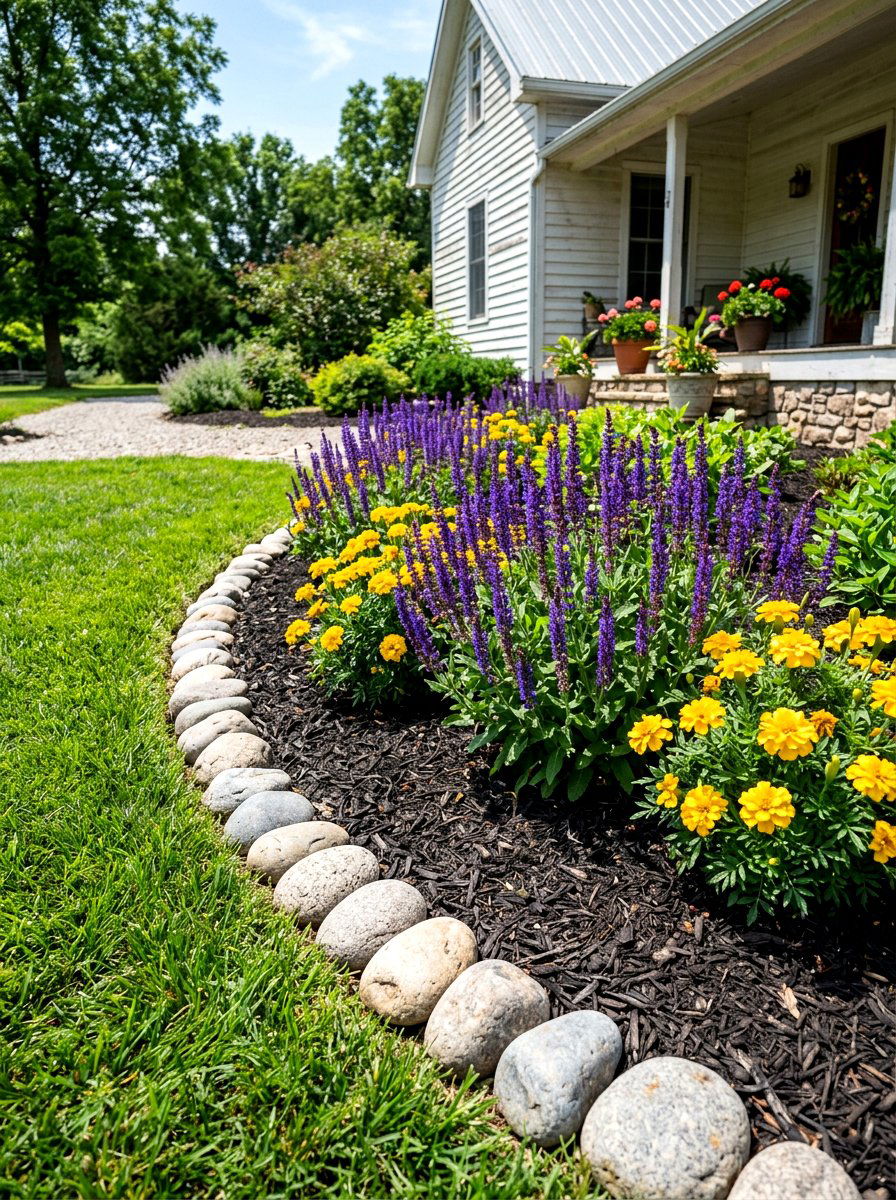
Using river rocks as a natural border for your flower beds provides a clean and polished look that lasts for many years. Unlike plastic or wooden edging, stones do not rot or fade in the sun, ensuring your garden maintains its structure throughout every season. You can choose larger rocks to create a sturdy physical barrier that keeps mulch from washing onto your lawn during heavy summer storms. The contrast between the smooth, grey stones and the dark soil or vibrant green foliage creates a professional aesthetic. This simple addition helps define the shapes of your planting zones while significantly reducing the time spent on edge trimming.
3. Walkway Stepping Stones
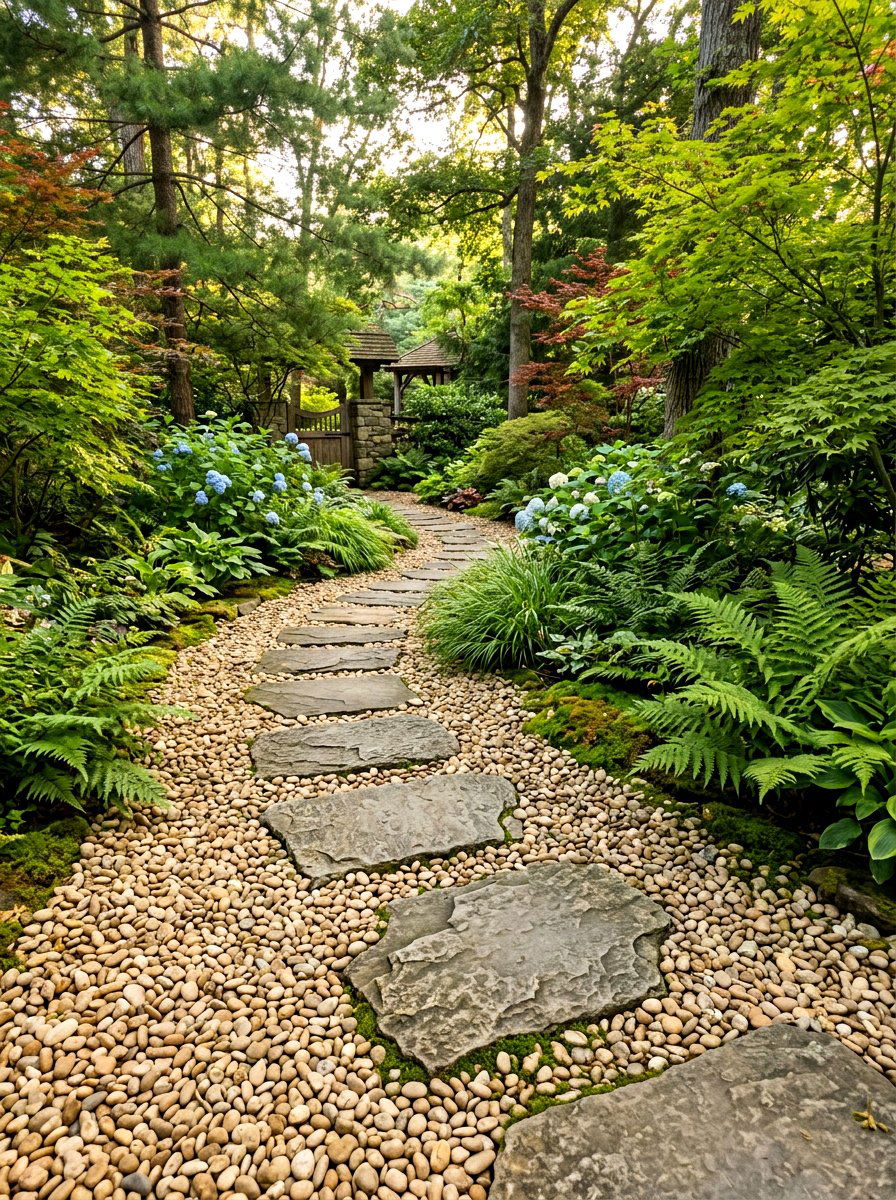
A path made of large, flat flagstones surrounded by smaller river rocks creates a charming and durable walkway for any side yard or garden. This combination offers a stable surface for walking while allowing water to drain naturally into the ground below. You should choose stones in a color palette that complements your home’s exterior to create a cohesive look across the entire property. The small rocks fill the gaps between the larger steps, preventing weeds from sprouting and keeping the path looking tidy. This design is perfect for high-traffic areas where you want to maintain a natural, organic feel without the need for concrete.
4. Rock Mulch Alternative
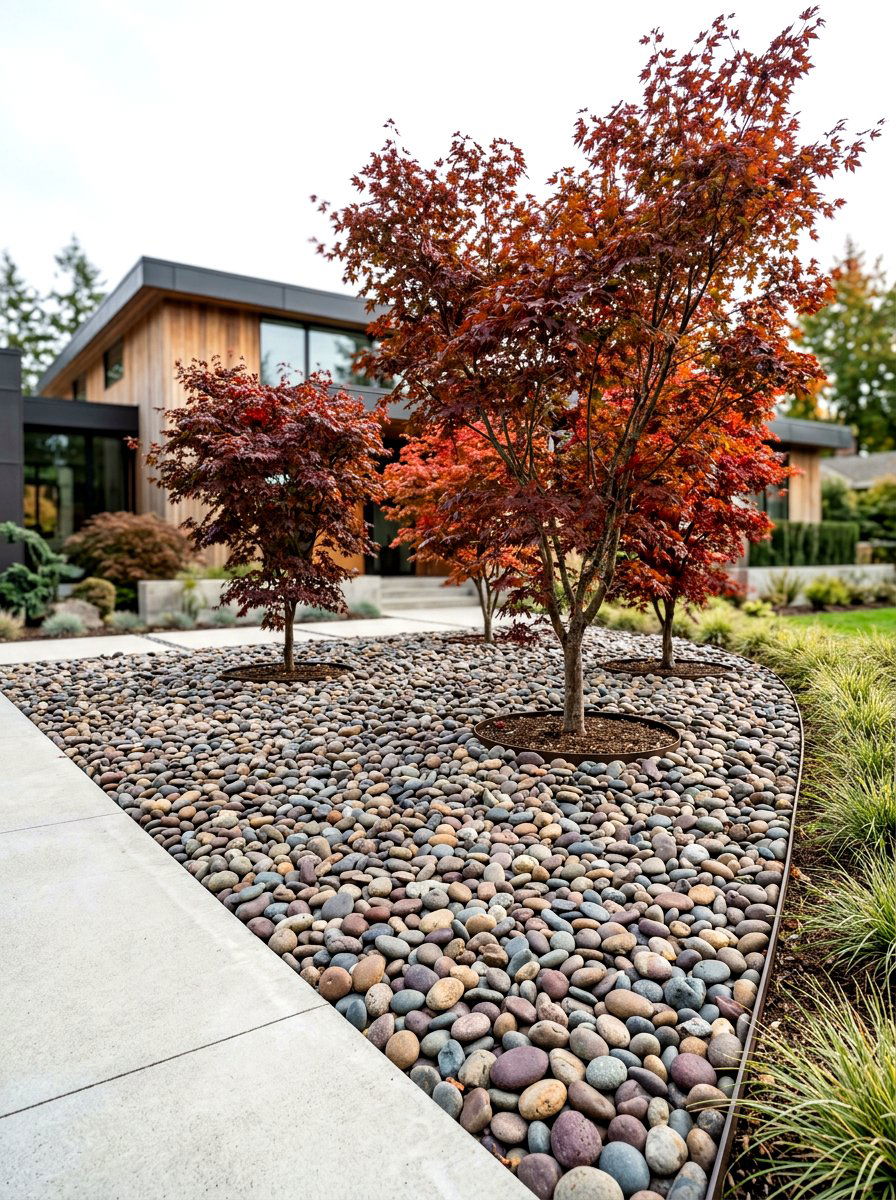
Replacing traditional wood mulch with river rocks is a smart move for homeowners who want a permanent, fire-resistant, and low-maintenance ground cover. Stones do not decompose, meaning you will not have to spend money or effort reapplying them every spring like you do with wood chips. They are excellent at retaining soil moisture and regulating temperature, which helps your plants thrive even during the hottest months of the year. Because rocks do not blow away in the wind, your garden beds will stay looking pristine and organized. This modern approach to mulching offers a clean, sophisticated look that highlights the unique textures of your favorite garden plants.
5. Backyard Fire Pit
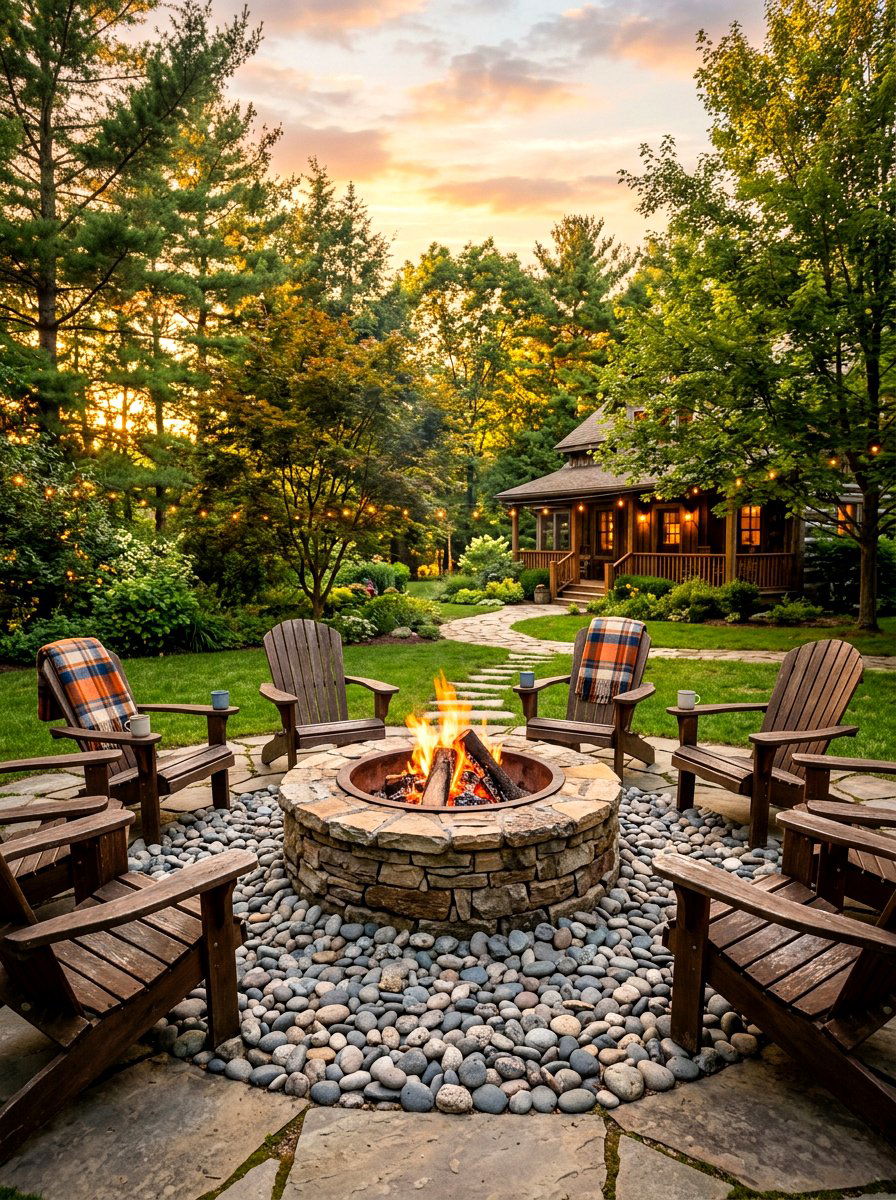
Building a river rock base around your fire pit area creates a safe and stylish zone for evening gatherings with friends and family. The non-combustible nature of the stones makes them a practical choice for surrounding a heat source while adding a cozy, rustic charm to the space. You can use medium-sized rocks to create a level surface for chairs, ensuring that your outdoor furniture remains stable on the ground. The natural earthy tones of the river stones complement the flickering flames and the surrounding greenery, creating a tranquil atmosphere. This setup is incredibly easy to clean and maintains its beauty even after many seasons of heavy use.
6. Zen Garden Layout
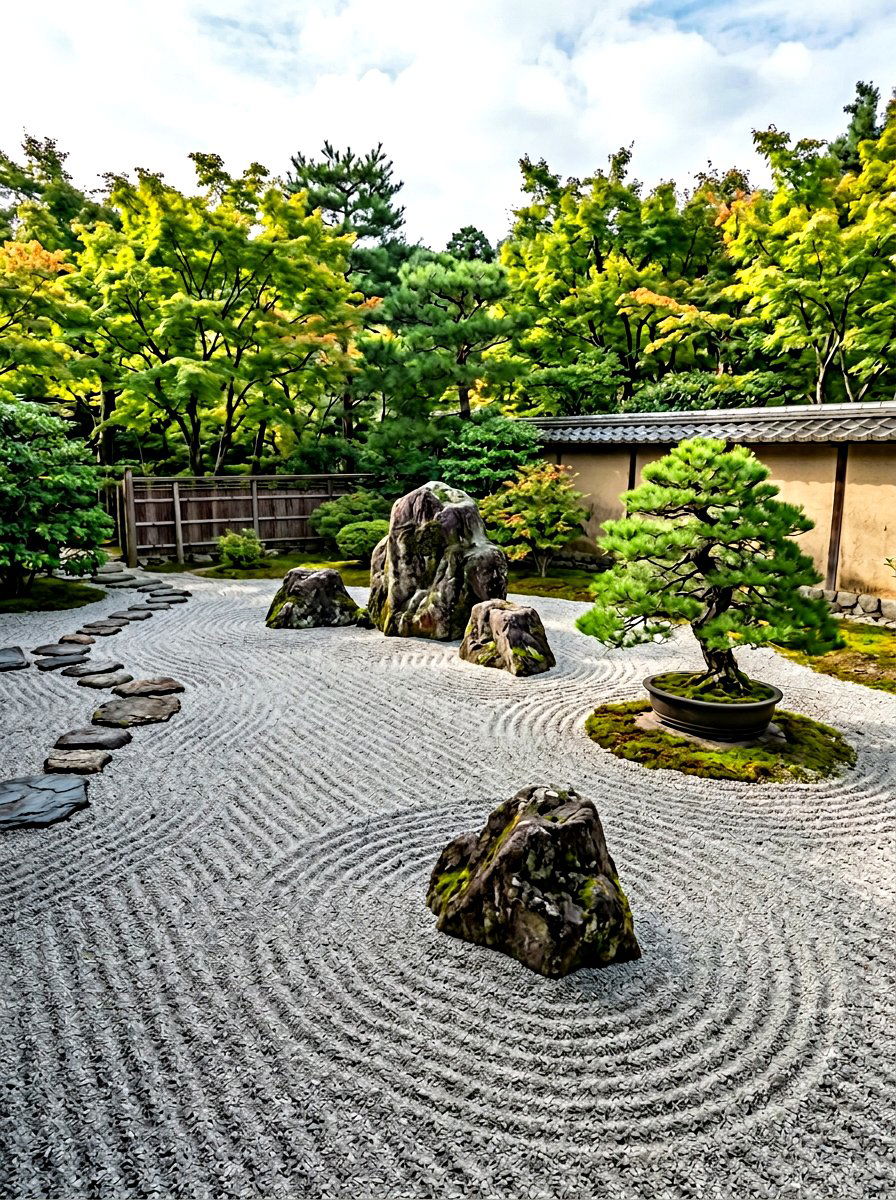
Designing a Zen-inspired space with river rocks allows you to create a peaceful sanctuary dedicated to relaxation and quiet reflection in your own backyard. Use smooth, light-colored stones to represent flowing water, and incorporate a few large, dark boulders to symbolize mountains or islands within the landscape. This minimalist approach focuses on clean lines and negative space, which helps to reduce visual clutter and promotes a sense of calm. You can even include a small wooden rake to create patterns in the smaller pebbles, adding an interactive element to the design. This type of rock garden requires very little water and almost no maintenance once the initial layout is complete.
7. Sloped Yard Drainage
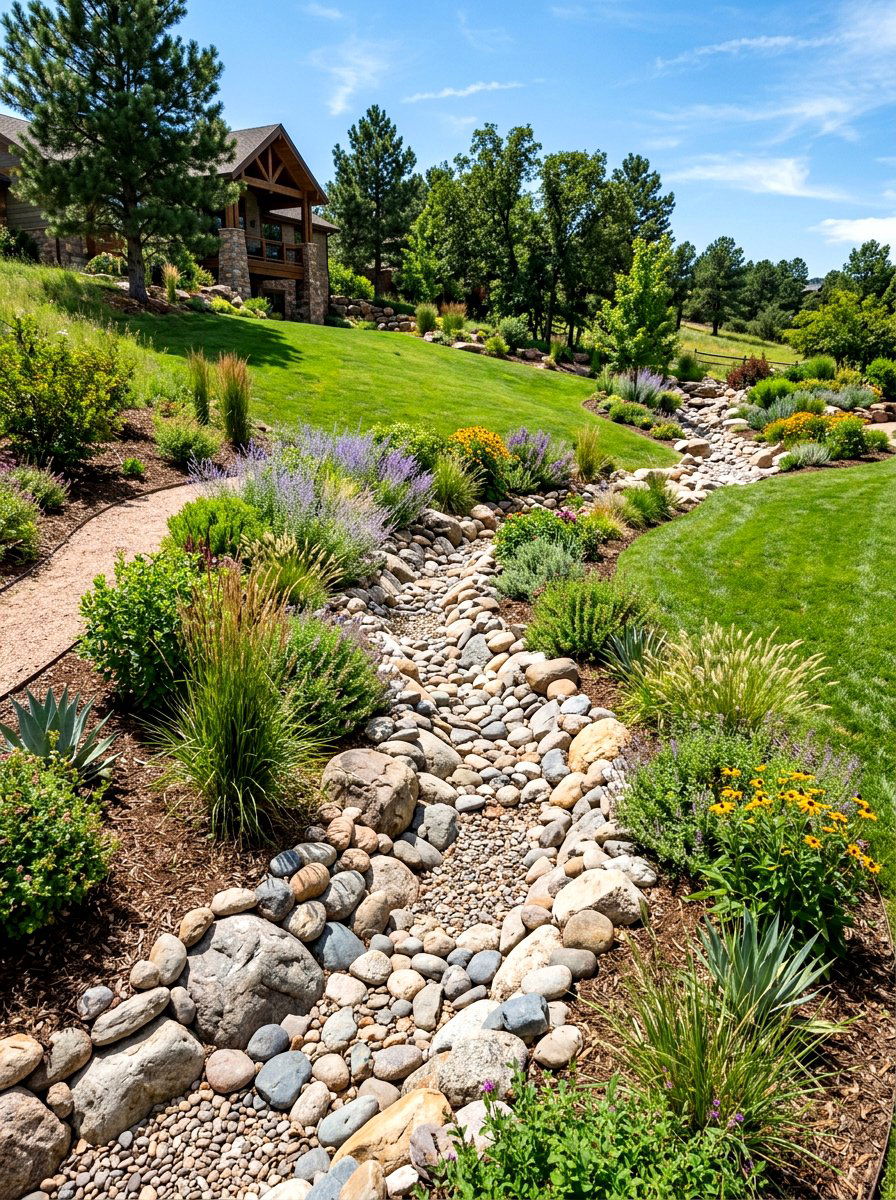
Managing a steep slope can be difficult, but using river rocks to create a functional drainage swale helps prevent soil erosion and unsightly mud. By placing heavy stones in the path of natural water flow, you slow down the runoff and allow it to soak into the earth gradually. This method protects your lawn and prevents your garden beds from being washed away during intense rainfalls. You should layer different sizes of rock to create a natural-looking trench that integrates seamlessly with the rest of your landscape. This practical solution turns a potential problem area into an attractive feature that adds value and stability to your property.
8. Water Fountain Base
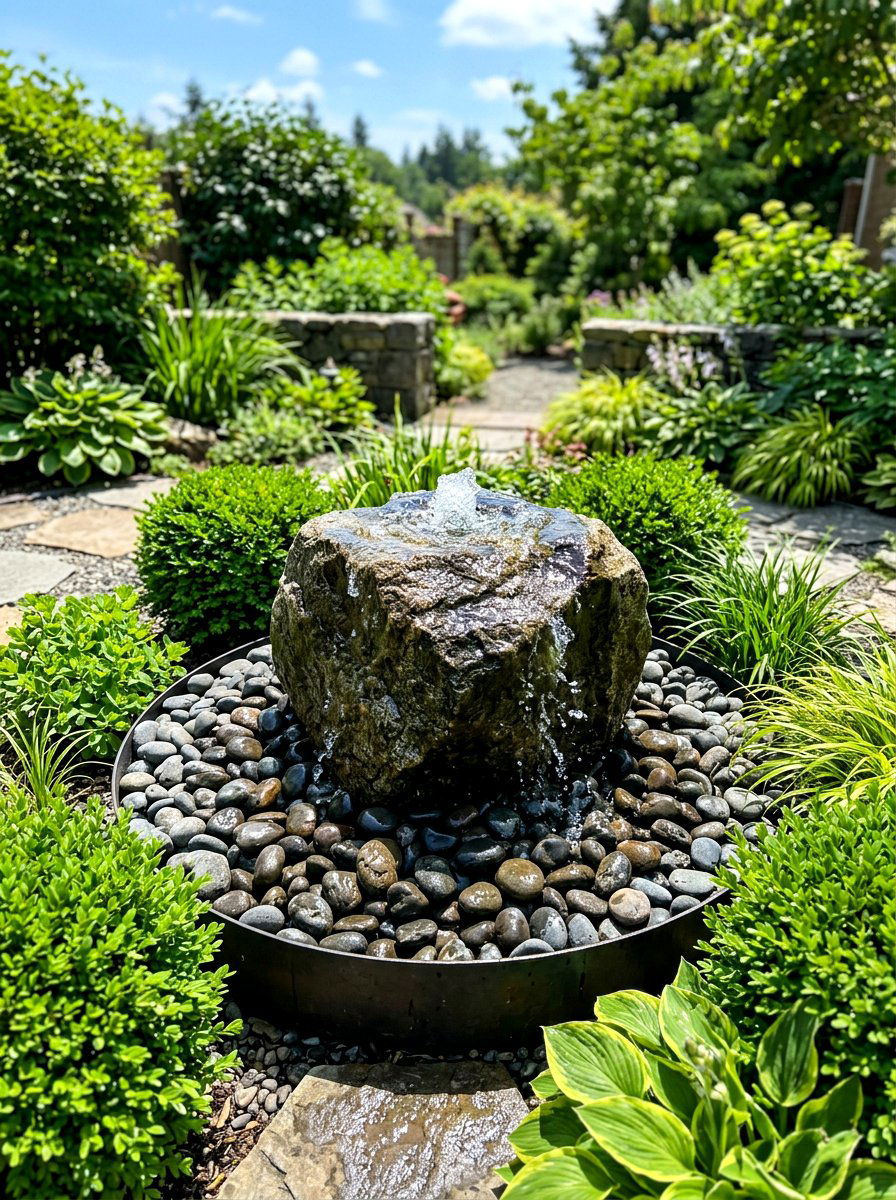
A river rock base is the perfect way to anchor a standalone water fountain and hide any unsightly mechanical components or black plastic liners. The water splashing against the smooth stones creates a soothing sound and keeps the area around the fountain looking natural and well-integrated. You can choose rocks that darken when wet to add a dynamic visual element that changes throughout the day based on the water flow. This design helps to prevent splashing onto nearby walkways, keeping the surrounding area dry and safe for pedestrians. It is a simple yet effective way to elevate a standard garden feature into a professional-looking water installation.
9. Modern Succulent Garden
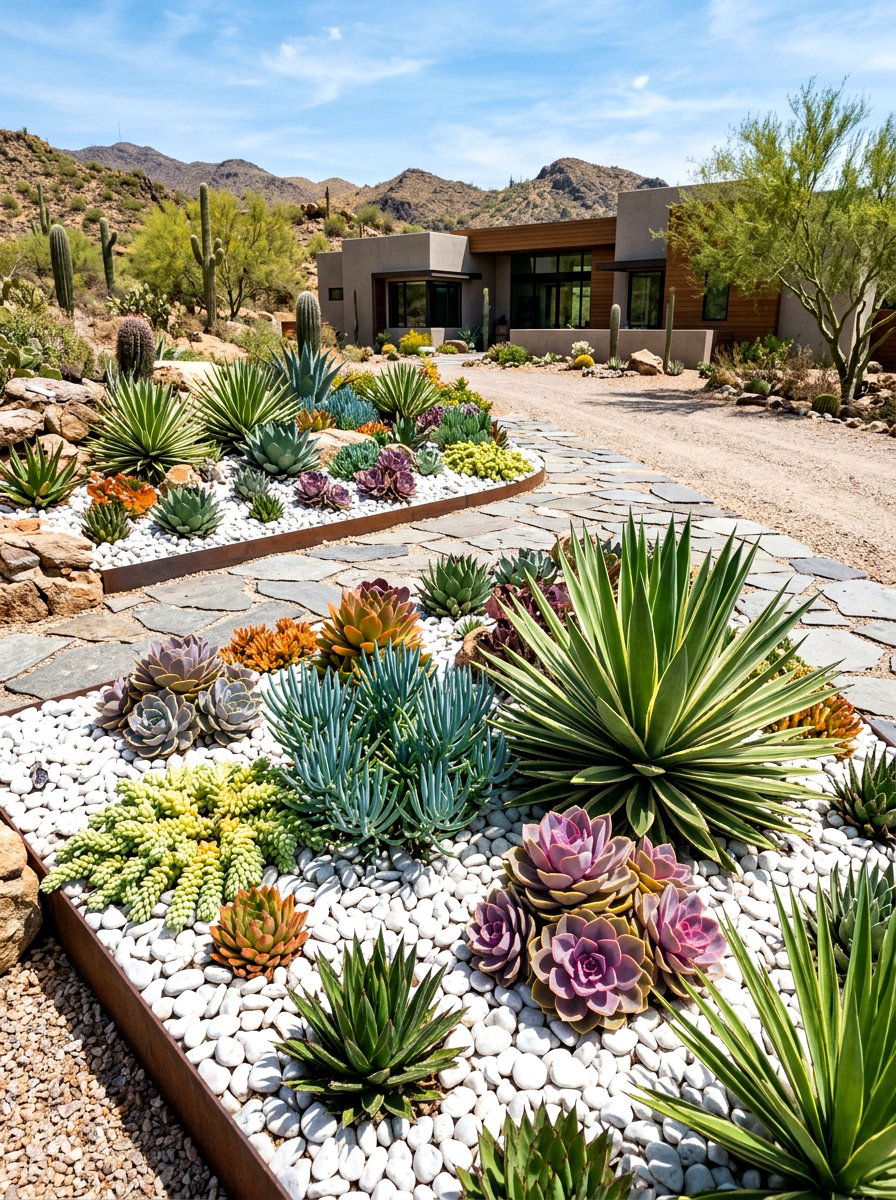
Pairing river rocks with various types of succulents creates a contemporary and water-wise garden that thrives with very little intervention from the homeowner. The heat-retaining properties of the stones provide an ideal environment for desert plants, while the excellent drainage prevents root rot during the rainy season. You can use different colors of rock to create striking patterns or to highlight the unique architectural shapes of plants like agave or echeveria. This style of landscaping is perfect for small urban yards or sun-drenched corners where traditional grass often fails. The result is a vibrant, textured landscape that remains beautiful and green all year round without constant watering.
10. Front Yard Curb Appeal
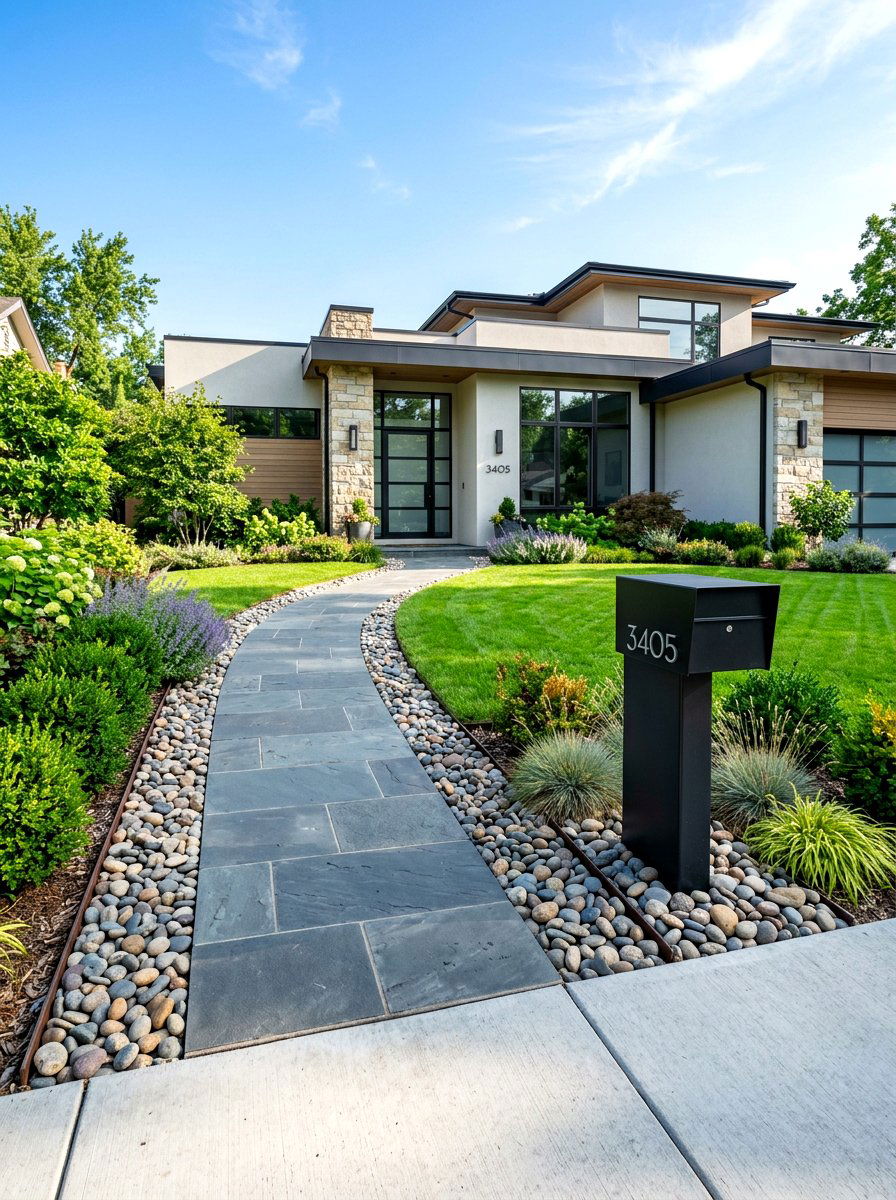
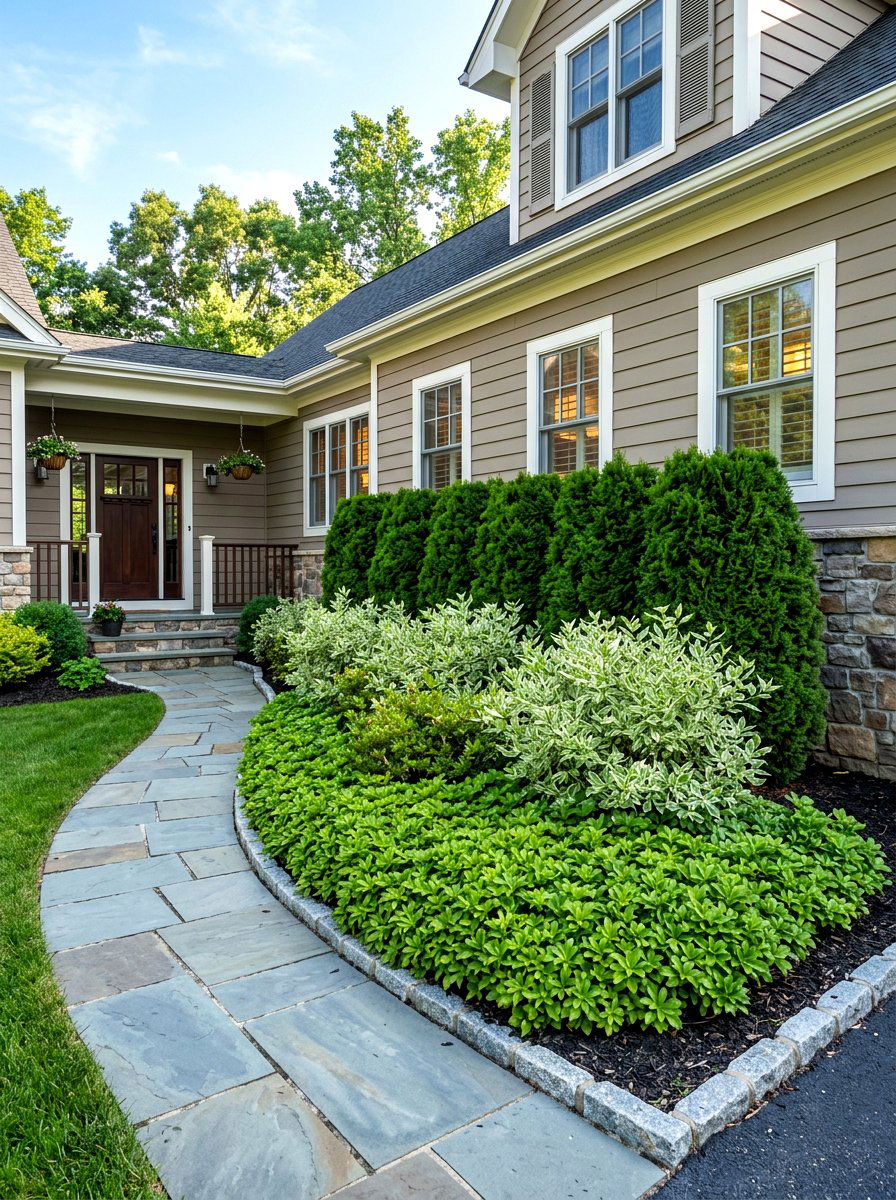
Enhancing your front yard with river rock accents creates an immediate sense of luxury and careful maintenance that significantly boosts your home's curb appeal. You can use the stones to frame your entryway, line the driveway, or create beautiful islands around your favorite specimen trees. The neutral tones of the rock provide a versatile backdrop that works well with any architectural style, from traditional farmhouses to sleek modern builds. By replacing high-maintenance grass patches with decorative rock beds, you create a clean and organized look that stays perfect regardless of the weather. This small investment in landscaping makes a powerful first impression on guests and potential buyers alike.
11. Pond Edge Rockery
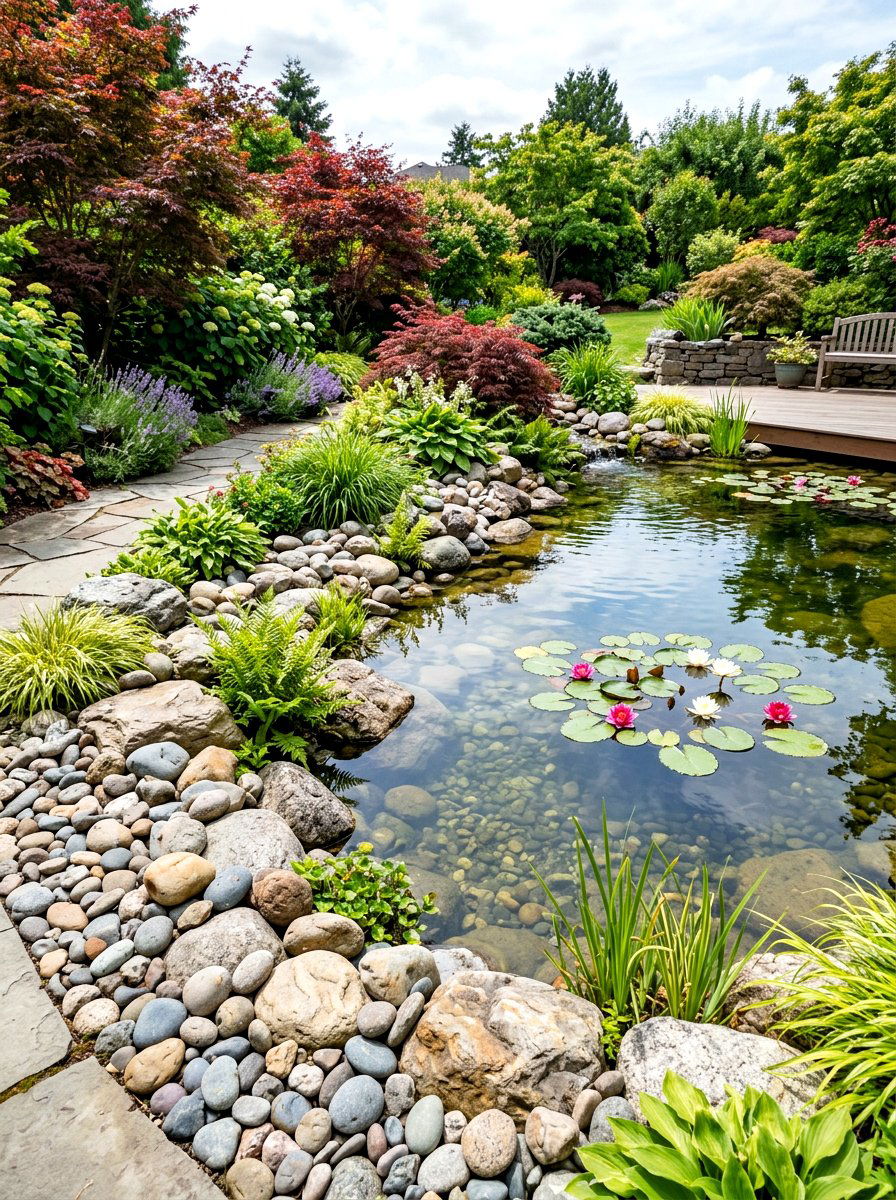
Integrating river rocks around the perimeter of a garden pond helps to disguise the rubber liner and creates a seamless transition between water and land. You should use a variety of stone sizes, including some that partially submerge, to mimic the look of a natural shoreline found in the wild. This arrangement provides hiding spots for beneficial pond life and helps to keep the water clear by filtering out some debris. The smooth texture of the stones is safe for fish and creates a beautiful reflective surface when the sun hits the water. This naturalistic approach makes your artificial pond look like it has been part of the landscape for decades.
12. Tree Ring Accent
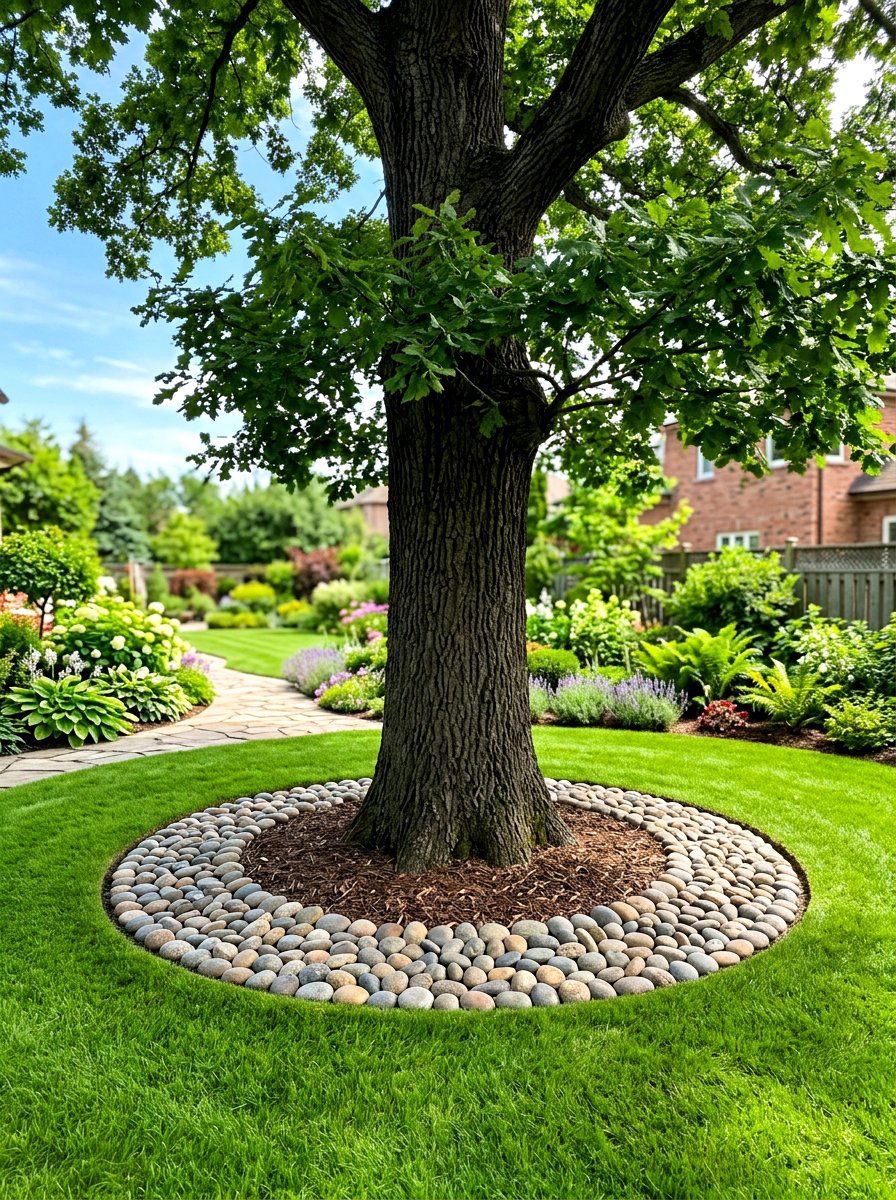
Creating a clean circle of river rocks around the base of your trees protects the trunk from lawn mower damage and suppresses competing weeds. This simple design feature highlights the beauty of the tree while providing a neat, finished look to your entire yard. You should leave a small gap between the rocks and the bark to ensure proper air circulation and to prevent moisture buildup against the wood. The stones help to keep the root zone cool and moist, which is especially beneficial for young or newly planted trees. This low-cost project can be completed in an afternoon and immediately improves the organization of your outdoor space.
13. Driveway Stone Border
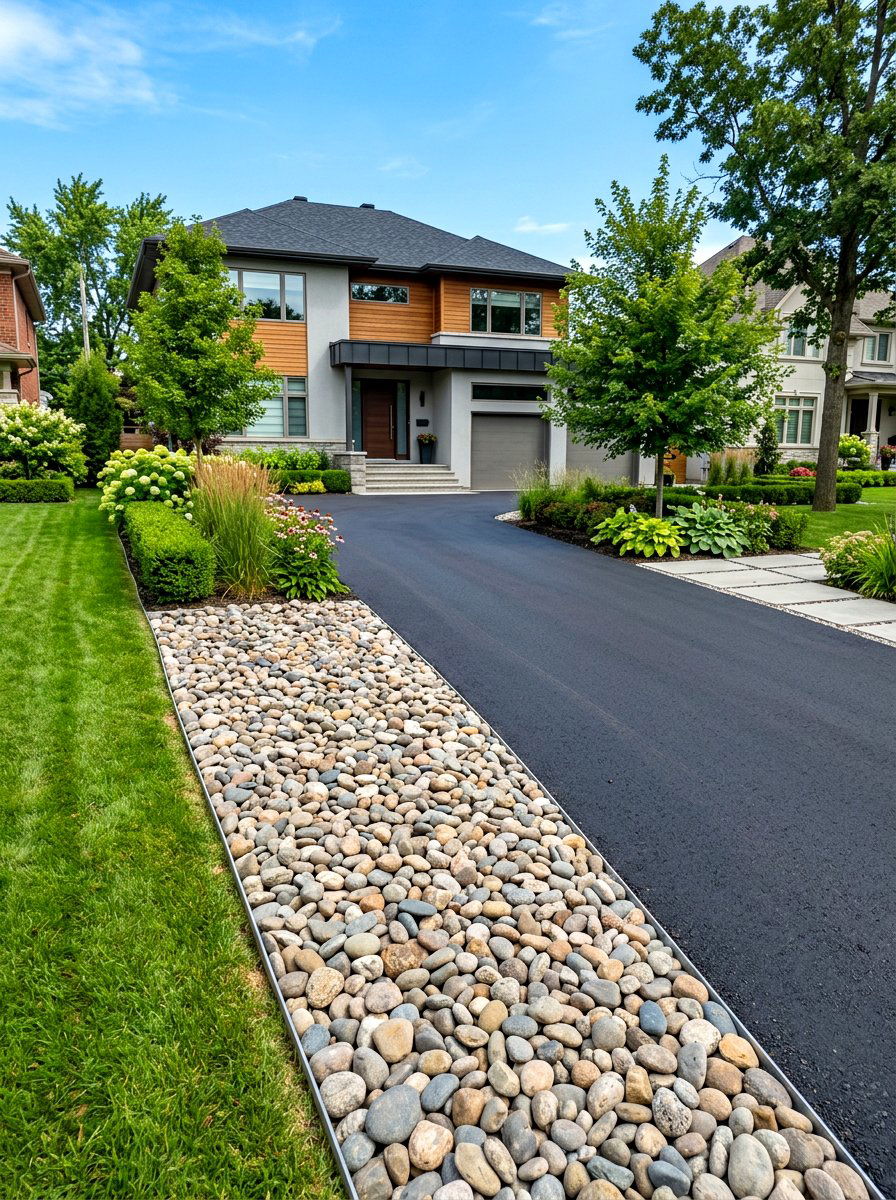
A river rock border along the sides of a gravel or paved driveway adds a layer of sophistication and prevents soil from washing onto the surface. This border defines the edges clearly, making it easier for drivers to stay on the path while protecting your lawn from heavy vehicle tires. You can use larger, heavier stones for this purpose to ensure they stay in place even during extreme weather or when hit by a car. The contrast between the driveway material and the natural river stones creates an attractive frame for your home’s entrance. This functional addition helps with drainage and reduces the amount of mud tracked into your garage.
14. Geometric Rock Pattern
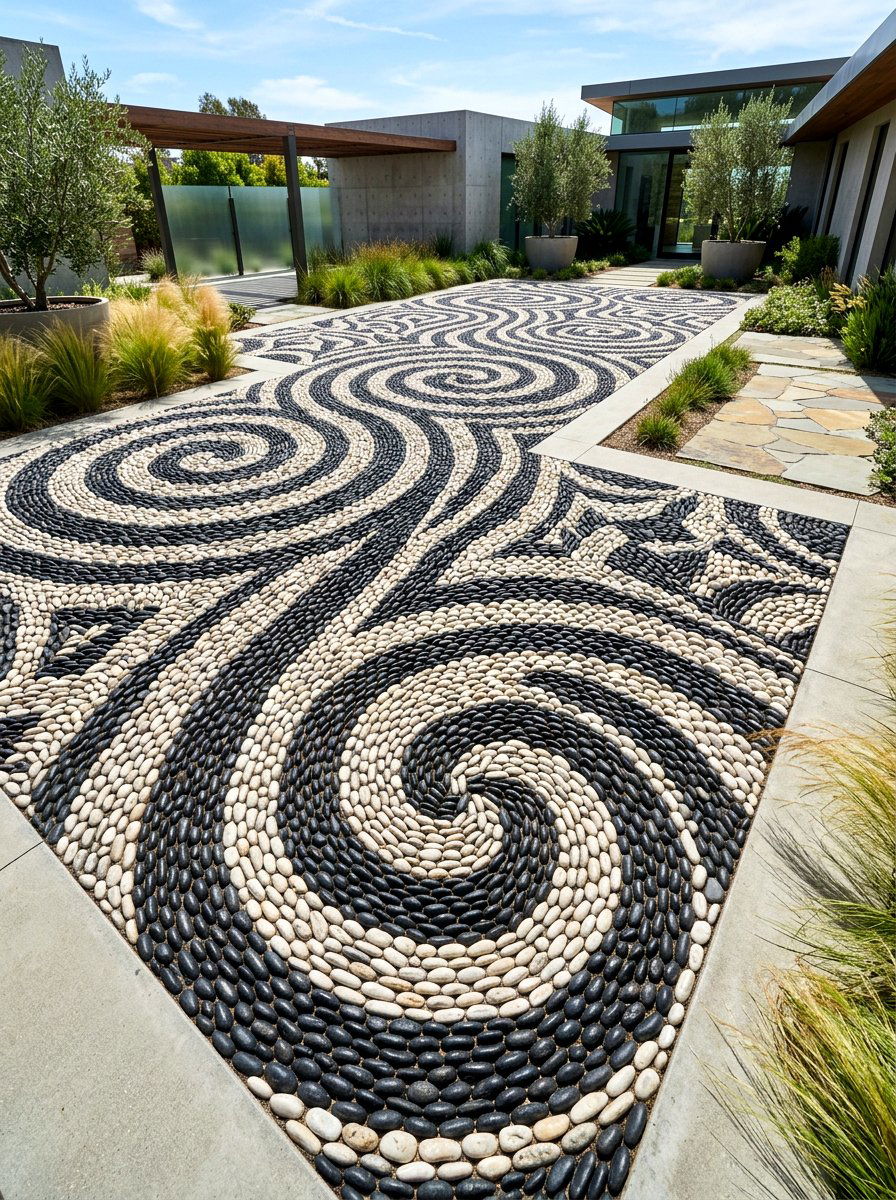
Using different colors and sizes of river rocks to create geometric patterns allows you to treat your landscape like a piece of living art. You can design swirls, checkerboards, or even modern abstract shapes that add a unique personality to your garden or patio area. This technique is particularly effective in small spaces where you want to make a big impact without using too many different plant species. By using landscape fabric underneath, you ensure that your intricate patterns remain sharp and clear for many years without any weed interference. This creative approach turns a flat, boring area into a visually stimulating focal point that sparks conversation.
15. Tropical Garden Path
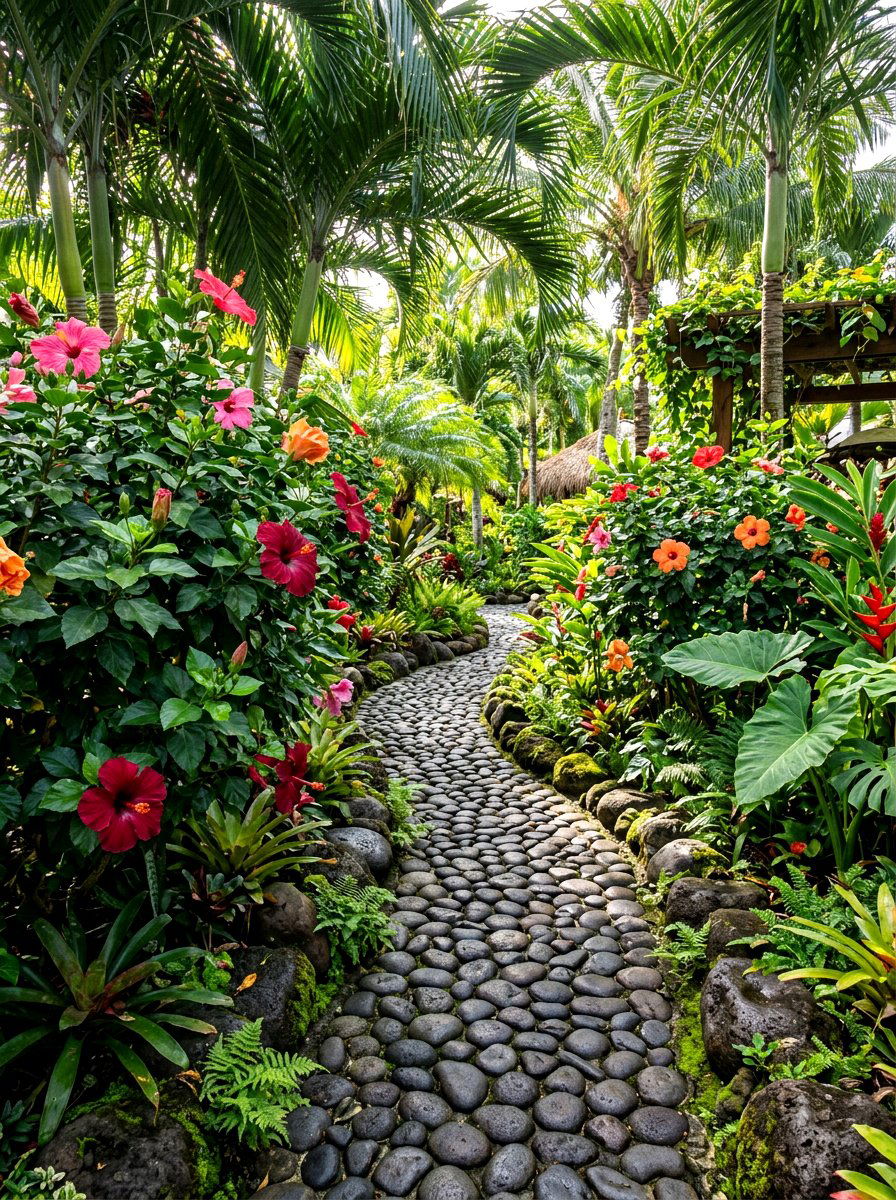
A winding path of smooth river rocks tucked between lush ferns and large-leafed tropical plants creates the feeling of a private jungle retreat in your backyard. The stones stay cool underfoot and provide a stable walking surface that handles high humidity and frequent watering without becoming slippery or muddy. You should choose darker or multi-colored rocks to enhance the exotic atmosphere and to contrast with the bright greens and vibrant floral colors. This type of pathway invites exploration and adds a sense of mystery to the garden layout. It is an excellent way to connect different zones of a large backyard while maintaining a cohesive, lush theme throughout.
16. Desert Xeriscaping Theme
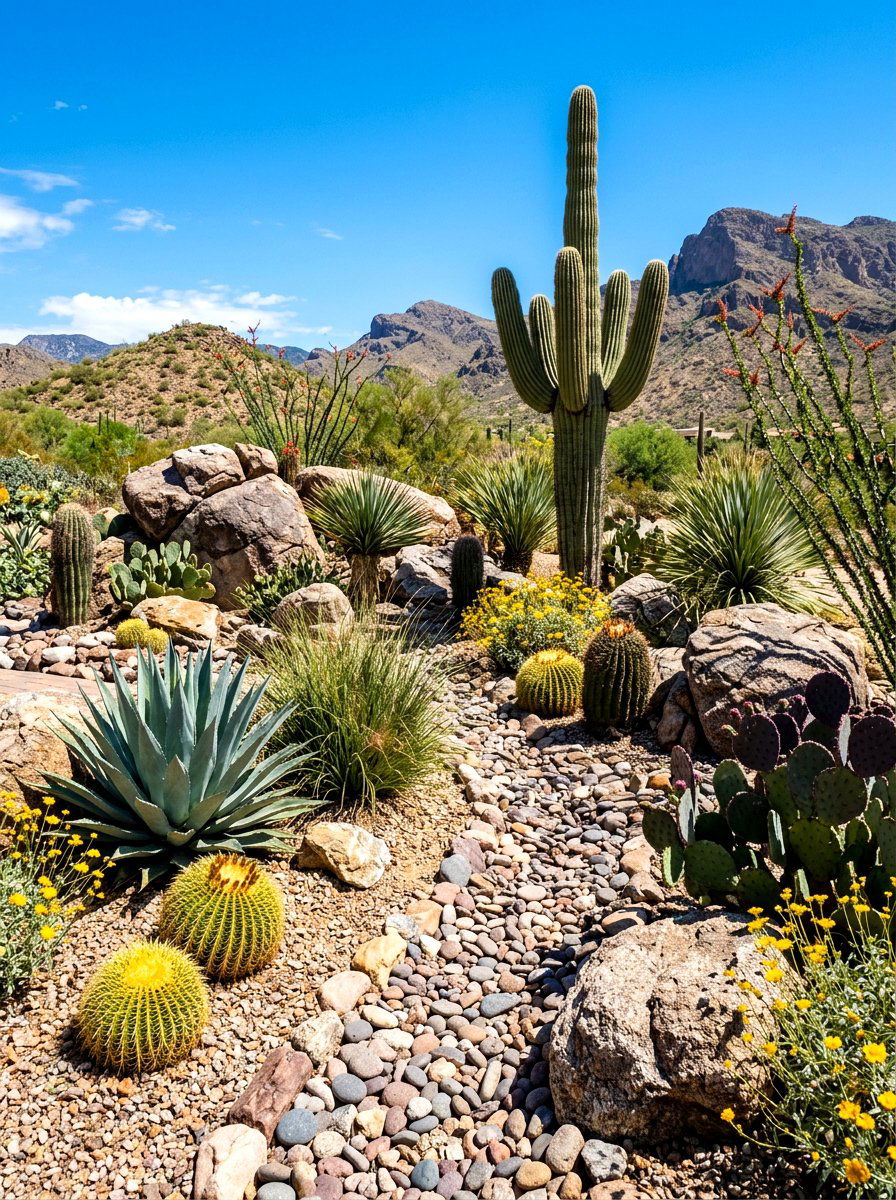
River rocks are the cornerstone of a successful xeriscape design, providing a beautiful and sustainable alternative to water-thirsty lawns in arid climates. By combining various sizes of rock with drought-tolerant plants and boulders, you create a landscape that is both environmentally friendly and visually stunning. The stones reflect heat and help the soil retain what little moisture is available, ensuring your plants remain healthy throughout the long summer. This design philosophy emphasizes the natural beauty of the local environment and significantly reduces your monthly water bill. A well-planned desert rock garden requires almost no maintenance, leaving you with more time to enjoy your outdoor living space.
17. Patio Perimeter Border
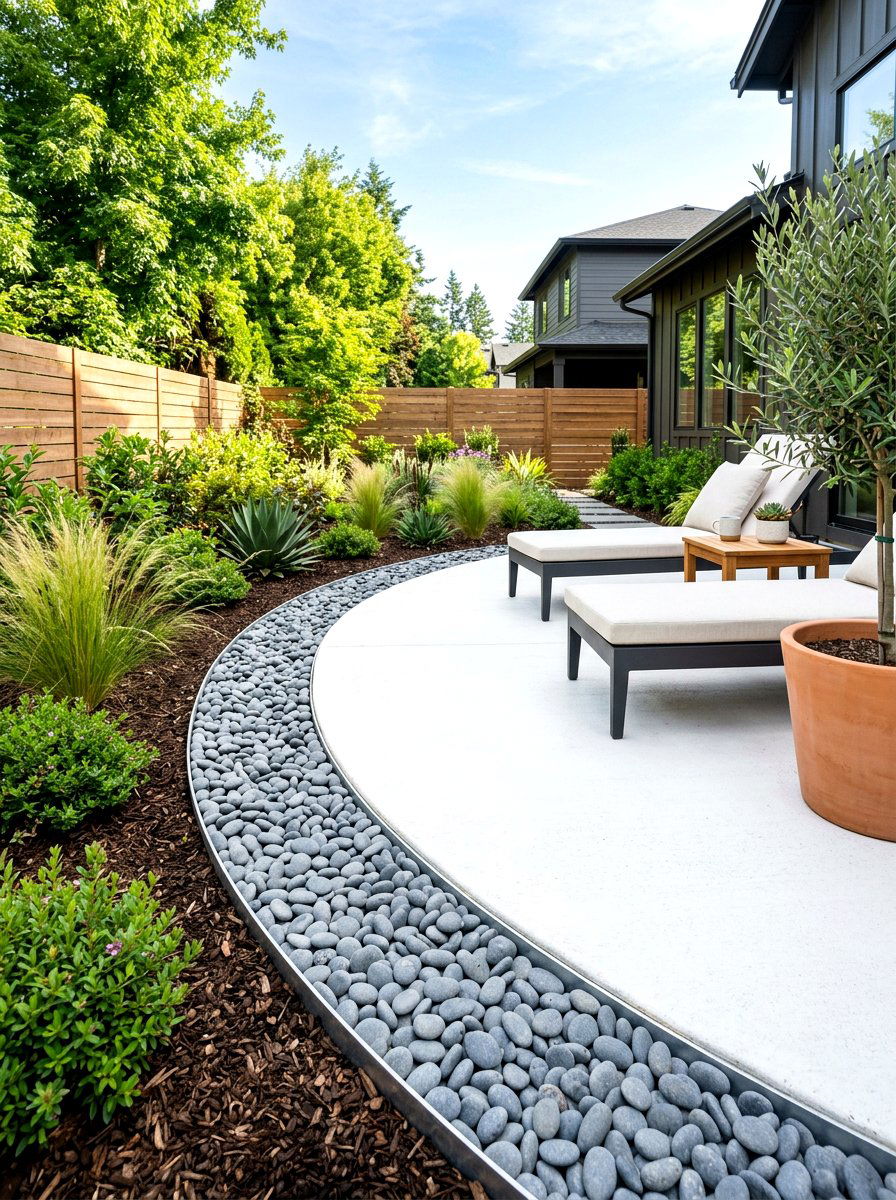
Adding a narrow border of river rocks around the edge of a concrete or stone patio creates a sophisticated transition into the rest of the yard. This small detail helps to catch rainwater falling off the roof or patio surface, preventing it from pooling and creating muddy spots in the grass. You can use polished pebbles for a more high-end, luxurious look or rougher river stones for a casual, farmhouse feel. This border also acts as a physical barrier that prevents grass from creeping onto your patio, keeping the lines sharp and clean. It is an affordable way to make a standard patio look custom and professionally designed.
18. Rain Garden Swale
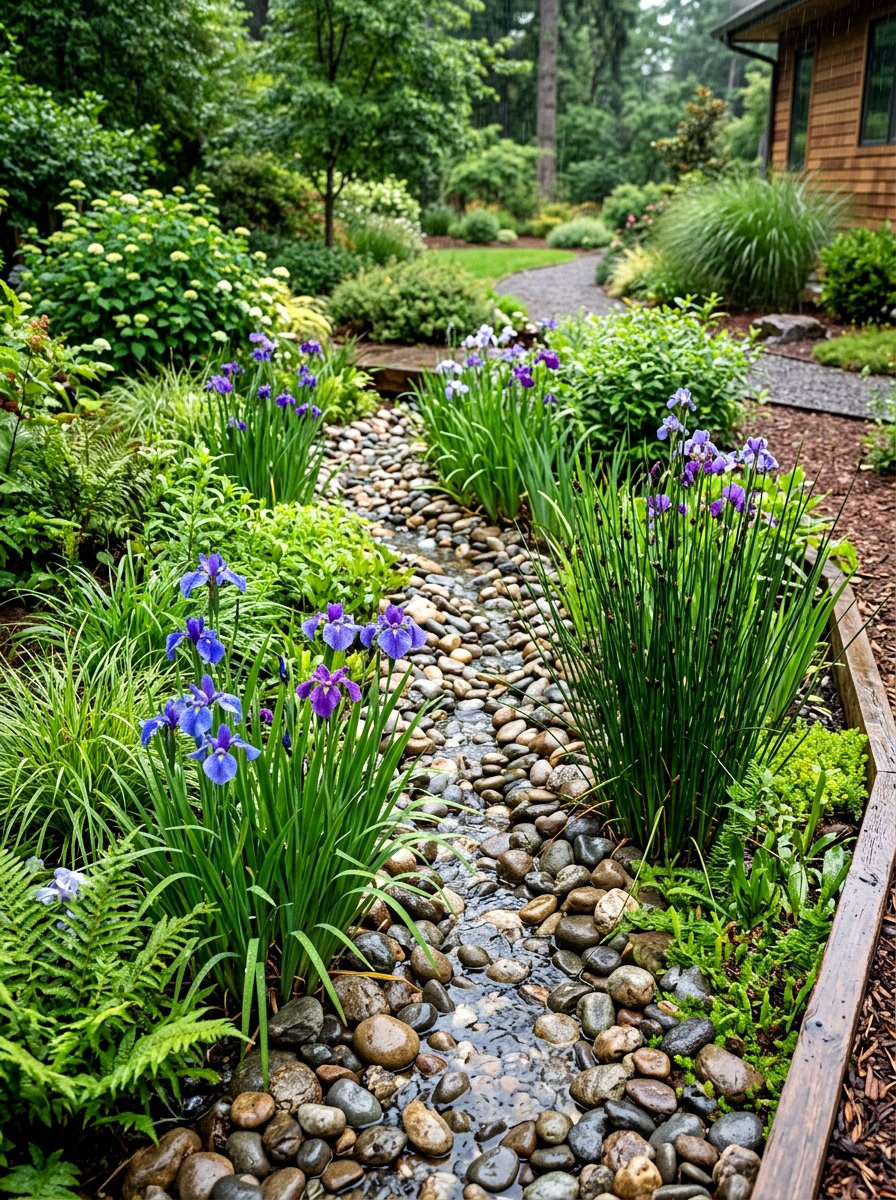
A rain garden swale lined with river rocks is an eco-friendly landscaping solution that helps manage heavy downpours by capturing and filtering stormwater runoff. The rocks stabilize the soil and prevent deep channels from forming while allowing water to seep into the ground at a controlled pace. You can plant moisture-loving flowers and grasses along the banks to create a beautiful, functional ecosystem that attracts birds and butterflies. This feature is particularly useful near downspouts or at the bottom of a slope where water tends to collect. It turns a potential drainage problem into a thriving garden area that benefits the local environment and adds visual interest.
19. Flagstone Path Infill
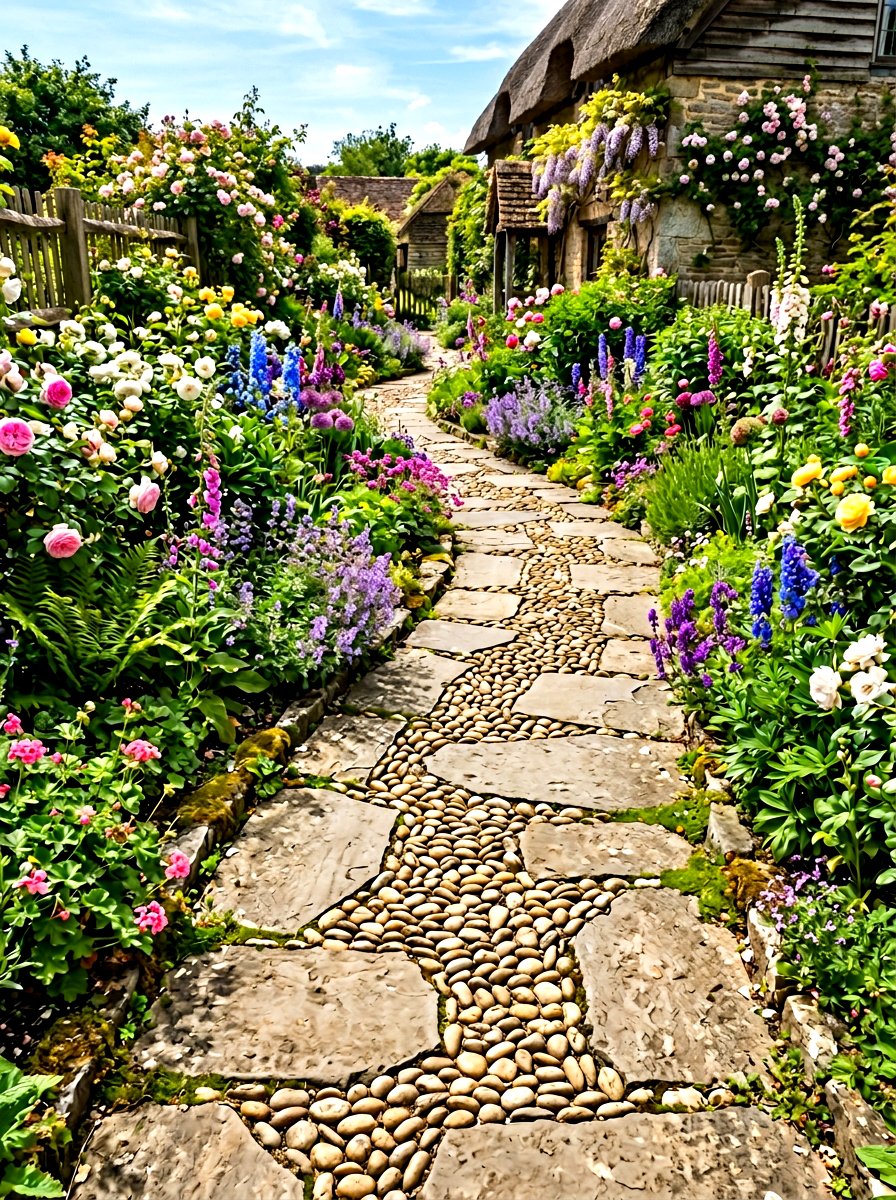
Using small river rocks to fill the gaps between large flagstone pavers creates a textured and visually interesting pathway that feels very natural. This "infill" method allows the path to flex slightly with the ground, preventing the larger stones from cracking during freezing and thawing cycles. The variety of colors in the river rocks can be used to highlight the natural beauty of the flagstone, creating a high-contrast and professional look. This design is also great for drainage, as water can easily pass through the pebbles instead of sitting on the surface. It is a timeless choice that works well in both traditional and contemporary garden styles.
20. Native Plant Rockery
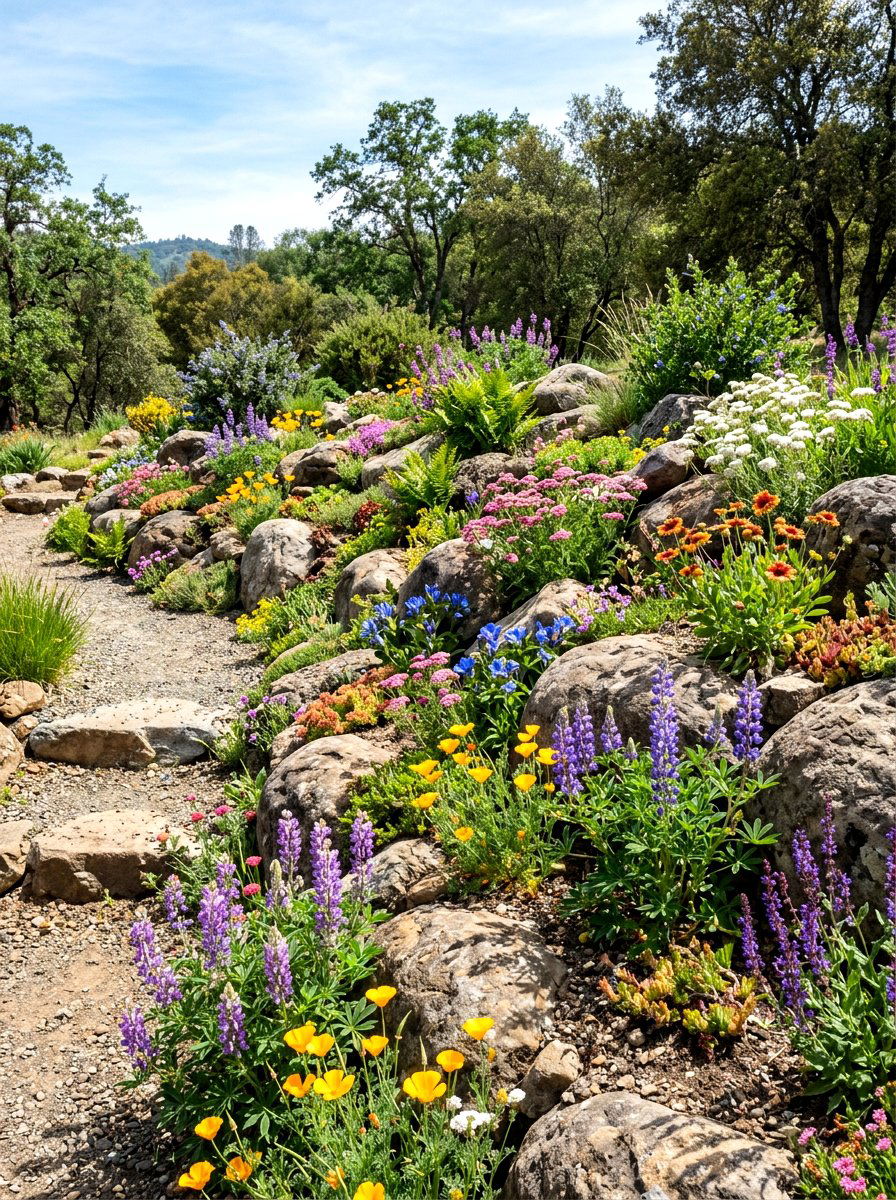
A native plant rockery uses river stones of all sizes to create a rugged, naturalistic habitat for local wildflowers and hardy shrubs. This approach to landscaping mimics the way plants grow in the wild, tucked between stones and protected from the elements. By using rocks found locally, you create a sense of place and ensure that the materials blend perfectly with the surrounding environment. This type of garden is incredibly resilient and provides essential food and shelter for local pollinators like bees and hummingbirds. It is a low-maintenance way to bring a piece of the natural wilderness into your own backyard for year-round enjoyment.
21. Mexican Beach Pebble
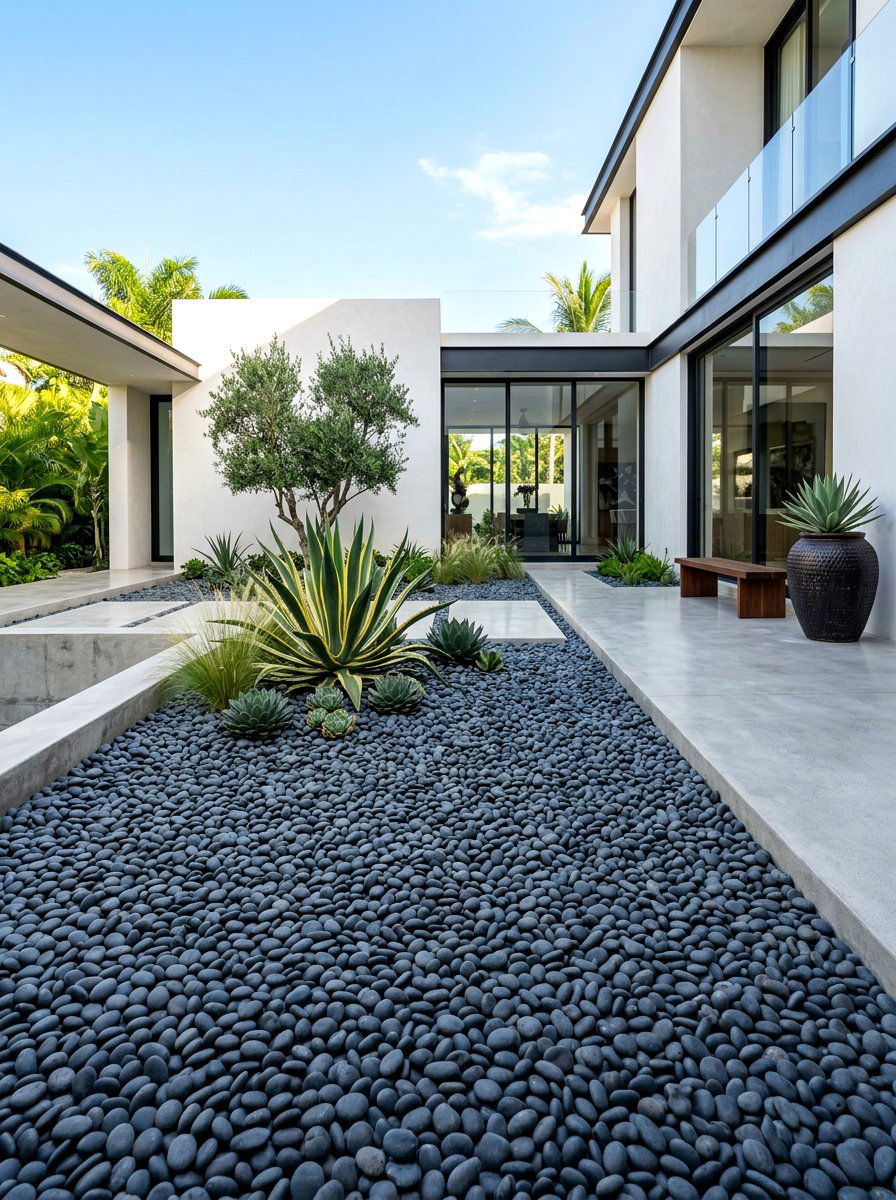
Mexican beach pebbles are premium, ultra-smooth river rocks that offer a sophisticated, matte finish in deep shades of grey, charcoal, and blue. These high-end stones are often used in modern and minimalist landscapes to create a clean, uniform look that exudes luxury and calm. Because they are so uniform in shape and color, they work perfectly as a ground cover in small courtyards or as an accent around high-end architectural features. They look especially stunning when wet, taking on a dark, glossy appearance that adds depth to the garden. While they are a more expensive option, the visual impact they provide is unmatched by standard gravel.
22. Colorful River Stone
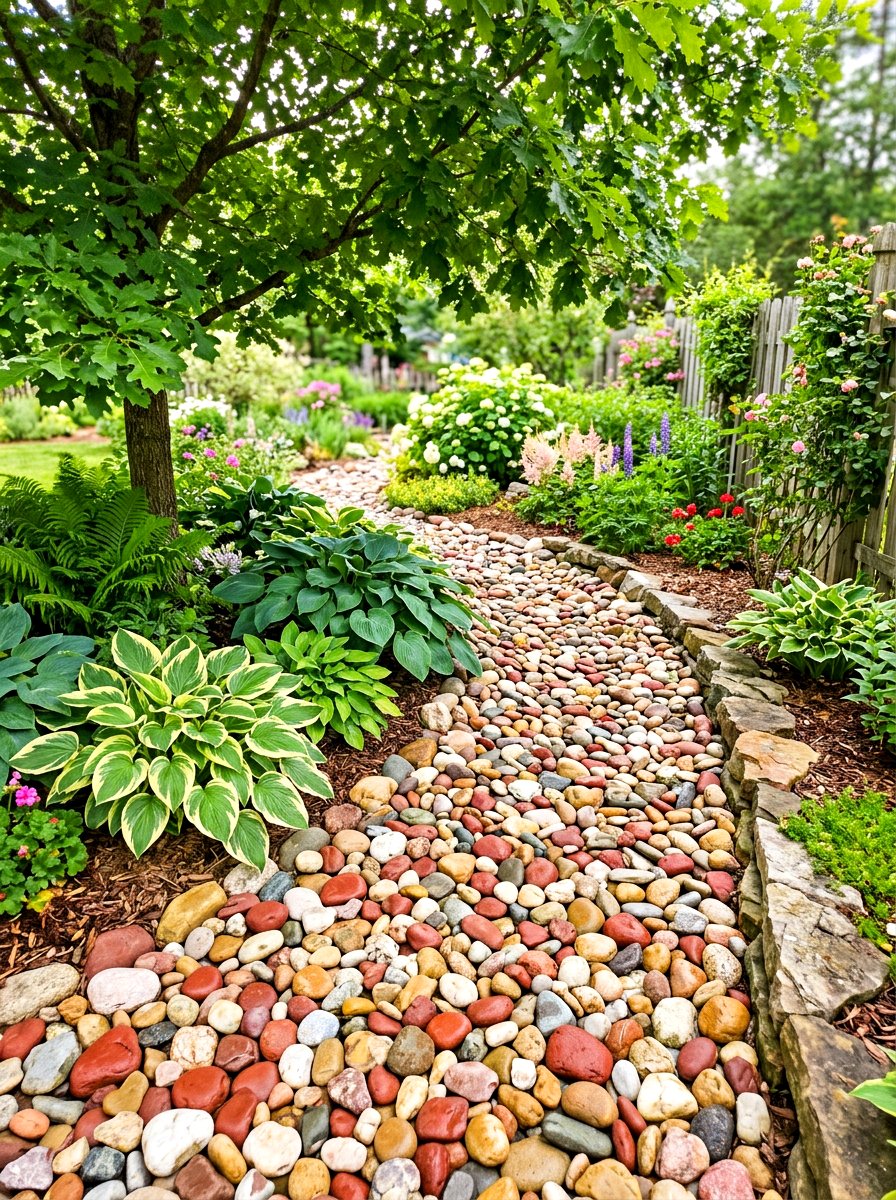
Choosing multi-colored river stones allows you to bring a palette of earthy reds, tans, whites, and greys into your landscape design. These varied tones create a warm and inviting atmosphere that feels very organic and less sterile than using a single-colored rock. You can use these stones to brighten up shaded areas of the yard where colorful flowers might struggle to grow. The mix of colors helps to hide dirt and debris, making it a very practical choice for high-traffic areas or under messy trees. This versatile material complements a wide range of home colors and adds a cheerful, natural energy to any outdoor space.
23. Minimalist Side Yard
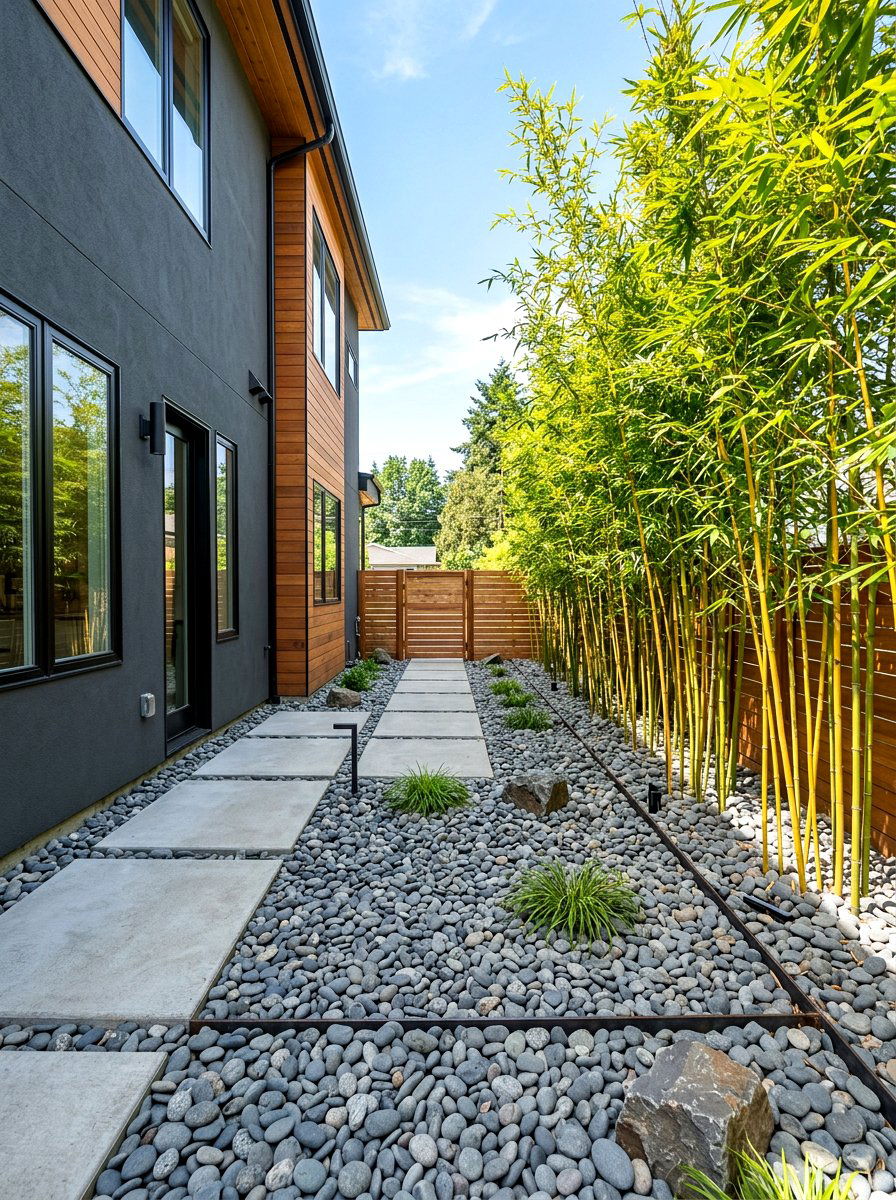
Narrow side yards are often difficult to landscape, but a clean bed of river rocks can turn these forgotten spaces into tidy and functional areas. By removing patchy grass and replacing it with a uniform layer of stone, you create a mud-free zone that is easy to walk through and maintain. You can add a few large, sculptural plants or a simple row of pavers to keep the design from feeling too empty. This minimalist approach makes the side of your house look wider and more organized while solving any potential drainage issues near the foundation. It is a smart, professional solution for a common landscaping challenge.
24. Shade Garden Texture
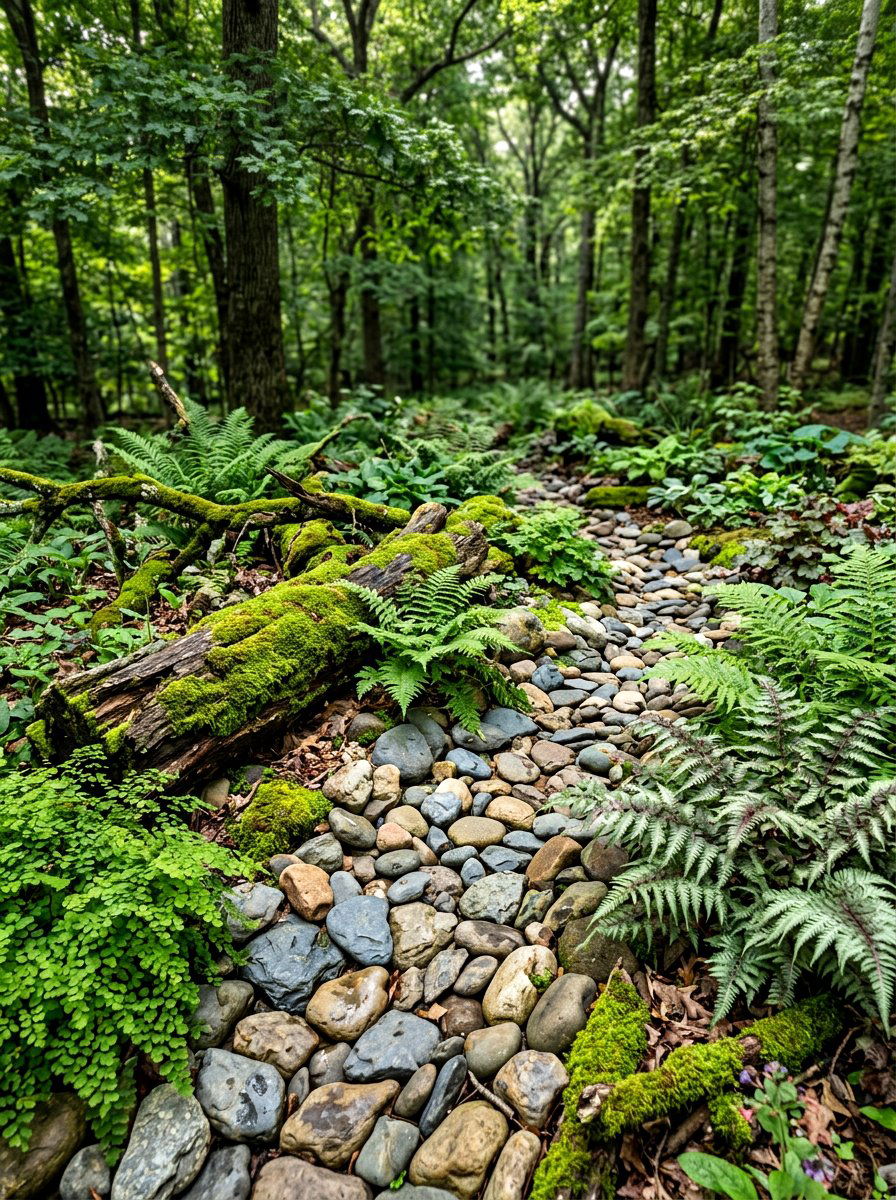
In areas where heavy tree cover prevents grass from thriving, river rocks provide much-needed texture and visual interest without the need for sunlight. You can combine smooth stones with shade-loving plants like hostas, ferns, and moss to create a lush, cool sanctuary that feels like a hidden forest floor. The light-colored rocks reflect the small amount of available light, helping to brighten up the darker corners of your backyard. This use of stone prevents soil erosion under the drip line of large trees and creates a clean, finished look. It is a practical and beautiful way to embrace the shady parts of your property.
25. Mosaic Rock Detail
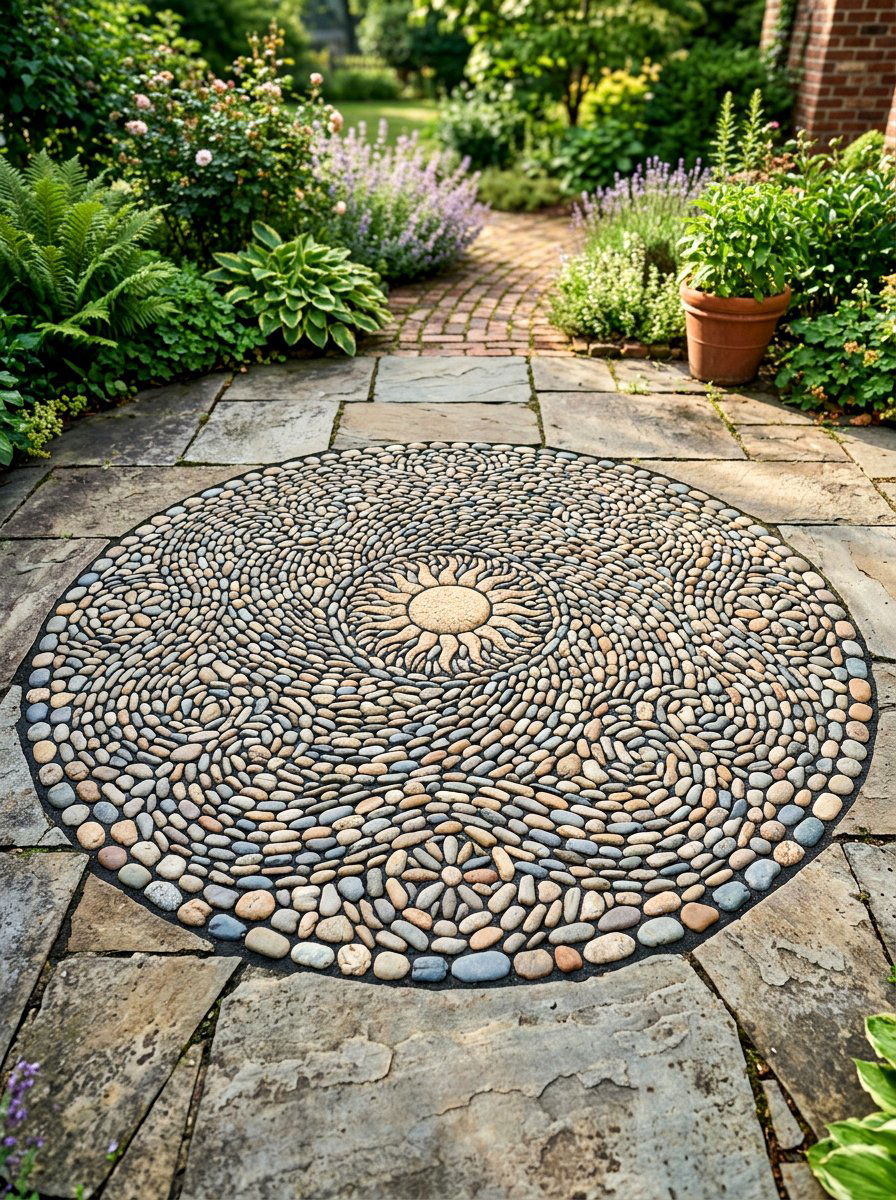
For a truly unique and artistic touch, you can embed small river rocks into mortar to create intricate mosaic patterns on your garden walls or walkways. This traditional technique allows you to design custom mandalas, waves, or floral motifs that reflect your personal style and creativity. These handcrafted details add a sense of history and craftsmanship to your home that cannot be achieved with mass-produced materials. The different textures and colors of the stones create a tactile surface that is as beautiful to look at as it is to touch. It is a labor of love that results in a one-of-a-kind landscape feature you will treasure.
26. Outdoor Seating Area
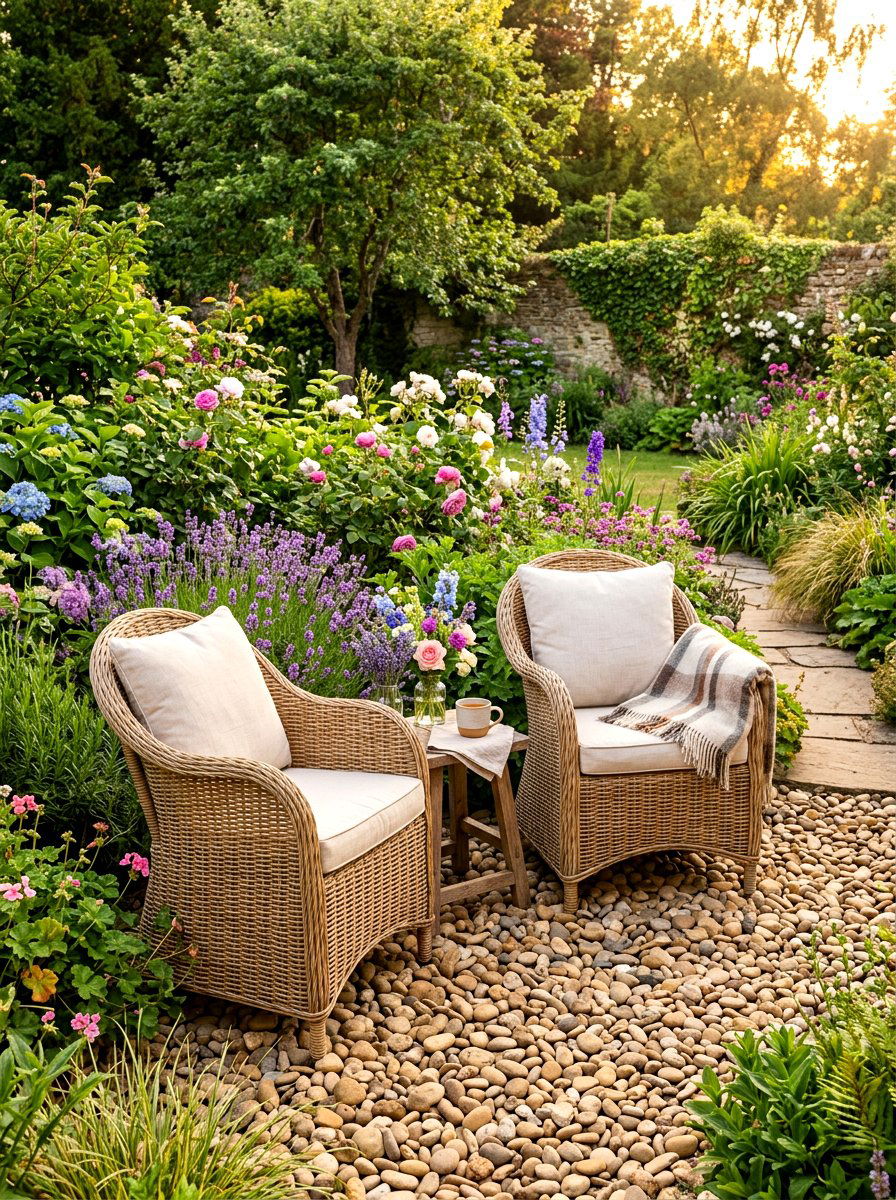
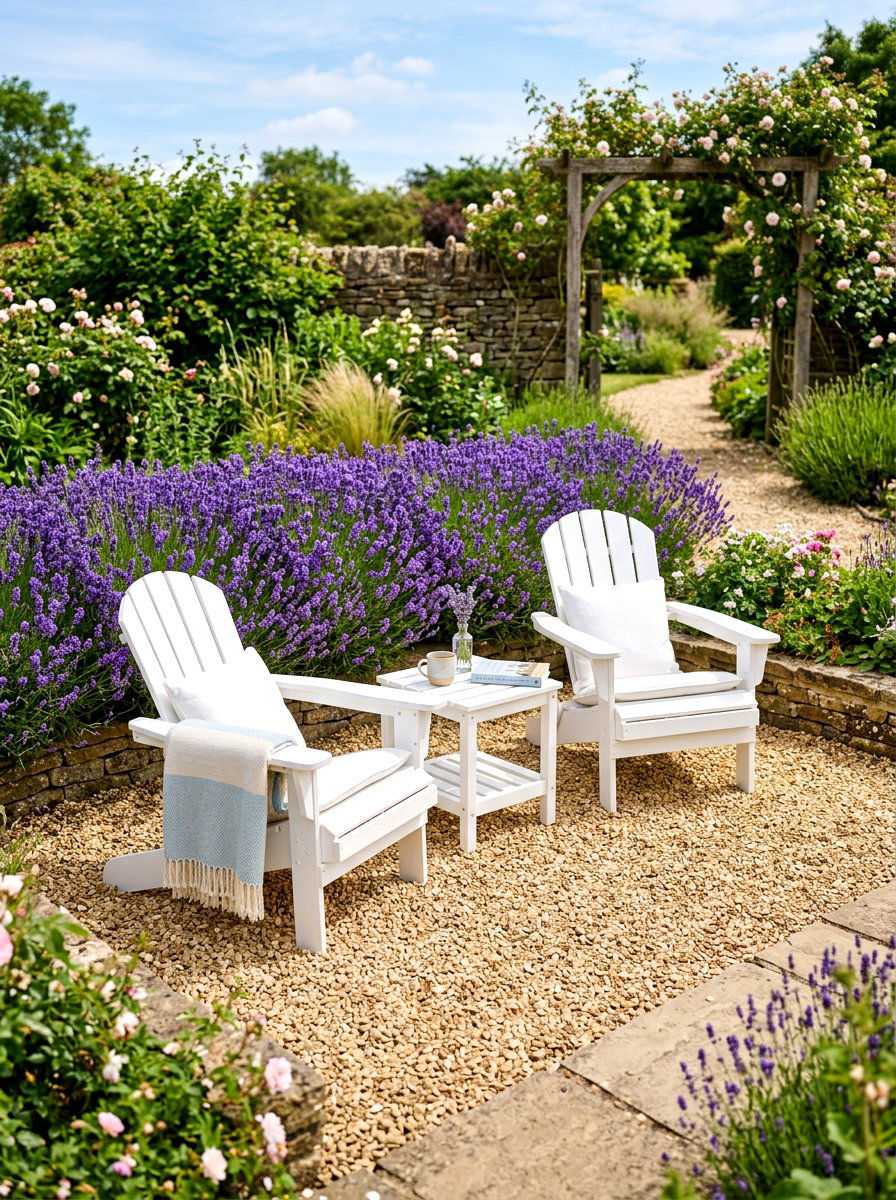
Using river rocks as the foundation for an outdoor seating area creates a casual and inviting space for morning coffee or afternoon reading. The stones provide a level and stable base for chairs and small tables, ensuring your furniture does not sink into the mud after a rainstorm. You can surround the area with tall grasses or flowering shrubs to create a sense of enclosure and privacy. The natural look of the rock bed blends seamlessly with the surrounding garden, making the seating area feel like an integrated part of the landscape. This setup is much more affordable than a traditional deck or patio while offering a similar level of functionality.
27. Privacy Fence Base
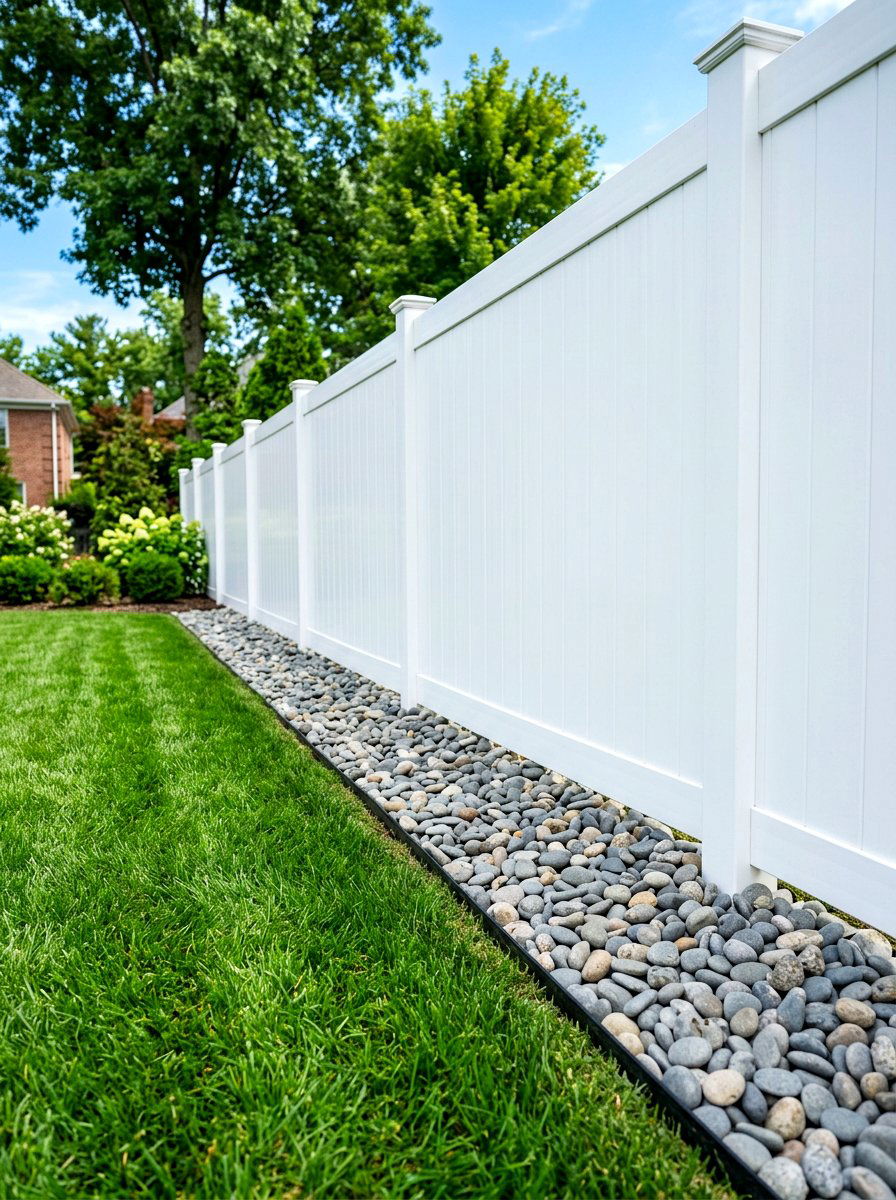
A bed of river rocks along the base of a privacy fence prevents weeds from growing against the wood or vinyl and makes lawn mowing much easier. This simple landscaping trick protects your fence from moisture and grass trimmer damage, extending its lifespan and keeping it looking new. You can use the rock bed as a place to install low-voltage garden lighting, which will cast beautiful shadows against the fence panels at night. The clean line of the stone border adds a professional finishing touch to the perimeter of your yard. It is a small detail that makes a big difference in the overall neatness of your property.
28. Retaining Wall Infill
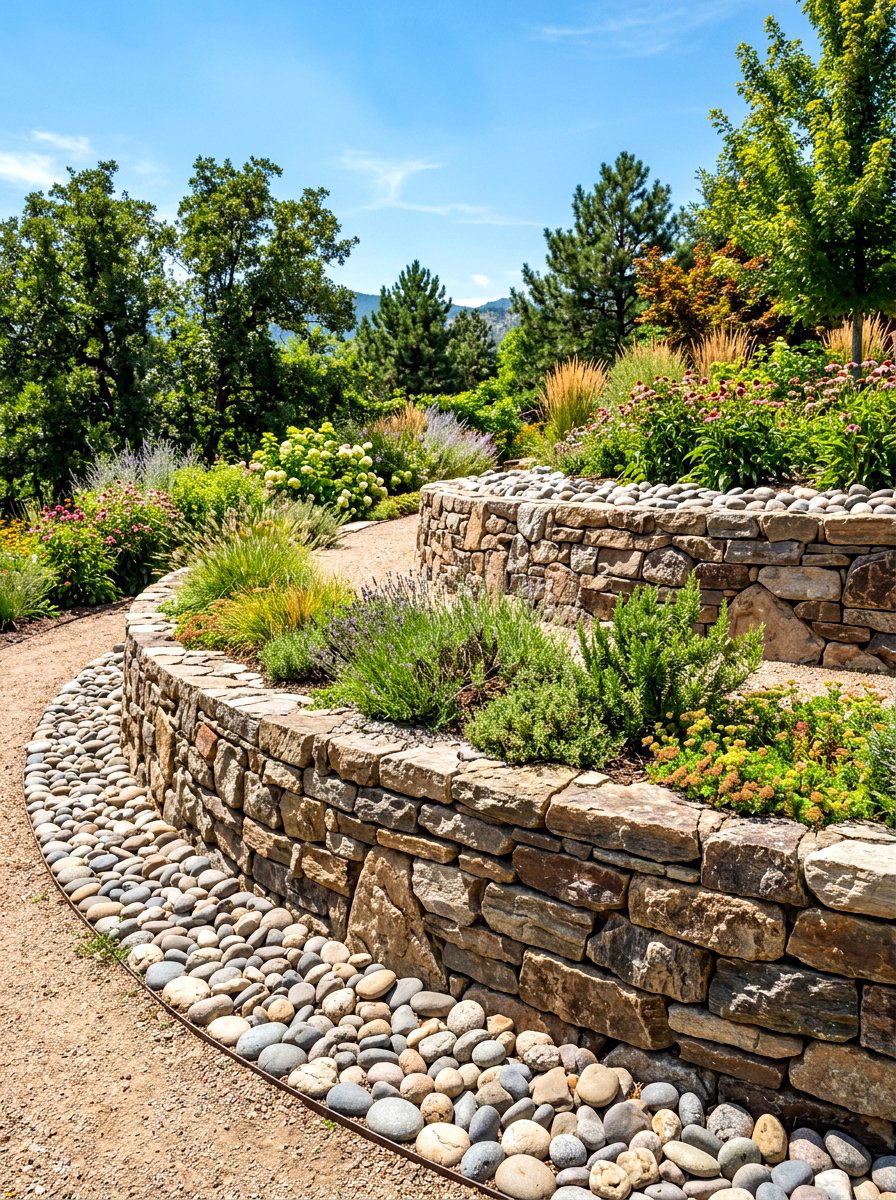
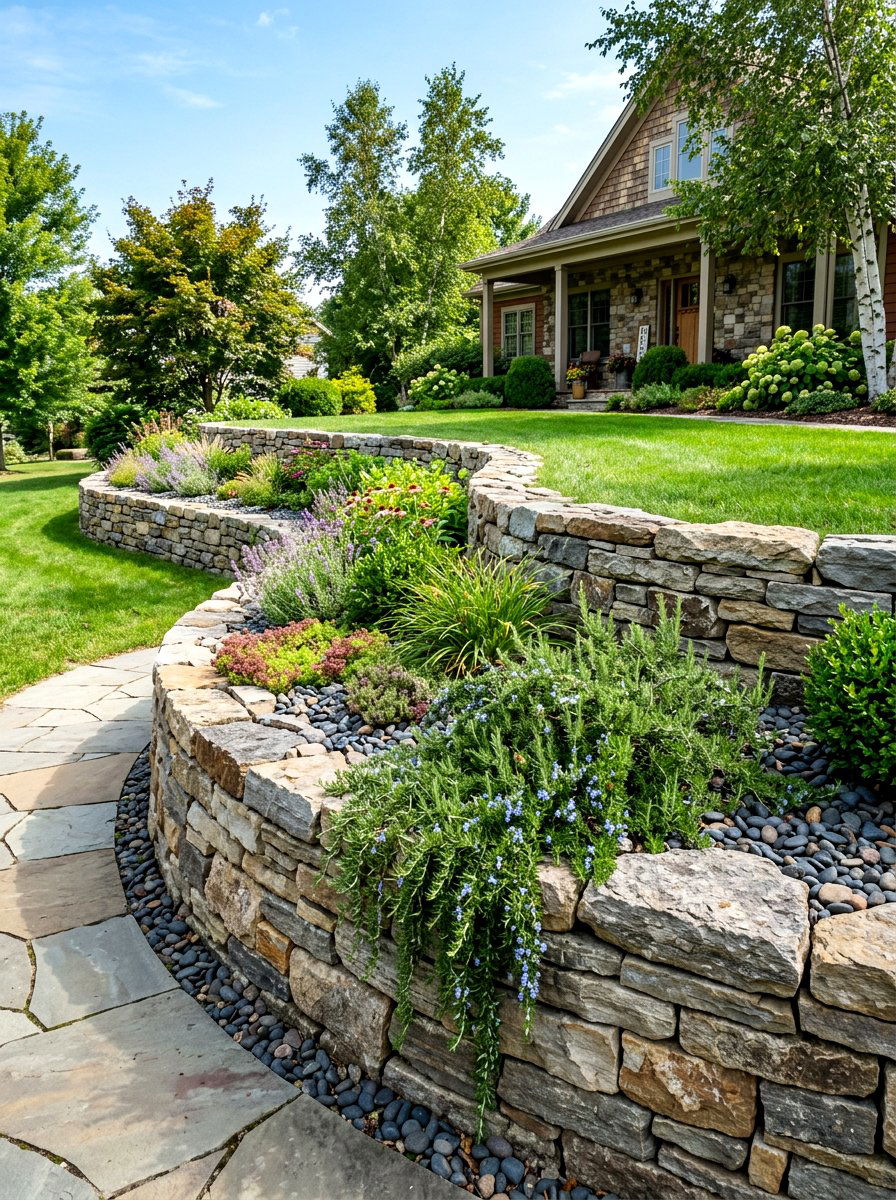
When building a dry-stack or stone retaining wall, using river rocks as infill between the larger blocks adds stability and improves drainage. The smaller stones fill the gaps, preventing soil from washing through the wall and creating a more cohesive, natural appearance. This technique allows the wall to "breathe" and move slightly with the earth, which prevents cracking and structural failure over time. You can also use decorative river rocks on the top surface of the wall to create a beautiful planting bed for trailing vines or colorful perennials. This functional use of rock ensures your retaining wall remains both strong and aesthetically pleasing for many decades.
29. Mailbox Landscaping Bed
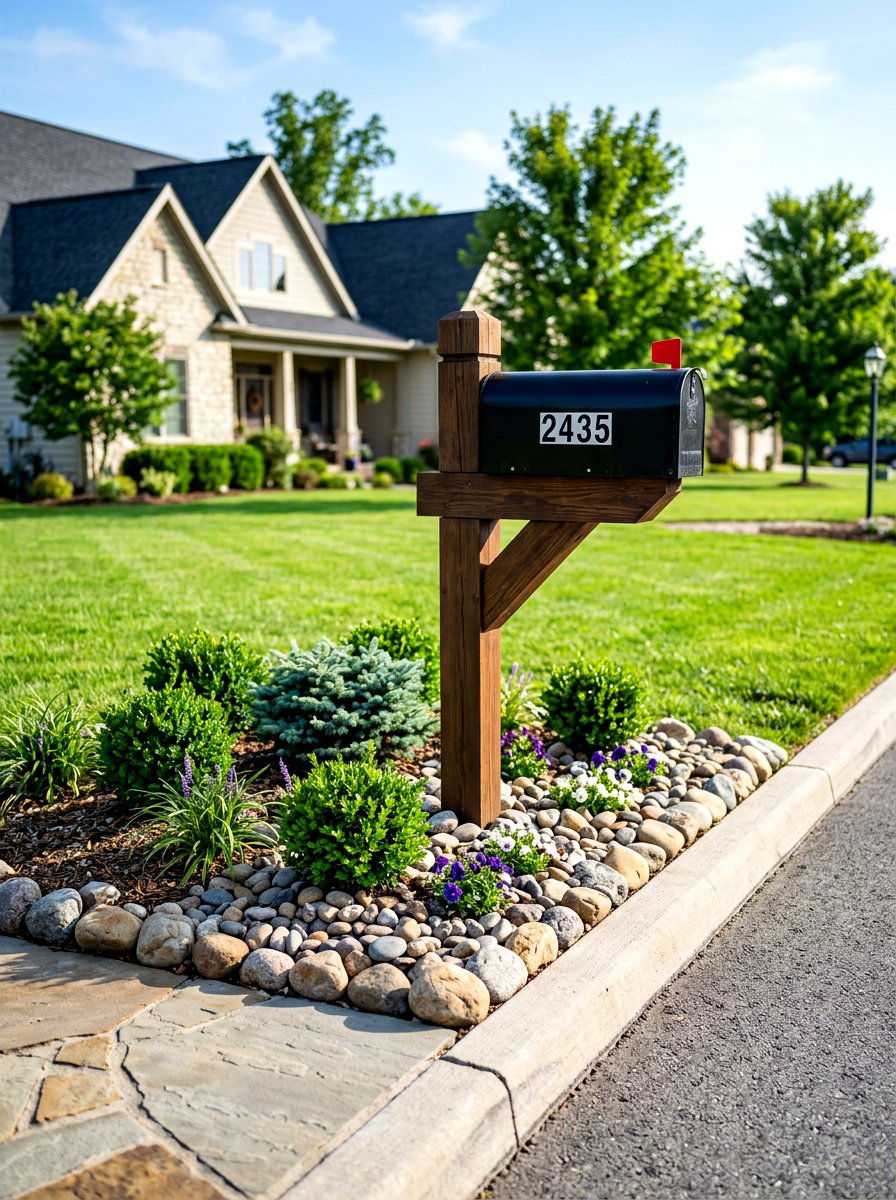
The area around your mailbox is often overlooked, but a small river rock bed can instantly upgrade your home’s street-side appearance. Because mailboxes are usually located in high-heat zones near the road, stones are a better choice than grass or delicate flowers that might wilt. You can place a few hardy shrubs or a decorative post among the rocks to create a low-maintenance focal point that survives the toughest weather conditions. This tidy setup makes it easier for mail carriers to access your box and prevents mud from splashing onto the post during rain. It is a quick and easy weekend project with a high visual impact.
30. Stairway Rock Lining
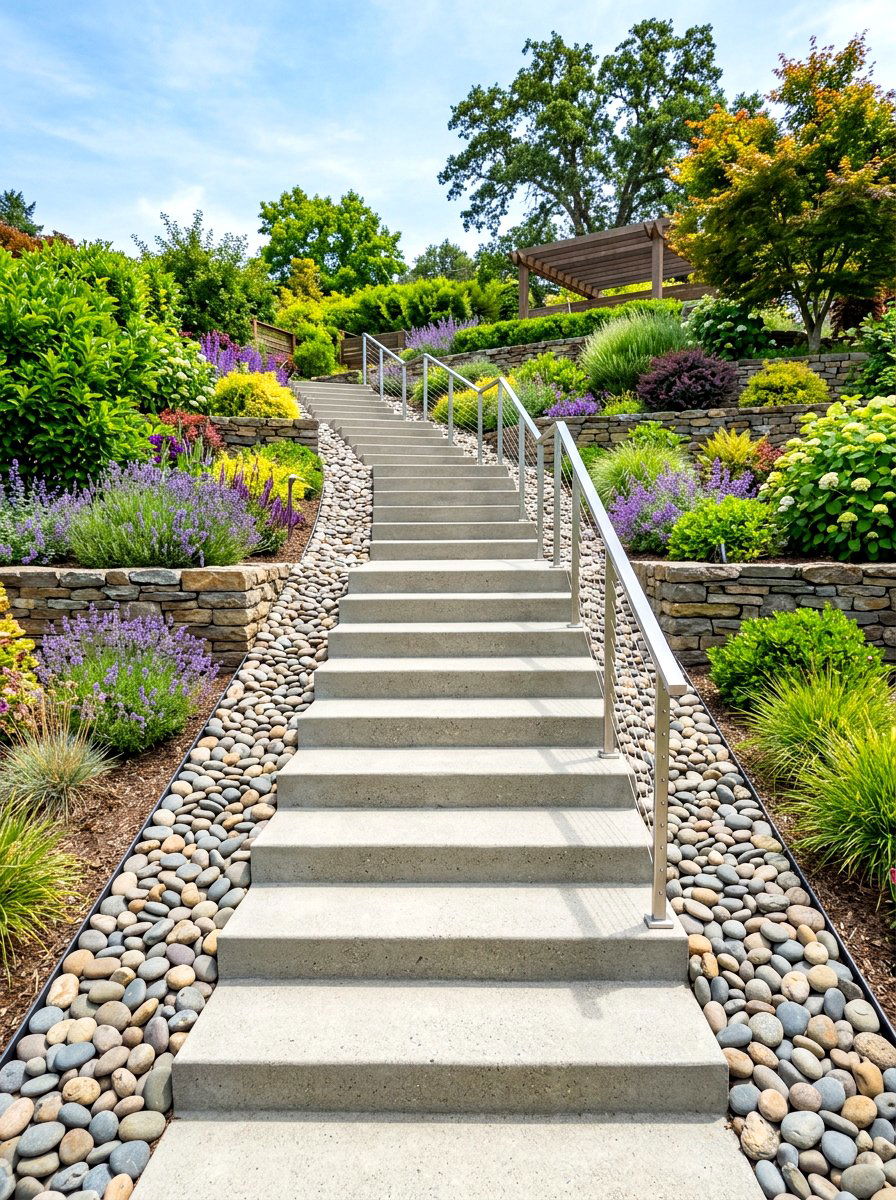
Lining the sides of outdoor stairs with river rocks creates a beautiful frame that highlights the transition between different levels of your yard. This design prevents soil from spilling onto the steps and provides a clear visual path for anyone moving up or down the slope. You can use the rocks to hide irrigation pipes or lighting wires, keeping the functional elements of your landscape out of sight. The contrast between the hard steps and the rounded stones adds a layer of depth and architectural interest to your garden. This simple addition makes your outdoor stairways look like they were custom-built by a professional landscape architect.
Conclusion:
Integrating river rocks into your landscaping is a timeless investment that combines functional benefits with undeniable aesthetic appeal. From solving complex drainage problems on slopes to creating peaceful Zen gardens for relaxation, these versatile stones offer endless possibilities for every homeowner. By choosing river rocks, you are opting for a low-maintenance, durable, and eco-friendly solution that will keep your yard looking pristine for years to come. Whether you prefer the sleek look of black pebbles or the rustic charm of multi-colored stones, there is a perfect option for your style. We hope these thirty ideas inspire you to transform your outdoor space into a beautiful, Pinterest-worthy sanctuary today.

Related posts: