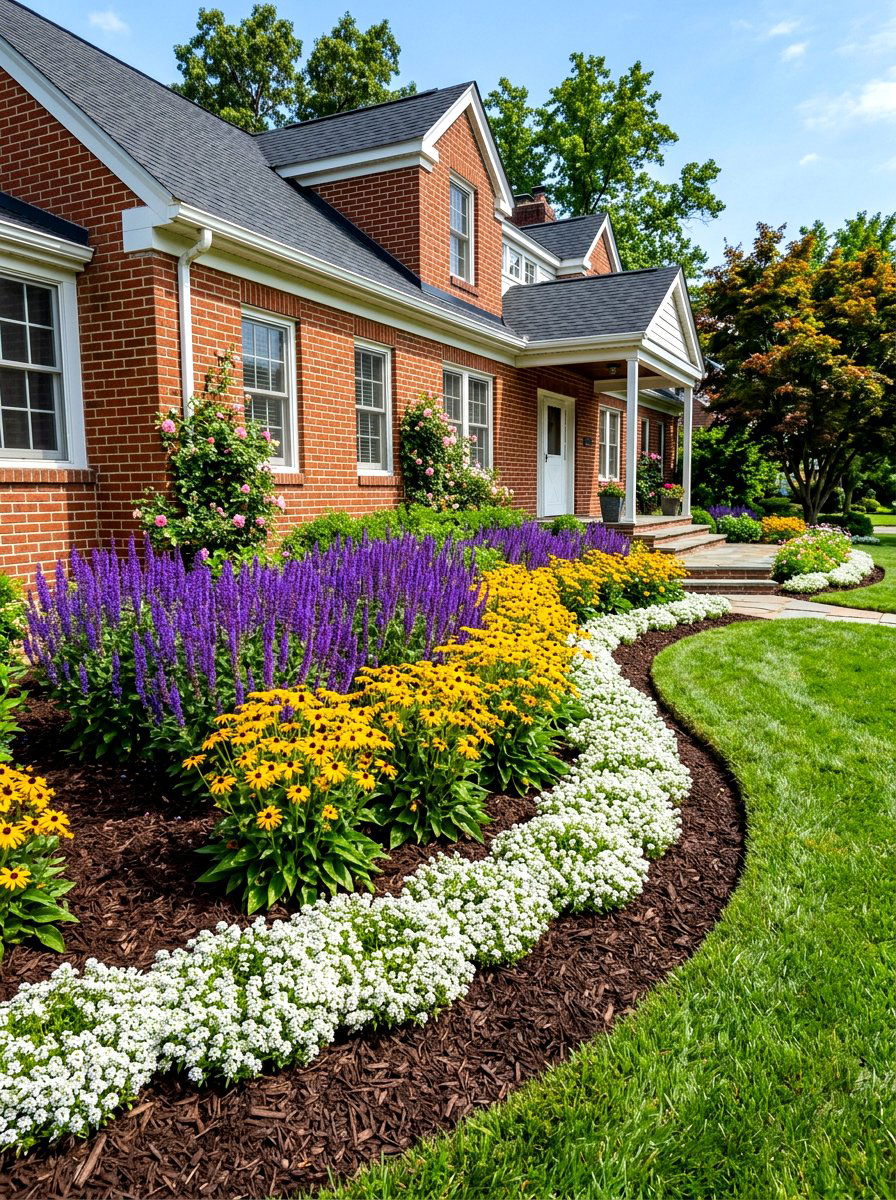
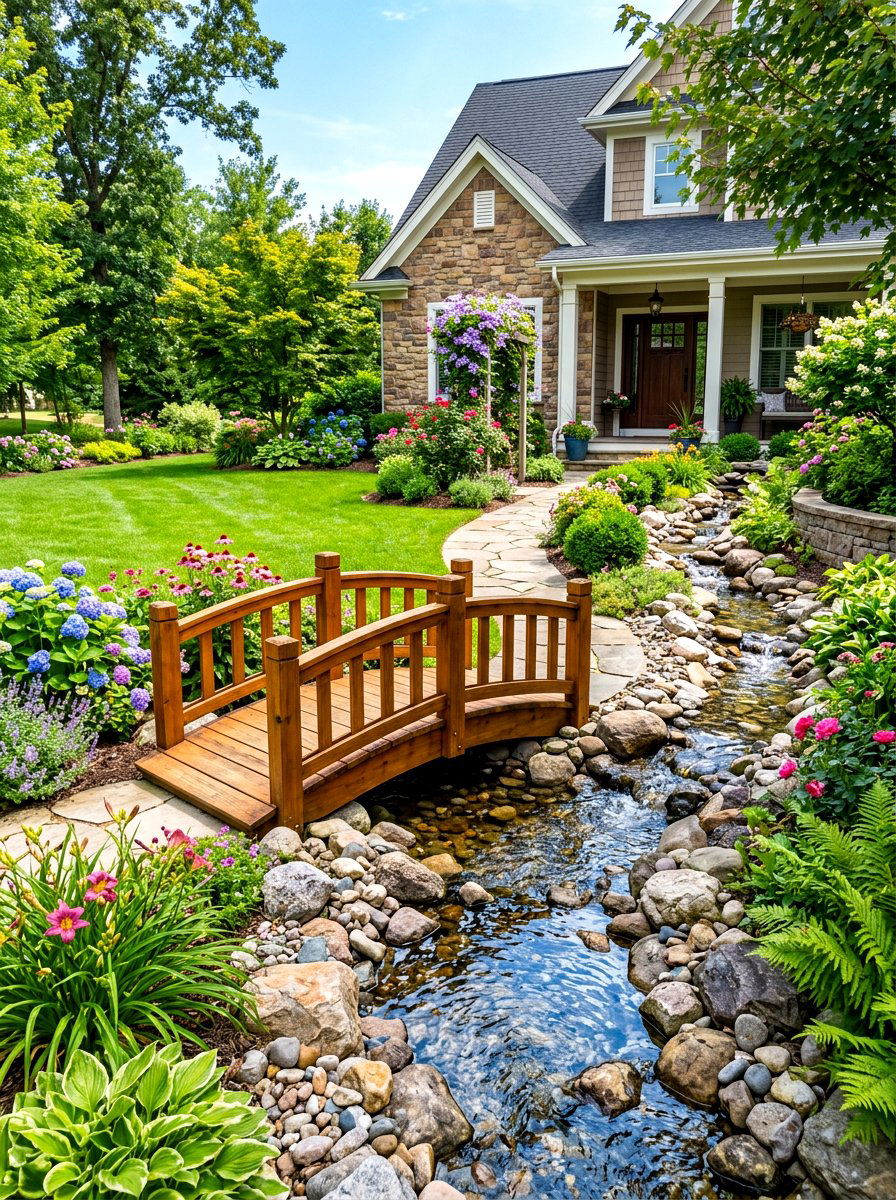
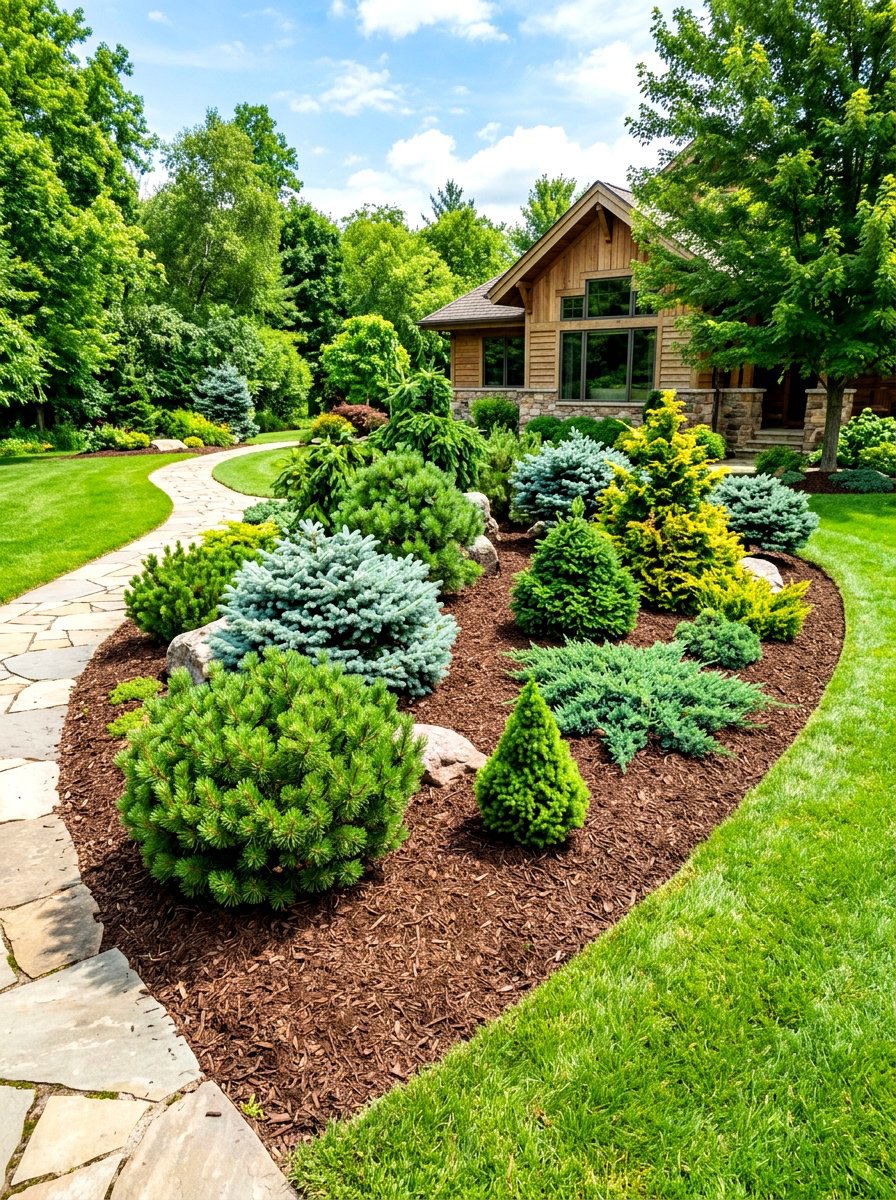
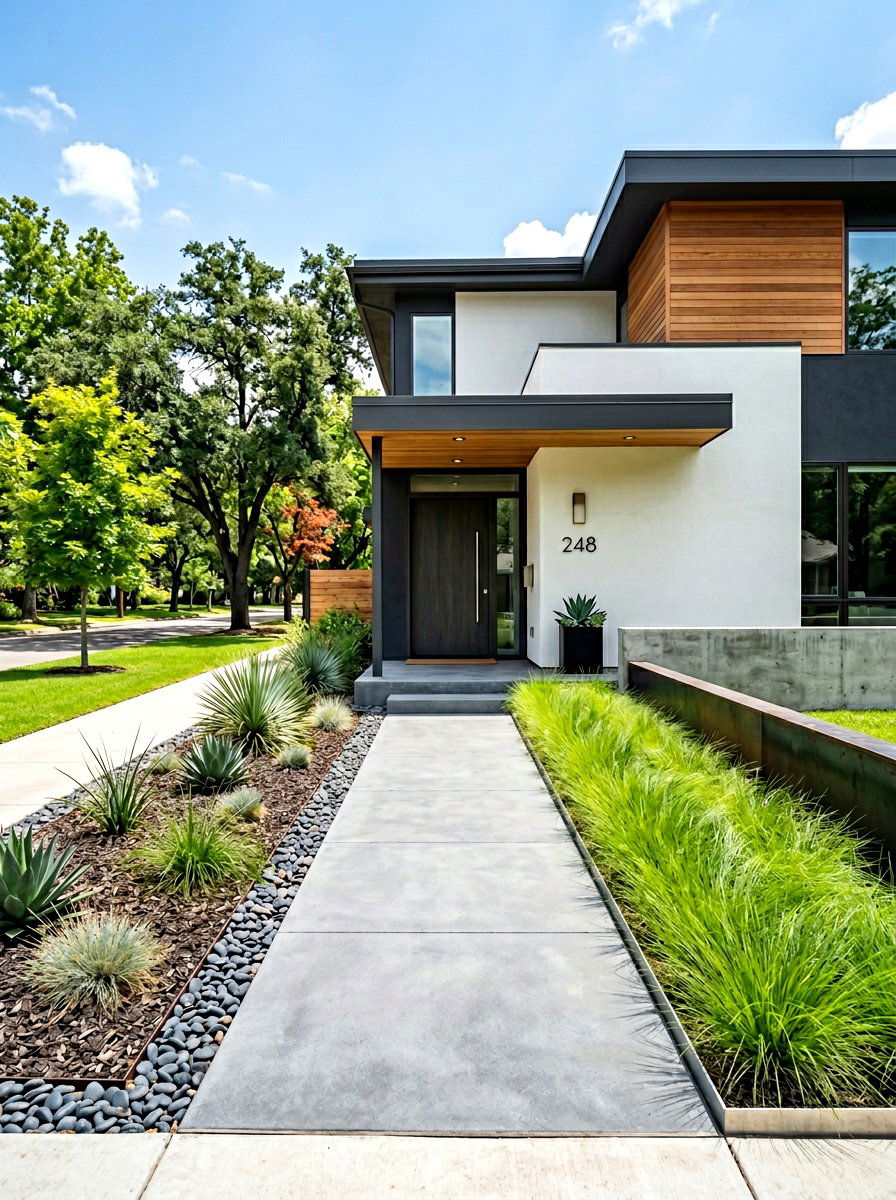
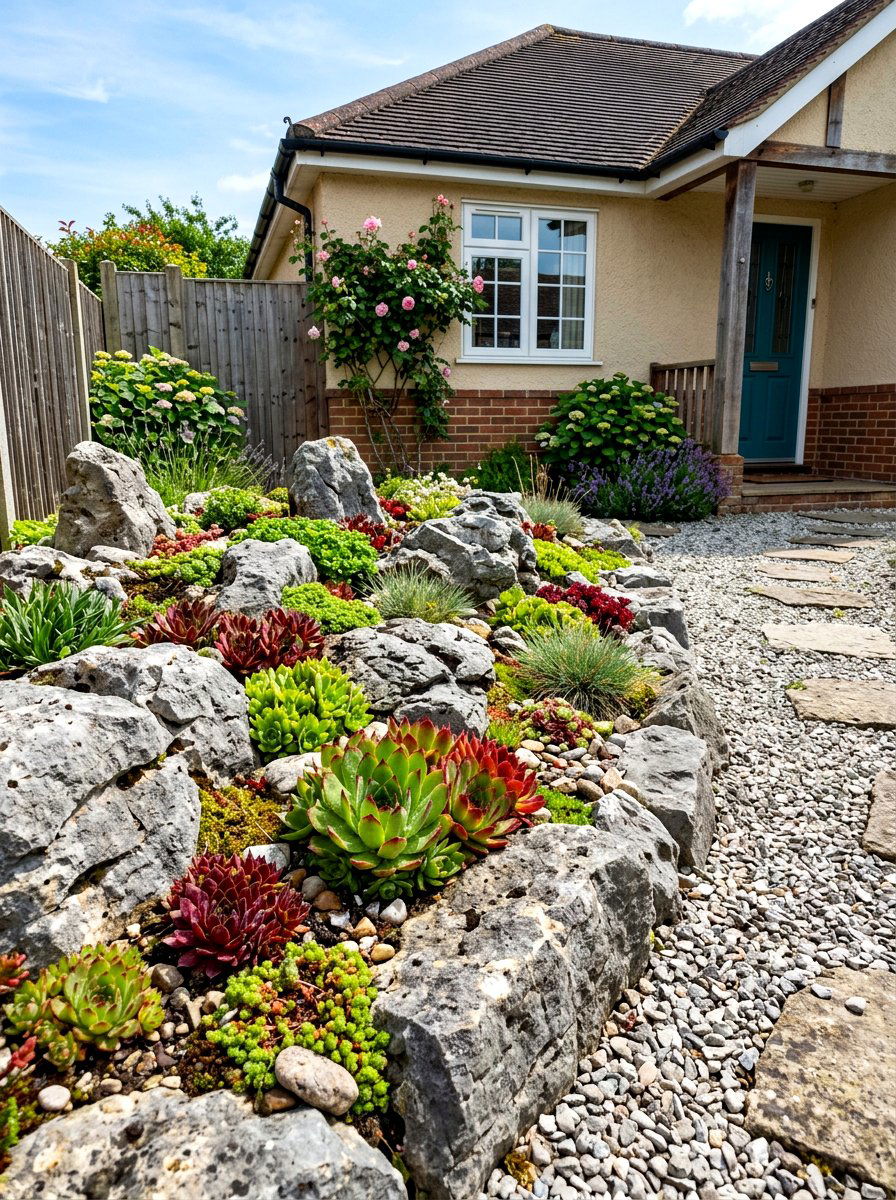
Creating a beautiful front yard often starts with the right boundaries. Landscape edging is much more than just a functional divider; it is the finishing touch that defines your home’s character. When you take the time to install a proper border, you instantly elevate your curb appeal while making maintenance significantly easier. These edges keep mulch from washing away during heavy rain and prevent aggressive grass from creeping into your flower beds. Whether you prefer the classic look of brick or the modern feel of steel, choosing the right material can transform a messy lawn into a professional-looking masterpiece. It provides a crisp, clean frame that showcases your plants and architectural features beautifully.
1. Brick garden border
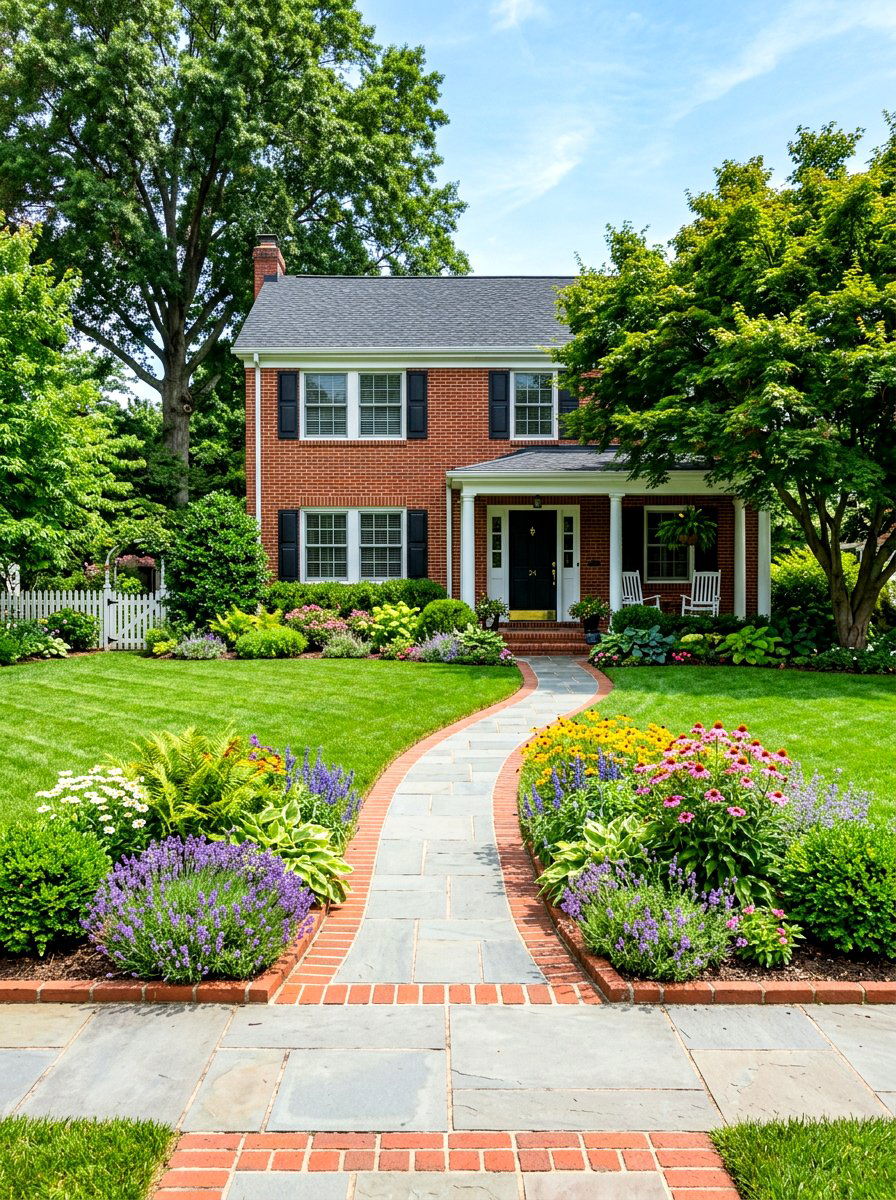
A classic brick garden border offers a timeless and structured look that complements almost any home style, especially traditional or colonial designs. Using red or reclaimed bricks creates a warm, inviting atmosphere that feels both permanent and intentional. You can lay these bricks horizontally for a wide, flat mowing strip or set them vertically to create a slightly raised edge that holds back soil. This design works exceptionally well when paired with dark hardwood mulch and colorful perennials like hydrangeas or lavender. The uniform shape of the bricks allows for very precise lines, giving your front yard a manicured appearance that looks professionally installed and highly organized.
2. Natural stone edging
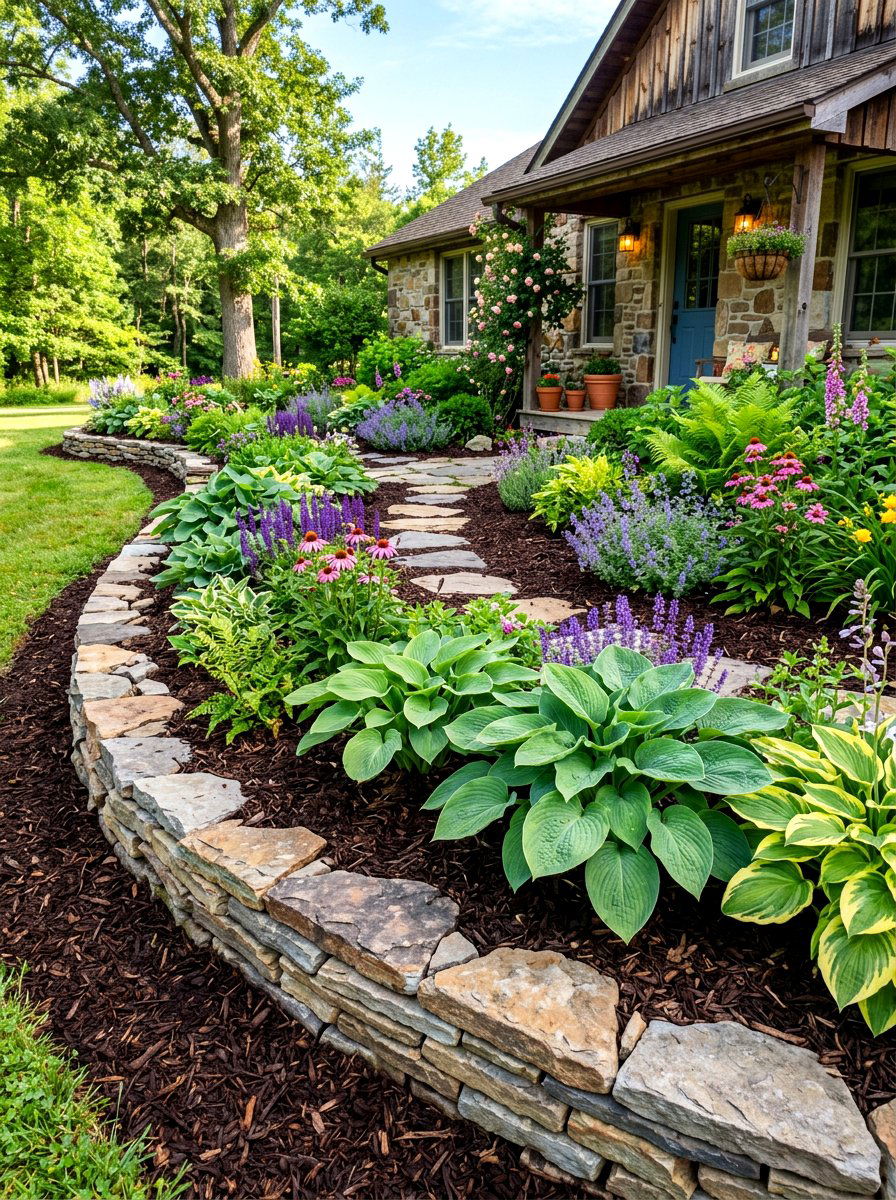
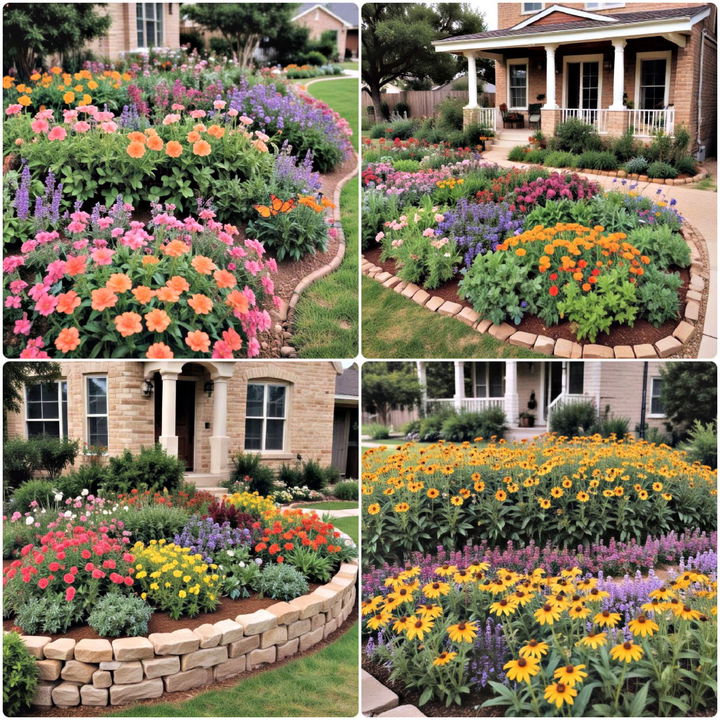
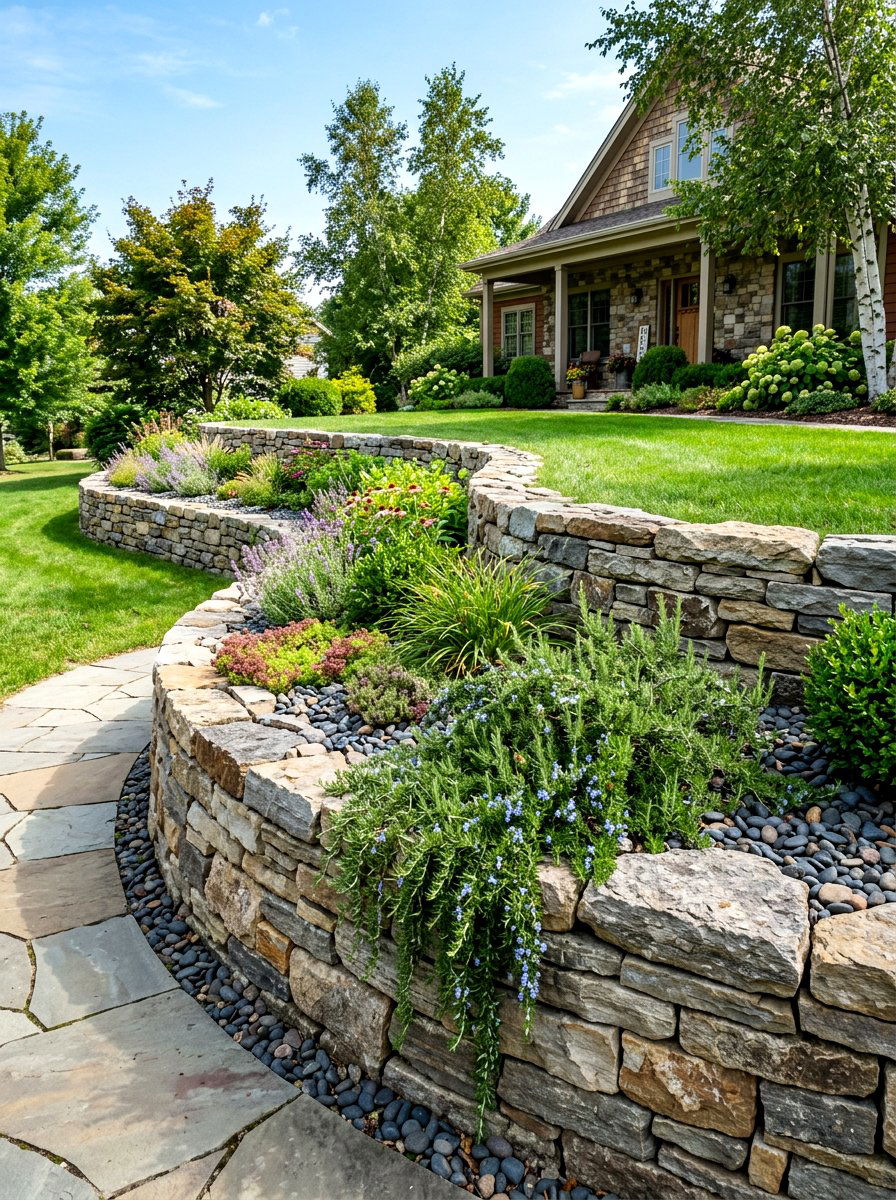
Natural stone edging brings an organic and rustic charm to your front yard, making it feel like an extension of the local landscape. By using stacked flat stones or small boulders, you create a textured boundary that softens the transition between your lawn and garden beds. This style is perfect for cottage-style homes or properties with a lot of natural greenery. Because no two stones are exactly alike, the resulting border has a unique, hand-crafted feel that adds character and depth. It works beautifully around curved garden beds, as the varying sizes of the stones can easily accommodate fluid, winding shapes without looking forced or unnatural.
3. Concrete landscape curbing
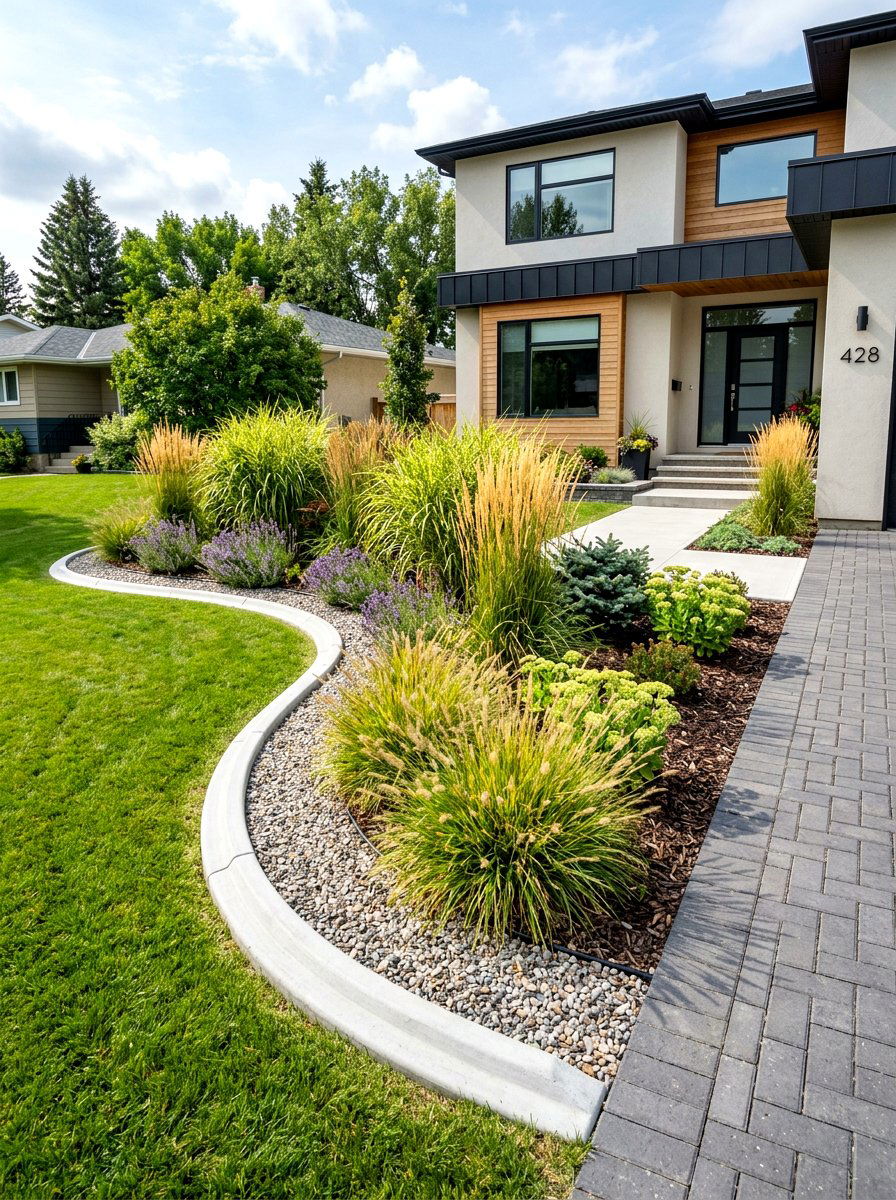
Concrete landscape curbing is a durable and low-maintenance solution that provides a very clean, continuous line throughout your front yard. Unlike individual blocks that can shift over time, poured concrete stays firmly in place, acting as a permanent root barrier against invasive grass. You can choose from various stamped patterns or colors to match your home’s exterior, ranging from slate textures to brick-like finishes. This type of edging is ideal for large front yards with expansive lawn areas, as it creates a high-end, polished look. It also makes mowing much simpler because the mower blade can run right along the flat surface of the concrete.
4. Metal strip edging
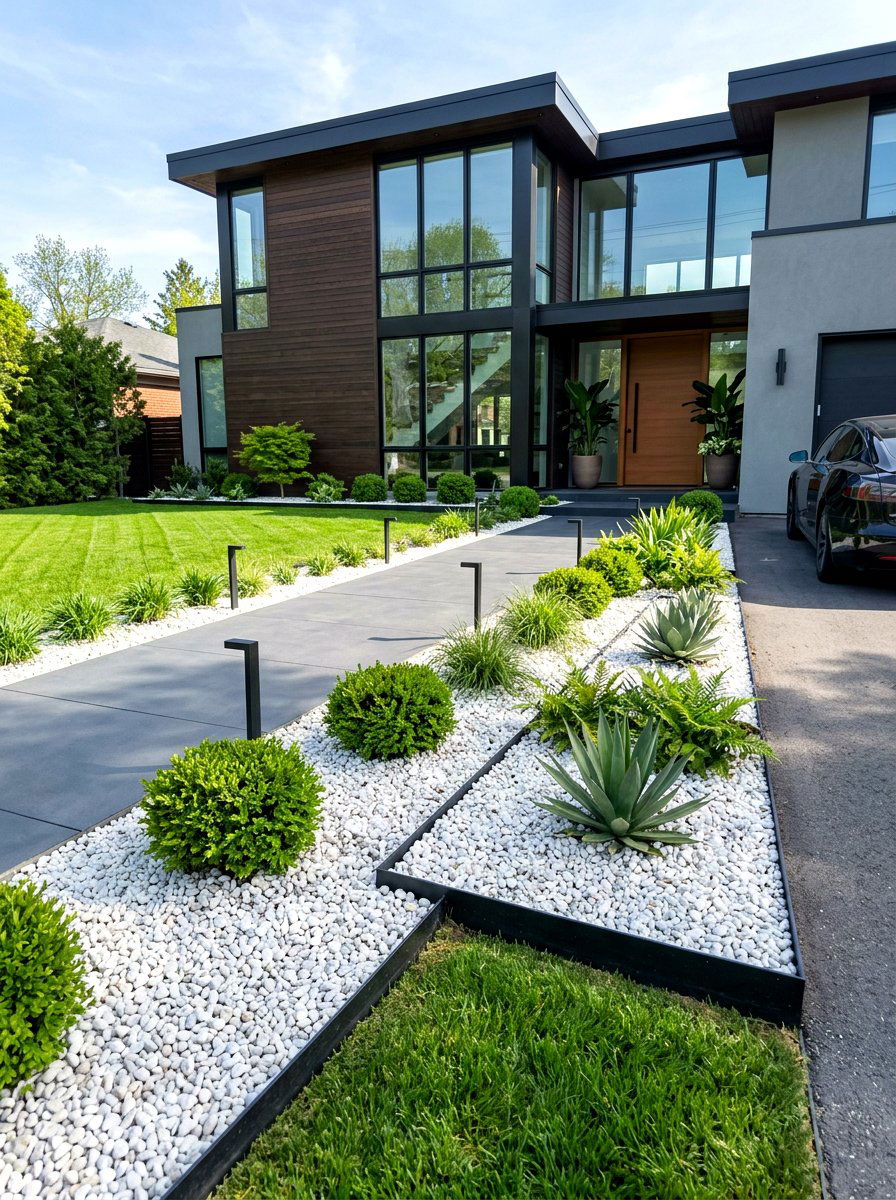
Metal strip edging is the go-to choice for homeowners who want a sleek, modern, and nearly invisible border. Typically made from steel or aluminum, these thin strips create incredibly sharp lines that define garden beds without drawing too much attention away from the plants. They are exceptionally flexible, allowing you to create perfect circles around trees or long, sweeping curves along a driveway. Over time, materials like Corten steel develop a beautiful rust-like patina that adds an industrial-chic vibe to the landscape. This durable option resists rotting and cracking, ensuring that your front yard stays looking sharp and well-defined for many decades.
5. Wood log edging
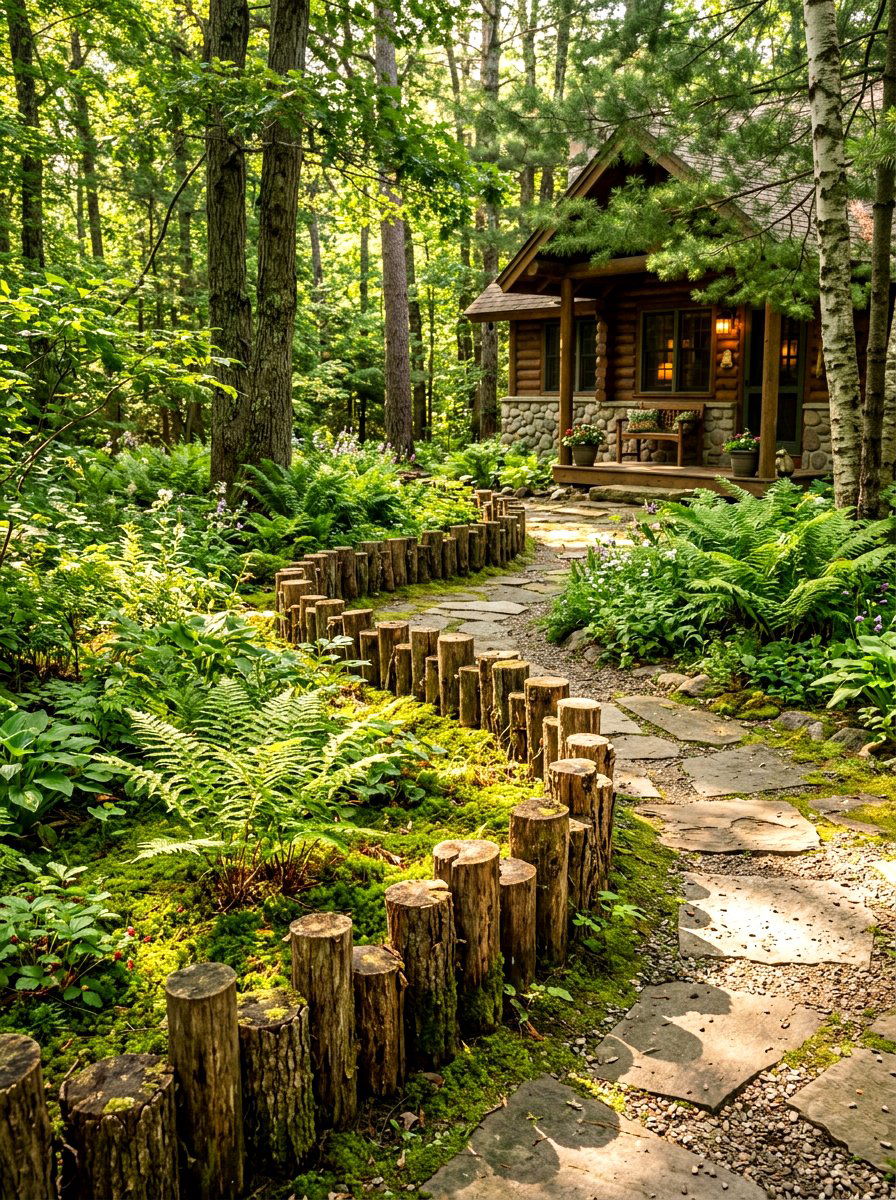
Wood log edging provides a cozy, woodland aesthetic that is perfect for rustic or naturalistic front yard designs. By using small, upright logs of varying heights, you can create a playful and textured border that feels very approachable. This style works wonderfully in shaded yards filled with ferns, hostas, and moss, as it enhances the forest-like ambiance. Using cedar or pressure-treated timber ensures that the wood resists decay while maintaining its natural beauty. It is a very easy DIY project that adds immediate height and visual interest to your landscape, making your garden beds feel more like intentional, curated spaces within your outdoor environment.
6. Plastic garden edging
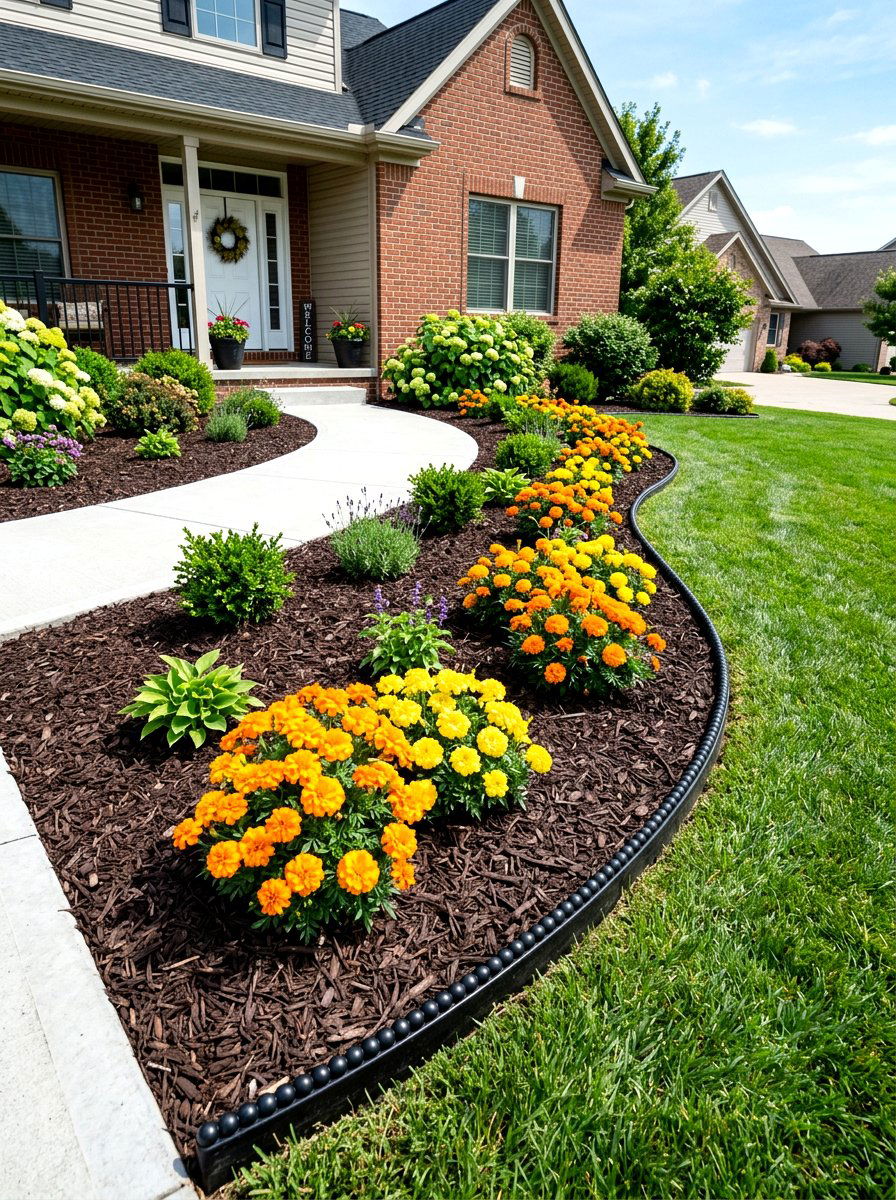
Plastic garden edging is one of the most versatile and budget-friendly options for quickly organizing your front yard space. High-quality poly-plastic edging is designed to be buried mostly underground, leaving only a slim, neat bead visible at the surface. This creates a very tidy separation between the grass and the mulch without the need for heavy lifting or expensive tools. It is particularly effective for creating complex, winding paths or circular flower beds because of its extreme flexibility. When installed correctly with deep stakes, it prevents grass roots from invading your flower beds while keeping your landscape looking organized and well-maintained throughout the growing seasons.
7. Gabion wall edging
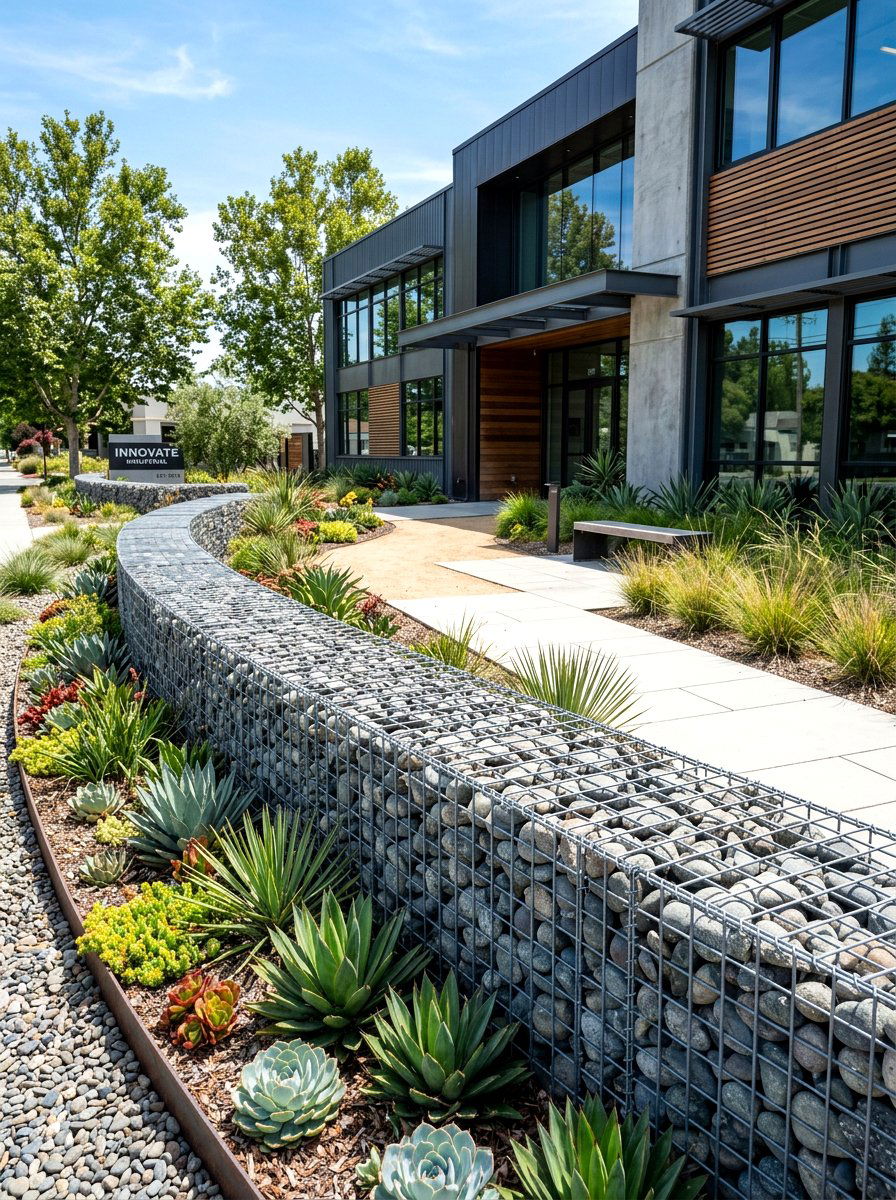
Gabion wall edging is a unique and architectural way to define your front yard with a mixture of industrial and natural elements. These wire cages are filled with rocks, pebbles, or even recycled glass to create a sturdy and visually striking boundary. This design is perfect for modern homes that value texture and geometric shapes. The weight of the stones makes these borders incredibly stable, and they provide excellent drainage for your garden beds. You can customize the look by choosing different colors and sizes of stones, allowing the edging to either blend into the earth or stand out as a bold, decorative focal point.
8. Gravel and pebble borders
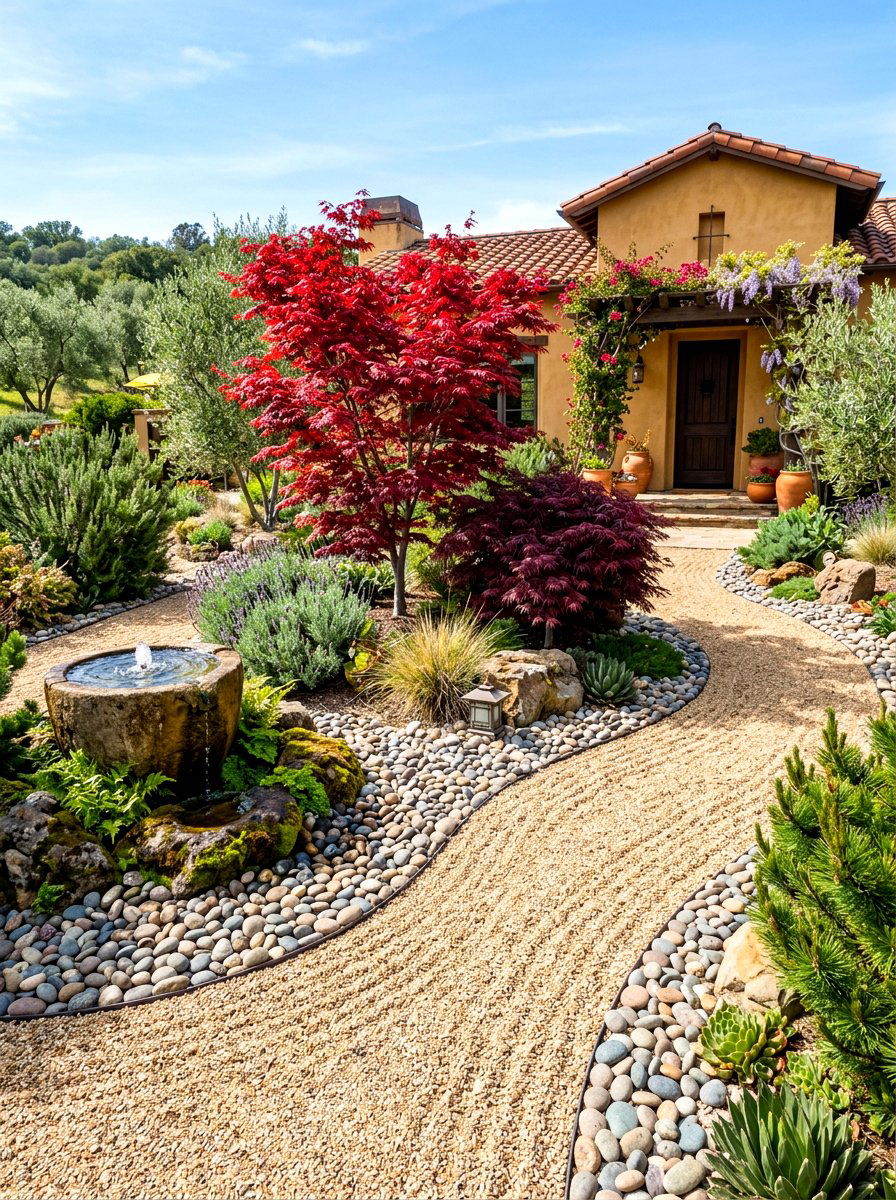
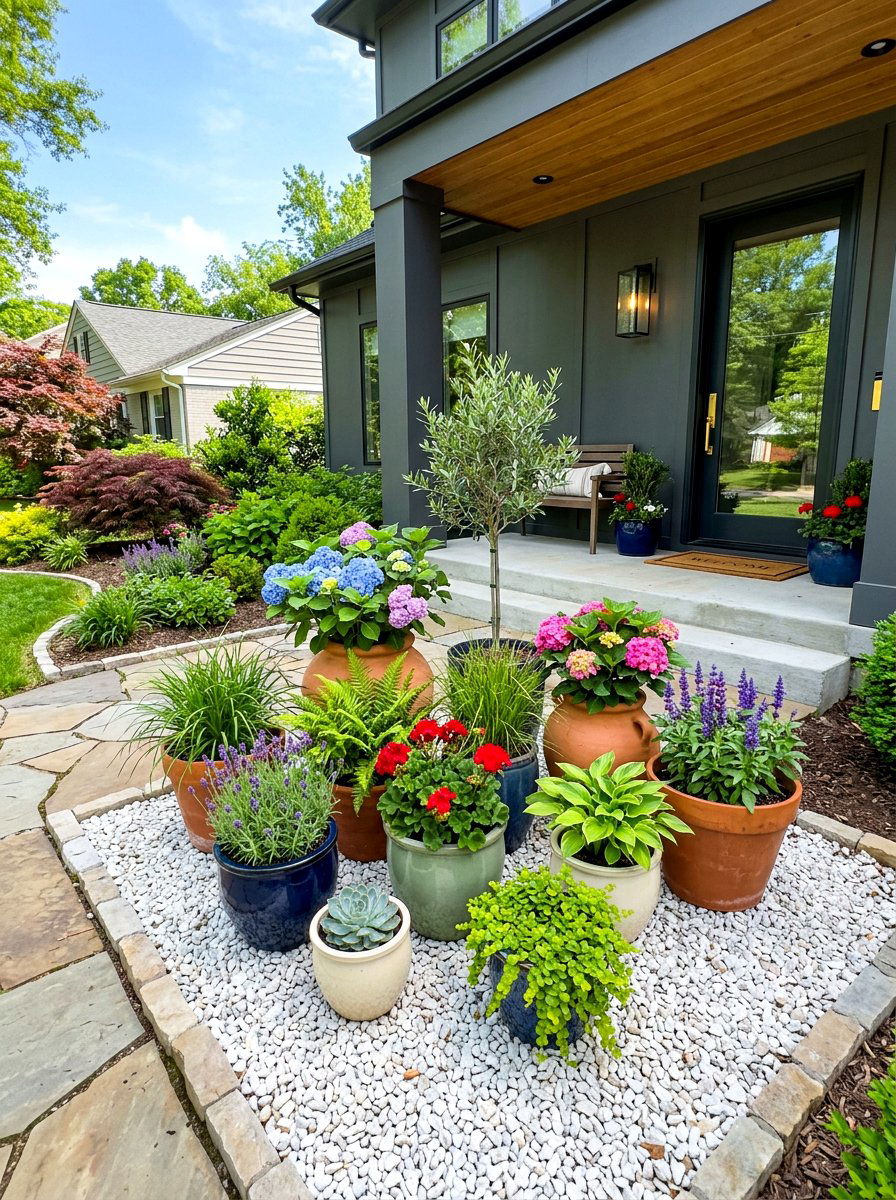
Gravel and pebble borders offer a soft, permeable, and Zen-like transition between different areas of your front yard. By digging a shallow trench and filling it with pea gravel or river pebbles, you create a wide, clean margin that prevents grass from creeping into your plants. This style is often used in modern or Mediterranean-inspired landscapes where a minimalist look is desired. The sound of walking near these borders adds a sensory element to your yard, and the variety of available colors — from cool grays to warm tans — allows you to perfectly coordinate with your home’s siding or stone accents.
9. Railroad tie edging
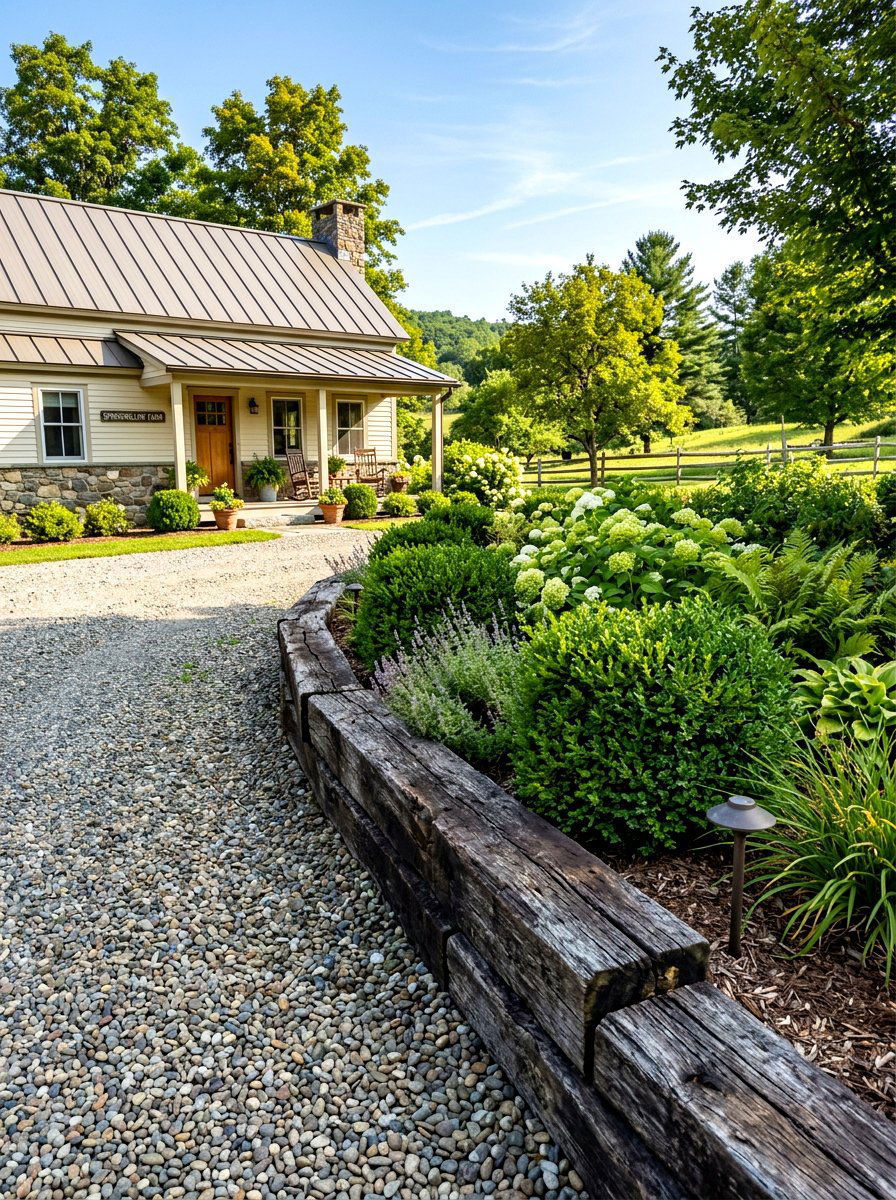
Railroad tie edging is a bold and sturdy choice for homeowners who want to add a sense of scale and permanence to their front yard. These thick, heavy timbers provide a strong vertical presence that is excellent for leveling off sloped areas or creating slightly raised planting beds. Their weathered, dark appearance gives the yard a rugged, farmhouse-style charm that looks great alongside large shrubs and ornamental grasses. Because of their size, they act as a very effective barrier, keeping soil and mulch firmly contained even during heavy storms. They offer a grounded, substantial look that makes the entire landscape feel more established.
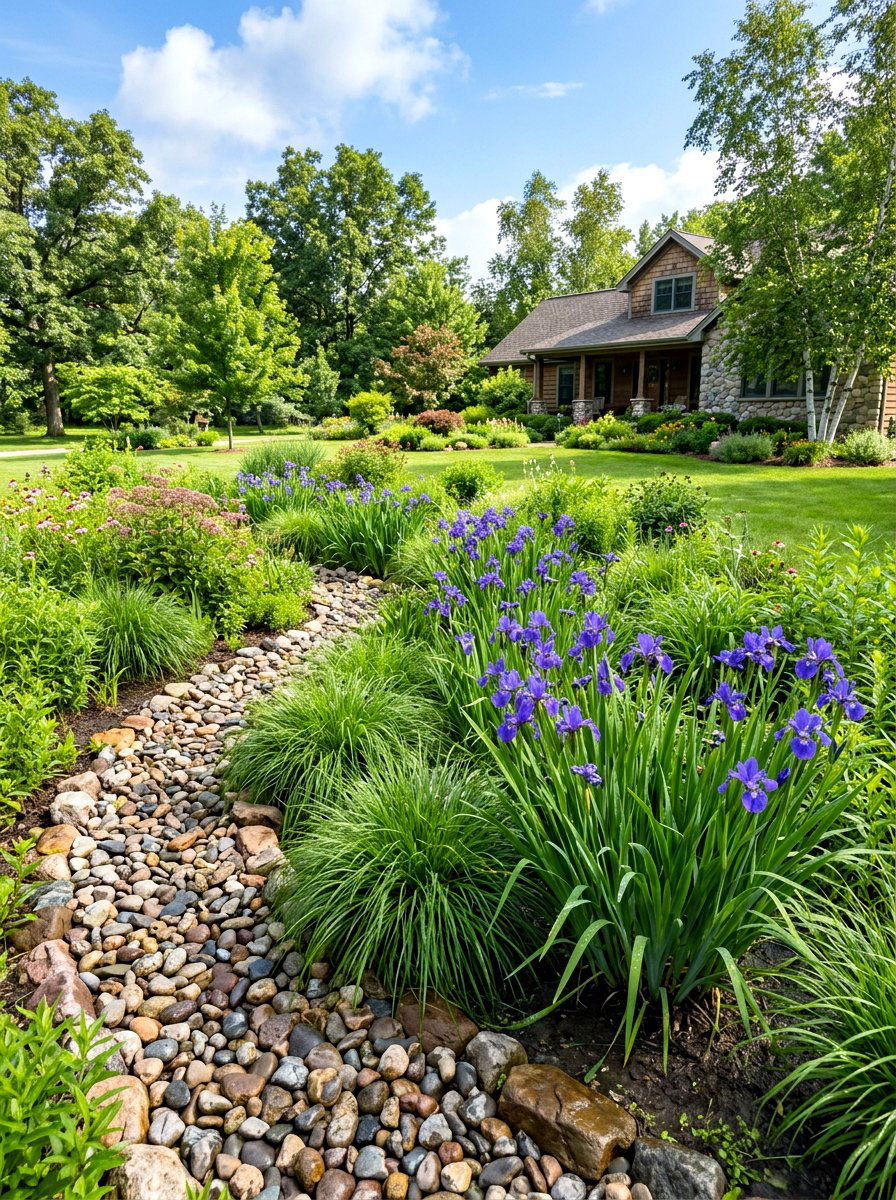
10. Cobblestone lawn edging
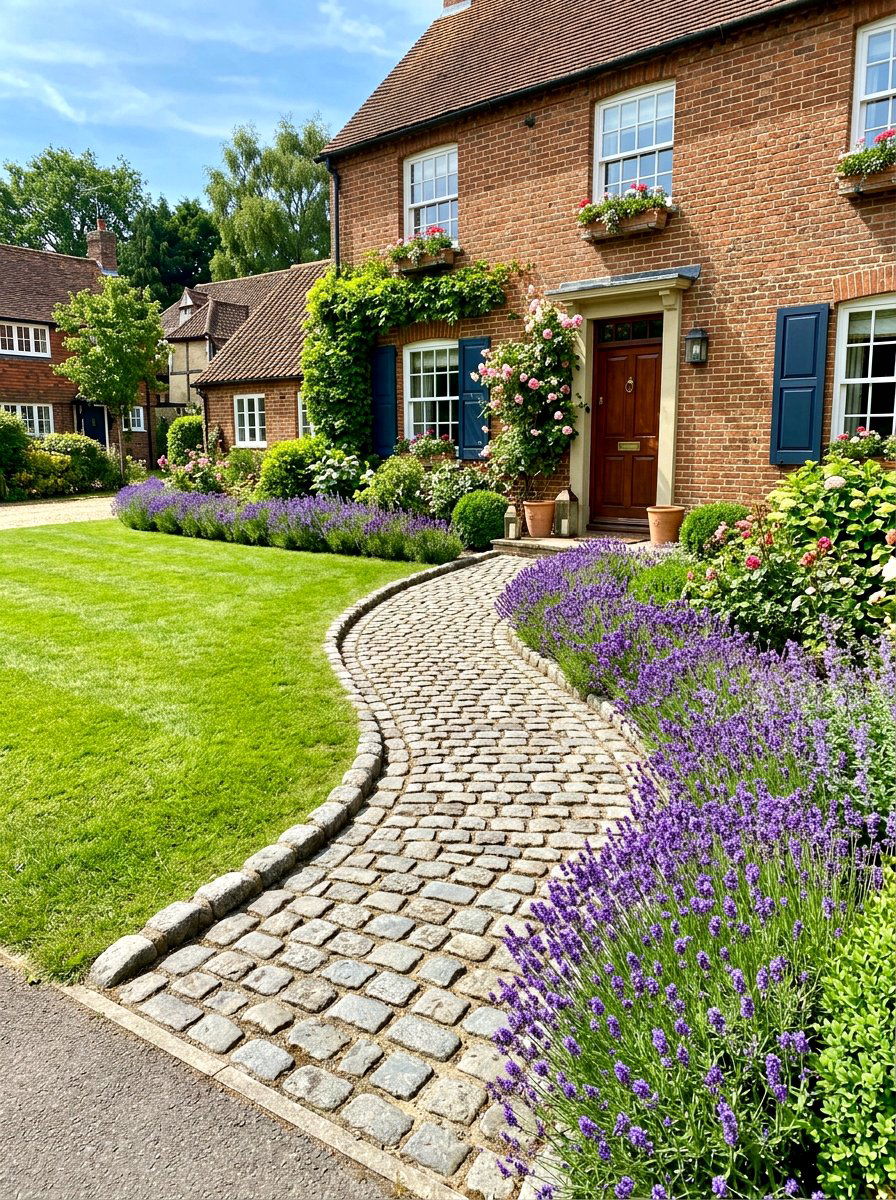
Cobblestone lawn edging brings an old-world, European elegance to your front yard, reminiscent of historic streets and charming cottages. These thick, rounded stones are typically set in a shallow trench, creating a very durable and high-contrast border against green grass. The irregular shapes and sizes of the cobblestones give the edge a handcrafted, artisanal quality that adds significant curb appeal. They are incredibly tough and can withstand freezing temperatures and heavy foot traffic without shifting. When paired with classic garden plants like roses or boxwoods, cobblestones create a sophisticated and polished environment that feels both luxurious and incredibly welcoming to guests.
11. Bamboo garden edging
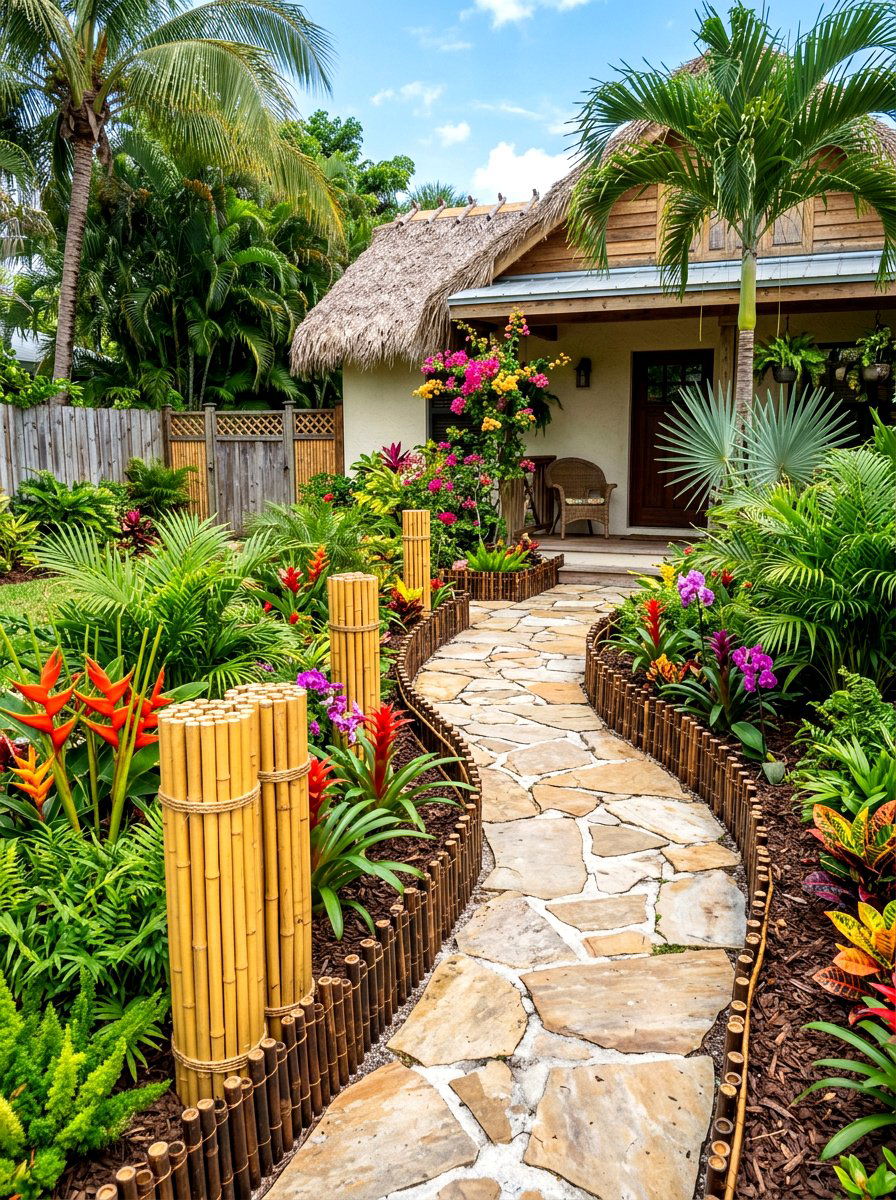
Bamboo garden edging is a sustainable and eco-friendly way to bring a tropical or Asian-inspired flair to your front yard. These pre-assembled rolls of bamboo stakes are easy to install and provide a unique vertical texture that stands out from traditional stone or wood. The light, golden tones of the bamboo look stunning against lush green foliage and dark soil. This material is particularly effective for creating a relaxed, zen-like atmosphere in smaller garden pockets or around water features. Because bamboo grows quickly and is a renewable resource, it is a great choice for environmentally conscious homeowners looking for a stylish, natural aesthetic.
12. Terracotta tile edging
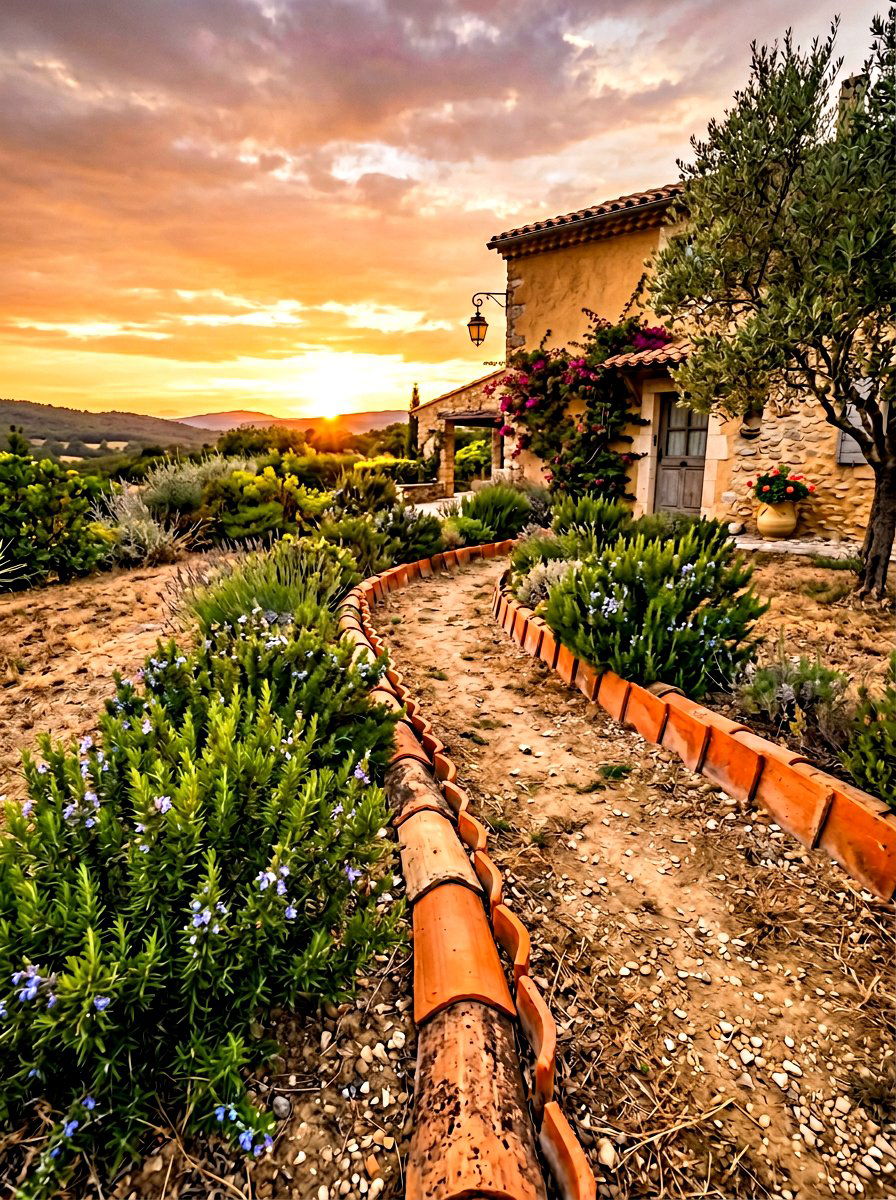
Terracotta tile edging adds a warm, Mediterranean feel and a pop of earthy color to your front yard landscape. Using decorative terracotta tiles or even reclaimed roof tiles set on their side creates a unique, scalloped, or geometric border that is visually captivating. This style works beautifully in sunny yards with drought-tolerant plants like agave, lavender, or rosemary. The fired clay material is durable and develops a lovely aged character over time, especially in damp climates where moss might grow on the surface. It provides a creative and artistic touch that makes your garden beds feel like a gallery of textures and shapes.
13. Limestone edging
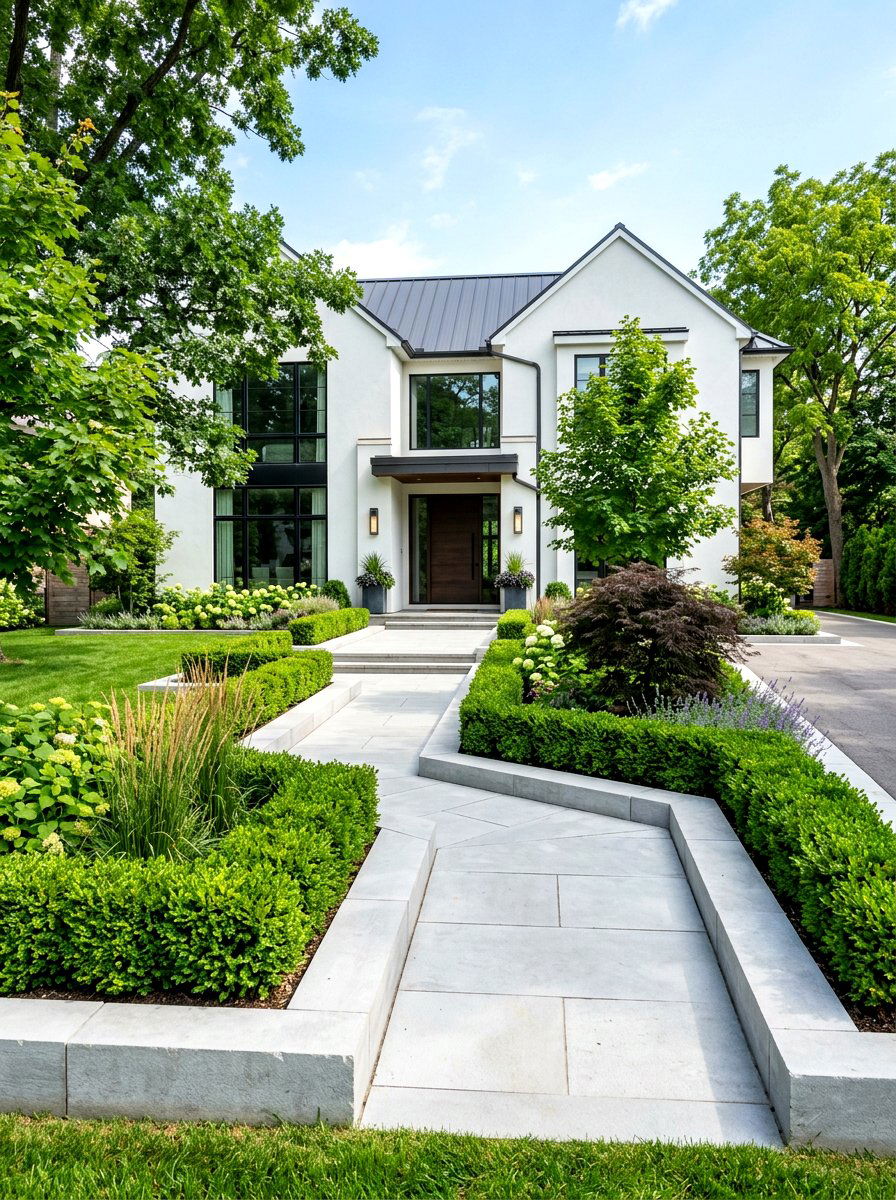
Limestone edging offers a bright, clean, and sophisticated look that can instantly make a front yard feel more upscale and airy. The light gray or cream colors of the limestone provide a beautiful contrast against dark mulch and vibrant green lawns. This material can be used as rough-cut blocks for a more natural look or as smooth, sawn slabs for a sleek, contemporary finish. Limestone is naturally alkaline, which can be beneficial for certain types of plants, and its density makes it a very long-lasting choice. It creates a refined and elegant boundary that enhances the architectural lines of modern or transitional homes.
14. Flagstone garden border
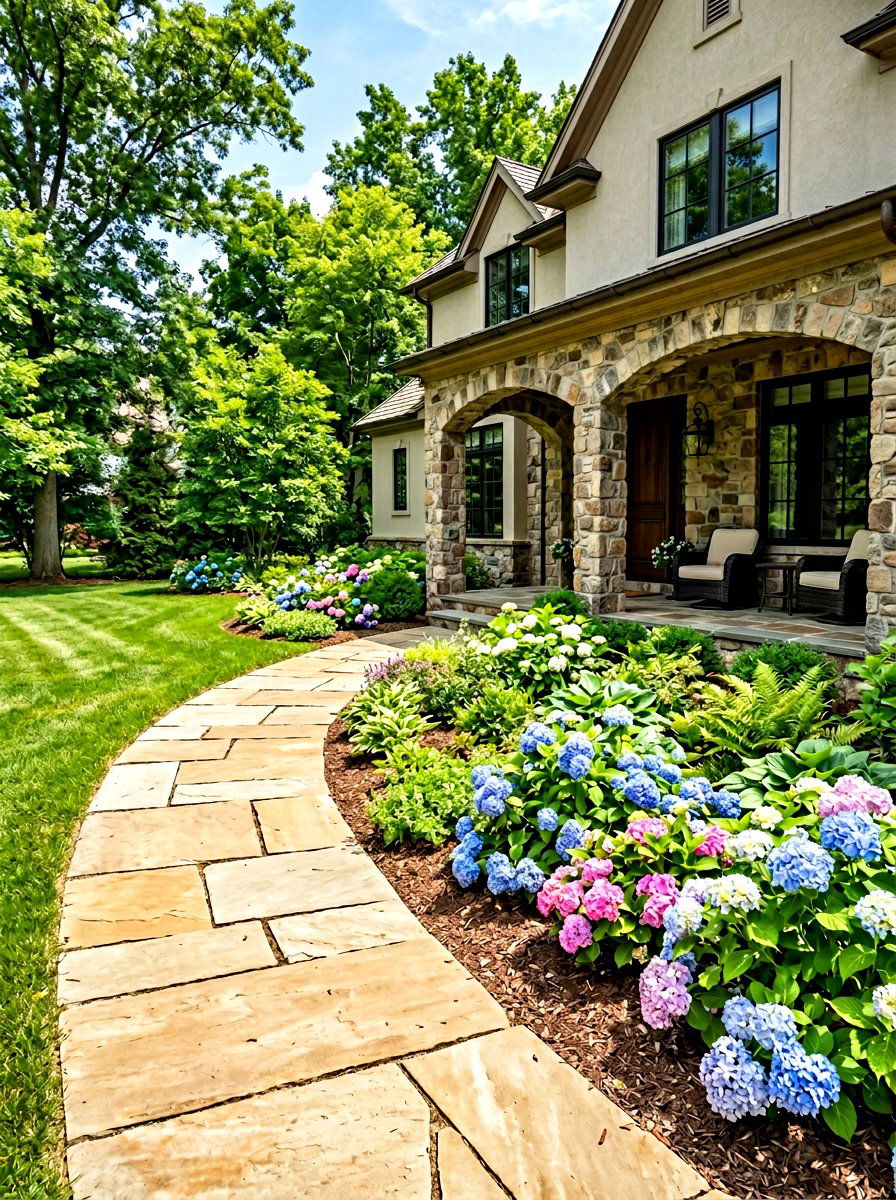
A flagstone garden border is an elegant and versatile way to incorporate flat, natural stones into your front yard design. These stones can be laid end-to-end to create a wide, flat path-like edge or stacked horizontally for a low, layered wall effect. The earthy tones of flagstone — ranging from tans and oranges to deep blues — add a rich color palette to your garden beds. This material feels very high-end and works perfectly for homes with stone siding or large porches. Because flagstones are relatively thin and flat, they provide a very stable surface that is easy to trim around with a weed whacker.
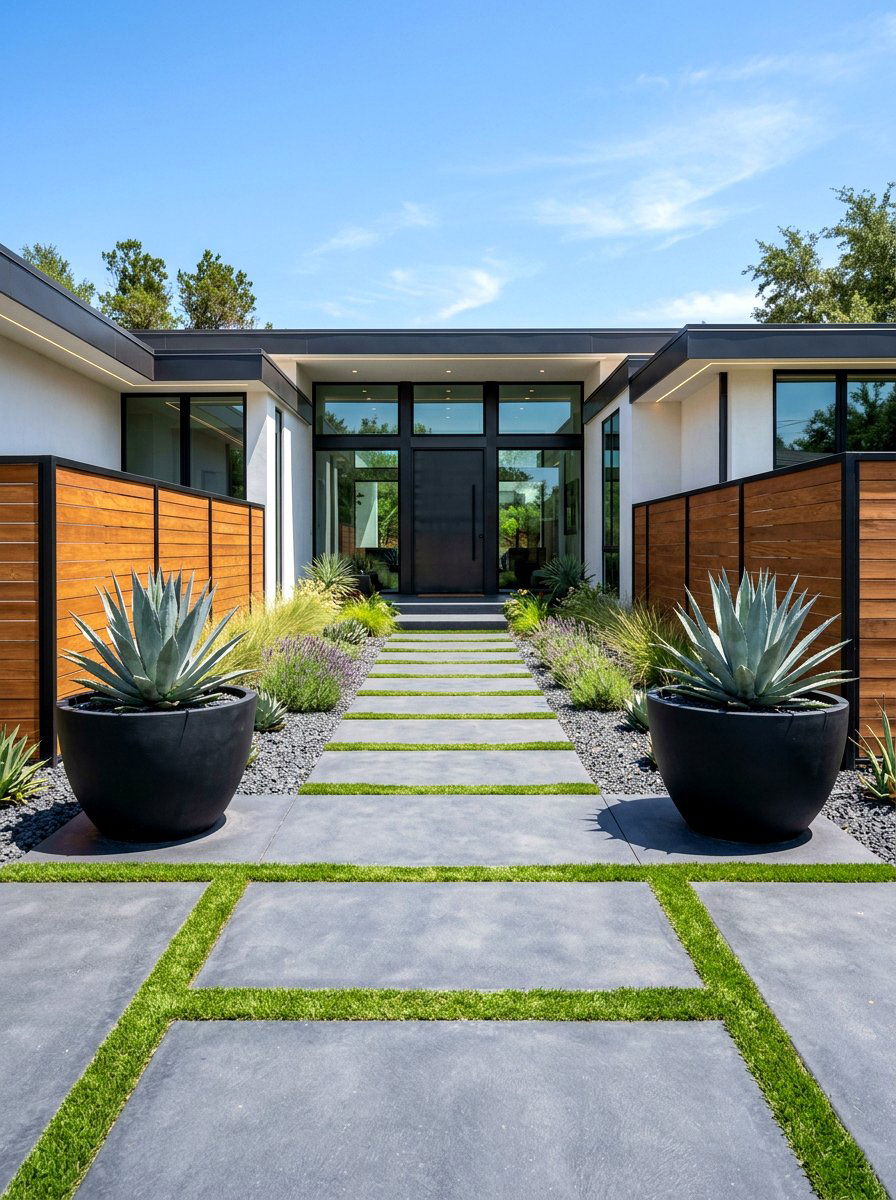
15. Recycled glass mulch edging
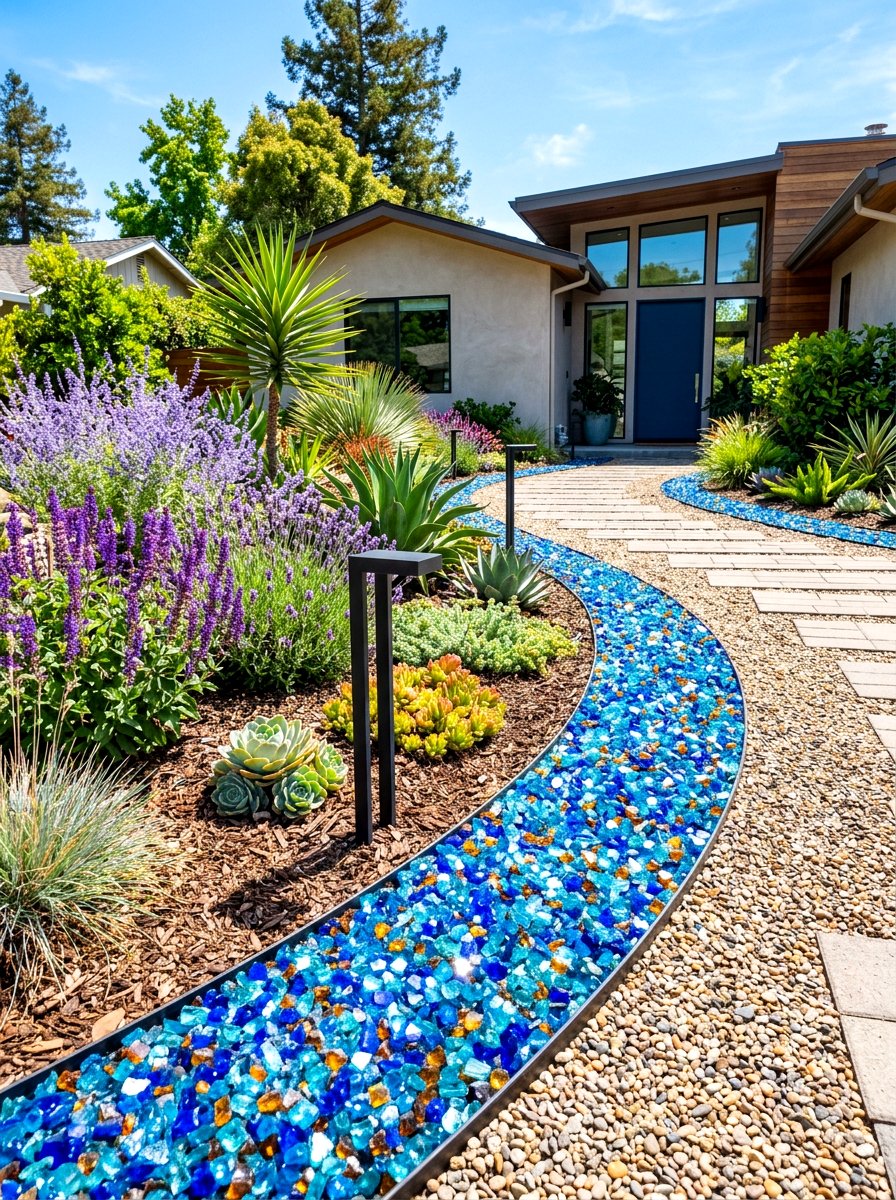
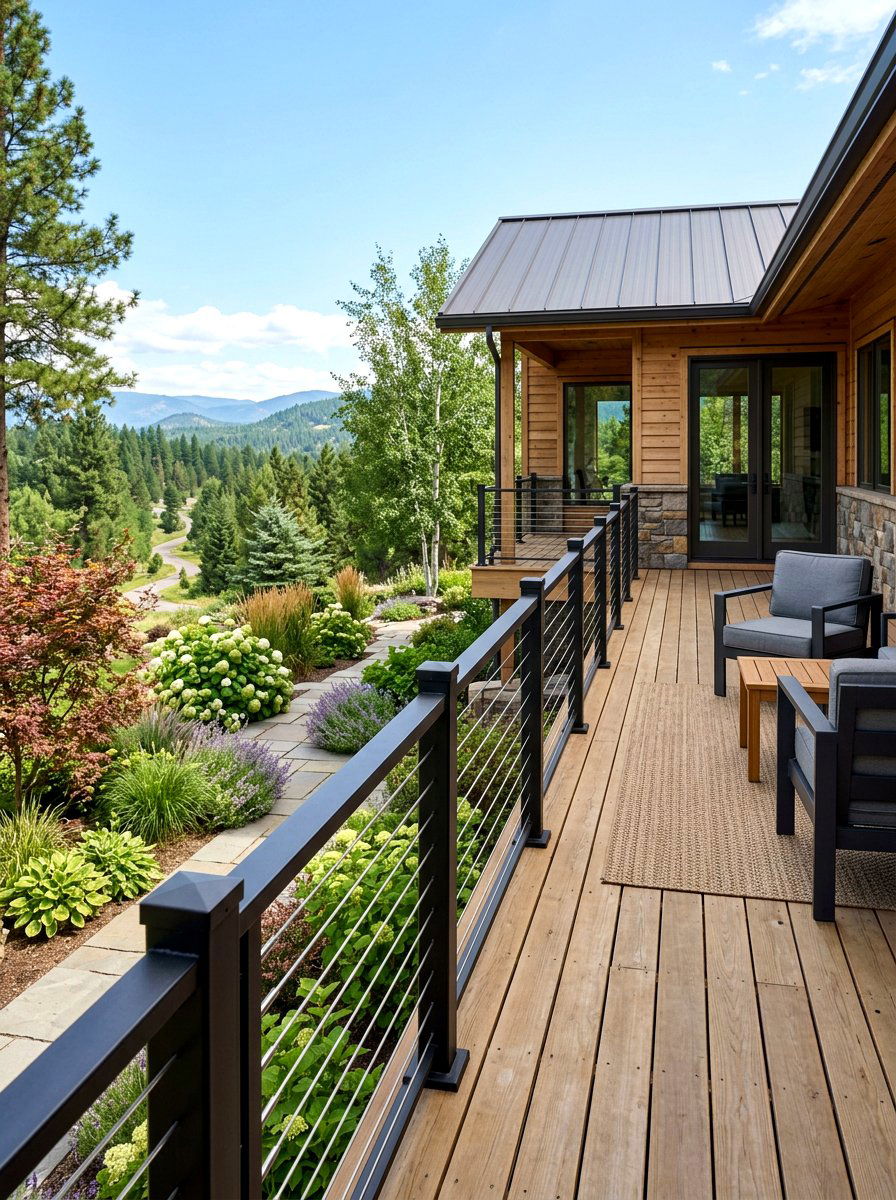
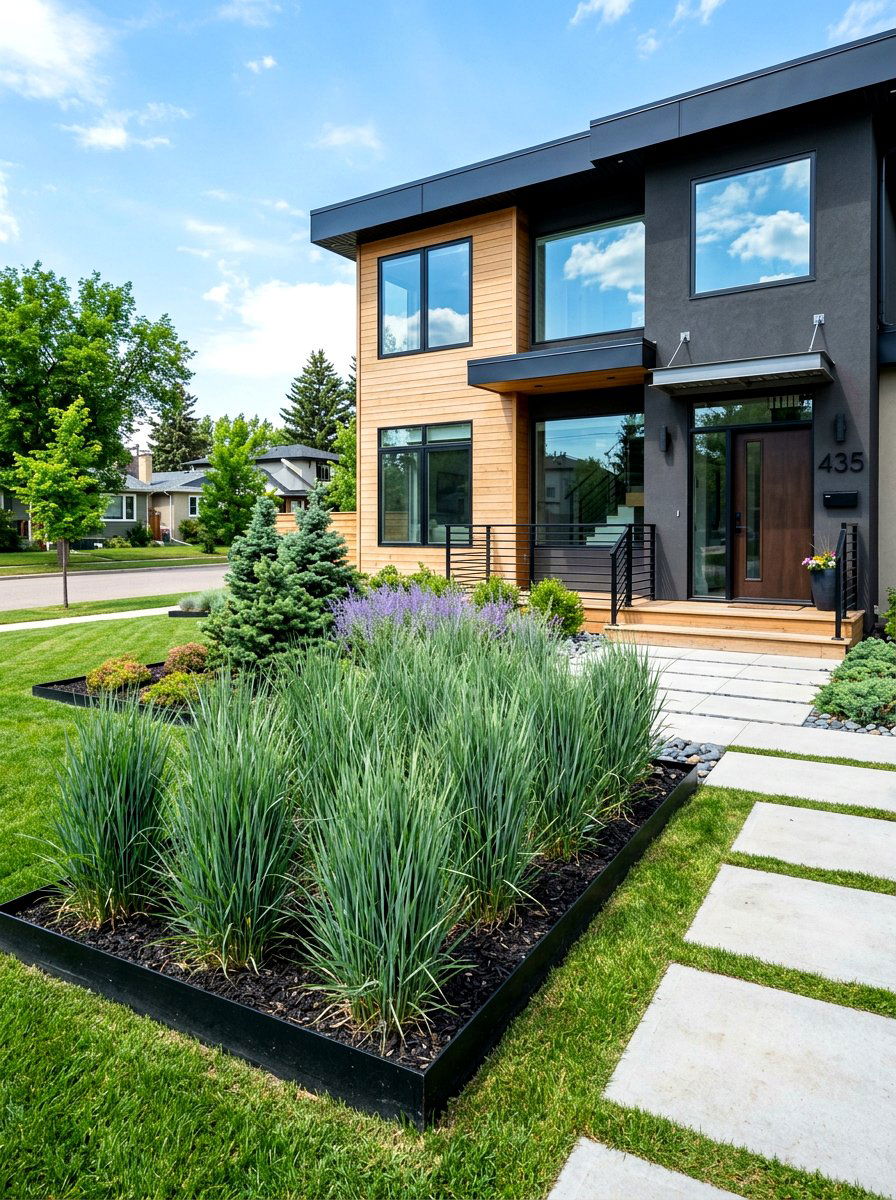
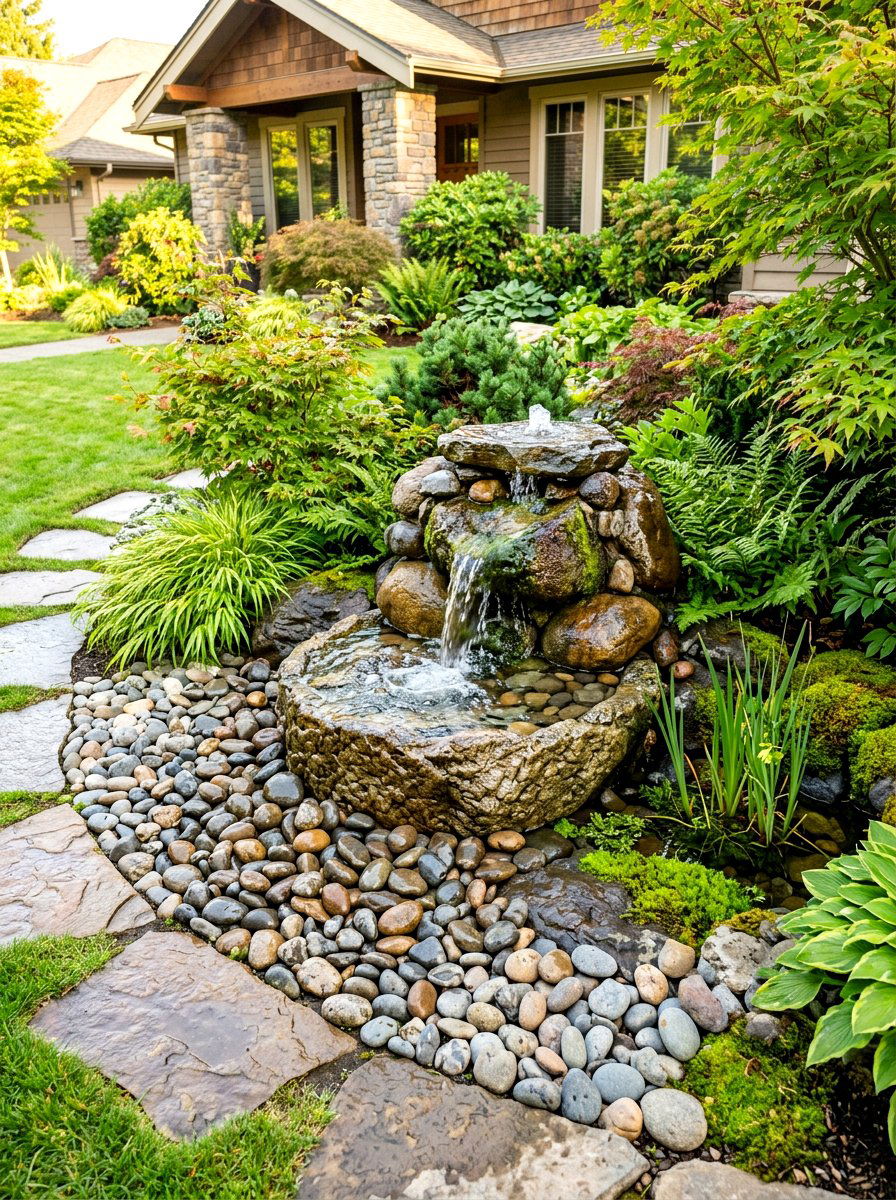
Recycled glass mulch edging is a vibrant and modern way to add color and sustainability to your front yard. By creating a wide border of tumbled, non-sharp glass pieces, you can introduce shades of blue, green, or amber that sparkle in the sunlight. This choice is perfect for homeowners who want a low-maintenance, water-wise yard that still feels artistic and energetic. The glass pieces do not break down like wood mulch, meaning the border will stay looking fresh and bright for years. It looks especially striking when illuminated by low-voltage landscape lighting at night, creating a glowing path around your garden beds.
16. Living plant edging
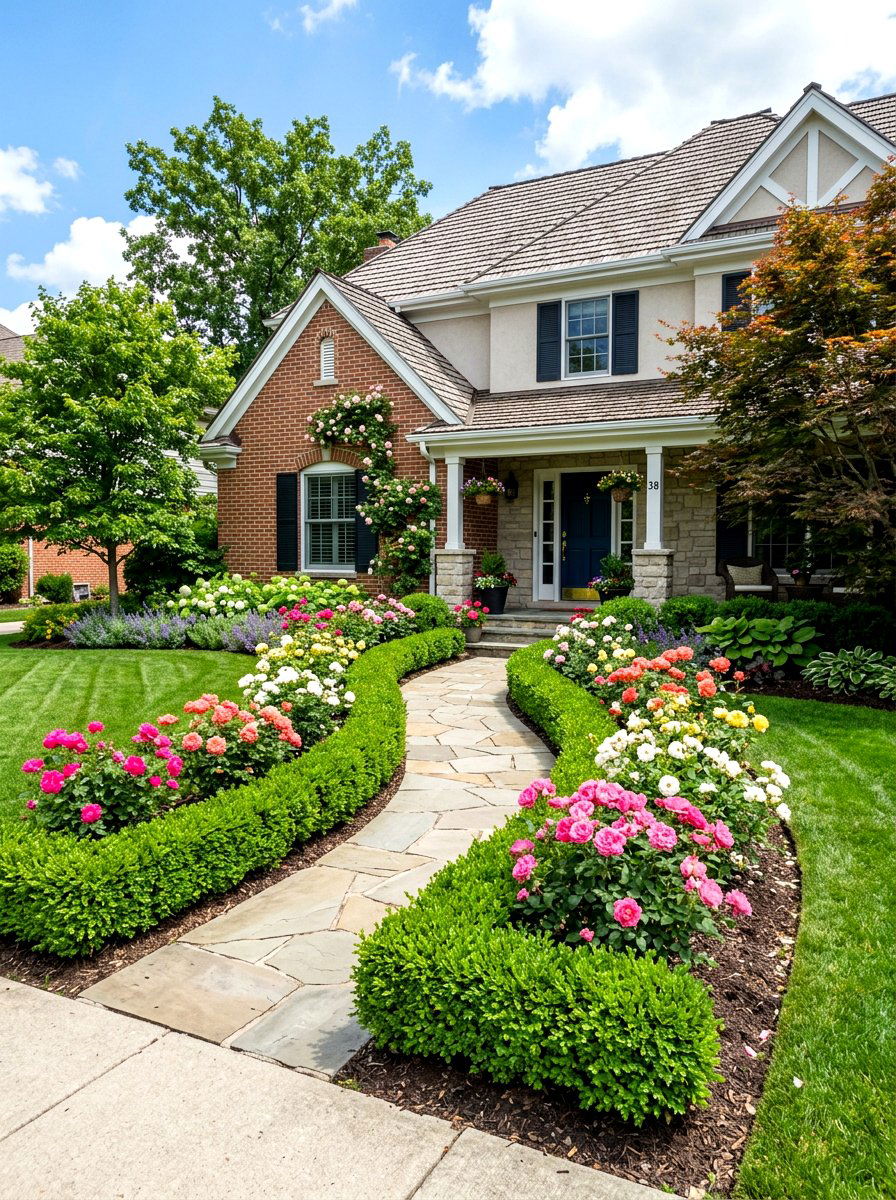
Living plant edging uses low-growing, dense vegetation to create a soft and breathable boundary for your front yard garden beds. Classic choices like boxwood, liriope, or even dwarf lavender provide a lush green frame that changes beautifully with the seasons. This "soft" edging approach blends the lawn and the flower bed more naturally than hard materials like stone or metal. It requires occasional pruning to keep the lines crisp, but the result is a sophisticated, manicured look that feels very high-end. Living borders are excellent for traditional gardens where a sense of abundance and life is the primary design goal for the space.
17. Rubber mulch edging
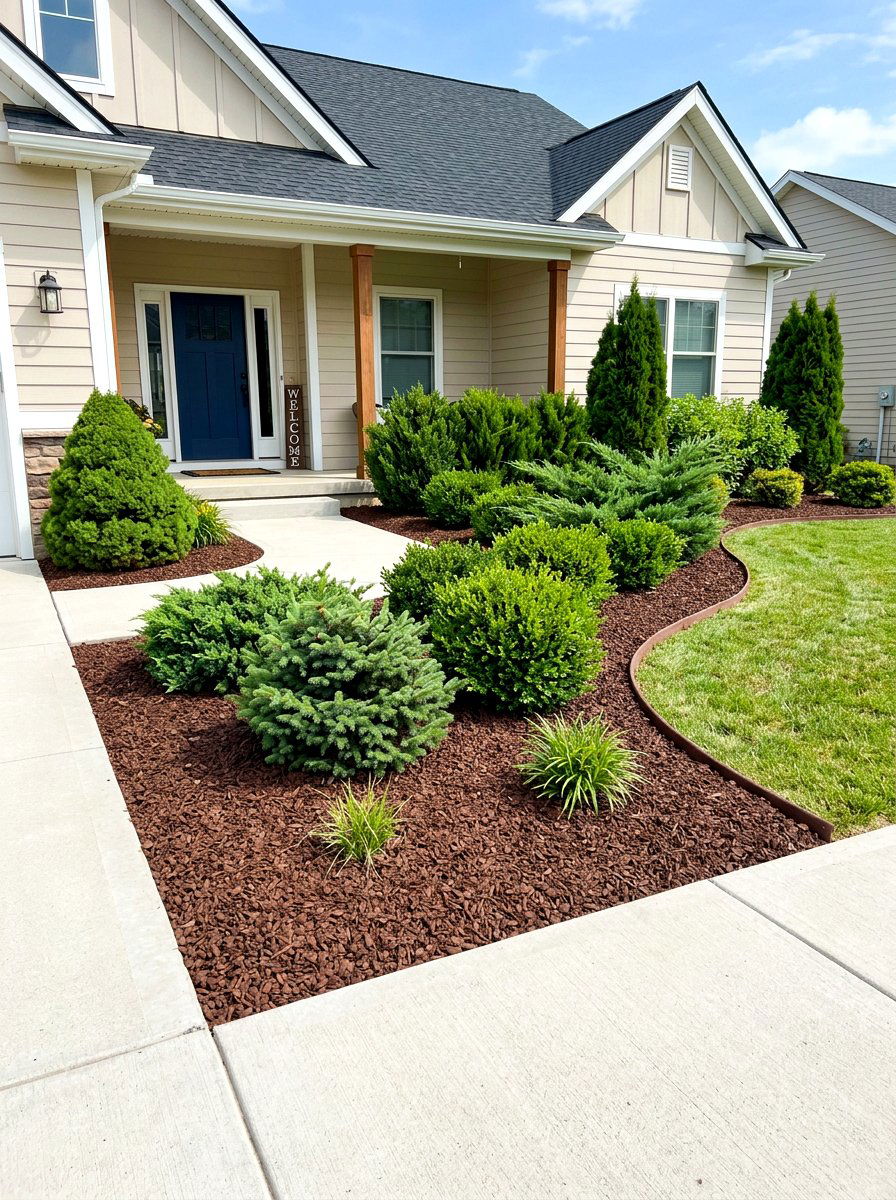
Rubber mulch edging is a practical and safe option that provides a soft, cushioned border for front yard landscapes. Made from recycled tires, this material is incredibly durable and resists fading, rotting, and insect damage much better than traditional wood mulch. It is available in various colors like deep chocolate brown or charcoal black, allowing it to blend seamlessly with your existing garden beds. Because it is heavy, it stays in place during wind and rain, providing a consistent and tidy edge year-round. It is a fantastic low-maintenance choice for busy homeowners who want the look of mulch without the yearly replacement.
18. Woven willow edging
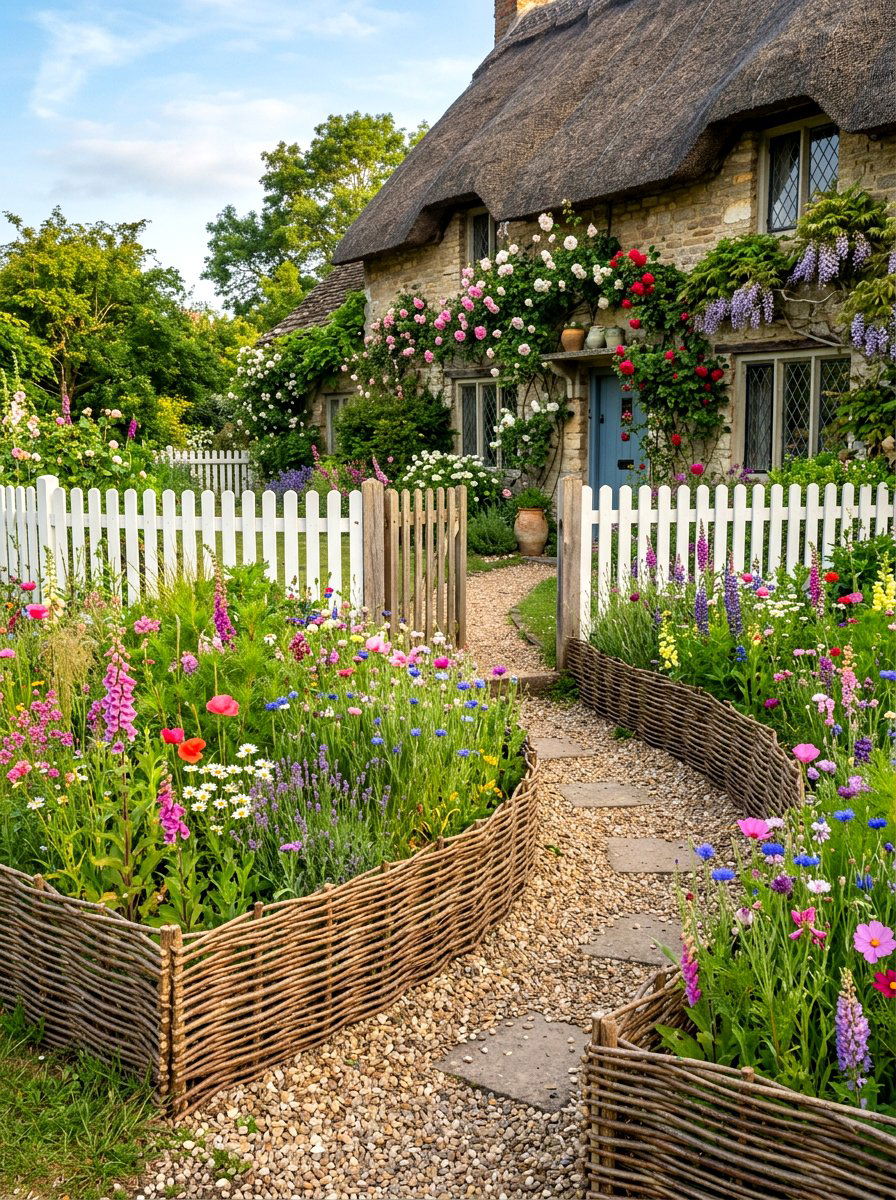
Woven willow edging, also known as hurdles, brings an artisan, cottage-core charm to your front yard that feels wonderfully handmade. These low fences are made by weaving flexible willow branches around upright stakes, creating a rustic and textured boundary. This style is perfect for English-style gardens or vegetable patches in the front yard, as it provides a slight elevation to hold back soil while looking incredibly picturesque. The natural brown tones of the wood harmonize with plants and flowers, giving your yard a cozy, lived-in feel. It is a lightweight and easy-to-install option that adds immediate character and a touch of whimsy.
19. Composite landscape edging
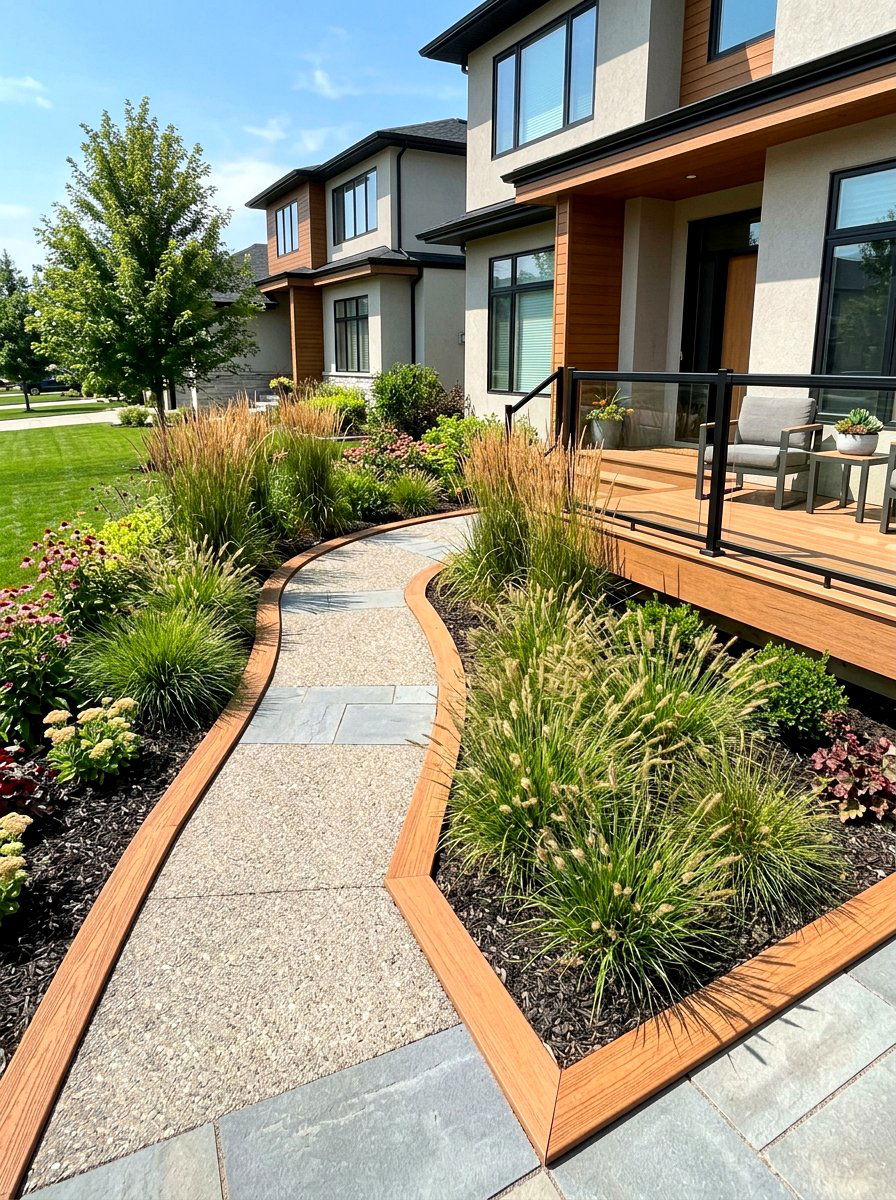
Composite landscape edging offers the warm, natural look of wood without the susceptibility to rot, termites, or warping. Made from a blend of wood fibers and recycled plastic, this material is designed to withstand harsh weather conditions while maintaining its color and shape. It is available in various finishes that mimic cedar, redwood, or even dark mahogany, making it easy to coordinate with your home’s deck or fence. This edging is flexible enough to handle slight curves but rigid enough to maintain perfectly straight lines where needed. It is a smart, long-term investment for a clean and professional-looking front yard border.
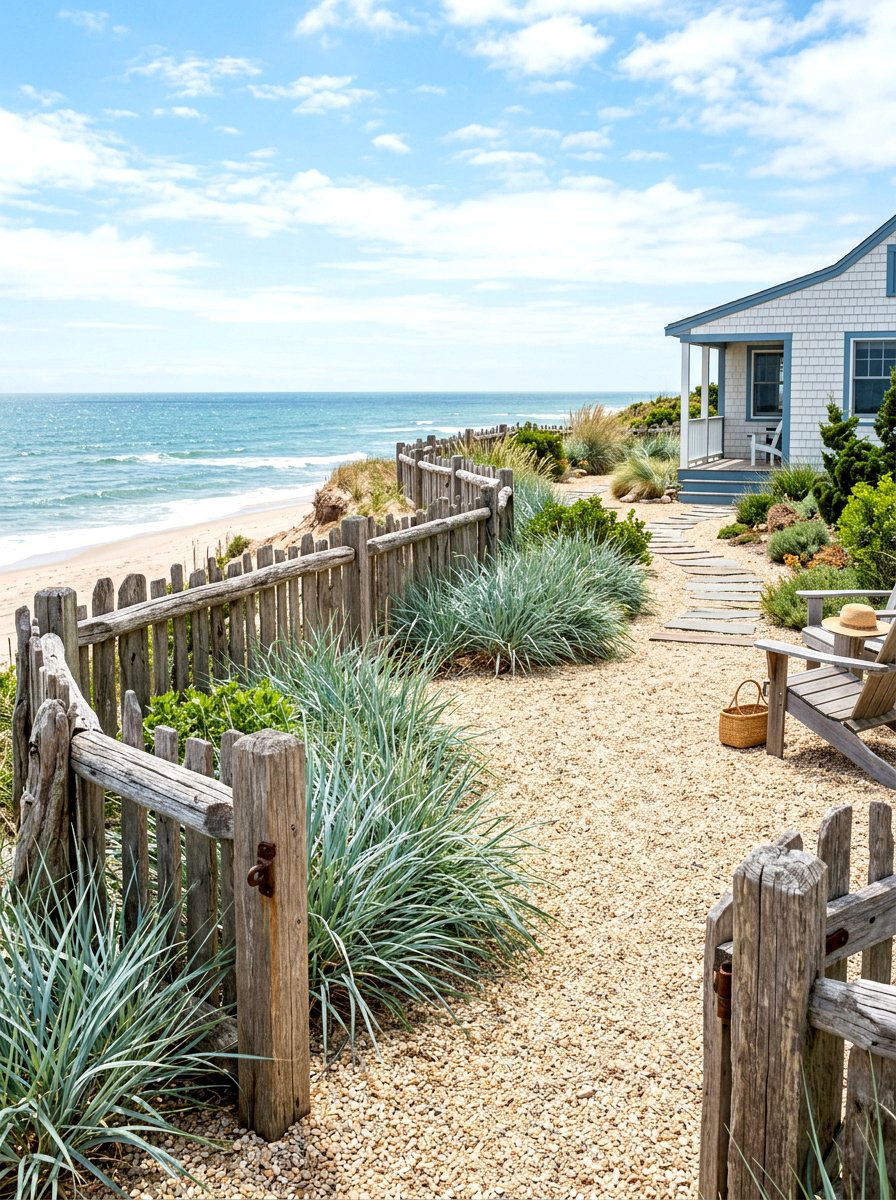
20. Scalloped concrete edging
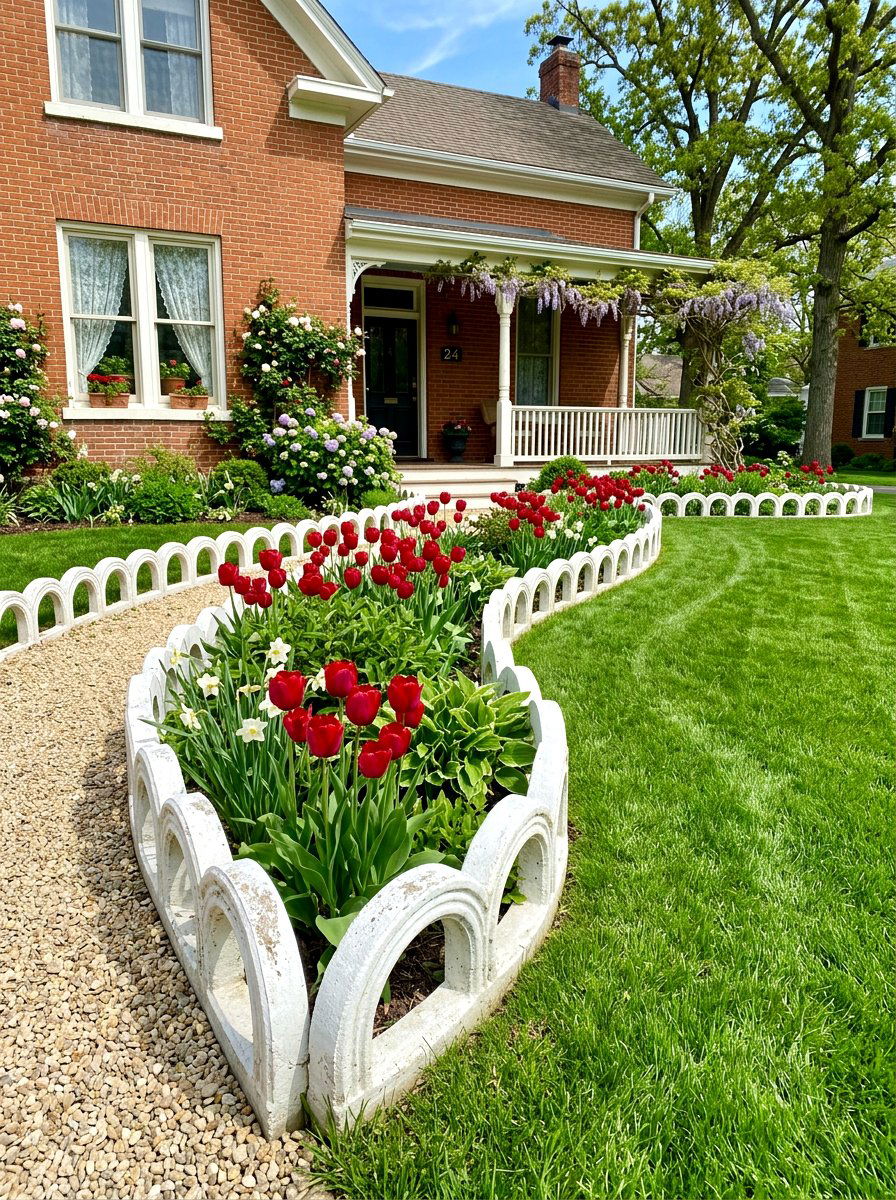
Scalloped concrete edging provides a decorative and traditional finish that adds a touch of vintage charm to your front yard. These pre-cast sections feature a series of rounded arches that create a rhythmic and playful border along your garden beds. They are very easy to install by simply pressing them into a shallow trench, making them a popular choice for DIY enthusiasts. The white or light gray color of the concrete stands out beautifully against dark soil and green grass, highlighting the shape of your landscaping. It is a simple way to add architectural detail and a sense of order to your home’s entrance.
21. River rock borders
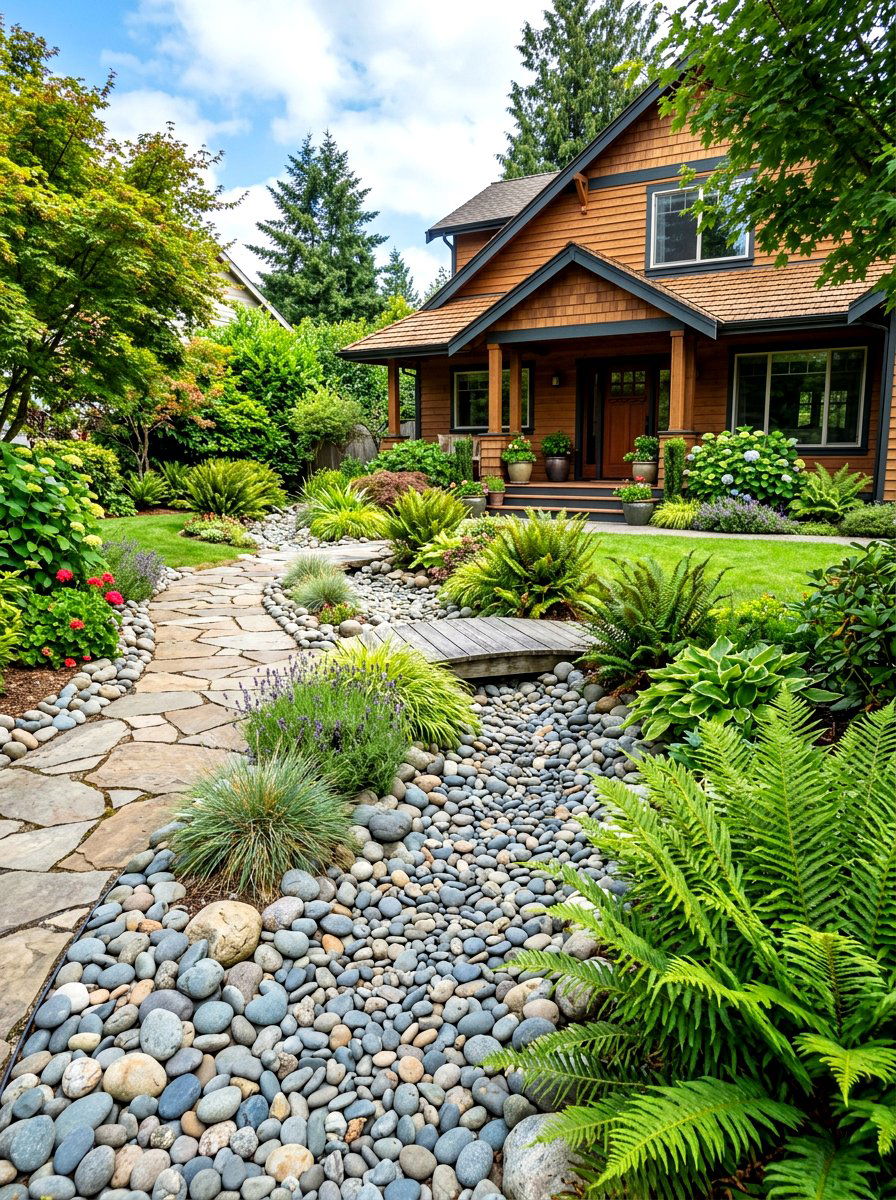
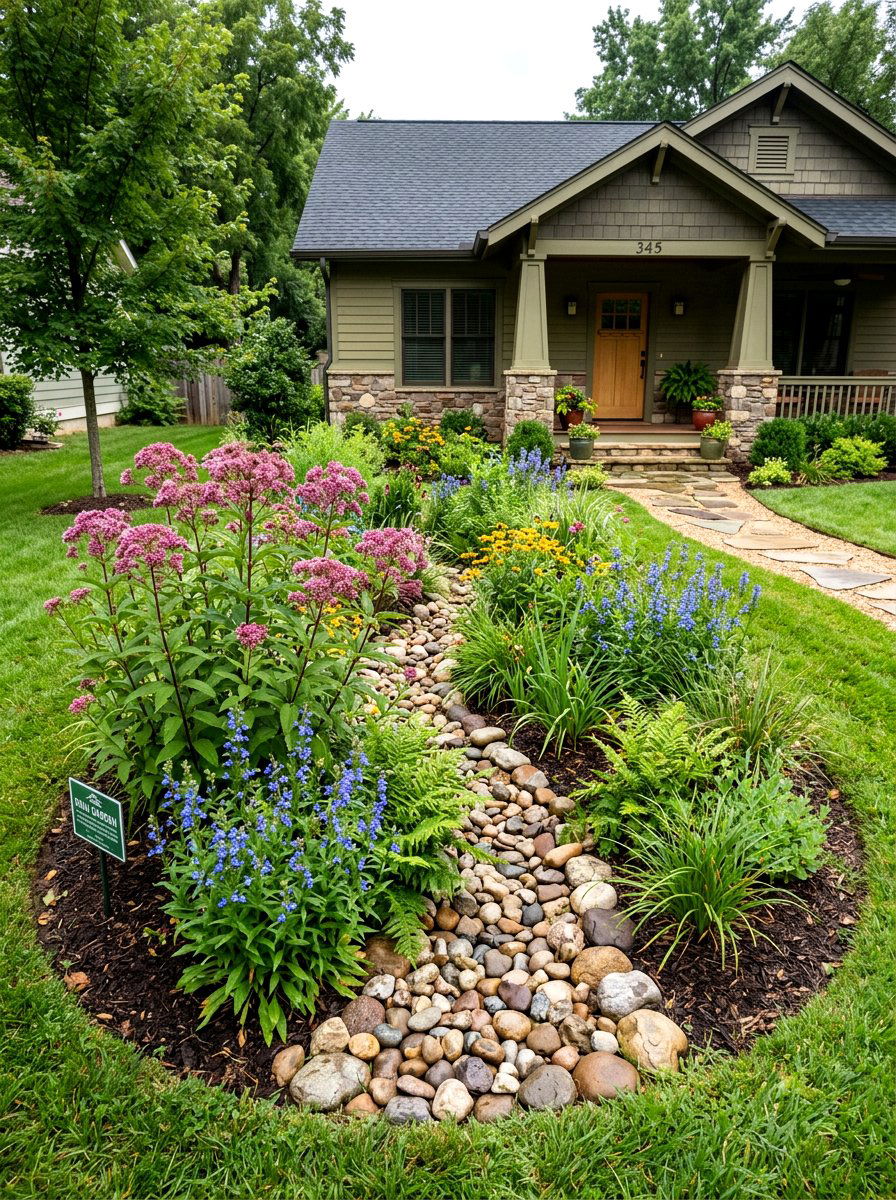
River rock borders use smooth, water-worn stones to create a serene and organic boundary in your front yard. The variety of sizes and soft, rounded shapes give the edge a fluid look that mimics a natural stream bed. This style is particularly effective for managing drainage issues, as the rocks allow water to flow through while keeping soil in place. You can mix different colors of river rocks to create a custom look that complements your home’s exterior. These borders are very low-maintenance and provide a permanent, sturdy edge that looks beautiful in both sunny and shaded areas of the yard.
22. Slate stone edging
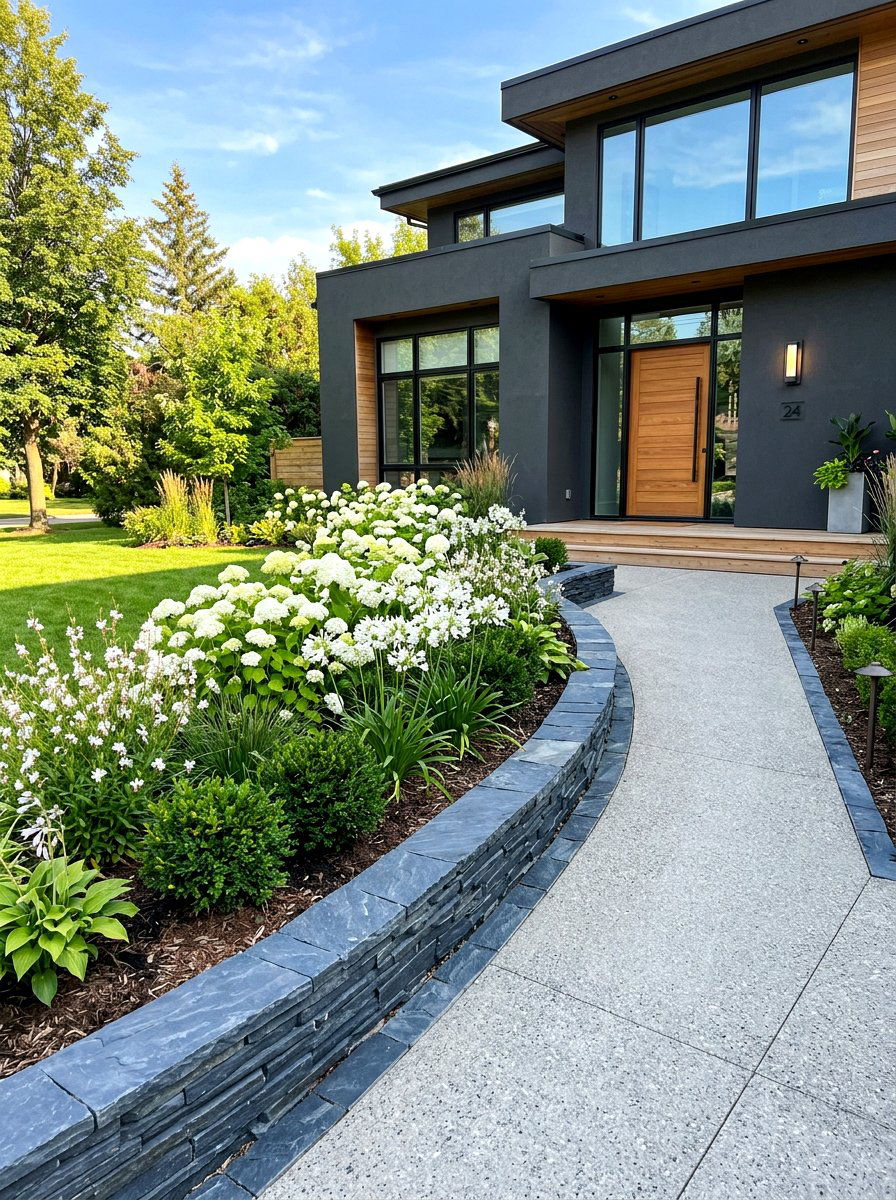
Slate stone edging provides a dark, sophisticated, and contemporary feel to your front yard landscape. The naturally layered texture of slate creates a sleek and modern boundary that looks especially striking when wet. You can use large, flat pieces of slate set vertically to create a sharp, thin edge, or stack them horizontally for a more substantial look. The deep charcoal and blue-gray tones of slate offer a high-contrast backdrop for bright green plants and colorful flowers. This material is very durable and adds a sense of luxury and refinement to any modern home’s exterior design and curb appeal.
23. Granite curbing
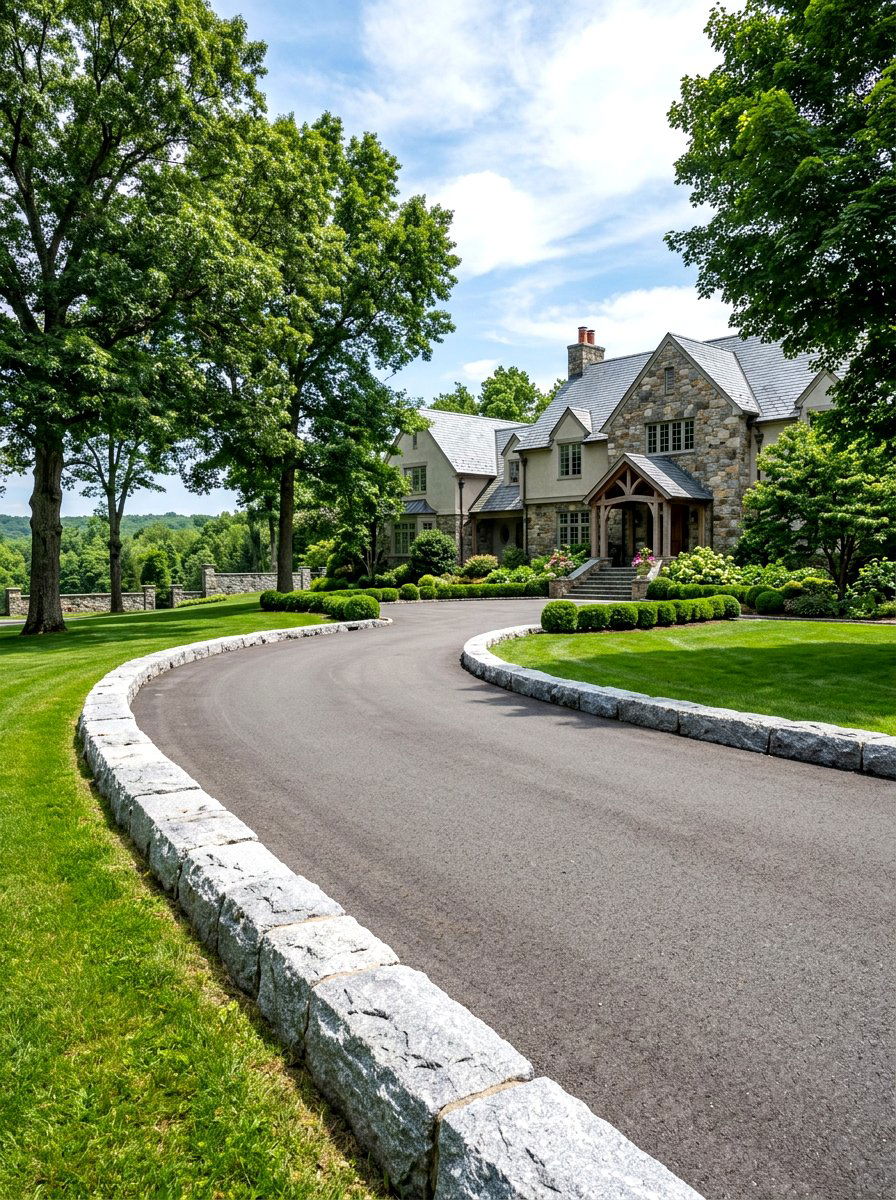
Granite curbing is a premium and incredibly durable choice for defining the edges of your front yard driveway or main garden beds. This heavy, natural stone is known for its strength and timeless beauty, often featuring speckles of gray, white, and black. Because it is so dense, granite curbing will not chip or erode, making it a permanent fixture in your landscape. It provides a very high-end, classic look that is frequently seen in upscale neighborhoods and historic estates. Installing granite curbing adds a sense of value and structural integrity to your property, creating a grand and polished first impression.
24. Corrugated metal edging
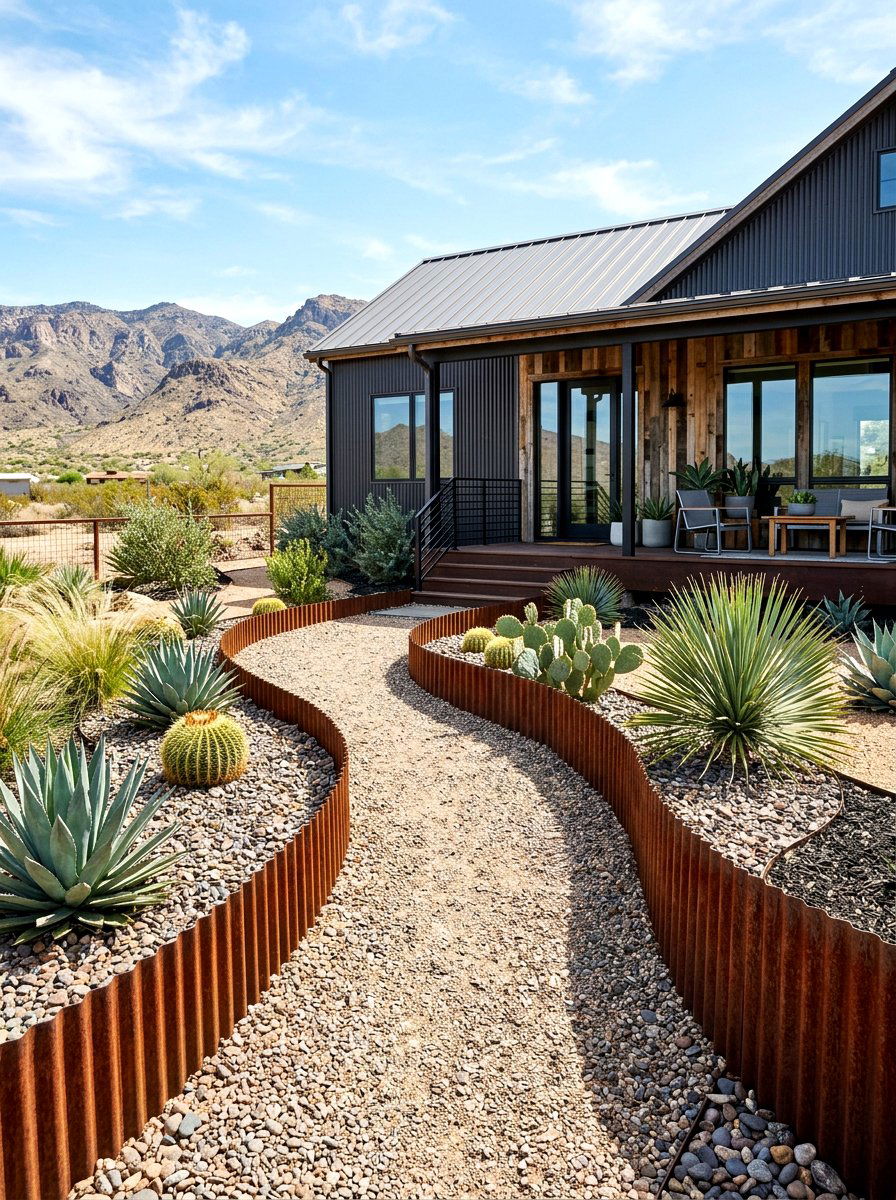
Corrugated metal edging is a bold and creative choice for homeowners looking for an industrial or modern farmhouse aesthetic. Using strips of galvanized or rusted corrugated steel creates a textured, vertical border that adds a unique architectural element to the yard. This material is very thin and easy to install, yet it is strong enough to hold back soil and define clear paths. The light-reflecting quality of the metal can brighten up darker corners of the garden, while the ridged texture adds visual interest. It is a durable and edgy option that makes a strong style statement in any contemporary landscape.
25. Shell garden borders
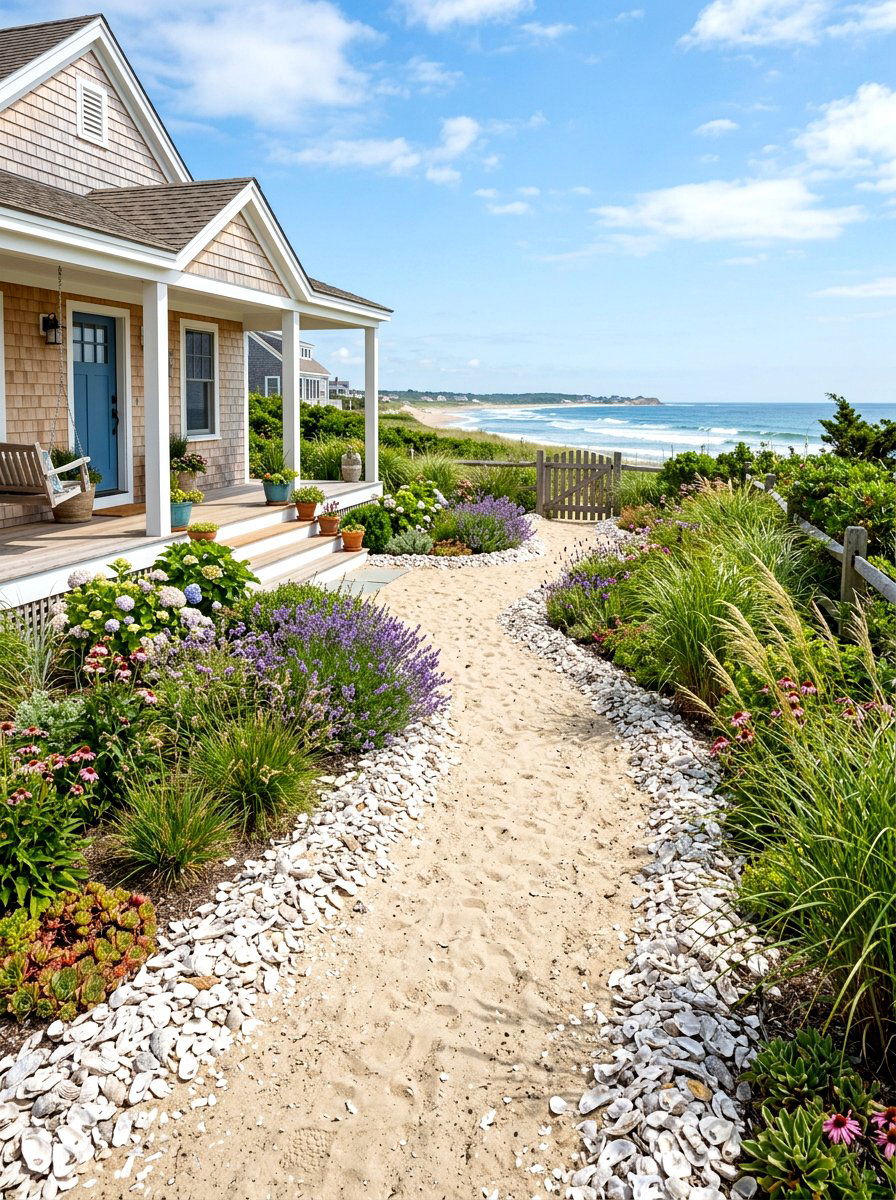
Shell garden borders offer a delightful, coastal-inspired look that is perfect for homes near the beach or for anyone wanting a relaxed, seaside vibe. By using crushed oyster shells or large conch shells as a border, you create a bright, white, and textured edge that sparkles in the sun. The high calcium content in the shells can also be beneficial for the soil over time. This style looks wonderful when paired with ornamental grasses, sand-friendly plants, and weathered wood accents. It provides a unique and lighthearted touch that makes your front yard feel like a permanent vacation destination for your guests.
26. Rope garden edging
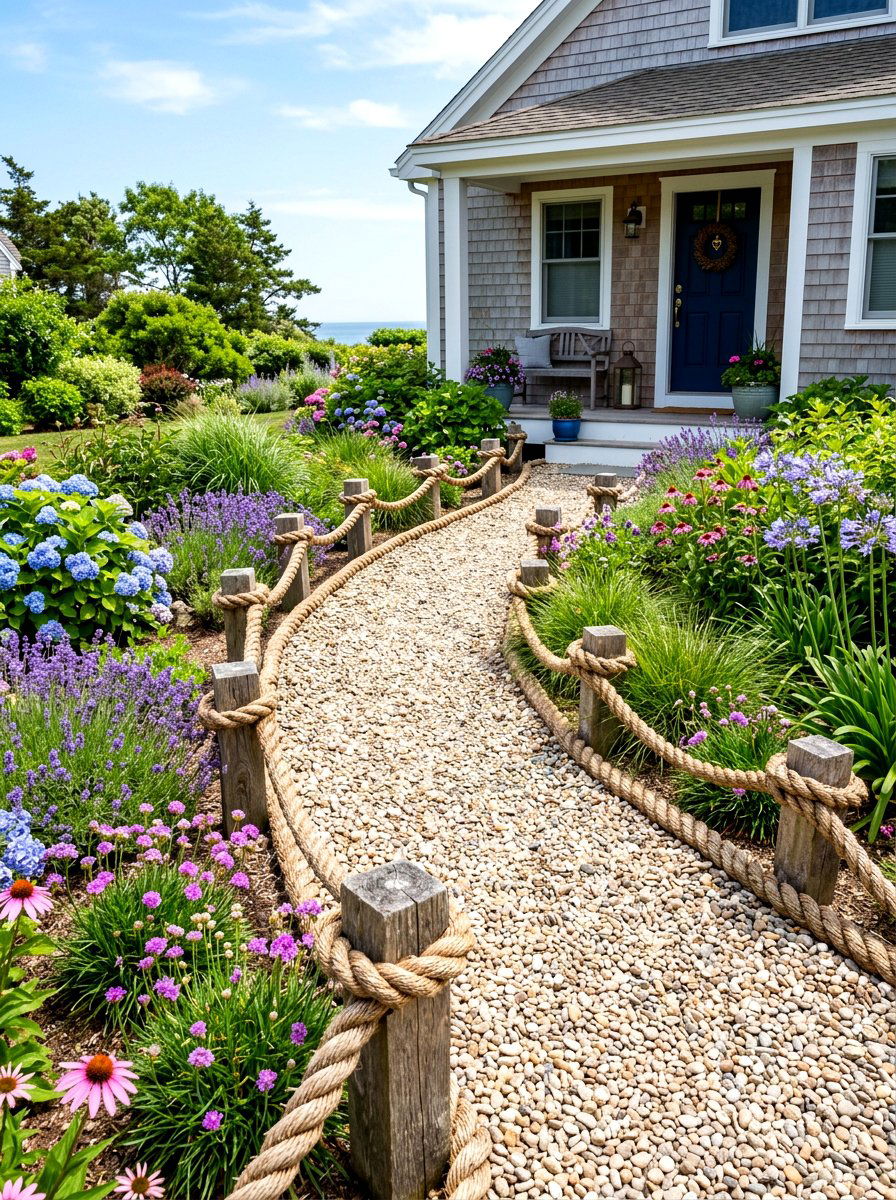
Rope garden edging is a creative and nautical way to define boundaries in your front yard with a soft, tactile material. By using thick manila or synthetic hemp rope draped between low wooden or metal stakes, you create a charming and informal border. this design is perfect for coastal homes or for adding a bit of whimsy to a traditional garden. The natural texture of the rope looks beautiful against green foliage and gravel paths. It is an easy and inexpensive way to add a decorative layer to your landscape that guides the eye and provides a gentle sense of enclosure and structure.
27. Timber landscape edging
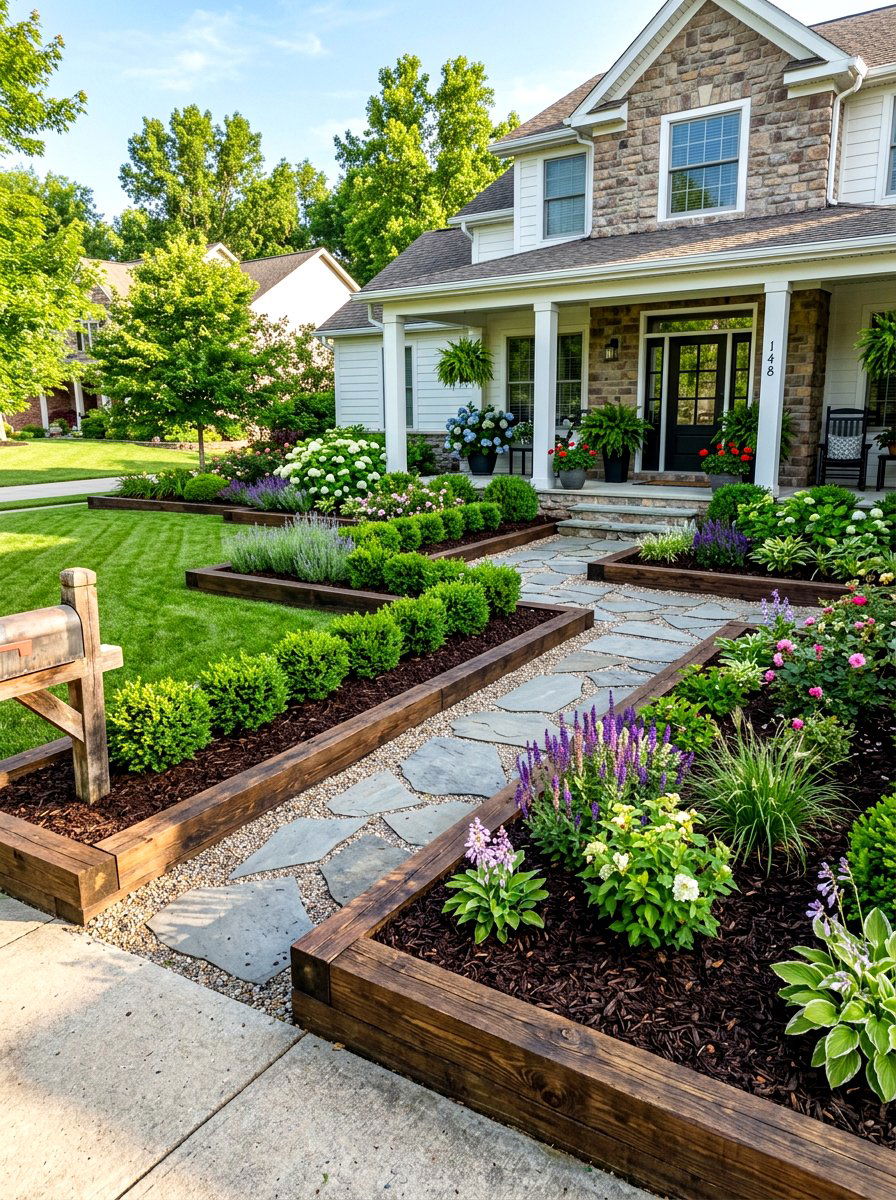
Timber landscape edging provides a clean, functional, and very organized look for large garden beds and front yard perimeters. Using thick 4x4 or 6x6 pressure-treated timbers allows you to create perfectly straight lines and sharp corners, which is ideal for formal or geometric designs. These timbers are heavy and stable, making them excellent for containing thick layers of mulch or creating level terraces on a sloped yard. The natural wood grain adds a warm, organic element that grounds the landscape. This is a very popular and practical choice for homeowners who want a tidy, structured yard with minimal long-term maintenance.
28. Terra cotta pot edging
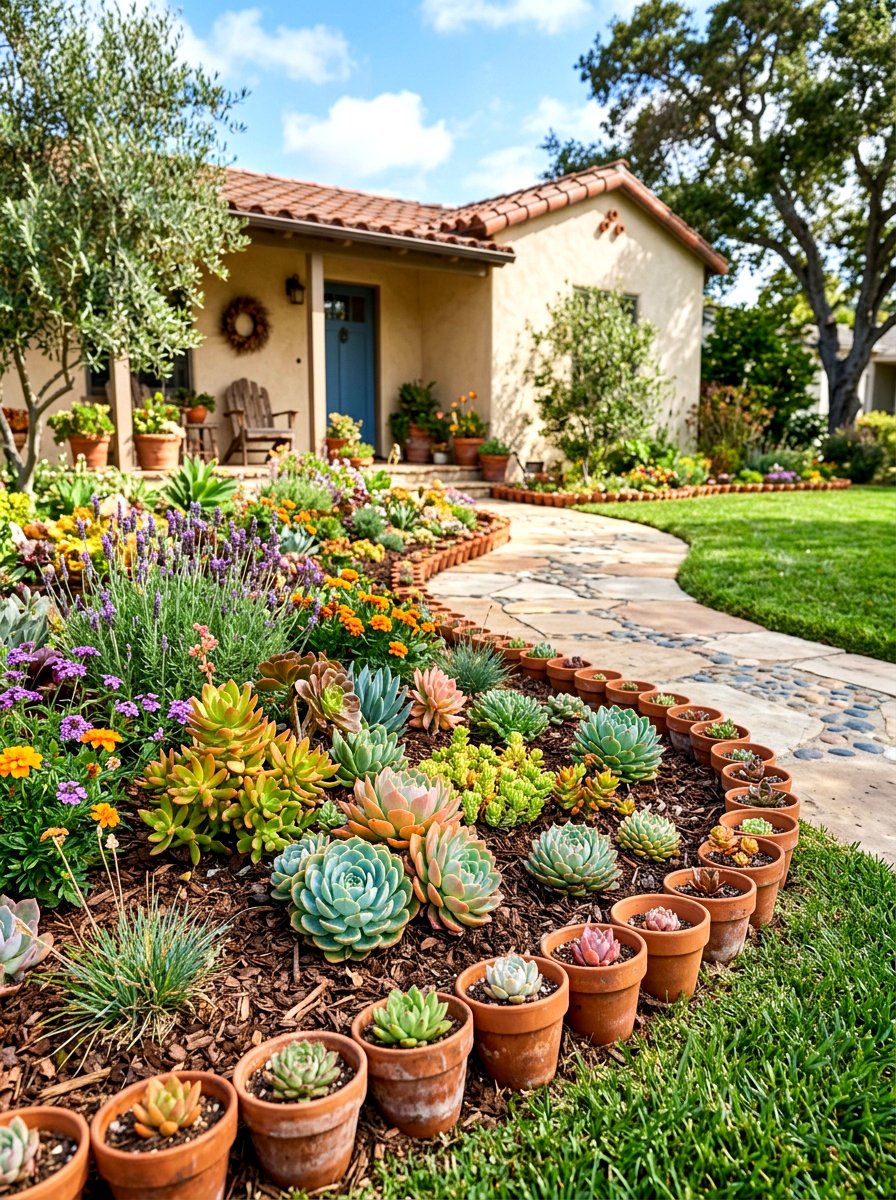
Terra cotta pot edging is a whimsical and resourceful way to repurpose old garden pots while adding a unique decorative border to your front yard. By burying small clay pots halfway into the soil in a row, you create a rhythmic, scalloped edge that is full of character. You can even plant small succulents or annuals inside the pots for an extra layer of color and texture. The warm orange tones of the clay provide a beautiful contrast to green leaves and dark soil. This creative approach shows off your personality and makes your garden beds feel like a hand-crafted work of art.
29. Glass bottle edging
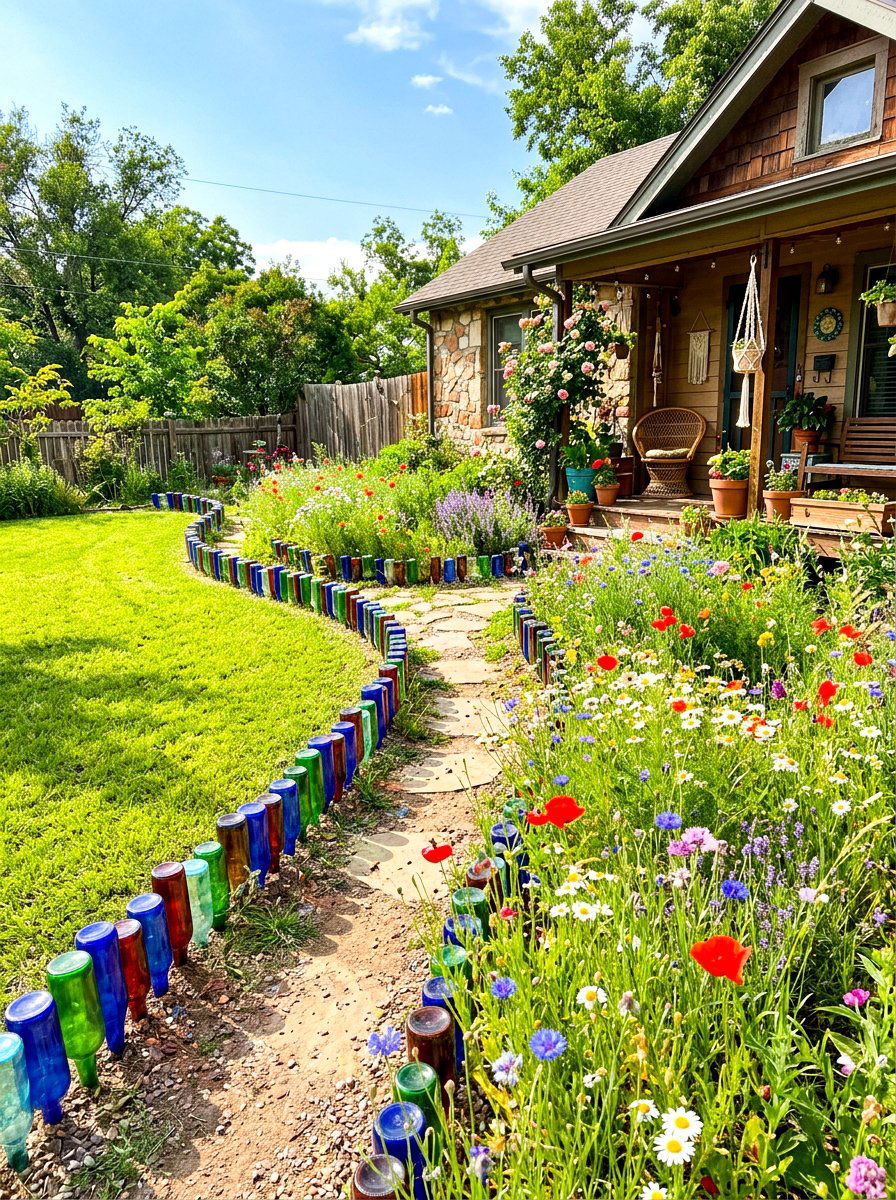
Glass bottle edging is a colorful and eco-friendly DIY project that adds a touch of bohemian or folk-art charm to your front yard. By burying empty glass bottles upside down with just the bottoms showing, you can create a sparkling, jewel-like border. Mixing different colors like cobalt blue, emerald green, and amber creates a vibrant mosaic effect that catches the light beautifully throughout the day. This type of edging is a great conversation starter and an excellent way to recycle materials into something beautiful. It works best in informal, eclectic gardens where a sense of playfulness and creativity is highly celebrated.
30. Brick paver mowing strip
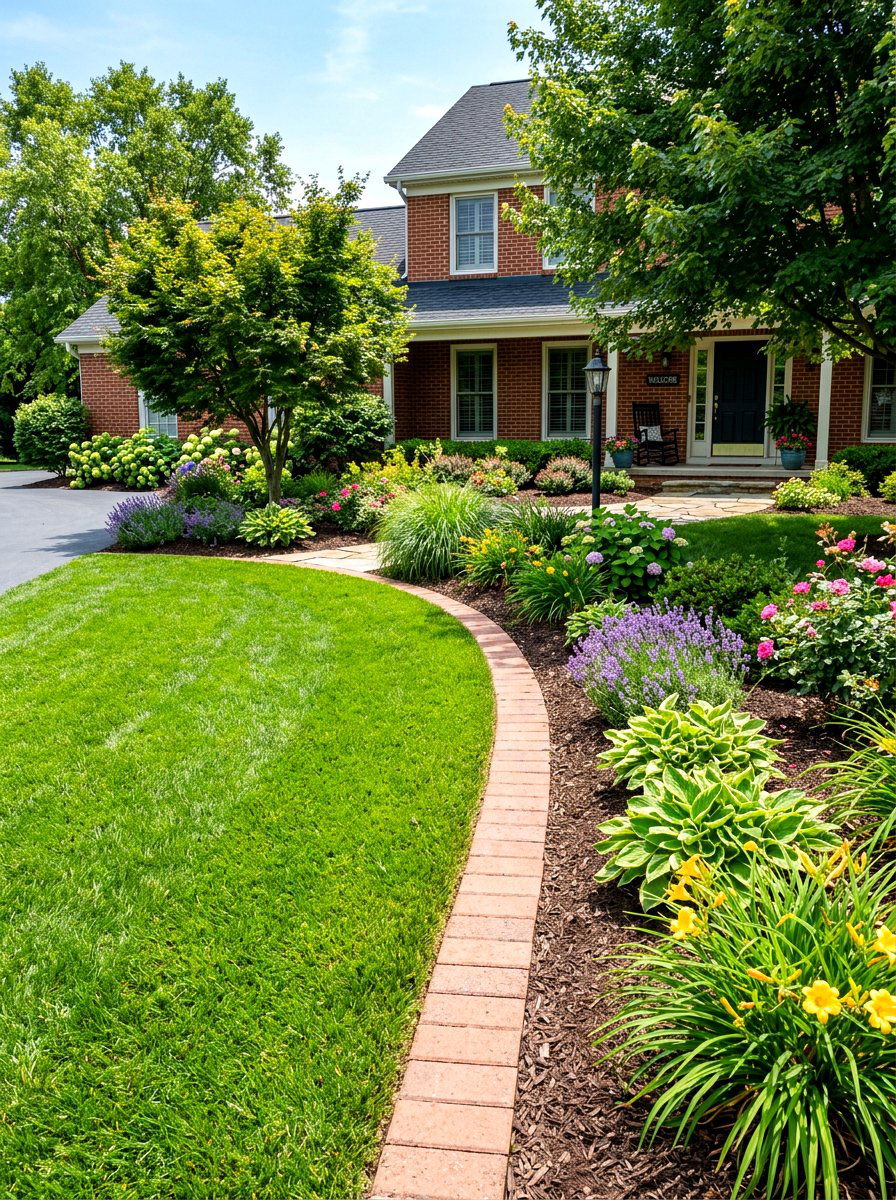
A brick paver mowing strip is a highly functional and smart design choice that makes front yard maintenance a breeze. By laying a flat row of pavers flush with the ground between your grass and garden beds, you create a dedicated track for your lawnmower’s wheels. This eliminates the need for tedious string trimming and prevents the mower from damaging your delicate plants. This practical solution also provides a very clean and professional-looking separation that stays neat all year round. You can choose pavers that match your driveway or walkway to create a cohesive and well-thought-out look for your entire front yard.
Conclusion:
Selecting the perfect front yard edging is a vital step in creating a cohesive and beautiful home exterior. From the timeless appeal of brick and stone to the modern flair of metal and recycled glass, the right border can define your space and showcase your unique style. Beyond the visual benefits, these boundaries serve a practical purpose by protecting your plants and simplifying your weekly yard work. A well-installed edge provides a sense of order and care that speaks volumes about your property. Take the time to consider your home's architecture and your personal maintenance goals before choosing the material that best fits your lifestyle.

Related posts: