Building a herb spiral is a brilliant way to maximize your gardening space while creating a beautiful, functional landscape feature that serves your kitchen perfectly. These vertical structures utilize permaculture principles to provide different microclimates, allowing you to grow a diverse range of plants in one compact area. Whether you have a sprawling backyard or a small urban patio, a well-designed spiral offers better drainage and easier harvesting than traditional flat beds. By stacking materials like stone, brick, or wood, you create heights that catch the sun and lower areas that stay moist and shaded. This ensures every herb from rosemary to mint finds its perfect home right outside your door.
1. Natural stone herb spiral
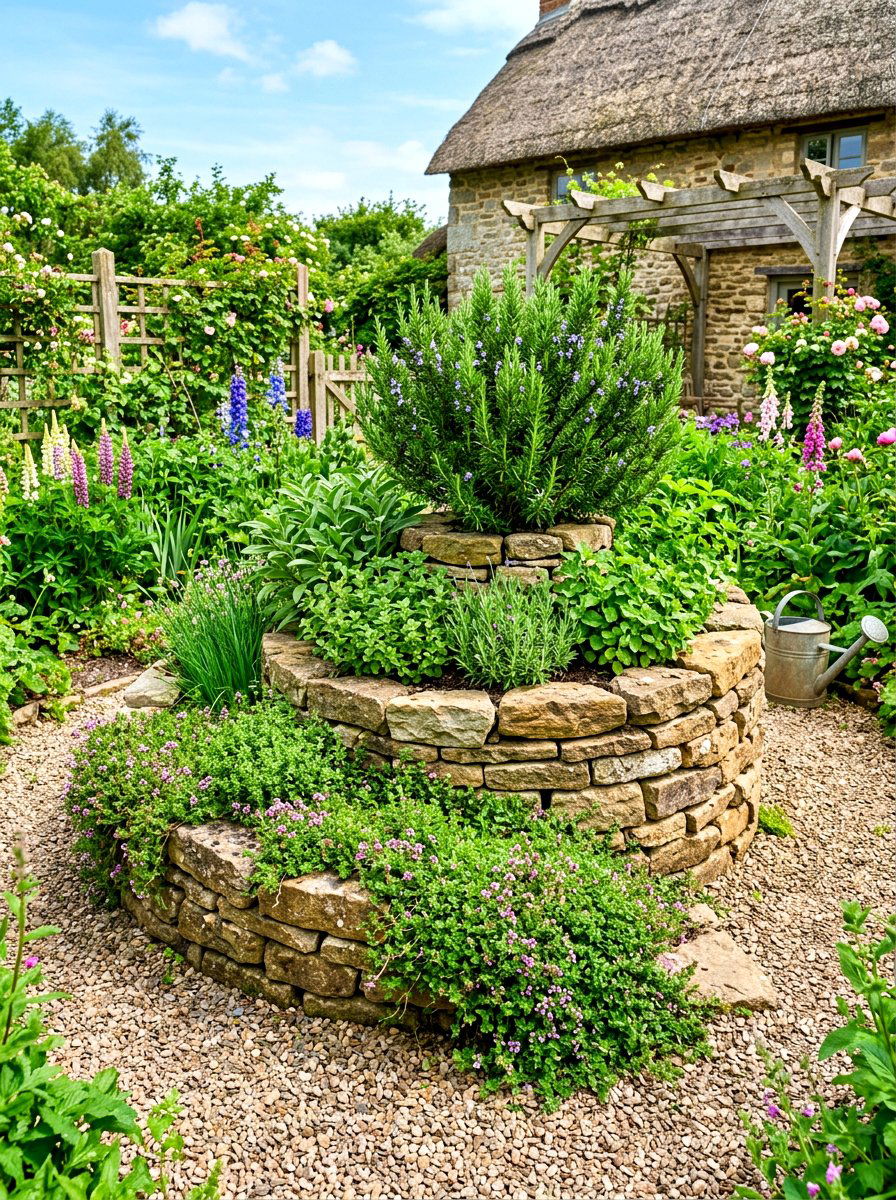
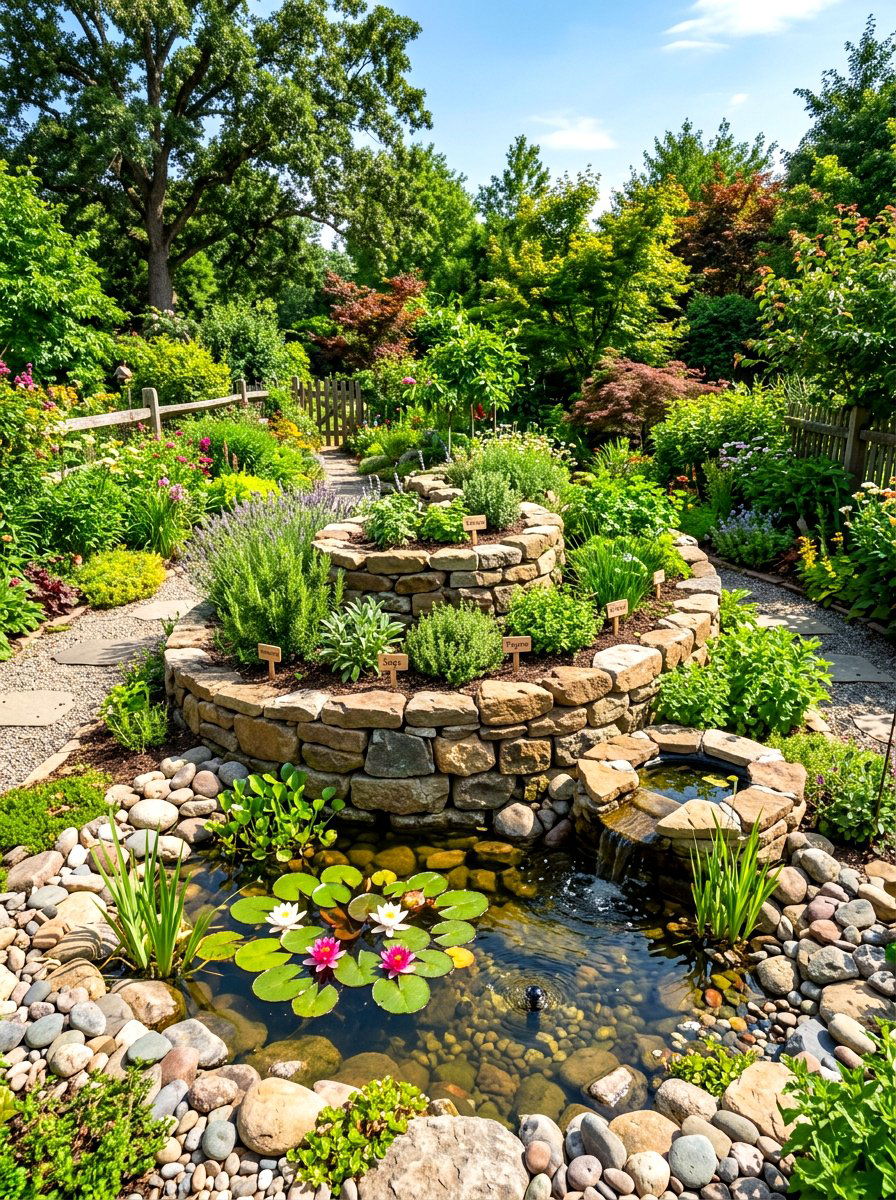
A natural stone herb spiral is a timeless choice that blends seamlessly into any traditional or rustic landscape. Using various sizes of locally sourced fieldstone or granite creates a sturdy, self-supporting structure that absorbs heat during the day and releases it at night. This thermal mass is excellent for Mediterranean herbs like rosemary and thyme, which thrive in warmer soil. The irregular shapes of the stones provide small crevices where beneficial insects can hide, adding to the biodiversity of your garden. Because stones are naturally heavy, they require no mortar, allowing for excellent drainage and a very organic appearance that only looks better as it ages with moss and lichen.
2. Red brick herb spiral
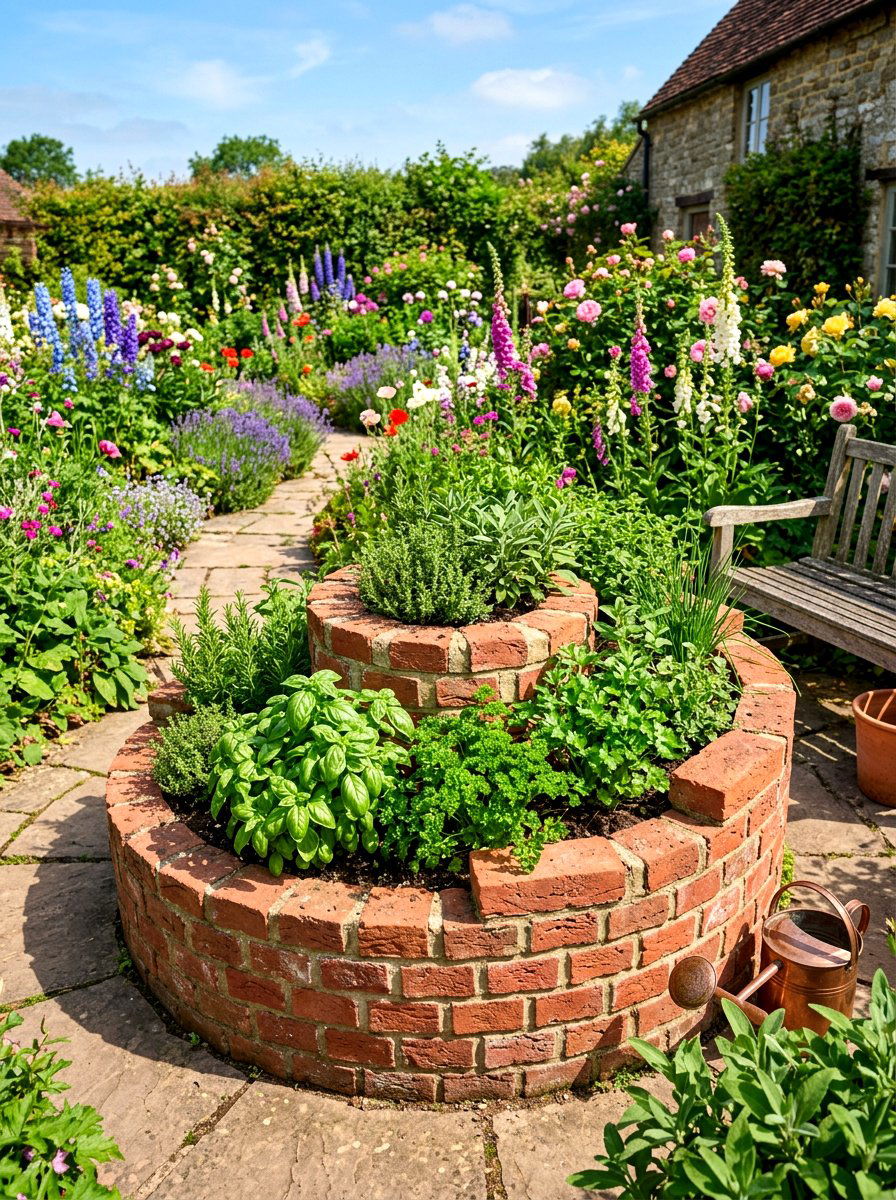
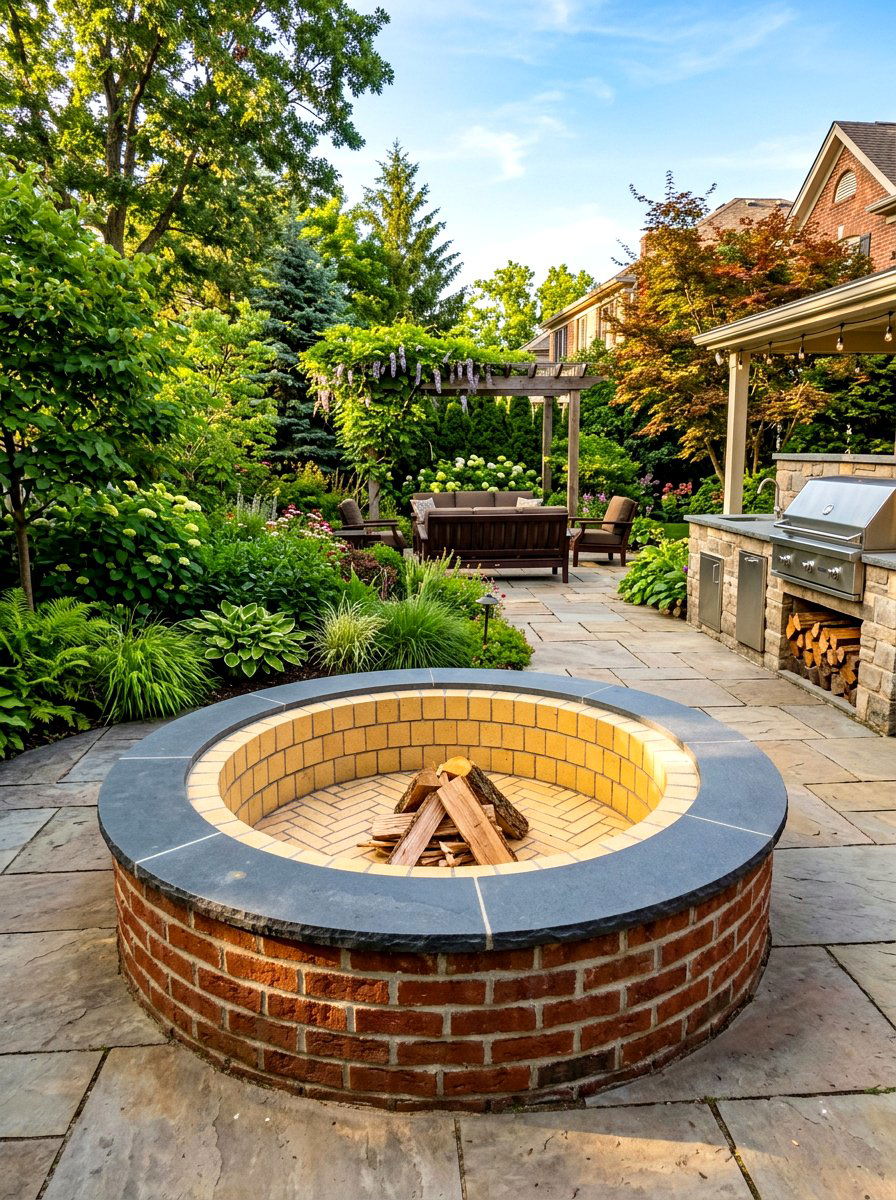
Using classic red bricks for your herb spiral provides a clean, organized look that works wonderfully in suburban backyards or cottage gardens. Bricks are uniform in size, making it much easier to build a stable, circular wall that gradually rises to a central peak. You can choose to dry-stack them for a more rustic feel or use mortar for a permanent structure that stands the test of time. The warm tones of the clay complement the vibrant greens of parsley and basil, creating a striking visual contrast. This design is particularly effective for keeping the soil contained and tidy while offering a structured path for water to flow downward.
3. Gabion cage herb spiral
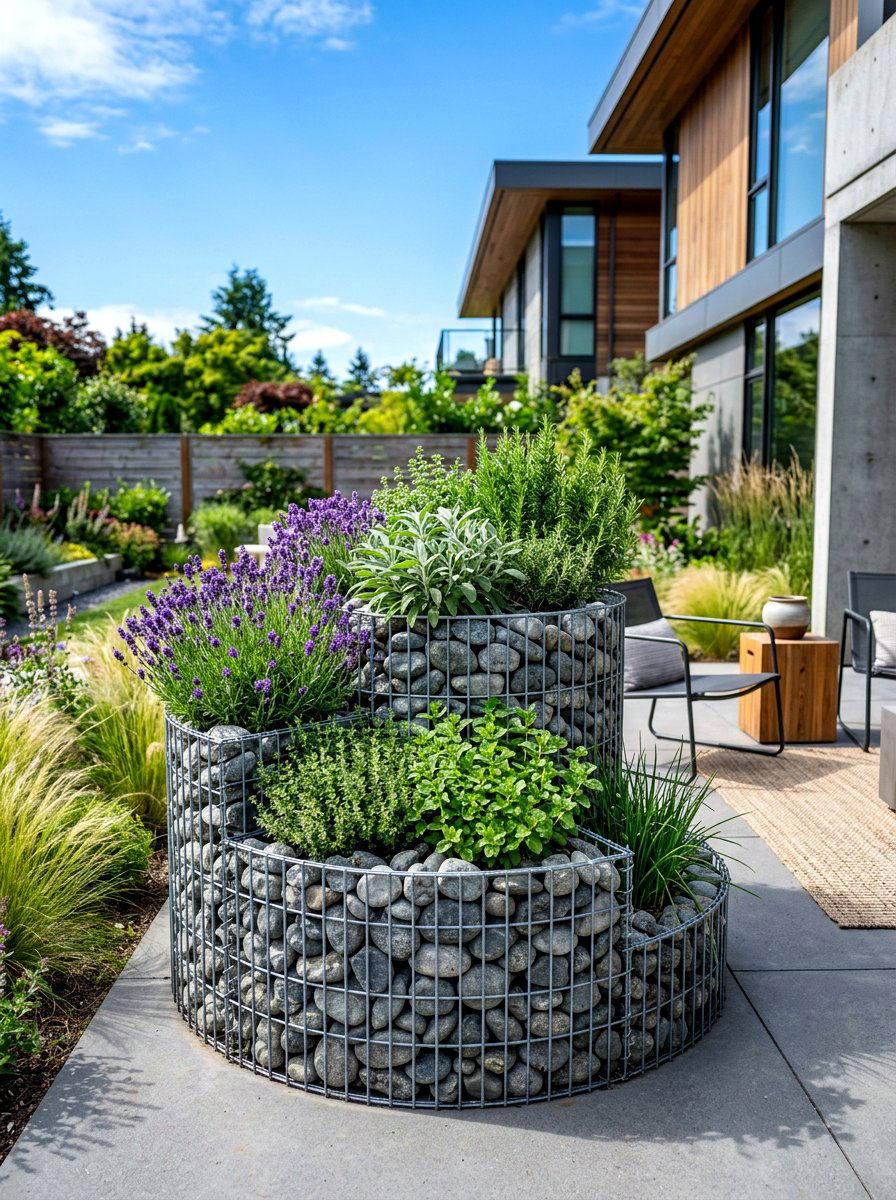
A gabion cage herb spiral offers a modern, industrial aesthetic that is incredibly durable and easy to assemble. These wire mesh baskets are filled with stones or recycled materials, providing a strong framework for the spiral shape. The open structure of the gabion allows for superb drainage and airflow, which prevents root rot in sensitive herbs. You can fill the cages with decorative rocks that match your home’s exterior for a cohesive look. This design is a favorite for contemporary landscapes because it combines raw materials with lush greenery. It also acts as a great windbreak for delicate plants growing in the center of the spiral structure.
4. Rustic log herb spiral
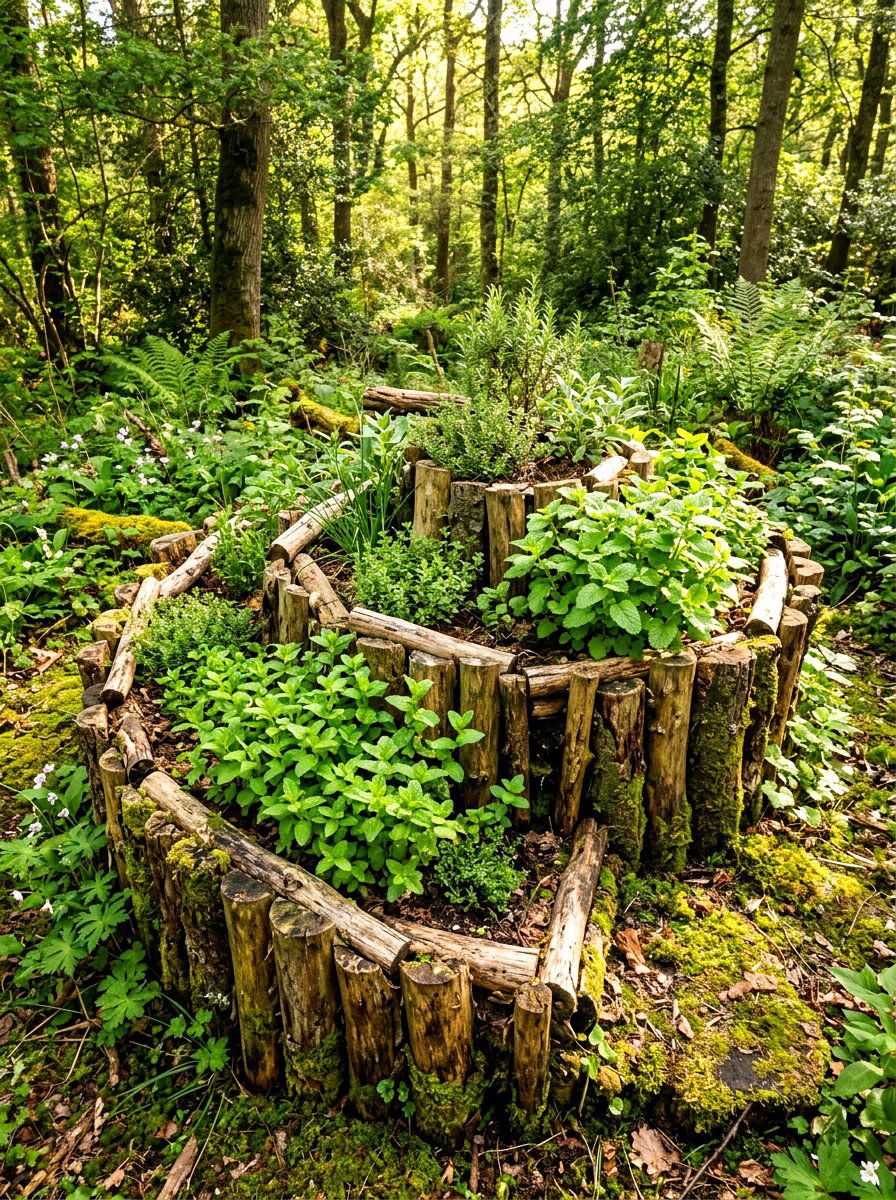
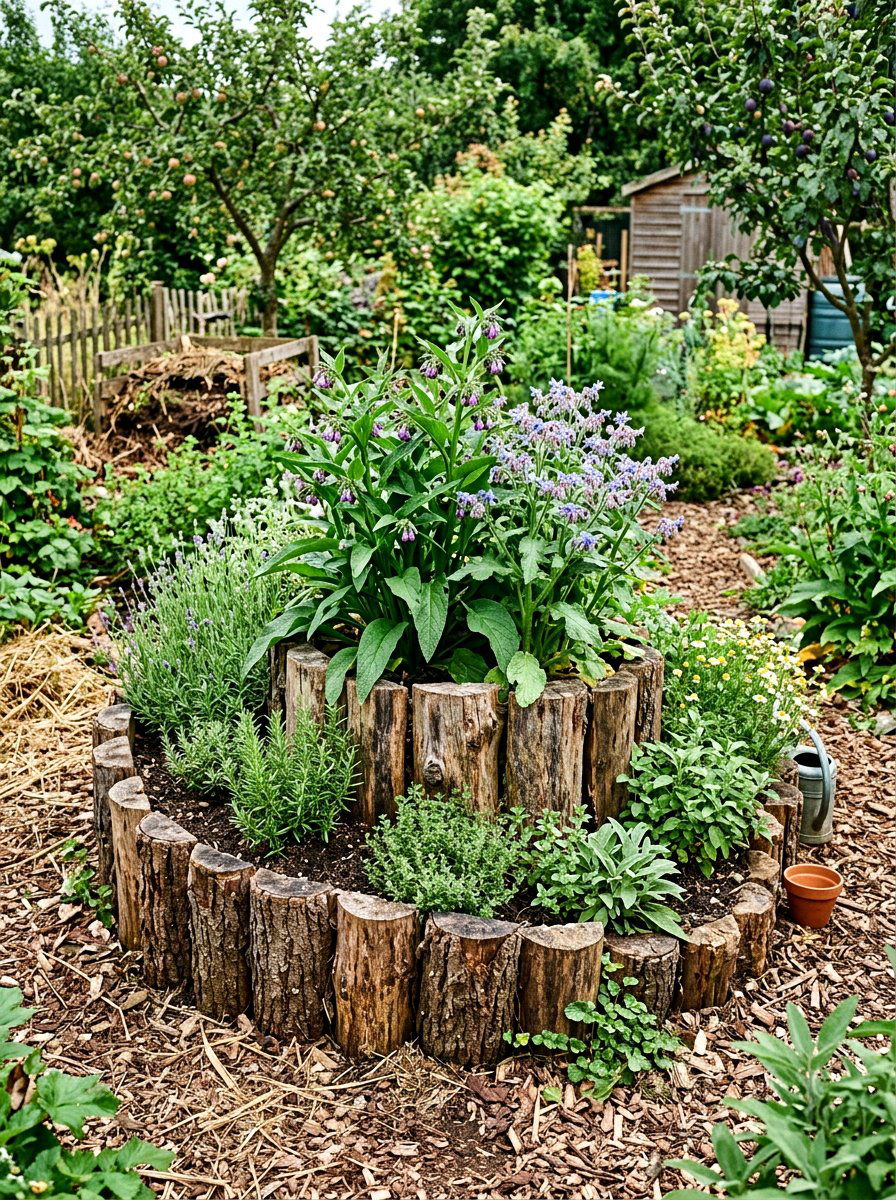
If you want a budget-friendly and completely natural look, a rustic log herb spiral is an excellent option. By using short segments of untreated logs or thick branches, you can create a tiered garden that looks like it belongs in a woodland setting. As the wood slowly breaks down over several years, it adds valuable organic matter to the soil, acting much like a small-scale hugelkultur bed. This setup is perfect for shaded corners of the yard where you might want to grow moisture-loving herbs like mint or lemon balm. The varied heights of the logs add texture and a handcrafted feel that brings a cozy charm to your garden.
5. Flagstone garden spiral
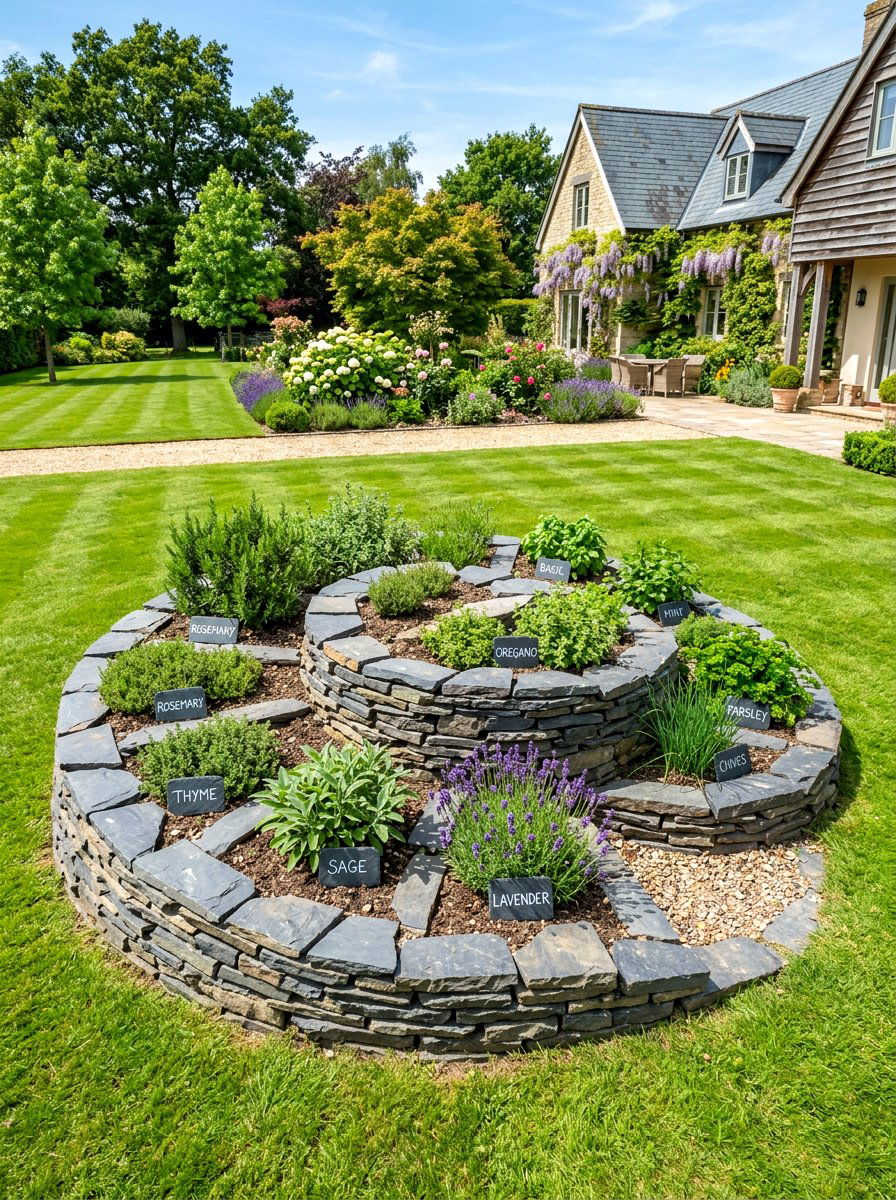
Flagstone is a popular material for creating elegant, flat-layered herb spirals that look sophisticated and high-end. These large, flat stones are easy to stack, providing a very stable base for the rising soil beds. Because flagstones come in various shades of grey, tan, and blue, you can customize the color palette of your spiral to fit your specific outdoor decor. The wide surfaces of the stones also make it easier to step on the edges during harvest without disturbing the plants. This type of spiral looks particularly beautiful when surrounded by a gravel path or a manicured lawn, serving as a primary focal point in the backyard.
6. River rock herb spiral
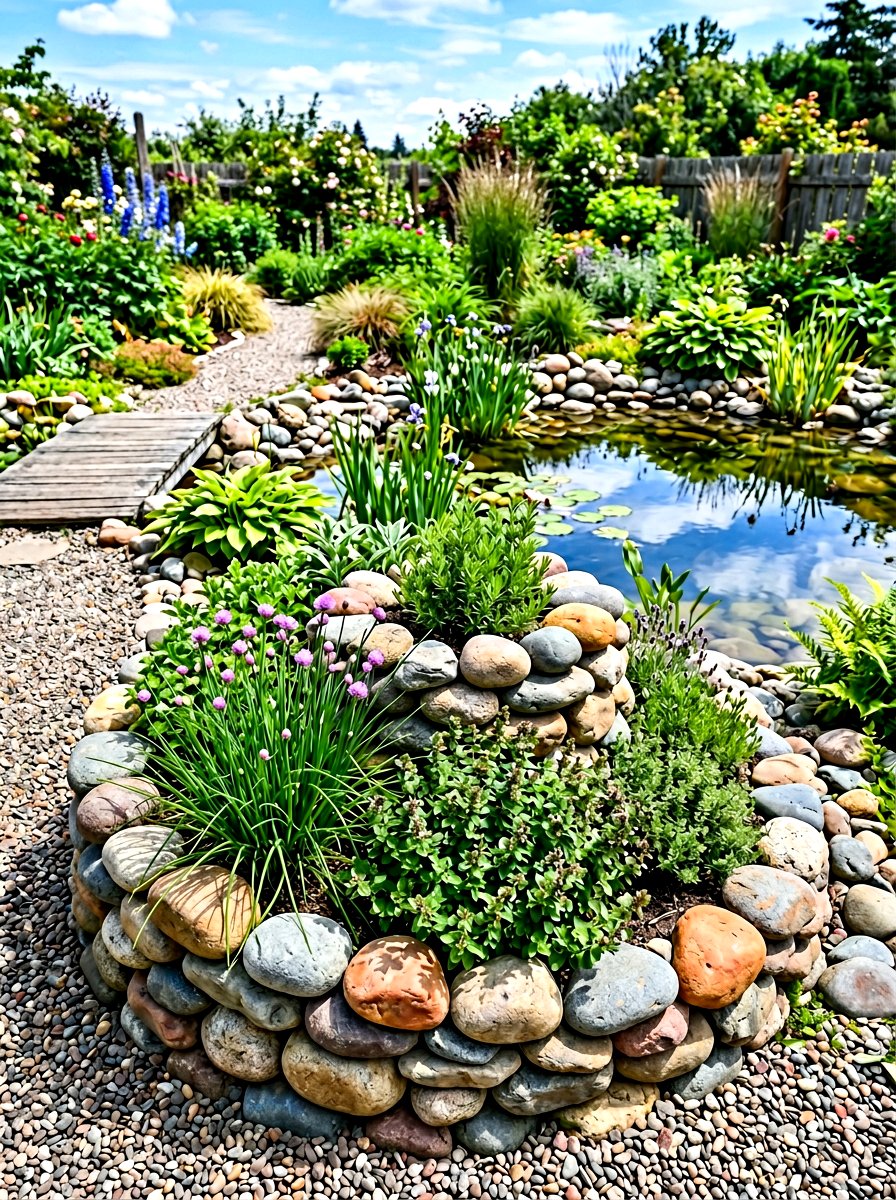
River rocks are characterized by their smooth, rounded edges, giving your herb spiral a soft and flowing appearance. Building with these stones requires a bit more care to ensure stability, but the result is a serene and zen-like garden feature. The variety of colors found in river stones creates a beautiful mosaic effect that looks stunning when wet from rain or irrigation. This design is ideal for gardens near water features or those that aim for a naturalistic, creek-bed aesthetic. The gaps between the rounded rocks allow for excellent drainage, ensuring that the herbs at the top of the spiral never sit in stagnant, soggy soil.
7. Slate herb spiral
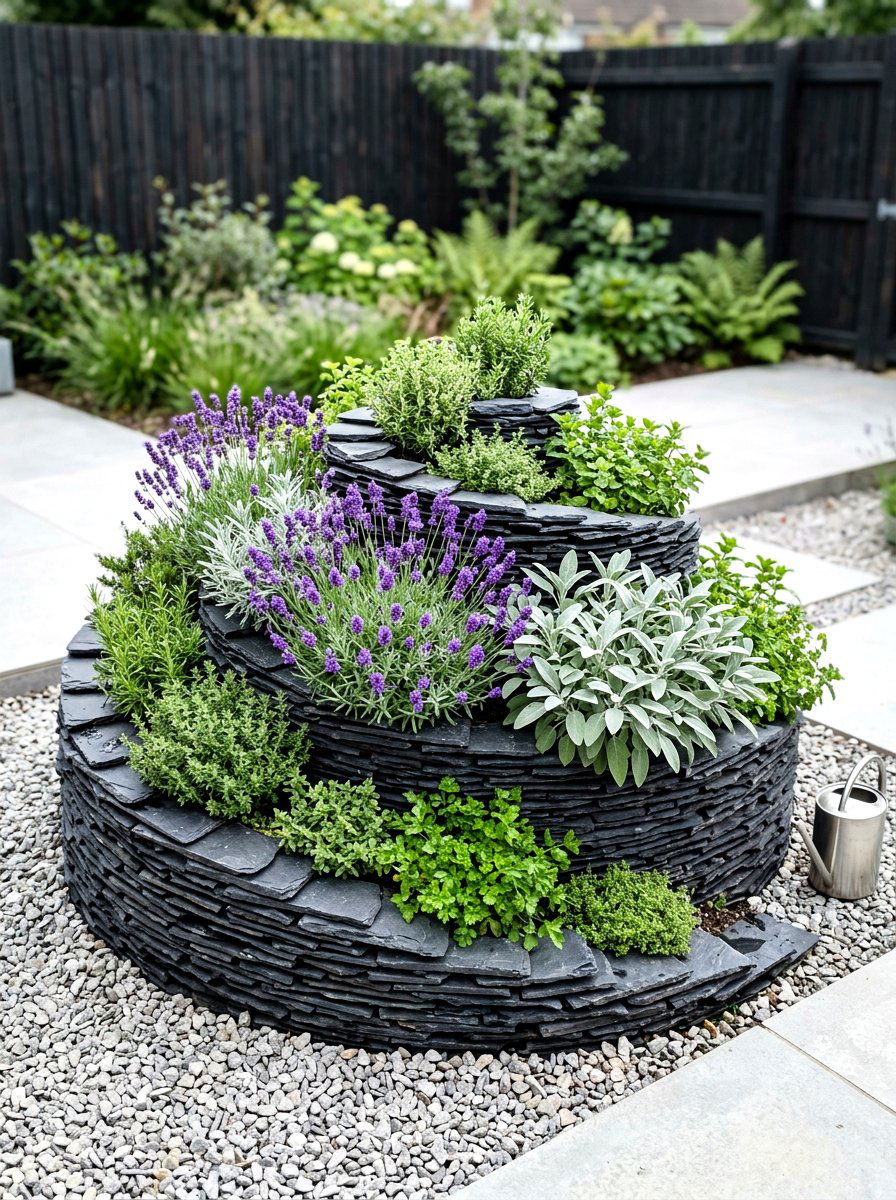
For a sleek and contemporary look, a slate herb spiral is a fantastic choice. The dark, thin layers of slate provide a dramatic backdrop for the bright greens and purples of your herb collection. Slate is excellent at absorbing sunlight, which helps warm the soil early in the spring, giving your plants a head start on the growing season. This material is often used in modern landscape designs where clean lines and dark colors are preferred. Stacking the thin pieces of slate creates a unique texture that looks architectural and intentional. It is a durable choice that resists weathering while maintaining its deep, rich color for many years.
8. Limestone herb spiral
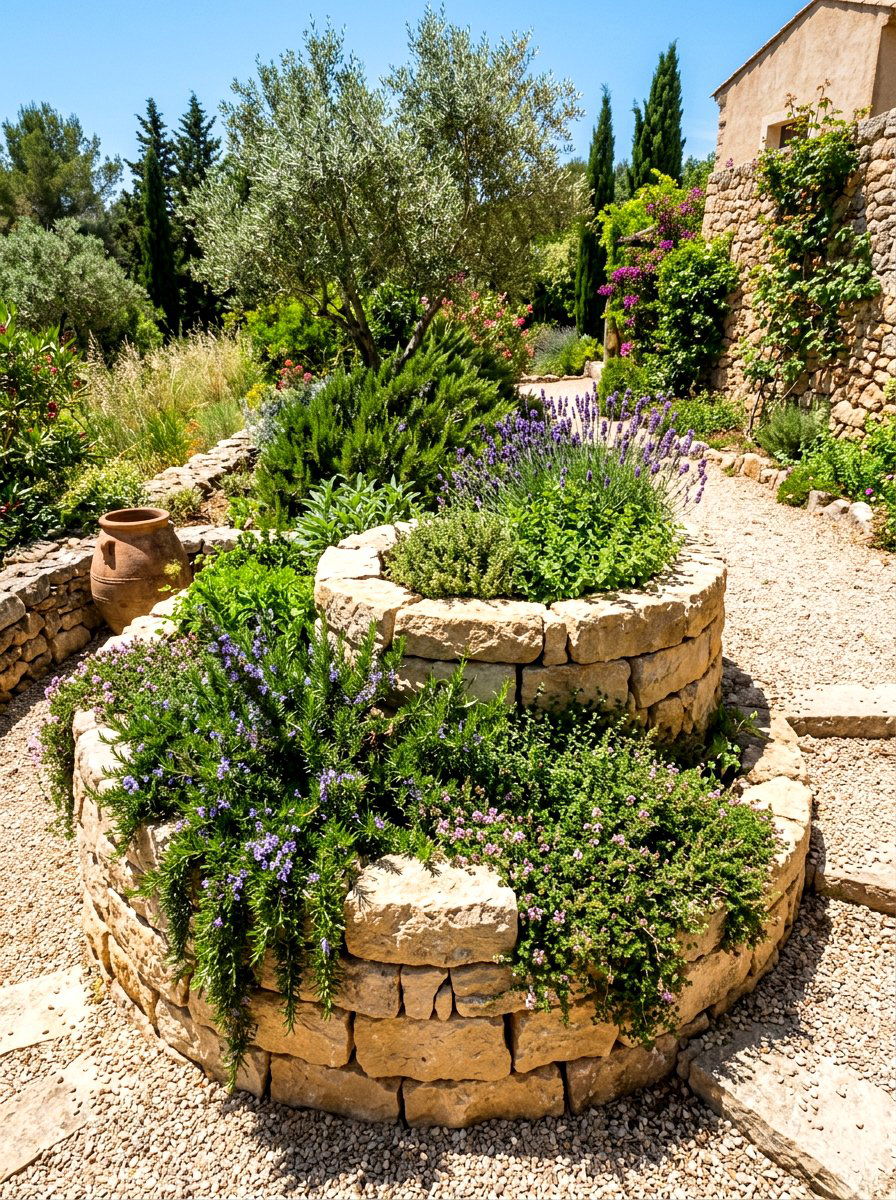
Limestone is a bright and airy material that can make a small garden feel much larger and more open. A limestone herb spiral reflects light, which can be beneficial in slightly shadier areas where you want to maximize the available sun for your plants. The light tan or white tones of the stone create a Mediterranean vibe that pairs perfectly with lavender, oregano, and sage. Limestone is also relatively easy to work with and can be found in various shapes, from rough chunks to cut blocks. This material adds a touch of classic elegance to your outdoor space while providing a sturdy and alkaline-friendly environment for many herbs.
9. Cobblestone herb spiral
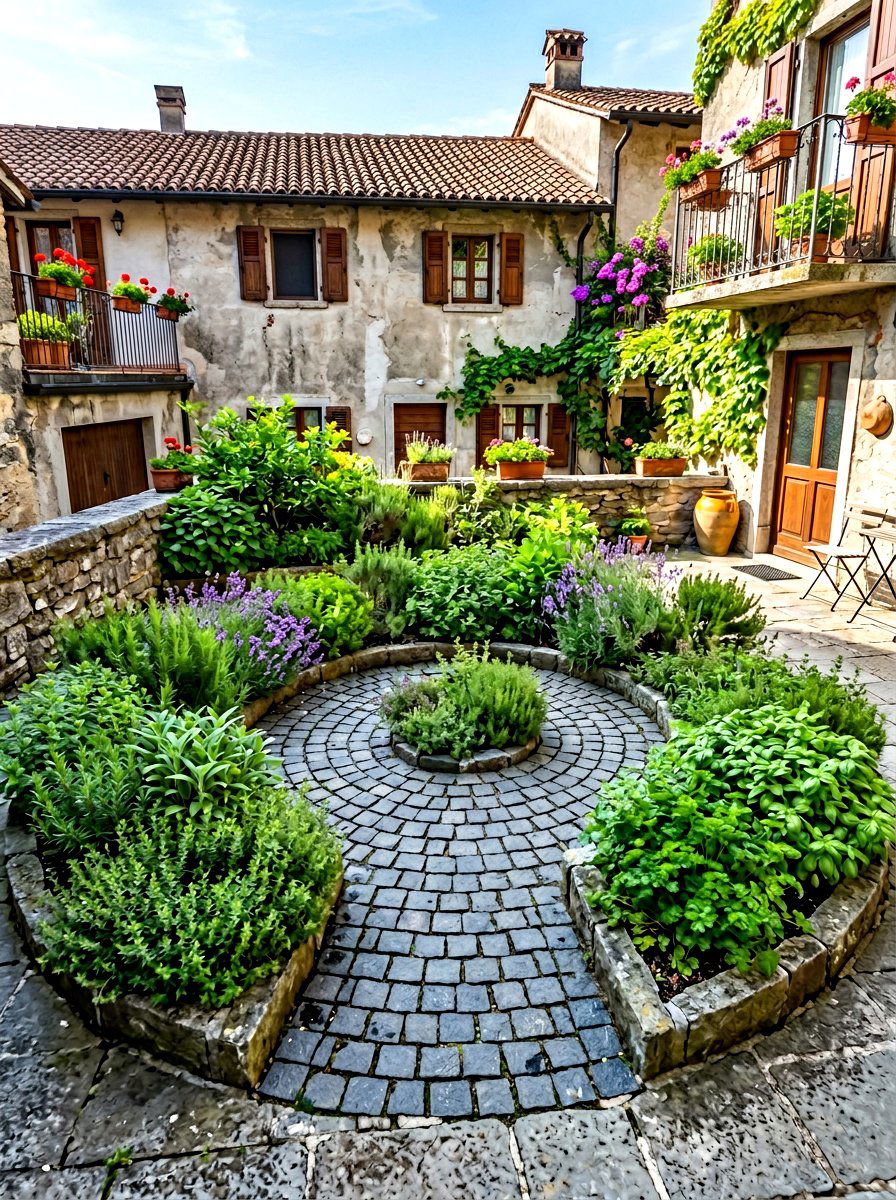
Cobblestones offer a charming, old-world feel that transforms an ordinary herb garden into a piece of history. These small, rounded blocks are traditionally used for streets, but they make excellent building materials for a compact and sturdy spiral. The uniform yet slightly irregular nature of cobblestones allows for a very tight and durable wall construction. This design works exceptionally well in small urban gardens or as an edge feature along a patio. The heavy weight of the stones ensures that the spiral remains stable over time, even with the pressure of the soil inside. It is a low-maintenance and visually rich way to grow your kitchen essentials.
10. Fieldstone herb spiral
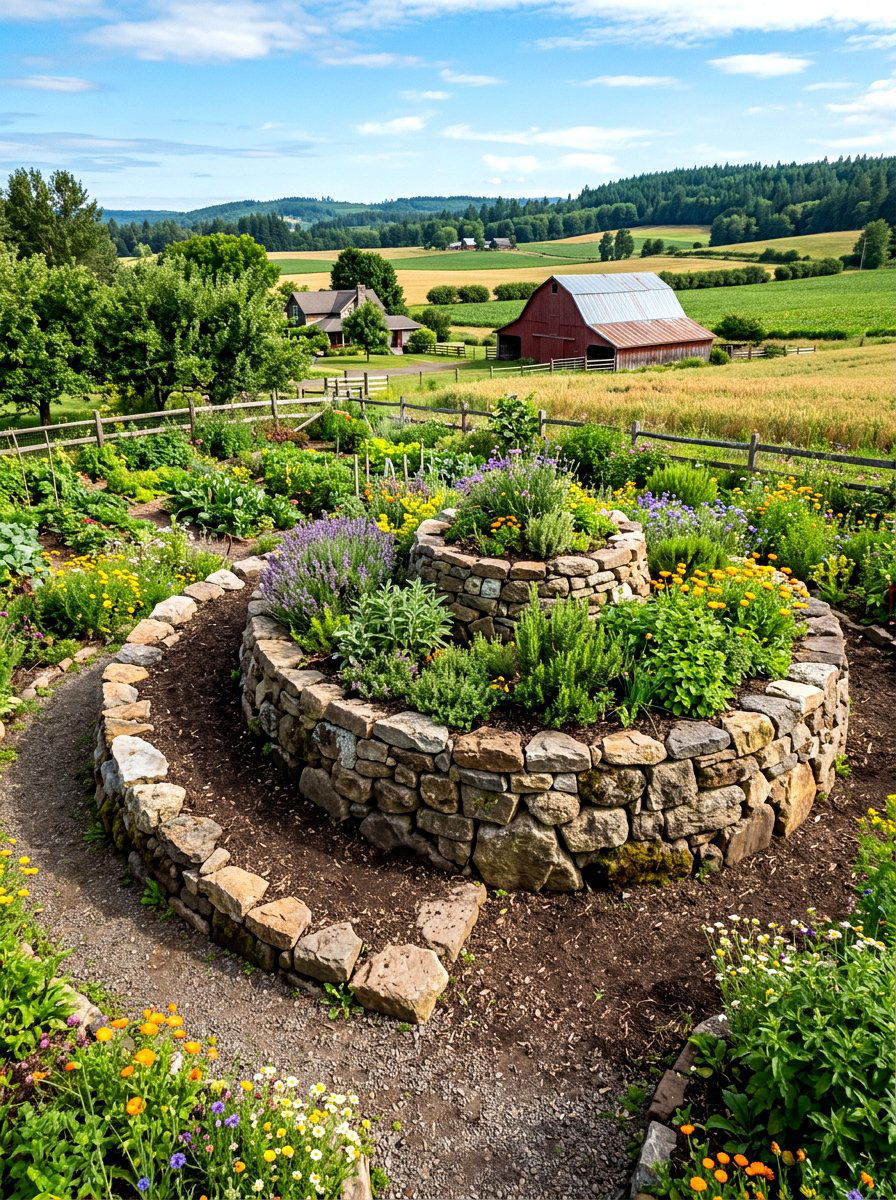
A fieldstone herb spiral is perhaps the most authentic way to build a permaculture garden using what is already available on your land. Using uncut, raw stones found in the fields creates a rugged and highly textured look that feels deeply connected to the earth. This design is perfect for farmhouse-style gardens or rural properties where you want the structure to look like it has always been there. The variations in stone size and shape create numerous small pockets for planting, allowing you to tuck tiny succulents or trailing herbs into the walls themselves. It is a sustainable and cost-effective way to add vertical interest to your yard.
11. Concrete block herb spiral
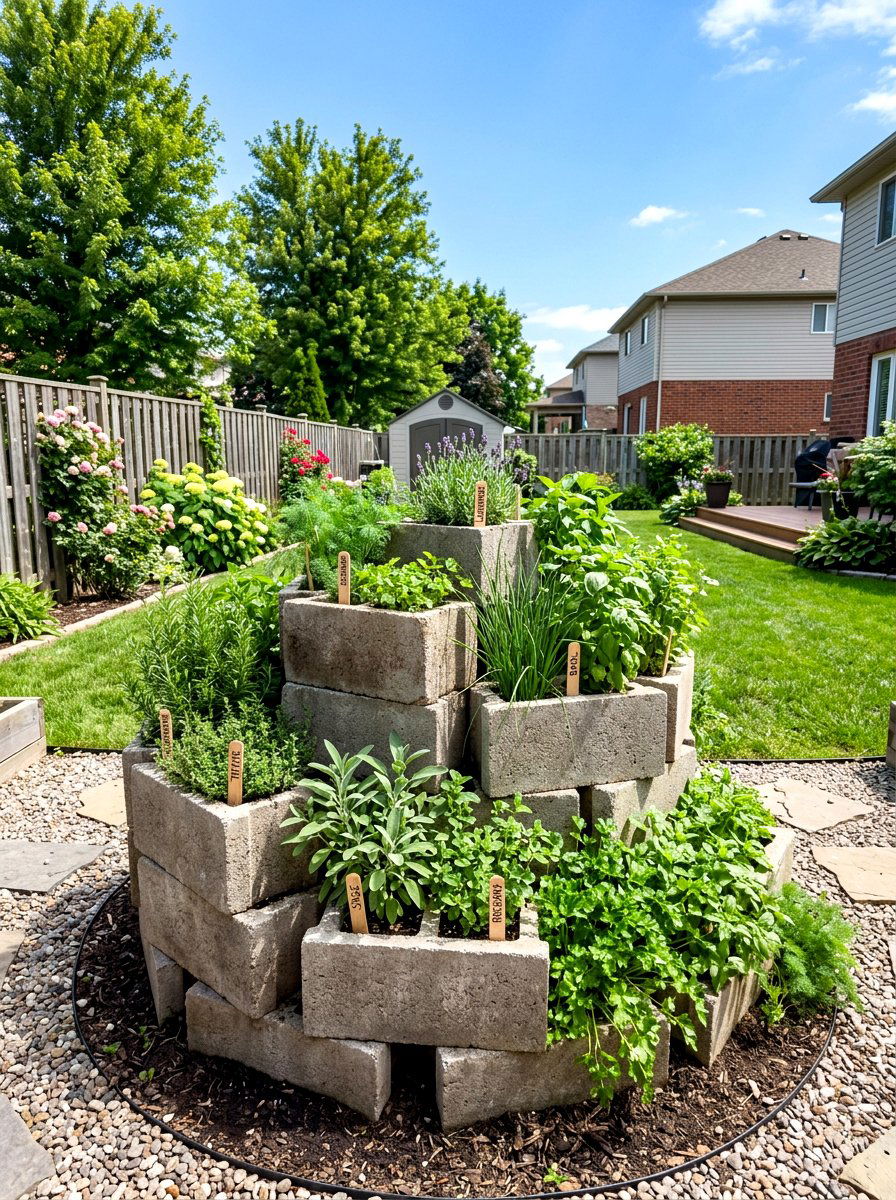
Concrete blocks are an incredibly practical and affordable material for building a highly functional herb spiral. While they might seem plain, you can paint them or face them with stone to match your home’s style. The hollow centers of the blocks provide additional planting spaces for smaller herbs or decorative flowers, effectively doubling your growing area. This design is very easy for beginners to assemble because the blocks are uniform and stack perfectly. They provide a very stable and long-lasting structure that can handle heavy soil and frequent watering. This is a great solution for anyone looking for a quick and very efficient DIY garden project.
12. Paver herb spiral
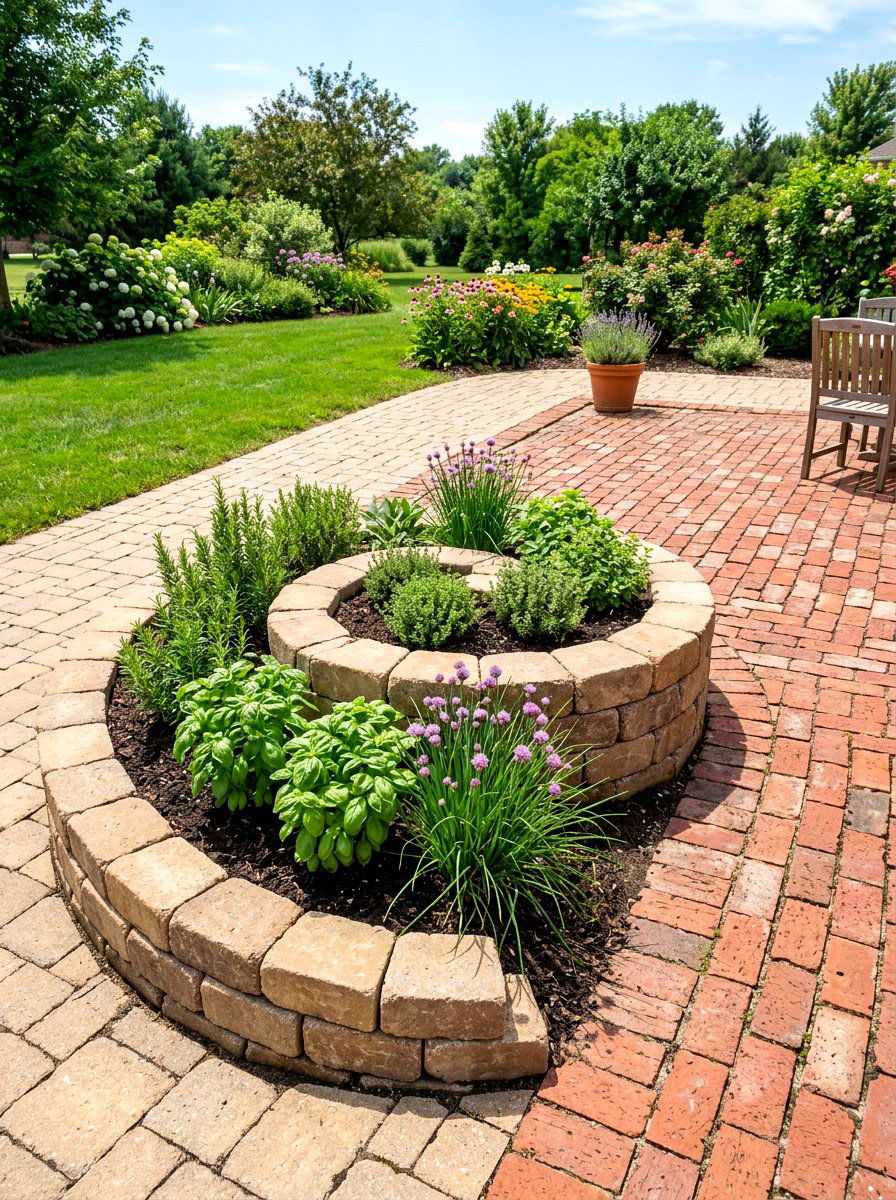
Using leftover landscaping pavers is a smart way to create a polished and professional-looking herb spiral. Pavers are designed to interlock or stack easily, which makes building a precise and symmetrical spiral a very simple task. Because they come in a wide range of colors and textures, you can easily find a style that complements your existing patio or driveway. This type of spiral looks very intentional and tidy, making it a great addition to a front yard or a highly visible garden bed. The clean edges of the pavers make the spiral easy to maintain and keep free of weeds along the outer base.
13. Terracotta herb spiral
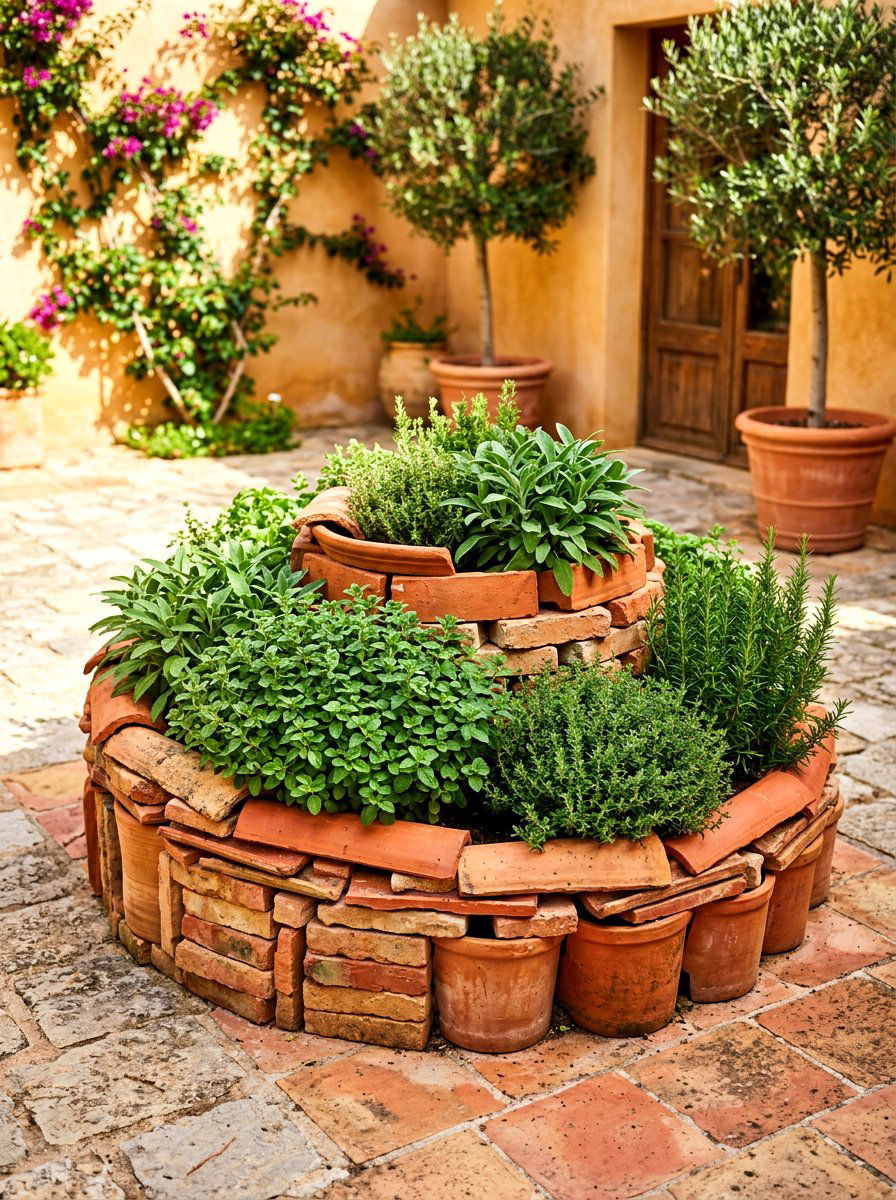
A terracotta herb spiral brings a warm, earthy aesthetic to your garden that feels distinctly Mediterranean. You can use large terracotta tiles or even broken pieces of pots to create the spiral walls. The porous nature of the clay allows the soil to breathe, which is beneficial for the health of the plant roots. This design is perfect for sun-drenched areas where you want to grow herbs that love heat, like basil and oregano. The orange and red hues of the terracotta look beautiful against the silvery foliage of lavender. It is a creative and artistic way to recycle old garden materials into something both useful and decorative.
14. Metal herb spiral
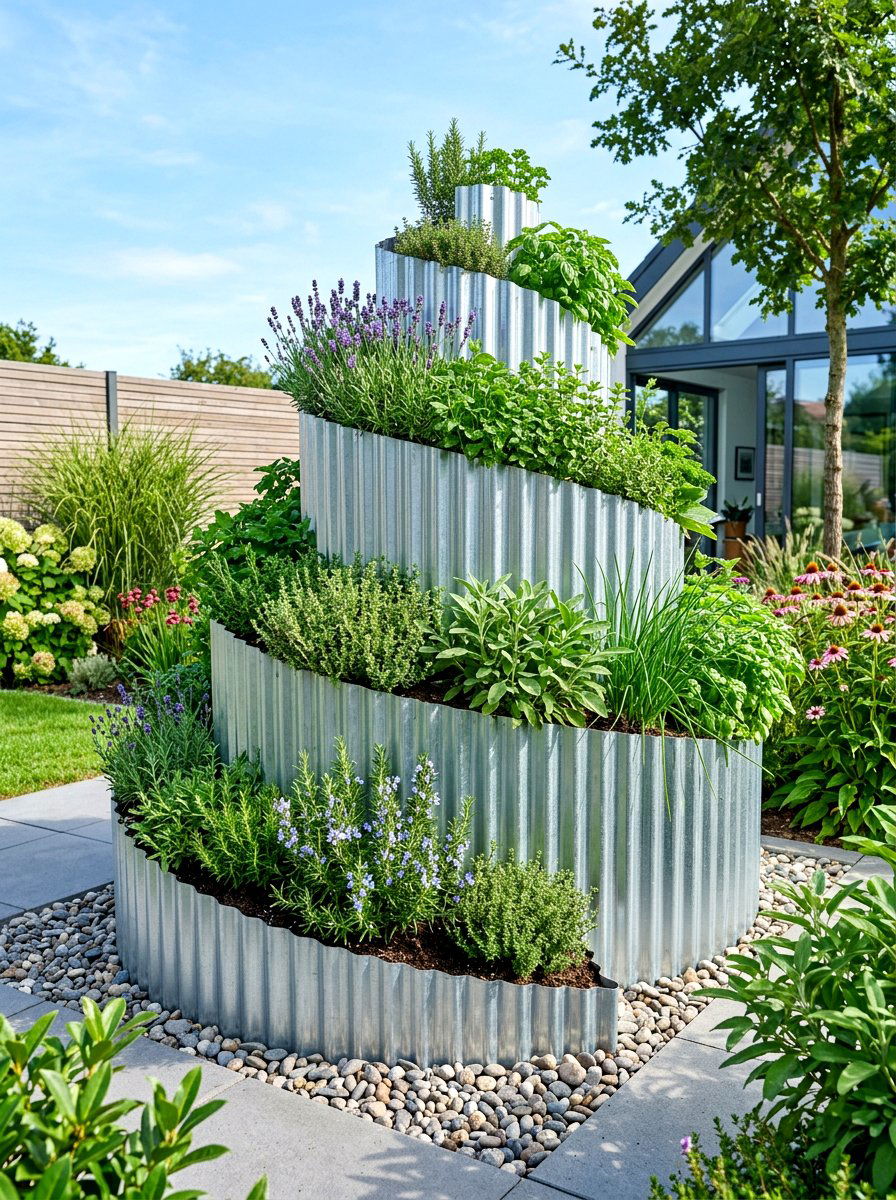
Corrugated metal or flexible steel edging can be used to create a sleek, modern herb spiral with a very thin profile. This design is perfect for small spaces because the walls take up very little room, leaving more space for the soil and plants. Metal spirals heat up quickly in the sun, which can help jumpstart the growth of heat-loving herbs in cooler climates. You can use galvanized steel for a bright, industrial look or weathered Corten steel for a rustic, rusted finish that blends into the landscape. This is a very durable option that provides a clean, minimalist aesthetic for any contemporary backyard or urban terrace.


15. Wattle herb spiral
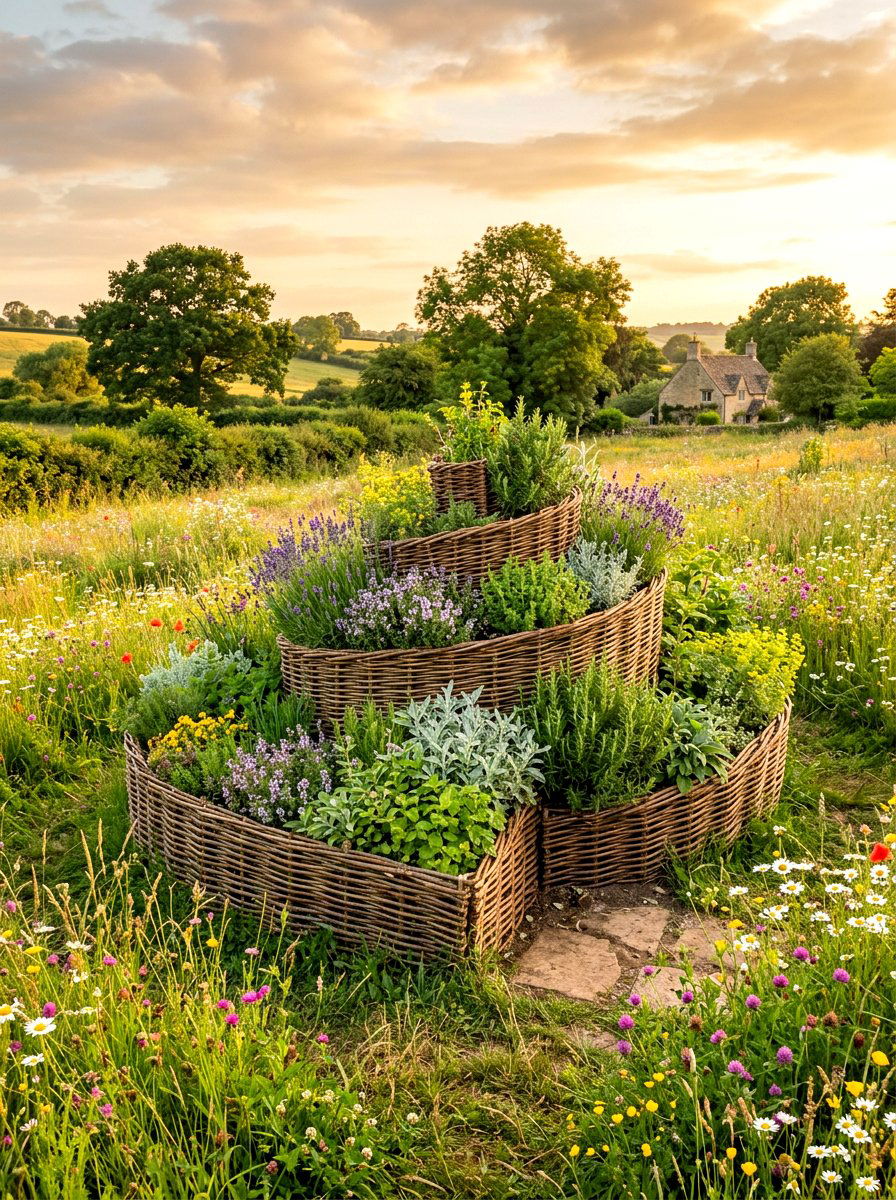
A wattle herb spiral is a traditional and eco-friendly design made by weaving flexible branches, such as willow or hazel, around upright stakes. This method creates a beautiful, basket-like structure that is completely biodegradable and looks stunning in a natural or wild garden setting. The woven walls allow for excellent airflow and drainage, preventing the soil from becoming waterlogged. This design is very lightweight and easy to build if you have access to thin, flexible wood. Over time, the wattle will naturally age and silver, adding a touch of rustic craftsmanship to your outdoor space. It is a wonderful way to use sustainable, renewable garden resources.
16. Bamboo herb spiral
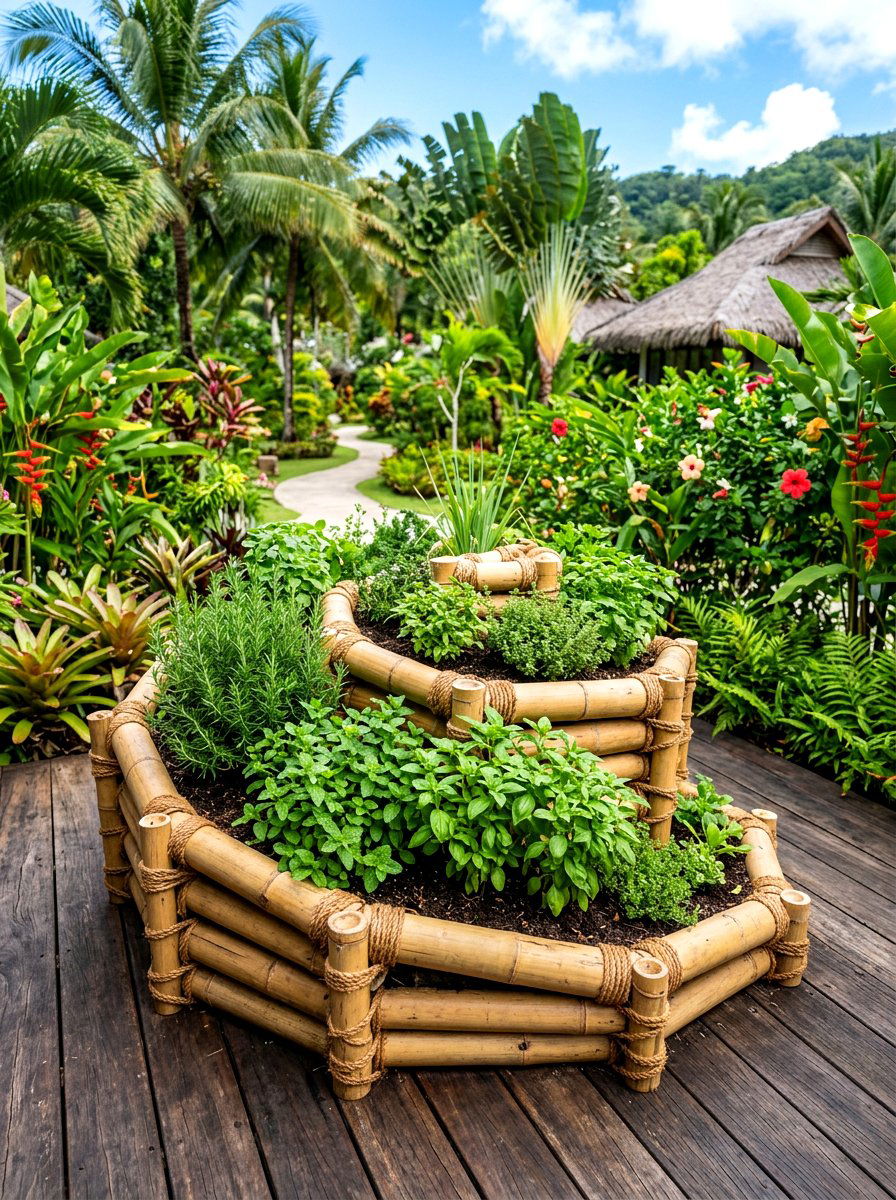
Bamboo is a versatile and fast-growing material that can be used to create a light and airy herb spiral. By lashing bamboo poles together or using split bamboo as a border, you can build a structure that feels tropical and exotic. This design is perfect for coastal gardens or areas with a contemporary Asian influence. Bamboo is naturally resistant to rot and provides a sturdy yet flexible framework for your herbs. The light color of the bamboo contrasts beautifully with dark green leaves, making your herb collection stand out. This is an affordable and stylish way to add a vertical dimension to your garden using natural sustainable materials.
17. Recycled bottle herb spiral
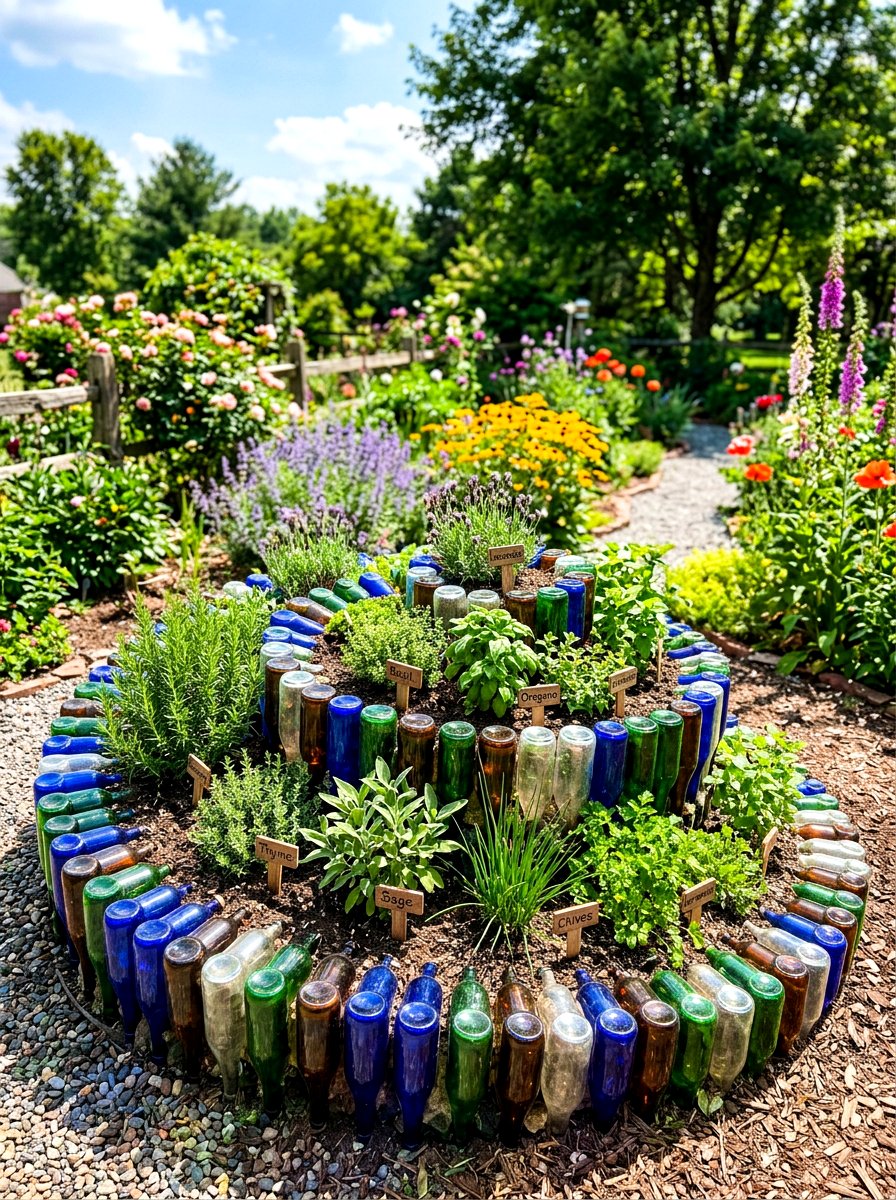
Using glass bottles to build the walls of an herb spiral is a creative and colorful way to recycle while adding a unique artistic element to your yard. By burying the bottles neck-down or stacking them horizontally with a bit of mortar, you create a shimmering wall that catches the light. Blue, green, and brown bottles can be arranged in patterns to create a stained-glass effect in the garden. This design is not only a conversation starter but also a very effective way to contain soil in a small footprint. It is a fun project for families and a great way to give new life to household waste.
18. Urban concrete herb spiral
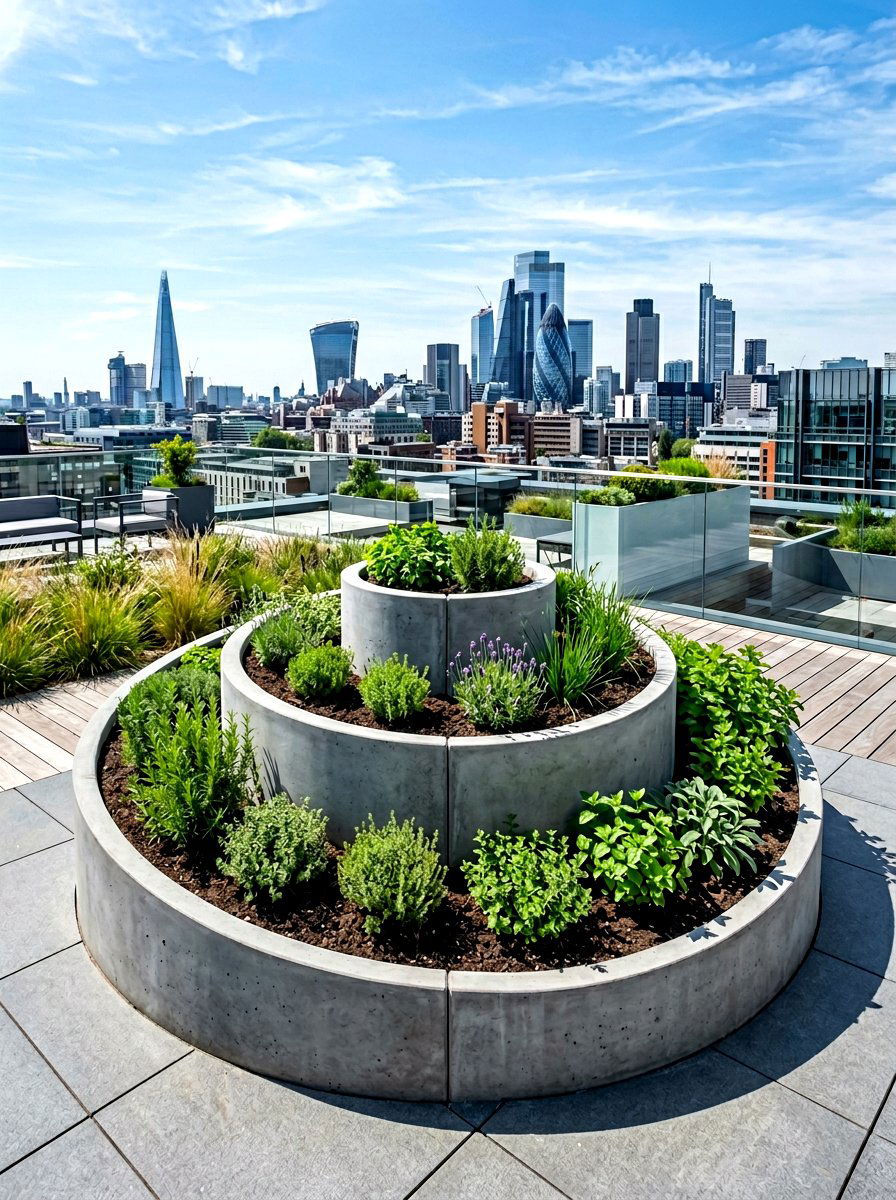
An urban concrete herb spiral is designed for modern city living where space is at a premium and a clean aesthetic is required. You can use poured concrete forms or pre-cast concrete rings to create a minimalist structure that fits perfectly on a balcony or a small rooftop garden. The solid grey color of the concrete provides a neutral background that makes the textures of different herbs really pop. This design is incredibly durable and can withstand harsh weather conditions without deteriorating. It is a great way to bring a touch of greenery to a paved area, providing fresh ingredients for your city kitchen.
19. Herb spiral with pond
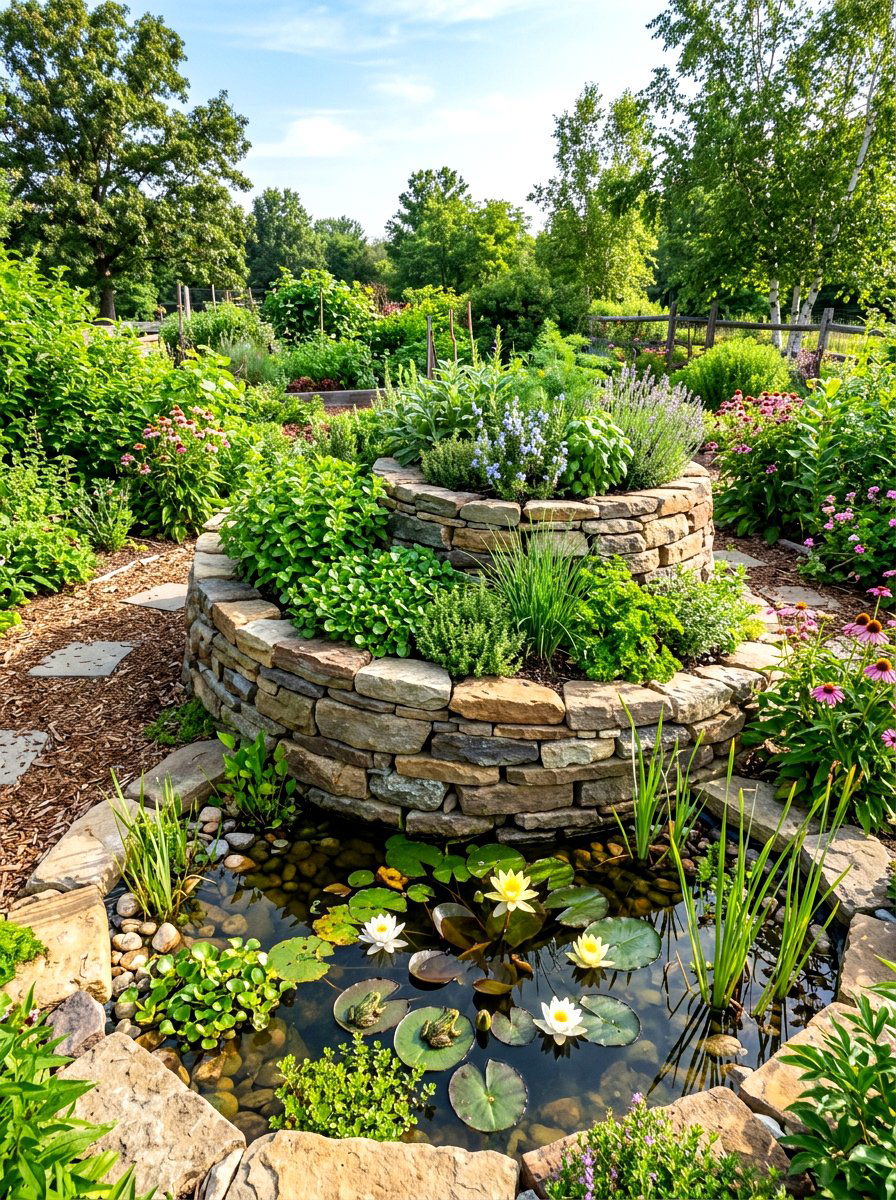
Integrating a small pond at the base of your herb spiral is a classic permaculture technique that maximizes biodiversity and water efficiency. The water at the bottom creates a cool, moist microclimate for plants like watercress or mint, which prefer boggy conditions. The pond also attracts beneficial wildlife like frogs and dragonflies, which help control pests in your garden naturally. As water drains through the spiral, it eventually collects in the pond, reducing waste and keeping the surrounding soil hydrated. This design adds a peaceful, sensory element to your garden with the sight and sound of water, making it a true backyard oasis.


20. Multi level herb spiral
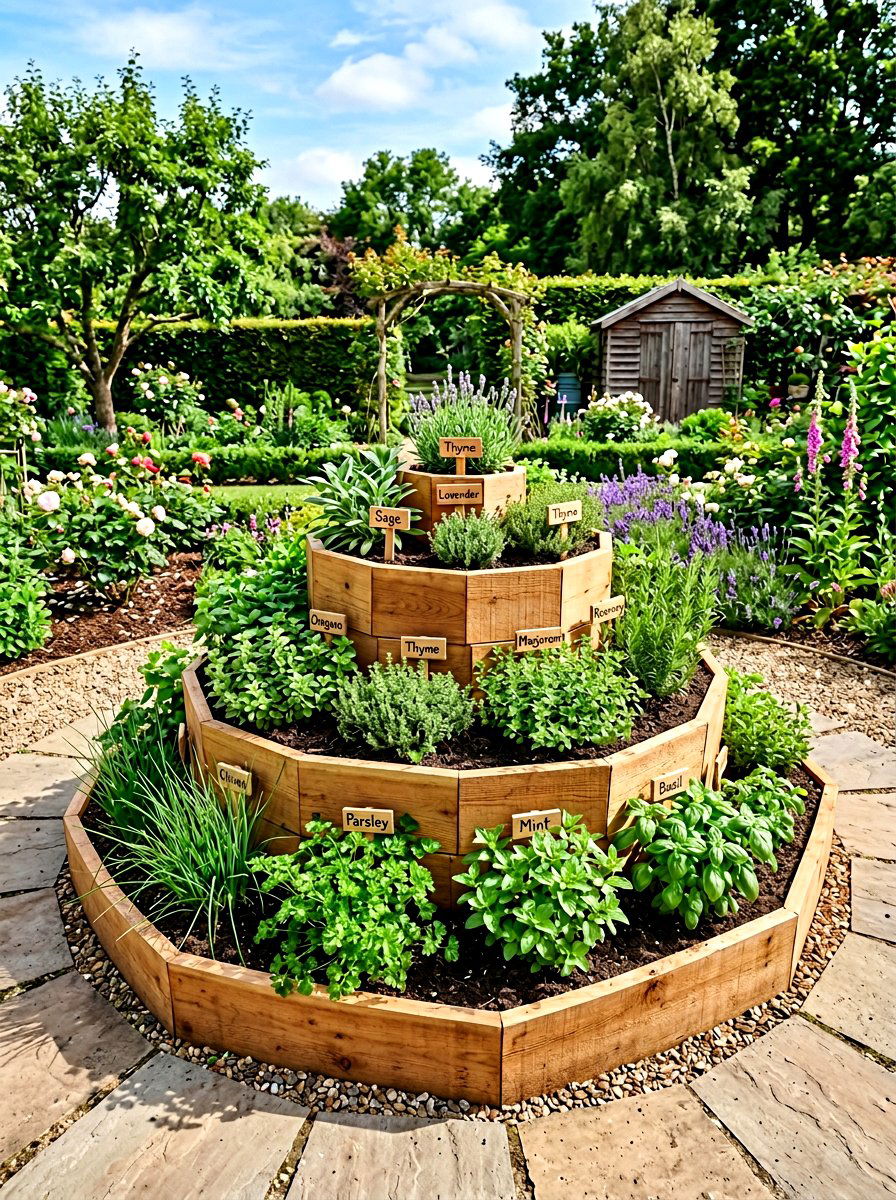
A multi-level herb spiral uses distinct steps or tiers to create clear zones for different types of plants. Instead of a smooth slope, the walls are built with intentional heights that provide very specific growing conditions at each stage. The highest level is kept dry and sunny for woody herbs, while the lower tiers are broader and deeper for leafy greens and moisture-loving varieties. This structured approach makes it very easy to organize your garden and ensures that each plant has the exact amount of space it needs to thrive. It is a visually impressive design that looks like a miniature mountain of fresh edible greenery.
21. Patio herb spiral
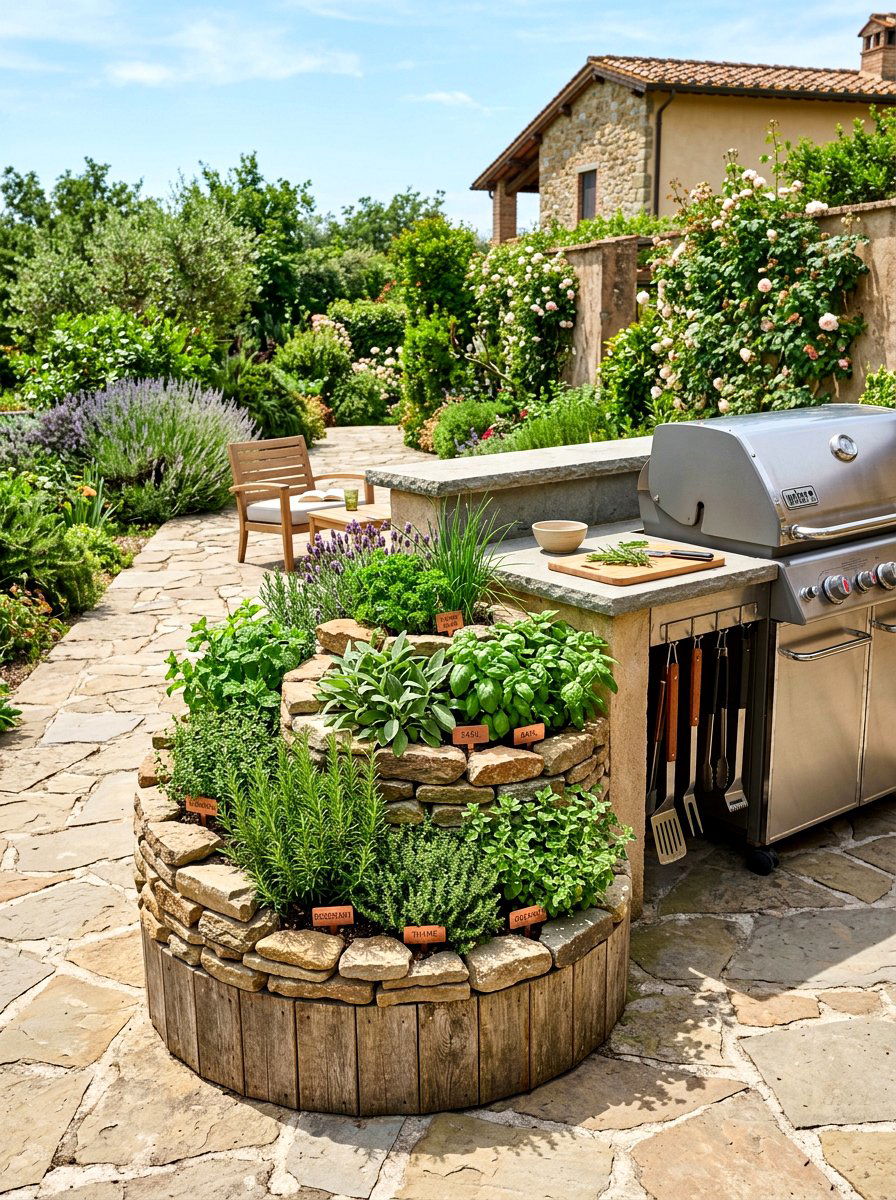
A patio herb spiral is specifically designed to sit on hard surfaces, making it an ideal solution for renters or those without a traditional lawn. These are often built with a solid base to prevent soil from washing out onto the tiles or stone. You can use lightweight materials like cedar or composite boards to create a portable version of the classic spiral. This allows you to have a full herb garden right next to your outdoor dining area or grill, making it incredibly convenient for cooking. It is a smart way to add vertical interest and a lush feel to a functional paved living space.
22. Raised wood herb spiral
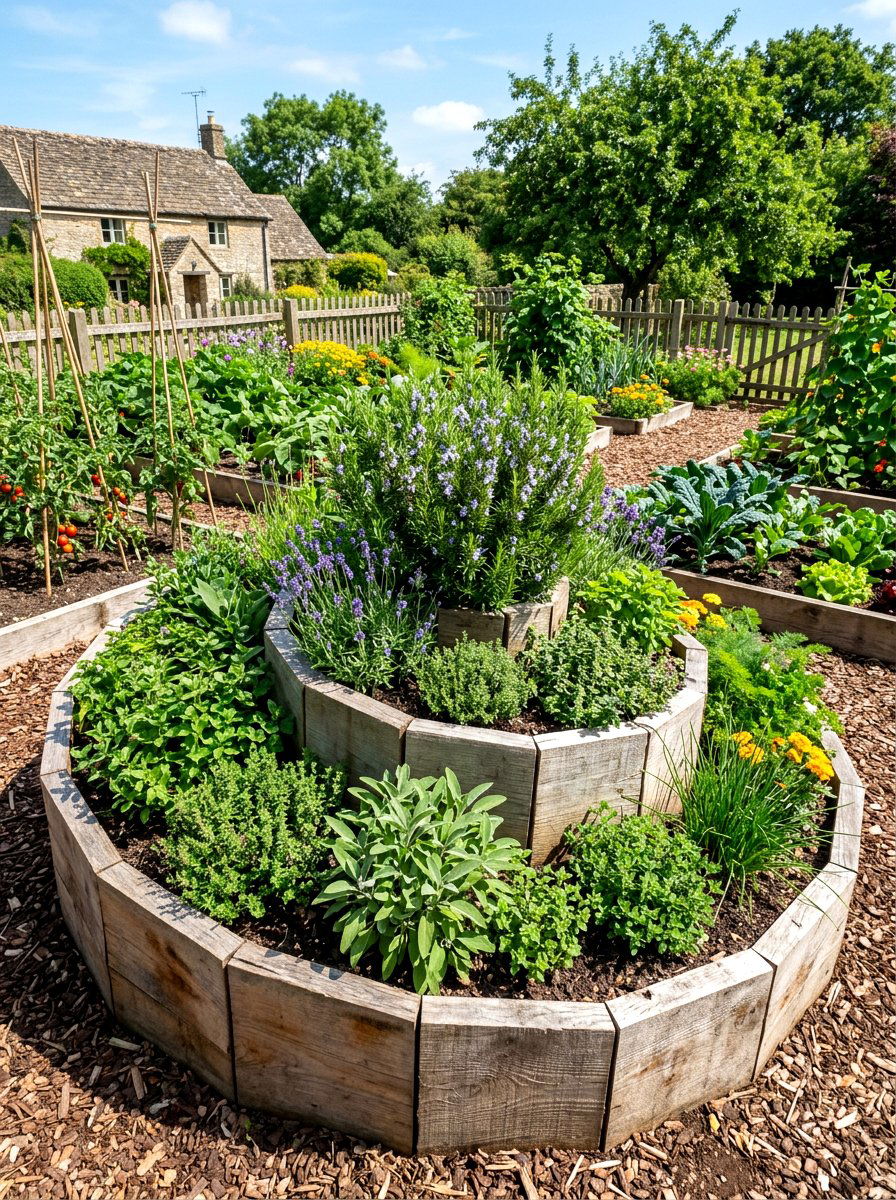
A raised wood herb spiral combines the benefits of a traditional raised bed with the space-saving shape of a spiral. Using rot-resistant timber like cedar or redwood ensures that the structure remains beautiful and functional for many years. The wooden walls provide a warm, natural look that fits perfectly into any garden style. This design is especially helpful for gardeners who prefer not to bend over, as the central part of the spiral can be built to a comfortable waist height. The flat tops of the wooden walls can even serve as a small ledge for holding garden tools or a refreshing drink while you work.
23. Hillside herb spiral
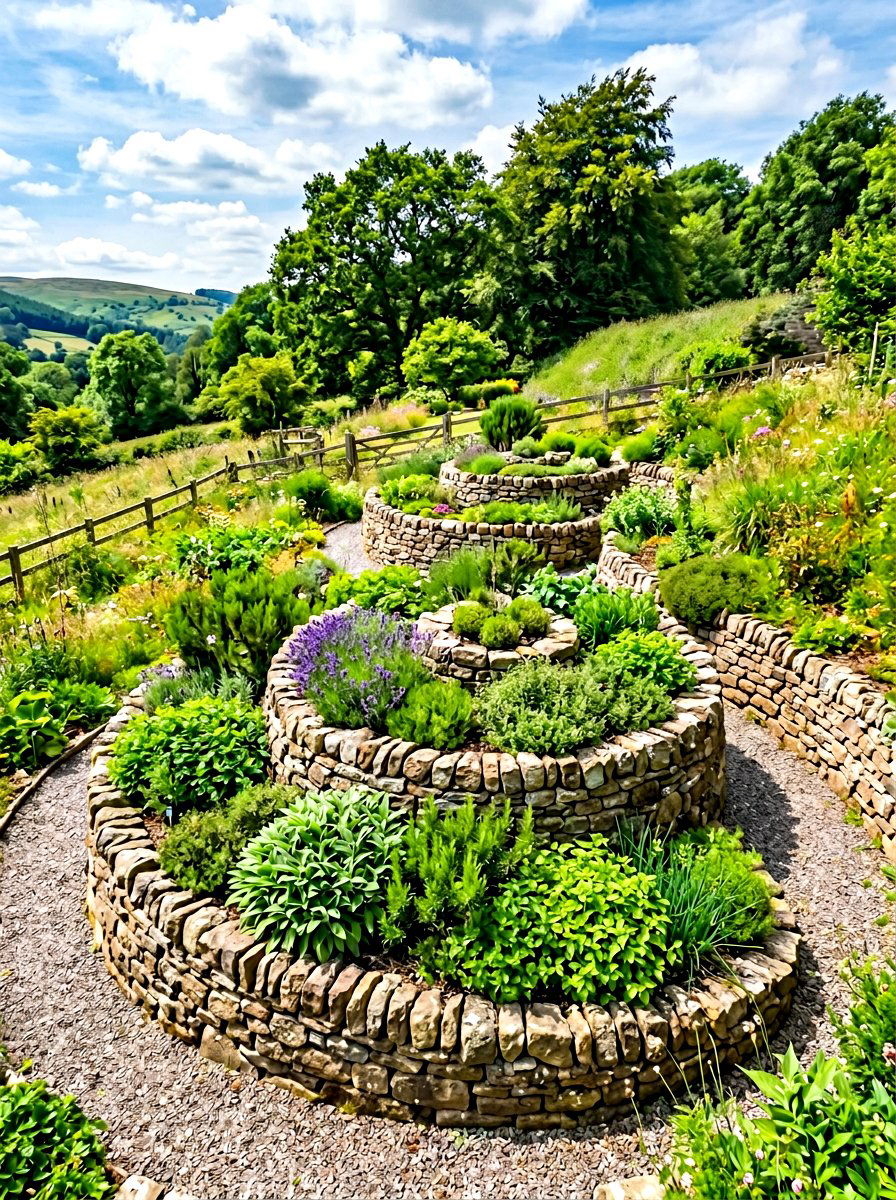
If you have a sloping backyard, a hillside herb spiral is a genius way to turn a challenging area into a productive garden. By carving the spiral into the side of the hill, you use the natural elevation to your advantage, creating built-in drainage and varied sun exposure. The rear part of the spiral is naturally sheltered by the earth, while the front receives maximum light. This design helps stabilize the soil on a slope and prevents erosion while providing a stunning visual feature. It creates a seamless transition between the manicured garden and the natural topography of your land, making the space feel more cohesive.
24. Vertical herb spiral
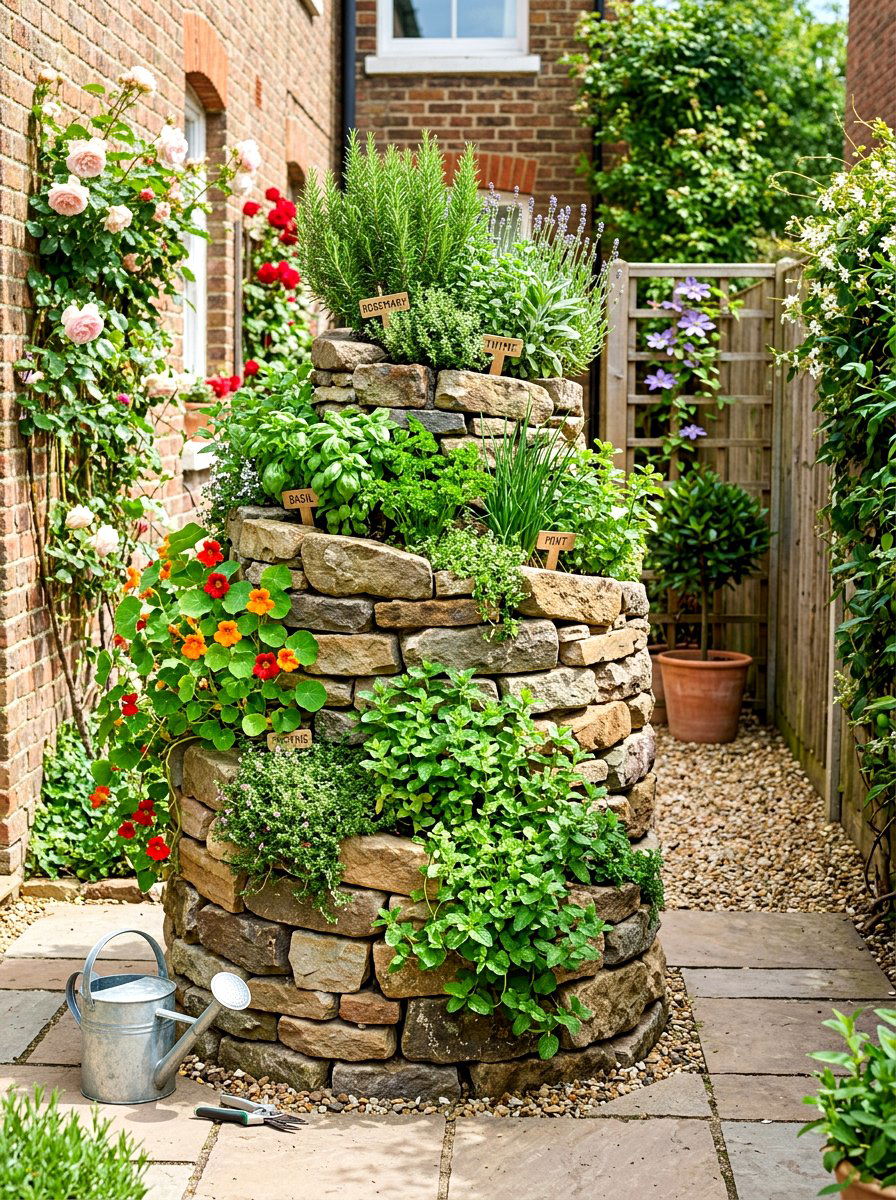
A vertical herb spiral focuses on height rather than width, making it the perfect choice for extremely small gardens or narrow side yards. By building the spiral with steeper walls and a tighter curve, you can grow a significant amount of food in just a couple of square feet. This design often utilizes a central support or a very sturdy base to ensure the tall structure remains stable. It is a great way to draw the eye upward and add architectural interest to a flat landscape. Growing vertically also keeps your herbs away from ground-dwelling pests and makes harvesting a breeze without ever needing to stoop.
25. Xeriscape herb spiral
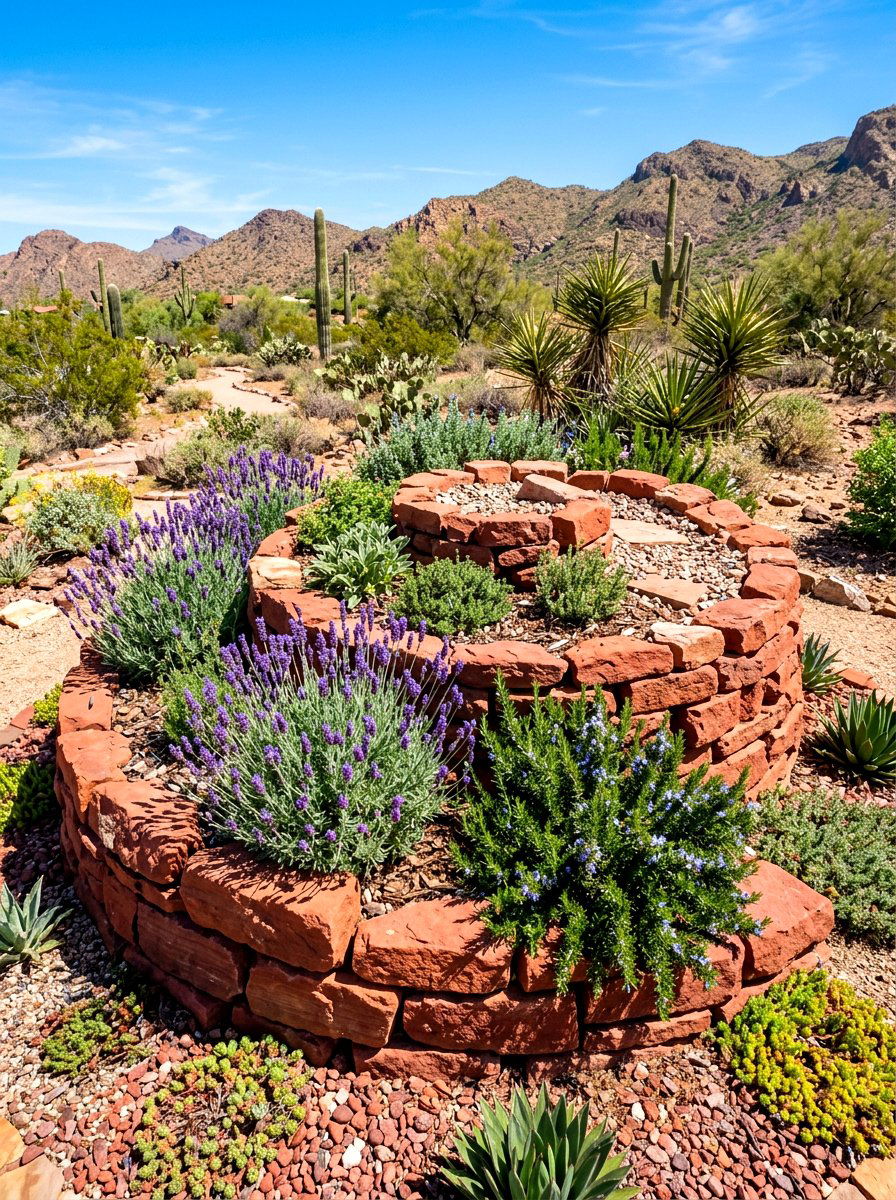
A xeriscape herb spiral is designed for arid climates or gardeners looking to save water. By using heat-absorbing stones and drought-tolerant plants, you create a garden that thrives with very little irrigation. The top of the spiral is reserved for the hardiest herbs like rosemary, lavender, and sage, which can handle intense sun and dry soil. Mulching the beds with gravel or small rocks helps retain what little moisture is available. This design is not only practical for water conservation but also looks beautiful with its desert-inspired aesthetic. It proves that you can have a lush and productive herb garden even in the harshest environments.
26. Herbal tea garden spiral
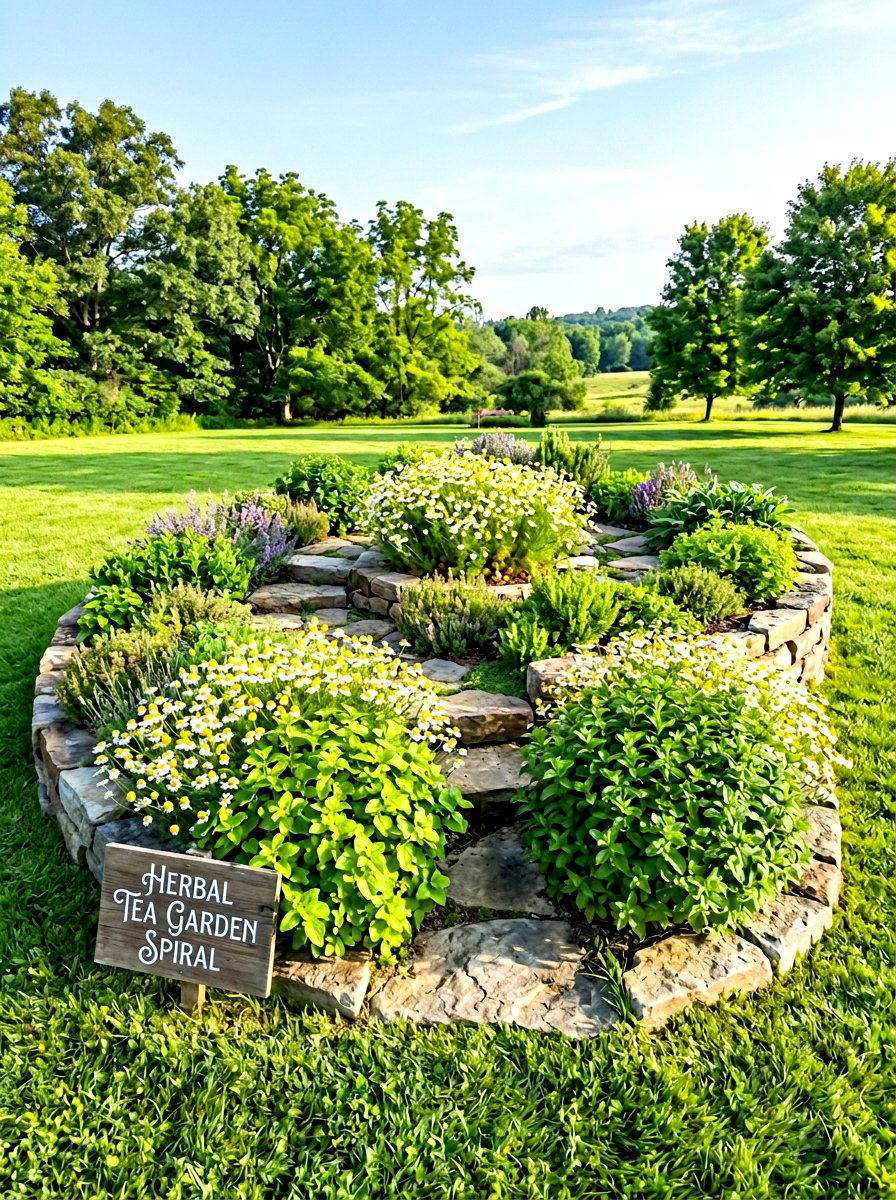
Designing your herb spiral specifically for tea lovers is a wonderful way to customize your gardening experience. This spiral features a collection of aromatic plants like chamomile, lemon verbena, peppermint, and lemon balm. The layout ensures that the most fragrant herbs are at eye level, allowing you to enjoy their scents while you harvest. You can place the most delicate flowers at the top where they get the most sun for essential oil production. Having a dedicated space for tea herbs makes it easy to step outside and gather a fresh bouquet for a soothing drink. It is a functional and sensory-rich addition to any backyard retreat.
27. Kitchen herb spiral
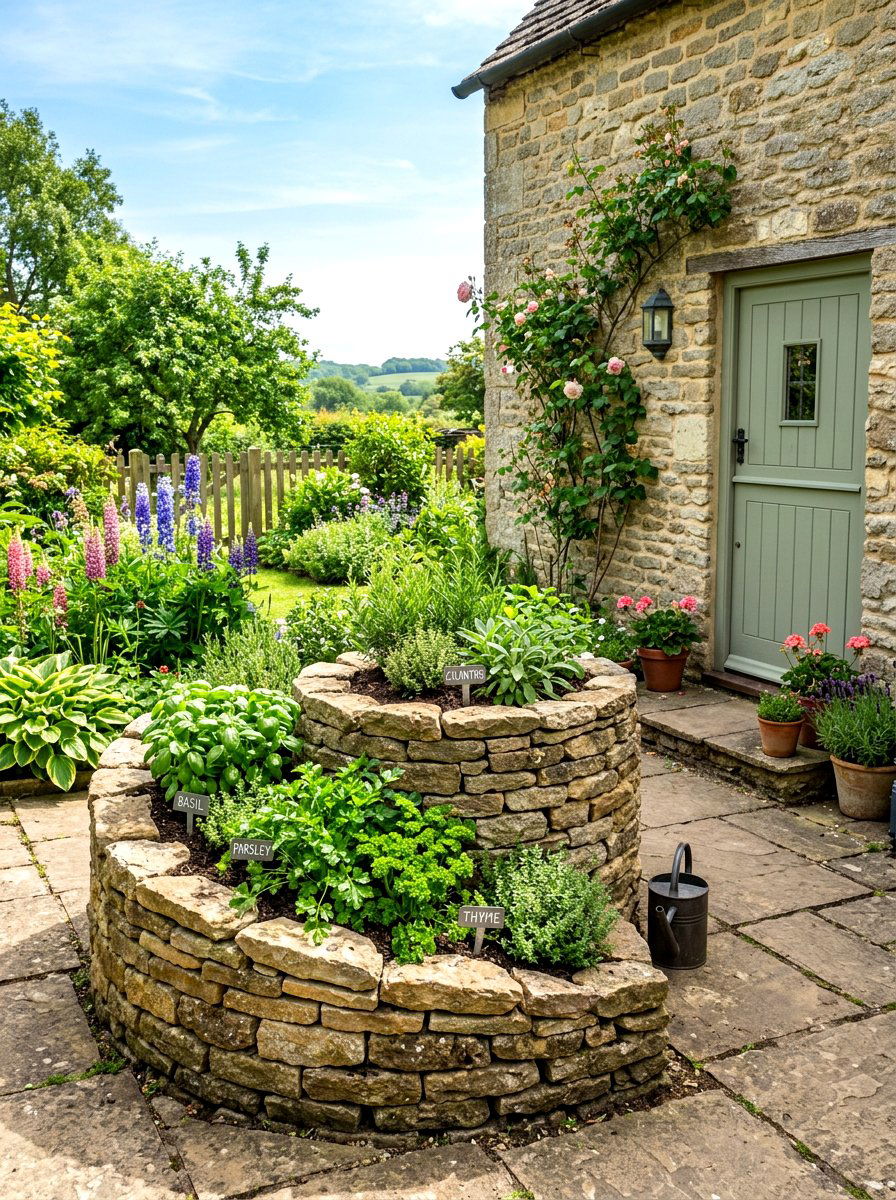
A kitchen herb spiral is all about convenience and culinary variety, typically placed as close to the back door as possible. This design focuses on the "superstars" of cooking, including basil, parsley, cilantro, chives, and thyme. By organizing the herbs based on how often you use them, you make meal preparation much faster and more enjoyable. The compact spiral shape means you can reach every single plant from one spot without stepping into the soil. This setup ensures you always have fresh, organic flavors at your fingertips, encouraging you to experiment more in the kitchen while saving money on store-bought plastic-wrapped herbs.
28. Medicinal herb spiral
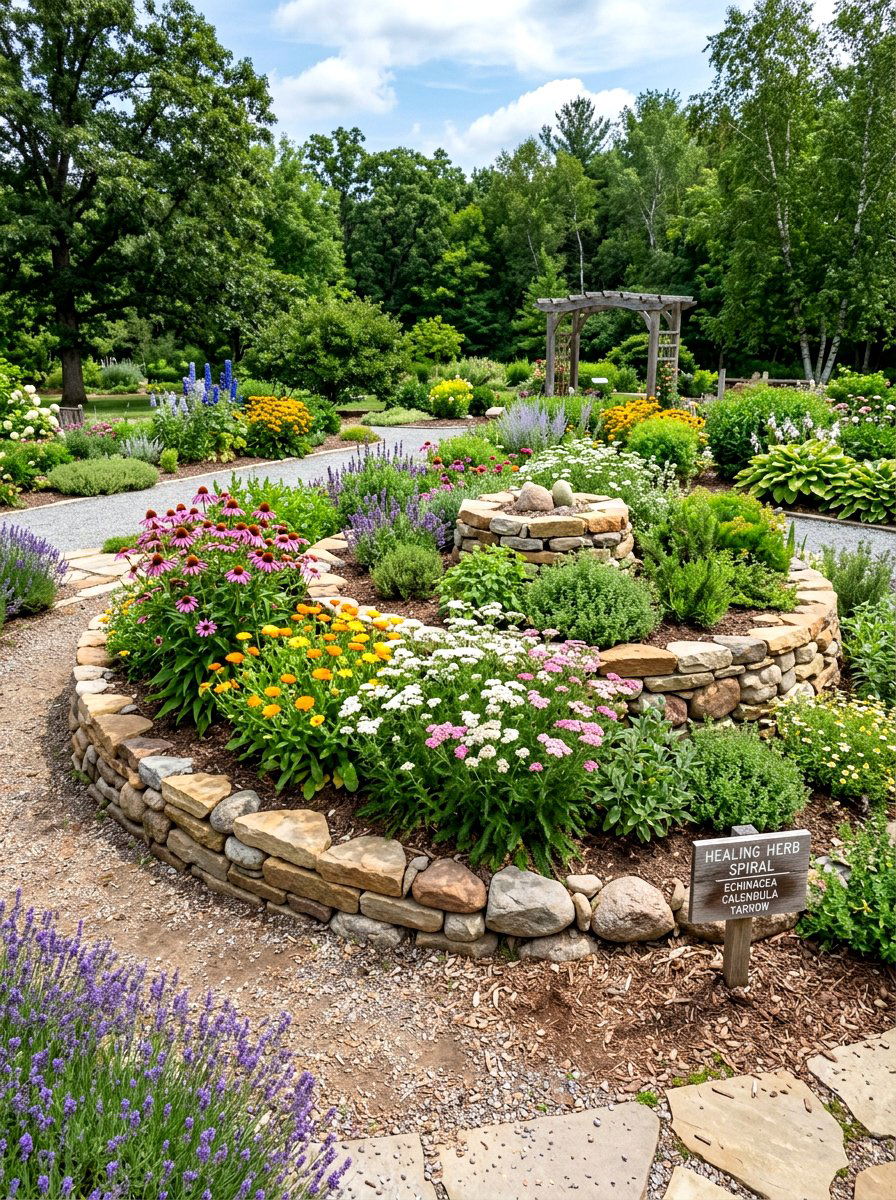
A medicinal herb spiral is a purposeful garden dedicated to plants with healing properties and wellness benefits. You can grow varieties like echinacea, calendula, yarrow, and feverfew, each positioned in its ideal microclimate. The vertical structure allows you to separate plants that might have different spreading habits, ensuring the more aggressive medicinal herbs don't take over the space. This design serves as a living pharmacy in your backyard, providing materials for homemade salves, tinctures, and teas. It is a beautiful way to connect with traditional herbal knowledge while adding a diverse array of colors and textures to your landscape design for year-round interest.
29. Edible flower garden spiral
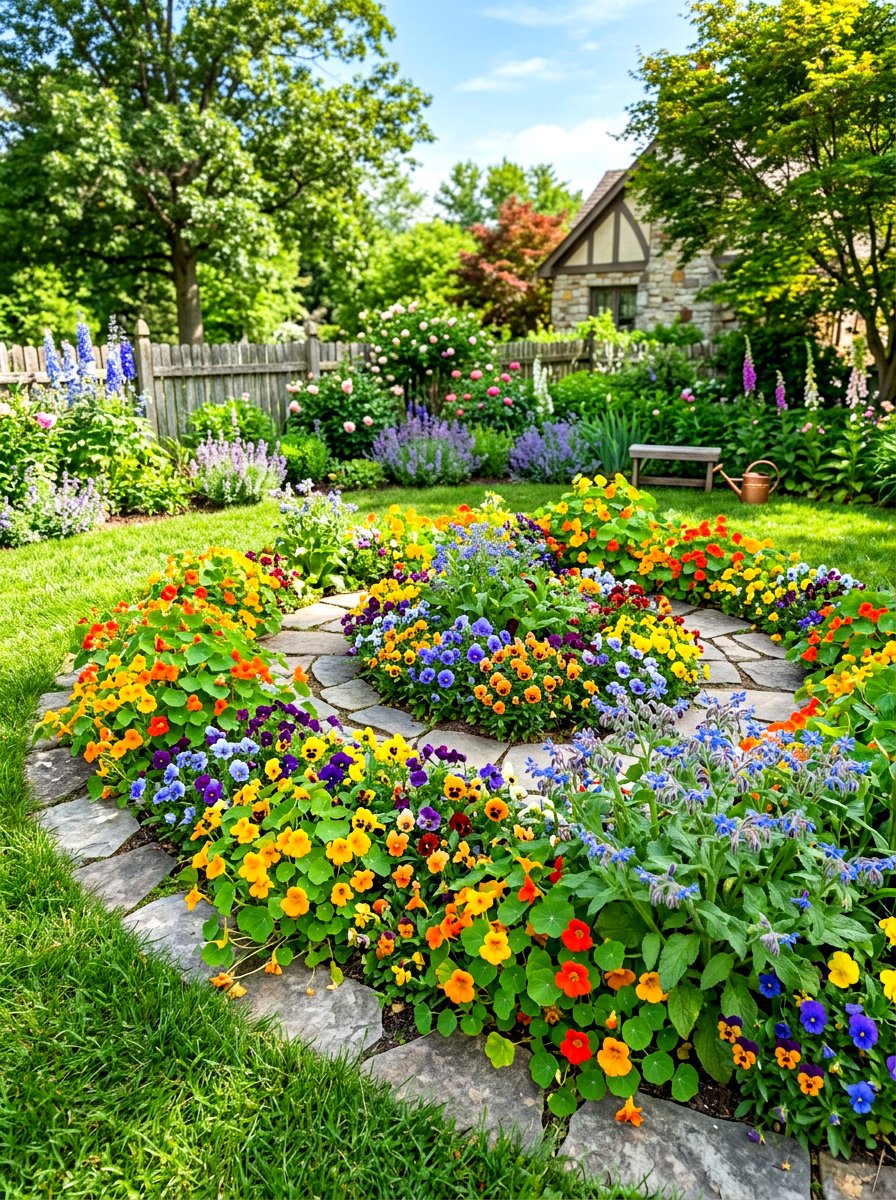
An edible flower herb spiral combines beauty and flavor by mixing traditional herbs with vibrant, edible blooms. Plants like nasturtiums, pansies, and borage are tucked into the spiral alongside basil and mint, creating a stunning tapestry of color. The trailing nature of many edible flowers looks particularly beautiful as they spill over the edges of the spiral walls. This design is a magnet for pollinators like bees and butterflies, which help the rest of your garden thrive. Using these flowers in salads or as garnishes adds a professional touch to your home cooking. It is a whimsical and highly productive take on the classic herb garden.
30. Modern herb spiral
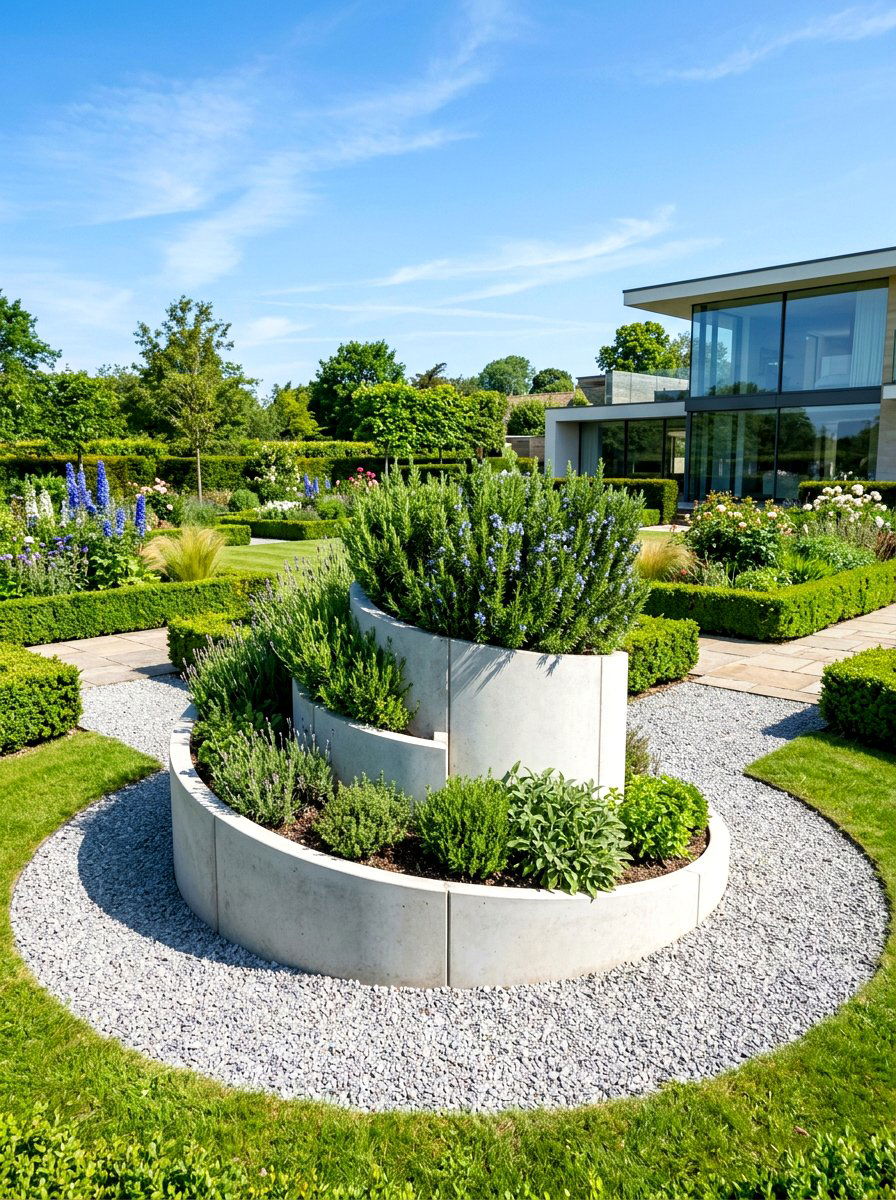
A modern herb spiral features clean lines, symmetrical shapes, and contemporary materials to fit into a minimalist landscape. You might use smooth poured concrete, painted wood, or sleek metal panels to define the spiral path. The planting is often more restrained, focusing on a few key varieties for a tidy and sophisticated look. This design works perfectly in urban environments or as a structured feature in a formal garden. It prioritizes function and aesthetic clarity, providing a high-yield garden that looks like a piece of outdoor art. This approach shows that permaculture can be adapted to suit even the most modern and refined architectural styles.
Conclusion:
Creating a herb spiral is a rewarding project that transforms your outdoor space into a productive and beautiful landscape. By understanding the unique microclimates provided by the spiral shape, you can ensure that every plant in your collection thrives with minimal effort. Whether you choose natural stone for a rustic look or sleek metal for a modern feel, the vertical nature of this design saves space and water while making harvesting much easier. These thirty ideas demonstrate how versatile the herb spiral concept can be, adapting to any style, budget, or garden size. Start building your own today and enjoy fresh, homegrown herbs all year long.

Related posts: