As the frost begins to melt and the first rays of warm sunshine hit the soil, every gardener feels that familiar itch to get back outside. Early spring is a truly magical time when the landscape transforms from dormant browns to vibrant bursts of life. Designing a flower bed for this specific season requires a bit of foresight, as many of these beauties rely on bulbs planted months in advance or hardy perennials that brave the cold. Whether you prefer a formal structured look or a wild cottage aesthetic, these early bloomers provide the essential nectar for waking pollinators and a much-needed boost for your curb appeal. It is the perfect moment to experiment with textures and color palettes that celebrate the end of winter's long grasp and the beginning of a brand new growing season for everyone.
1. Yellow Daffodil Border
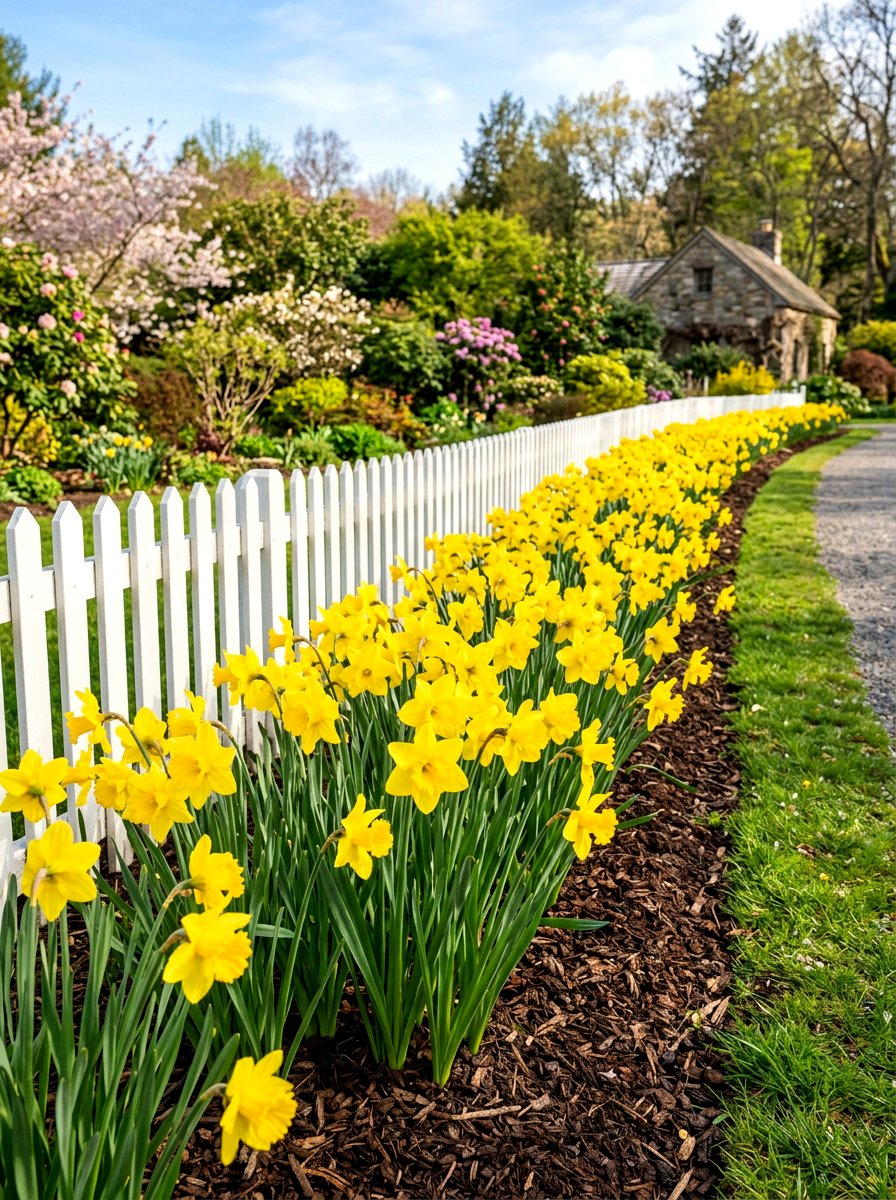
Yellow daffodils are the quintessential symbol of a fresh start after a long winter. These hardy perennials pop up with vibrant color even when the air still carries a crisp chill. When planning this type of landscape, consider planting bulbs in large clusters rather than single rows to create a bigger visual impact. You can mix different varieties like Trumpet or Double Daffodils to add texture and height variation. They thrive in well-drained soil and love the bright morning sun. This low-maintenance setup ensures your yard looks cheerful and inviting to neighbors without requiring hours of intense labor or constant weeding during the early months. It creates a sunny welcome that defines the spring season.
2. Mixed Tulip Garden
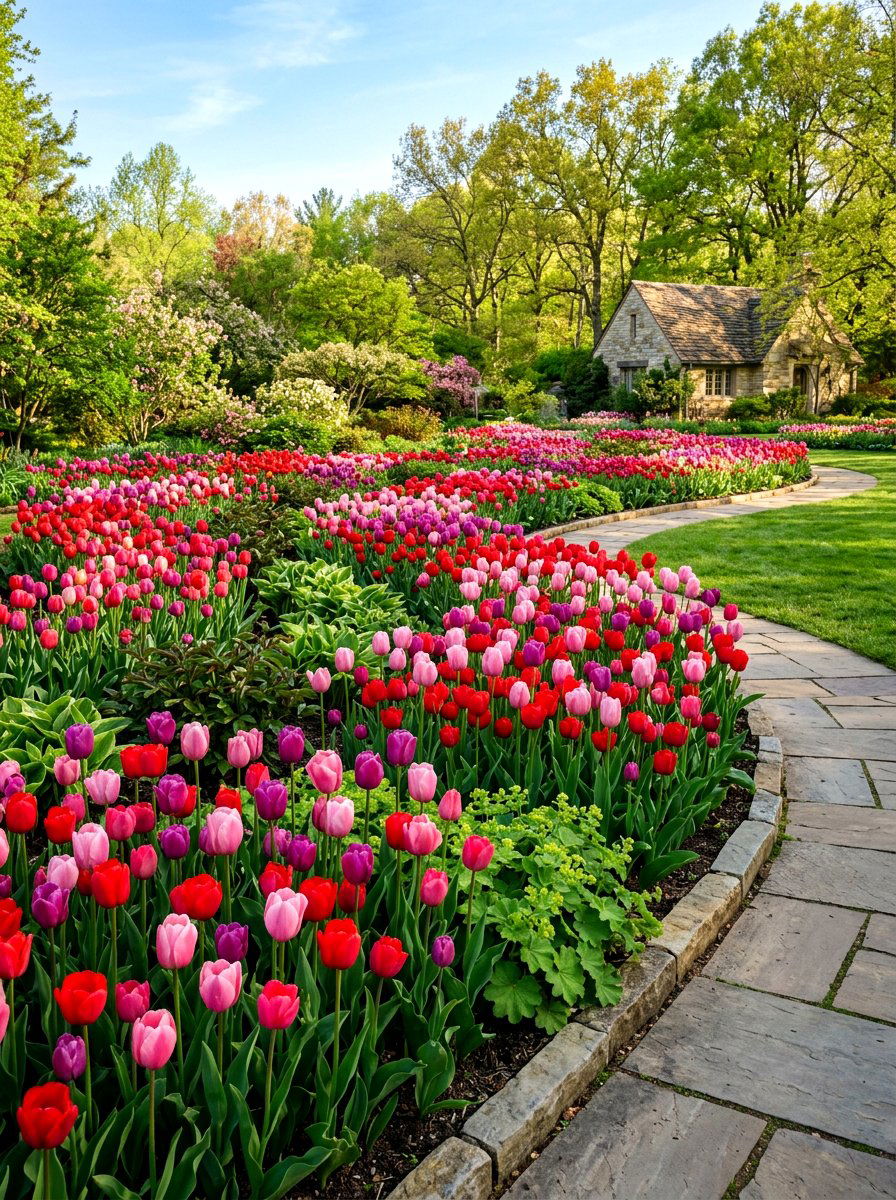
Creating a mixed tulip garden allows you to play with a kaleidoscope of colors and shapes right in your front yard. These popular bulbs come in endless varieties, from classic single petals to ruffled parrot types that look like pieces of art. For a professional look, try grouping colors like soft pinks with deep purples or bright oranges with sunny yellows. Planting them at varying depths can slightly stagger their bloom times, extending the show for several weeks. Make sure the soil is loose so the bulbs don't rot during rainy spring showers. This approach turns any standard mulch bed into a stunning focal point for visitors and family members alike.
3. Purple Pansy Edge
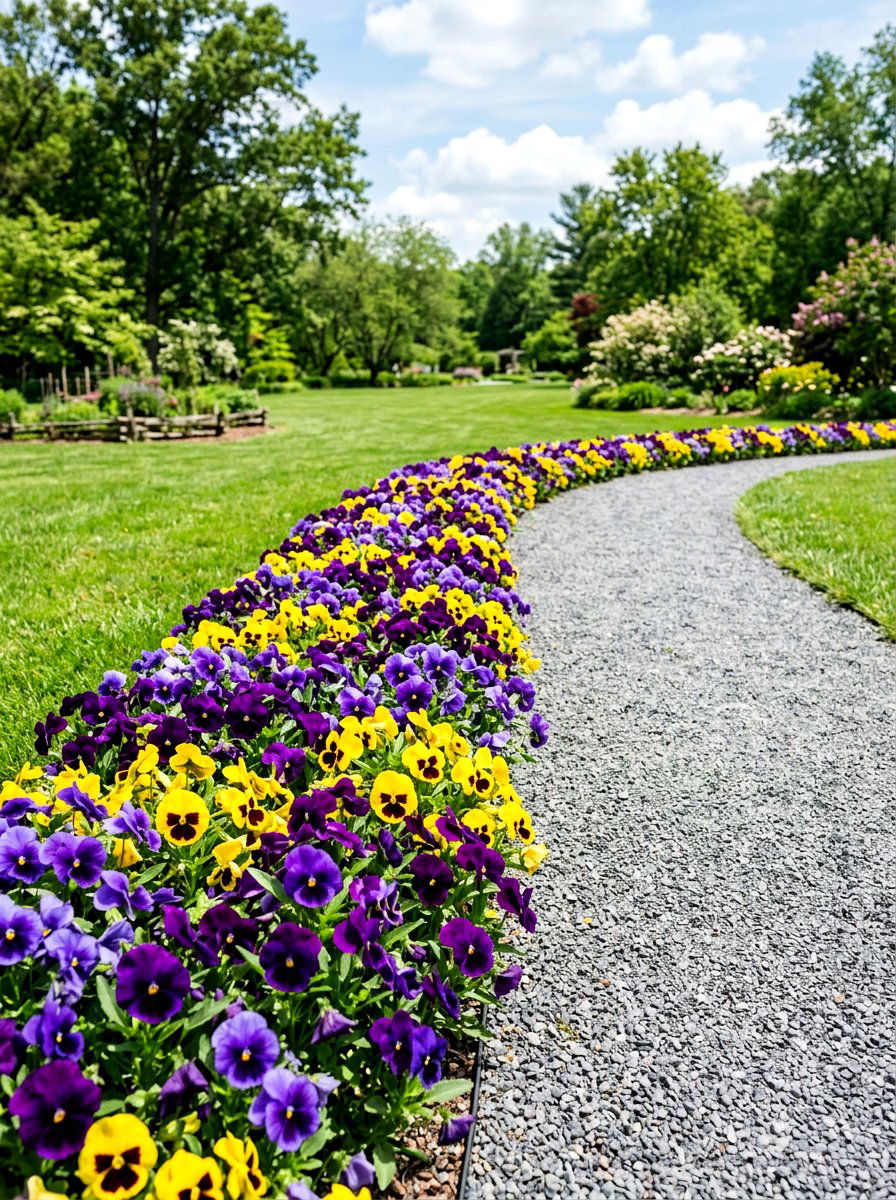
Pansies are incredibly tough annuals that can handle a surprise light frost without missing a beat. Using them as an edge for your flower beds provides a dense mat of color that stays low to the ground. Purple varieties look especially striking when paired with green foliage or white gravel paths. These flowers have "faces" that seem to smile back at you as you walk by. They prefer cooler temperatures and will bloom profusely until the summer heat kicks in. By spacing them closely together, you create a seamless ribbon of color that defines the boundaries of your garden and prevents soil erosion during heavy spring rains.
4. Blue Grape Hyacinth
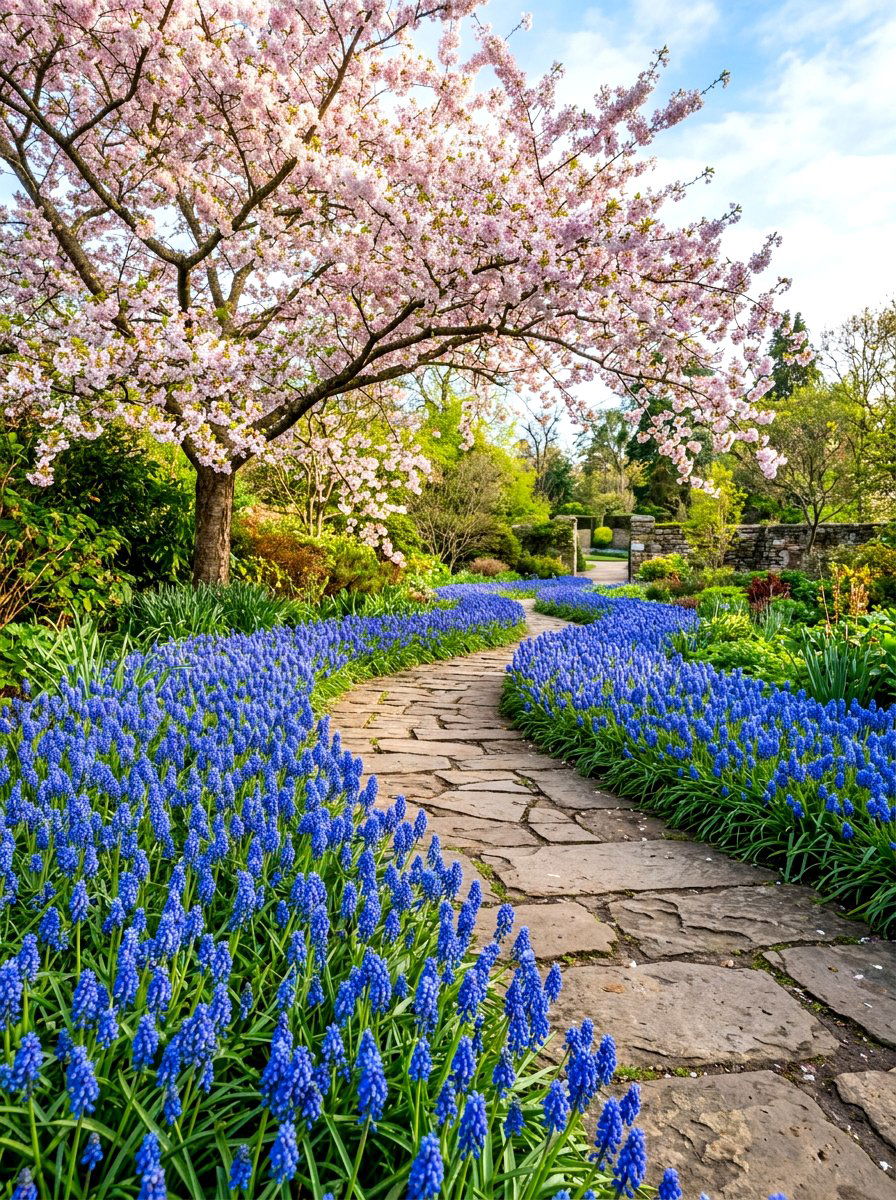
Blue grape hyacinths, or Muscari, offer a unique texture with their tiny bell-shaped flowers that look like miniature clusters of grapes. These small bulbs are perfect for naturalizing under large trees or along the edges of walkways. Their deep cobalt blue hue provides a wonderful contrast to the typical yellows and whites of early spring. Because they multiply quickly, you will see a larger carpet of blue every passing year. They are relatively deer-resistant, making them a safe choice for rural properties. Planting them in drifts creates a flowing, organic look that mimics how they grow in nature, adding a sense of whimsy to your outdoor space.
5. White Snowdrop Drift
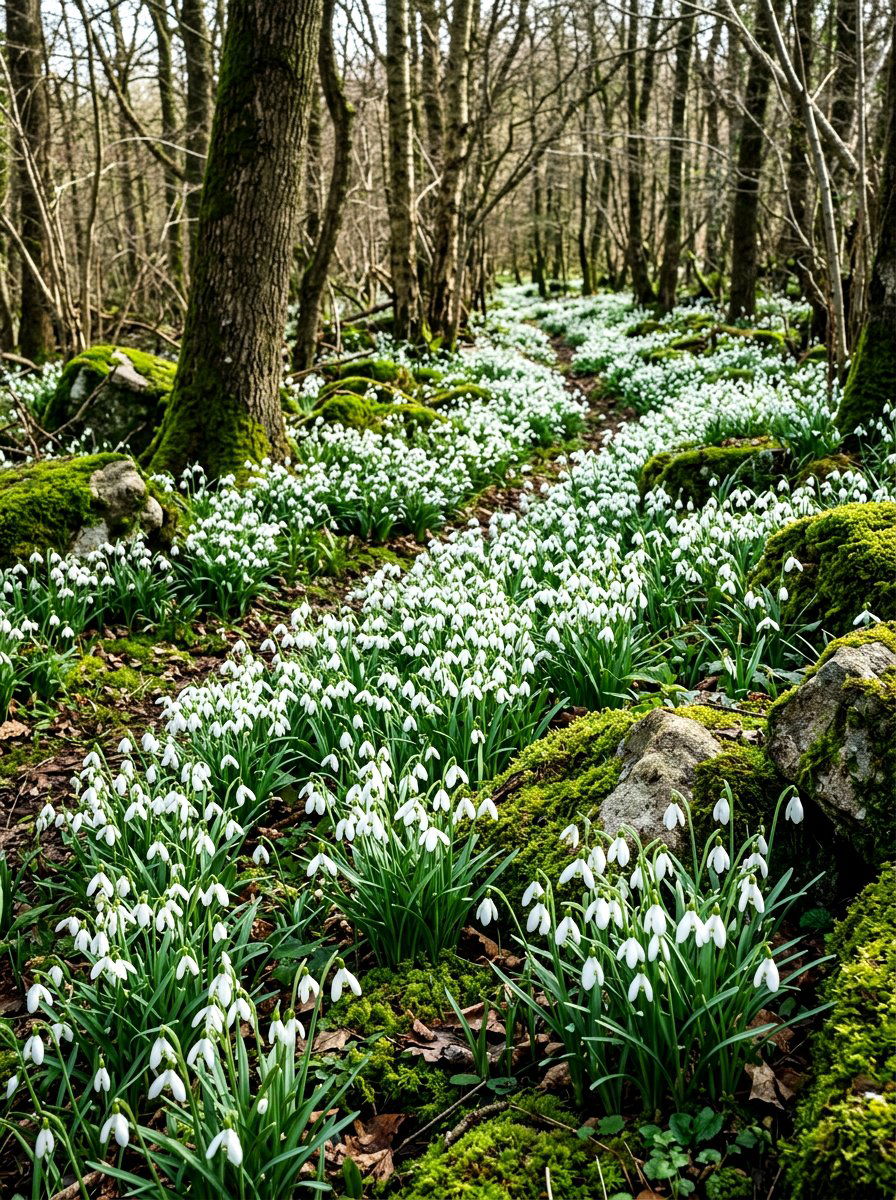
Snowdrops are often the very first sign of life in a garden, sometimes even poking through a thin layer of snow. A drift of these delicate white flowers creates a serene and peaceful atmosphere in a shaded corner of your yard. Their nodding heads and slender green leaves look best when planted in large groups of twenty or more. Because they are quite small, placing them near a patio or an entrance where they can be appreciated up close is a smart design move. They represent the quiet transition from winter to spring and require very little care once they are established in rich, moist soil.
6. Lenten Rose Garden
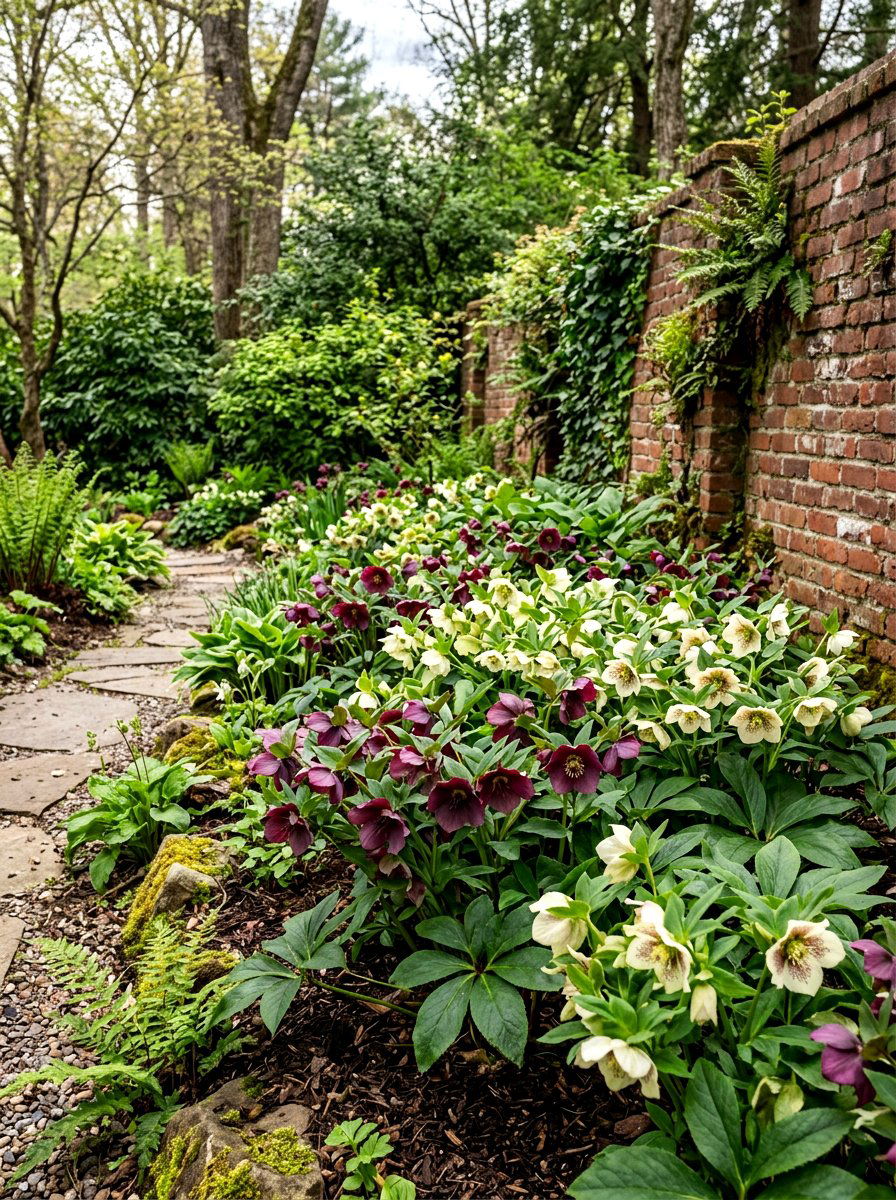
The Lenten Rose, also known as Hellebore, is a favorite for shade-loving gardeners because of its evergreen foliage and nodding blossoms. These perennials bloom very early, often while other plants are still dormant. Their flowers come in sophisticated shades of dusty rose, cream, and even deep slate green. They work beautifully as a mid-height layer in a garden bed, providing year-round structure even after the blooms fade. Hellebores are incredibly long-lived and will eventually form large, impressive clumps. This design choice is perfect for adding elegance to a north-facing wall or a wooded area where other spring flowers might struggle with the lack of light.
7. Crocus Lawn Planting
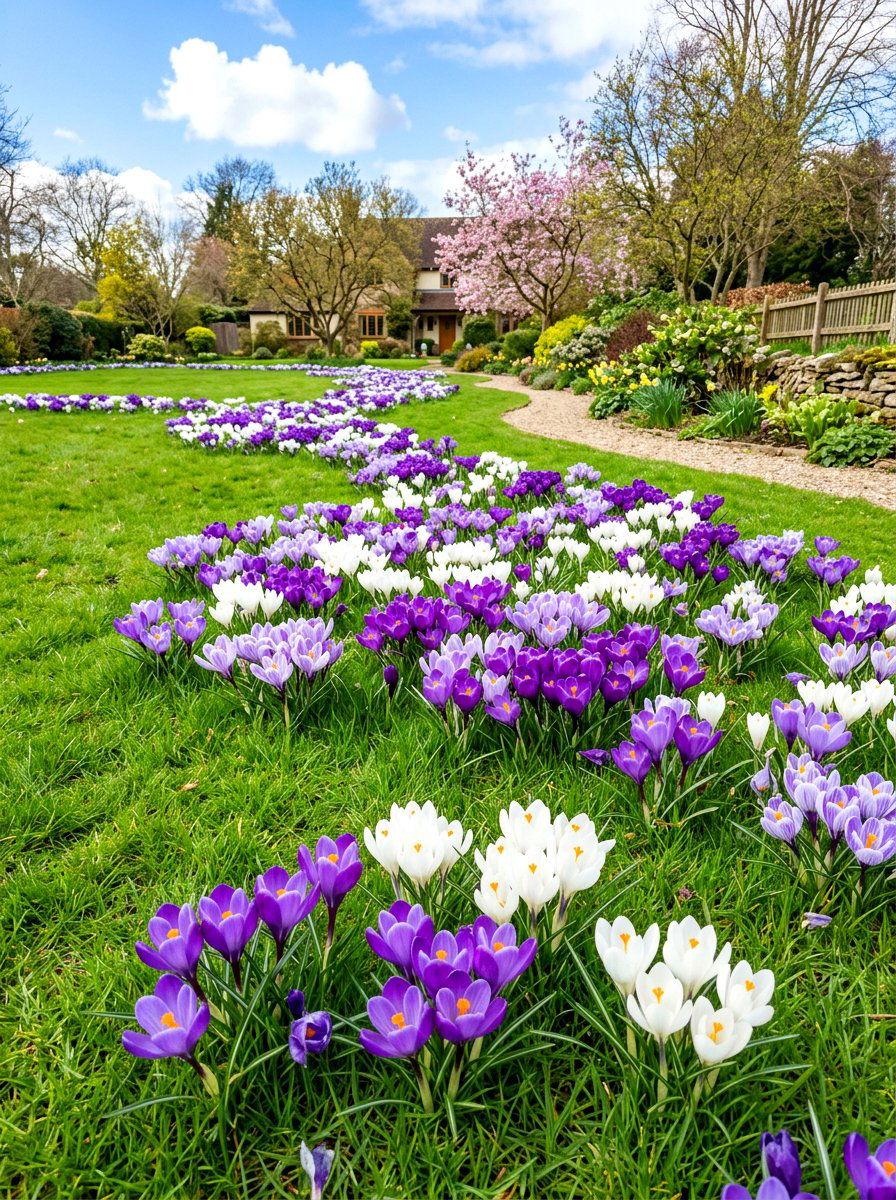
For a truly magical look, consider naturalizing crocuses directly into your lawn. These tiny gems pop up through the grass in early spring, creating a tapestry of purple, yellow, and white across the yard. This approach works best in areas where you can delay the first mowing of the season. The bulbs are small and easy to tuck into the turf with a simple hand trowel. Once they finish blooming, the foliage blends back into the grass as it grows. This design technique turns a plain green space into a vibrant wildflower meadow for a few weeks every year, delighting children and local pollinators.
8. Fragrant Hyacinth Bed
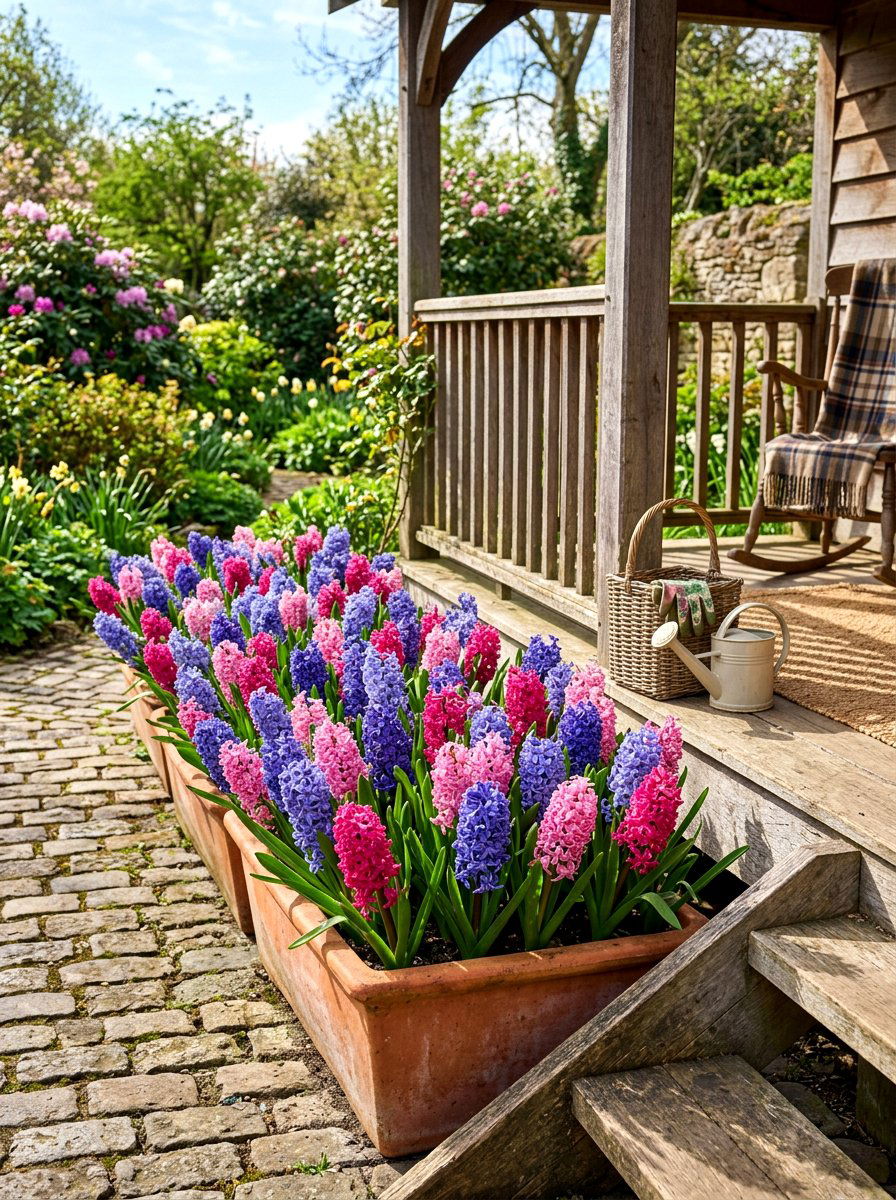
If you want your garden to smell as good as it looks, a dedicated bed of fragrant hyacinths is the way to go. These sturdy spikes of flowers come in saturated colors like magenta, blue, and white. Their scent is powerful and sweet, carrying on the spring breeze toward your windows. Planting them in a dense block near your front door or a favorite bench allows you to fully enjoy their perfume. Hyacinths prefer full sun and well-drained soil to prevent their heavy flower heads from flopping over. They add a formal, tidy look to the garden that feels polished and intentionally designed.
9. Red Tulip Display
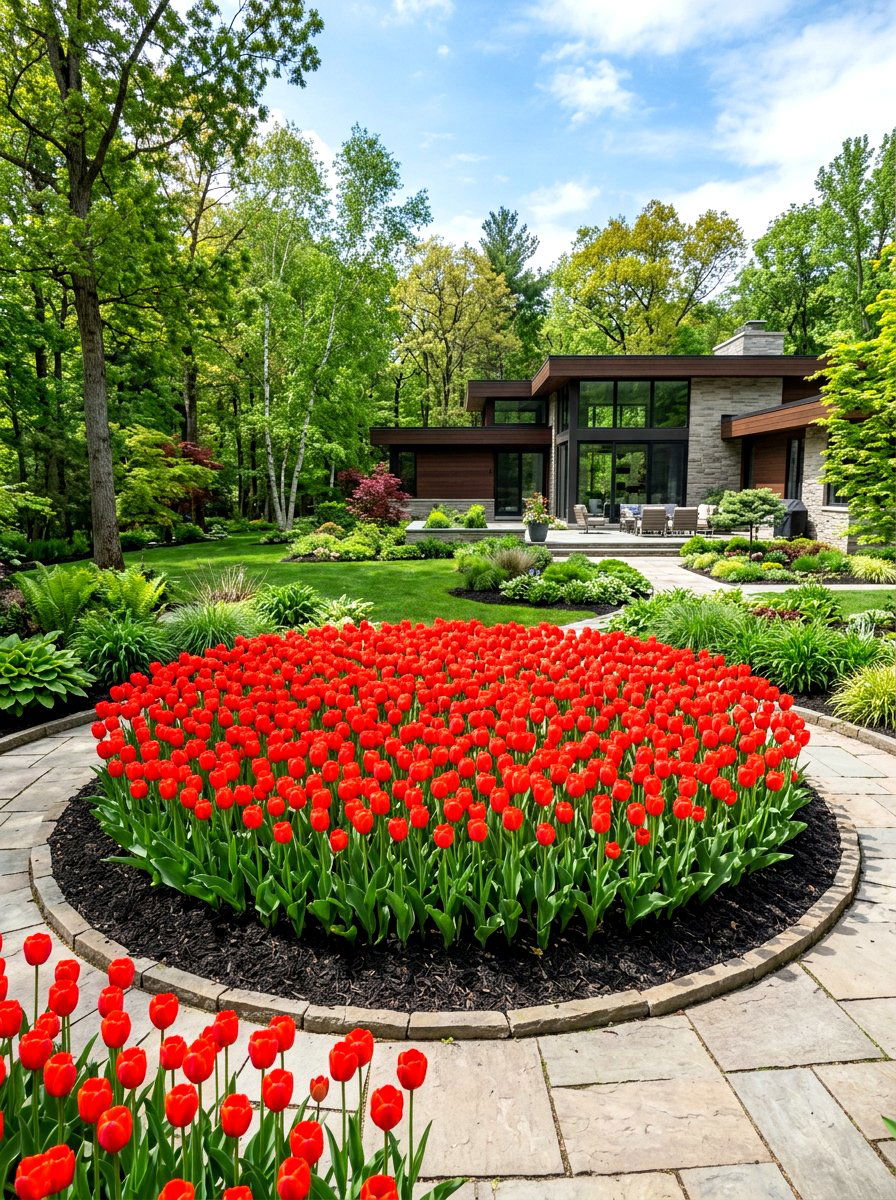
Nothing commands attention like a bold display of red tulips. This design choice is perfect for high-visibility areas like the entrance to your driveway or the center of a circular bed. Red is a color of energy and passion, which perfectly matches the spirit of the new season. Pairing red tulips with dark mulch or evergreen shrubs makes the color pop even more. You can choose tall varieties for the back of the bed and shorter ones for the front to create a tiered effect. These flowers are sturdy and reliable, providing a classic garden look that never goes out of style for traditional homes.
10. English Primrose Bed
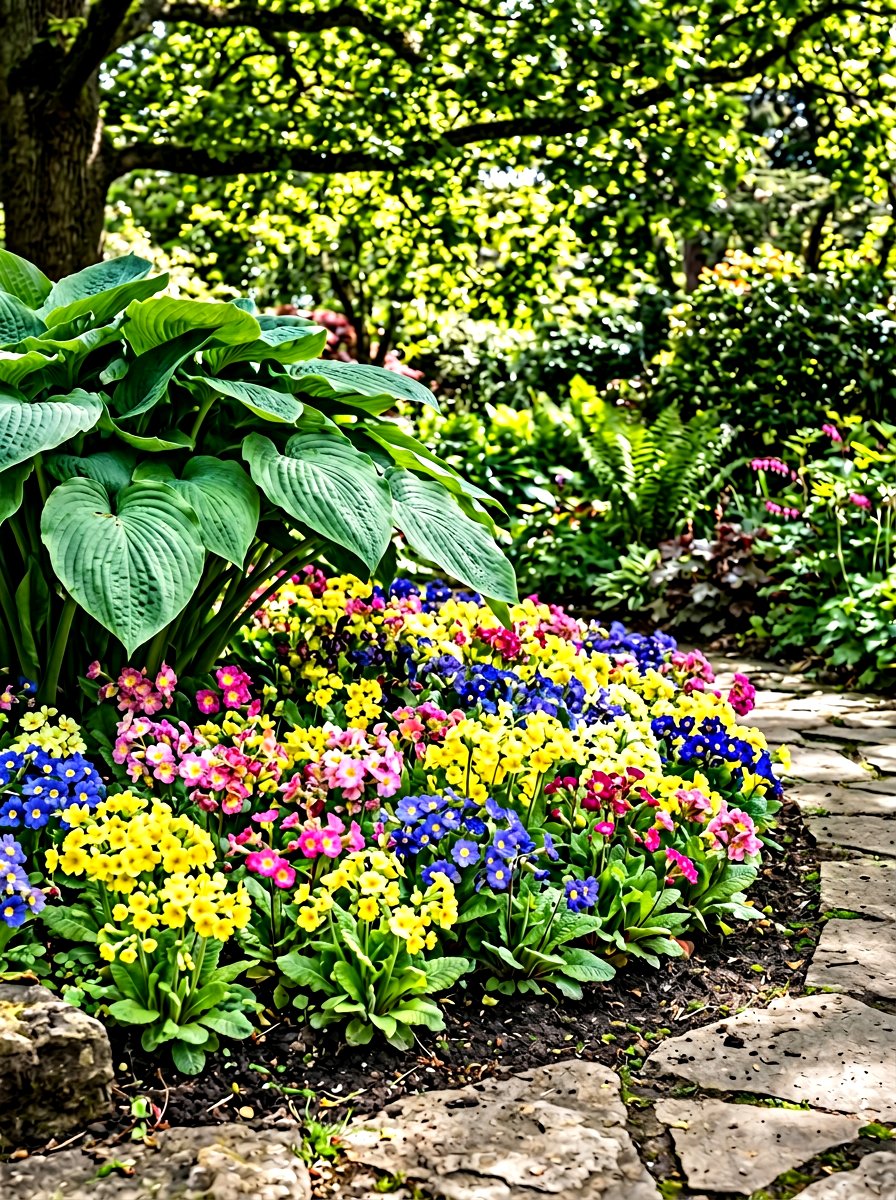
English primroses bring a charming cottage feel to any spring garden with their ruffled leaves and colorful centers. They thrive in partial shade and moist soil, making them ideal for planting under deciduous shrubs or along a garden pond. Their wide range of colors, from pale lemon to deep burgundy, allows you to create a customized palette. These perennials often bloom for a long period, bridging the gap between early bulbs and summer flowers. By grouping different colors together, you create a cheerful patchwork effect that feels cozy and lived-in. They are easy to divide, so your collection can grow over time.
11. Pink Bleeding Heart
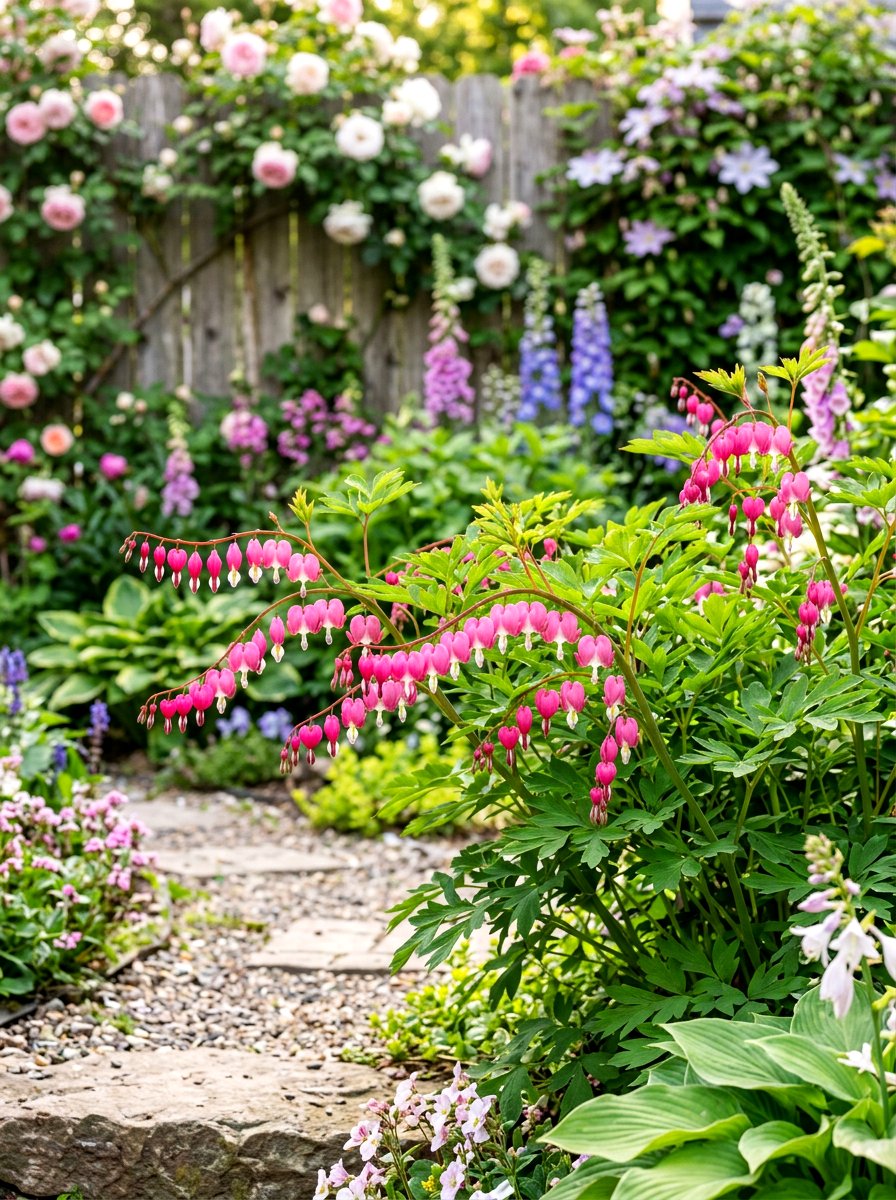
Old-fashioned bleeding hearts are iconic spring perennials that feature arching stems hung with delicate, heart-shaped blossoms. Their soft pink and white colors bring a romantic and nostalgic vibe to shaded flower beds. These plants grow quite large and have fern-like foliage that adds a soft texture to the landscape. They pair exceptionally well with hostas and ferns, which will fill in the space once the bleeding hearts go dormant in the heat of summer. This design idea focuses on grace and movement, as the stems sway gently in the wind. It is a must-have for any garden that aims for a classic, timeless beauty.
12. Blue Forget Me Not
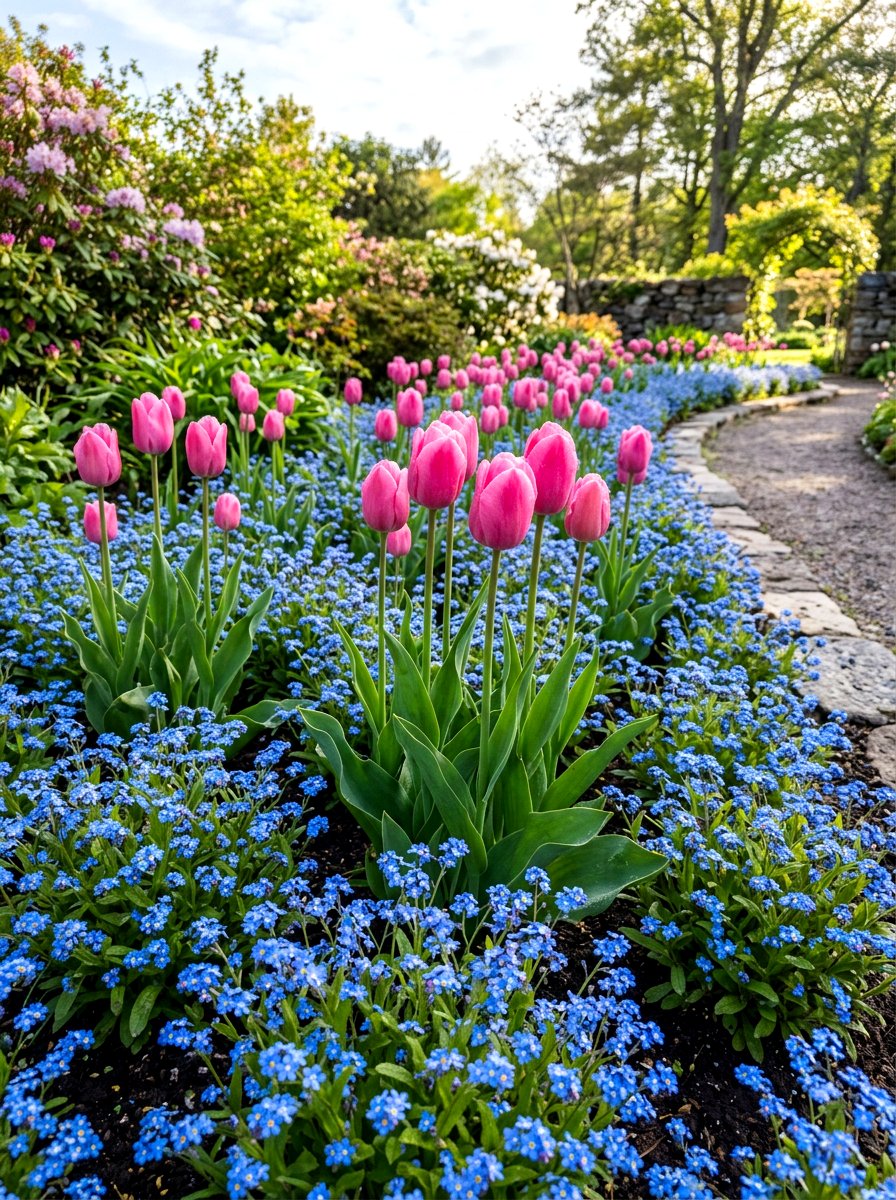
Forget-me-nots act as a stunning azure groundcover that weaves between taller bulbs and perennials. Their tiny, sky-blue flowers create a misty effect that softens the edges of a garden bed. While they are technically biennials, they self-seed so readily that they function like perennials in most climates. This design is perfect for filling in the "bare feet" of tulips or daffodils, hiding the dying bulb foliage as the season progresses. The cool blue color is rare in the plant world and provides a refreshing visual break from warmer spring hues. They are effortless to grow and bring a sense of abundance to the yard.
13. Reticulated Iris Rockery
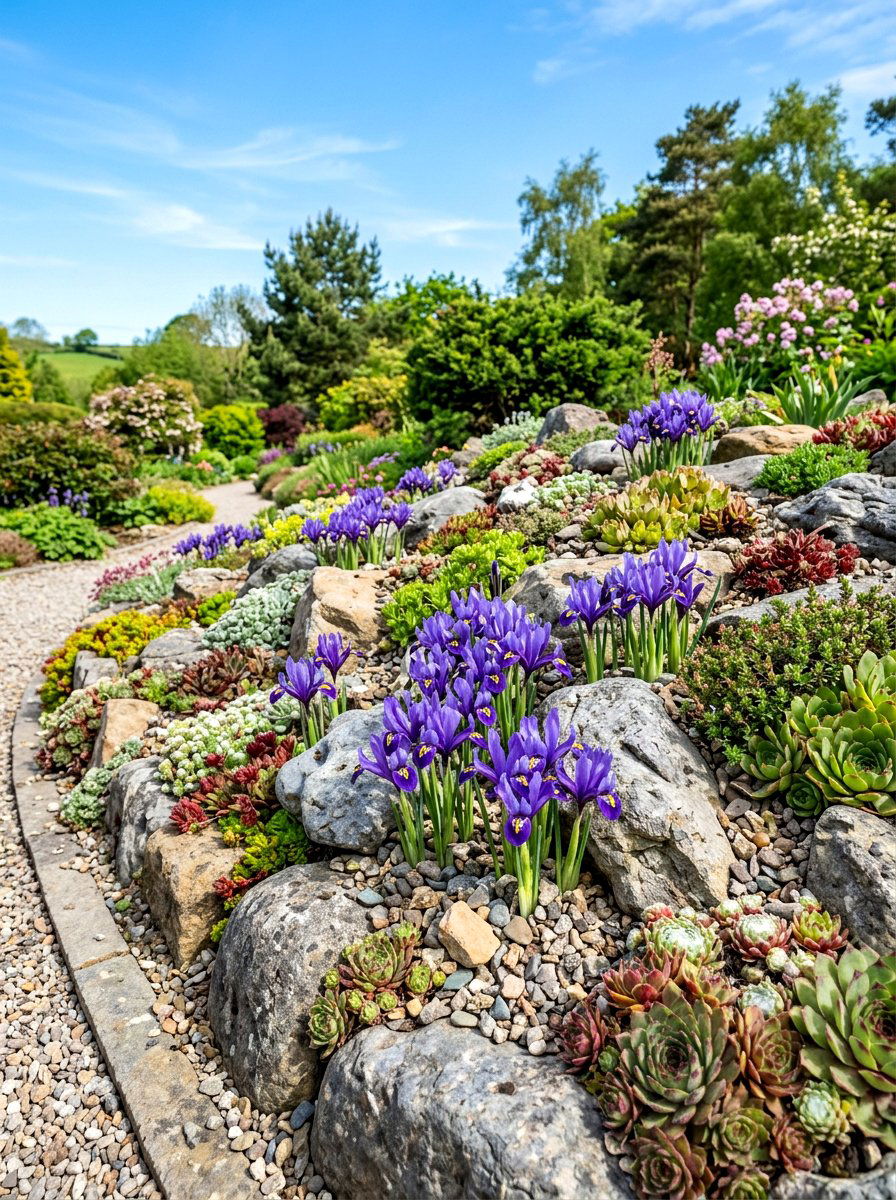
The reticulated iris is a miniature marvel that blooms very early, often alongside crocuses. These tiny irises feature intricate markings on their petals and come in stunning shades of royal purple and icy blue. Because of their small stature, they are best showcased in a rock garden or along the top of a stone wall where they won't be overlooked. They prefer sharply drained soil and plenty of sun. This design idea focuses on the details, inviting visitors to lean in and appreciate the complex beauty of nature. They are a sophisticated choice for gardeners who enjoy unique and slightly rare spring treasures.
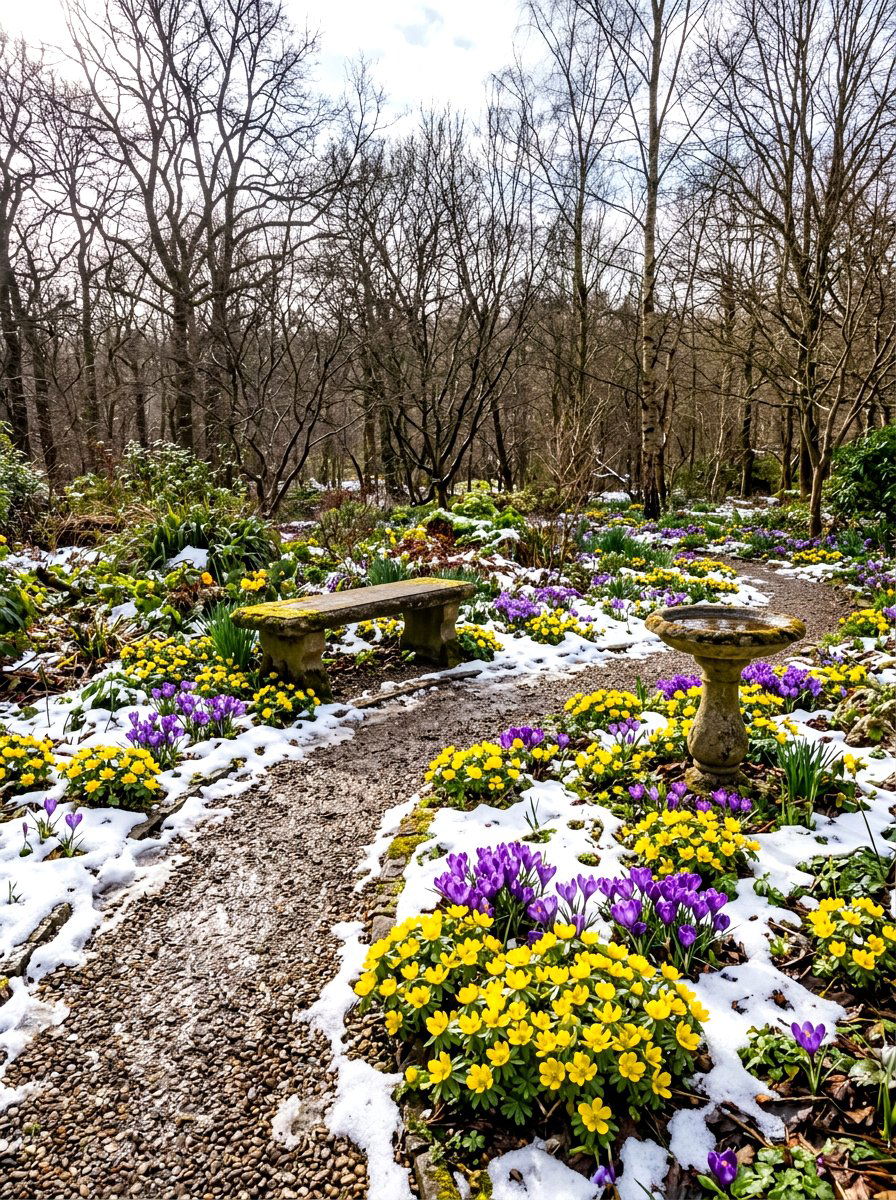
14. Winter Aconite Patch
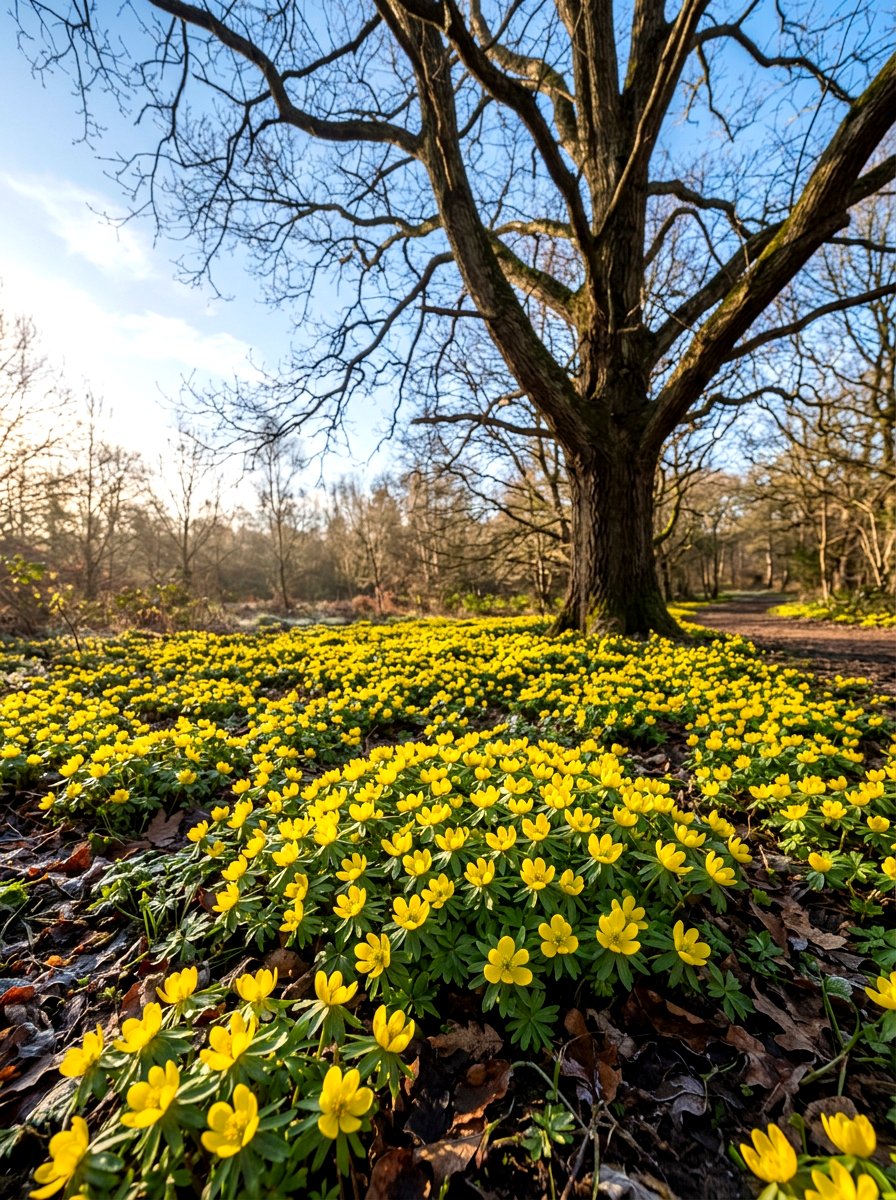
Winter aconite is one of the earliest flowers to appear, often blooming even before the first snowdrops. These bright yellow, buttercup-like flowers are surrounded by a ruff of green leaves that look like a Victorian collar. They are excellent for naturalizing under large trees where the grass is sparse. Over time, they will spread to form a golden carpet that glows in the low winter sun. This design is all about bringing light to dark corners of the garden. They are very low-maintenance and will return year after year, slowly expanding their territory and providing early nectar for the very first bees of the spring season.


15. Siberian Squill Meadow
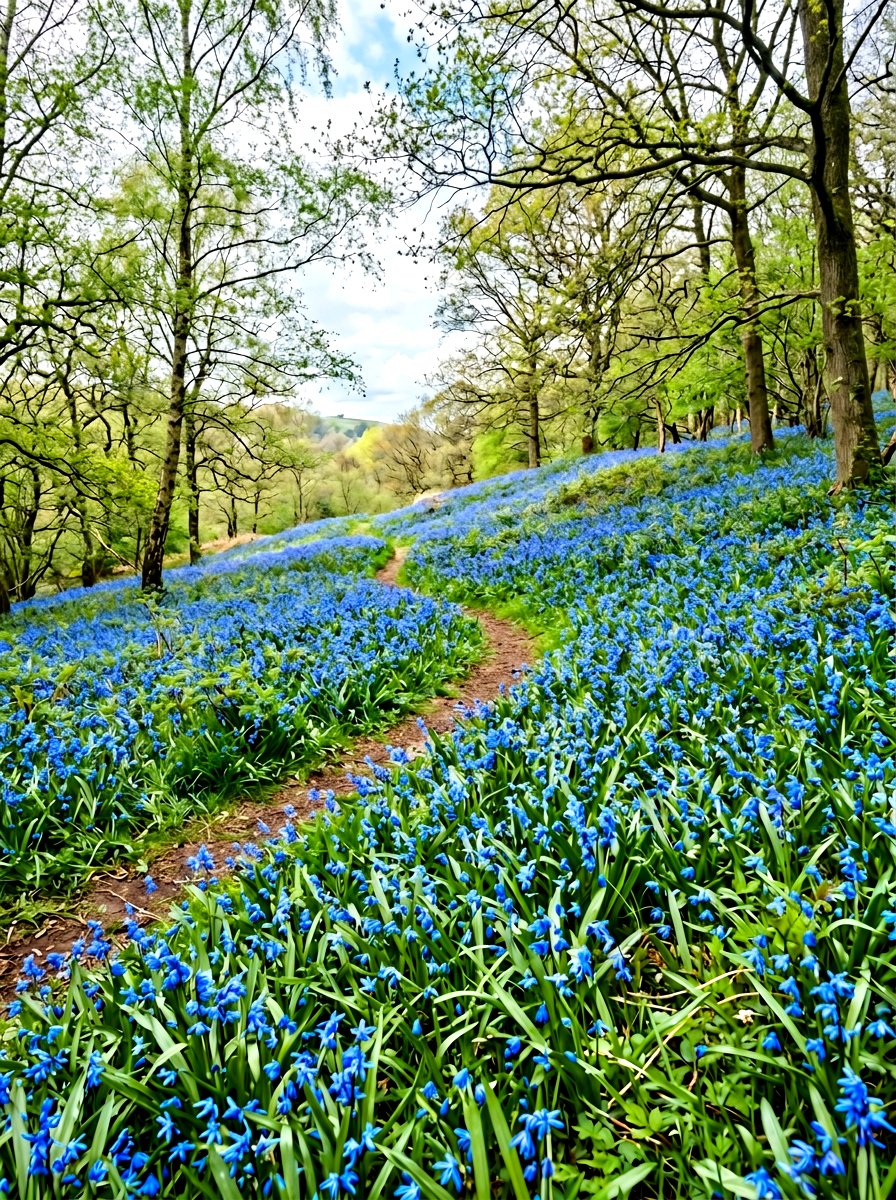
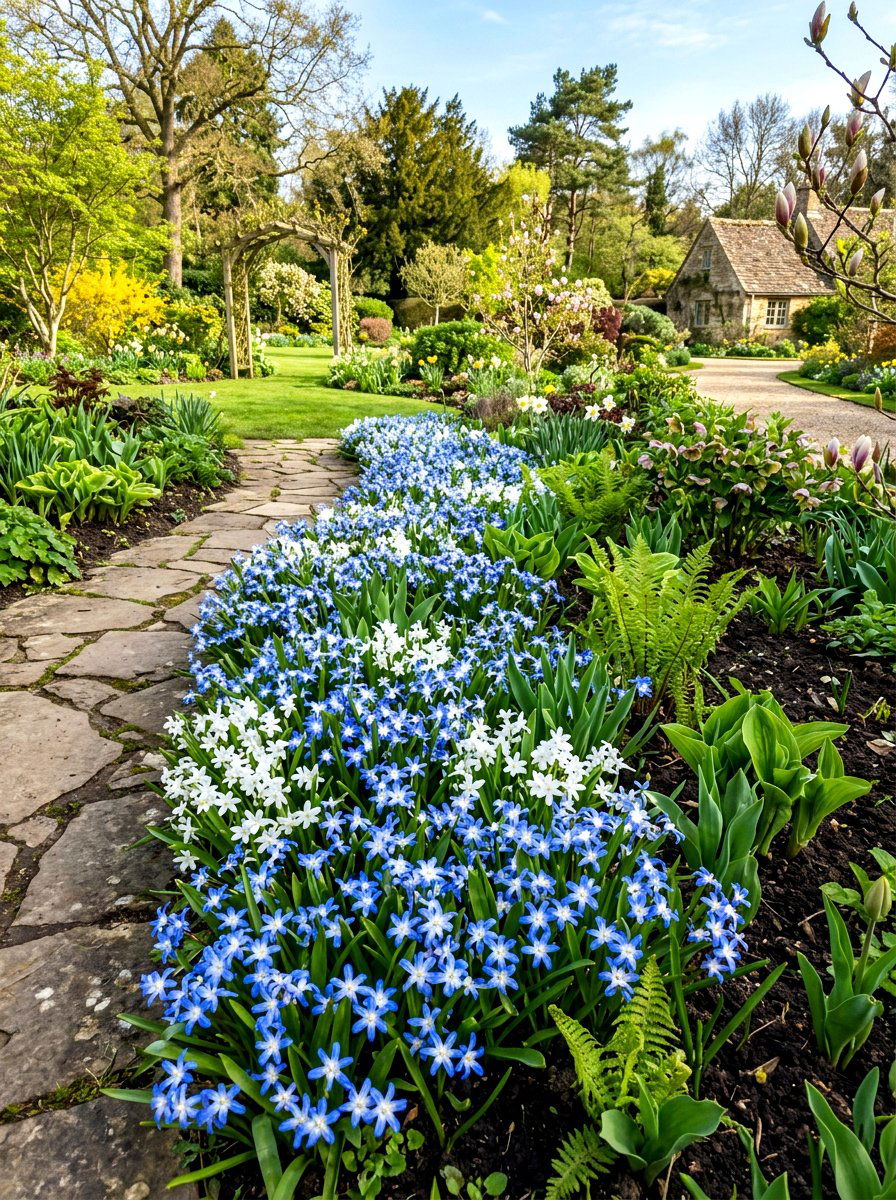
Siberian squill, or Scilla siberica, produces intense blue flowers that seem to reflect the color of the clear spring sky. These small bulbs are incredibly hardy and will thrive in almost any garden condition. When planted in mass, they create a breathtaking blue meadow effect that can stop traffic. They are perfect for planting under shrubs or throughout a wooded lot. The beauty of this design is its ability to look completely natural, as if the flowers just happened to grow there on their own. They are unbothered by pests and will provide a reliable wash of color for many years without intervention.
16. Crown Imperial Fritillaria
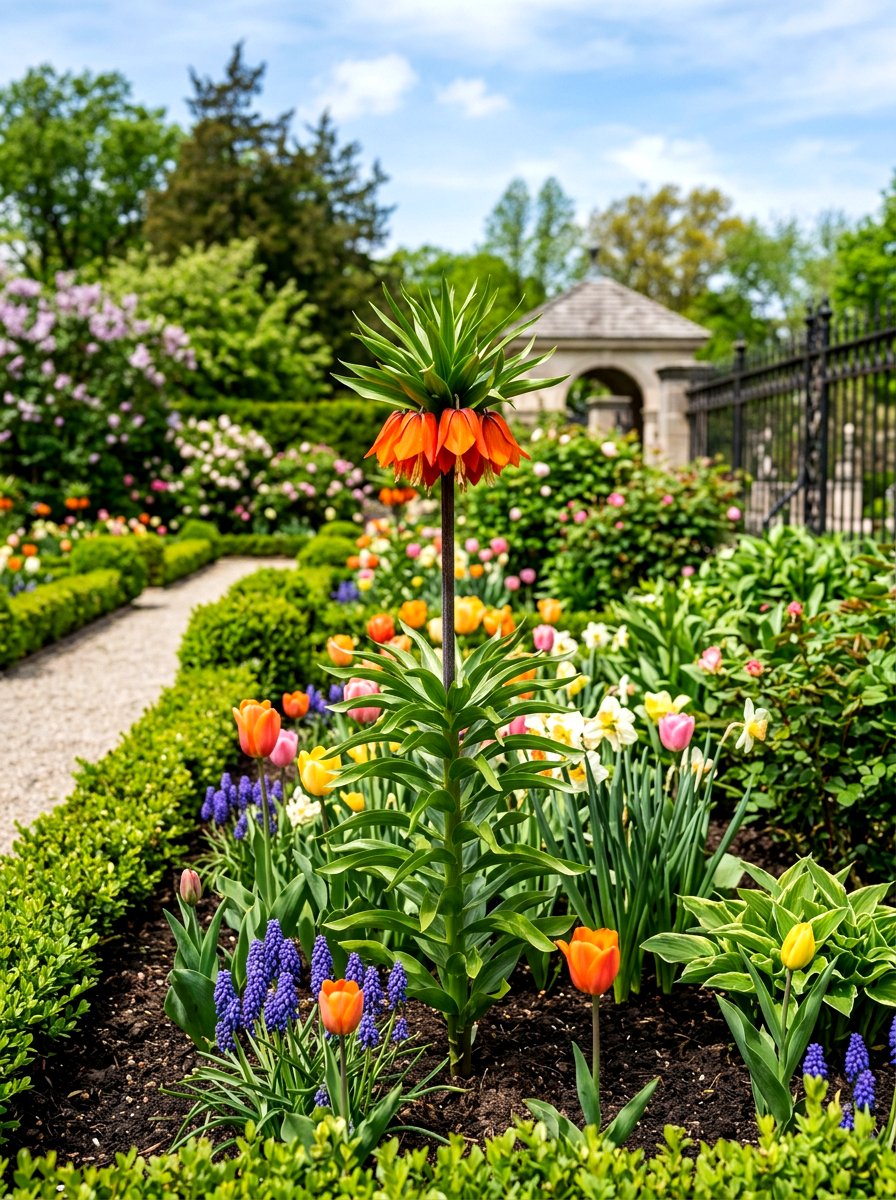
For a dramatic and architectural statement, look no further than the Crown Imperial. These tall plants feature a ring of large, bell-shaped flowers topped with a tuft of green leaves, resembling a royal crown. They come in striking shades of orange, yellow, and red. Because they can grow up to three feet tall, they serve as an excellent focal point in the middle or back of a spring border. They have a unique skunky scent that actually helps repel deer and rodents from the garden. This design idea is for the bold gardener who wants to add height and a touch of the exotic to their landscape.
17. Grecian Windflower Border
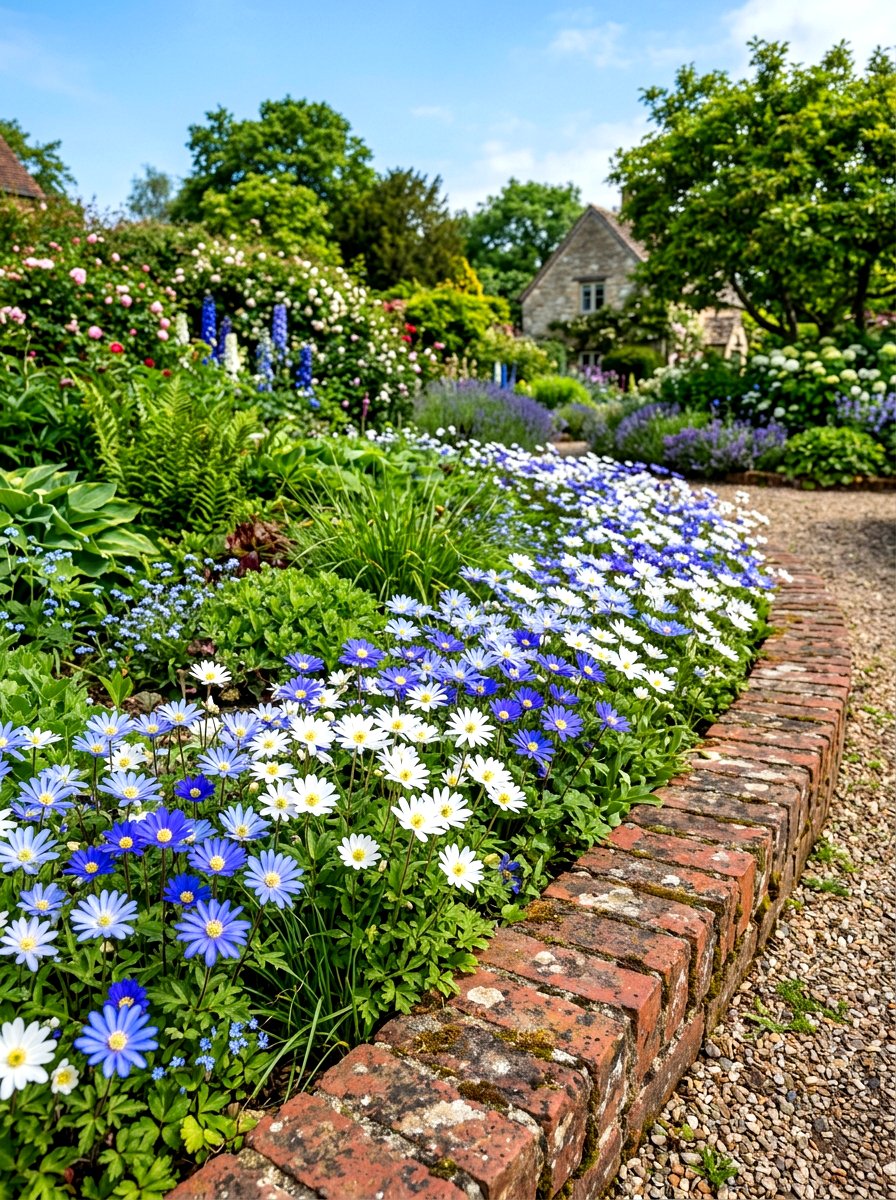
Grecian windflowers, or Anemone blanda, look like cheerful daisies that come in shades of blue, pink, and white. They have ferny foliage and stay relatively low to the ground, making them a great choice for the front of a border or along a path. These flowers follow the sun, opening wide during the day and closing up at night. They are best planted in large groups to create a colorful blanket of blooms. This design provides a soft, whimsical look that pairs beautifully with more structured plants like boxwoods. They are easy to grow from small tubers and will multiply happily in well-drained soil.
18. White Candytuft Edge
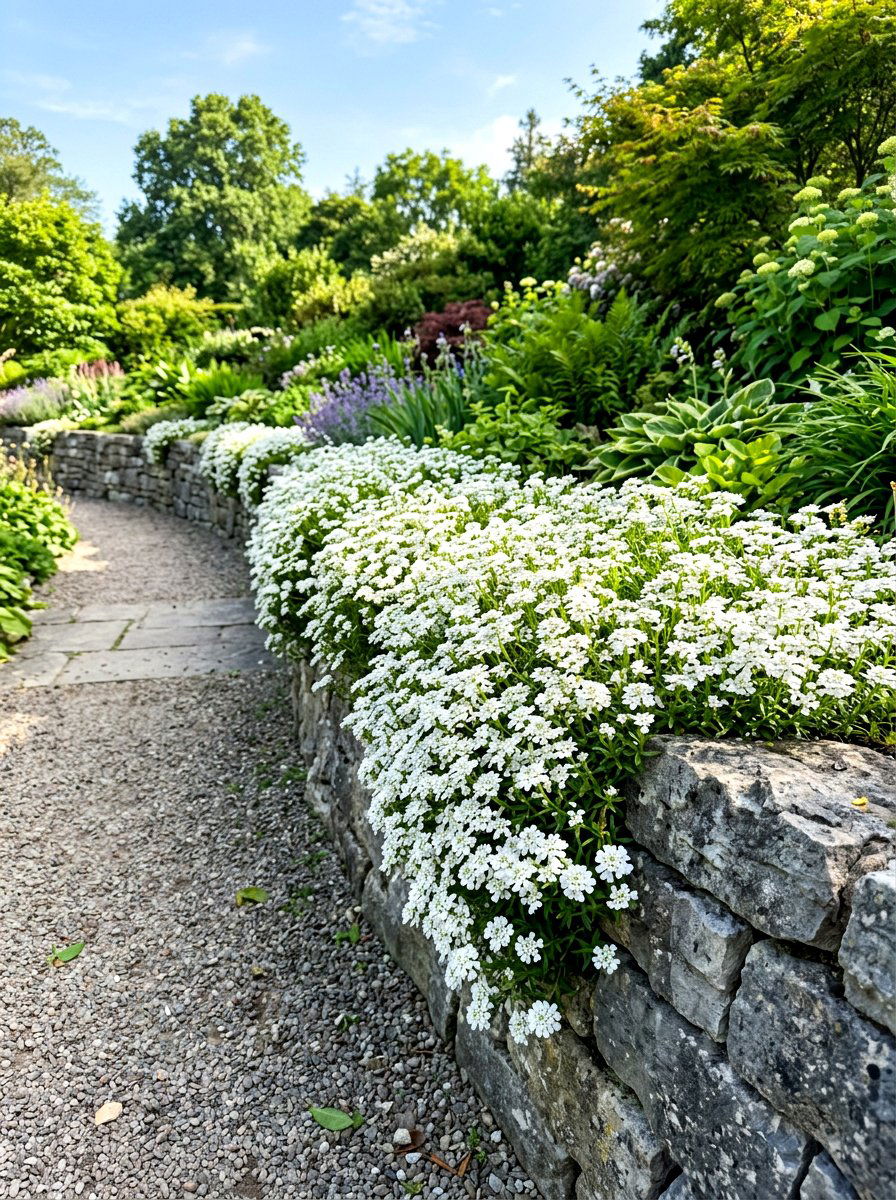
Candytuft is a semi-evergreen perennial that produces a profusion of pure white flowers in early spring. Its mounding habit and dark green leaves make it an excellent choice for edging flower beds or cascading over stone walls. The bright white color acts as a highlighter for the garden, making all the surrounding colors look more vivid. This plant is very drought-tolerant once established and loves a sunny spot. This design idea is perfect for creating a clean, crisp frame for your flower beds. It provides a long-lasting show and remains an attractive green mound for the rest of the year after the blooms fade.
19. Moss Phlox Groundcover
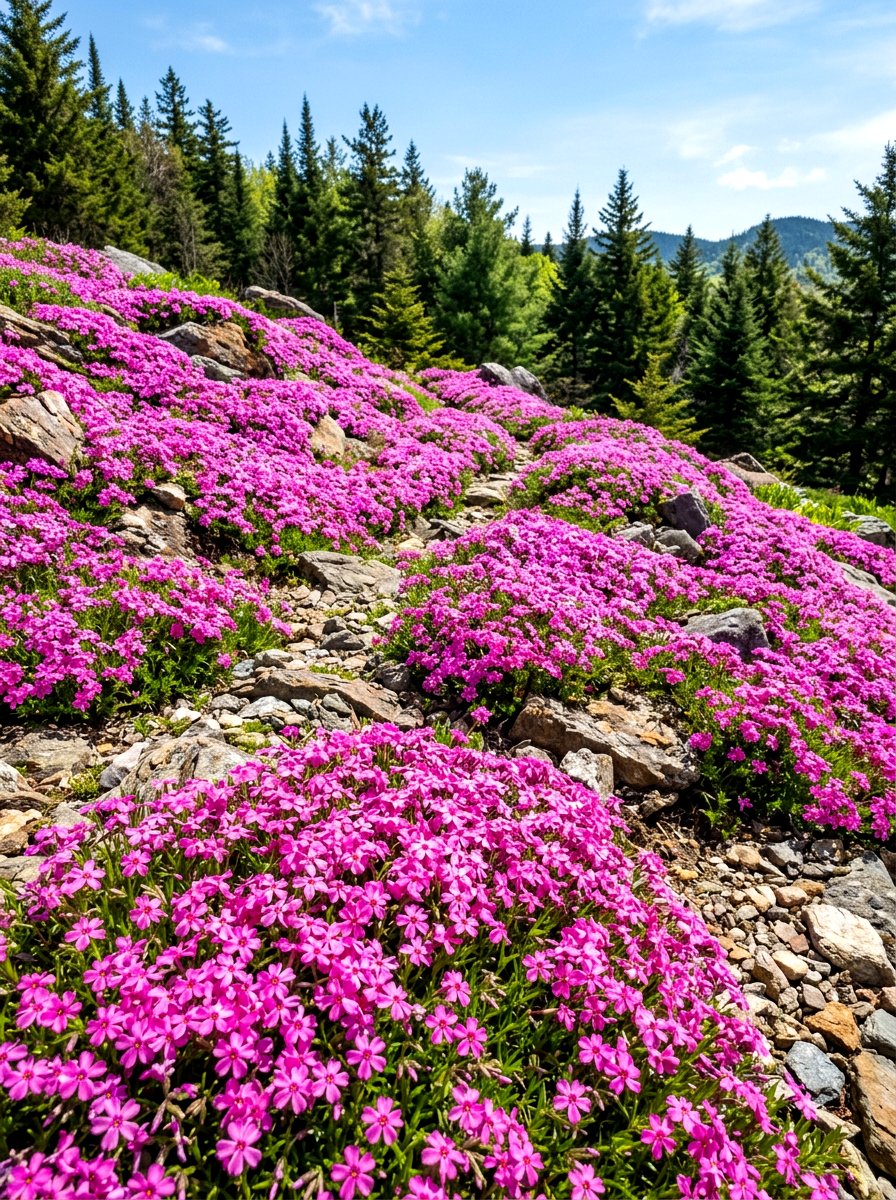
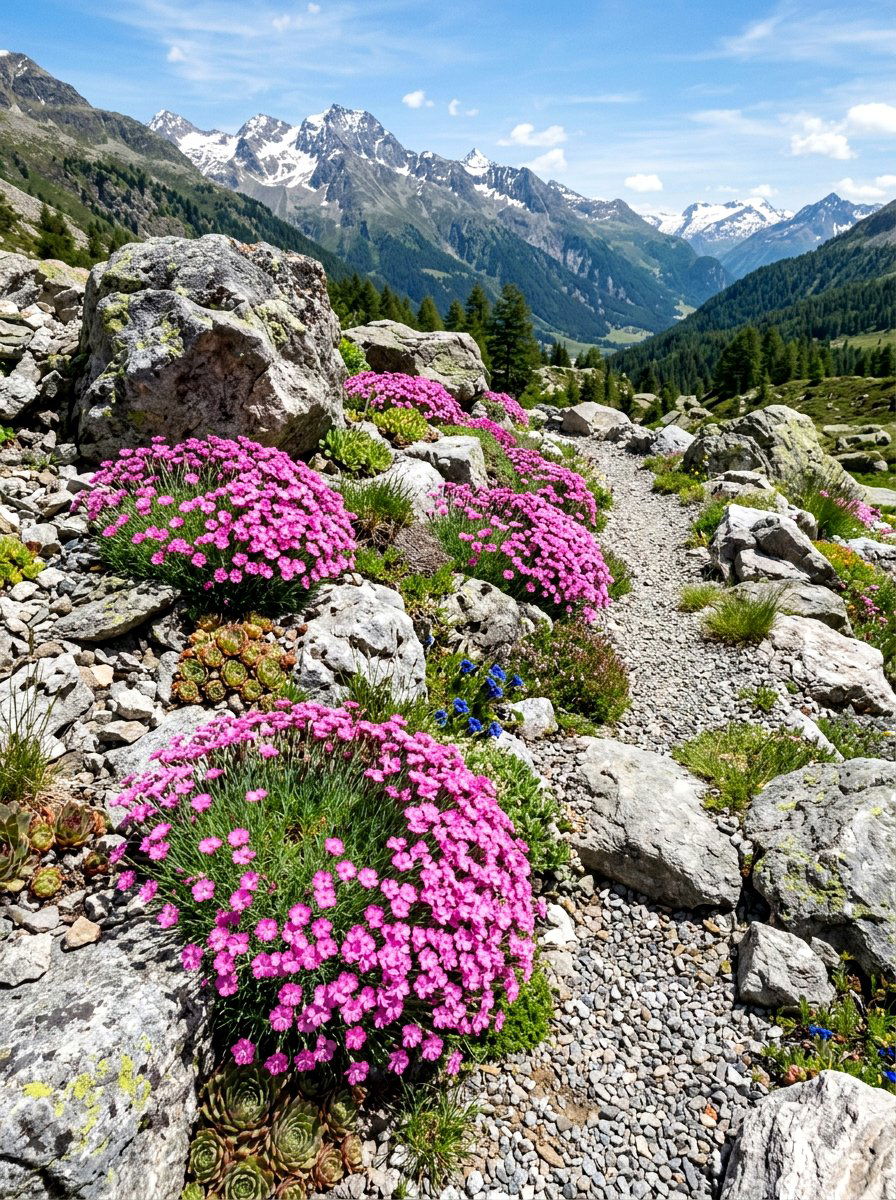
Moss phlox, also known as creeping phlox, creates a literal carpet of color in early spring. It is commonly seen draped over rocks or covering hillsides in shades of pink, purple, and white. This plant is so dense with flowers that you can barely see the green foliage underneath during its peak bloom. It is a fantastic choice for preventing weeds and erosion on slopes. This design focuses on large-scale color and texture, turning a difficult landscape feature into a stunning asset. It is incredibly hardy and requires very little maintenance other than a light trim after it finishes blooming to keep it tidy.
20. Tulip Forget Me Not
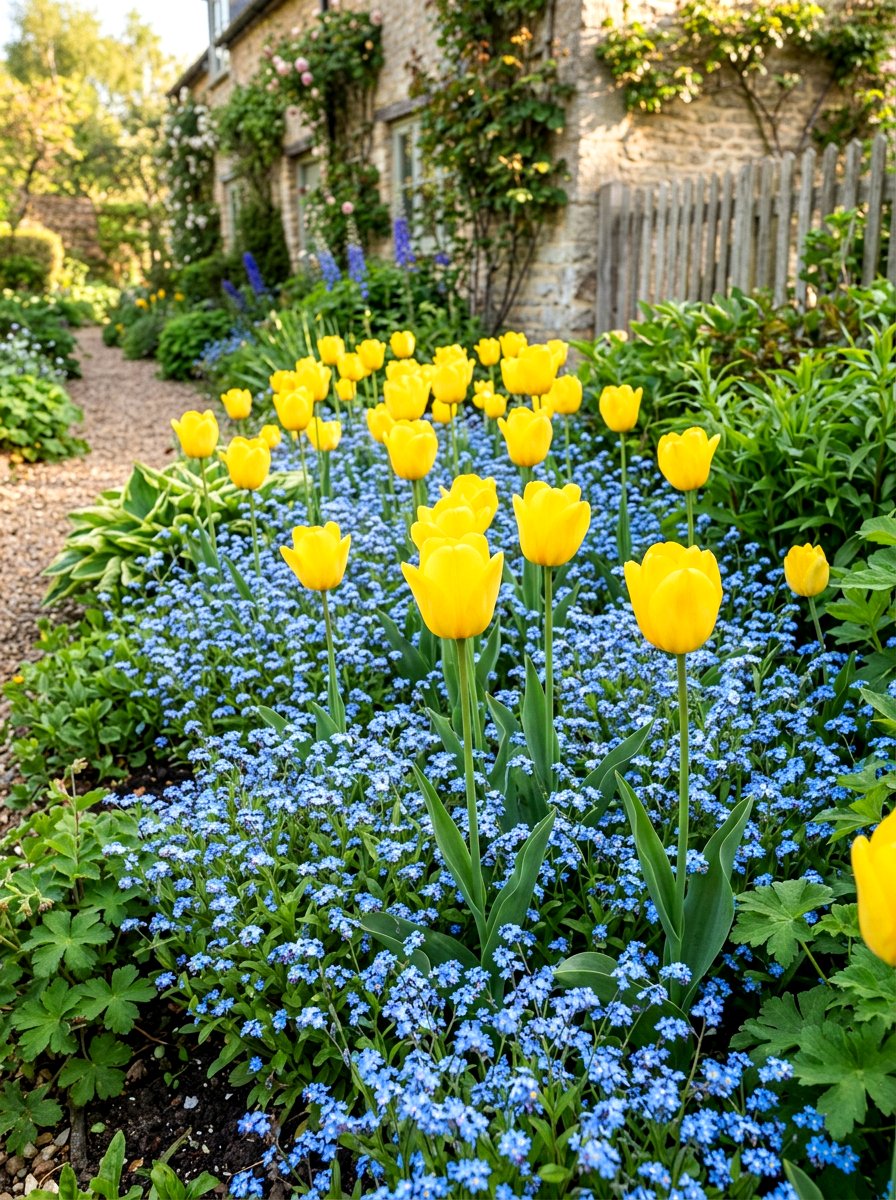
Combining tulips with forget-me-nots is a classic garden design that never fails to impress. The tall, structured tulips rise out of a soft, hazy cloud of tiny blue flowers, creating a perfect balance of form and texture. You can choose pink tulips for a romantic look or orange ones for a high-contrast, energetic feel. The forget-me-nots act as a living mulch, keeping the soil cool and suppressing weeds. This design idea is ideal for a cottage garden or a formal border where you want a layered, professional appearance. It creates a sense of depth and abundance that makes the garden feel lush and full.
21. Daffodil Muscari Mix
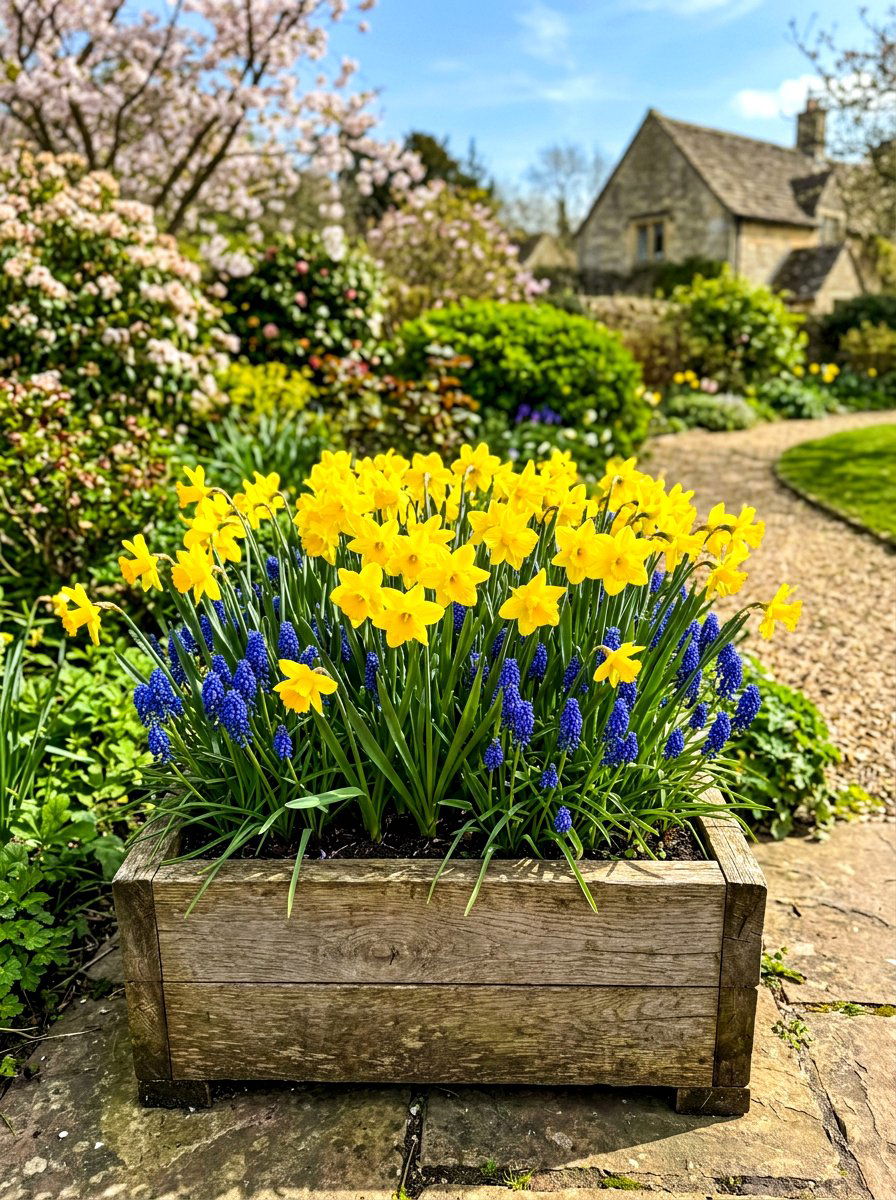
Mixing yellow daffodils with blue grape hyacinths is a favorite color combination for spring gardeners. The complementary colors of yellow and blue create a vibrant and energetic look that perfectly captures the mood of the season. You can plant them together in the same hole or alternate groups along a walkway. The different heights of the two plants add visual interest and layers to the bed. This design is very reliable and low-maintenance, as both plants are hardy and generally left alone by deer. It provides a classic, cheery welcome to any home and signals that the garden is finally waking up.
22. Persian Buttercup Bed
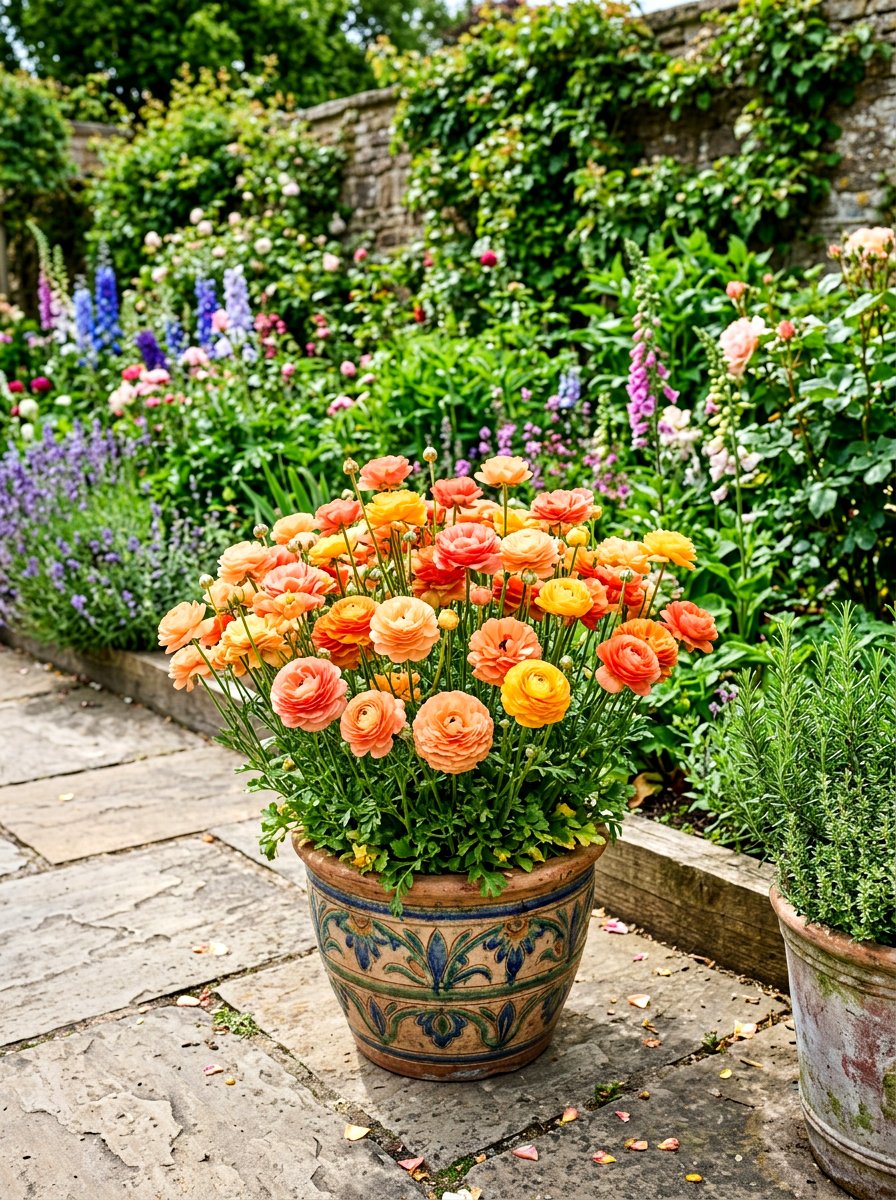
Ranunculus, or Persian Buttercups, offer some of the most intricate and beautiful flowers in the spring garden. Their petals are layered like delicate tissue paper, and they come in a stunning array of colors from pastel peach to deep burgundy. They are often used in high-end floral arrangements but can also be grown in garden beds if the conditions are right. They prefer cool, bright spots and well-drained soil. This design idea focuses on luxury and detail, making it perfect for a bed near a front entrance where guests can stop and admire the incredible blooms. They add a touch of sophisticated glamour to the landscape.
23. Fernleaf Bleeding Heart
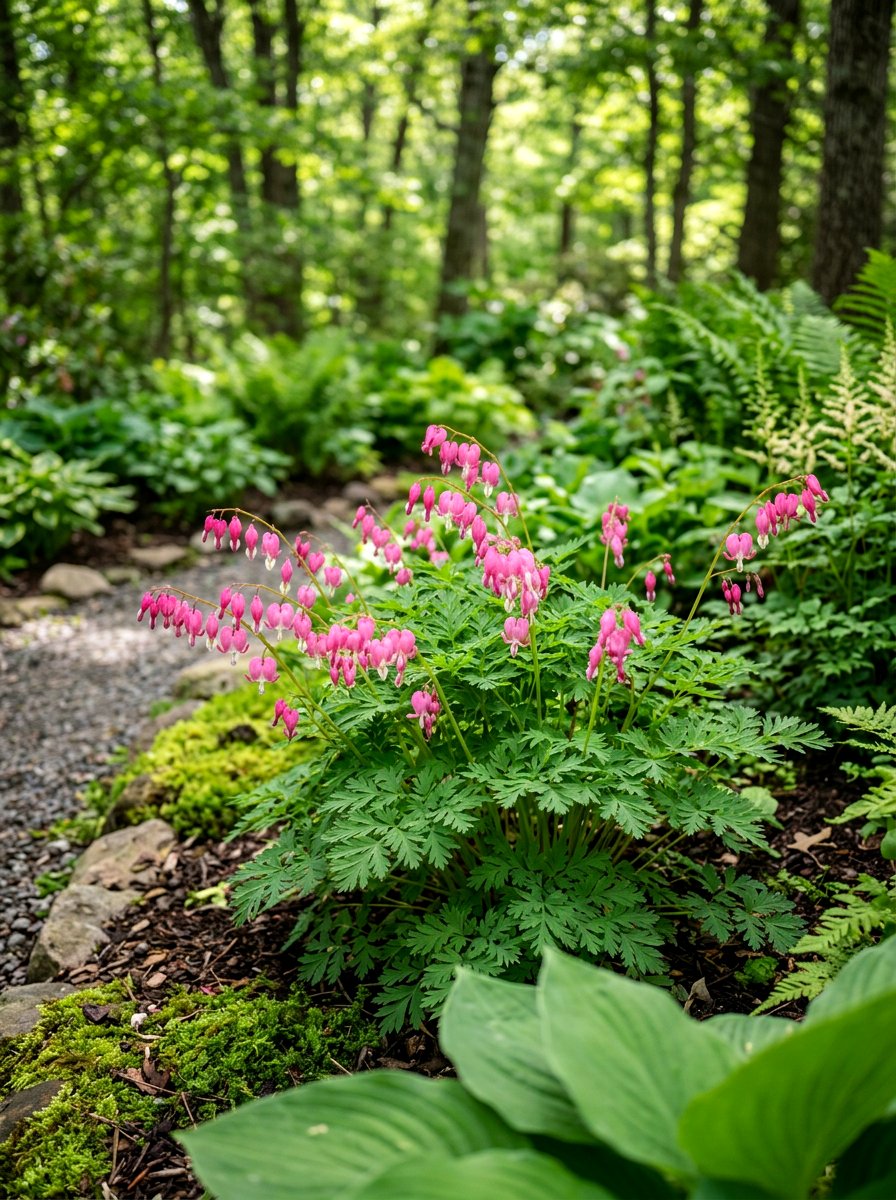
Unlike the traditional bleeding heart, the fernleaf variety stays smaller and often blooms for a much longer period. Its finely textured, bluish-green foliage remains attractive throughout the entire growing season. The flowers are smaller and held in clusters above the leaves in shades of pink or white. This design is perfect for the front of a shady border or a woodland path. Because it doesn't go dormant in the summer like its larger cousin, it provides consistent value to the garden layout. It is a tough, reliable perennial that adds a soft, delicate touch to any moist and shady corner of your outdoor space.
24. Pig Squeak Bergenia
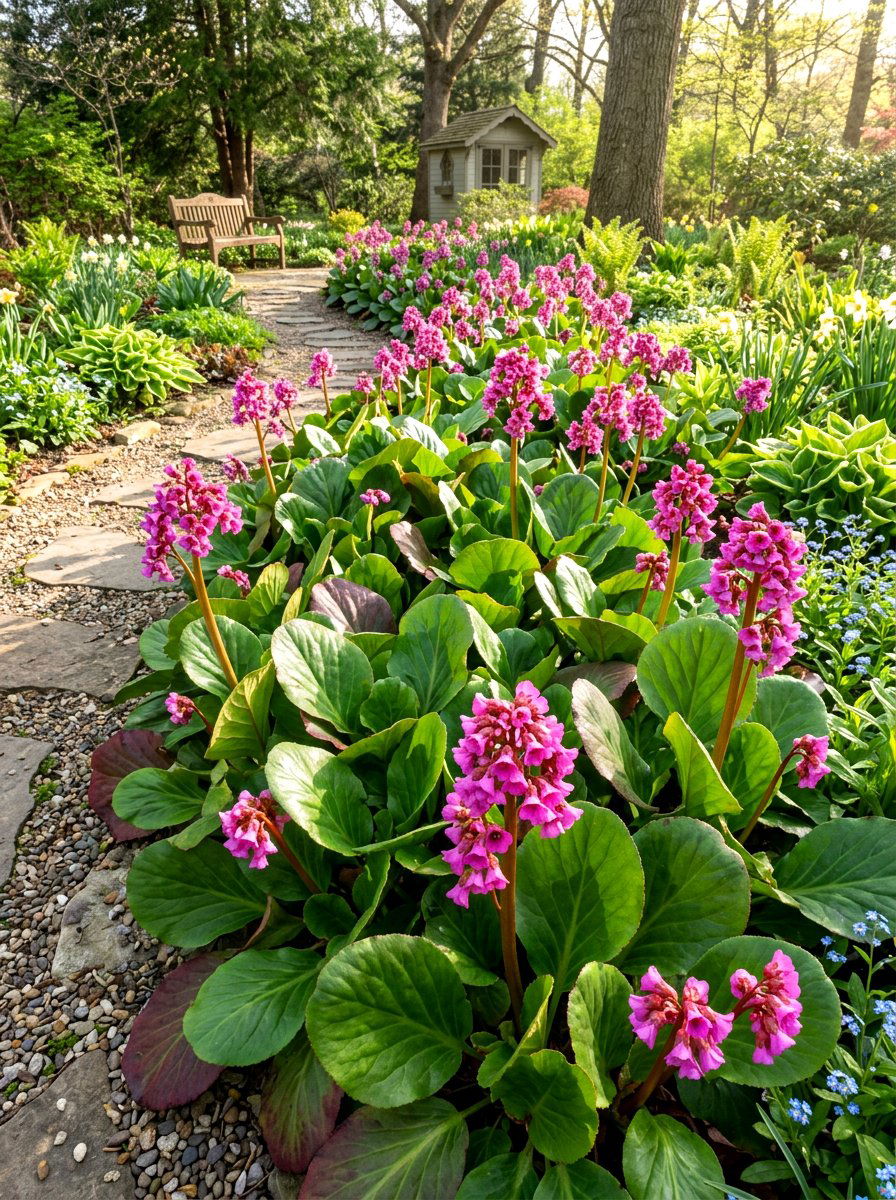
Bergenia is a hardworking perennial known for its large, leathery leaves that often turn a beautiful bronze or purple in the winter. In early spring, it sends up spikes of pretty pink or white flowers. The common name "Pig Squeak" comes from the sound the leaves make when rubbed together. This plant is an excellent choice for groundcover in part shade and is very effective at suppressing weeds. This design idea focuses on bold texture and year-round interest. It looks great when planted along the edge of a patio or used to soften the lines of a concrete walkway or a stone retaining wall.
25. Siberian Bugloss Border
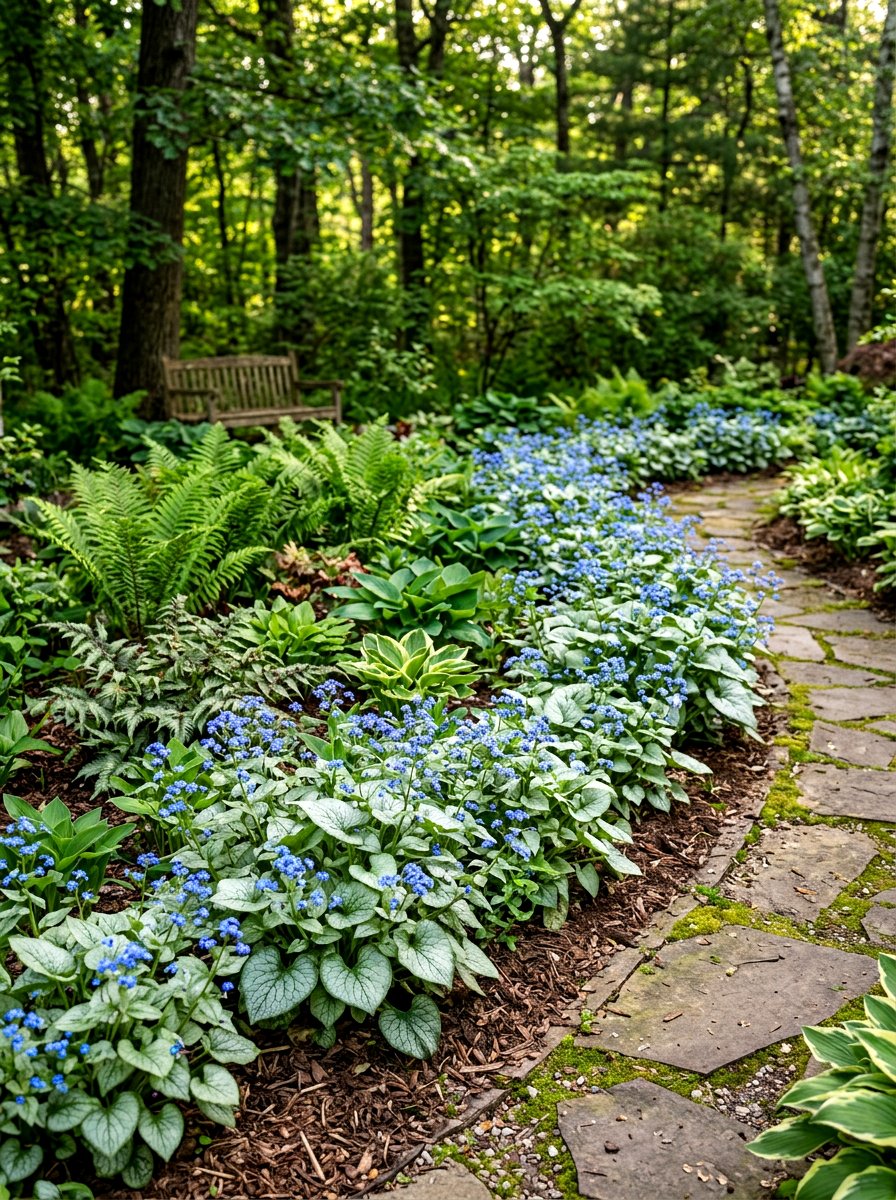
Brunnera, or Siberian Bugloss, is a shade-loving perennial that is prized for its heart-shaped leaves and tiny blue flowers that look like forget-me-nots. Many varieties feature stunning silver variegation on the foliage, which acts like a light in a dark garden corner. This design is all about leaf texture and subtle beauty. Even after the spring flowers are gone, the large, metallic leaves remain a focal point throughout the summer. It pairs beautifully with ferns and hellebores to create a lush, woodland-style bed. It is a slow-growing and well-behaved plant that adds a touch of class and sophistication to any landscape design.
26. Wild Columbine Garden
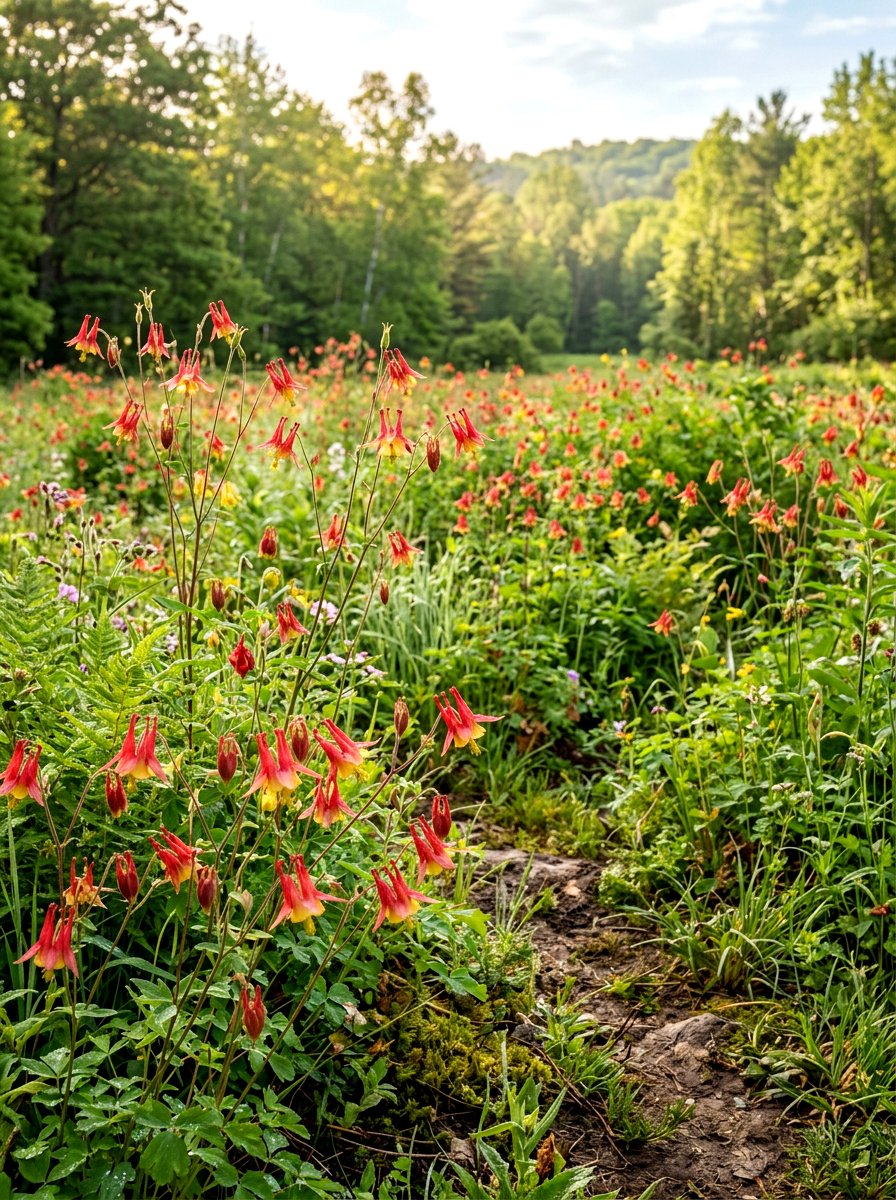
Columbine is a whimsical perennial that features unique, spurred flowers that seem to float above the delicate green foliage. The native red and yellow variety is a favorite for attracting hummingbirds early in the season. There are also many hybrids available in almost every color of the rainbow. This design idea is perfect for a naturalistic or woodland garden where you want a bit of airy movement. Columbines are short-lived but often self-seed, allowing them to wander through the garden in a charming and organic way. They are easy to grow and add a sense of wild, untamed beauty to your early spring flower beds.
27. Giant Allium Cluster
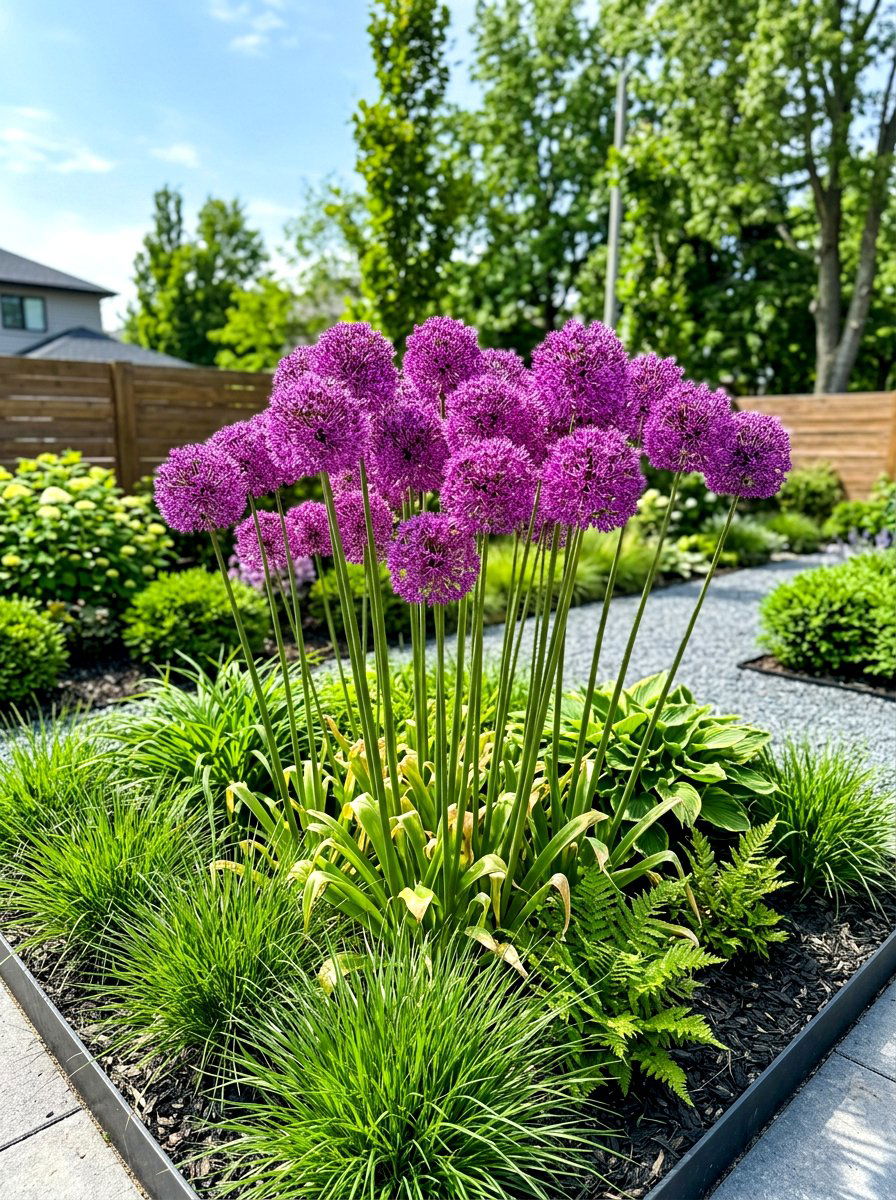
While many alliums bloom in late spring or early summer, some varieties start their show earlier. These "ornamental onions" feature large, perfectly round globes of purple flowers on tall, sturdy stems. They add a fun, Dr. Seuss-like element to the garden that always sparks conversation. This design focuses on verticality and geometric shapes. Planting them in clusters between other perennials helps hide their foliage, which can start to yellow as the flowers reach their peak. They are completely deer-resistant and make excellent dried flowers later in the year. This idea is perfect for a modern or contemporary landscape that values structure and bold forms.
28. Pink Camellia Shrub
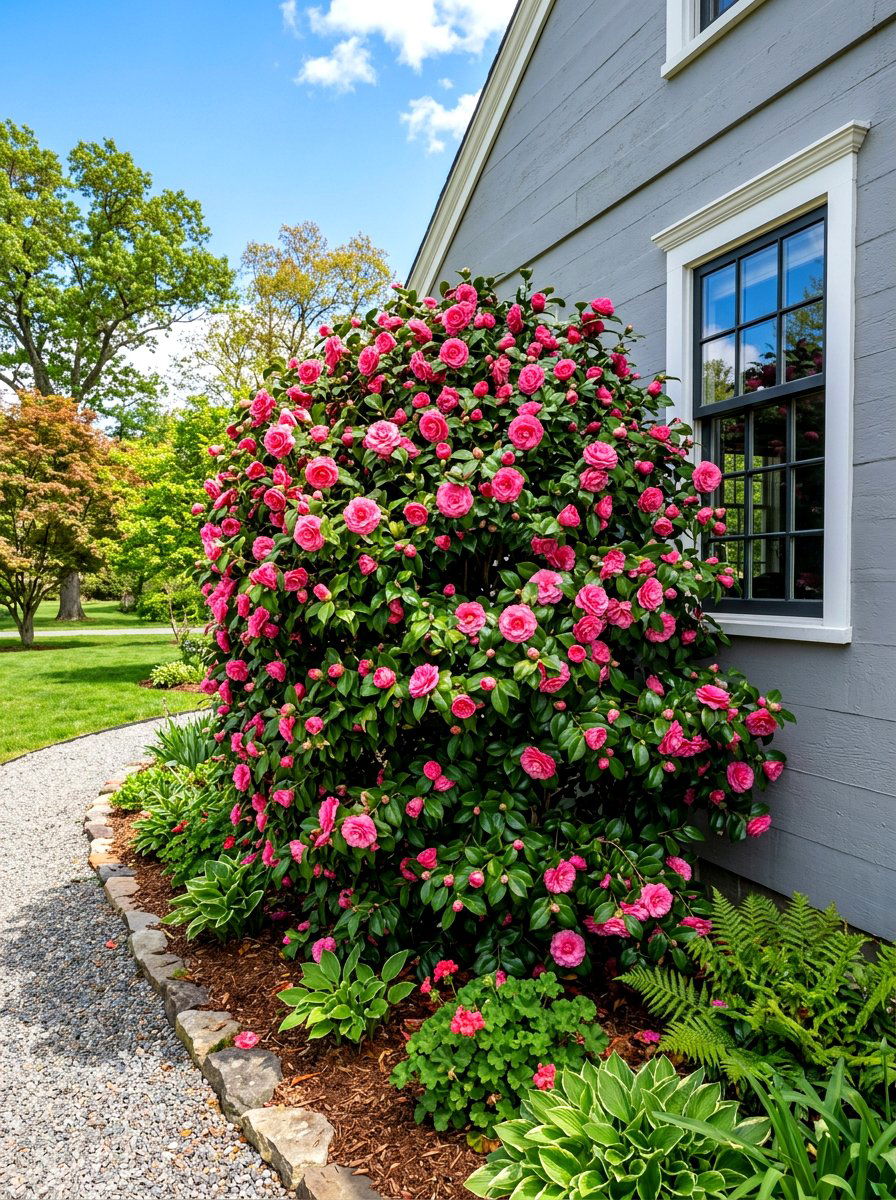
In many regions, camellias are the stars of the early spring garden. These evergreen shrubs produce large, rose-like flowers in shades of pink, white, and red. They provide a massive amount of color and structure to the landscape when most other plants are still waking up. This design idea uses the camellia as a foundational element or a backdrop for smaller spring bulbs. Their glossy green leaves look beautiful year-round, making them a practical choice for curb appeal. Planting them near a window allows you to enjoy the blooms from inside your warm home while the weather is still a bit chilly outside.
29. Sweet Violet Patch
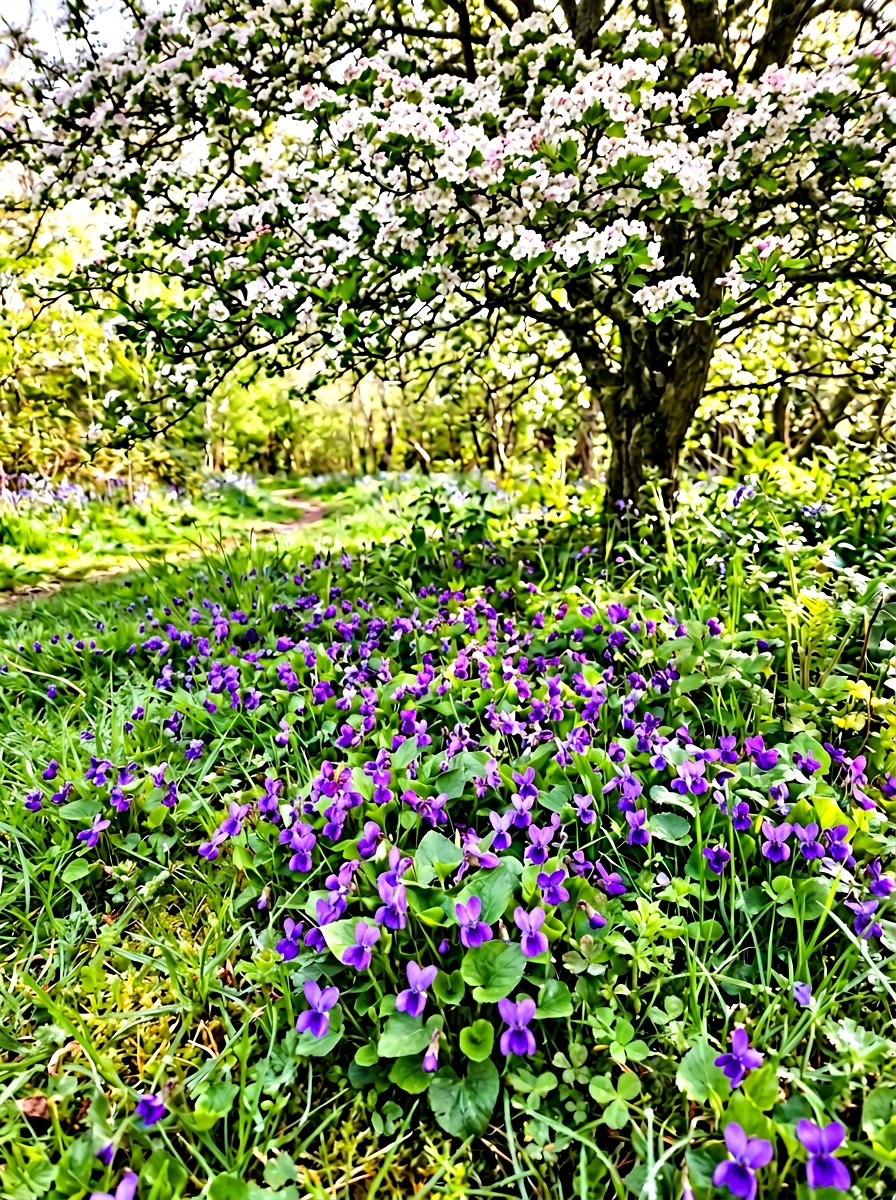
Sweet violets are a nostalgic and charming addition to any spring garden. These low-growing perennials produce fragrant purple or white flowers that are often hidden among their heart-shaped leaves. This design is all about the little things — the scent and the delicate beauty that requires you to slow down. They are perfect for naturalizing in a lawn, under a hedge, or along a shady path. Violets are very easy to grow and will spread gently to form a lush green carpet. They represent the simple joys of gardening and have been a favorite in cottage gardens for hundreds of years for good reason.
30. Lungwort Pulmonaria Bed
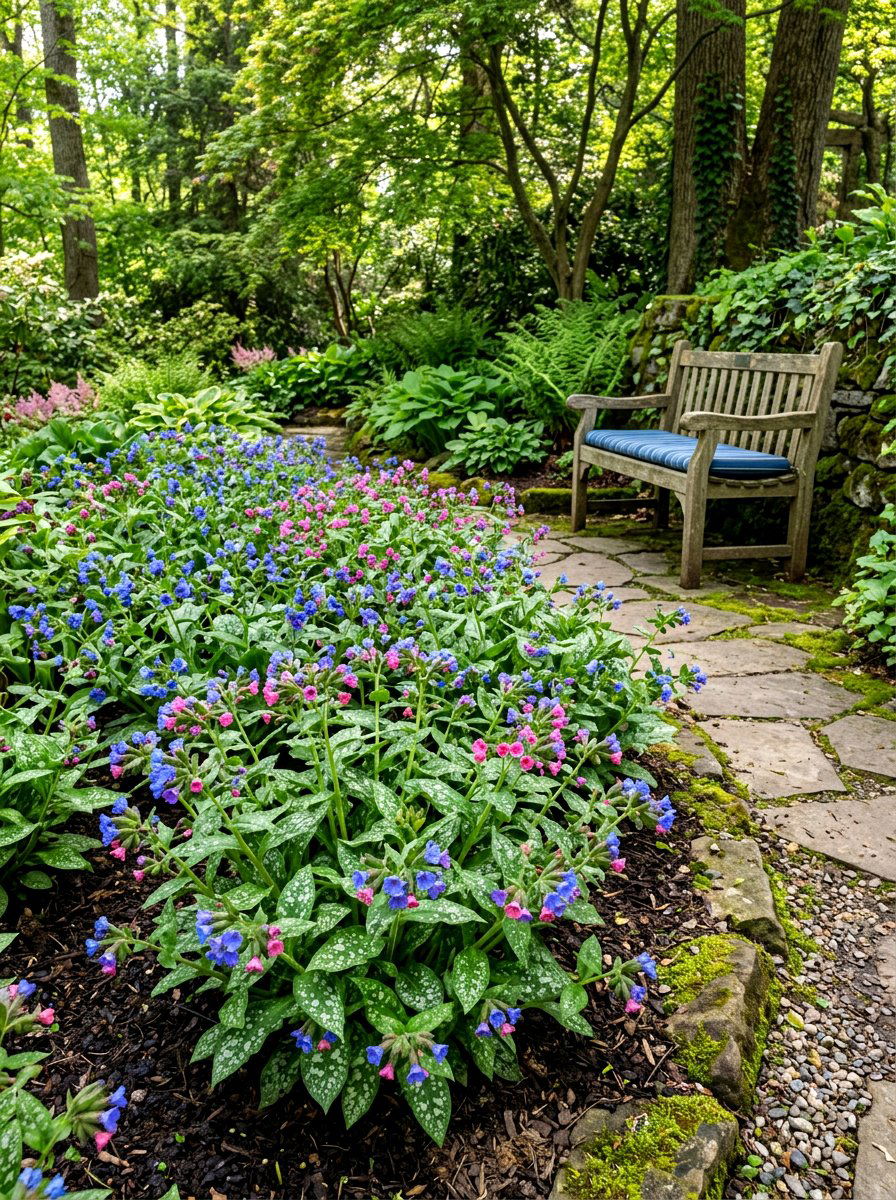
Lungwort is a fantastic early spring perennial that features spotted or silver leaves and clusters of flowers that often change color from pink to blue. It is one of the best plants for dry shade and is very resistant to deer and rabbits. This design idea focuses on the transition of color and the interest of the foliage. It works beautifully as a groundcover under large trees or mixed with other shade-lovers like primroses. The fuzzy leaves add a unique tactile element to the garden. It is a tough, reliable plant that provides a lot of visual value for very little effort or maintenance.
Conclusion:
Planning and planting early spring flower beds is a rewarding investment that pays off every year with a spectacular show of color and life. By choosing a mix of bulbs, perennials, and hardy shrubs, you can create a garden that evolves and surprises you throughout the season. Whether you are aiming for the bold impact of red tulips or the quiet elegance of white snowdrops, these ideas provide a solid foundation for your landscape. Remember to consider the specific light and soil needs of each plant to ensure they thrive. Your garden is a reflection of your personal style and a gift to the neighborhood.

Related posts: