Combining the structural permanence of evergreens with the lush, seasonal drama of hydrangeas creates a landscape that feels intentional and vibrant all year long. Many homeowners struggle with gardens that look barren in winter, but adding coniferous backdrops ensures your outdoor space maintains its architectural integrity even when blooms fade. Hydrangeas offer a spectacular burst of color and soft texture that beautifully contrasts with the rigid, deep green needles of evergreens. This specific pairing is a favorite for viral Pinterest boards because it balances formal structure with romantic, cottage-style abundance. Whether you are designing a front yard or a backyard retreat, these two plant families provide the ultimate foundation for a professional, high-end look.
1. Front yard hydrangea and boxwood foundation
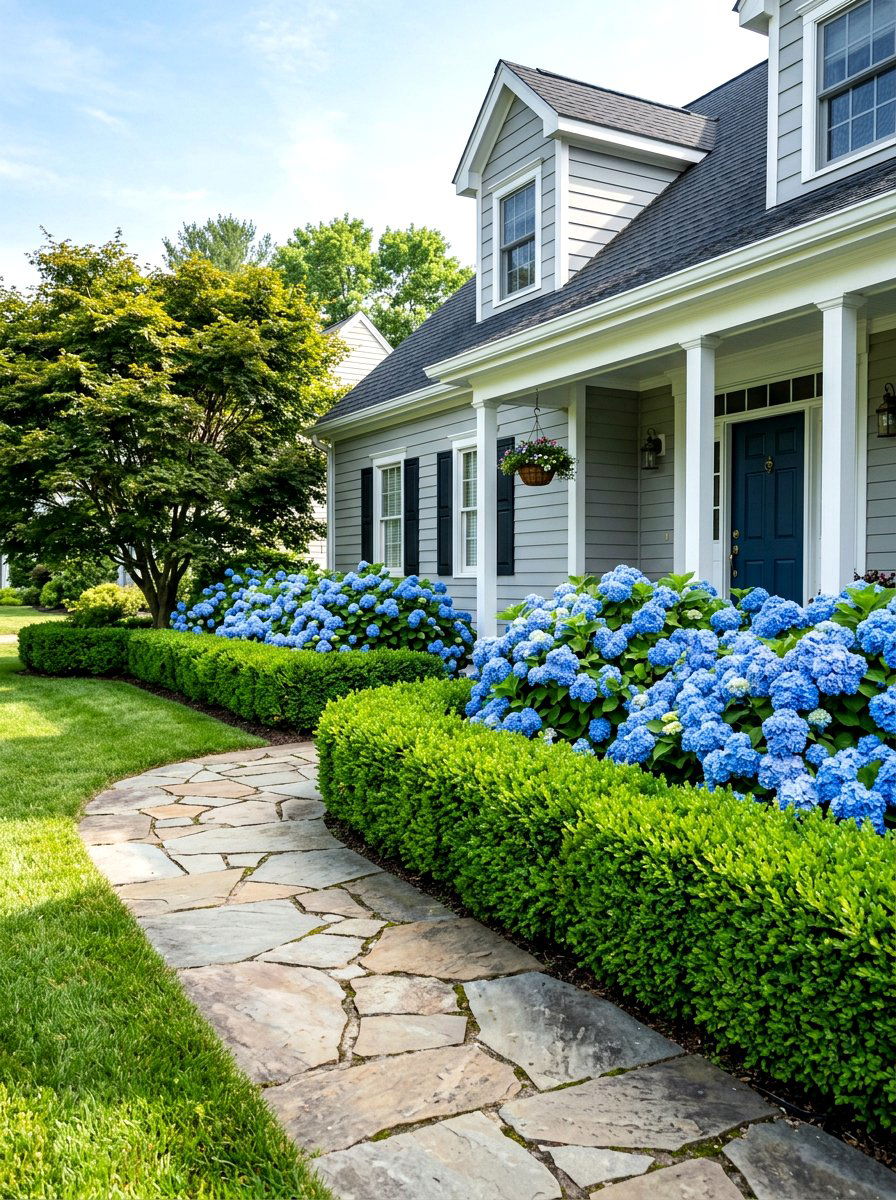
Creating a polished front yard starts with a reliable foundation planting that offers both structure and softness. Pairing classic boxwood shrubs with large-leaf hydrangeas is a timeless strategy for boosting curb appeal. You should plant the boxwoods in a low, neatly clipped row along the edge of your walkway or house base. This creates a permanent green frame that stays vibrant through every season. Behind this green border, place a row of mophead hydrangeas that will explode with blue or pink blooms during the summer months. The rigid, small leaves of the boxwood provide a perfect visual anchor for the billowy, oversized flower heads of the hydrangea bushes.
2. Limelight hydrangea and arborvitae privacy screen
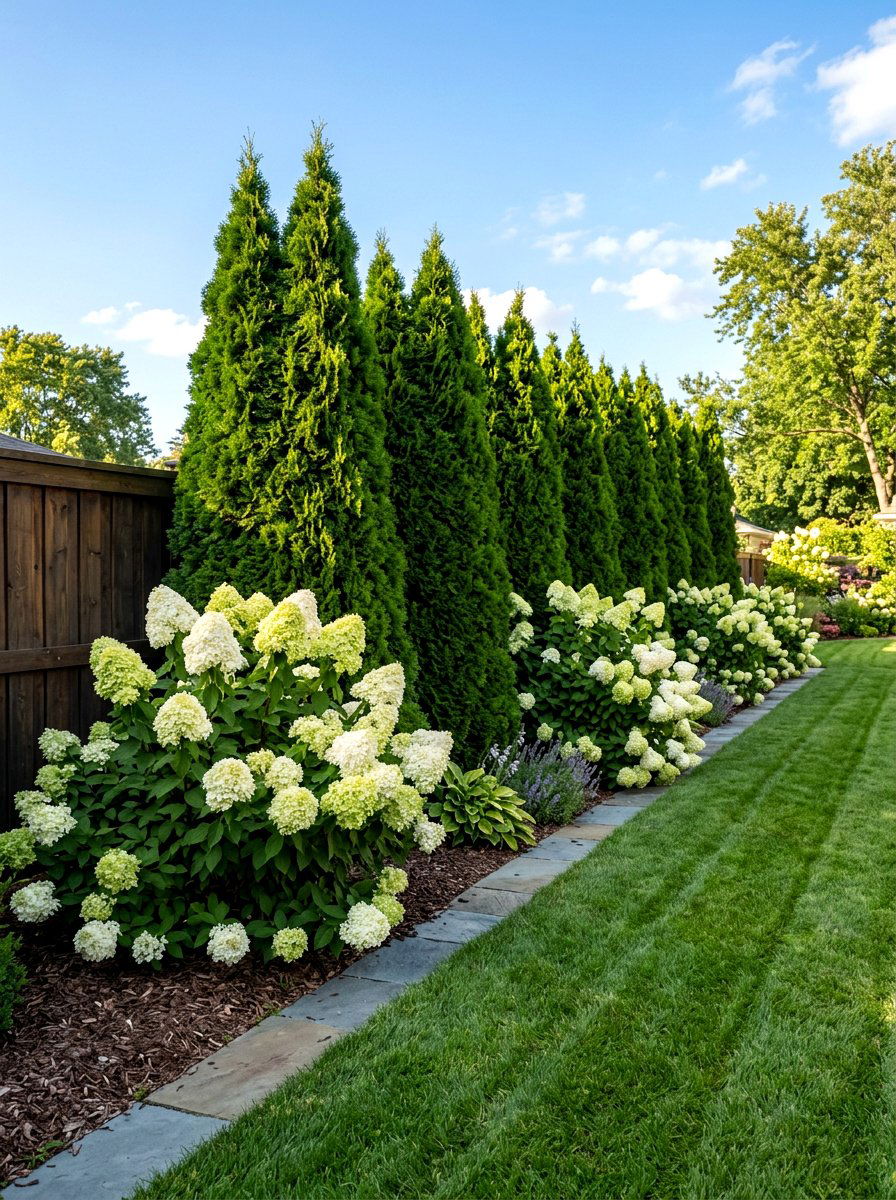
If you need a functional privacy screen that doesn’t look like a boring green wall, consider mixing Limelight hydrangeas with tall arborvitae. These evergreens grow narrow and upright, making them the perfect backdrop for a layered garden bed. By planting the hydrangeas in front of the arborvitae, you add a layer of luminous lime-green and white blooms that brighten the dark evergreen foliage. As the season progresses, these blooms turn a lovely dusty rose, providing a changing color palette against the consistent green background. This combination works exceptionally well along property lines where you want height and seasonal beauty without sacrificing your privacy during winter.
3. Blue hydrangea and yew hedge garden
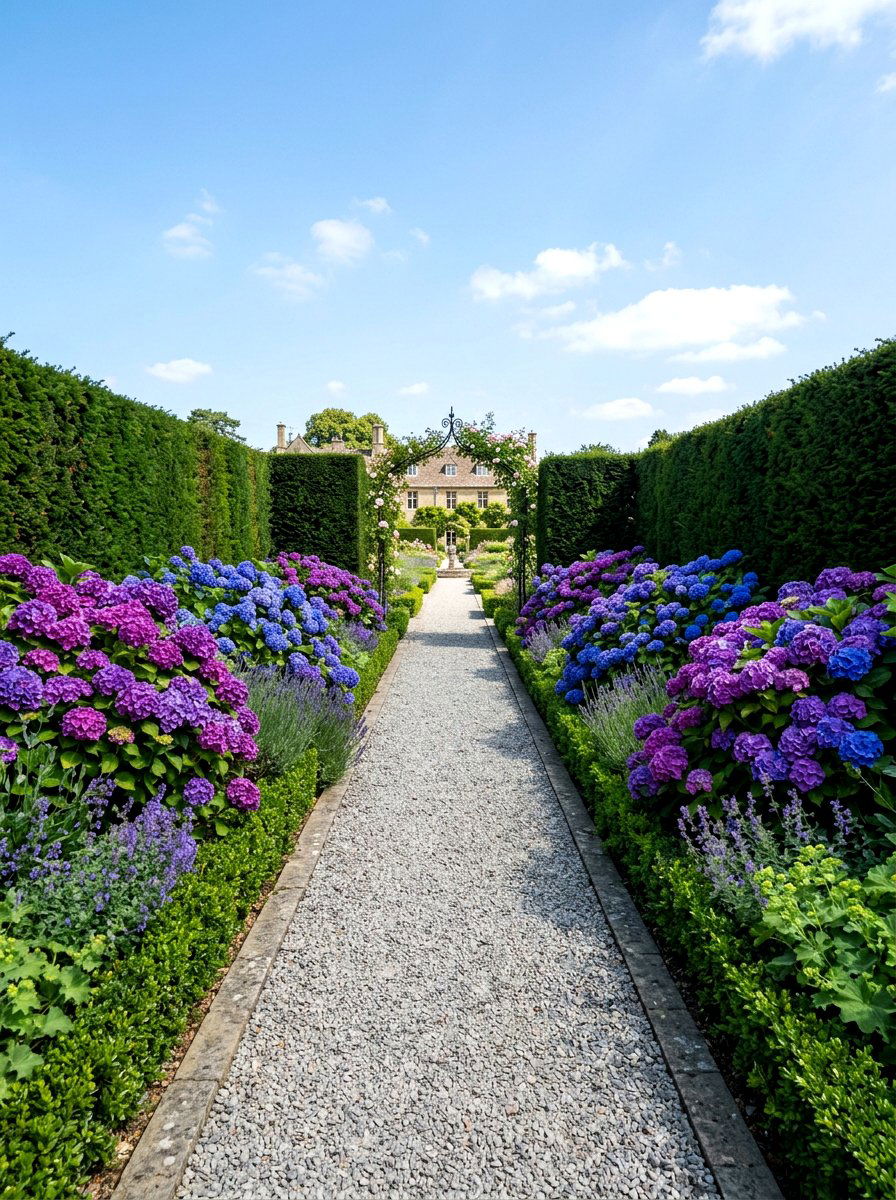
For a sophisticated look that mimics the elegance of European estates, try pairing vibrant blue hydrangeas with a dark yew hedge. Yews are known for their dense, needle-like foliage and deep green color, which makes blue flowers pop with incredible intensity. You can prune the yew hedge into a sharp, rectangular shape to create a formal aesthetic. The wild, sprawling nature of the blue hydrangeas provides a necessary softness that prevents the garden from looking too stiff. This design choice is particularly effective in partially shaded areas where both plants can thrive. Adding a layer of dark bark mulch will further emphasize the contrast between colors.
4. White hydrangea and holly bush border
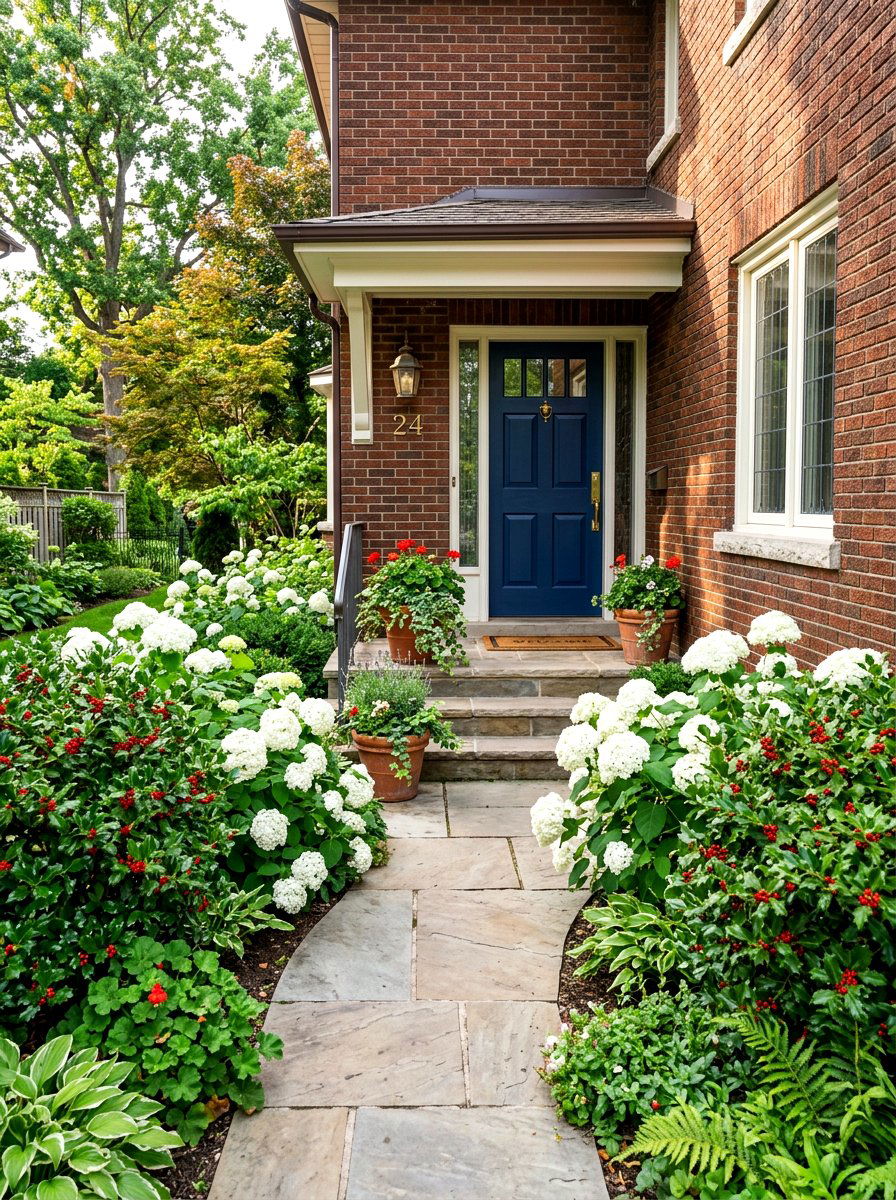
White hydrangeas are a staple for modern landscapes because they look clean and bright against almost any architectural style. When you plant them alongside glossy-leaved holly bushes, the result is a high-contrast border that feels crisp and professional. Hollies provide wonderful winter interest with their bright red berries, ensuring your garden remains attractive even after the hydrangea leaves have fallen. During the summer, the white blooms reflect light, making the entire garden appear larger and more inviting. This pairing is ideal for side yards or entryways where you want a low-maintenance yet high-impact design that looks great in photographs and real life.
5. Oakleaf hydrangea and spruce tree landscape
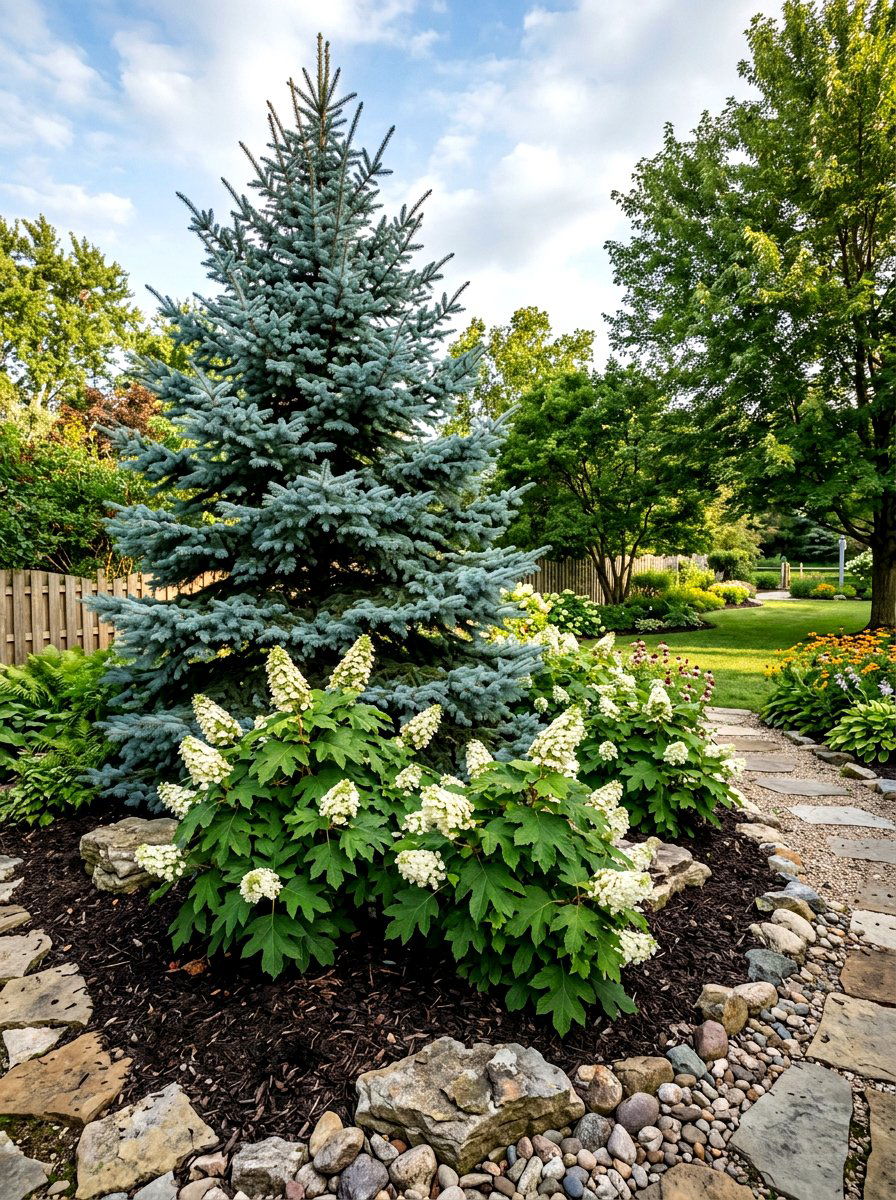
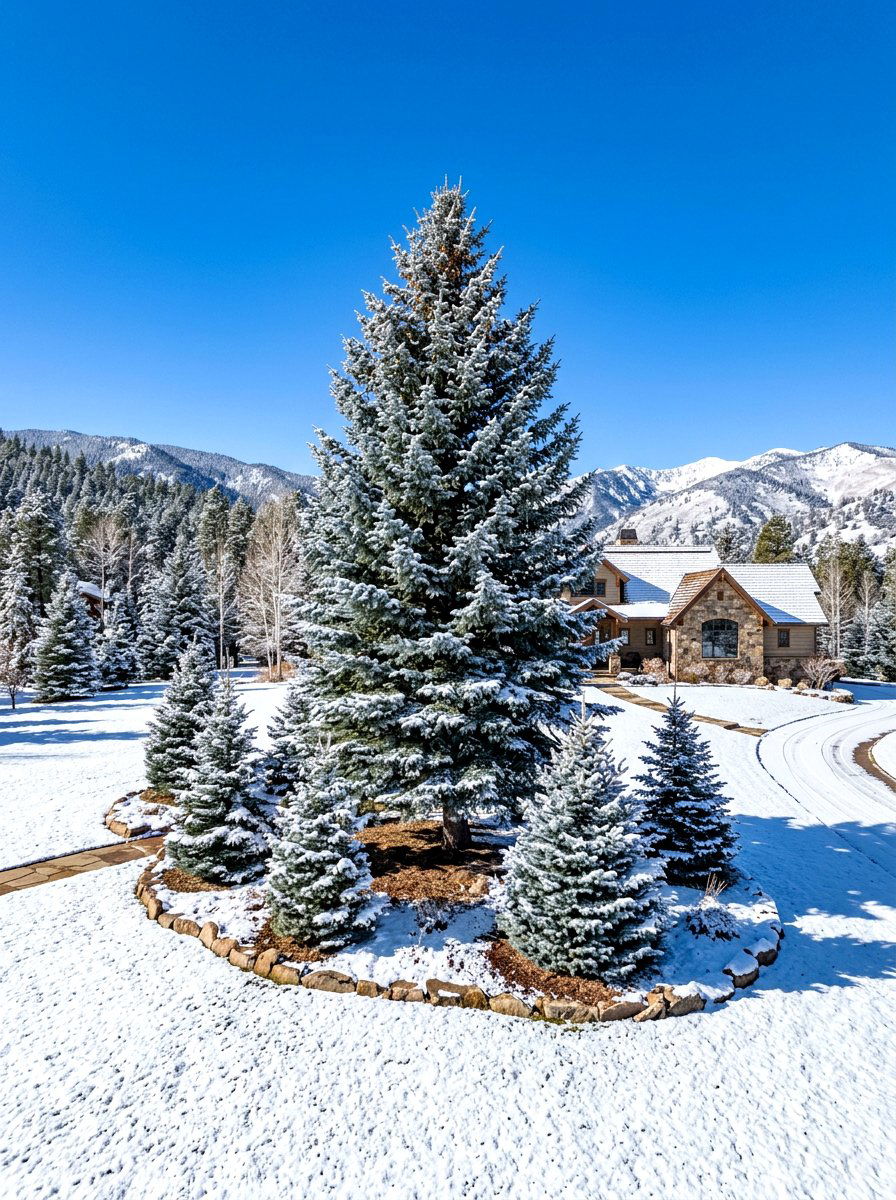
Oakleaf hydrangeas are unique because they offer stunning fall foliage and interesting peeling bark in addition to their cone-shaped white flowers. These look magnificent when placed near the silver-blue needles of a Colorado Blue Spruce or a Norway Spruce. The spruce provides a massive, sturdy presence that anchors the corner of a property or a large backyard bed. The oak-shaped leaves of the hydrangea add a coarse texture that complements the fine needles of the spruce perfectly. In the autumn, the hydrangea leaves turn deep shades of mahogany and purple, creating a breathtaking scene against the evergreen spruce’s consistent and cold blue-green tones.
6. Pink hydrangea and cedar mulch bed
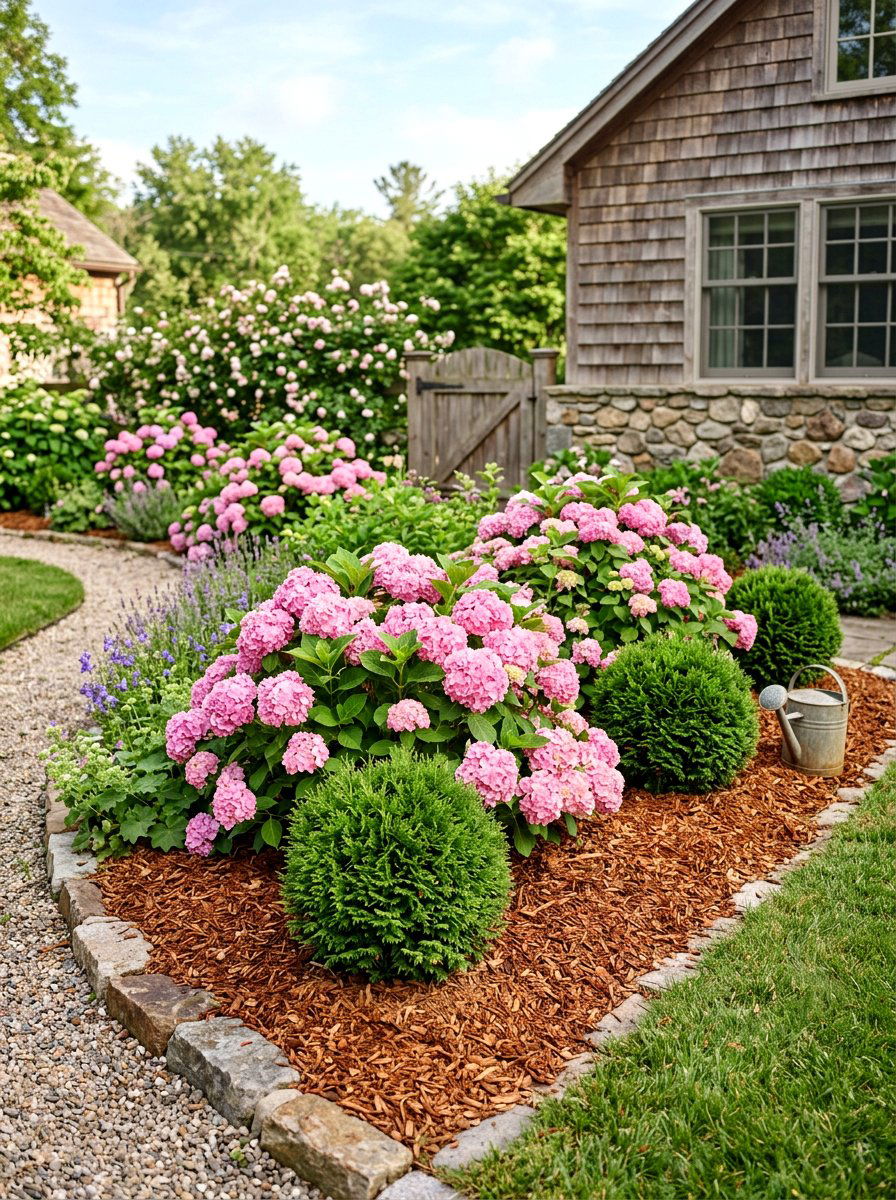
A pink hydrangea and cedar mulch bed offers a warm and inviting color story that fits beautifully in traditional cottage gardens. To achieve this look, choose reblooming pink varieties that will provide color from early summer through the first frost. Surround the base of these shrubs with a thick layer of reddish-brown cedar mulch to help retain moisture while enhancing the pink tones of the flowers. For evergreen structure, tuck in a few dwarf globose cedars or junipers at the corners of the bed. The scent of the cedar combined with the lush blooms creates a sensory experience that makes your backyard feel like a private sanctuary.
7. Hydrangea paniculata and juniper groundcover mix
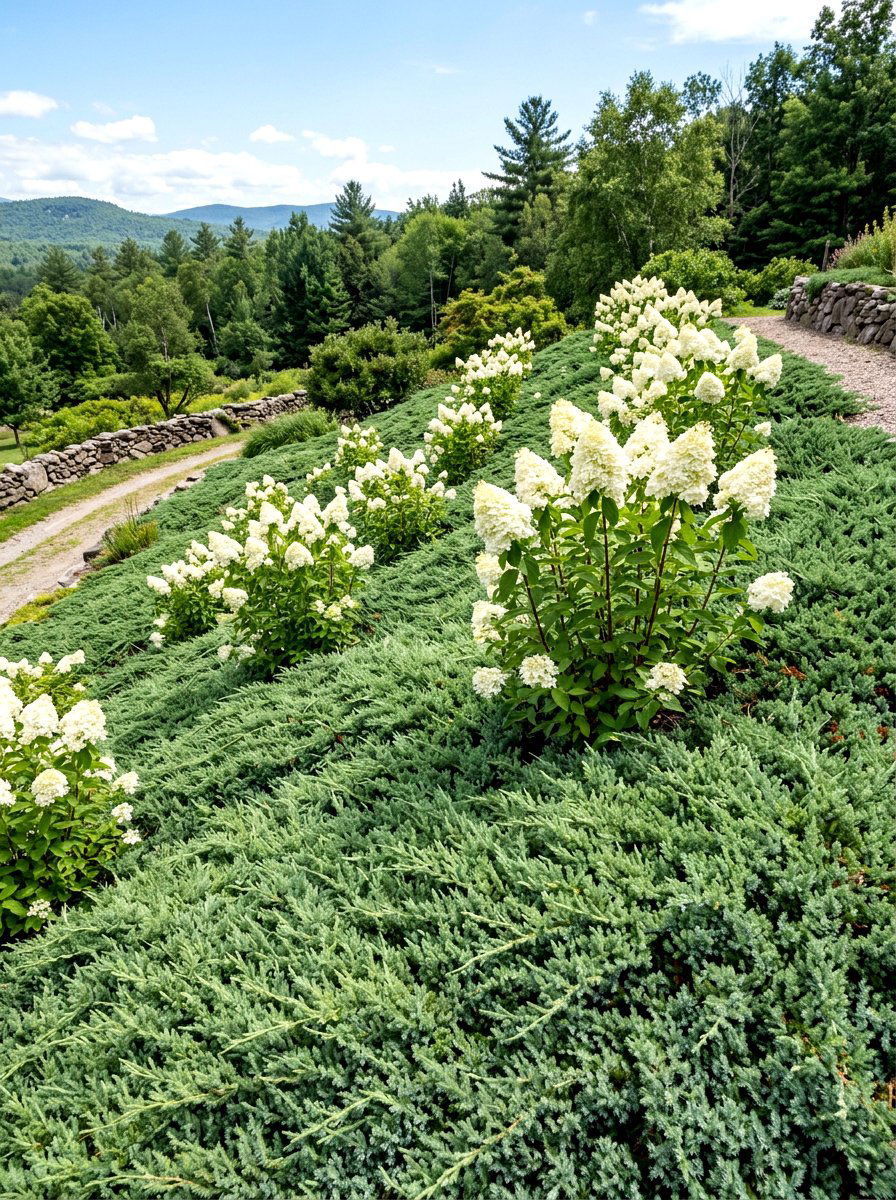
Landscaping a slope or a large open area requires plants that offer coverage and visual interest at different heights. Using panicle hydrangeas as the mid-level layer and creeping junipers as the groundcover is a brilliant solution for these tricky spots. The junipers will spread across the soil, preventing erosion and providing a silver-green carpet that stays green all year. The upright panicle hydrangeas rise above the juniper, producing massive flower clusters that sway gently in the breeze. This combination is incredibly hardy and can handle more sun than traditional mophead varieties, making it perfect for exposed areas of your landscape that need a durable design.
8. Dwarf hydrangea and boxwood sphere border
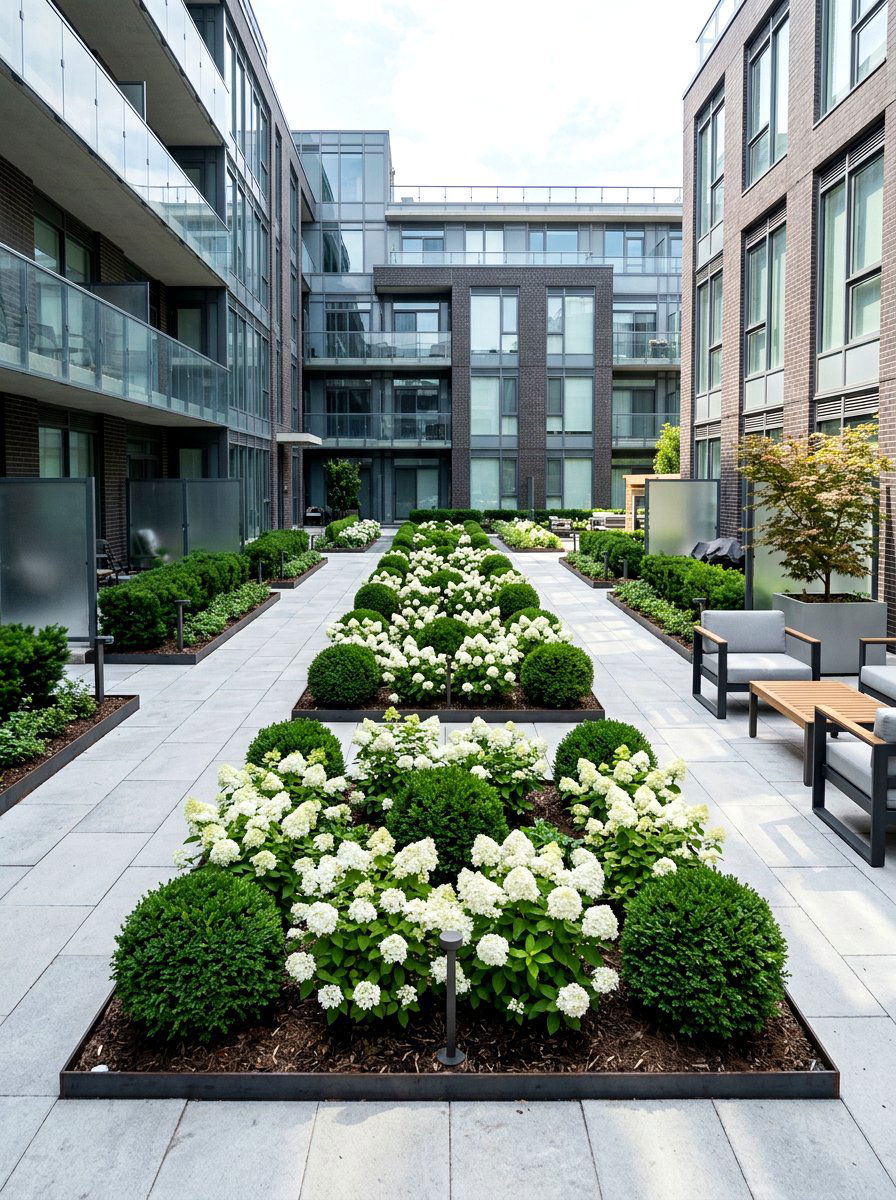
Small gardens or urban courtyards benefit greatly from compact plant varieties that don’t overwhelm the space. You can create a modern, geometric look by alternating dwarf hydrangeas with boxwood spheres. Prune your boxwoods into perfect rounds to act as structural "green balls" throughout the bed. In between each boxwood, plant a dwarf hydrangea like the Bobo or Little Lime variety. These stay small and tidy but still produce an abundance of flowers. This repetitive pattern creates a sense of rhythm and order that is very pleasing to the eye. It is a low-maintenance way to achieve a high-end designer look in a very limited footprint.
9. Climbing hydrangea and ivy stone wall
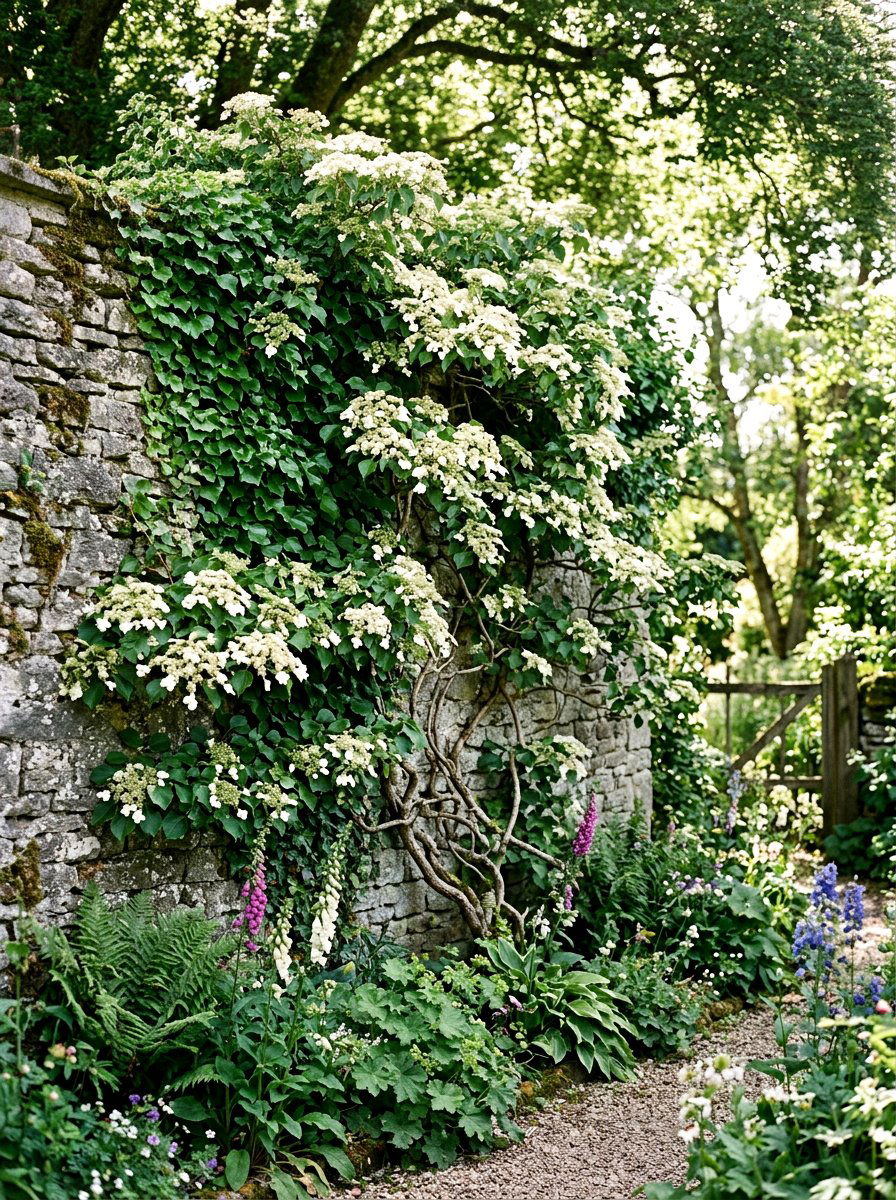
Transforming a bare stone wall or a wooden fence is easy when you use climbing hydrangeas paired with evergreen ivy. While the climbing hydrangea is deciduous, its thick, woody vines and peeling bark provide architectural interest during the winter months. The evergreen ivy ensures that the wall remains green even when the hydrangea is dormant. In late spring and summer, the hydrangea produces beautiful lacecap flowers that seem to float against the dark green ivy backdrop. This vertical garden idea is perfect for creating a lush, secret garden atmosphere in a side yard or behind a patio where ground space might be restricted.
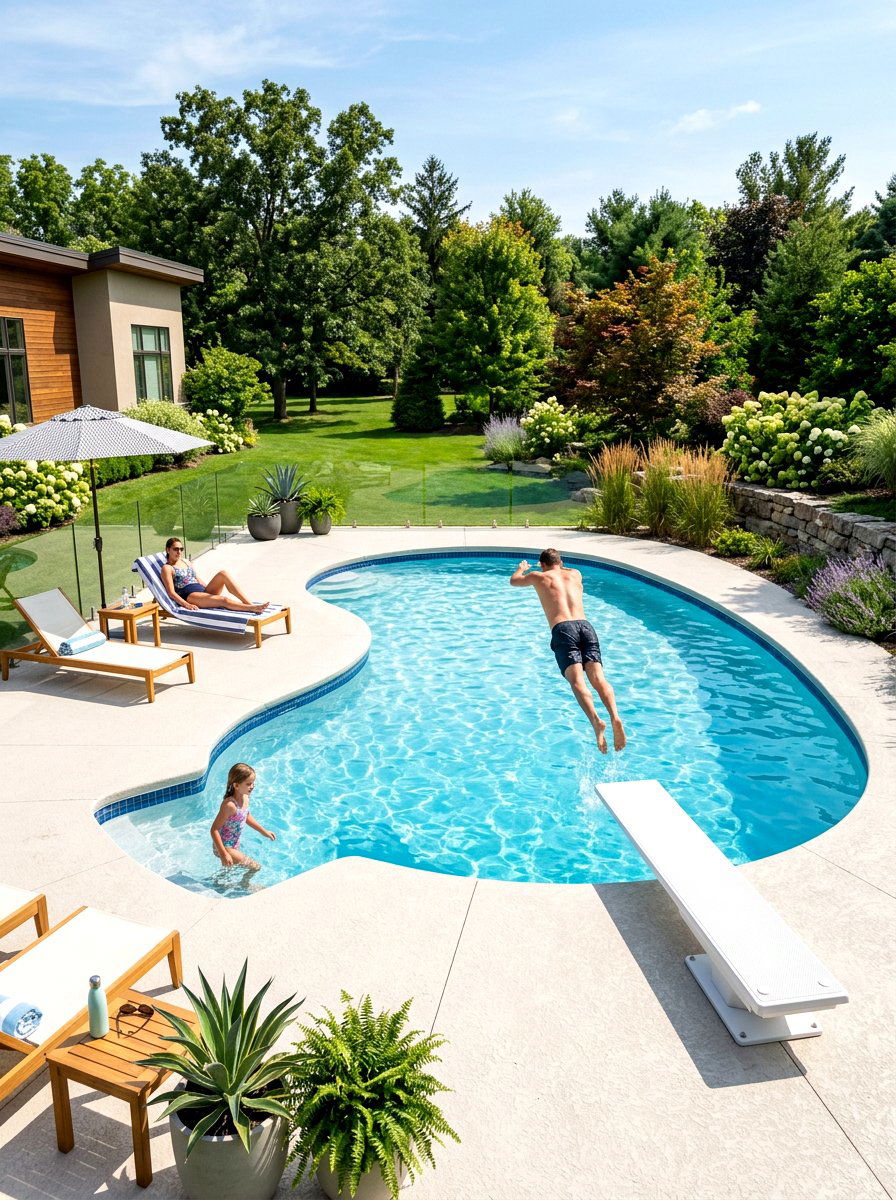
10. Annabelle hydrangea and pine tree shade garden
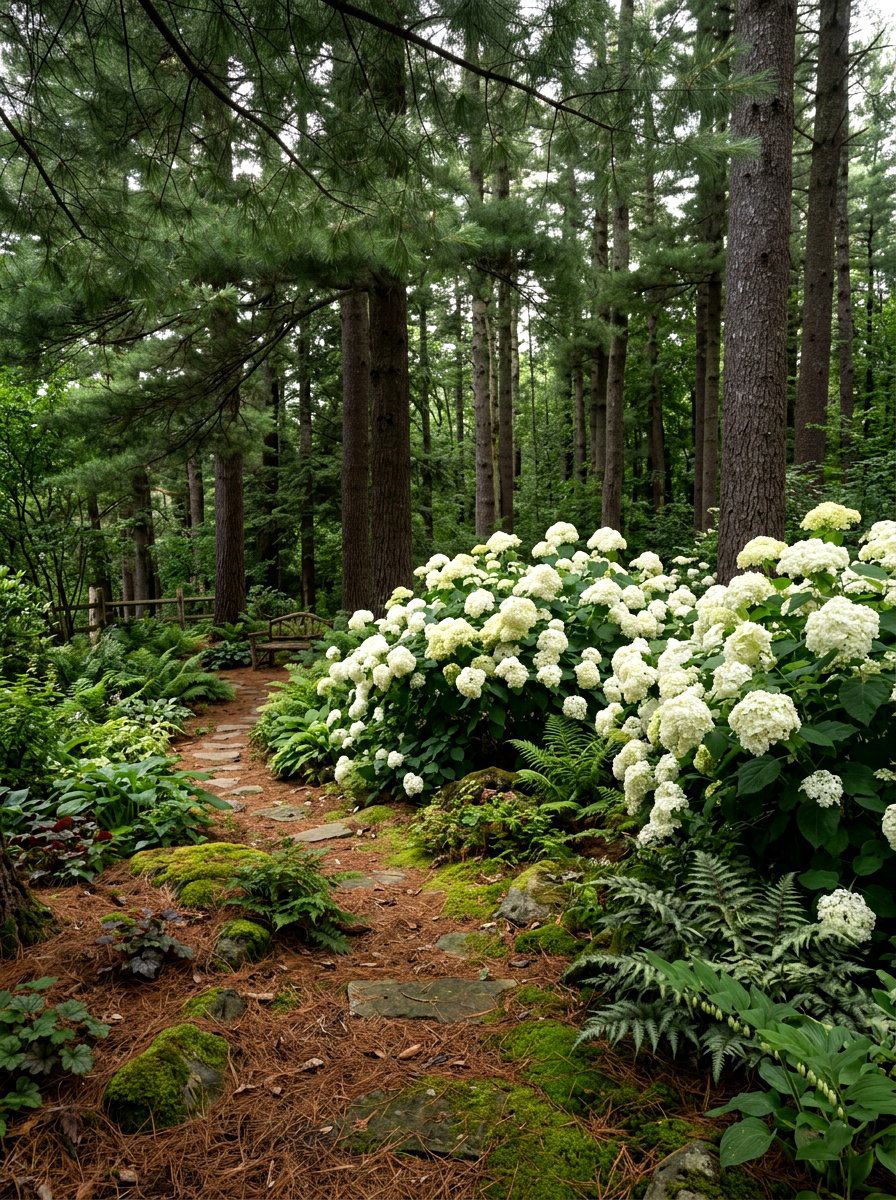
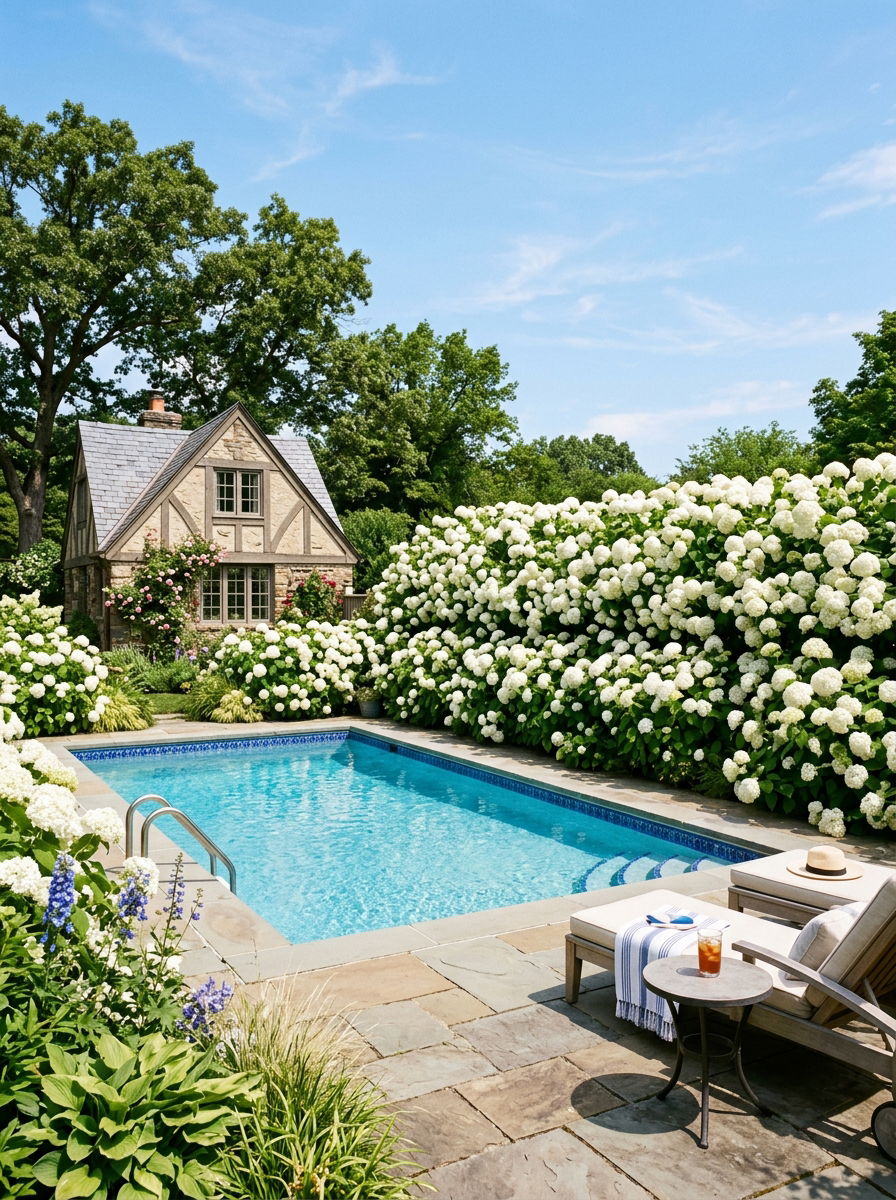
Annabelle hydrangeas are famous for their massive, snowball-like white blooms that can light up the darkest corners of a yard. They are the perfect choice for planting under the high canopy of mature pine trees. The acidic soil typically found beneath pines is ideal for hydrangeas, and the dappled shade protects the delicate white petals from scorching in the afternoon sun. The soft, wispy needles of the pine trees provide a delicate textural contrast to the large, round flower heads. This combination creates a serene, woodland-inspired environment that feels cool and refreshing during the height of a hot summer afternoon.
11. Panicle hydrangea and cypress corner bed
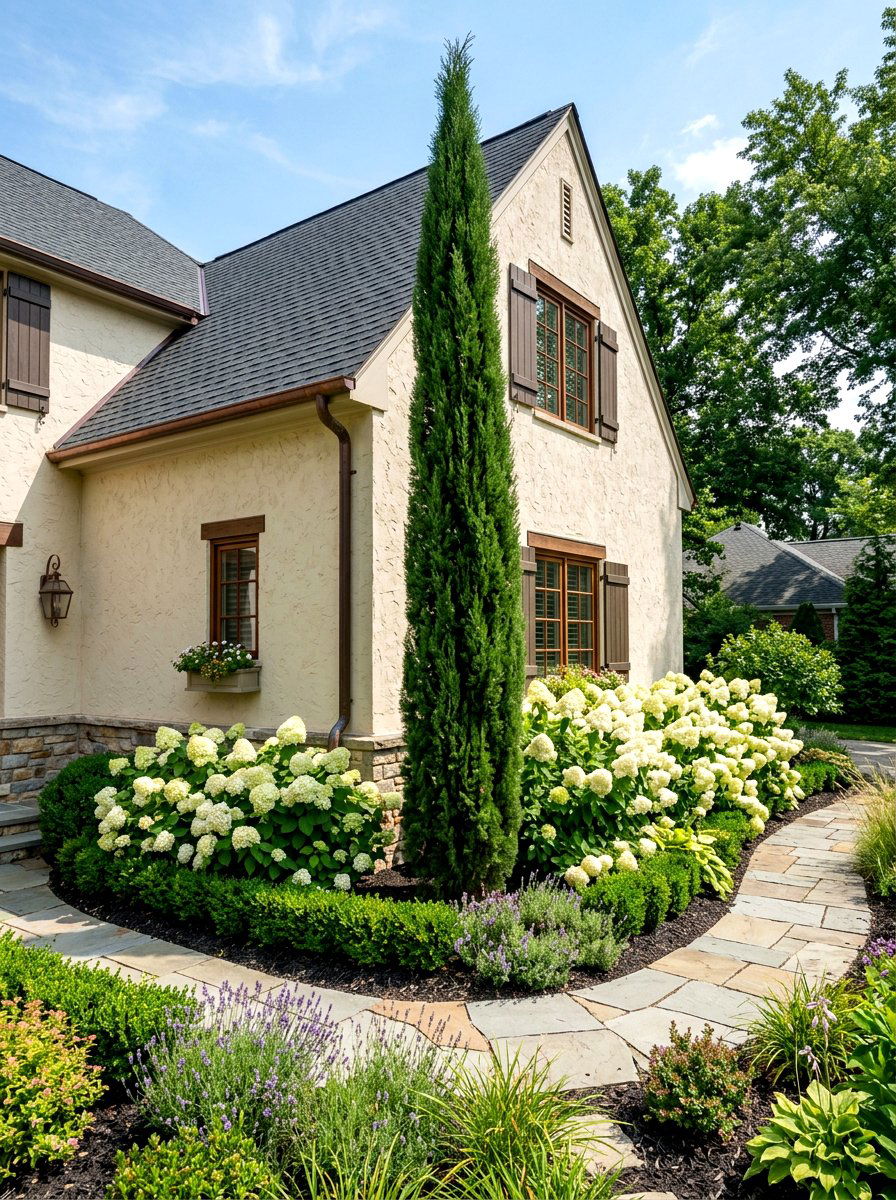
Corners are often neglected in landscape design, but a cypress and panicle hydrangea arrangement can turn a dull spot into a focal point. Use an upright, columnar cypress to provide height and a strong vertical line in the very back of the corner. Plant several panicle hydrangeas around the base of the cypress to create a tiered effect. The hydrangeas will fill out the mid-section of the bed with their lush foliage and heavy blooms. This setup is particularly effective for softening the hard angles of a house or a tall privacy fence. The golden-green foliage of some cypress varieties adds an extra layer of color.
12. Mountain hydrangea and fern evergreen mix
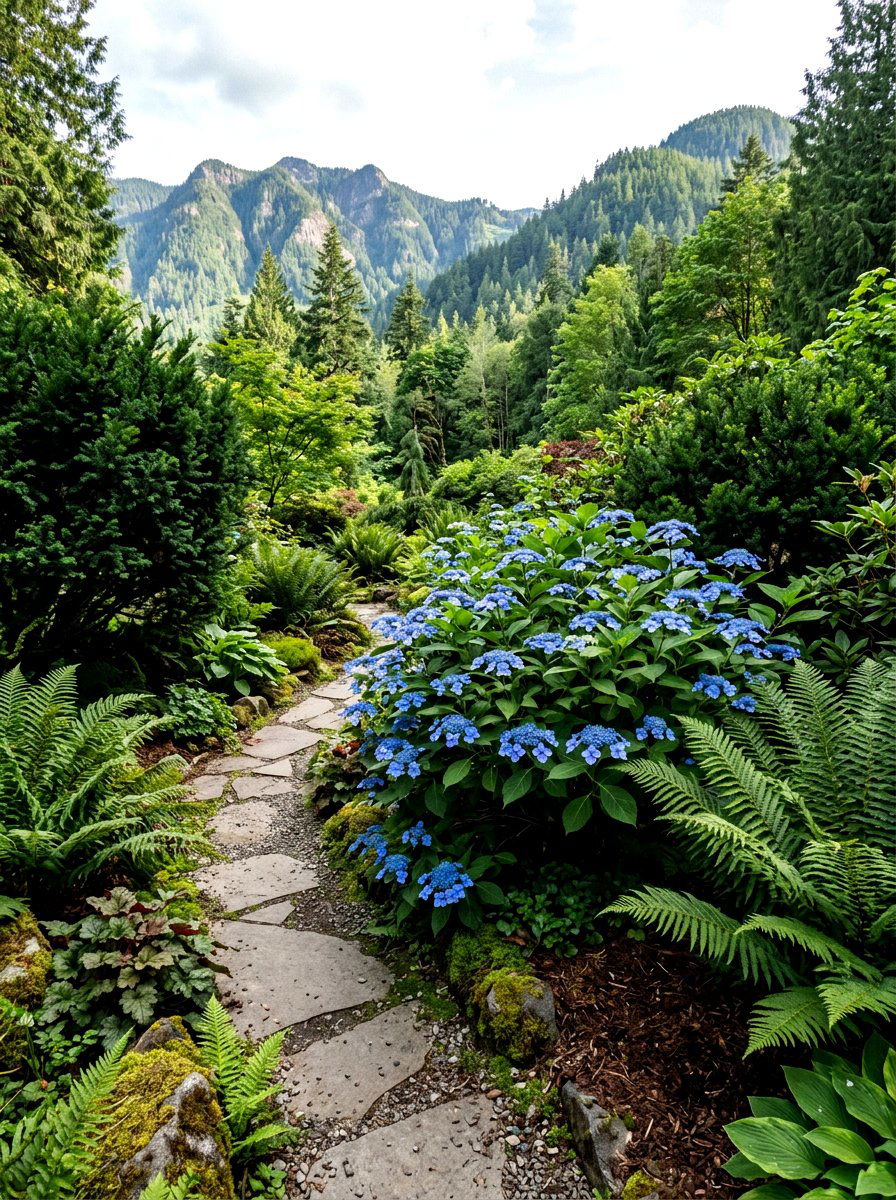
Mountain hydrangeas are known for their delicate lacecap flowers and their ability to thrive in cooler, more shaded environments. To create a lush, prehistoric-looking garden, pair these with evergreen ferns and low-growing conifers. The feathery texture of the ferns complements the intricate details of the lacecap blooms beautifully. Use a dark green yew or a dwarf hemlock to provide the necessary evergreen backbone for the bed. This combination feels very natural and organic, as if the plants have been growing together in a forest for years. It is an excellent choice for a north-facing garden or a shaded backyard retreat.
13. Bigleaf hydrangea and azalea garden layout
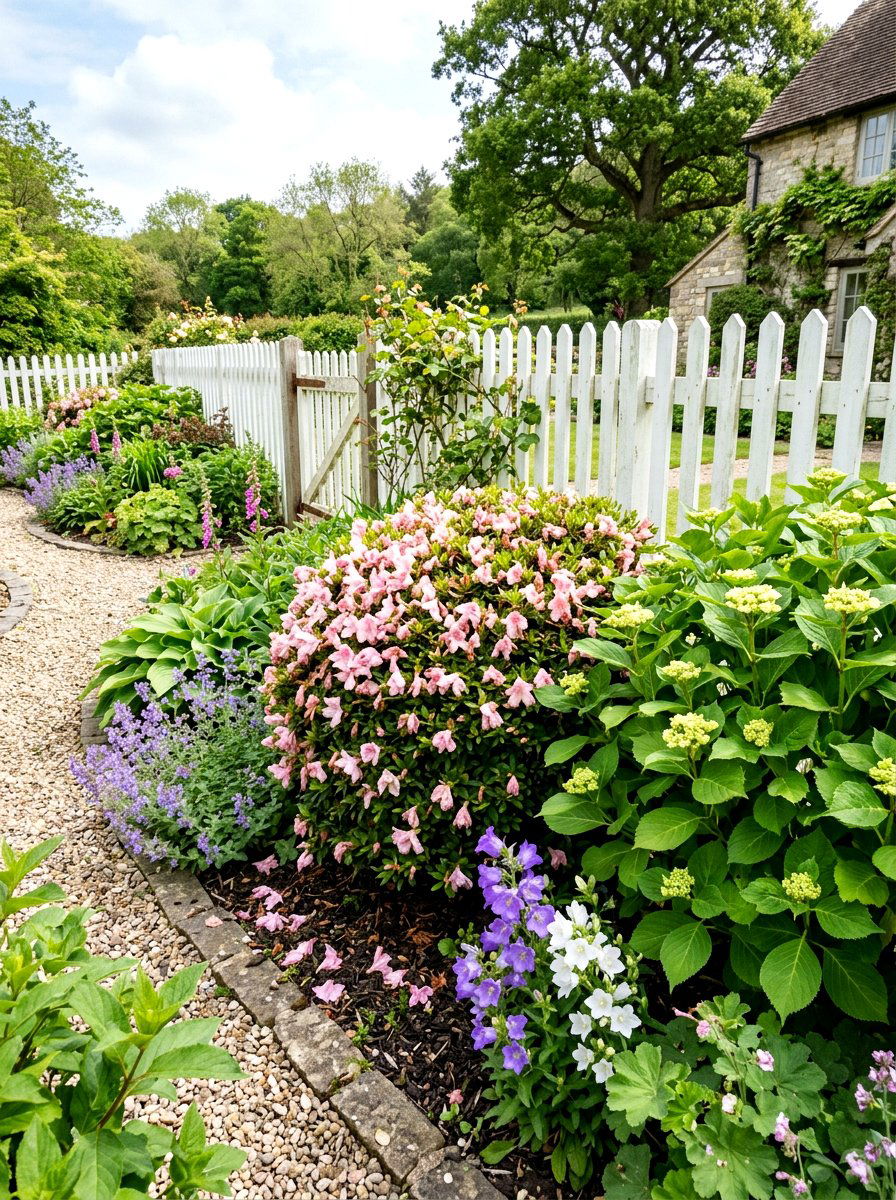
Azaleas and bigleaf hydrangeas are a match made in gardening heaven because they share similar soil and light requirements. By planting them together, you can ensure a long season of bloom in your garden. The azaleas will provide a spectacular show of color in the early spring while the hydrangeas are just starting to leaf out. Once the azaleas have finished blooming, their small, evergreen leaves provide a dense green backdrop for the massive summer flowers of the hydrangeas. This layered approach ensures that your garden bed never has a "dead" period during the growing season and remains green throughout the cold winter months.
14. Smooth hydrangea and wintercreeper edge
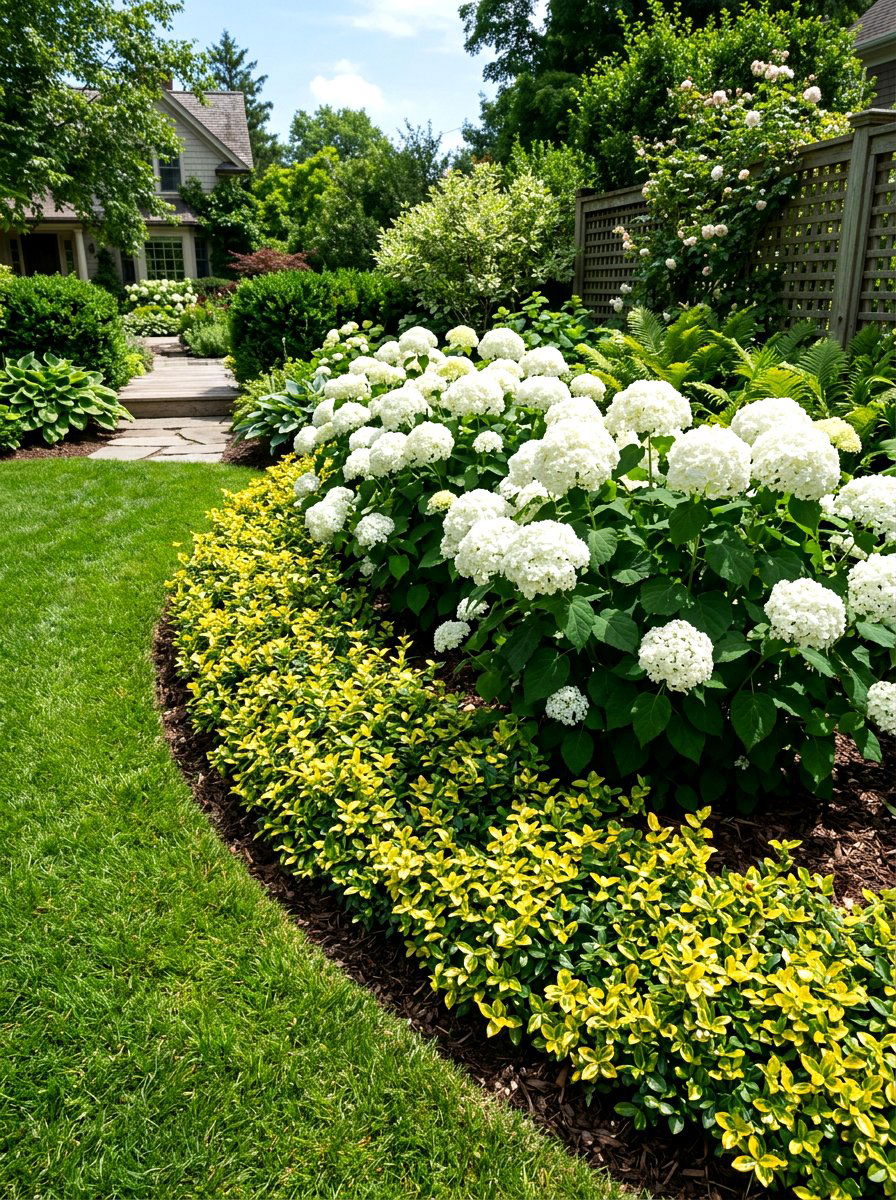
Smooth hydrangeas are incredibly hardy and produce reliable blooms year after year. To give them a finished look, use an evergreen groundcover like wintercreeper as an edging plant. Wintercreeper stays low to the ground and features variegated leaves in shades of green, gold, or silver. This variegation helps to brighten the base of the hydrangea shrubs and provides a clean transition between the garden bed and a lawn or walkway. The broad leaves of the smooth hydrangea contrast nicely with the small, waxy leaves of the wintercreeper. This is a great choice for homeowners who want a tidy, low-maintenance garden that still feels very lush.
15. Endless Summer hydrangea and rhododendron bed
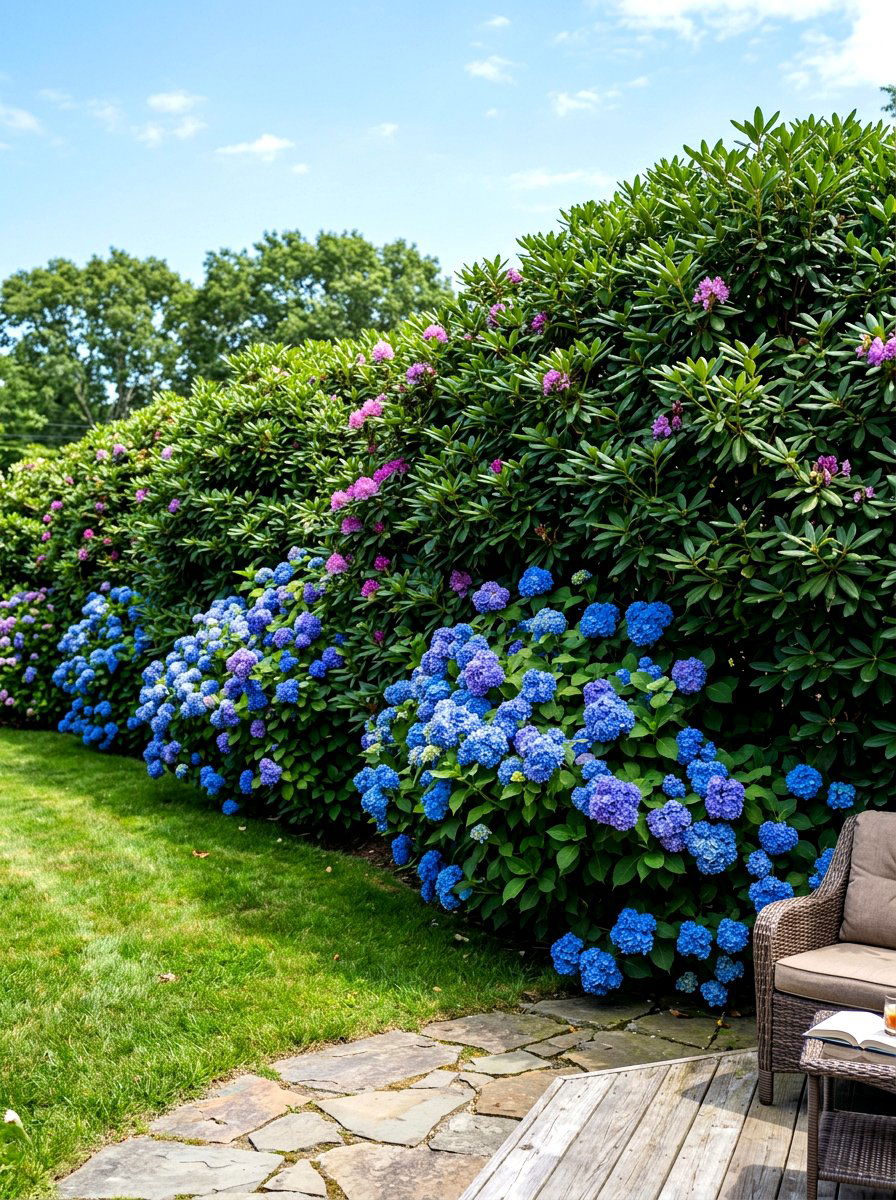
The Endless Summer series of hydrangeas changed the game by offering blooms on both old and new wood, ensuring flowers even after a harsh winter. Pairing these with large evergreen rhododendrons creates a massive wall of color and texture. Rhododendrons offer big, leathery leaves that stay green all winter and produce stunning clusters of flowers in late spring. As the rhododendron blooms fade, the Endless Summer hydrangeas take over the show with their blue or pink mopheads. This combination creates a very full, dense look that is perfect for filling large spaces in a backyard or along a tall foundation wall where you need significant volume.
16. Incrediball hydrangea and boxwood formal walkway
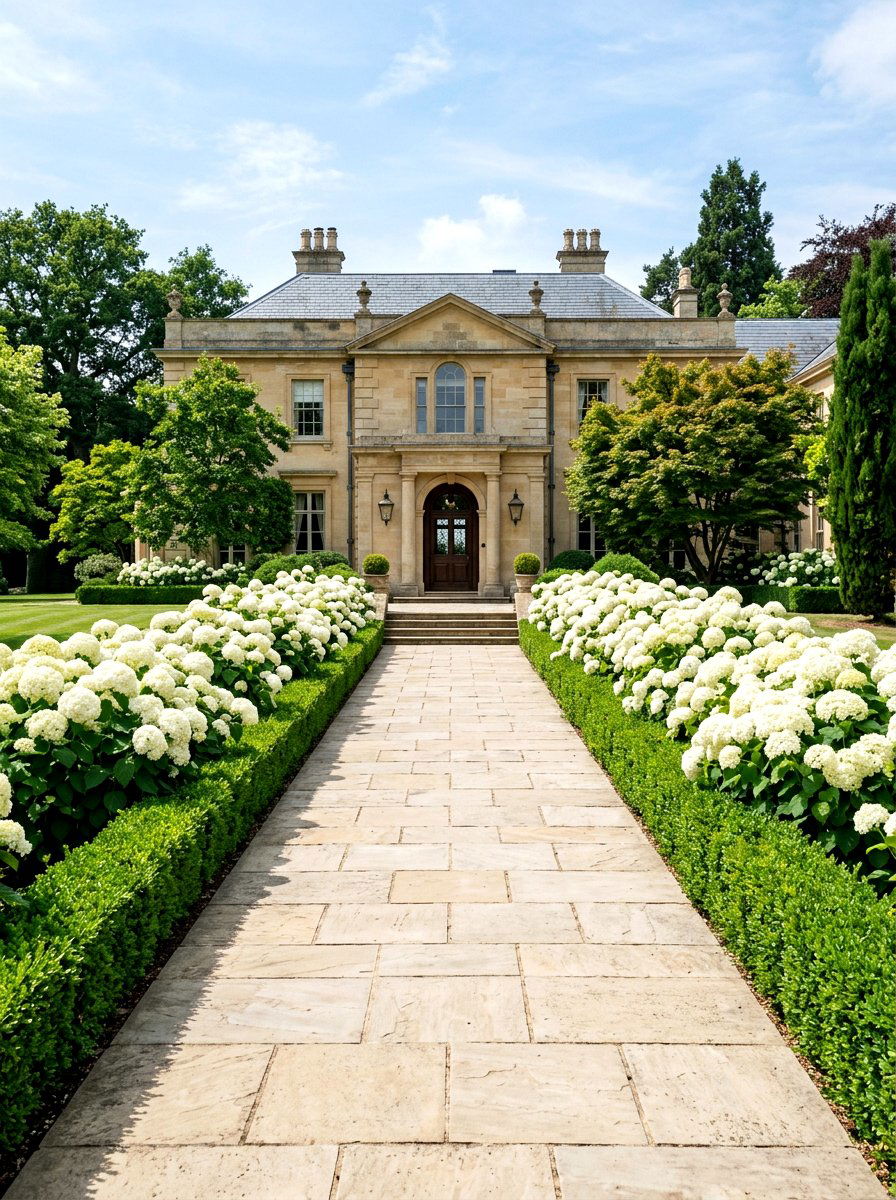
If you want to create a grand entrance for your home, nothing beats a formal walkway lined with Incrediball hydrangeas and boxwood. Incrediball hydrangeas are a beefed-up version of the Annabelle, featuring even larger blooms and much sturdier stems that won't flop over in the rain. Plant these in a straight row behind a low-clipped boxwood hedge. The contrast between the perfectly manicured boxwood and the giant, wild white flowers is breathtakingly elegant. This layout guides the eye toward the front door and creates a sense of luxury and order. It is a classic design that never goes out of style and works with many home architectures.
17. PeeGee hydrangea and emerald green arborvitae
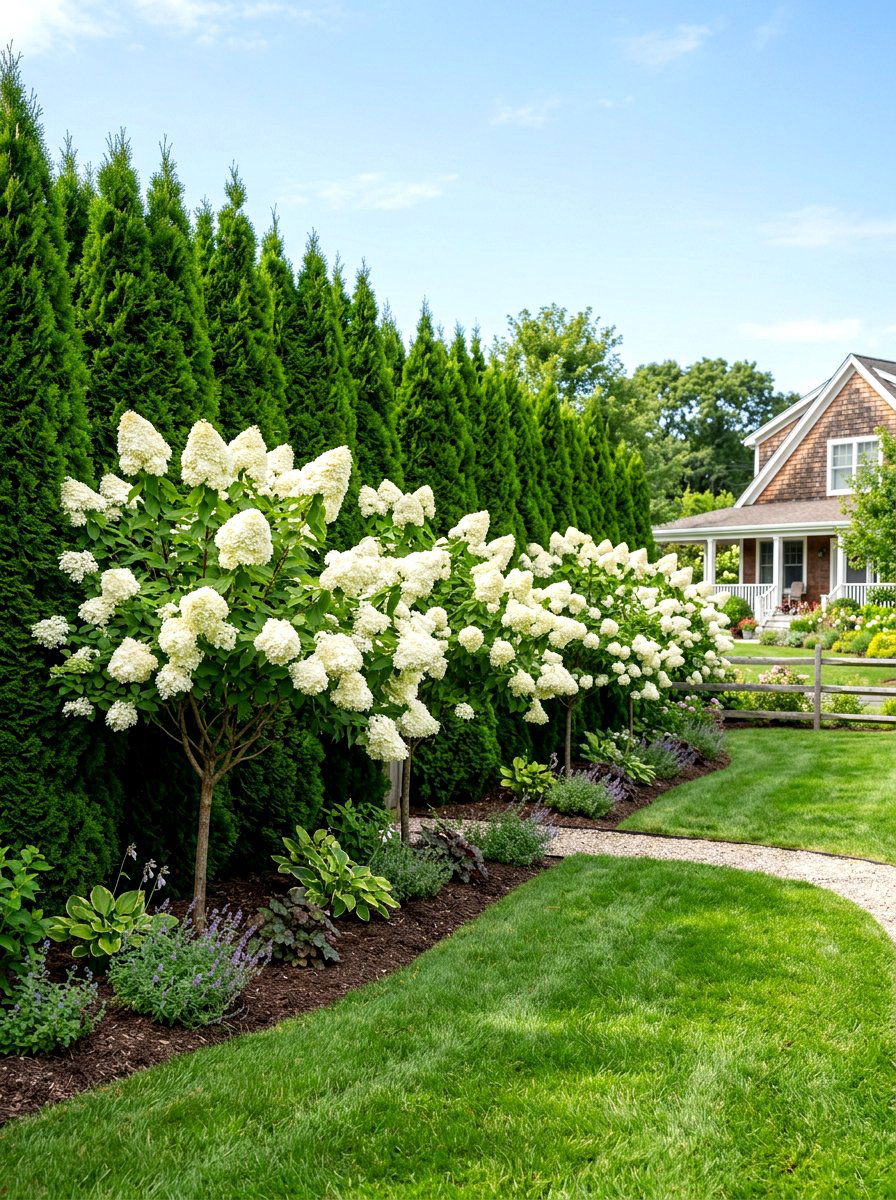
PeeGee hydrangeas can be grown as large shrubs or even trained into small trees, making them a versatile choice for bigger landscapes. Pairing them with Emerald Green arborvitae creates a structured and towering display of greenery and blooms. The arborvitae provides a narrow, emerald-colored pillar that stays perfectly green through the snow and ice. The PeeGee hydrangeas, with their massive cone-shaped flower heads, provide a softer, more organic shape that breaks up the vertical lines of the evergreens. This combination is great for framing a view or creating a beautiful boundary between different areas of a large property, offering both height and seasonal variety.
18. Lacecap hydrangea and dwarf conifer rock garden
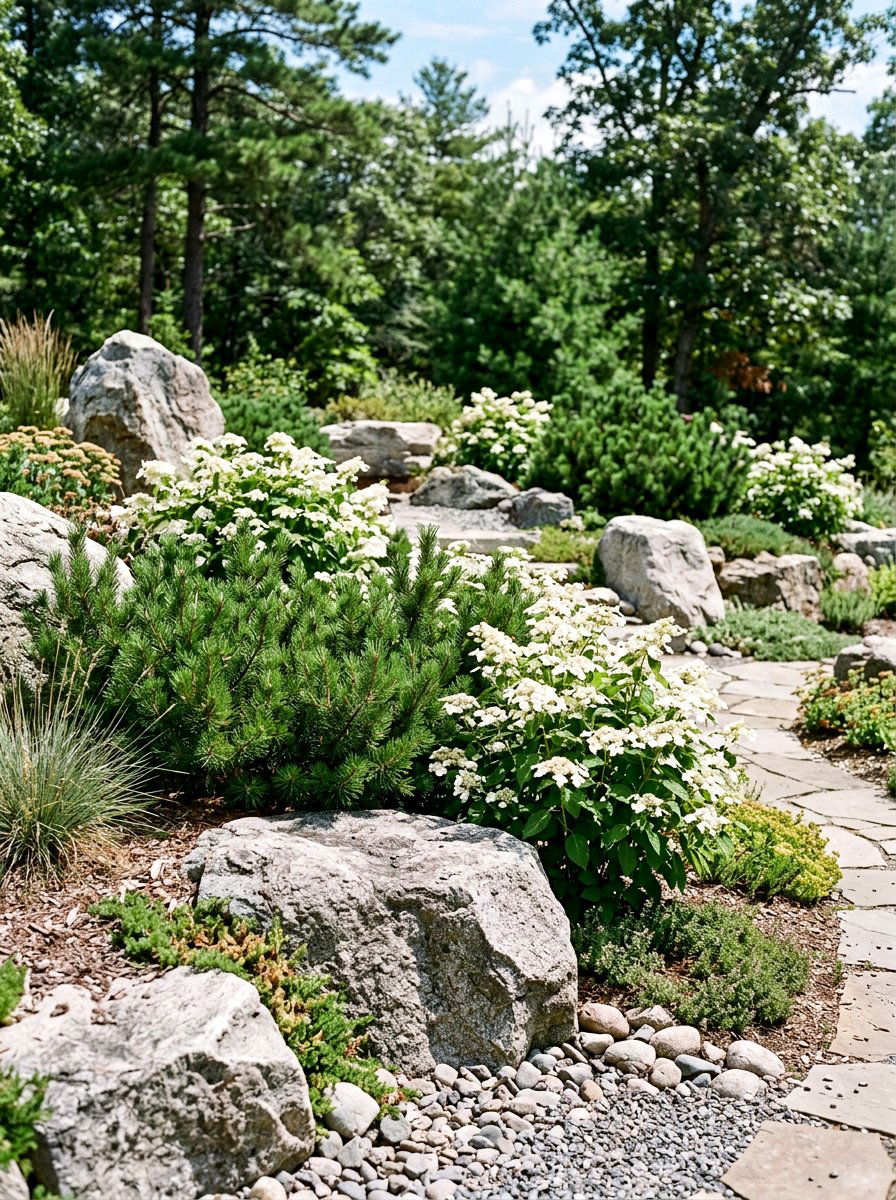
Rock gardens often focus on low-growing plants, but adding a lacecap hydrangea can provide a much-needed height and color contrast. Choose a dwarf conifer, such as a Bird’s Nest Spruce or a Mugo Pine, to serve as the evergreen base within the rocky terrain. The rugged texture of the rocks and the prickly needles of the conifers highlight the delicate and airy nature of the lacecap hydrangea flowers. This mix of textures creates a visually interesting space that feels balanced and well-designed. Because lacecaps are generally more subtle than mopheads, they don't overwhelm the small-scale beauty of a rock garden or alpine-style landscape.
19. Strawberry Sundae hydrangea and privet hedge
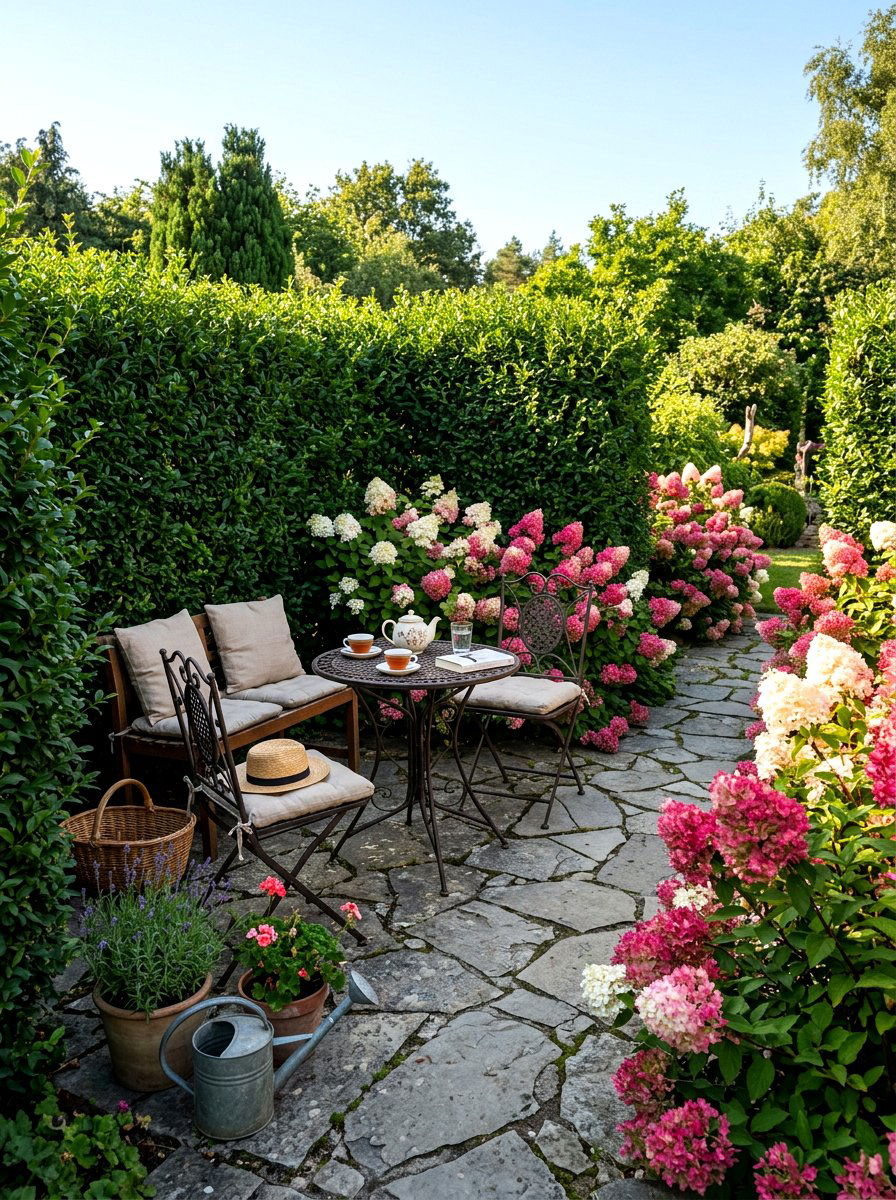
Strawberry Sundae hydrangeas are beloved for their flowers that start white and slowly transition to a deep strawberry pink as the season progresses. To make these colors really stand out, plant them in front of a neatly trimmed privet hedge. While some privets are deciduous, many varieties are semi-evergreen or evergreen in warmer climates, providing a consistent green wall. The dark green, small leaves of the privet act as a neutral canvas for the changing colors of the hydrangeas. This design is perfect for creating a colorful perimeter around a patio or seating area where you can enjoy the color shifts up close.
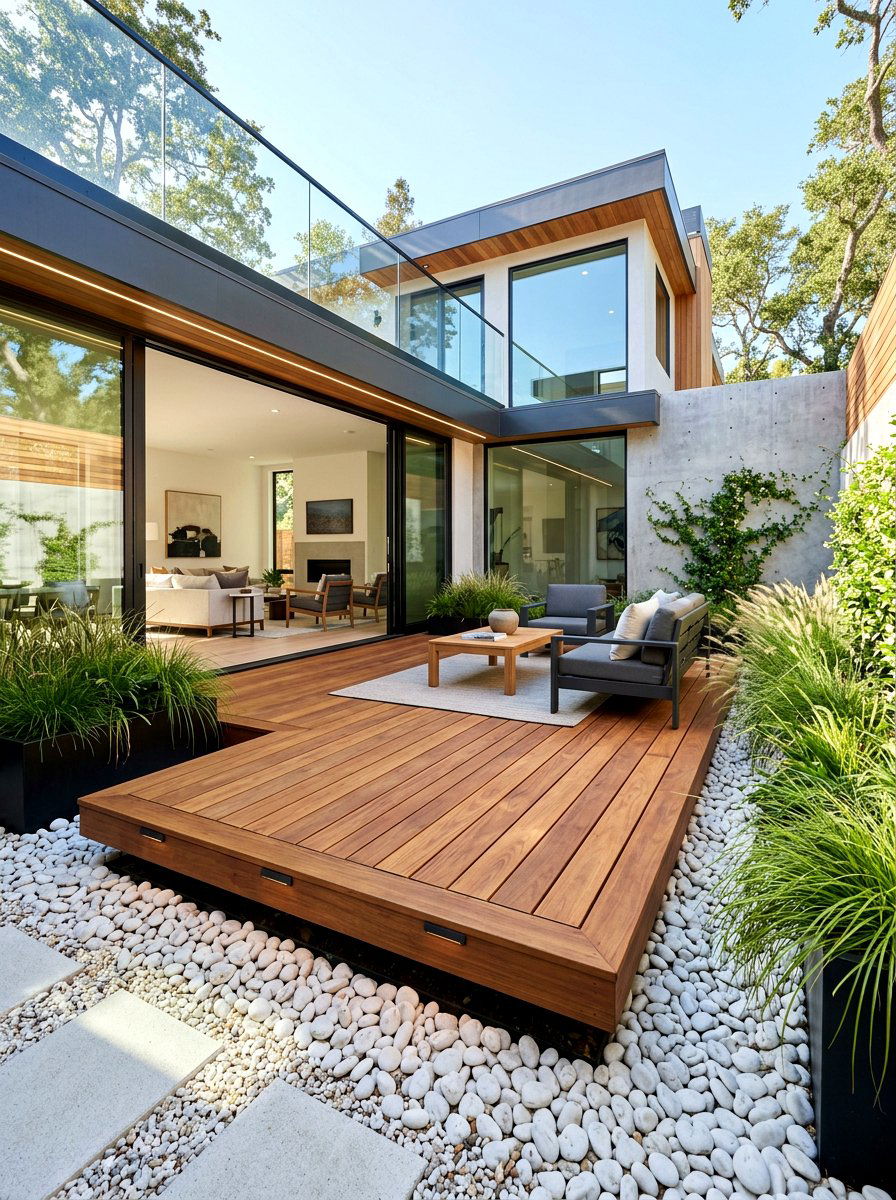

20. Bobo hydrangea and blue star juniper
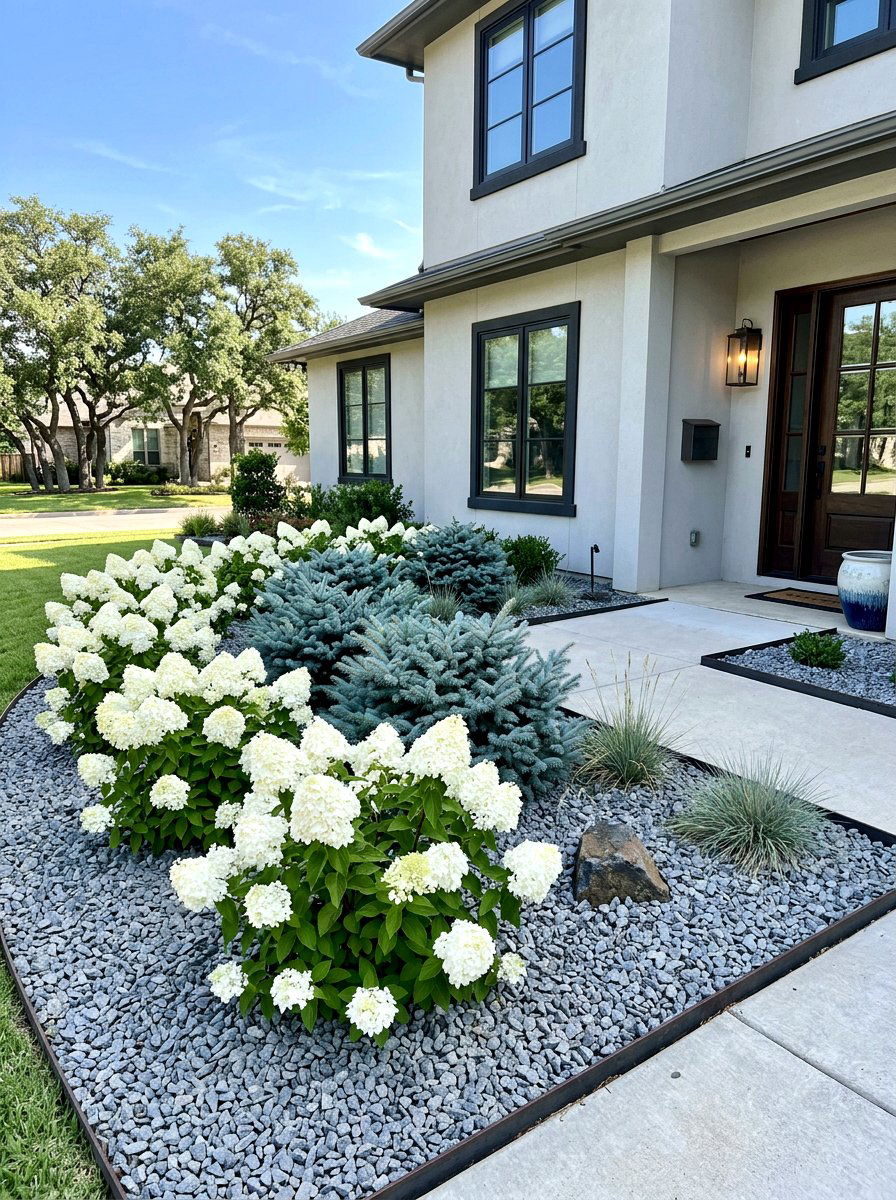
For a low-profile garden bed that packs a lot of personality, combine Bobo hydrangeas with Blue Star junipers. Bobo is a dwarf panicle hydrangea that stays very compact but gets completely covered in white flowers. The Blue Star juniper is a low-growing evergreen with a unique mounding habit and striking steel-blue needles. The contrast between the bright white hydrangea blooms and the cool blue tones of the juniper is incredibly modern and chic. This pairing is excellent for small front yard beds or as an accent along a sunny driveway where you want year-round color and interest without blocking any views.
21. Quick Fire hydrangea and mountain laurel landscape
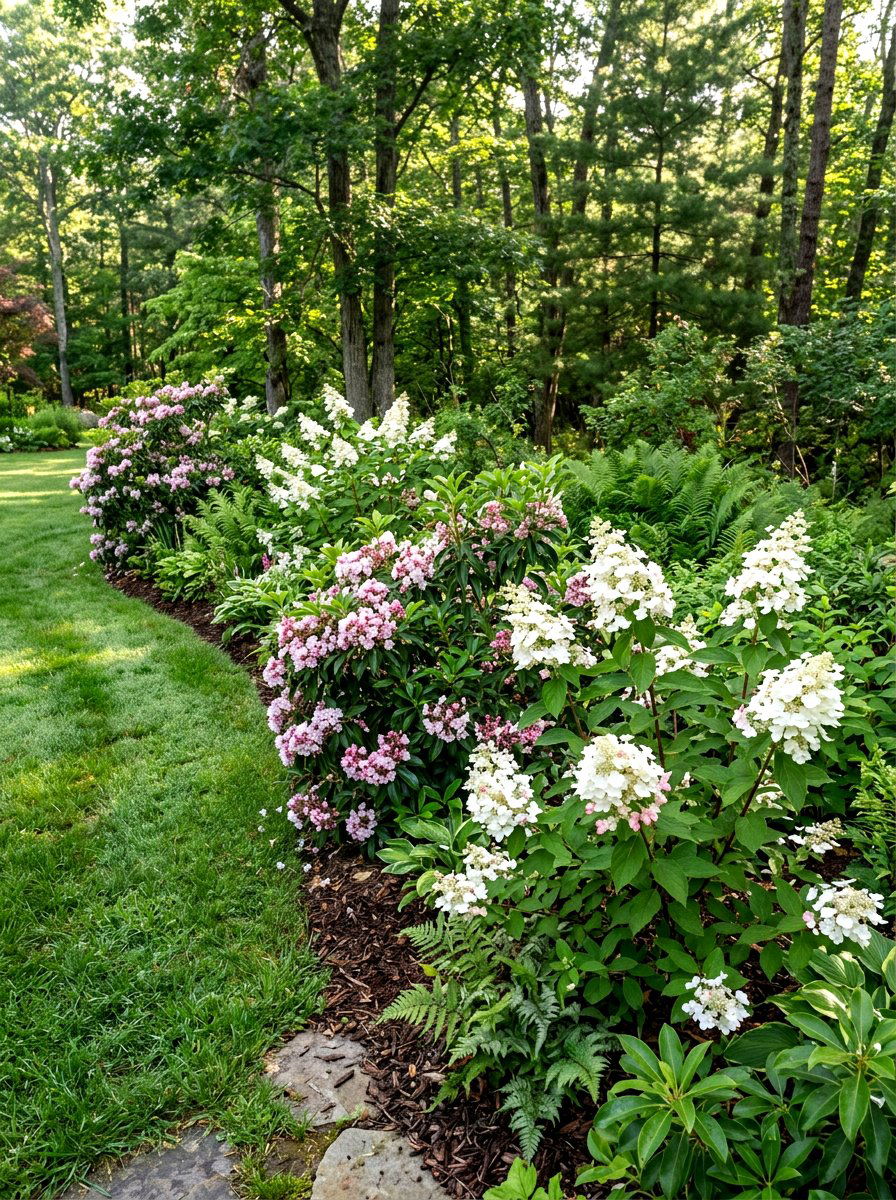
Quick Fire hydrangeas are known for being the earliest to bloom, often starting a full month before other varieties. Pairing them with mountain laurel, an evergreen shrub with stunning spring flowers and glossy leaves, creates a long-blooming sequence. The mountain laurel provides the early spring show, followed closely by the Quick Fire’s white lacey blooms which eventually turn a deep reddish-pink. The broad, dark green leaves of the laurel provide a sturdy backdrop for the airy hydrangea flowers all summer long. This combination is particularly well-suited for naturalistic or woodland-style landscapes where a mix of native-looking plants is desired for a cohesive look.
22. Fire Light hydrangea and sky pencil holly
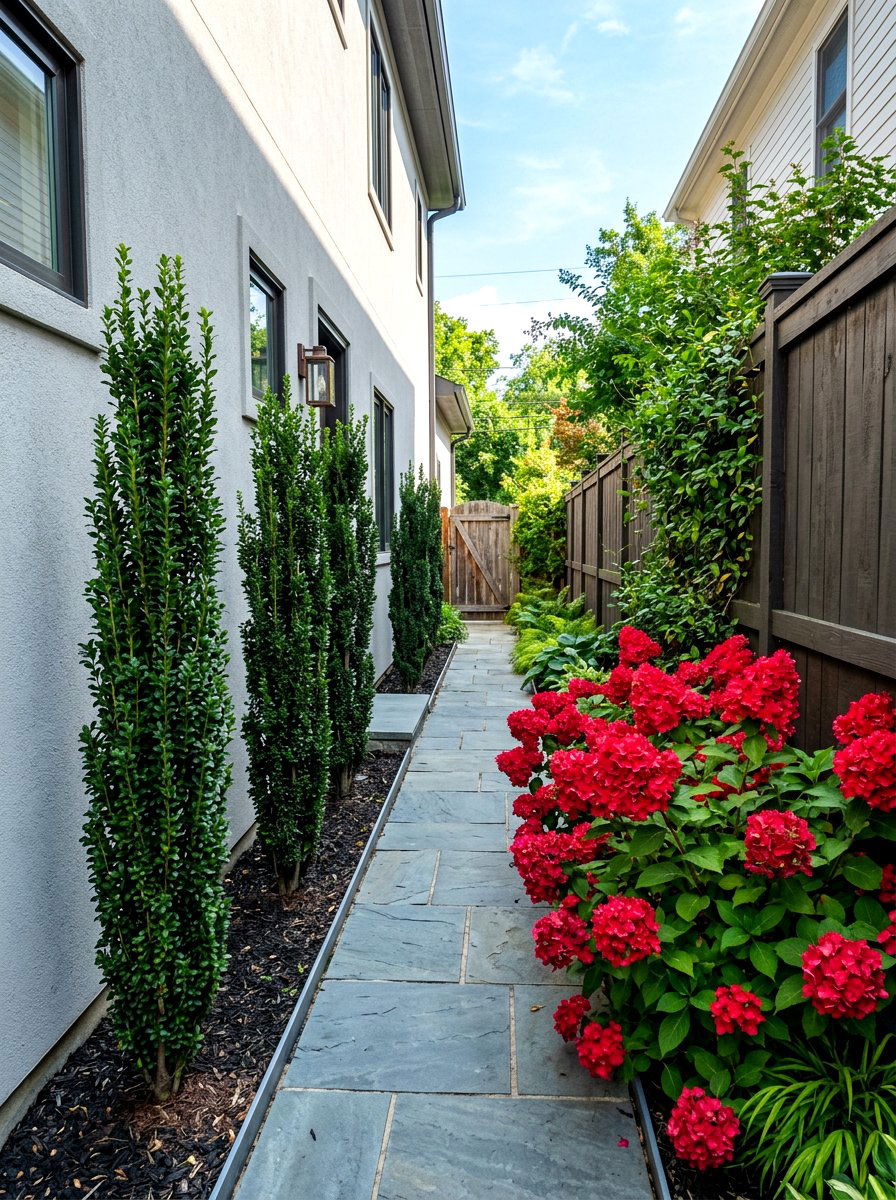
If you have a narrow space that needs a lot of drama, use Sky Pencil hollies and Fire Light hydrangeas. Sky Pencil hollies grow straight up like a pencil and take up very little horizontal room. They provide a dark green, architectural element that remains constant through the winter. Fire Light hydrangeas produce thick, upright stems with massive flower heads that turn a vivid pomegranate red. Placing these two plants together creates a high-contrast, vertical-focused design that is perfect for small side yards or framing a narrow entryway. The bold red of the hydrangeas against the dark holly foliage is a show-stopping look for any home.
23. Little Lime hydrangea and taxus hedge
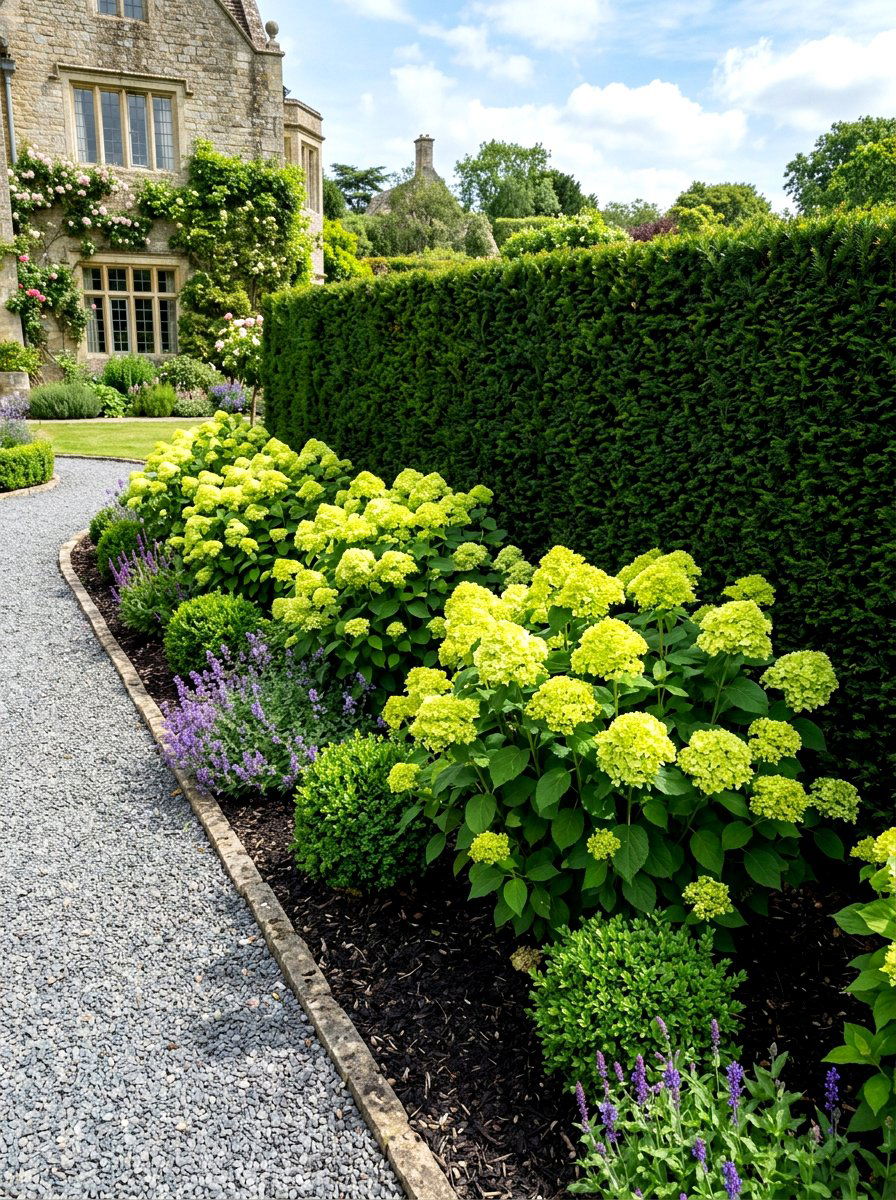
The Little Lime hydrangea is a compact version of the famous Limelight, making it easier to fit into smaller residential gardens. It looks stunning when planted in front of a Taxus (yew) hedge. Taxus is a very dark green, dense evergreen that can be sheared into almost any shape. The pale, lime-green flowers of the hydrangea practically glow against the near-black green of the yew. This combination is very popular for formal gardens because it looks clean, organized, and expensive. It provides a reliable structure for the garden in the winter while offering a soft, luminous display of color during the peak of summer.
24. French hydrangea and camellia garden
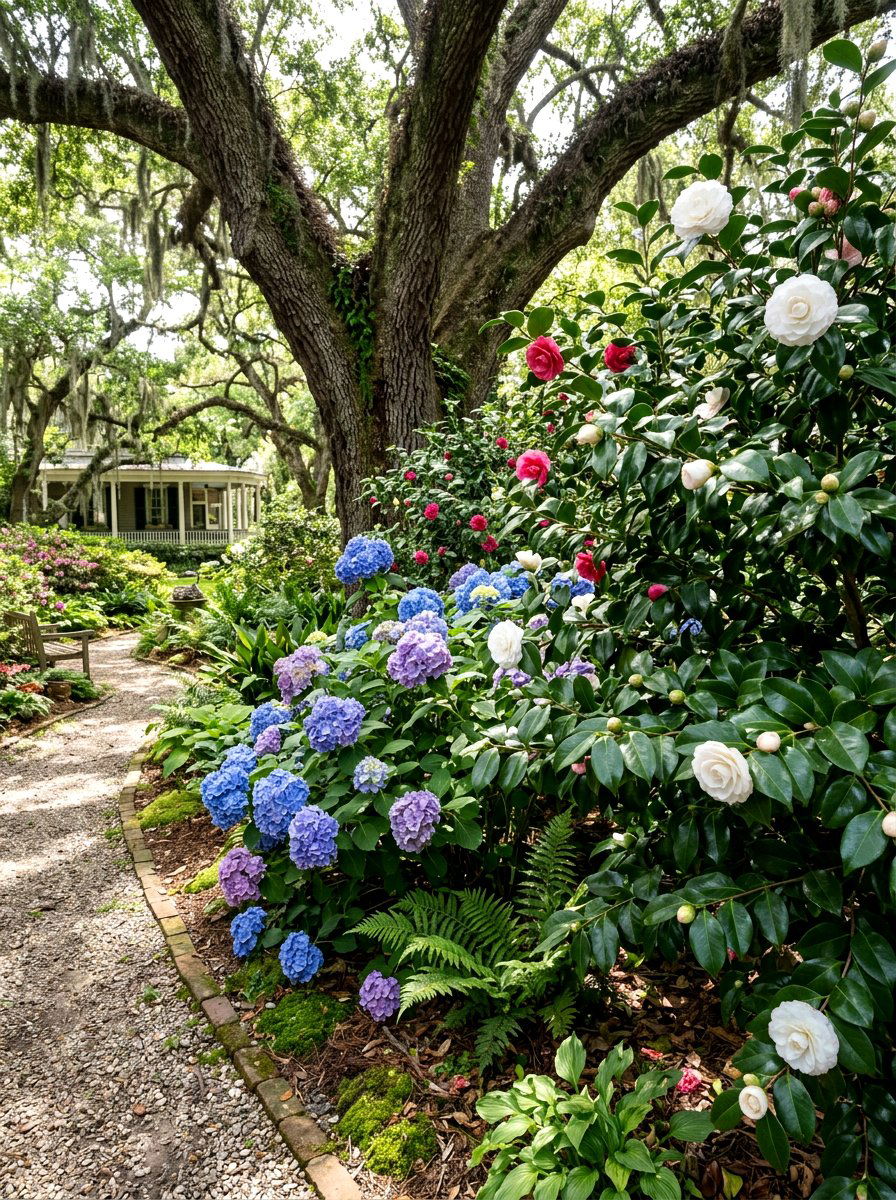
In warmer climates, combining French hydrangeas with camellias is a classic southern gardening move. Camellias are magnificent evergreens with glossy leaves that produce beautiful rose-like flowers in the late winter or early spring. Once the camellia flowers have finished, the French hydrangeas begin their summer show with huge, colorful mopheads. This ensures that you have a "blooming wall" for a large portion of the year. Both plants love acidic soil and filtered shade, making them perfect companions. The shiny leaves of the camellia reflect light, which helps to brighten the shade and provides a sophisticated texture that complements the matte leaves of the hydrangea.
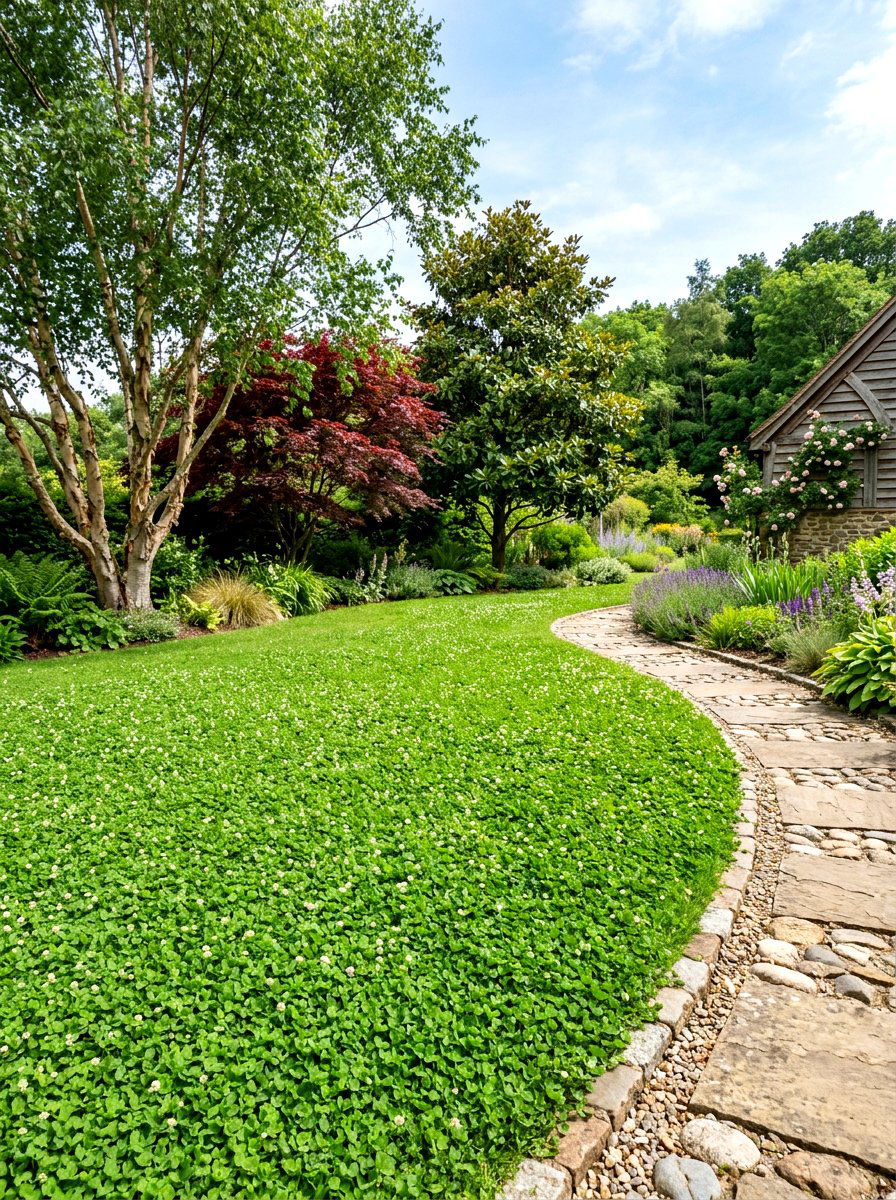
25. Wild hydrangea and hemlock woodland border
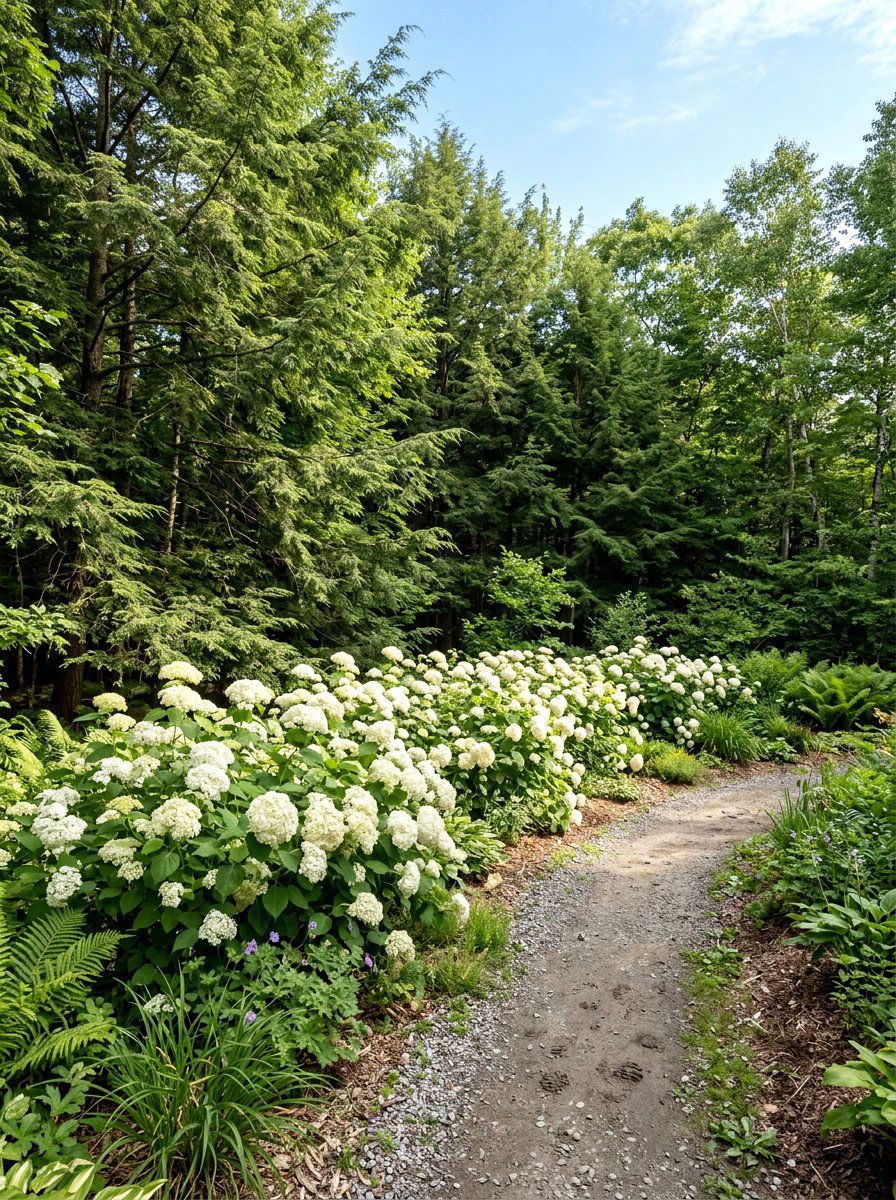
For a garden that feels like it was designed by nature itself, try pairing wild hydrangeas with hemlock trees. Wild hydrangeas (Hydrangea arborescens) have a more relaxed, sprawling habit and produce flat-topped white flowers. Hemlocks are graceful evergreens with soft, feathery needles and a drooping habit that feels very peaceful. Plant the hydrangeas along the edge of a hemlock grove to create a soft transition between a manicured lawn and a wooded area. The white flowers will stand out beautifully in the dappled sunlight beneath the hemlocks. This setup is low-maintenance and provides a wonderful habitat for local birds and pollinators while looking absolutely stunning.
26. Vanilla Strawberry hydrangea and gold thread cypress
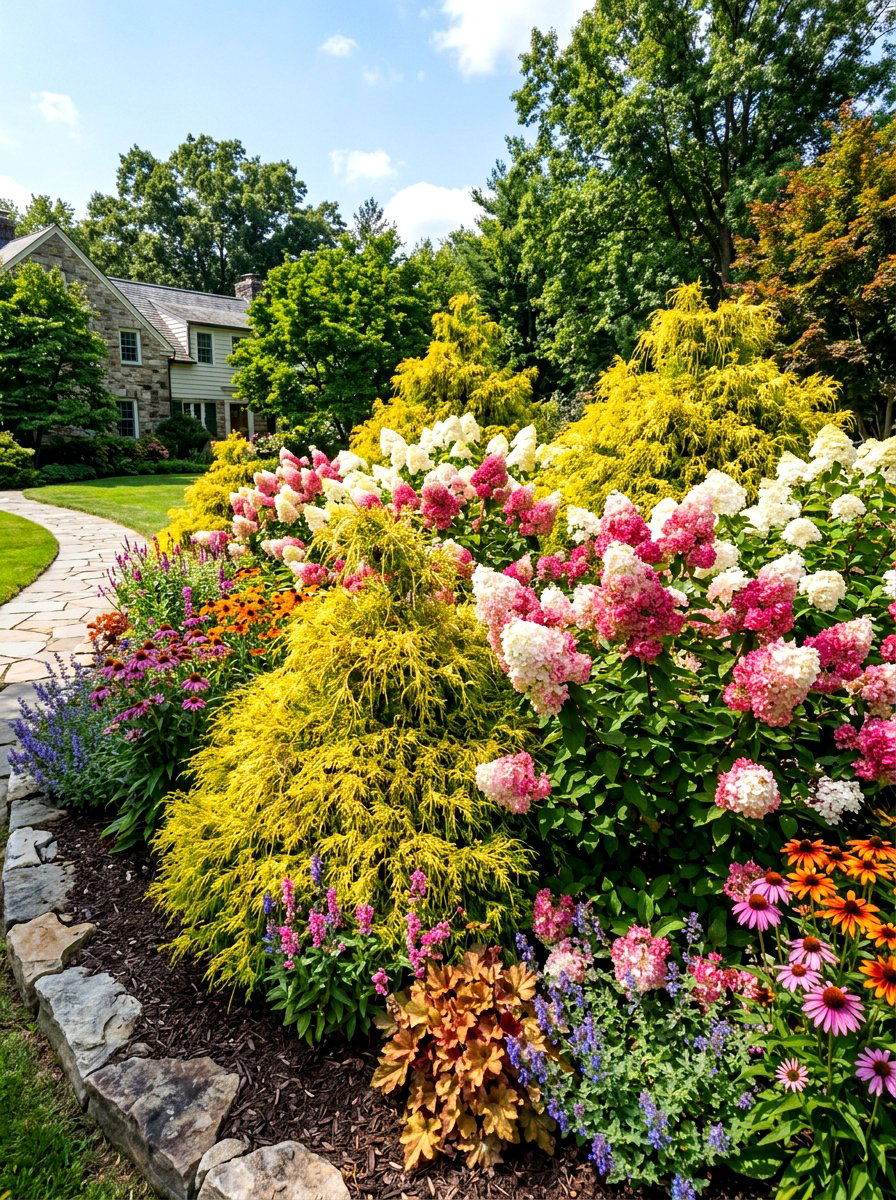
If you love a garden full of vibrant, contrasting colors, the Vanilla Strawberry hydrangea and Gold Thread cypress are a perfect pair. Vanilla Strawberry features massive blooms that transition from cream to pink to deep red, often showing all three colors at once. The Gold Thread cypress provides a bright, shaggy, golden-yellow texture that stays vibrant all year long. The combination of the red-toned hydrangea flowers and the gold evergreen foliage is incredibly energetic and eye-catching. This pairing is best suited for a sunny spot where the gold foliage can truly shine and the hydrangea can produce its most intense flower colors.
27. Tardiva hydrangea and false cypress screen
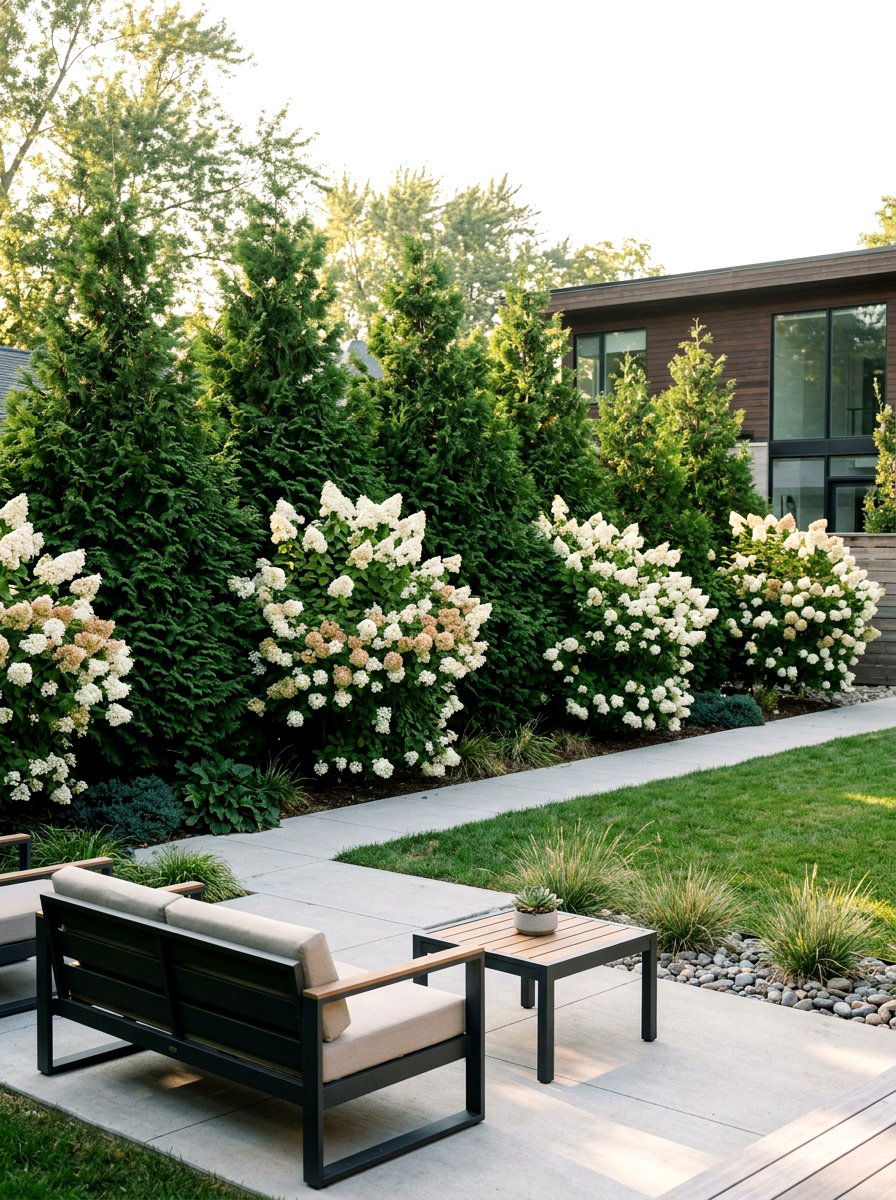
Tardiva is a late-blooming panicle hydrangea that provides fresh flowers when most other summer plants are starting to fade. It has an open, airy habit that looks wonderful when paired with the dense, fern-like foliage of a Hinoki False Cypress. The False Cypress provides a dark green, sculpted look that feels very Zen and intentional. The Tardiva’s white, pointed flower clusters add a layer of lightness and movement to the scene. This combination is excellent for a backyard screen or a transition area where you want something that looks sophisticated and slightly more unusual than the standard garden center offerings for your landscape.
28. Gatsby Moon oakleaf hydrangea and mugo pine
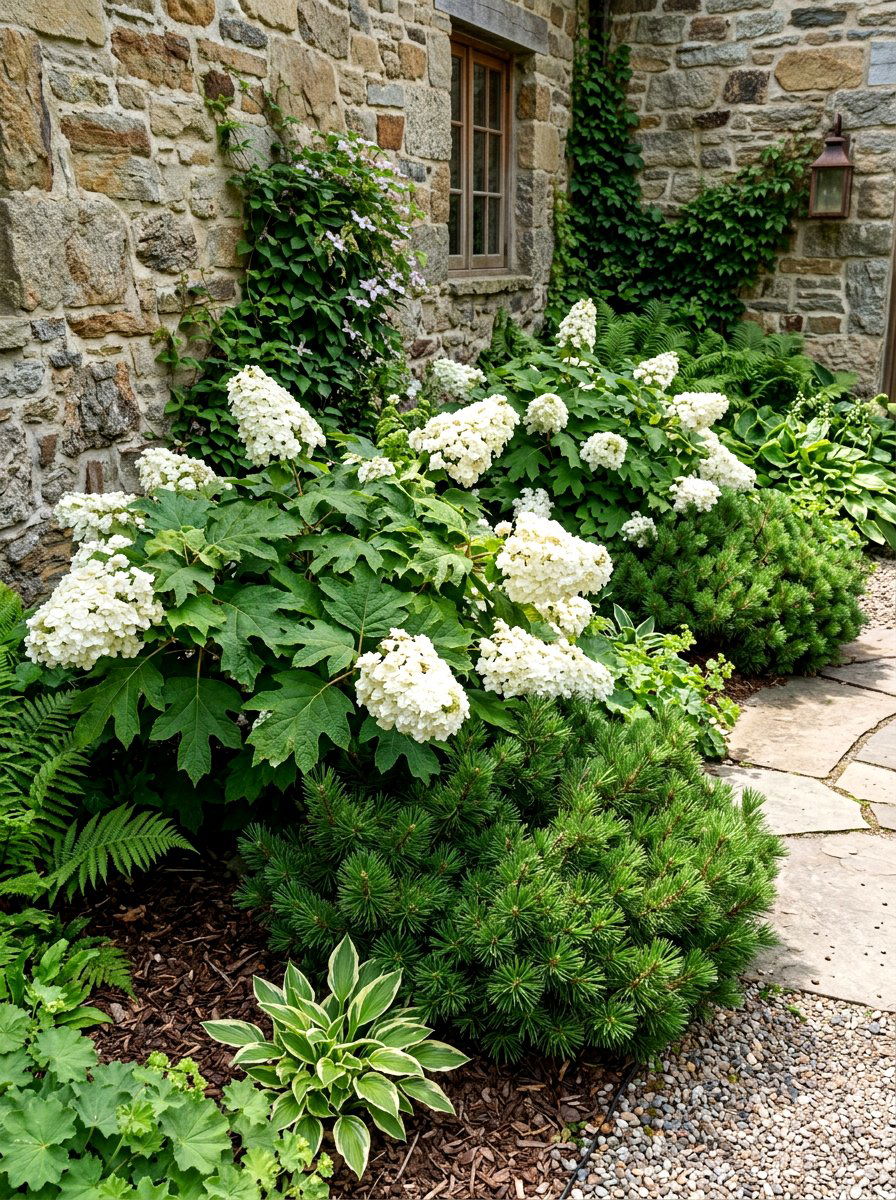
Gatsby Moon is a unique variety of oakleaf hydrangea with tightly packed, double florets that give the blooms a very full and heavy appearance. Pairing this with the low-growing, mounding form of a Mugo Pine creates a fantastic contrast in shapes. The Mugo Pine provides a prickly, dense green base that anchors the hydrangea’s large, coarse leaves. In the autumn, the hydrangea leaves turn a spectacular deep wine-red, which looks incredible next to the dark green needles of the pine. This duo is perfect for a foundation planting or a mixed shrub border where you want a variety of textures and seasonal changes.
29. Limelight prime hydrangea and inkberry holly
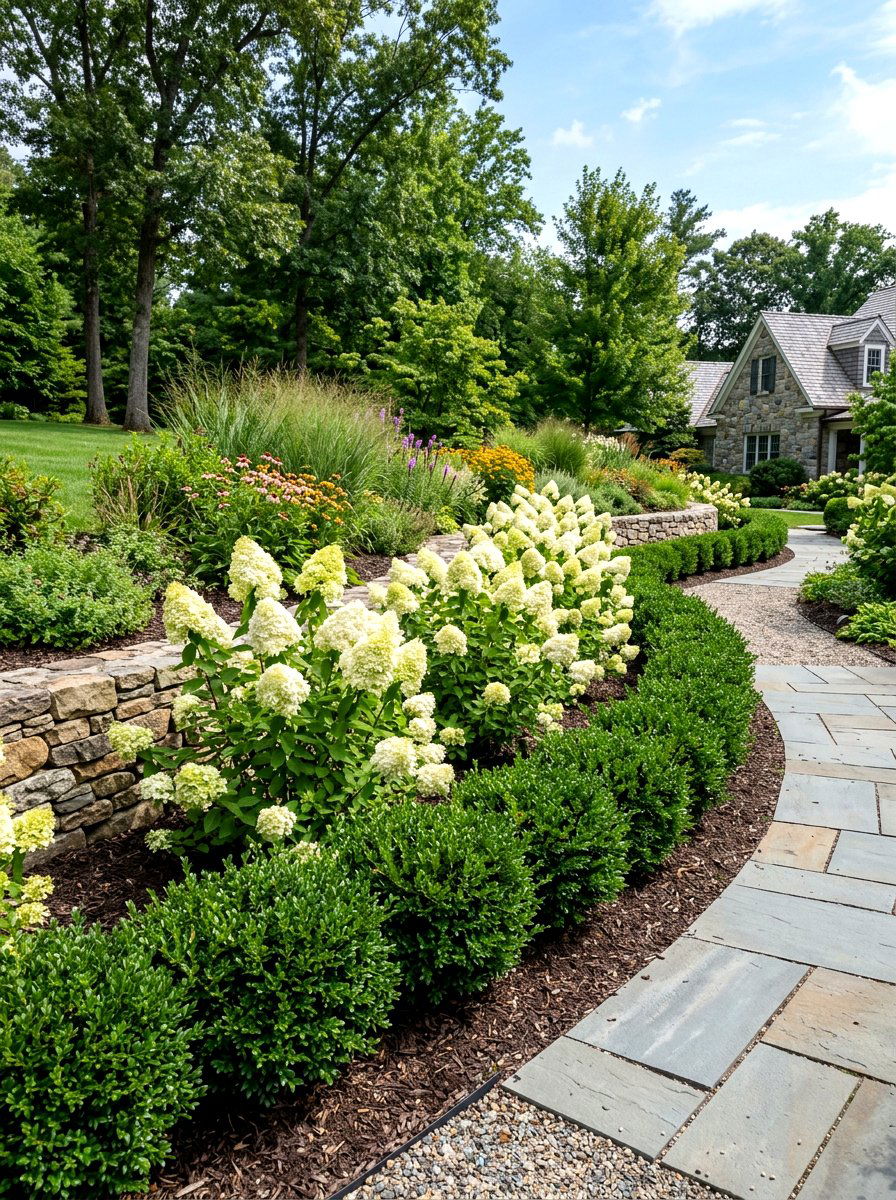
Limelight Prime is a newer variety of hydrangea that offers earlier blooms and stronger stems than the original Limelight. It pairs beautifully with inkberry holly, which is an evergreen shrub that looks similar to boxwood but is native to North America. Inkberry has small, dark green leaves and a tidy habit that provides a perfect structural edge for the more boisterous hydrangea. This combination is great for a sustainable landscape design that uses native-friendly plants. The bright, upright blooms of the Limelight Prime will tower over the inkberry, creating a layered and professional look that is very easy to maintain year-round.
30. Tuff Stuff hydrangea and creeping juniper slope
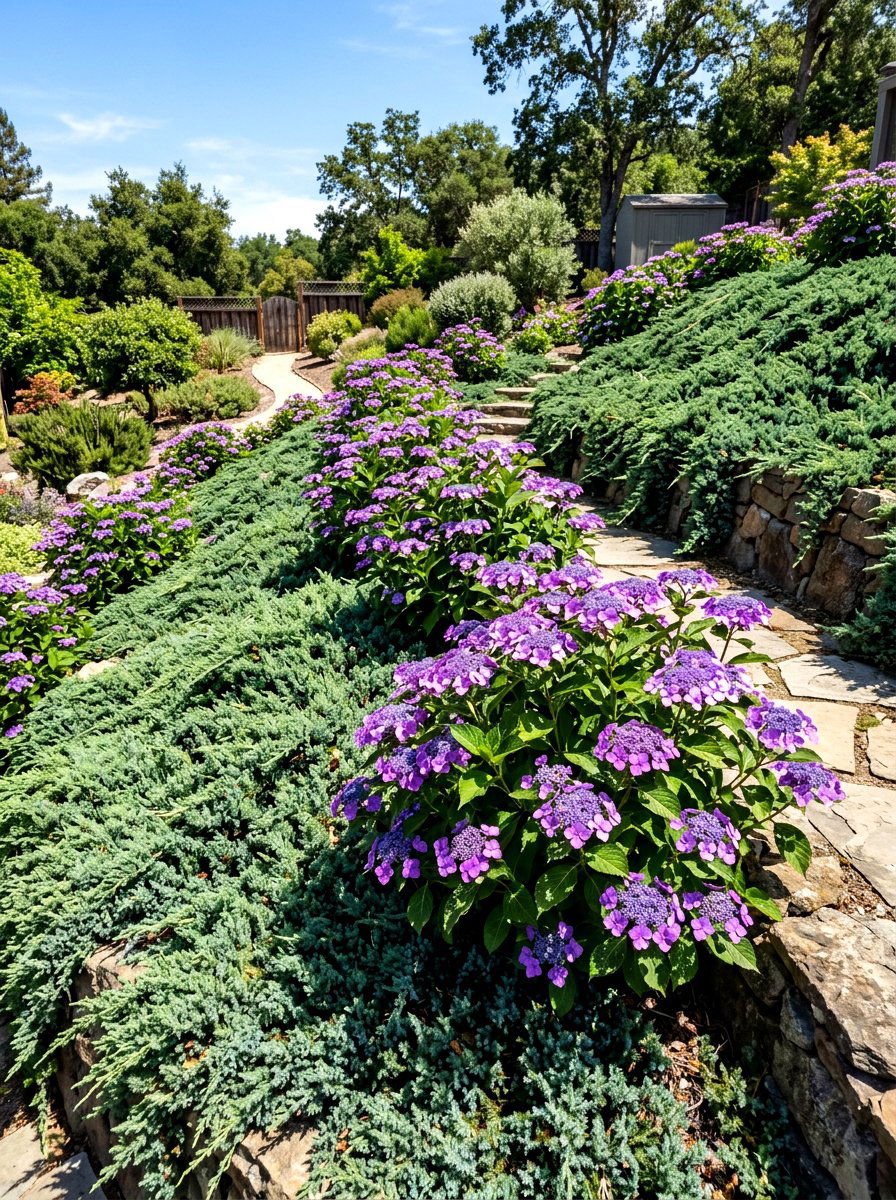
Tuff Stuff is a reblooming mountain hydrangea that is specifically bred for its hardiness and reliable flower production. If you have a sunny slope that needs a durable and beautiful solution, plant Tuff Stuff hydrangeas amidst a field of creeping juniper. The juniper will act as a living mulch, suppressing weeds and providing a consistent green or blue-green carpet. The hydrangeas will pop up through the juniper, offering beautiful lacecap blooms in shades of reddish-pink or purple. This design is very effective for erosion control and provides a massive amount of color and texture for a space that is often difficult to landscape.
Conclusion:
Investing time into a well-planned evergreen and hydrangea landscape will pay dividends in beauty for years to come. By thoughtfully combining the year-round structure of conifers with the breathtaking seasonal blooms of hydrangeas, you create a garden that is both functional and romantic. This pairing ensures that your home always has a touch of greenery, even in the coldest months, while providing a spectacular floral show throughout the summer. The ideas presented here demonstrate how versatile these plants are, fitting into everything from formal estates to wild woodland retreats. Start small with a foundation bed and soon you will have a viral-worthy garden of your own.

Related posts: