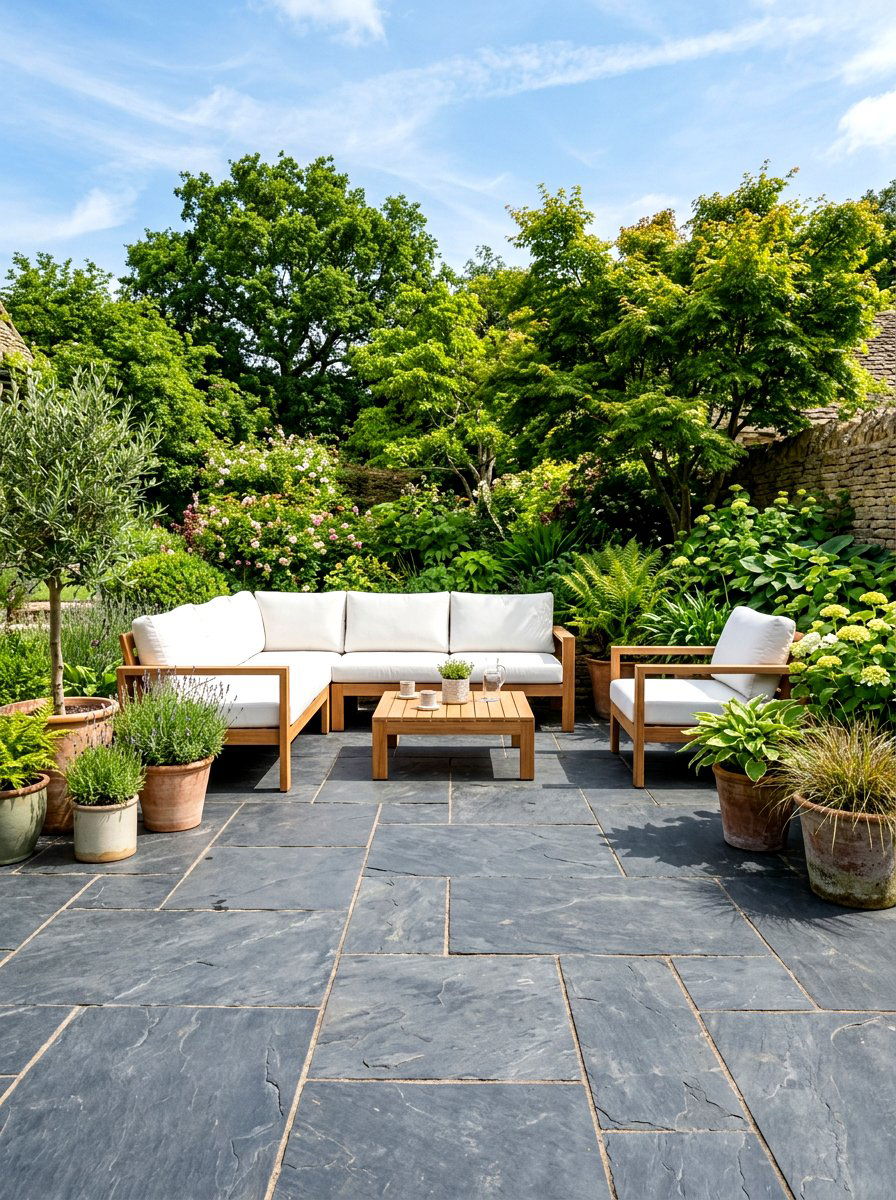
Sloped landscapes often feel like a design hurdle for homeowners, but these vertical spaces actually offer incredible potential for creative expression and unique gardening opportunities. Transforming a steep hill into a functional and beautiful outdoor retreat requires a bit of planning and structural integrity, but the results are always worth the extra effort involved. Whether you are dealing with a gentle incline or a dramatic drop-off, the right approach can turn a difficult area into a stunning focal point. From multi-level terraces that maximize planting space to naturalistic rockeries that blend into the environment, these solutions help manage erosion while providing a breathtaking backdrop for your home life.
1. Multi Level Stone Retaining Wall
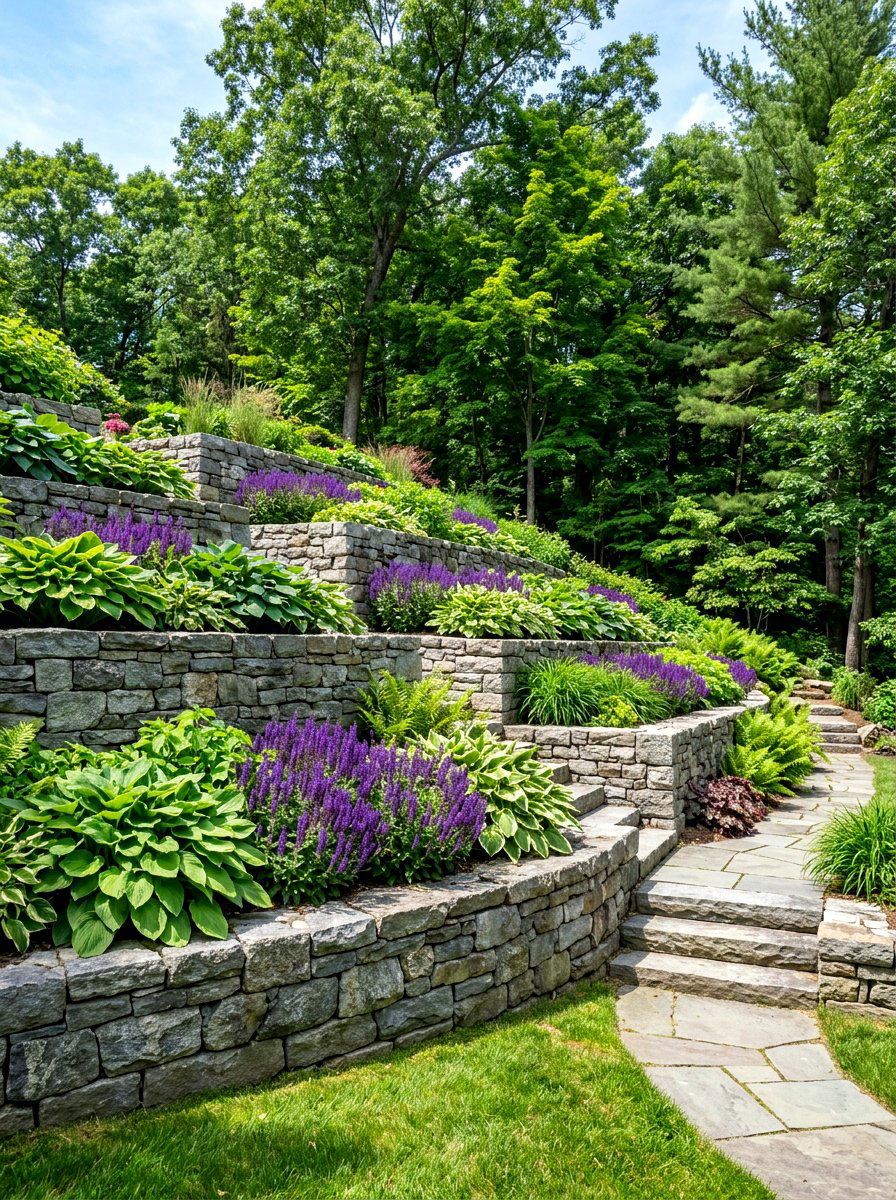
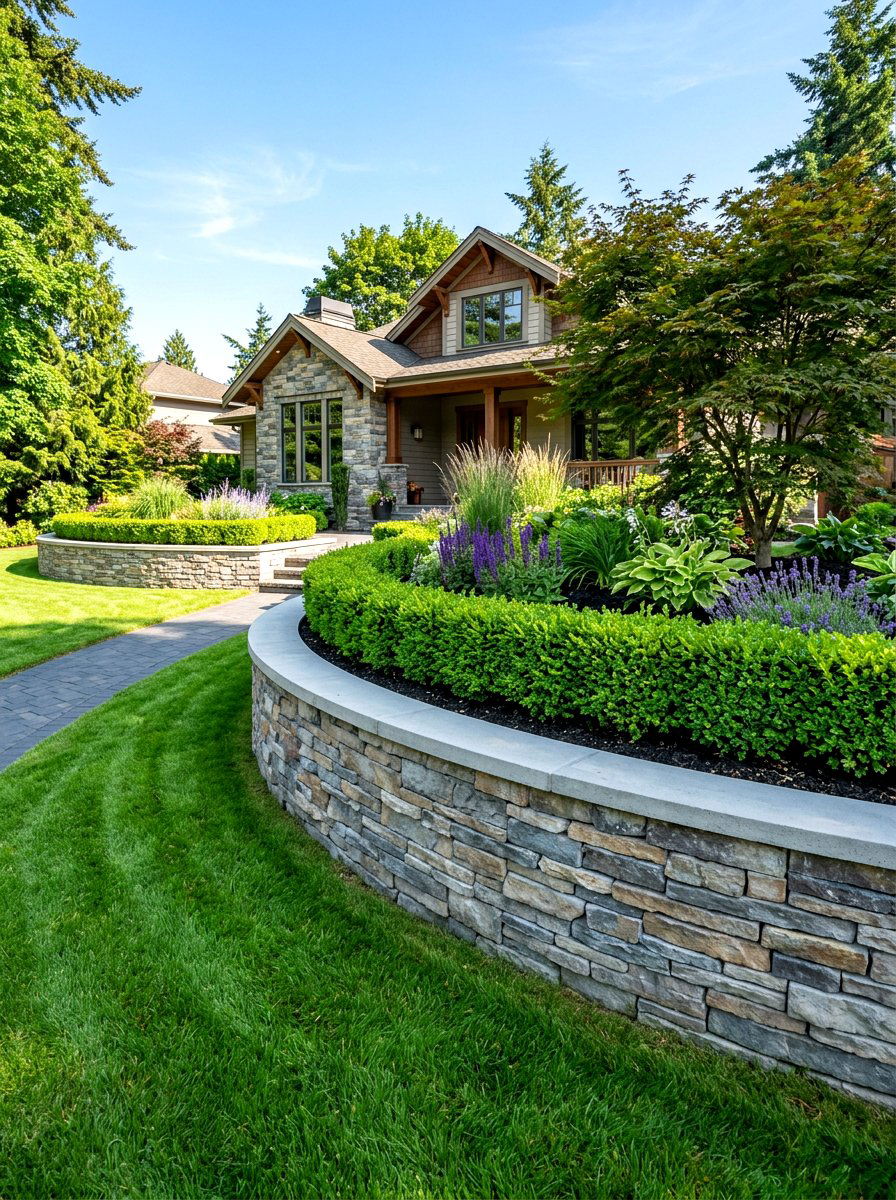
Installing a series of natural stone walls creates a timeless and sturdy framework for any hillside property. These structures work by carving out flat sections of land, effectively turning a steep, unusable incline into several productive gardening tiers. You can use stacked fieldstone or limestone blocks to achieve a rugged, organic look that blends seamlessly with the surrounding environment. Beyond the obvious aesthetic appeal, these walls are essential for managing soil erosion and controlling water runoff during heavy rain. Filling the resulting terraces with a mix of colorful perennials and low-growing shrubs adds layers of texture and visual interest. This approach provides a clear sense of organization and structural permanence.
2. Modern Timber Terraced Garden
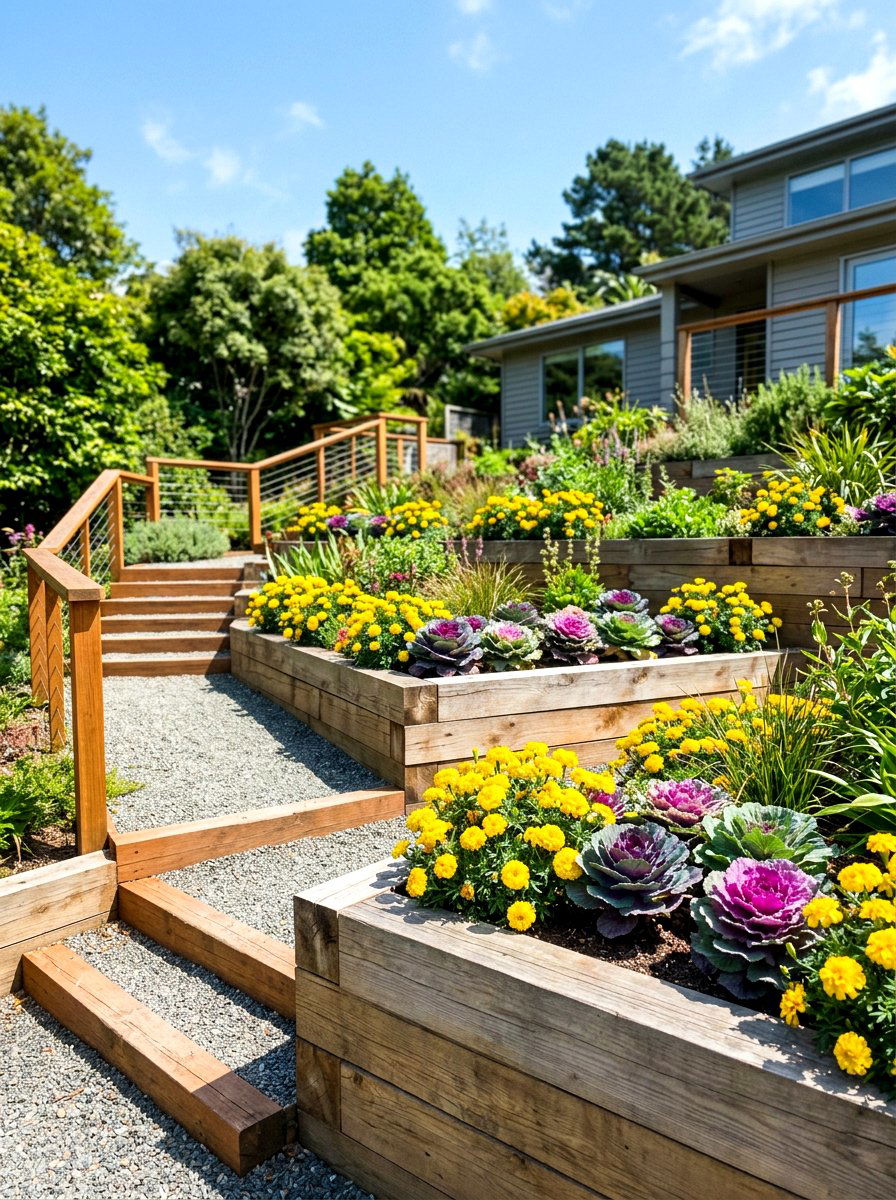
Using pressure-treated timber or cedar beams offers a clean and contemporary way to manage a sloped backyard space. Wood provides a warm, natural aesthetic that contrasts beautifully against green foliage and bright flowers. These wooden sleepers are often easier to install than heavy stone, making them a popular choice for DIY enthusiasts looking to create level planting beds. By staggering the heights of the wooden retainers, you can create a dynamic, architectural feel that leads the eye upward. This design is perfect for creating dedicated zones for different plant varieties, such as a dedicated rose tier or a leafy fern section. It brings a structured, modern vibe to the landscape.
3. Natural Rockery Landscape
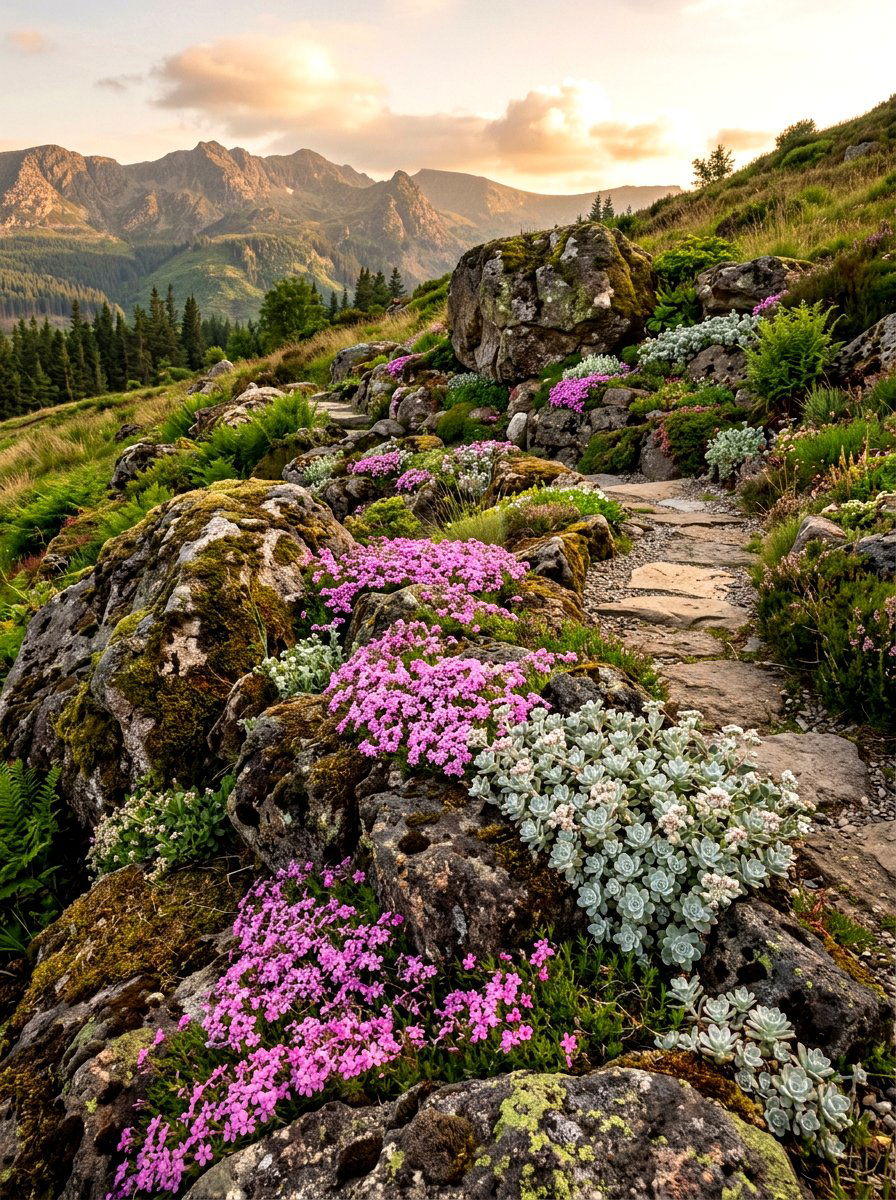
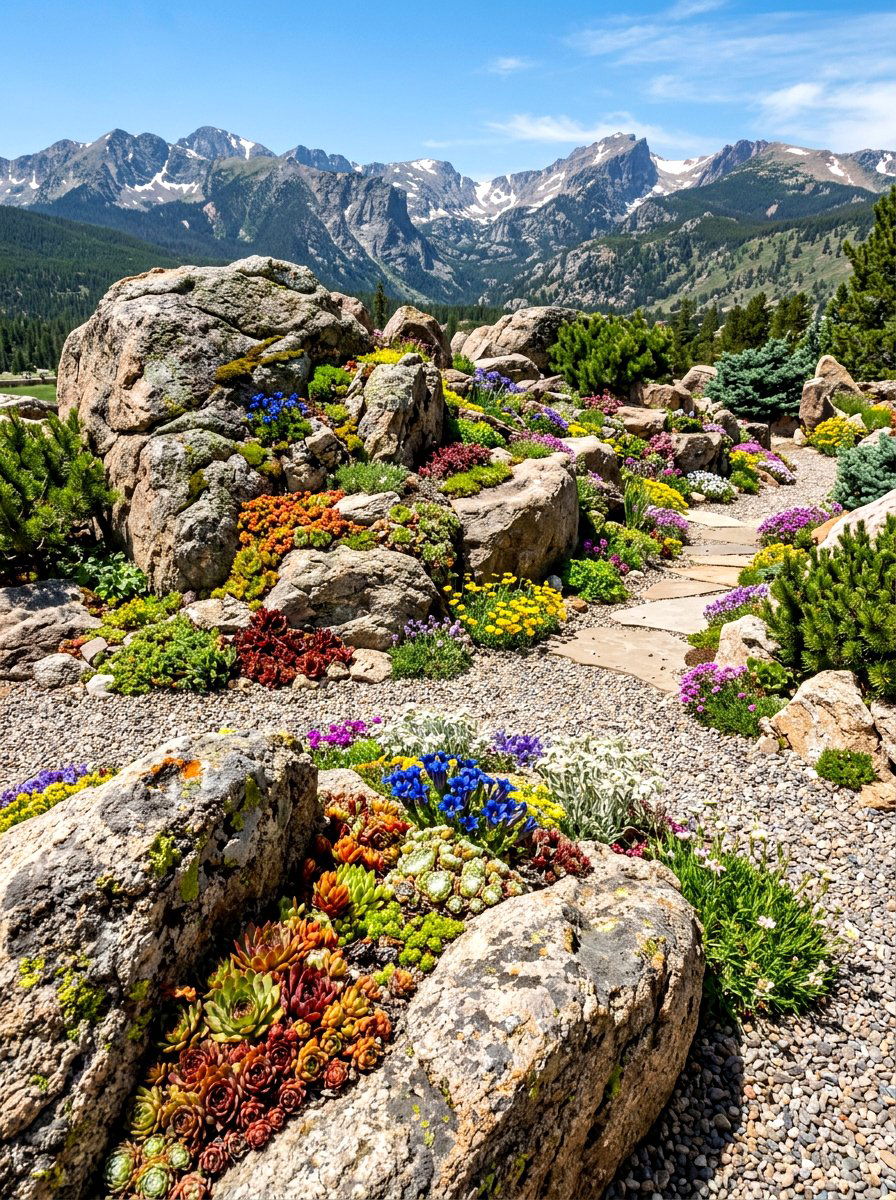
Integrating large boulders and smaller stones directly into a hillside creates a rugged and highly naturalistic garden environment. Instead of formal walls, you place rocks strategically to anchor the soil and provide stable pockets for resilient plants to thrive. This style is particularly effective for slopes where you want to mimic a mountain or alpine setting. You should choose plants like creeping phlox, sedums, and alpines that naturally grow in rocky crevices and require very little maintenance once established. The combination of gray stone and vibrant greenery creates a high-contrast look that feels both ancient and intentionally designed. It is an excellent solution for steep, sunny banks.
4. Sloped Wildflower Meadow
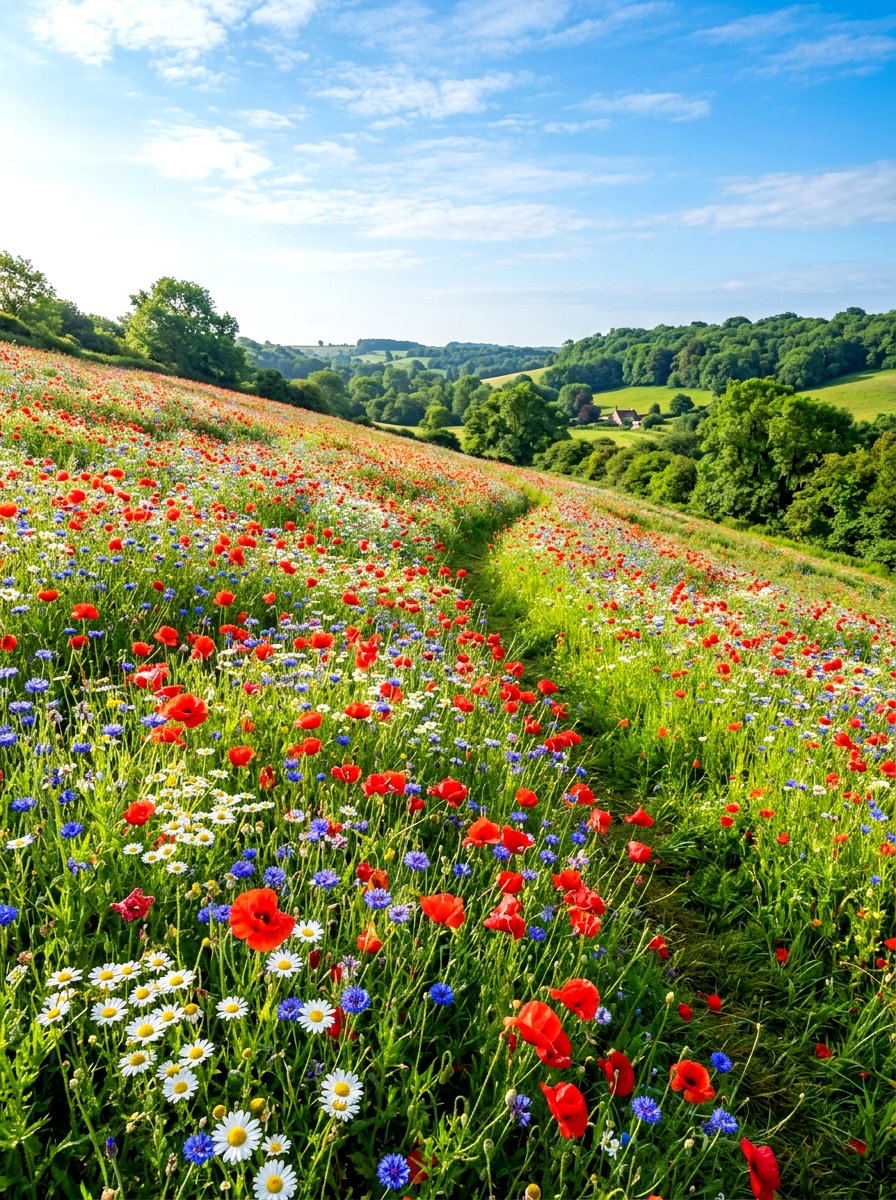
Converting a difficult-to-mow hillside into a vibrant wildflower meadow is a brilliant way to support local biodiversity while reducing yard work. Instead of struggling with a lawnmower on an incline, you can sow a mix of native seeds that will produce a changing tapestry of color throughout the seasons. Wildflowers have deep root systems that are fantastic for stabilizing soil and preventing the ground from washing away during storms. This design creates a soft, romantic look that feels breezy and untamed, perfect for more informal or rural properties. It attracts pollinators like bees and butterflies, turning a formerly problematic slope into a buzzing sanctuary of natural life.
5. Steep Hillside Vegetable Patch
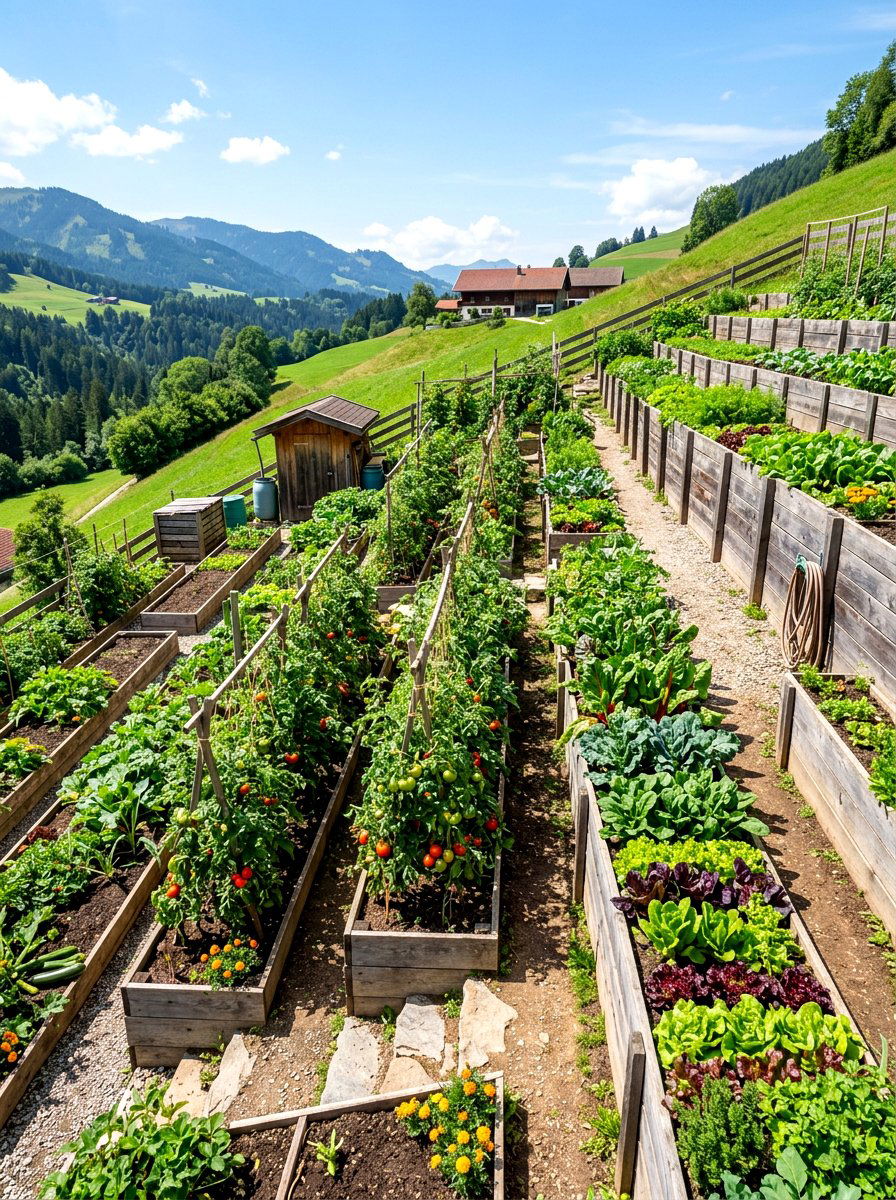
Utilizing a sunny slope for food production is a smart way to maximize every inch of your available outdoor space. By building narrow, terraced beds specifically for vegetables, you can ensure that your crops receive excellent drainage and plenty of direct sunlight. These raised rows prevent soil compaction and make it much easier to tend to your plants without constantly bending over on an uneven surface. You can grow anything from trailing squash and pumpkins that tumble down the tiers to upright peppers and tomatoes. This functional design turns a challenging hill into a productive kitchen garden that provides fresh produce throughout the growing season for your whole family.
6. Curved Boulder Garden Steps
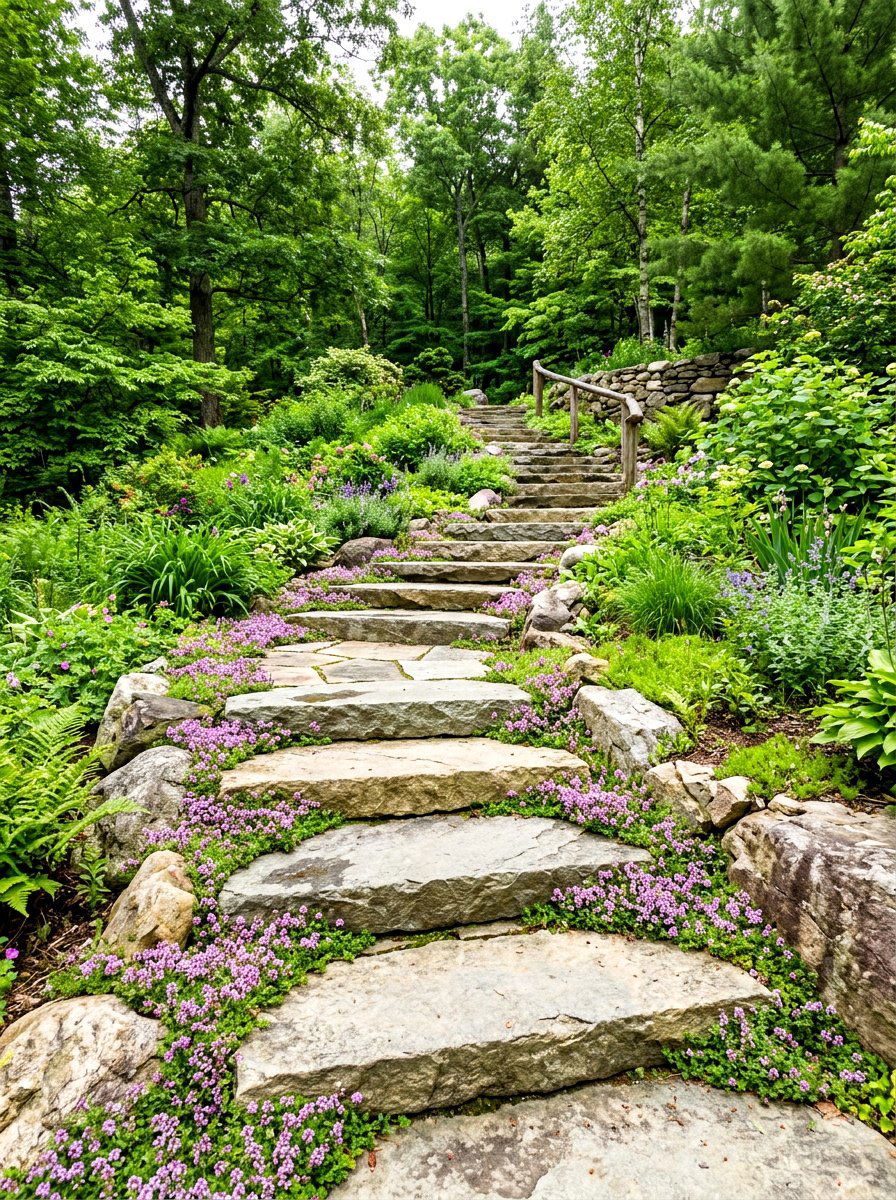
Building a set of winding steps using large, flat boulders provides a functional path while adding dramatic character to a slope. Unlike straight concrete stairs, curved stone paths follow the natural contours of the land, making the ascent feel more like a stroll through a park. You can tuck small groundcovers like creeping thyme or Irish moss into the gaps between the rocks to soften the hard edges and add fragrance. This design helps to connect different levels of the yard while serving as a prominent visual feature that anchors the entire landscape. It creates a sense of adventure and discovery as you move through the various garden levels.
7. Minimalist Concrete Tiered Patio
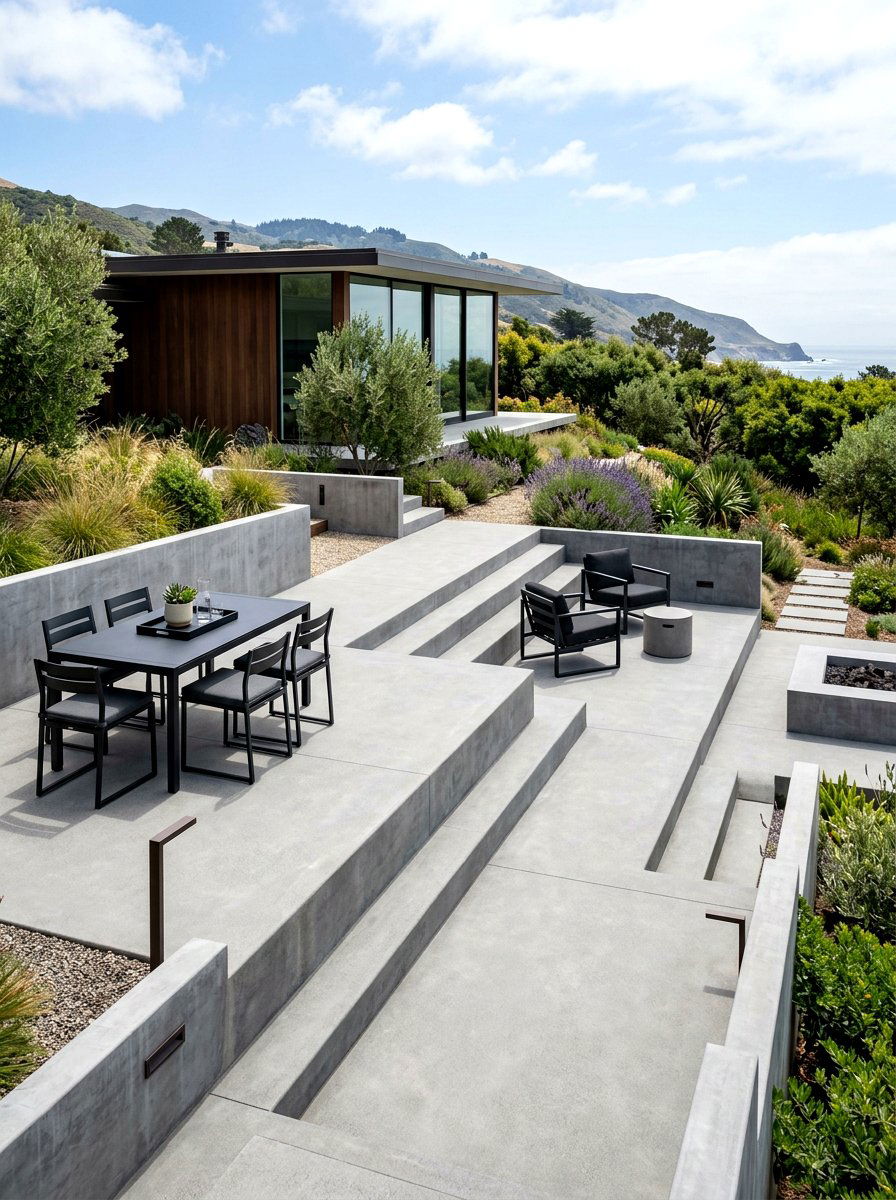
For a sleek and architectural look, using cast-in-place concrete to create wide, flat terraces offers an ultra-modern solution for sloped yards. These broad platforms can serve as outdoor living rooms, providing space for minimalist furniture, fire pits, or even a small dining area. The clean lines of the concrete contrast sharply with organic plant forms, creating a sophisticated and high-end aesthetic. This design is particularly effective for urban homes where space is at a premium and a functional, low-maintenance outdoor area is desired. You can integrate built-in lighting along the edges of the tiers to ensure the space is safe and inviting even after the sun goes down.
8. Lush Tropical Slope Planting
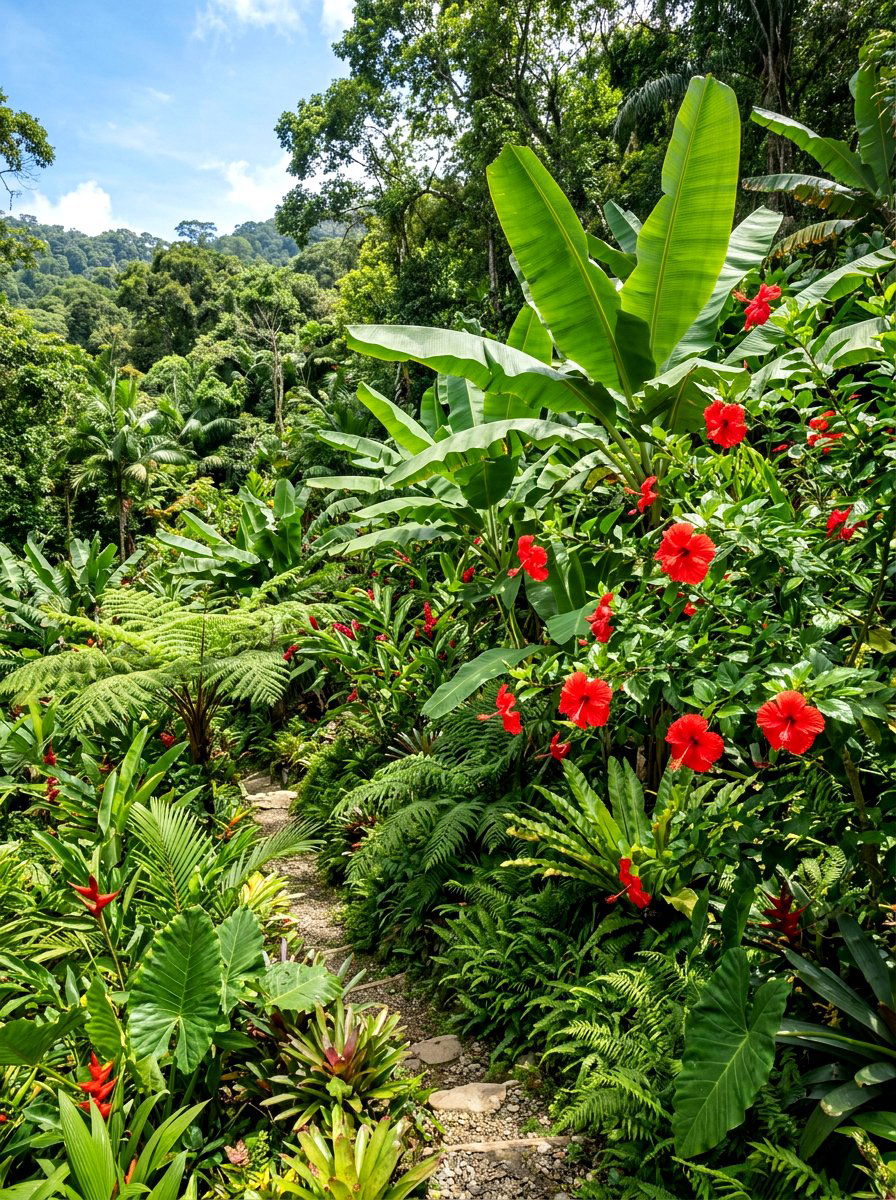
Creating a jungle-inspired retreat on a hillside involves using dense layers of large-leafed plants and vibrant exotic flowers. If you live in a suitable climate, species like canna lilies, hibiscus, and ornamental bananas can thrive on well-drained slopes, creating a wall of emerald green. The verticality of the hill allows you to see the different heights of the foliage more clearly than on flat ground, making the garden feel incredibly immersive. Using a heavy layer of mulch between the plants helps retain moisture and suppress weeds while the canopy fills in. This design turns a boring incline into a private, shaded oasis that feels worlds away from the daily grind.
9. Mediterranean Gravel Terraced Garden
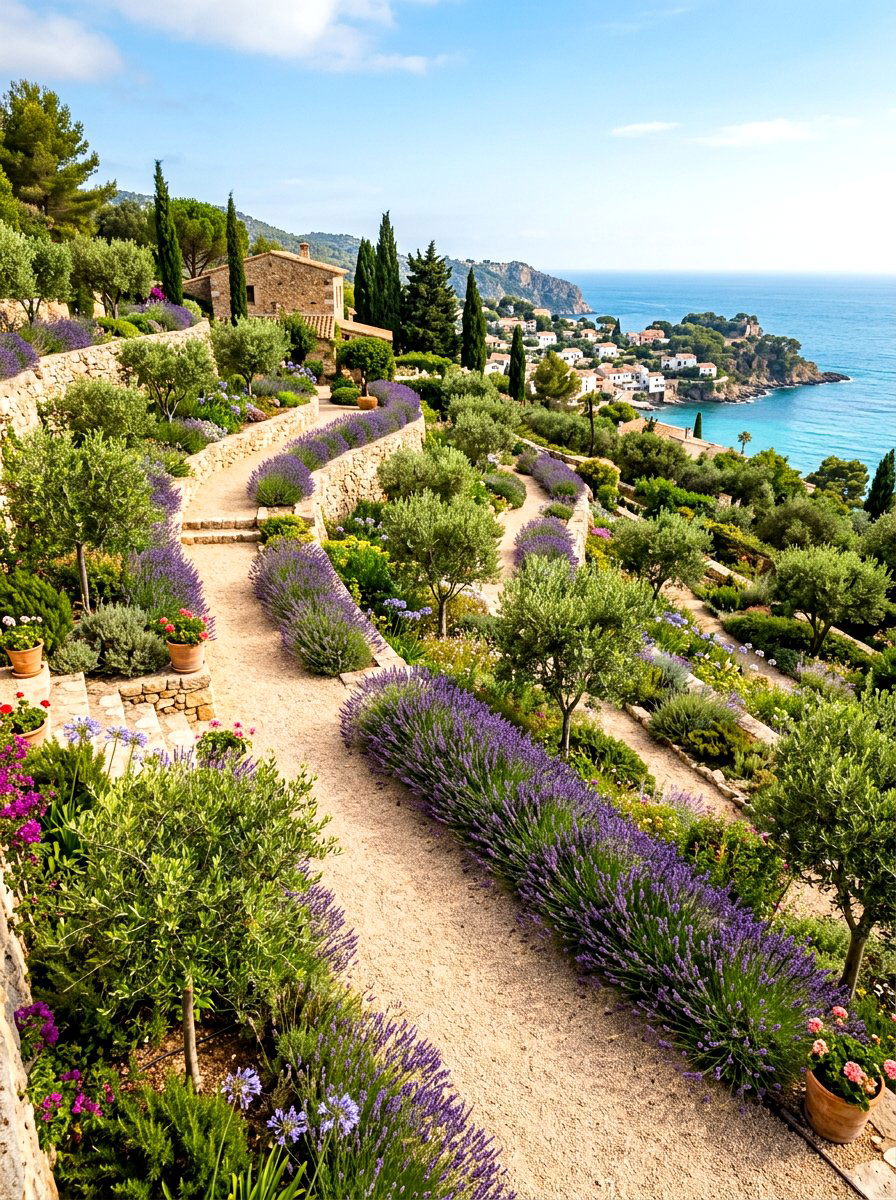
Inspired by the dry hillsides of Italy and Greece, this design uses gravel paths, stone retainers, and drought-tolerant plants. Lavender, rosemary, and olive trees are perfect candidates for this style, as they appreciate the sharp drainage provided by a sloped terrain. The light-colored gravel reflects heat and provides a clean backdrop for the silvery-green foliage of Mediterranean species. This is a highly sustainable and low-water option for regions prone to drought or for homeowners who want a garden that requires minimal irrigation. The overall look is sun-drenched and sophisticated, providing a touch of European charm to your backyard while effectively managing the challenges of an uneven grade.
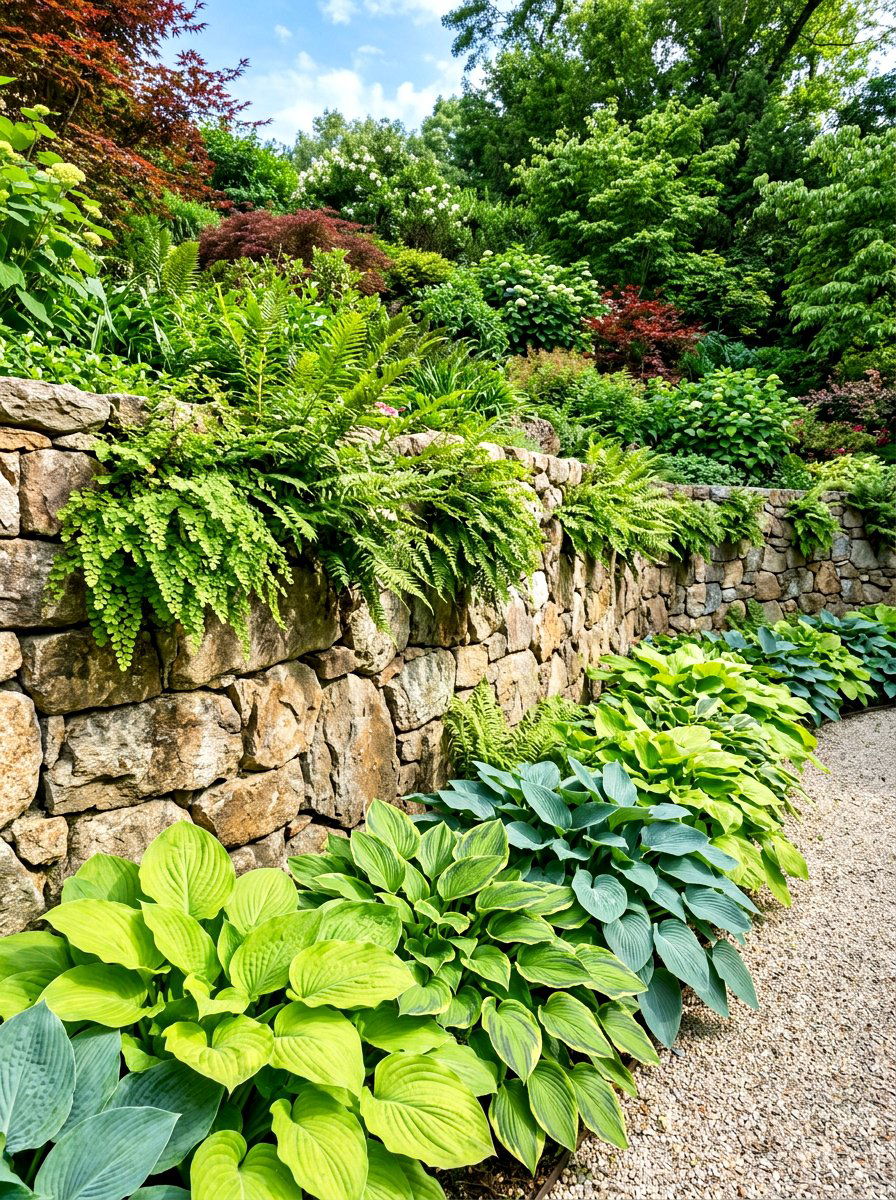
10. Cascading Waterfall Rock Garden
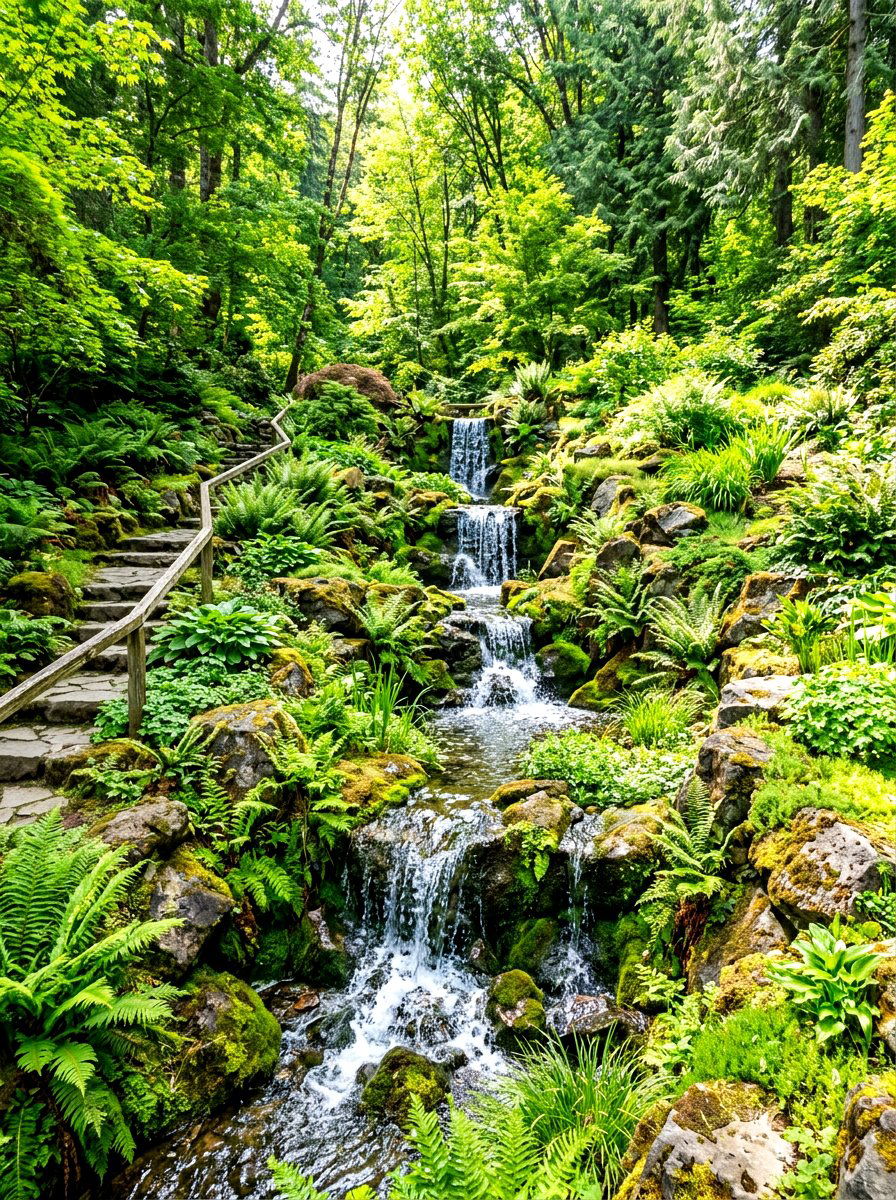
A steep slope is the perfect natural setting for a dramatic water feature that flows down multiple levels into a basin. By arranging rocks to create a series of small falls and pools, you can enjoy the soothing sound of moving water throughout your yard. Gravity does all the work, allowing the water to tumble over ledges and through mossy crevices before being pumped back to the top. This design not only creates a stunning focal point but also helps to mask neighborhood noise and create a tranquil atmosphere. Surrounding the water with ferns and moisture-loving plants enhances the naturalistic feel, making it look as though it has always been there.
11. Woodland Hillside Shade Garden
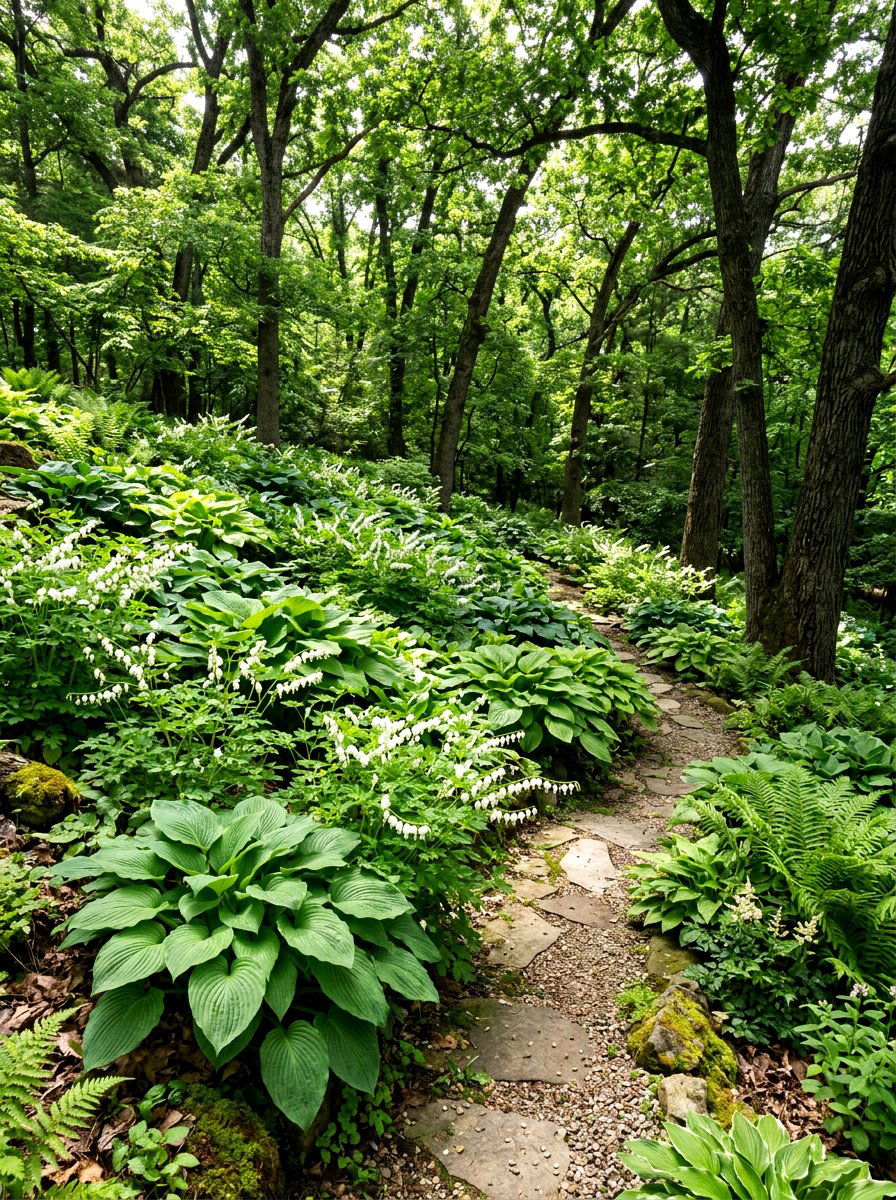
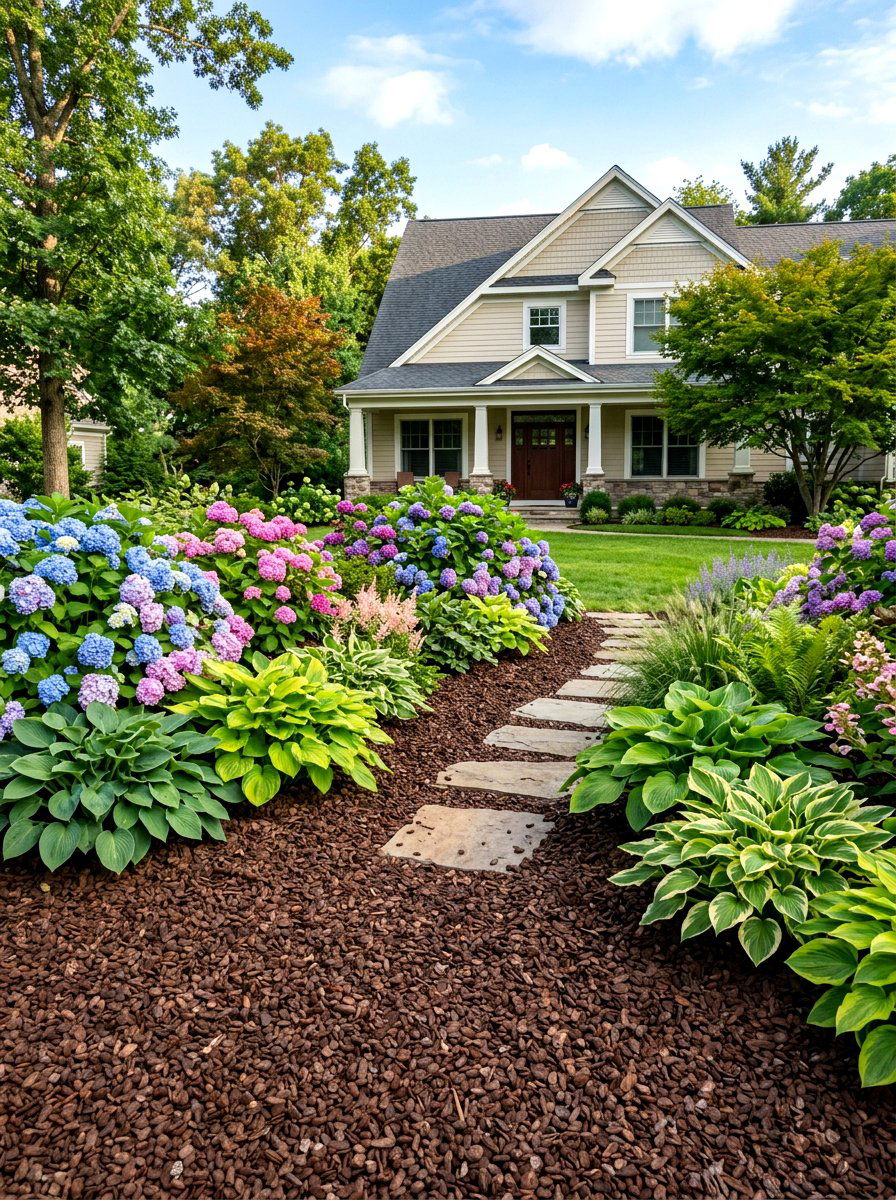
If your slope is tucked under a canopy of existing trees, a woodland-style garden is the most appropriate and beautiful choice. You can use shade-loving plants like hostas, bleeding hearts, and various ferns to create a cool, green carpet that thrives in lower light. Adding a path of natural bark mulch or stepping stones allows you to wander through the space without disturbing the delicate root systems of the trees. This design focuses on varying shades of green and subtle textures rather than bright floral displays, resulting in a peaceful and contemplative environment. It is a fantastic way to utilize a north-facing or heavily treed hill that might otherwise remain bare.
12. Contemporary Metal Edge Terracing
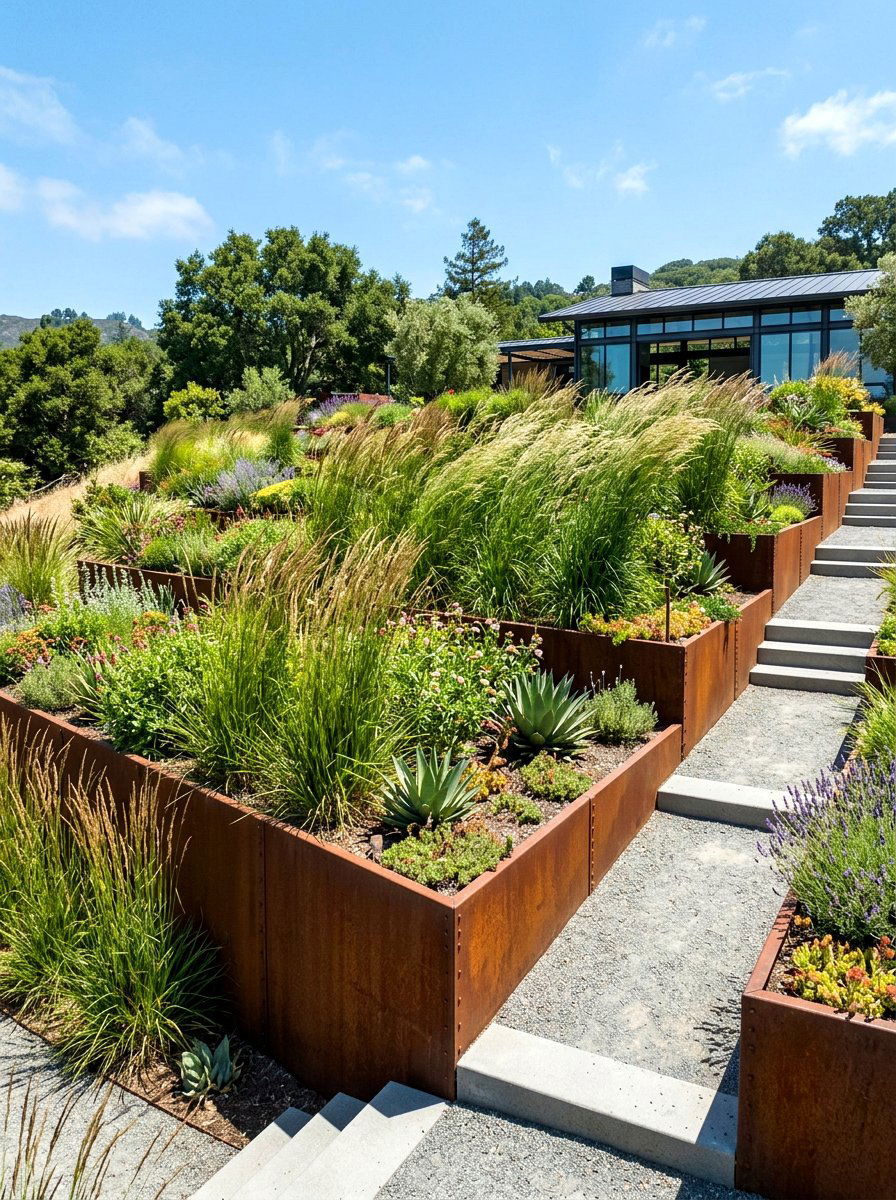
Using Corten steel or galvanized metal edging provides a thin, sharp profile that is perfect for modern or industrial landscape designs. These metal dividers take up very little space compared to stone or wood, allowing for maximum planting area on each narrow terrace. Over time, Corten steel develops a beautiful rusted patina that protects the metal while adding a warm, earthy orange tone to the garden. This material is incredibly durable and can be easily curved to follow the shape of the hillside, offering great flexibility in layout. It creates a striking visual contrast against the soft textures of ornamental grasses or delicate flowering perennials planted behind the edges.
13. Perennial Flower Slope Border
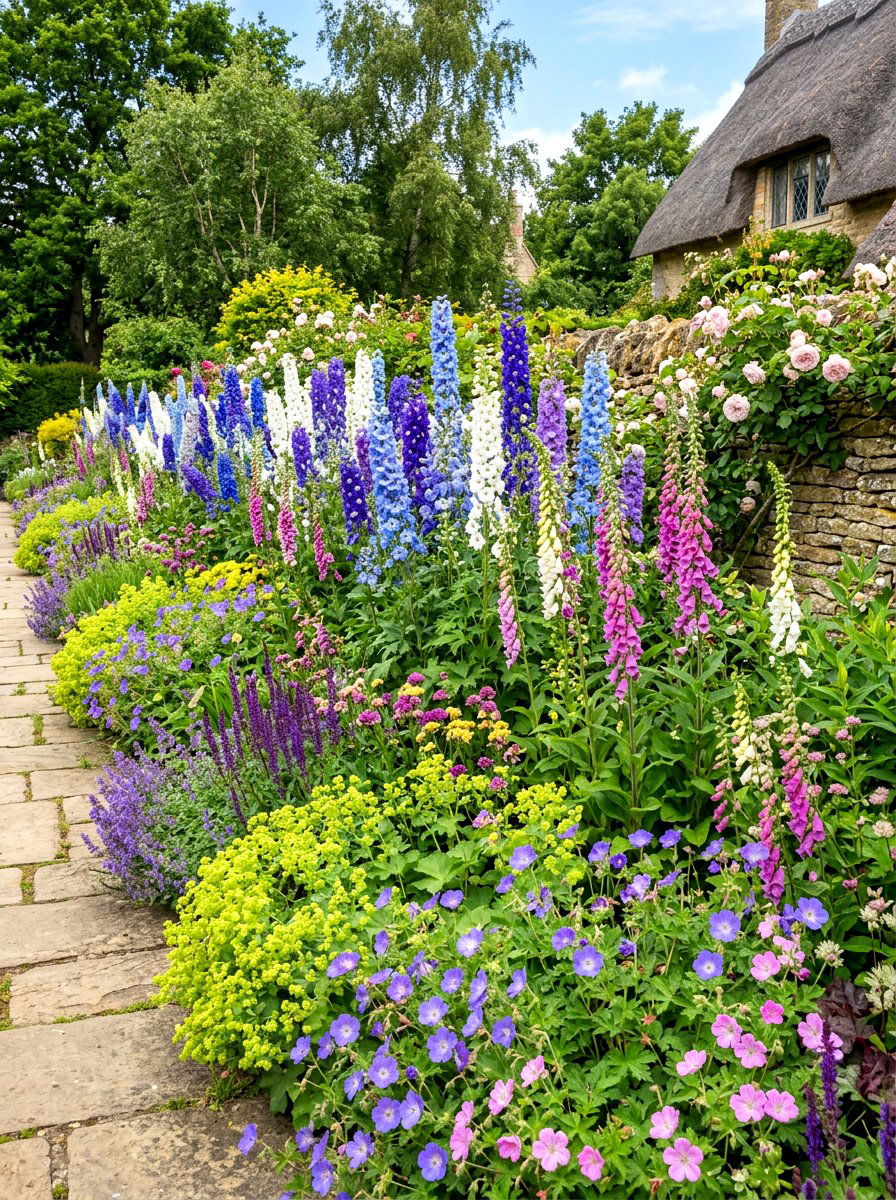
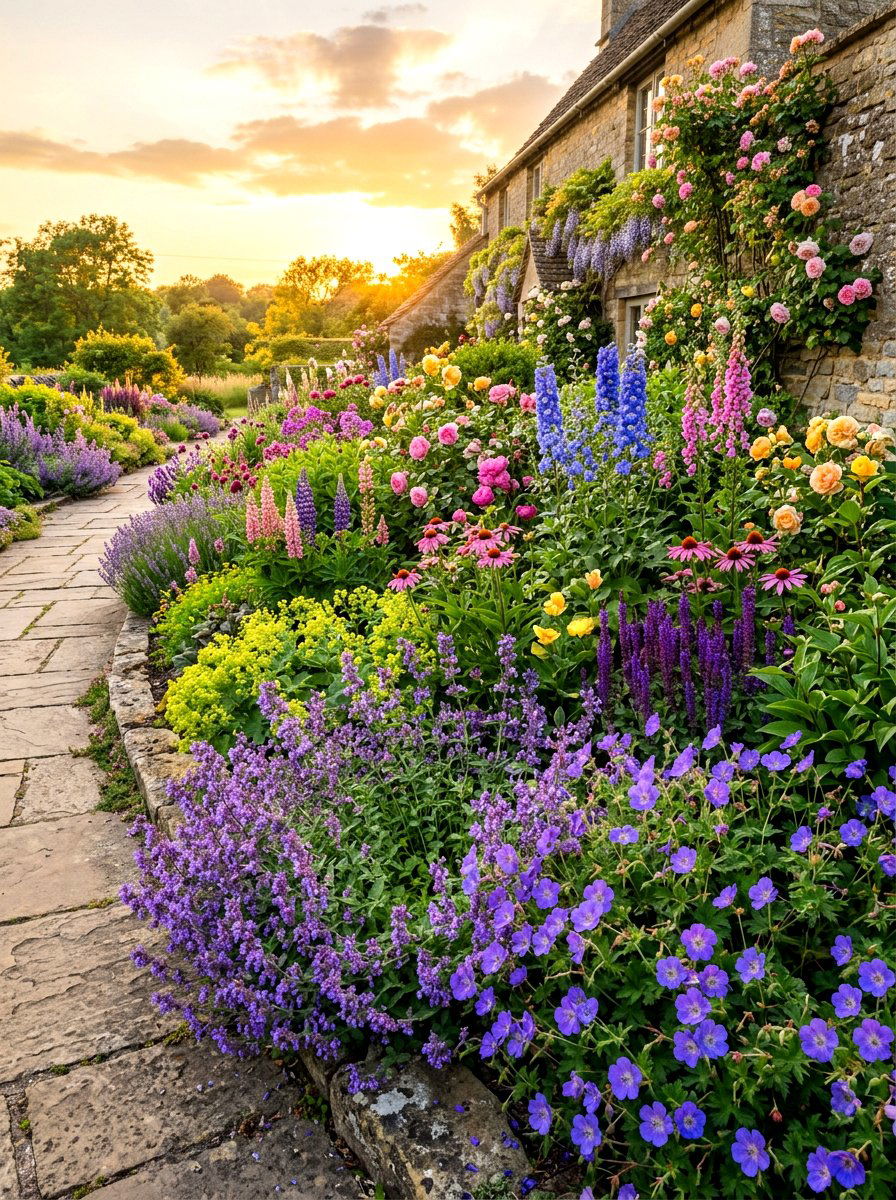
A long, sloping border filled with a variety of perennial flowers creates a massive splash of color that changes throughout the year. By selecting plants with different blooming times, you can ensure that the hillside remains attractive from early spring through late autumn. Taller species like delphiniums or foxgloves should be placed toward the back or top of the slope, with shorter mounding plants like hardy geraniums at the base. This vertical arrangement allows every flower to be seen clearly, creating a wall of color that is much more impactful than a traditional flat flower bed. It is a classic way to turn a hill into a showstopping garden.
14. Sloped Lawn With Stone Paths
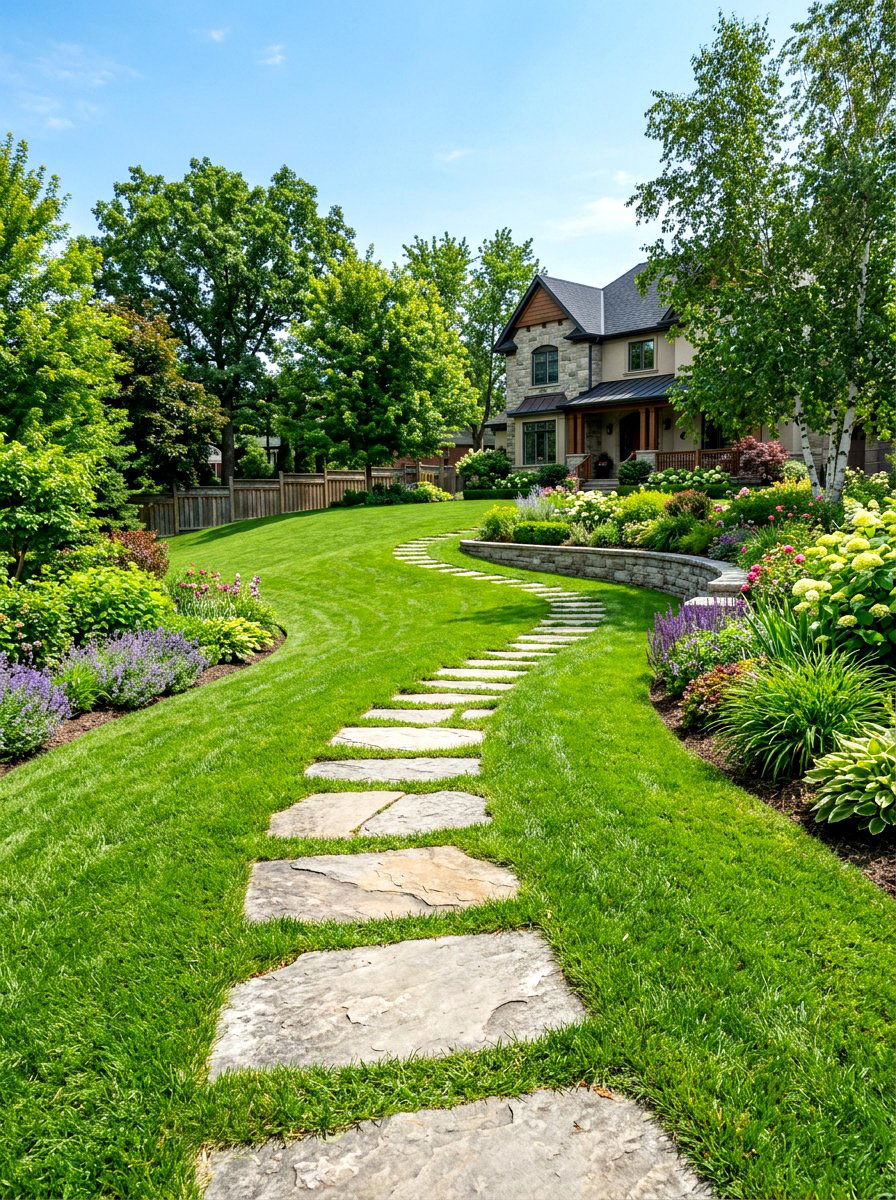
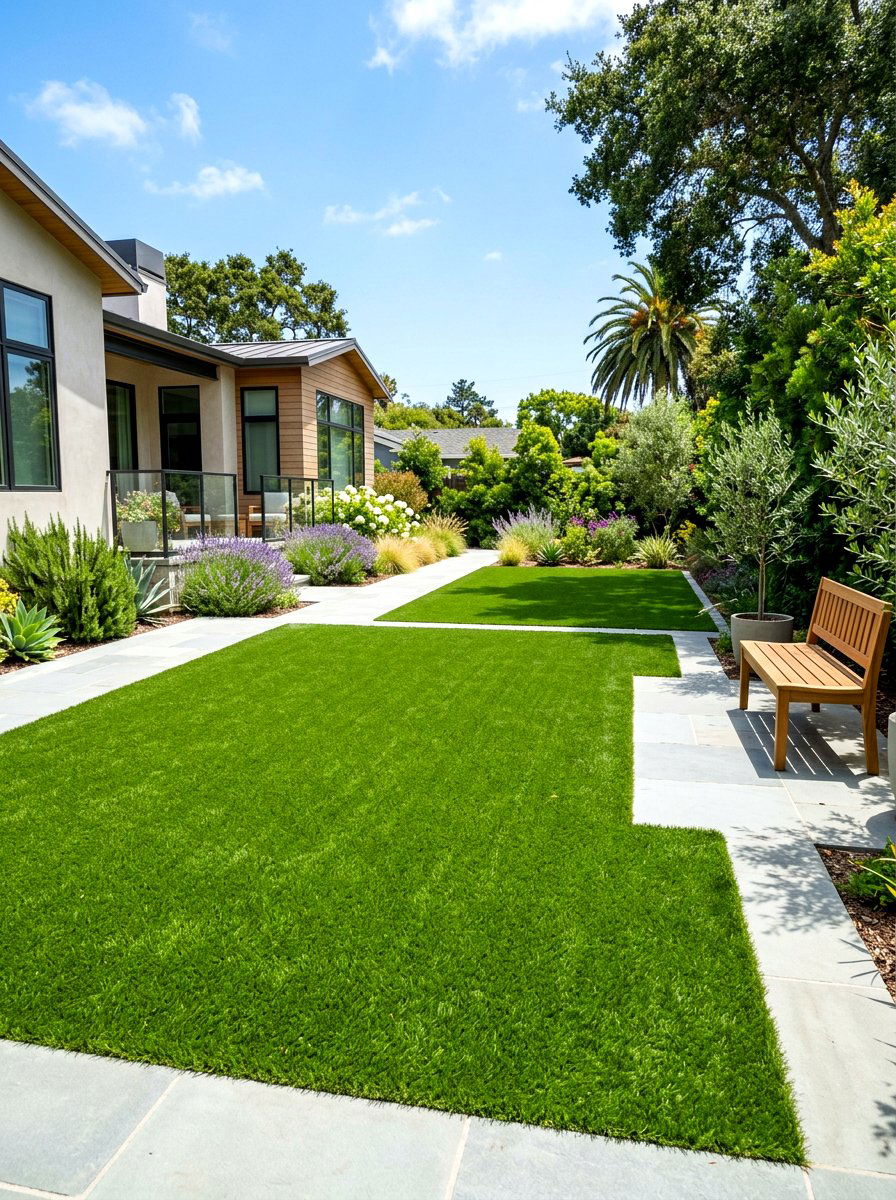
Maintaining a small patch of grass on a gentle incline can be achieved safely by integrating flat stone paths for easy access. These paths serve as "mowing strips" or walking routes, preventing you from slipping on damp grass while navigating the slope. Large flagstones set into the turf provide a stable footing and break up the monotonous look of a single green expanse. This design is ideal for families who still want a bit of soft space for children or pets to play while managing a slight grade. The combination of the manicured lawn and the rugged stone creates a balanced look that feels both tidy and naturally integrated into the site.
15. Low Maintenance Ground Cover Hillside
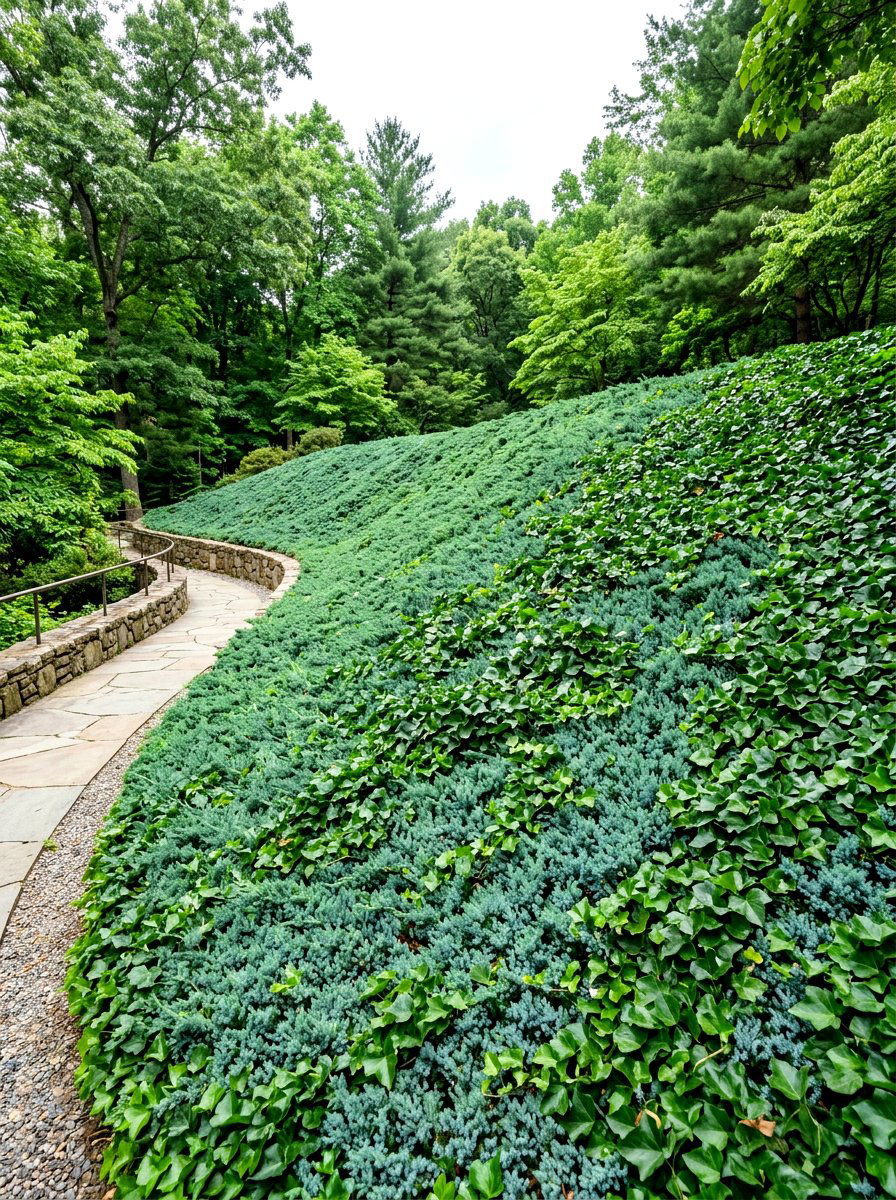
For those who want a beautiful slope without the constant need for weeding or pruning, a dense carpet of groundcover is the answer. Plants like creeping juniper, vinca minor, or pachysandra grow quickly to form a thick mat that chokes out weeds and anchors the soil. Once these plants are established, they require almost no intervention, making them perfect for steep areas that are difficult to reach. This "set it and forget it" approach creates a consistent, lush look that stays green all year round. It is a practical and cost-effective way to stabilize a large embankment while ensuring the yard looks intentional and well-kept without any heavy lifting.
16. Japanese Zen Slope Garden
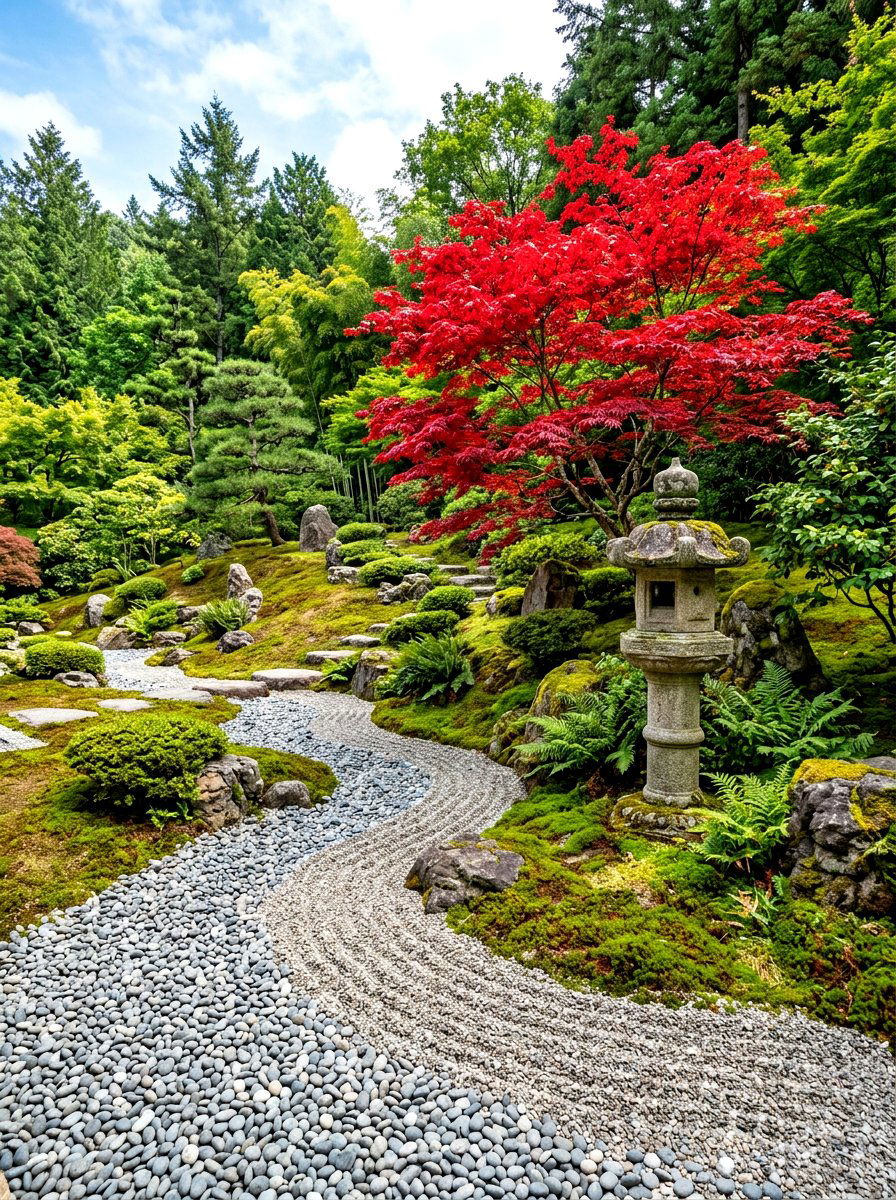
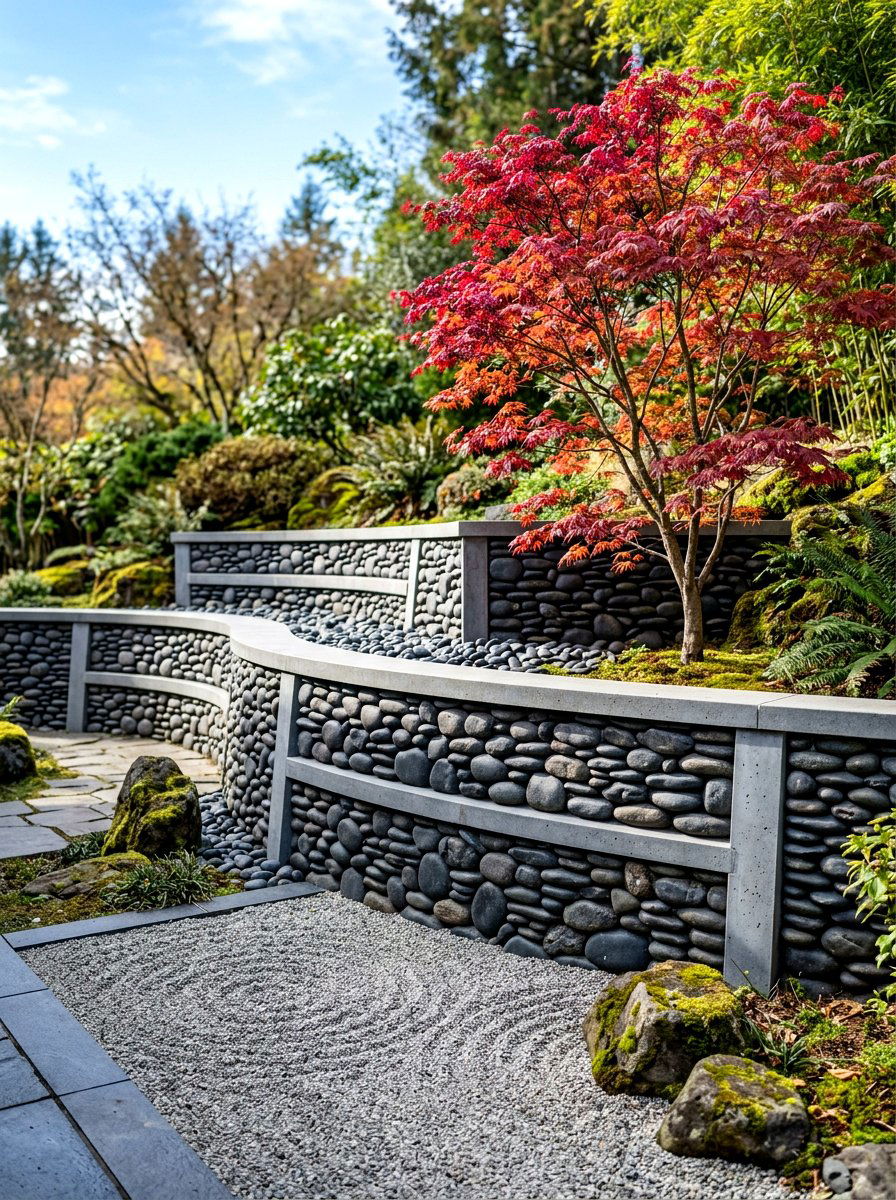
A sloped yard provides an excellent opportunity to create a multi-level Zen garden that emphasizes balance, simplicity, and natural beauty. You can use carefully placed boulders, raked gravel areas, and pruned evergreens to create a sense of scale and perspective. A small stone basin or a dry "river" made of smooth pebbles can flow down the incline, mimicking the movement of water without the maintenance of a pump. This design often features maples with vibrant fall color and moss-covered stones that suggest age and permanence. The verticality of the slope helps to create distinct "vistas" or viewpoints, allowing you to experience the garden's calm from many different angles and heights.
17. Raised Bed Vegetable Slope
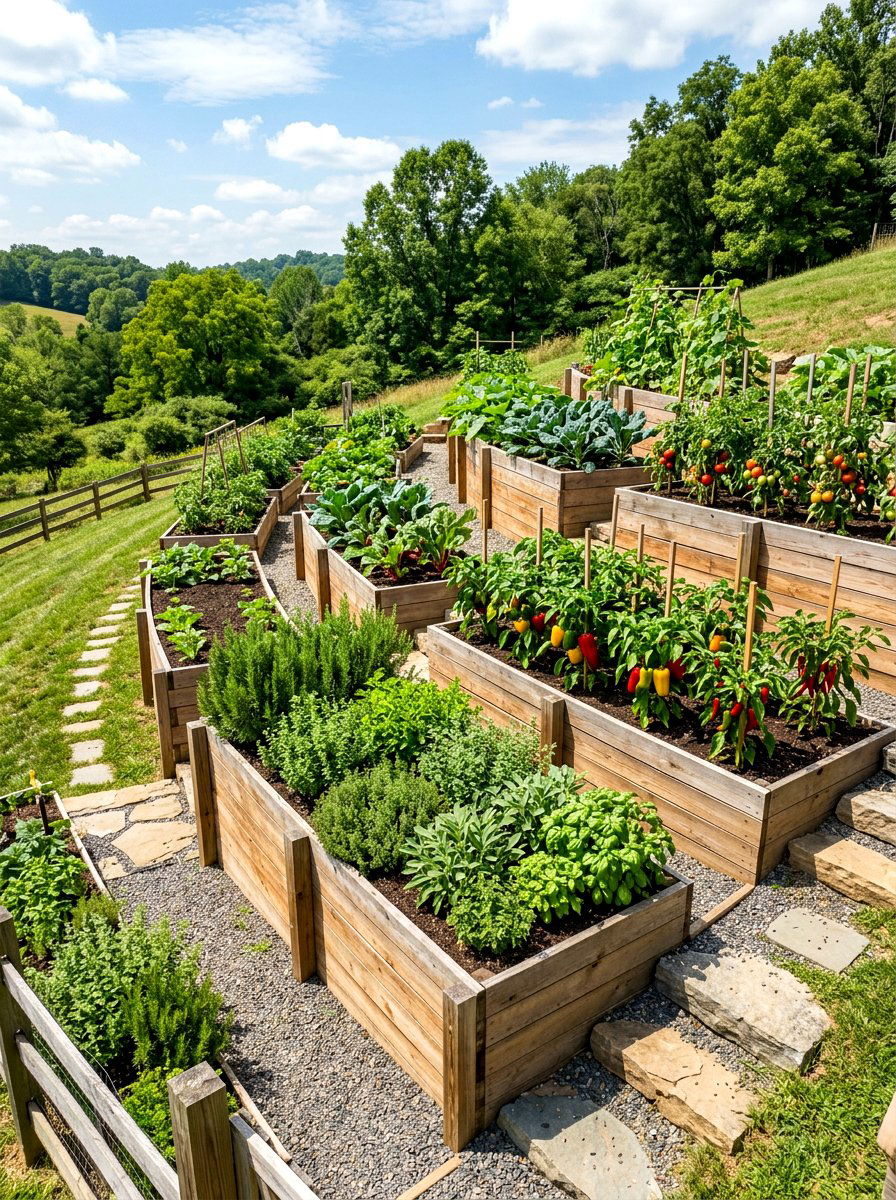
Constructing tiered raised beds out of cedar or composite materials allows you to garden comfortably on even the steepest of hillsides. These boxes are built into the slope, providing a level surface for soil and plants while the walls of the beds act as small retaining structures. This setup is perfect for intensive vegetable gardening because the soil warms up faster in the spring and provides superior drainage. You can install a simple drip irrigation system that runs down the hill to ensure each bed receives the perfect amount of water. This organized and productive layout turns an awkward backyard incline into a highly efficient and attractive mini-farm for your home.
18. Desert Xeriscape Sloped Yard
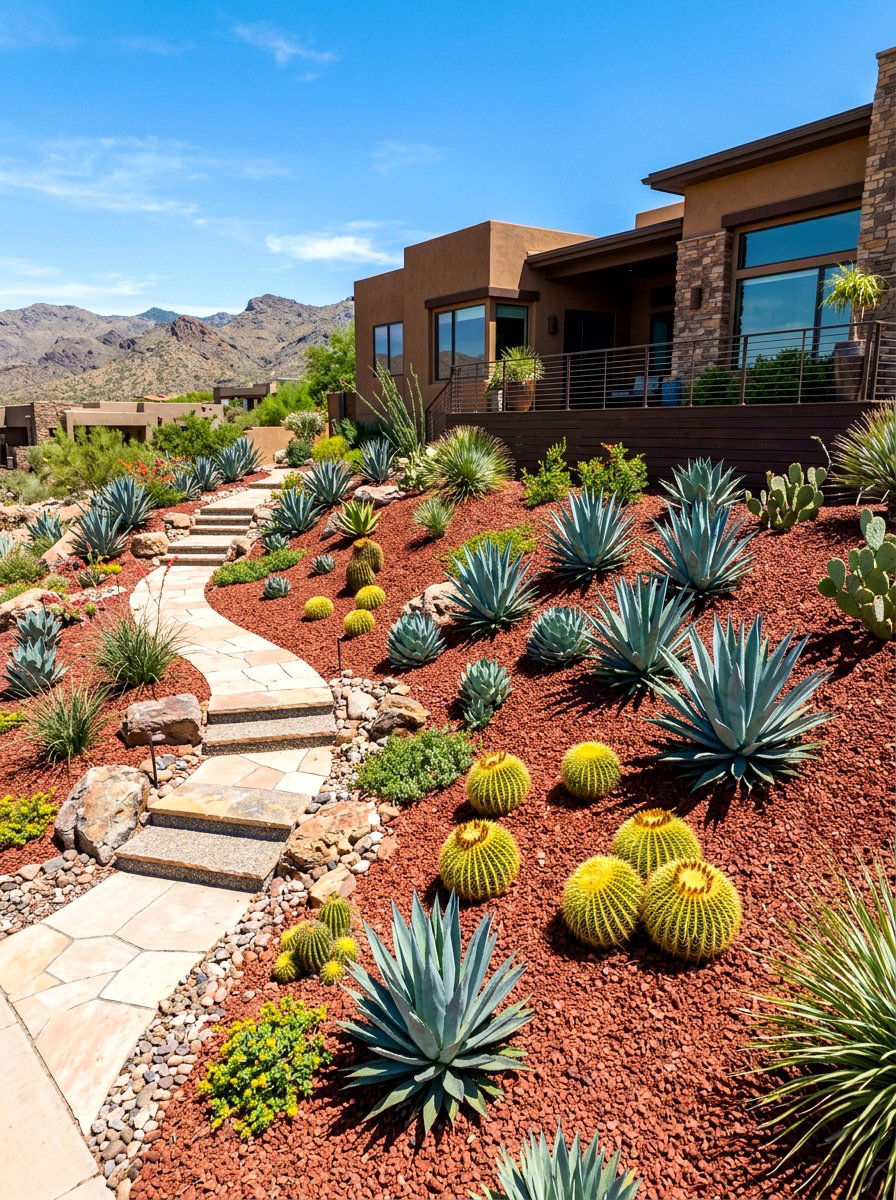
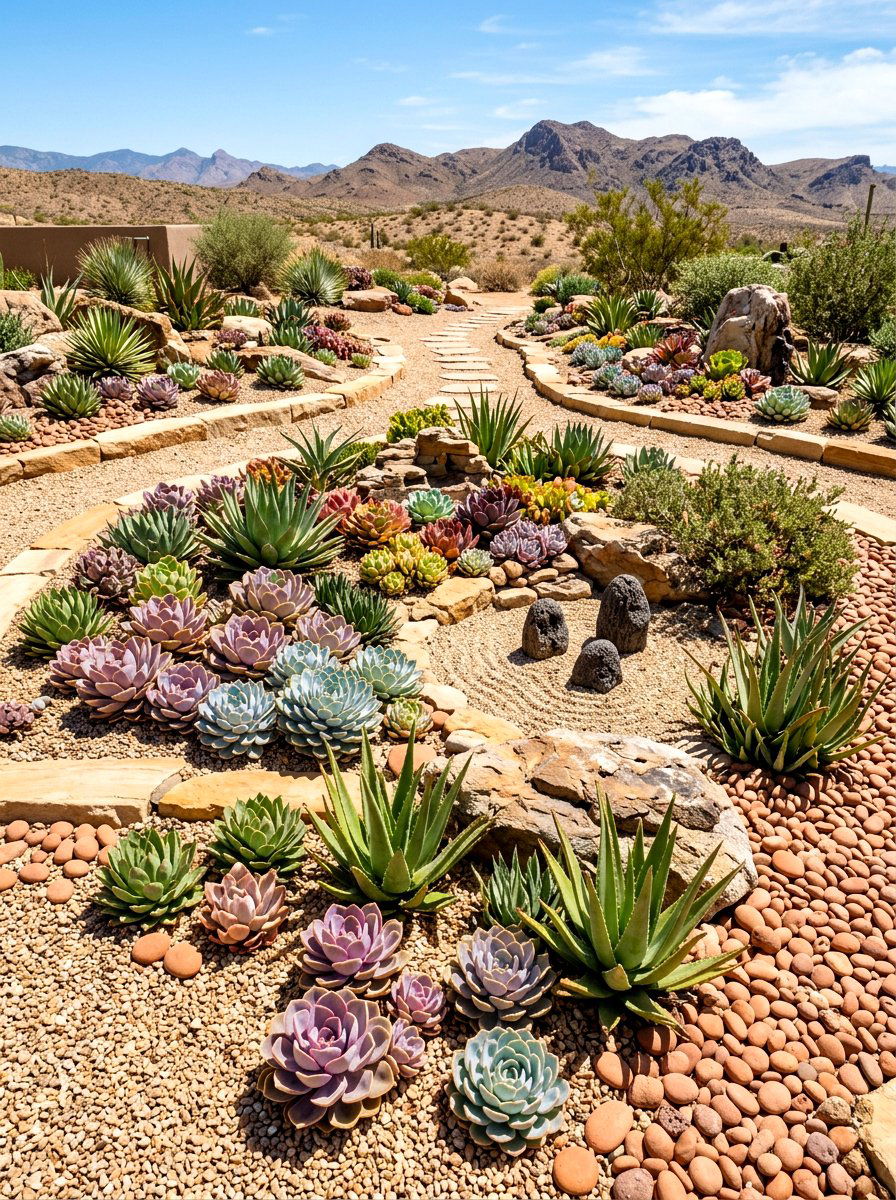
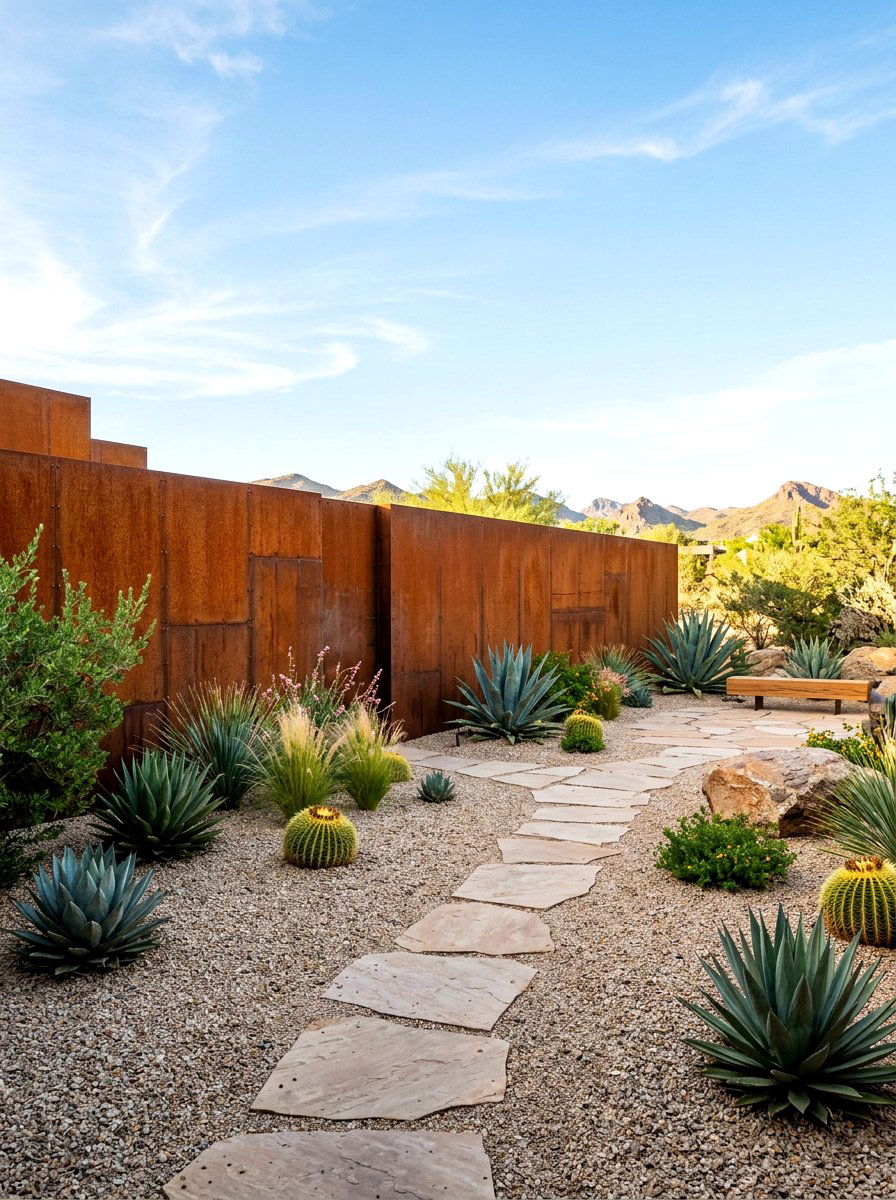
In arid climates, a sloped yard is the ideal place for a xeriscape design that utilizes succulents, cacti, and crushed stone. These plants are naturally adapted to well-drained soil, making the incline an asset rather than a problem. You can arrange different sizes of agave, yucca, and barrel cacti to create a sculptural landscape that requires almost no water once established. Using various colors of decomposed granite or river rock as a ground cover adds visual texture and prevents erosion. This design is incredibly low-maintenance and environmentally friendly, offering a modern and rugged aesthetic that celebrates the unique beauty of desert flora while perfectly managing a hillside grade.
19. Floating Deck On Steep Slope
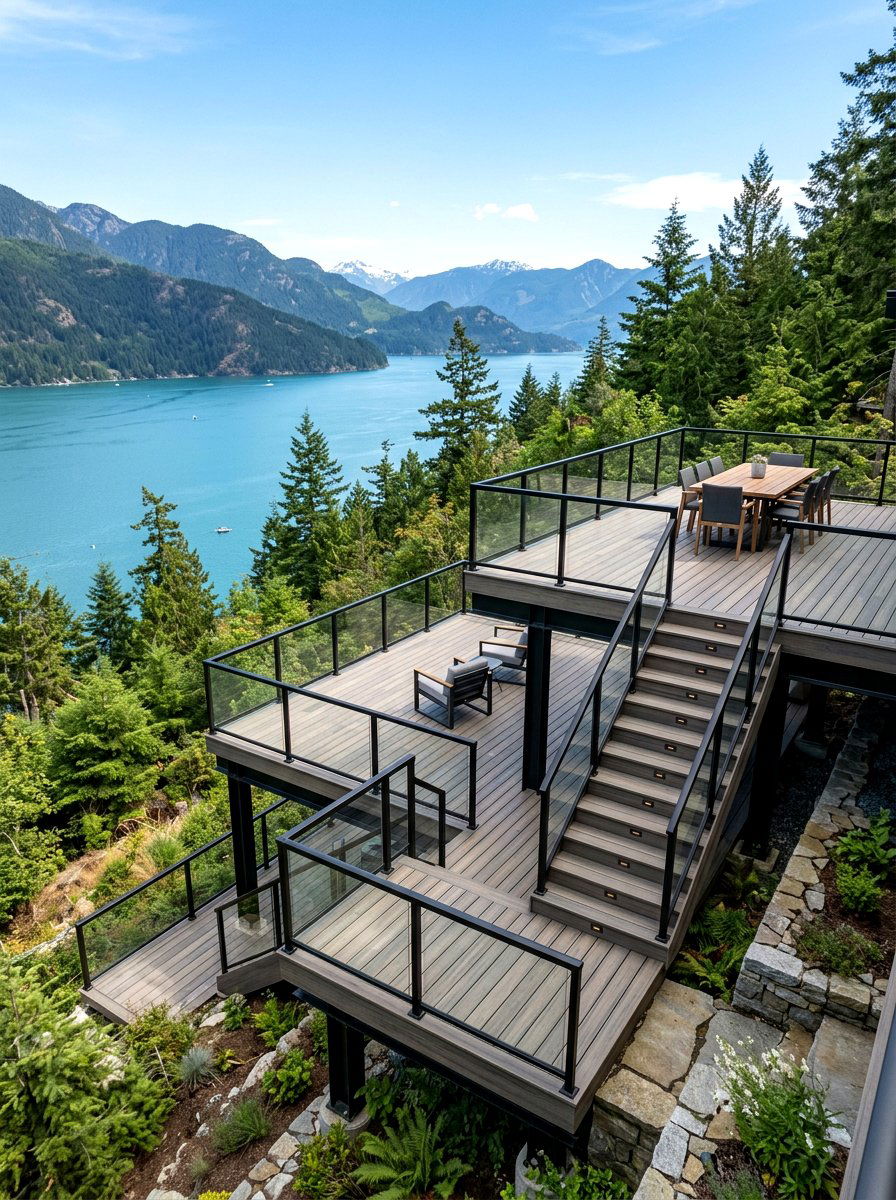
When a hill is too steep for traditional gardening, building a multi-level floating deck provides a series of functional outdoor living platforms. These wooden or composite structures are supported by piers, allowing them to "hover" over the terrain without requiring massive excavation. This approach preserves the natural grade of the land underneath while giving you flat, usable space for dining, lounging, or sunbathing. You can leave openings in the deck for existing trees to grow through, creating a seamless blend between the architecture and the environment. This is often the best solution for very dramatic drops where you want to maximize your view and create a high-end entertaining space.
20. Cottage Style Flower Hillside
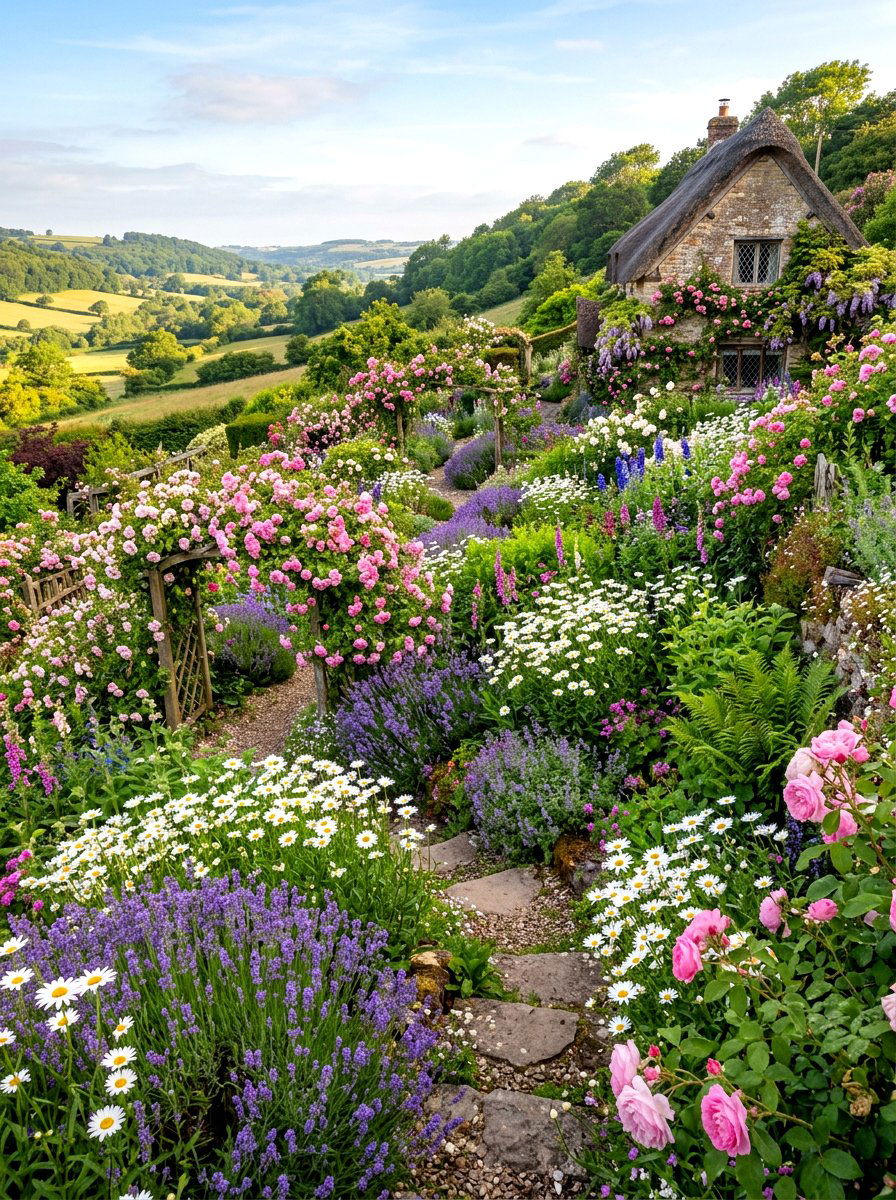
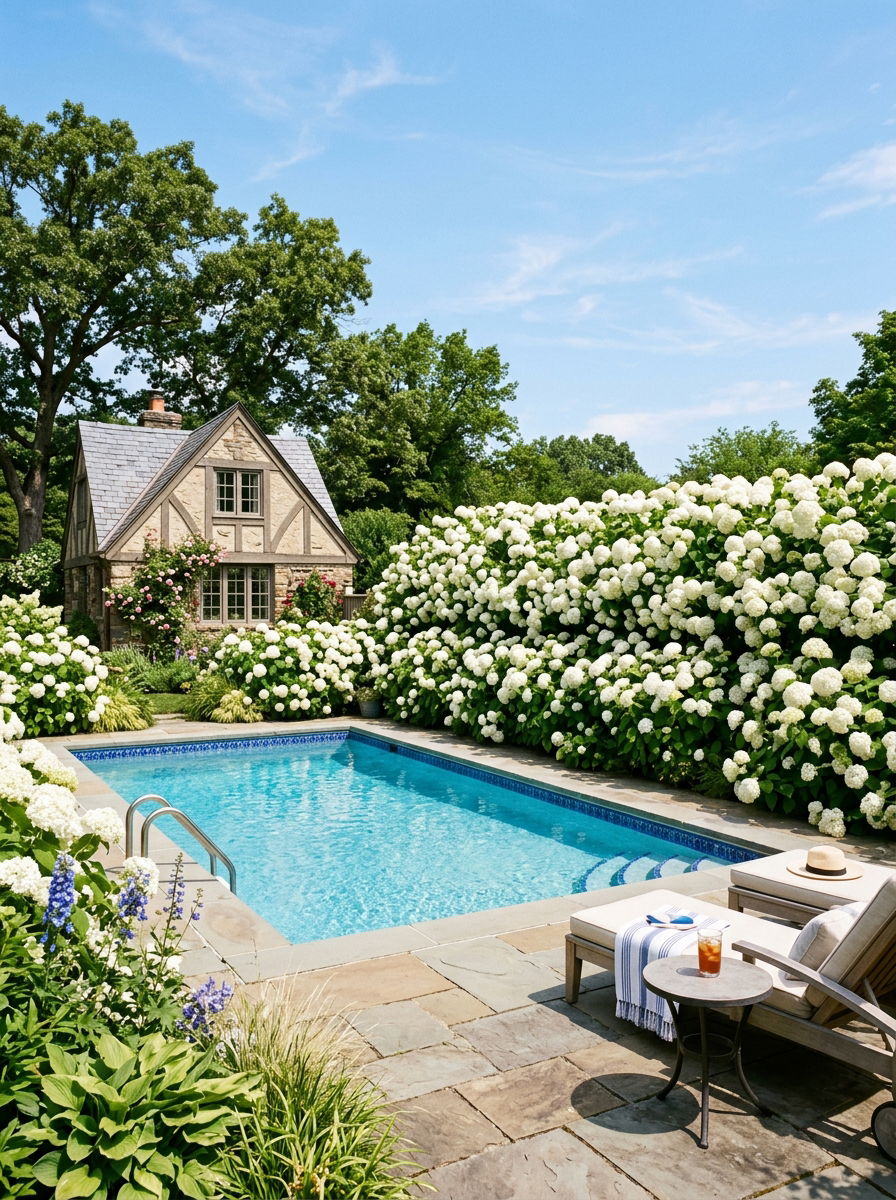
A cottage garden on a slope is all about abundance, soft colors, and a charmingly lived-in feel that hides the underlying structure. You can use informal materials like old bricks or weathered wood to create subtle tiers that are quickly hidden by spilling roses, peonies, and catmint. This design thrives on a bit of chaos, with plants allowed to self-seed and wander across paths, softening the sharp lines of the hillside. The height of the slope allows the fragrant blooms to be closer to eye and nose level, enhancing the sensory experience of the garden. It is a romantic and welcoming approach that turns a difficult bank into a blooming paradise.
21. Gabion Wall Terrace Landscape
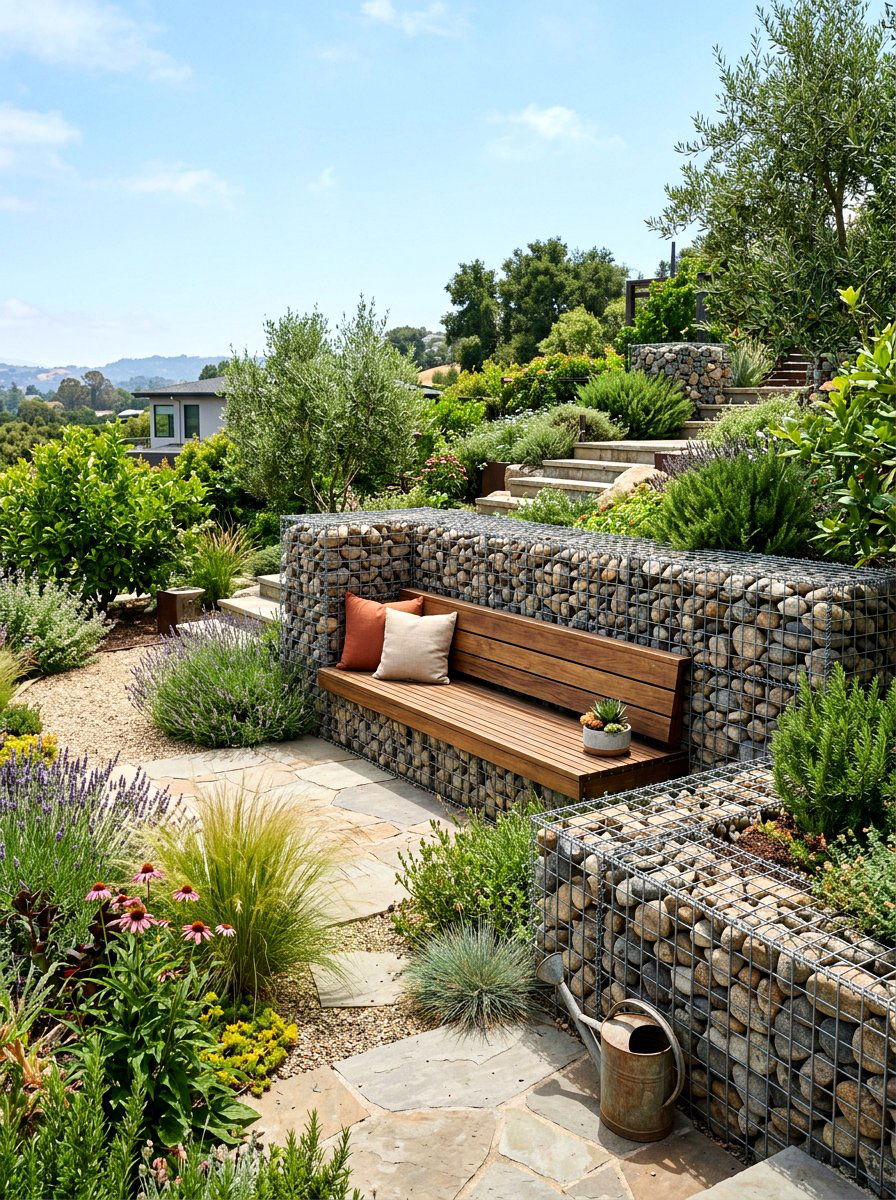
Using gabion baskets — wire cages filled with stones — offers a highly durable and industrial-chic way to terrace a sloped backyard. These structures are excellent for drainage because water can flow freely through the gaps in the rocks, preventing the buildup of hydrostatic pressure that can collapse solid walls. You can fill them with local stones for a natural look or use recycled glass or colorful river rocks for a more artistic statement. The flat tops of the gabions can even be capped with wood to create long, built-in benches for extra seating. This functional and stylish solution provides a strong structural backbone for a modern, tiered garden that will last for decades.
22. Sloped Orchard With Fruit Trees
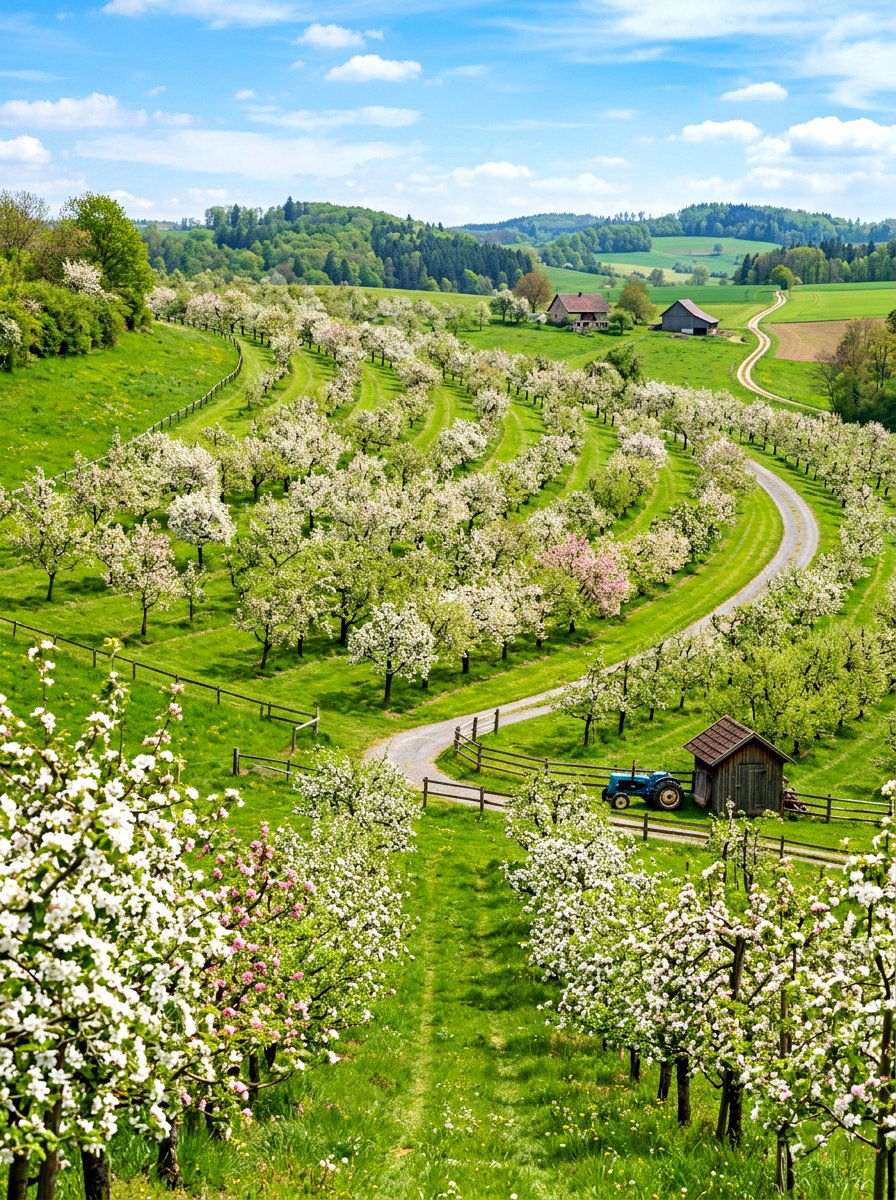
Planting fruit trees on an incline is a traditional and highly effective way to utilize sloped land for food production. Trees like apples, pears, and cherries benefit from the excellent air circulation and drainage that a hillside provides, which helps to prevent common fungal diseases. By staggering the trees along the contour of the hill, you ensure that each one has enough space and light to thrive. You can plant a cover crop of clover or wildflowers beneath the trees to stabilize the soil and attract pollinators. This design creates a beautiful "blooming hill" in the spring and a bountiful harvest in the late summer and autumn months.
23. Modern Glass Railing Deck Slope
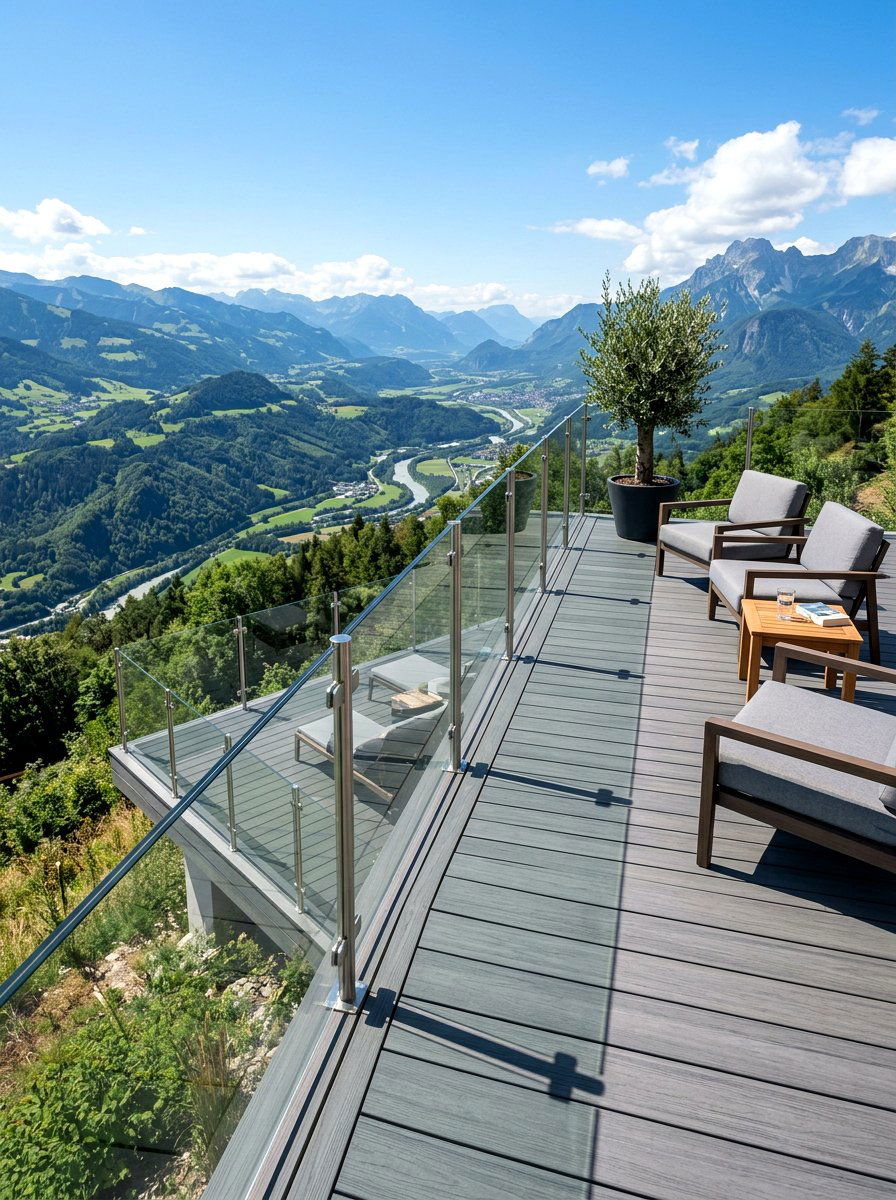
For homes with a spectacular view, a tiered deck system featuring glass railings ensures that the sightline remains completely unobstructed. These transparent barriers provide the necessary safety on a steep slope while making the outdoor space feel much larger and more open. The combination of clean-lined decking and sleek glass creates a luxurious, contemporary aesthetic that is perfect for entertaining. You can integrate small planting pockets into the deck levels to add a touch of greenery without cluttering the floor space. This high-end design turns a vertical backyard into a series of sophisticated "viewing platforms" that celebrate the surrounding landscape and provide a seamless indoor-outdoor living experience.
24. Flagstone Path Hillside Garden
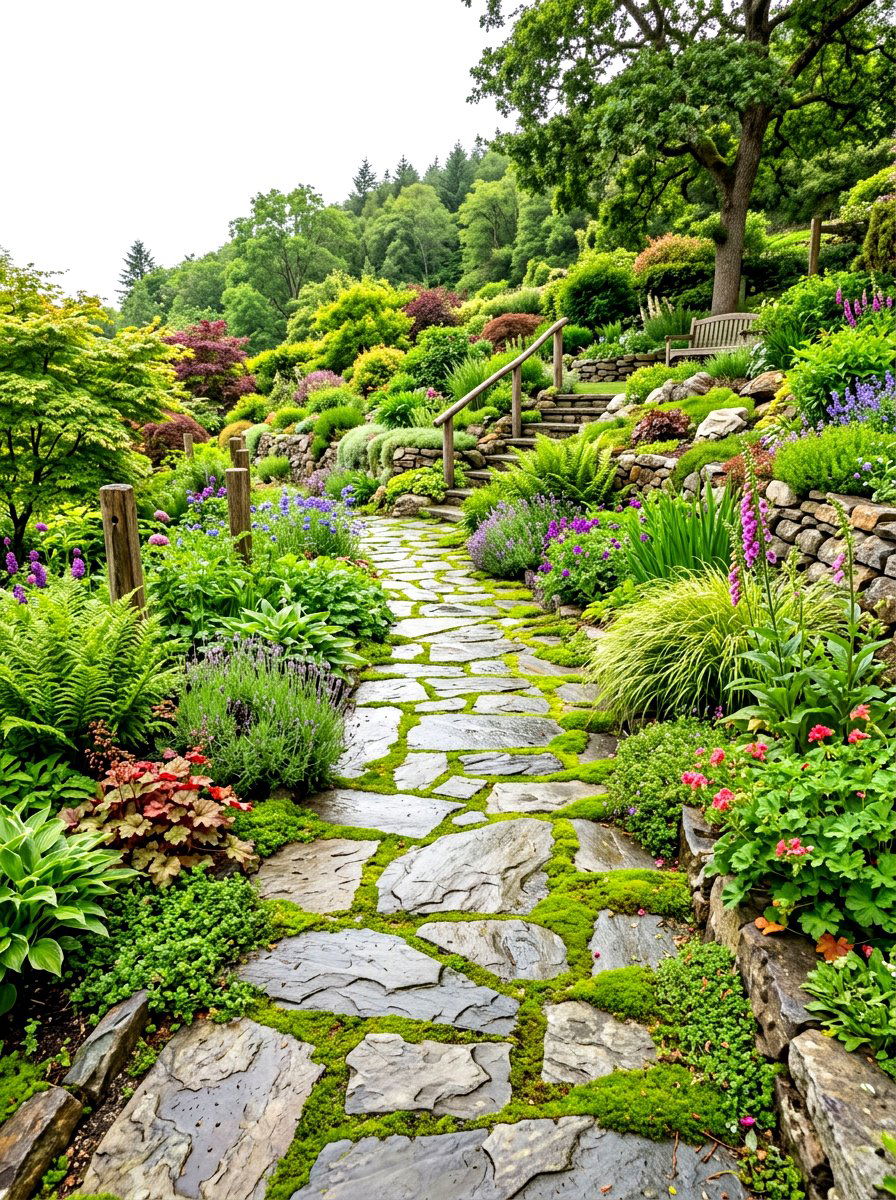
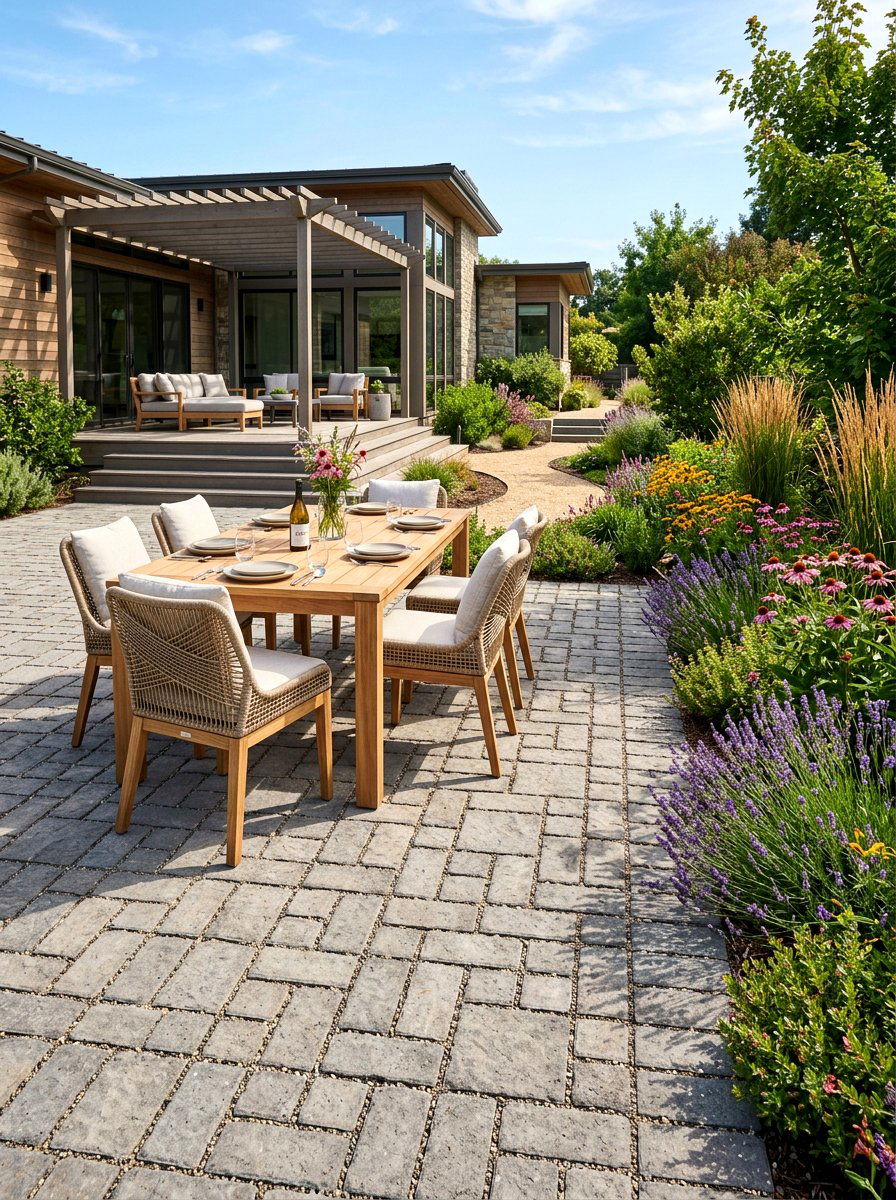
Creating a winding path of large, natural flagstones is a classic way to make a sloped garden accessible and visually engaging. These stones can be set directly into the soil or a gravel base, forming a rugged "staircase" that feels much more organic than poured concrete. As the path snakes up the hill, it creates different perspectives of the plantings, making a small yard feel much deeper and more interesting. You can plant low-growing herbs like creeping rosemary or lemon thyme along the edges of the path so that their scent is released whenever you walk by. This design is both practical for maintenance and beautiful as a focal point.
25. Evergreen Shrub Sloped Border
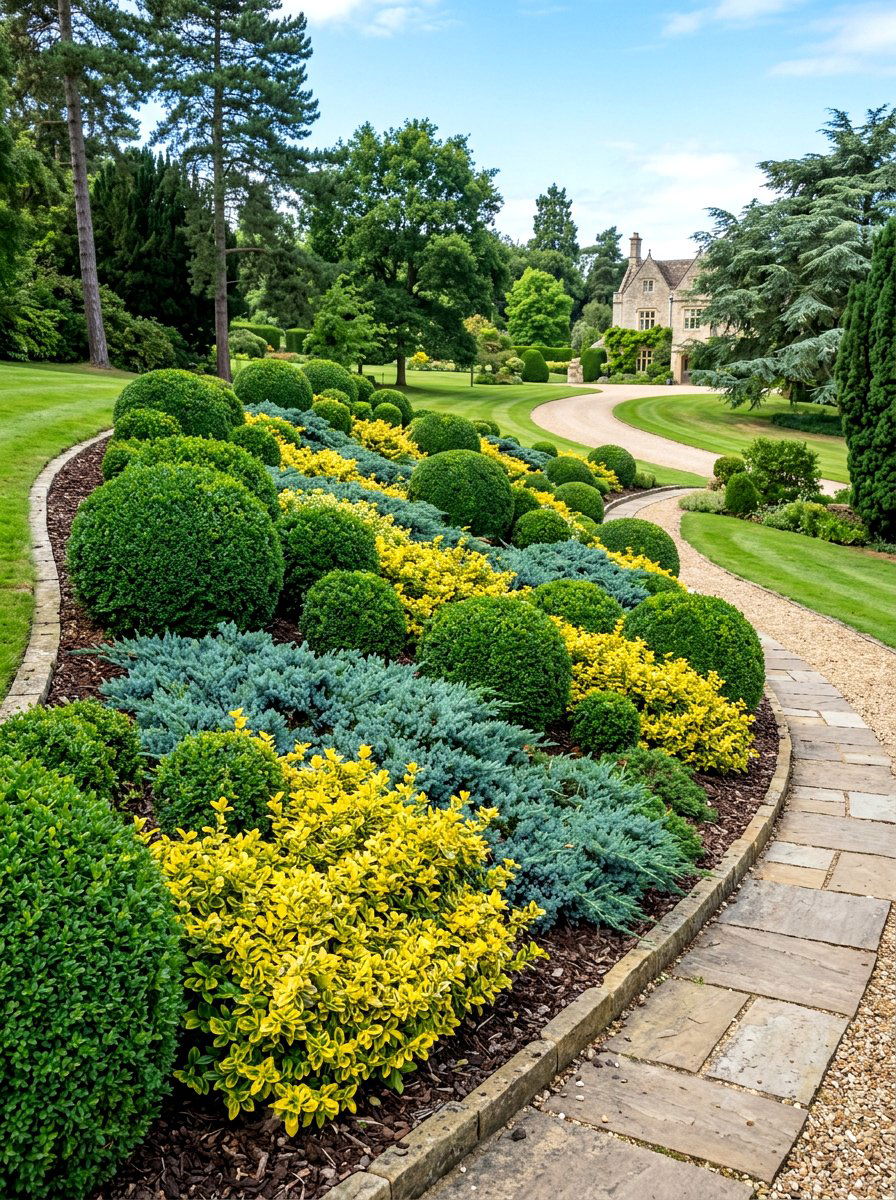
Using a variety of evergreen shrubs on a slope ensures that your landscape remains structured and vibrant even during the cold winter months. By mixing different textures and colors — such as the deep green of boxwood, the silvery blue of juniper, and the bright gold of euonymus — you can create a rich tapestry of foliage. These plants are excellent for erosion control because their roots remain active year-round, holding the soil firmly in place. This design provides a clean and tidy look that requires very little maintenance once the shrubs reach their mature size. It is an ideal solution for a front yard slope where you want a polished appearance.
26. Native Grass Hillside Meadow
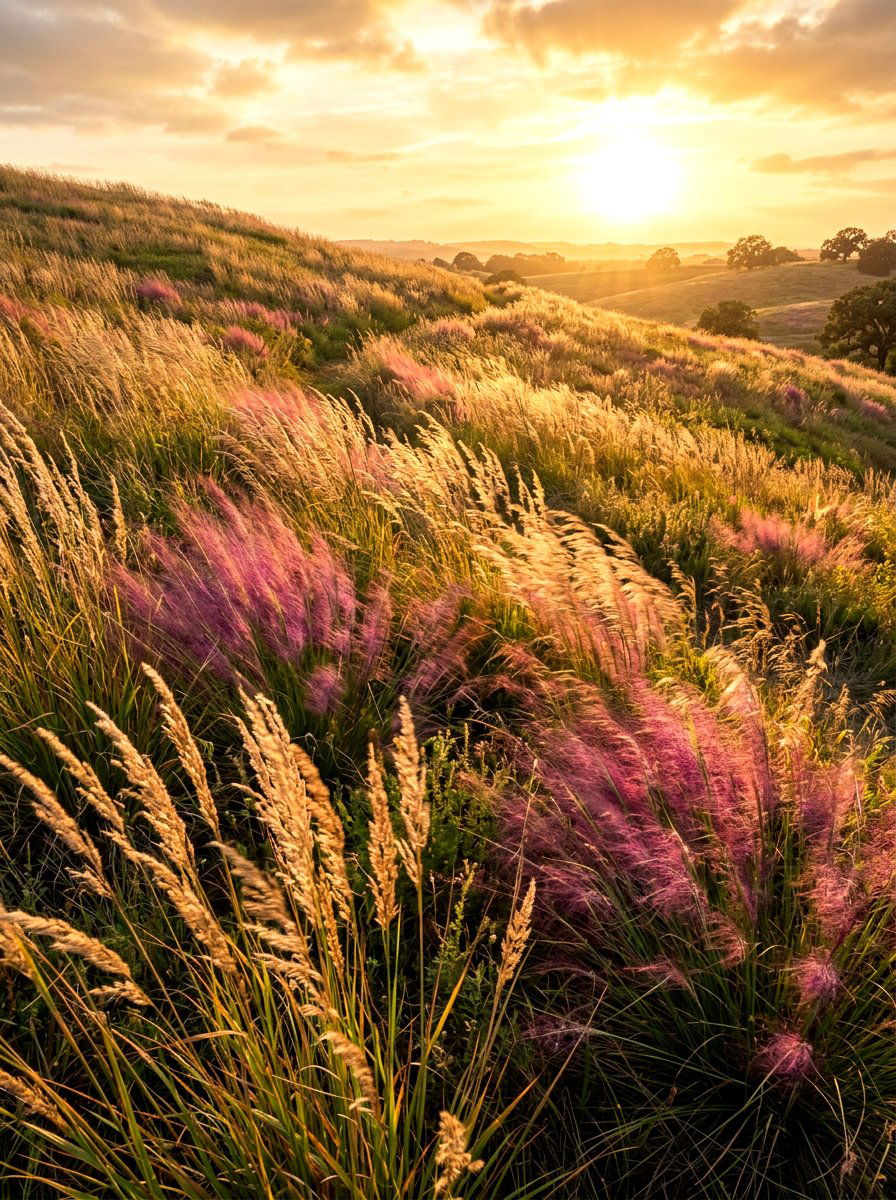
Planting a variety of native ornamental grasses on a slope creates a dynamic and low-maintenance landscape that moves beautifully in the wind. Grasses like little bluestem, switchgrass, and fescue have incredibly deep root systems that are perfect for anchoring steep embankments and absorbing excess water. Their fine textures and changing colors — from summer greens to autumn oranges and winter tans — provide year-round interest without the need for deadheading or frequent watering. This design feels very modern and naturalistic, fitting perfectly into contemporary or prairie-style homes. It is a sustainable choice that supports local wildlife while providing a soft, rustling backdrop to your outdoor living space.
27. Tiered Herb Garden Slope
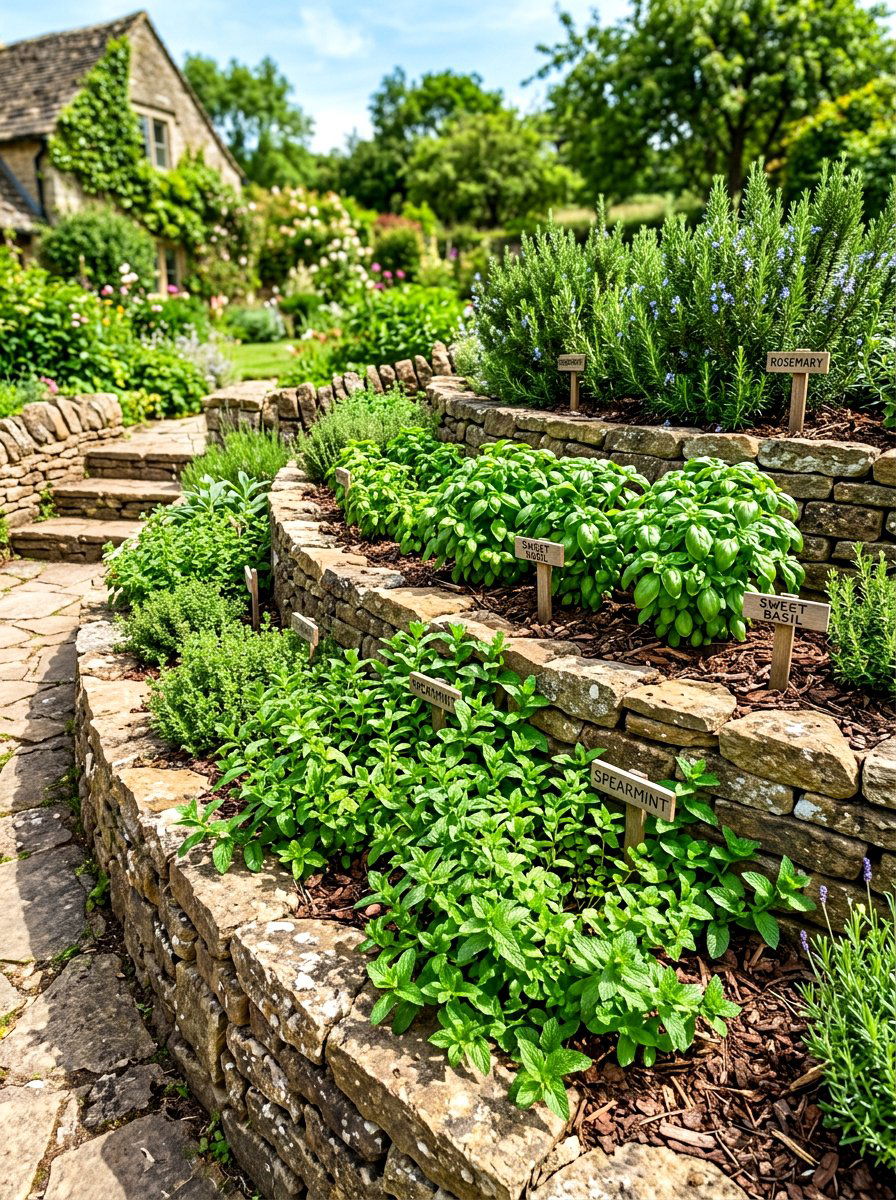
Building small, stone-lined tiers specifically for an herb garden is a wonderful way to utilize a sunny slope near a kitchen or patio. Most culinary herbs, such as sage, oregano, and thyme, thrive in the well-drained conditions found on an incline. By placing the herbs in tiered beds, you make it easy to harvest them without having to bend down too far. This design can be very formal with neat rows or more whimsical with herbs tumbling over the rock edges. The vertical arrangement also means that the fragrance of the herbs is easily carried by the breeze, creating a wonderful aromatic experience whenever you spend time in your backyard.
28. Coastal Slope Garden With Grasses
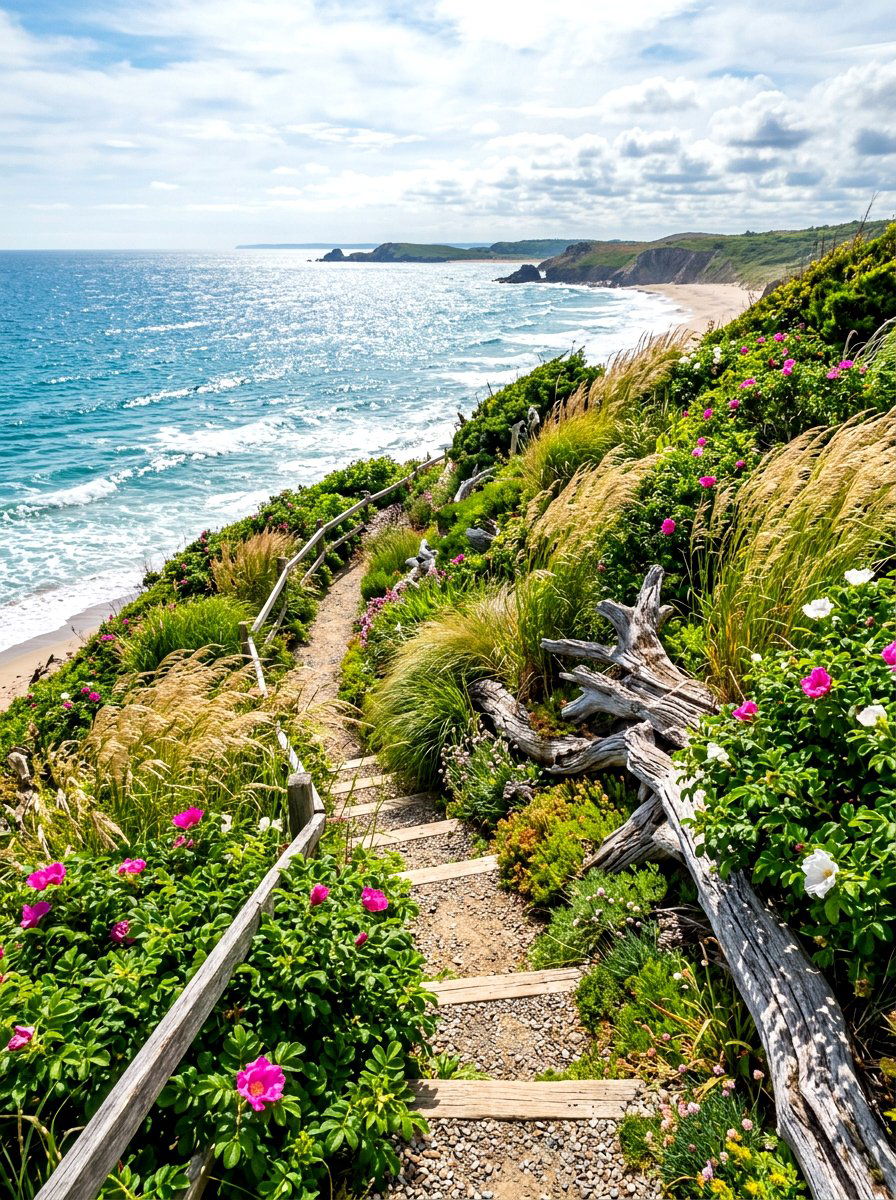
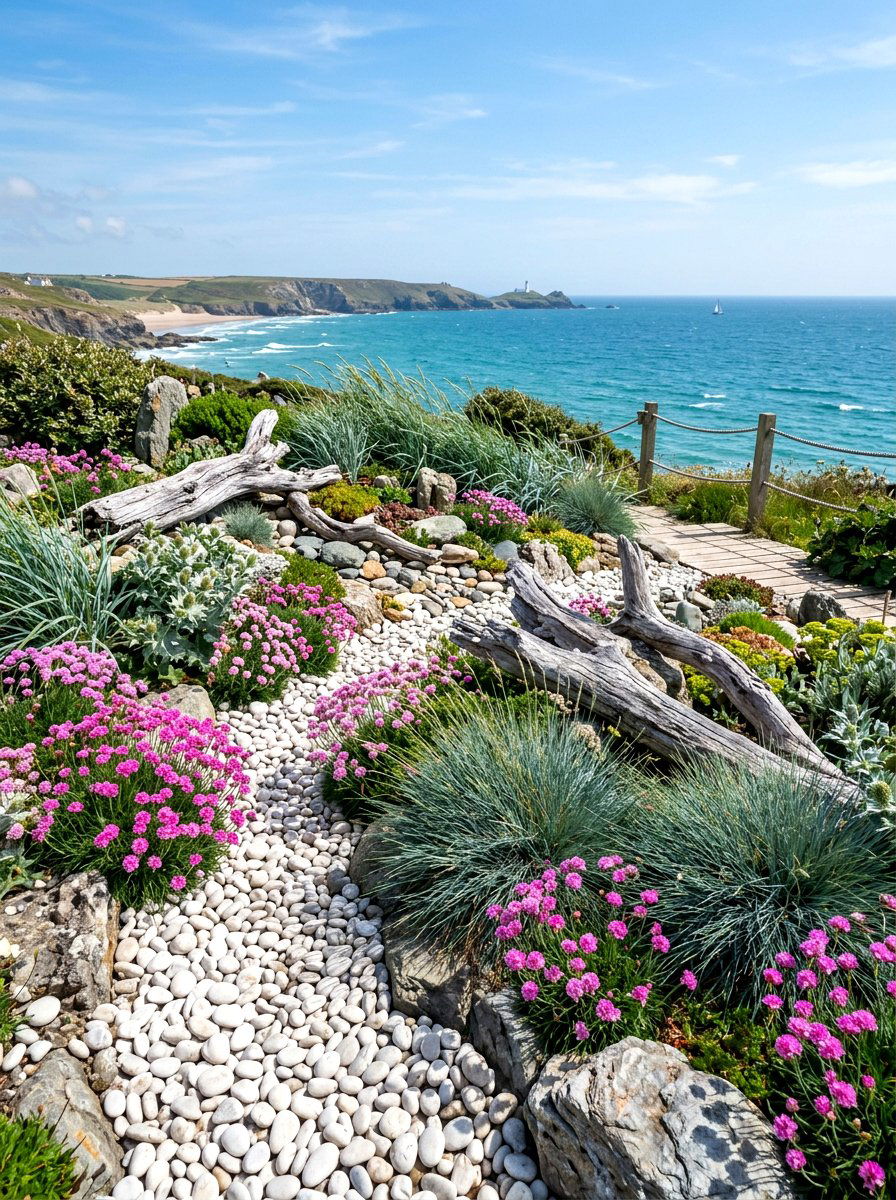
If your sloped property is near the ocean, using salt-tolerant grasses and hardy perennials is essential for a successful landscape. Sea oats, beach grasses, and rugosa roses are excellent choices that can handle the wind and salt spray while stabilizing sandy soil on an incline. This design often incorporates weathered driftwood and local stone to create a rugged, seaside aesthetic that feels perfectly in tune with the environment. The movement of the grasses mimics the waves of the ocean, creating a relaxing and rhythmic atmosphere. This is a highly resilient and beautiful way to manage a coastal hillside while protecting your property from the elements.
29. Formal Boxwood Terraced Garden
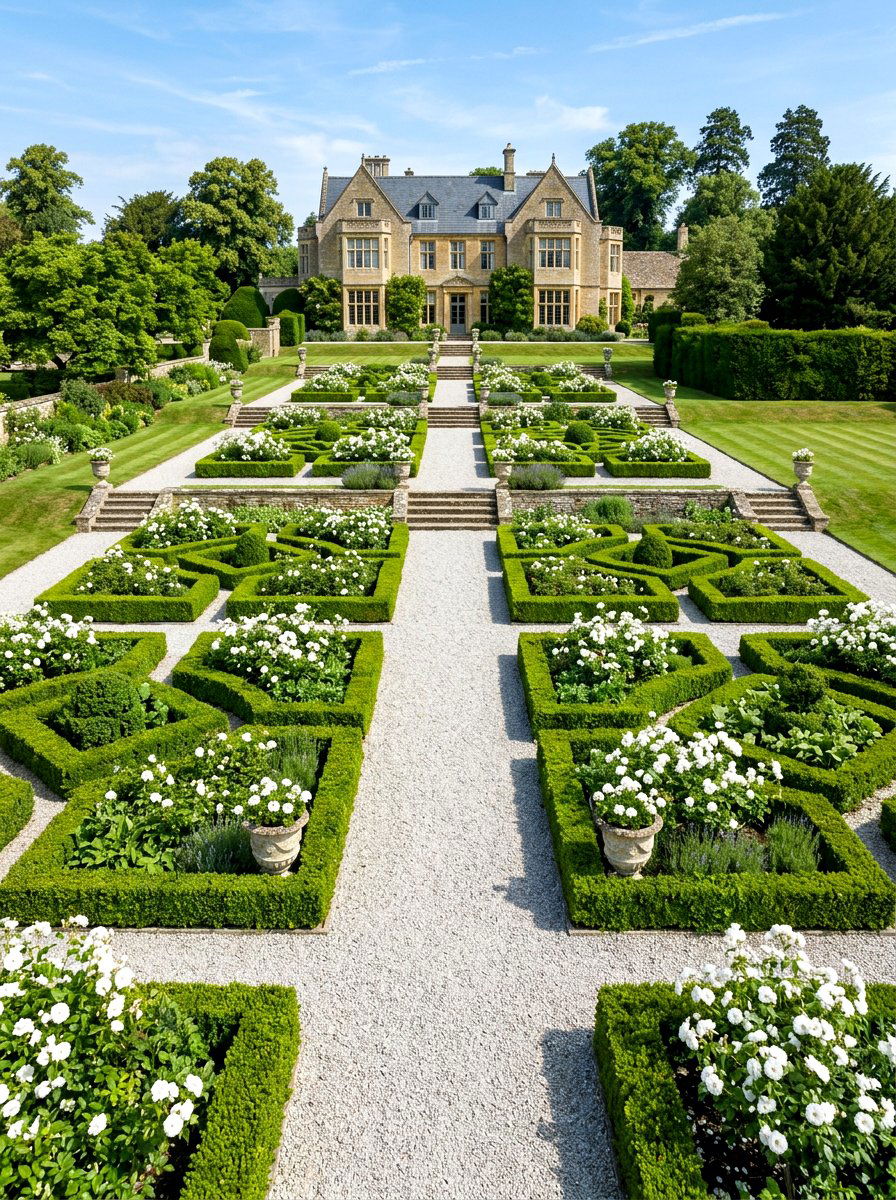
For a highly structured and traditional look, using clipped boxwood hedges to define the edges of your terraces creates a sense of elegance and order. This design is inspired by European estate gardens, where symmetry and precision are key. The level tiers are often filled with neatly groomed lawns or classic white roses, providing a clean contrast to the dark green hedges. This approach requires more maintenance in terms of pruning, but the result is a sophisticated and timeless landscape that adds significant curb appeal. The rigid lines of the boxwood help to "tame" the wildness of a slope, making it feel like a grand architectural feature.
30. Outdoor Fire Pit Slope Terrace
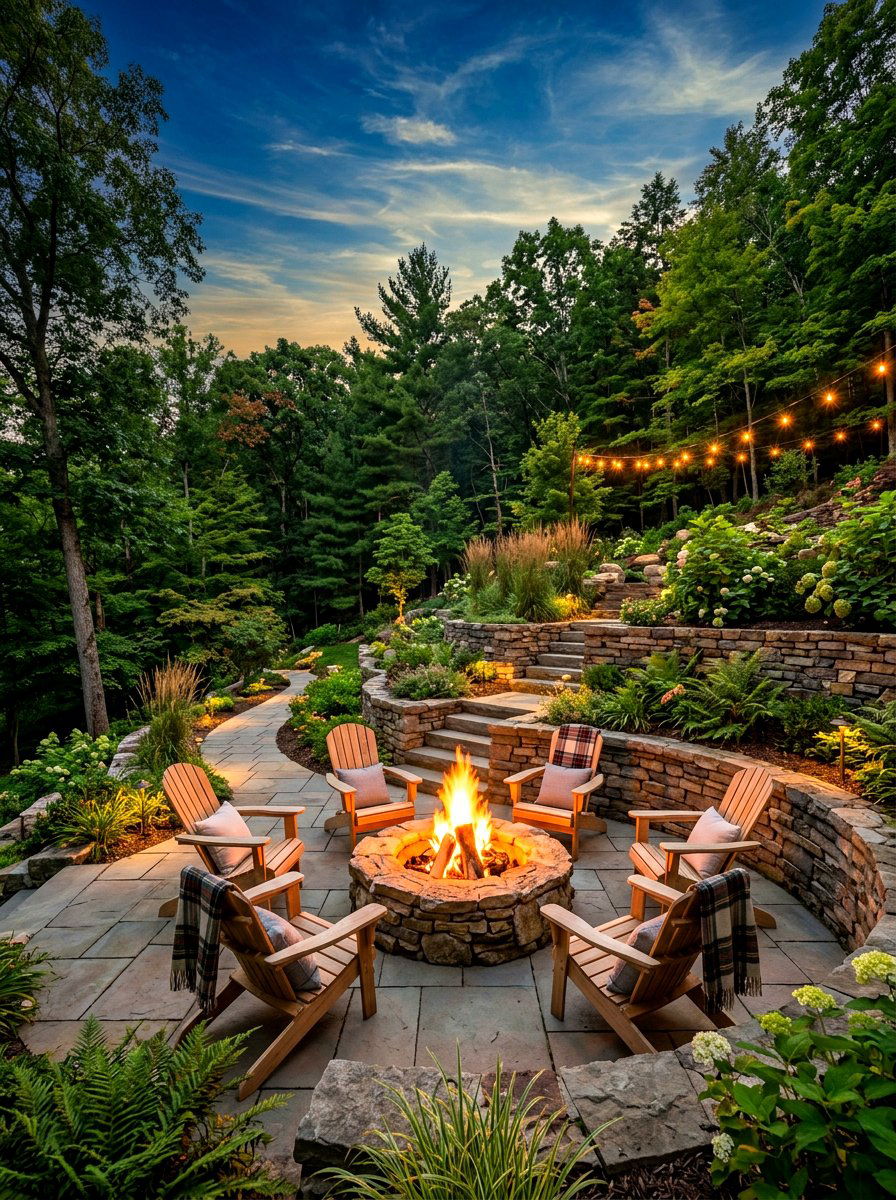
Carving out a dedicated flat circular area on a mid-level terrace provides the perfect spot for an outdoor fire pit and seating area. By nestling the fire pit into the side of the hill, you create a cozy, "sunken" feel that is naturally protected from the wind. You can use the upper part of the slope as a natural backrest or build stone walls that double as extra bench seating for guests. This design turns a formerly awkward part of the yard into the ultimate social hub for evening gatherings. Surrounding the terrace with soft lighting and aromatic plants makes it an inviting retreat for roasting marshmallows and enjoying the night sky.
Conclusion:
Designing a garden on a slope is certainly a unique challenge, but it also offers one of the most rewarding opportunities to create a truly multi-dimensional landscape. By embracing the verticality of your yard rather than fighting against it, you can develop a space that feels more like a private sanctuary and less like a standard suburban lot. Whether you choose the structural permanence of stone walls, the soft beauty of a wildflower meadow, or the modern efficiency of a tiered deck, these ideas provide a roadmap for success. With a focus on proper drainage, soil stabilization, and plant selection, your hillside will soon become the most stunning and functional part of your entire home.

Related posts: