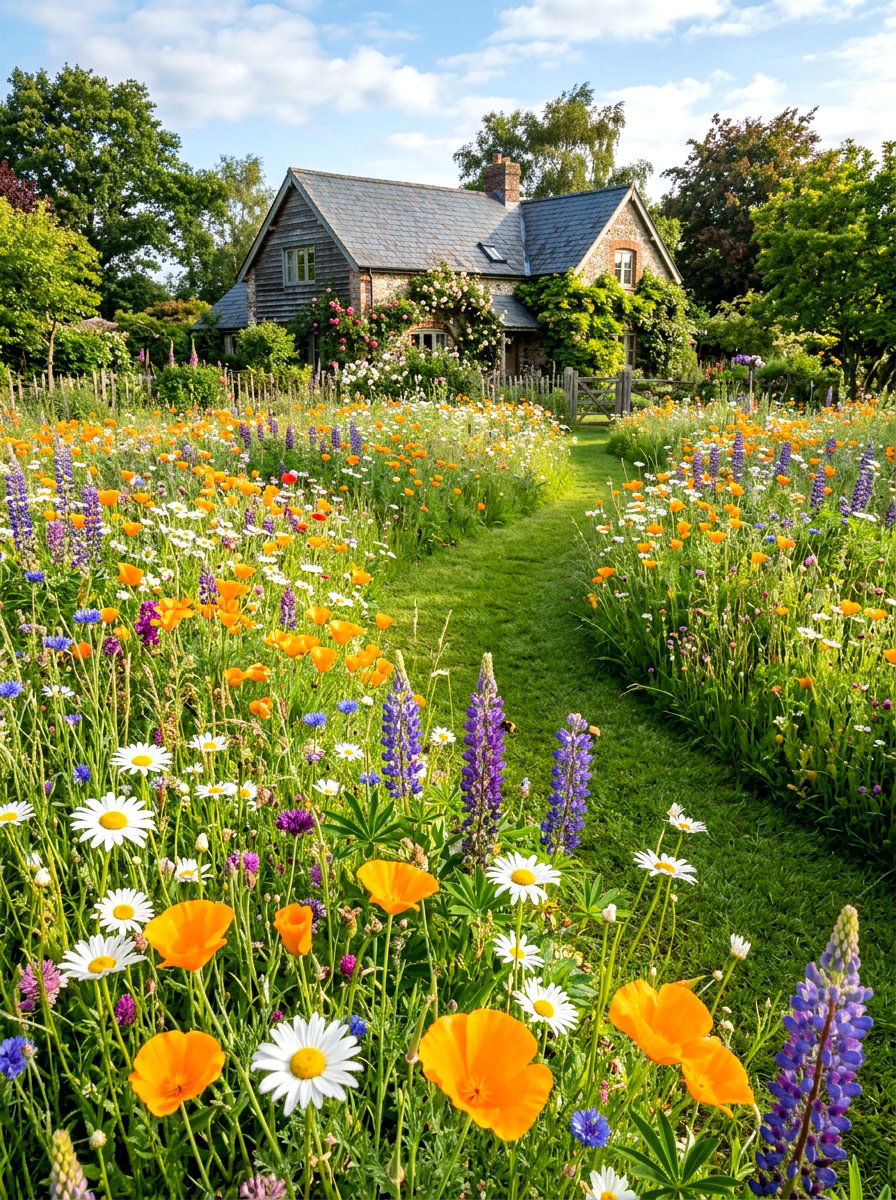
Growing fruit trees in a confined garden space often feels impossible until you discover the artistic world of espalier. This ancient horticultural practice involves training trees to grow flat against a vertical surface, such as a wall or fence, creating a living masterpiece that is both functional and decorative. By utilizing this method, you can harvest a surprising amount of fresh produce while adding architectural interest to your home. Whether you have a sunny brick wall or a narrow side yard, espalier allows you to maximize every square inch of your landscape. It is a perfect blend of agriculture and art that transforms any plain surface into a lush, productive, and visually captivating garden feature for years.
1. Horizontal Cordon Apple Tree
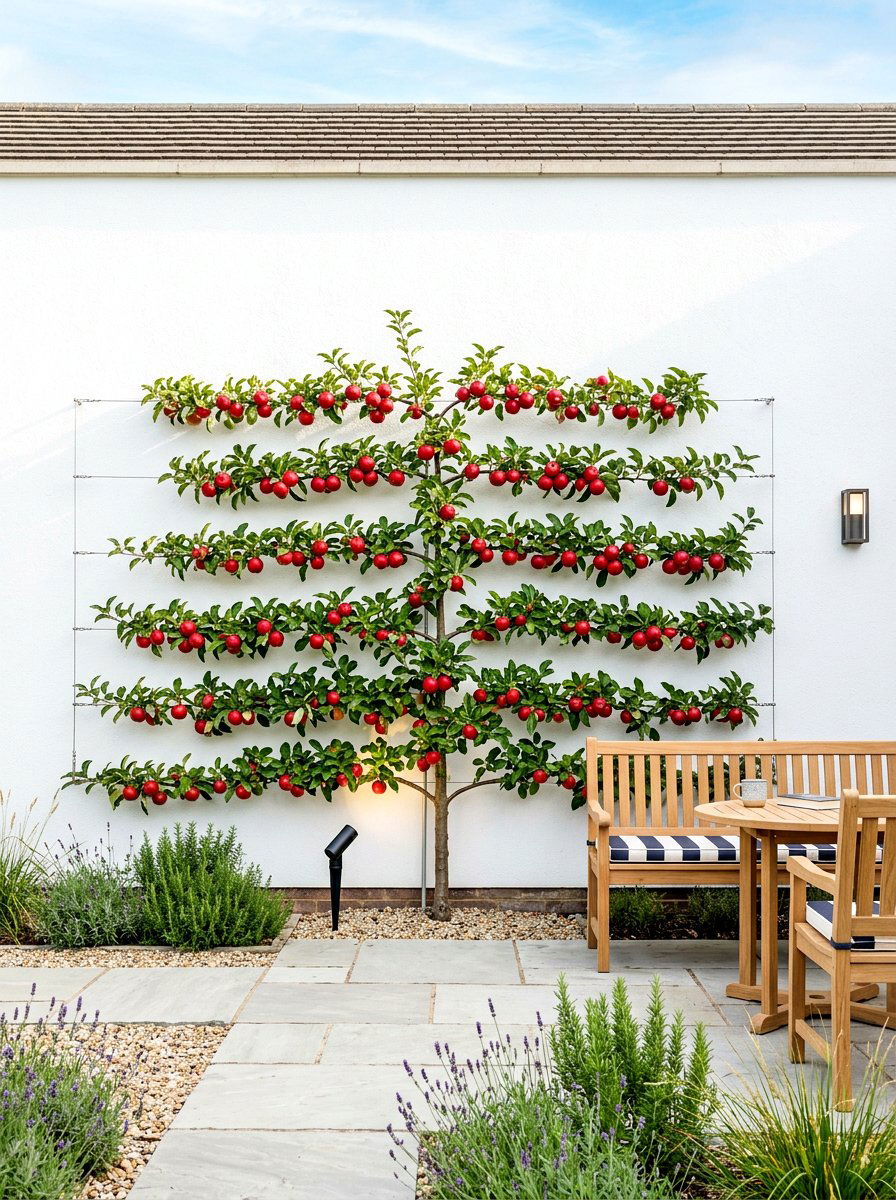
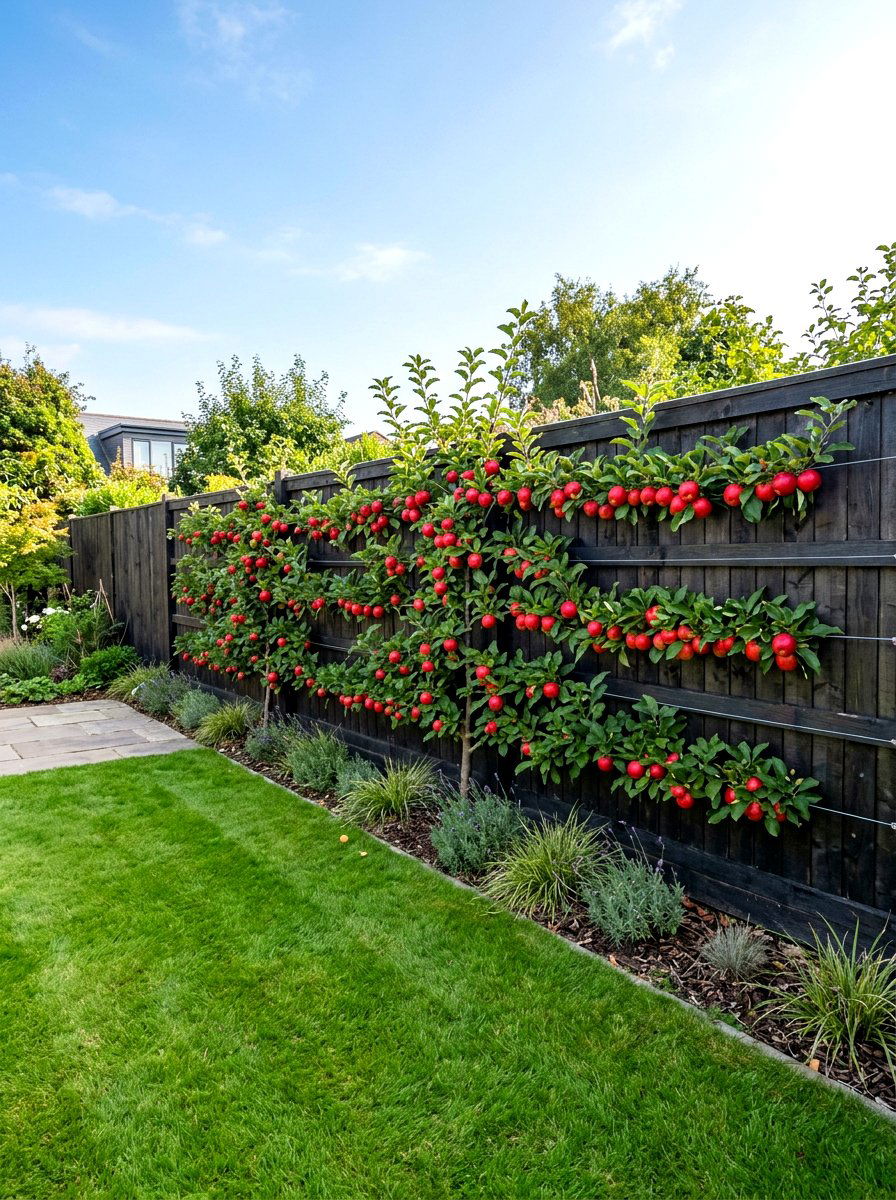
A horizontal cordon apple tree is one of the most classic and straightforward ways to start your journey into vertical gardening. This particular style features a central vertical trunk with several pairs of branches trained to grow perfectly sideways along horizontal wires. Because the branches are kept flat, the tree receives maximum sunlight across its entire surface, which significantly improves the ripening and sweetness of the fruit. This design is exceptionally well-suited for long, narrow garden walls where you want a clean and symmetrical look. Regular pruning during the summer months ensures the horizontal lines remain sharp and the fruiting spurs stay productive, offering a beautiful harvest at a convenient height.
2. Belgian Fence Fruit Tree
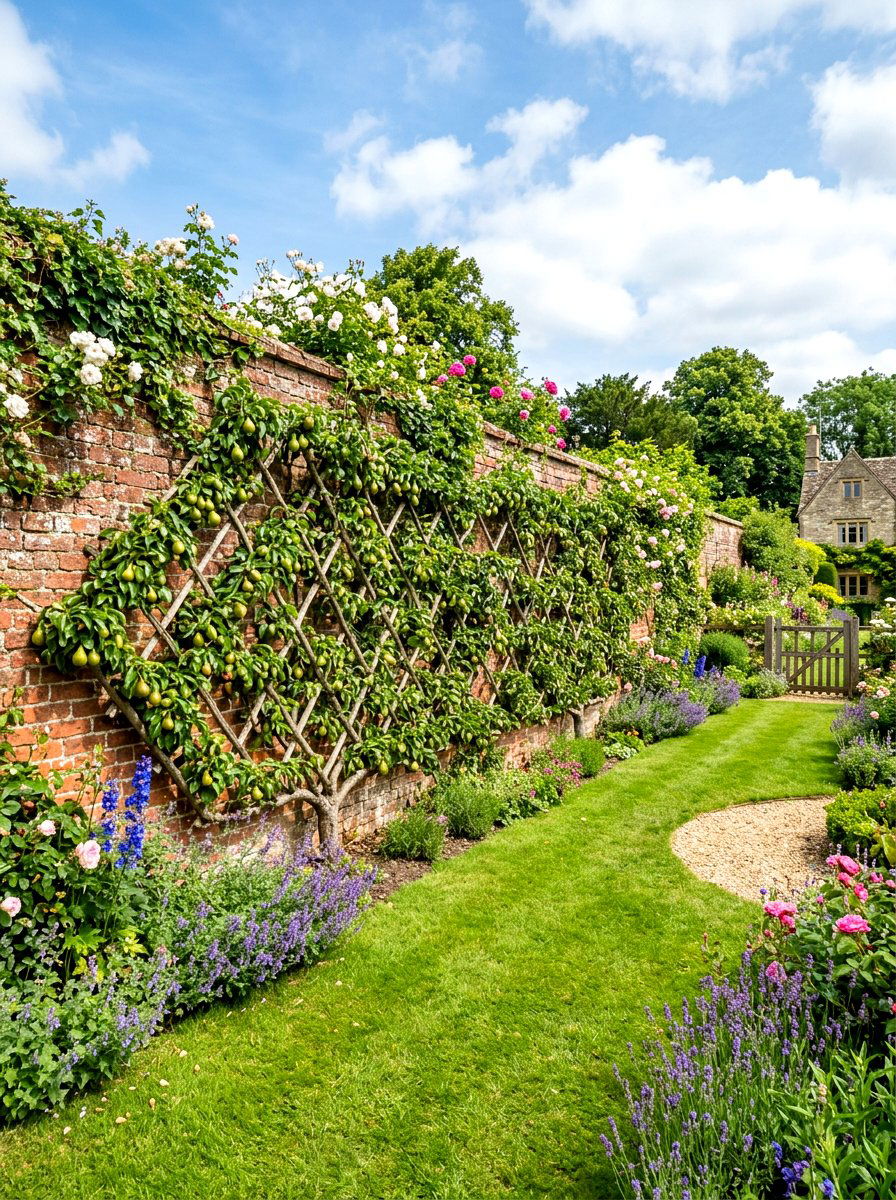
The Belgian fence fruit tree is a breathtaking design that creates a living diamond lattice pattern against a sturdy wall or fence. By planting several trees in a row and training their branches to grow at forty-five-degree angles, you create a beautiful crisscross effect that serves as both a focal point and a privacy screen. This intricate weave is especially popular for apple and pear trees, as their flexible branches are easy to manipulate during the early growth stages. It provides a highly formal and sophisticated appearance that works wonderfully in traditional or cottage-style gardens. The overlapping branches naturally support each other, creating a strong and dense structure that produces abundant fruit over time.
3. Fan Shape Cherry Tree
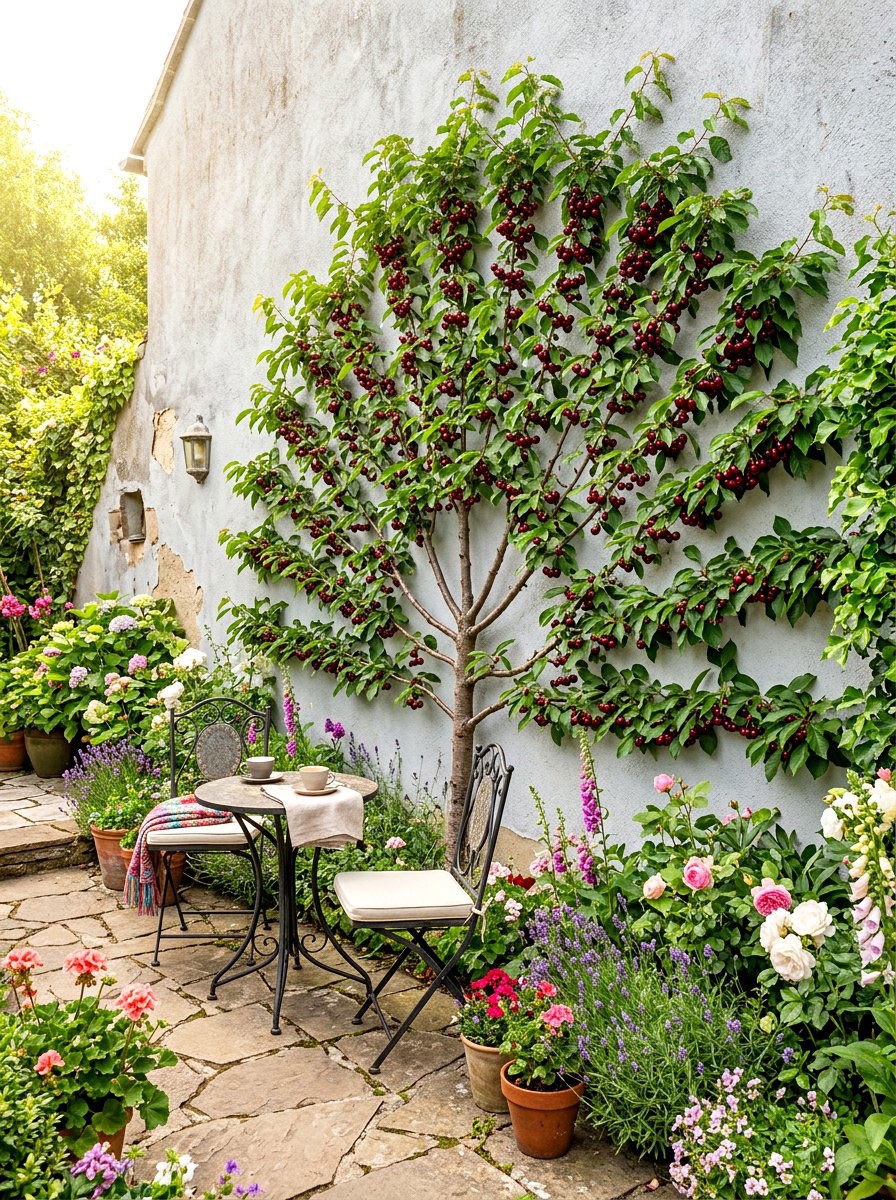
Choosing a fan shape cherry tree is an excellent solution for stone fruits that do not adapt well to rigid horizontal training. In this design, the branches radiate outward from a low central point, resembling the ribs of an open handheld fan. This layout allows for excellent air circulation and sunlight penetration, which are both crucial for preventing common diseases in cherry and plum varieties. A fan-shaped tree looks particularly stunning when planted against a warm, south-facing brick wall, where the heat helps the fruit develop deep flavors. It provides a softer, more natural aesthetic compared to formal cordons while still maintaining a tidy, space-saving profile that fits into smaller residential backyards.
4. Step Over Apple Tree
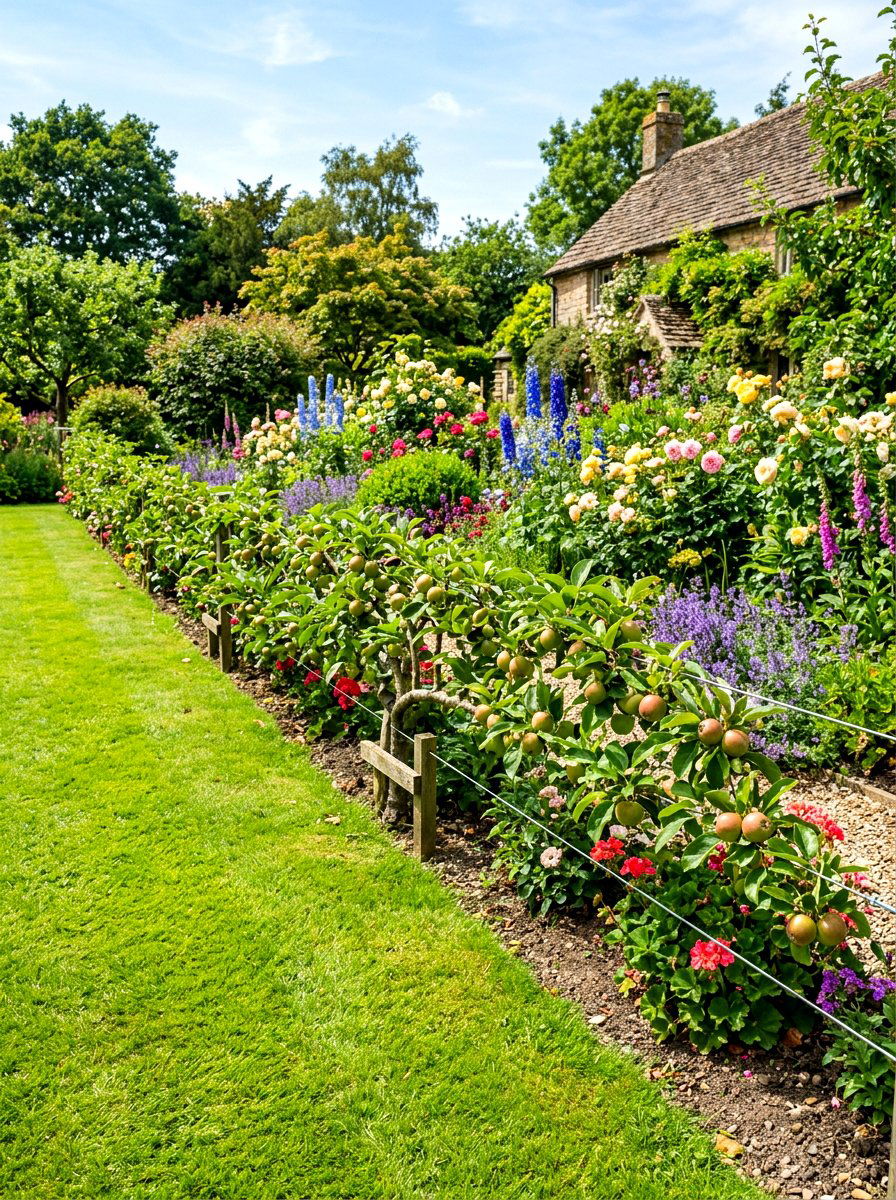
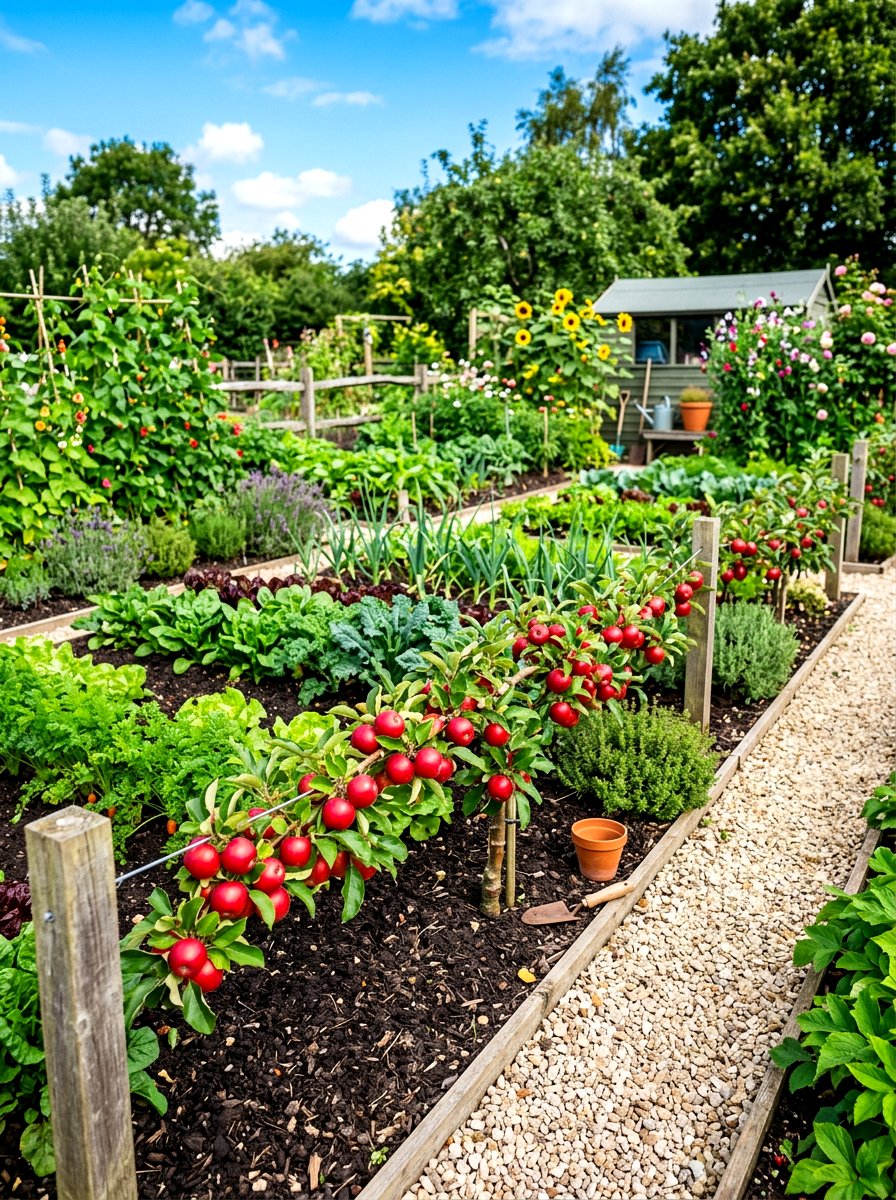
A step over apple tree is a unique and practical variation of the horizontal cordon that grows very low to the ground. This design typically features a single horizontal tier supported just twelve to eighteen inches high, making it look like a living fence or garden edging. It is a brilliant way to define the borders of a vegetable patch or walkway while still providing a productive crop of fresh apples. Because the tree is kept so low, it does not block views or cast large shadows on other plants. Children often find these trees fascinating, as the fruit is at their eye level, making it a wonderful addition to family-oriented garden spaces.
5. Double U Shape Pear Tree
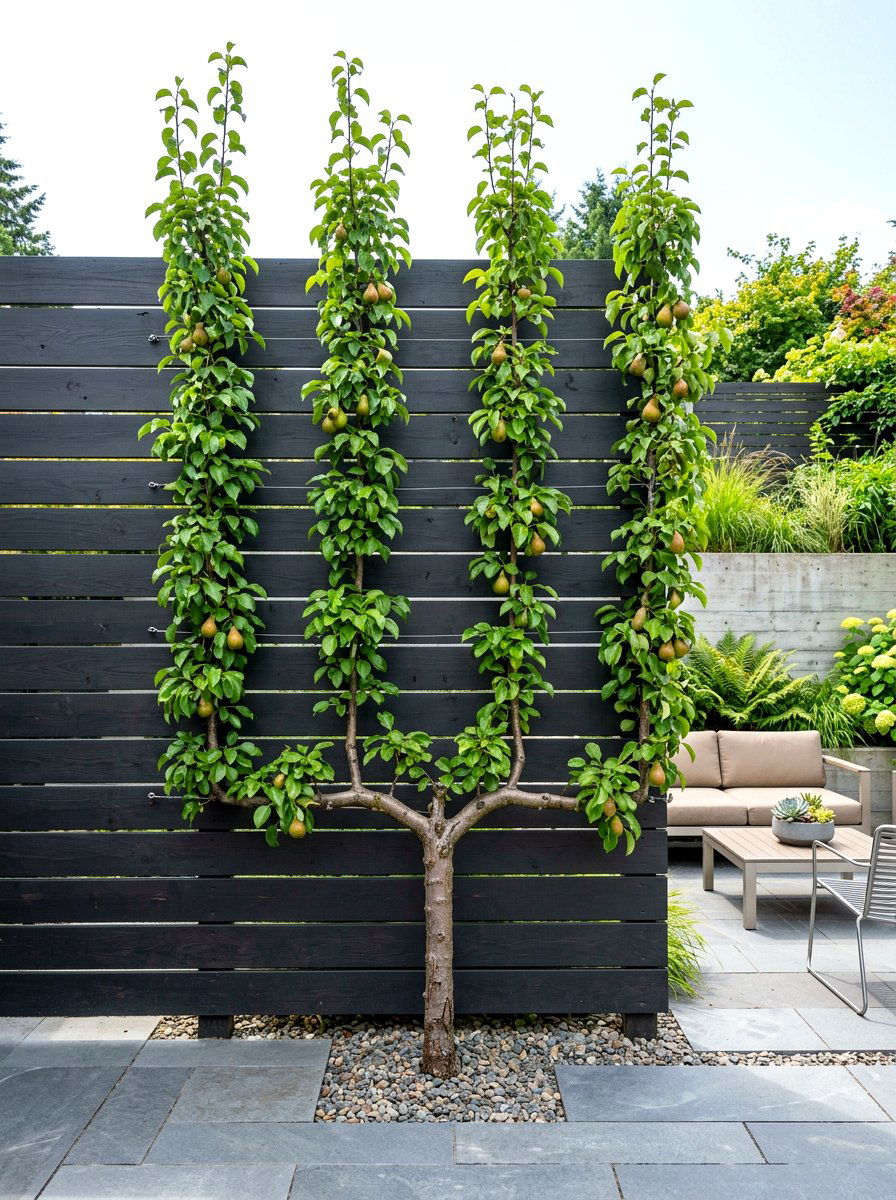
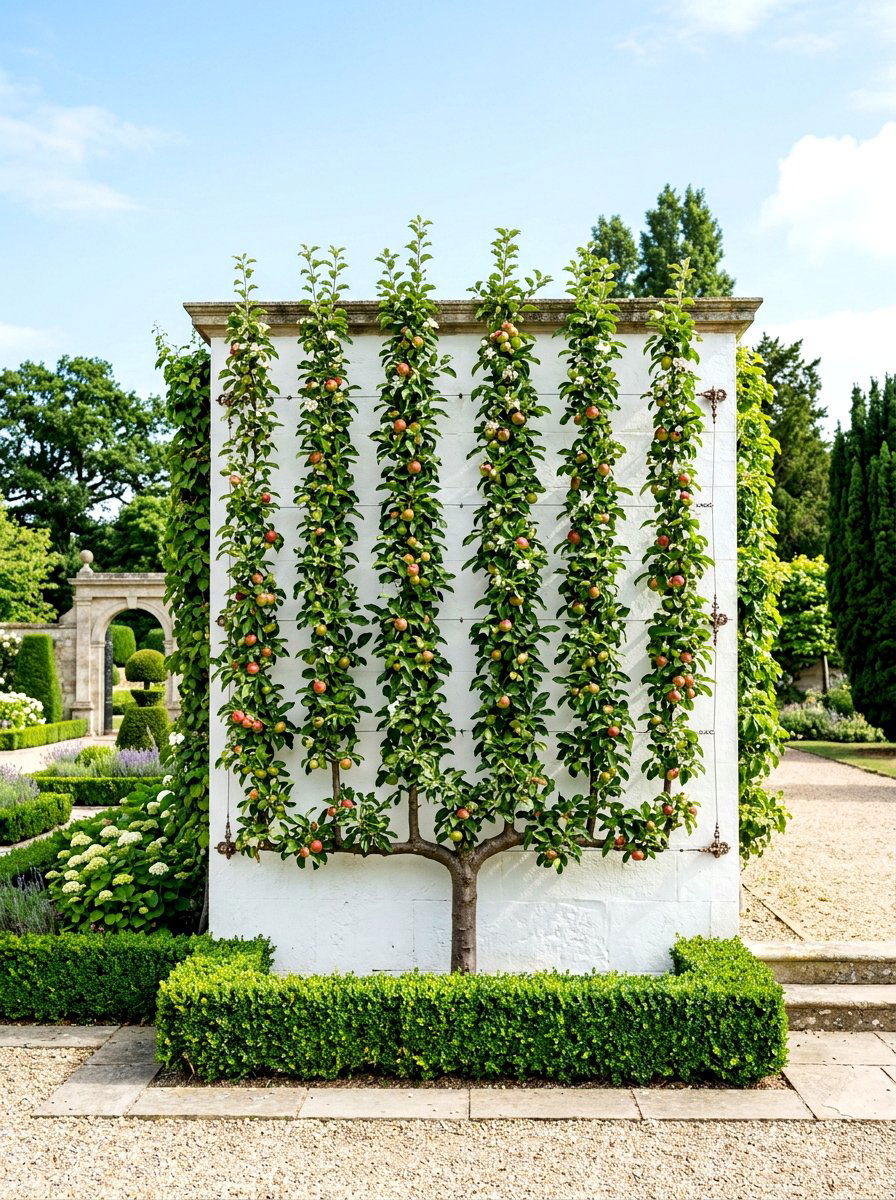
The double U shape pear tree offers a highly architectural and modern look that emphasizes vertical lines and perfect symmetry. This design begins with a single trunk that splits into two horizontal arms, which then turn upward to form two separate "U" shapes. The result is a stunning arrangement of four parallel vertical branches that look like a series of living candelabras against a flat wall. Pear trees are particularly well-suited for this pattern because they produce fruit on short spurs along the vertical stems. This layout is very efficient for small spaces, as it provides a large fruiting surface area while taking up very little horizontal room on the garden wall.
6. Palmette Verrier Apple Tree
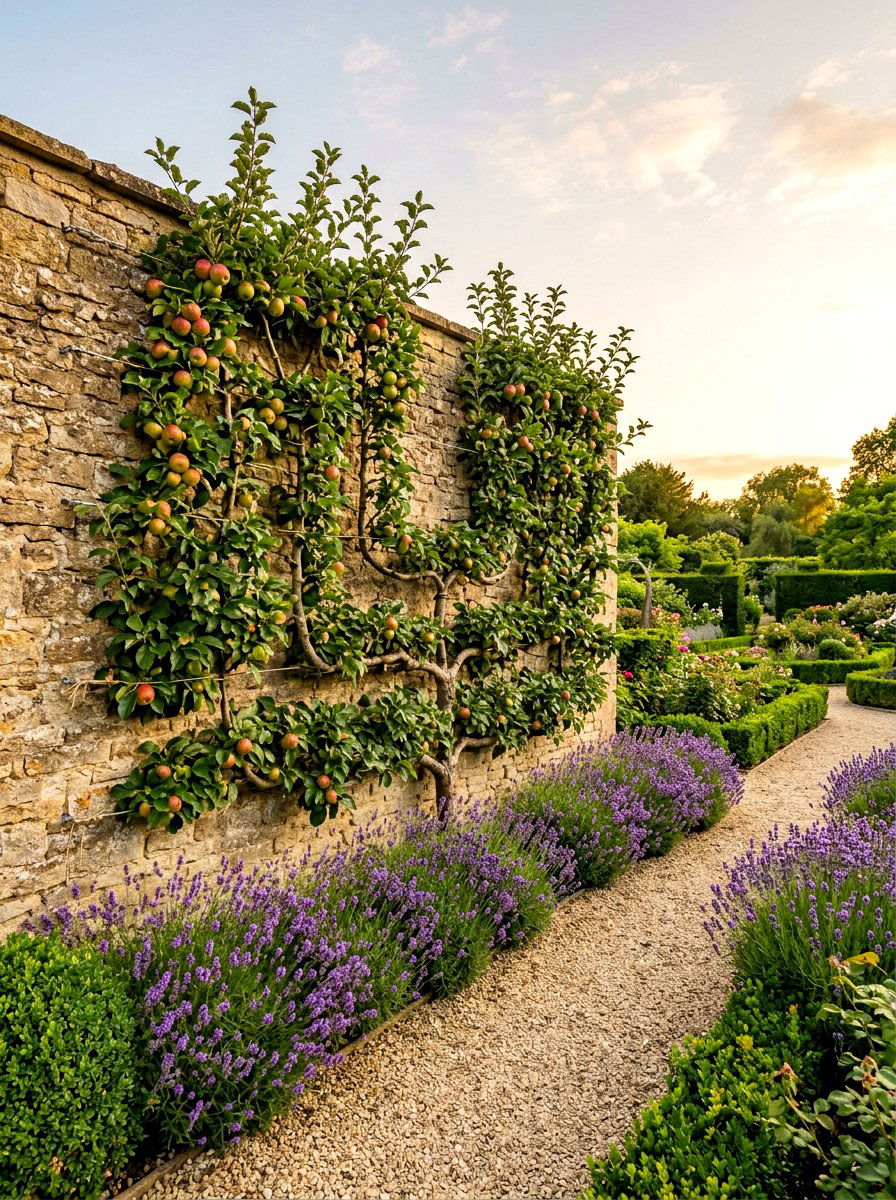
The palmette verrier apple tree is a sophisticated and formal design that combines horizontal and vertical elements for a dramatic visual impact. In this pattern, the branches are first trained horizontally and then turned sharply upward at various points to create a nested "U" effect within a larger frame. This creates a beautifully balanced and symmetrical structure that covers a large wall area quite efficiently. It is a favorite among gardeners who enjoy the precision of topiary and want a significant centerpiece for their outdoor living area. The regular spacing of the vertical stems allows for easy maintenance and harvesting, ensuring that every piece of fruit gets plenty of air and sunlight.
7. Vertical Cordon Fruit Tree
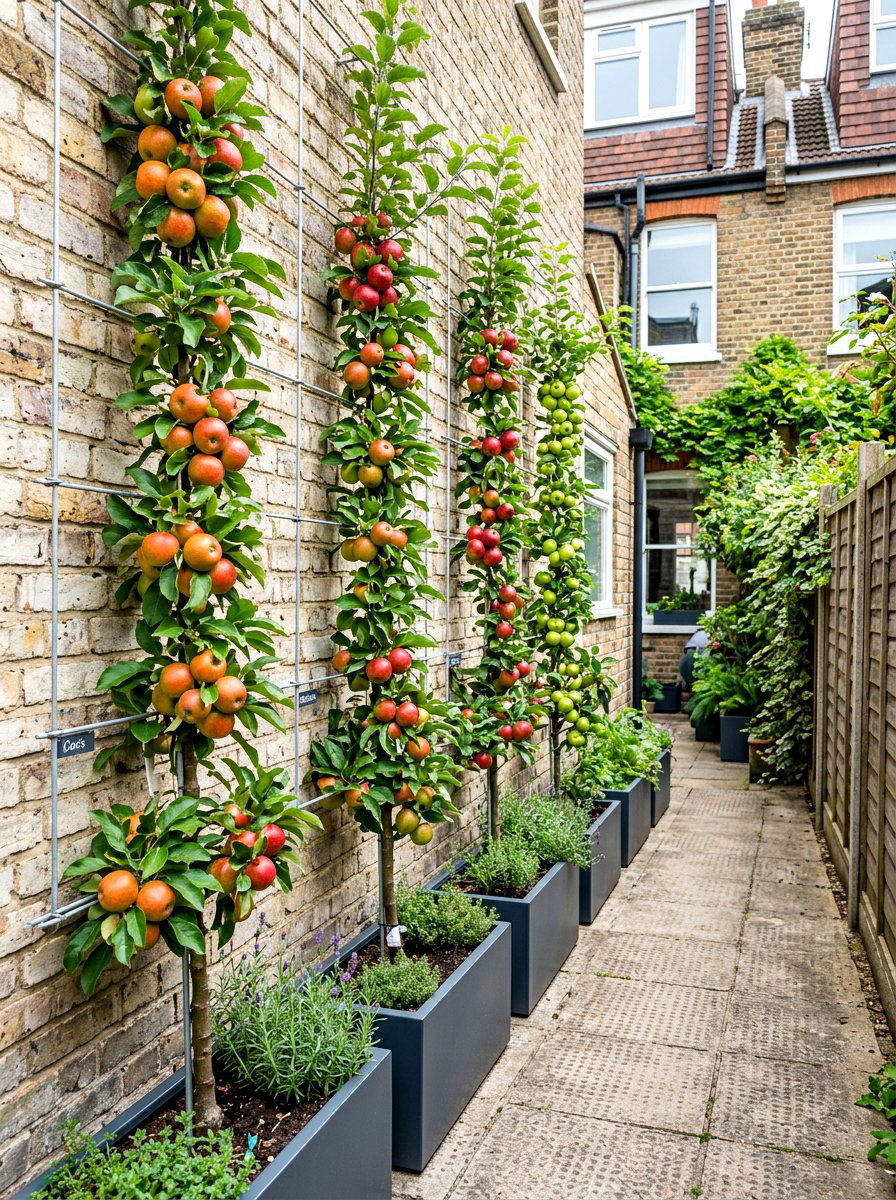
A vertical cordon fruit tree is the ultimate choice for gardeners who have very limited horizontal space but plenty of height to work with. This design consists of a single vertical stem with very short fruiting spurs, meaning the tree grows upward like a leafy pillar. You can plant several of these trees quite close together, only about two feet apart, to create a productive fruit wall in a very narrow alley or side yard. This method is incredibly easy to maintain because there are no complex branching patterns to manage. It is a practical and modern way to grow a variety of different apple or pear cultivars in a small urban environment.
8. Brick Wall Fruit Tree
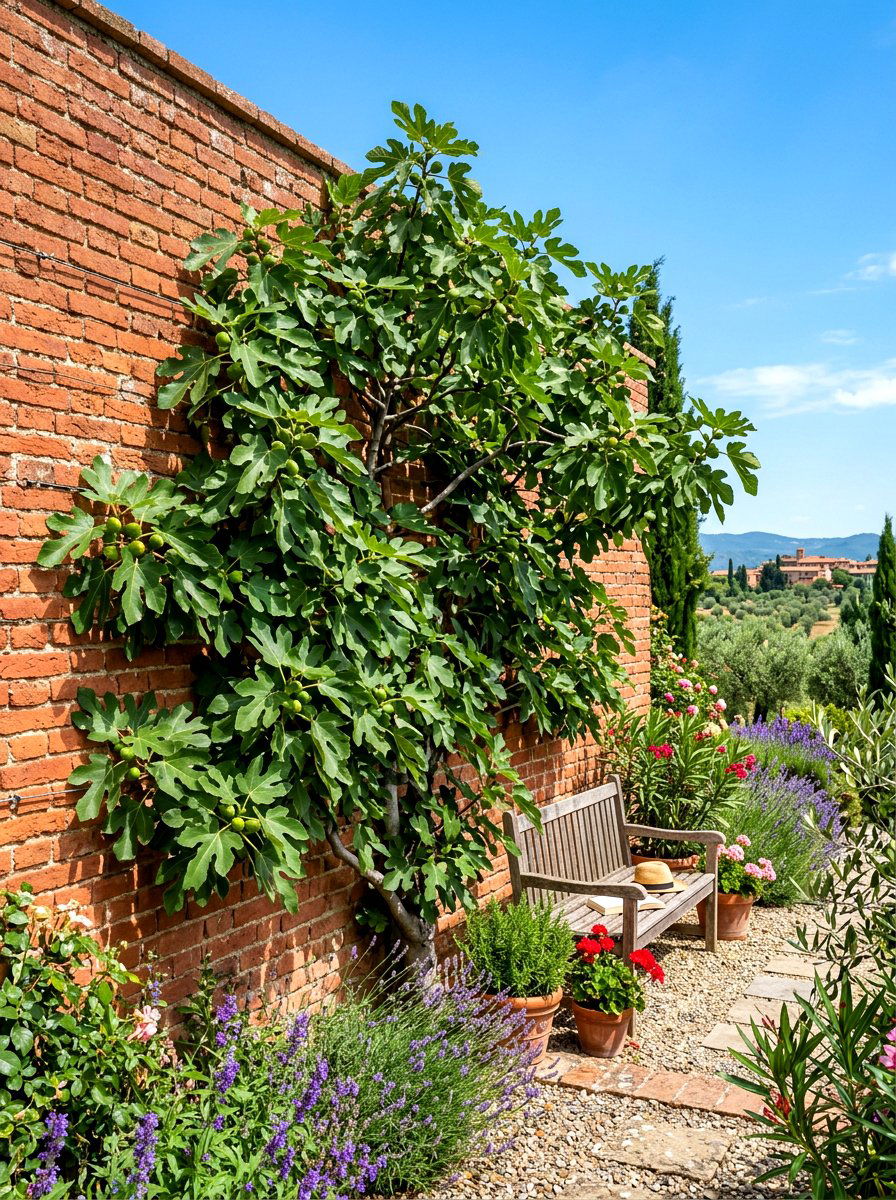
Growing a fruit tree against a brick wall provides a unique microclimate that can help your trees thrive in cooler regions. The bricks absorb heat from the sun during the day and slowly release it at night, protecting delicate blossoms from late spring frosts and helping the fruit ripen more quickly. This setup is ideal for heat-loving species like figs, peaches, or apricots that might struggle in an open orchard. You can use specialized wall anchors and wires to secure the branches directly to the masonry, creating a seamless integration between the architecture and the landscape. The contrast between the green foliage and the red or brown brick creates a timeless look.
9. Free Standing Fruit Trellis
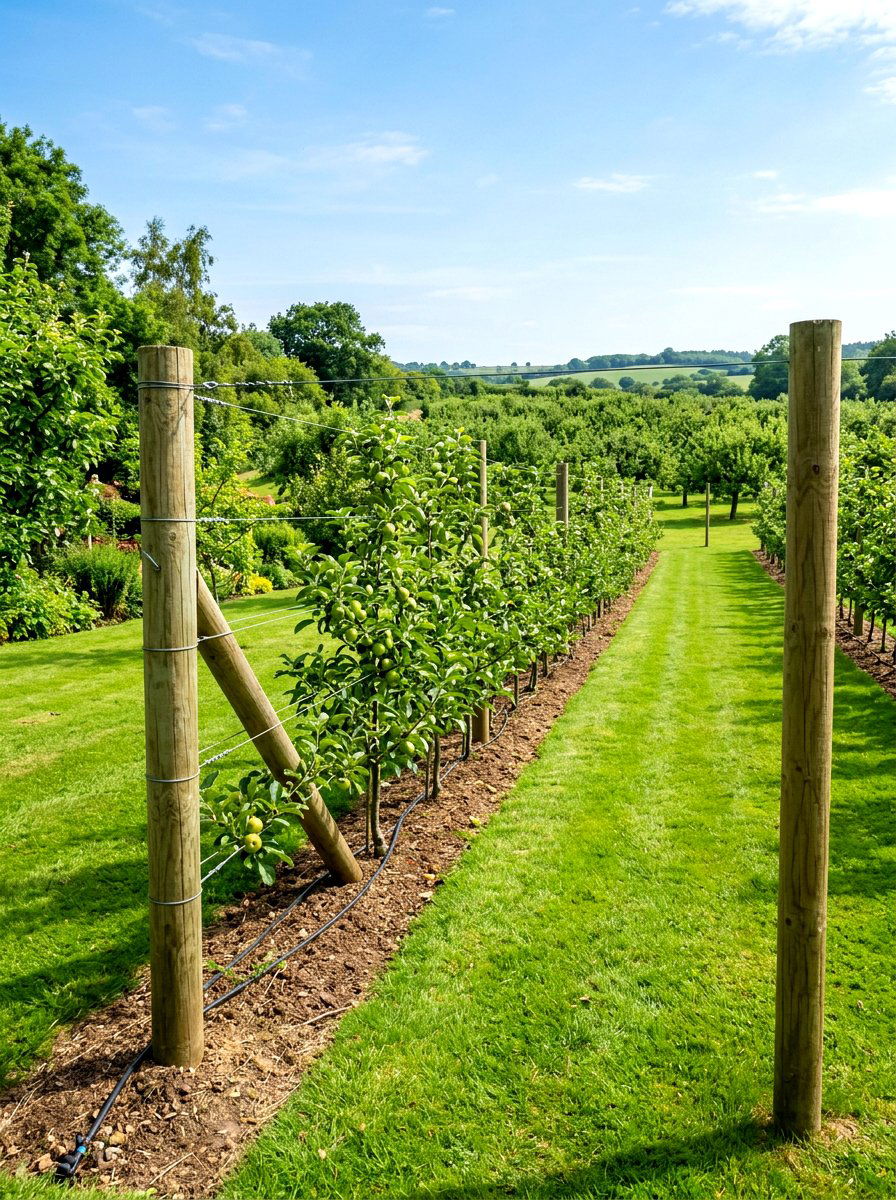
A free standing fruit trellis allows you to enjoy the benefits of espalier even if you do not have a suitable wall or fence available. By installing a sturdy post-and-wire system in the middle of your garden, you can create a productive living screen or room divider. This setup is fantastic for larger properties where you want to separate a vegetable garden from a lawn area while still maintaining an open, airy feel. Since sunlight can reach both sides of the tree, fruit production is often very high and uniform. It also provides a wonderful backdrop for flower beds, adding a structured and edible element to your overall landscape design.
10. Arcaded Fruit Tree
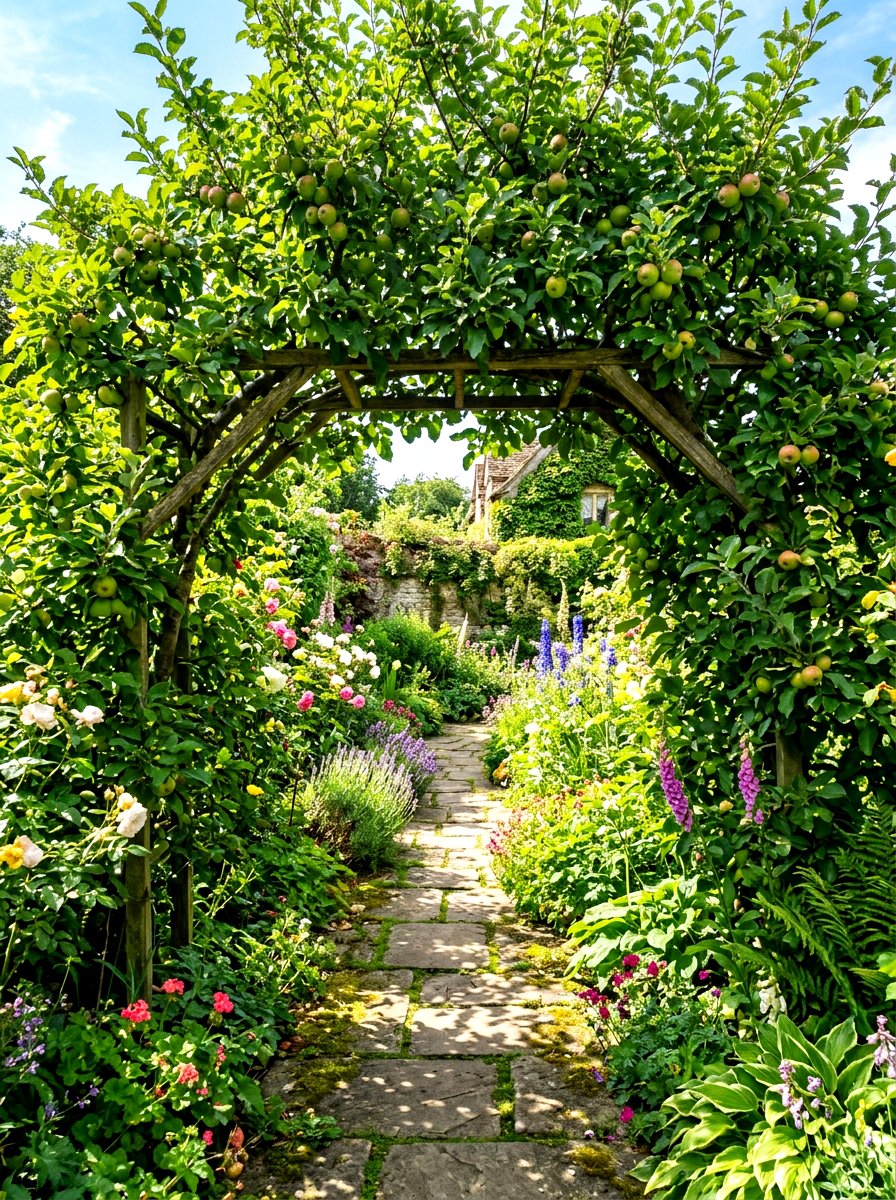
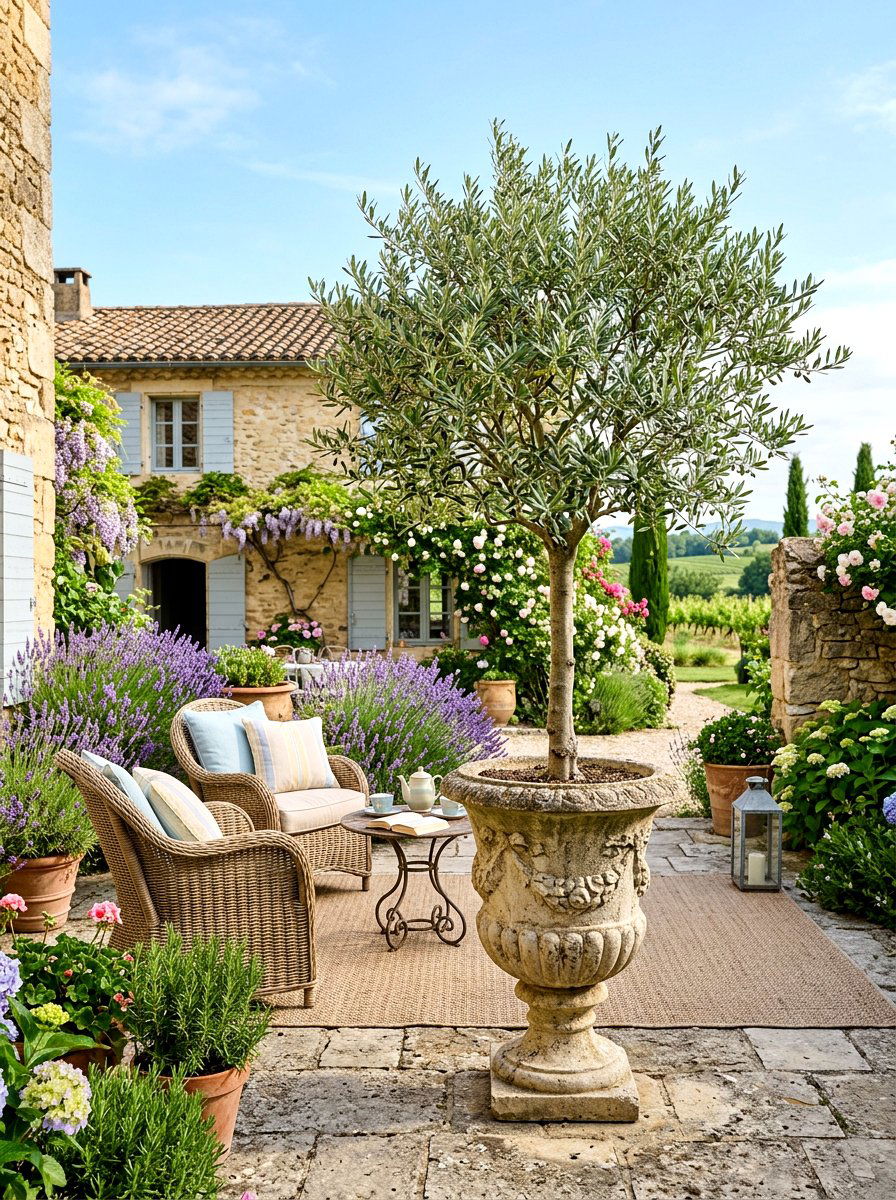
The arcaded fruit tree design is a whimsical and creative approach that involves training the branches of neighboring trees to meet and form an arch. This creates a stunning tunnel effect that is perfect for placing over a garden path or entranceway. Imagine walking beneath a canopy of fragrant blossoms in the spring and reaching up to pick ripe fruit in the late summer months. This method requires careful planning and a bit of patience, as the trees must be positioned and pruned precisely to ensure the arches are stable and productive. It is a truly magical way to add a sense of movement and vertical height to a residential garden.
11. Candelabra Pear Tree
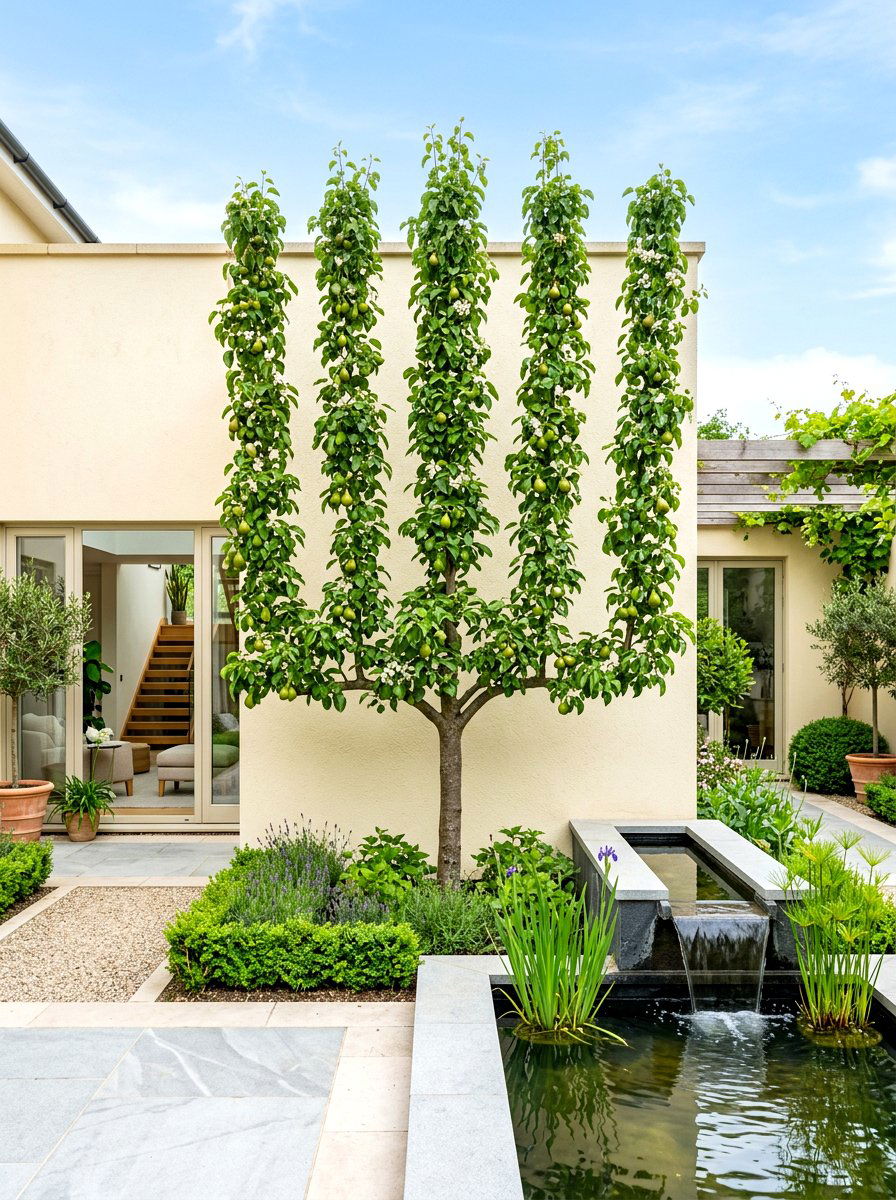
A candelabra pear tree is a striking formal design that mimics the shape of a traditional multi-armed candle holder. This pattern features multiple vertical branches that emerge from a single horizontal base, creating a rhythmic and repetitive look that is very pleasing to the eye. It is especially effective when used as a focal point at the end of a garden path or against a tall, plain exterior wall. Pear trees are the preferred choice for this style because their growth habit is naturally more upright and easier to control. The vertical stems provide a great way to display the ripening fruit, making them look like hanging ornaments in a living art piece.
12. Dwarf Apple Tree
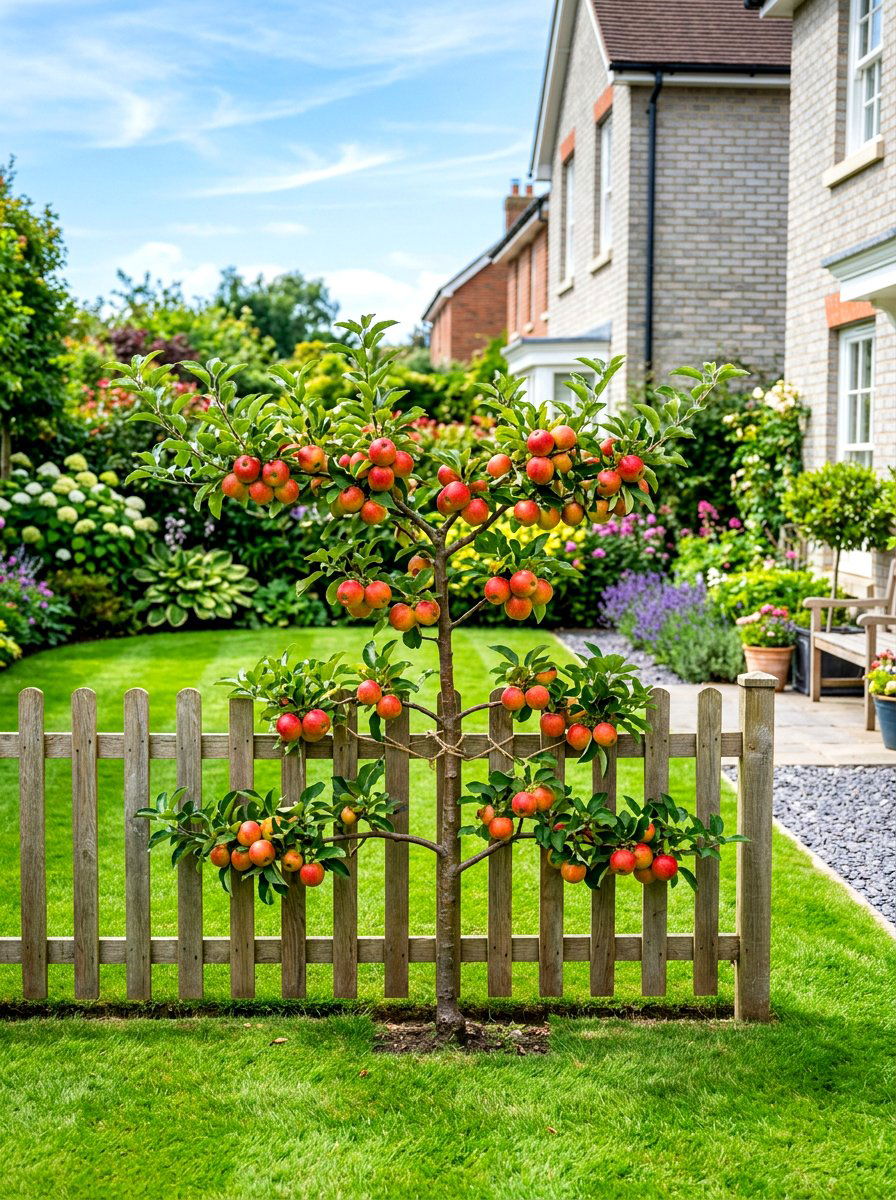
Choosing a dwarf apple tree for your espalier project is essential for long-term success in smaller residential landscapes. These trees are grafted onto special rootstocks that naturally limit their overall size, making them much easier to manage within a flat, two-dimensional frame. Dwarf varieties produce full-sized fruit but require far less heavy pruning than standard trees, which can quickly become too vigorous for a wall. This makes them perfect for beginner gardeners who want to experiment with different training patterns without being overwhelmed by rapid growth. You can grow several different dwarf varieties in a single row, providing a diverse harvest of apples throughout the entire autumn season.
13. Picket Fence Fruit Tree
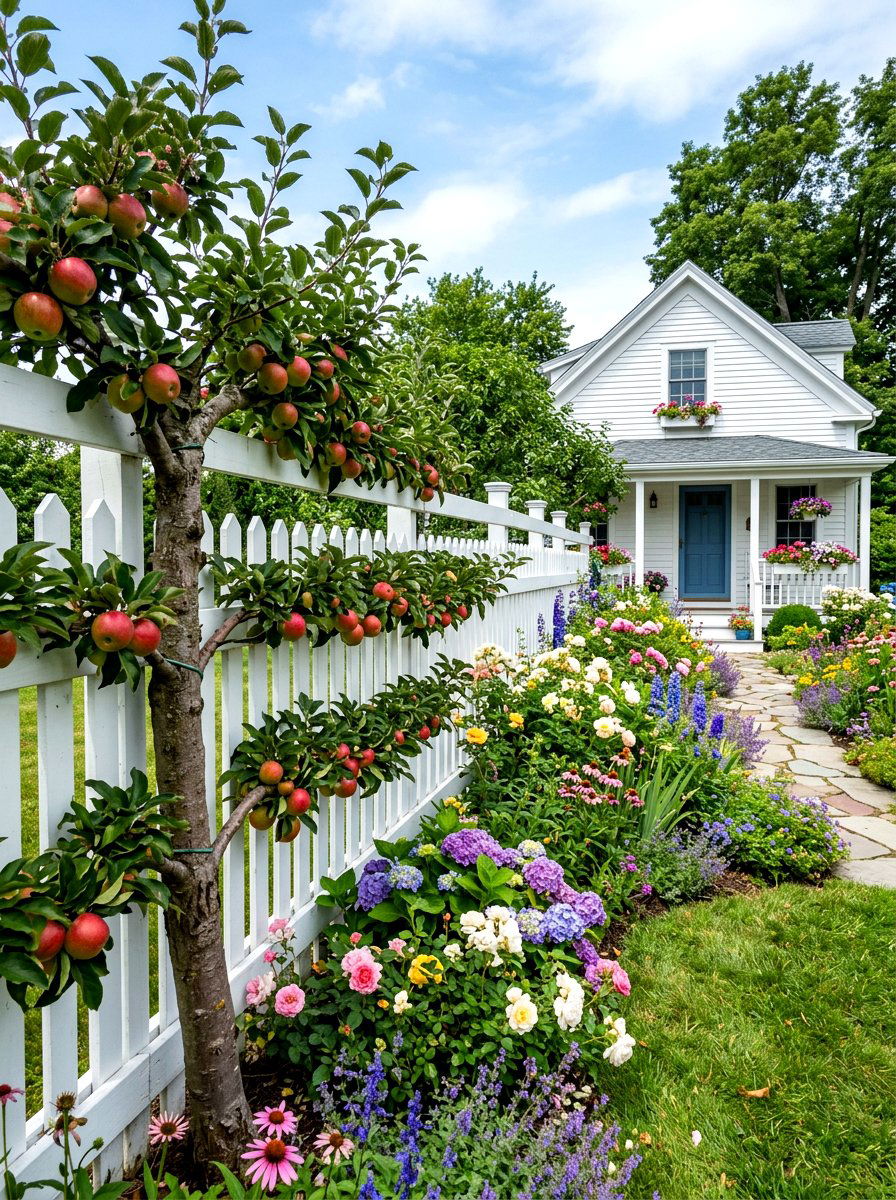
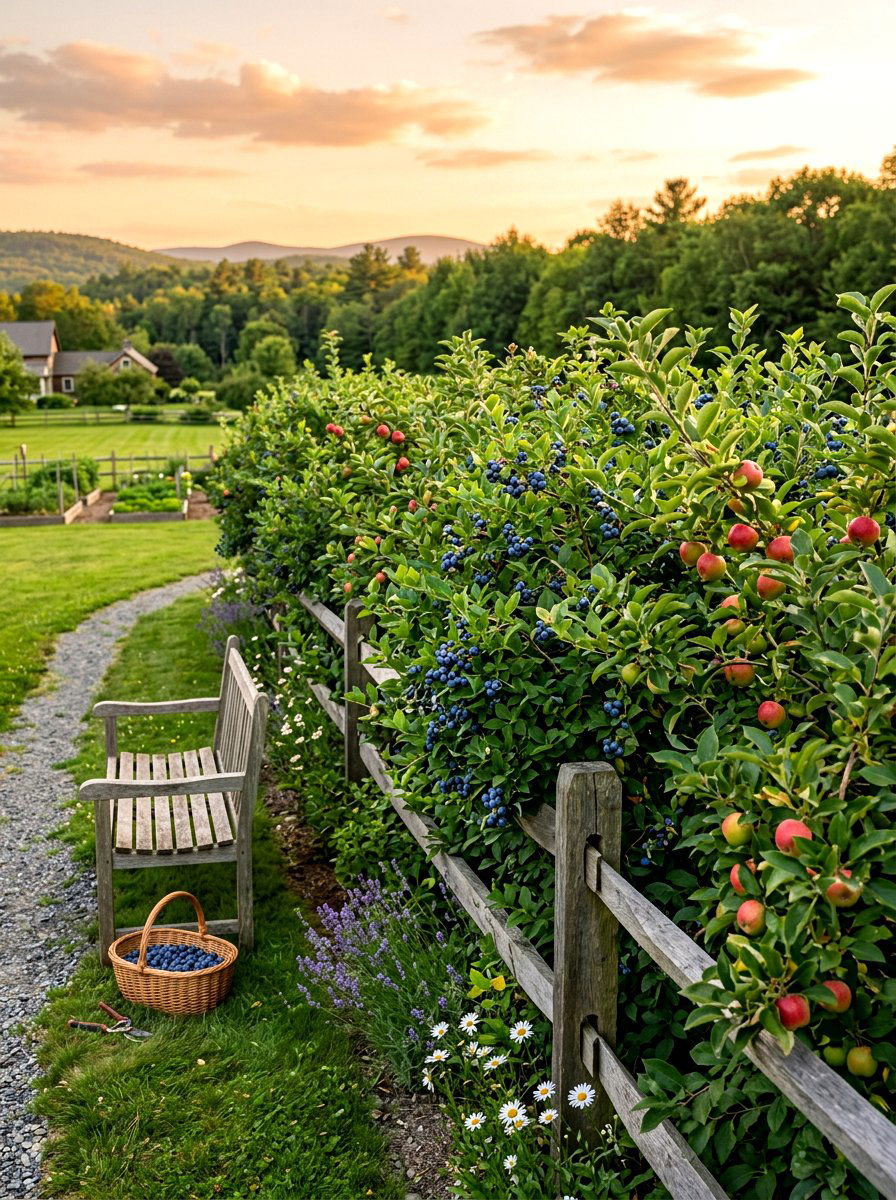
Training a fruit tree along a traditional picket fence is a charming way to add productivity to your front yard or garden boundary. The horizontal rails of the fence provide a natural guide for the branches, while the vertical pickets offer plenty of points for securing ties. This approach is particularly well-suited for horizontal cordons or low step-over designs that complement the height of the fence. It creates a welcoming and neighborly look that invites passersby to admire your gardening skills. Not only does it provide delicious fruit, but the leafy branches also add a layer of soft privacy and texture to a standard wooden or vinyl fence.
14. Modern Wire Fruit Tree
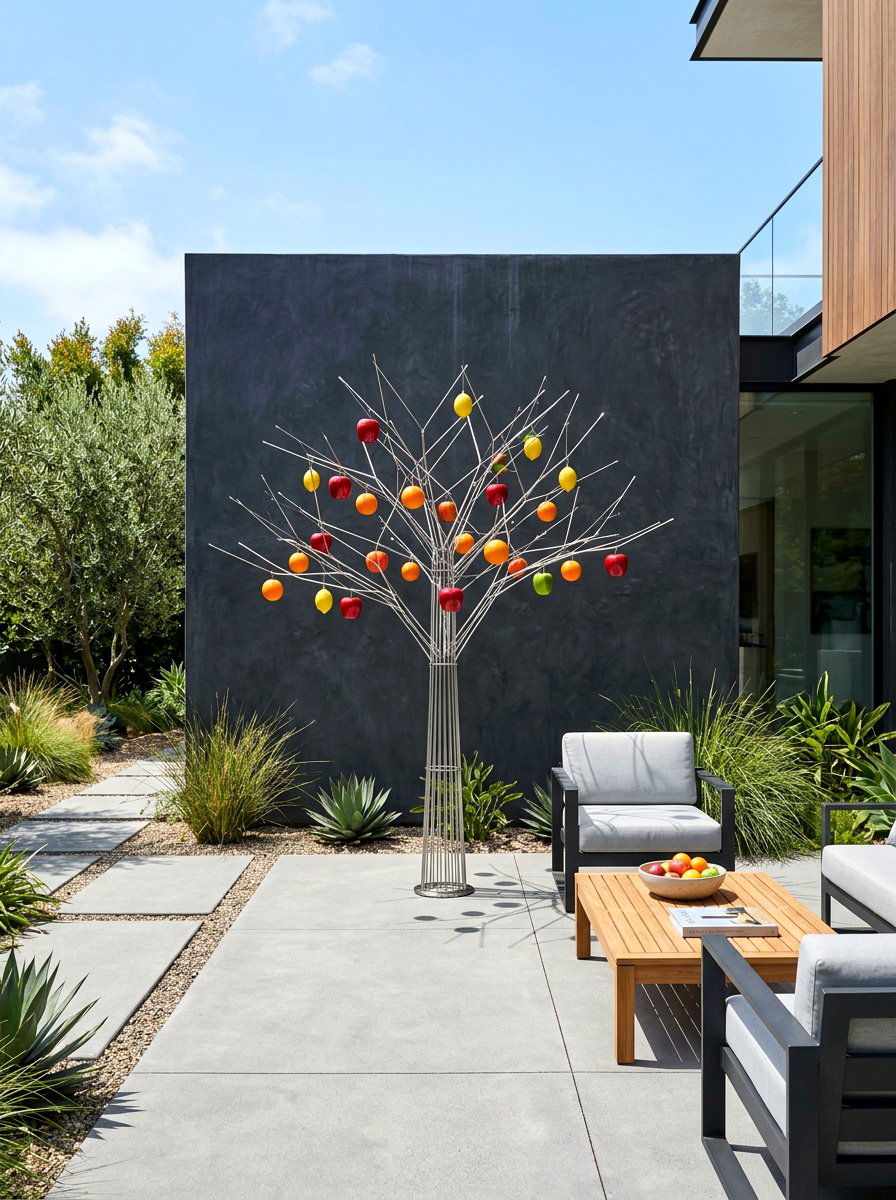
A modern wire fruit tree setup uses minimalist hardware, such as thin stainless steel cables and sleek tensioners, to create a contemporary garden feature. This look is perfect for modern homes with clean lines and industrial materials like concrete or steel. By using nearly invisible wires, the focus remains entirely on the sculptural form of the tree itself, making it look as though the branches are floating against the wall. This style works beautifully with minimalist landscaping, where every plant is chosen for its specific shape and architectural contribution. It is a highly sophisticated way to incorporate edible gardening into a high-end, urban outdoor living space.
15. Multi Grafted Fruit Tree
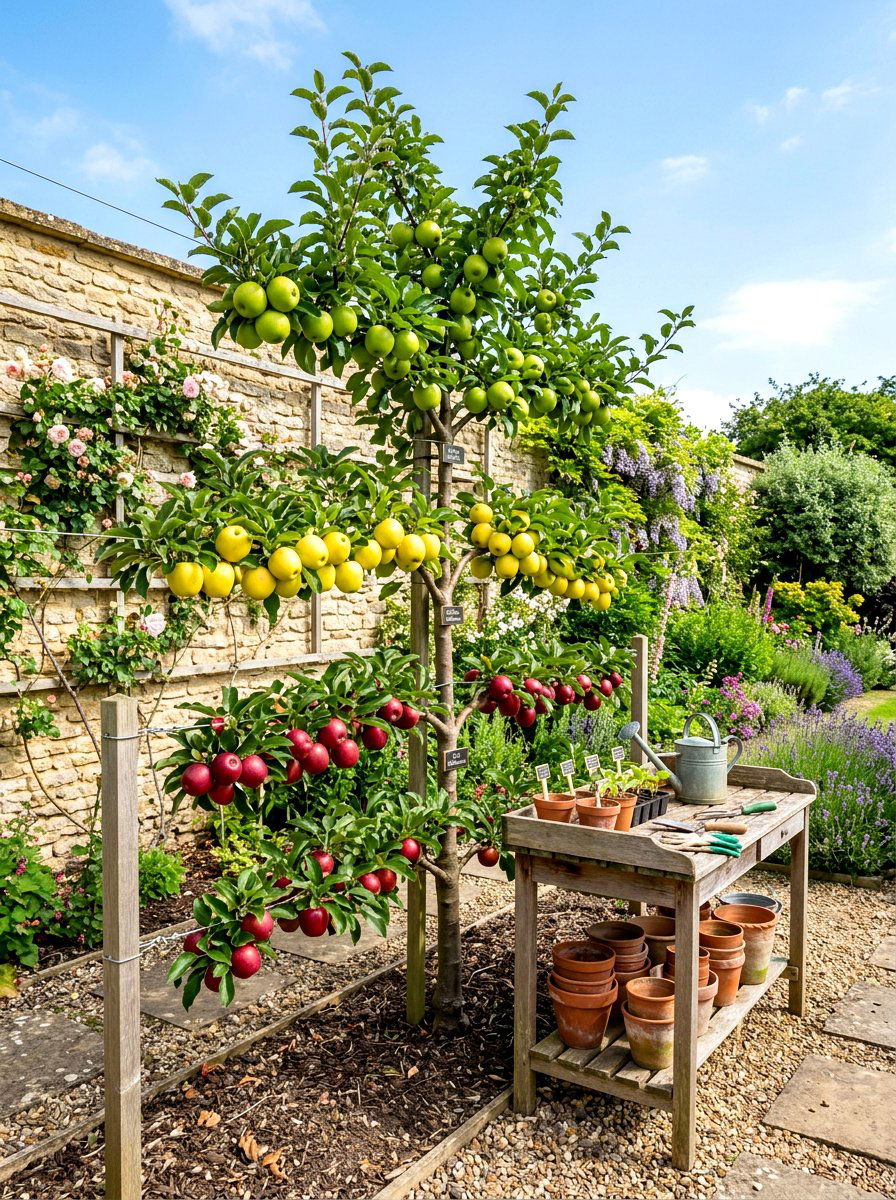
A multi grafted fruit tree is a fascinating "fruit salad" tree that allows you to harvest several different varieties from a single trunk. This is an incredible space-saving solution for small gardens where you only have room for one tree but want a variety of flavors and ripening times. You could have a single espalier frame that produces sweet Gala apples on one tier and tart Granny Smiths on another. This approach also helps with pollination, as different varieties can cross-pollinate each other on the same plant. It is a practical and scientifically interesting way to maximize the diversity and longevity of your home-grown fruit harvest.
16. Sunny Wall Fig Tree
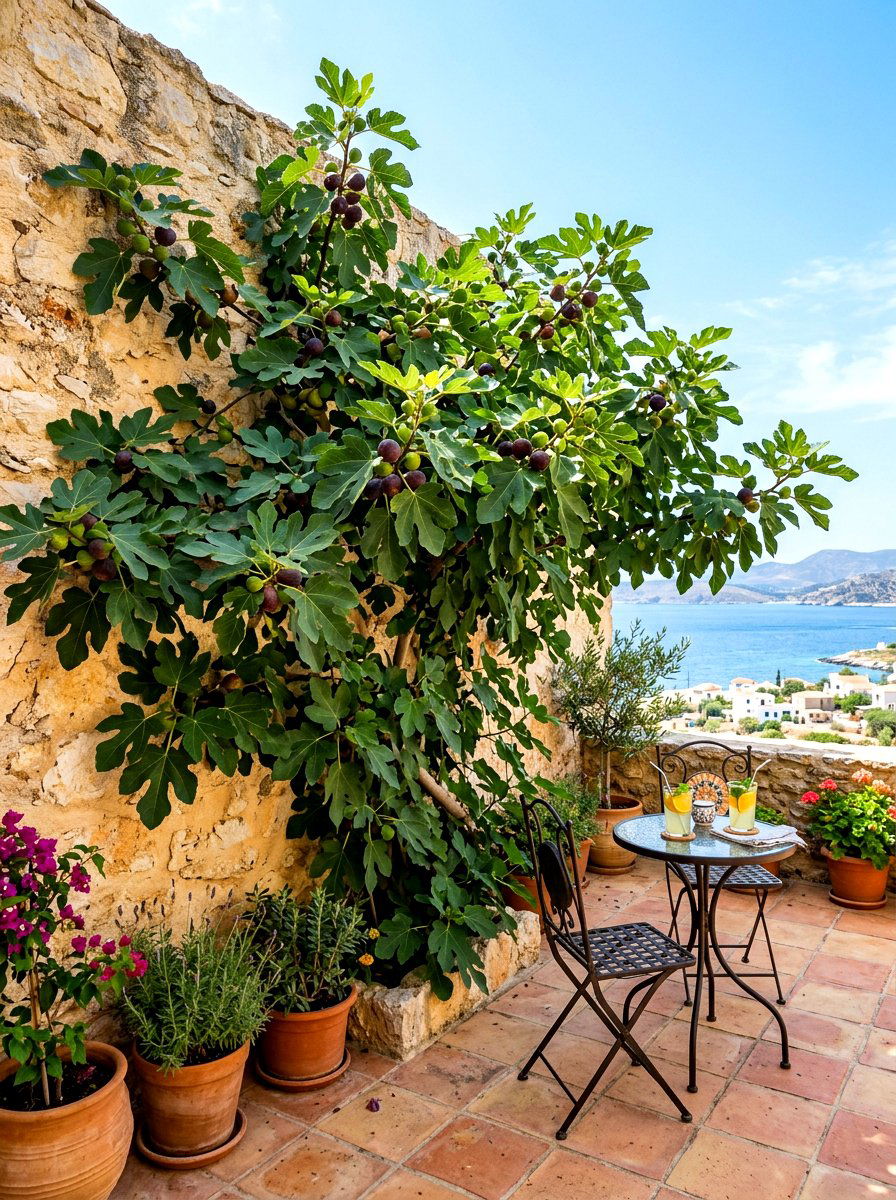
A sunny wall fig tree is a perfect choice for Mediterranean-style gardens or any area that receives intense afternoon heat. Figs are naturally vigorous and love the warmth reflected off a south-facing stone or brick surface. When trained as an informal fan or a series of cordons, the large, lobed leaves create a lush and tropical feel that provides excellent summer shade. The wall helps the figs develop their characteristic honey-like sweetness by extending the growing season into the cooler months of autumn. This setup is not only productive but also adds a significant amount of texture and deep green color to your outdoor living area.
17. Citrus Fan Tree
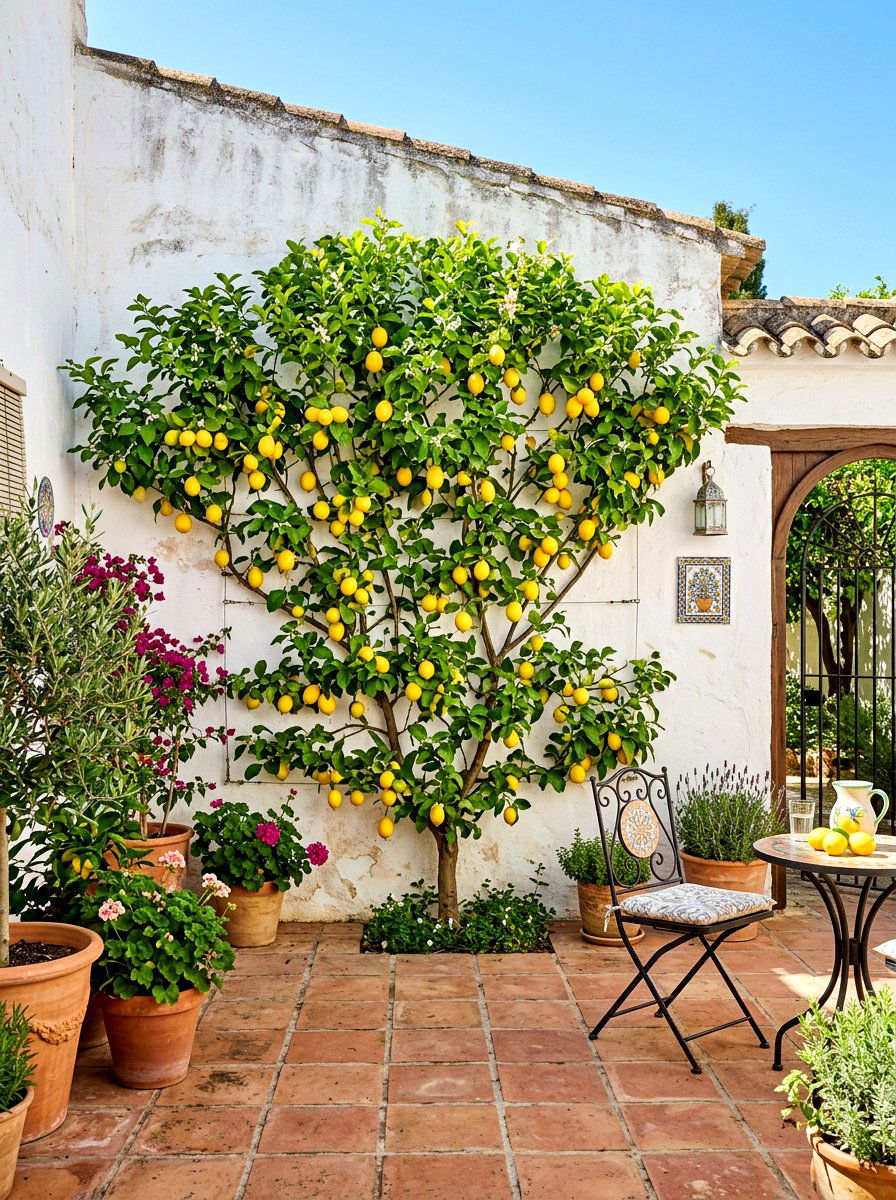
Growing a citrus fan tree against a protected wall is a brilliant way to enjoy lemons, limes, or oranges in slightly cooler climates. While citrus trees are generally evergreen and bushy, they can be successfully trained into a flat fan shape that hugs the side of a house or garage. This method keeps the tree compact and makes it much easier to cover with frost cloth during unusually cold winter nights. The bright yellow or orange fruit against the dark green waxy leaves creates a stunning visual contrast that looks beautiful year-round. Plus, the fragrant blossoms will fill your patio with a delightful scent every spring.
18. Plum Fan Tree
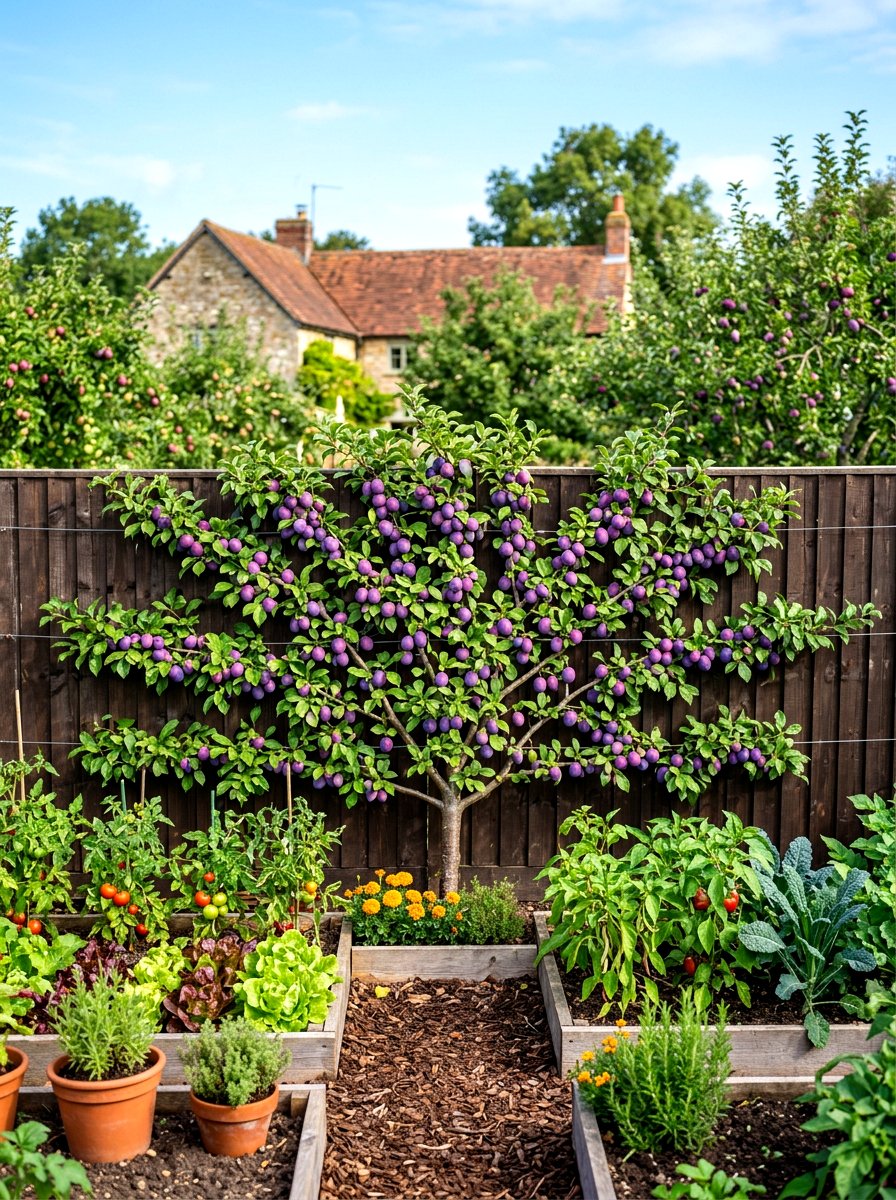
A plum fan tree is a lovely and productive addition to any sunny garden wall or fence. Plums are stone fruits that generally prefer a more relaxed fan shape over formal horizontal tiers because their branches can be somewhat brittle. Training them against a wall ensures that the delicate spring blossoms are protected from harsh winds, which leads to better fruit set and a more reliable harvest. The resulting fruit is often larger and sweeter because of the extra warmth provided by the vertical surface. This design is also very helpful for managing the height of the tree, ensuring that all the plums are within easy reach.
19. Horizontal Tiered Pear Tree
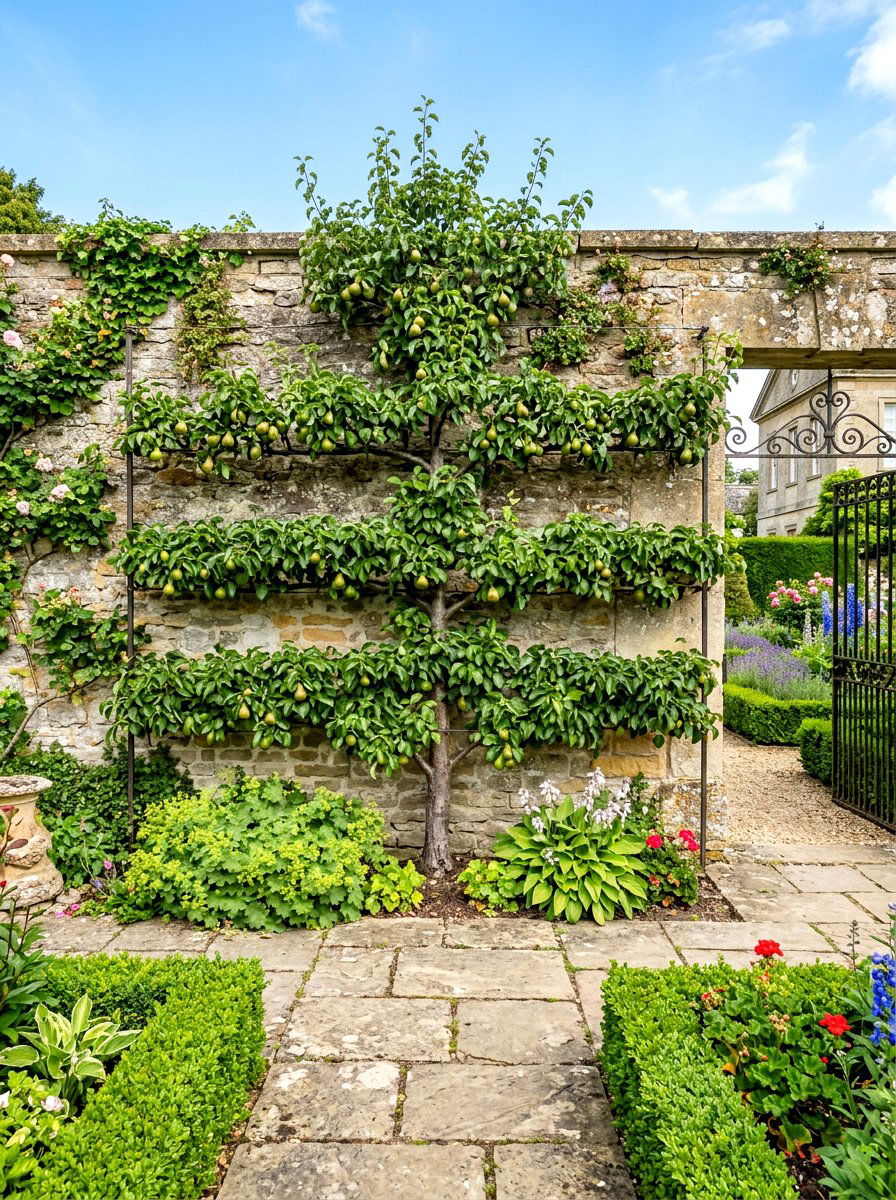
The horizontal tiered pear tree is a classic example of formal garden design that brings a sense of order and elegance to any space. By training the branches into three or four perfectly level tiers, you create a ladder-like effect that is both visually satisfying and highly productive. Pear trees are ideal for this pattern because they naturally develop short, fruit-bearing spurs that line the horizontal branches. This layout makes it very easy to see the fruit as it ripens, allowing for timely harvesting. The structured look of tiered pears works exceptionally well in formal courtyards or as a backdrop for a traditional herb garden.

20. Container Fruit Tree
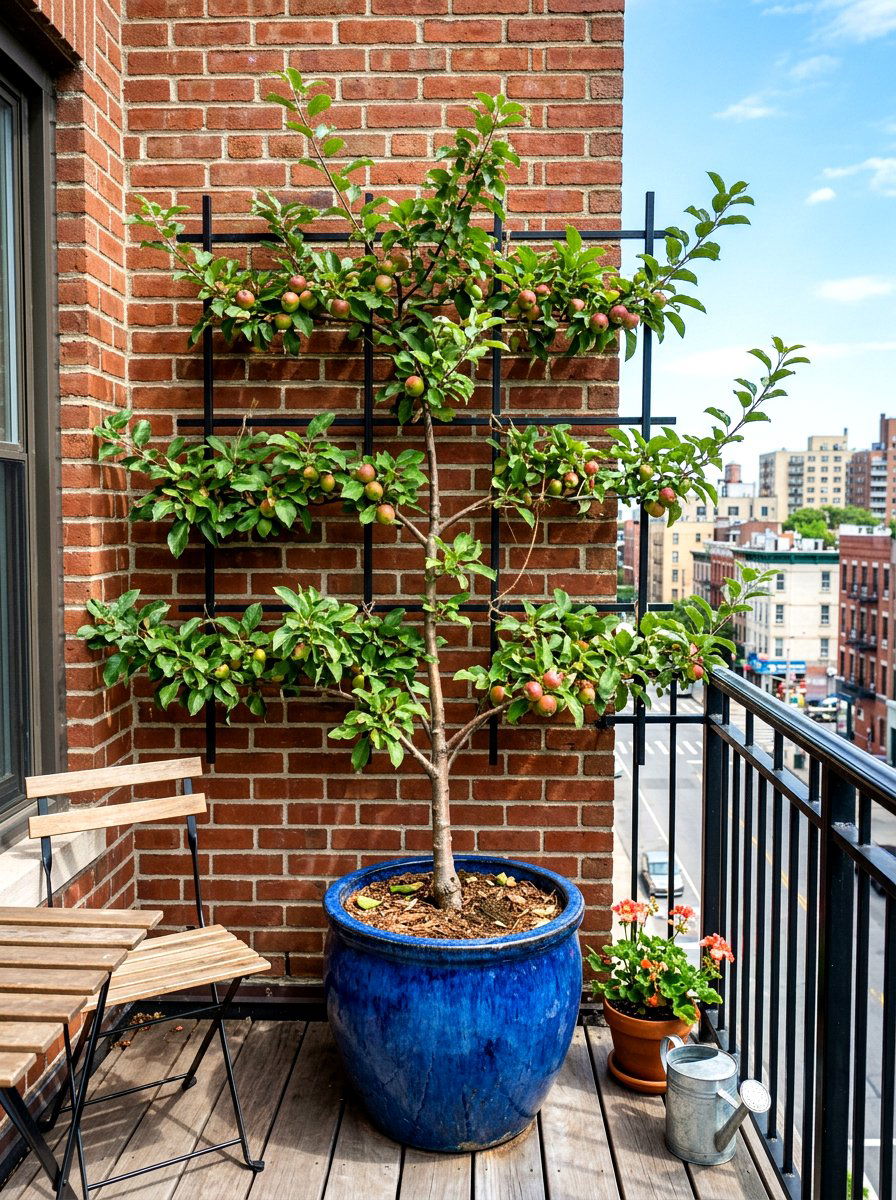
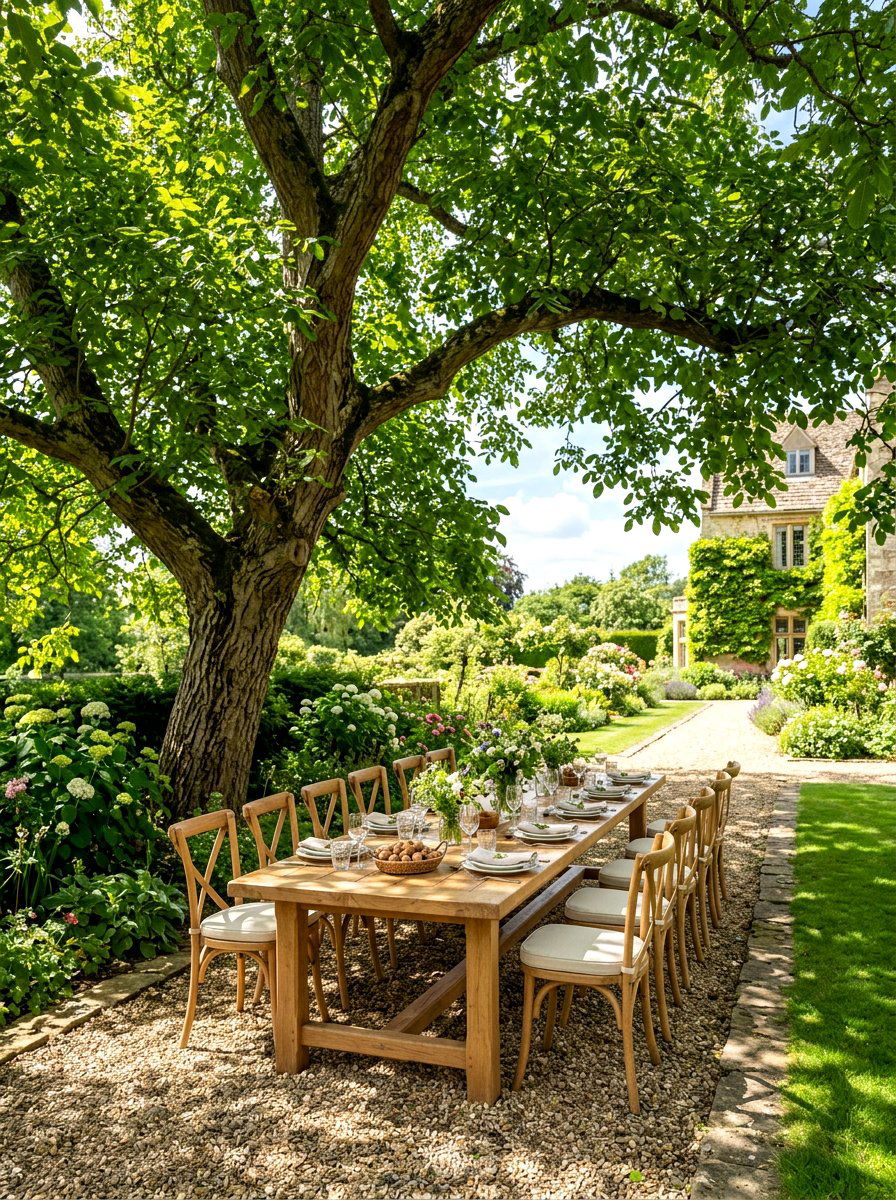
A container fruit tree trained as an espalier is a versatile option for renters or anyone with a very small patio or balcony. By planting a dwarf tree in a large, stylish pot and providing a small trellis for support, you can create a mobile fruit wall that can be moved to follow the sun. This approach allows you to enjoy the benefits of vertical gardening without needing a permanent garden bed. It is a perfect way to add greenery and edible rewards to a paved area or an urban roof deck. Choosing a high-quality, decorative container will ensure that your tree looks like a deliberate piece of garden art.
21. Geometric Fruit Tree
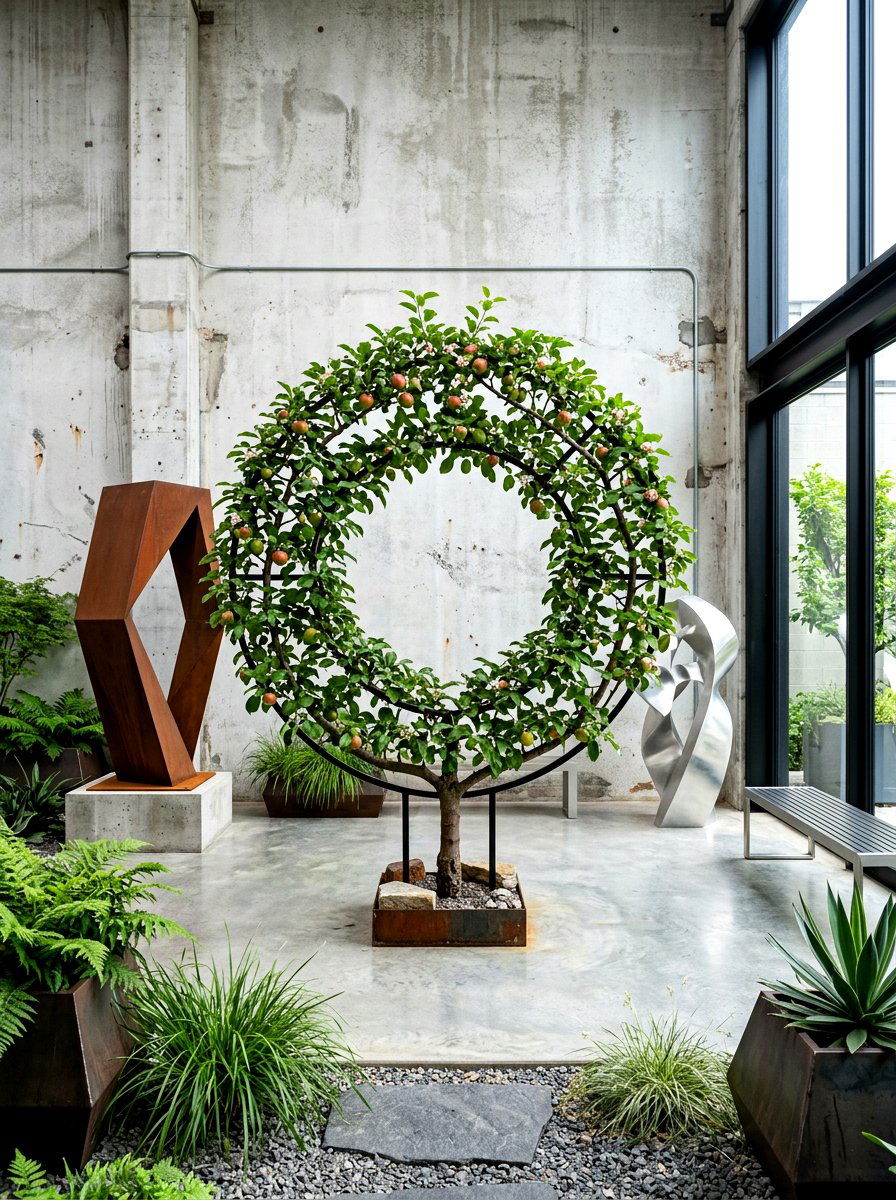
A geometric fruit tree design pushes the boundaries of traditional espalier by creating complex shapes like circles, squares, or even zig-zags. This highly artistic approach requires a sturdy custom-made frame and a great deal of patience during the early training years. The result is a truly unique living sculpture that serves as a major conversation piece in any modern landscape. These trees are often used in contemporary show gardens to demonstrate the incredible versatility of woody plants. While they require more frequent pruning to maintain their precise shapes, the visual payoff is immense, turning a simple fruit tree into a sophisticated and avant-garde work of art.
22. Small Space Fruit Tree
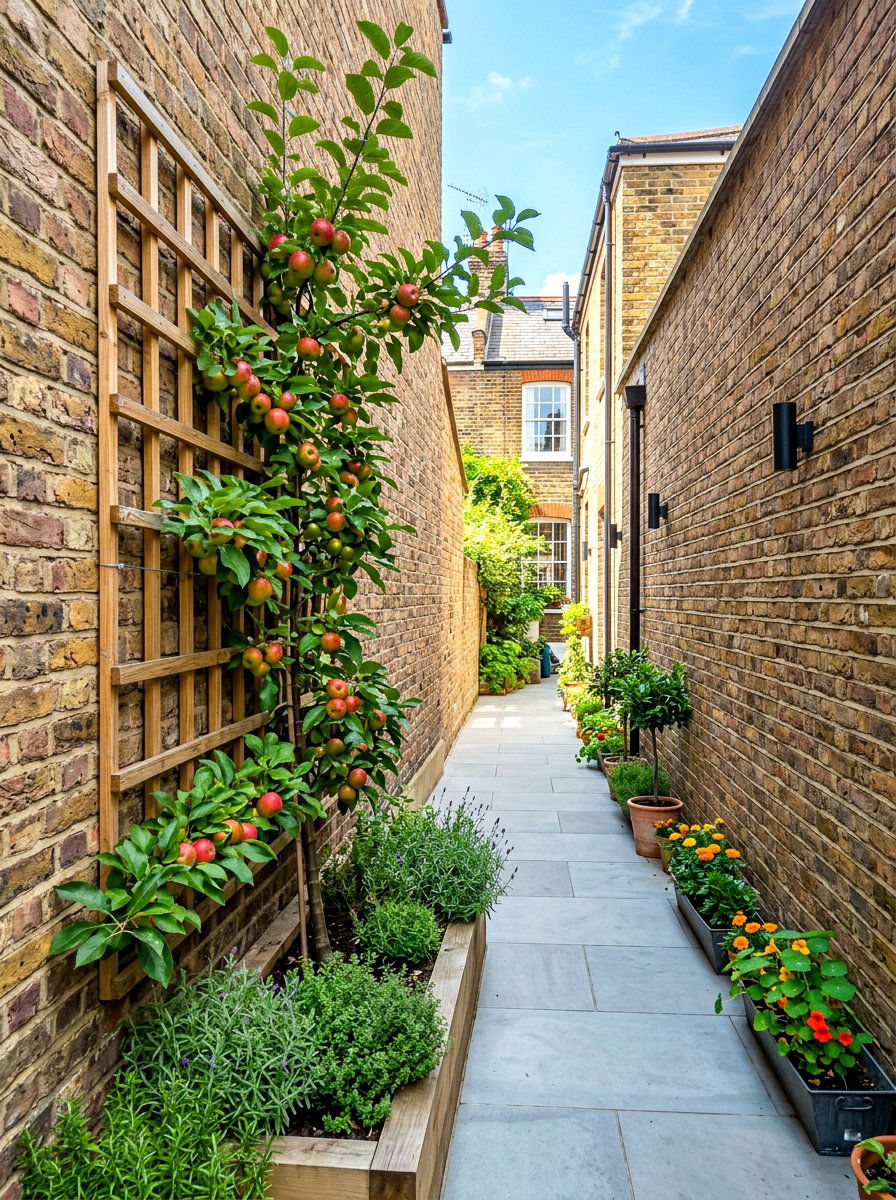
Utilizing a small space fruit tree method is the best way to turn a narrow walkway or a tiny urban backyard into a productive oasis. By choosing a columnar variety or a simple vertical cordon, you can grow fresh fruit in a space that is less than two feet wide. This is especially useful for those living in townhomes or apartments with small private gardens. The key is to select a variety that is specifically bred for its compact habit and to keep it tightly pruned against the wall. This allows you to have the luxury of home-grown fruit without sacrificing valuable square footage for other activities.
23. Wooden Lattice Fruit Tree
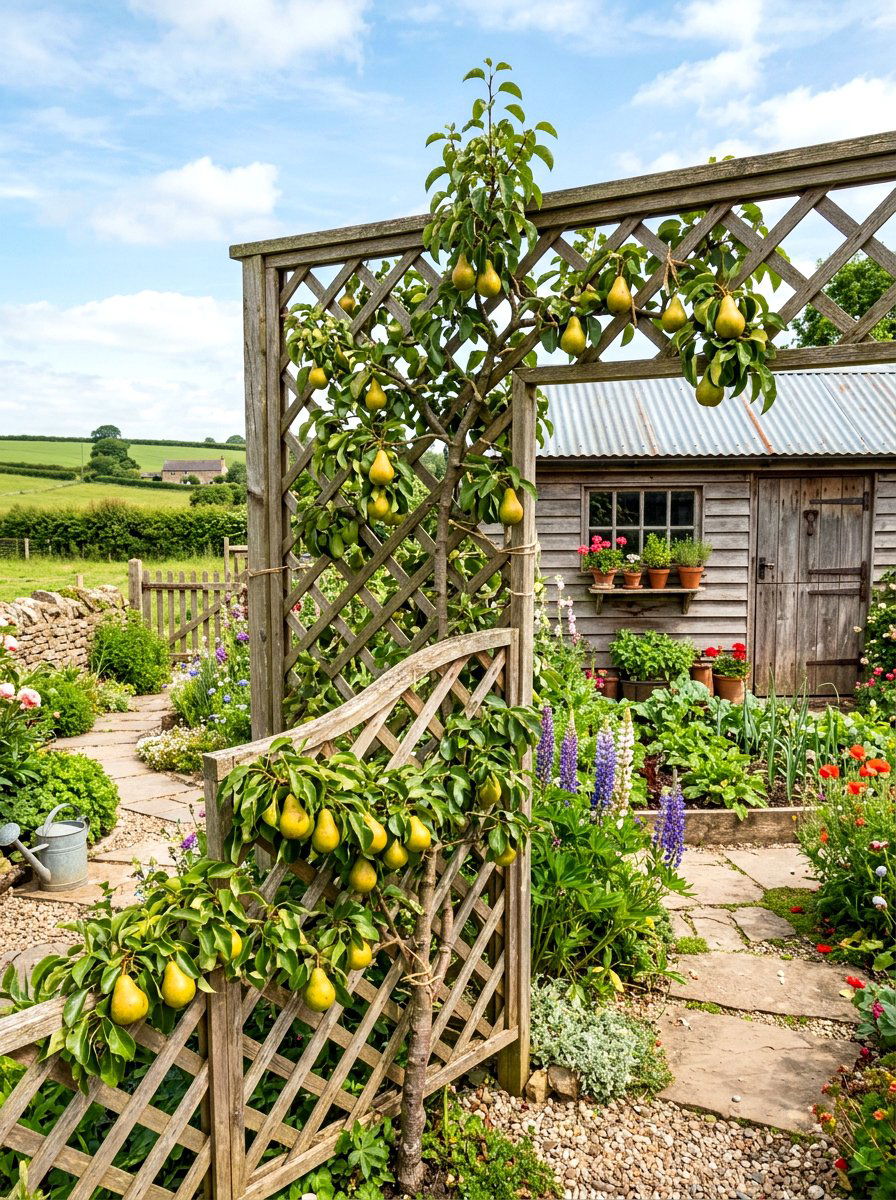
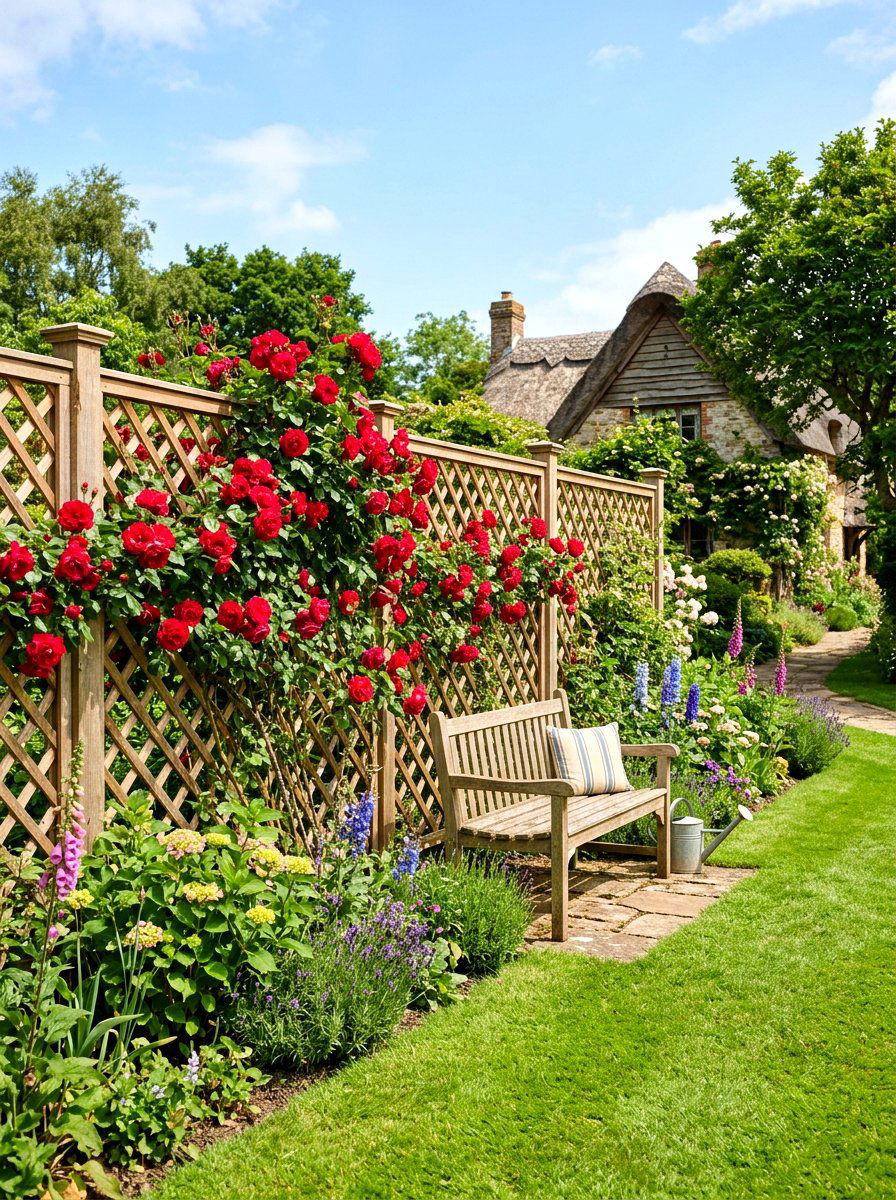
A wooden lattice fruit tree support provides a rustic and natural look that blends seamlessly into a traditional garden setting. The grid pattern of the lattice offers hundreds of attachment points for training young branches into various shapes, from simple fans to more complex weaves. This is an affordable and DIY-friendly way to get started with espalier, as pre-made lattice panels are readily available at most home improvement stores. The wood provides a warm backdrop for the green foliage and colorful fruit, creating a cozy and inviting atmosphere. Over time, the tree will partially cover the lattice, resulting in a lush, living wall of food.
24. Mediterranean Fruit Tree
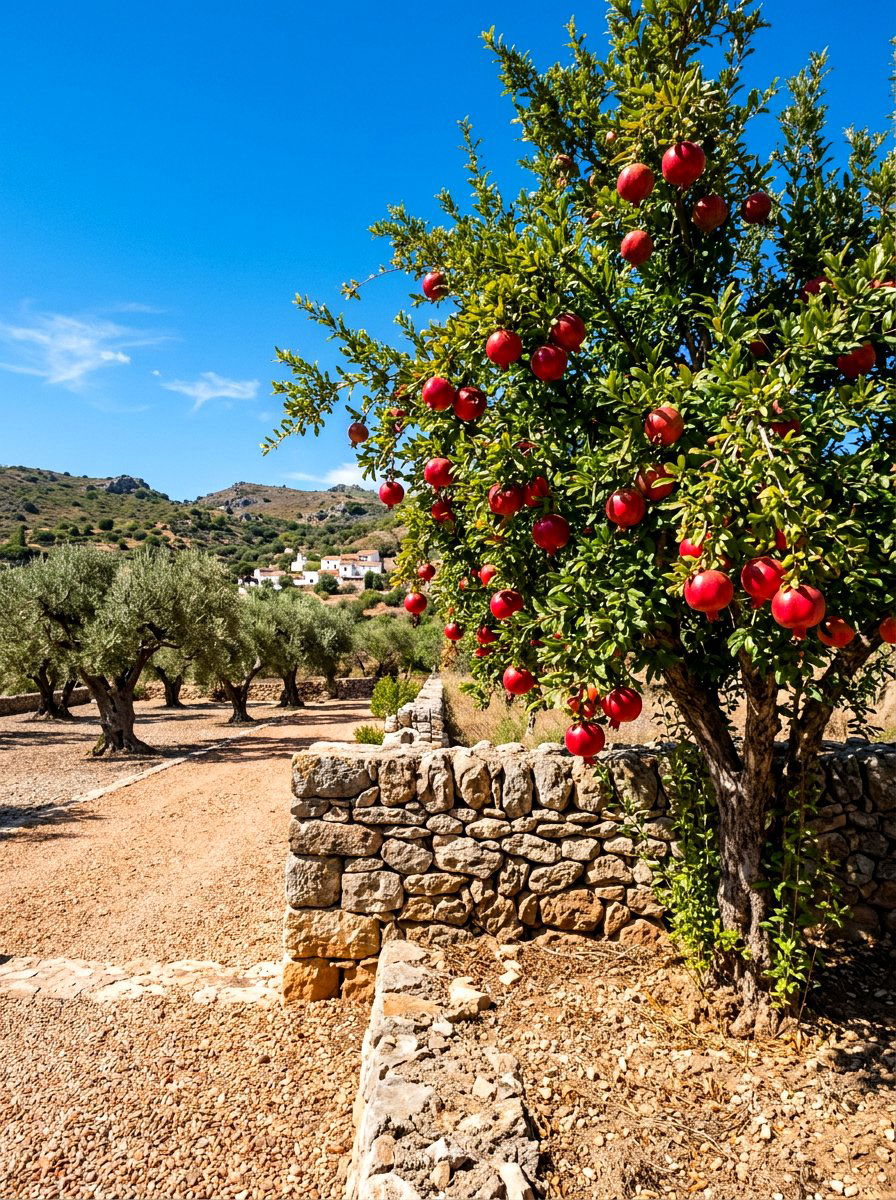
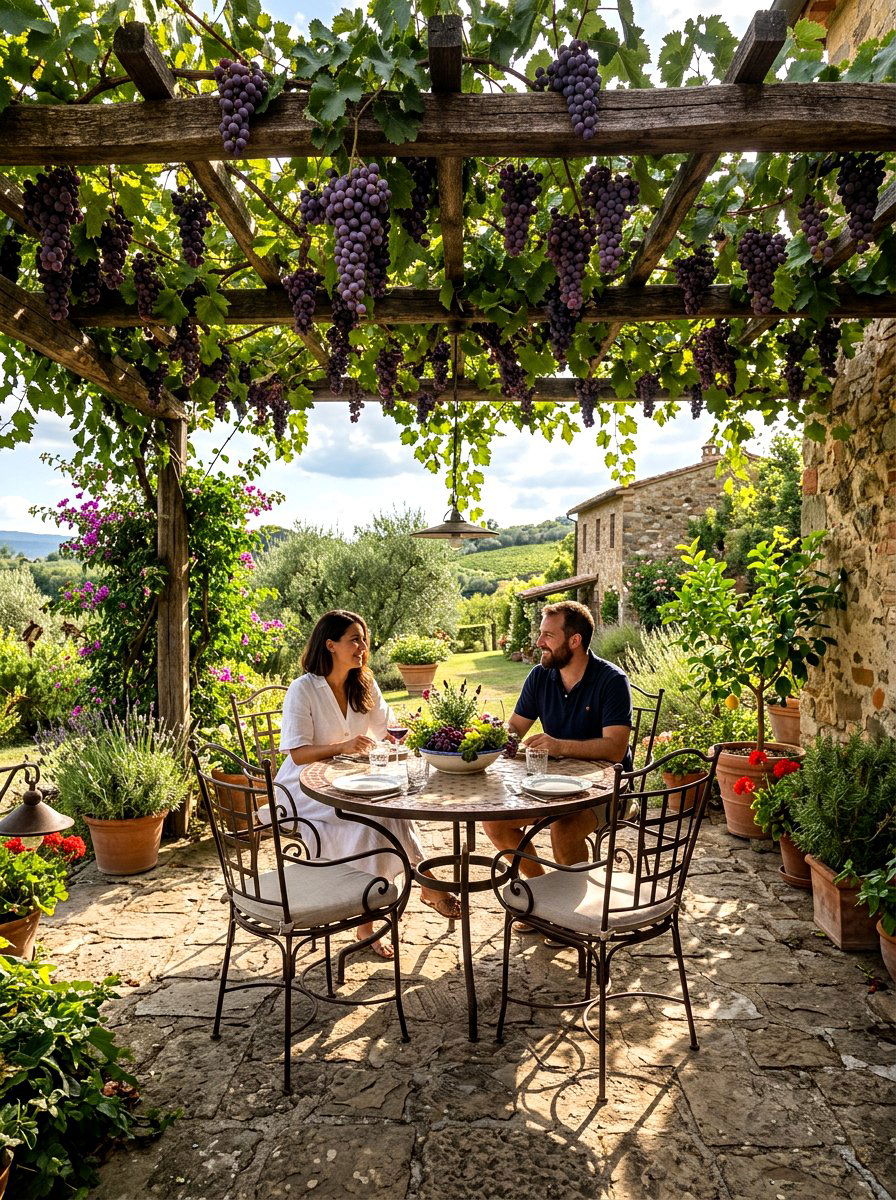
A Mediterranean fruit tree theme often features heat-loving varieties like olives, pomegranates, or grapes trained against sun-drenched stone walls. This style is characterized by its informal beauty and the use of natural materials like wrought iron or rustic timber for support. Pomegranates, in particular, look stunning when espaliered, as their bright red flowers and large, heavy fruits create a dramatic visual display. This approach is perfect for creating a relaxed, vacation-like feel in your backyard. The combination of silver-green foliage and sun-baked surfaces creates a timeless aesthetic that is both drought-tolerant and highly productive, making it ideal for warm, arid climates.
25. Formal Garden Fruit Tree
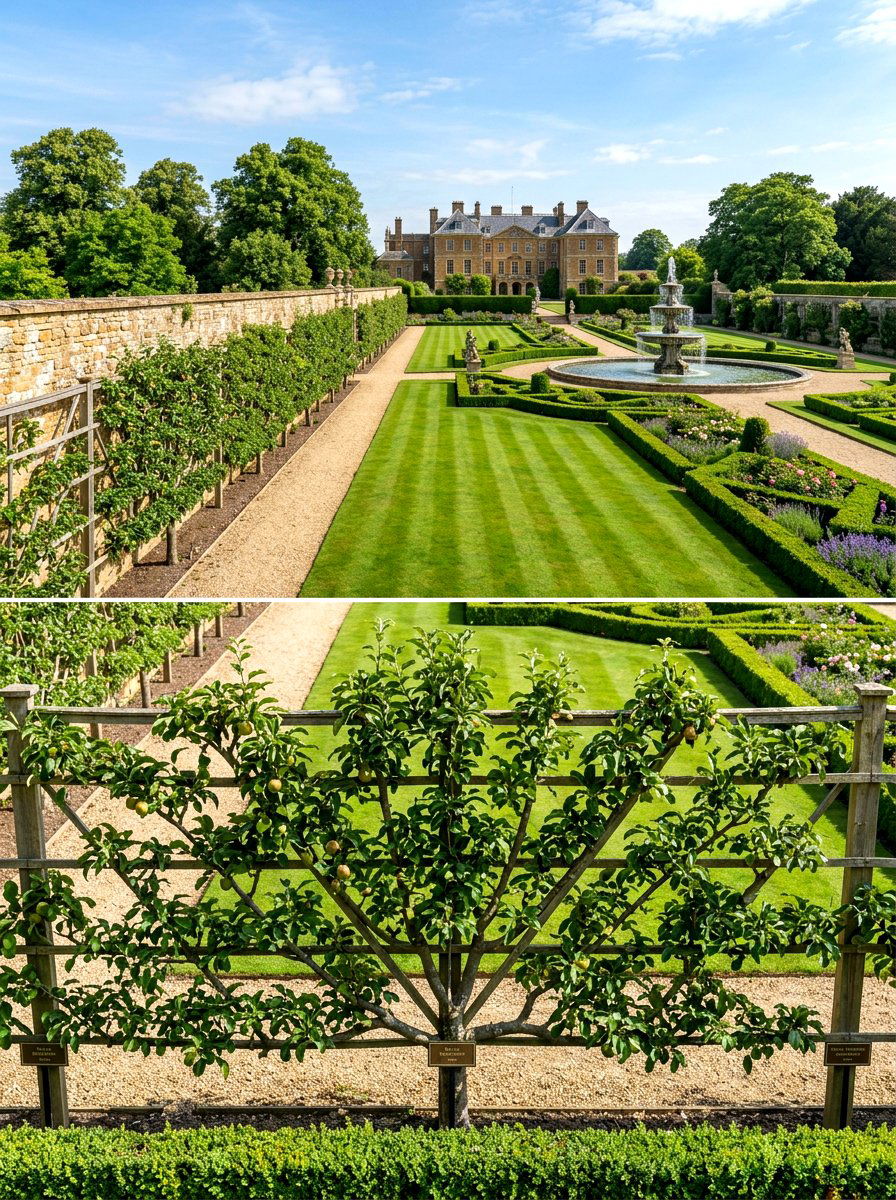
The formal garden fruit tree is all about precision, symmetry, and classical beauty. These trees are often used to line grand walkways or to frame a central lawn in a large estate garden. They are typically trained into perfectly balanced horizontal tiers or elaborate palmettes that mirror the architecture of the surrounding home. This style requires a dedicated gardener who enjoys the meditative process of regular pruning and shaping. The result is a highly structured landscape that feels permanent and prestigious. When covered in white spring blossoms, these formal trees look like rows of elegant sculptures, providing beauty long before the first fruit is ready.
26. Peach Fan Tree
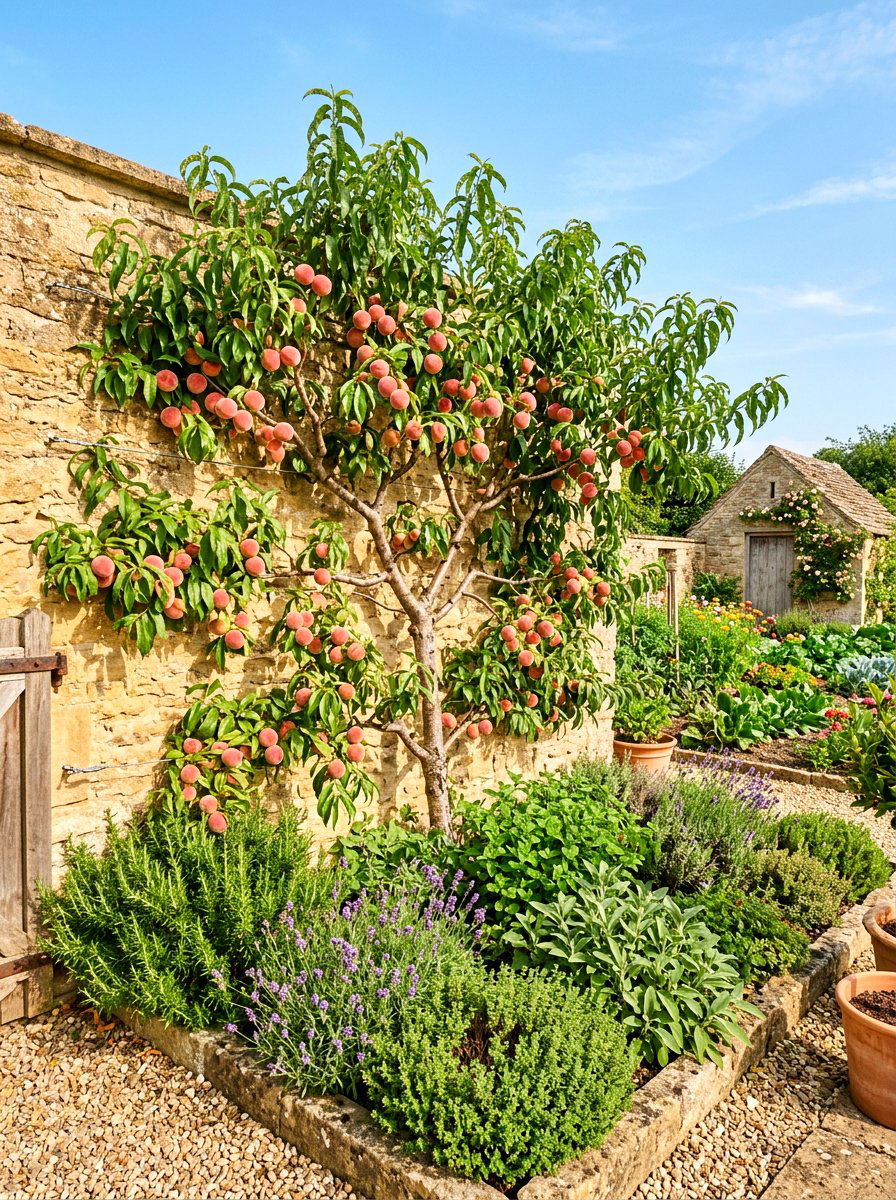
A peach fan tree is one of the most rewarding ways to grow this succulent fruit in a home garden. Because peaches produce their fruit on one-year-old wood, they are best suited to the fan shape, which allows for a constant renewal of new, productive branches. Training them against a south-facing wall provides the intense light and heat necessary for the peaches to develop their characteristic blush and sweet, juicy flesh. This method also keeps the tree at a manageable height, making it much easier to thin the fruit and apply organic pest controls. The large, pink blossoms in early spring are an added ornamental bonus.
27. Apricot Wall Tree
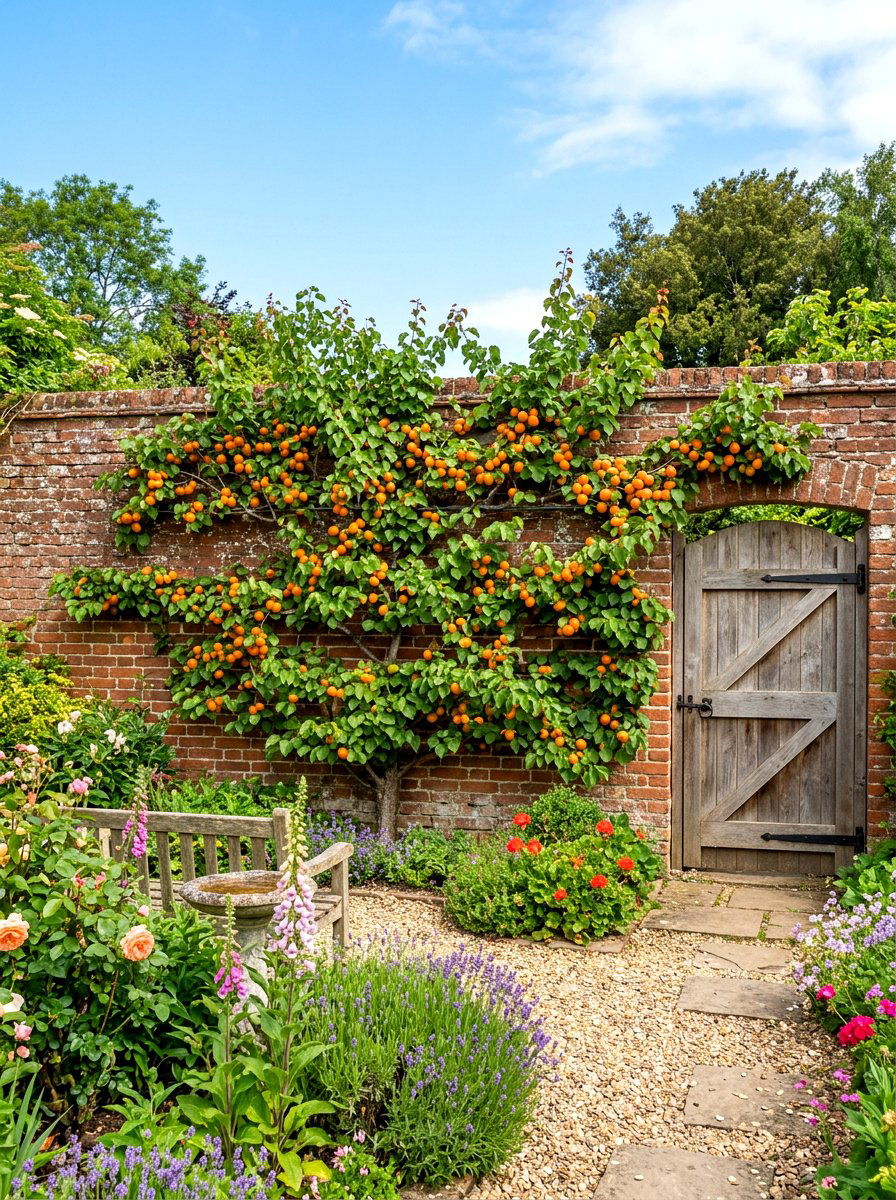
An apricot wall tree is a brilliant solution for gardeners who want to grow this fickle fruit in regions with unpredictable spring weather. By training the tree against a warm wall, you can provide it with a significant amount of protection from frost, which often destroys the early blossoms of open-orchard apricots. The reflected heat from the wall also helps the apricots ripen fully, ensuring they are much more flavorful than store-bought versions. This setup allows you to enjoy a harvest that is often difficult to achieve in a traditional orchard setting. The golden-orange fruit looks spectacular against a dark or neutral-colored exterior wall.
28. Narrow Walkway Fruit Tree
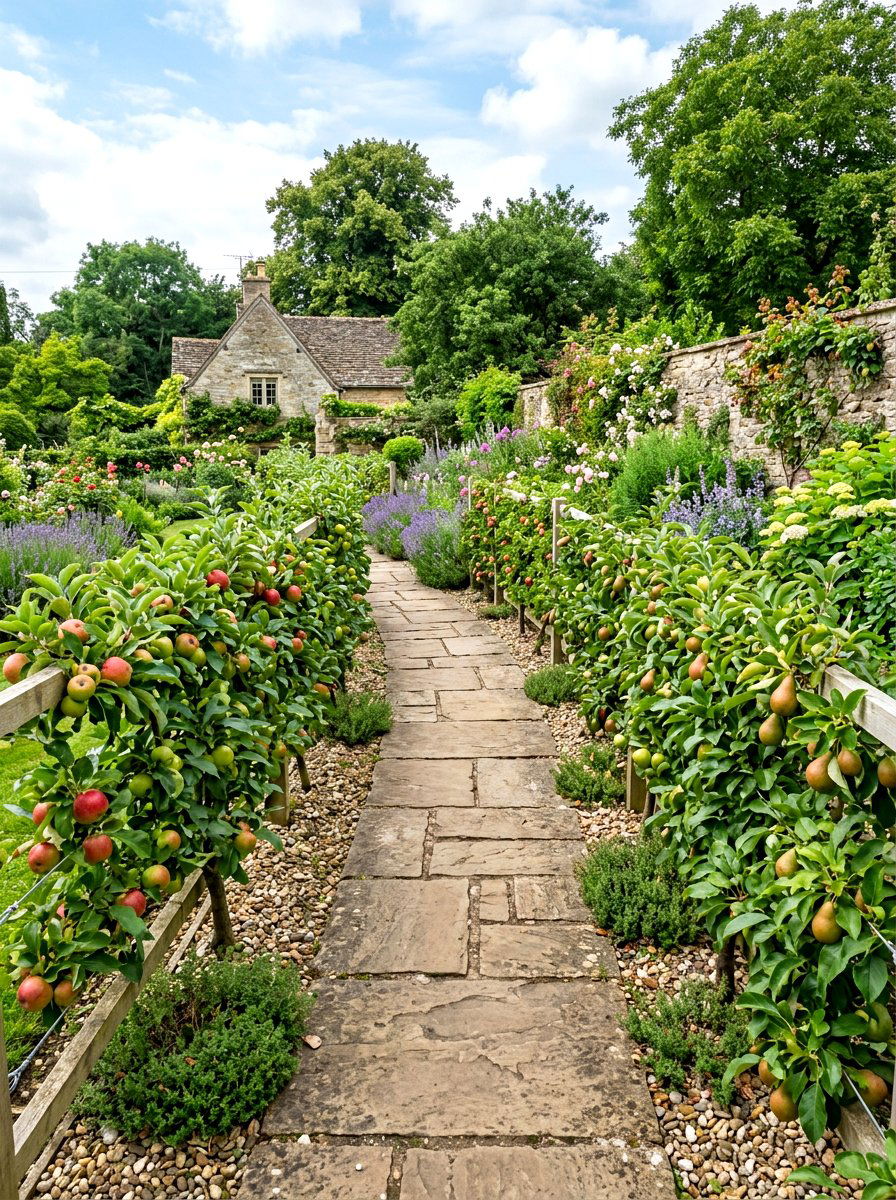
Designing a narrow walkway fruit tree installation is a clever way to add functionality to the often-ignored side of a house. Instead of having a plain path, you can line the walls with a series of vertical cordons or low-profile horizontal espaliers. This creates a lush, green corridor that feels more like a hidden garden gallery than a simple passage. Because the trees are kept flat, they do not impede your movement through the space. This is a perfect example of how edible landscaping can solve design challenges while providing a delightful experience for anyone walking through the narrowest parts of your property.
29. Kitchen Garden Fruit Tree
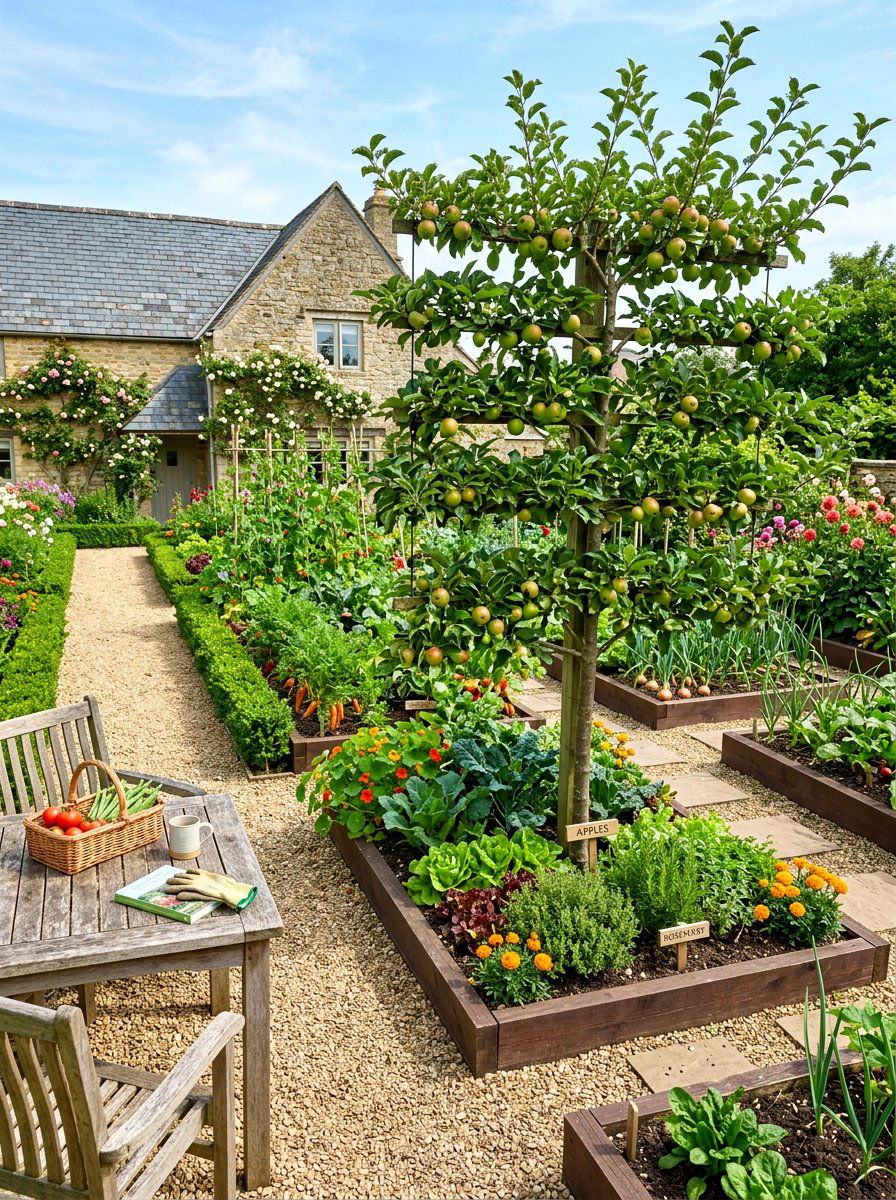
A kitchen garden fruit tree is the ultimate convenience for any home chef who wants fresh ingredients just steps from the back door. By training fruit trees along the edges of a potager or vegetable patch, you create a beautiful vertical boundary that defines the space. You can choose varieties that complement your cooking, such as tart baking apples or sweet dessert pears. This integrated approach ensures that your garden is both beautiful and highly functional, providing a diverse range of fresh produce throughout the season. Having the fruit at eye level also makes it easy to monitor for ripeness and pick only what you need.
30. Contemporary Metal Fruit Tree
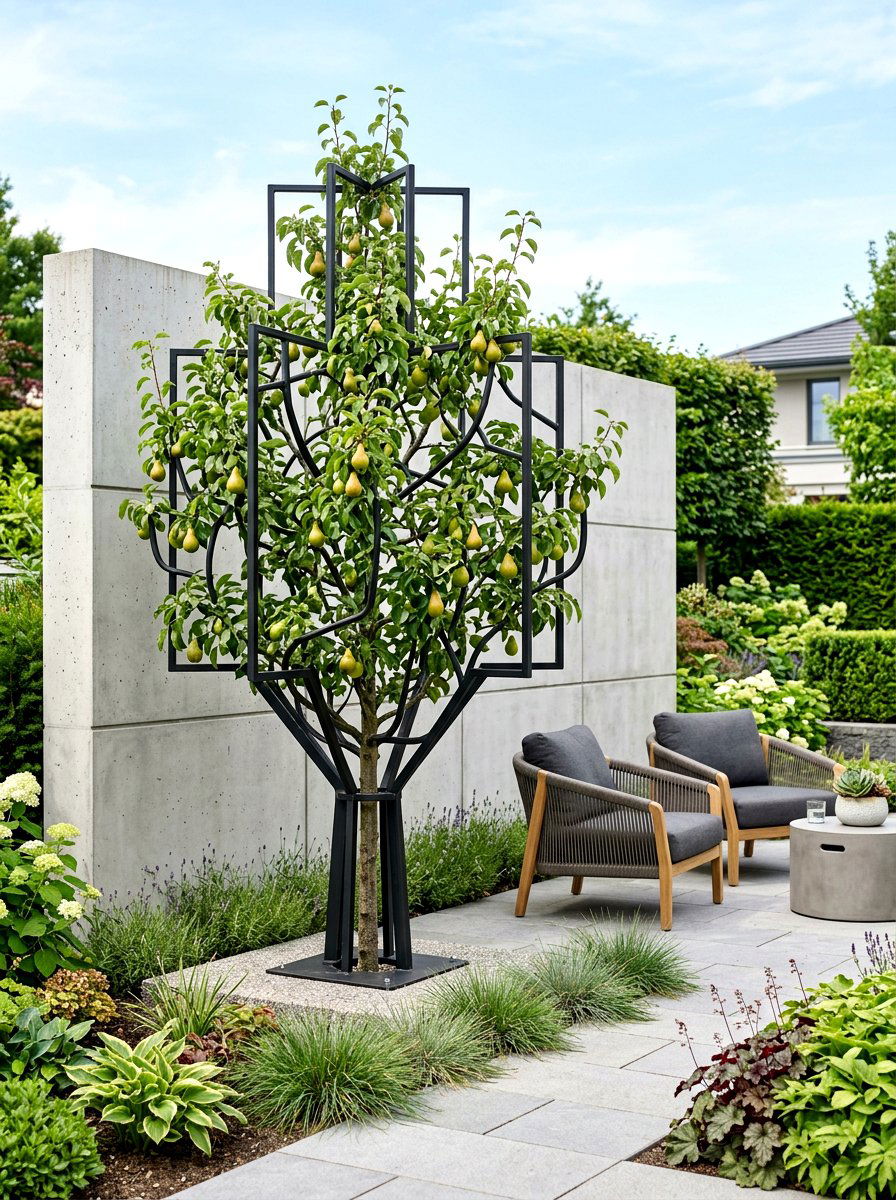
A contemporary metal fruit tree frame uses modern materials like powder-coated steel or aluminum to create a very clean and durable support system. This look is perfect for high-end urban gardens where traditional wooden trellises might look too rustic. The metal frame can be painted to match the color of your house or used as a contrasting accent piece in black or charcoal. These structures are incredibly long-lasting and can support the weight of heavy fruit crops without sagging. This approach combines the ancient art of espalier with modern engineering, resulting in a productive garden feature that is built to last for many decades to come.
Conclusion:
Espalier fruit tree walls represent a remarkable intersection of art, history, and practical horticulture. By embracing these vertical growing techniques, any gardener can transform a simple wall or fence into a productive and beautiful landscape feature. Whether you choose a formal horizontal cordon or a whimsical arcaded tunnel, the benefits of increased sunlight, easier harvesting, and space-saving design are undeniable. These living sculptures offer a sense of permanence and seasonal change that few other garden elements can match. With a little patience and regular pruning, you can enjoy a bountiful harvest of fresh fruit right from your own doorstep, regardless of the size of your garden.

Related posts: