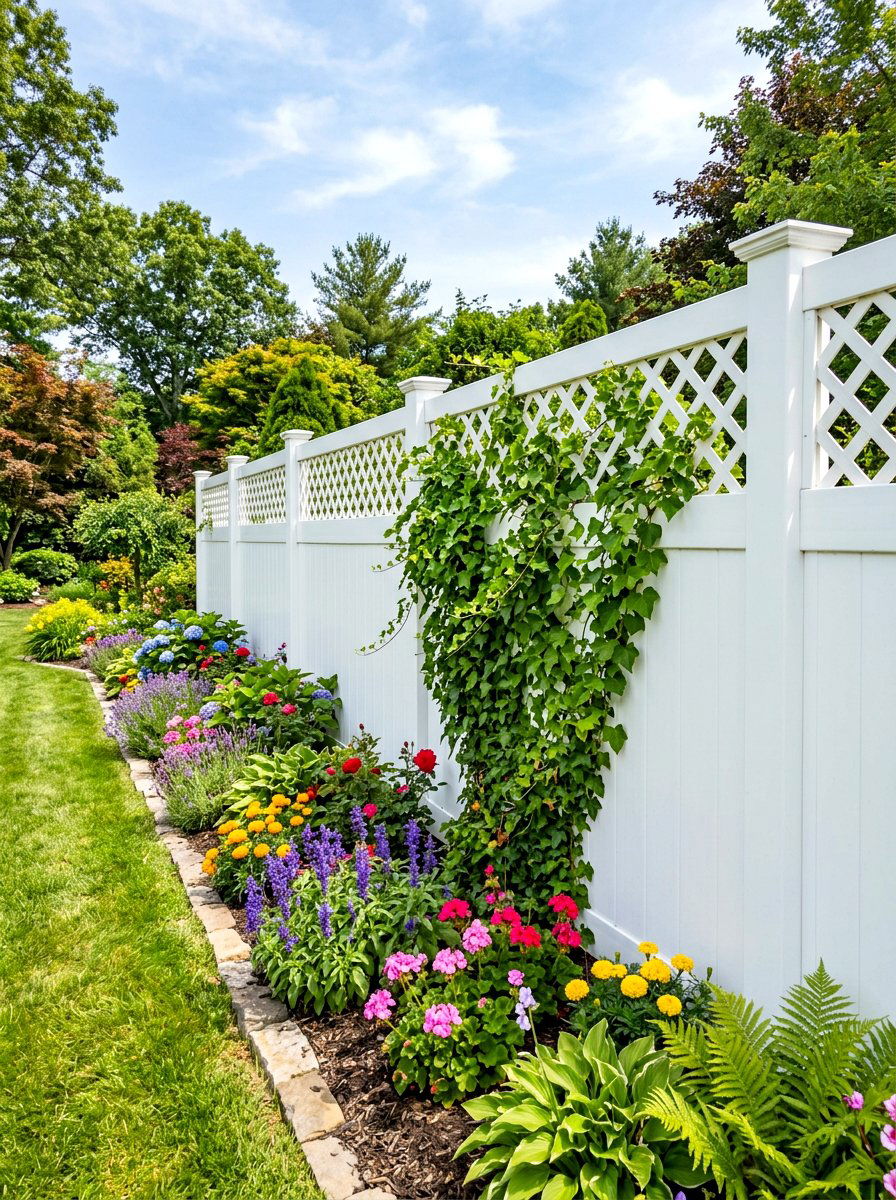
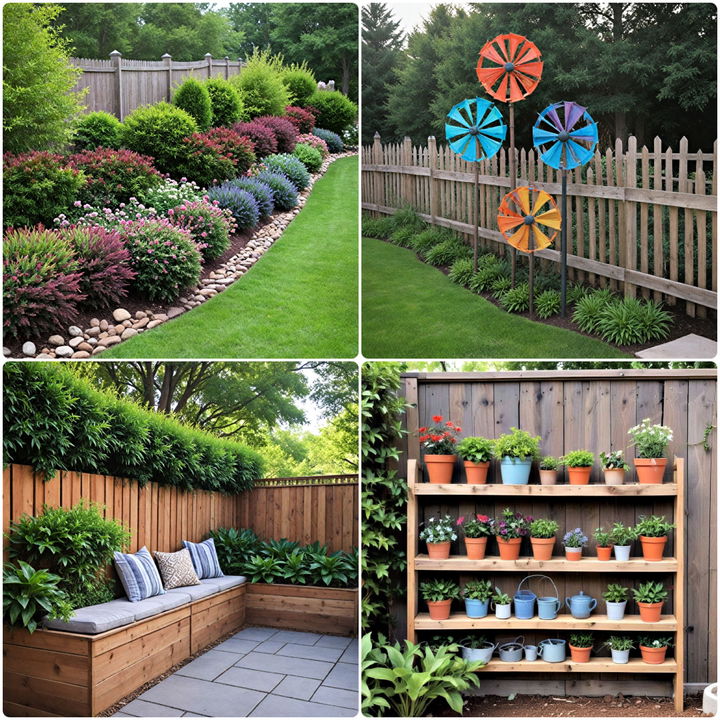
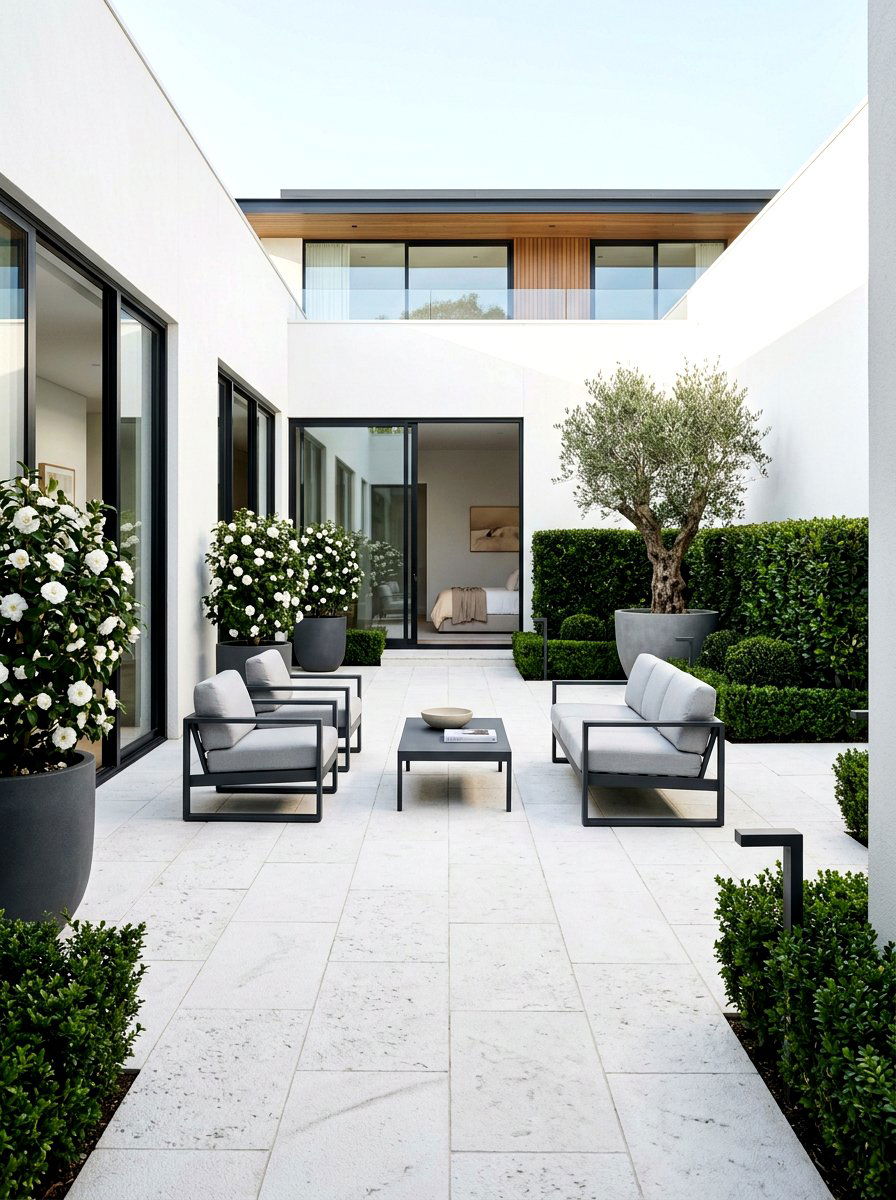
Creating a beautiful landscape often begins at the very edge of your property where the fence meets the soil. This narrow strip of land offers a unique opportunity to enhance your outdoor living space while providing a natural frame for your home. By installing flower beds along your fence line, you can soften the harsh lines of wooden or metal structures and add layers of color and texture to your yard. These garden beds serve as more than just decoration; they can increase privacy, attract pollinators, and improve property value. Whether you have a sprawling backyard or a small lot, maximizing your fence line with thoughtful plantings creates a cohesive and inviting atmosphere that makes every corner feel intentional and well-designed.
1. Low Maintenance Perennial Border
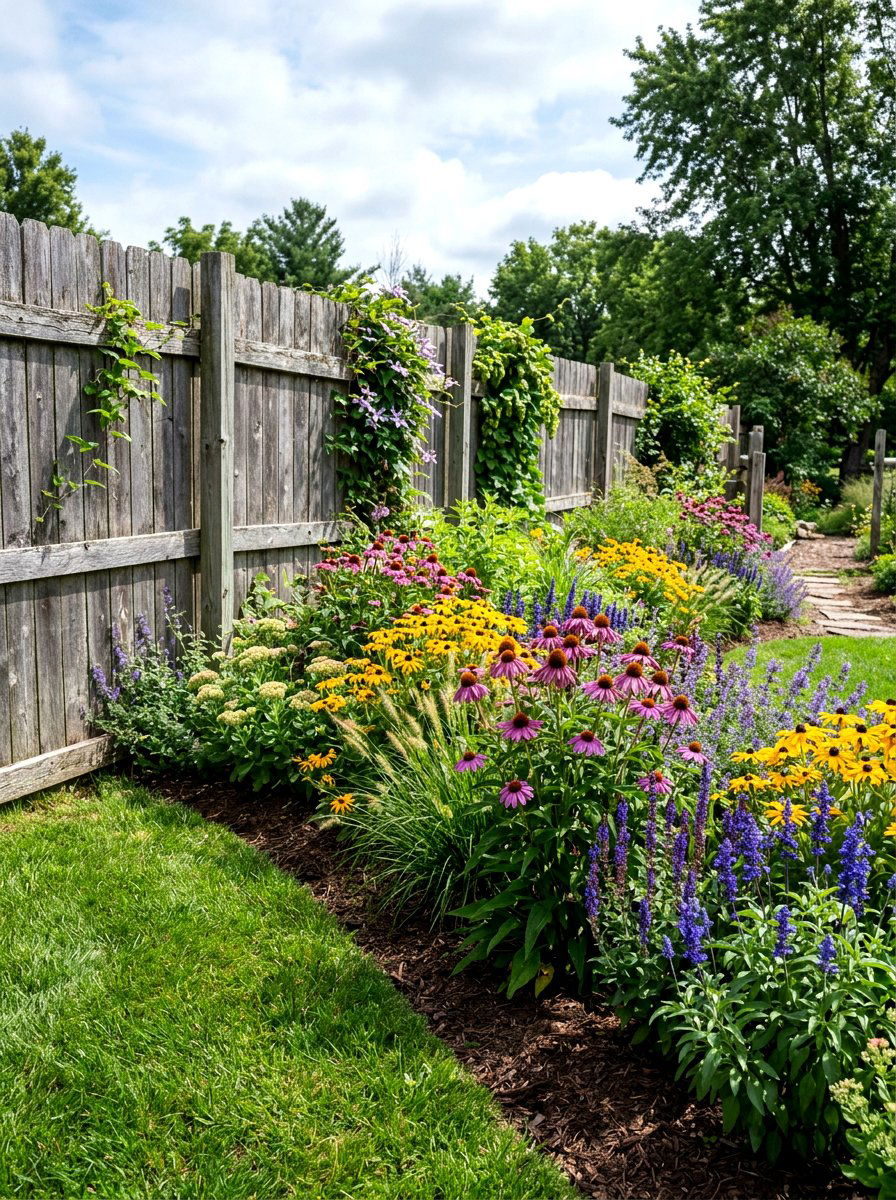
Have you ever wanted a garden that looks stunning without requiring hours of weekly work? Planting a selection of low maintenance perennials along your fence line is the perfect solution for busy homeowners. These plants return year after year, establishing deep root systems that eventually require very little water or intervention. You can choose varieties like cone-flowers, black-eyed Susans, or hardy salvia to create a vibrant border that thrives in most soil conditions. By selecting species that are native to your specific region, you ensure that your garden stays healthy and resilient against local pests. This approach allows you to enjoy a lush, green perimeter that provides consistent beauty and structural interest throughout the changing seasons.
2. Raised Wooden Garden Beds
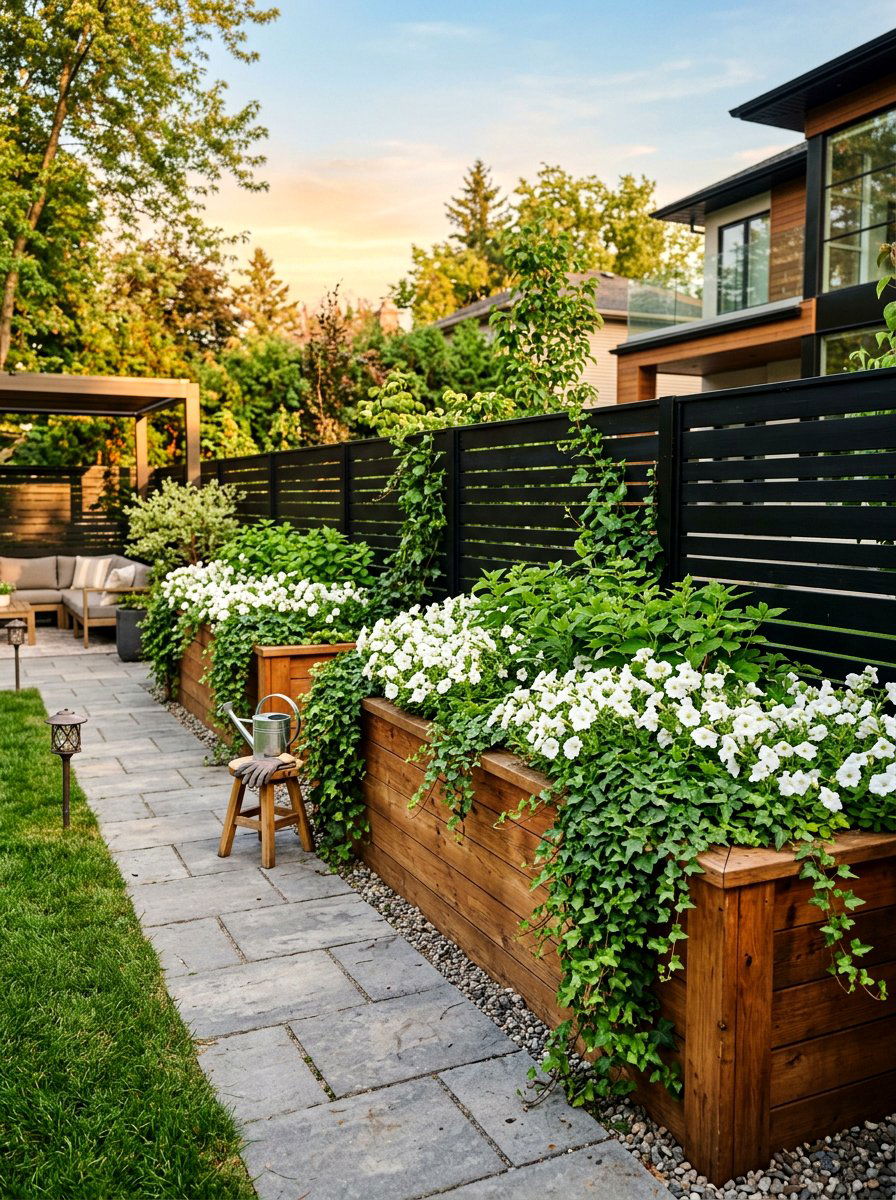
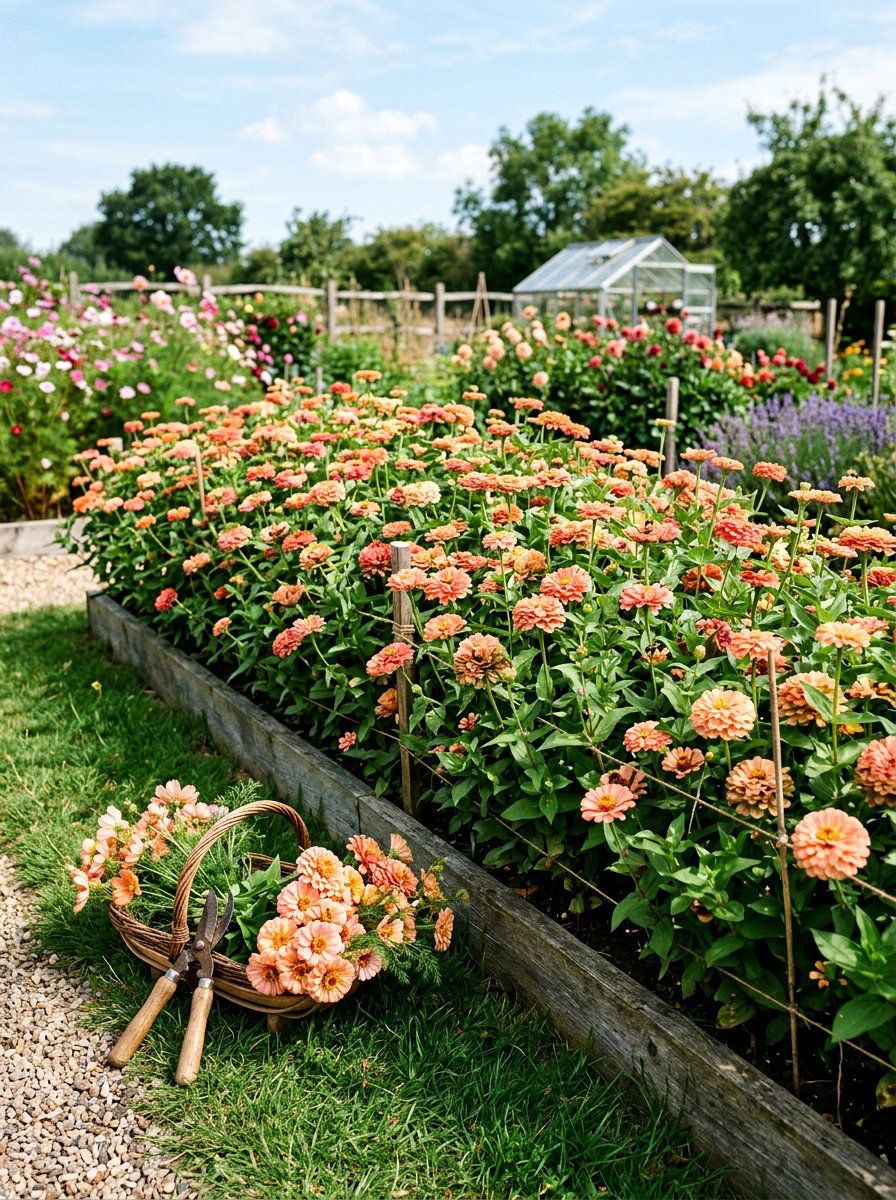
Building raised wooden garden beds against your fence line is an excellent way to add architectural interest and improve soil drainage. These structures create a clean, defined boundary that separates your lawn from your floral displays while making gardening much easier on your back. You can use cedar or pressure-treated timber to construct long, linear boxes that follow the entire length of your fence. Fill these beds with high-quality potting mix to give your flowers the best possible start, regardless of the natural soil quality in your yard. The elevated height also helps to protect your plants from foot traffic and pets, ensuring your flower bed remains pristine and flourishing throughout the growing season.
3. Flowering Vines On Trellis
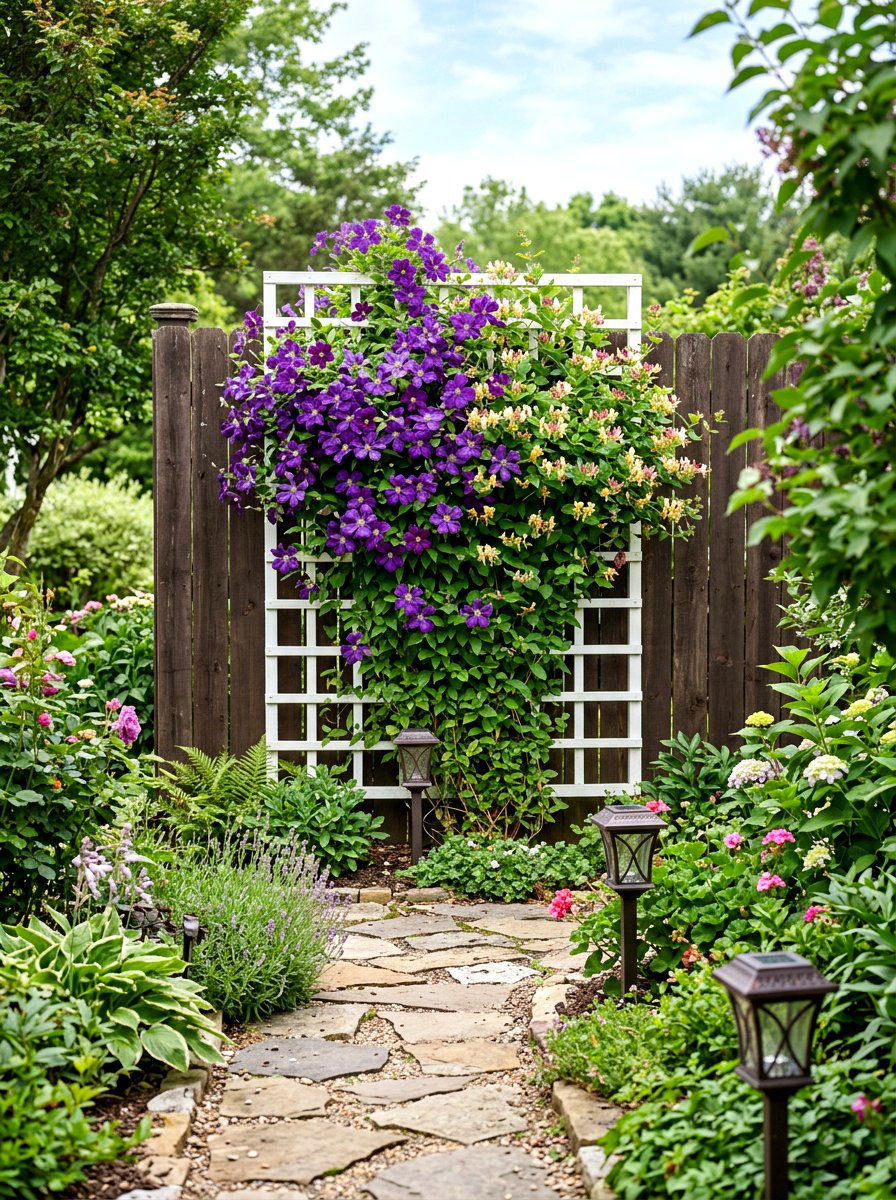
If you have a plain or unattractive fence, installing a trellis with flowering vines can completely transform the vertical space. Climbing plants like clematis, honeysuckle, or trumpet vine provide a lush tapestry of greenery and blooms that crawl upward to cover the structure. This method is particularly effective for small yards where ground space is limited but you still want a significant floral impact. As the vines mature, they create a dense living screen that offers additional privacy and a romantic, secret-garden aesthetic. Ensure your trellis is securely attached to the fence to support the weight of the growing foliage, and enjoy the vertical beauty that changes color as the months pass.
4. Cottage Garden Flower Strip
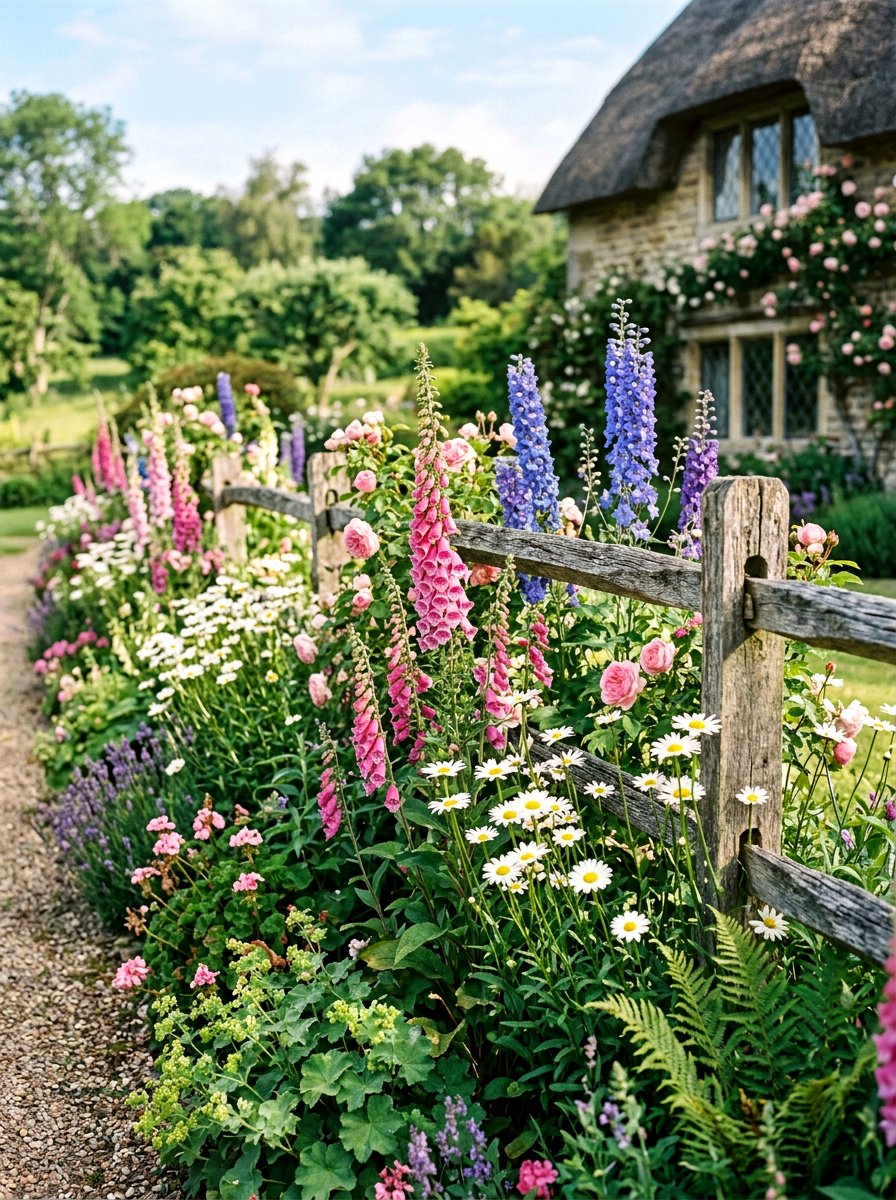
A cottage garden flower strip brings a sense of whimsical charm and informal elegance to any backyard perimeter. This style is characterized by a dense, slightly overgrown look featuring a mix of traditional favorites like hollyhocks, delphiniums, and foxgloves. Instead of rigid rows, these flowers are planted in overlapping clusters to create a soft, romantic boundary that blends seamlessly with the natural landscape. The variety of heights and colors keeps the eye moving, while the close proximity of the plants helps to suppress weeds naturally. This design works beautifully against weathered wooden fences, creating a timeless look that feels like a cozy retreat from the modern world and attracts plenty of local butterflies.
5. Evergreen Shrub Privacy Screen
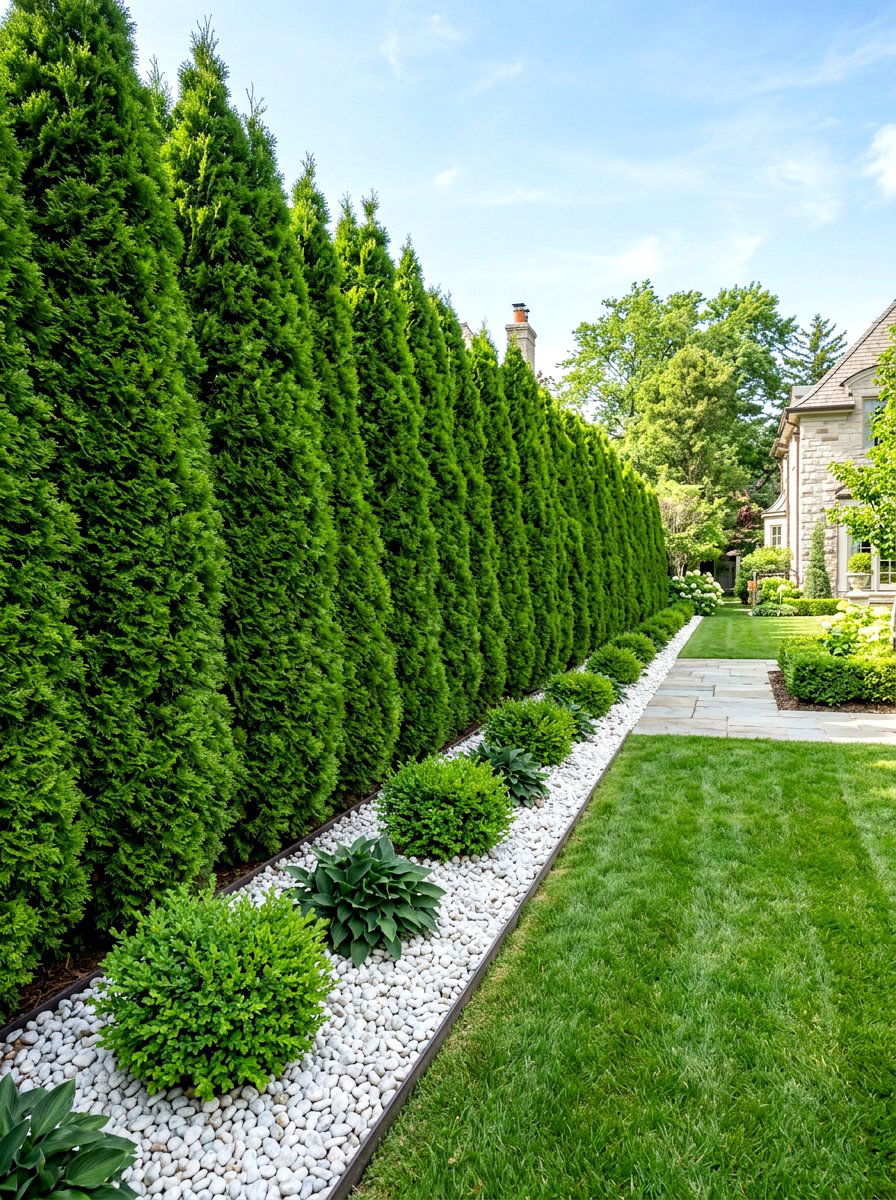
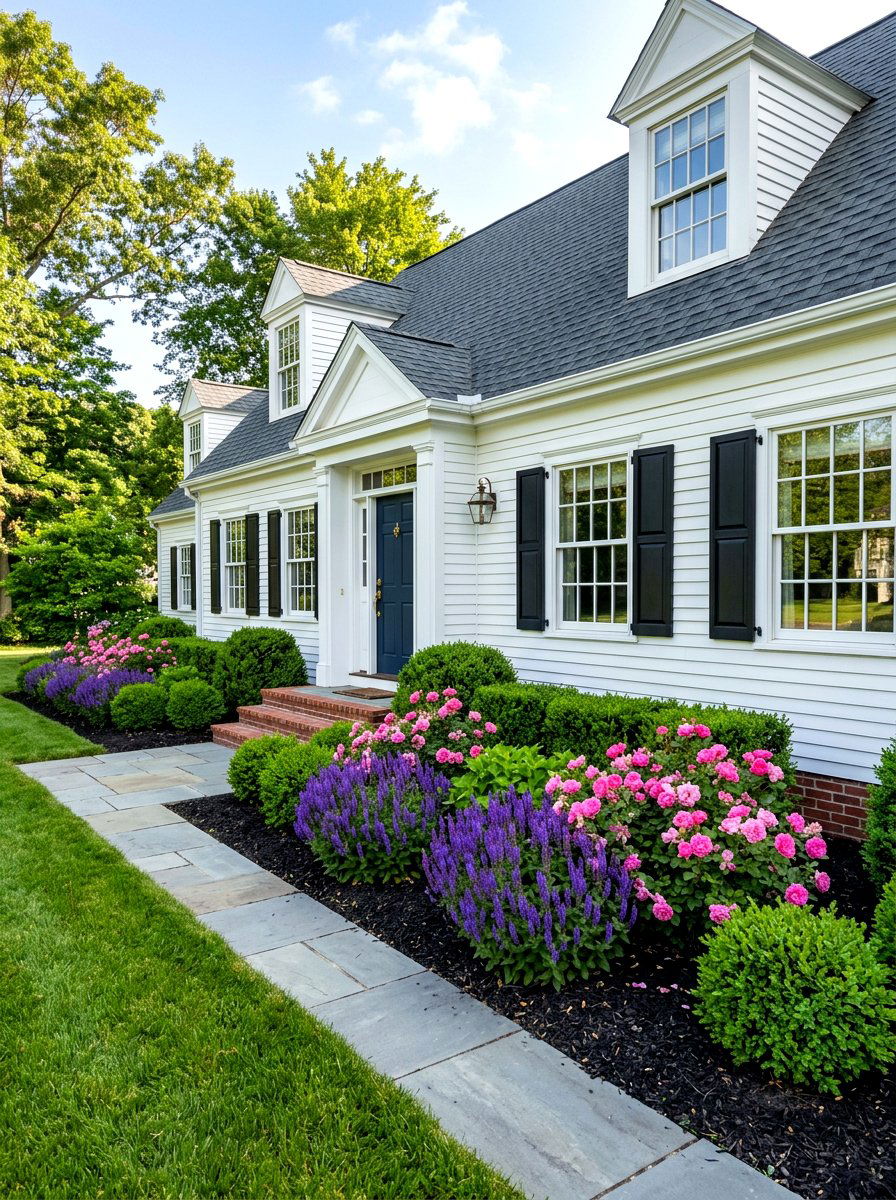
Creating a permanent green wall using an evergreen shrub privacy screen ensures your garden looks vibrant even during the cold winter months. Plants like arborvitae, cherry laurel, or boxwood provide a thick, consistent backdrop that blocks unwanted views and reduces neighborhood noise throughout the year. These shrubs act as a living fence, offering a sturdy structure that you can accent with smaller flowering perennials in front. Because they maintain their leaves year-round, you won't have to deal with the barren look of empty branches in late autumn. Regular pruning can keep these shrubs at your desired height and width, making them a versatile choice for both large estates and narrow suburban side yards.
6. Modern Minimalist Rock Garden
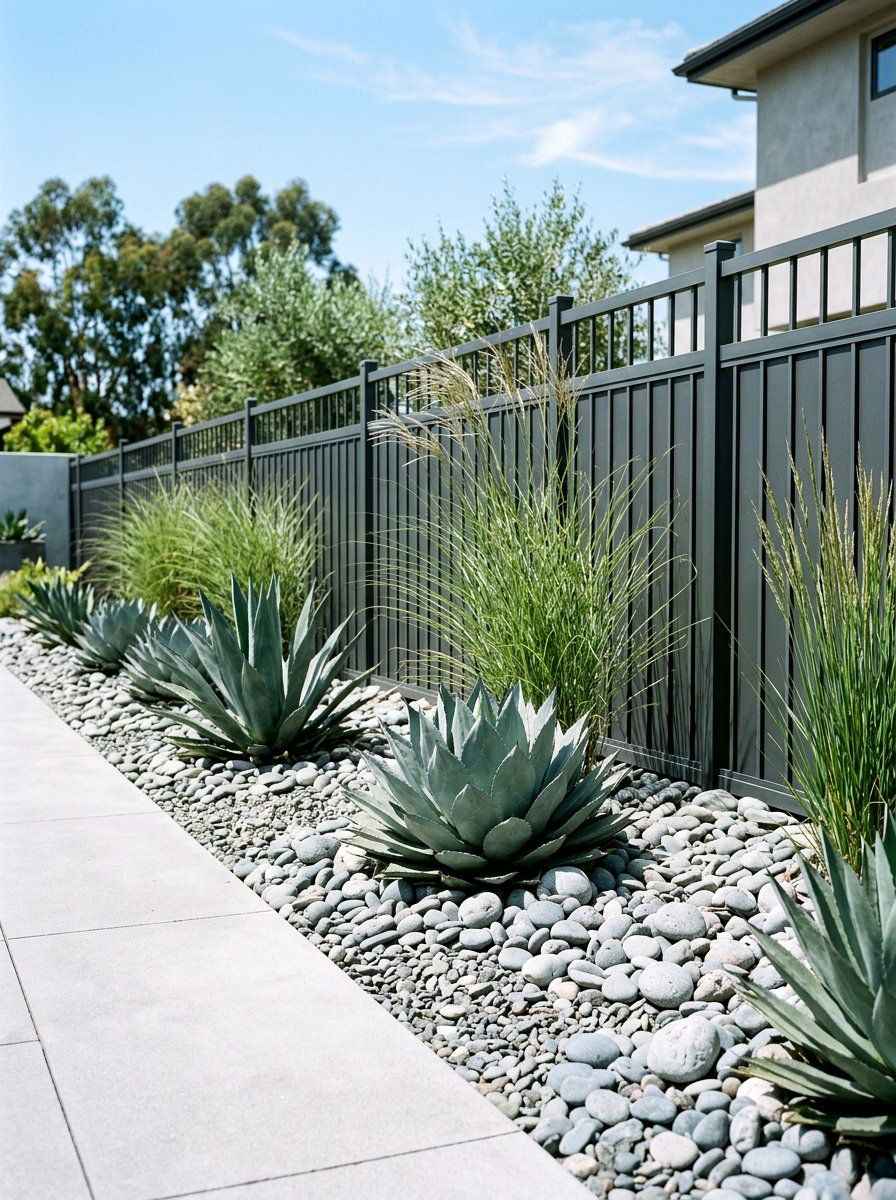
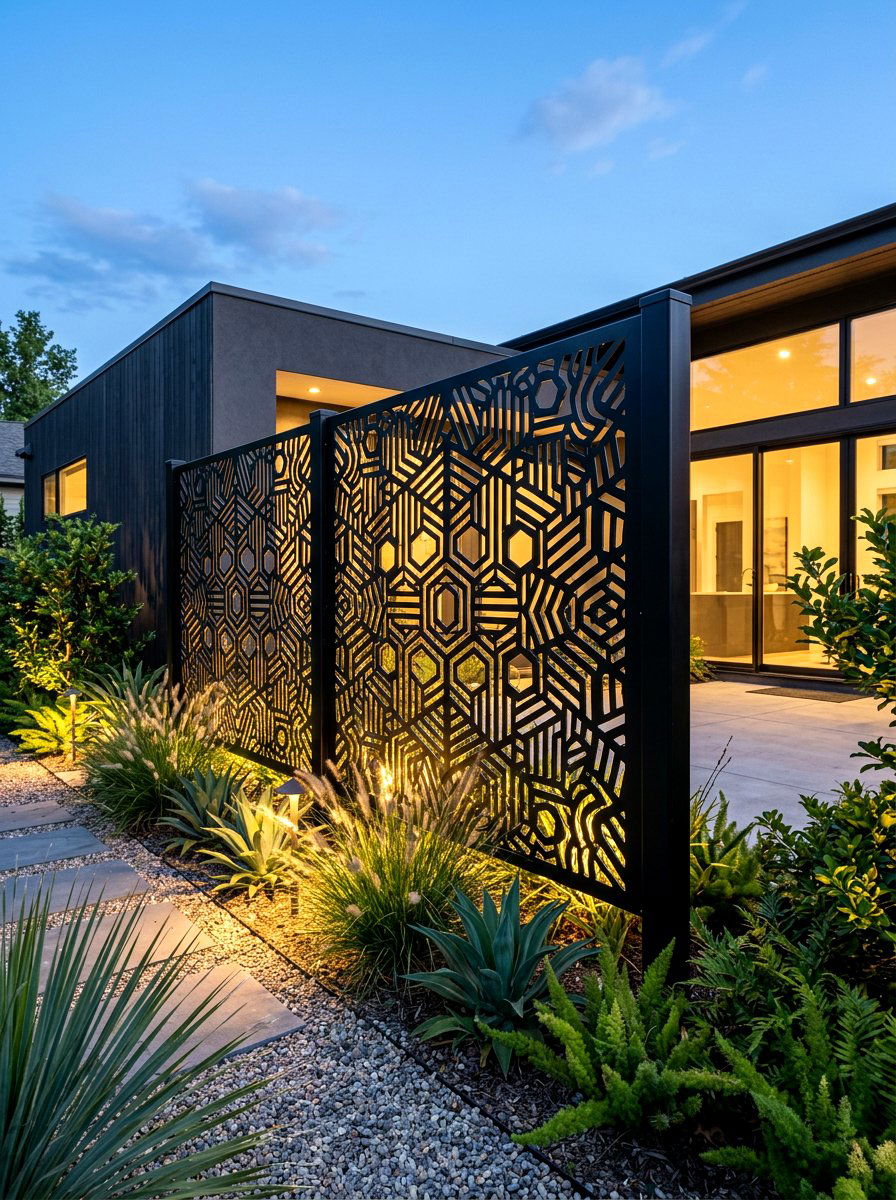
For those who prefer a clean and contemporary look, a modern minimalist rock garden along the fence line offers sophisticated simplicity. This design typically uses a restrained palette of plants paired with smooth river rocks, slate, or decorative gravel to create high visual contrast. Choose plants with striking architectural shapes, such as ornamental grasses or structural agaves, to serve as the main focal points against the stone. The lack of clutter makes the space feel larger and more organized, which is perfect for modern homes with sleek exterior lines. This type of flower bed is also incredibly low maintenance, as the heavy mulch of stones prevents most weed growth while retaining moisture for the plants.
7. Tropical Foliage Fence Line
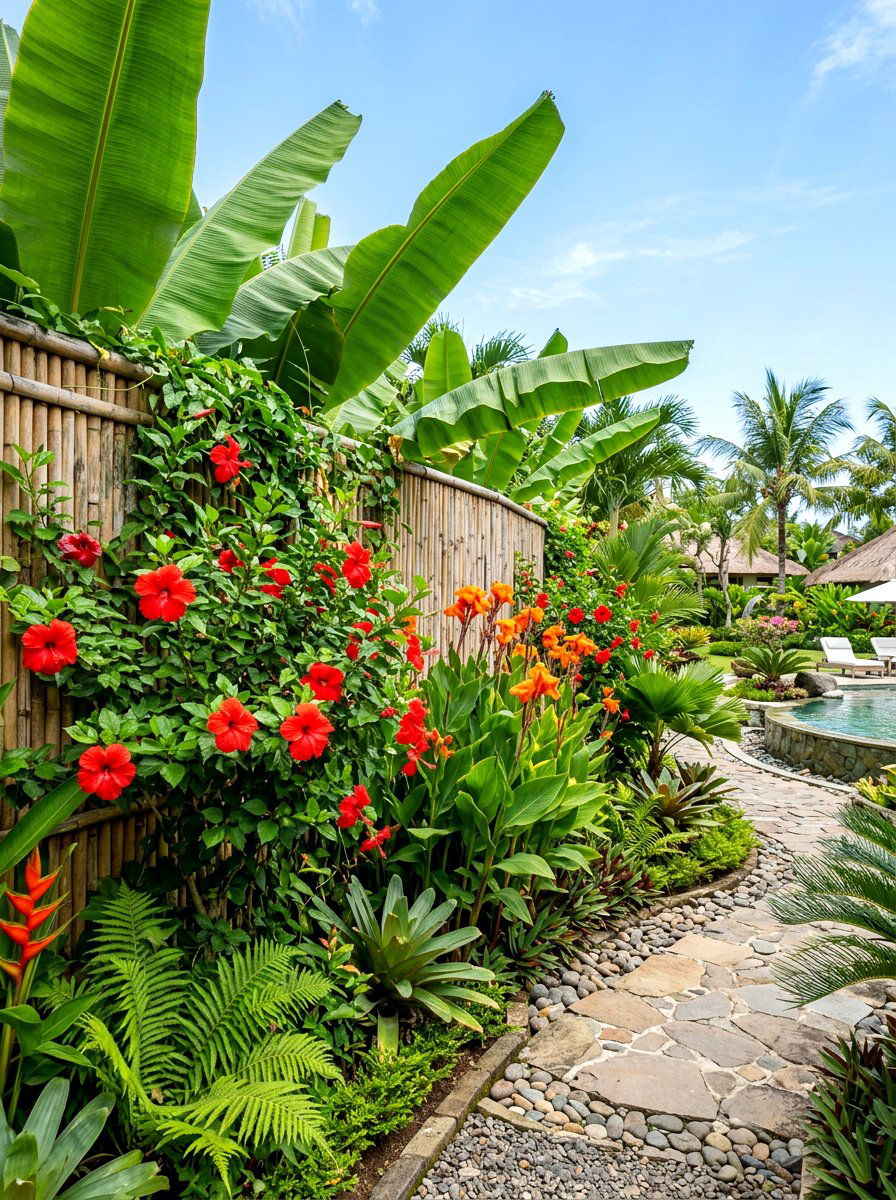
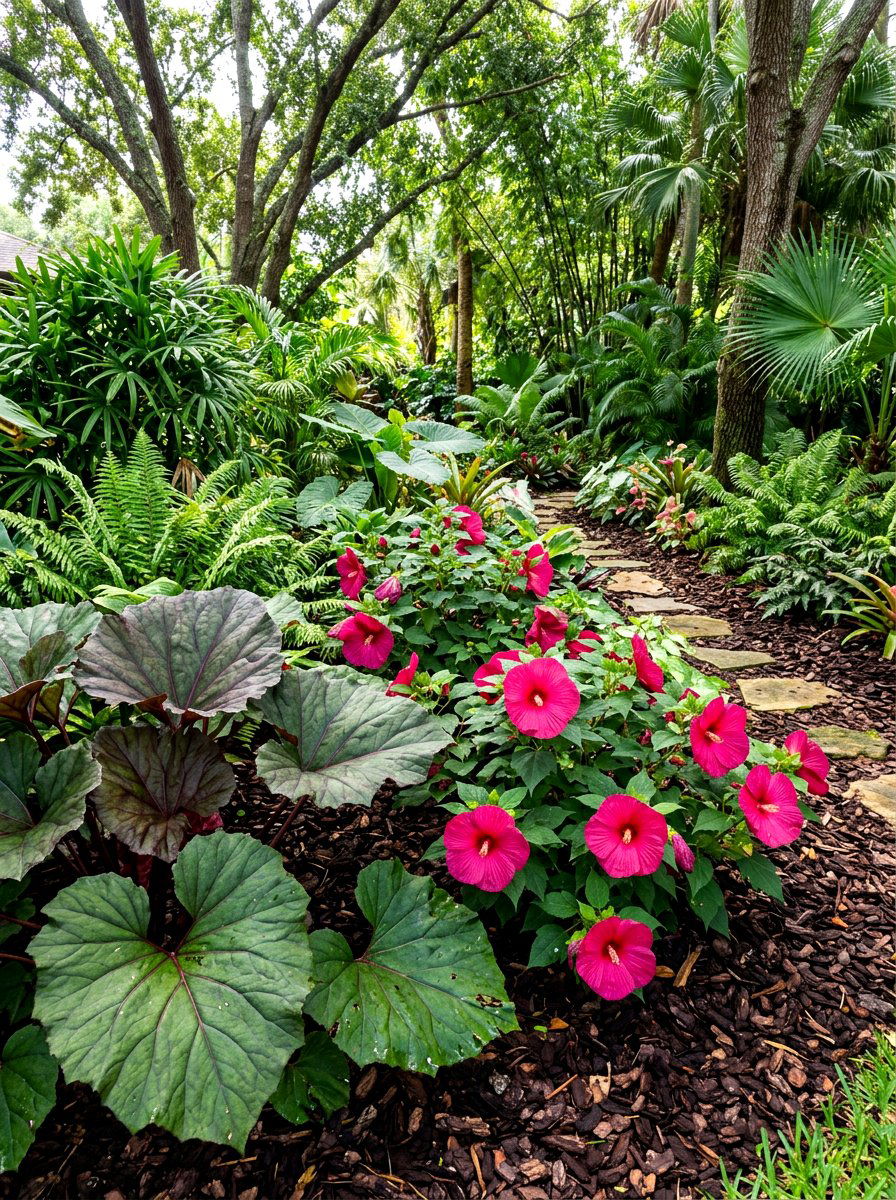
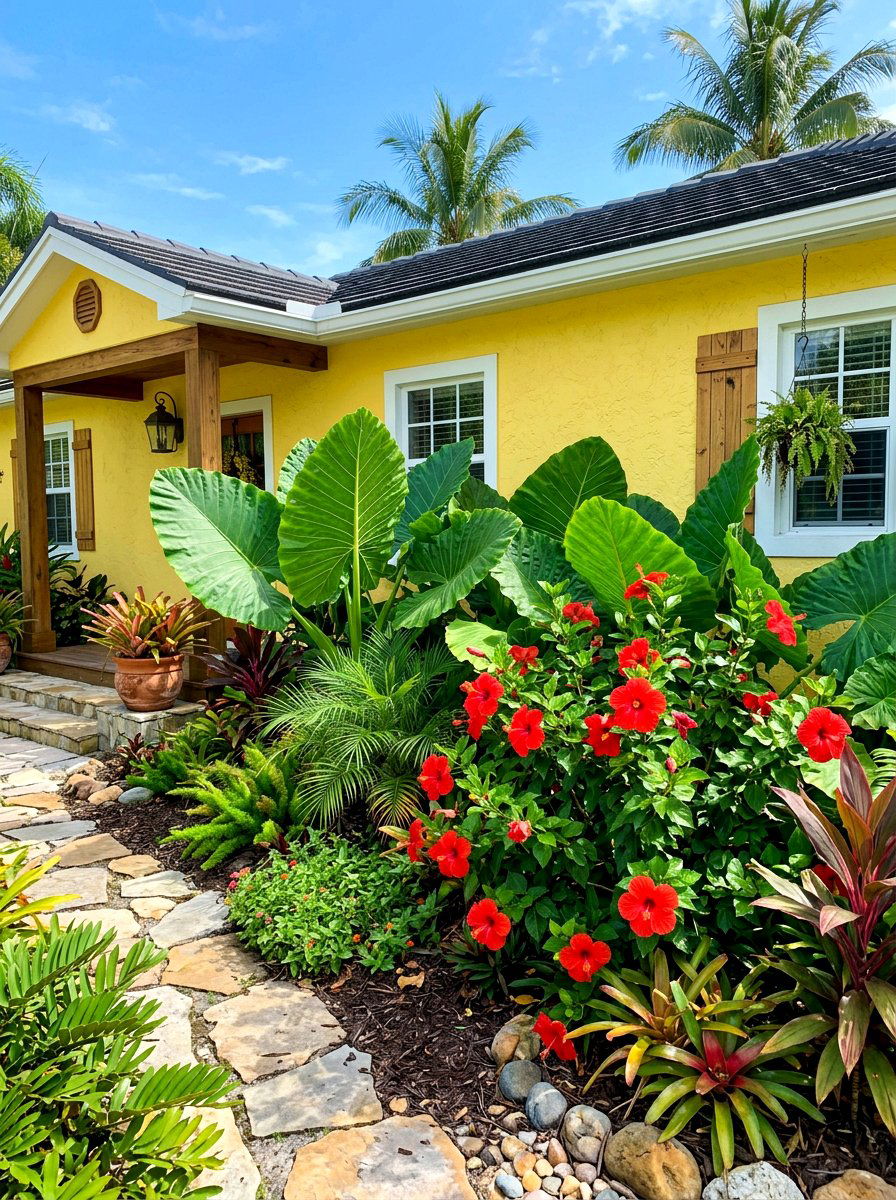
Transform your backyard into a lush getaway by installing a tropical foliage fence line featuring bold leaves and vibrant colors. Even in temperate climates, you can use hardy hibiscus, canna lilies, and elephant ears to create an exotic atmosphere that feels like a private island resort. The large, dramatic leaves of these plants provide excellent coverage for the base of your fence, hiding any imperfections with a wall of deep green and burgundy. Pair these with bright orange or red flowers to create a high-energy space that is perfect for summer entertaining. While some tropical plants may need extra care in winter, the spectacular growth they achieve during the warmer months makes the effort worthwhile.
8. Hydrangea Shrub Border Line
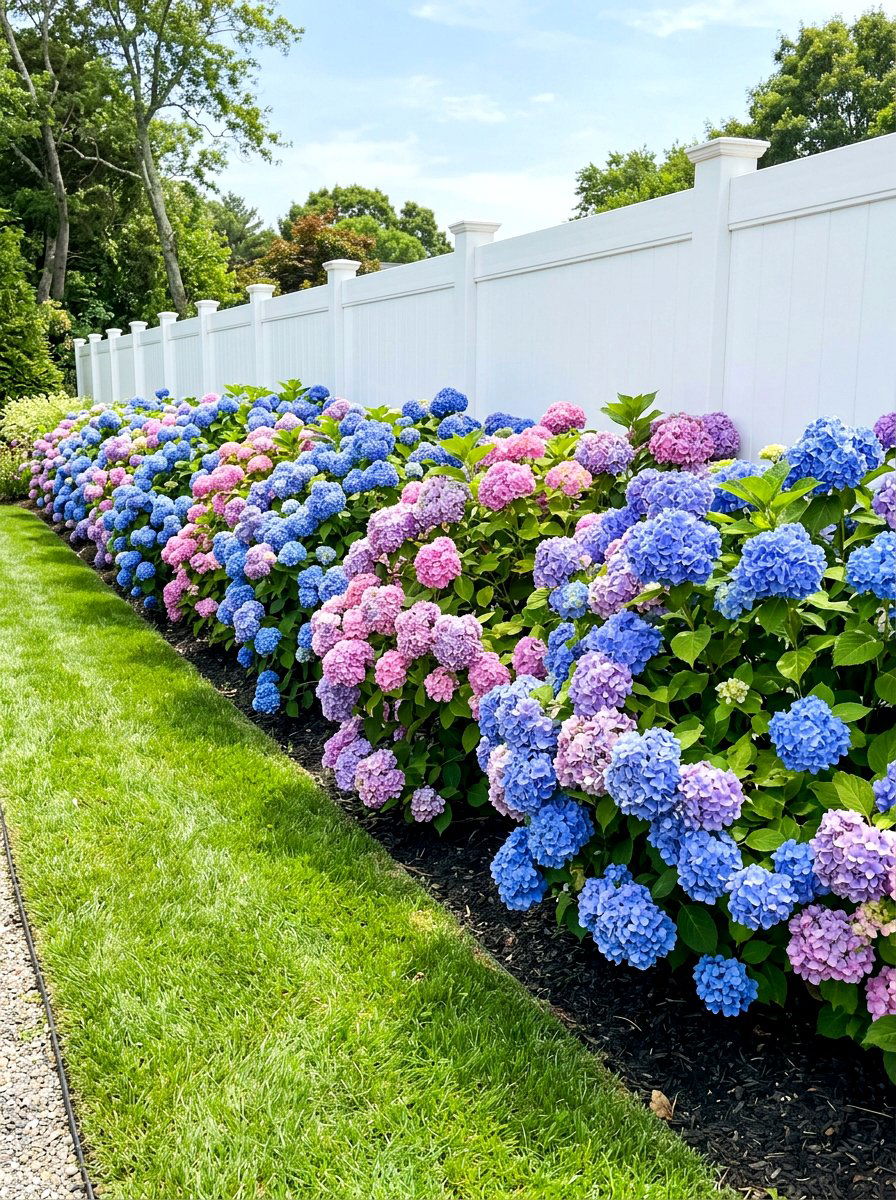
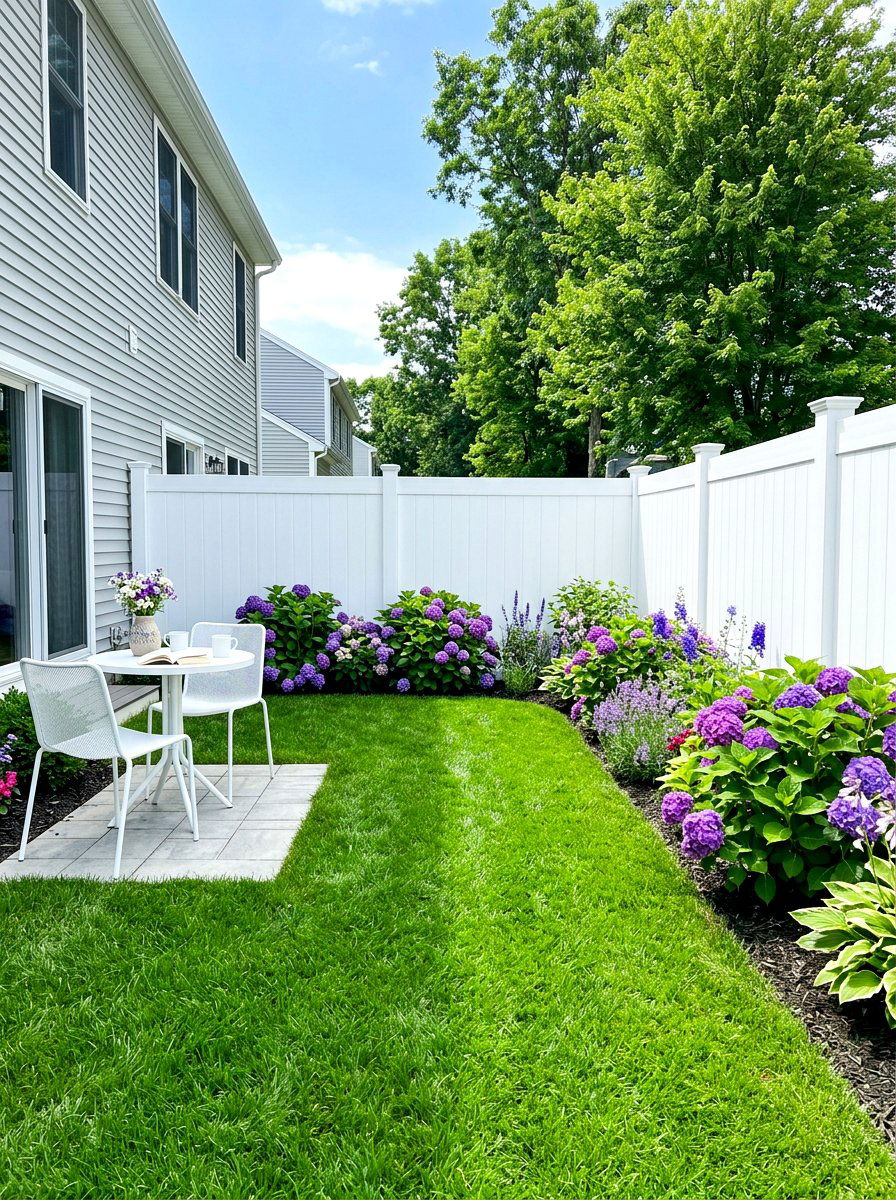
Nothing says classic summer beauty like a hydrangea shrub border line running the entire length of your backyard fence. Known for their massive, globe-like blooms in shades of blue, pink, and white, hydrangeas provide a soft and voluminous look that hides the bottom of any fence. These shrubs thrive in partial shade, making them ideal for areas that receive morning sun and afternoon protection. As they grow, their large leaves create a dense thicket of green that adds significant texture and depth to your garden's perimeter. Because they bloom for several months, you can enjoy a consistent display of color that transitions beautifully from vibrant summer tones to muted, vintage hues in the fall.
9. Standard Tree Row Planting
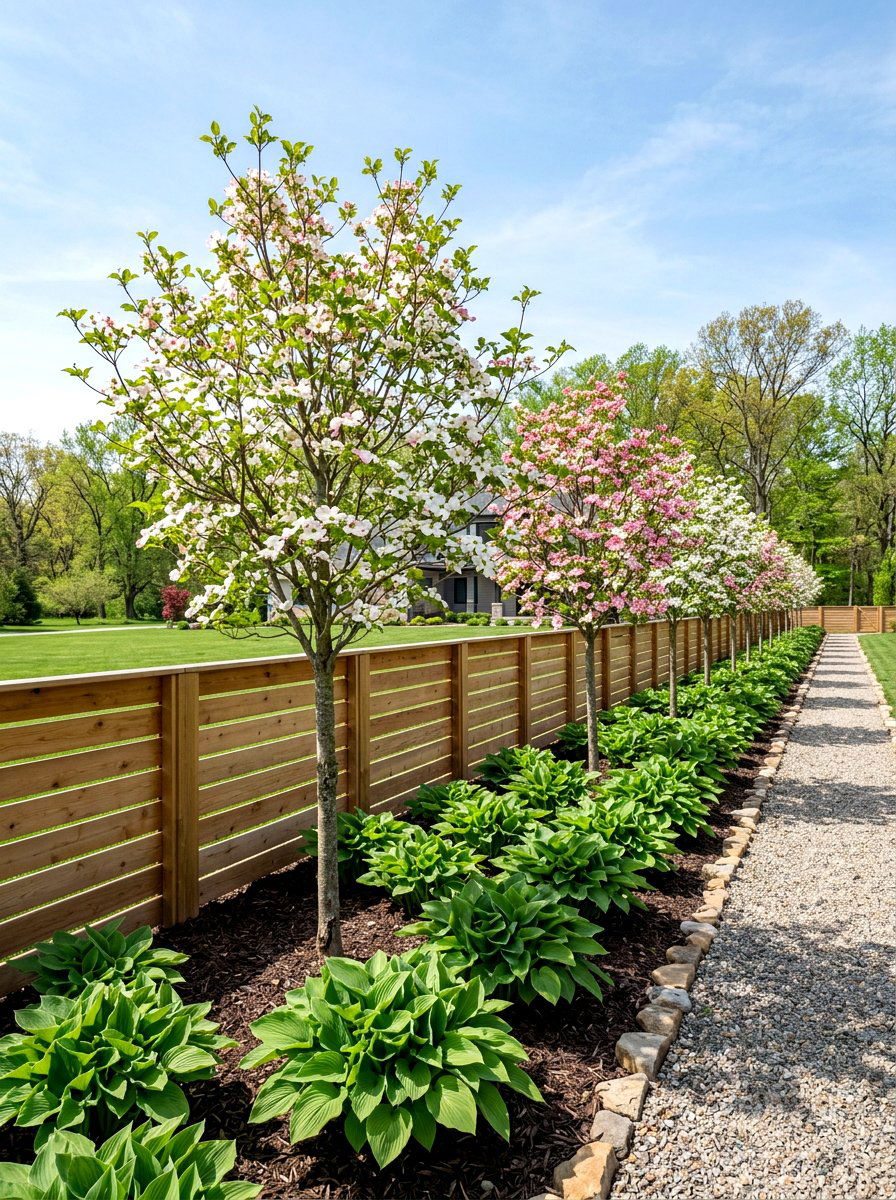
Planting a row of standard trees along your fence line is a professional landscaping technique used to add height and formal structure to a property. Small ornamental trees like flowering crabapples, dogwoods, or serviceberries can be spaced evenly to create a sophisticated, repeating pattern that guides the eye. Underneath these trees, you can plant low-growing groundcovers or seasonal bulbs to complete the layered look and prevent weeds. This design provides a "ceiling" to your outdoor room, making the garden feel more enclosed and intimate without the bulk of a solid hedge. The seasonal changes, from spring blossoms to autumn foliage, ensure your fence line remains a dynamic and attractive feature throughout the entire year.
10. Ornamental Grass Perimeter Bed
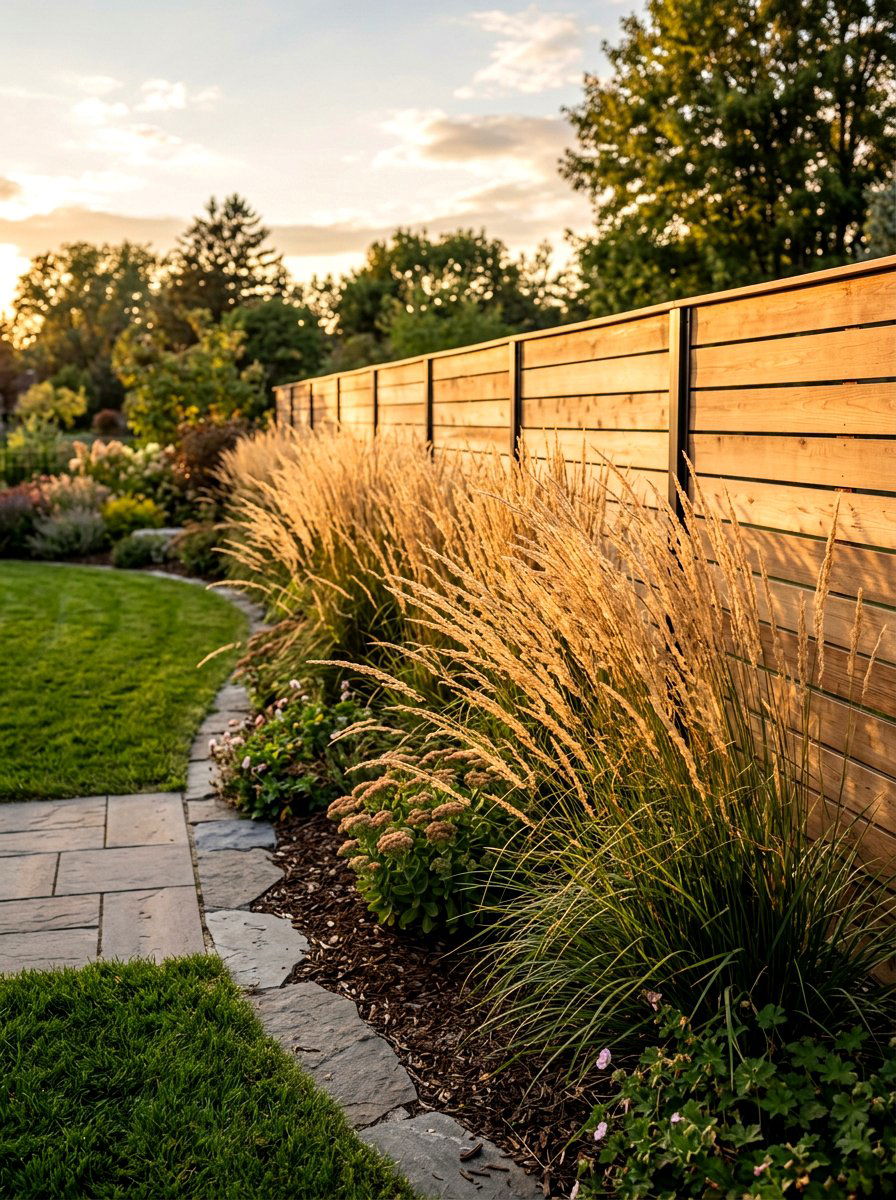
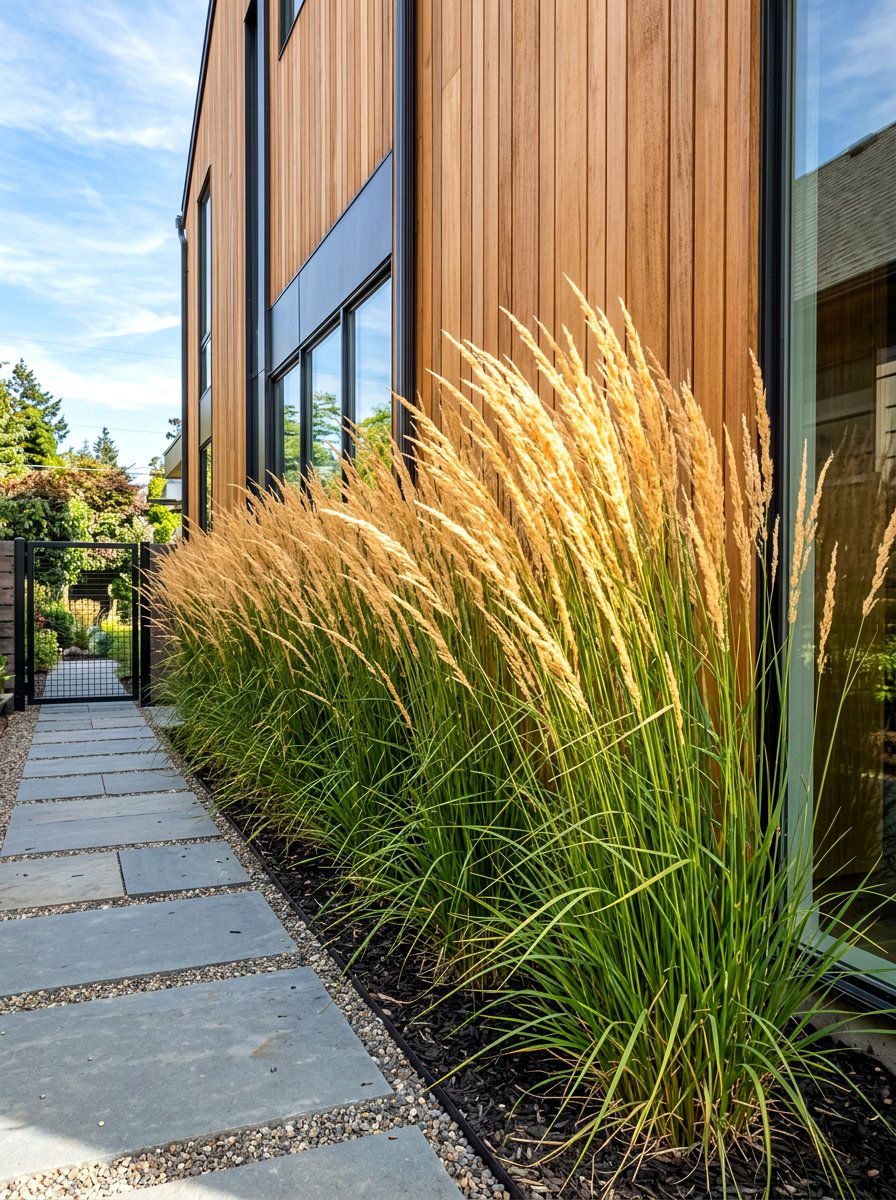
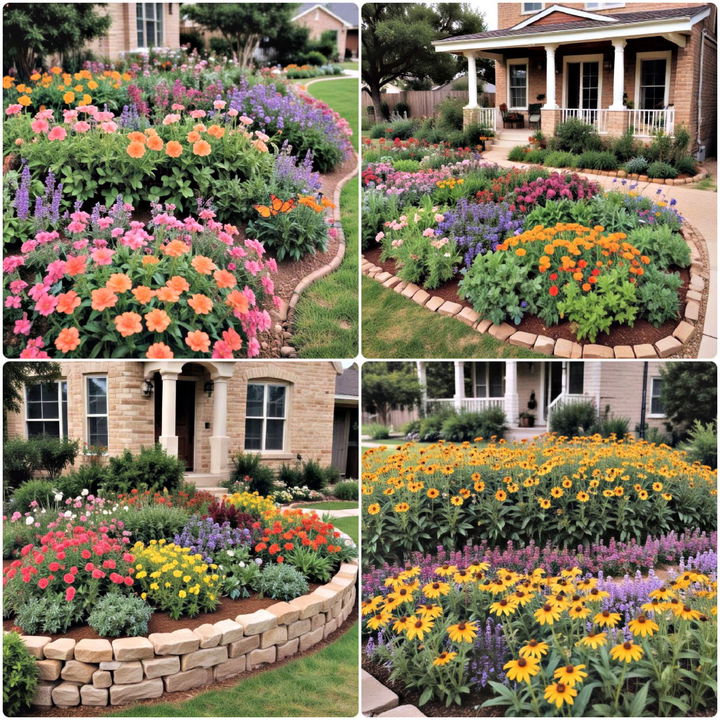
An ornamental grass perimeter bed brings a sense of movement and sound to your garden that traditional flowering plants simply cannot match. Varieties like feather reed grass, fountain grass, or maiden grass sway gently in the breeze, creating a relaxing rustling noise and a soft, hazy visual effect. These grasses are exceptionally easy to care for and look beautiful even in the winter when their dried plumes catch the frost. When planted in long drifts along a fence, they soften the hard vertical surface and add a touch of modern wildness to the landscape. Their upright habit makes them perfect for narrow spaces, providing a lush screen without encroaching too far into your precious lawn area.
11. Vertical Tiered Herb Garden
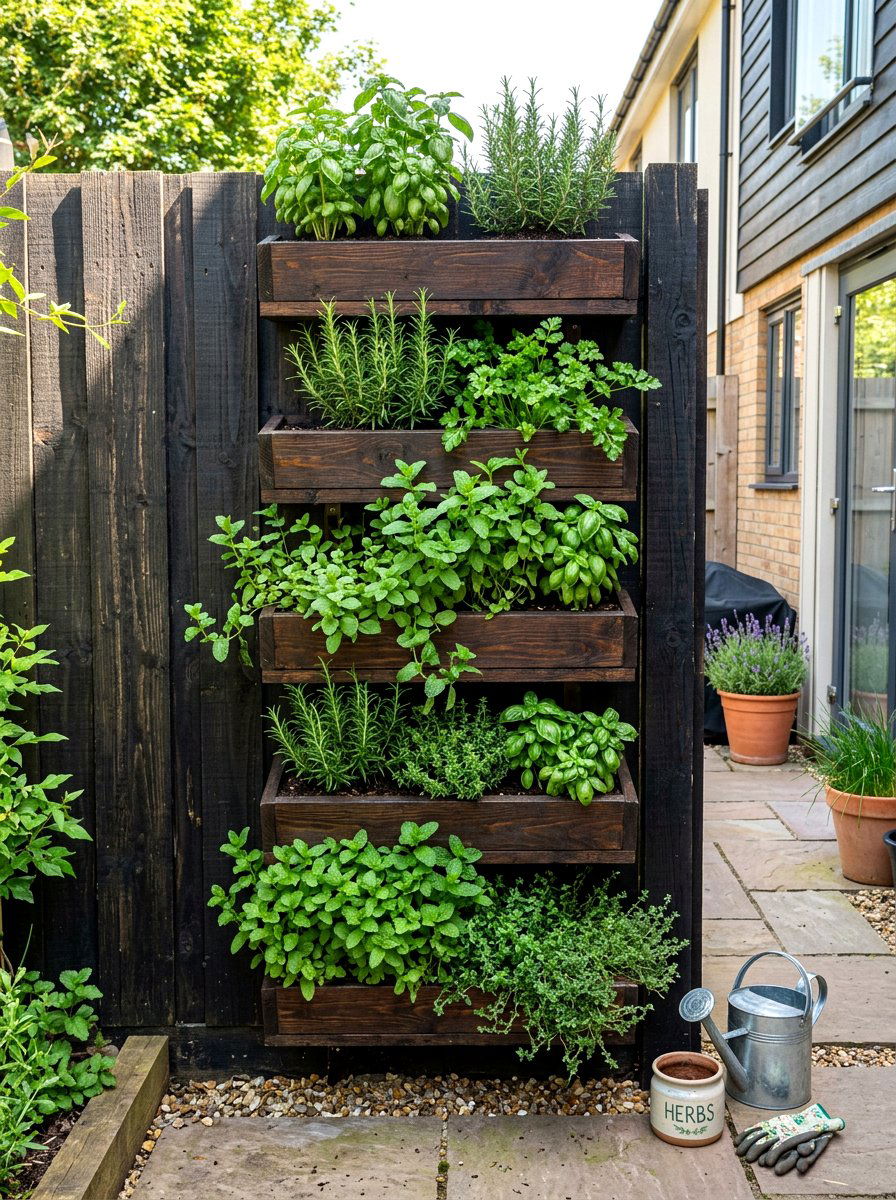
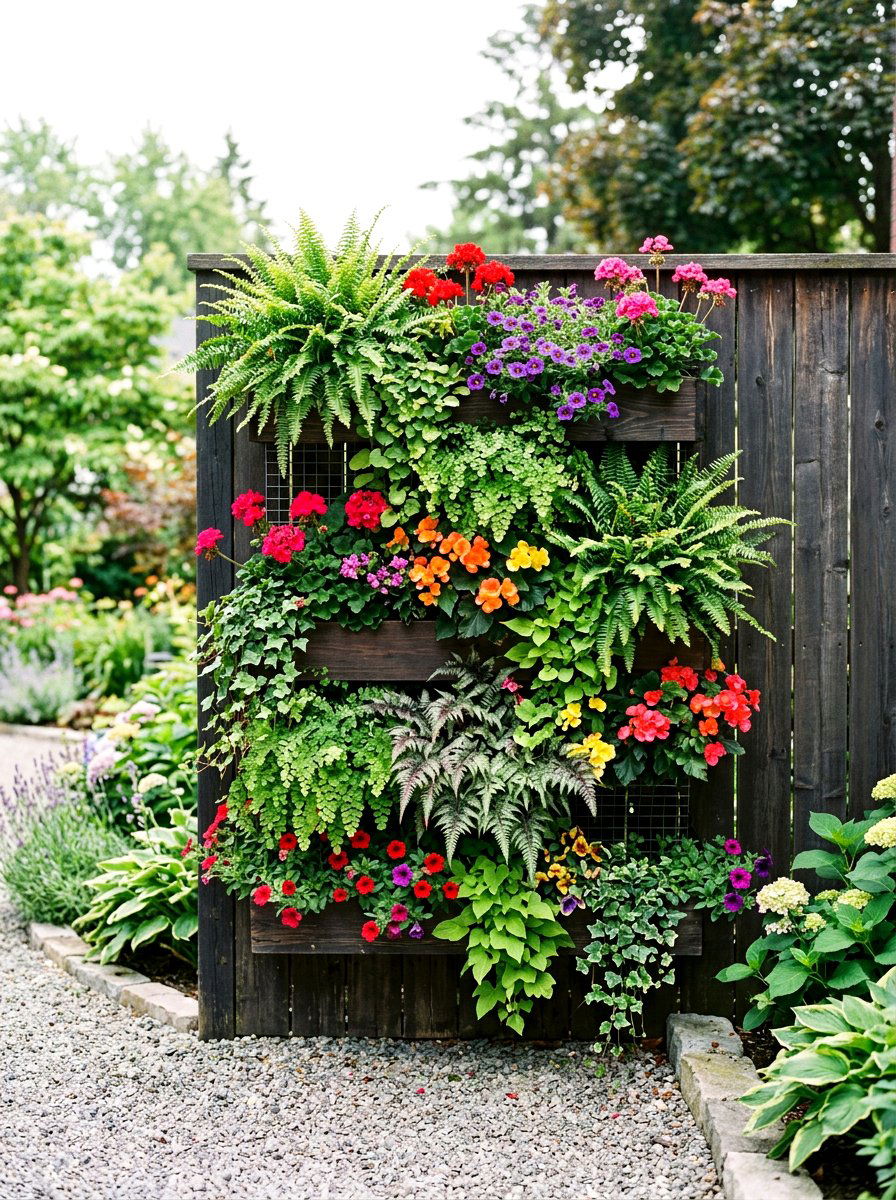
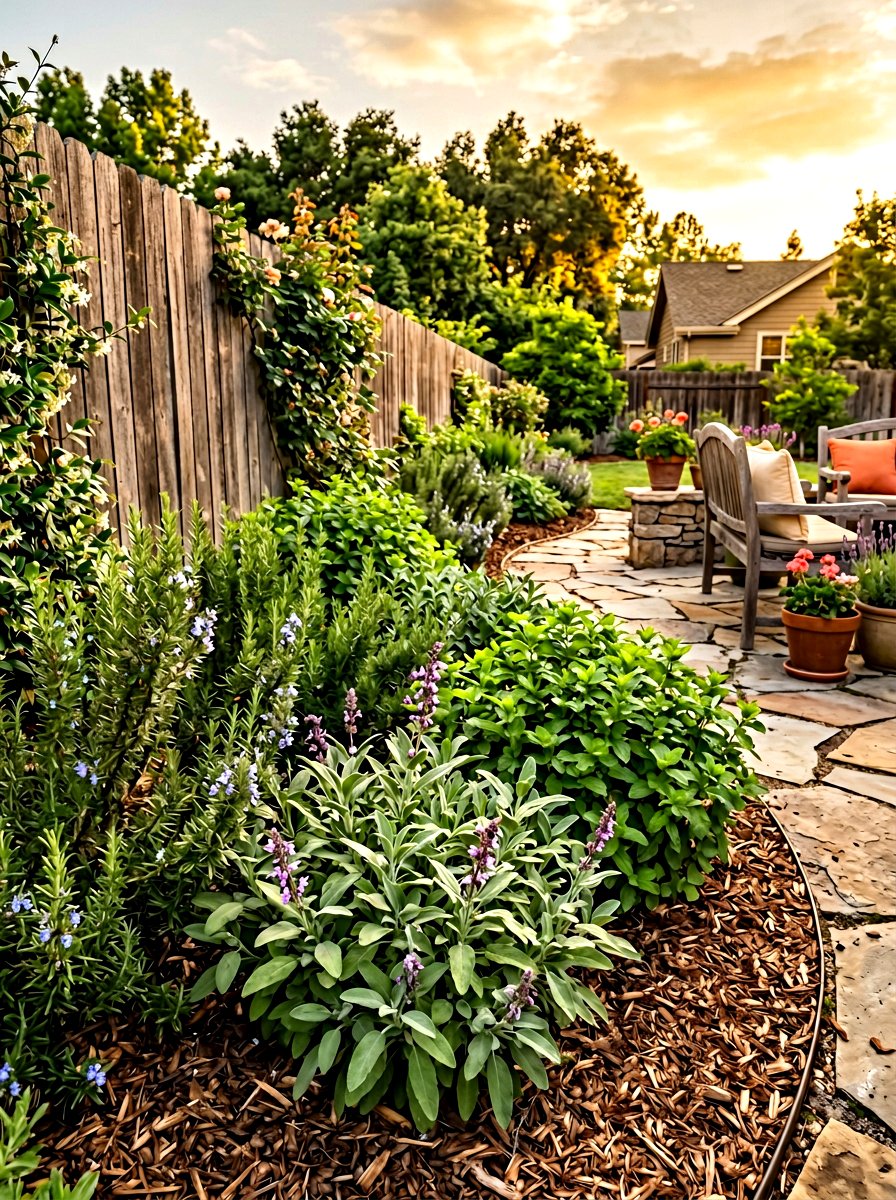
Maximizing a narrow fence line is easy when you implement a vertical tiered herb garden that combines functionality with natural beauty. By attaching long, wooden or metal troughs directly to the fence at different heights, you can grow a wide variety of culinary herbs like rosemary, thyme, and mint. This setup keeps your herbs within easy reach for cooking while freeing up ground space for traditional flower beds or walkways. The cascading greenery from the upper tiers creates a lush, wall-like effect that smells incredible every time you brush past. It is an ideal solution for urban gardeners who want to grow their own food but only have a small perimeter strip to work with.
12. Lavender Hedge Flower Bed
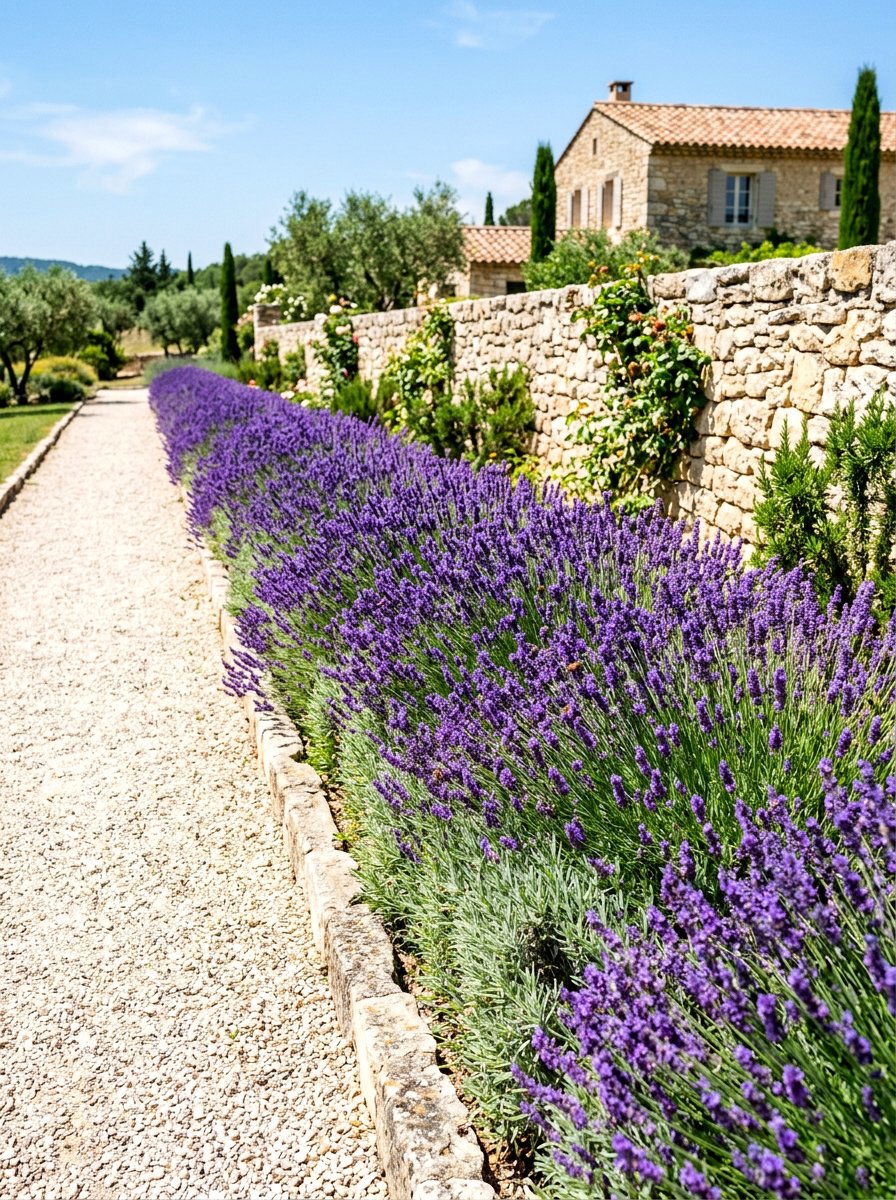
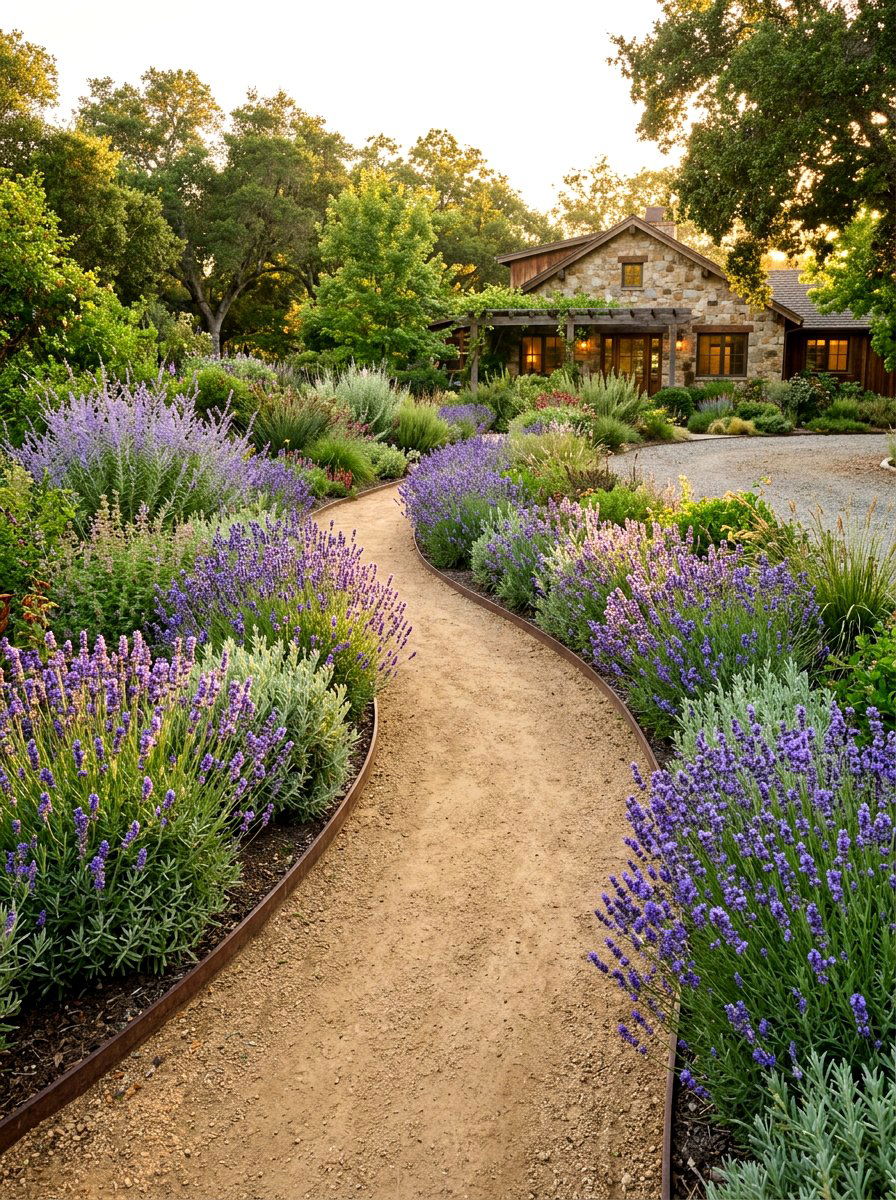
A lavender hedge flower bed is a sensory delight that provides stunning purple color and a calming fragrance every time you step outside. Lavender thrives in sunny spots with well-drained soil, making it a perfect candidate for the bright edges of a south-facing fence. When planted in a dense row, it forms a low, aromatic hedge that attracts bees and butterflies to your yard throughout the summer months. The silver-green foliage remains attractive even when the flowers aren't in bloom, offering a Mediterranean feel that pairs beautifully with gravel or stone edging. This drought-tolerant plant is remarkably hardy once established, requiring very little water while providing a high-impact look that feels both tidy and luxurious.
13. Shade Loving Hosta Border
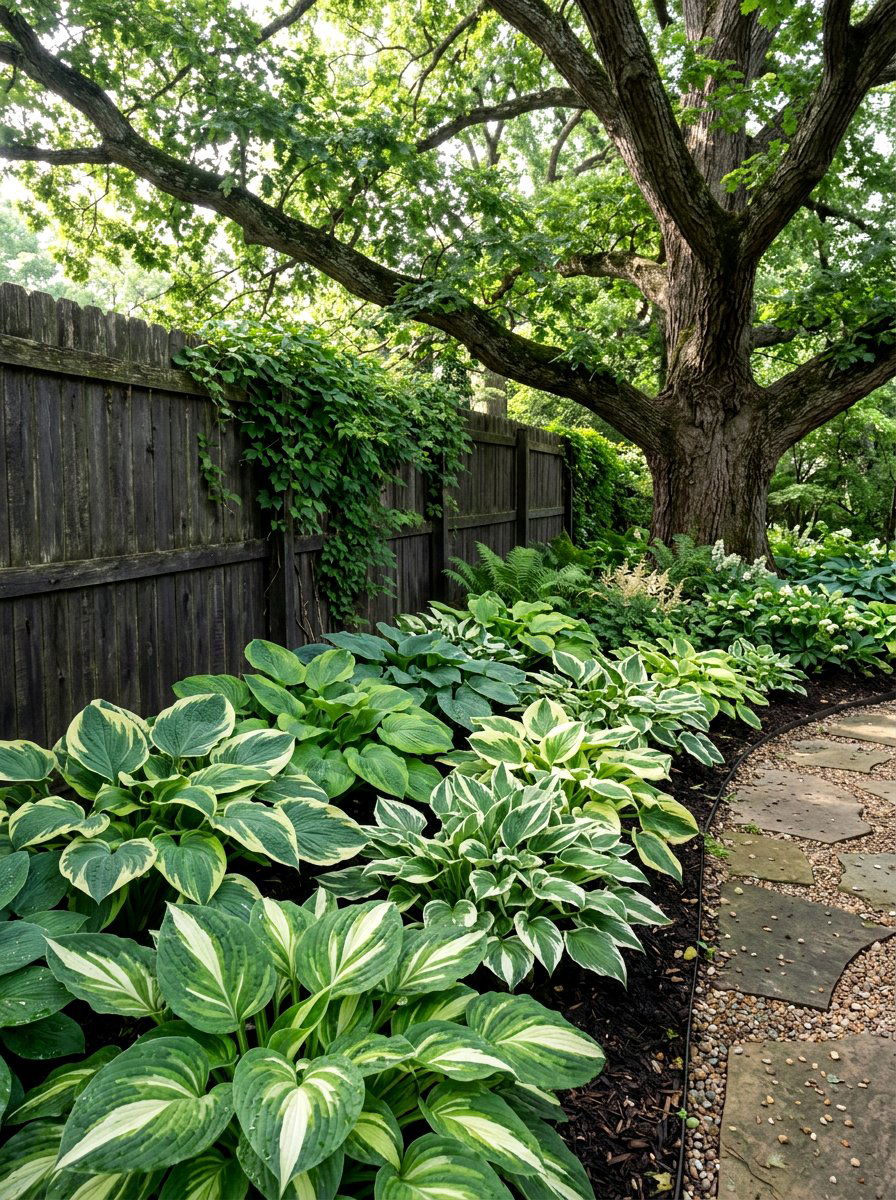
If your fence line is tucked under large trees or cast in shadow by the house, a shade loving hosta border is the perfect solution. Hostas are celebrated for their incredible variety of leaf colors, ranging from deep forest green to bright chartreuse and variegated white. These leafy perennials grow in neat, mounding shapes that fill the space beneath a fence with a lush and cool appearance. They are incredibly reliable and return larger each year, eventually creating a dense carpet of foliage that prevents weeds from taking hold. During the summer, they send up delicate stalks of purple or white flowers, adding a subtle touch of elegance to your garden’s most shaded and often overlooked corners.
14. Colorful Annual Flower Row
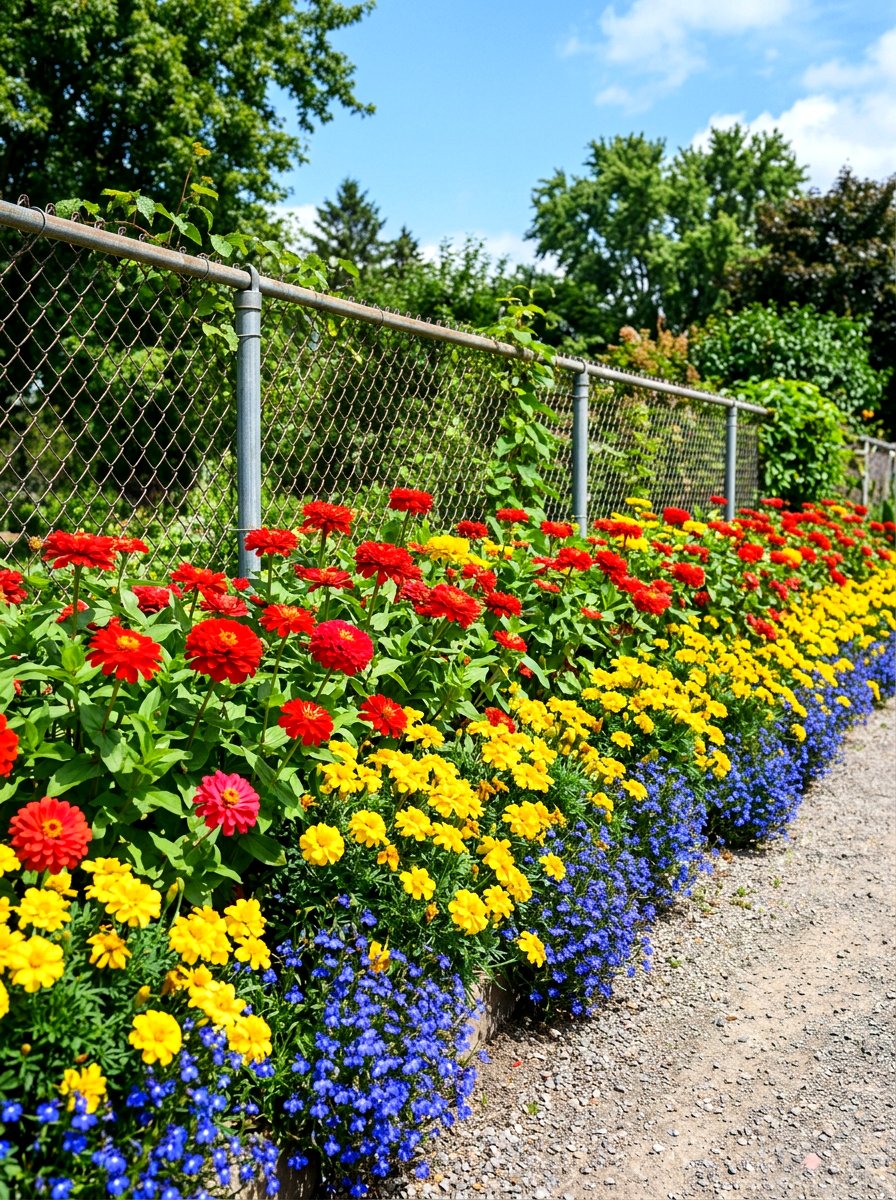
For a garden that changes its personality every year, nothing beats a colorful annual flower row planted along the base of your fence. Annuals like petunias, marigolds, zinnias, and snapdragons allow you to experiment with different color schemes and textures each growing season. Because these plants grow and bloom quickly, they provide instant gratification and a high volume of flowers that last from late spring until the first frost. This approach is perfect for homeowners who enjoy the creative process of gardening and want to refresh their outdoor look frequently. The intense, saturated colors of annuals create a vibrant focal point that draws the eye and makes your entire property feel bright, cheerful, and well-maintained.
15. Native Wildflower Meadow Strip
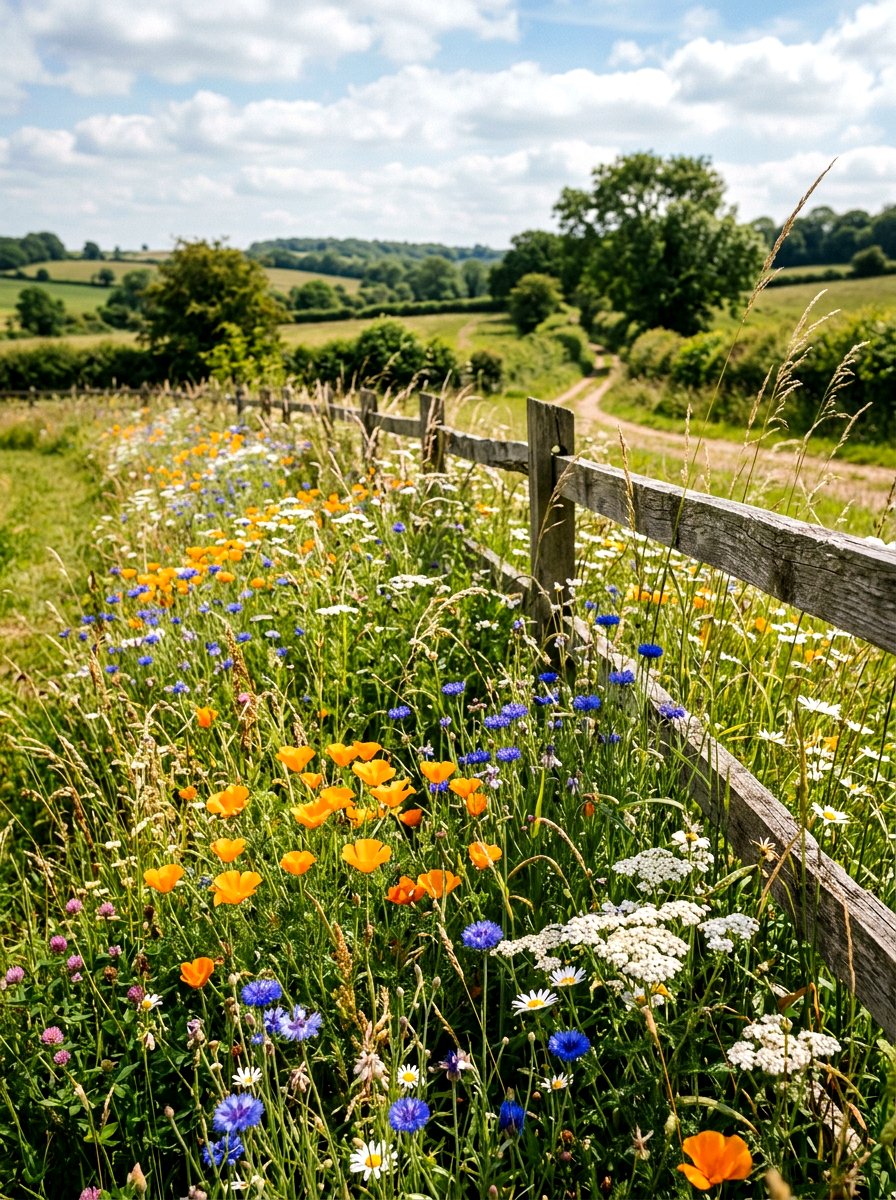
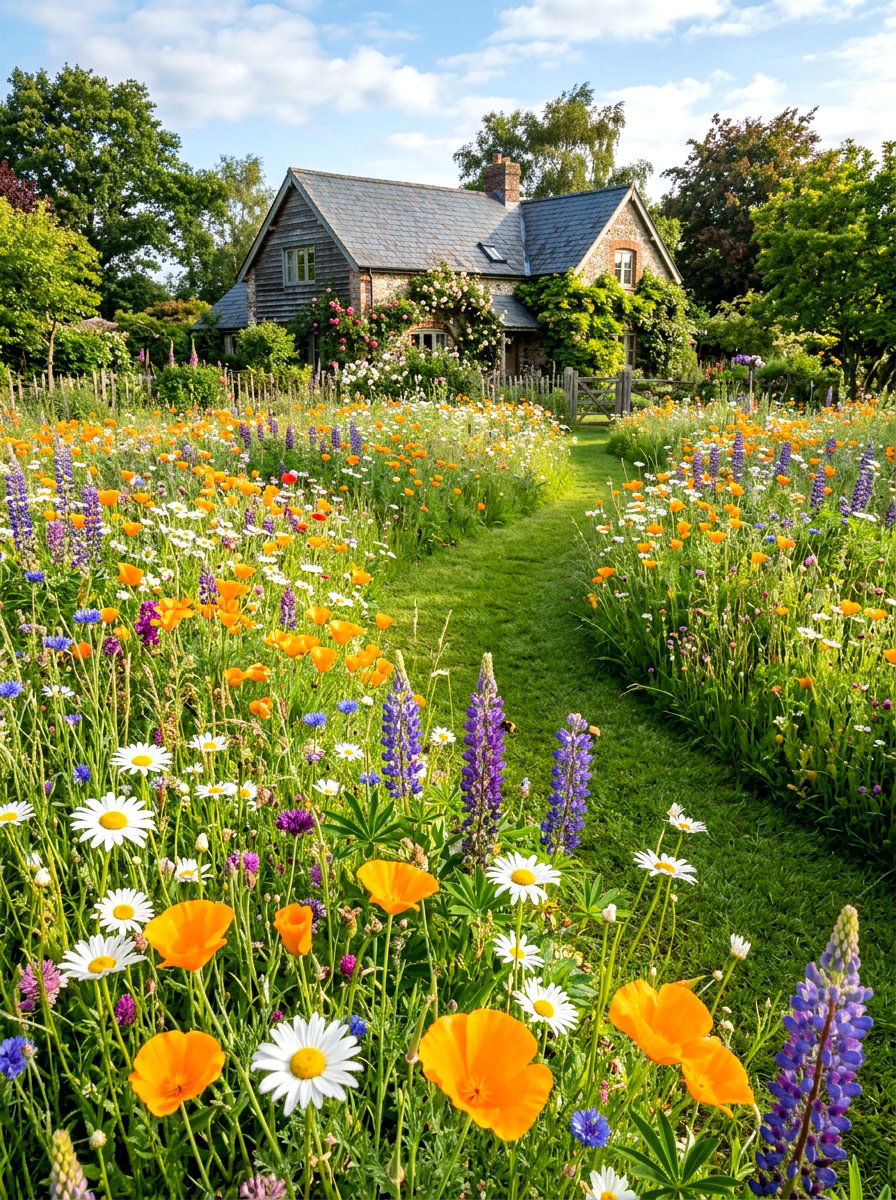
Creating a native wildflower meadow strip along your fence line is a wonderful way to support local ecosystems while enjoying a low-maintenance, natural aesthetic. By using a mix of seeds specifically tailored to your region, you can grow a diverse array of flowers that are perfectly adapted to your soil and climate. This type of garden bed requires very little watering or fertilizing once it becomes established, making it an eco-friendly choice for sustainable landscaping. The ever-changing mix of blooms provides a continuous food source for birds, bees, and other beneficial insects throughout the year. The tall, wispy stems of wildflowers add a soft, romantic texture to your fence line that feels connected to the surrounding wilderness.
16. Japanese Boxwood Neatly Trimmed
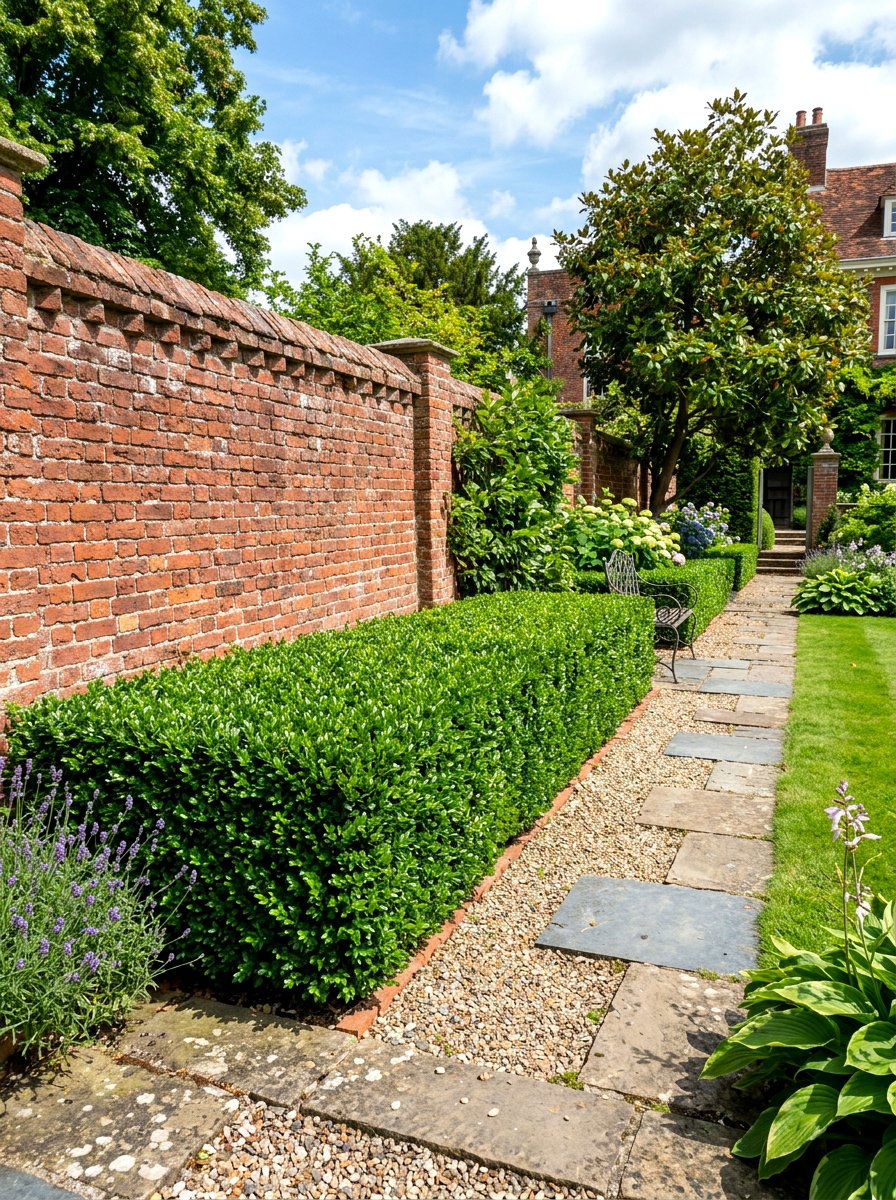
For a formal and sophisticated garden aesthetic, a neatly trimmed Japanese boxwood hedge along the fence line provides unparalleled structure and order. These slow-growing evergreens have small, glossy leaves that can be pruned into sharp geometric shapes or soft rounded mounds. A well-maintained boxwood border creates a permanent green frame for your property that looks expensive and professional. It serves as an excellent backdrop for seasonal flowers, allowing their colors to pop against the dark, consistent green of the shrubs. Because boxwood is exceptionally hardy and shade-tolerant, it can be used in almost any part of the yard to define boundaries and add a sense of timeless elegance that never goes out of style.
17. White Picket Fence Foxgloves
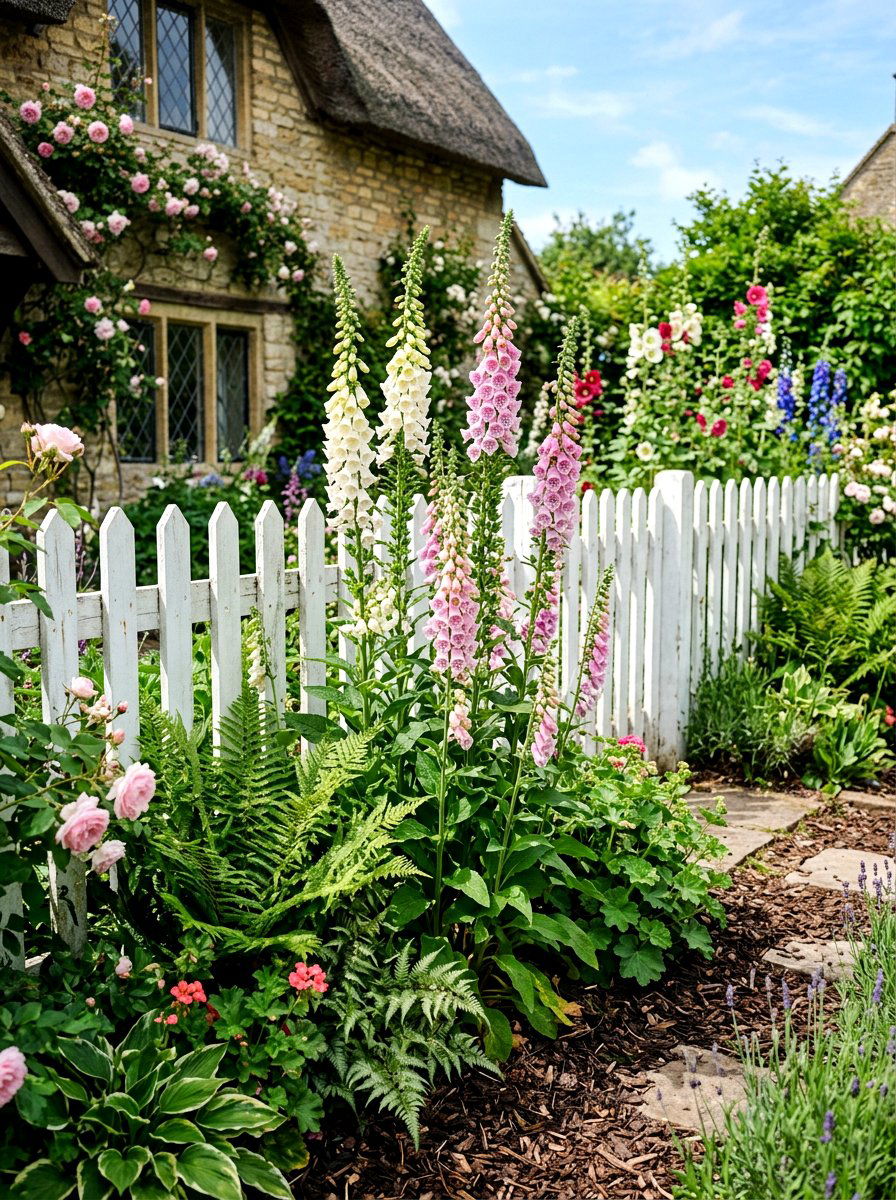
There is perhaps no image more iconic in traditional gardening than the sight of tall, graceful foxgloves leaning against a white picket fence. These biennial plants produce spectacular spikes of bell-shaped flowers that add significant vertical interest and a touch of old-world charm to your yard. Because they can grow quite tall, they are perfect for planting in the back of a flower bed where the fence provides necessary support against the wind. The contrast between the crisp white slats of the fence and the soft pink, purple, or white blooms creates a picturesque scene that looks like it belongs in a storybook. This combination is a favorite for cottage-style homes and anyone wanting a nostalgic atmosphere.
18. Fragrant Star Jasmine Wall
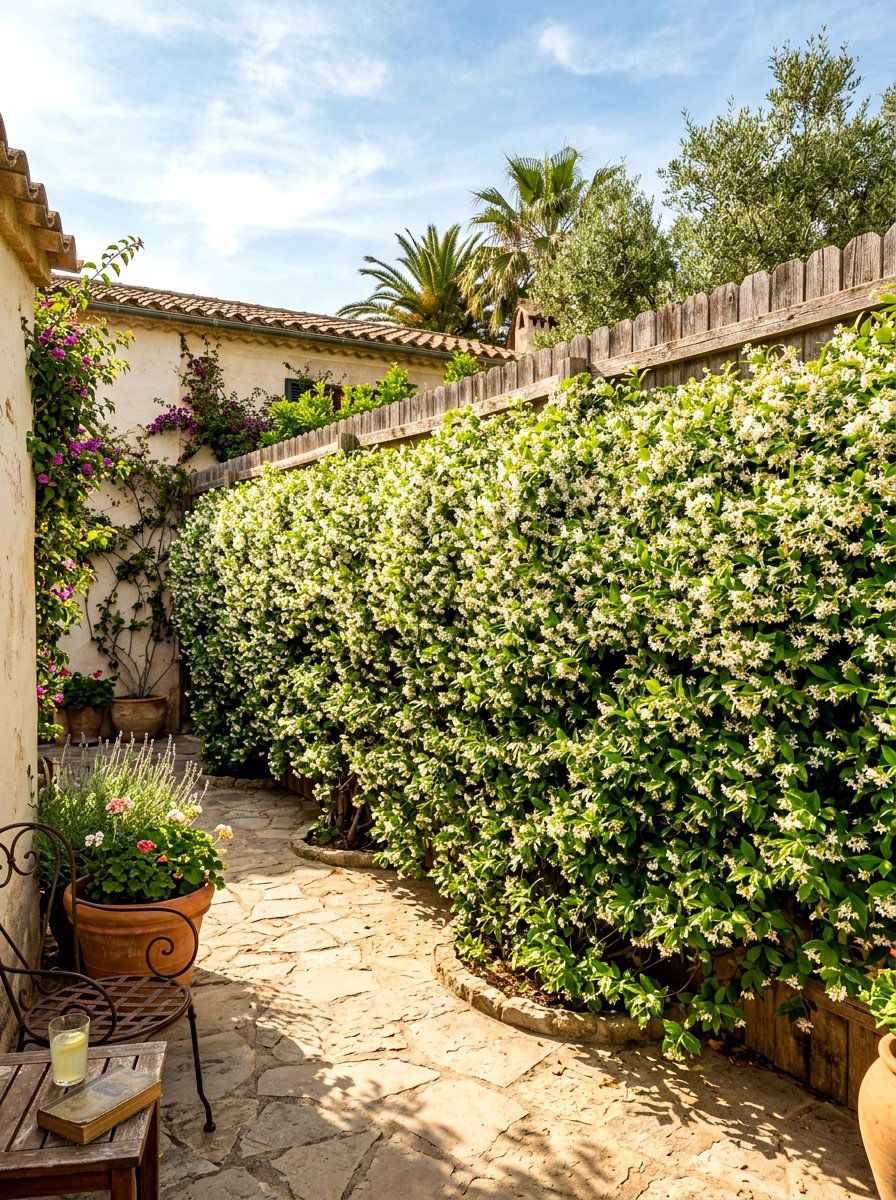
A fragrant star jasmine wall is an excellent way to cover a chain-link or wooden fence with a dense, evergreen blanket of perfume. Star jasmine is a vigorous climber that produces thousands of tiny, white, star-shaped flowers during the late spring and early summer. The scent is intoxicating and can fill your entire backyard, making it a wonderful choice for areas near patios or outdoor seating. The foliage is dark green and glossy, providing a high-quality look that stays attractive all year long. Because the vines are relatively lightweight, they can be easily trained to weave through fence panels, eventually creating a solid living wall that provides both privacy and an incredible sensory experience for anyone nearby.
19. Drought Tolerant Succulent Bed
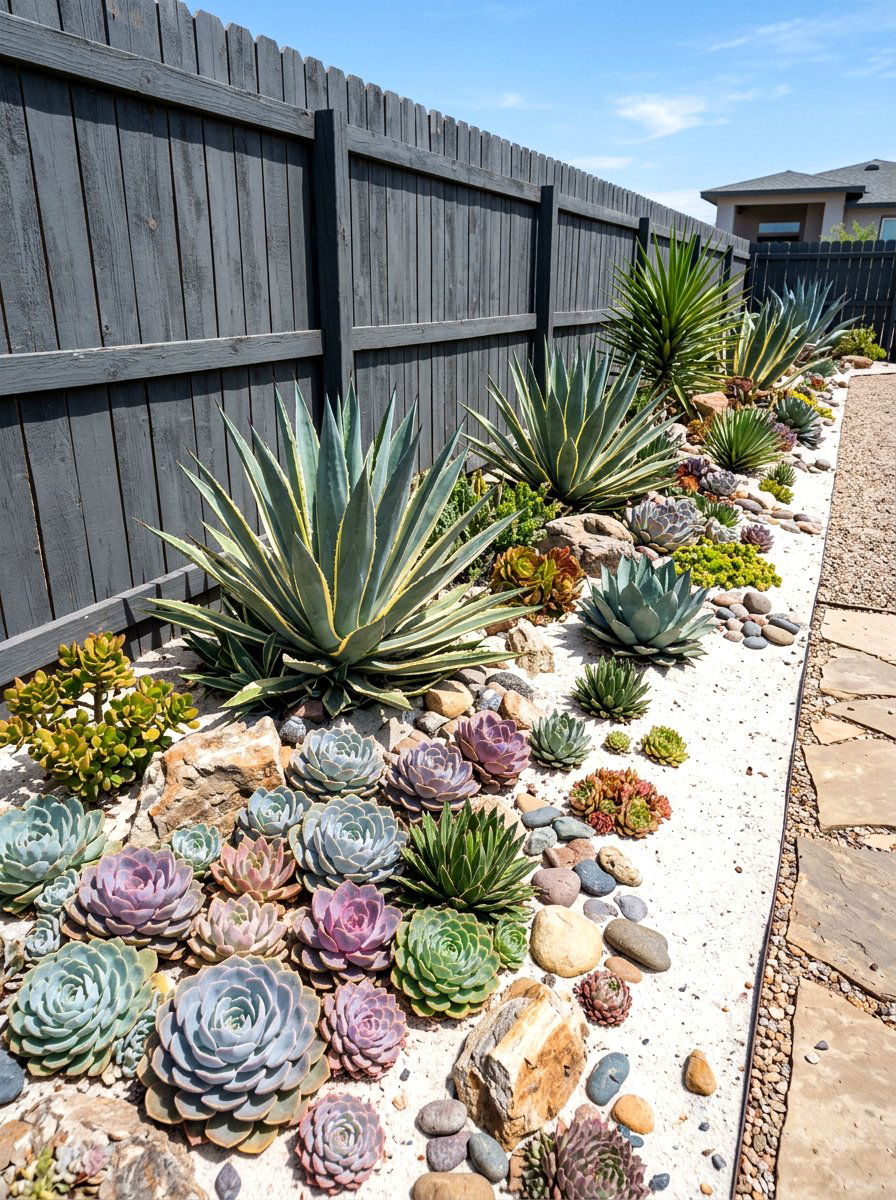
In arid climates or for homeowners looking to save water, a drought tolerant succulent bed along the fence line offers a striking and modern alternative to traditional flowers. Plants like echeveria, agave, and sedum come in a mind-blowing array of shapes and colors, from icy blues to deep burgundies. When arranged in a bed mulched with decorative sand or small pebbles, these plants create a low-profile landscape that is both sculptural and highly resilient. Succulents require almost no maintenance once they are planted, as they store water in their thick leaves to survive long dry spells. This design is particularly effective against dark-colored fences, where the unique silhouettes of the plants can be clearly seen and appreciated.
20. Layered Terracotta Pot Display
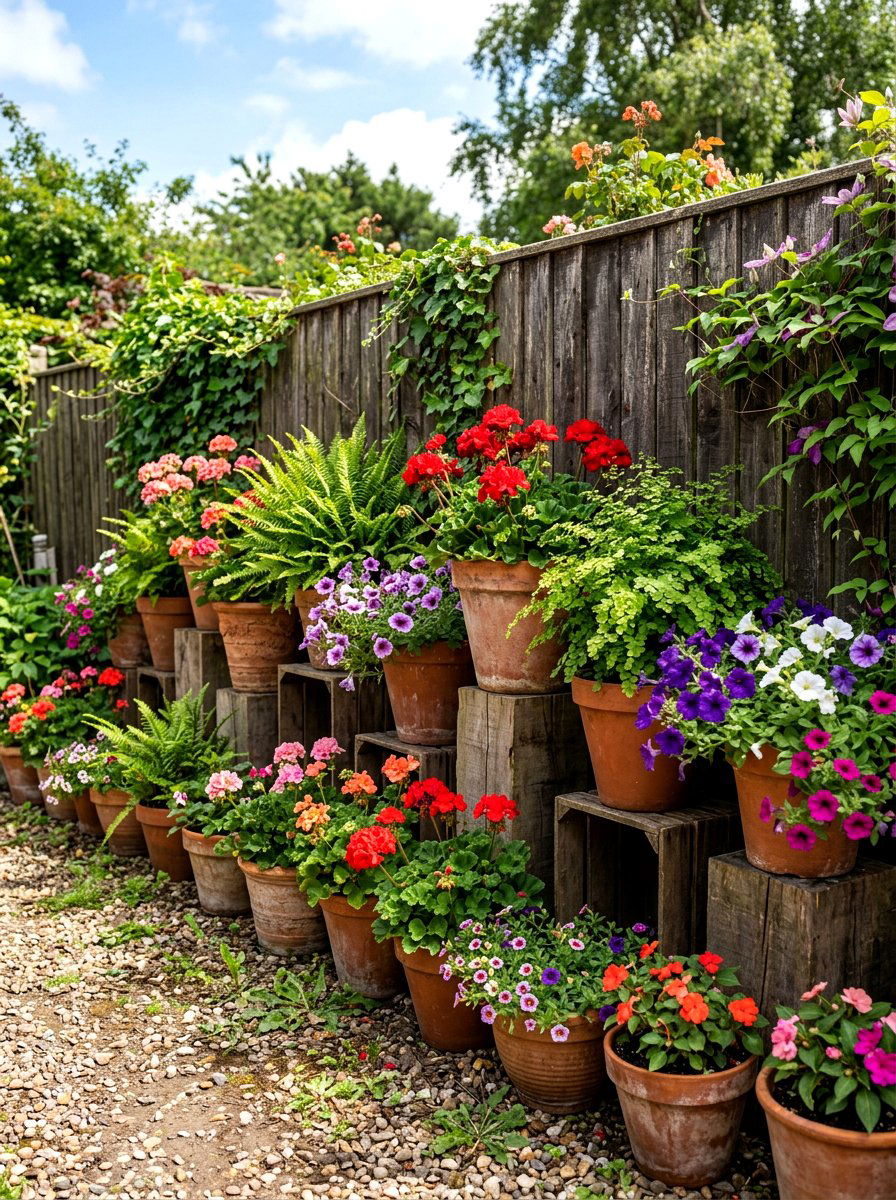
If you prefer not to dig into the ground or have poor soil, a layered terracotta pot display along your fence line is a creative and flexible solution. By grouping pots of various sizes and heights, you can create a dynamic and textured garden that is easy to move and rearrange whenever you like. Use tall pedestals or wooden crates to elevate some of the pots, creating a sense of depth and abundance that mimics a traditional in-ground flower bed. Terracotta has a warm, earthy tone that complements almost any plant variety, from bright geraniums to architectural ferns. This method also allows you to easily swap out plants as the seasons change, ensuring your fence line always looks its absolute best.
21. Climbing Rose Romantic Fence
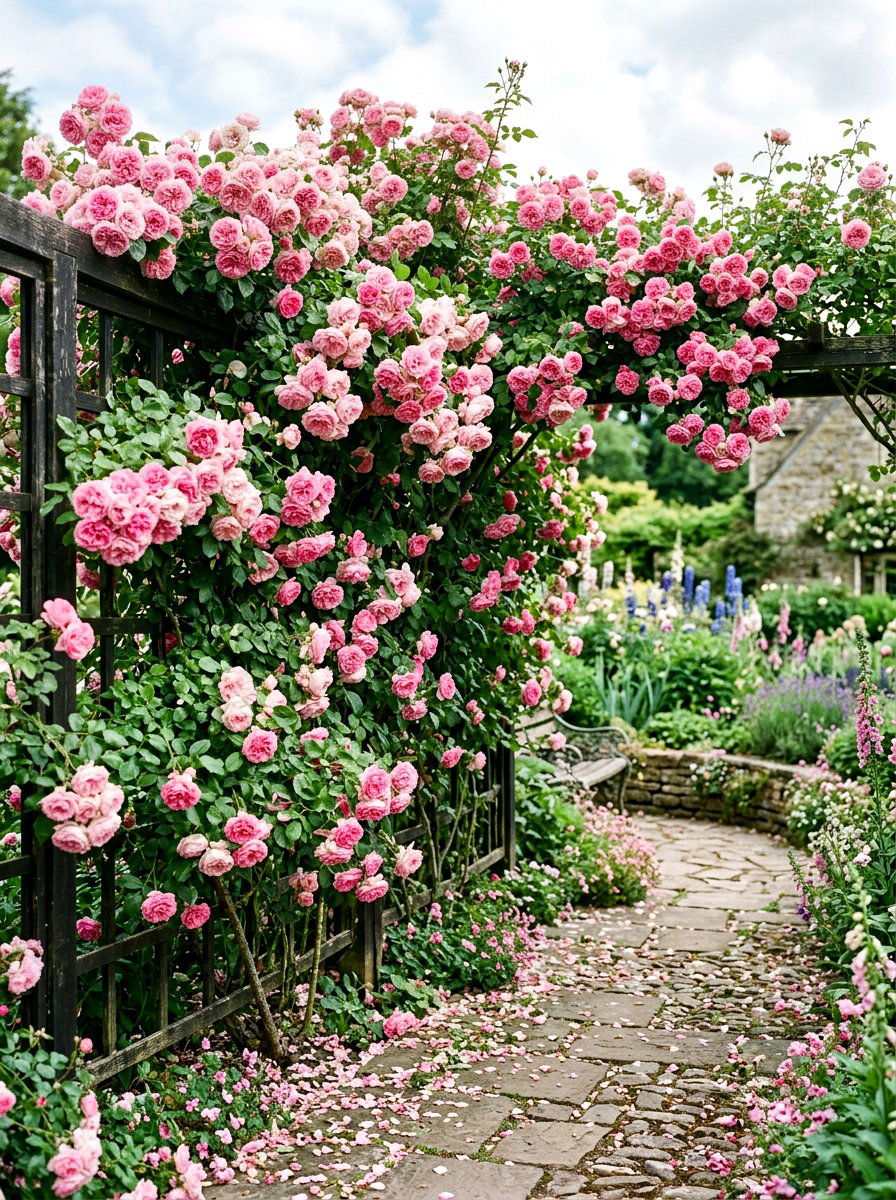
Transform your perimeter into a scene of classic romance by planting climbing roses along your backyard fence line. These plants are famous for their ability to produce massive quantities of fragrant blooms that can drape over the top of a fence in stunning cascades. Choose modern, disease-resistant varieties like 'Peggy Martin' or 'Eden' to ensure your display remains healthy and vigorous with minimal chemical intervention. As the rose canes are trained horizontally along the fence, they produce more flowering side shoots, resulting in a wall of color that is truly breathtaking. The combination of thorny stems and dense foliage also provides an extra layer of natural security and privacy for your home and garden space.
22. Stone Edging Flower Border
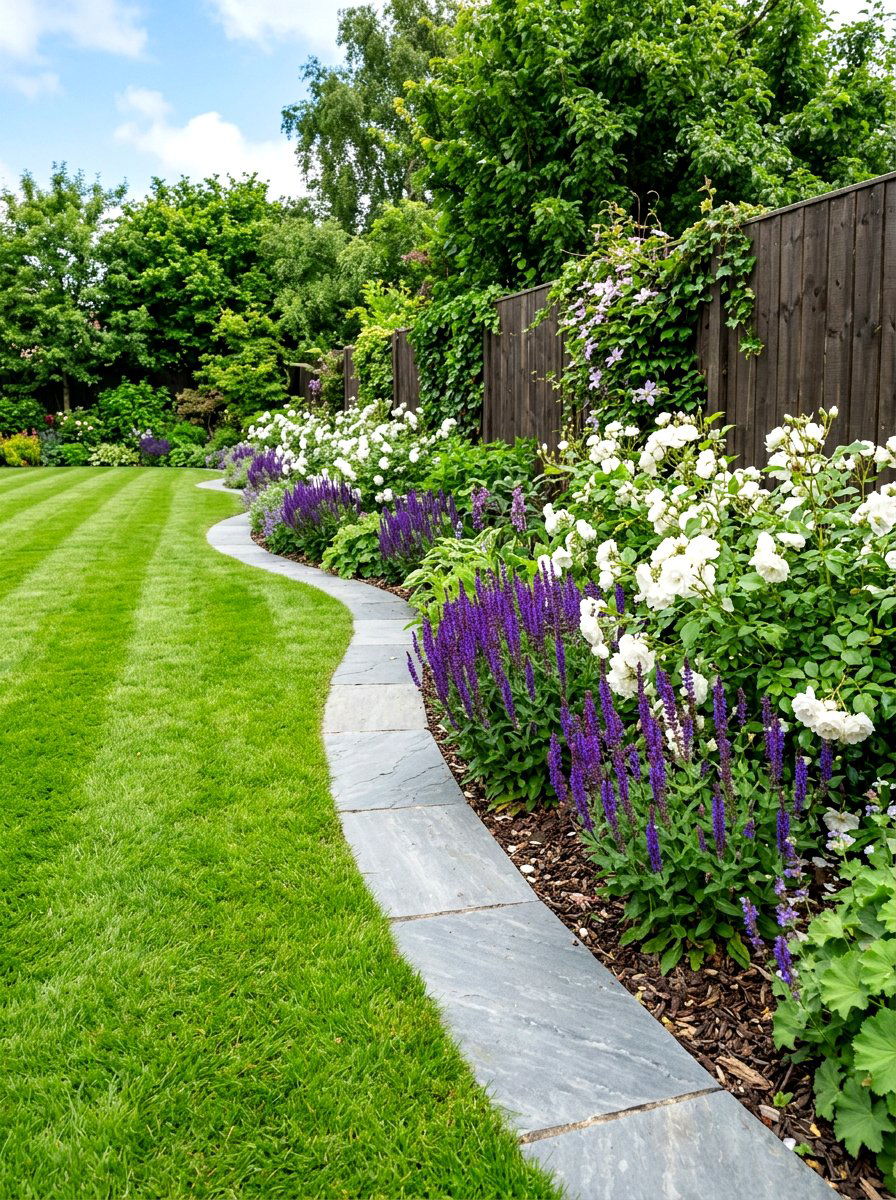
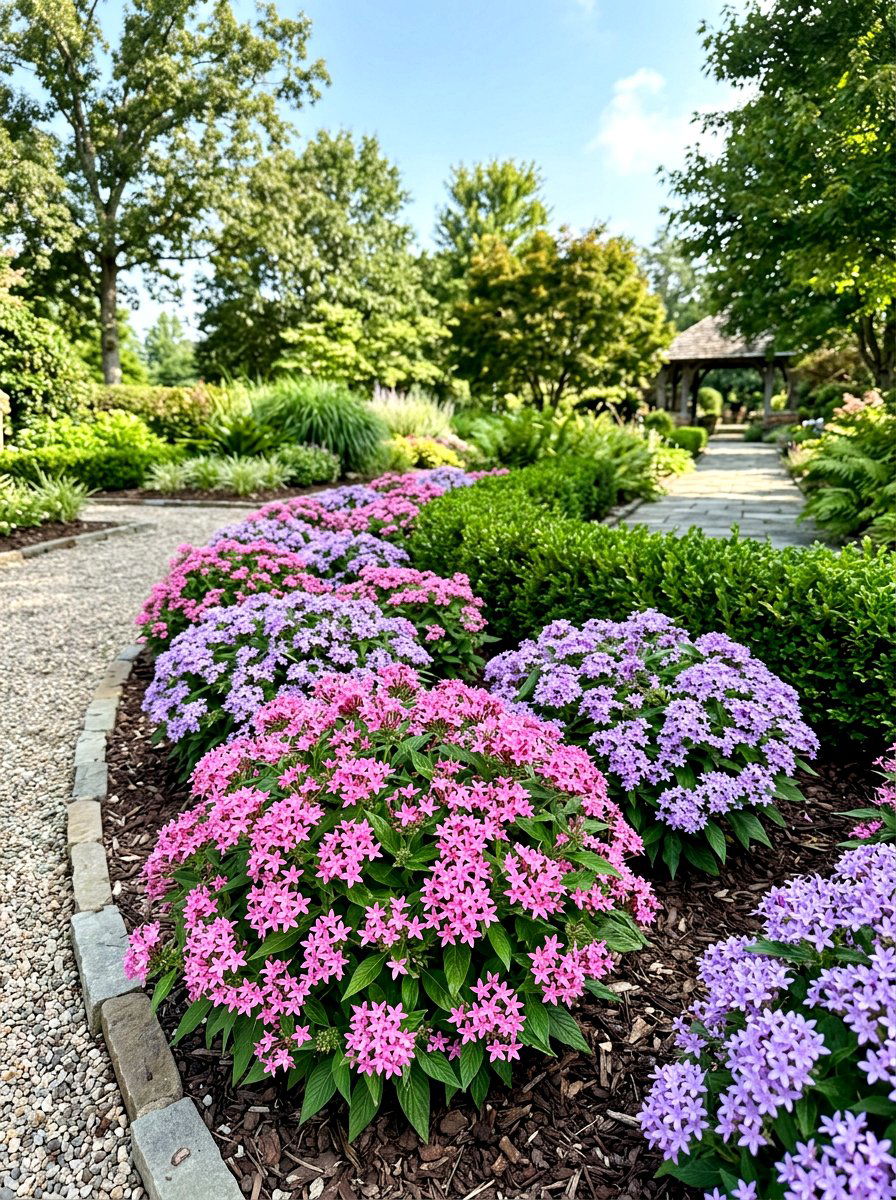
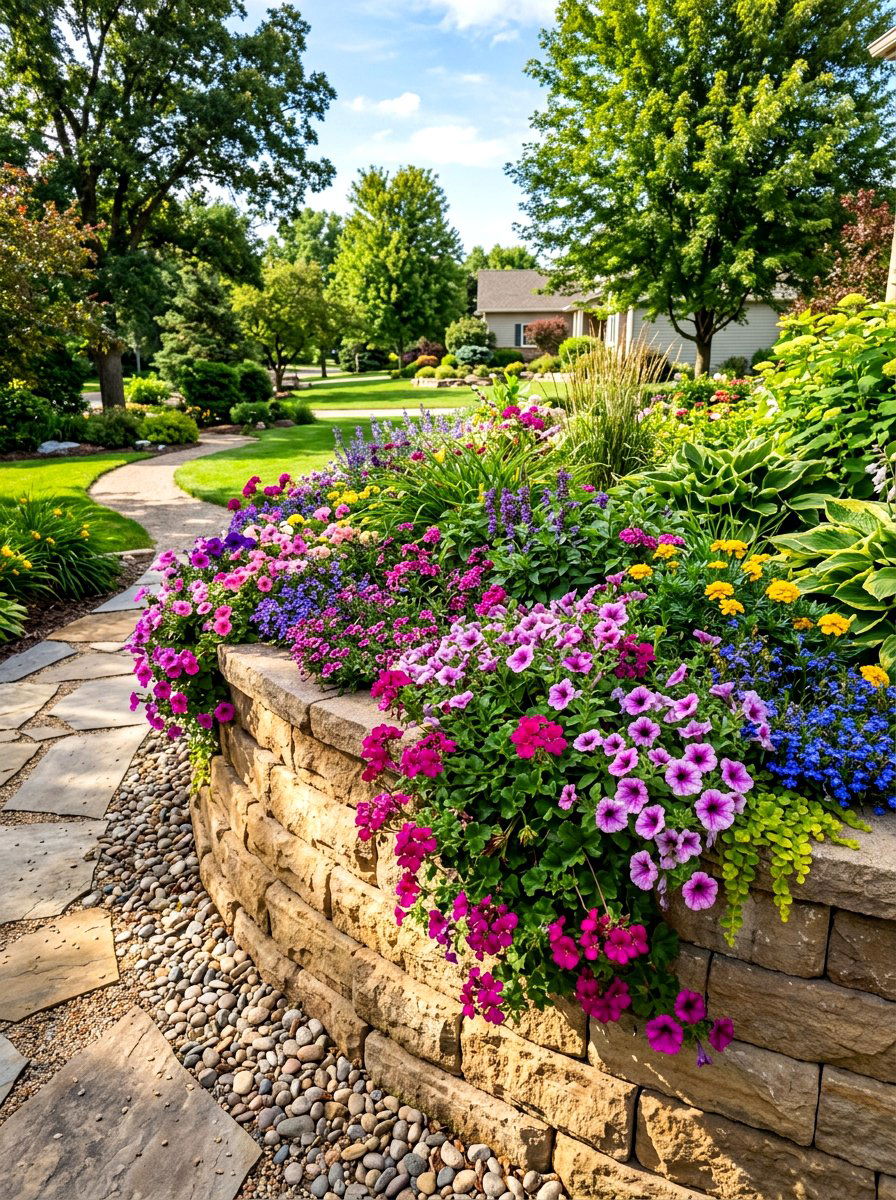
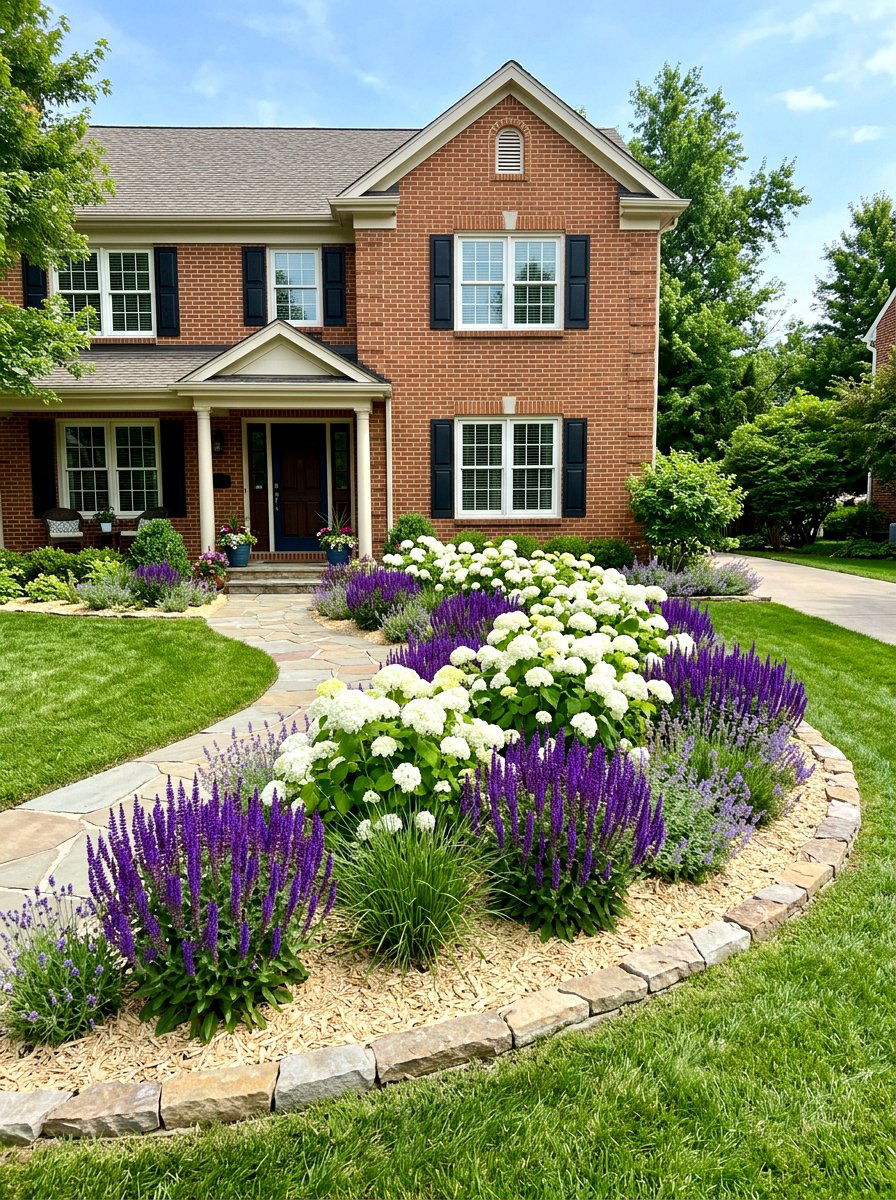
A stone edging flower border provides a clean, professional finish that makes any fence line garden look instantly more organized and high-end. By using materials like Belgian blocks, flat flagstones, or even stacked fieldstones, you create a permanent physical barrier that prevents grass from creeping into your flower beds. This clear definition makes mowing and edging your lawn much easier while highlighting the beauty of the plants within the bed. The weight and texture of the stone provide a nice contrast to soft floral textures, anchoring the garden design firmly into the landscape. Whether you choose a formal straight line or a flowing, organic curve, stone edging is a durable and attractive investment that lasts for many years.
23. Tall Garden Phlox Bed
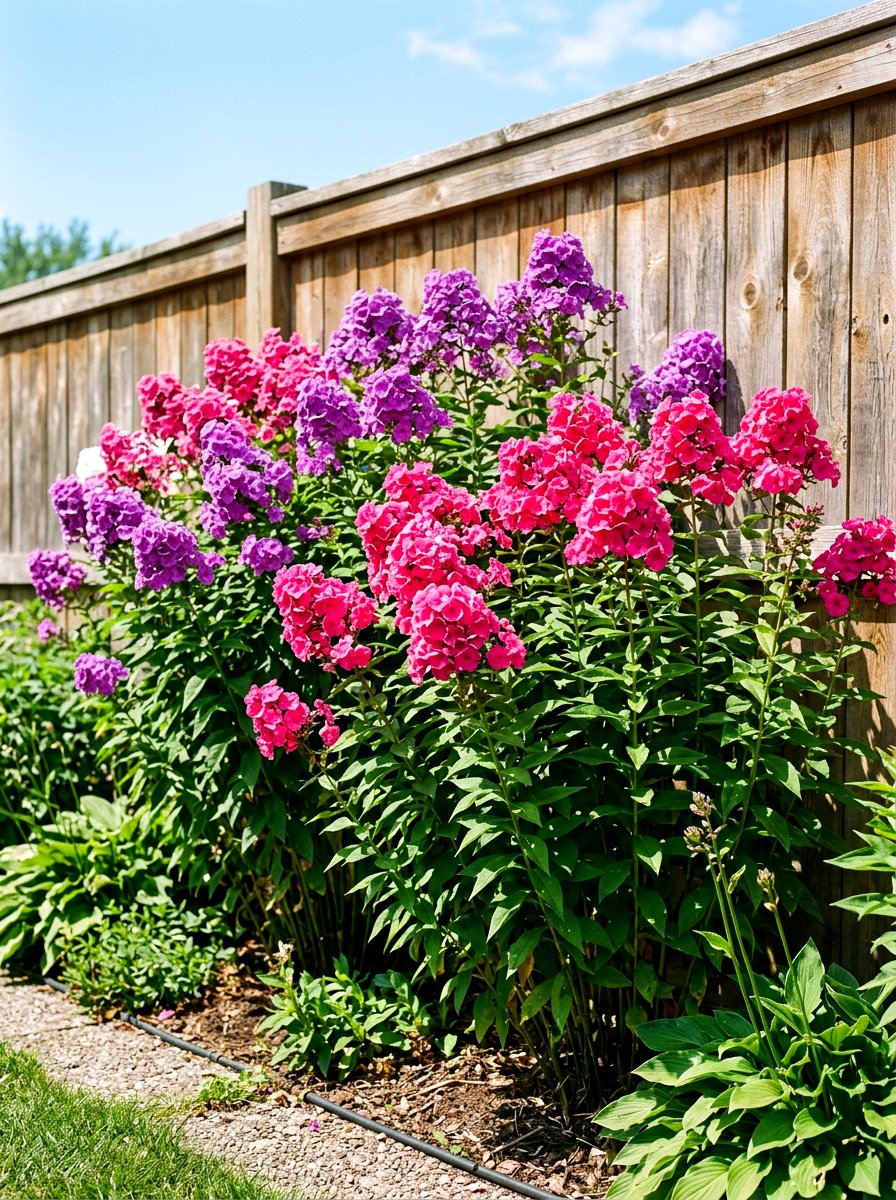
Tall garden phlox is a quintessential perennial that brings massive clusters of vibrant, honey-scented flowers to your fence line during the height of summer. These plants are prized for their upright habit, which allows them to grow several feet tall without flopping over, making them perfect for planting directly against a fence. They come in a wide range of saturated colors, including hot pink, deep purple, and bright white, often with a contrasting "eye" in the center of each bloom. Because they are highly attractive to pollinators, a phlox border will be buzzing with activity from butterflies and hummingbirds all season long. Their dense growth habit also provides excellent coverage for the middle section of your fence.
24. Russian Sage Airy Border
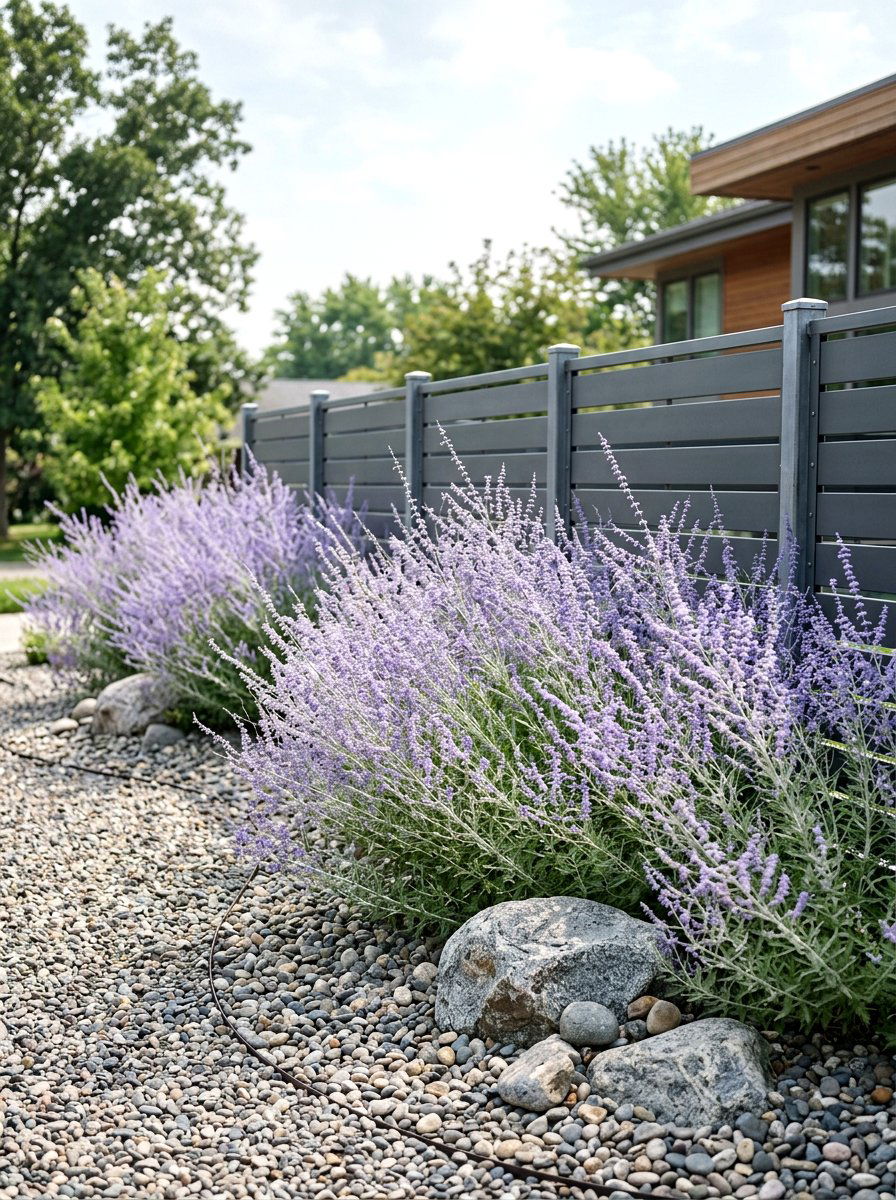
For a fence line that needs a touch of soft, hazy color, a Russian sage airy border is a fantastic and extremely hardy choice. This plant features silver-gray foliage and delicate spires of lavender-blue flowers that create a cloud-like effect along the perimeter of your yard. Russian sage is exceptionally drought-tolerant and thrives in poor soil and full sun, making it ideal for those tough-to-plant spots where other flowers might struggle. The wispy stems provide a beautiful contrast to the solid lines of a wooden or vinyl fence, adding a sense of lightness and movement to the garden. It also stays attractive well into the autumn, providing long-lasting interest with very little effort from the gardener.
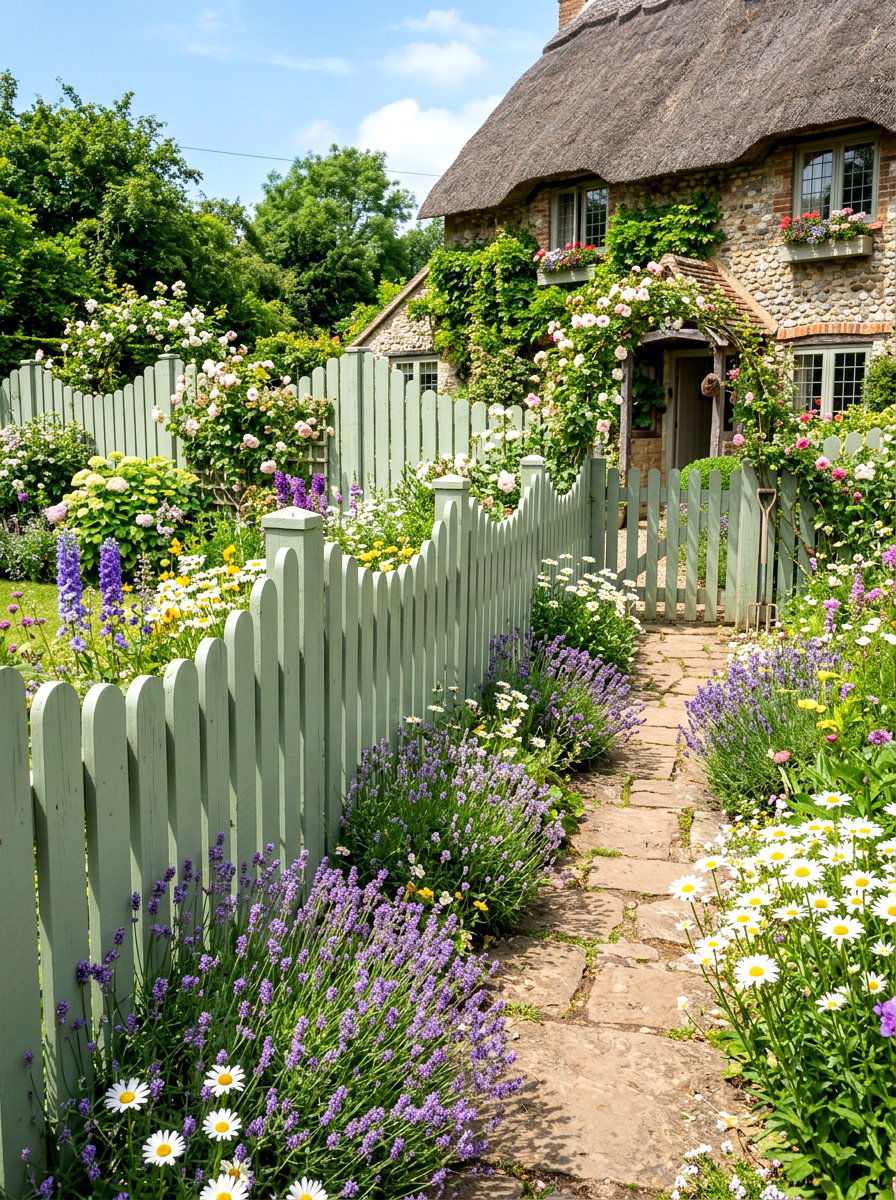
25. Wisteria Draped Fence Line
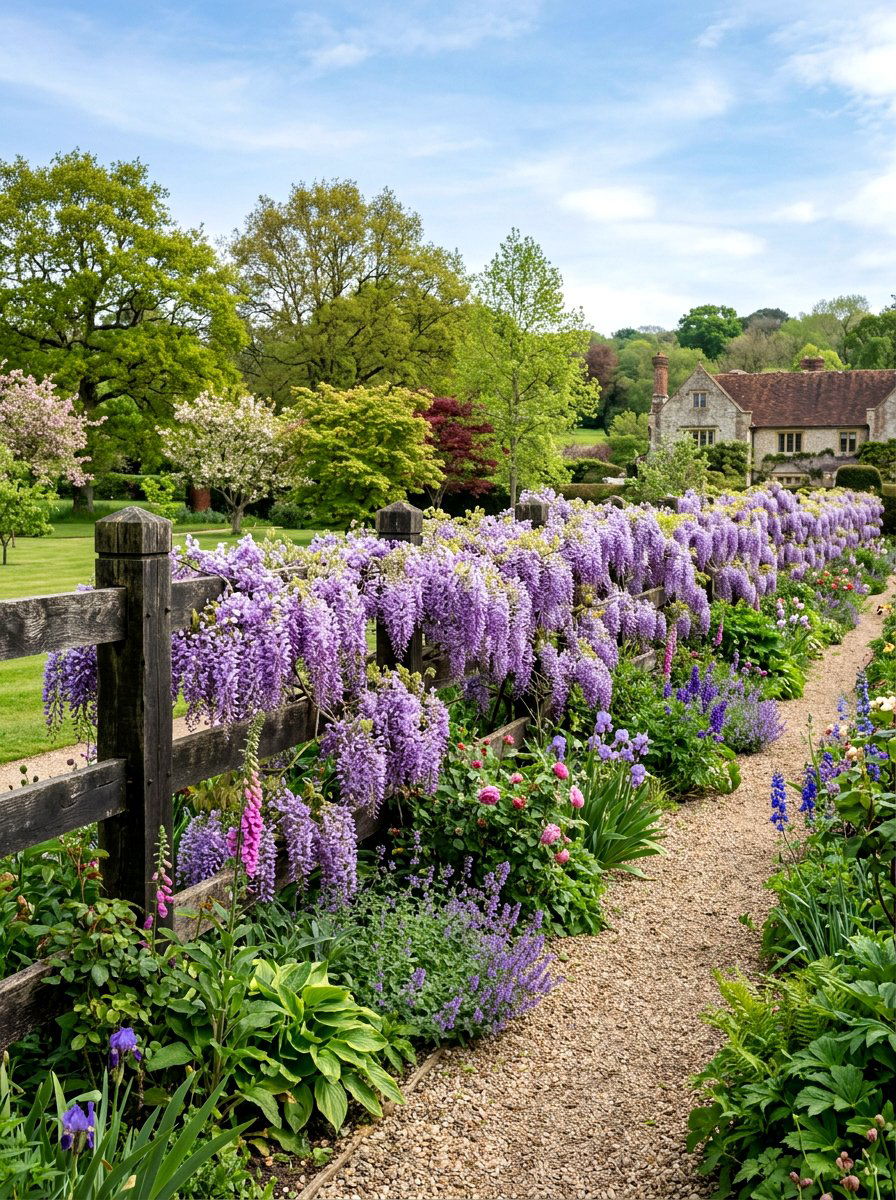
A wisteria draped fence line is the ultimate statement in garden luxury and old-world elegance. Known for its spectacular hanging racemes of purple or white flowers, wisteria can transform a sturdy fence into a living work of art during the spring months. The thick, woody vines add a sense of age and character to the property, creating a ruggedly beautiful framework that only gets better with time. Because wisteria is a vigorous grower, it requires a strong fence and regular pruning to keep it in check, but the visual reward is incomparable. The lush green leaves that follow the blooms provide excellent shade and privacy throughout the summer, making your fence feel like a part of a grand estate.
26. Brick Bordered Flower Bed
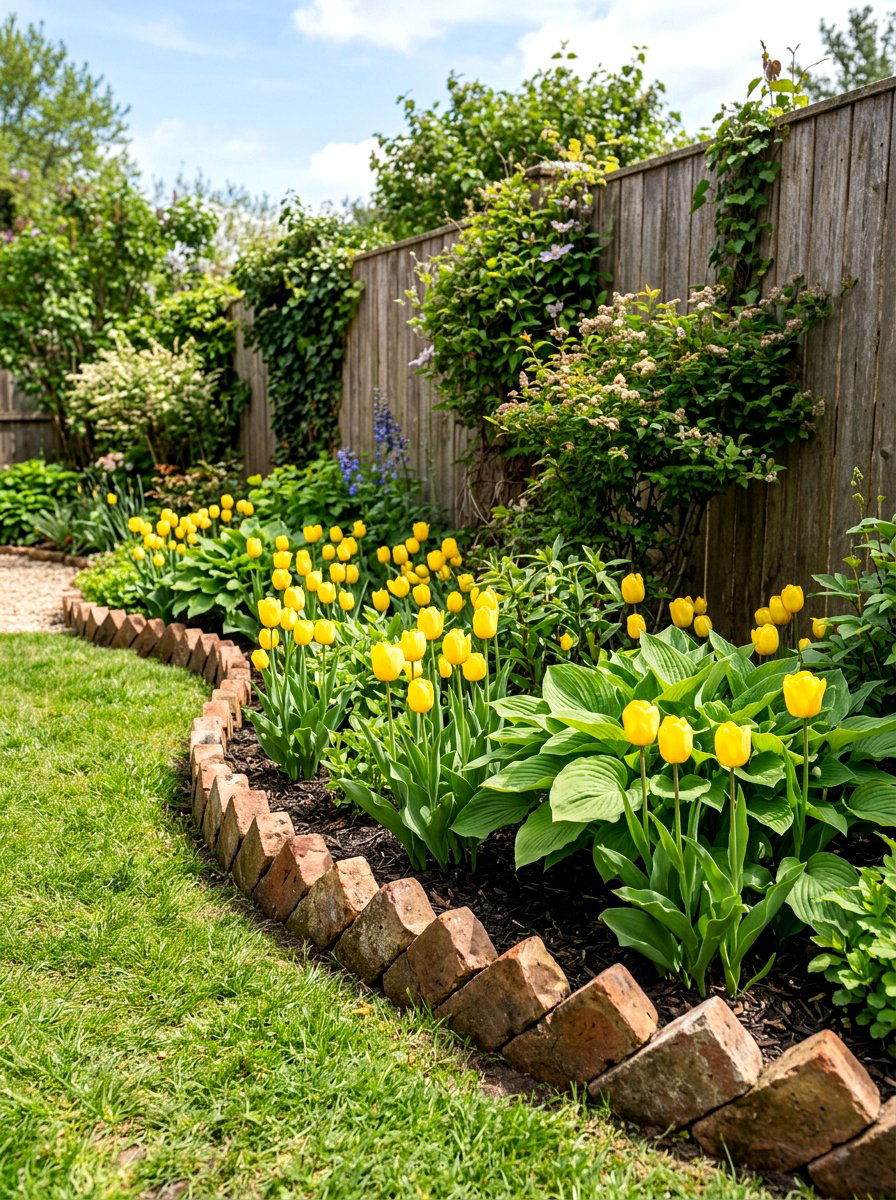
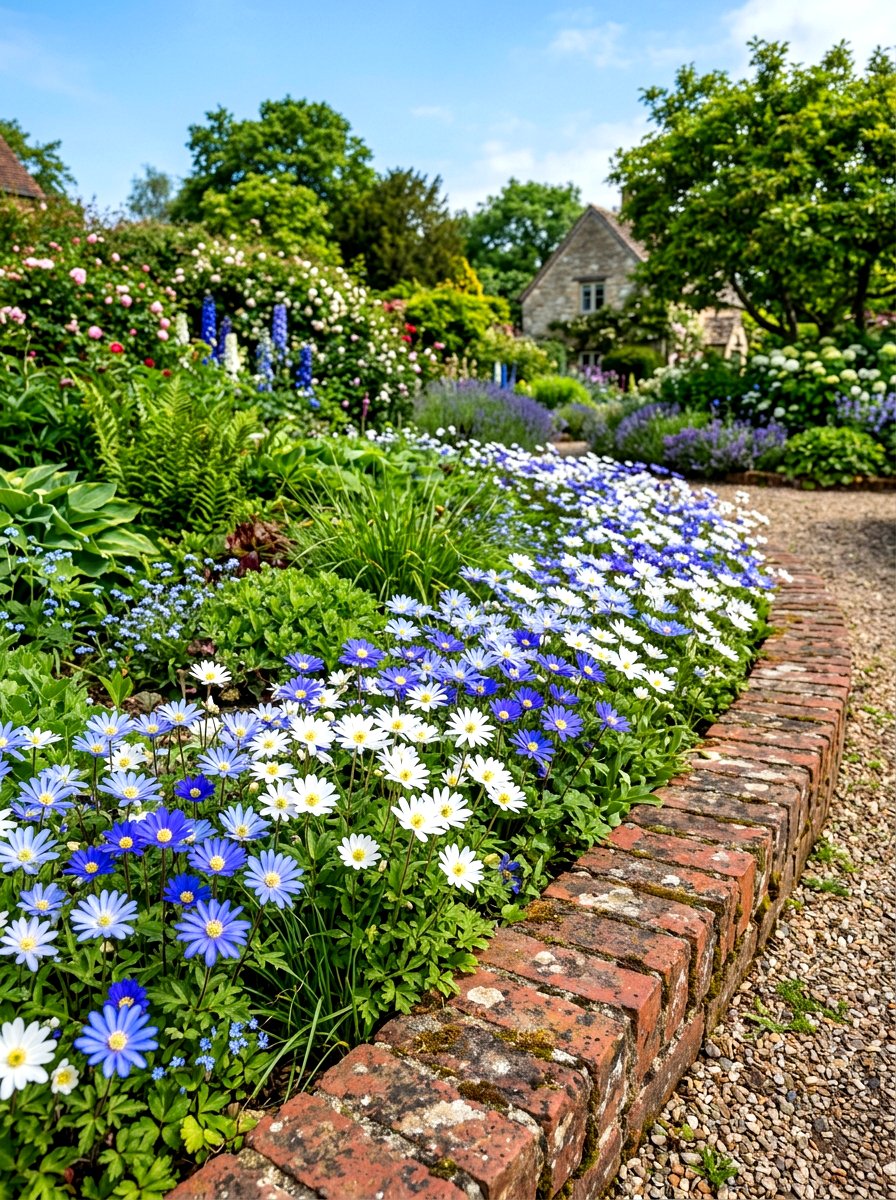
Using recycled or new bricks to create a bordered flower bed along your fence line adds a touch of traditional charm and structured beauty. Bricks can be laid flat, on their side, or even in a decorative "sawtooth" pattern to create a low wall that holds in mulch and soil. This classic material pairs beautifully with wooden fences and provides a warm, earthy tone that complements both green foliage and colorful blooms. Brick edging is incredibly versatile and can be used to create formal straight lines or gentle curves that follow the natural contours of your yard. It is a cost-effective DIY project that provides a neat and tidy appearance while protecting your flower beds from the mower.
27. Edible Berry Bush Line
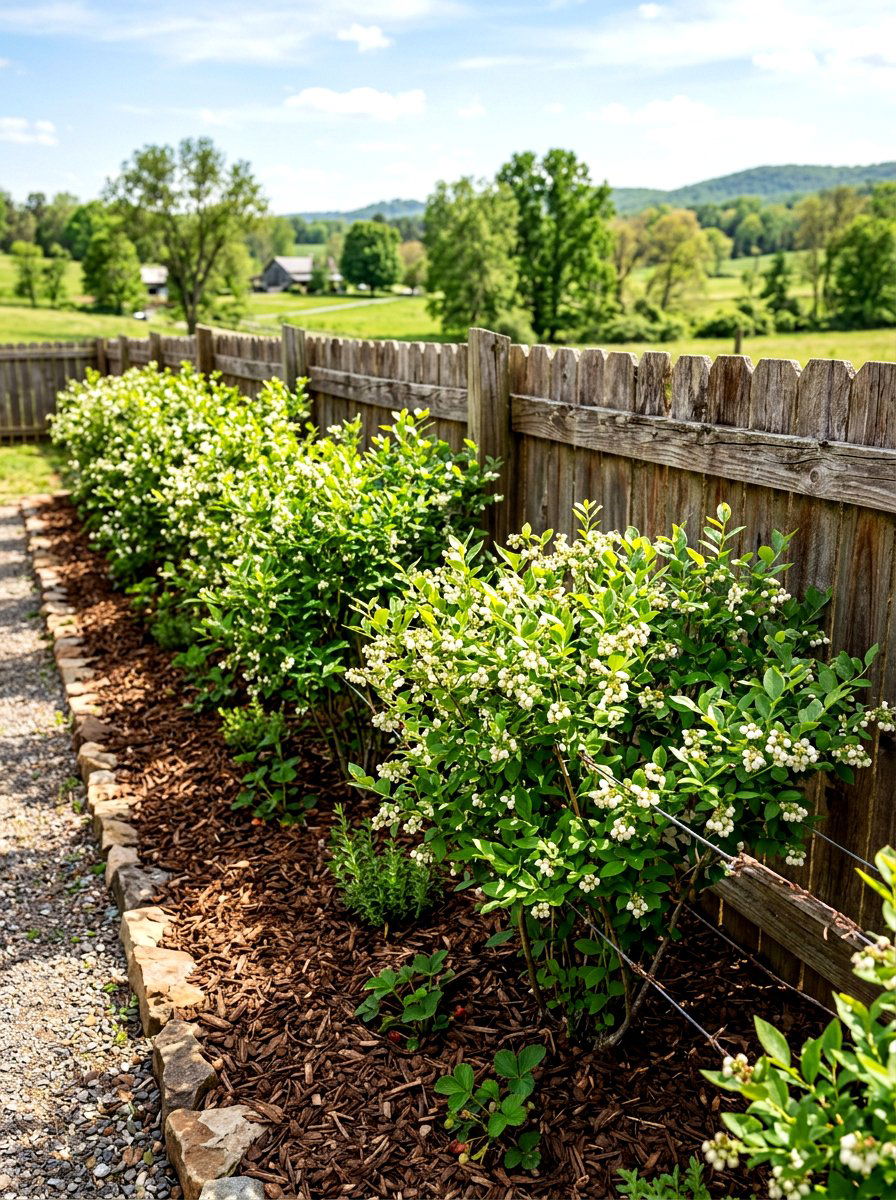
Why not make your fence line both beautiful and productive by planting an edible berry bush line? Varieties of blueberries, raspberries, and blackberries can be grown in neat rows against a fence, providing a lush green screen that also offers a delicious summer harvest. Many berry bushes have attractive white flowers in the spring and stunning foliage changes in the fall, making them a four-season asset to your landscape. This "fencible" approach to gardening is perfect for families who want to teach children about where their food comes from while maximizing every inch of their outdoor space. Just ensure your soil is properly amended for the specific needs of the fruit you choose to grow.
28. Fern Shade Garden Strip
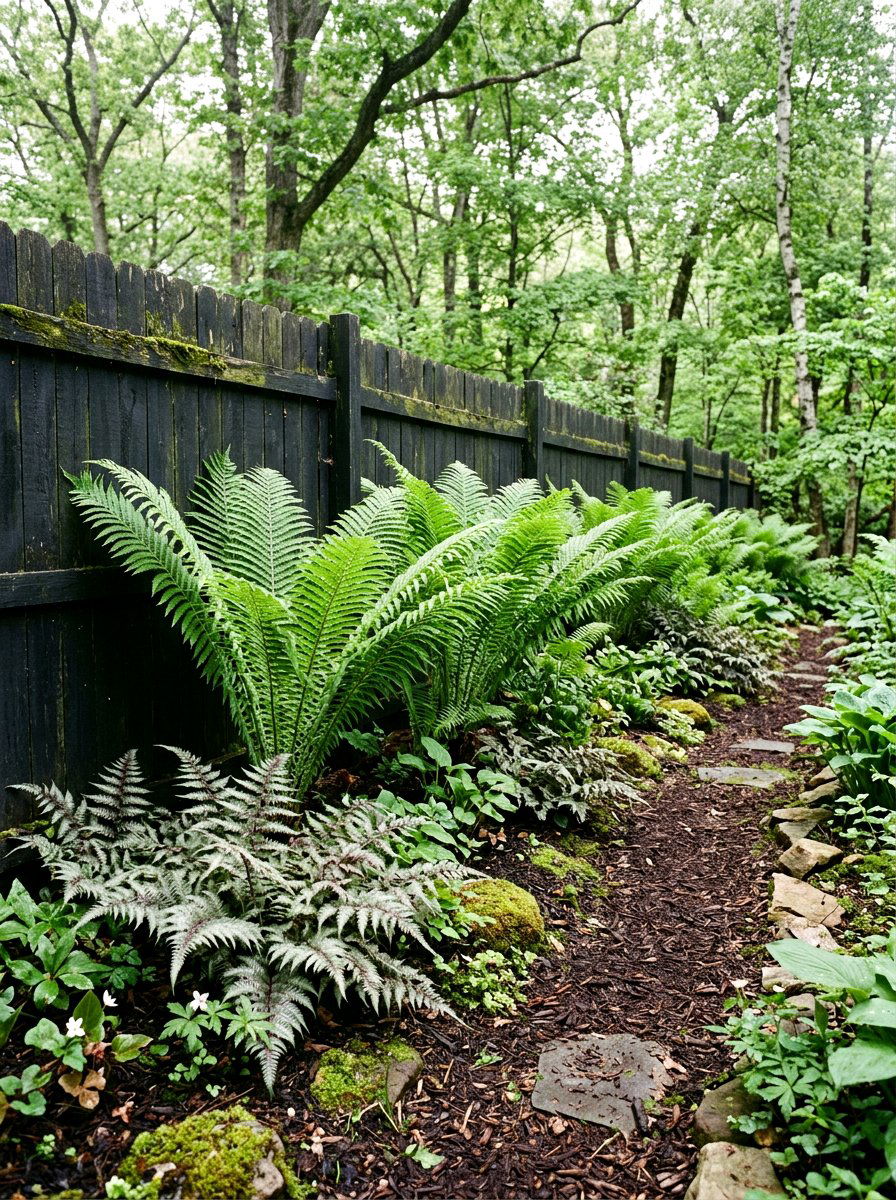
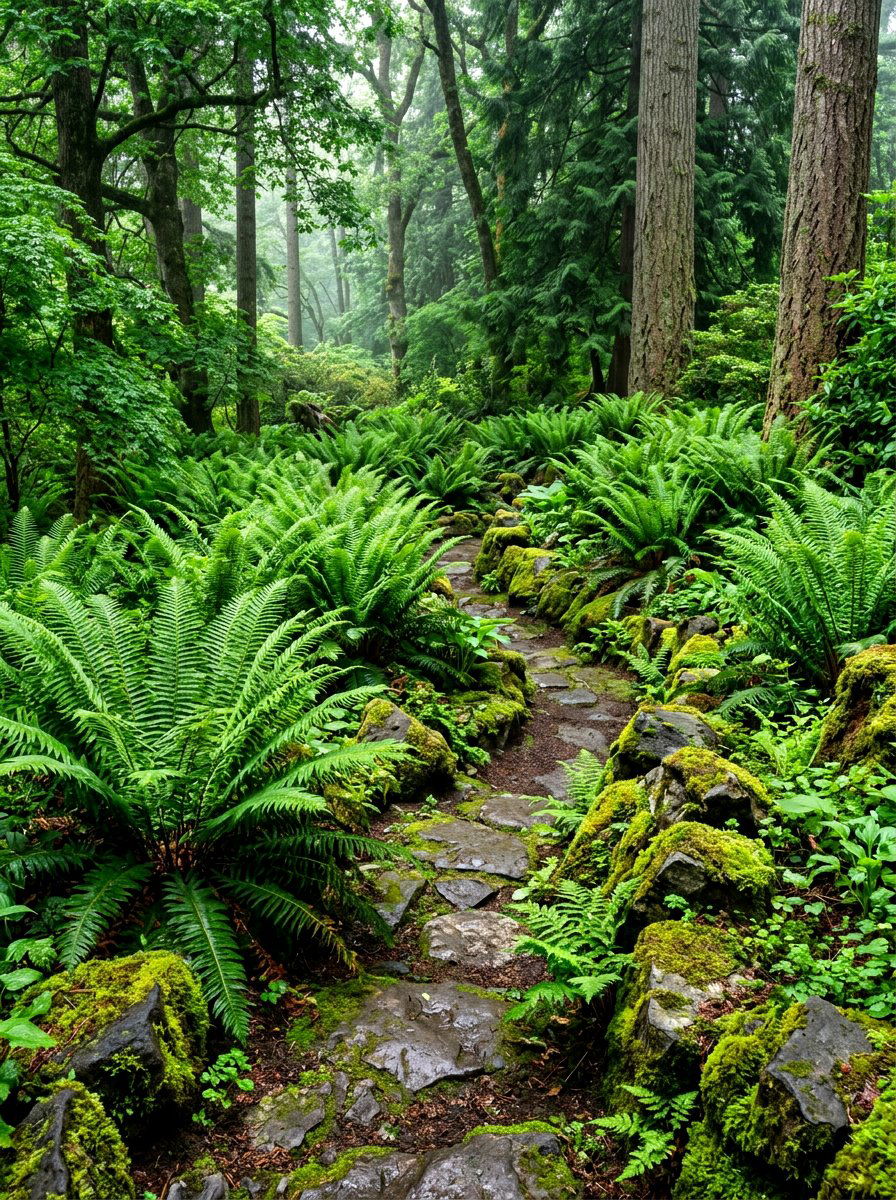
A fern shade garden strip is the perfect way to bring a cool, prehistoric beauty to a dark and damp fence line. Ferns like ostrich ferns, Japanese painted ferns, and autumn ferns offer an incredible variety of textures and subtle colors that thrive in low-light conditions. Their delicate, arching fronds create a soft and lush appearance that can make a small, shaded side yard feel like a woodland sanctuary. Because many ferns spread via underground runners, they will eventually fill in the entire strip, creating a low-maintenance carpet of greenery that stays fresh and vibrant throughout the growing season. This design is exceptionally relaxing and provides a quiet, green retreat from the bright and busy parts of the garden.
29. Sunflowers Along Fence Line
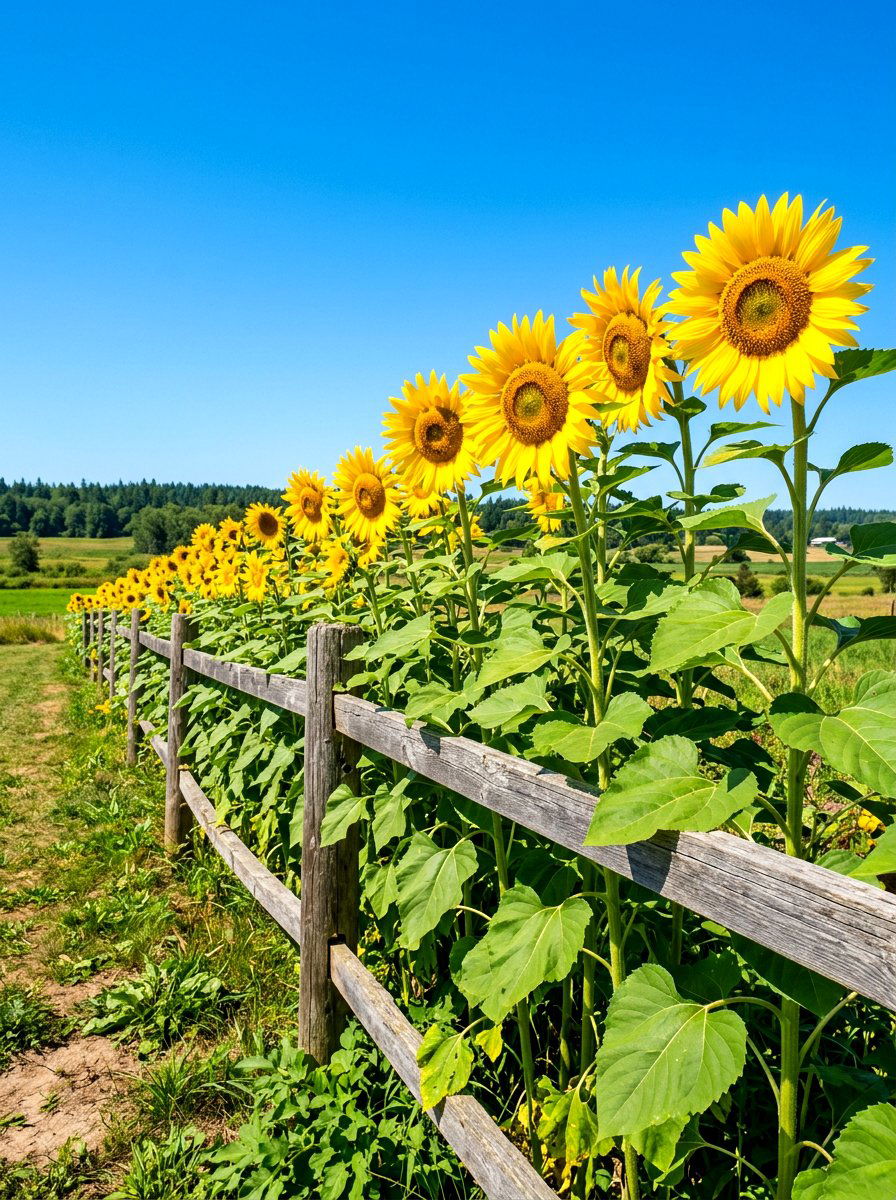
Planting a row of sunflowers along your fence line is a simple and joyful way to add massive height and cheer to your backyard. These iconic annuals can grow up to ten feet tall, using the fence as a sturdy backbone to support their heavy, golden heads. Sunflowers are incredibly easy to grow from seed, making them a fun project for beginner gardeners or families with children. As they bloom, they create a towering wall of yellow that can be seen from across the neighborhood, instantly boosting the curb appeal of your home. After the flowers fade, the seed heads provide a valuable food source for local birds, making your fence line a hub of nature.
30. Mixed Texture Shrub Border
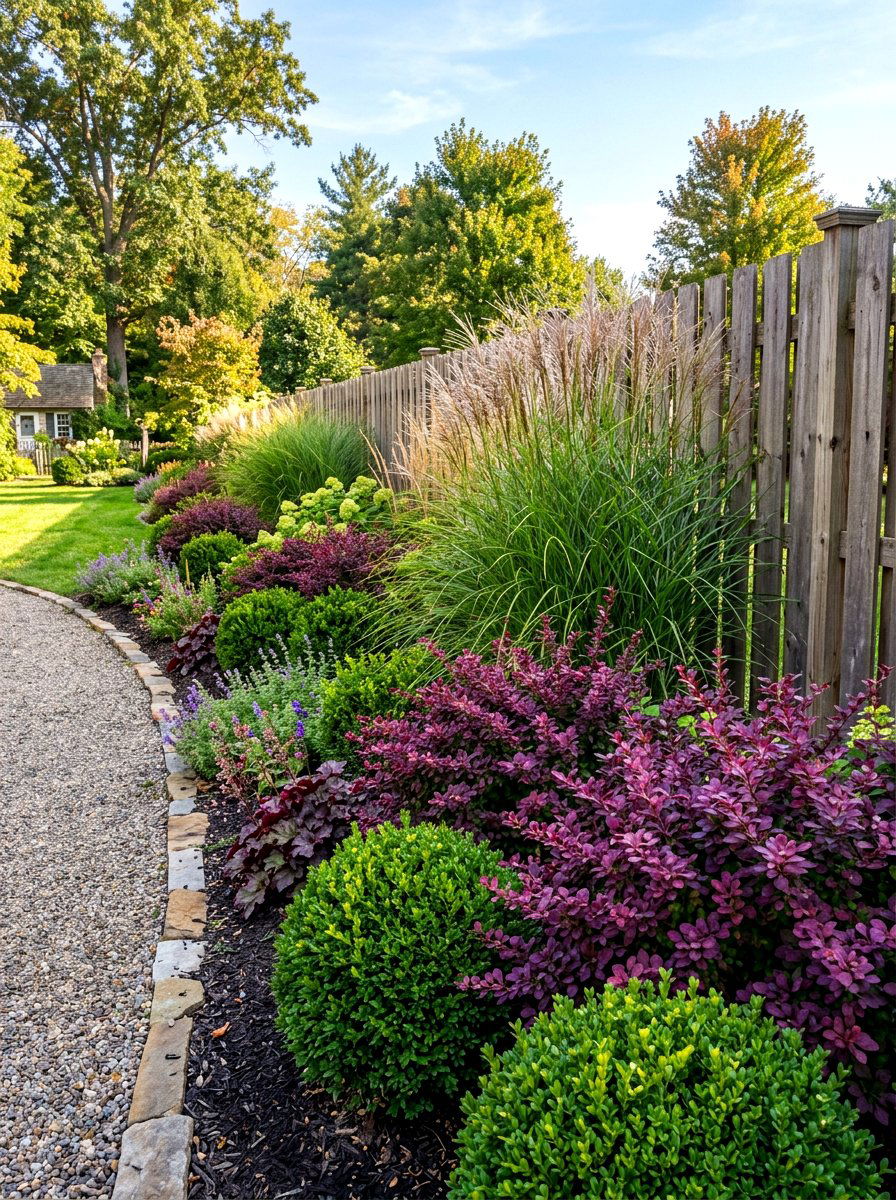
A mixed texture shrub border is a sophisticated landscaping strategy that uses a variety of different plants to create a year-round interest along the fence. By combining broad-leaf evergreens with fine-textured grasses and flowering deciduous shrubs, you ensure that there is always something interesting to look at, regardless of the season. This layered approach creates a dense and natural-looking boundary that provides excellent privacy and a rich habitat for local wildlife. The variation in leaf shape, color, and size keeps the eye engaged and prevents the fence line from looking flat or monotonous. This design is highly customizable, allowing you to choose plants that perfectly match the specific sun and soil conditions of your unique backyard.
Conclusion:
Transforming your fence line into a vibrant and purposeful flower bed is one of the most effective ways to elevate the overall design of your outdoor space. Whether you choose the structured elegance of a neatly trimmed hedge or the whimsical chaos of a wildflower meadow, these perimeter gardens turn a functional boundary into a stunning focal point. By considering factors like sunlight, maintenance levels, and your personal style, you can create a landscape that provides beauty, privacy, and ecological value for years to come. A well-planned fence line garden truly anchors your property, making your backyard feel like a complete, intentional, and deeply personal sanctuary for you and your family.

Related posts: