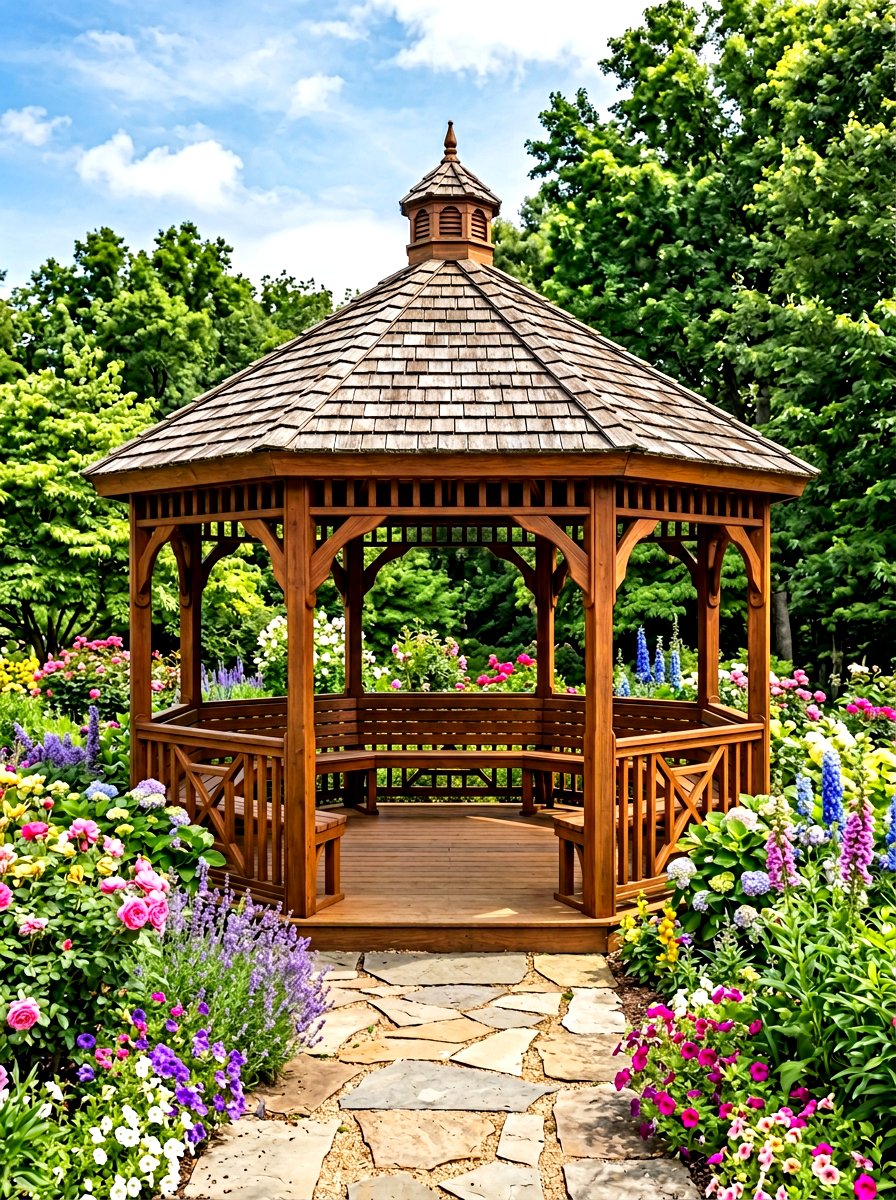
Imagine walking through your backyard and finding a peaceful sanctuary wrapped in the scent of fresh blooms. A gazebo serves as the perfect structural centerpiece for any outdoor space, providing a dedicated area for relaxation and entertainment. By surrounding this structure with a thoughtfully curated flower garden, you transform a simple wooden or metal frame into a living piece of art. The right combination of colors, textures, and heights can make your gazebo feel like a secret getaway. Whether you prefer the wild look of a meadow or the manicured elegance of a formal garden, these concepts will help you create a stunning landscape that enhances your home’s outdoor charm and overall value.
1. Pink climbing rose gazebo
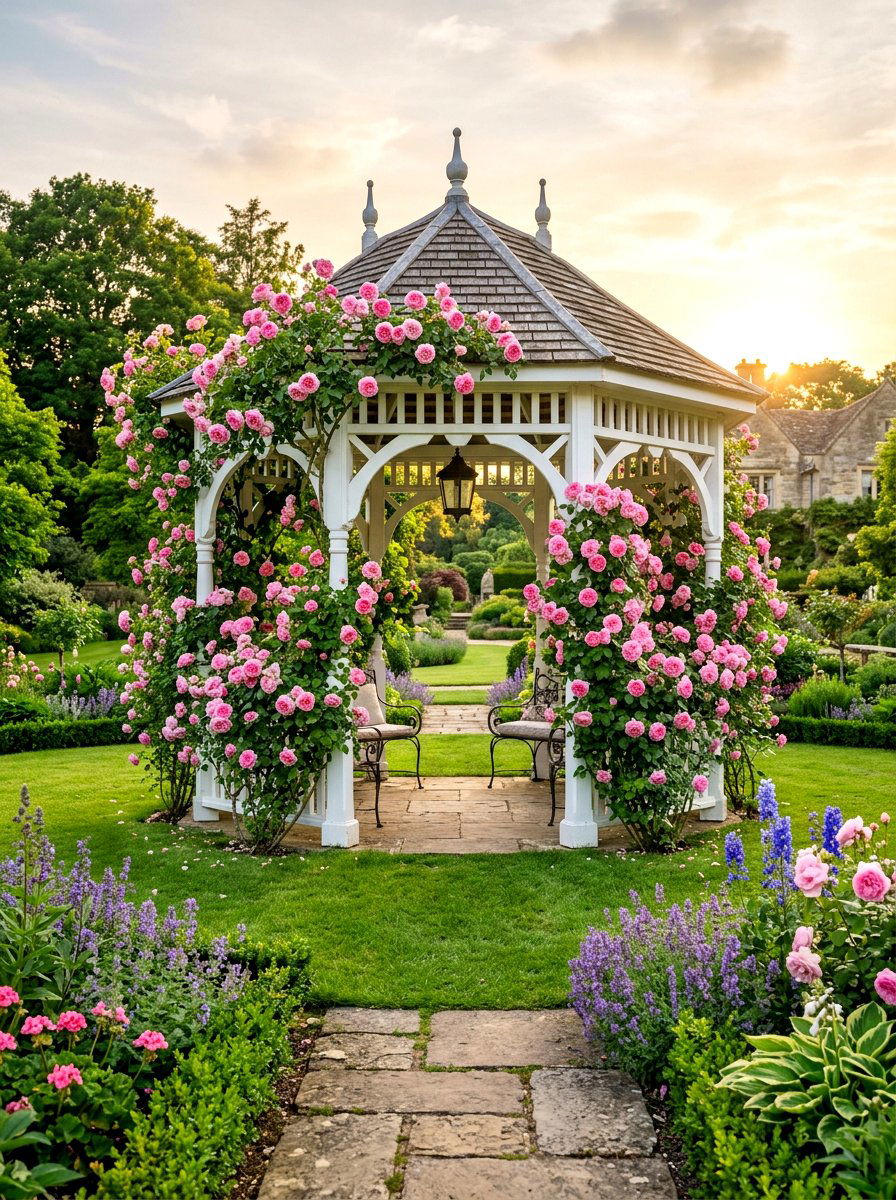
Have you ever dreamed of a romantic retreat right in your own backyard? Planting pink climbing roses around the base of your gazebo is a classic way to achieve a fairy-tale aesthetic. These vigorous climbers will slowly wrap themselves around the pillars and lattice, creating a canopy of soft, fragrant petals. You should choose varieties like Eden or New Dawn for their repeat blooming and hardy nature. Pairing these roses with lush green foliage ensures the structure looks beautiful even when the flowers are resting. This design creates a cozy, enclosed feeling that makes the interior of the gazebo feel private and enchanting for afternoon tea or reading.
2. Tropical plant gazebo garden
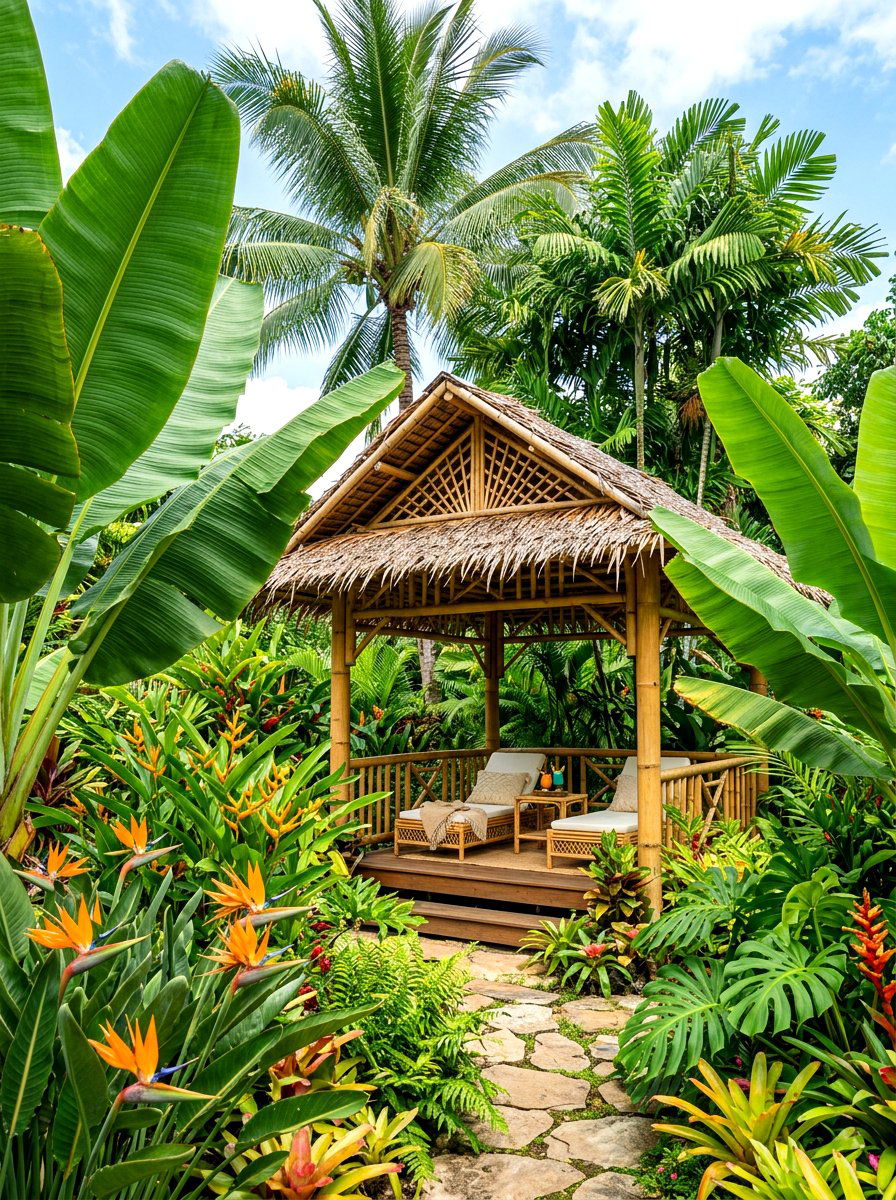
Can you picture a vibrant oasis filled with oversized leaves and bold, electric colors? A tropical gazebo garden relies on exotic plants like canna lilies, bird of paradise, and various palms to create a lush, jungle-like atmosphere. The key is to layer different heights of foliage to mimic a natural rainforest canopy. Use bright orange and yellow blooms to contrast against deep green fronds. This style works best in warmer climates but can be replicated in temperate zones using large pots that move indoors for winter. The dense planting provides excellent natural cooling, making the gazebo a refreshing spot during the hottest summer months.
3. Cottage style gazebo landscaping
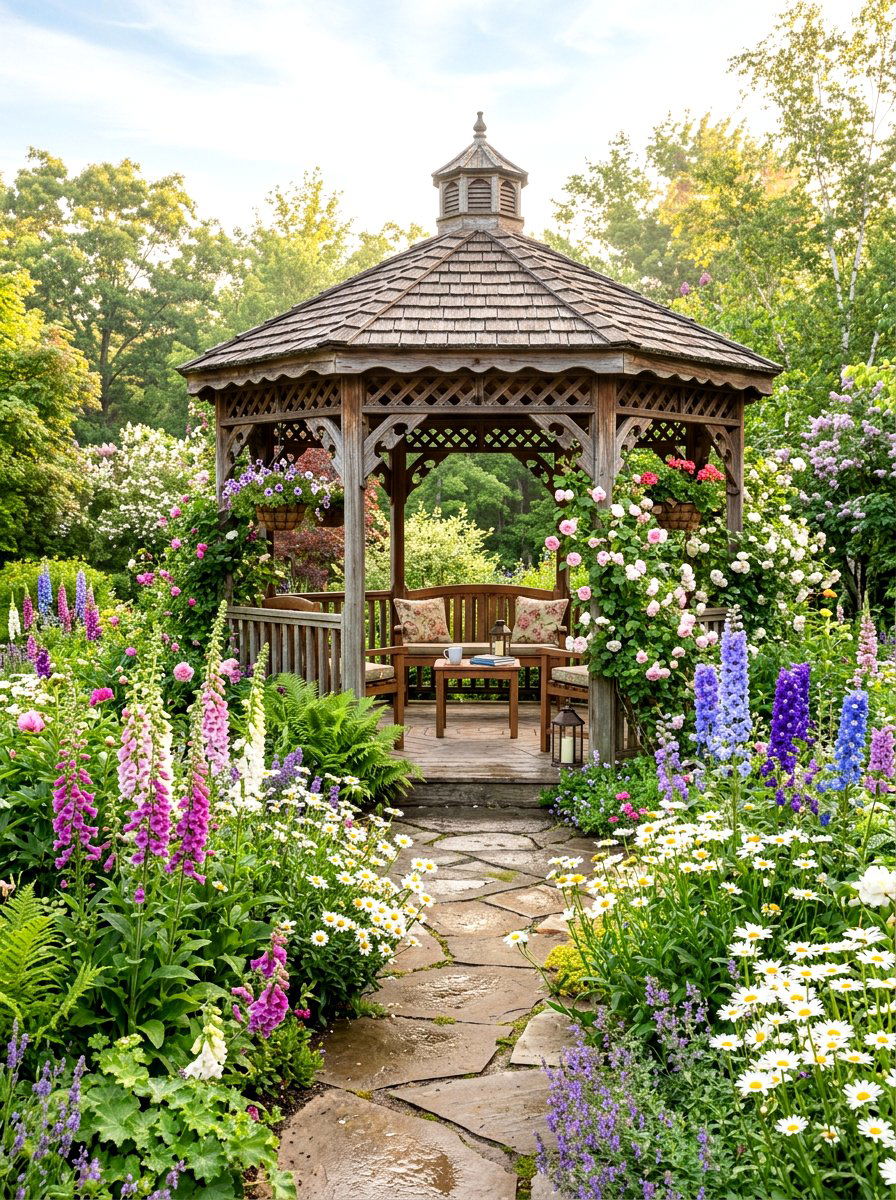
Does the idea of a charming, slightly wild garden appeal to your sense of style? Cottage style landscaping around a gazebo focuses on a mix of perennials and annuals that look effortlessly natural. Think of delphiniums, foxgloves, and hollyhocks towering near the structure, while shorter flowers like pansies and daisies fill in the gaps at the base. This approach creates a soft, blurred boundary between the garden and the gazebo. It invites bees and butterflies to visit, adding movement and life to the space. Using a variety of colors and textures makes the entire area feel warm, inviting, and wonderfully nostalgic for visitors.
4. Modern gazebo flower beds
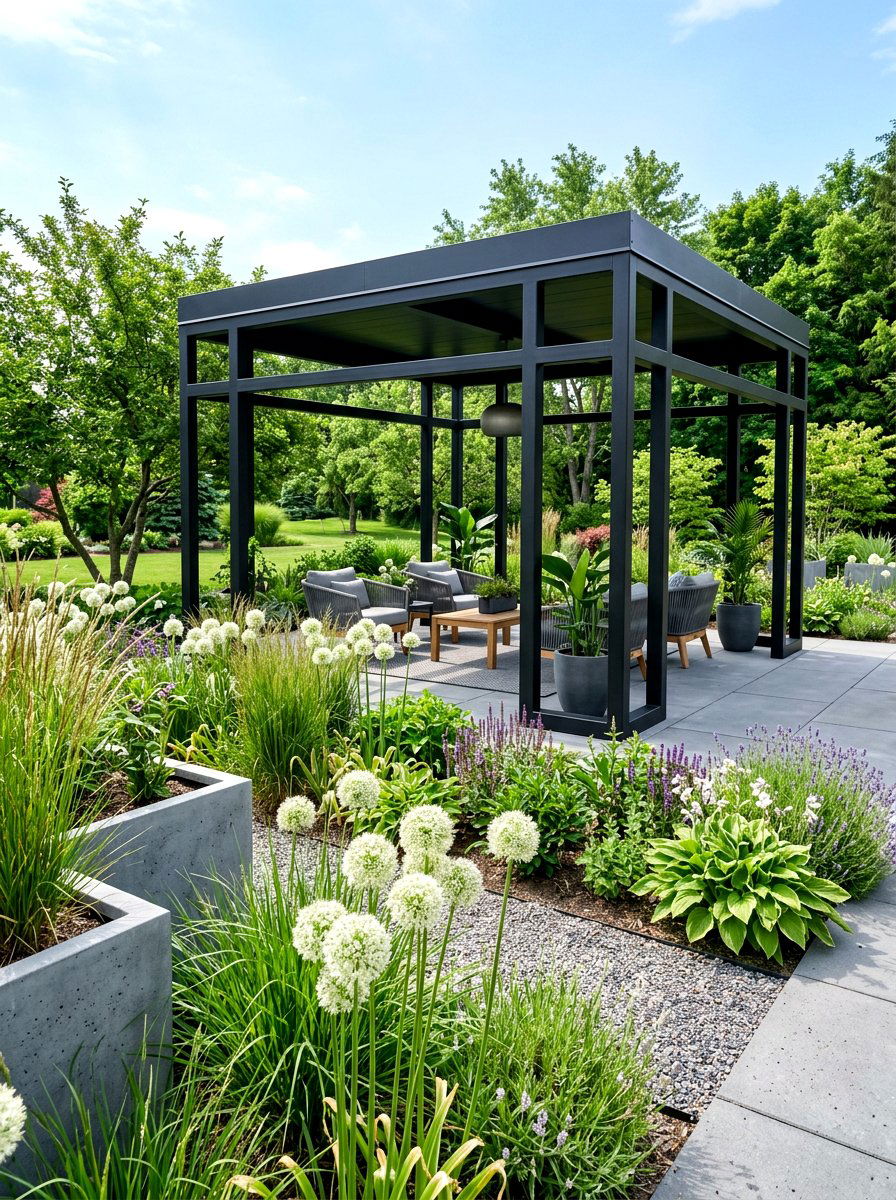
Are you looking for a clean and sophisticated look for your outdoor living area? Modern gazebo flower beds prioritize symmetry, structure, and a limited color palette to achieve a high-end feel. Instead of a riot of colors, you might choose sleek ornamental grasses paired with structural plants like alliums or architectural succulents. Surround the gazebo with rectangular or geometric planters made from concrete or dark metal to reinforce the contemporary vibe. This style emphasizes the lines of the gazebo itself, making it stand out as a piece of modern architecture. It is perfect for homeowners who prefer low-maintenance yet highly impactful garden designs.
5. Lavender gazebo garden border
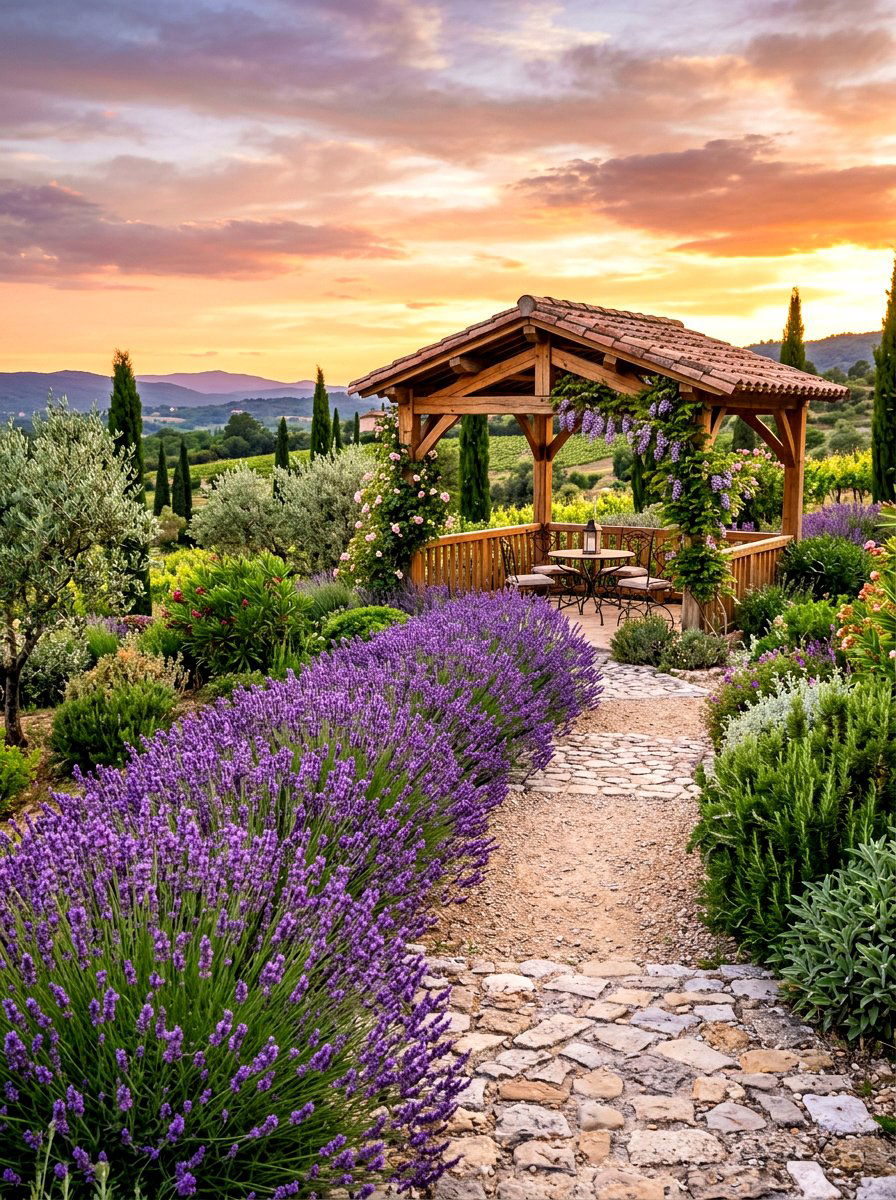
What if you could enjoy a calming aroma every time you stepped into your garden? Creating a thick border of lavender around your gazebo offers both visual beauty and a relaxing sensory experience. The silvery-green foliage and purple spikes of lavender provide a Mediterranean feel that thrives in sunny spots with well-drained soil. As you walk toward the structure, the scent of lavender fills the air, immediately lowering stress levels. This type of garden border also attracts pollinators like bees and butterflies. It keeps the base of the gazebo looking tidy while adding a soft, hazy color that complements light-colored wood or white paint.
6. Japanese style gazebo garden
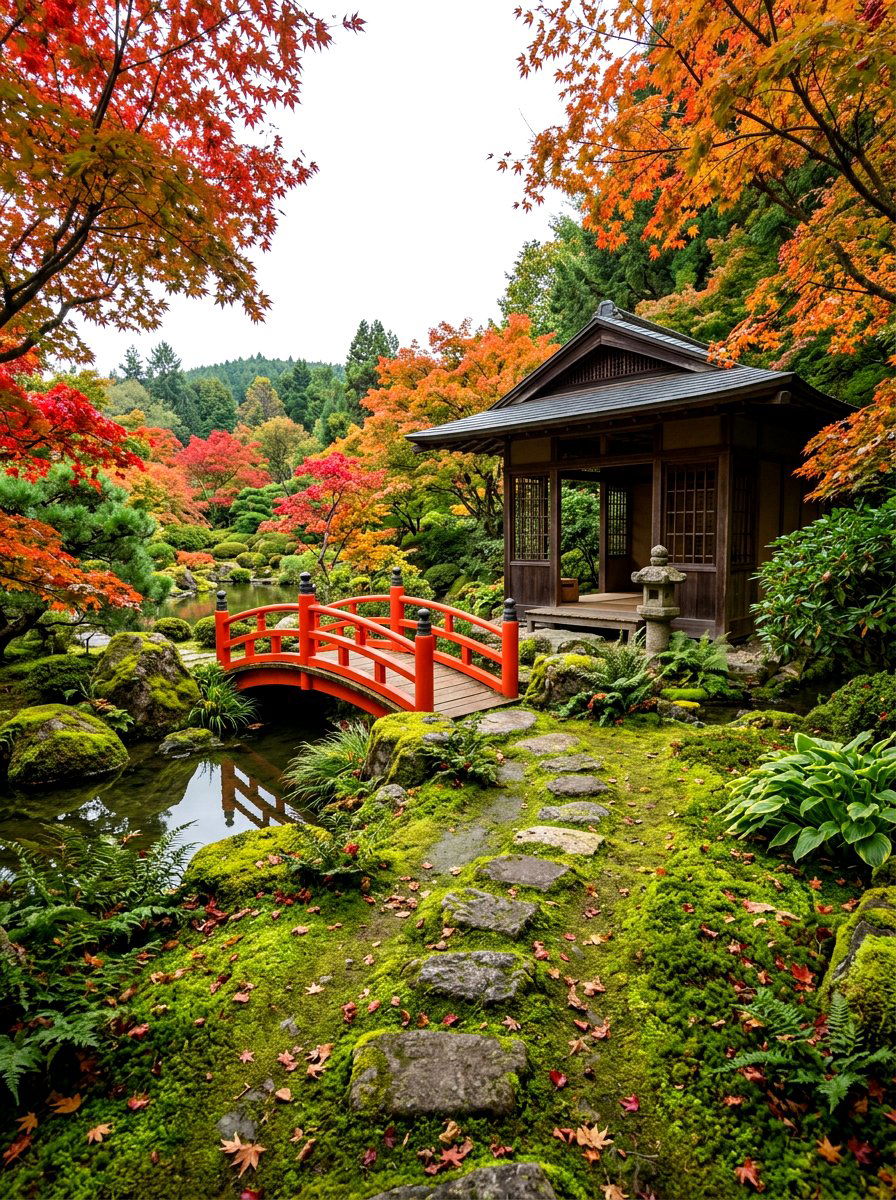
Can a garden help you find a sense of inner peace and quiet? A Japanese style gazebo garden focuses on balance, using elements like moss, stones, and carefully pruned azaleas or maples. Instead of flashy colors, this design emphasizes different shades of green and the textures of natural materials. You might place the gazebo near a small pond or a bed of raked gravel to enhance the Zen atmosphere. Simple white flowering shrubs like camellias can provide a delicate accent without overwhelming the senses. This environment encourages meditation and reflection, making your gazebo a true sanctuary away from the noise and busyness of daily life.
7. Victorian gazebo flower garden
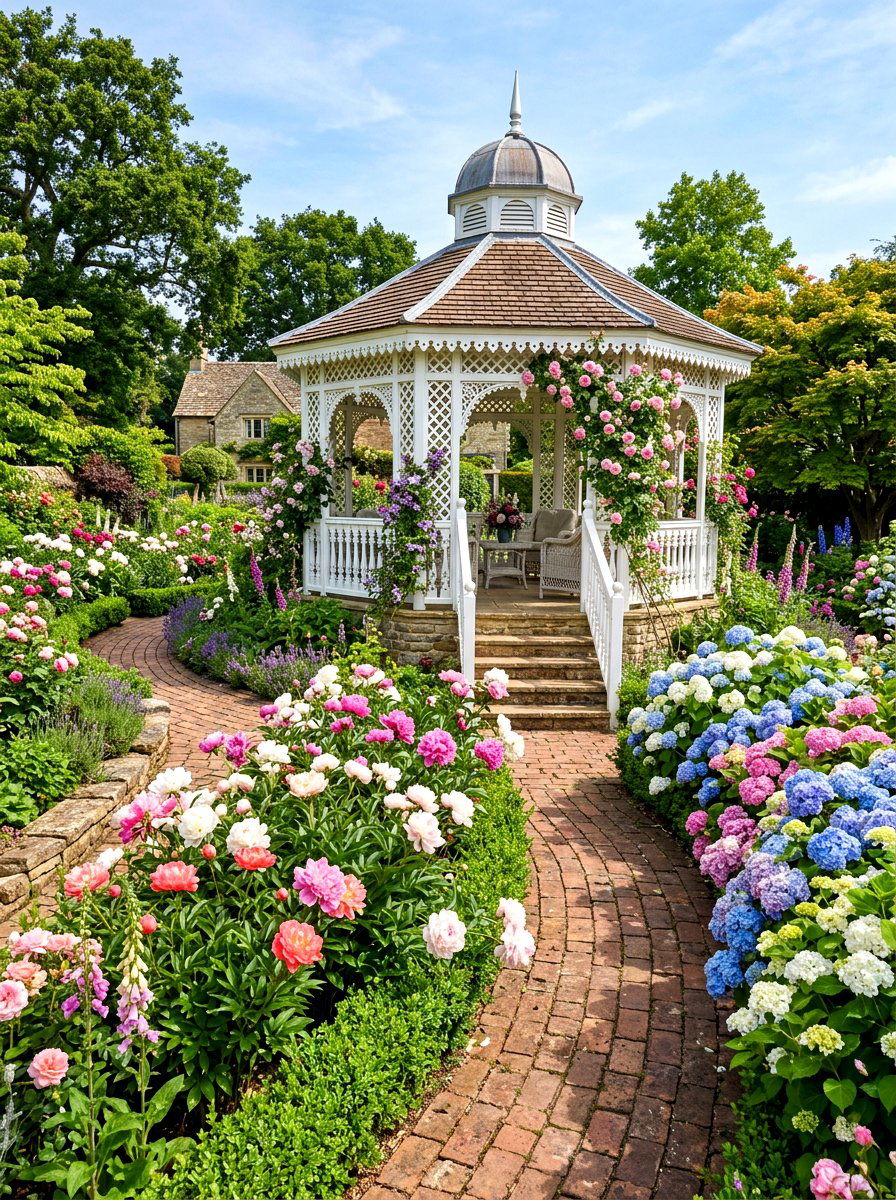
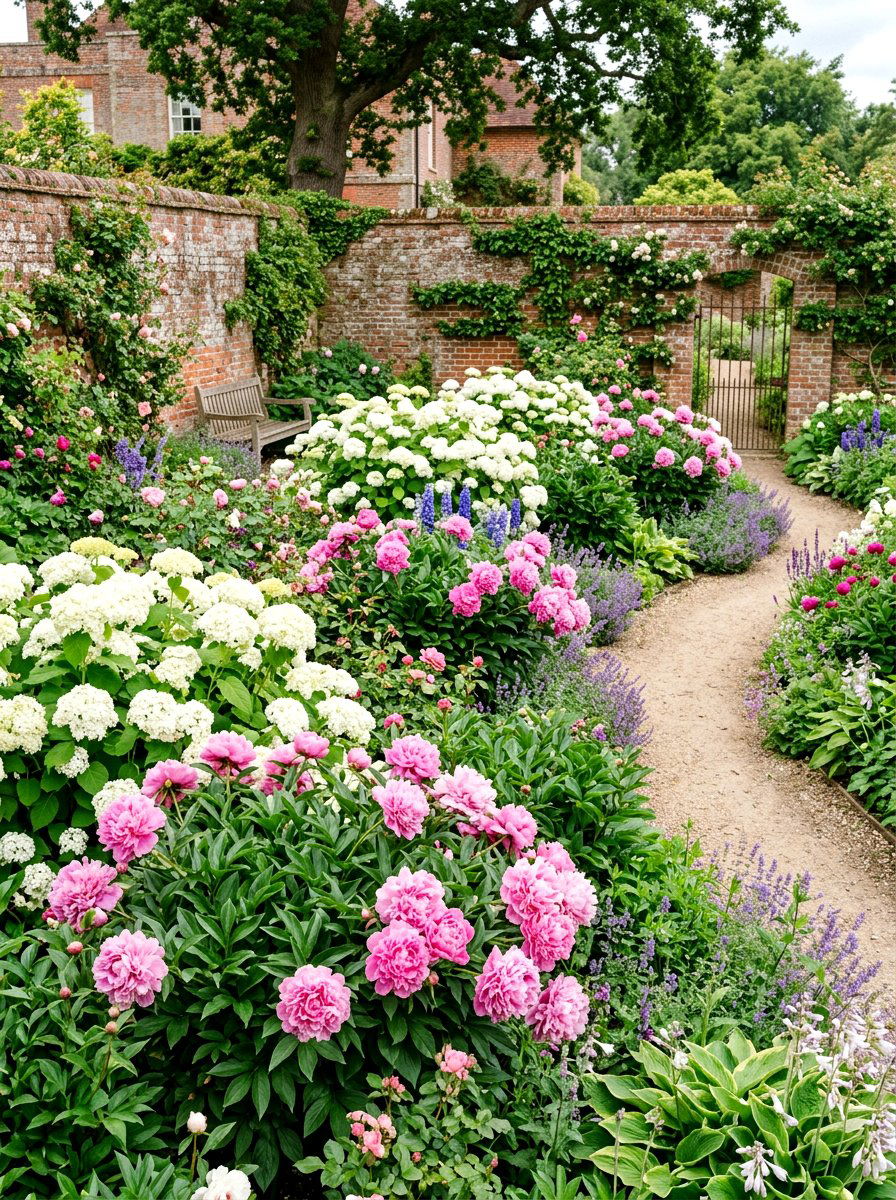
Do you appreciate the intricate details and formal elegance of historical eras? A Victorian gazebo flower garden often features ornate latticework on the structure, surrounded by highly organized and colorful flower beds. You should consider using classic blooms like peonies, hydrangeas, and sweet peas to fill the space with old-world charm. Symmetrical paths made of gravel or brick often lead to the gazebo, framed by low hedges or ornate iron fencing. The goal is to create a sense of grandeur and refinement. This style is perfect for hosting formal garden parties or simply enjoying a quiet afternoon in a space that feels timelessly sophisticated.
8. Wisteria gazebo garden
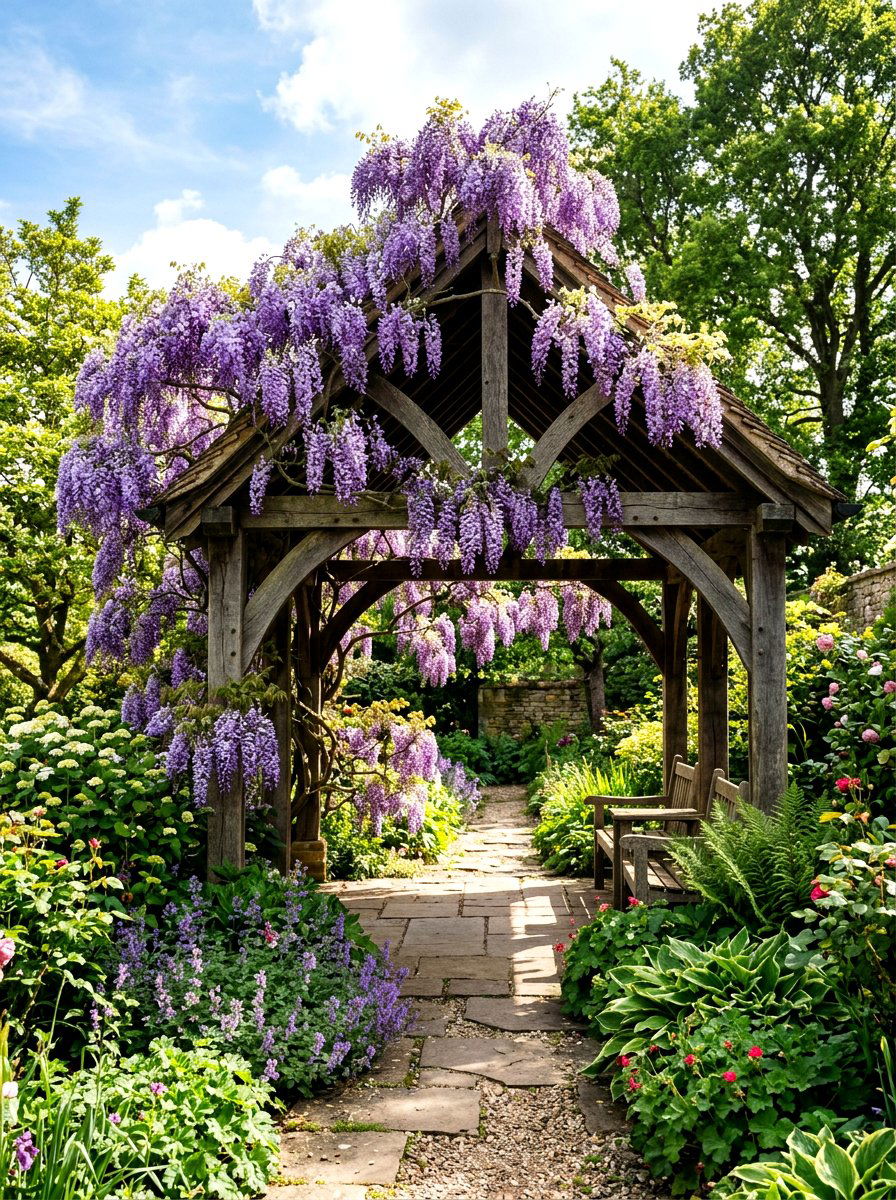
Would you like to sit under a waterfall of fragrant purple flowers? Wisteria is a powerful and fast-growing vine that can completely transform a gazebo into a living, breathing floral roof. In late spring, the long racemes of purple or white blossoms hang down, creating a natural ceiling that smells absolutely divine. Because wisteria is heavy, you need a very sturdy gazebo structure to support its growth over the years. This plant creates a thick, leafy canopy in the summer, providing deep shade and a sense of total seclusion. It is one of the most dramatic ways to integrate a structure into your garden landscape.
9. Mediterranean gazebo plant garden
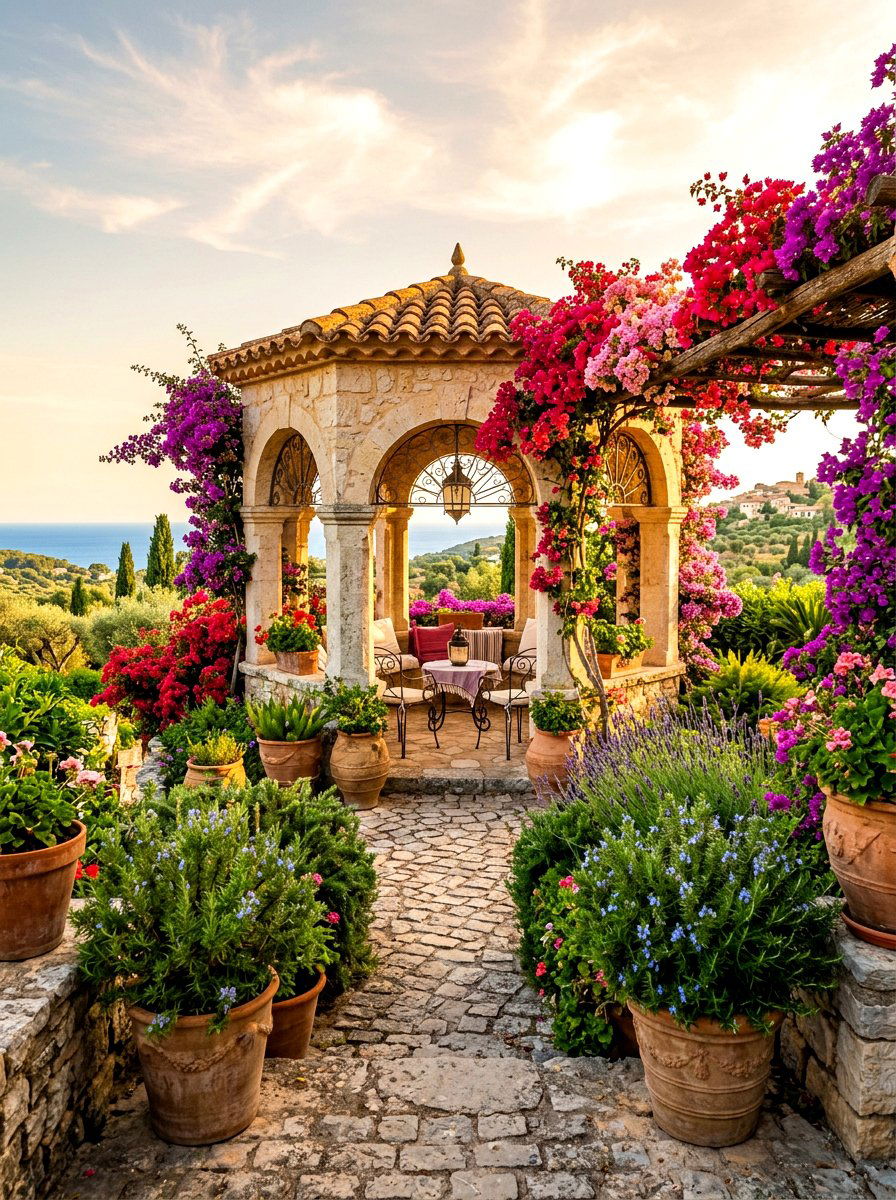
Do you want your backyard to feel like a sun-drenched villa in Italy or Greece? A Mediterranean gazebo plant garden uses heat-tolerant species like bougainvillea, rosemary, and olive trees to create a warm, inviting atmosphere. Terra cotta pots filled with geraniums can be placed on the gazebo steps to add pops of bright red or pink. Using light-colored gravel and stone pathways helps reflect the sun and keeps the area feeling bright and open. This style of garden is excellent for those who live in drier climates or want a look that feels rugged yet romantic. It’s a perfect spot for sunset dinners and drinks.
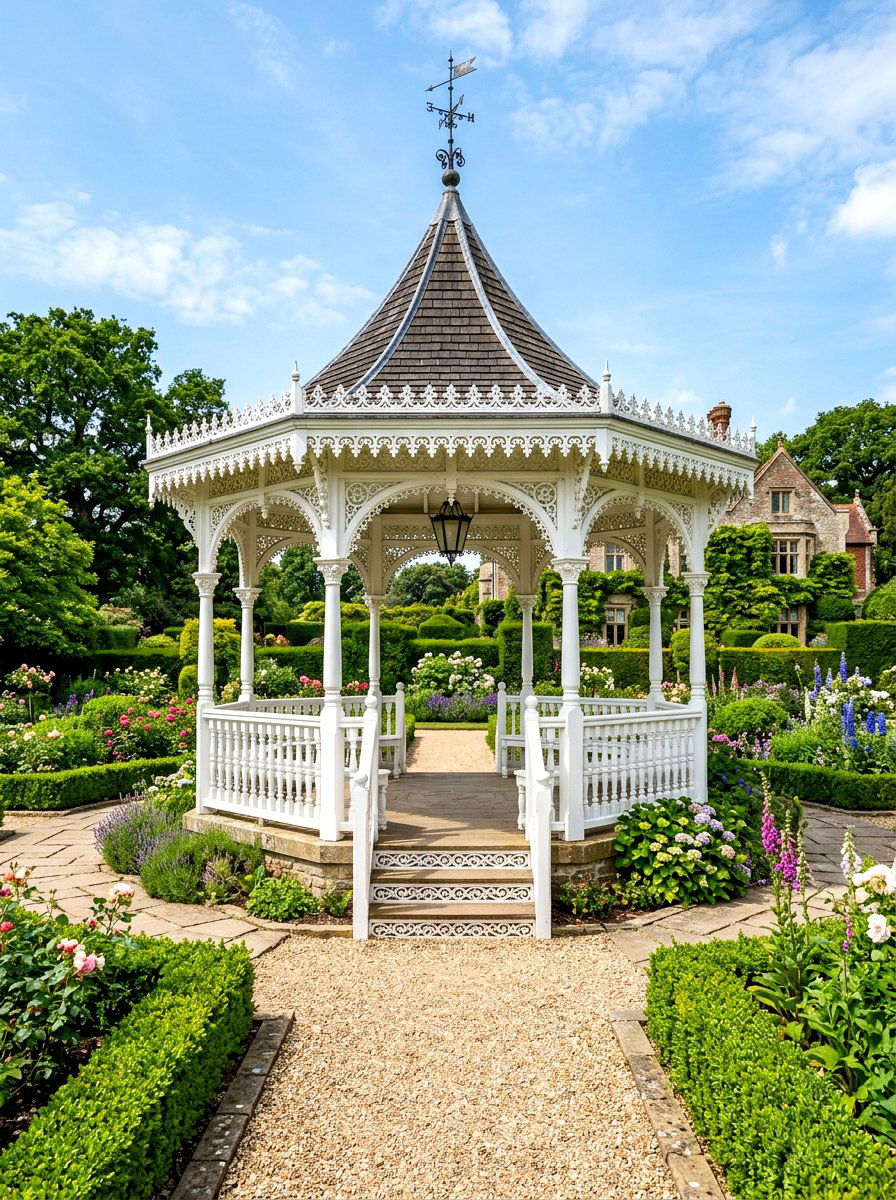
10. Wildflower gazebo garden landscape
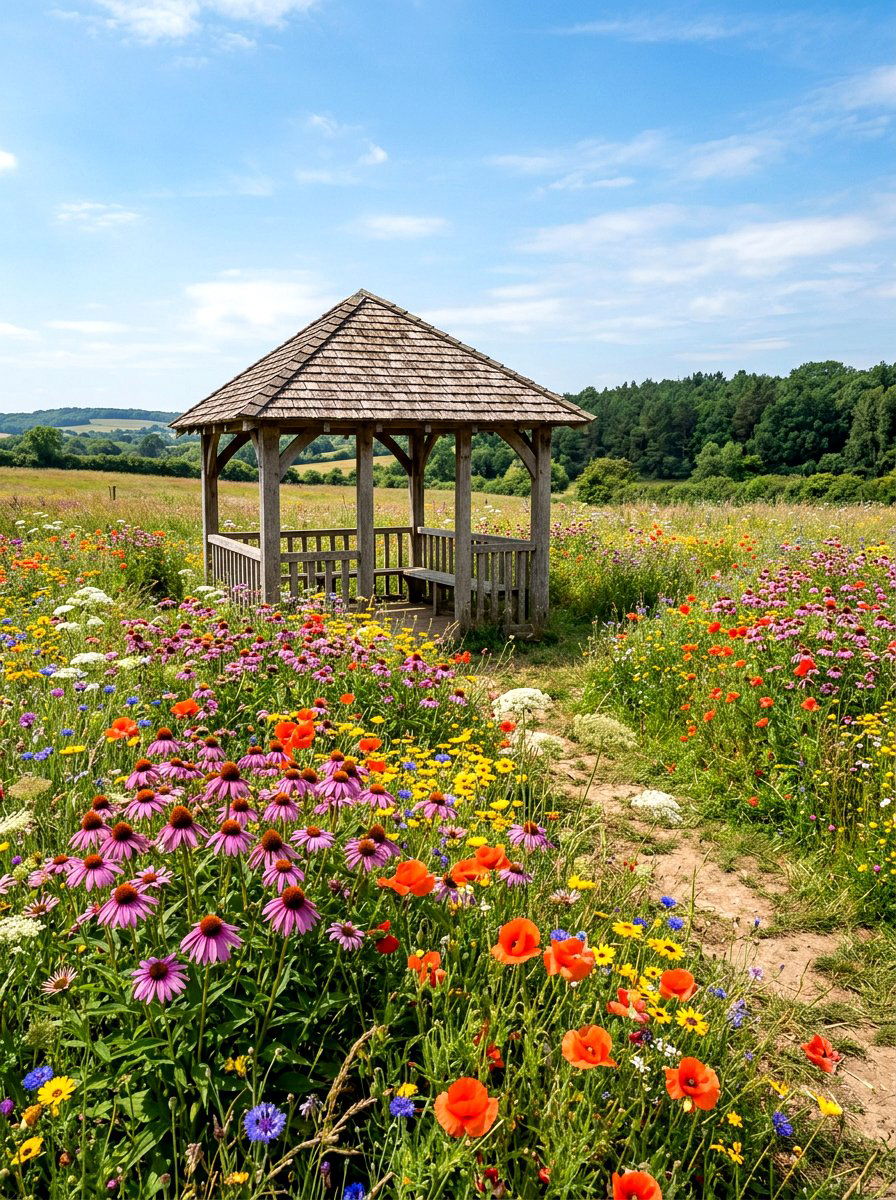
Have you ever wanted to capture the beauty of a natural meadow in your own yard? A wildflower garden around your gazebo is a low-maintenance and eco-friendly option that looks stunning throughout the seasons. By sowing a mix of native seeds like coreopsis, coneflowers, and poppies, you create a vibrant and changing tapestry of color. This style of landscaping doesn’t require perfect lines or constant weeding. Instead, it embraces a wild, organic look that supports local wildlife and pollinators. Sitting in your gazebo surrounded by swaying wildflowers makes you feel deeply connected to nature and provides a relaxing, informal atmosphere for everyone.
11. Hydrangea gazebo garden path
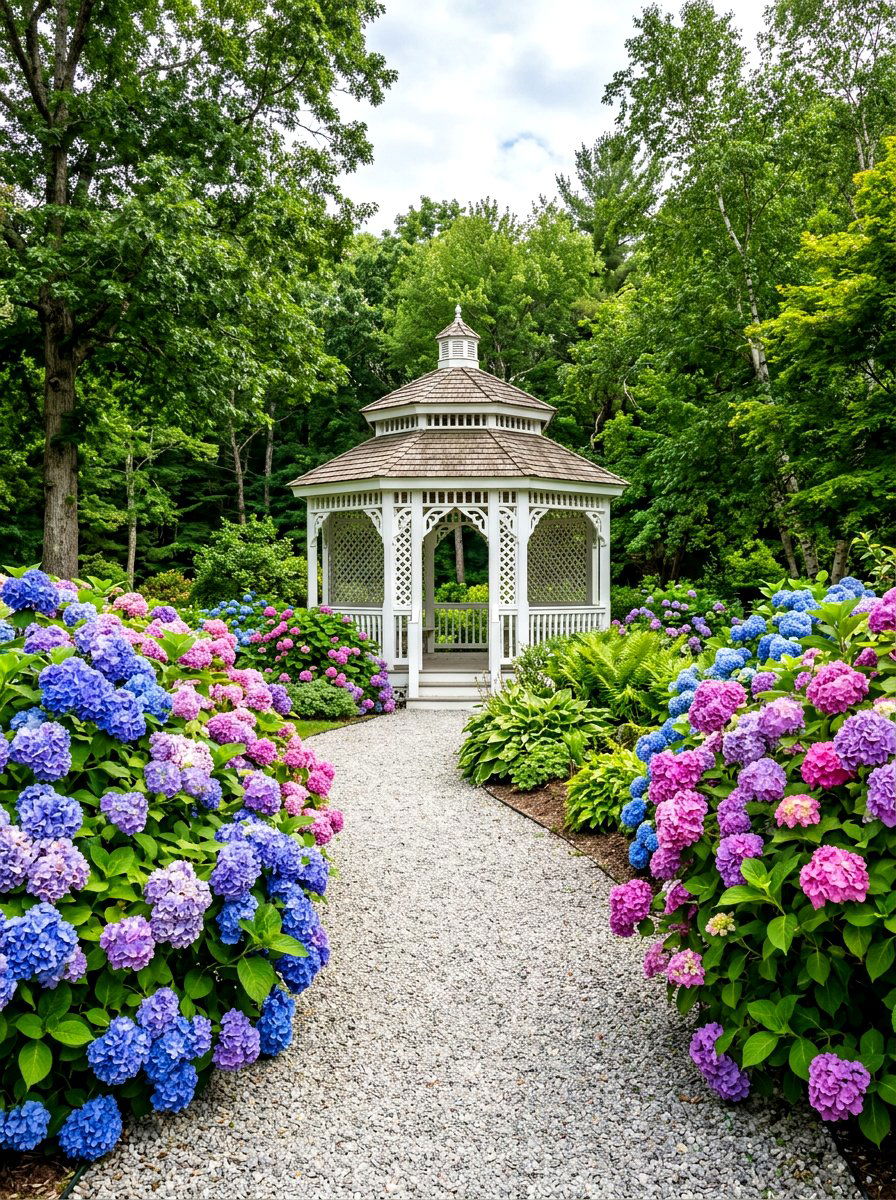
Is there anything more welcoming than a path lined with giant, fluffy blue and pink blooms? Planting hydrangeas along the walkway leading to your gazebo creates a grand and colorful entrance. These shrubs provide thick foliage and massive flower heads that last for months, changing colors as the season progresses. Depending on your soil's acidity, you can enjoy shades ranging from deep indigo to soft blush. The large leaves of the hydrangea also help to ground the gazebo, making it feel like it belongs naturally in the landscape. This design is particularly effective in partially shaded areas where other flowering plants might struggle to thrive.
12. Hanging basket gazebo garden
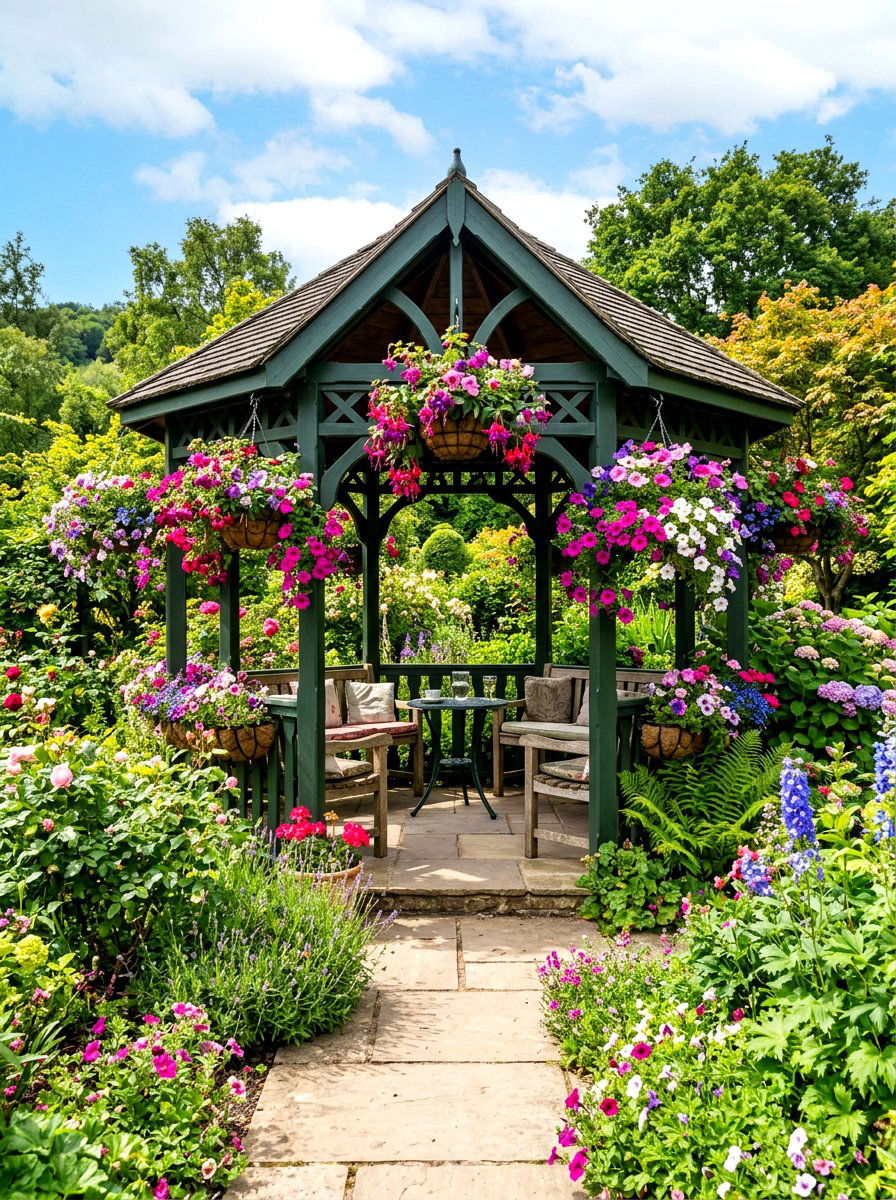
What if you could surround yourself with flowers at eye level while you relax? Utilizing hanging baskets inside and around the eaves of your gazebo is a fantastic way to add vertical color. You can fill these baskets with cascading plants like petunias, fuchsias, and trailing lobelia to create a lush, hanging garden. This approach allows you to change your floral display every season without any digging or permanent planting. It also keeps the floor of the gazebo clear for furniture and movement. The sight of vibrant flowers dangling just overhead makes the interior of the gazebo feel more intimate, colorful, and festive for any occasion.
13. Shade plant gazebo garden
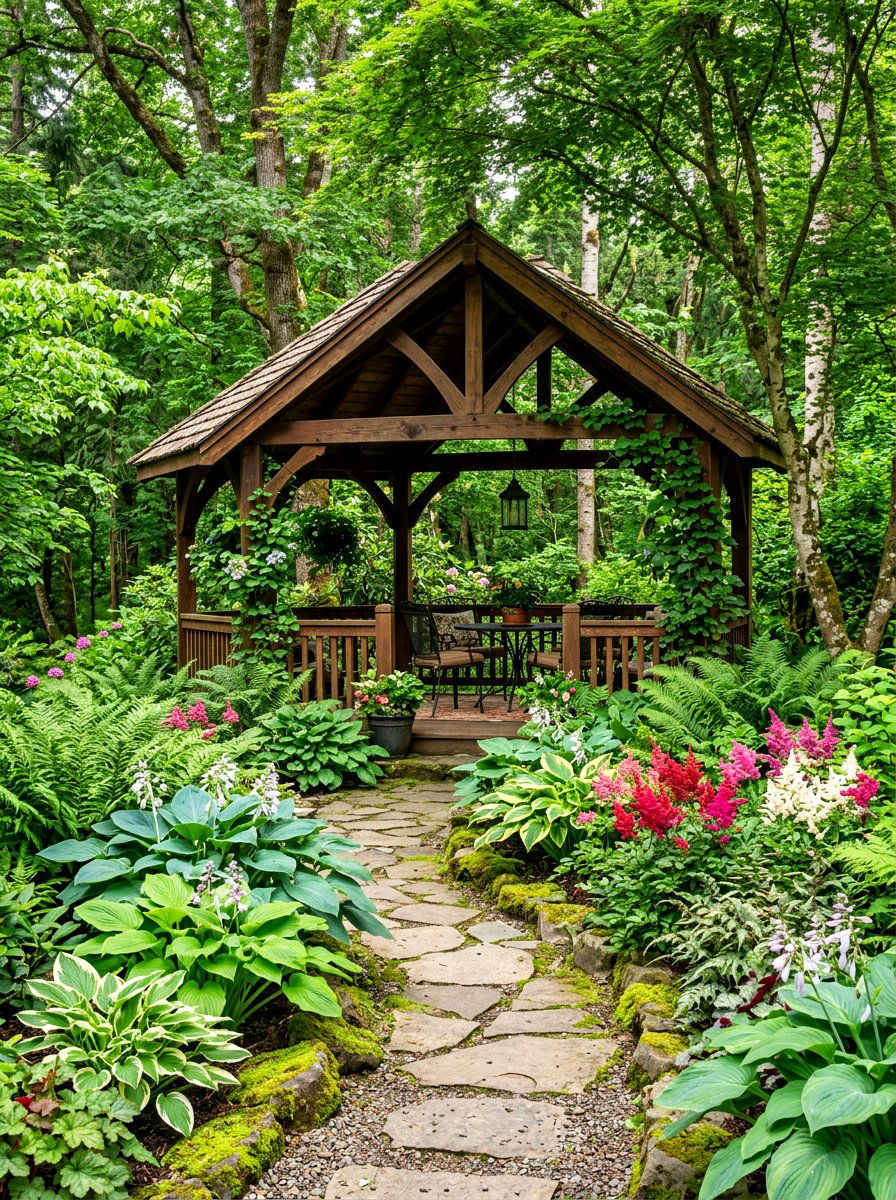
Do you have a corner of your yard that doesn't get much sun? A shade plant gazebo garden turns a dark area into a lush, cool retreat using plants that love low light. Focus on hostas with their large, variegated leaves, delicate ferns, and colorful astilbes to add texture and depth. Bleeding hearts and impatiens can provide soft pops of color among the various shades of green. This type of garden feels naturally cooler and more serene, making it the perfect escape on a scorching summer afternoon. The dense, layered foliage creates a woodland feel that makes your gazebo look like a hidden forest hideaway.
14. Boxwood gazebo garden border
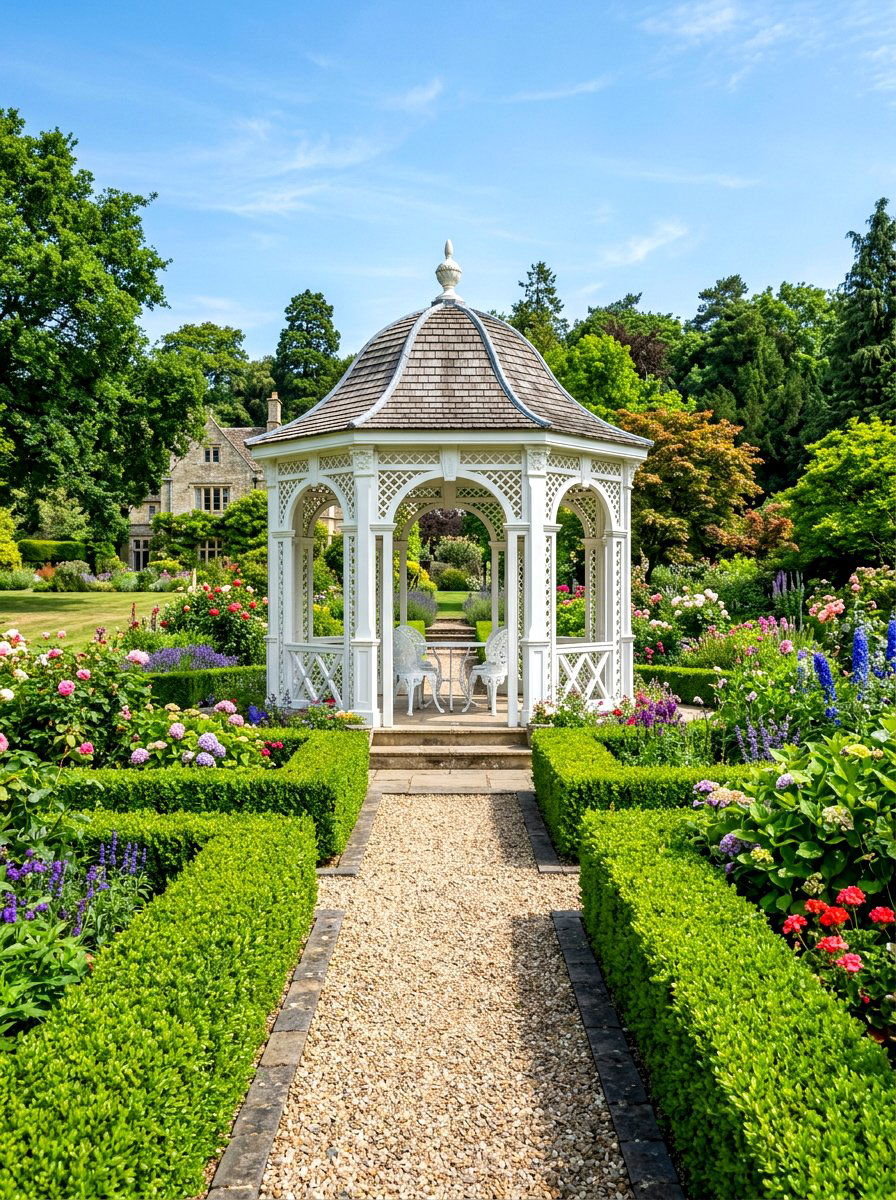
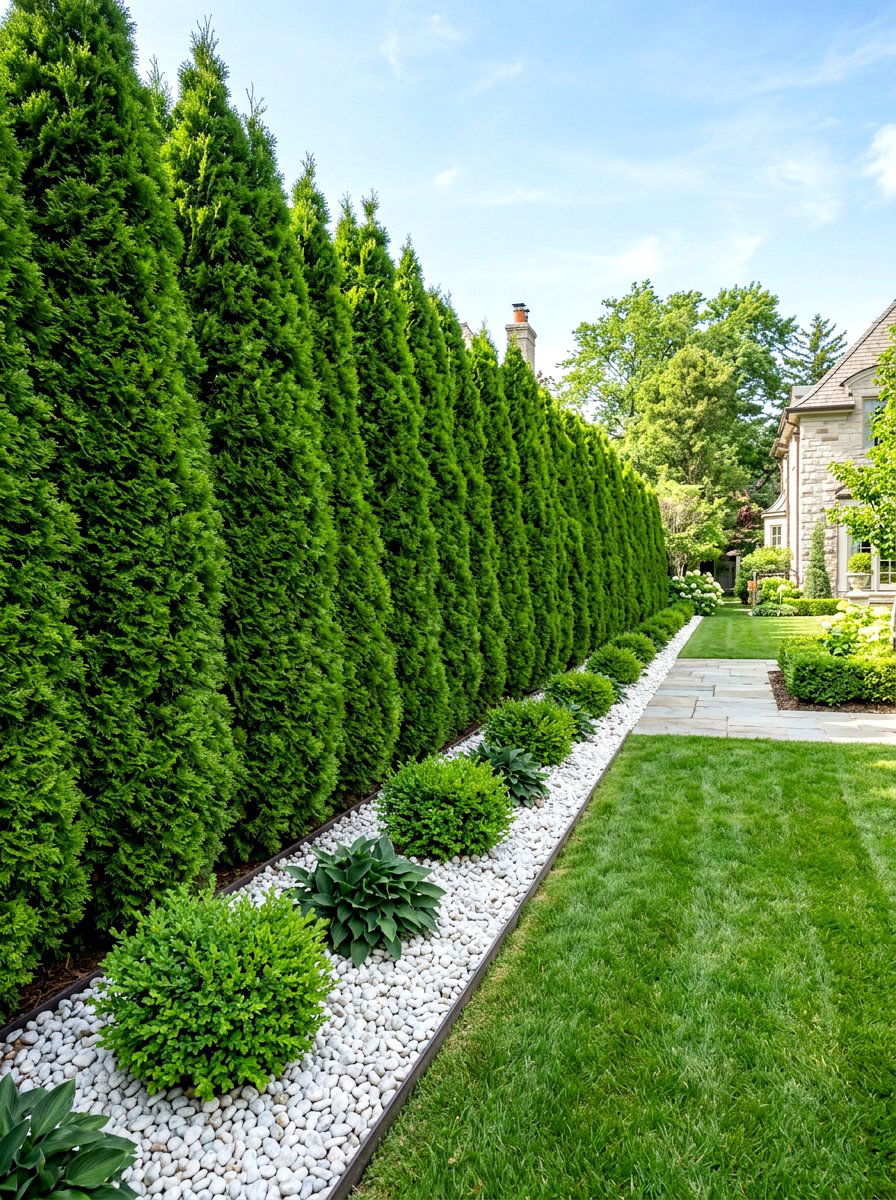
Are you looking for a way to give your gazebo a clean and polished appearance? A low border of boxwood hedges around the perimeter of the structure provides a classic and structured look. These evergreens can be trimmed into neat, geometric shapes to frame the gazebo and separate it from the rest of the lawn. Inside the boxwood border, you can plant seasonal flowers to add temporary color throughout the year. The constant green of the boxwood ensures that the area looks tidy and well-maintained even during the winter months. This design works exceptionally well for traditional or formal home styles that value order and symmetry.
15. Rustic gazebo garden flowers
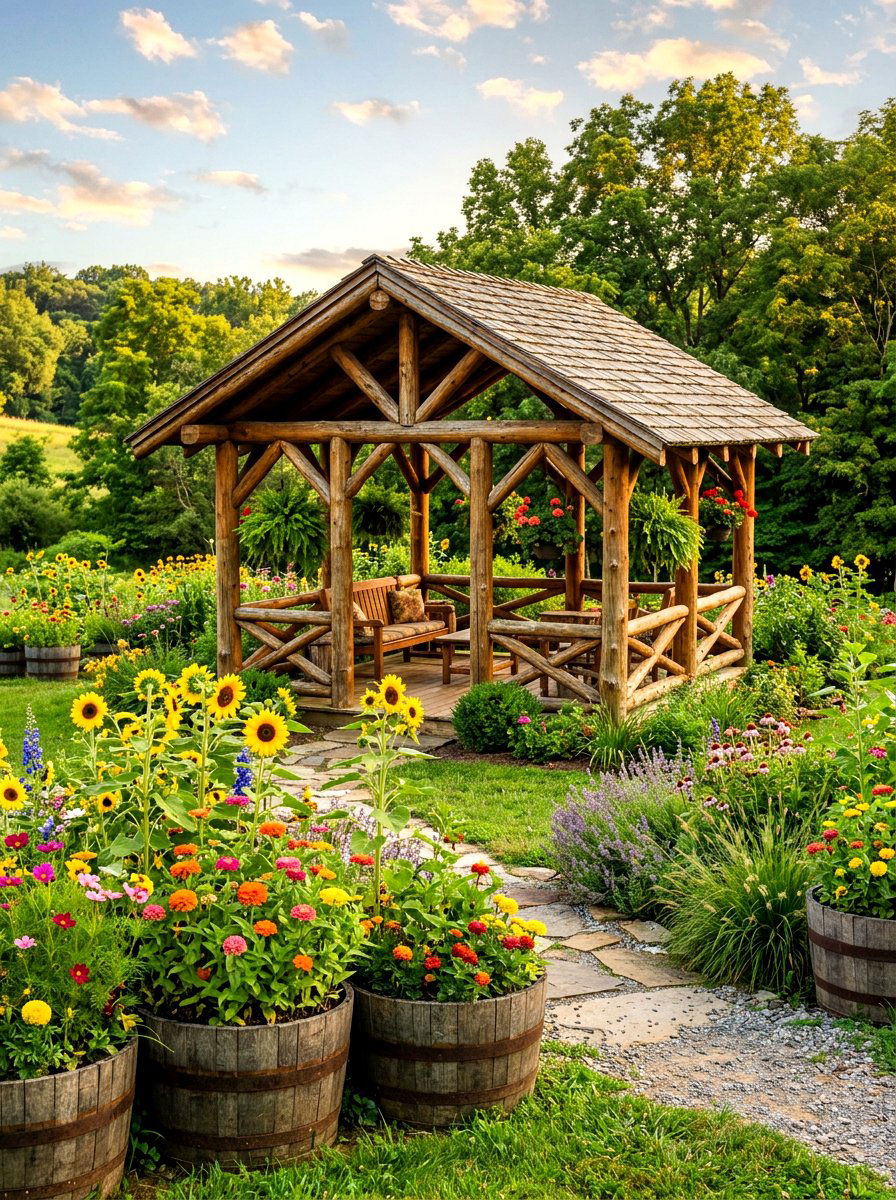
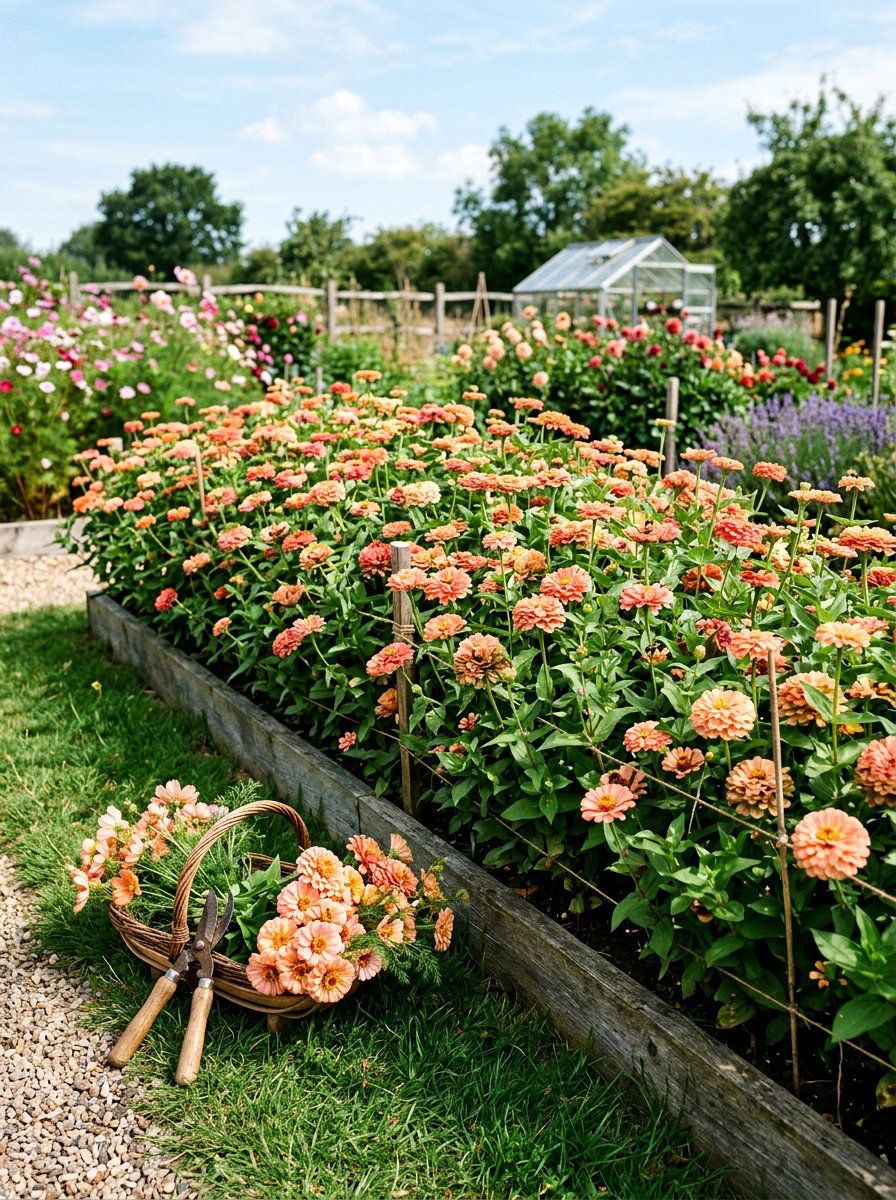
Does your heart belong to the simple and rugged beauty of the countryside? A rustic gazebo garden uses natural materials like cedar logs or reclaimed wood, paired with hardy, traditional flowers. Think of sunflowers, black-eyed Susans, and zinnias planted in clusters to create a cheerful and unpretentious environment. You might even incorporate vintage items like old metal watering cans or wooden barrels as planters to enhance the theme. This style of gardening is meant to feel lived-in and comfortable, rather than perfect. It provides a warm and friendly space where family and friends can gather for a casual barbecue or a quiet morning coffee.
16. White flower gazebo garden
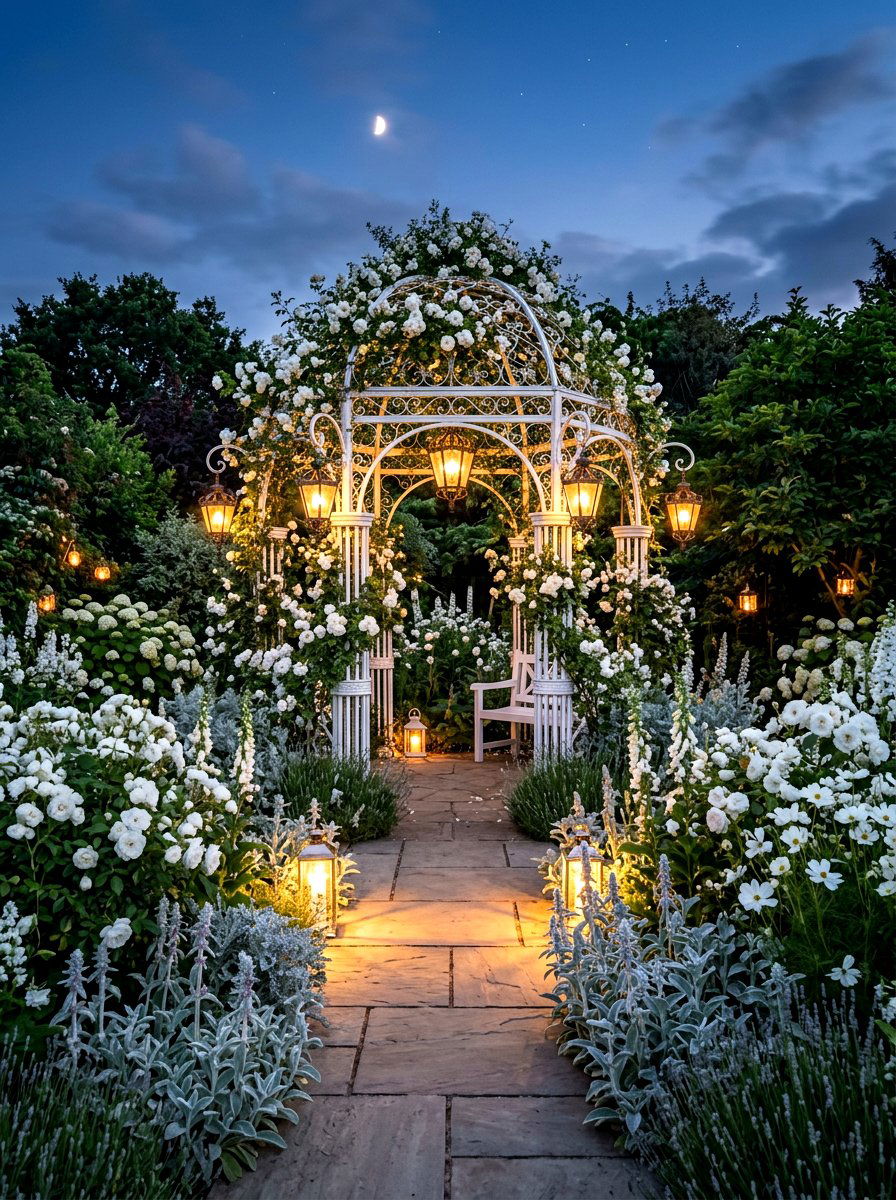
What if you could create a garden that glows beautifully even after the sun goes down? A white flower gazebo garden, often called a moon garden, focuses on plants with white blossoms and silver foliage. Flowers like white roses, lilies, and jasmine reflect the moonlight, making the garden look ethereal and magical in the evening. Silver plants like dusty miller or lamb’s ear add a soft, shimmering texture to the landscape. This design is perfect for homeowners who enjoy spending time in their gazebo at night. The lack of bright colors creates a sophisticated and calming atmosphere that is both elegant and deeply relaxing for late-night stargazing.
17. Red poppy gazebo garden
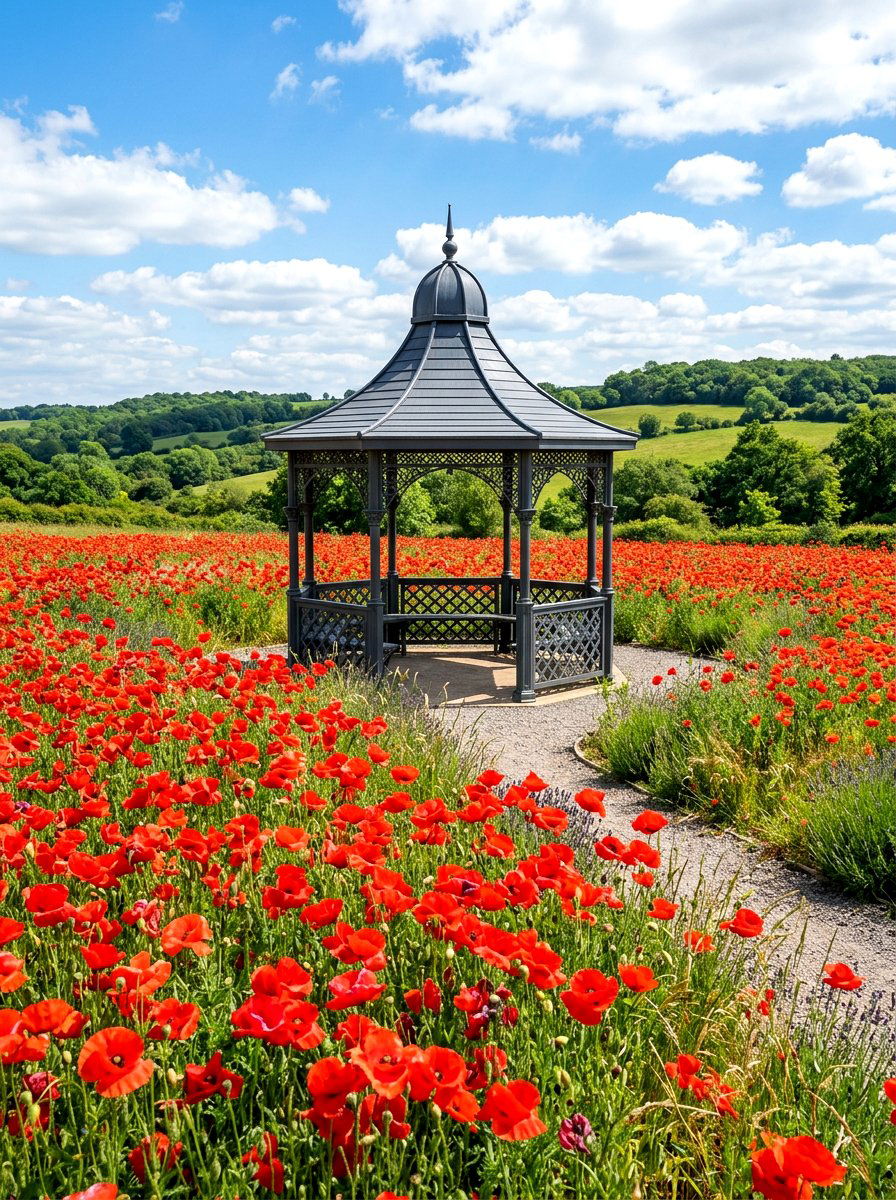
Are you a fan of bold, high-contrast colors that grab everyone's attention? Planting a sea of red poppies around your gazebo creates a dramatic and energetic focal point in your landscape. The bright red petals often have a delicate, papery texture that sways beautifully in the breeze. Poppies are generally easy to grow and can provide a massive burst of color in the late spring and early summer. To keep the area looking good after the poppies fade, you can interplant them with late-blooming perennials. This vibrant color scheme makes the gazebo look like a masterpiece set against a backdrop of green grass and blue sky.
18. Butterfly gazebo flower garden
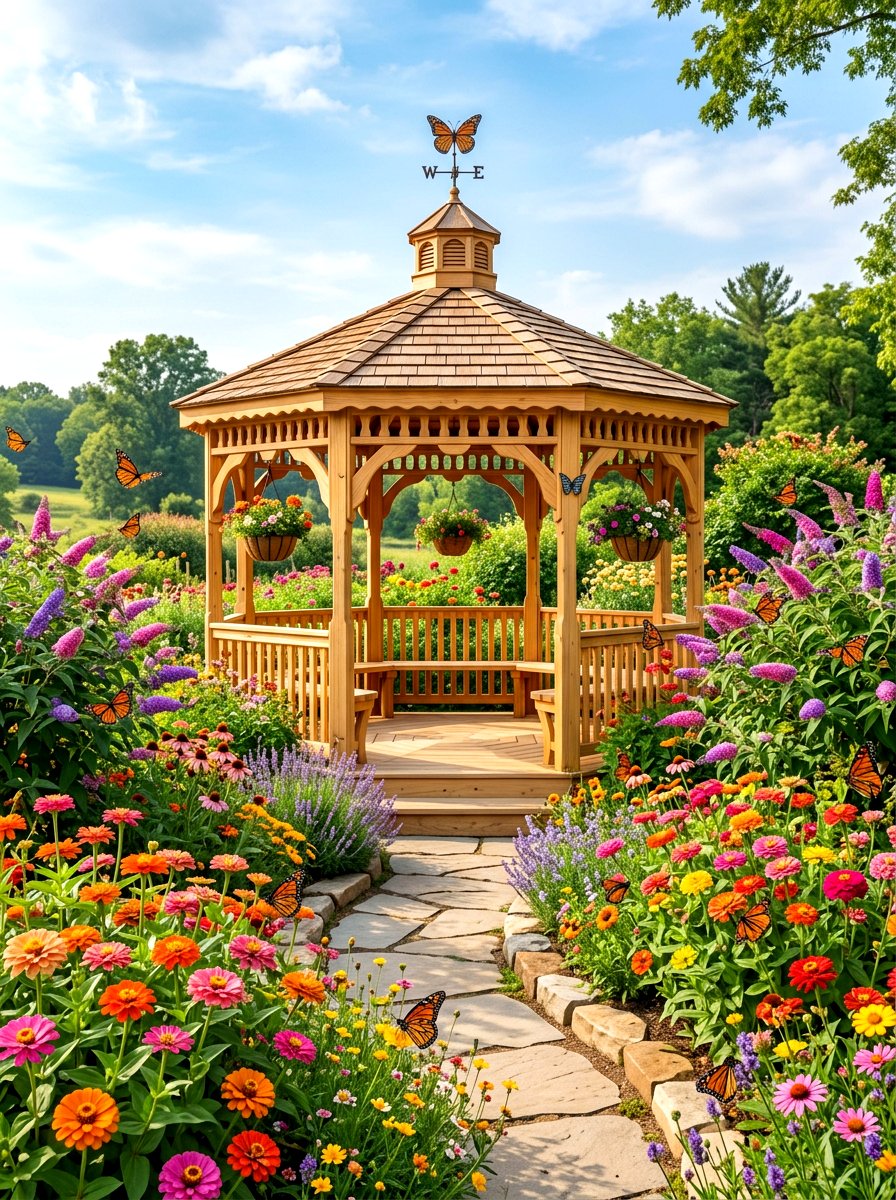
Would you like your outdoor space to be filled with the graceful movement of wings? A butterfly garden around your gazebo focuses on nectar-rich flowers that attract various species of butterflies and bees. Plants like butterfly bush, zinnia, and milkweed are essential for providing food and habitat for these beautiful creatures. Watching butterflies flutter among the blooms while you sit in the gazebo adds a layer of enchantment and life to your garden. This type of landscape is also educational and rewarding, as you are helping to support the local ecosystem. It creates a dynamic environment that changes every day as different visitors stop by.
19. Vertical gazebo garden wall
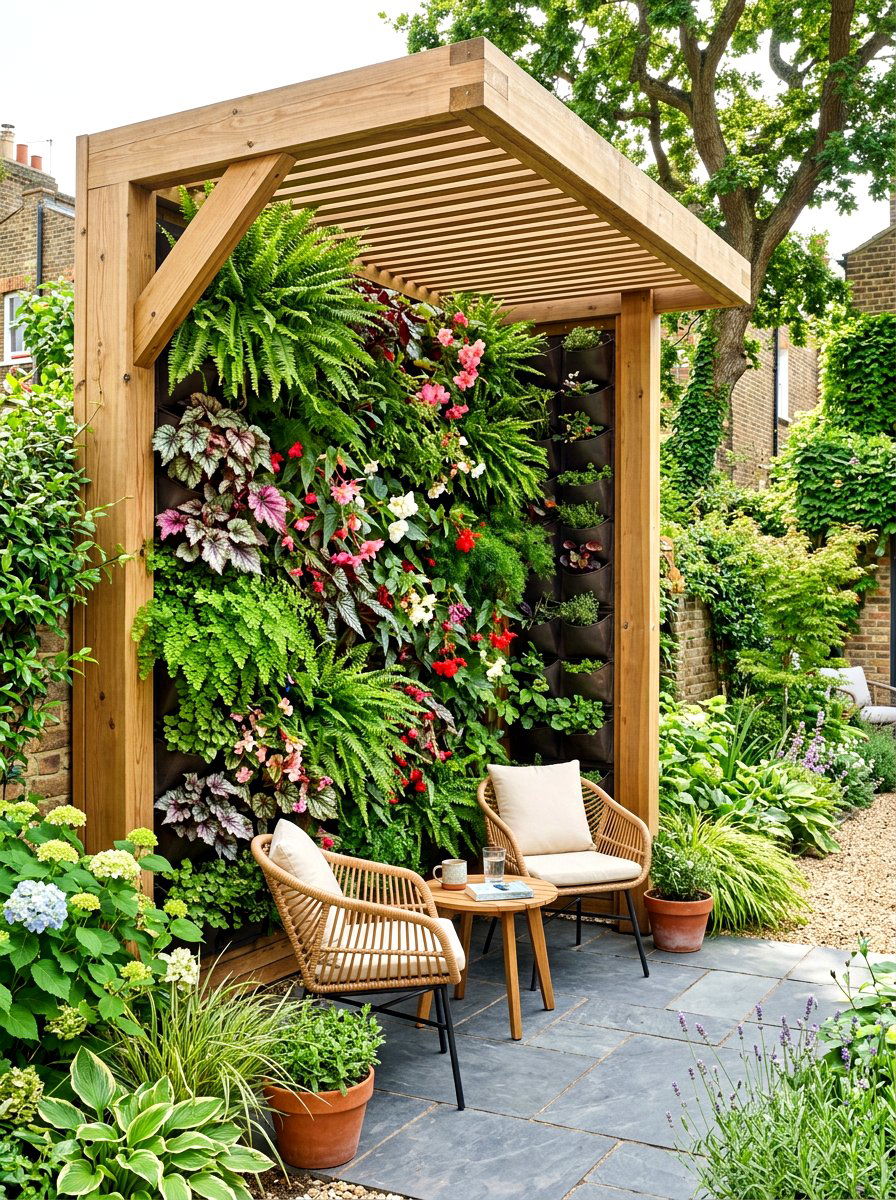
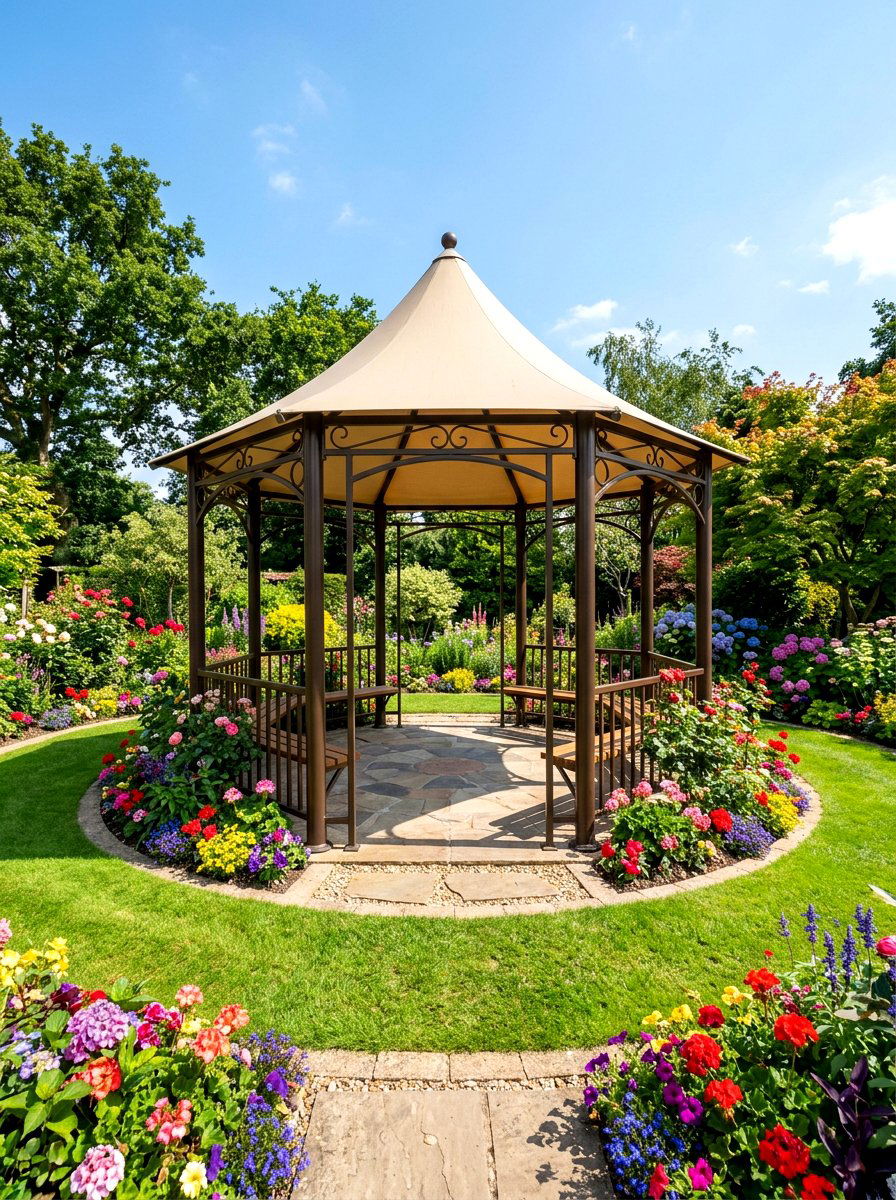
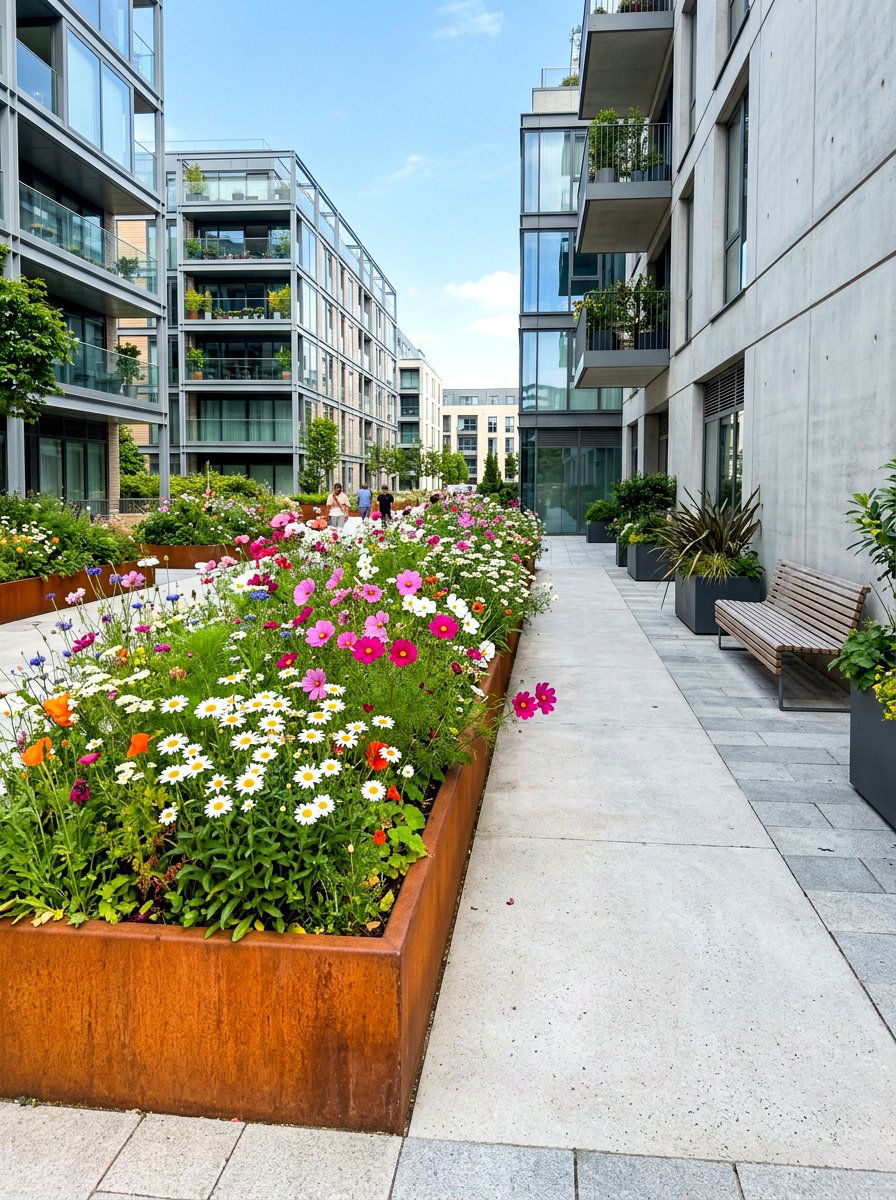
Do you have limited space but still want a lush, green environment? A vertical garden wall attached to one side of your gazebo is a brilliant way to incorporate plants without taking up floor space. You can use pocket planters or wooden trellises to grow a variety of herbs, ferns, or small flowering plants like begonias. This living wall provides an extra layer of privacy and acts as a natural windbreak or sunshade. It also adds a unique architectural element to the gazebo, making it look modern and innovative. Vertical gardens are easy to maintain and can be customized with different plants to suit your specific aesthetic.
20. Succulent gazebo garden landscaping
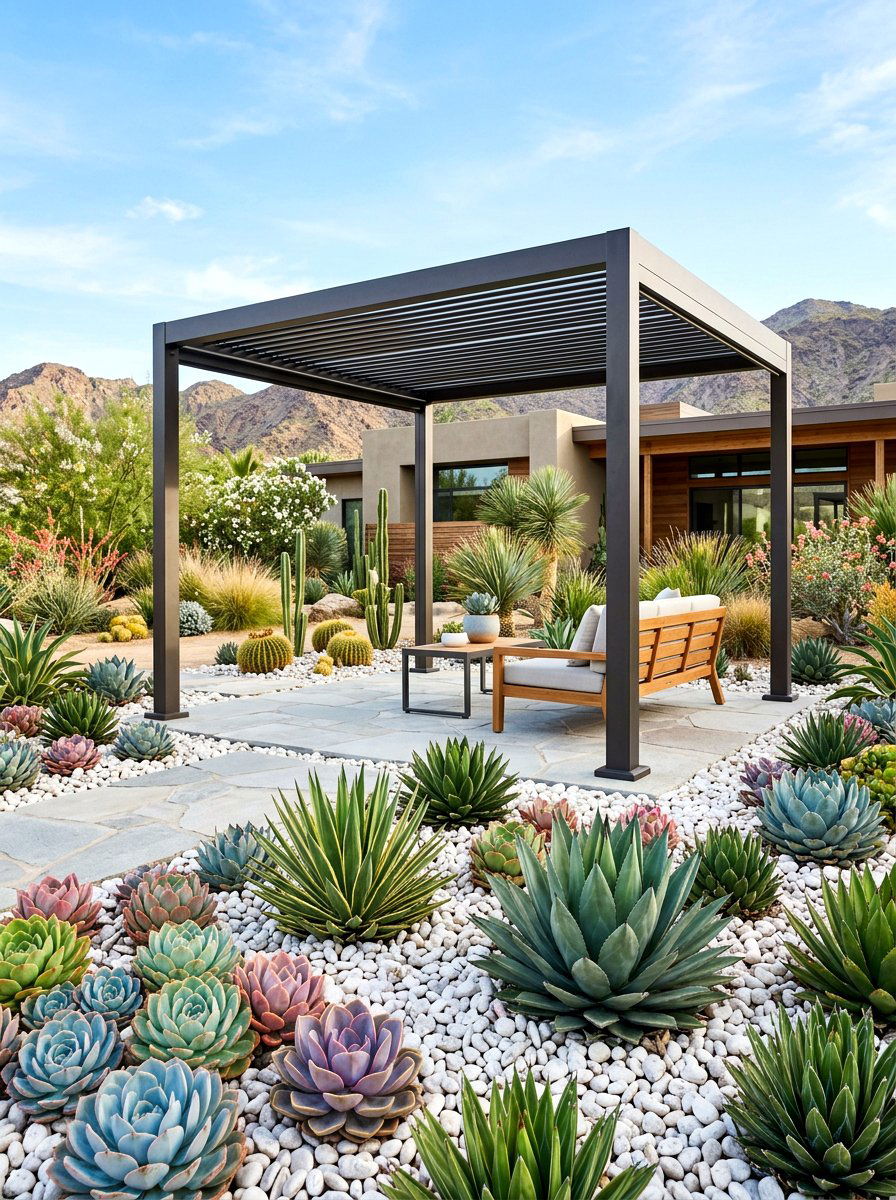
Are you looking for a garden that is both modern and incredibly easy to care for? Succulent landscaping around a gazebo is a great choice for dry climates or busy homeowners. Using a variety of echeverias, sedums, and aloes creates a low-profile garden with fascinating shapes and subtle colors. You can arrange these plants in a bed of decorative rocks or pebbles to enhance the clean, desert-inspired look. Succulents require very little water and stay looking fresh and plump all year long. This style of garden adds a unique, sculptural quality to the area, making your gazebo feel like a high-end, contemporary retreat in the middle of nature.
21. Night blooming gazebo garden
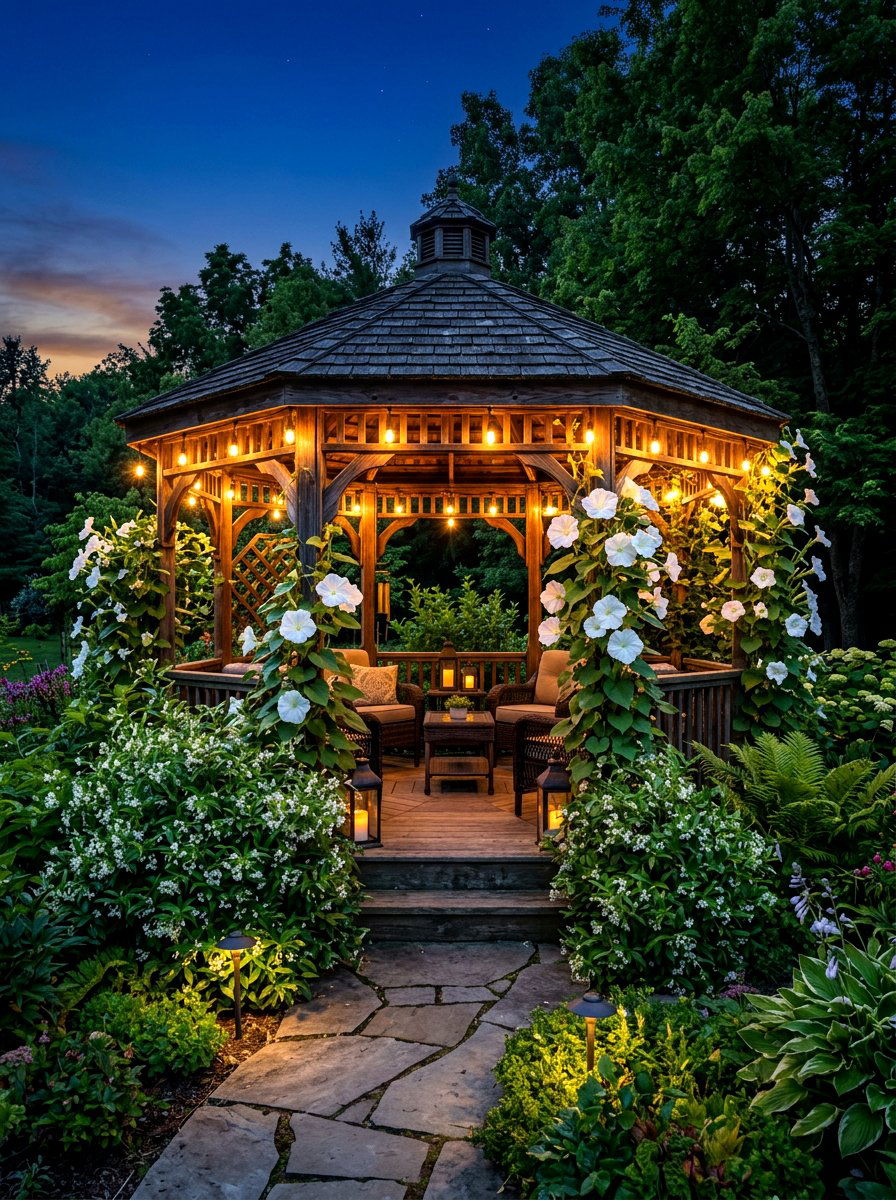
Have you ever considered how your garden looks and smells after dark? A night-blooming garden is specifically designed for evening enjoyment, featuring flowers that open their petals and release their fragrance at sunset. Plants like moonflowers, night-blooming jasmine, and evening primrose are perfect for this concept. As the world quiets down, these flowers fill the air around your gazebo with intoxicating scents. The white or pale yellow blooms are easily visible in low light, creating a mysterious and romantic atmosphere. This is the ultimate design for those who love to host evening dinner parties or enjoy a peaceful moment alone under the stars after a long day.
22. Tulip gazebo garden bed
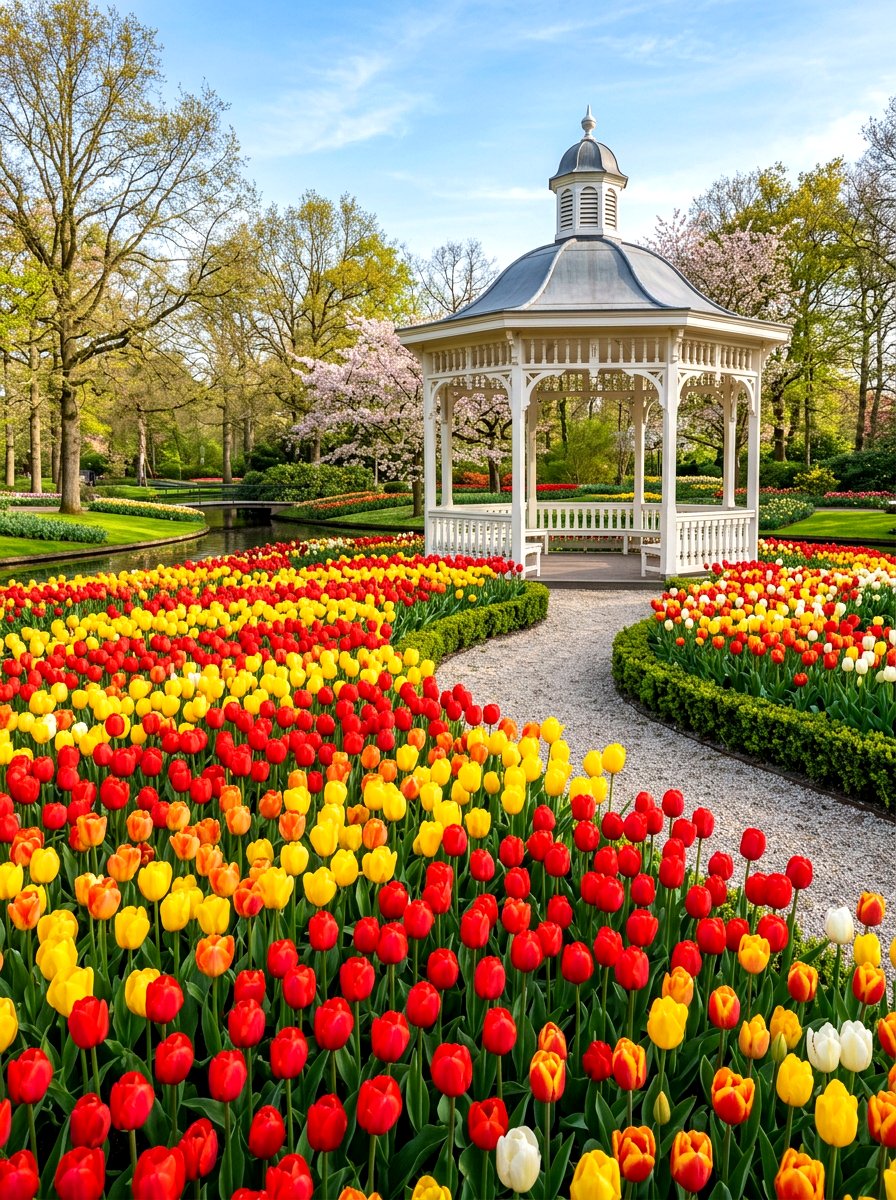
Is there anything more cheerful than the first bright colors of spring? Planting a dense bed of tulips around the base of your gazebo ensures a spectacular display of color as soon as the weather warms up. You can choose a single color for a formal look or a multi-colored mix for a fun and vibrant appearance. Tulips stand tall and proud, creating a neat and organized border that frames the structure beautifully. Once the tulips have finished blooming, you can easily plant summer annuals in the same space to keep the color going all season long. It’s a wonderful way to celebrate the return of the sun.
23. Sunflower gazebo garden landscape
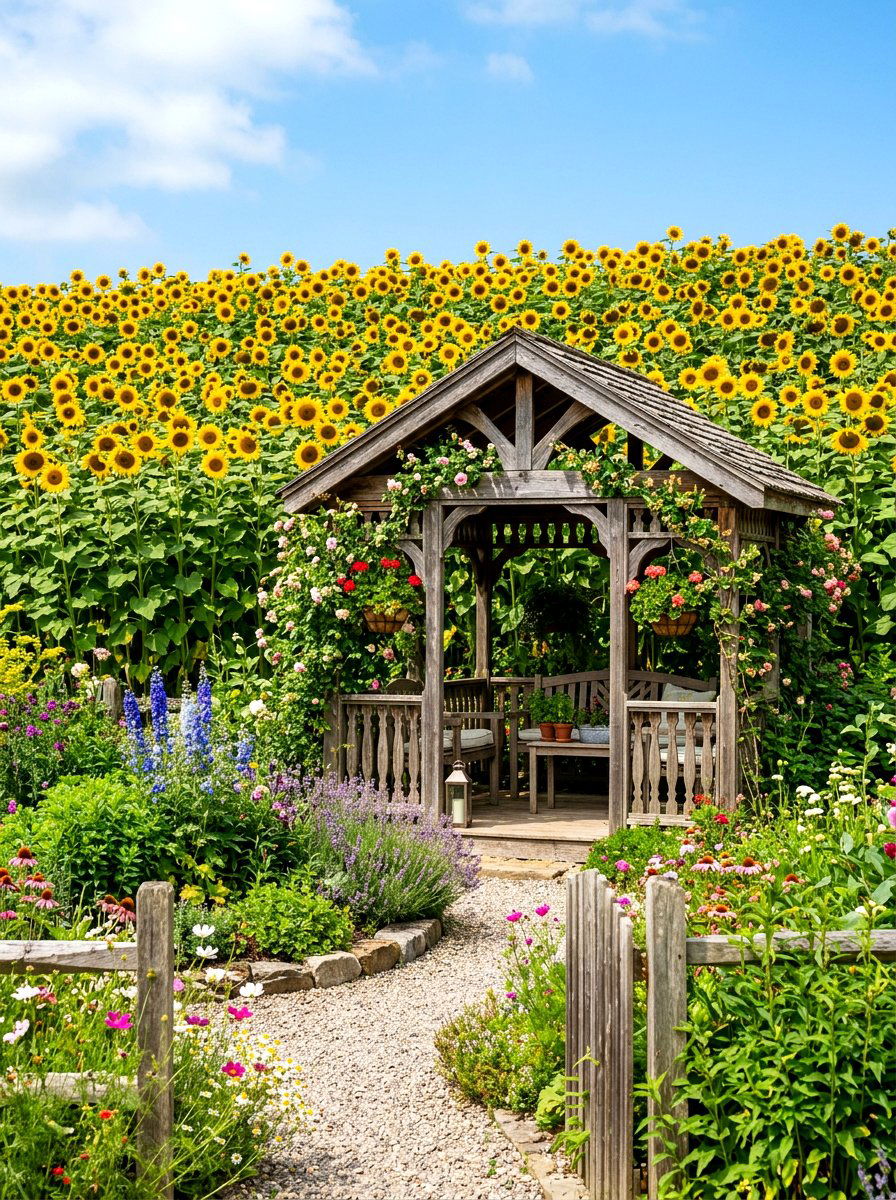
Do you want to add a sense of height and happiness to your backyard? Sunflowers are the ultimate "happy" flower, and planting them in tall rows behind or around your gazebo creates a stunning natural fence. These giants can grow several feet tall, providing a sense of scale and drama to the landscape. They also attract birds and beneficial insects, making your garden a hub of activity. The bright yellow faces of the flowers turn to follow the sun, creating a dynamic and ever-changing view from inside the gazebo. This design is perfect for a rustic or farmhouse-style home where a bit of wild beauty is always welcome.
24. Stone path gazebo garden
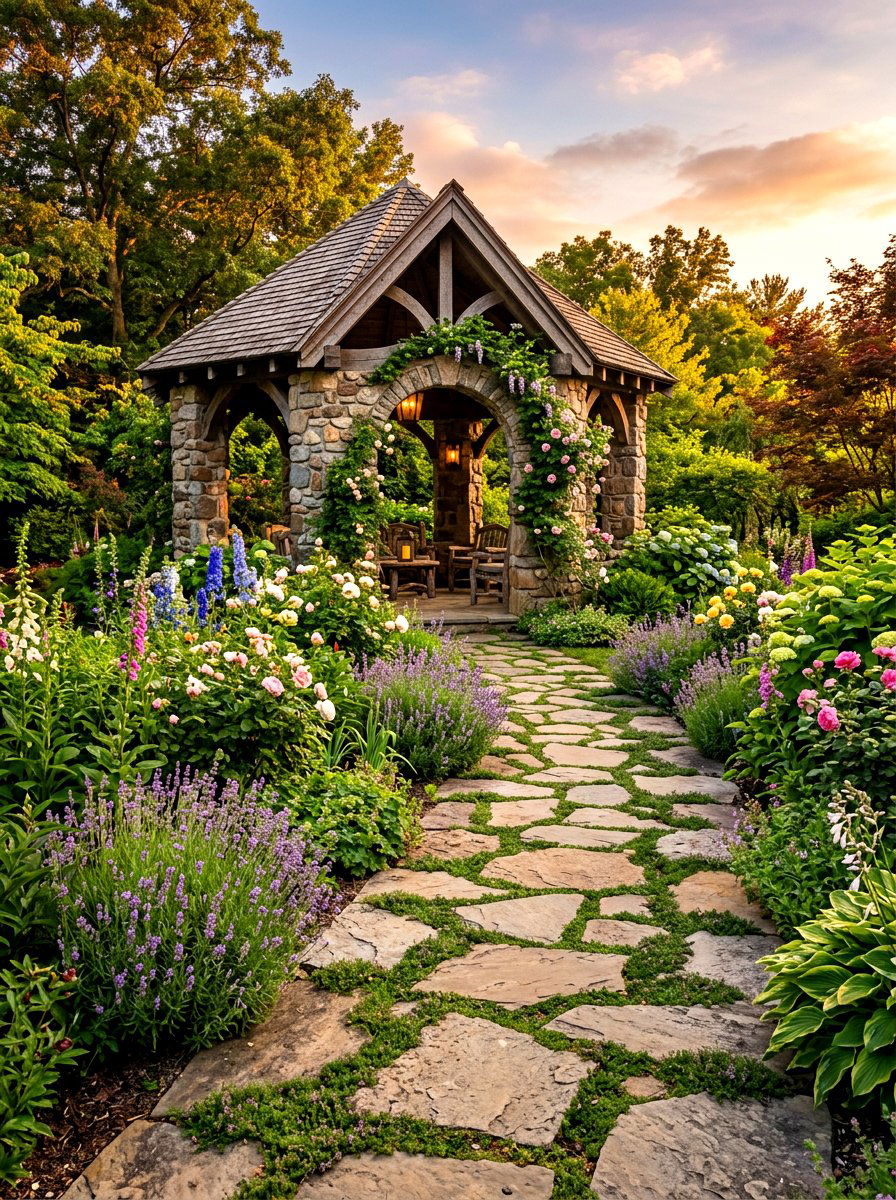
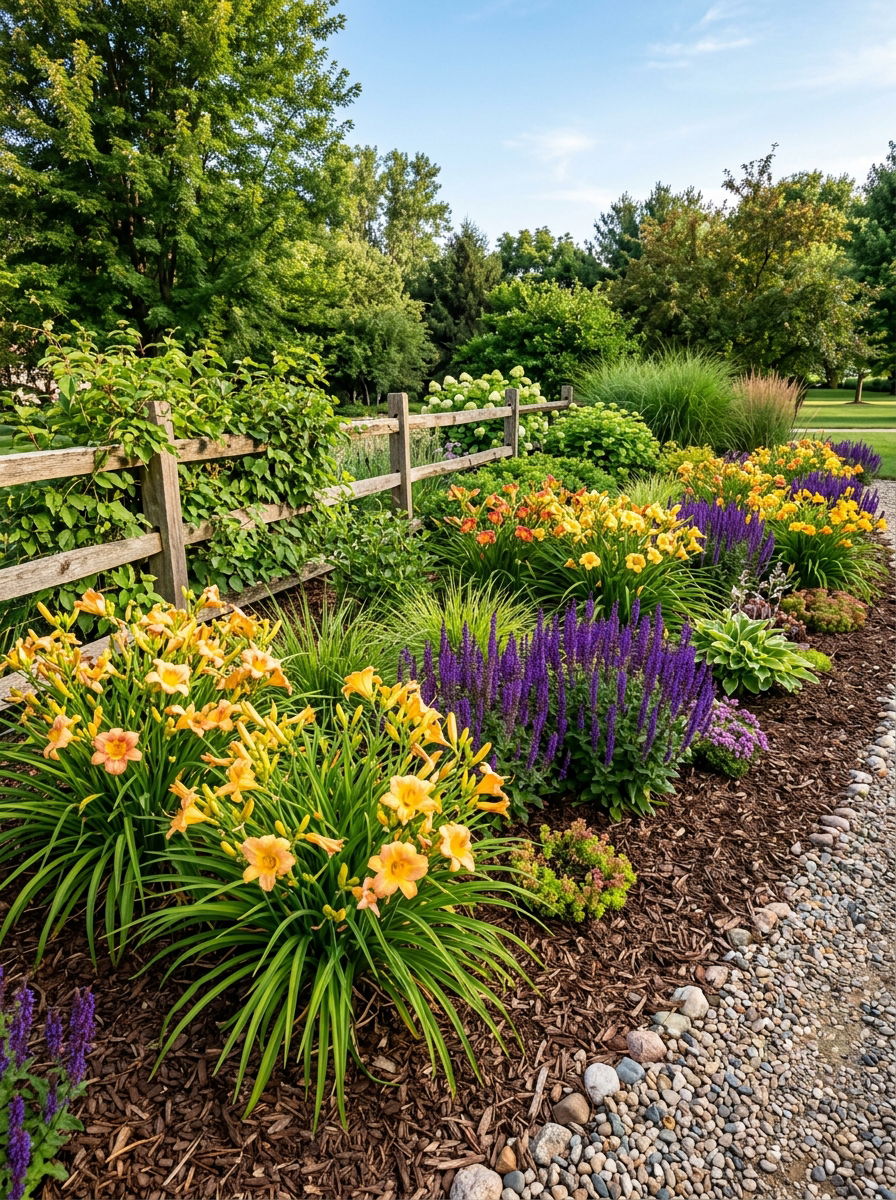
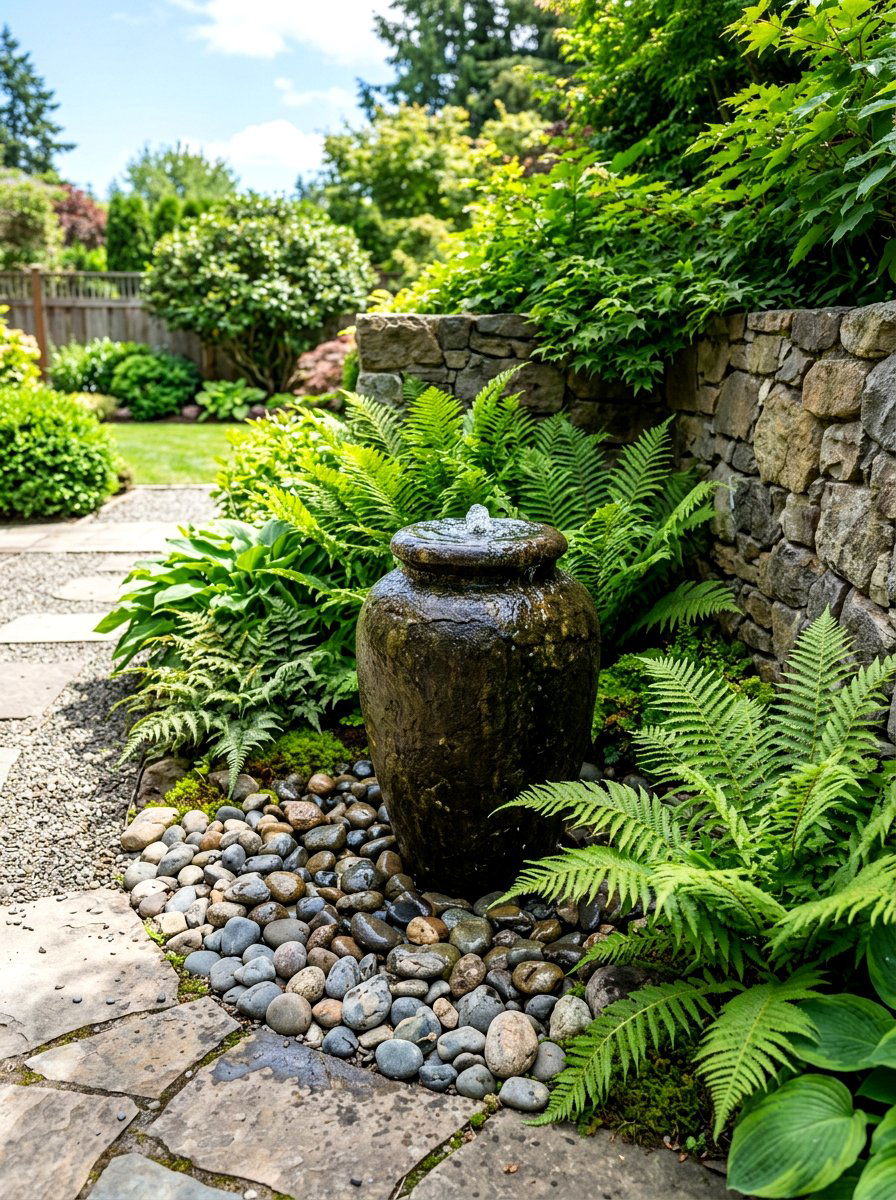
How do you create a sense of journey and destination in your own yard? A stone path garden leads the eye and the feet directly to the gazebo, making it feel like a special destination. By planting low-growing flowers like creeping thyme, moss, or alyssum between the stones, you soften the hard edges of the path. These plants release a pleasant scent when stepped on, adding to the experience. Surrounding the path with taller perennial borders creates a lush hallway that guides you toward the structure. This type of landscaping integrates the gazebo perfectly into the rest of the yard, making it a cohesive part of your overall garden design.
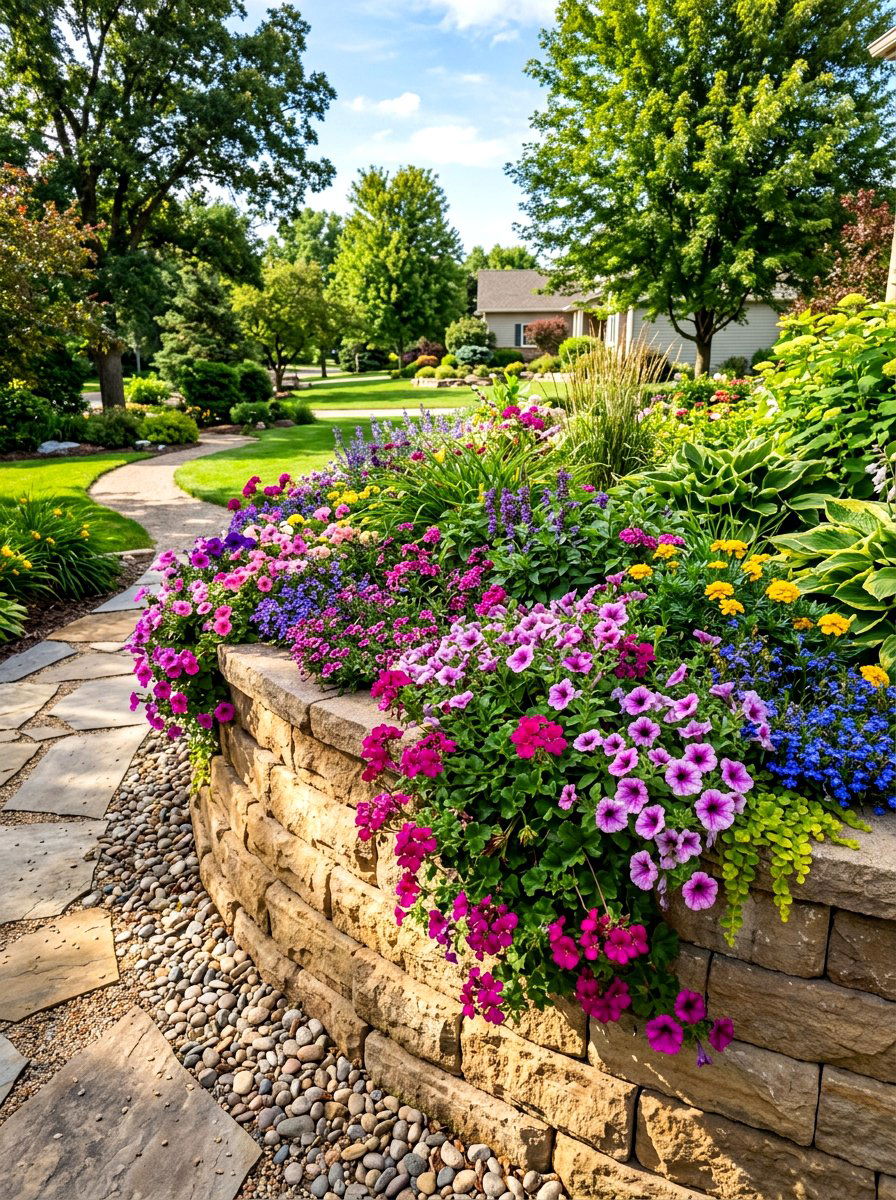
25. Tiered gazebo flower garden
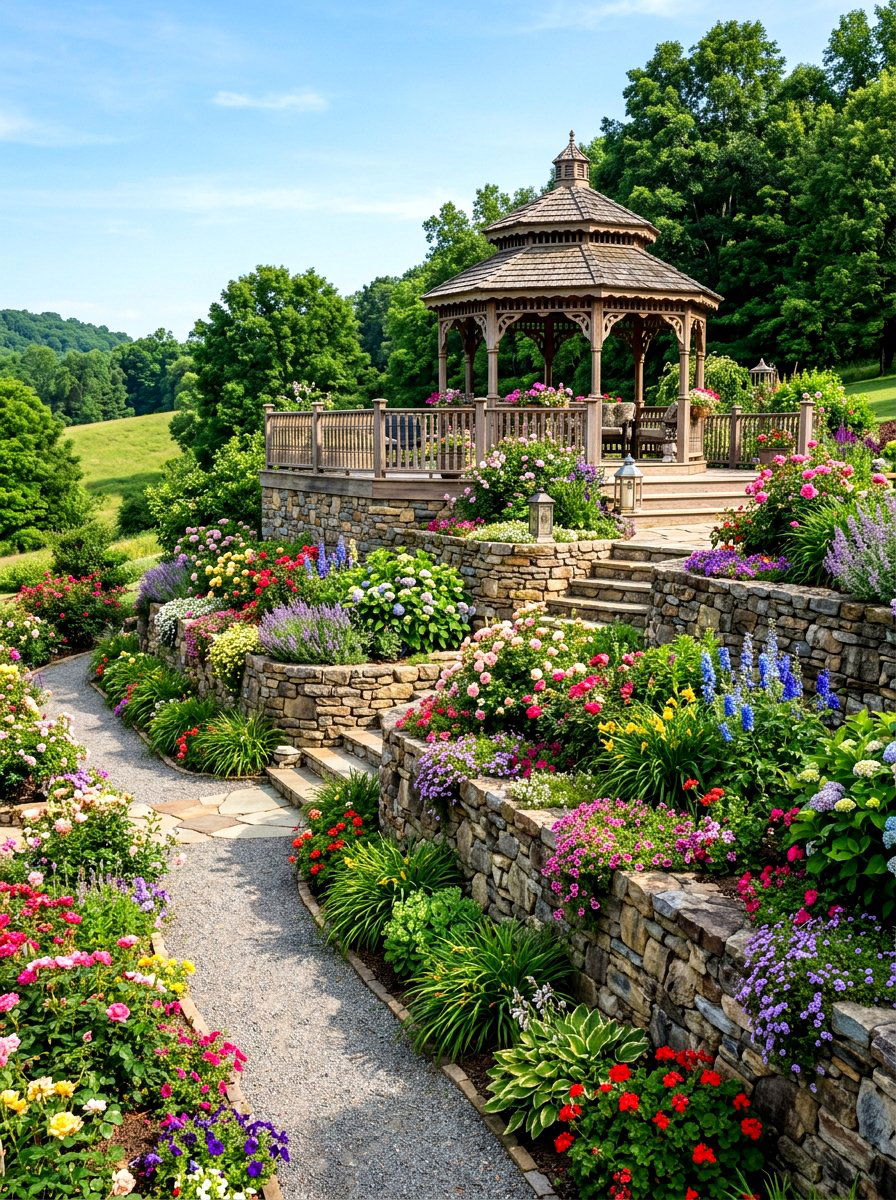
Are you working with a sloped yard or just want to add more visual interest? A tiered flower garden uses retaining walls or raised beds to create different levels of planting around the gazebo. This approach allows you to showcase a wider variety of plants, from cascading vines on the upper levels to dense shrubs at the base. Tiered gardens create a sense of depth and make the area feel much larger than it actually is. You can use different colors or themes for each level, or keep it unified for a more formal look. This design also makes gardening easier by bringing the plants closer to waist height for maintenance.
26. Clematis gazebo garden trellis
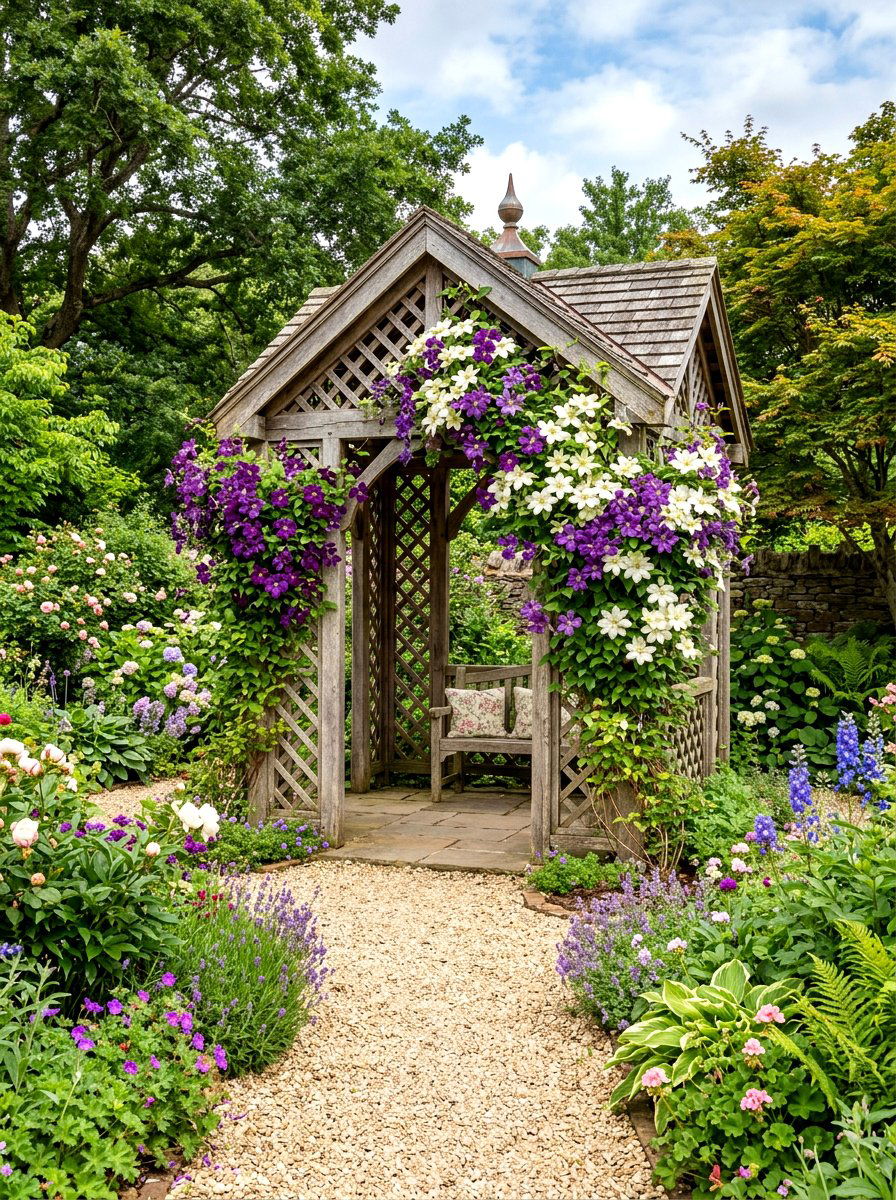
Would you like a delicate and sophisticated climber to adorn your outdoor structure? Clematis is often called the "queen of climbers" because of its stunning, large flowers and graceful growth habit. By training clematis vines up the posts and over the roof of your gazebo, you create a beautiful tapestry of color. There are hundreds of varieties available, ranging from deep purples and blues to bright pinks and whites. Some bloom in the spring, while others provide color all the way into autumn. The fine stems and leaves of the clematis don't overwhelm the architecture, allowing the beauty of the gazebo to shine through while adding a touch of floral elegance.
27. Container gazebo garden flowers
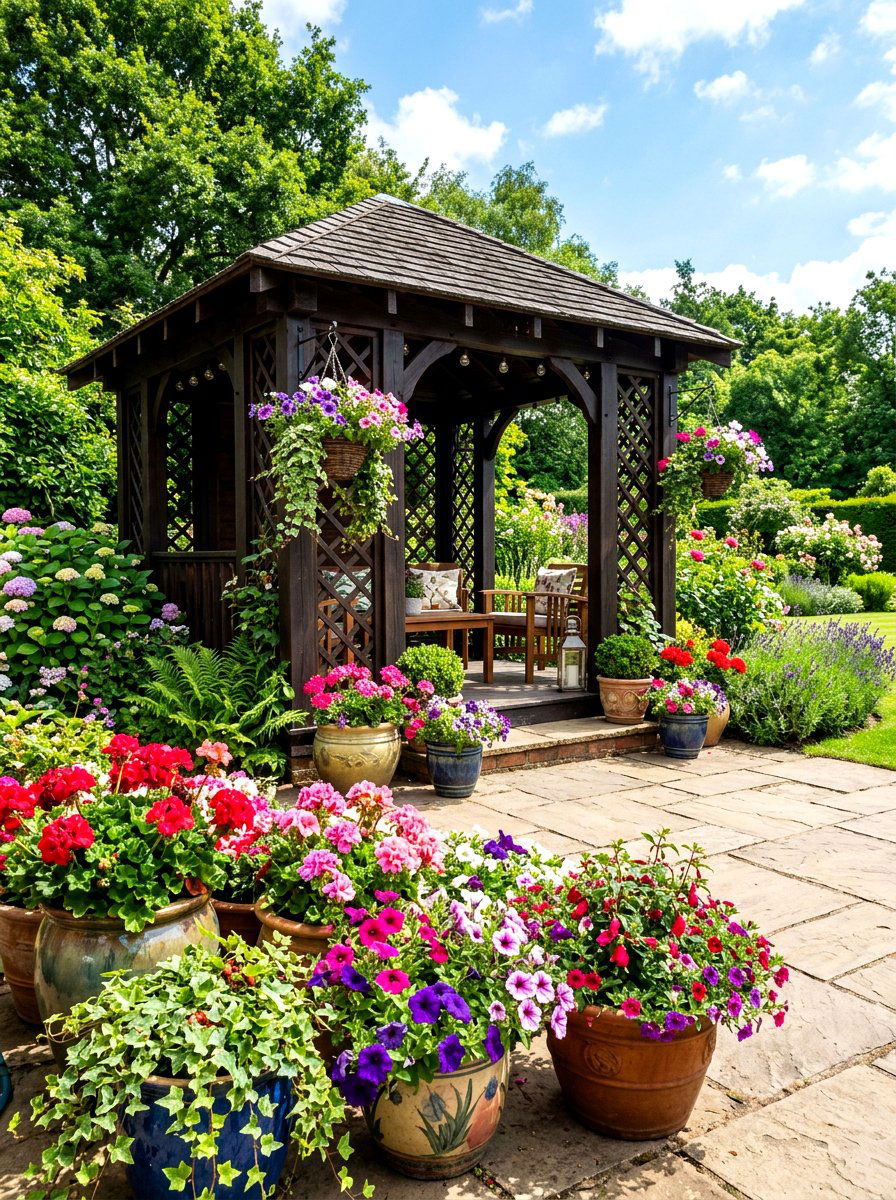
Do you like to change your mind and your garden 's look frequently? A container garden allows you to move plants around and experiment with different combinations throughout the year. Placing large pots filled with geraniums, petunias, or ornamental grasses around the entrance and interior of your gazebo adds instant color and style. You can choose pots that match your gazebo' s material, such as wood, ceramic, or metal, to create a coordinated look. This is also a great solution if your soil quality is poor or if you want to grow plants that wouldn't survive in the ground. It’s flexible, easy to manage, and always looks professionally styled.
28. Raised bed gazebo garden
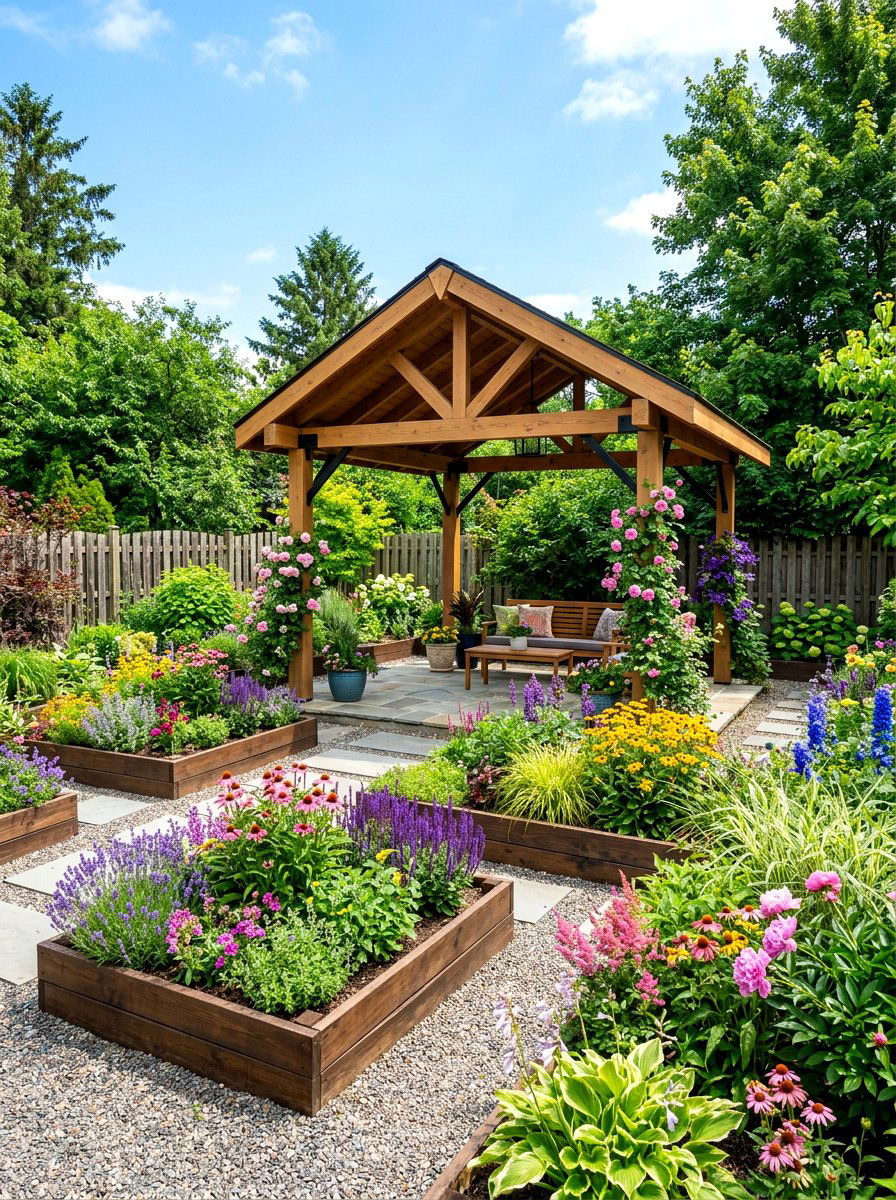
Are you looking for a way to define the space around your gazebo while keeping it organized? Building raised beds around the perimeter of the structure provides a clean and elevated area for planting. These beds help with drainage and keep the soil warmer, which can lead to healthier and more productive flowers. You can fill them with a mix of perennials for year-round structure and annuals for seasonal pops of color. Raised beds also act as a physical barrier, protecting your flowers from being stepped on or damaged. The height of the beds can also provide extra seating for guests when the gazebo itself is full during a large gathering.
29. Hibiscus gazebo garden area
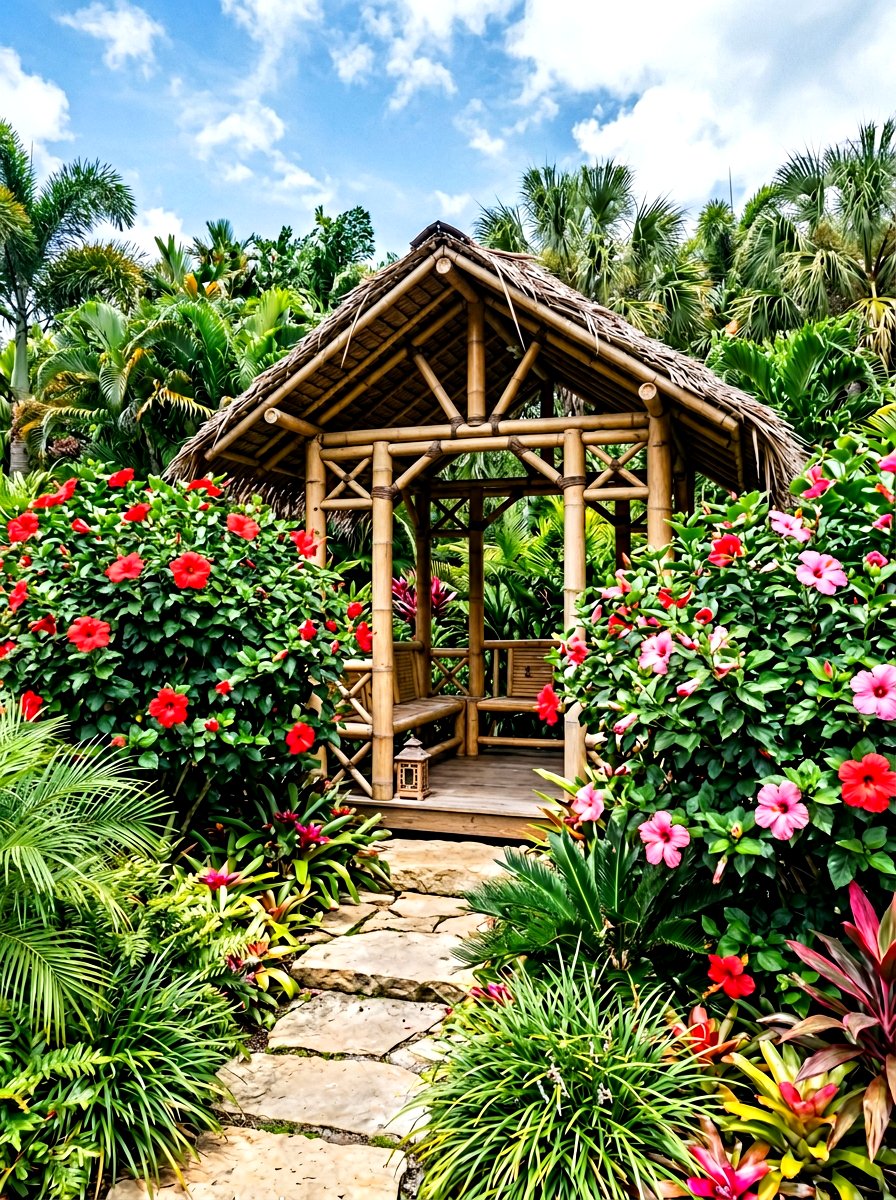
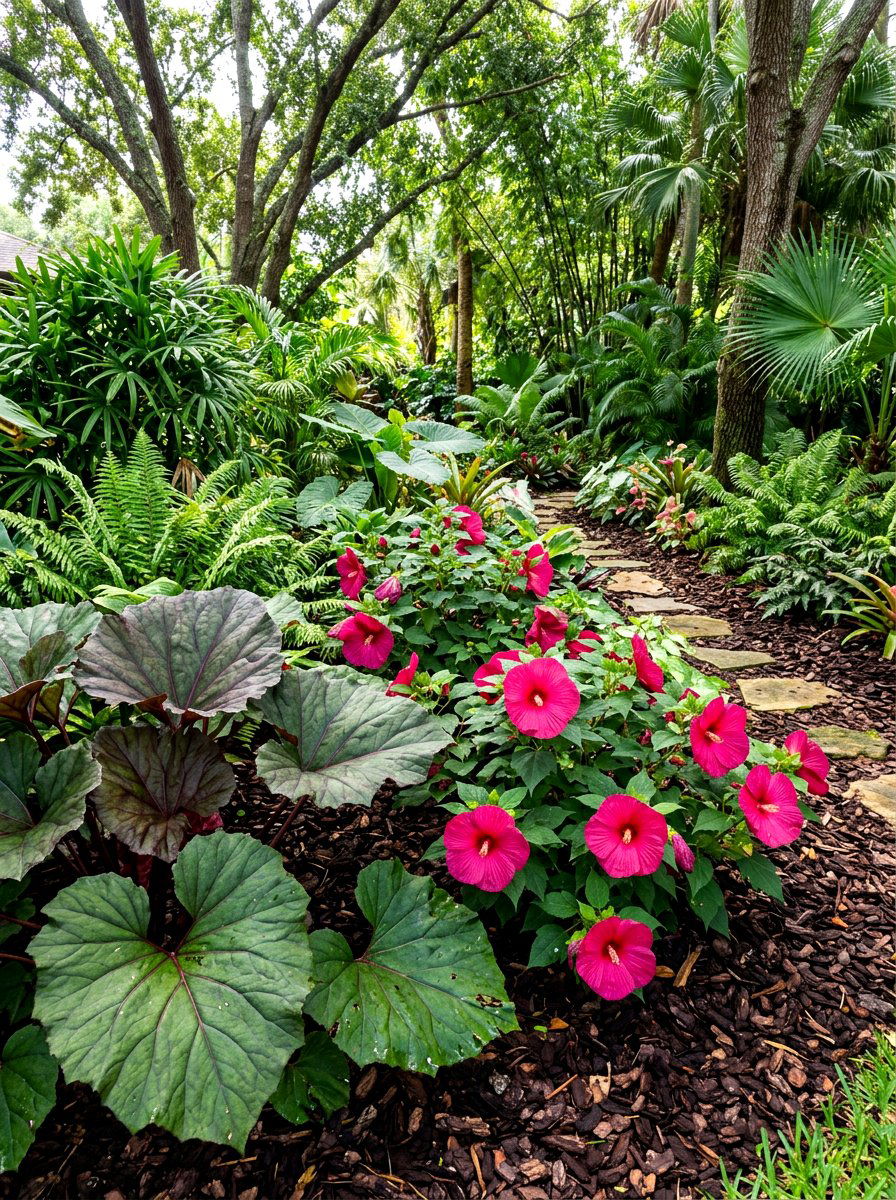
Do you want a garden that feels like a permanent summer vacation? Hibiscus plants, with their massive, tropical-looking blooms, are perfect for creating a bold and exotic environment around your gazebo. These shrubs come in both tropical and hardy varieties, meaning you can enjoy their beauty in many different climates. The large, trumpet-shaped flowers in shades of red, pink, and yellow create a stunning visual impact that is hard to ignore. Planting them in a sunny spot near the gazebo ensures they bloom profusely all summer long. Their dark green, glossy leaves provide a beautiful backdrop for the vibrant flowers, making the entire area feel lush and high-end.
30. English rose gazebo garden
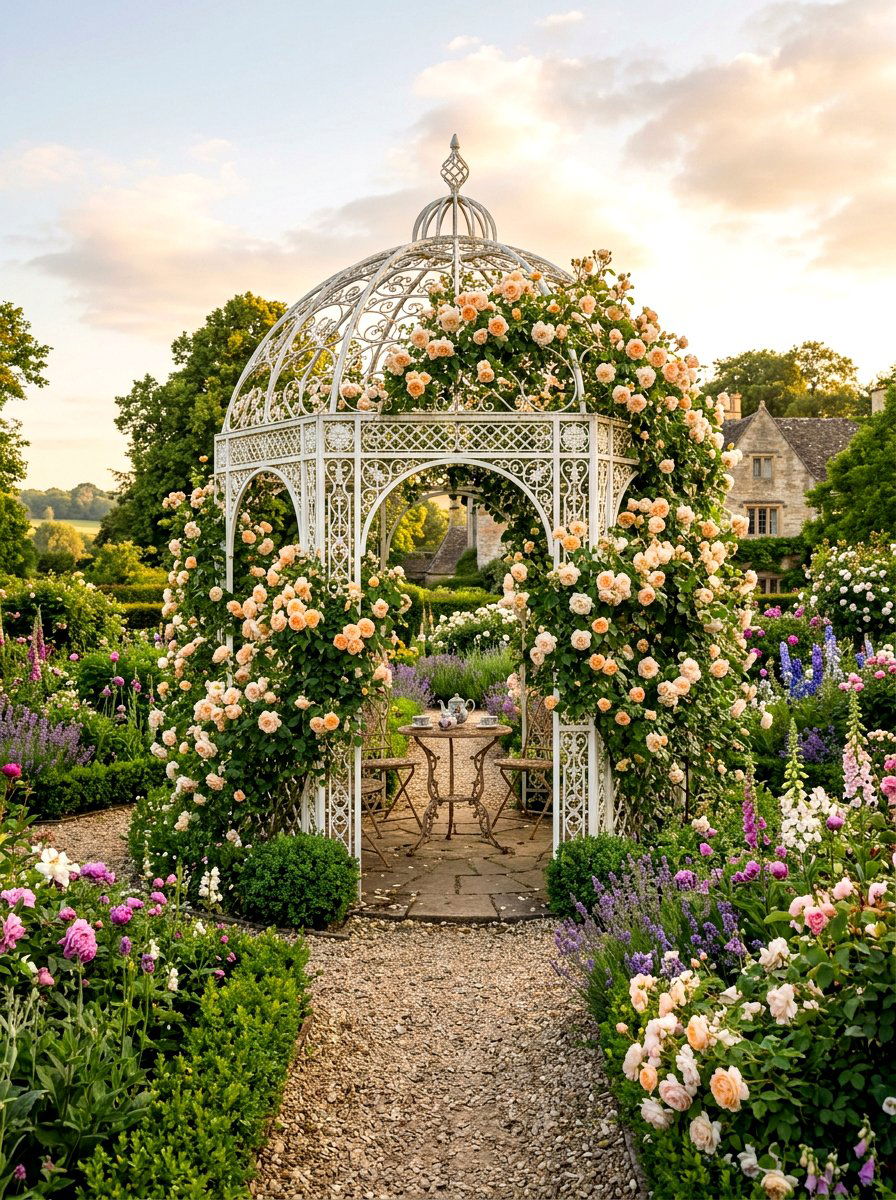
Is there anything more classic than an English garden filled with fragrant roses? An English rose gazebo garden focuses on varieties like David Austin roses, which are known for their cabbage-like blooms and intense scents. Surround the structure with rose bushes in soft pastels like cream, blush, and apricot to create a sophisticated and romantic atmosphere. You can mix these roses with other classic English plants like lavender or catmint to add texture and fill in the base. This type of garden requires some maintenance but the reward of sitting in a gazebo surrounded by the world's most beautiful flowers is well worth the effort for any gardener.
Conclusion:
Creating a stunning flower garden around your gazebo is one of the most rewarding ways to enhance your outdoor living experience. By choosing the right theme — whether it is the romantic appeal of climbing roses, the sleek lines of modern landscaping, or the vibrant energy of a tropical oasis — you can turn a simple backyard structure into a true destination. These thirty concepts demonstrate that there is a perfect floral match for every style of home and every type of climate. As you plan your garden, remember to consider the sensory details like fragrance and texture, as they truly bring the space to life. With a little creativity and care, your gazebo will become the heart of your home where beautiful memories are made amidst the blooming flowers and fresh air.

Related posts: