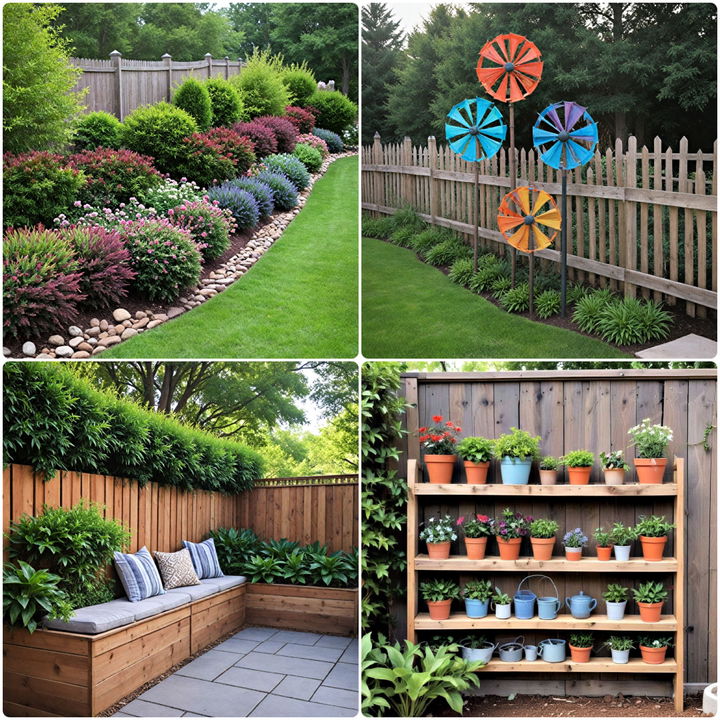
Fence lines are often the most overlooked part of a backyard, yet they hold the potential to completely transform your outdoor living space into a private sanctuary. When you think about landscaping along a perimeter, it is not just about hiding a structural barrier; it is about creating a cohesive transition between your home and nature. Whether you are dealing with a tall wooden privacy fence or a classic white picket style, the right combination of plants, textures, and structures can add immense curb appeal and value. This guide explores thirty creative ways to enhance your boundaries using modern aesthetics, lush greenery, and functional design elements that suit any backyard size or personal style preference.
1. Privacy Screen Plants
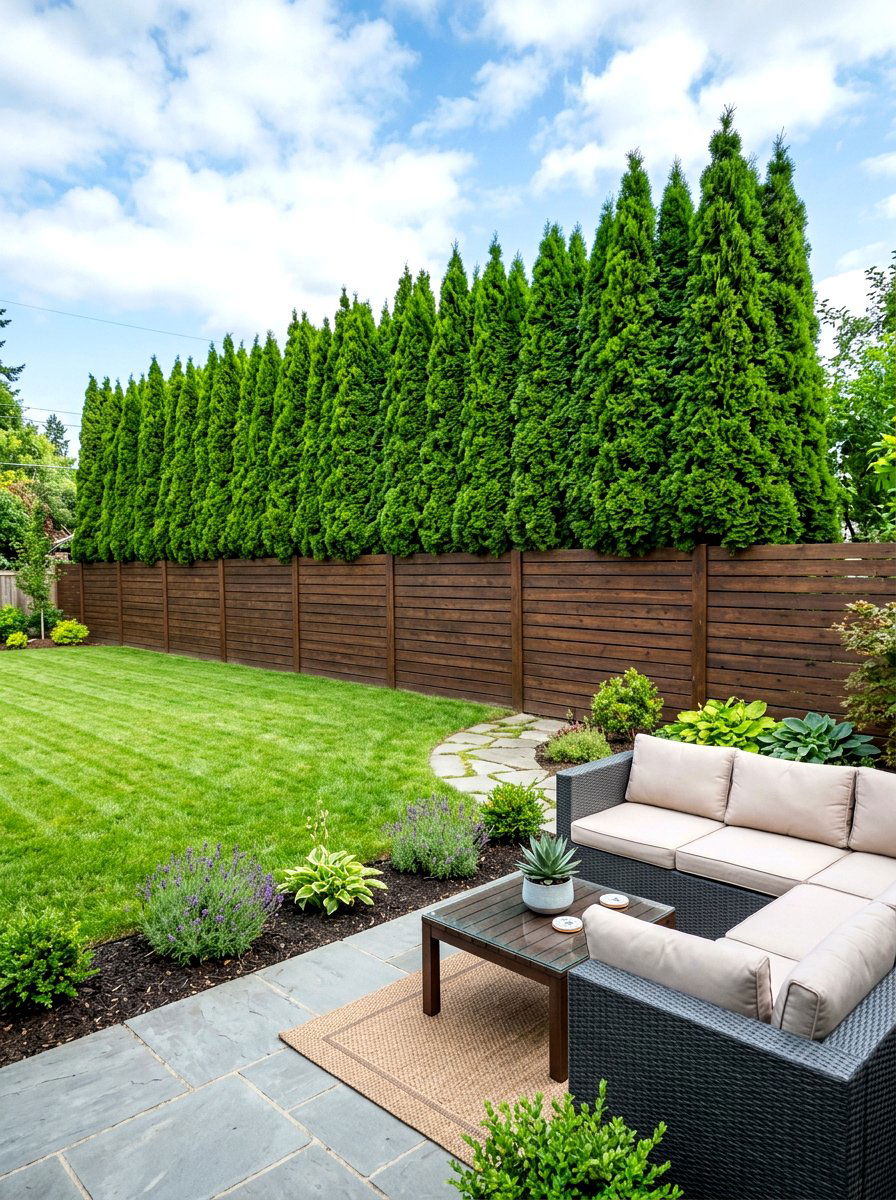
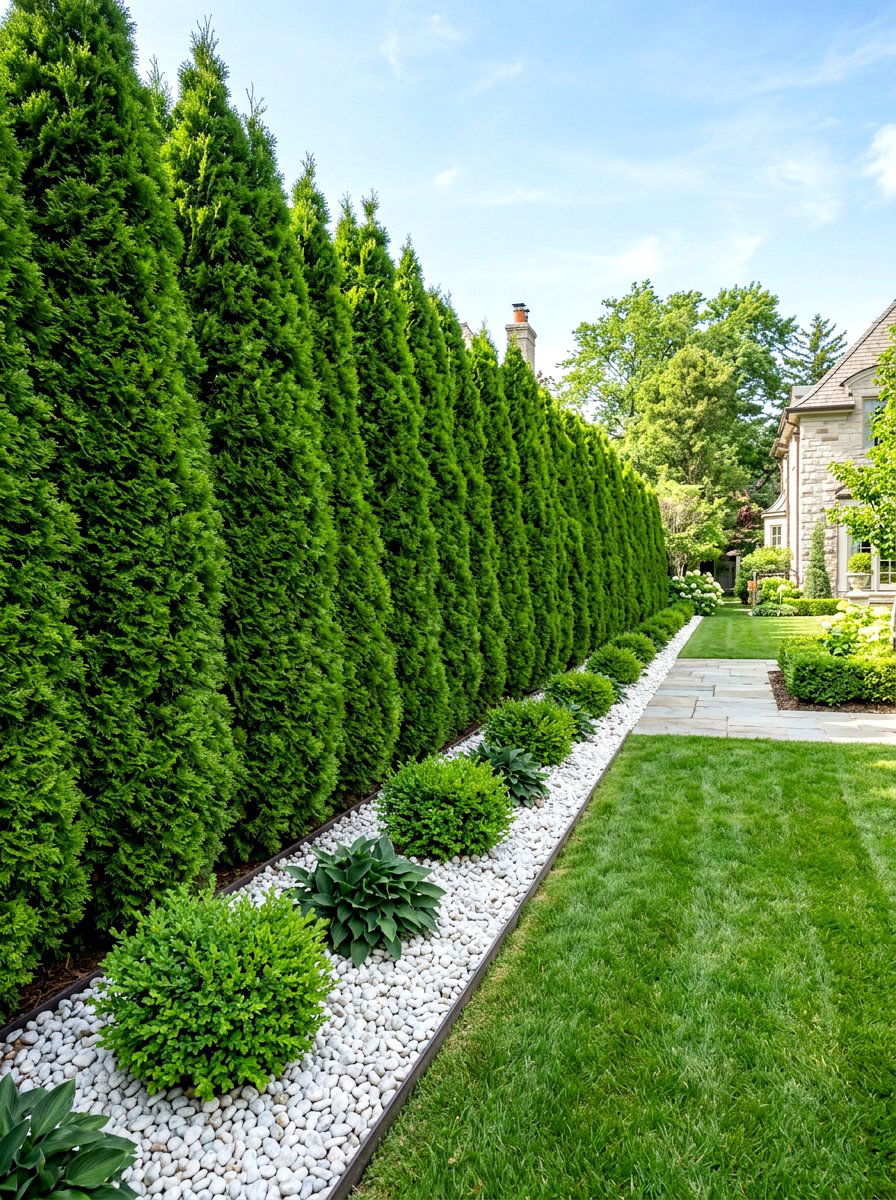
Planting a row of dense privacy shrubs is a timeless way to soften the hard lines of a wooden or metal fence. You can use species like Emerald Green Thuja or Skip Laurel to create a living wall that remains green throughout the entire year. These plants provide a thick barrier that blocks out noise and prying eyes while adding a refreshing splash of nature to your yard. When you space them correctly, they grow into one another, forming a seamless green backdrop for your patio furniture. This approach works exceptionally well in smaller suburban lots where space is tight but privacy is a top priority for homeowners seeking a quiet retreat.
2. Raised Garden Beds
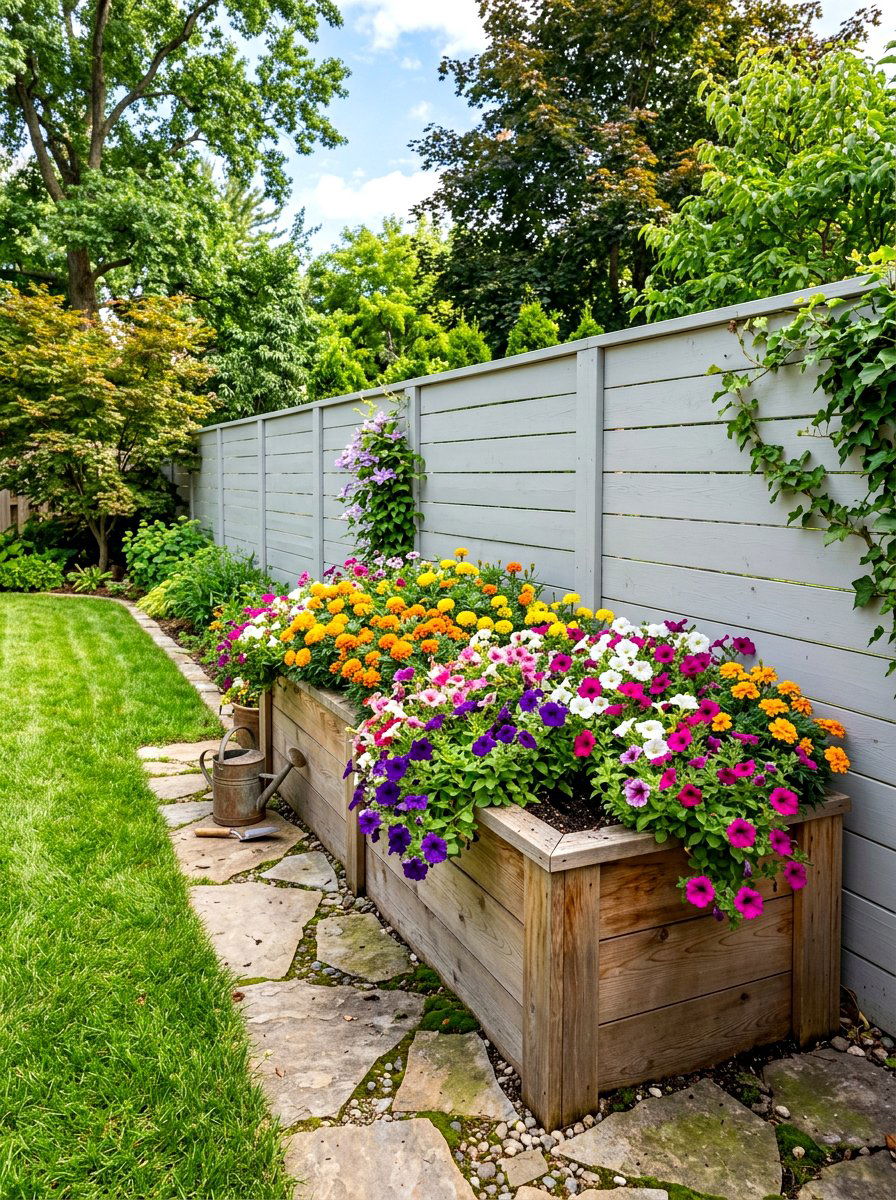
Building raised garden beds directly against your fence line adds height and architectural interest to an otherwise flat area. These structures allow you to control the soil quality perfectly, which is ideal for growing vibrant flowers or even specialized shrubs that might struggle in the native ground soil. Using materials like pressure-treated wood, cedar, or modern corrugated metal can help define the style of your backyard. The elevated height also makes maintenance much easier on your back while providing a clear physical border that keeps lawn grass from encroaching on your delicate plantings. It creates a very polished and intentional look for any modern backyard design.
3. Climbing Roses On Trellis
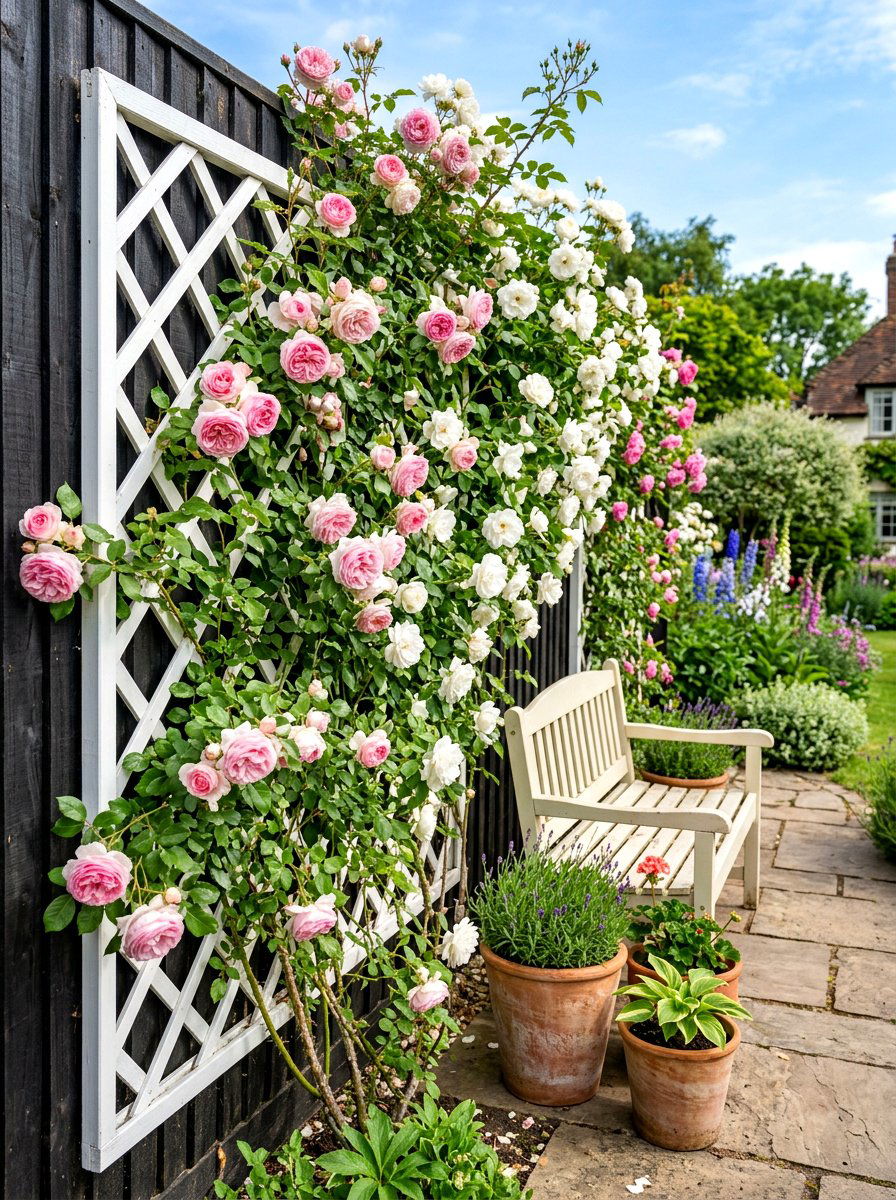
Nothing captures the essence of a romantic cottage garden quite like climbing roses weaving through a sturdy trellis attached to your fence. These vigorous plants grow upward rather than outward, making them a perfect choice for narrow side yards or compact spaces where ground room is limited. By choosing repeat-blooming varieties, you can enjoy fragrant flowers and lush green foliage from late spring until the first frost of autumn. The thorns also provide a natural deterrent for intruders, adding a layer of security to your home. This classic landscaping choice brings vertical beauty and a sense of old-world charm to any standard wooden property boundary.
4. Standard Tree Line
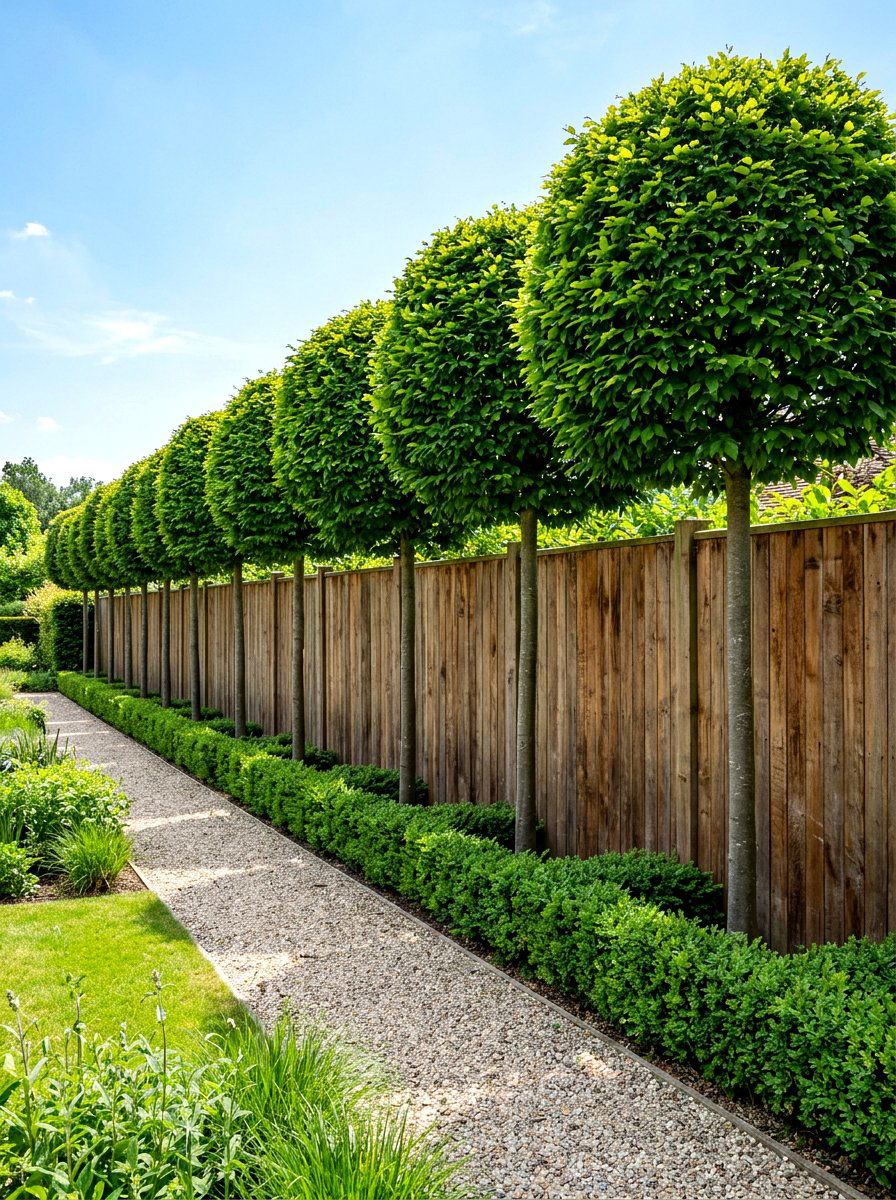
Using standard trees, often referred to as lollipop trees, creates an elegant and orderly look along your property line without making the space feel closed in. These trees have a clear trunk with a manicured canopy that starts above the height of the fence. This allows you to maintain your privacy from neighbors’ upper-story windows while leaving the ground level open for lower shrubs or decorative mulch. Species like Hornbeam or certain varieties of Ficus are excellent for this technique because they respond well to pruning. It is a sophisticated way to add vertical scale and architectural rhythm to a large backyard or formal garden.
5. Layered Flower Borders
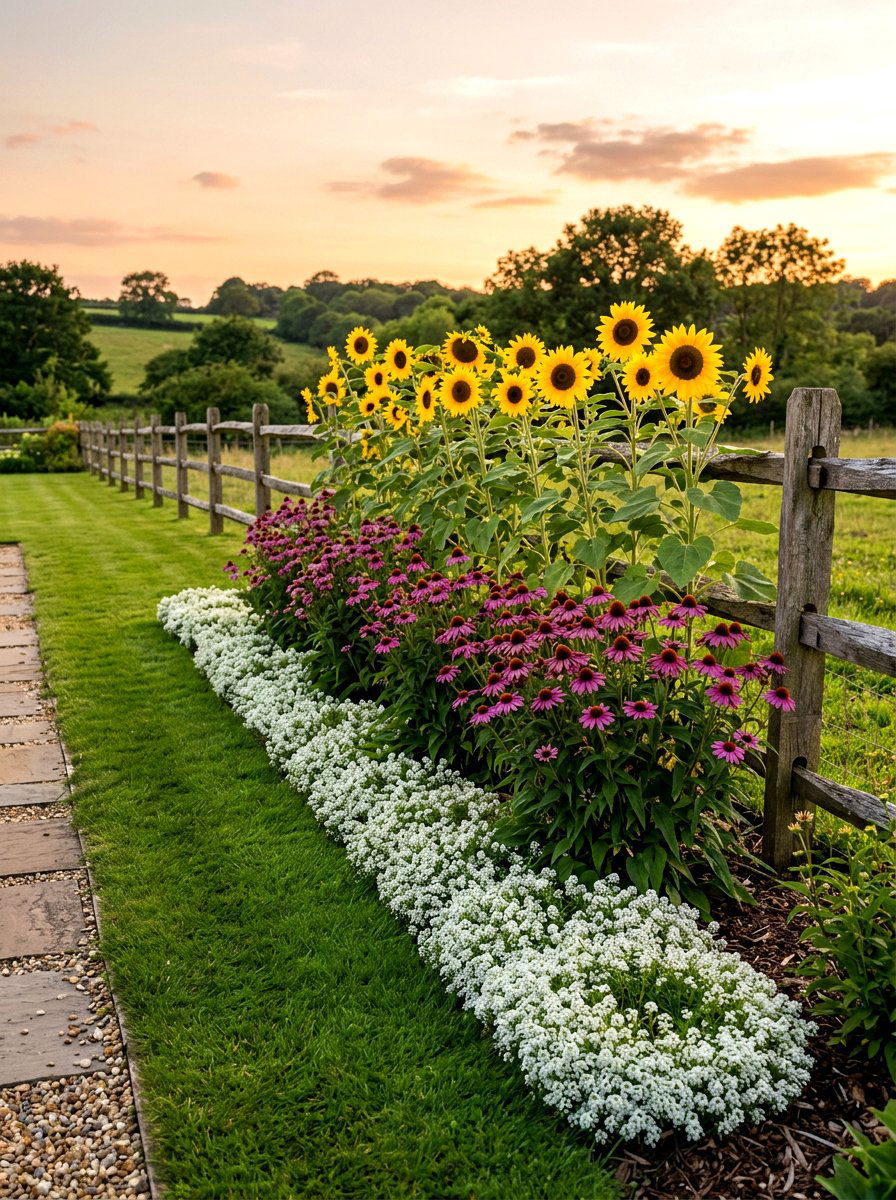
Creating a layered flower border involves placing taller plants in the back against the fence and gradually stepping down to shorter varieties in the front. This technique mimics natural landscapes and provides a rich, full look that changes with the seasons. You might start with tall sunflowers or hollyhocks as the primary backdrop, followed by mid-sized perennials like coneflowers or lavender, and finished with low-growing groundcovers like creeping phlox. The variety of colors and textures keeps the eye moving and makes the perimeter of your yard feel much more expansive. It is a great way to express your personal gardening style and creativity.
6. Modern Slatted Fence
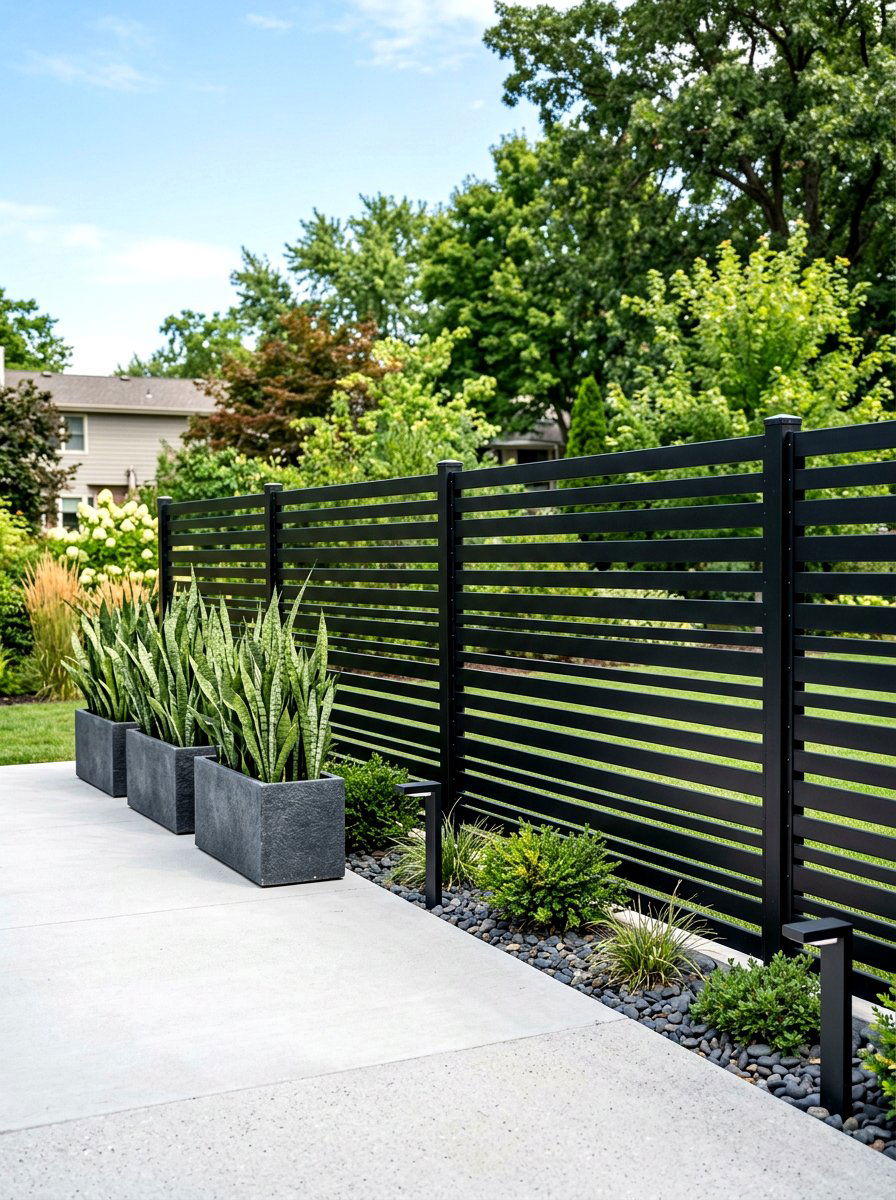
A modern slatted fence with horizontal boards offers a sleek and contemporary alternative to traditional vertical styles. This design allows small amounts of light and air to pass through, which prevents the backyard from feeling like a dark box. You can enhance this look by planting architectural greenery like horsetail reeds or snake plants in front of the dark wood or black metal slats. The contrast between the organic shapes of the plants and the clean, straight lines of the fence creates a high-end, gallery-like atmosphere. It is an ideal choice for urban homes where homeowners want a sophisticated and minimalist outdoor aesthetic.
7. Solar Fence Lighting
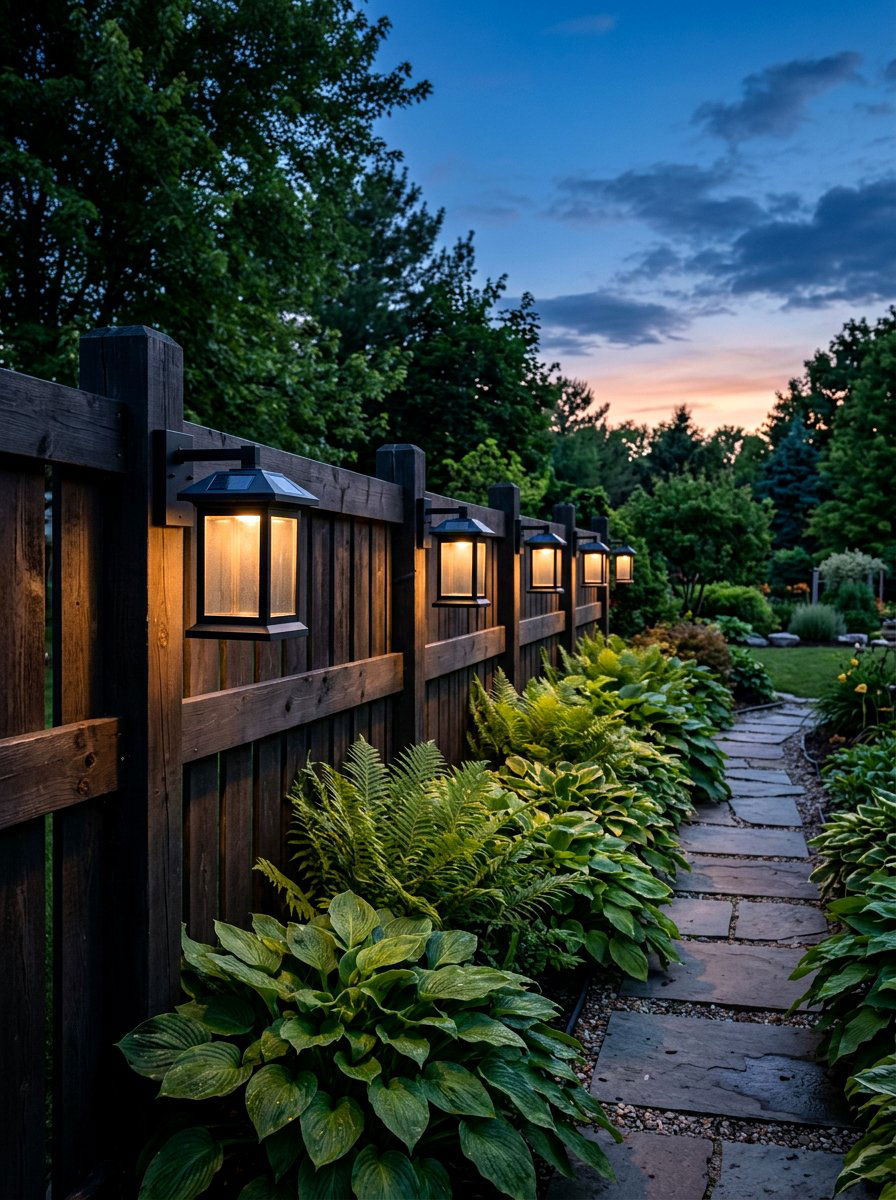
Installing solar lighting along your fence line is a practical and beautiful way to extend the usability of your backyard into the evening hours. These lights can be mounted directly onto the fence posts or tucked into the foliage of nearby plants to create a soft, ambient glow. Uplighting larger trees or spotlighting specific garden features adds drama and depth to the landscape after the sun goes down. Because they are solar-powered, you do not have to worry about complicated wiring or increasing your electricity bill. Good lighting also increases safety by illuminating paths and clarifying the boundaries of your property during nighttime gatherings.
8. Edible Vegetable Garden
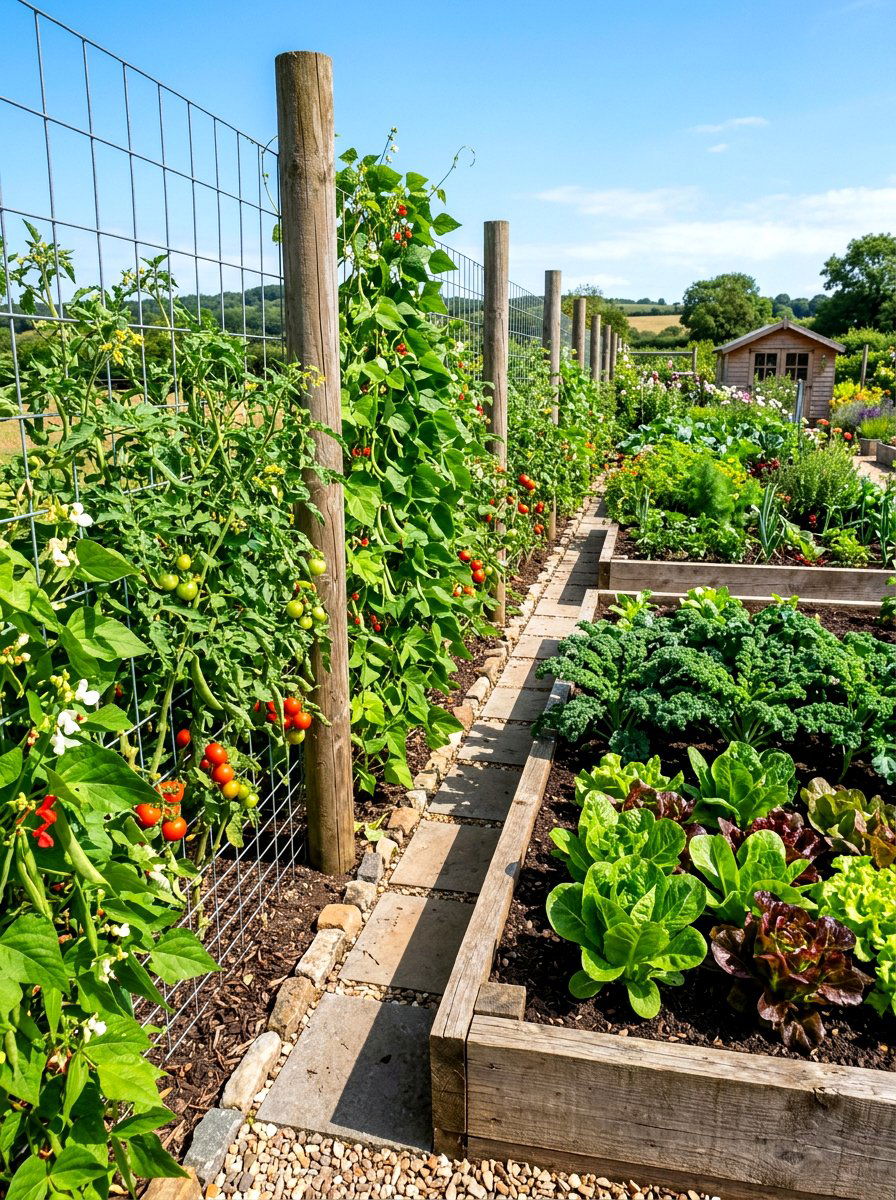
Turning the space along your fence into an edible vegetable garden is a smart way to maximize the productivity of your land. Many vegetables, such as pole beans, peas, and cucumbers, naturally love to climb, so you can use the fence itself as a support system or attach simple netting. This vertical farming technique saves precious ground space for other plants while keeping your produce off the dirt and away from some ground-dwelling pests. A neatly organized row of peppers, tomatoes, and herbs creates a lush and functional border that is as beautiful as it is delicious. It turns a boring boundary into a harvestable asset.
9. Vertical Wall Planters
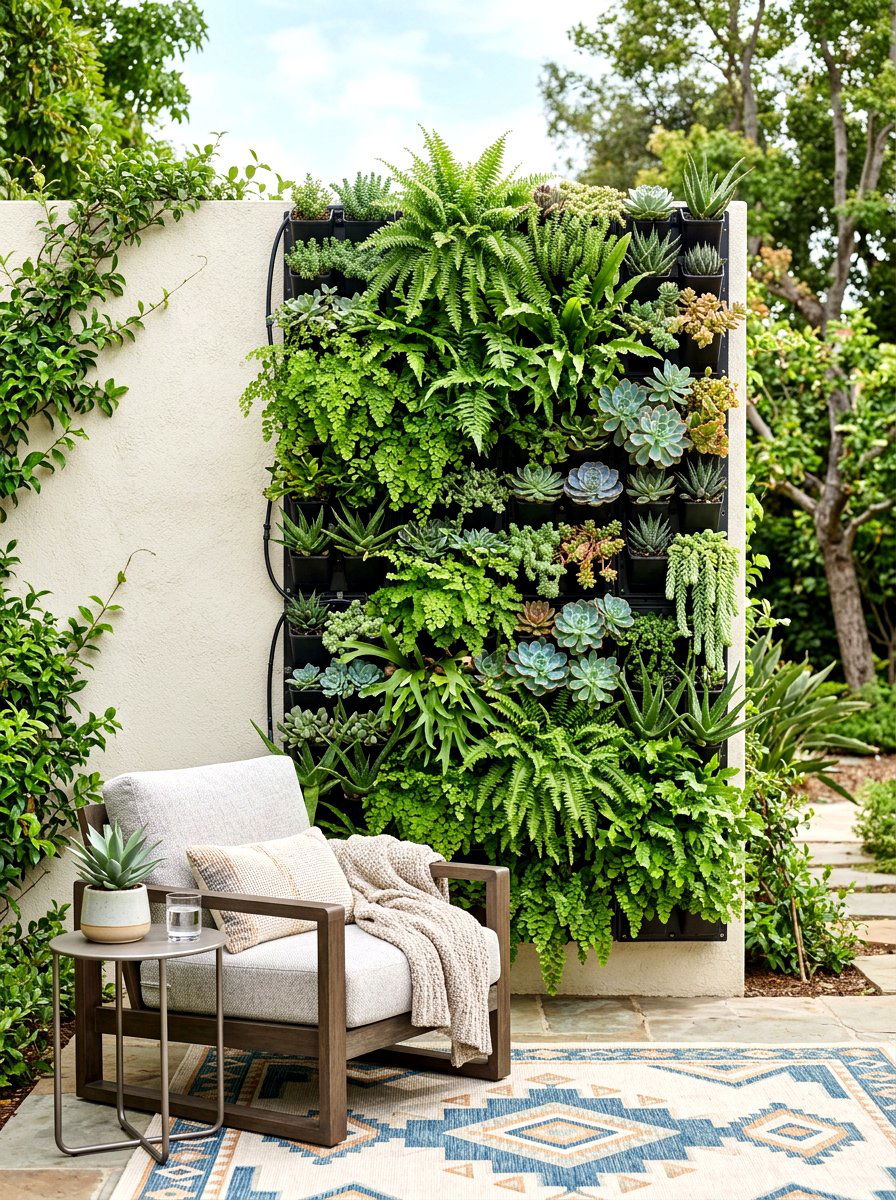
If you have a very small yard or a large stretch of plain fencing, vertical wall planters are the perfect solution for adding greenery without losing floor space. These modular systems can be filled with everything from succulents and ferns to vibrant annual flowers or kitchen herbs. By covering the wooden or vinyl surface with living plants, you create a "living wall" effect that naturally cools the area and improves air quality. It is a fantastic way to hide an ugly or aging fence while creating a stunning focal point for your outdoor seating area. You can even mix and match different plant colors to create patterns.
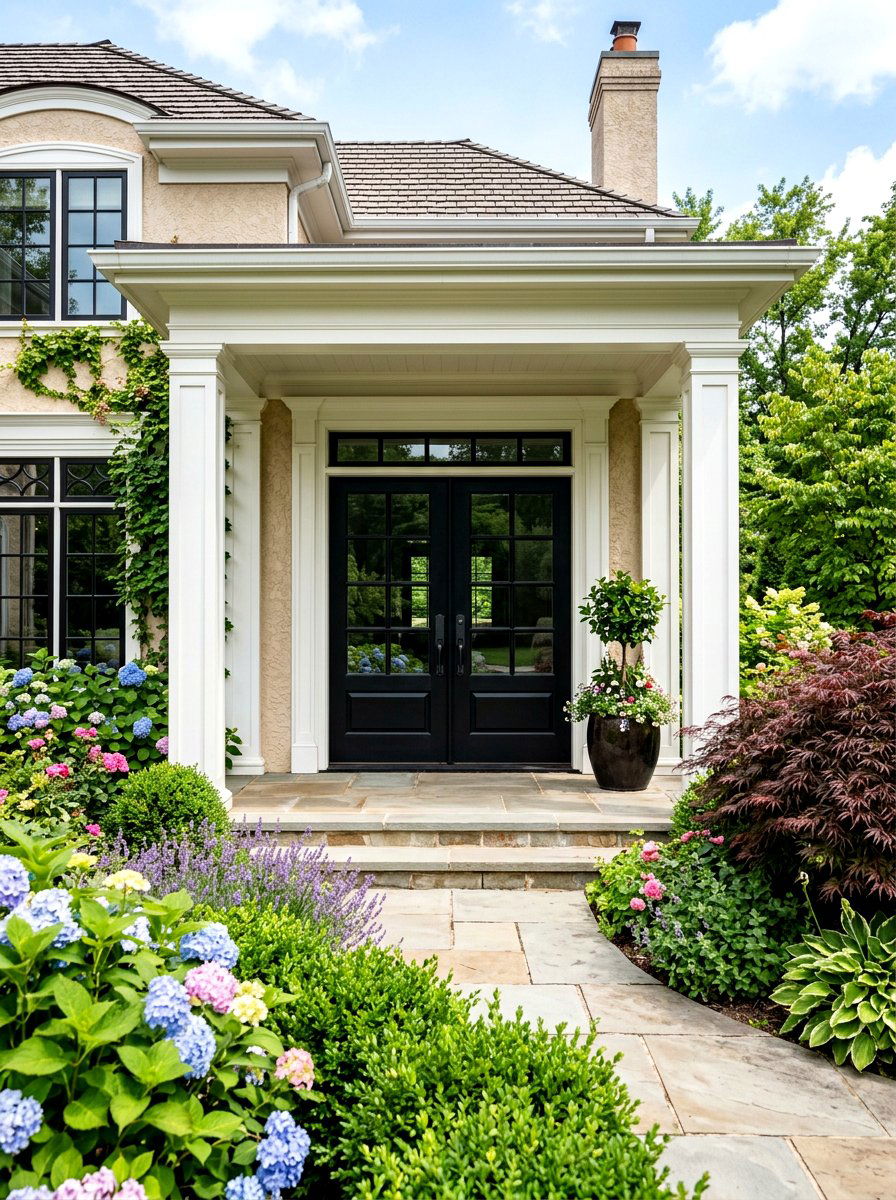
10. Decorative Pot Display
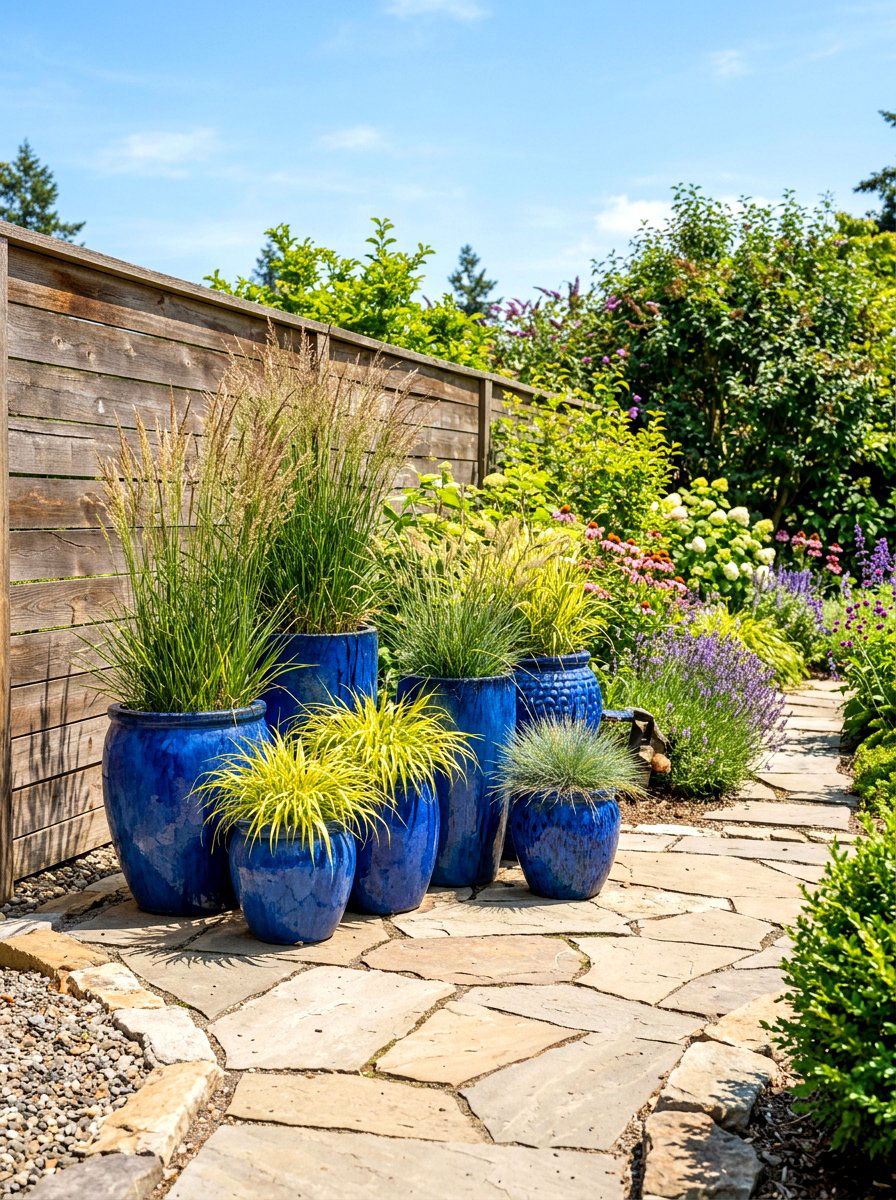
Using a variety of decorative pots at different heights is a flexible and low-commitment way to landscape your fence line. You can choose ceramic, terracotta, or modern resin containers that complement your overall home decor and arrange them in clusters or a neat row. This approach is perfect for renters or anyone who likes to change their garden layout frequently, as the plants can be easily moved or replaced. Larger pots can house small ornamental trees, while smaller ones are great for seasonal blooms. The layered look of the containers adds immediate texture and visual interest to a flat fence without any permanent digging.
11. Bamboo Privacy Screen
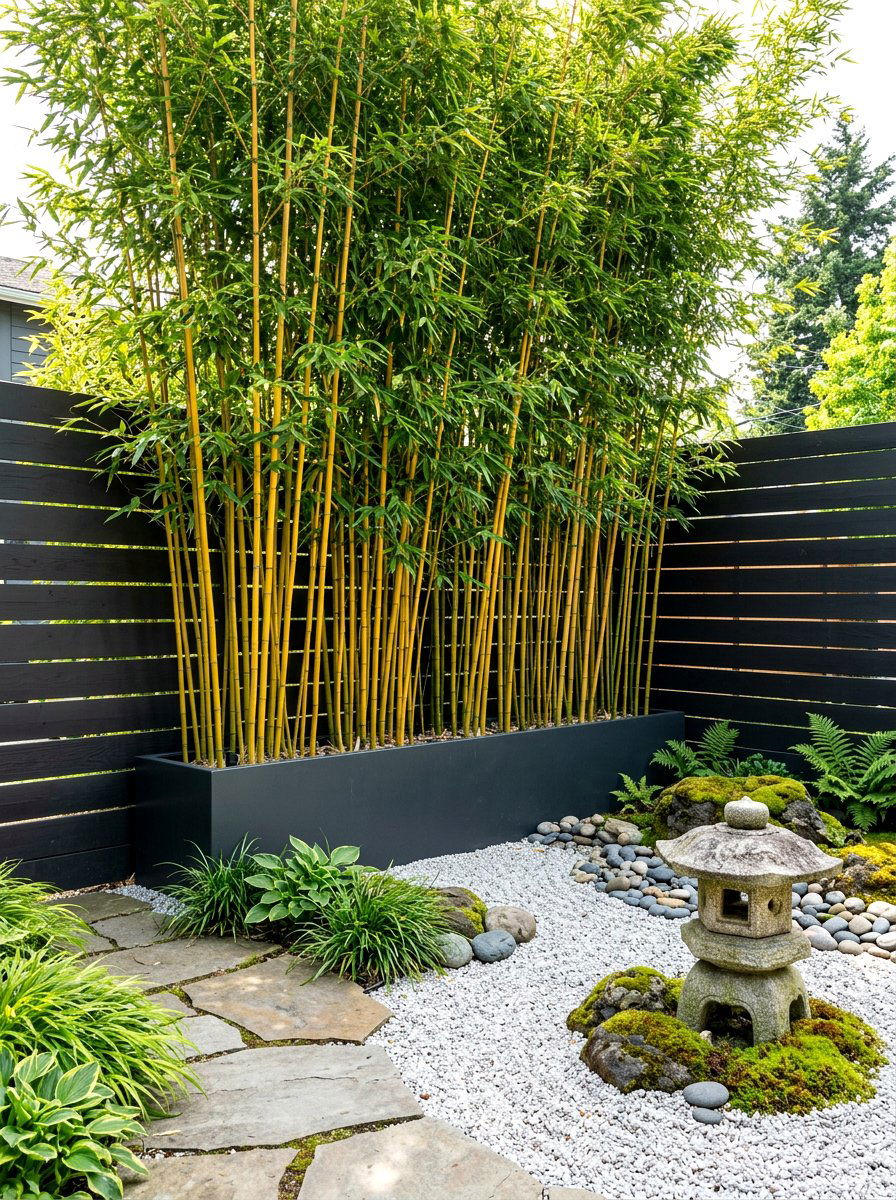
For a fast-growing and exotic look, a bamboo privacy screen is a fantastic option that brings a zen-like atmosphere to your backyard. Clumping varieties are preferred over running types to ensure the plants stay contained within their designated area along the fence. Bamboo provides a tall, dense wall of greenery that rustles gently in the wind, providing a soothing natural soundscape. The vertical stems complement modern and tropical designs perfectly, and the height can easily reach ten to fifteen feet for maximum privacy. It is an eco-friendly choice that adds a unique texture and a sense of serenity to any modern outdoor living space.
12. Tropical Backyard Landscape
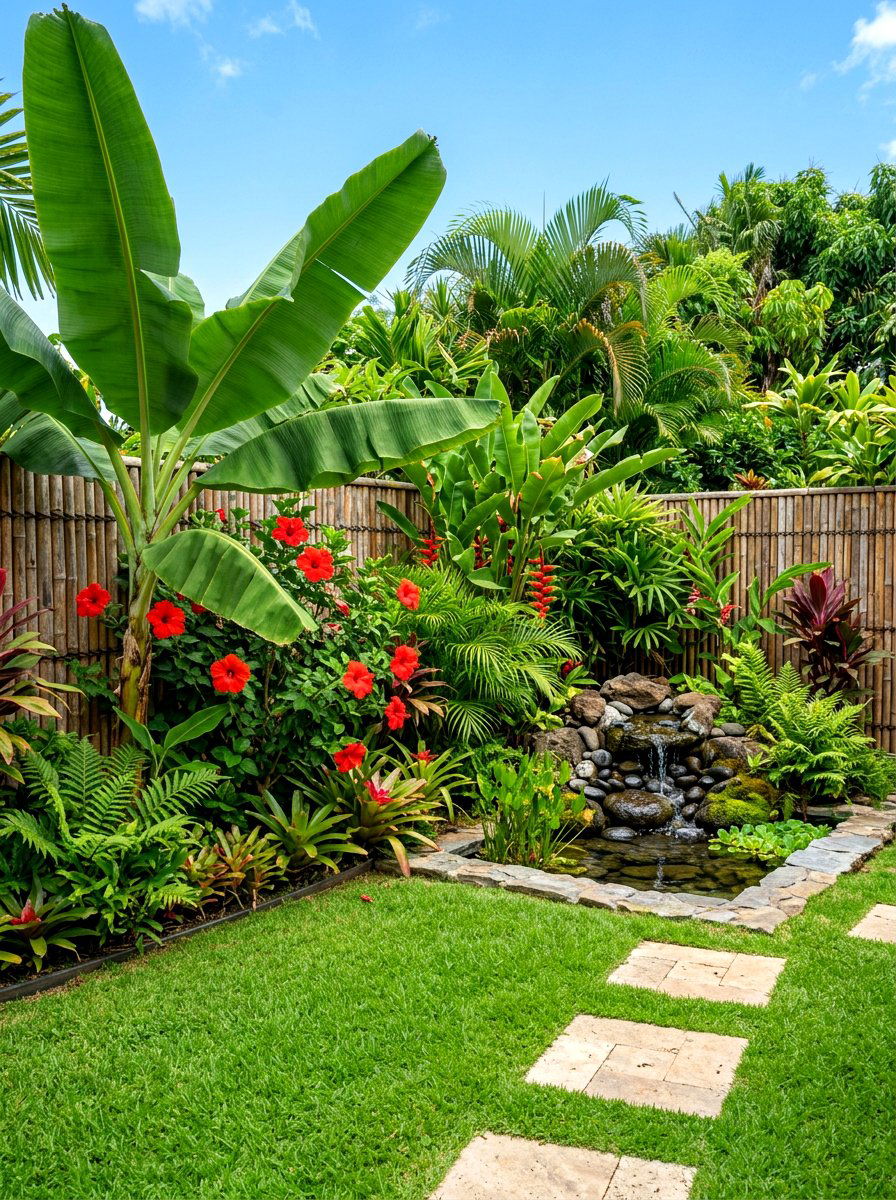
Creating a tropical theme along your fence line can make every day feel like a vacation in your own backyard. By using large-leafed plants like banana trees, bird of paradise, and hibiscus, you can build a lush and vibrant border that feels like a jungle oasis. These plants often feature bold colors and dramatic shapes that stand out beautifully against a dark or natural wood fence. To complete the look, you might add a layer of dark mulch and some subtle water features nearby. This style thrives in warmer climates but can be replicated in cooler areas using potted plants that move indoors during the winter.
13. Drought Tolerant Xeriscaping
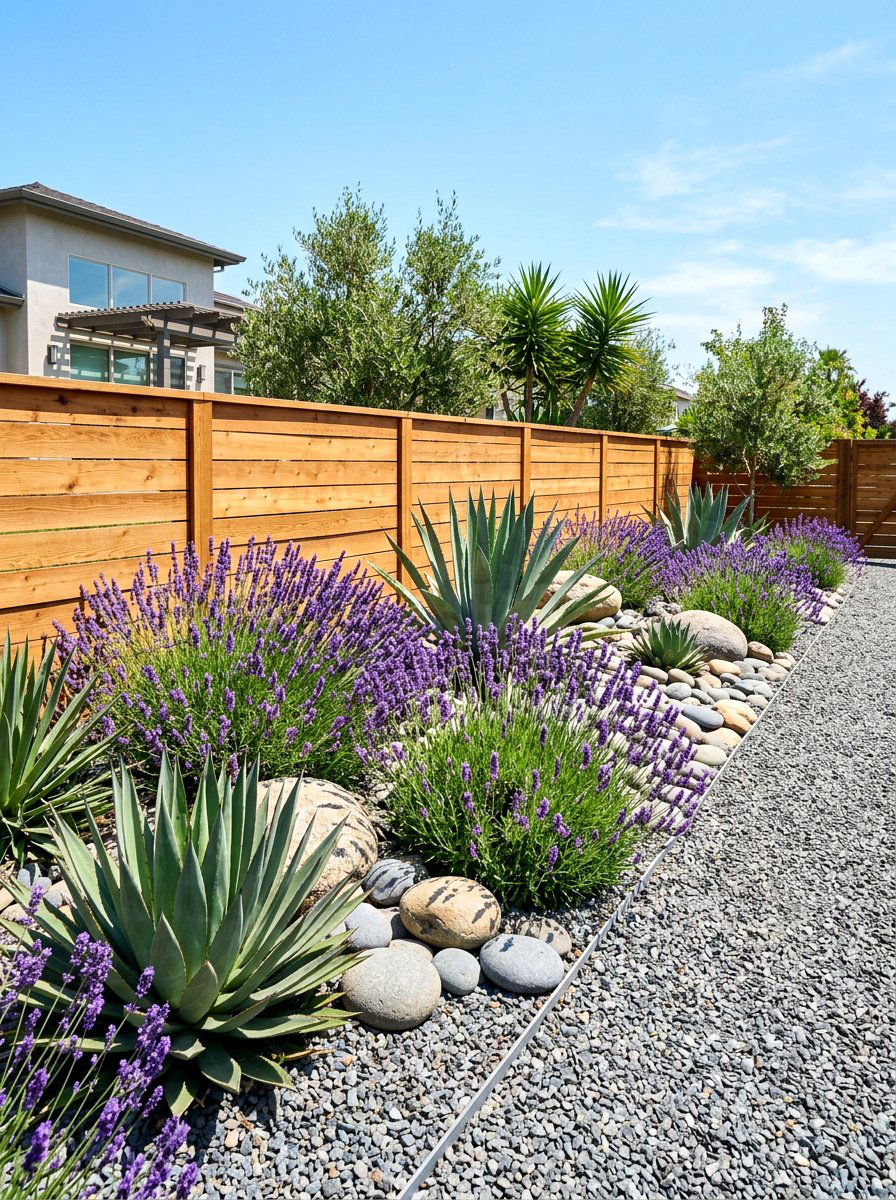
Drought-tolerant xeriscaping along your fence is an environmentally friendly choice that requires very little water and maintenance once established. Instead of thirsty lawn grass, you can use a combination of gravel, large river rocks, and hardy plants like agave, yarrow, or lavender. These species are designed to thrive in hot, dry conditions while still providing plenty of color and structural beauty. The clean lines of a rock mulch border against a fence look modern and organized, making it a great fit for Southwestern or minimalist home styles. This approach saves you money on utility bills while keeping your perimeter looking professionally designed and very tidy.
14. Stone And Wood Combination
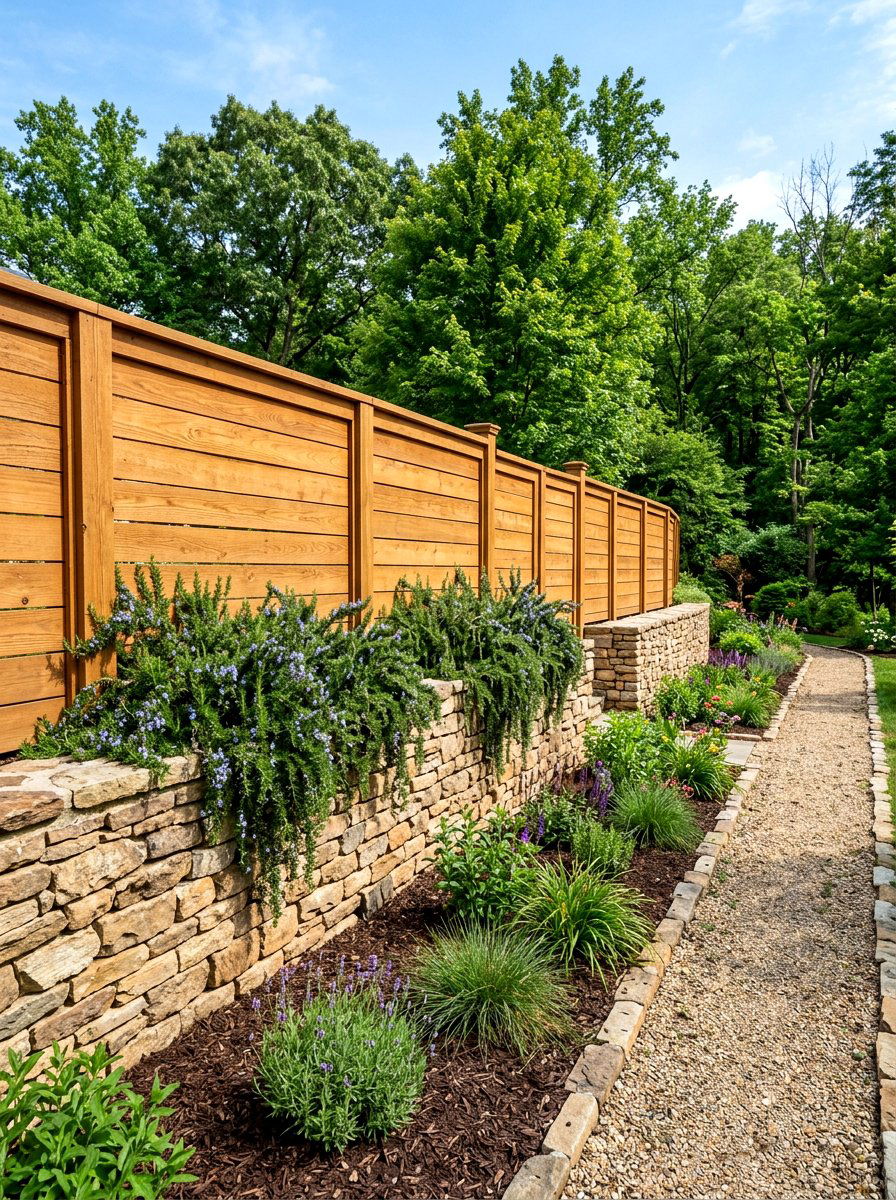
Mixing natural stone with wooden fencing creates a high-end, custom look that adds incredible depth and texture to your property line. You can build a low stone retaining wall at the base of the fence and fill it with cascading plants or colorful flowers. This combination of materials feels grounded and permanent, providing a strong architectural foundation for the rest of your landscape. The warmth of the wood contrasts beautifully with the cool tones of the stone, making it a versatile choice for both rustic and modern homes. It is a durable solution that helps manage soil erosion while elevating the overall aesthetic of your backyard.

15. Boxwood Hedge Border
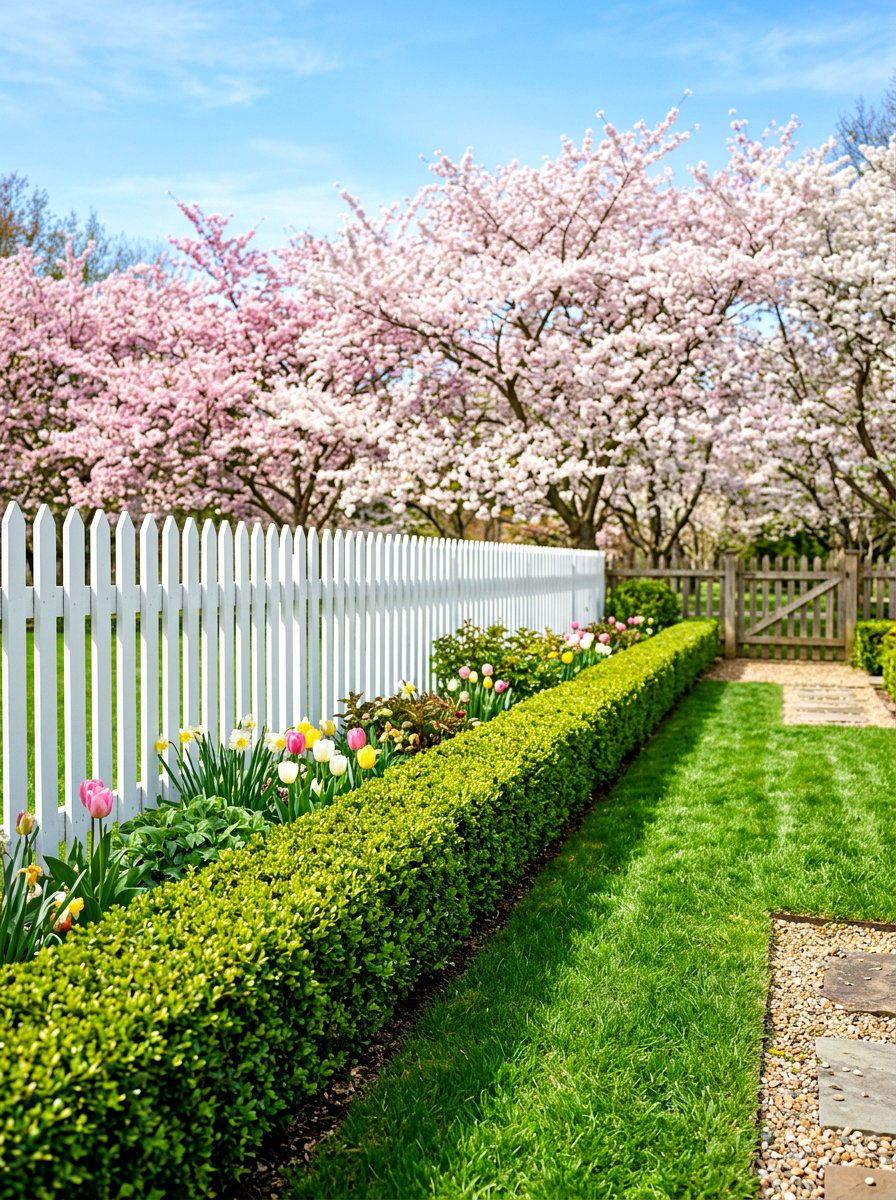
A boxwood hedge border provides a classic, formal look that never goes out of style for traditional or transitional homes. These evergreen shrubs can be pruned into tight, geometric shapes to create a clean green line that frames your fence perfectly. They provide year-round structure and a consistent color that makes other flowering plants pop when they are in bloom. Because boxwoods are slow-growing, they are relatively easy to maintain once they reach the desired height. Planting them in a straight row along the perimeter of your yard creates a sense of order and prestige that instantly boosts the curb appeal of your entire property.
16. Tall Ornamental Grasses
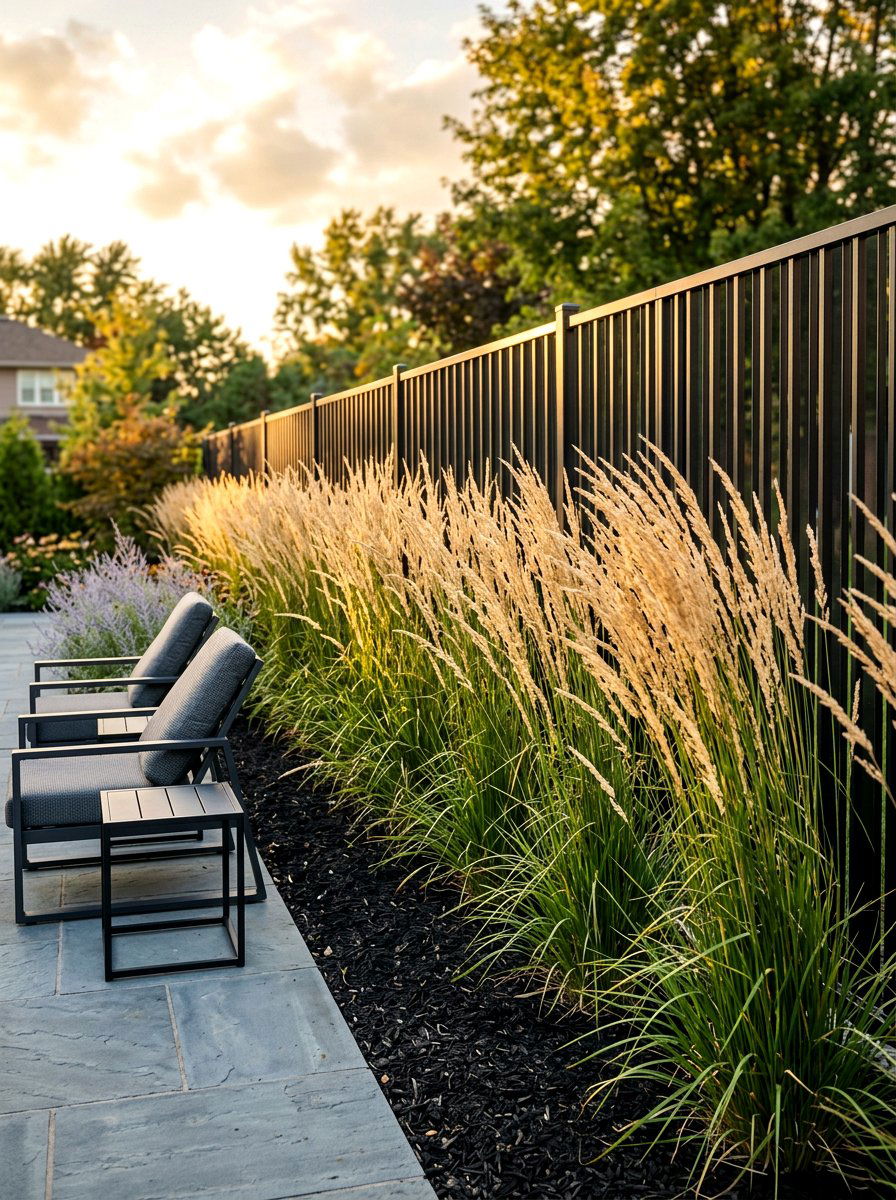
Tall ornamental grasses, such as Feather Reed Grass or Miscanthus, offer a soft and flowing alternative to rigid shrubs along a fence. These plants provide height and movement, swaying gracefully with the slightest breeze and creating a dynamic landscape. They are particularly beautiful in late summer and autumn when many varieties produce feathery plumes that catch the golden afternoon light. Because they grow quickly and remain upright through most of the winter, they provide excellent screening for a large portion of the year. Their fine texture contrasts wonderfully with the solid surface of a fence, making the yard feel more open, airy, and naturally beautiful.
17. Wildflower Meadow Perimeter
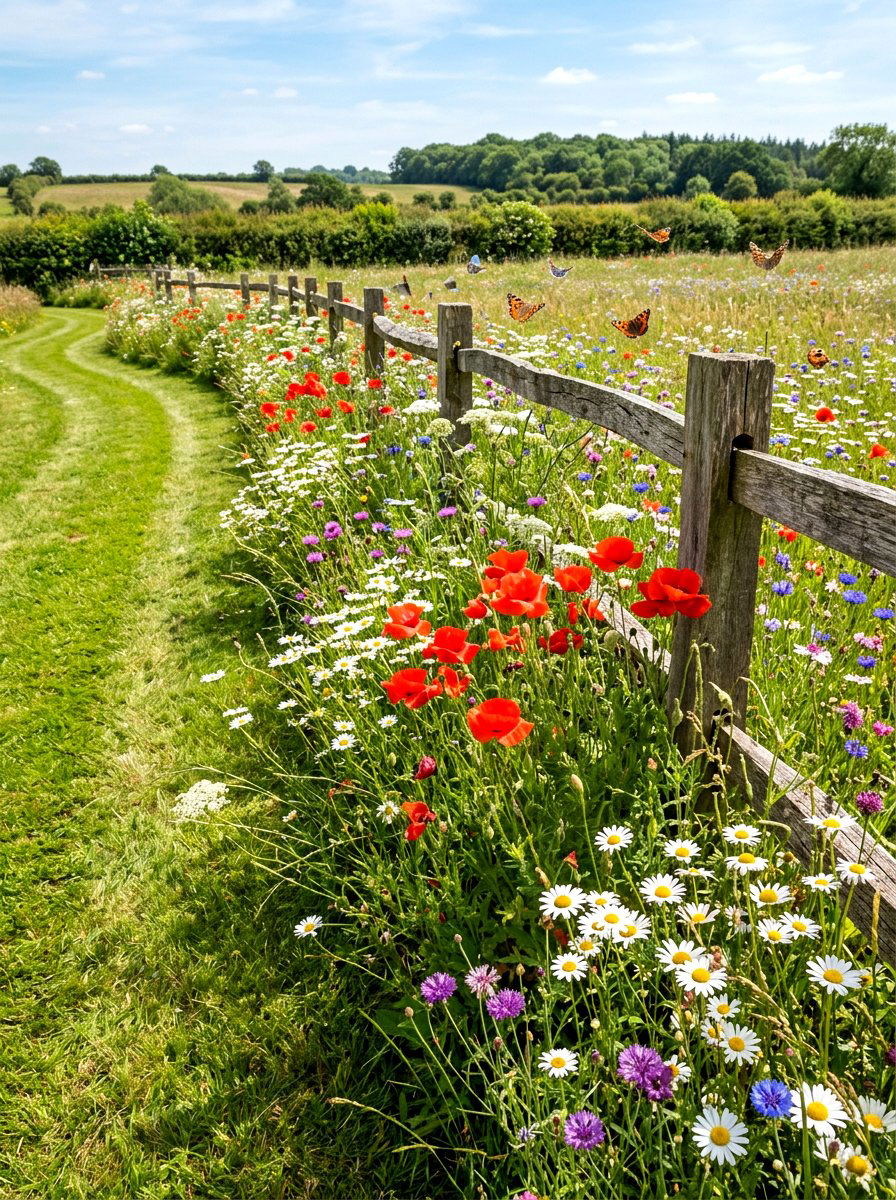
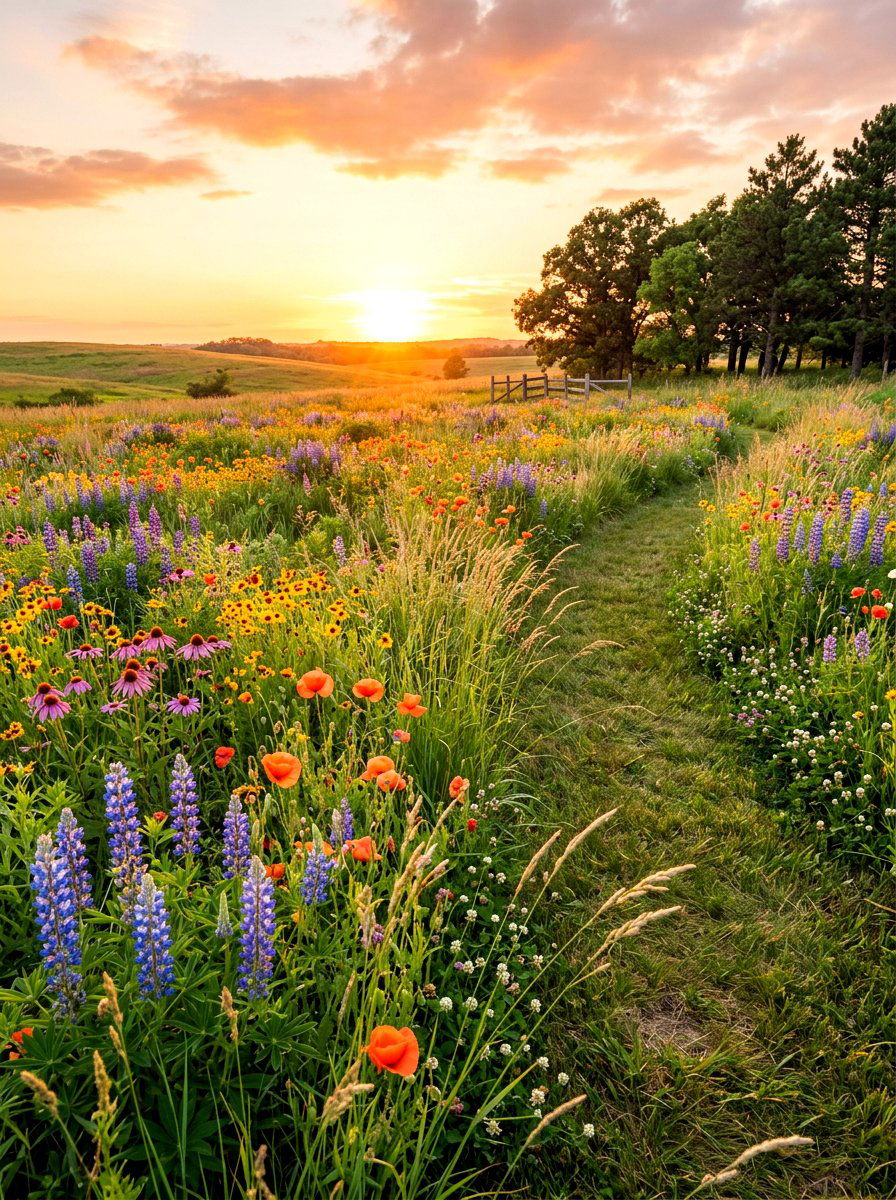
Planting a wildflower meadow along your fence line is a low-maintenance and eco-friendly way to support local pollinators like bees and butterflies. Instead of a manicured garden, you can sow a mix of native seeds that will grow into a colorful and untamed display of blooms. This style works perfectly with rustic or farmhouse-style fences and creates a soft, whimsical border that feels connected to the surrounding environment. Wildflowers are generally very hardy and require little water or fertilizer once they take root. The ever-changing colors and textures provide endless visual interest throughout the growing season and bring a touch of nature right to your doorstep.
18. Japanese Maple Accents
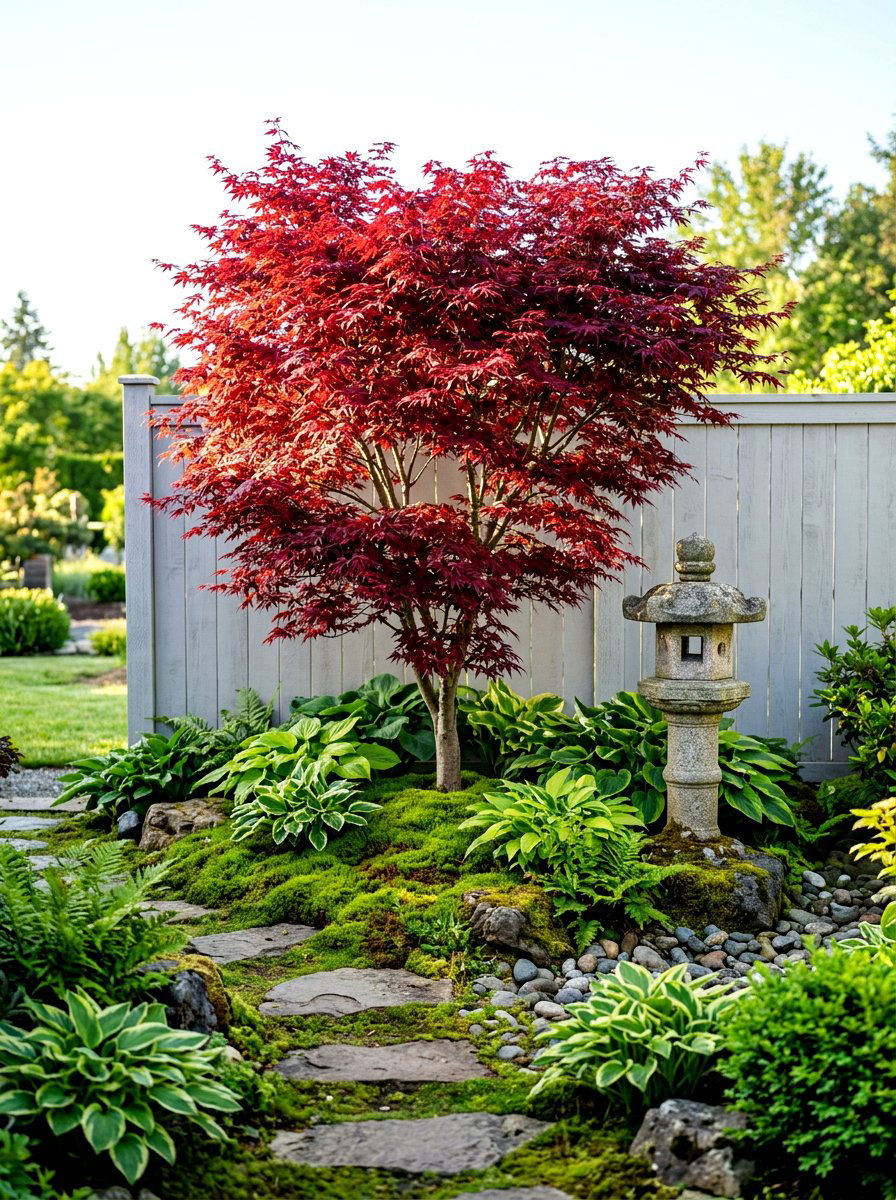
Incorporating Japanese Maple trees as accent pieces along your fence line adds a touch of sophisticated artistry and breathtaking seasonal color. These trees are prized for their delicate, lacy foliage and vibrant shades of red, orange, and purple that intensify during the autumn months. Because they are often small to medium in size, they fit perfectly into garden beds without overwhelming the space or blocking out all the light. Their unique structural shapes make them excellent focal points that look stunning when placed against a simple, neutral-colored fence. They bring a quiet, contemplative beauty to the garden that feels expensive and carefully curated by a professional.
19. Fence Mounted Window Boxes
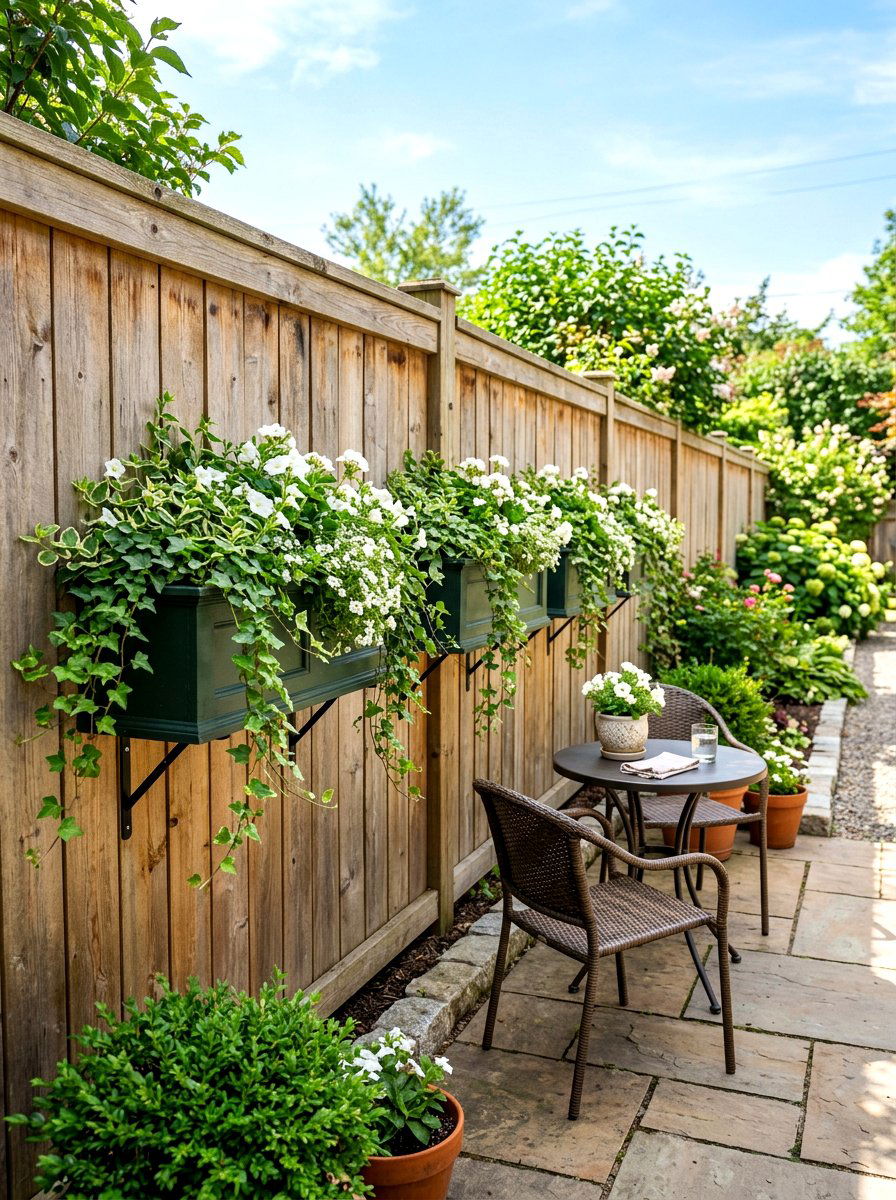
Hanging window-style planter boxes directly onto your fence is a charming way to bring flowers up to eye level and add immediate character. These boxes can be filled with trailing vines, colorful petunias, or even small strawberries for a fun and functional touch. This technique is particularly effective for breaking up long, monotonous stretches of wood or vinyl and adding a splash of color where it is needed most. You can paint the boxes to match your home’s trim or leave them natural for a rustic look. It is an easy DIY project that allows you to garden in small spaces while keeping the ground clear.
20. Outdoor Mirror Wall
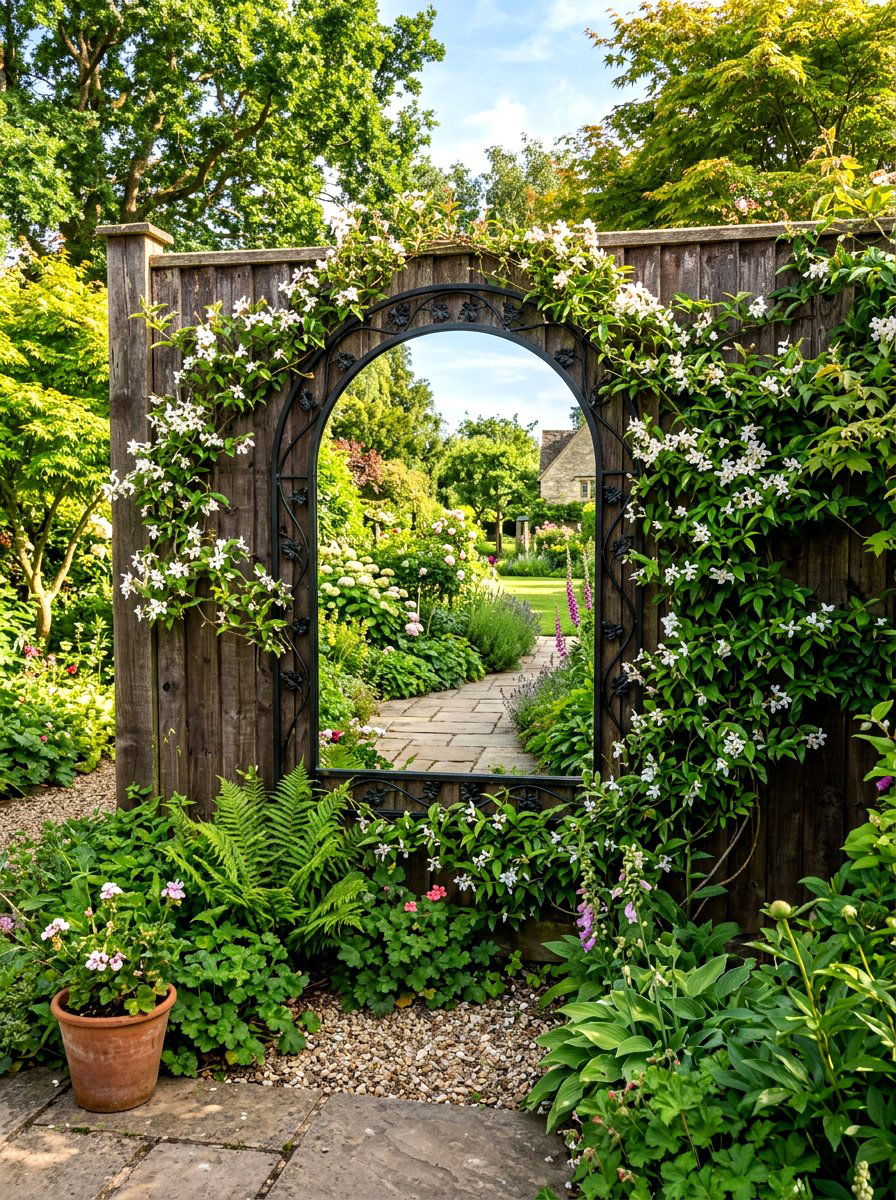
Adding an outdoor mirror to your fence is a clever design trick that can make a small or narrow backyard feel twice as large. When positioned correctly, the mirror reflects the greenery and light from the rest of the garden, creating the illusion of a hidden doorway or an extra garden room. It is important to choose a weather-resistant mirror designed specifically for outdoor use and to place it where it won't cause issues for birds. Framing the mirror with climbing vines or a few potted plants helps it blend seamlessly into the landscape. This artistic touch adds depth and a sense of luxury to any modern perimeter.
21. Espalier Fruit Trees
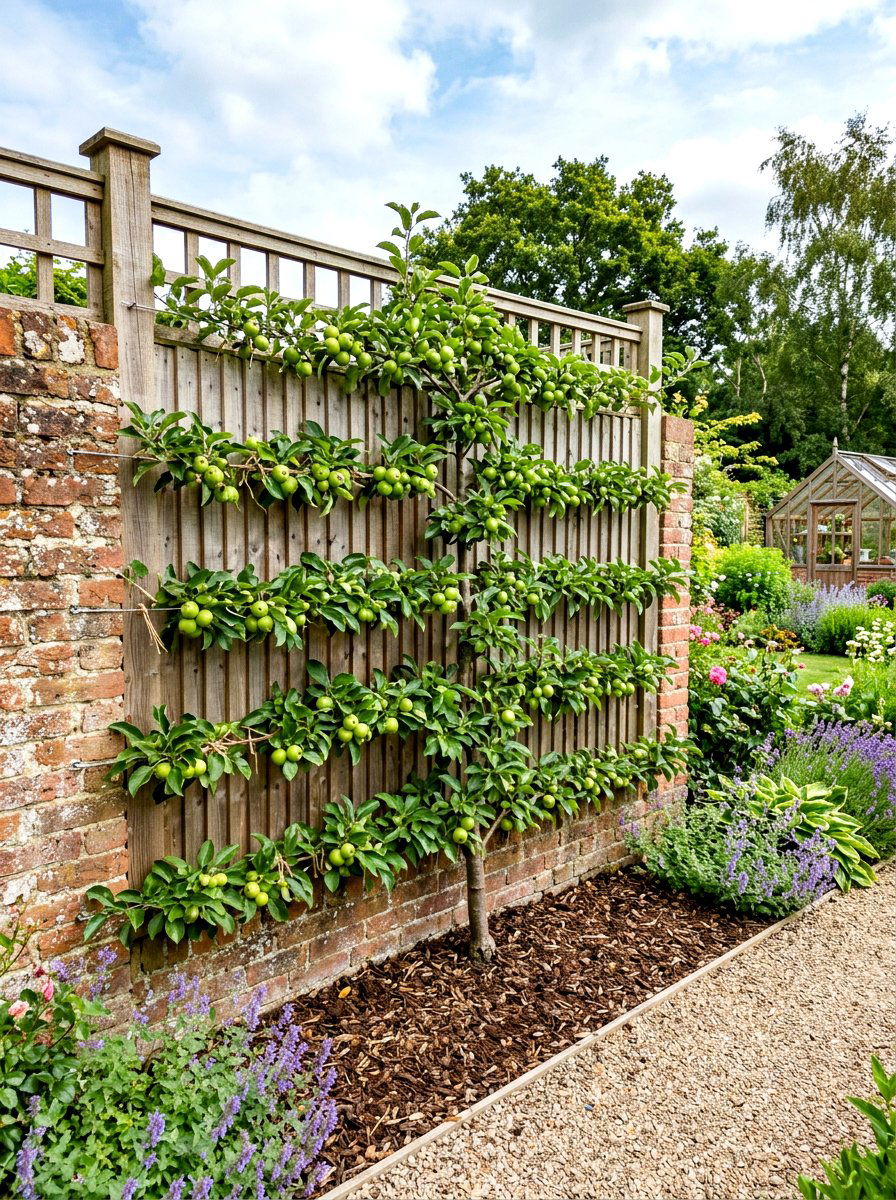
Espalier is an ancient gardening technique where fruit trees are trained to grow flat against a wall or fence in a specific pattern. This method allows you to grow delicious apples, pears, or peaches in a very small footprint, making it ideal for urban gardeners. The architectural shape of the branches creates a stunning living sculpture that remains interesting even in the winter when the leaves have fallen. During the spring, the branches are covered in beautiful blossoms, followed by edible fruit in the summer or fall. It is a sophisticated way to combine utility with high-end landscape design along any sturdy wooden property fence.
22. Flagstone Garden Path
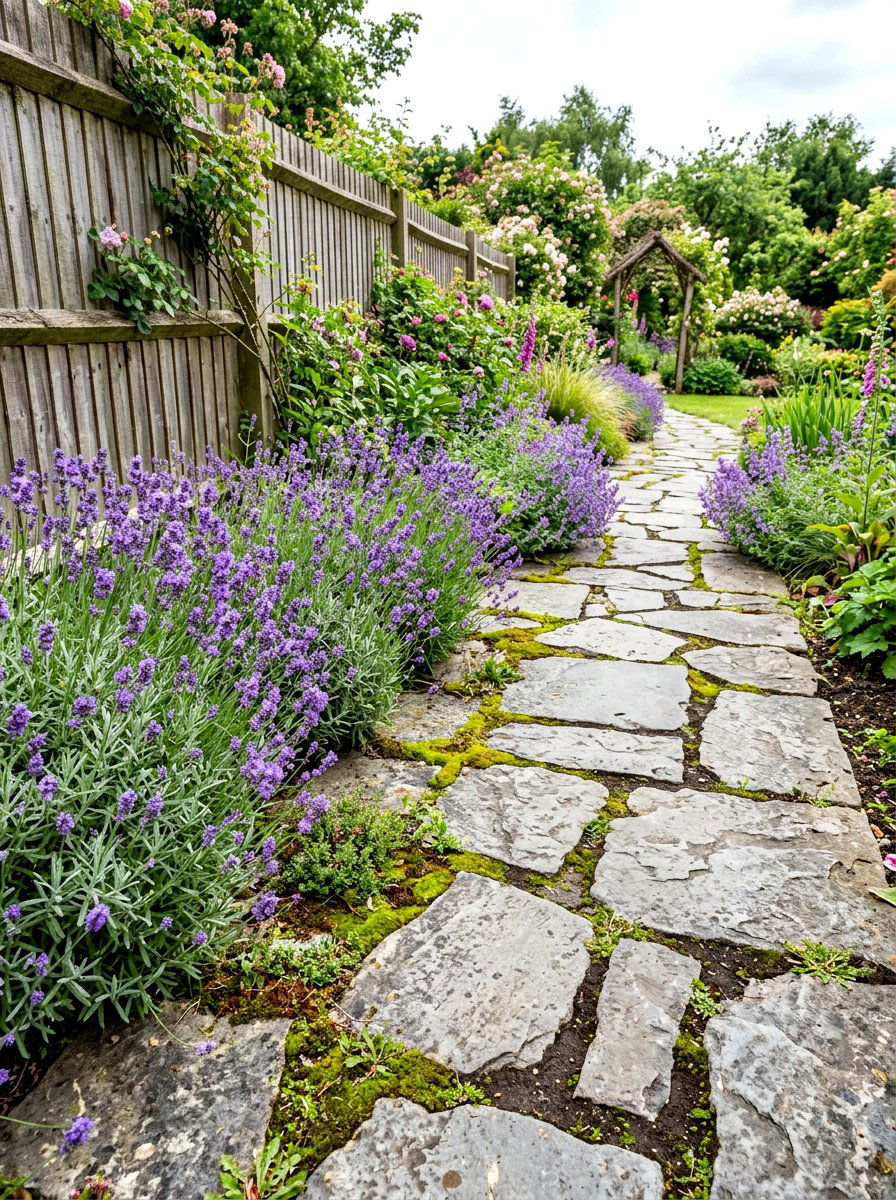
Installing a flagstone garden path that runs parallel to your fence line creates a clear sense of direction and purpose in your landscape. This path allows you to easily walk the perimeter of your yard to tend to your plants or enjoy the views without stepping on the wet grass. You can fill the gaps between the stones with low-growing groundcovers like creeping thyme or moss for a soft, natural look. The irregular shapes of the stone add a rustic and organic feel that balances the straight lines of the fence. A well-defined path makes the entire garden feel more organized, accessible, and professionally landscaped.
23. Succulent Rock Garden
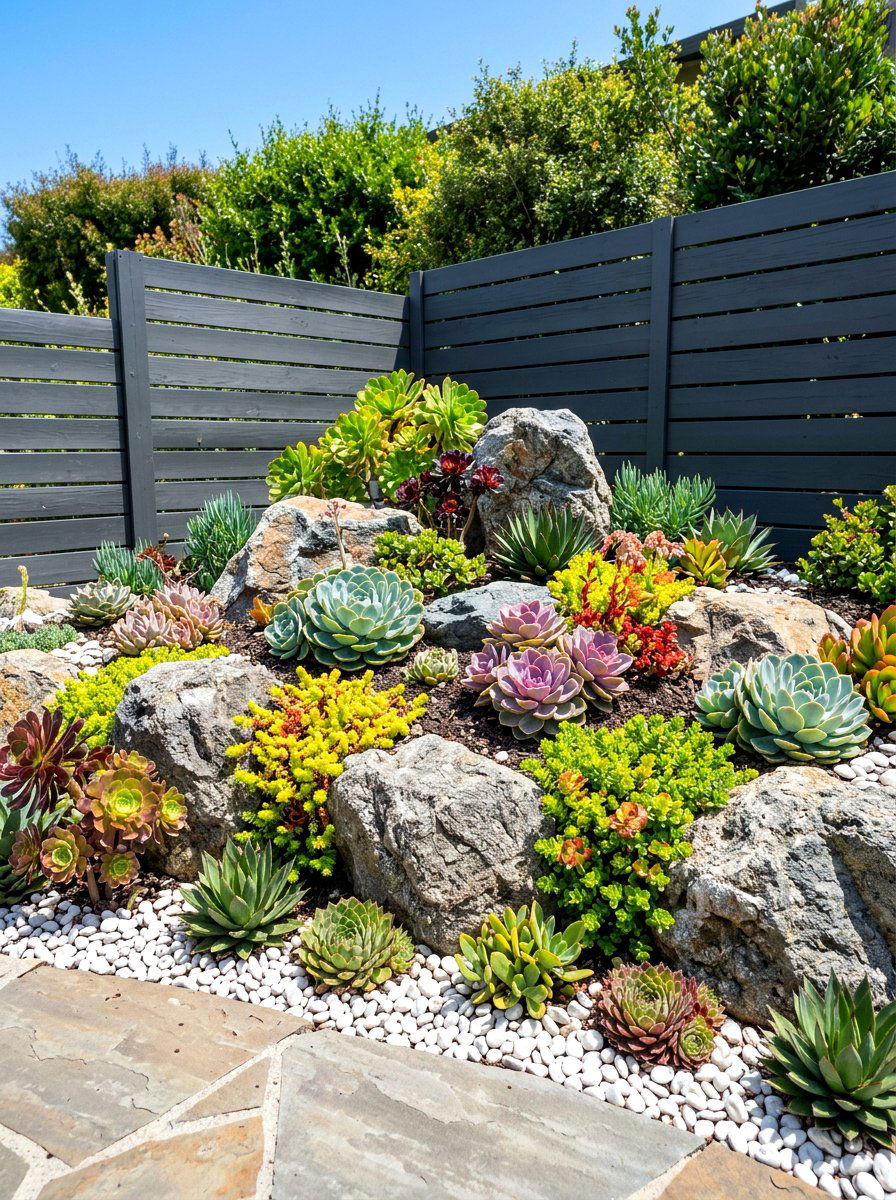
A succulent rock garden is a modern and low-maintenance solution for a sunny fence line that might have poor soil. By using various sizes of rocks and boulders, you can create a rugged and textured landscape that feels like a natural desert environment. Succulents come in a massive array of colors, shapes, and sizes, allowing you to create a detailed tapestry of plants that require almost no watering. This style looks particularly sharp against a black or dark gray modern fence, where the sculptural forms of the plants can really stand out. It is a durable and water-wise choice that stays looking beautiful and neat all year long.
24. Bird Friendly Habitat
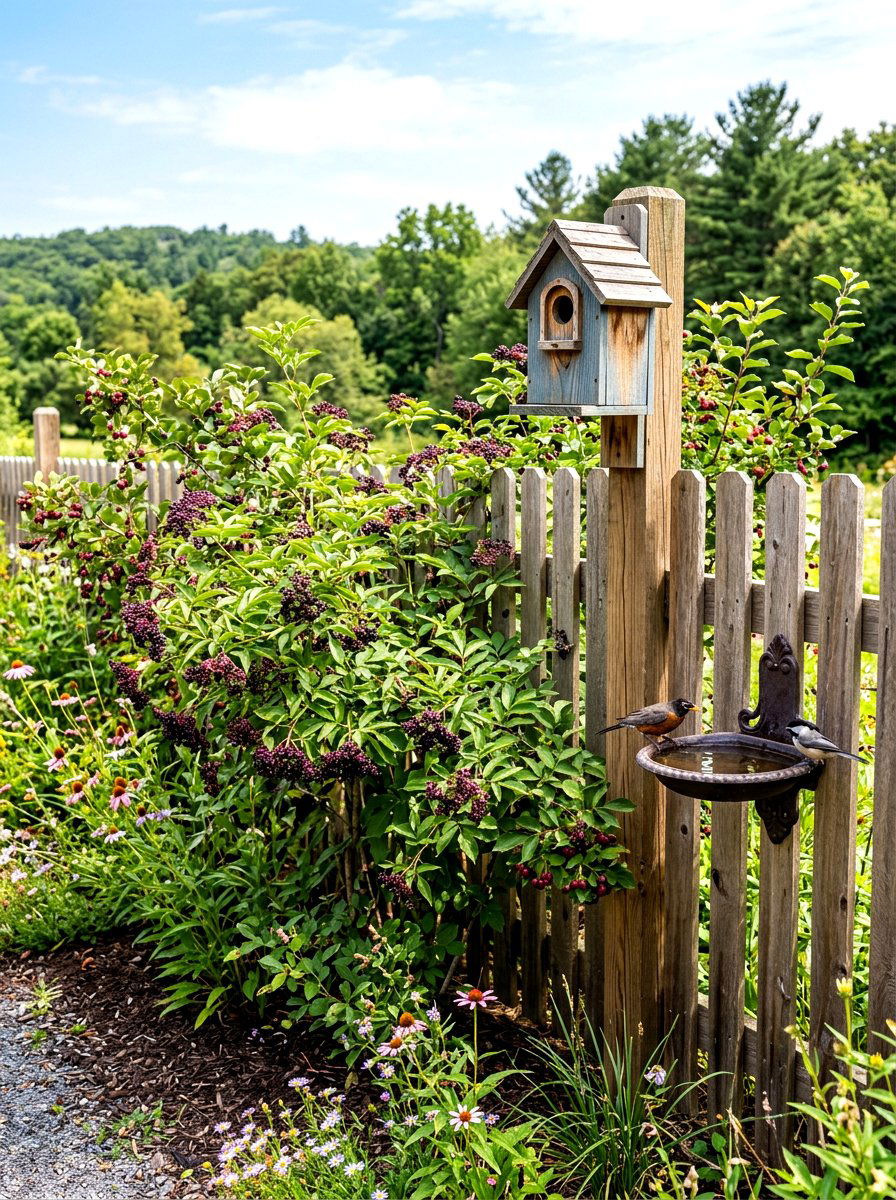
Designing your fence line as a bird-friendly habitat brings life and movement to your backyard through natural activity. You can plant native shrubs that produce berries, such as serviceberry or elderberry, to provide food sources for local birds throughout the year. Adding a few decorative birdhouses or a wall-mounted bird bath to the fence encourages feathered friends to visit and stay a while. This approach not only helps local wildlife but also provides you with hours of entertainment and a deeper connection to nature. A garden filled with birds feels more vibrant and peaceful, turning your property boundary into a thriving mini-ecosystem that benefits the whole neighborhood.
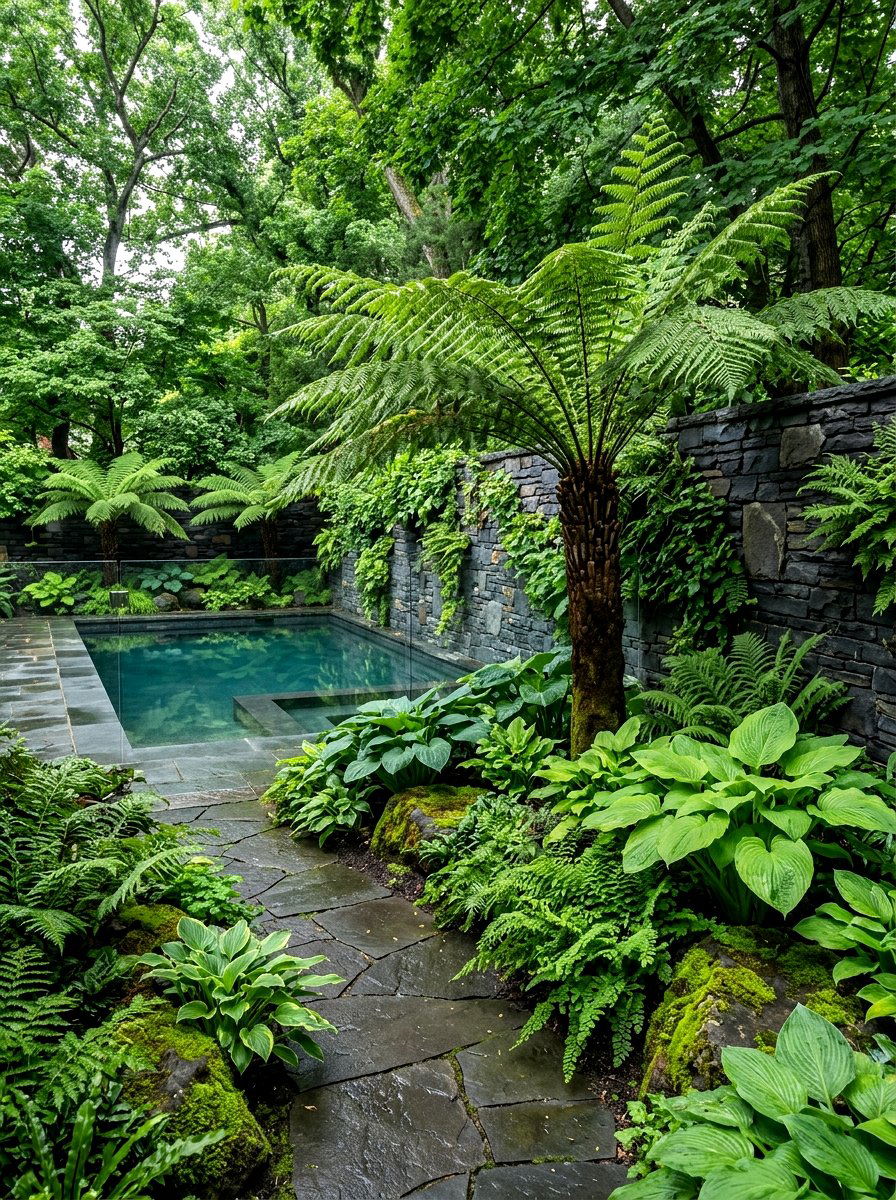
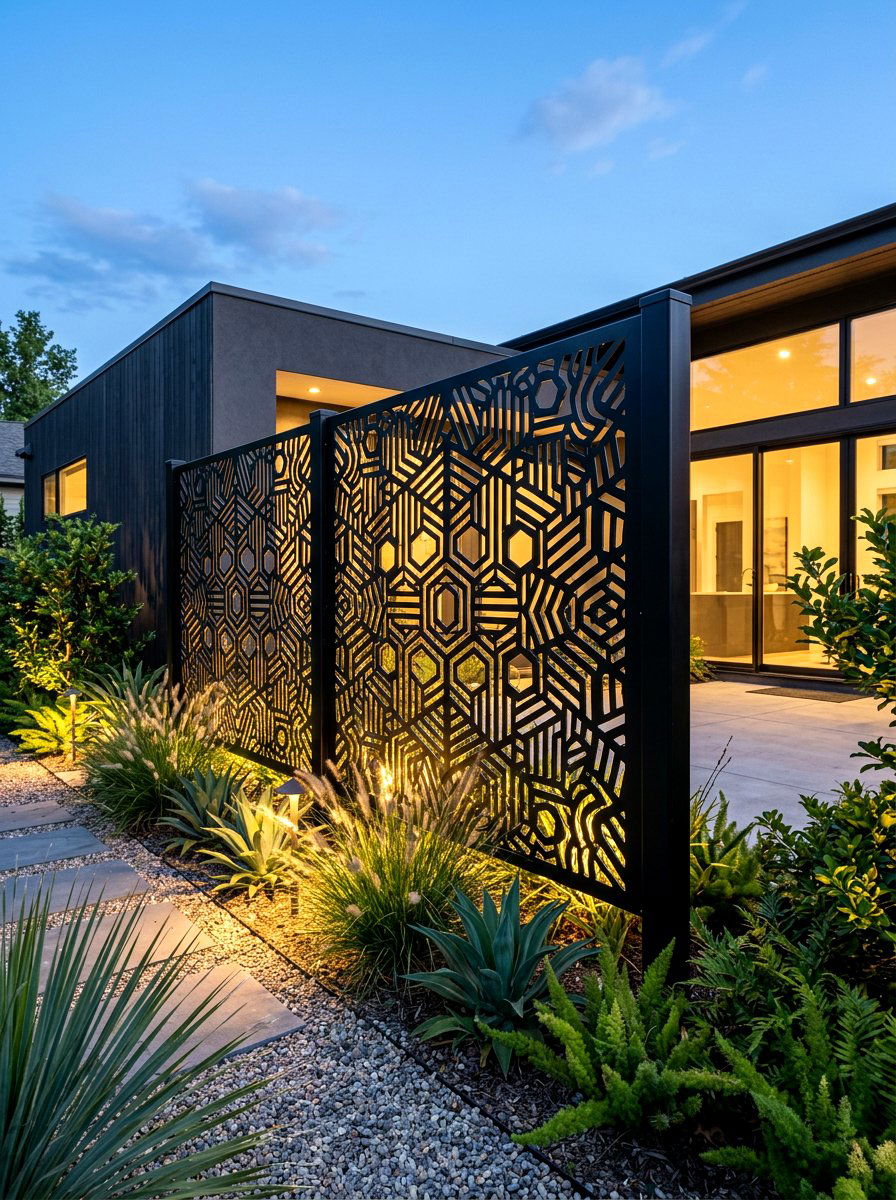
25. Backyard Water Feature
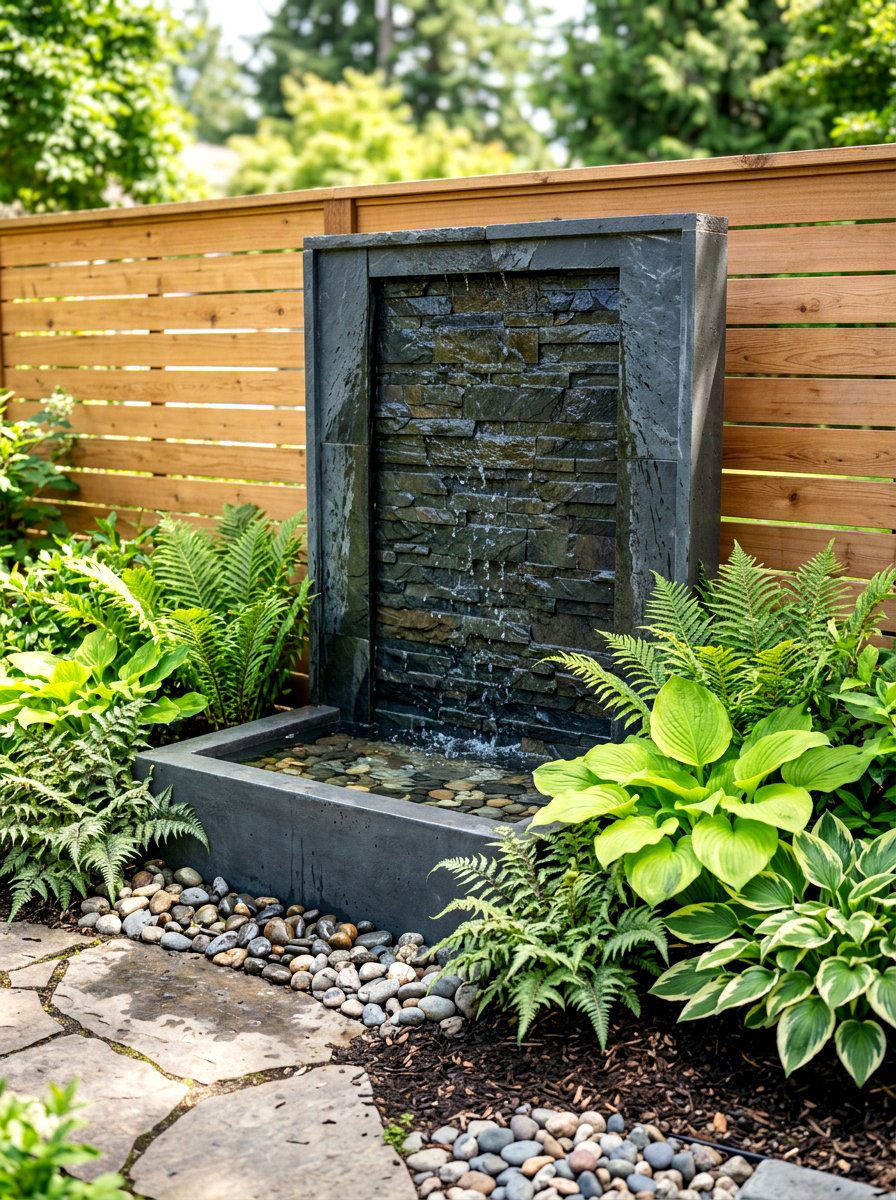
Incorporating a water feature along your fence line, such as a wall-mounted fountain or a small trickling pond, adds a layer of sensory luxury to your yard. The sound of running water is incredibly soothing and can help mask unwanted noise from nearby streets or neighbors. Water features act as a natural focal point that draws the eye and creates a sense of tranquility. You can surround the feature with moisture-loving plants like ferns and hostas to create a lush, cool microclimate. Whether it is a modern slate water wall or a classic stone basin, a water element elevates the entire backyard atmosphere and makes it feel like a professional retreat.
26. Pergola Fence Extension
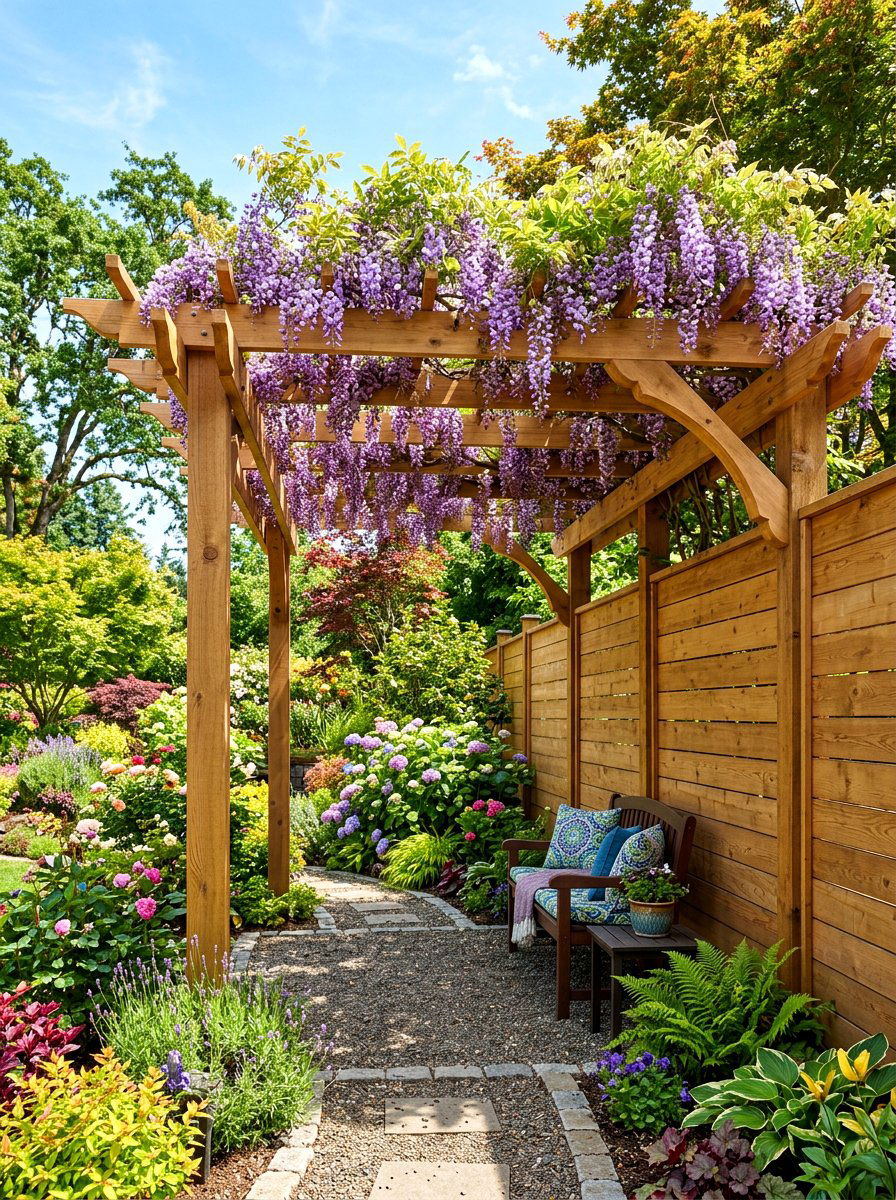
Adding a pergola extension to the top of your fence provides additional height for privacy while creating a stunning architectural detail. The open beams of the pergola allow light to filter through, so the yard doesn't feel overly shaded or enclosed. You can grow heavy-flowering vines like wisteria or clematis over the structure to create a fragrant and colorful canopy. This design idea adds a sense of "ceiling" to your outdoor space, making it feel more like an extension of your indoor living room. It is a fantastic way to increase the vertical interest of your property line and provide a shaded area for a small garden bench.
27. Privacy Lattice Panels
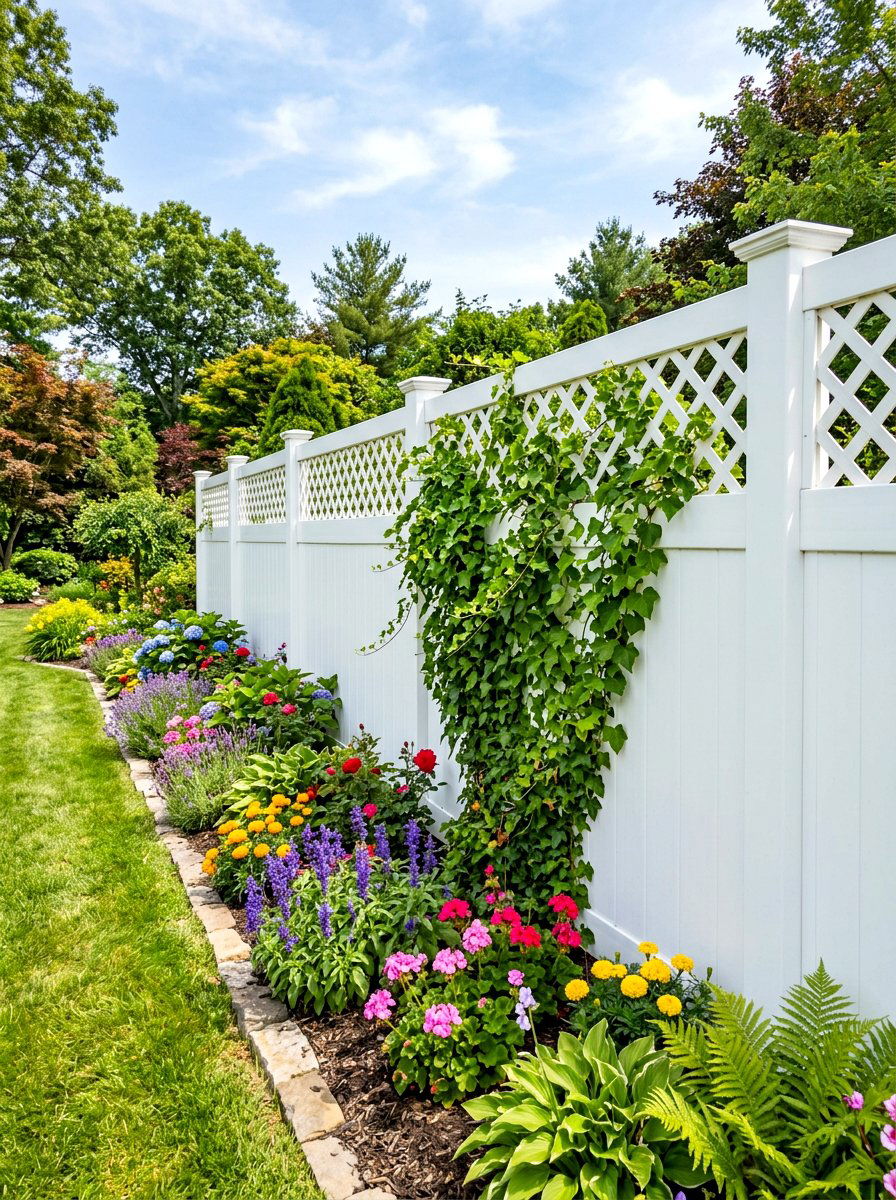
Attaching privacy lattice panels to the top of an existing fence is an easy and affordable way to gain extra height and screening. The criss-cross pattern of the lattice provides a beautiful texture that allows air to flow through while blocking direct sightlines from higher elevations. It serves as an excellent support system for lightweight climbing plants like morning glories or ivy, which can quickly fill in the gaps for a solid green wall. Lattice comes in various materials, including wood, vinyl, and metal, so you can easily find a style that matches your home’s exterior. It is a practical solution for homeowners seeking immediate intimacy and style.
28. Coastal Garden Theme
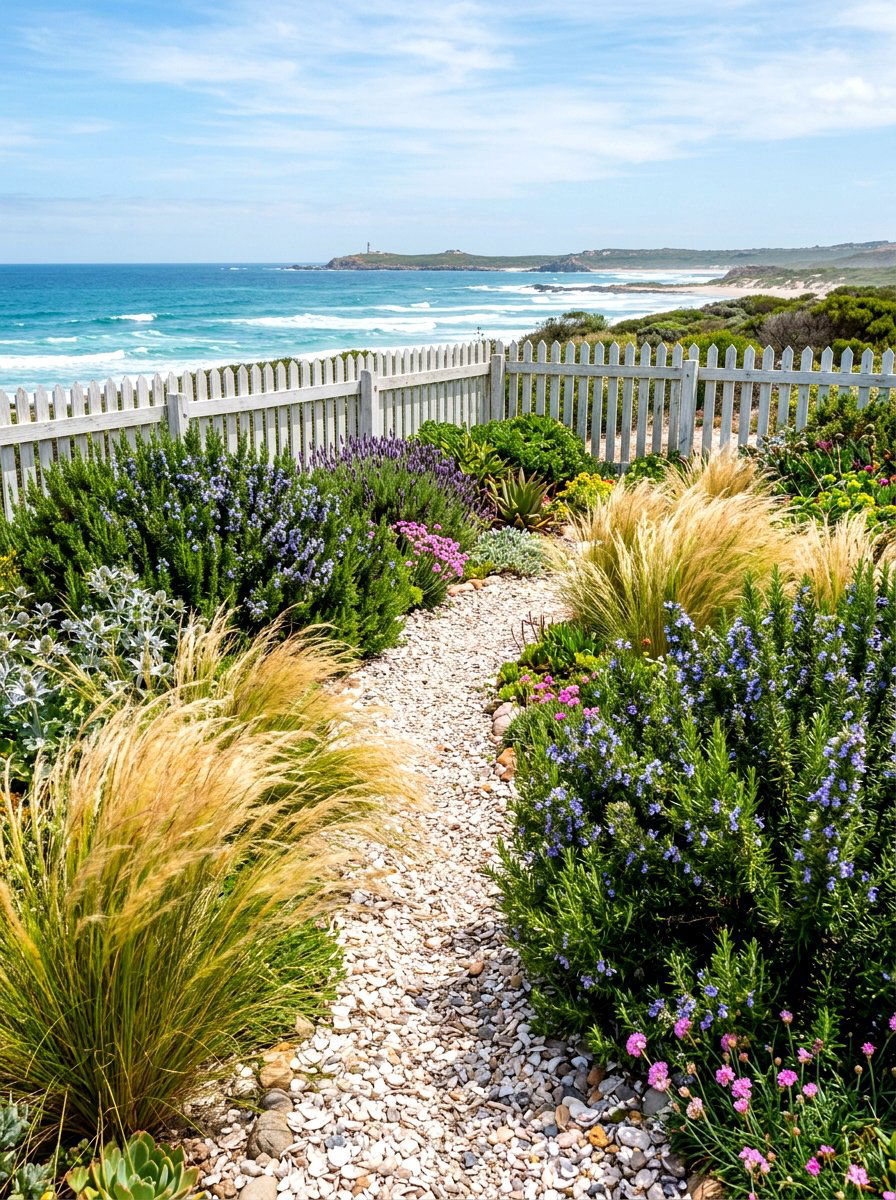
A coastal garden theme along your fence line can bring a breezy, relaxed beach vibe to your home regardless of where you live. By using a light-colored or whitewashed fence as your backdrop, you can plant sea-inspired greenery like ornamental grasses, lavender, and rosemary. These plants are often hardy and have a soft, silvery-green palette that looks beautiful against white or light gray wood. Adding a few pieces of driftwood, some large seashells, or a path of crushed oyster shells completes the aesthetic. This style is all about simplicity and natural beauty, creating a calm and inviting space that feels like a seaside escape every time you step outside.
29. White Vinyl Fence Decor
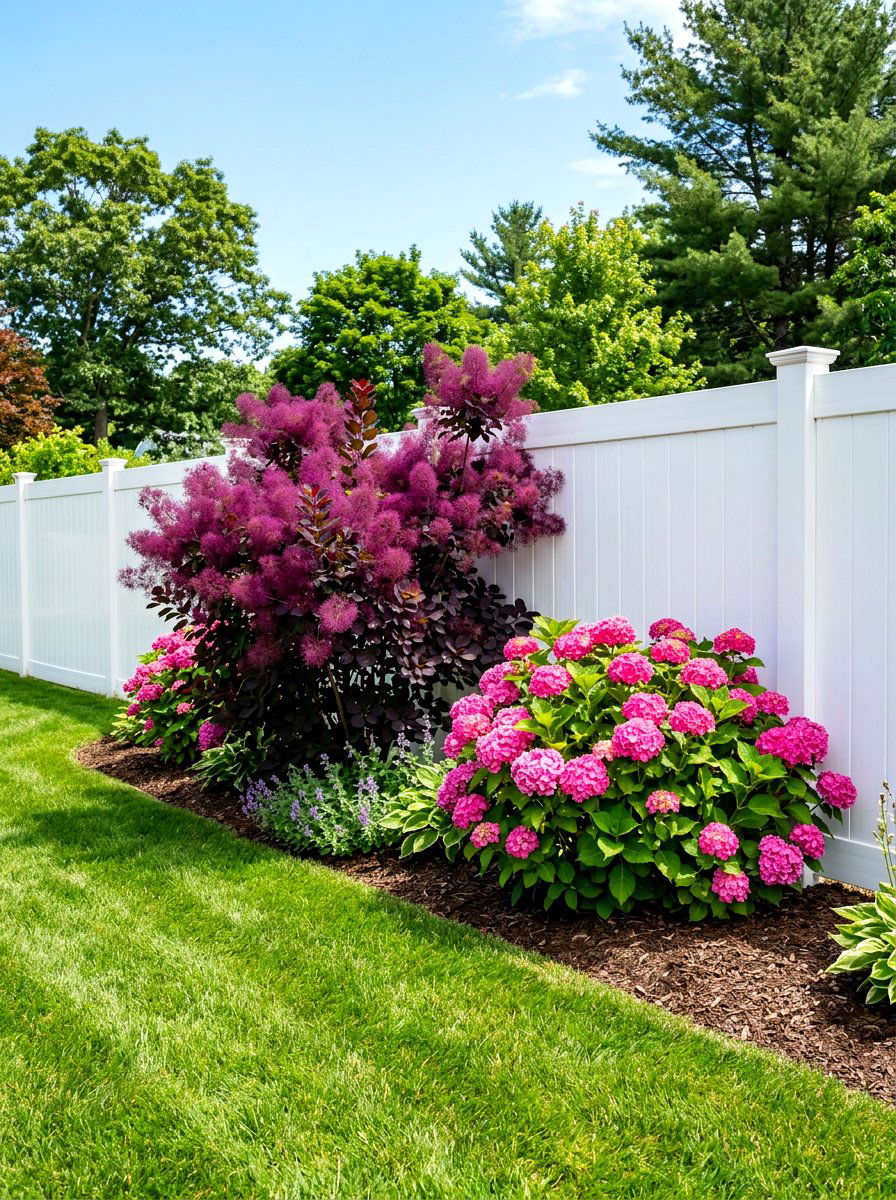
While white vinyl fences are incredibly durable and low-maintenance, they can sometimes look a bit stark or plain without proper landscaping. You can soften this look by planting bold, dark-foliaged plants like Black Lace Elderberry or deep purple smokebush to create a high-contrast display. Adding colorful flowering shrubs like hydrangeas or azaleas provides a classic suburban look that is clean and welcoming. You can also use black metal hardware or hanging planters to add a touch of modern farmhouse style to the fence itself. Thoughtful landscaping turns a standard vinyl perimeter into a beautiful and intentional frame for your entire backyard garden and outdoor seating areas.
30. Formal Topiary Garden
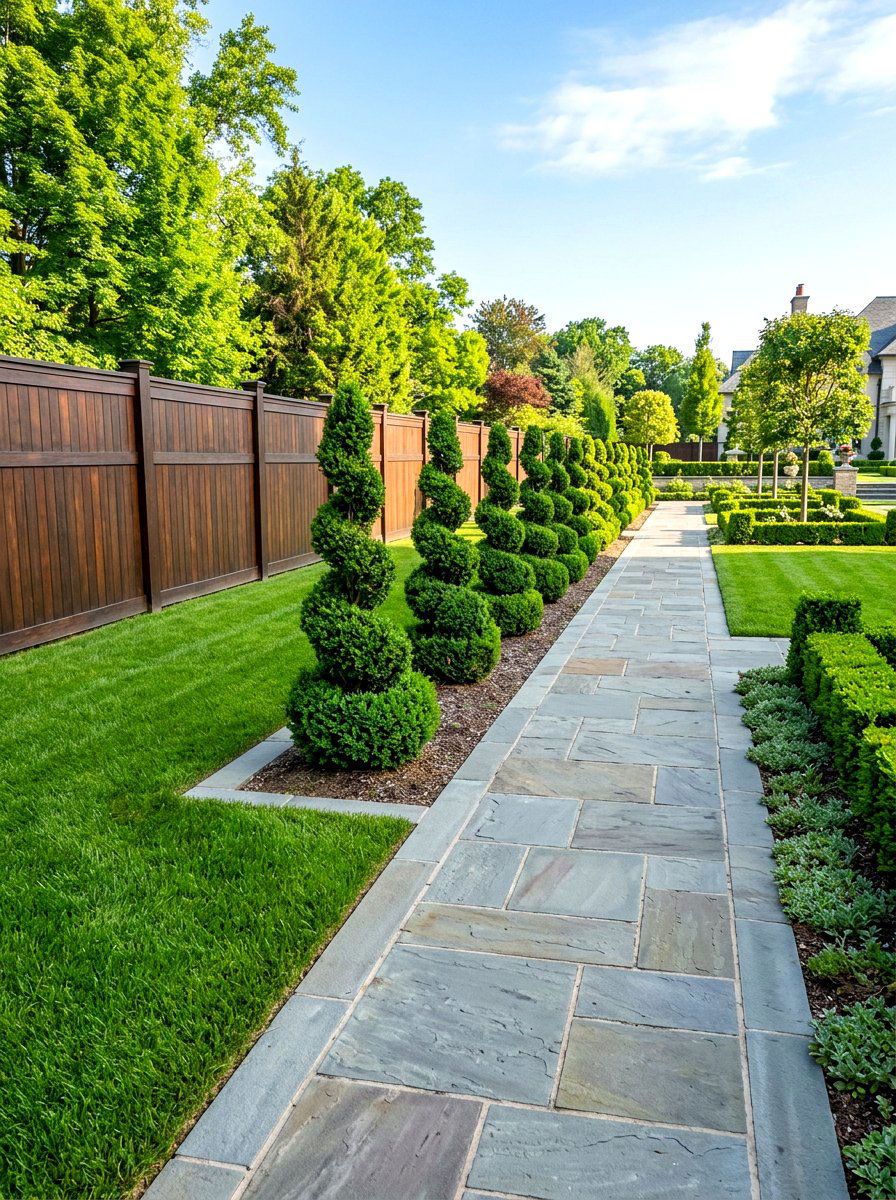
For a truly high-end and luxurious look, a formal topiary garden along your fence line makes a bold and sophisticated statement. This style involves training and pruning evergreen plants into specific shapes like cones, spheres, or spirals. When arranged in a repeating pattern along a well-maintained fence, topiaries create a sense of rhythm and architectural elegance that is common in grand European estates. It requires a bit more maintenance to keep the shapes sharp, but the visual reward is a yard that looks like a work of art. This formal approach works best for homeowners who appreciate precision, order, and a timelessly classic landscape design for their home.
Conclusion:
Transforming your fence line is one of the most effective ways to enhance the beauty, privacy, and functionality of your entire backyard. By moving beyond a simple barrier and embracing creative landscaping ideas, you can turn a plain perimeter into a lush garden, a productive farm, or a modern architectural feature. Whether you prefer the low-maintenance appeal of ornamental grasses or the romantic charm of climbing roses, there is a design solution that fits your personal lifestyle and home aesthetic. Taking the time to plan your property boundaries ensures that every inch of your outdoor space is utilized to its fullest potential, creating a lasting sanctuary for years.

Related posts: