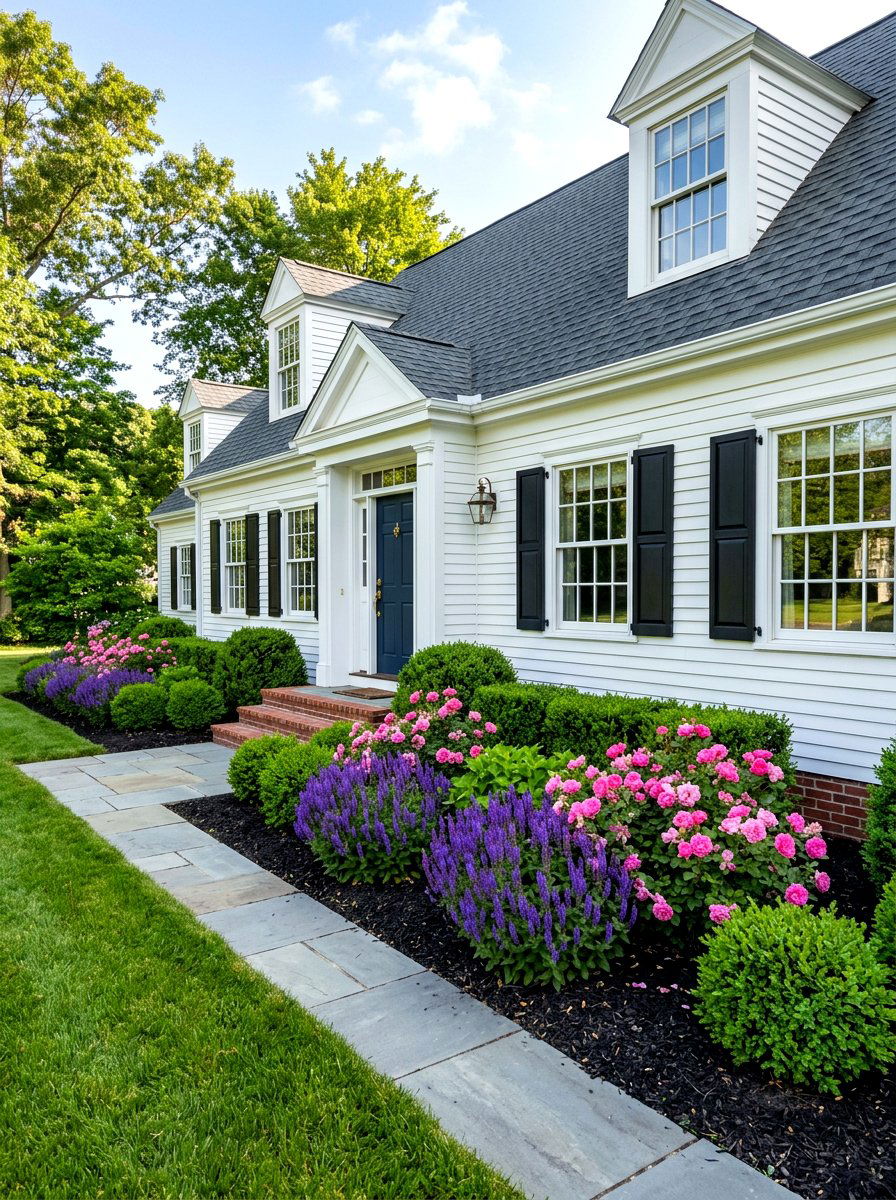
Creating a beautiful foundation flower bed is the most effective way to instantly elevate your home’s curb appeal and establish a welcoming atmosphere. These gardens serve as the visual bridge between your house’s architecture and the natural landscape, softening hard lines and grounding the structure. A well-planned foundation design does more than just hide concrete; it reflects your personal style and increases property value significantly. Whether you prefer the structured look of formal hedges or the whimsical charm of a blooming cottage border, the right combination of plants ensures year-round interest. By carefully selecting textures, colors, and heights, you can transform a plain exterior into a breathtaking masterpiece that delights neighbors and guests throughout every season.
1. Symmetrical Entryway Hedges
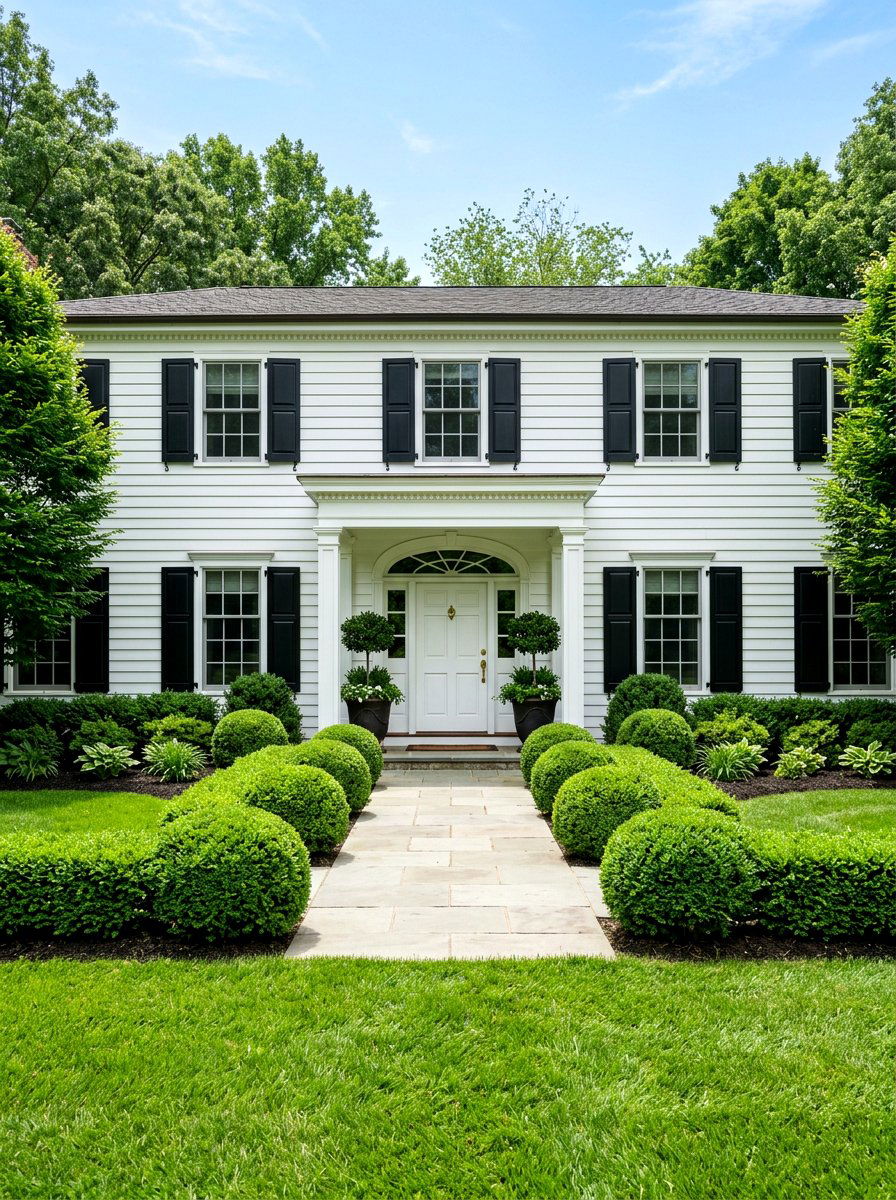
A symmetrical layout around the front door creates a sense of formal elegance and balance that immediately draws the eye to the entrance. This design typically utilizes matched pairs of evergreen shrubs like boxwoods or hollies to frame the porch steps perfectly. By mirroring the planting on both sides, you reinforce the home’s architectural lines while maintaining a neat, curated appearance. You can enhance this look by adding a few low-growing flowering perennials at the base of the hedges for a seasonal pop of color. This classic approach works exceptionally well for traditional, colonial, or ranch-style homes where order and clean lines are the primary design goals for the front landscape.
2. Layered Flowering Shrub Borders
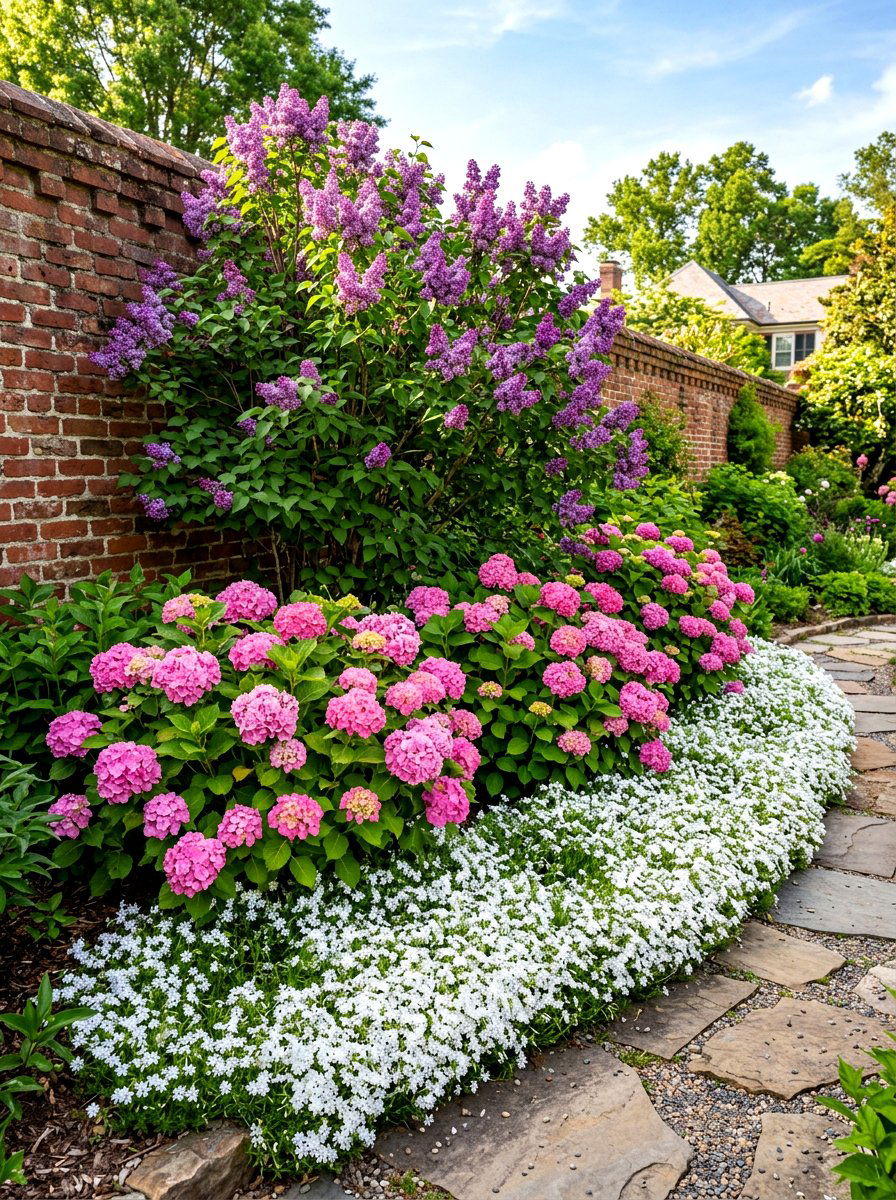
Layering plants by height is a professional landscaping technique that adds depth and visual complexity to the front of any house. Start with taller shrubs like lilacs or viburnums against the wall to act as a lush green backdrop. In the middle, place medium-sized flowering species such as hydrangeas or azaleas to provide a massive burst of color during the spring and summer months. Finally, finish the front edge with low-growing groundcovers or spilling perennials like creeping phlox. This stepped arrangement ensures every plant is visible and creates a full, abundant look that masks the foundation completely while providing various textures and blooming schedules for continuous beauty.
3. Low Maintenance Evergreen Foundations
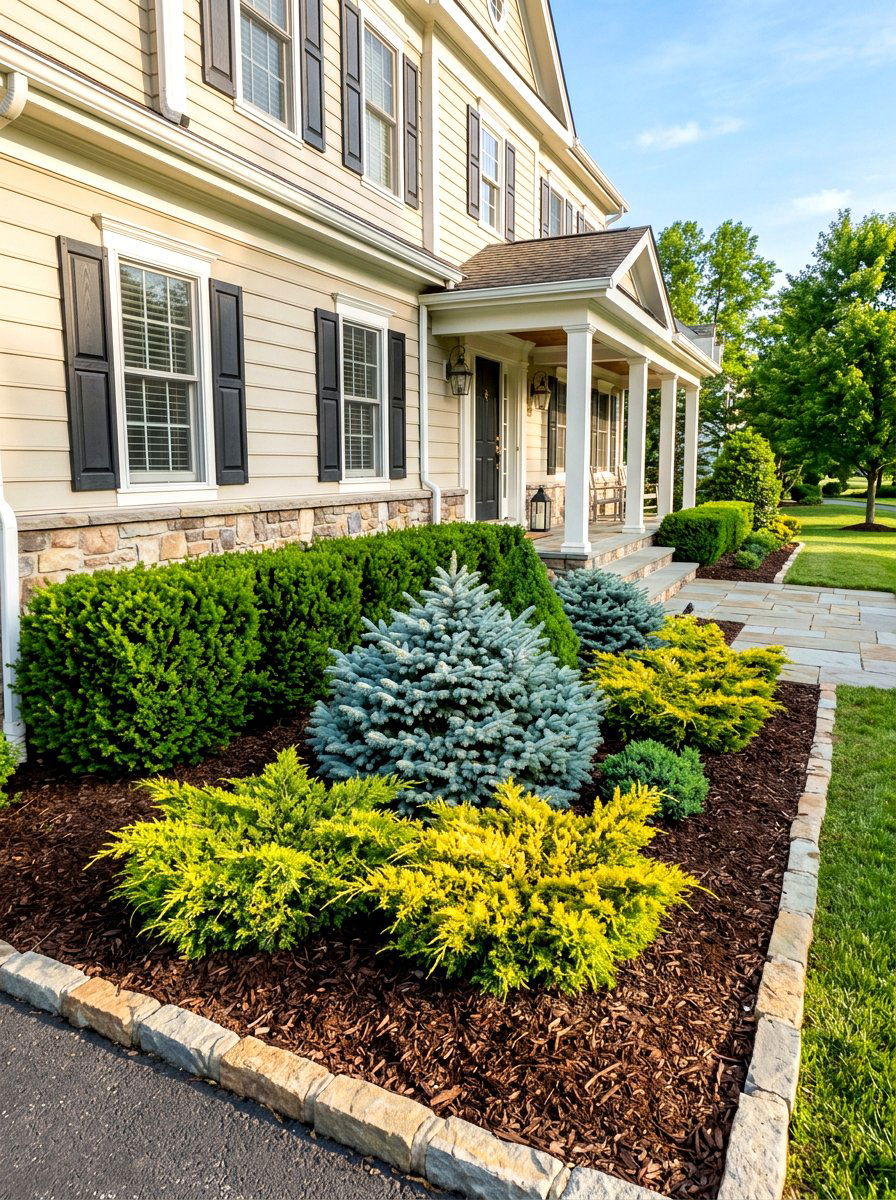
For homeowners who want a beautiful look without the heavy weekend yard work, a foundation bed focused on hardy evergreens is the perfect solution. This design relies on a variety of needle and broadleaf evergreens like dwarf spruce, juniper, and yew to provide structure that stays green even in the dead of winter. Because these plants are generally slow-growing, they require very little pruning and maintain their shape for years. You can add visual interest by mixing different shades of green, from silvery blues to bright chartreuse. This style provides a permanent, polished frame for the home that looks professional and intentional with absolutely minimal effort or seasonal replanting.
4. Shady Hostas and Fern Retreats
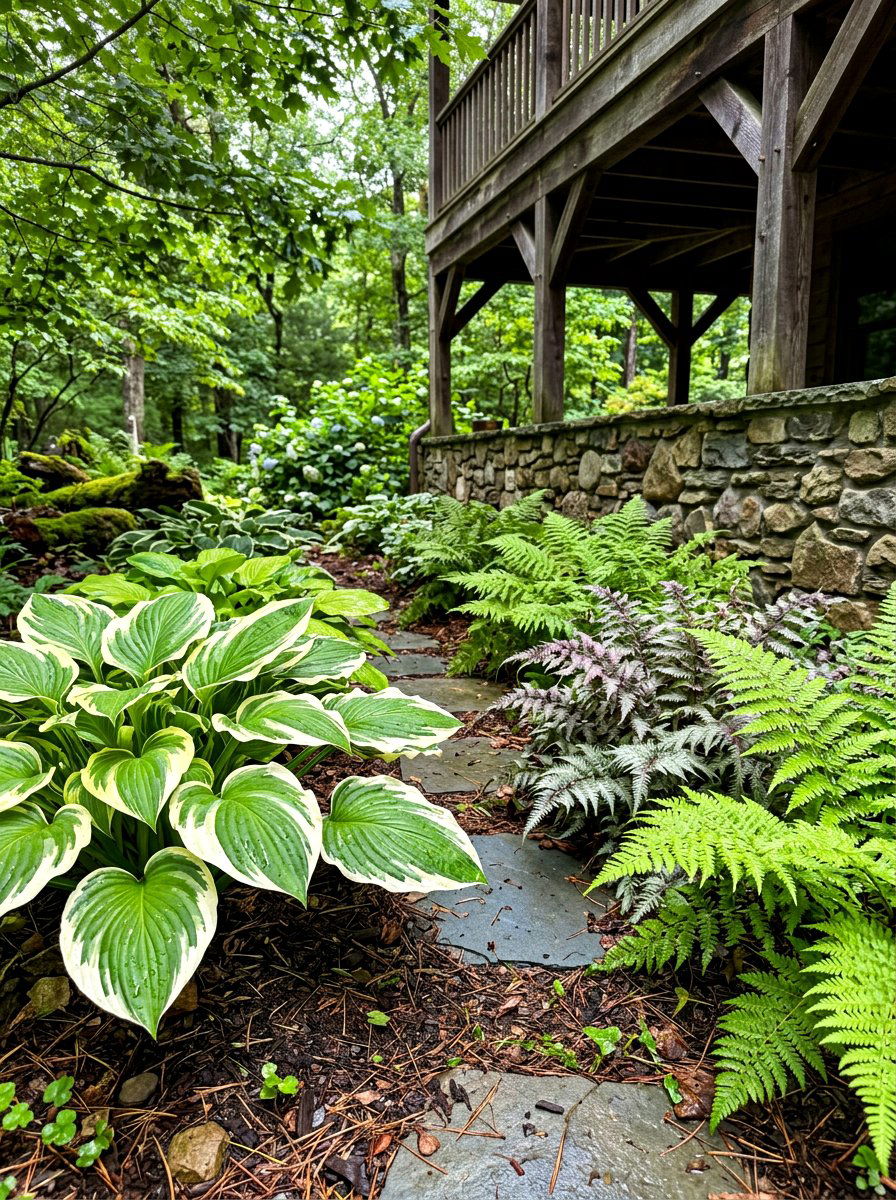
If the front of your home is shielded by large trees or faces north, a shade-tolerant foundation bed can turn a dark corner into a lush woodland sanctuary. Focus on large-leaved hostas in various variegated patterns of white, gold, and deep forest green to create immediate impact. Complement these with the delicate, airy textures of ferns like maidenhair or Japanese painted ferns to add a soft, whimsical feel. These plants thrive in low-light conditions and provide a cooling visual effect during the hot summer months. Incorporating a few bleeding hearts or astilbe adds a touch of floral color without sacrificing the low-light requirements of the primary foliage.
5. Modern Minimalist Boxwood Grids
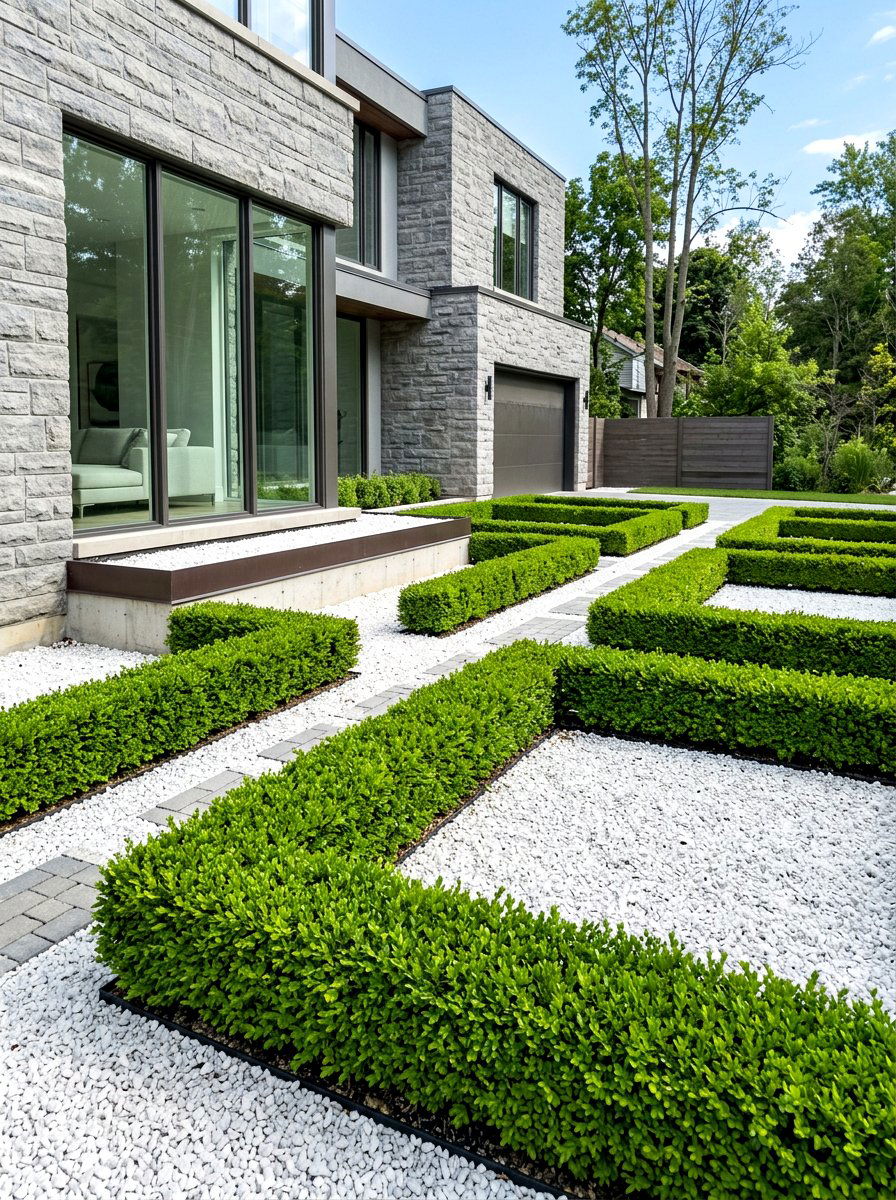
Modern architecture often calls for a landscape that is as sleek and structured as the building itself, making a minimalist boxwood design ideal. Instead of a chaotic mix of flowers, this style uses a few selected species planted in precise, geometric patterns or clean straight rows. Neatly clipped boxwood globes or low rectangular hedges create a sophisticated look that emphasizes the home's clean lines and contemporary materials. Using a dark mulch or light-colored decorative gravel beneath the plants helps highlight their shapes and keeps the design looking sharp. This high-end aesthetic is perfect for those who appreciate architectural clarity and a high-contrast, clutter-free outdoor environment that feels modern.
6. Cottage Style Wildflower Mixed Beds
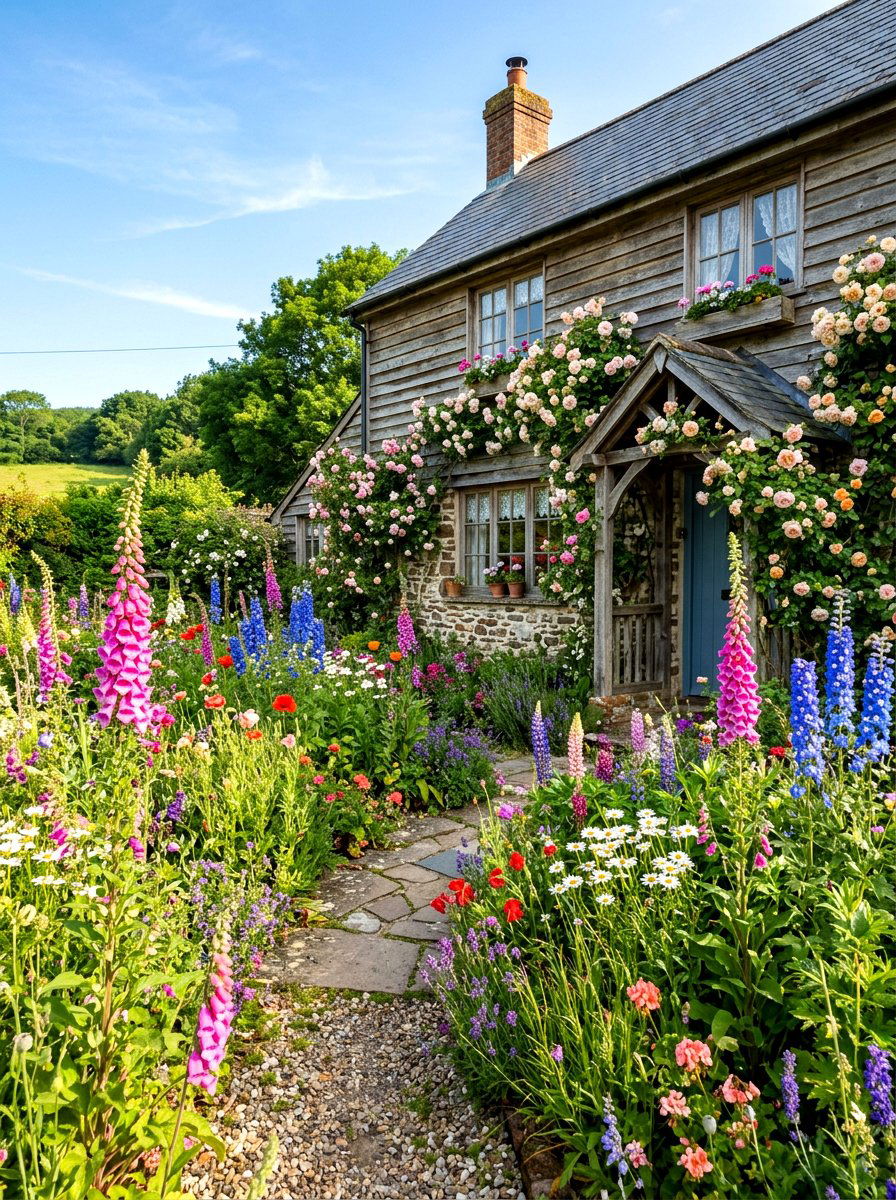
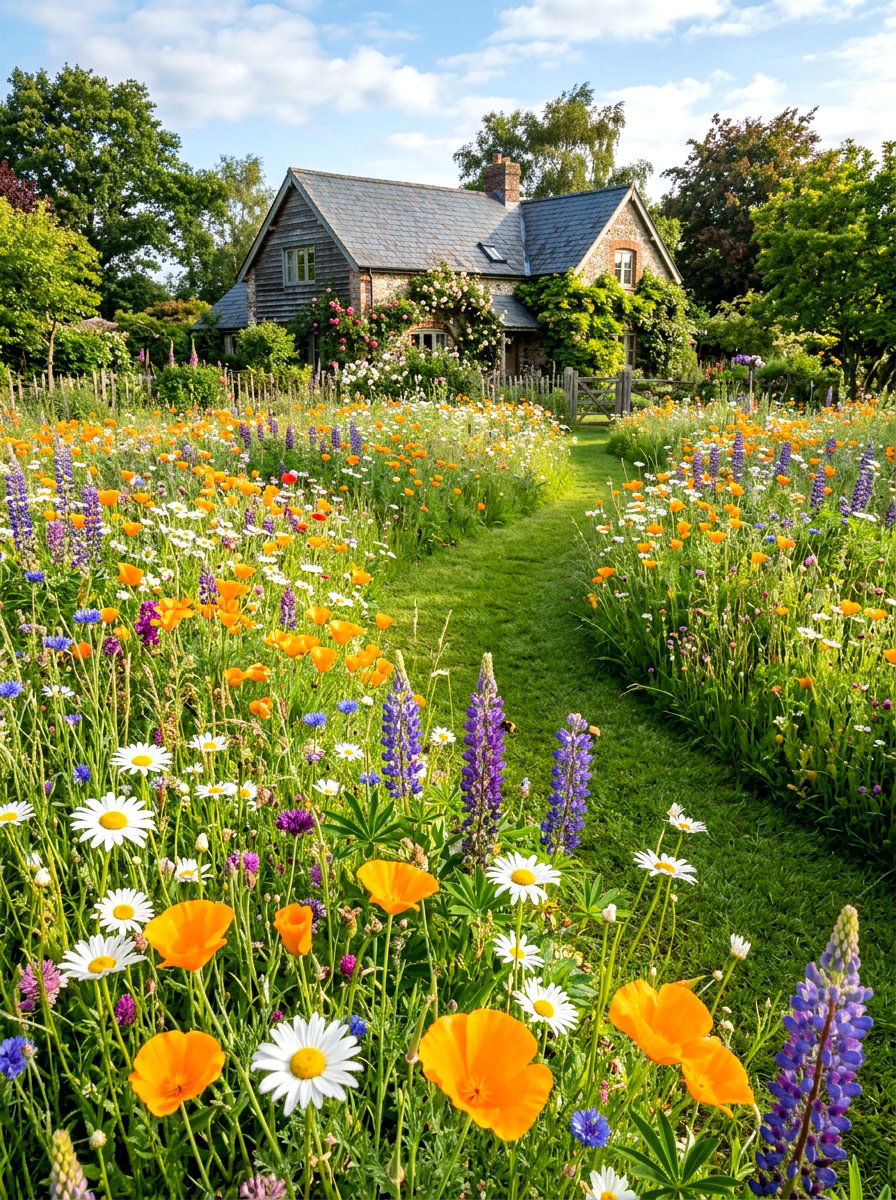
A cottage-style foundation bed embraces a more relaxed, "organized chaos" aesthetic that feels romantic and bursting with life. This design features a dense mixture of tall foxgloves, delphiniums, and roses that lean casually against the house walls. The key is to pack the plants closely together so there is very little visible soil, which also helps naturally suppress weeds. Use a variety of heights and colors to create a whimsical, meadow-like appearance that attracts bees and butterflies to your front door. This approach is incredibly charming for older homes or farmhouses, offering an ever-changing display of blooms that feels deeply personal, nostalgic, and naturally beautiful.
7. Drought Tolerant Rock and Succulent Designs
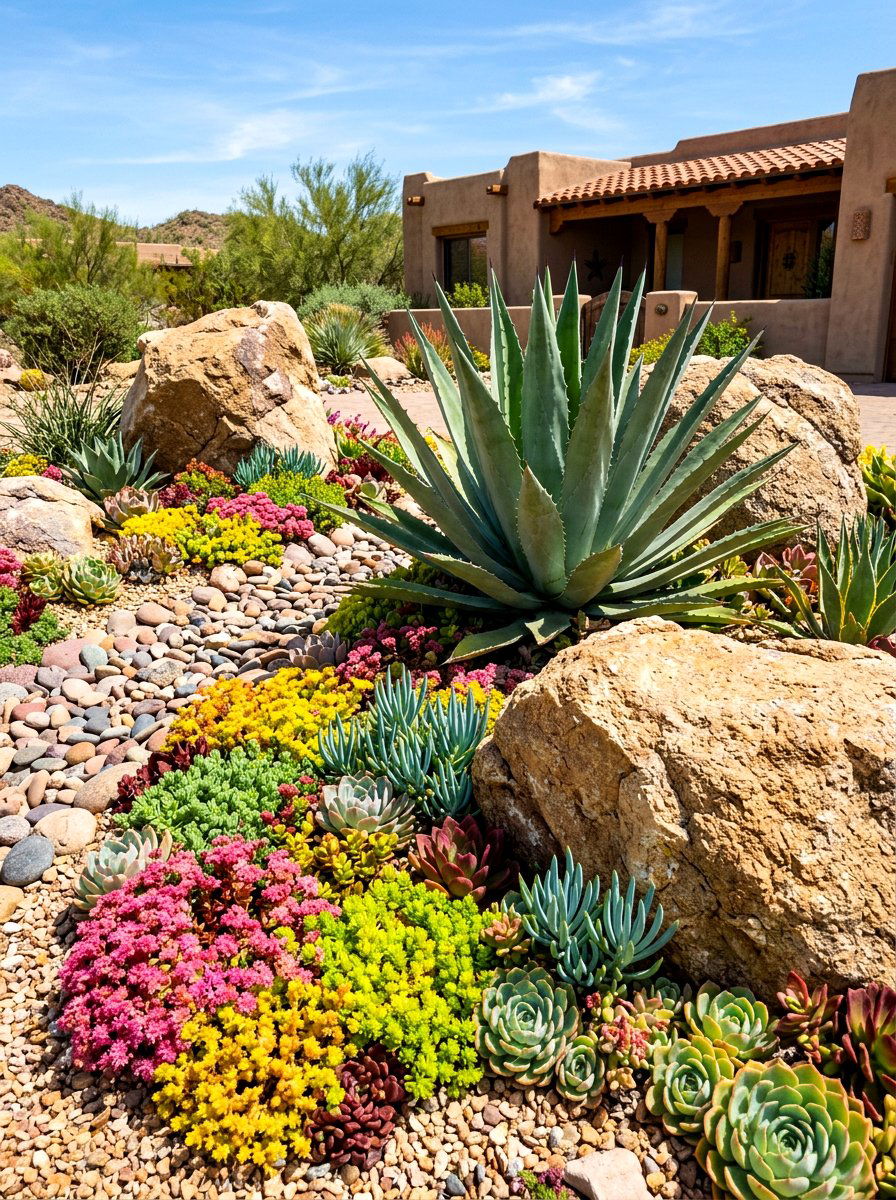
In drier climates or for eco-conscious gardeners, a foundation bed featuring rocks and succulents offers a stunning, water-wise alternative to traditional flower borders. This design uses large ornamental boulders and various sizes of river stones to create a rugged, naturalistic base. Intersperse hardy succulents like hens and chicks, agave, or sedum varieties that can withstand intense sun and little water. These plants offer unique architectural shapes and fleshy textures that look fantastic against modern or southwestern-style homes. Not only does this save on the water bill, but it also creates a unique, sculptural landscape that remains vibrant and healthy even during the peak of summer heat.
8. Tall Vertical Accent Corner Plantings
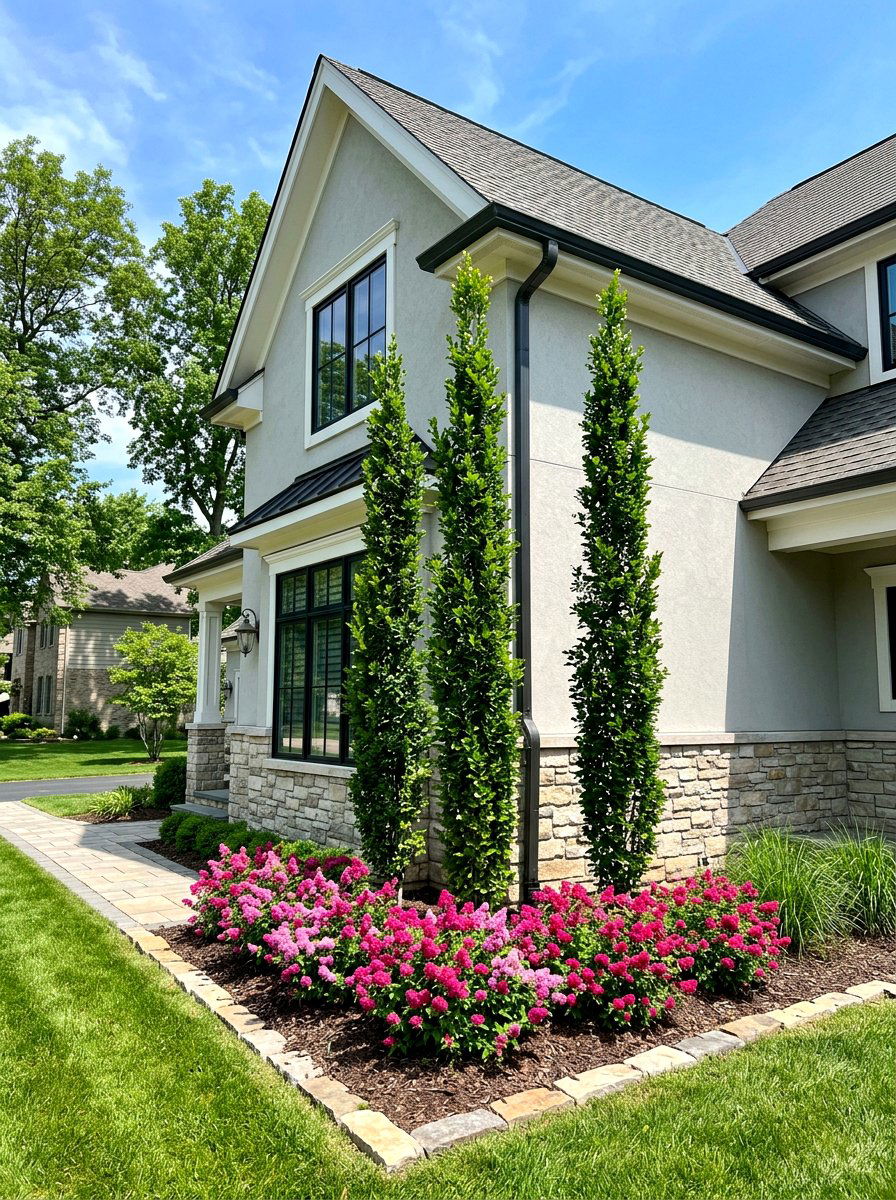
The corners of a house are often the harshest visual points, but they can be softened effectively with tall vertical accent plants. Using narrow, upright evergreens like Sky Pencil holly or Italian cypress at the corners adds height and helps the house blend into the sky and surrounding trees. These vertical elements serve as "bookends" for the rest of your foundation bed, providing a sense of scale and proportion. Between these tall pillars, you can plant lower flowering shrubs to create a balanced transition to the ground. This strategy is particularly useful for two-story homes, as it helps break up large expanses of siding and adds professional architectural interest.
9. Hydrangea Focused Summer Bloom Borders
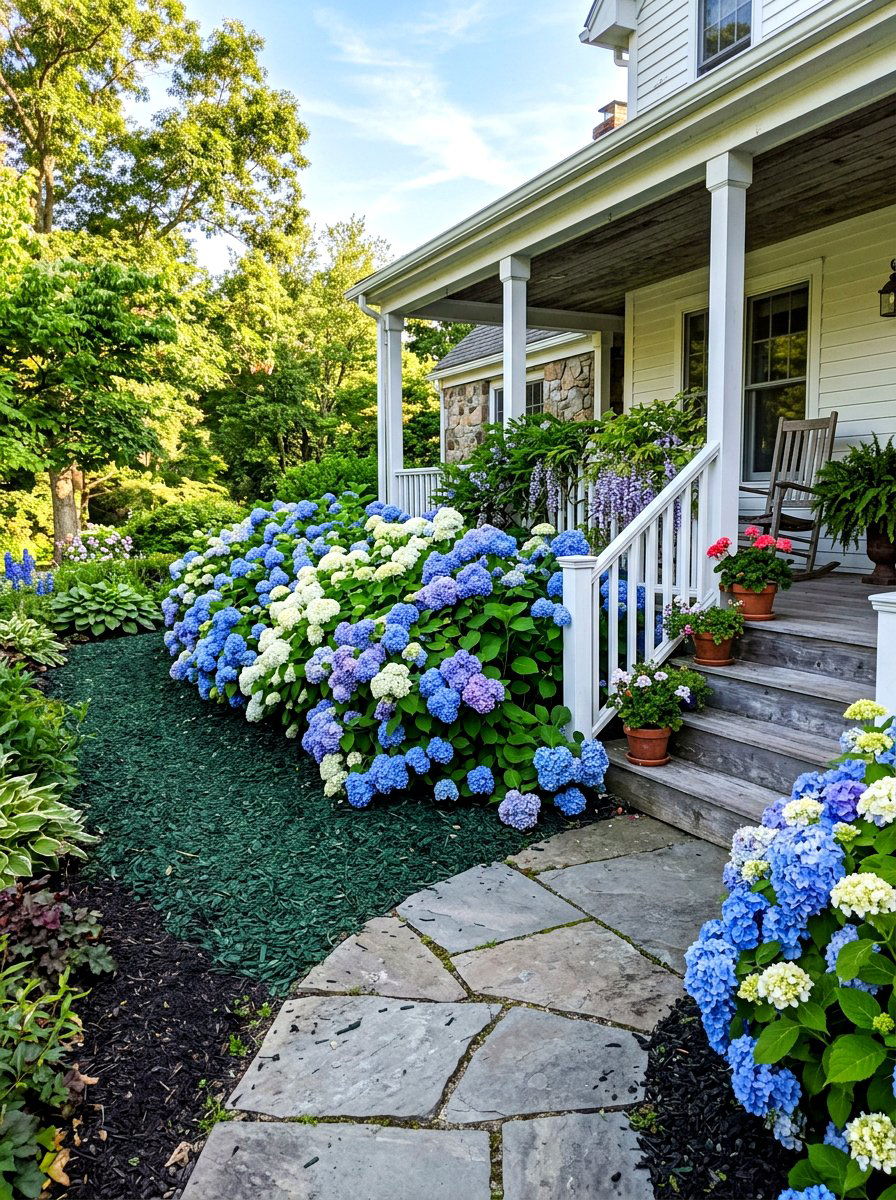
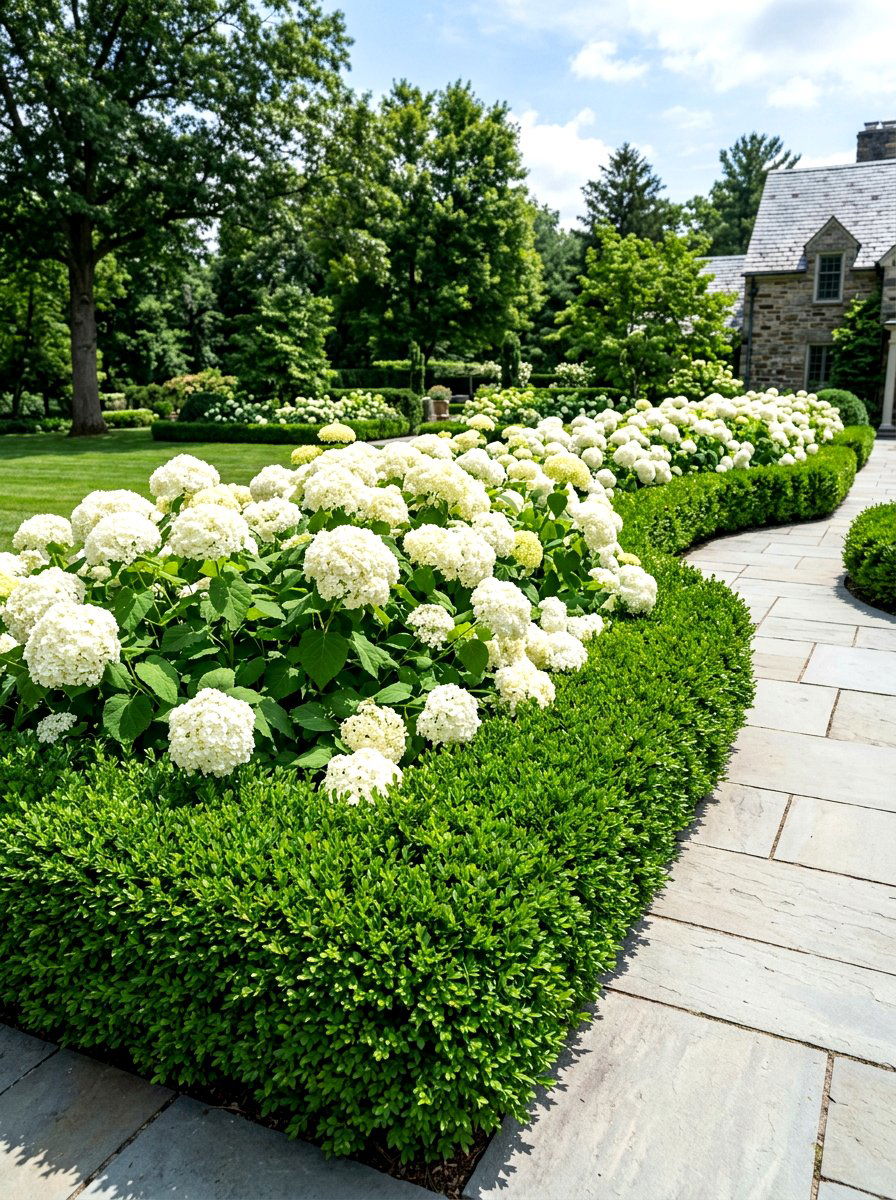
Hydrangeas are a quintessential choice for foundation planting because their massive flower heads and large green leaves provide incredible coverage and beauty. A bed focused on different hydrangea varieties, such as Limelight, Endless Summer, or oakleaf types, creates a lush and showy display that lasts for months. These shrubs grow quickly and are excellent for hiding high foundations or crawl space vents. Because they have such a significant visual presence, you don't need many other plants to make the bed look complete. Pairing them with a simple border of dark green boxwoods or liriope creates a high-contrast, classic look that screams high-end curb appeal throughout the entire summer season.
10. Ornamental Grass Soft Foundation Screens
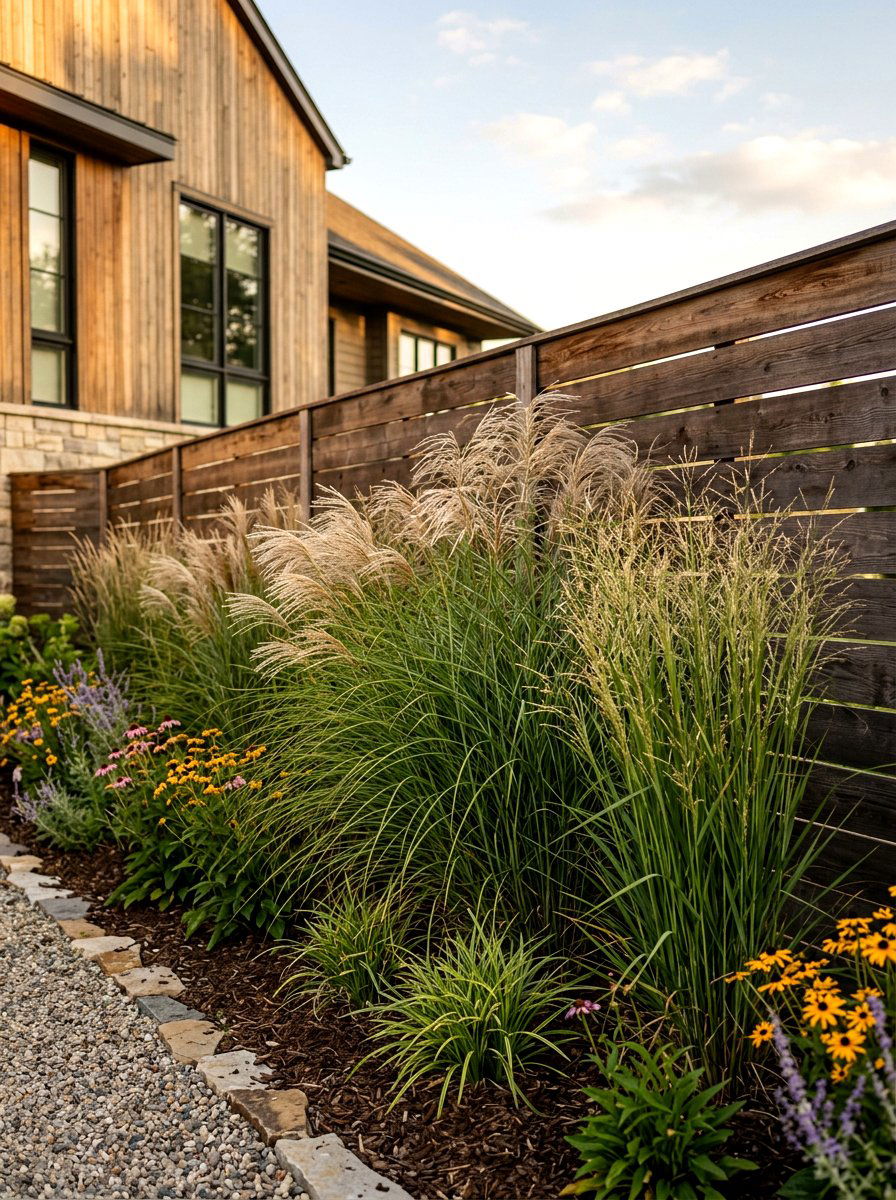
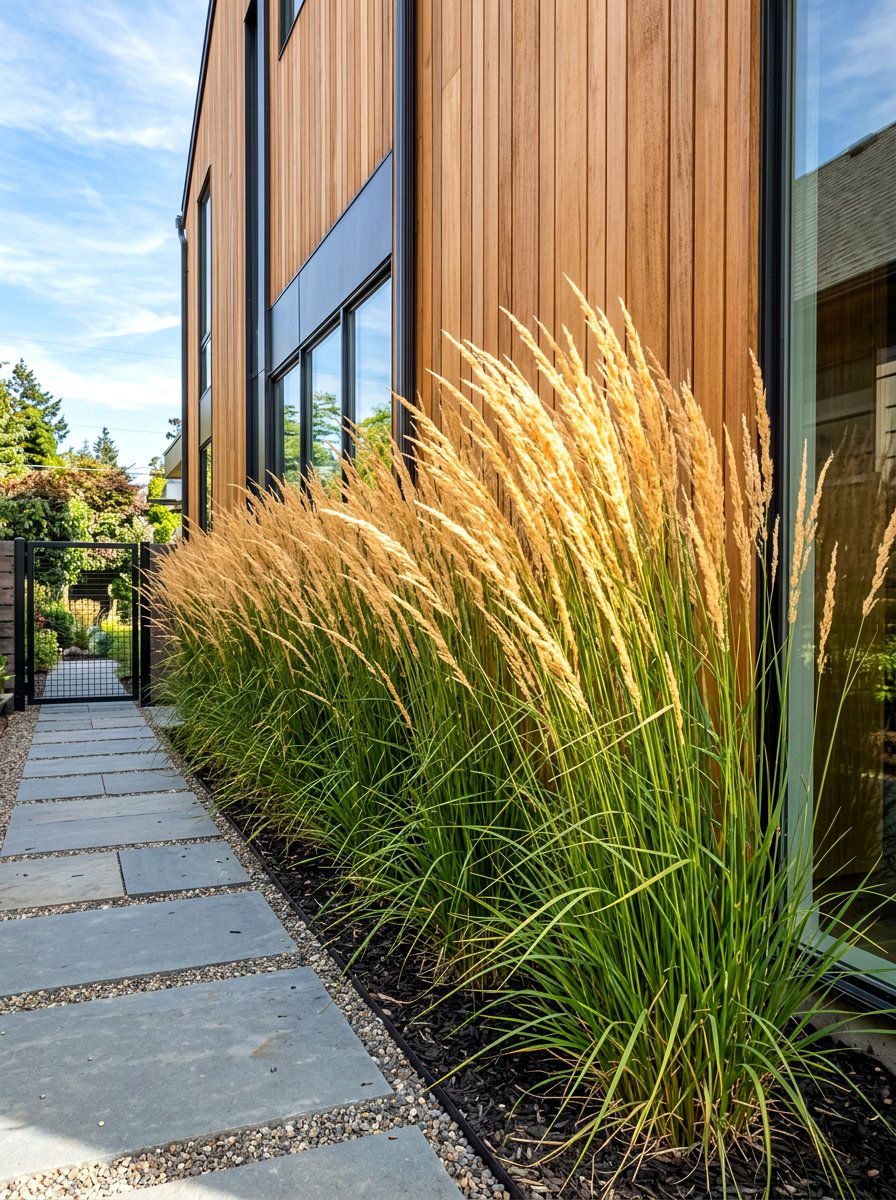
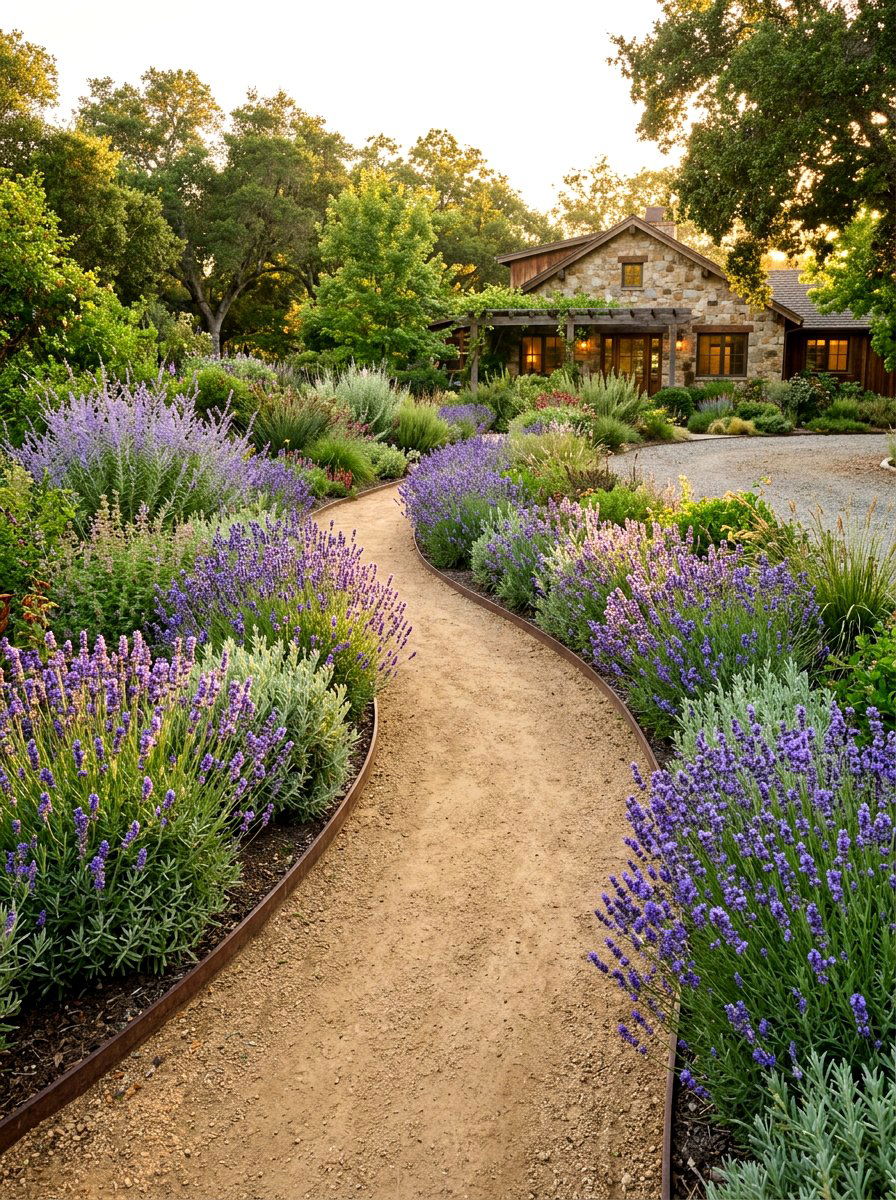
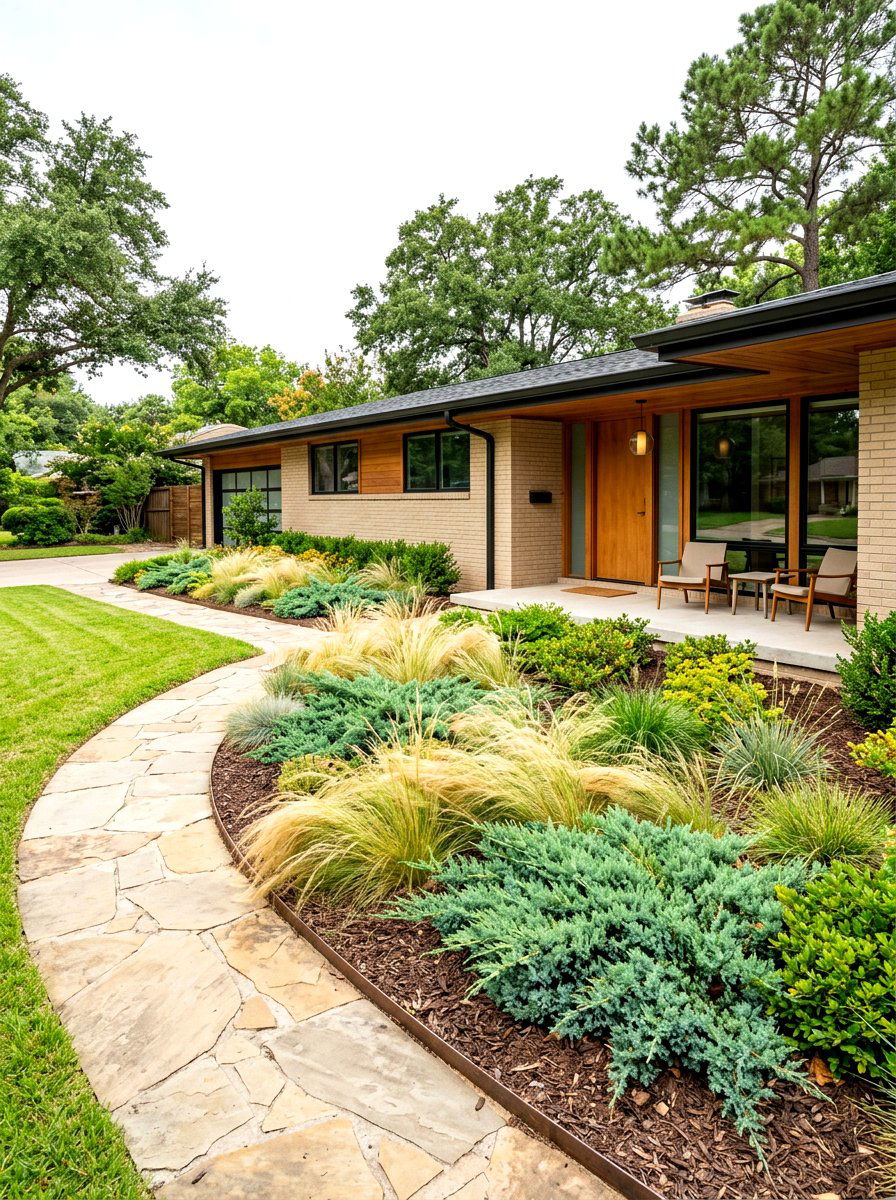
Ornamental grasses offer a unique, movement-filled alternative to traditional woody shrubs in a foundation flower bed. Varieties like maiden grass, switchgrass, or feather reed grass create a soft, swaying screen that adds a sense of life and sound to the front of the house. These grasses are particularly effective at softening modern architectural edges and providing a breezy, naturalistic feel. In the winter, many grasses retain their structure and turn a beautiful golden tan, providing much-needed visual interest when other plants have gone dormant. They are generally very hardy and pest-resistant, making them an excellent choice for a low-maintenance landscape that offers texture and height.
11. Multi Level Tiered Retaining Wall Beds
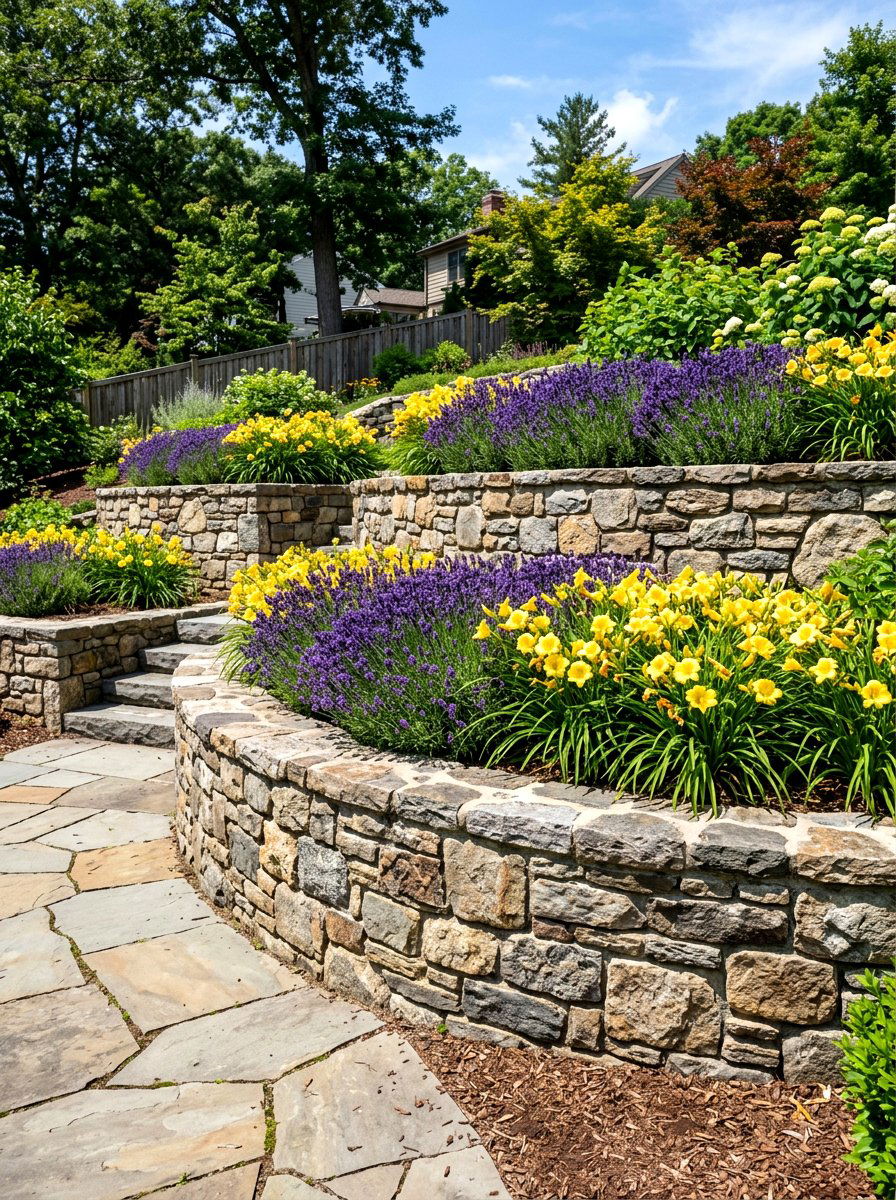
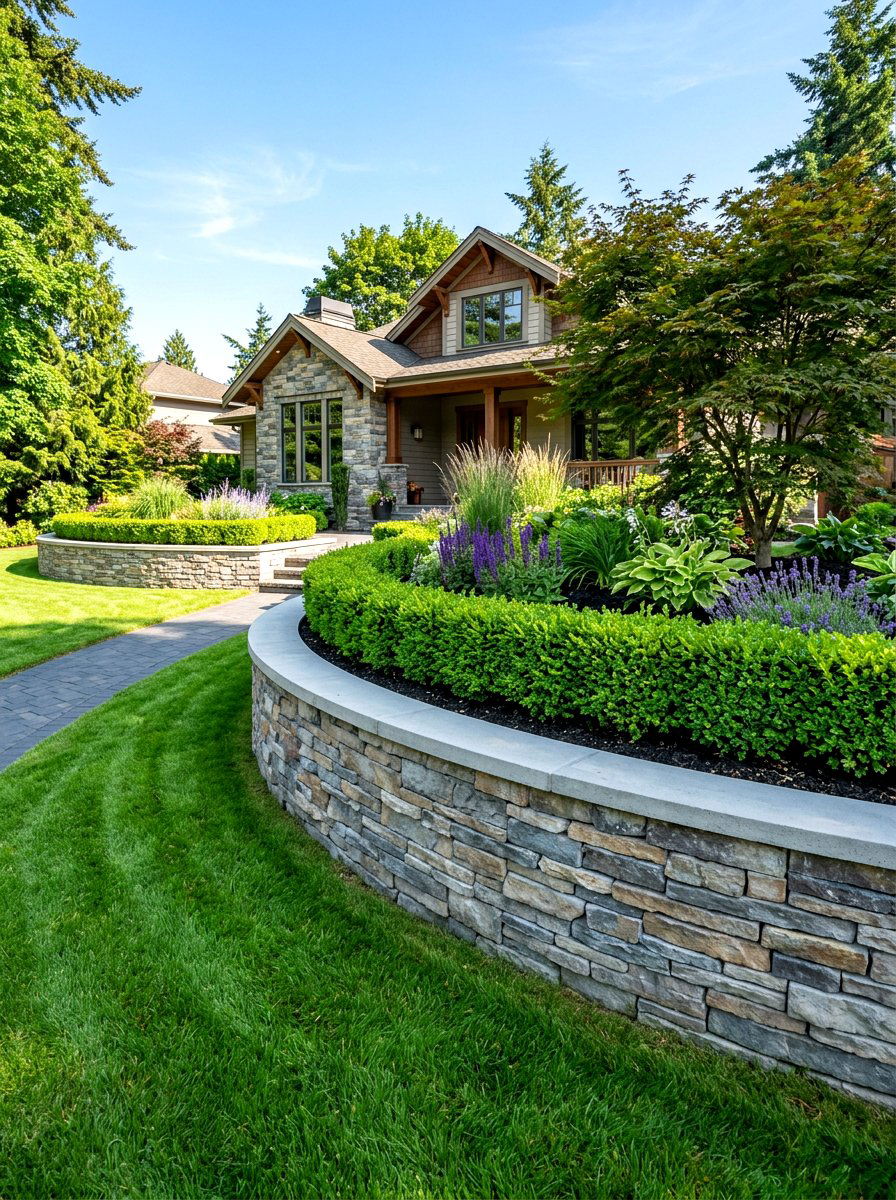
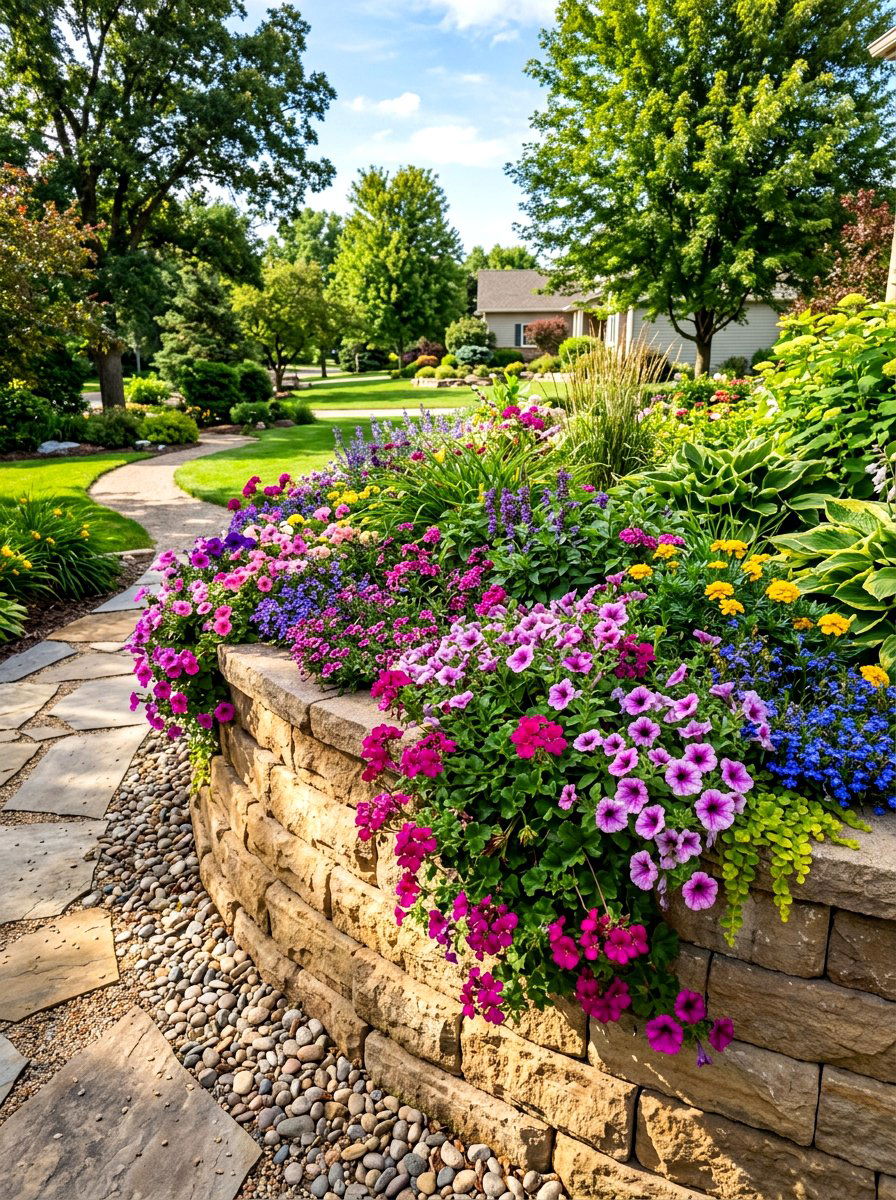
If your home is built on a slope or has a high foundation, a tiered retaining wall bed can turn a difficult elevation into a stunning focal point. By building two or three low walls using natural stone or timber, you create separate planting levels that can be filled with different varieties. Use the top tier for taller shrubs that provide privacy, the middle for colorful perennials, and the bottom for spilling groundcovers that drape over the edges. This multi-level approach adds incredible depth and a sense of luxury to the property. It also allows for better drainage and soil management, making it easier to maintain a diverse and healthy garden.
12. Colorful Perennial Pollinator Friendly Foundations
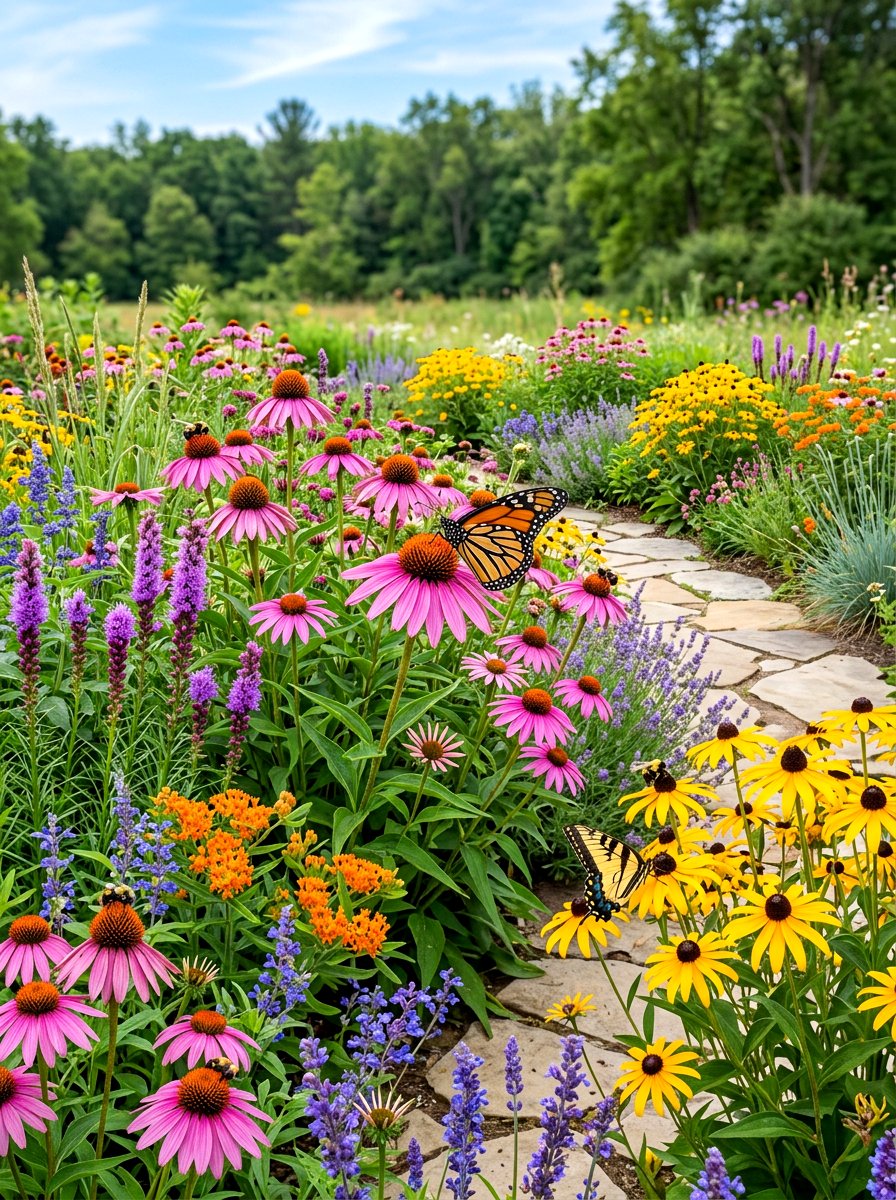
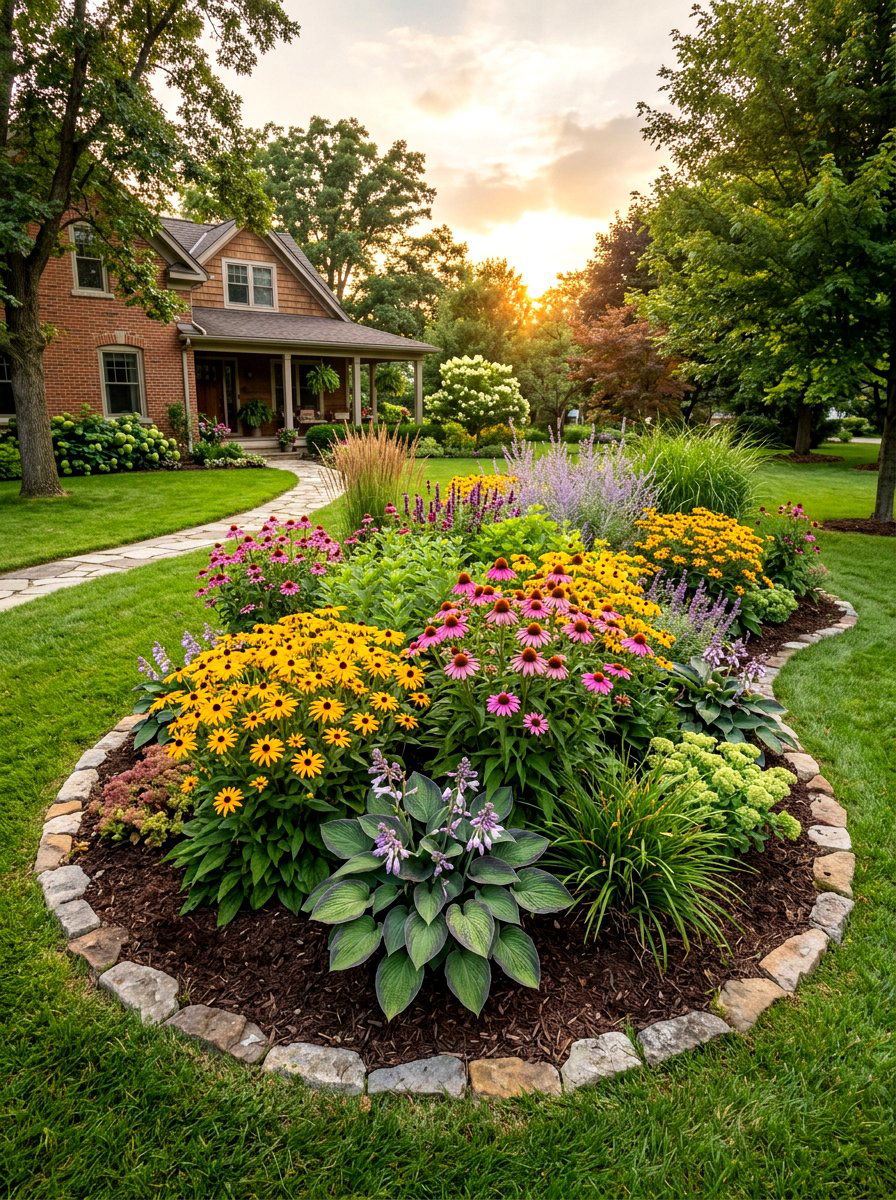
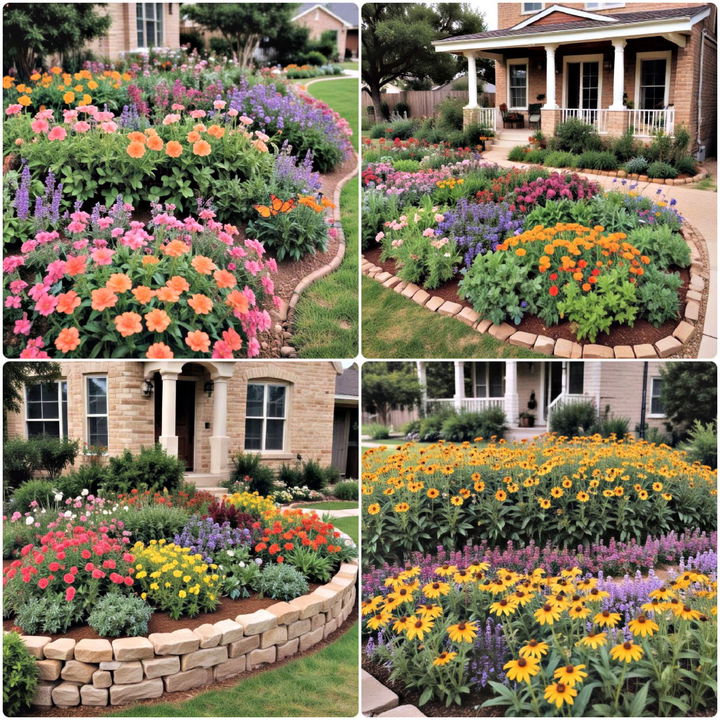
Creating a foundation bed that supports local wildlife is a rewarding way to bring color and movement to your front yard. This design focuses on native perennials like purple coneflower, black-eyed Susans, and milkweed, which are specifically chosen to attract bees, butterflies, and birds. By choosing plants with different bloom times, you ensure a continuous nectar source from spring through late autumn. The result is a vibrant, shifting tapestry of color that feels connected to the local environment. This type of garden is often very resilient because the plants are adapted to the local soil and climate, requiring fewer chemicals and less supplemental watering to thrive beautifully.
13. Traditional English Garden Front Borders
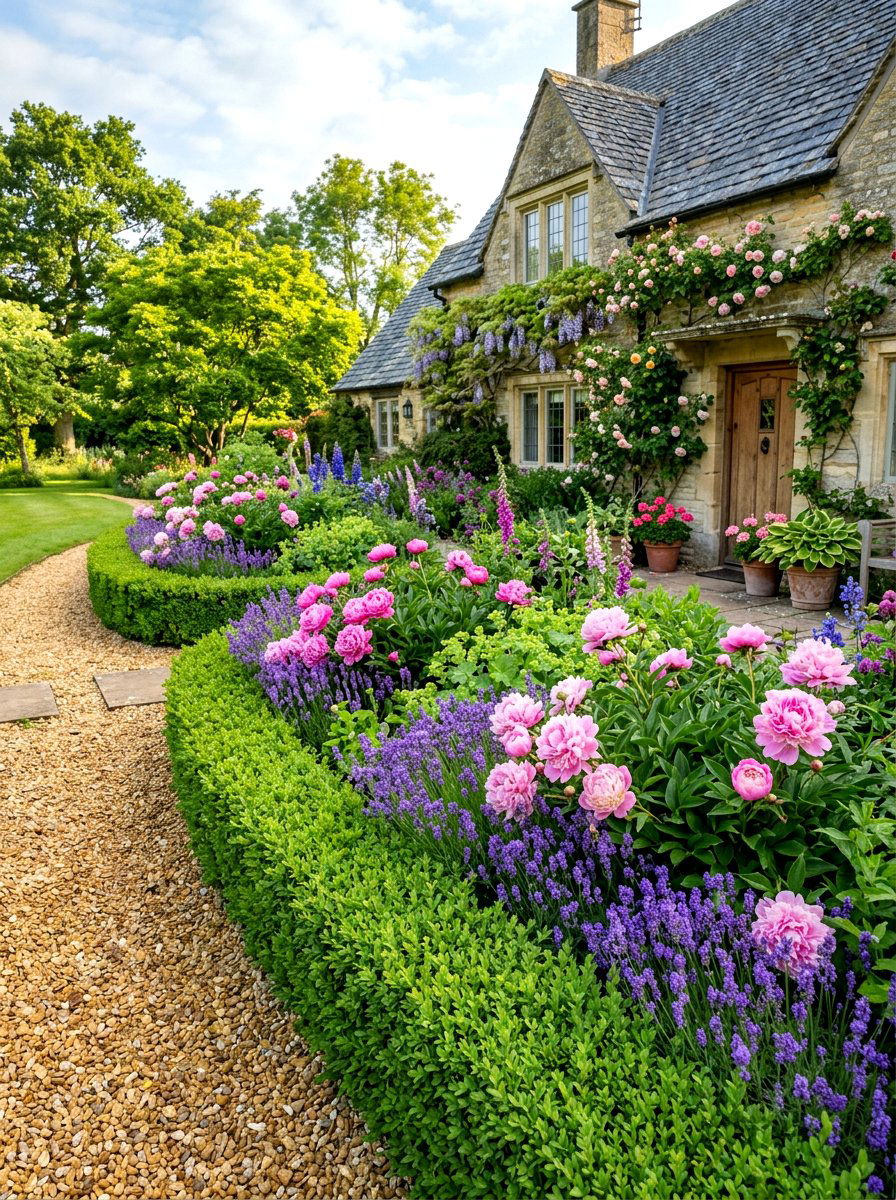
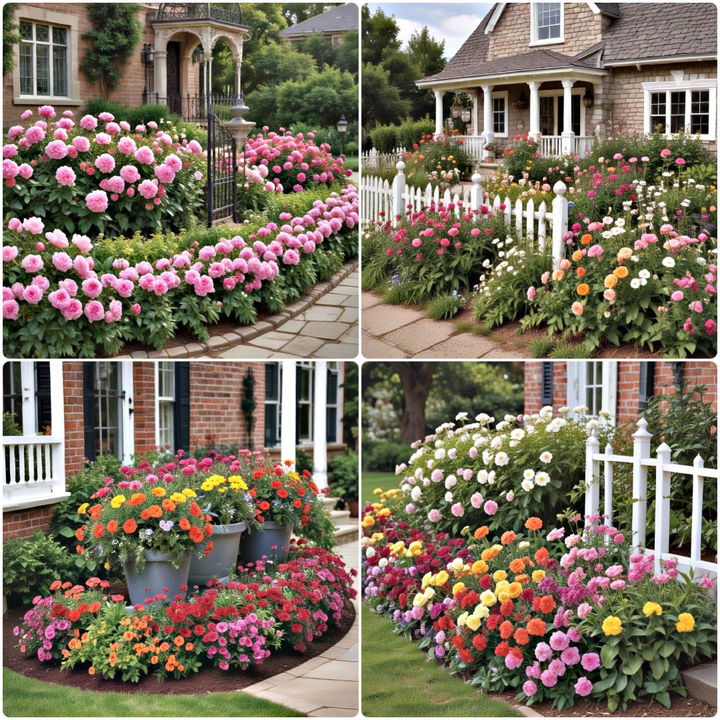
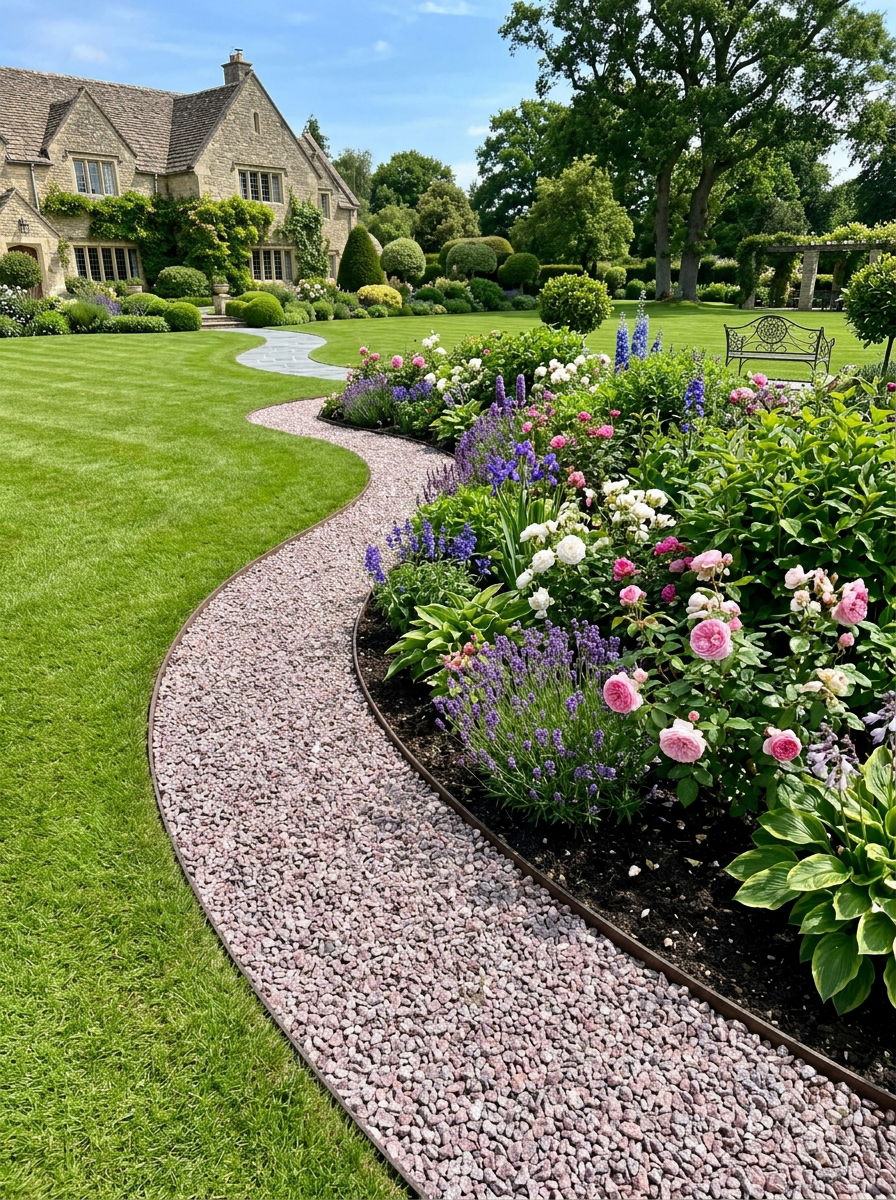
A traditional English garden foundation bed relies on a classic mix of structured evergreens and soft, romantic perennials to create a timeless look. This style often features a neatly trimmed low hedge of yew or boxwood at the very front to provide a permanent frame. Behind the hedge, a variety of roses, peonies, and lavender are planted in drifts to create a lush, fragrant display. The combination of the rigid green border and the soft, overflowing flowers behind it creates a sophisticated balance that works well with almost any home style. This design feels established and stately, offering a sense of history and classic beauty to the entire neighborhood.
14. Compact Dwarf Conifer Winter Interest Beds
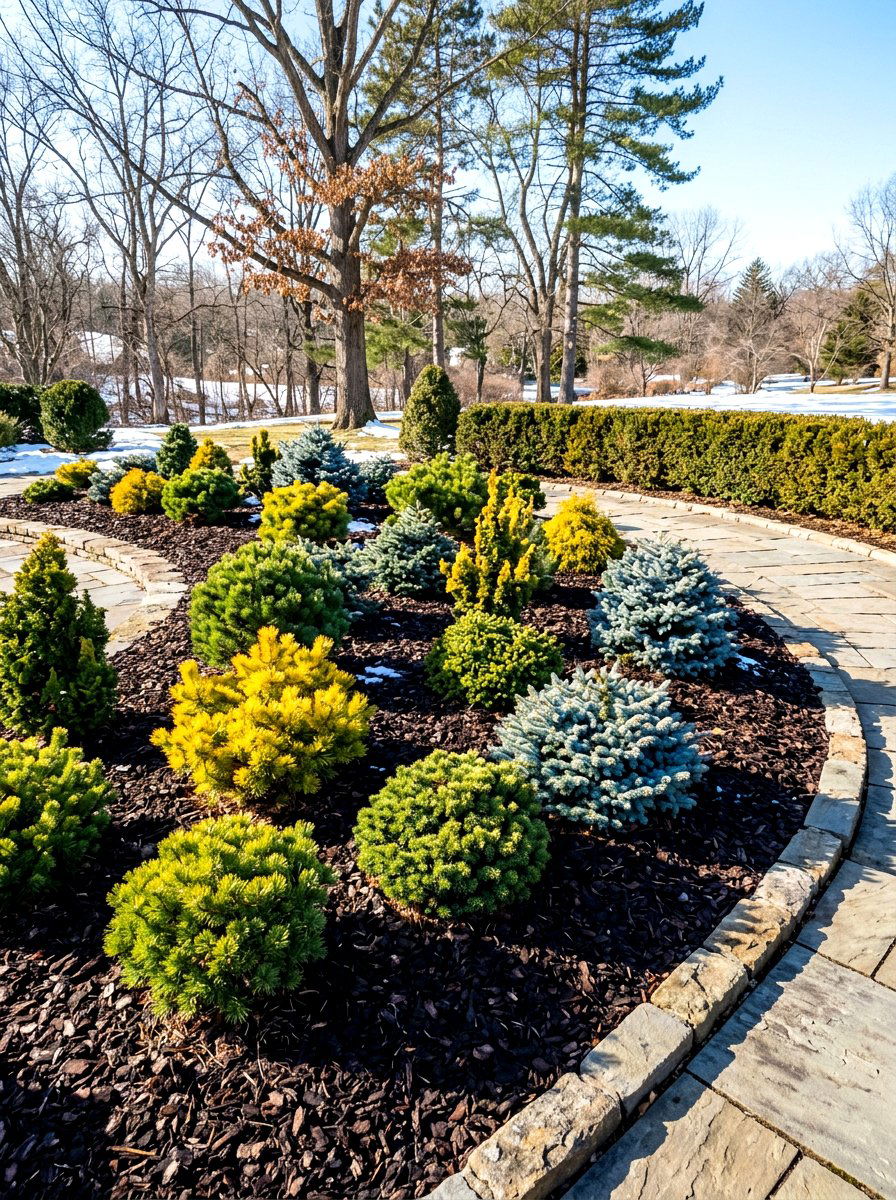
Many foundation beds look great in summer but disappear in winter, which is why a design focused on dwarf conifers is so effective. These miniature evergreens come in a surprising array of colors, including gold, blue-green, and deep emerald. By mixing different shapes — like mounded, weeping, and pyramidal forms — you can create a year-round sculptural garden that never loses its impact. Because they stay small, they won't overgrown windows or walkways, making them perfect for smaller homes or urban lots. These beds look especially beautiful under a light dusting of snow, providing a constant source of color and texture through the coldest months of the year.
15. White Flower Moon Garden Foundations
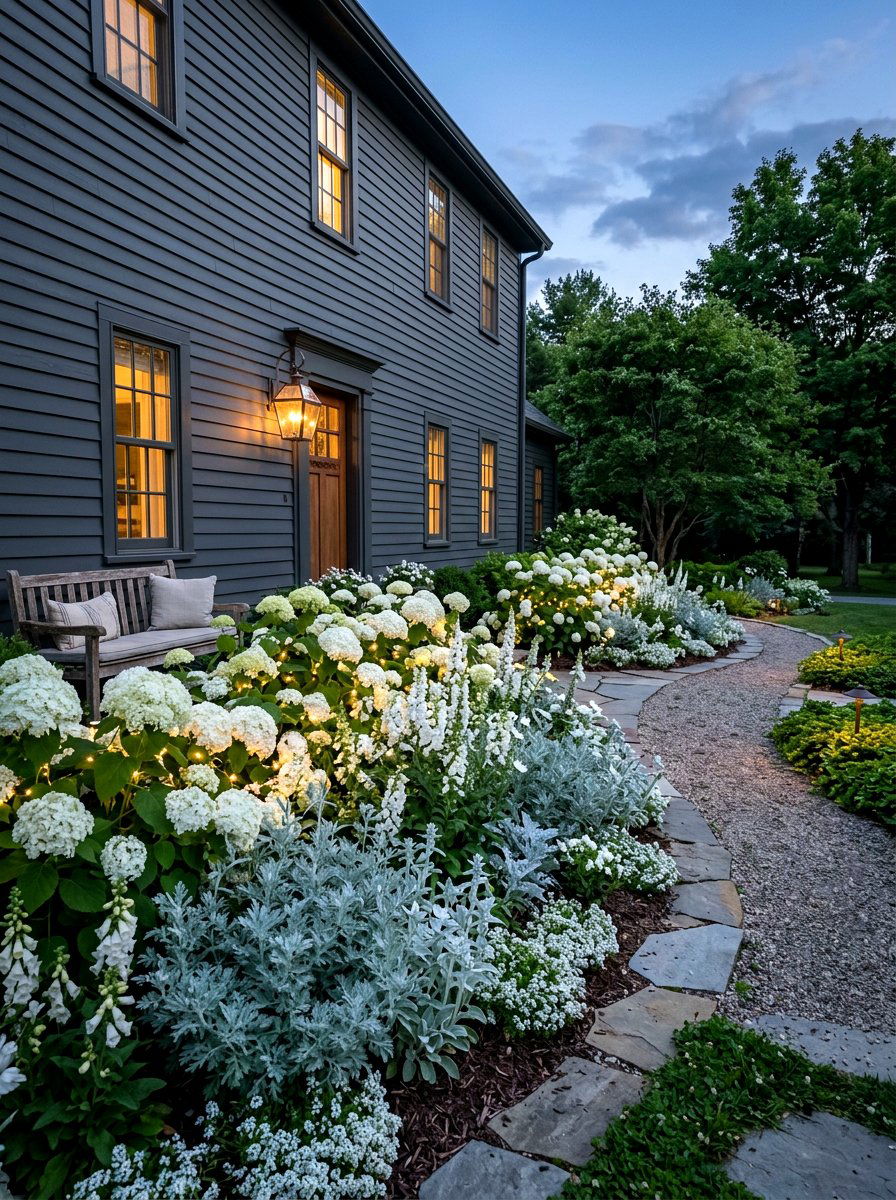
A "moon garden" foundation bed is designed specifically to be enjoyed in the evening, using white flowers and silver foliage that reflect the moonlight. This ethereal design features plants like white hydrangeas, Shasta daisies, and silver mound artemisia to create a glowing, serene effect as the sun goes down. White flowers appear much more visible in low light than dark reds or purples, making the front of your house look bright and welcoming even at night. This is a perfect choice for homeowners who work during the day and want to enjoy their landscape in the evening hours. The monochromatic palette feels sophisticated, peaceful, and incredibly elegant.
16. Coastal Themed Sandy Foundation Borders
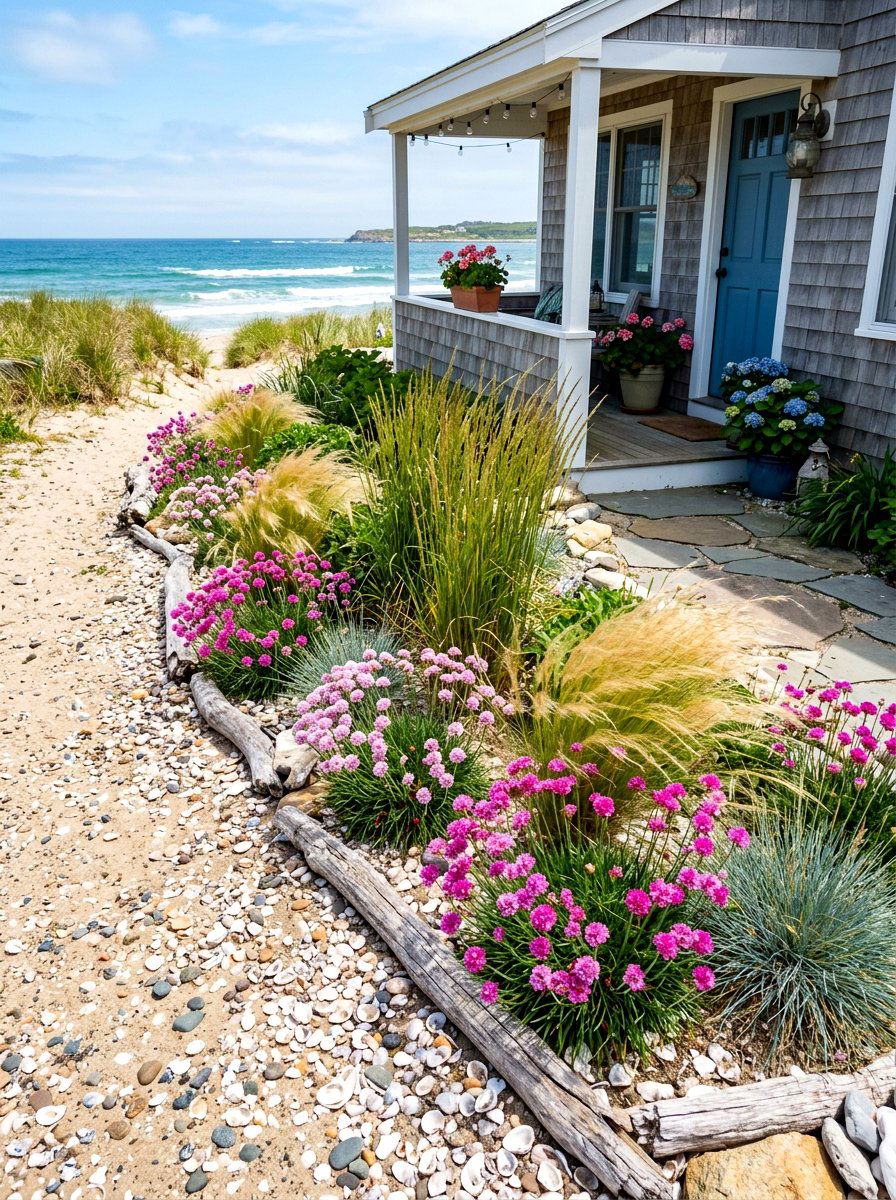
For homes near the shore or for those who simply love the seaside aesthetic, a coastal-themed foundation bed offers a breezy and relaxed vibe. This design uses salt-tolerant plants like sea thrift, bayberry, and ornamental grasses that thrive in sandy soil and windy conditions. Incorporate light-colored gravel or crushed shells as mulch to enhance the beachy feel and reflect the bright coastal sun. Using weathered wood or driftwood as decorative accents can further ground the design in its maritime theme. These beds are usually very low-maintenance and provide a soft, airy look that perfectly complements light-colored siding, shingles, or the blues and greys of coastal architecture.
17. Asian Inspired Zen Gravel Gardens
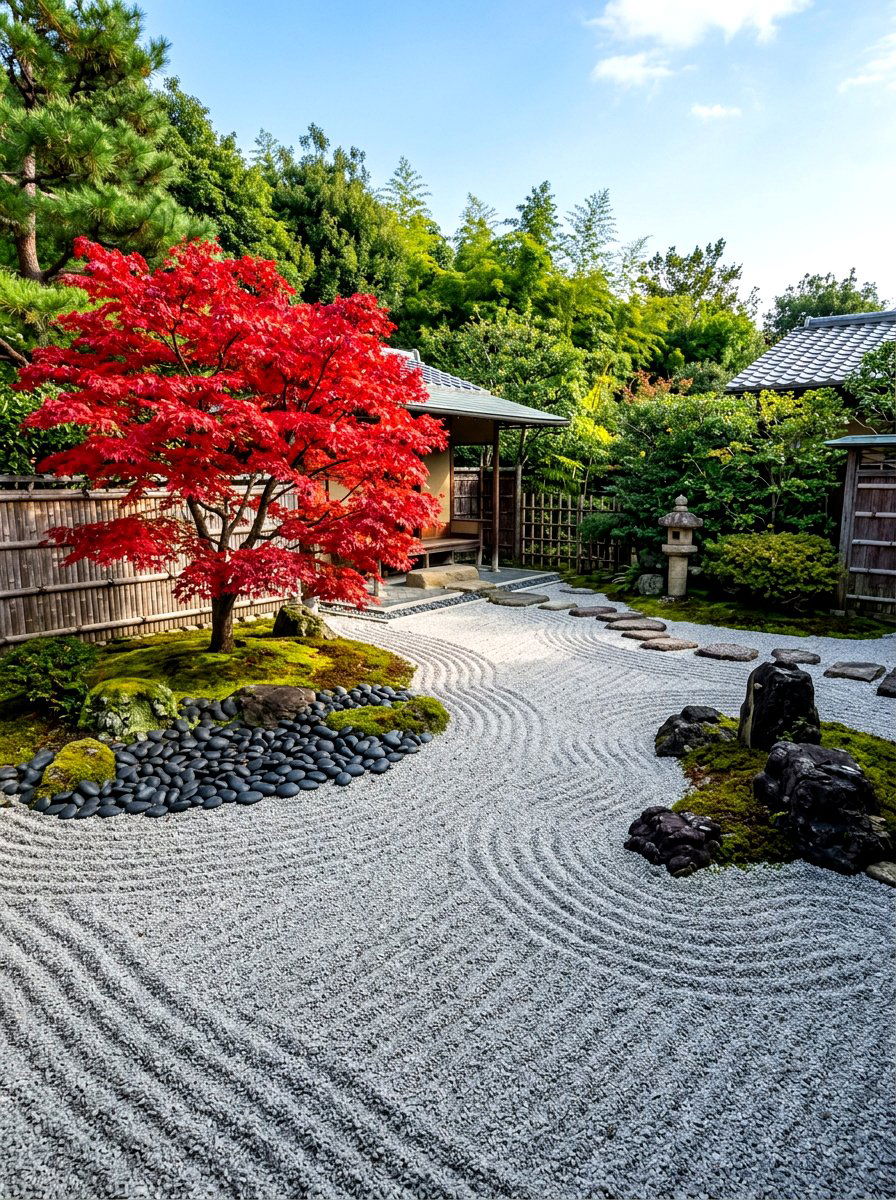
A Zen-inspired foundation bed brings a sense of calm and meditative peace to the entrance of your home. This minimalist design focuses on the balance between stone, water elements, and carefully selected plants like Japanese maples or dwarf bamboo. Instead of traditional mulch, use raked gravel or smooth river stones to create a clean, intentional ground cover. A few well-placed evergreen azaleas or mossy rocks add soft textures and pops of seasonal color without overwhelming the quiet aesthetic. This style is perfect for modern or mid-century homes, offering a sophisticated and tranquil landscape that feels like a private retreat from the busy world outside.
18. Vibrant Azalea and Rhododendron Spring Displays
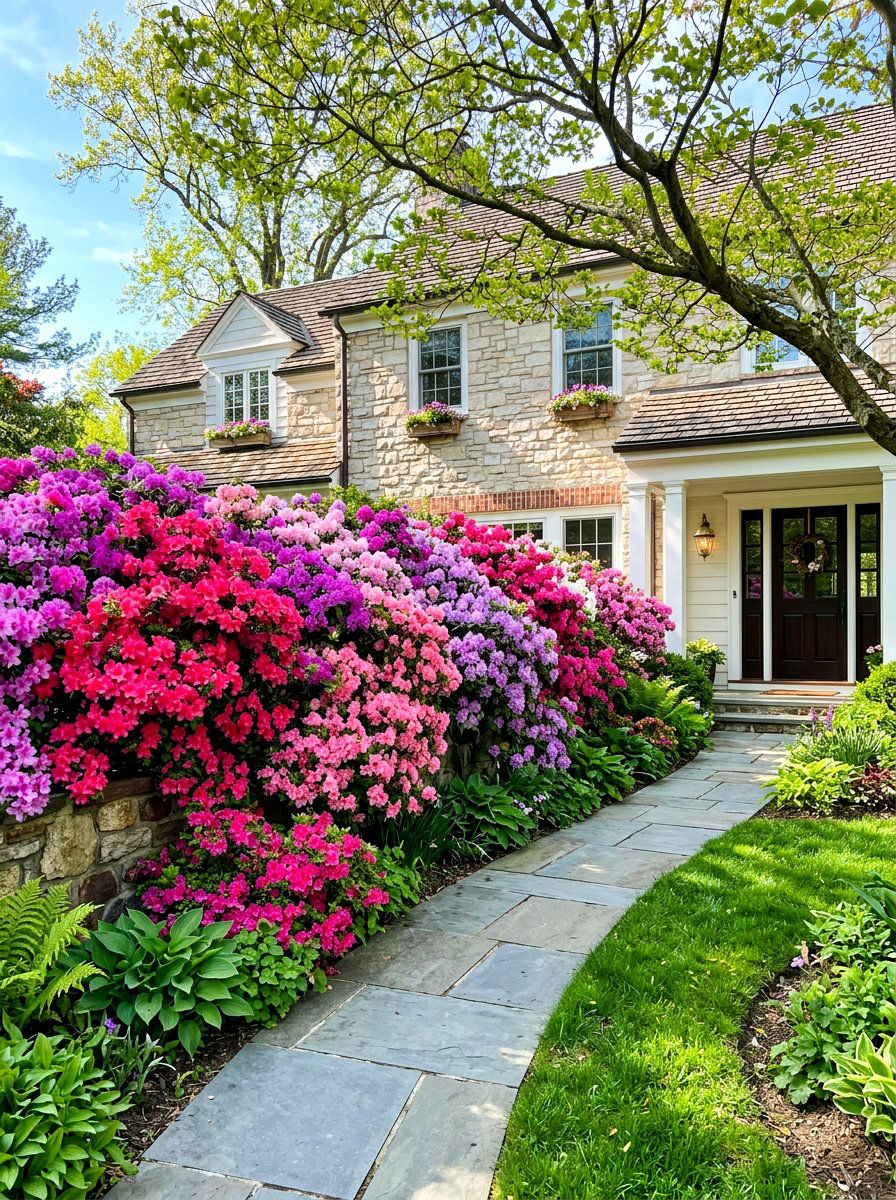
For a dramatic and high-impact spring appearance, few plants can beat the sheer flower power of azaleas and rhododendrons. A foundation bed dedicated to these acid-loving shrubs creates a solid wall of neon pink, purple, or white blooms early in the season. When not in flower, their thick, leathery green leaves provide an excellent evergreen foundation that remains attractive all year long. This design works best in partial shade, making it ideal for the sides of the house or areas under large deciduous trees. Using different varieties with staggered bloom times can extend the floral display for several weeks, creating a breathtaking and unforgettable front yard experience.
19. Window Box Integrated Foundation Designs
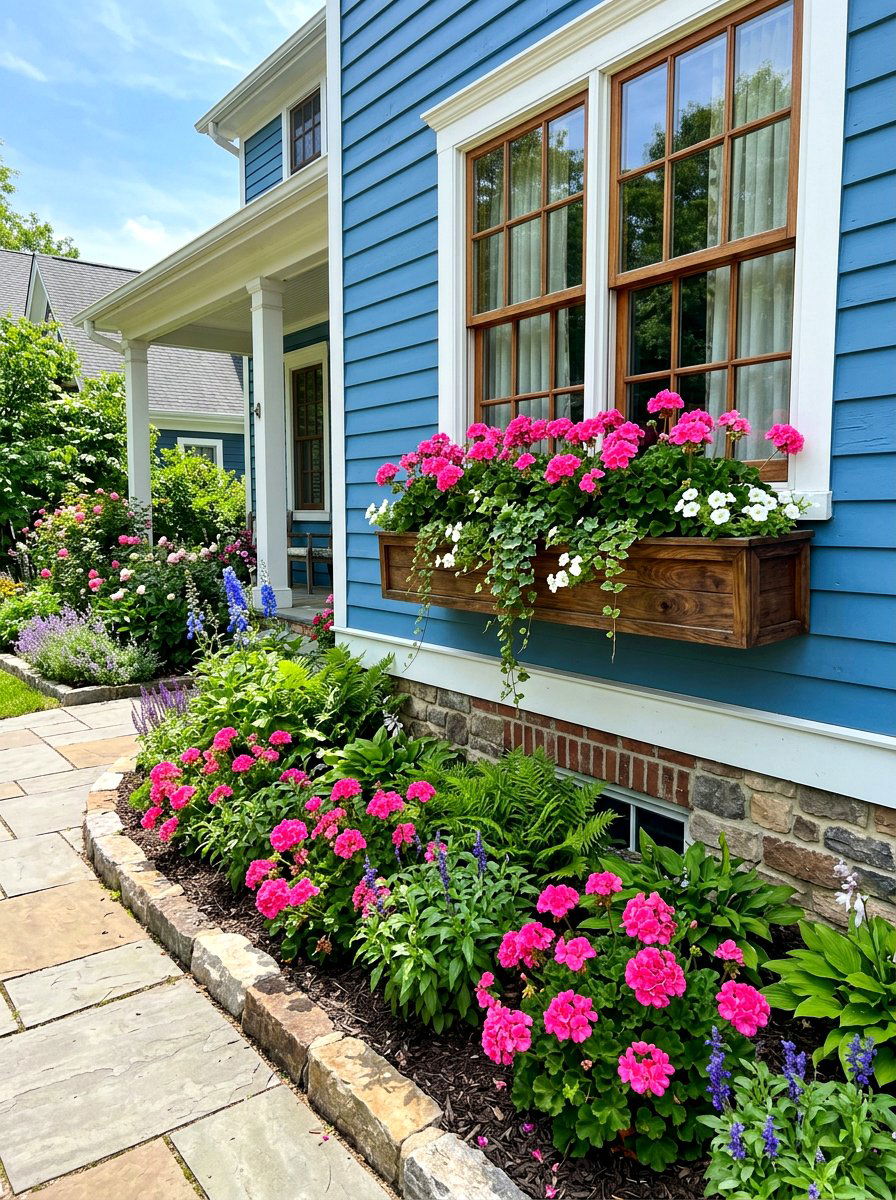
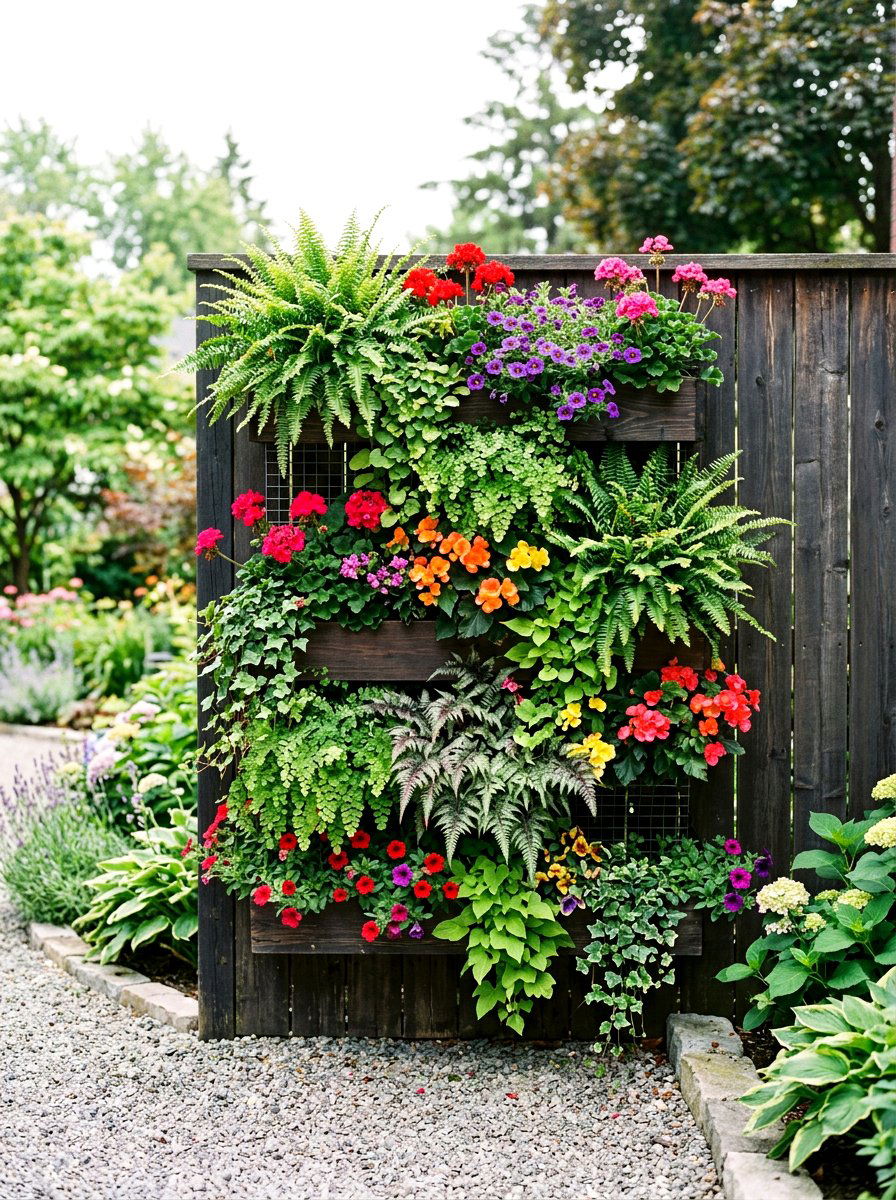
Integrating window boxes with your foundation flower bed creates a cohesive vertical landscape that carries color from the ground all the way up the side of the house. By repeating the same flowers — such as geraniums, petunias, or ivy — in both the ground bed and the boxes, you create a harmonious and unified look. This strategy is particularly effective for smaller homes where you want to maximize every inch of planting space. It draws the eye upward, making the house appear taller and more nestled into its environment. The result is a charming, storybook appearance that feels lush and fully decorated, offering a warm and lived-in feel to the exterior.
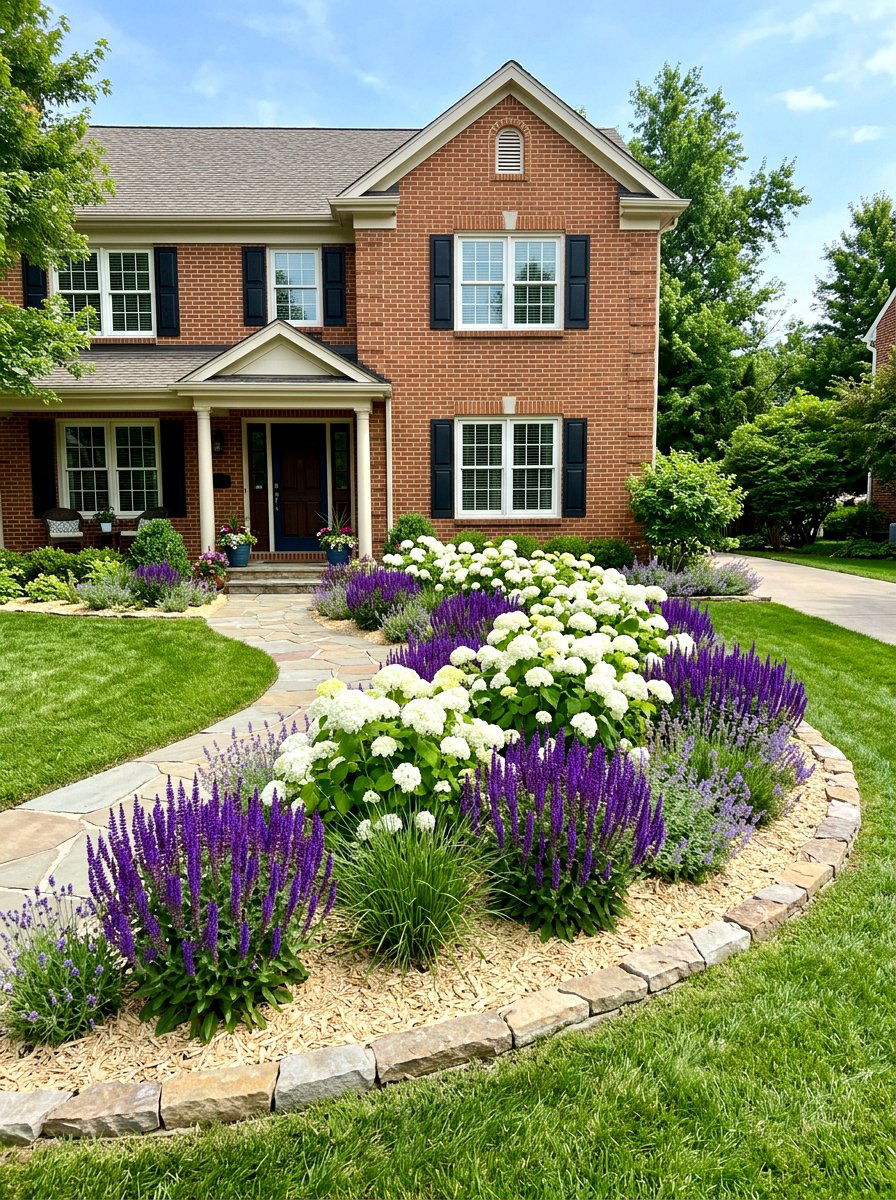
20. Edible Herb and Flower Foundation Mixes
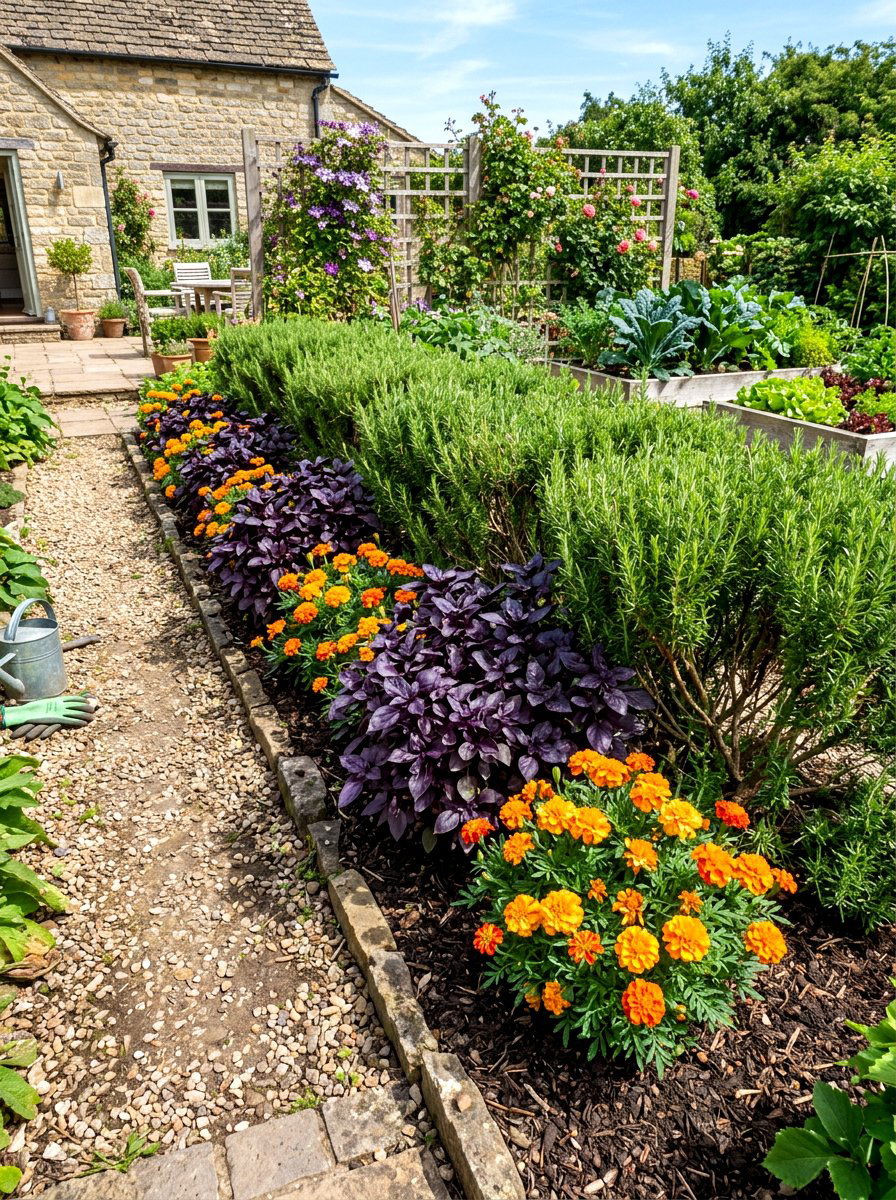
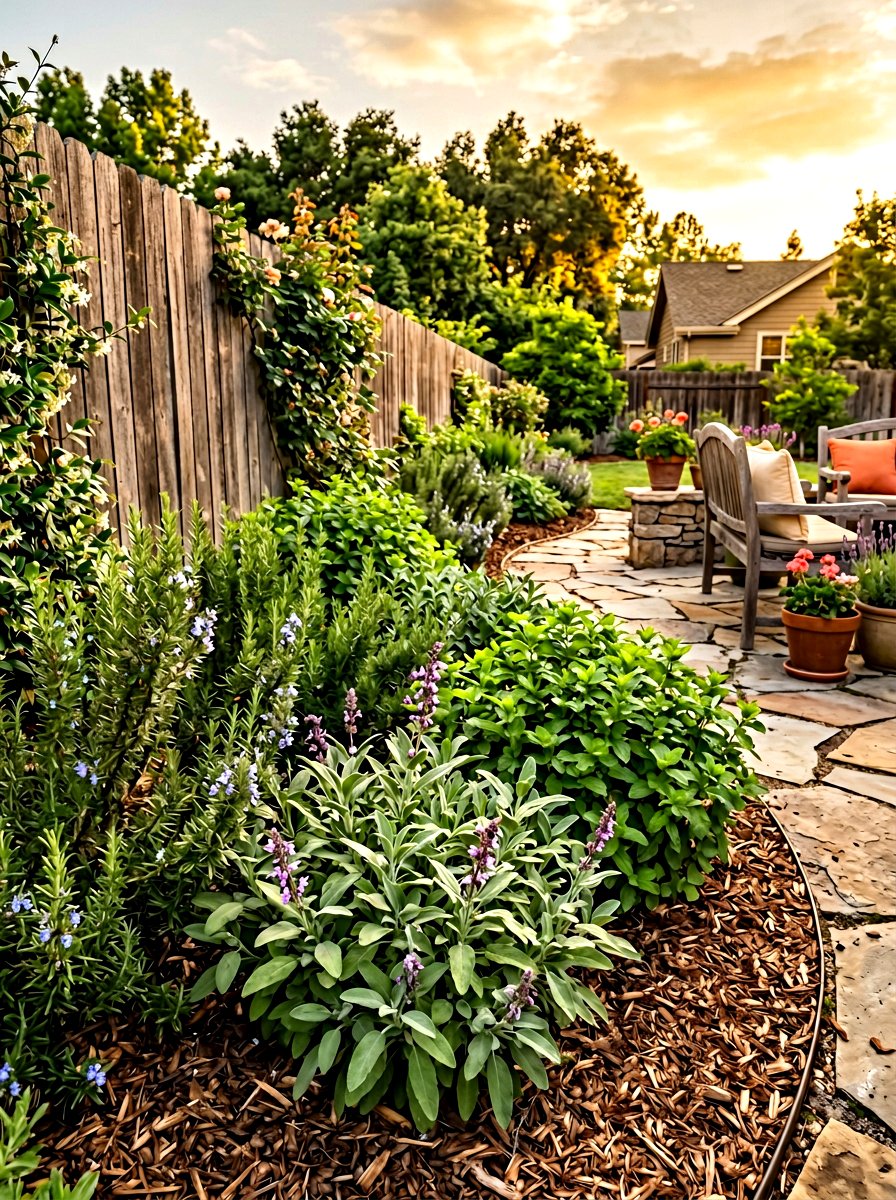
Who says foundation beds can only be ornamental? An edible foundation garden combines beauty with functionality by mixing fragrant herbs like rosemary, sage, and lavender with colorful flowers like marigolds and nasturtiums. Rosemary can be pruned into structural hedges, while purple-leaved basil or curly parsley adds unique textures and colors to the front of the border. This design turns the space against your house into a convenient "chef 's garden" that smells incredible and provides fresh ingredients for the kitchen. It’s a wonderful, sustainable choice for homeowners who want to maximize their land' s productivity while still maintaining a beautiful and curated look for their home’s curb appeal.
21. Fragrant Lavender and Rose Walkway Beds
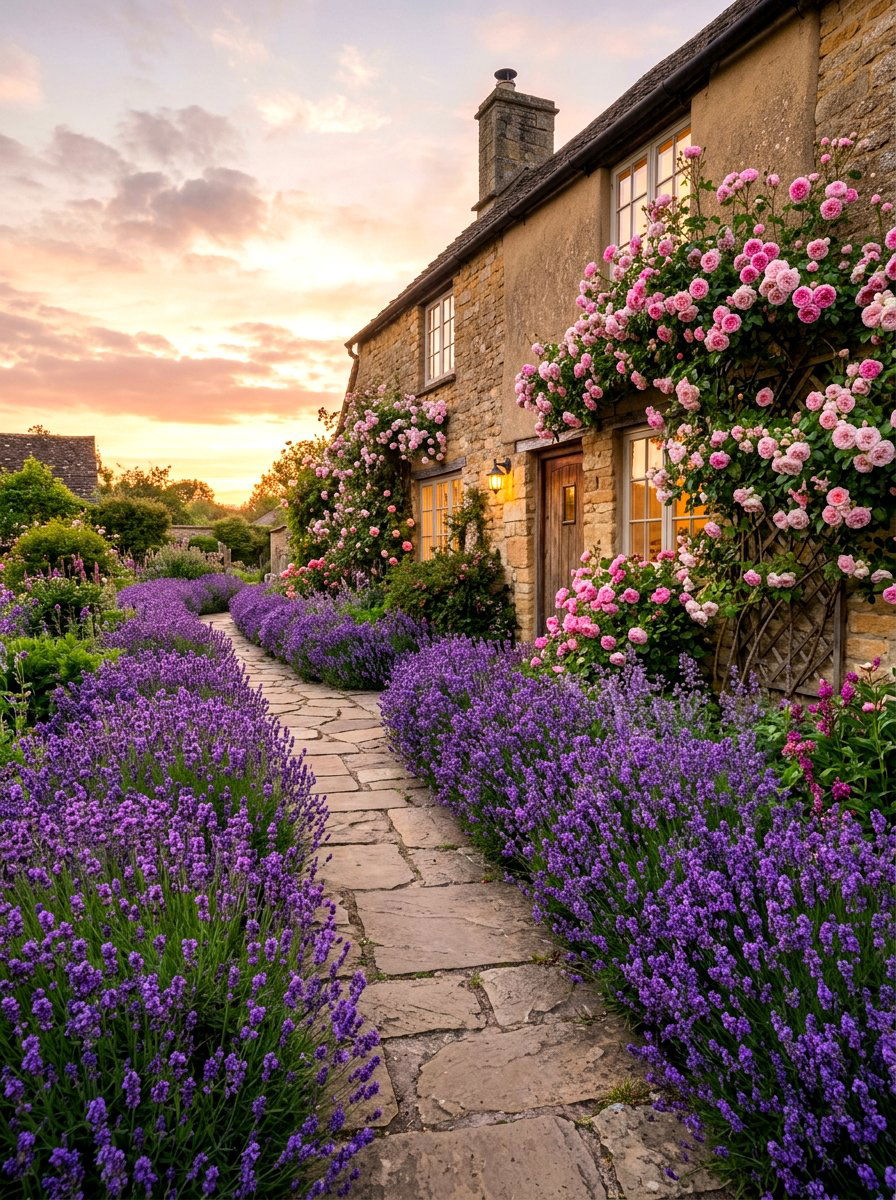
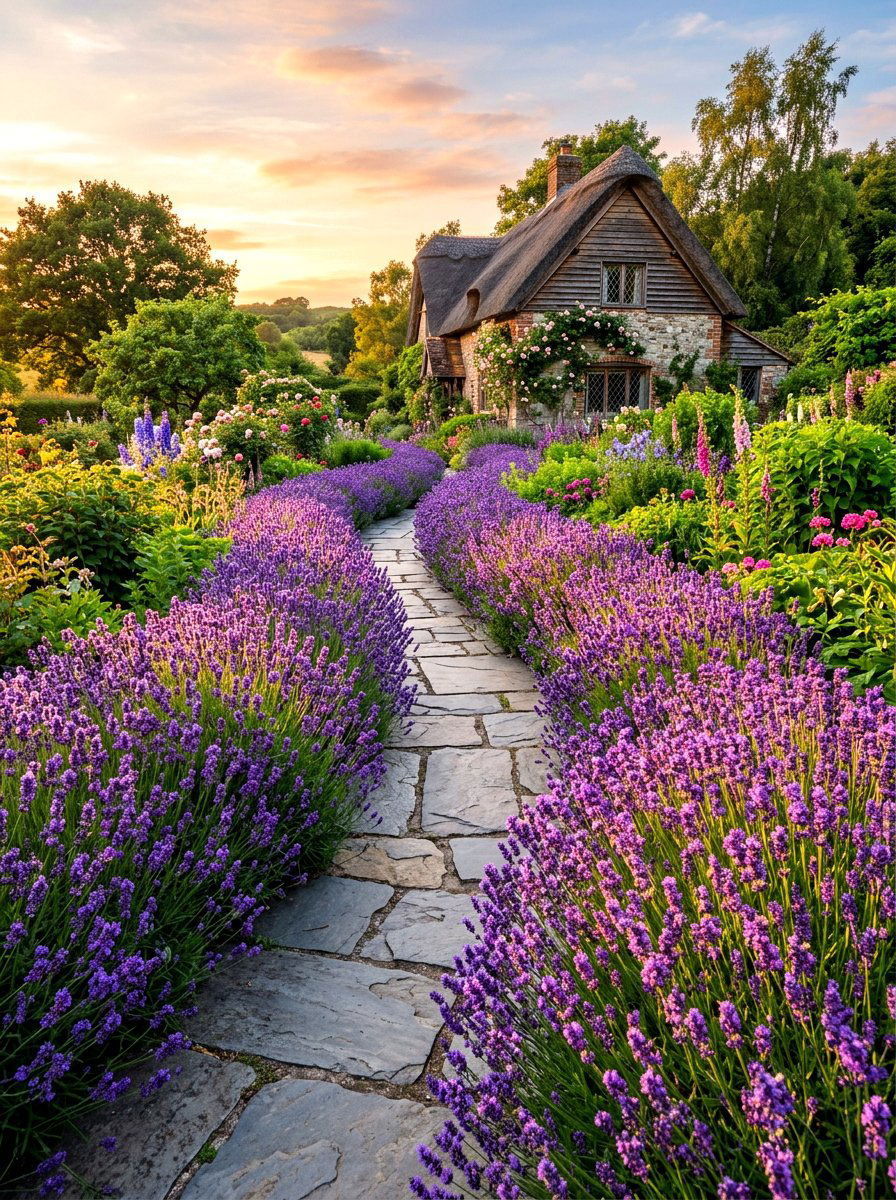
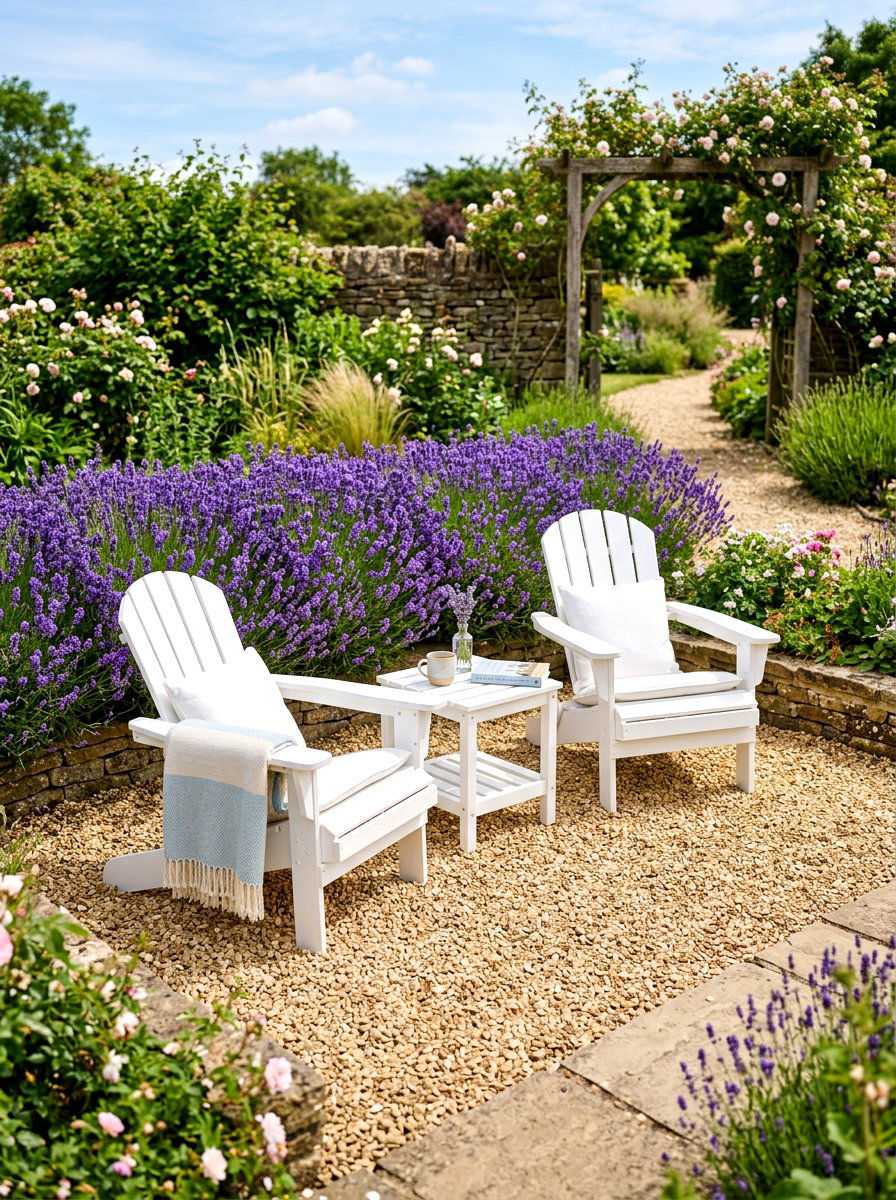
A foundation bed that lines the walkway to your front door can provide a sensory experience for everyone who visits. By planting fragrant varieties like English lavender and David Austin roses, you create a perfume-filled path that feels luxurious and welcoming. The soft silvery-purple of the lavender serves as a beautiful cool-toned companion to the deep greens and vibrant blooms of the rose bushes. These plants thrive in sunny locations and offer a classic, romantic aesthetic that never goes out of style. Walking through these scented plants as you enter your home provides a daily moment of joy and helps create a lasting first impression for guests.
22. Curving Natural Stone Edged Borders
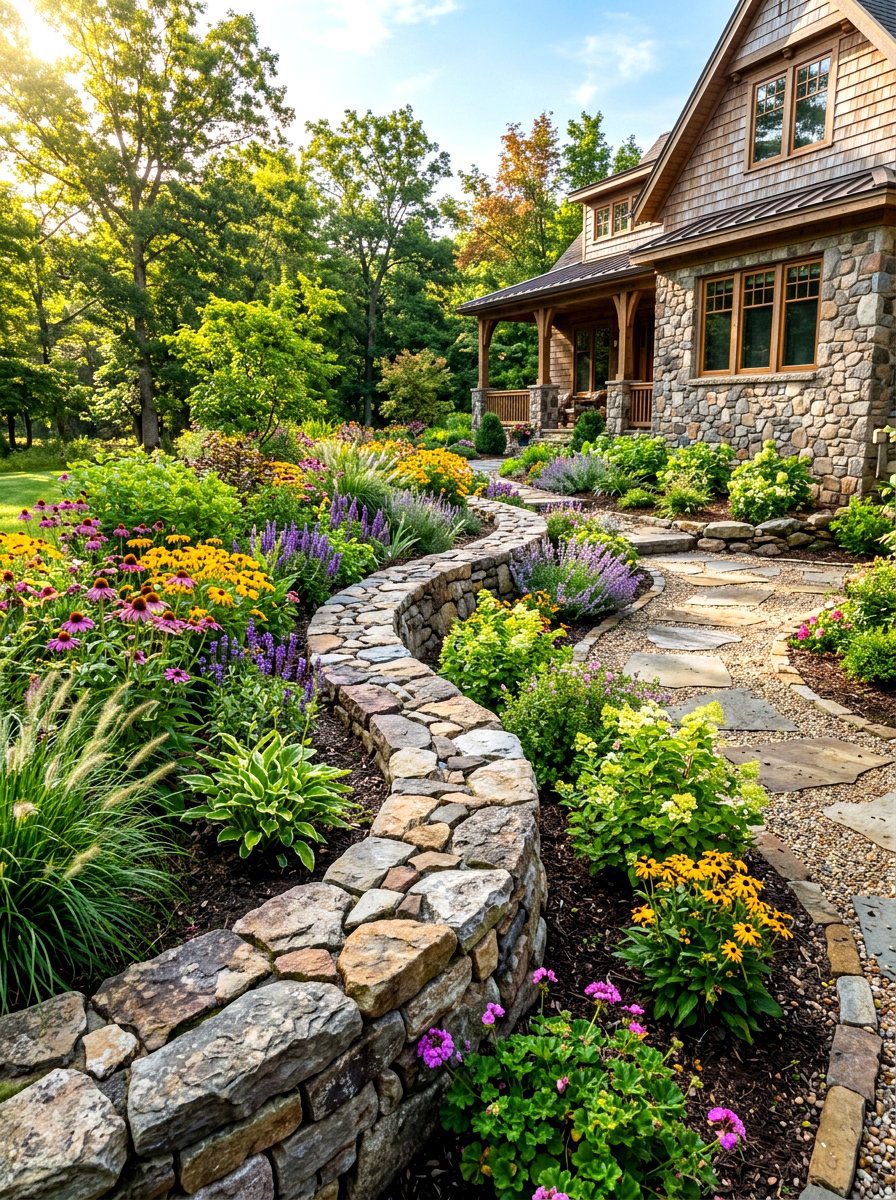
Replacing straight lines with gentle, organic curves can soften the boxy look of a house and make the foundation bed feel more natural. Use large, flat fieldstones or stacked flagstone to create a permanent, winding edge that defines the garden space. These curves guide the eye through the landscape and create pockets for different plant groupings, making the bed appear deeper and more interesting. Natural stone edging also serves a practical purpose by keeping mulch in place and creating a clean break from the lawn. This design choice adds a high-end, custom feel to the property, making the landscape look professional and well-integrated with the earth.
23. Mediterranean Style Drought Resistant Planting
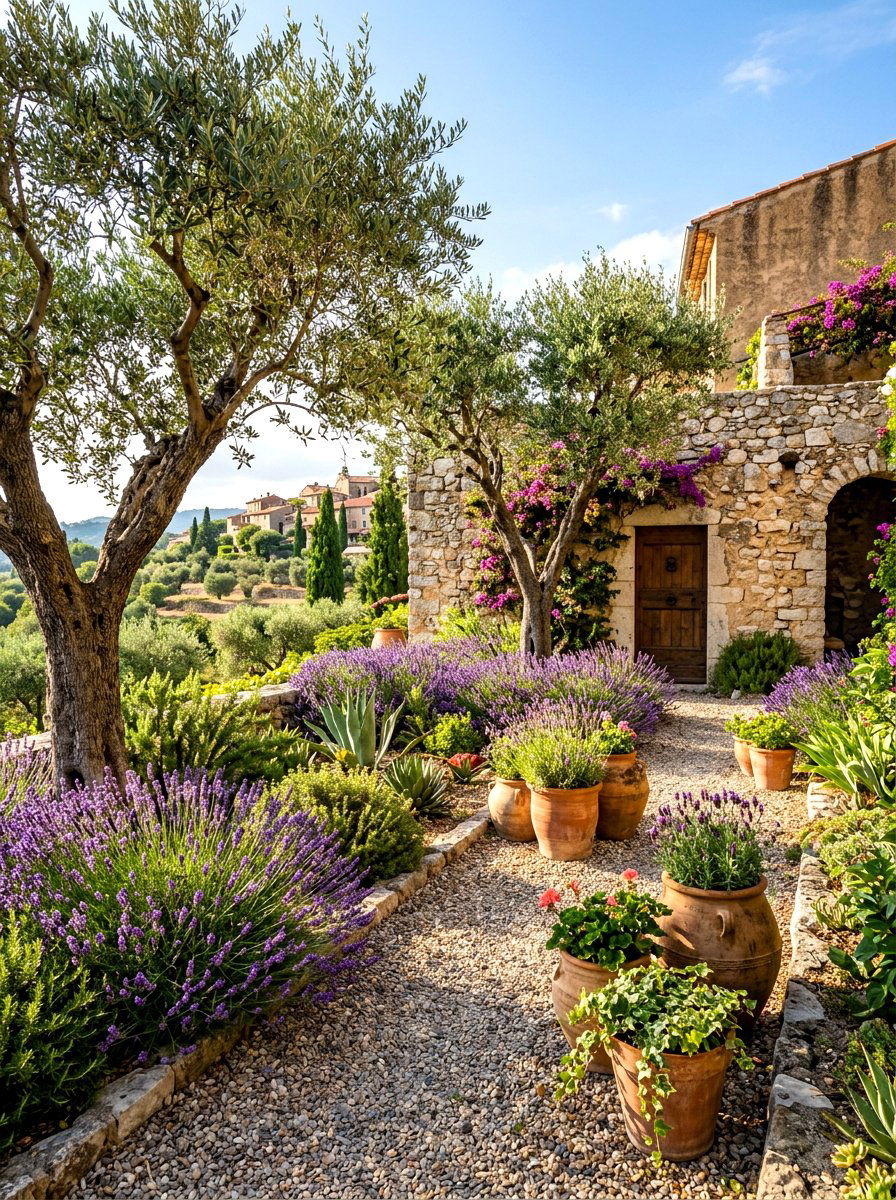
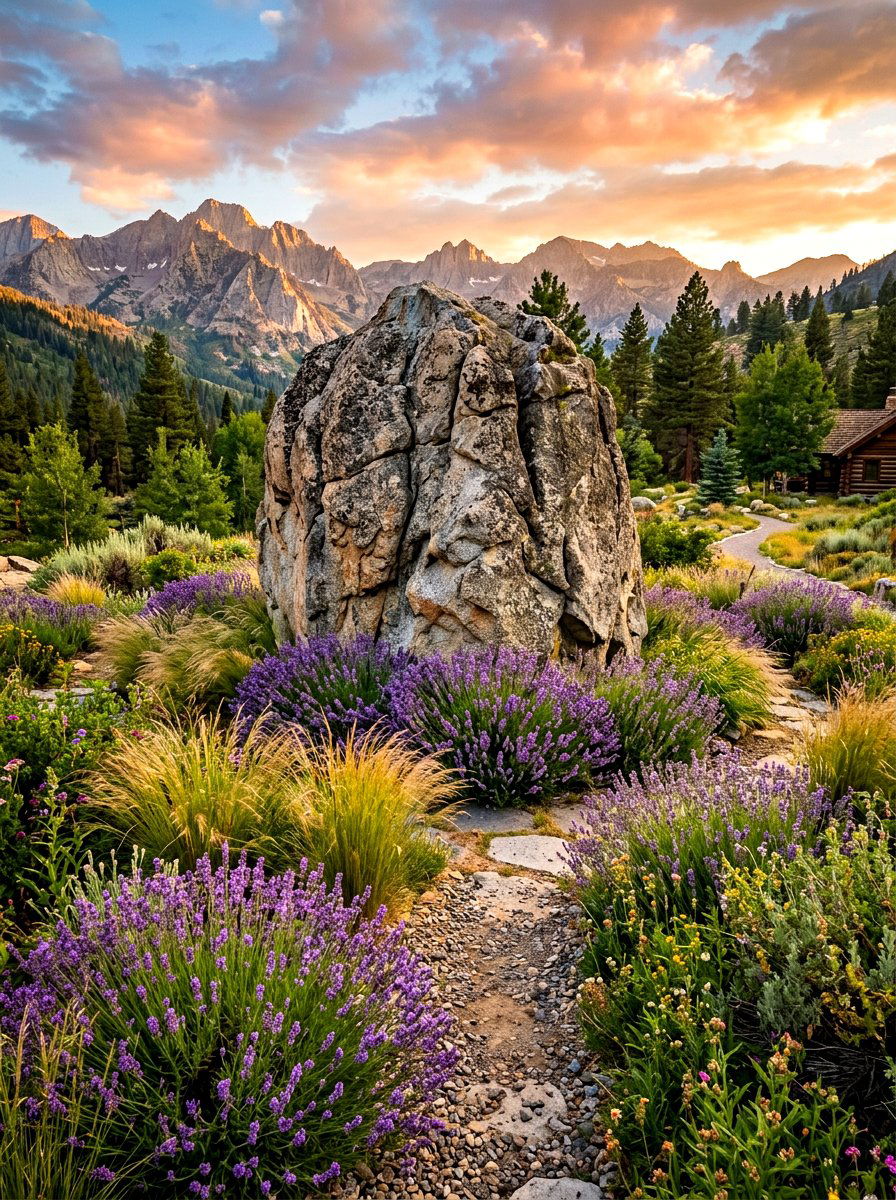
Inspired by the warm climates of southern Europe, a Mediterranean-style foundation bed uses sun-loving, drought-resistant plants to create a sophisticated and heat-tolerant landscape. Focus on silver-foliaged plants like olive trees, lavender, and santolina, which reflect the sun and require very little water. Terra cotta pots can be tucked into the planting beds to add architectural interest and a touch of old-world charm. Using a gravel mulch in warm tones helps keep the roots cool and completes the sun-drenched aesthetic. This design is perfect for homes with stucco or stone exteriors, offering a resilient and elegant look that thrives in the hottest, brightest locations of the yard.
24. Wooded Forest Floor Naturalistic Foundations
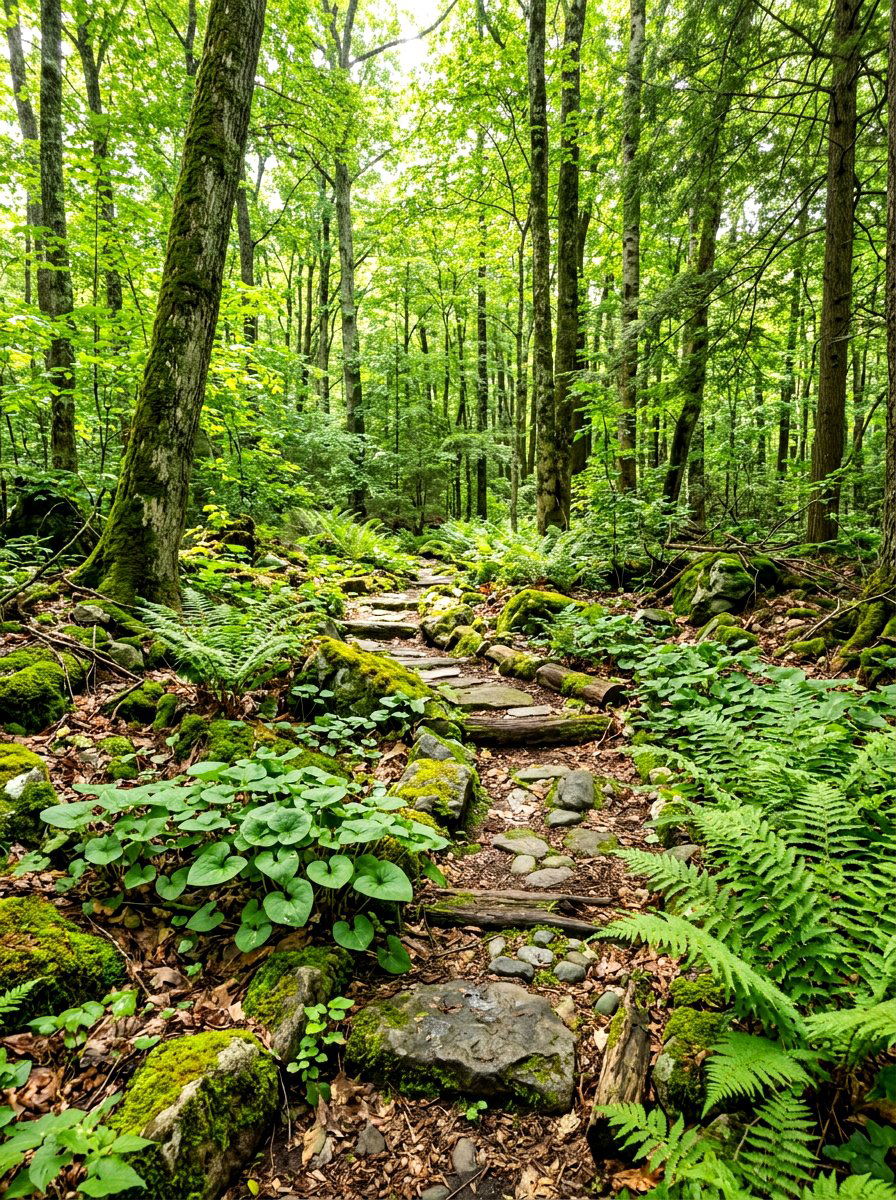
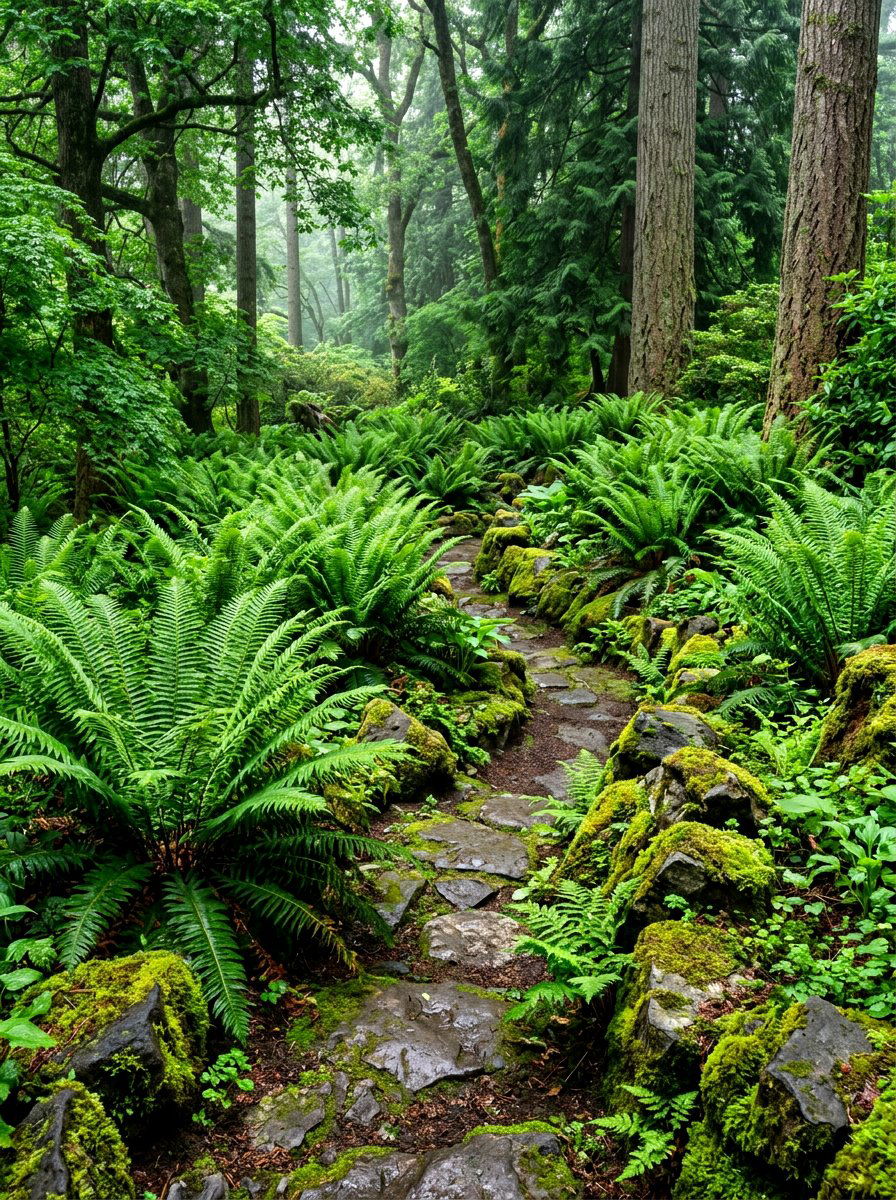
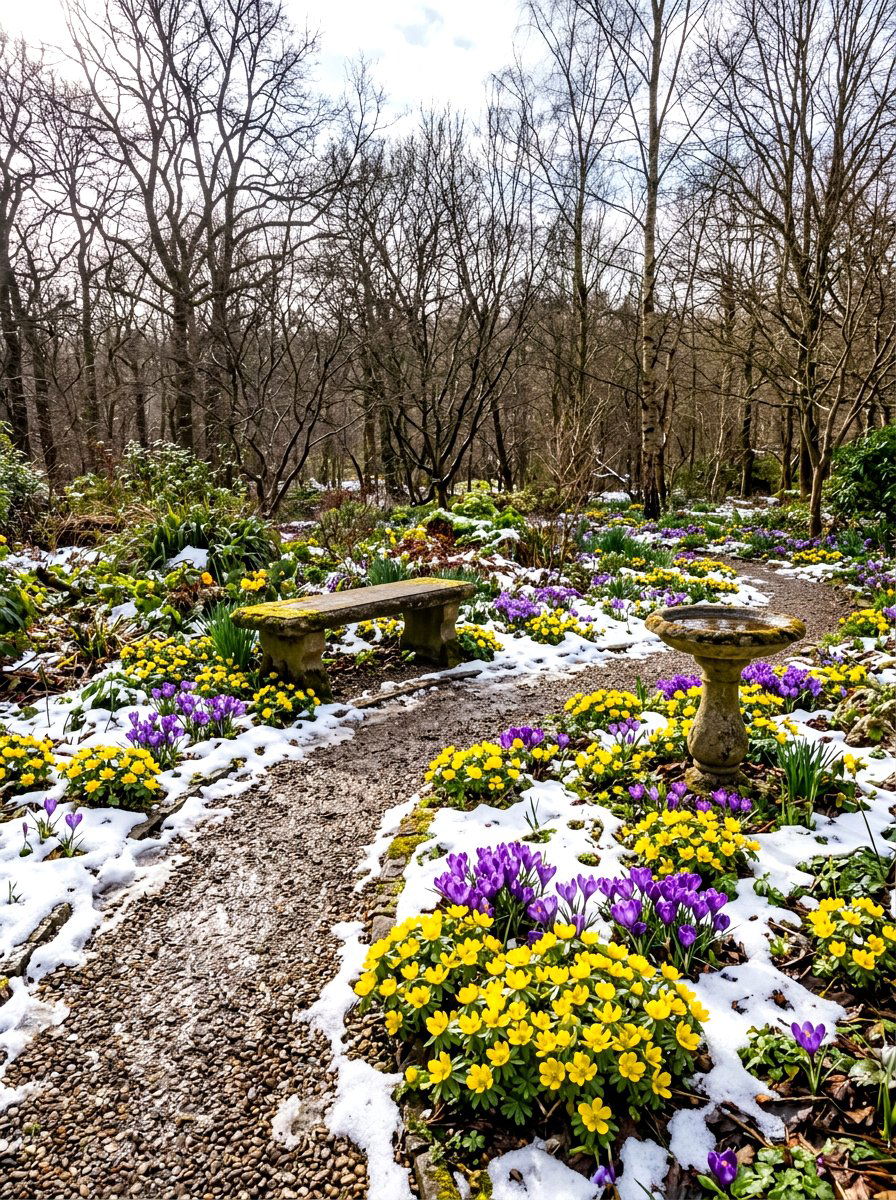
For homes located in or near wooded areas, a naturalistic foundation bed that mimics the forest floor is a perfect way to blend the architecture with the environment. This design uses native woodland plants like wild ginger, trilliums, and foamflowers that thrive in the dappled light and organic soil found under trees. Instead of traditional bark mulch, use shredded leaves or pine needles to maintain a truly natural look. Incorporating rotting logs or moss-covered stones adds to the authentic woodland feel. This type of garden is very low-maintenance once established and provides a peaceful, quiet beauty that feels like an extension of the surrounding wild landscape.
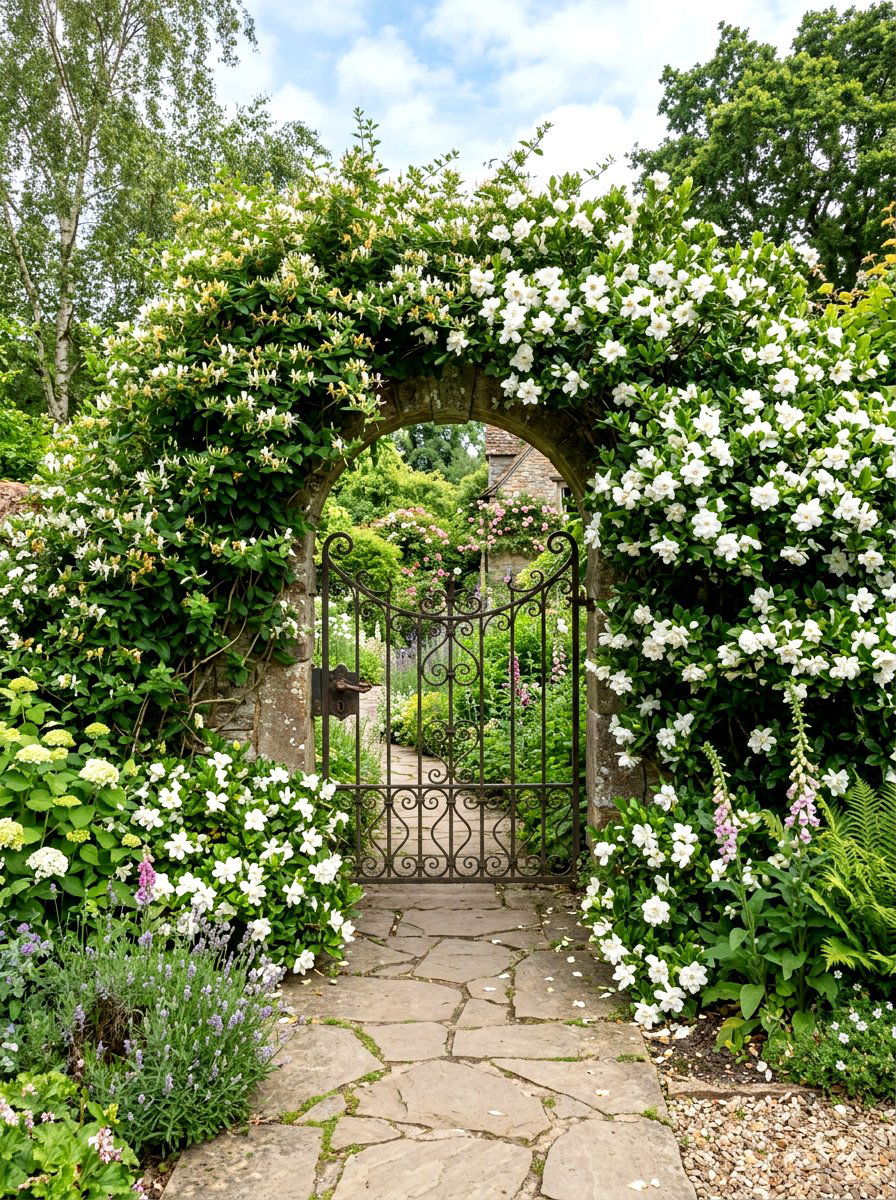
25. Formal Estate Style Clipped Hedges
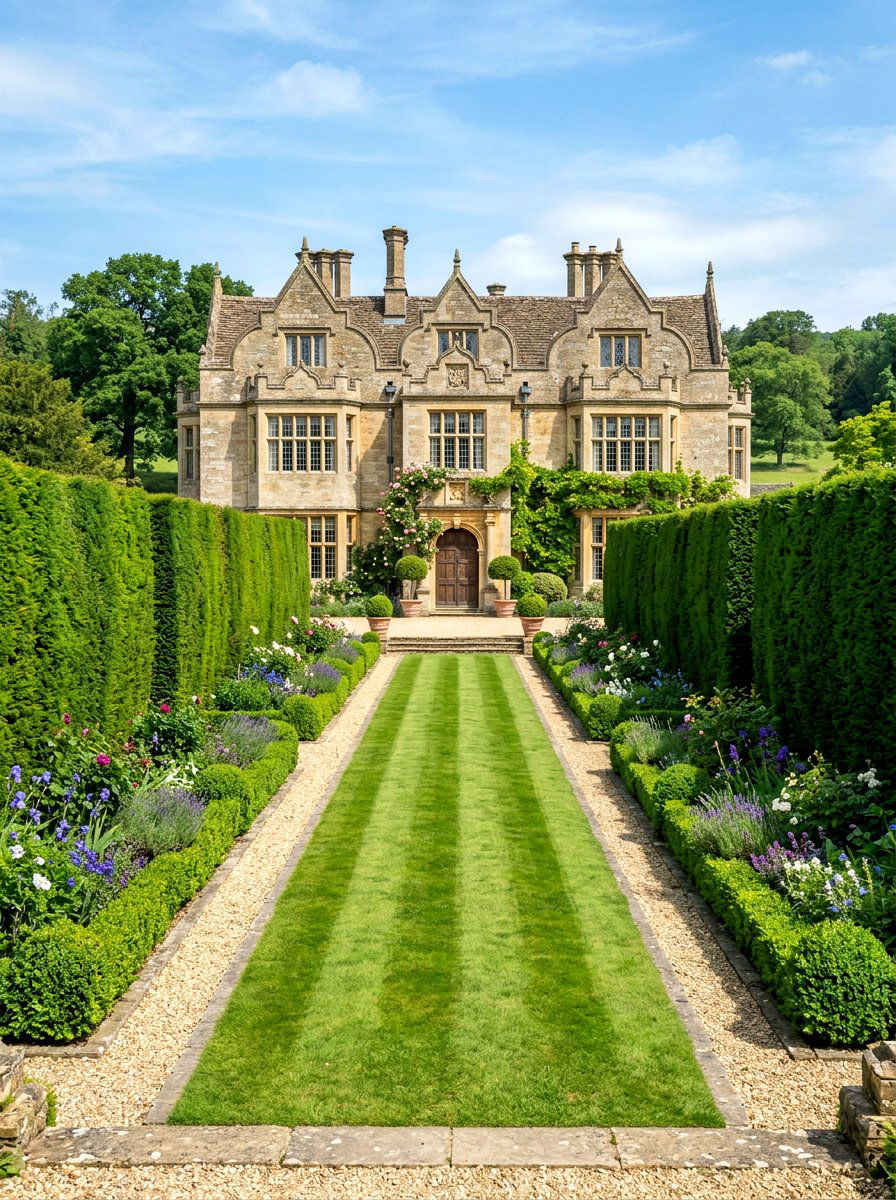
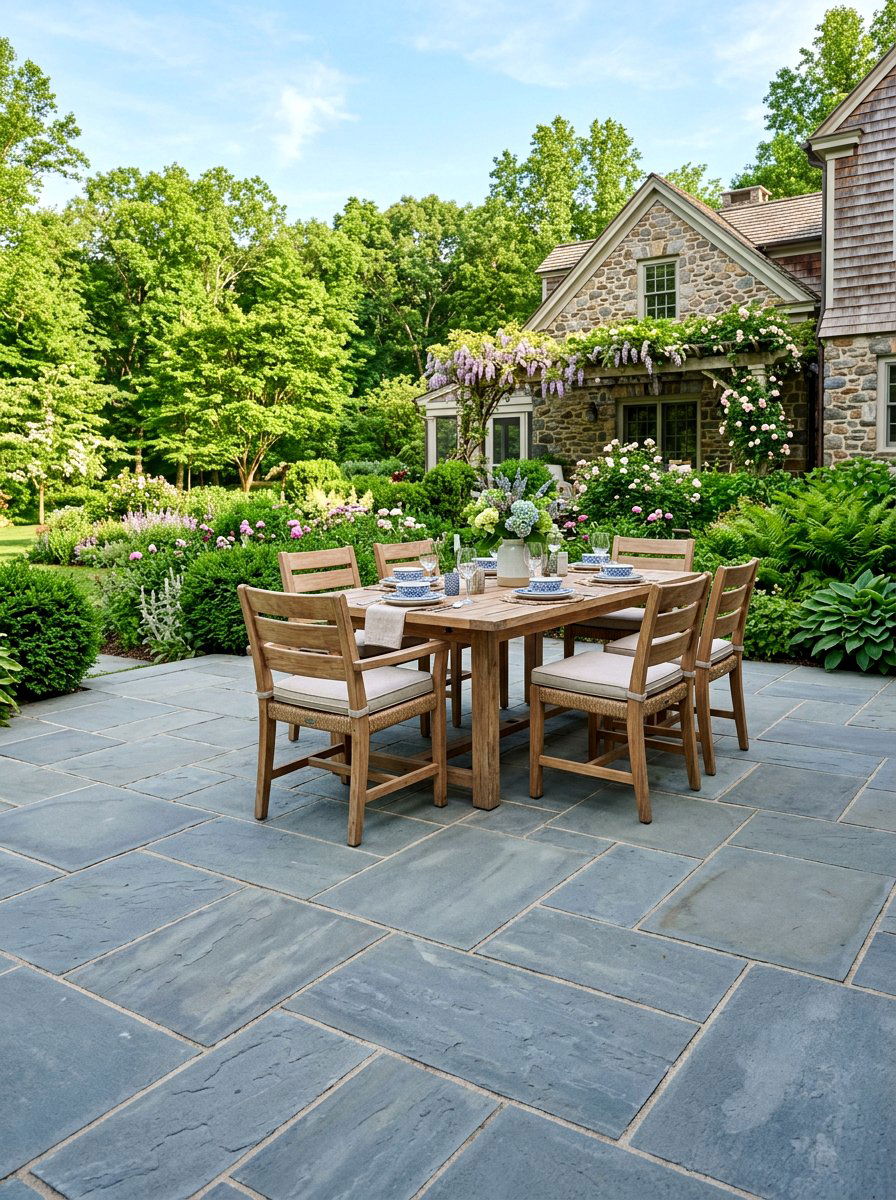
A formal estate-style foundation bed is all about precision, order, and classic luxury. This design features tall, neatly sheared hedges of privet or yew that act as a living wall against the house, providing privacy and a powerful architectural statement. In front of these tall hedges, lower rows of perfectly shaped boxwoods create a tiered, green-on-green look that is incredibly sophisticated. This style requires regular maintenance to keep the lines sharp, but the payoff is a stately and timeless appearance that makes any home look like a grand manor. It’s the ultimate choice for those who want a disciplined, high-end landscape that emphasizes structure over floral chaos.
26. Contemporary Mixed Texture Architectural Beds
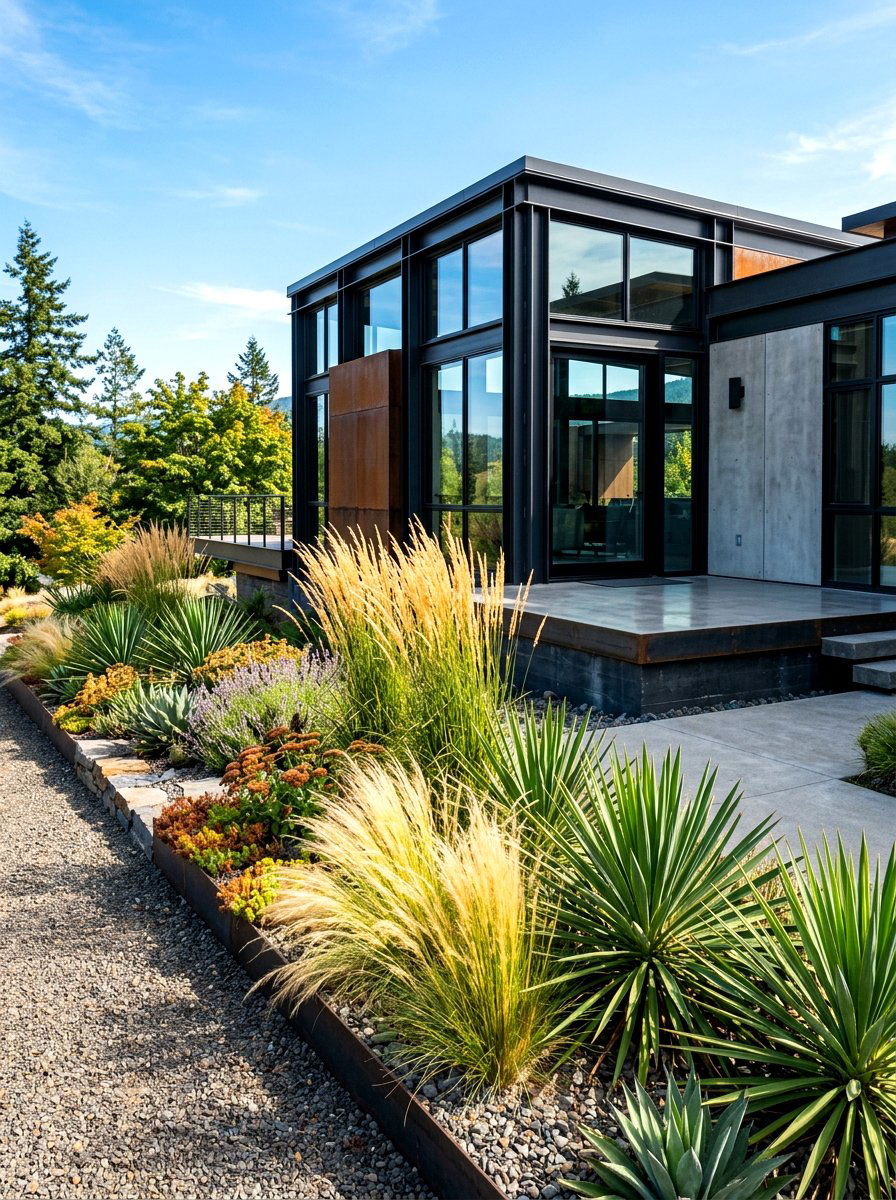
Contemporary landscaping often plays with contrasting textures and shapes rather than a wide variety of colors. A contemporary foundation bed might pair the soft, feathery fronds of a Japanese forest grass with the rigid, architectural spikes of a Yucca or New Zealand flax. Using a palette of different greens — from lime to forest to blue-grey — creates a sophisticated and moody look that highlights the materials of a modern home, such as steel, glass, or smooth concrete. This design feels like a living art installation, where each plant is chosen for its specific form. It’s a great way to create a high-impact, low-clutter entrance that feels curated and undeniably modern.
27. Seasonal Bulb and Annual Rotation Beds
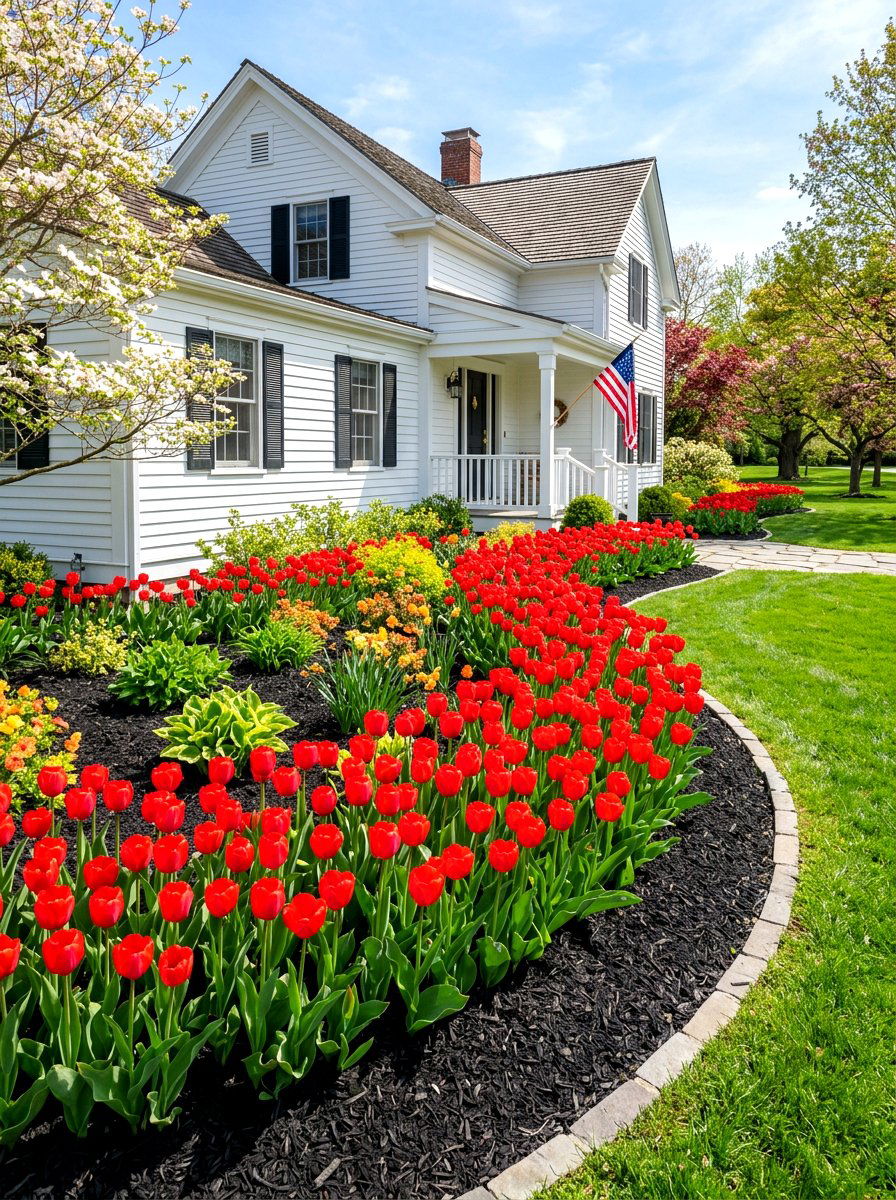
If you love to change your home’s look with the seasons, a foundation bed designed for rotation is the way to go. This design features a permanent evergreen backdrop, but the front third of the bed is left open for seasonal displays. In early spring, hundreds of tulips and daffodils provide a massive burst of color. Once they fade, they are replaced with vibrant summer annuals like petunias or zinnias. In the fall, chrysanthemums and ornamental cabbages take over. This "high-fashion" approach requires more work but ensures that your home always looks fresh, festive, and perfectly in tune with the current time of year.
28. Bird and Butterfly Friendly Native Borders
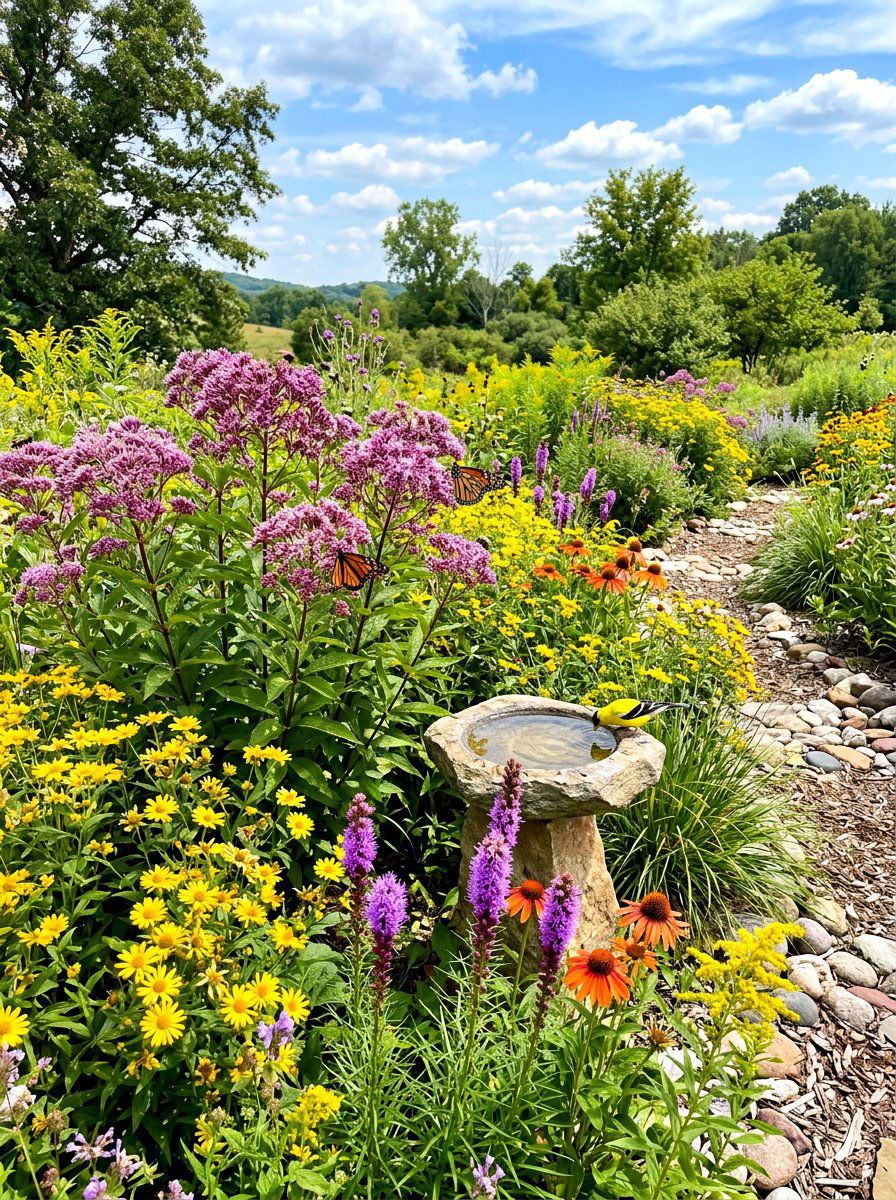
Turning your foundation bed into a certified wildlife habitat is a wonderful way to give back to the environment while enjoying the beauty of nature. This design prioritizes native plants that provide food and shelter for local birds and insects. High-bush blueberries or serviceberry shrubs provide berries for birds, while flowering perennials like Joe Pye weed and asters attract pollinators. By avoiding pesticides and providing a small water source, your front yard will become a bustling hub of activity. This approach results in a lush, healthy garden that feels alive and vibrant, offering endless fascination for children and nature lovers right at the front door.
29. Lush Tropical Style Bold Leaf Foundations
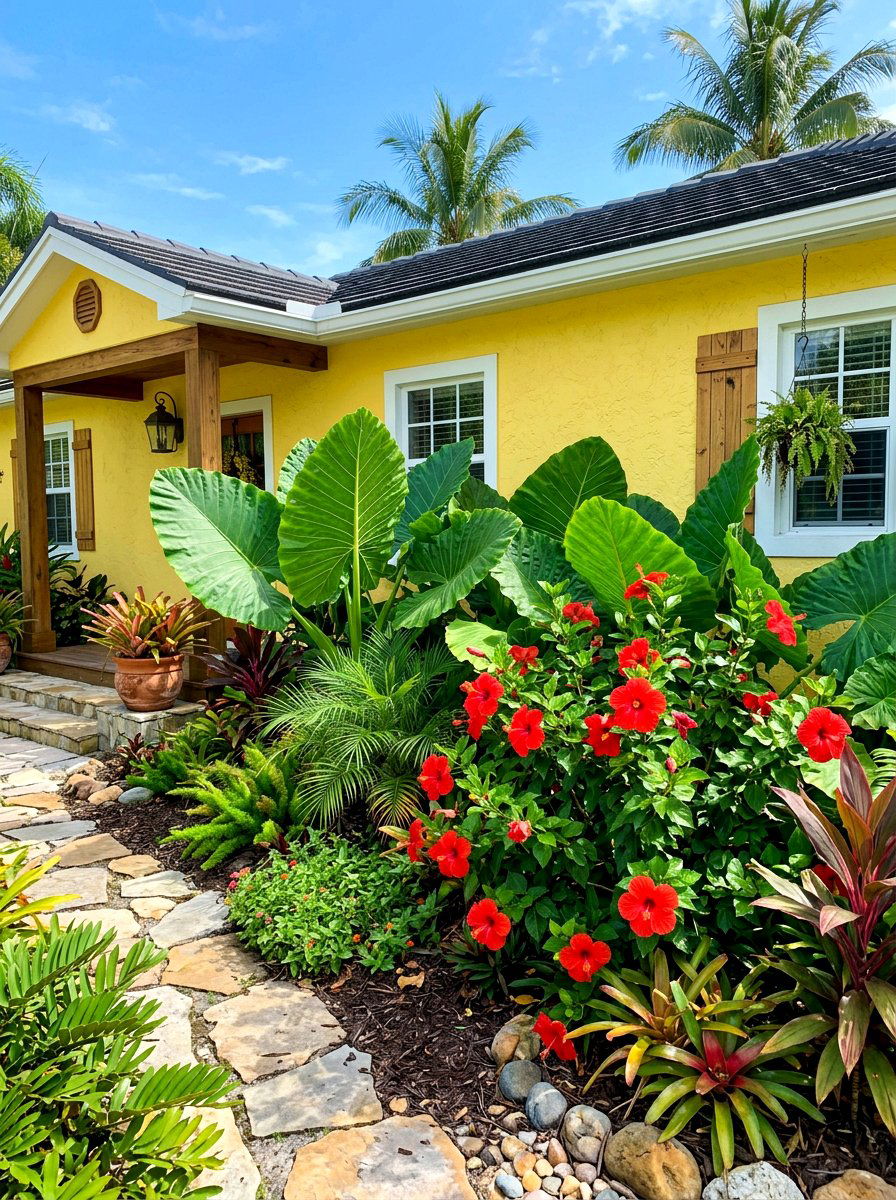
Even in non-tropical climates, you can create a lush, exotic-looking foundation bed by using large-leafed plants that provide a tropical vibe. Use hardy hibiscus with their dinner-plate-sized blooms, or cold-tolerant banana plants and elephant ears for a dramatic, oversized foliage effect. These plants grow very quickly in the summer heat and can hide a foundation better than almost any other variety. Pairing them with bright, saturated flower colors like orange, red, and hot pink completes the vacation-at-home feel. This high-energy design is fun, bold, and perfect for homeowners who want their house to stand out with a unique and summery personality.
30. Small Space Tiny Home Foundation Designs
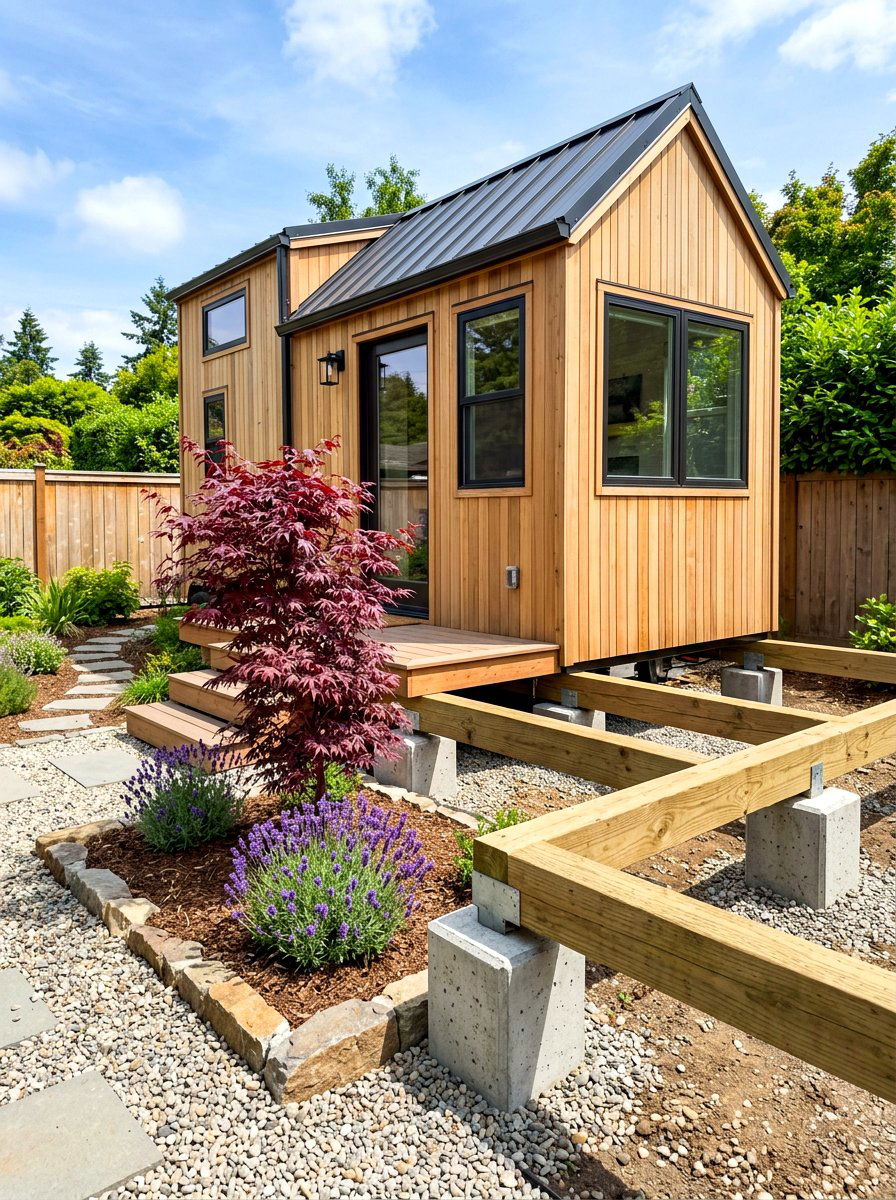
When you have a limited amount of space or a very small home, every plant choice must be intentional and perfectly scaled. A small-space foundation bed avoids sprawling shrubs and instead uses dwarf varieties and vertical elements to create interest without overcrowding. Columnar plants that grow up instead of out are essential for saving horizontal space. Using a few high-quality specimens, like a single beautifully shaped Japanese maple or a few choice perennials, creates a "jewel box" effect that feels precious and well-cared-for. This minimalist but high-quality approach ensures that the landscape doesn't overwhelm the small architecture, making the entire property feel balanced and intentionally designed.
Conclusion:
Investing time into your foundation flower bed is a rewarding project that pays off in both daily enjoyment and long-term property value. By choosing a design that complements your home’s architecture and fits your personal maintenance style, you create a lasting first impression that truly makes a house feel like a home. From the structured elegance of formal hedges to the vibrant energy of a pollinator garden, the possibilities are nearly endless. Remember to consider your local climate and sun exposure to ensure your plants thrive for years to come. A beautiful foundation garden is the perfect finishing touch that anchors your home to the earth with grace and style.

Related posts: