google: search{queries: [
Oatmeal is a stunningly versatile neutral that bridges the gap between warm beige and soft gray, making it a favorite for modern homeowners. This particular shade offers a timeless foundation that feels both sophisticated and incredibly cozy, regardless of your personal style preferences. When you incorporate oatmeal tones into your living space, you create an atmosphere of serenity and light that instantly makes a room feel more expansive. This color choice is perfect for layering various textures like linen, wool, and boucle to add depth and visual interest. By choosing this organic palette, you set the stage for a home that feels curated, welcoming, and high-end throughout.

1. Oatmeal Couch Small Living Room
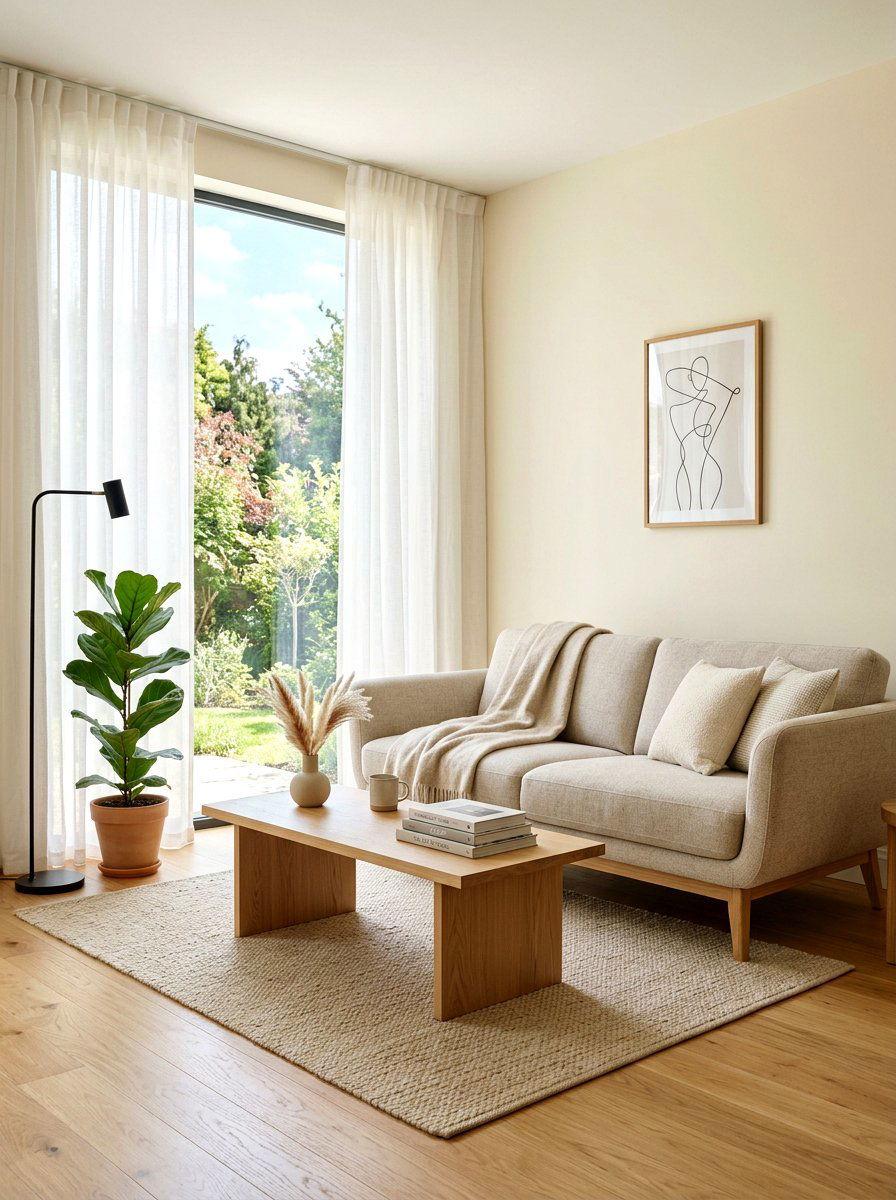
A small living room benefits immensely from an oatmeal couch, as the light tone helps reflect natural light around the space. When you place a compact, streamlined oatmeal sofa against a neutral wall, it creates a seamless look that prevents the room from feeling cramped. To enhance this setup, consider using a light-colored rug and minimalist furniture that doesn't overwhelm the floor plan. This approach allows the sofa to become a soft focal point without being visually heavy. By keeping the surrounding elements simple and light, you maximize the perceived square footage while maintaining a high level of comfort and style for daily living.
2. Modern Oatmeal Living Room Boucle
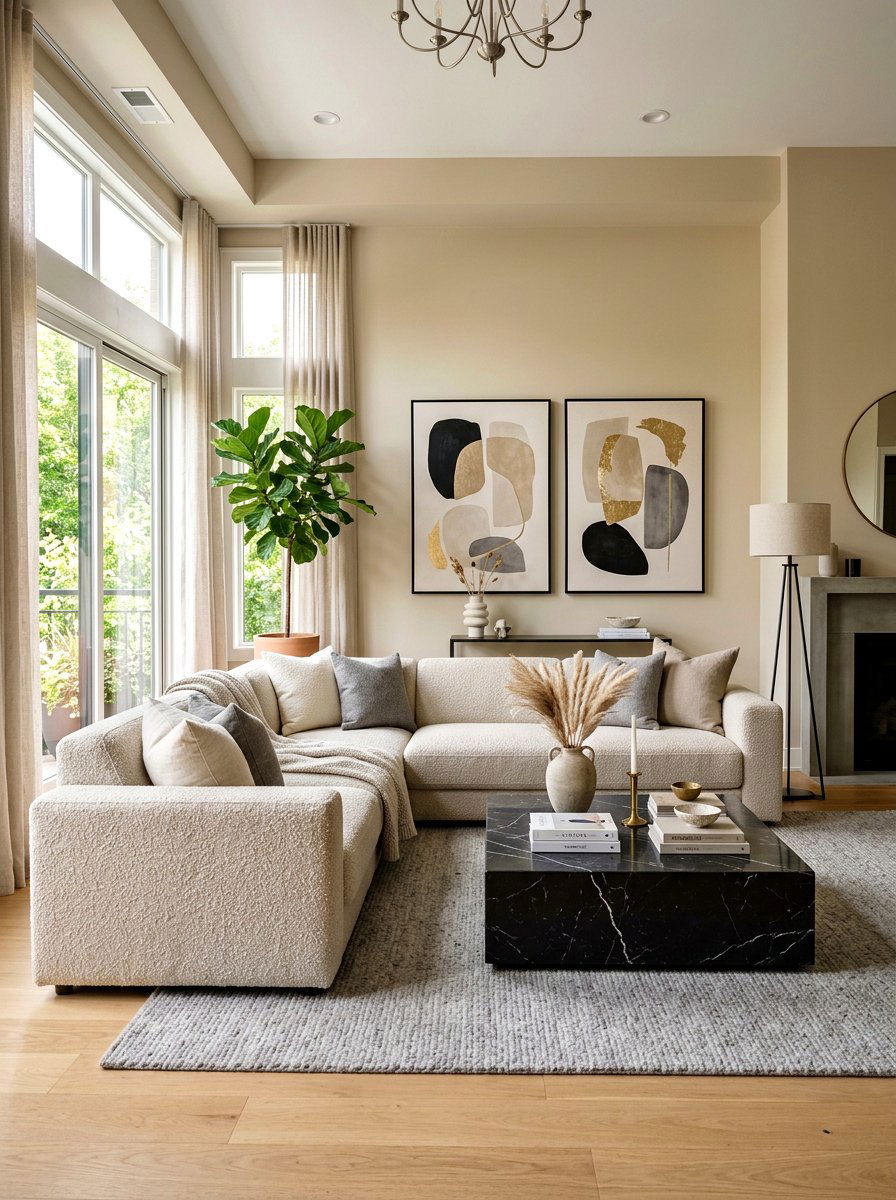
Incorporating boucle fabric into a modern oatmeal living room adds an essential tactile element that elevates the entire design aesthetic. This nubby, textured material brings a sense of warmth and luxury to contemporary spaces that can sometimes feel too clinical or cold. You can pair a large boucle sectional with sleek metal accents or glass coffee tables to create a sophisticated contrast between soft and hard surfaces. The cream and tan undertones of oatmeal boucle work beautifully with modern architectural lines and large windows. This combination ensures your living area feels trendy yet timeless, providing a cozy sanctuary that remains visually interesting and very upscale.
3. Oatmeal Living Room Black Accent
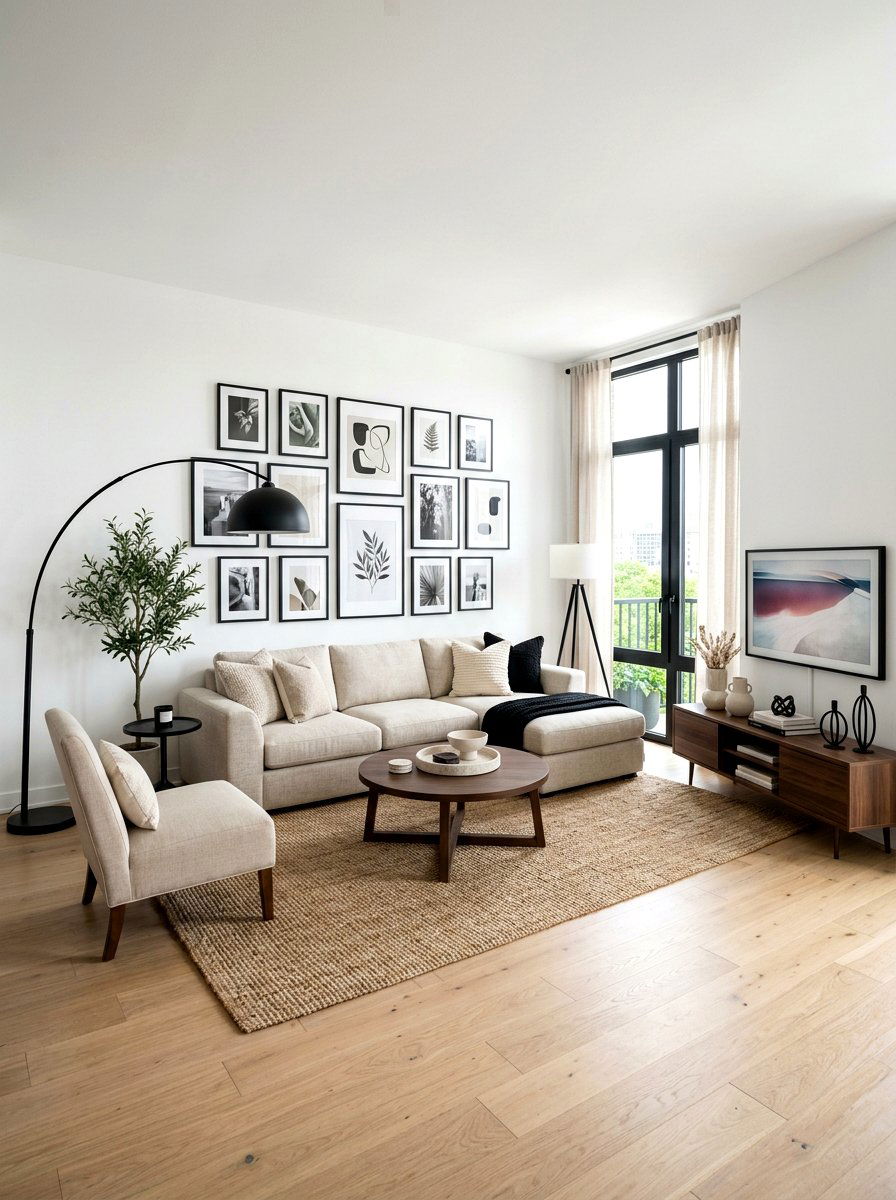
Adding black accents to an oatmeal living room creates a striking, high-contrast look that feels modern and intentional. You can achieve this by incorporating thin black metal frames, dark curtain rods, or a bold black coffee table against the soft oatmeal backdrop. These dark elements provide a visual anchor, preventing the neutral tones from washing out in bright light. The key is to distribute the black accents evenly throughout the room to create a balanced and cohesive design. This color pairing is particularly effective in transitional homes where you want to blend traditional warmth with contemporary sharpness for a very professional and polished finish.
4. Boho Oatmeal Living Room Macrame
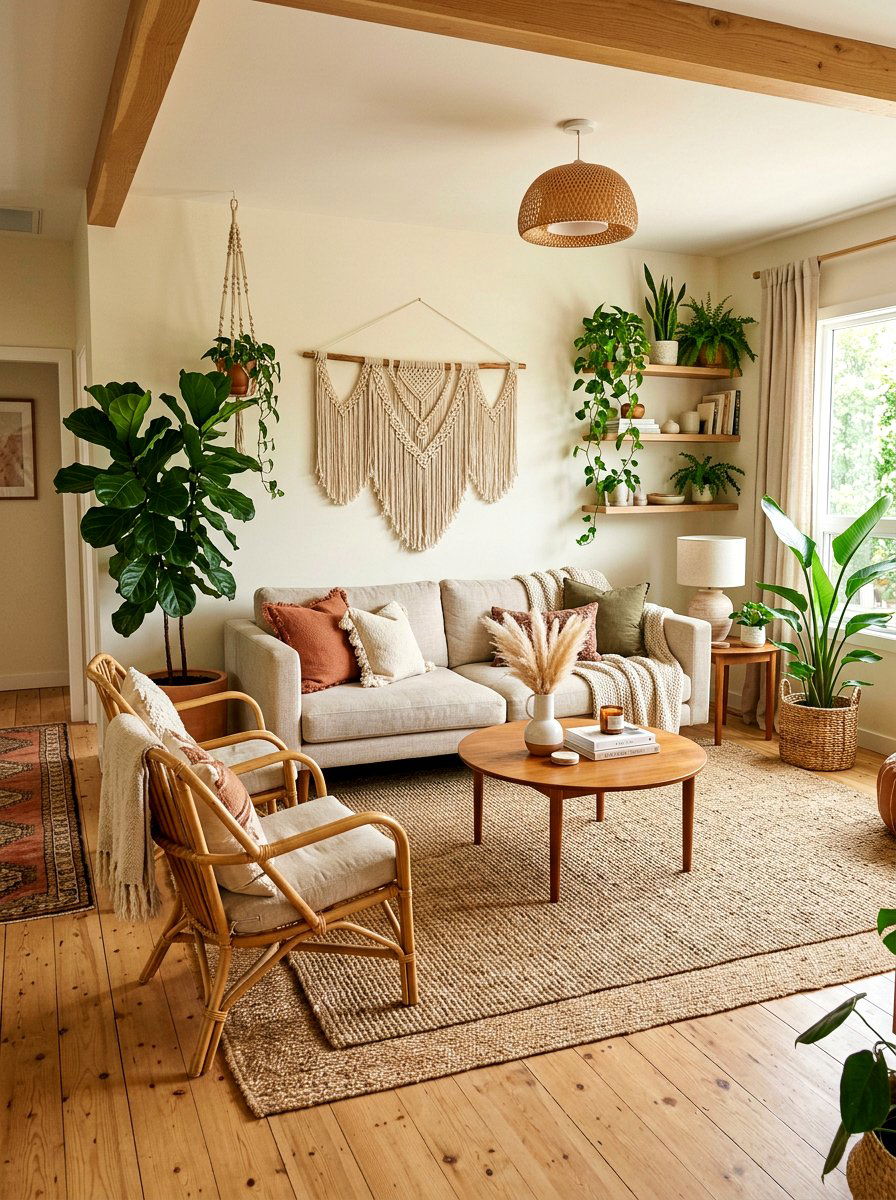
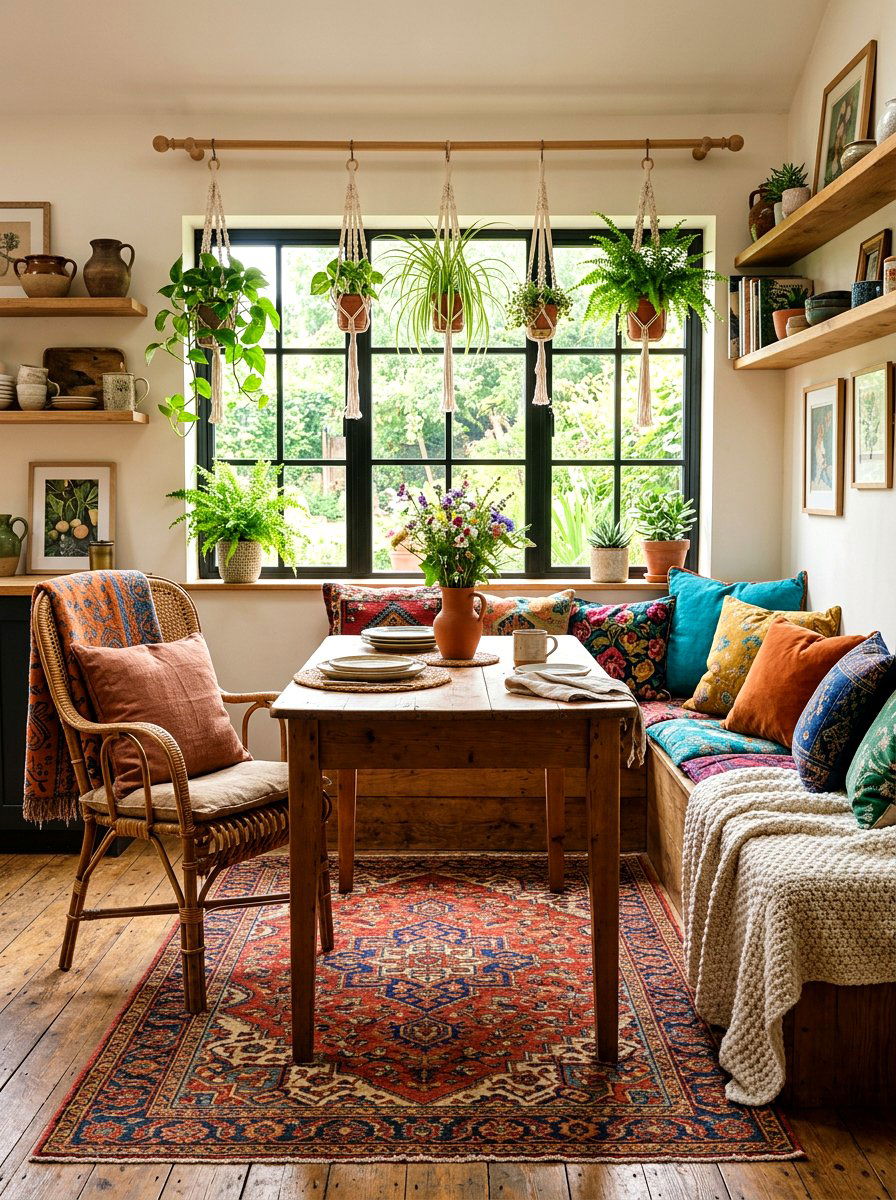
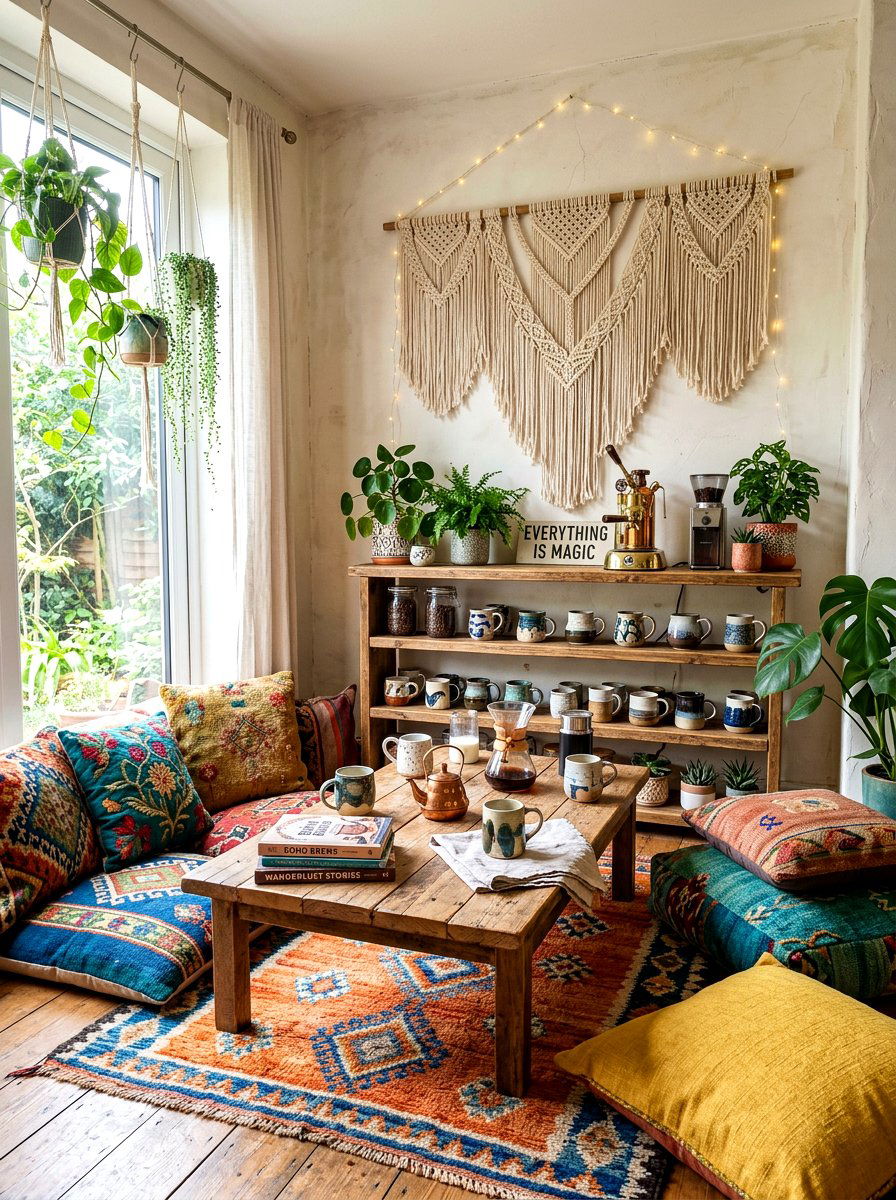
A boho-themed oatmeal living room thrives on the use of natural fibers and artisanal details like macrame wall hangings. The soft, sandy tones of oatmeal provide the perfect canvas for creamy cotton ropes, rattan furniture, and woven baskets. This style emphasizes a relaxed, lived-in feel that prioritizes comfort and organic beauty over strict formality. You can layer multiple textured pillows on an oatmeal sofa and add a variety of indoor plants to bring life to the neutral palette. This approach creates a soulful space that feels connected to nature, offering a peaceful retreat that is visually rich without being cluttered or overly colorful.
5. Oatmeal Living Room Dark Wood
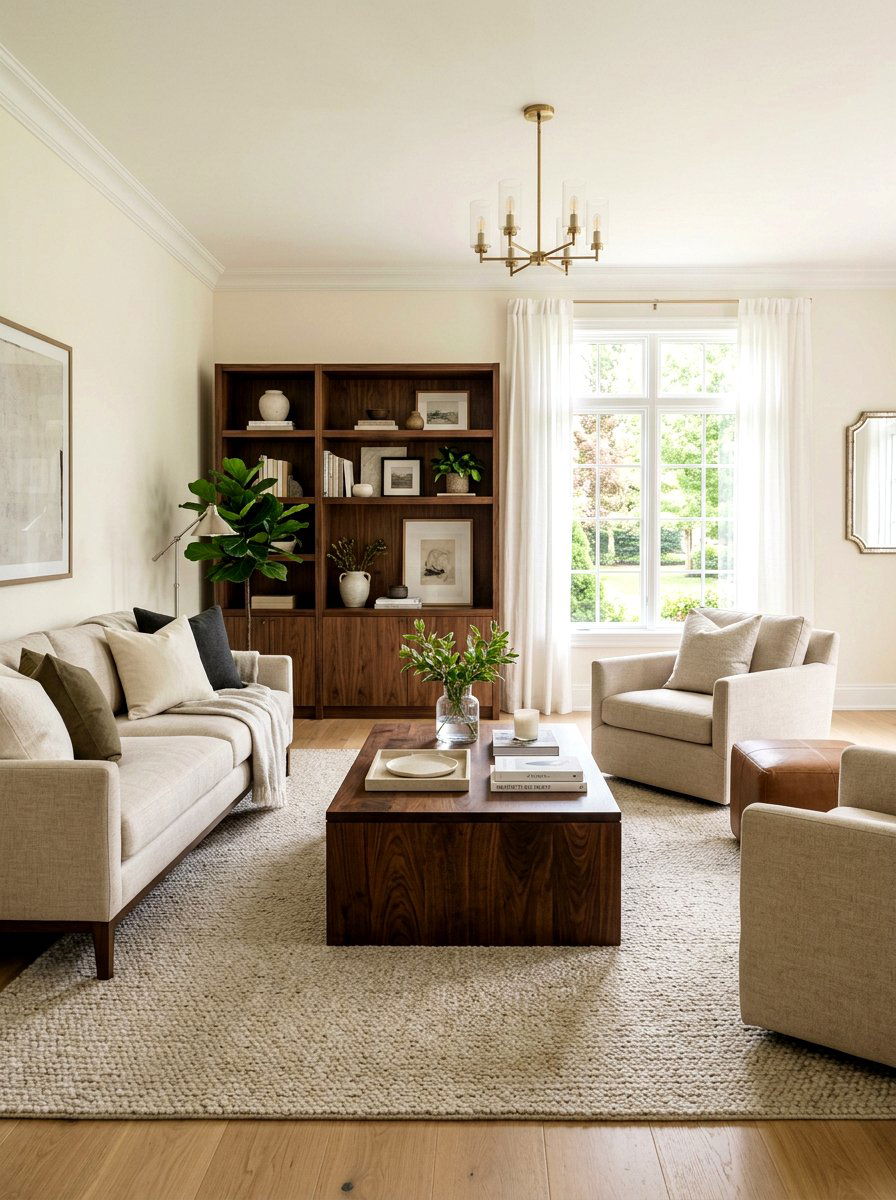
Mixing dark wood elements into an oatmeal living room provides a sense of history and grounded elegance. The deep browns of walnut or mahogany furniture create a beautiful depth when placed against light oatmeal walls or upholstery. This combination works exceptionally well in larger rooms where you want to create a sense of coziness and traditional charm. You might choose a dark wood media console or heavy shelving units to contrast with soft oatmeal seating and light-colored rugs. This interplay between light and dark creates a sophisticated architectural feel that is both inviting and formal enough for entertaining guests in a stylish home.
6. Japandi Oatmeal Living Room
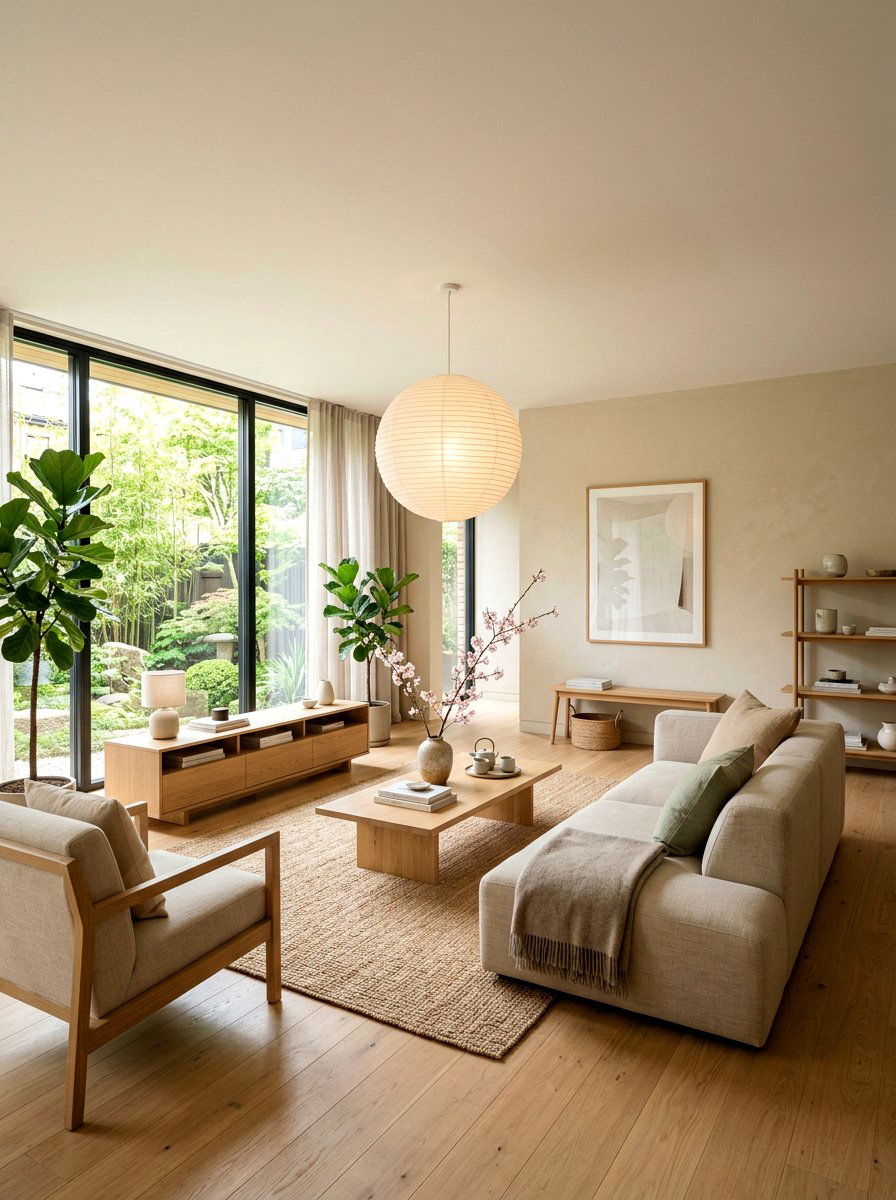
The Japandi style perfectly utilizes oatmeal tones to achieve a balance between Japanese minimalism and Scandinavian functionality. In this design, you focus on clean lines, low-profile furniture, and a palette of soft neutrals and warm woods. An oatmeal living room in this style often features light oak floors, paper lanterns, and very simple, high-quality upholstery. The goal is to create a space that feels uncluttered and peaceful, where every item has a specific purpose and place. By sticking to an oatmeal base, you allow the craftsmanship of the furniture and the beauty of the natural materials to truly shine in the room.
7. Oatmeal Living Room Linen Curtain
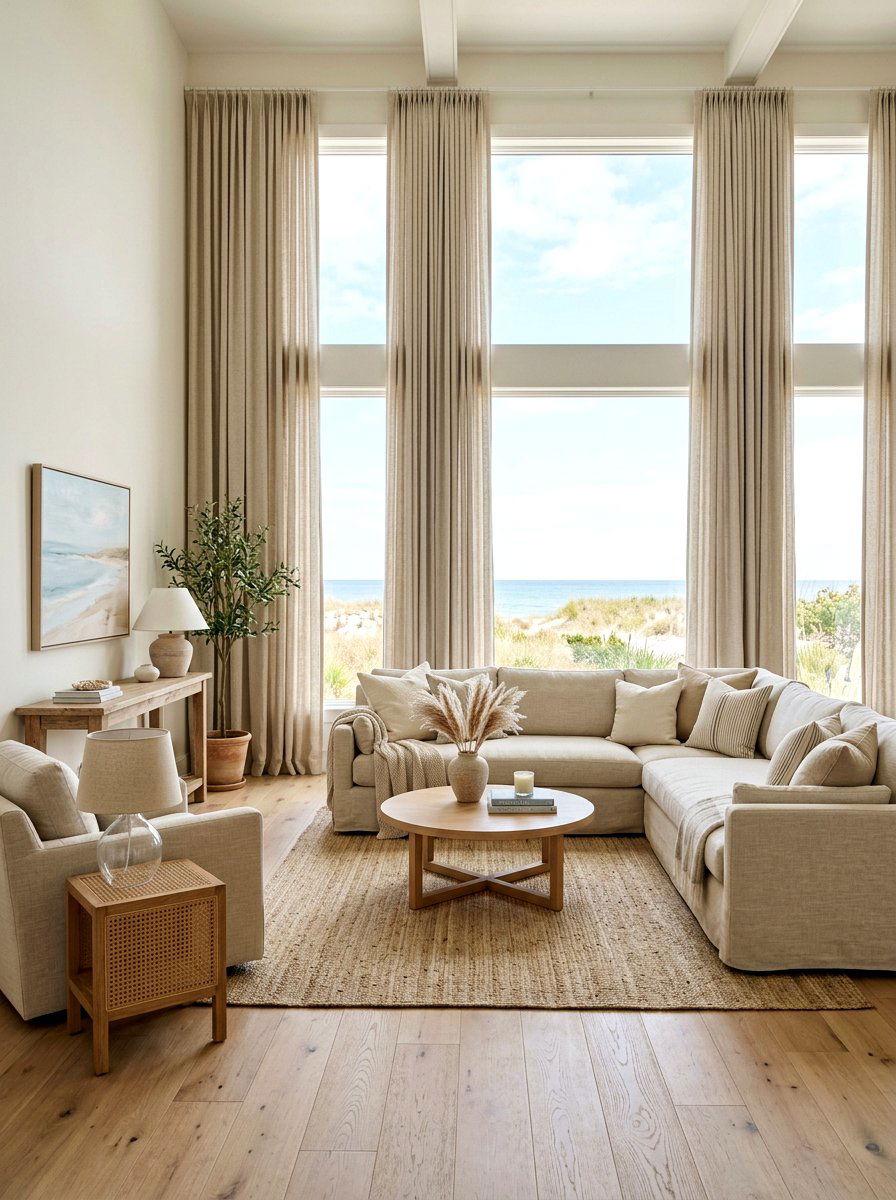
Using linen curtains in an oatmeal living room is a brilliant way to control light while adding a soft, breezy texture to the windows. These curtains allow sunlight to filter through gently, casting a warm and inviting glow across the entire space during the day. The natural weave of linen complements the organic feel of oatmeal upholstery, creating a cohesive and well-thought-out interior design. You can hang them high and wide to make your windows appear larger and your ceilings taller. This simple addition brings a sense of effortless luxury and movement to the room, making it feel finished, relaxed, and very high-end.
8. Rustic Oatmeal Living Room Stone Fireplace
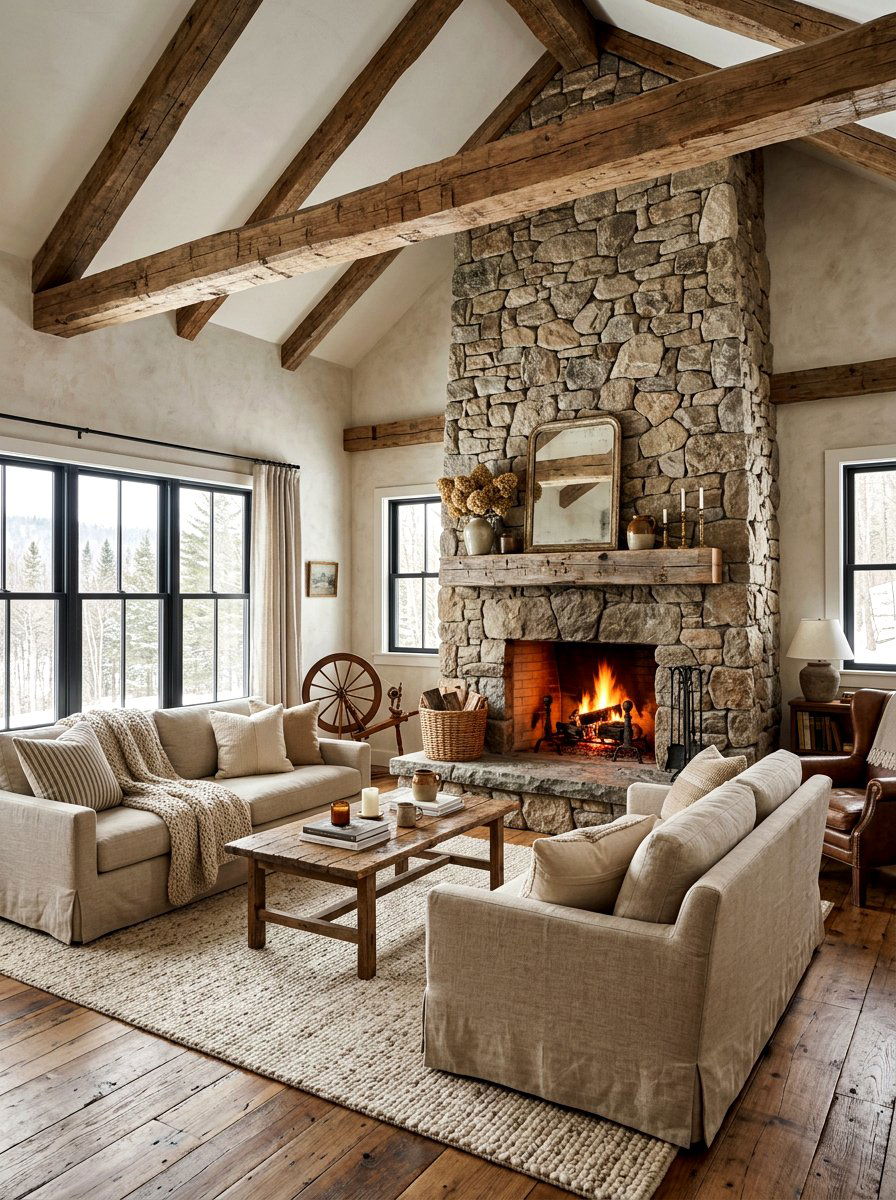
A rustic living room featuring an oatmeal color scheme and a stone fireplace offers the ultimate in cozy, lodge-inspired living. The rough texture of natural stone pairs beautifully with the smooth, soft feel of oatmeal-colored fabrics and painted walls. This design works best when you incorporate reclaimed wood beams and heavy, comfortable seating that invites you to relax by the fire. The neutral tones ensure that the fireplace remains the heart of the room without the space feeling too dark or heavy. This look is perfect for creating a warm, family-oriented environment that feels connected to the outdoors and historical architectural styles.
9. Minimalist Oatmeal Living Room
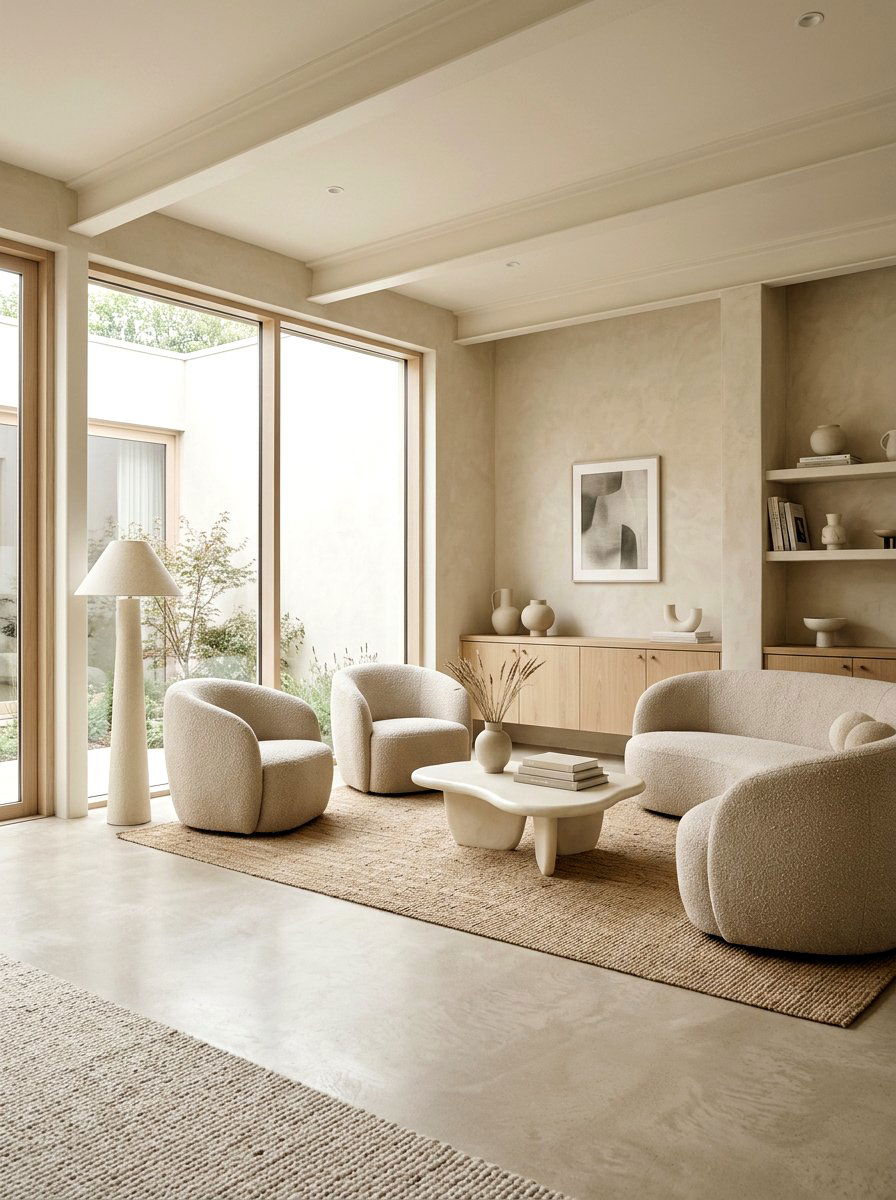
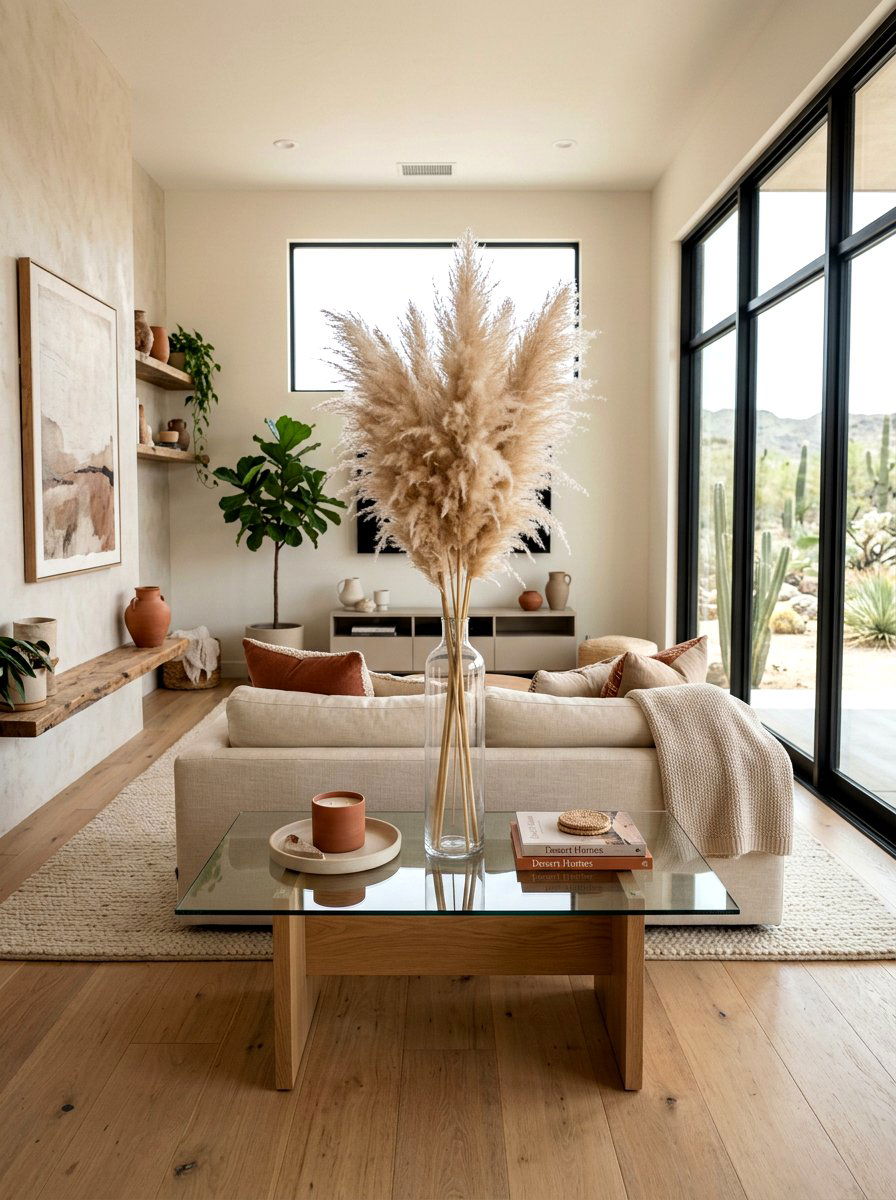
In a minimalist oatmeal living room, the focus is on quality over quantity and the beauty of empty space. By using varying shades of oatmeal for the walls, floors, and furniture, you create a monochromatic look that is incredibly soothing to the eye. This design philosophy encourages you to remove unnecessary clutter and choose pieces with strong, clean silhouettes. The lack of bold color allows the subtle differences in texture and tone to become the main decorative features of the room. This results in a sophisticated and modern environment that feels incredibly organized, light, and airy, perfect for those seeking a quiet home life.
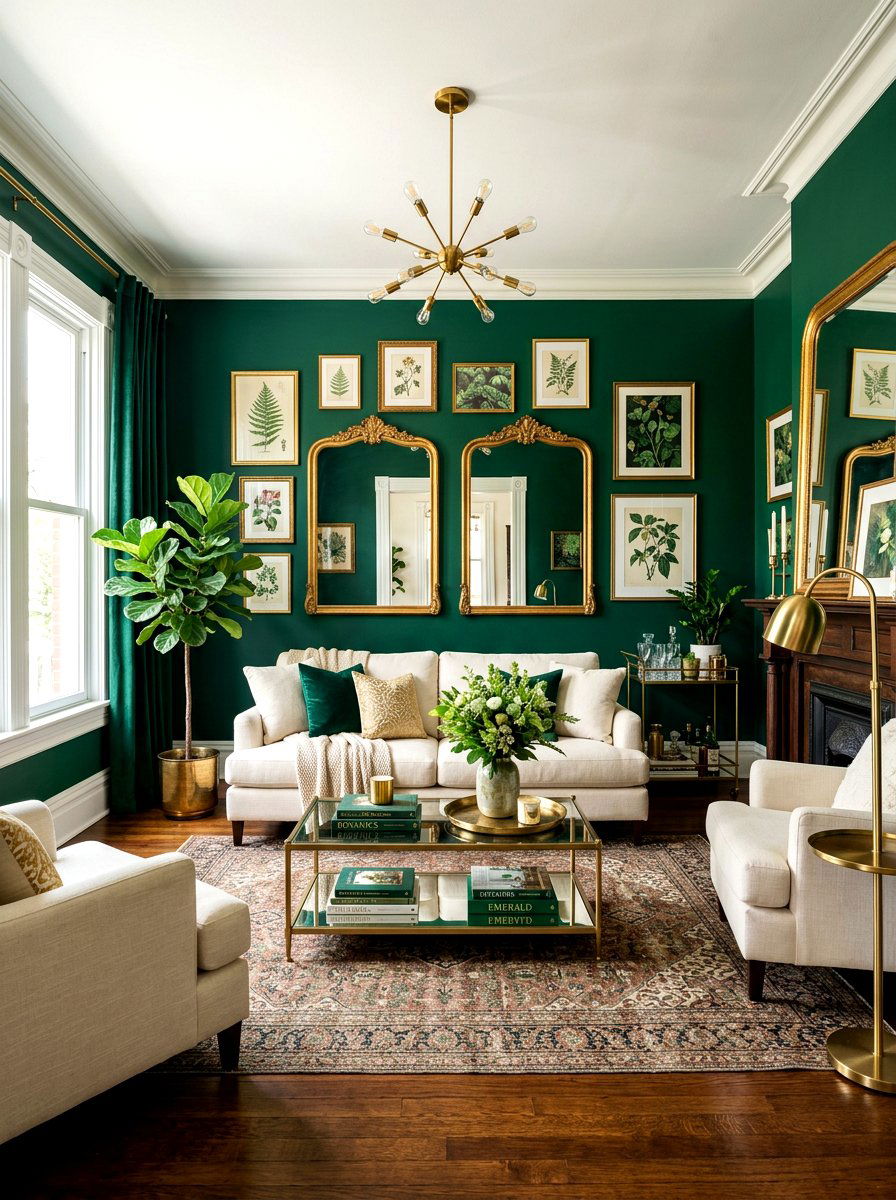
10. Oatmeal Living Room Velvet Furniture
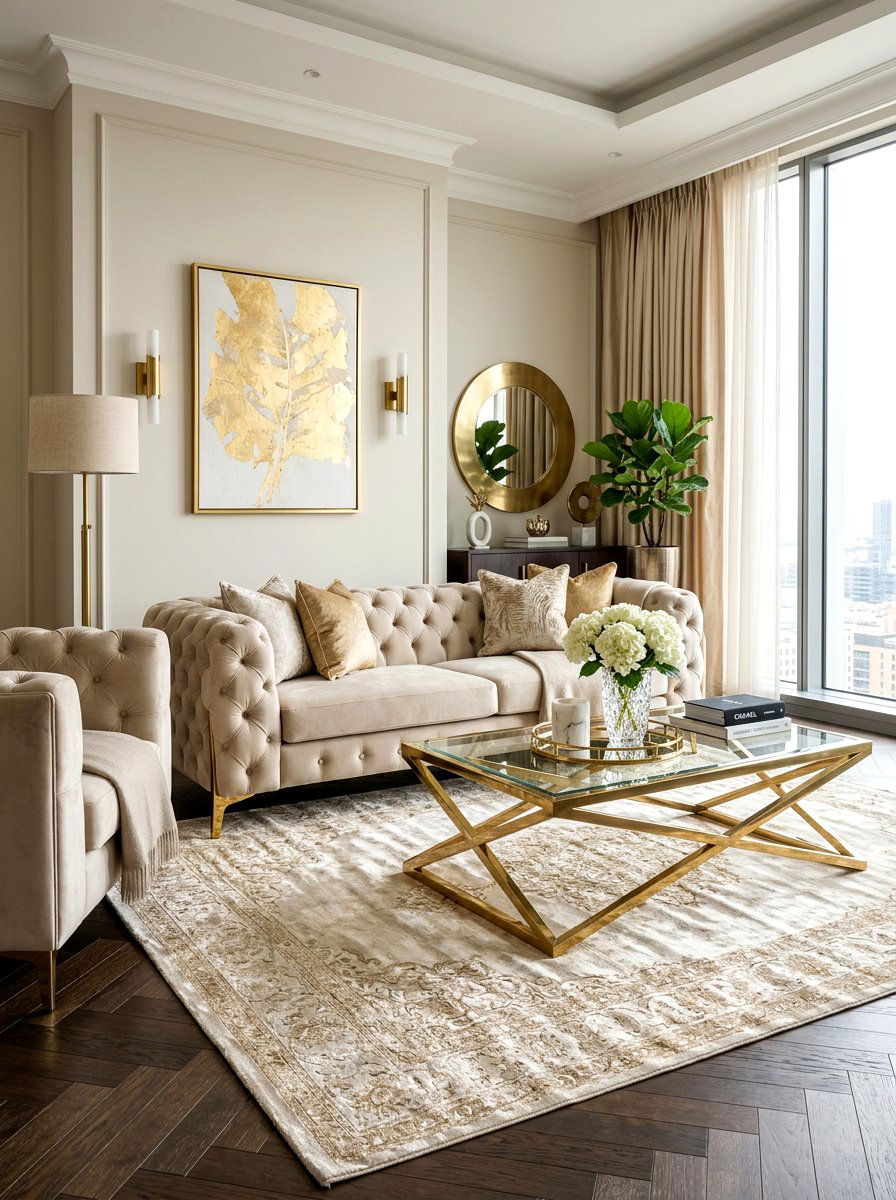
Velvet furniture in a soft oatmeal shade brings a touch of glamour and incredible softness to a living space. The way light hits the sheen of oatmeal velvet creates a beautiful play of shadows and highlights that adds dimension to the room. You can pair a velvet sofa with metallic accents like gold or brass to enhance the luxurious feel of the material. This choice is excellent for those who want a neutral palette but desire a more formal or upscale atmosphere. The plush texture of the velvet makes the room feel high-end while remaining incredibly comfortable for relaxing or hosting elegant social gatherings.
11. Coastal Oatmeal Living Room

A coastal oatmeal living room captures the essence of the beach without using literal nautical themes or bright blue colors. Instead, it focuses on the tones of sand, driftwood, and sea foam to create a light and airy environment. You can use light-washed wood furniture, woven seagrass rugs, and sheer oatmeal fabrics to mimic the relaxed feel of a seaside retreat. The neutral palette allows the focus to remain on the view outside and the natural light streaming through the windows. This design style is perfect for creating a year-round vacation vibe that feels fresh, clean, and deeply connected to a natural, coastal landscape.
12. Oatmeal Living Room Layered Rug
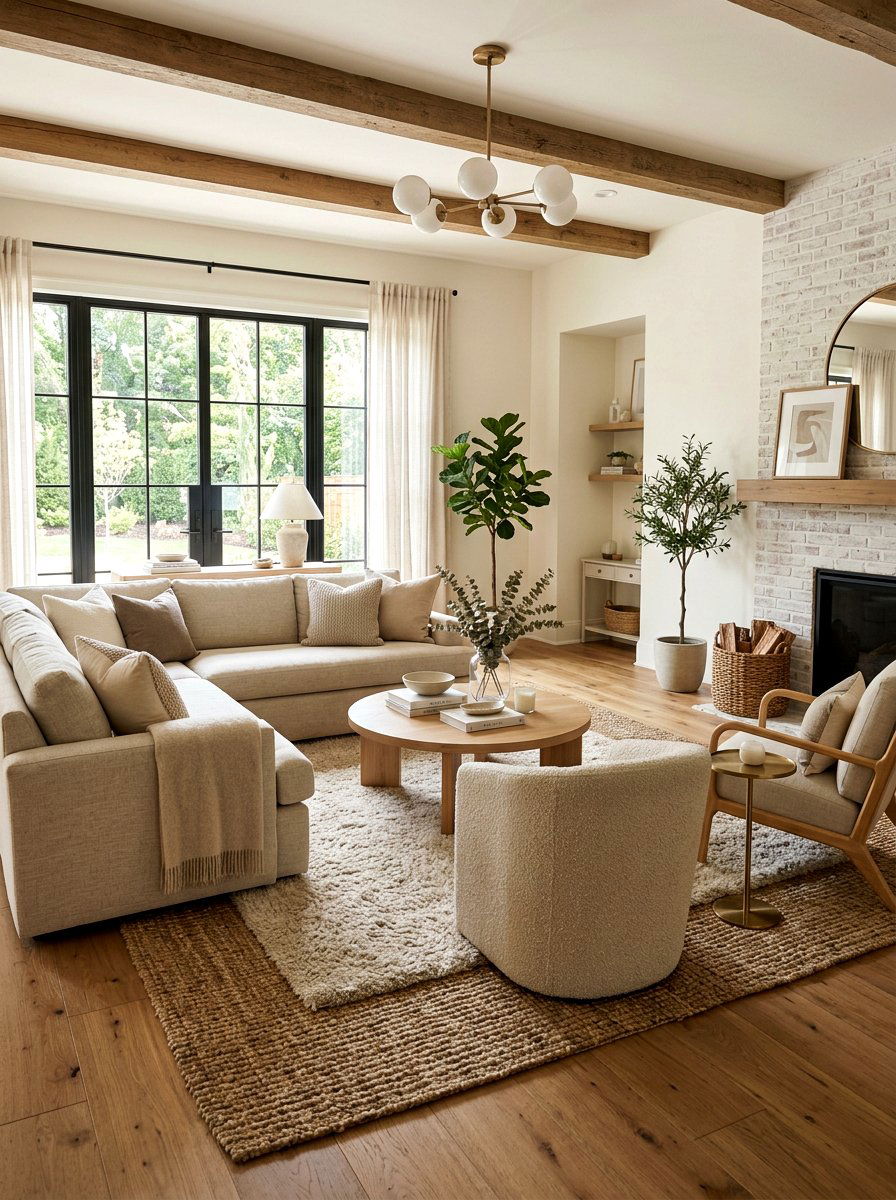
Layering rugs in an oatmeal living room is a fantastic technique to add warmth and define different functional areas within a large space. You might start with a large, low-pile jute or sisal rug as a base and place a smaller, plush oatmeal-toned rug on top. This creates a rich, textured look underfoot that feels intentional and cozy. The different heights and materials of the rugs add visual interest to the floor without introducing distracting colors. This approach is particularly effective for making a large living area feel more intimate and grounded, providing a soft foundation for your furniture and overall room layout.
13. Scandi Oatmeal Living Room
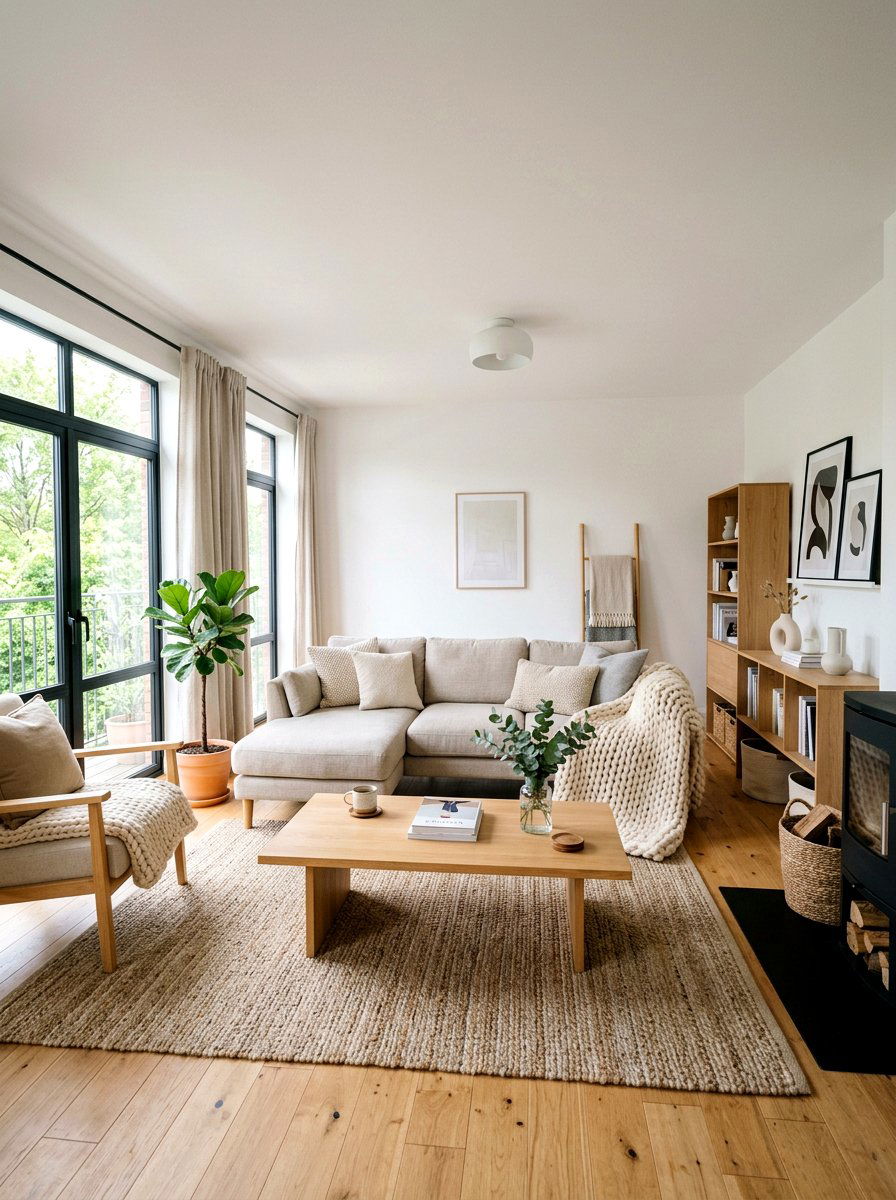
The Scandi approach to an oatmeal living room emphasizes light, bright spaces and the concept of hygge, or coziness. This style often features white walls paired with oatmeal-colored sofas, blonde wood furniture, and plenty of knit textures. The goal is to create a space that feels functional yet incredibly warm and inviting during long, dark winters. You can add sheepskin throws, simple wooden coffee tables, and understated artwork to complete the look. The oatmeal tones help to soften the bright white elements, creating a balanced and harmonious environment that is perfect for modern family life and relaxed, casual living every day.
14. Oatmeal Living Room Gallery Wall
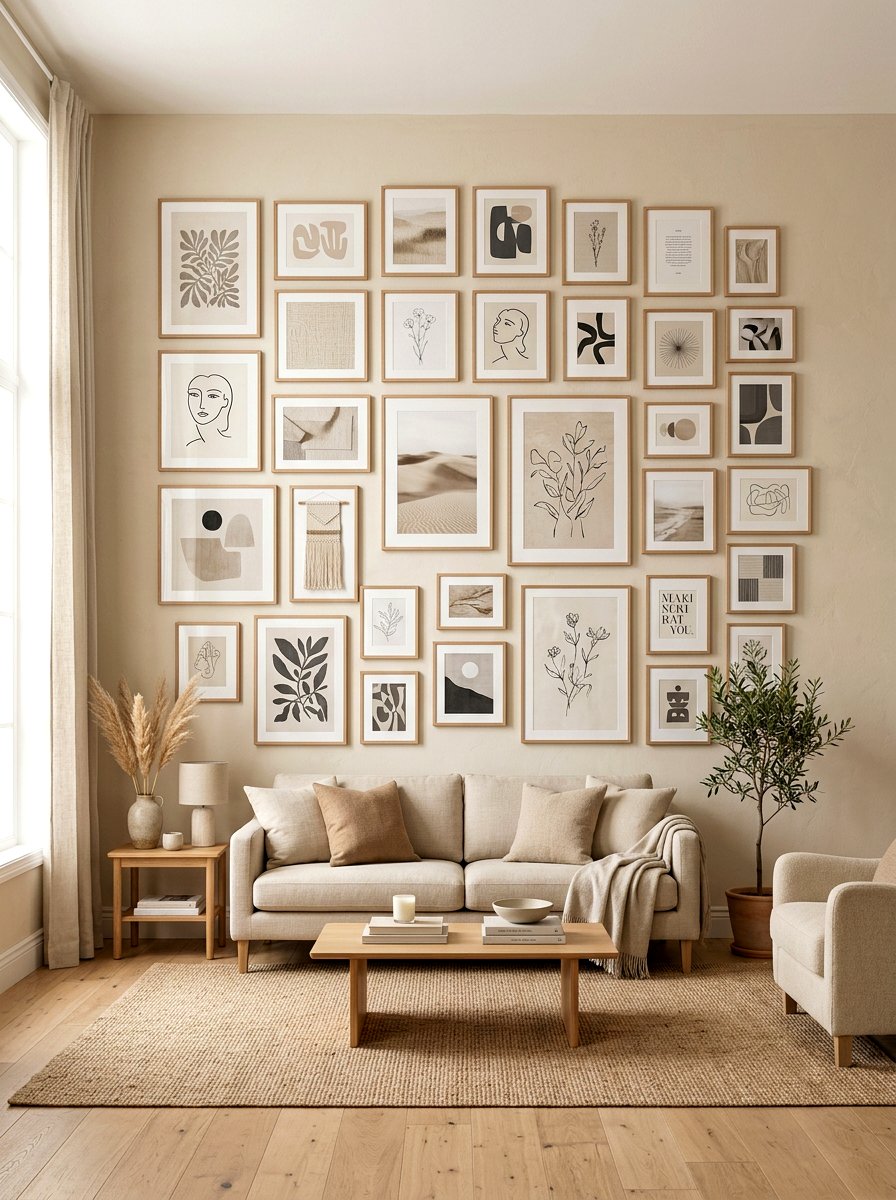
Creating a gallery wall in an oatmeal living room is an excellent way to personalize the space while maintaining a cohesive color story. You can use frames in matching light wood or thin black metal to display a collection of neutral-toned art, sketches, or black and white photography. The oatmeal walls provide a calm and unobtrusive background that allows the artwork to stand out without competing for attention. This design choice adds a layer of sophistication and storytelling to the room. By keeping the art within a similar tonal range, you ensure the gallery wall feels like an integrated part of the overall room design.
15. Transitional Oatmeal Living Room
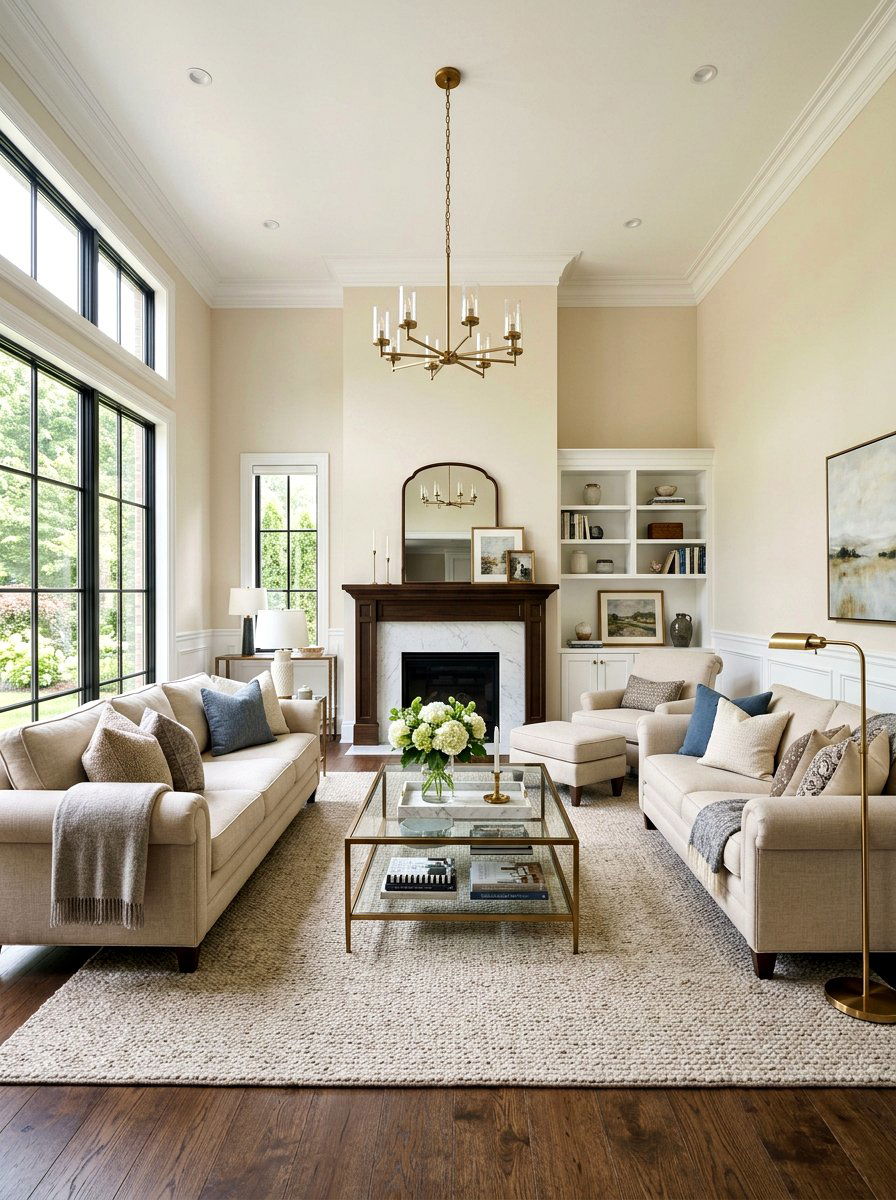
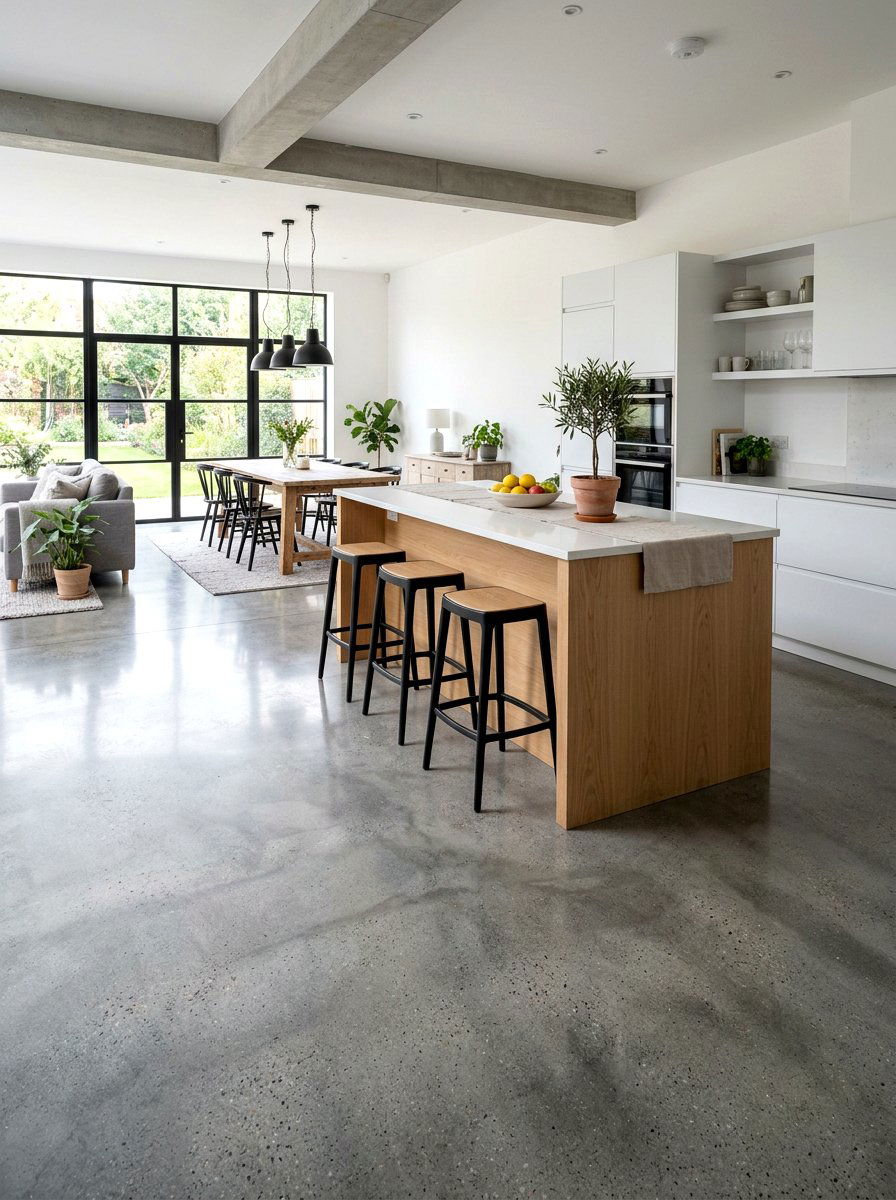
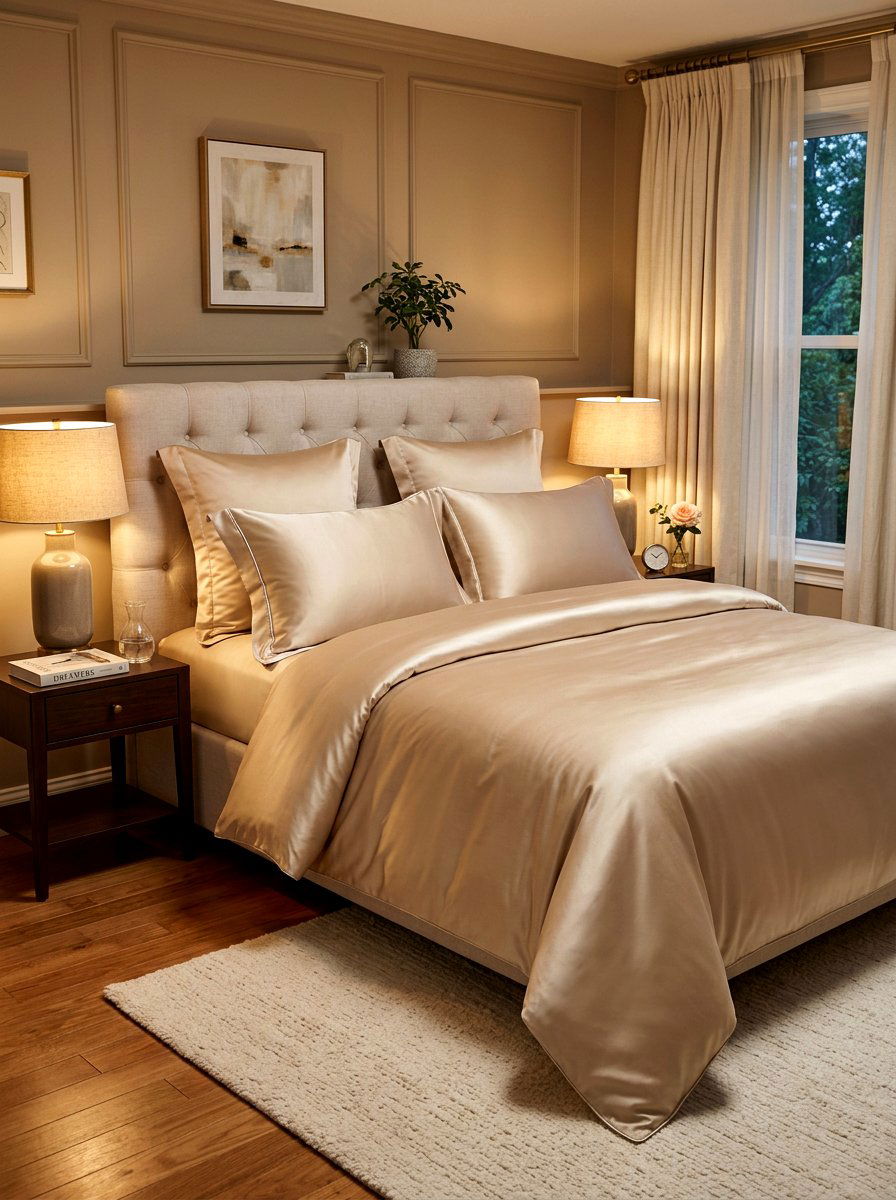
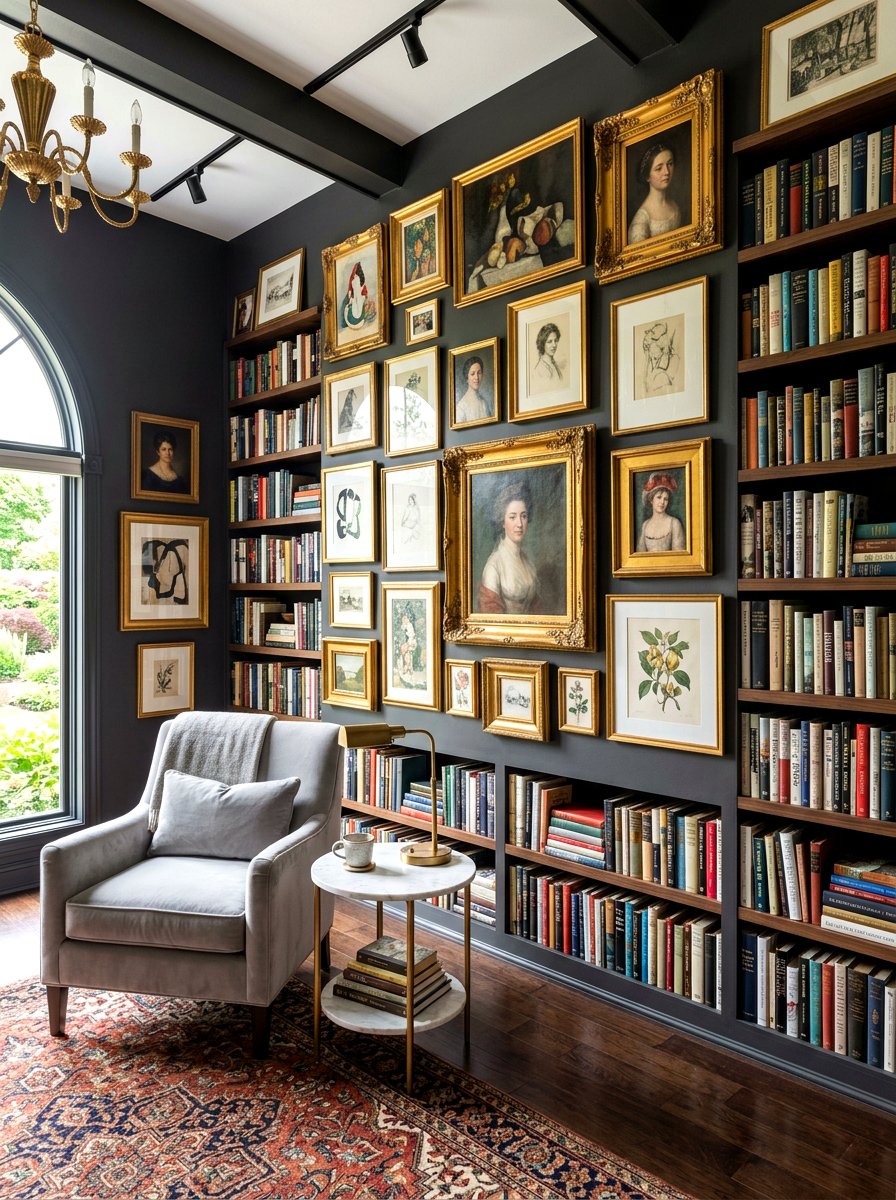
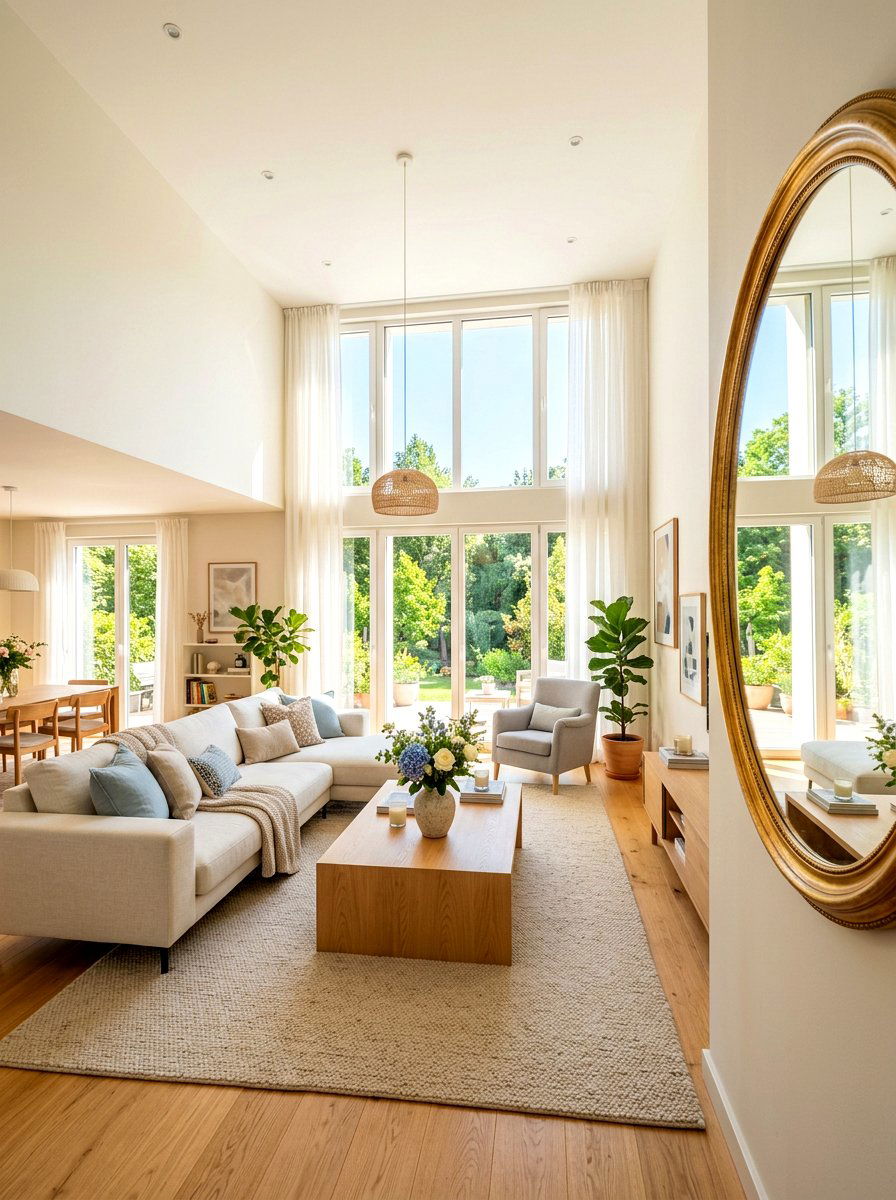
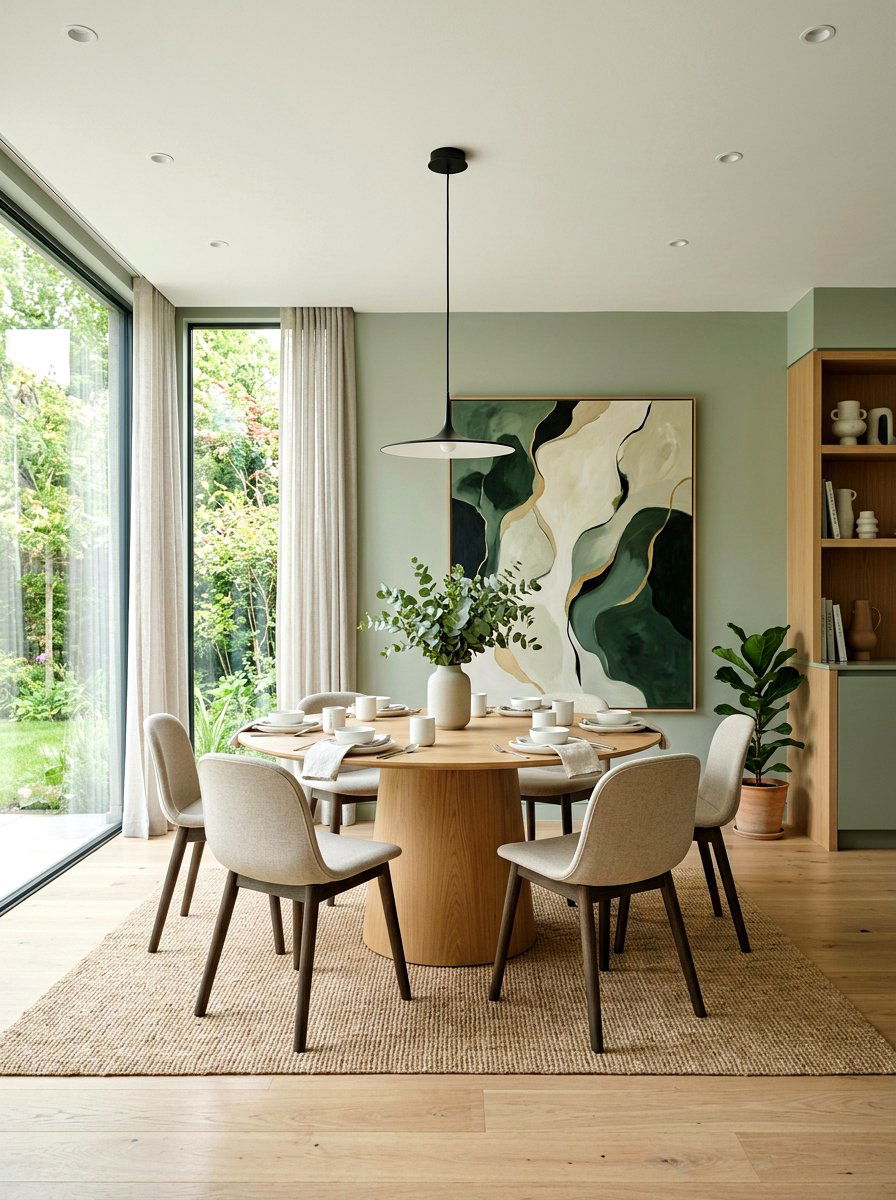
A transitional oatmeal living room successfully blends traditional comfort with modern lines for a look that never goes out of style. You might pair a classic rolled-arm sofa in oatmeal linen with a contemporary metal coffee table and updated lighting fixtures. This style relies heavily on a neutral palette to bridge the gap between different eras and furniture styles. The oatmeal tones provide a steady foundation that allows you to mix and match various pieces without the room feeling disjointed. This result is a sophisticated and flexible space that feels established yet fresh, catering to a wide range of tastes and changing home design trends.
16. Oatmeal Living Room Indoor Plant
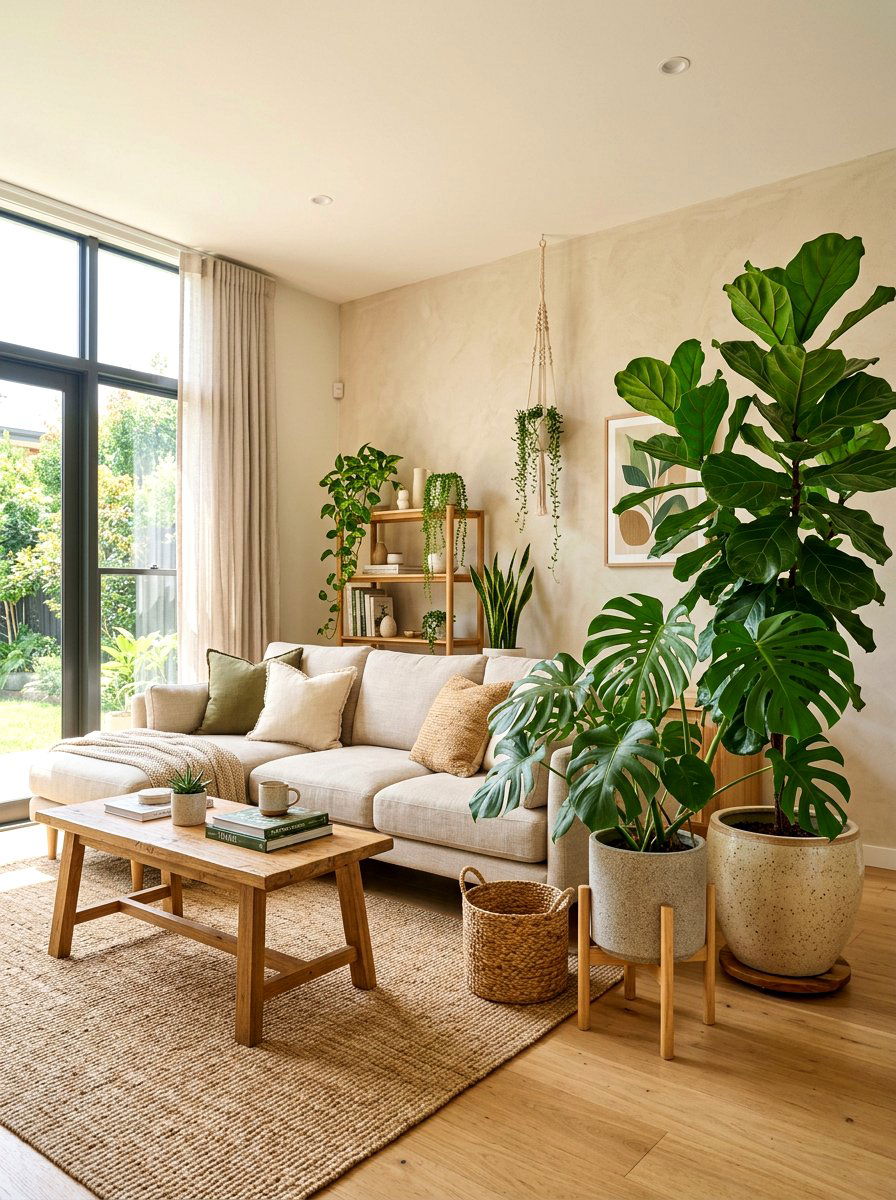
Bringing indoor plants into an oatmeal living room adds a necessary pop of organic color and a sense of vitality to the space. The vibrant green leaves of a fiddle leaf fig or a large monstera stand out beautifully against soft oatmeal upholstery and walls. Plants help to soften the lines of the furniture and bring a touch of the outdoors inside, which is essential for a balanced neutral room. You can use ceramic pots in various shades of cream, tan, or terracotta to complement the oatmeal theme. This combination creates a fresh, healthy environment that feels alive, inviting, and very connected to nature.
17. Industrial Oatmeal Living Room Loft

In an industrial loft setting, oatmeal tones help to soften the harshness of exposed brick, concrete floors, and metal beams. Using oatmeal-colored sofas and large area rugs can make a vast, open space feel much more approachable and comfortable for daily living. You can contrast the light, soft fabrics with rugged materials like iron shelving and reclaimed wood tables to create a balanced urban aesthetic. The neutral palette ensures the architectural features of the loft remain the star while providing a cozy sanctuary within the industrial environment. This design strategy is perfect for creating a high-end, livable space in a unique urban setting.
18. Oatmeal Living Room Textured Wallpaper
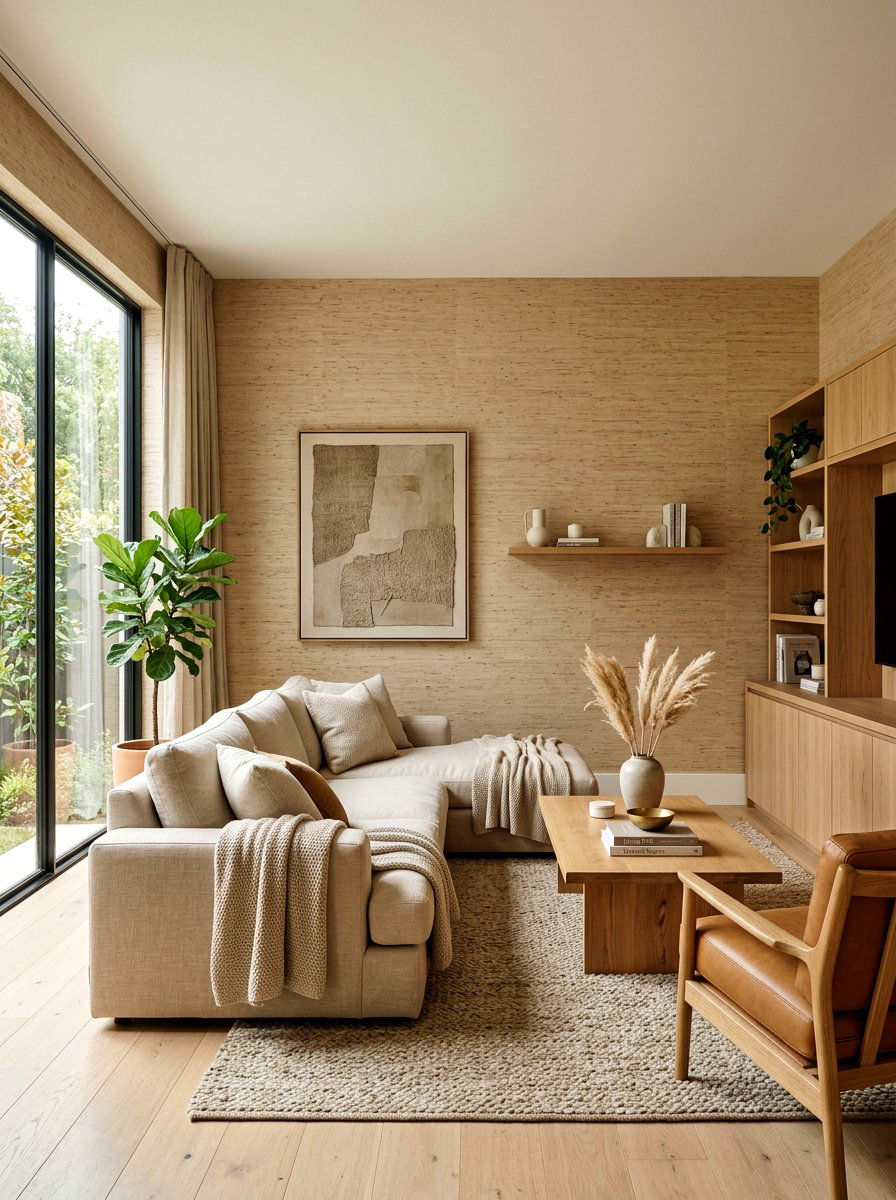
Textured wallpaper in an oatmeal shade is a subtle way to add massive depth and character to your living room walls. Instead of a flat paint, a grasscloth or a subtle linen-effect wallpaper creates a backdrop that changes beautifully with the shifting light throughout the day. This wall treatment adds a layer of luxury and sophistication that makes the entire room feel more curated and expensive. It provides a soft, tactile quality that complements oatmeal-colored furniture and natural wood accents perfectly. This is an excellent choice for those who want to enhance their walls without using bold patterns or colors that might overwhelm.
19. Farmhouse Oatmeal Living Room
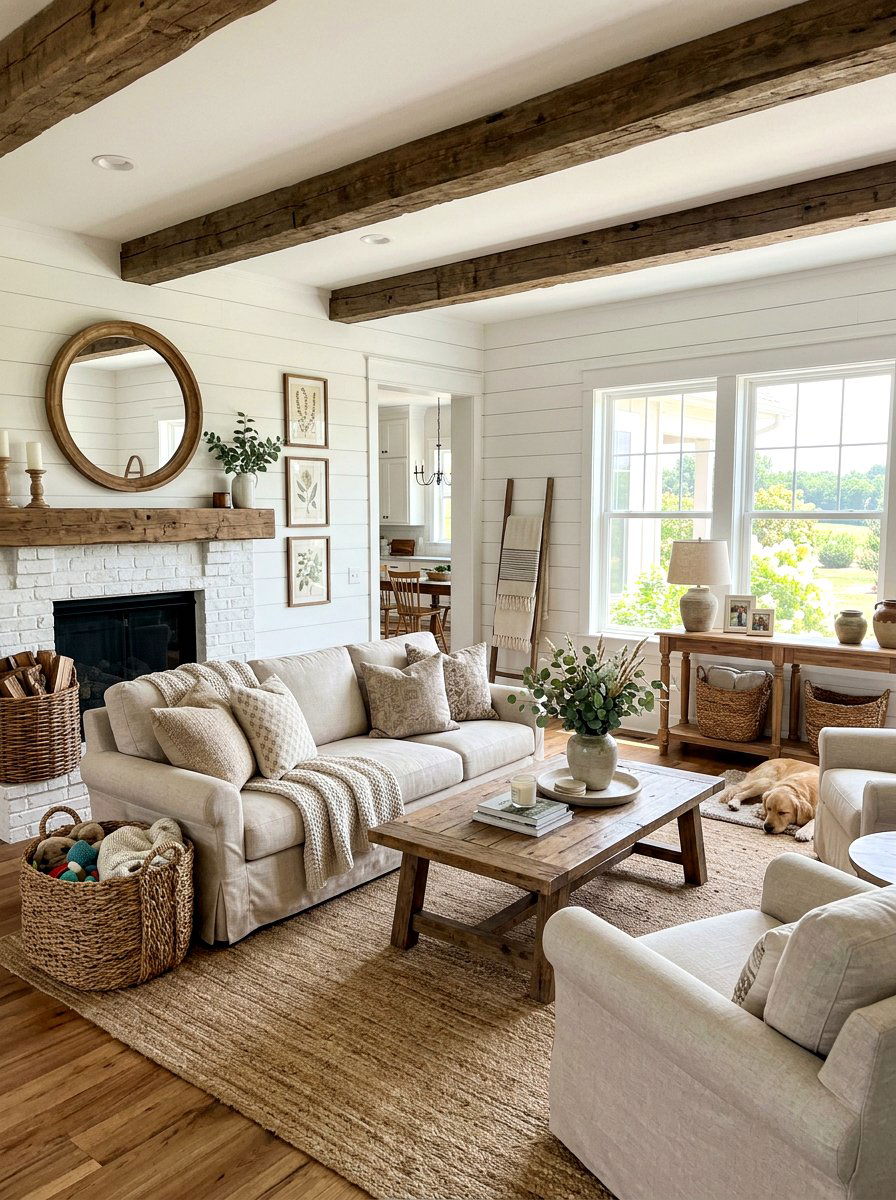
A farmhouse-style living room utilizing an oatmeal palette offers a modern take on traditional country living that feels fresh and bright. You can incorporate slipcovered oatmeal sofas, rustic wooden beams, and vintage-inspired decor to create a space that is both practical and beautiful. The light neutral tones replace the heavier, darker colors often found in traditional farmhouse designs, making the room feel more spacious and airy. Adding elements like galvanized metal, woven baskets, and striped throw pillows enhances the charm of the space. This look is ideal for creating a comfortable, family-friendly home that feels timeless, cozy, and very welcoming to all guests.
20. Oatmeal Living Room Built In Shelf
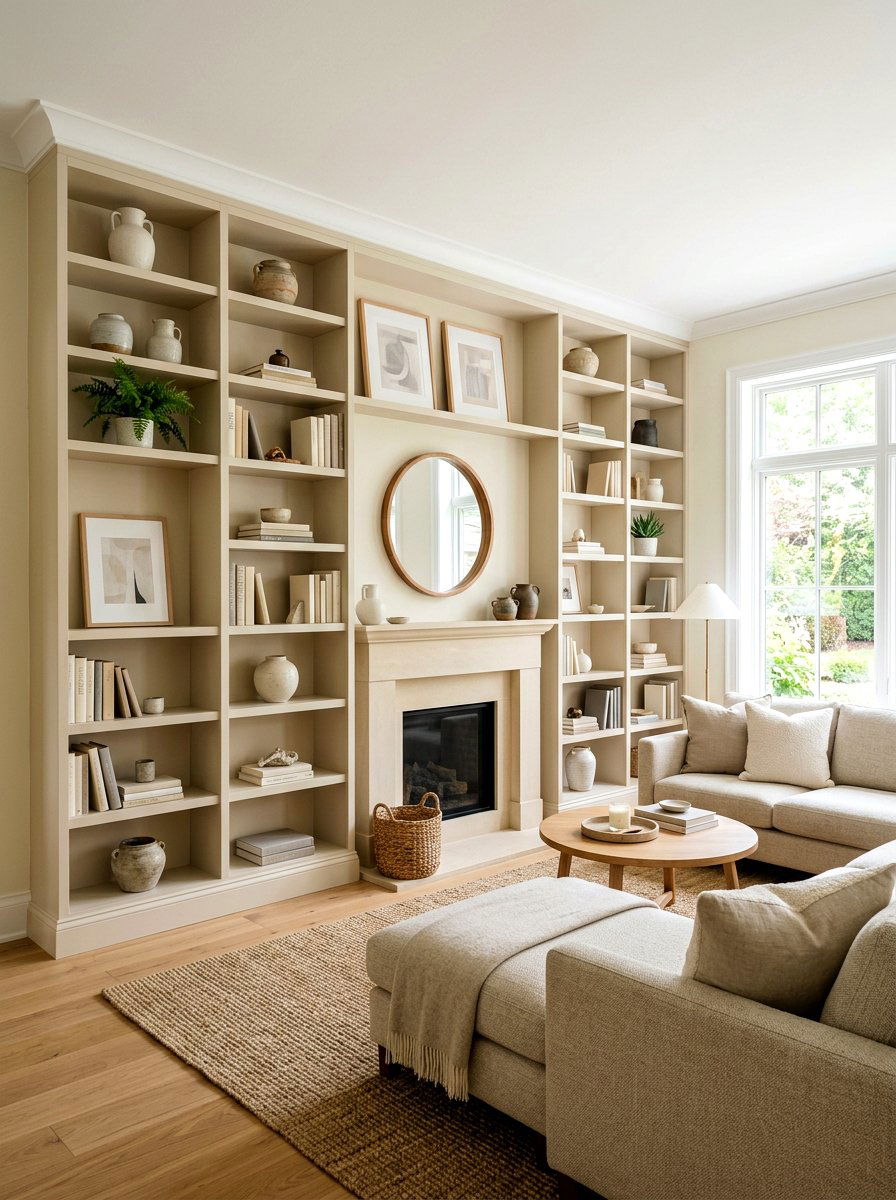
Built-in shelves painted in the same oatmeal shade as the walls create a seamless and high-end look in any living room. This architectural detail provides ample space for displaying books, art, and decorative objects without the shelves feeling like a separate, bulky addition. By keeping the shelving and walls the same color, you allow the items on display to take center stage. You can style the shelves with a mix of neutral vases, wooden bowls, and framed photos to maintain the cohesive oatmeal theme. This design choice adds value to your home while providing a sophisticated and organized way to showcase your personal style.
21. Organic Modern Oatmeal Living Room
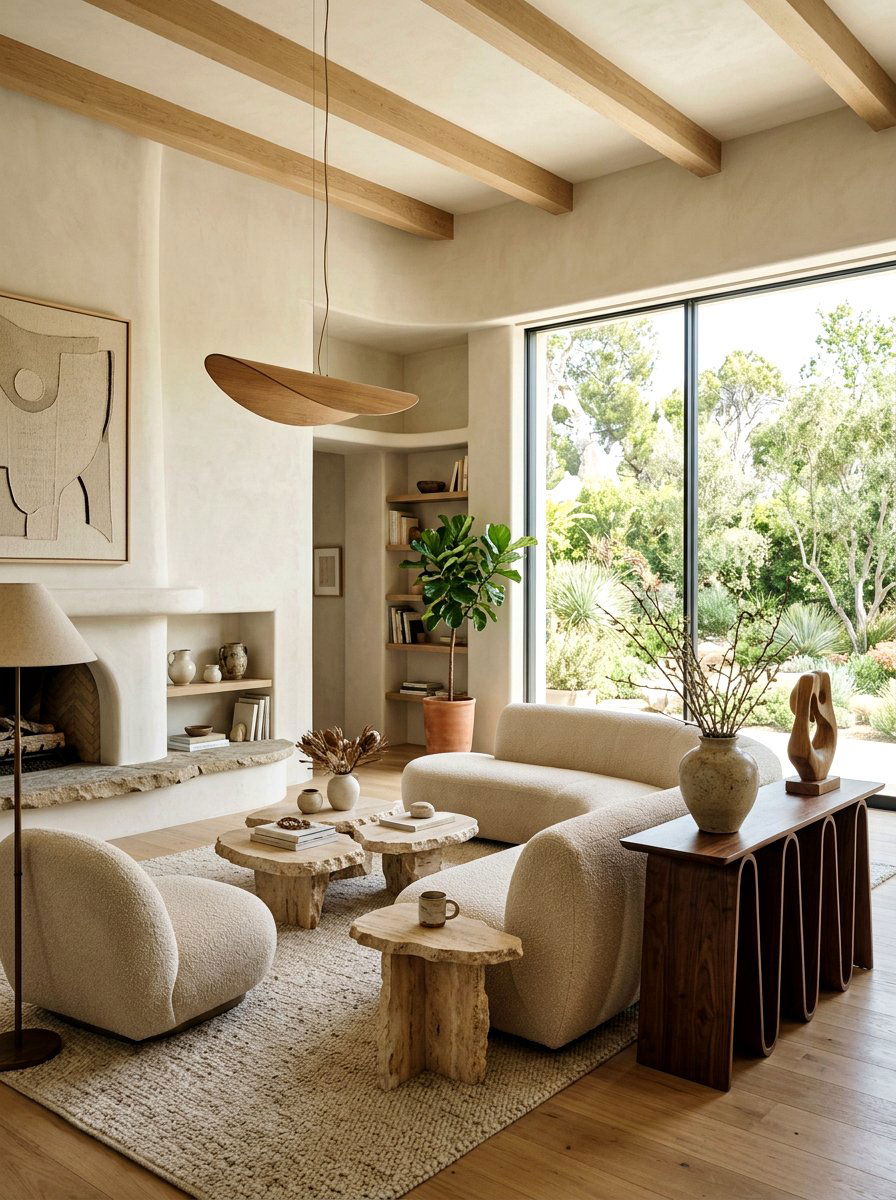
The organic modern style focuses on soft curves, natural materials, and a palette inspired by the earth, making oatmeal the perfect primary color. You can use rounded oatmeal sofas, stone coffee tables, and sculptural wooden chairs to create a space that feels fluid and calm. This design avoids sharp corners and clinical finishes, favoring pieces that look like they were crafted by hand or found in nature. The oatmeal tones unify these different organic elements, resulting in a living room that is incredibly peaceful and visually harmonious. This approach is perfect for creating a modern home that feels warm, tactile, and deeply relaxing.
22. Oatmeal Living Room Vaulted Ceiling
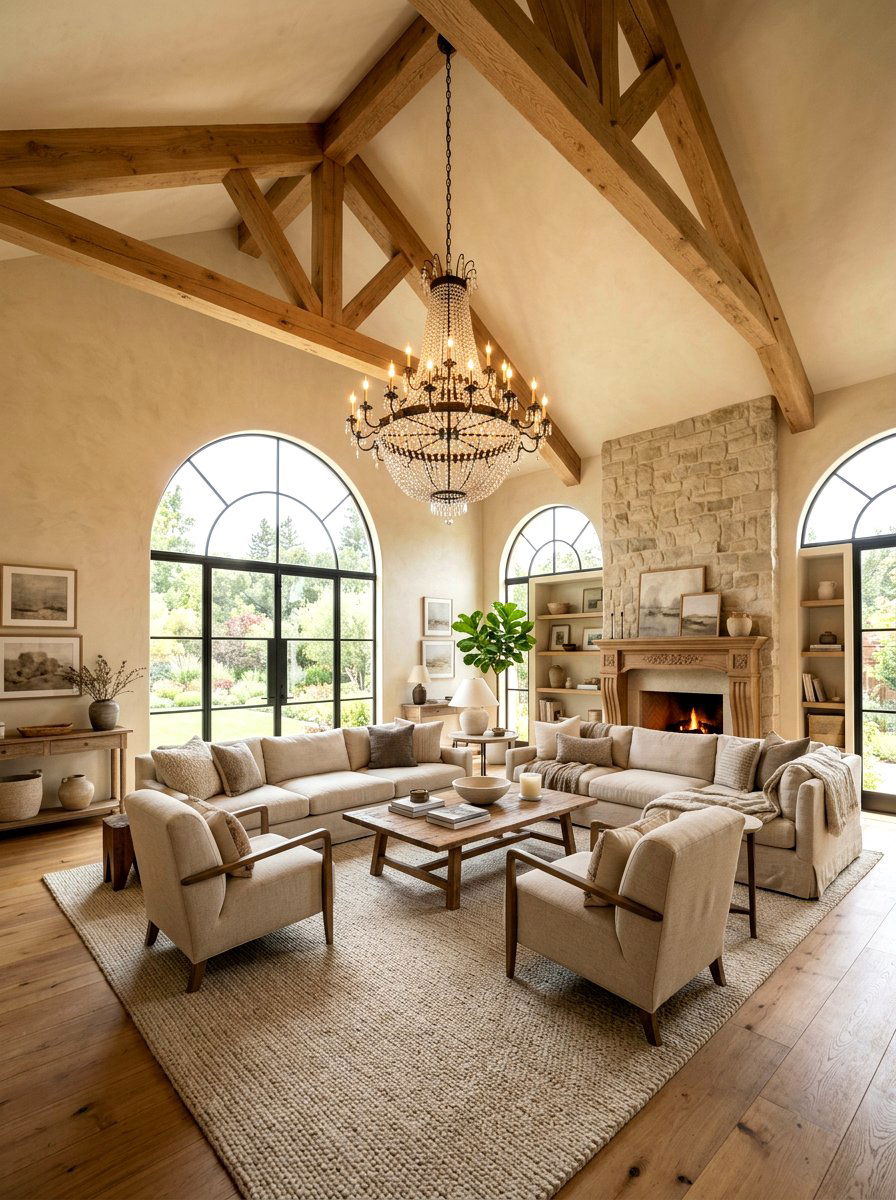
A living room with vaulted ceilings and an oatmeal color scheme feels incredibly grand, airy, and light-filled. By painting the high walls and ceiling in a soft oatmeal shade, you emphasize the height and architectural beauty of the space without it feeling cold or empty. You can add large-scale lighting fixtures and tall indoor trees to fill the vertical space effectively. The neutral palette ensures that the impressive volume of the room remains the main focus while providing a cozy and grounded feel at the seating level. This combination is ideal for creating a high-impact living area that feels both spectacular and very comfortable.
23. Traditional Oatmeal Living Room

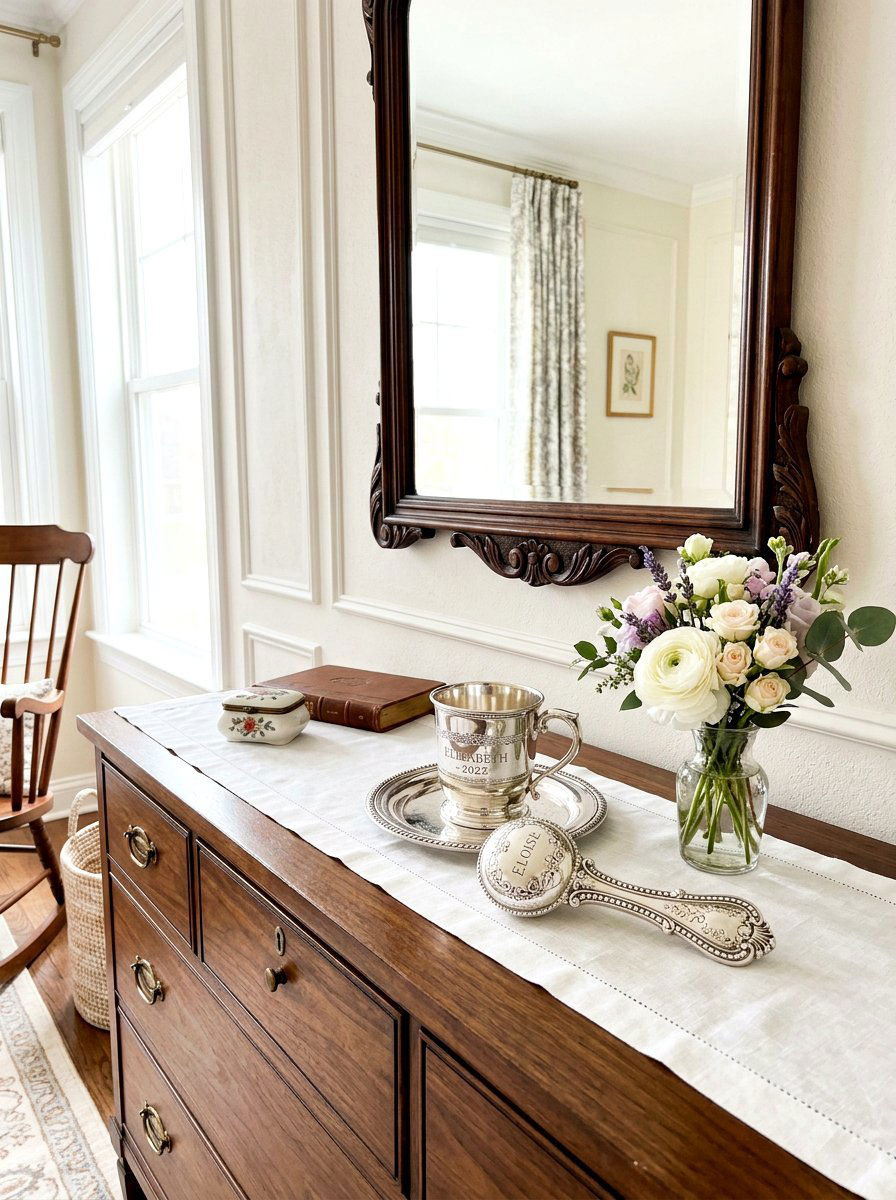
In a traditional living room, oatmeal tones provide a refreshed and lighter alternative to heavy creams or dark beiges. You can use oatmeal-colored damask or linen upholstery on classic furniture pieces like wingback chairs or tufted sofas. Pairing these with traditional rugs and antique wood furniture creates a space that feels established and formal but not outdated. The softness of the oatmeal palette helps to modernize the traditional elements, making the room feel more relevant for today’s lifestyle. This design choice is perfect for those who love classic interiors but want their home to feel bright, clean, and current with today's trends.
24. Oatmeal Living Room Round Coffee Table
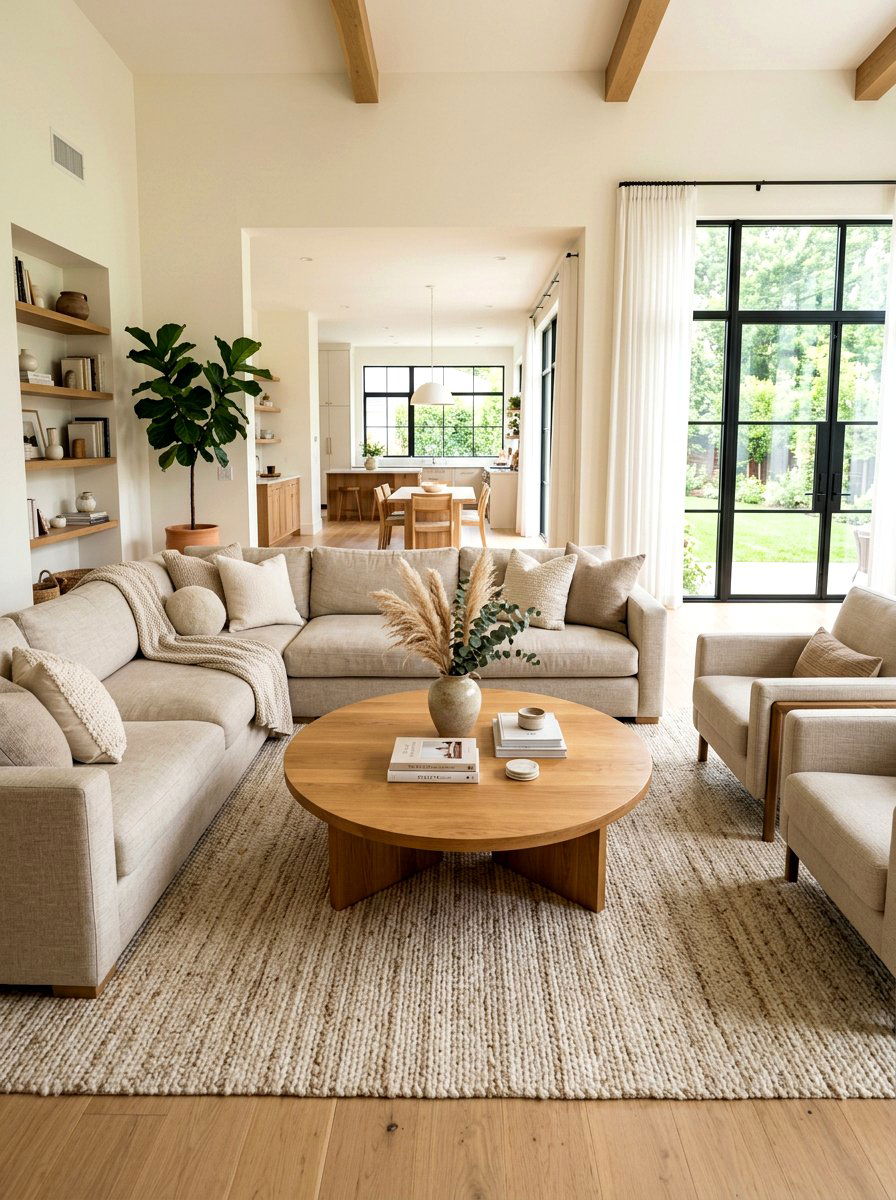
A round coffee table in an oatmeal living room is an excellent way to soften the layout and encourage a better flow of movement. Whether made of light oak, white marble, or textured plaster, a circular table breaks up the straight lines of sofas and rugs. The central position of the table allows it to act as a functional anchor for the seating area without being visually obtrusive. Choosing a table in a complementary neutral tone ensures it blends perfectly with the oatmeal theme. This simple design choice makes the living room feel more inviting and less rigid, which is ideal for social gatherings and relaxed evenings.

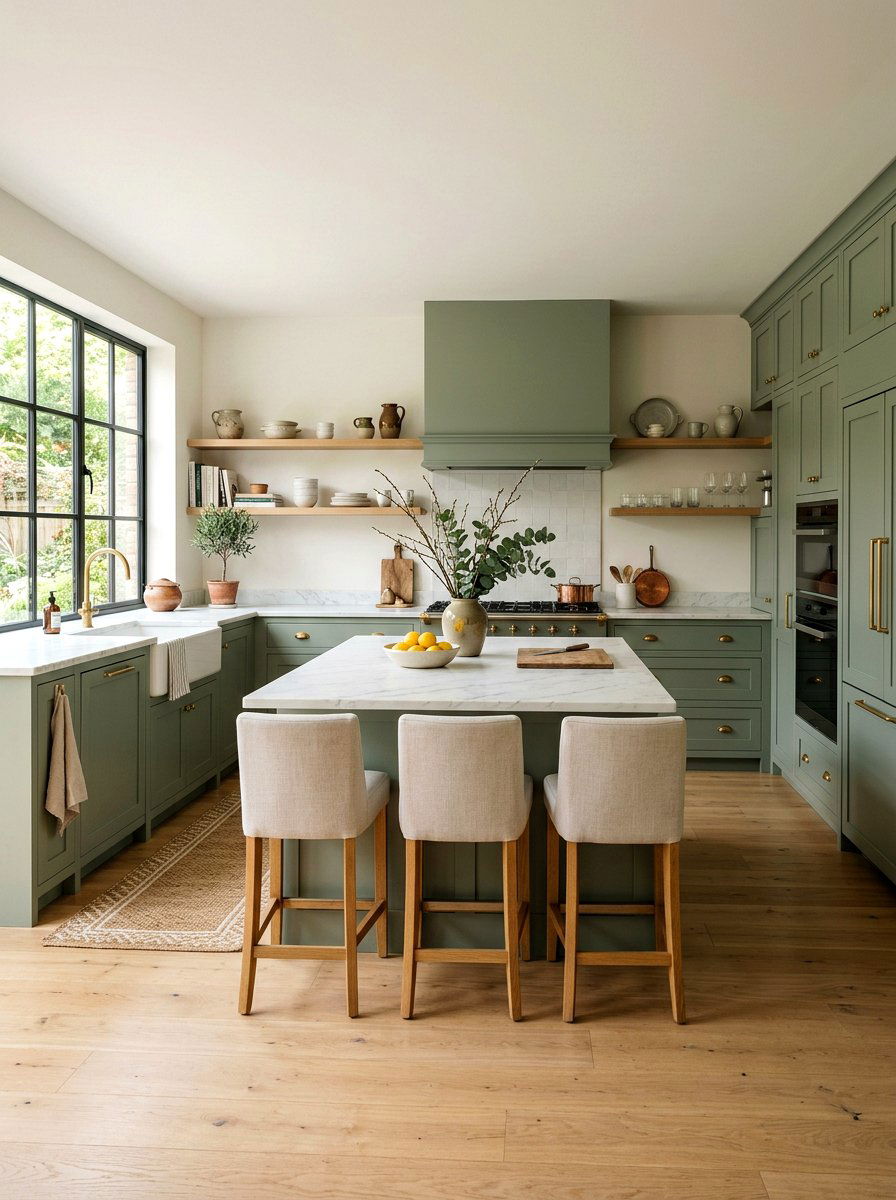
25. Art Deco Oatmeal Living Room

An Art Deco-inspired oatmeal living room brings a sophisticated and glamorous edge to the neutral palette through the use of symmetry and luxe materials. You can incorporate furniture with curved silhouettes, gold or brass inlay, and mirrored surfaces to reflect the light and add sparkle. The oatmeal background provides a soft and modern foundation for these bold, decorative elements. By using high-quality fabrics like silk or velvet in oatmeal shades, you maintain the elegance of the Art Deco style while keeping the room feeling fresh and light. This combination creates a stunning and unique living space that feels incredibly high-end and artistically curated.
26. Oatmeal Living Room Floor To Ceiling Window
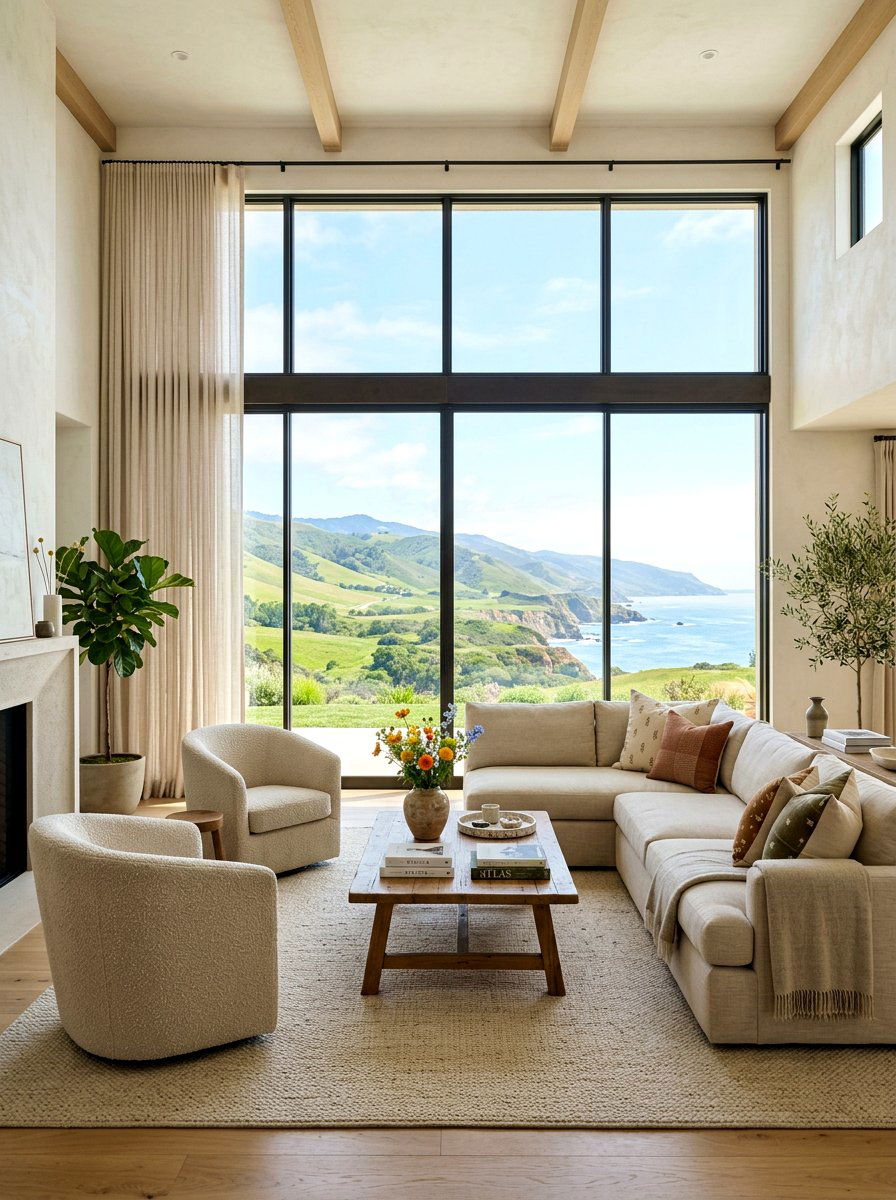
Living rooms with floor-to-ceiling windows are the perfect candidates for an oatmeal color scheme, as the natural light enhances the warmth of the neutral tones. The large windows bring the outside in, and the oatmeal palette ensures that the interior design doesn't compete with the view. You can use sheer oatmeal drapes to provide privacy while still allowing the sun to flood the space and highlight the textures of your furniture. This setup creates a bright and uplifting environment that feels connected to the world outside. The neutral tones help to ground the space, making it feel like a cozy sanctuary despite the expansive glass.
27. Mid Century Modern Oatmeal Living Room
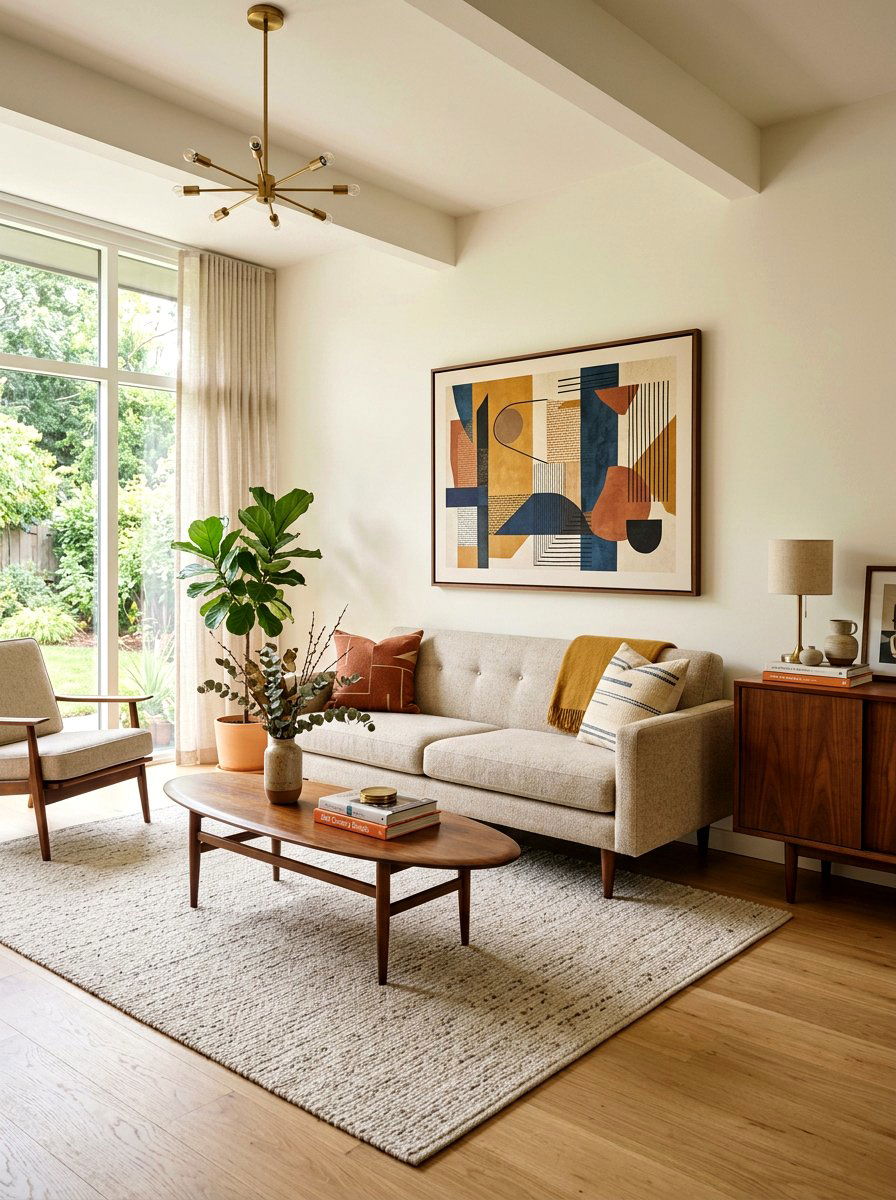
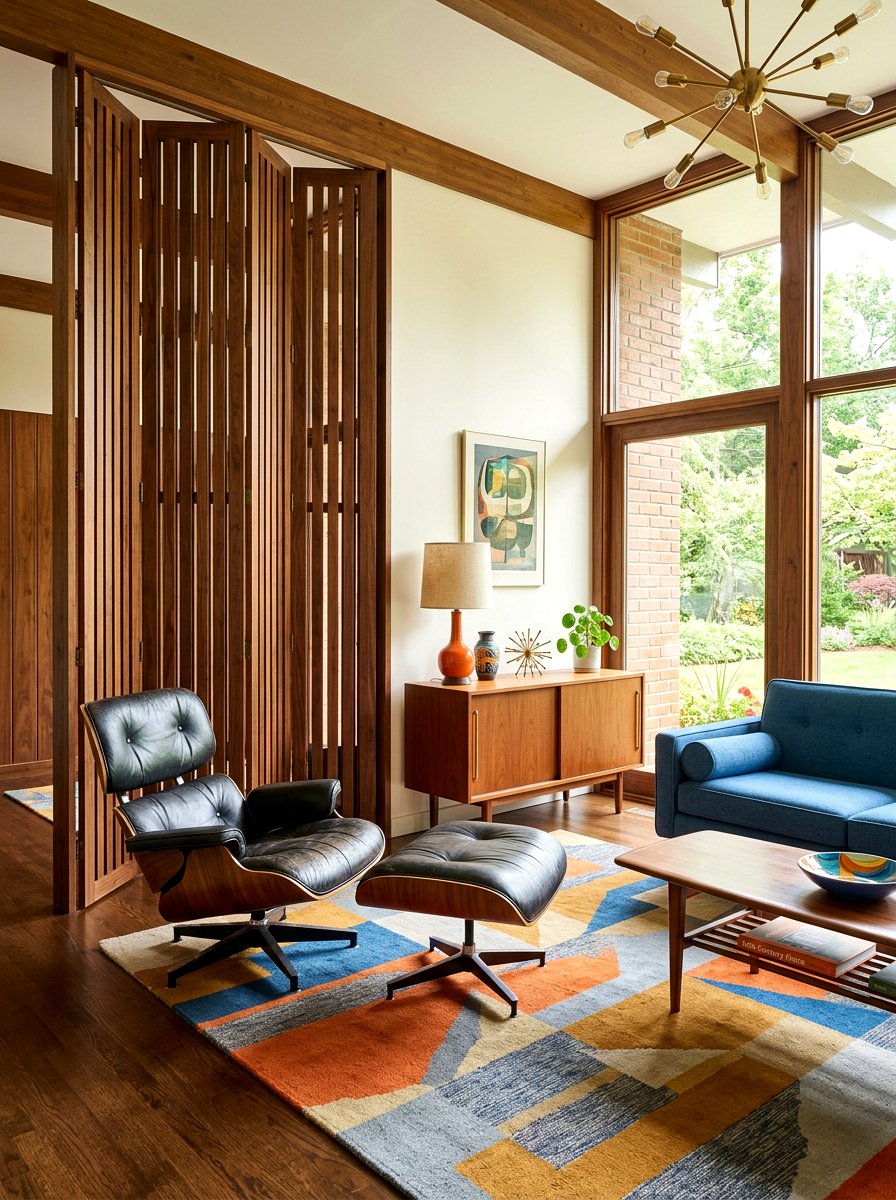
The Mid Century Modern style works beautifully with oatmeal tones, offering a softer alternative to the bold oranges and teals often associated with the era. You can use an oatmeal-colored sofa with iconic tapered wooden legs and pair it with a walnut coffee table and abstract art. This neutral approach highlights the clean lines and functional beauty of MCM furniture without it feeling like a period piece. The oatmeal palette brings a contemporary freshness to the vintage-inspired design, making it feel perfectly suited for a modern home. This look is ideal for those who appreciate classic 20th-century design but want a calm atmosphere.
28. Oatmeal Living Room Sectional Sofa
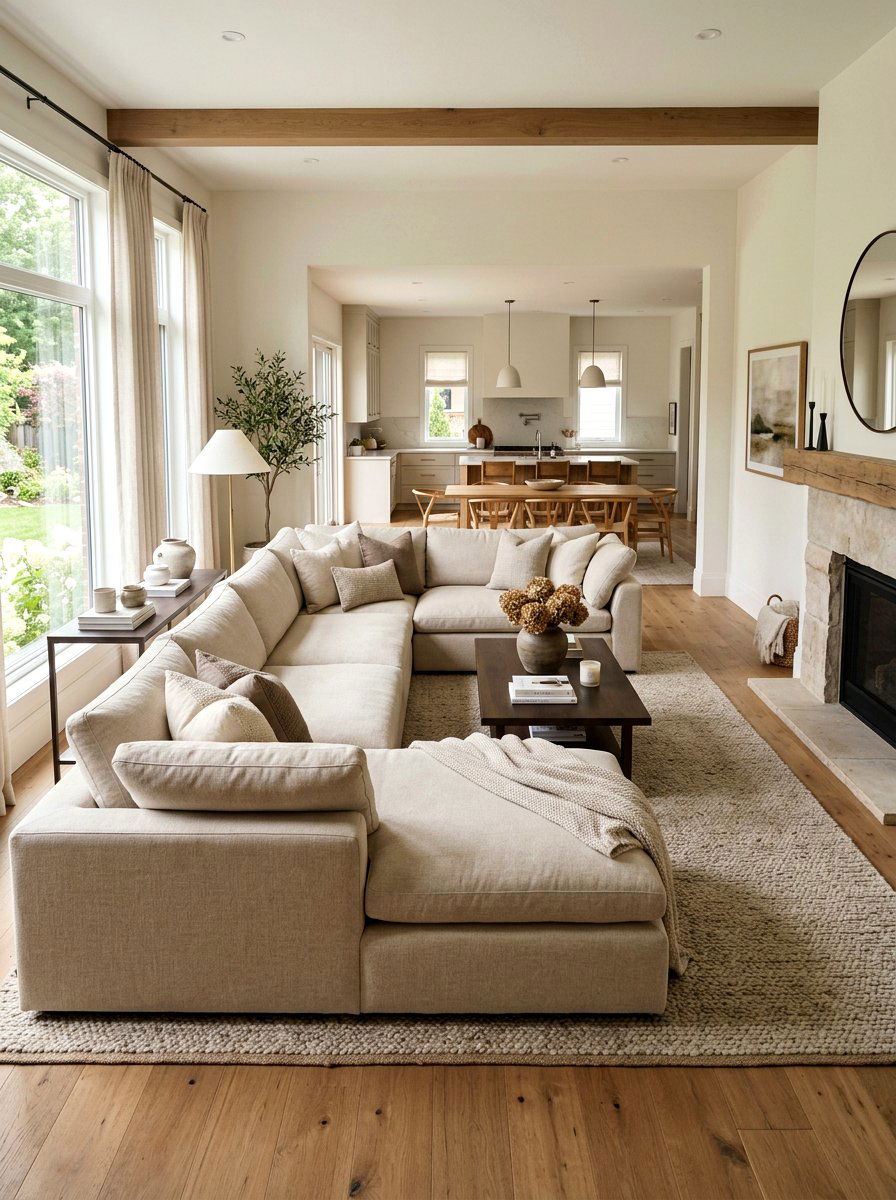
A large oatmeal sectional sofa is the ultimate piece for creating a cozy and functional family living room. The neutral color prevents a massive piece of furniture from overwhelming the room, allowing it to blend into the walls and floor. This provides a huge amount of seating while keeping the space feeling open and light. You can style the sectional with a variety of pillows in different textures and shades of cream, tan, and gray to add depth. The oatmeal fabric is often more forgiving than pure white, making it a practical choice for busy households while still maintaining a very high-end and stylish appearance.
29. Oatmeal Living Room Reading Nook
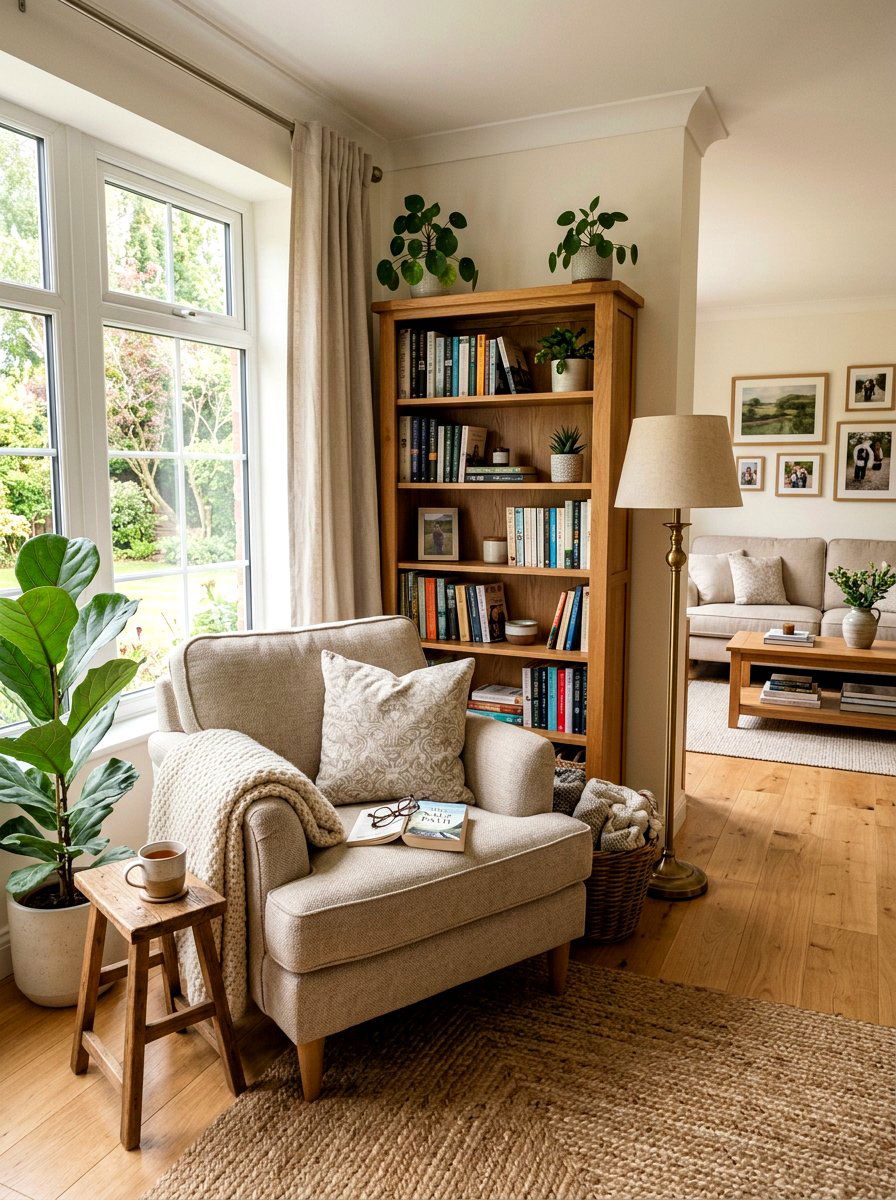
Creating a dedicated reading nook in an oatmeal living room adds a layer of comfort and functionality to an unused corner. You can place a plush oatmeal armchair next to a small wooden side table and a tall, slim floor lamp to create the perfect spot for relaxation. Adding a soft knit throw and a few neutral-toned pillows makes the area feel separate from the main seating zone. The calming oatmeal palette is ideal for a reading space, as it minimizes visual distractions and encourages a sense of peace. This small addition makes the entire living room feel more personalized, thoughtful, and incredibly inviting.
30. Oatmeal Living Room Natural Light
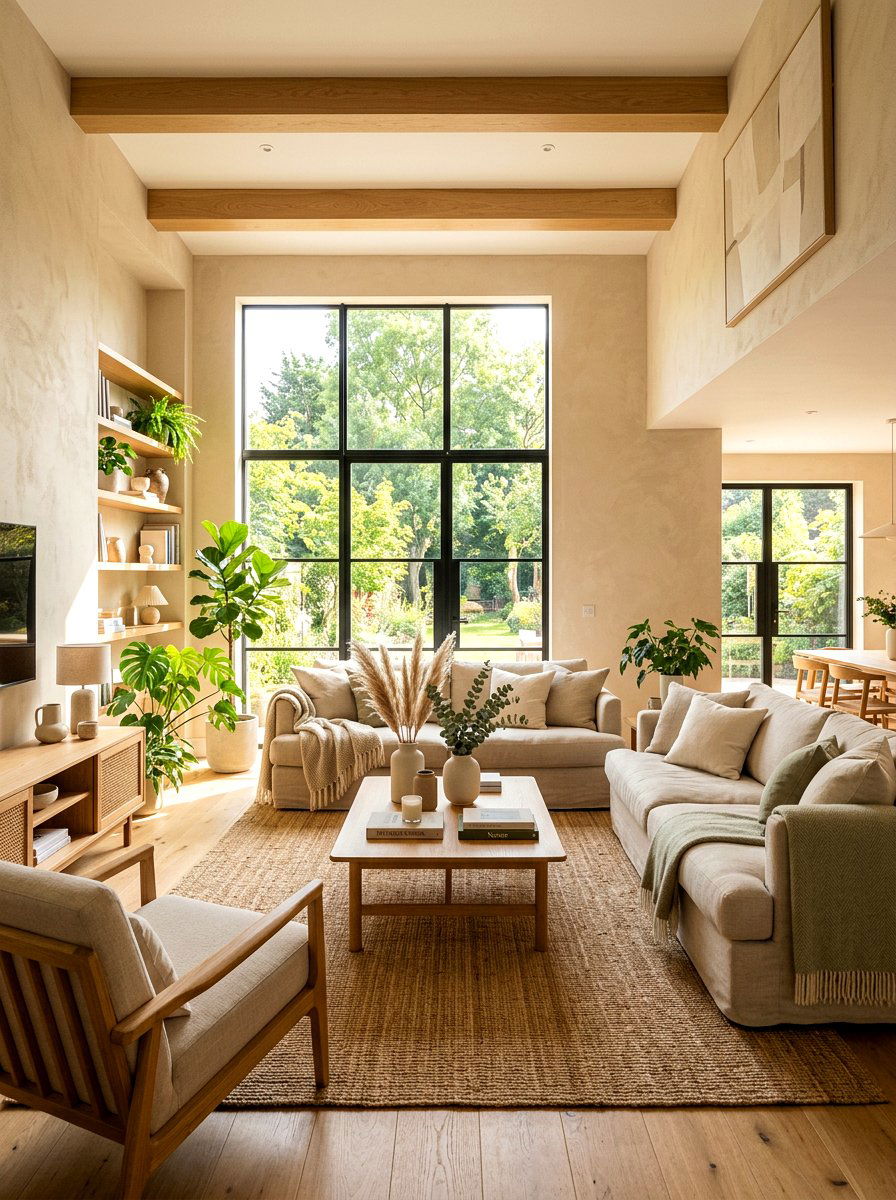
An oatmeal living room truly comes to life when it is bathed in natural light, which brings out the subtle undertones of the color. The way the sun moves through the space throughout the day changes the appearance of the oatmeal walls and fabrics, from bright and crisp to warm and golden. To maximize this effect, keep window treatments minimal and use mirrors to bounce light into darker corners. This focus on natural illumination makes the room feel healthy, vibrant, and much larger than it actually is. The oatmeal palette acts as a perfect reflector, creating a luminous and airy home environment that is always welcoming.
Conclusion:
Designing an oatmeal living room is an exceptional way to create a home that feels both modern and timeless. By focusing on this versatile neutral, you can layer various textures and materials to build a space that is visually rich and incredibly comfortable. Whether you prefer a minimalist look, a rustic feel, or a glamorous aesthetic, the oatmeal palette provides a steady and sophisticated foundation for your personal style to shine. We hope these thirty diverse ideas have inspired you to embrace the warmth and elegance of oatmeal in your own living space. Remember that the key to a successful neutral room lies in the thoughtful combination of light, texture, and high-quality materials that will stand the test of time.

Related posts: