Creating a productive workspace within a limited floor plan is a common challenge for many modern homeowners. Whether you are living in a small city apartment or a sprawling suburban house, finding a dedicated spot for focus can feel quite overwhelming. This is where the magic of a clever office nook comes into play. By utilizing forgotten corners, empty closets, or awkward hallways, you can transform unused square footage into a functional and stylish workstation. These compact areas offer the perfect balance between professional utility and personal comfort. In this guide, we explore diverse ways to integrate a work area seamlessly into your existing home environment.
1. Closet Office Workspace
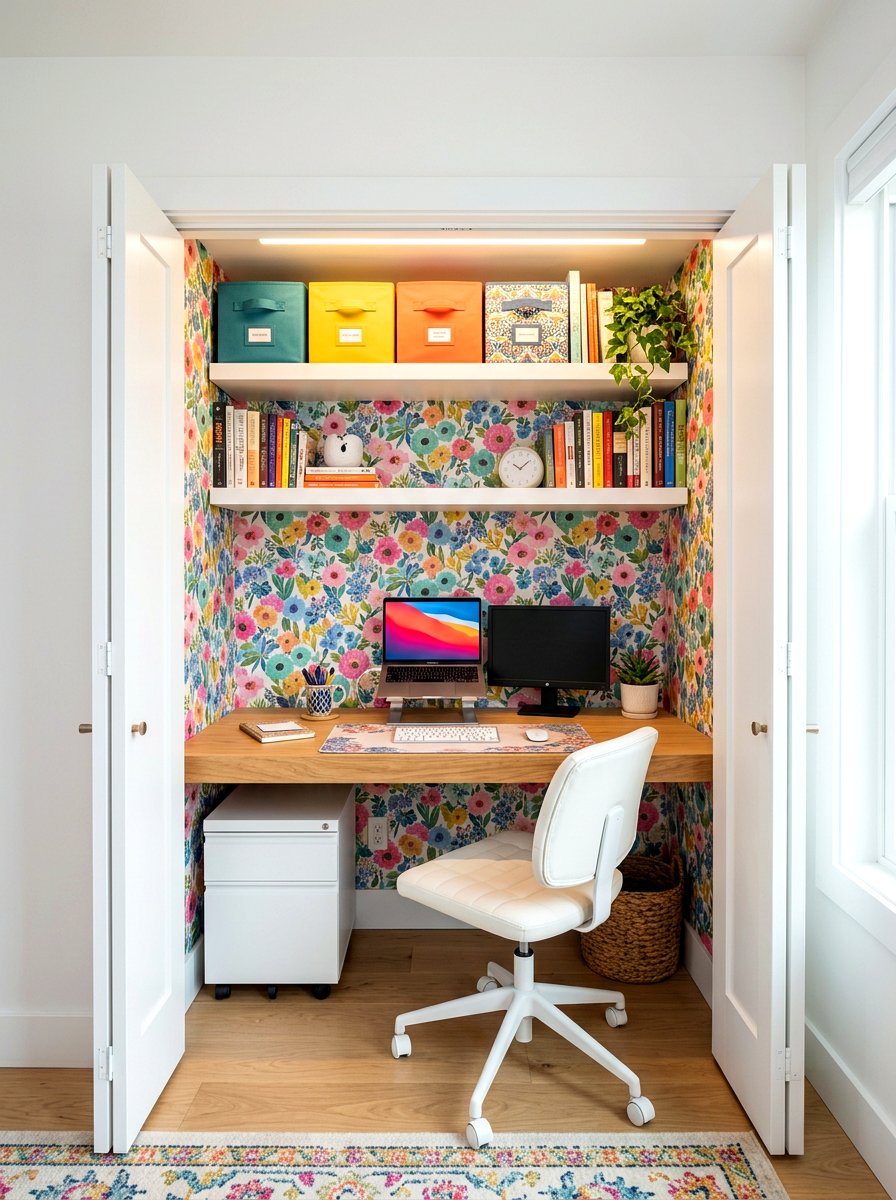
Transforming a standard reach-in closet into a functional workspace is a brilliant way to save floor space while maintaining a tidy home. This concept involves removing the closet doors and installing a sturdy desktop that spans the width of the interior. To make the space feel intentional, you can add floating shelves above the desk for books and decorative items. Painting the interior a bold color or applying a vibrant peel-and-stick wallpaper creates a distinct zone that feels separate from the rest of the room. Good lighting is essential in a closet office, so consider adding a sleek LED strip or a stylish pendant lamp.
2. Under Stairs Workstation
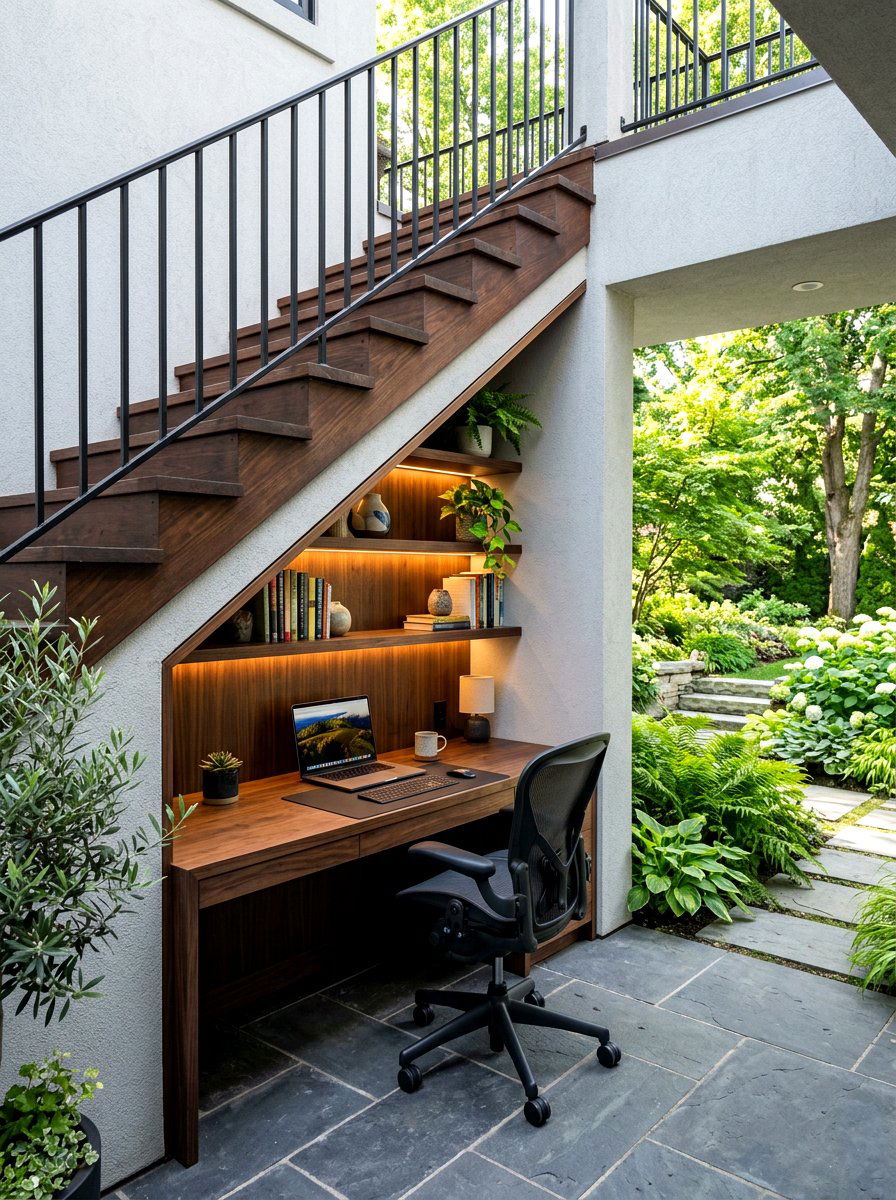
The empty area beneath a staircase is often underutilized but offers a fantastic opportunity for a cozy and private office nook. This design approach maximizes vertical space by fitting a custom desk and matching cabinetry directly into the angled architecture. By keeping the materials consistent with the surrounding hallway or living area, the workspace feels like a natural extension of the home. You can enhance the ambiance with integrated task lighting and a comfortable ergonomic chair that tucks neatly away when not in use. This setup is perfect for those who need a quiet spot for deep focus without needing a separate, dedicated room.
3. Bedroom Corner Desk
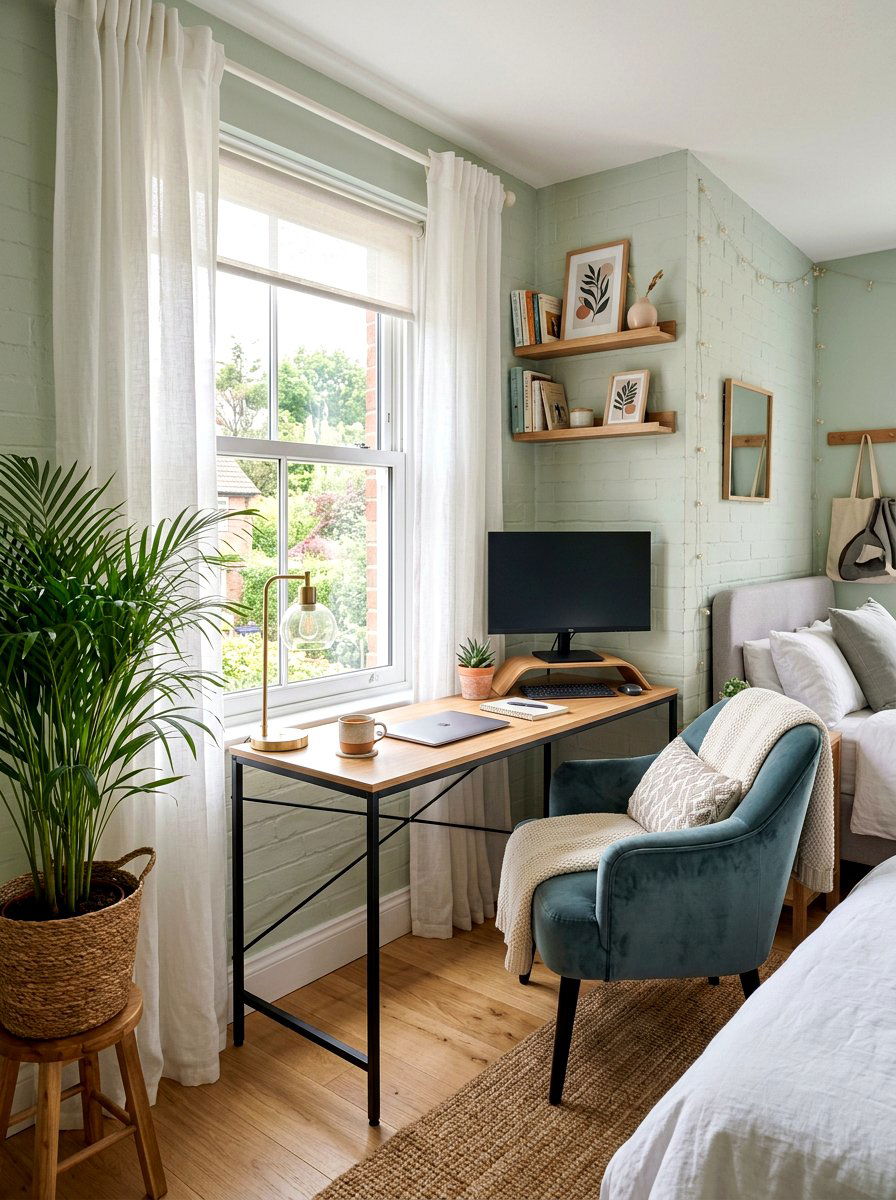
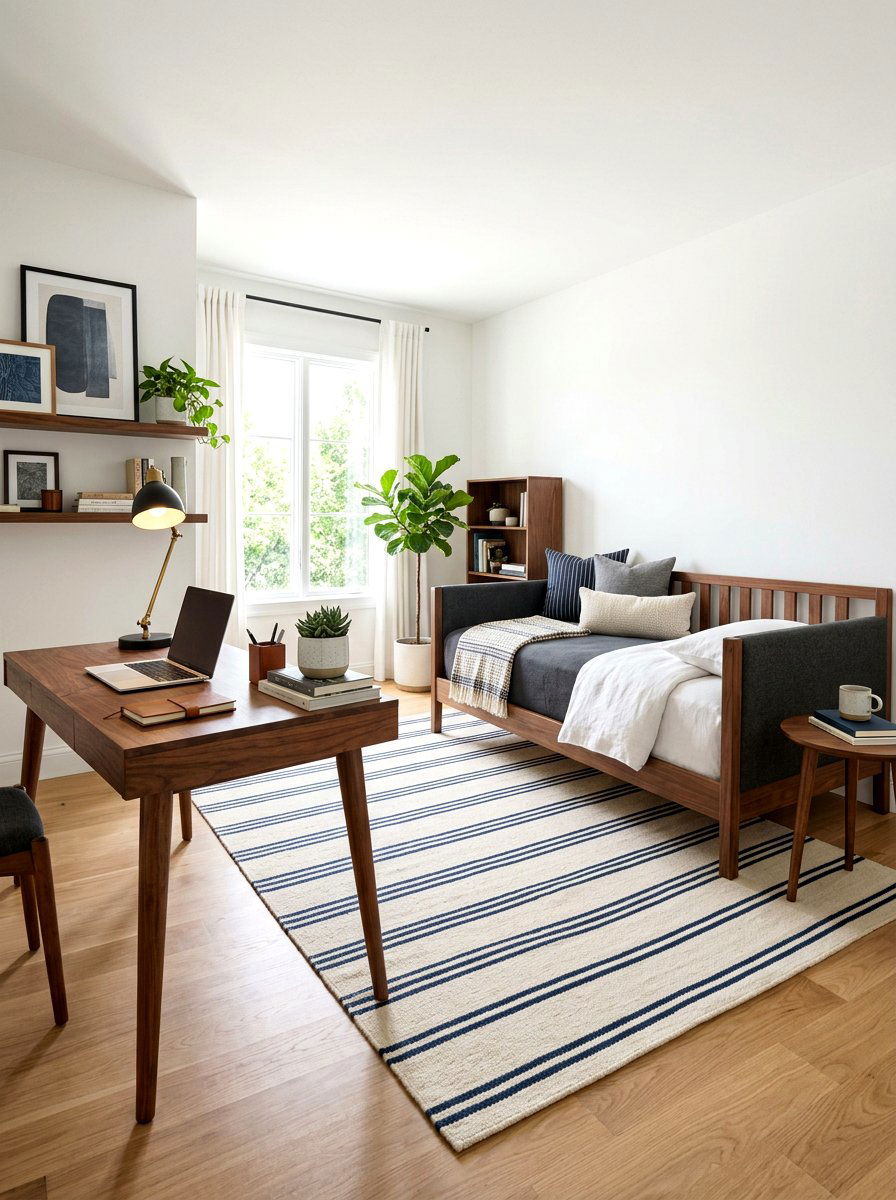
Integrating a workspace into a bedroom requires a delicate balance to ensure the room remains a restful sanctuary while providing enough utility for work. Placing a slim, stylish desk in a corner near a window allows you to take advantage of natural light throughout the morning. You can use a decorative chair that doubles as an accent piece to help the office area blend into the overall bedroom decor. Adding a small area rug under the desk can visually define the workspace, creating a clear boundary between your sleeping area and your professional zone without requiring bulky partitions or permanent wall changes.
4. Living Room Alcove Office
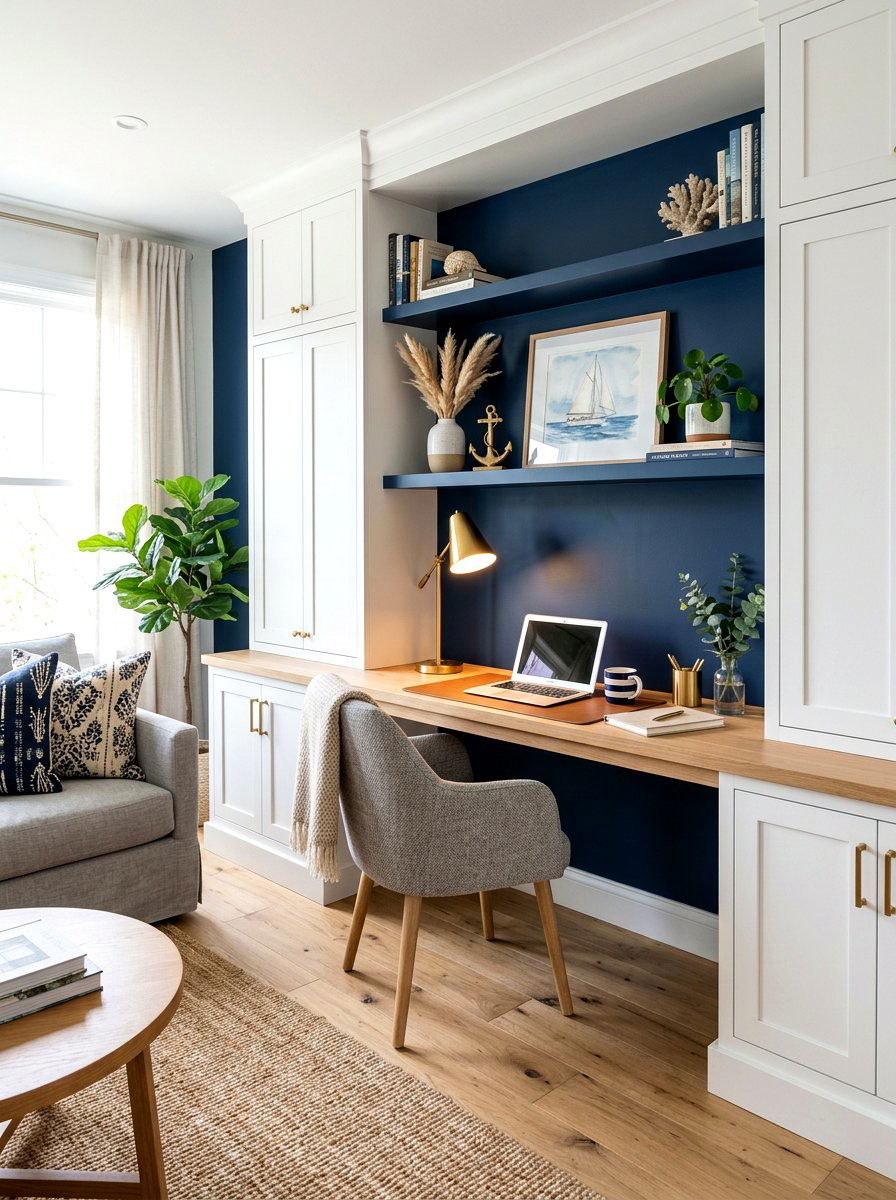
Many living rooms feature natural alcoves or niches that are perfect for a built-in office nook that feels tucked away yet accessible. Instead of leaving these spaces empty, you can install a custom desktop and overhead shelving that perfectly matches the existing millwork of the room. This creates a cohesive look that enhances the architectural value of your living space while providing a dedicated area for computer work or bill paying. To keep the living room looking polished, use stylish storage bins and cable management solutions to hide wires. An upholstered chair ensures comfort while maintaining the sophisticated aesthetic of the main living area.
5. Kitchen Command Center
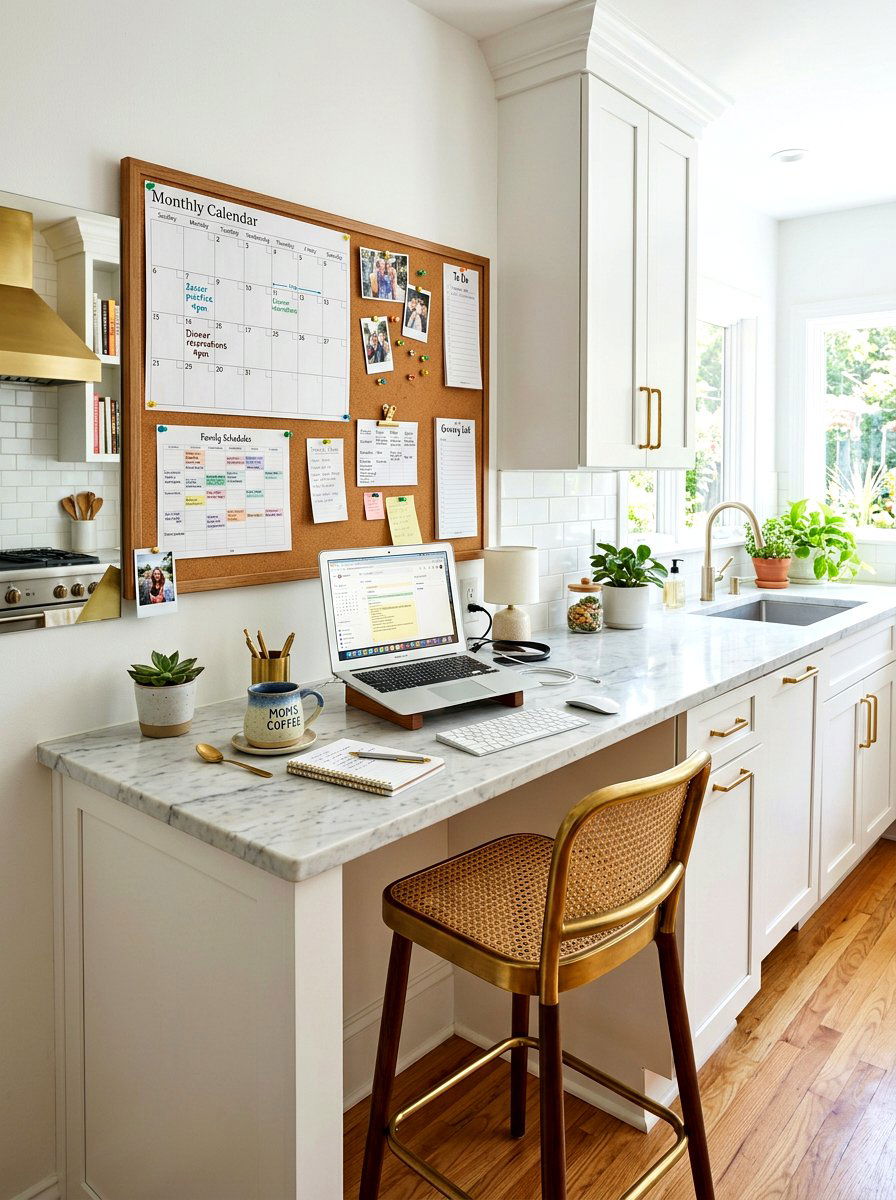
The kitchen is often the heart of the home, making it a convenient location for a small command center or office nook. This space can serve as a spot for looking up recipes, managing household schedules, or helping children with their homework while preparing meals. A small section of the kitchen cabinetry can be converted into a desk area by dropping the counter height and adding a comfortable stool. Using similar materials for the desk as the kitchen island ensures a seamless look. Incorporating a pinboard or magnetic wall nearby helps keep grocery lists and important family notes organized and easily accessible.
6. Floating Desk Setup
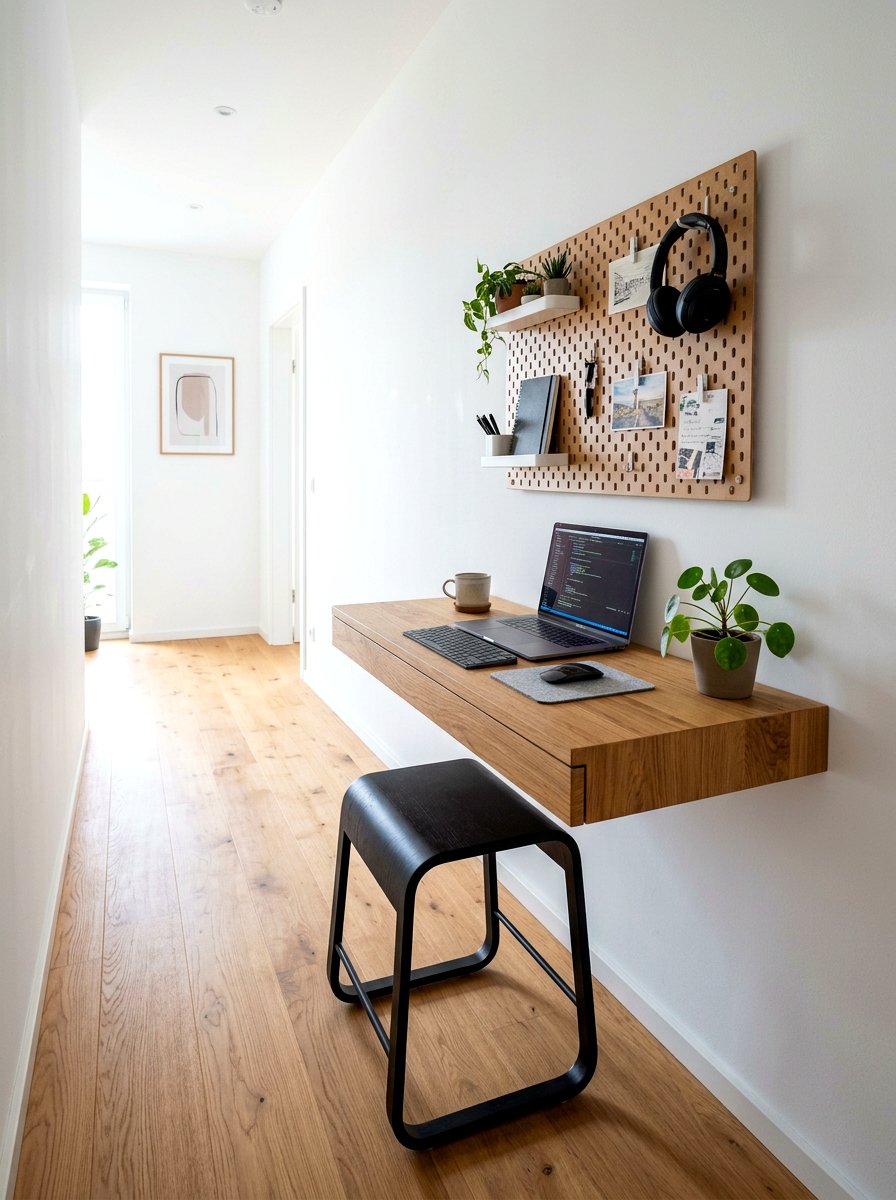
A floating desk is an ideal solution for extremely tight spaces where floor area is at a premium and a traditional desk would feel too heavy. By mounting the desktop directly to the wall, you create a lightweight and airy feel that maintains the visual flow of the room. This design works exceptionally well in hallways or small studios where every inch of floor space counts for movement. You can complement the floating desk with matching wall-mounted shelves to store essentials without the need for a bulky filing cabinet. The open space underneath provides a perfect spot to store a sleek, modern stool.
7. Built In Bookshelf Office
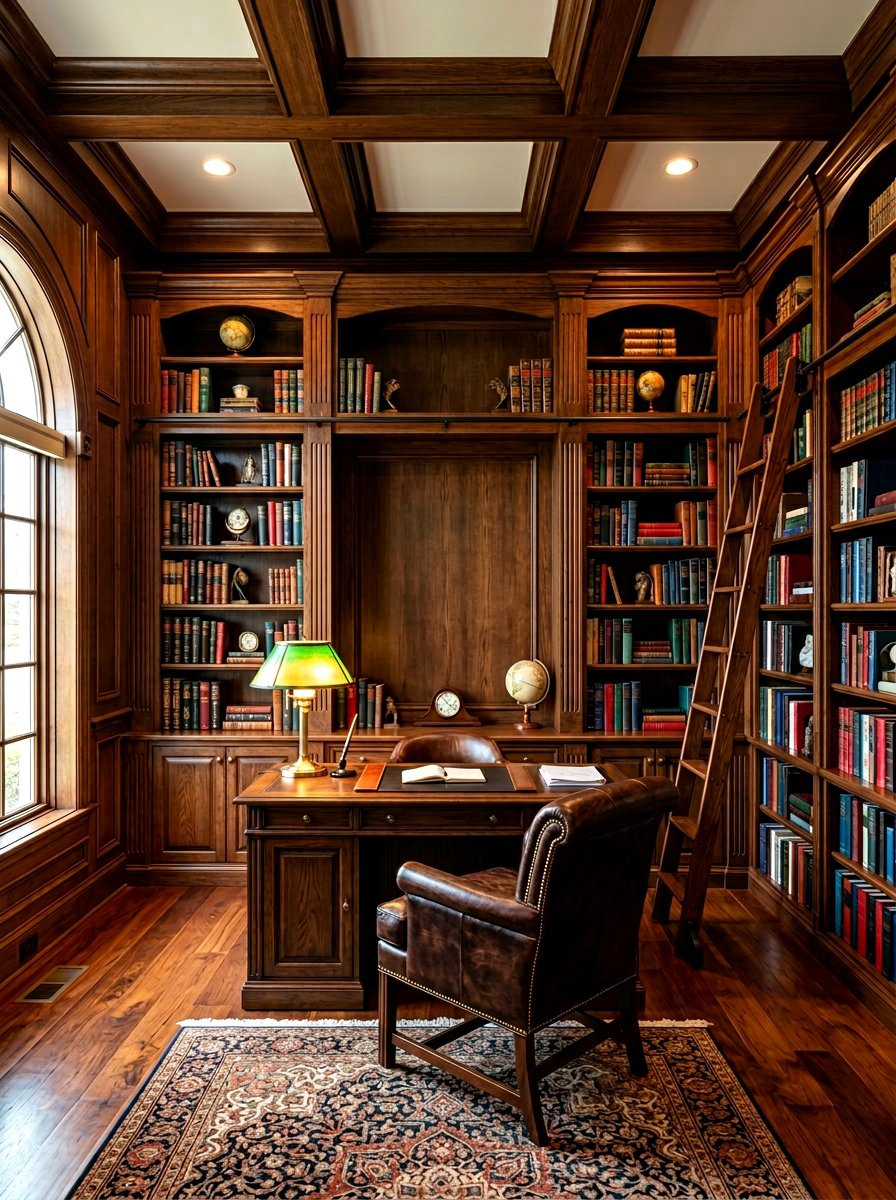
For those who love a traditional aesthetic, integrating an office nook directly into a wall of floor-to-ceiling bookshelves creates a scholarly and sophisticated atmosphere. By removing a section of lower shelving, you can create a recessed area for a desk while keeping your entire library within arm 's reach. This design makes the workspace feel like a permanent part of the room' s architecture rather than an afterthought. Using high-quality wood finishes and integrated puck lighting can elevate the space further. This setup is perfect for researchers, writers, or anyone who enjoys being surrounded by books while they work on important tasks.
8. Minimalist Home Office
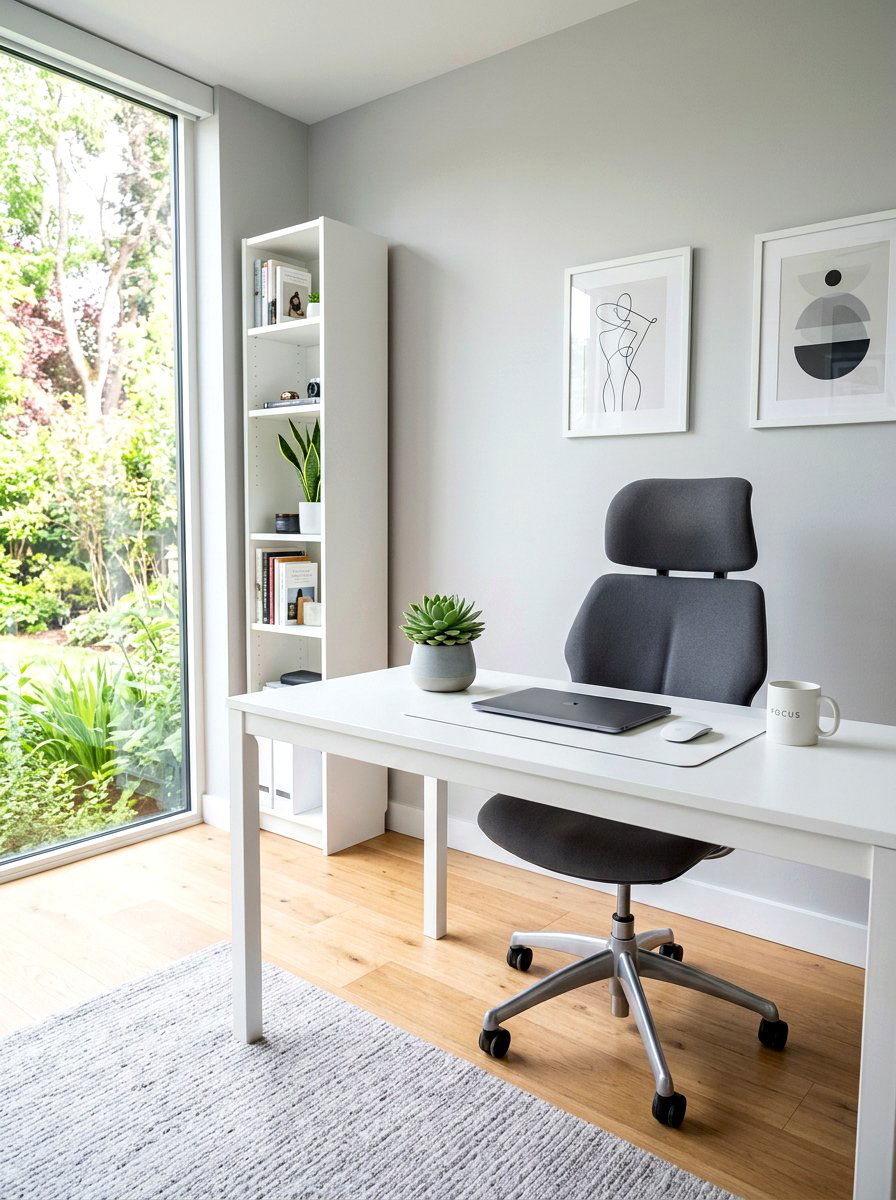
Focusing on clean lines and a neutral color palette, a minimalist office nook helps reduce visual clutter and promotes mental clarity during the workday. This design style typically features a simple white or light wood desk paired with a basic ergonomic chair and minimal accessories. To maintain the minimalist aesthetic, choose hidden storage solutions and integrated cable management to keep the desktop clear of distractions. Small pops of greenery from a single potted plant can add life to the space without feeling overwhelming. This approach is ideal for small modern apartments where maintaining a sense of openness and order is a top priority.
9. Window Side Workspace
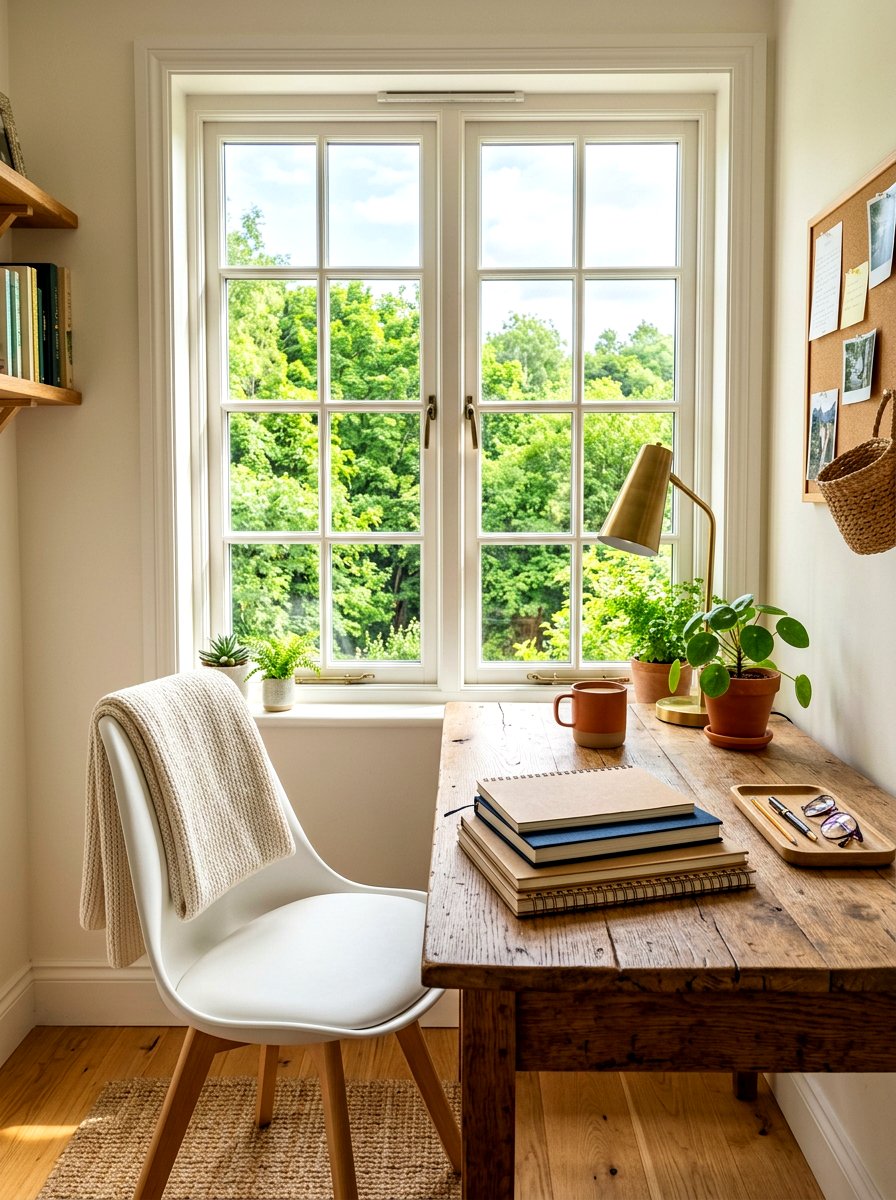
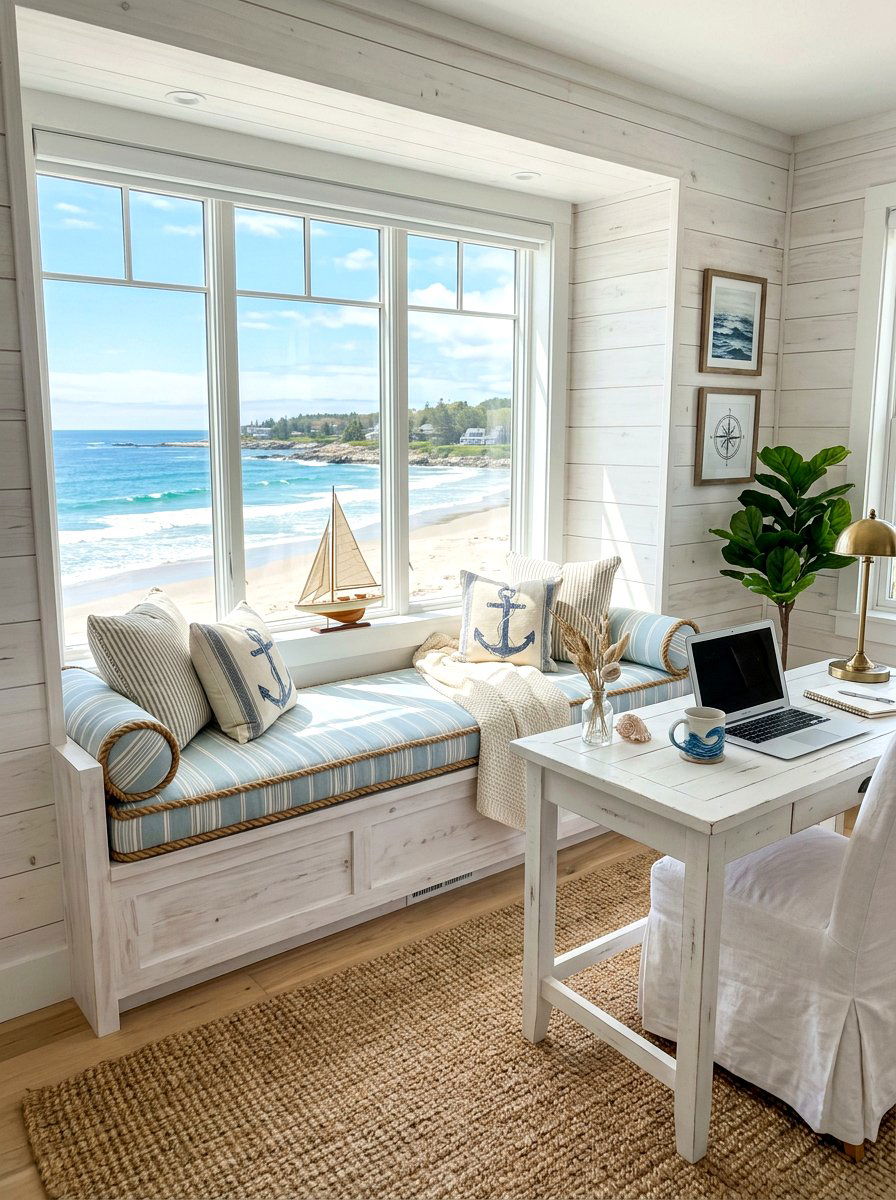
Positioning your office nook directly in front of a window is one of the best ways to boost productivity and improve your overall mood. Natural light reduces eye strain and provides a pleasant view that can offer much-needed mental breaks during long work sessions. A simple wooden desk paired with light, airy curtains creates a serene environment that feels connected to the outdoors. To avoid glare on your computer screen, consider using adjustable blinds or solar shades. This setup transforms a simple window into a focal point of functionality, making even the smallest corner of your home feel expansive and bright.
10. Entryway Desk Nook
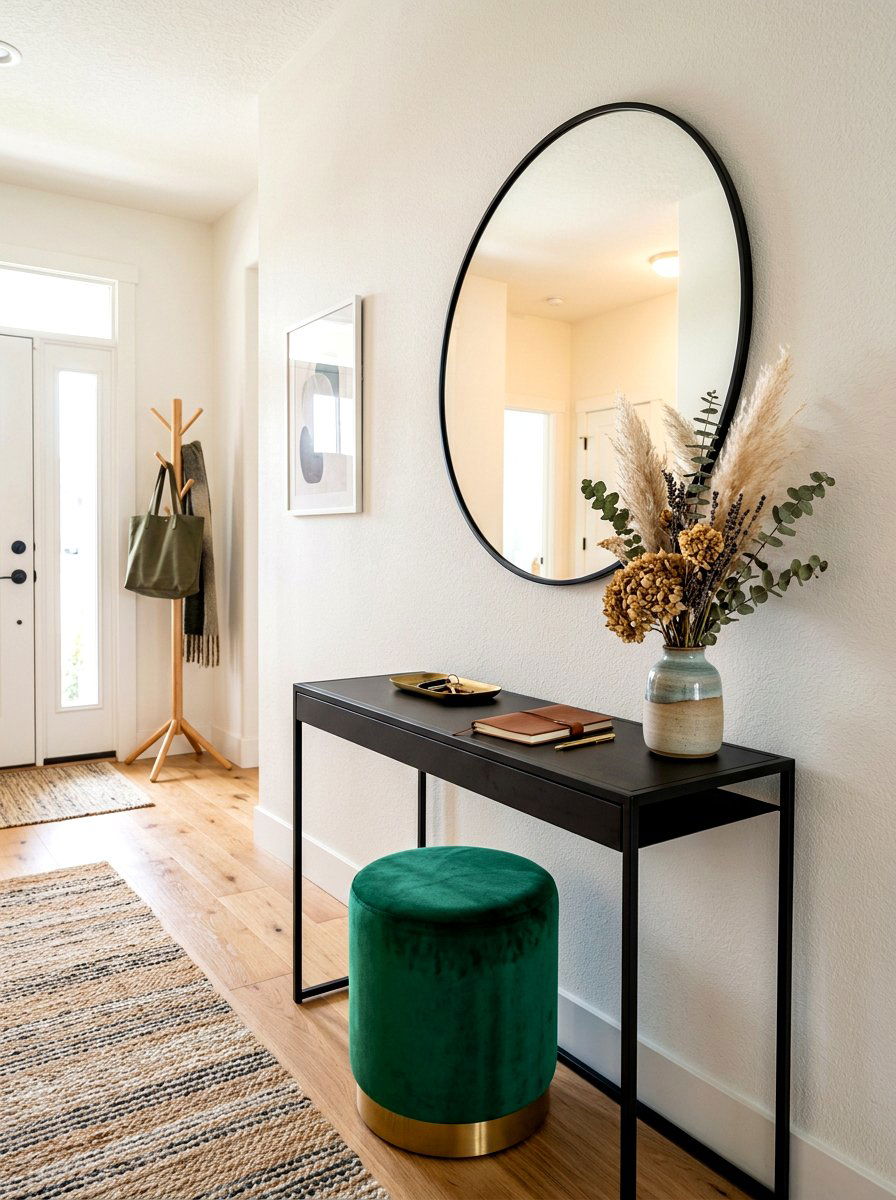
An entryway often has unused wall space that can be easily converted into a stylish and functional desk nook for quick tasks. This setup is perfect for dropping off mail, charging devices, or finishing a few emails before heading out the door for the day. Using a narrow console-style desk ensures the walkway remains clear and unobstructed for foot traffic. Adding a mirror above the desk helps bounce light around the foyer, making the entry feel larger and more inviting. A small, chic bench can provide seating when needed and slide completely under the desk to save space when not in use.
11. Loft Area Office
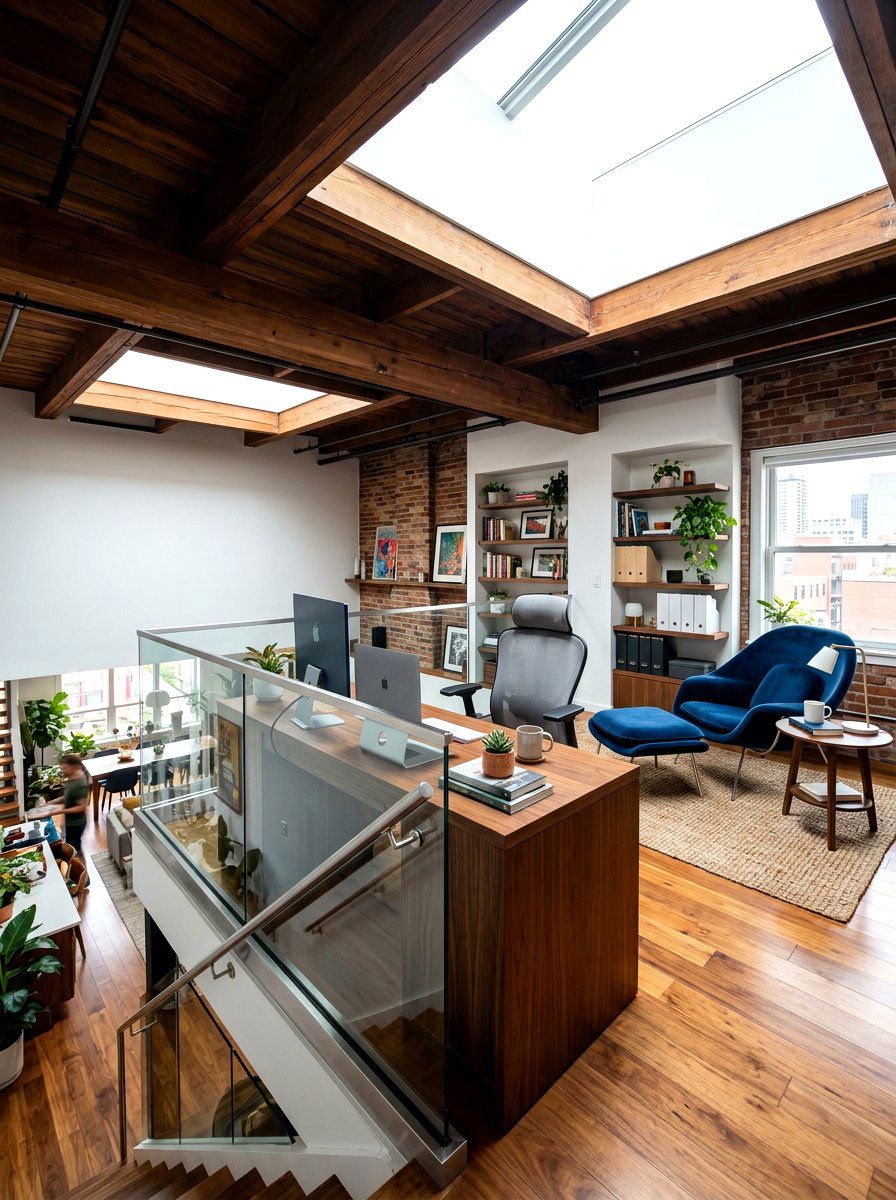
A loft or mezzanine level provides a unique opportunity to create a semi-private office nook that overlooks the main living area below. This elevated position offers a sense of separation from the rest of the household activity while still feeling connected to the home's energy. Using a low-profile desk and a comfortable lounge-style office chair keeps the sightlines clear and maintains the open-concept feel of the loft. Adding built-in cabinetry along the back wall provides ample storage for files and equipment. This setup is particularly effective for creative professionals who appreciate a different perspective and a bright, airy environment for their daily work.
12. Modern Farmhouse Workspace
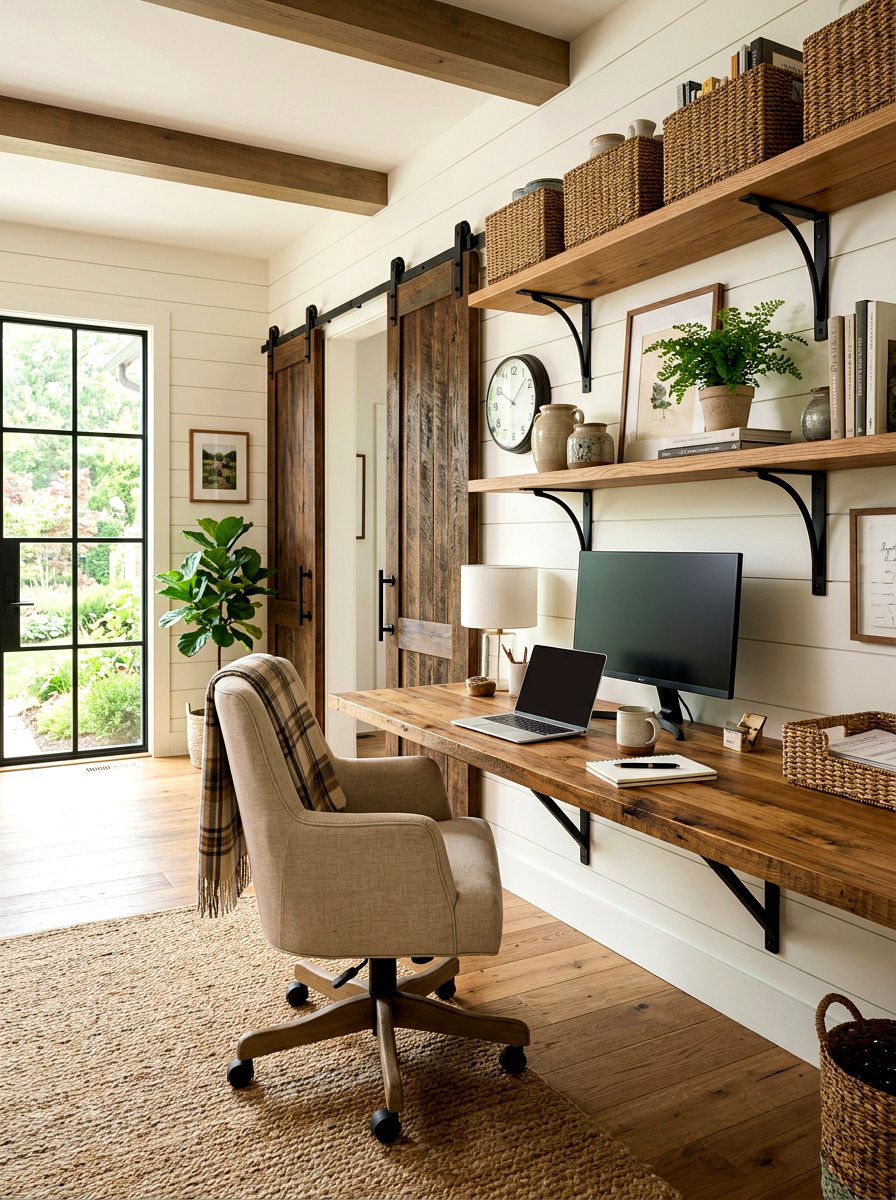
Combining rustic charm with contemporary functionality, a modern farmhouse office nook uses natural textures and warm wood tones to create a welcoming environment. Think of a reclaimed wood desktop paired with black metal brackets and a vintage-inspired task lamp. To enhance the farmhouse feel, you can use woven baskets for organization and a comfortable linen-upholstered chair. Adding a sliding barn door can provide privacy when needed while serving as a beautiful decorative element. This style is perfect for creating a cozy, grounded workspace that feels timeless and full of character, fitting perfectly into traditional or transitionally styled homes and large rooms.
13. Bohemian Desk Nook
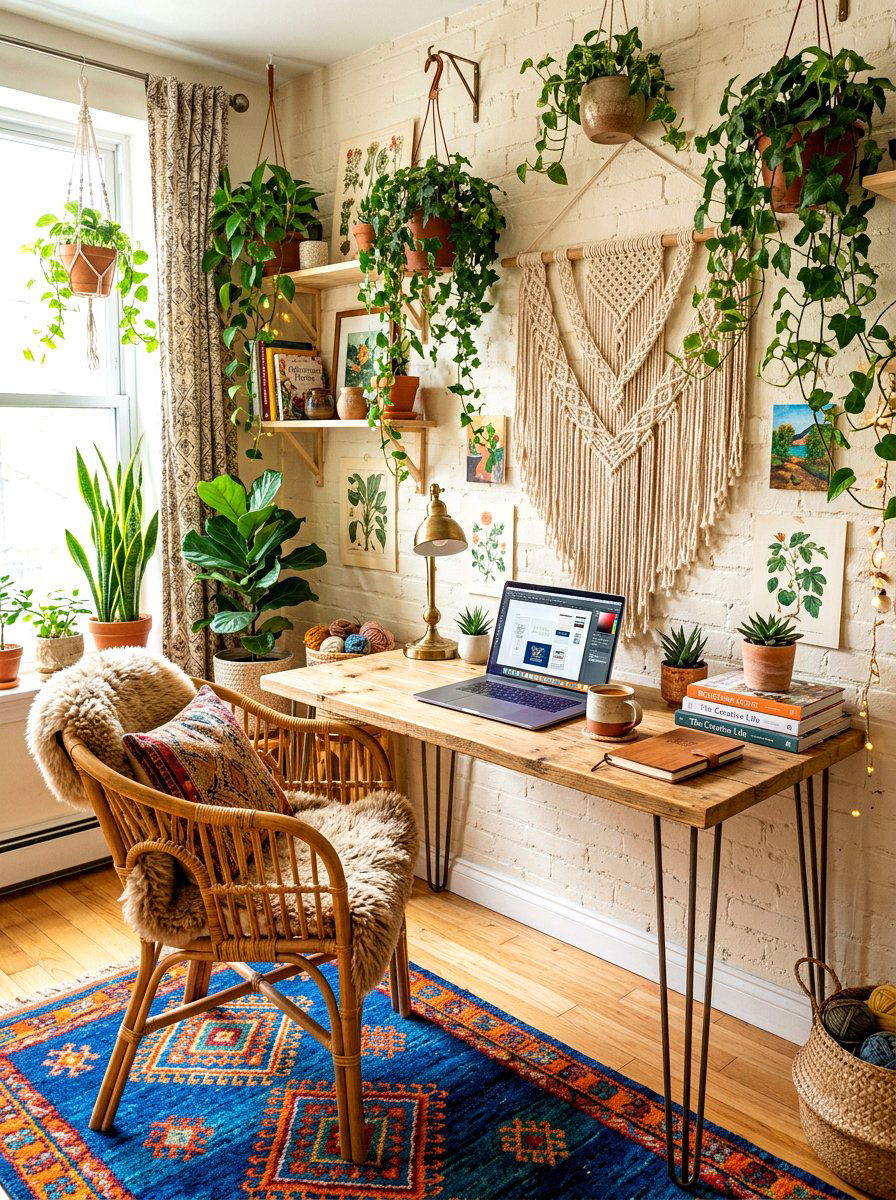
A bohemian office nook is all about personal expression, using a mix of patterns, textures, and plenty of indoor plants to create a vibrant space. This design often features a light-toned wooden desk decorated with macramé wall hangings and a colorful Persian-style rug underfoot. Using a rattan chair with a plush sheepskin throw adds comfort and reinforces the relaxed, earthy aesthetic. Incorporating various hanging plants and terrariums brings a touch of nature indoors, which is known to reduce stress. This eclectic approach is ideal for creative individuals who thrive in a workspace that feels artistic, lived-in, and full of natural inspiration.
14. Industrial Style Office
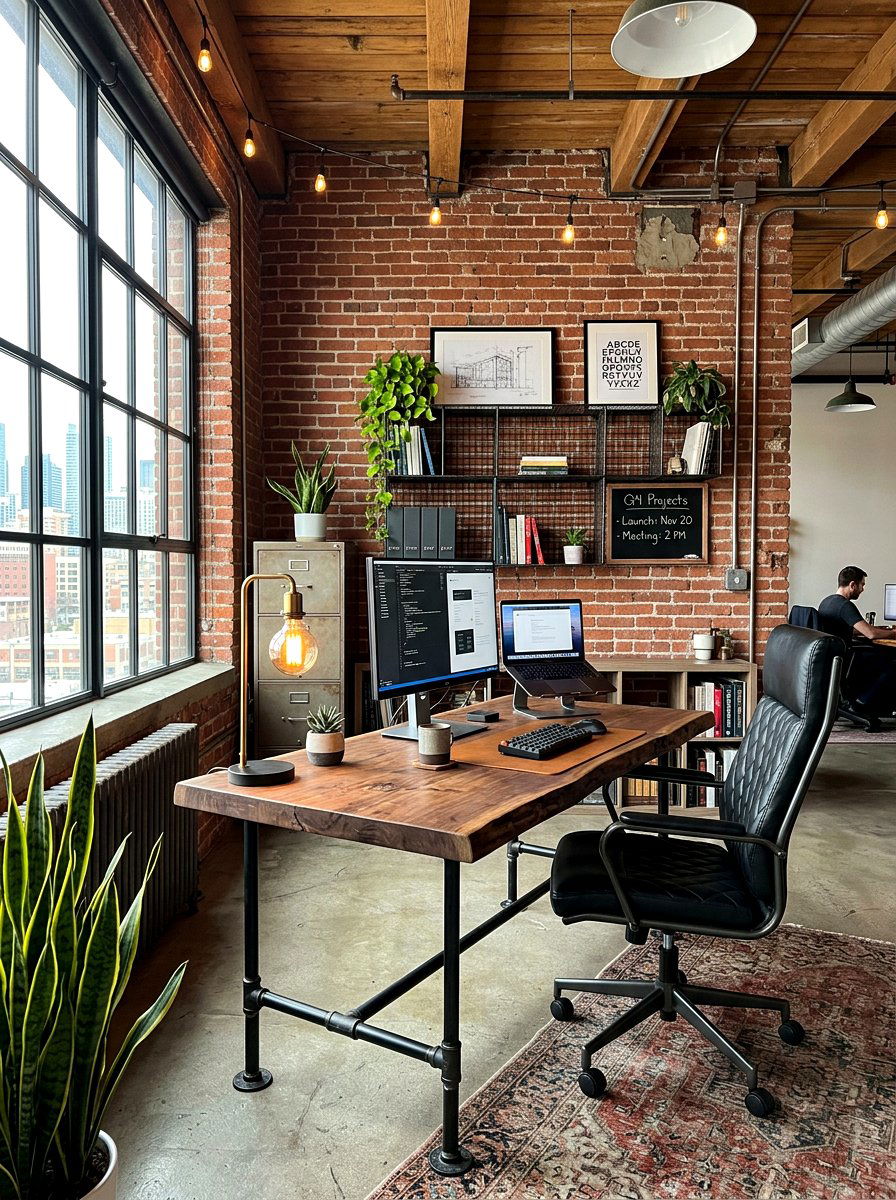
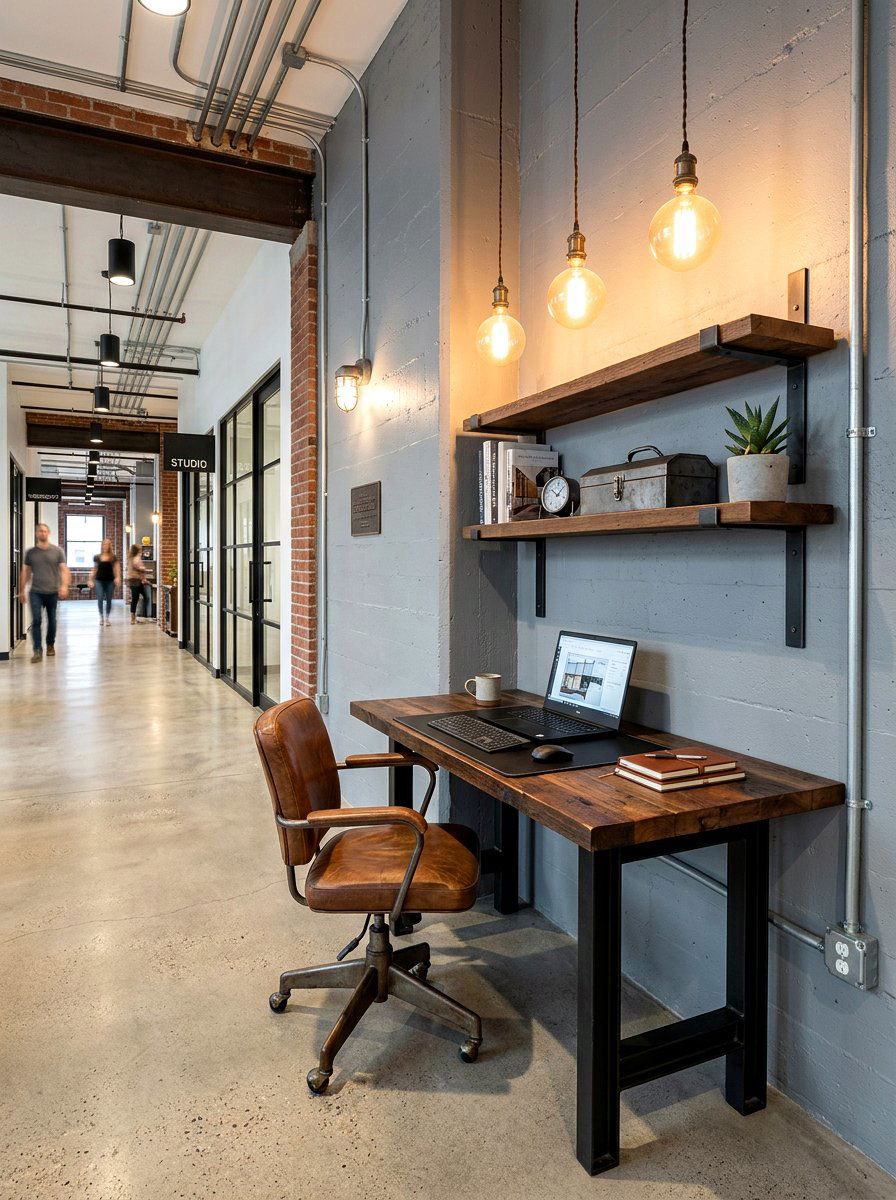
Characterized by raw materials like metal, brick, and dark wood, an industrial office nook offers a rugged and professional look that is very popular. You can achieve this style by using a desk with a metal frame and a thick wooden top, positioned against an exposed brick or concrete wall. Pipe shelving provides a sturdy and stylish storage solution for heavy books and equipment. To soften the space, add a leather office chair and a classic Edison bulb desk lamp for warm, atmospheric lighting. This aesthetic works well in urban lofts or basements, providing a focused and gritty environment that feels modern and purposeful.


15. Scandinavian Home Office
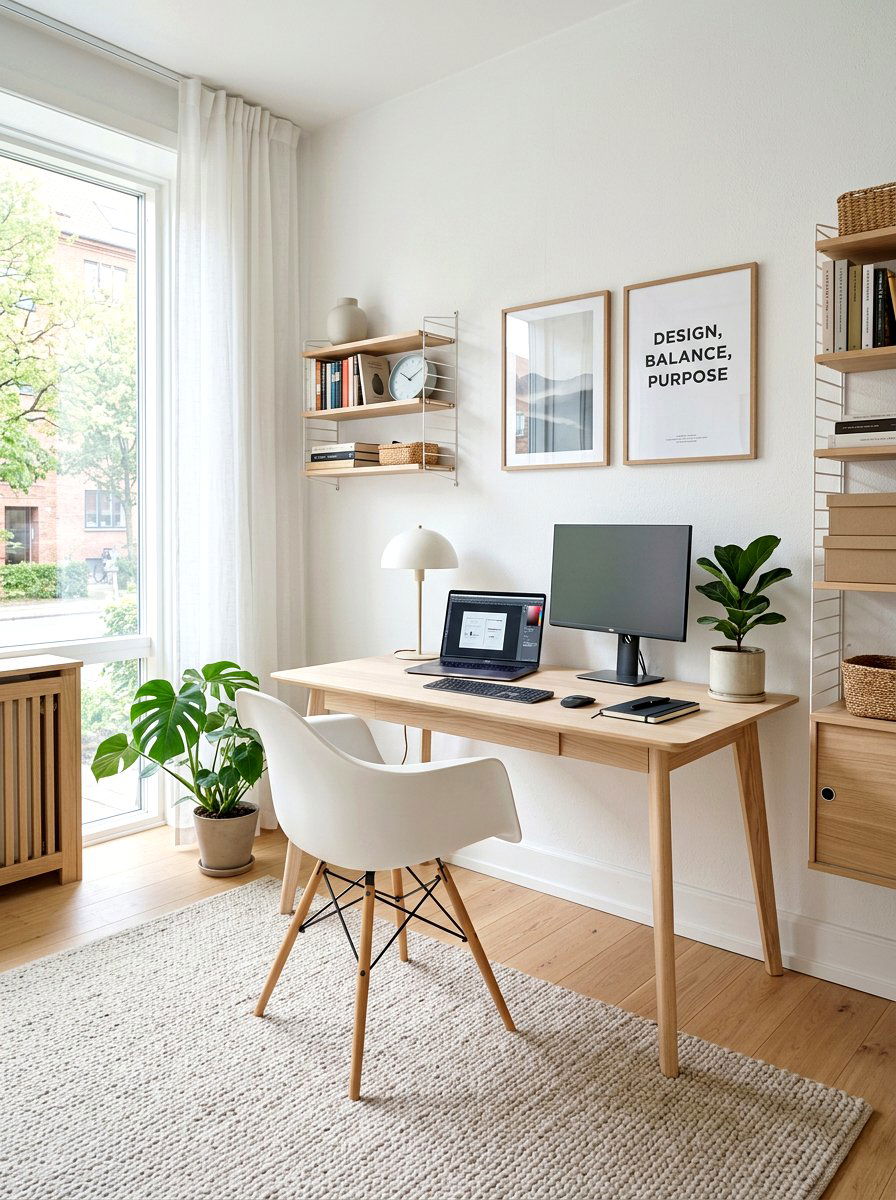
Scandinavian design emphasizes functionality, simplicity, and the use of natural light, making it a perfect choice for a small office nook. This style often utilizes light woods like birch or ash, combined with a predominantly white color palette to maximize brightness. A sleek, tapered-leg desk paired with a classic plastic or wood molded chair creates an iconic look that never goes out of style. Adding a few high-quality accessories and a soft wool rug adds "hygge" or coziness to the workspace. This clean and airy approach is excellent for small spaces, as it prevents the area from feeling cramped or cluttered.
16. Double Desk Workstation
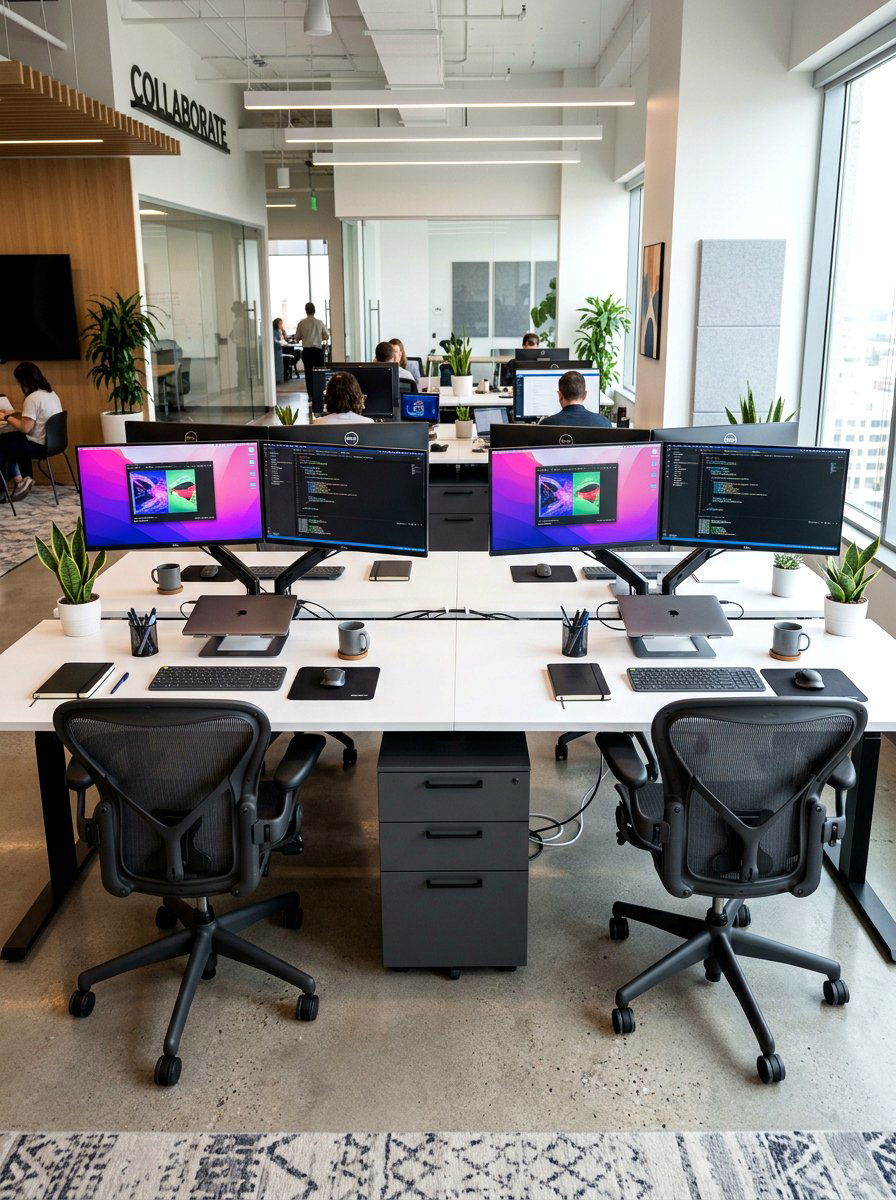
For households with two remote workers or students, a double desk workstation allows two people to work side-by-side in a single office nook. This can be achieved by installing a long, continuous desktop along one wall or using two identical small desks placed together. Using a central drawer unit provides shared storage and a clear physical boundary between the two workspaces. To maintain a sense of order, use matching chairs and identical desktop organizers for a symmetrical and polished look. This setup encourages collaboration and shared focus while making efficient use of a single room’s wall space for multiple family members.
17. Attic Sloped Ceiling Office
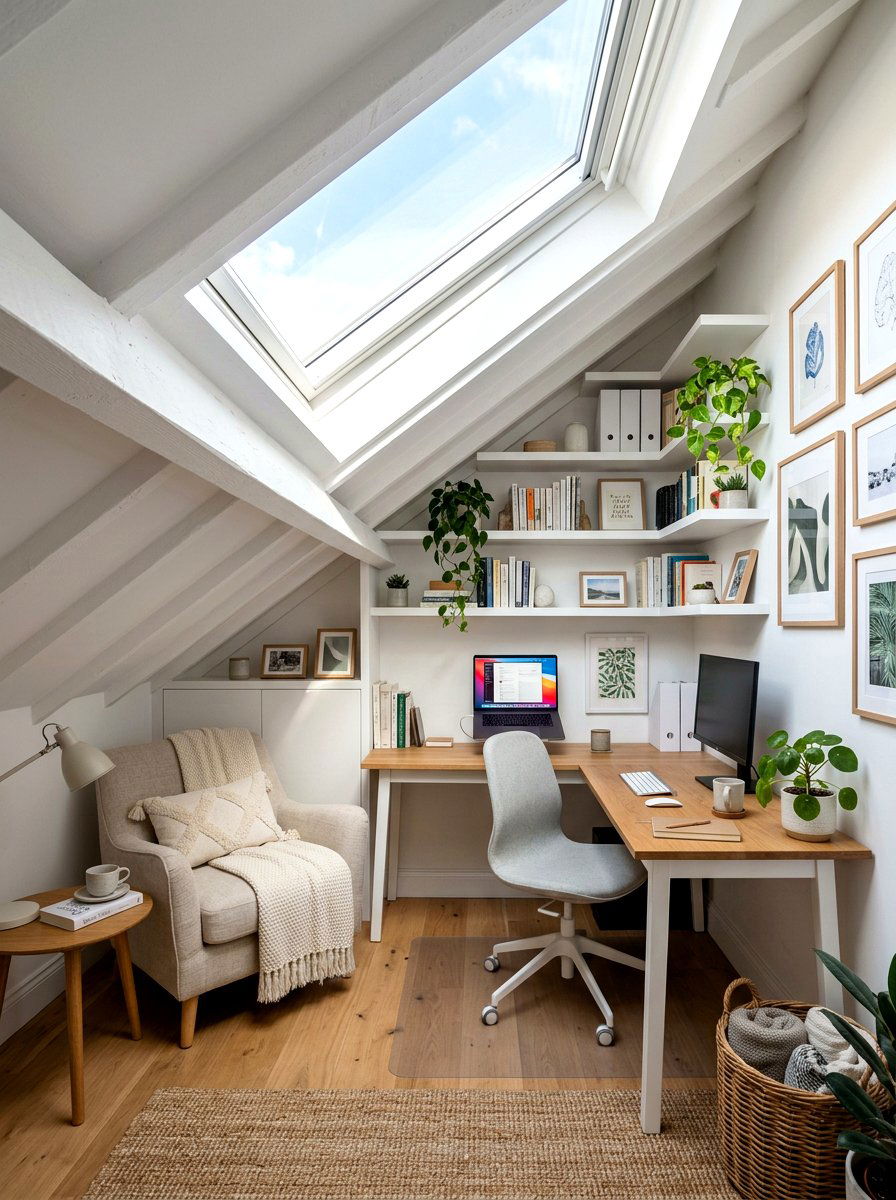
The unique architecture of an attic, with its sloped ceilings and cozy corners, provides a charming backdrop for a secluded office nook. By placing the desk under the lowest part of the eave, you can utilize space that might otherwise go to waste. Painting the walls and ceiling a crisp white helps the small space feel larger and more open, while a skylight can provide abundant natural light. Custom-built shelving can be designed to fit the specific angles of the roofline, offering plenty of storage for office supplies. This tucked-away location is ideal for those seeking a quiet retreat from the main house.
18. Wallpaper Accent Workspace
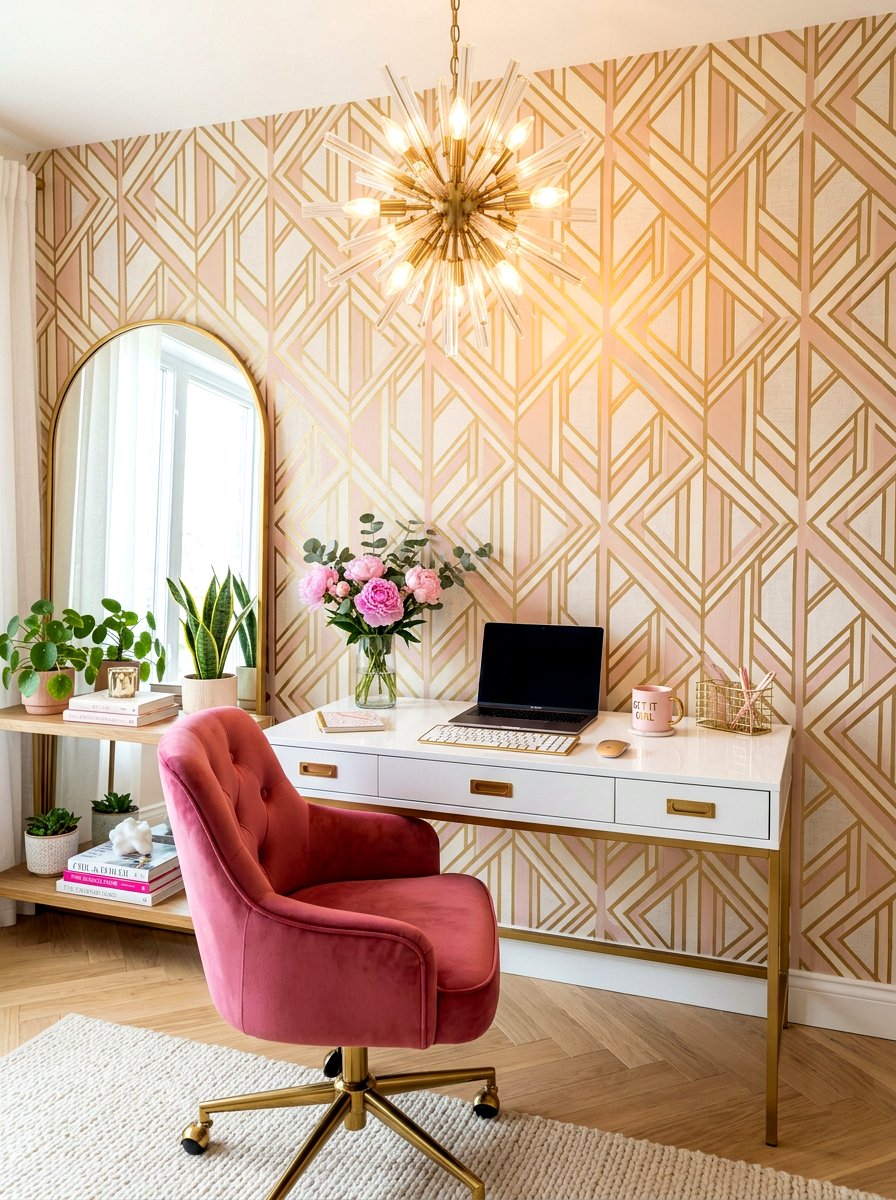
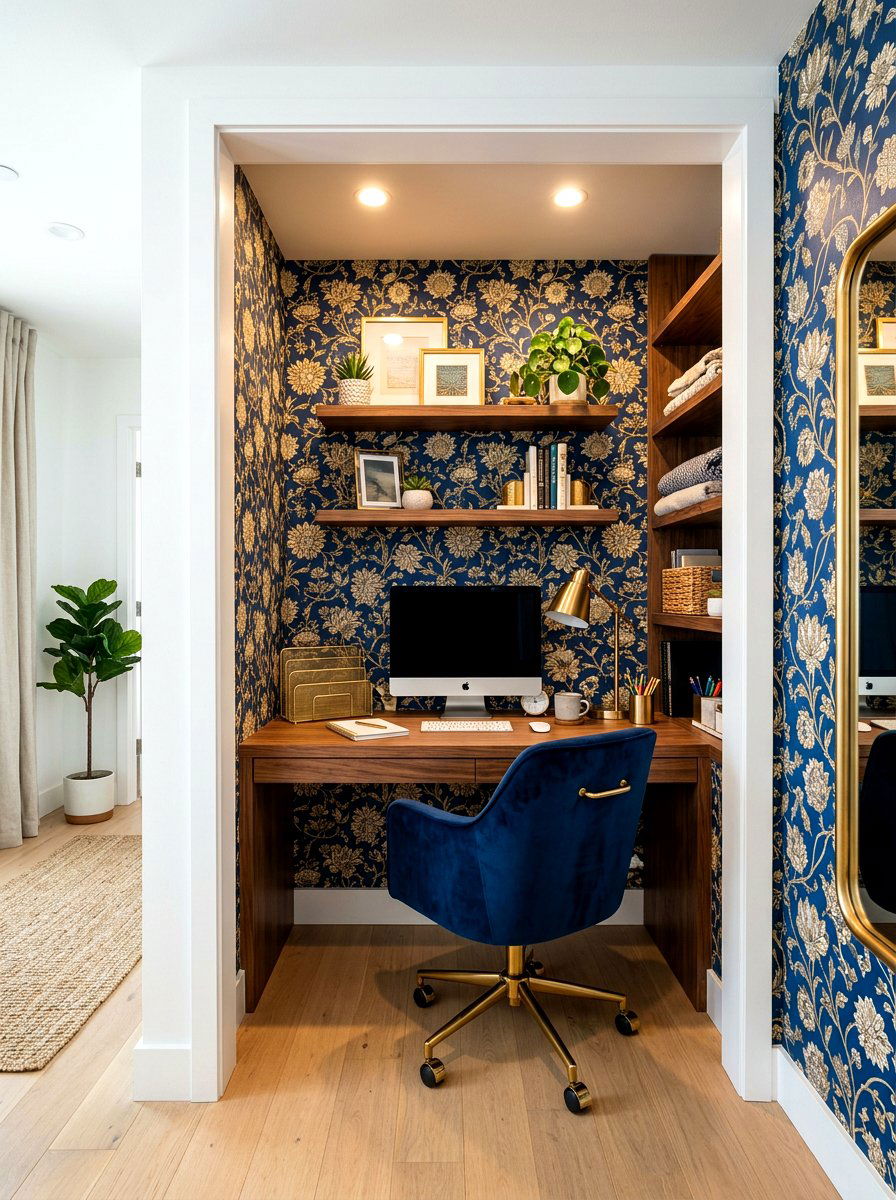
Using a bold or patterned wallpaper is an easy way to define an office nook and give it a distinct personality within a larger room. A floral, geometric, or textured wallpaper can act as a backdrop that visually separates the desk area from the surrounding living or sleeping space. This technique creates a "room within a room" effect without needing any physical dividers. To keep the look balanced, choose a desk and chair in neutral tones that allow the wallpaper to be the main focal point. This approach is perfect for adding a touch of luxury and creative flair to a small, otherwise plain corner.
19. Fold Down Wall Desk
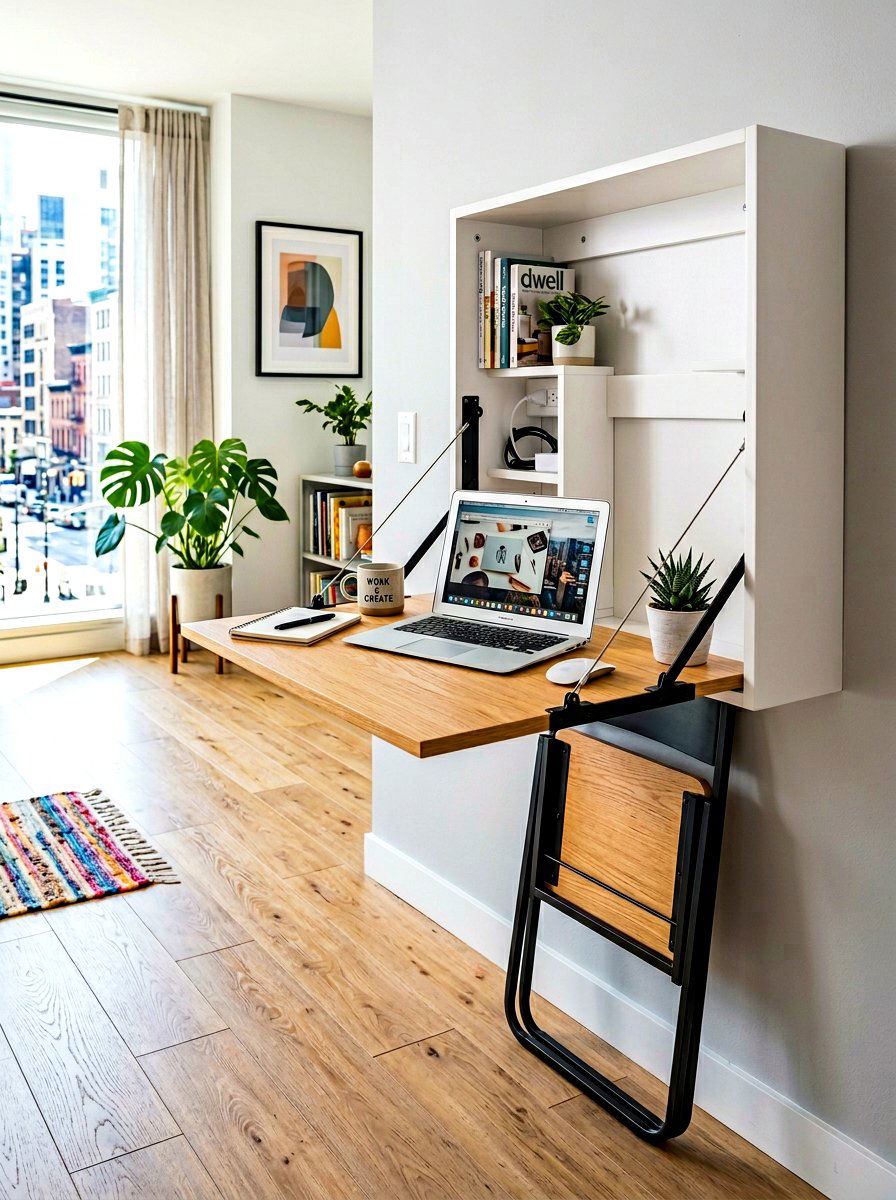
When space is extremely limited, a fold-down wall desk offers a functional workspace that can be completely hidden away when not in use. These "murphy" style desks attach directly to the wall and feature a hinged desktop that drops down to provide a sturdy surface for a laptop. The interior often includes small compartments for storing pens, notebooks, and other small essentials. This is an ideal solution for a studio apartment or a multipurpose guest room where you only need a desk occasionally. When the workday is over, simply fold the desk back up to reclaim your valuable floor and wall space.
20. Plywood Built In Office
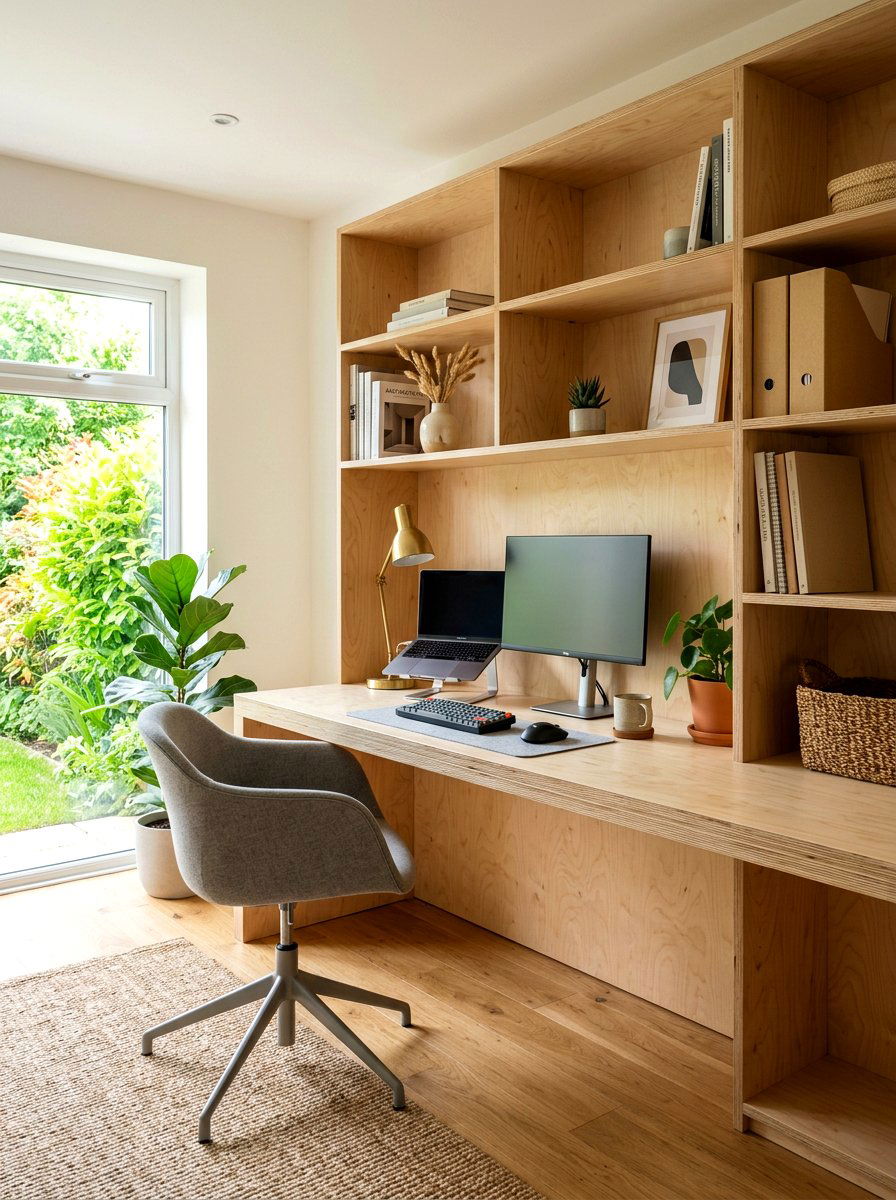
Plywood is a versatile and affordable material that can be used to create a modern, custom built-in office nook with a warm aesthetic. By using high-grade birch or maple plywood, you can design a seamless desk and shelving unit that perfectly fits your space requirements. The visible wood grain and layered edges of the plywood provide an organic and contemporary look that is very popular in modern design. Applying a clear matte finish protects the wood while maintaining its natural beauty. This DIY-friendly approach allows you to create a high-end, architectural look on a budget while providing a highly functional work area.
21. Colorful Small Office
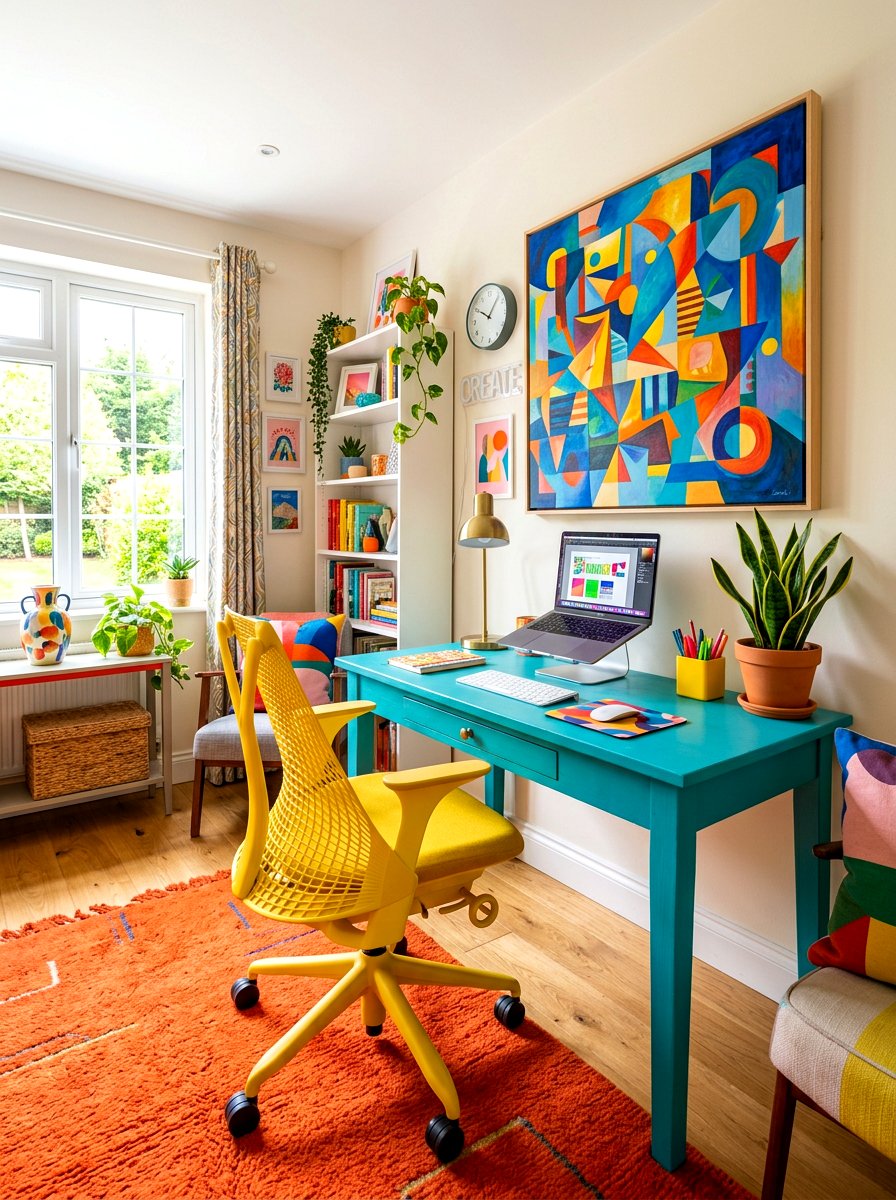
Adding a splash of vibrant color can transform a dull corner into an energizing and inspiring office nook that sparks creativity. You can achieve this by painting the desk a bright hue, using a colorful ergonomic chair, or choosing a bold rug to anchor the space. Color has a significant impact on mood; for example, blues can promote calm and focus, while yellows can boost energy and optimism. Incorporating colorful art pieces and desk accessories further enhances the playful and personalized feel of the workspace. This approach is perfect for those who want their home office to reflect their unique and lively personality.
22. Vintage Desk Setup
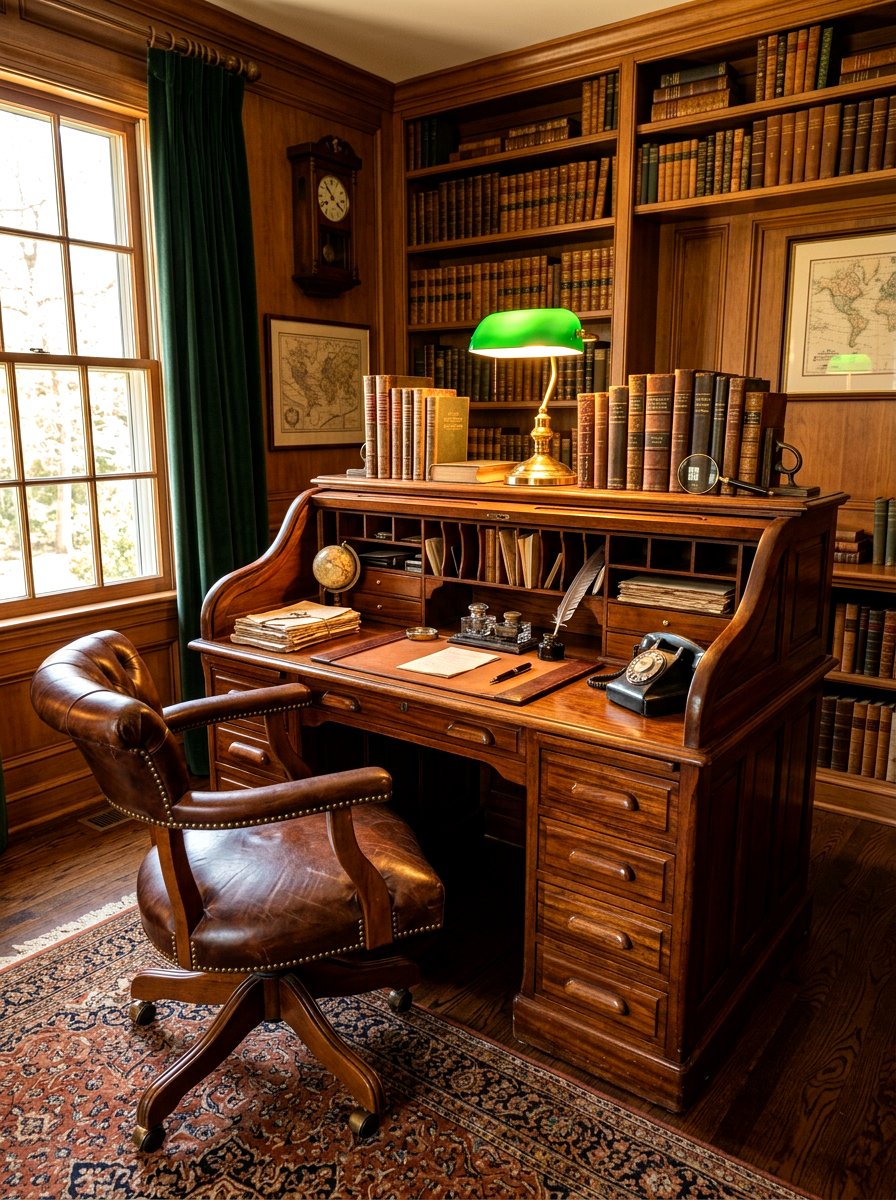
A vintage office nook uses antique furniture and nostalgic decor to create a workspace that feels storied and unique. Look for a classic roll-top desk, a mid-century modern writing table, or an ornate wooden desk from an estate sale to serve as the focal point. Pairing the desk with an antique brass lamp and a vintage-style clock adds to the timeless charm of the area. Using old-fashioned filing trays and leather-bound journals for organization reinforces the historical aesthetic. This style is perfect for those who appreciate the craftsmanship of the past and want a workspace that feels cozy, traditional, and full of character.
23. Glass Wall Office
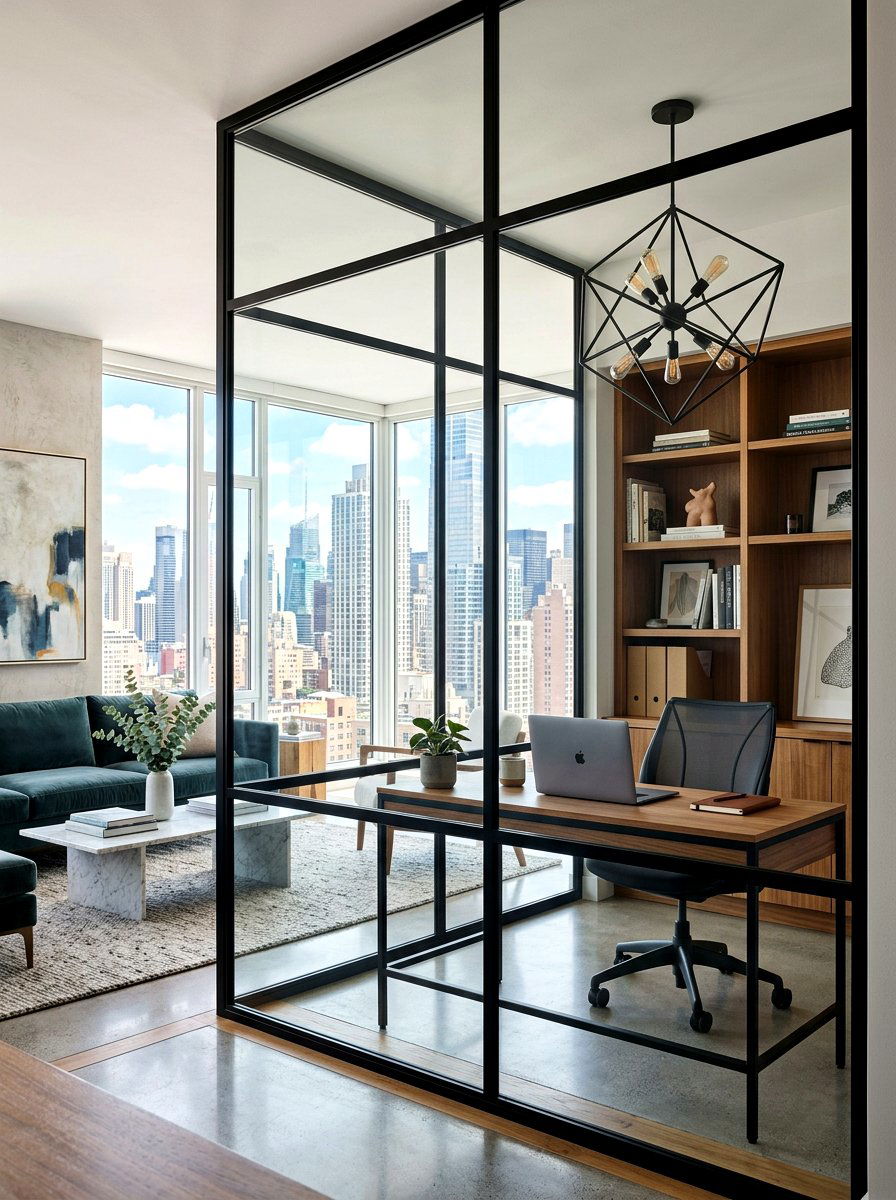
If you need a dedicated office nook but don't want to close off your floor plan, a glass wall partition is a sophisticated solution. This design allows you to create a quiet, sound-dampened environment while maintaining a visual connection and shared light with the rest of the home. Using black steel frames for the glass adds a modern, industrial touch that looks very elegant. Inside the glass enclosure, a simple desk and a statement light fixture create a professional atmosphere. This setup is ideal for those who work from home full-time and need a physical boundary without sacrificing the open and airy feel of their home.
24. Dark Academia Workspace
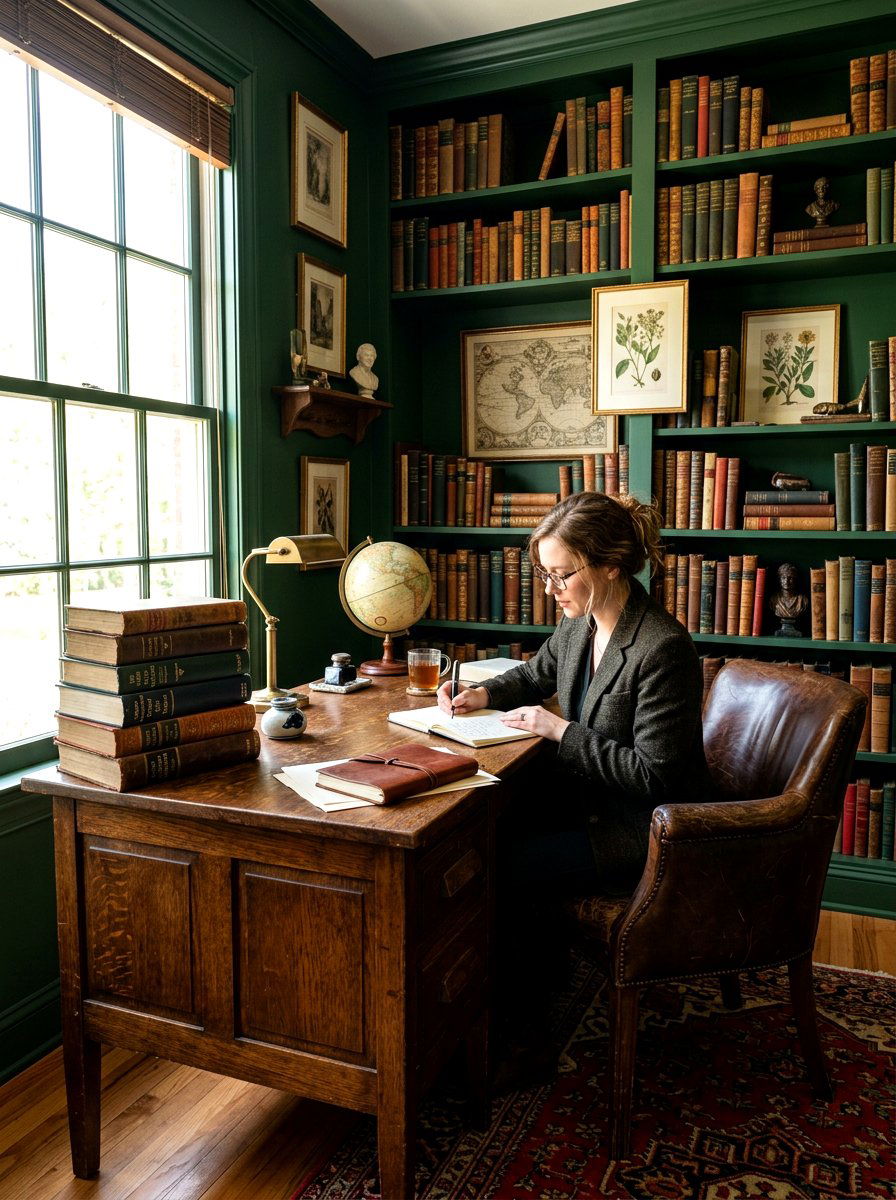
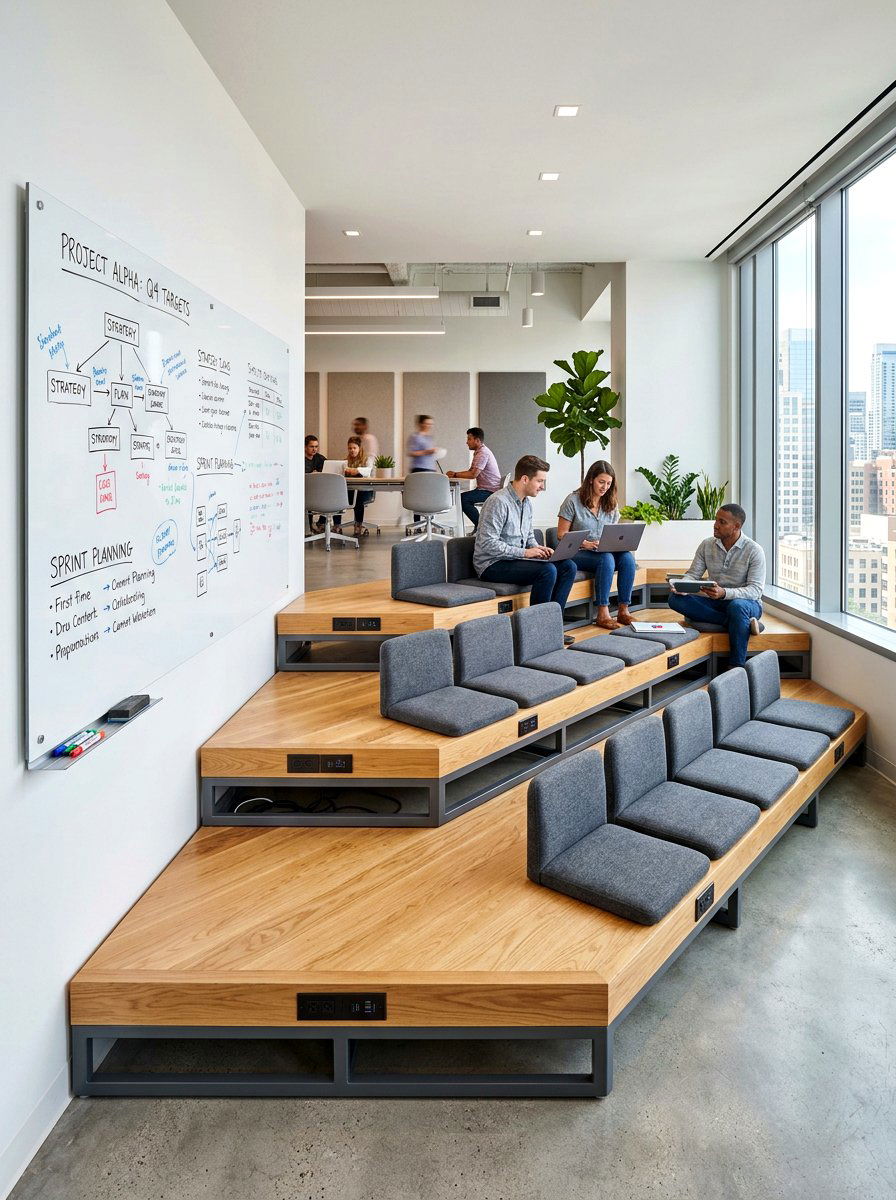
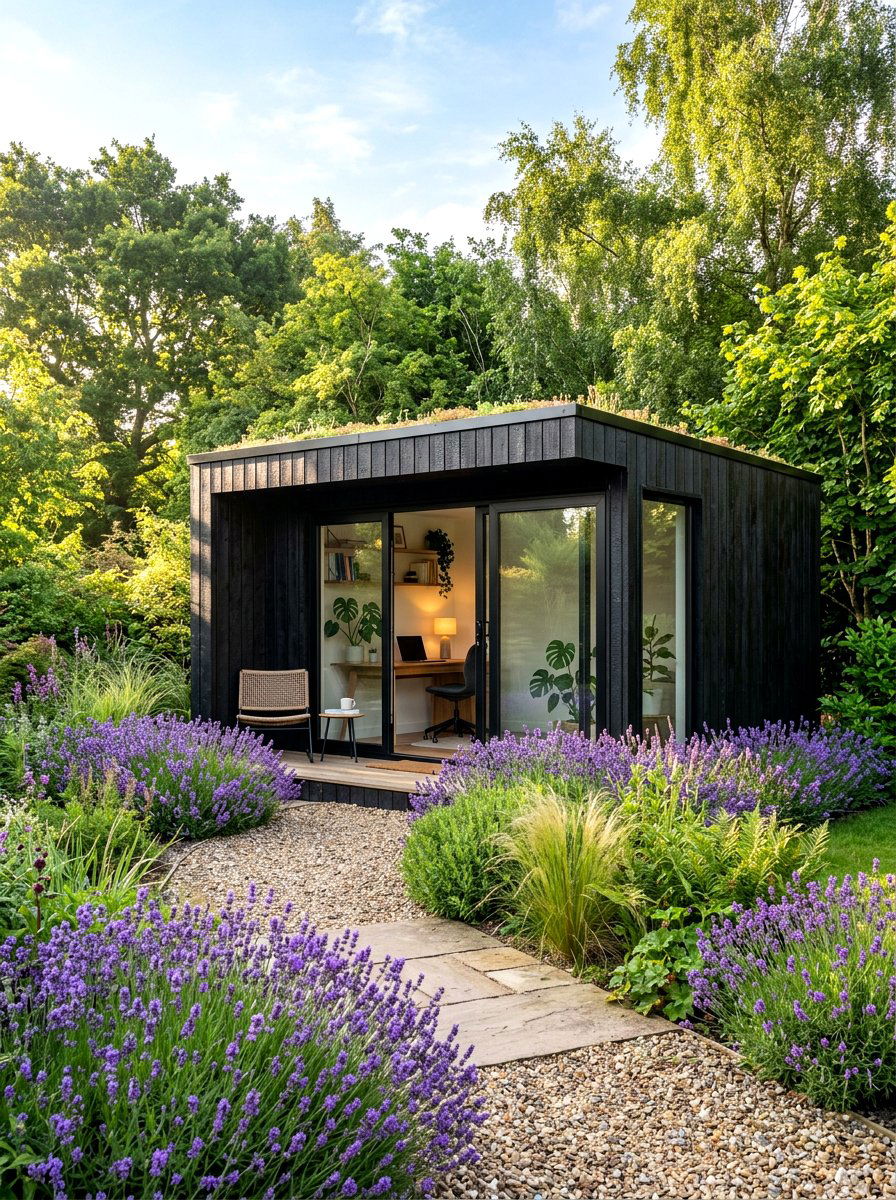
The dark academia aesthetic focuses on deep colors, rich textures, and a studious, moody atmosphere that is perfect for an office nook. To achieve this look, use a dark wood desk, deep green or navy walls, and plenty of classic books for decoration. A leather-upholstered chair and a traditional banker's lamp provide the necessary comfort and lighting. Adding antique-style art, botanical prints, and a heavy wool rug completes the cozy and scholarly vibe. This design approach is excellent for creating a sophisticated and immersive environment that feels like a private library, making it easy to sink into deep work or study sessions.
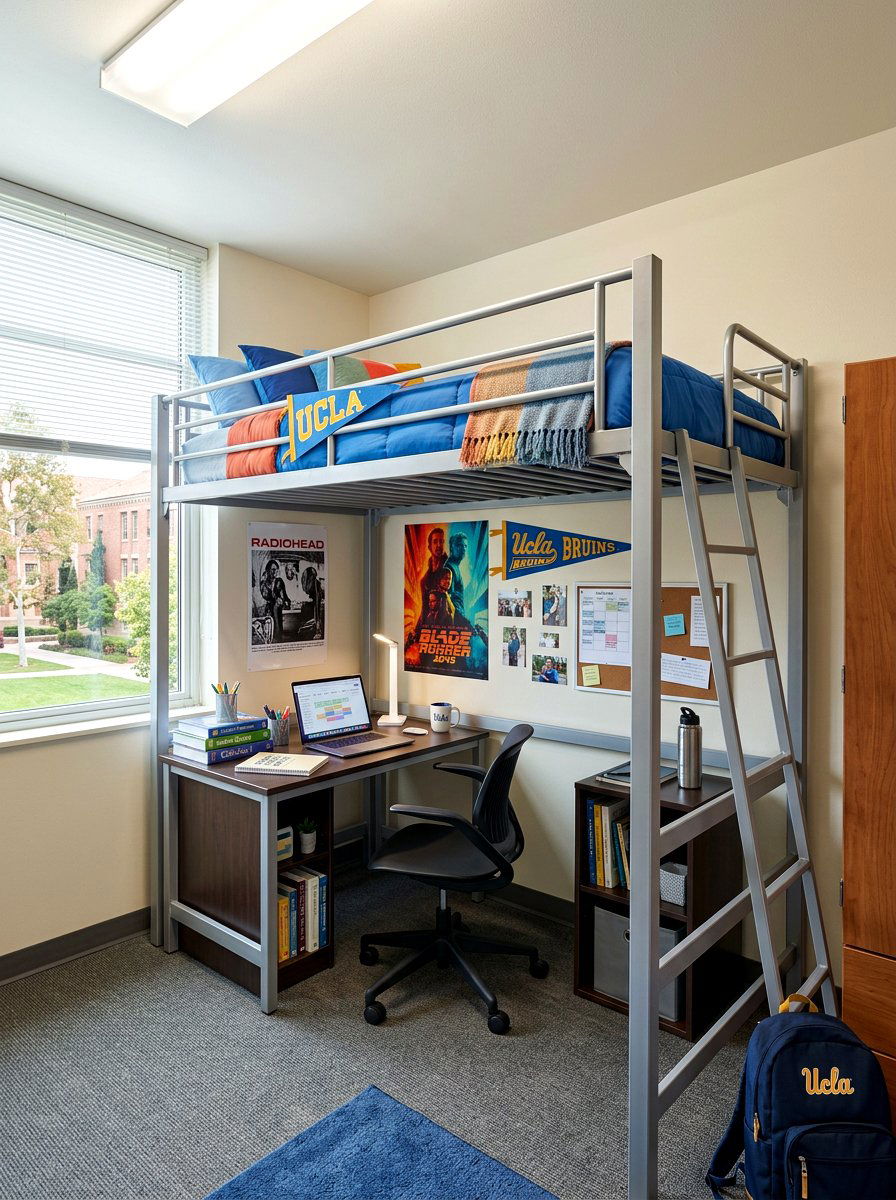
25. Kids Study Area
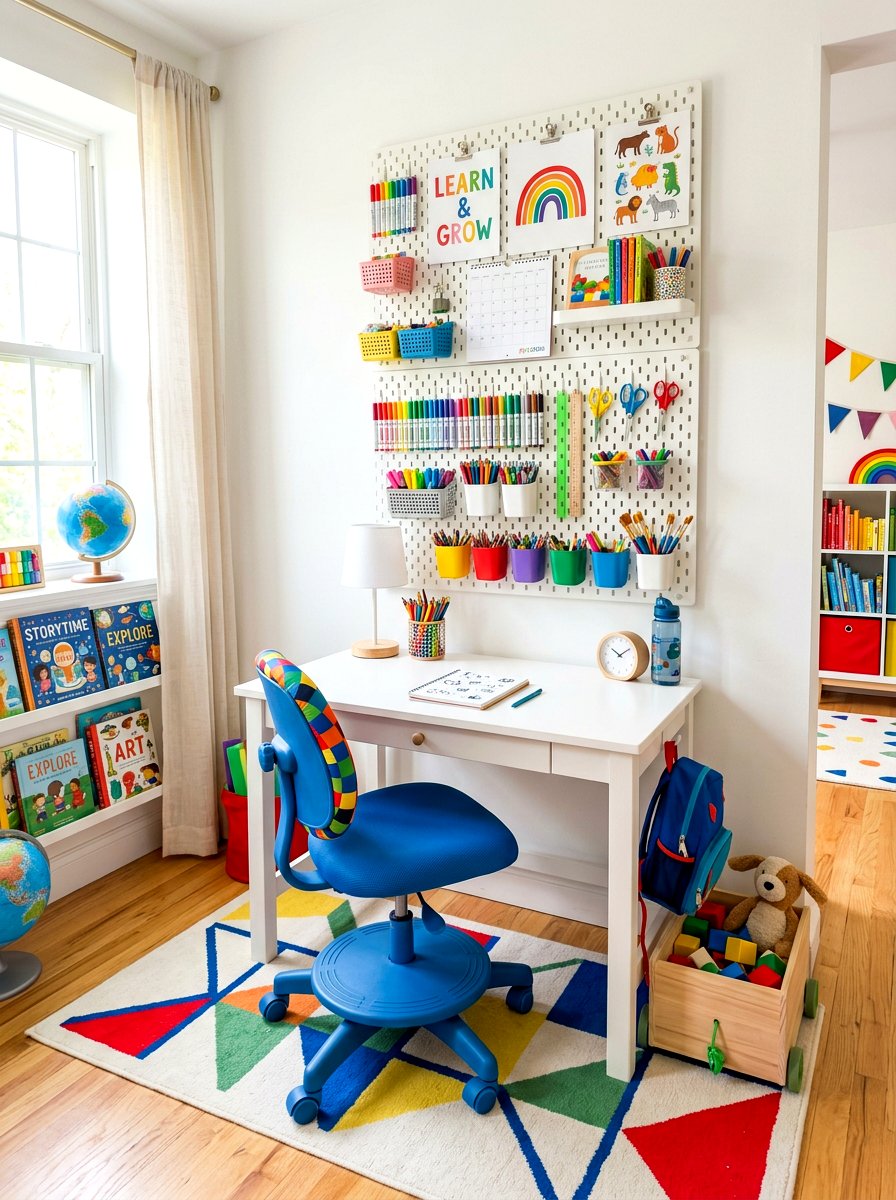
Creating a dedicated office nook for children provides them with a quiet and organized space to focus on their schoolwork and creative projects. A smaller, appropriately scaled desk and an adjustable chair ensure ergonomic comfort as they grow. Using bright colors and fun storage solutions like pegboards and colorful bins makes the space inviting and encourages them to keep their supplies organized. Positioning the nook in a quiet corner of the family room or their bedroom helps minimize distractions. Adding a pinboard for displaying their artwork and achievements makes the space feel personal and gives them a sense of pride in their workstation.
26. Ladder Desk Unit
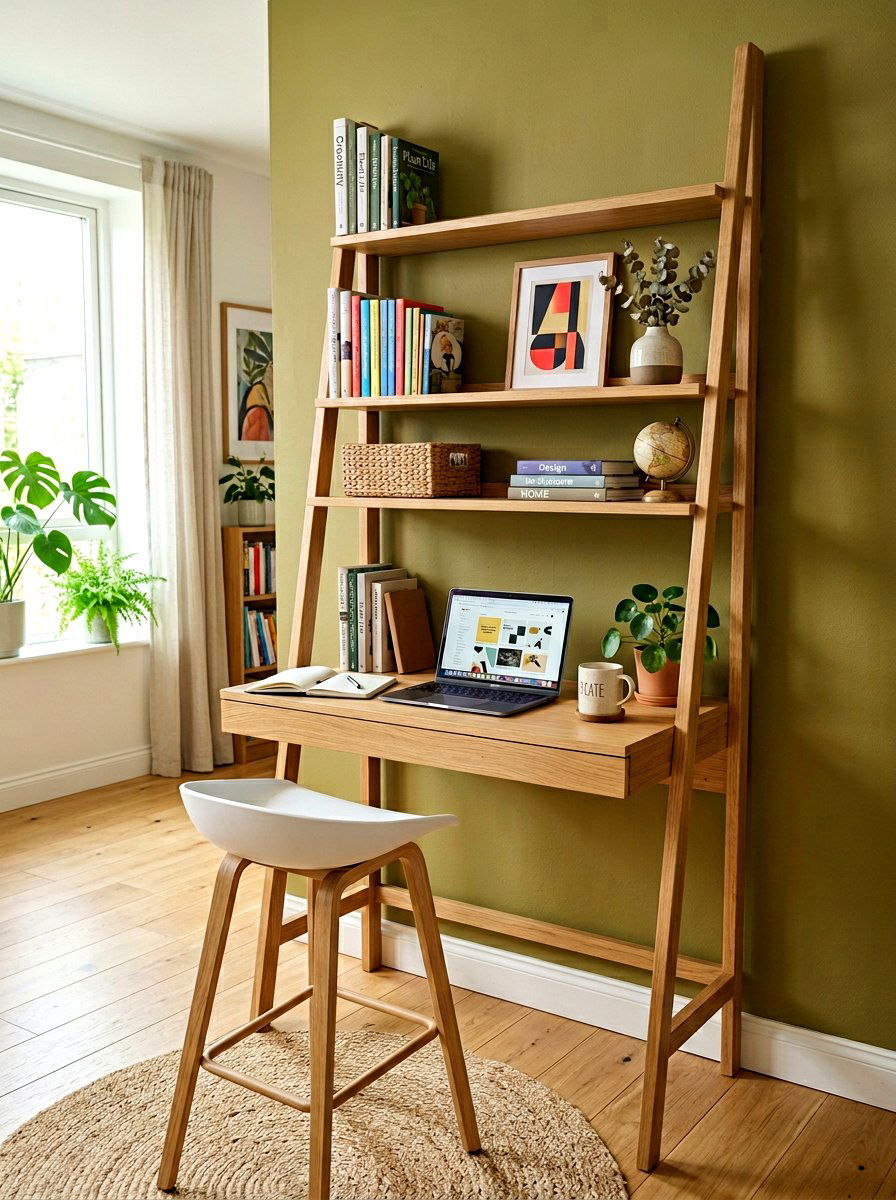
A ladder desk is a stylish and space-saving furniture piece that combines a desktop with multiple upper shelves in a single vertical unit. This design leans against or attaches to the wall, making it a great choice for narrow hallways or small bedrooms where a wide desk wouldn't fit. The tiered shelving provides ample space for books, plants, and decorative items without taking up additional floor area. You can find ladder desks in various styles, from minimalist white to rustic wood and industrial metal. Its slim profile and vertical orientation help draw the eye upward, making the room feel taller and more spacious than it is.
27. Hallway Landing Office
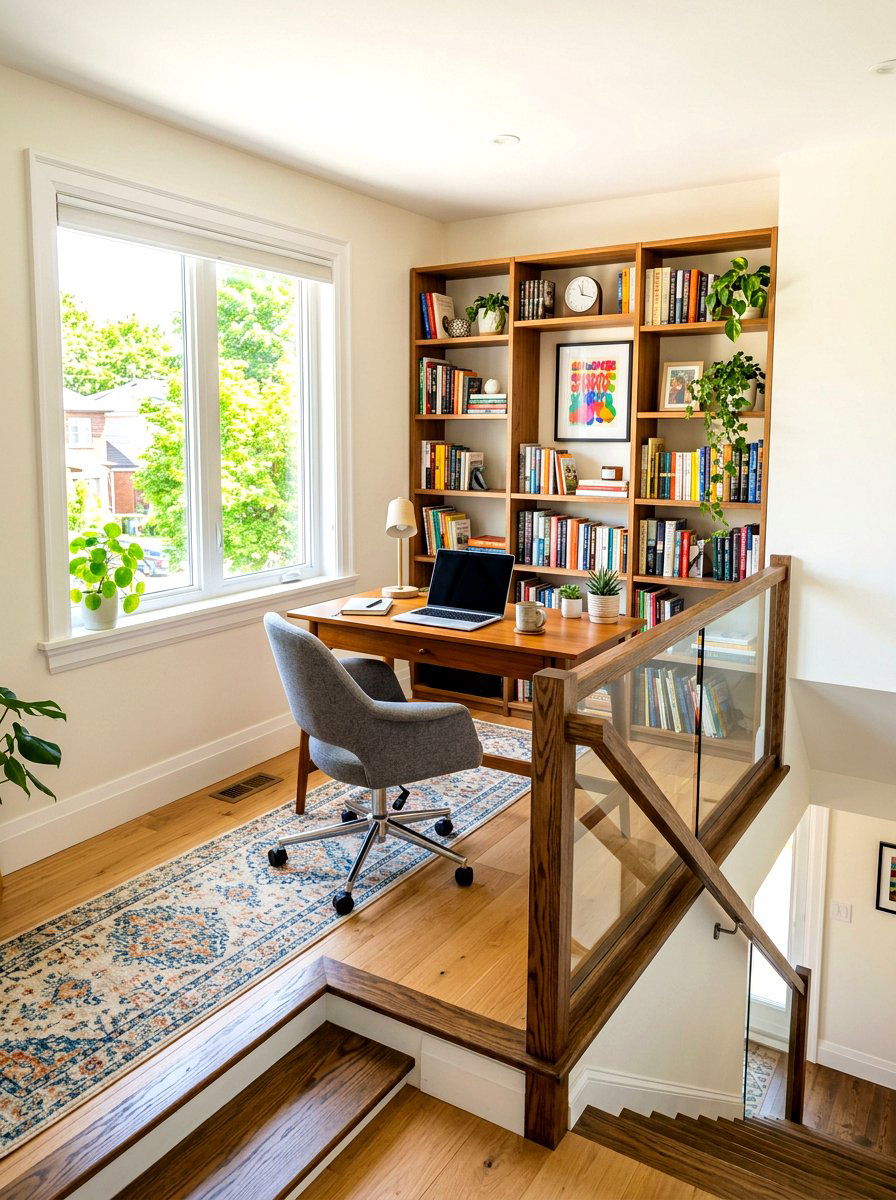
The landing at the top of a staircase is often an overlooked space that can easily accommodate a functional office nook. By placing a small desk and a comfortable chair in this transitional area, you can create a quiet workspace away from the main living zones. Built-in shelving along the wall can provide necessary storage for office supplies and books. Because landings often have access to natural light from nearby windows or skylights, they can be surprisingly pleasant places to work. This use of square footage is a smart way to maximize the utility of your home without needing an extra, dedicated room.
28. Mudroom Desk Nook
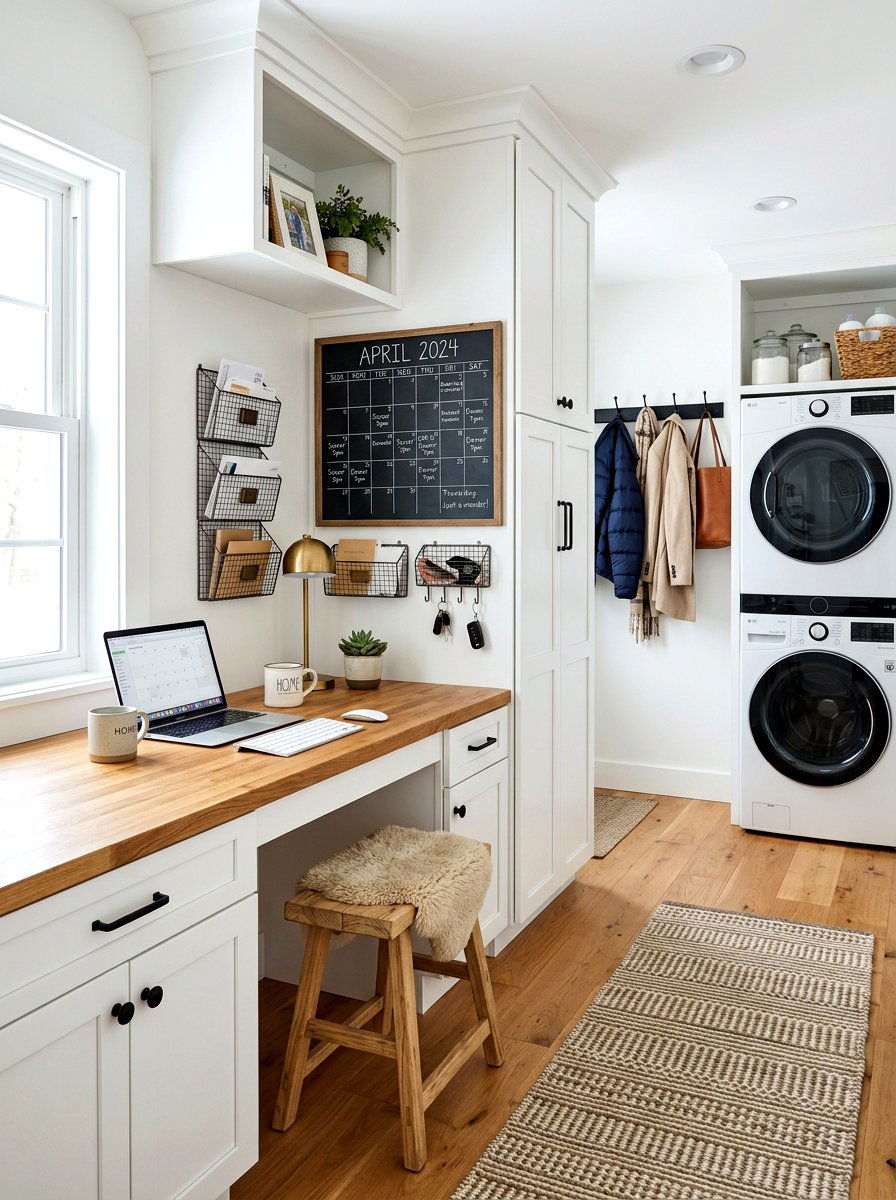
Integrating a small desk into a mudroom or laundry area provides a convenient spot for managing household tasks, sorting mail, and paying bills. This "drop zone" style office nook is perfect for keeping administrative work out of the main living areas of the house. Using durable materials like quartz or wood for the countertop ensures it can handle daily use. Adding cabinetry above and below the desk provides hidden storage for paperwork and cleaning supplies. A comfortable stool can be tucked under the counter when not in use, keeping the walkway clear for the usual flow of laundry and entryway foot traffic.
29. Ergonomic Small Workspace
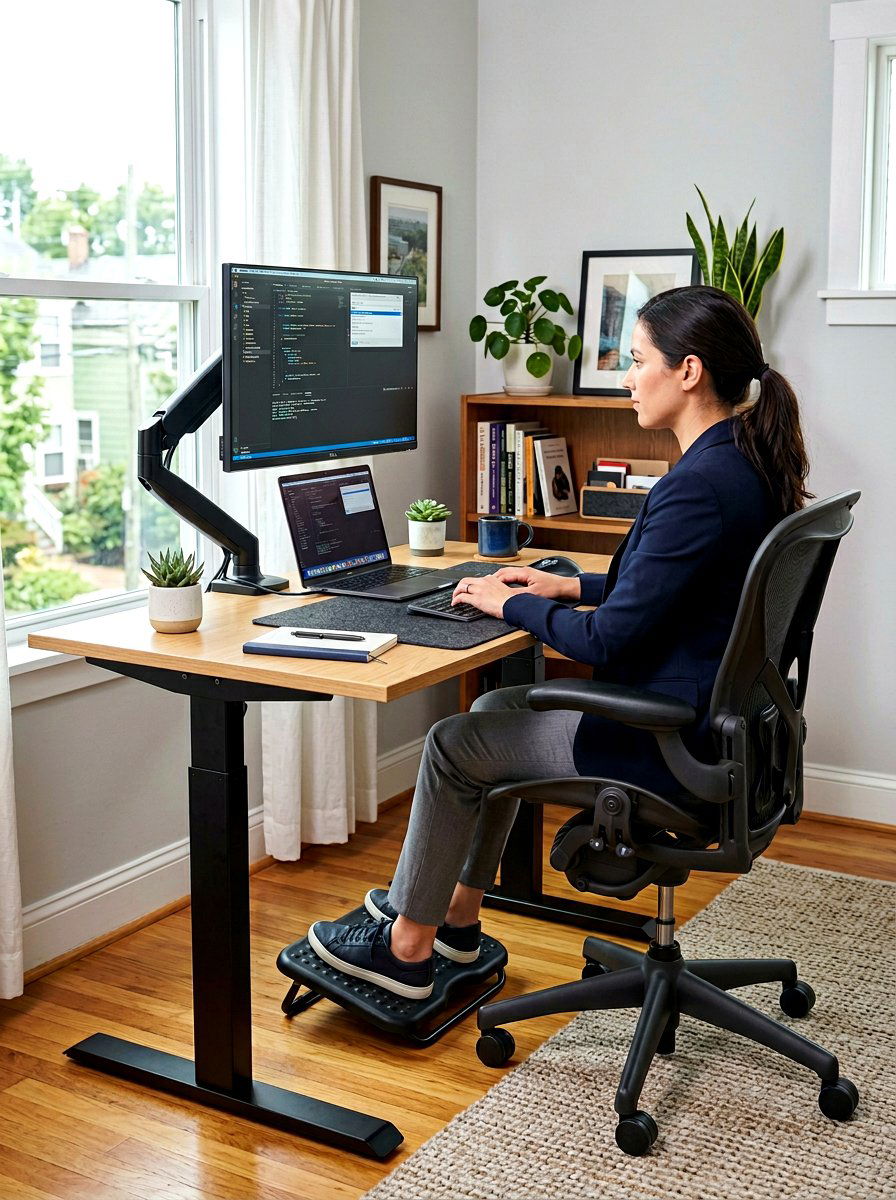
In a small office nook, focusing on ergonomics is crucial to ensure long-term comfort and productivity without the need for a huge setup. This involves selecting a high-quality adjustable chair that provides proper lumbar support and a desk at the correct height for your arms. Using a monitor arm can free up valuable desktop space while allowing you to position your screen at eye level to prevent neck strain. Adding a small footrest and a wrist pad for your keyboard further enhances the ergonomic benefits. This thoughtful approach ensures that even the most compact workspace is a healthy and sustainable environment for daily professional work.
30. Hidden Armoire Office
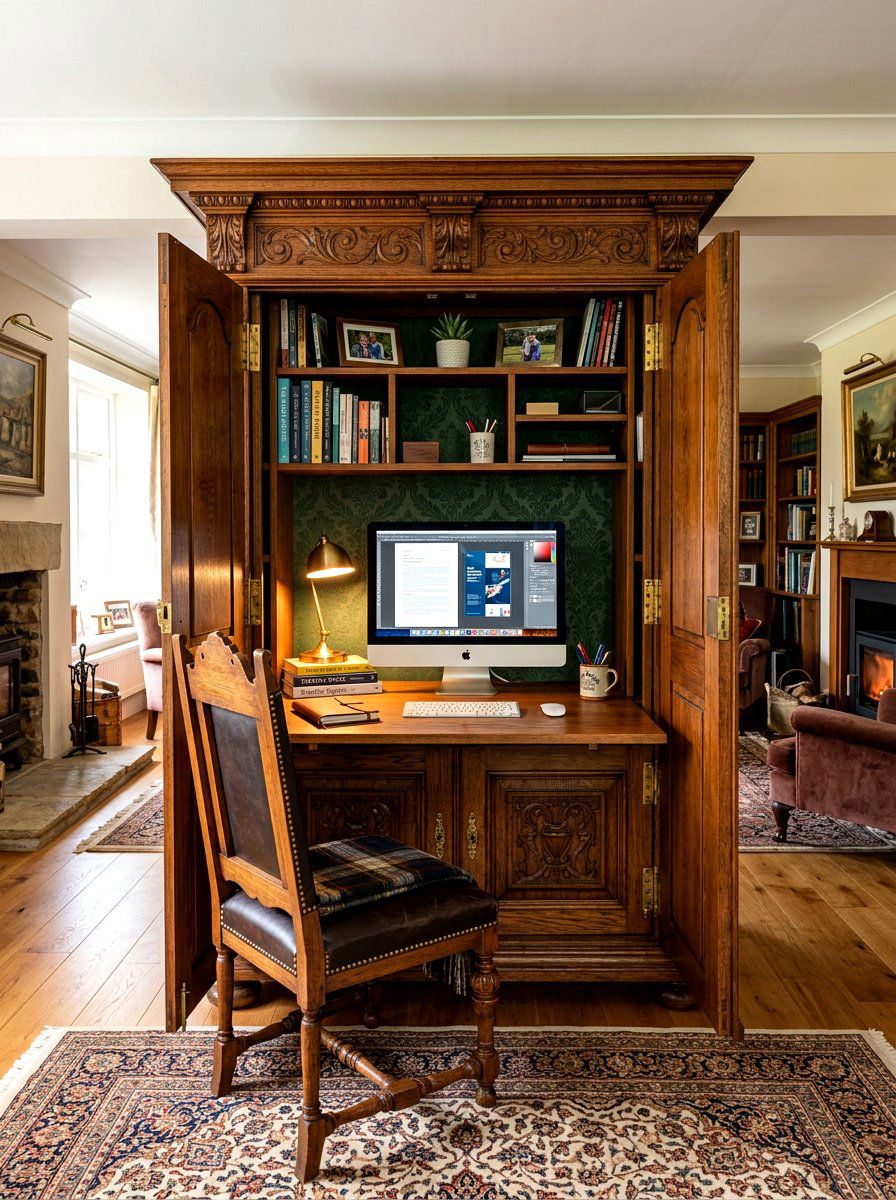
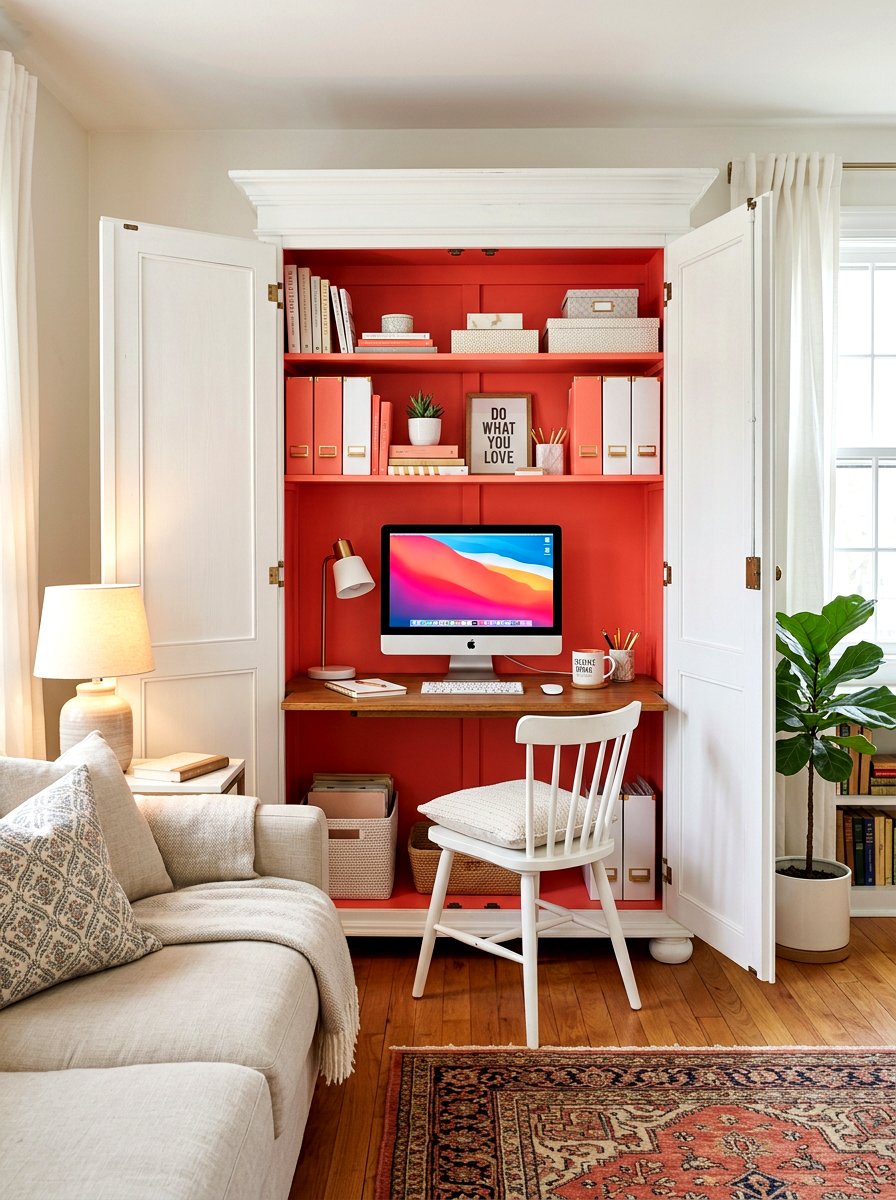
For those who want their office to completely disappear when the workday is over, a hidden armoire office is the ultimate solution. This design involves fitting a desk, shelving, and even a monitor into a large decorative cabinet or armoire. When the doors are open, you have a fully functional workstation with everything you need within reach. When the doors are closed, it looks like a beautiful piece of furniture that blends seamlessly with your room's decor. This is perfect for living rooms or bedrooms where you want to maintain a clean, work-free aesthetic in the evenings while having a professional setup during the day.
Conclusion:
Designing a functional office nook is all about being creative with the space you already have in your home. From transforming a small closet to utilizing the awkward area under a staircase, there are endless possibilities for creating a dedicated workstation. By focusing on smart storage, proper lighting, and a cohesive design style, you can ensure that your small workspace is both productive and beautiful. Whether you prefer a minimalist look or a cozy bohemian vibe, these compact offices prove that you do not need a large room to have a professional environment. Embrace the challenge of small spaces to build your perfect work retreat.

Related posts: