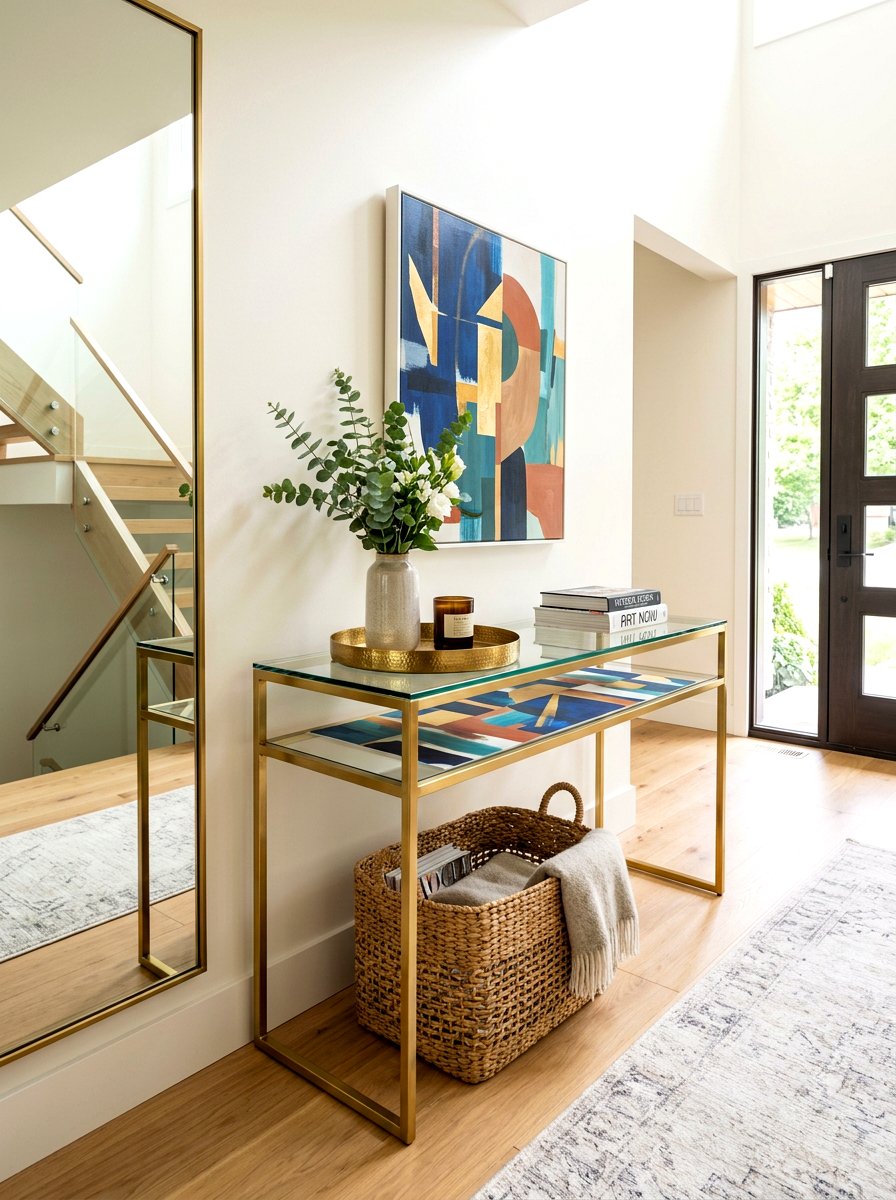
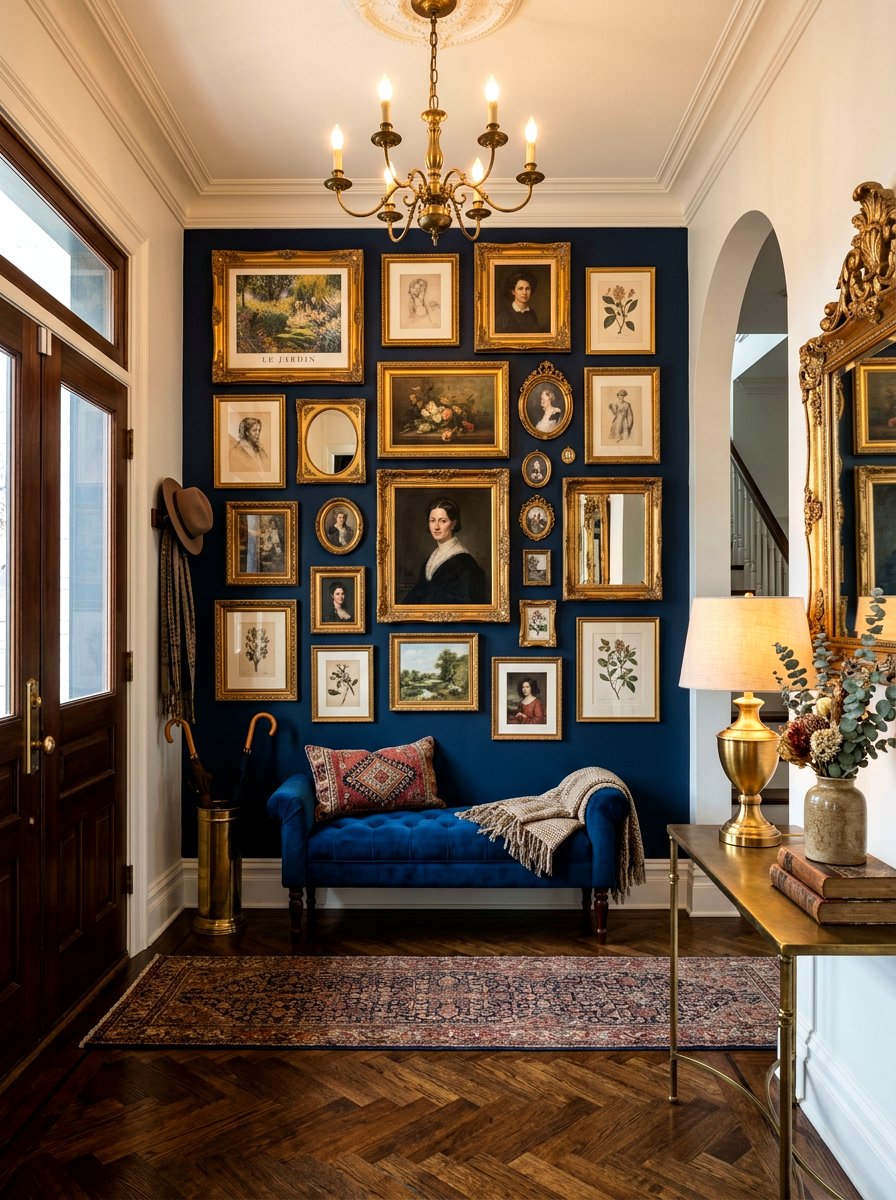
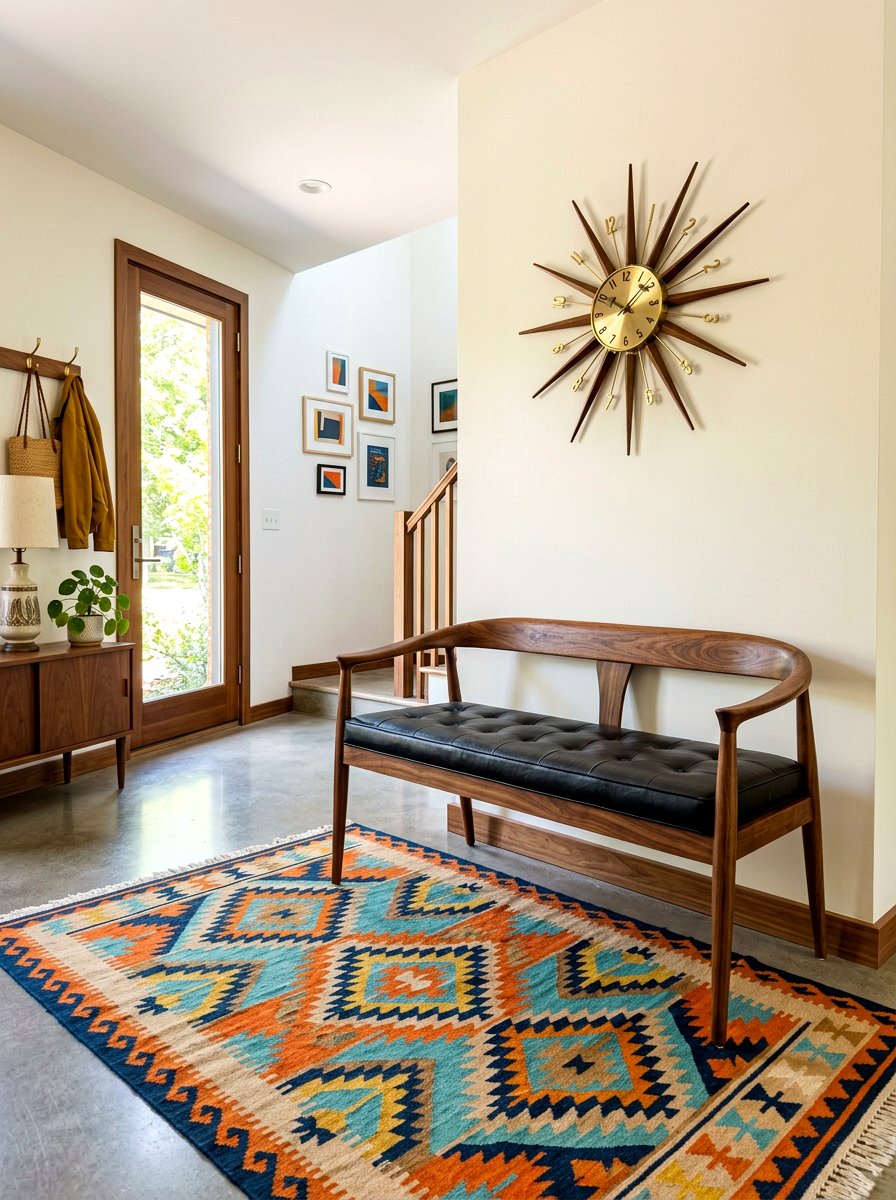
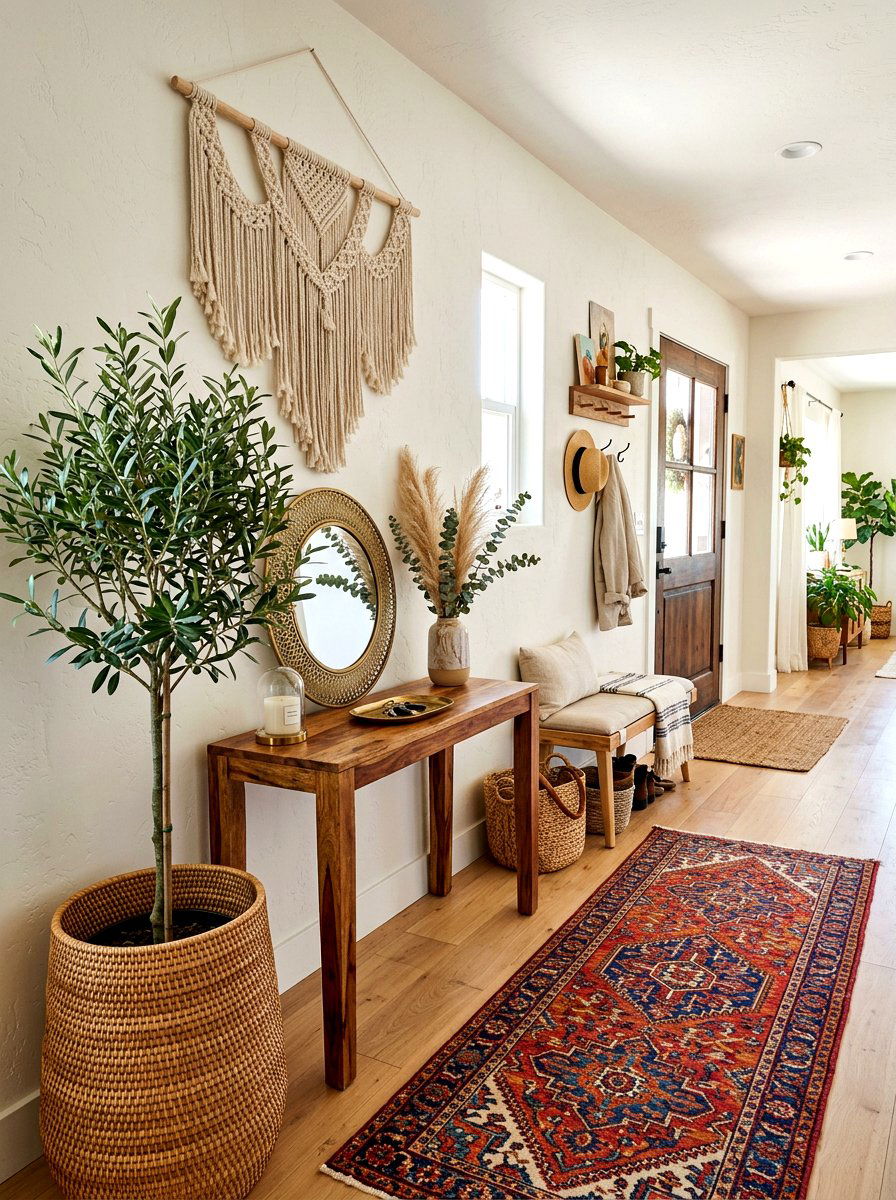
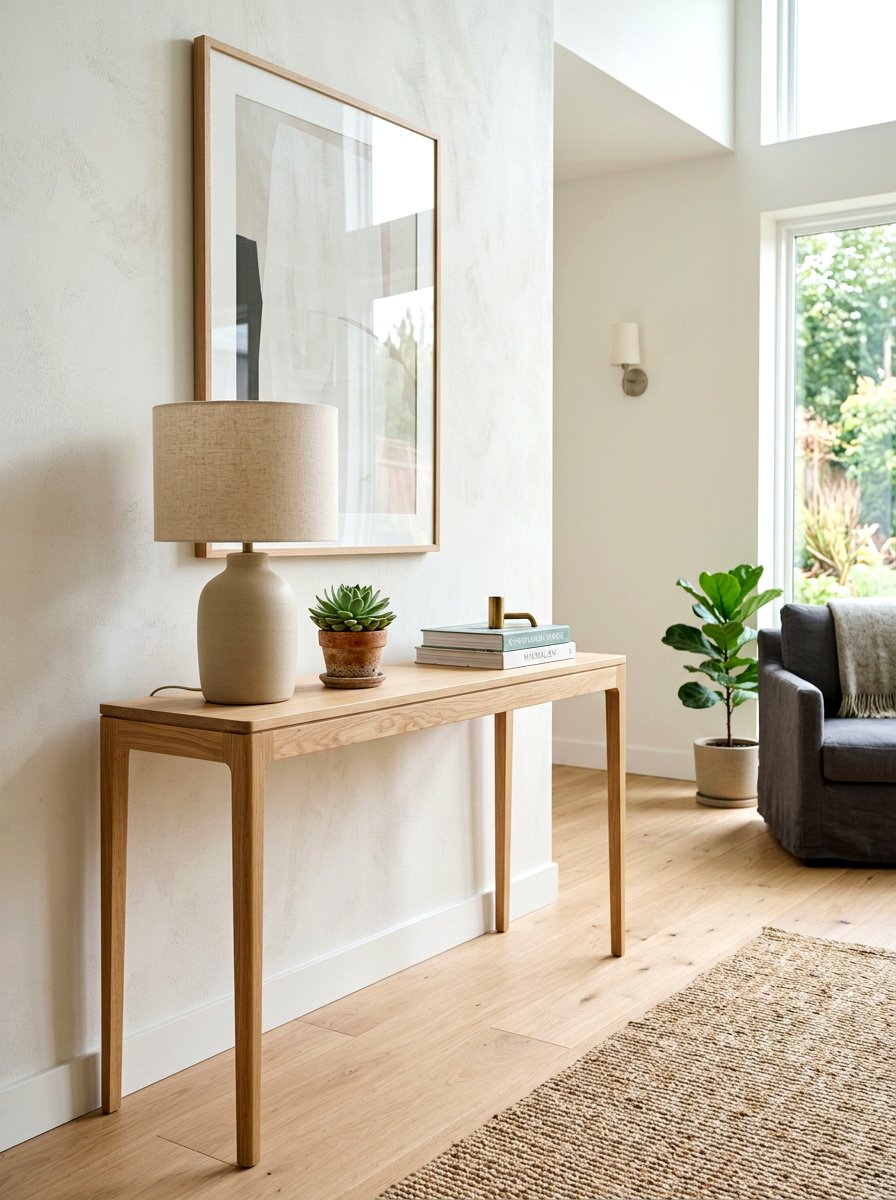
Adding an olive tree to your home entrance immediately creates a sophisticated and welcoming atmosphere that guests will notice the moment they step through your door. These beautiful trees have become a staple in modern interior design because they offer a unique combination of organic texture and timeless Mediterranean elegance. Whether you choose a real or high-quality faux version, the silvery leaves and gnarled branches bring a sense of history and calm to any foyer. From the popular modern farmhouse style to minimalist urban aesthetics, these versatile plants fit into almost any decor scheme. This guide explores thirty creative ways to transform your entryway using olive trees as the main focal point of your design.
1. Tall Potted Olive Tree
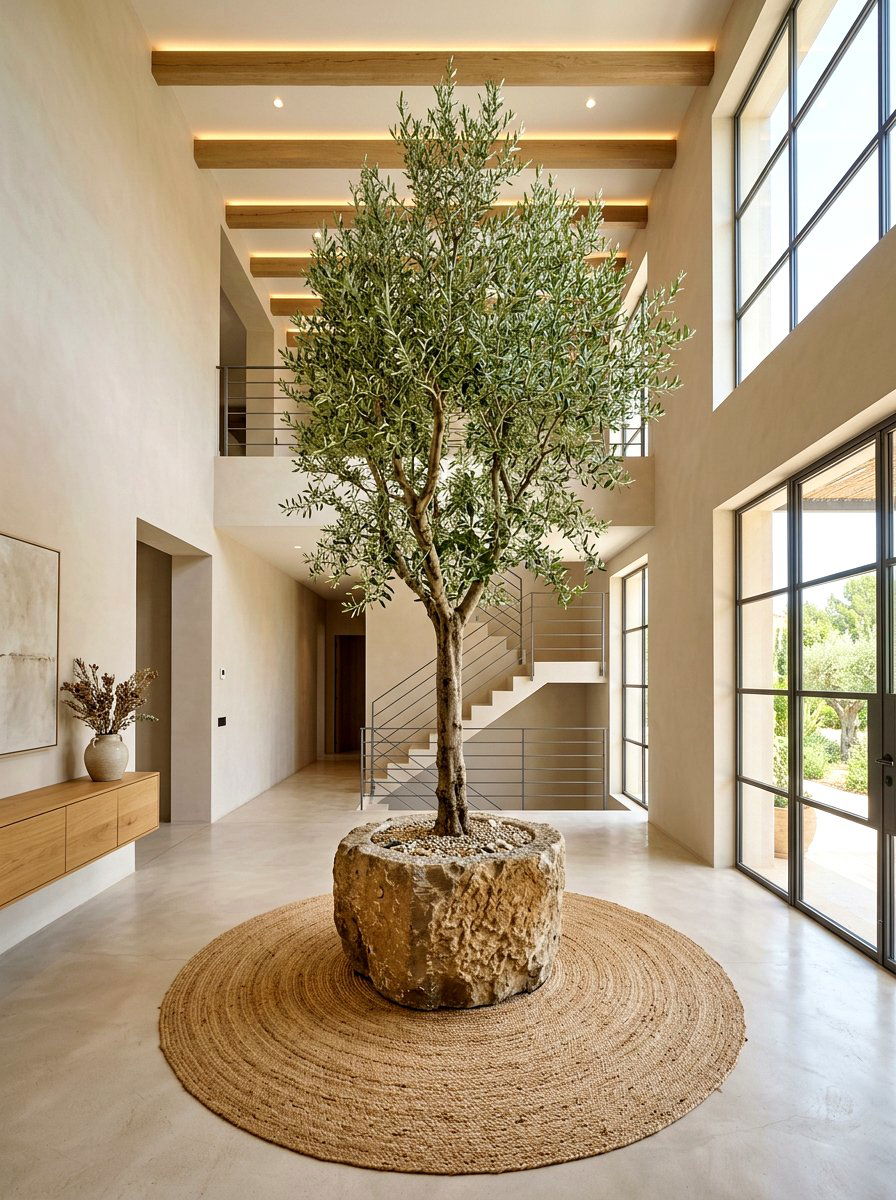
Large-scale greenery can instantly make a standard entryway feel more grand and intentionally designed by drawing the eye upward toward the ceiling. A tall olive tree, reaching six or seven feet, acts as a living sculpture that fills vertical space without making the room feel cluttered or cramped. To achieve this look, place the tree in a substantial, heavy-duty planter that provides enough stability for the height of the branches. This design works best when the tree is placed in a prominent corner where its delicate, airy leaves can catch the light. The height provides a perfect contrast to lower furniture pieces like shoe benches or small rugs.
2. Modern Farmhouse Entryway Olive Tree
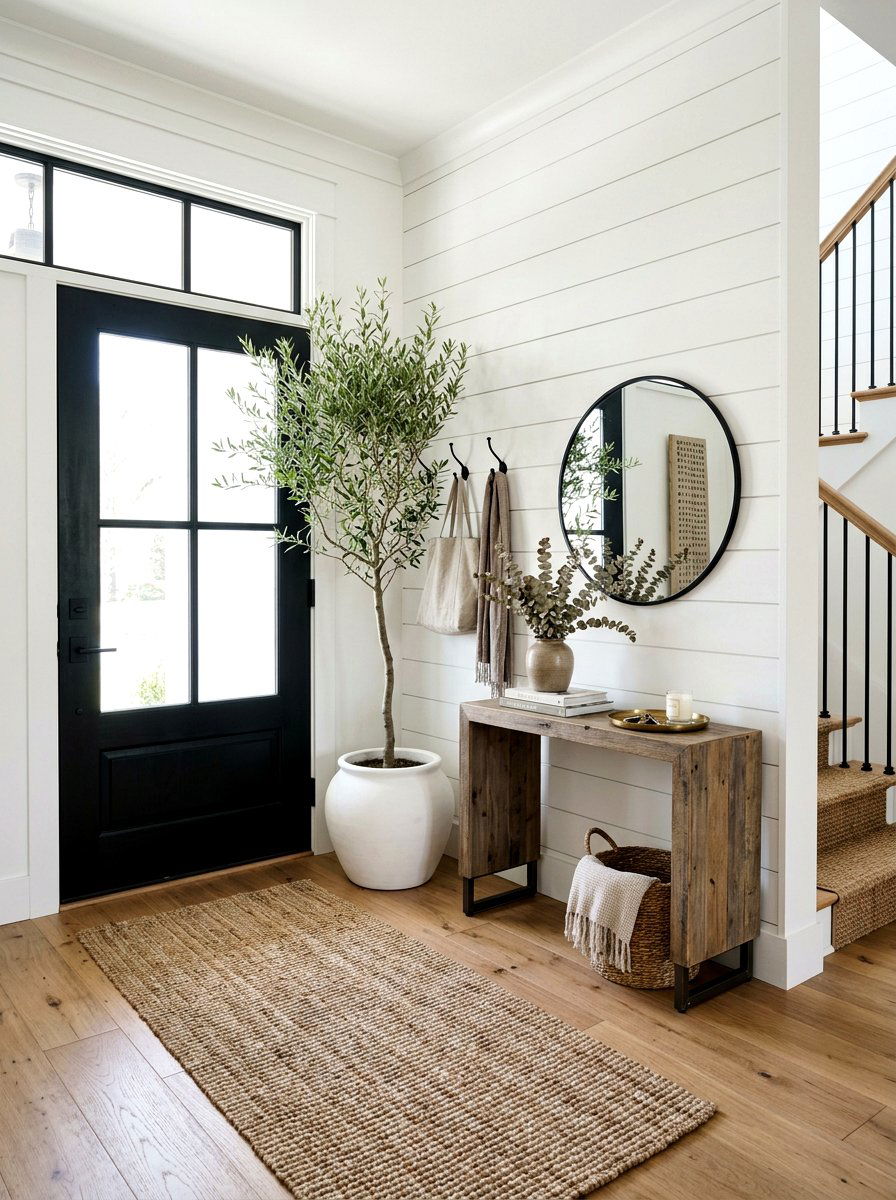
Creating a modern farmhouse look requires a careful balance of rustic textures and clean, contemporary lines to ensure the space feels both cozy and updated. An olive tree is the perfect addition to this style because its muted green tones complement neutral color palettes and natural wood finishes beautifully. Try placing your tree next to a reclaimed wood console table decorated with white ceramic vases and matte black hardware. The soft foliage of the tree softens the hard angles of shiplap walls or industrial light fixtures. This combination creates a high-contrast yet harmonious first impression that feels authentically curated and warm for every visitor.
3. Woven Basket Olive Tree
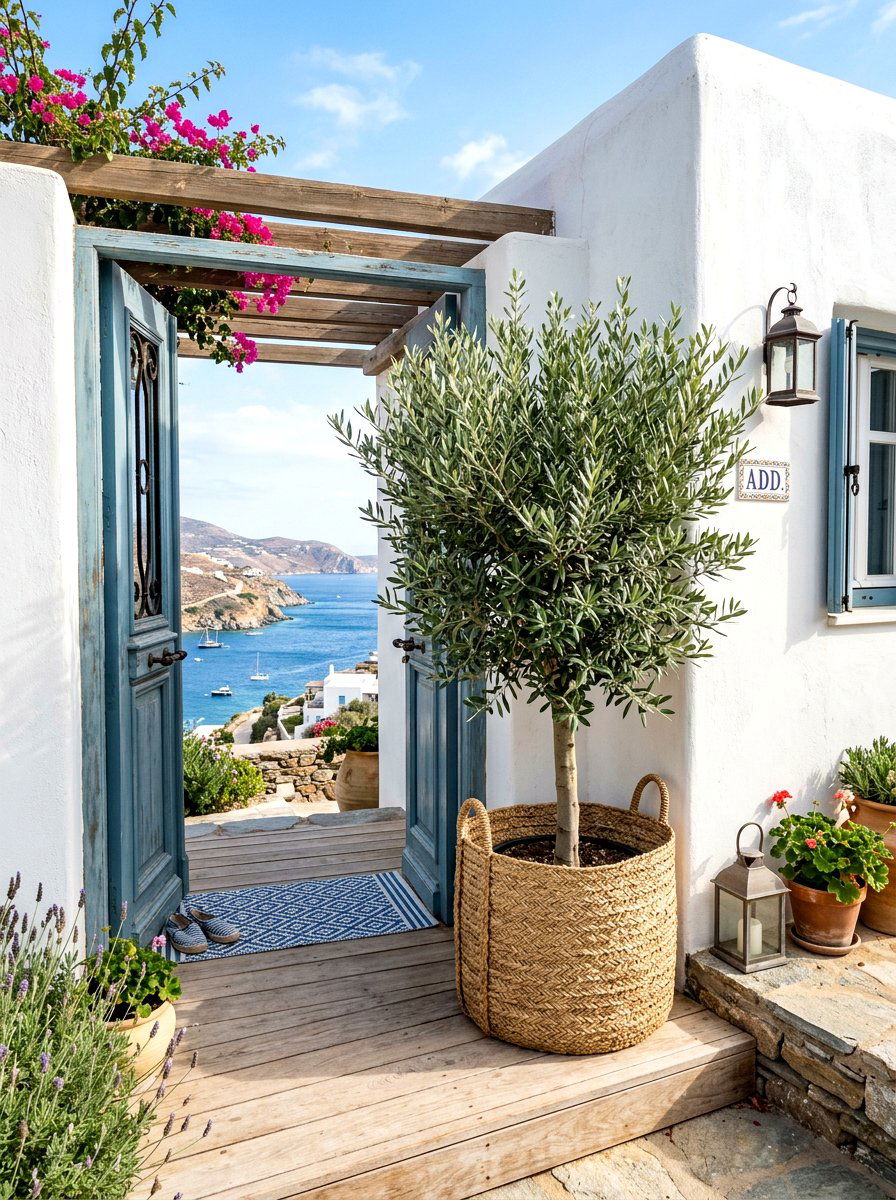
Using a large woven seagrass or rattan basket as a planter is an excellent way to introduce warmth and organic texture into a foyer. This design approach is particularly effective in homes that feature coastal, bohemian, or eclectic decor where natural materials are the primary focus. The basket hides the utilitarian plastic pot and adds a layer of artisanal charm that perfectly matches the Mediterranean origins of the olive tree. To complete the look, place the basket on a textured jute rug and pair it with a simple wooden stool or a stack of vintage books. It creates a relaxed, lived-in feel that is very inviting.
4. Mediterranean Foyer Olive Tree
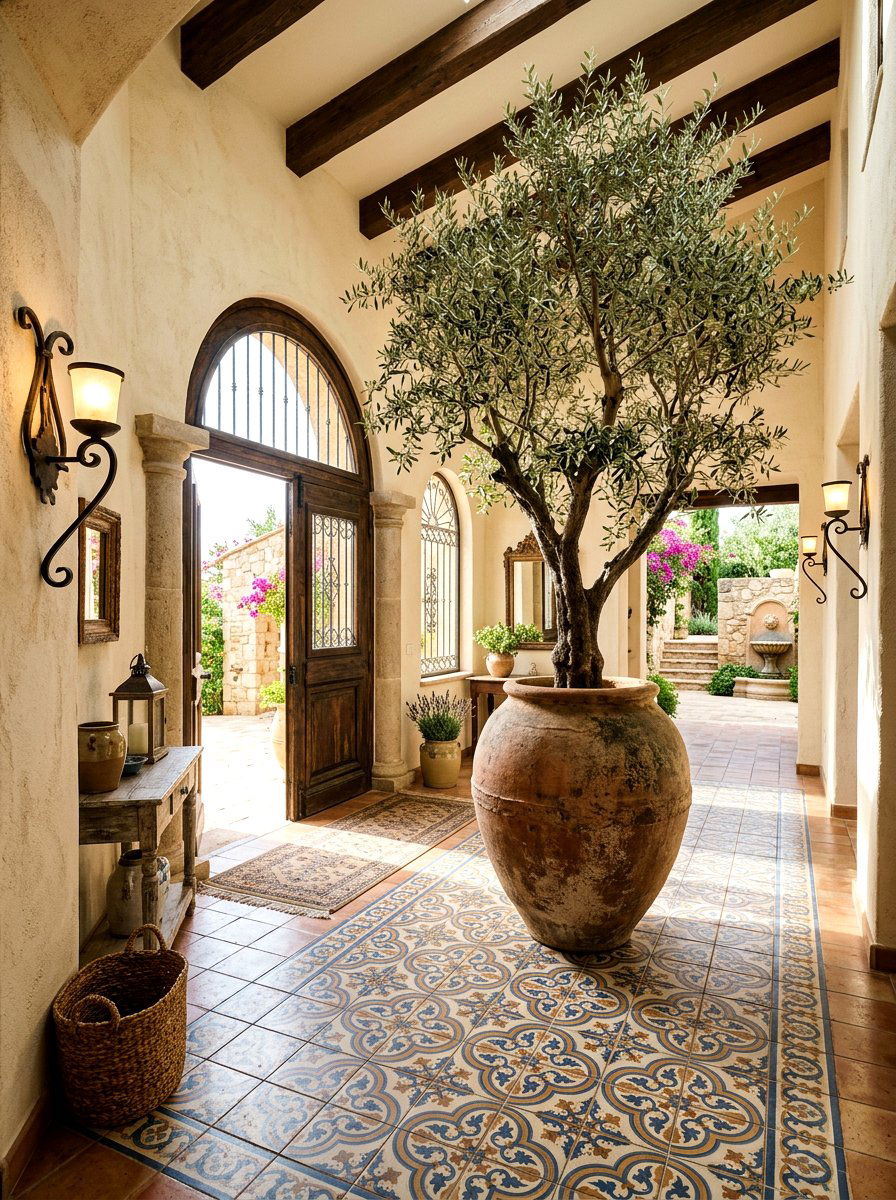
Embracing the traditional roots of the olive tree allows you to create a Mediterranean-inspired entryway that feels like a sun-drenched European villa. Focus on using materials like aged terracotta, wrought iron, and plastered walls to set a historic and earthy tone for the entire space. A mature olive tree with a thick, textured trunk serves as the primary focal point, especially when placed in a large clay urn. Enhance the theme with a patterned tile floor and a rustic arched mirror to reflect the greenery. This design style emphasizes timeless beauty and a connection to nature that makes your home feel like a peaceful sanctuary.
5. Small Foyer Olive Tree
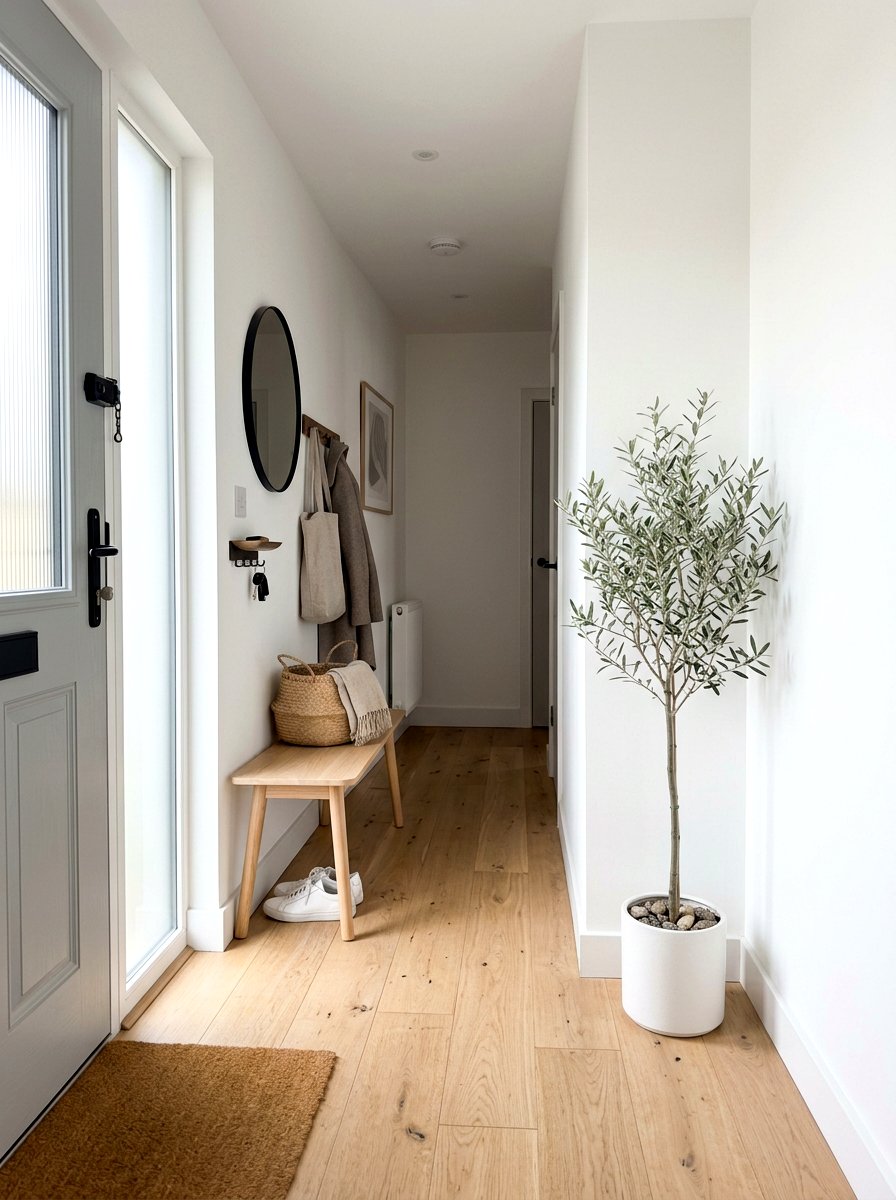
Even if your entryway is limited in square footage, you can still enjoy the beauty of an olive tree by choosing a slender variety. A narrow, upright tree can fit perfectly into a small corner or beside a slim doorway without obstructing the natural flow of foot traffic. Look for varieties with thin trunks and sparse foliage to keep the space feeling open and airy rather than dense and heavy. Placing the tree on a small decorative pedestal can also help elevate the plant, making it a prominent feature without taking up much floor space. It adds life to a tiny area effortlessly.
6. Minimalist Entryway Olive Tree
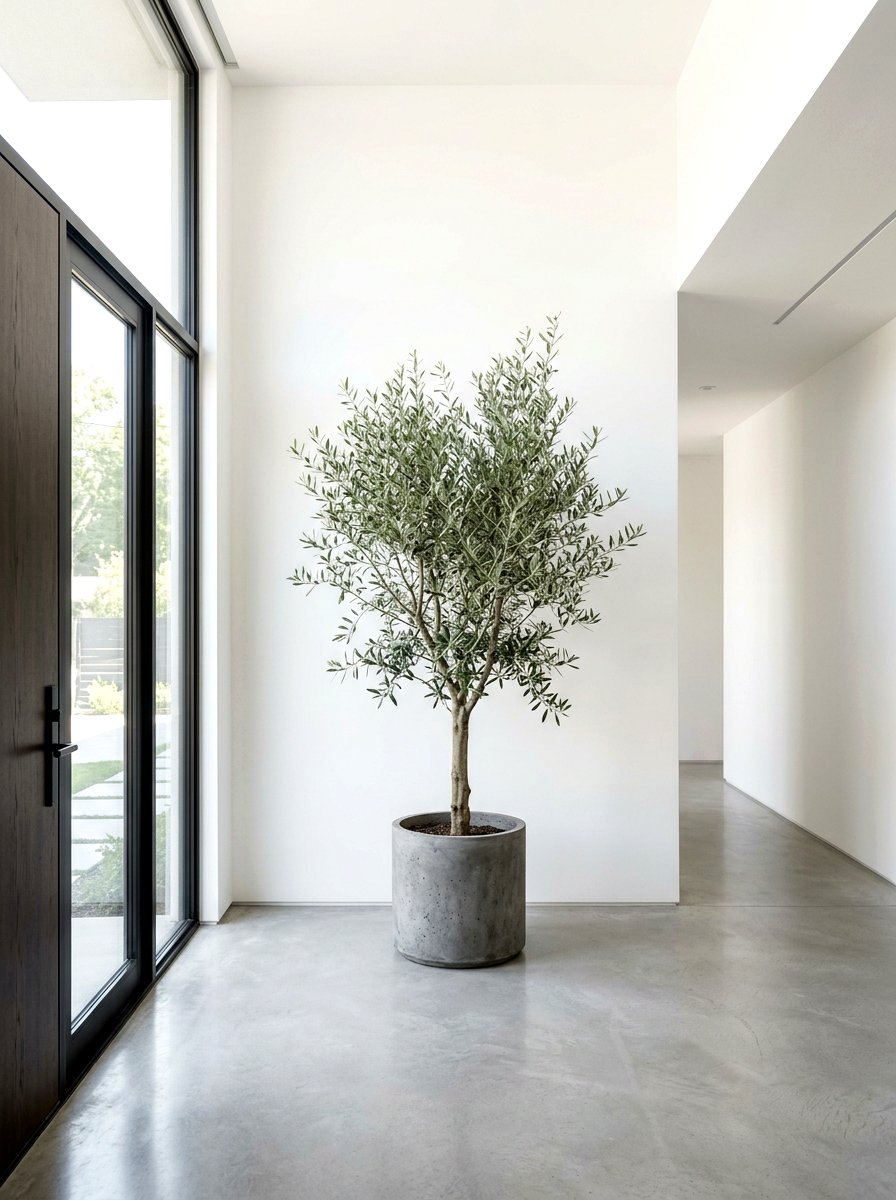
Minimalism is all about intentionality and choosing a few high-quality pieces that speak for themselves without the need for excess ornamentation or bright colors. A single, well-shaped olive tree in a simple concrete or matte white cylindrical planter perfectly embodies this "less is more" design philosophy. Position the tree against a plain white wall to allow its architectural silhouette and delicate leaves to take center stage as the only decor. This clean look works exceptionally well in modern apartments or homes with open floor plans. The result is a serene, clutter-free entrance that feels incredibly fresh, modern, and high-end for every guest.
7. Terracotta Pot Olive Tree
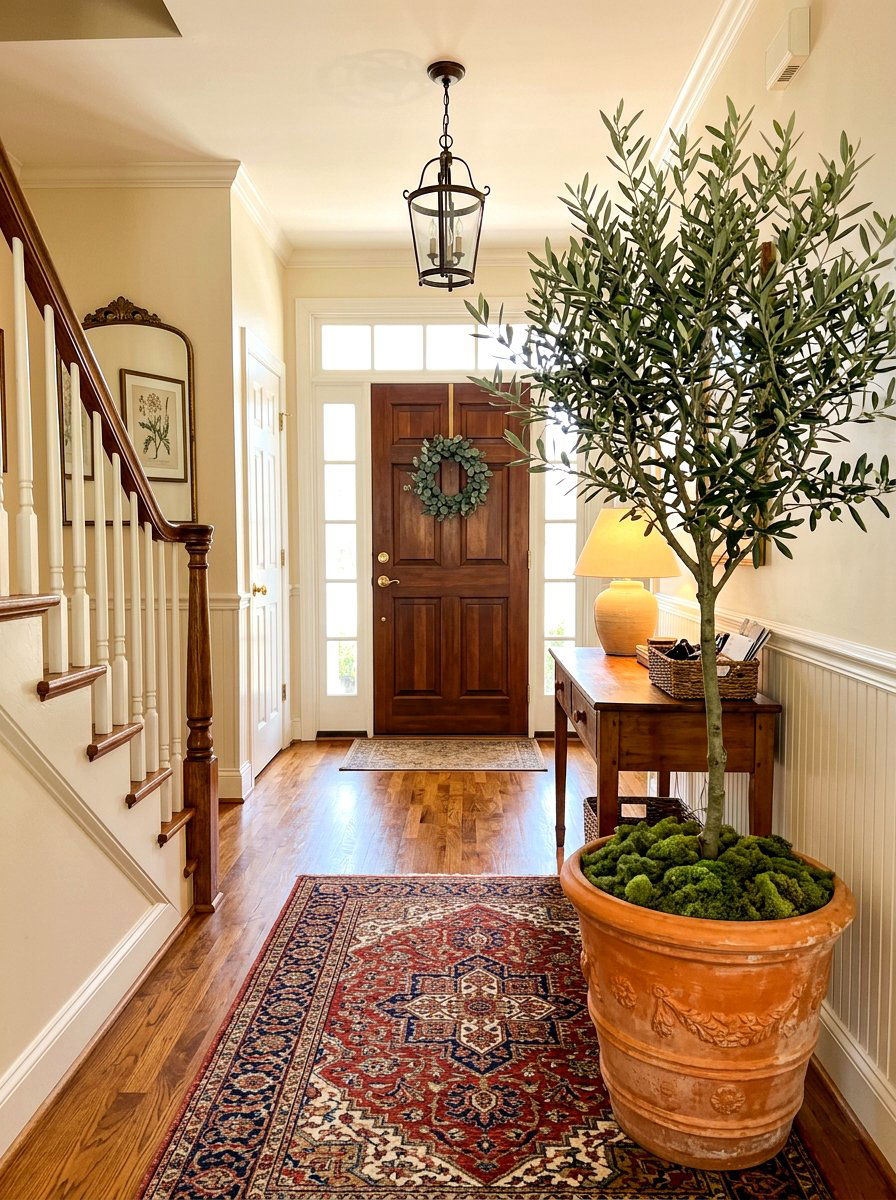
There is something deeply classic and comforting about the combination of silver-green olive leaves and the warm, orange-toned hues of a traditional terracotta pot. This look works across many design styles, from rustic ranch homes to contemporary suburban spaces, because it feels grounded and completely natural. You can choose a weathered, vintage-style pot for a more antique feel or a clean-lined modern terracotta planter for a sharper look. Surround the base of the tree with some preserved moss or small river stones to finish the presentation. The earthy tones of the clay provide a beautiful contrast that makes the foliage pop visually.
8. Console Table Olive Tree
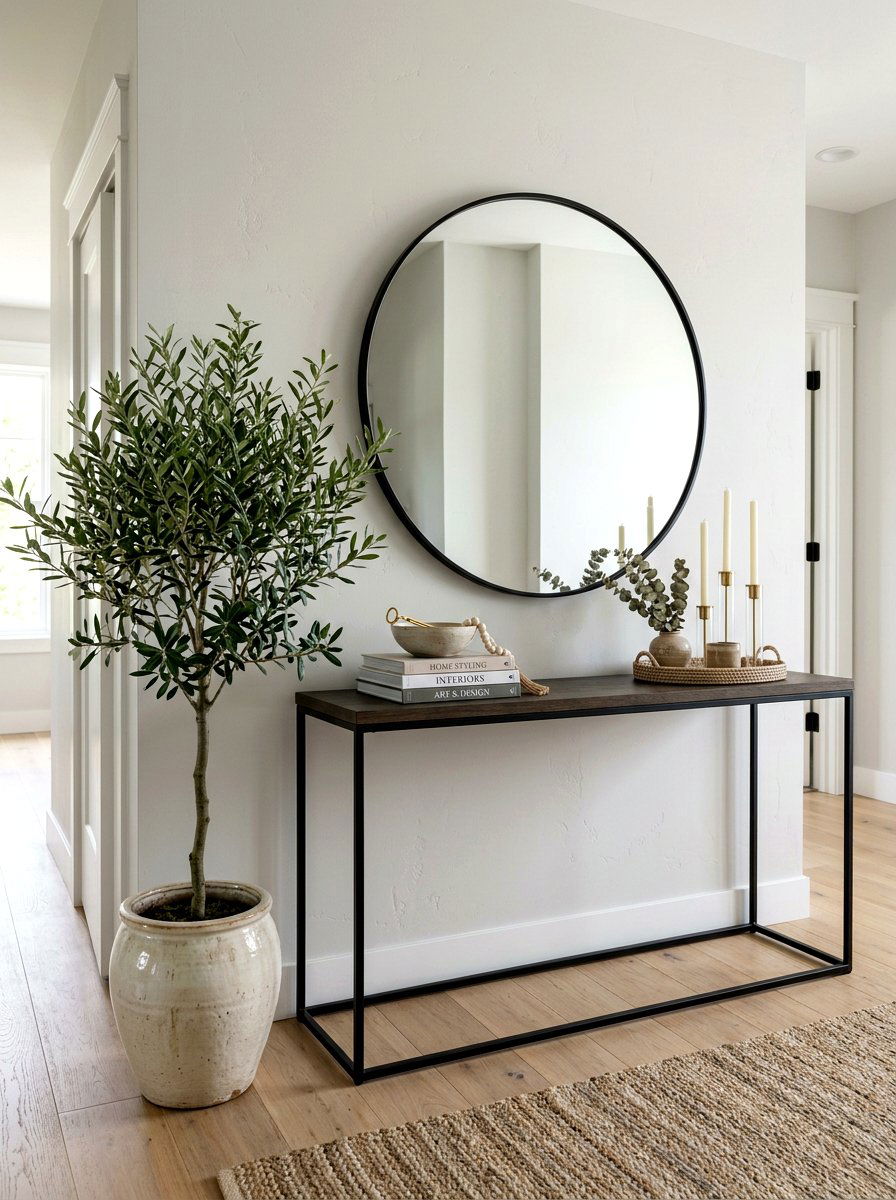
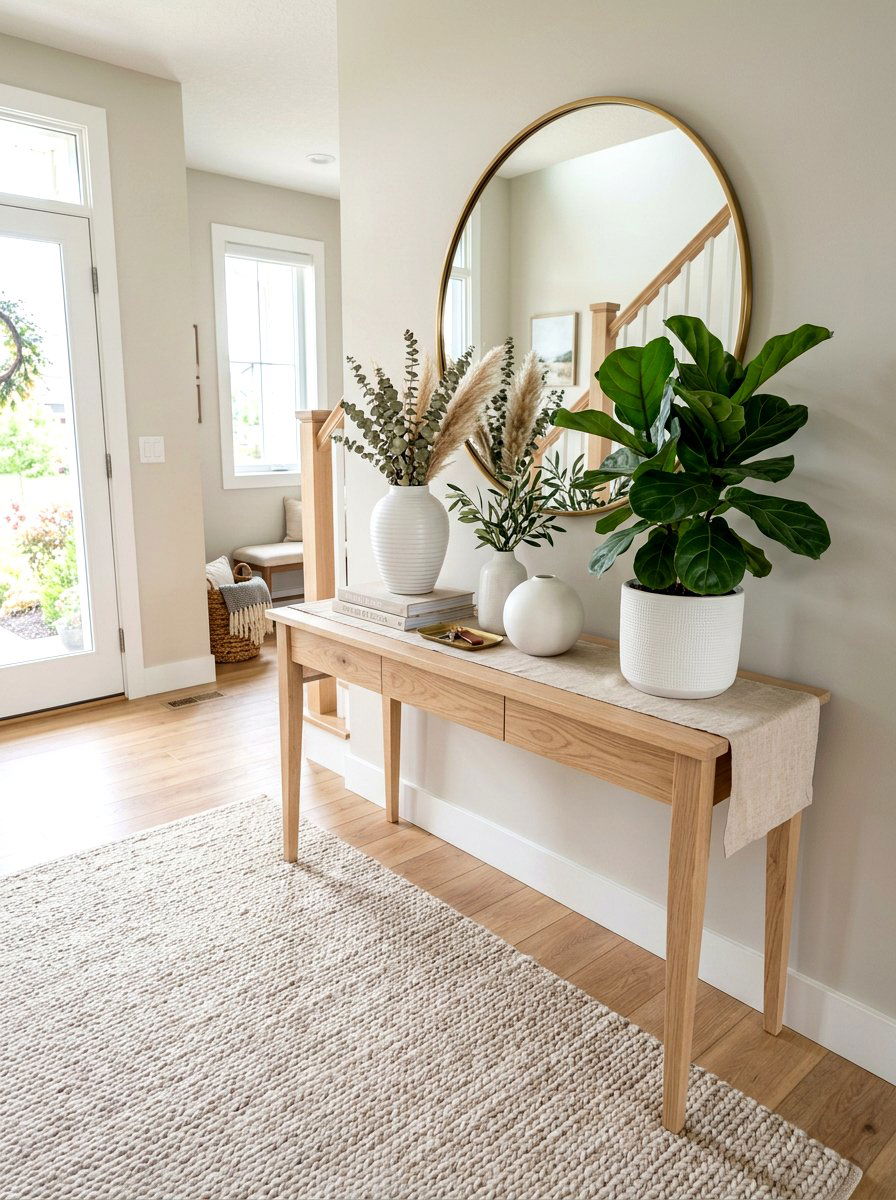
A popular way to style an olive tree is to position it directly next to a long console table to create a balanced vignette. The height of the tree provides a vertical element that complements the horizontal lines of the table, creating a professional and polished look. You can further enhance this setup by hanging a large round mirror above the table and placing small decorative objects like candles. The branches of the olive tree often drape slightly over the edge of the table, which helps integrate the plant into the furniture arrangement. This creates a cohesive and well-thought-out design that feels very sophisticated.
9. Double Olive Tree Entryway
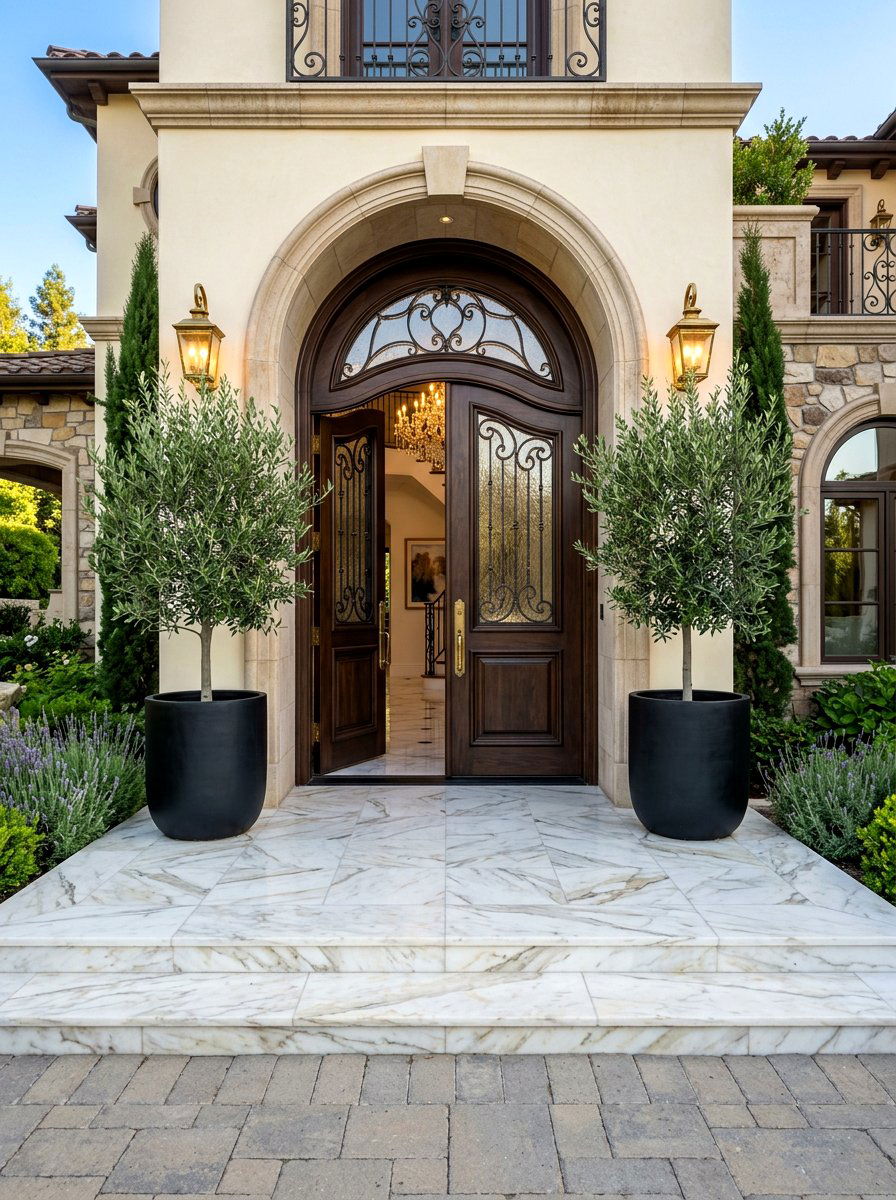
If you have a wide hallway or a grand double front door, placing two identical olive trees on either side creates a striking sense of symmetry. This formal arrangement mimics the look of high-end hotel lobbies or luxury estates, giving your home an immediate sense of prestige and architectural balance. Ensure both trees are roughly the same height and are planted in matching containers to maintain the visual harmony of the space. This design choice anchors the entrance and guides the eye toward the center of the home. It is a bold statement that feels both classic and incredibly well-curated for visitors.
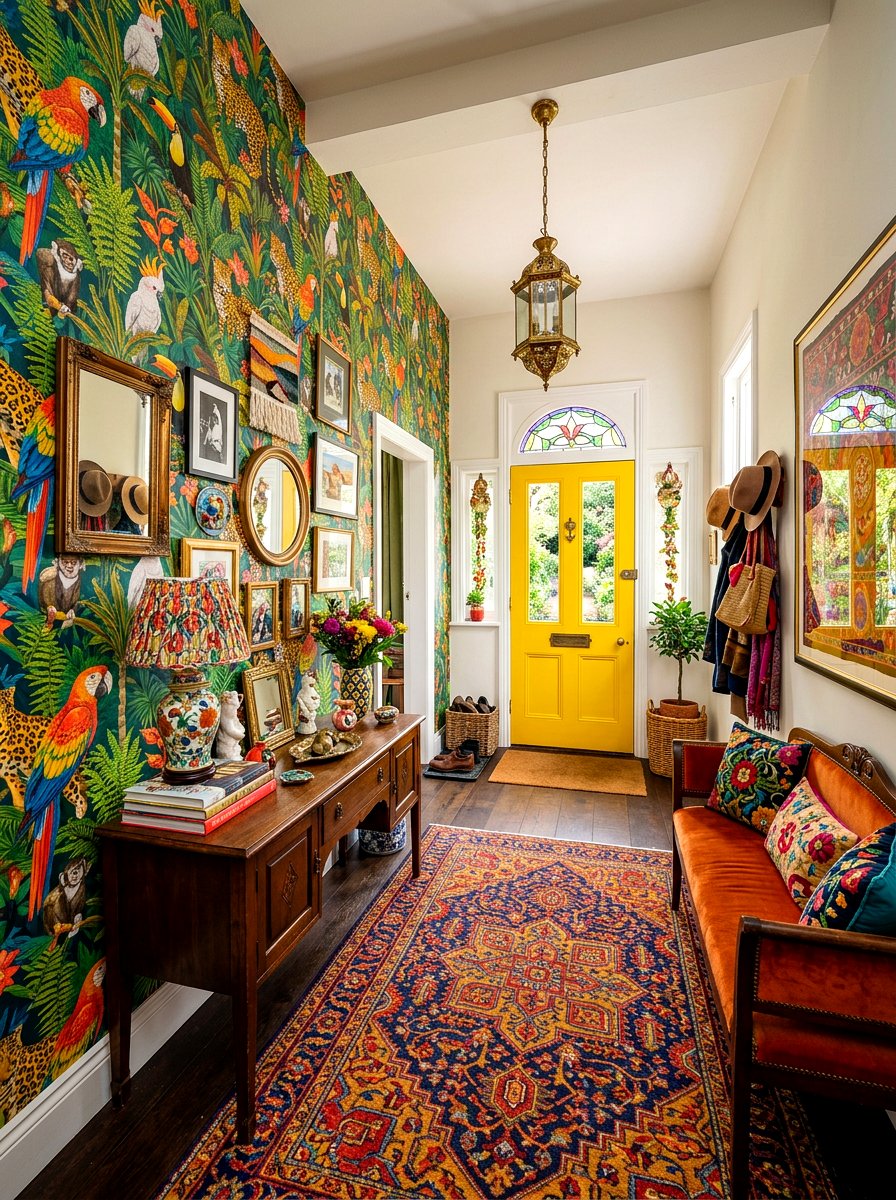
10. Rustic Entryway Olive Tree
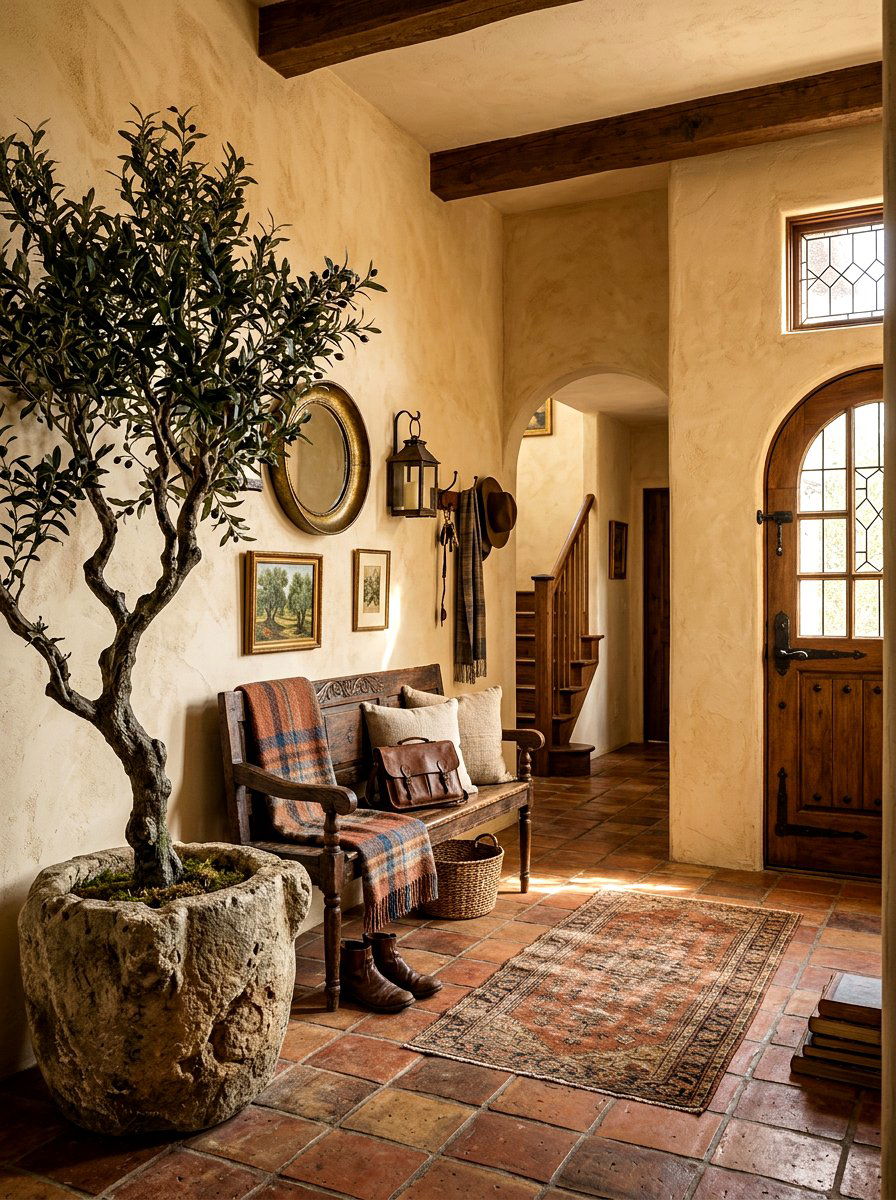
For those who love a cozy and lived-in aesthetic, a rustic-themed entryway featuring a gnarled olive tree is an excellent choice for any home. Focus on using antique finds, such as an old wooden bench or a vintage metal milk crate, to surround the base of the plant. The natural imperfections of a real olive tree, with its twisted branches and varied leaf colors, enhance the rugged charm of rustic decor. Use a distressed stone planter or a reclaimed wooden barrel to house the tree for an authentic feel. This approach creates a warm, nostalgic atmosphere that feels comfortable and full of character.
11. Corner Entryway Olive Tree
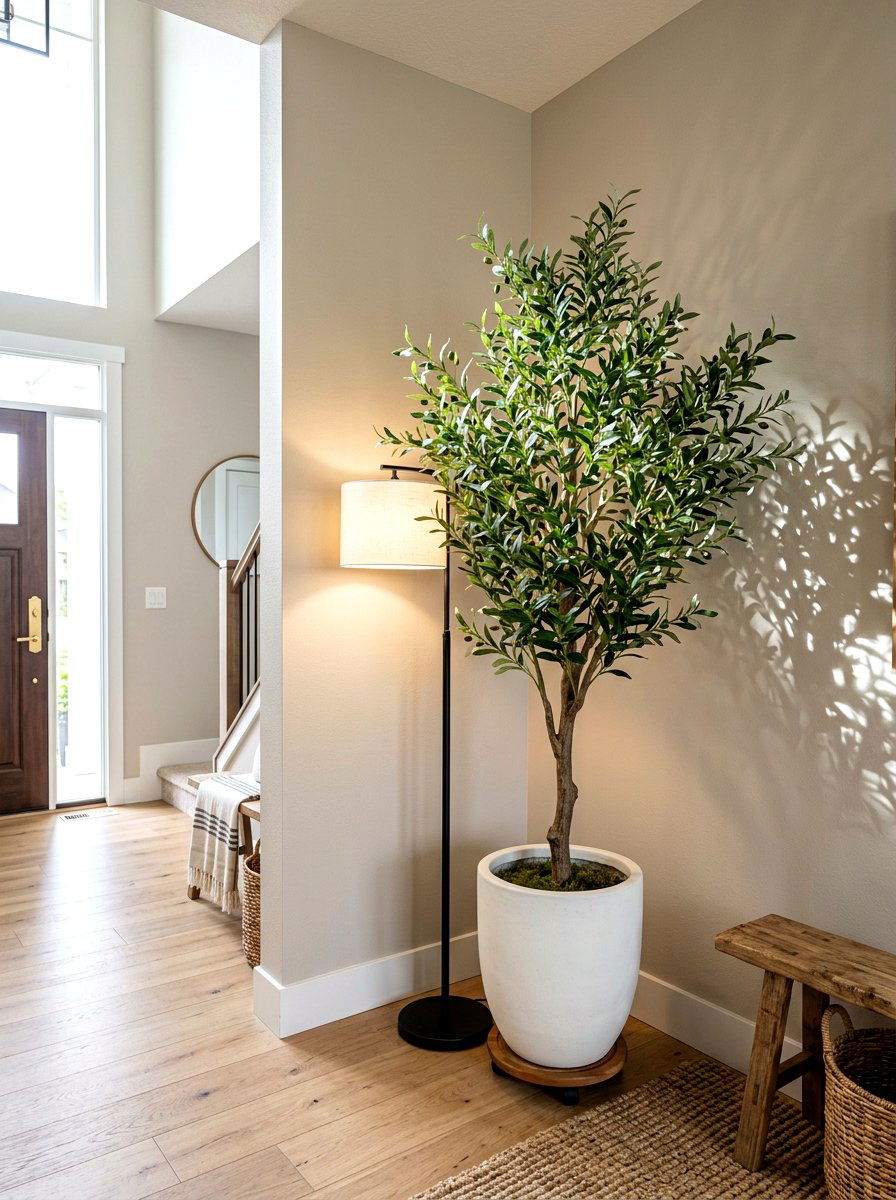
The corner of an entryway is often a dead space that can feel empty or awkward if not addressed with the right furniture or decor. An olive tree is the perfect solution for filling these gaps because its airy canopy occupies space without blocking light or making the area feel small. By tucking a tall tree into a corner, you create a soft transition between walls and add a splash of color to a neutral room. Consider adding a small floor lamp behind the tree to cast beautiful shadows of the leaves onto the walls during the evening. It transforms a boring corner into a feature.
12. Boho Entryway Olive Tree
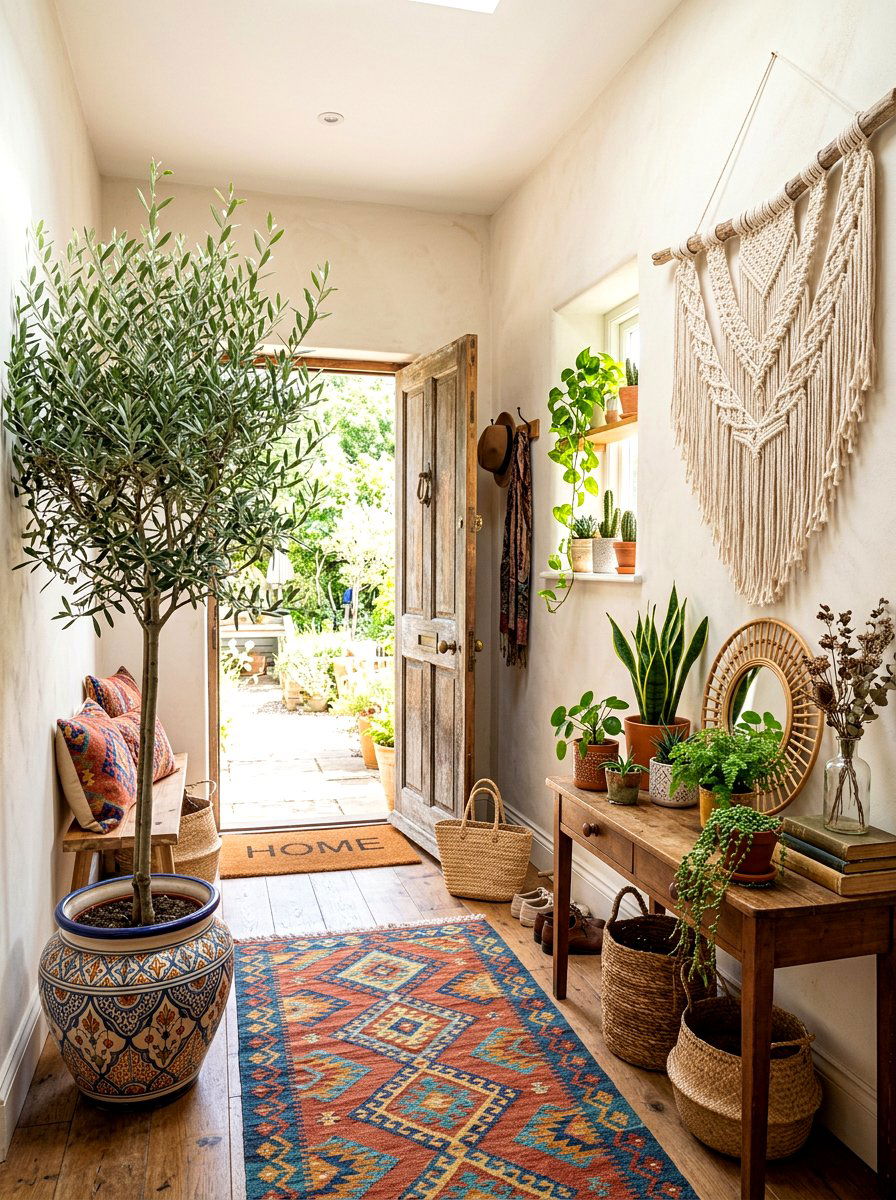
Bohemian style is defined by its use of natural materials, global patterns, and plenty of greenery to create a relaxed and creative environment. An olive tree fits right into this aesthetic when paired with colorful kilim rugs, macramé wall hangings, and various other potted indoor plants. Instead of a traditional planter, you might use a hand-painted ceramic pot or a basket with colorful tassels to hold your tree. The silver tones of the olive leaves provide a nice neutral base that allows other vibrant boho colors to shine. This style is all about effortless beauty and a love for the natural world.
13. Modern Entryway Olive Tree
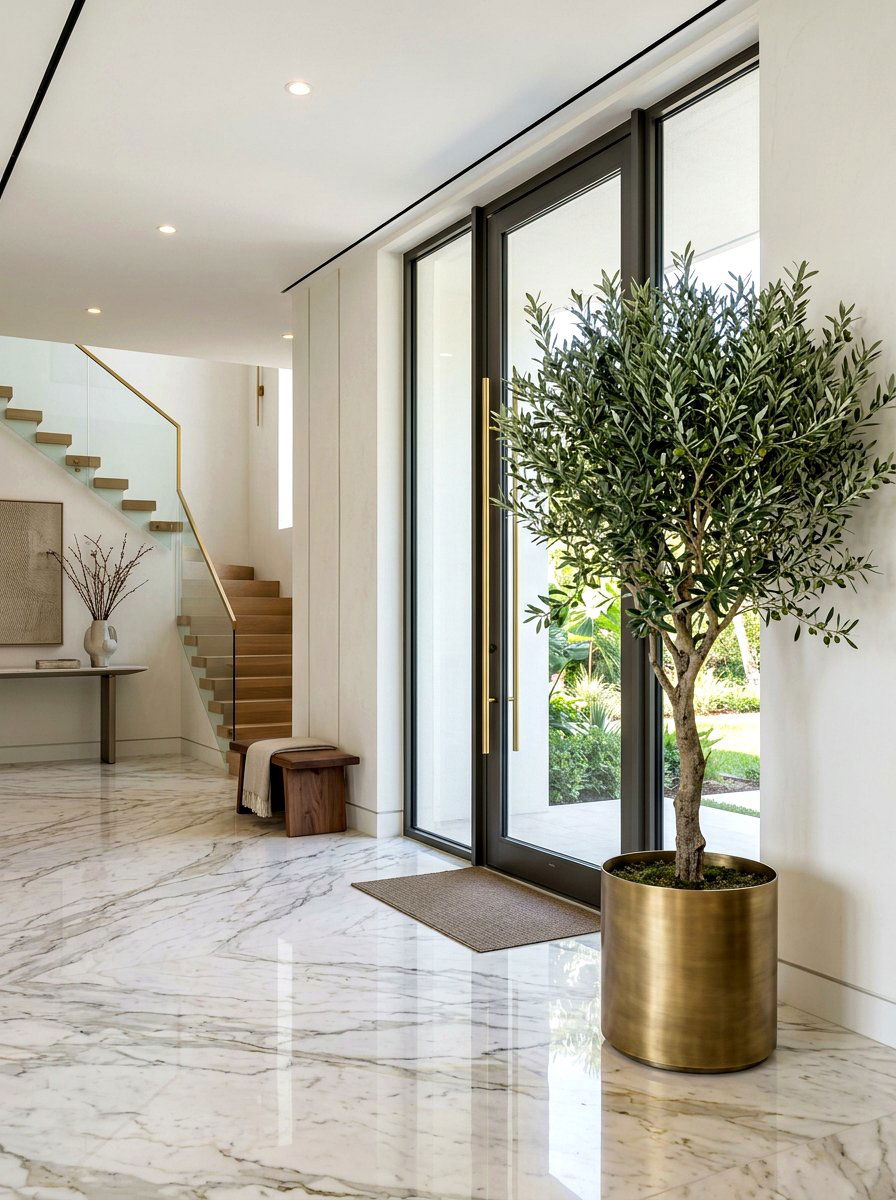
Contemporary entryways often feature sleek materials like polished marble, glass, and metal, which can sometimes feel a bit cold or sterile without some greenery. Integrating a tall, manicured olive tree adds a necessary organic element that softens the hard surfaces while still maintaining a very sharp aesthetic. Choose a planter with a metallic finish, such as brushed brass or matte black steel, to tie the plant into the modern architecture. Keep the surrounding area uncluttered to ensure the tree remains the focal point of the design. This creates a sophisticated and high-contrast look that feels very current and expertly styled.
14. Staircase Landing Olive Tree
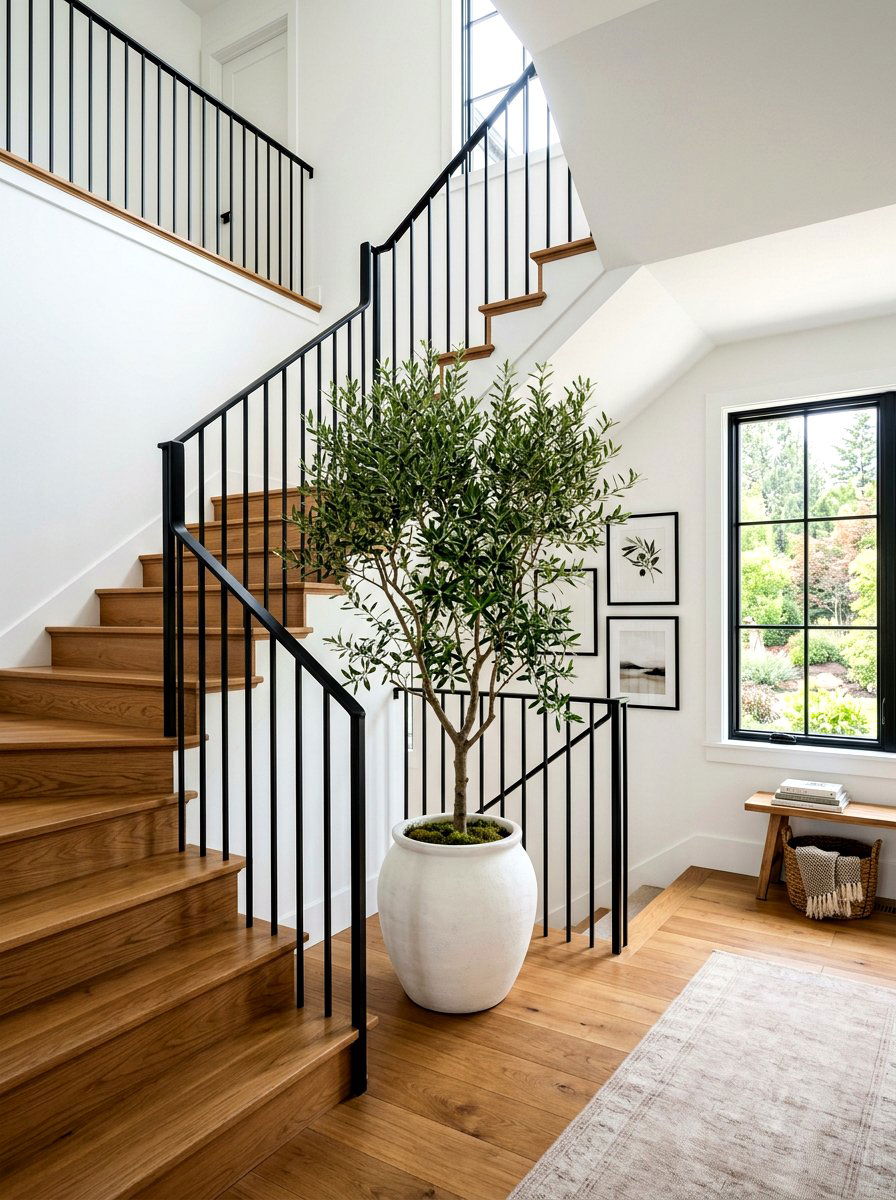
If your entryway leads directly to a staircase, the landing or the space beneath the stairs is an ideal spot for a beautiful olive tree. Placing a tree here helps to bridge the gap between the two levels of the home and adds visual interest to an architectural transit point. The verticality of the tree mimics the upward movement of the stairs, creating a cohesive flow throughout the house. A medium-sized tree in a simple white pot can brighten up a dark stairwell and make the ascent feel more pleasant. It turns a functional area into a beautiful part of your home's design.
15. Concrete Planter Olive Tree
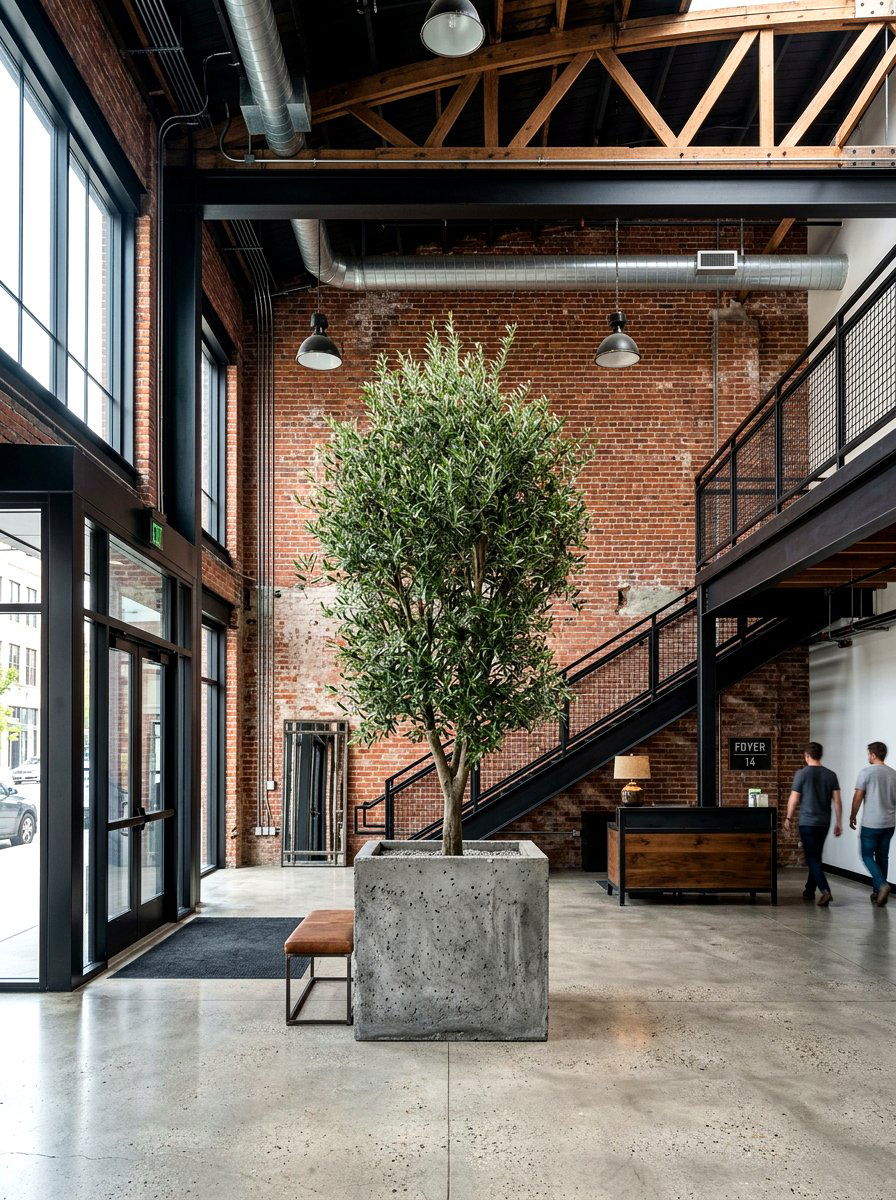
Industrial and urban-modern designs often utilize concrete for its raw, honest texture and neutral gray color that pairs well with almost everything. A large concrete planter housing a delicate olive tree creates a stunning juxtaposition between the heavy, solid base and the light, feathery foliage above. This combination is incredibly trendy and works well in homes with high ceilings or exposed brick walls. The cool gray of the concrete highlights the silvery underside of the olive leaves, making the green colors appear more vibrant. It is a durable and stylish choice that offers a very grounded and masculine aesthetic for foyers.
16. Entryway Mirror Olive Tree
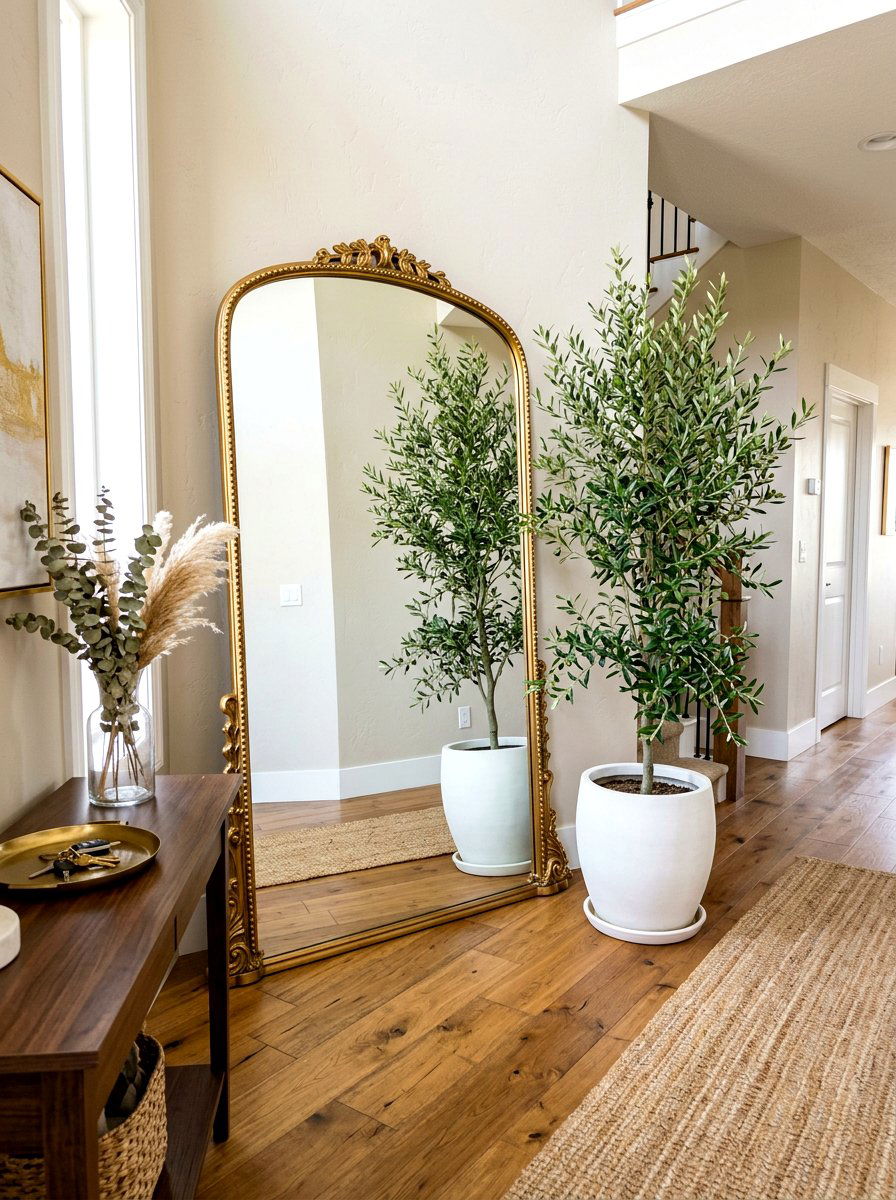
Pairing an olive tree with a large floor-length or wall-mounted mirror is a classic design trick that helps to double the visual impact of the plant. The mirror reflects the delicate branches and leaves, making the greenery appear much fuller and more lush than it actually is in reality. This setup also helps to bounce natural light around the foyer, making the entire entrance feel brighter and more spacious. For the best effect, place the tree slightly to the side of the mirror so it doesn't block the reflection but still frames the glass beautifully. This creates a functional and very stylish focal point.
17. Coastal Entryway Olive Tree
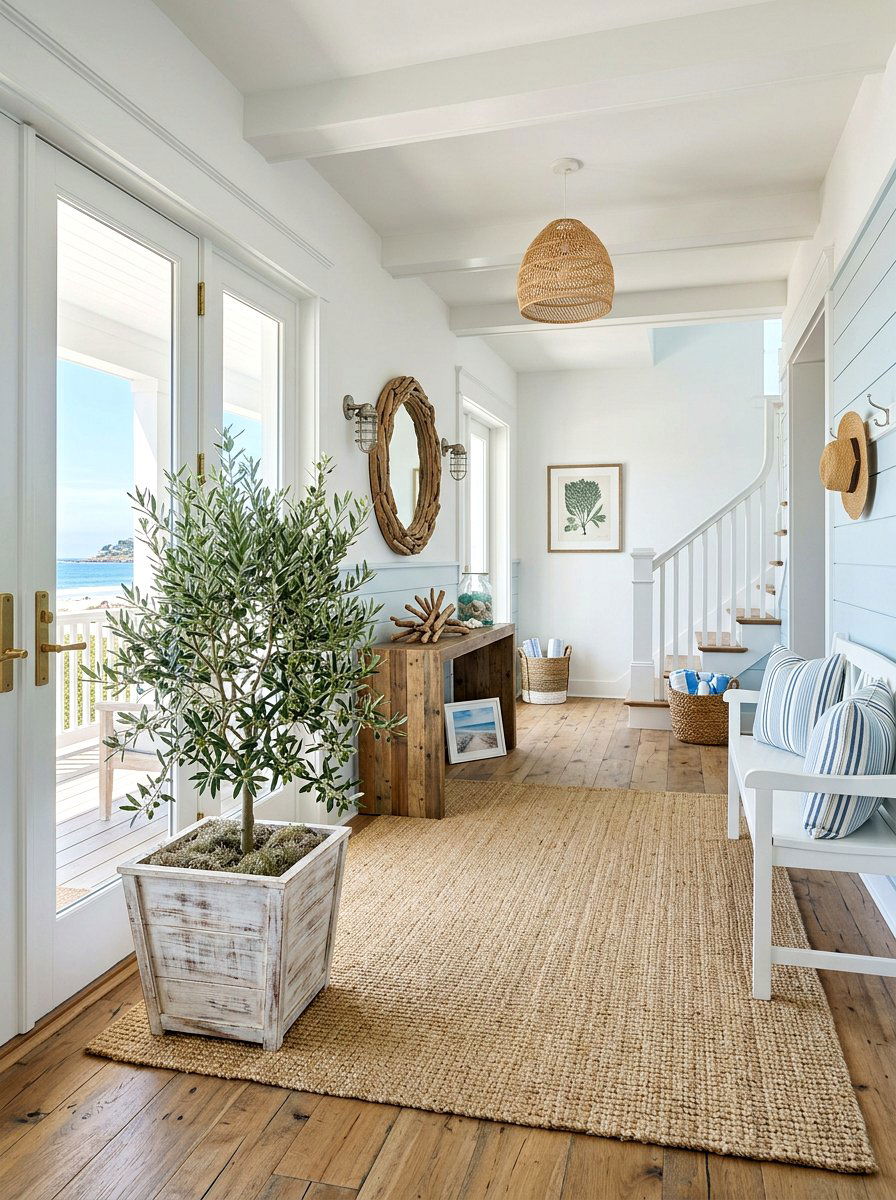
Coastal design often relies on a palette of soft blues, sandy beiges, and crisp whites to evoke the feeling of living by the ocean. An olive tree is an unexpected but perfect addition to a coastal foyer because its muted leaves mimic the colors of dune grass or sea holly. Style the tree in a light-colored wood planter or a whitewashed basket to keep the look airy and bright. Add some driftwood accents or a bowl of sea glass on a nearby table to complete the nautical theme. This approach feels sophisticated and serene, offering a more refined take on beach-inspired home decor.
18. Transitional Foyer Olive Tree
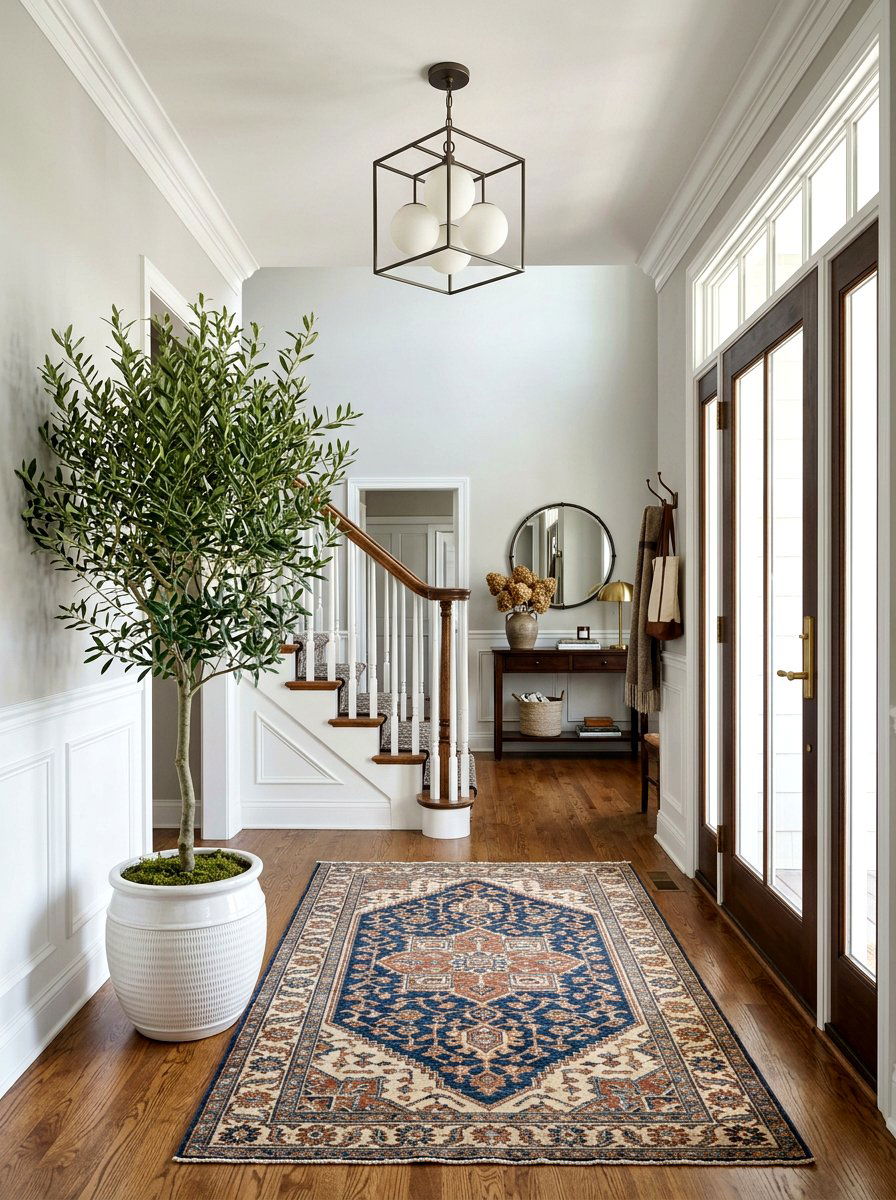
Transitional style blends the best of traditional and contemporary elements to create a space that feels timeless yet updated and comfortable for modern living. An olive tree serves as a great bridge between these two worlds because it is an ancient plant that looks incredibly fresh in modern settings. To achieve this look, place your tree in a classic ceramic pot with a simple, updated silhouette. Pair it with a traditional rug and a modern light fixture to create a balanced mix of old and new. This style is highly versatile and ensures your entryway will look elegant for many years to come.
19. Entryway Bench Olive Tree
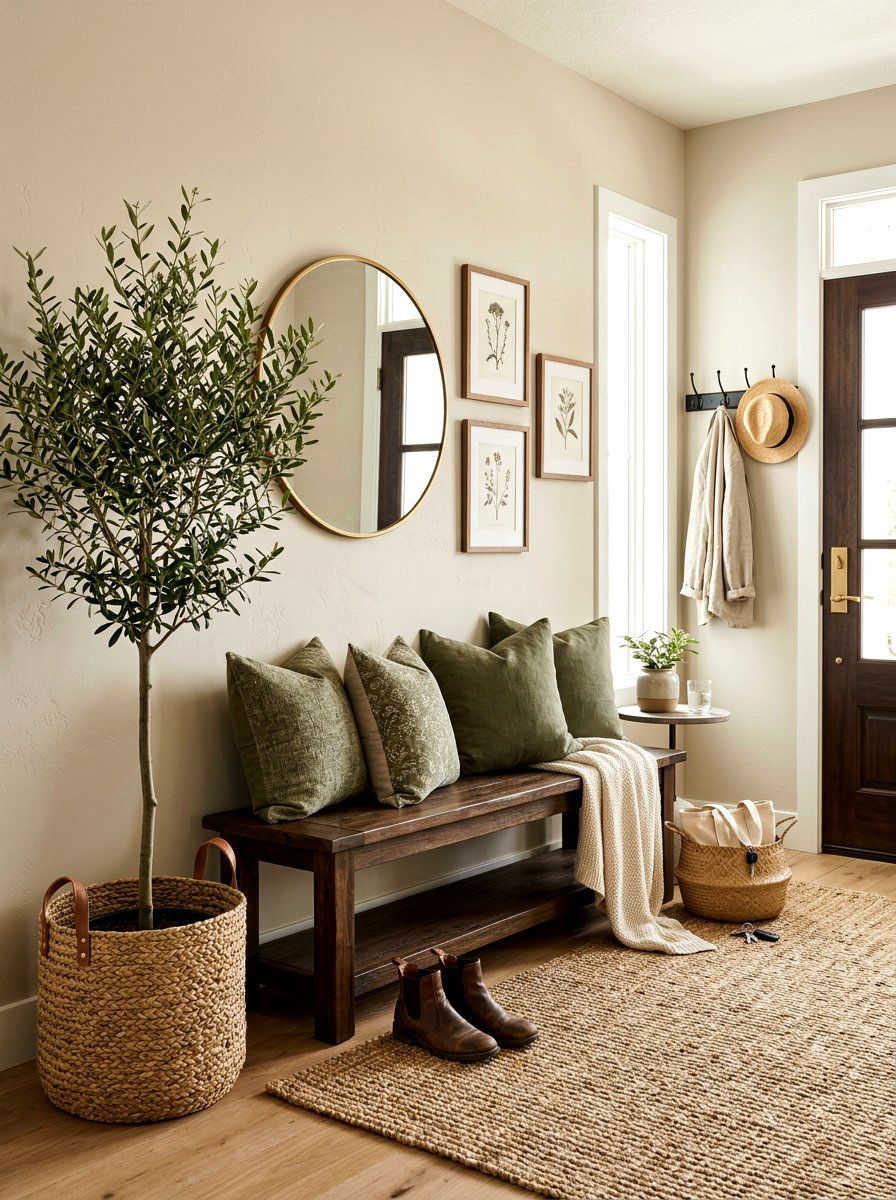
Integrating a seating area in your foyer is both practical and stylish, and an olive tree is the perfect companion for an entryway bench. Placing a tall tree at one end of a wooden or upholstered bench creates a cozy nook where you can sit to put on your shoes. The overhanging branches provide a sense of enclosure and privacy, making the entrance feel more like a functional room rather than just a hallway. You can add a few decorative pillows to the bench that match the soft green tones of the leaves to tie the whole look together. It is very welcoming.
20. Scandinavian Entryway Olive Tree
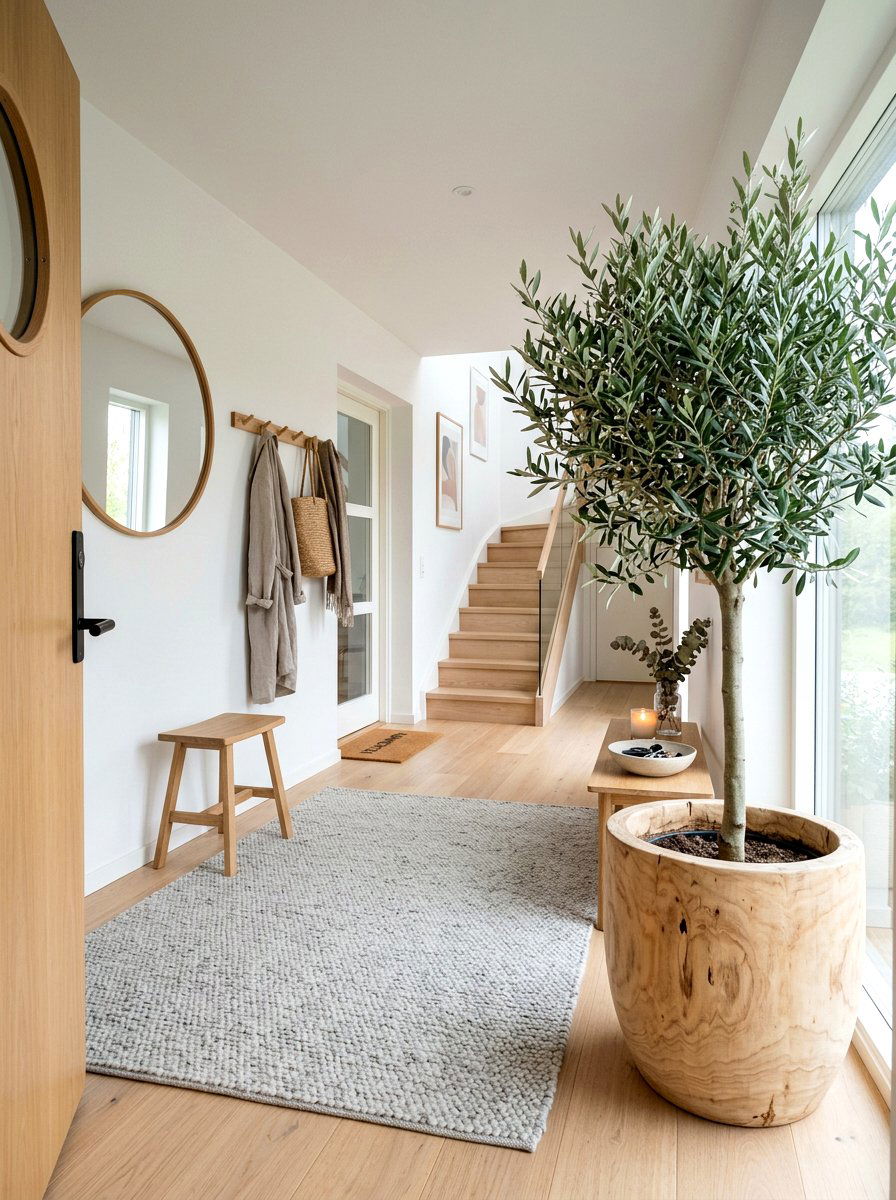
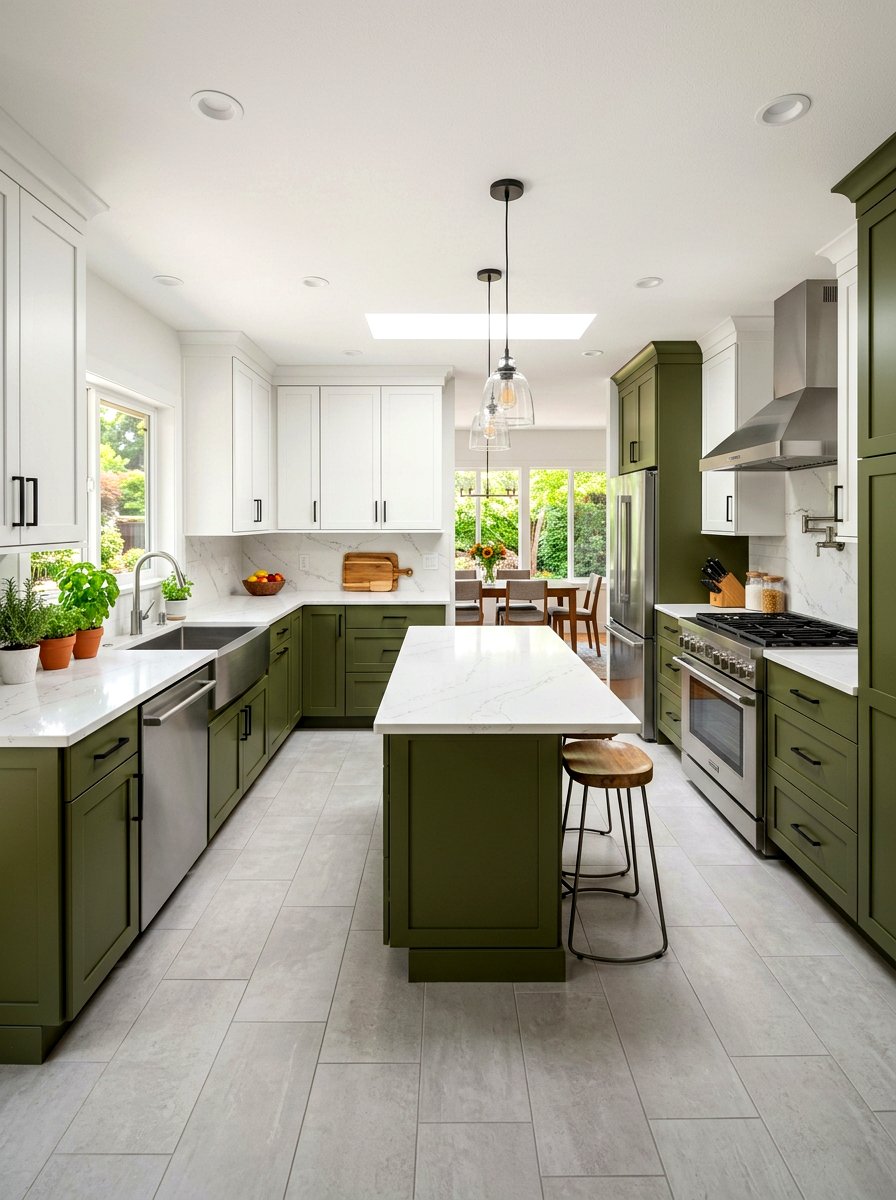
Scandinavian design is famous for its focus on light, functionality, and a deep connection to natural elements like wood and stone. An olive tree fits perfectly into a Scandi-style entryway because it provides a touch of nature without overwhelming the clean and simple aesthetic. Use a light-colored birch or pine planter to house the tree and place it on a light gray rug. The minimalist form of the olive tree complements the "hygge" philosophy, adding a sense of calm and well-being to the home. This look is bright, airy, and incredibly refreshing for anyone walking through the front door.
21. Industrial Foyer Olive Tree
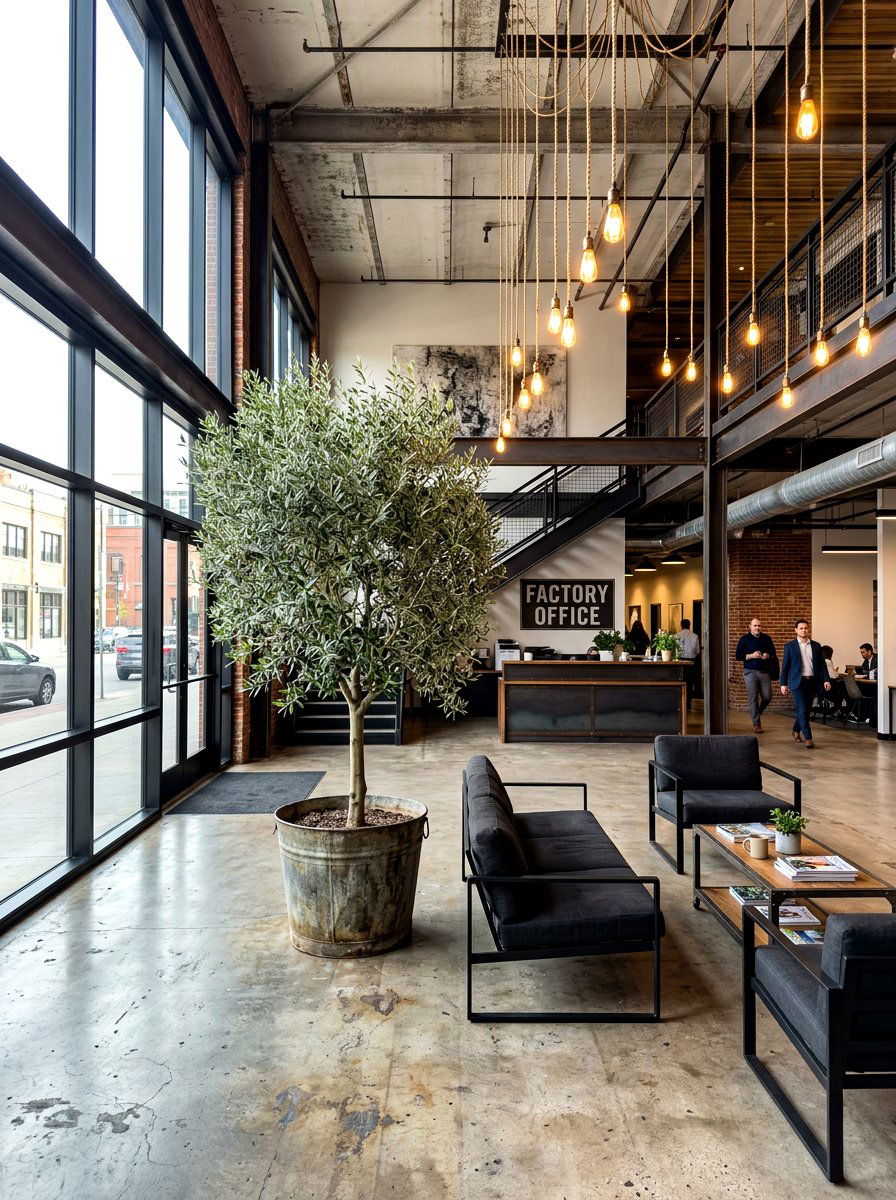
Industrial spaces often feature high ceilings, metal accents, and a somewhat rugged finish that can benefit greatly from the addition of soft, living plants. An olive tree provides a beautiful contrast to the harshness of black steel frames and Edison bulb lighting often found in industrial designs. Try using a weathered metal bucket or a reclaimed wooden crate as a unique planter to maintain the factory-inspired vibe. The organic shape of the tree breaks up the straight lines of the architecture, making the entryway feel more habitable and warm. It is a great way to add life to a loft.
22. Luxury Entryway Olive Tree
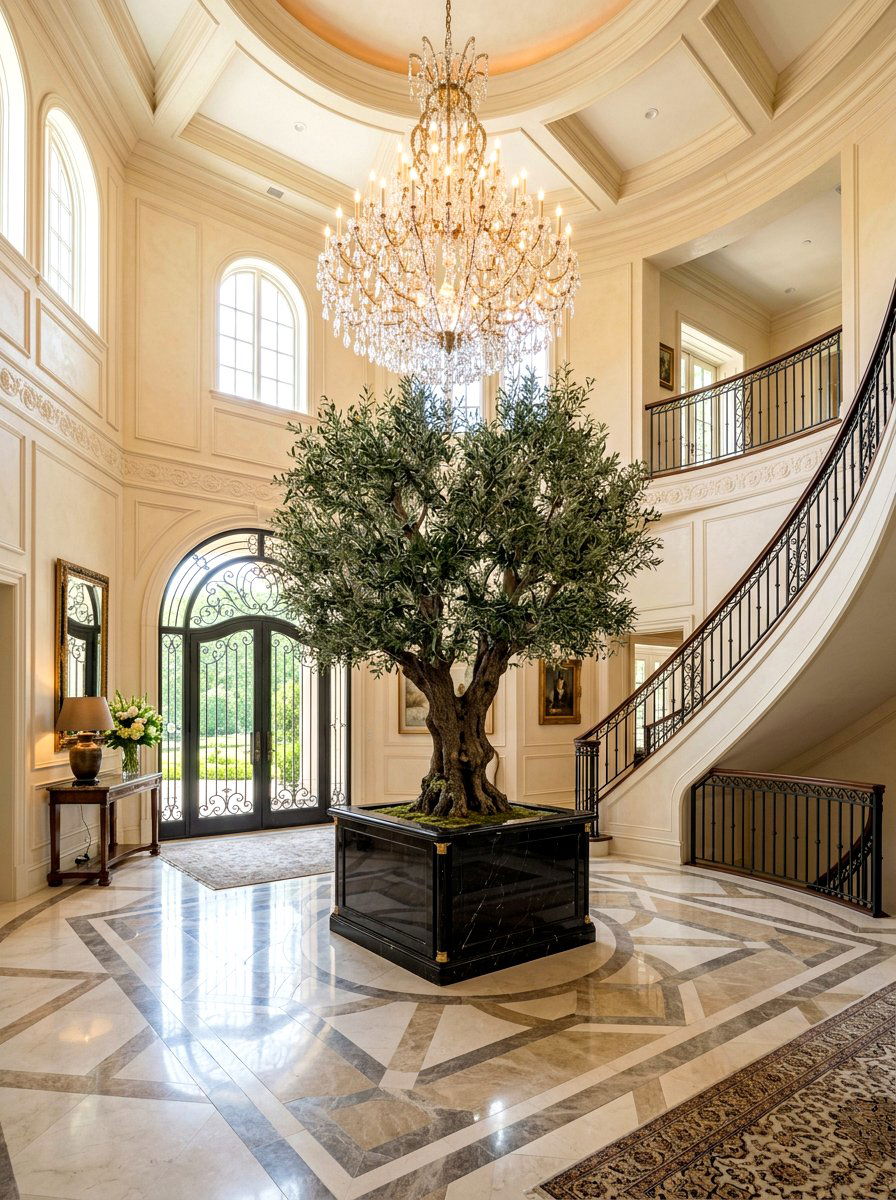
For a high-end, luxurious look, focus on the quality of the materials and the scale of the olive tree you choose for your home. A very tall, mature tree in a polished marble or high-gloss ceramic planter makes an immediate statement of elegance and wealth. You can further enhance this feeling by placing the tree under a designer chandelier or on a custom-inlaid stone floor. The key to luxury design is the details, so ensure the tree is perfectly pruned and the soil is covered with premium decorative stones. This creates a polished, five-star hotel atmosphere that will impress every visitor who enters.
23. Black Pot Olive Tree
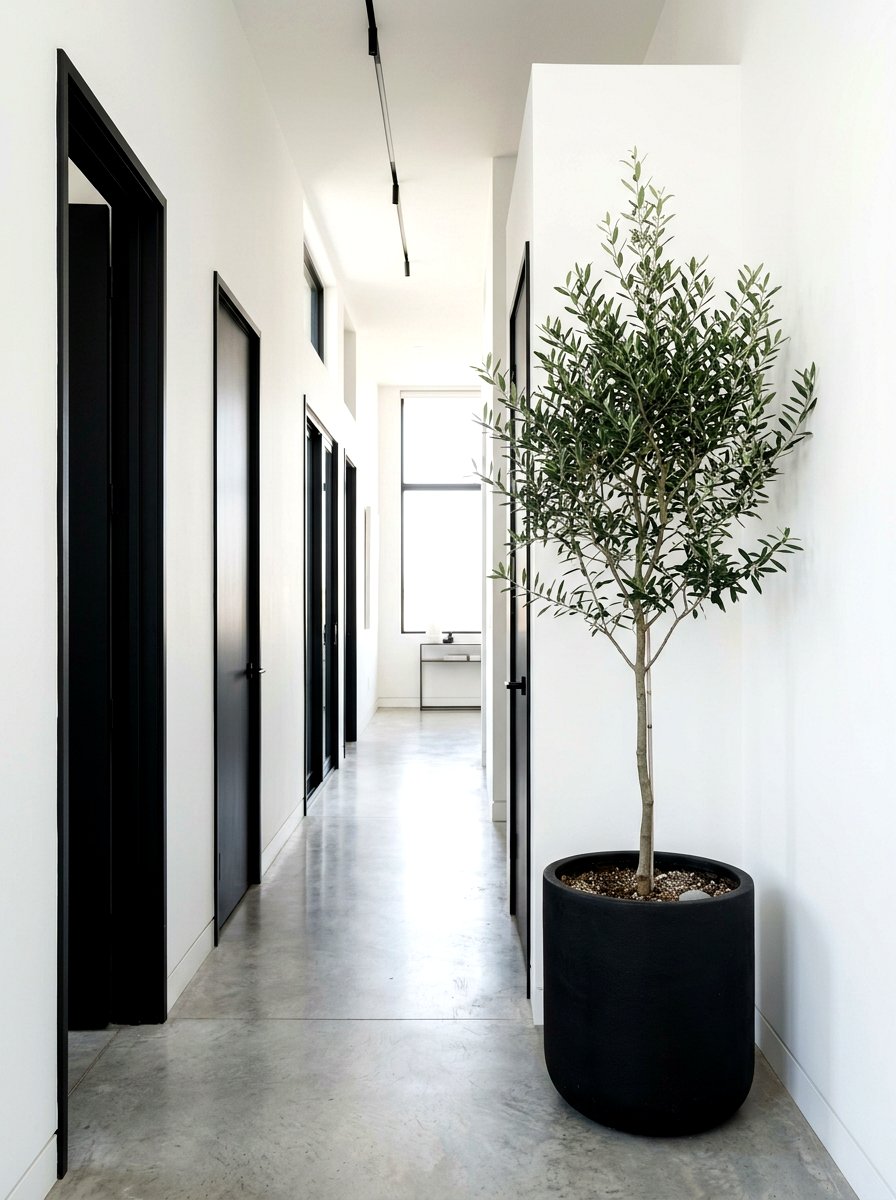
Using a matte black planter for your olive tree is a bold design choice that creates a high-contrast and very sophisticated look. The dark color of the pot makes the silvery-green leaves of the tree stand out vividly, highlighting the unique texture of the foliage. This works exceptionally well in modern or transitional homes that already feature black accents like door handles or stair railings. The black pot grounds the plant and gives it a more formal and structured appearance. It is an easy way to make a simple tree look like a high-end designer piece in a minimalist hallway.
24. Vintage Pot Olive Tree
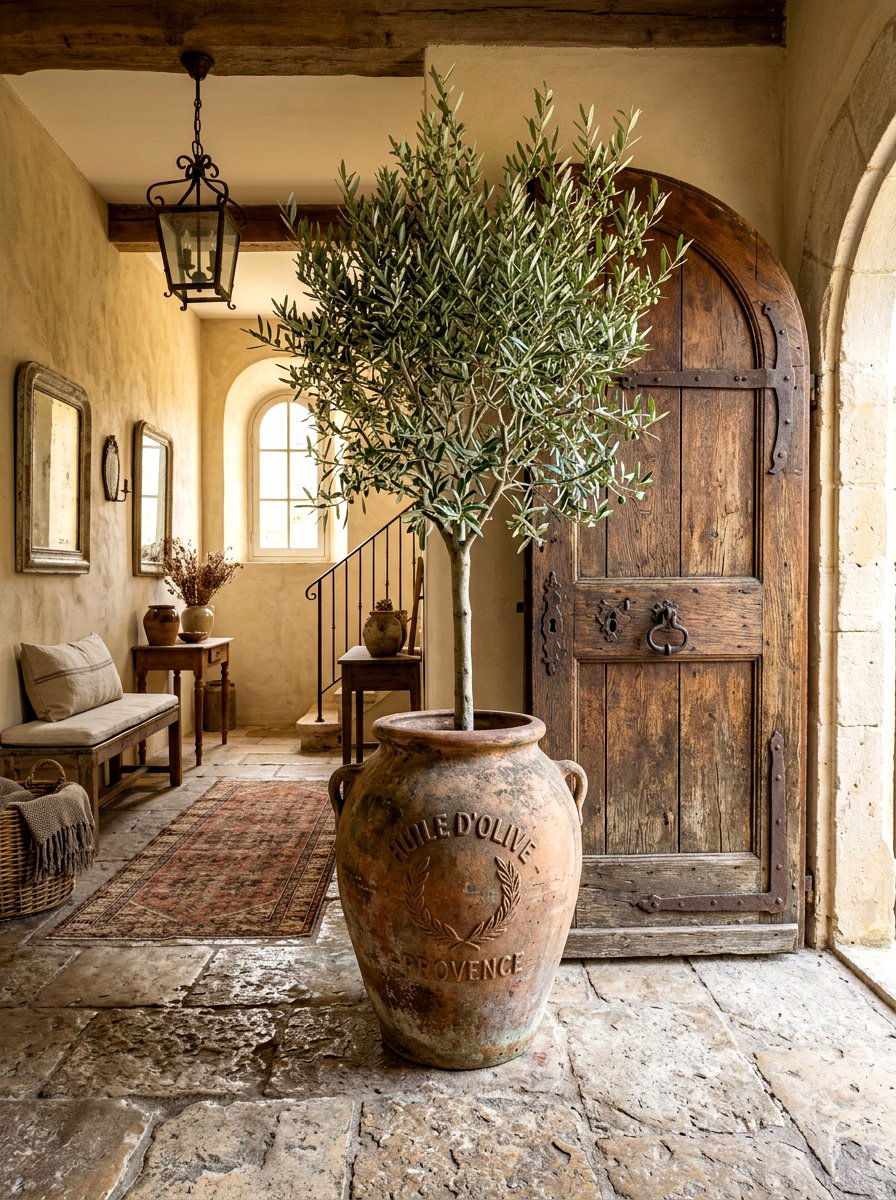
Searching for a unique, one-of-a-kind vintage pot to house your olive tree can add immense character and a sense of history to your entrance. Look for antique European olive oil jars, weathered stone troughs, or hand-thrown ceramic pots at flea markets and antique shops. These aged containers tell a story and perfectly complement the ancient symbolism of the olive tree itself. The patina and imperfections of a vintage pot make the display feel authentic and curated over time rather than just bought from a store. This design approach creates a soulful and charming first impression that is truly unique.
25. Neutral Entryway Olive Tree
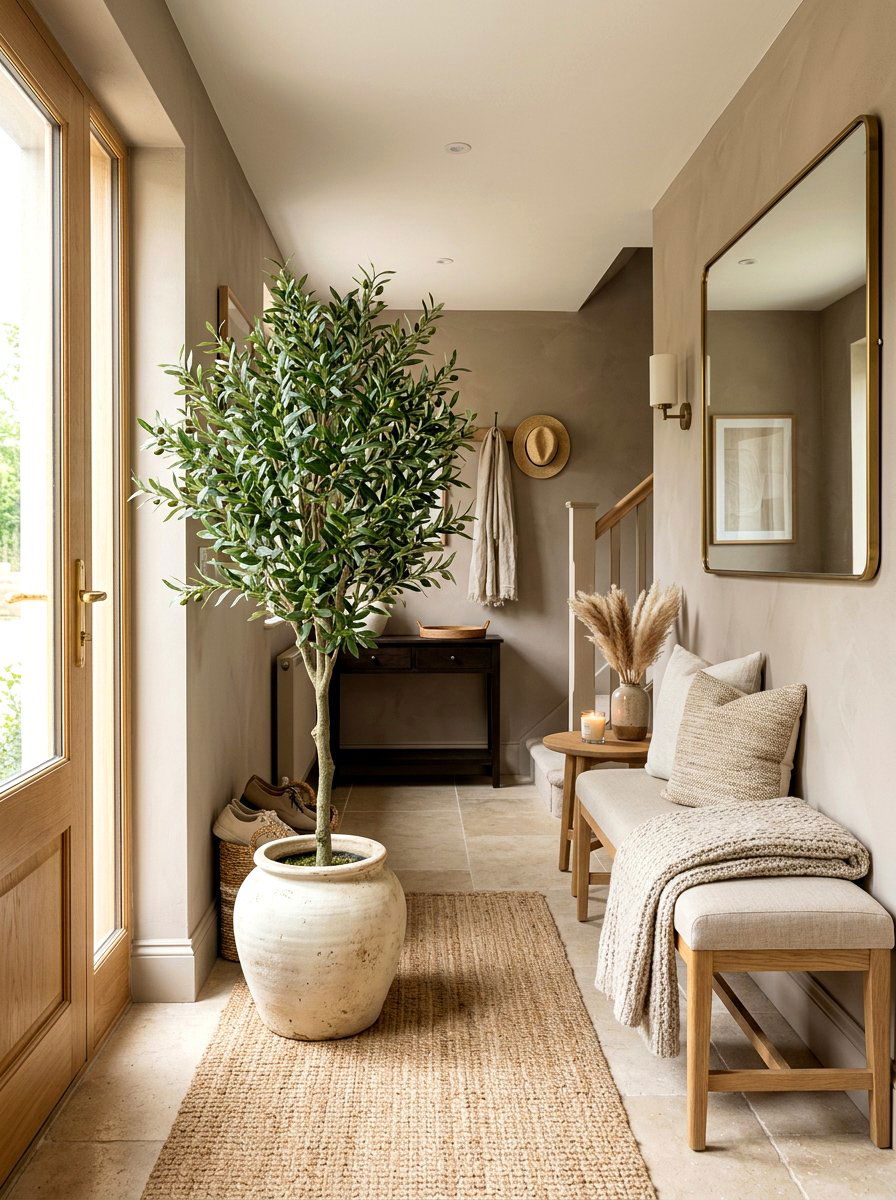
If you prefer a calm and cohesive look, design your entire entryway around a palette of soft neutrals like beige, cream, and taupe. An olive tree is the perfect green accent for this color scheme because its leaves are muted and don't clash with soft, earthy tones. Style the tree in a cream-colored ceramic pot and place it near a linen-covered bench or a light oak console table. This monochromatic approach feels very high-end and creates a serene environment that immediately lowers your stress levels when you arrive home. It is a timeless and very popular way to style foyers.
26. Shiplap Wall Olive Tree
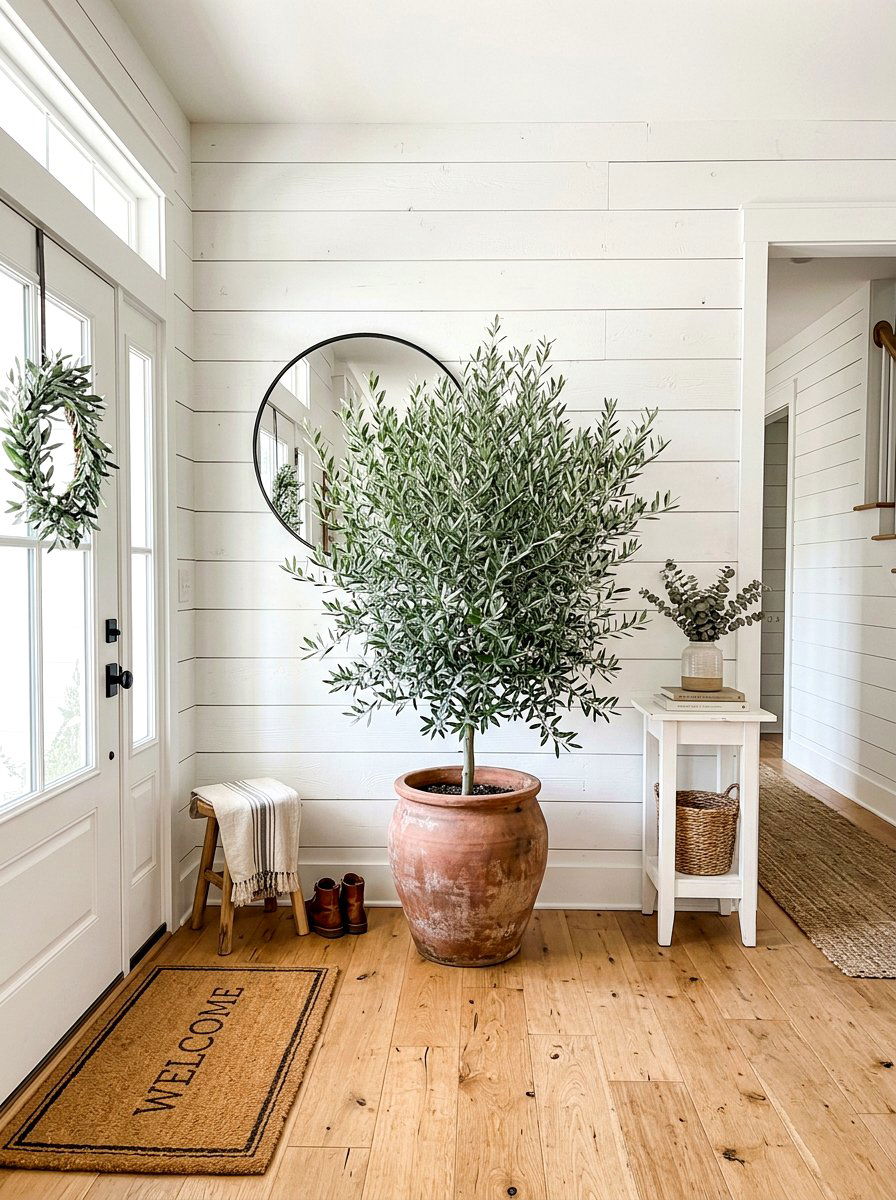
Shiplap walls are a hallmark of farmhouse and coastal styles, providing a textured backdrop that can sometimes look a bit flat without the right decor. Placing a leafy olive tree in front of a shiplap wall creates a beautiful play of light and shadow, adding depth to the room. The horizontal lines of the wood paneling contrast with the organic, vertical growth of the tree, making the space feel more dynamic. This combination is a favorite among interior designers because it feels both traditional and fresh. It is a simple way to elevate a textured wall and make it more interesting.
27. Natural Light Entryway Olive Tree
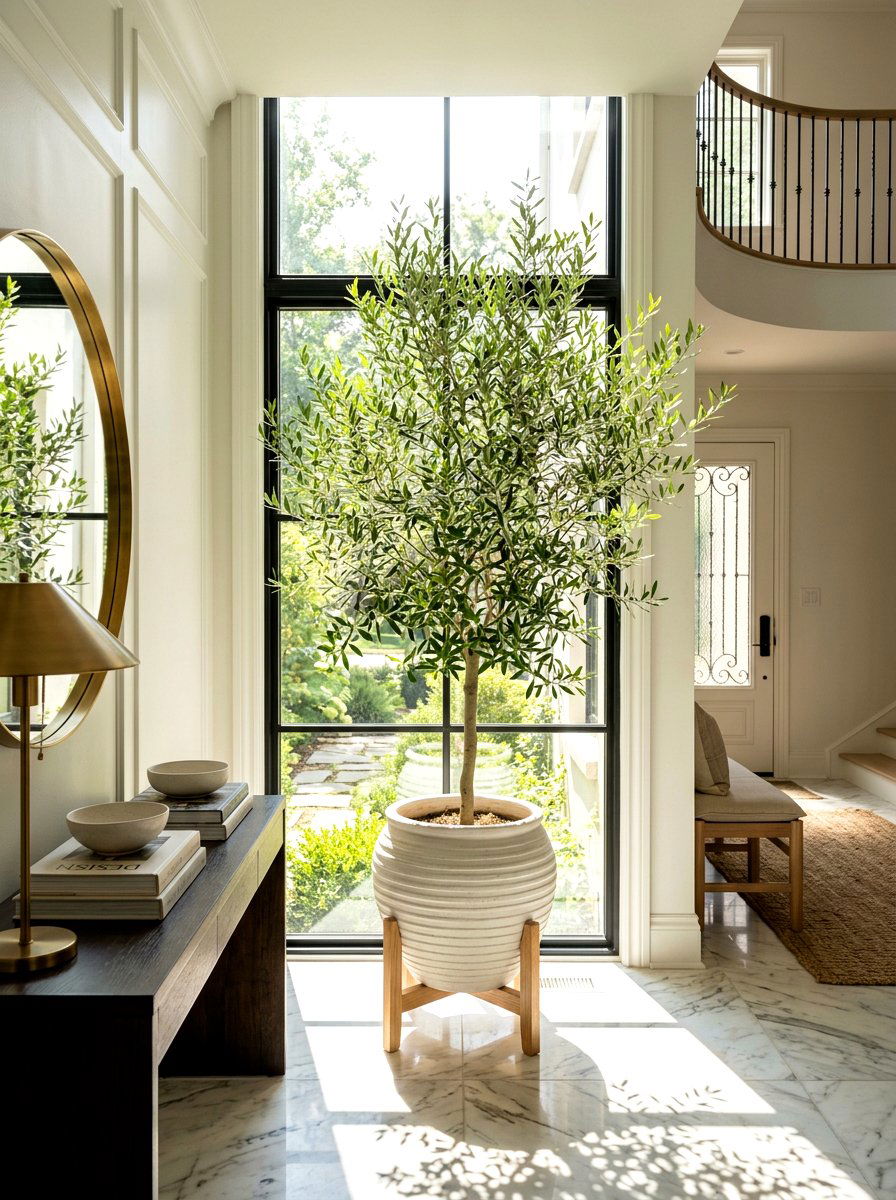
The best way to showcase the beauty of a real olive tree is to place it in a spot that receives plenty of bright, indirect natural light. If your entryway has large windows or a glass front door, positioning the tree where the sun can hit the leaves will make the silver tones shimmer. Not only is this better for the health of a live tree, but it also creates a stunning visual effect throughout the day as the light changes. If you are using a faux tree, the natural light will help it look more realistic by highlighting the varied textures of the artificial leaves.
28. Organic Modern Olive Tree
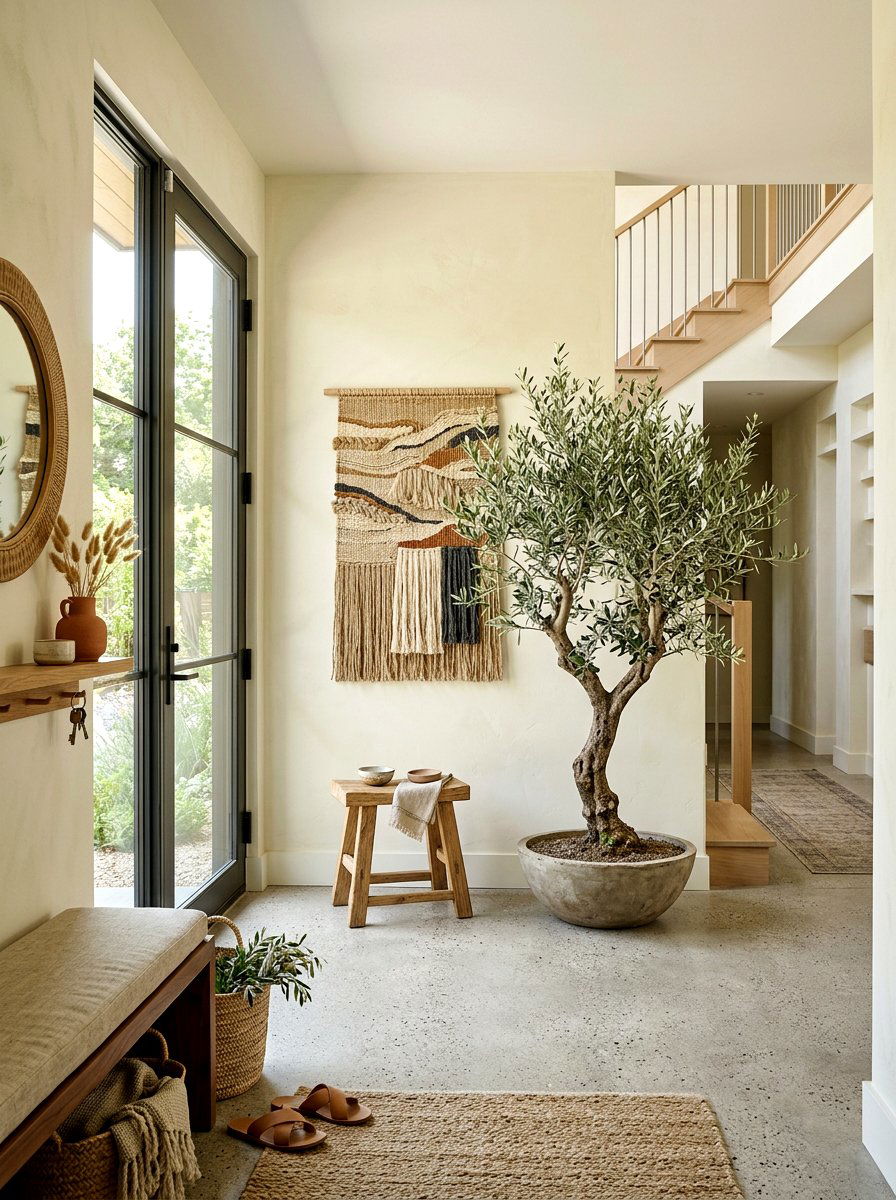
Organic modern style is all about blending clean, contemporary architecture with raw, natural materials to create a space that feels both high-end and grounded. An olive tree is the quintessential plant for this aesthetic because of its sculptural form and earthy appeal. Pair the tree with a concrete floor, a simple wooden stool, and some woven wall art to achieve this popular look. The goal is to create a space that feels effortless and connected to the outdoors while still being clearly designed and intentional. It is a sophisticated way to bring the beauty of nature into a modern home.
29. High Ceiling Entryway Olive Tree
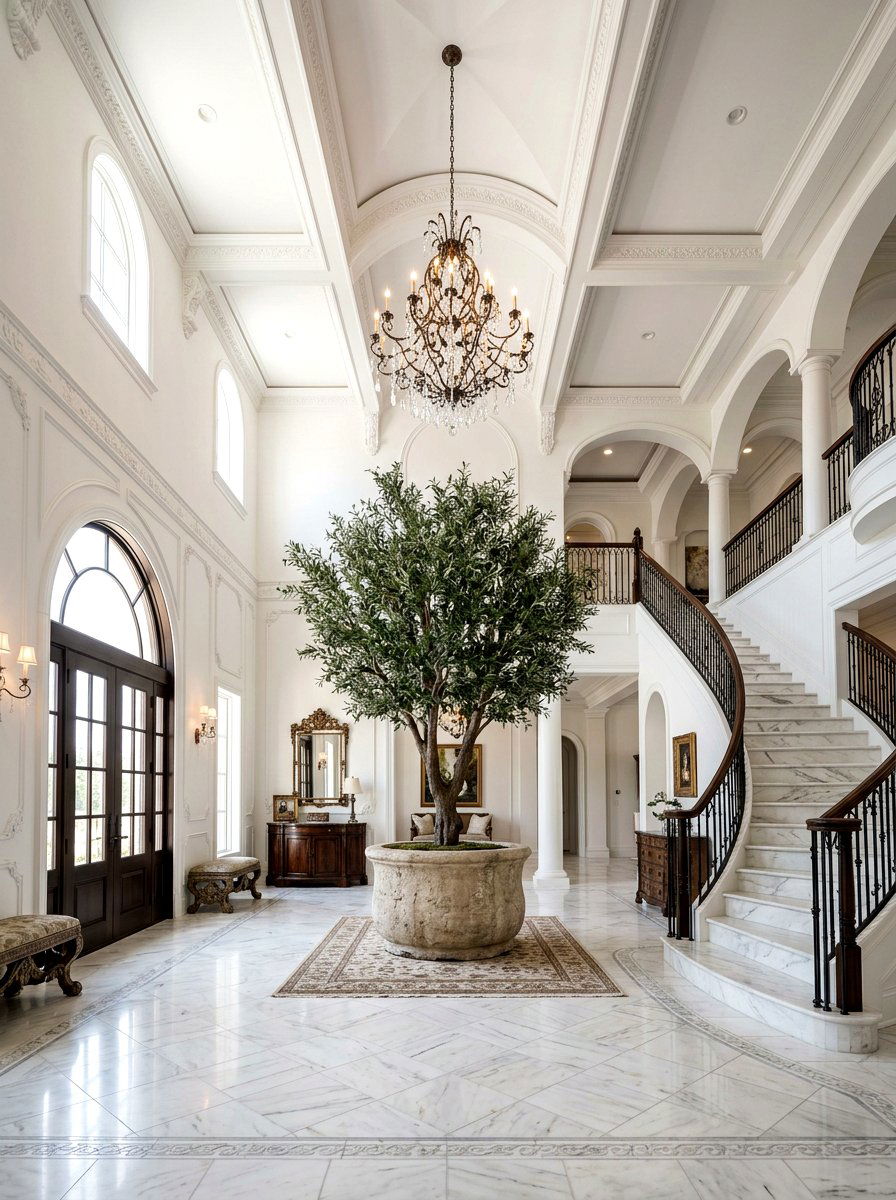
Entryways with soaring ceilings can often feel cold or empty because the vertical space is difficult to fill with standard furniture. A very tall olive tree, perhaps eight to ten feet in height, is one of the few decor items that can successfully command attention in a grand foyer. The tree bridges the gap between the floor and the ceiling, making the massive space feel more proportional and inviting. Choose a large, wide planter to balance the height of the tree and ensure it doesn't look top-heavy. This design creates a sense of awe and drama that is truly breathtaking.
30. Ceramic Planter Olive Tree
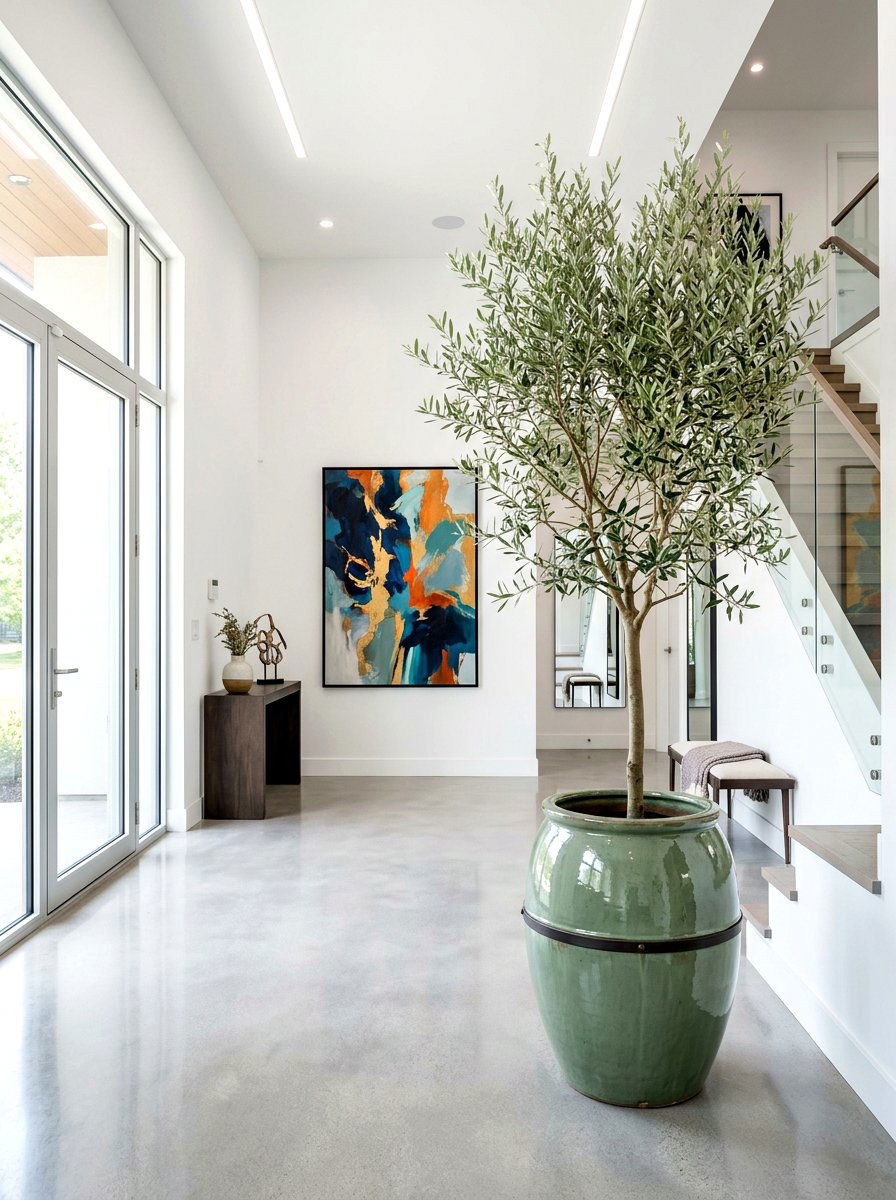
A high-quality ceramic planter offers a polished and finished look that can suit any entryway from traditional to modern. Whether you choose a glossy finish to reflect light or a matte finish for a more subtle effect, ceramic pots provide a clean and elegant base for your olive tree. You can play with different colors like soft sage green, deep navy, or classic white to complement your existing wall paint and decor. The weight of the ceramic also provides excellent stability for larger trees. It is a versatile choice that allows you to easily update the style of your entrance with just one piece.
Conclusion:
Selecting the perfect olive tree for your entryway is a simple yet powerful way to elevate your home's overall design and create a lasting first impression. These trees offer a rare combination of versatility, texture, and timeless beauty that works harmoniously across a wide variety of interior styles. Whether you prefer the rustic charm of a terracotta pot or the sleek sophistication of a minimalist concrete planter, the olive tree remains a classic choice. By carefully considering the scale of your space and the surrounding decor, you can transform a functional foyer into a stunning, Mediterranean-inspired sanctuary that welcomes you home every day.

Related posts: