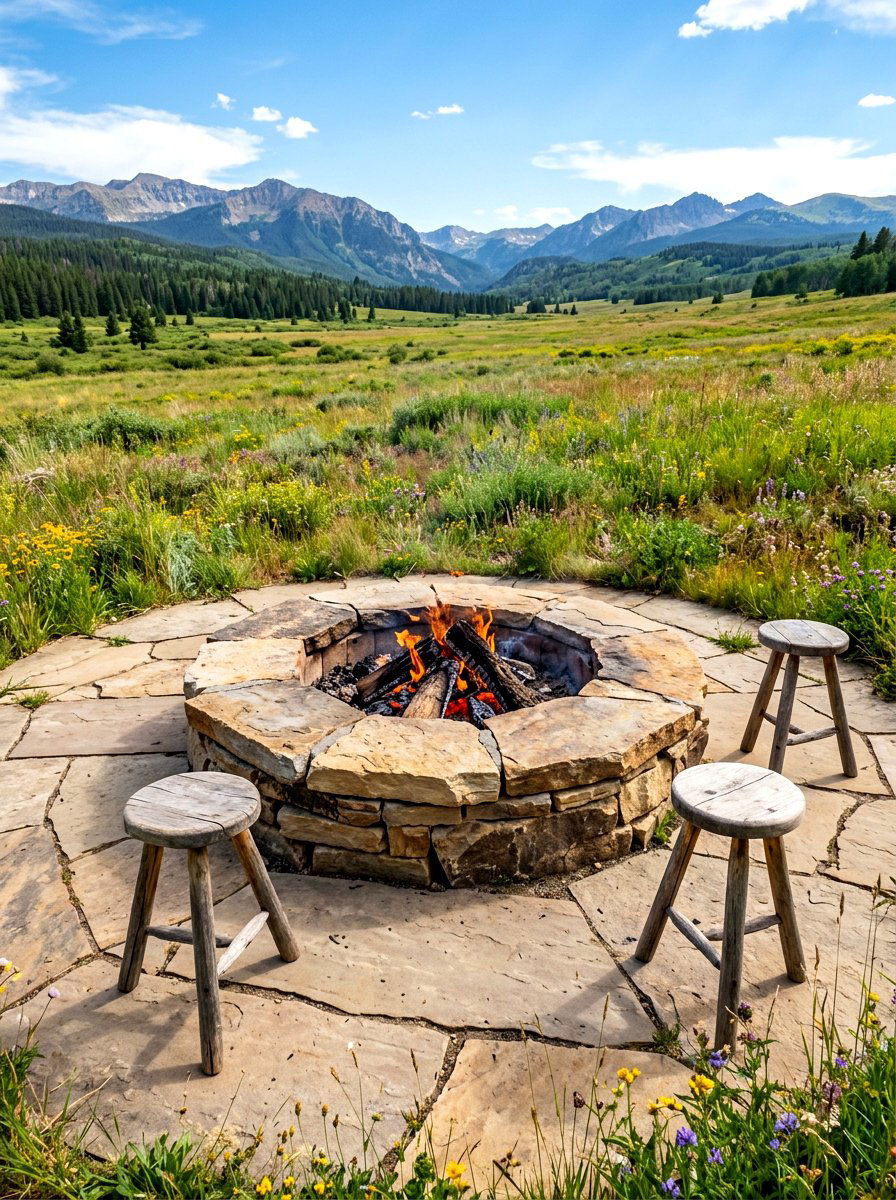
Creating a stunning first impression for your home often begins with the path that leads to your front door. Stone front steps offer a unique combination of timeless beauty and incredible durability that other materials simply cannot match. Whether you are aiming for a sleek modern look or a charming rustic feel, natural stone provides a versatile foundation for your exterior landscape. These structures serve as a functional necessity while acting as a focal point that enhances curb appeal and increases property value significantly. Investing in high-quality stonework ensures your entryway remains safe and beautiful for decades, standing up to harsh weather conditions with very minimal maintenance required from the homeowner.
1. Natural Bluestone Treads
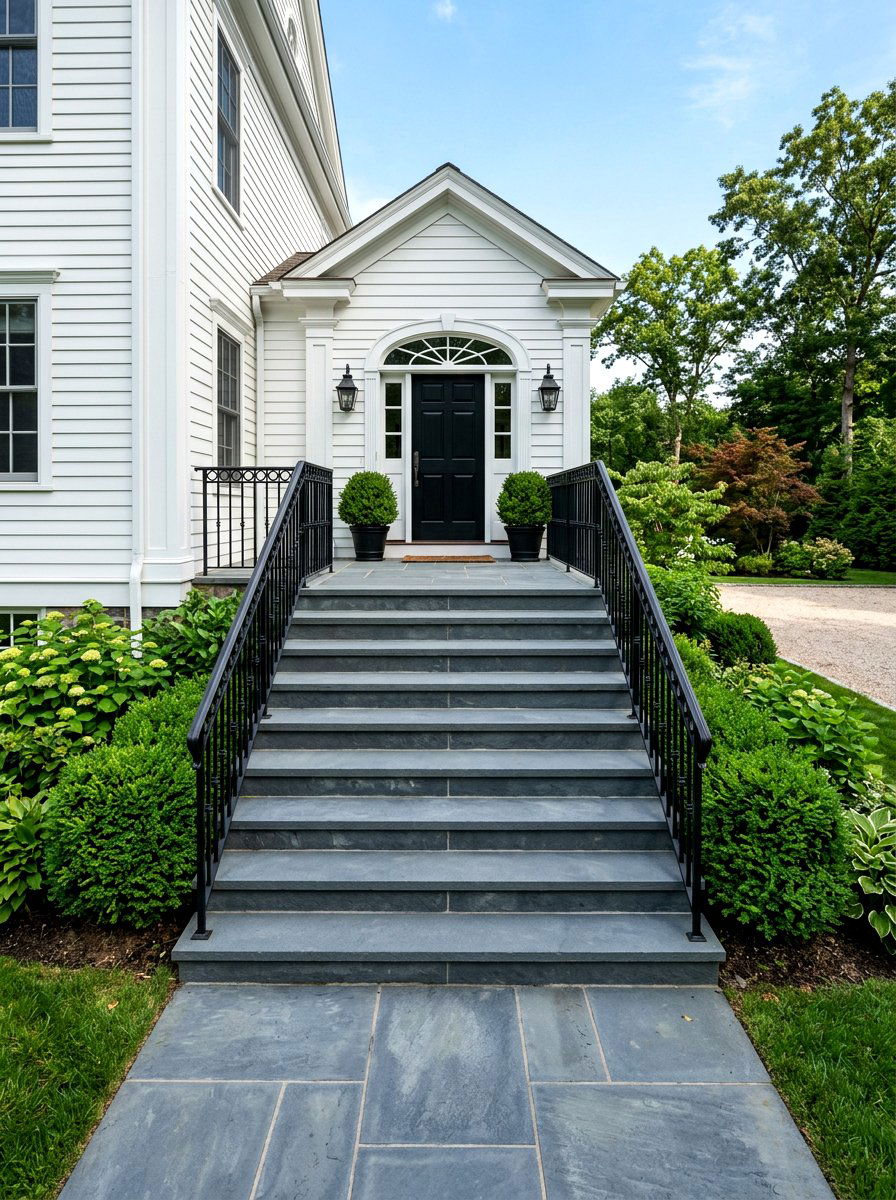
Have you ever noticed how the cool tones of blue-gray stone can instantly modernize a home? Natural bluestone is a top choice for front entryways because of its dense composition and slip-resistant surface. These treads are often finished with a thermal process to ensure they remain safe during rainy or snowy weather. The consistent color palette works beautifully with white siding or dark brick exteriors. Because bluestone is so durable, it resists cracking from freeze-thaw cycles common in colder climates. Installing these large, flat slabs creates a clean and organized look that feels both professional and inviting to every guest who walks up to your porch.
2. Granite Slab Entryway
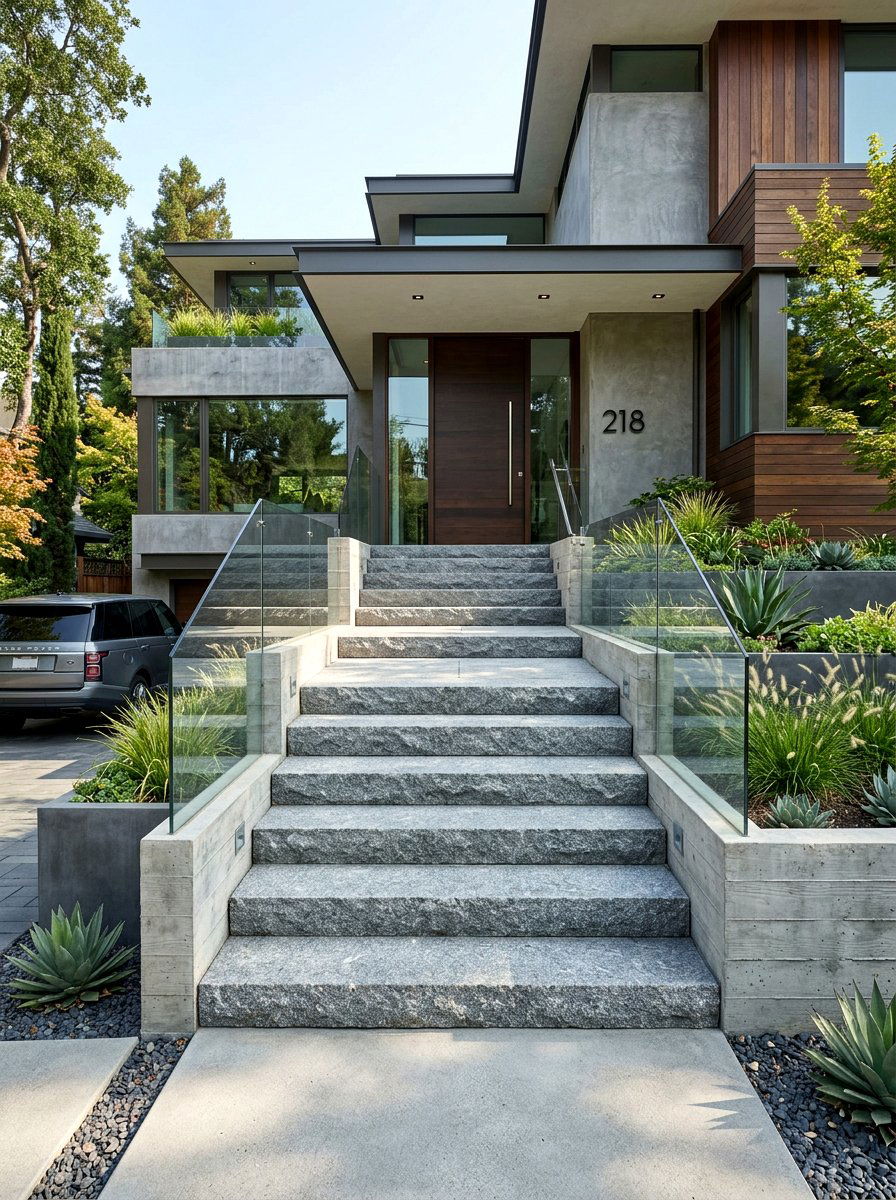
Granite is widely regarded as one of the most resilient materials available for outdoor construction projects today. A granite slab entryway offers an unmatched level of permanence and strength, making it ideal for high-traffic areas. These solid blocks come in various shades, ranging from light salt-and-pepper gray to deep charcoal or even pinkish hues. Because granite is non-porous, it does not absorb water easily, which prevents staining and internal damage over many years. The heavy, substantial feel of these steps provides a sense of luxury and stability. Using wide granite slabs allows for a grander entrance that feels spacious and complements larger architectural styles effortlessly.
3. Flagstone Porch Stairs
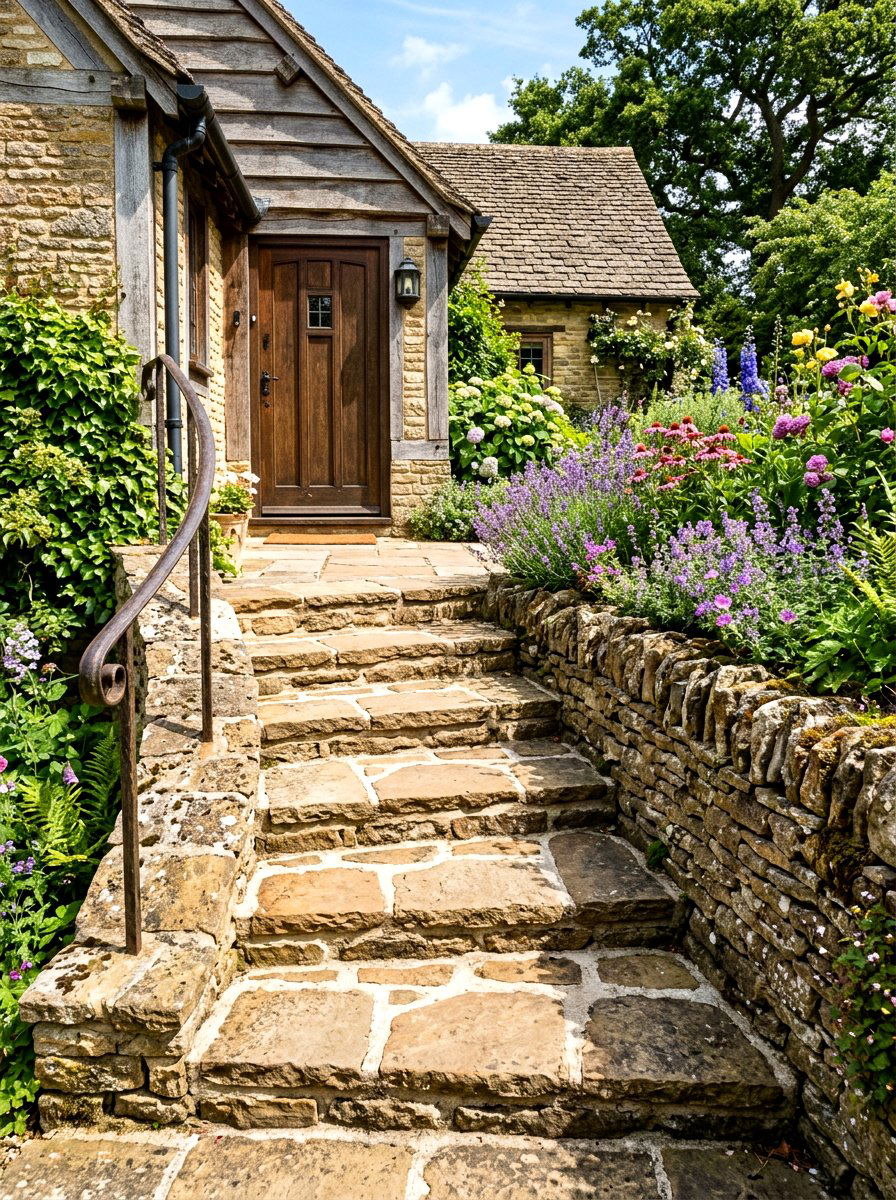
Imagine a staircase that looks like it was naturally carved right out of the side of a mountain. Flagstone porch stairs offer an organic and irregular aesthetic that is perfect for traditional or cottage-style homes. These stones are typically thin and flat, allowing them to be layered on a concrete base with mortar for a secure finish. The varied shapes and earthy colors of flagstone create a visually interesting texture that draws the eye. Homeowners love this material because no two steps are exactly alike, giving your front entrance a custom and artisanal quality. It blends seamlessly with lush garden beds and soft landscaping elements nearby.
4. Fieldstone Garden Steps
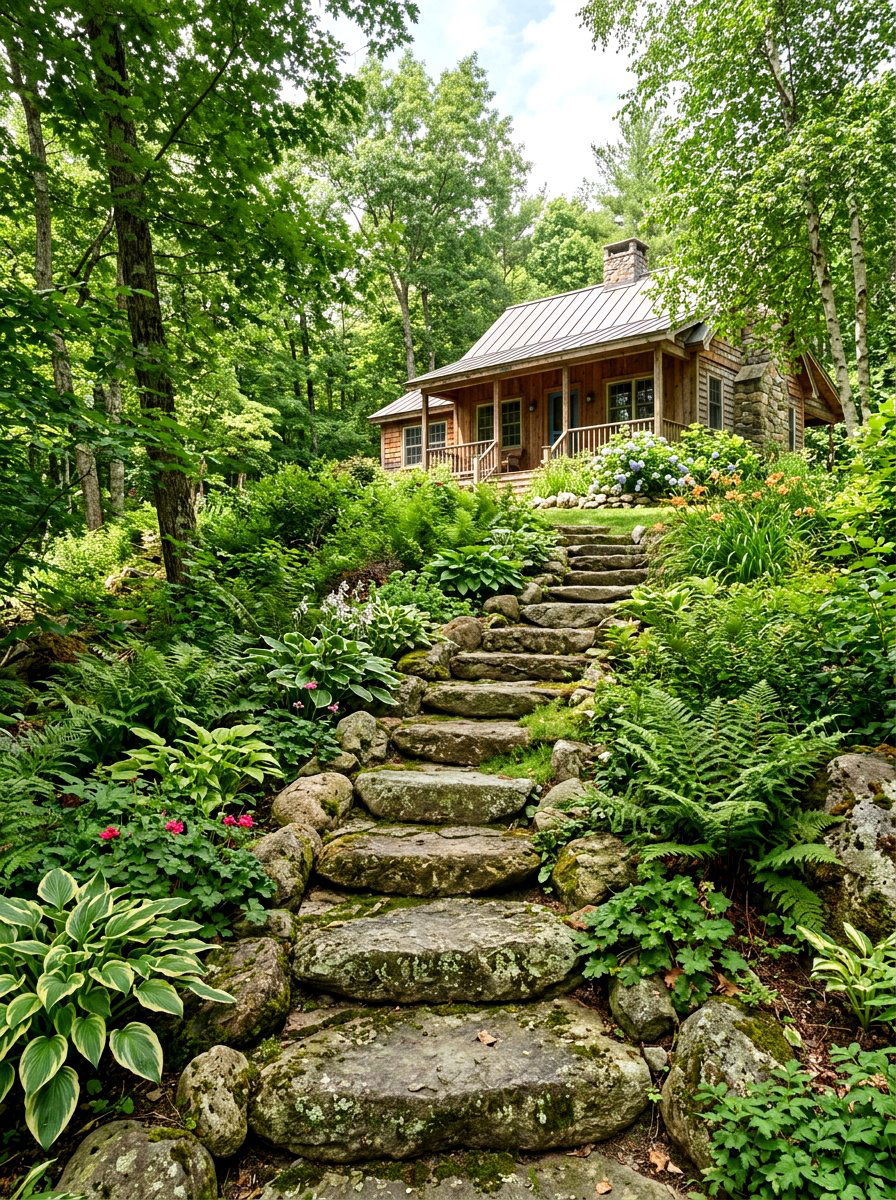
Fieldstone is often gathered from the surface of the earth, giving it a weathered and rustic appearance that feels historic. These steps are perfect for homes located in wooded areas or properties with expansive gardens. Because fieldstone has rounded edges and natural moss growth, it integrates perfectly into the surrounding environment. You can use large, flat fieldstones to create a winding staircase that follows the natural slope of your front yard. This approach prioritizes a relaxed and casual vibe rather than a formal or rigid look. It is a fantastic way to utilize local materials while adding a touch of old-world charm to your entryway.
5. Limestone Front Porch
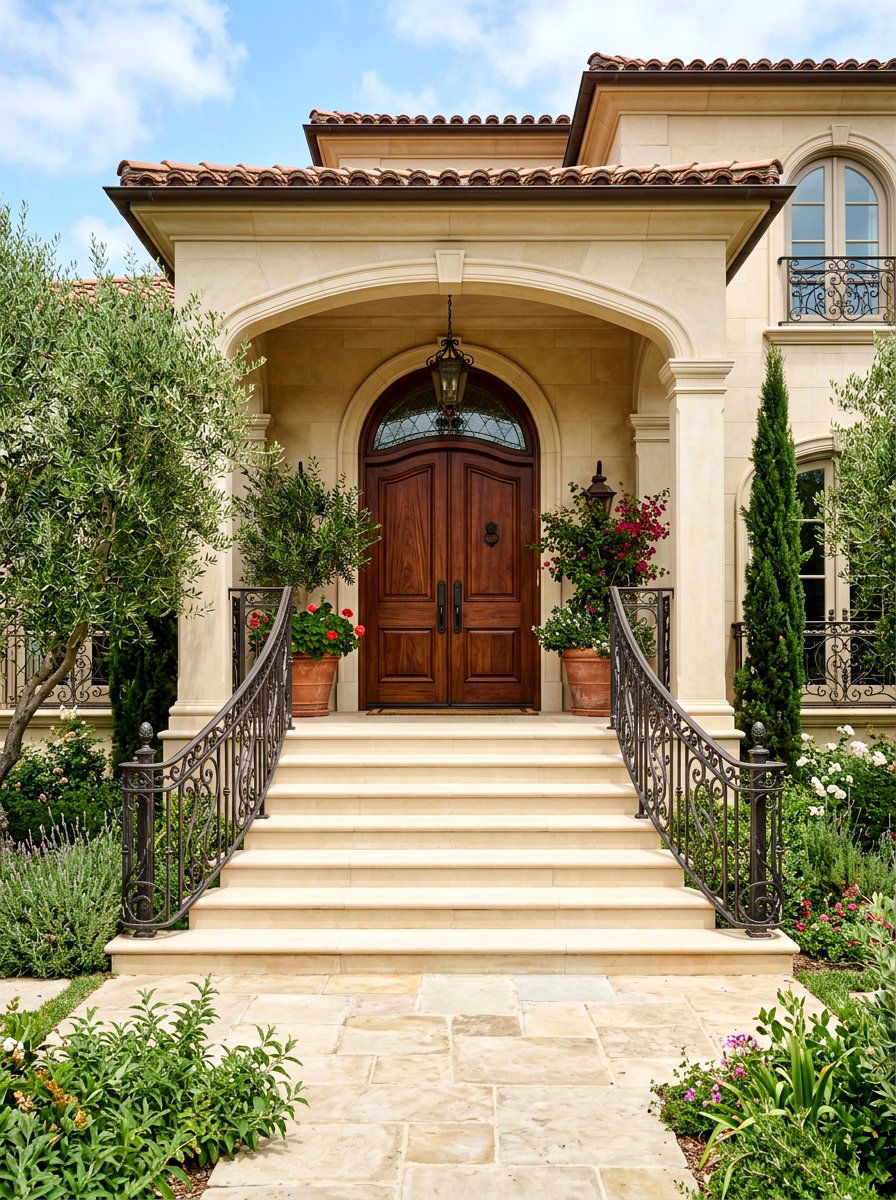
Limestone provides a bright and elegant look that is frequently seen in high-end European-style architecture and luxury estates. These stones often come in creamy whites, soft beiges, and light grays, which can make a small entryway feel much larger. While limestone is softer than granite, it is still incredibly durable when properly sealed to prevent moisture absorption. The smooth finish of limestone steps offers a sophisticated touch that pairs well with wrought iron railings or ornate wooden doors. This material stays relatively cool under the summer sun, making it a practical choice for warmer climates where barefoot traffic is common around the front porch area.
6. Slate Entry Stairs
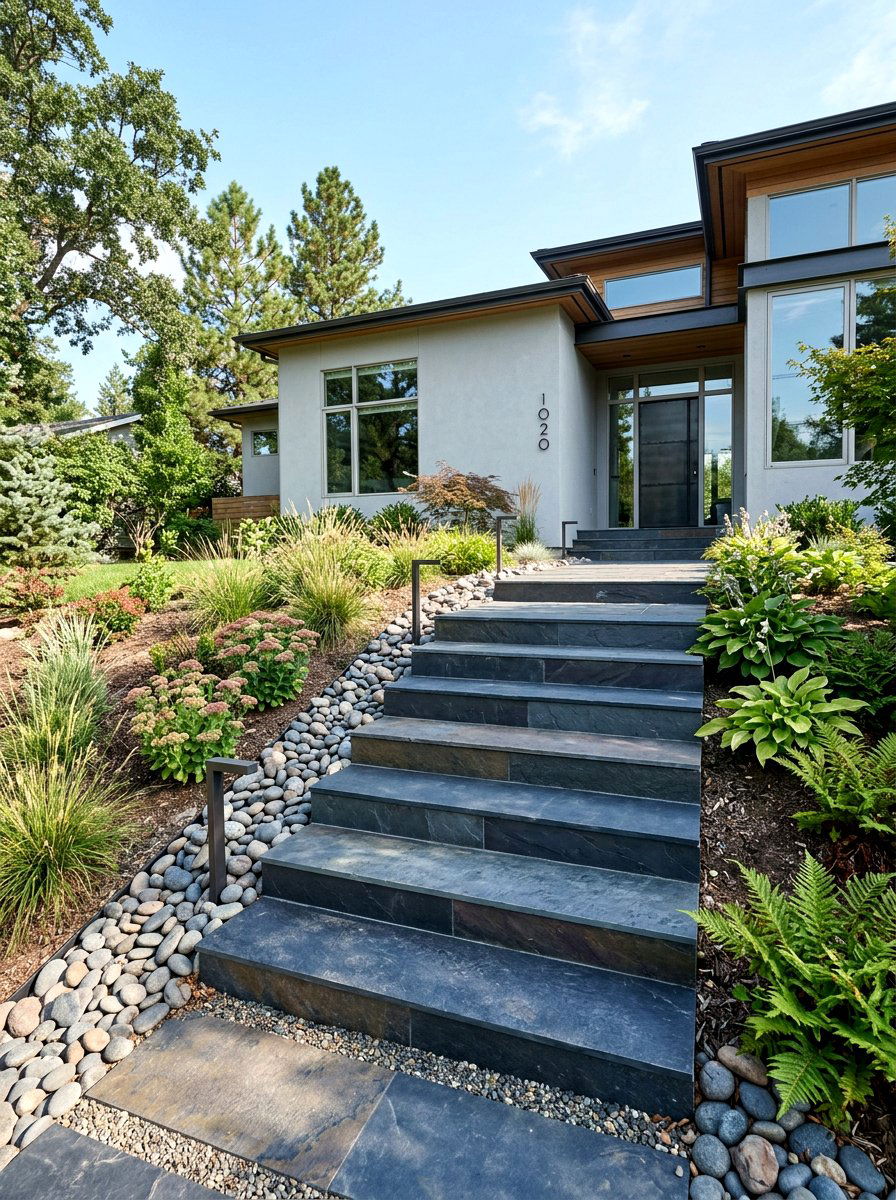
Slate is famous for its unique layered texture and rich, dark color variations that include deep blues, purples, and greens. Choosing slate for your entry stairs provides a high-contrast look that stands out against light-colored house paint. The natural cleft surface of slate offers excellent traction, which is a vital safety feature for any front step design. While slate is slightly more brittle than other stones, its beauty and unique color depth make it a popular choice for contemporary homes. When installed correctly by professionals, slate creates a sleek and thin profile that looks modern while still maintaining a connection to natural earth elements.
7. Sandstone Pathway Steps
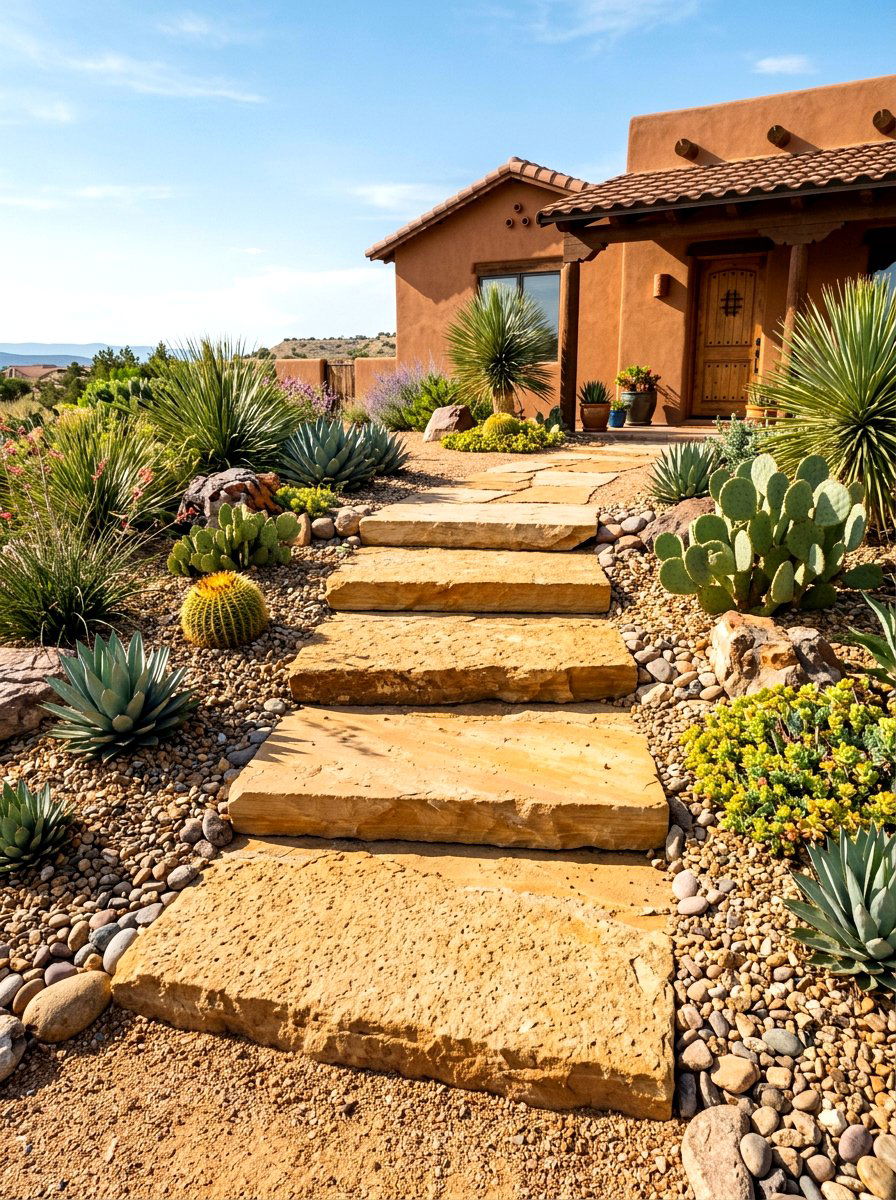
Sandstone is an affordable and attractive option for homeowners who want warm, earthy tones like tan, gold, and reddish brown. These steps often have a slightly grainy texture that provides a natural non-slip surface for anyone entering your home. Sandstone is very easy to cut into uniform rectangular blocks, which makes the installation process much faster and more cost-effective. The warm colors of this stone are particularly effective at making a home feel cozy and welcoming from the curb. It works exceptionally well in southwestern or desert-themed landscapes where the natural rock colors can blend in with the local sandy environment.
8. Travertine Front Entry
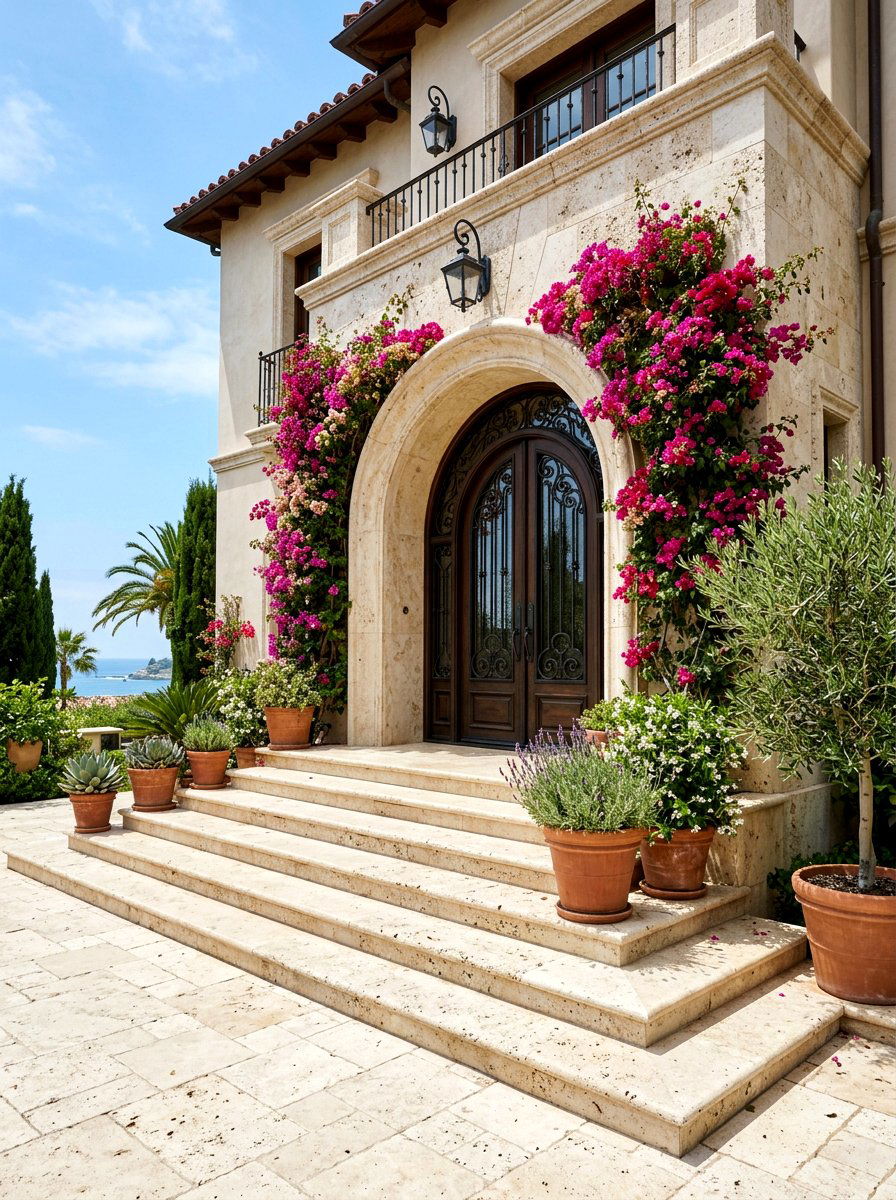
Travertine is a type of limestone that features small pits and holes, giving it a distinctive and luxurious Mediterranean appearance. For a front entry, these holes are often filled and honed to create a smooth and durable surface. Travertine stays remarkably cool in hot weather, which is why it is so popular in coastal regions and southern states. The stone comes in beautiful shades of ivory, walnut, and gold, providing a soft and romantic glow to your home's exterior. Using large travertine pavers for your steps creates a seamless transition from the walkway to the porch, resulting in a cohesive and high-end finished look.
9. Quartzite Outdoor Stairs
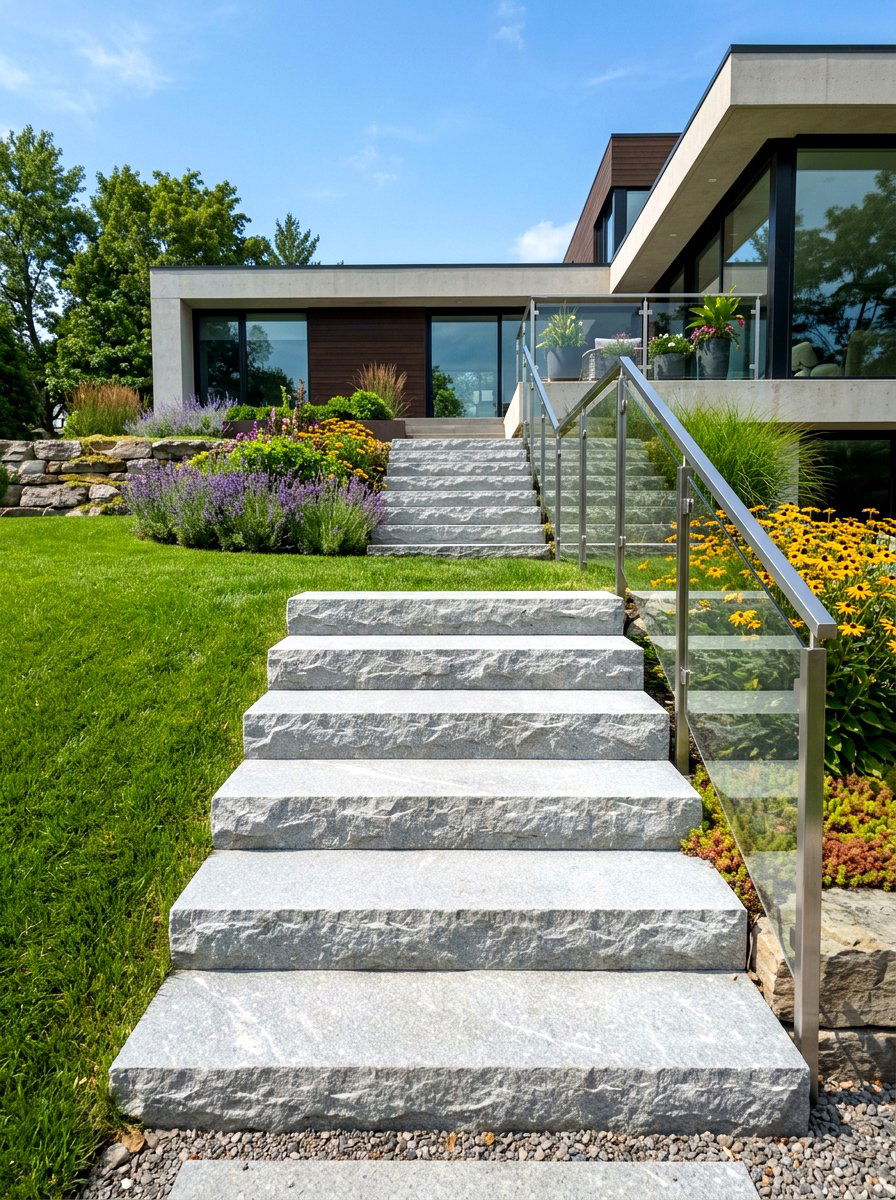
Quartzite is a metamorphic rock that is even harder and more durable than granite, making it nearly indestructible for outdoor use. These stairs often have a slight shimmer or sparkle due to the high quartz content in the stone. This subtle reflective quality can make your front steps look absolutely stunning under the afternoon sun or evening landscape lighting. Quartzite is highly resistant to chemicals, weathering, and scratching, so it maintains its original beauty for a lifetime. It is available in a wide range of colors, including vibrant whites and deep grays, allowing it to fit perfectly into any modern or traditional design scheme.
10. Cobblestone Step Borders
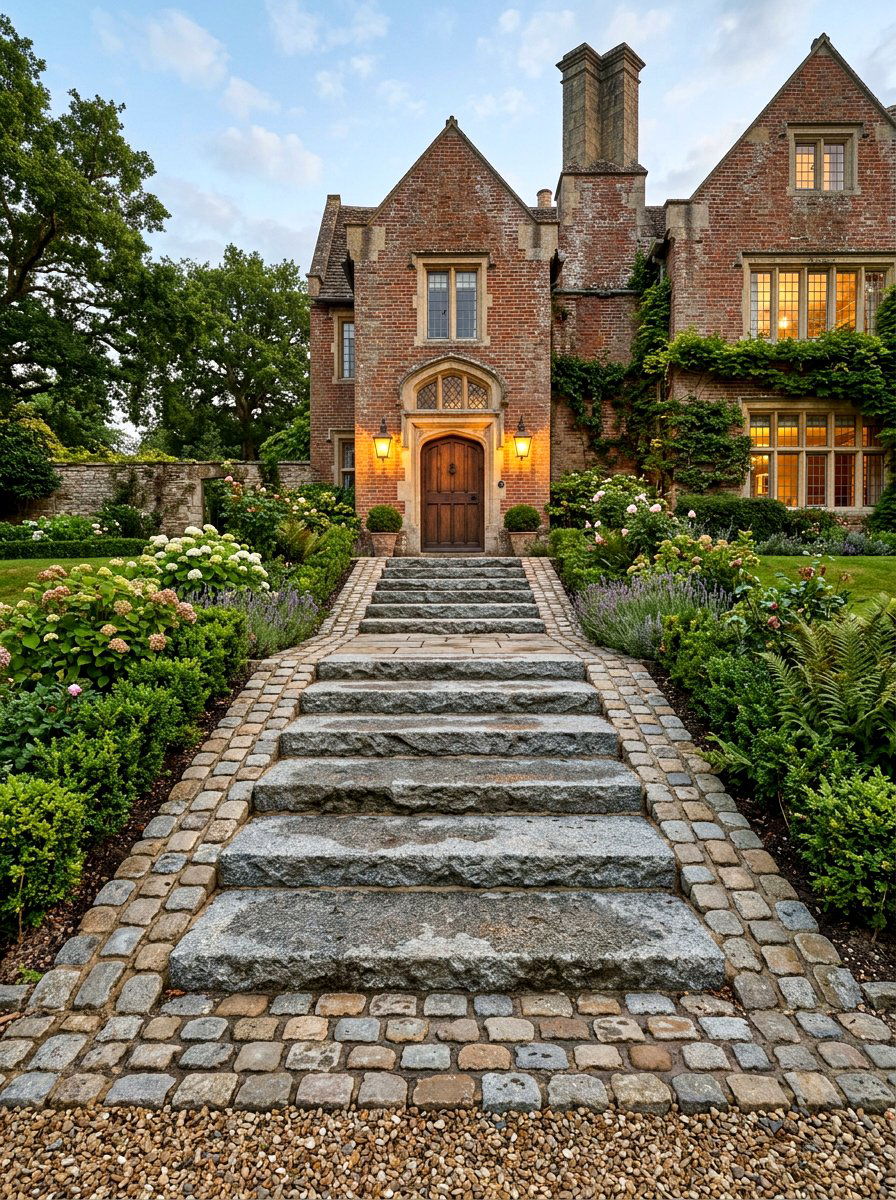
Using cobblestones as a border for your front steps adds a traditional and historic feel that mimics the streets of old Europe. These small, rounded stones provide a beautiful frame for larger stone treads, creating a decorative edge that is both functional and stylish. Cobblestones are incredibly tough and can withstand significant pressure and foot traffic without shifting. They are often used to bridge the gap between a gravel path and a more formal stone staircase. The textured look of cobblestone creates a sense of depth and craftsmanship that makes your entryway feel like it has been part of the landscape for centuries.
11. River Rock Staircase
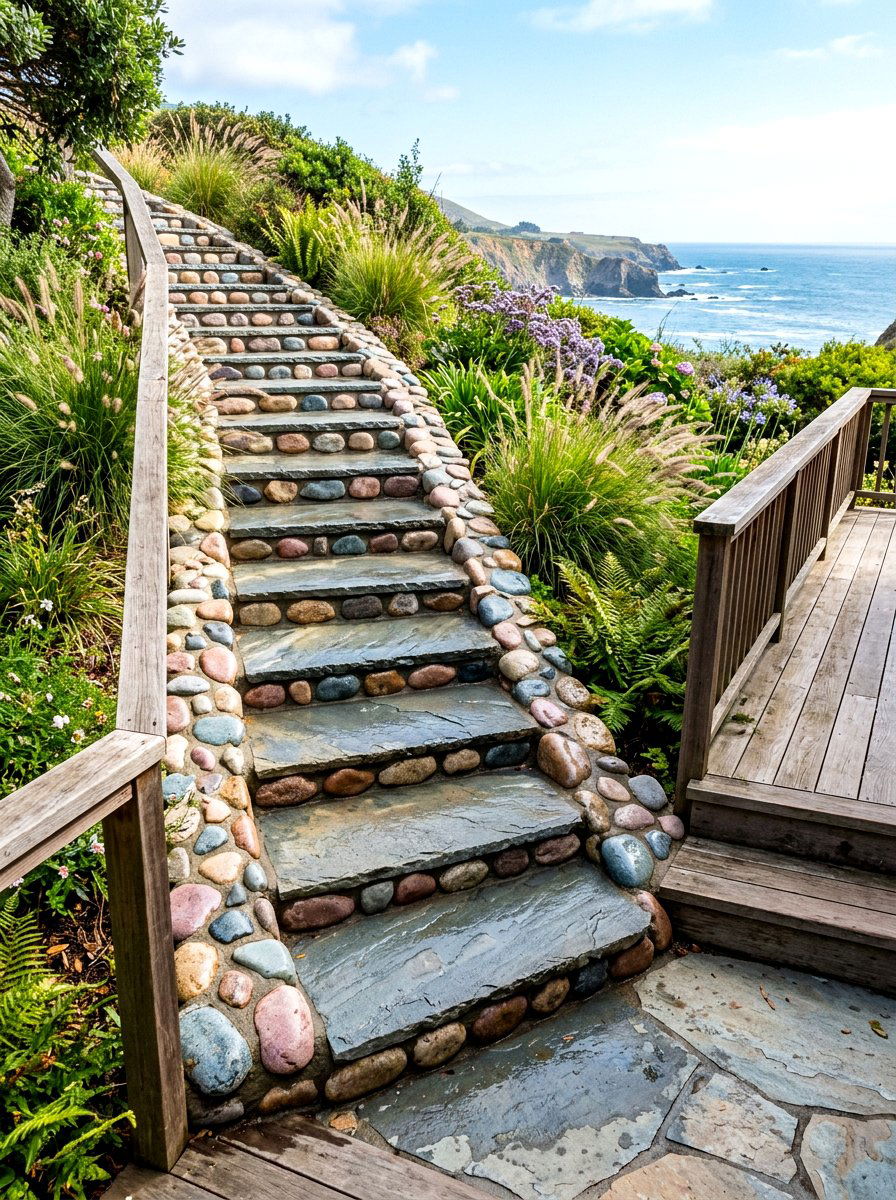
River rocks offer a smooth, rounded aesthetic that works beautifully for homes with a coastal or water-inspired landscape design. While the treads themselves need to be flat for safety, using river rocks for the risers or side walls creates a relaxing and natural vibe. These stones come in a variety of soft colors like gray, tan, and blue, often featuring a polished look when wet. A river rock staircase feels less formal than cut stone, making it ideal for a casual beach house or a rustic cabin. The smooth textures provide a lovely contrast against the sharp lines of a modern home or wooden siding.
12. Basalt Floating Steps
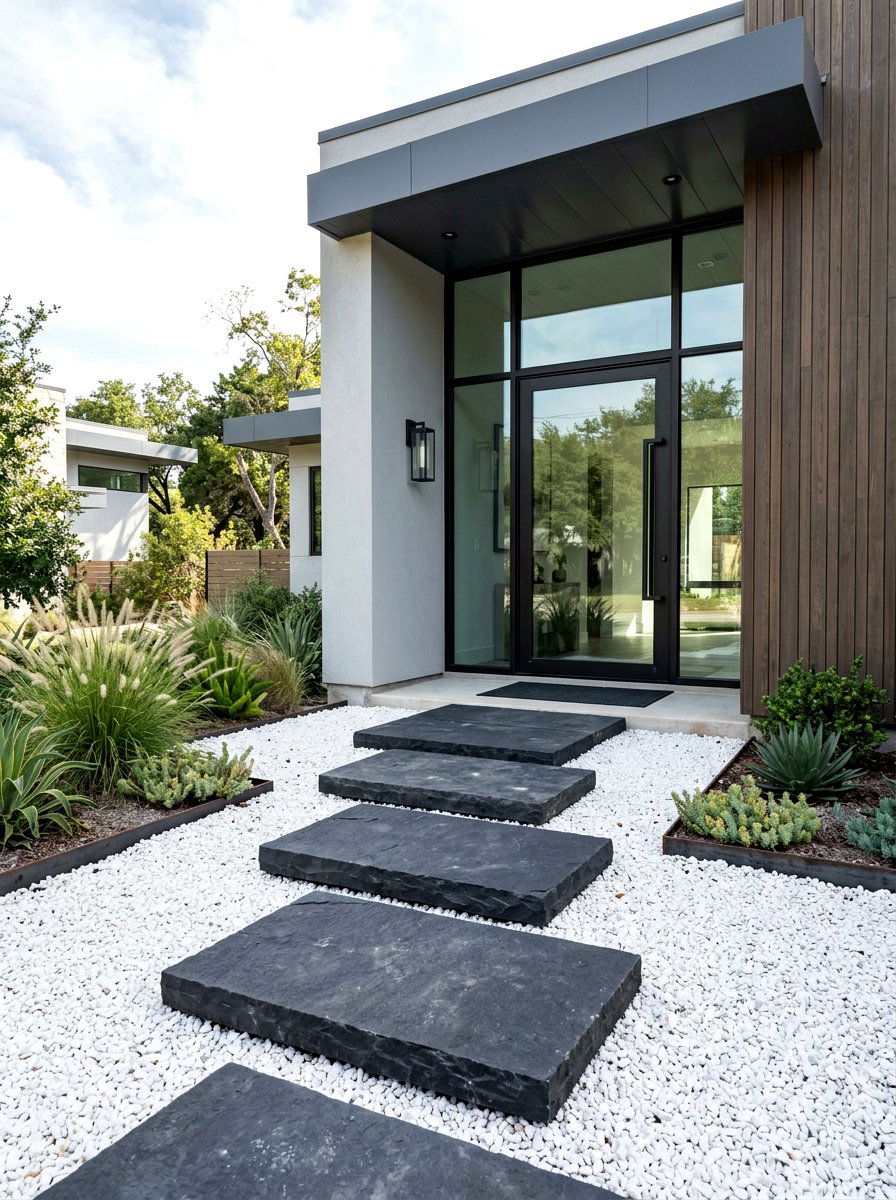
For a truly modern and minimalist look, basalt floating steps are an architectural marvel that adds instant drama to your entryway. Basalt is a dark, volcanic rock that is extremely dense and holds a consistent charcoal or black color. By cantilevering these heavy stone slabs over a hidden support structure, you create the illusion that the steps are hovering in mid-air. This design is perfect for contemporary homes with clean lines and large glass windows. The dark color of basalt provides a bold statement that looks incredible when paired with bright green lawn turf or white decorative gravel in the surrounding landscape.
13. Reclaimed Stone Stairs
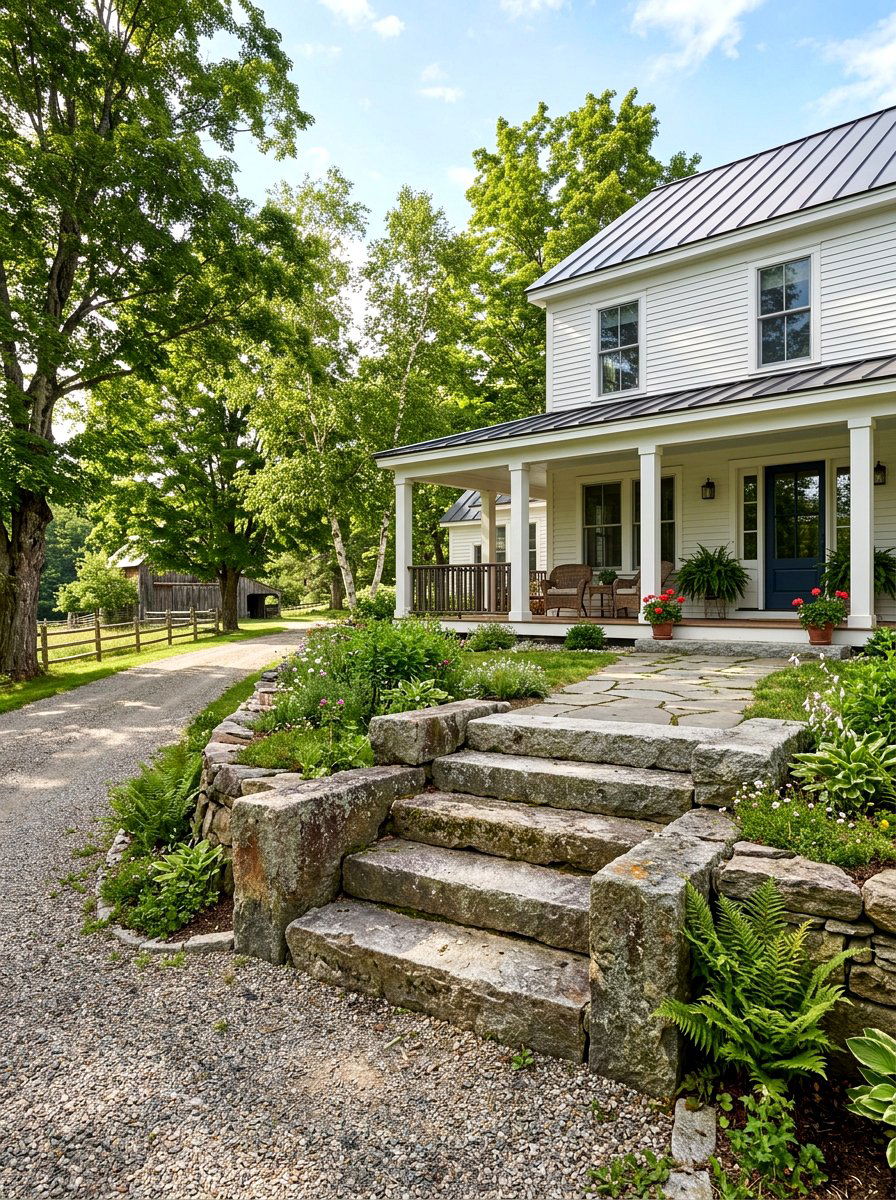
Sustainability is a growing trend in home design, and using reclaimed stone for your front steps is a perfect way to be eco-friendly. These stones are often salvaged from old buildings, bridges, or historic streets, giving them a unique story and a weathered patina. Reclaimed granite or limestone has softened edges and a color depth that new stones simply cannot replicate. Using these materials gives your home an immediate sense of history and character. It is a fantastic choice for traditional renovations where you want the new steps to look like they have always belonged to the original structure of the house.
14. Marble Front Entrance
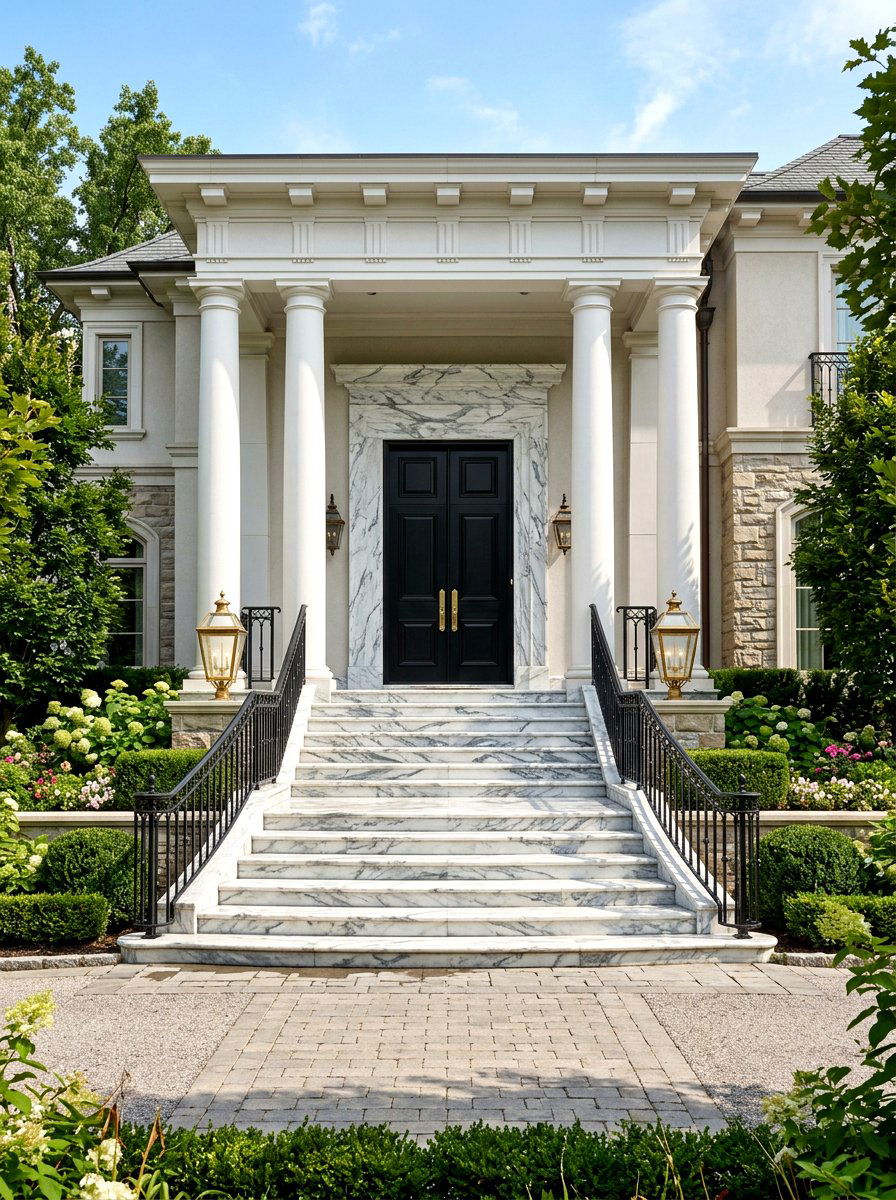
Marble has long been the gold standard for luxury and elegance in both interior and exterior design projects. A marble front entrance makes a powerful statement of success and refined taste, offering a bright and polished look. While marble is more porous than granite, certain varieties are well-suited for outdoor use when properly maintained and sealed. The classic white and gray veining creates a sophisticated pattern that looks stunning against dark front doors or lush greenery. Because marble is a premium material, it can significantly boost the overall perceived value of your property, making it a favorite for high-end residential neighborhoods.
15. Concrete Stone Veneer
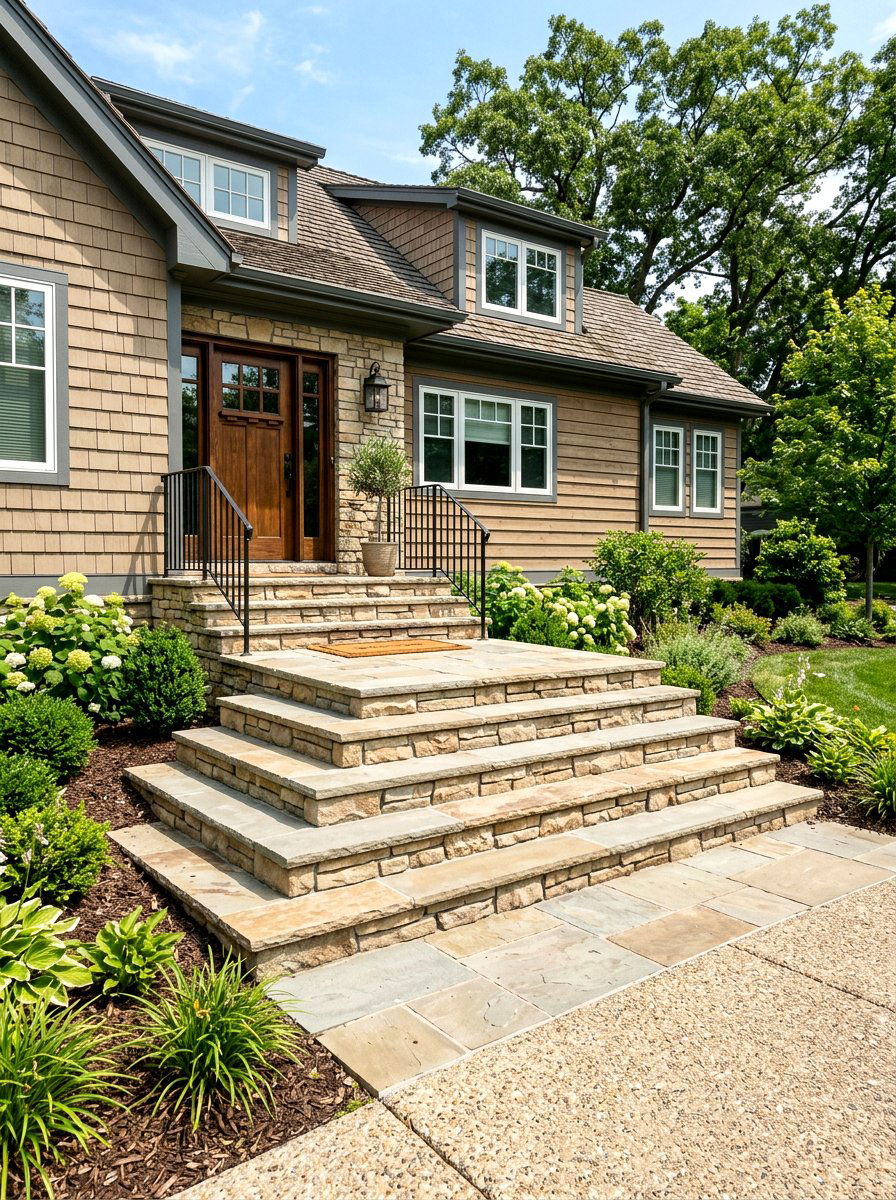
If you love the look of natural stone but are working with a tighter budget, concrete stone veneer is an excellent alternative. This material consists of a thin layer of real or manufactured stone applied over a sturdy concrete core. It allows you to achieve the appearance of heavy stacked stone or solid granite without the extreme weight and high cost. Veneer is incredibly versatile and can be applied to existing concrete steps to give them an instant facelift. Modern manufacturing techniques make these veneers look remarkably realistic, offering the same textures and color variations you would expect to find in much more expensive natural stones.
16. Stacked Stone Risers
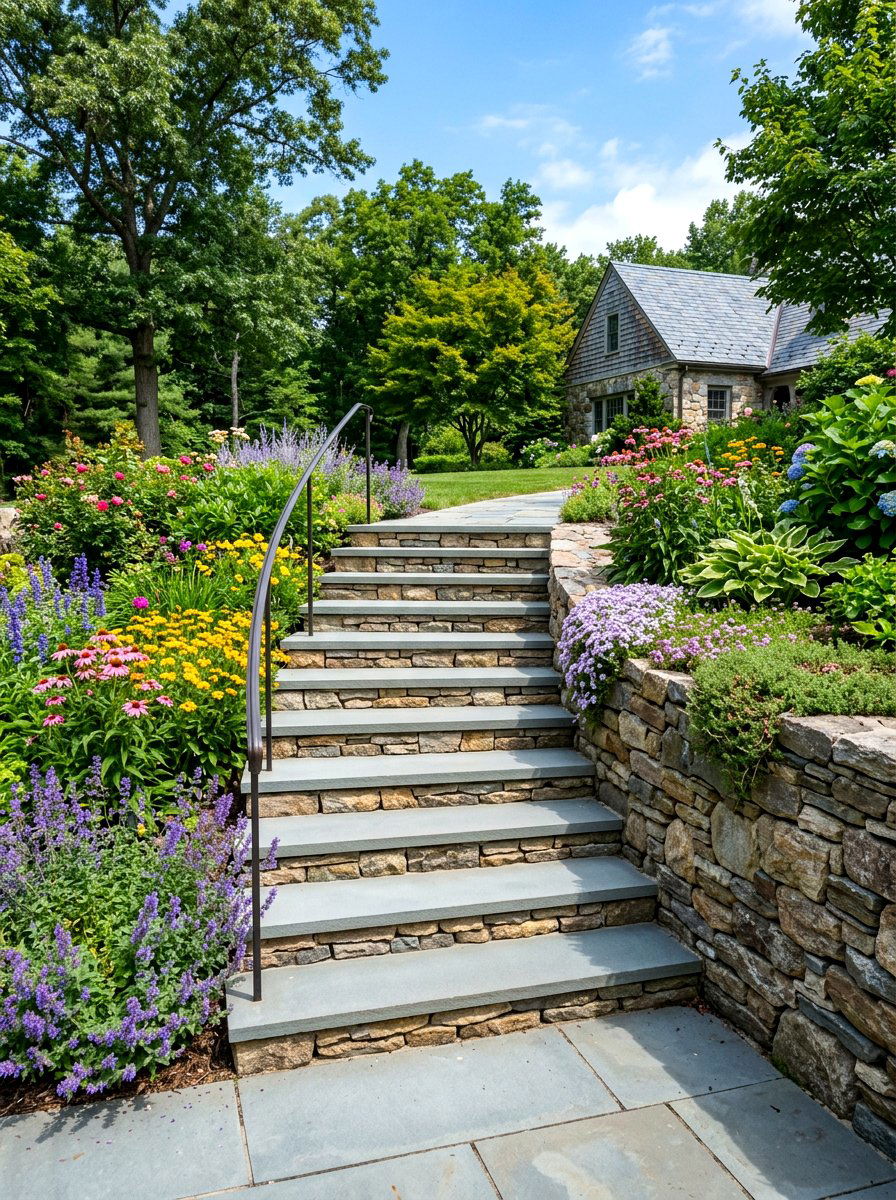
One of the most popular ways to add texture and visual interest to an entryway is by using stacked stone for the risers. This technique involves layering thin strips of natural stone vertically beneath each tread to create a rugged and detailed look. Stacked stone pairs exceptionally well with smooth stone treads, providing a balance between clean lines and rustic charm. It is a great way to tie in other stone elements on your home, such as a stone chimney or foundation accents. The shadow lines created by the irregular stones add depth to the staircase, making it a beautiful focal point even from a distance.
17. Curved Flagstone Steps
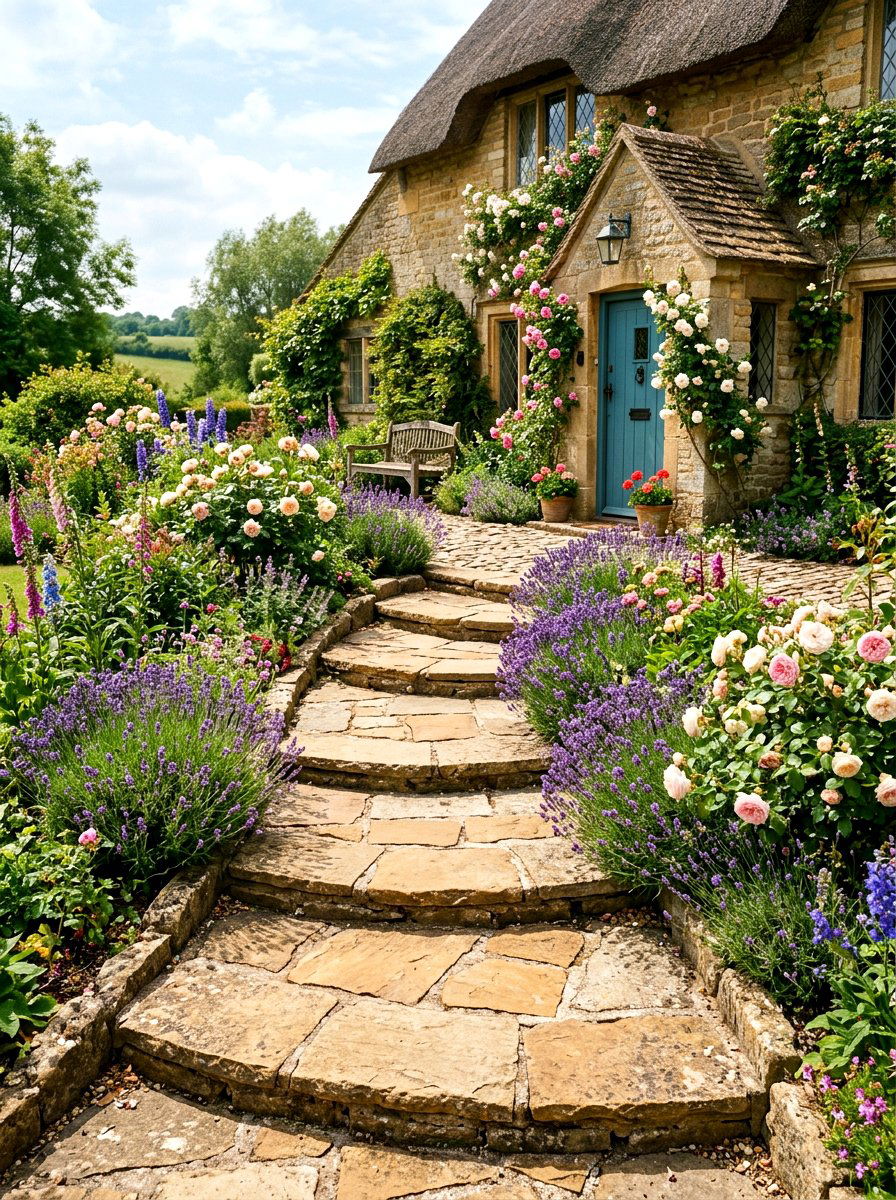
Not every staircase needs to be a straight line, and curved flagstone steps offer a graceful and welcoming transition to your home. Curving the path allows the steps to follow the natural flow of your landscape, making the entryway feel more integrated and less rigid. Flagstone is the perfect material for this because its irregular shapes are easily adapted to a circular or winding layout. This design choice softens the overall appearance of the house and creates a sense of movement. It is especially effective for homes with wide front yards or those that sit on a slight hill, providing a beautiful wandering path.
18. Wide Stone Landing
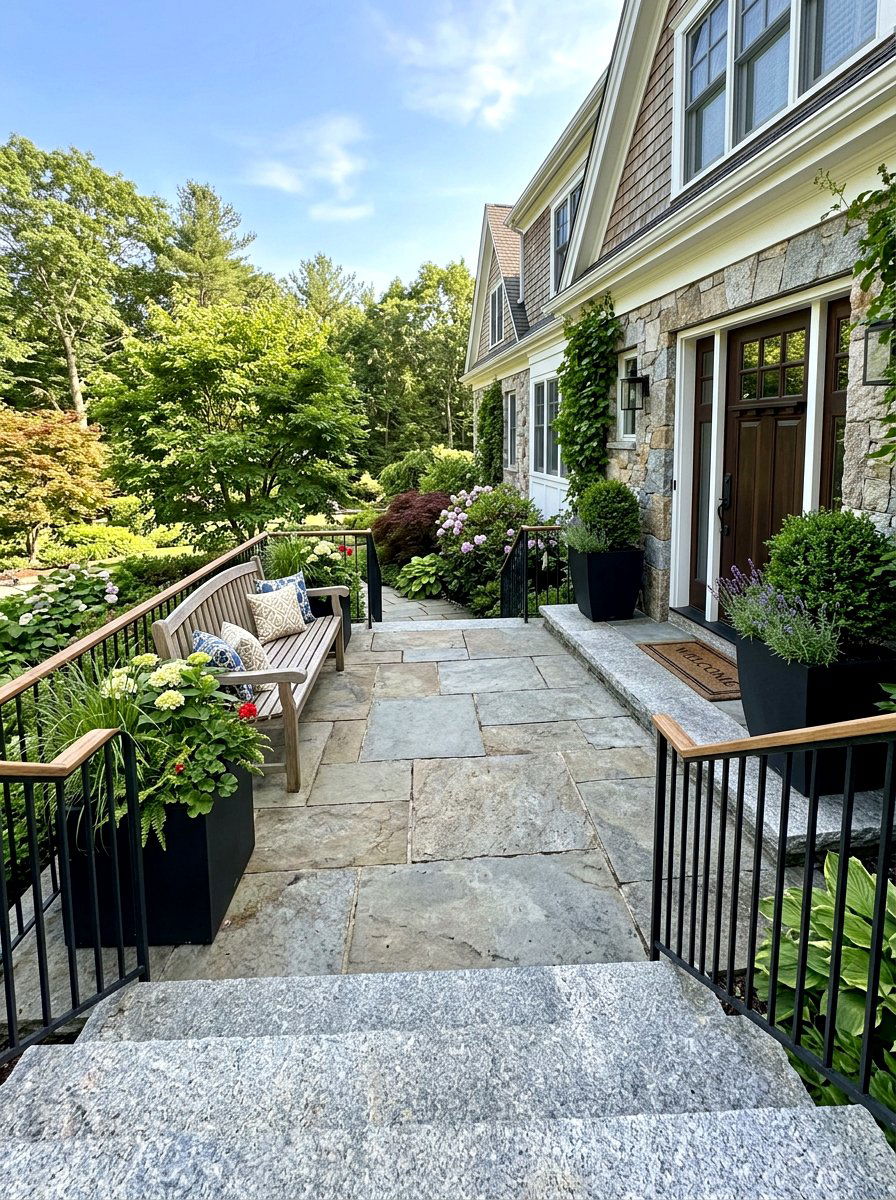
Creating a wide stone landing at the top of your steps provides a spacious and grand feeling that welcomes guests before they even reach the door. A landing serves as a functional transition zone where you can place decorative planters, benches, or seasonal decor. Using large stone pavers for this area ensures a stable and slip-resistant surface for everyone entering and exiting the home. A wide landing also makes the entryway look more proportional on larger houses, preventing the steps from appearing too narrow or small. It is a practical addition that improves both the aesthetics and the overall safety of your front porch.
19. Stone And Brick Combo
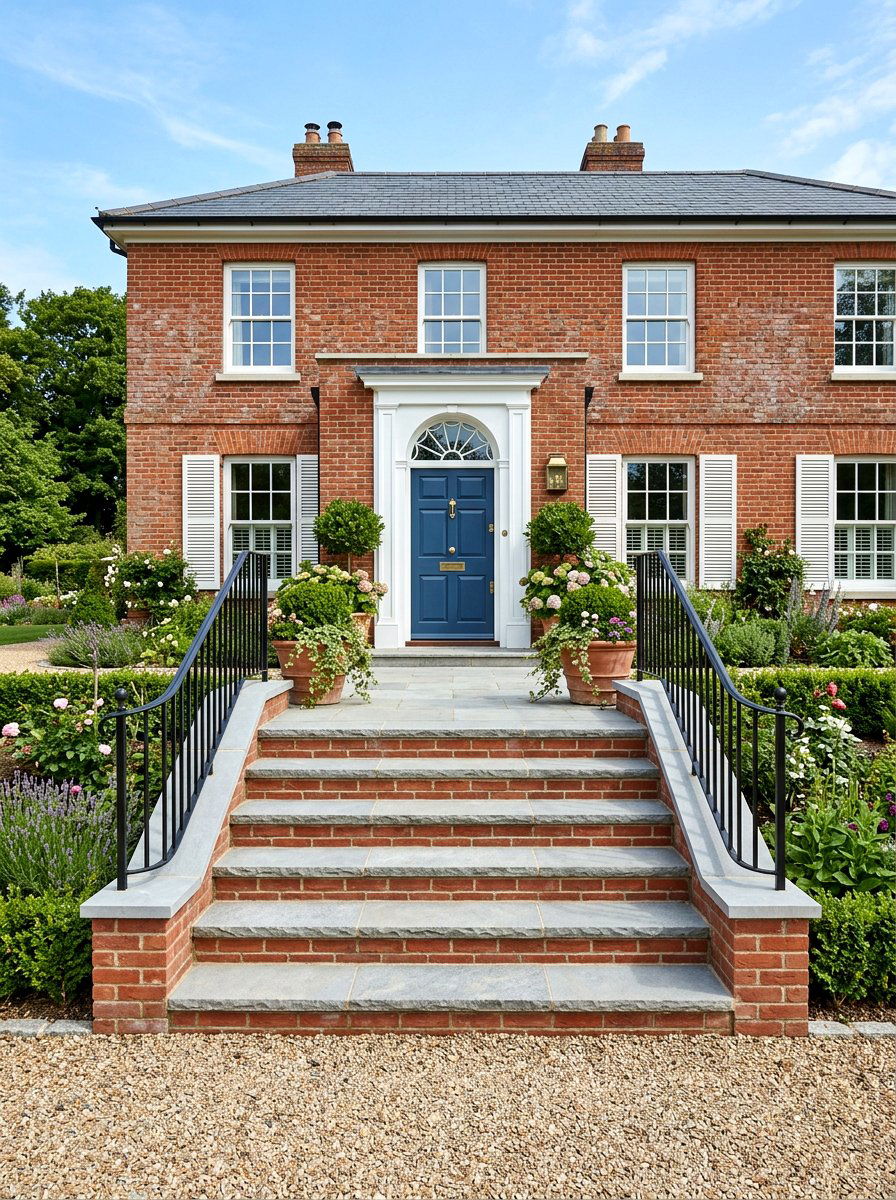
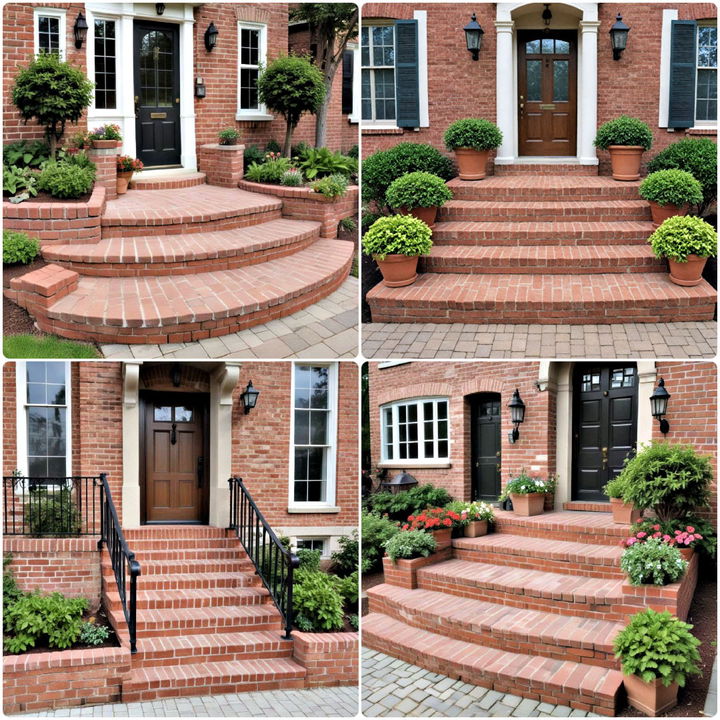
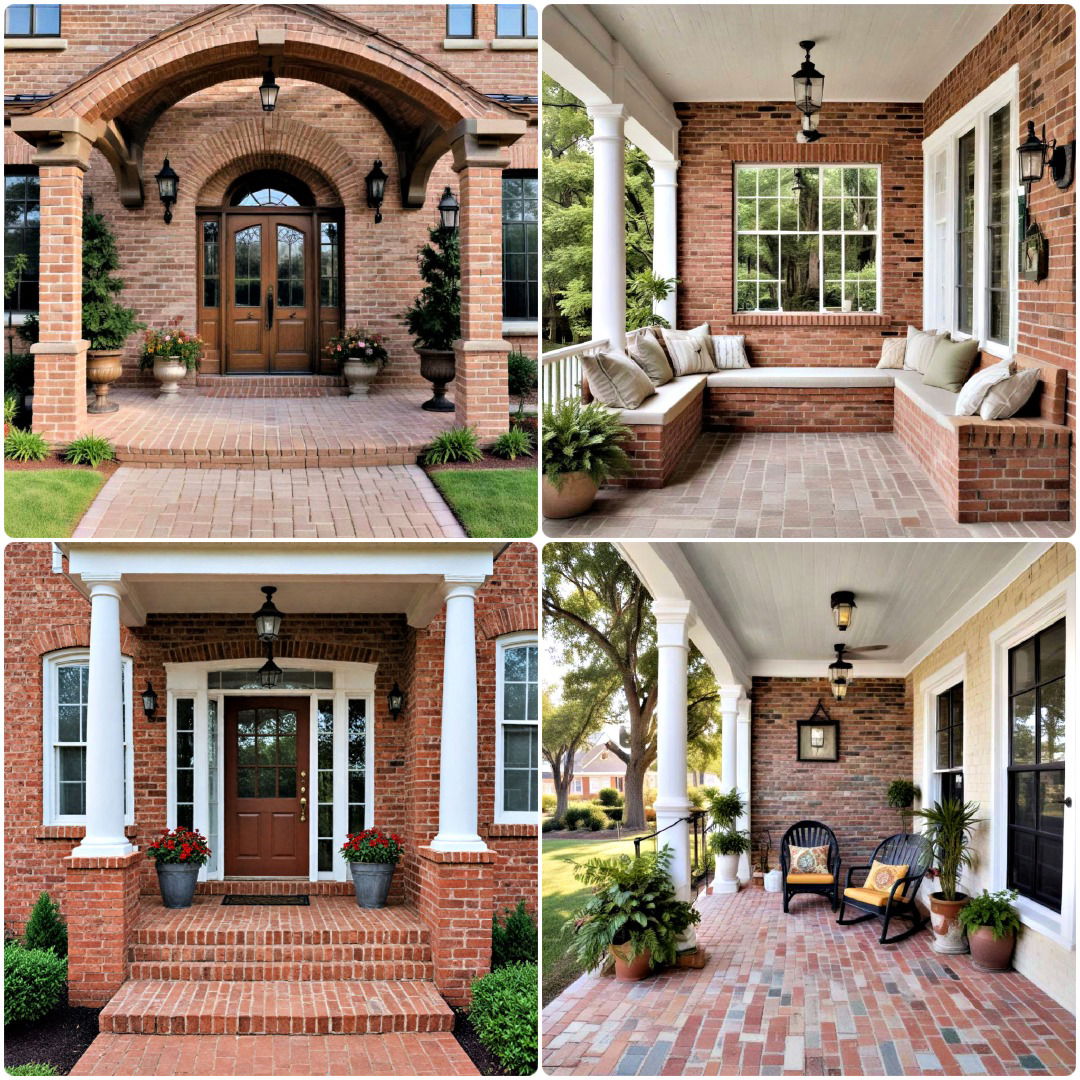
Combining stone treads with brick risers is a classic design choice that offers a beautiful contrast in both color and texture. The red or orange hues of traditional brick pair perfectly with the cool grays of bluestone or granite. This combination is frequently seen in colonial and Georgian-style homes where brick is a primary building material. The stone provides a solid and durable walking surface, while the brick adds a touch of warmth and traditional pattern. This mixed-material approach is a great way to add visual variety to your home's exterior without making the design feel too busy or cluttered.
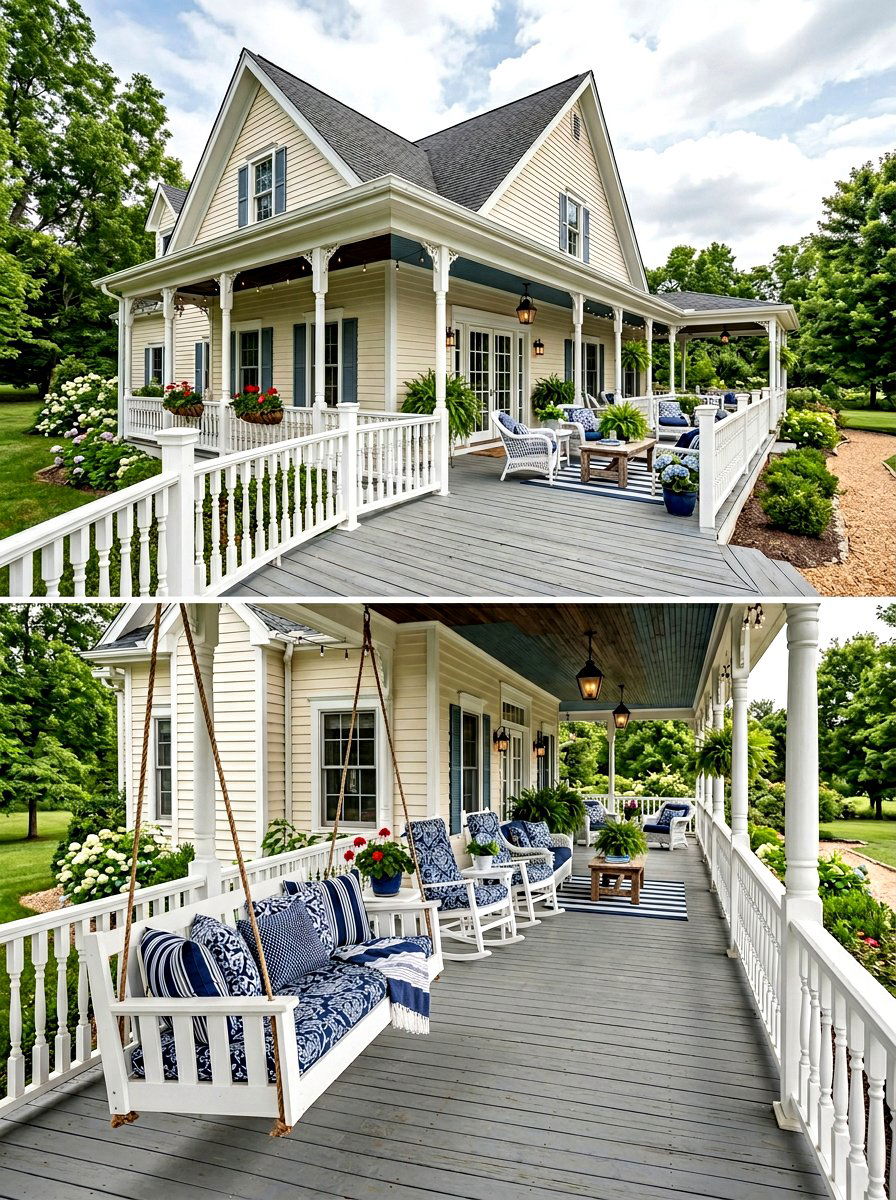
20. Tiered Stone Terraces
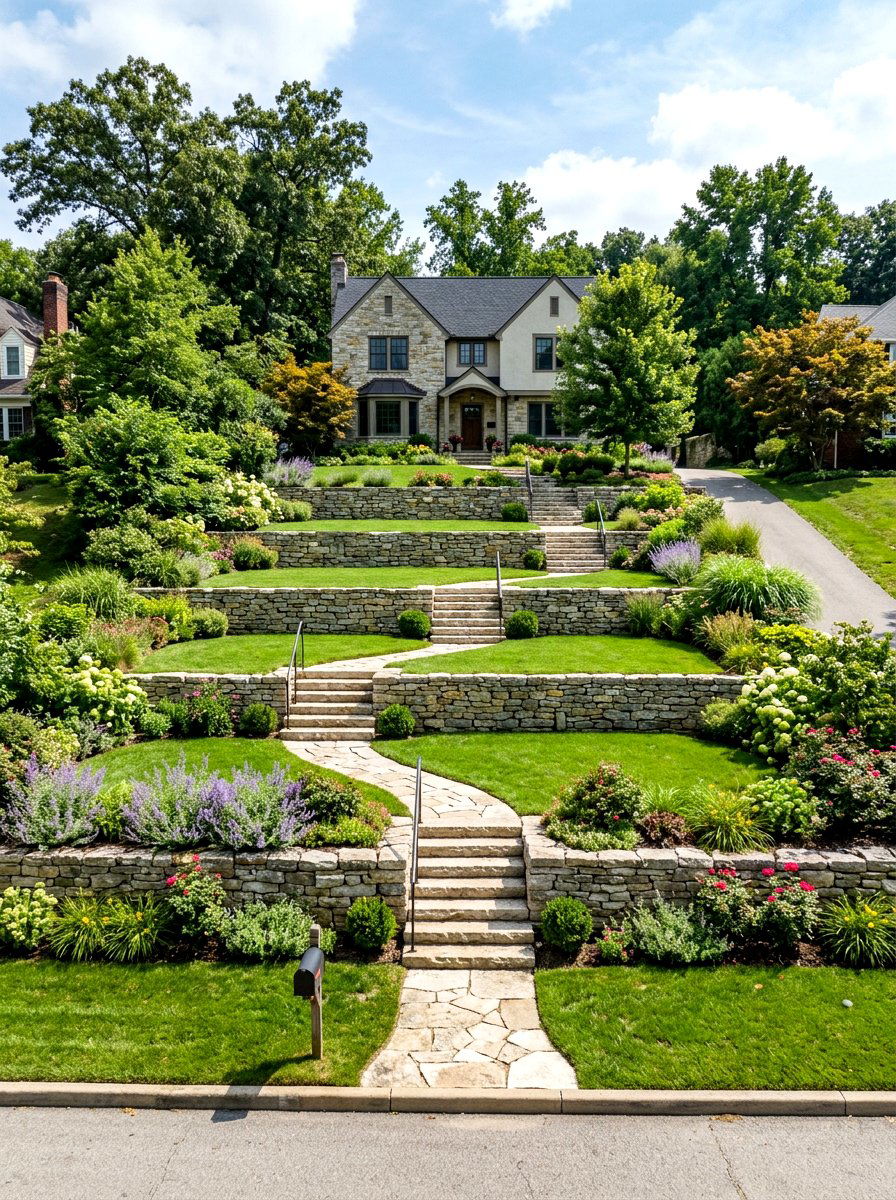
For homes located on steep inclines, tiered stone terraces are a practical and stunning solution for navigating the change in elevation. Instead of one long flight of stairs, you can create a series of wide stone steps separated by flat landings or small garden beds. This design makes the climb feel much easier and provides opportunities for beautiful landscaping at every level. Using heavy stone blocks ensures that each terrace acts as a mini retaining wall, preventing soil erosion on the hillside. Tiered steps create a grand, multi-dimensional entrance that makes a small front yard feel much more significant and professionally designed.
21. Large Boulder Stairs
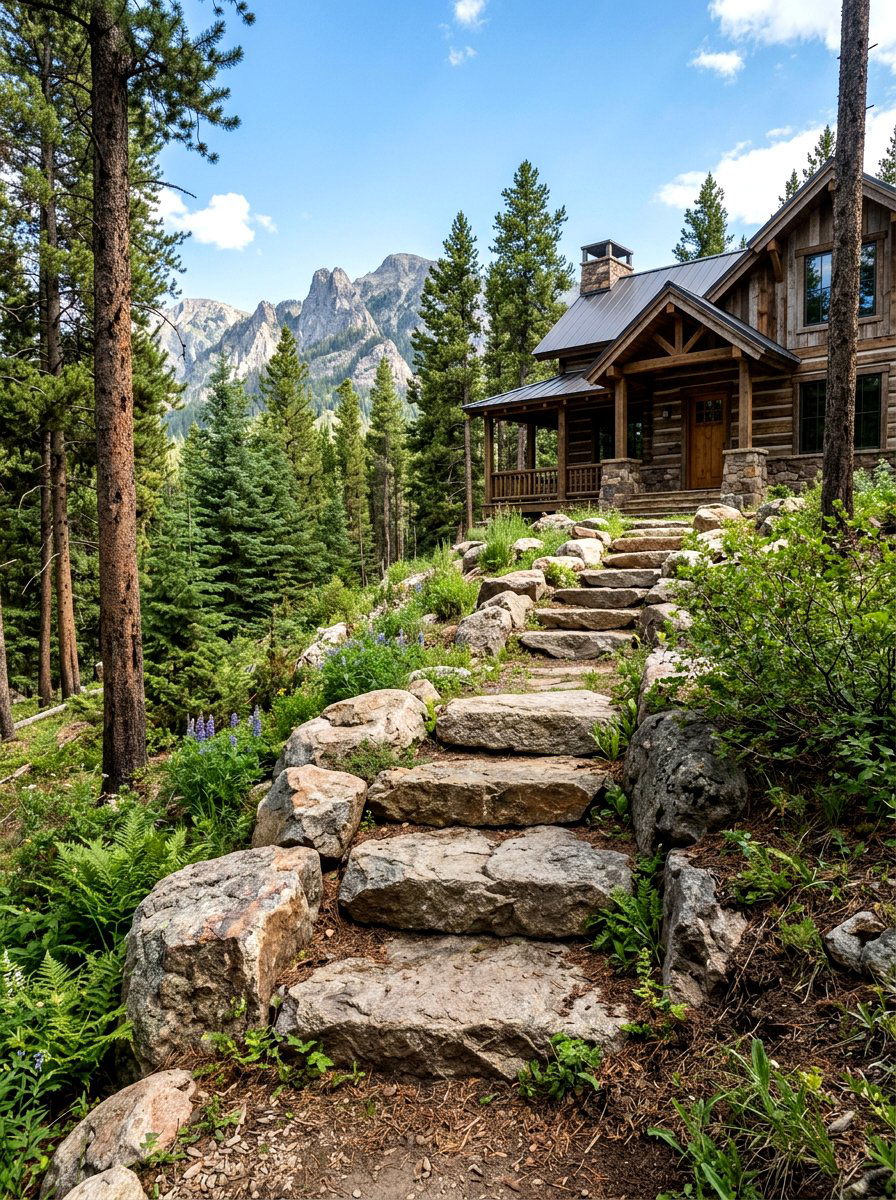
Using large, natural boulders as steps is the ultimate way to create a rugged and primitive look that feels completely at one with nature. These stones are minimally processed, keeping their original shapes and textures for an authentic mountain or forest vibe. Because boulders are incredibly heavy, they provide a sense of absolute permanence and strength. This style works best for rustic cabins, lake houses, or properties with a wild and unmanicured landscape. The irregular heights and widths of boulder steps require careful installation to ensure they are safe for walking, but the visual reward is a unique and breathtaking entryway.
22. Mossy Stone Walkway
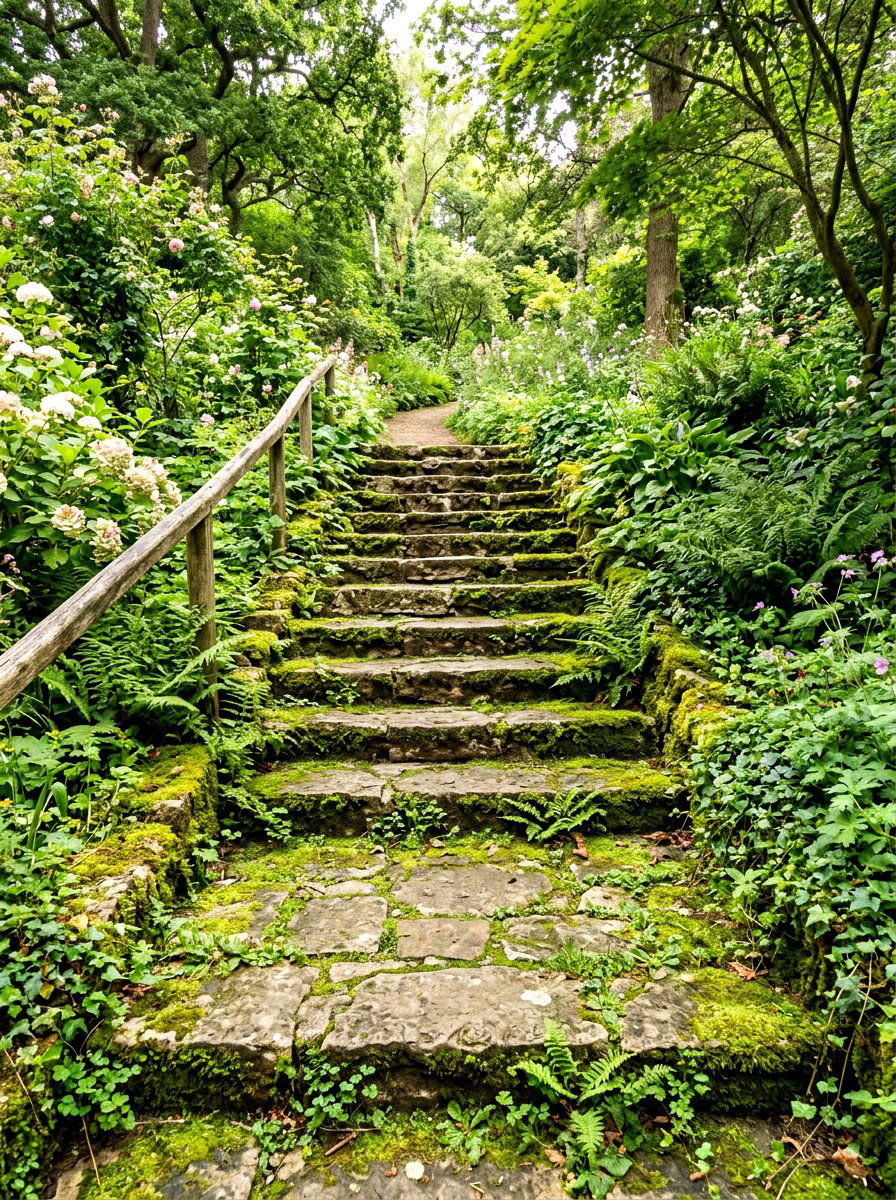
There is something incredibly enchanting about stone steps that have been allowed to grow a soft layer of green moss over time. A mossy stone walkway feels like something out of a fairy tale, offering a lush and aged appearance that is perfect for shaded gardens. To achieve this look, you can use porous stones like limestone or sandstone and place them in areas with plenty of moisture. The green moss softens the hard edges of the stone and helps the staircase blend seamlessly into the surrounding plants. It is a beautiful way to create a living landscape that changes and grows with the seasons.
23. Modern Slate Treads
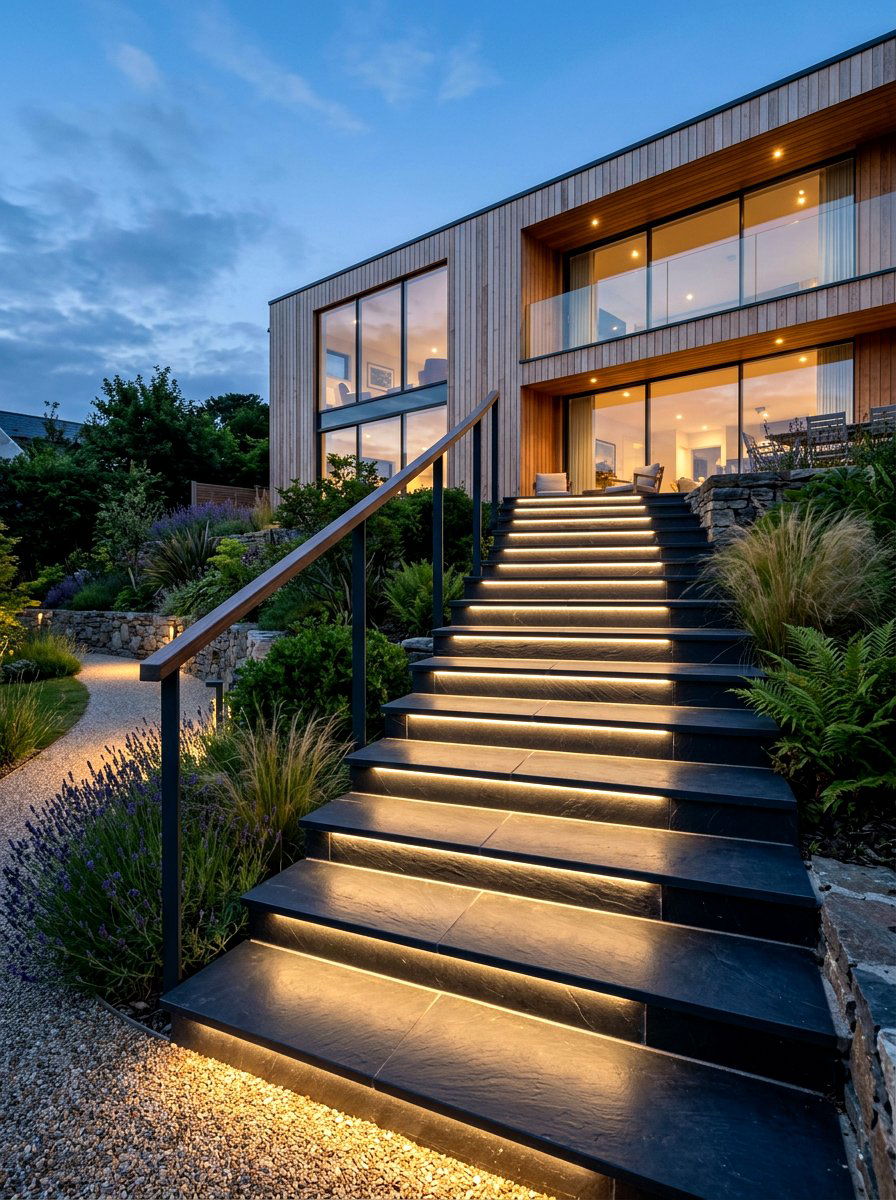
Modern design often relies on clean lines and dark colors, making slate an ideal choice for a contemporary front entry. By using perfectly rectangular slate treads with minimal grout lines, you create a sleek and sophisticated staircase. The dark gray or black tones of the slate provide a dramatic contrast against a white or light-colored house facade. Slate's naturally layered texture adds just enough visual interest without overwhelming the minimalist aesthetic. These steps look particularly high-end when paired with glass railings or hidden LED lighting. It is a timeless choice that feels fresh and current while providing the durability needed for an outdoor entrance.
24. Irregular Flagstone Path
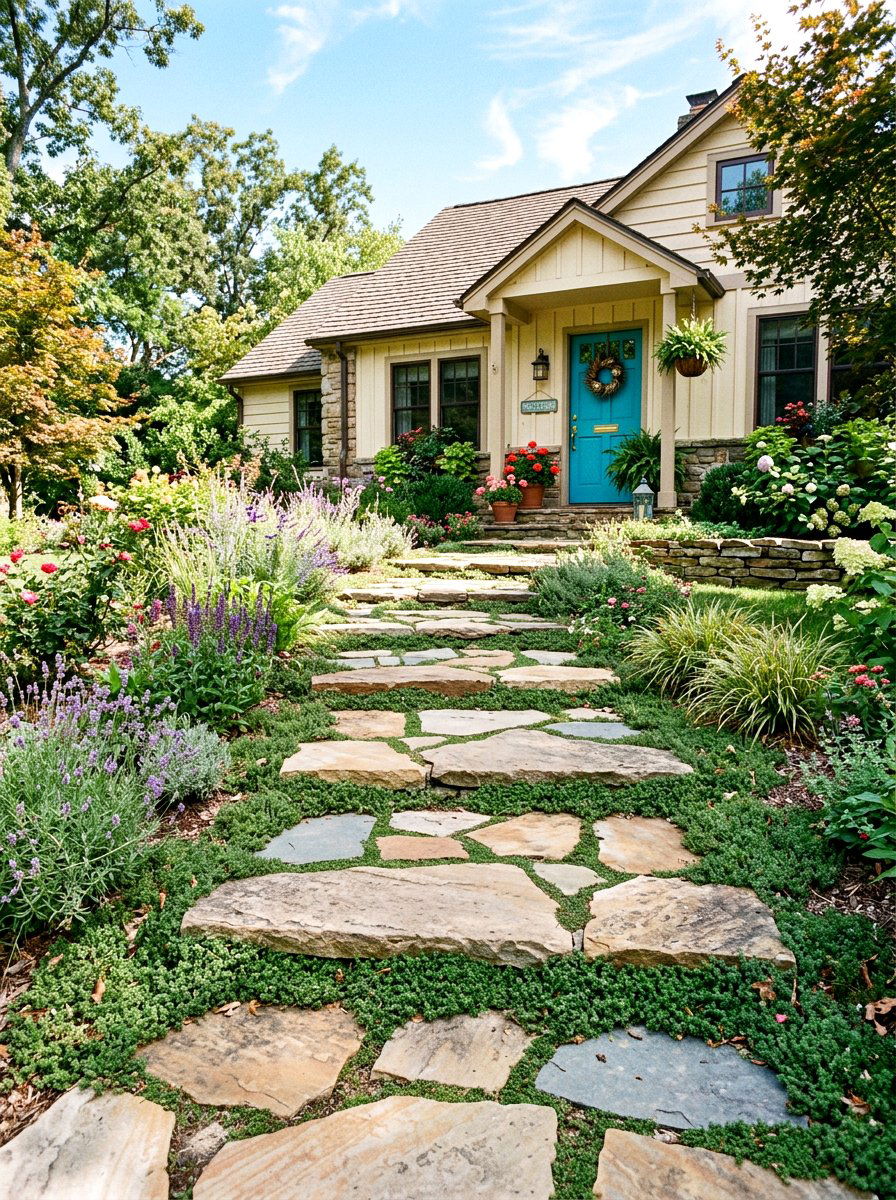
An irregular flagstone path provides a casual and artistic approach to front steps, emphasizing the natural beauty of the stone's raw form. Instead of cutting the stones into perfect squares, you can leave them in their original shapes and fit them together like a beautiful mosaic puzzle. This style is perfect for cottage gardens or eclectic homes where a rigid design would feel out of place. The wide gaps between the stones can be filled with moss, small pebbles, or groundcover plants to further enhance the natural look. It creates an inviting and low-pressure entry that feels lived-in and full of personal character.
25. Grey Granite Steps
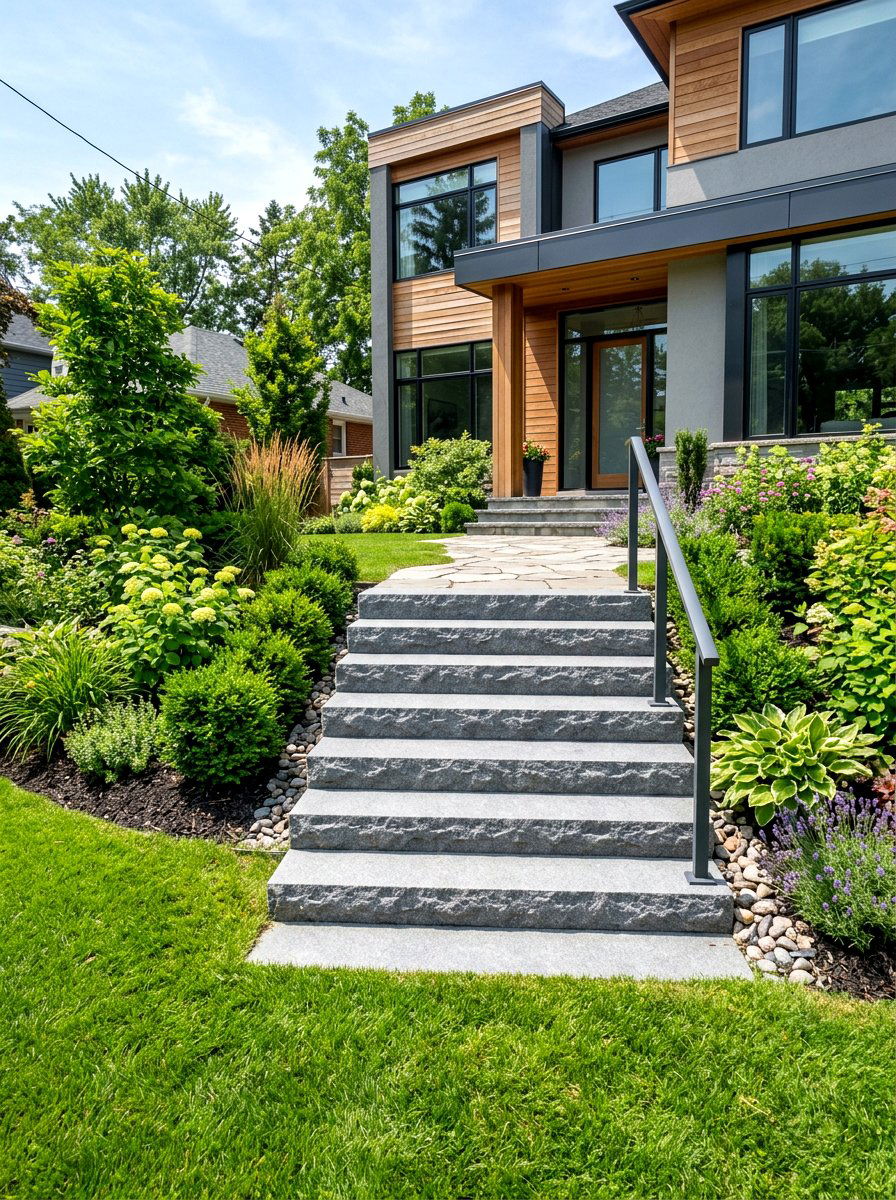
Grey granite is a classic and versatile choice that works with almost any architectural style, from historic Victorian homes to modern suburban houses. The neutral gray color provides a clean and polished look that never goes out of style. Granite 's extreme hardness means that these steps will not wear down or lose their texture even after decades of heavy use. You can choose a flamed finish for a rougher, non-slip surface or a honed finish for a smoother, more refined appearance. Grey granite steps are easy to clean and maintain, making them a practical and beautiful investment for any homeowner' s front entryway.
26. Rectangular Stone Pavers
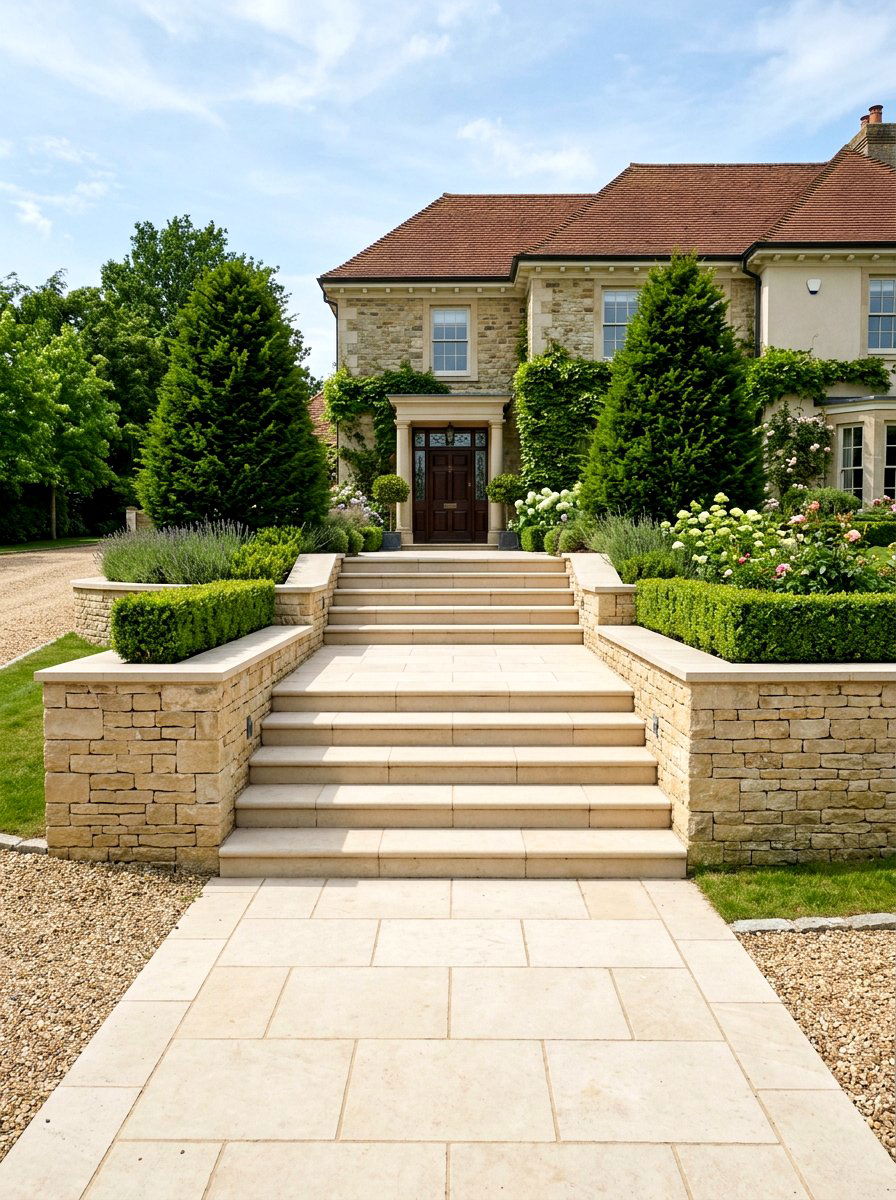
Using uniform rectangular stone pavers for your front steps creates a sense of order and symmetry that is very pleasing to the eye. This organized look is a hallmark of formal garden design and traditional architecture. Rectangular pavers allow for very tight joints, which reduces the amount of maintenance required to keep weeds from growing between the steps. You can choose from a variety of materials, including limestone, bluestone, or granite, depending on your preferred color and budget. This style is easy to plan and install, making it a reliable choice for achieving a professional and clean-cut entryway that looks great year-round.
27. Split Face Stone
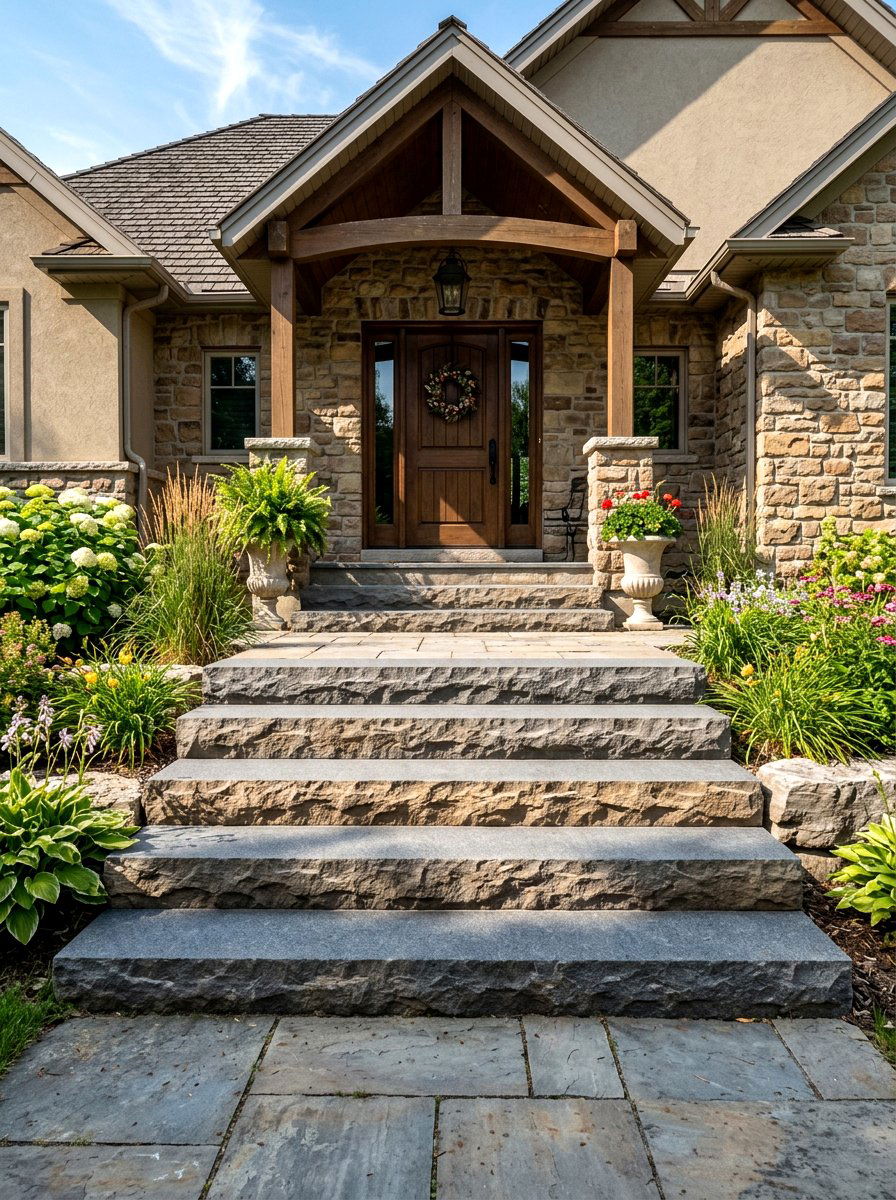
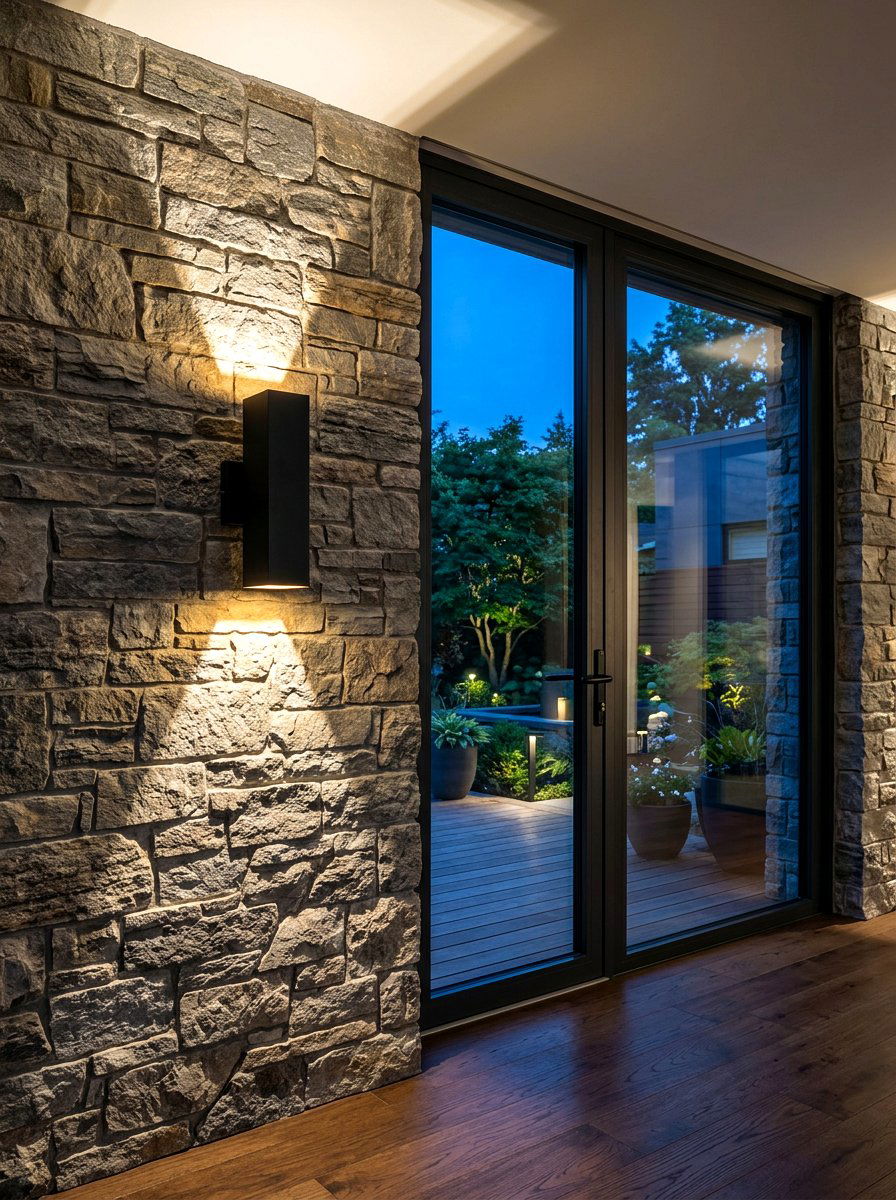
Split face stone features a rough, hand-chiseled texture that exposes the internal beauty and grain of the rock. Using this material for your step risers or side walls adds a tactile and rugged quality to the entryway. The uneven surface catches the light in different ways throughout the day, creating beautiful shadows and highlights. Split face stone is often used to give a home a more substantial and grounded appearance. It pairs well with smooth stone treads, providing a balanced look that is both refined and natural. This texture is particularly effective at hiding small scratches or dirt, making it a very low-maintenance option.
28. Tumbled Stone Entry
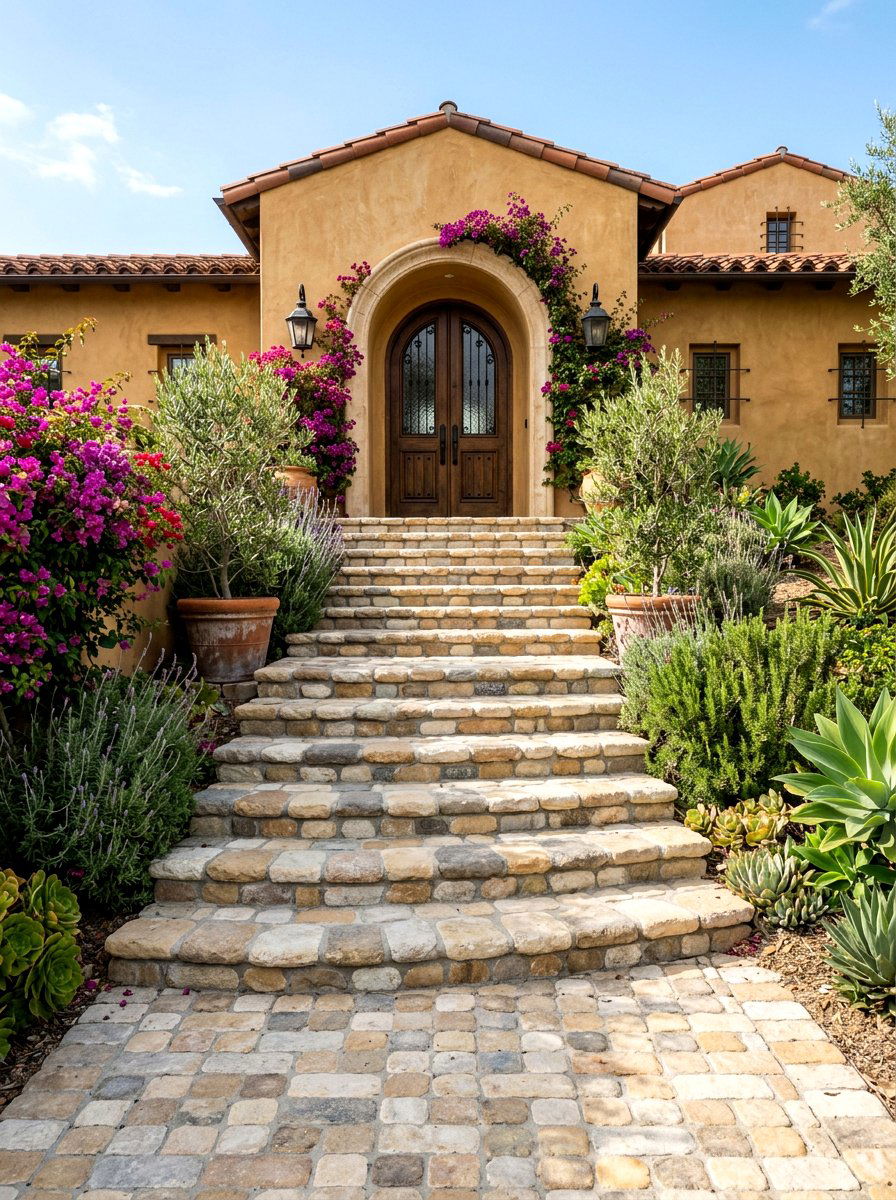
Tumbled stones have been processed in a large drum to soften their edges and create a weathered, antique appearance. This style is perfect for homeowners who want their new steps to have a gentle and lived-in feel right from the start. Tumbled stone entryways often use smaller pavers in a variety of earthy tones, creating a warm and inviting mosaic. The lack of sharp corners makes these steps feel safer and more approachable, especially for families with young children. This material works beautifully with Mediterranean or rustic farmhouse designs, where a slightly distressed and natural look is preferred over a sleek, modern finish.
29. Ledgestone Stair Risers
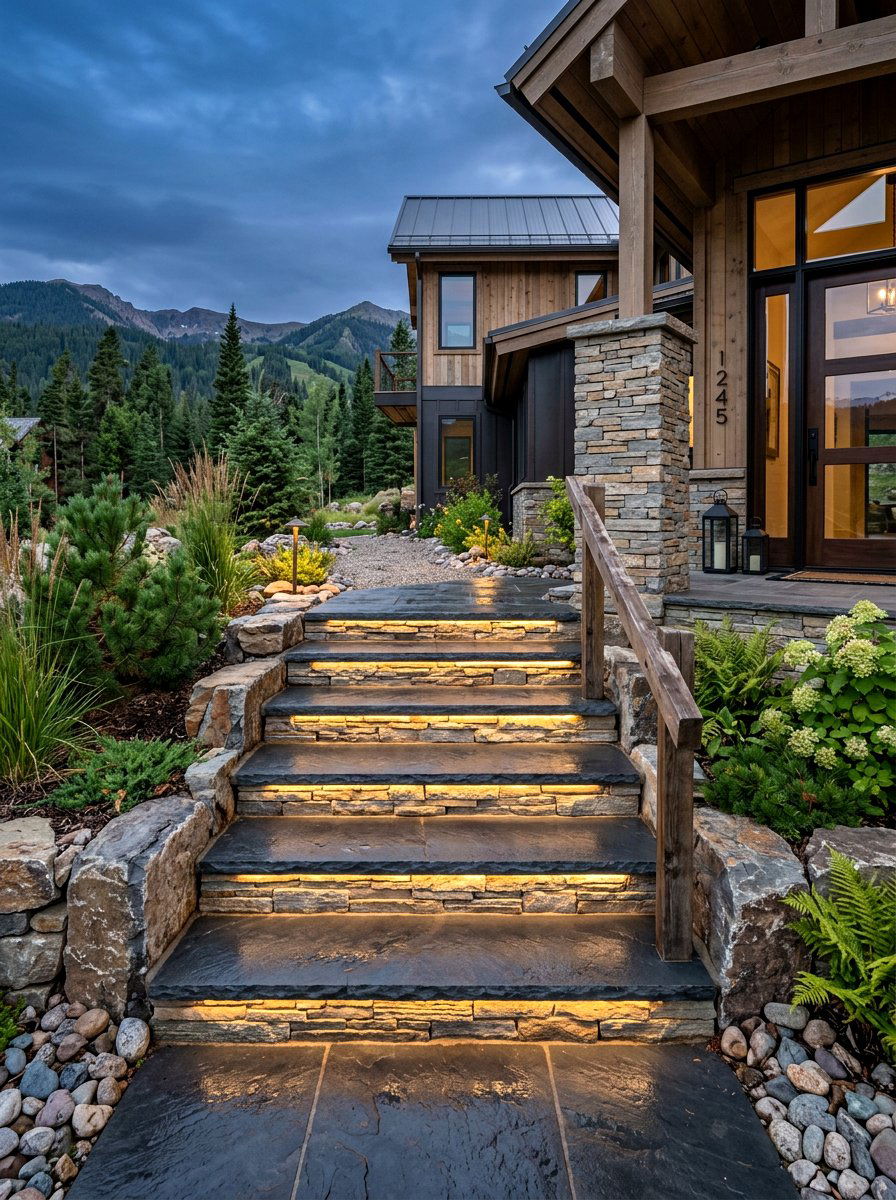
Ledgestone consists of small, thin pieces of natural stone that are stacked tightly together to create a highly textured and detailed surface. Using ledgestone on the risers of your front steps adds a level of craftsmanship that is instantly recognizable. This style is often seen in modern mountain homes or contemporary suburban designs. The horizontal lines of the ledgestone create a sense of width and stability for the staircase. Because the stones are small and varied, they provide a beautiful organic pattern that complements a wide range of colors. It is an excellent way to add a premium, custom-built look to your home's exterior.
30. Rustic Rock Steps
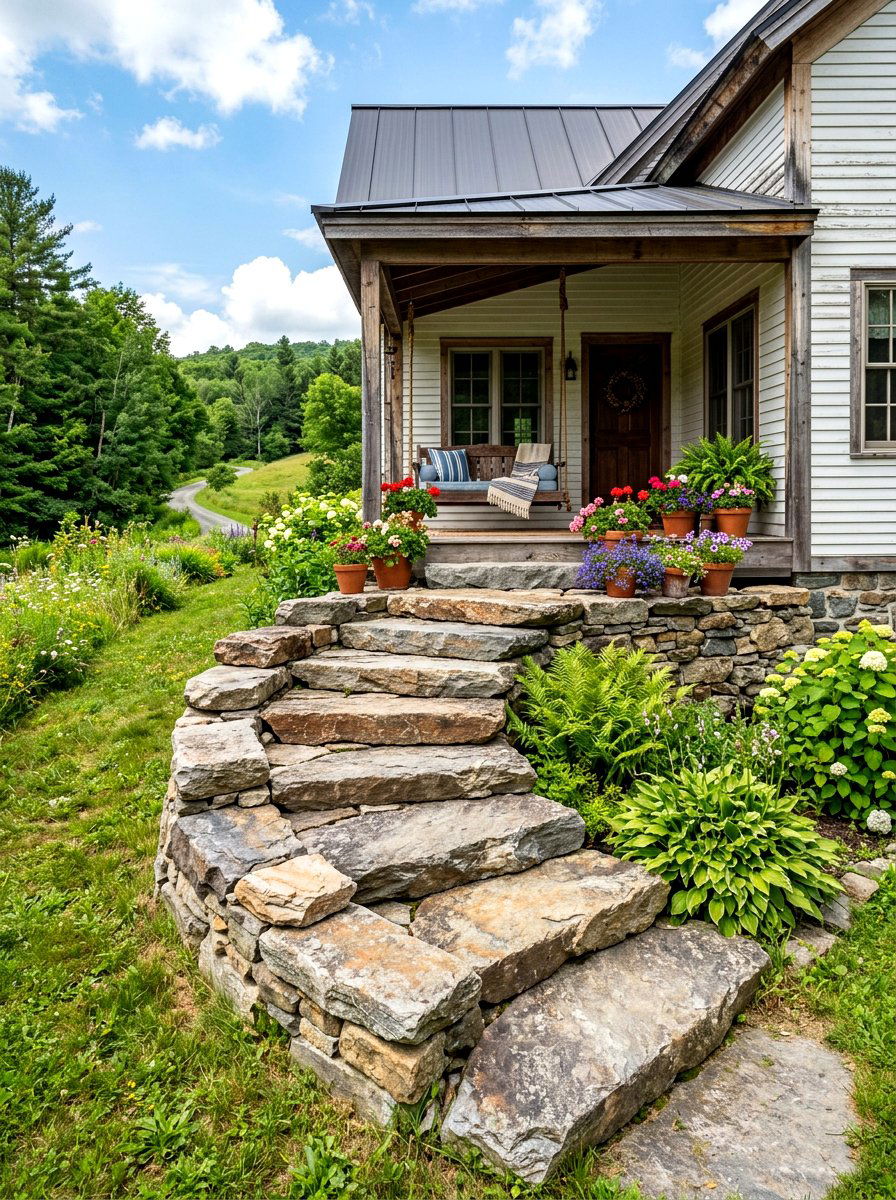
Sometimes the best design is the one that looks the most natural, and rustic rock steps achieve exactly that. By using large, minimally shaped stones that retain their original cracks and fissures, you create an entryway that feels part of the landscape. These steps are perfect for woodland retreats or homes with a focus on organic materials. The varied heights and rough textures provide a sense of adventure and connection to the earth. Rustic rock steps are incredibly durable and require almost zero upkeep, as they are meant to age and weather naturally over time. It is a bold and beautiful choice for a unique home.
Conclusion:
Selecting the perfect stone for your front steps is a decision that impacts your home 's appearance and functionality for many years to come. From the timeless elegance of granite to the rugged charm of fieldstone, natural materials offer a level of character that manufactured options simply cannot replicate. By considering your home' s architectural style and the local climate, you can choose a stone that provides both safety and beauty. Whether you prefer a sleek modern staircase or a winding garden path, stone remains the ultimate choice for a durable and high-end entryway. Investing in quality stonework is a surefire way to elevate your curb appeal today.

Related posts: