Painting your floors is one of the most transformative DIY projects you can undertake to completely change the atmosphere of a room without a massive renovation budget. Whether you are dealing with old, scuffed hardwoods, cold concrete, or even basic plywood subfloors, a fresh coat of specialized floor paint can breathe new life into your home. This approach allows for incredible creative freedom, enabling you to play with bold colors, intricate patterns, or classic finishes that traditional flooring materials simply cannot offer. From the timeless elegance of a checkerboard pattern to the modern simplicity of a solid matte finish, the possibilities are truly endless when you treat your floor like a blank canvas.
1. White painted wood floor
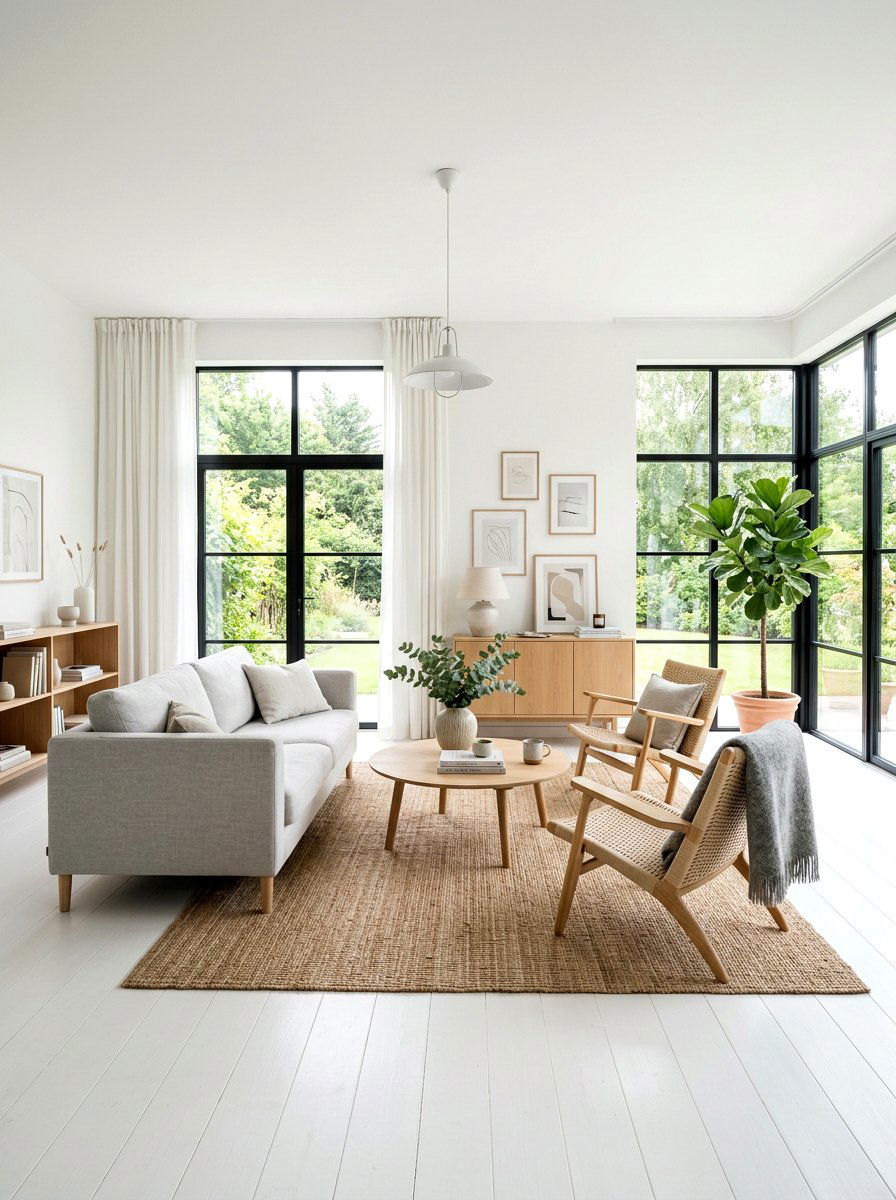
Choosing a white painted wood floor is a brilliant way to instantly brighten any room and create an airy, Scandinavian-inspired atmosphere. This design choice works exceptionally well in smaller spaces or rooms that lack natural light, as the white surface reflects brightness throughout the area. While some homeowners worry about maintenance, using a high-quality porch and floor enamel ensures the surface remains durable and easy to clean. It provides a clean, minimalist backdrop that allows your furniture and colorful decor to truly pop. Whether you have historic wide planks or modern narrow strips, a crisp white finish covers imperfections while adding a sophisticated, gallery-like feel to your living space or bedroom.
2. Black painted wood floor
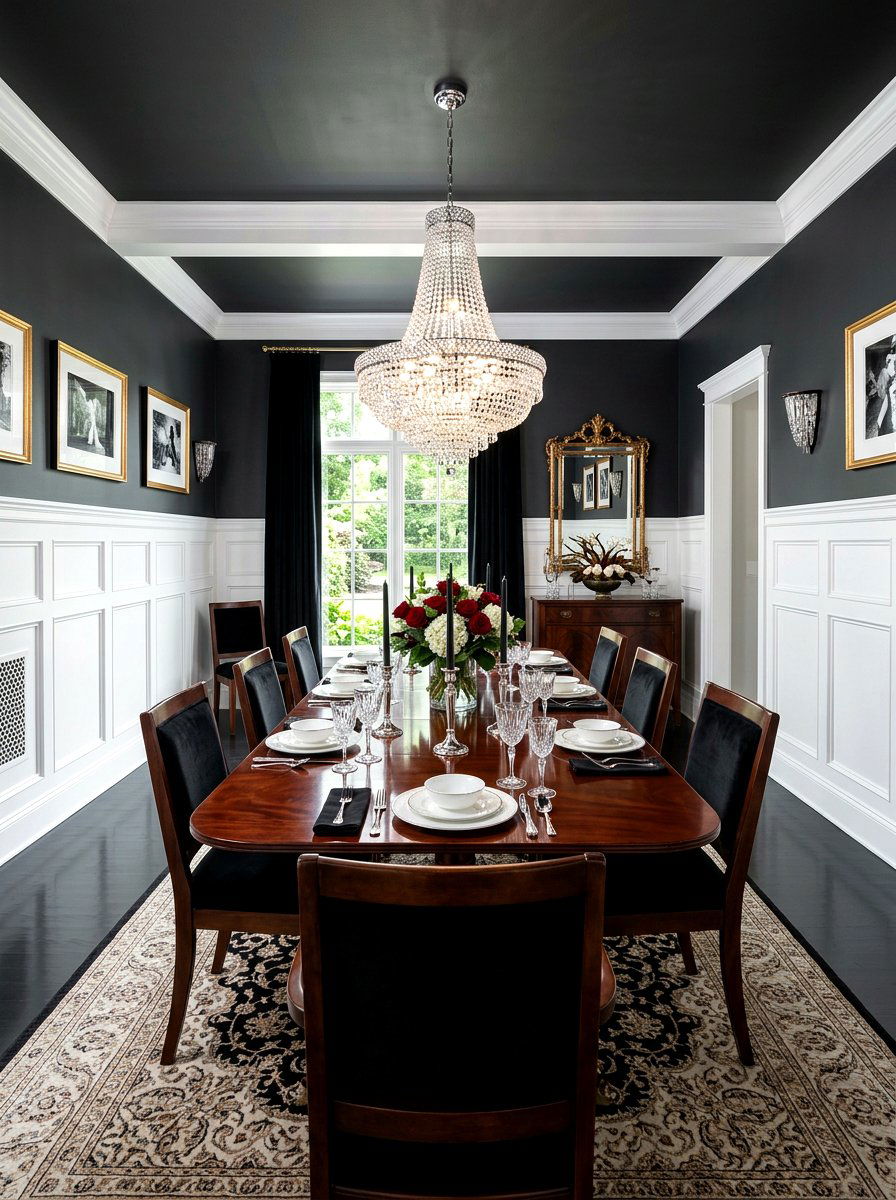
A black painted wood floor makes a bold, dramatic statement that brings instant sophistication and grounding to a large room. This dark choice is perfect for creating a high-contrast look when paired with white walls or light-colored furniture. Beyond its aesthetic appeal, black paint is incredibly effective at hiding deep stains or mismatched wood grains that sanding alone cannot fix. To prevent the space from feeling too heavy, consider a satin or semi-gloss finish that catches the light. This design choice anchors the room and provides a modern, edgy vibe that works beautifully in formal dining rooms, libraries, or even a contemporary kitchen where you want a moody, upscale foundation.
3. Black and white checkerboard floor
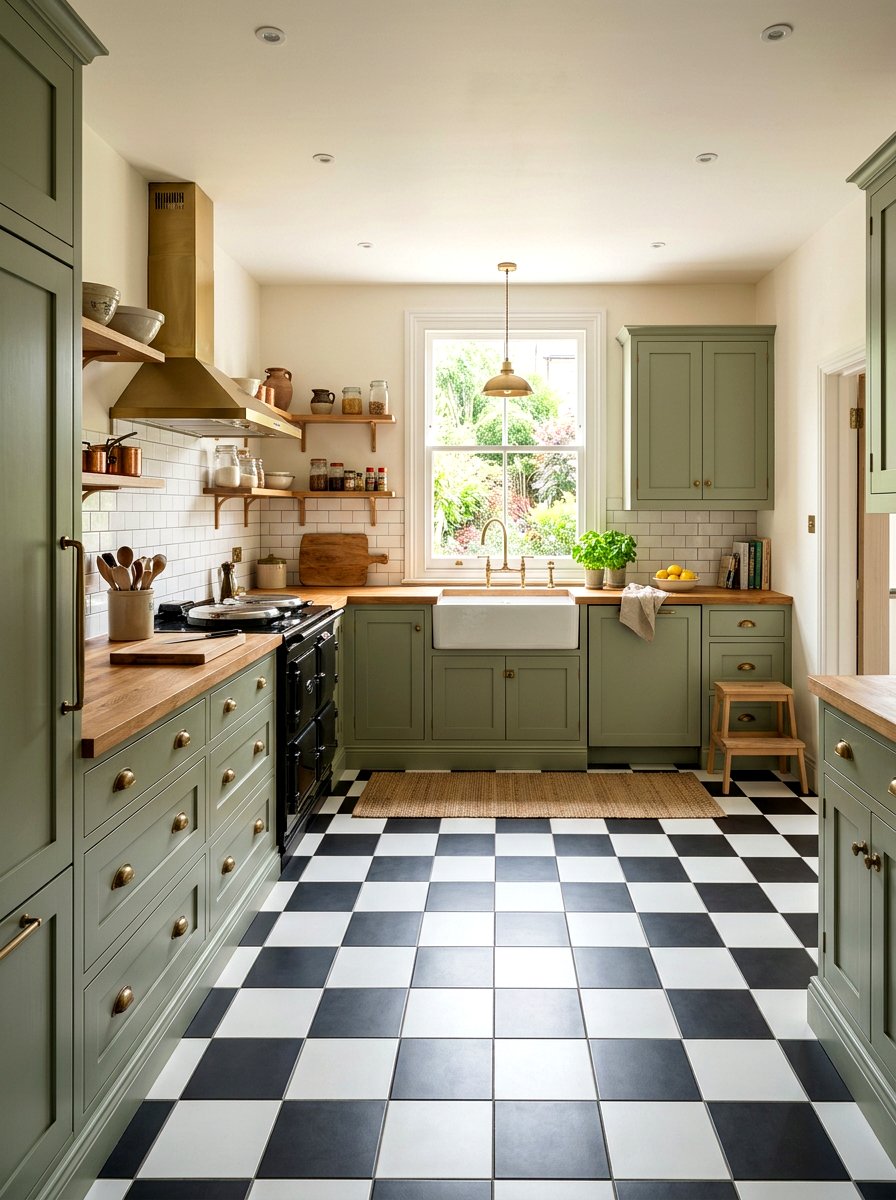
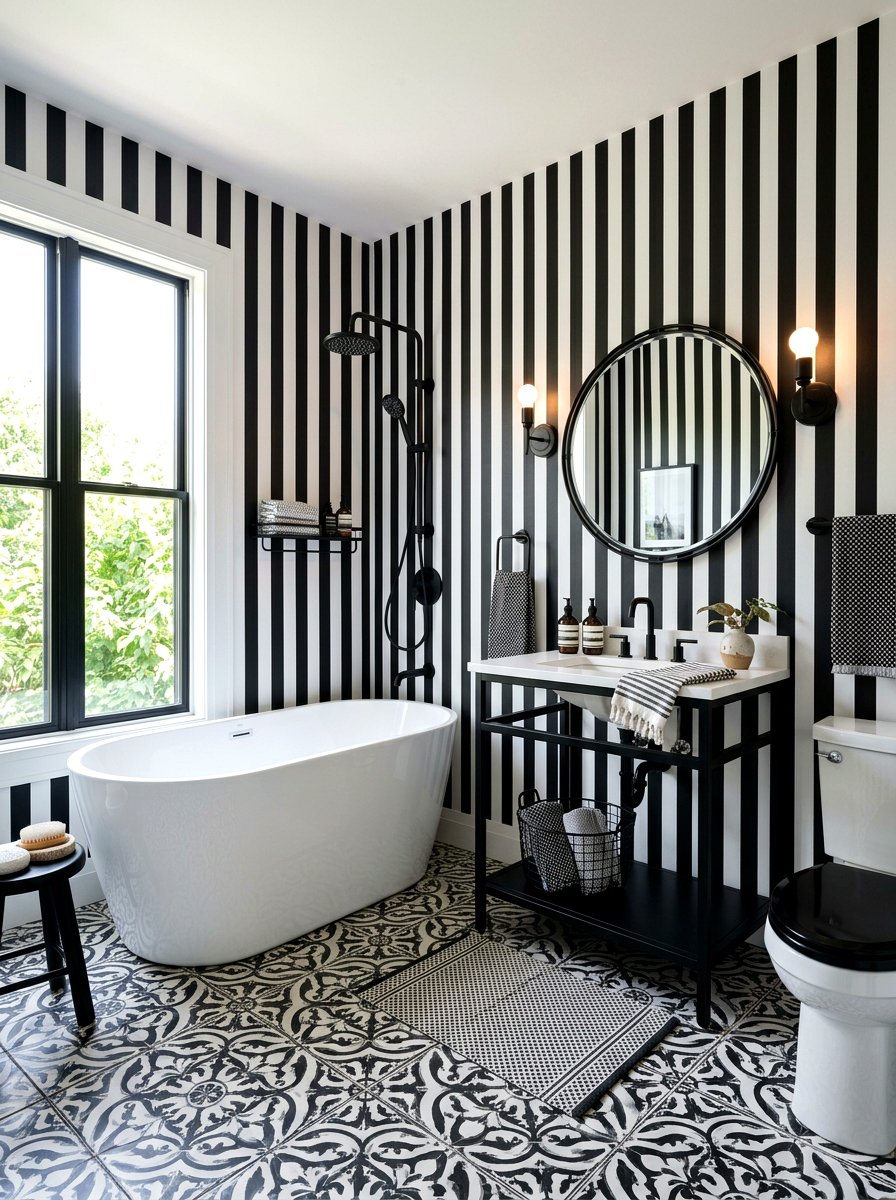
The black and white checkerboard floor is a classic design staple that never goes out of style, offering a perfect blend of vintage charm and modern graphic interest. This pattern is particularly popular in kitchens, entryways, and mudrooms because it hides dirt well while providing a structured, traditional look. You can achieve this by carefully taping off squares and using high-contrast floor paints. The diagonal orientation of the checkers can actually make a narrow hallway appear wider and more expansive. It serves as a fantastic focal point, allowing the rest of the room's decor to remain relatively simple while the floor does all the heavy lifting in terms of style.
4. Stenciled concrete floor
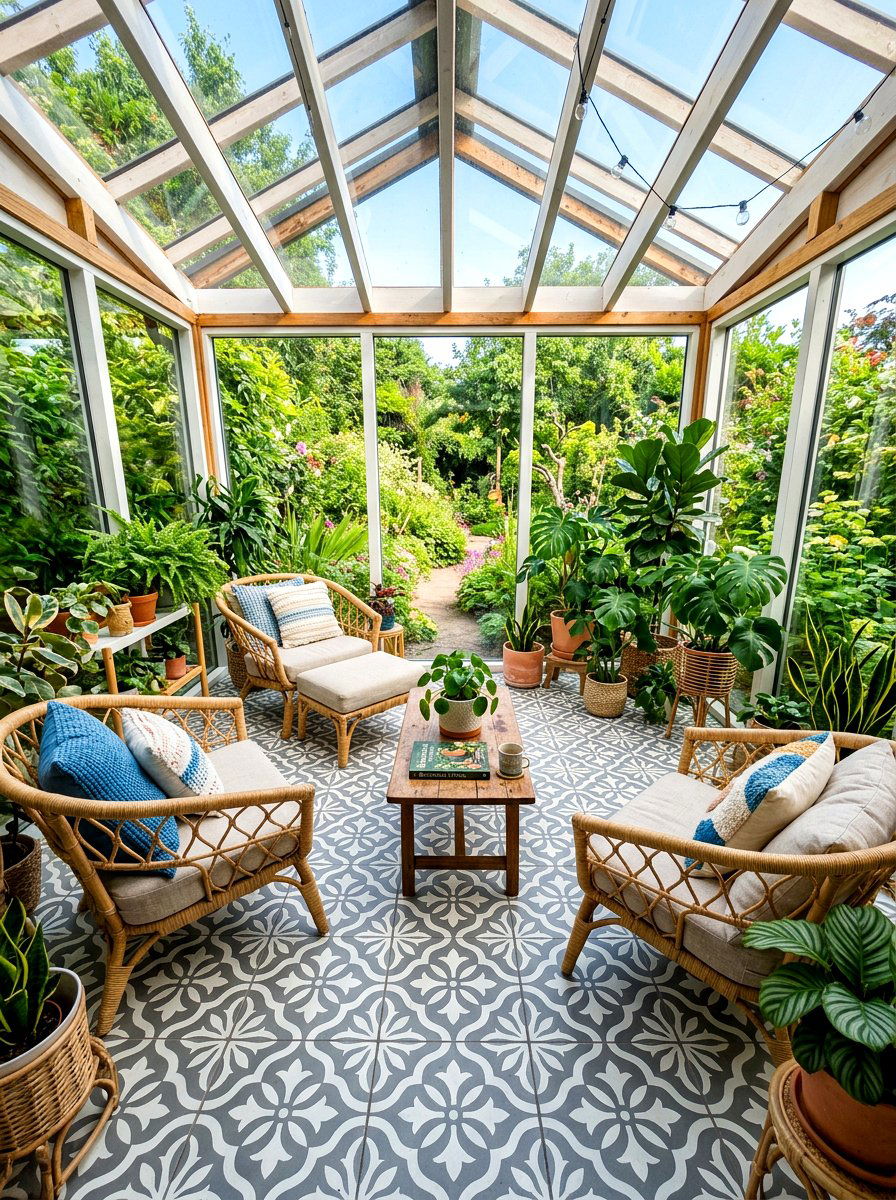
A stenciled concrete floor is an ingenious way to mimic the look of expensive cement or Moroccan tiles without the high cost and labor of installation. This technique is ideal for basements, laundry rooms, or outdoor patios where the raw concrete feels too cold or industrial. By using a large-scale stencil and a two-tone color palette, you can create intricate, repetitive patterns that add texture and visual warmth to the space. The key is thorough preparation and a durable topcoat to protect the design from foot traffic. It transforms a utilitarian surface into a handcrafted work of art that feels personal, unique, and much more inviting than plain grey concrete.
5. Striped porch floor
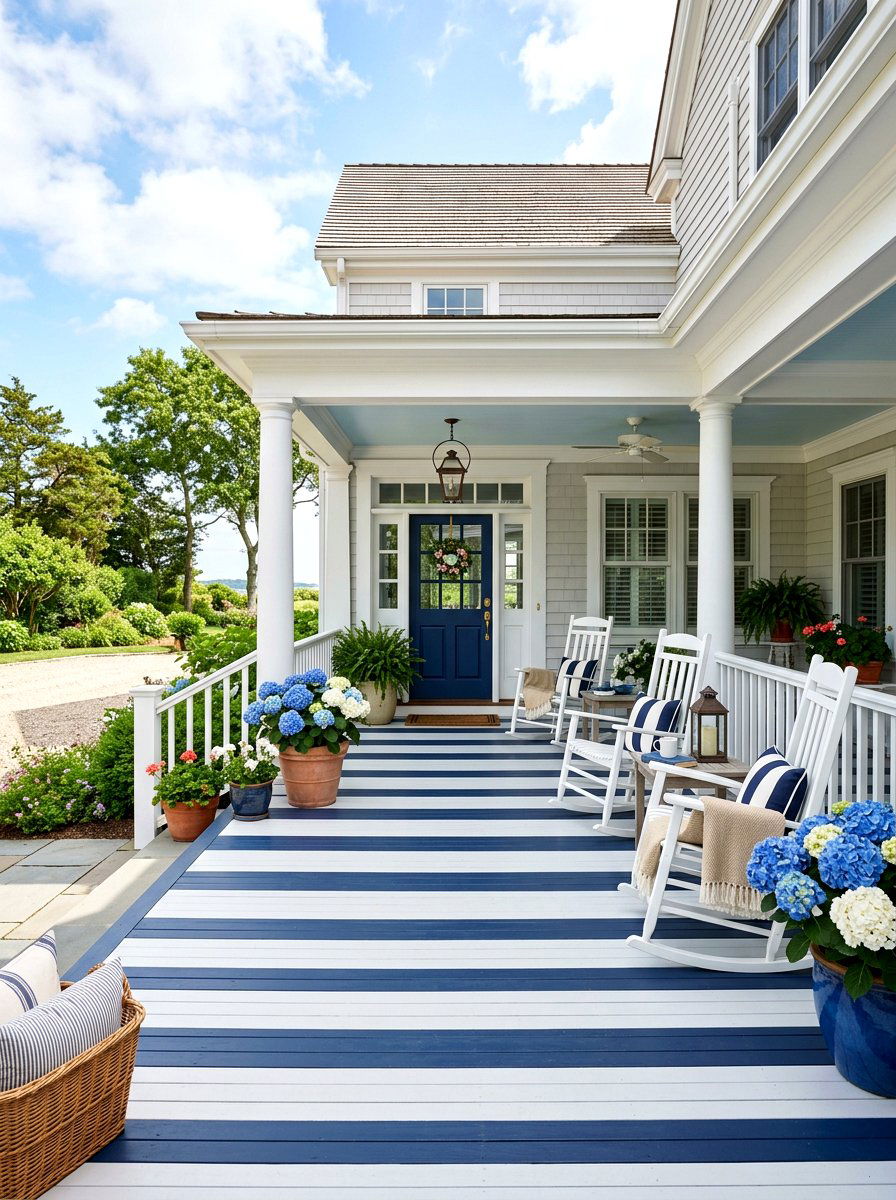
Applying a striped porch floor design is a fantastic way to add a playful, coastal, or farmhouse vibe to your outdoor living area. Wide horizontal stripes can make a small porch feel much more expansive, while vertical stripes can lead the eye toward the front door for a welcoming entrance. Using classic color combinations like navy and white or grey and cream creates a timeless look that complements traditional architecture. It is important to use exterior-grade porch paint that can withstand the elements and UV rays. This simple geometric pattern provides a sense of order and intentionality, making your porch feel like a true extension of your indoor living space.
6. Painted plywood subfloor
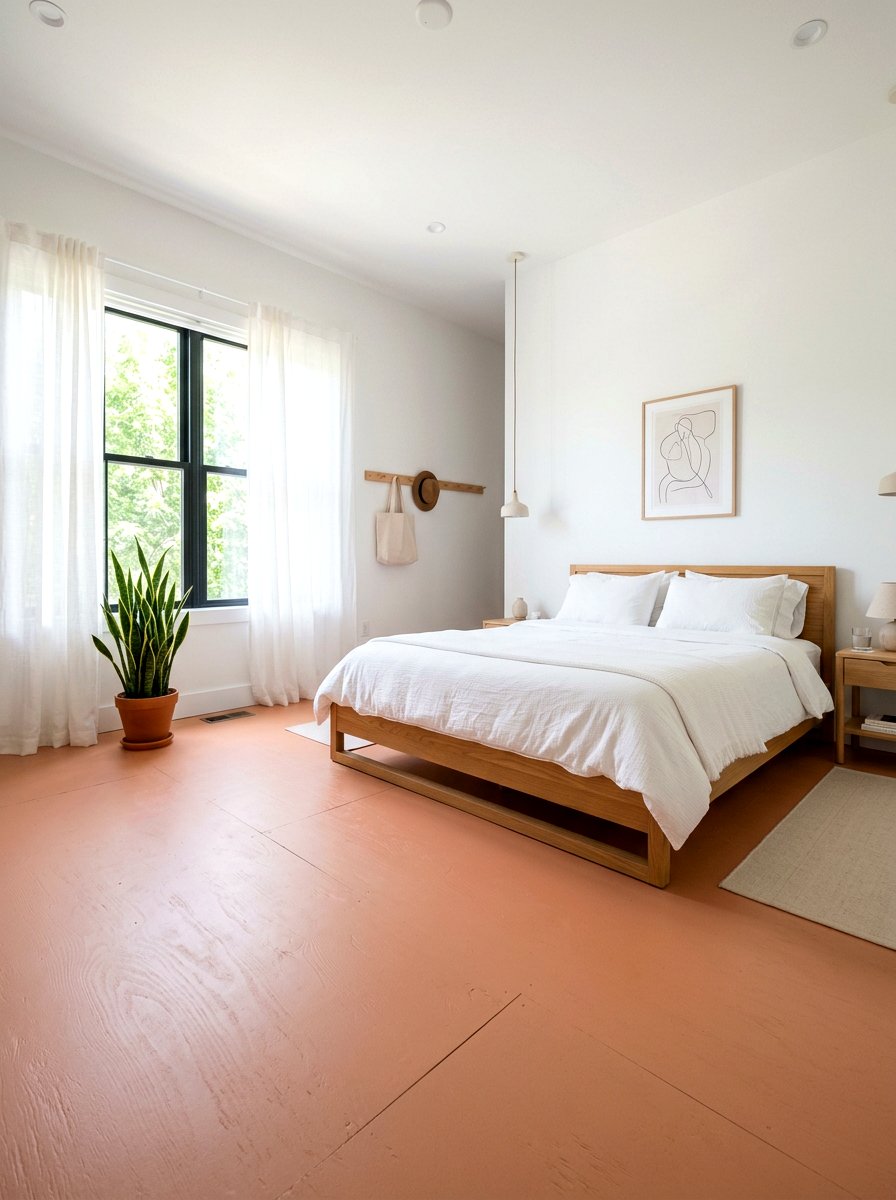
Transforming a painted plywood subfloor into a finished surface is a savvy, budget-friendly solution for homeowners looking to replace old carpet on a tight budget. When properly sanded, primed, and painted, plywood can look remarkably high-end and intentional. You can choose a solid, trendy color like sage green or terracotta to add warmth to a bedroom or office. Many people opt to add a decorative border or a light splatter effect to hide any natural knots in the wood. Sealing the paint with several coats of polyurethane is essential for long-term durability. This approach proves that you do not need expensive materials to create a stylish, clean, and durable floor.
7. Diamond pattern wood floor
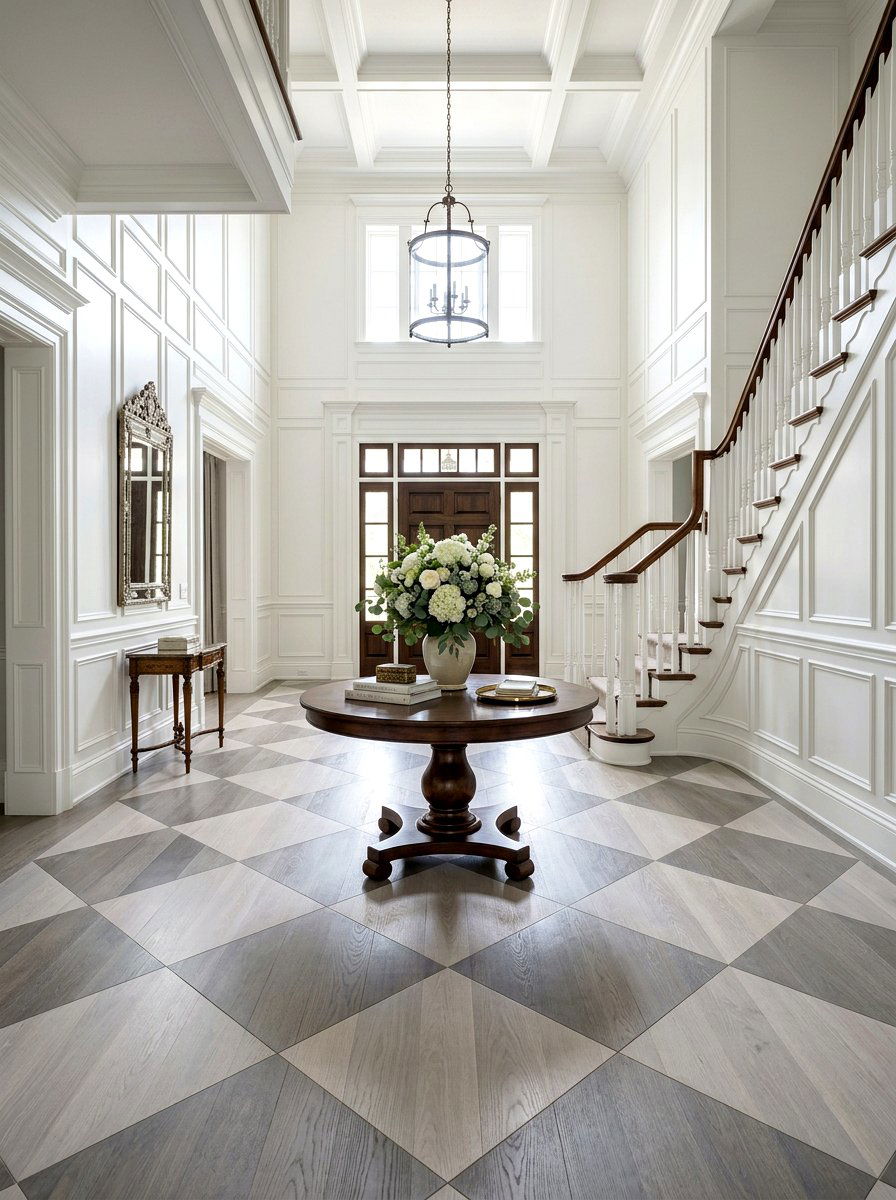
The diamond pattern wood floor, also known as a harlequin floor, adds a touch of old-world elegance and architectural interest to any traditional home. This pattern is slightly more sophisticated than a standard checkerboard and works beautifully in foyers or formal dining areas. By using two slightly different shades of the same color, you can create a subtle, tonal look that feels luxurious rather than overwhelming. It requires precise measuring and taping, but the result is a custom-designed floor that anchors the room with classic symmetry. This design choice is particularly effective at making a space feel more grand and is a favorite among interior designers for historic renovations.
8. Grey painted floor
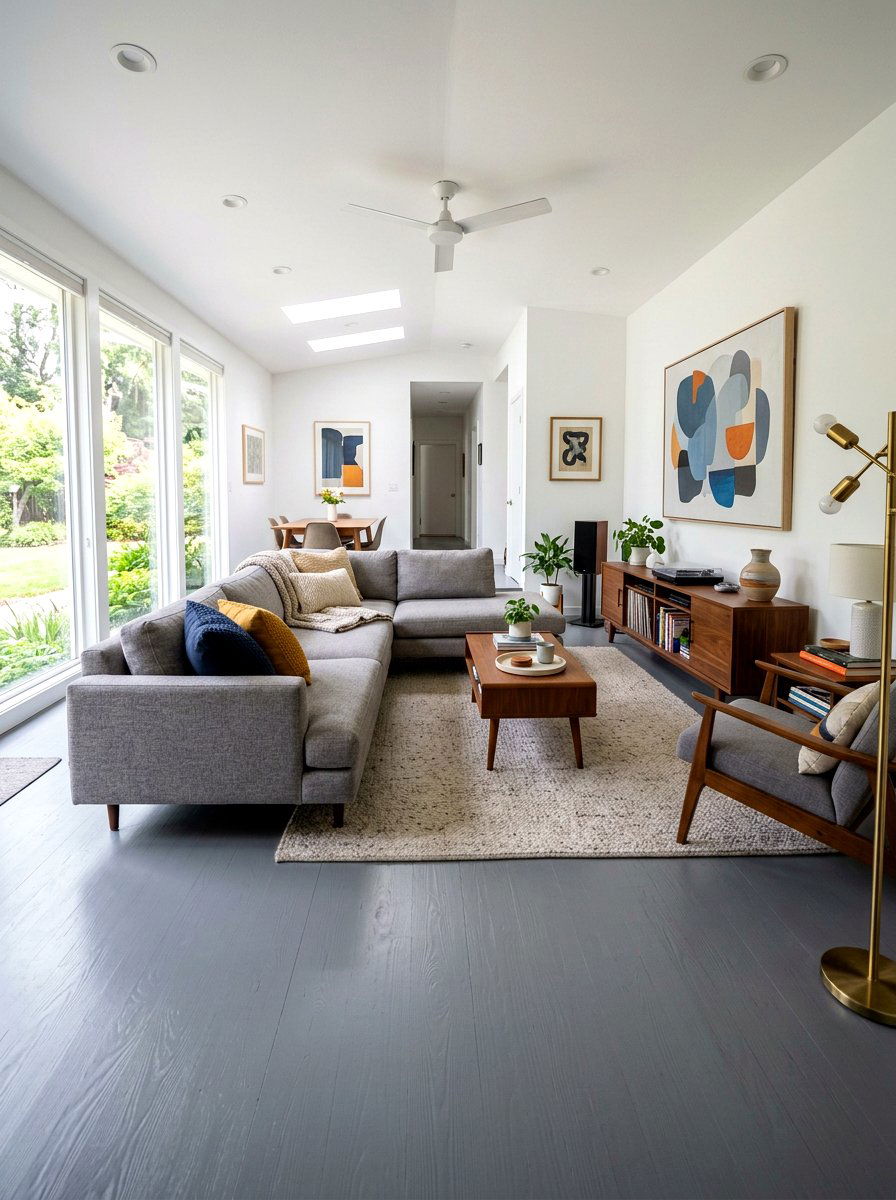
A grey painted floor offers a versatile and contemporary neutral base that works with almost any interior design style, from industrial to farmhouse. Lighter shades of grey can make a room feel open and airy, while deeper charcoal tones provide a cozy and grounded sensation. This color is excellent for hiding dust and minor scratches, making it a practical choice for high-traffic areas like kitchens or hallways. Grey paint provides a sophisticated alternative to traditional brown wood stains, giving the home a more updated and curated appearance. It pairs beautifully with natural wood furniture and metallic accents, creating a balanced and harmonious environment that feels both modern and incredibly timeless.
9. Sage green floor
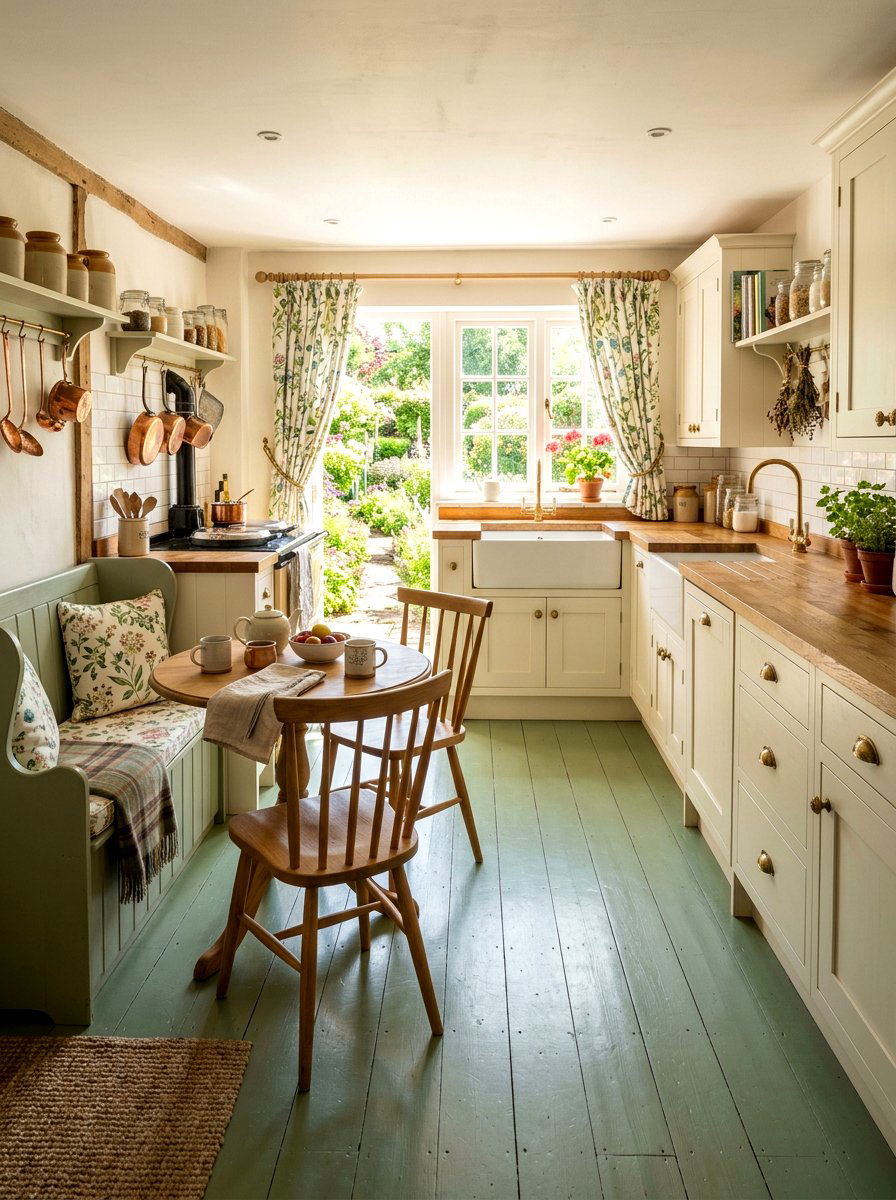
Incorporating a sage green floor is a wonderful way to bring a sense of nature and tranquility into your home's interior. This earthy, muted tone works as a soft neutral that adds just enough color to be interesting without dominating the entire room. It is a particularly popular choice for kitchens, sunrooms, or mudrooms where a connection to the outdoors is desired. Sage green pairs exceptionally well with botanical prints, wicker furniture, and warm wood accents. By painting the floor in this soothing hue, you create a calm foundation that feels fresh and organic. It is an unexpected but sophisticated choice that adds a unique character to any cottage or farmhouse-style home.
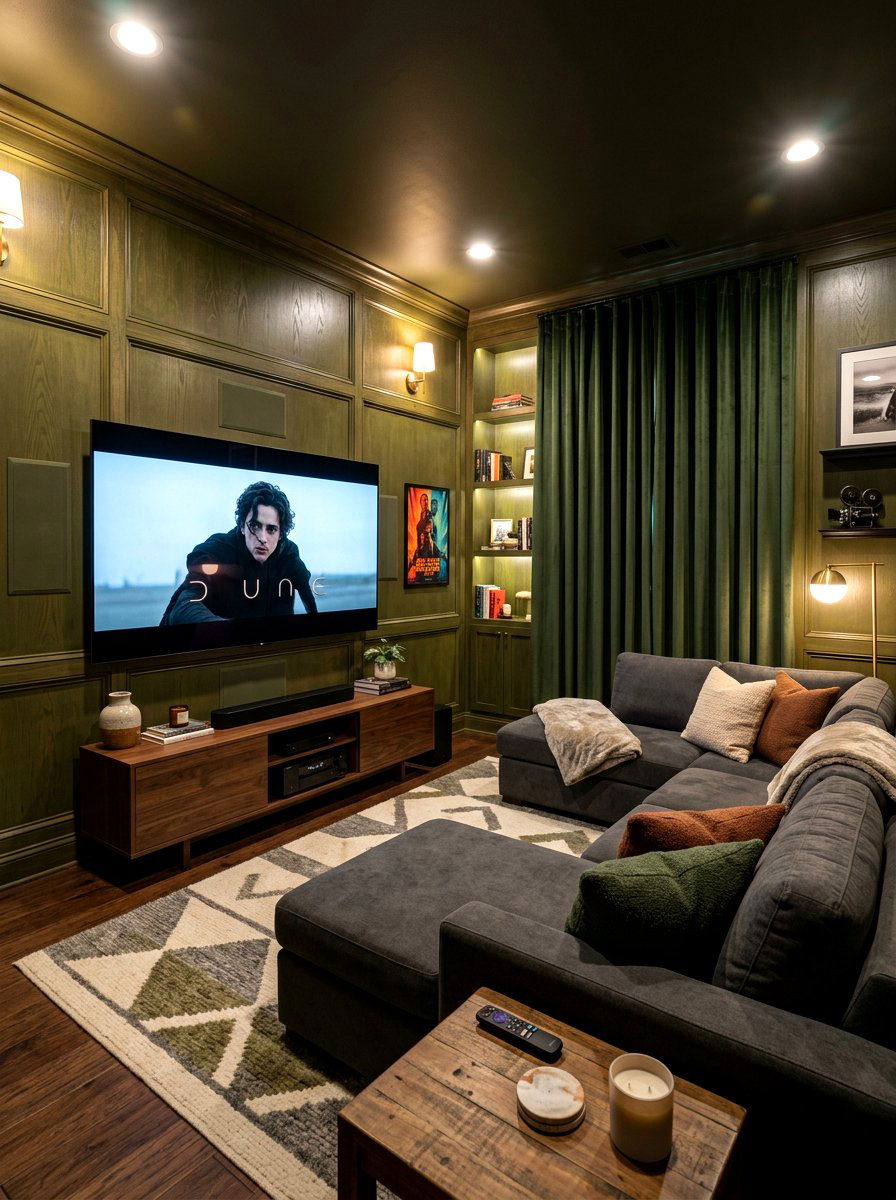
10. Navy blue floor
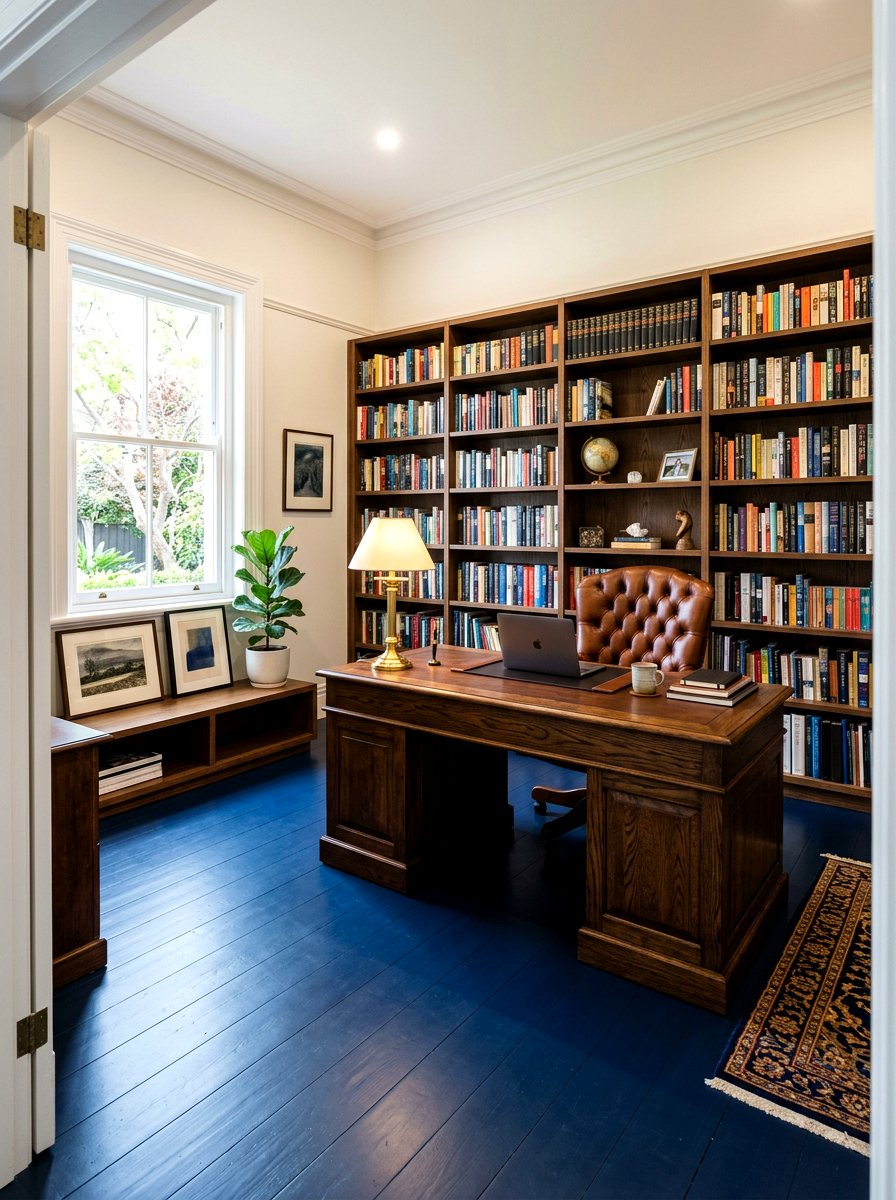
A navy blue floor provides a deep, rich foundation that feels incredibly regal and classic, especially when paired with crisp white walls and brass hardware. This bold color choice is perfect for entryways, bathrooms, or offices where you want to create a sense of stability and strength. Navy is a fantastic alternative to black, offering more depth and a nautical or traditional edge. It excels at hiding imperfections in older wood floors and creates a stunning backdrop for colorful area rugs. When finished with a high-gloss topcoat, a navy floor can reflect light beautifully, preventing the dark color from making the room feel too small or closed in.
11. Geometric painted floor
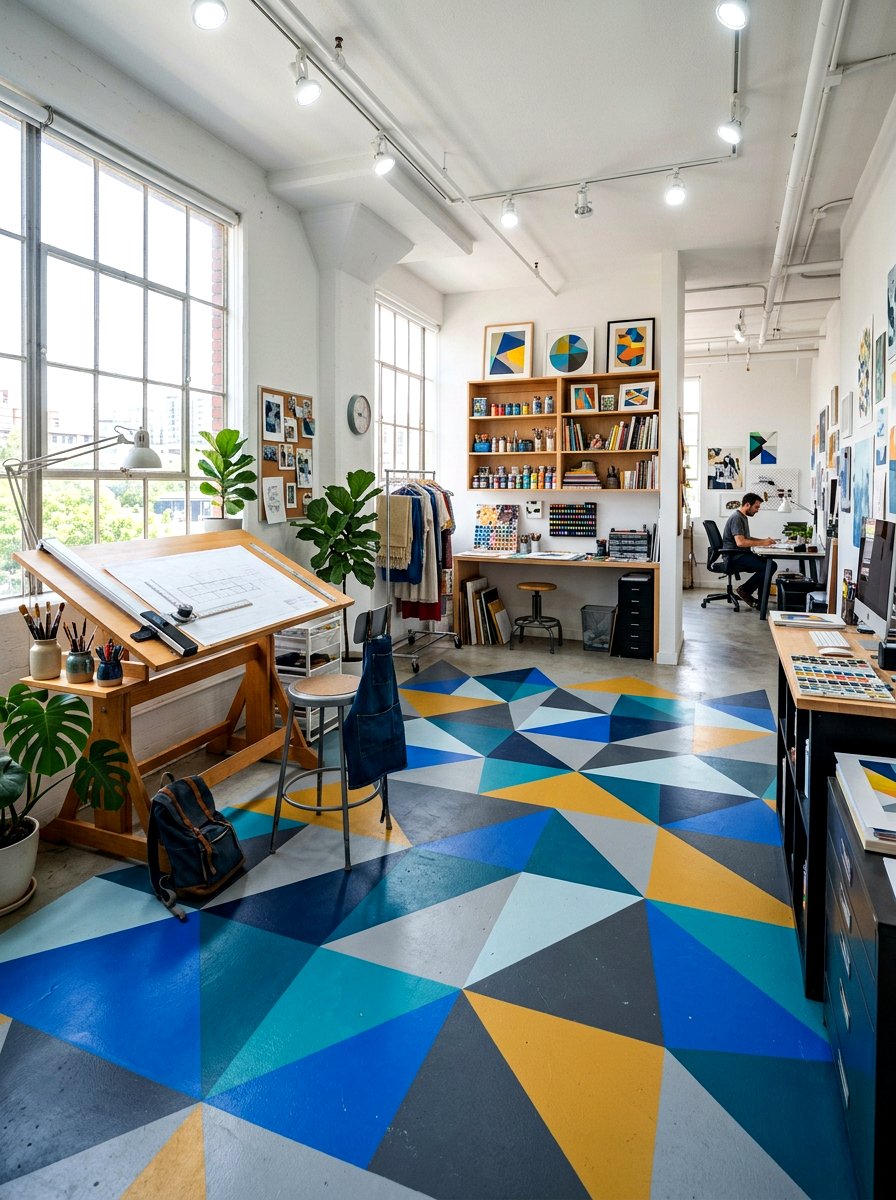
Creating a geometric painted floor allows you to experiment with modern shapes like triangles, hexagons, or chevrons to create a truly one-of-a-kind statement piece. This design approach is perfect for creative spaces, playrooms, or modern apartments where you want to inject a sense of energy and playfulness. You can use a multi-color palette to define different zones in an open-concept living area or stick to a two-tone scheme for a more disciplined, architectural look. Geometric patterns are excellent for disguising uneven floorboards or damaged surfaces because the eye is drawn to the bold shapes. It turns the floor into a graphic masterpiece that serves as the room's primary artistic element.
12. Splatter painted floor
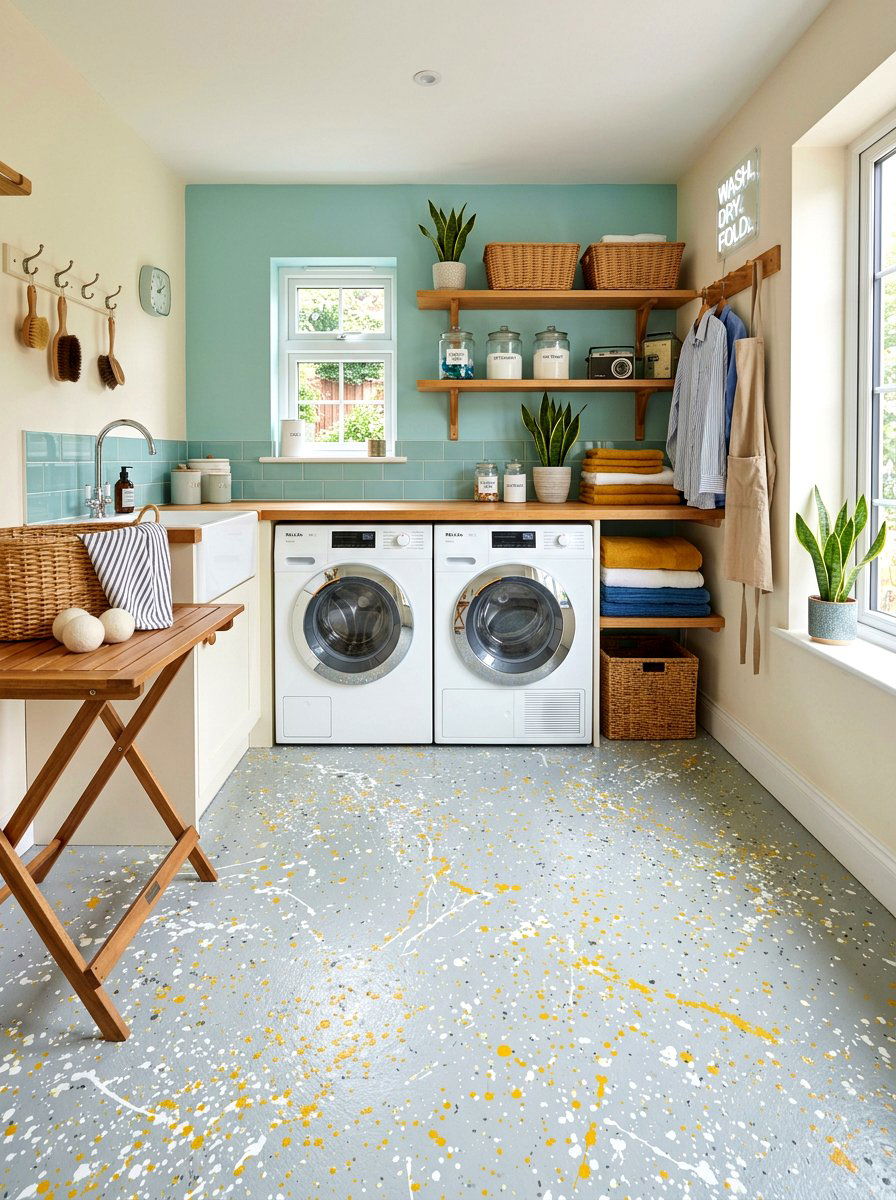
The splatter painted floor is a fun and artistic technique that adds a whimsical, mid-century modern, or Jackson Pollock-inspired vibe to a space. This method involves painting a solid base color and then flicking contrasting paint colors across the surface for a random, textured effect. Beyond its creative appeal, this design is incredibly practical because the irregular pattern is perfect for hiding dirt, pet hair, and minor scuffs. It is a popular choice for artists' studios, laundry rooms, or retro-themed kitchens. The result is a vibrant, high-energy floor that feels lived-in and approachable, proving that DIY design can be both functional and exceptionally expressive in any home.
13. Faux rug painted floor
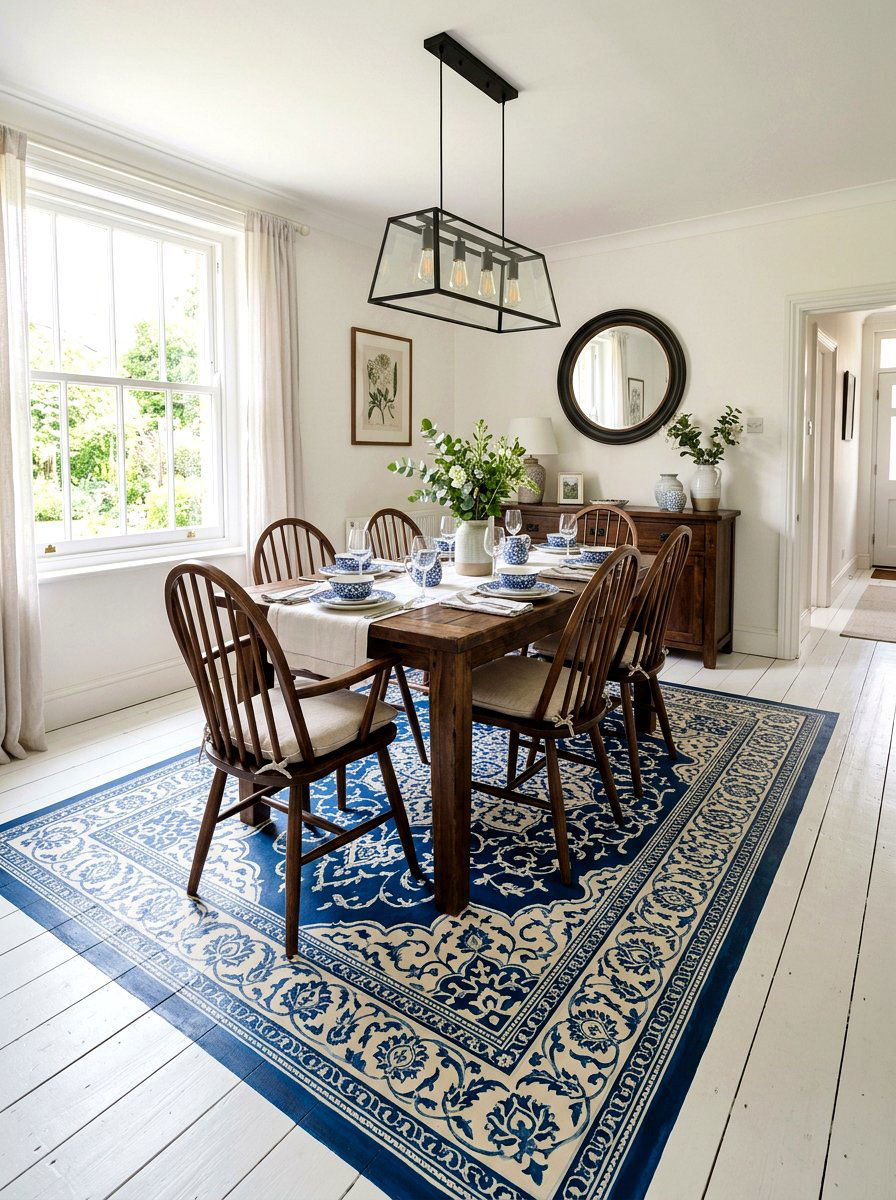
A faux rug painted floor is a clever way to define a seating or dining area without the maintenance and tripping hazards of a real textile rug. By painting a decorative rectangle with a border or a central motif directly onto the floorboards, you create a permanent architectural feature that anchors your furniture. This is an excellent solution for high-traffic entryways or dining rooms where spills are common and cleaning a real rug would be difficult. You can use stencils to mimic intricate Persian patterns or keep it simple with a striped "runner" look. It adds a layer of coziness and visual weight to the room while remaining perfectly flat and easy to mop.
14. High gloss painted floor
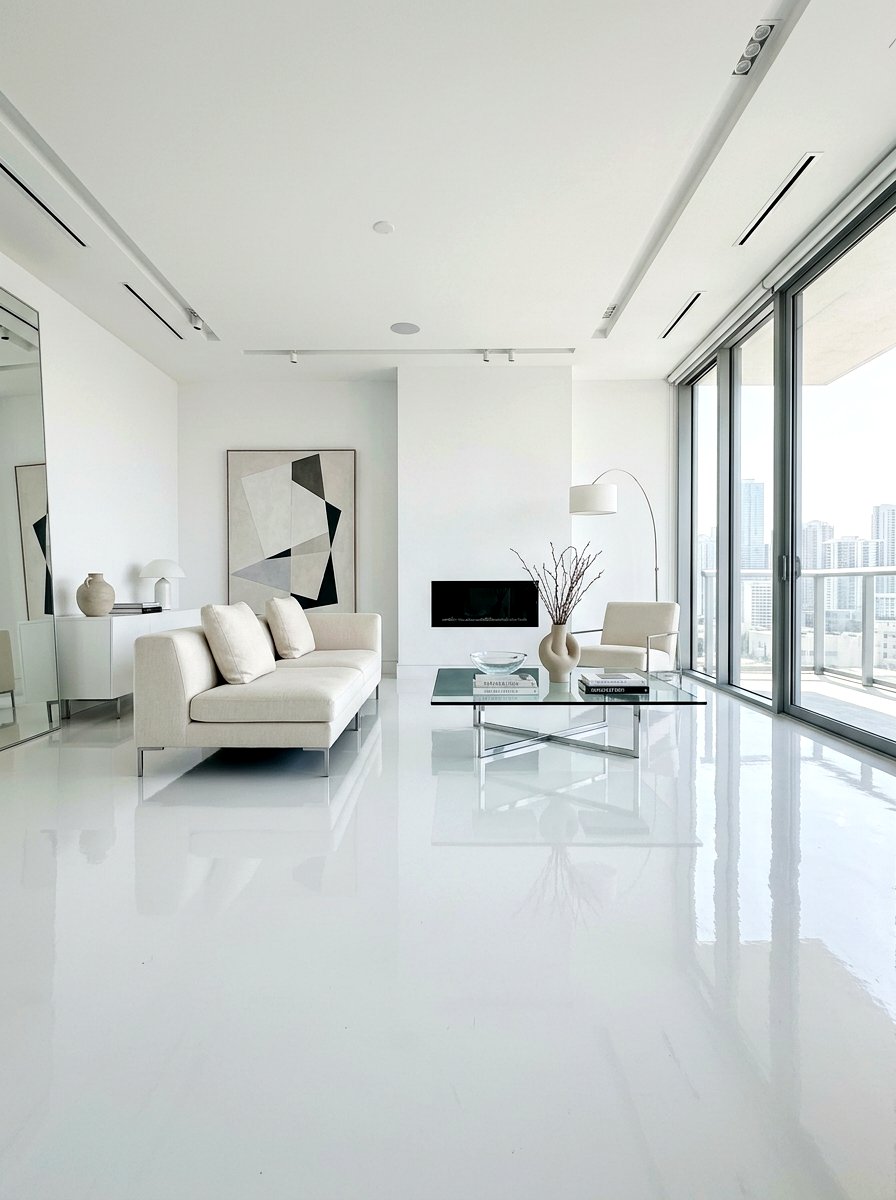
A high gloss painted floor creates a sleek, reflective surface that feels incredibly modern and luxurious, almost like polished lacquer. This finish is perfect for contemporary homes where you want to maximize light and create a sense of high-end drama. The reflective quality of the paint helps to bounce light around the room, making even dark colors feel more luminous and expansive. High gloss is exceptionally durable and easy to wipe clean, though it does require a very smooth subfloor as the sheen will highlight any bumps or dips. It is a stunning choice for a formal living room or a chic, minimalist bedroom where you want a truly polished look.
15. Matte painted floor
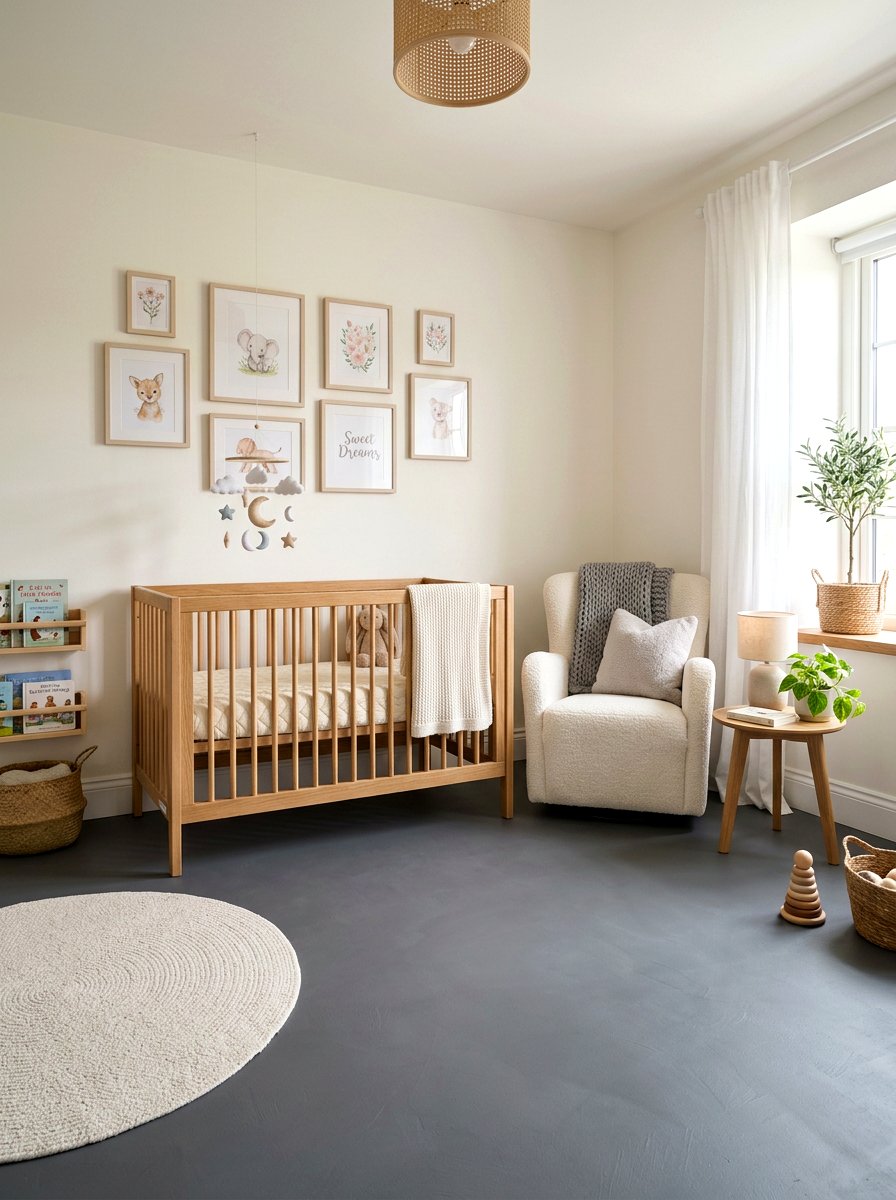
Opting for a matte painted floor provides a soft, understated, and velvety finish that feels very contemporary and sophisticated. Unlike glossy surfaces, matte paint absorbs light, creating a quiet and grounded atmosphere that is perfect for bedrooms, nurseries, or cozy dens. This finish is particularly forgiving because it hides imperfections, scratches, and dust much better than higher sheens. It offers a very modern, Scandinavian feel that pairs beautifully with natural textures like linen, wool, and raw wood. While matte finishes can sometimes be harder to scrub, modern floor-specific formulas are designed to be durable and resistant to scuffs while maintaining that beautiful, low-luster appearance.
16. Distressed painted floor
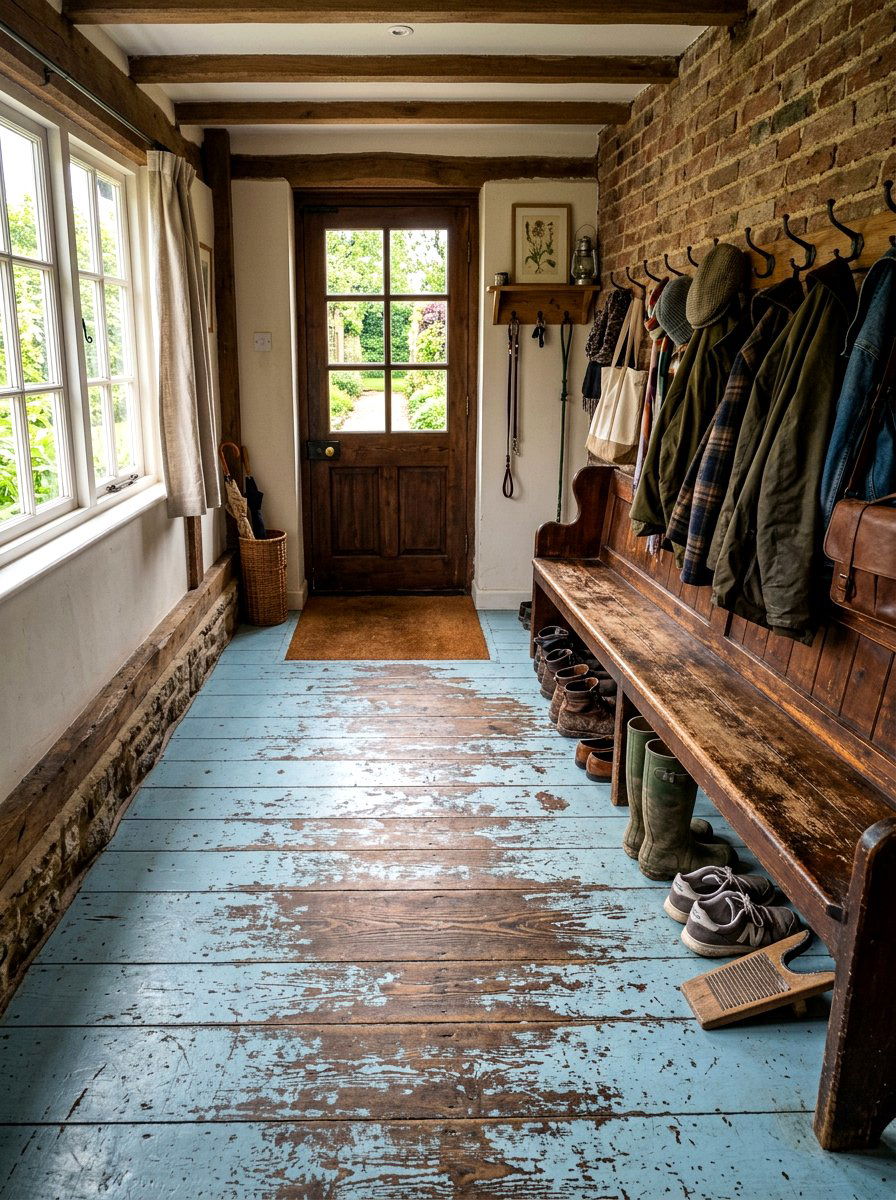
A distressed painted floor is the ultimate choice for achieving a lived-in, rustic, or "shabby chic" aesthetic that feels full of history and character. This look is achieved by applying a base coat, a top color, and then strategically sanding away areas to reveal the wood or the base layer underneath. It is incredibly practical for families with pets or children because new scratches and dings simply blend into the intentional weathered look. This design choice works beautifully in country kitchens, mudrooms, or coastal cottages where you want a relaxed and unpretentious vibe. It celebrates imperfection and gives the space an instantly cozy, timeless feeling that looks better as it ages.
17. Painted kitchen floor
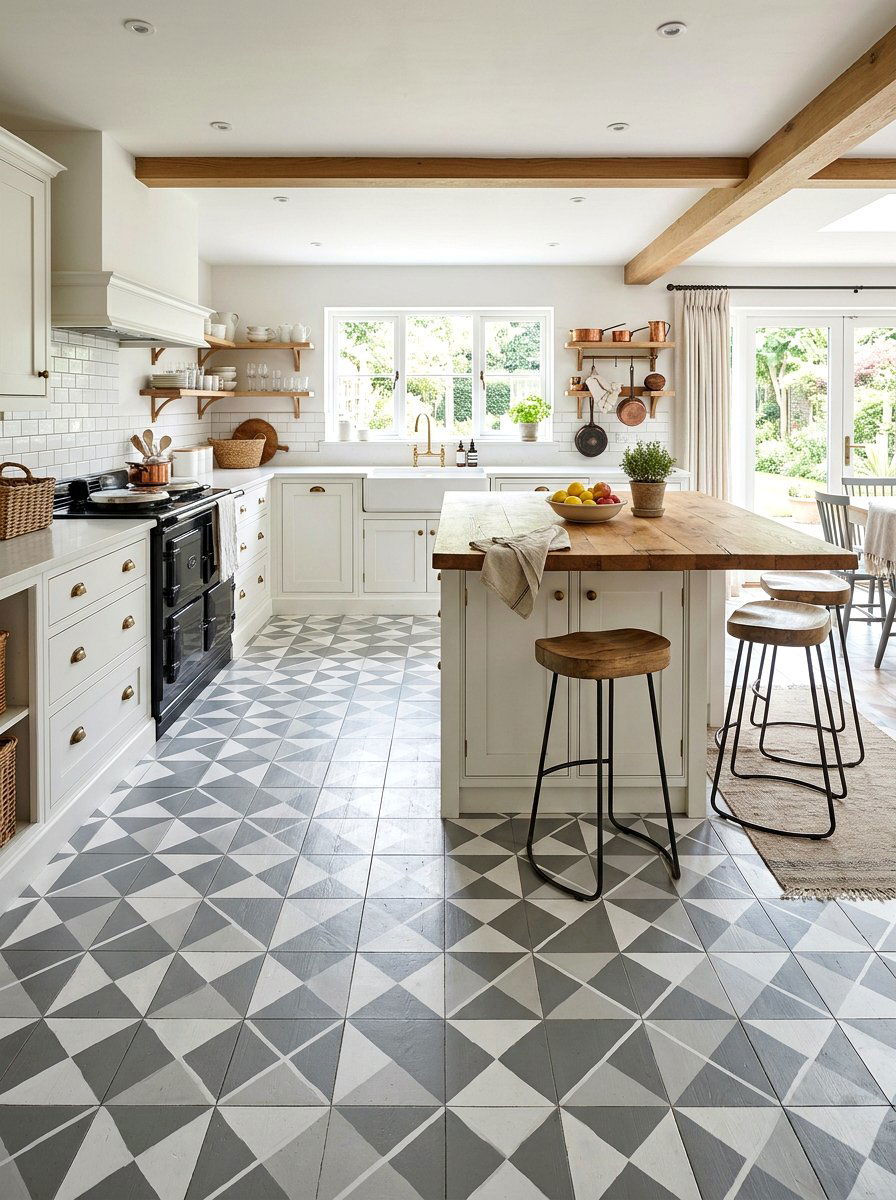
Applying a painted kitchen floor is a brilliant way to update an outdated or worn-out space without the expense of new tile or hardwood. Because kitchens are the heart of the home, choosing a durable, easy-to-clean floor paint is essential for withstanding spills and heavy foot traffic. You can use paint to introduce a pop of color, like a sunny yellow or a cool mint, to brighten the workspace. Many homeowners opt for a classic checkerboard or a large-scale stencil to add visual interest. This DIY project allows you to coordinate your floor perfectly with your cabinetry and backsplash, creating a cohesive and custom-designed look that feels fresh, modern, and entirely personal.
18. Painted bathroom floor
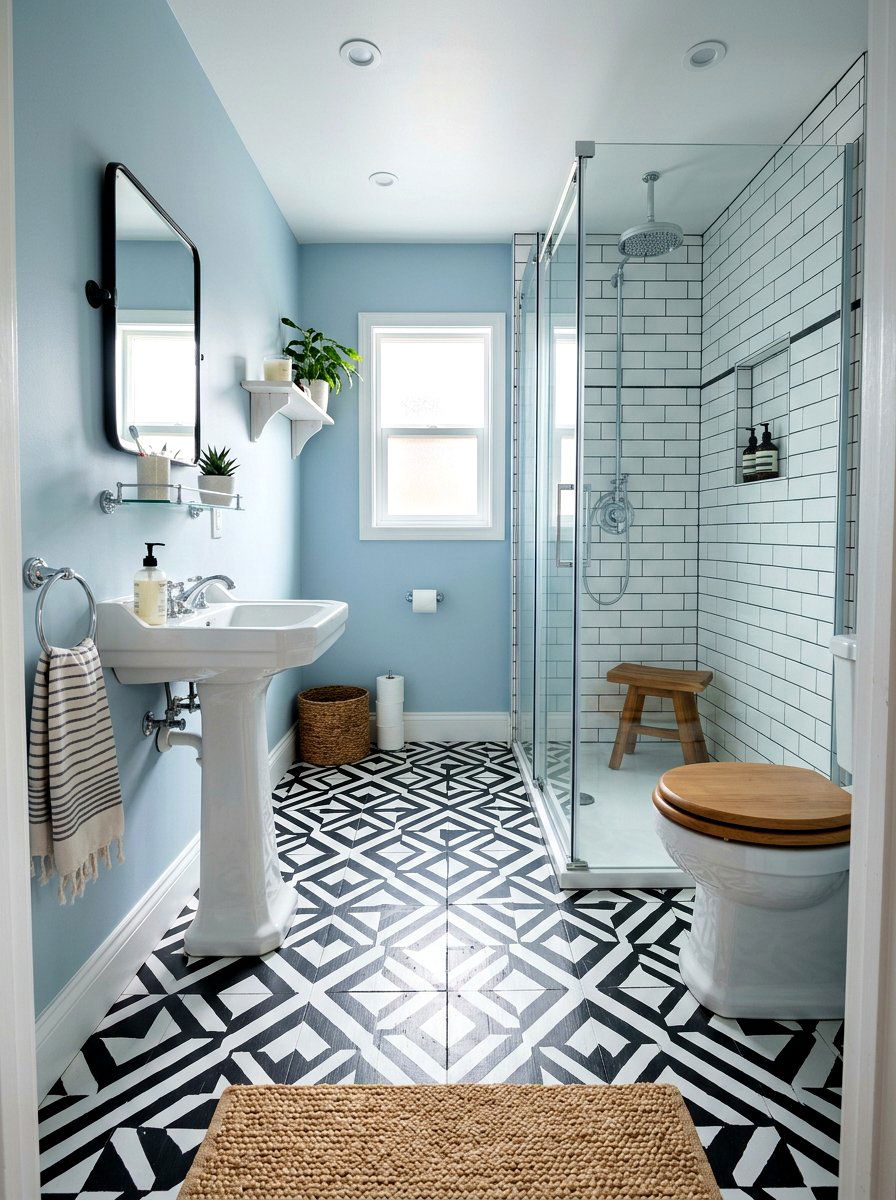
A painted bathroom floor is a fantastic solution for refreshing old linoleum, vinyl, or dated tile that you are not ready to replace. Specialized primers and floor paints can adhere to these non-porous surfaces, allowing you to completely change the look of the room in a single weekend. A stenciled pattern can mimic the appearance of expensive encaustic tiles, giving your bathroom a high-end, boutique hotel feel. Because bathrooms are high-moisture areas, it is vital to use a waterproof sealant to protect the paint from splashes and humidity. This design choice allows you to experiment with bold patterns or colors in a small space, making the bathroom feel much more stylish and intentional.
19. Painted mudroom floor
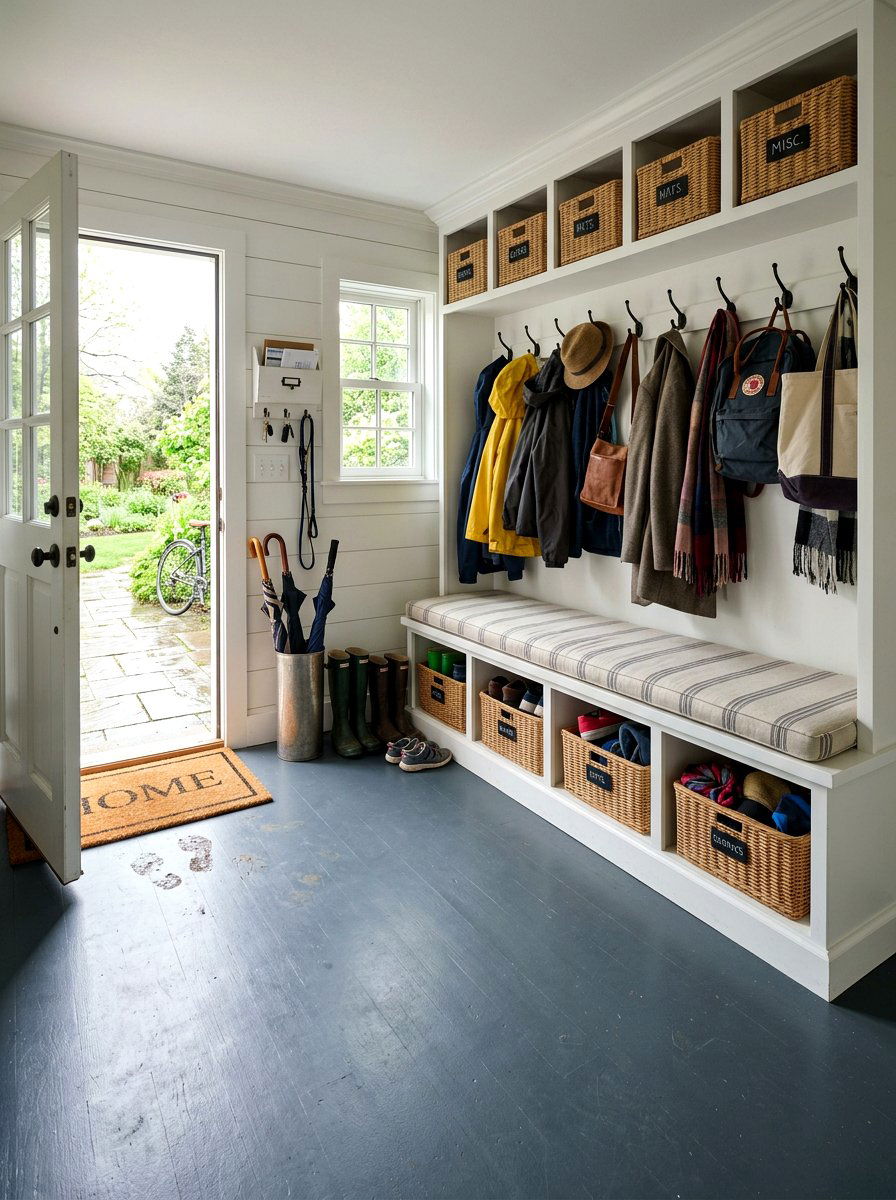
The painted mudroom floor is a hardworking design element that combines extreme durability with high-style potential. Since mudrooms are the transition point between the outdoors and your clean interior, the floor needs to handle dirt, moisture, and heavy boots. A dark color or a busy pattern, such as a buffalo check or a dark grey, is excellent for masking the inevitable mess. Using a high-quality porch and floor paint ensures the surface can be easily mopped or swept daily. Adding a painted "runner" or a decorative border can make this utilitarian space feel more like an integrated part of your home’s overall design, rather than just a messy catch-all area.
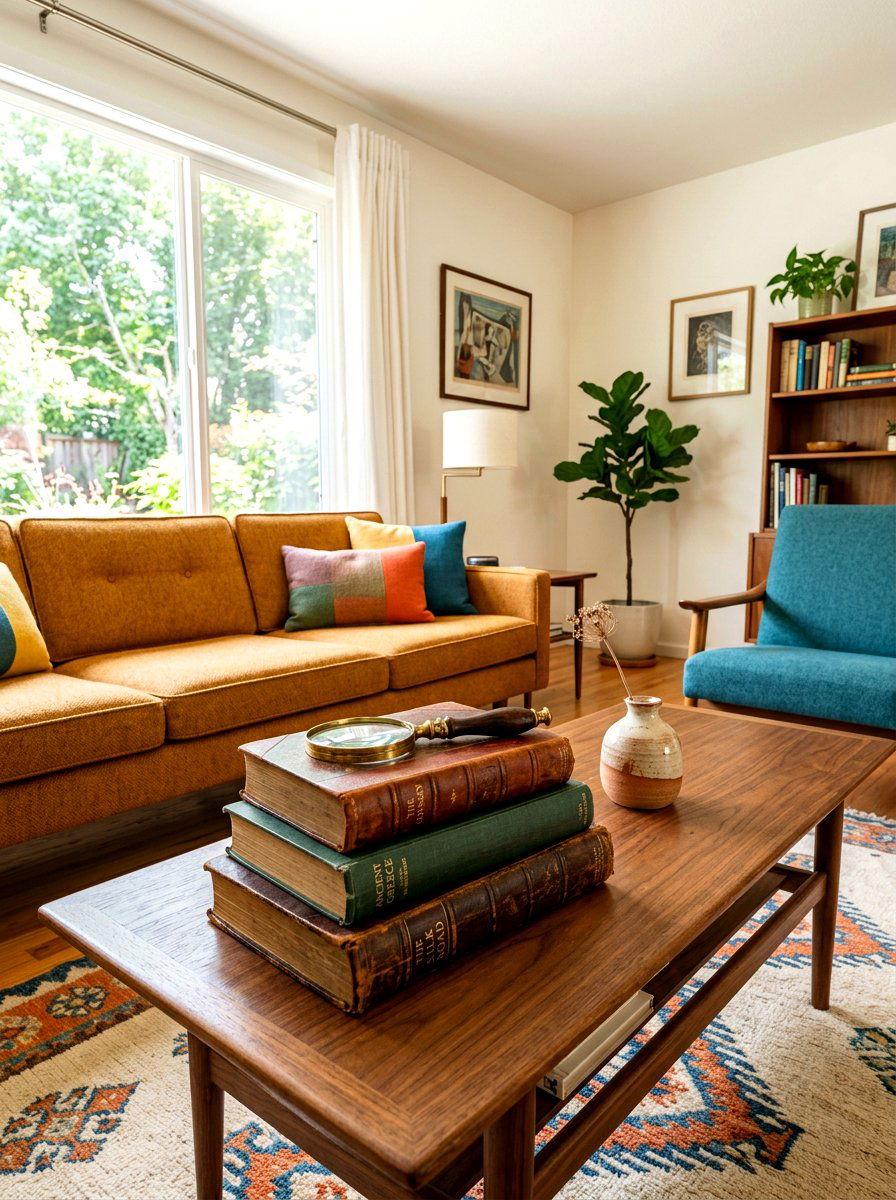
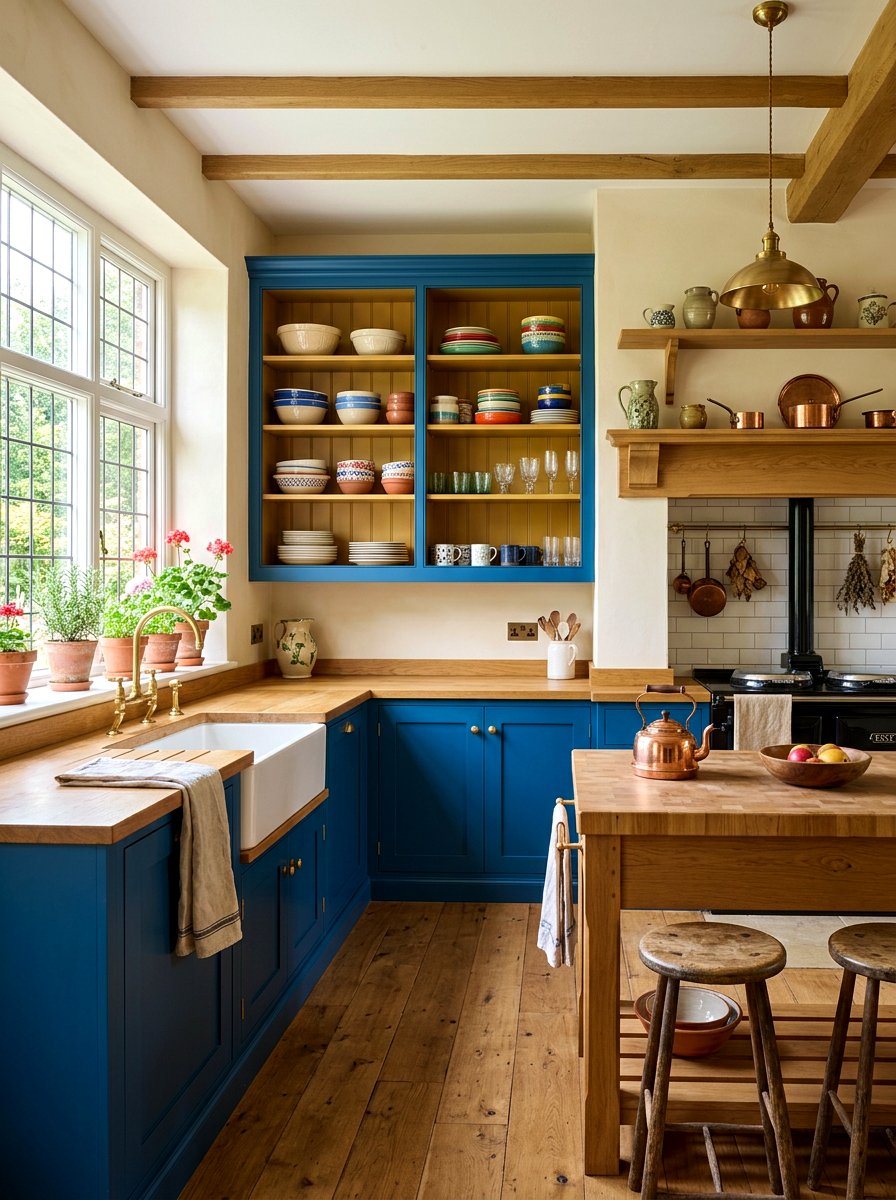
20. Painted attic floor
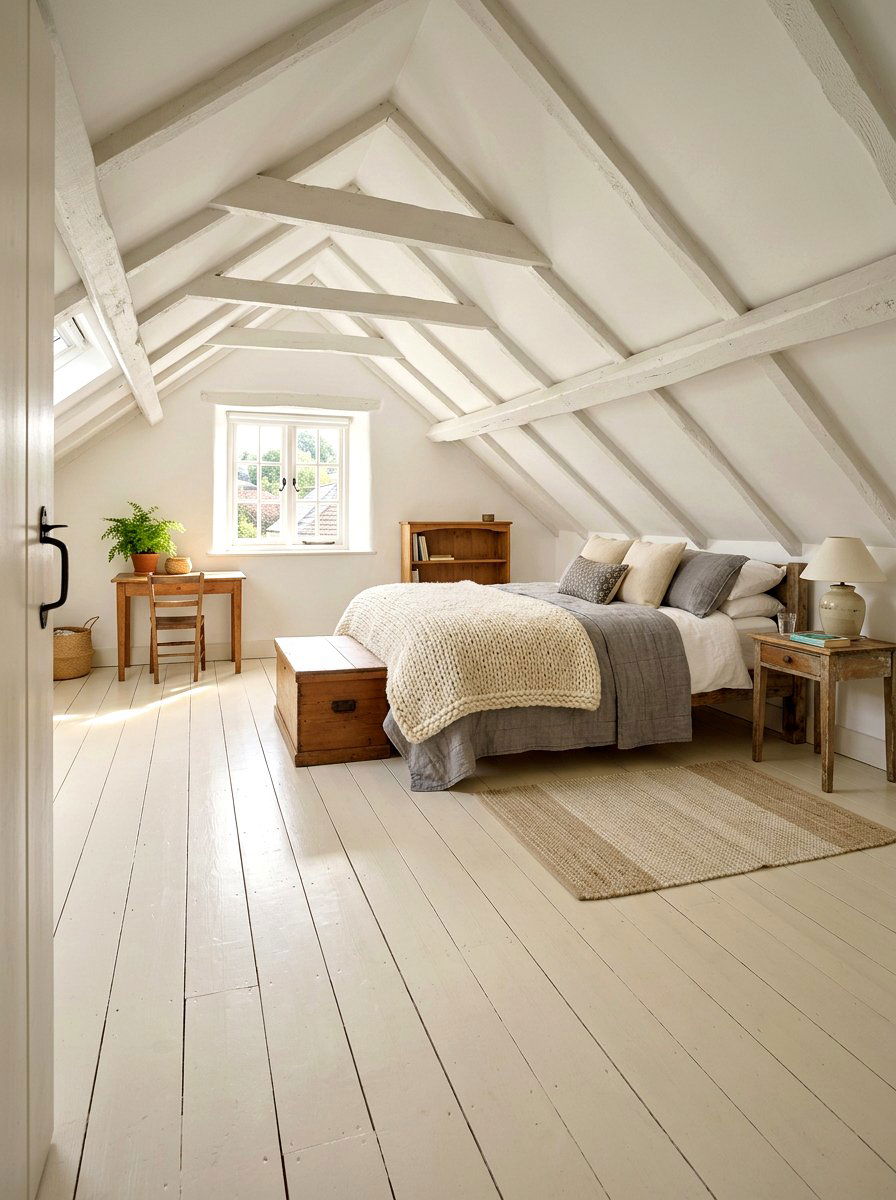
Turning a painted attic floor into a finished surface is a great way to transform a neglected storage area into a functional bedroom, office, or playroom. Often, attic floors are made of simple planks or plywood, which can feel rough and unfinished. A coat of light-colored paint, such as cream or soft blue, can help the space feel much more open and less cramped, especially since attics often have low or slanting ceilings. Painting the floors is a much lighter and easier option than installing heavy traditional flooring in an upper-story space. It provides a clean, smooth surface that feels cozy and intentional, making the attic a truly habitable part of the home.
21. Painted laundry room floor
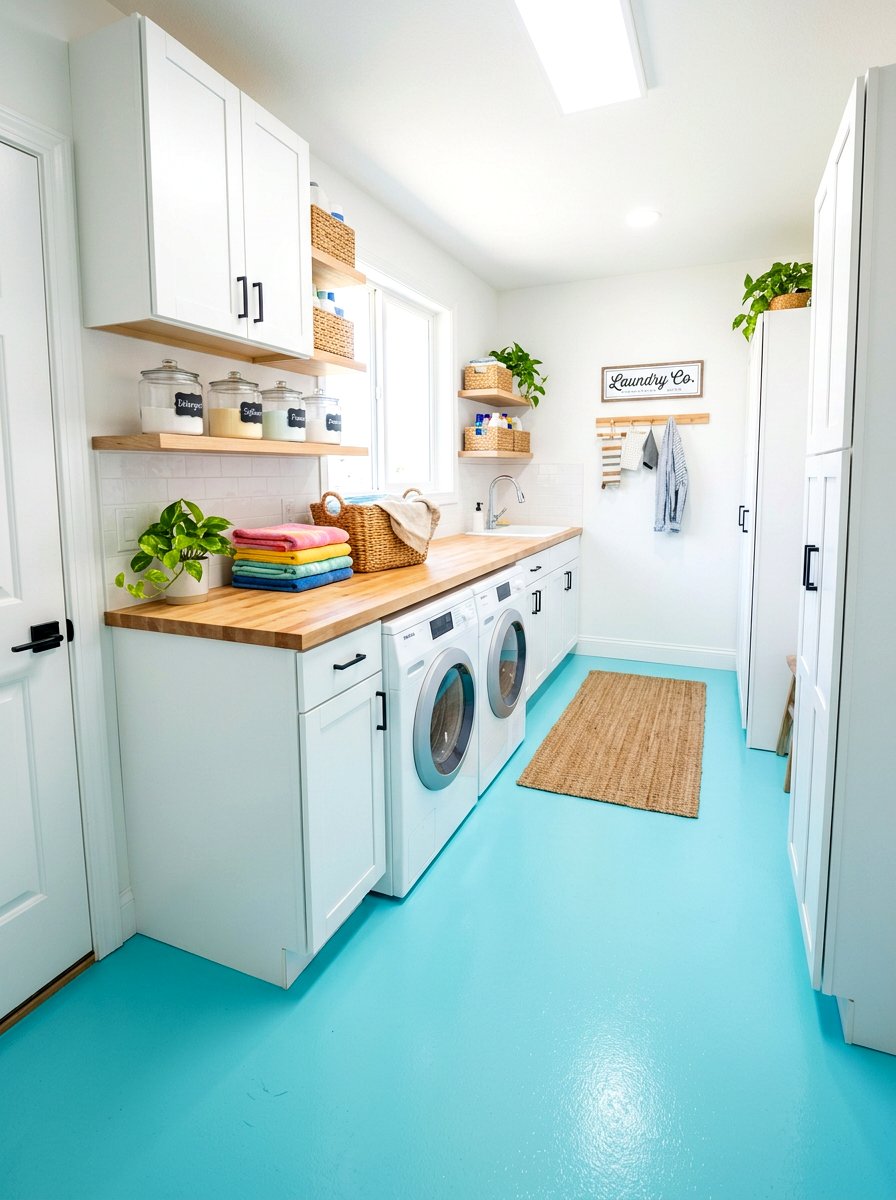
A painted laundry room floor can turn a purely functional and often boring space into a bright and cheerful area where you actually enjoy spending time. Since laundry rooms are often small, they are the perfect place to experiment with a bold color or a fun, oversized stencil pattern. A crisp white and blue pattern can evoke a clean, fresh feeling that complements the purpose of the room. Paint is also an excellent way to seal concrete or old linoleum in these areas, making them more resistant to water and detergent spills. It is an affordable upgrade that adds a surprising amount of personality and style to an often-overlooked corner of the house.
22. Mint green floor
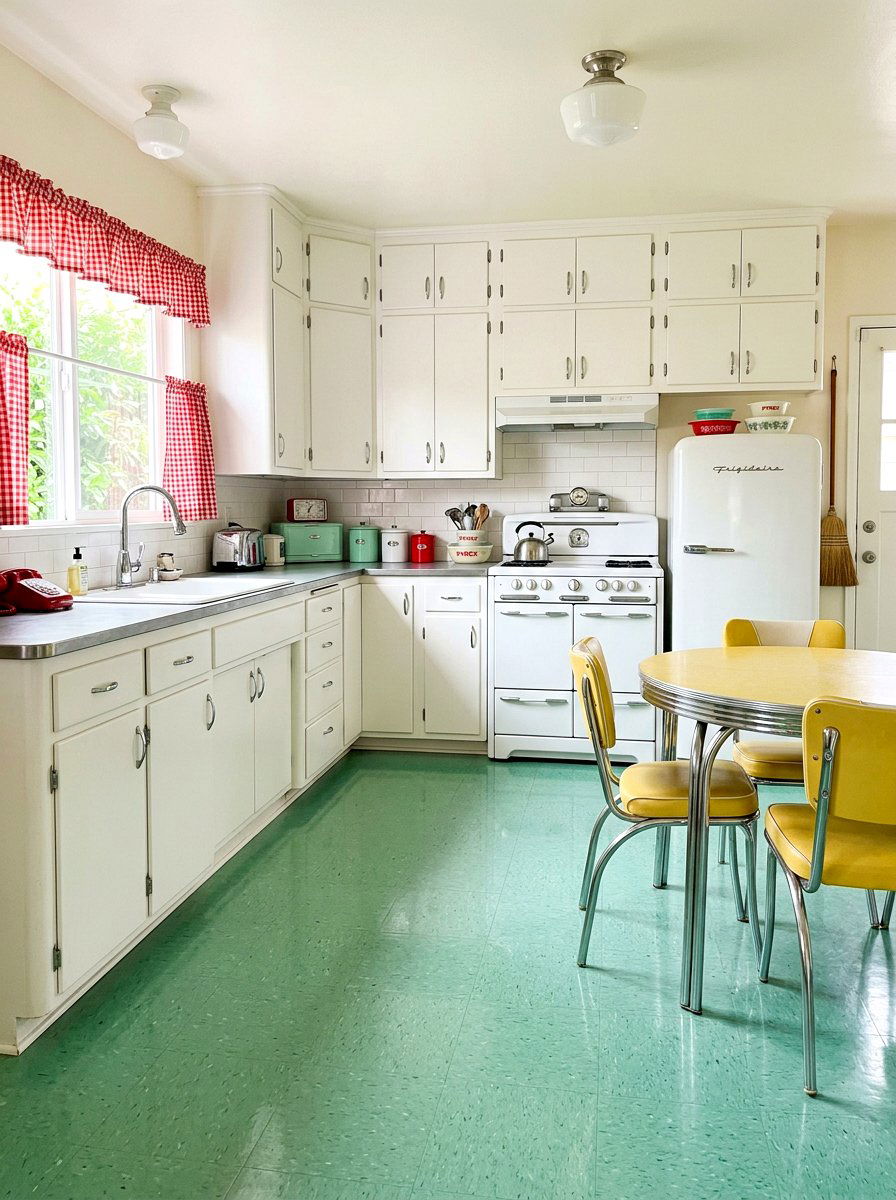
Choosing a mint green floor is a delightful way to inject a sense of vintage charm and freshness into a kitchen, bathroom, or sunroom. This soft, pastel hue feels incredibly nostalgic, reminding one of retro diners or classic mid-century cottages. It provides a cheerful and airy foundation that makes a room feel light and inviting. Mint green pairs beautifully with white cabinetry, stainless steel appliances, and light wood accents. It is a unique color choice that stands out without feeling aggressive, offering a peaceful and happy vibe. Whether you go for a solid matte finish or a glossy sheen, a mint floor is an excellent way to create a bright, personality-filled space.
23. Yellow painted floor
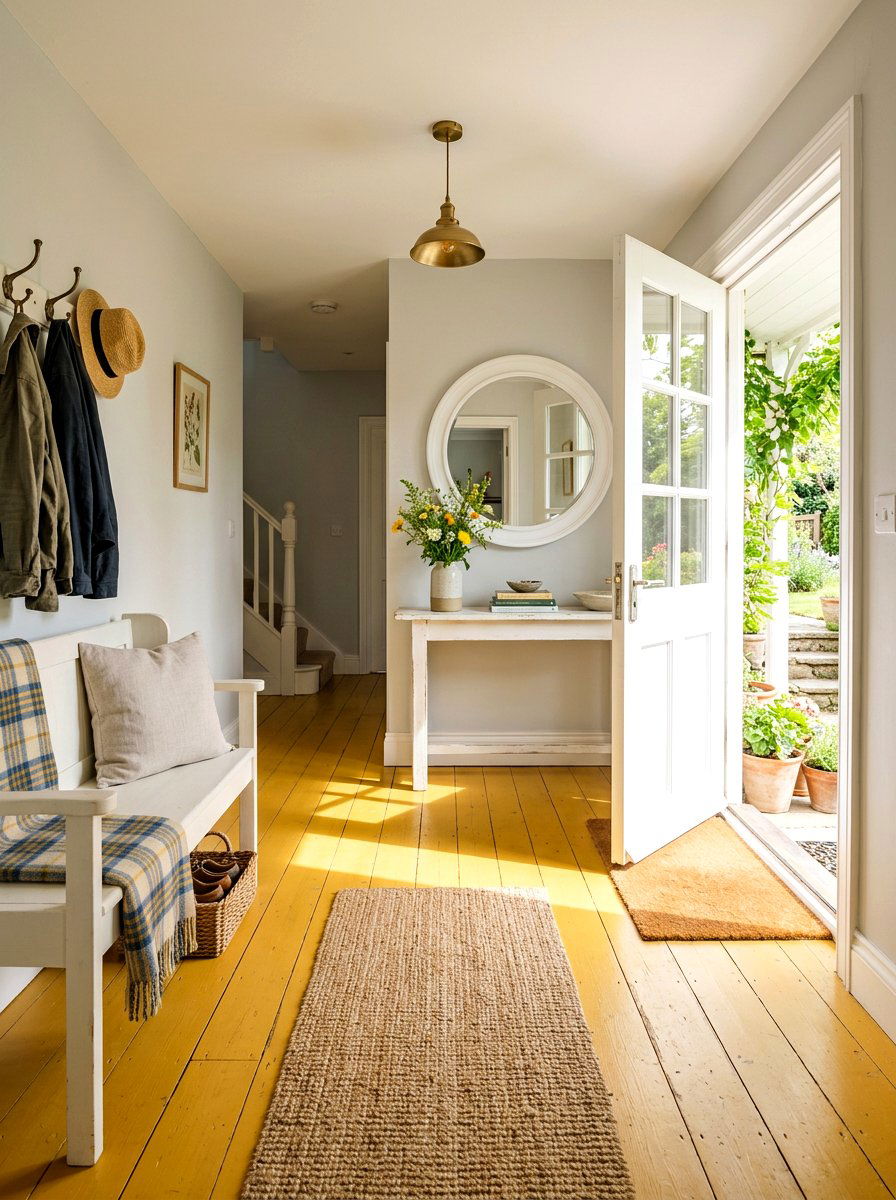
A yellow painted floor is the ultimate way to bring sunshine and warmth into a room, making it feel instantly happy and energetic. This bold choice works exceptionally well in entryways or kitchens where you want a welcoming and vibrant atmosphere. Soft buttery yellows can feel traditional and cozy, while bright lemon tones create a modern and daring look. Yellow is a fantastic color for reflecting light, which helps to brighten up darker hallways or rooms with small windows. When paired with neutral walls and simple furniture, the floor becomes the undisputed star of the room, providing a cheerful foundation that can lift anyone’s mood the moment they walk in.
24. Terracotta painted floor
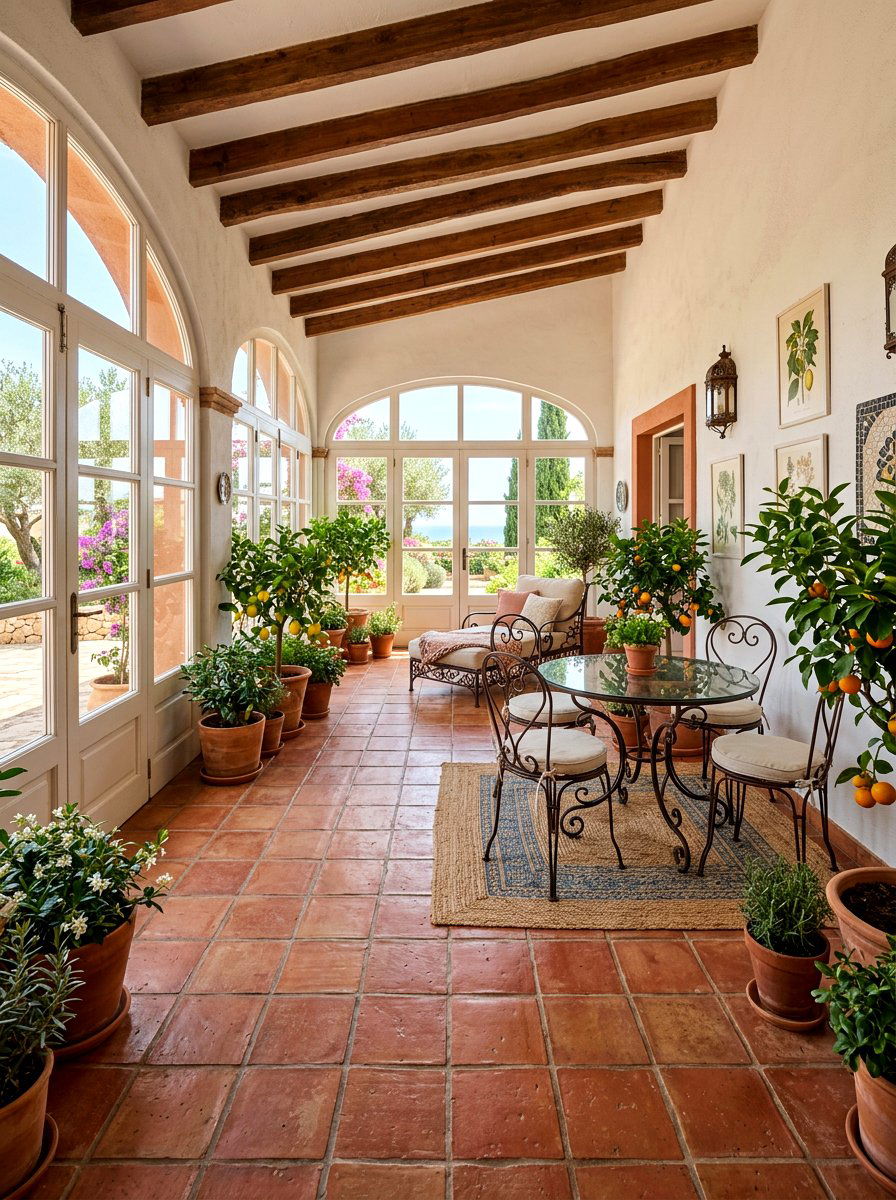
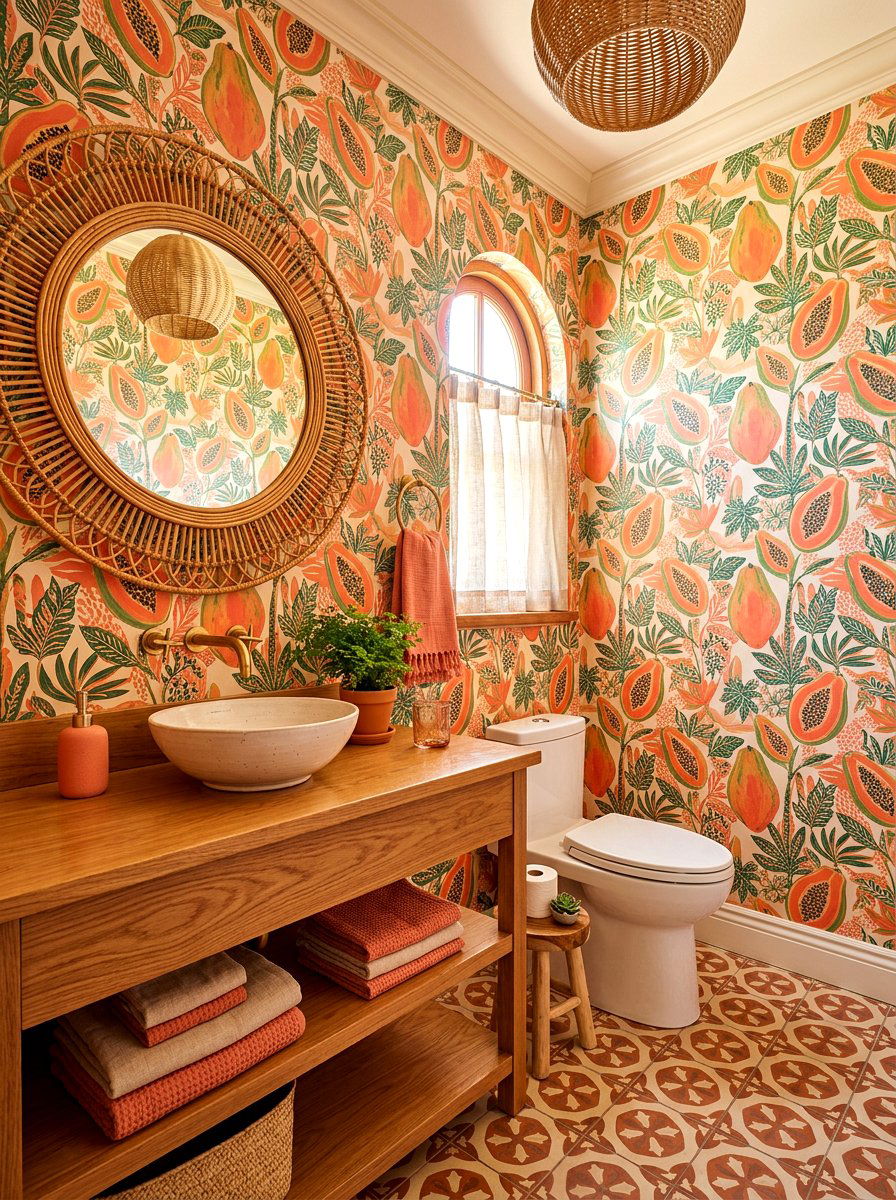
A terracotta painted floor is a wonderful way to achieve the warm, Mediterranean, or Southwestern look of real clay tiles without the cost and weight. This earthy, reddish-orange hue adds instant coziness and a sense of history to a space, making it feel more grounded and organic. It is a particularly effective choice for sunrooms, mudrooms, or kitchens where you want an inviting, rustic feel. Terracotta pairs beautifully with green plants, natural wood, and woven textures. By using a matte or satin finish, you can mimic the natural appearance of baked earth. This color choice provides a rich, saturated foundation that feels timeless and full of character for a cozy home environment.
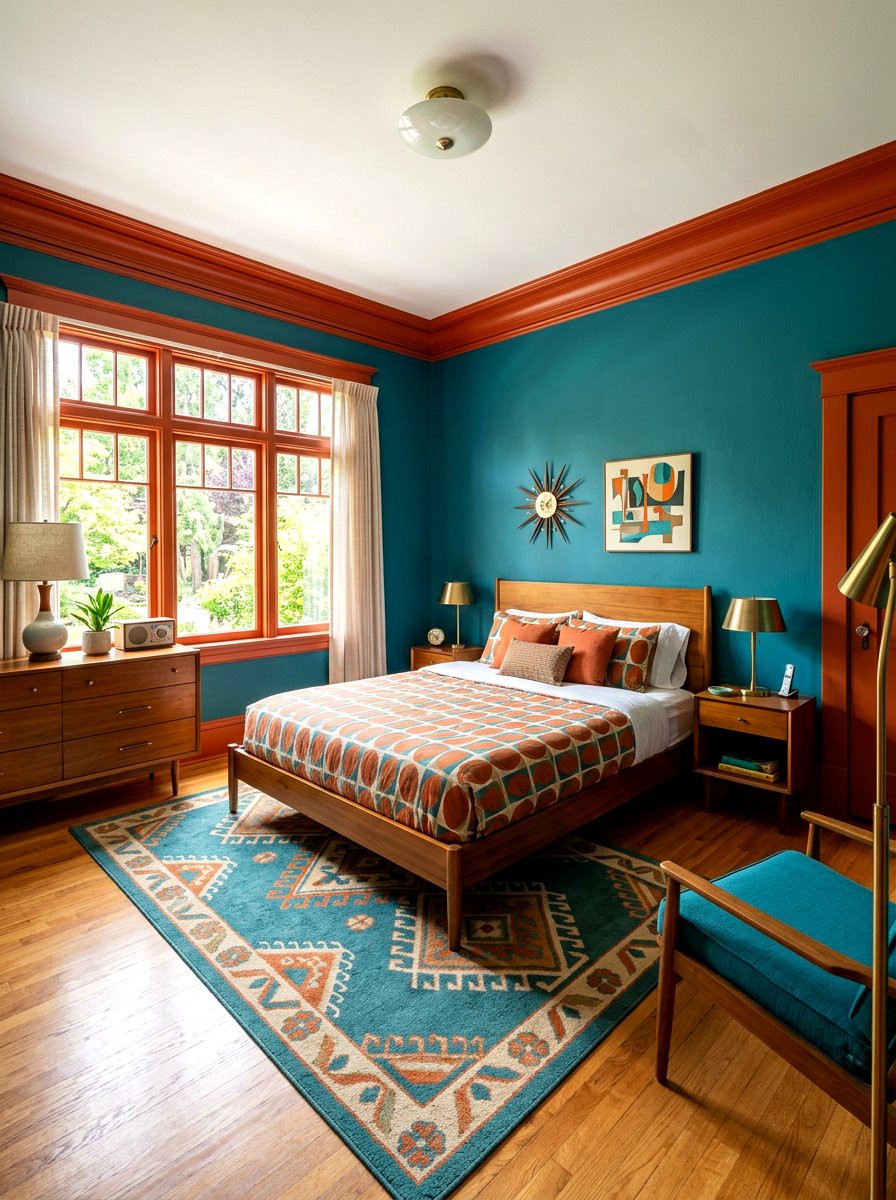
25. Whitewashed wood floor
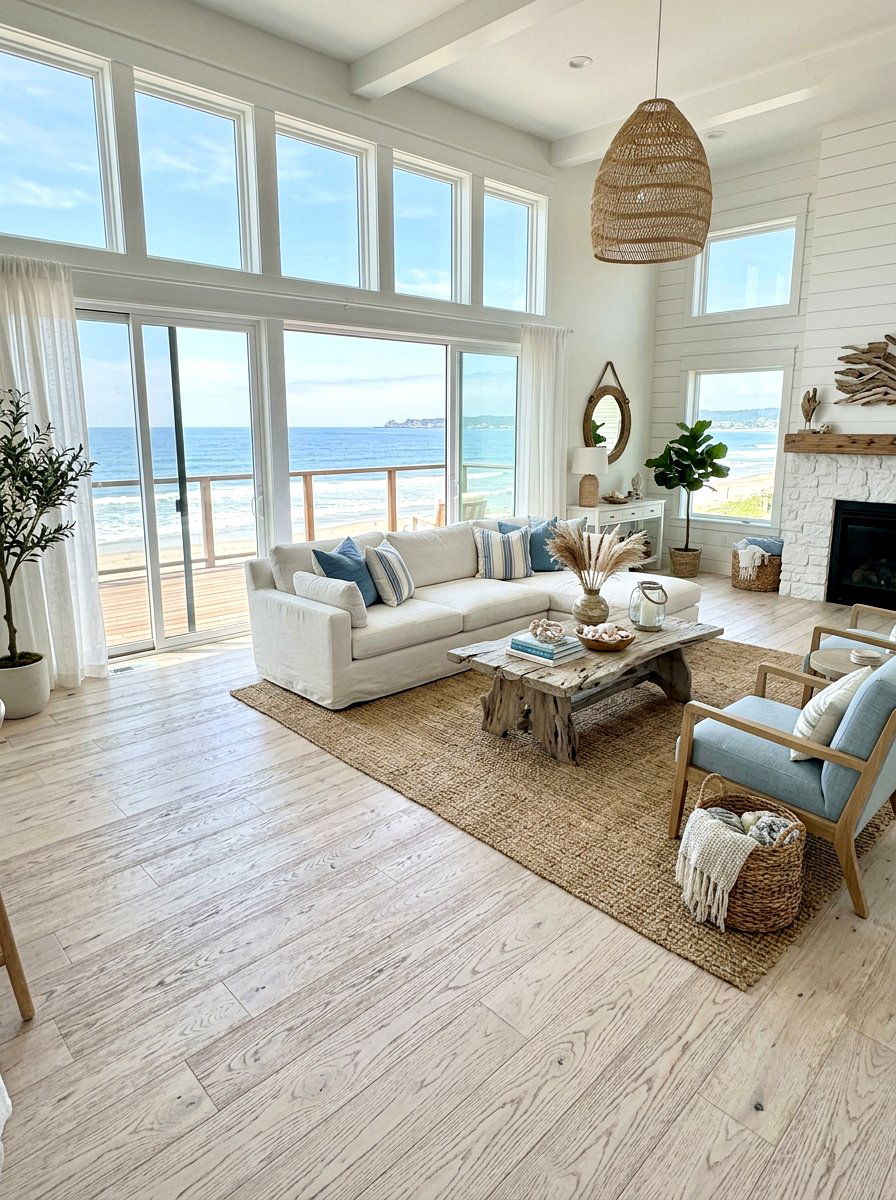
A whitewashed wood floor offers a soft, coastal, and relaxed aesthetic that allows the natural beauty of the wood grain to peek through. Unlike a solid white paint, whitewashing involves thinning the paint to create a translucent finish that brightens the wood while maintaining its organic texture. This look is perfect for achieving a modern farmhouse or beach house vibe that feels airy and unpretentious. It is an excellent way to tone down overly orange or dark wood floors without completely hiding them. Whitewashing provides a subtle, sophisticated foundation that works well with neutral decor and natural materials, creating a serene and breezy atmosphere in any living room or bedroom.
26. Painted garage floor
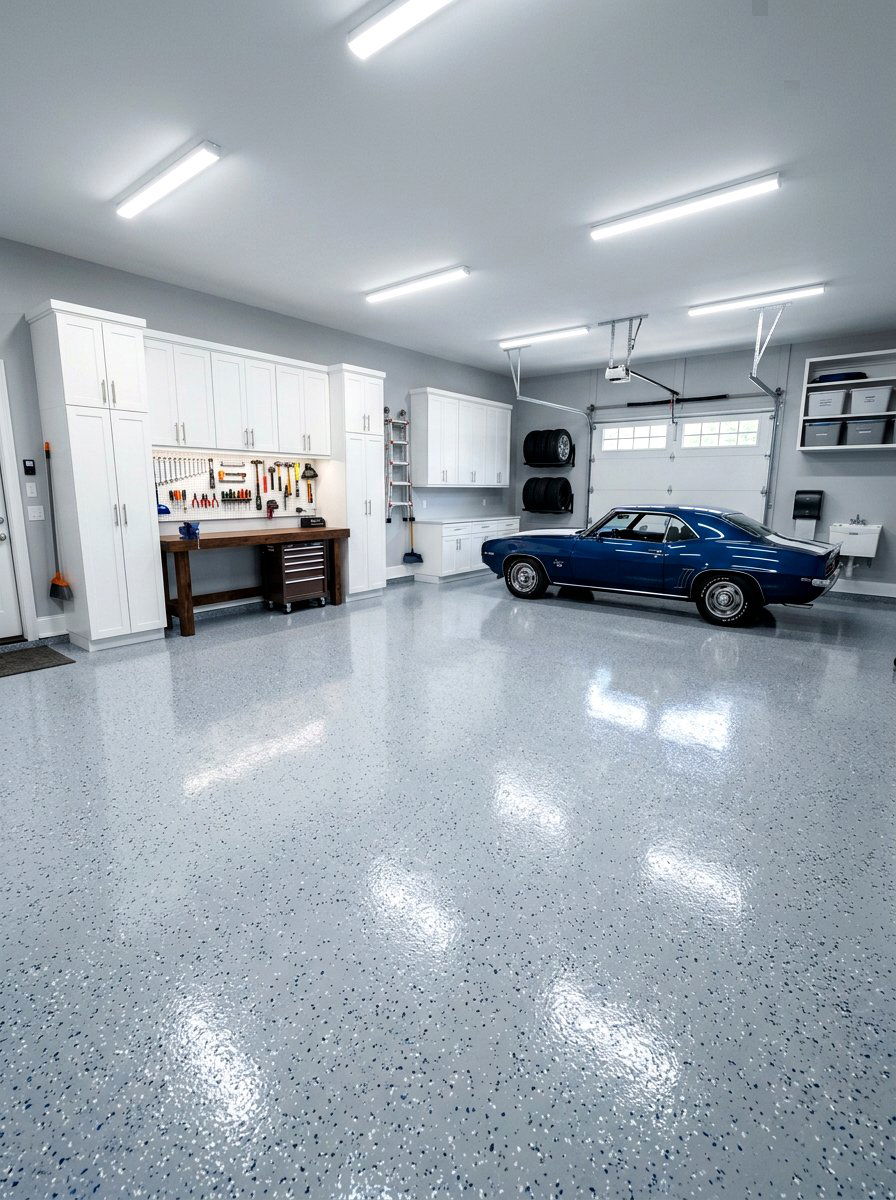
Applying a painted garage floor is a practical and aesthetic upgrade that transforms a dusty, industrial space into a clean and organized extension of your home. Using a specialized epoxy or heavy-duty floor paint protects the concrete from oil stains, chemicals, and hot tire pick-up. A light grey or tan color can make the garage feel much brighter and easier to navigate, while adding decorative flakes can provide a professional, textured look. This project not only makes the floor easier to sweep and keep clean but also creates a much more pleasant environment for hobbies, home gyms, or workshops. It is a smart investment that adds significant value and functionality.
27. Modern minimalist floor
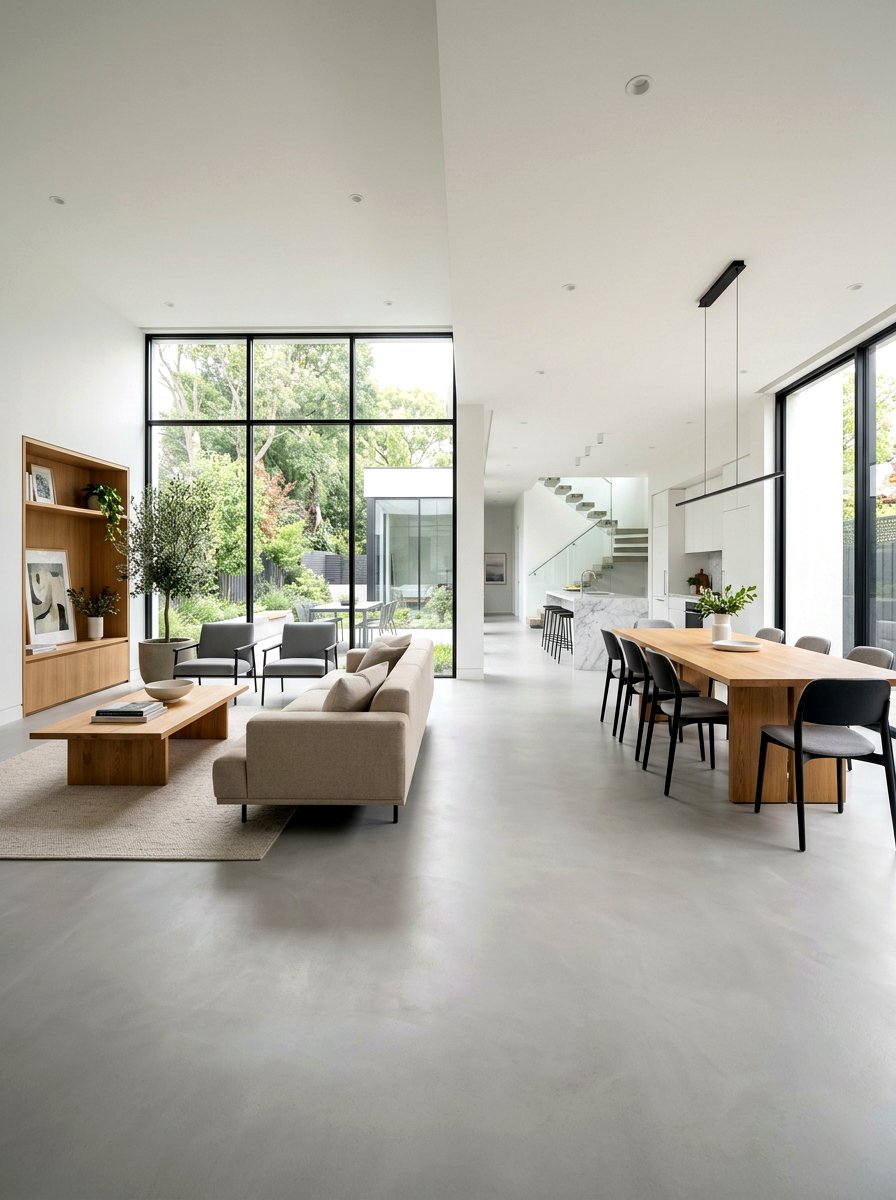
A modern minimalist floor is all about clean lines, a limited color palette, and a seamless finish that emphasizes the architecture of the space. Typically achieved with a solid, neutral color like cool grey, soft white, or deep black, this design choice removes visual clutter and allows the focus to remain on high-quality furniture and open space. A low-sheen or matte finish is often preferred for its sophisticated and understated appearance. This approach works exceptionally well in open-concept homes where you want the flooring to provide a consistent and calming flow from one room to another. It creates a serene, gallery-like environment that feels incredibly intentional, organized, and quietly luxurious.
28. Scandi painted floor
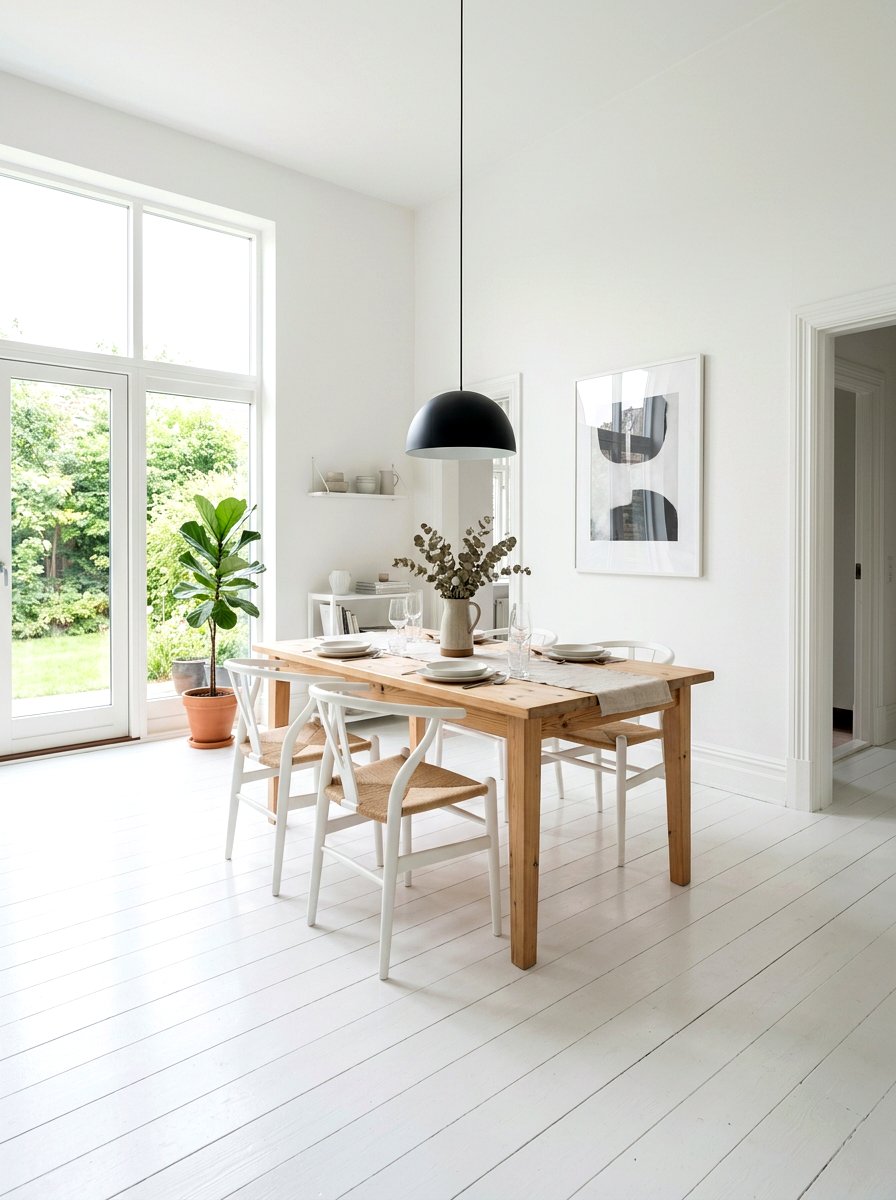
The Scandi painted floor is characterized by its light, bright, and functional aesthetic, often featuring crisp white or very pale grey tones. In Scandinavian design, light-colored floors are used to combat the long, dark winters by reflecting as much natural light as possible into the home. This look is usually paired with natural wood accents, cozy textiles, and a clutter-free environment. Painting your floors in this style instantly gives the room a fresh, modern, and spacious feeling. It is a versatile choice that works in any room, providing a clean and bright canvas that feels both warm and modern. The result is a home that feels peaceful, luminous, and effortlessly stylish.
29. Coastal blue floor
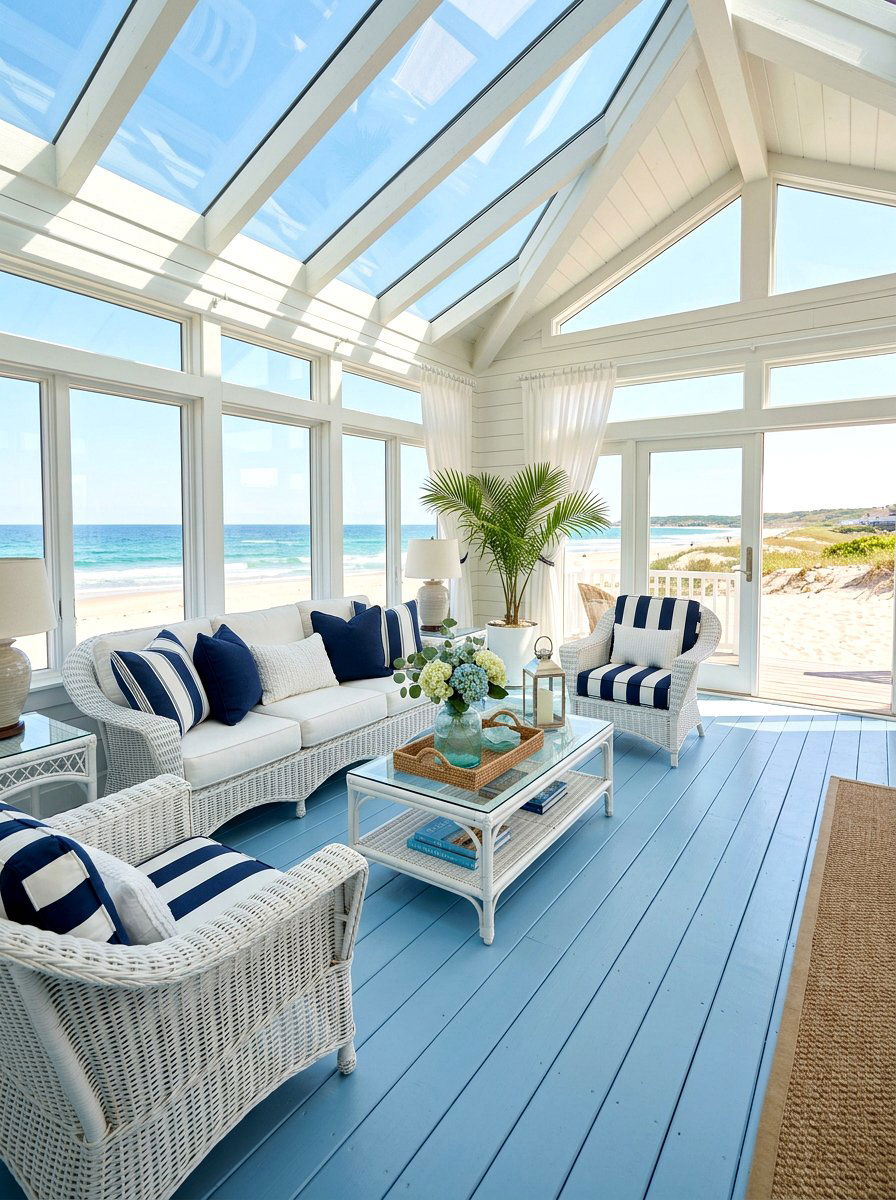
A coastal blue floor brings the calming and refreshing vibes of the ocean right into your living space, making it perfect for beach houses or any home where you want a relaxed, vacation-like feel. Shades ranging from soft sky blue to deep sea tones can be used to create different moods, from airy and light to moody and dramatic. This color pairs beautifully with white-washed furniture, jute rugs, and linen fabrics. A blue floor provides a unique pop of color that feels more natural and soothing than other bright tones. It is a wonderful way to add personality to a sunroom, bathroom, or bedroom, creating a tranquil foundation that feels fresh and breezy.
30. Charcoal grey floor
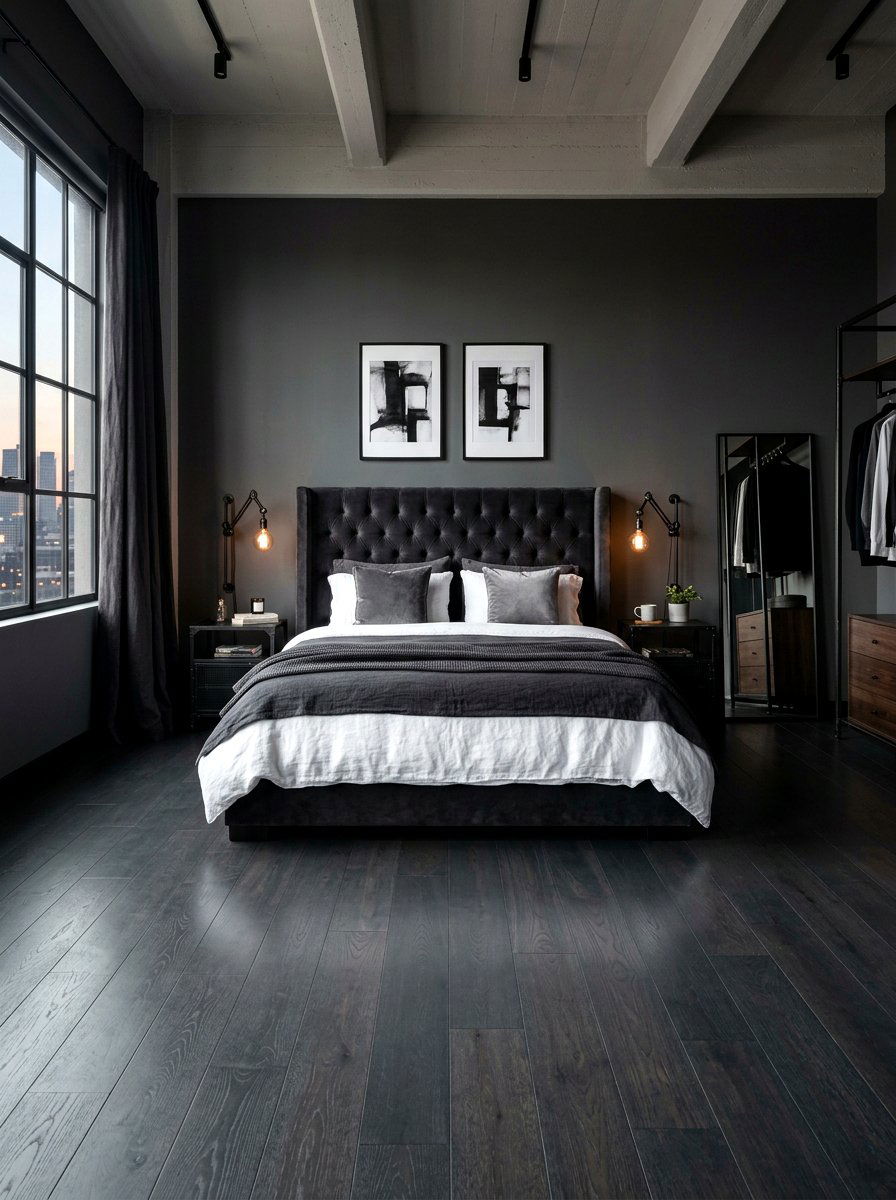
A charcoal grey floor offers a deep, sophisticated, and incredibly versatile foundation that bridges the gap between modern and traditional design. This dark neutral is excellent at grounding a room and providing a sense of luxury and depth. It is a more forgiving alternative to pure black, as it hides dust and scratches while still offering a high-contrast look when paired with light walls. Charcoal grey looks stunning in a satin or semi-gloss finish, which allows the light to dance across the dark surface. It works beautifully in bedrooms, dining rooms, or home offices, providing a moody and elegant backdrop that makes colorful artwork and furniture stand out with dramatic intensity.
Conclusion:
Deciding to paint your floors is a bold and rewarding design choice that allows you to fully customize your home’s aesthetic while staying within a reasonable budget. Throughout this exploration of various styles, from classic checkerboards to modern minimalist finishes, it is clear that paint offers a level of versatility that traditional flooring simply cannot match. Whether you are looking to brighten a dark room with white paint or add historic charm with a diamond pattern, the key to a successful project lies in thorough preparation and choosing the right high-quality products. By treating your floors as a significant design element, you can transform the entire mood of your living space. This DIY approach empowers you to create a home that is not only functional and durable but also a true reflection of your personal style and creative vision for every single room in your house.

Related posts: