Creating a stunning first impression begins at your front door, where a well-designed portico serves as the architectural crown of your home. The landscaping surrounding this entrance plays a vital role in framing the structure and guiding guests toward your sanctuary. By blending lush greenery with thoughtful hardscaping, you can transform a simple walkway into a grand arrival experience that reflects your personal style. Whether you prefer the clean lines of modern minimalism or the overflowing charm of a cottage garden, the right combination of plants, textures, and lighting will enhance your home's curb appeal. Strategic landscaping not only beautifies the space but also adds significant value to your property while creating a warm, inviting atmosphere for everyone who visits.

1. Boxwood Hedge Border
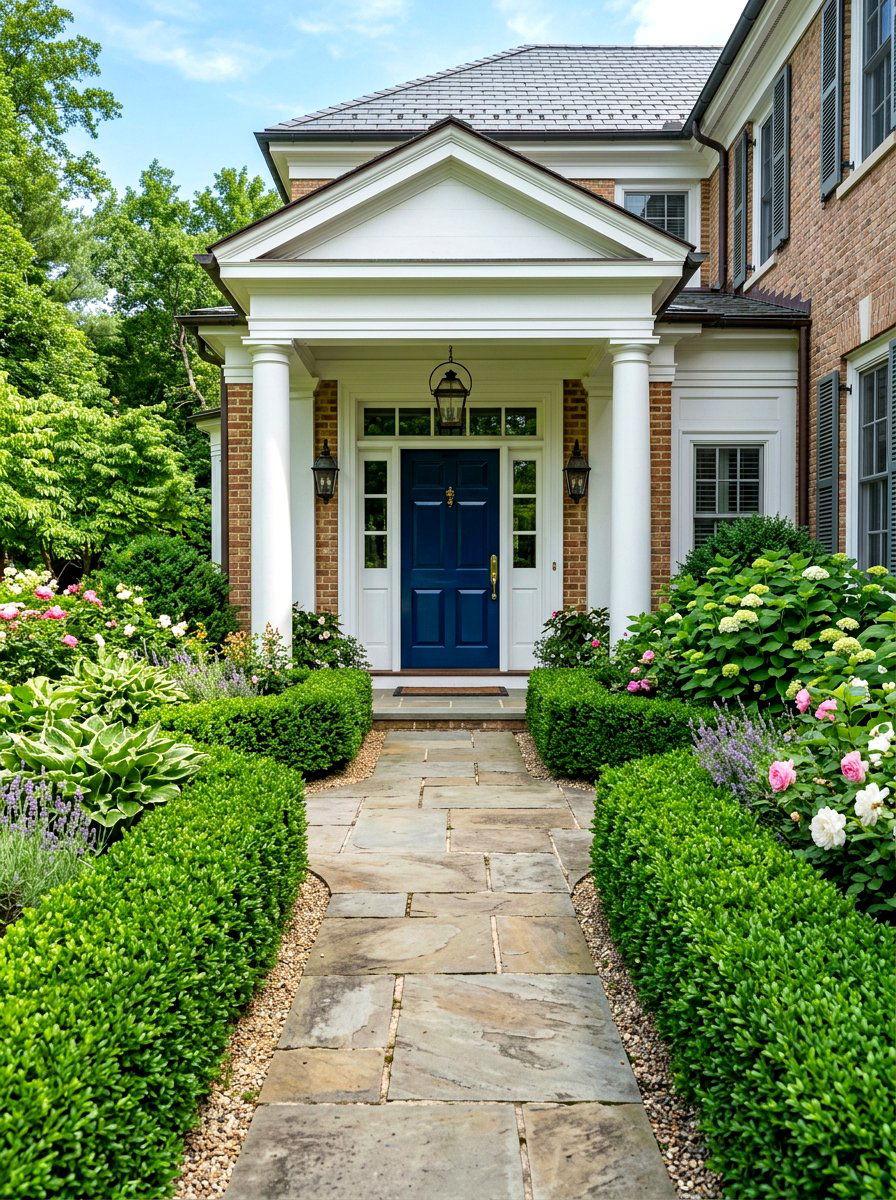
A classic boxwood hedge offers a timeless sense of order and sophistication that perfectly complements any traditional portico. These versatile evergreen shrubs provide a structured frame for your entryway, maintaining their vibrant green color throughout every season. By planting them in neat, low-lying rows along the walkway or the foundation of the porch, you create a clean visual boundary that directs the eye toward the front door. You can keep them tightly sheared for a formal look or allow them to grow slightly softer for a more relaxed aesthetic. Their dense foliage provides an excellent backdrop for seasonal flowers, ensuring your entrance looks polished and professionally maintained regardless of the weather outside.
2. Stone Walkway Garden
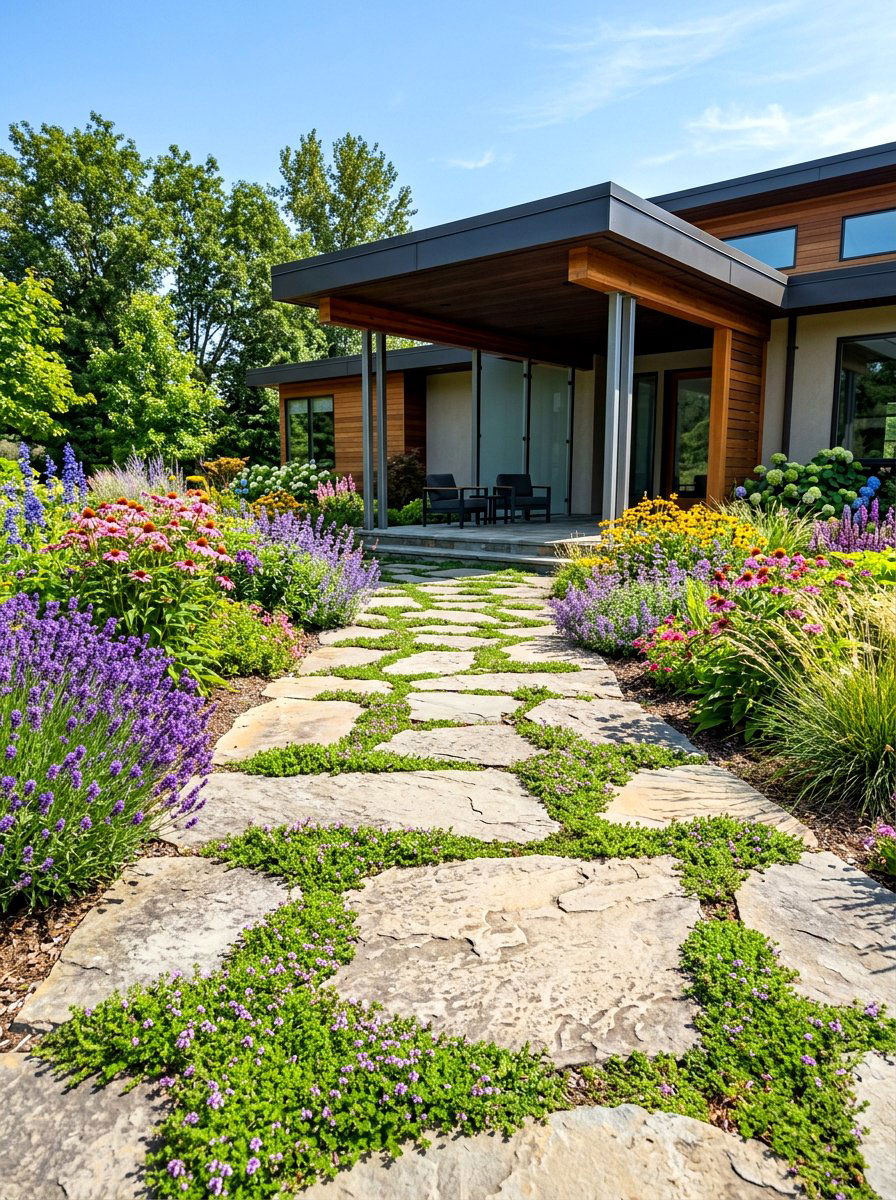
Integrating a natural stone walkway into your entrance design adds an organic touch that feels both rugged and refined. Using materials like flagstone, bluestone, or slate creates a durable path that harmonizes with the earthier elements of your home’s exterior. You can plant low-growing groundcovers like creeping thyme or Irish moss between the stones to soften the hard edges and add a splash of living color. This approach bridges the gap between the structured portico and the surrounding lawn, making the transition feel intentional and artistic. The varied textures and natural hues of the stone provide a high-end look that stands up to heavy foot traffic while remaining low-maintenance.
3. Column Base Flower Beds
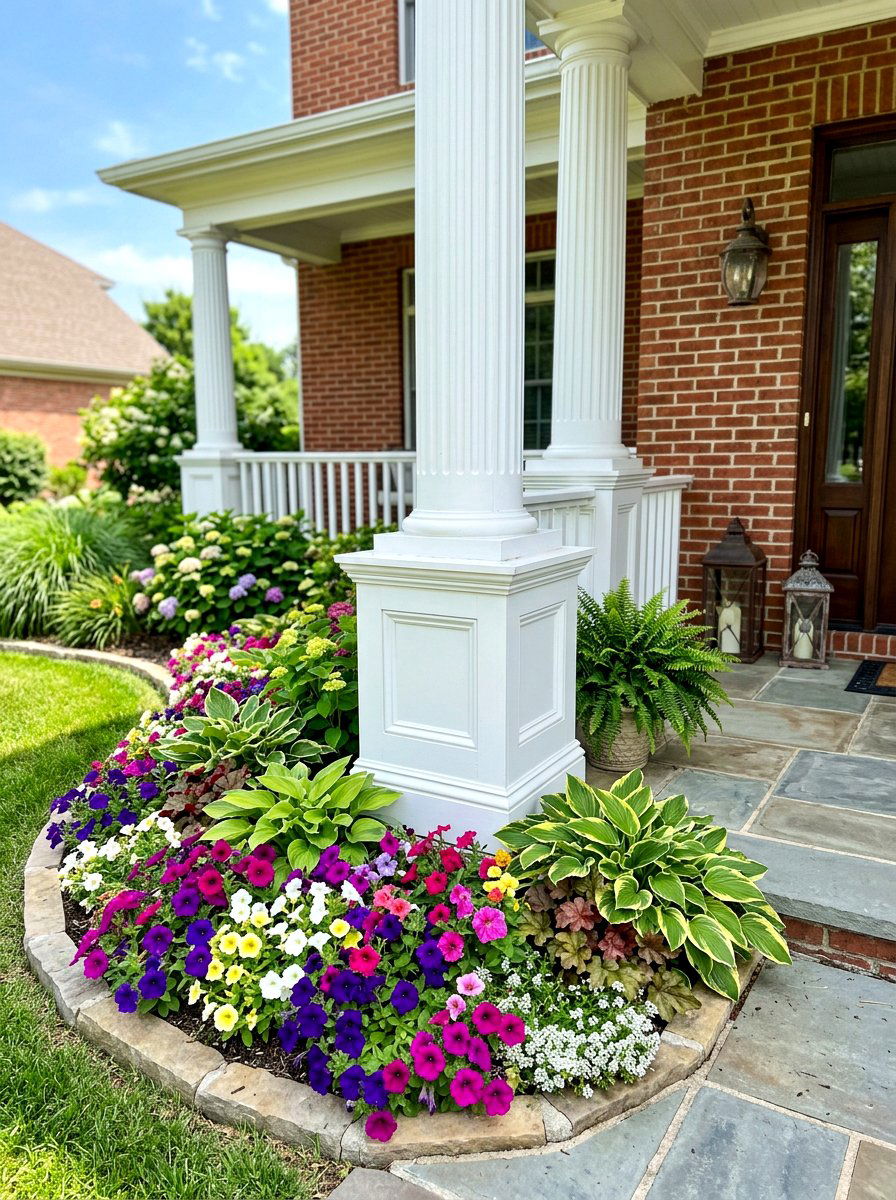
Drawing attention to the architectural pillars of your portico is easy when you surround their bases with vibrant, tiered flower beds. By planting a mix of low-growing perennials and mounded annuals around the foot of each column, you ground the structure into the landscape. This technique softens the transition from the vertical columns to the horizontal ground, making the entire entrance feel more integrated. Choose flowers with contrasting colors and textures, such as hostas for their broad leaves and petunias for their bright blooms. These beds serve as a colorful foundation that highlights the scale of your porch while adding a welcoming, curated feel to the primary entry point.
4. Lavender Entry Walkway
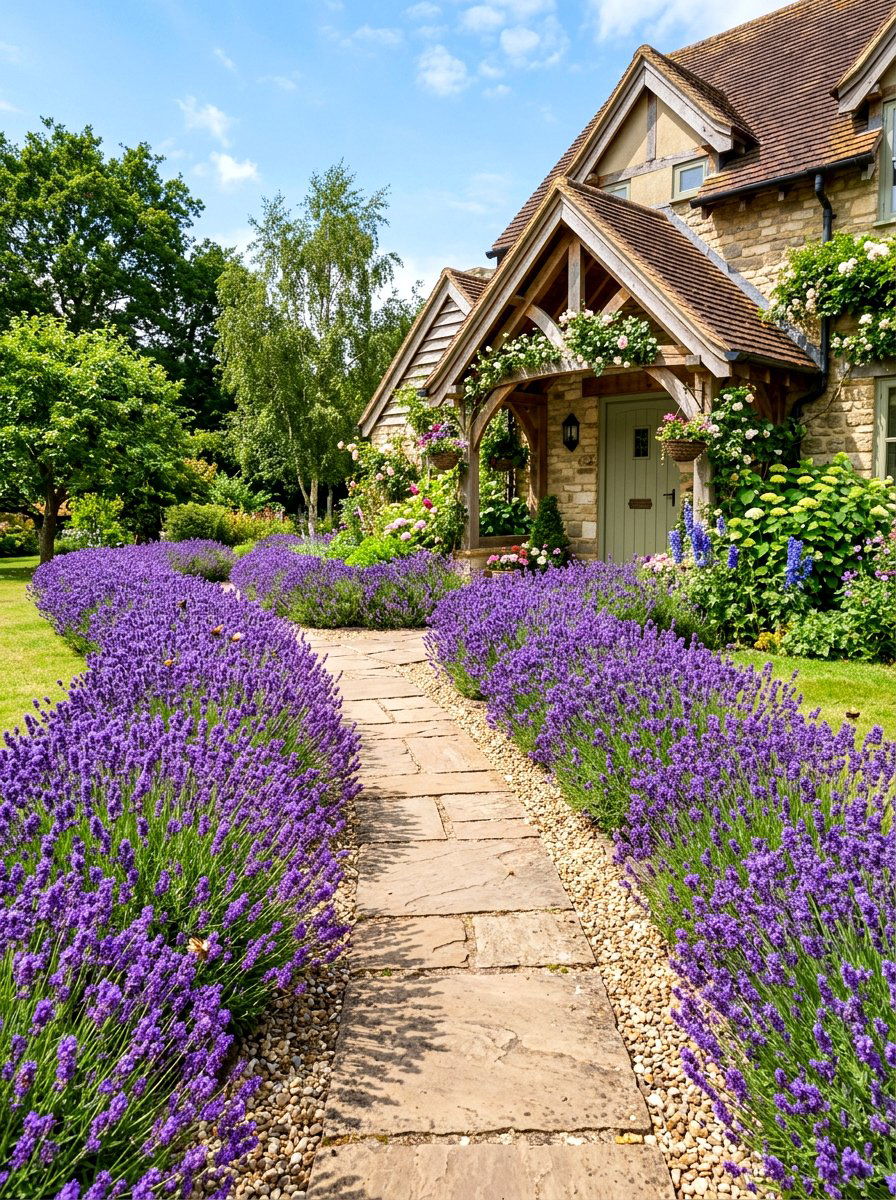
Fragrance plays a powerful role in creating an inviting atmosphere, and lining your portico walkway with English lavender provides a sensory experience like no other. As guests approach your front door, the gentle scent of lavender fills the air, offering a calming and sophisticated welcome. The silvery-green foliage and upright purple spikes add a soft, Mediterranean aesthetic that pairs beautifully with stone or brick accents. Lavender is remarkably hardy and drought-tolerant once established, making it a practical choice for sunny entryways. Its structured growth habit ensures the path remains clear, while the abundance of blooms attracts beneficial pollinators, bringing your front garden to life with movement and color.
5. Modern Gravel Path
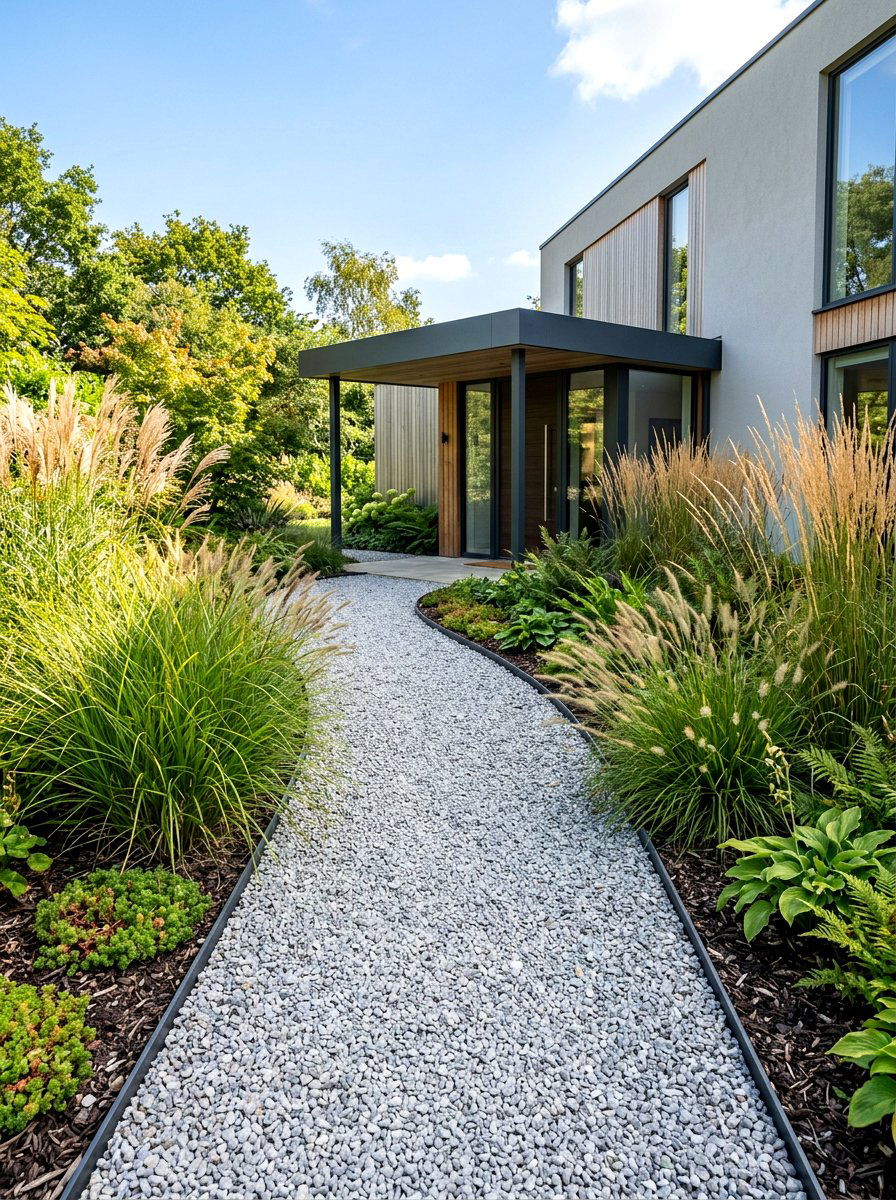
For a clean and contemporary look, a modern gravel path offers a minimalist aesthetic that emphasizes texture and geometry. Using fine, light-colored pebbles or crushed granite creates a crisp contrast against dark mulch or green lawn areas. This type of landscaping is particularly effective for modern porticos with sleek lines and neutral color palettes. You can define the edges with steel or stone borders to keep the gravel contained and maintain a sharp appearance. Complement the path with structural plants like ornamental grasses or architectural succulents to complete the look. Gravel is an excellent choice for drainage and provides a satisfying crunch underfoot, signaling a guest's arrival with every step.
6. Tiered Retaining Wall
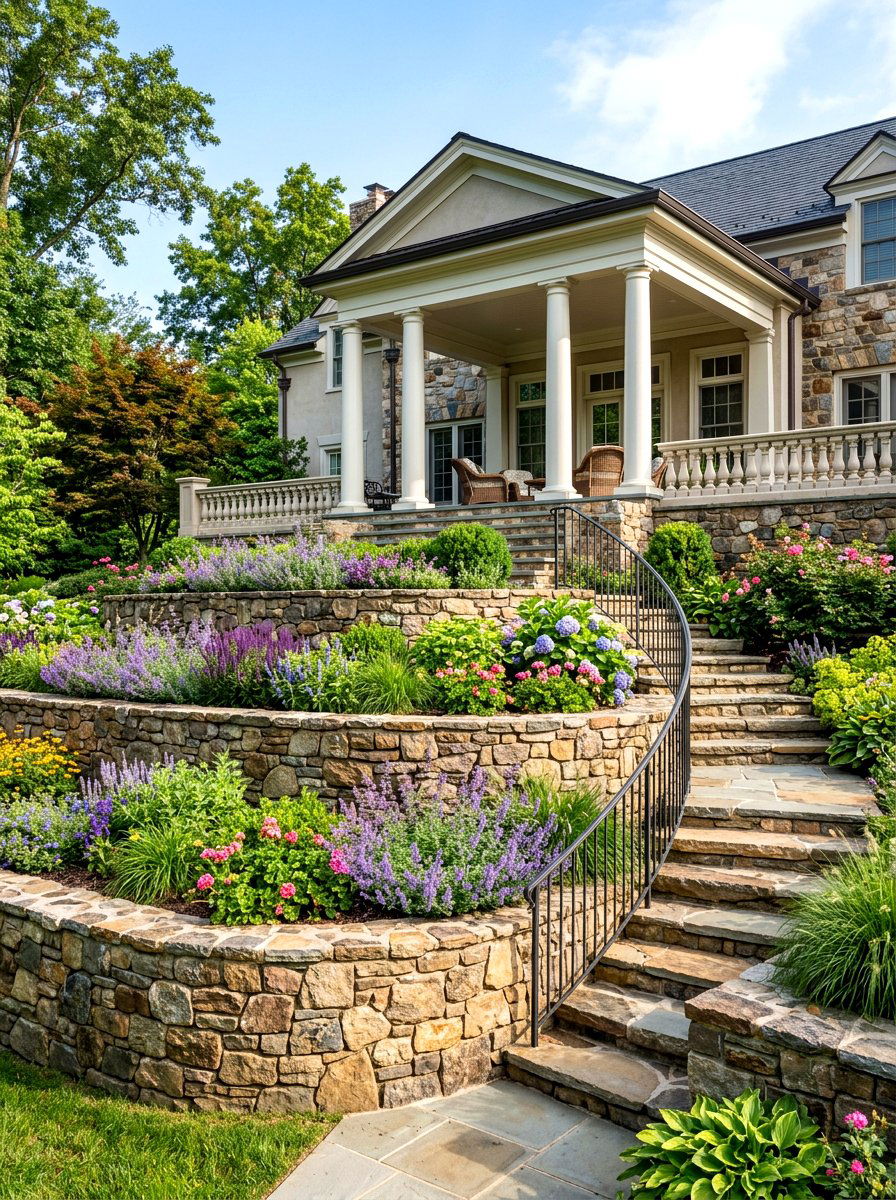
If your front entrance sits on a slope, a tiered retaining wall can transform a challenging incline into a magnificent landscape feature. By creating multiple levels of planting beds, you can introduce a variety of heights and textures that draw the eye upward toward the portico. Use natural stone or textured concrete blocks to build the walls, ensuring they match the architectural style of your home. These tiers allow for a diverse selection of plants, from cascading ivy on the upper levels to colorful shrubs at the base. This structured approach not only prevents erosion but also provides a sense of grandeur and permanence that makes the entrance feel truly substantial.
7. Climbing Hydrangea On Columns
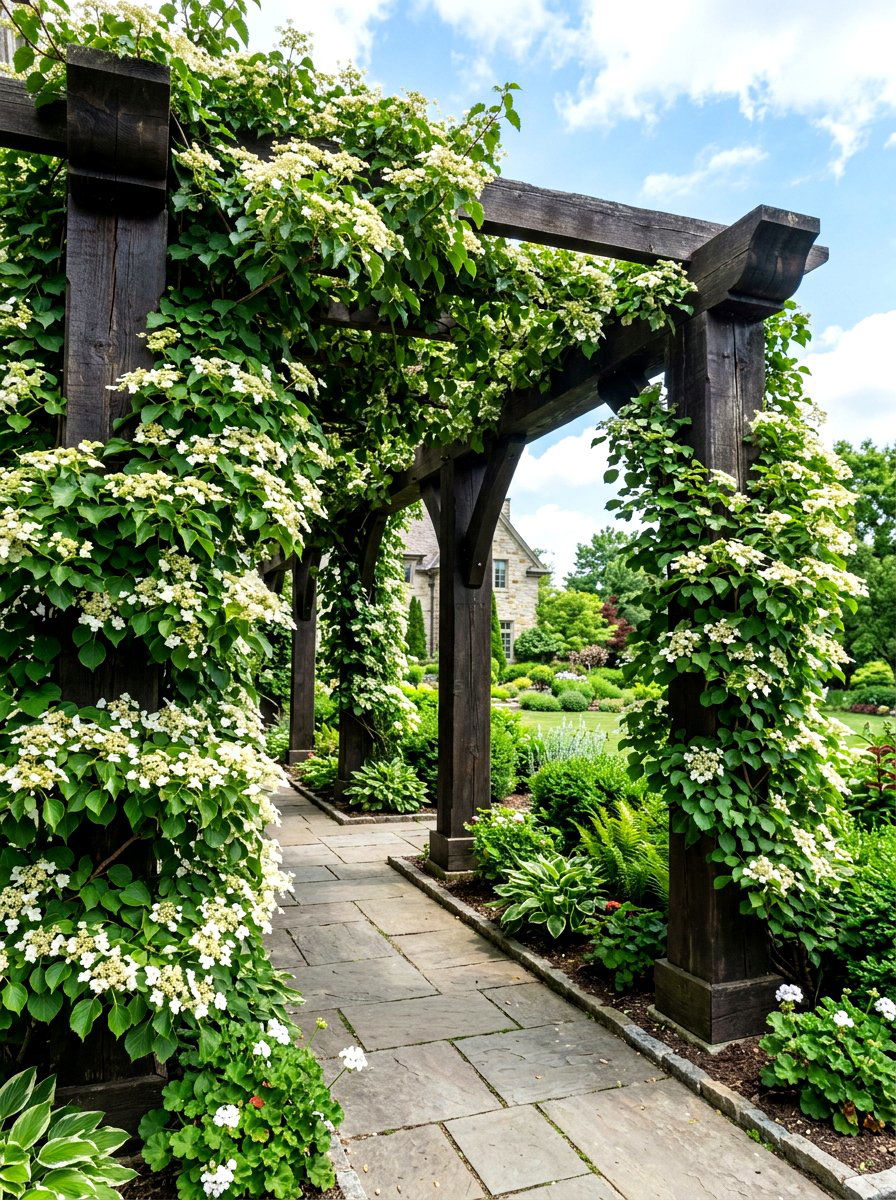
Vertical interest is essential for a well-balanced portico, and training climbing hydrangeas to grow up the columns creates a lush, romantic effect. Unlike many vines, climbing hydrangeas feature beautiful peeling bark in the winter and stunning white lacecap flowers during the summer months. Their glossy green leaves provide a dense cover that softens the look of stone or wood pillars, making the architecture feel as though it is part of the garden itself. This slow-growing vine is easy to manage and provides a high-impact visual that evolves with the seasons. It is a perfect choice for adding a touch of old-world charm and natural elegance to a stately front entrance.
8. Native Grass Garden
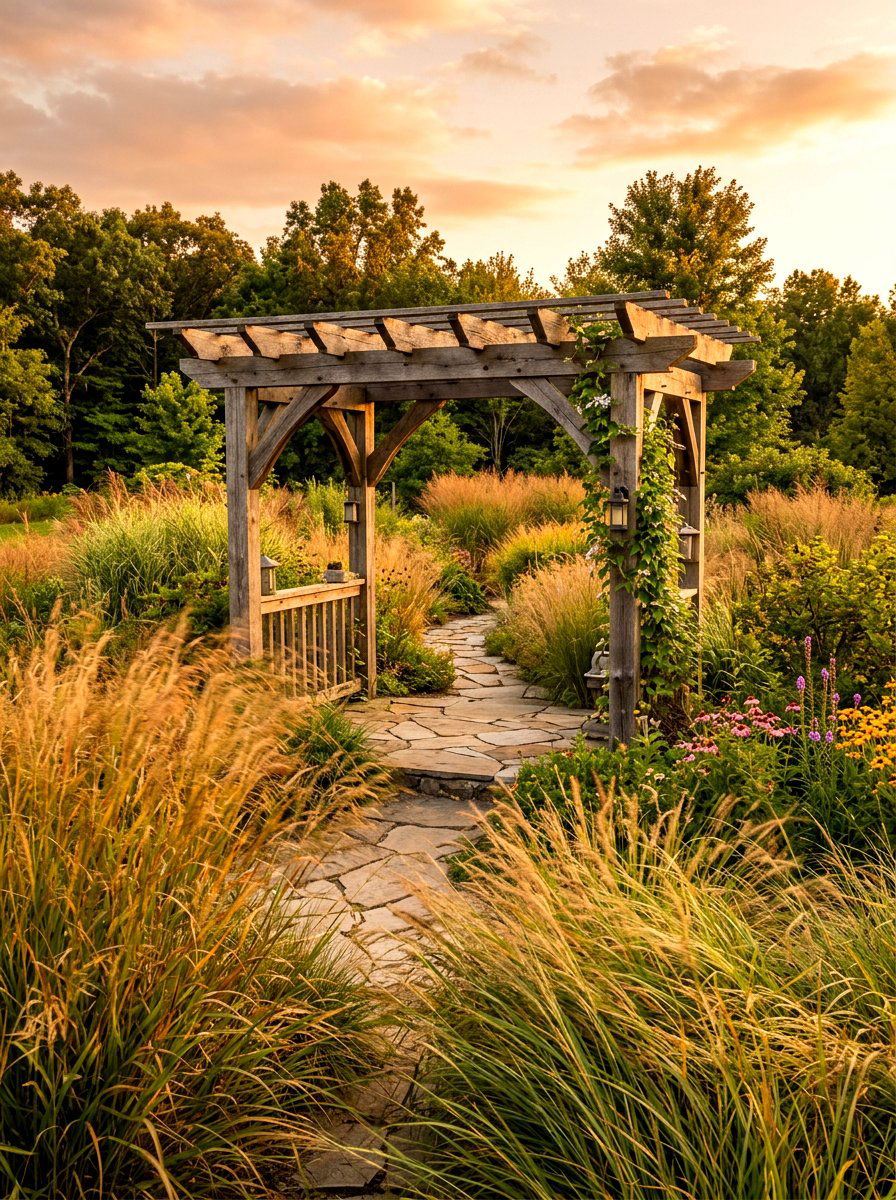
Embracing the natural beauty of your region with a native grass garden provides a low-maintenance and eco-friendly landscape for your entryway. Ornamental grasses like switchgrass or little bluestem offer incredible texture and movement, swaying gently with every breeze to create a dynamic visual. These plants are often drought-resistant and require very little intervention once they are established in your soil. By massing them around the portico, you create a soft, airy screen that provides privacy without feeling heavy or closed off. In the autumn, many native grasses turn vibrant shades of gold and bronze, ensuring your home remains beautiful and seasonally relevant throughout the entire year.
9. Symmetrical Evergreen Shrubs
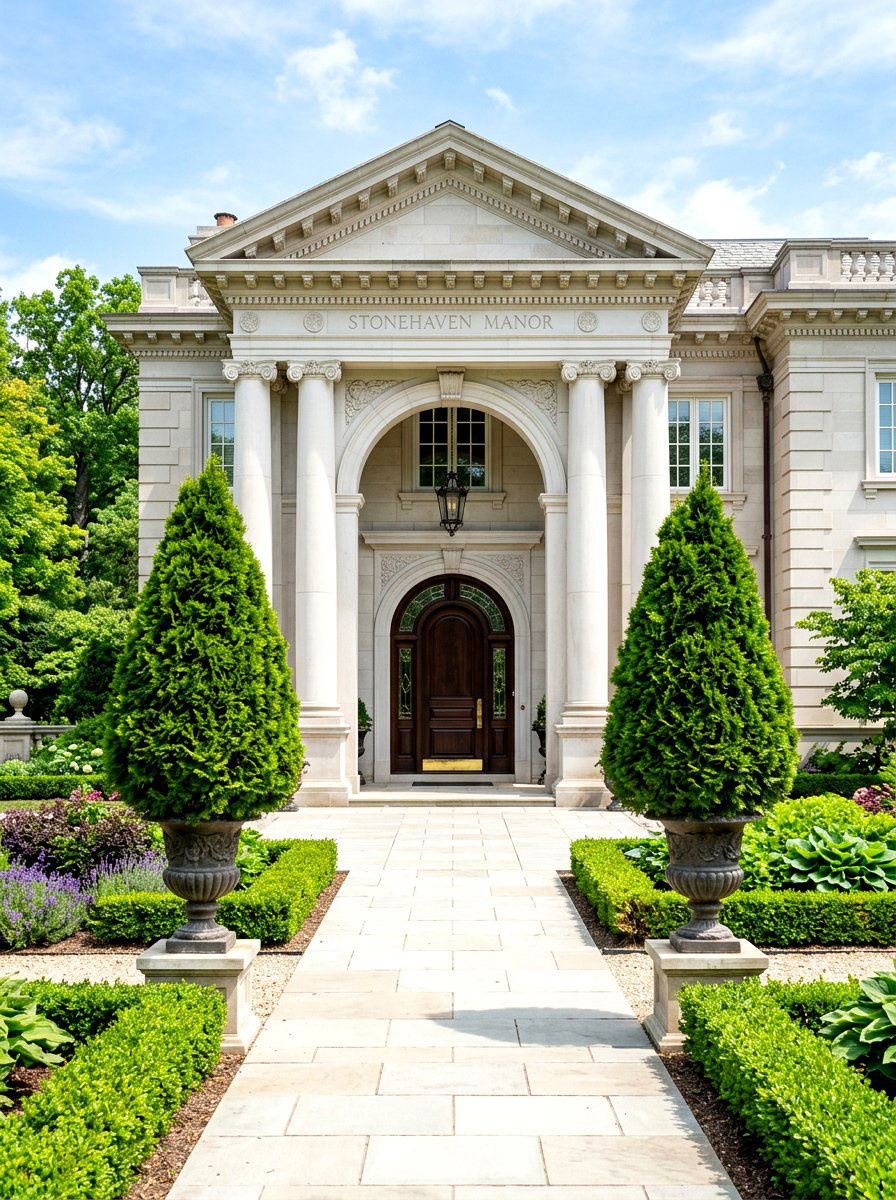
Symmetry is a hallmark of formal design, and using identical evergreen shrubs on both sides of your portico creates a balanced and authoritative look. Plants like arborvitae, yew, or boxwood cones provide year-round structure and a sense of permanence that anchors the front door. This mirrored arrangement frames the entrance perfectly, making it the undisputed focal point of the facade. Evergreens are particularly valuable because they maintain their shape and color even in the depths of winter, ensuring your home never looks barren. You can place them in large, elegant containers or plant them directly in the ground for a seamless look that highlights the architectural integrity of your home.

10. Mixed Perennial Border
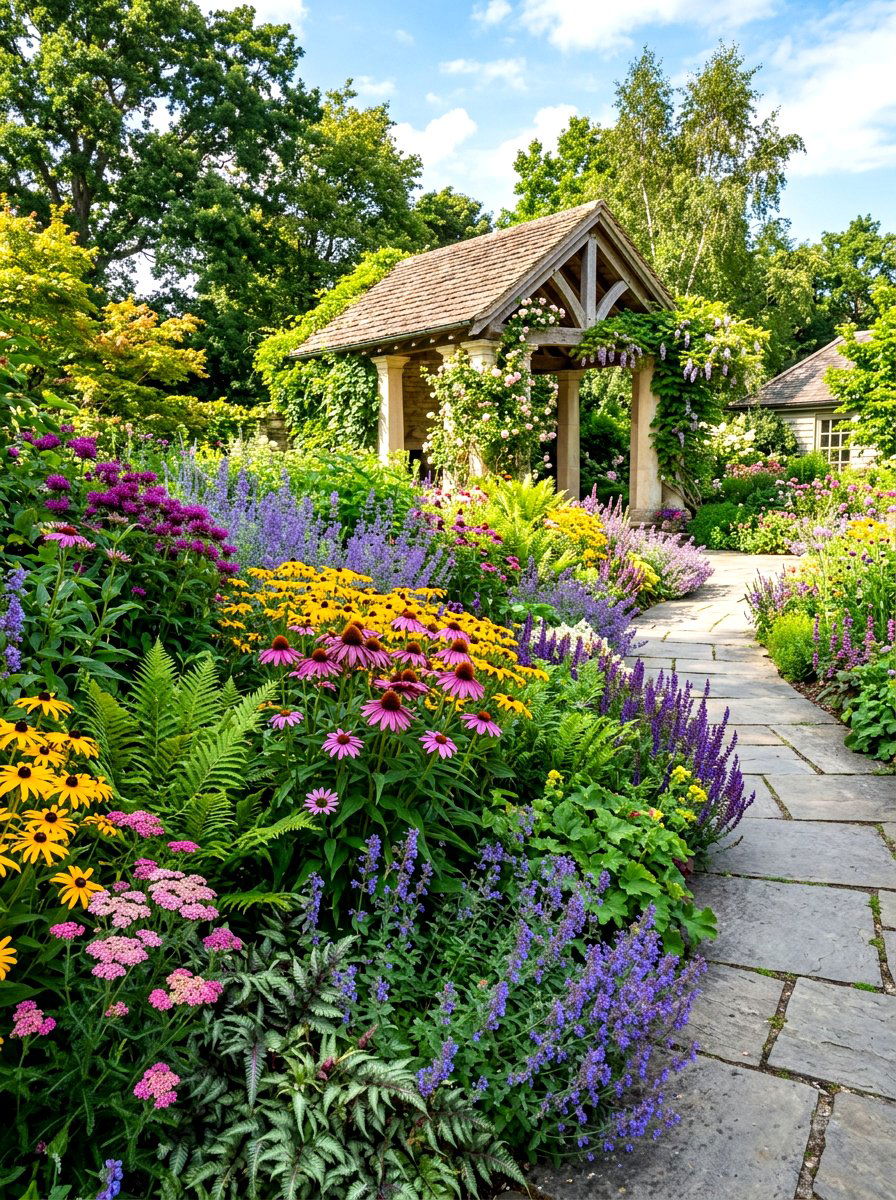
A mixed perennial border offers an ever-changing tapestry of color and texture that keeps your portico landscaping interesting from spring through late fall. By layering plants of different heights, such as tall delphiniums in the back and low-growing sedum in the front, you create depth and visual complexity. Perennials are a smart investment because they return year after year, often becoming more beautiful as they mature. This approach allows you to incorporate a wide variety of flower shapes and foliage types, from the feathery leaves of ferns to the bold blooms of coneflowers. The result is a lush, vibrant entrance that feels personal, lived-in, and full of natural character.
11. Japanese Maple Focal Point
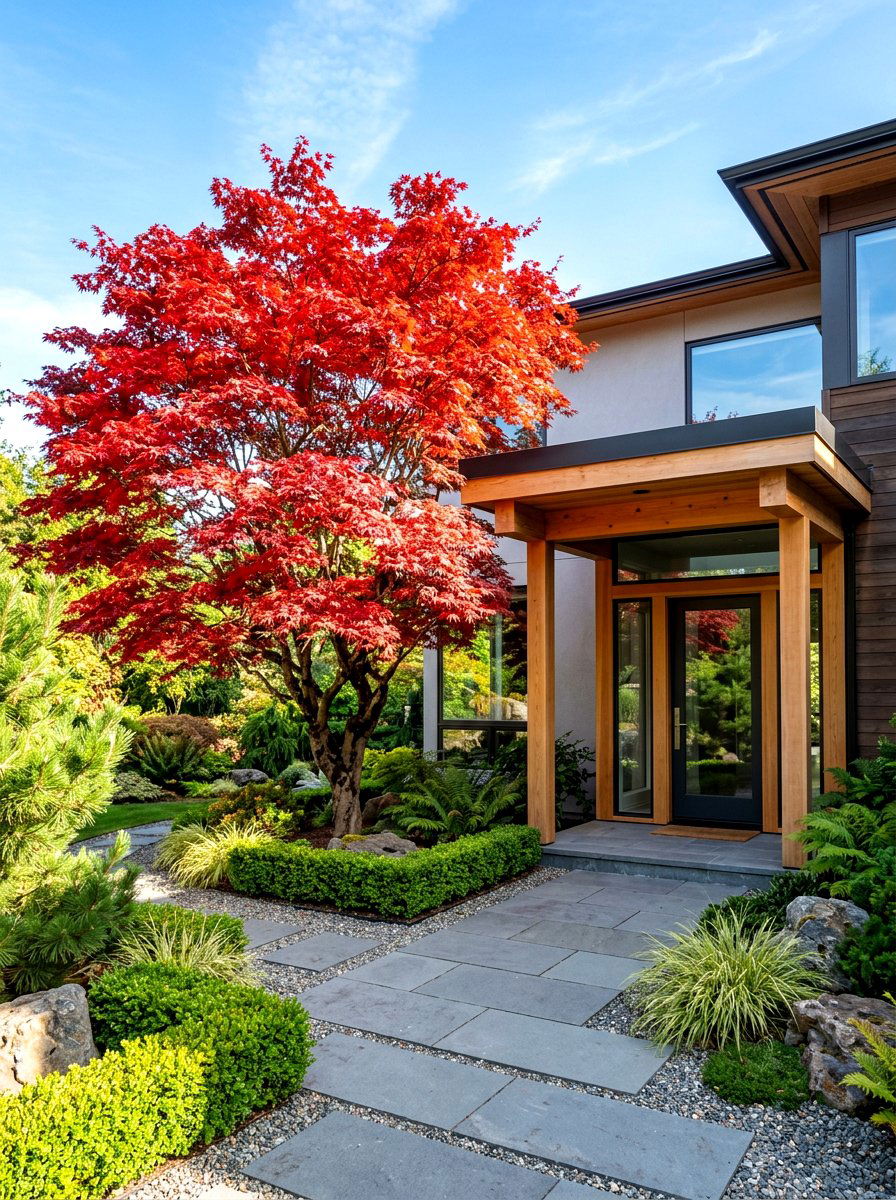
Placing a specimen tree like a Japanese maple near your portico creates a stunning focal point that draws the eye with its intricate foliage. These trees are celebrated for their graceful branching patterns and vibrant leaf colors, which range from deep burgundy to bright lime green. Their compact size makes them ideal for planting near home foundations where space might be limited but impact is still desired. The fine texture of the leaves provides a beautiful contrast against the solid surfaces of the porch and siding. Whether it is a weeping variety or an upright form, a Japanese maple adds an air of sophistication and artistry to your front landscape design.
12. White Flower Garden
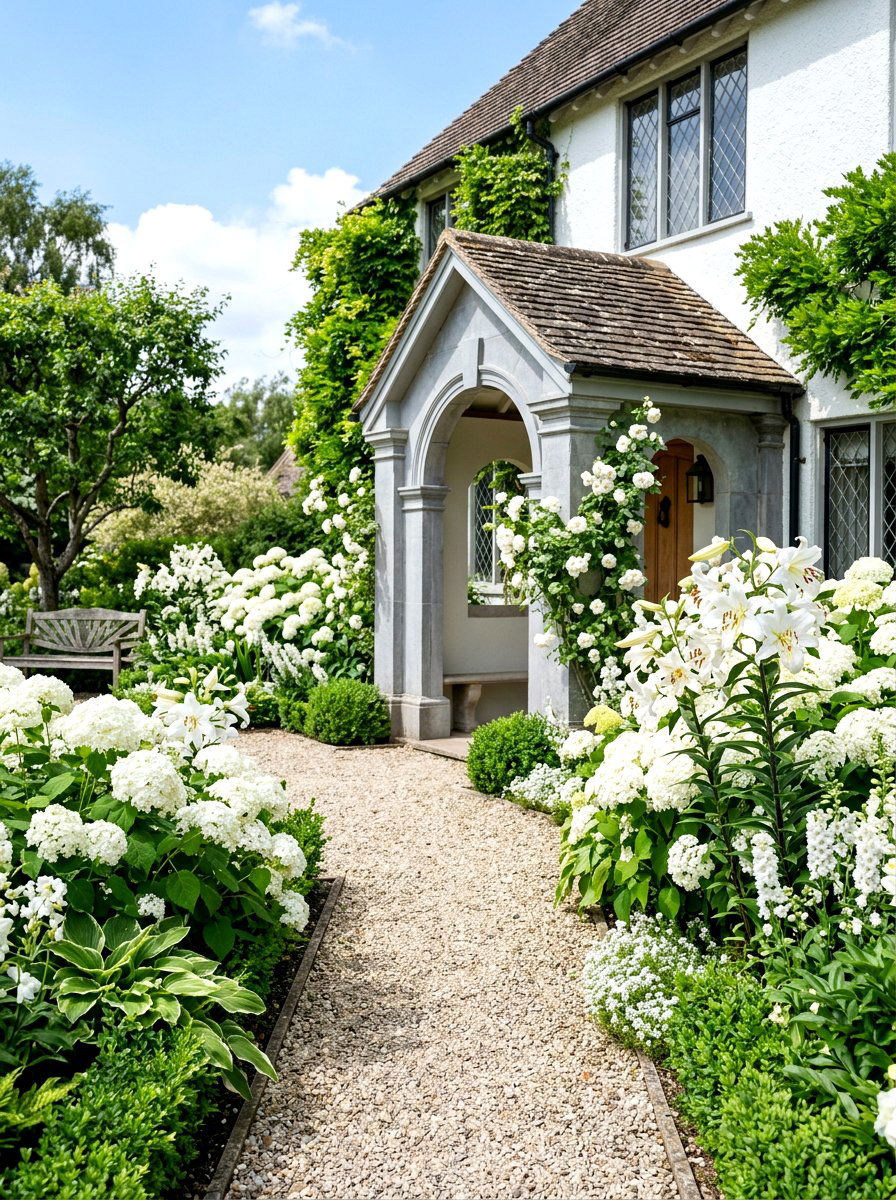
Designing a white flower garden around your portico creates a "moonlight garden" effect that looks incredibly elegant both day and night. Plants like white hydrangeas, lilies, and gardenias stand out brilliantly against dark green foliage and gray or brick house exteriors. This monochromatic palette feels incredibly fresh and sophisticated, offering a high-end aesthetic that is easy to coordinate with any architectural style. At twilight, the white blooms seem to glow, making your entrance feel safe and luminous for evening guests. Incorporating white flowers provides a clean, unified look that emphasizes the height and details of your portico without overwhelming the eye with too many competing colors.
13. Tropical Entryway Plants
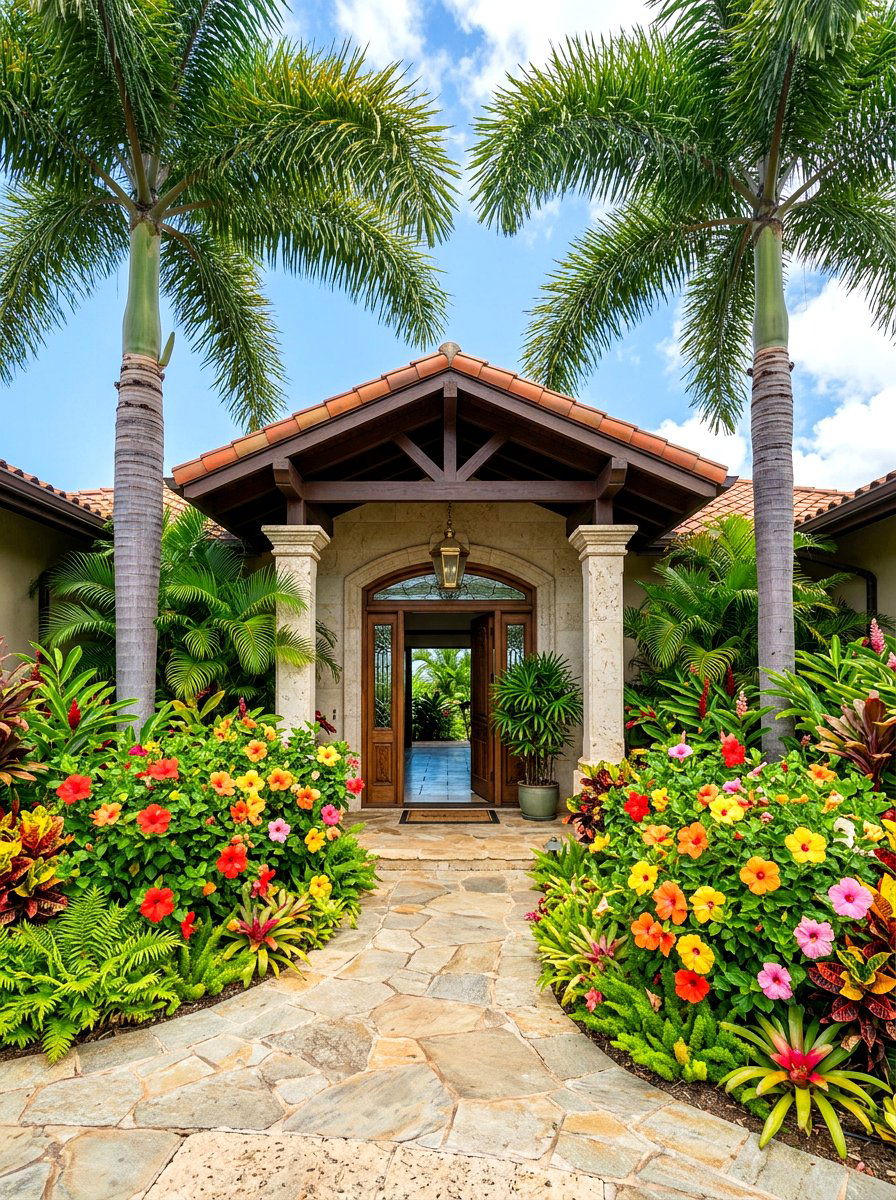
If you live in a warm climate or want to create a vacation-like atmosphere, using tropical plants around your portico can transform your home into a lush oasis. Large-leafed plants like elephant ears, hibiscus, and palms add bold textures and vibrant colors that feel exotic and inviting. The scale of these plants can help balance a large portico, making the entrance feel more intimate and secluded. You can plant them in oversized ceramic pots for a mobile display or integrate them into ground-level beds for a jungle-inspired look. The rich greens and fiery flower hues create an energetic and welcoming vibe that instantly boosts the personality of your home's exterior.
14. Rock Garden Landscaping
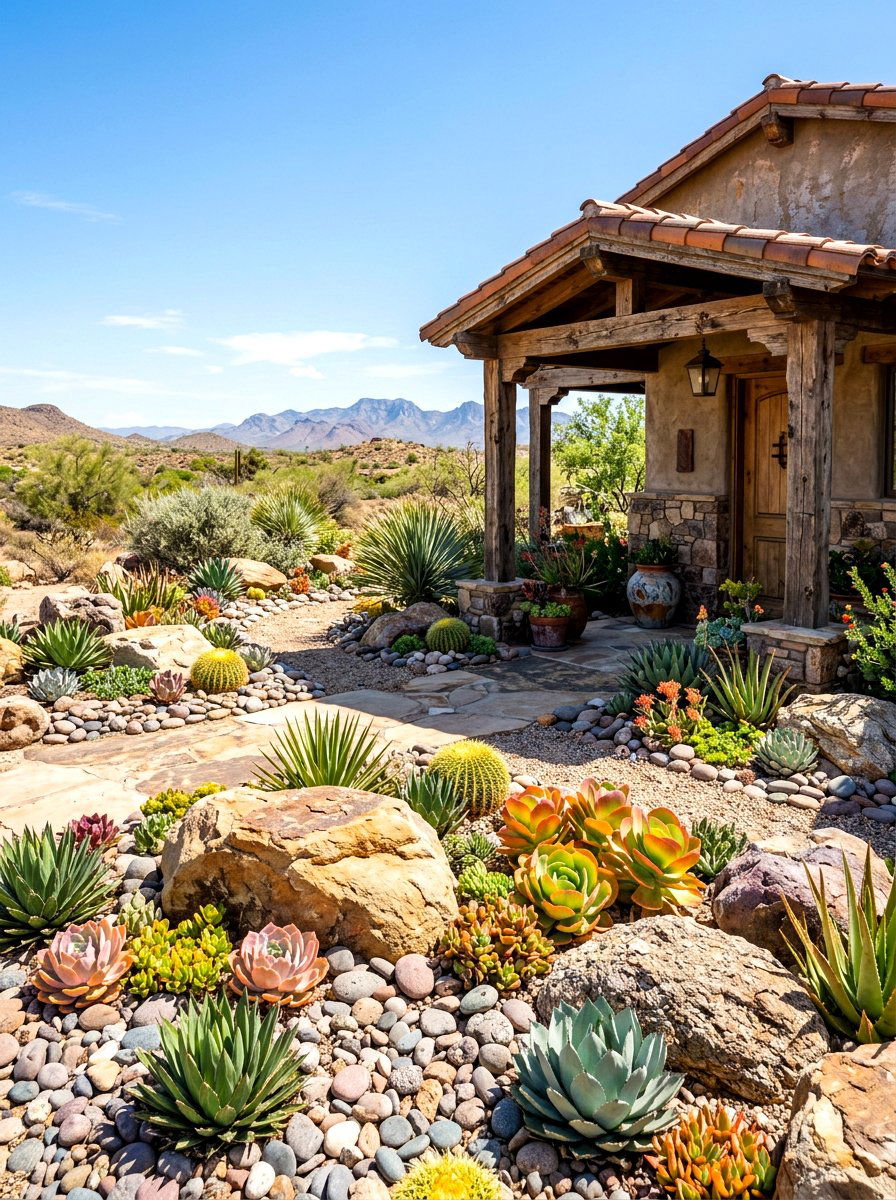
For homeowners seeking a rugged, low-maintenance solution, a rock garden provides a beautiful and durable landscape option for the front entry. By combining various sizes of river rocks, boulders, and gravel, you can create a naturalistic scene that mimics a dry creek bed or a mountain slope. Scatter hardy plants like creeping phlox, blue fescue, and succulents among the stones to add life and color to the hardscape. This style is particularly effective for homes with modern or rustic architecture where clean lines and natural materials are prioritized. Rock gardens require minimal water and no mowing, making them an environmentally friendly choice that remains attractive and well-structured throughout every season.
15. Picket Fence Garden
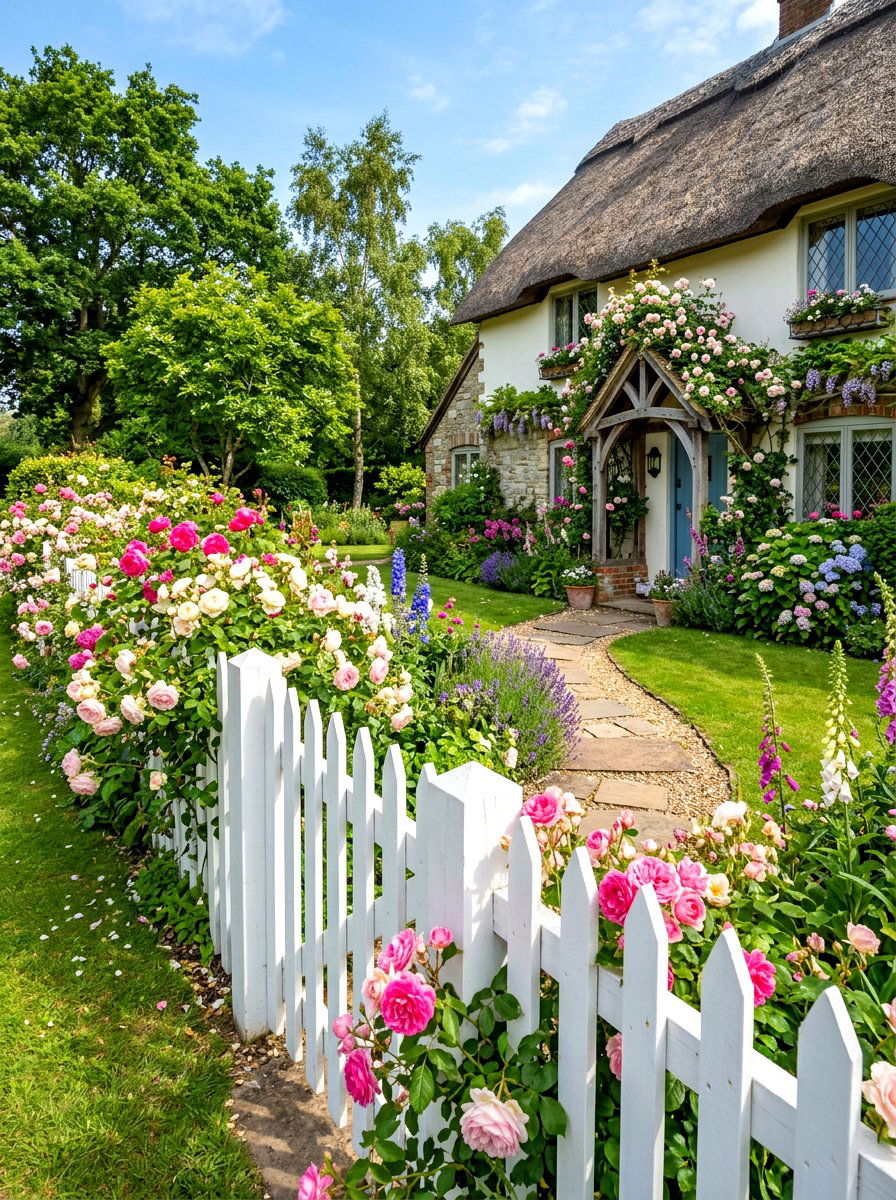
A low picket fence lined with a profusion of flowers creates a charming, storybook entrance that exudes warmth and hospitality. This landscaping style is perfect for cottage-style homes or those looking to add a touch of traditional Americana to their curb appeal. You can plant a mix of roses, daisies, and hollyhocks along the fence line to create a sense of abundance and joy. The fence acts as a secondary frame for the portico, defining the front yard and creating a clear path for visitors. This layered approach adds depth to the landscape and provides a beautiful transition between the sidewalk and the more private areas of your home.
16. Ornamental Grass Edges
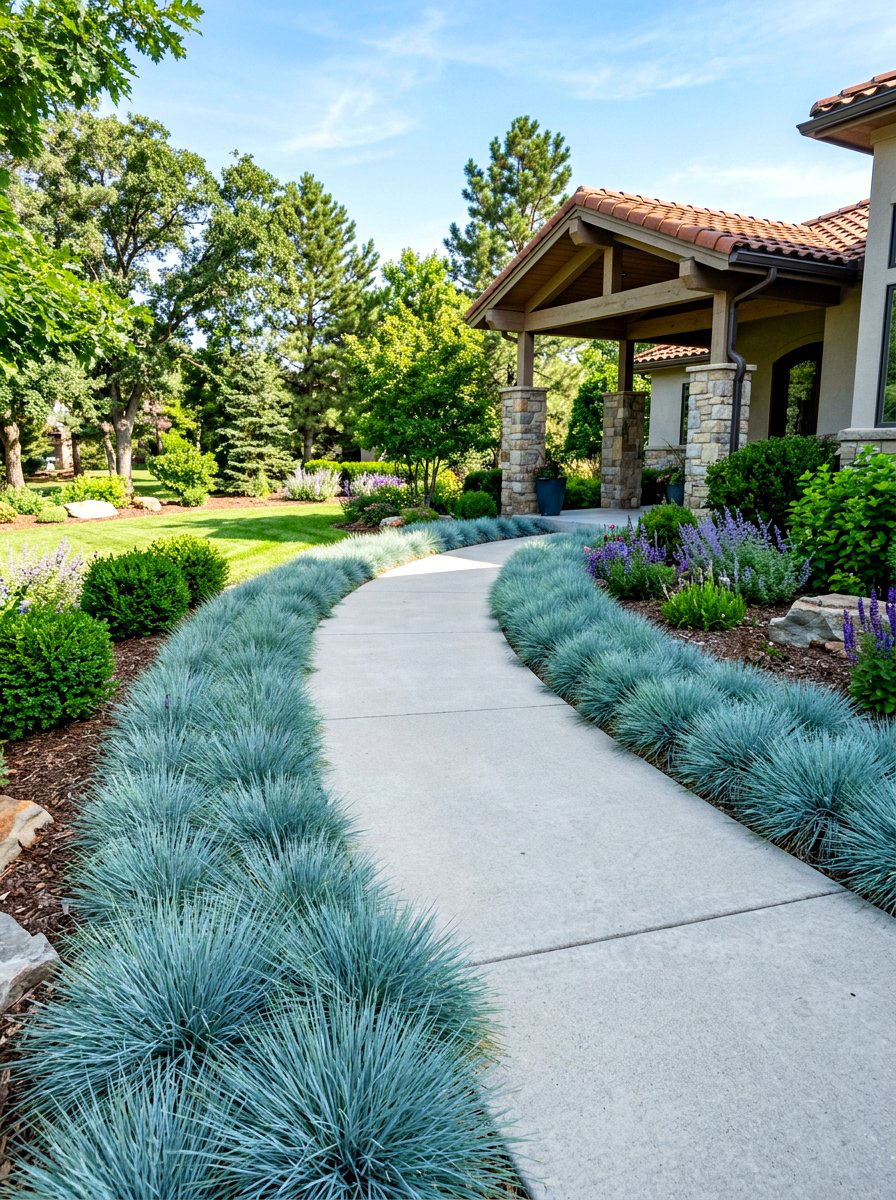
Using ornamental grasses as an edging material along your portico walkway adds a soft, feathery texture that blurs the lines between hardscaping and nature. Dwarf varieties like mondo grass or blue fescue create a neat, low-profile border that requires very little trimming or maintenance. These grasses stay green for most of the year and provide a consistent visual rhythm that leads the eye toward the front door. Their fine blades contrast beautifully with wide pavers or concrete paths, making the walkway feel more organic and integrated. This simple yet effective landscaping technique is ideal for modern or coastal homes where a breezy, relaxed aesthetic is desired for the main entry.
17. Window Box Coordination
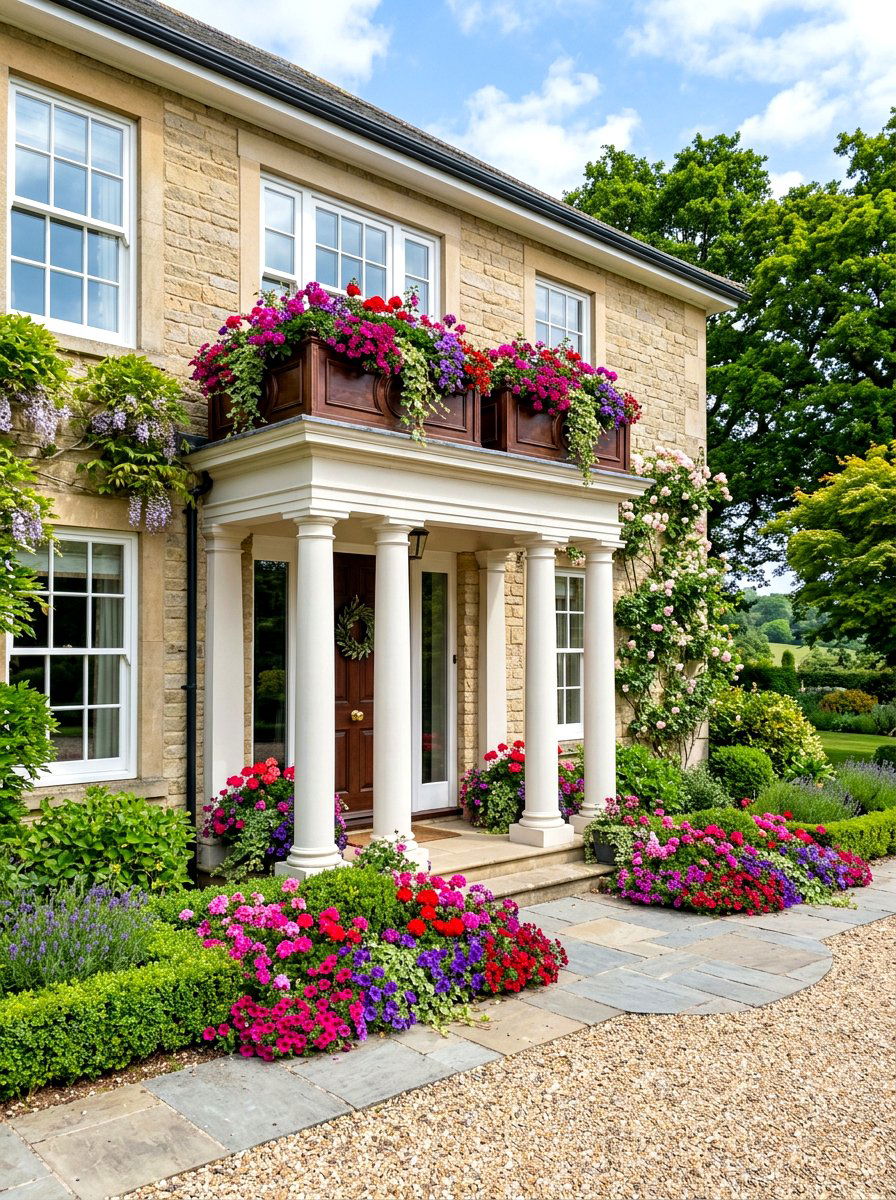
To create a truly cohesive look, coordinate the plants in your portico-adjacent window boxes with the landscaping in the ground-level beds. By using the same color palette or plant species in both locations, you draw the eye upward and unify the entire front facade. For example, if you have purple petunias in your walkway borders, include them in the window boxes to create a vertical connection. This design strategy makes the landscaping feel intentional and professionally curated. It also helps to soften the transition between the home's architecture and the surrounding greenery, ensuring that every element of your front entrance works together to create a harmonious and welcoming scene.
18. Shady Hosta Garden
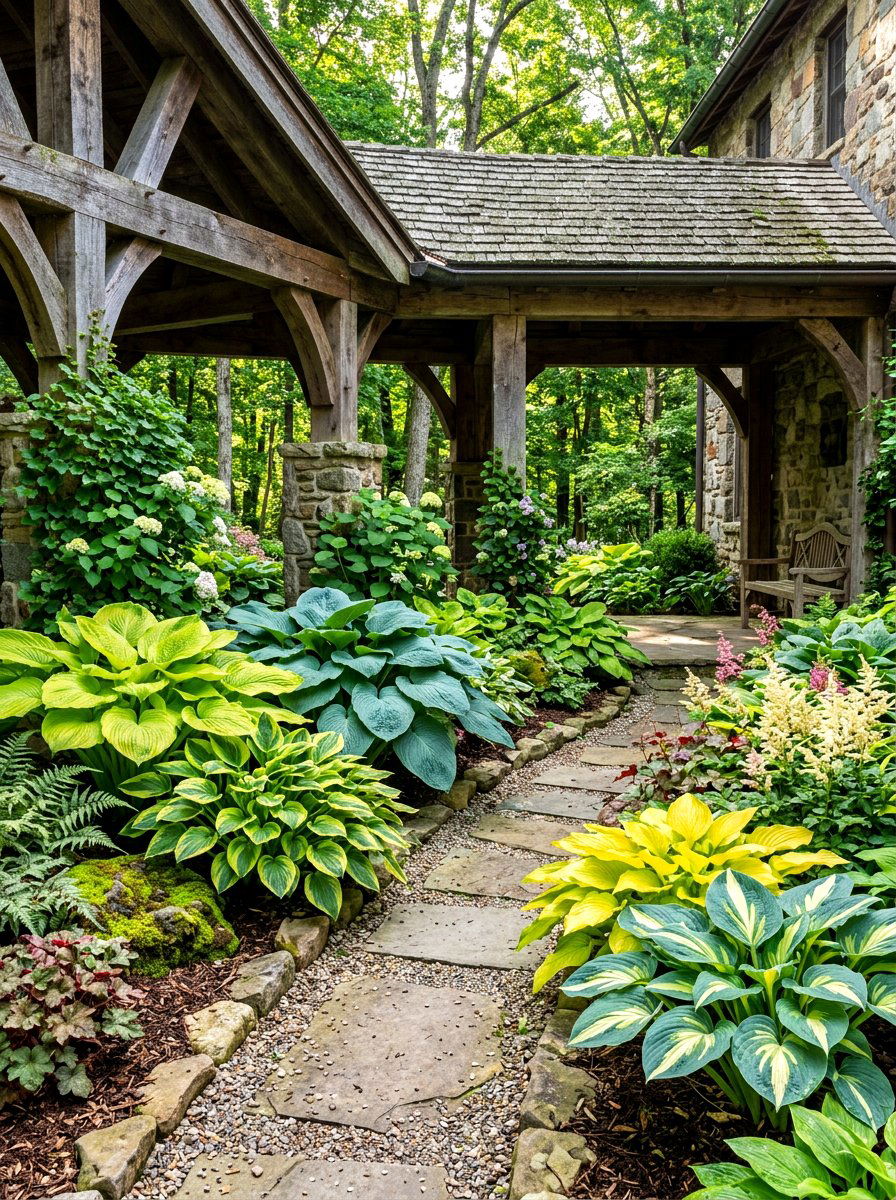
For porticos that sit in the shadow of the house or large trees, a hosta garden offers a lush and dependable solution for greenery. Hostas come in an incredible array of sizes, textures, and colors, from deep forest green to bright variegated gold and white. Their broad, heart-shaped leaves provide a dense groundcover that looks full and healthy even in low-light conditions. By grouping different varieties together, you can create a rich, multi-dimensional look that fills the space around your porch with ease. Hostas are incredibly hardy and easy to grow, making them a favorite for busy homeowners who want a beautiful, shade-tolerant entrance without constant maintenance and care.
19. Flowering Shrub Border
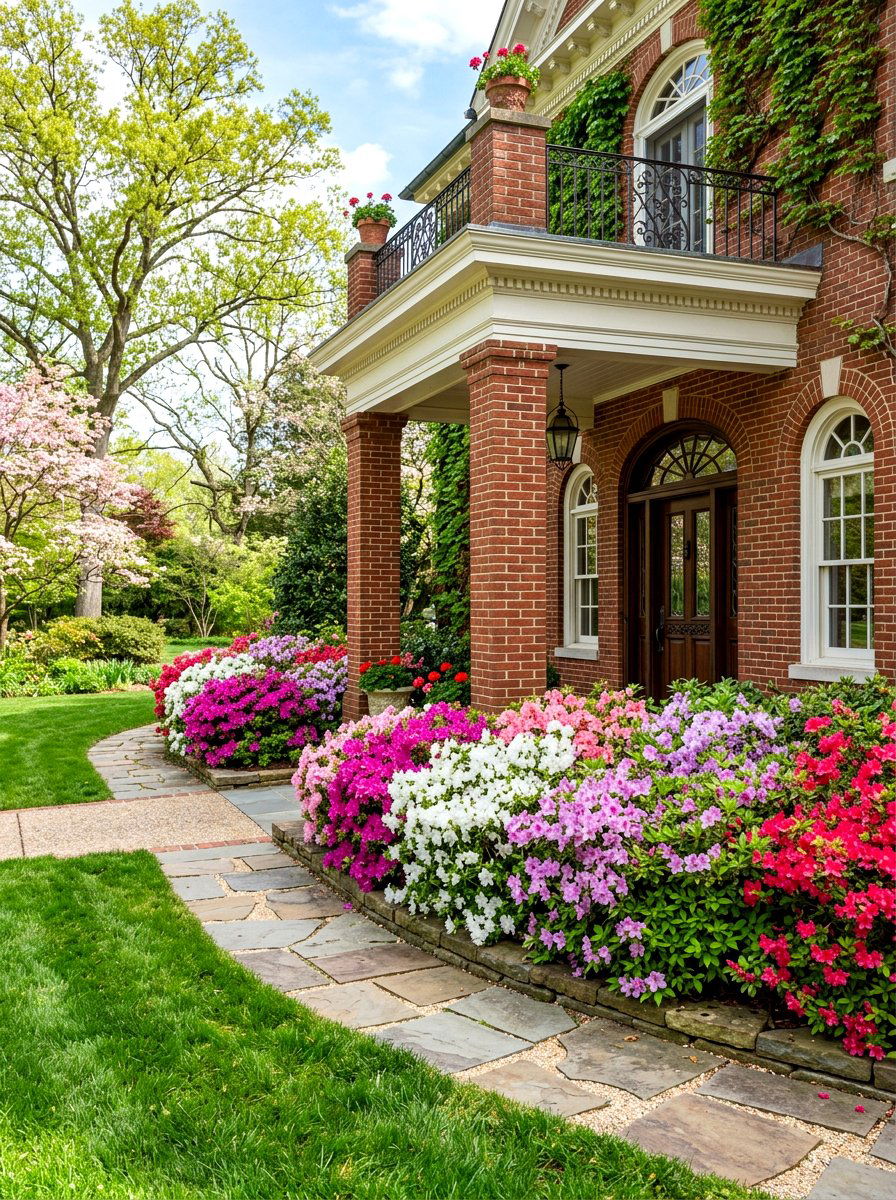
Massing flowering shrubs along the foundation of your portico creates a bold and colorful border that changes throughout the seasons. Shrubs like azaleas, rhododendrons, or spireas provide a large-scale floral display in the spring and summer, followed by attractive foliage in the fall. These woody plants offer more structure than annuals, providing a permanent framework for your landscape design. By choosing varieties with different bloom times, you can ensure that your entrance always has a pop of color. The height of these shrubs can also help to hide the home's foundation, creating a seamless transition from the ground to the walls and making the portico feel more grounded.

20. Groundcover Walkway
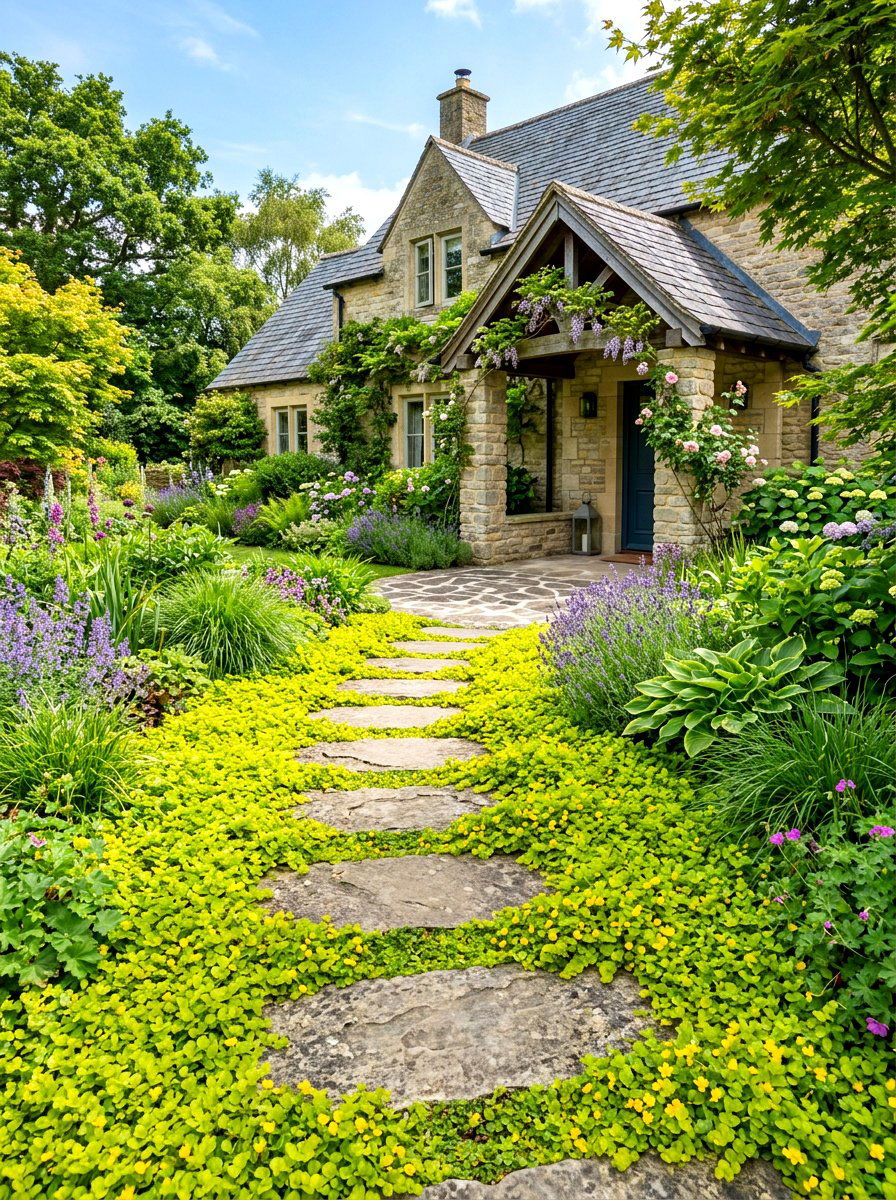
Replacing a solid path with stepping stones surrounded by a dense groundcover creates a charming and whimsical entryway that feels like a hidden garden path. Plants like creeping jenny, elfin thyme, or star jasmine fill the gaps between stones, creating a soft, living carpet that is pleasant to walk on. This approach is perfect for creating a relaxed, informal vibe that encourages guests to slow down and enjoy the scenery. The groundcover helps to suppress weeds and retain moisture in the soil, making it a functional as well as an aesthetic choice. It is an excellent way to introduce more greenery into a small space while maintaining a clear and stable path.
21. Formal Topiary Display

Nothing says "luxury" quite like a pair of perfectly manicured topiaries flanking the entrance to your home. Whether they are shaped into spheres, cones, or spirals, topiaries add a sculptural element that feels both artistic and disciplined. These living statues provide a strong vertical accent that complements the columns of a grand portico, adding a sense of ceremony to the front door. You can plant them in classic stone urns or ornate lead planters to further enhance the formal aesthetic. Topiaries require regular pruning to maintain their sharp silhouettes, but the effort is rewarded with an entryway that looks sophisticated, high-end, and immaculately cared for at all times.
22. Wildflower Meadow Path
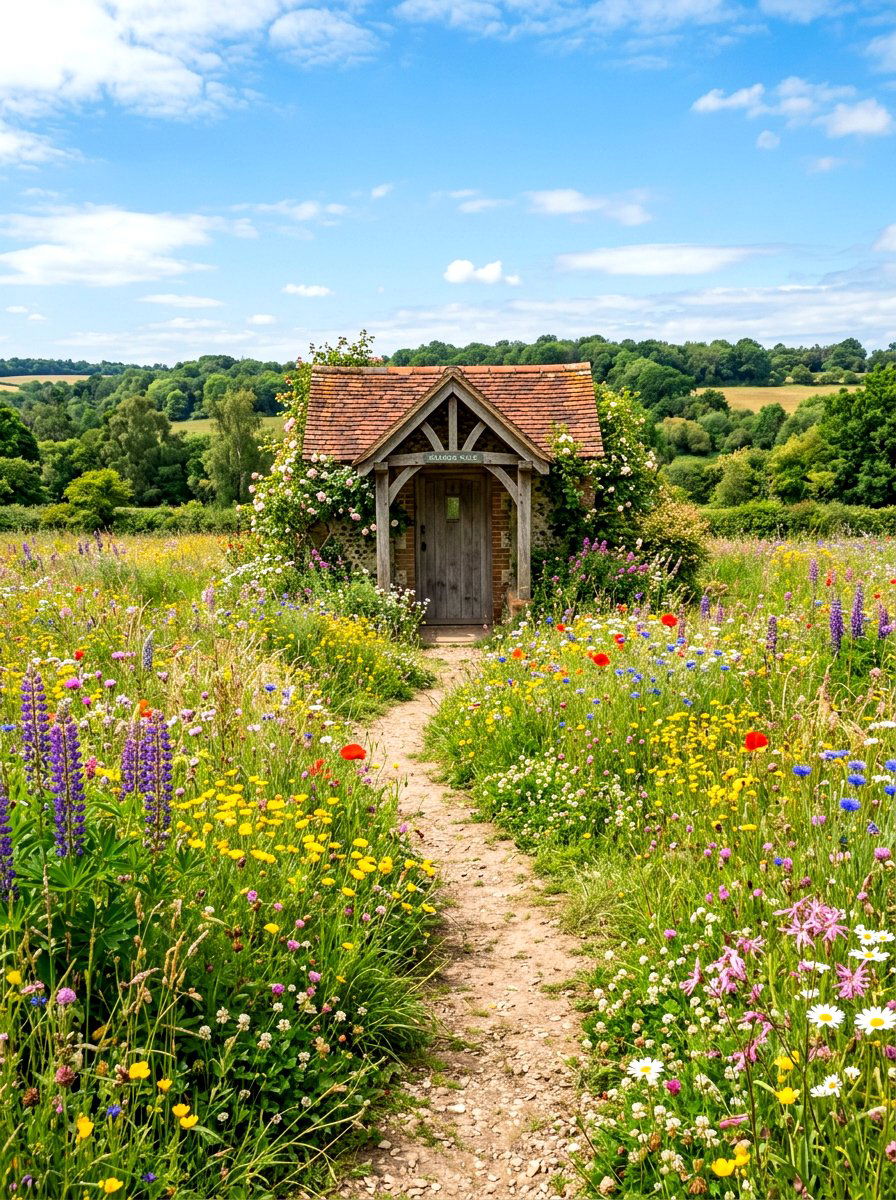
For a more naturalistic and eco-friendly approach, consider surrounding your portico walkway with a mini-meadow of local wildflowers. This style of landscaping celebrates the beauty of spontaneity and provides a vital habitat for butterflies, bees, and birds. A wildflower border feels light, airy, and full of life, offering a stark and beautiful contrast to the solid lines of a formal portico. Because these plants are adapted to your local climate, they are often very low-maintenance once they become established. The ever-changing colors and shapes of the flowers ensure that your entrance looks different every week, providing a constant source of delight for you and your guests throughout the year.
23. Paver Patio Entry
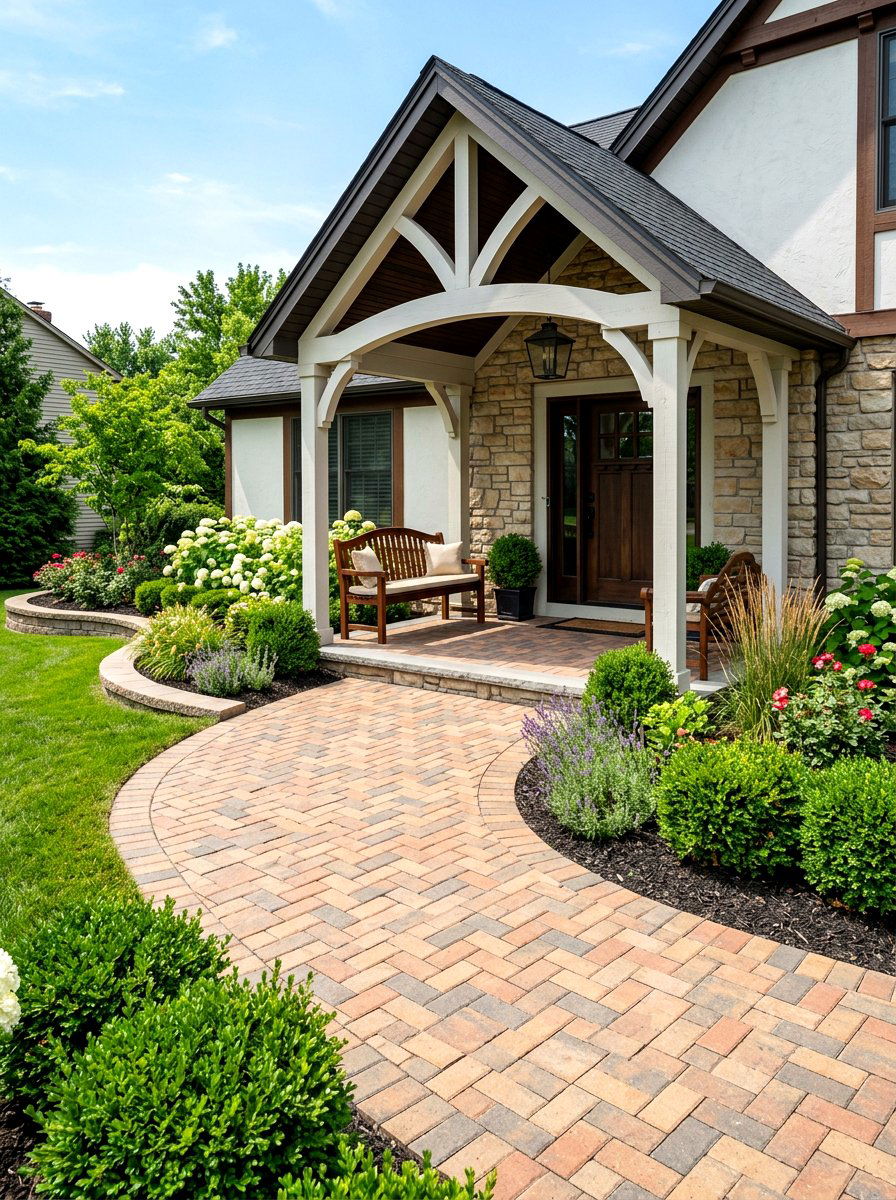
Expanding the area directly in front of your portico into a small paver patio creates a functional landing zone that feels like an outdoor room. This transition space allows for a more gradual approach to the front door and provides a perfect spot for a pair of chairs or a decorative bench. Using high-quality pavers in a pattern that complements your home’s architecture adds a layer of sophistication to the hardscape. You can border the patio with low-lying flower beds or potted plants to define the space and add color. This design not only improves the flow of foot traffic but also creates a welcoming "pause" point that enhances the overall arrival experience.
24. Cedar Mulch Beds
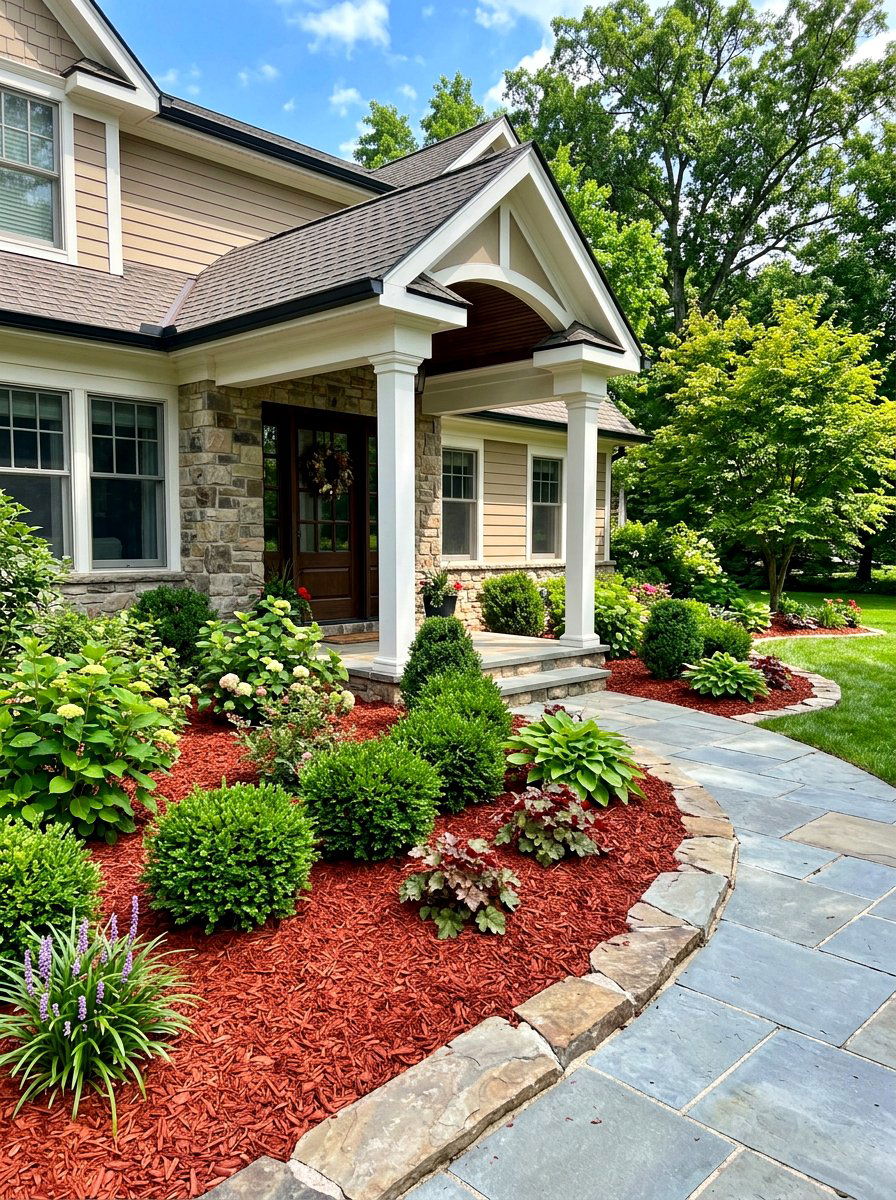
A simple but highly effective way to polish your portico landscaping is by using high-quality cedar mulch in all of your planting beds. The warm, reddish-brown color of cedar provides a clean and uniform background that makes the greens and colors of your plants pop. Beyond its aesthetic appeal, cedar mulch helps to retain moisture in the soil, suppress weed growth, and regulate soil temperature. It also has a pleasant, natural fragrance and acts as a natural insect repellent. Keeping your beds neatly mulched gives the entire entrance a well-maintained and professional appearance, proving that even the most basic details can have a significant impact on your home's curb appeal.
25. Seasonal Planter Rotation
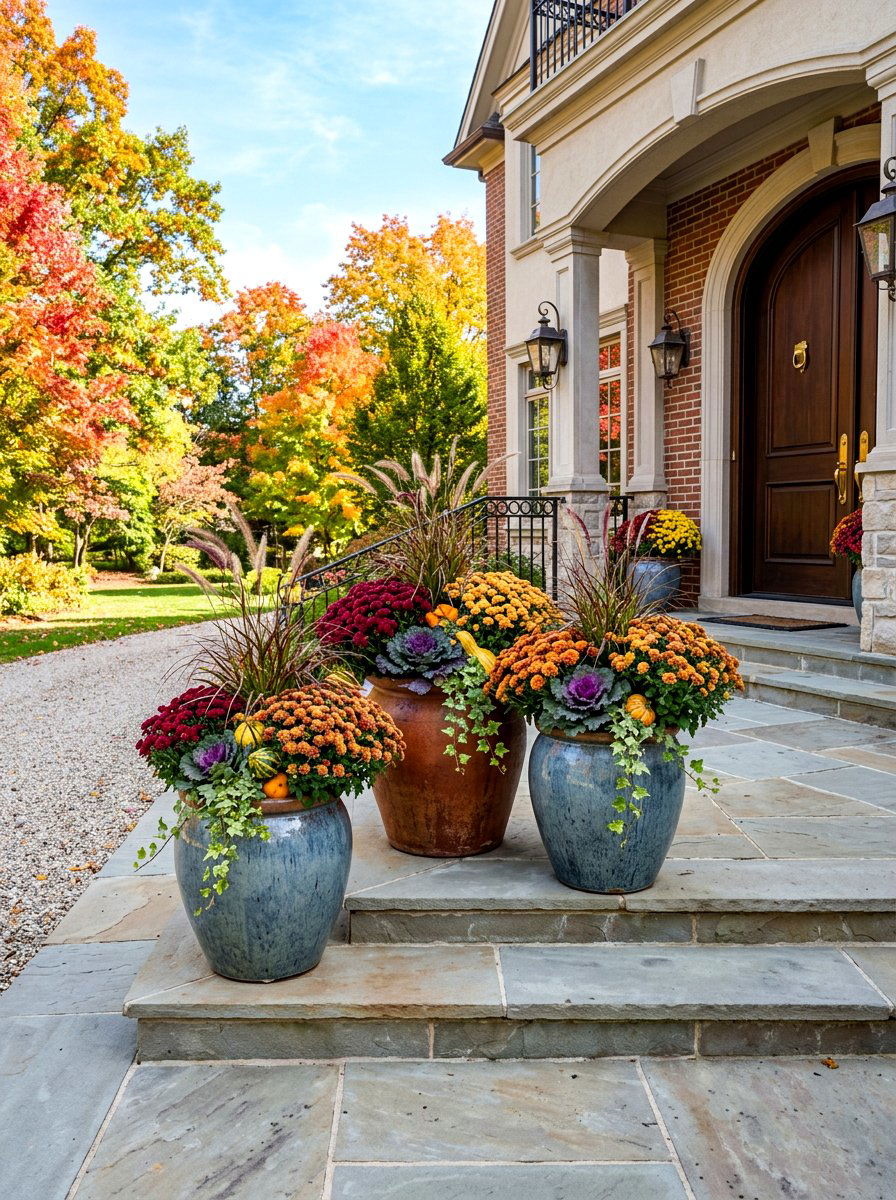
Keeping your portico fresh and exciting is easy when you utilize large, decorative planters that you can rotate according to the season. In the spring, fill them with tulips and pansies; in the summer, move to vibrant hibiscus or begonias; and in the fall, transition to mums and ornamental kale. This approach allows you to experiment with different colors and styles without committing to permanent changes in the ground. Placing these pots on the steps or flanking the front door adds height and interest directly at eye level. Seasonal planters are a fantastic way to celebrate the passing of time and ensure your home always looks relevant and inviting for visitors.
26. Lighting Focused Landscaping
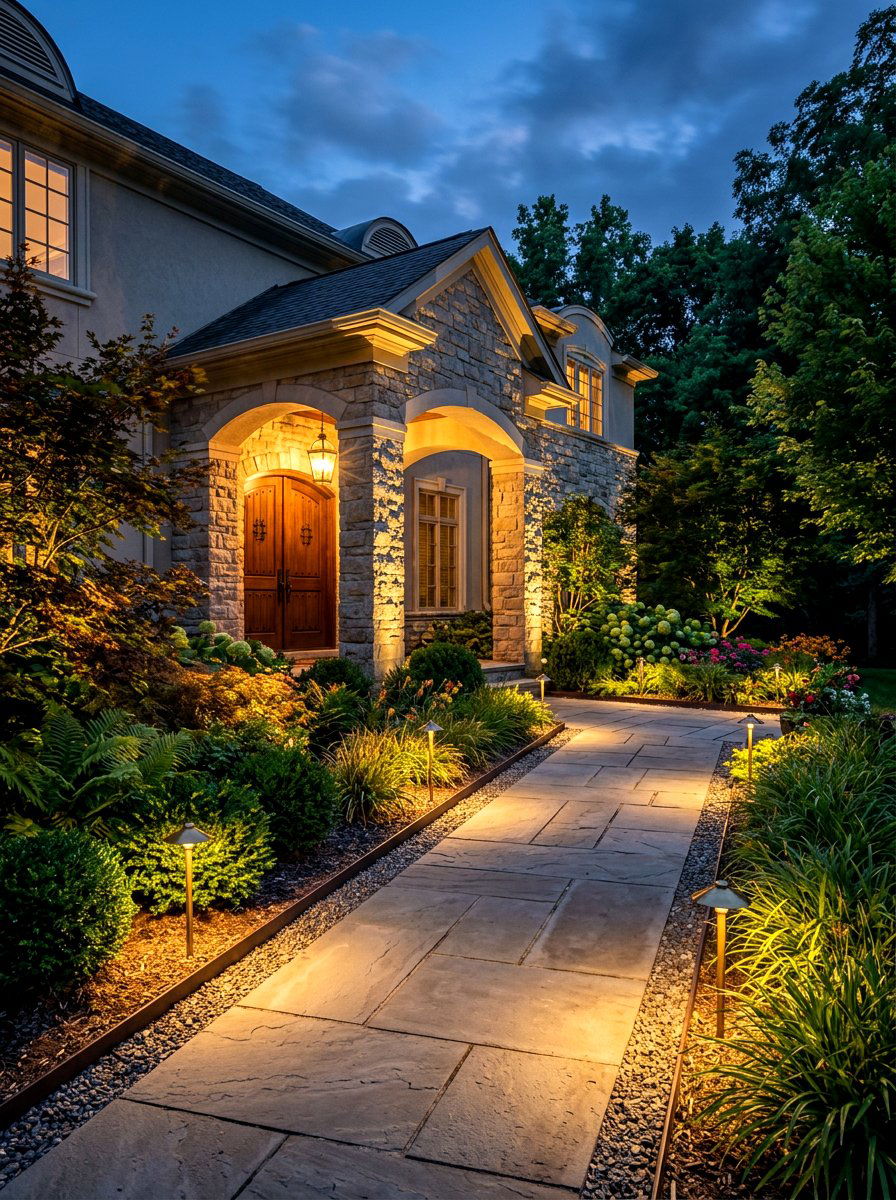
Strategic lighting is the secret to a portico that looks just as beautiful after sunset as it does during the day. By integrating path lights along the walkway and uplights at the base of your columns, you create a dramatic and safe entryway for evening arrivals. Use soft, warm LED lights to highlight the textures of your plants and the architectural details of your home. Riser lights on the steps and lanterns hanging from the portico ceiling add layers of illumination that make the space feel cozy and glowing. Proper lighting not only enhances the security of your property but also extends the visual beauty of your landscaping into the night hours.
27. Brick Path Landscaping
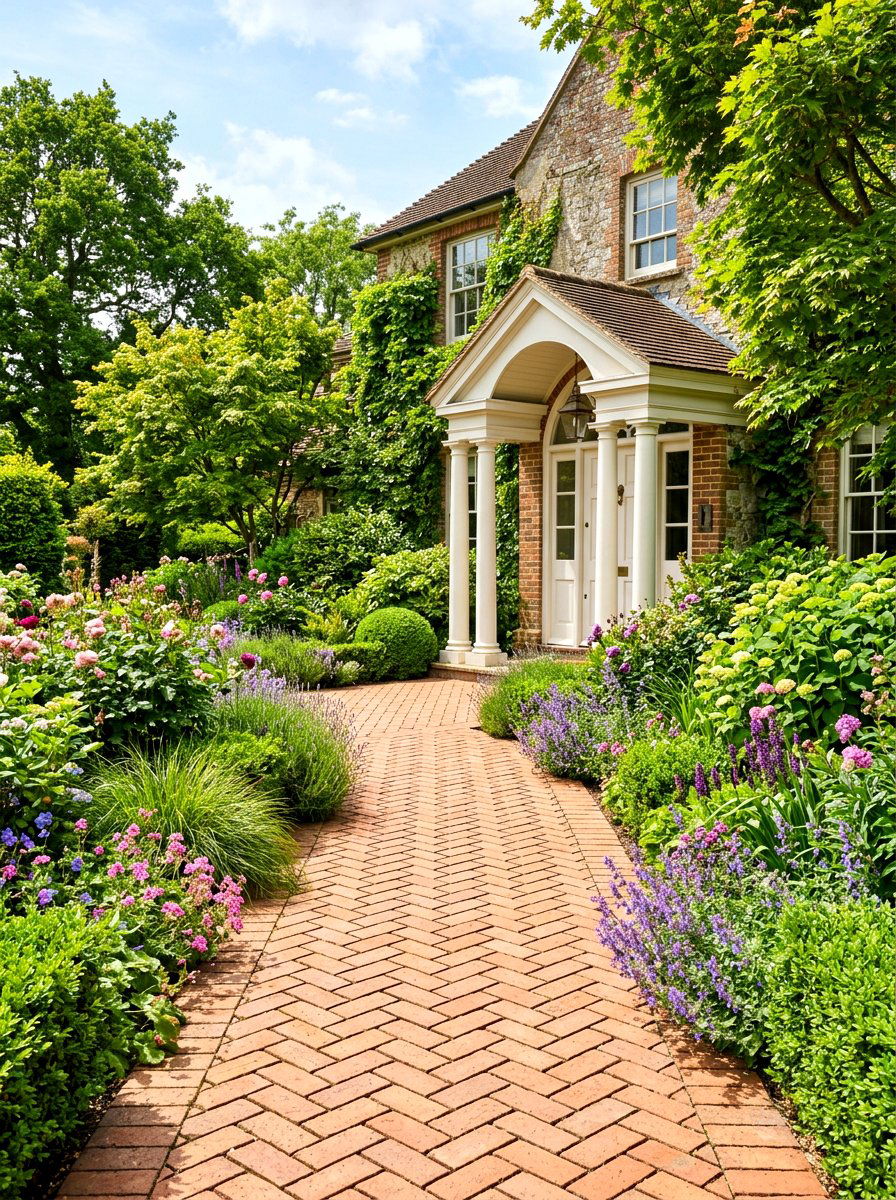
A brick walkway offers a sense of tradition and timelessness that pairs exceptionally well with colonial or farmhouse-style porticos. The rich, earthy tones of the bricks provide a warm welcome and create a durable surface that ages beautifully over time. You can arrange the bricks in various patterns, such as herringbone or basketweave, to add a touch of craftsmanship to the ground. Bordering the brick path with classic plants like hydrangeas or boxwoods reinforces the traditional aesthetic. Brick is a versatile material that feels substantial and grounded, providing a classic foundation for your landscaping that will never go out of style and will always look classic and elegant.
28. Blue And Silver Foliage
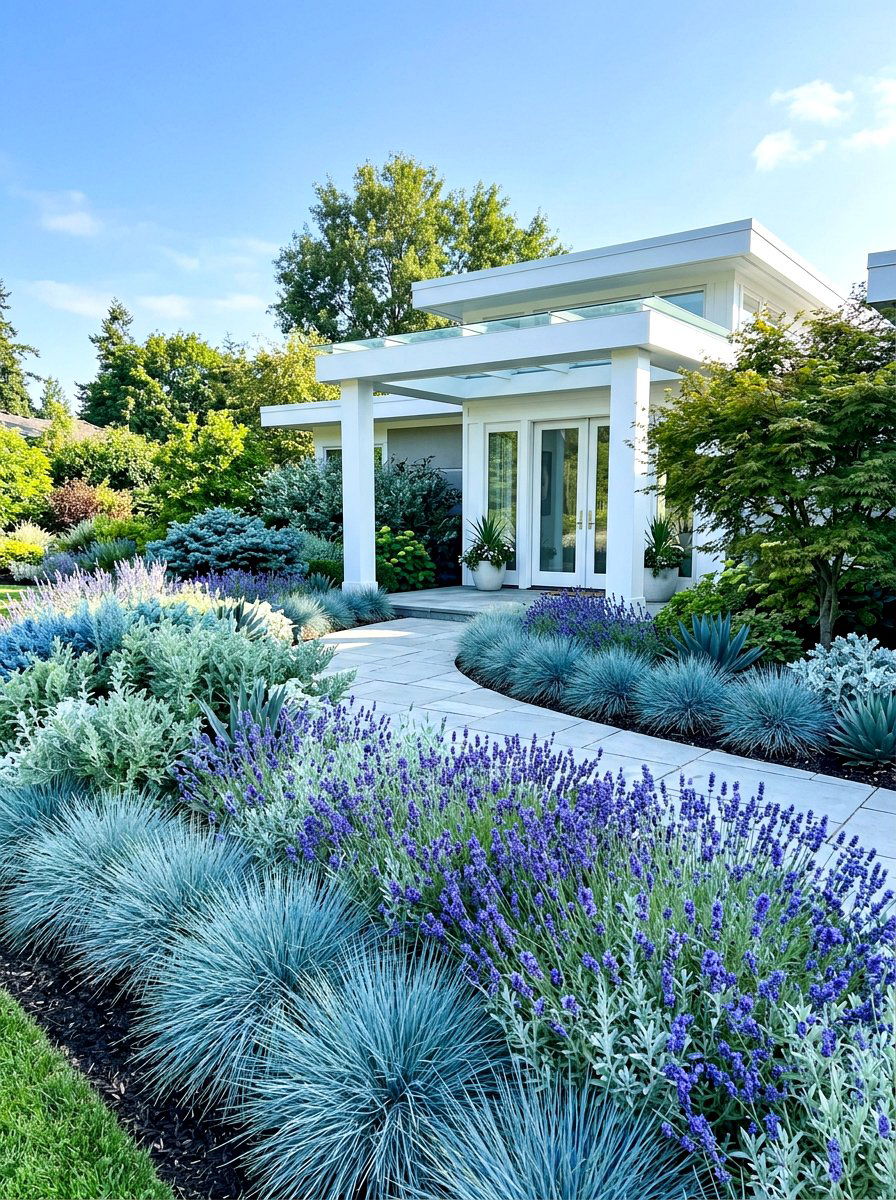
If you want to create a cool and calming entrance, focus your landscaping on plants with blue and silver foliage. Species like blue fescue, lavender, Russian sage, and "Blue Star" juniper offer a sophisticated color palette that feels modern and serene. These hues look particularly striking against white or gray home exteriors and provide a beautiful contrast to traditional green plants. Silver foliage often has a unique texture, such as fuzzy or needle-like leaves, which adds tactile interest to the garden beds. This monochromatic approach is a subtle but effective way to make your portico stand out, offering a refreshed and artistic look that is sure to capture the attention of passersby.
29. Vertical Trellis Garden
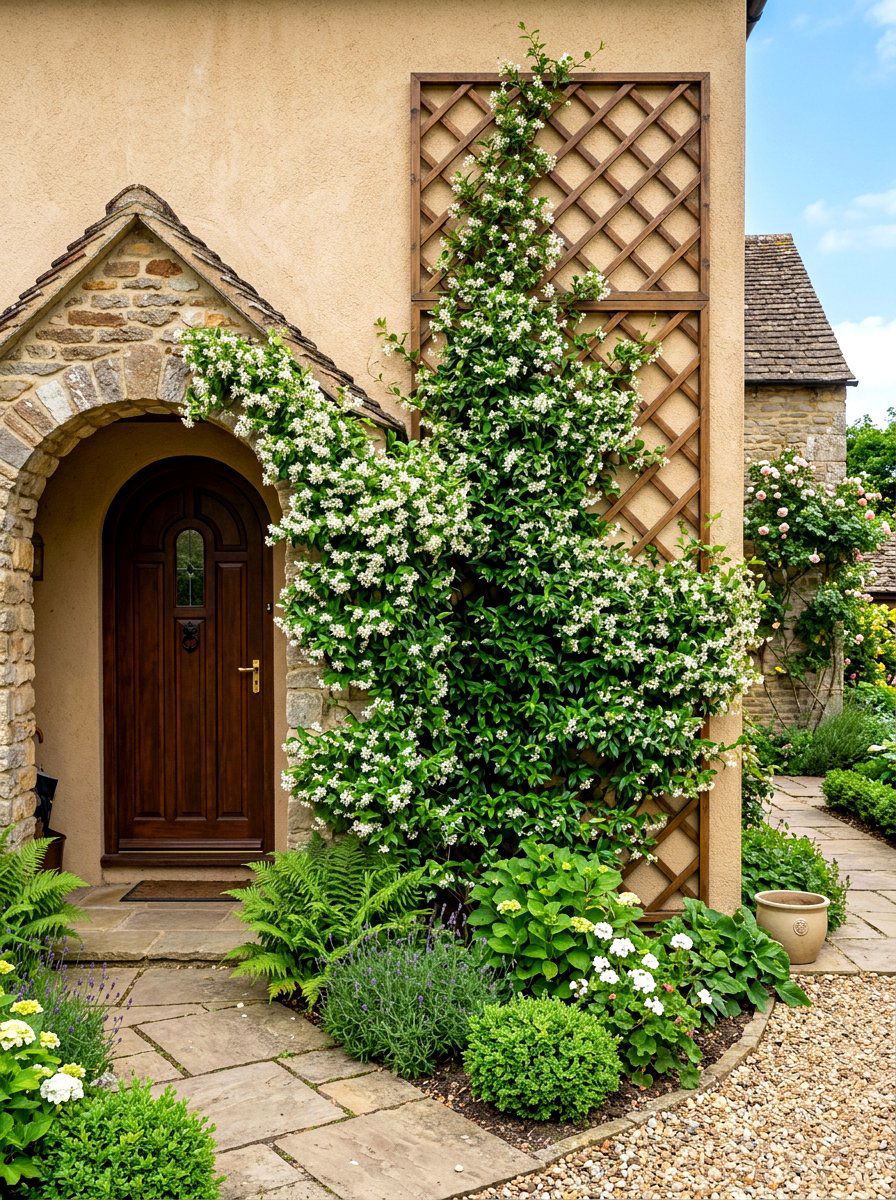
If your portico area is narrow or lacks deep soil for large beds, a vertical trellis garden provides a smart and stylish solution for adding greenery. By mounting trellises on the walls adjacent to the door, you can grow climbing vines like clematis or star jasmine that take up very little floor space. This vertical landscaping draws the eye upward, making a small entrance feel taller and more expansive. The fragrance of the climbing flowers will greet anyone who enters, while the lush foliage provides a soft, living backdrop for your porch. It is a perfect way to integrate nature into tight architectural spaces without sacrificing the ease of movement for guests.
30. Dwarf Conifer Collection
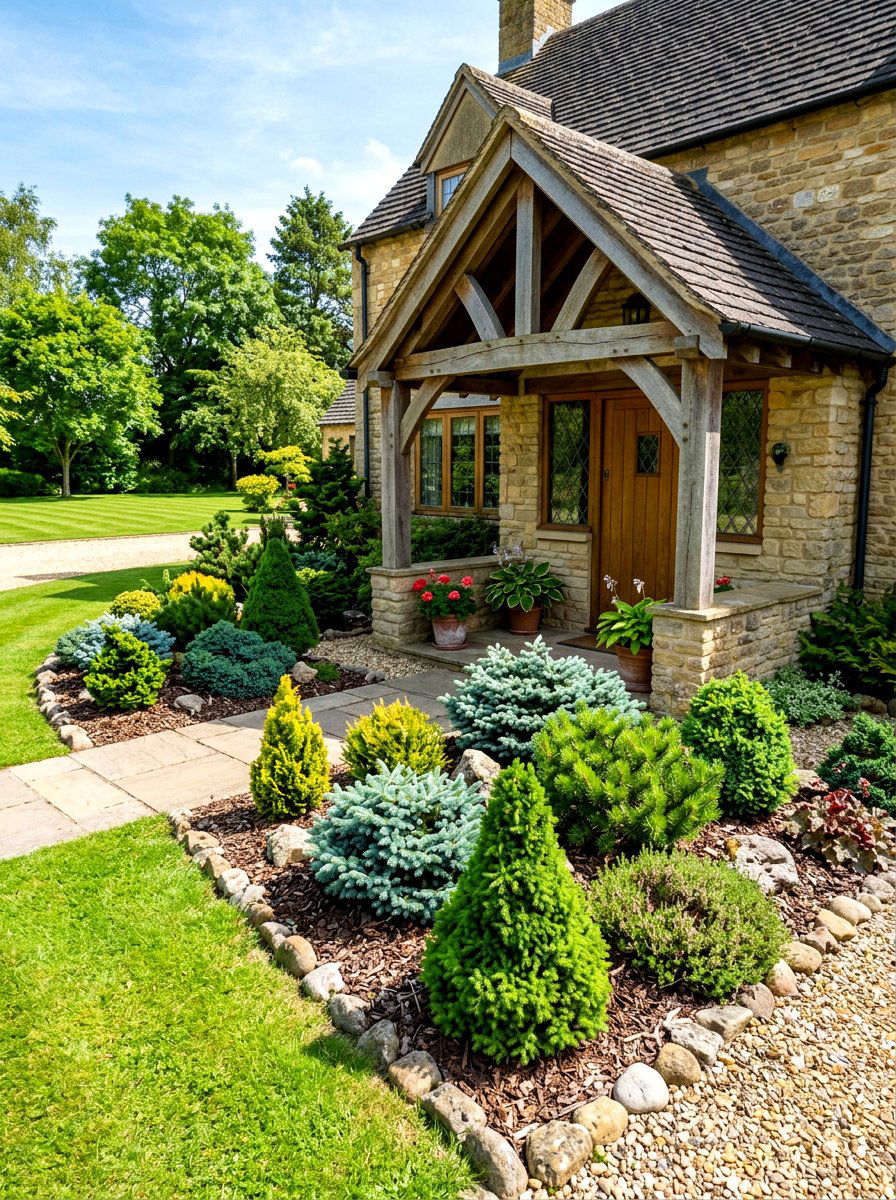
For a low-maintenance landscape that offers incredible texture and year-round interest, consider planting a collection of dwarf conifers around your portico. These slow-growing evergreens come in a variety of shapes, from mounded globes to weeping forms, and colors ranging from gold to blue-green. Because they are compact, they won 't outgrow their space or crowd the front door over time. By mixing different species, you can create a miniature forest look that is rich in detail and requires almost no pruning. Their dense, needle-like foliage provides a solid and reliable structure for your entryway, ensuring that your home' s landscape looks intentional and beautiful even in the harshest winter months.
Conclusion:
Investing in thoughtful portico landscaping is one of the most effective ways to elevate your home's exterior and create a welcoming environment. By carefully selecting plants that complement your architecture and choosing hardscaping materials that stand the test of time, you build an entrance that tells a story of style and care. From the structured elegance of formal hedges to the breezy charm of a wildflower path, these ideas offer a roadmap for every type of homeowner. Remember that the best landscapes are those that evolve with the seasons, providing beauty and joy year-round. A well-designed entryway is more than just a path to your door; it is the beginning of the home experience.

Related posts: