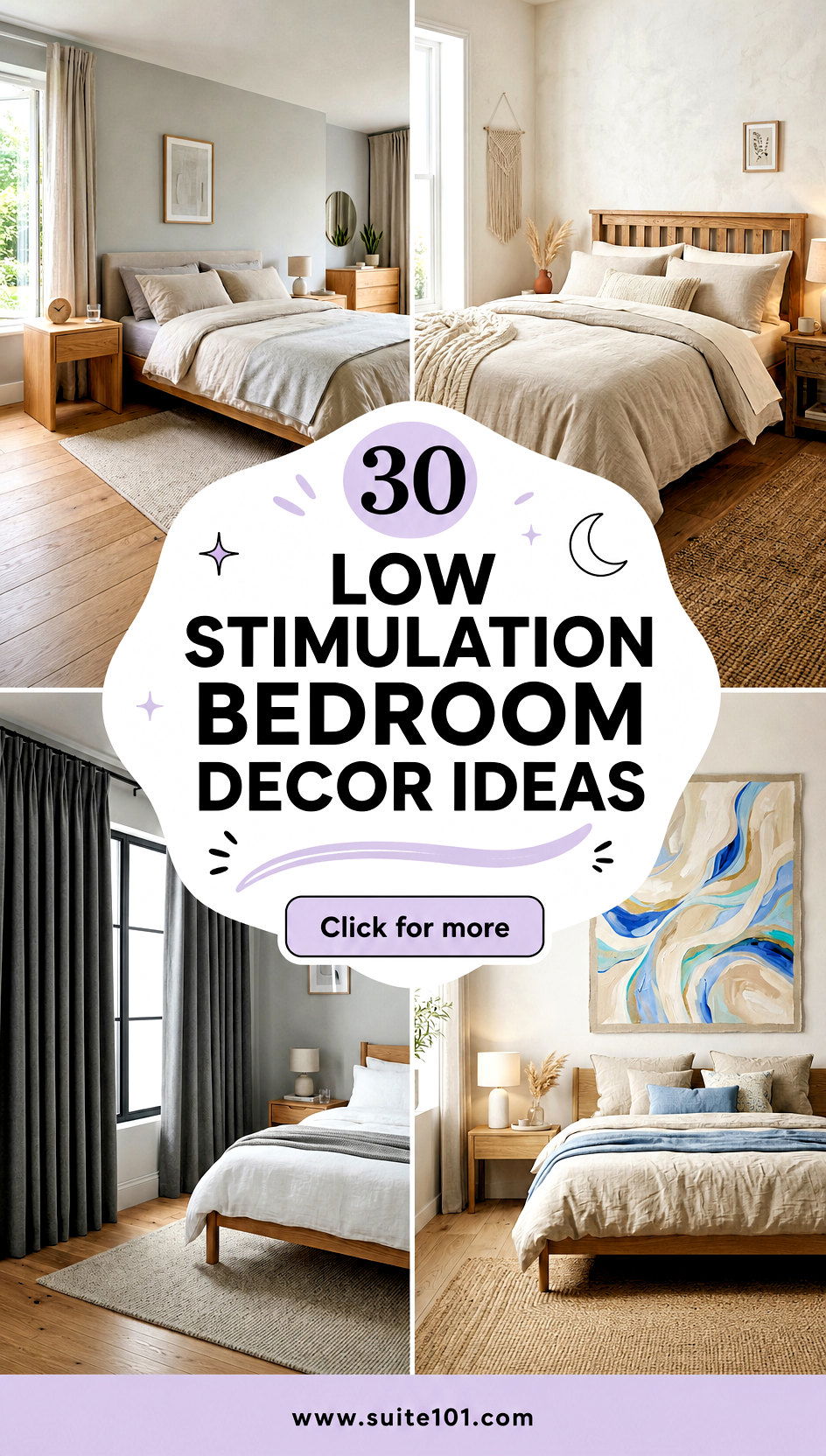
Creating a low stimulation bedroom is an essential step for anyone looking to improve their sleep quality and mental well-being. This type of environment specifically caters to individuals who experience sensory overload, such as those with ADHD or autism, by reducing visual and auditory noise. When you step into a room designed for tranquility, your brain can finally switch from a state of high alert to one of deep rest. By focusing on soft textures, muted colors, and intentional layouts, you transform a standard sleeping area into a true sensory haven. This guide explores thirty practical ways to refine your space for ultimate peace and quiet.
1. Low Stimulation Bedroom Layout
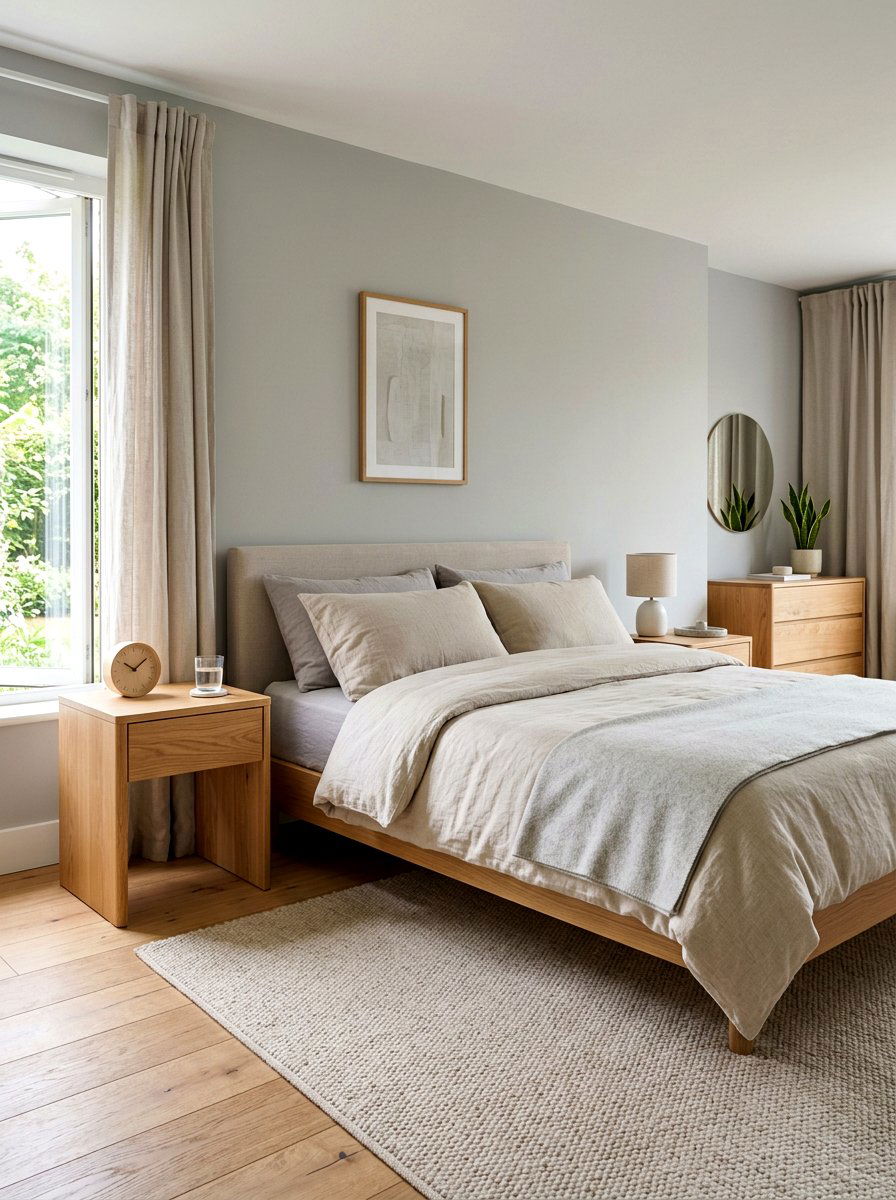
Have you ever felt overwhelmed just by walking into a messy or crowded room? A low stimulation bedroom layout focuses on creating a sense of openness and predictability to reduce cognitive load. You should prioritize clear pathways that allow for easy movement without the risk of bumping into furniture. Placing the bed in a central, symmetrical position helps ground the entire space and provides a clear focal point. Avoid placing large pieces of furniture in high-traffic areas or blocking natural light sources. By maintaining a balanced and orderly arrangement, you allow your mind to relax because there are no visual puzzles or obstacles to process.
2. Sage Green Bedroom Walls
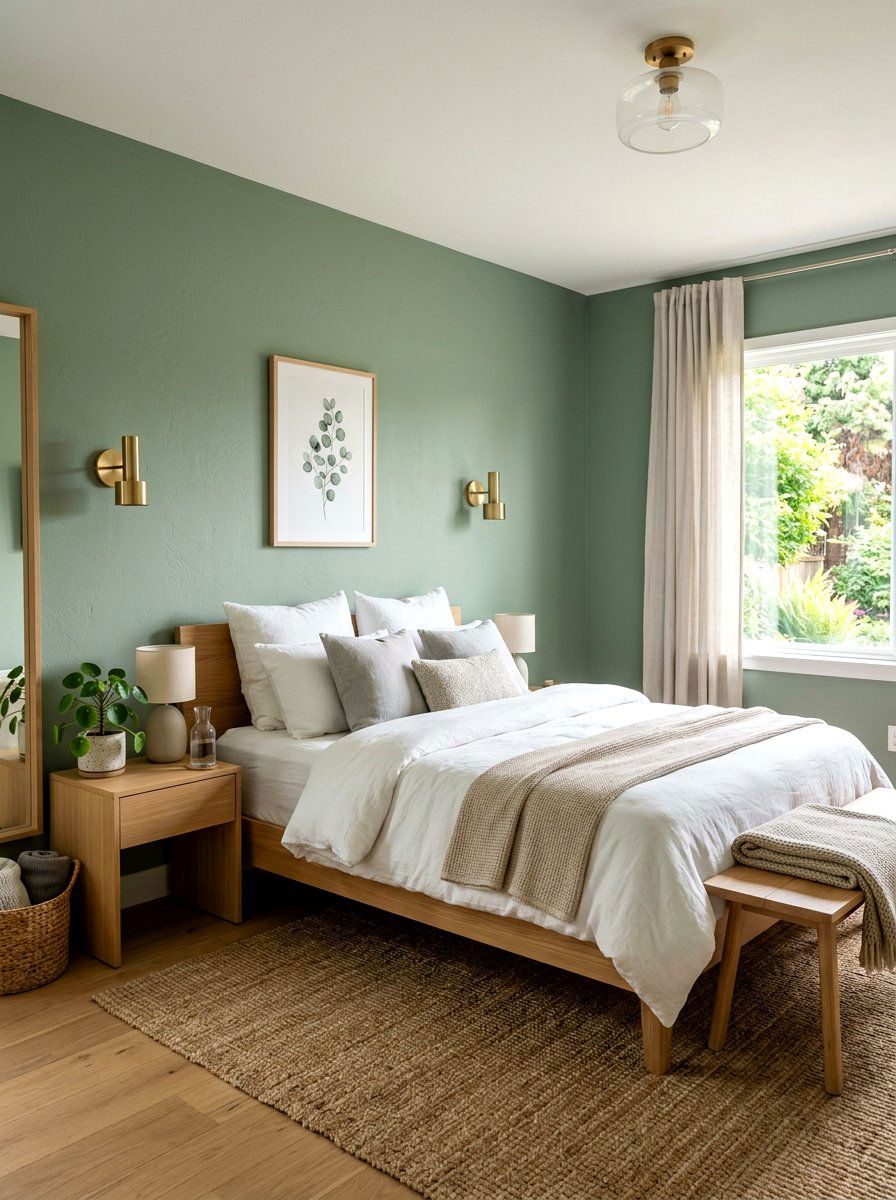
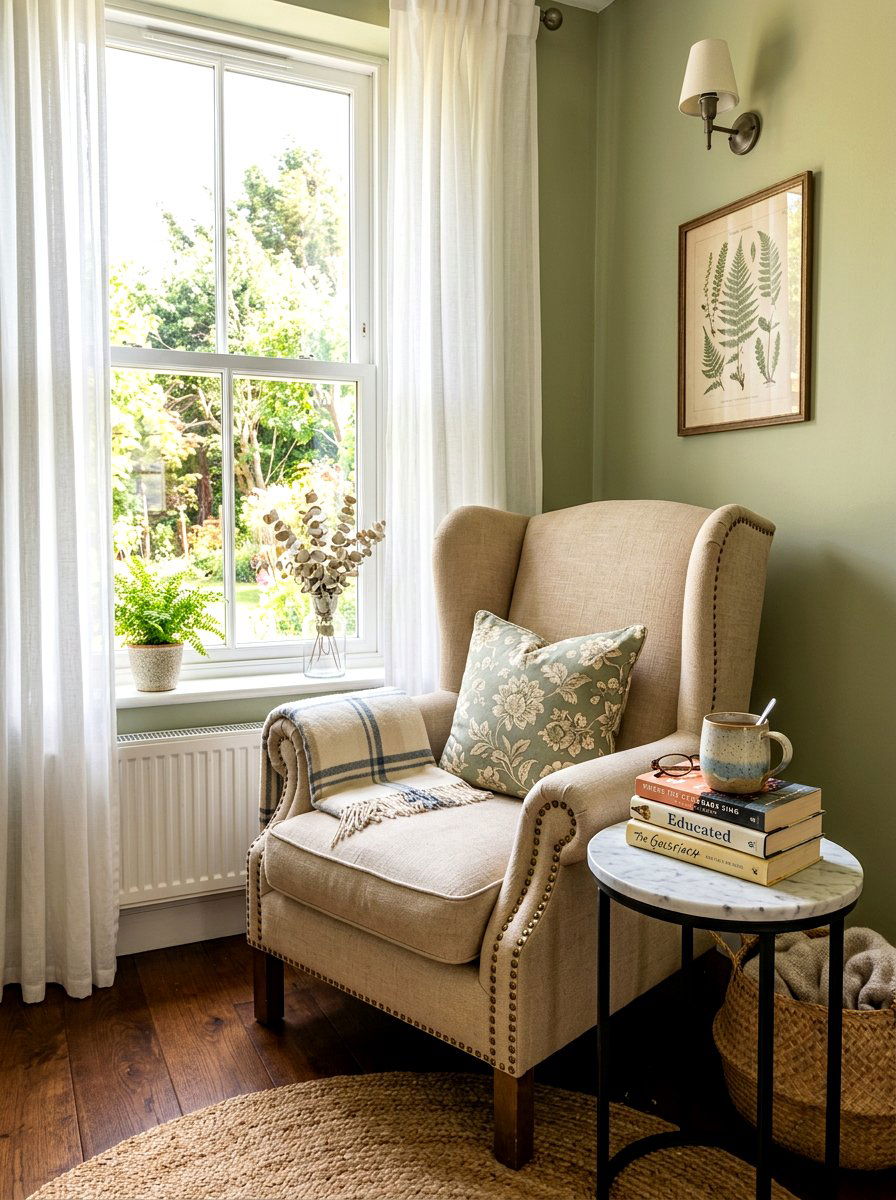
Choosing the right wall color is perhaps the most impactful decision when designing a sensory-friendly space. Sage green is a fantastic choice because it mimics the natural world and has a scientifically proven calming effect on the nervous system. This particular shade of green is muted enough to act as a neutral while still providing a soft, organic feel. Unlike bright whites that can feel sterile or deep bolds that might be too energetic, sage green offers a gentle embrace for the eyes. When you surround yourself with this earthy tone, it encourages a slower heart rate and promotes a feeling of safety and restoration.
3. Neutral Linen Bedding Set
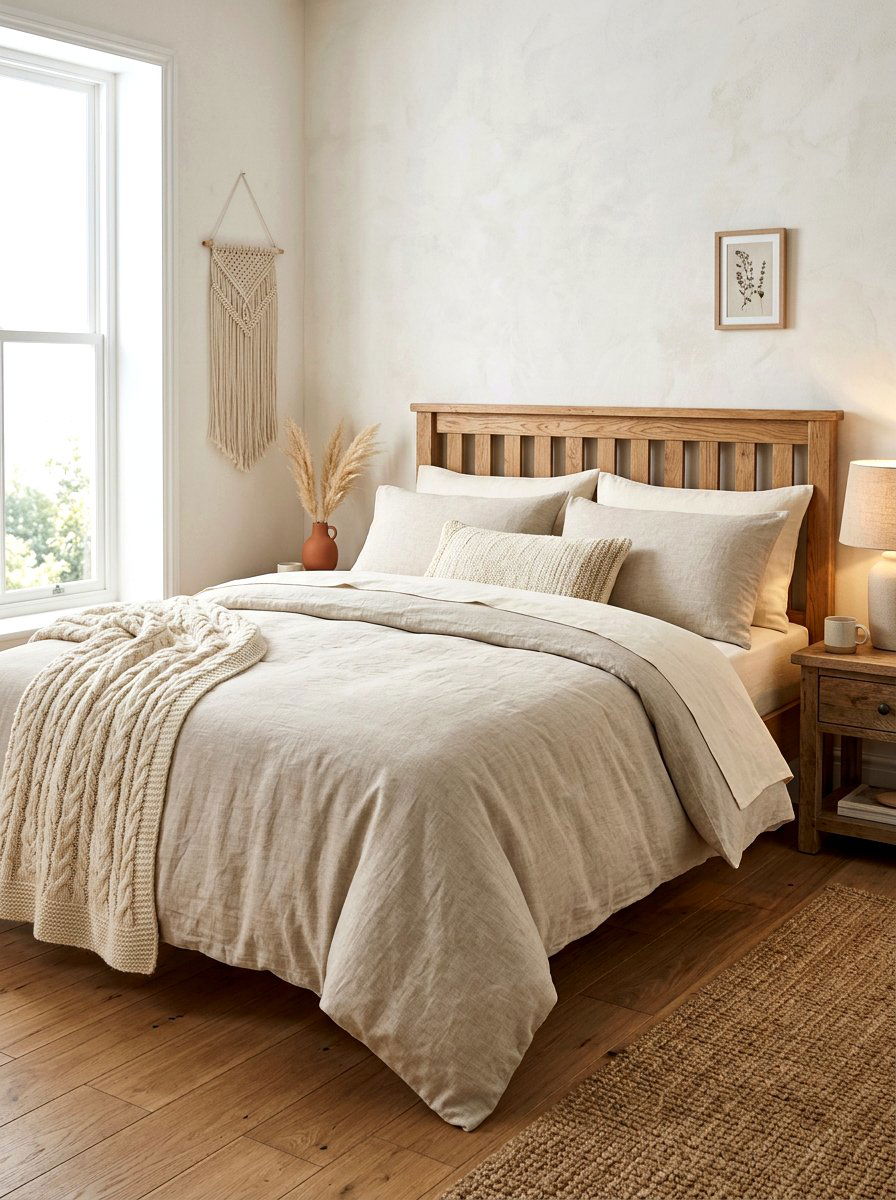
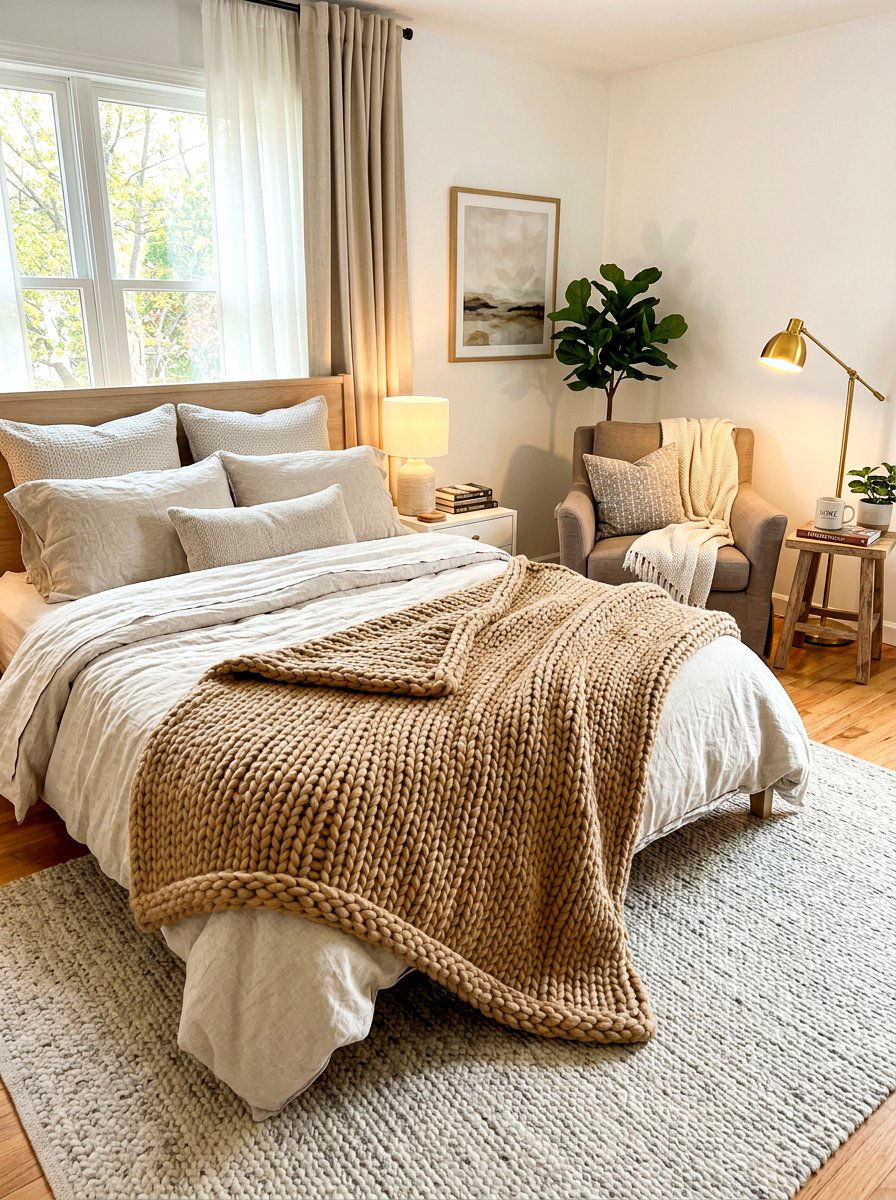
The way your bedding feels against your skin can significantly impact your ability to fall asleep and stay asleep. A neutral linen bedding set is an excellent investment for a low stimulation room because linen is breathable and highly tactile. The natural fibers offer a soft, slightly textured surface that feels grounded rather than slippery or synthetic. Choosing neutral colors like oatmeal, sand, or soft cream ensures that your bed does not become a source of visual clutter. These shades blend seamlessly with the rest of the room, creating a cohesive and quiet look. High-quality linen also regulates temperature, preventing sensory discomfort caused by overheating.
4. Under Bed Storage Frame
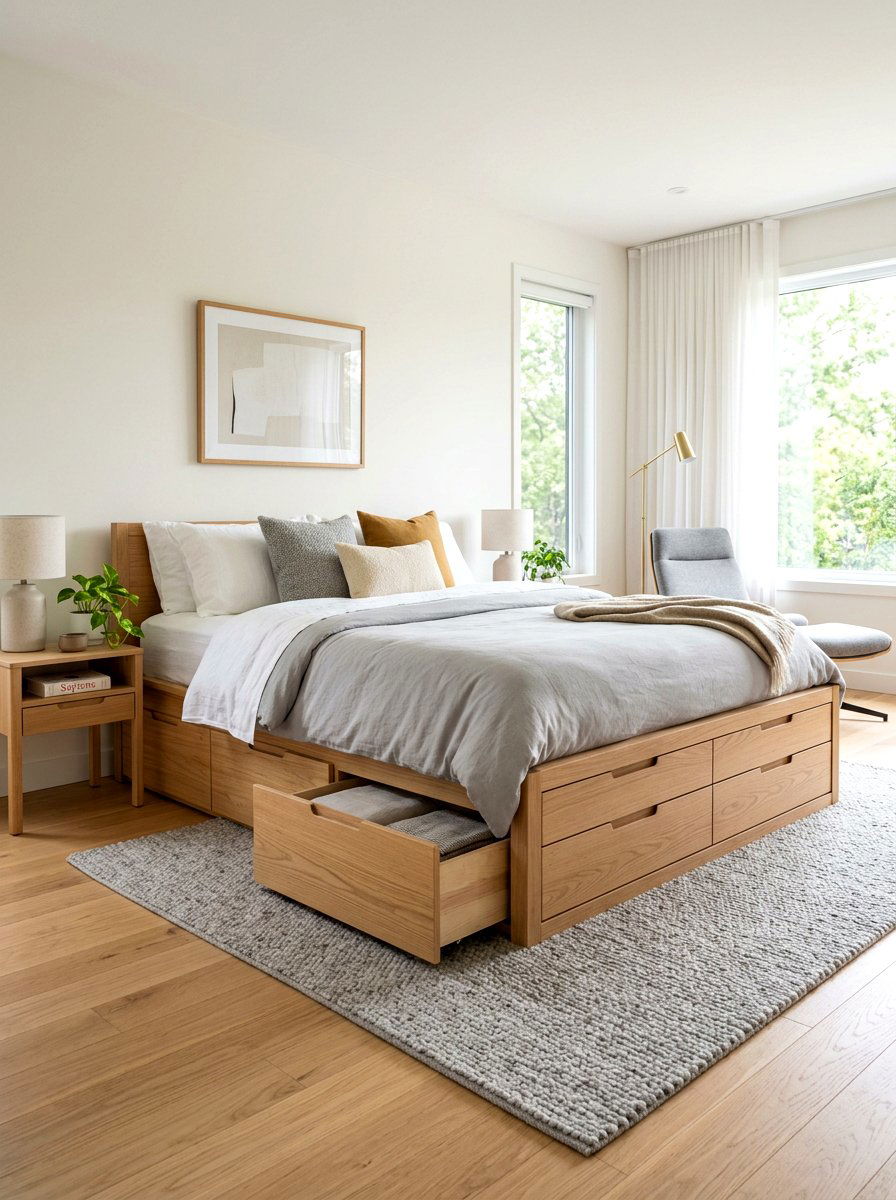
Visual clutter is one of the biggest enemies of a peaceful mind, making hidden storage solutions vital. An under bed storage frame allows you to keep extra blankets, out-of-season clothing, and personal items completely out of sight. When objects are tucked away in drawers built directly into the bed base, the room appears much larger and more organized. This setup eliminates the need for multiple bulky dressers that might cramp the space or create jagged visual lines. By clearing the floor and surfaces of unnecessary items, you reduce the amount of information your brain has to process every time you enter the bedroom.
5. Soft Indirect Lighting Fixture
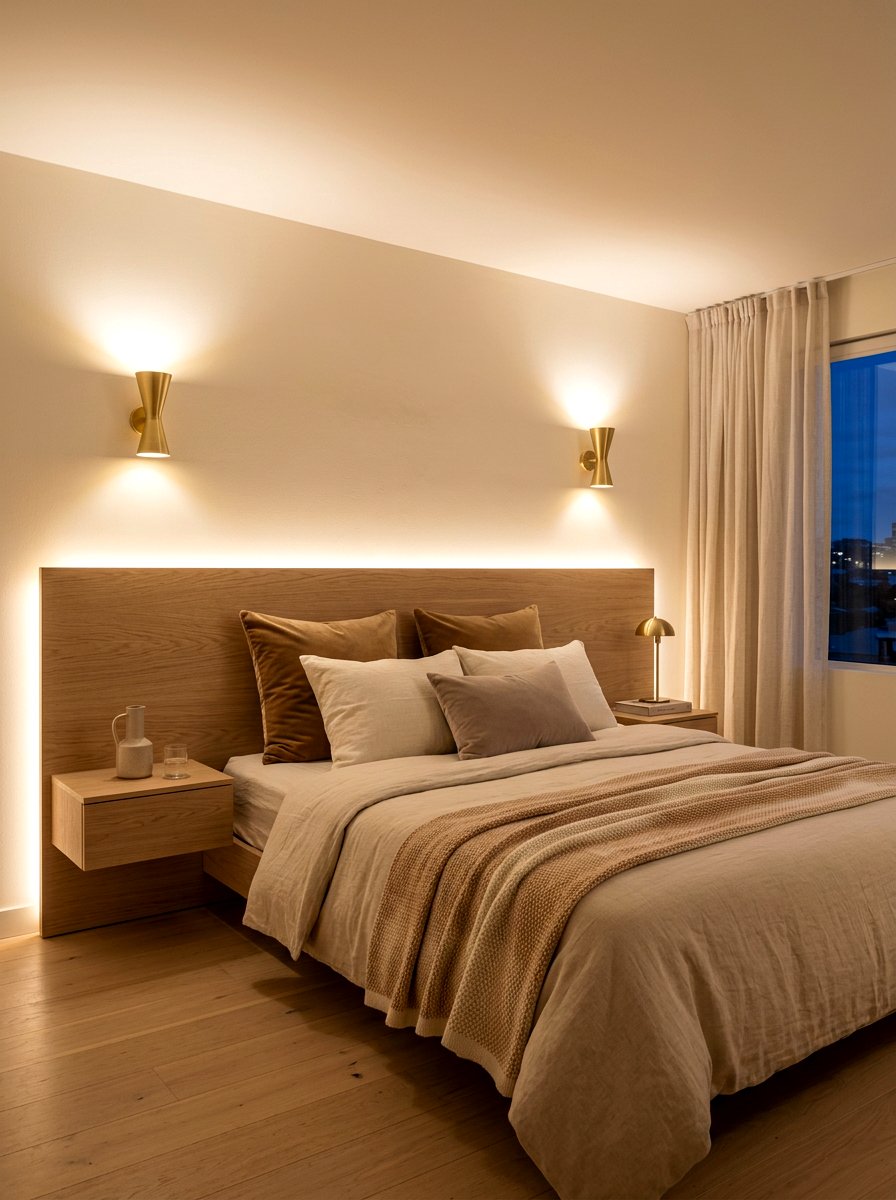
Bright overhead lights can be incredibly jarring and often trigger a "fight or flight" response in sensitive individuals. Installing a soft indirect lighting fixture helps to bathe the room in a gentle, diffused glow that mimics the natural transition of dusk. You might consider wall sconces that point upward or LED strips hidden behind a headboard to prevent direct glare. This type of lighting eliminates harsh shadows and creates a warm, inviting atmosphere that signals to your brain that it is time to wind down. Avoiding exposed bulbs ensures that there are no intense "hot spots" of light to distract or irritate your vision.
6. Blackout Window Curtain Set
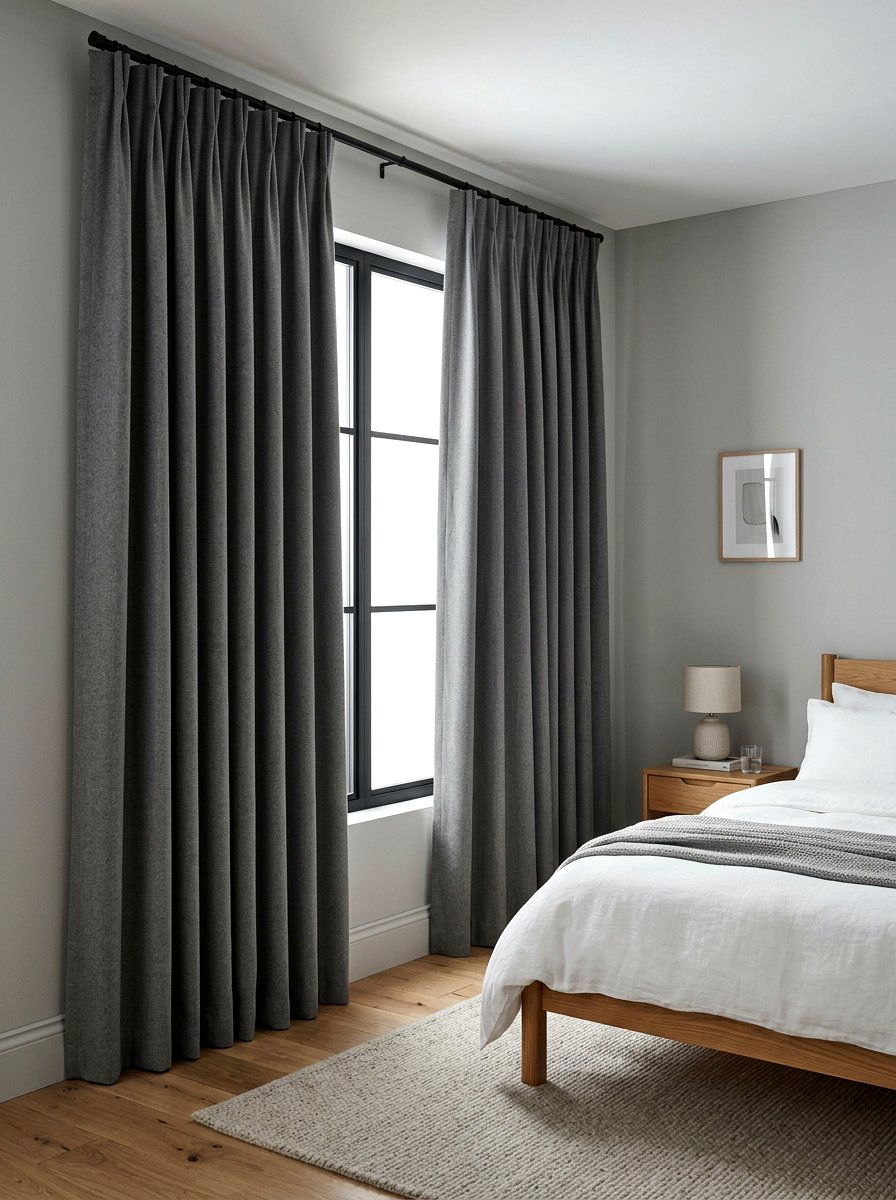
Light pollution from street lamps or early morning sun can easily disrupt a fragile sleep cycle and cause irritation. A high-quality blackout window curtain set is essential for maintaining total control over your environment 's brightness levels. These heavy-duty fabrics do more than just block light; they also provide a layer of thermal insulation and sound dampening. By choosing a solid, muted color for your curtains, you create a continuous visual surface that doesn' t distract the eye with busy patterns. When the room is truly dark, your body can produce melatonin more effectively, leading to a much deeper and more restorative night of rest.
7. Thick Plush Area Rug
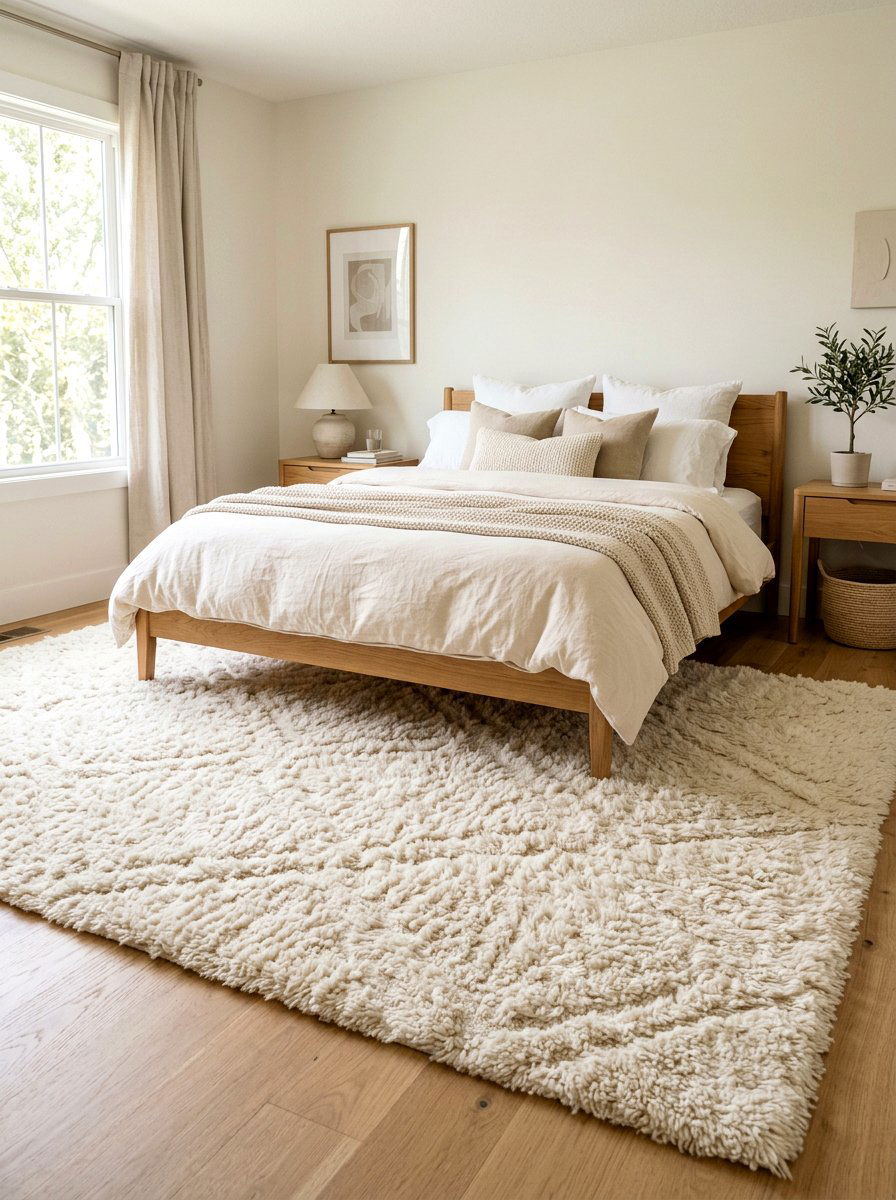
Hard flooring can often feel cold and echoing, which adds to the sensory noise within a bedroom. Adding a thick plush area rug provides immediate tactile comfort and serves as a powerful acoustic absorber. When you step out of bed, a soft surface underfoot provides a grounding sensation that can be very soothing for the nervous system. Furthermore, a large rug helps to muffle the sound of footsteps and prevent echoes from bouncing off the walls. Choosing a rug with a high pile and a solid, neutral tone ensures that it adds comfort without introducing a distracting or busy visual pattern to the floor.
8. Natural Oak Bedroom Furniture
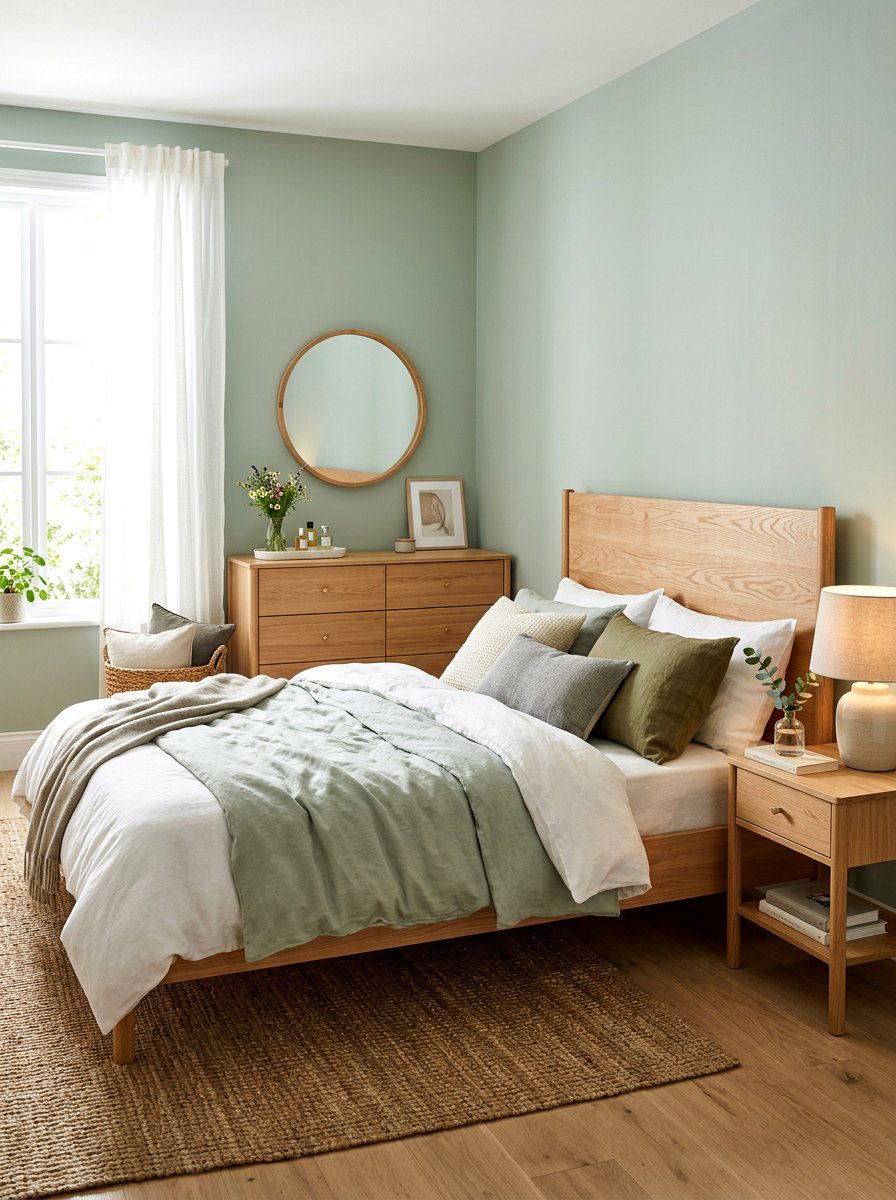
Bringing elements of nature into your home is a core principle of biophilic design, which is naturally low-stimulating. Natural oak bedroom furniture offers a warm, organic aesthetic that feels much softer than metal or plastic alternatives. The subtle grain of the wood provides just enough visual interest without being overwhelming or loud. Oak is also incredibly durable and sturdy, which adds a sense of permanence and security to the room. When your furniture feels solid and looks like it belongs in the natural world, it creates an environment that feels stable. This stability is key to helping a restless mind feel anchored and at peace.
9. Soft Blue Wall Color
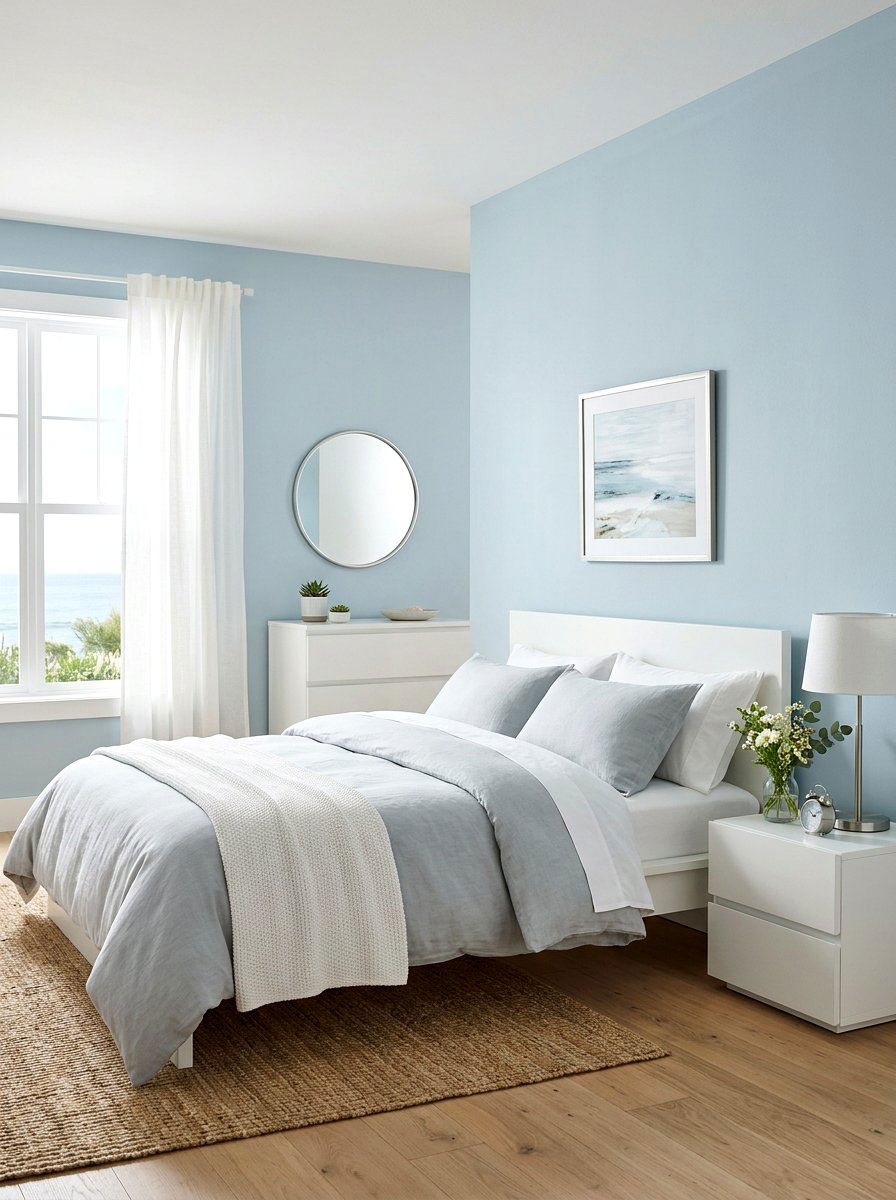
Is there anything more relaxing than looking up at a clear, pale sky or a calm body of water? A soft blue wall color brings that sense of infinite peace directly into your sleeping quarters. Blue is widely recognized in color psychology for its ability to lower blood pressure and slow down the heart rate. By selecting a very pale, almost greyish blue, you avoid the energy of a bright cyan or navy. This hue works as a cool neutral that makes the walls seem to recede, giving the impression of more space. It is a perfect choice for creating a quiet, airy sanctuary for rest.

10. Minimalist Wood Nightstand
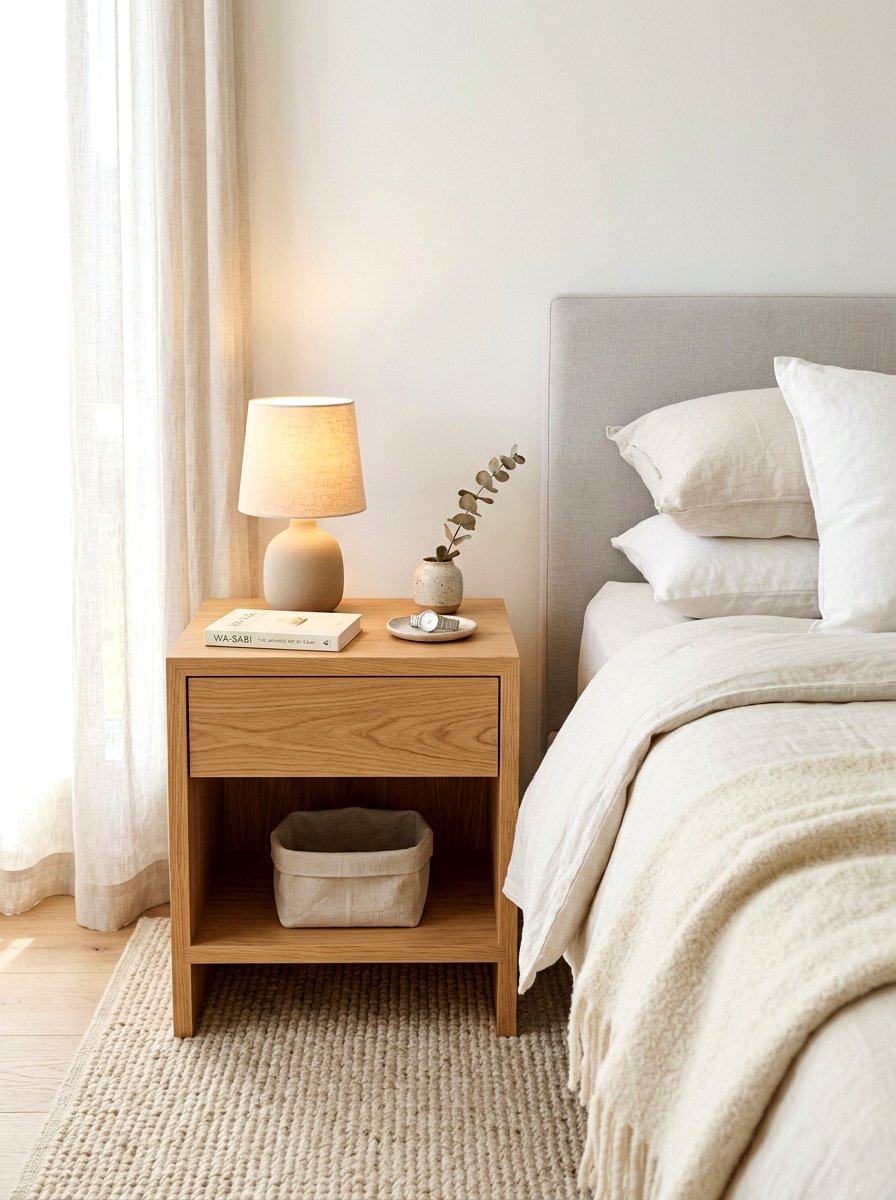
The area directly next to your bed should be a zone of absolute simplicity and function. A minimalist wood nightstand with a single drawer or a clean shelf prevents the accumulation of "junk" like old receipts or half-finished books. Keeping only the essentials — like a glass of water and a small lamp — on the surface helps maintain a clear mind before sleep. The natural texture of the wood adds a touch of warmth to the bedside without the coldness of glass or metal. By limiting the items in your immediate line of sight, you reduce the chances of your brain getting distracted by "to-do" lists.
11. Frameless Canvas Wall Art
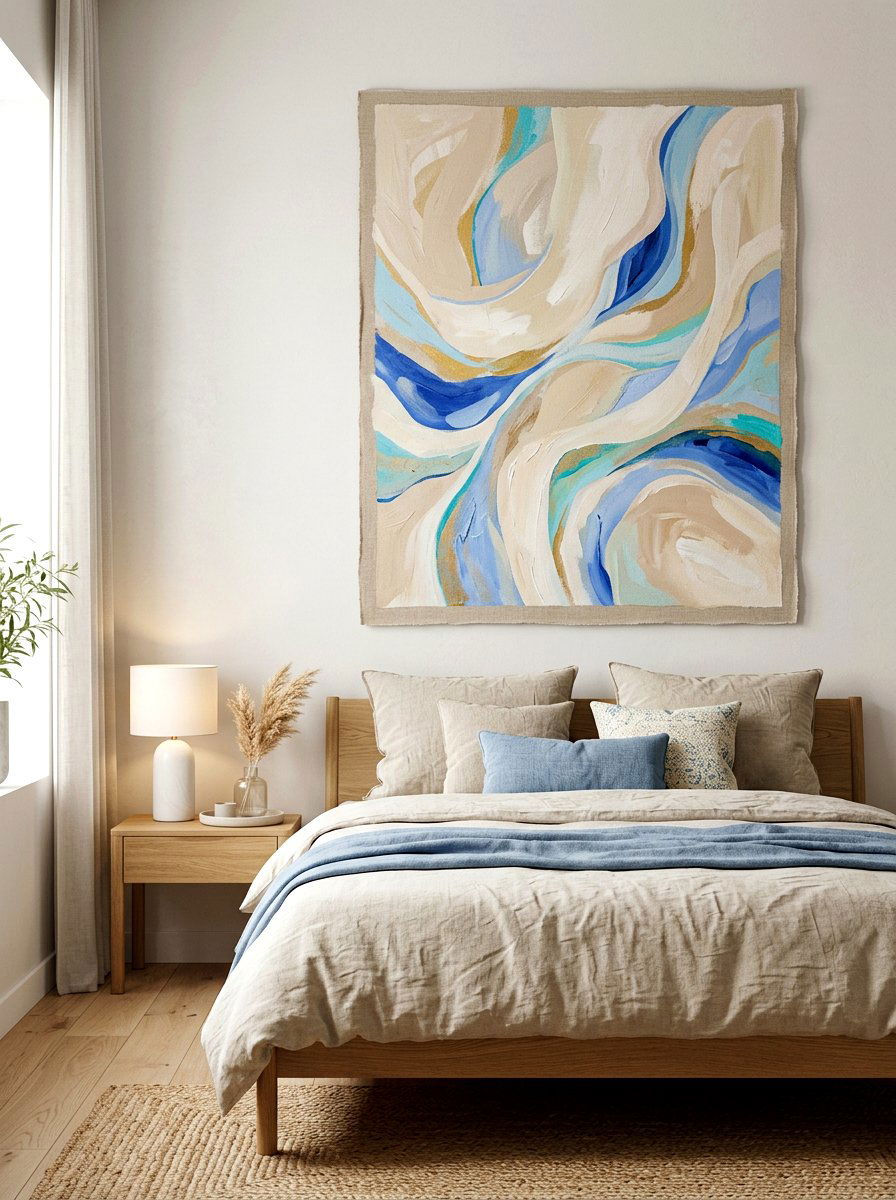
Walls that are completely bare can sometimes feel cold, but busy frames and intricate details can be overstimulating. Frameless canvas wall art is the perfect middle ground for adding personality without the "noise. " You should look for abstract pieces that feature soft, flowing lines or blurred landscapes in muted tones. Since there is no reflective glass or heavy frame, the art blends into the wall rather than standing out as a sharp interruption. These gentle visual elements provide a soft place for the eyes to rest as you drift off. They add a layer of sophistication while maintaining the room's overall quietude.
12. Dimmable Warm Bedside Lamp

Control over your immediate environment is a vital part of managing sensory input throughout the evening. A dimmable warm bedside lamp allows you to gradually lower the light levels as you prepare for bed. This mimics the setting sun and helps regulate your circadian rhythm more naturally than a standard on-off switch. The "warm" temperature of the bulb is crucial, as blue light from many standard LEDs can interfere with sleep hormones. By keeping the light low and localized, you create a small, cozy cocoon of safety. This focused illumination helps you feel protected and tucked away from the rest of the world.
13. Woven Seagrass Storage Basket
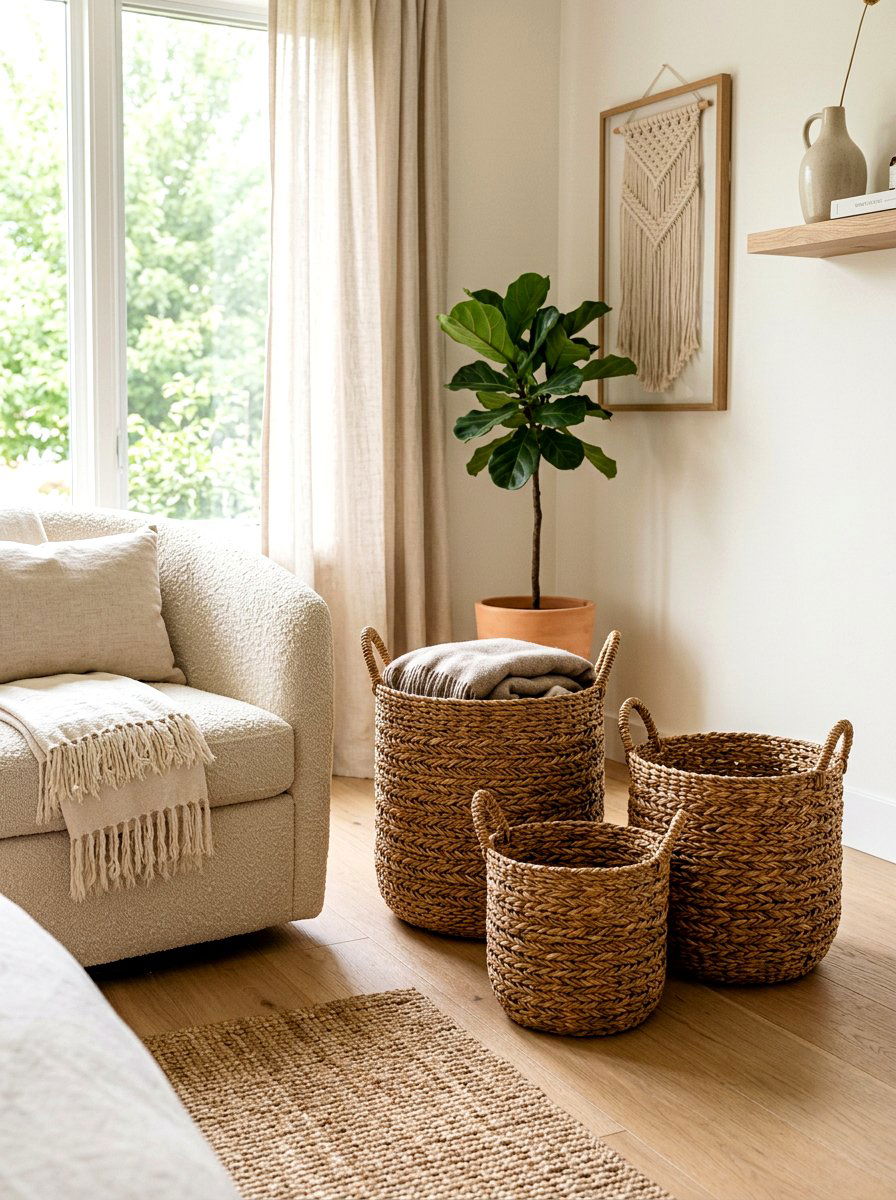
How many times have you tripped over a stray pillow or felt stressed by a pile of laundry in the corner? Woven seagrass storage baskets offer a beautiful, organic way to hide the daily clutter that naturally accumulates. The natural fibers introduce a subtle, earthy scent and a rich texture that complements a low stimulation aesthetic. These baskets are perfect for holding extra throw blankets or slippers, keeping them accessible but out of the main visual field. Because they are made from soft, natural materials, they don't make loud clanking noises like metal bins. They add a soft, finished look to any corner.
14. Organic Cotton Bedding Set
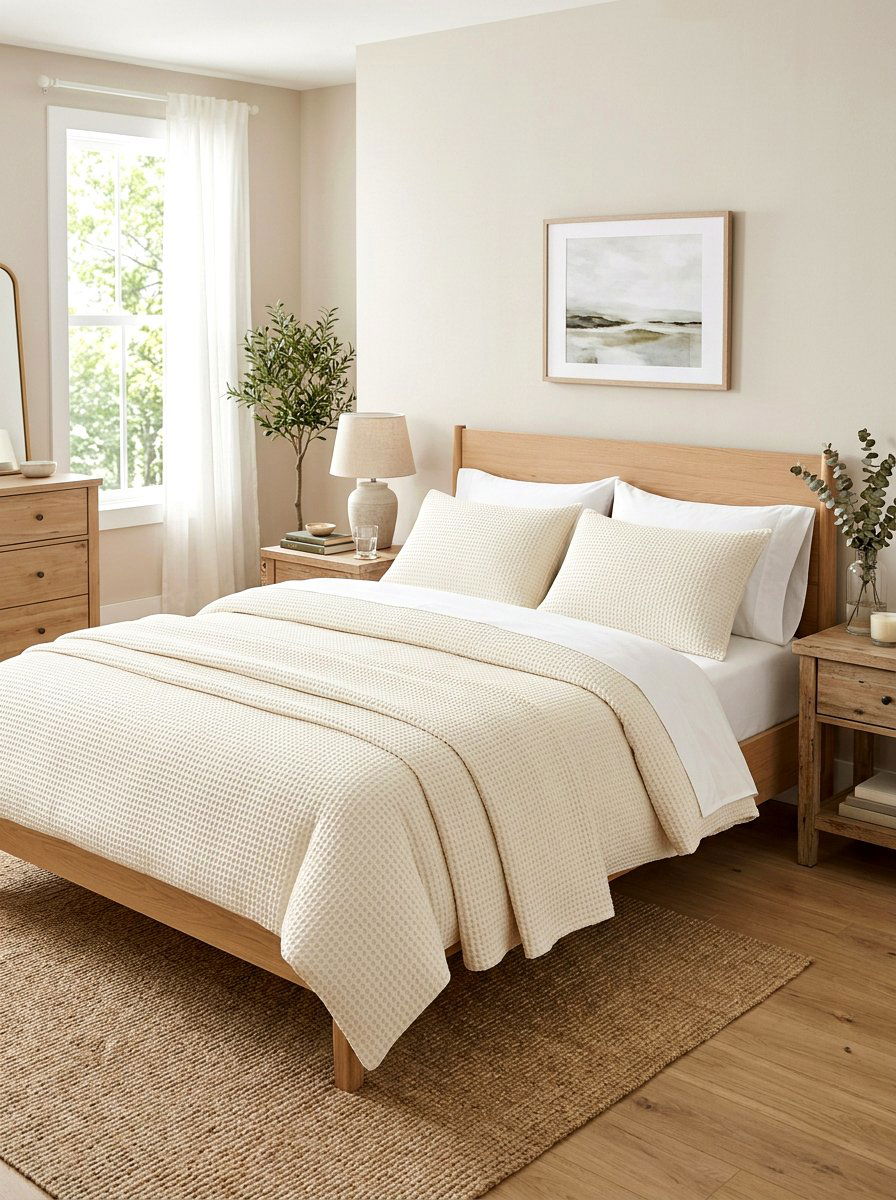
The physical sensation of your sheets is often the final barrier between you and a peaceful night of sleep. An organic cotton bedding set is free from harsh chemicals and synthetic fibers that can cause skin irritation or "scratchiness. " Cotton is naturally soft and becomes even more comfortable with every wash, making it ideal for those with tactile sensitivities. Choosing a solid color for your duvet and pillows keeps the bed looking tidy and unencumbered by distracting prints. When you slide into a bed made of pure, natural cotton, your body can relax instantly. This physical comfort is a cornerstone of a low stimulation lifestyle.

15. Symmetrical Bedroom Floor Plan
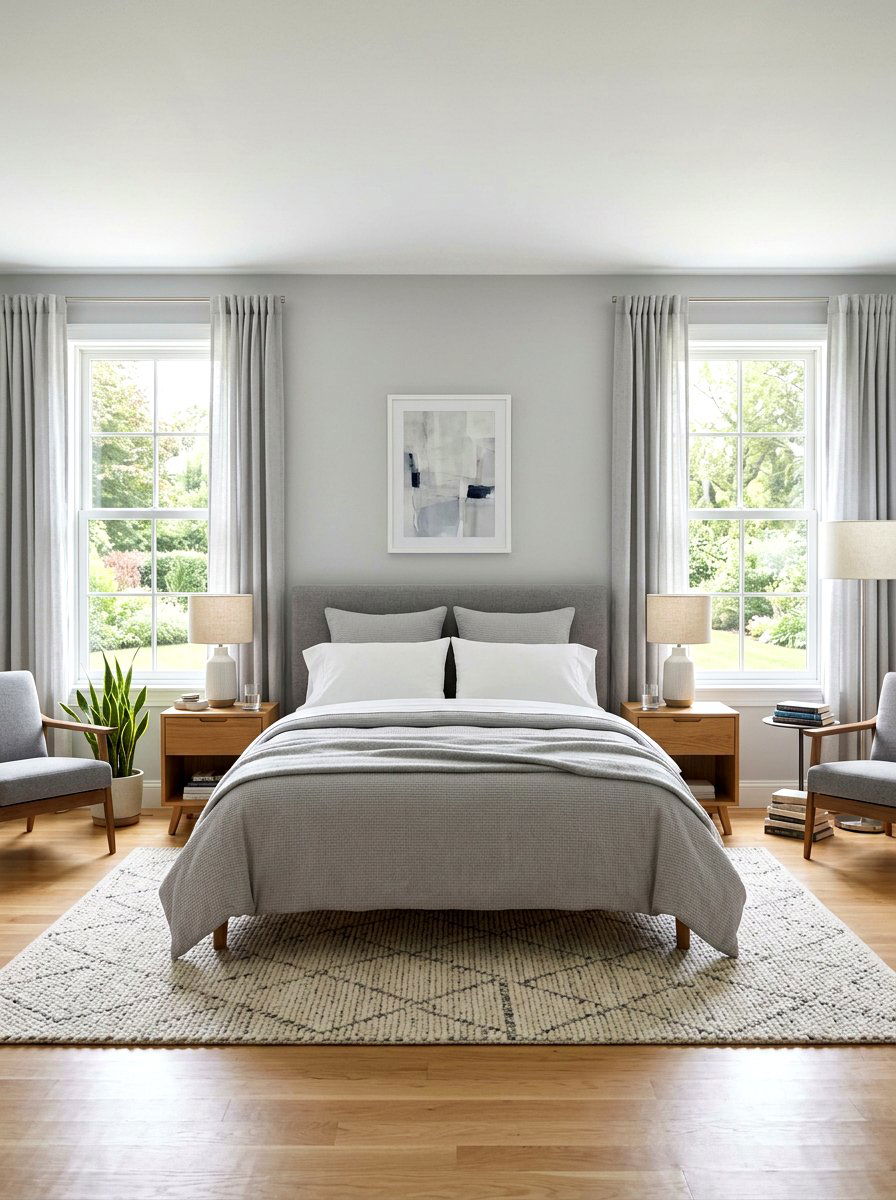
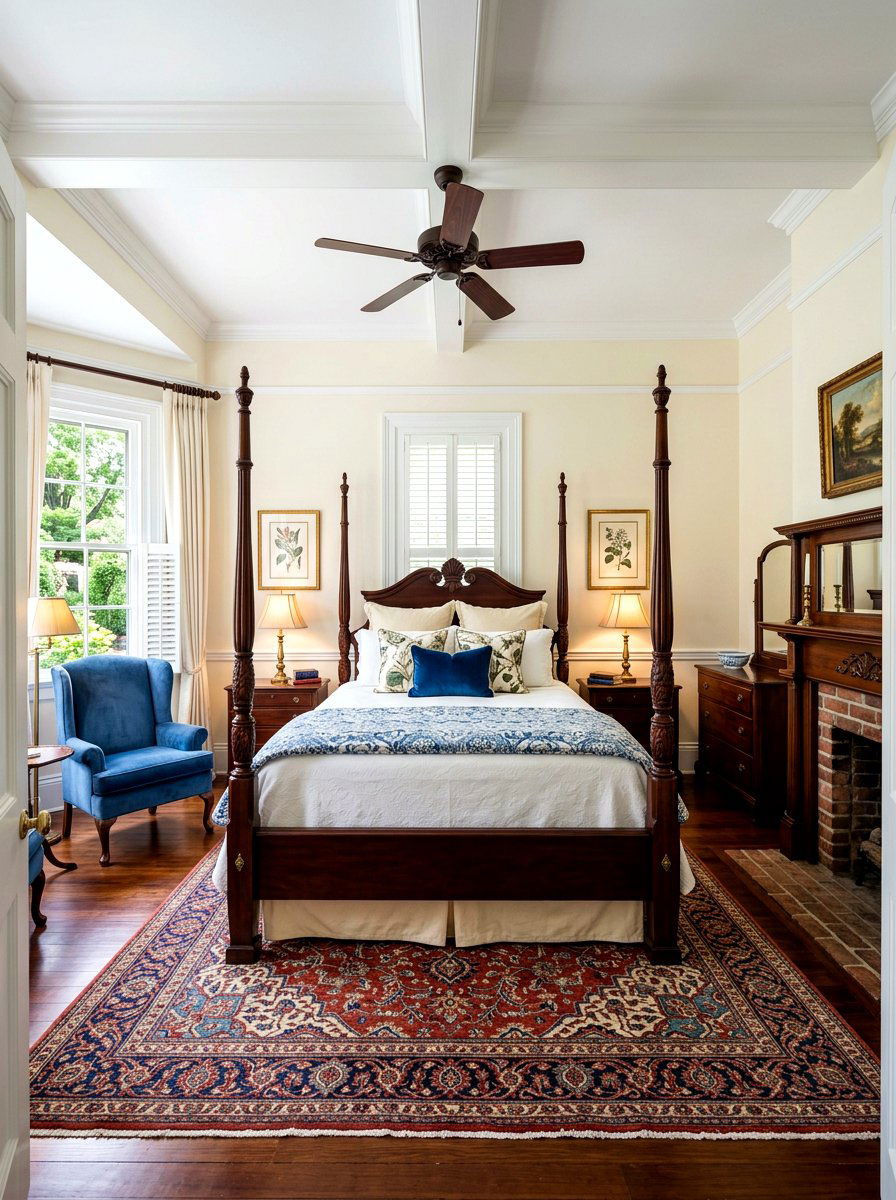
Human brains are naturally wired to find comfort in symmetry because it represents order and safety. A symmetrical bedroom floor plan, featuring matching nightstands and lamps on either side of the bed, creates a sense of predictable balance. This layout removes the "visual weight" that occurs when one side of a room feels heavier or more cluttered than the other. When everything has a twin or a clear place, the room feels stable and finished. You don't have to think about where things go or why they look "off. " This lack of visual tension allows your mind to rest the moment you walk through the door.
16. Matte Finish Interior Paint
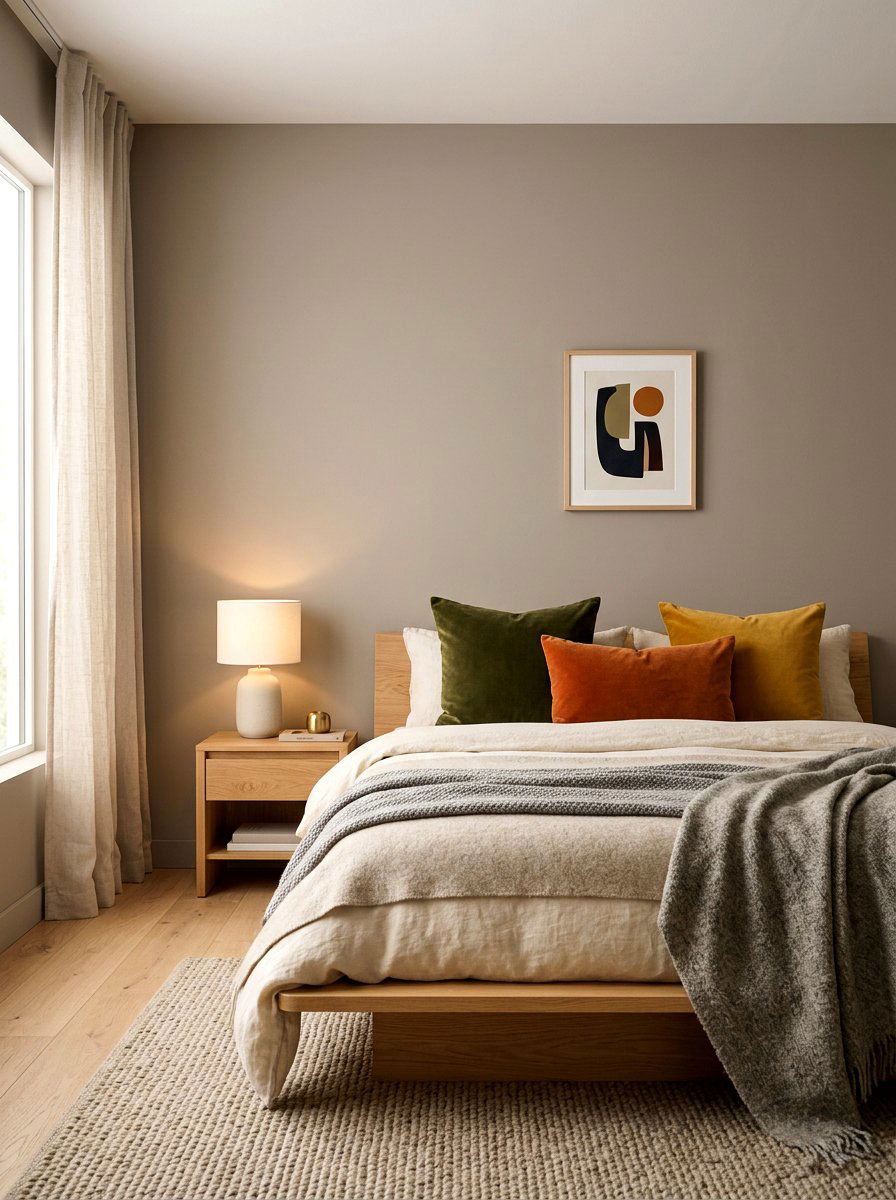
Glossy or satin paints can often catch the light in ways that create distracting glares and reflections on your walls. Choosing a matte finish interior paint ensures that light is absorbed rather than reflected, resulting in a much softer look. Matte walls have a velvety, deep appearance that makes colors look more rich and grounded. This finish is particularly helpful in rooms with lots of natural light, as it prevents "hot spots" from appearing throughout the day. By smoothing out the visual surface of the room, you create a more uniform and consistent environment. This consistency is highly beneficial for maintaining a calm, focused state of mind.
17. Floating Natural Wood Shelf
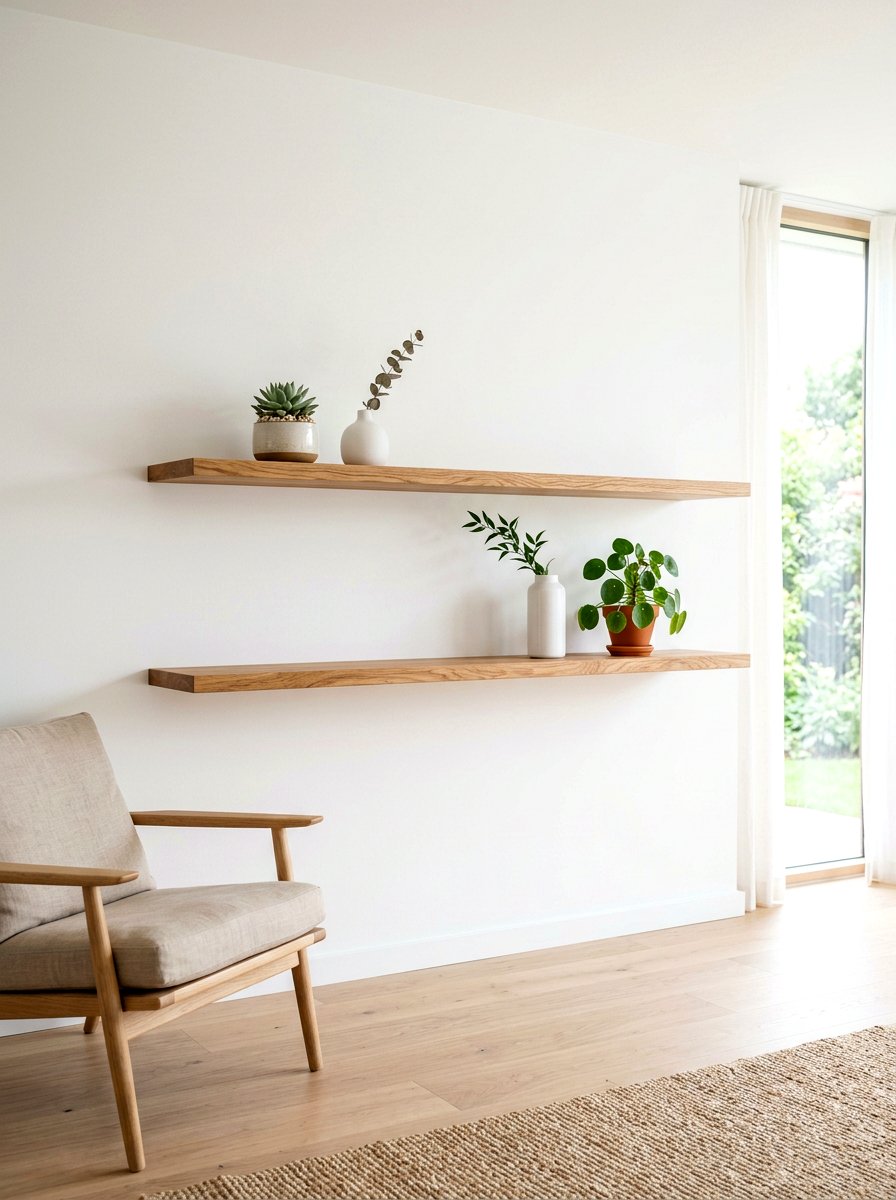
Standard bookcases can often feel heavy and overwhelming, especially if they are packed with colorful book spines and trinkets. A floating natural wood shelf provides a much lighter alternative for displaying a few carefully chosen items. By keeping the floor space clear beneath the shelf, the room feels more open and less crowded. You can use these shelves to hold a single plant or a calming stone, acting as a curated focal point. The natural wood grain adds a touch of the outdoors without the bulk of traditional furniture. This approach to storage encourages you to keep only what you truly find peaceful.
18. Warm Earth Tone Decor
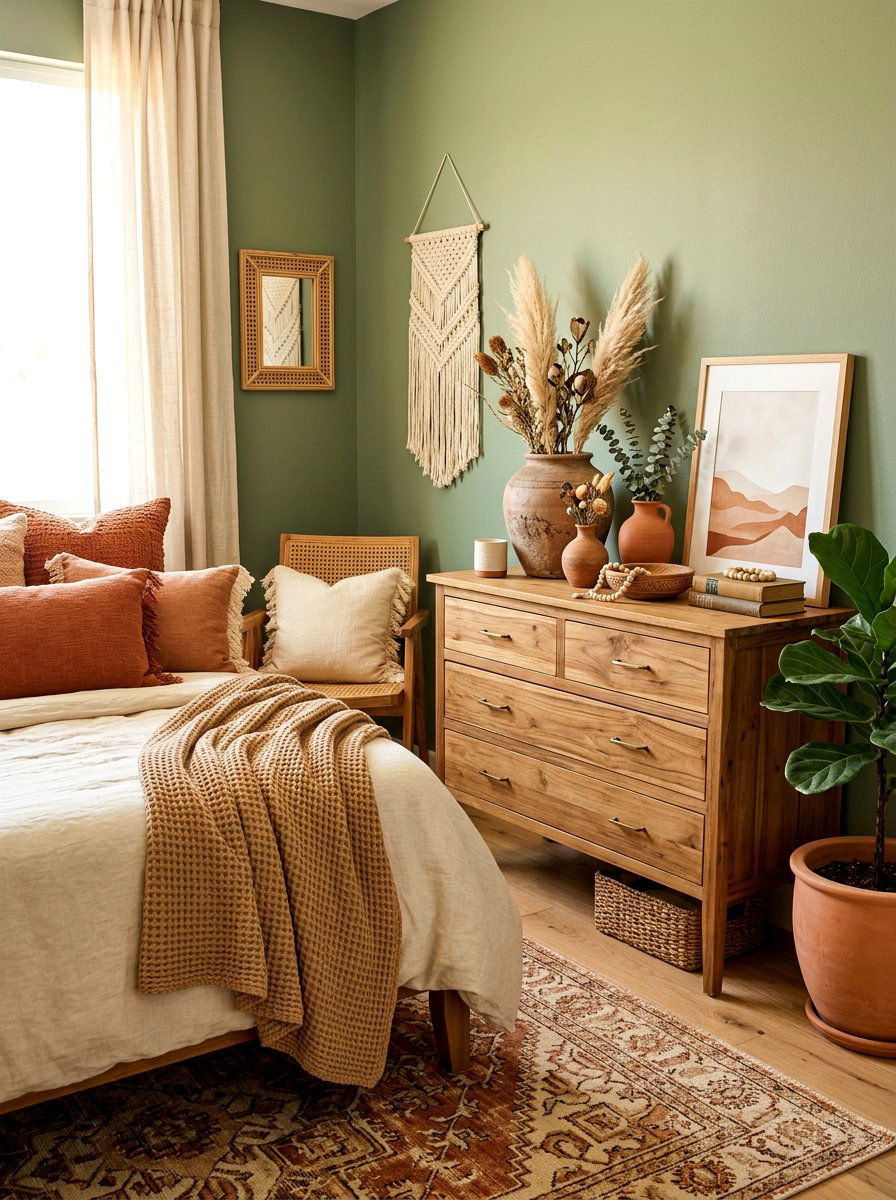
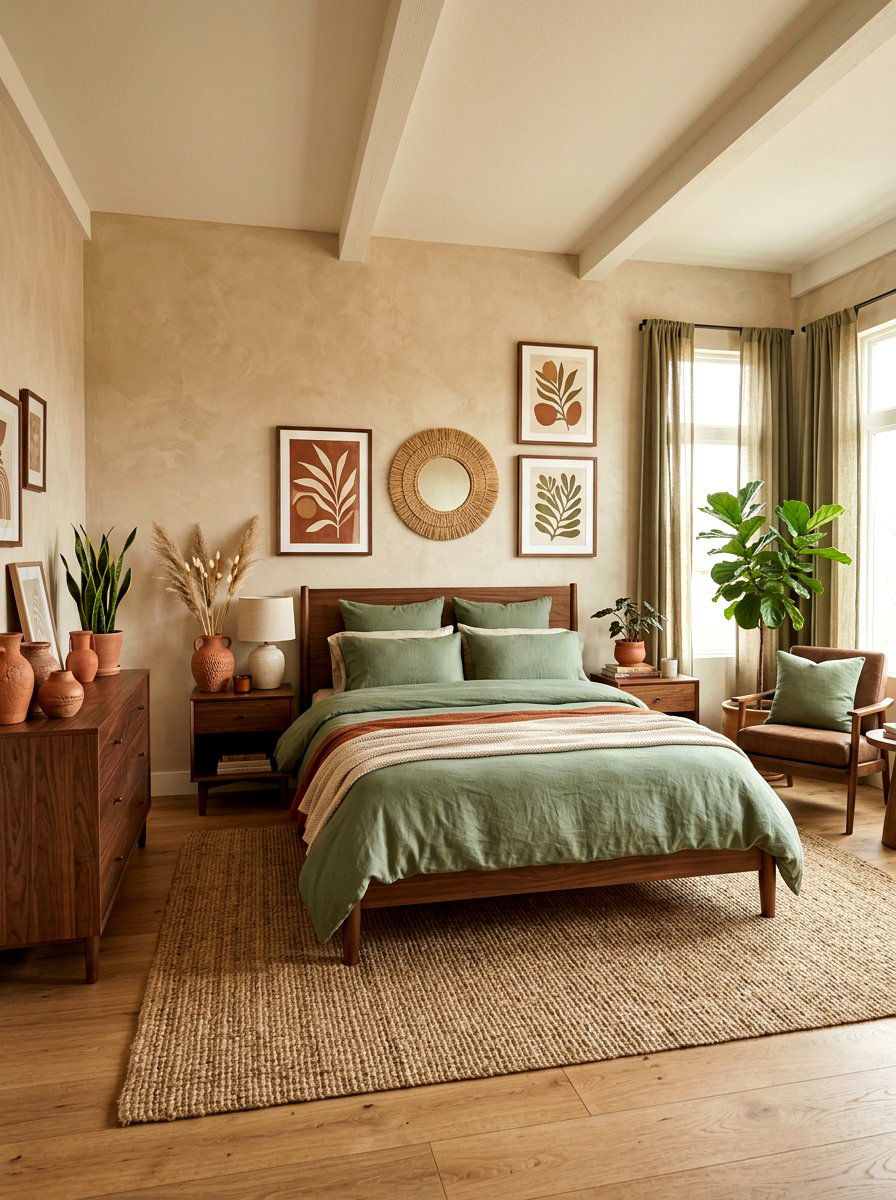
Incorporating warm earth tone decor, such as terracotta, tan, and mushroom, helps to ground the room and provide a sense of warmth. These colors are deeply connected to the soil and the natural landscape, making them inherently soothing to the human psyche. You can bring these tones in through small accents like ceramic vases, throw pillows, or a soft knit blanket. Earth tones work well because they don't "scream" for attention; instead, they hum quietly in the background. When your decor feels cohesive and connected to nature, it creates a cozy atmosphere that feels like a warm, protective hug at the end of the day.
19. Grey Weighted Throw Blanket
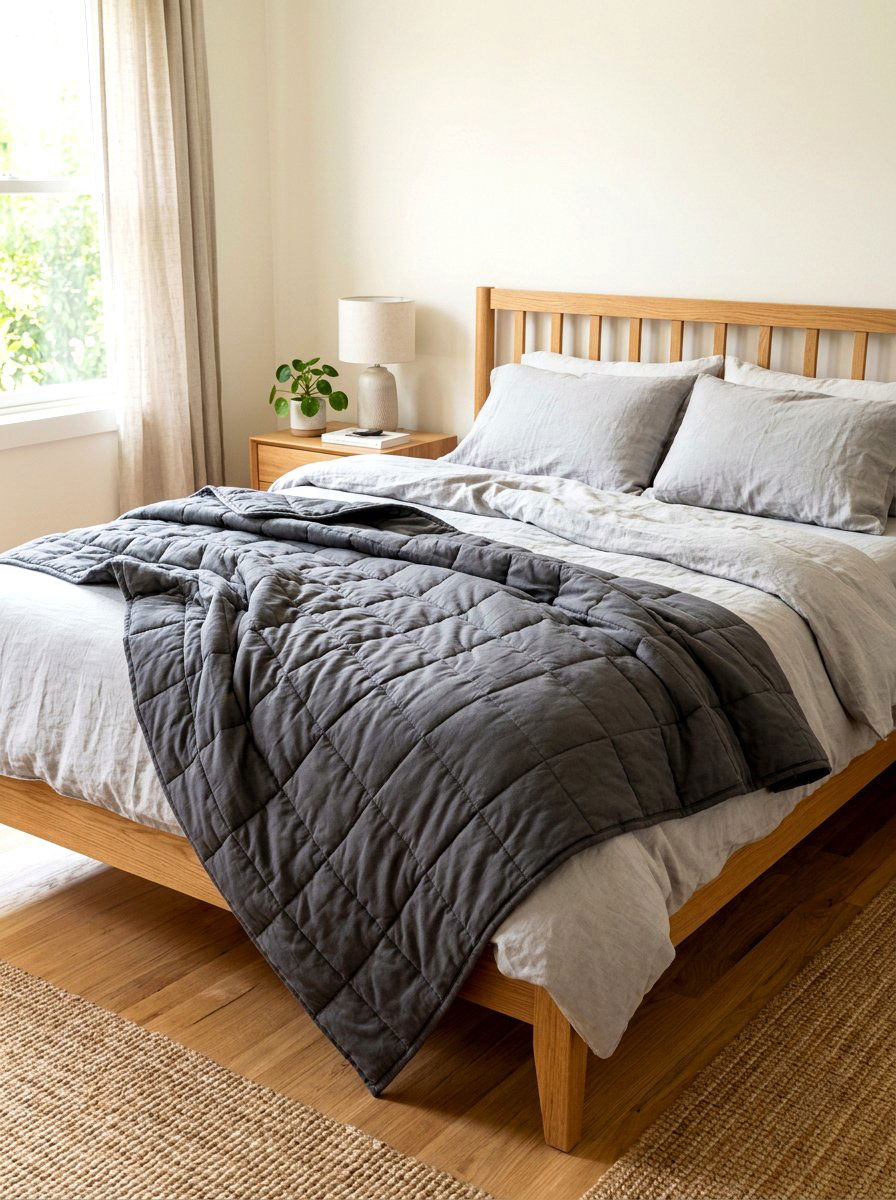
Deep pressure stimulation is a well-known technique for reducing anxiety and helping the body relax into a state of sleep. A grey weighted throw blanket provides this gentle pressure in a way that feels incredibly secure and grounding. The color grey is a perfect choice because it is neutral and doesn 't add any "vibration" to the room' s color palette. Many people find that the weight helps to quiet a racing mind and prevents restless movements during the night. By keeping a weighted blanket at the foot of your bed, you have a functional tool for self-regulation that also looks stylish and modern in your space.

20. Minimalist Built In Wardrobe
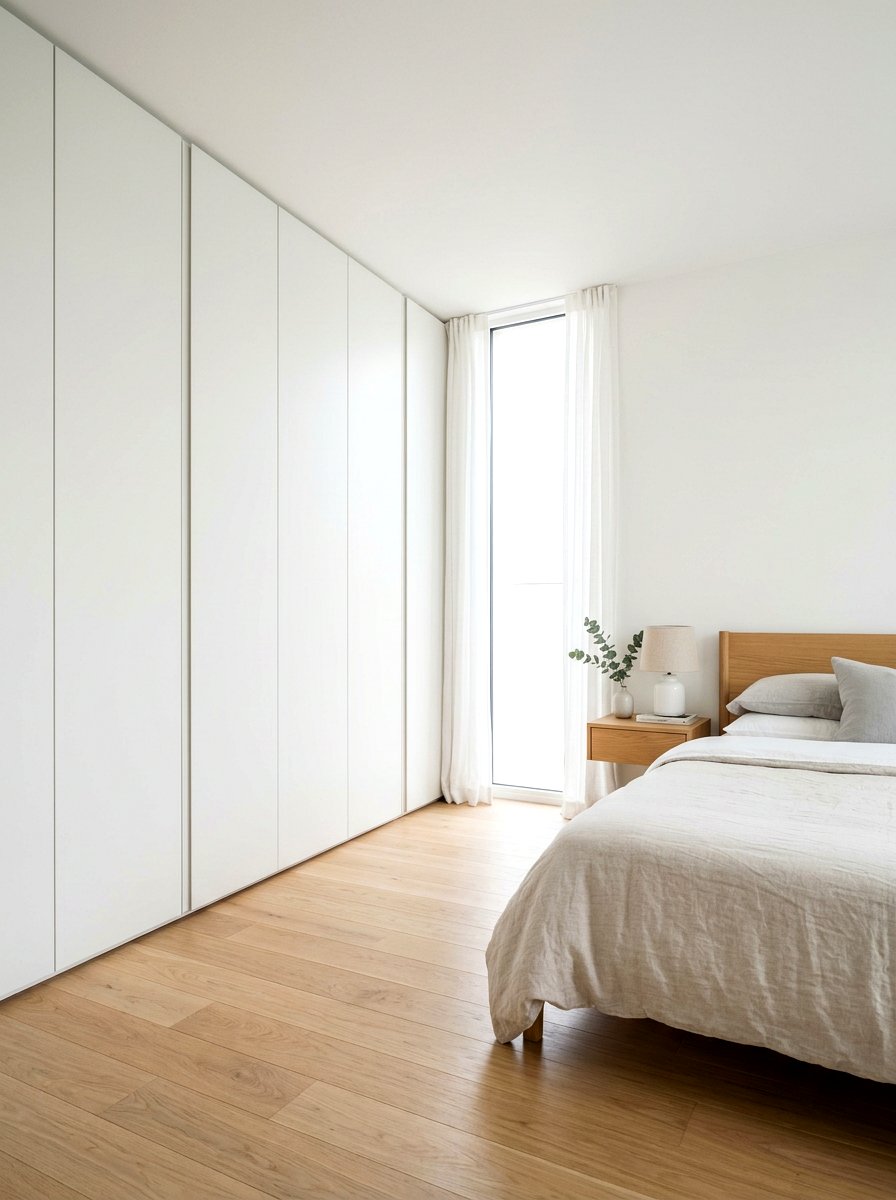
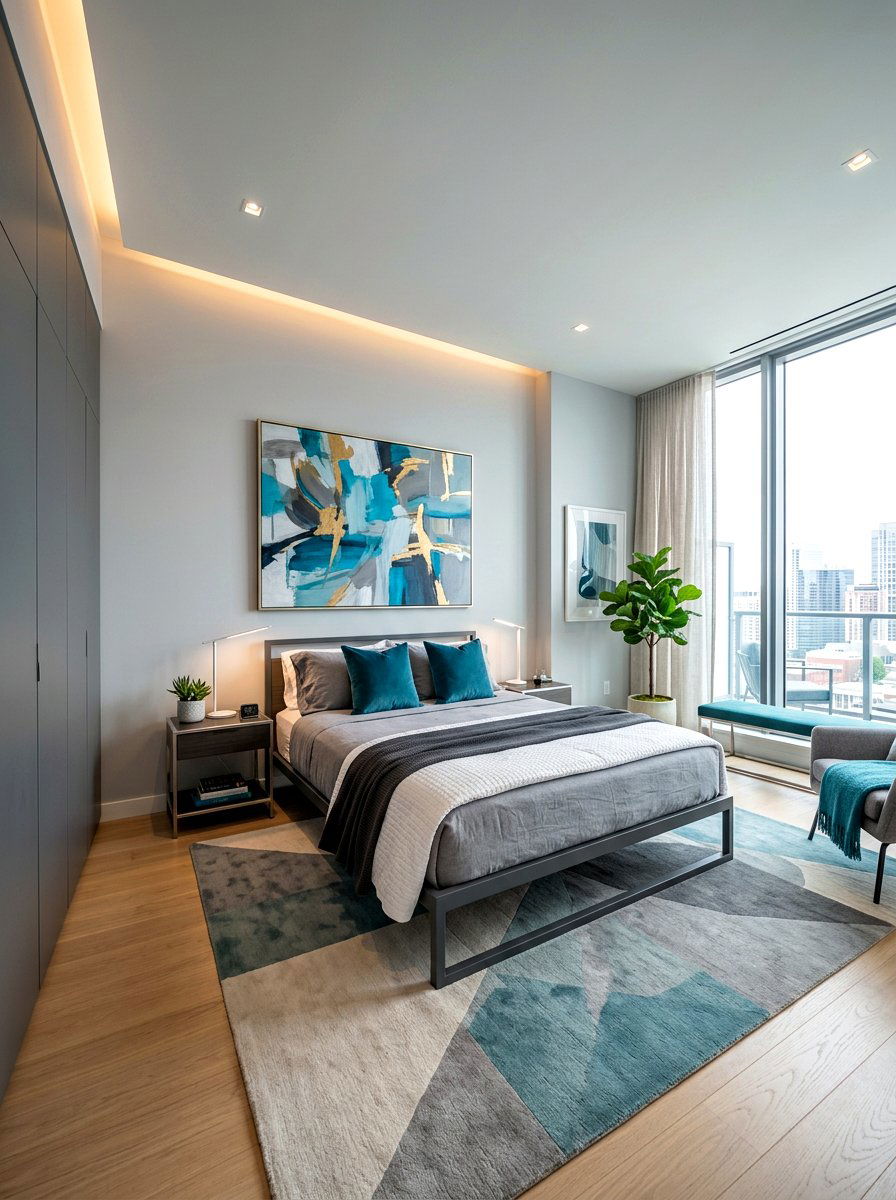
Free-standing wardrobes can often look like large, looming boxes that interrupt the flow of a room and gather dust on top. A minimalist built in wardrobe creates a seamless look by blending directly into the walls, effectively "disappearing" into the architecture. This design choice removes the visual clutter of handles, legs, and cabinet tops, leaving you with a clean, flat surface. Inside, you can organize your belongings behind closed doors, ensuring that your clothes and accessories never contribute to sensory overload. When the storage is integrated into the room itself, the entire space feels more intentional, permanent, and significantly quieter for your eyes.
21. Sheer Linen Window Blinds
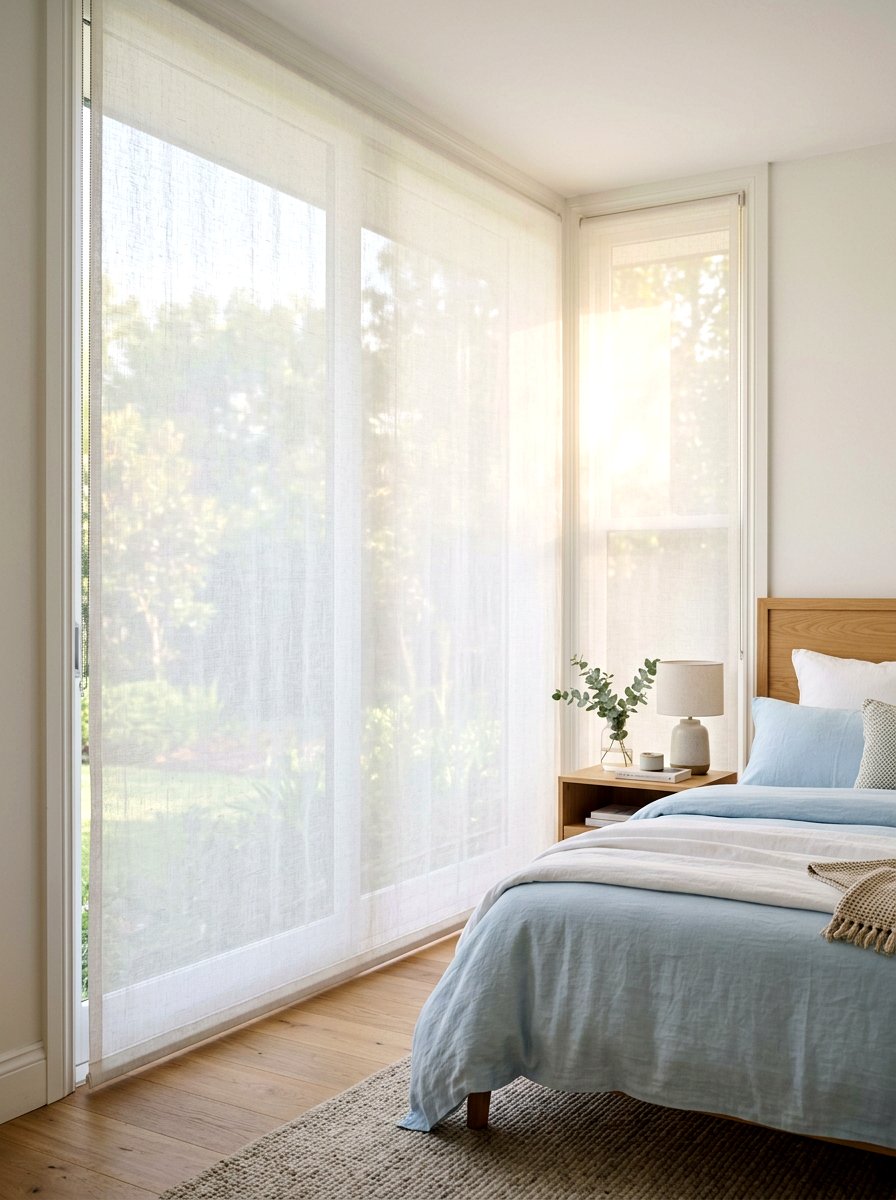
While blackout curtains are great for night, you also need a way to manage daylight without losing your sense of privacy. Sheer linen window blinds allow natural light to filter through in a soft, hazy way that eliminates harsh shadows. These blinds provide a layer of visual "noise reduction" by blurring the view of the busy outside world while still letting the room feel bright. Linen is a wonderful material for this because its natural slubs add a gentle texture that looks beautiful when backlit. This soft diffusion of light creates a dreamlike atmosphere that is perfect for a slow, low stimulation morning or afternoon.
22. Small Bedroom Reading Chair
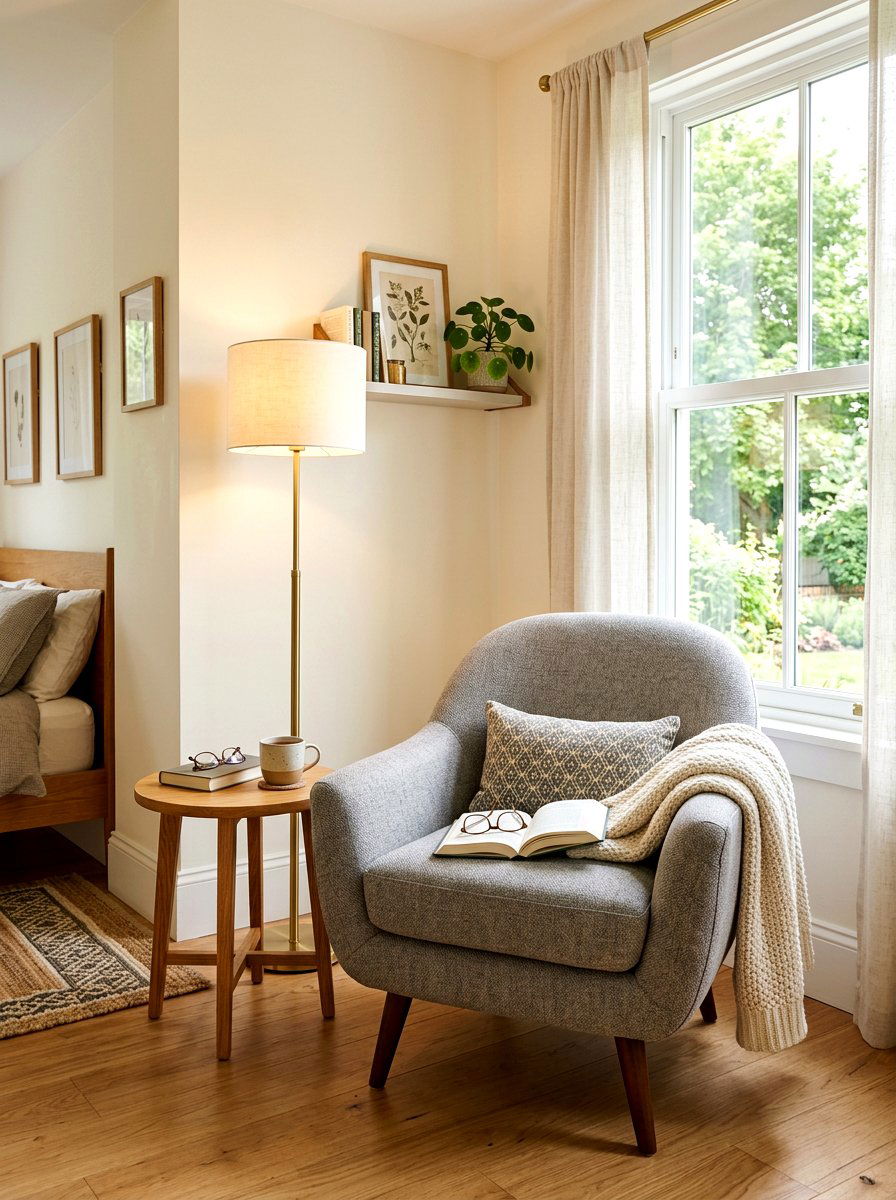
Having a dedicated spot for relaxation that isn 't the bed can help your brain distinguish between "rest time" and "sleep time. " A small bedroom reading chair with a simple, rounded design provides a cozy nook for quiet contemplation or reading. Choose a chair with a soft, matte fabric in a muted tone to ensure it doesn' t stand out too much. This secondary seating area offers a place to decompress after a long day before you transition into the ritual of sleep. By keeping this area minimalist and free of electronic distractions, you create a sacred space for mental clarity and peaceful, screen-free downtime.
23. Curved Edge Wood Bed
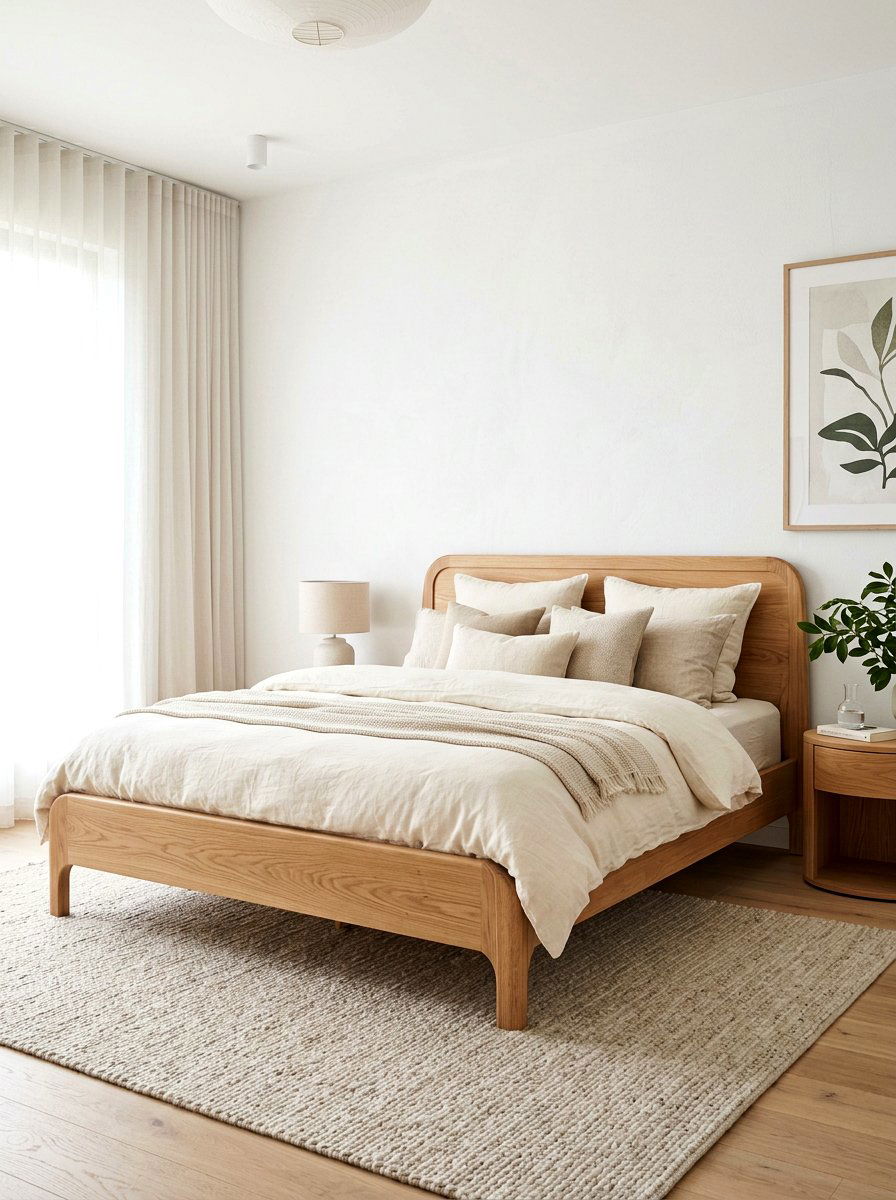
Sharp corners and jagged lines can subconsciously make us feel on edge or "sharp, " which isn't ideal for a relaxation space. A curved edge wood bed offers a much softer visual and physical experience, promoting a sense of flow and safety. The rounded corners are more inviting and reduce the risk of painful bumps in the middle of the night. Using wood ensures that the piece feels solid and connected to the natural world. This design choice contributes to a "soft" aesthetic where nothing feels aggressive or cold. It helps to turn the bed into an island of comfort that feels protective and gentle.
24. Low Profile Platform Bed
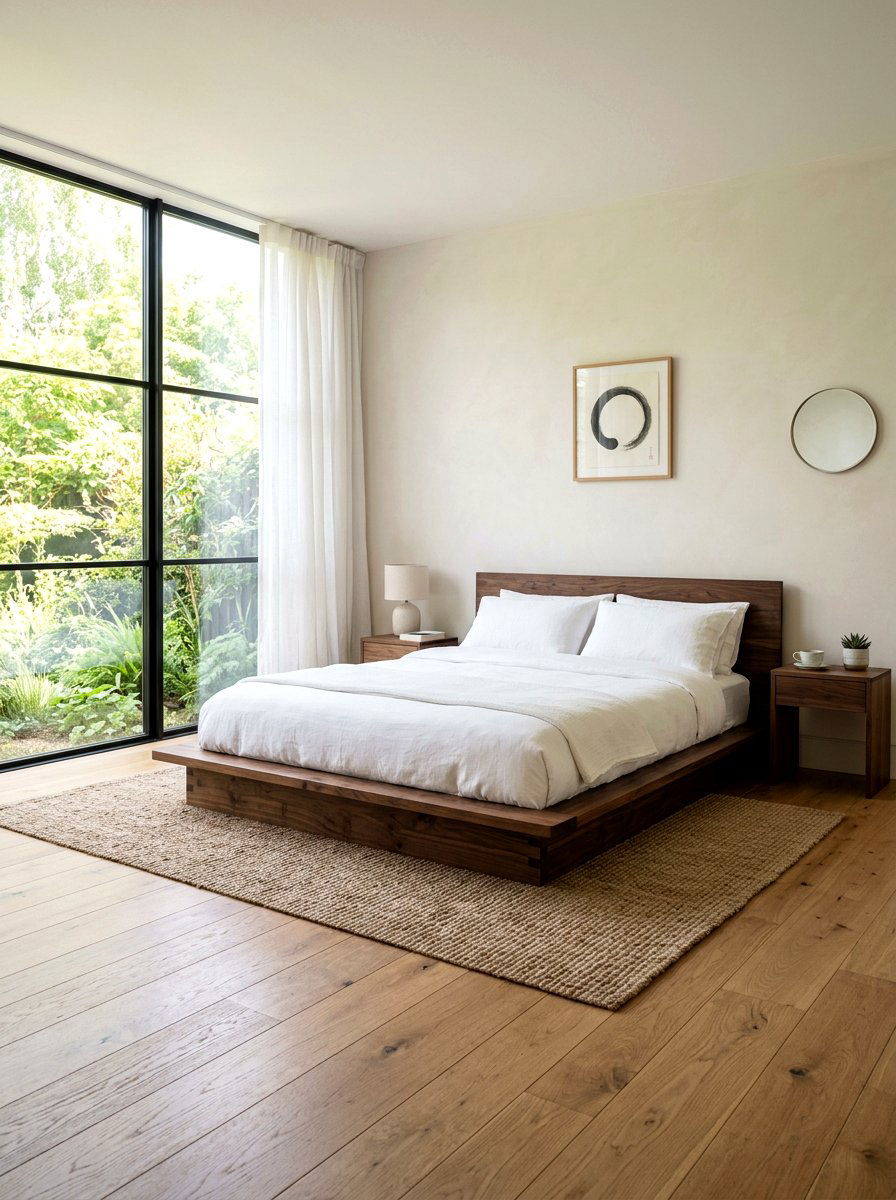
High beds with elaborate headboards and footboards can often dominate a room, making it feel smaller and more "busy. " A low profile platform bed keeps the center of gravity low, which creates a grounded and stable feeling in the space. This minimalist approach to furniture design allows the room to breathe and feel more expansive. Without the need for a box spring, the bed maintains a clean, sleek silhouette that doesn't distract the eye. This style is especially effective in smaller bedrooms where you want to maximize the sense of airiness. A low bed feels like a secure, cozy nest that is easy to enter.
25. Light Grey Bedroom Set
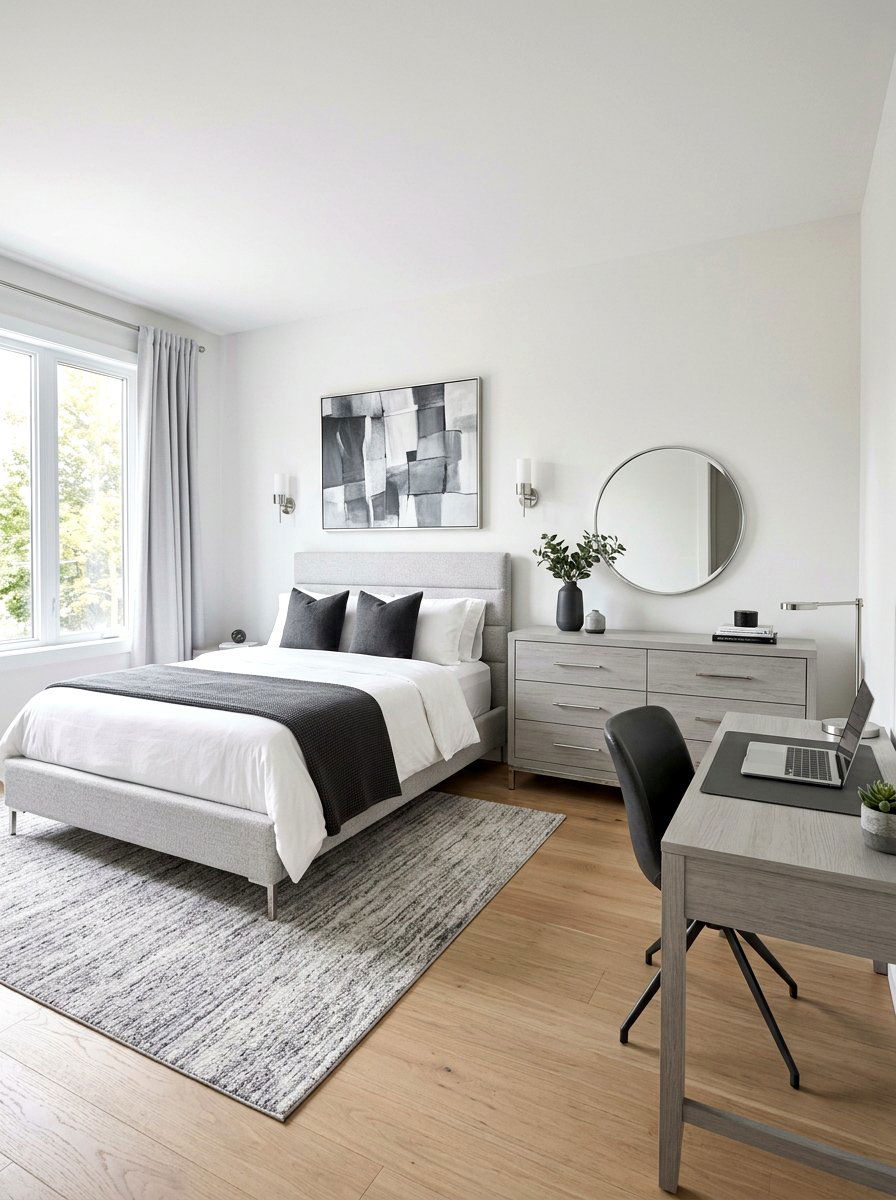
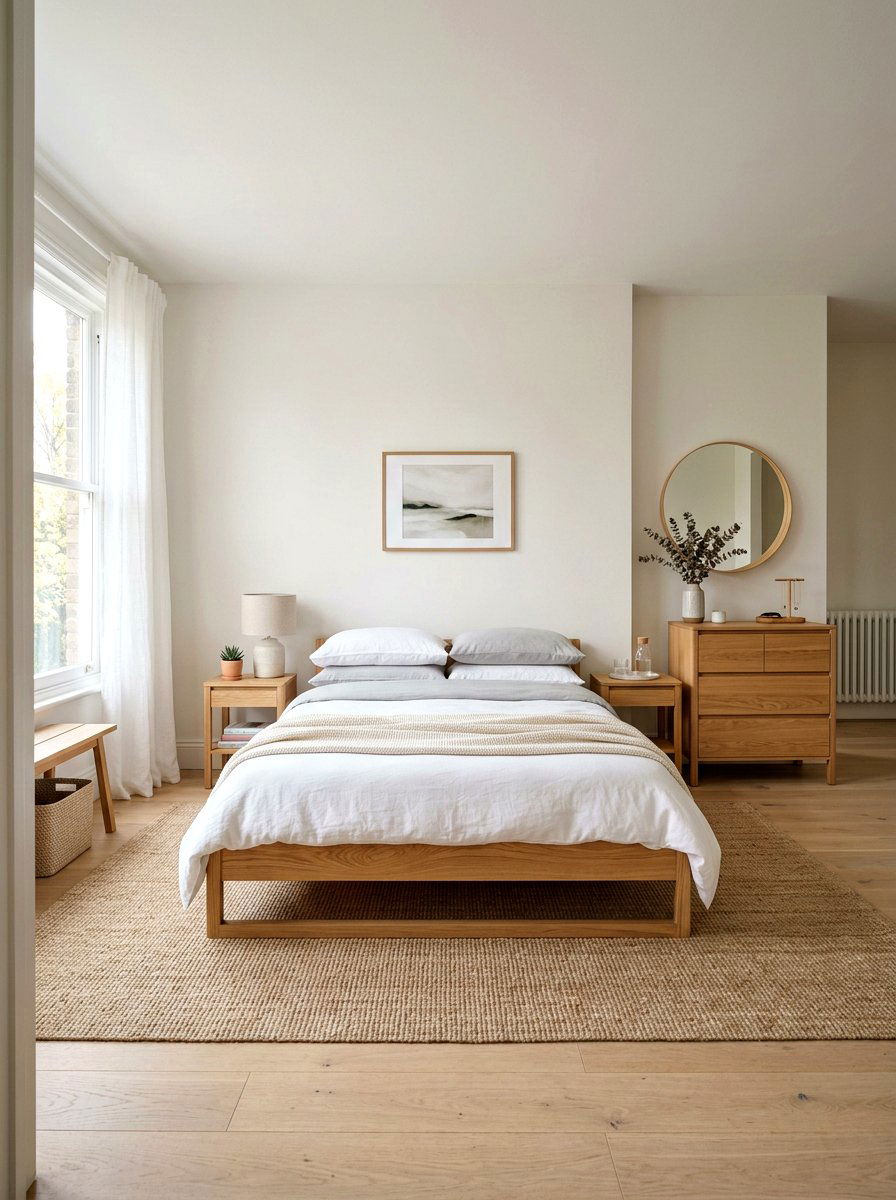
If you want a room that feels modern and clean without the harshness of pure white, a light grey bedroom set is perfect. Grey is a versatile neutral that can be either warm or cool, depending on the undertones you choose. A matching set ensures that all your furniture pieces speak the same visual language, which reduces the "chatter" of mismatched styles. This consistency is very soothing for individuals who find variety and contrast to be overstimulating. Light grey reflects just enough light to keep the room from feeling dark, but it doesn't glare or feel sterile. It provides a sophisticated, quiet backdrop for rest.
26. Warm Recessed LED Lighting
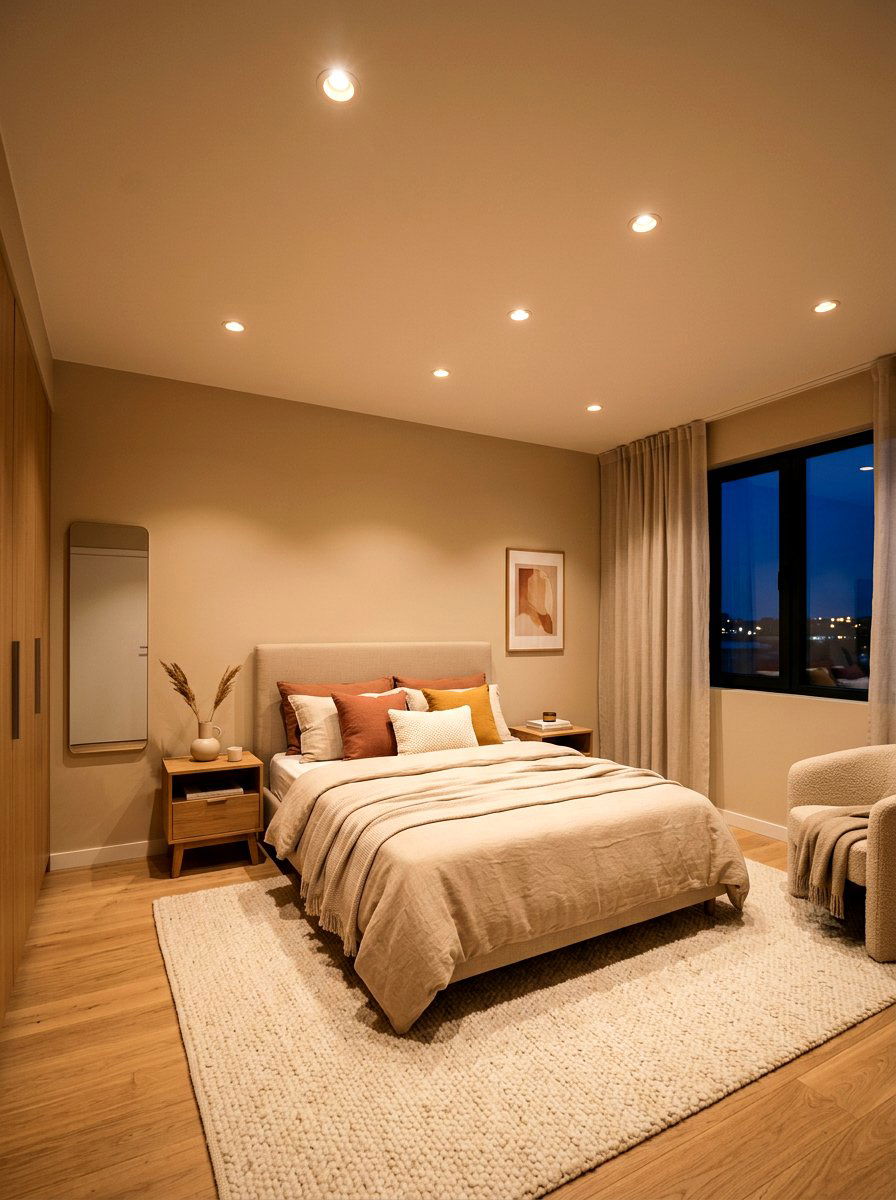
Ceiling fans with lights or low-hanging chandeliers can often feel like they are "intruding" into your personal space. Warm recessed LED lighting is installed directly into the ceiling, providing a clean and unobstructed view of the room. These lights offer a wide, even distribution of illumination that eliminates dark corners without being overly bright. When paired with a dimmer switch, they give you ultimate control over the mood of the room throughout the evening. Because the light source is hidden, there is no visual clutter hanging from the ceiling. This creates a sense of height and openness that makes the entire bedroom feel more peaceful.
27. Acoustic Fabric Wall Panels
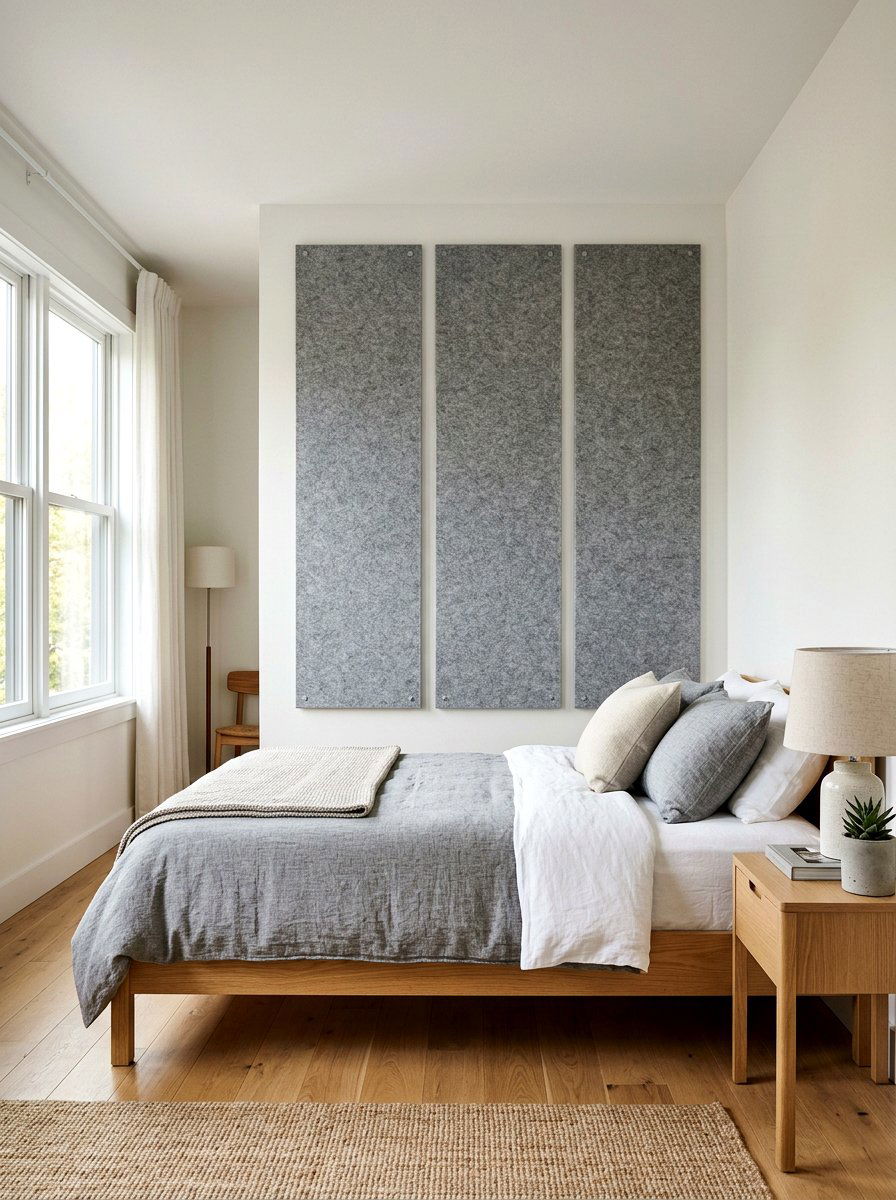
Sound is one of the most common sources of sensory overstimulation, especially in apartment buildings or busy neighborhoods. Acoustic fabric wall panels are a stylish way to dampen external noise and prevent echoes within your own room. These panels can be upholstered in soft, neutral fabrics like wool or linen, adding a tactile element to your walls. By absorbing sound waves, they create a "library quiet" atmosphere that is incredibly conducive to deep sleep and relaxation. You can arrange them in a simple grid behind your bed to act as a soft, padded headboard. This functional decor makes the room feel like a quiet sanctuary.
28. Large Leafy Floor Plant
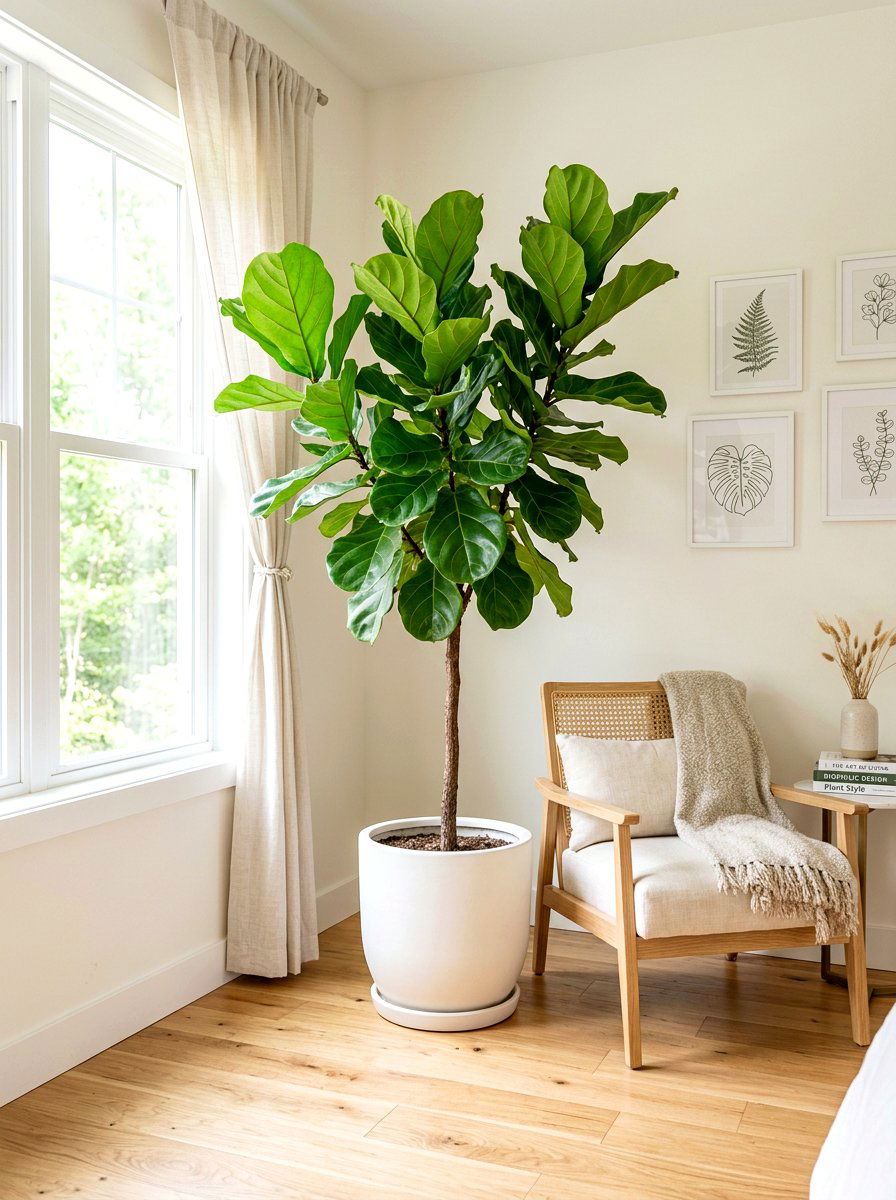
Biophilic design is a powerful tool for creating a low stimulation environment because plants naturally filter the air and provide a soft focal point. A large leafy floor plant, like a Fiddle Leaf Fig or a Monstera, introduces a touch of life and movement without being loud. The organic shapes of the leaves provide a gentle contrast to the straight lines of furniture. Plants also help to regulate humidity and improve indoor air quality, which can lead to better breathing during sleep. Looking at greenery has been shown to reduce stress levels and promote a sense of well-being. It is nature’s own version of a relaxation aid.
29. Textured Cream Area Wallpaper
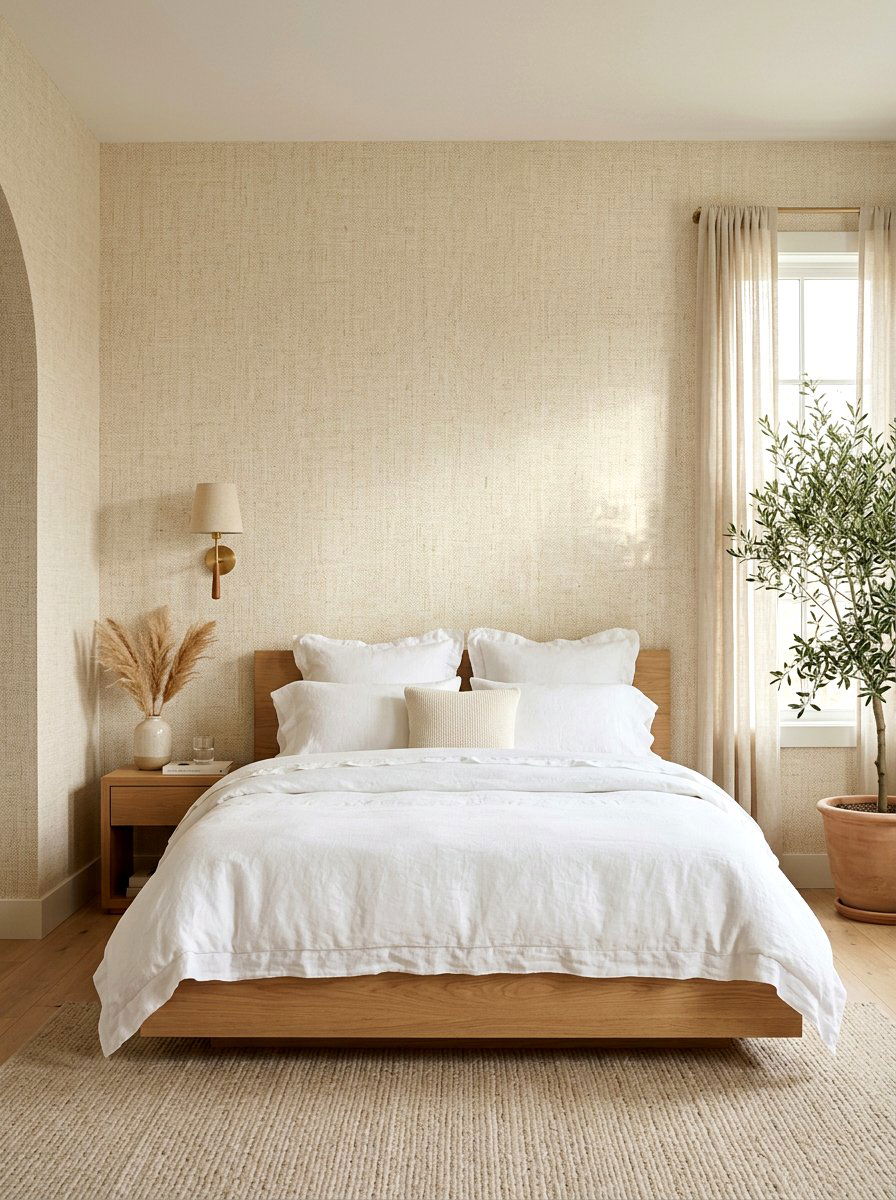
If you find flat walls to be too boring but patterns too busy, textured cream area wallpaper is the perfect solution. This type of wall covering adds a subtle, tactile dimension to the room without introducing any high-contrast shapes. You might choose a wallpaper that mimics the look of grasscloth, plaster, or linen. The cream color keeps the room feeling light and warm, while the texture absorbs light and adds a sense of "coziness. " This subtle detail makes the room feel high-end and intentional. It provides enough visual interest to feel "finished" while remaining completely quiet and non-distracting for the eyes.
30. Opaque Plastic Storage Bin
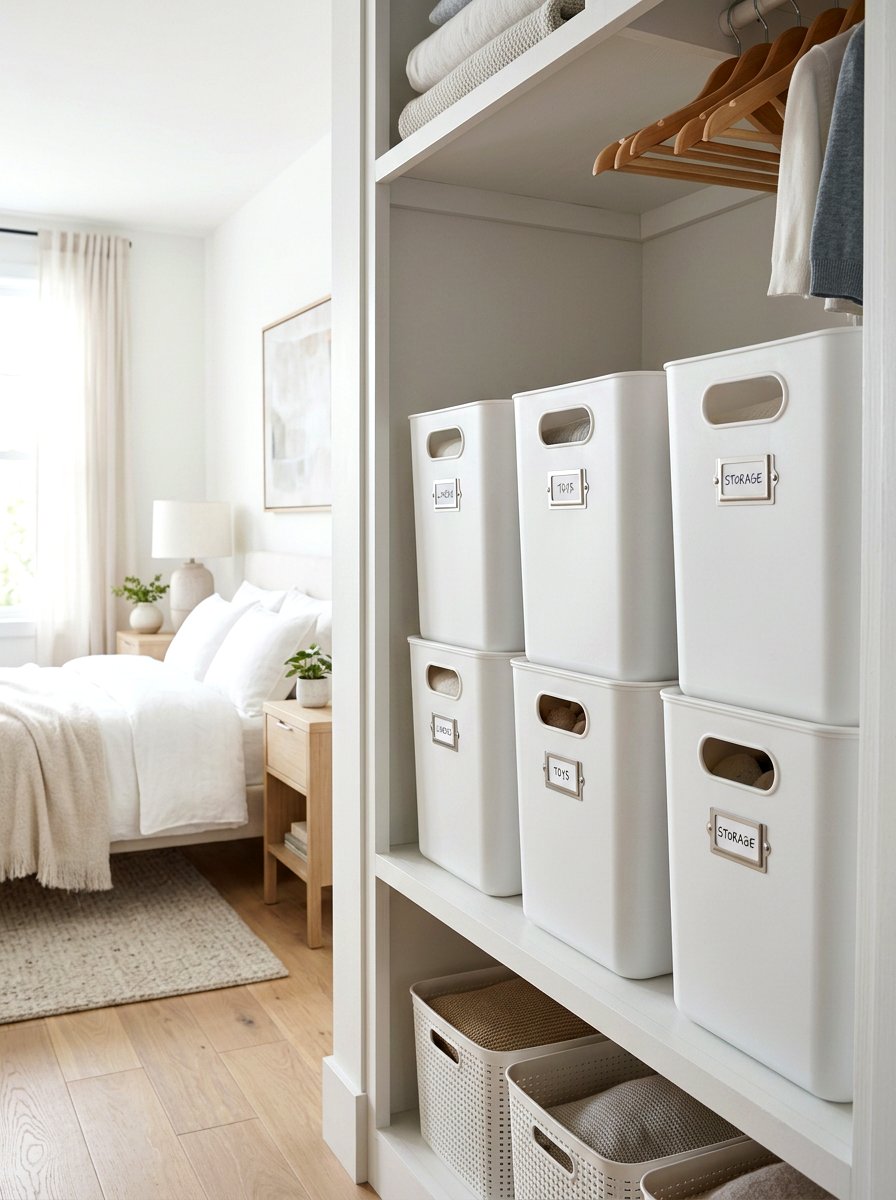
When you have to store items on open shelving or under furniture, seeing the colorful contents can be a major source of visual stress. Using opaque plastic storage bins ensures that the "visual noise" of your belongings is completely contained. Unlike clear bins that show every messy detail, opaque bins create a clean, uniform look on your shelves or in your closet. You can choose bins in a soft white or light grey to blend in with your furniture. This simple organization hack allows you to stay organized without having to look at the clutter. It is a vital step in maintaining a truly low stimulation environment.
Conclusion:
Designing a low stimulation bedroom is a journey toward reclaiming your personal peace and prioritizing your sensory needs. By making intentional choices about color, texture, and layout, you create a space that actively works to calm your mind rather than adding to the day's stress. Whether it is the softness of organic cotton or the silence provided by acoustic panels, every small change contributes to a more restorative environment. A bedroom should be a place where the world falls away, allowing you to recharge in total comfort. Embrace these minimalist and thoughtful design principles to transform your room into a true sanctuary of rest.

Related posts: