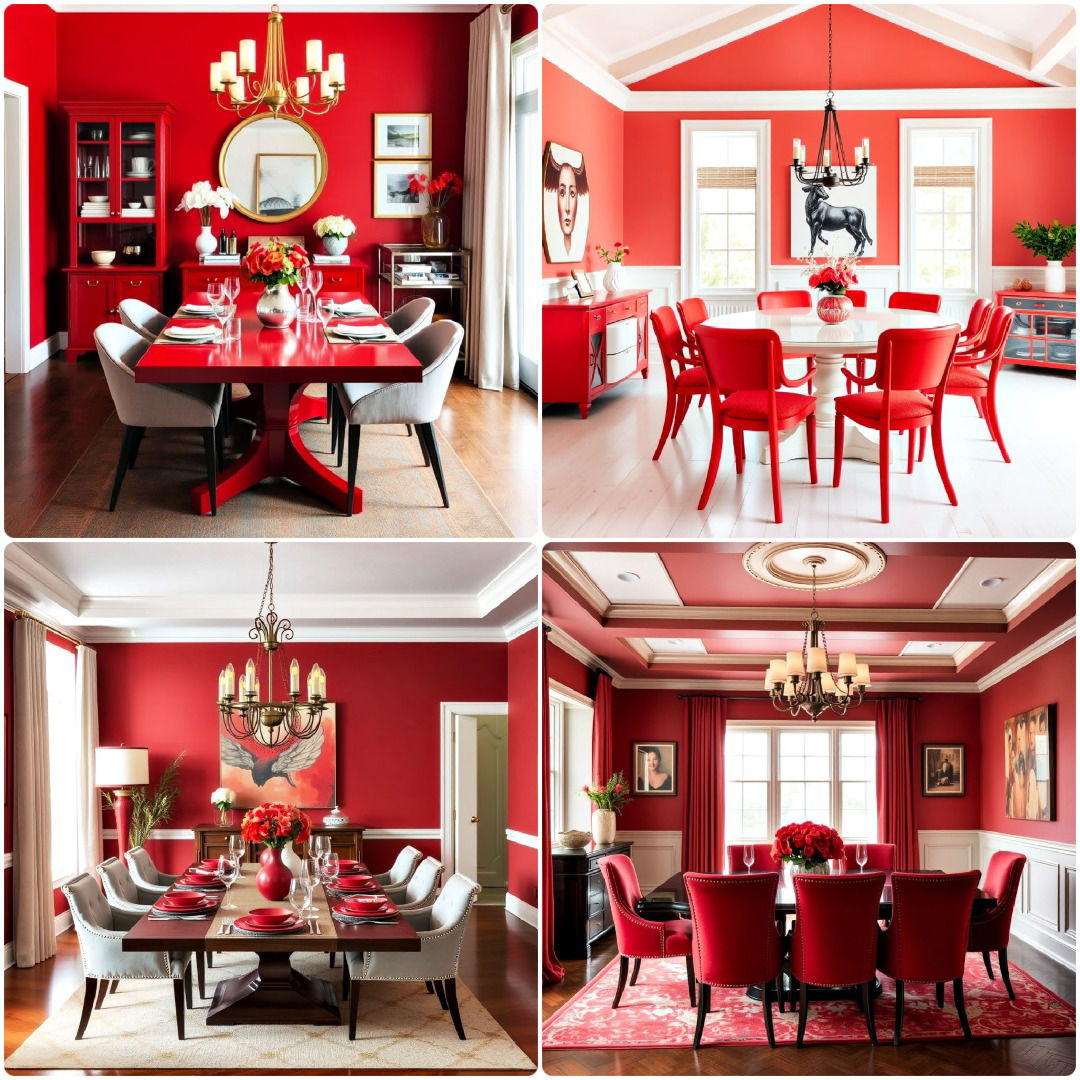
Red is a powerful and transformative color choice for a dining room because it naturally stimulates the appetite and encourages lively conversation among guests. Whether you are looking to create a formal space for hosting dinner parties or a cozy nook for family meals, various shades of crimson, maroon, and scarlet can dramatically shift the mood of your home. Incorporating red into your interior design does not have to be overwhelming if you balance it with the right textures and complementary colors. From bold accent walls to subtle decorative touches, these thirty versatile red dining room concepts will help you design a space that feels both energetic and sophisticated for any occasion.
1. Red accent wall
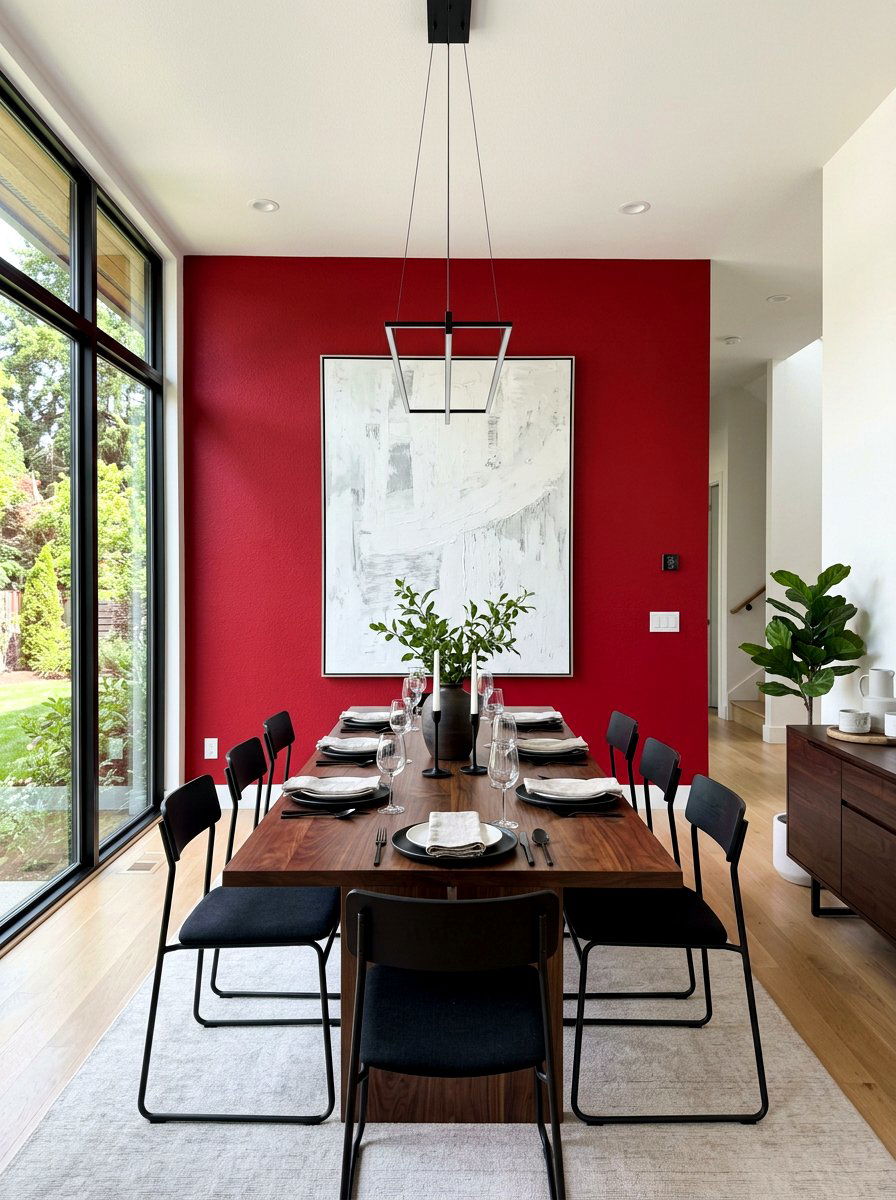
A vibrant red accent wall serves as a stunning focal point that instantly anchors the entire dining area with energy and warmth. To achieve a balanced look, pair this bold vertical surface with neutral surroundings such as light gray or crisp white walls to prevent the space from feeling too enclosed. Incorporating a dark wood dining table and matching chairs creates a beautiful contrast against the rich scarlet backdrop, while large-scale artwork can break up the intensity of the color. This specific design approach works exceptionally well in modern homes where a single splash of color defines the architectural boundaries without requiring a full room renovation.
2. Red dining chair
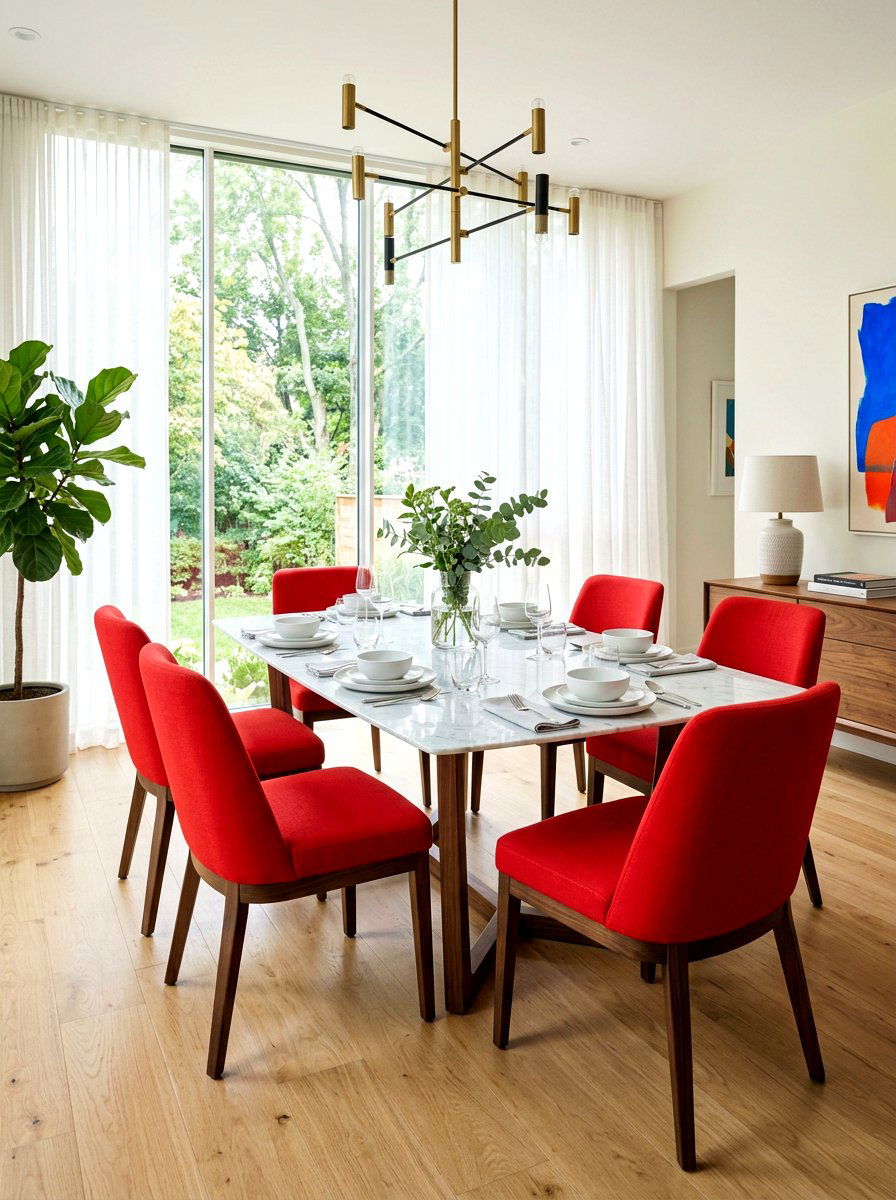
Using red dining chairs is an excellent way to introduce a pop of vibrant color into a neutral dining space without committing to painted walls. You can opt for upholstered velvet seating to add a touch of luxury and texture, or choose sleek plastic chairs for a more contemporary and industrial feel. When these chairs are placed around a light oak or white marble table, they become the undeniable stars of the room. This design strategy allows for flexibility, as you can easily swap out the chairs if your style changes over time while still enjoying the high-energy atmosphere that red furniture naturally provides in the home.
3. Red and white dining room
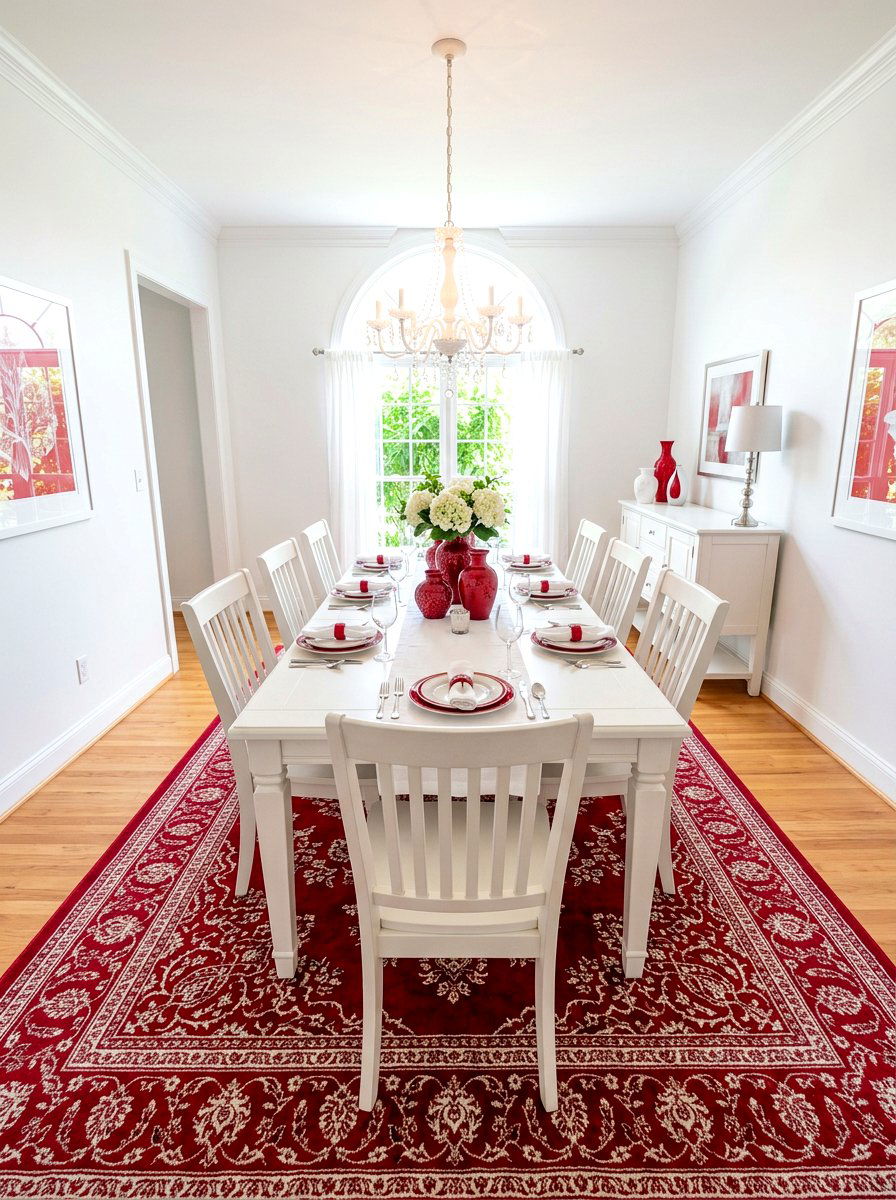
A red and white color scheme offers a crisp and timeless look that feels both clean and incredibly inviting for guests. By keeping the walls and ceiling a bright white, you can use deep red elements like a large area rug or bold window treatments to create a striking visual impact. This combination works perfectly for those who want a high-contrast aesthetic that remains light and airy throughout the day. To finish the space, consider adding silver or chrome hardware on a white sideboard to complement the cool tones while letting the warm red accents stand out as the primary decorative feature in the layout.
4. Red and black dining room
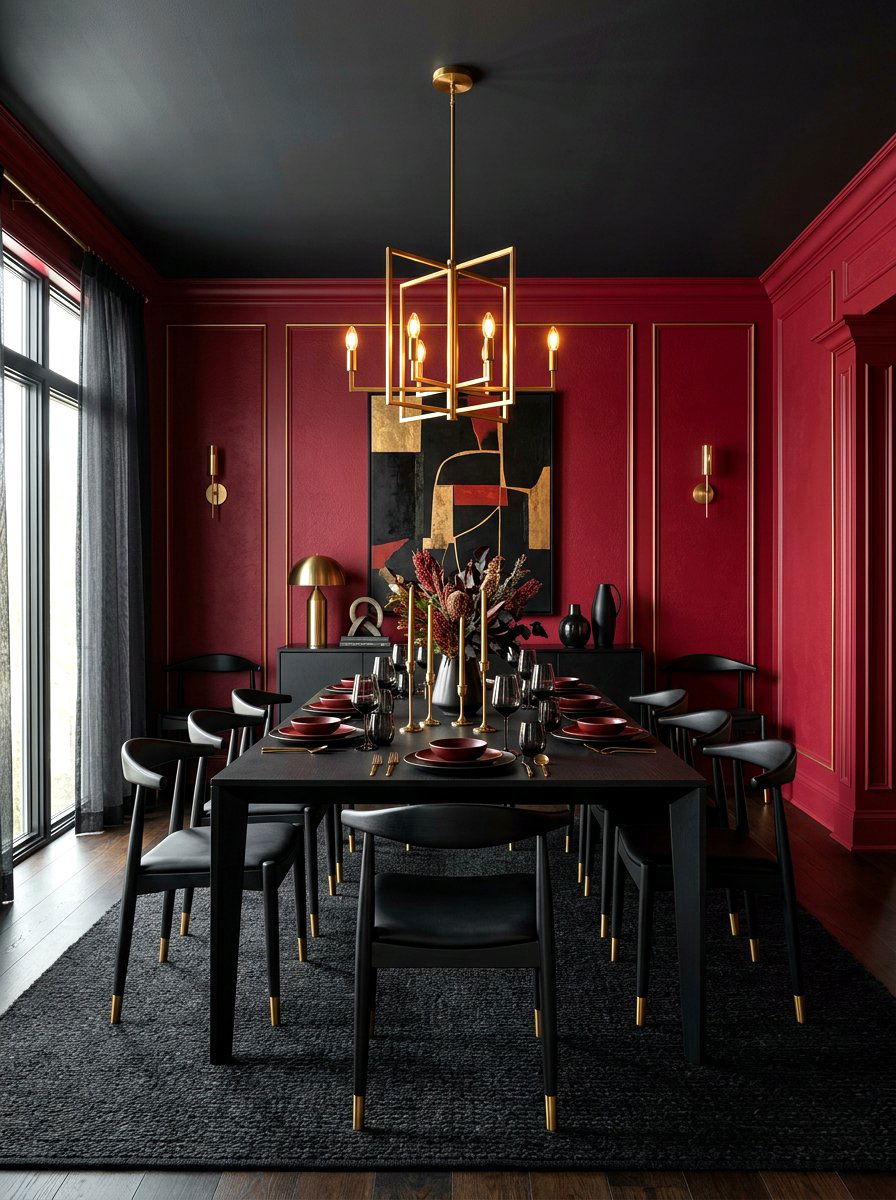
For a dramatic and sophisticated atmosphere, a red and black dining room is a bold choice that exudes modern elegance and mystery. Pairing deep crimson walls with matte black furniture creates a moody environment that is perfect for formal evening gatherings and intimate dinners. You can use gold or brass light fixtures to add a much-needed metallic glow that prevents the room from feeling too dark or heavy. Textured elements like a black charcoal rug or leather upholstery on the chairs will add depth to the space, ensuring that the two-tone palette feels intentional, rich, and high-end in every corner of the room.
5. Burgundy dining room
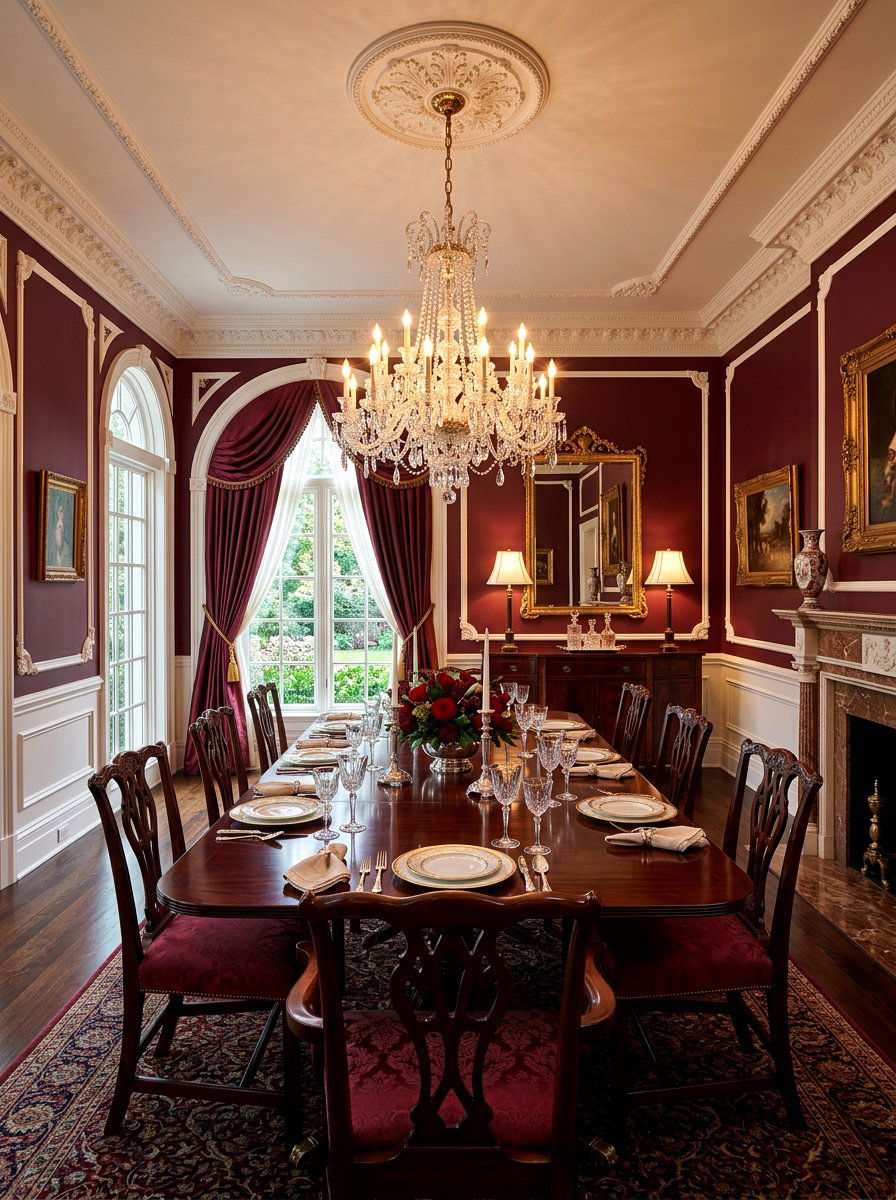
Burgundy is a rich and regal shade that brings a sense of traditional luxury and classic comfort to any formal dining area. This deep red hue looks spectacular when used on all four walls, especially when paired with ornate crown molding and dark mahogany furniture. The warmth of the burgundy creates a cozy, cocoon-like feeling that makes long dinners with family and friends feel extra special. To keep the room from appearing too dim, incorporate plenty of ambient lighting through a crystal chandelier or wall sconces. Soft cream accents in the rug or curtains will provide the perfect amount of brightness to balance the depth.
6. Modern red dining room
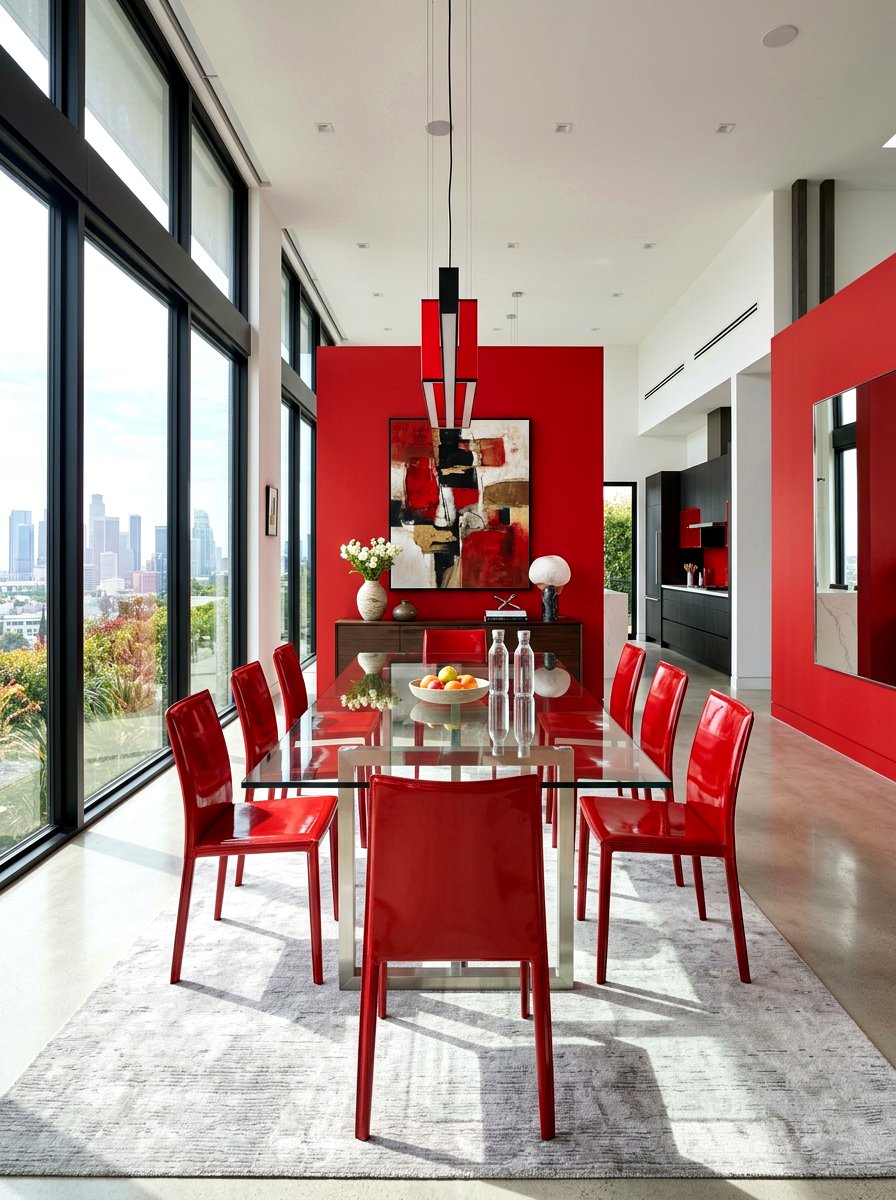
A modern red dining room often focuses on clean lines, glossy finishes, and a minimalist approach to bold color application. Think about using a high-gloss red lacquer on a contemporary dining table or a set of sculptural chairs to create a very futuristic look. Keeping the floor in a light concrete or pale wood finish helps ground the intense color, while large windows allow natural light to bounce off the reflective surfaces. This style is all about making a statement through simplicity, where the vibrancy of the red becomes the main architectural element rather than just a decorative choice for the surrounding walls.
7. Red dining room rug
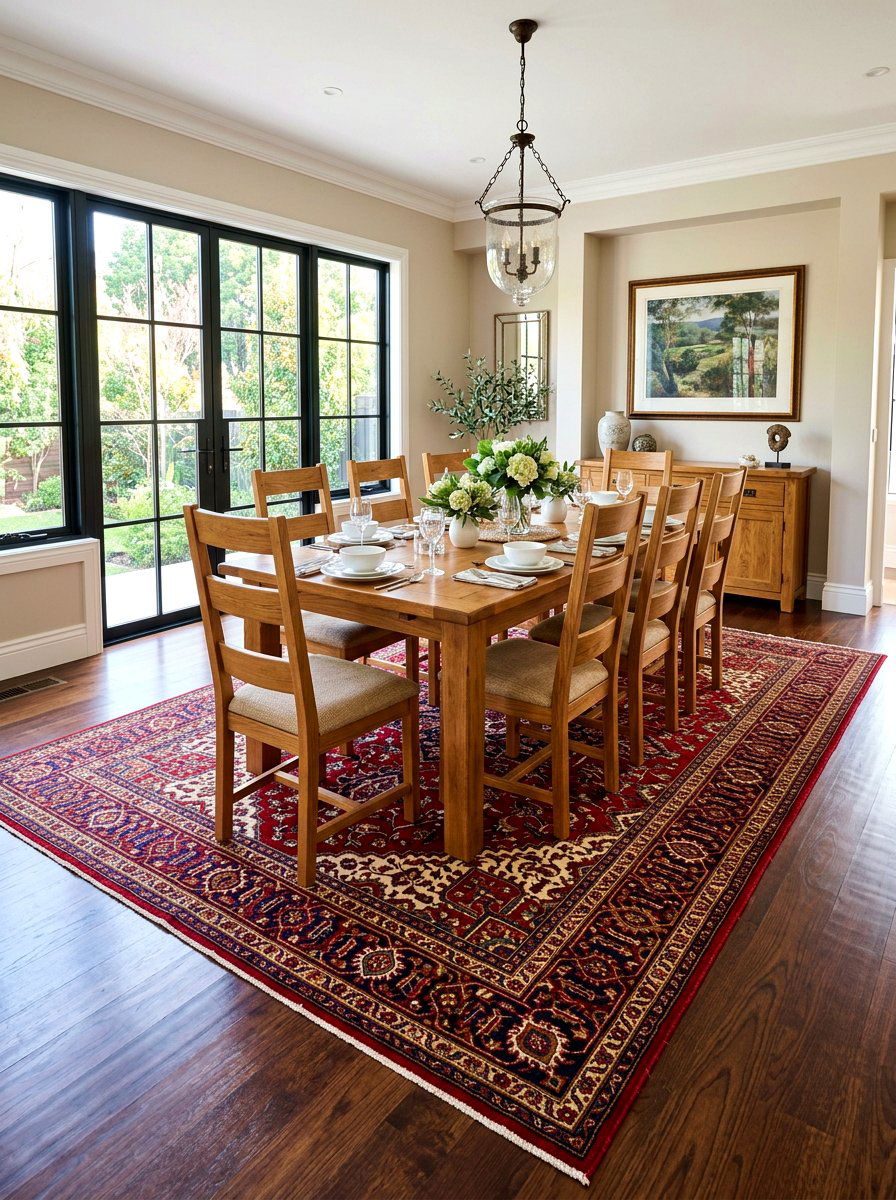
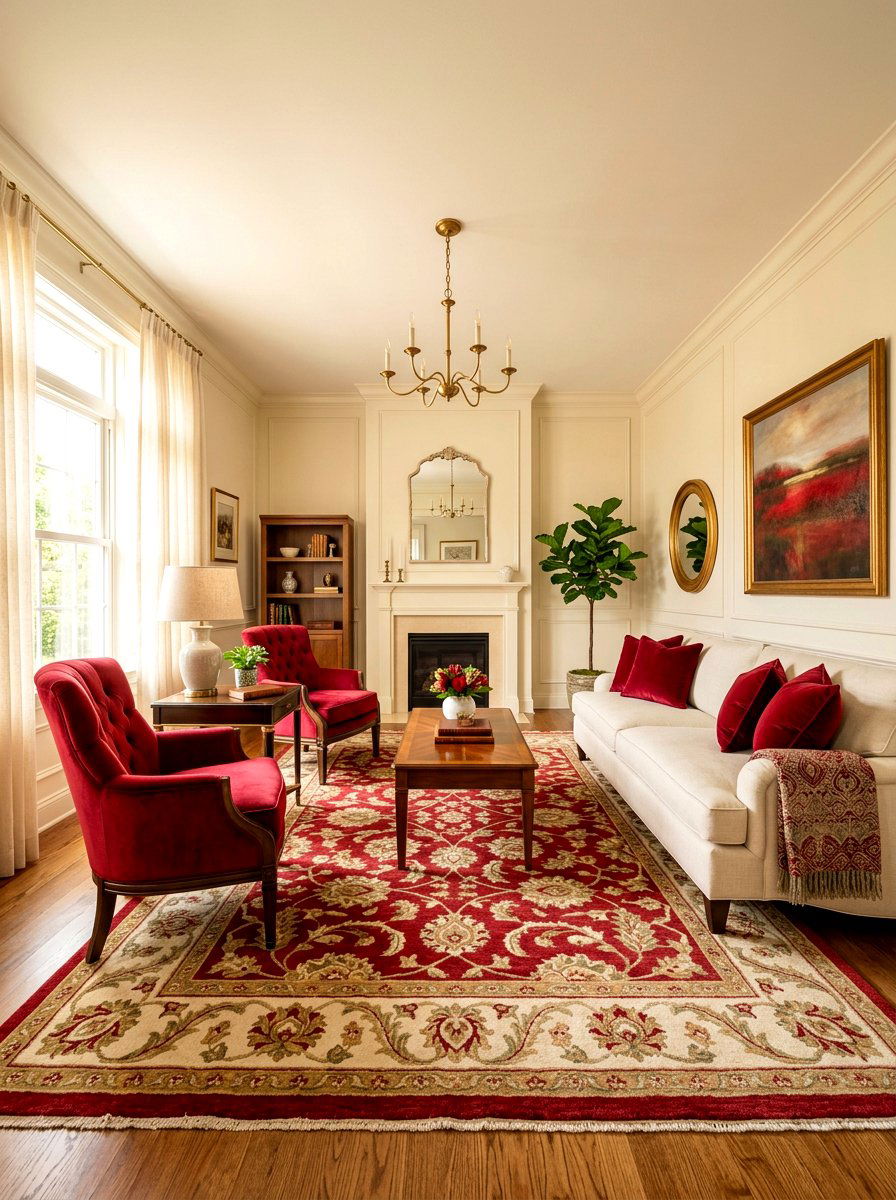
A large red dining room rug can completely transform the layout by adding warmth and a sense of grounding to the furniture set. Whether you choose a solid ruby red for a modern feel or an intricate Persian design with deep red tones for a traditional look, the rug acts as the base for your entire design. It helps define the dining area in an open-concept home and provides a soft texture underfoot that makes the space feel more finished. Pairing a red rug with neutral walls and a wooden table creates a balanced environment that feels cohesive without being visually overwhelming for the eyes.
8. Red dining room curtain
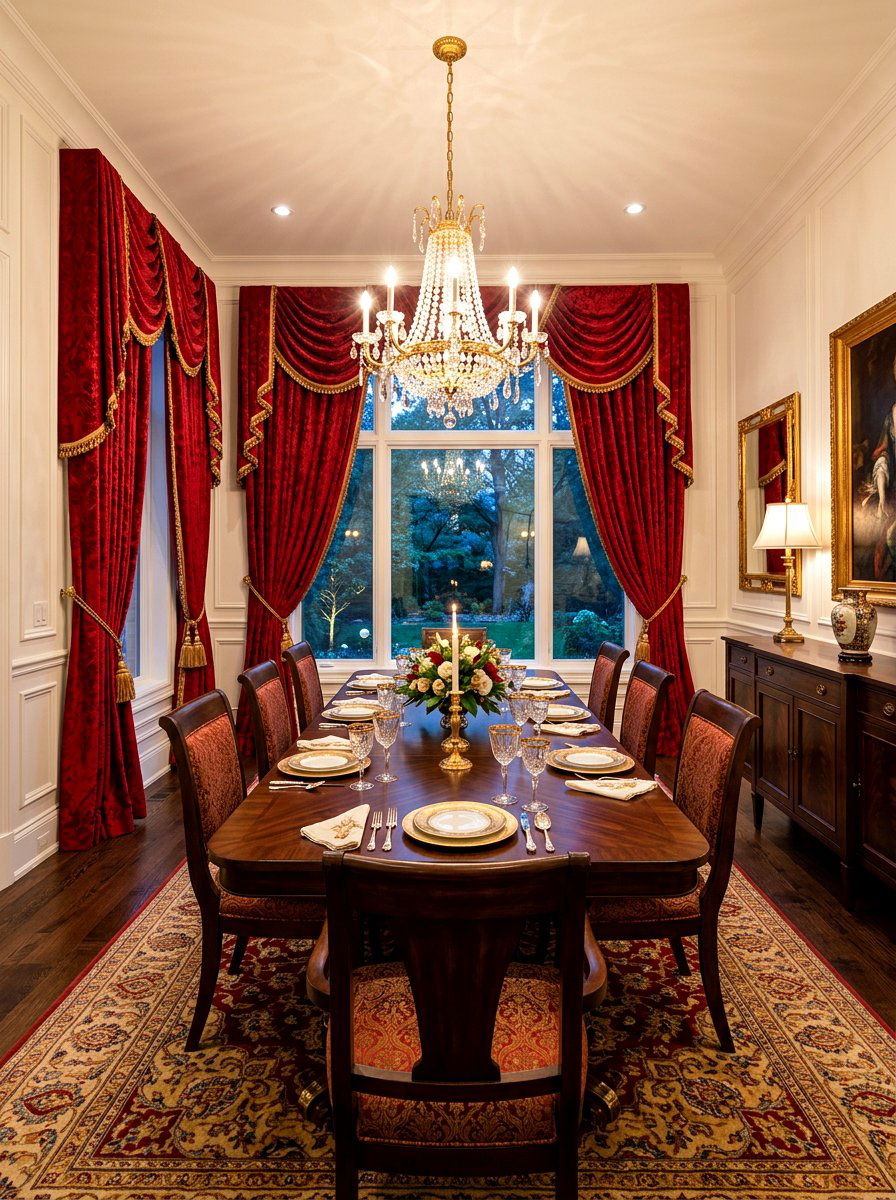
Hanging floor-to-ceiling red curtains is an effective way to introduce luxury and height to your dining room while framing the view outside. Choose heavy velvet fabrics for a formal and dramatic look that blocks out excess light during the day and provides insulation during the colder months. For a lighter and more casual feel, a red linen or patterned fabric can add a touch of color without dominating the entire space. These curtains work beautifully when coordinated with other small red accents in the room, such as seat cushions or a table runner, creating a layered and well-thought-out interior design.
9. Red and gold dining room
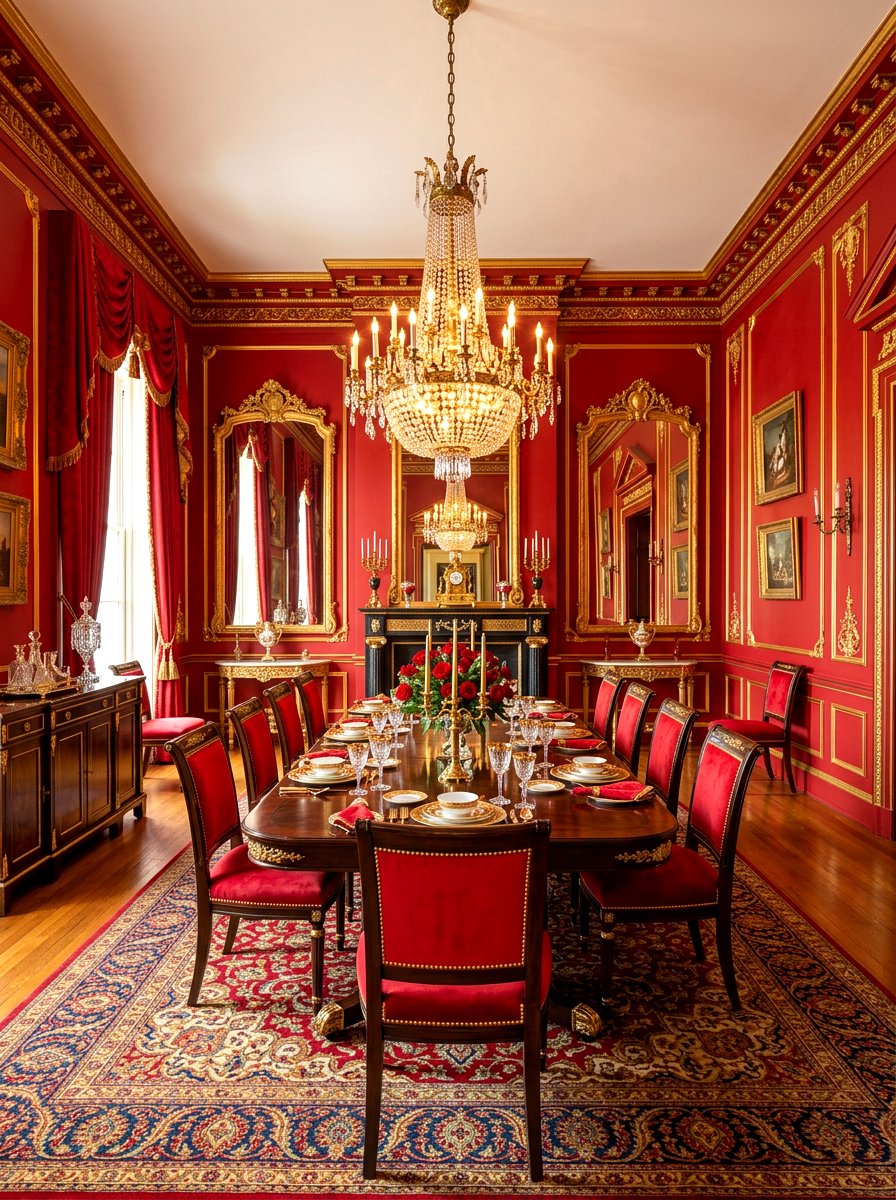
The combination of red and gold is a classic pairing that instantly evokes feelings of opulence, wealth, and timeless grandeur. Using deep scarlet walls as a backdrop for gold-framed mirrors, metallic light fixtures, and gilded decorative accessories creates a truly magnificent dining environment. This palette is ideal for traditional homes where formal entertaining is a priority, as it creates a glowing ambiance under evening lighting. To modernise this look, you can use brushed gold finishes instead of polished ones, which provides a more subtle and contemporary shine that still complements the richness of the red walls and upholstery.
10. Red and blue dining room
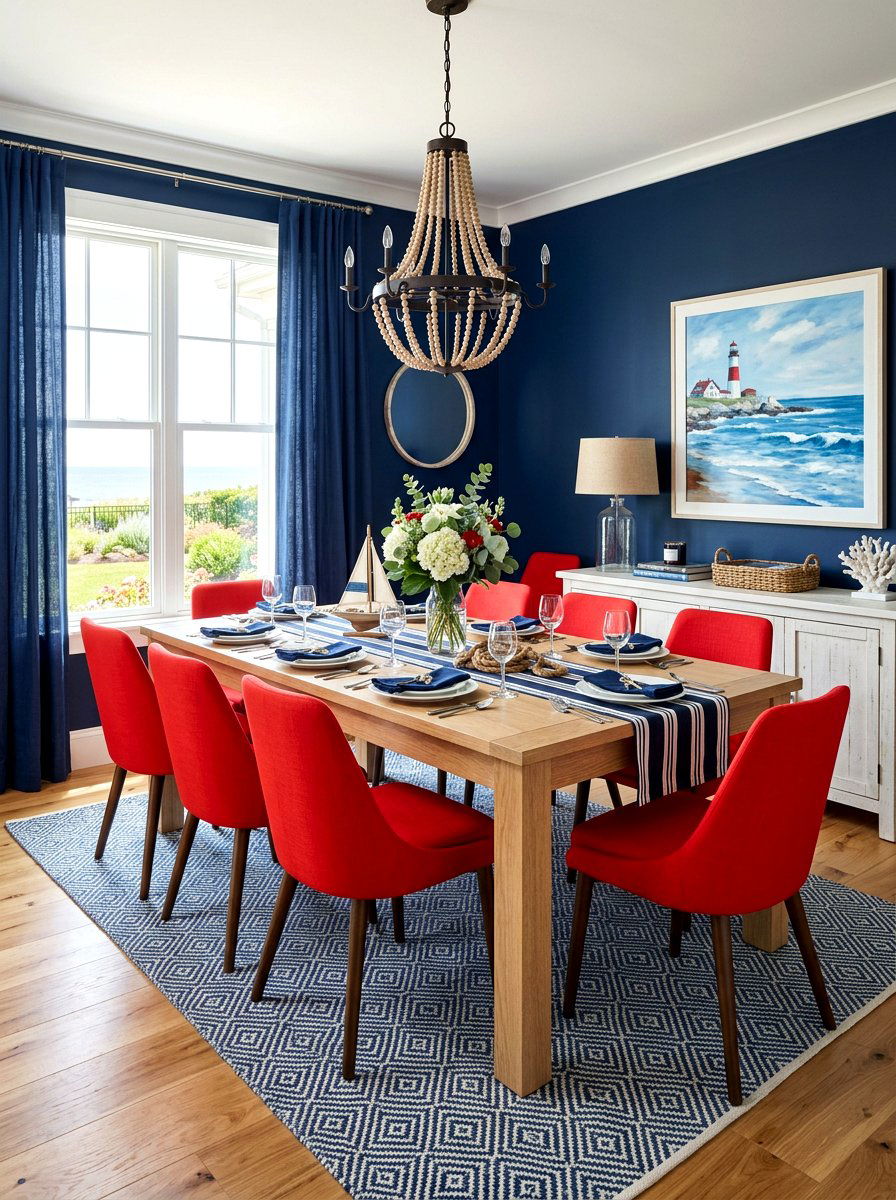
A red and blue dining room offers a unique and sophisticated contrast that can lean toward a nautical, eclectic, or even traditional aesthetic. Pairing navy blue walls with bright red dining chairs creates a patriotic and bold environment that feels both grounded and high-energy. For a softer look, consider using a light sky blue with coral red accents in the curtains or rug to create a more relaxed, coastal vibe. The key to making this two-tone design work is to use one color as the dominant shade while the other acts as a supporting accent through furniture, art, and smaller decor.
11. Red and wood dining room
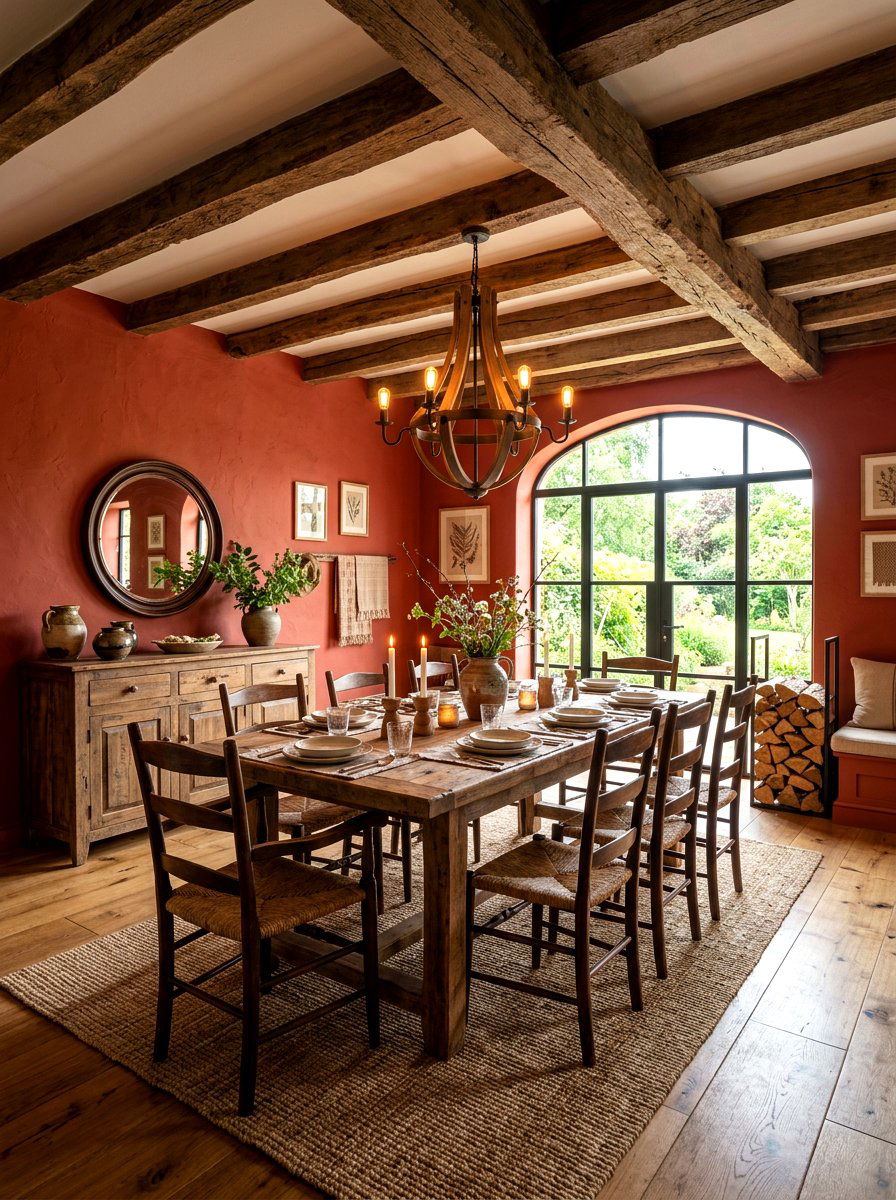
Red and natural wood are a match made in heaven because both elements share warm undertones that create a very inviting and organic atmosphere. Darker wood tones like walnut or cherry look stunning against terra cotta red walls, while lighter woods like pine or oak provide a fresh contrast to bright primary reds. This design idea is perfect for those who want a rustic or farmhouse feel that still feels vibrant and alive. Incorporating wooden ceiling beams or a reclaimed wood dining table helps to ground the intensity of the red, making the room feel comfortable, durable, and lived-in for the whole family.
12. Red and grey dining room
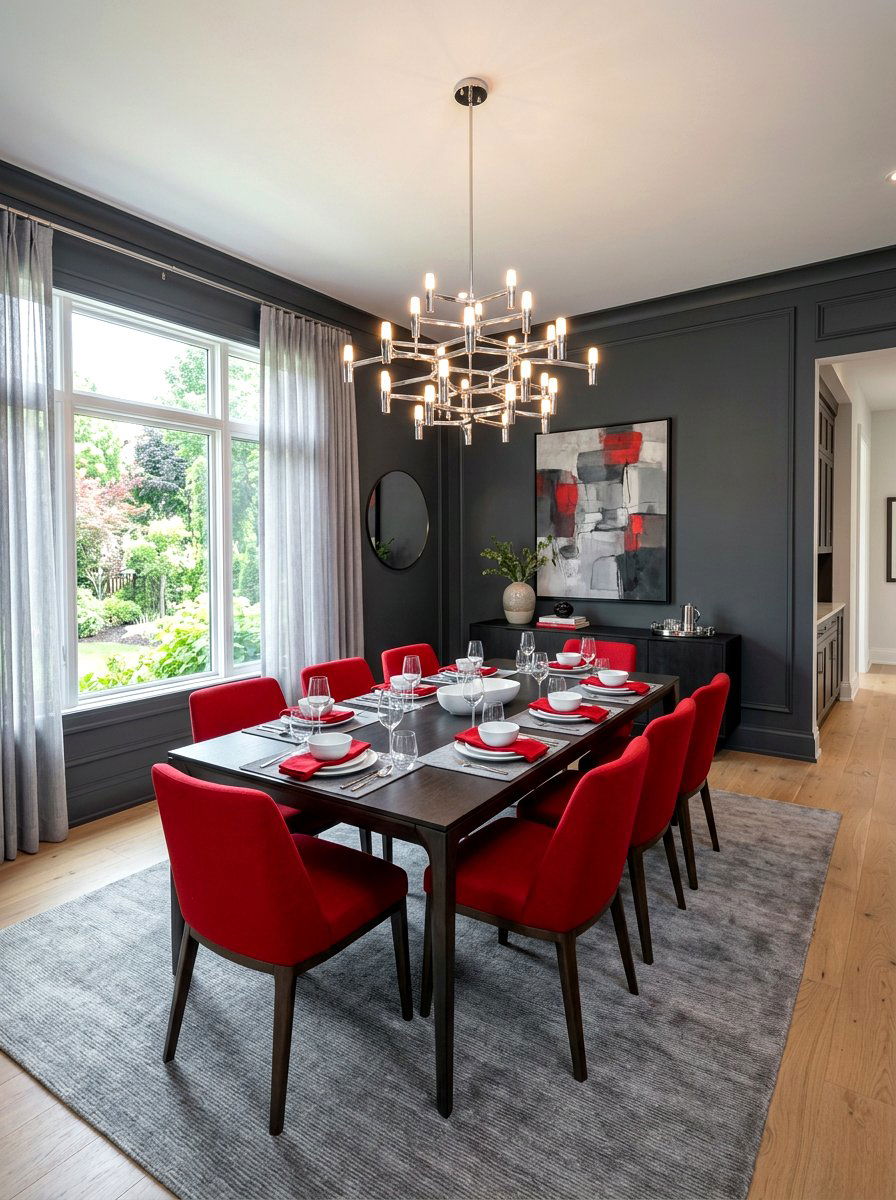
For a contemporary and sleek look, pairing red with various shades of grey creates a sophisticated palette that feels very balanced. Charcoal grey walls provide a neutral but moody backdrop that allows red dining chairs or a red sideboard to truly pop and command attention. If you prefer a lighter look, soft dove grey walls can be paired with deep maroon accents to create a calm yet stylish environment. Using metallic accents in silver or stainless steel can further enhance the modern feel of this color combination, ensuring that the dining room looks polished, professional, and curated for the modern homeowner.
13. Red and green dining room
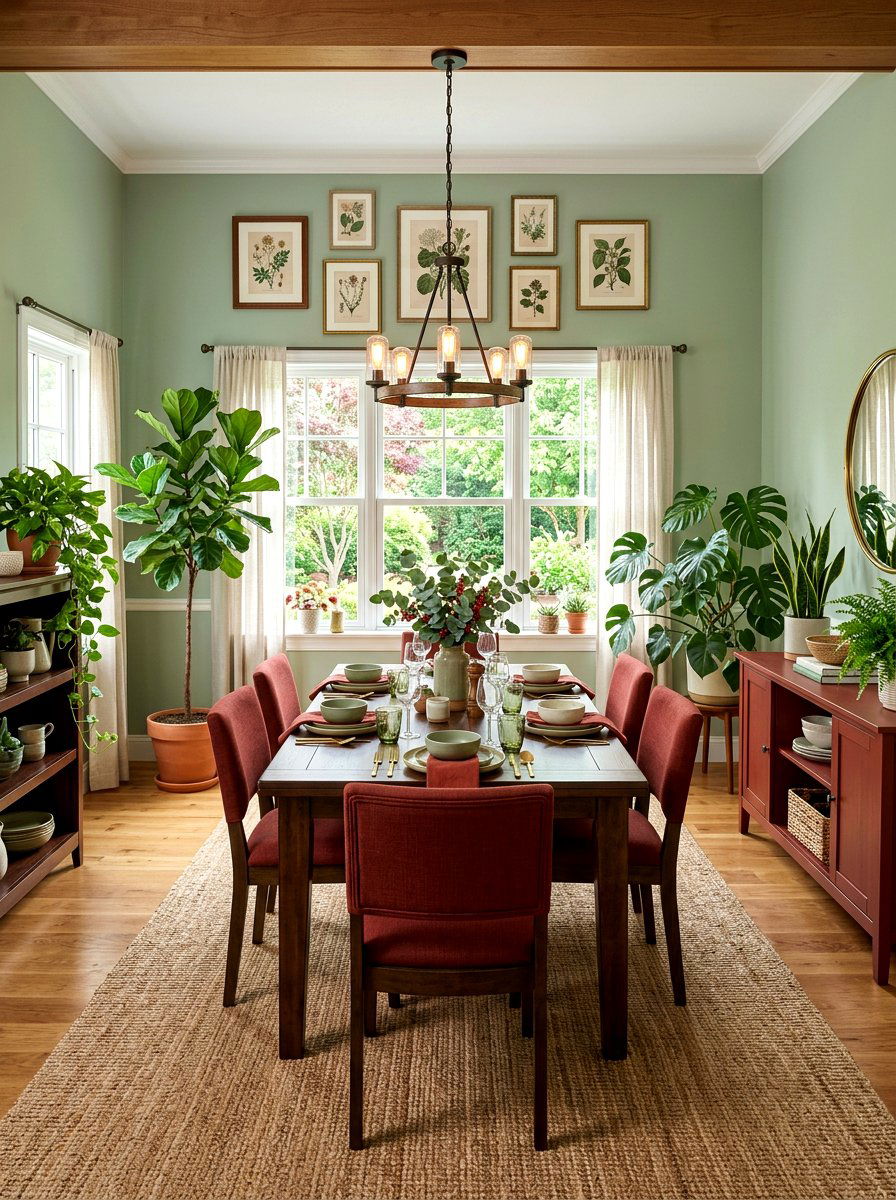
Red and green are complementary colors that, when used correctly, create a vibrant and naturally balanced dining space that feels full of life. To avoid a holiday-themed look, try using earthy shades like olive or sage green alongside a deep brick red or a muted terra cotta. This combination evokes a sense of nature and organic beauty, especially when you include plenty of indoor plants and botanical artwork. The contrast between the warm red and the cool green adds a dynamic energy to the room that is both stimulating for the appetite and visually interesting for anyone sitting at the table.
14. Red and pink dining room
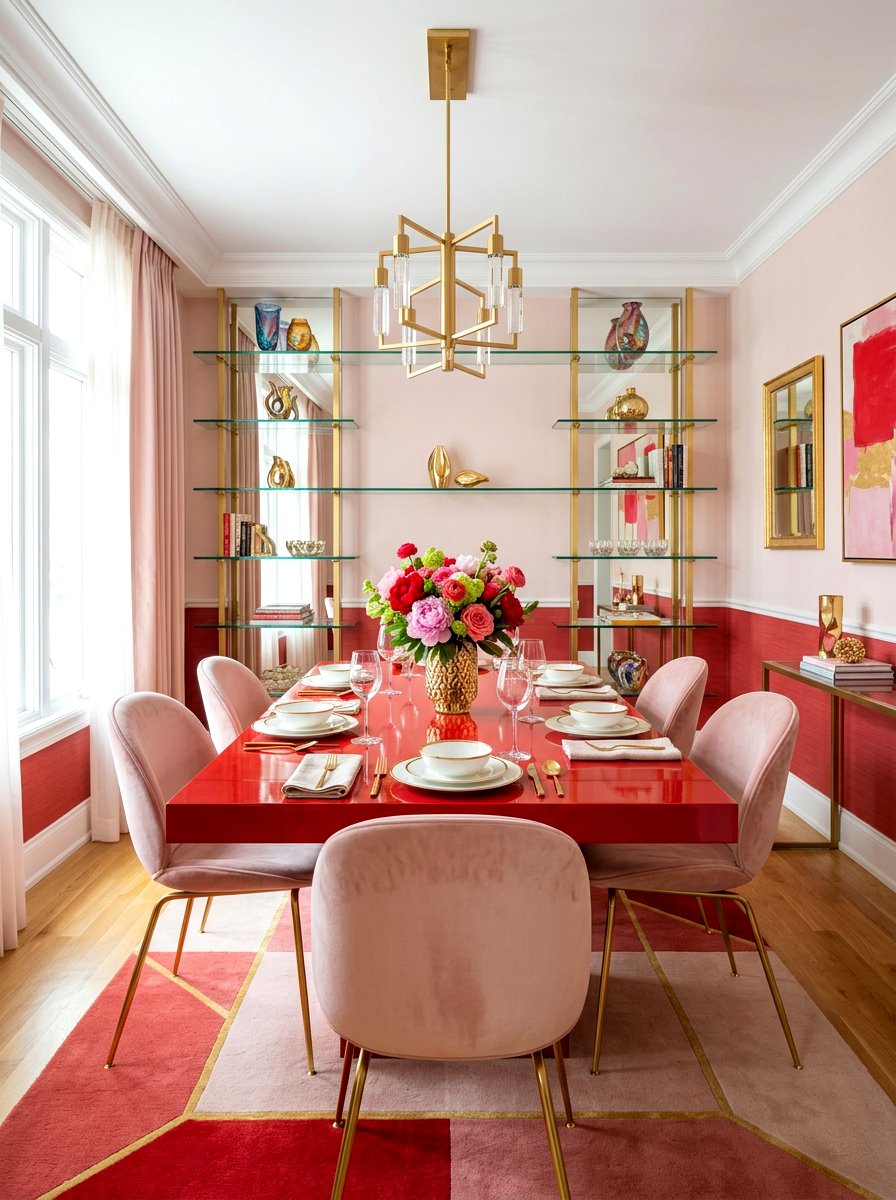
A red and pink dining room is a bold and eclectic choice that feels very trendy, feminine, and high-fashion in its execution. By blending different shades of these two related colors, you create a monochromatic look that has incredible depth and visual interest. Try pairing a vibrant red dining table with soft blush pink chairs to create a playful and sophisticated contrast that feels very modern. Using gold accents and glass furniture can help keep the space feeling light and airy, ensuring that the saturated color palette remains elegant rather than overwhelming for the surrounding architectural features of the room.
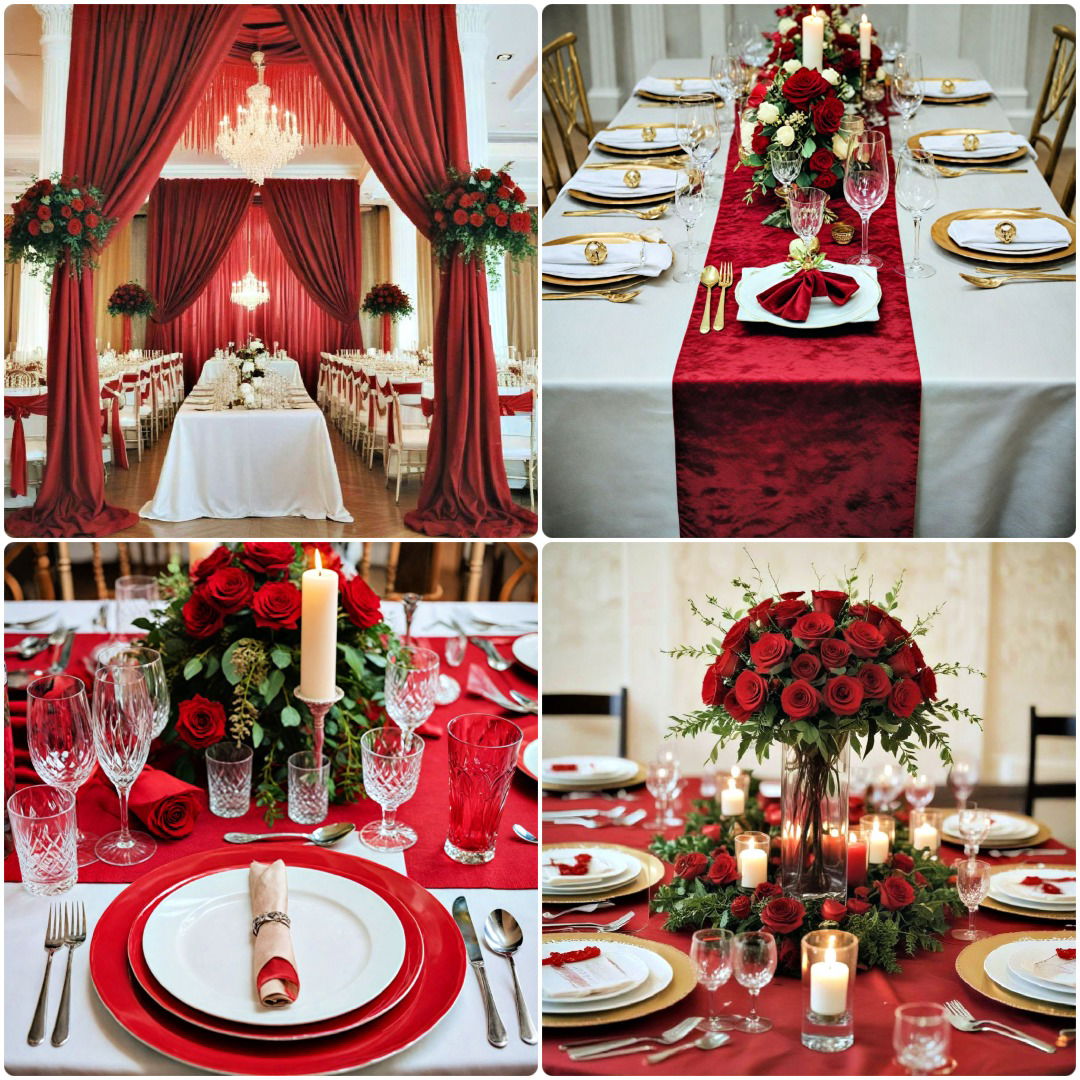
15. Red dining room furniture
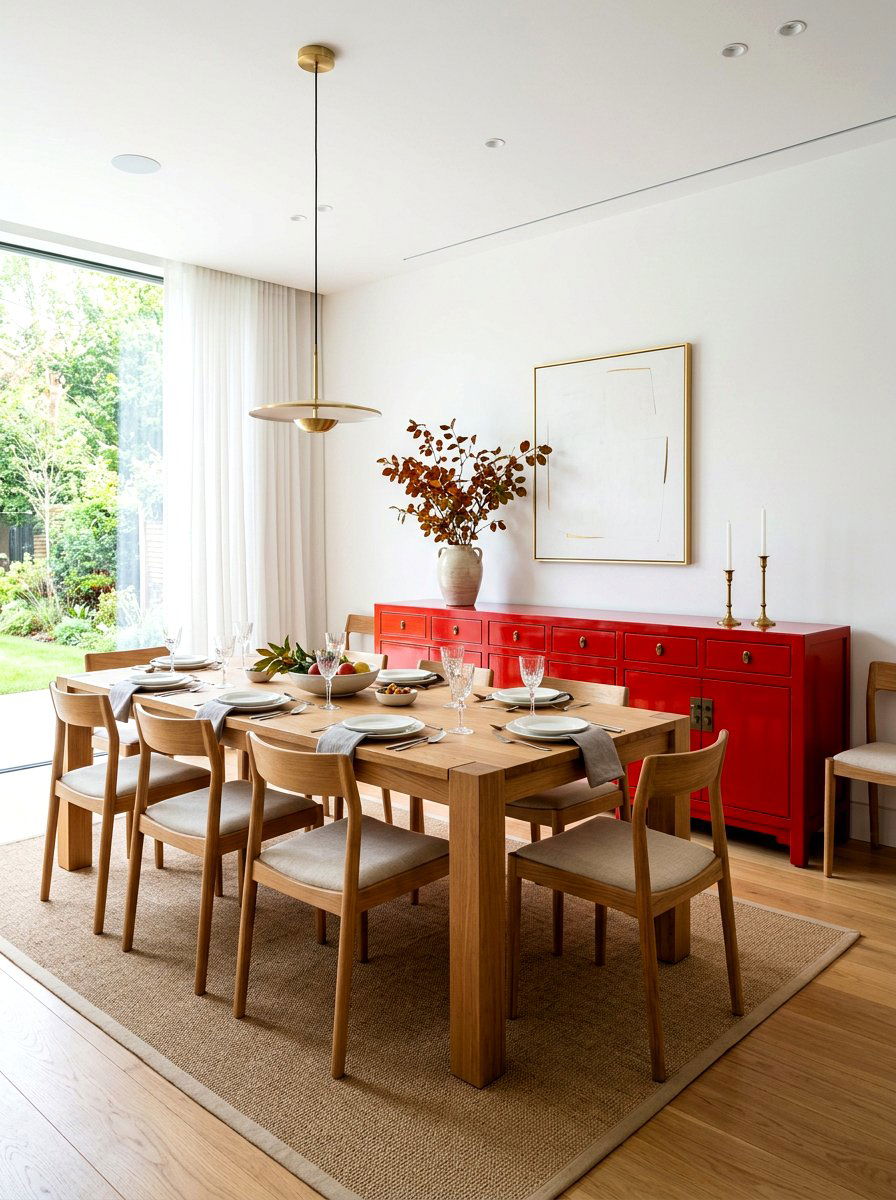
Incorporating large pieces of red furniture, such as a scarlet sideboard or a crimson china cabinet, is a daring way to make a statement in the dining room. These pieces act as functional art, providing storage while also serving as a major color anchor for the entire space. When you use red for your primary furniture, it is often best to keep the walls in a neutral tone like beige or white to let the furniture shine. This approach allows you to experiment with bold color without the long-term commitment of painting the walls, making it a great option for renters or those who like to change styles.
16. Red dining room art
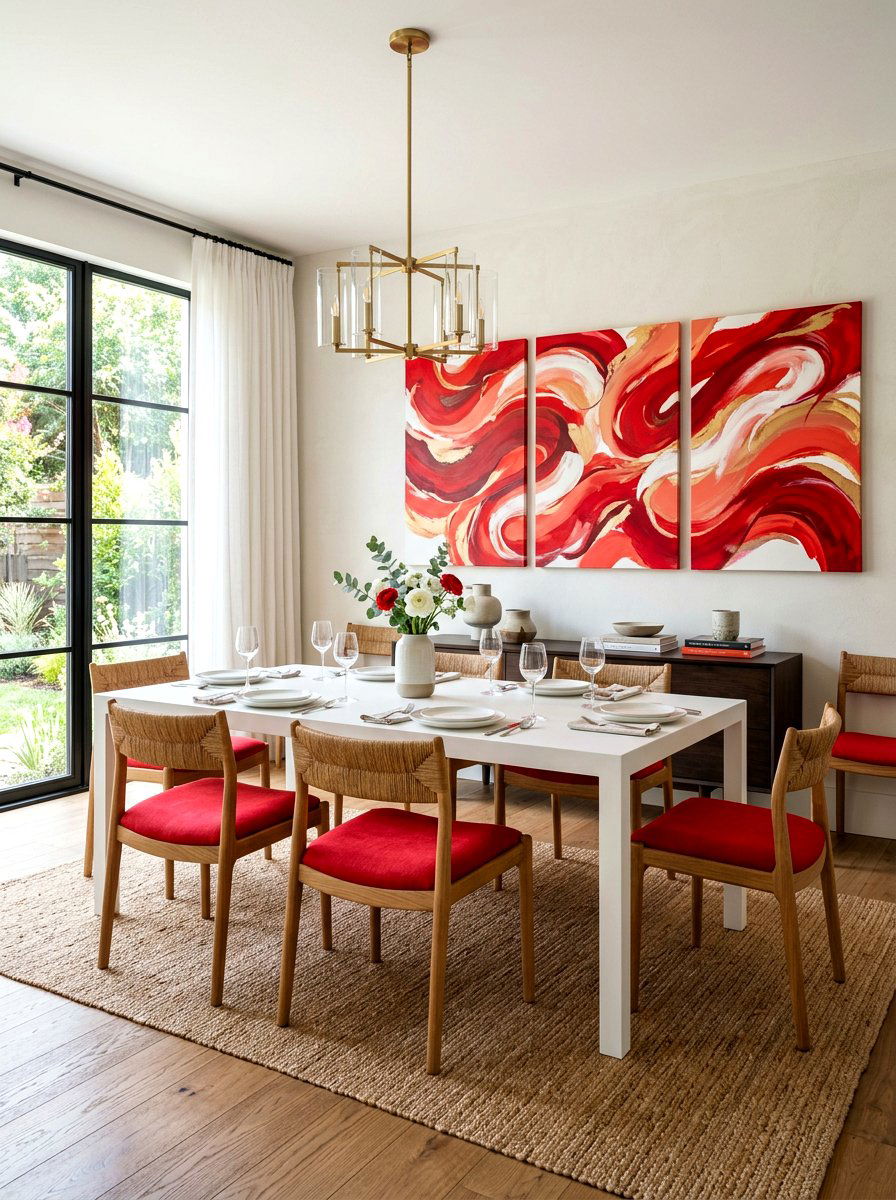
Large-scale red artwork can be the perfect finishing touch for a dining room that needs a boost of color and personality. Whether it is an abstract painting with bold red brushstrokes or a series of framed prints featuring red motifs, art allows you to introduce the color in a controlled and sophisticated way. Placing a prominent piece of art on a neutral wall can tie together other red elements in the room, such as the centerpiece or chair cushions. This design choice also provides a great conversation starter for guests, as the art becomes the visual focal point of the entire dining experience.
17. Red dining room wallpaper
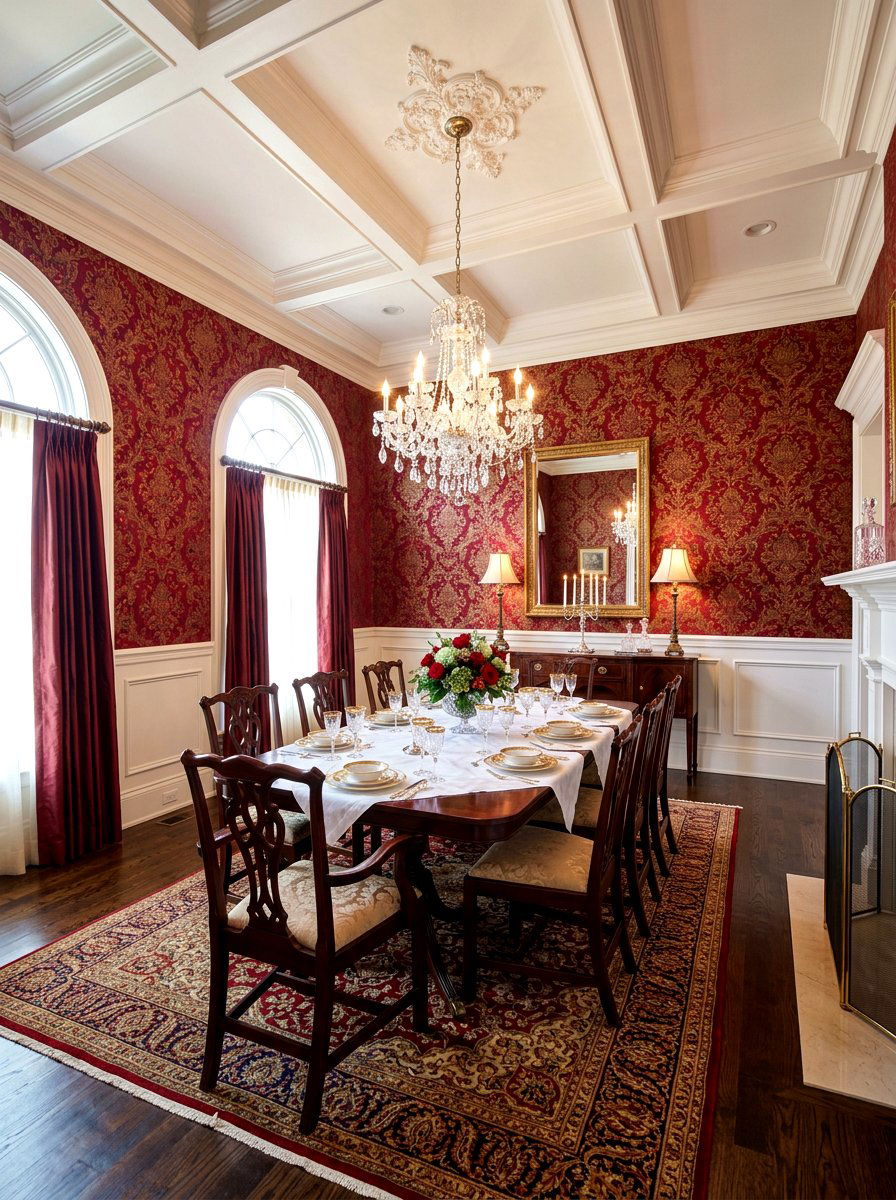
Using red patterned wallpaper is an excellent way to add both color and texture to the dining room walls for a more complex look. You can choose a classic damask pattern in burgundy for a formal and traditional feel, or a modern geometric print in bright red for a contemporary aesthetic. Wallpaper provides a level of detail that paint alone cannot achieve, making the room feel more custom and designed. To prevent the pattern from becoming too busy, consider using wallpaper only on the top half of the wall with white wainscoting below, which provides a clean and balanced visual break.
18. Red dining room ceiling
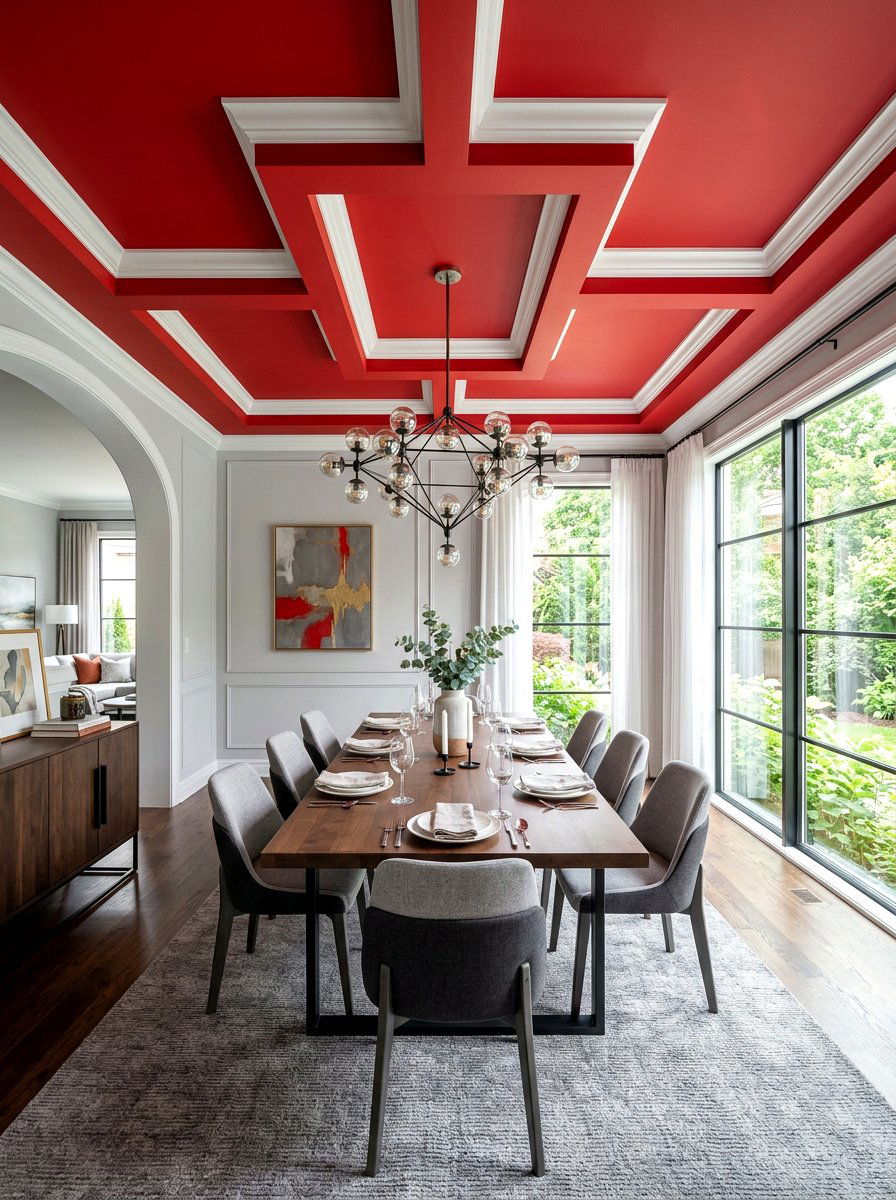
Painting the dining room ceiling red is an unexpected and creative design choice that can make a large room feel more intimate and cozy. This "fifth wall" approach draws the eye upward and adds a dramatic layer of color that does not compete with the furniture or wall decor. When the ceiling is red, it is often best to keep the walls in a lighter shade to prevent the room from feeling like a cave. This look works particularly well in rooms with high ceilings or beautiful crown molding, as the red paint helps highlight the architectural details of the upper portion of the space.
19. Red dining room light
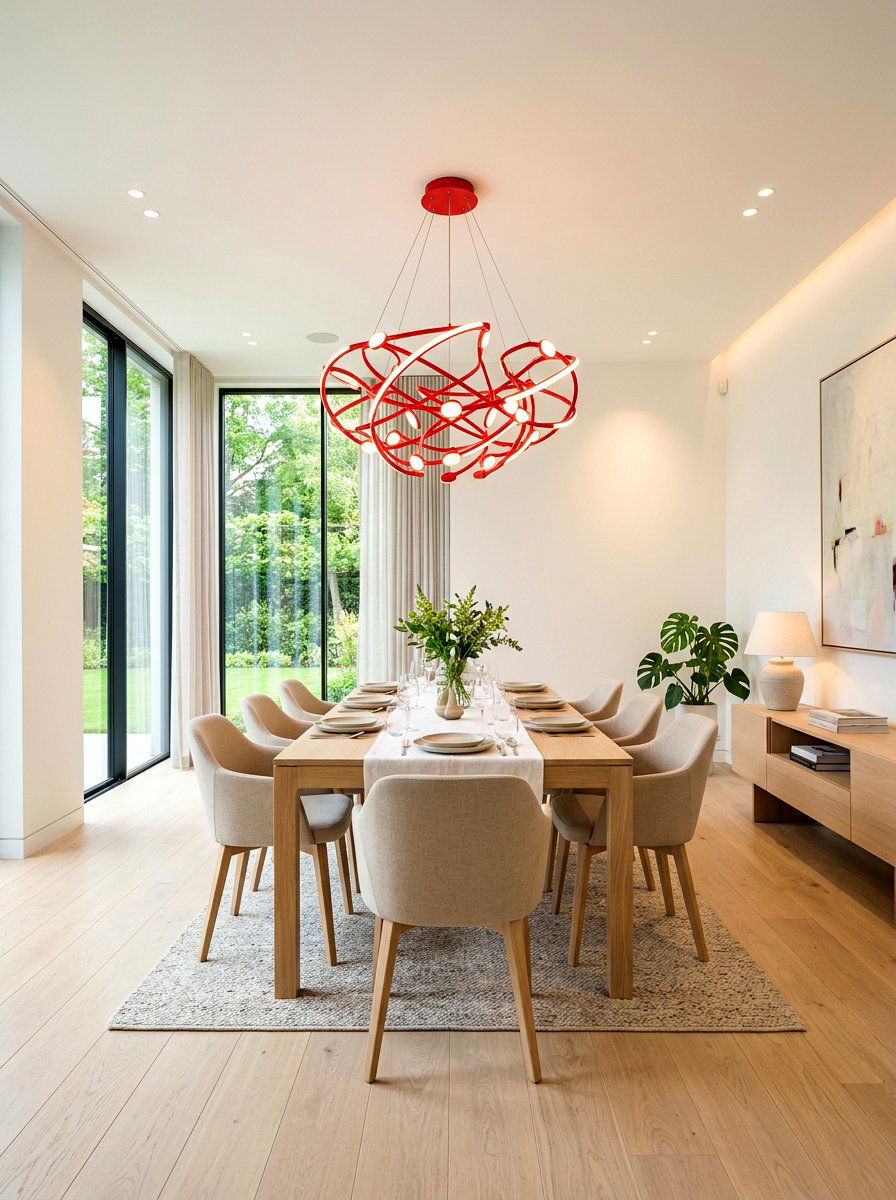
A bold red lighting fixture, such as a large drum pendant or a modern red chandelier, can serve as a stunning architectural element above the dining table. This choice adds a sculptural quality to the room and ensures that the color is visible even when the lights are turned off during the day. Red glass or metal shades can cast a warm and inviting glow over the dining area, enhancing the ambiance during dinner parties. Coordinating the light fixture with other red accents in the room creates a cohesive look that feels intentional and professionally designed, making the lighting a true focal point.
20. Red dining room decor
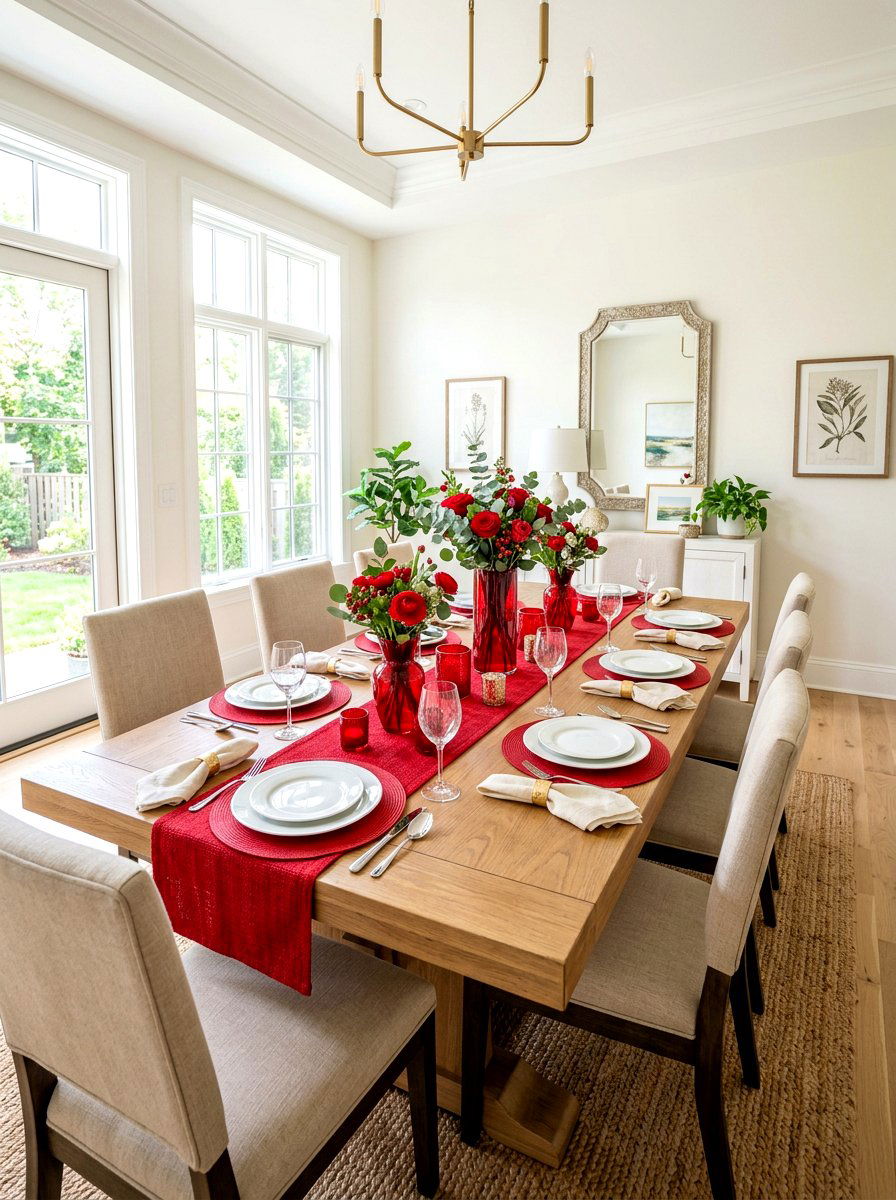
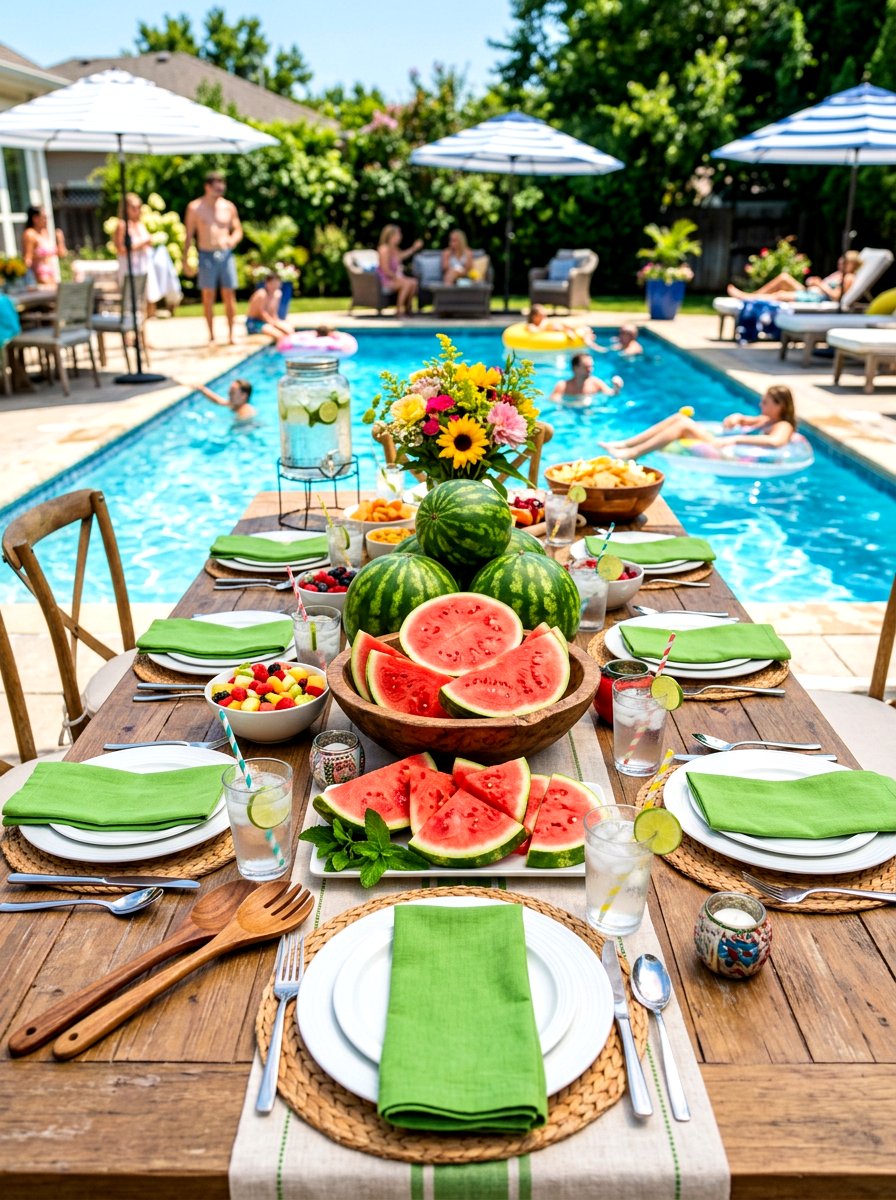
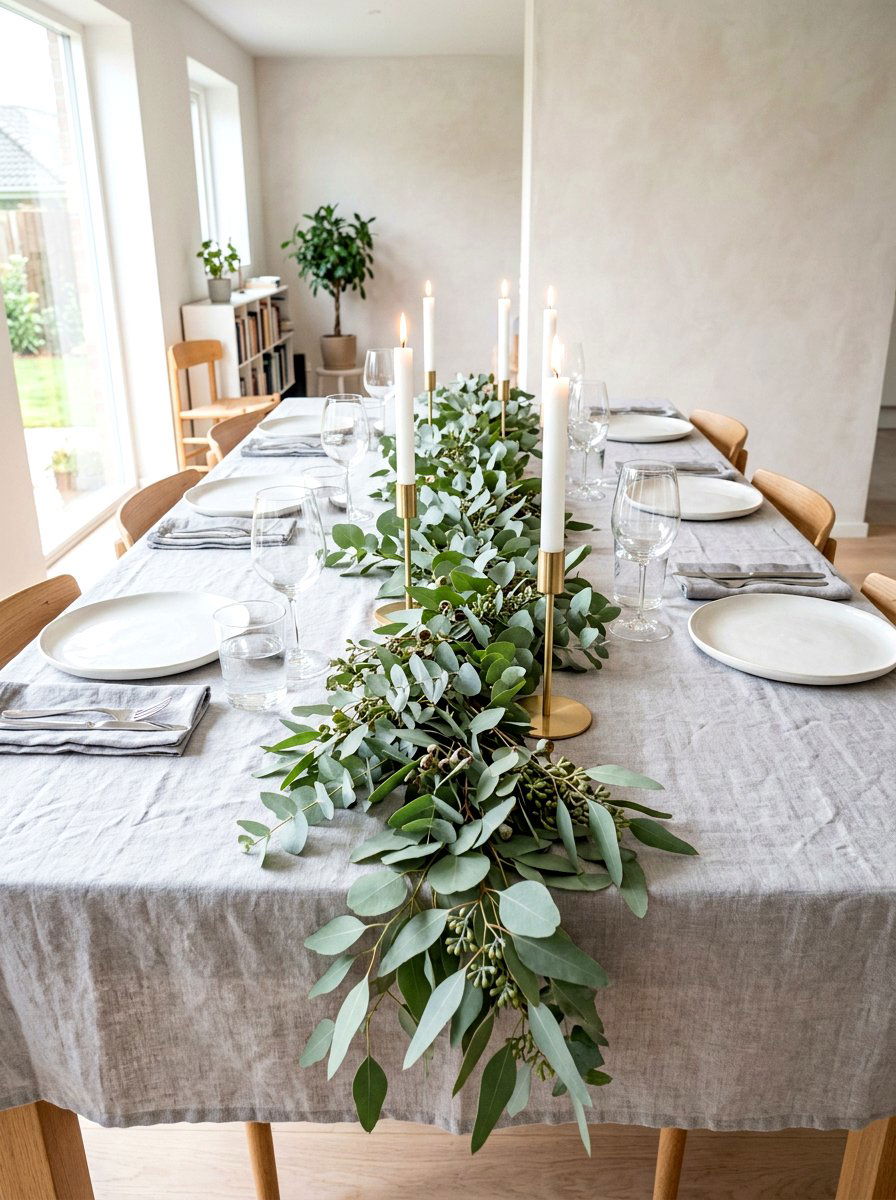
Small red decorative items can have a big impact on the overall feel of a dining room without requiring major changes to the layout. Think about using red placemats, a vibrant table runner, or a collection of red glass vases to add splashes of color to the tabletop. These accents are easy to swap out seasonally or whenever you want to refresh the look of the space. By layering different red accessories throughout the room, you create a sense of rhythm and continuity that makes the design feel complete and polished, even if the primary wall color remains a neutral shade.
21. Red and beige dining room
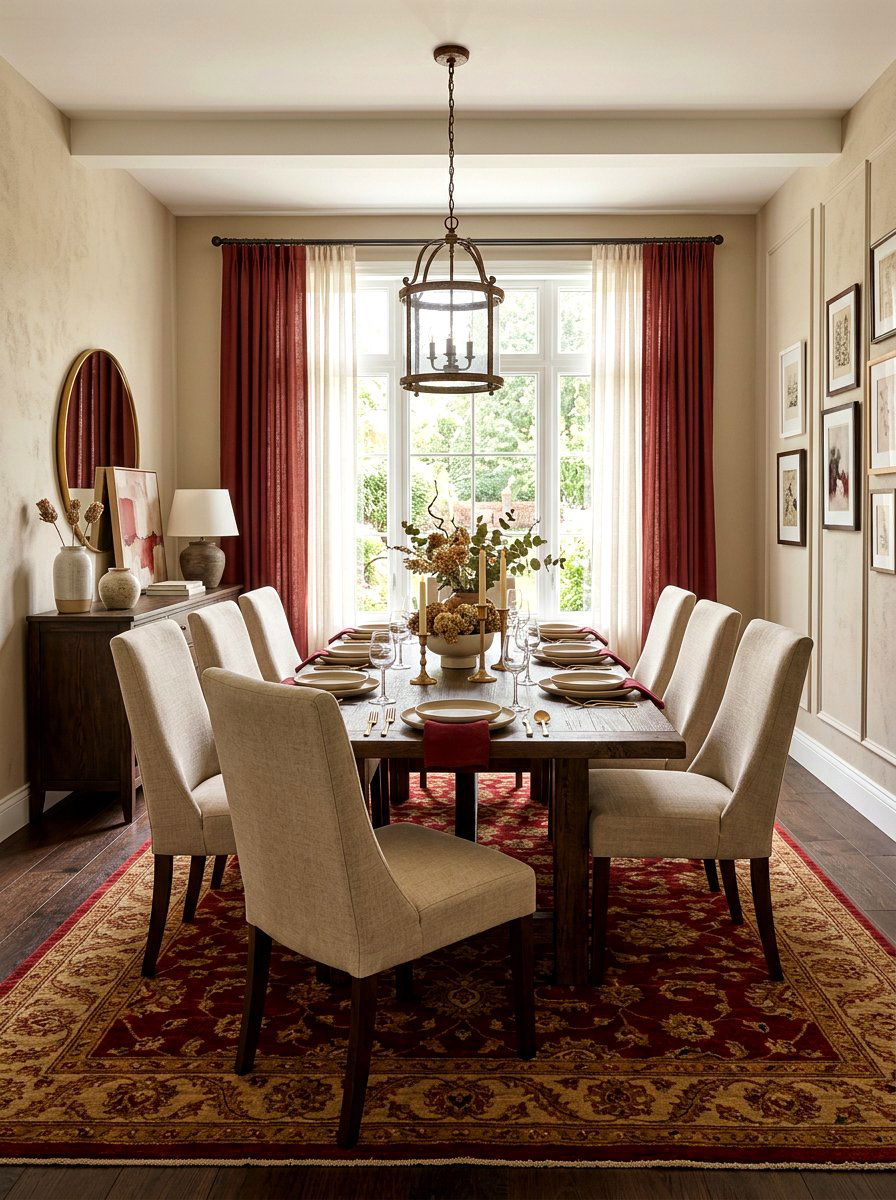
A red and beige dining room offers a warm and muted take on the bold color, making it feel more approachable and relaxing for daily use. Beige walls provide a soft and sandy backdrop that beautifully complements the richness of a deep red area rug or upholstered chairs. This palette feels very earthy and grounded, especially when you incorporate natural textures like jute, linen, and light wood. The red adds just enough energy to keep the beige from feeling flat, resulting in a balanced and harmonious space that is perfect for families who want a cozy and inviting dining environment.
22. Red lacquer dining room
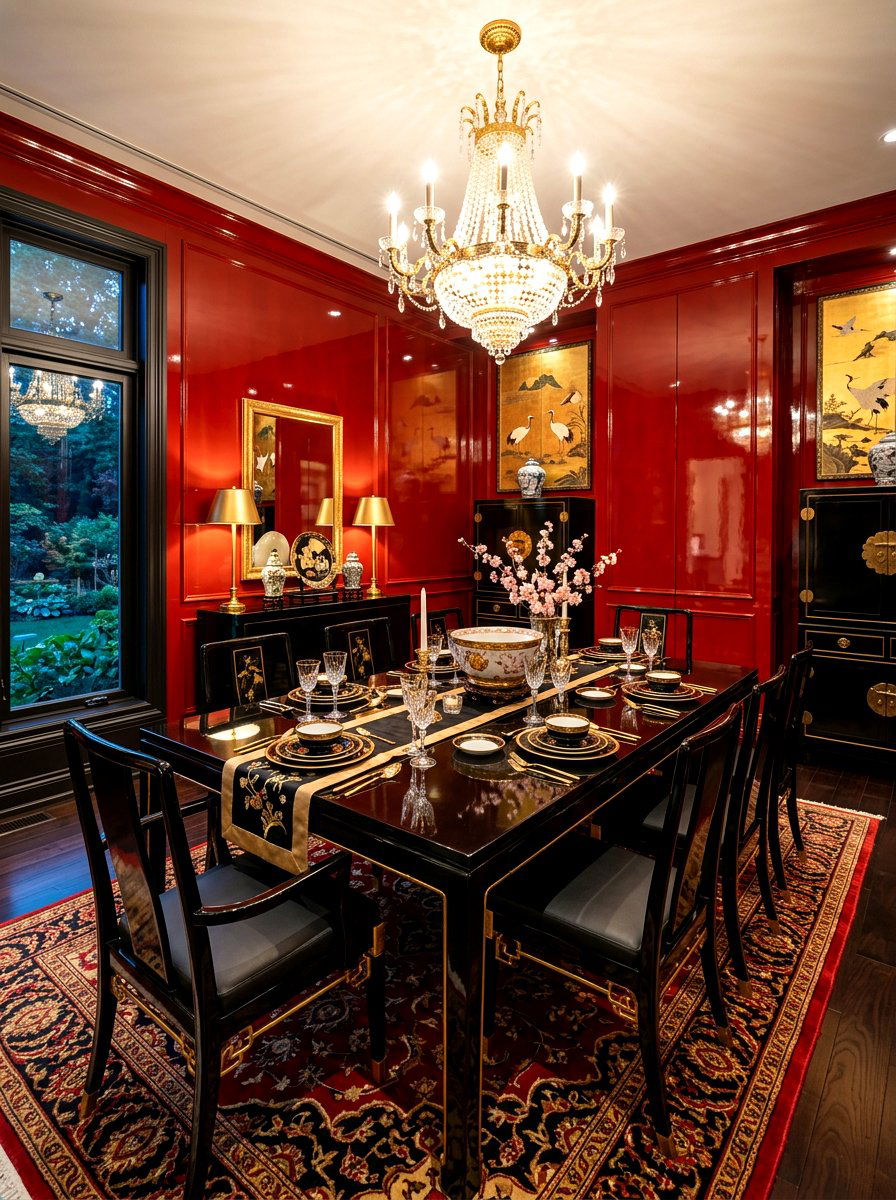
Red lacquer furniture or wall panels provide a high-shine, glossy finish that is often associated with traditional Asian design and modern luxury. The reflective surface of the lacquer adds a sense of depth and luminosity to the room, making the red appear even more vibrant and saturated. This style is incredibly durable and easy to clean, making it a practical choice for a high-traffic dining area. Pairing red lacquer with black accents and gold hardware creates a timeless and dramatic look that feels very upscale and curated, perfect for those who want a dining room that makes a lasting impression.
23. Red brick dining room
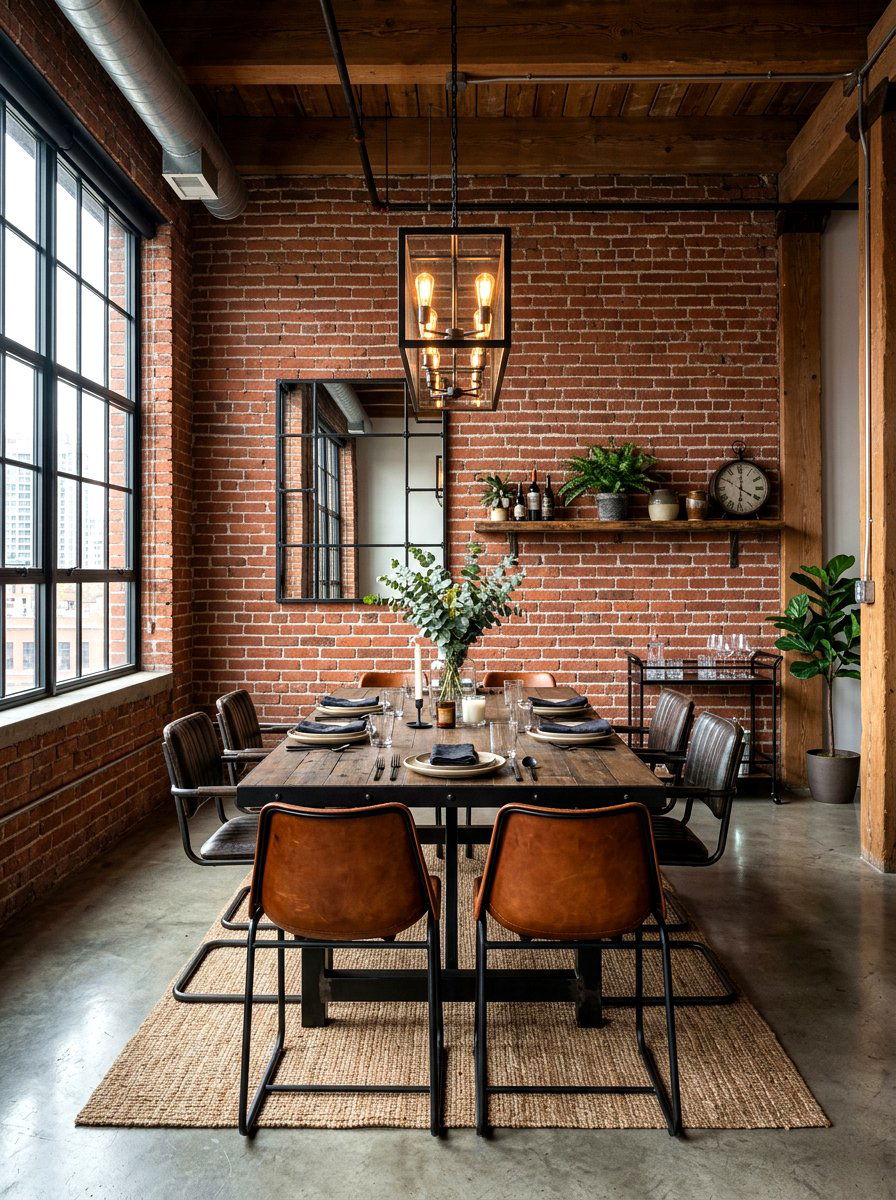
Exposed red brick walls provide a natural and industrial backdrop that adds instant character and texture to a dining room. The varying shades of red and orange in the brick create a warm and rustic environment that feels very authentic and historical. You can lean into the industrial look by pairing the brick with a black metal dining table and leather chairs, or soften the space with white linen curtains and a soft area rug. The red brick acts as a built-in feature wall that requires very little extra decoration, making it the perfect foundation for a stylish and low-maintenance dining space.
24. Red striped dining room
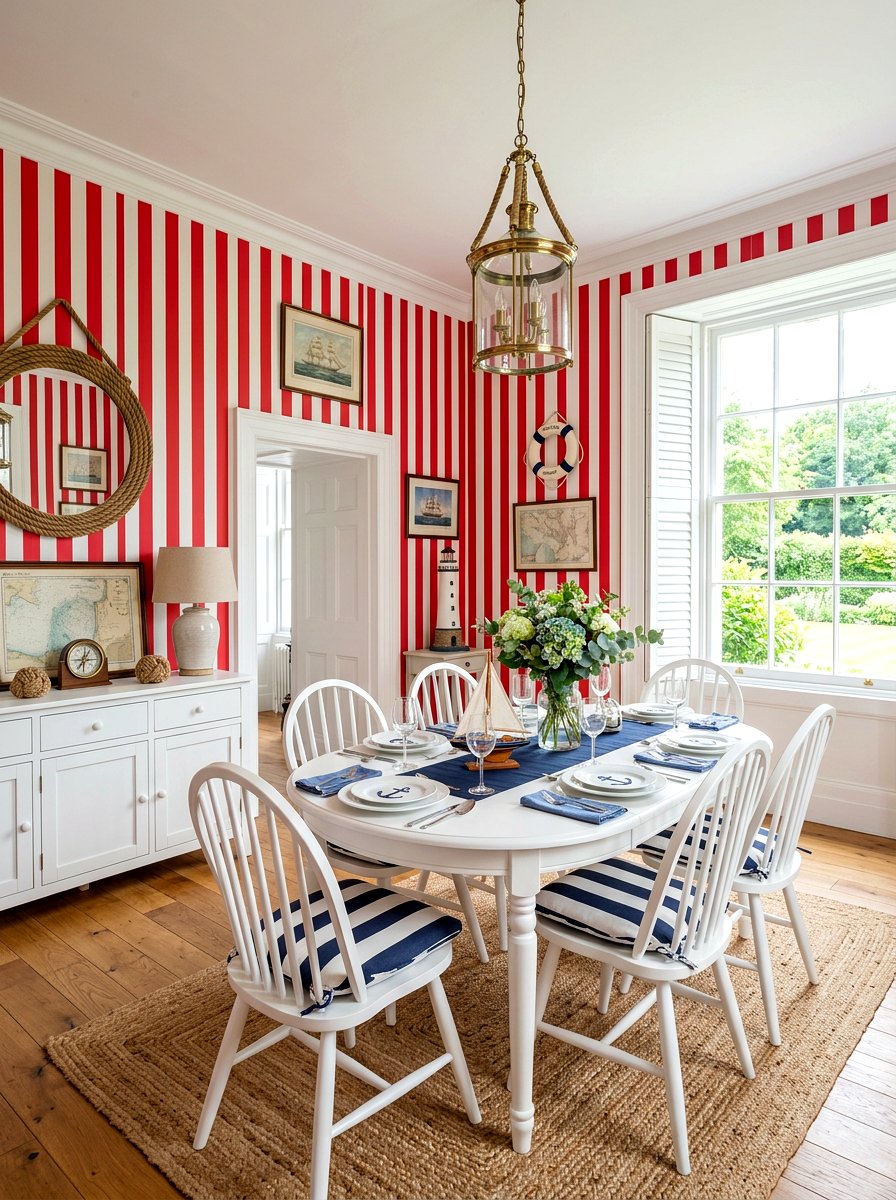
Striped patterns in red and white or red and cream can bring a sense of classic charm or nautical flair to the dining room. Whether you use striped wallpaper, a striped area rug, or striped seat cushions, this pattern adds a playful and orderly element to the design. Vertical red stripes on the walls can help make a room with low ceilings feel taller, while horizontal stripes can make a narrow space feel wider. This design idea is perfect for creating a cheerful and energetic dining area that feels timeless and traditional while still maintaining a very fresh and modern appeal.

25. Red and yellow dining room
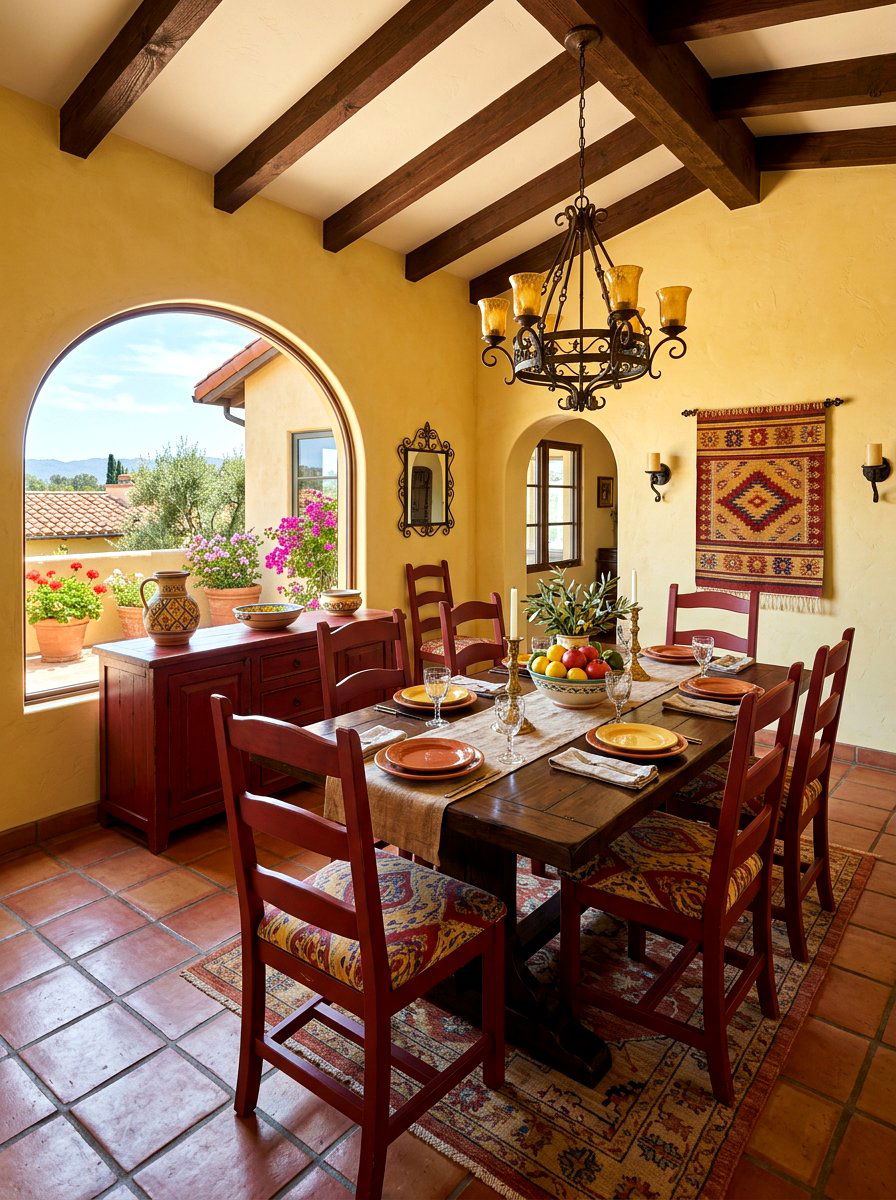
A red and yellow dining room is a high-energy combination that feels very sunny, optimistic, and inspired by Mediterranean or Tuscan design. These two warm colors work together to create a space that feels incredibly bright and welcoming for guests. To make this look work, try using a deep red for the primary furniture and a soft buttery yellow for the wall color. Adding terra cotta tiles and wrought iron accents can further enhance the rustic European feel. This palette is naturally stimulating for the appetite, making it a wonderful choice for a kitchen-diner or a casual breakfast nook.
26. Red glass dining room
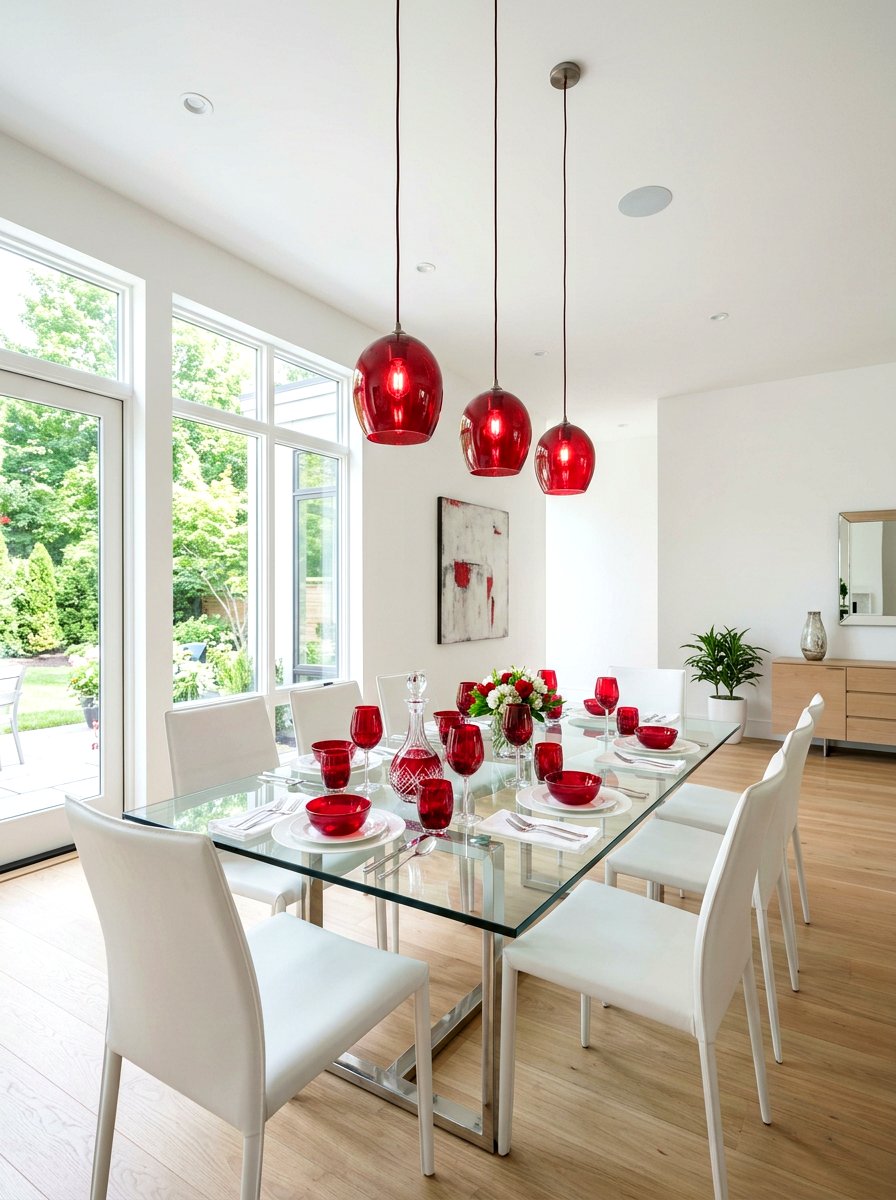
Incorporating red glass elements, such as a glass-top table with a red base or a collection of ruby red glassware, adds a layer of transparency and light to the room. Red glass captures and refracts light in a beautiful way, creating glowing spots of color that feel very jewel-like and precious. This approach is perfect for smaller dining rooms where solid red furniture might feel too heavy, as the transparency of the glass keeps the space feeling open. Using red glass pendant lights above the table can also create a stunning visual effect that changes the mood of the room as the sun sets.
27. Red floral dining room
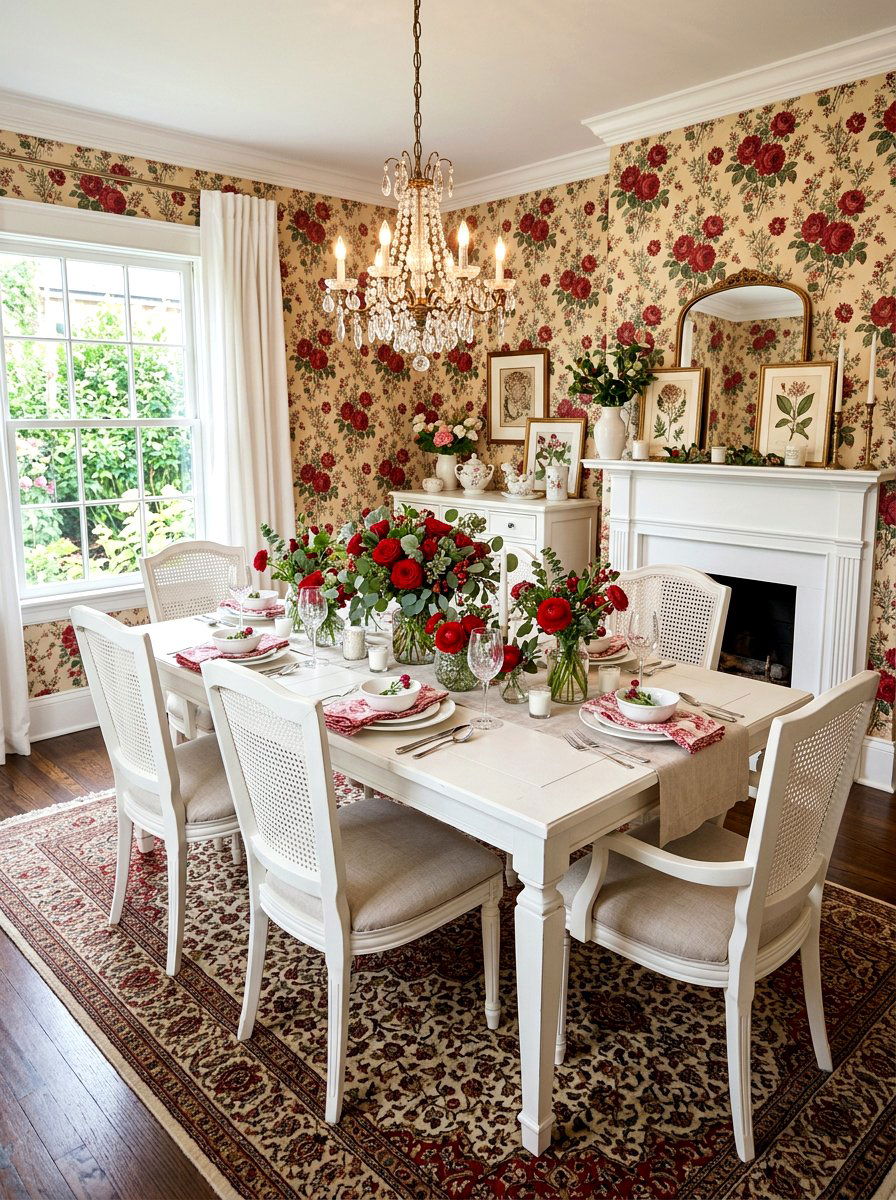
A red floral theme brings a sense of romance and natural beauty to the dining area through wallpaper, upholstery, or fresh arrangements. Large-scale red floral prints can make a dramatic statement on a feature wall, while smaller ditsy prints feel more traditional and country-inspired. You can easily achieve this look by placing a large bouquet of red roses or poppies in the center of the table as a natural focal point. Floral patterns often incorporate other colors like green and white, which helps to break up the red and create a more balanced and visually interesting interior design for the home.
28. Red wainscoting dining room
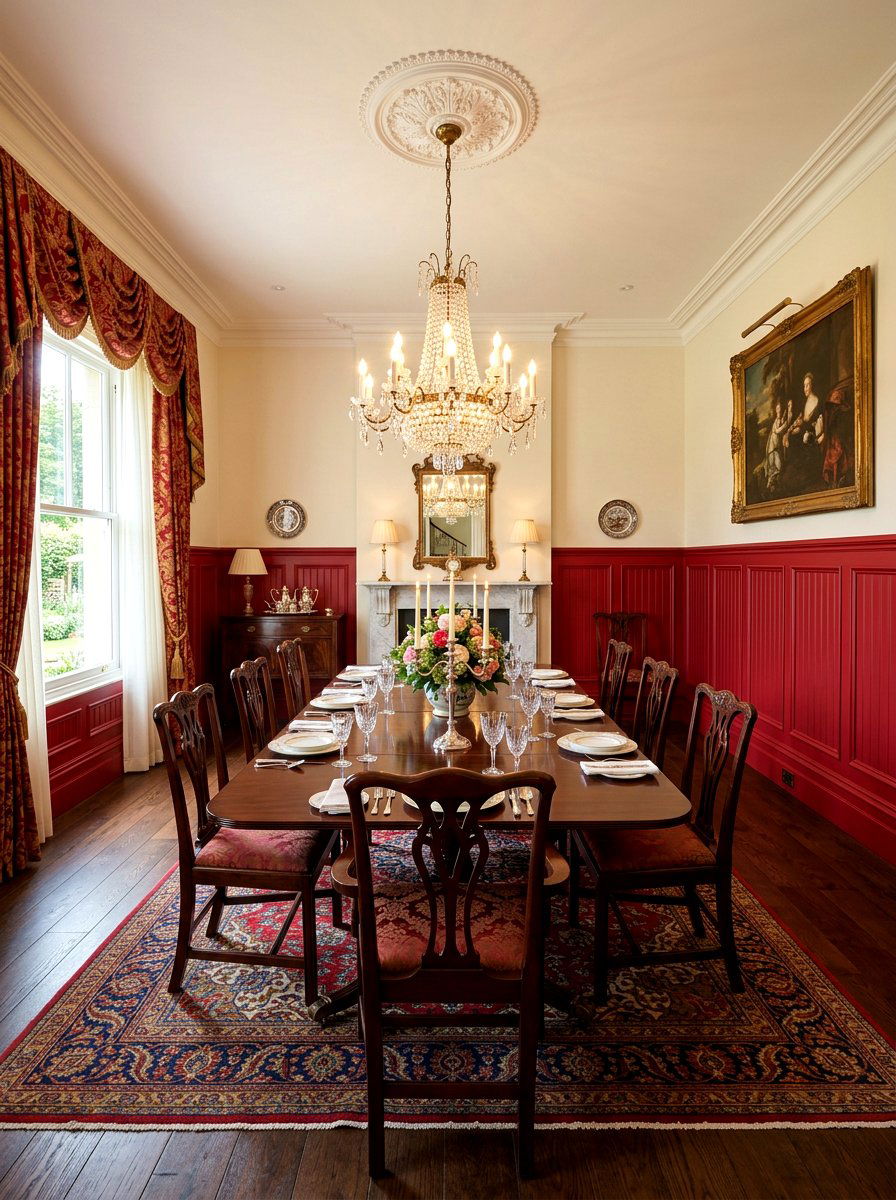
Red wainscoting is a sophisticated way to introduce bold color to the bottom half of the walls while keeping the top half neutral. This architectural detail adds a sense of structure and traditional elegance to the room, especially when paired with a light-colored wallpaper or paint on the upper portion. The contrast between the deep red paneling and the lighter top makes the room feel grounded and well-proportioned. This design choice is particularly effective in formal dining rooms with tall ceilings, as it helps to define the lower half of the space where the dining furniture and the guests are located.
29. Red velvet dining room
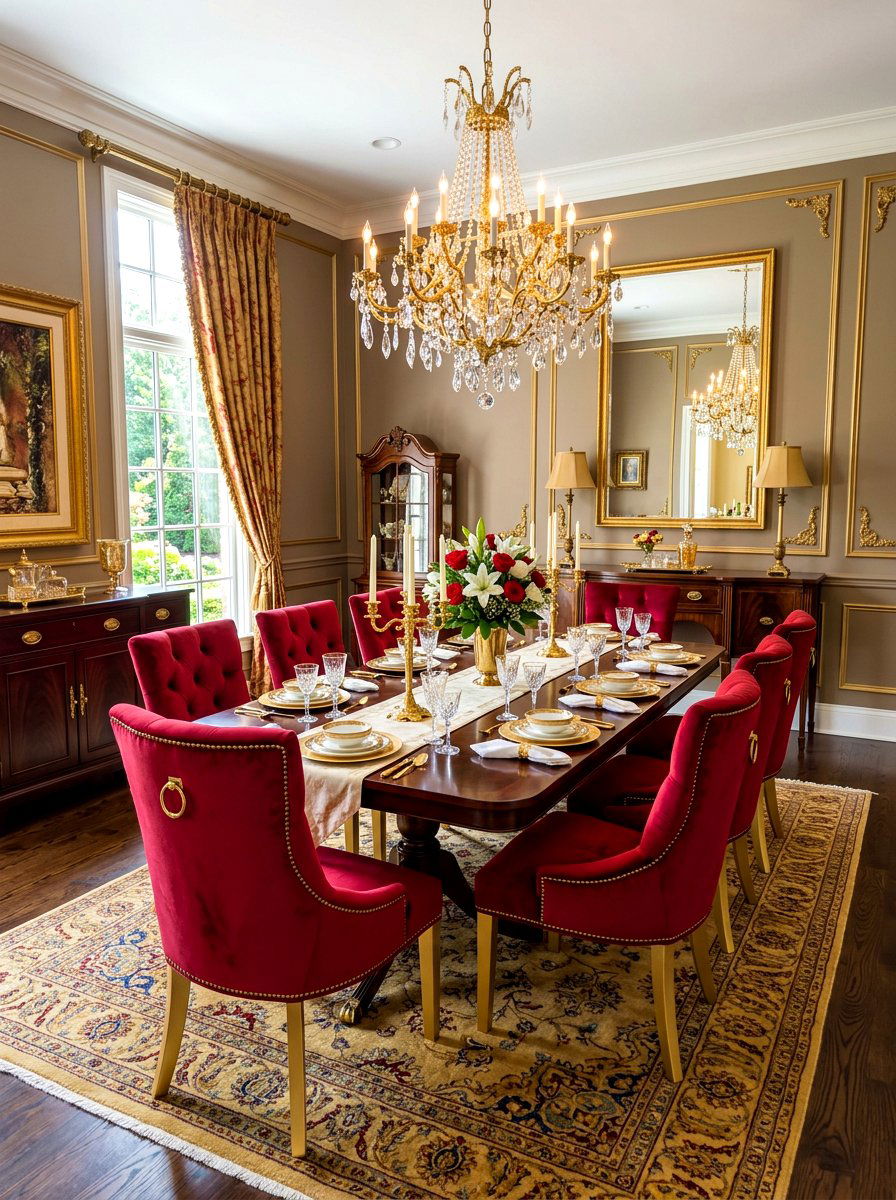
Red velvet is the ultimate material for creating a dining room that feels luxurious, soft, and incredibly high-end. Whether you use red velvet for the dining chairs, the drapery, or even a tufted bench, the fabric adds a rich texture that absorbs light and creates a deep, saturated color. Velvet feels wonderful to the touch and provides a sense of comfort that encourages guests to linger long after the meal is over. Pairing red velvet with dark wood and metallic gold accents creates a regal atmosphere that is perfect for formal entertaining and making every dinner feel like a very special occasion.
30. Red farmhouse dining room
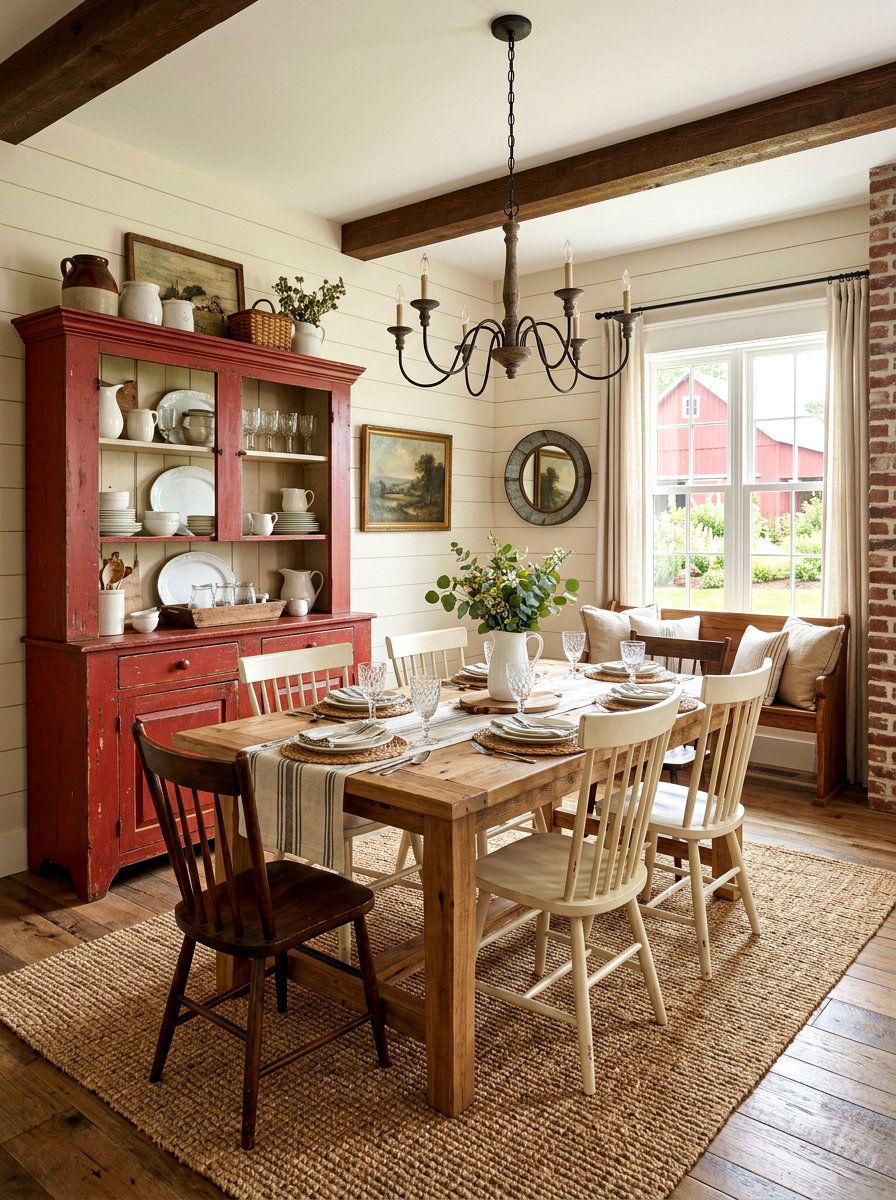
A red farmhouse dining room blends rustic charm with bold color to create a space that feels both nostalgic and energetic. Think about using a distressed red paint finish on a large wooden hutch or a set of mismatched wooden chairs to add a touch of country style. A barn-red accent wall or a red checkered tablecloth can provide the perfect amount of color against neutral shiplap walls and natural wood floors. This design approach is all about creating a warm and lived-in feel where the red serves as a cheerful reminder of traditional rural aesthetics and cozy family gatherings.
Conclusion:
Designing a red dining room is an exciting way to infuse your home with personality, warmth, and a sense of occasion that guests will always remember. Throughout these thirty ideas, we have seen how red can adapt to any style, from the sleek lines of modern minimalism to the ornate details of traditional luxury. By carefully selecting your shade of red and balancing it with complementary colors and textures, you can create a space that feels balanced and intentional. Whether you start with a small accessory or go bold with a full red wall, this vibrant color will undoubtedly make your dining area the heart of the home.

Related posts: