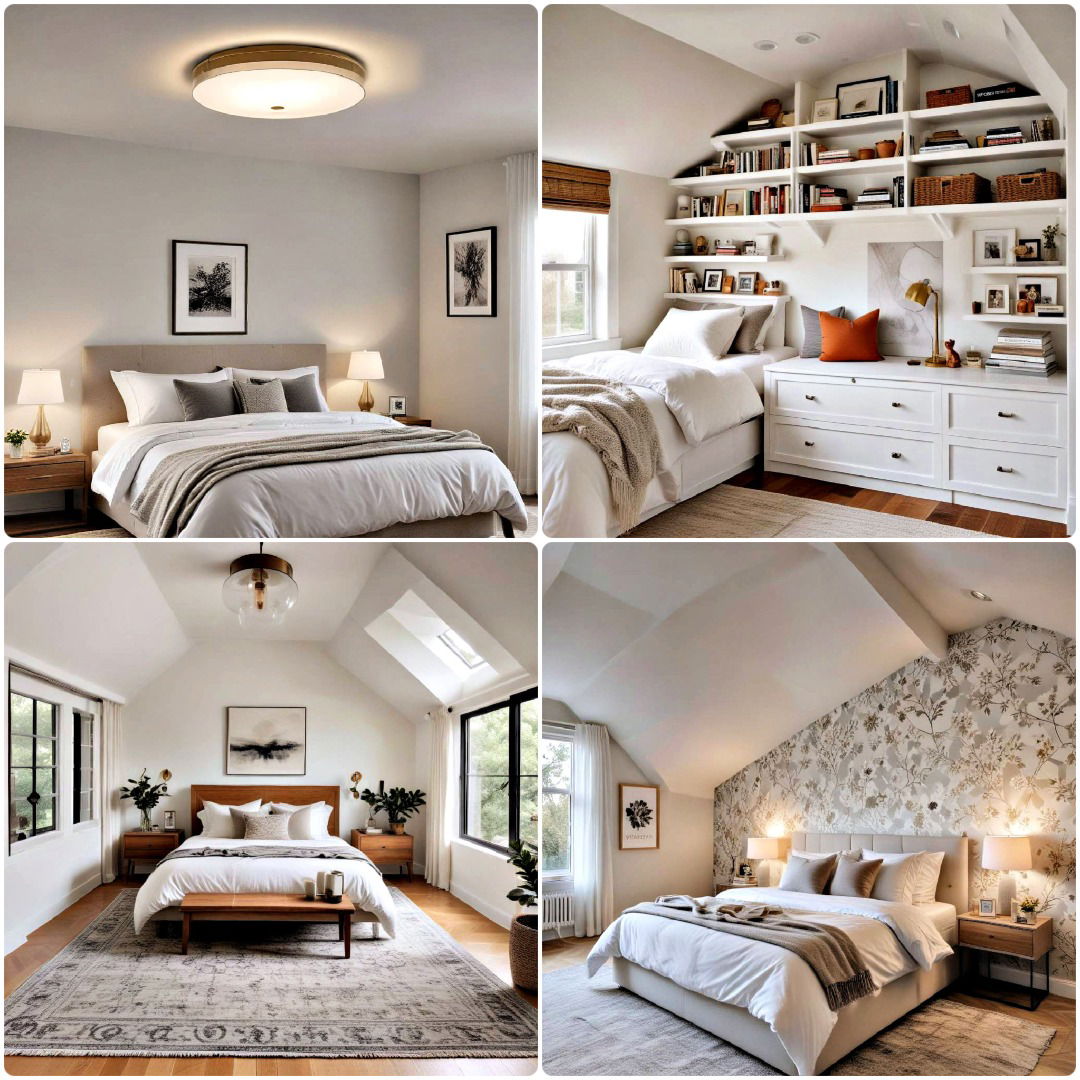
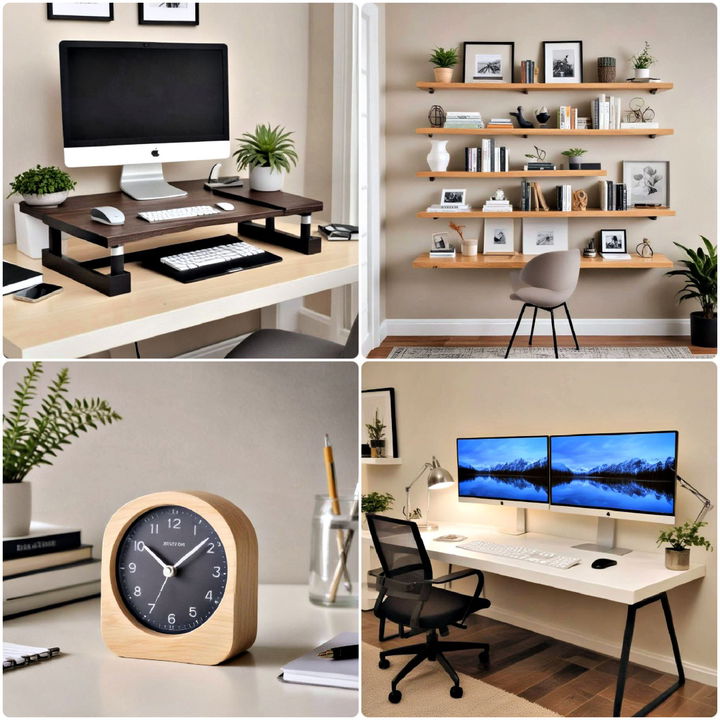
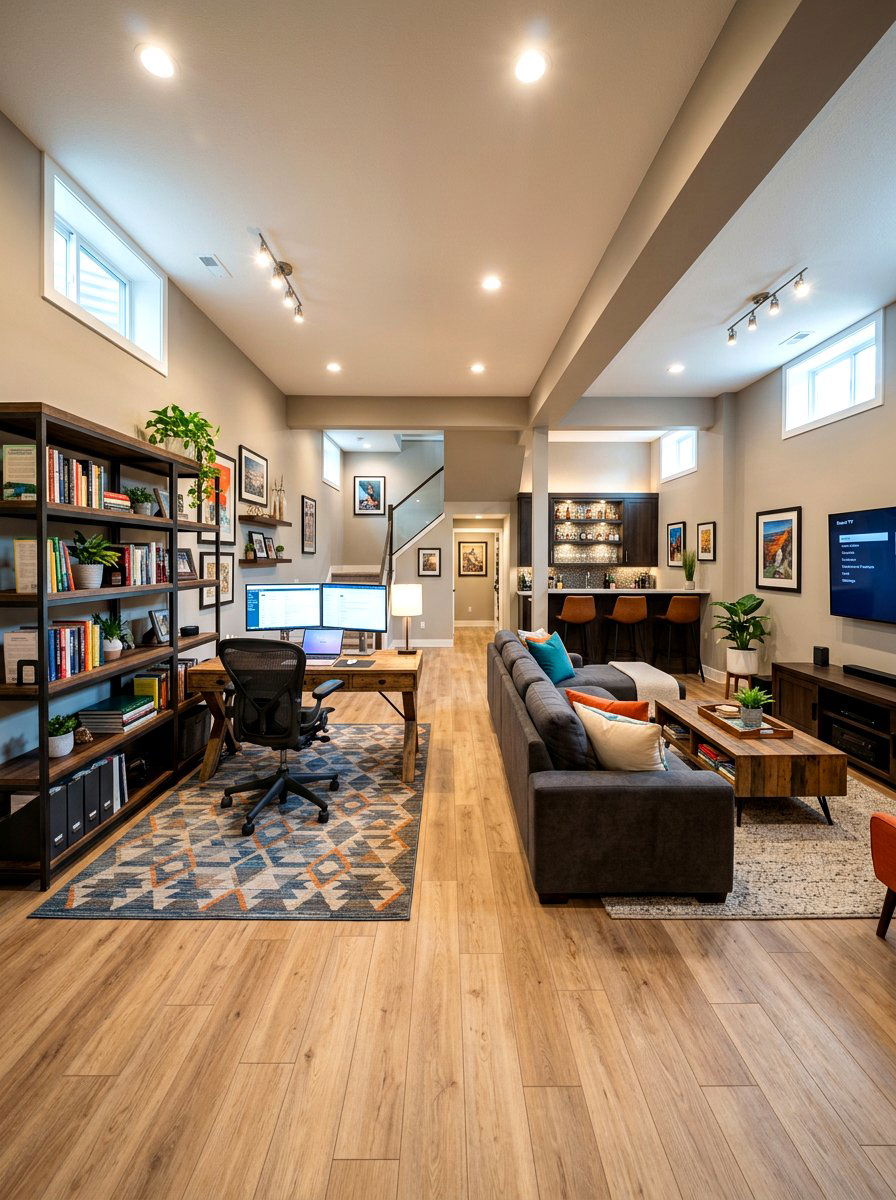
Creating a functional and inspiring home office in a room with sloped ceilings can feel like a complex puzzle, but it actually offers a unique opportunity to design a space that is incredibly cozy and architecturally interesting. These tucked-away spots often provide the quietest corners of the house, away from the daily bustle of the kitchen or living room. By embracing the angles of your attic or upper-floor bonus room, you can turn awkward nooks into highly efficient workstations. This guide explores thirty distinct ways to navigate the challenges of slanted walls while maximizing every square inch of your available floor area. From clever storage solutions to lighting hacks, you will find the perfect inspiration here.
1. Small Attic Home Office
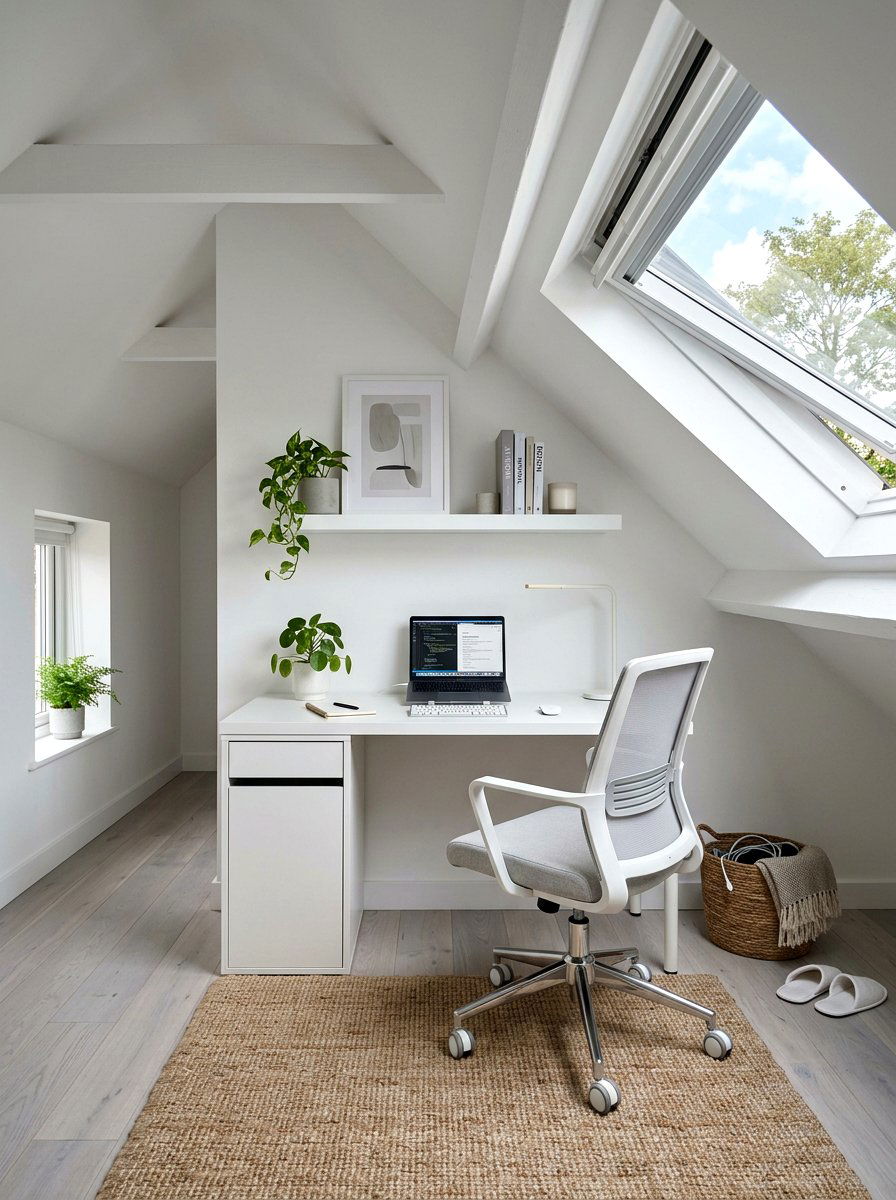
When you are working with a very compact attic space, the key is to prioritize a layout that feels open despite the encroaching ceiling height. Start by placing your primary desk against the tallest wall to ensure you have plenty of headroom while sitting and standing. Use a light color palette, such as soft whites or pale greys, to help bounce light around the room and make the narrow area feel much larger than its physical footprint. Minimalist furniture with thin legs can also prevent the room from feeling cluttered. Adding a slim bookshelf or wall-mounted racks will help keep your essential documents organized without taking up precious floor space at all.
2. Skylight Desk Placement
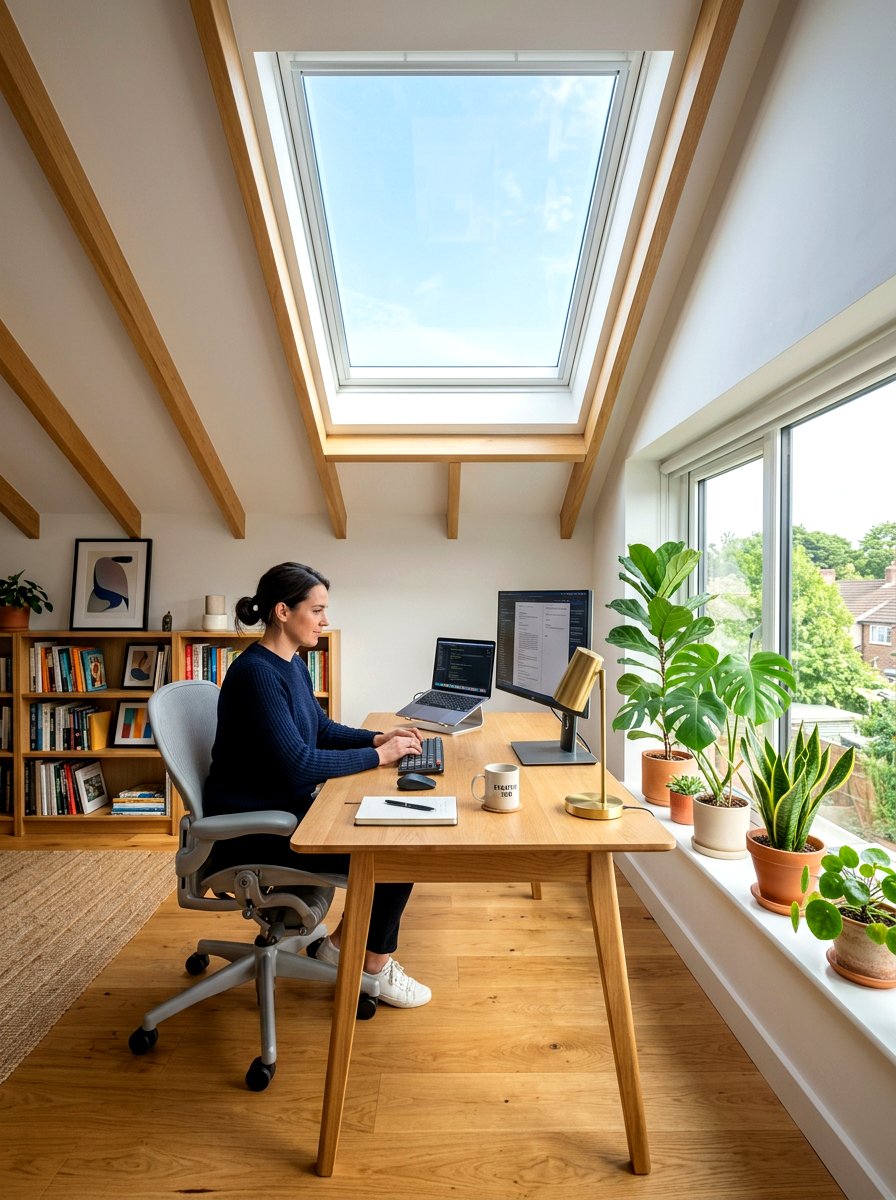
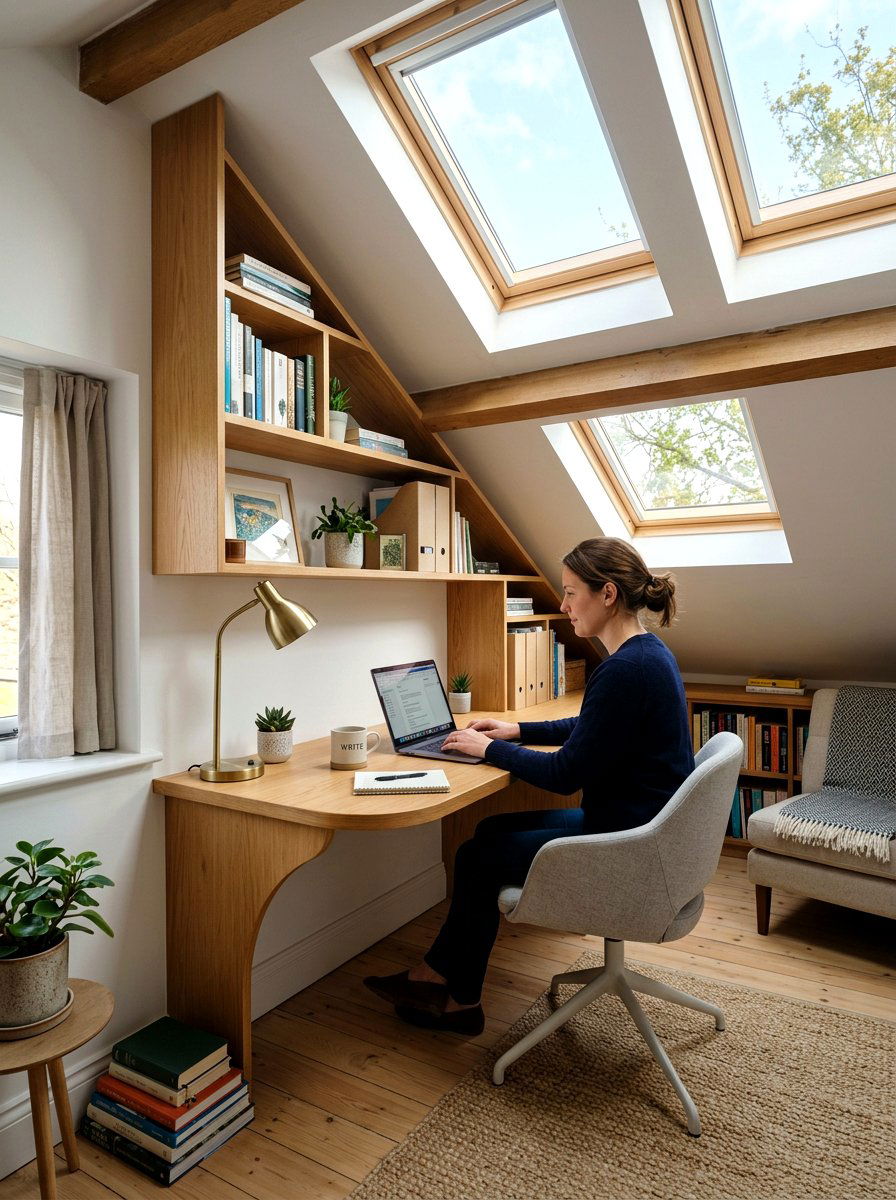
Position your desk directly under a skylight to transform your sloped ceiling office into a bright sanctuary filled with natural light throughout the day. This setup allows you to gaze at the clouds or the stars during breaks, providing a much-needed mental rest from your digital screen. To manage the glare on your monitor, consider installing a specialized blind that fits the window frame perfectly. The upward view creates a sense of expansion, making even the lowest attic feel airy and limitless. Combine this with natural wood accents and a few green plants to create a biophilic environment that boosts productivity and overall mood in a very significant and healthy way.
3. Built-In Under Eaves Workspace
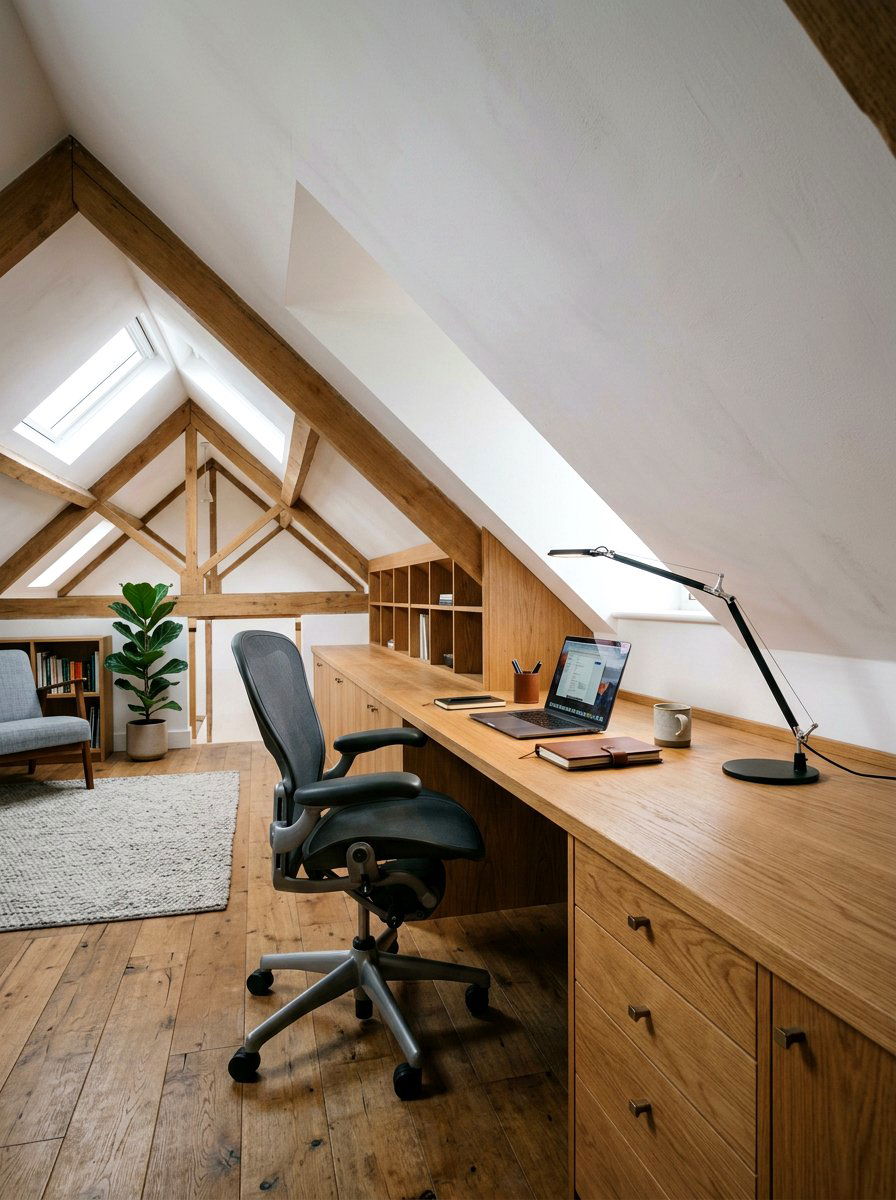
Utilizing the deepest part of the eaves for a custom built-in desk is a brilliant way to claim otherwise wasted square footage. Because you are usually seated while working, the low clearance in these corners is rarely an issue for comfort. Have a carpenter design a desk that stretches from wall to wall, following the exact contour of the slope for a seamless appearance. You can incorporate deep drawers beneath the desktop to store office supplies and electronics out of sight. This approach keeps the center of the room open for movement or additional seating. Adding a high-quality task lamp will ensure your work surface remains perfectly illuminated during late-night projects.
4. Minimalist Sloped Ceiling Office
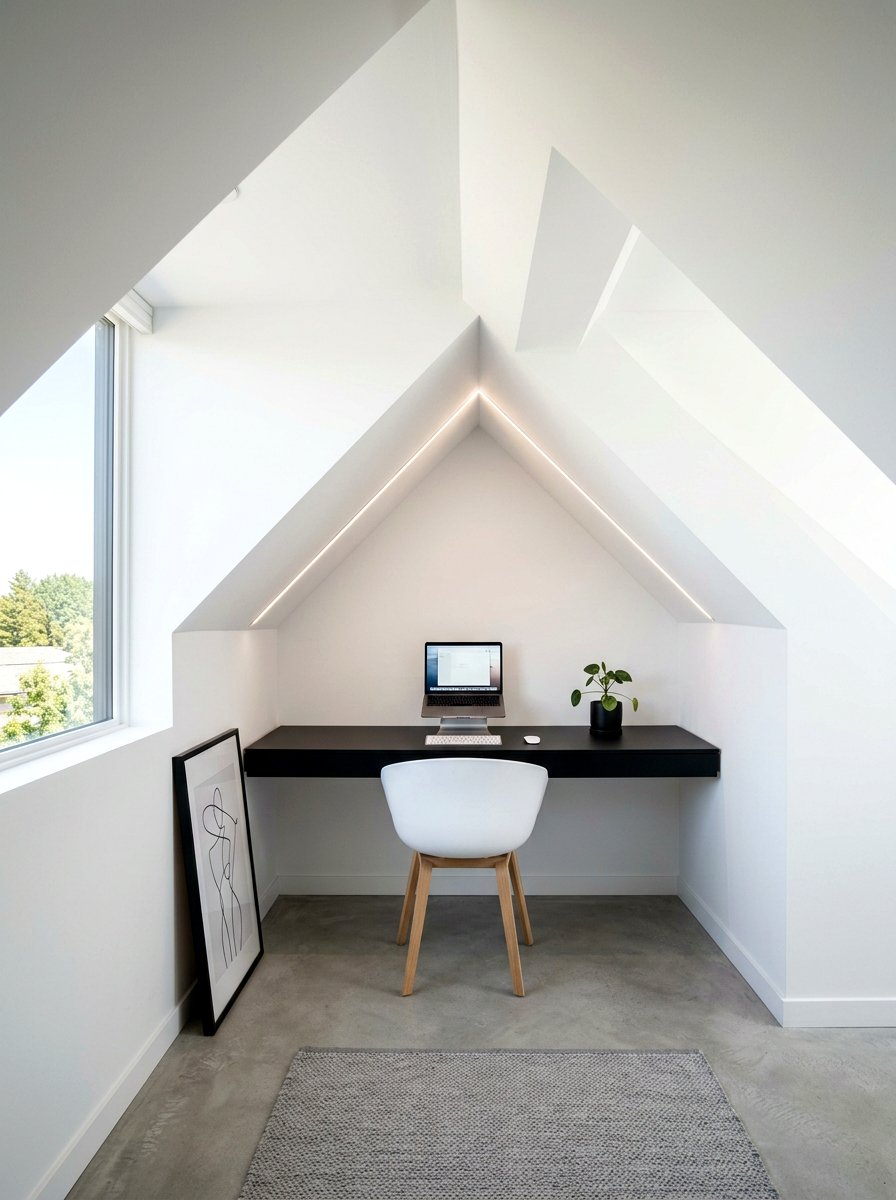
Embrace the beauty of simplicity by designing a minimalist office that focuses on clean lines and a clutter-free environment. Choose a sleek, floating desk that attaches directly to the slanted wall to maintain a sense of floor continuity. Stick to a monochromatic color scheme, using various shades of white and cream to create a serene atmosphere that encourages deep focus. By keeping decorations to a bare minimum, you allow the unique architectural angles of the ceiling to become the primary design feature. High-quality materials like polished concrete floors or light oak furniture can add subtle texture without overwhelming the small space, making it feel very modern and sophisticated.
5. Dormer Window Desk Setup
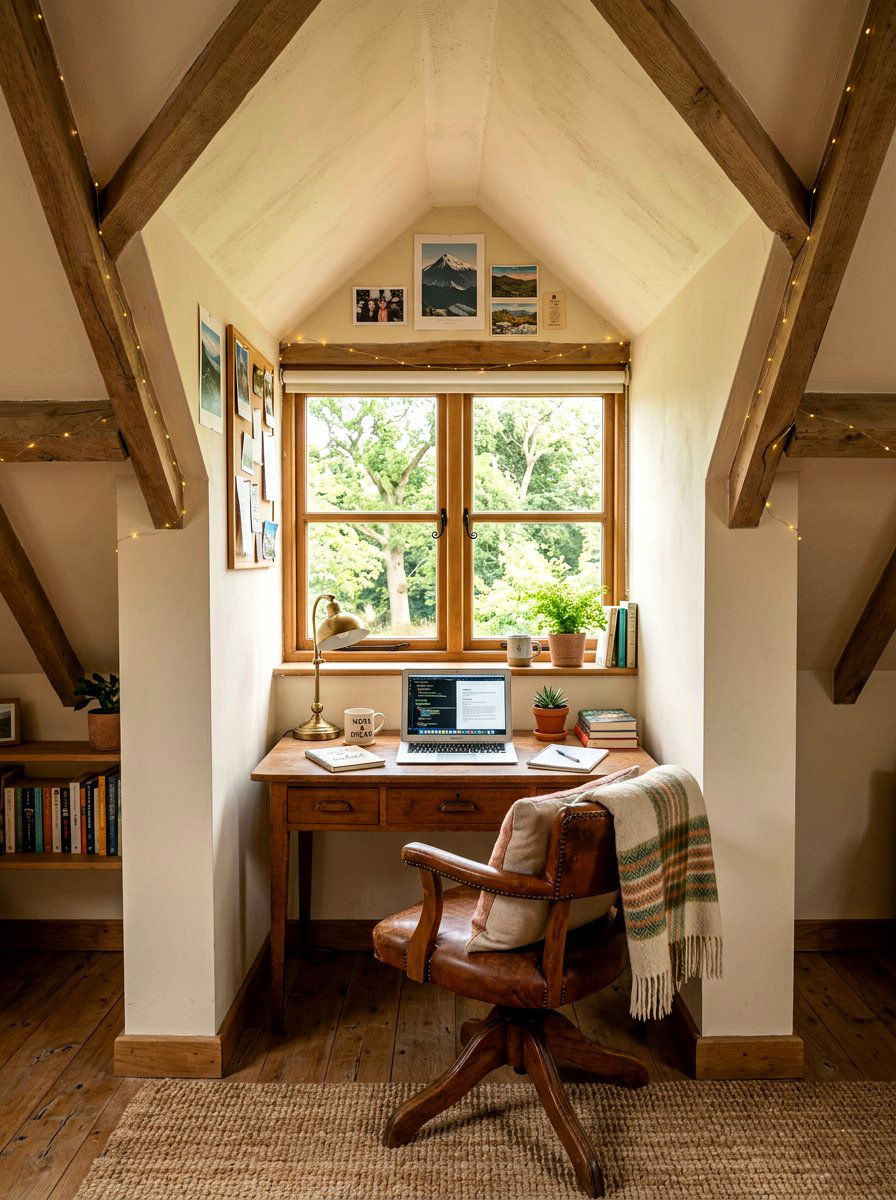
If your attic features a dormer window, this small architectural alcove is the perfect spot to tuck a desk for a framed view of the outdoors. The vertical walls of the dormer provide a bit of extra height where you need it most, creating a natural workstation pocket. This layout offers excellent lateral light, which is ideal for reading and writing without the need for heavy overhead fixtures. Decorate the surrounding sloped areas with soft textiles or small framed art to make the nook feel intentional and integrated. A swivel chair allows you to easily transition between your work and the rest of the room, maximizing the utility.
6. Modern Attic Office Storage
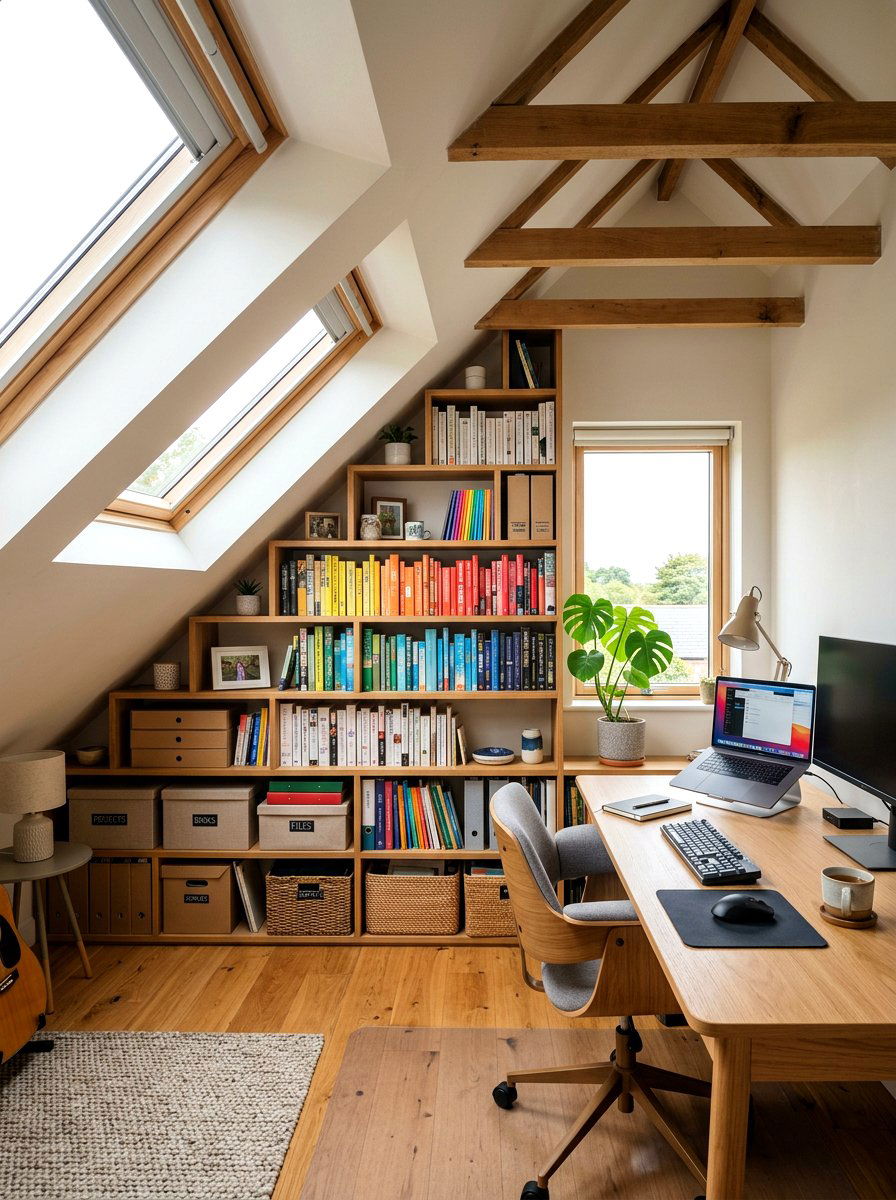
Managing clutter in a room with angled walls requires a strategic approach to storage that follows the natural lines of the architecture. Instead of trying to fit standard rectangular cabinets, install tiered shelving units that step down in height as the ceiling slopes toward the floor. This provides plenty of space for books, binders, and decorative items while emphasizing the room's unique shape. Using closed cabinetry for the lowest sections keeps bulky items hidden, while open shelves at eye level display your most-used resources. Choose finishes that match your desk to create a cohesive and professional look that feels like a high-end executive suite in your own home.
7. Industrial Attic Workspace
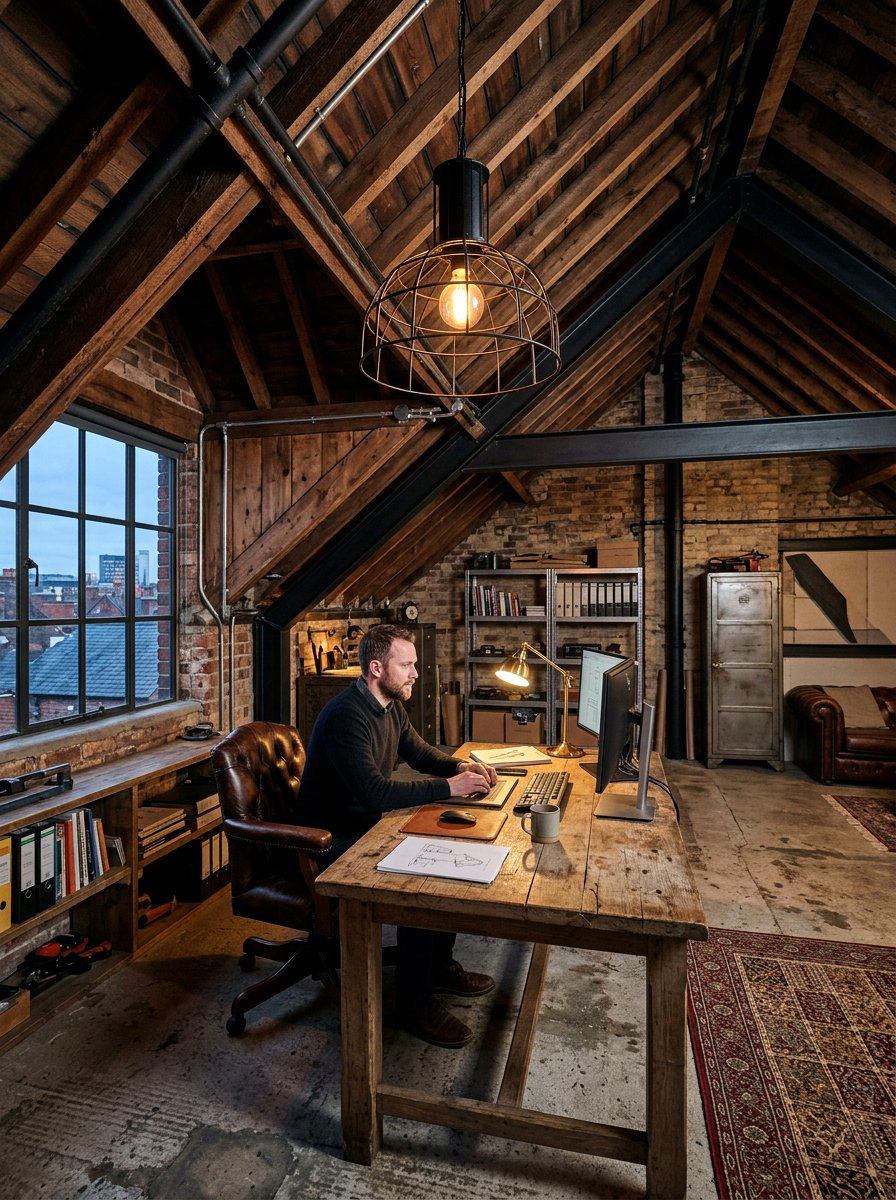
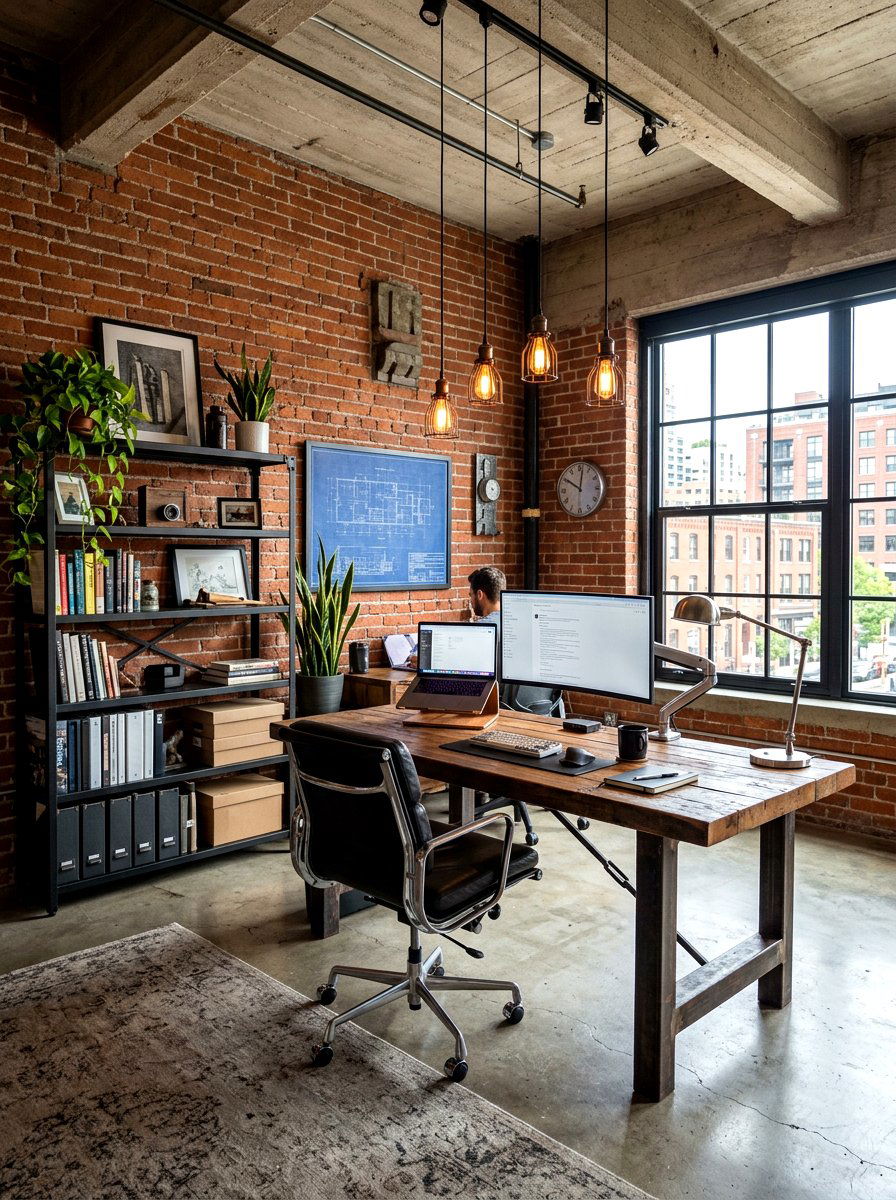
Creating an industrial-themed office in an attic allows you to highlight raw structural elements like exposed pipes or wooden rafters. Use a desk made from reclaimed wood and black iron piping to ground the space with a rugged, masculine aesthetic. Darker wall colors like charcoal or navy can work surprisingly well in a sloped room if you balance them with bright, focused lighting. Hang a large metal pendant light from the highest point of the ceiling to serve as a bold focal point. Incorporating leather seating and vintage-style rugs adds warmth and comfort to the hard surfaces, ensuring the workspace feels inviting rather than cold or overly utilitarian.
8. Dark Wall Sloped Office
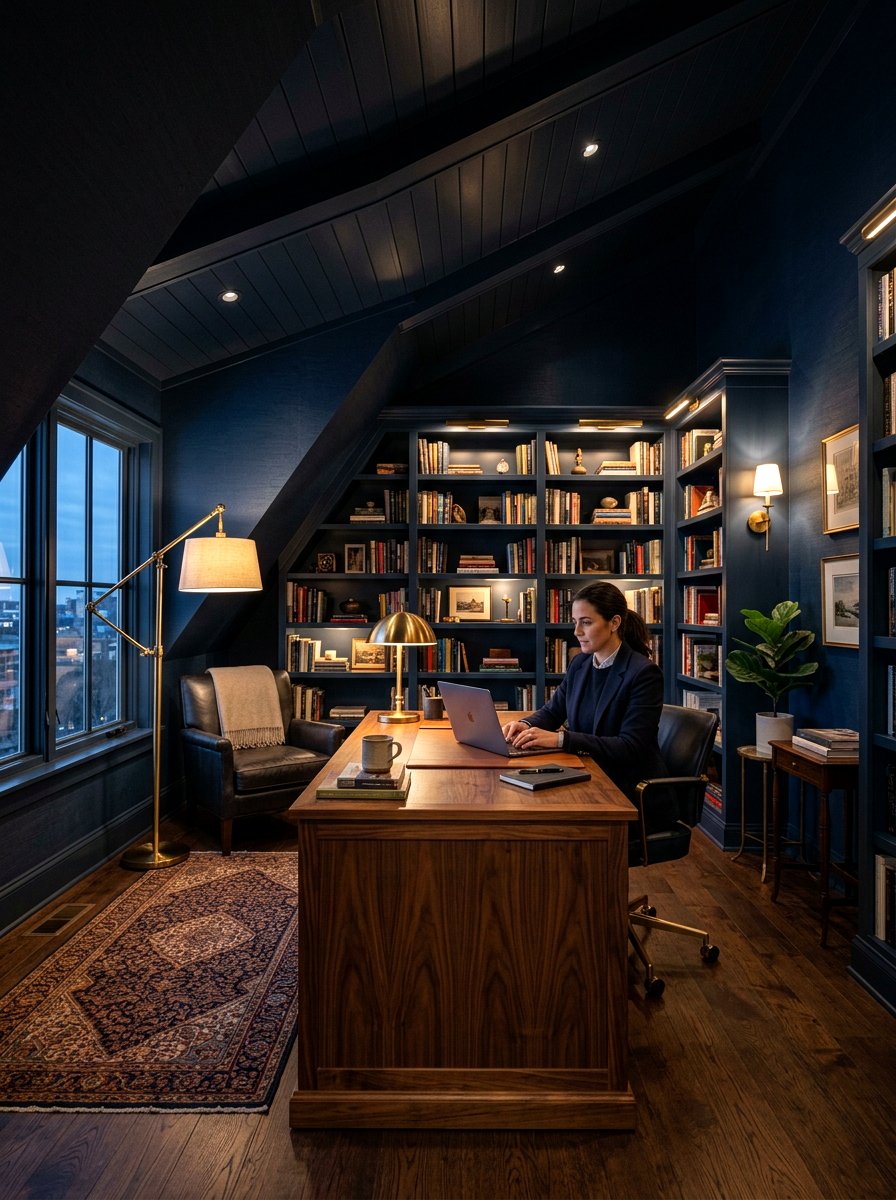
Painting the slanted walls of your office in a deep, moody hue can create a sophisticated and cocoon-like environment that is perfect for creative work. While many people fear dark colors in small spaces, they actually help the corners of a sloped ceiling recede, making the boundaries of the room less obvious. Pair dark forest green or slate blue walls with warm wood furniture to create a rich and cozy library feel. Ensure you have multiple layers of light, including floor lamps and desk lights, to prevent the space from feeling too dim. This design choice turns a potentially awkward room into a high-end sanctuary for deep thinking.
9. White Attic Office Nook
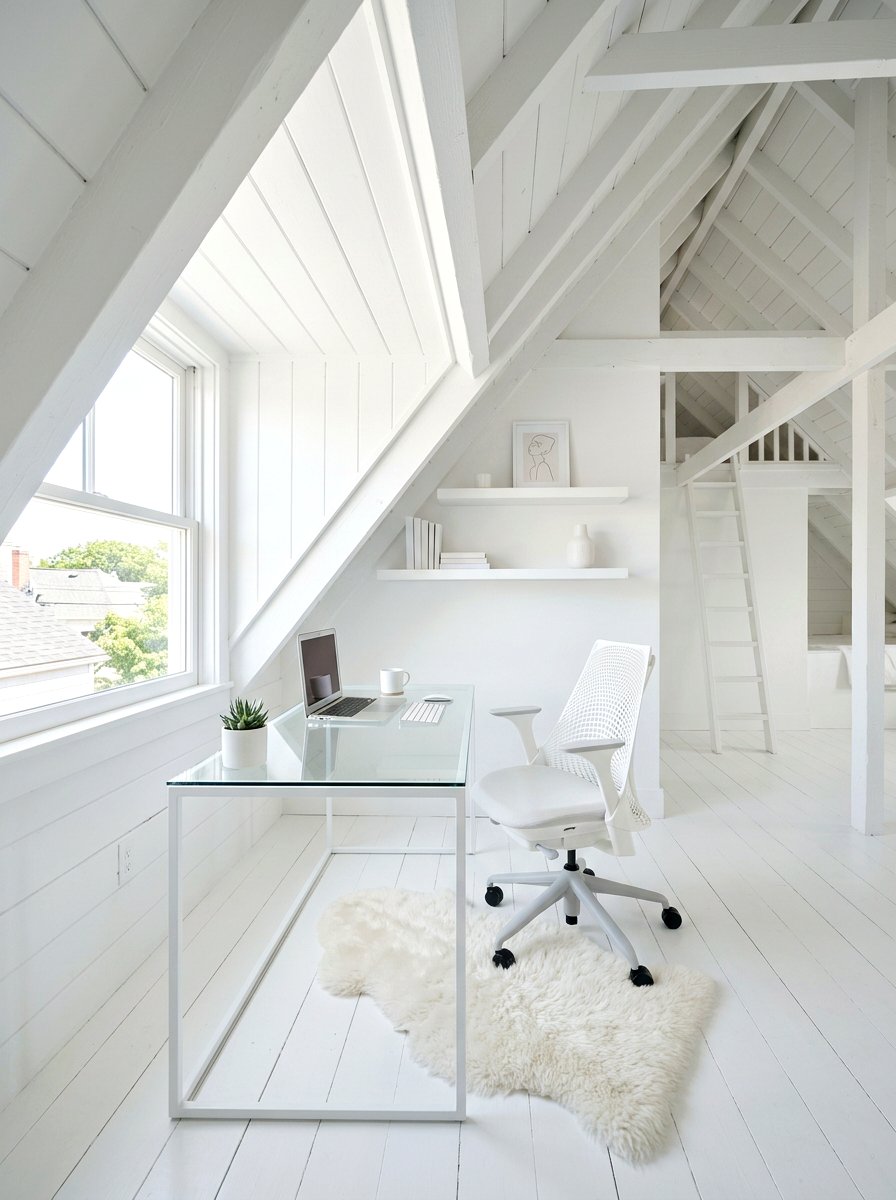
A crisp, all-white office nook is the ultimate solution for small attic spaces that lack significant natural light. By painting the walls, ceiling, and even the floor in a bright white finish, you eliminate visual breaks that can make a room feel chopped up. This technique allows shadows to soften and makes the slopes appear to float, creating a dreamy and ethereal work environment. Add interest through different textures, such as a sheepskin rug or a woven basket for waste paper. A glass-topped desk can further enhance the feeling of weightlessness, making your workday feel light and productive in a space that is truly refreshing.
10. Rustic Wood Beam Office
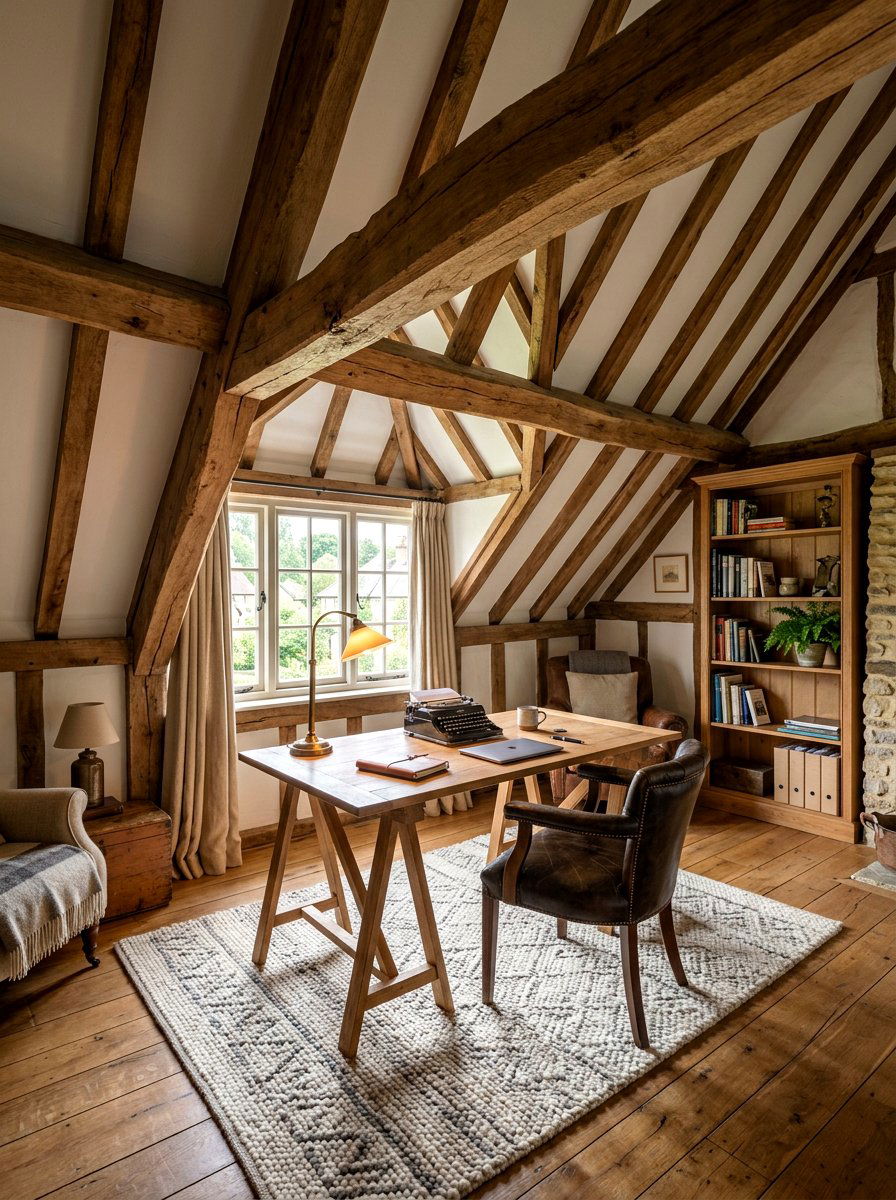
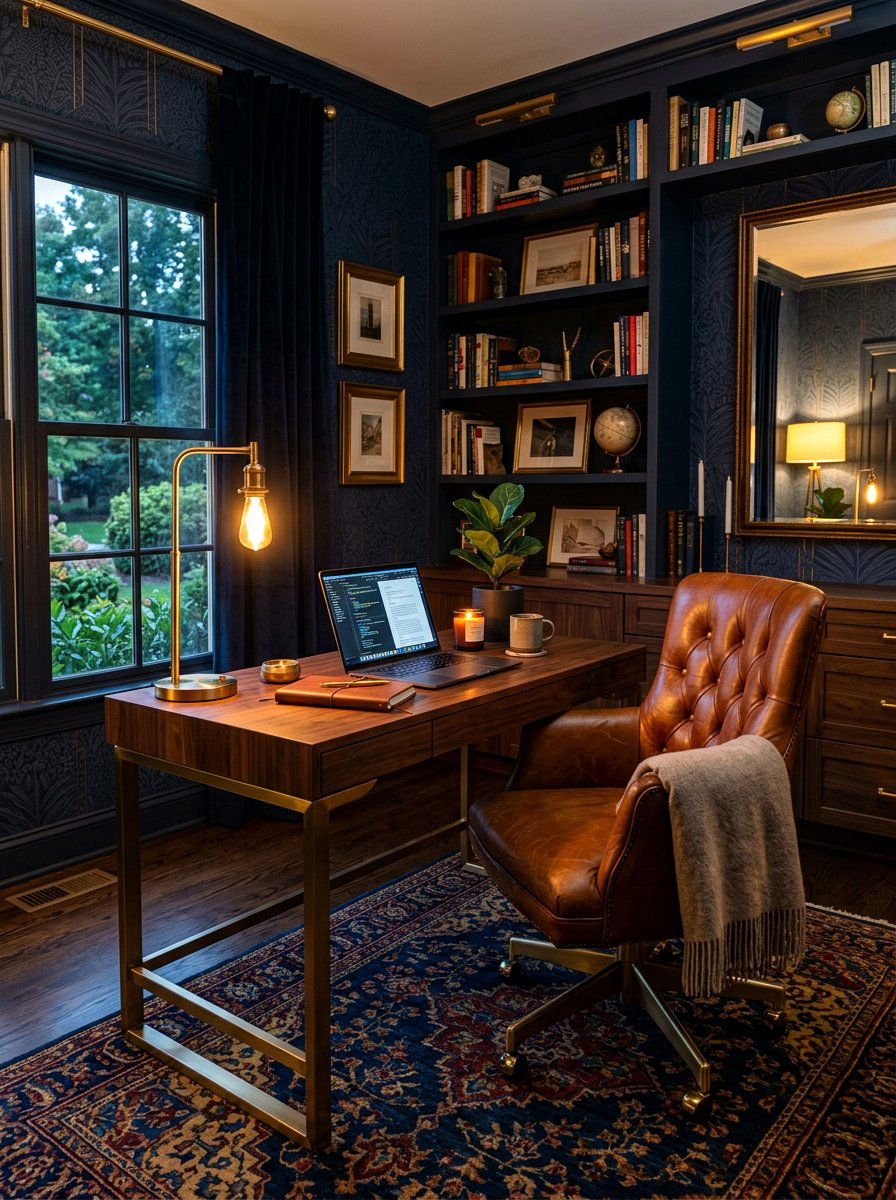
Highlighting original wooden beams in a sloped ceiling office adds instant character and a sense of history to your workspace. Treat the wood with a clear sealer to showcase the natural grain, or paint them a contrasting color for a more graphic look. Position your desk so that you can appreciate the craftsmanship of the roof structure while you work. Use natural materials throughout the room, such as linen curtains, wool rugs, and stone coasters, to complement the rustic vibe. This design direction works particularly well in older homes or countryside cottages, creating a warm and earthy retreat that feels connected to the rest of the house.
11. L-Shaped Desk In Attic
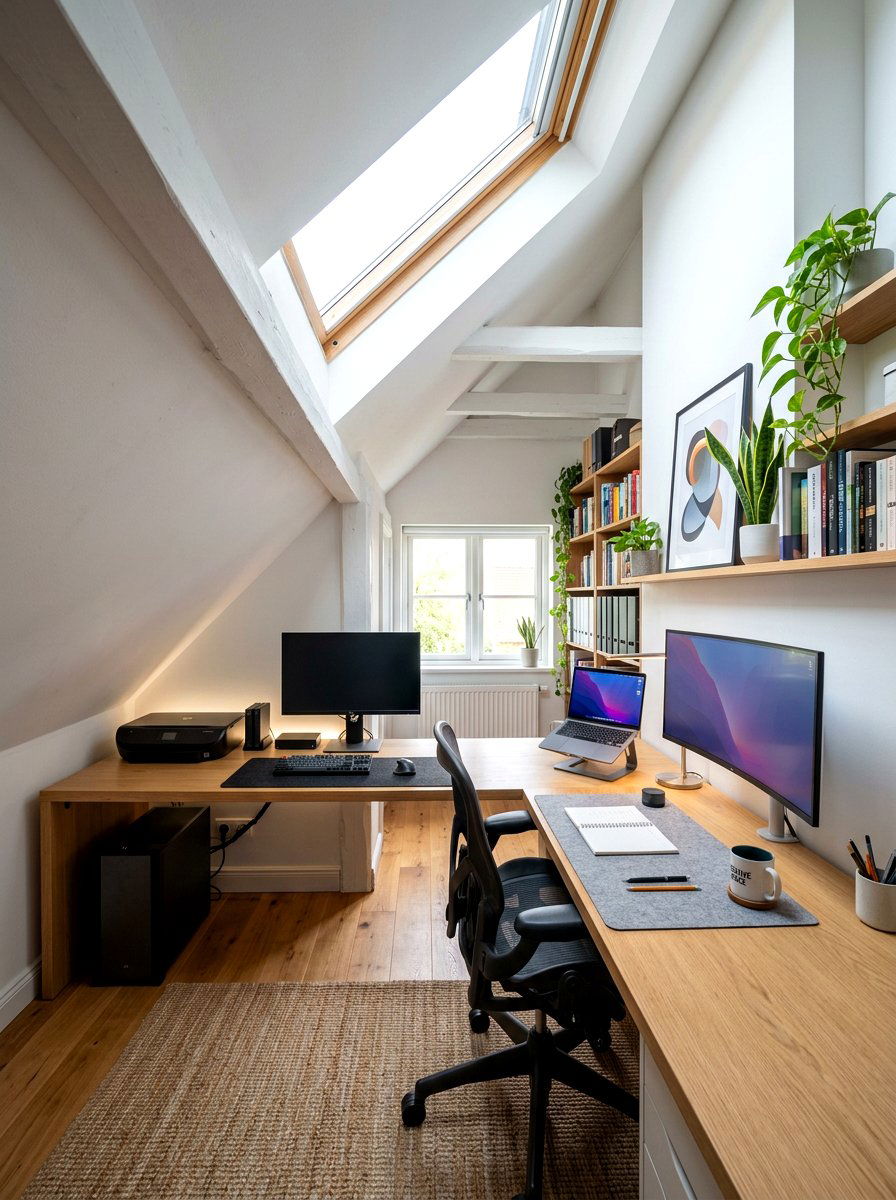
An L-shaped desk is an excellent choice for a sloped ceiling office because it allows you to utilize both the tall and short walls simultaneously. Place one side of the desk under the slope for storage and computer equipment, while the other side sits against a taller wall for more active tasks. This configuration provides an expansive work surface without making the room feel crowded. You can use the corner area for a printer or a large monitor, keeping the main workspace clear for writing. Selecting a desk with a slim profile ensures that the furniture doesn't overwhelm the unique architectural lines of the attic space.
12. Boho Attic Workspace
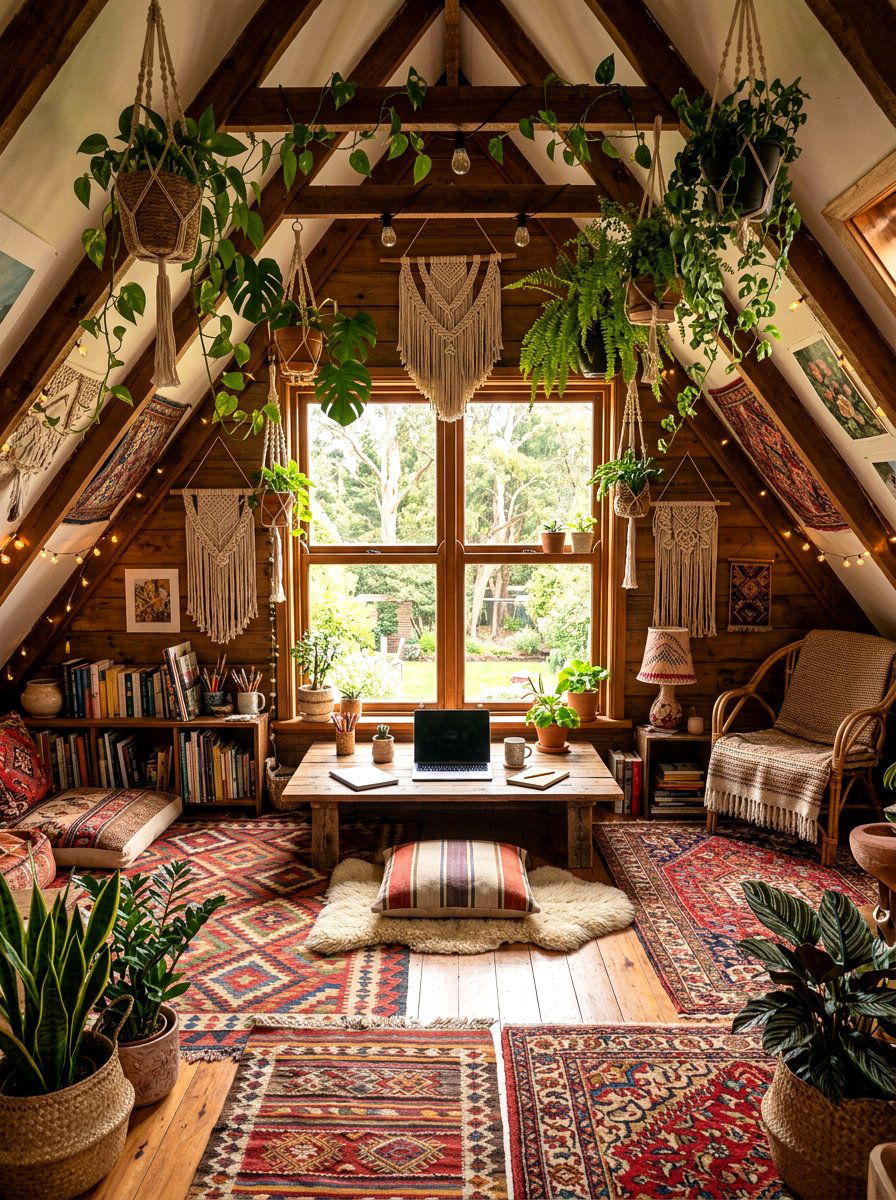
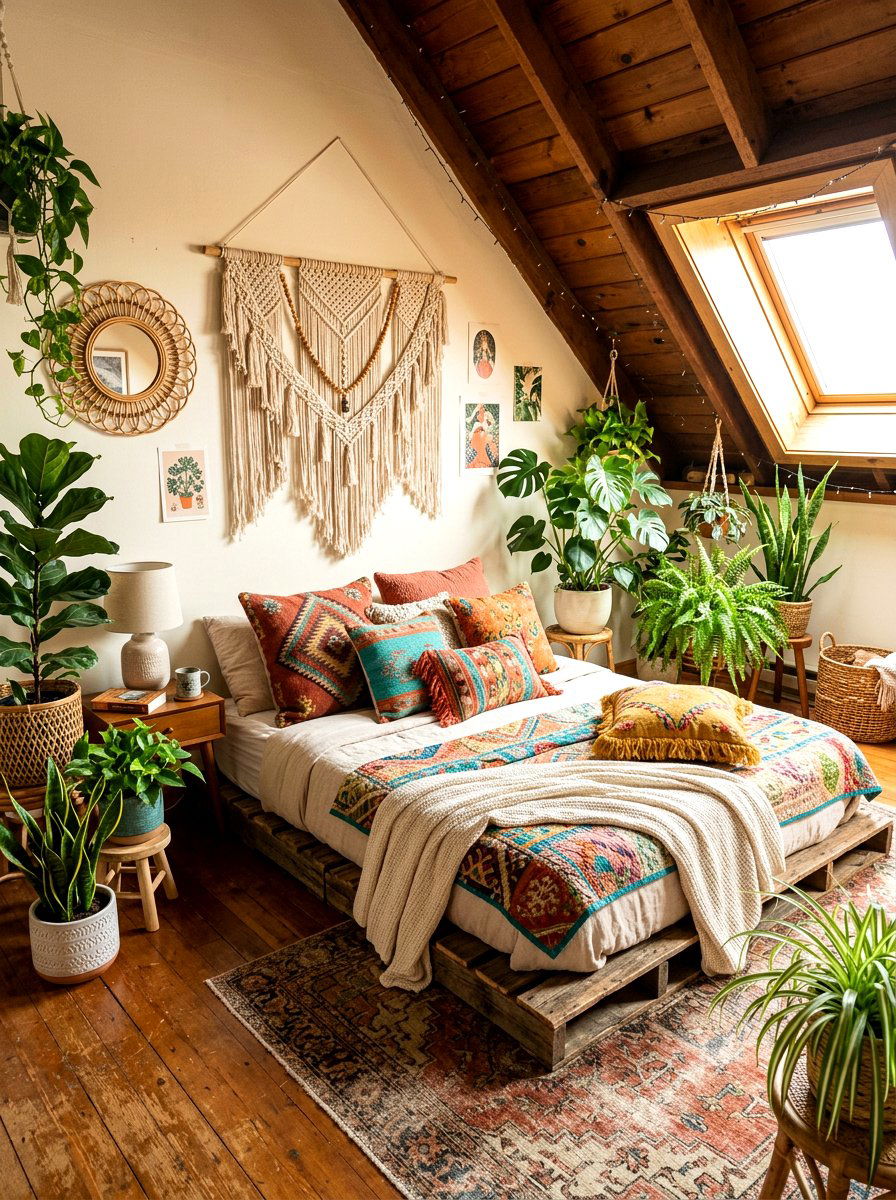
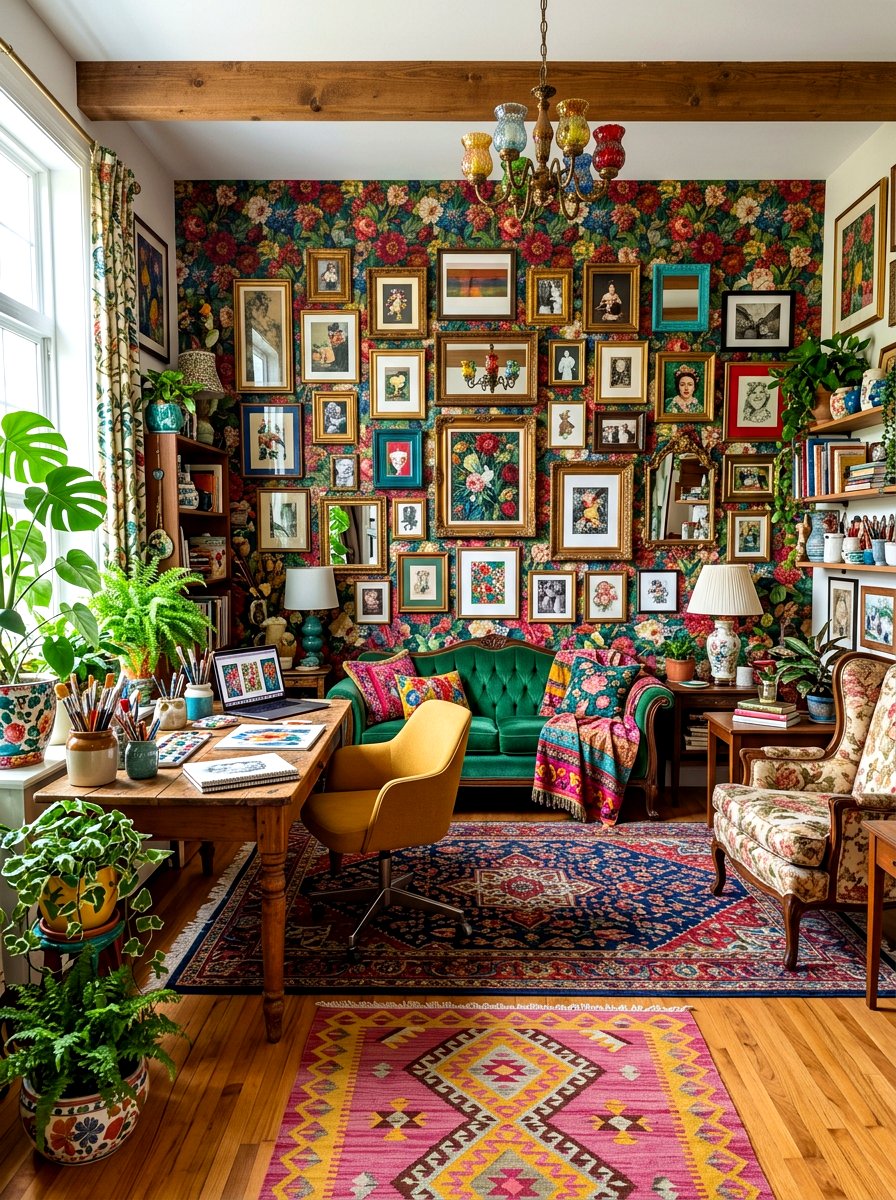
Transform your attic into a bohemian paradise by layering colors, patterns, and natural textures against the backdrop of your sloped ceilings. Use low-slung furniture like a floor desk or a vintage wooden table to stay beneath the lowest parts of the roofline. Decorate the walls with macramé hangings, woven tapestries, and plenty of hanging plants that thrive in the unique light of an upper floor. A plush Moroccan rug and several floor cushions can create a secondary seating area for reading or brainstorming. This relaxed and eclectic style is perfect for freelancers and artists who want a workspace that feels personal, cozy, and full of creative energy.
13. Scandinavian Sloped Ceiling Office
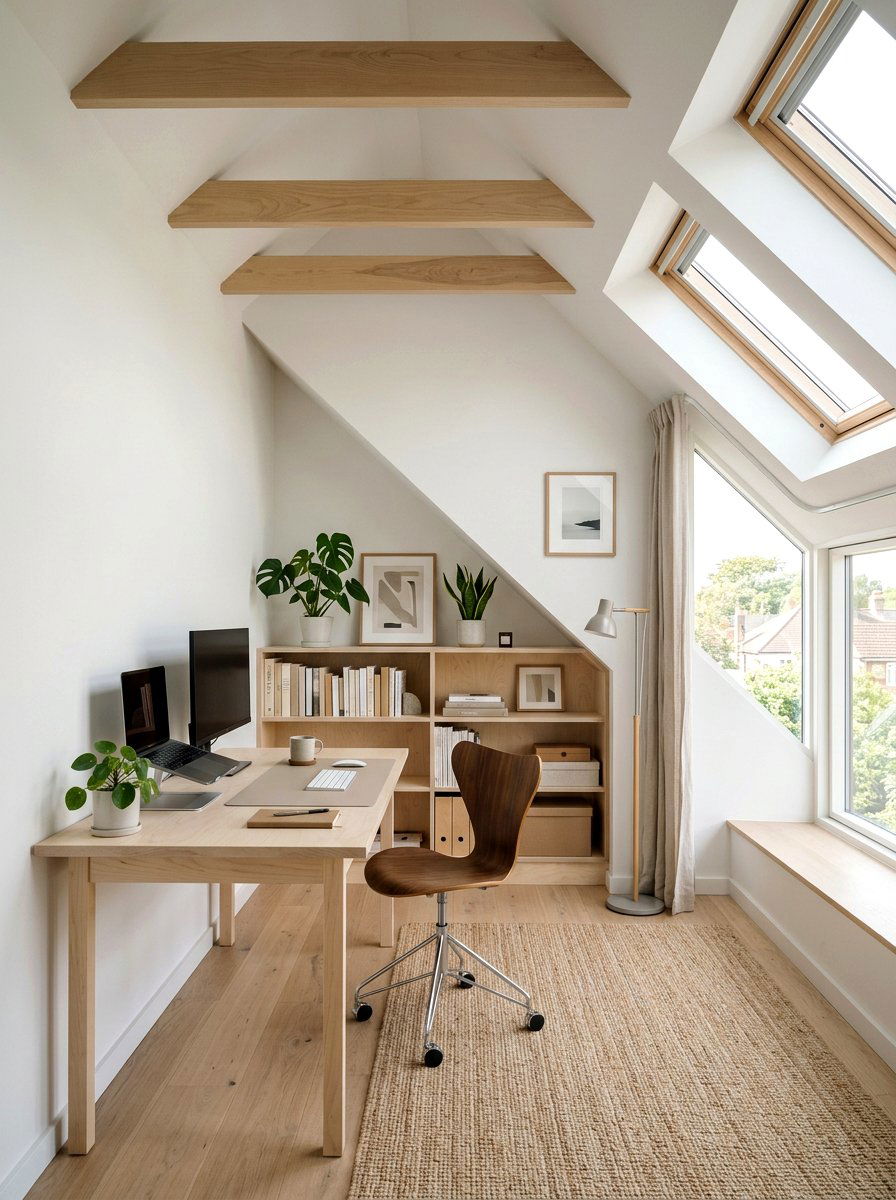
The Scandinavian design philosophy is perfectly suited for attic offices because it emphasizes functionality, light, and natural beauty. Choose furniture with light wood finishes like birch or pine and pair them with a neutral color palette of whites, greys, and soft blues. Keep the layout simple and focused on essential items to maintain a sense of calm. Large windows or skylights are essential to this look, bringing in the maximum amount of daylight. Use high-quality task lighting with a clean, modern silhouette to bridge the gap between form and function. This style creates a clean and organized workspace that helps to clear the mind for better productivity.
14. Attic Office With Library
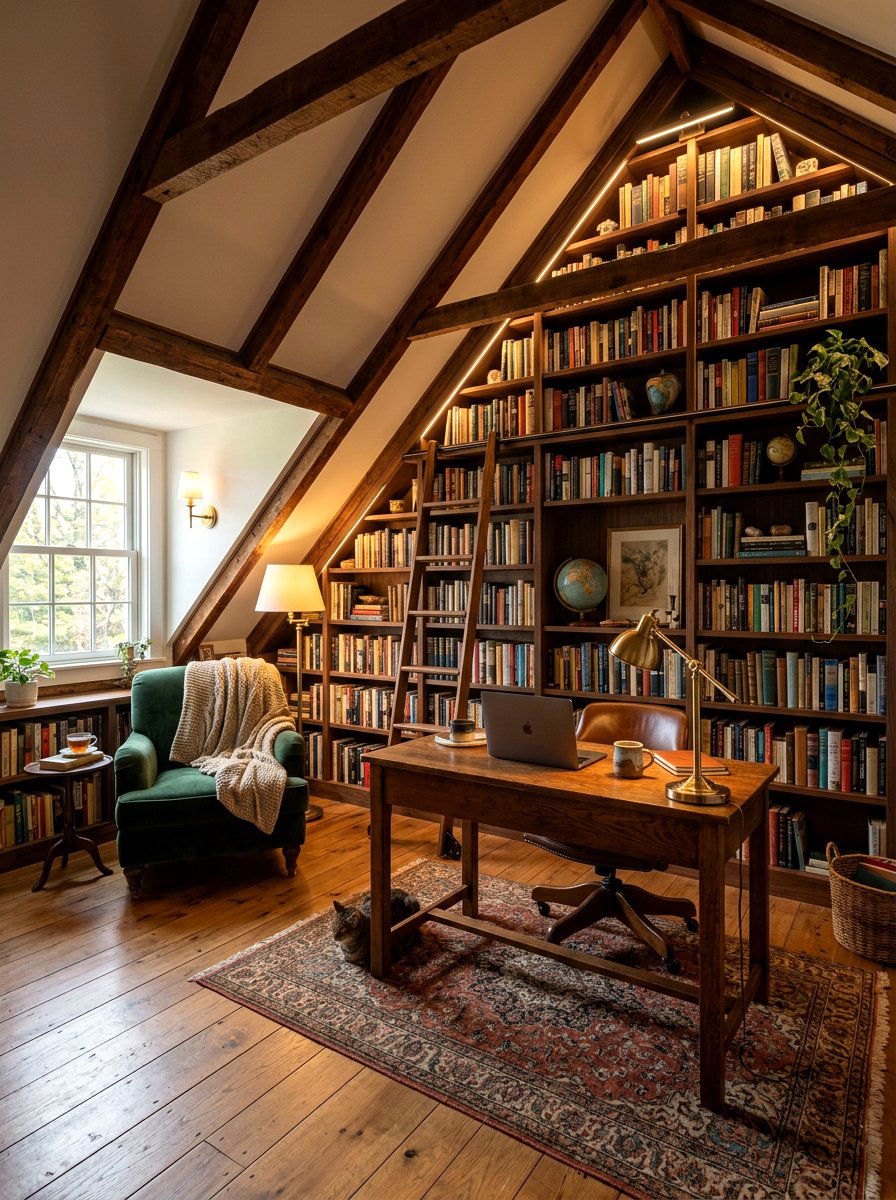
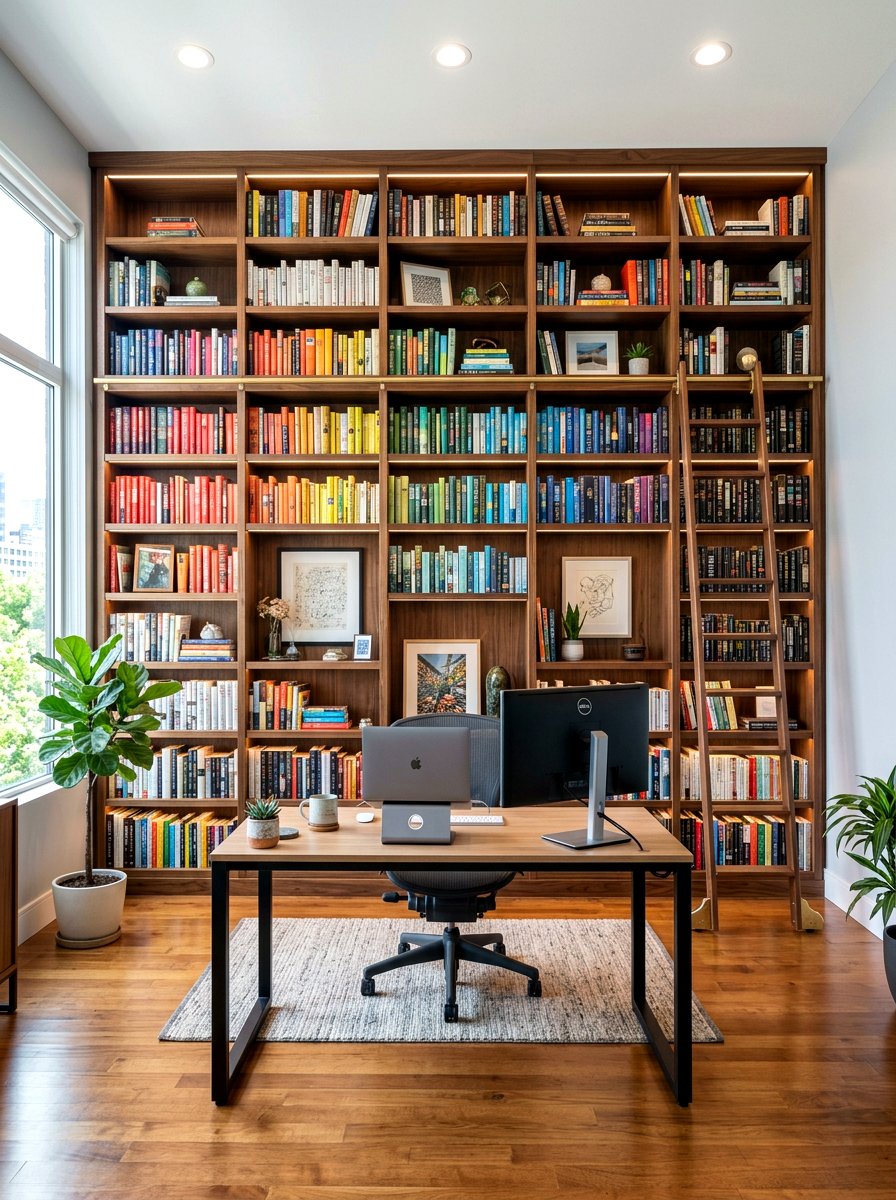
If you have a large collection of books, an attic office with integrated shelving along the sloped walls can create a stunning home library. Install custom bookshelves that follow the angle of the ceiling to maximize every inch of vertical space. This not only provides ample storage but also acts as built-in insulation against sound and temperature changes. Place a comfortable armchair in one corner with a small side table and a reading lamp to create a perfect spot for research or breaks. The presence of books adds warmth and a sense of intellectual gravity to the office, making it a truly inspiring place to spend your working hours.
15. Low Ceiling Desk Area
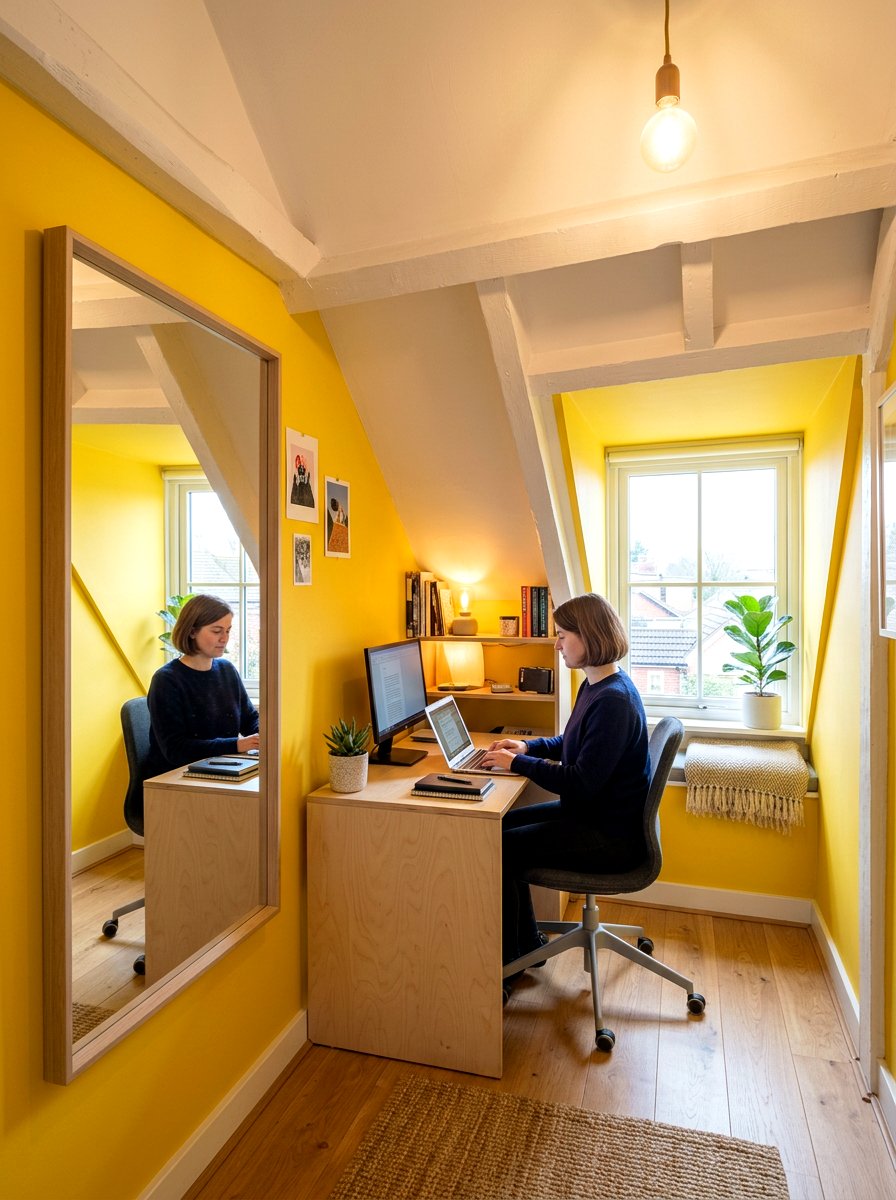
In attics where the ceiling is exceptionally low, you can still create a functional office by choosing furniture specifically designed for smaller heights. Opt for a low-profile desk and a chair that can be easily tucked away when not in use. Consider using the lowest part of the room for electronic equipment like printers or scanners that do not require constant interaction. Use bright colors and mirrors to bounce light around the restricted space, preventing it from feeling claustrophobic. By embracing the intimacy of a low ceiling, you can create a focused "cockpit" style office that minimizes distractions and feels incredibly private and secure.
16. Modern Farmhouse Attic Office
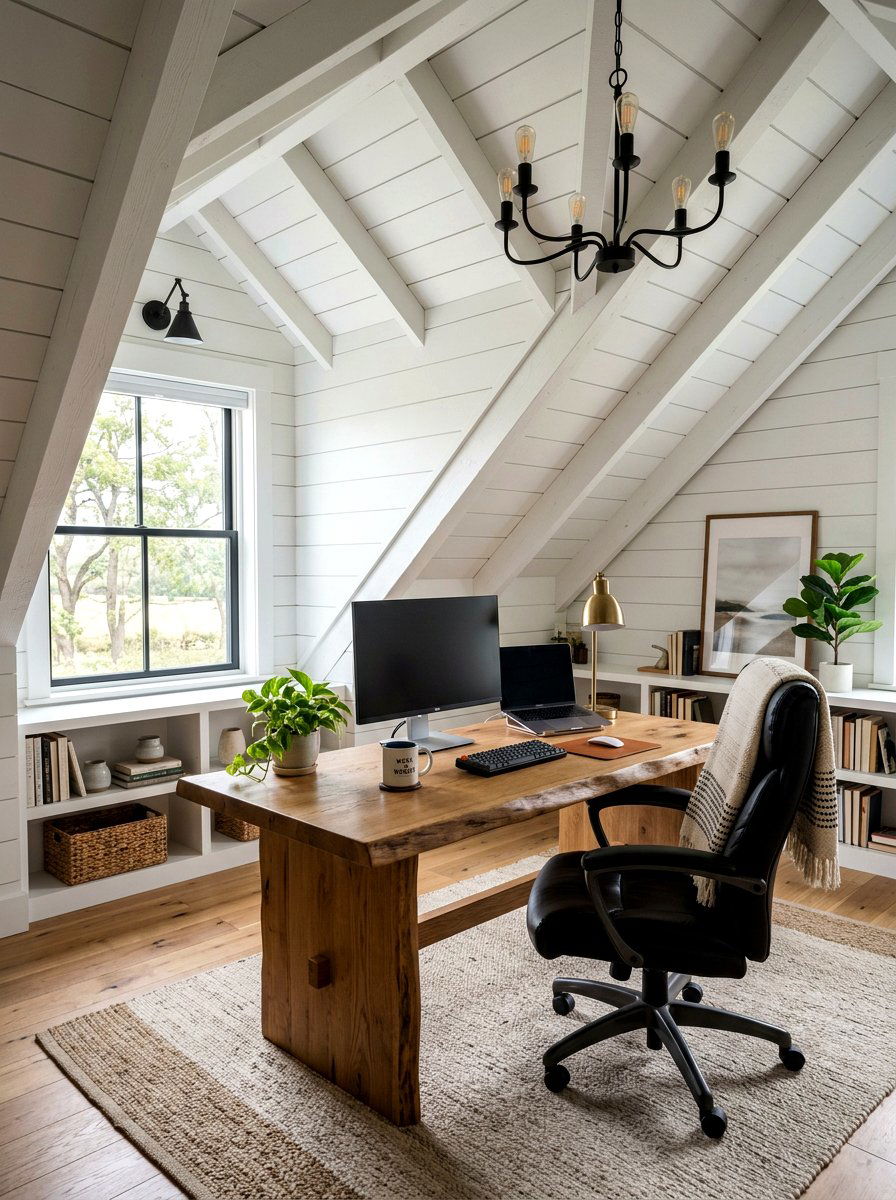
Combine traditional charm with modern efficiency by designing a farmhouse-style office under your sloped ceilings. Use shiplap on the walls or the ceiling to add texture and a classic architectural detail that emphasizes the angles. A heavy wooden desk with a slightly weathered finish provides a sturdy focal point for the room. Incorporate black metal accents in the lighting and hardware to add a contemporary edge to the rustic surroundings. Neutral textiles like cotton and wool in shades of cream and charcoal will keep the space feeling cozy and grounded. This look is perfect for creating a professional yet welcoming environment that feels like a natural extension of your home.
17. Contemporary Sloped Wall Office
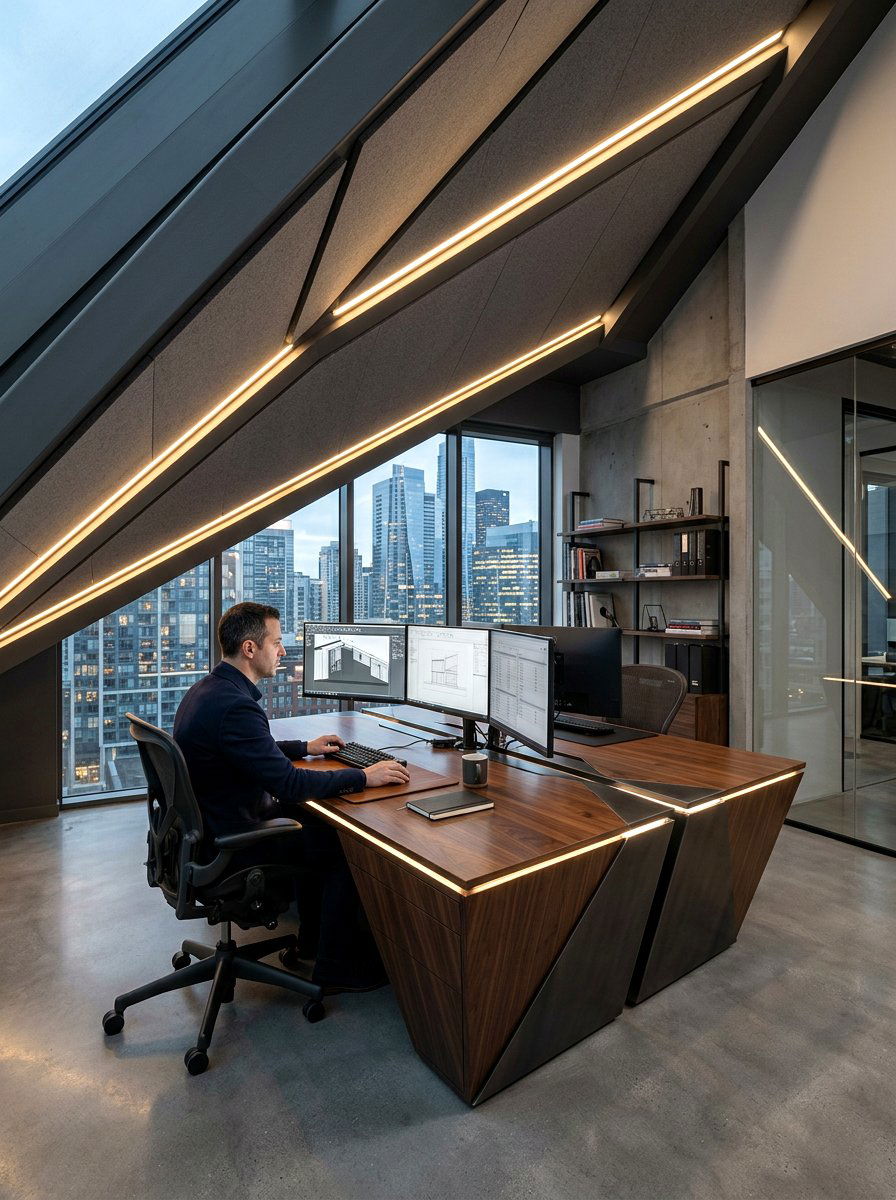
A contemporary office design in a sloped room focuses on bold shapes and innovative use of space. Consider a custom desk with a geometric silhouette that mirrors the angles of the ceiling for a high-impact look. Use a mix of materials like glass, metal, and polished wood to create a sophisticated and multi-dimensional environment. High-tech integrated lighting, such as LED strips hidden along the roofline, can highlight the architecture while providing excellent ambient light. Keep the color palette limited to two or three tones to maintain a sharp and focused aesthetic. This design is ideal for professionals who want a sleek, cutting-edge workspace that makes a strong statement.
18. Slanted Ceiling Craft Room
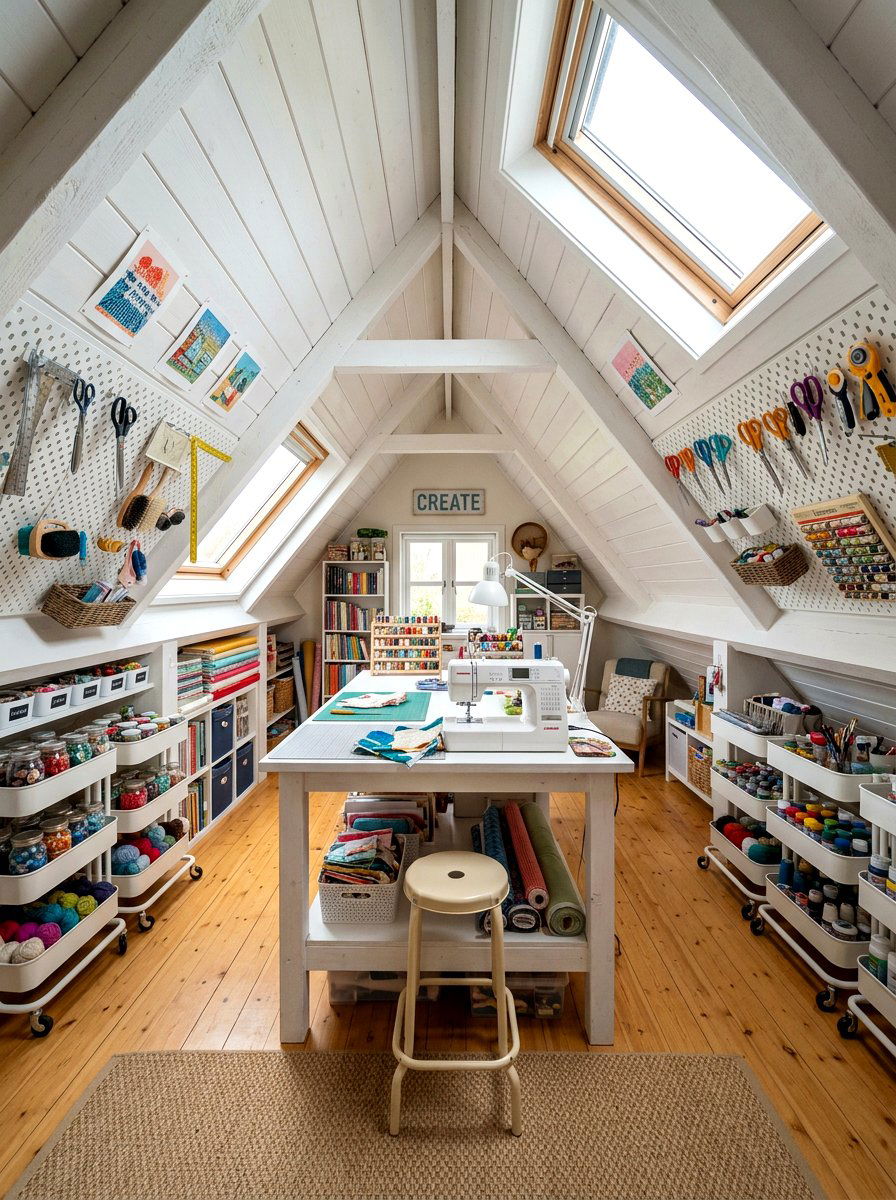
Attics with sloped ceilings are wonderful for craft rooms because the unique layout allows for specialized zones for different activities. Use the tallest wall for a large cutting table or a sewing machine station where you need the most vertical room. The lower eaves are perfect for storing bins of fabric, yarn, or paper supplies on rolling carts that can be pulled out when needed. Install pegboards on the flat wall sections to keep tools organized and within easy reach. Bright, daylight-mimicking bulbs are essential for accurate color work. This creative sanctuary provides a quiet place to focus on your hobbies away from the main living areas of the home.
19. Dual Person Attic Office
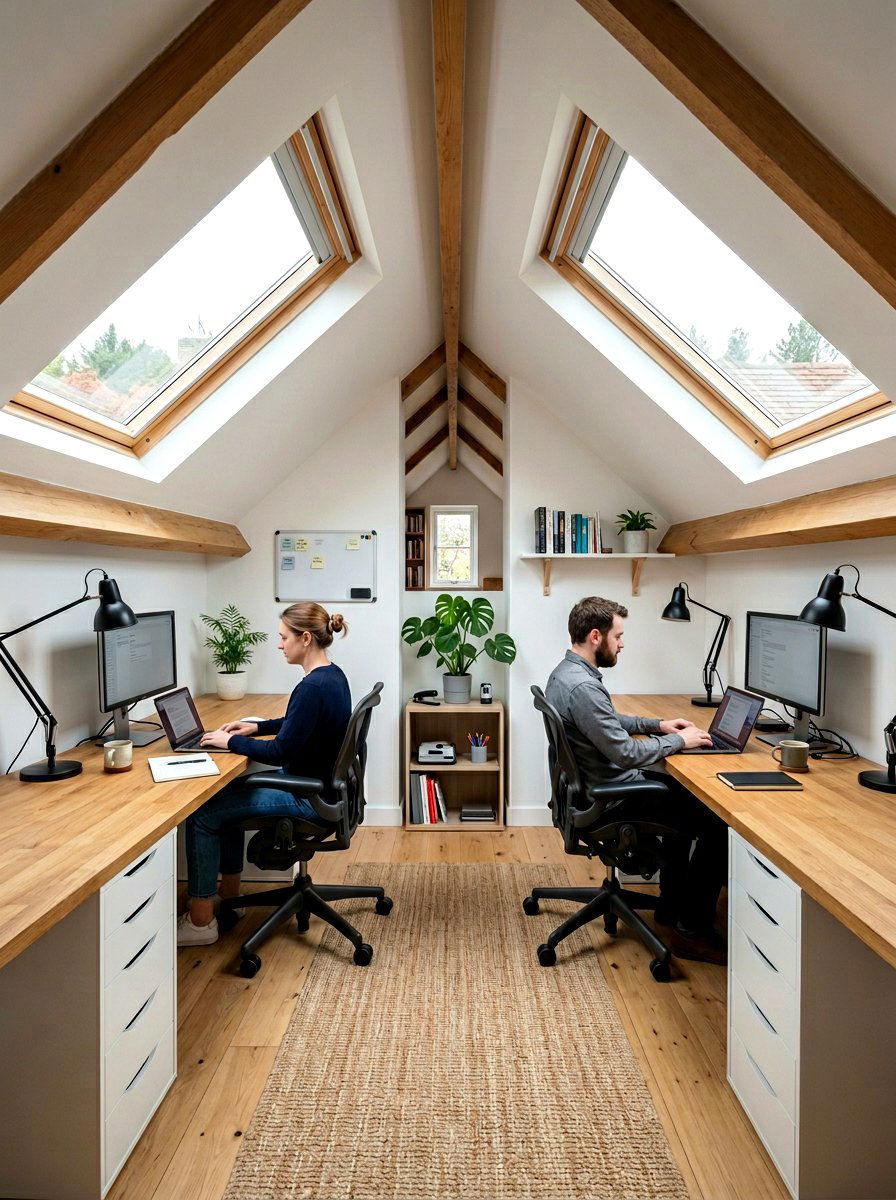
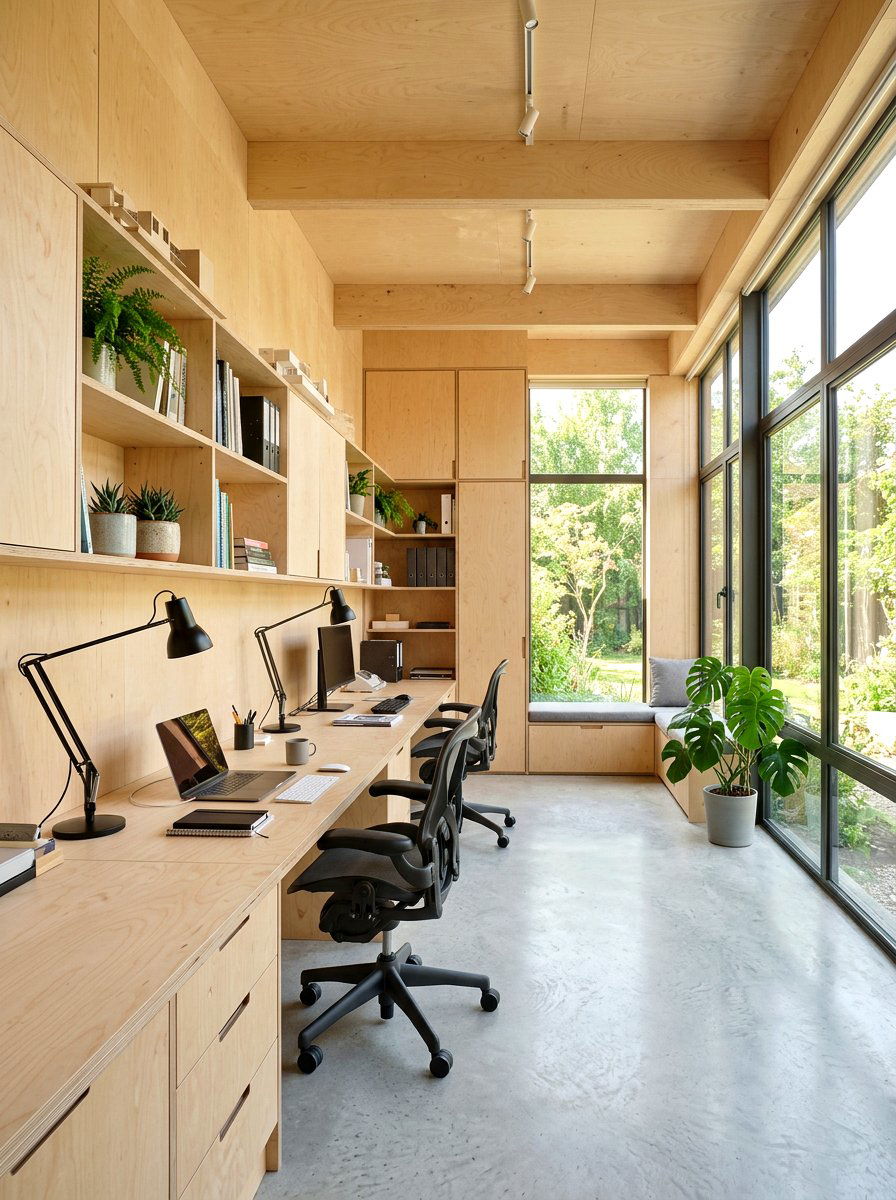
Designing a workspace for two people under a sloped ceiling requires careful planning to ensure everyone has enough room. Place two identical desks along the longest wall, or position them back-to-back in the center of the room if the height allows. Use a long, shared desktop to create a continuous work surface that helps the room feel more cohesive. Each person should have their own dedicated task lighting and storage to minimize conflict. If space is tight, use the sloped corners for shared equipment like a printer or a filing cabinet. This layout turns a challenging attic into a highly collaborative and efficient hub for a busy household.
20. Luxury Attic Executive Suite
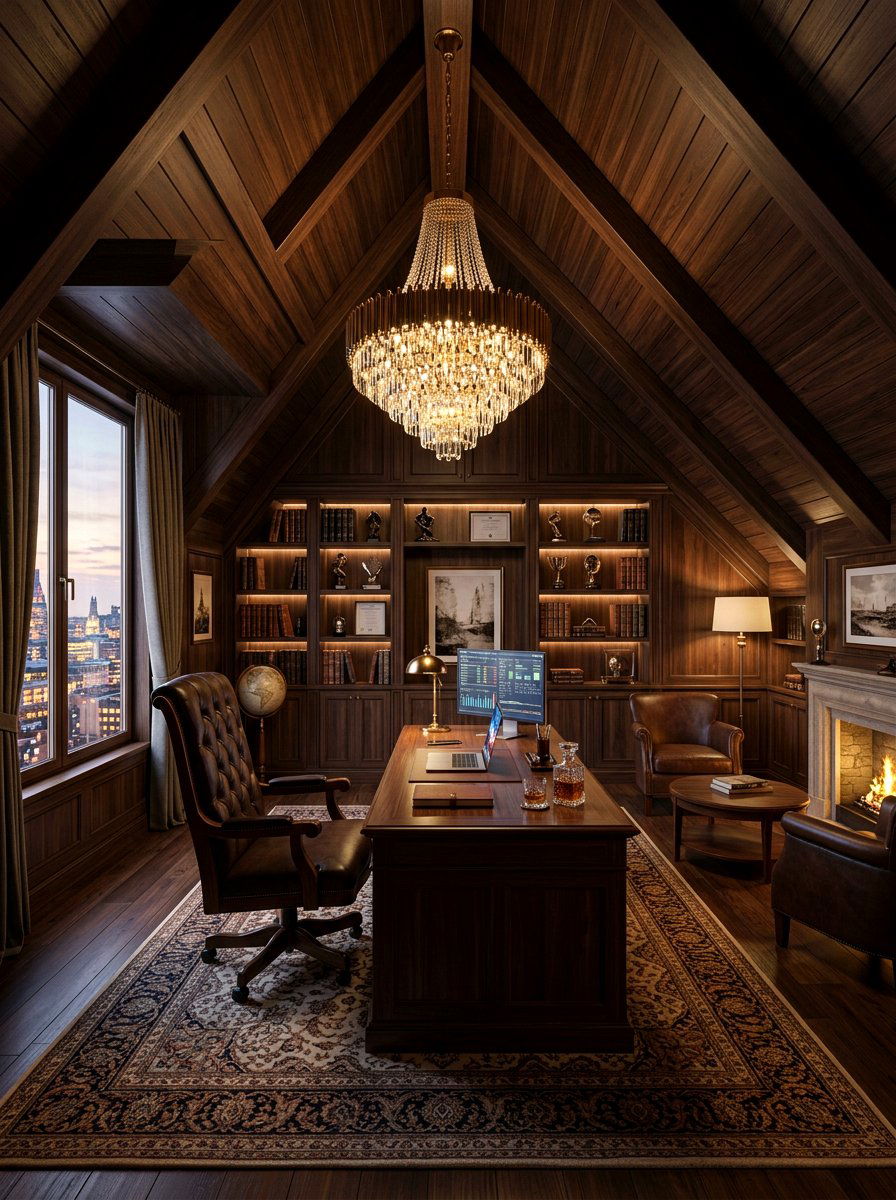
For a high-end feel, transform your attic into a luxury executive suite featuring premium materials and a sophisticated layout. Choose a large desk made of walnut or mahogany and pair it with a high-back leather ergonomic chair. Use a rich color palette of deep plums, forest greens, or classic navy to create a sense of importance. Install high-quality broadloom carpet or a designer area rug to add comfort and soundproofing. Elegant sconces and a statement chandelier can provide the perfect finishing touches. This luxurious approach turns a simple attic into a professional sanctuary that is perfect for hosting virtual meetings or working on high-stakes projects with total confidence.
21. Floating Desk Under Slope
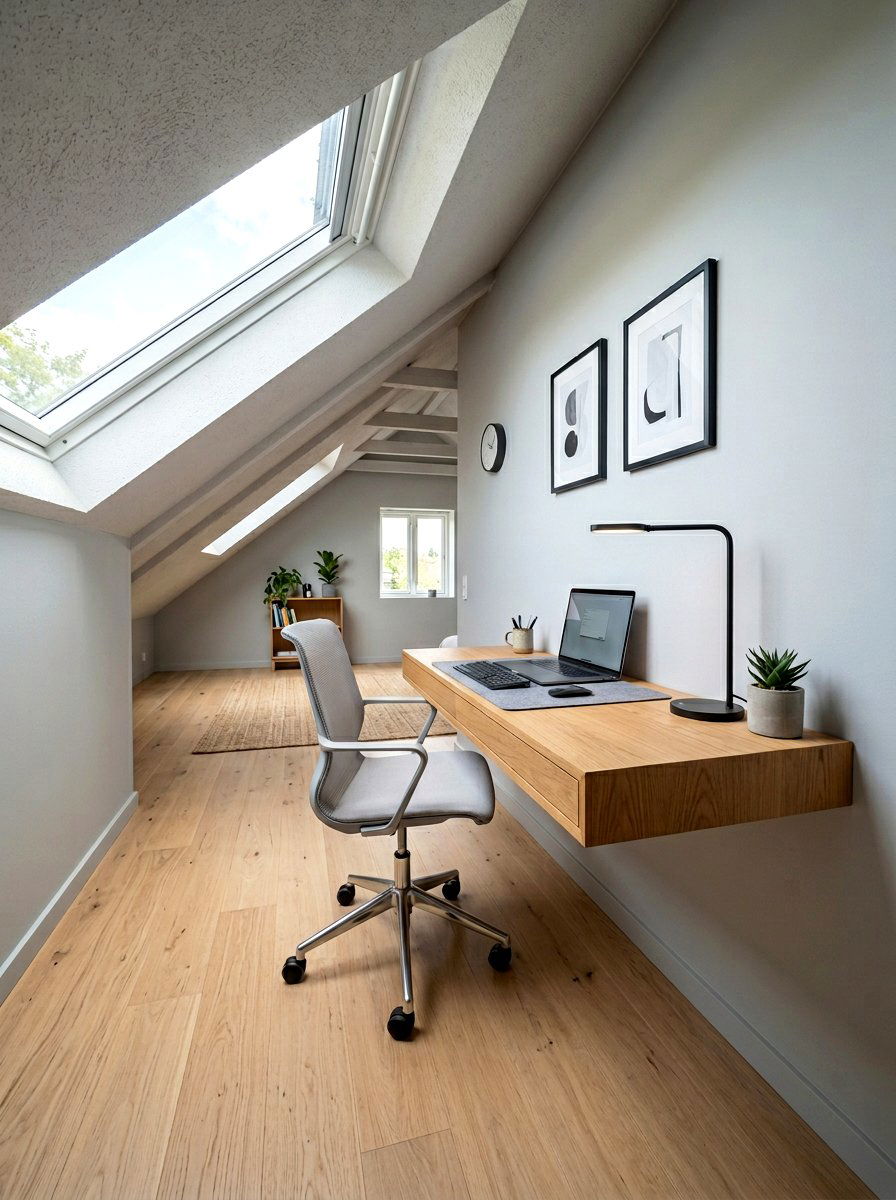
A floating desk is a space-saving marvel for rooms with sloped ceilings because it eliminates the need for bulky legs that can clutter the floor. Mount a thick wooden or laminate plank directly to the wall at a height that allows you to sit comfortably. This keeps the area underneath open, which makes the room feel much larger and allows for easy cleaning. You can use the wall space above the desk for a corkboard or a small magnetic strip to hold notes and tools. The clean, streamlined look of a floating desk complements modern and minimalist styles perfectly, providing a functional and stylish workstation in even the tightest attic corners.
22. Colorful Attic Workspace
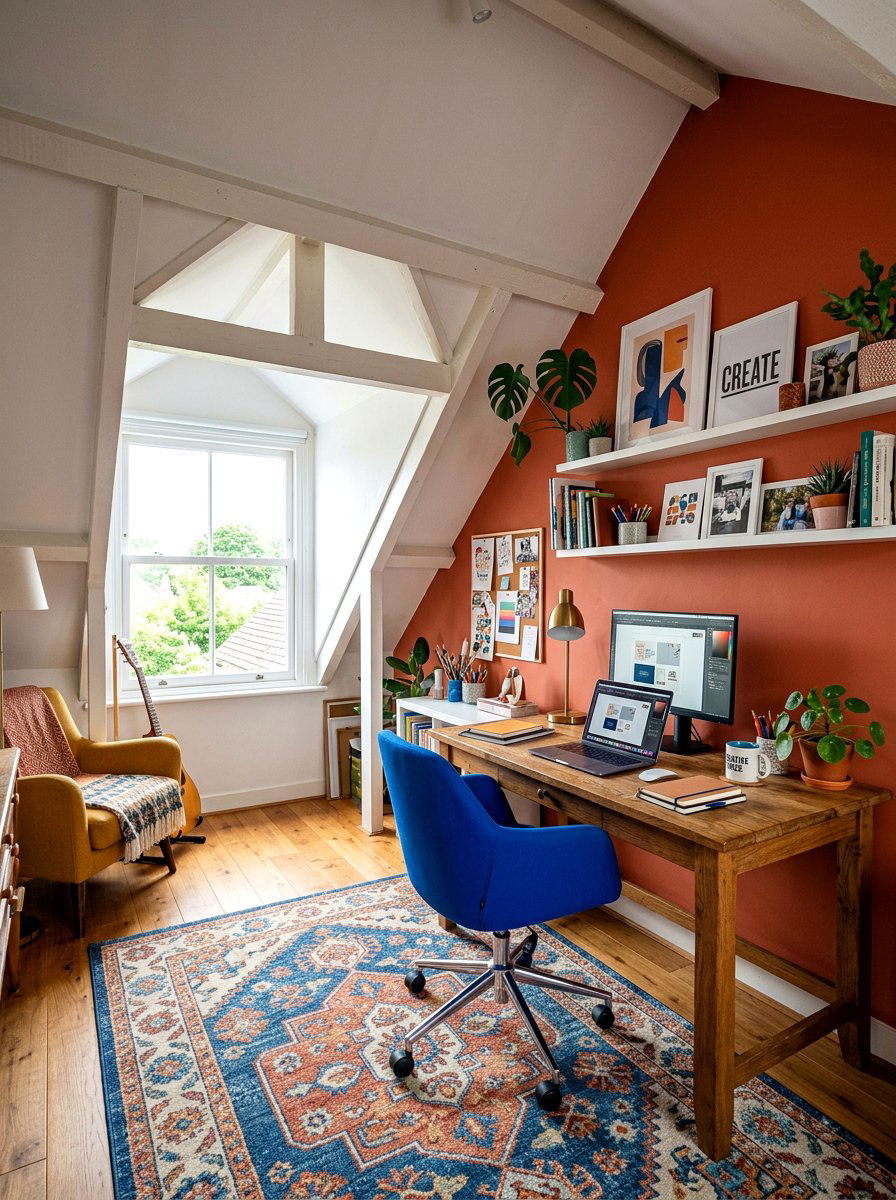
Don't be afraid to use bold colors to inject energy into your sloped ceiling office. A vibrant accent wall in a shade like terracotta or sunny yellow can make the space feel joyful and stimulating. If the ceiling is low, use color on the lower walls and keep the slopes white to maintain a sense of height. You can also introduce color through furniture, such as a bright blue chair or a colorful rug. This playful approach is excellent for boosting creativity and making the workday feel less like a chore. Balance the bright tones with neutral accents to ensure the room remains a professional and productive environment.
23. Plywood Finish Attic Office
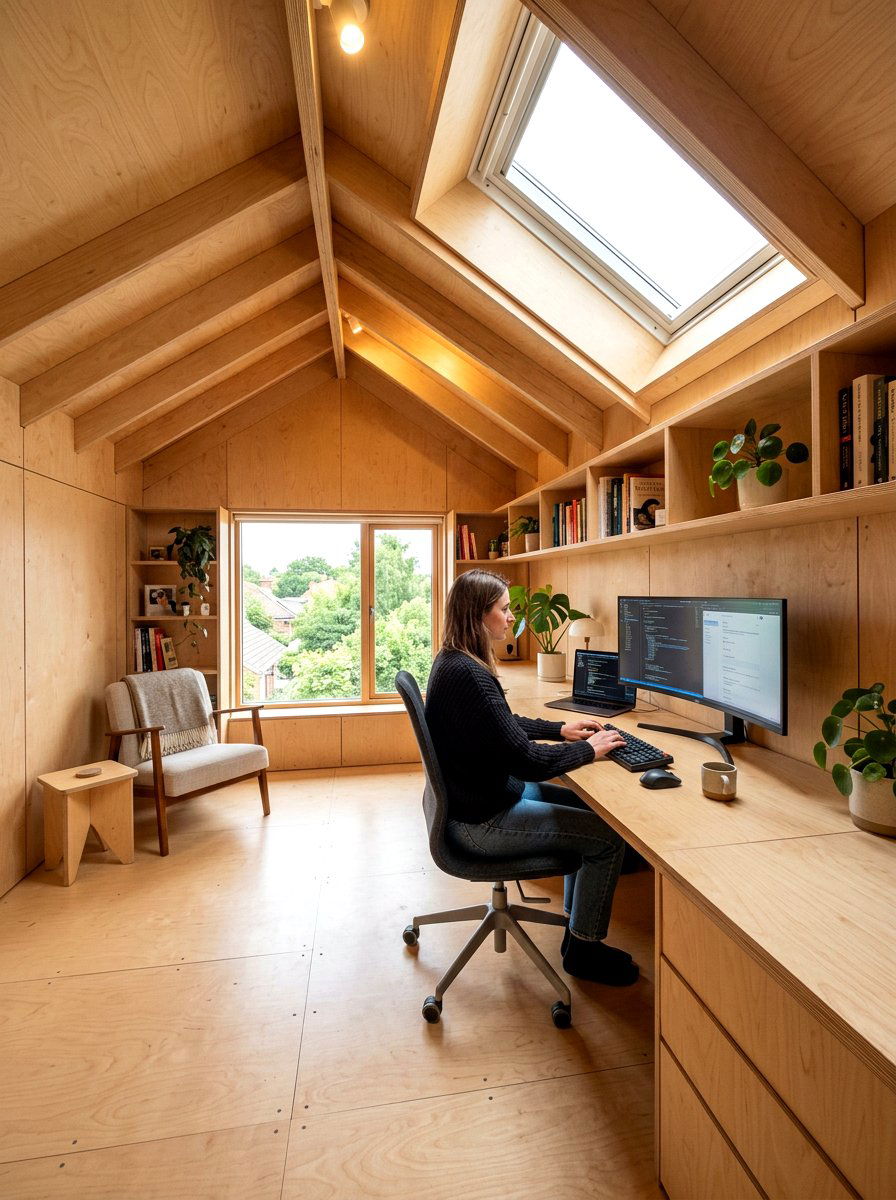
Using plywood for the walls and furniture in an attic office creates a warm, modern, and cost-effective aesthetic. The light grain of the wood adds subtle visual interest without the heaviness of traditional timber. You can create custom storage units and a desk from the same material for a perfectly integrated look. The uniform finish helps to blur the lines between the walls and the ceiling, making the sloped room feel more expansive. Seal the plywood with a clear matte finish to protect it while keeping its natural beauty. This Scandinavian-inspired look is perfect for a trendy and functional workspace that feels incredibly fresh and very contemporary.
24. Glass Partition Attic Office
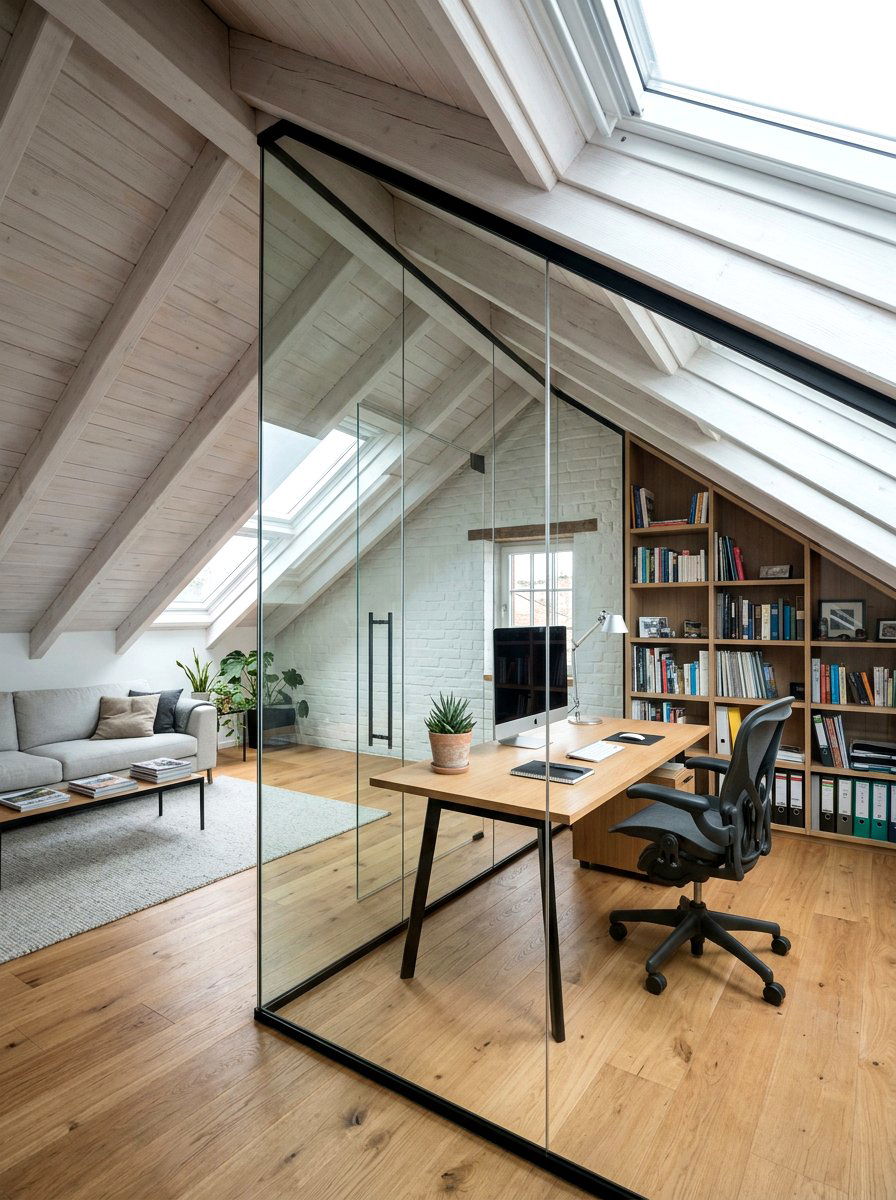
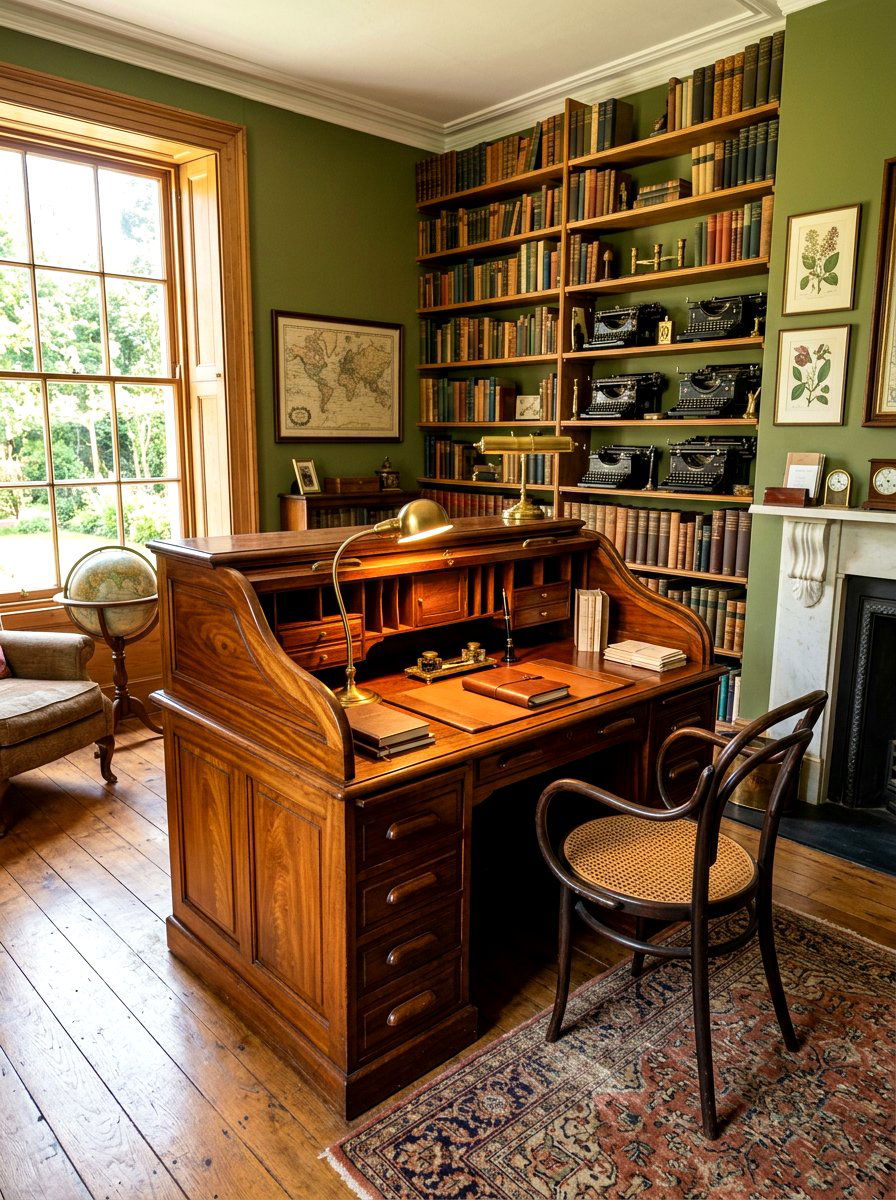
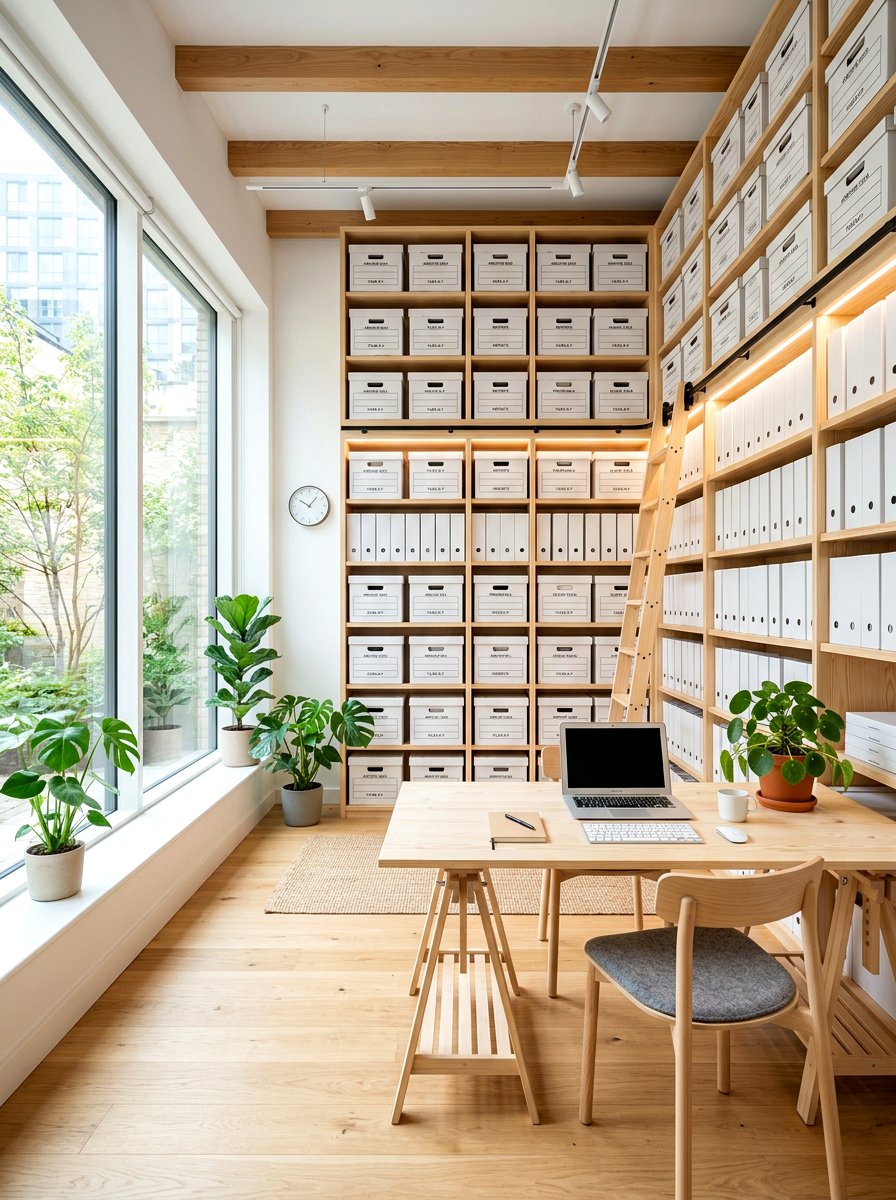
If your attic is part of a larger open space, using glass partitions can help define the office area without losing the sense of light and openness. A glass wall allows the sloped ceiling to continue visually through the entire room, which prevents the office from feeling like a small box. This is particularly effective if the office is located at one end of a bedroom or a playroom. You can use frosted or ribbed glass for a bit of extra privacy while still benefiting from the shared natural light. This modern architectural solution creates a professional and quiet work zone that feels high-end and very intentionally designed for the modern home.
25. Cozy Attic Reading Office
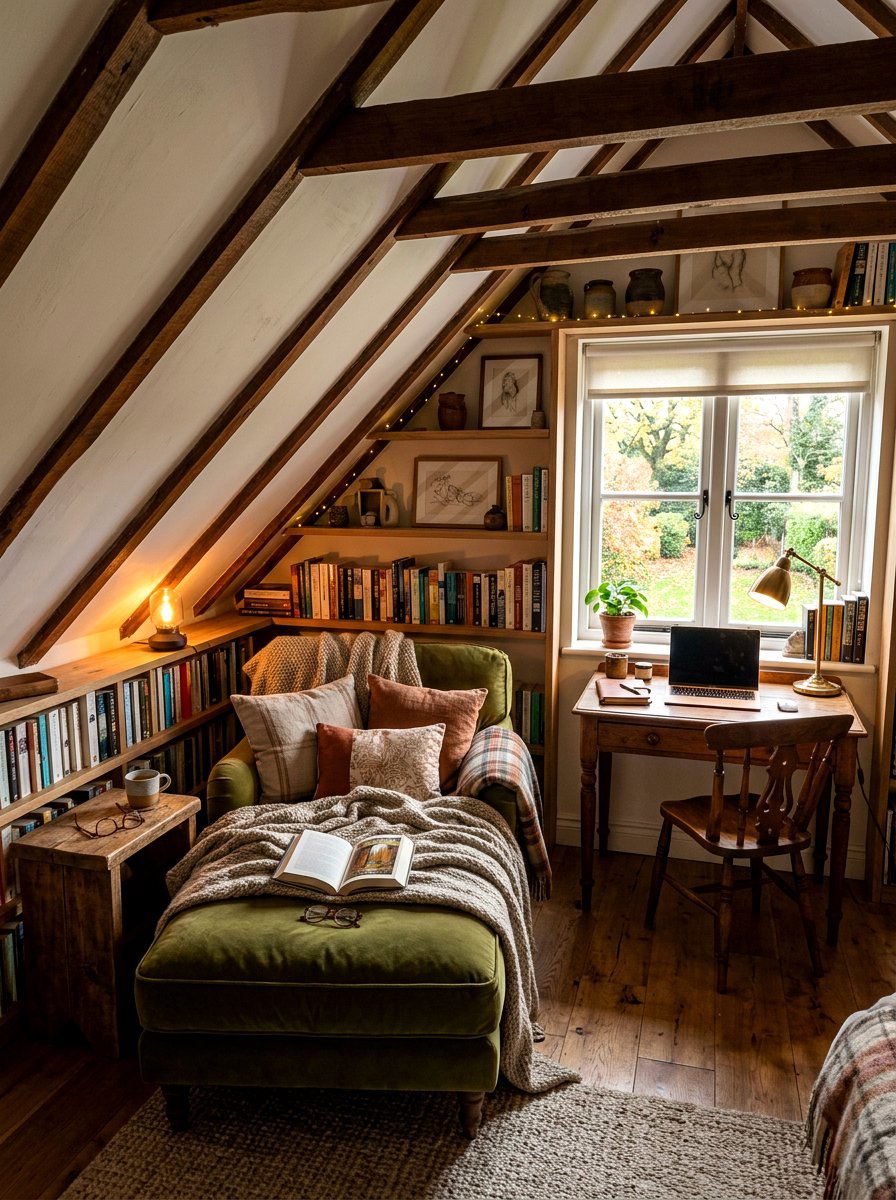
Sometimes an office needs to be as much about contemplation as it is about computer work. Design a space that features a small, efficient desk but prioritizes a cozy reading area in the lowest part of the slope. Fill the corner with a plush chaise lounge, a soft throw blanket, and a low bookshelf filled with your favorite titles. Use warm, dimmable lighting to create a relaxing atmosphere that is perfect for research or creative brainstorming. This dual-purpose room allows you to switch between active tasks and quiet reflection without leaving your private attic sanctuary. It is the ultimate retreat for writers and lifelong learners alike.
26. Mirrored Wall Attic Office
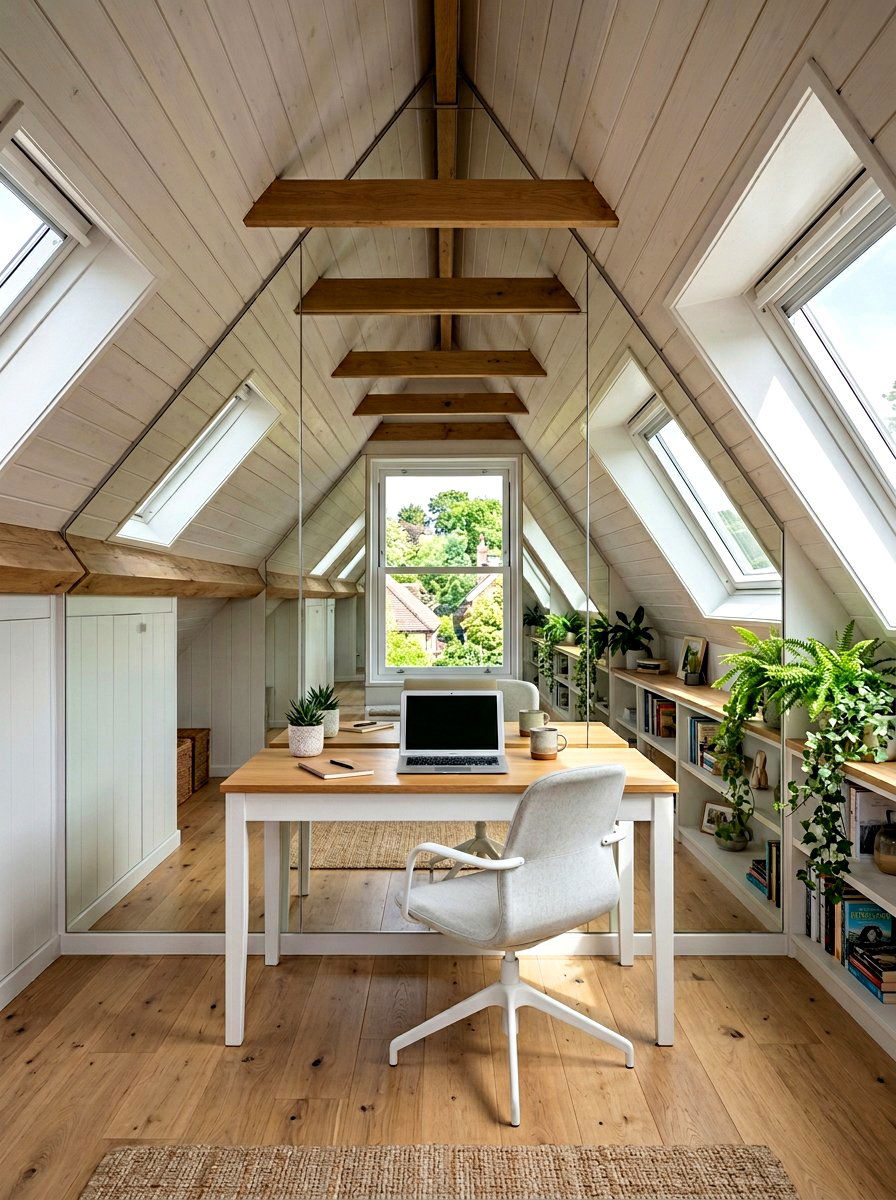
Mirrors are a classic design trick for making any small or uniquely shaped room feel twice its size. In a sloped ceiling office, installing a large mirror on the vertical wall opposite the desk can reflect light and the architectural lines of the ceiling. This creates a sense of depth and prevents the slanted walls from feeling like they are closing in. You can use a single large floor-to-ceiling mirror or a collection of smaller framed mirrors for a more decorative effect. The reflection of a window or a skylight will further brighten the space, making it a more pleasant and airy environment for working throughout the day.
27. Exposed Brick Attic Workspace
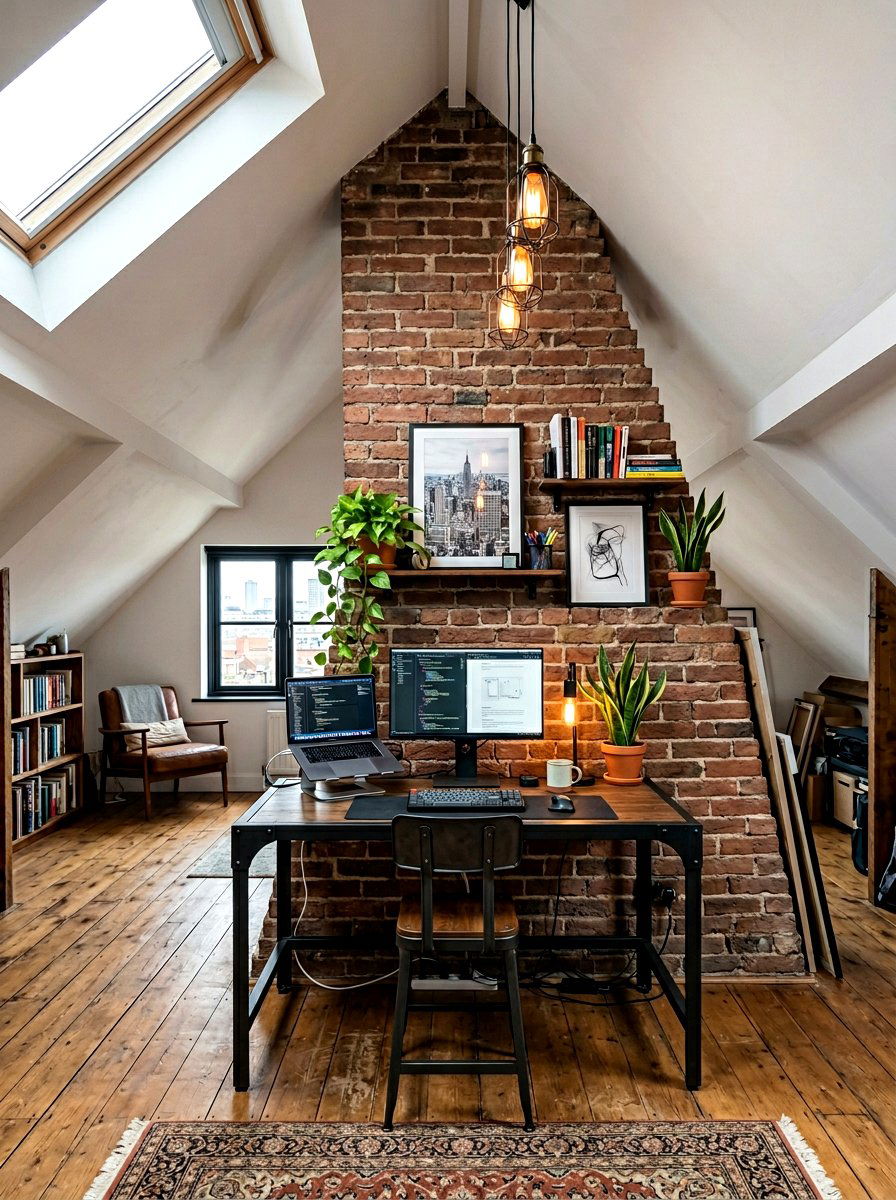
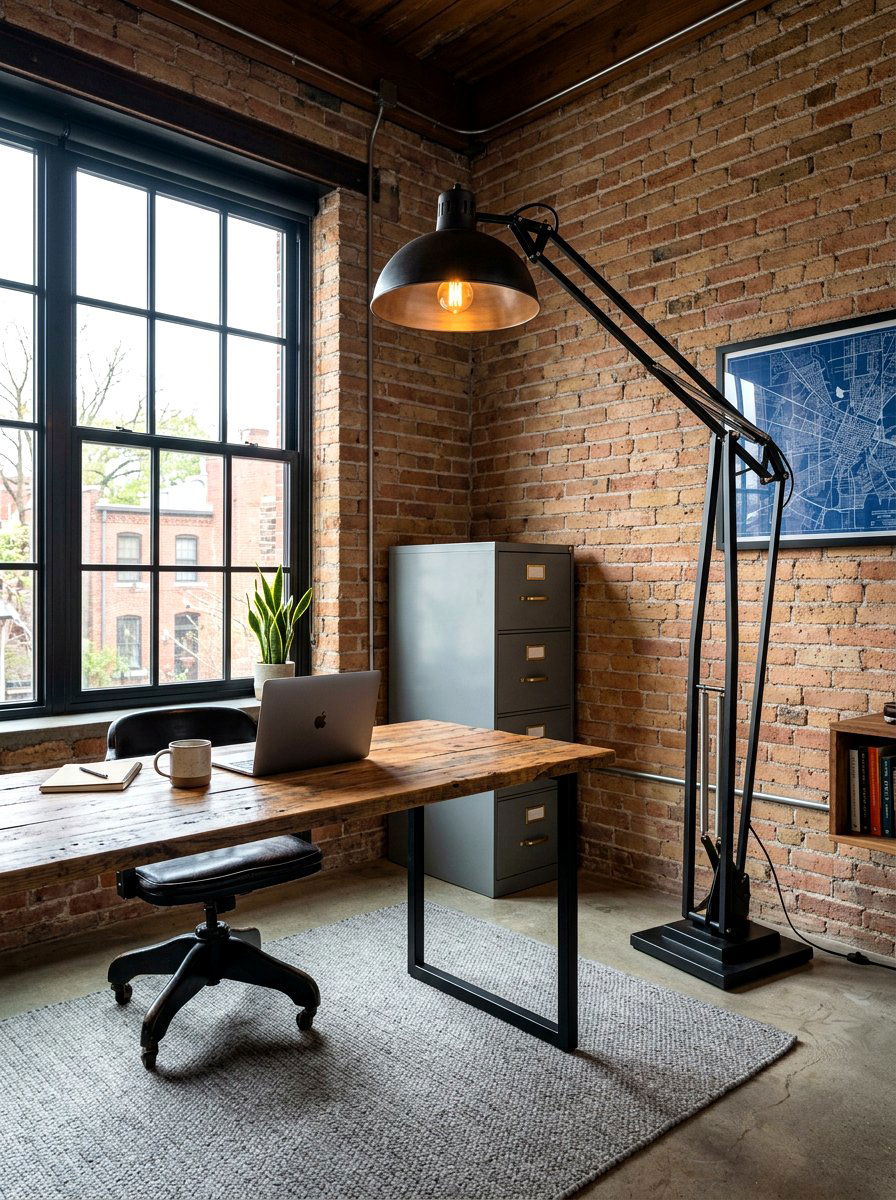
If your attic has an original brick chimney or an exposed exterior wall, use it as the focal point for your office design. The texture and warmth of the brick provide a beautiful contrast to the smooth slopes of a plastered ceiling. Place your desk against the brick wall to create a grounded and stable workspace. Use industrial-style lighting and metal furniture to complement the raw material. If you don't have real brick, high-quality brick-effect wallpaper can achieve a similar look. This design direction adds a sense of urban loft style to your home, making your attic office feel like a trendy workspace in a converted warehouse building.
28. Vertical Stripe Attic Office
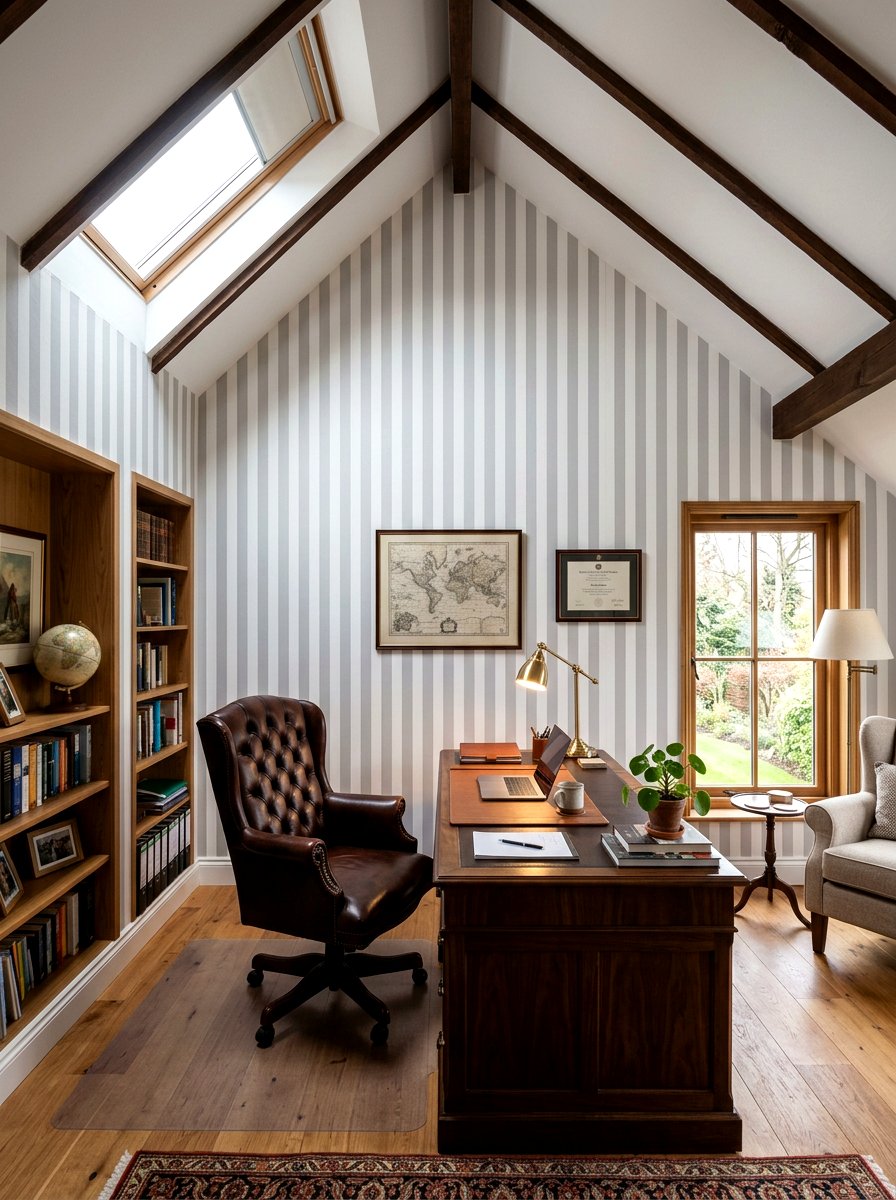
Using vertical stripes on the tall walls of a sloped ceiling room is an effective way to draw the eye upward and create an illusion of greater height. You can achieve this with wallpaper or by carefully painting alternating bands of color. Stick to subtle, tonal stripes like light grey and white to keep the effect sophisticated rather than overwhelming. This pattern works particularly well in traditional or coastal-themed offices. By emphasizing the verticality of the space, you balance the downward pressure of the sloped ceiling, making the room feel more proportional and comfortable. It is a simple but powerful design technique for any challenging attic layout.
29. Wallpapered Sloped Ceiling Office
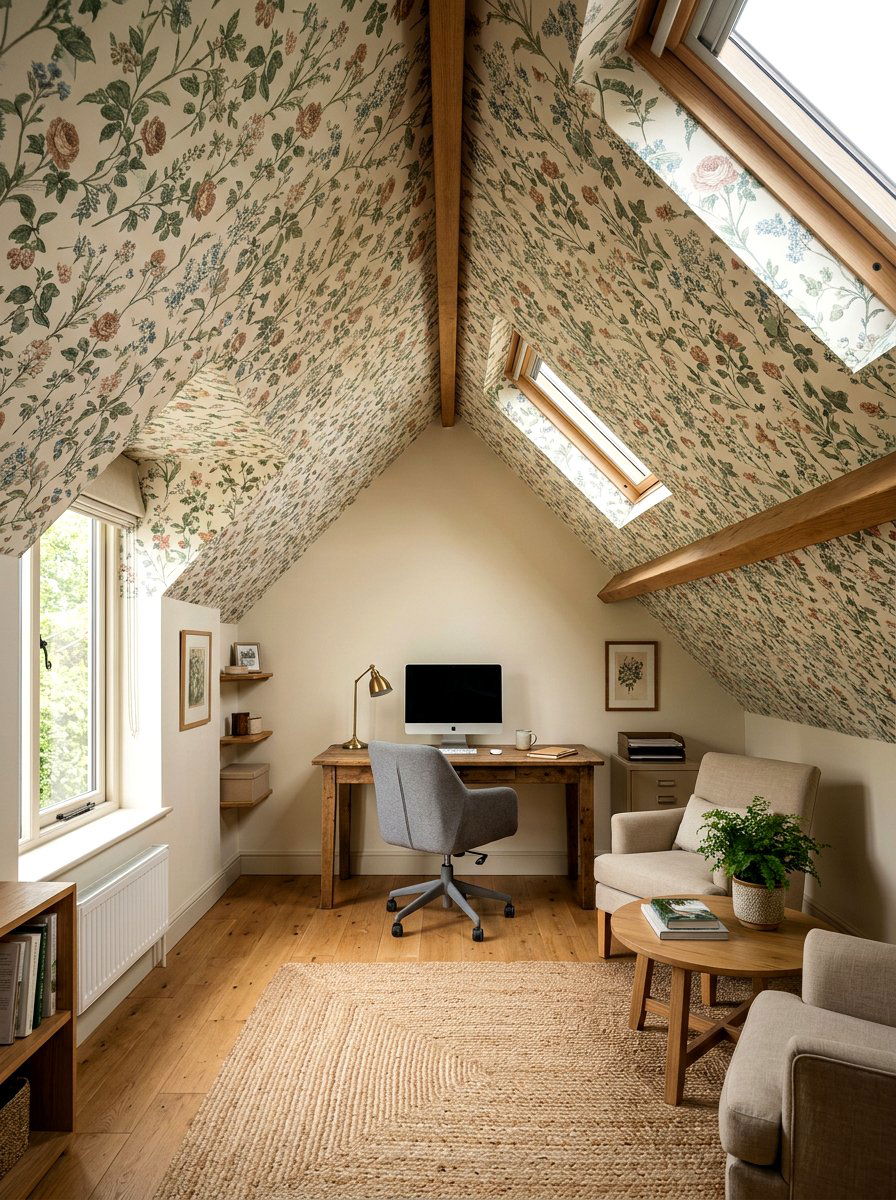
For a bold and artistic look, consider applying wallpaper to the sloped ceiling itself. This turns the largest surface area of the room into a stunning decorative feature. Choose a pattern that is not overly directional, such as a floral print, a subtle geometric design, or a textured grasscloth. By covering the slopes, you create a cozy "tent" effect that feels incredibly intimate and unique. Keep the furniture and the rest of the walls simple to let the ceiling take center stage. This approach is perfect for creating a one-of-a-kind office that reflects your personal style and makes a dramatic impact every time you enter the room.
30. Mid-Century Modern Attic Office
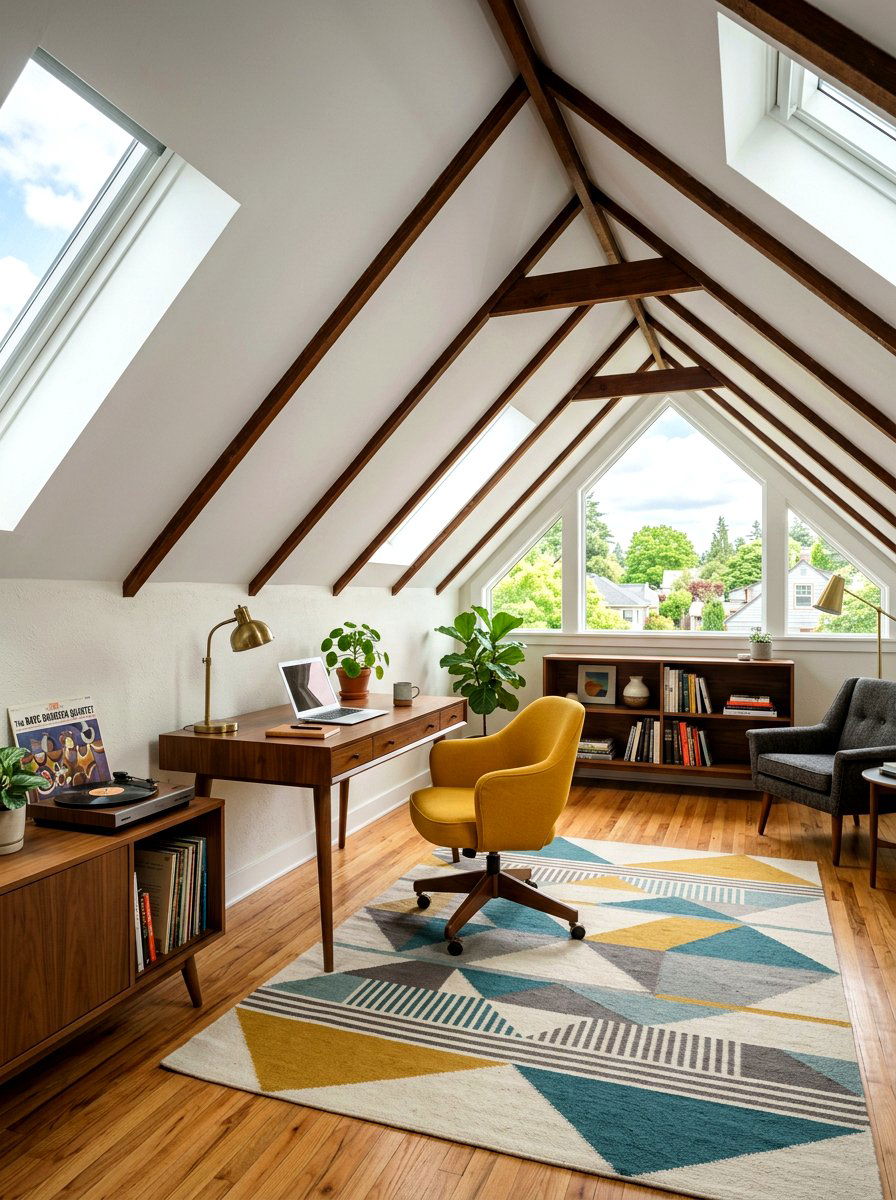
Bring the timeless appeal of mid-century modern design to your attic office by choosing furniture with tapered legs and warm wood tones. A classic acorn-finish desk and a molded plastic or leather chair will look fantastic against the sharp angles of a sloped ceiling. Use a pop of color, like mustard yellow or teal, in your desk accessories or a small armchair. Geometric patterns in the rug or curtains will enhance the vintage vibe. The low-profile nature of mid-century furniture is ideal for attic spaces, as it leaves plenty of air above the pieces, helping the room feel spacious and well-proportioned for a productive workday.
Conclusion:
Converting an attic or a room with sloped ceilings into a home office is a rewarding project that maximizes your home's square footage while providing a private place to work. Throughout these thirty ideas, we have seen how embracing the unique architecture of a slanted roof can lead to some of the most creative and efficient workspaces imaginable. Whether you prefer a minimalist white sanctuary, a moody dark-walled retreat, or a rustic space with exposed beams, there is a design path that fits your needs. By focusing on smart storage, layered lighting, and appropriate furniture scales, you can overcome any architectural challenge. Your new attic office will not only boost your productivity but also become a favorite quiet corner within your home for years to come.

Related posts: