First impressions are everything in a home, and the hallway serves as the literal path to setting the perfect tone for your guests. Often overlooked as just a transition zone, these narrow passages offer the perfect canvas for creative expression through stripes. Using linear patterns can cleverly manipulate the perception of space, making a cramped corridor feel much wider or a low ceiling appear soaring and grand. From bold, high-contrast paint jobs to subtle tonal wallpapers, stripes are a timeless design tool that adds rhythm and architectural interest. Exploring various widths, colors, and orientations allows you to customize your entry to reflect your personal style.
1. Vertical Black And White Hallway
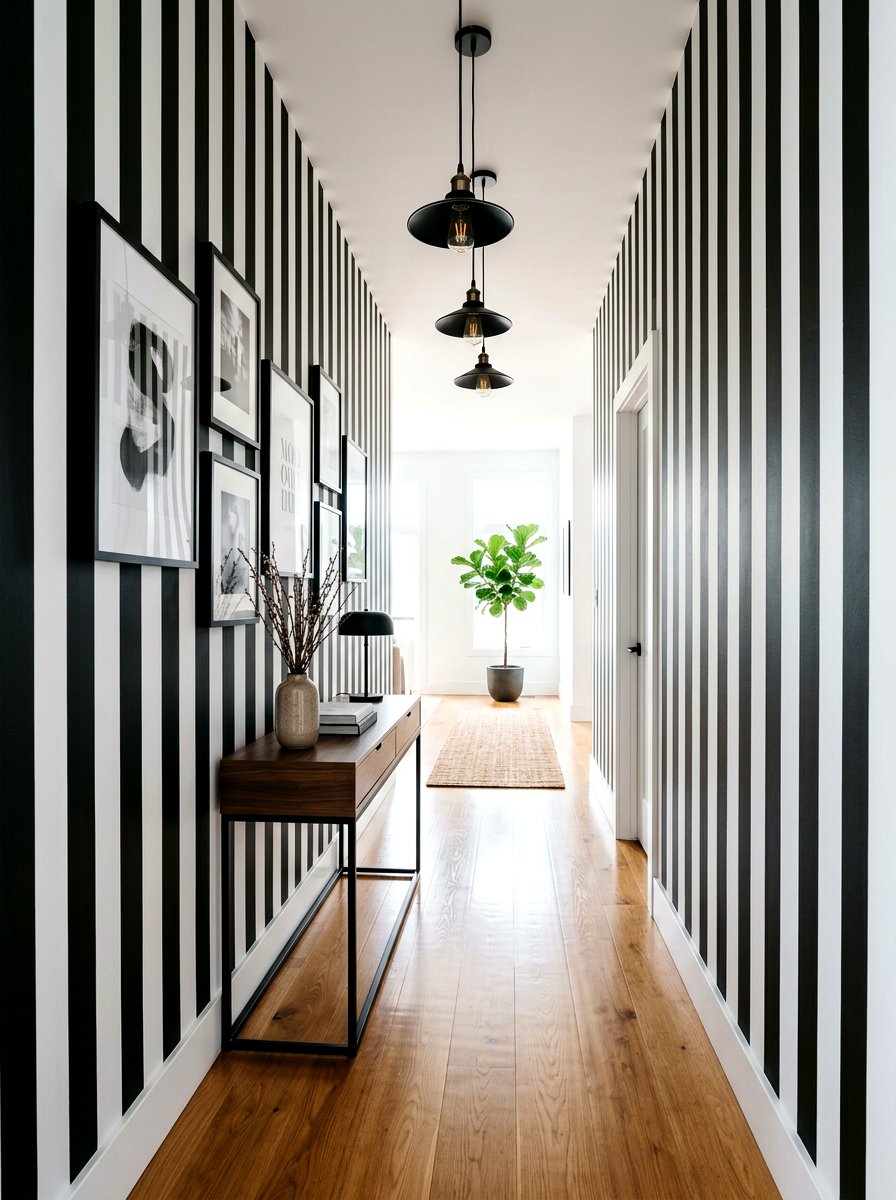
Walking into a home with vertical black and white stripes immediately creates a sense of sophisticated drama and classic elegance. This high-contrast pairing is a design staple because it draws the eyes upward, making even the smallest entryways feel remarkably taller. By alternating crisp white with deep charcoal or true black, you introduce a graphic rhythm that anchors the space without needing excessive furniture. This look works exceptionally well in modern minimalist homes or traditional townhouses where architectural height is a priority. Pair these bold walls with a simple console table and polished wood floors to maintain a clean, high-end aesthetic that never goes out of style.
2. Horizontal Blue Striped Wall
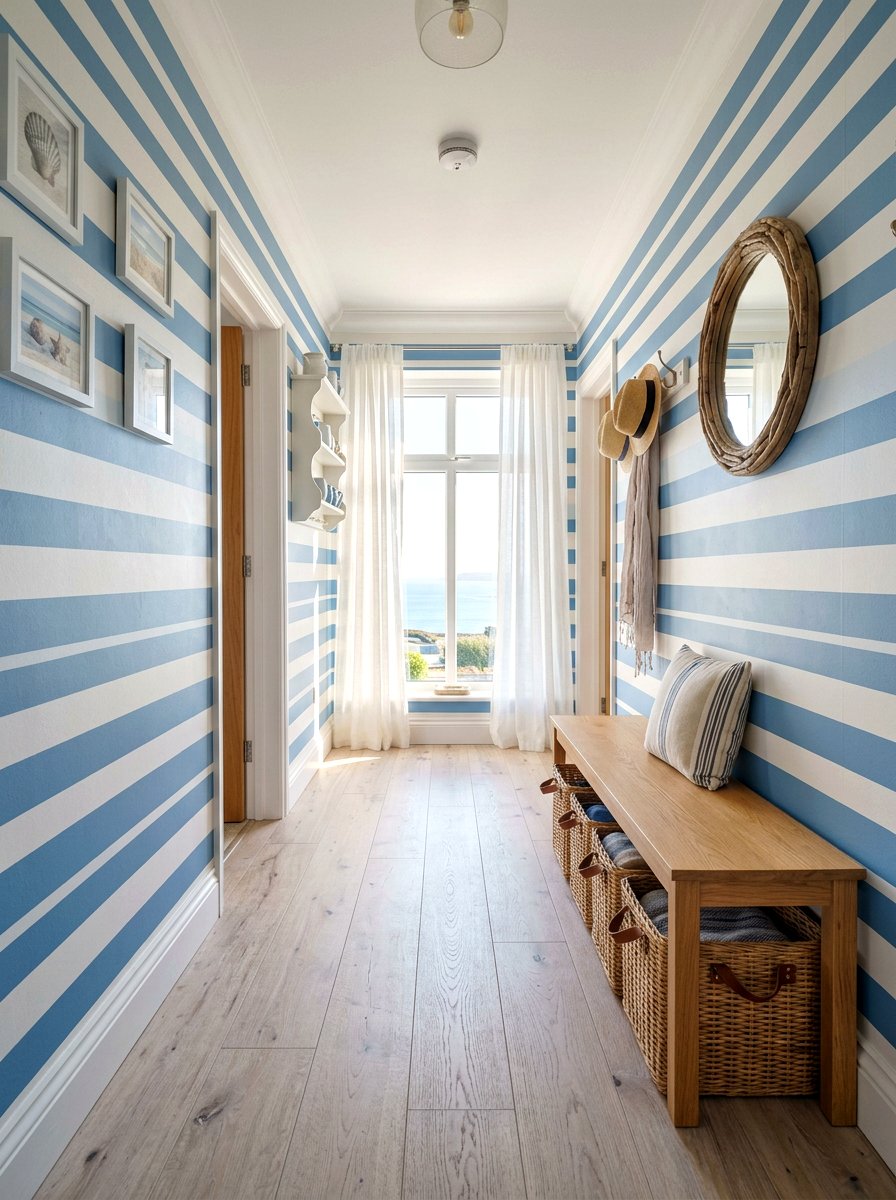
Choosing horizontal blue stripes for your hallway is an excellent way to create a relaxed, coastal atmosphere that feels incredibly expansive. Unlike vertical lines, horizontal patterns stretch the visual width of a passage, making narrow corridors feel more open and much less claustrophobic. Soft sky blues or deep navy tones can be used to evoke different moods, ranging from a breezy beach cottage to a formal nautical library. This orientation guides the eye along the length of the hall, encouraging a natural flow toward the rest of the living space. It is a practical solution for homes that lack natural light, as blue often adds a refreshing brightness.
3. Tonal Beige Striped Wallpaper
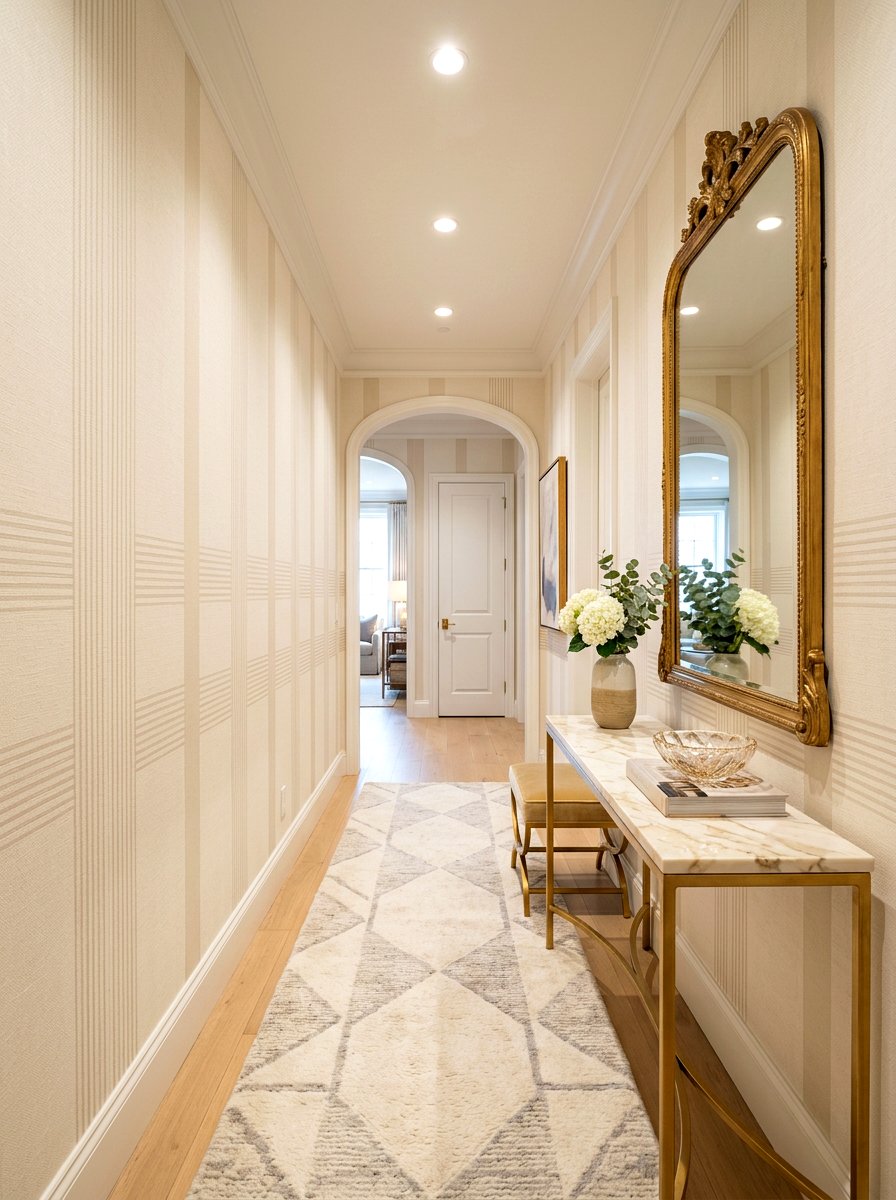
If you prefer a more subtle and calming entrance, tonal beige stripes offer a sophisticated alternative to bold colors and high-contrast patterns. By using two slightly different shades of cream, sand, or taupe, you add texture and depth to the walls without overwhelming the senses. This monochromatic approach provides a quiet background that allows your artwork, light fixtures, or family photos to take center stage. Tonal stripes are particularly effective in shorter hallways where a loud pattern might feel too busy. The result is a refined, layered look that feels warm, inviting, and effortlessly luxurious, perfect for creating a peaceful transition between different rooms.
4. Bold Multi Color Hallway
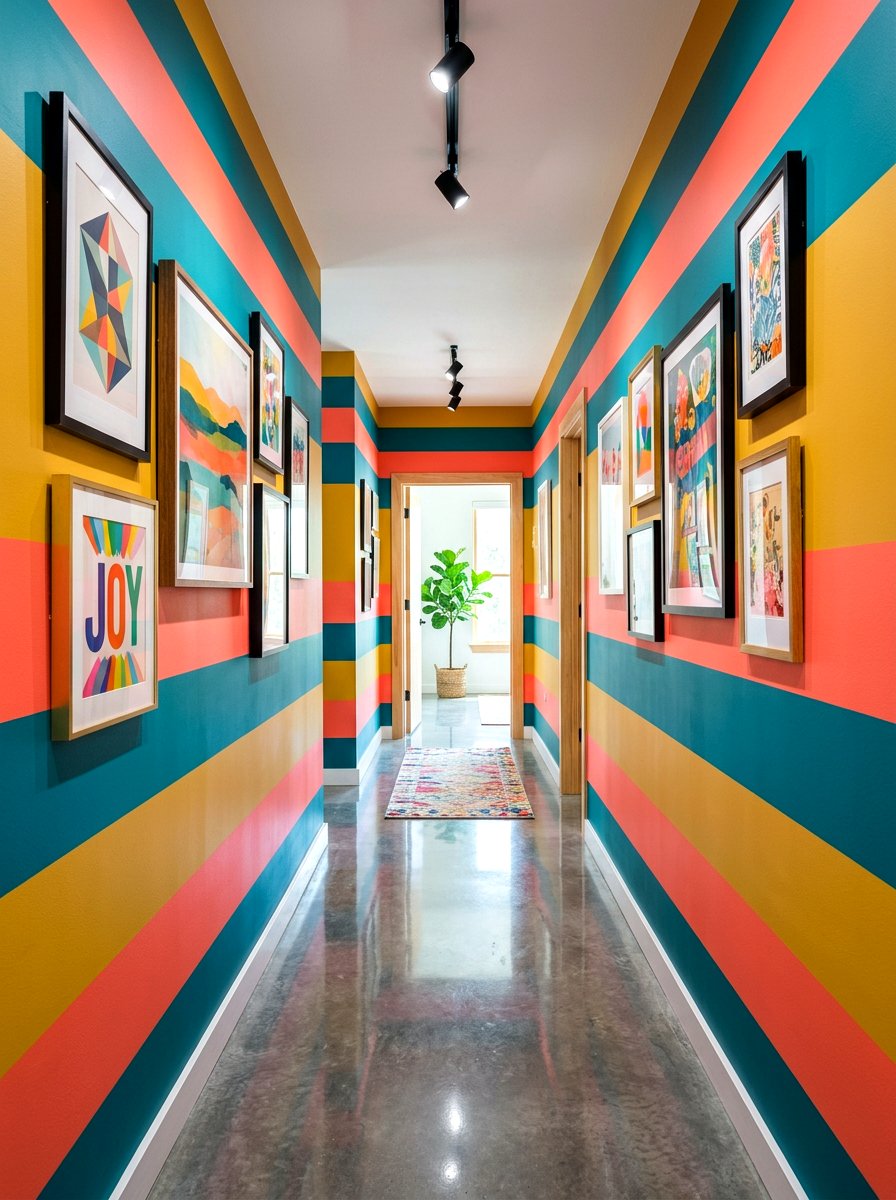
Transforming a drab corridor into a vibrant gallery is easily achieved with a bold multi-color striped design that showcases your unique personality. Using a variety of widths and a diverse palette of colors creates a playful energy that is perfect for families or eclectic home styles. You can incorporate everything from sunny yellows and coral pinks to deep forest greens within a single wall treatment. This approach works best when the surrounding rooms use simpler color schemes, allowing the hallway to act as a joyful pop of color. It turns a functional walkway into a conversation piece, ensuring that every journey through your home feels exciting and visually stimulating.
5. Modern Gray Striped Paint
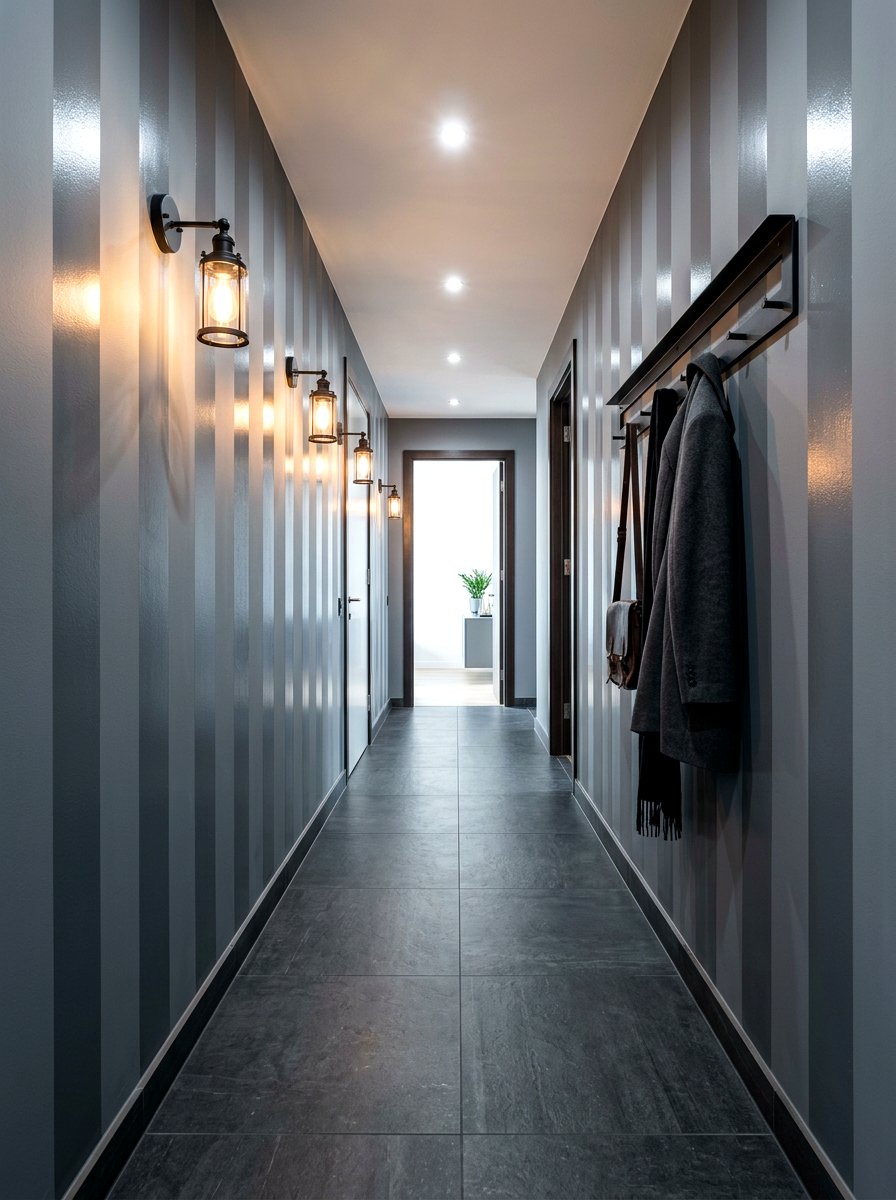
For a sleek and contemporary look, modern gray stripes provide a versatile foundation that fits perfectly with industrial or Scandinavian interior design. Mixing matte and glossy finishes in the same shade of slate or dove gray can create a subtle pinstripe effect that catches the light beautifully. This sophisticated technique adds a layer of architectural detail to plain drywall, giving the hallway a custom, high-end feel. Gray is a neutral choice that pairs well with almost any accent color, from vibrant mustard yellow to cool teal. It provides a clean, professional aesthetic that keeps your entryway looking organized, polished, and grounded in current design trends.
6. Classic Navy Striped Entry
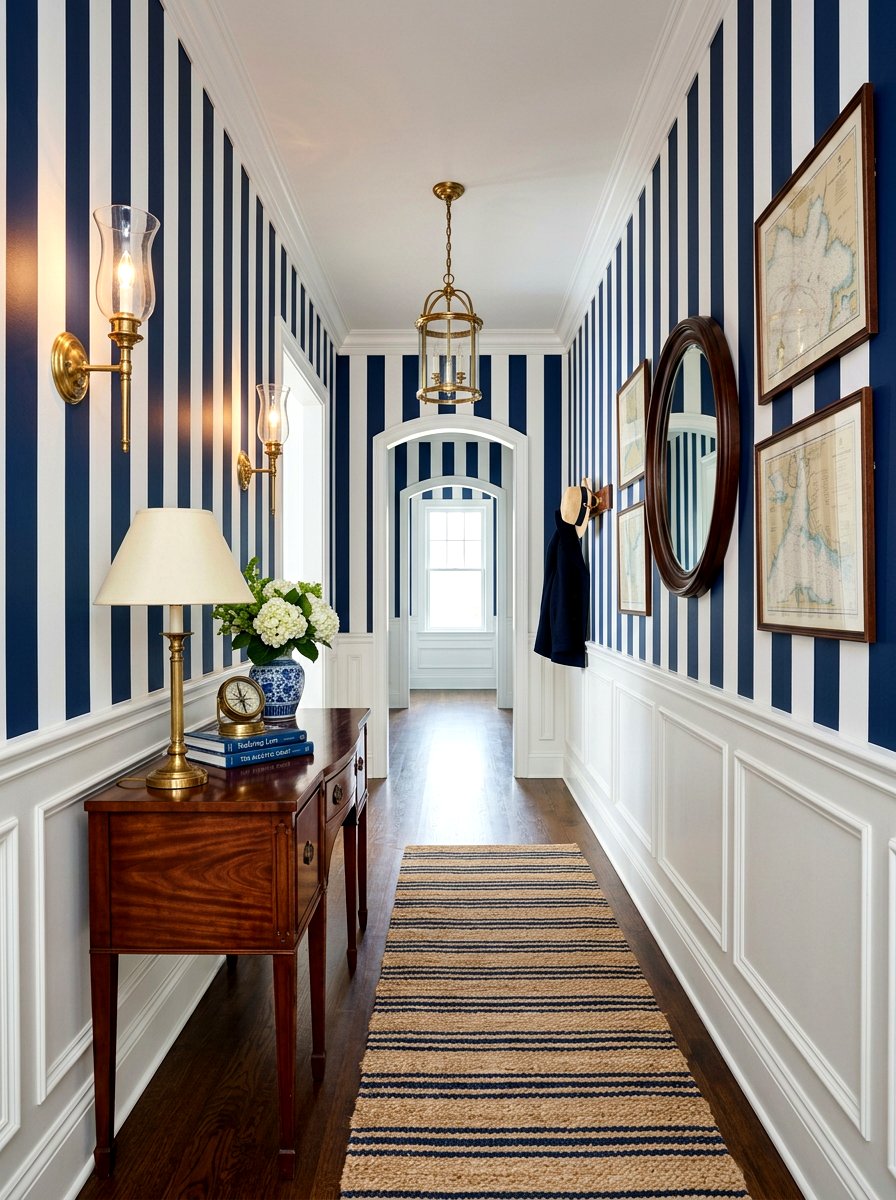
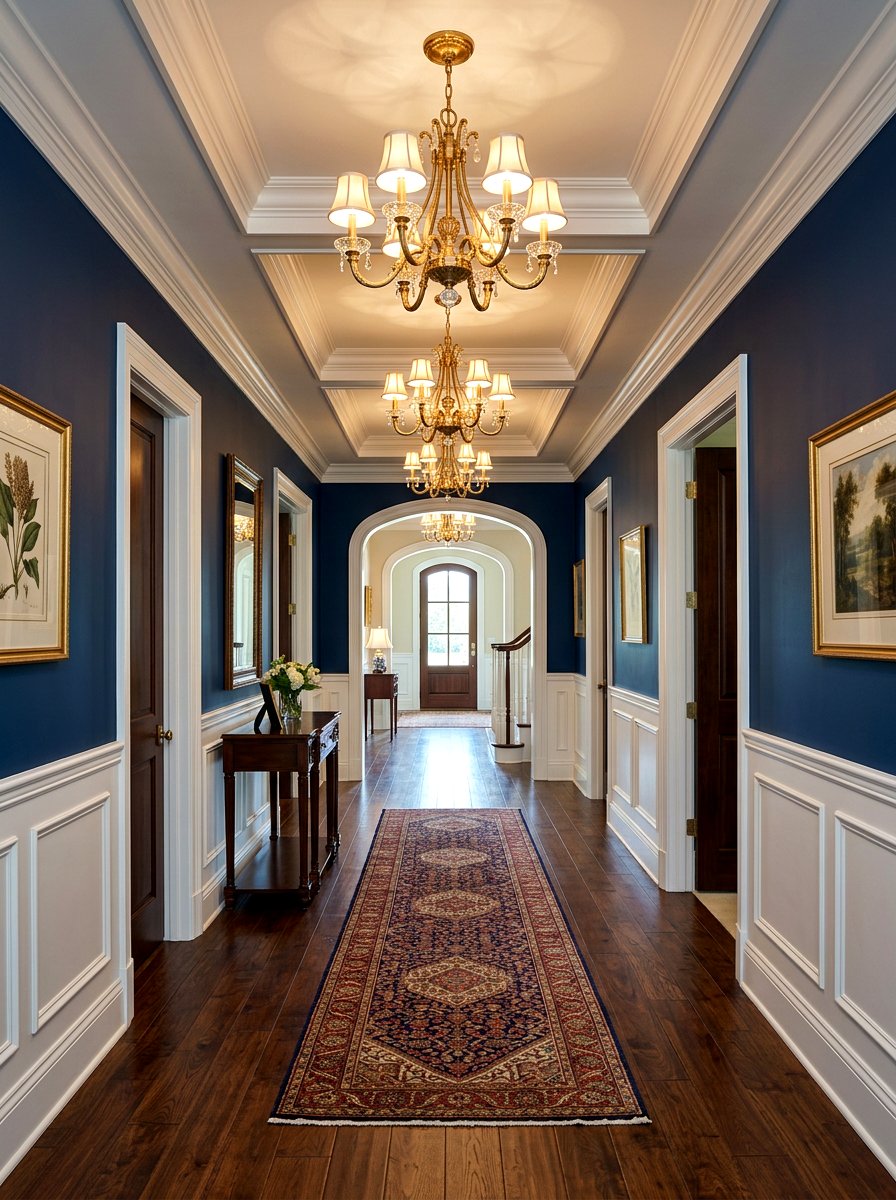
A classic navy striped entry evokes a sense of timeless tradition and maritime charm that instantly feels established and well-curated. Navy and white stripes are a quintessential design choice for homeowners who want a look that is both crisp and authoritative. This color combination works beautifully with brass hardware, mahogany furniture, and traditional wainscoting on the lower half of the walls. Whether you choose wide blocks of color or delicate pinstripes, the deep blue hue provides a stabilizing influence in the home. It creates a formal yet welcoming atmosphere that bridges the gap between the exterior world and the comfort of your private interior living spaces.
7. Wide Vertical Stripe Hallway
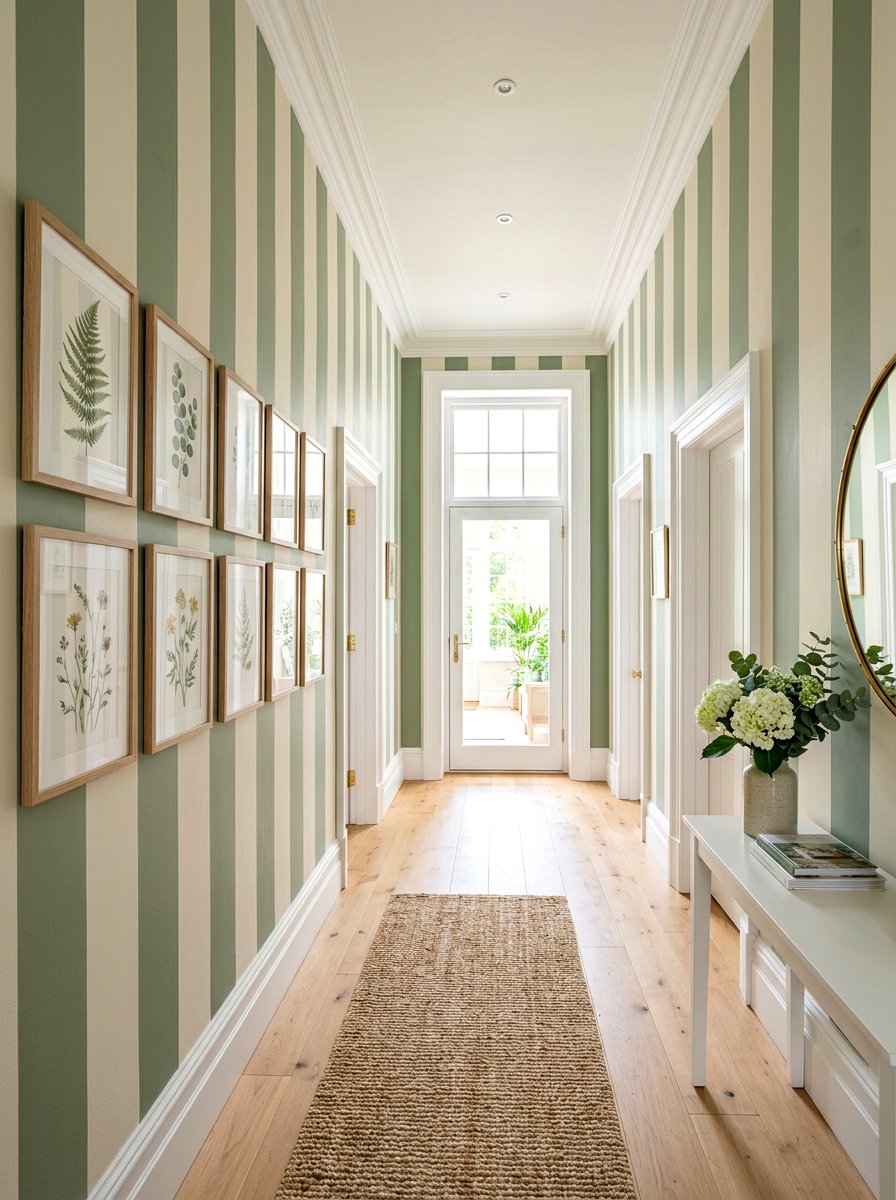
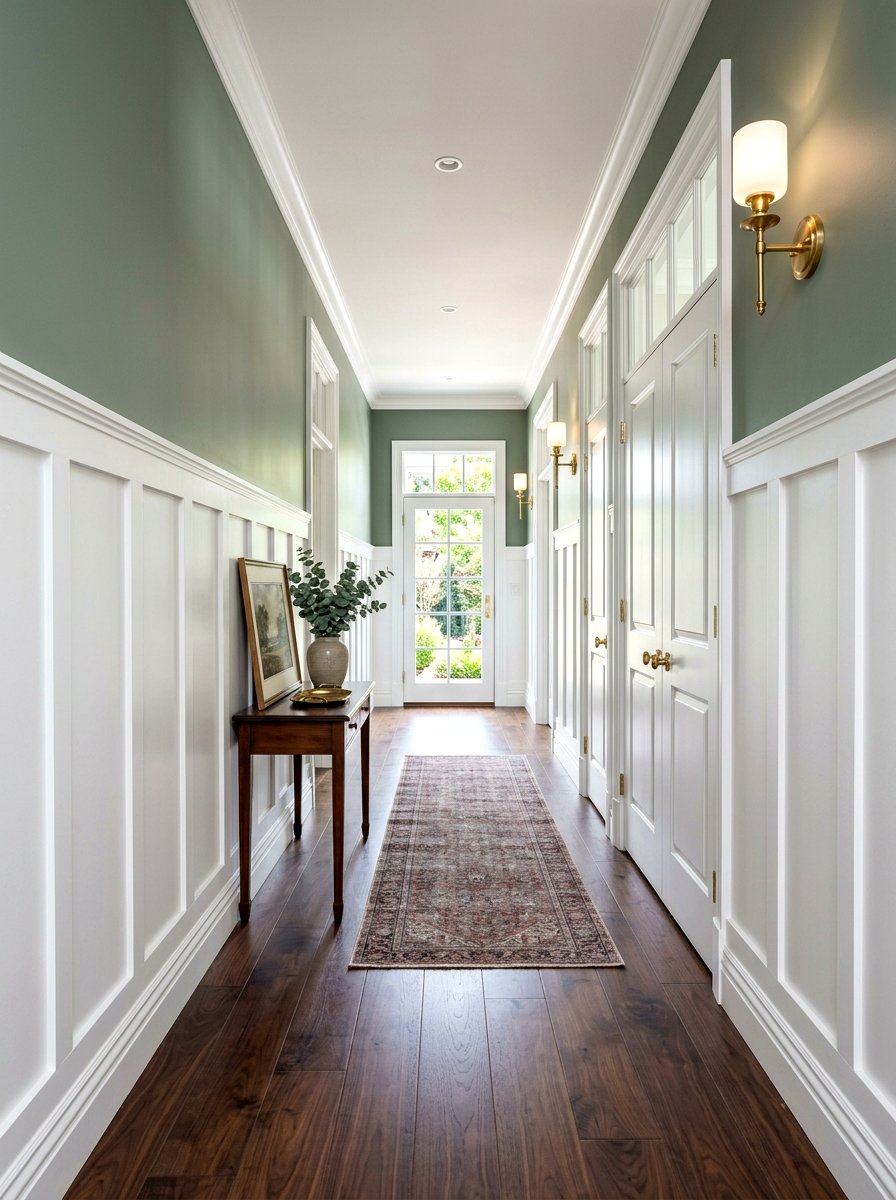
Embracing wide vertical stripes is a fantastic way to make a bold architectural statement while significantly increasing the perceived height of your ceiling. These larger-scale patterns feel more modern and less busy than their thinner counterparts, making them ideal for long, sweeping passages. By using wide bands of color, you create a sense of structure and balance that can ground a large home or add character to a smaller flat. This design choice works best with a two-tone palette, such as sage green and off-white, to keep the look cohesive. Wide stripes act as their own form of wall art, reducing the need for multiple hanging decorations.
8. Thin Pinstripe Hallway Wallpaper
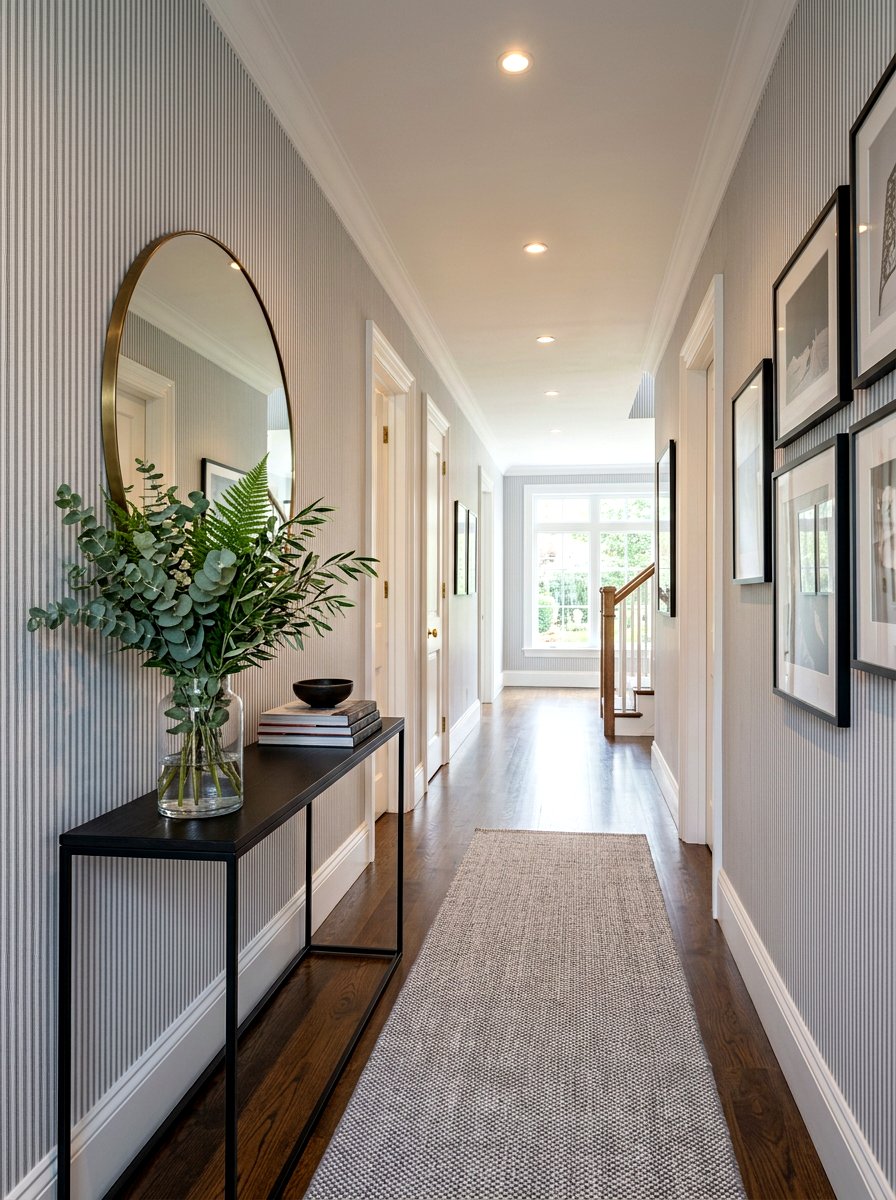
For those who appreciate the finer details, thin pinstripe wallpaper adds a layer of understated elegance that resembles a bespoke tailored suit. These delicate, closely spaced lines provide a soft texture that is visible up close but blends into a cohesive wash of color from a distance. Pinstripes are excellent for formal hallways or entryways leading into a home office, as they project a sense of order and professionalism. Because the pattern is so subtle, you can experiment with slightly more adventurous colors like dusty rose or muted gold. This style offers a timeless quality that feels both historic and contemporary, providing a sophisticated backdrop for any decor.
9. Chevron Pattern Striped Hallway
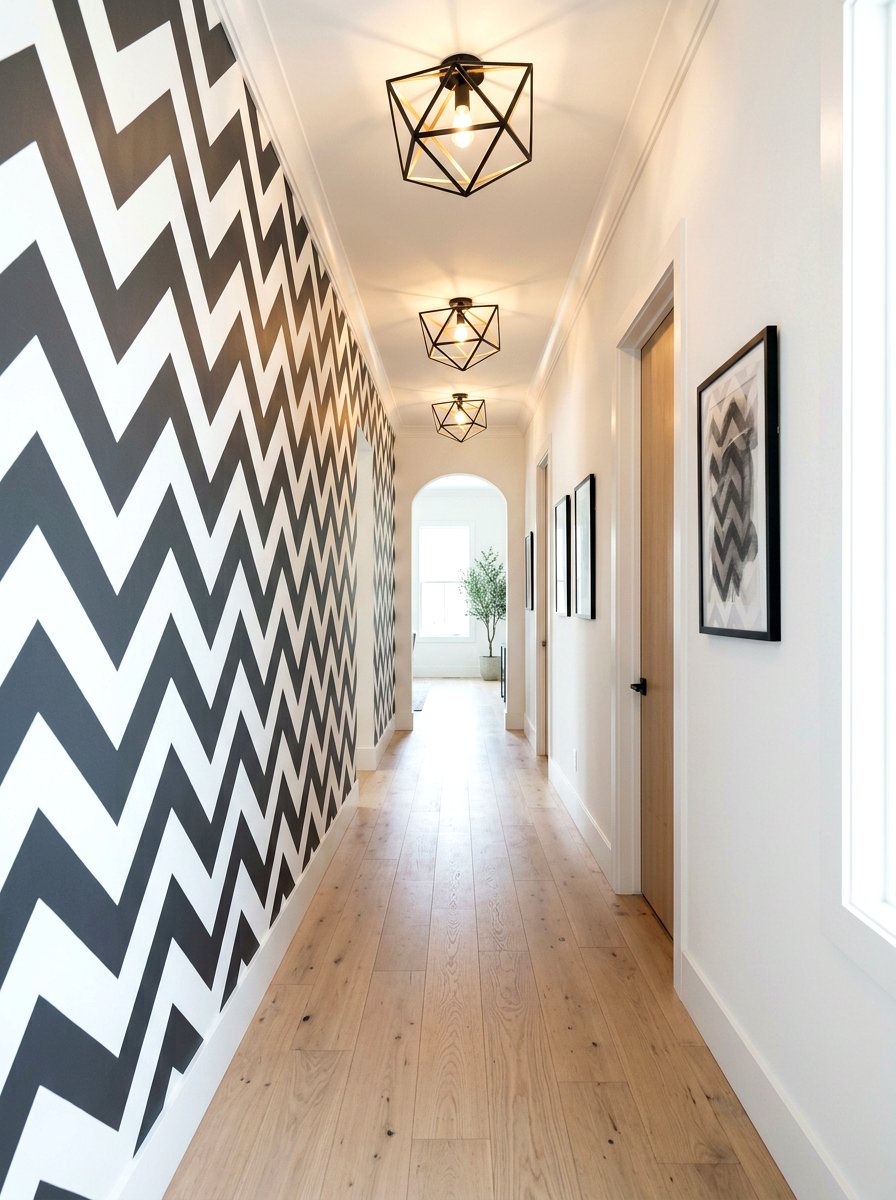
If you want to introduce a dynamic sense of movement and energy to your hallway, a chevron striped pattern is the perfect solution. The V-shaped zig-zags create a rhythmic flow that visually pulls guests through the space, making it feel lively and directional. This pattern can be achieved through intricate paintwork, bold wallpaper, or even a tiled floor design. Chevron stripes look particularly striking in high-contrast colors like charcoal and white, or in softer, ombre-inspired shades for a more modern twist. It is an adventurous choice that breaks the monotony of straight lines, adding a playful yet structured graphic element to one of the busiest parts of your home.
10. Pastel Pink Striped Wall
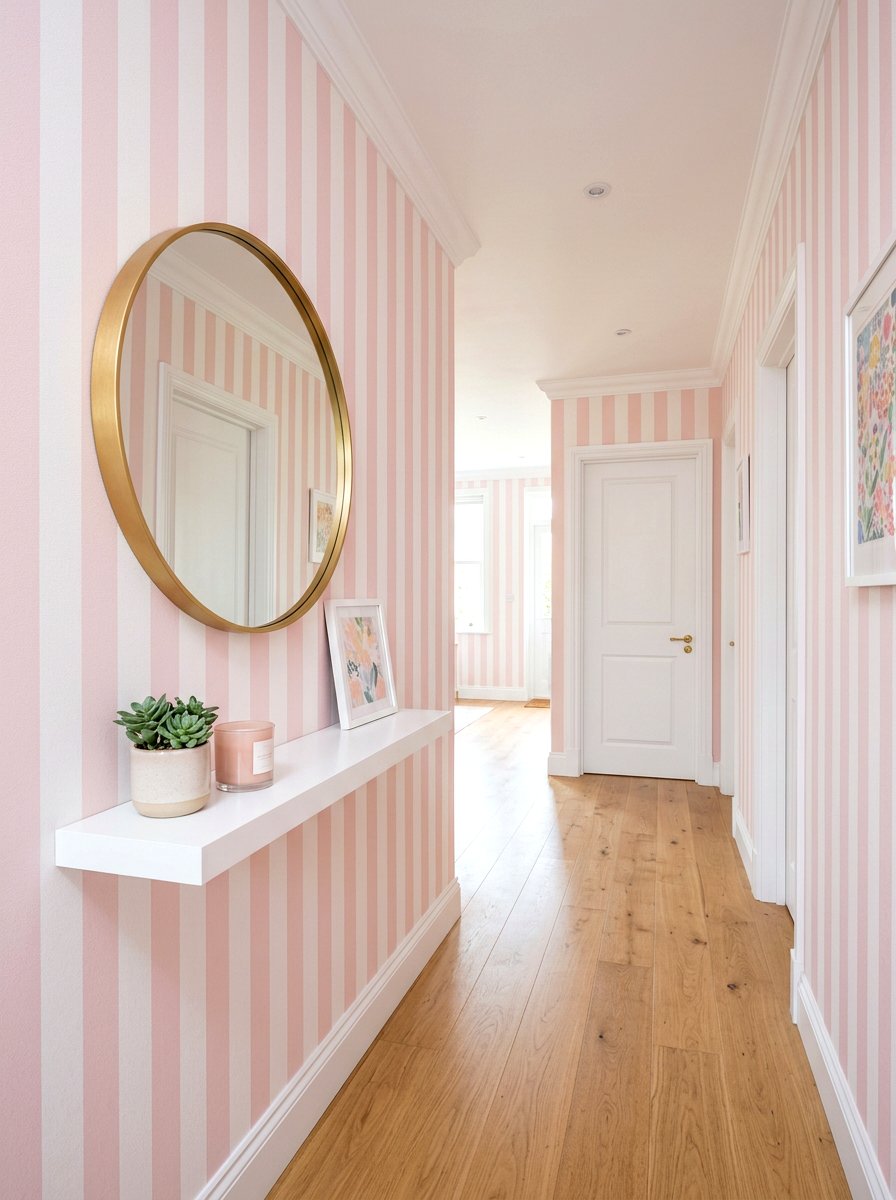
A pastel pink striped wall can turn a dark or uninspiring hallway into a soft, glowing space that feels warm and incredibly inviting. This gentle color palette is perfect for creating a whimsical or romantic atmosphere without being overly feminine or childish. When paired with crisp white stripes, the pink appears fresh and modern, especially when accented with gold mirrors or light wood furniture. This design choice is particularly effective in north-facing hallways that receive limited natural sunlight, as the pink tones can bounce light around and create a cheerful ambiance. It’s a subtle way to introduce color while maintaining a sense of light, airy, and open sophistication.
11. Emerald Green Striped Hallway
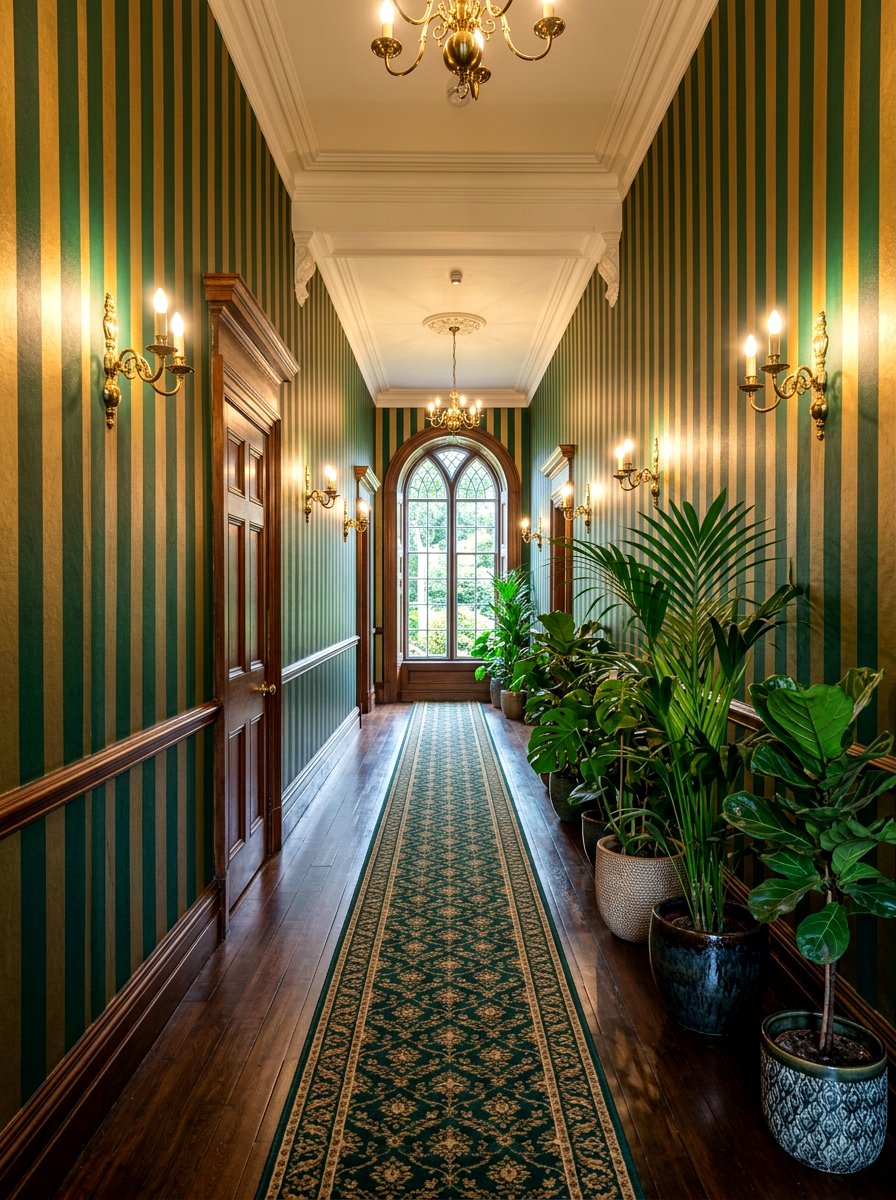
Choosing emerald green for your striped hallway introduces a sense of luxury and organic richness that feels both moody and exceptionally grand. This deep, jewel-toned color works wonderfully when paired with a creamy white or a metallic gold stripe to create a regal aesthetic. Because emerald is a color often found in nature, it brings a calming, outdoor element into the interior of your home. Use wide vertical stripes to emphasize the lushness of the pigment and pair them with indoor plants and botanical prints for a cohesive look. This bold design choice makes a powerful statement, transforming a simple transition area into a stunning and memorable focal point.
12. Rustic Wood Striped Hallway
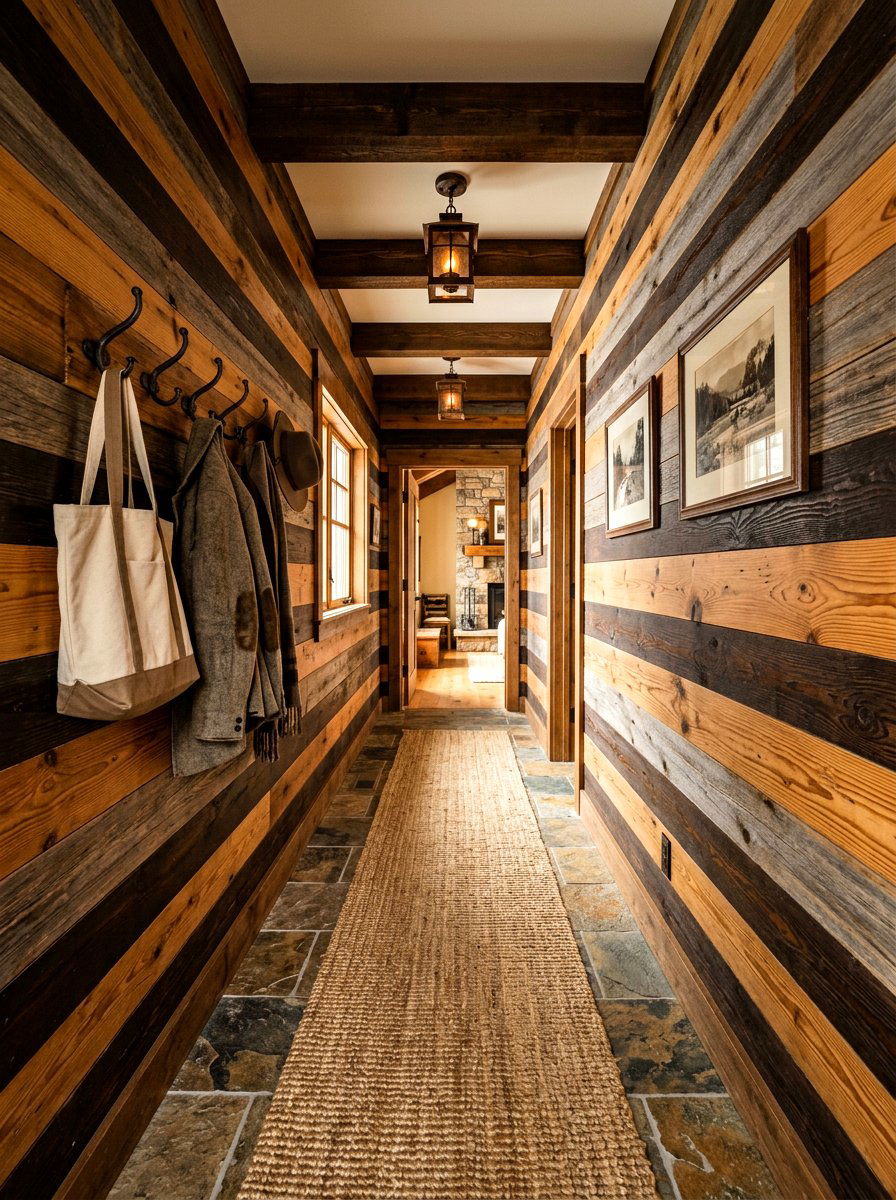
For homeowners who love a farmhouse or cabin aesthetic, a rustic wood striped hallway offers a unique way to incorporate natural materials and texture. This look can be achieved by alternating different wood species or by using stained timber slats separated by narrow painted gaps. The variation in wood grain and color creates a natural "stripe" effect that feels cozy, grounded, and rich in history. This architectural treatment adds a tactile quality to the walls that paint or wallpaper simply cannot replicate. It’s an ideal choice for creating a warm, mountain-inspired entry that feels sturdy and welcoming, providing an immediate sense of home as soon as you step inside.
13. Geometric Striped Hallway Wallpaper
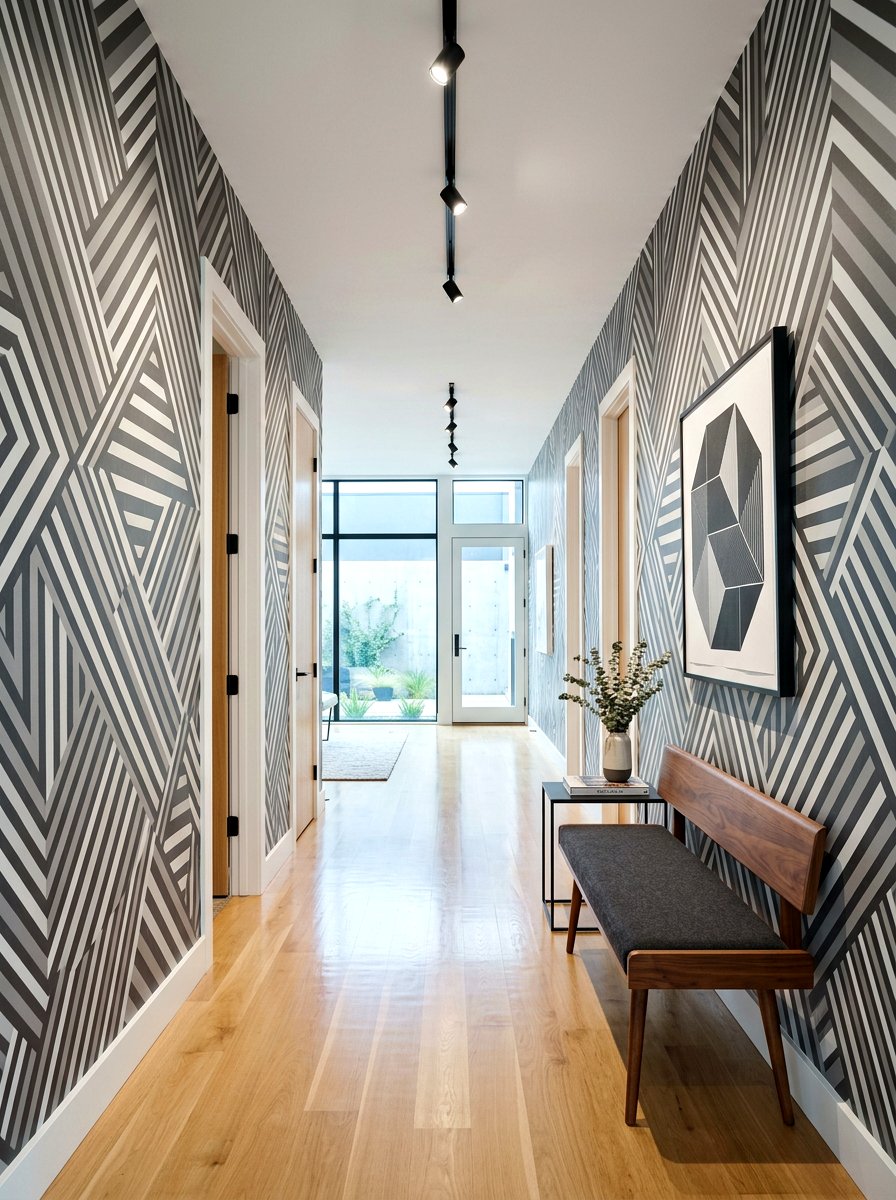
Geometric striped wallpaper takes the classic linear concept and adds a modern, artistic flair by incorporating varying angles or interlocking shapes. This contemporary approach is perfect for those who want a hallway that feels like a piece of abstract art. You might see stripes that change direction mid-wall or patterns that combine horizontal and vertical elements to create a grid-like effect. This design choice is excellent for hiding imperfections in older walls while adding a sharp, curated look to the space. By choosing a monochromatic or two-tone geometric pattern, you ensure the hallway remains sophisticated rather than chaotic, providing a clear and stylish visual journey.
14. Yellow And White Striped Hallway
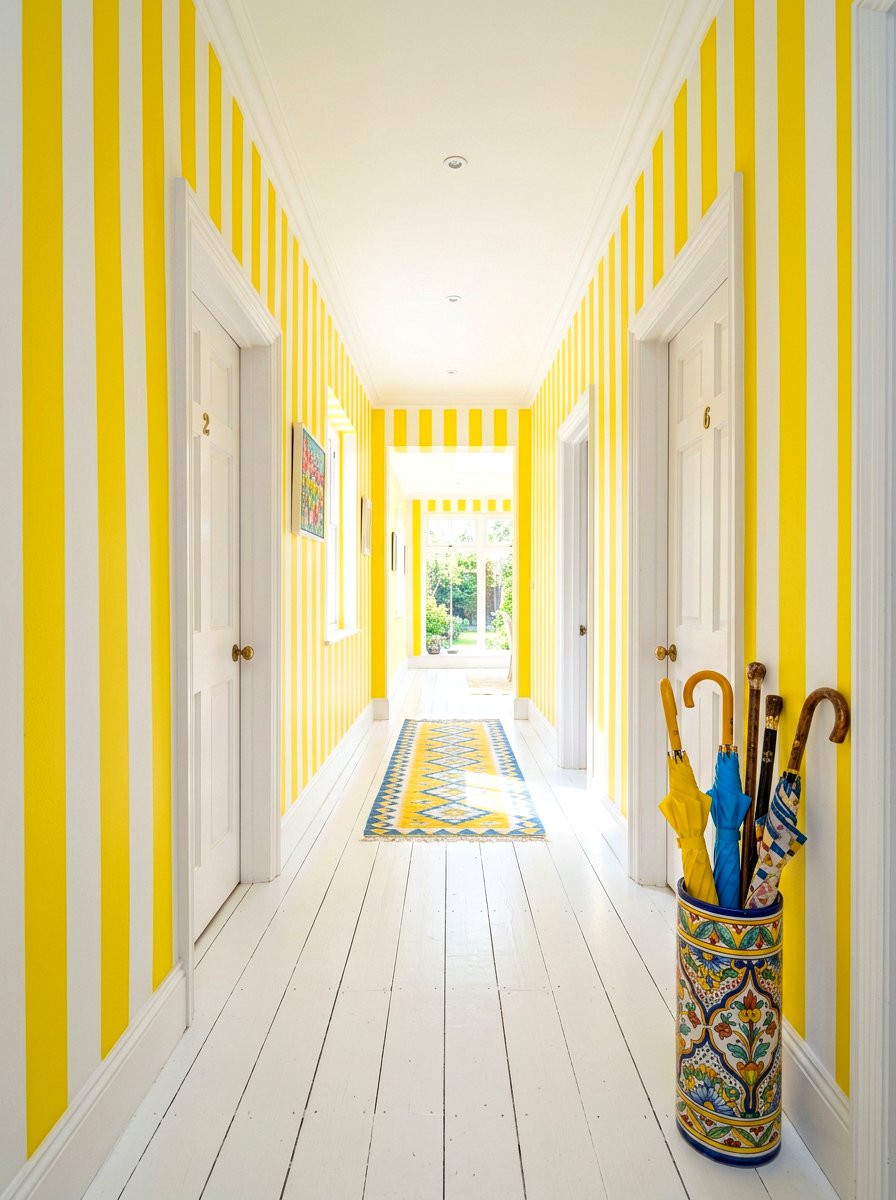
Nothing says "welcome home" quite like the bright and sunny energy of a yellow and white striped hallway. This cheerful combination is the ultimate cure for a gloomy or windowless passage, as the yellow naturally mimics the feel of sunshine. Whether you opt for a soft buttercup shade or a vibrant lemon hue, the stripes provide a structured way to introduce this high-energy color without it becoming overpowering. This look pairs beautifully with white-painted trim and light-colored flooring to keep the space feeling clean and breezy. It is a fantastic choice for a family home, as it projects an atmosphere of happiness, optimism, and warmth from the moment you enter.
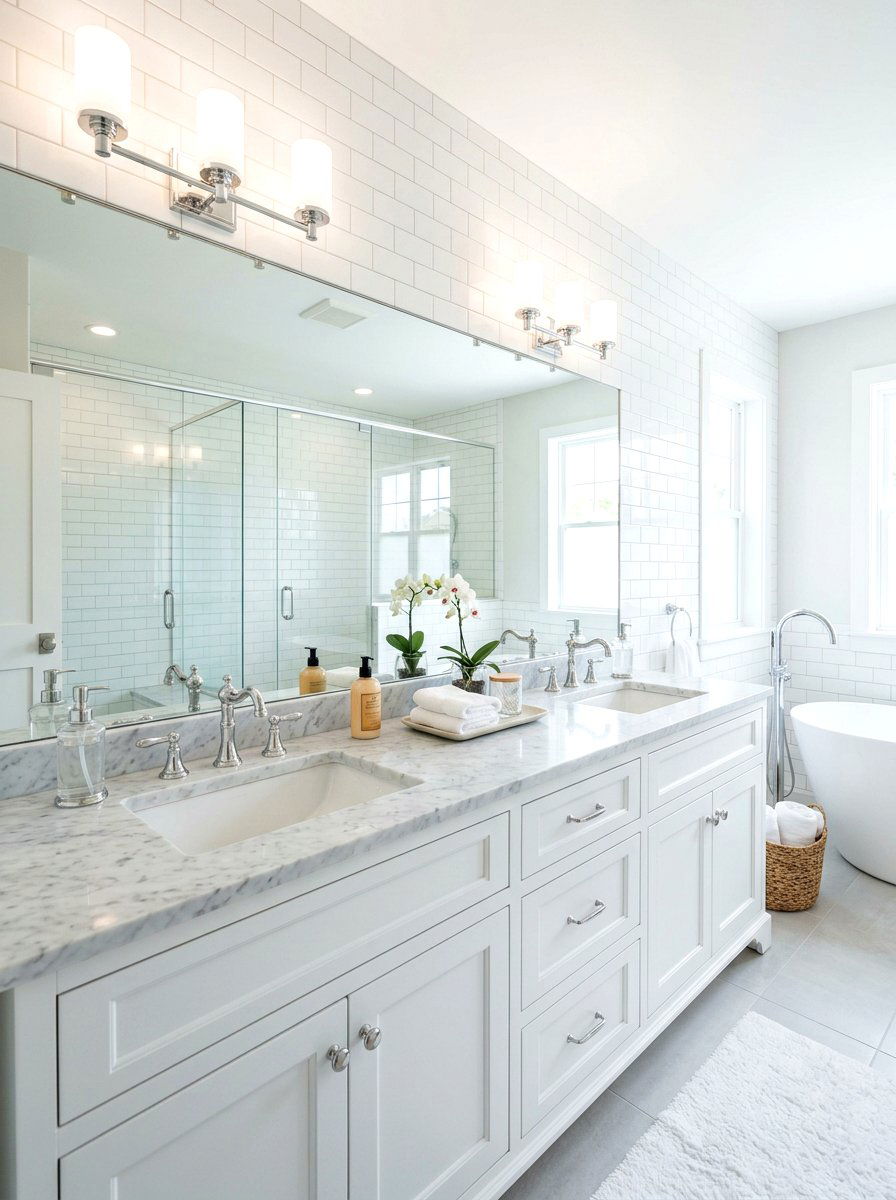
15. Dark Charcoal Striped Hallway
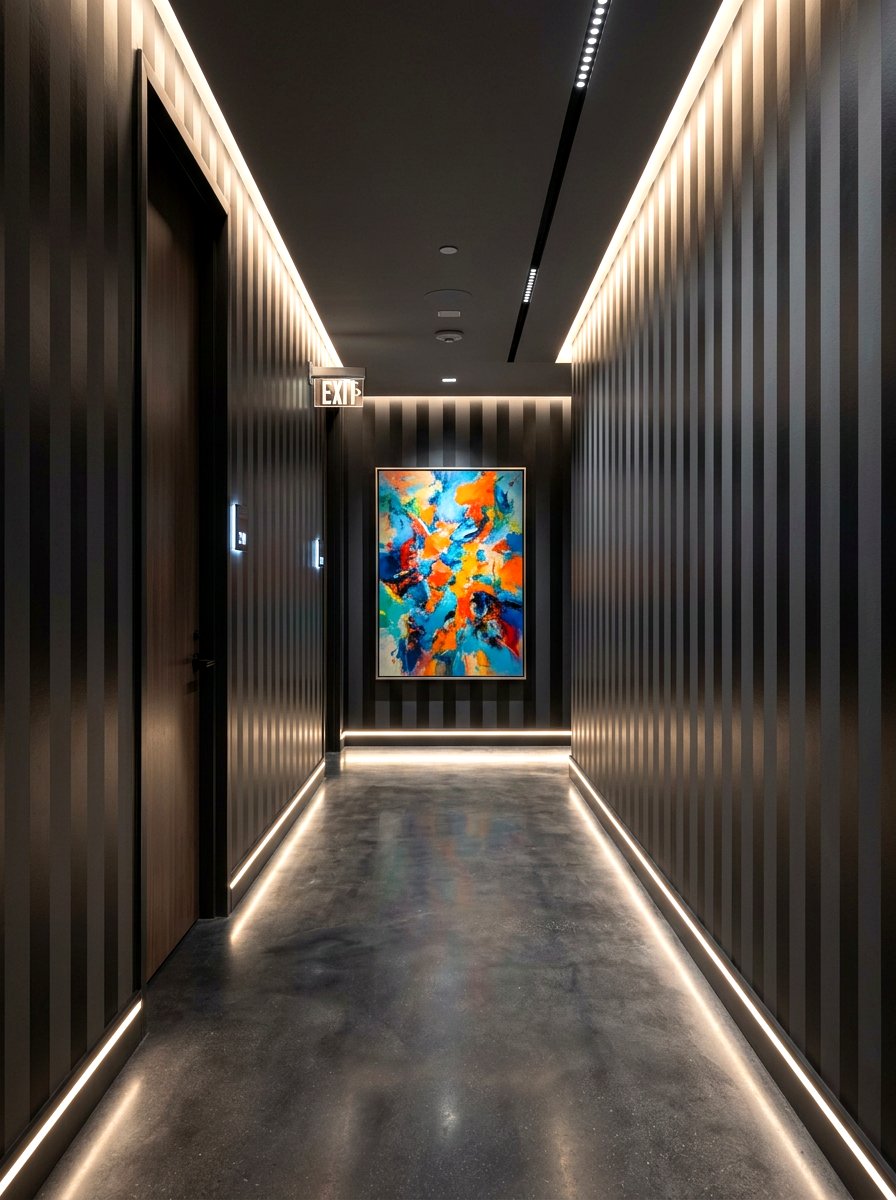
For a sophisticated and moody aesthetic, a dark charcoal striped hallway offers a dramatic backdrop that feels incredibly high-end and modern. By using two different shades of dark gray — perhaps one matte and one satin — you create a subtle but impactful pattern that plays with light and shadow. This dark palette makes the hallway feel more intimate and can serve as a stunning gallery space for brightly colored artwork or framed black and white photography. To keep the area from feeling too enclosed, ensure there is ample overhead lighting or use a large mirror to reflect light. It’s a bold choice that demonstrates a confident and refined approach to interior design.
16. Red And Cream Striped Hallway
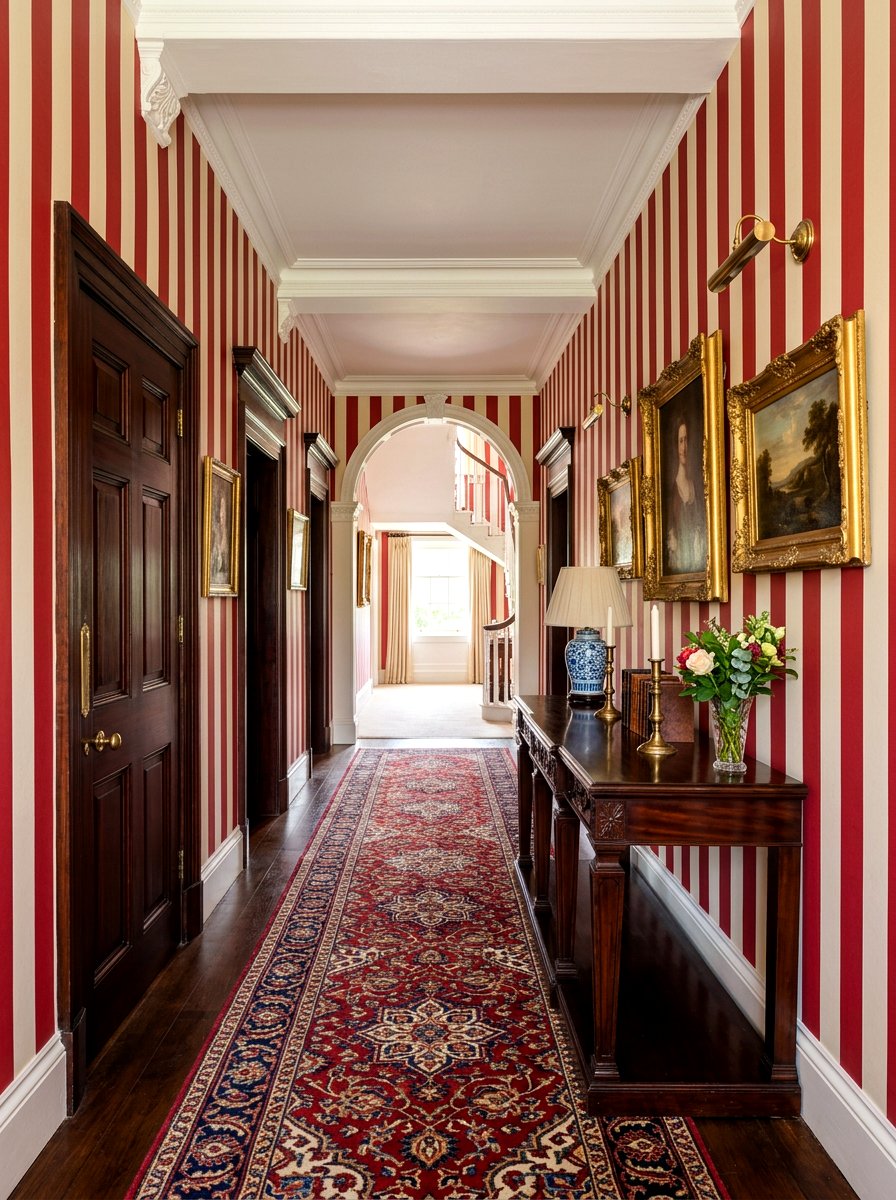
A red and cream striped hallway brings a classic, traditional elegance that often feels reminiscent of grand historic estates or cozy English cottages. This warm color combination is both energetic and comforting, making it a great choice for a main entryway. Red provides a passionate pop of color, while the cream softens the overall impact, preventing the space from feeling too aggressive. This pairing looks particularly handsome with dark wood furniture and antique brass fixtures. Whether you use a wide regency stripe or a more delicate pattern, this design adds a layer of heritage and character that makes your home feel timeless and thoughtfully decorated for any guest.
17. Metallic Gold Striped Hallway
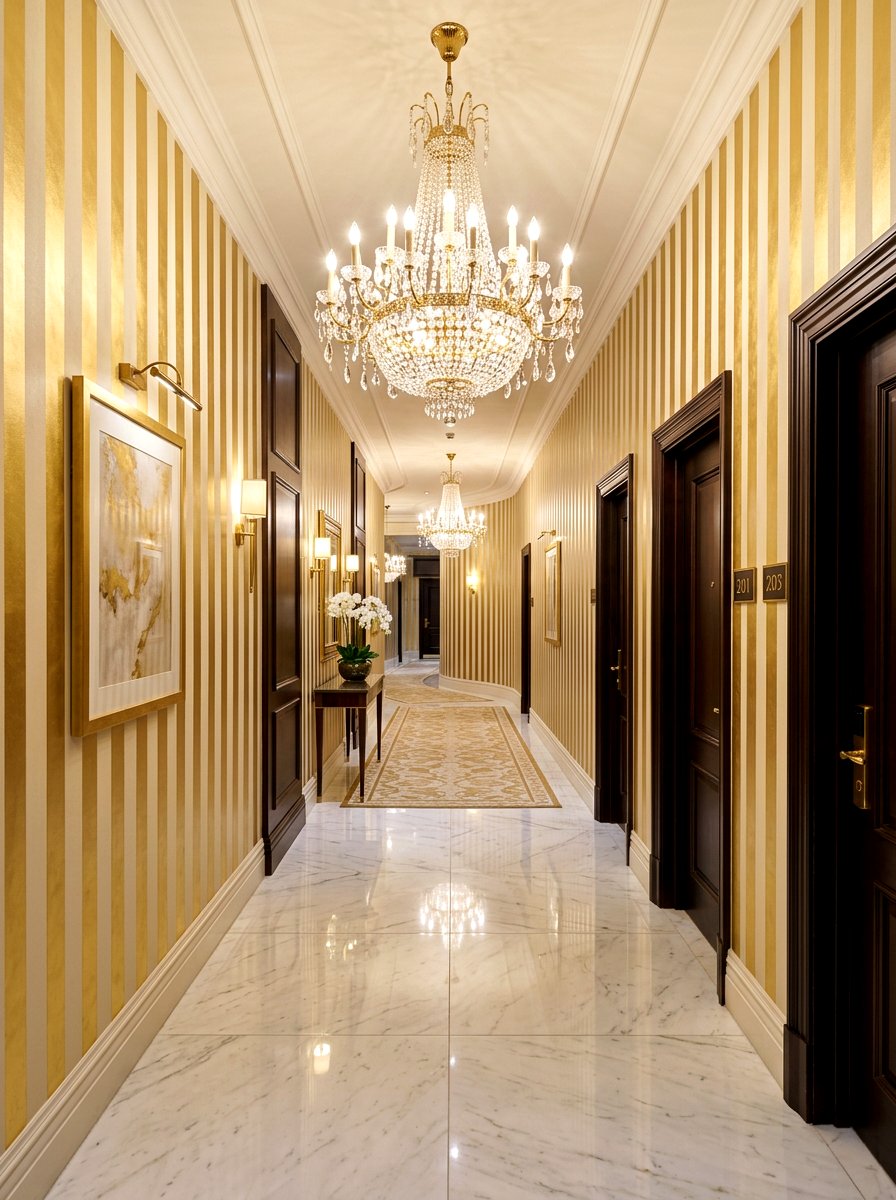
Injecting a bit of glamour into your home is easy with a metallic gold striped hallway that catches and reflects light in the most beautiful way. Gold stripes, whether achieved through specialized paint or high-quality wallpaper, add a sense of luxury and opulence to a typically functional space. These shimmering lines look best when paired with a neutral base like ivory, white, or even a deep navy. The metallic finish adds a three-dimensional quality to the walls, changing its appearance as you walk through the hall and the light hits it from different angles. This design is perfect for creating an upscale, "boutique hotel" feel right in your own residence.
18. Bohemian Striped Hallway Rug
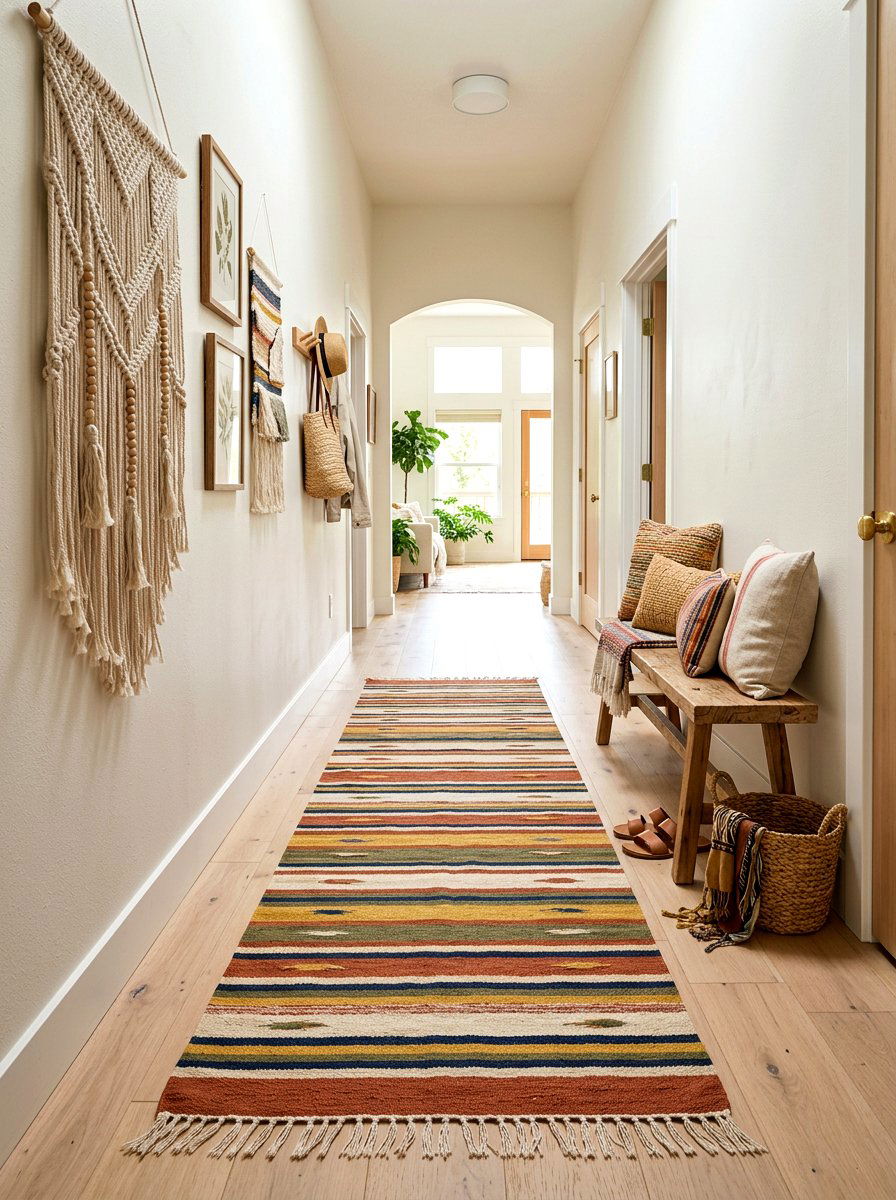
If you are not ready to commit to striped walls, a bohemian striped hallway rug is a versatile way to introduce pattern and warmth to your floor. These rugs often feature hand-woven textures and a mix of vibrant, eclectic colors that can tie together different rooms. Stripes on the floor serve the practical purpose of guiding guests into the house, while the soft fabric provides comfort underfoot. A long runner with a colorful striped pattern can hide wear and tear in high-traffic areas while adding a layer of cozy, lived-in charm. It’s an easy, non-permanent way to experiment with stripes while keeping your walls a simple, neutral color.
19. Minimalist White Striped Hallway
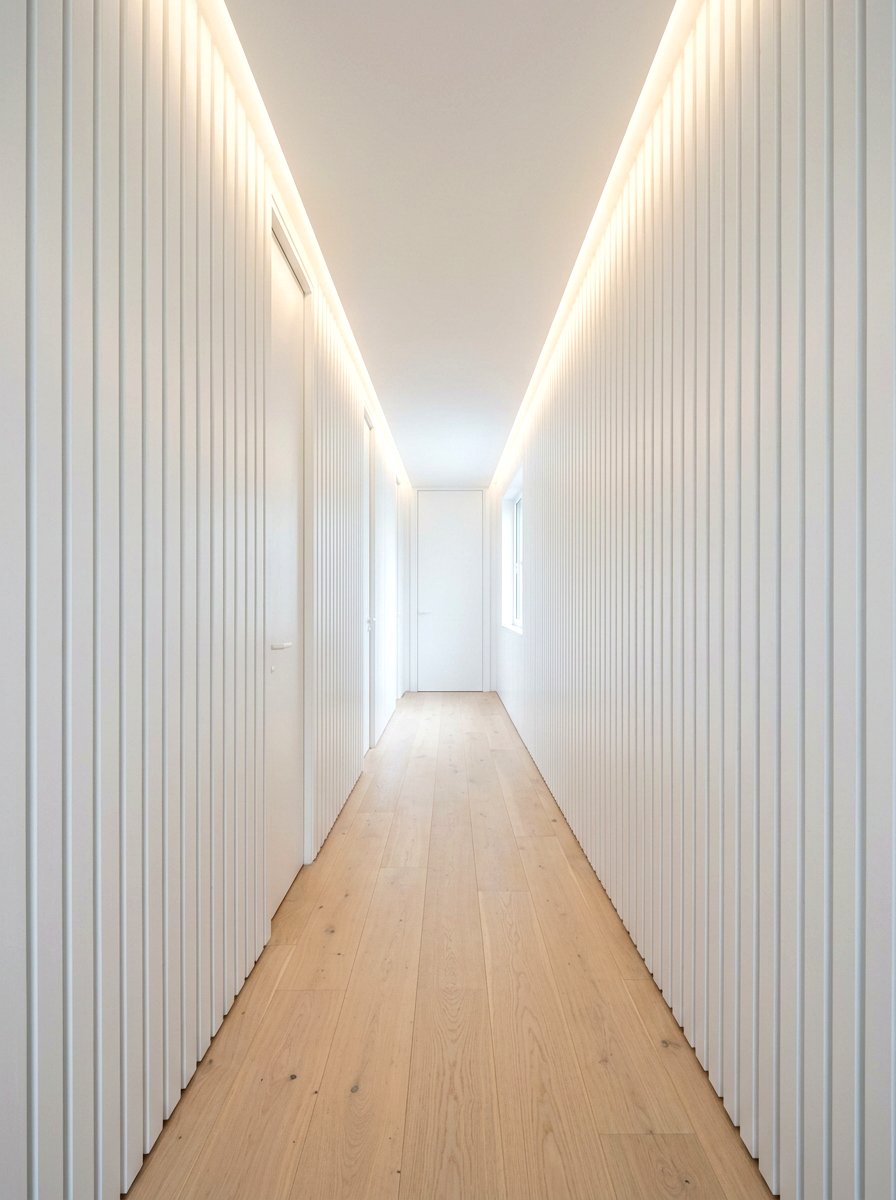
A minimalist white striped hallway uses texture rather than color to create interest, offering a clean and serene aesthetic that feels incredibly modern. This look is often achieved by using white wood paneling, such as shiplap or thin slats, to create physical lines on the wall. The shadows cast by these architectural features create "stripes" that change throughout the day as the lighting shifts. This approach is perfect for those who want a bright, monochromatic space but find flat white walls too boring or cold. It adds a subtle architectural rhythm that feels intentional and high-designed, providing a calm and peaceful transition between the various rooms in your home.
20. Scandi Style Striped Hallway
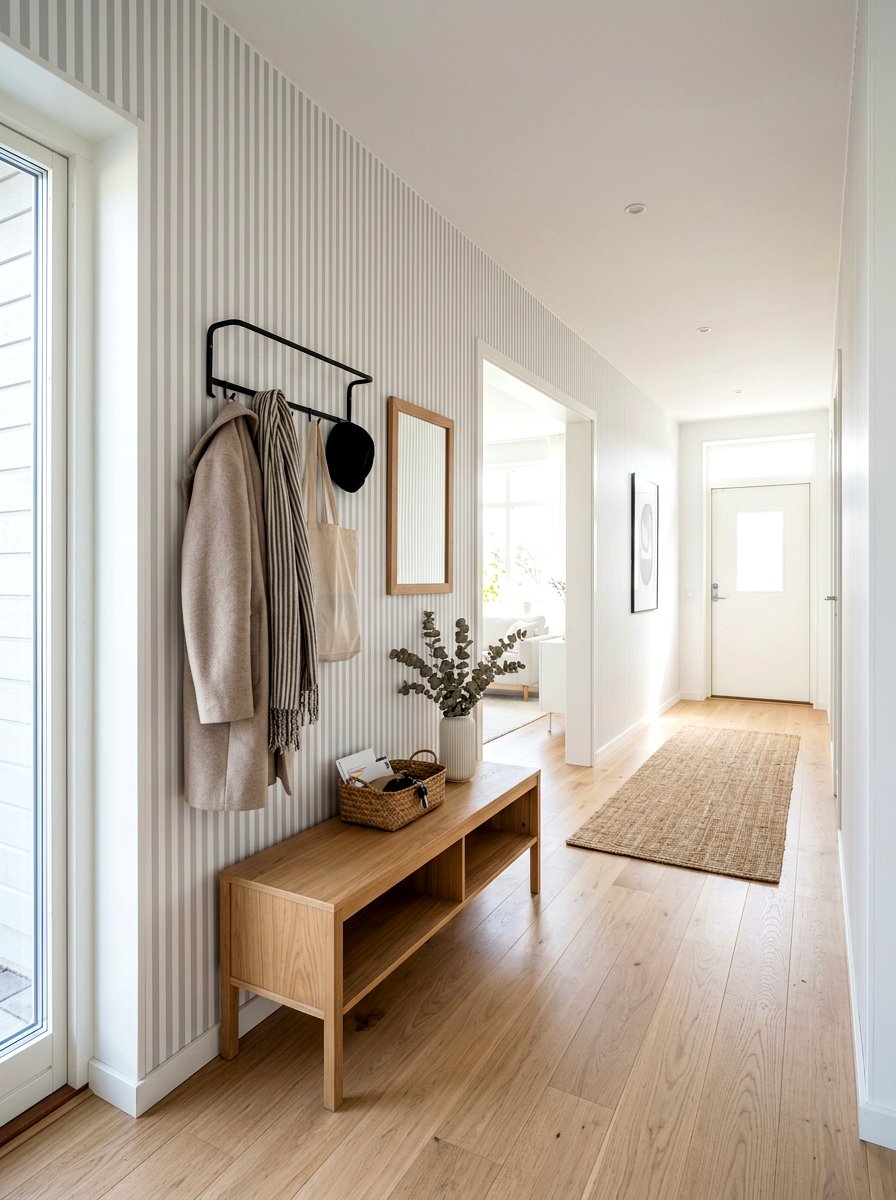
Scandinavian design is all about functionality, light, and natural beauty, and a Scandi-style striped hallway perfectly embodies these principles. Typically featuring light woods and a palette of whites, grays, and soft blues, the stripes are often kept simple and clean. You might see a single wide stripe used as an accent or thin, evenly spaced lines that provide a sense of balance. This style often incorporates natural textures like linen or light oak to keep the atmosphere feeling organic and airy. It is a great choice for creating a clutter-free, organized entryway that feels modern yet incredibly cozy, focusing on quality materials and a light-filled, open-concept design.
21. Moody Jewel Tone Striped Hallway
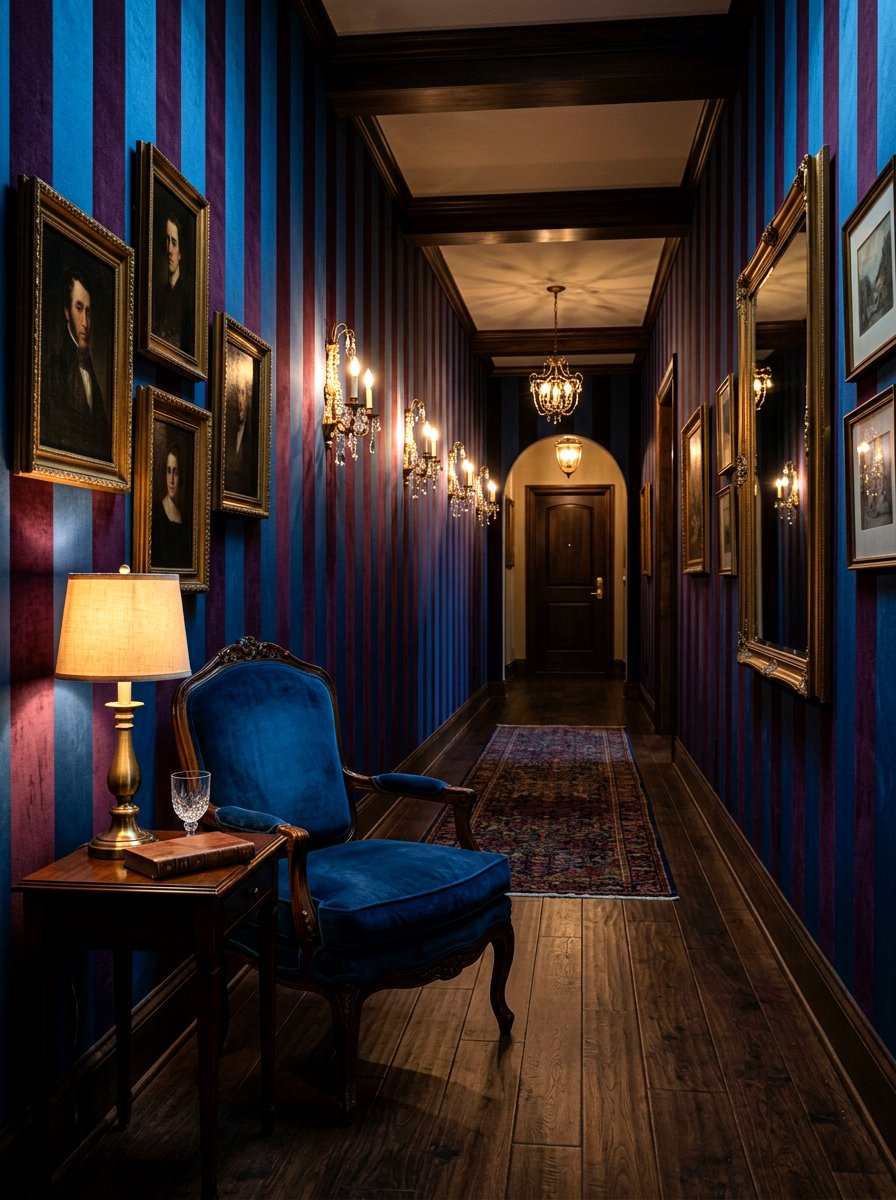
Deep jewel tones like sapphire, plum, and amethyst can transform a hallway into a rich, immersive experience when applied in a striped pattern. Using these saturated colors in a passage creates a sense of mystery and luxury, making the hallway feel like a curated destination rather than just a walkway. To prevent the space from feeling too dark, consider alternating a jewel tone with a slightly lighter metallic or a high-gloss version of the same color. This creates a sophisticated play of light that adds depth to the walls. Paired with ornate frames and rich wood accents, a moody jewel-toned hallway feels like a private gallery within a grand, well-appointed home.
22. Traditional Striped Wainscoting Hallway
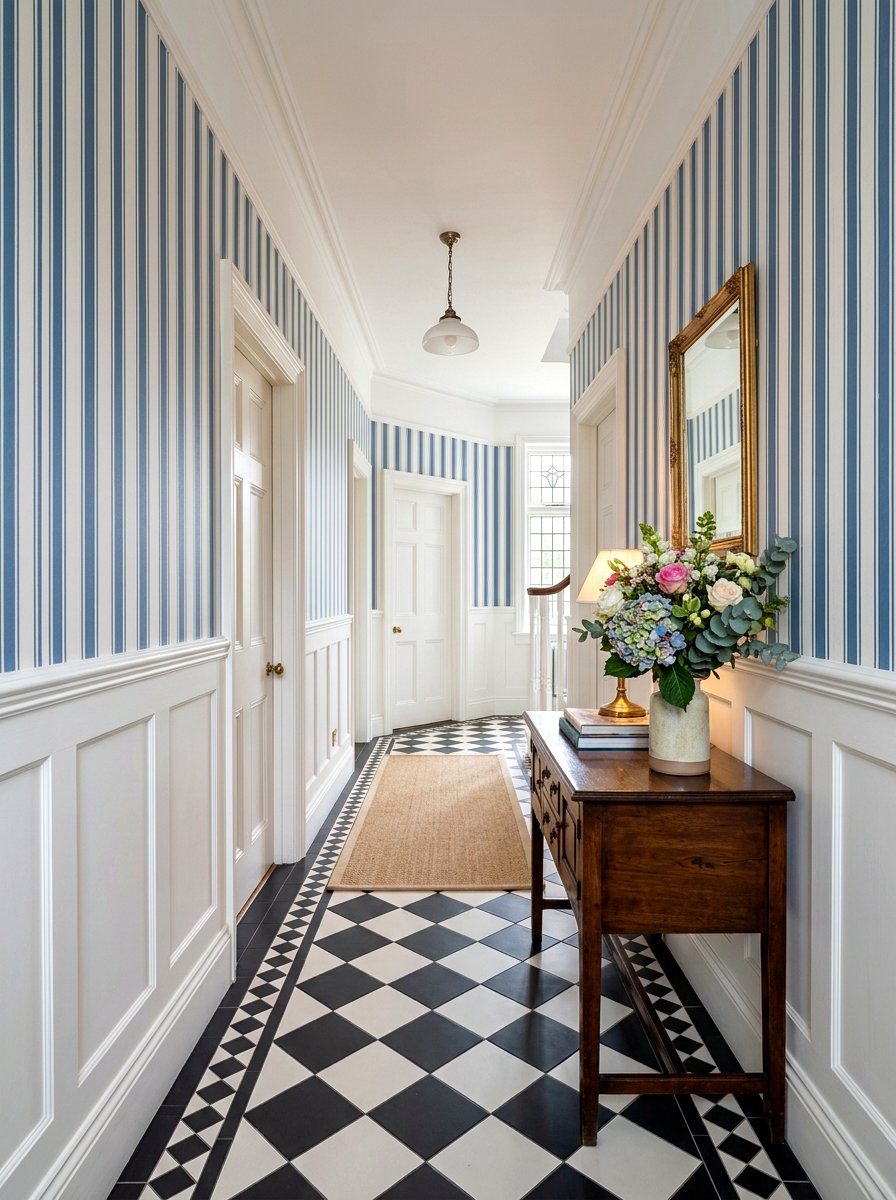
Combining traditional wainscoting with striped wallpaper or paint is a classic design move that adds immense character and architectural detail to any hallway. By placing the stripes on the upper half of the wall and a solid-colored paneling on the lower half, you create a balanced look that feels both historic and polished. The wainscoting provides a durable surface for high-traffic areas, while the stripes add height and visual interest above. This style works exceptionally well in older homes or new builds looking to add a sense of "old-world" charm. Use soft, muted colors for a subtle effect, or go bold with high-contrast stripes for a more updated, modern-traditional aesthetic.
23. Floor To Ceiling Striped Hallway
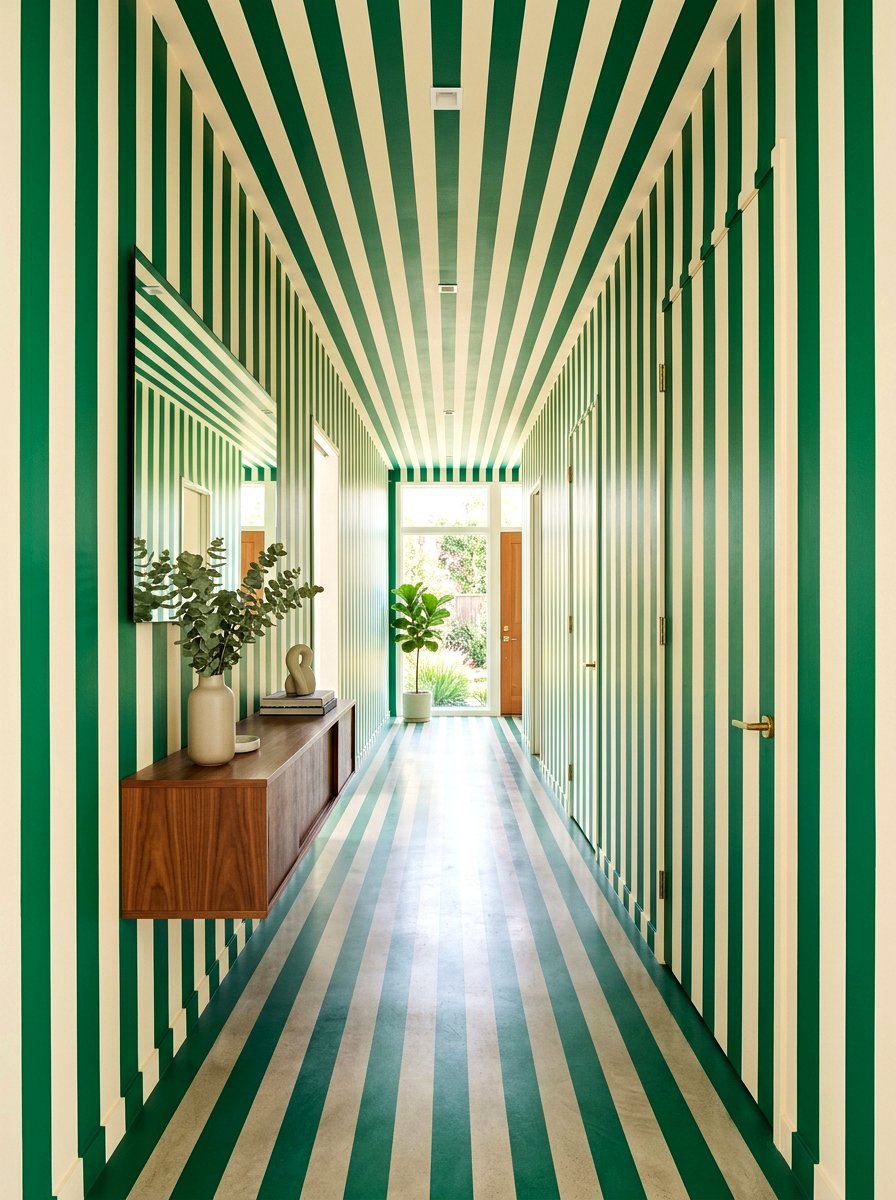
For the ultimate immersive experience, a floor-to-ceiling striped hallway wraps the entire space in a cohesive pattern that feels intentional and bold. When stripes extend from the baseboards all the way up to the crown molding — and sometimes even onto the ceiling — the architectural boundaries of the room seem to disappear. This technique is particularly effective at making small, boxy hallways feel much larger and more grand. By maintaining a consistent pattern across all vertical surfaces, you create a rhythmic flow that pulls the viewer through the space. This maximalist approach is perfect for designers who want to make a statement and create a unique, high-impact area that leaves a lasting impression.
24. Diagonal Striped Hallway Accent
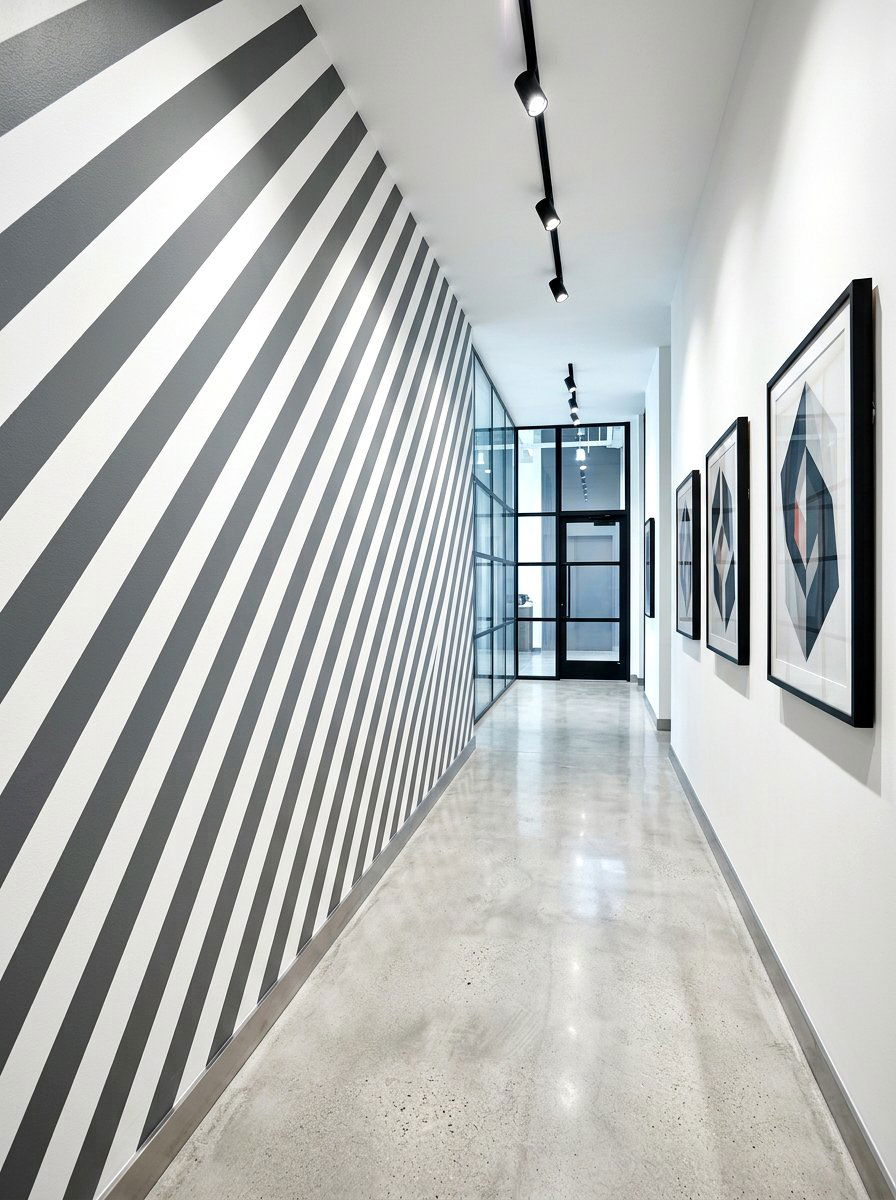
Breaking away from traditional horizontal or vertical lines, a diagonal striped hallway accent introduces a sense of dynamic energy and modern creativity. Slanted stripes lead the eye in unexpected directions, which can be used to emphasize an architectural feature or lead toward a specific doorway. This edgy design choice is perfect for contemporary homes where you want to add a playful, graphic element. You can choose a single accent wall for diagonal stripes to avoid overwhelming the space, or use them in a softer color palette to keep the look sophisticated. It’s a bold way to experiment with geometry and movement, making your hallway feel active, stylish, and entirely unique.

25. Coastal Striped Hallway Decor
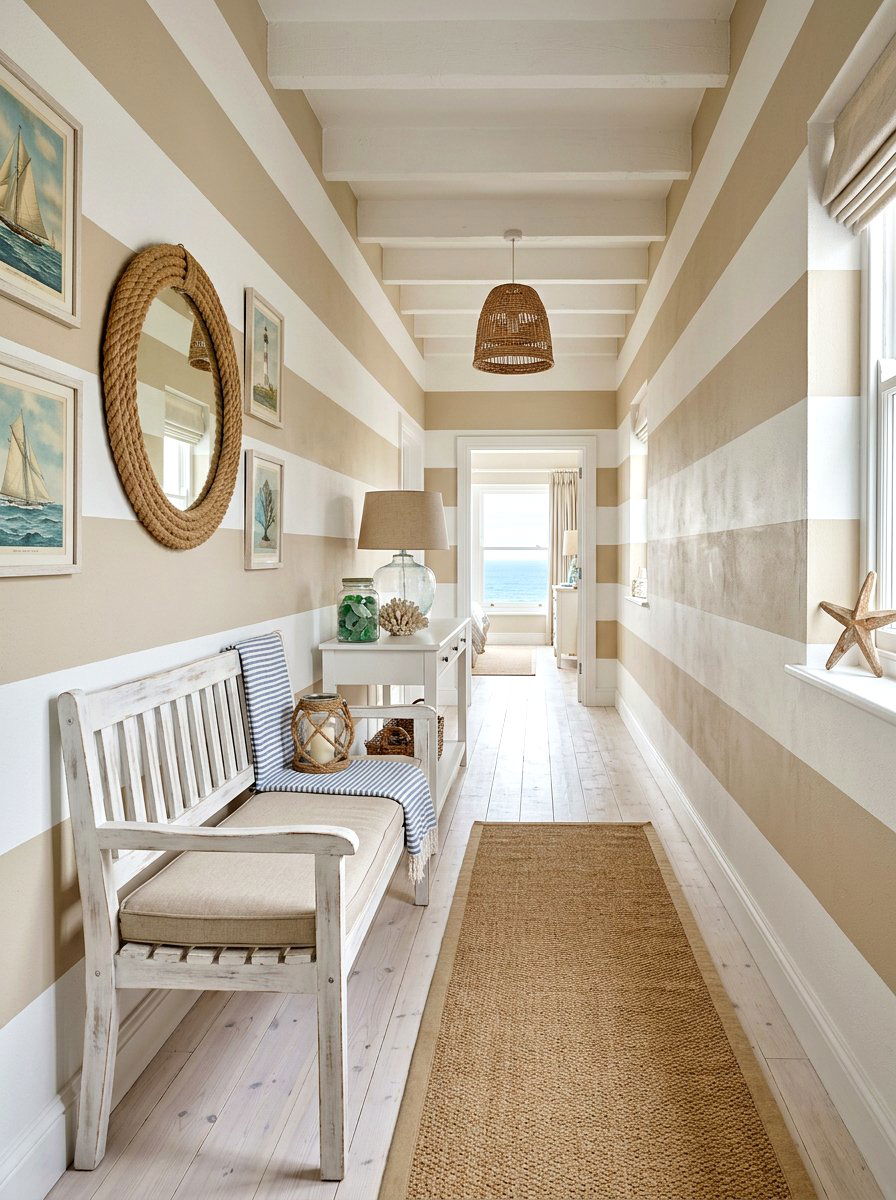
Inspired by the seaside, coastal striped hallway decor typically features light blues, soft grays, and sandy beiges to create a breezy, vacation-like feel. These stripes are often reminiscent of traditional beach huts or nautical sails, providing an instant sense of relaxation as you walk through the house. Using natural materials like jute rugs, wicker baskets, and driftwood accents helps to reinforce the maritime theme. Whether you choose wide horizontal bands to widen the space or classic ticking stripes for a more refined look, the goal is to create a bright, airy, and unpretentious environment. This style is perfect for bringing a piece of the coast into any home, regardless of its location.
26. Industrial Striped Hallway Style
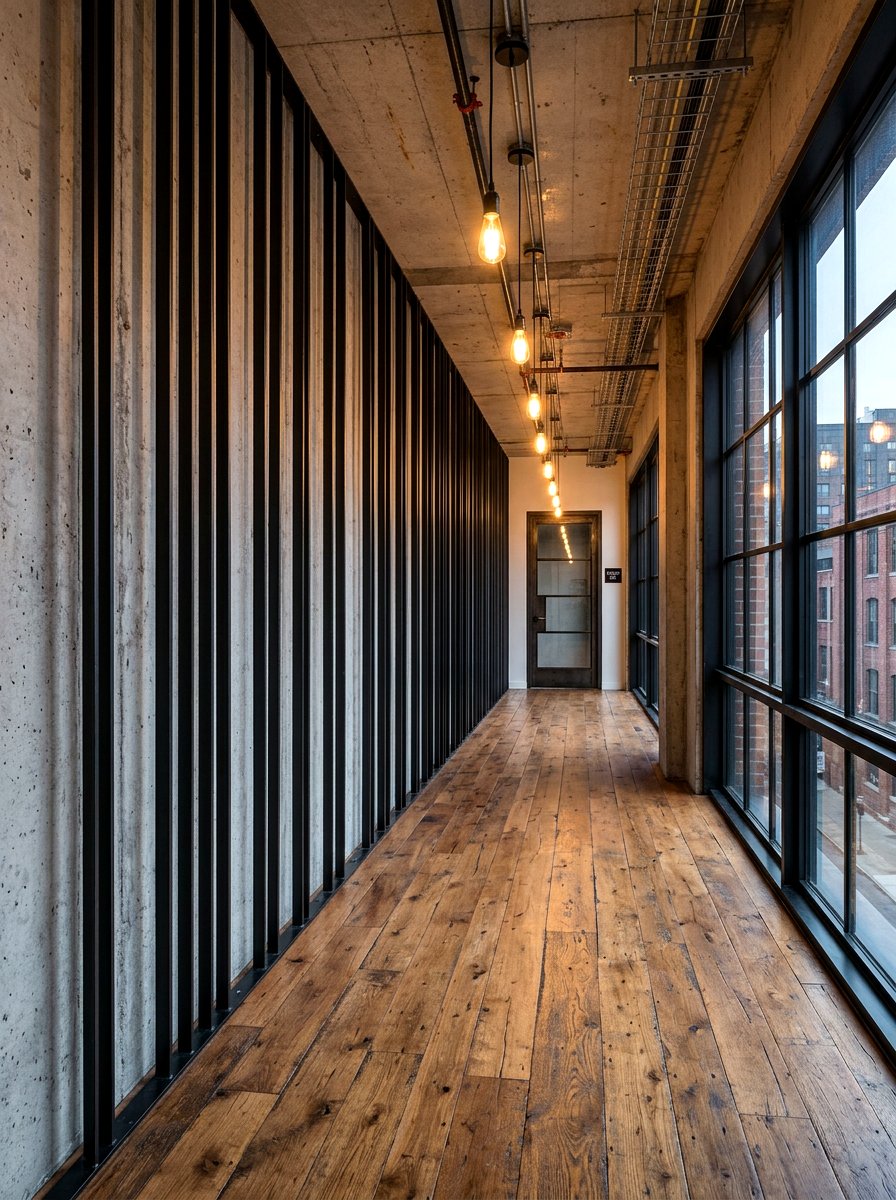
Industrial design often focuses on raw materials and functional aesthetics, and a striped hallway in this style can add a surprising amount of polish and structure. Think of using metallic paints like copper or weathered steel tones to create stripes against an exposed brick or concrete wall. Alternatively, you could use black metal slats to create physical, three-dimensional stripes that add texture and depth. This approach is all about contrasting rugged textures with clean, precise lines. It works beautifully in lofts or modern apartments, offering a sophisticated take on industrial living that feels organized and high-designed, rather than just unfinished, providing a rugged yet refined transition space.
27. Farmhouse Striped Hallway Entry
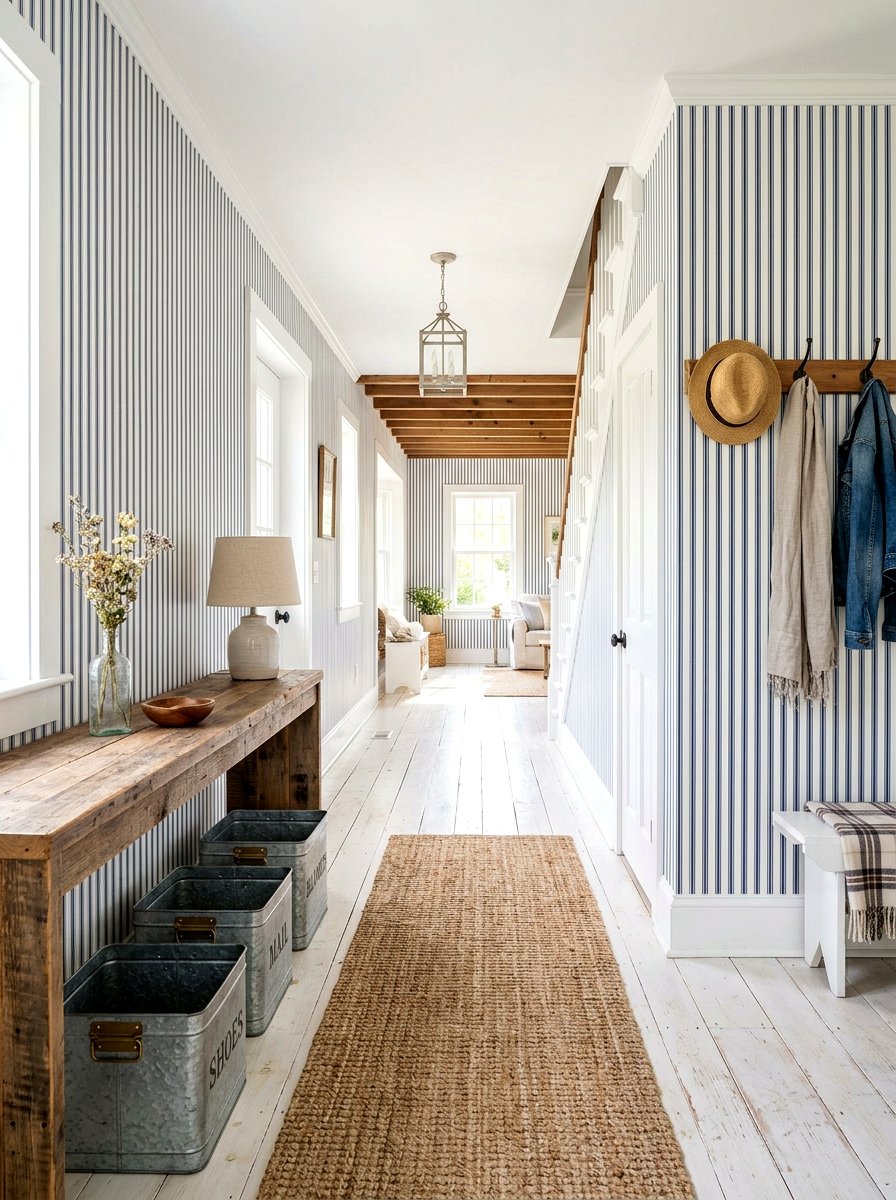
A farmhouse striped hallway entry blends rustic charm with clean, simple patterns to create a space that feels lived-in and incredibly welcoming. Often featuring "ticking" stripes — which are narrow, vintage-inspired patterns — this look is perfect for creating a cozy, country aesthetic. Neutral color palettes of off-white, charcoal, and muted blue are common, allowing the natural textures of wood floors and woven rugs to shine. This style is practical and timeless, making it a great choice for busy families who want a hallway that looks beautiful but feels durable and unpretentious. It’s a soft and approachable way to use stripes that adds a layer of nostalgia and comfort to your home’s main entrance.
28. Glossy And Matte Striped Hallway
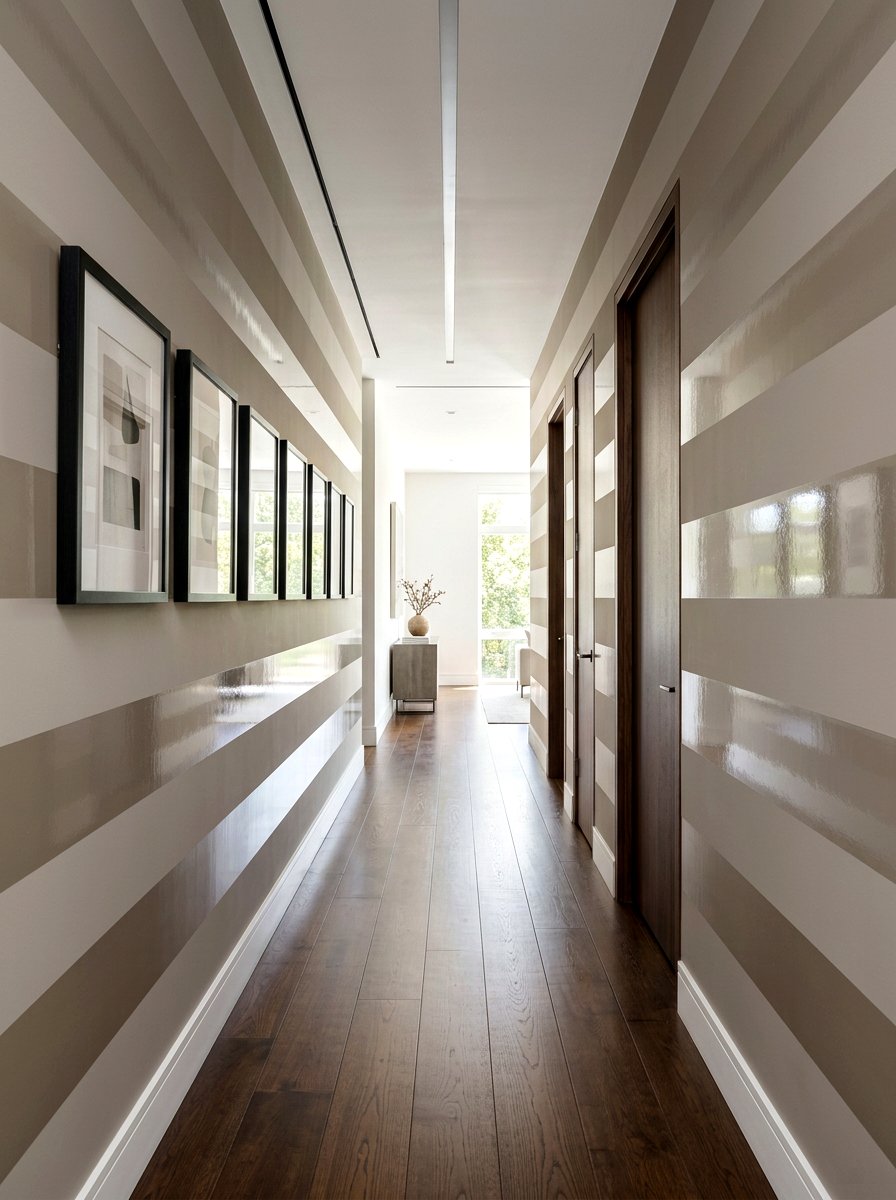
One of the most sophisticated ways to use stripes is by staying within a single color but varying the finishes between glossy and matte. In a monochromatic hallway, this technique creates a pattern that is only visible as the light hits the walls at different angles. For example, a satin-finish gray stripe next to a flat-finish gray stripe adds a subtle, high-end texture that feels incredibly custom and expensive. This "shadow stripe" effect is perfect for minimalist homes where color is kept to a minimum but architectural interest is desired. It offers a refined and professional look that is deeply satisfying to the eye, providing a quiet but powerful design statement.
29. Rainbow Striped Hallway Walls
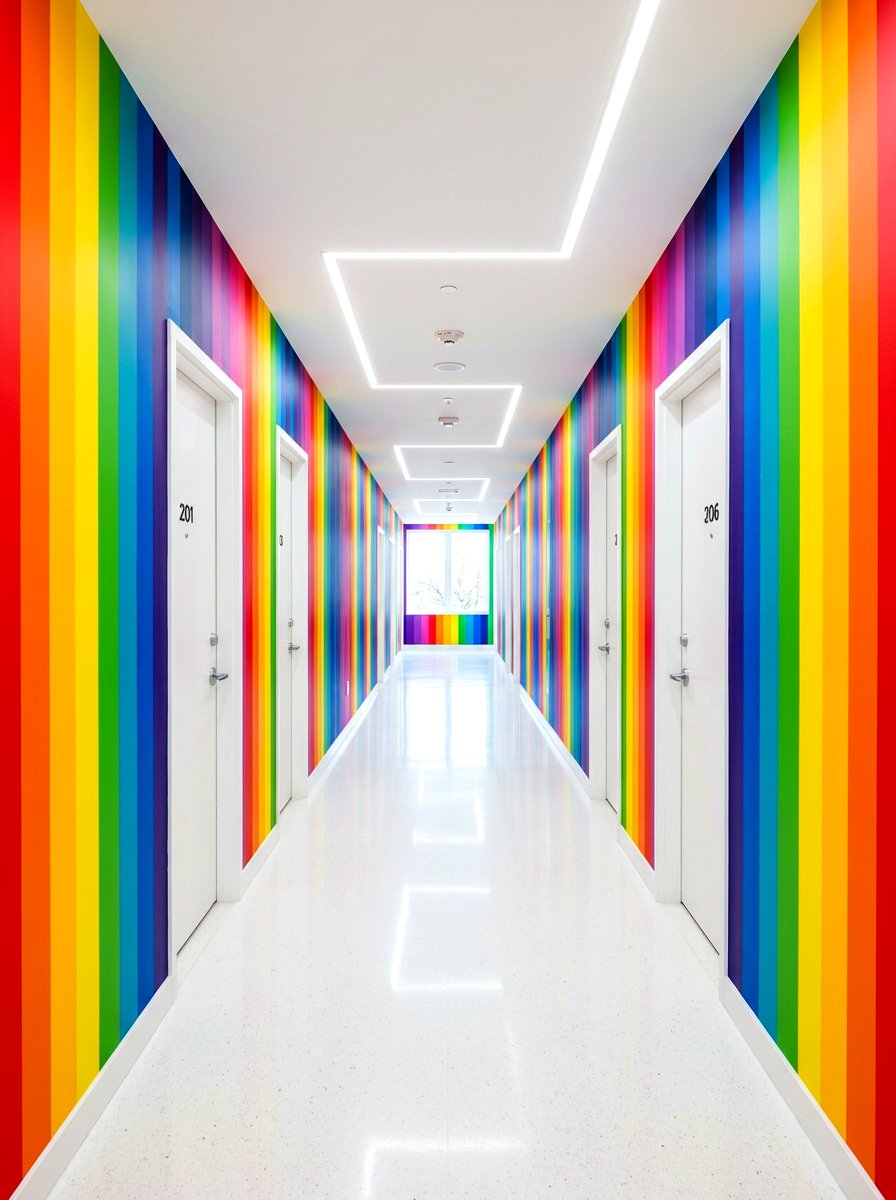
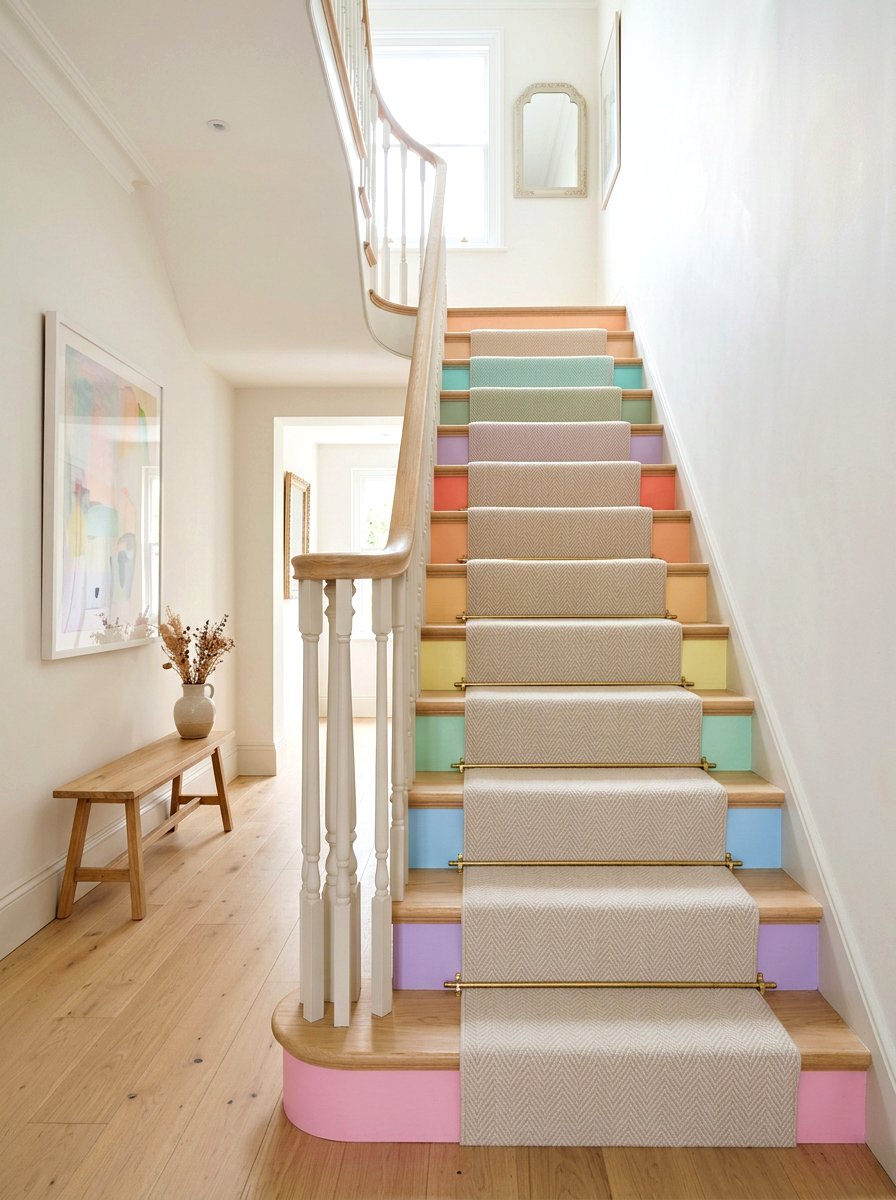
For a home filled with joy and creativity, rainbow striped hallway walls offer a playful and high-energy environment that is impossible to ignore. By using a spectrum of colors in varying widths, you turn your entryway into a celebration of light and pigment. This design is particularly popular in children’s play areas or creative studios, but it can also be used in a main hallway if you choose more muted or "earthy" versions of the rainbow. The key to making this work is to keep the floor and ceiling neutral, allowing the vibrant walls to be the primary focus. It is a bold, artistic choice that ensures your home feels unique and full of life.
30. Monochrome Striped Hallway Runner
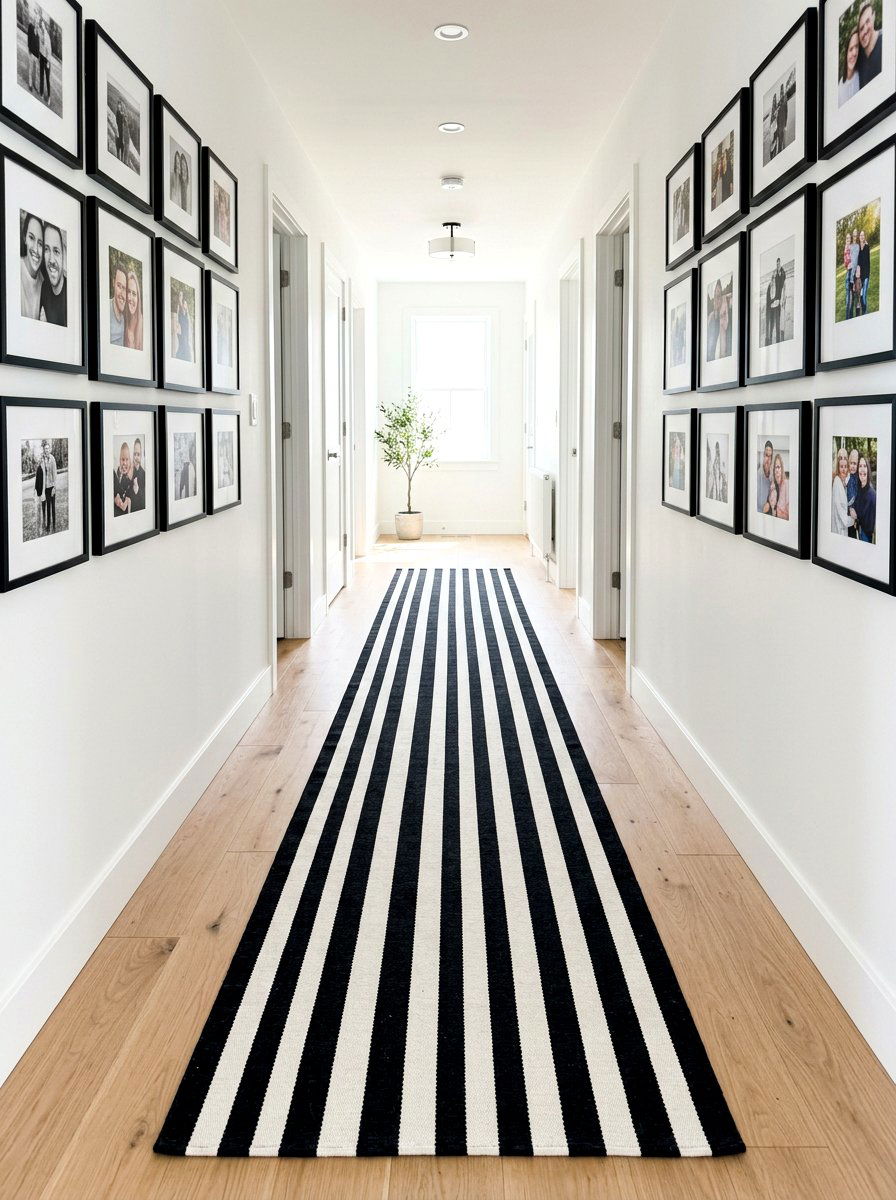
If you want to introduce stripes in a way that is both functional and stylish, a monochrome striped hallway runner is the perfect accessory. A long rug with black and white or gray and white stripes provides a clear path through the house, protecting your floors while adding a layer of graphic interest. The linear pattern of the rug naturally elongates the hallway, making the journey from the front door feel more intentional and grand. Because the colors are neutral, the runner will match almost any wall decor, from bold paintings to simple white walls. It is a low-commitment way to bring the power of stripes into your home while adding warmth and comfort.
Conclusion:
Designing a hallway with stripes is more than just a decorative choice; it is a strategic way to reshape your home's most essential transition space. Whether you opt for the height-enhancing power of vertical lines or the expansive feel of horizontal bands, stripes offer endless versatility for every architectural challenge. From the bold drama of high-contrast black and white to the quiet sophistication of tonal beiges, this classic pattern can be tailored to fit any personal aesthetic. By carefully selecting your colors, widths, and orientations, you turn a simple passage into a stunning focal point that guides the eye and welcomes everyone who enters.

Related posts: