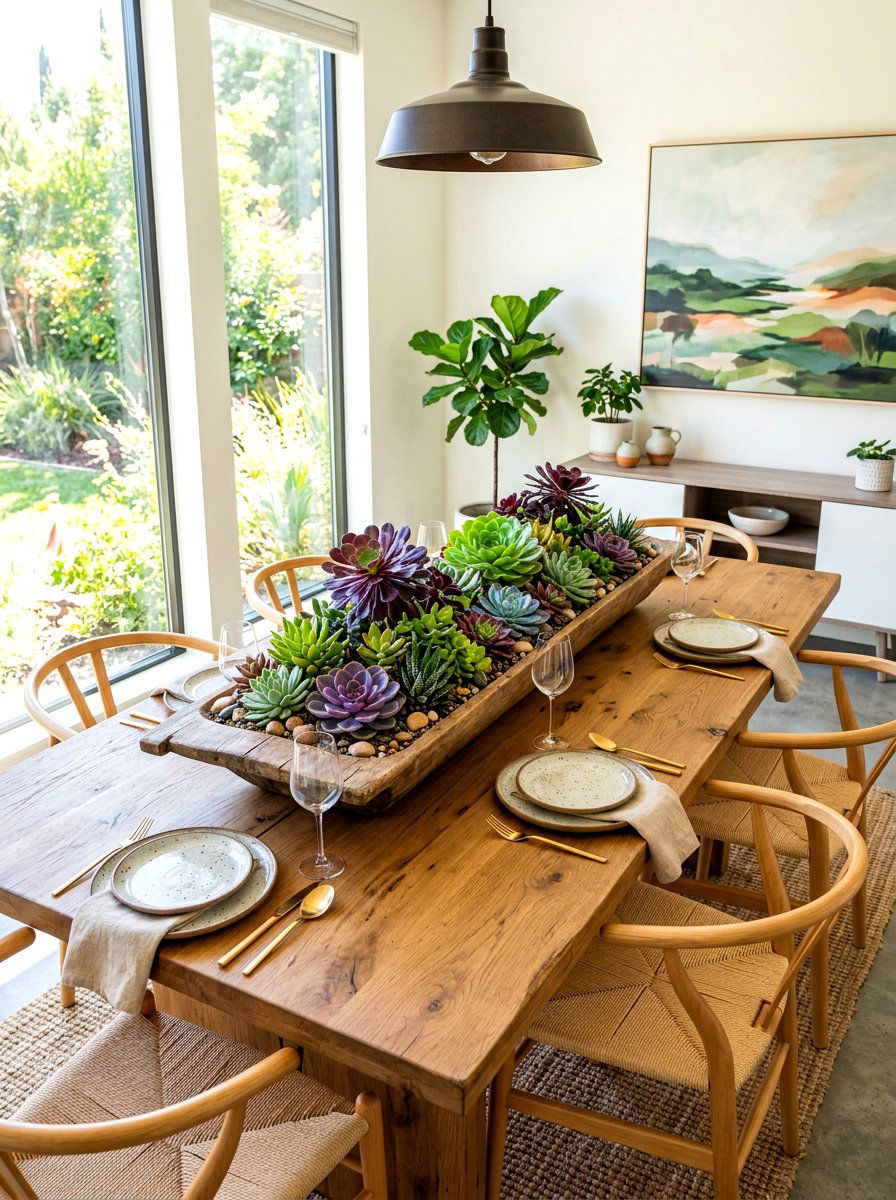
Creating a beautiful front entry during the coldest months of the year can transform your entire home's exterior into a welcoming sanctuary. As the vibrant flowers of summer fade and the autumn leaves disappear, your porch can often feel empty or neglected. However, winter porch planters offer an incredible opportunity to showcase textures, hardy greens, and natural elements that thrive despite the frost. By focusing on structural components like birch poles, fragrant evergreens, and colorful berries, you can build a display that lasts from late November all the way through the first signs of spring. These arrangements provide much-needed curb appeal when the rest of the landscape is dormant and brown.
1. Evergreen Branches Tall Urn
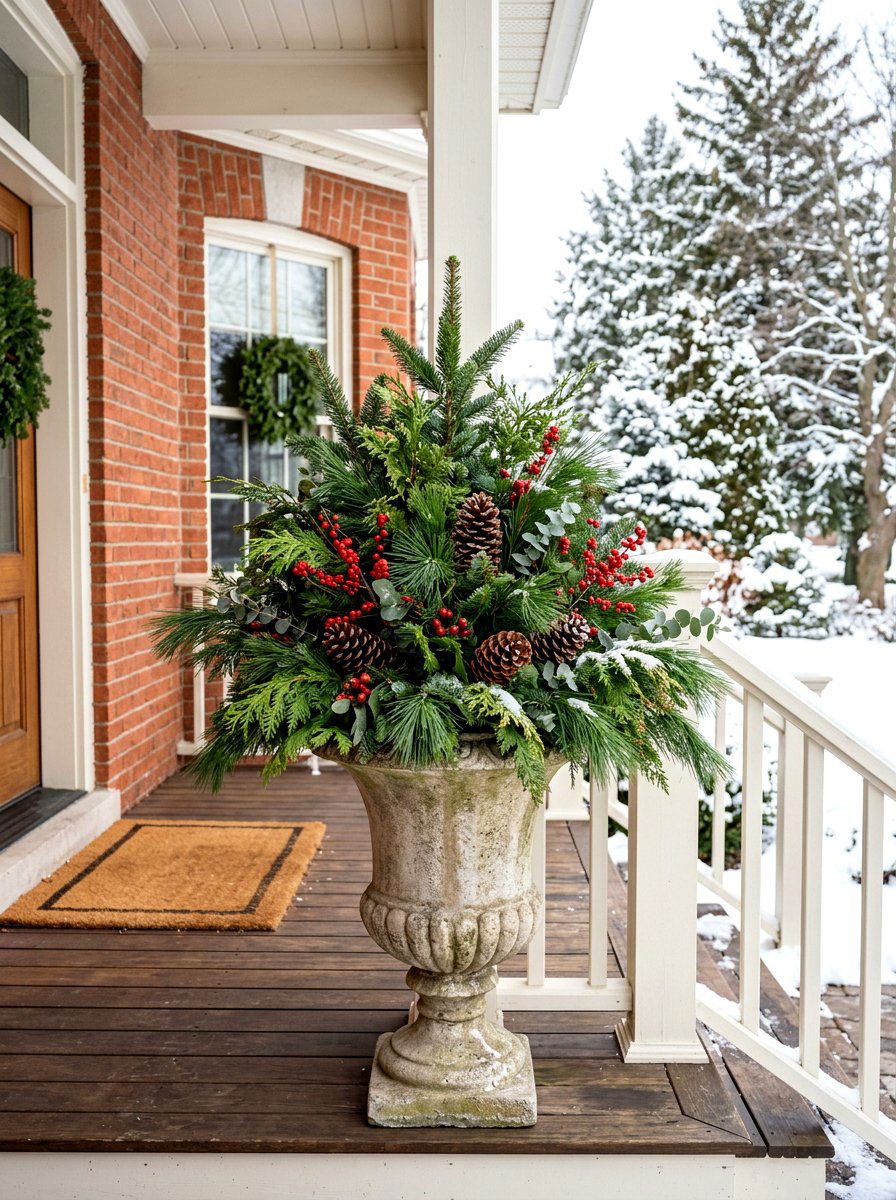
Using tall urns as a base for your winter display creates an immediate sense of grandeur and sophistication at your front door. You should start by filling the container with heavy soil or floral foam to secure the stems against strong winter winds. Layer different types of evergreens like noble fir, incense cedar, and white pine to create a lush and full appearance. The variety in needle shape and shade of green adds depth that a single species simply cannot provide. These tall arrangements act as a focal point, drawing the eye upward and making your entryway feel much more substantial during the bleakest months.
2. Birch Logs Pine Sprigs
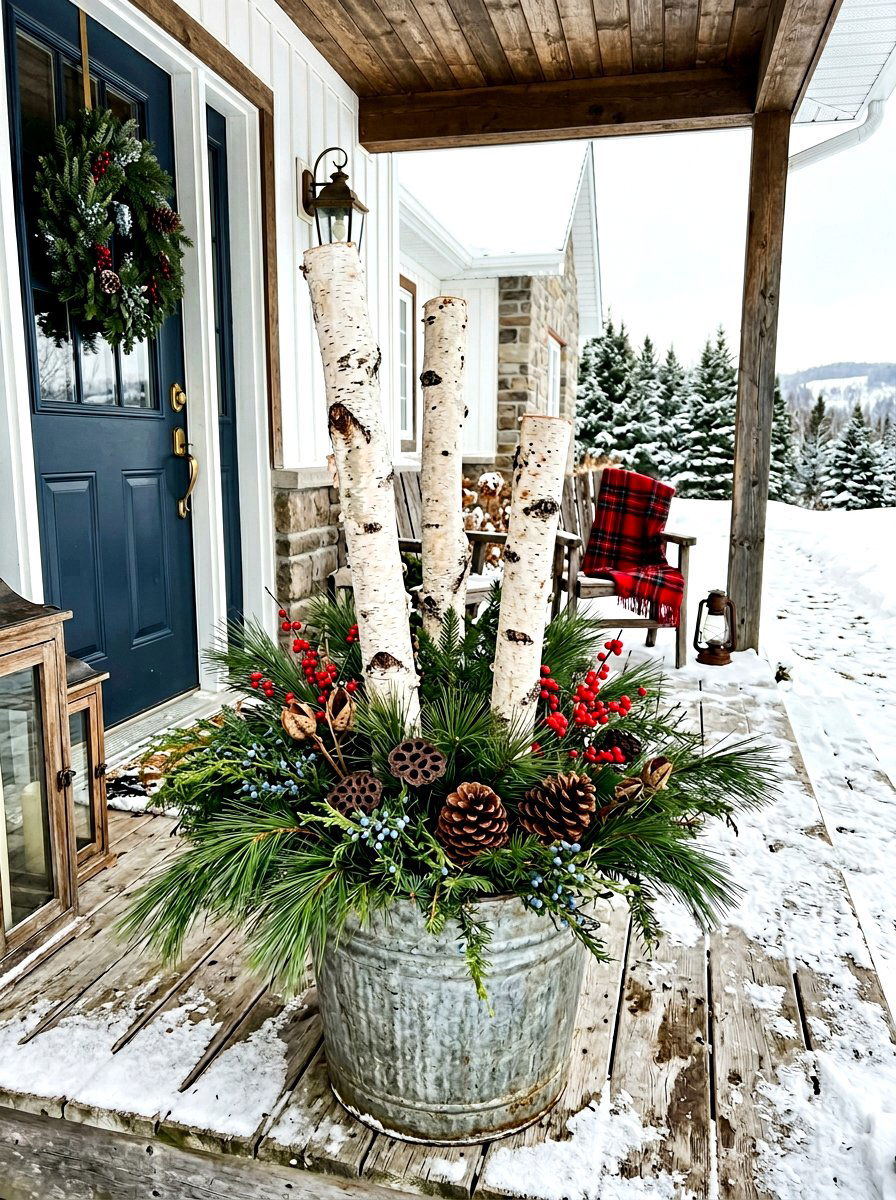
Adding white birch logs to your porch planters introduces a striking vertical element and a beautiful color contrast against deep green foliage. You can bundle three logs of varying heights in the center of your pot to create a rustic yet elegant focal point. Surround the base of the logs with thick sprigs of white pine or balsam fir to hide the insertion points. The papery texture of the birch bark looks stunning when paired with the soft needles of the evergreens. This specific design works exceptionally well for farmhouse or traditional style homes, providing a natural and woodsy feel throughout the winter.
3. Red Twig Dogwood Planter
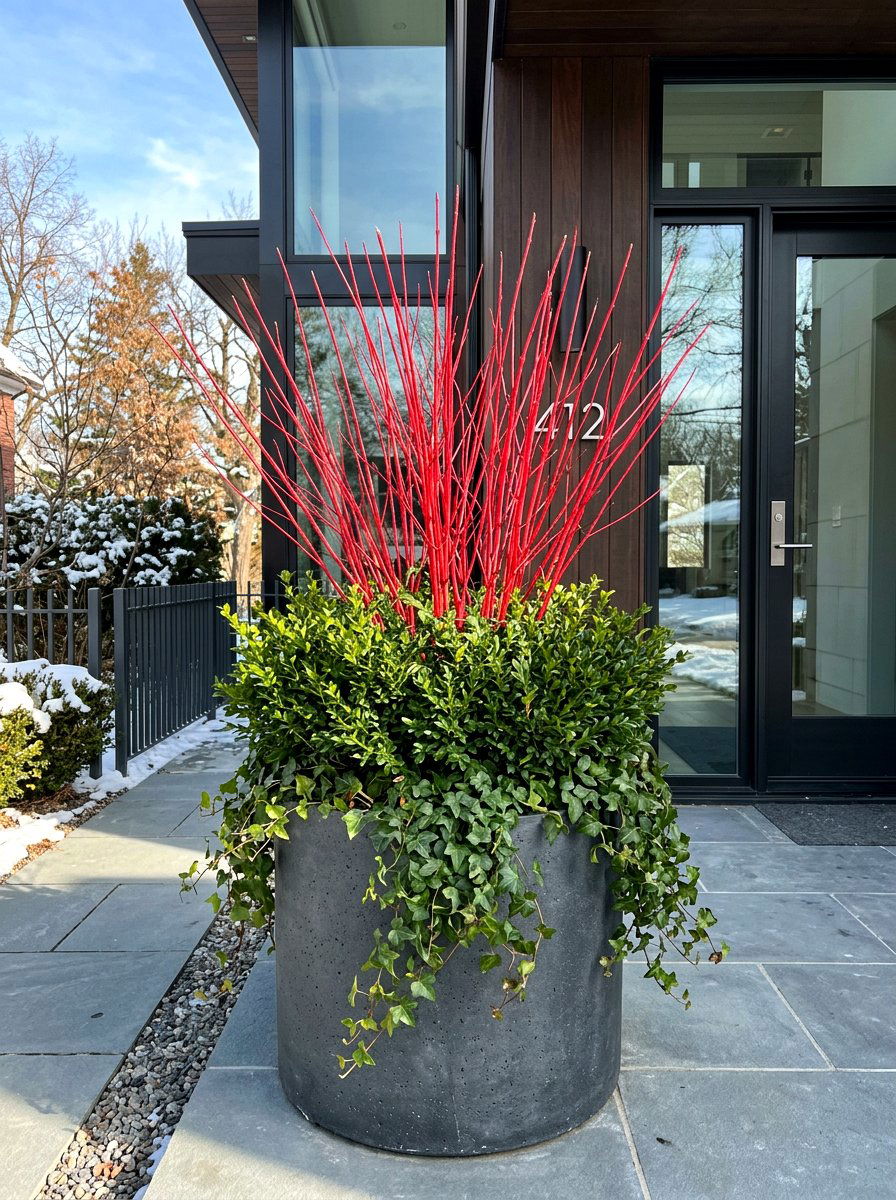
Red twig dogwood stems provide a brilliant pop of color that stands out beautifully against a snowy backdrop or a neutral-colored house. You can insert these vibrant red branches into the center of your planter to create height and architectural interest. To balance the brightness of the stems, surround them with dark green boxwood clippings or trailing ivy that can withstand cooler temperatures. The contrast between the fiery red wood and the deep emerald leaves creates a sophisticated look that requires very little maintenance. This arrangement is perfect for modern homes that appreciate clean lines and bold, natural colors in their seasonal decor.
4. Pinecones Spruce Boughs
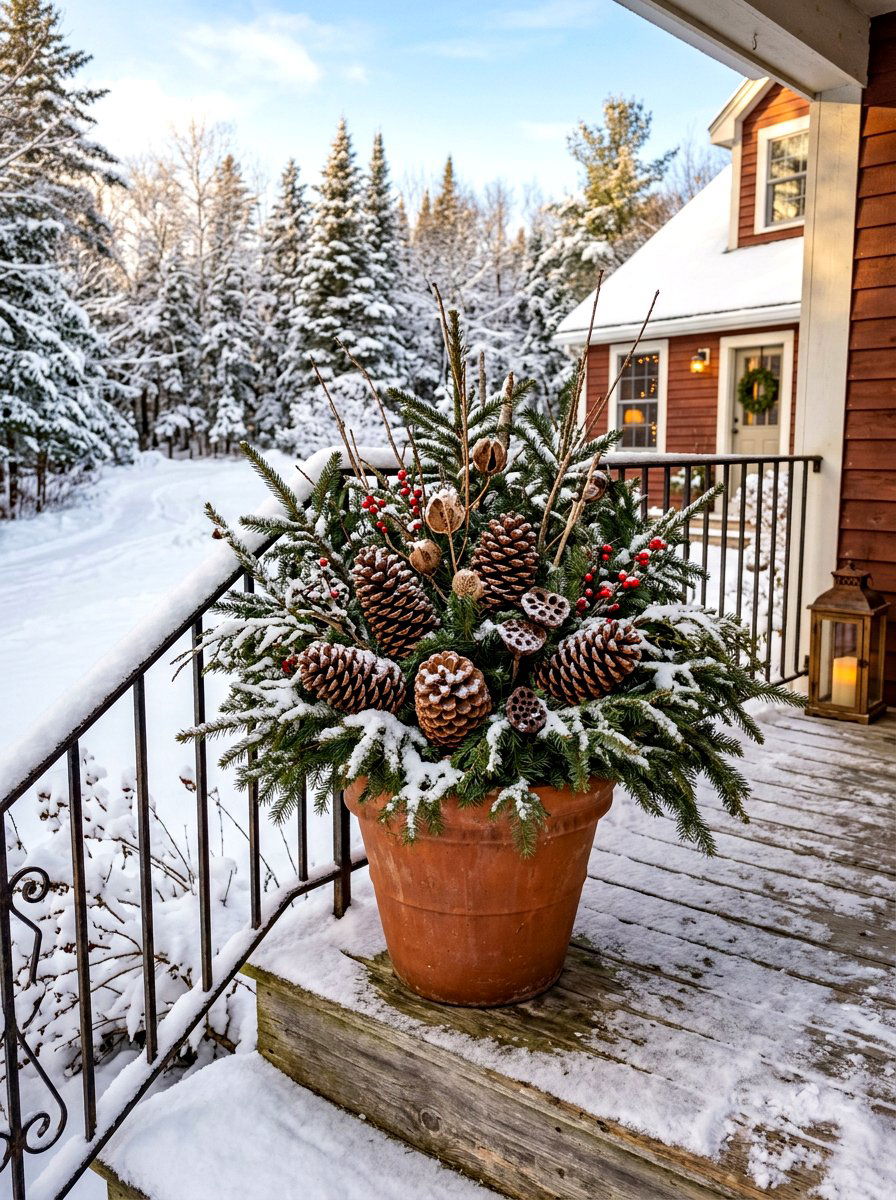
Large pinecones are a classic winter element that adds a wonderful tactile quality to any outdoor container arrangement on your front porch. You should use a mix of different sizes, tucking the larger cones near the center and letting smaller ones peek out from the edges. Pairing them with sturdy spruce boughs creates a traditional look that feels incredibly cozy and timeless. The woody texture of the cones complements the sharp, stiff needles of the spruce perfectly. This design is highly durable and can easily last several months without looking wilted, making it a practical choice for busy homeowners who want long-lasting beauty.
5. Magnolia Leaves Black Pot
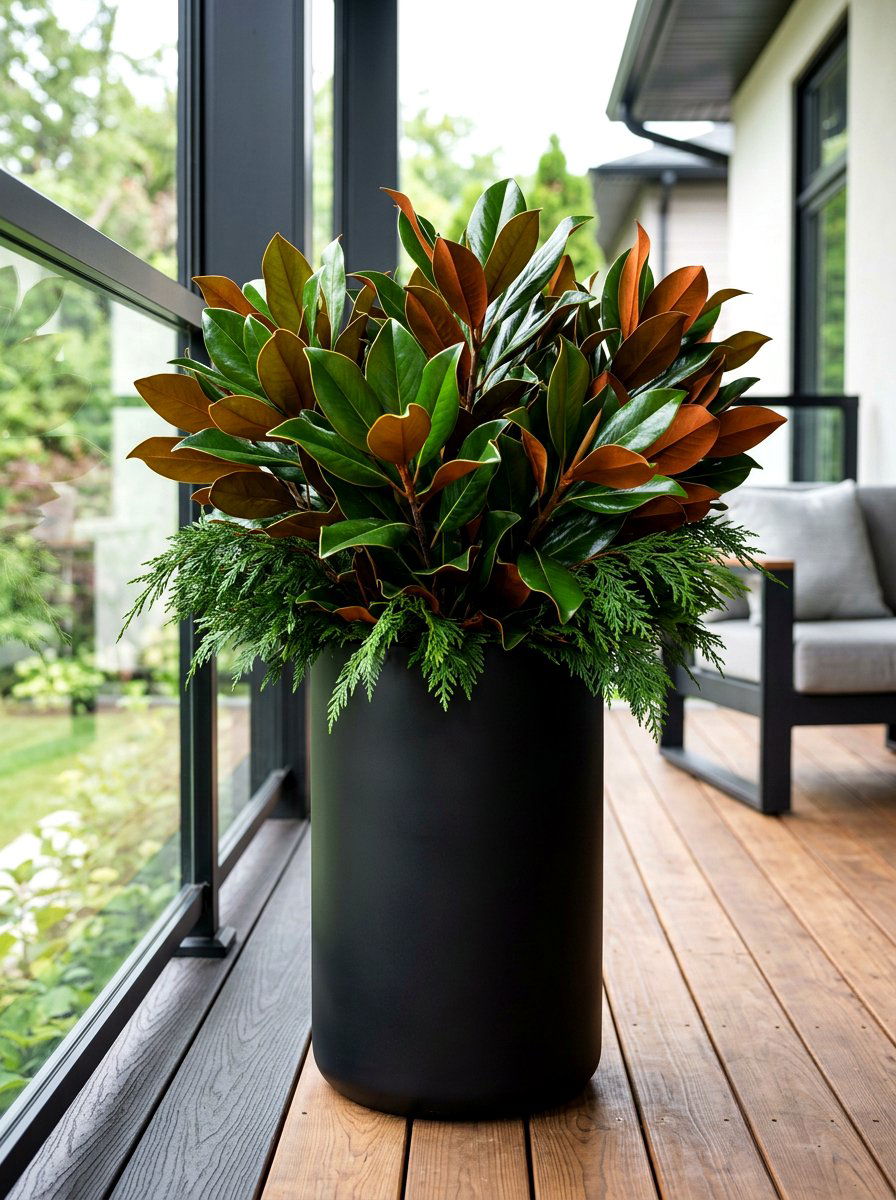
Magnolia leaves offer a unique texture with their glossy green tops and fuzzy, cinnamon-colored undersides, making them a premium choice for winter containers. Placing these broad leaves inside a sleek black pot creates a high-contrast, designer look that feels modern and expensive. You can layer the leaves so they fan out horizontally, providing a wide and full base for other elements. Combining them with dark cedar or cypress branches adds even more depth to the arrangement. The sturdy nature of magnolia foliage means it will hold its shape and color even as the temperatures drop significantly below freezing during mid-winter.
6. Frosted Eucalyptus Arrangement
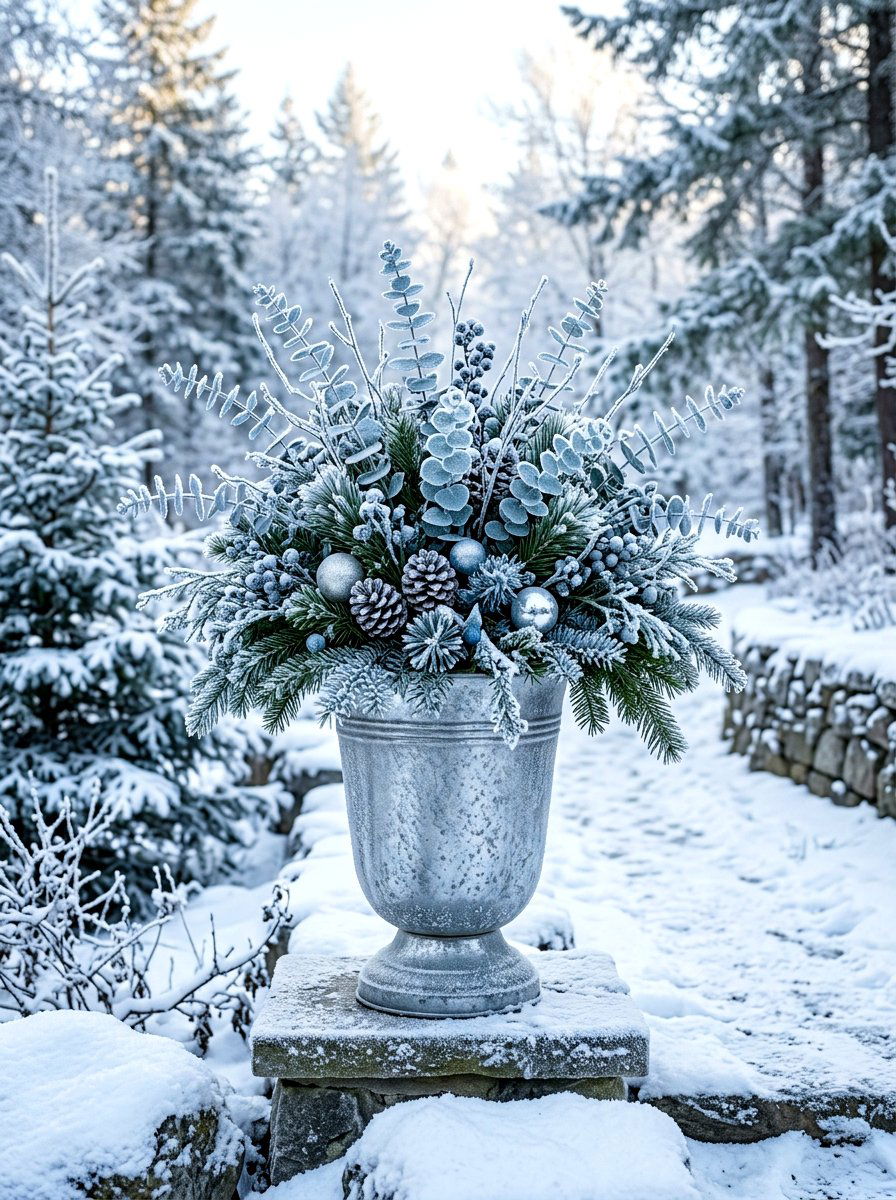
Frosted or silver-toned eucalyptus brings a refreshing and contemporary feel to winter porch planters, offering a cool color palette that mimics winter frost. You can find preserved or faux eucalyptus stems that maintain their shape perfectly in cold outdoor conditions. Mixing these round, silvery leaves with traditional evergreens like Douglas fir creates a layered and ethereal look. The scent of the eucalyptus also adds a pleasant fragrance to your entryway whenever you walk past. This design is ideal for those who prefer a more monochromatic or subtle winter theme that moves away from the typical bright greens and reds often seen.
7. Boxwood Spheres Stone Planter
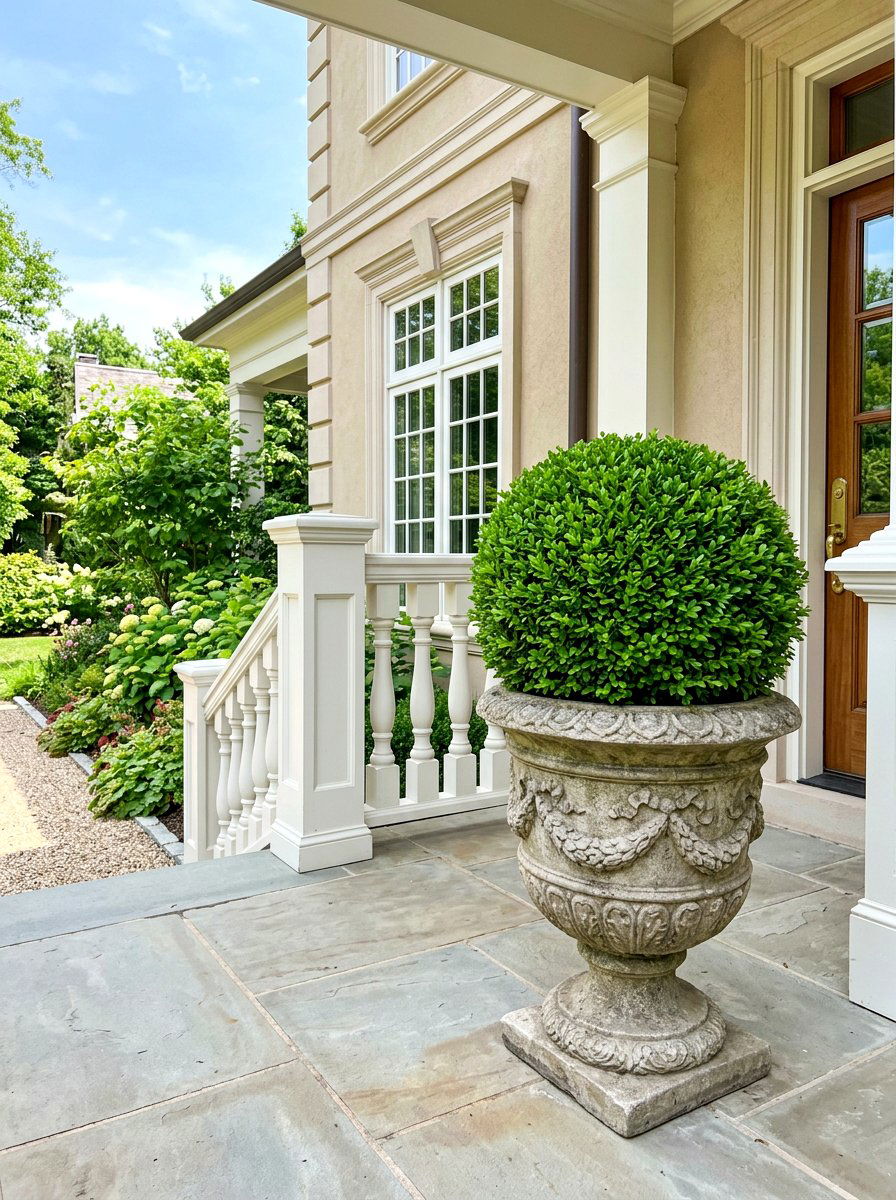
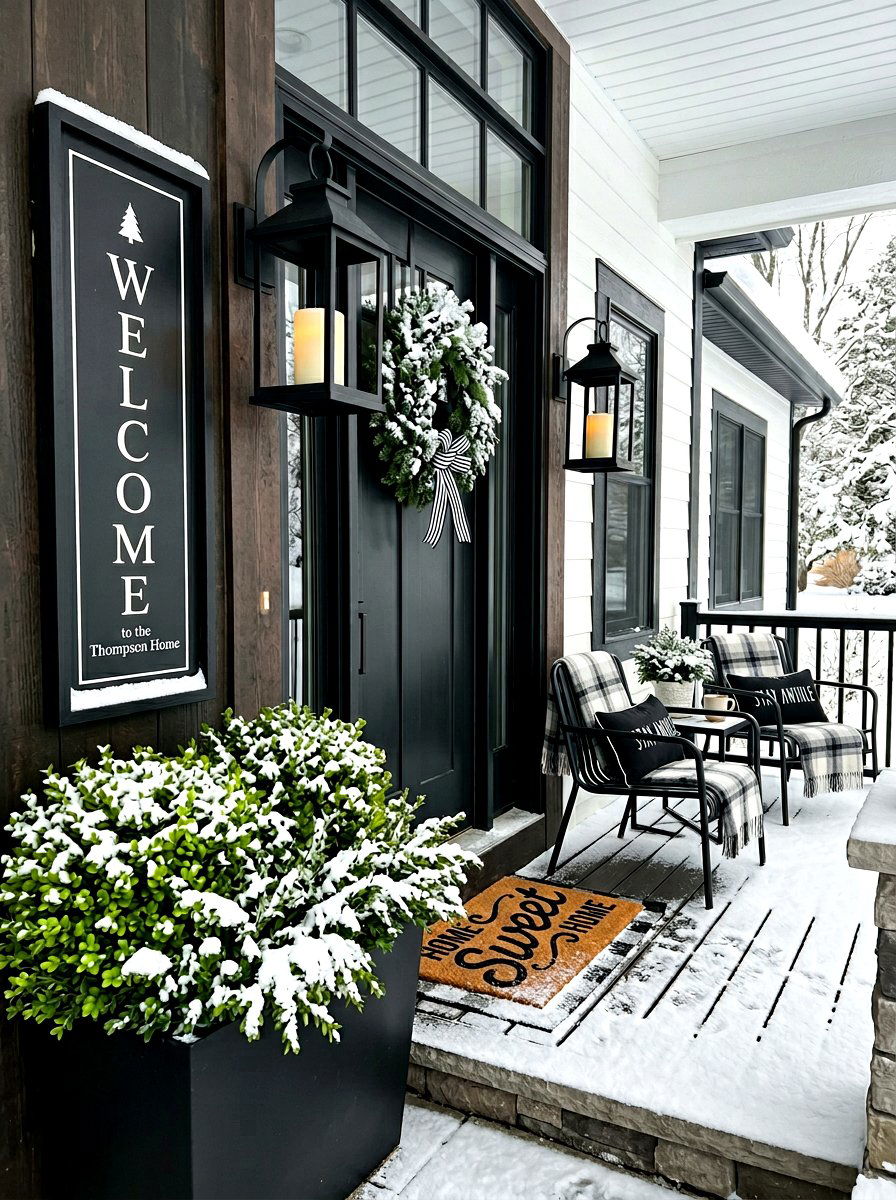
Boxwood spheres provide a manicured and formal appearance that looks incredibly elegant when placed in heavy stone or concrete planters. You can use live boxwood plants or high-quality faux spheres that are designed to withstand UV rays and freezing temperatures. Placing a single large sphere in a container creates a minimalist and clean aesthetic that works perfectly for traditional or transitional home styles. To add a winter touch, you can lightly dust the tops of the spheres with faux snow or wrap them in delicate wire lights. This low-maintenance option provides a structured look that stays green and vibrant all season.
8. Rustic Wooden Crate Evergreens
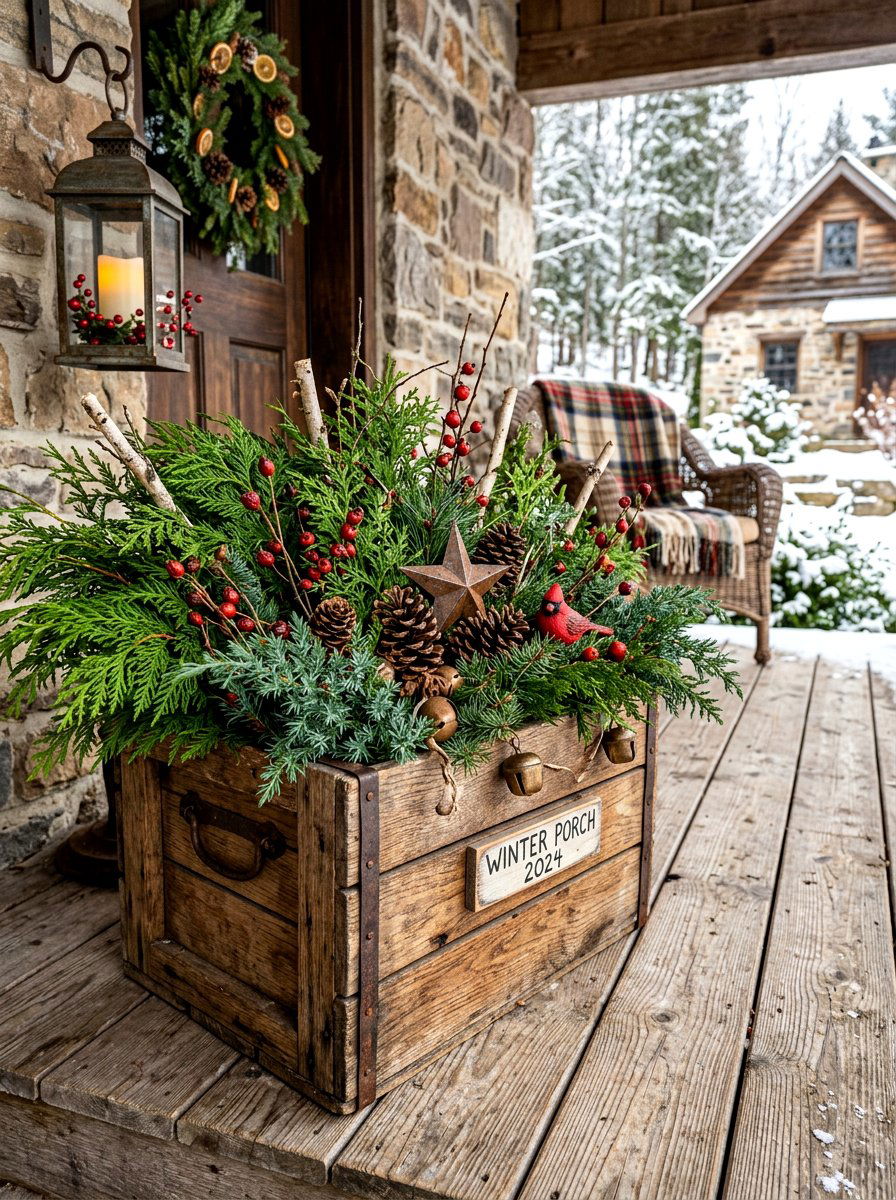
Repurposing a rustic wooden crate as a winter planter adds a charming, reclaimed feel to your porch steps or seating area. You should line the crate with plastic to protect the wood from moisture before filling it with a variety of hardy evergreen cuttings. Mixing different textures like feathery cedar, prickly juniper, and soft pine creates a lush, gathered-from-the-woods appearance. The natural grain of the wood pairs beautifully with the organic shapes of the branches. This style is perfect for creating a cozy atmosphere on a covered porch, especially when grouped with other vintage elements like old lanterns or wooden sleds.
9. Lanterns In Porch Planters
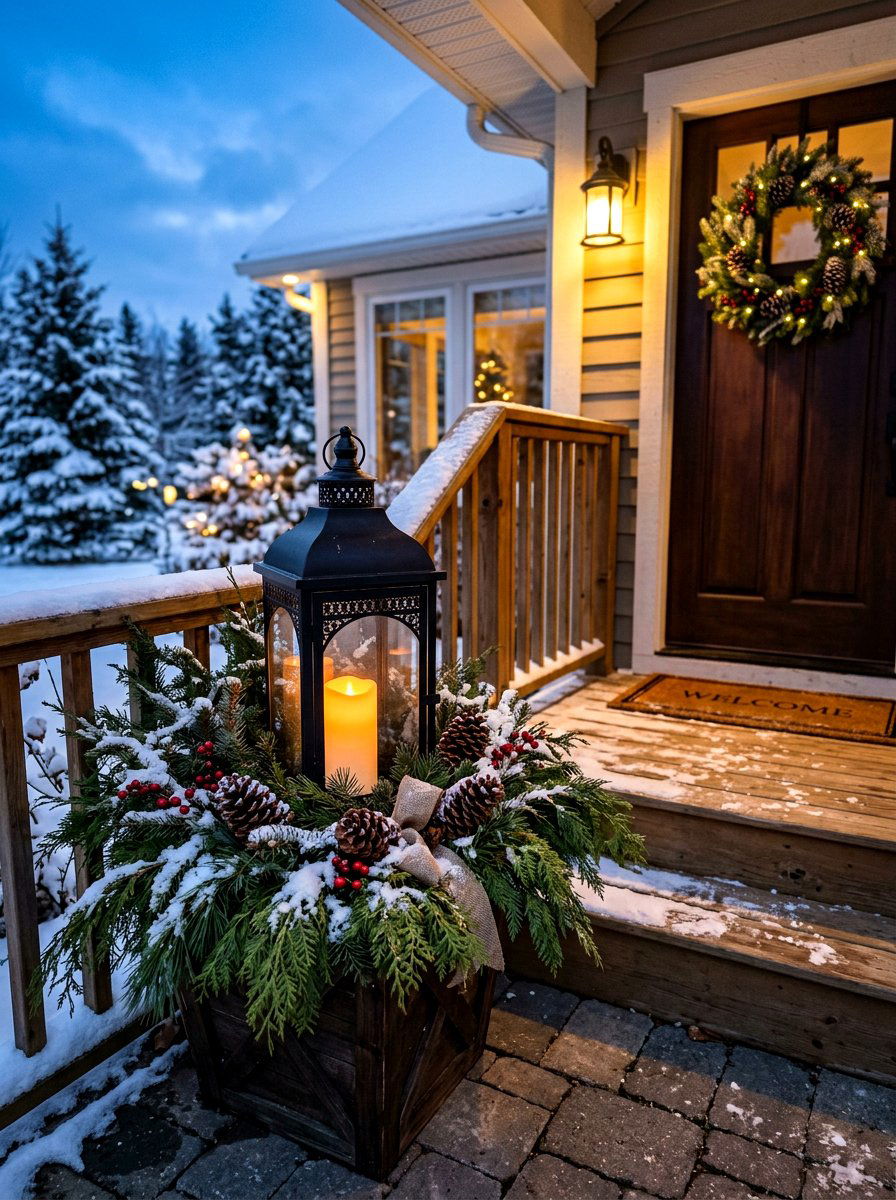
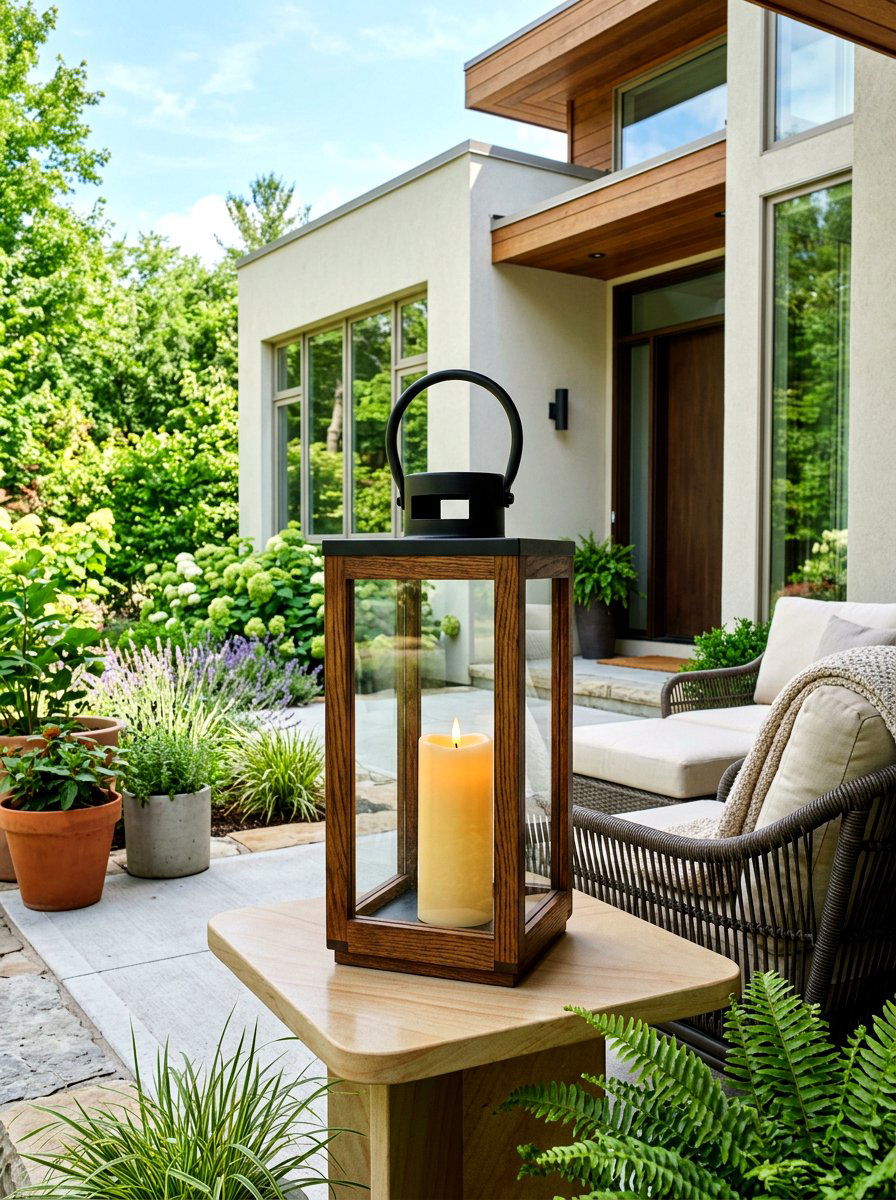
Incorporating lanterns directly into your winter planters is a brilliant way to add warmth and light to your entryway during long evenings. You can place a large metal or wooden lantern in the center of your pot and build your greenery arrangement around its base. Using battery-operated LED candles with a timer ensures your porch is illuminated every night without any extra effort. Surround the lantern with cedar branches and large pinecones to create a cozy, glowing focal point. This design not only looks beautiful during the day but also provides a welcoming and safe light for guests arriving after sunset.
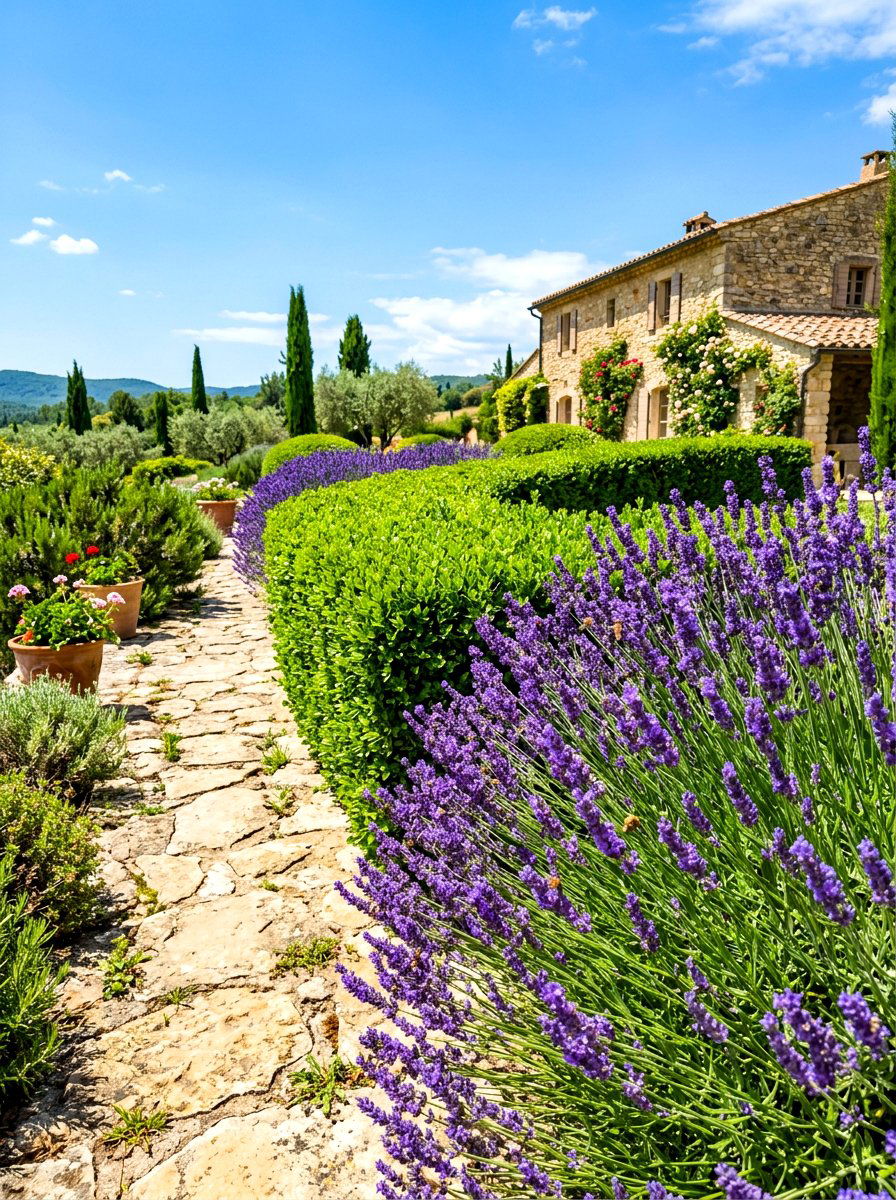
10. White Berries Silver Fir
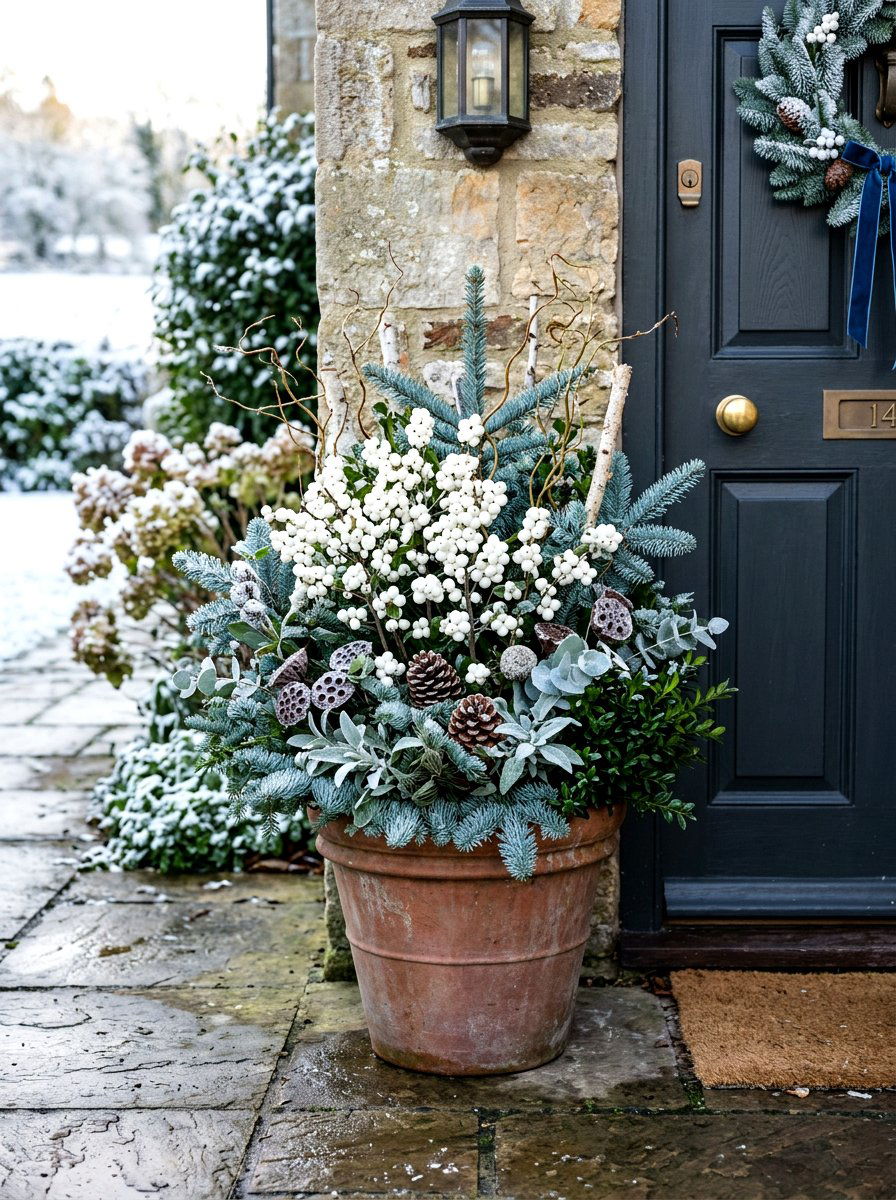
White berries, such as those from snowberry bushes or high-quality faux stems, offer a crisp and clean look that feels very sophisticated. You can use these bright accents to break up large masses of green foliage in your winter containers. Pairing white berries with the blue-toned needles of silver fir creates a cool, wintry color scheme that is both modern and timeless. The small, round shapes of the berries provide a nice contrast to the flat, linear needles of the fir branches. This arrangement looks particularly striking against dark-colored front doors or brick exteriors, providing a bright and cheery winter greeting.
11. Dried Hydrangeas Winter Greenery
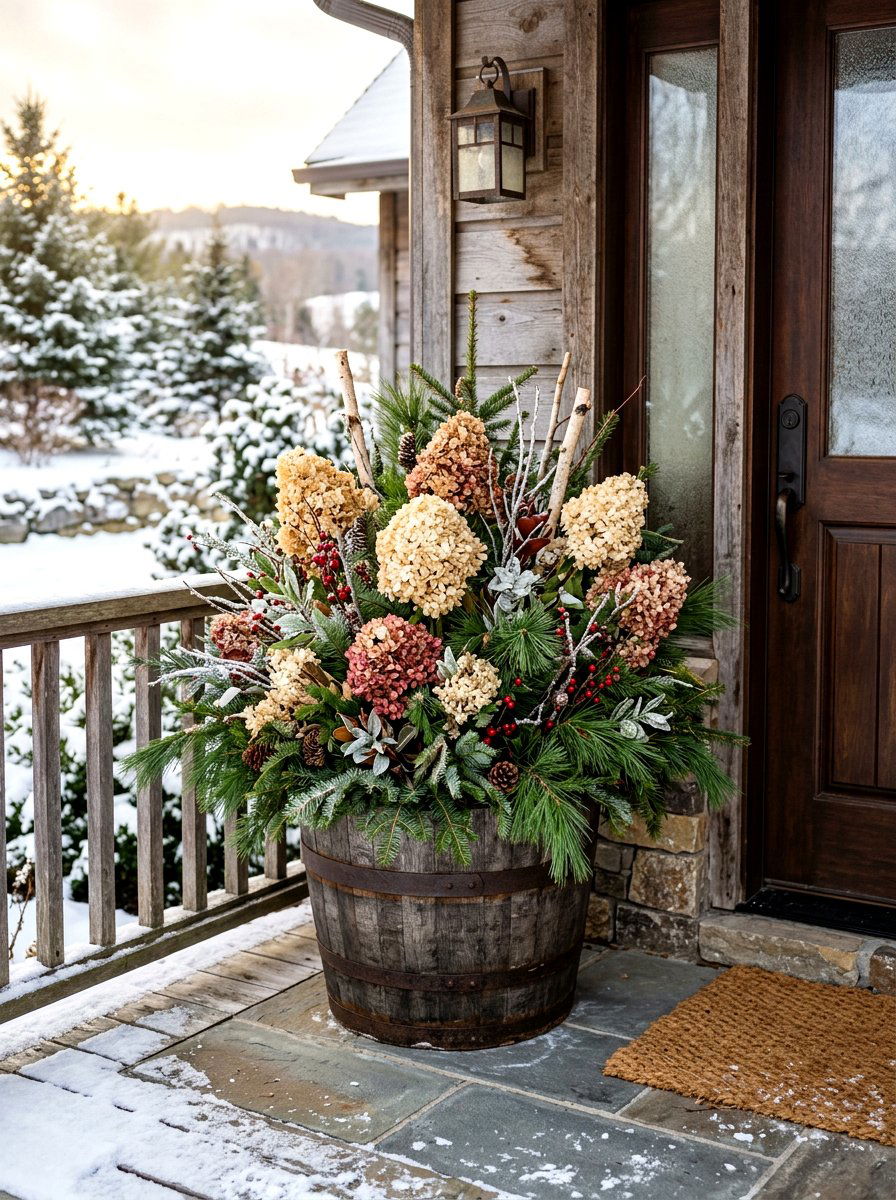
Dried hydrangea heads are an excellent way to transition your autumn decor into winter by keeping them as a textural element in your pots. Their large, spherical shapes provide a massive amount of volume and interest when tucked among fresh evergreen boughs. The muted tan or faded green colors of the dried flowers look beautiful when paired with the deep, saturated greens of winter foliage. You can spray the hydrangea heads with a clear sealant to help them withstand the winter moisture and wind. This budget-friendly idea utilizes materials you may already have in your garden, creating a very natural look.
12. Blue Spruce Cypress Mix
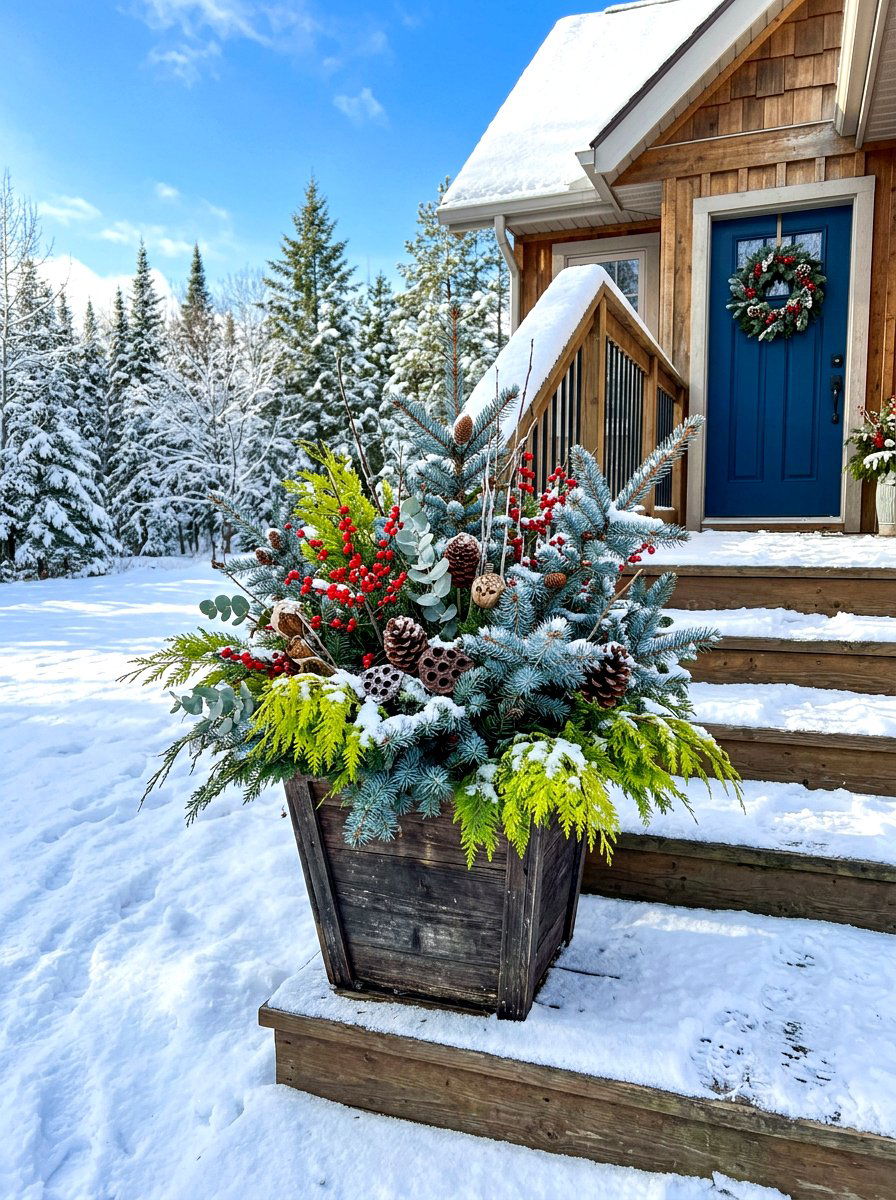
The combination of blue spruce and cypress creates a stunning play on color and texture that makes any winter planter look professionally designed. Blue spruce offers a unique, icy-blue hue and a stiff, architectural form that acts as a perfect centerpiece for your container. Surrounding it with the soft, feathery texture of yellow or lime-green cypress branches adds a bright contrast that livens up the arrangement. This mix of cool and warm tones ensures that your planter remains visually interesting even on the grayest winter days. Both plants are incredibly hardy and will maintain their vibrant colors throughout the entire season.
13. Woven Basket Winter Foliage
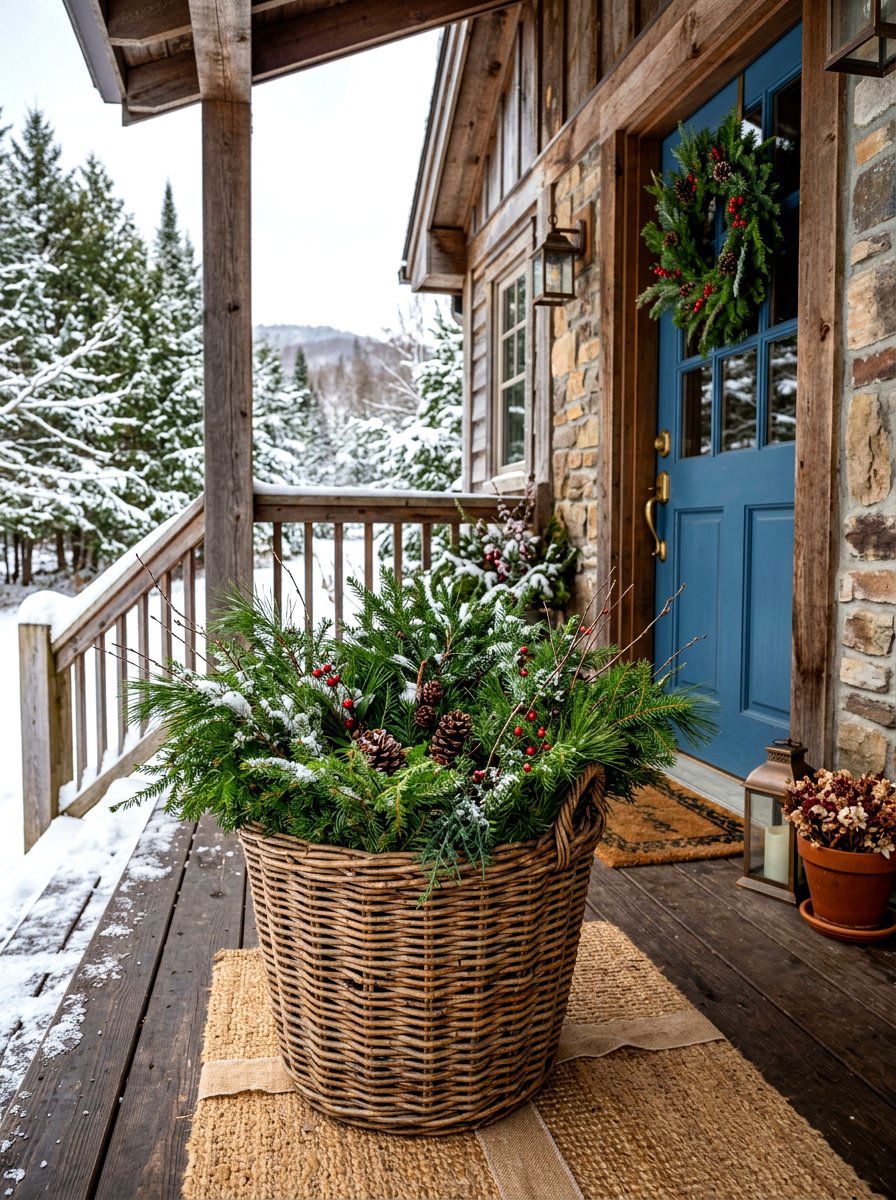
Using large woven baskets as planters brings a soft, organic texture to your porch that balances out harder surfaces like stone or siding. You should choose a heavy-duty basket and place a plastic container inside to hold your soil and evergreen branches securely. Filling the basket with a variety of winter foliage, such as hemlock, pine, and juniper, creates a bountiful and overflowing look. The natural tan color of the wicker complements the various shades of green perfectly. This relaxed and informal style is great for creating a "cottagecore" or rustic vibe that feels very approachable and homey during the winter.
14. Metal Bucket Pine Stems
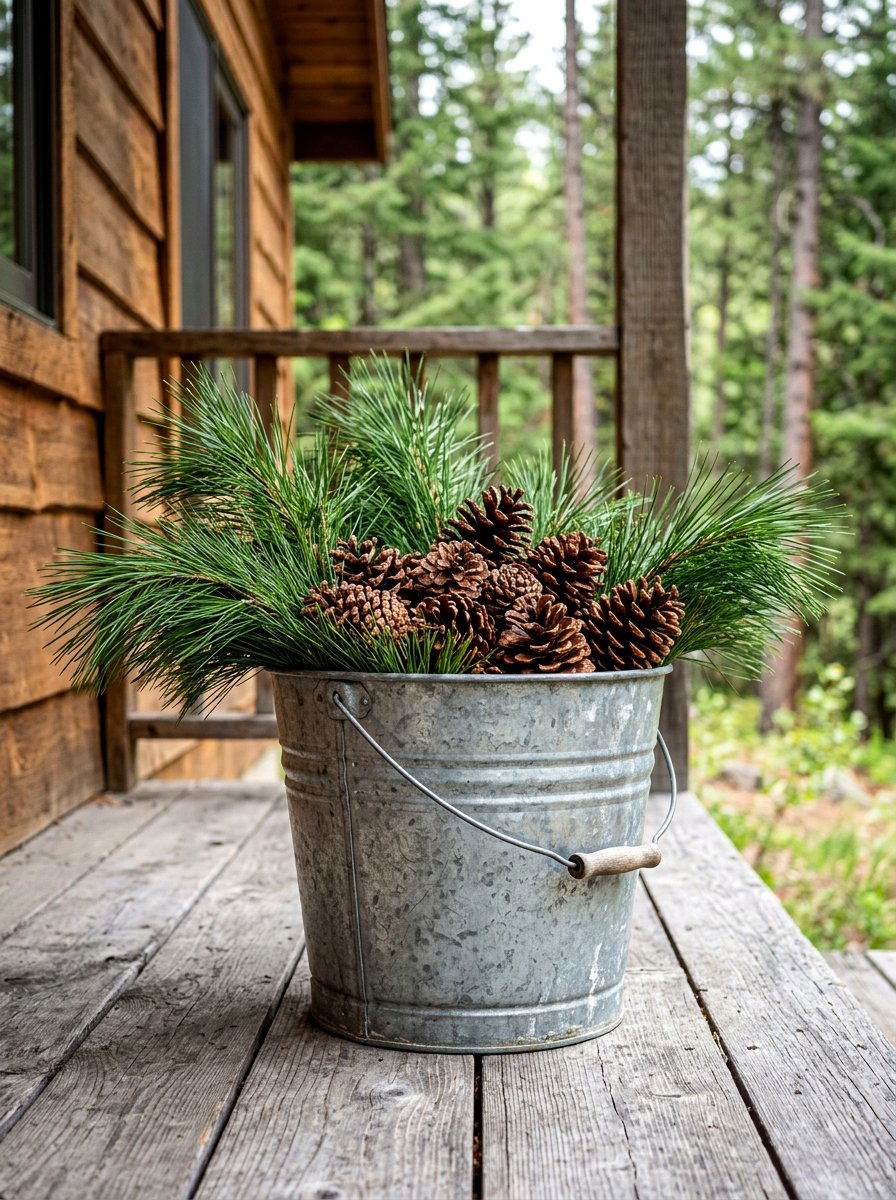
Galvanized metal buckets provide a clean, industrial-chic look that serves as a fantastic backdrop for simple winter greenery. You can fill these buckets with long-needle pine stems that spill over the sides, creating a relaxed and natural silhouette. The silver-gray color of the metal highlights the green of the pine needles and any brown pinecones you might include. This design is very easy to assemble and works well for small porches where you want to add a touch of nature without taking up too much space. Metal containers are also very durable and won't crack in extreme freezing temperatures like ceramic pots might.
15. Juniper Berries Cedar Branches
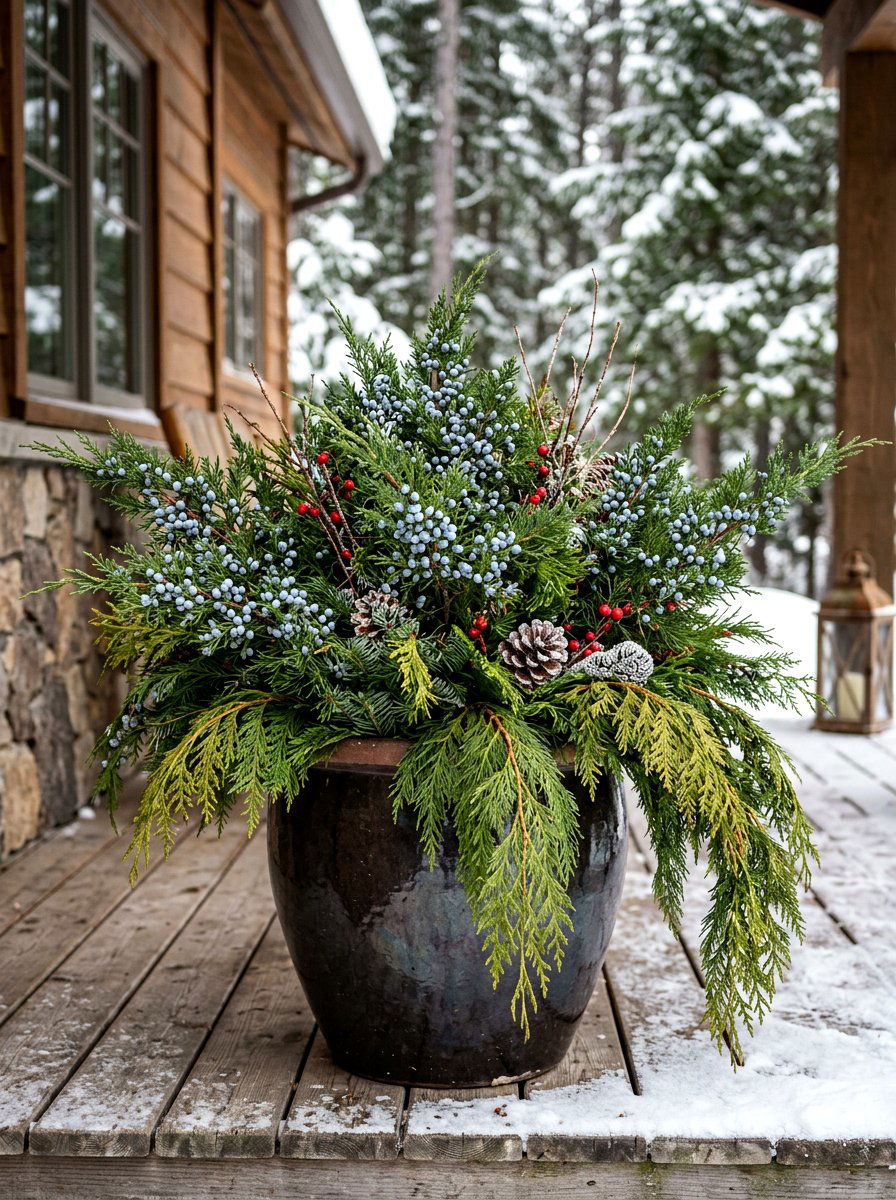
Juniper branches with their small, dusty blue berries add a delicate and natural detail to any winter container arrangement on the porch. These berries provide a subtle hint of color that looks very authentic and wild, especially when mixed with flat-leaf cedar branches. The cedar provides a wonderful "spiller" effect, cascading over the edges of your planter to soften the lines of the container. This combination is highly fragrant and will release a refreshing scent every time you brush past it. It is a perfect choice for those who love a traditional, woodland-inspired look that focuses on the natural beauty of native plants.
16. Modern Concrete Planter Stems
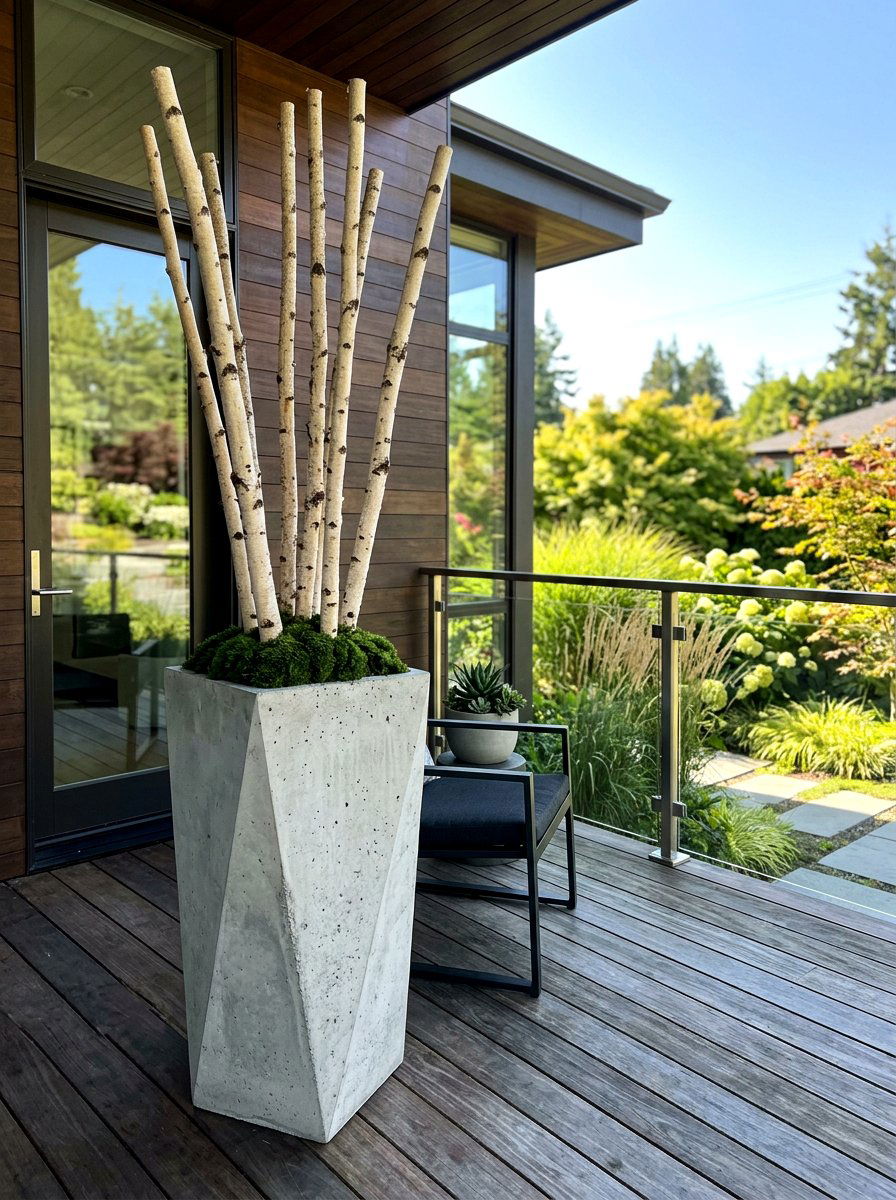
Tall, narrow concrete planters are ideal for creating a modern and architectural winter display that focuses on height and clean lines. You can use a few long, straight branches like birch or willow to draw the eye upward and create a sense of drama. At the base, a simple layer of dark moss or a few sprigs of short-needle evergreen will ground the arrangement without cluttering the design. This minimalist approach highlights the beautiful texture of the concrete and the natural silhouette of the stems. It is a perfect choice for contemporary homes where less is more, providing a sophisticated and sculptural winter entryway.
17. Ornamental Kale Winter Pot
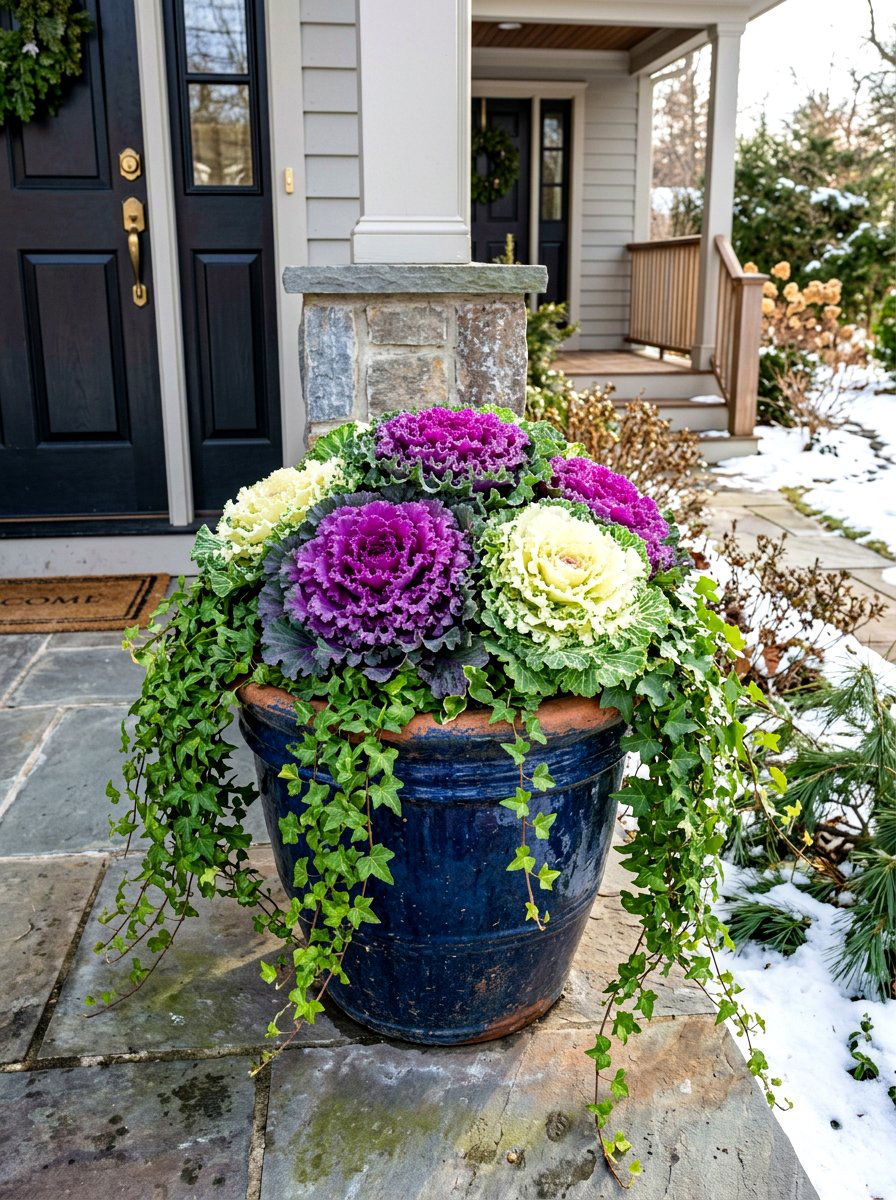
Ornamental kale is surprisingly hardy and can survive quite well in a winter planter until the temperatures drop very low. The ruffled leaves in shades of purple, white, and green add a floral-like quality to your container without the fragility of actual blooms. You should plant the kale in the center or near the front of your pot to showcase its intricate patterns. Surrounding the kale with trailing ivy or short evergreen branches helps to frame the plant and keep the roots a bit more insulated. The colors of the kale often intensify with the cold, making it a dynamic part of the display.
18. Glowing Fairy Lights Planter
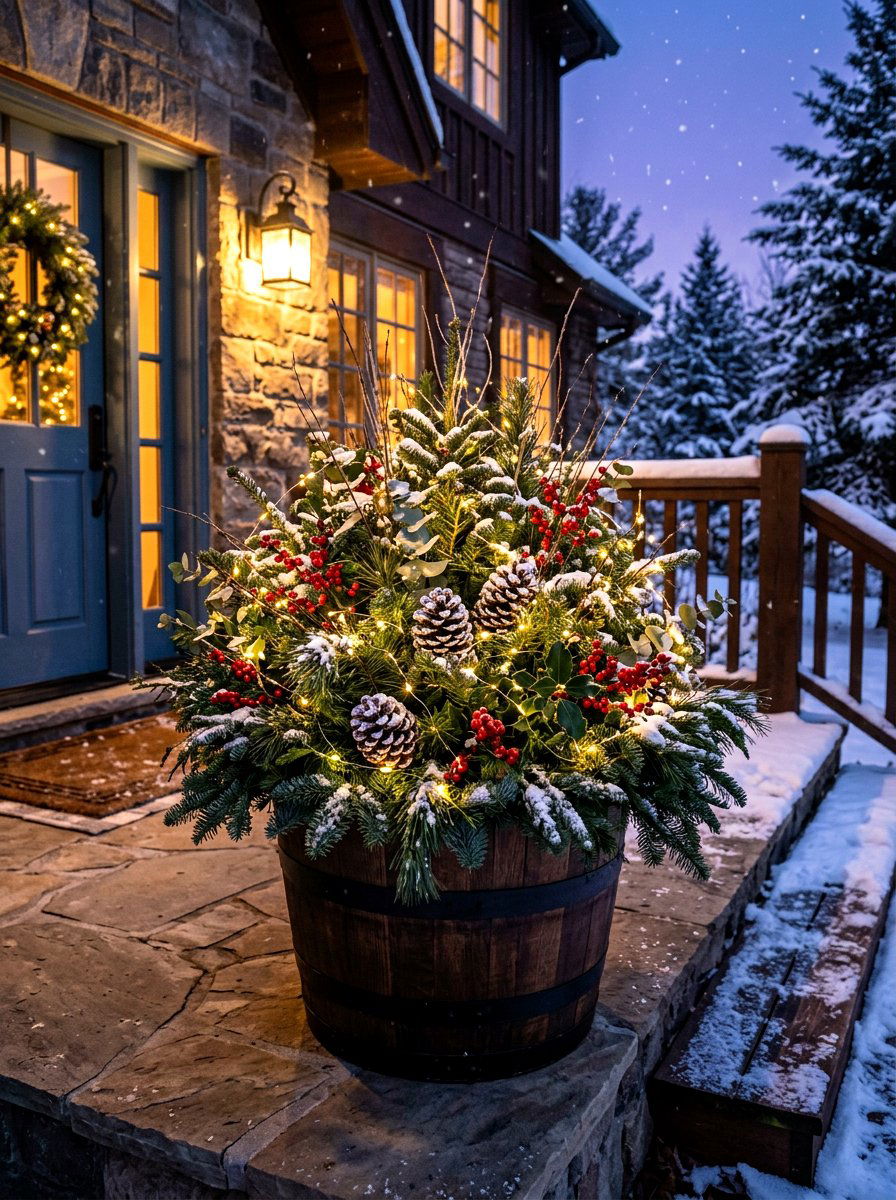
Adding delicate fairy lights to your winter planters can instantly make your front porch feel more magical and inviting after the sun goes down. You should choose battery-operated copper wire lights that are rated for outdoor use and have a built-in timer function. Weaving the lights through the evergreen branches and around pinecones creates a soft, twinkling effect that highlights the textures of the foliage. This addition is particularly effective during the dark months of January and February when natural light is scarce. The warm glow of the lights creates a cozy atmosphere that makes your home look lived-in and cheerful from the street.
19. Tiered Planter Winter Greens
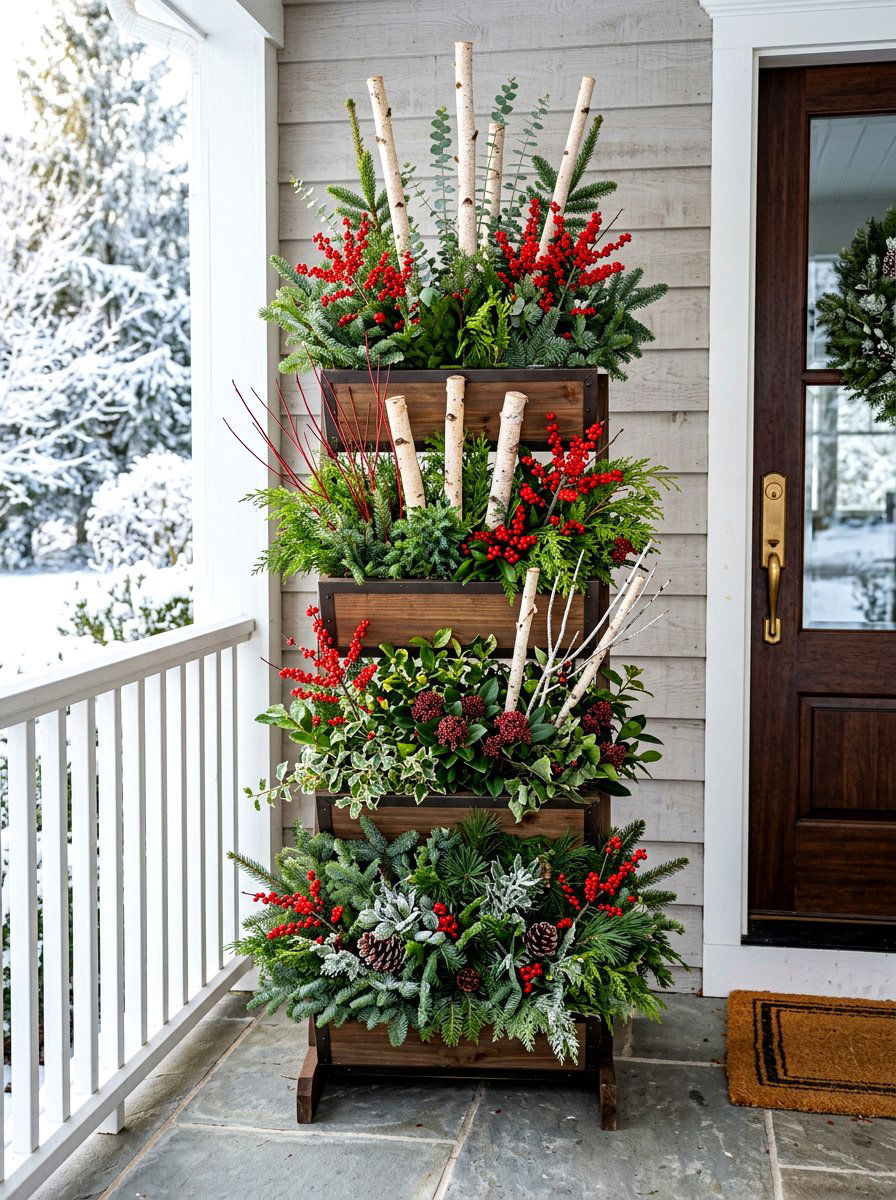
Using a tiered planter allows you to create a multi-level display of winter greenery that provides a massive amount of visual impact in a small footprint. You can fill the top level with tall birch branches and spruce, while the lower levels can hold trailing ivy, cedar, and decorative berries. This vertical arrangement ensures that every part of the planter is visible and lush, creating a full and bountiful look. The different heights allow you to experiment with various textures and colors in a structured way. Tiered displays are great for placing next to a front door or in a corner of the porch.
20. Dusty Miller Pine Display
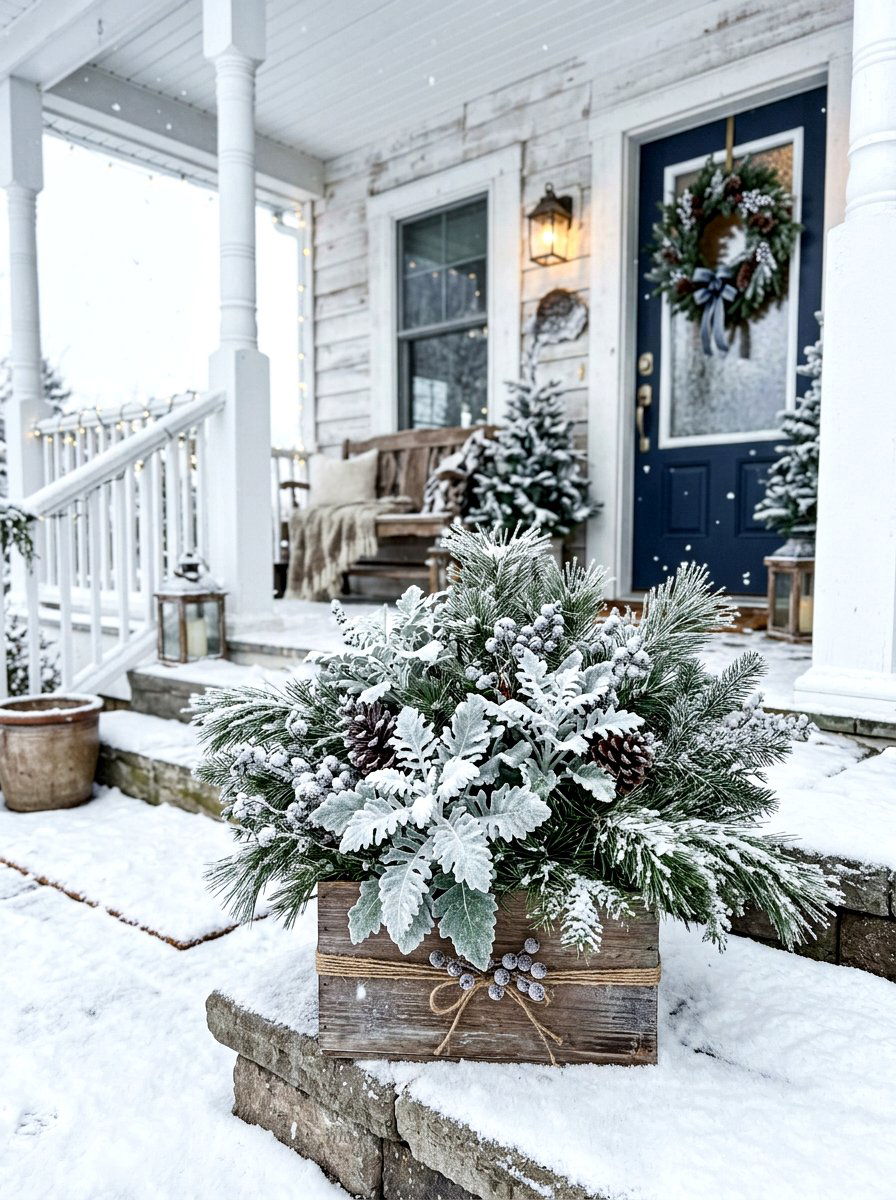
Dusty Miller is a fantastic plant for winter containers because its silver, felt-like foliage looks like it has been dusted with a light layer of frost. While it may not survive a deep freeze in all climates, it works beautifully in milder winter areas or as a temporary filler. Pairing the silver leaves with dark green pine branches creates a sophisticated and high-contrast look that is very visually appealing. The soft texture of the Dusty Miller leaves provides a nice counterpoint to the sharp needles of the pine. This color palette is perfect for creating a "winter wonderland" theme on your front porch.
21. Red Berry Sprigs White Ceramic
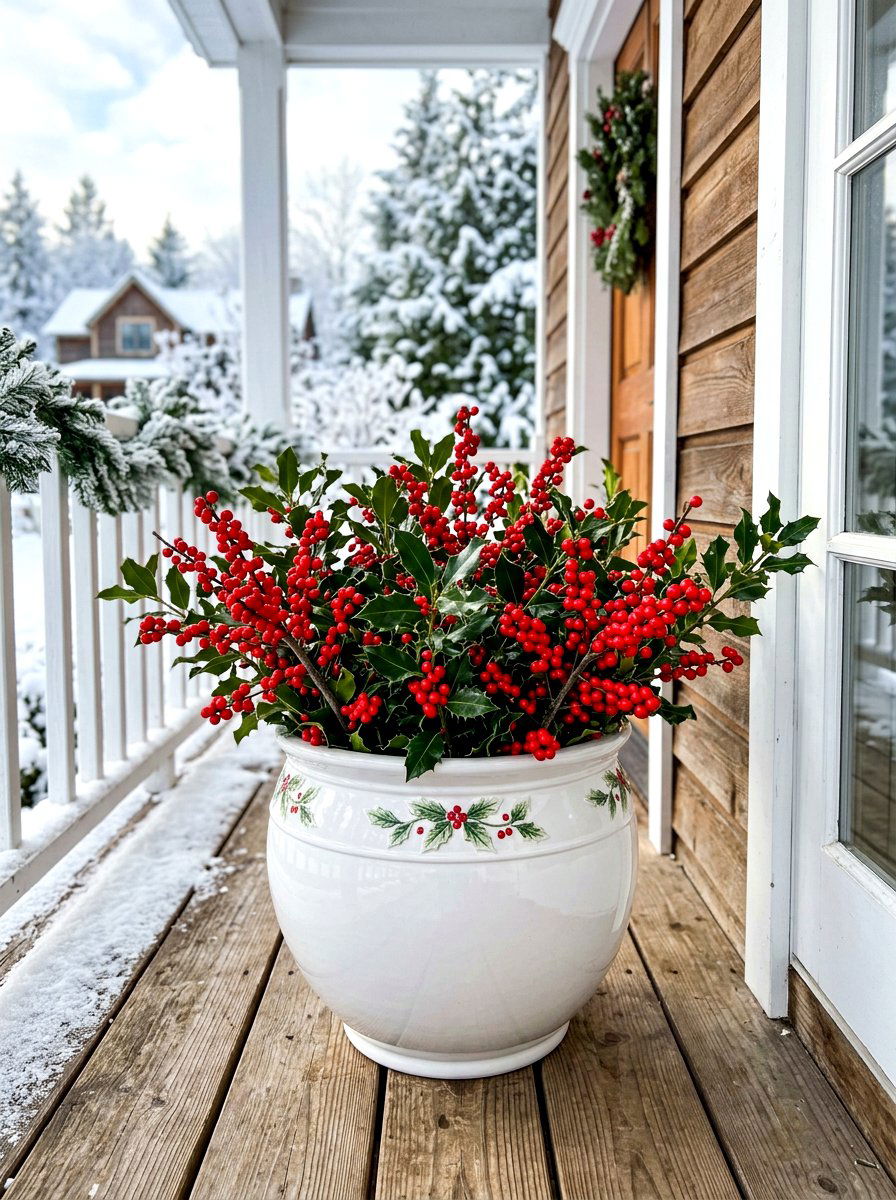
Bright red berry sprigs placed in white ceramic pots create a clean and classic winter look that is always in style. The stark white of the container makes the vibrant red of the berries pop, providing a cheerful greeting for anyone who visits your home. You can use fresh winterberry branches or high-quality faux berries that won't be eaten by birds. Adding a few sprigs of dark green holly or boxwood around the base of the berries completes the traditional color scheme. This arrangement is simple to put together but offers a high level of curb appeal and a very polished finish.
22. Winter Heather Outdoor Pot
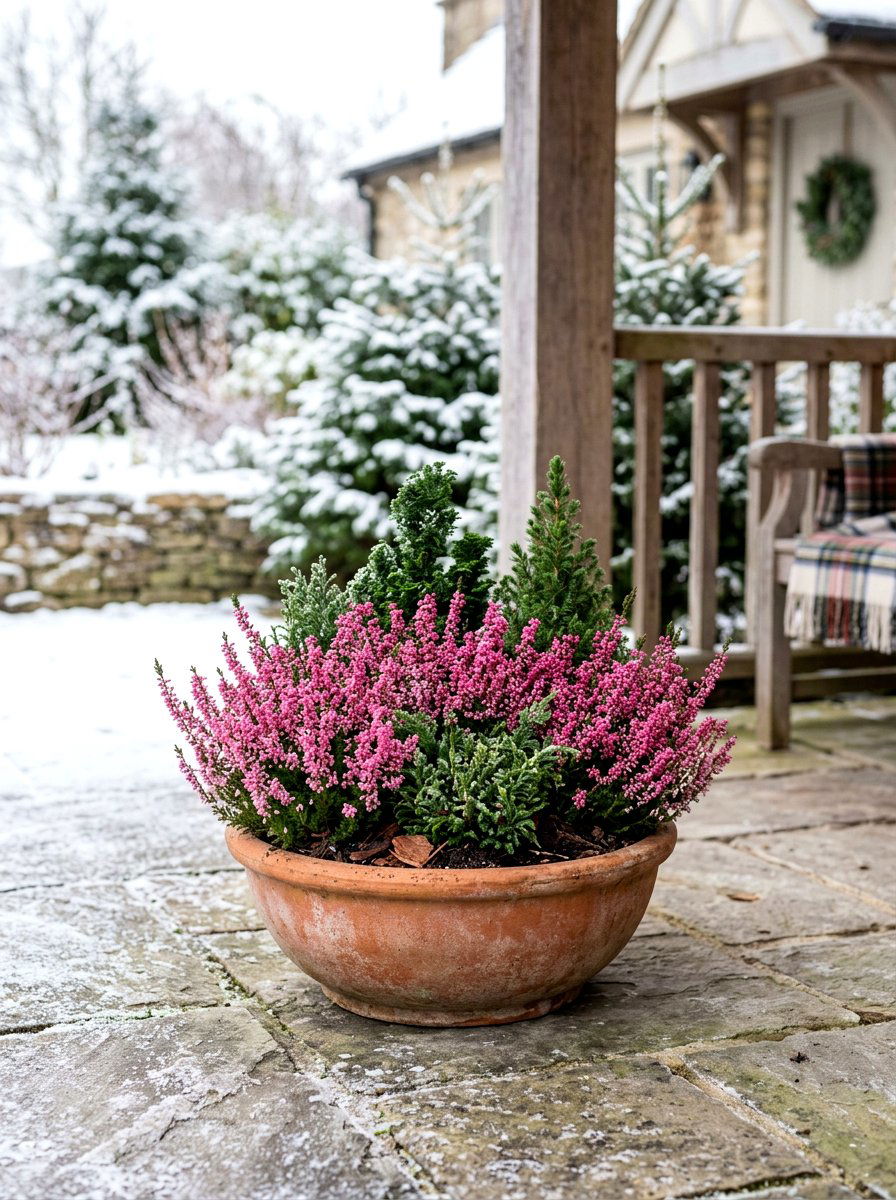
Winter heather is one of the few plants that actually blooms during the coldest months, offering delicate bell-shaped flowers in shades of pink, white, or purple. Planting heather in a low, wide pot allows you to appreciate the fine texture of its foliage and the tiny, colorful blooms. It looks wonderful when paired with small dwarf conifers or silver-foliaged plants that highlight its delicate colors. Heather is quite hardy and can withstand frost and light snow, making it a reliable choice for a living winter planter. This plant adds a much-needed touch of life and softness to the dormant winter landscape.
23. Skimmia Japonica Container
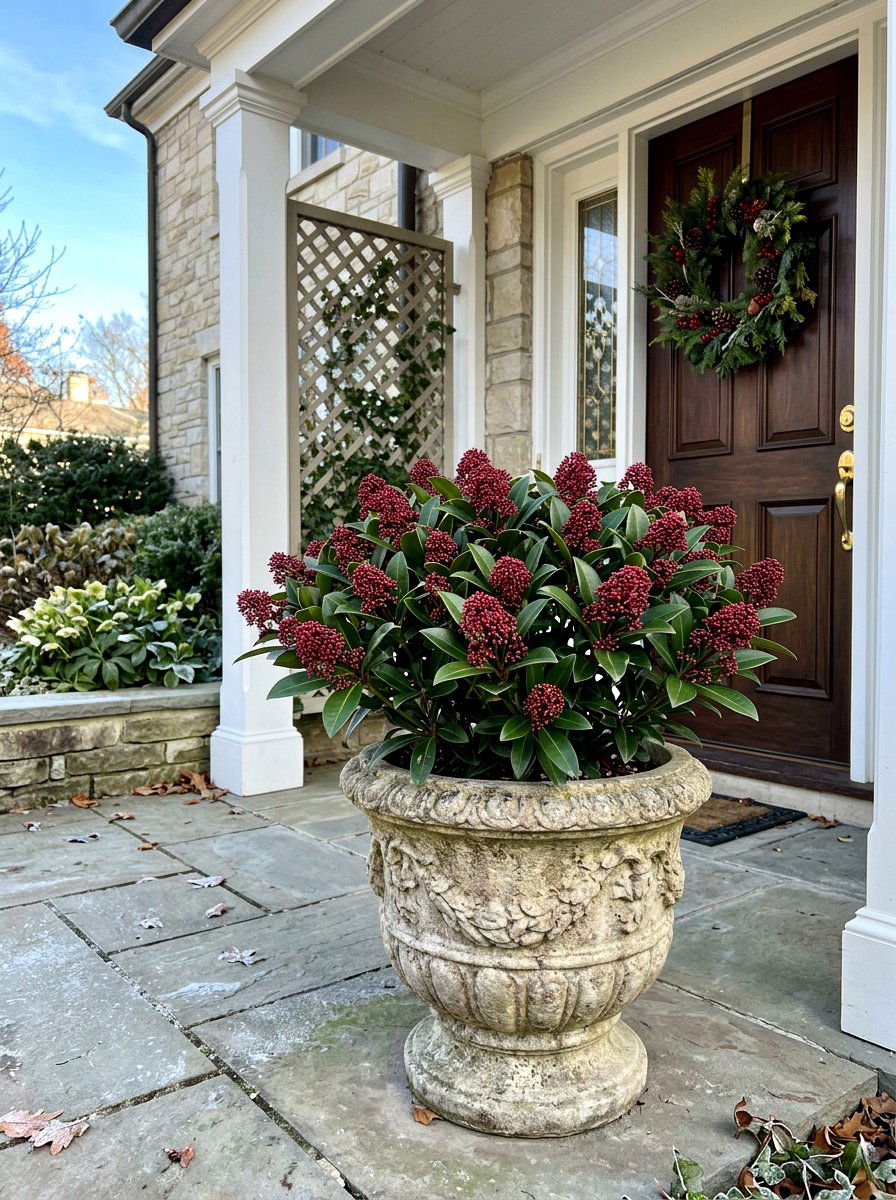
Skimmia japonica is a prized shrub for winter containers because of its attractive evergreen leaves and the clusters of tiny, dark red flower buds that appear in winter. These buds stay on the plant throughout the cold months, providing a constant source of color and texture before they bloom in early spring. Planting Skimmia in a decorative ceramic or stone pot creates a sophisticated and structured look that is very low maintenance. The glossy green leaves provide a beautiful backdrop for the reddish buds. This plant is very hardy and can easily transition from a porch pot into your garden once the spring arrives.
24. Winter Pansies Low Bowl
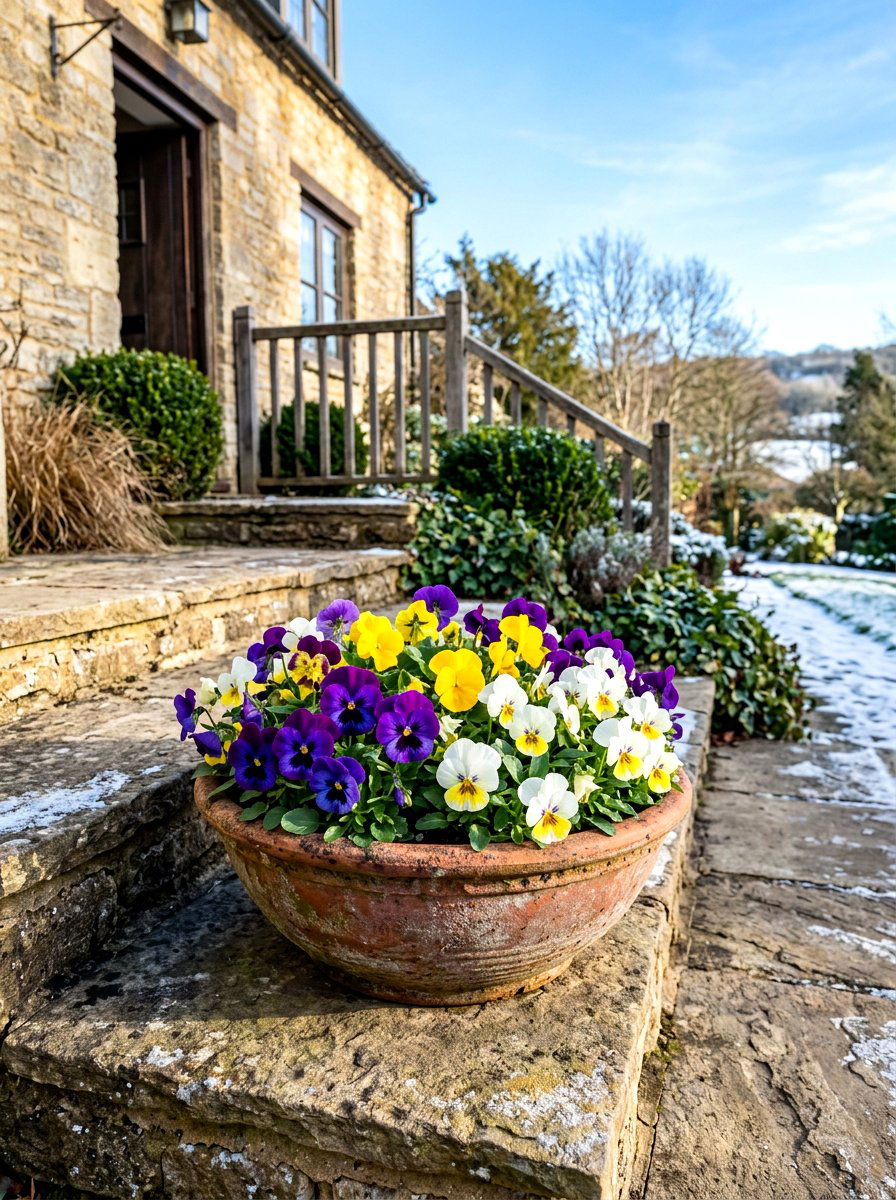
Winter-hardy pansies and violas are incredible for adding a splash of actual flower color to your porch even when there is snow on the ground. These resilient little plants can often survive a freeze and will bounce back as soon as the sun comes out. Planting them in a low bowl or a wide urn allows you to see their cheerful "faces" from above. You can mix different colors like deep purple, bright yellow, and snowy white to create a vibrant and happy display. Surrounding them with a bit of moss or small pebbles helps to protect the soil and keep the plants looking clean.
25. Hellebores Winter Porch Pot
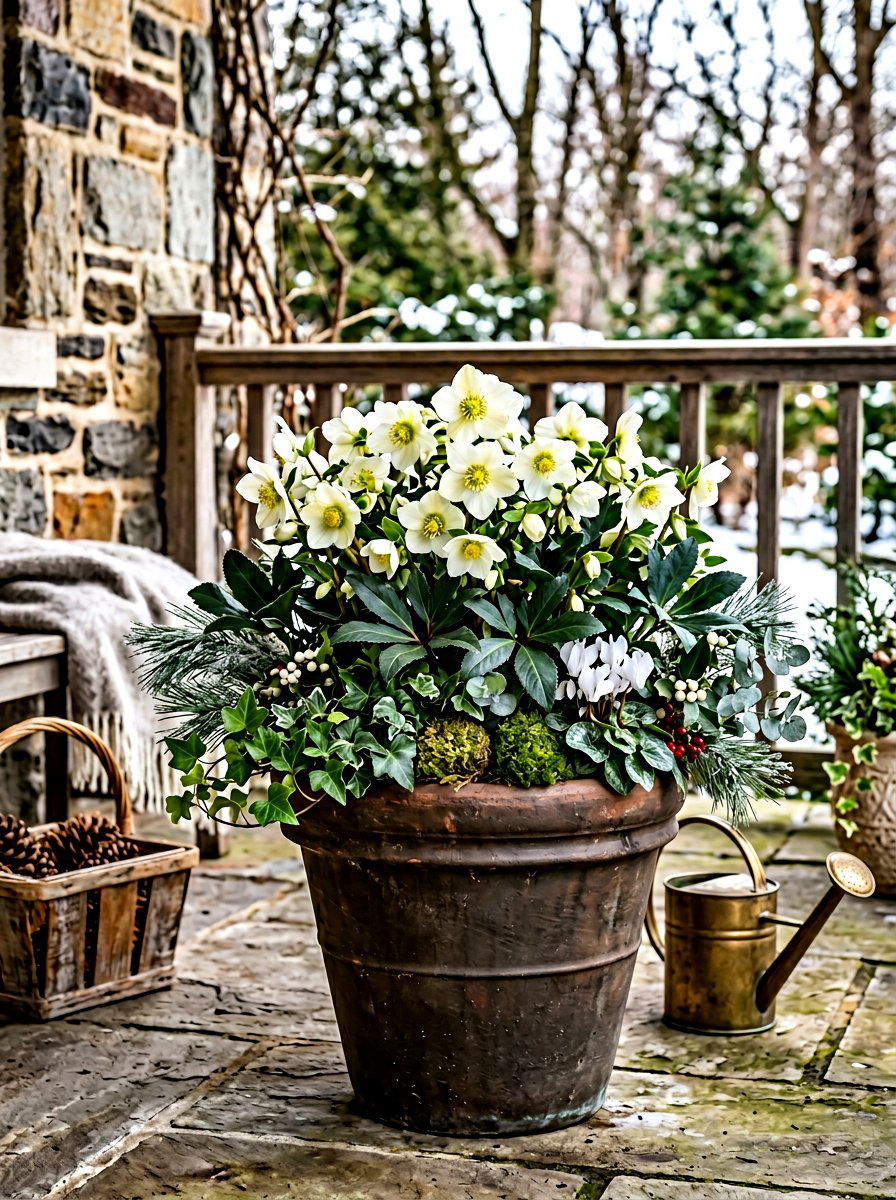
Often called the "Lenten Rose, " hellebores are stunning perennials that produce large, cup-shaped flowers in late winter and early spring. Their thick, leathery evergreen leaves provide a great base for the elegant blooms, which come in shades of white, pink, and deep burgundy. Planting a hellebore in a porch container allows you to enjoy these early flowers up close where they are protected from the worst of the garden elements. They prefer a bit of shade, making them perfect for covered porches. After the winter season is over, you can transplant the hellebore into a shady spot in your permanent garden.
26. Galvanized Milk Can Boughs
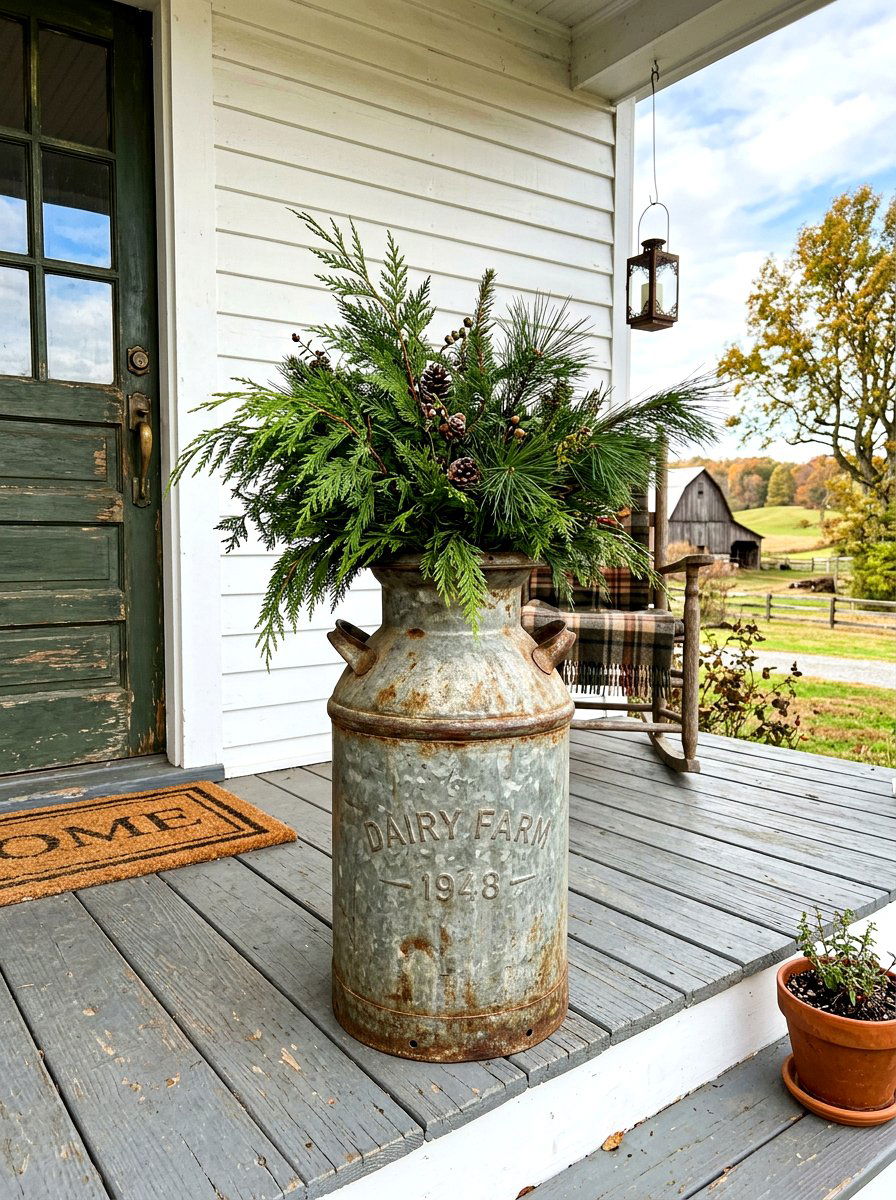
Using a vintage galvanized milk can as a planter adds a huge amount of rustic character and vertical interest to your winter porch. Because these containers are quite deep, you can use long branches of cedar, fir, and pine to create a tall and dramatic arrangement. The height of the milk can makes it a perfect choice for placing on the floor next to your front door or on a porch step. The weathered metal finish pairs beautifully with the natural brown of pinecones and the deep green of the foliage. This design feels very nostalgic and fits perfectly with farmhouse or country-style home decor.
27. Hanging Basket Winter Vines
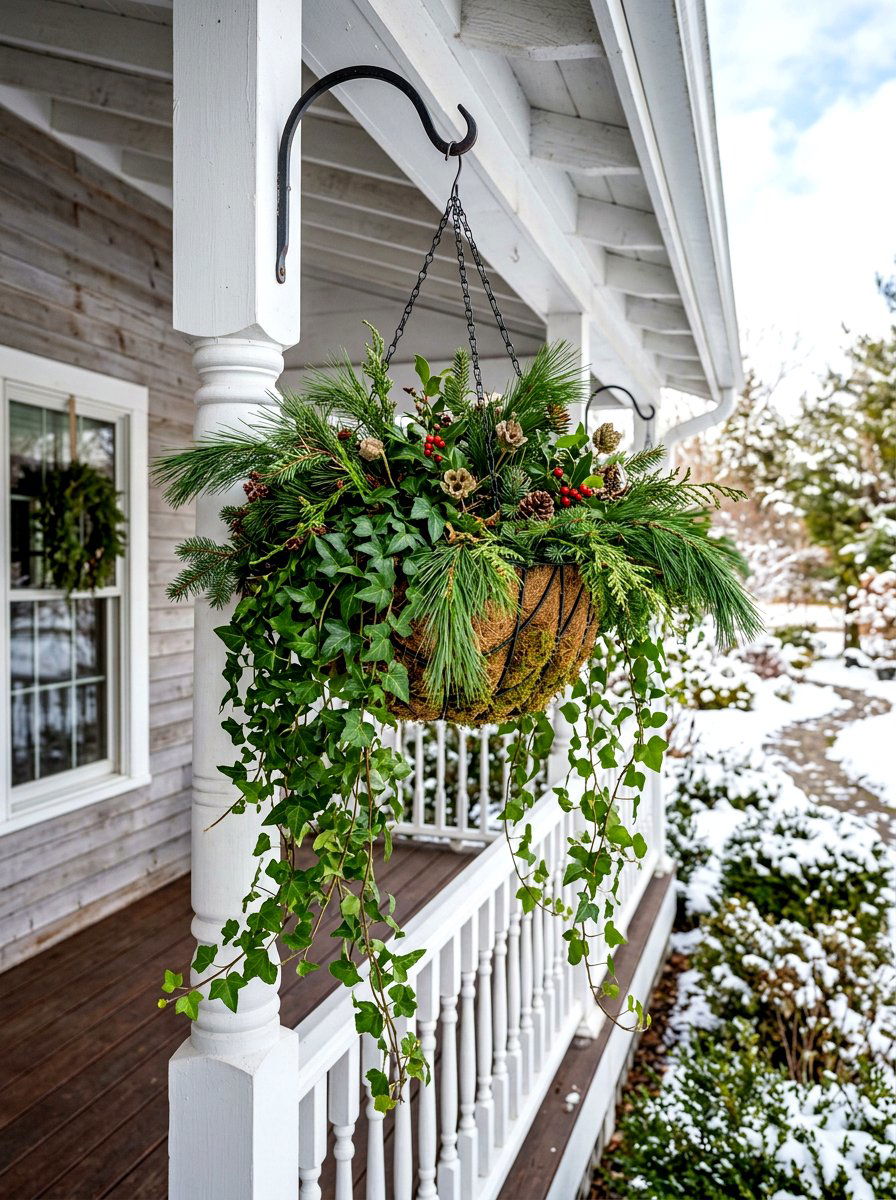
Don't let your hanging basket hooks stay empty during the winter months; instead, fill them with hardy evergreen vines and trailing branches. You can use trailing English ivy, which stays green all winter, mixed with cascading cedar or pine boughs to create a lush, hanging display. Adding some sprigs of bright berries or a few lightweight pinecones can give the basket a festive and seasonal touch. These baskets help to bring color and life up to eye level, making your entire porch feel more fully decorated and cared for. They are a great way to use vertical space effectively during the winter.
28. Grapevine Balls Pine Branches
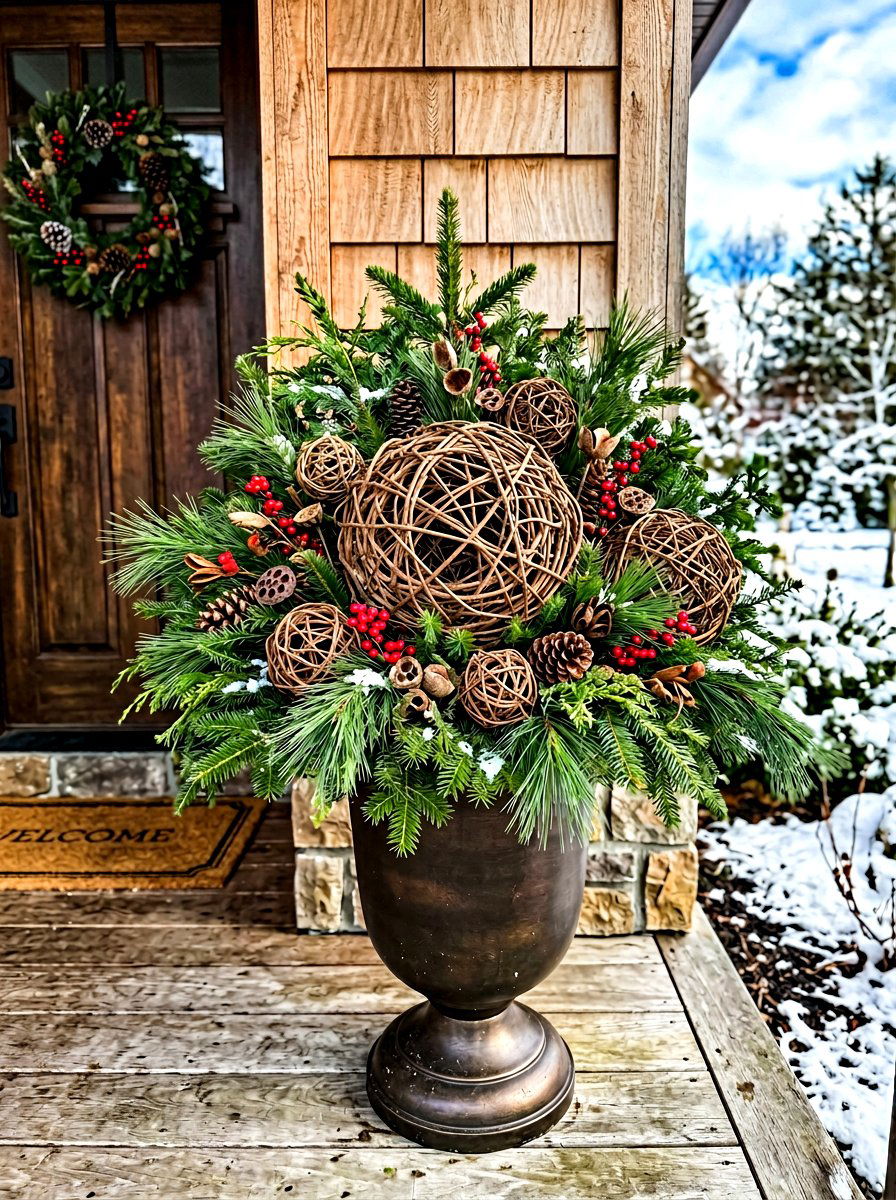
Grapevine balls are a wonderful decorative element that adds a unique geometric shape and a natural, twiggy texture to your winter containers. You can place different sizes of grapevine balls among your evergreen branches to create a layered and interesting look. The brown wood of the vines looks beautiful against the green needles and any white-barked branches you might include. This design is very sturdy and won't be easily damaged by wind or snow. It provides a more artistic and modern take on traditional winter greenery, making your planters stand out from more standard arrangements found in the neighborhood.
29. Birch Bark Wrapped Pots
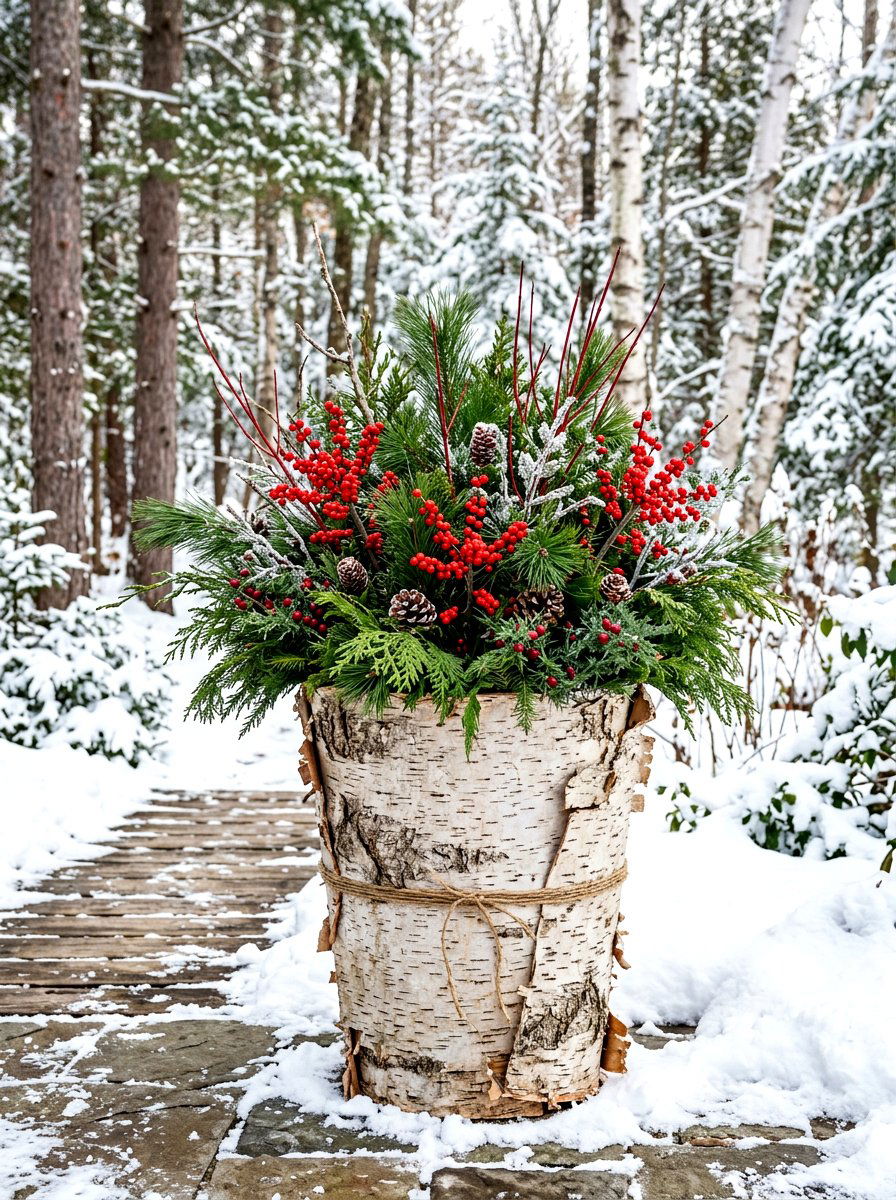
If you have plain plastic or terracotta pots, you can give them a high-end winter makeover by wrapping the outside in sheets of natural birch bark. This simple DIY project instantly transforms a basic container into a beautiful, woodland-inspired planter that fits the winter season perfectly. Once wrapped, you can fill the pot with a mix of fragrant evergreens, berries, and pinecones for a cohesive and natural look. The white and gray tones of the bark provide a neutral base that makes any greenery look more vibrant. This is an excellent way to create a designer look on a very small budget.
30. Symmetrical Front Door Greenery
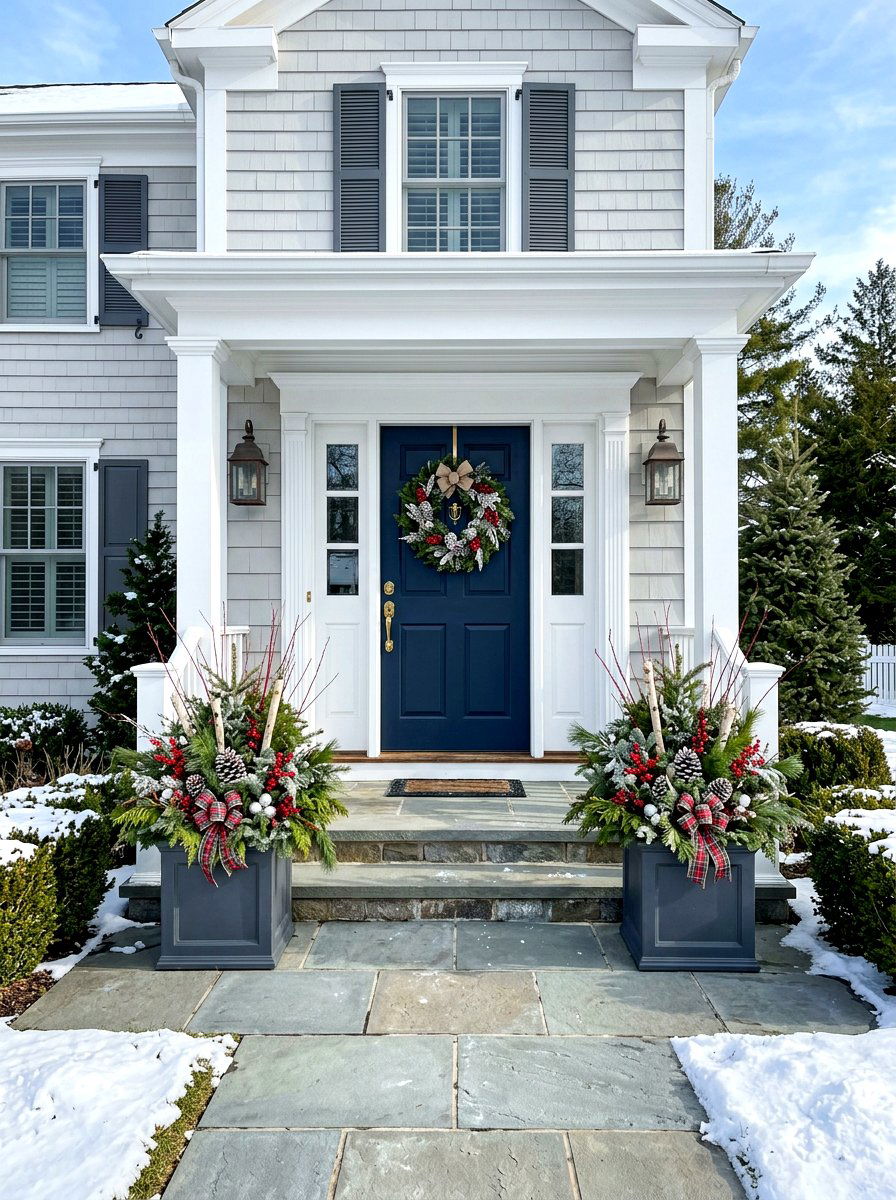
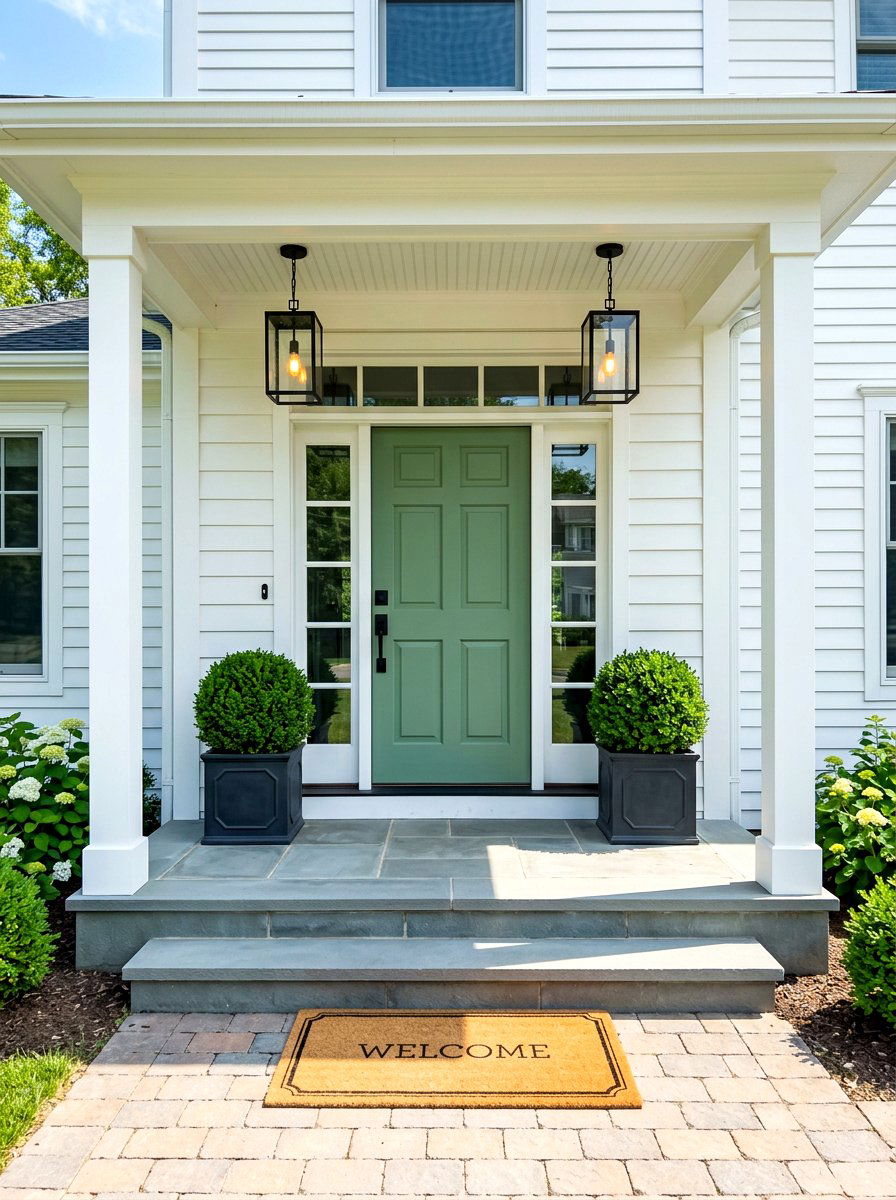
Creating a symmetrical arrangement with two identical planters flanking your front door is a classic design technique that provides a very formal and welcoming look. You should choose containers that match the style of your home and fill them with the same mix of evergreens, heights, and textures. This balance creates a sense of order and sophistication that immediately boosts your home's curb appeal. Symmetry is pleasing to the eye and makes your entryway feel much more intentional and grand. This approach works with almost any of the specific plant combinations mentioned above, ensuring your home looks its best all winter.
Conclusion:
Investing time into your winter porch planters is one of the most effective ways to maintain a beautiful and welcoming home throughout the cold season. By utilizing hardy evergreens, structural branches, and durable decorative elements, you can create a display that resists the elements while providing constant visual interest. Whether you prefer a rustic farmhouse look with birch logs and crates or a modern aesthetic with concrete urns and minimalist stems, there are endless ways to customize your containers. These arrangements not only enhance your curb appeal but also bring a touch of natural life to your daily routine during the long winter months.

Related posts: