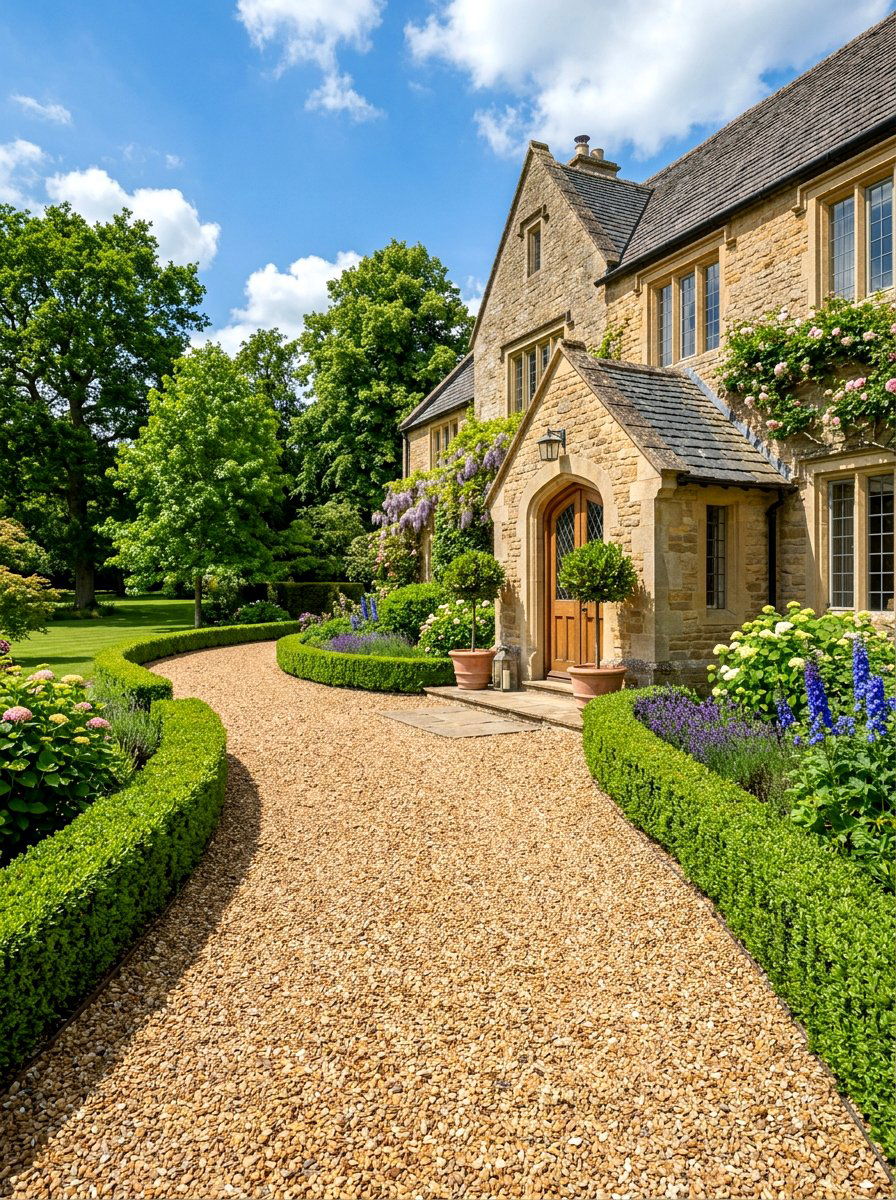
Cottage kitchens capture a specific kind of magic that feels both timeless and deeply personal. They move away from the cold, sterile environments of modern minimalism to embrace textures, colors, and a sense of "lived-in" history. Whether you live in a sprawling rural farmhouse or a compact city apartment, the cottage aesthetic relies on cozy layers and practical beauty. It’s about creating a space where the heart of the home feels welcoming for morning coffee or slow Sunday dinners. Think of weathered surfaces, soft pastel palettes, and natural materials that age gracefully over time. This design philosophy celebrates the imperfect and the handcrafted in every single corner of the room.
1. White Cottage Kitchen
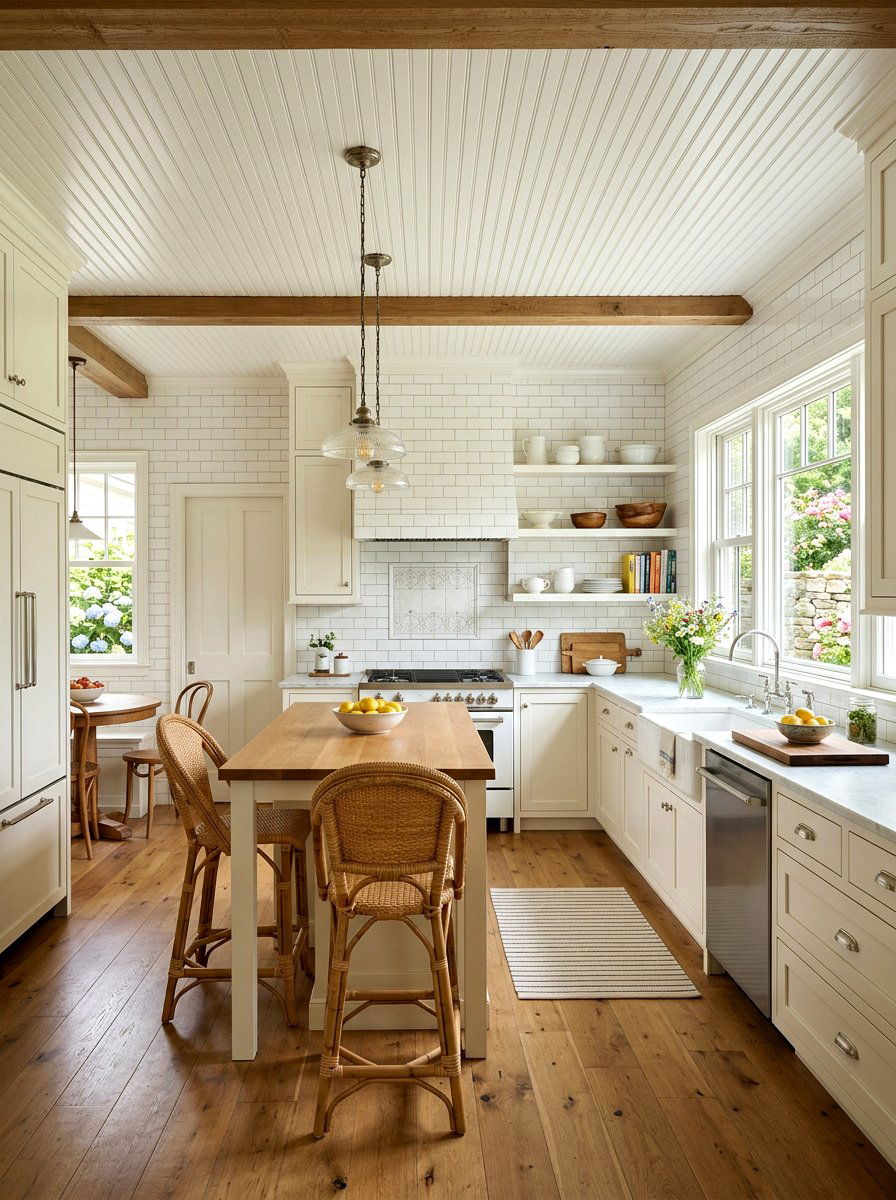
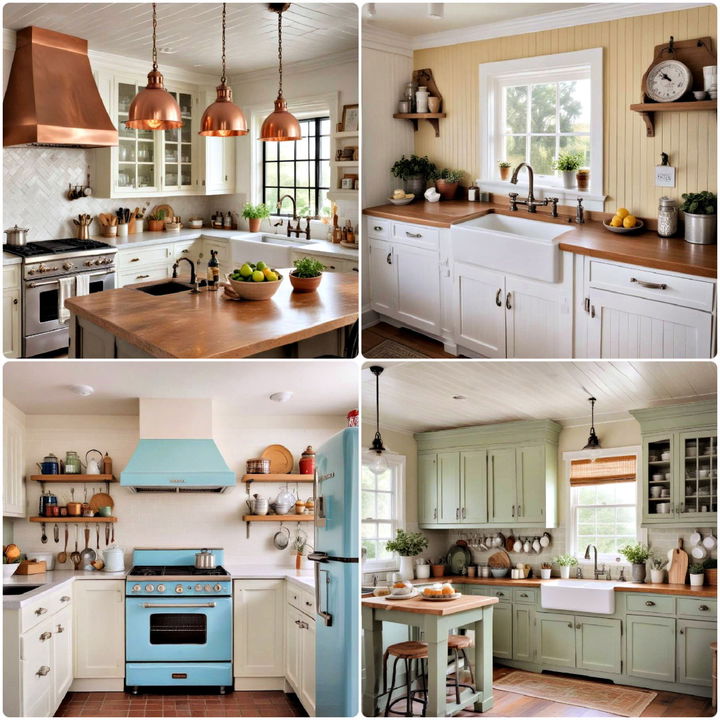
A classic white cottage kitchen offers a bright and airy foundation that never goes out of style. Instead of a stark, hospital-grade white, choose creamy tones or soft off-whites to maintain a sense of warmth. These lighter shades help smaller spaces feel much larger while reflecting natural light beautifully throughout the day. You can add depth by incorporating different textures, such as a beadboard ceiling or a simple subway tile backsplash. Neutral cabinetry allows colorful dishware and fresh flowers to truly pop against the clean background. It’s a versatile choice that creates a serene atmosphere, making the room feel organized and exceptionally peaceful for everyone.
2. Rustic Wood Kitchen
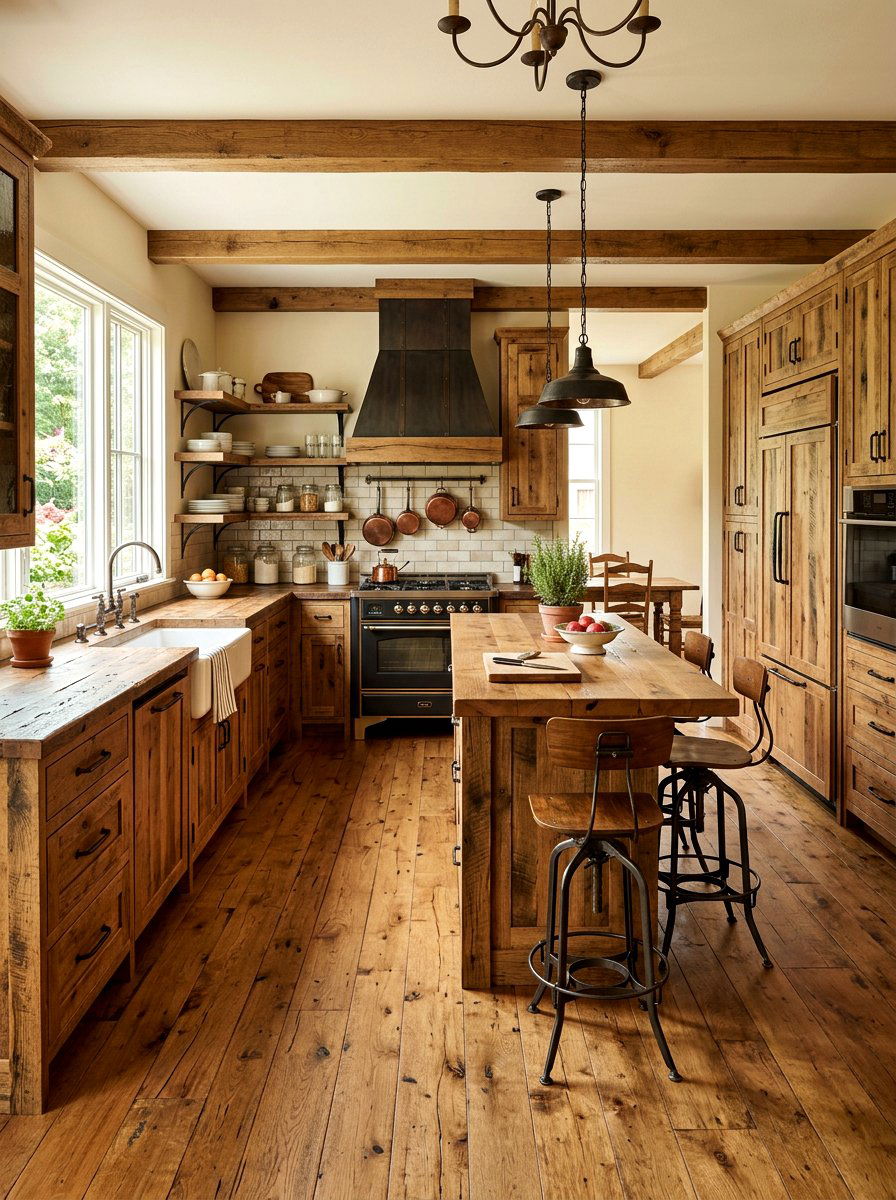
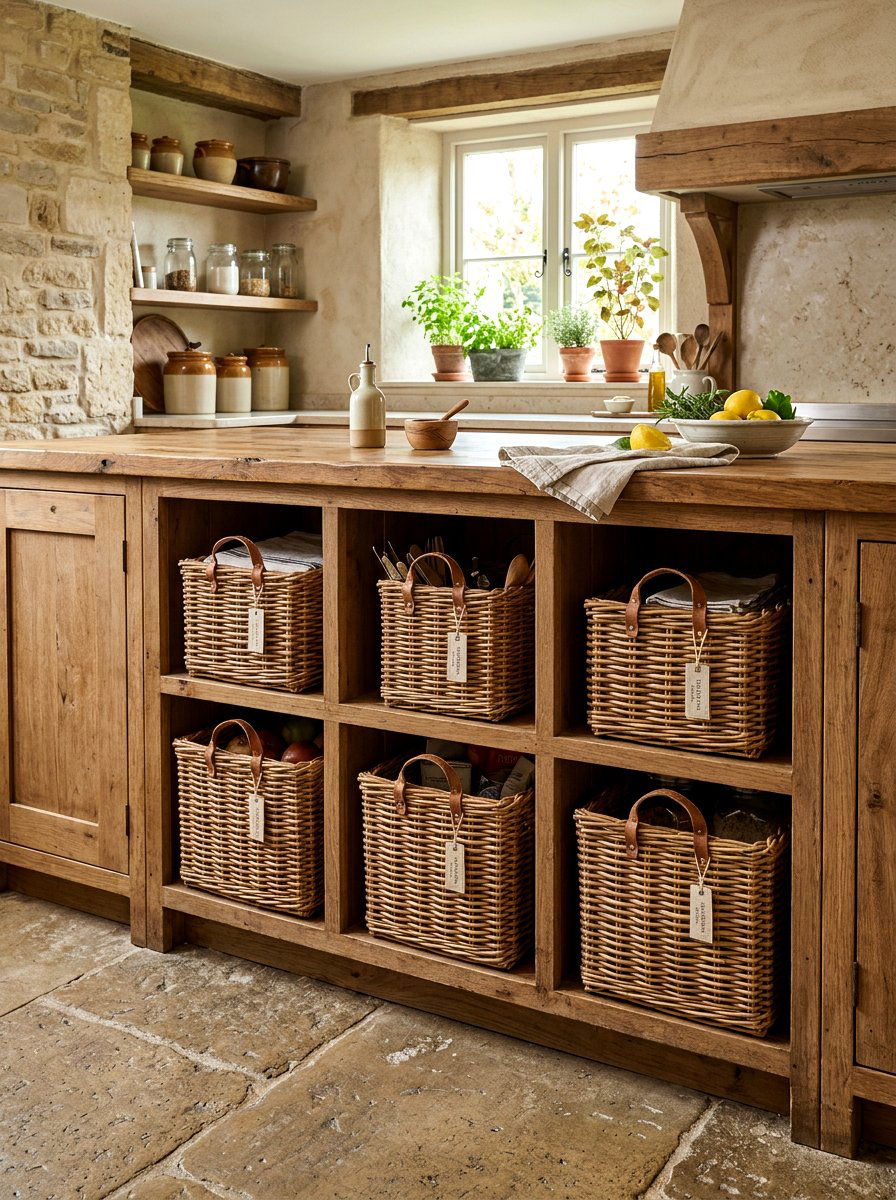
Embracing a rustic wood kitchen brings an immediate sense of history and earthiness to your home design. Use reclaimed timber for the cabinetry or flooring to showcase natural knots and grain patterns that tell a story. This style relies on the raw beauty of materials rather than polished perfections. Darker wood tones can create a moody, library-like feel, while lighter oak provides a modern rustic vibe. Pairing these wooden elements with iron hardware or stone surfaces enhances the tactile experience. It’s about creating a sturdy, dependable space that feels grounded. This approach turns the kitchen into a warm sanctuary that feels connected to nature.
3. Open Shelving Kitchen
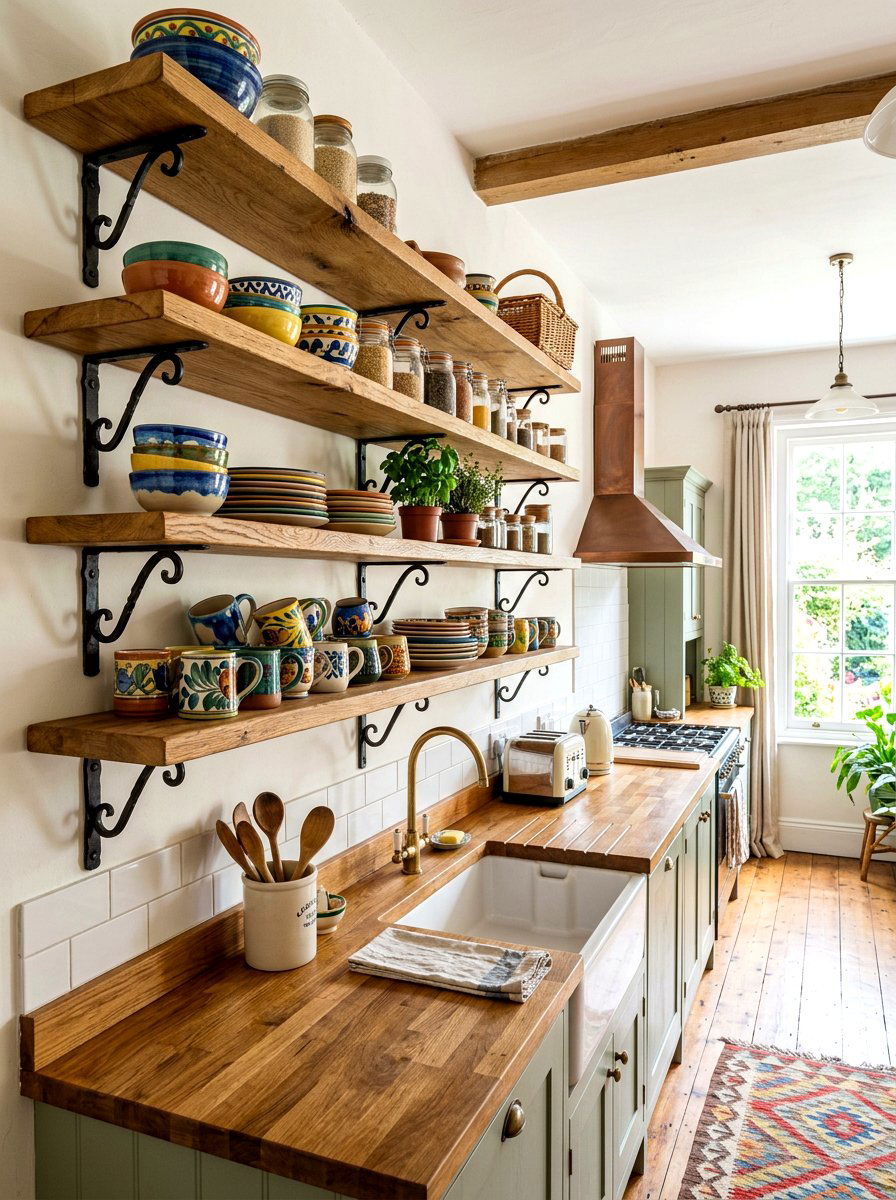
Installing an open shelving kitchen is a hallmark of cottage design that prioritizes accessibility and charm. Instead of heavy upper cabinets, use thick wooden planks supported by decorative metal brackets to display your favorite ceramics. This layout allows you to showcase heirloom plates, glass jars, and vintage cookbooks as part of the decor. It encourages a curated yet functional look where everything you need is within arm's reach. To keep it from looking cluttered, stick to a cohesive color palette for your dishware. The lack of bulky cabinets makes the kitchen feel more spacious and inviting, perfect for showing off your unique personality.
4. Farmhouse Sink Kitchen
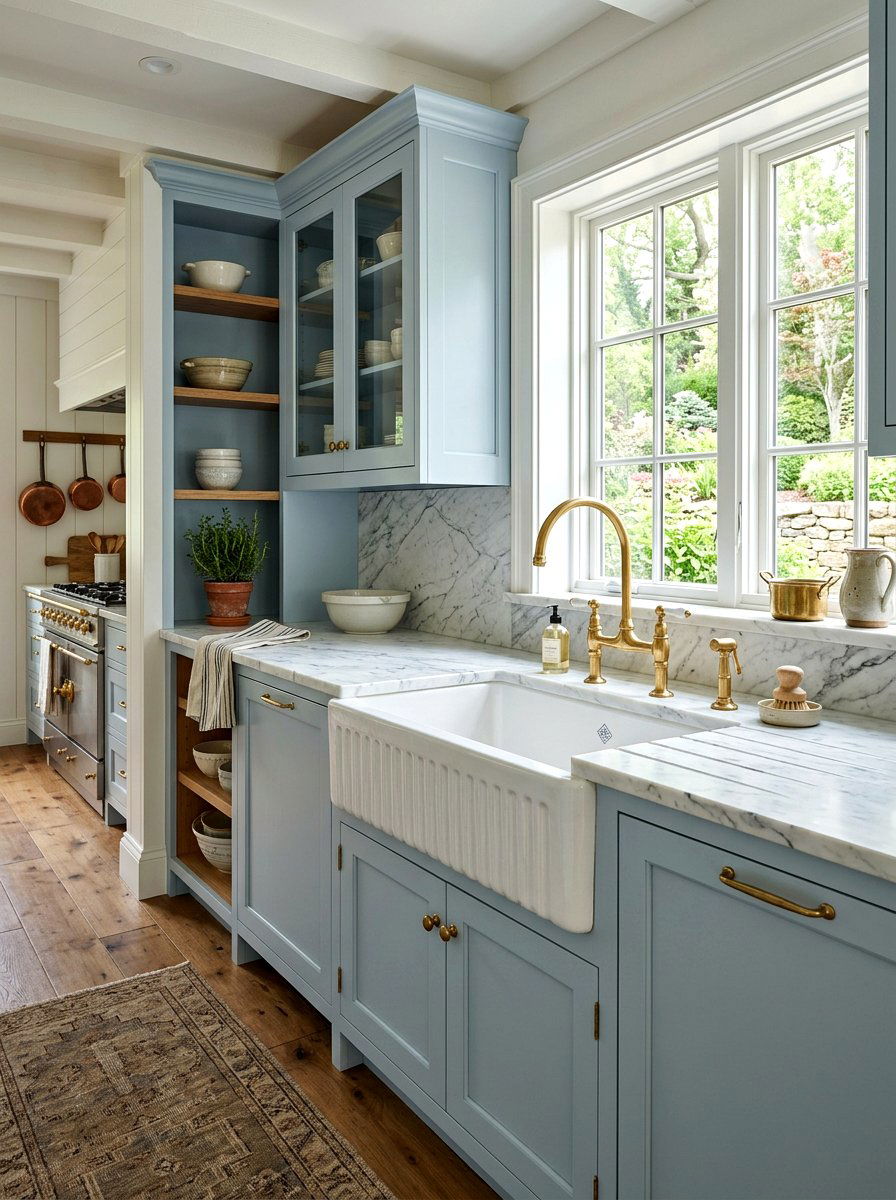
The farmhouse sink kitchen remains one of the most iconic features for anyone seeking a true countryside aesthetic. These deep, apron-front sinks are not just beautiful; they are incredibly practical for washing large pots or prepping garden vegetables. Choosing a white fireclay sink provides a clean, traditional look, while hammered copper or stone versions add a layer of rustic luxury. The visible front panel breaks up the cabinetry line, acting as a focal point for the entire wet zone. Pair it with a bridge-style faucet in brass or nickel to complete the vintage look. It’s a functional piece that exudes old-world craftsmanship and durability.
5. Beadboard Backsplash Kitchen
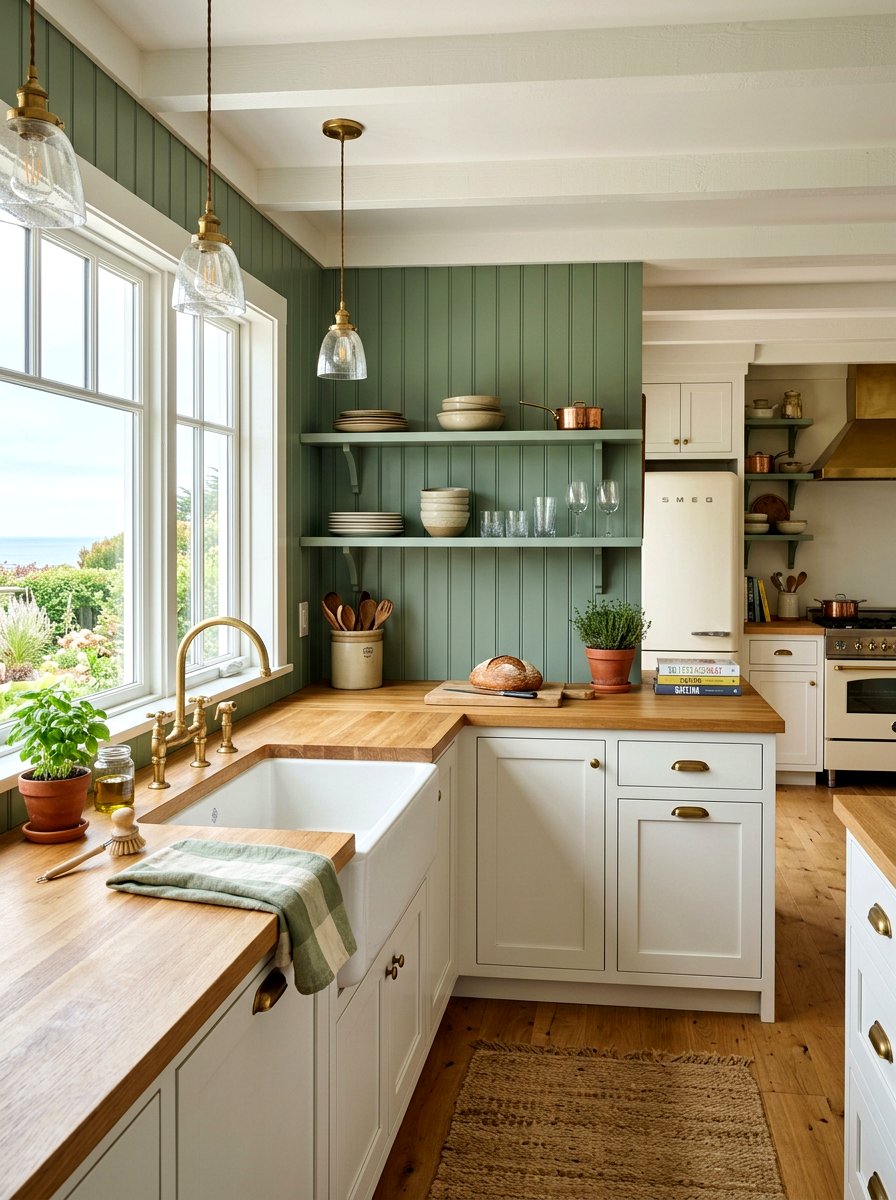
Adding a beadboard backsplash kitchen is an affordable and effective way to inject instant texture into your cooking space. The vertical grooves of the wood panels draw the eye upward, creating an illusion of height in lower-ceilinged rooms. This treatment offers a softer, more casual alternative to traditional ceramic tiles. You can paint the beadboard in a muted sage green or a soft blue to add a subtle hint of color without overwhelming the space. It works beautifully behind a stove or as a full-wall treatment. This classic detail provides a cozy, coastal-inspired vibe that feels exceptionally snug and traditional in any home.
6. Butcher Block Countertop Kitchen
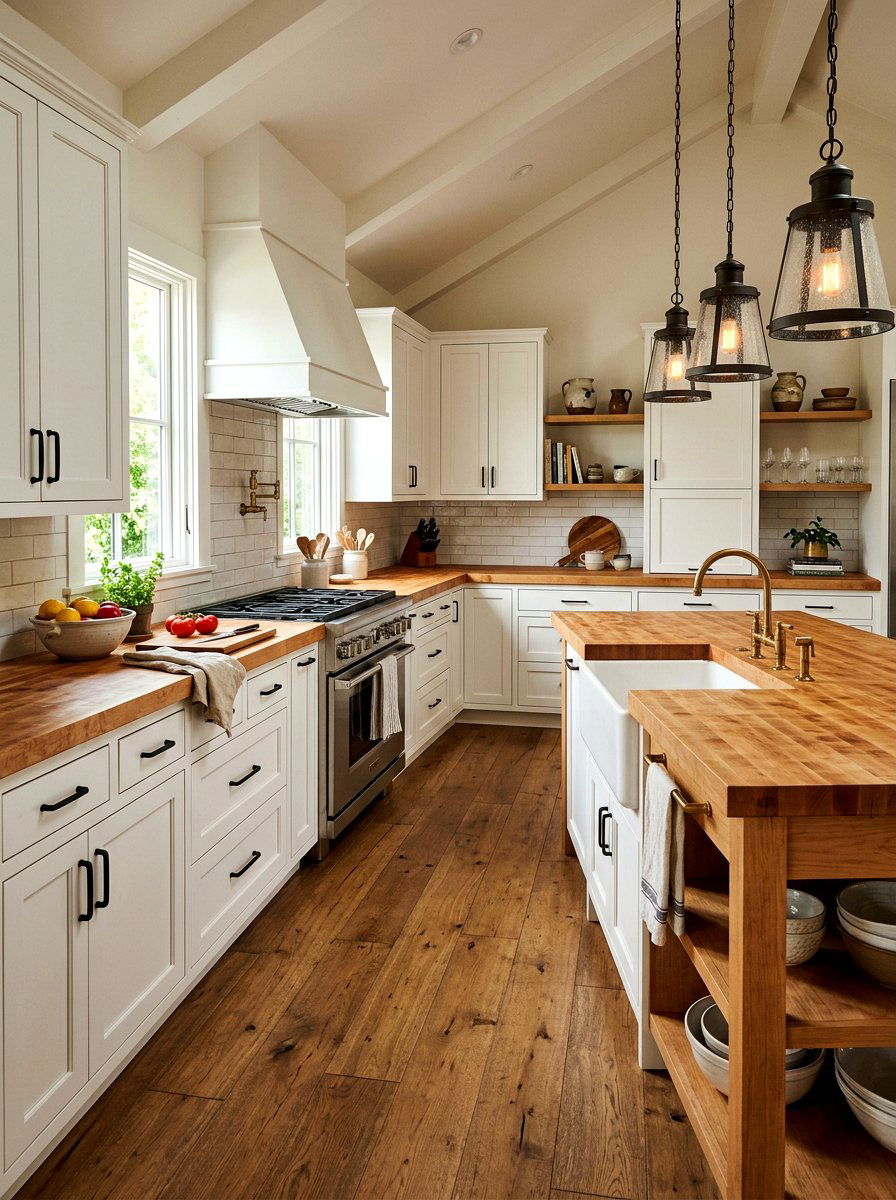
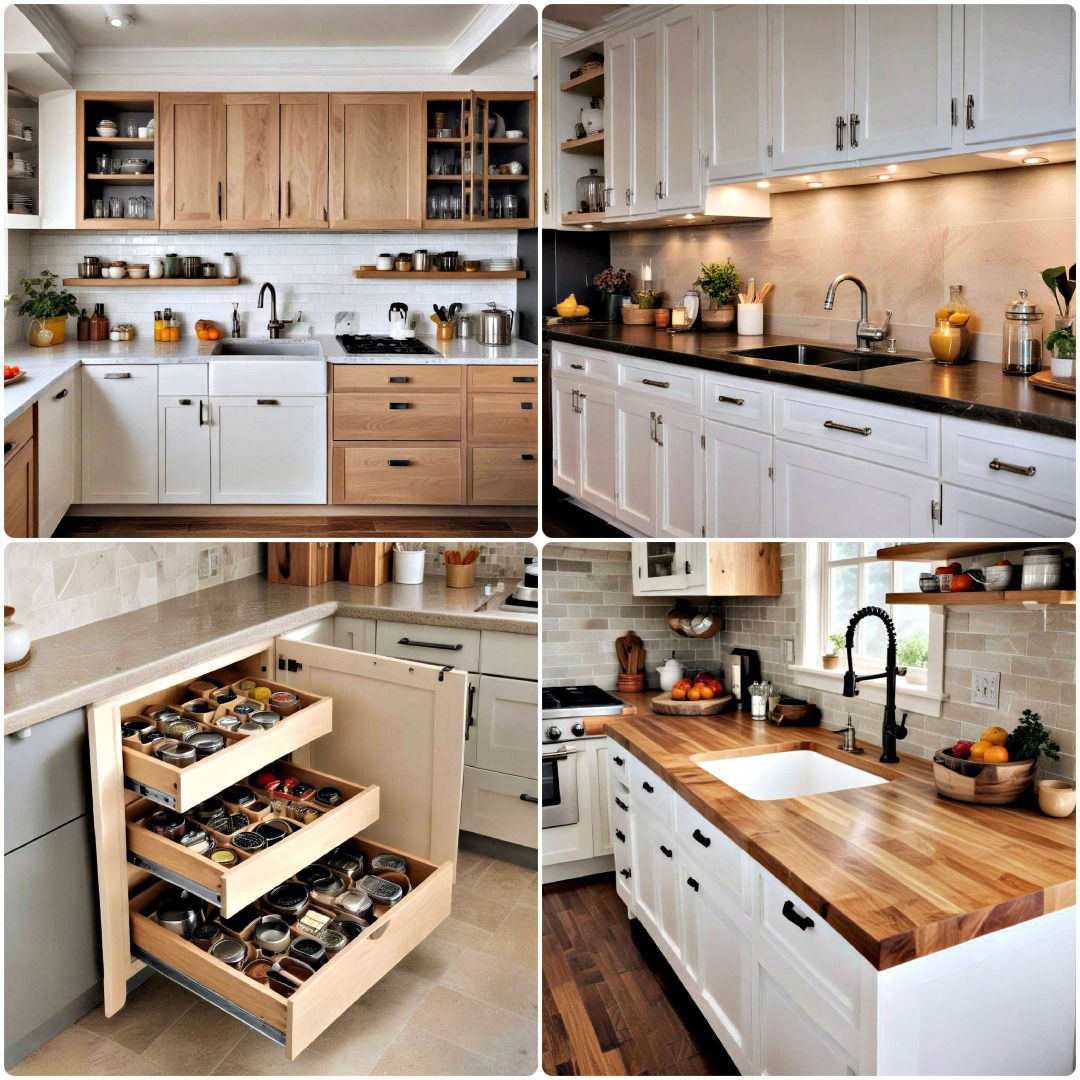
A butcher block countertop kitchen introduces a warm, tactile surface that is perfect for those who love to cook. The natural wood grain provides a soft contrast to hard appliances and tiled walls. You can choose from various woods like maple, walnut, or cherry to match your existing color scheme perfectly. These tops are durable and age beautifully, developing a unique patina over time that adds character. Beyond their aesthetic appeal, they offer a quiet, functional workspace for food preparation. Integrating wood surfaces makes the kitchen feel more like a workshop and less like a showroom, emphasizing the home's lived-in and practical nature.
7. English Country Kitchen
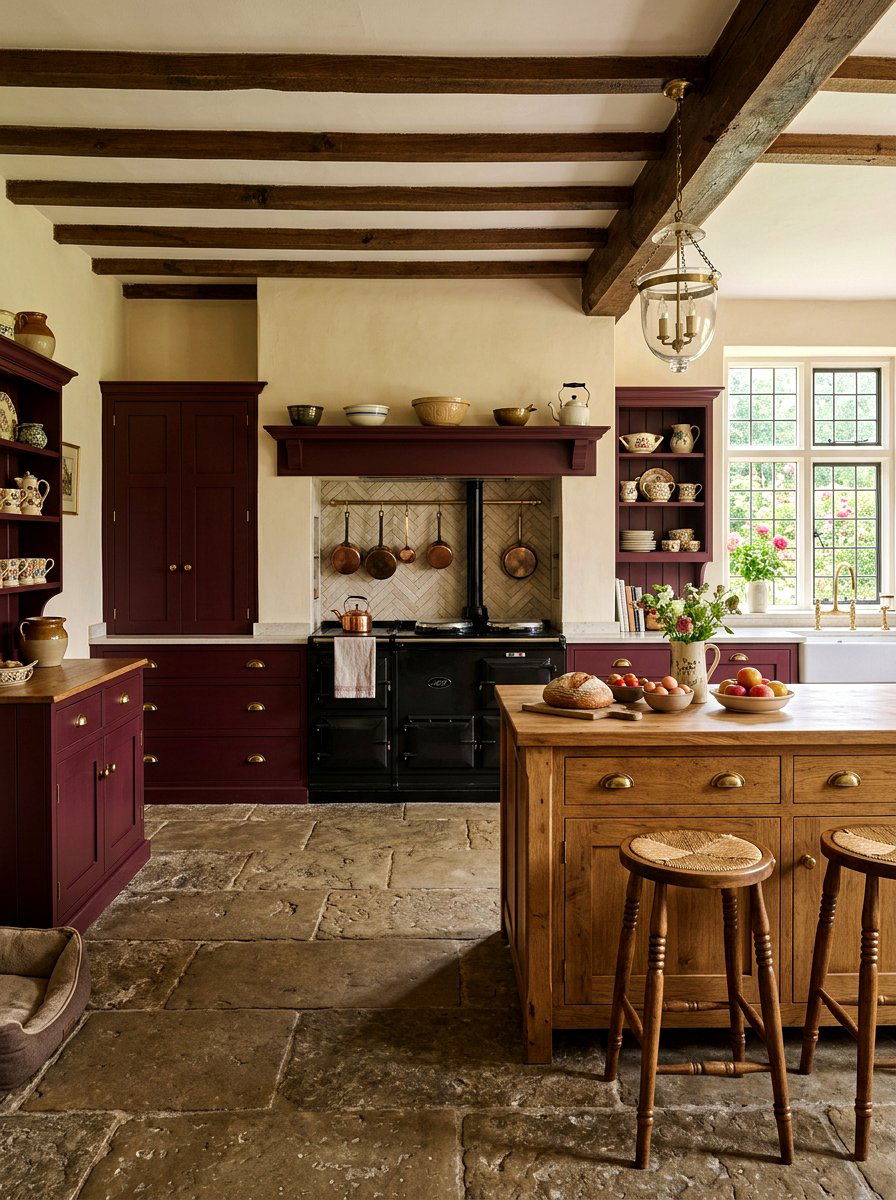
Creating an English country kitchen involves layering rich colors, traditional patterns, and high-quality craftsmanship. This style often features inset cabinetry, intricate crown molding, and a grand range cooker as the centerpiece. Think of deep burgundy, forest green, or navy blue cabinets paired with aged brass handles. It’s a look that feels established and sophisticated, as if the kitchen has evolved over several generations. Incorporate a hanging pot rack or a large central island to add to the functional, busy atmosphere. This design focuses on comfort and elegance, making the kitchen a place where long conversations and hearty meals happen naturally every day.
8. Vintage Style Kitchen
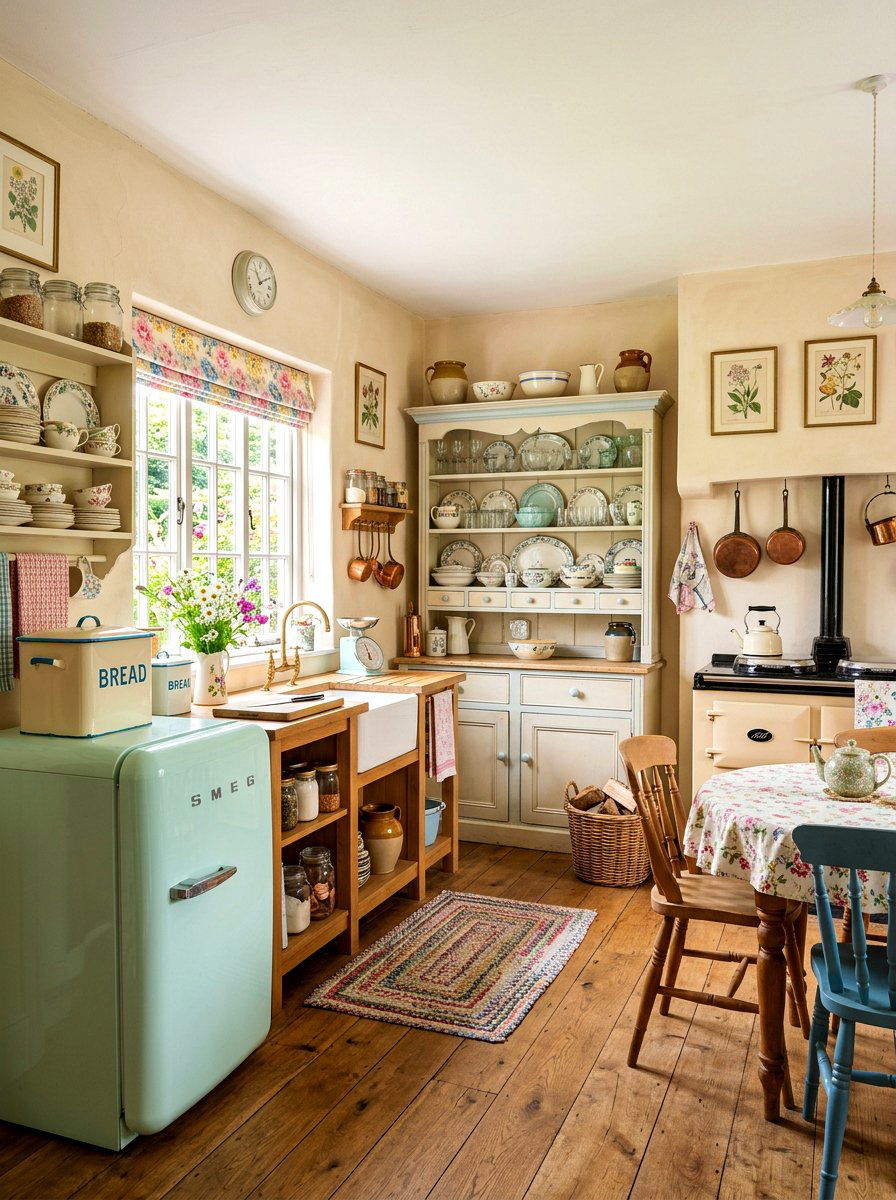
A vintage style kitchen celebrates the charm of the past through found objects and retro-inspired fixtures. Incorporate an old-fashioned hutch or a freestanding larder to store dry goods and linens. Scour flea markets for unique items like enamel bread bins, antique scales, or colorful glass jars to decorate your countertops. Mixing different eras creates an eclectic, curated feel that is unique to your own home. Using a retro-style refrigerator in a pastel shade can serve as a bold statement piece. This approach is all about nostalgia and storytelling, ensuring that every corner of your kitchen has a bit of history and soul.
9. Stone Floor Kitchen
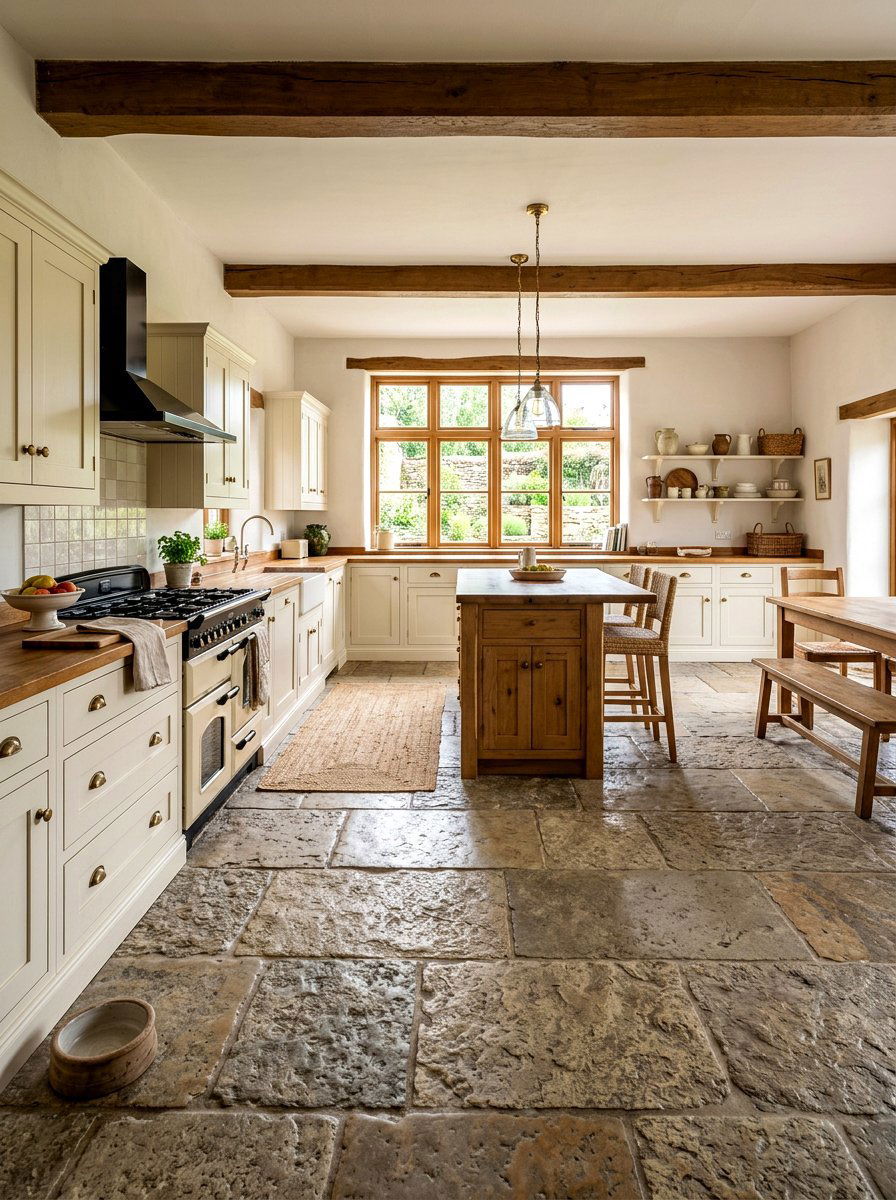
Installing a stone floor kitchen provides a rugged and durable foundation that is quintessential for cottage living. Use large-format flagstones, slate, or tumbled limestone to create an organic, uneven surface underfoot. These natural materials are excellent for high-traffic areas because they hide dirt well and are incredibly easy to clean. The cool temperature of the stone feels wonderful in the summer, while underfloor heating can keep it cozy during the winter months. The earthy colors of the stone ground the room, providing a perfect balance to painted cabinetry. It’s a timeless choice that brings the beauty of the outdoors inside your home.
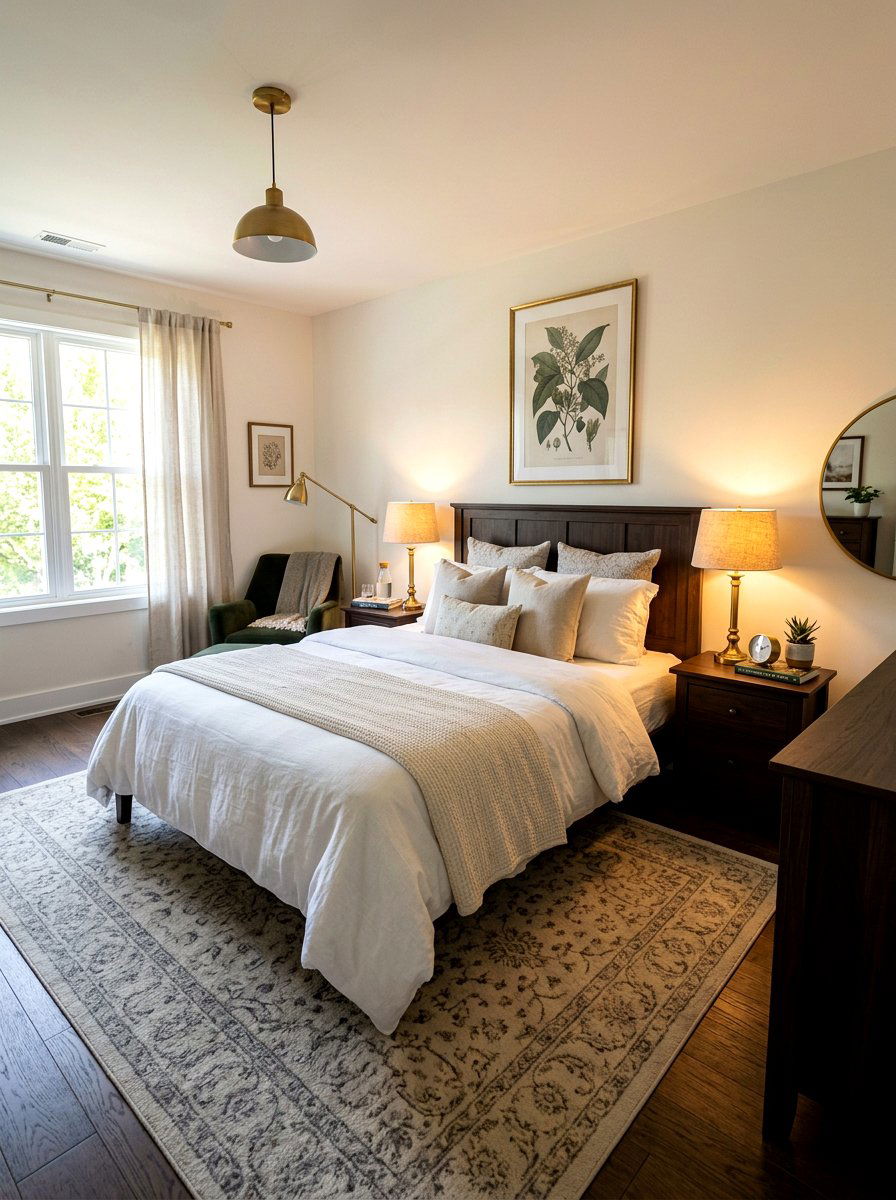
10. Small Cottage Kitchen
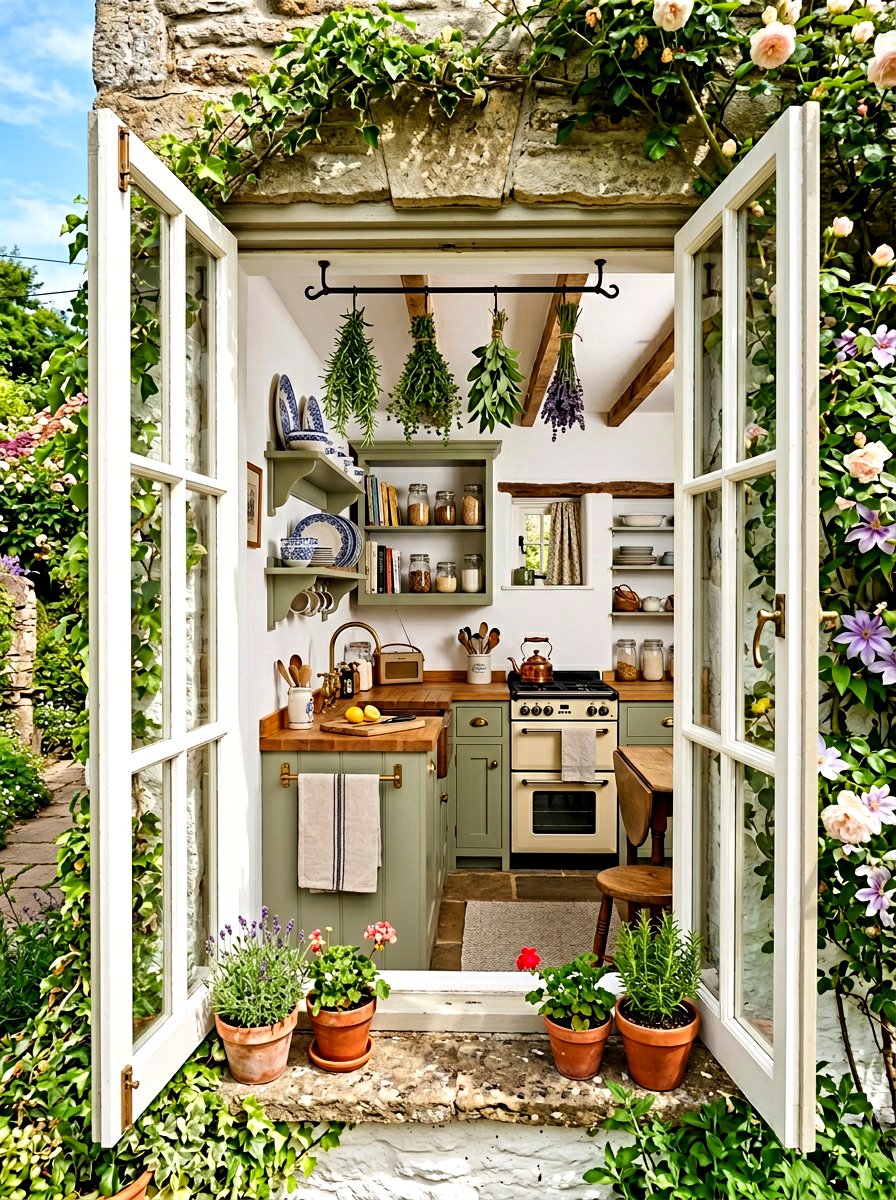
Designing a small cottage kitchen requires a clever blend of storage and style to maximize every square inch. Use light colors on the walls and cabinets to keep the room feeling bright and open. Multi-functional furniture, like a narrow rolling cart or a wall-mounted drop-leaf table, can provide extra prep space when needed. Vertical storage is your best friend; use pegboards or magnetic strips to keep tools off the counters. Despite the limited footprint, you can still add personality with patterned rugs or decorative cabinet hardware. A compact kitchen can feel like a cozy, efficient jewel box when organized with care and thoughtful design.
11. Green Cabinet Kitchen
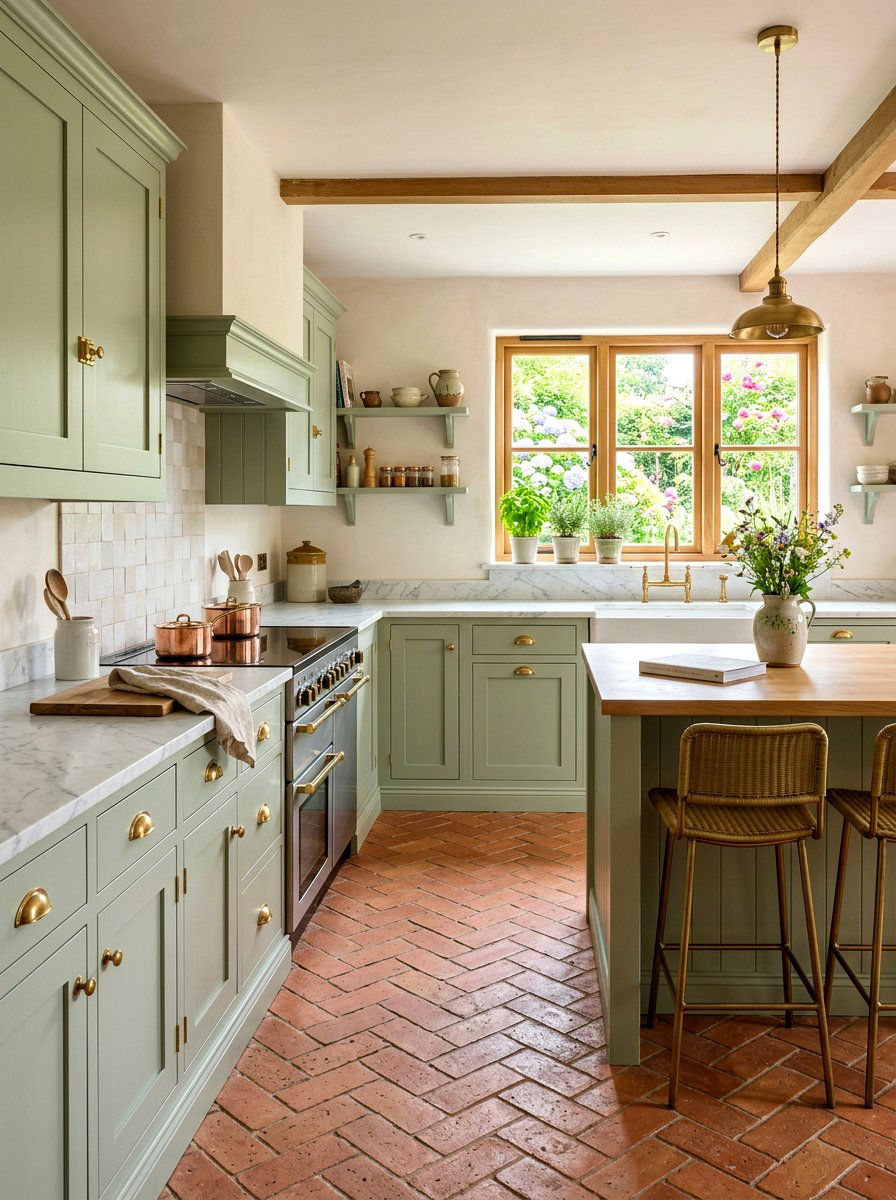
A green cabinet kitchen brings a refreshing, biophilic element to the home by echoing the colors found in nature. Shades like soft sage, olive, or deep forest green work beautifully in a cottage setting because they feel organic and calming. Green cabinetry pairs exceptionally well with natural wood accents and brass hardware for a high-end look. It’s a sophisticated way to introduce color without being too loud or trendy. This palette makes the kitchen feel like an extension of the garden, especially when paired with terracotta tiles or floral accents. It creates a serene environment that makes morning routines feel more grounded and peaceful.
12. Floral Wallpaper Kitchen
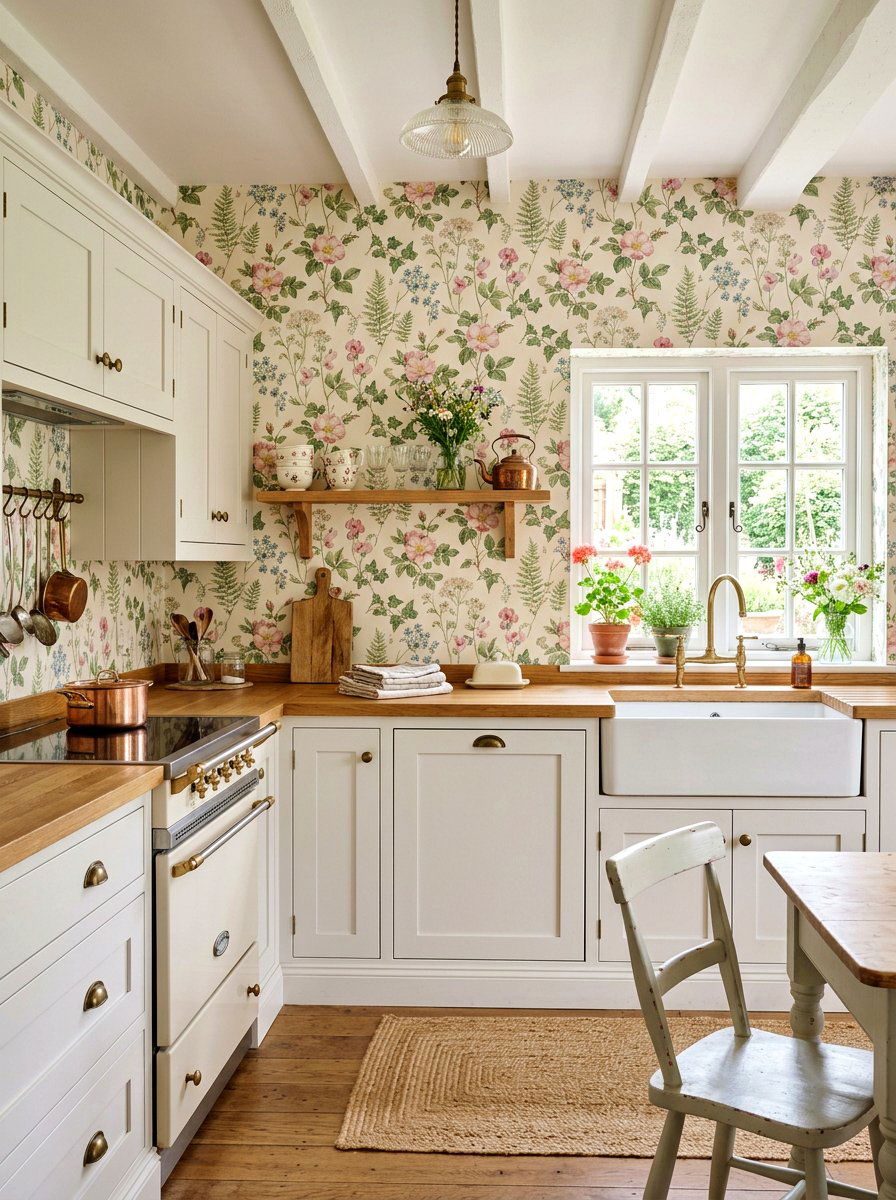
Using a floral wallpaper kitchen design is a fantastic way to add a touch of romance and whimsy to the space. Choose a pattern with delicate botanical prints or vintage-inspired blooms to create a stunning accent wall. This decorative element softens the hard lines of appliances and cabinetry, making the room feel more like a living space. To keep the look balanced, pull one or two colors from the wallpaper and use them for your kitchen accessories or textiles. Floral motifs evoke a sense of heritage and femininity, turning a functional cooking area into a beautiful, garden-inspired sanctuary that feels cozy and inviting.
13. Exposed Beam Kitchen
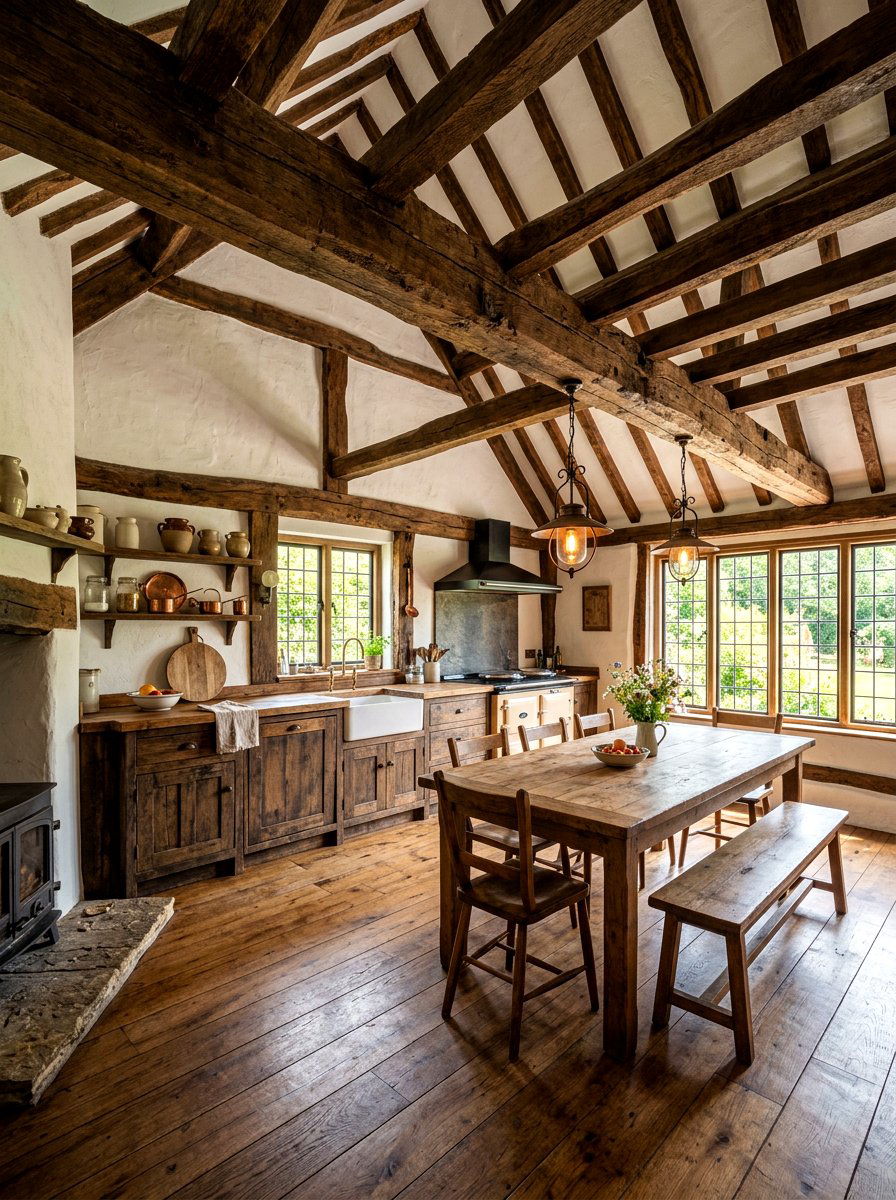
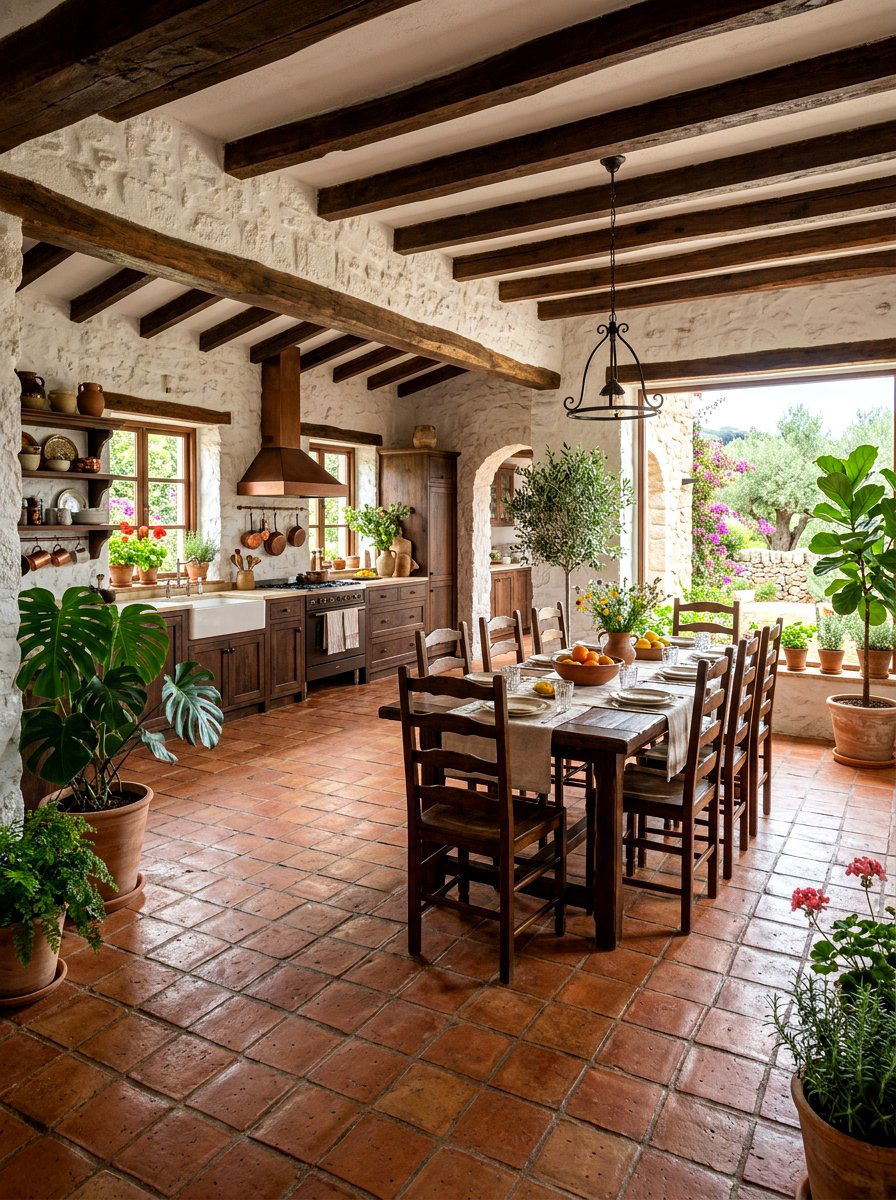
An exposed beam kitchen adds architectural interest and a sense of structural honesty to your interior design. Whether they are original timber or added faux beams, these ceiling features create a rustic, barn-like atmosphere. They provide a sense of height and history, drawing the eye upward and making the room feel more expansive. You can leave the wood in its natural state for a raw look or paint them white to blend seamlessly with the ceiling. Hanging pendant lights from the beams can highlight their texture while providing necessary task lighting. This feature anchors the room with a strong, traditional, and permanent feel.
14. Shaker Cabinet Kitchen
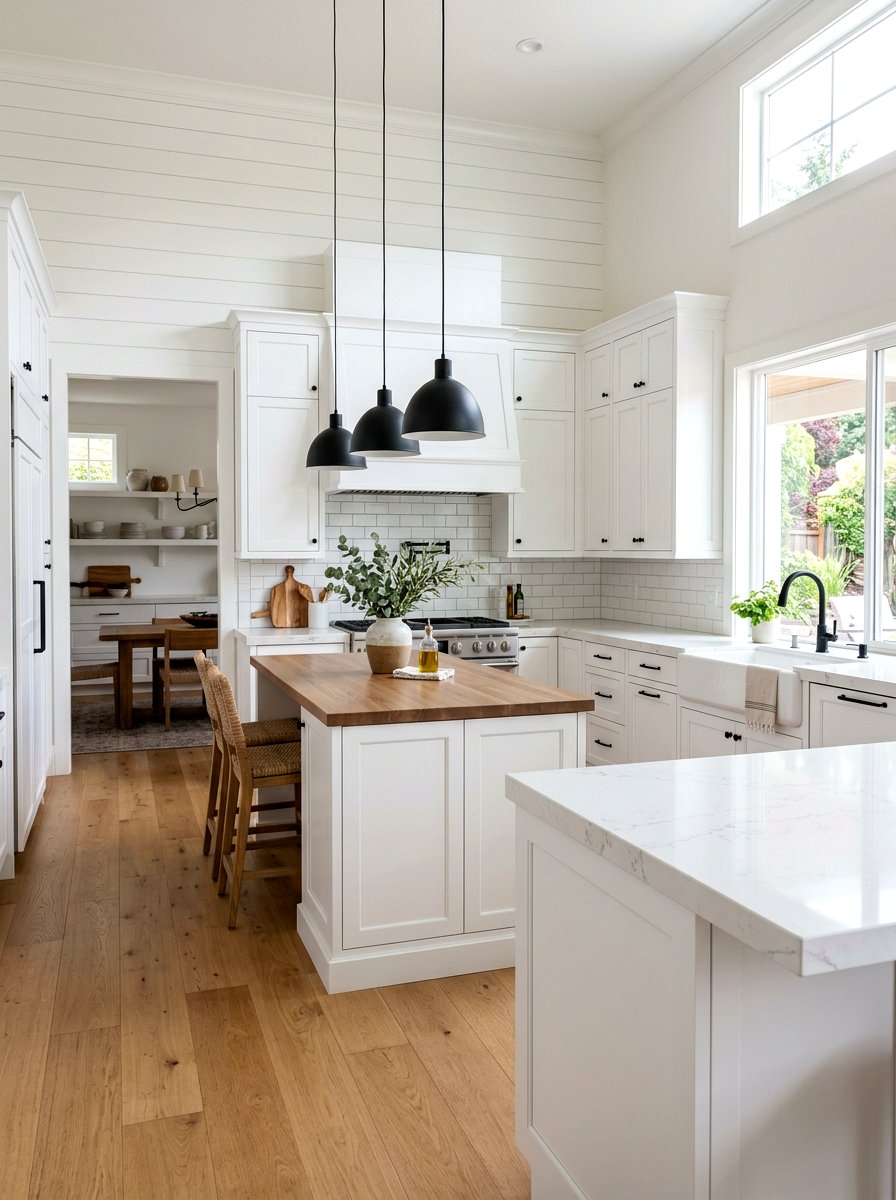
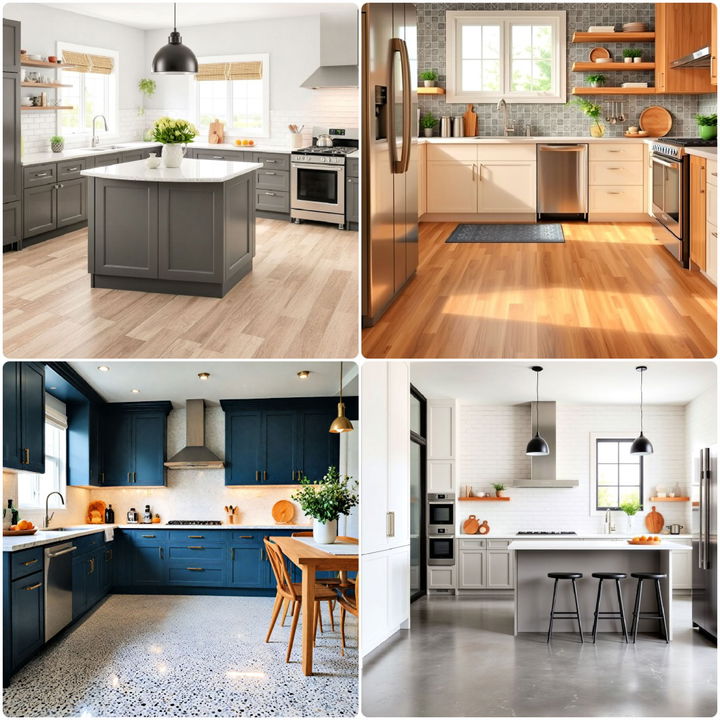
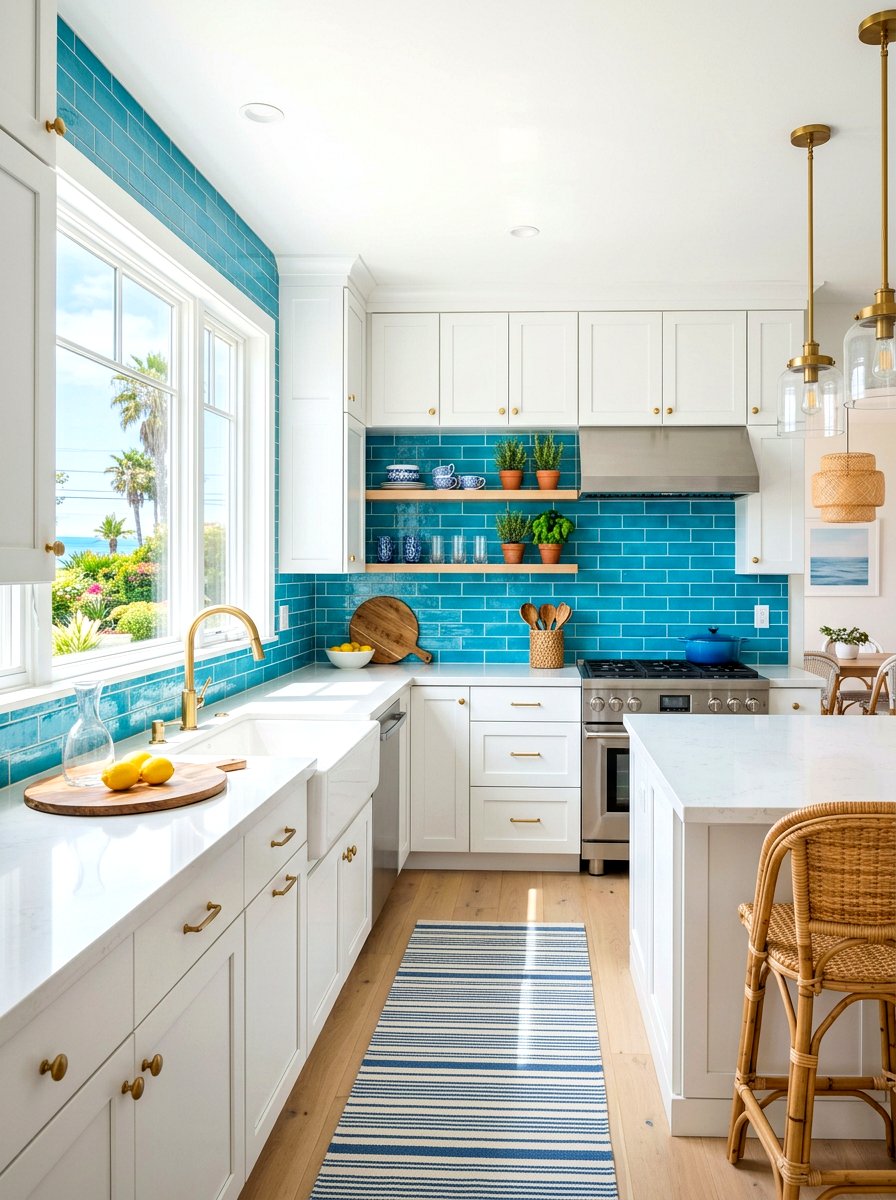
The shaker cabinet kitchen is the epitome of timeless simplicity and functional beauty. These cabinets feature a flat center panel and square edges, offering a clean look that fits both traditional and modern cottage styles. Their understated design allows you to experiment with more decorative elements, such as patterned backsplashes or ornate lighting fixtures. Shaker doors are incredibly versatile and look great in any color, from classic cream to moody charcoal. Because of their simple lines, they are easy to clean and maintain, making them a practical choice for busy households. It’s a reliable design that serves as a perfect, quiet backdrop.
15. Copper Pot Kitchen
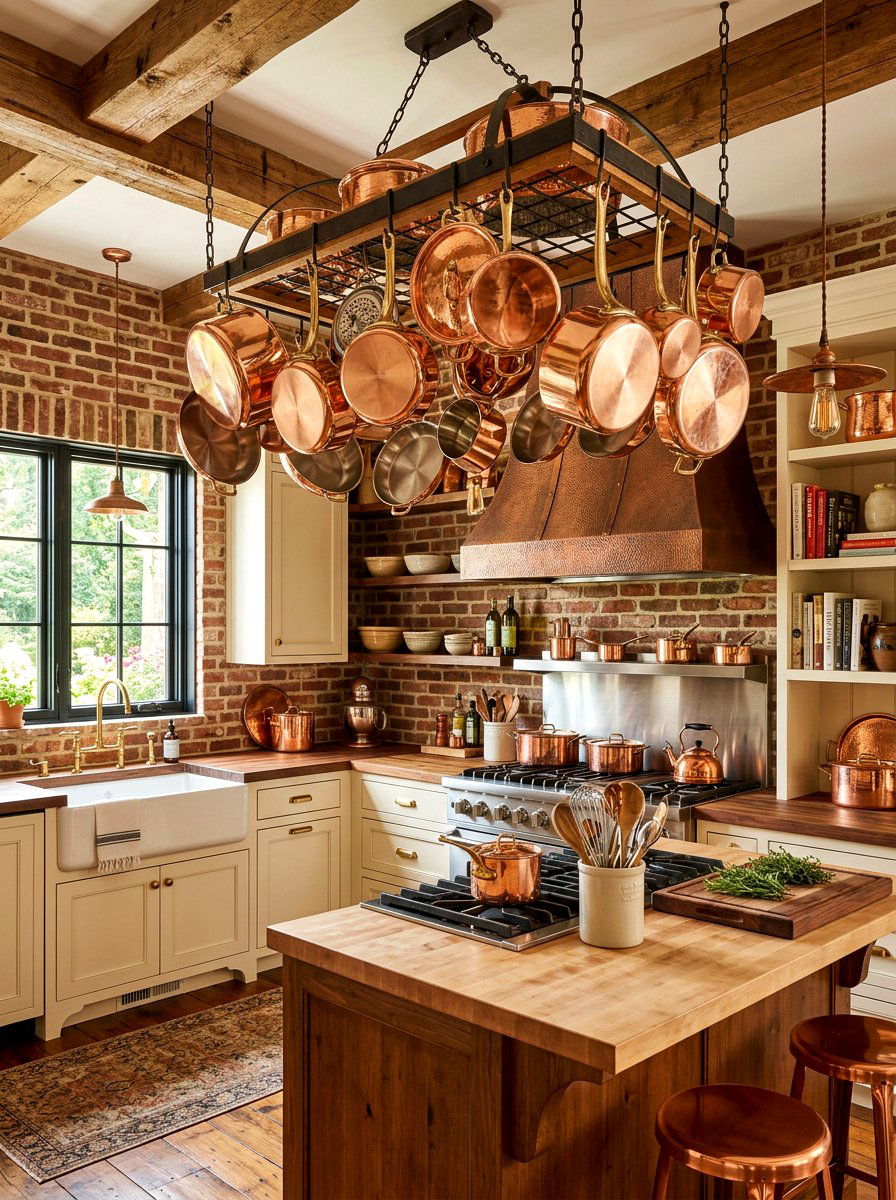
A copper pot kitchen uses the warm, metallic glow of cookware to create a sense of professional warmth and luxury. Hanging your pots and pans from a ceiling rack or a wall rail keeps them accessible while serving as a beautiful decorative display. The bright, reflective surface of copper adds a touch of shine to more rustic or matte-finished kitchens. As the copper ages, it develops a unique patina that enhances its vintage appeal. This look suggests a home where cooking is a passion and the kitchen is truly used. It’s an effortless way to combine functional storage with a high-end, classic aesthetic.
16. Blue Cottage Kitchen
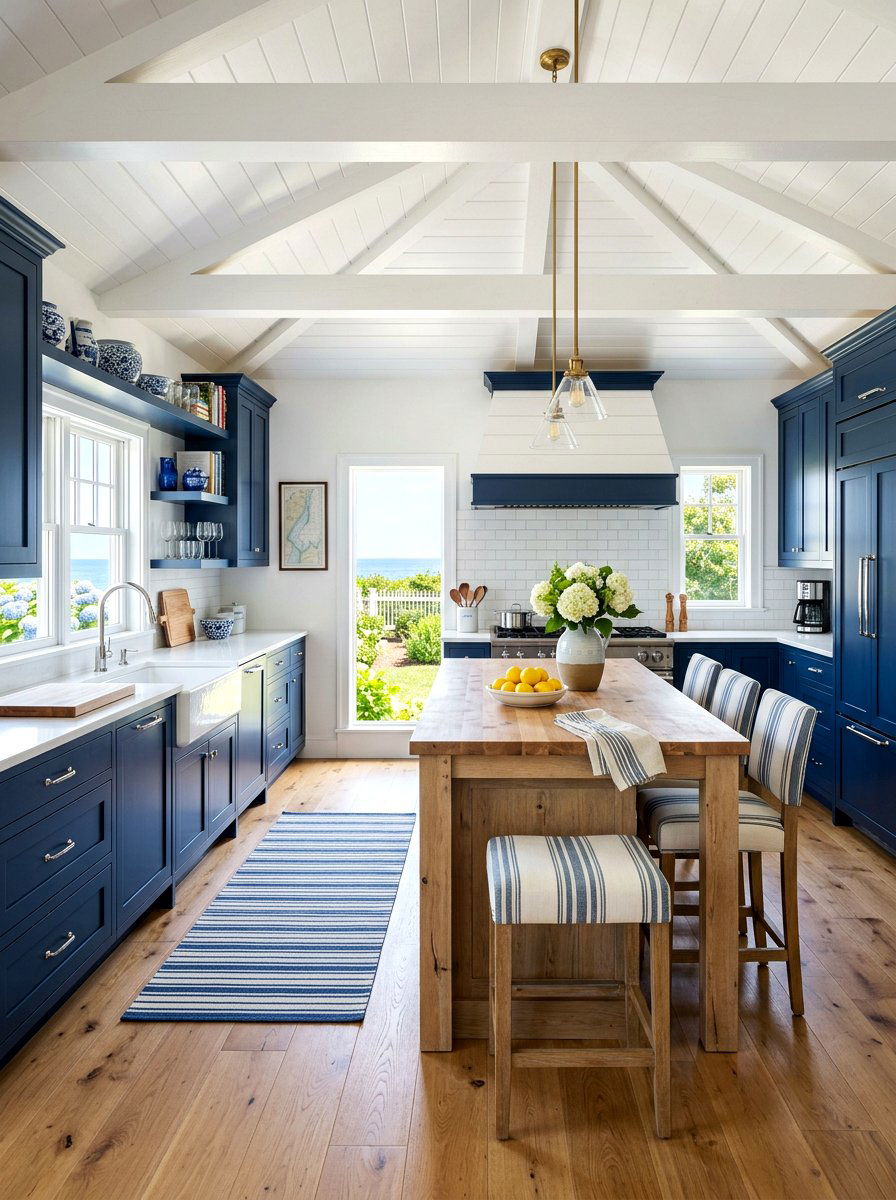
Opting for a blue cottage kitchen can range from a light, airy coastal feel to a deep, dramatic English library vibe. Pale duck-egg blue or robin's egg shades are perfect for making a small kitchen feel breezy and bright. On the other hand, navy or midnight blue cabinetry offers a sophisticated contrast against white marble or light wood countertops. Blue is a calming color that works well with almost any metal finish, including silver, gold, or black. It provides a classic pop of color that feels traditional yet fresh. This versatile hue ensures your kitchen feels inviting and stylish for many years.
17. Plate Rack Kitchen
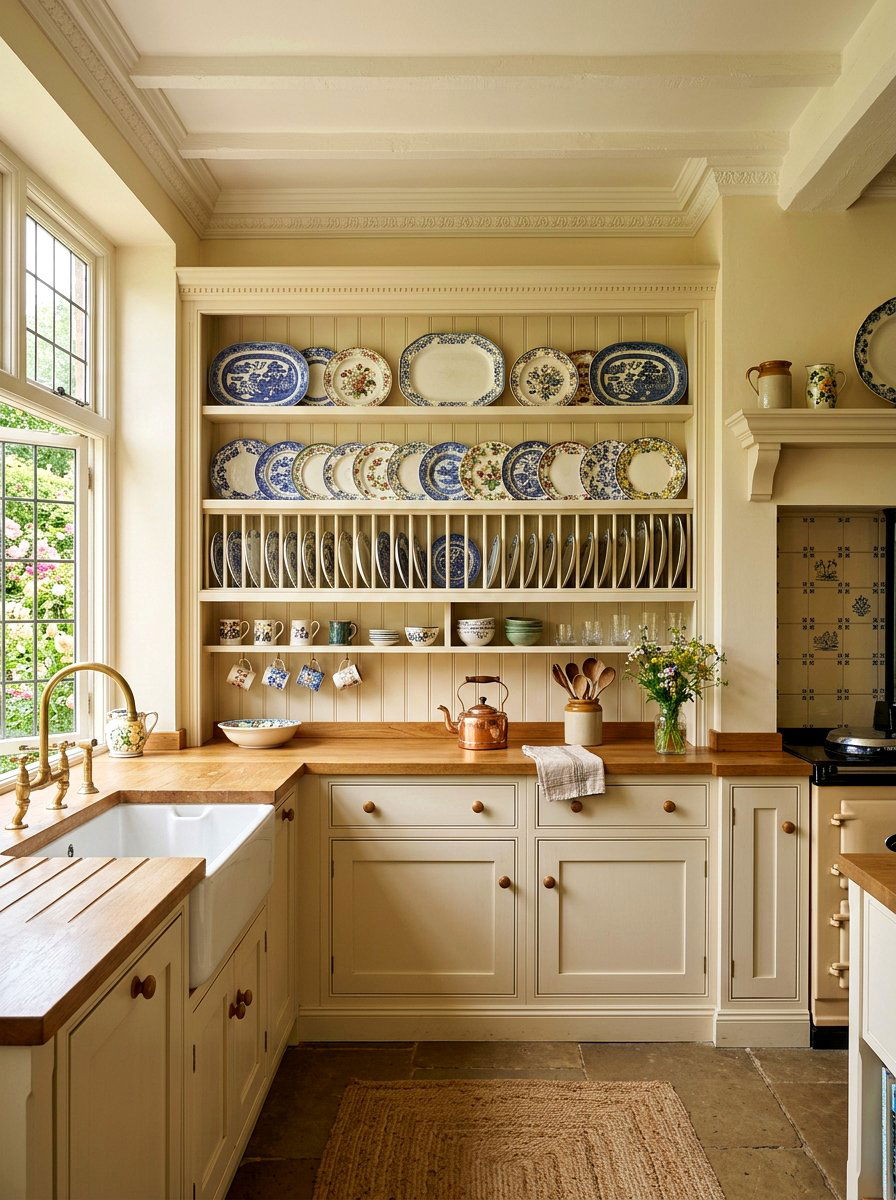
A plate rack kitchen is a quintessentially English detail that adds both storage and visual interest to the walls. These built-in or wall-mounted racks allow you to display your most beautiful plates while keeping them within easy reach for daily use. It’s a great way to break up a row of solid cabinetry and add a bit of "breathing room" to the layout. You can paint the rack the same color as your cabinets for a seamless look or use a contrasting wood finish. This feature celebrates the beauty of everyday objects, turning your dinnerware into a rotating art display that feels very cottage.
18. Breakfast Nook Kitchen
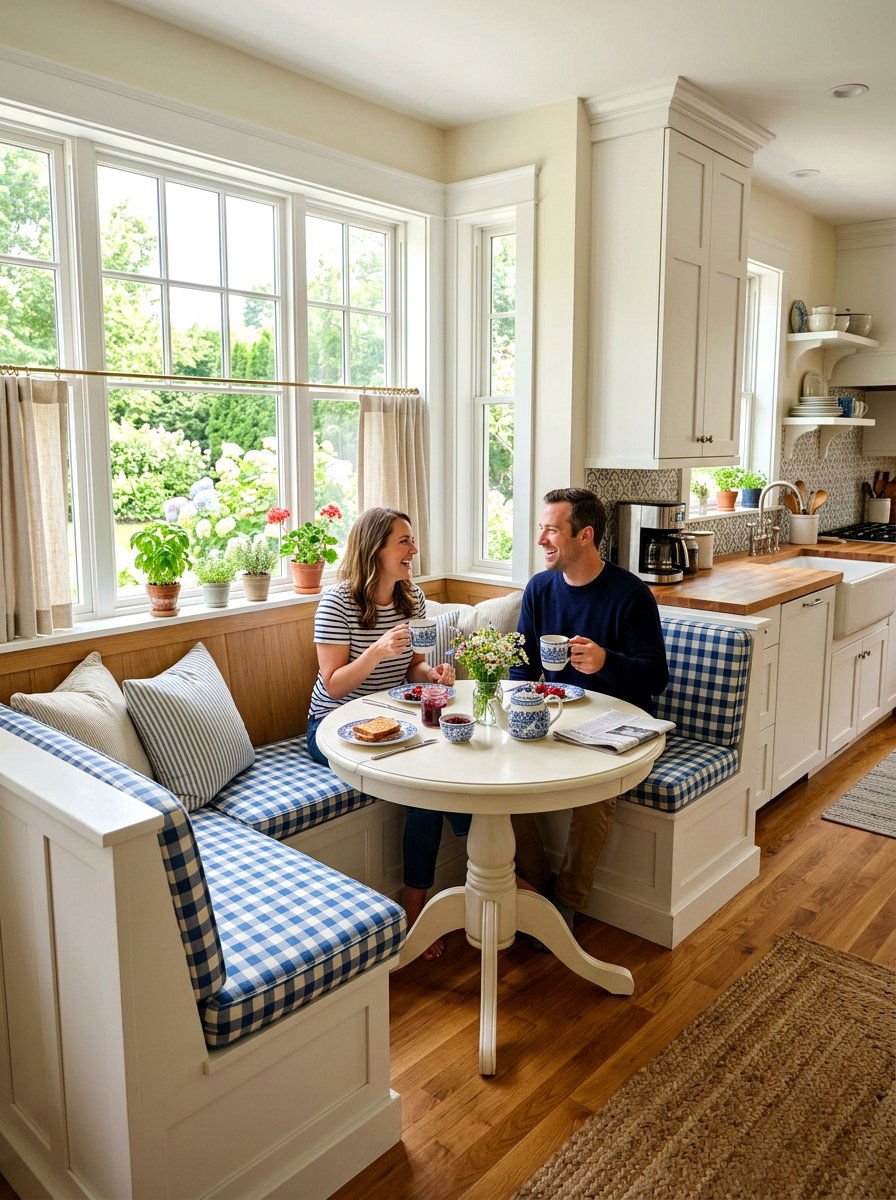
Integrating a breakfast nook kitchen creates a cozy corner for casual meals, morning coffee, or even homework. Use a built-in bench or a small bistro table tucked into a corner or by a window. To make it feel extra welcoming, add soft cushions in gingham or linen fabrics and a low-hanging pendant light. This dedicated space for sitting encourages family members to linger in the kitchen, making it a true social hub. It’s a great way to use an awkward corner effectively while adding a lot of character. A well-designed nook provides a sense of sanctuary and comfort within the busier cooking area.
19. Pantry Door Kitchen
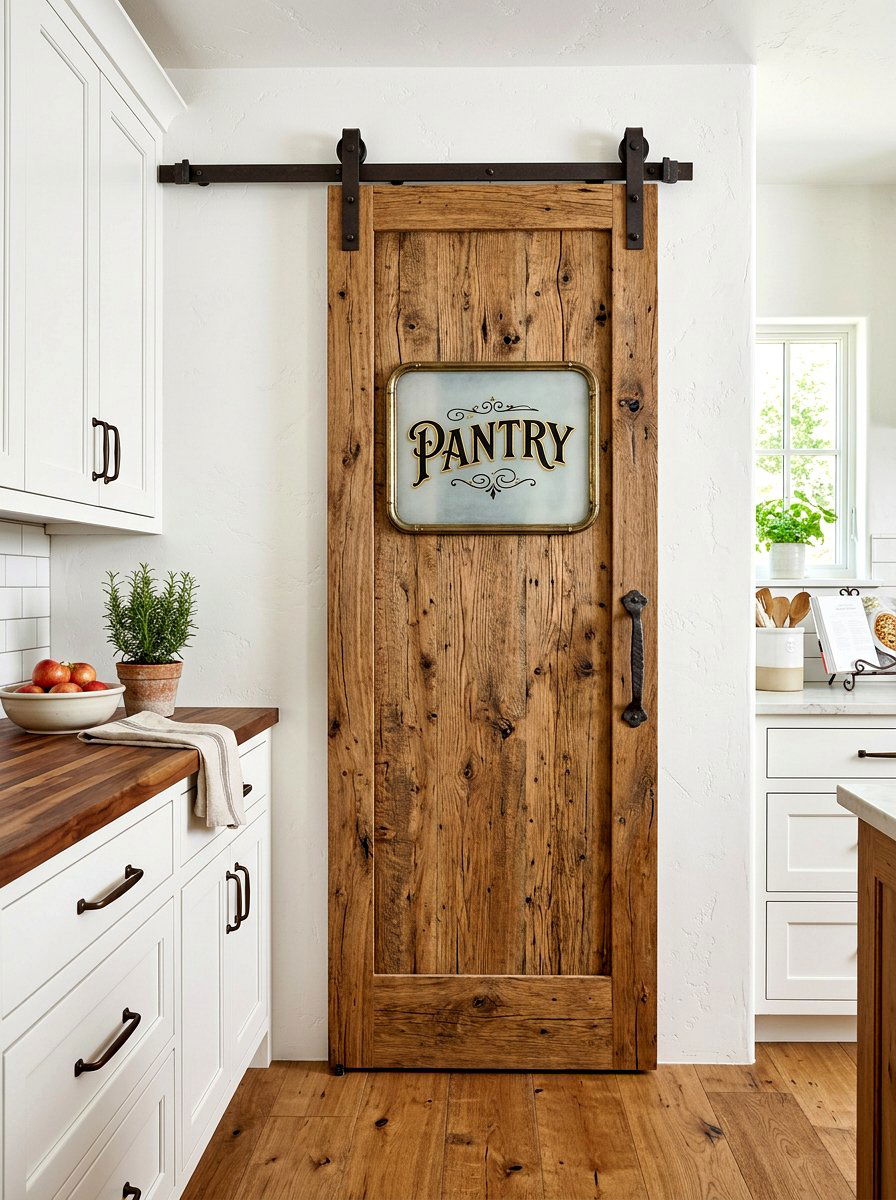
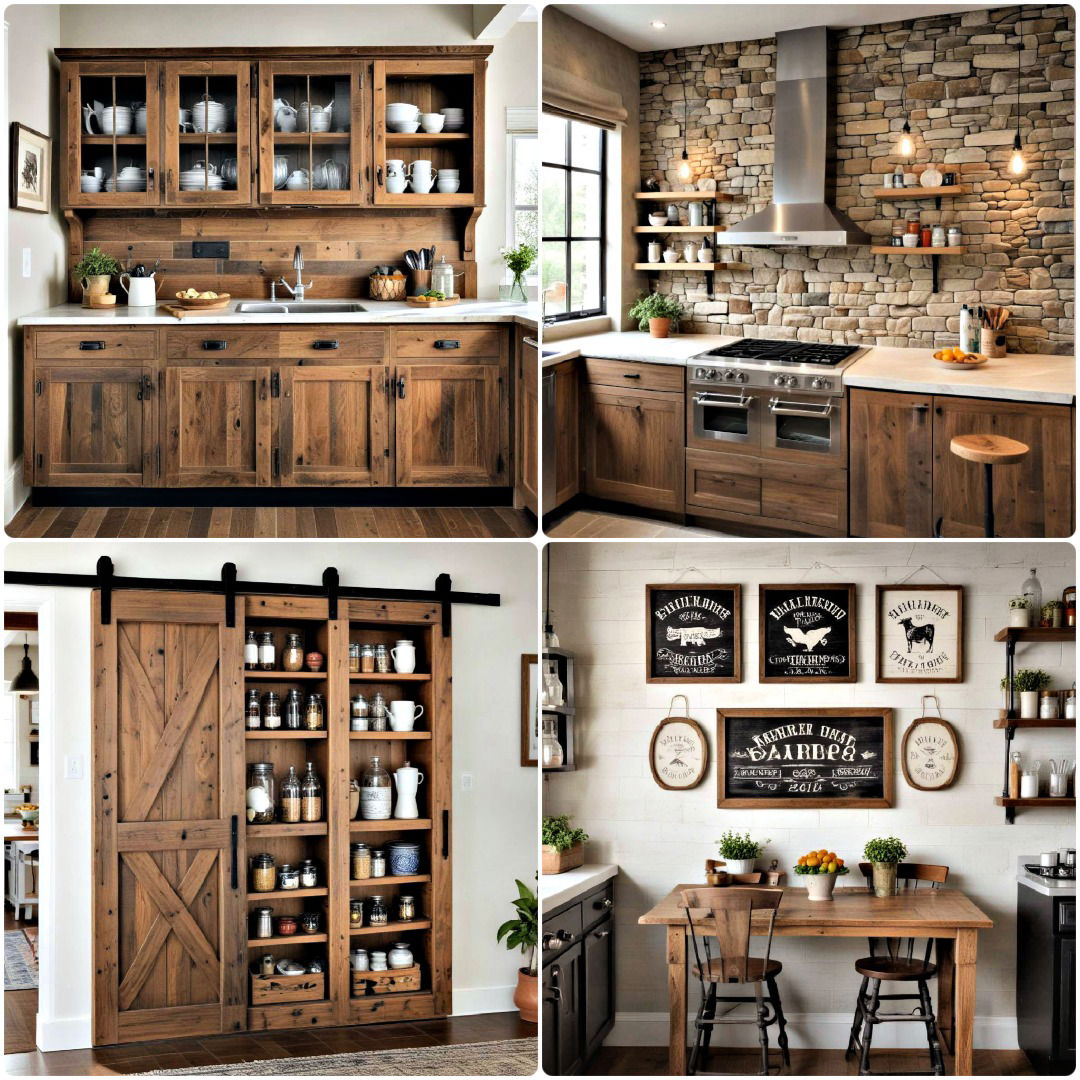
Focusing on a pantry door kitchen allows you to turn a functional storage area into a beautiful architectural feature. Consider using a reclaimed wood door, a sliding barn door, or even a glass-paned door with a vintage "Pantry" sign. This small detail adds a layer of texture and interest to the room's perimeter. If you have a walk-in pantry, the door acts as the gateway to your organized supplies, making the whole kitchen feel more intentional. You can paint the door a contrasting color to make it stand out as a focal point. It’s a simple upgrade that significantly boosts the cottage charm.
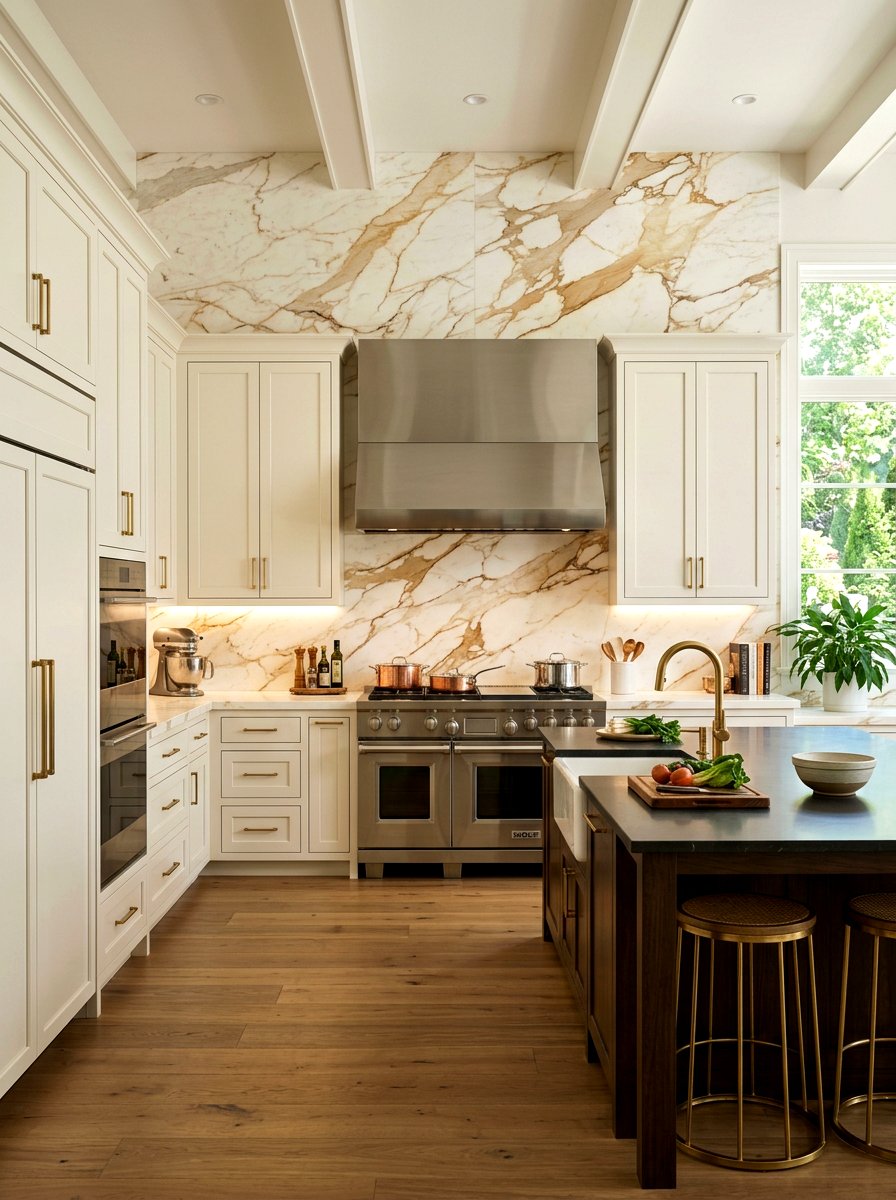
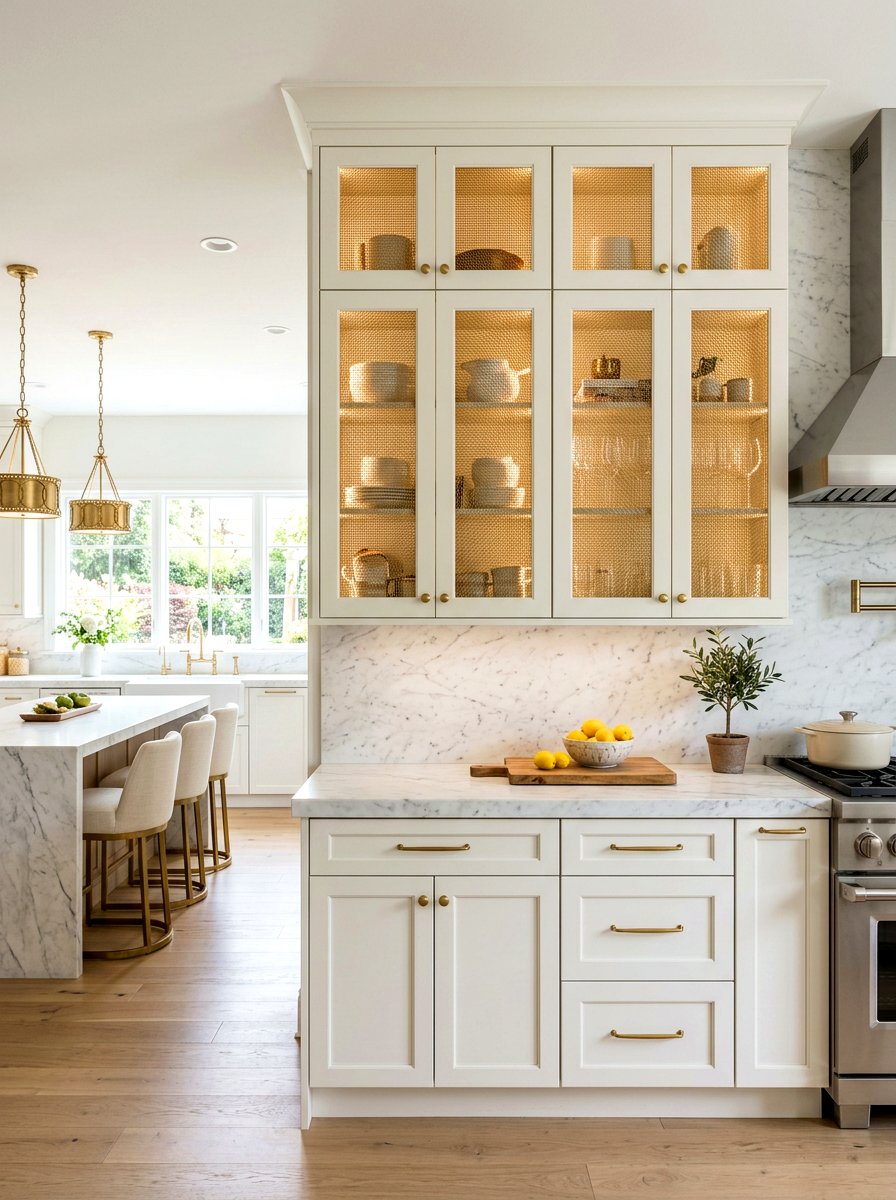
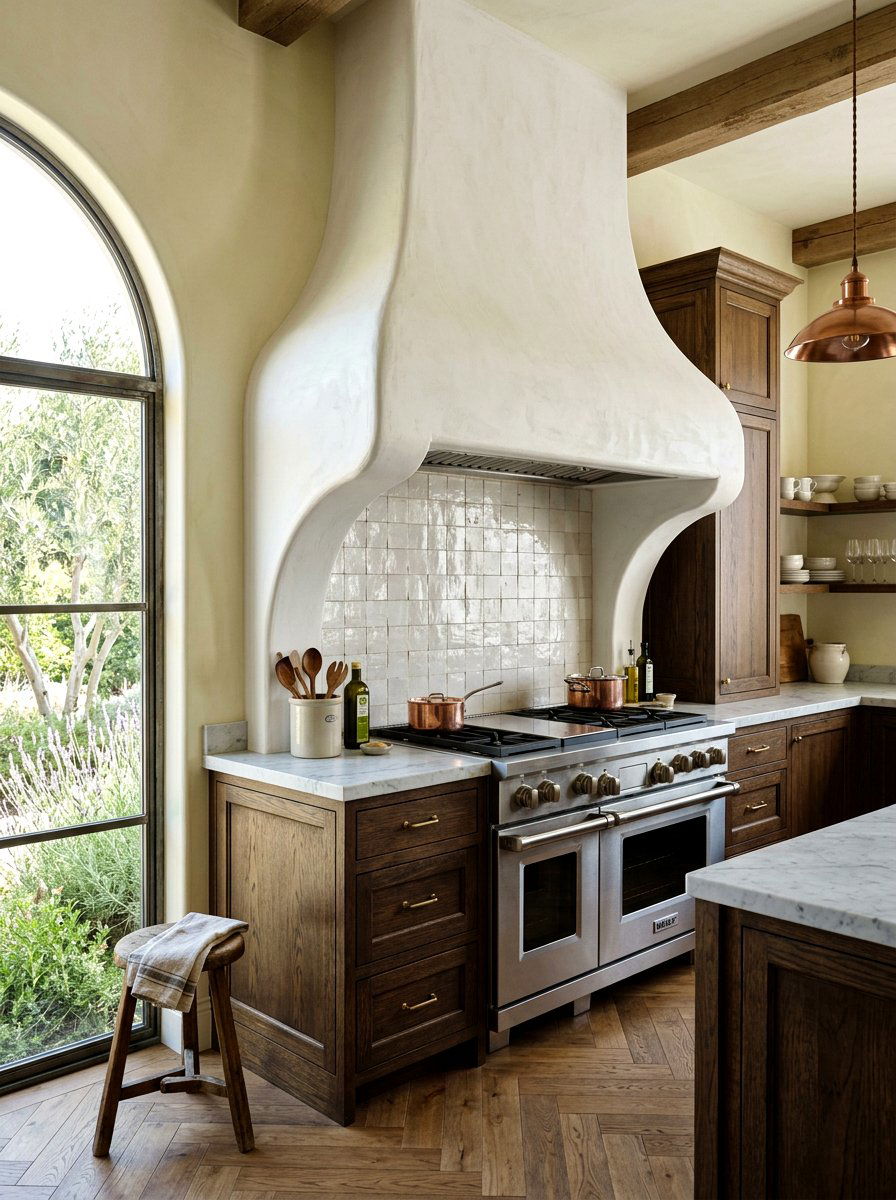
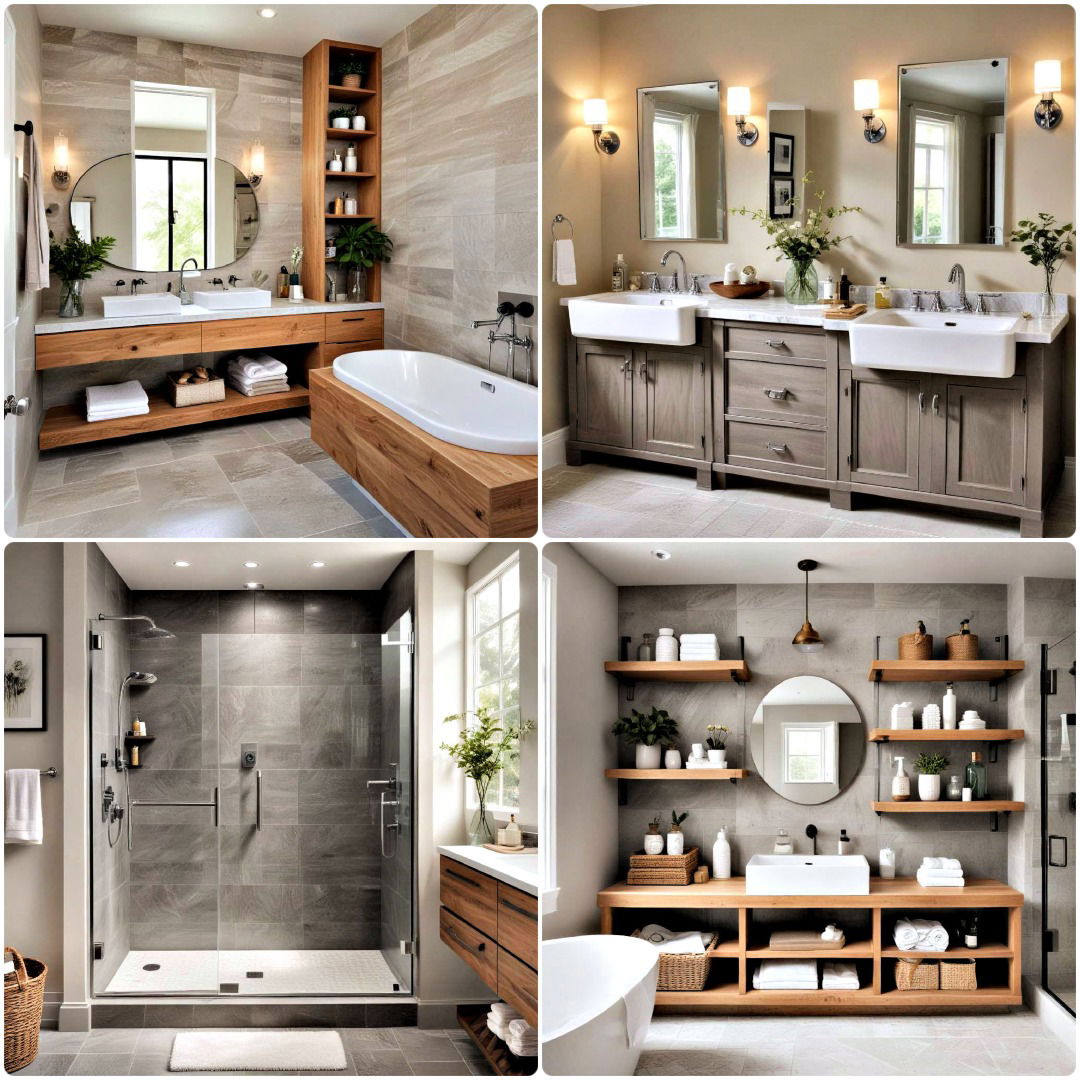
20. Zellige Tile Kitchen
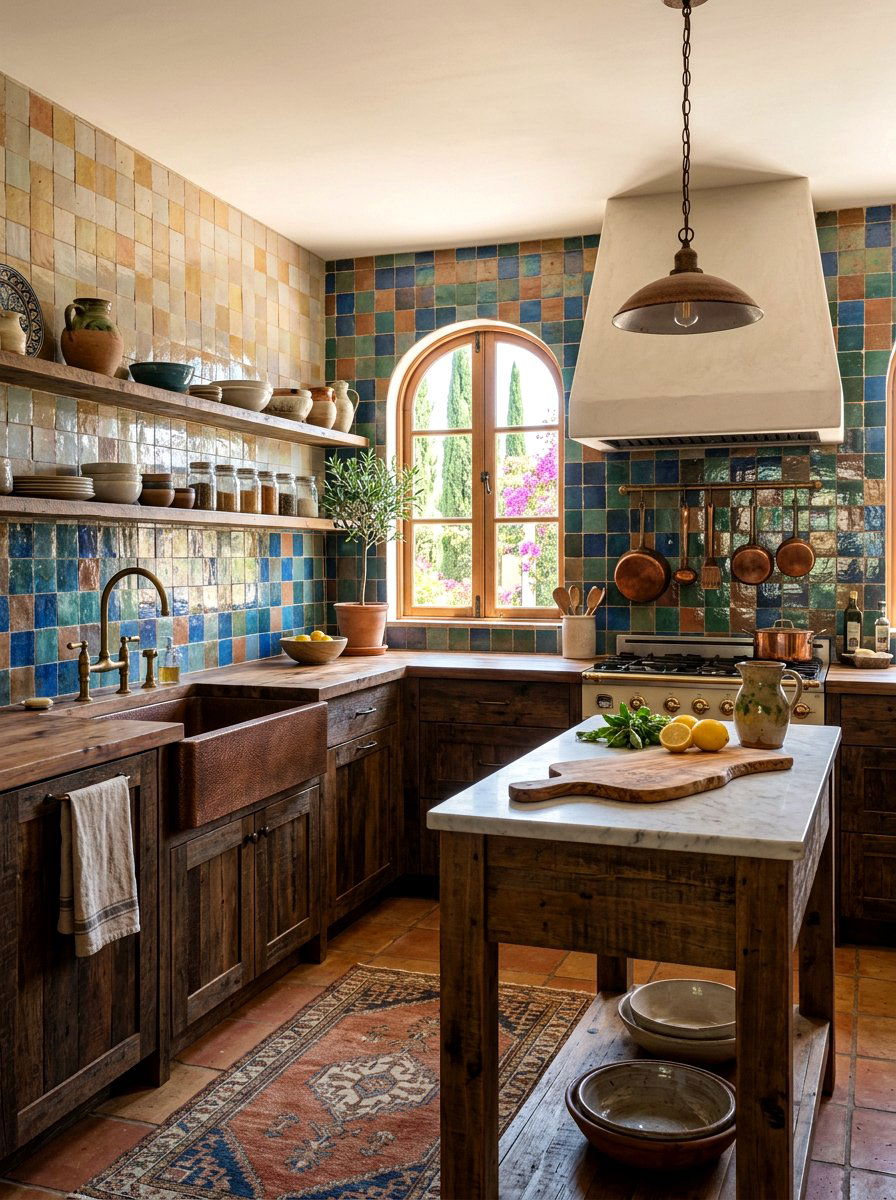
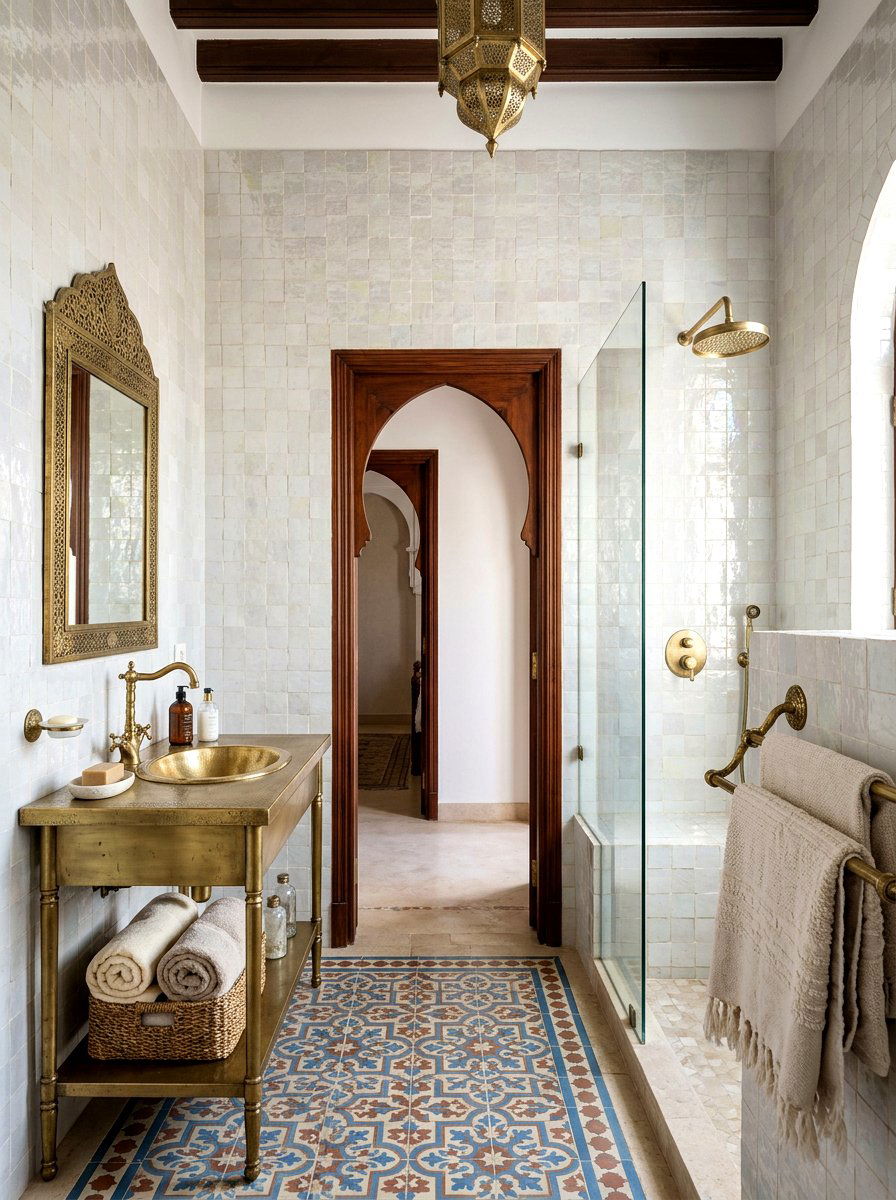
A zellige tile kitchen introduces a handcrafted, iridescent quality that modern machine-made tiles simply cannot match. These Moroccan clay tiles are known for their uneven surfaces and slight color variations, which create a beautiful, shimmering effect when they catch the light. Using them for a backsplash adds a layer of sophisticated texture and "perfect imperfection" that is ideal for cottage designs. They look stunning in neutral whites, earthy terracottas, or soft greens. Because each tile is unique, the finished look is rich in character and history. It’s a high-end choice that brings a tactile, global-inspired artisanal feel to your heart of the home.
21. Reclaimed Wood Kitchen
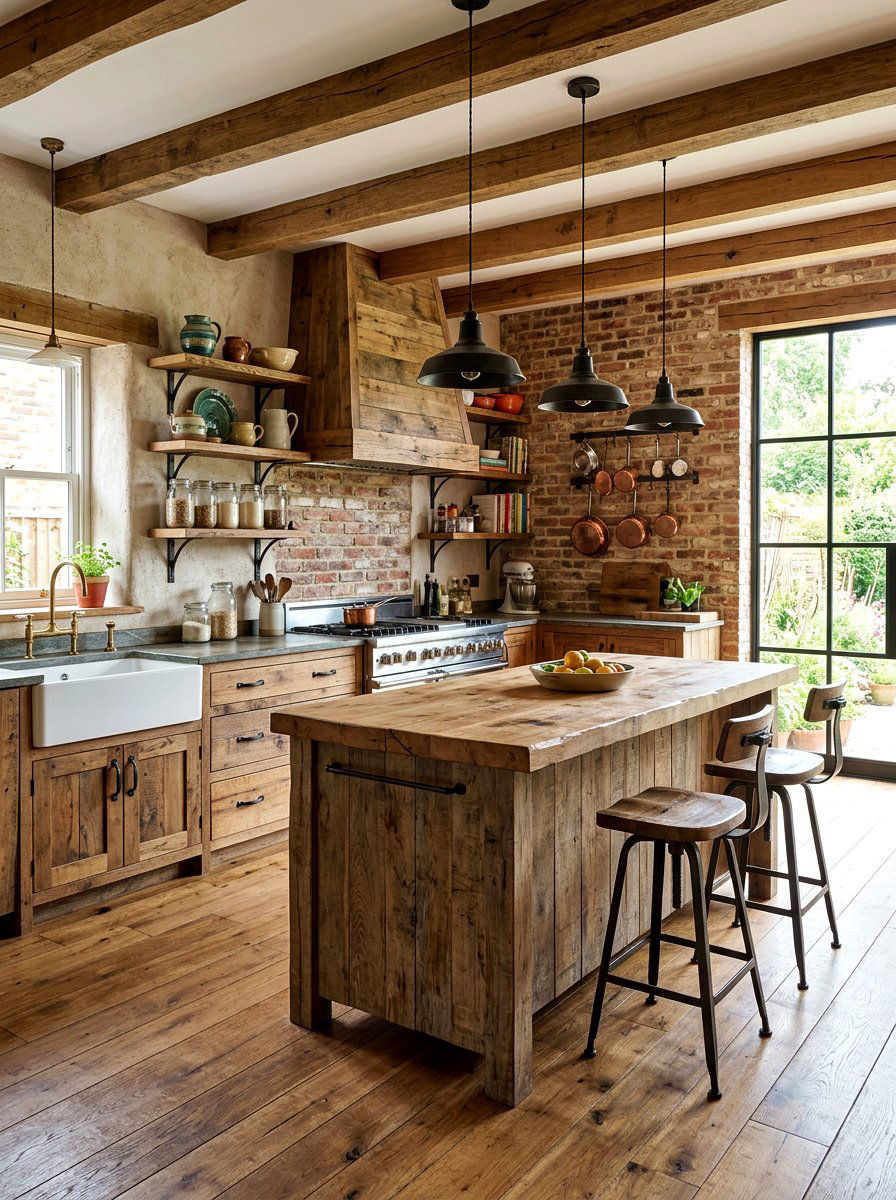
A reclaimed wood kitchen focuses on sustainability and soul by using materials with a previous life. Incorporate old barn wood for a kitchen island or thick, salvaged planks for floating shelves. The weathered silver-grey or deep brown tones of the wood provide a beautiful contrast to smooth, painted surfaces. This approach adds an instant sense of age and stability to a newer home, making the kitchen feel like it has been there forever. It celebrates the scars, knots, and history of the timber. Using reclaimed wood is an eco-friendly choice that ensures your kitchen is one-of-a-kind and filled with warmth.
22. Pendant Light Kitchen
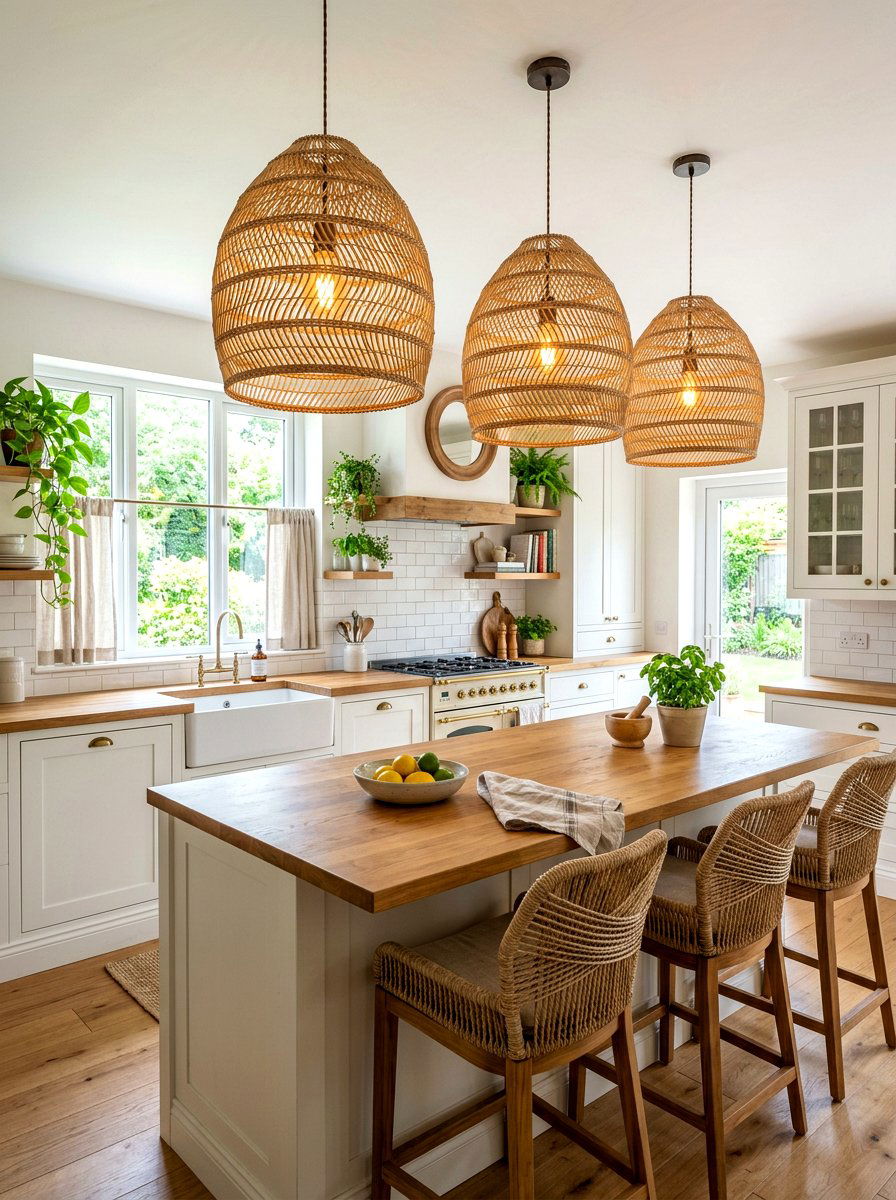
Designing a pendant light kitchen involves choosing fixtures that act as jewelry for the room. In a cottage setting, look for oversized glass globes, woven rattan shades, or vintage-style metal lanterns. Hanging these lights over an island or a sink provides essential task lighting while creating a strong visual focal point. Choose warm-toned bulbs to enhance the cozy atmosphere during the evening hours. The style of the pendant can define the room 's direction, whether it' s more industrial-chic or romantic and soft. Correct lighting is the final layer that ties all the design elements together, making the entire space feel polished and complete.
23. Skirted Sink Kitchen
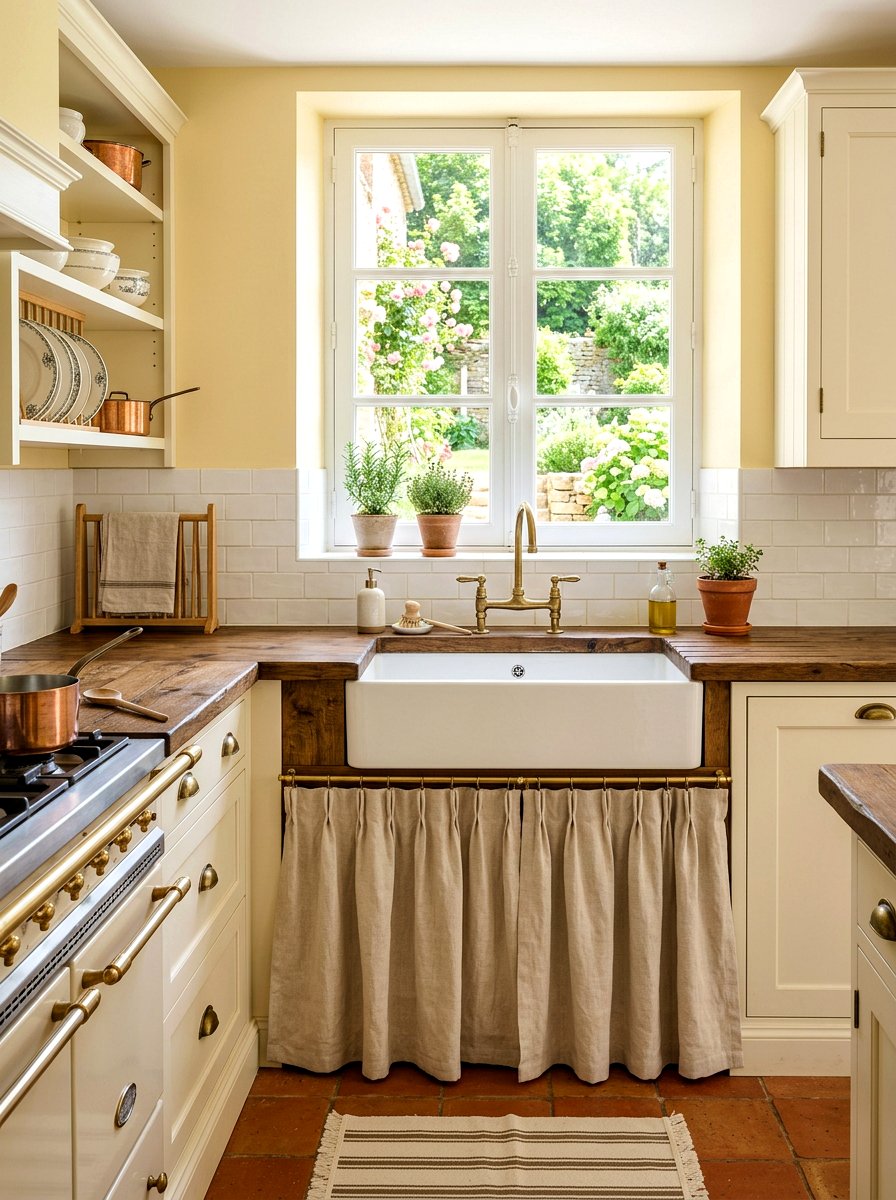
The skirted sink kitchen is a nostalgic design choice that replaces a cabinet door under the sink with a pleated fabric curtain. This adds a soft, textile element to a room that is usually dominated by hard surfaces. Use fabrics like linen, ticking stripes, or small floral prints to coordinate with your kitchen's color palette. A sink skirt is not only charming but also practical, as it allows for easy access to cleaning supplies or trash bins. It provides a breezy, informal vibe that is very popular in traditional English and French country homes. This simple addition makes the kitchen feel softer and more lived-in.
24. Dutch Door Kitchen
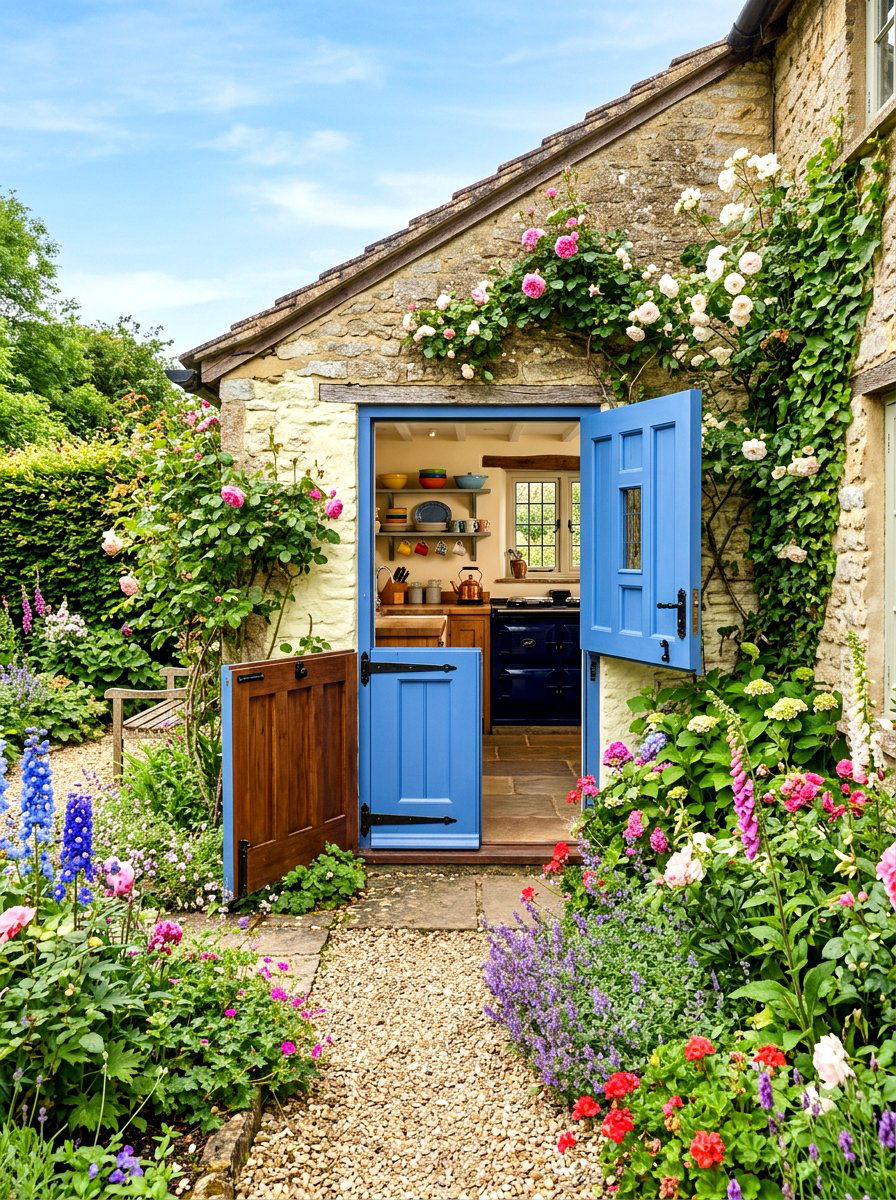
A Dutch door kitchen features a split door that allows you to open the top half for fresh air while keeping the bottom half closed. It’s a charming architectural detail that connects your indoor space directly to the garden or backyard. This feature is perfect for keeping pets or children inside while still enjoying the breeze and the view. Painting the door a cheerful color like sunshine yellow or sky blue makes it an inviting entrance. The heavy hardware and traditional construction of a Dutch door add a sense of security and history. It’s a unique, functional element that screams classic cottage style.
25. Checkerboard Floor Kitchen
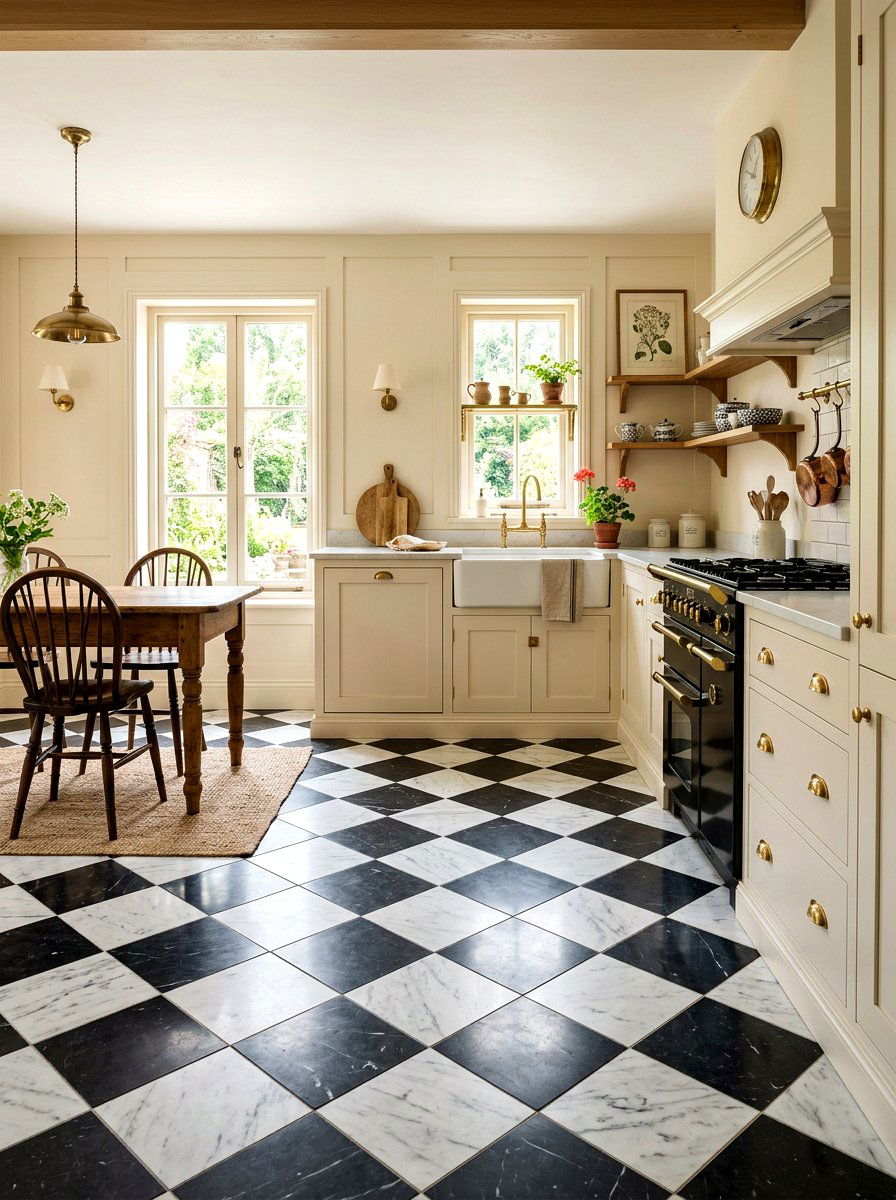
A checkerboard floor kitchen brings a bold, classic pattern that adds a sense of rhythm and energy to the space. Whether you use black and white marble or soft grey and cream ceramic tiles, this floor becomes the star of the room. It’s a timeless design that works beautifully with both simple shaker cabinets and more ornate vintage furniture. The diagonal or straight layout can change the perception of the room's size, often making it feel wider and more grand. This floor choice is easy to clean and hides wear well. It provides a graphic foundation that anchors the rest of your cottage decor.
26. Cream Colored Kitchen
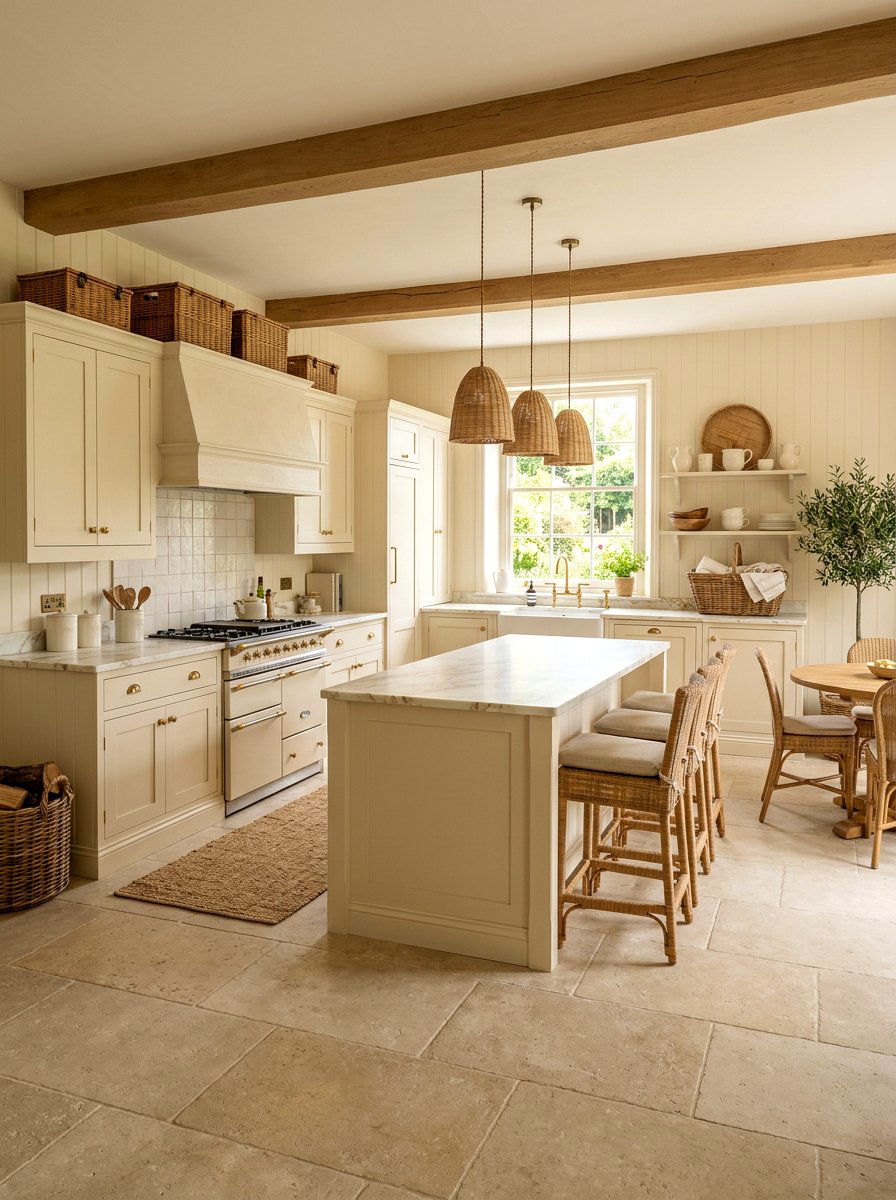
Choosing a cream colored kitchen is the perfect middle ground between stark white and heavy wood. Cream provides a soft, buttery glow that feels exceptionally inviting and warm, even on cloudy days. This palette works beautifully with natural materials like stone, wood, and wicker. You can layer different shades of ivory, beige, and cream to create a sophisticated, monochromatic look that is rich in texture. It’s a very forgiving color that hides small imperfections better than bright white. A cream kitchen feels established and calm, providing a peaceful backdrop for all your culinary adventures and morning rituals in the home.
27. Ceiling Rack Kitchen
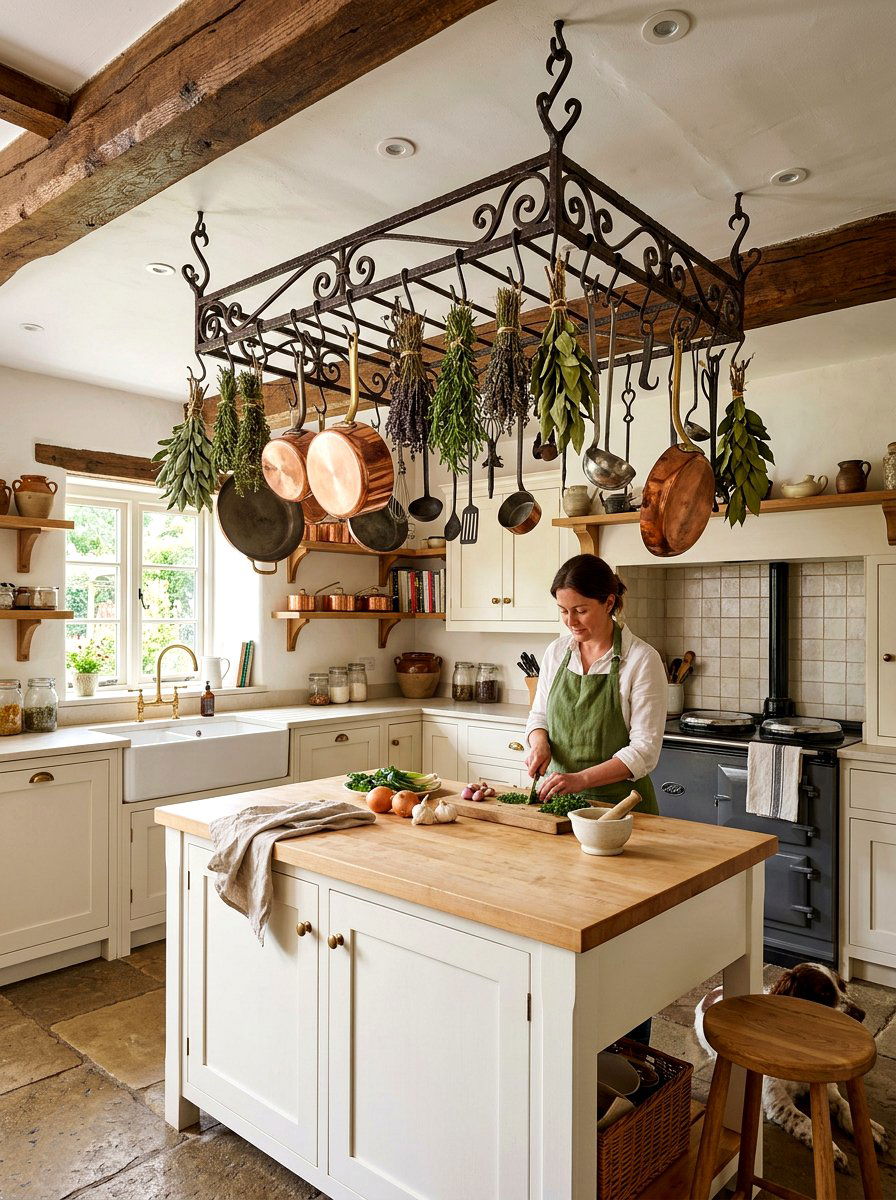
A ceiling rack kitchen maximizes vertical space by hanging everyday items like pots, dried herbs, or baskets from a sturdy overhead frame. This frees up cabinet space while keeping your most-used tools within reach. A wrought iron or heavy wood rack adds a touch of rustic industrial charm to the center of the room. It creates a busy, functional atmosphere that suggests a love for traditional cooking and home organization. Filling the rack with copper or cast iron pieces adds a beautiful layer of metallic texture. It’s a smart storage solution that also serves as an impressive architectural feature in high-ceilinged spaces.
28. Arched Doorway Kitchen
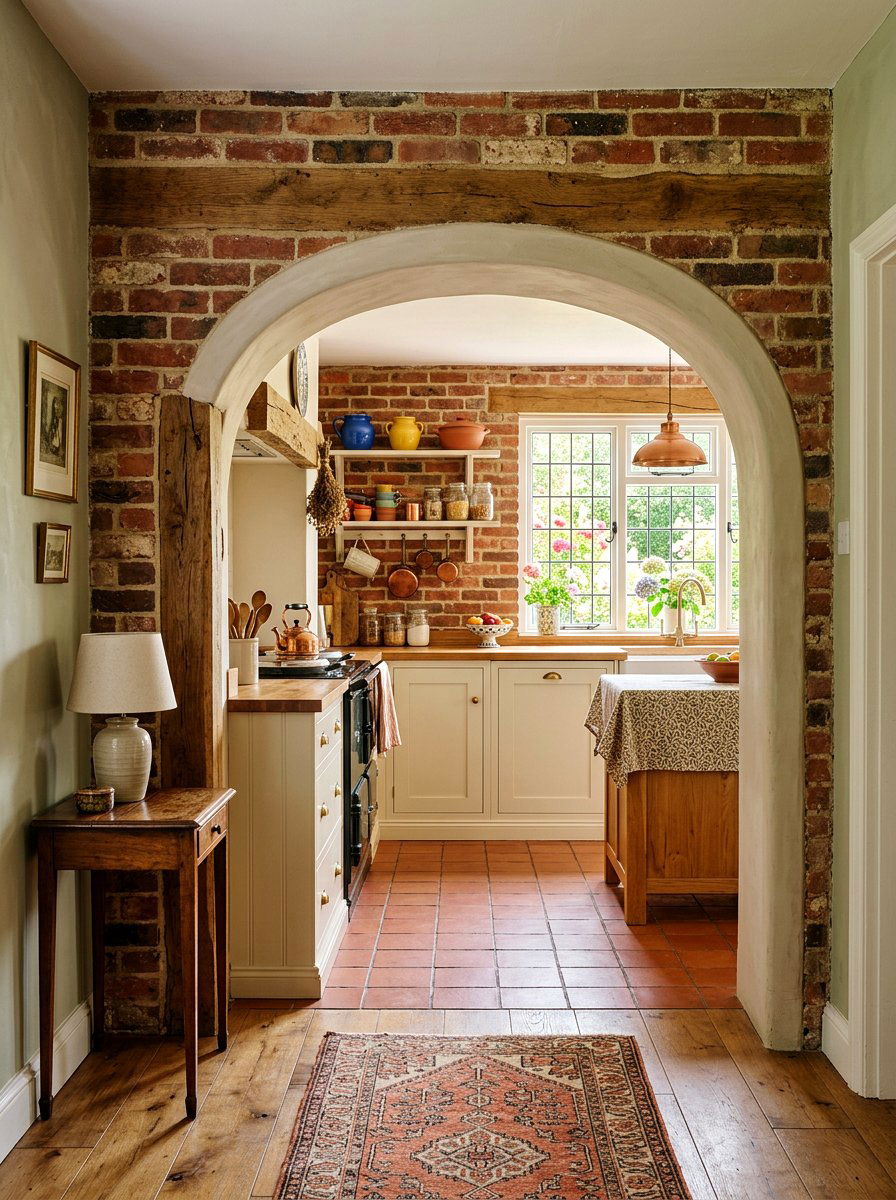
Incorporating an arched doorway kitchen design adds a sense of grace and architectural elegance to your home's layout. Instead of standard rectangular openings, an arch softens the transitions between the kitchen and the dining or living areas. This feature mimics the look of old stone cottages and provides a subtle, historic feel. You can emphasize the arch by using exposed brick, decorative molding, or a simple contrasting paint color. It creates a beautiful frame for the view into the kitchen, making the space feel more curated and intentional. This soft curve brings a sense of flow and timeless beauty to the entire home.
29. Window Herb Garden Kitchen
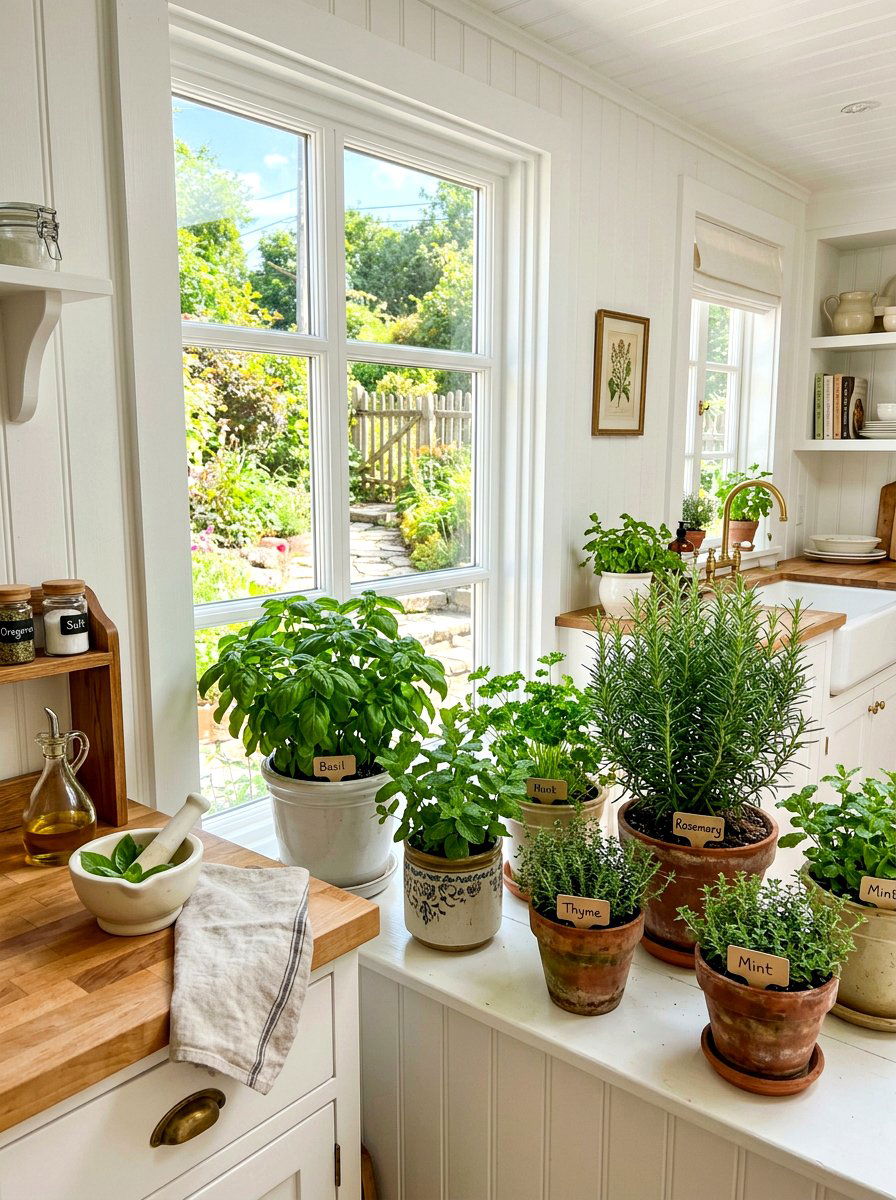
A window herb garden kitchen brings life and flavor directly into your workspace. Use a wide windowsill or a dedicated shelf in front of a sunny window to grow pots of rosemary, basil, and thyme. This greenery adds a vibrant, living element to the room while providing fresh ingredients for your meals. Decorative terracotta or ceramic pots can match your cottage decor perfectly. Seeing the herbs grow every day adds a sense of connection to nature and the seasons. It’s a simple, functional way to decorate that also improves the air quality and scent of your kitchen, making it very cozy.
30. Wood Island Kitchen
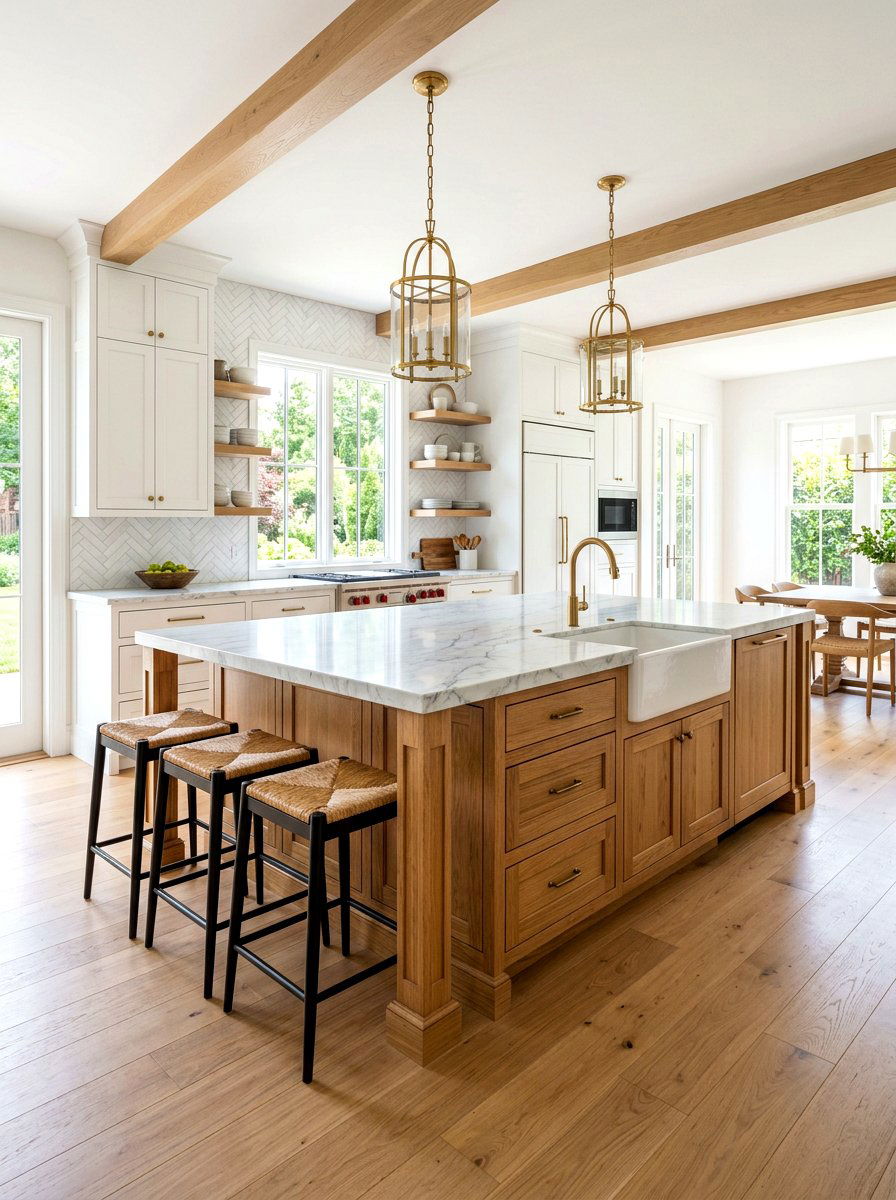
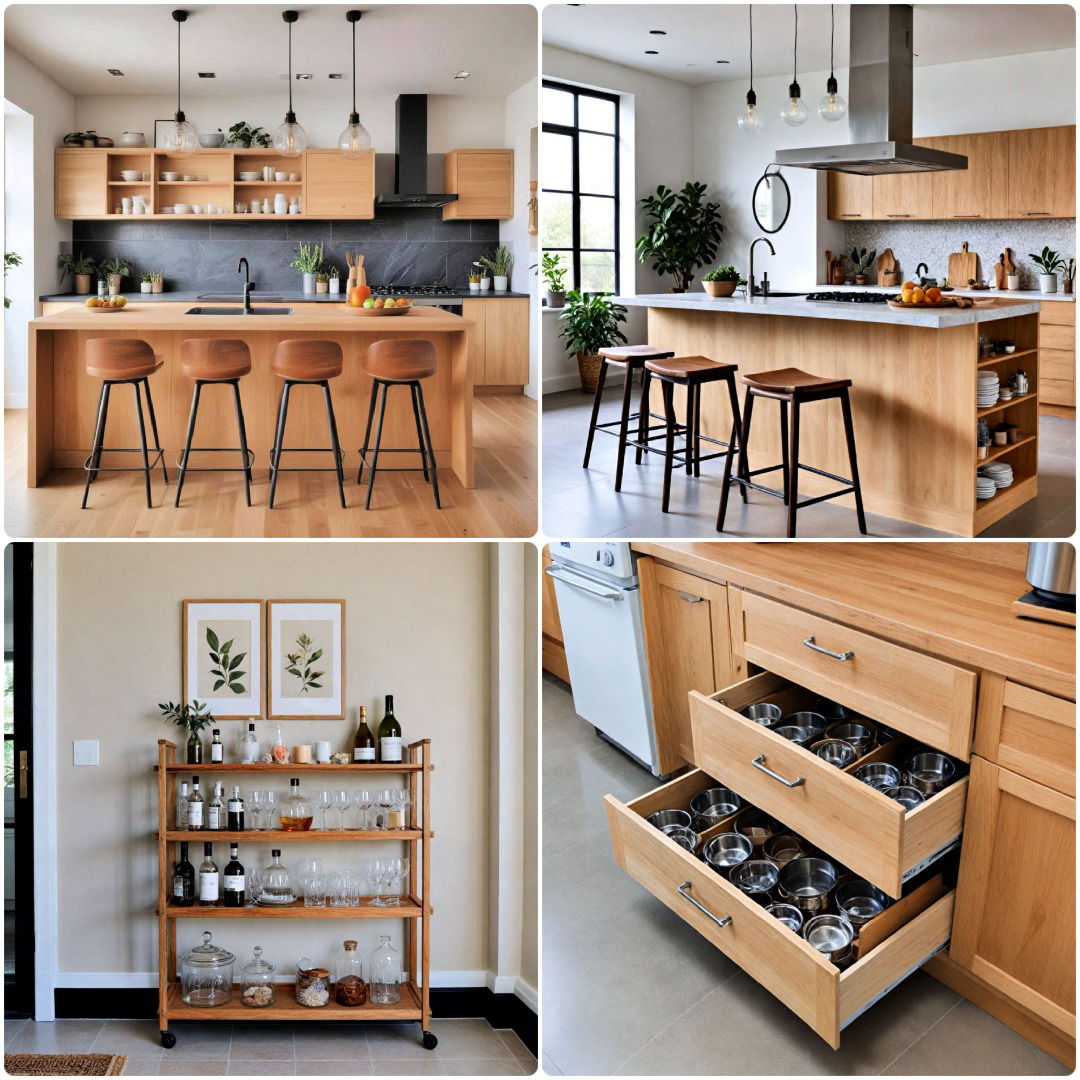
A wood island kitchen serves as a warm, hardworking centerpiece for the entire room. Instead of matching the island to your wall cabinets, choose a natural wood finish like oak or walnut to create a furniture-style look. This contrast adds depth and a "collected over time" feel to the design. A large island provides extra prep space, a place for guests to sit, and much-needed storage drawers. You can top it with marble for a high-end look or more wood for a rustic feel. A freestanding wooden island anchors the space, making the kitchen feel more like a communal living area than just a utility room.
Conclusion:
Cottage kitchen ideas focus on creating a sanctuary that is as functional as it is beautiful. By blending natural materials, soft color palettes, and vintage-inspired details, you can transform any space into a welcoming heart for your home. These designs celebrate the beauty of slow living and the joy of a space that truly reflects your personality. Whether you choose a bold checkerboard floor or a simple window herb garden, the goal is to foster a sense of warmth and comfort. Every element should invite you to linger, cook, and share stories. Embrace these timeless ideas to create a kitchen that feels like a permanent, cozy hug.

Related posts: