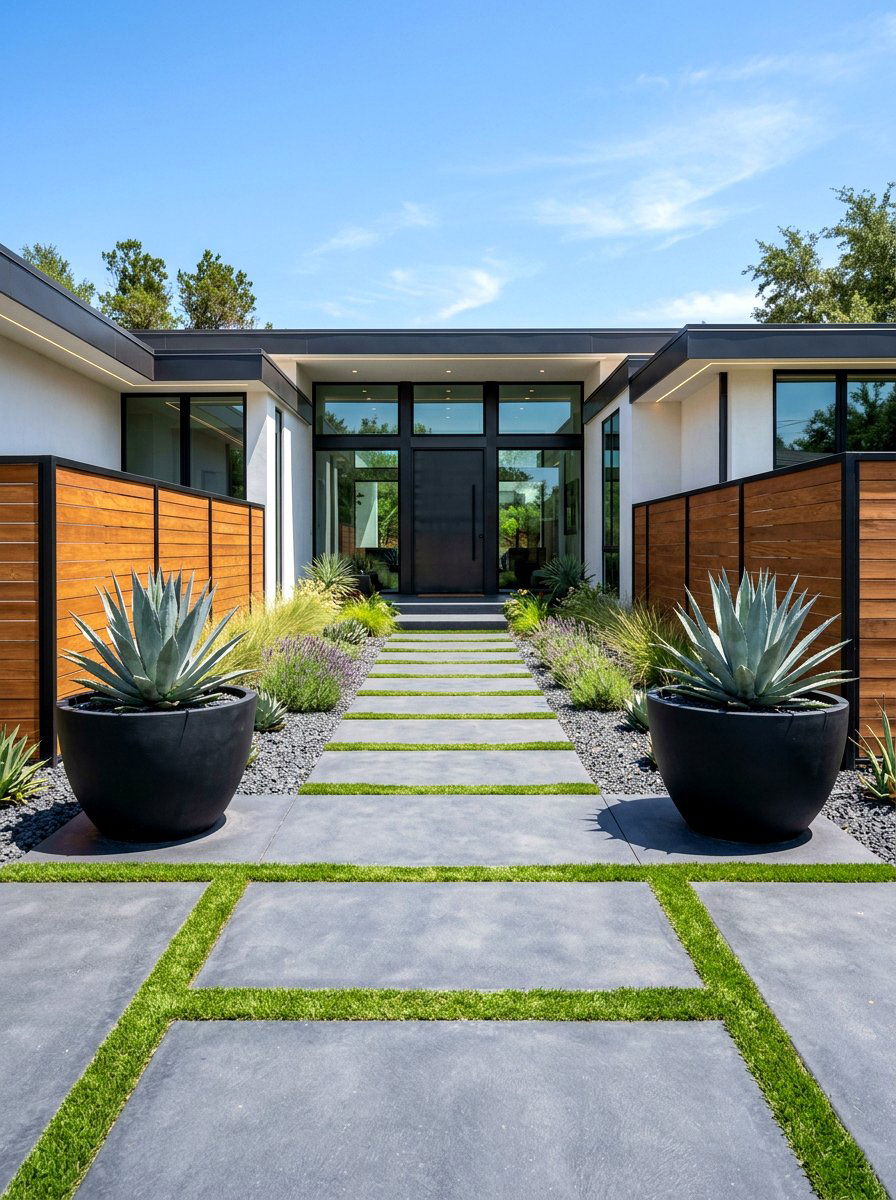
Creating a formal front garden is one of the most effective ways to elevate your home's curb appeal and establish a sense of timeless elegance. This design style relies on the principles of symmetry, balance, and structured greenery to create an organized and welcoming entrance. By using manicured hedges, geometric paths, and classical focal points, you can transform a plain yard into a sophisticated landscape that feels both intentional and prestigious. Whether you have a sprawling estate or a small urban lot, the order of a formal layout provides a calming visual rhythm. This guide explores thirty professional ways to implement these classical elements into your own outdoor space effectively.
1. Symmetrical boxwood hedge
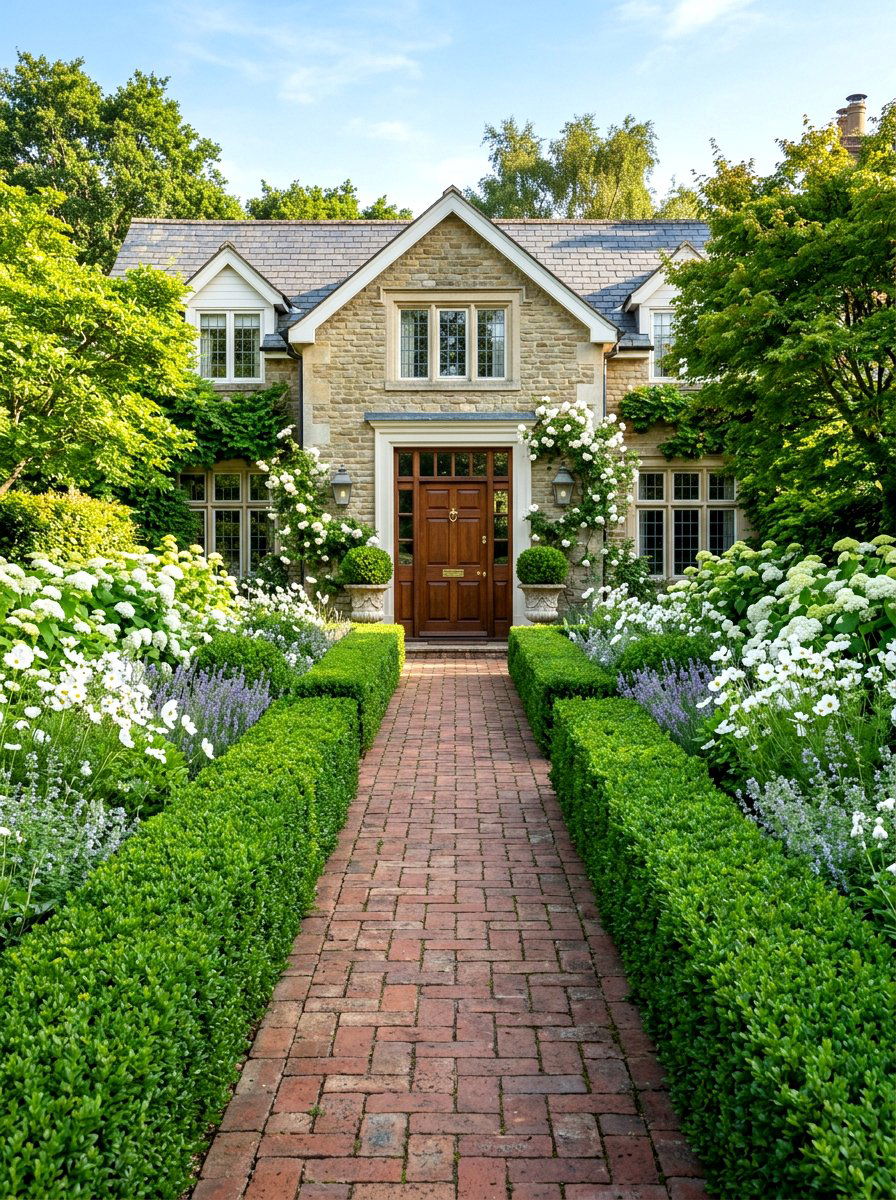
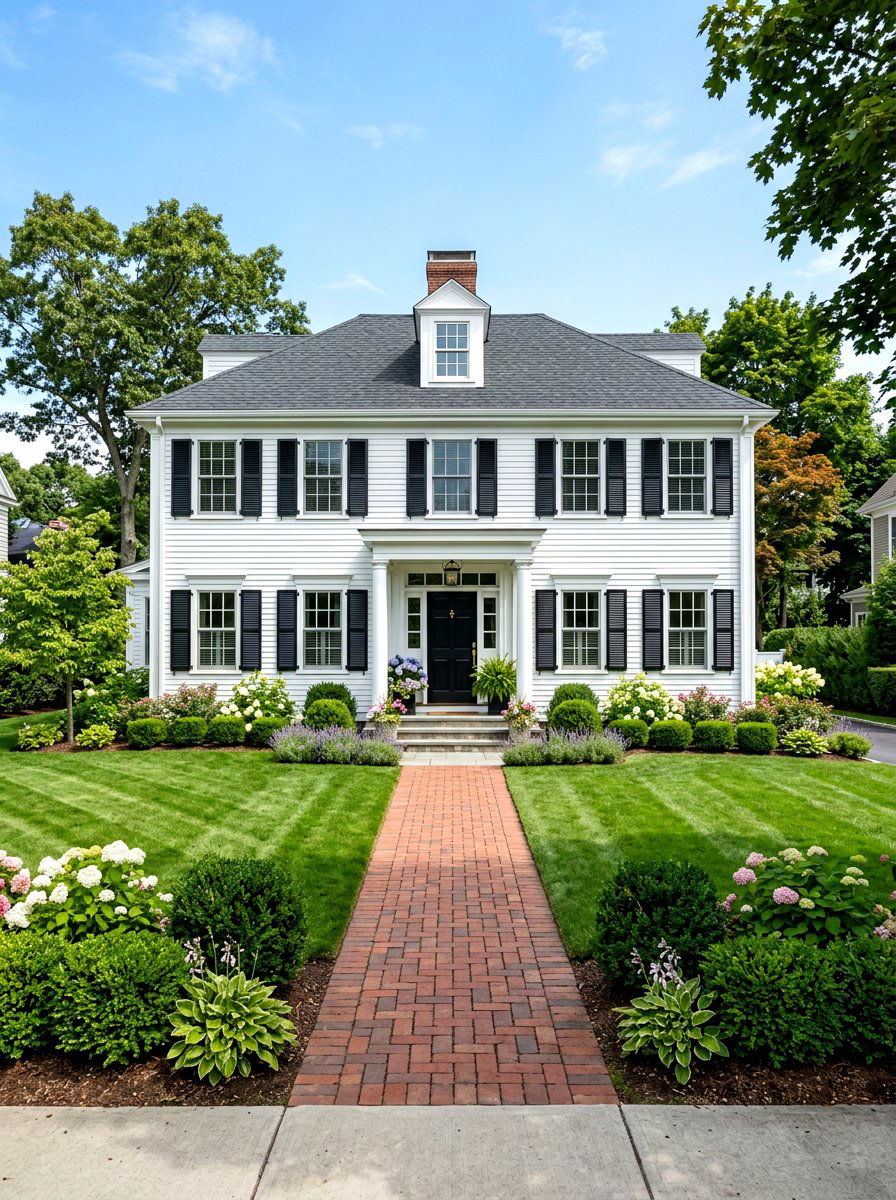
A symmetrical boxwood hedge serves as the essential foundation for any formal front garden by providing year-round structure and clean lines. These evergreen shrubs are highly versatile and can be sheared into precise geometric shapes to frame walkways or boundary lines perfectly. When you plant them in mirror-image layouts on either side of a path, they create an immediate sense of order and balance that guides the eye toward the front door. Low-growing varieties like Winter Gem or Suffruticosa are excellent choices because they maintain their compact form with minimal pruning. This green framework acts as a living architectural element that anchors the entire landscape design beautifully.
2. Central stone fountain
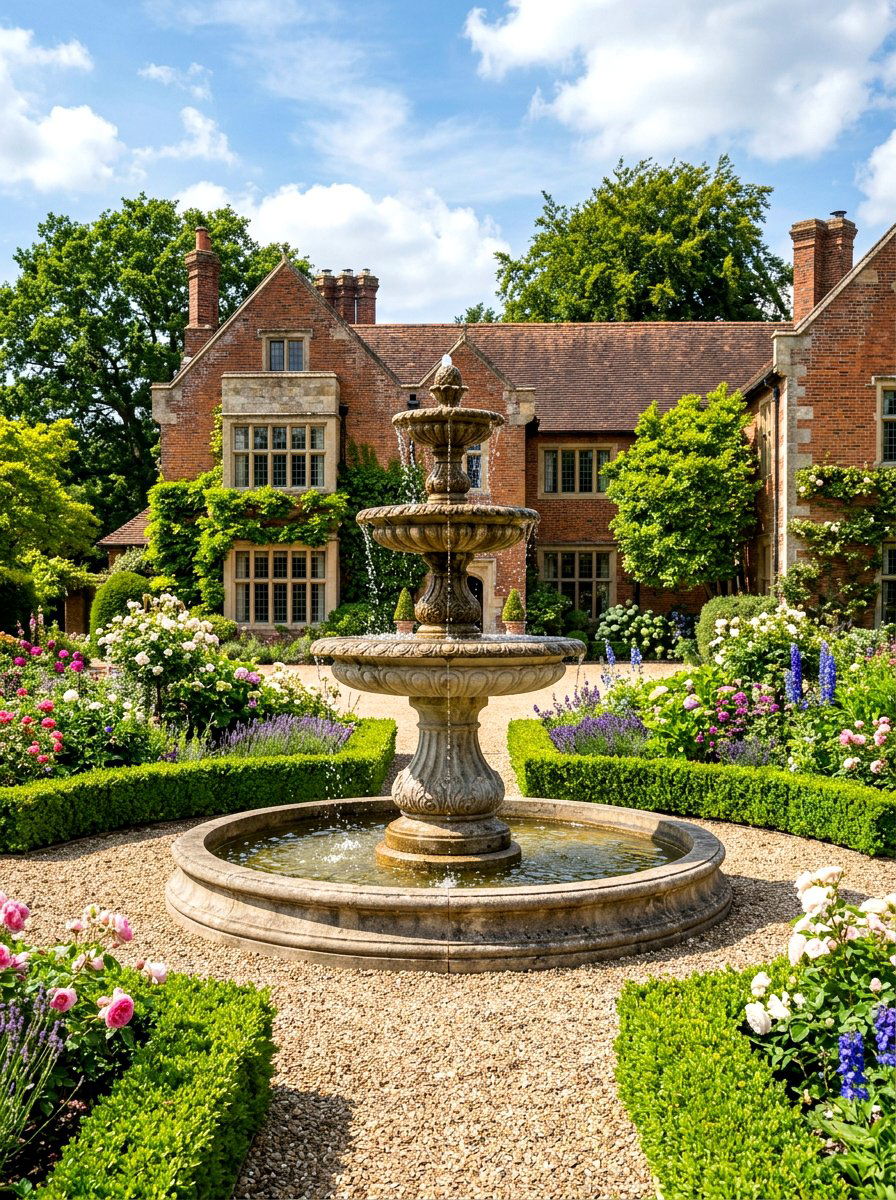
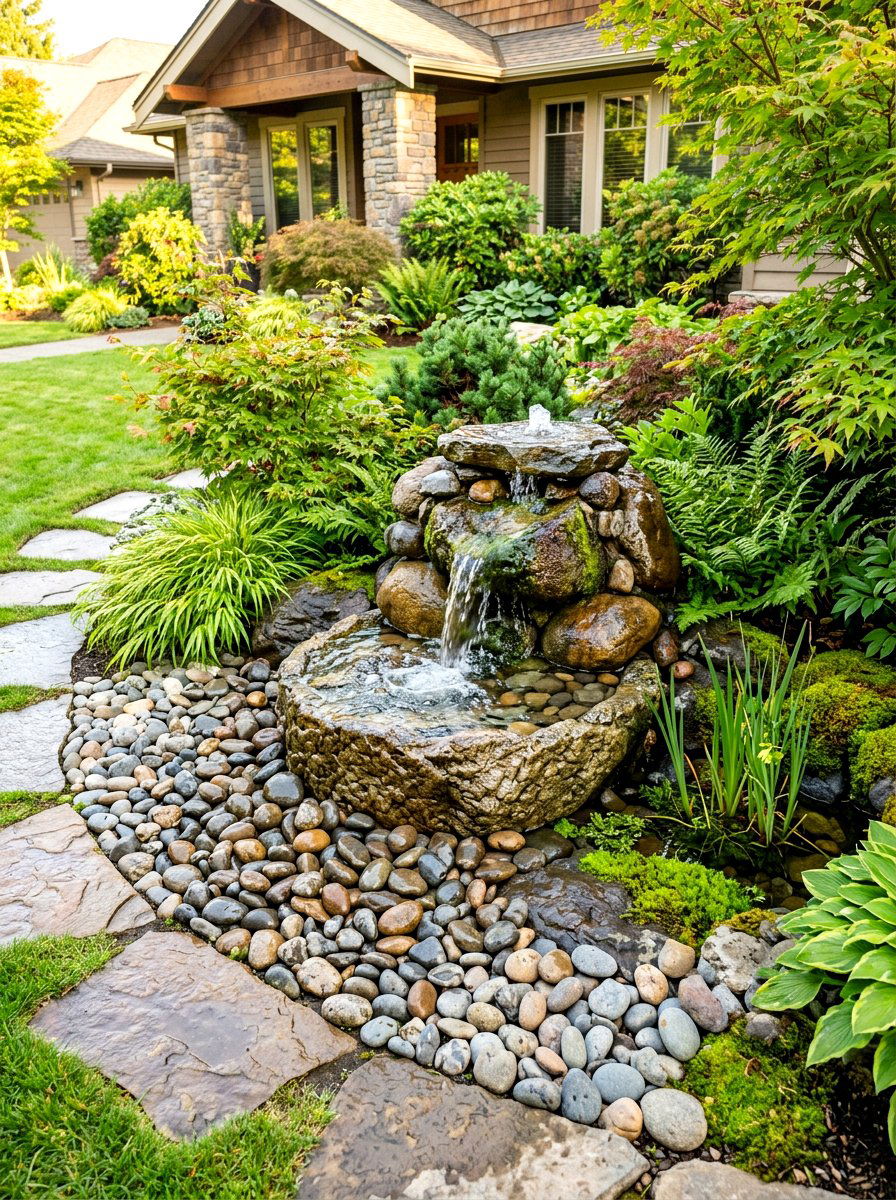
Placing a central stone fountain in the middle of a circular driveway or courtyard creates a captivating focal point that radiates luxury. The gentle sound of flowing water adds a multi-sensory layer to the garden, making the entrance feel peaceful and secluded from the street. A tiered cast stone design works best for traditional homes, while a simple stone basin fits modern formal aesthetics. To enhance the impact, you should surround the base with a ring of low-toned pebbles or a small circular hedge. This arrangement reinforces the radial symmetry of the space and provides a clear anchor for the surrounding garden beds and paths.
3. White rose border
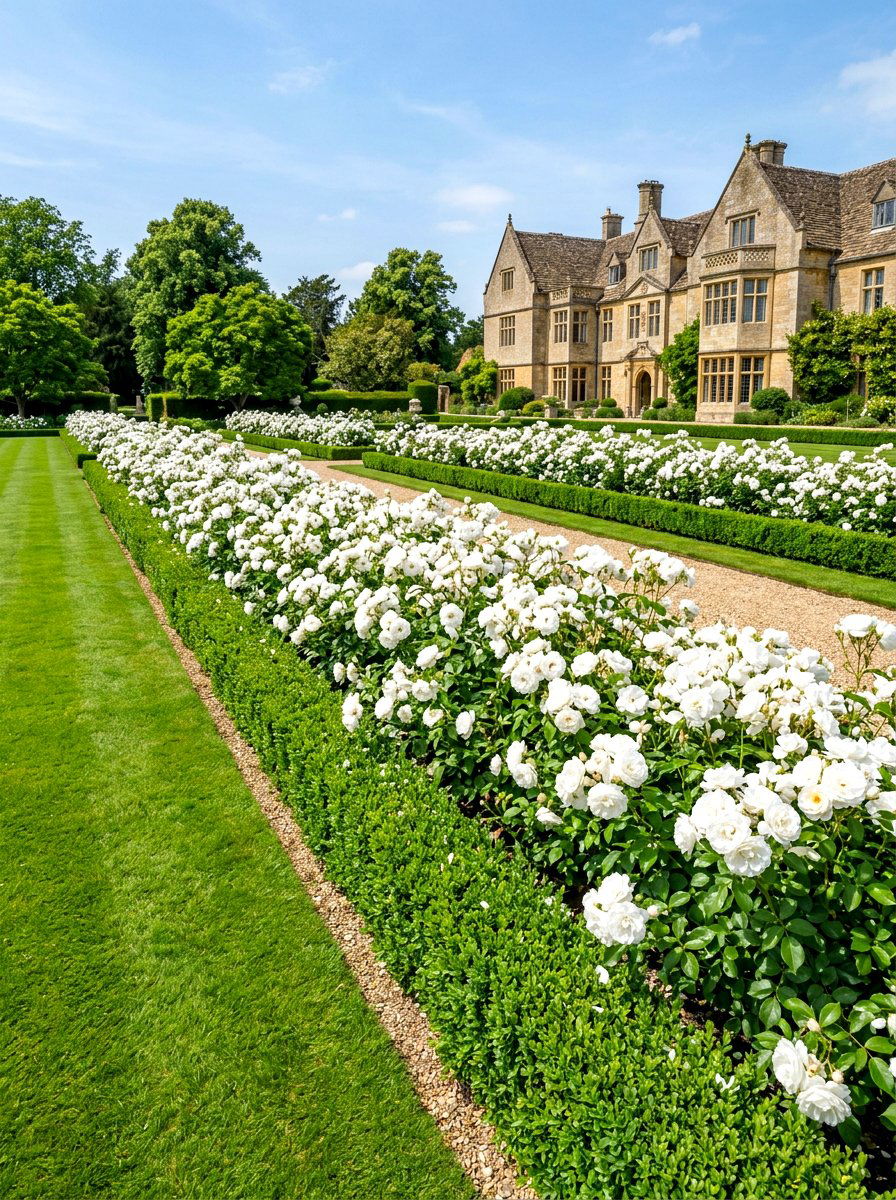
Integrating a white rose border adds a layer of soft, romantic elegance while maintaining the disciplined look of a formal garden scheme. White blooms against dark green foliage create a high-contrast palette that looks crisp and clean from a distance. You should choose floribunda or shrub roses that offer repeat blooming to ensure the garden remains vibrant throughout the growing season. Planting them in straight, parallel rows behind a low boxwood hedge keeps the flowers contained and structured. This combination of rigid evergreen lines and delicate blossoms provides a perfect balance between architectural hardness and natural softness that defines the classic estate style.
4. Topiary ball walkway
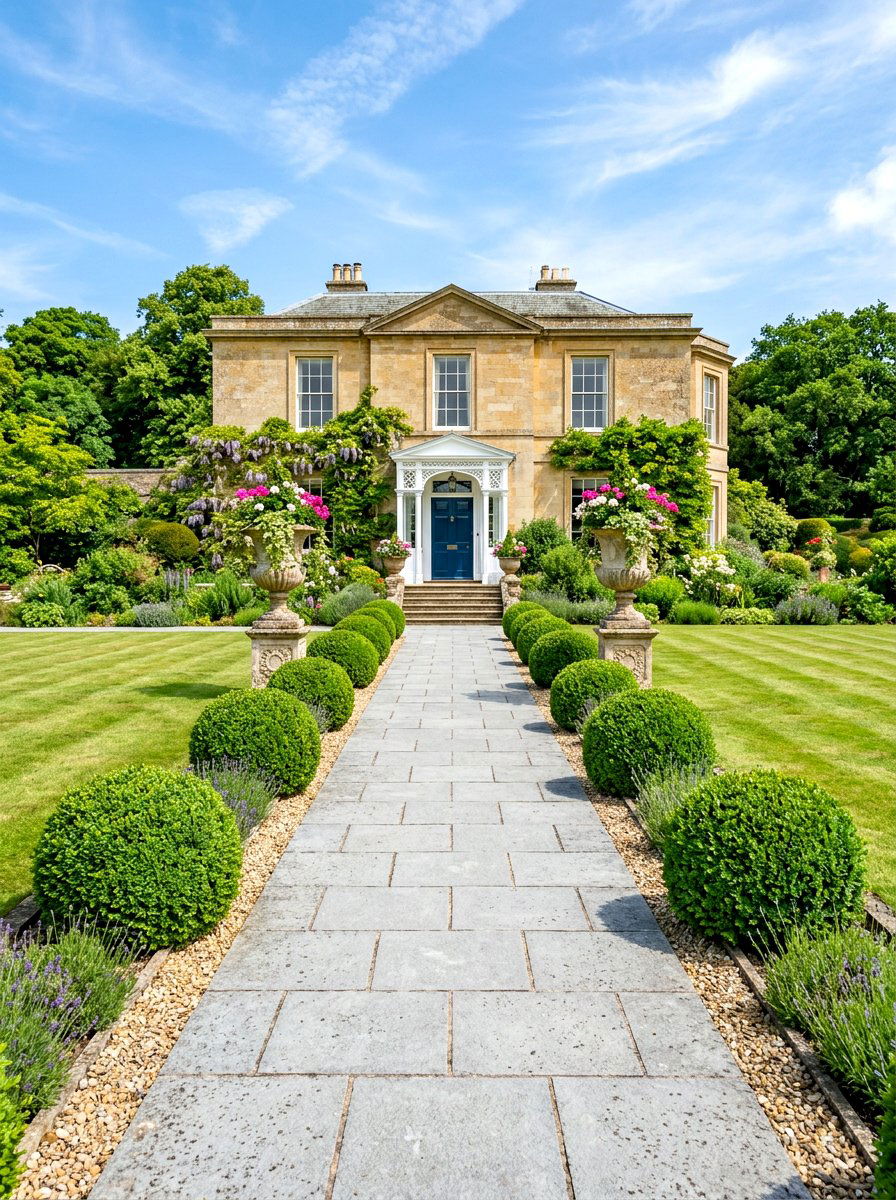
A topiary ball walkway uses repeated spherical shapes to create a rhythmic and sculptural journey from the sidewalk to your front entrance. By spacing identical evergreen globes at regular intervals along a straight path, you establish a strong visual cadence that feels very intentional. Boxwood, yew, or holly are the best species for this technique because their small leaves allow for very tight, smooth shearing. For added height and drama, you can place these topiary balls inside elevated stone urns or keep them planted directly in the soil for a more grounded look. This approach turns a simple walkway into a sophisticated outdoor gallery.
5. Gravel path edging
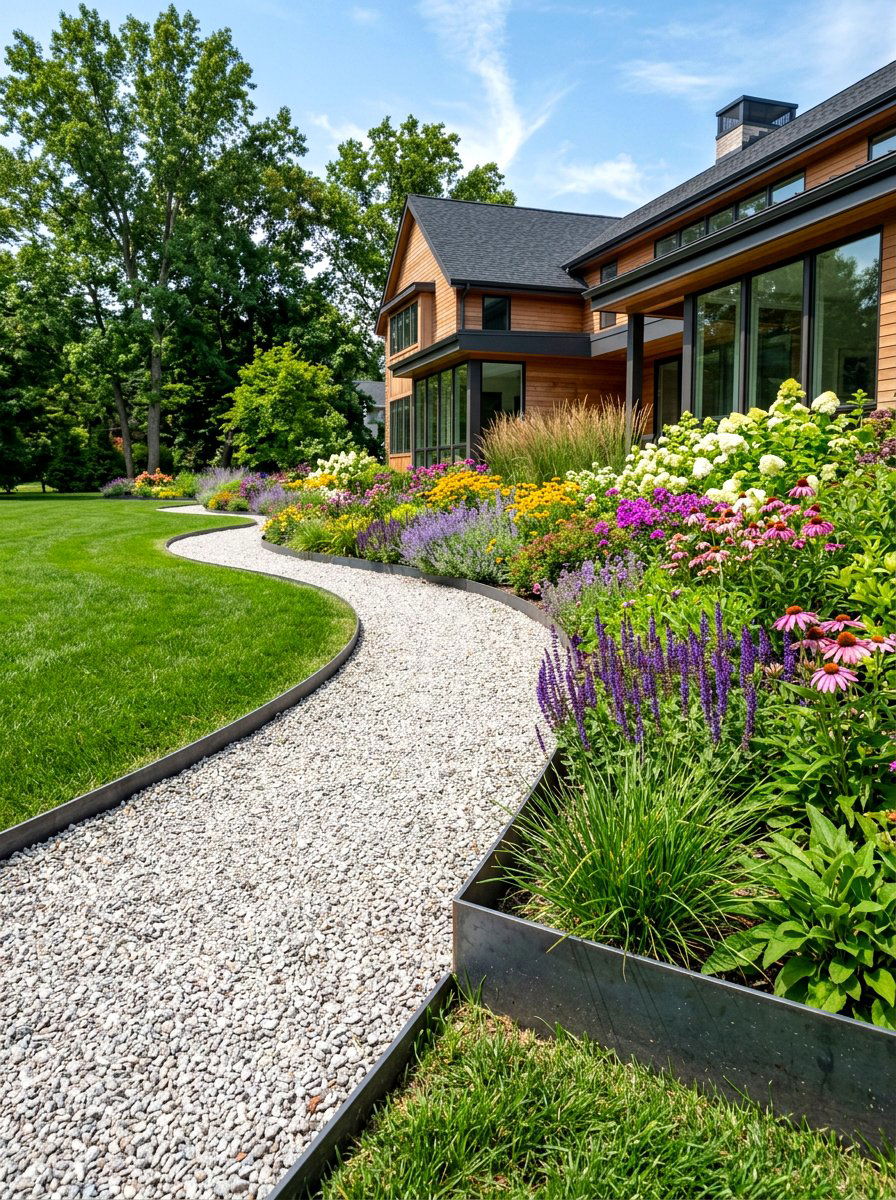
Gravel path edging is a practical and stylish way to define transitions between walking surfaces and planting beds in a formal yard. Using a sharp metal or stone border ensures the loose gravel stays in place, preserving the crisp geometry of your garden layout. Light-colored stones like limestone or crushed granite provide a bright contrast to green lawns and deep-toned mulch, making the garden feel more expansive. The audible crunch of gravel underfoot provides a classic estate feel that signals a transition into a private, curated space. It is a low-maintenance solution that offers excellent drainage while looking polished and high-end year-round.
6. Wrought iron gate
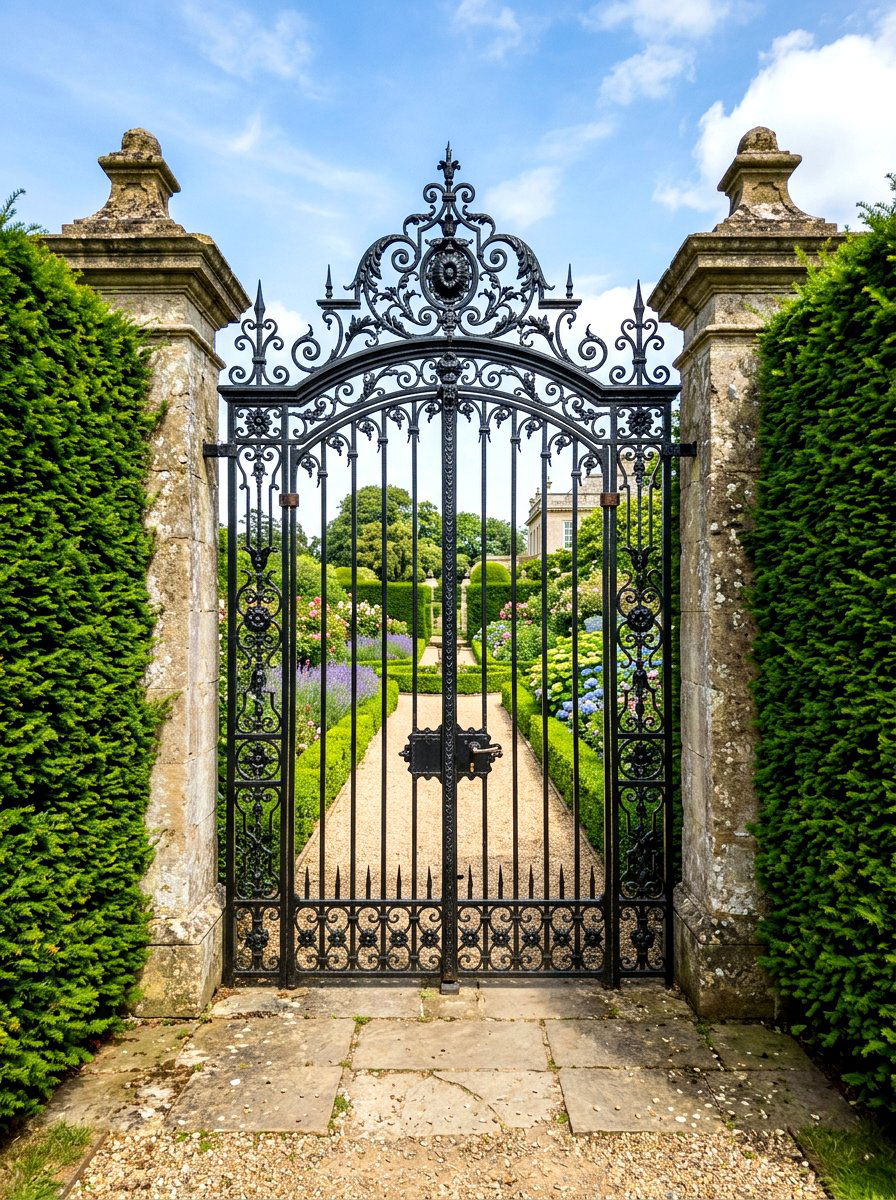
Installing a wrought iron gate at the entrance of your property establishes an immediate sense of security and traditional prestige. The intricate patterns of the ironwork can reflect the architectural details of your home, creating a cohesive look between the house and the garden. In a formal setting, the gate is usually flanked by tall stone pillars or high evergreen hedges to create a clear boundary. This vertical element provides a framed view of the garden beyond, inviting guests into a structured world of symmetry. Choosing a classic black finish ensures the gate remains a timeless feature that never goes out of style.
7. Pleached hornbeam trees
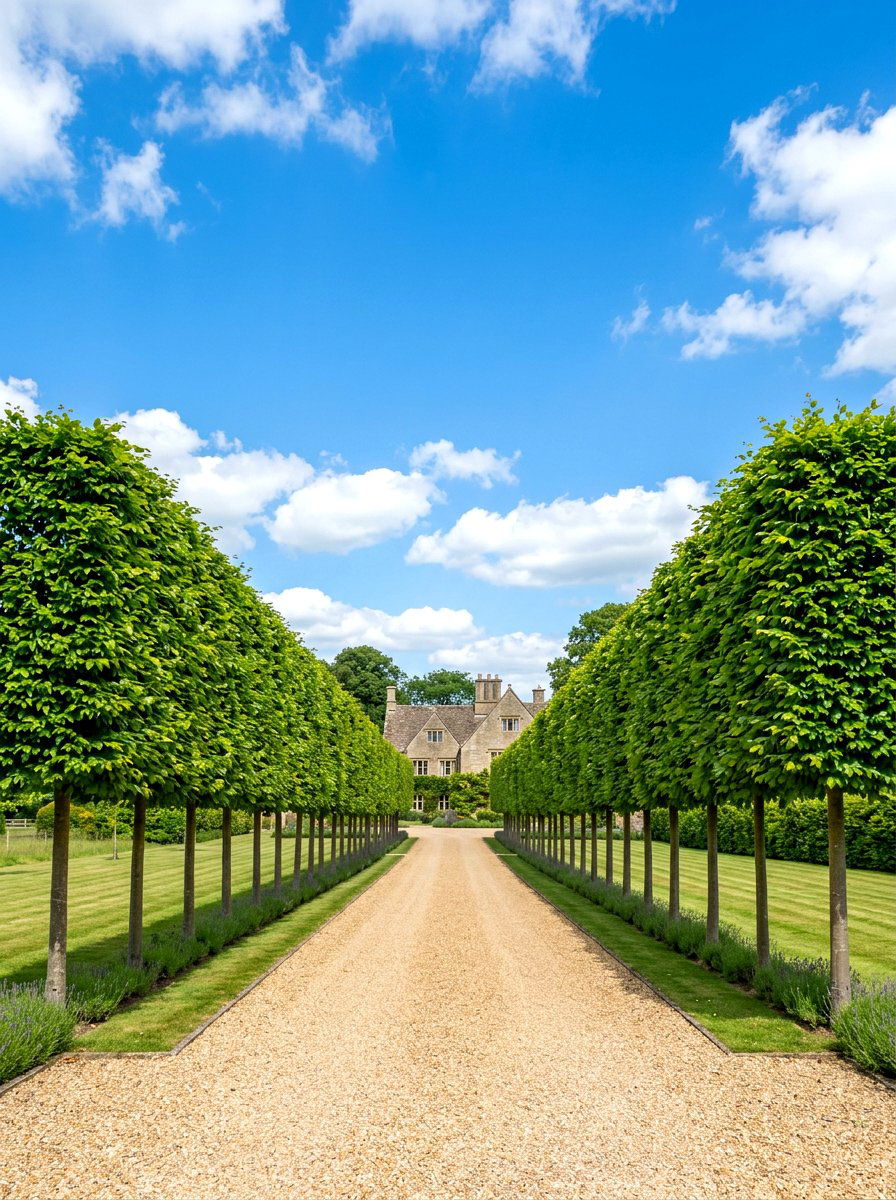
Pleached hornbeam trees act as "hedges on stilts, " providing high-level screening and architectural height without taking up significant ground space in the garden. By training the branches along a flat framework, you create a solid wall of greenery that hovers above the eye level. This technique is perfect for lining long driveways or creating privacy from neighbors while maintaining a thin footprint. The straight trunks create a colonnade effect that looks incredibly formal and grand, reminiscent of classical European palace grounds. In autumn, the leaves turn a beautiful golden yellow, providing a structured splash of color before falling to reveal the architectural branches.
8. English lavender border
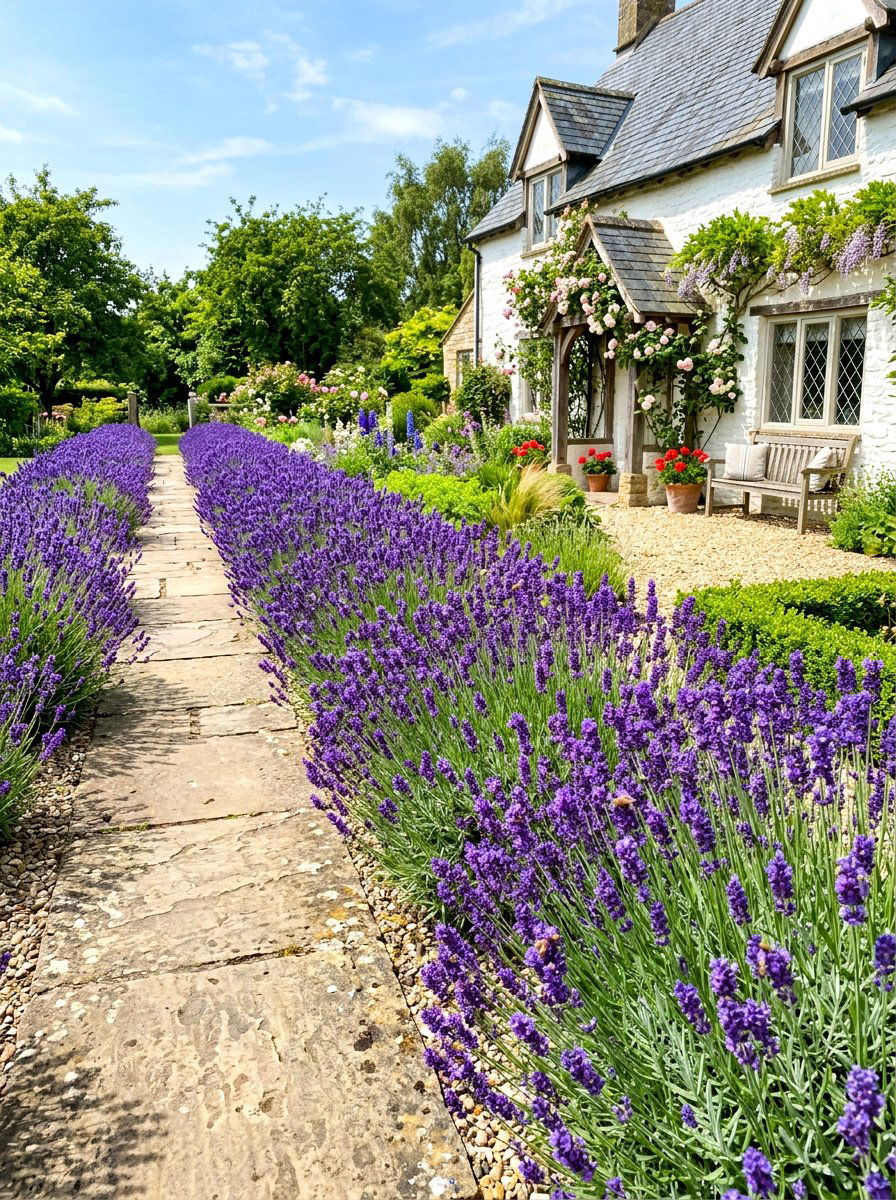
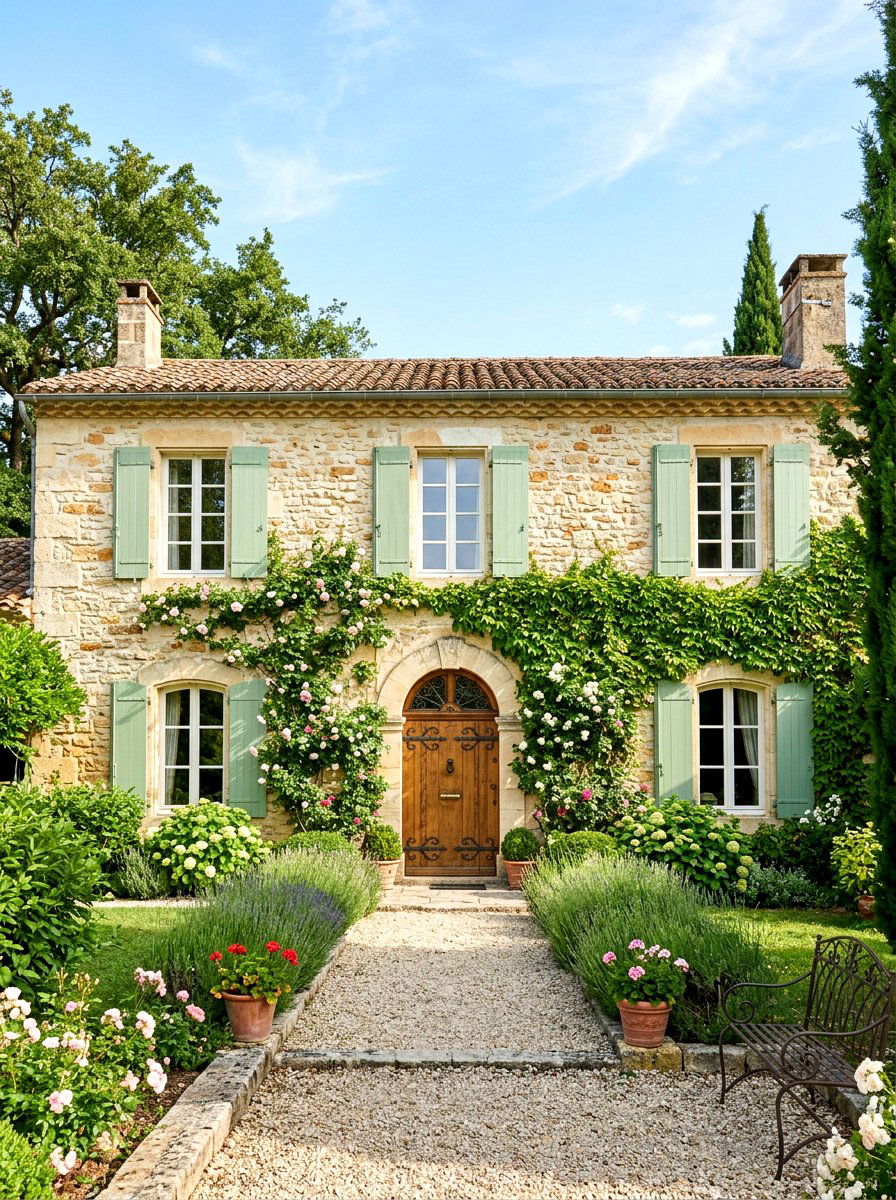
An English lavender border offers a sensory delight, combining a structured purple haze with a fragrance that welcomes everyone who approaches the house. While lavender can look wild, planting it in long, straight rows or tight clusters keeps it within the formal design language. The silvery-grey foliage provides a beautiful contrast to the deep greens of traditional boxwood hedges, adding depth to the color palette. Lavender thrives in sunny spots and requires well-drained soil, making it a hardy choice for front-facing gardens. Trimming the plants after they bloom helps maintain their rounded, tidy shape, preventing the woody legginess that occurs with age.
9. Bluestone entry walk
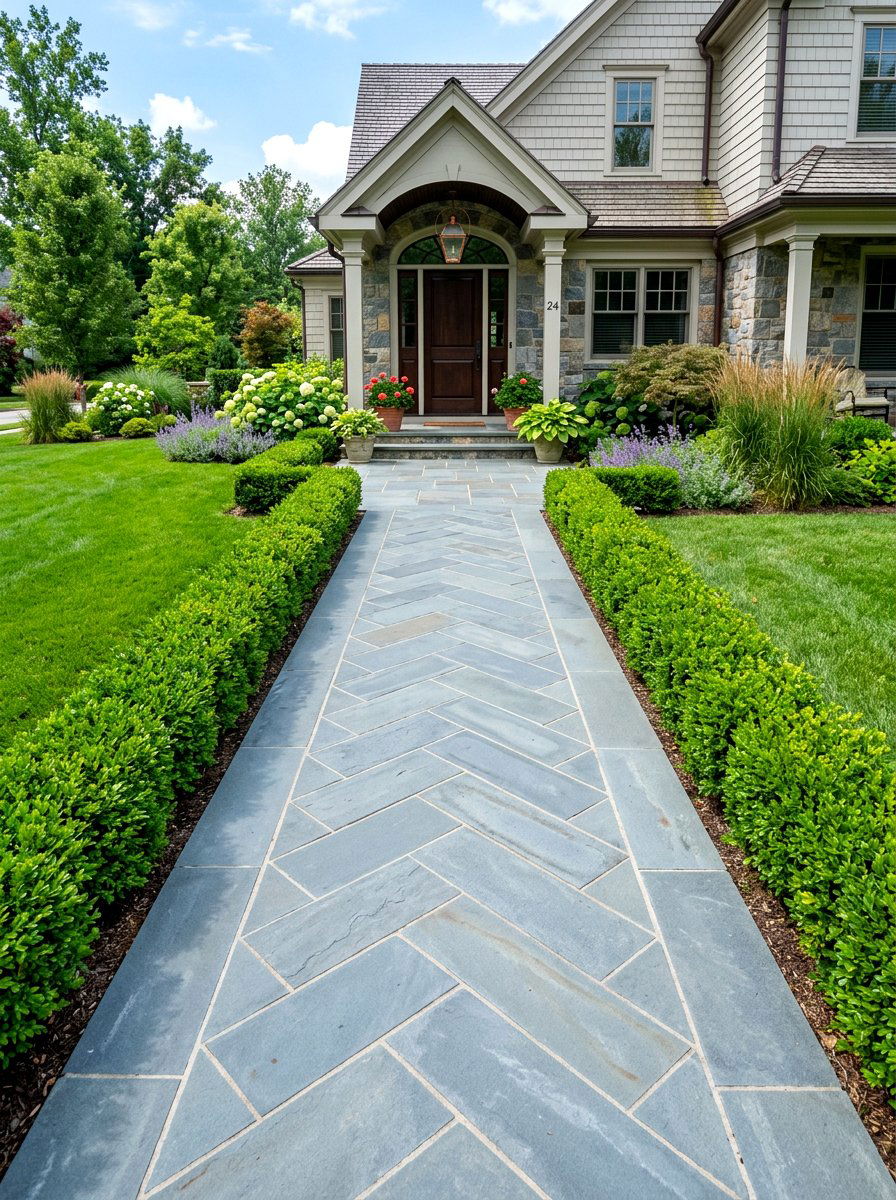
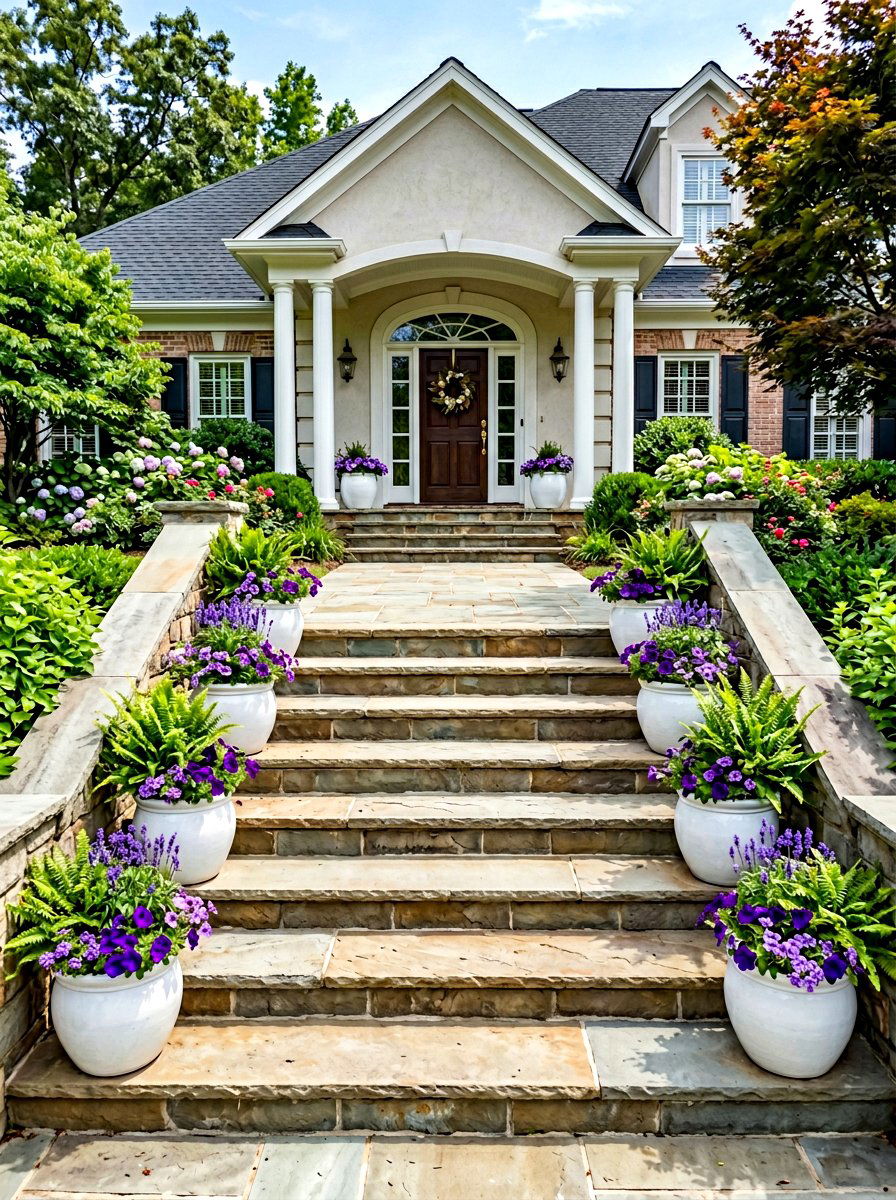
A bluestone entry walk provides a solid and sophisticated foundation for your front garden, offering a natural stone look with refined edges. Large, rectangular pavers laid in a running bond or herringbone pattern emphasize the linear nature of formal design. The cool blue and grey tones of the stone complement a wide variety of home exterior colors, from traditional brick to modern stucco. When you surround the stone with a perfectly manicured lawn or a low-clipped border, the path becomes a clear, inviting vector toward the front door. This material is durable, slip-resistant, and ages gracefully, becoming a permanent part of the home’s character.
10. Large garden urn
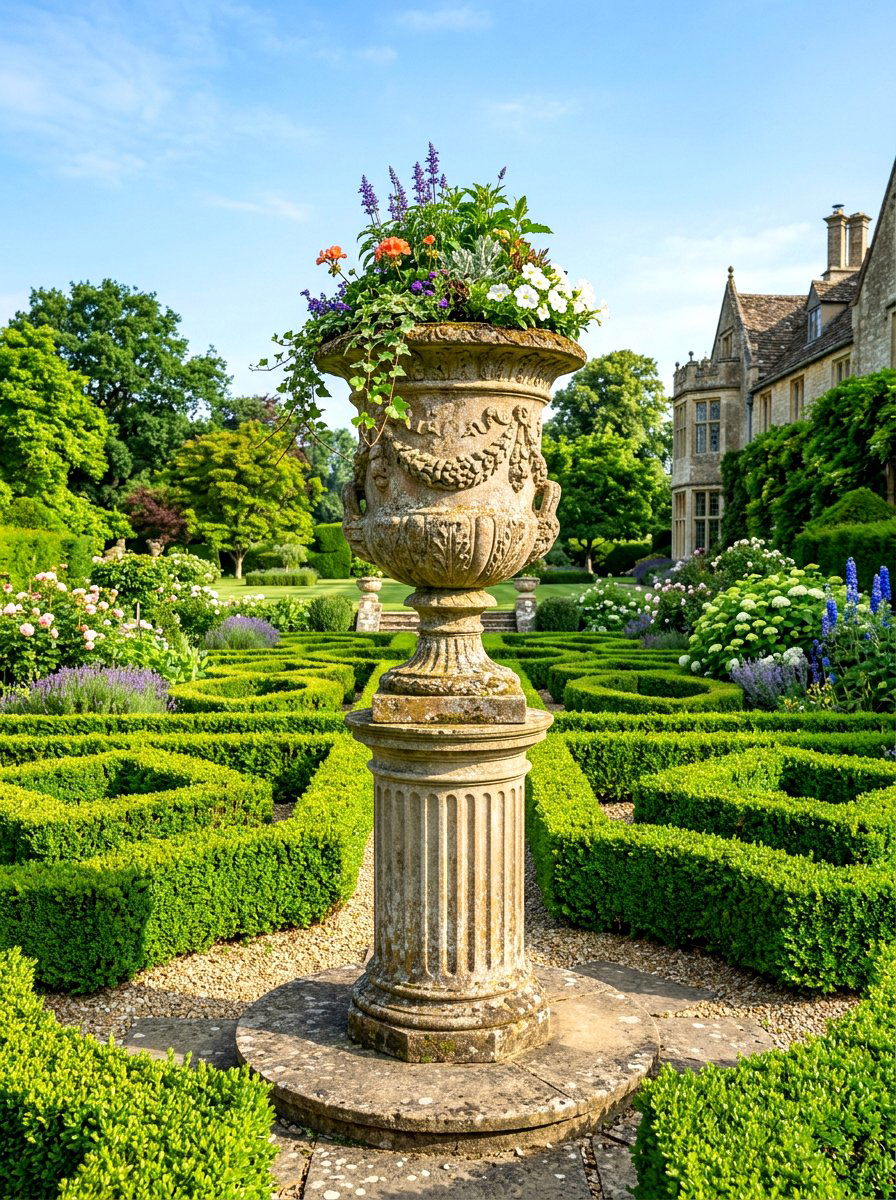
Positioning a large garden urn as a standalone feature or in a matching pair creates a grand sense of scale and history. These classical vessels can be left empty to act as statuesque ornaments or filled with seasonal plantings to add a burst of color. In a formal garden, placing an urn at the end of a vista or at a path junction draws the eye and anchors the space. Materials like terracotta, cast iron, or weathered stone add different textures and tones to the landscape. Using an oversized urn in a small space can actually make the garden feel larger by providing a significant focal point.
11. Crisp lawn edge
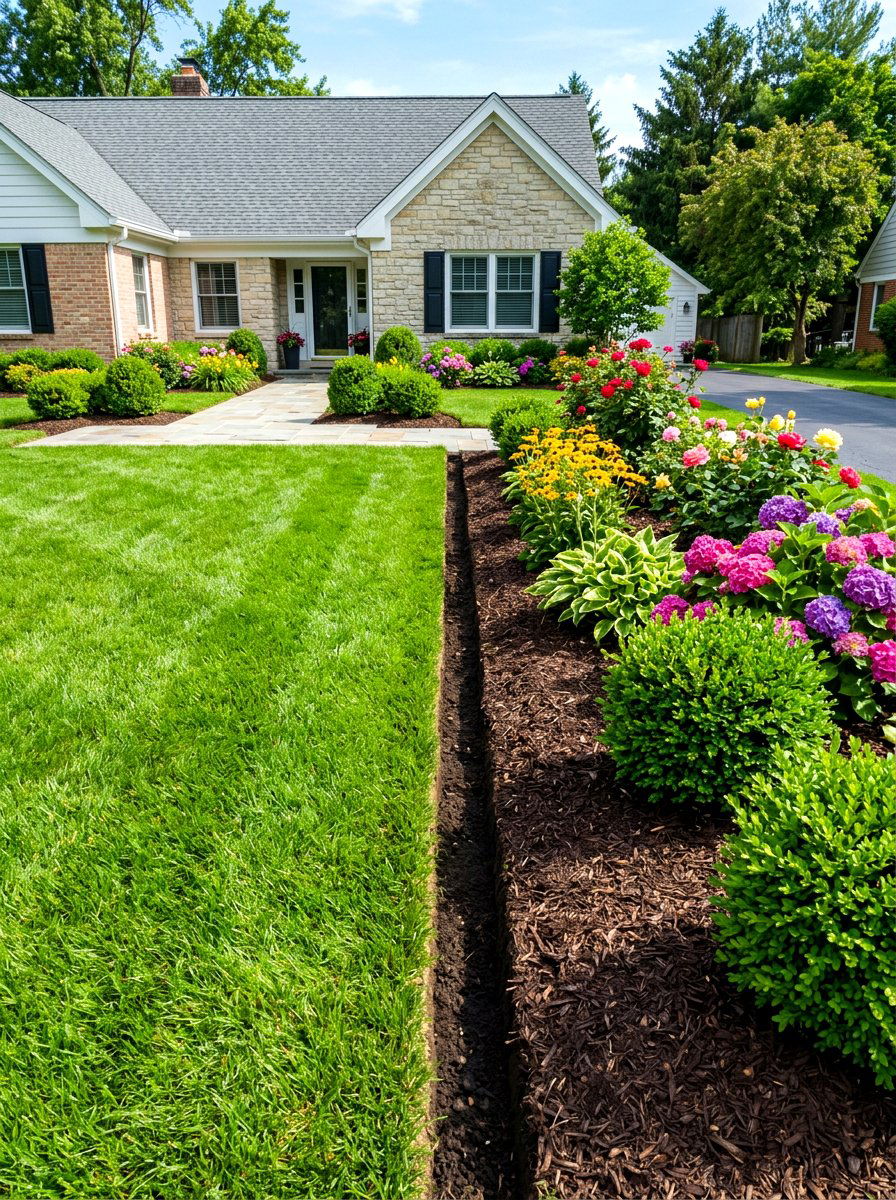
Maintaining a crisp lawn edge is perhaps the most cost-effective way to achieve a professional, formal look in any front garden. The sharp line between the green turf and the garden beds creates a high-definition boundary that makes every plant look more vibrant. Using a manual or electric edger to cut a clean vertical trench ensures that grass does not creep into the mulch or gravel areas. This level of precision signals that the garden is meticulously cared for and follows a strict design order. A perfectly leveled, emerald-green lawn serves as the quiet backdrop that allows the more decorative elements to stand out.
12. Brick parterre garden
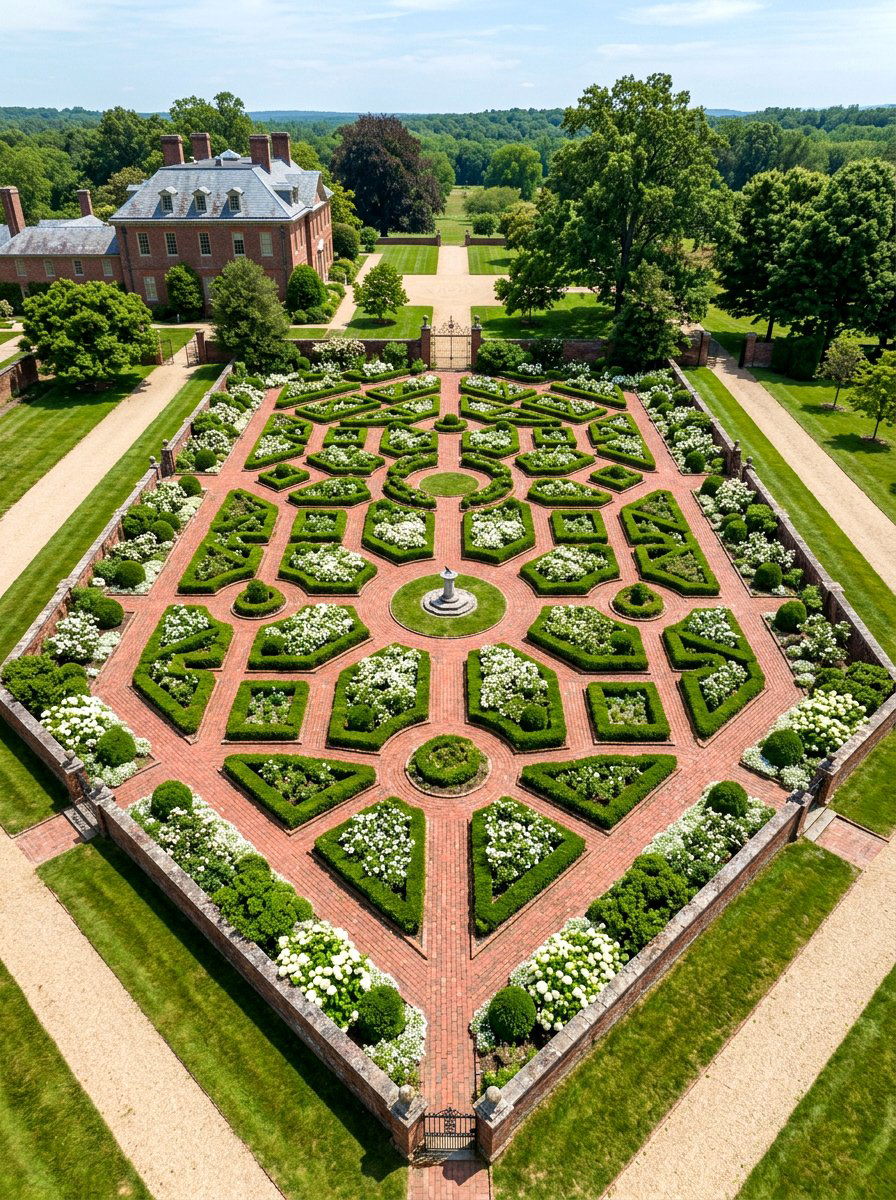
A brick parterre garden uses low walls or paved paths to create a series of geometric compartments filled with plants or decorative gravel. This design is rooted in the grand gardens of the Renaissance and brings a historical, aristocratic feel to a residential front yard. The repetitive patterns of squares, triangles, or diamonds create a complex visual tapestry that is best viewed from an upper-floor window or the porch. You can fill the center of each compartment with a single species of flower or a small topiary ball to keep the look clean. Brick provides a warm, traditional texture that pairs beautifully with evergreen foliage.
13. Tiered hedge terrace
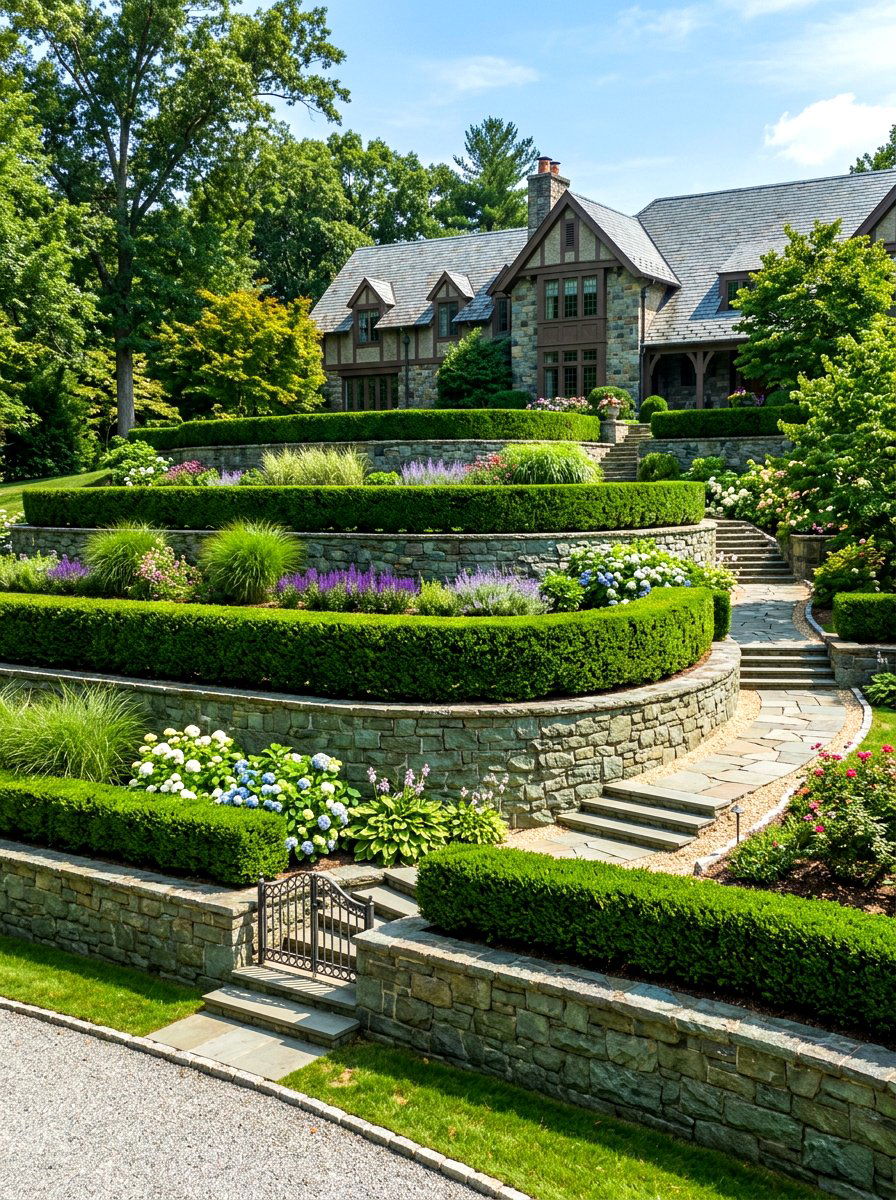
If your front yard has a slope, a tiered hedge terrace is the perfect solution to create a formal, structured look while managing the terrain. By building low retaining walls and planting hedges at each level, you turn a difficult hill into a series of green platforms. This vertical layering adds immense depth and drama to the landscape, making the house appear more imposing and grand. You can use different heights of hedges, such as taller ones at the back and shorter ones at the front, to create a lush, cascading effect. This approach also helps prevent erosion while providing clear, organized spaces for varied plant types.
14. Pencil pine screen
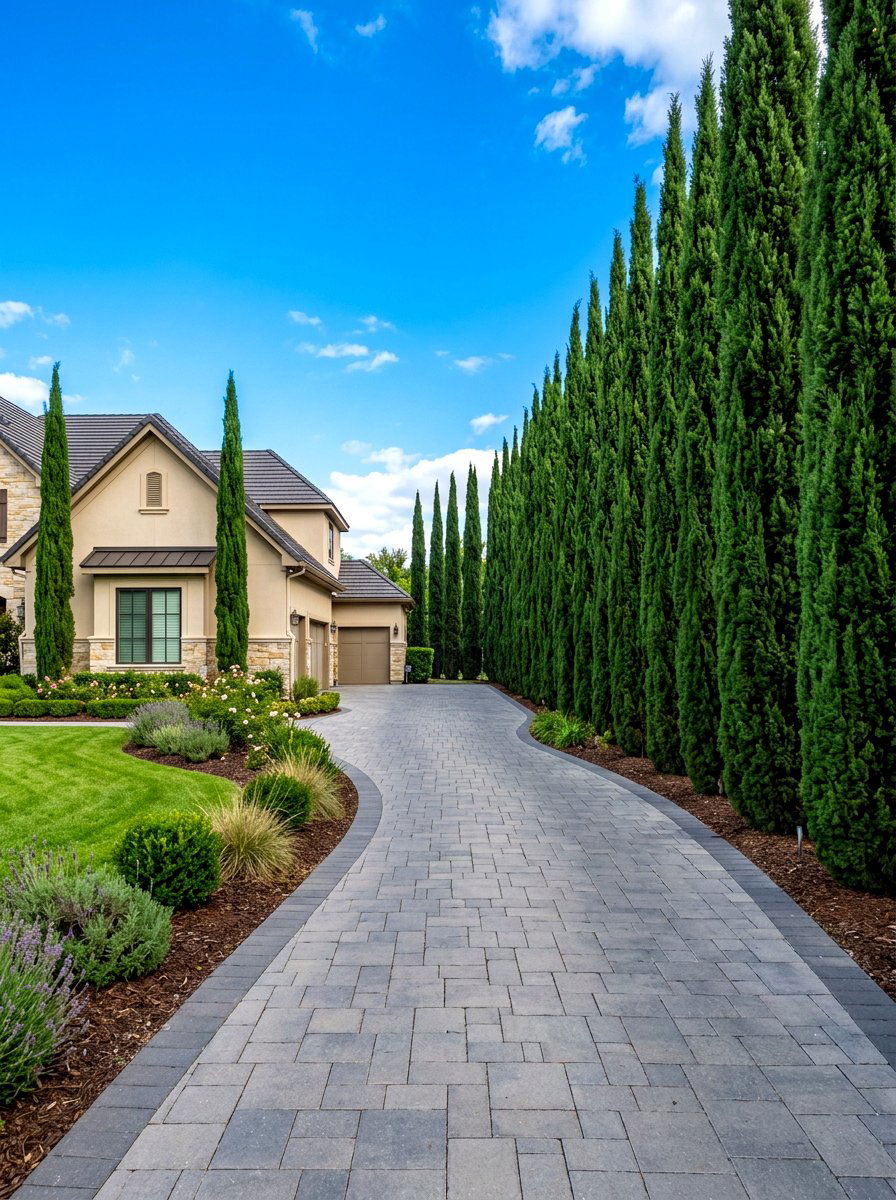
Using a pencil pine screen provides a vertical, narrow solution for framing the house or creating a privacy barrier in a tight space. These tall, slender evergreens have a naturally columnar growth habit that requires very little pruning to maintain its shape. When you plant them in a tight, evenly spaced row, they look like a living fence that draws the eye upward, emphasizing the height of the home. They are ideal for flanking a driveway or marking the edges of the property with a classic Mediterranean or Italianate flair. Their dark, dense foliage provides a consistent green backdrop throughout the changing seasons of the year.
15. White flower garden
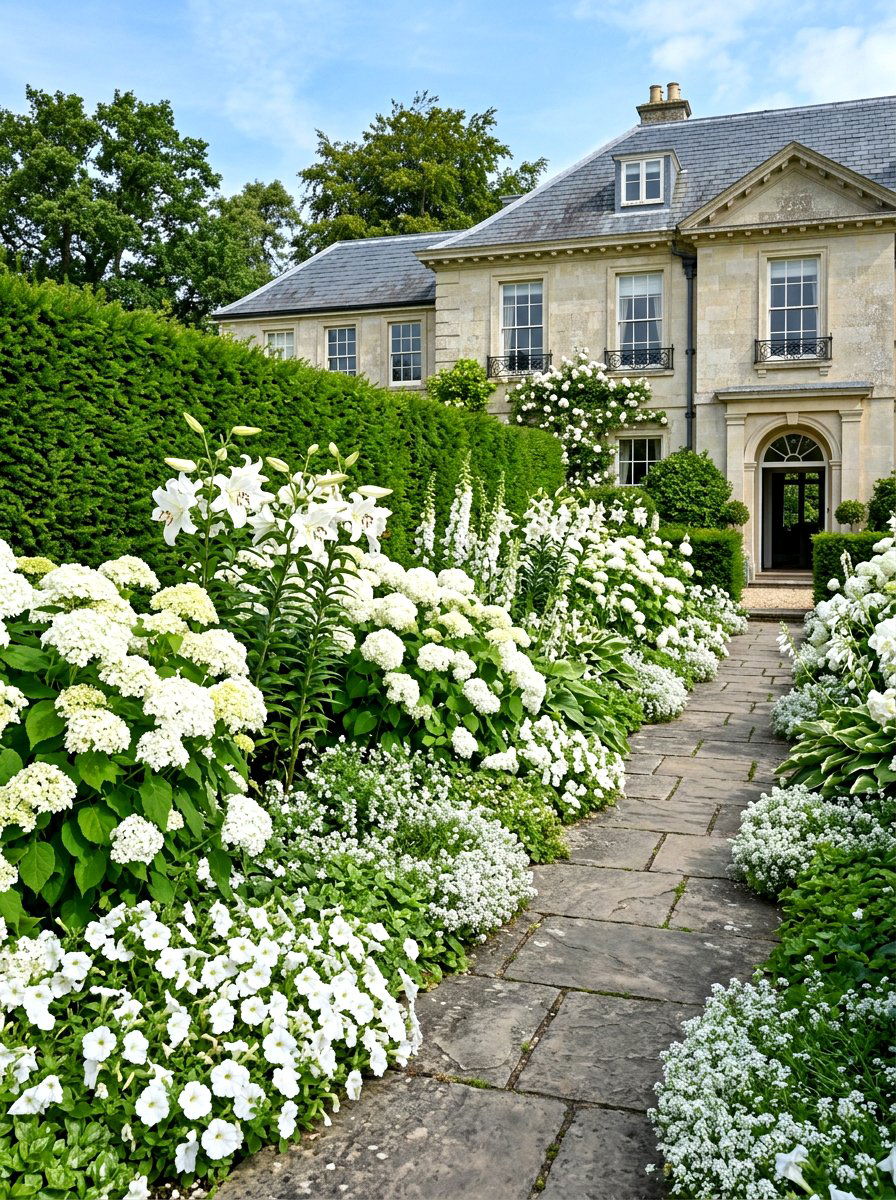
A white flower garden, often called a "moon garden, " focuses on a monochromatic palette that feels incredibly sophisticated and calm. By selecting different textures and heights of white blooms — such as hydrangeas, lilies, and petunias — you create a rich, layered look without the visual clutter of multiple colors. This palette is particularly effective in formal designs because it emphasizes the shapes and structures of the plants rather than their hue. White flowers also catch the evening light, making the front garden glow beautifully at dusk. When paired with dark green hedges and grey stone paths, the result is a high-contrast, polished aesthetic that looks expensive.
16. Rectangular reflecting pool
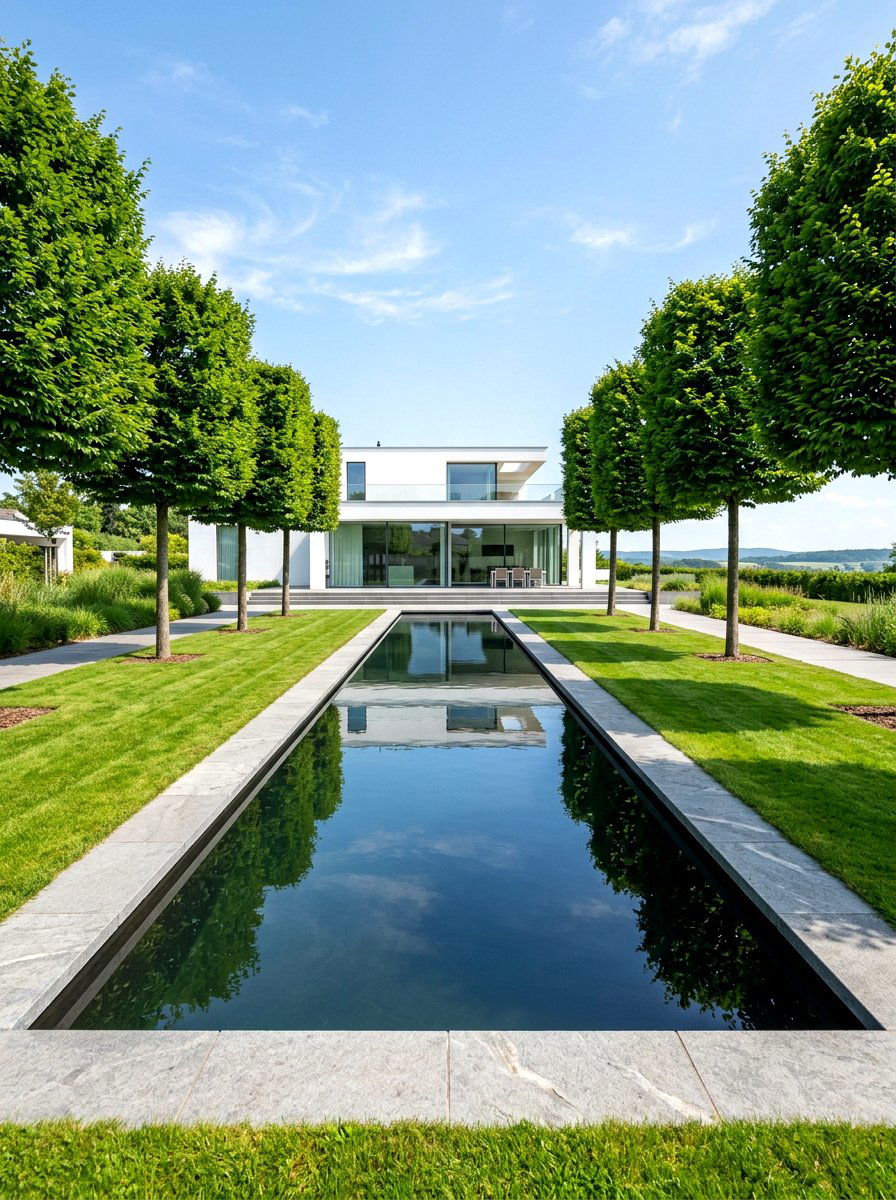
A rectangular reflecting pool brings a sense of stillness and modern formality to the front garden by using the sky and architecture as decor. The long, straight lines of the pool's edges reinforce the geometric order of the landscape, while the still water provides a mirror-like surface. This feature works exceptionally well in minimalist formal designs where the goal is to create a peaceful, zen-like entrance. You can border the water with flat stone coping or a very low, clipped hedge to keep the transition seamless. The absence of movement in the water creates a serene focal point that encourages visitors to slow down as they approach.
17. Classical marble statue
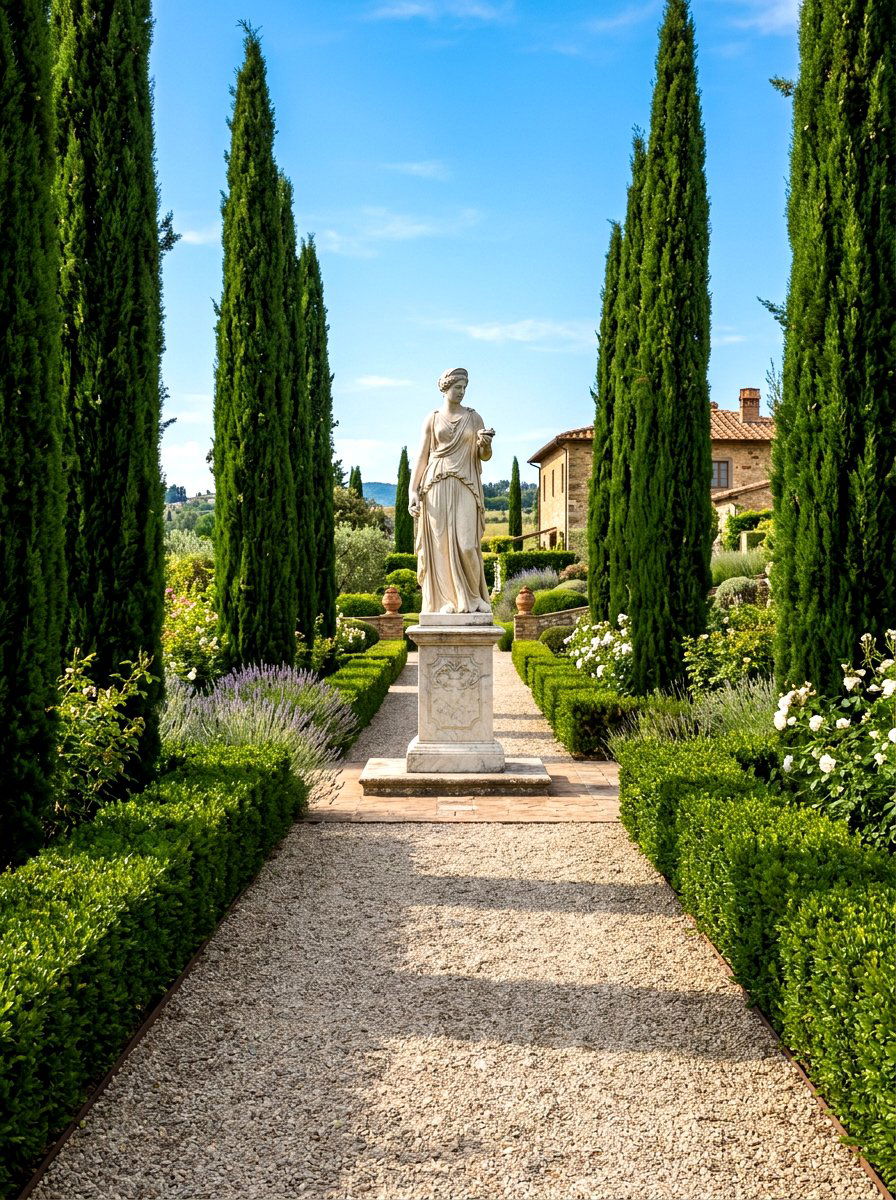
Incorporating a classical marble statue adds a touch of art and history, turning your front garden into a sophisticated outdoor gallery. Whether it is a figure, an abstract form, or a traditional bust, the white or light grey stone provides a stunning focal point against green foliage. Placing the statue at the end of a long path or in the center of a boxwood circle ensures it receives the attention it deserves. To maintain the formal look, the statue should be placed on a solid plinth or pedestal to give it height and presence. This element provides a sense of permanence and culture to the overall garden design.
18. Climbing jasmine wall
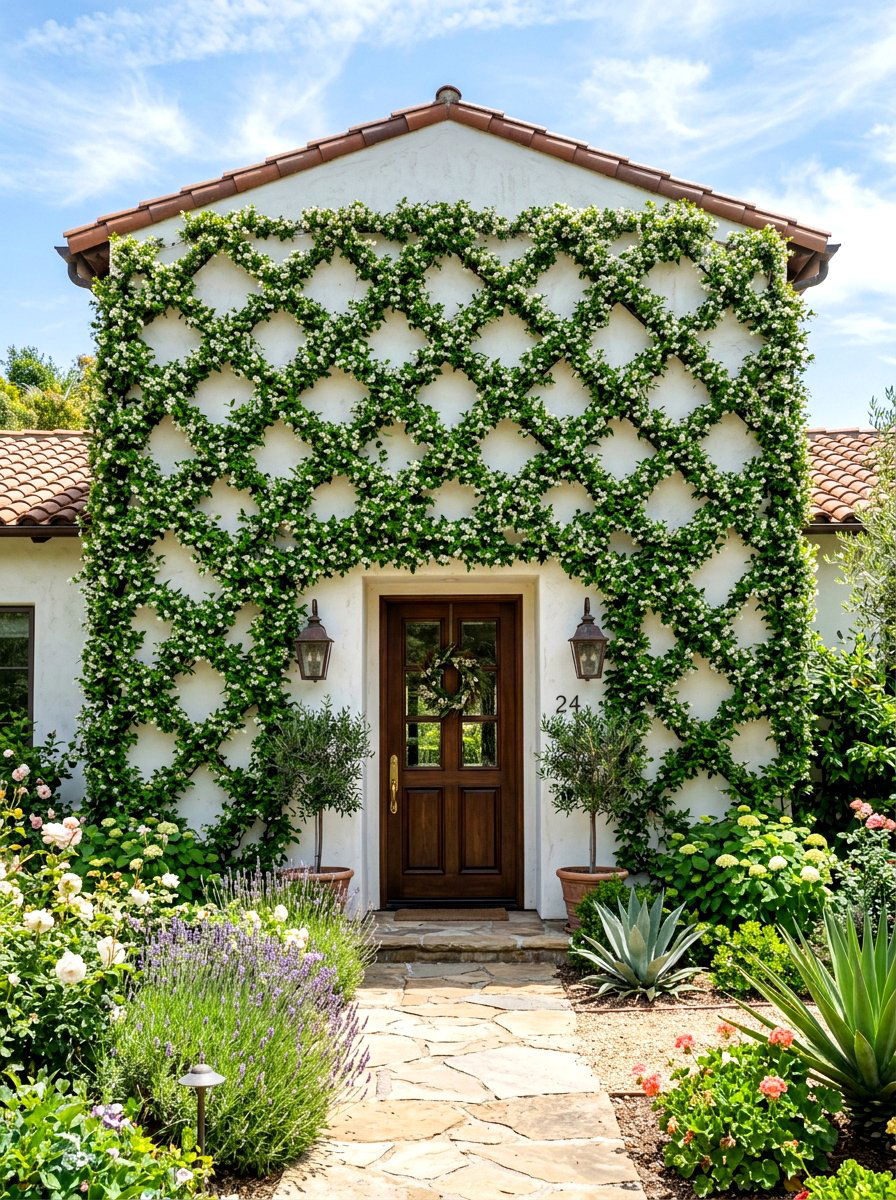
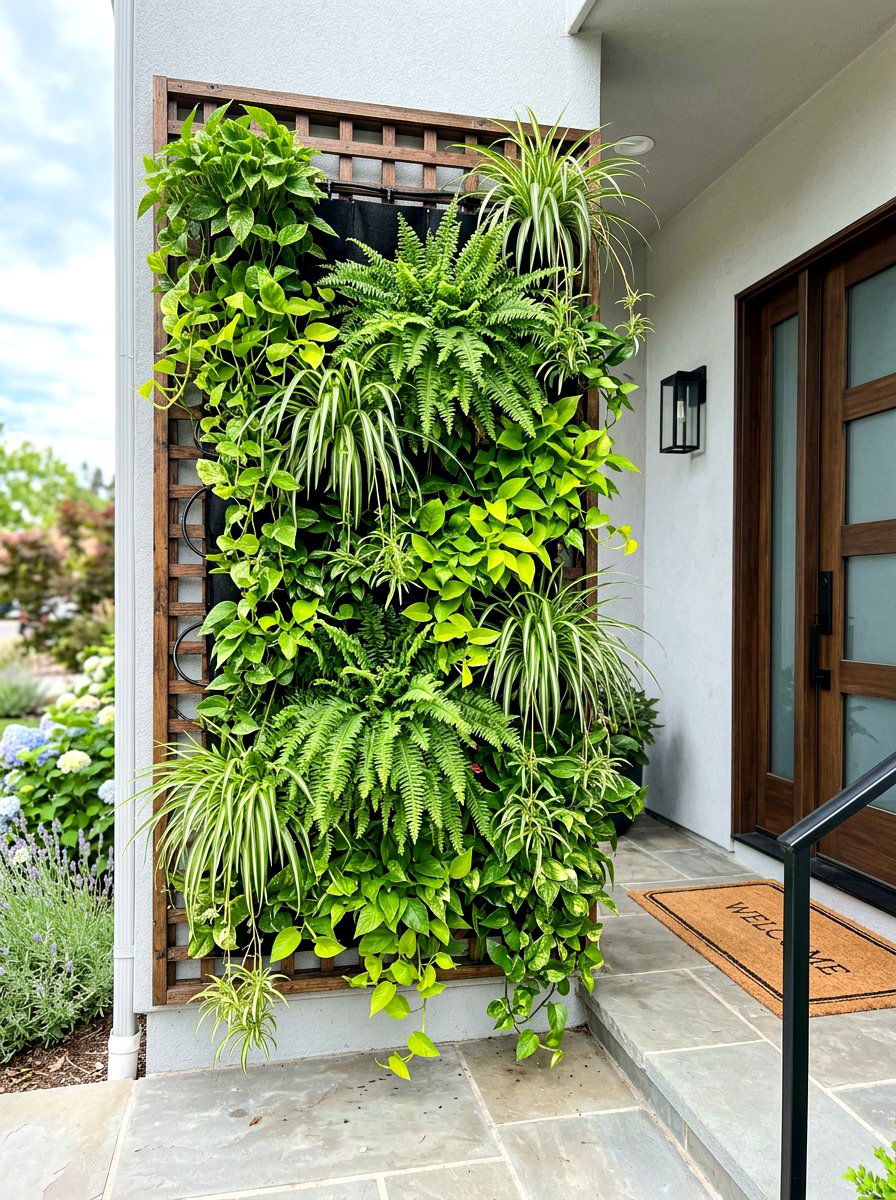
A climbing jasmine wall offers a way to soften the vertical surfaces of your home while adding a powerful, sweet fragrance to the entryway. By training the jasmine on a wire trellis in a diamond or grid pattern, you maintain the formal structure even as the plant grows. The small, white star-shaped flowers look elegant against the dark green leaves, providing a delicate texture that complements hard stone walls. This "green wall" approach is perfect for covering large expanses of siding or brick, making the house feel like it is part of the garden. Regular clipping ensures the jasmine stays flat and does not become overgrown.
19. Paired entryway planters
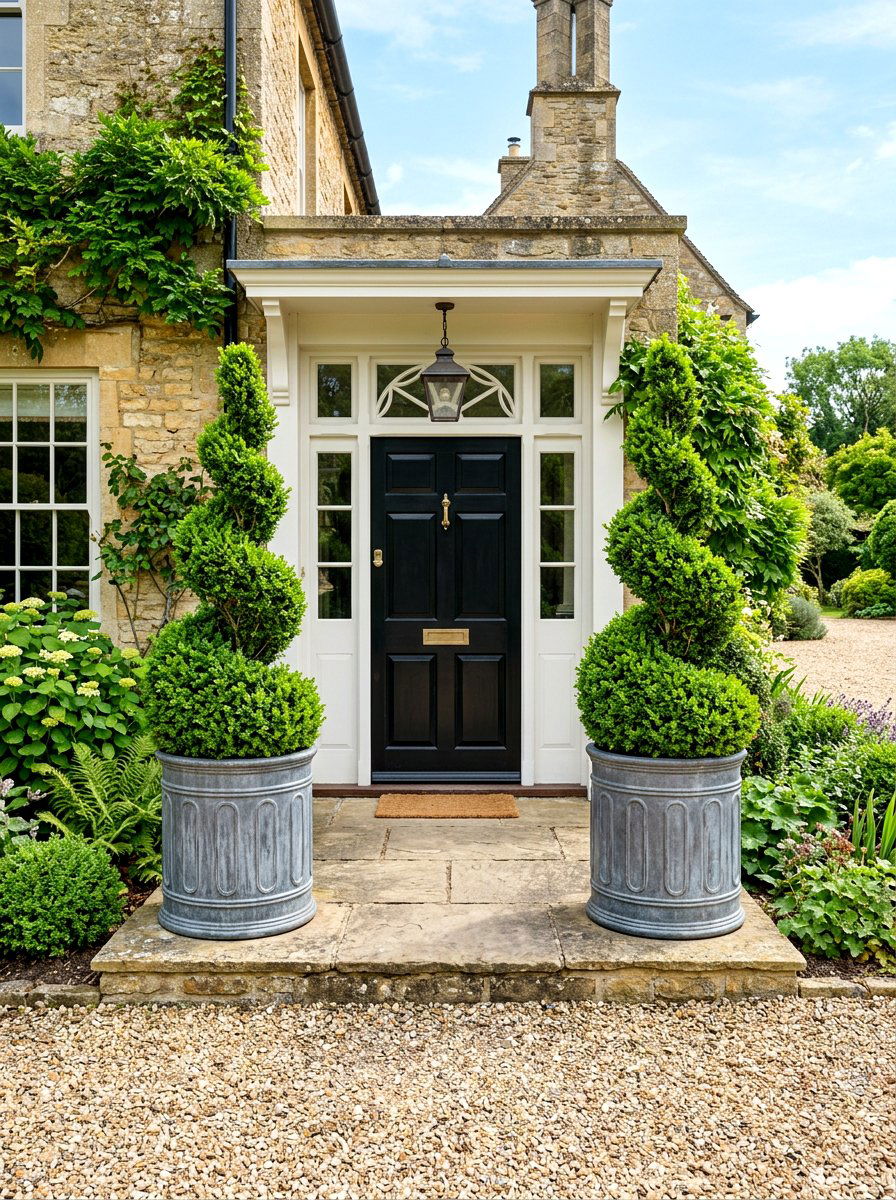
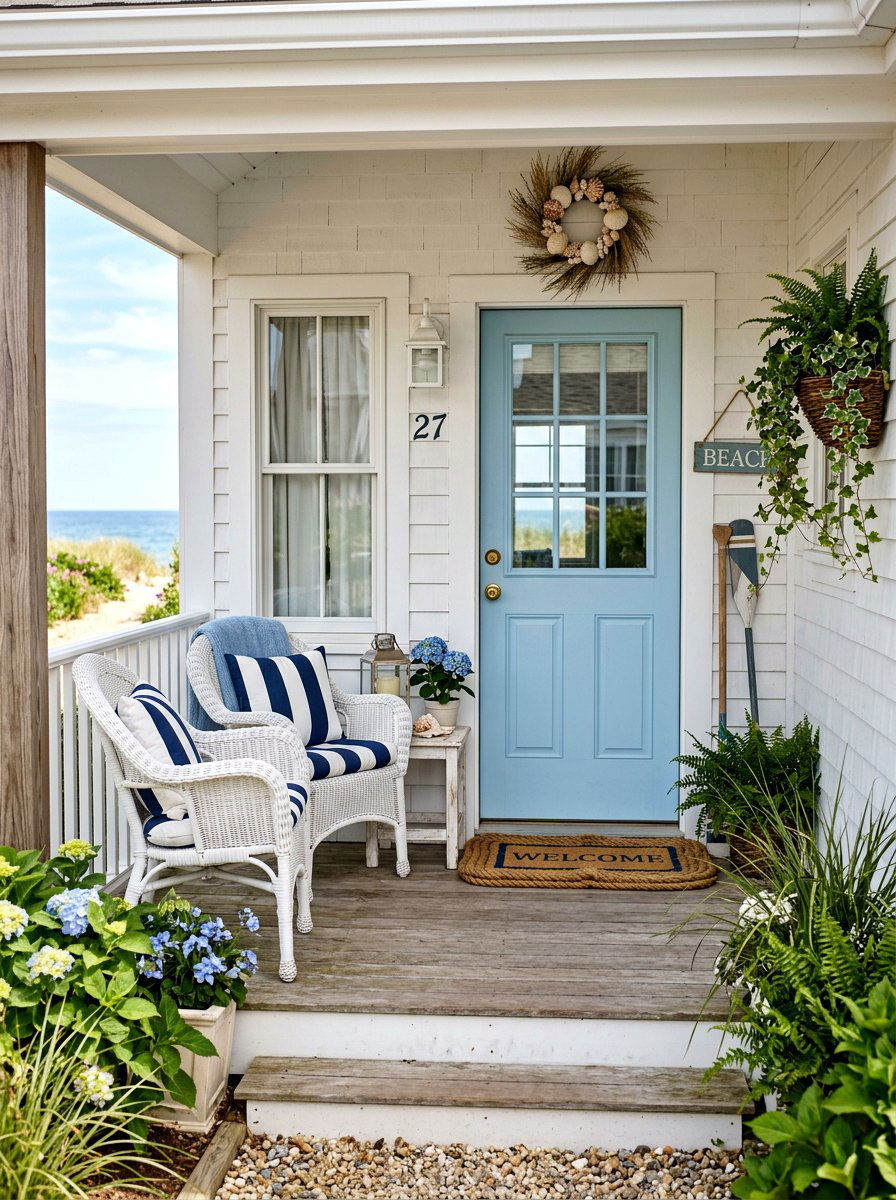
Using paired entryway planters is the quickest way to frame your front door and create a welcoming, symmetrical transition into the home. Choose large, high-quality containers in materials like lead, stone, or high-gloss ceramic to signal a premium aesthetic. In a formal setting, it is best to use identical plants in each pot, such as a spiral topiary or a lush arrangement of white geraniums. These planters act as pillars of greenery that guide guests toward the entrance while adding architectural interest to the porch. Maintaining the health and shape of these plants is crucial, as they are the first detail people see up close.
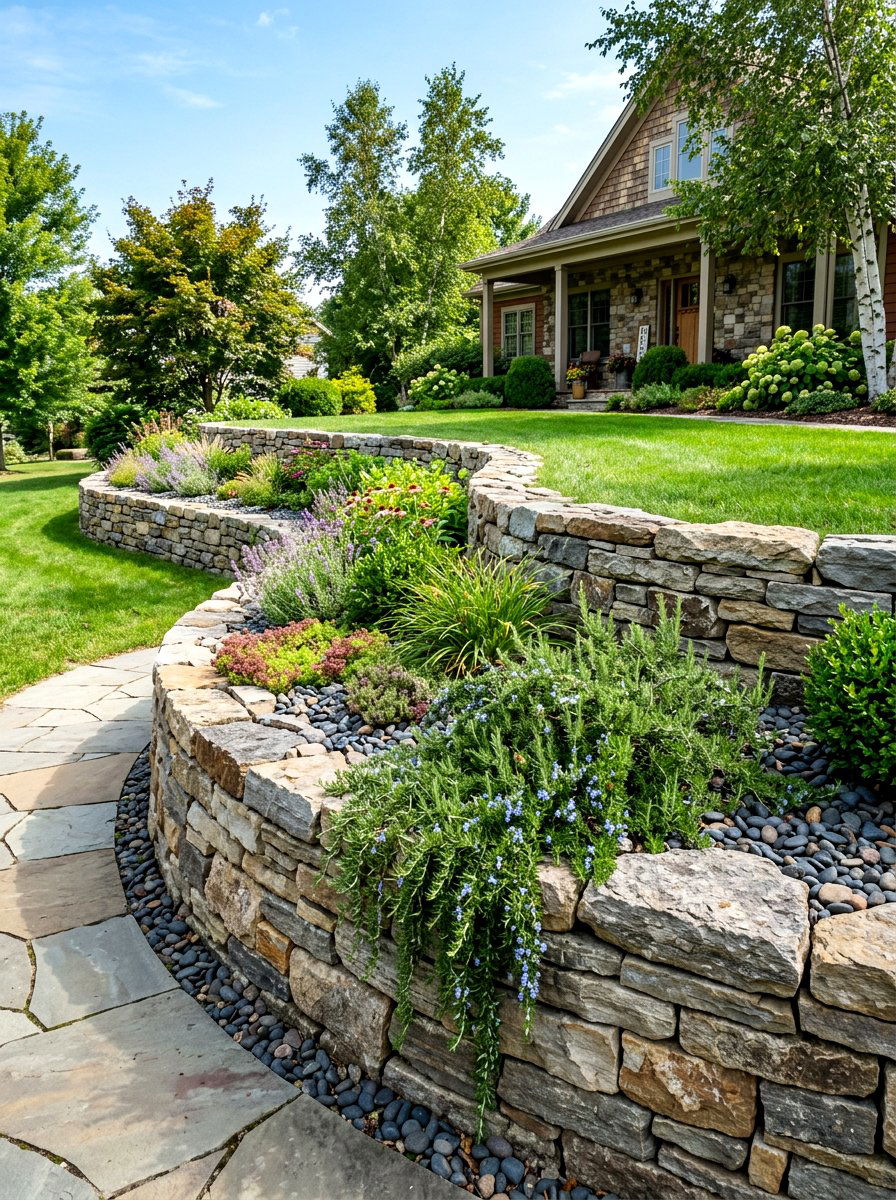
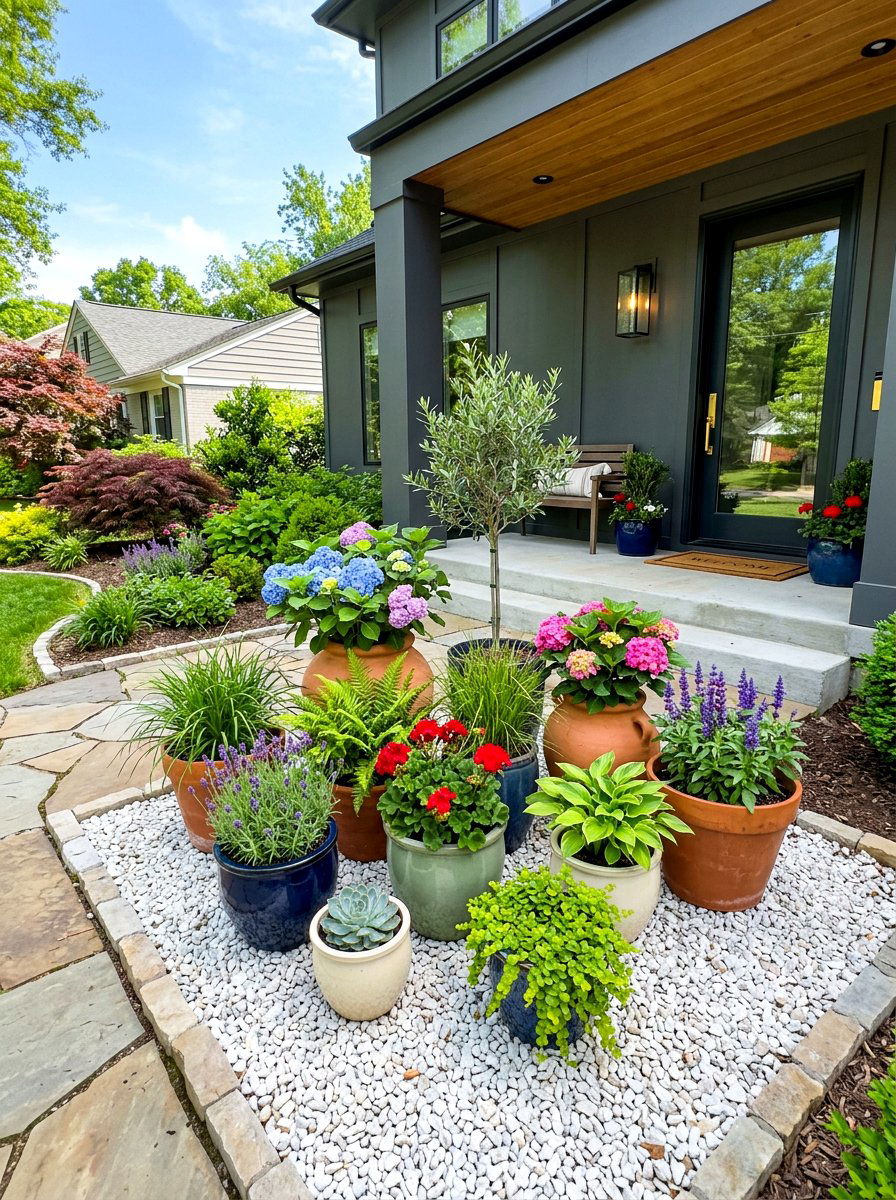
20. Formal knot garden
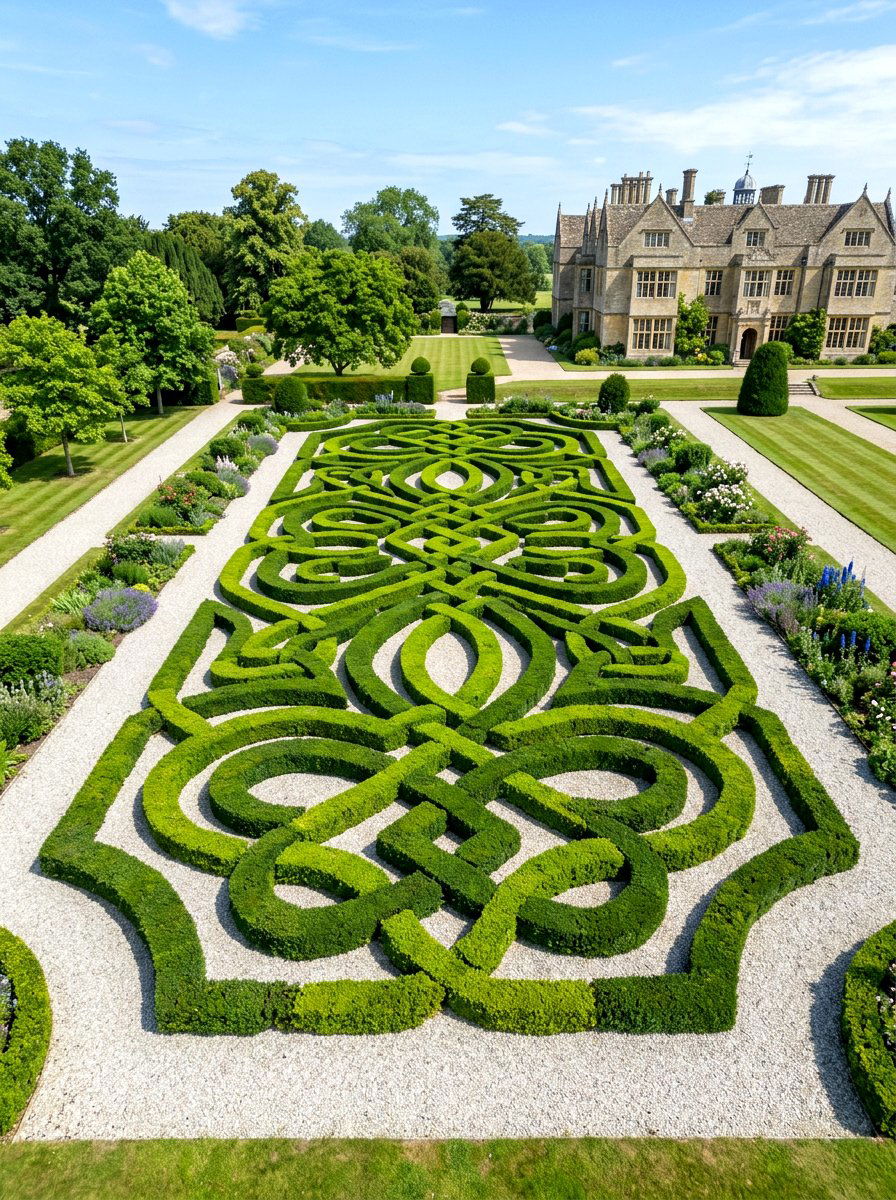
A formal knot garden is an intricate design where low-clipped hedges overlap and intertwine to create the appearance of a physical knot. This style is highly decorative and serves as a true showpiece for a front yard, demonstrating a high level of gardening skill and design. Usually, two or more different types of evergreen shrubs with contrasting colors are used to make the "ropes" of the knot clearly visible. The spaces between the hedges can be filled with colored gravel or low-growing flowers to further define the pattern. Because it is best viewed from above, this idea works perfectly for gardens directly below a front porch.
21. Purple allium border
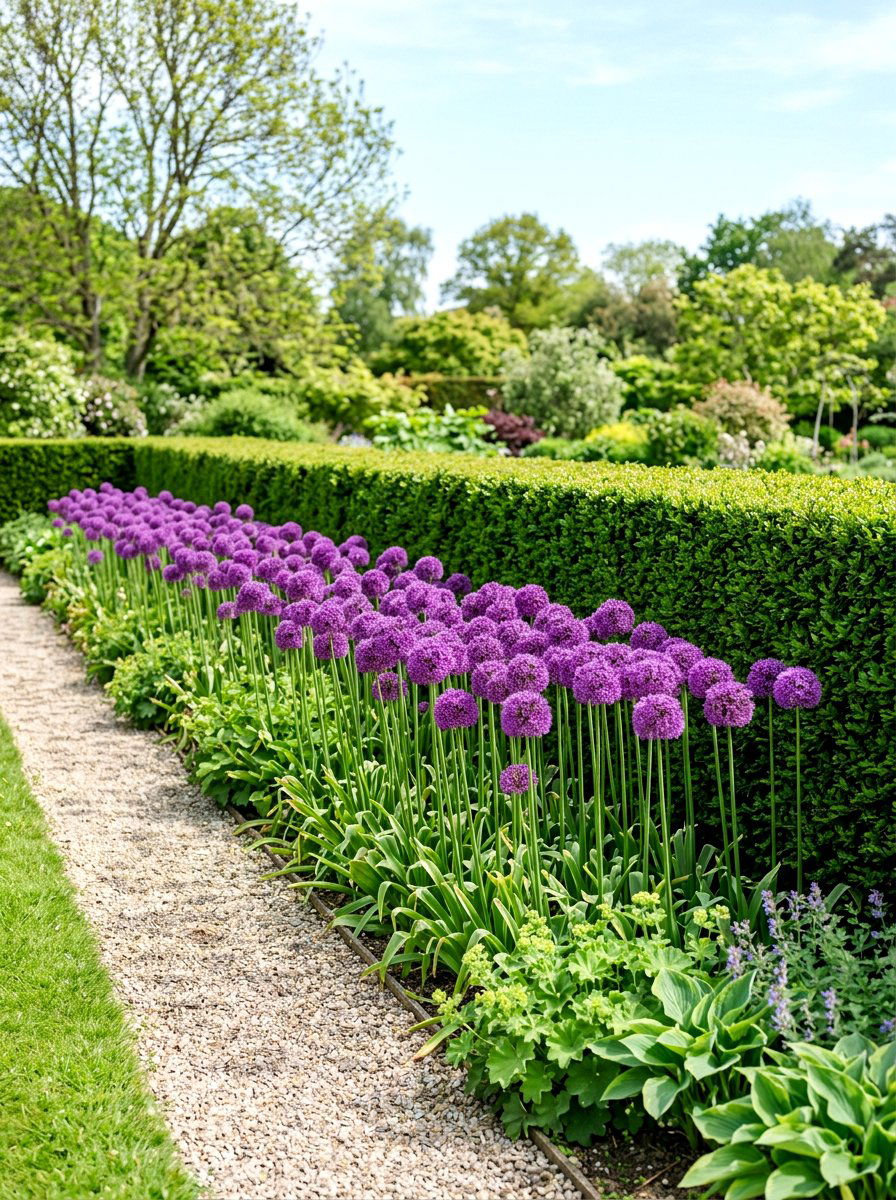
Adding a purple allium border introduces a fun, whimsical element to a formal garden while strictly adhering to a geometric layout. These tall, globe-shaped flowers grow on straight, sturdy stems, making them look like natural sculptures planted in the ground. When you plant them in dense, straight rows or perfectly spaced clusters, they provide a repetitive vertical rhythm that fits the formal aesthetic. The vibrant purple hue pops against the green background, creating a focal point during late spring and early summer. As the flowers fade, their seed heads remain architectural and attractive, continuing to provide structure to the garden beds for several weeks.
22. Granite cobblestone drive
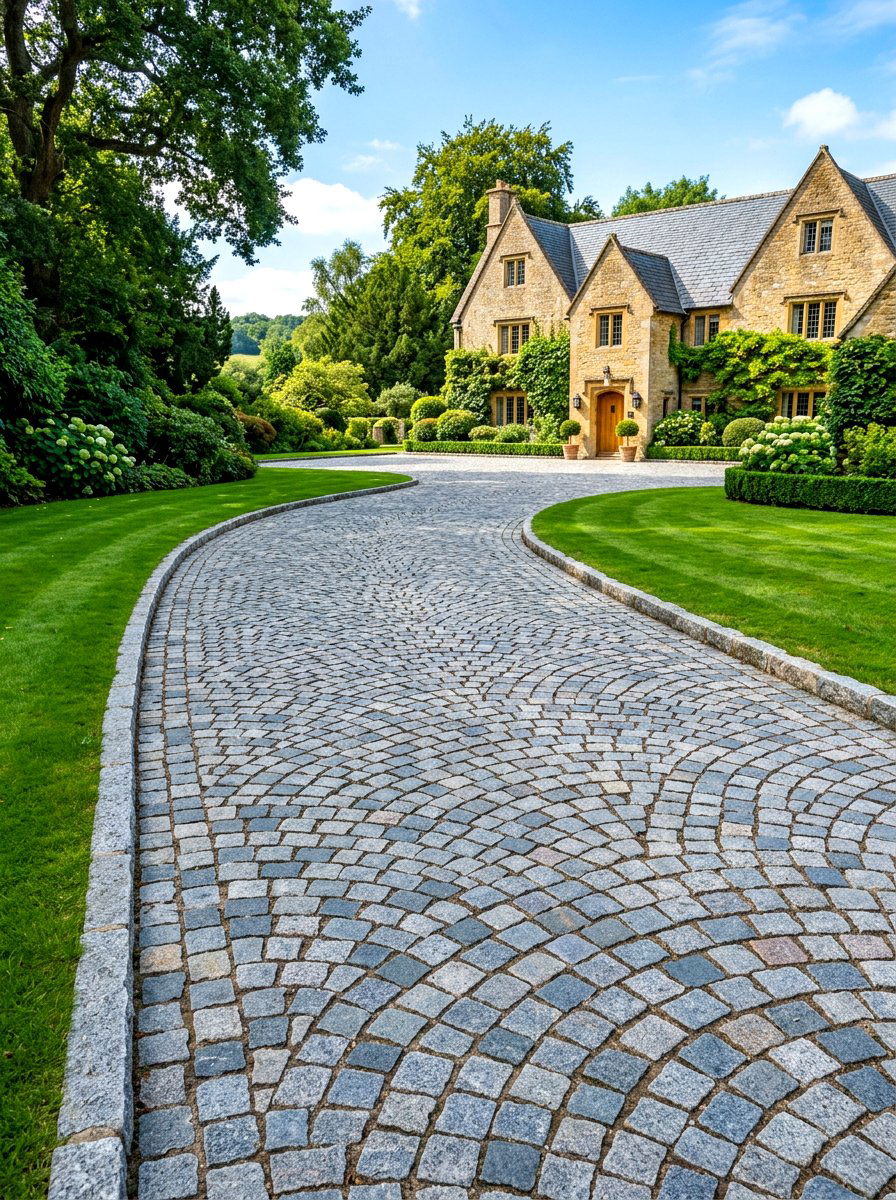
A granite cobblestone drive offers an Old World charm and extreme durability that perfectly matches a formal or traditional architectural style. The small, square stones create a textured surface that feels substantial and high-end compared to standard asphalt or concrete. Laying the cobblestones in a fan or circular pattern adds a layer of artistry to the functional driveway space. This material handles heavy weight easily and allows for a slight permeability that helps with water drainage. Bordering the driveway with a low stone curb and a neatly trimmed hedge completes the look, ensuring the transition between the drive and the garden is crisp.
23. Low boxwood border
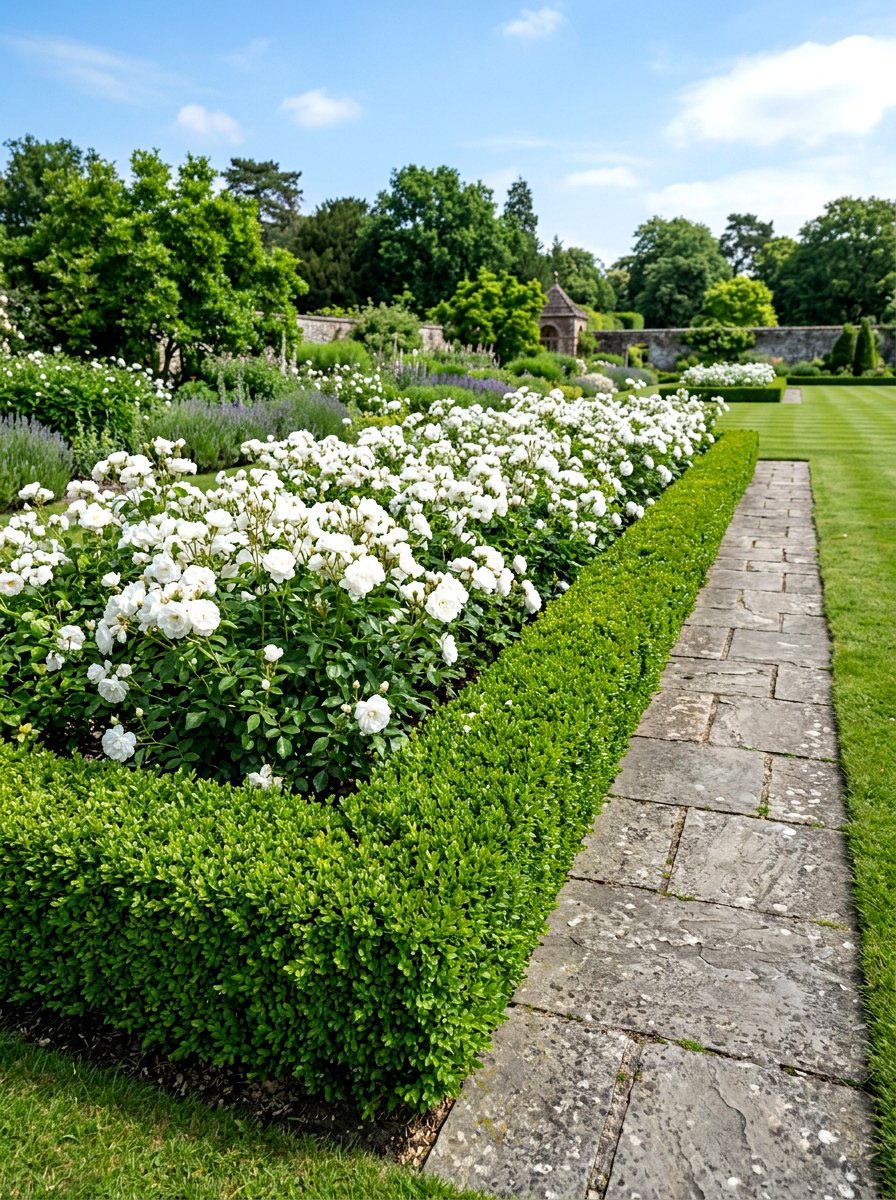
A low boxwood border is the ultimate "lining" for garden beds, acting like a frame around a beautiful painting. By keeping the hedge clipped to just six or twelve inches in height, you define the shape of the beds without hiding the plants behind them. This technique is essential for creating a "neat" look even if the plants inside the border are a bit more varied or wild. It helps to contain mulch and prevents soil from washing onto walkways during heavy rain. This green ribbon provides a consistent visual element that ties different parts of the front garden together into one cohesive, structured whole.
24. Geometric stone patio
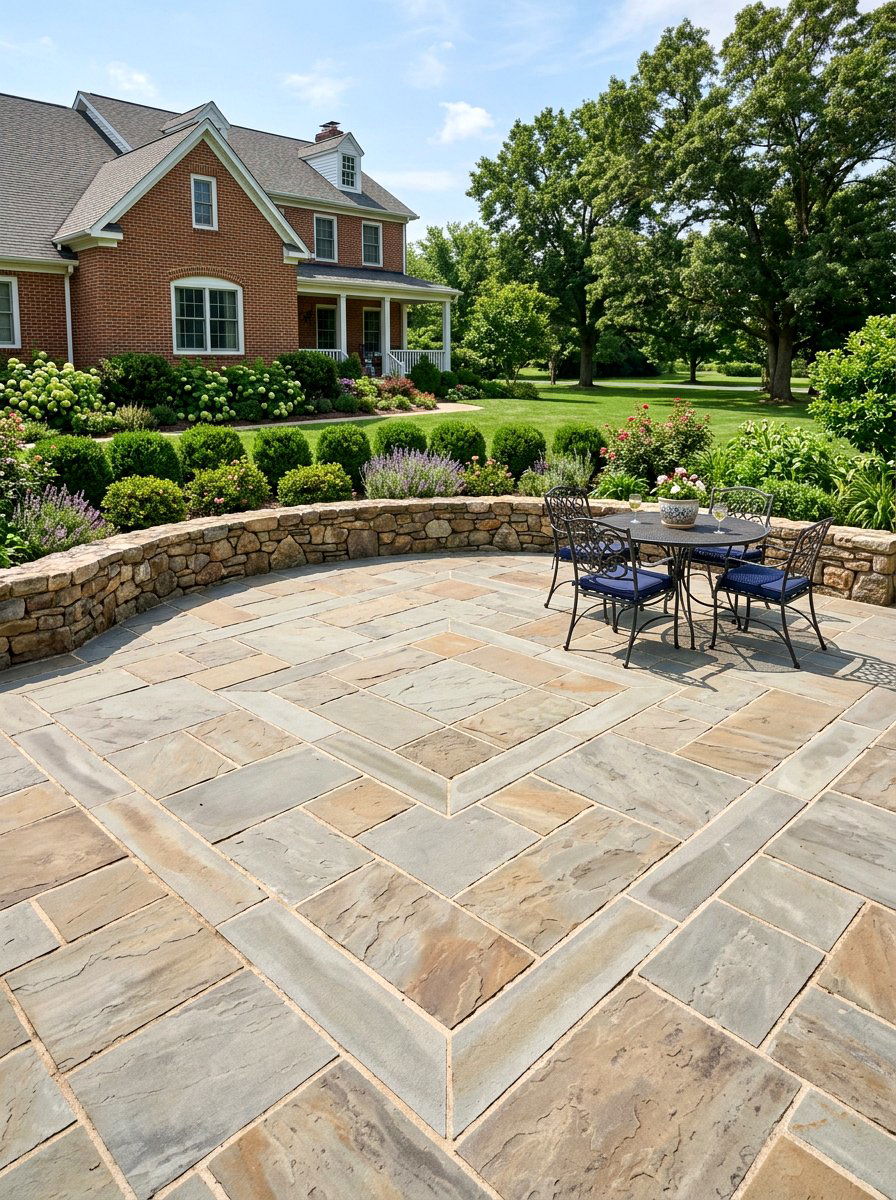
Creating a geometric stone patio in the front yard provides a functional seating area that doubles as a structured design element. A square or rectangular layout with clean-cut flagstone or limestone pavers reinforces the architectural lines of the home. You can surround the patio with a low wall or a tall hedge to create a private "outdoor room" that feels secure and formal. This space is perfect for a pair of classic garden chairs where you can enjoy the view of your manicured landscape. The flat, level surface provides a crisp contrast to the soft textures of the surrounding lawn and planted garden beds.
25. White hydrangea shrub
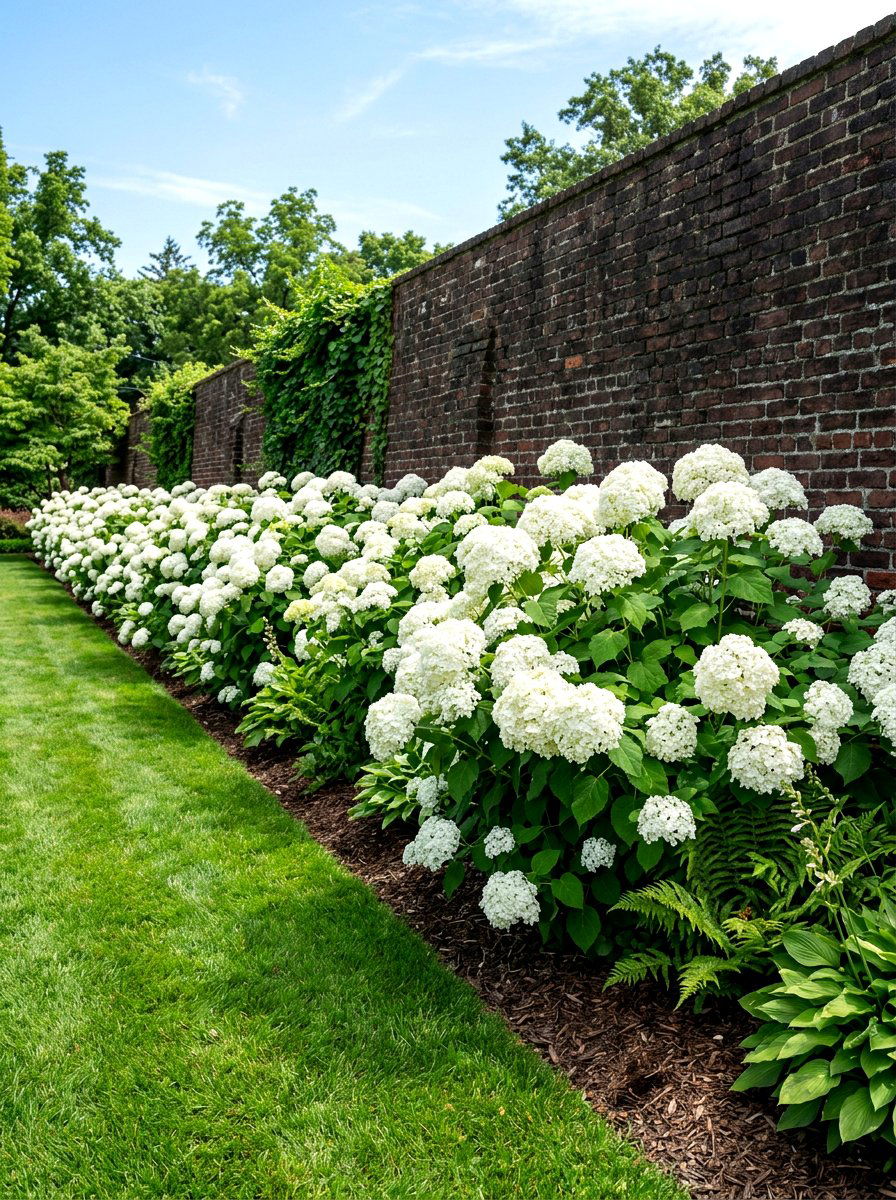
White hydrangea shrubs are a staple of formal gardens because they produce massive, cloud-like blooms that feel incredibly lush and luxurious. Planting a row of Annabelle or Limelight hydrangeas creates a solid wall of white that looks stunning against a dark house or green hedge. To keep them looking formal, they should be pruned regularly to maintain a rounded, bushy shape and prevented from flopping onto paths. The large green leaves provide a dense background that fills space effectively, making the garden look established and full. These shrubs offer a long season of interest, with blooms that often transition to a vintage green or tan.
26. Minimalist garden bench
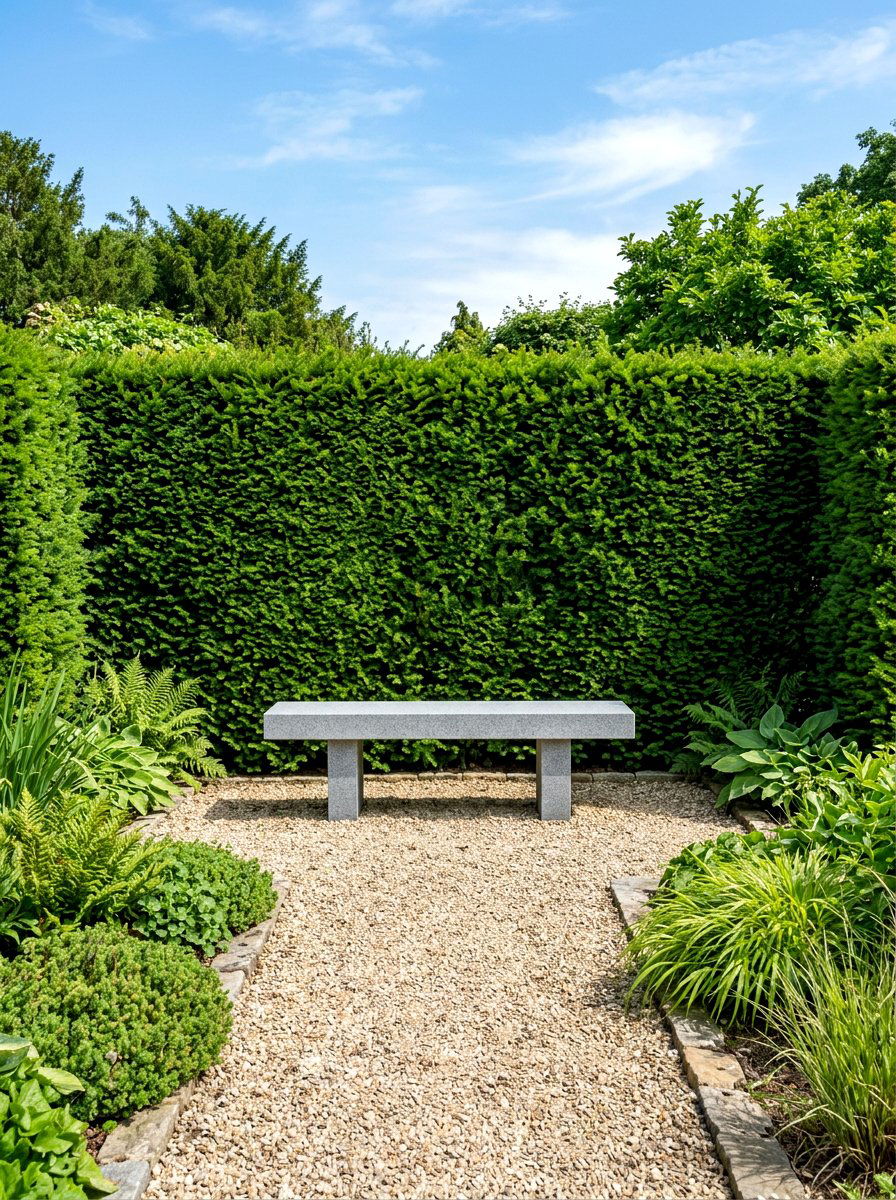
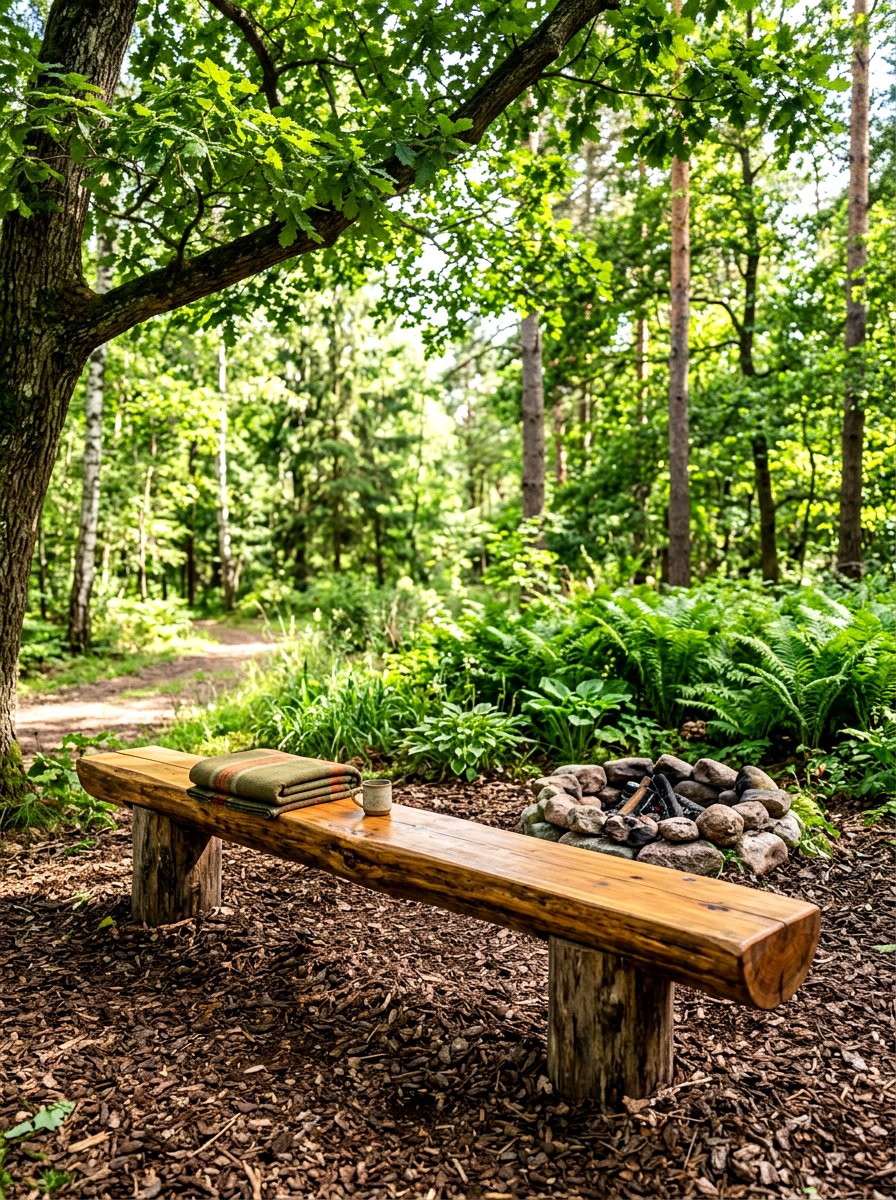
A minimalist garden bench made of stone, teak, or wrought iron provides a functional focal point that invites people to linger in the garden. In a formal design, the bench is typically placed at the end of a path or centered against a high hedge to create a symmetrical vignette. Choosing a design with clean lines and a solid silhouette ensures it complements the structured surroundings rather than distracting from them. A stone bench feels permanent and classical, while a dark metal bench offers a lighter, more transparent look. This simple addition transforms a passage area into a destination, adding a sense of purpose to the garden.
27. Arched garden trellis
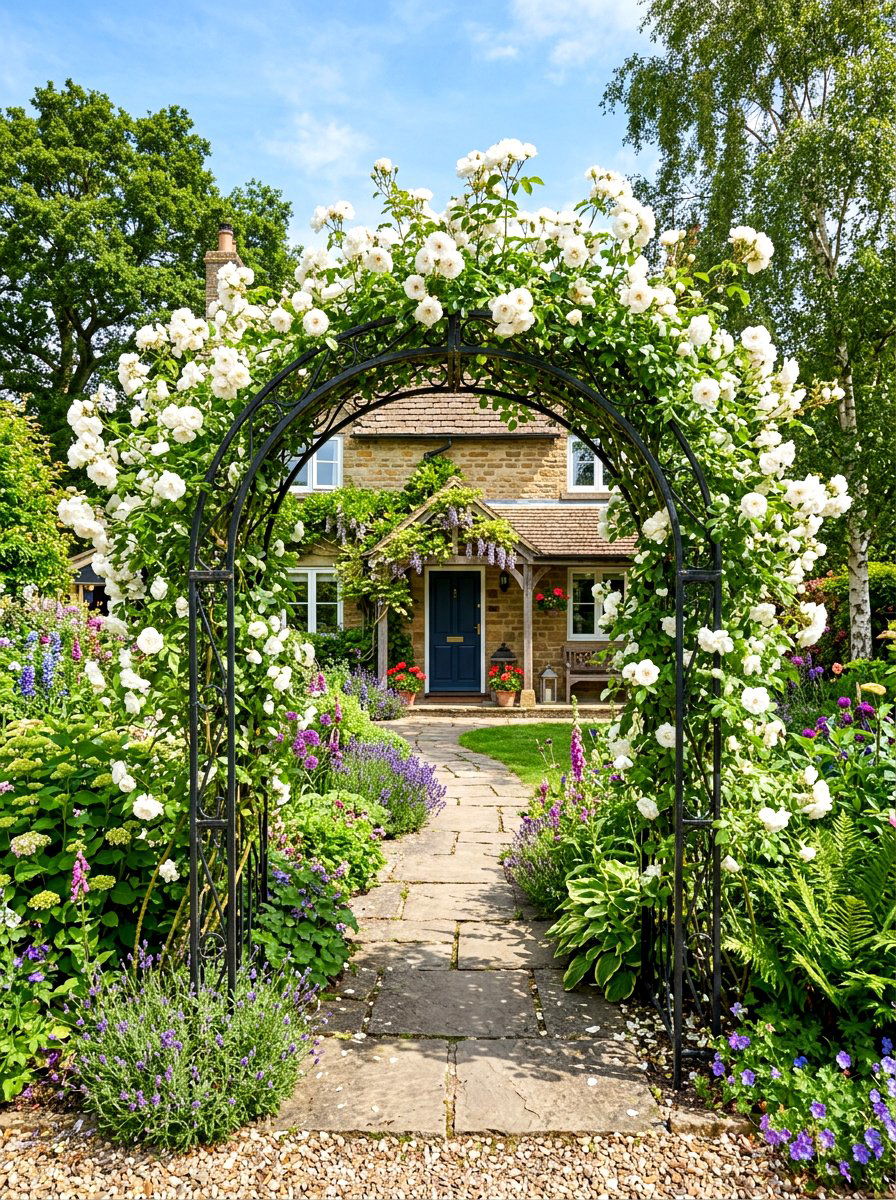
An arched garden trellis creates a grand portal that marks the transition from the public sidewalk into your private, formal sanctuary. When you place a sturdy metal or wooden arch over the main entrance path, you introduce a vertical element that frames the view of the house. Covering the arch with a single species of climbing plant, like white roses or wisteria, keeps the look unified and elegant. The repeated use of arches can create a "pergola" effect that feels like a green tunnel, adding a sense of mystery and depth. This architectural feature provides a beautiful overhead structure that balances the lower hedges and flower beds.
28. Pyramid yew topiary
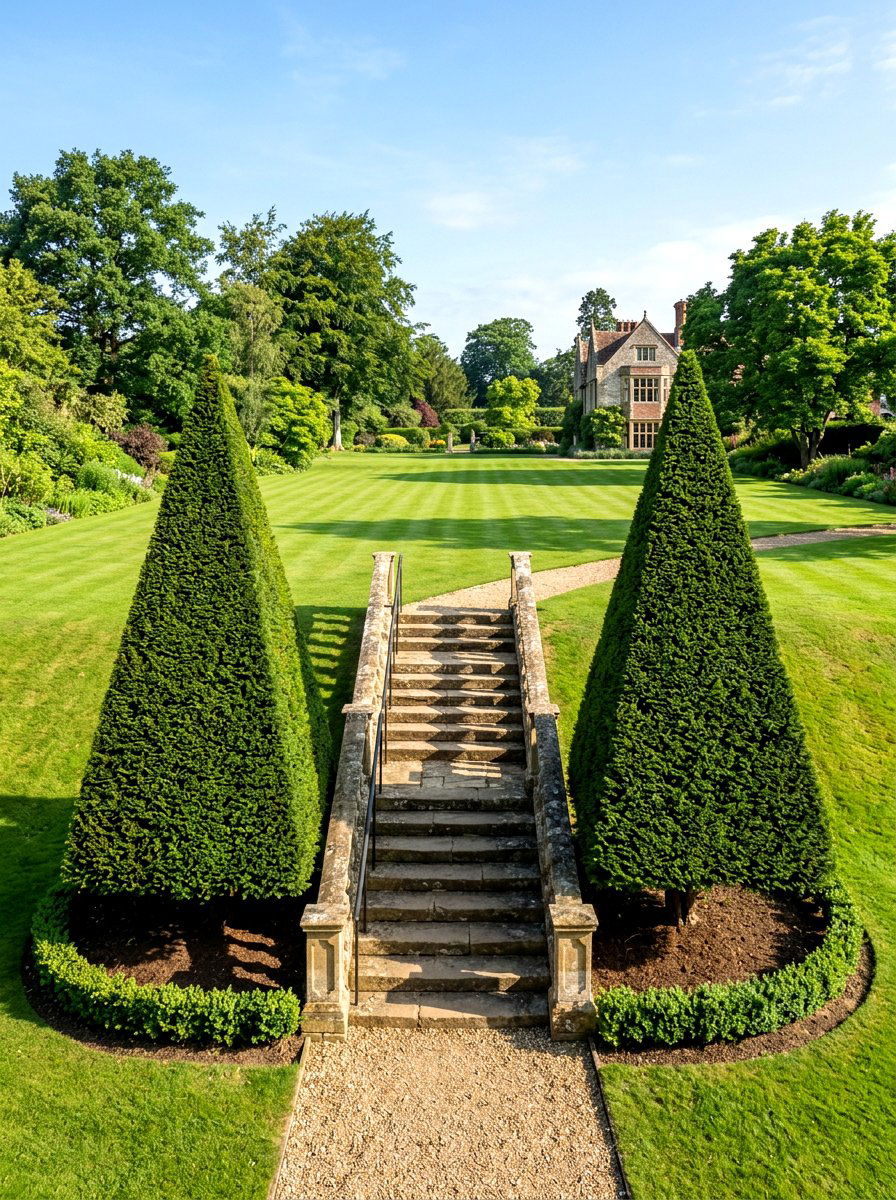
Pyramid yew topiaries offer a sharp, vertical contrast to the rounded forms often found in formal gardens, adding a sense of height and precision. Yews are prized for their extremely dense, dark green needles and their ability to be sheared into razor-sharp points. Placing a pair of these pyramids on either side of a staircase or doorway creates a powerful architectural statement that feels very formal and grand. Because they grow slowly, they hold their shape for a long time, making them a low-maintenance choice for busy homeowners. Their dark color provides an excellent backdrop for lighter flowers or stone statues placed nearby.
29. Crushed slate walkway
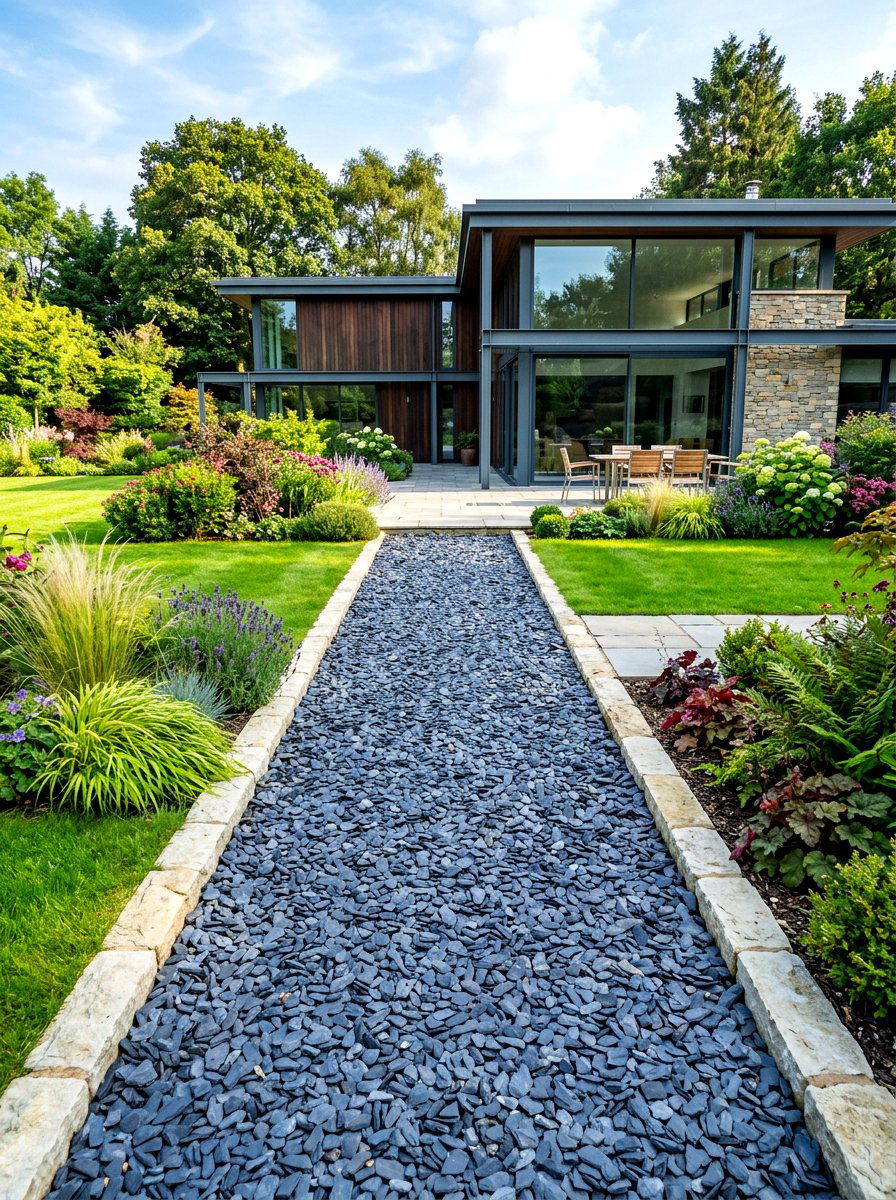
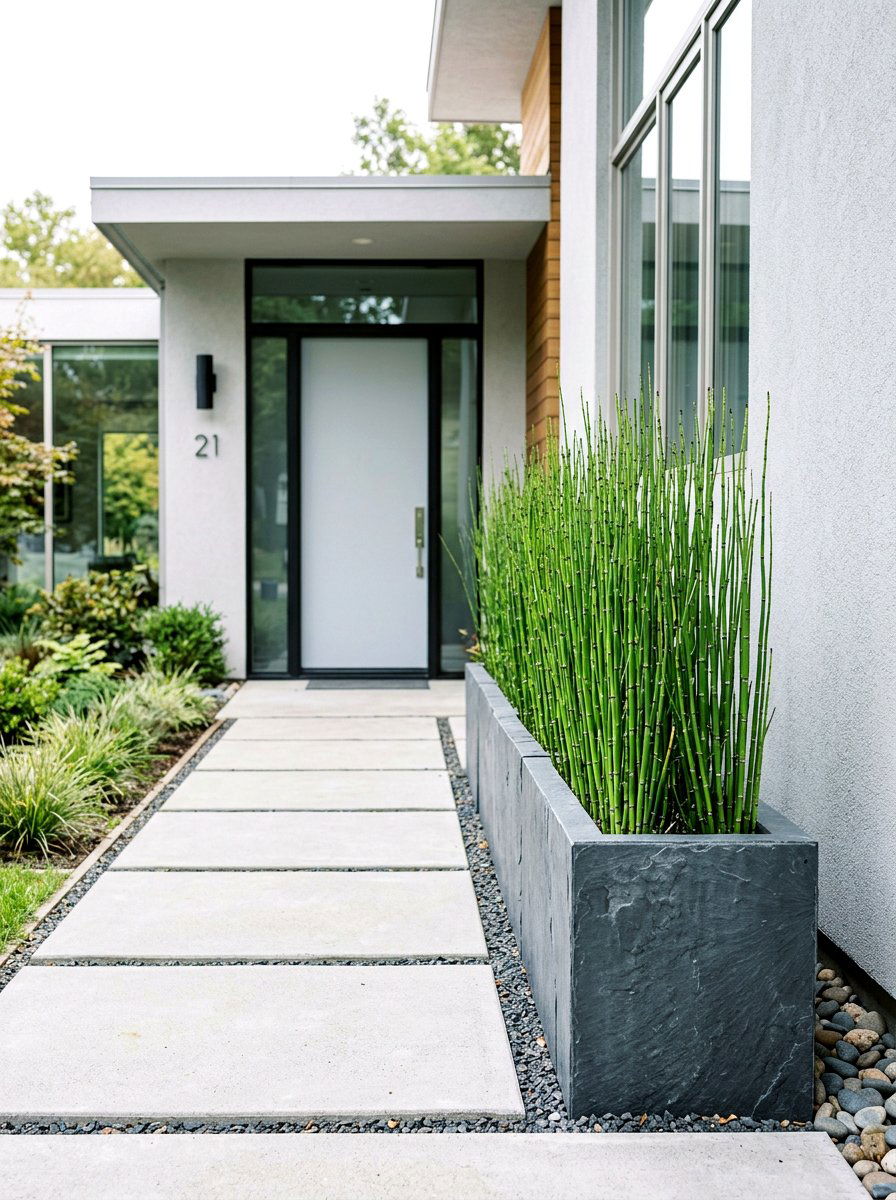
A crushed slate walkway provides a modern, high-contrast alternative to traditional gravel, offering deep grey or blue tones that look very sophisticated. The flat pieces of slate pack down firmly, creating a more stable walking surface that feels refined underfoot. When bordered with light-colored stone or metal edging, the dark slate creates a dramatic visual line through the green lawn. This material looks particularly striking when wet, as the colors deepen and reflect light, adding a dynamic quality to the garden. It is an excellent choice for contemporary formal designs that prioritize a limited color palette and very clean, sharp-edged transitions.
30. Symmetrical porch lighting
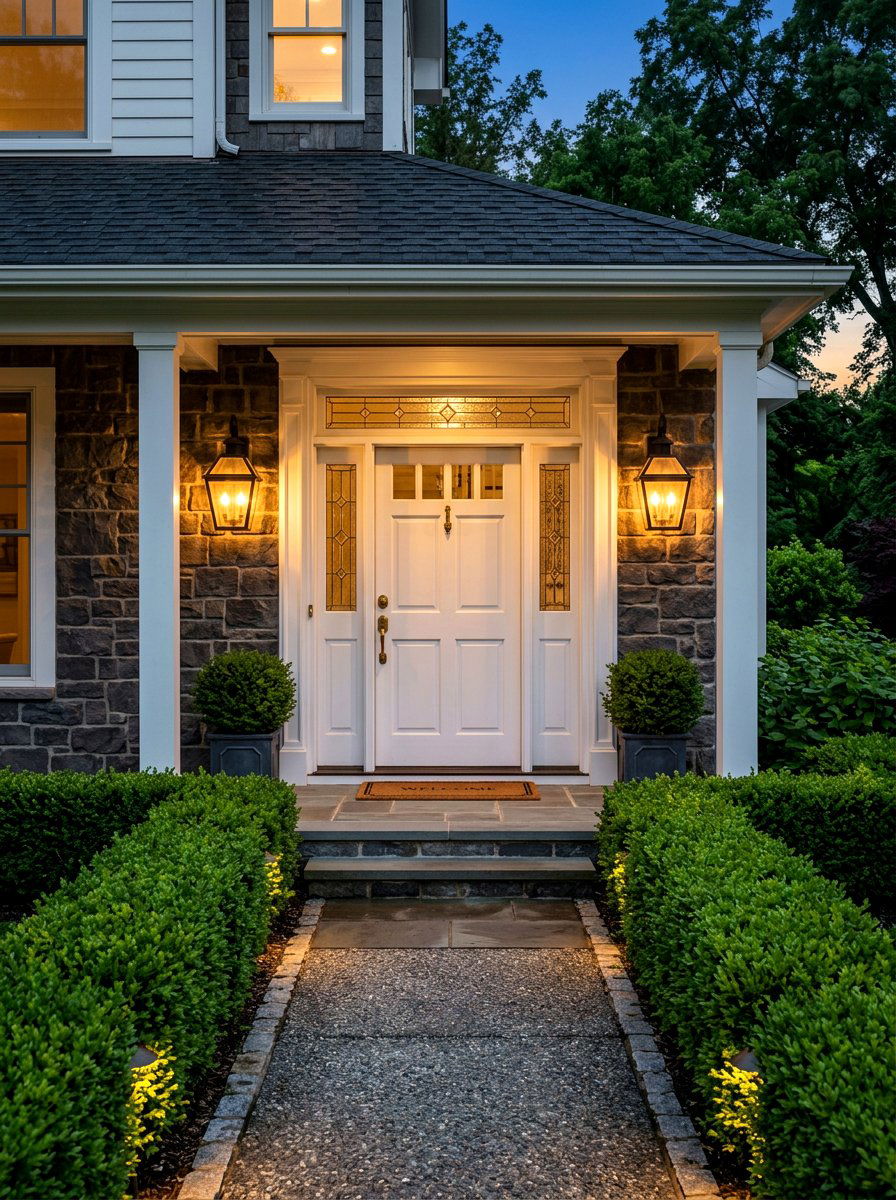
Symmetrical porch lighting is the final touch that ensures your formal front garden looks just as impressive at night as it does during the day. Installing identical wall-mounted lanterns or hanging pendants on either side of the front door reinforces the central axis of your design. You should also consider using low-voltage uplights to highlight key topiaries, statues, or trees within the garden. This layers of light creates depth and drama, making the garden feel safe and welcoming after sunset. Choosing fixtures with a classic finish, like antique brass or matte black, ties the lighting into the overall traditional or modern formal aesthetic perfectly.
Conclusion:
A formal front garden is a testament to the beauty of order, offering a sophisticated first impression that never goes out of style. By prioritizing symmetry through paired elements and maintaining clean lines with clipped hedges, you create a landscape that feels deeply intentional and curated. The combination of structural evergreens, classical hardscaping materials like stone and brick, and a refined color palette ensures year-round visual interest. Whether you choose to install a grand central fountain or simply focus on perfectly edged lawns and boxwood borders, these ideas provide a framework for a prestigious home exterior. Investing in a structured garden layout not only enhances your daily experience of returning home but also significantly increases the overall value and character of your property.

Related posts: