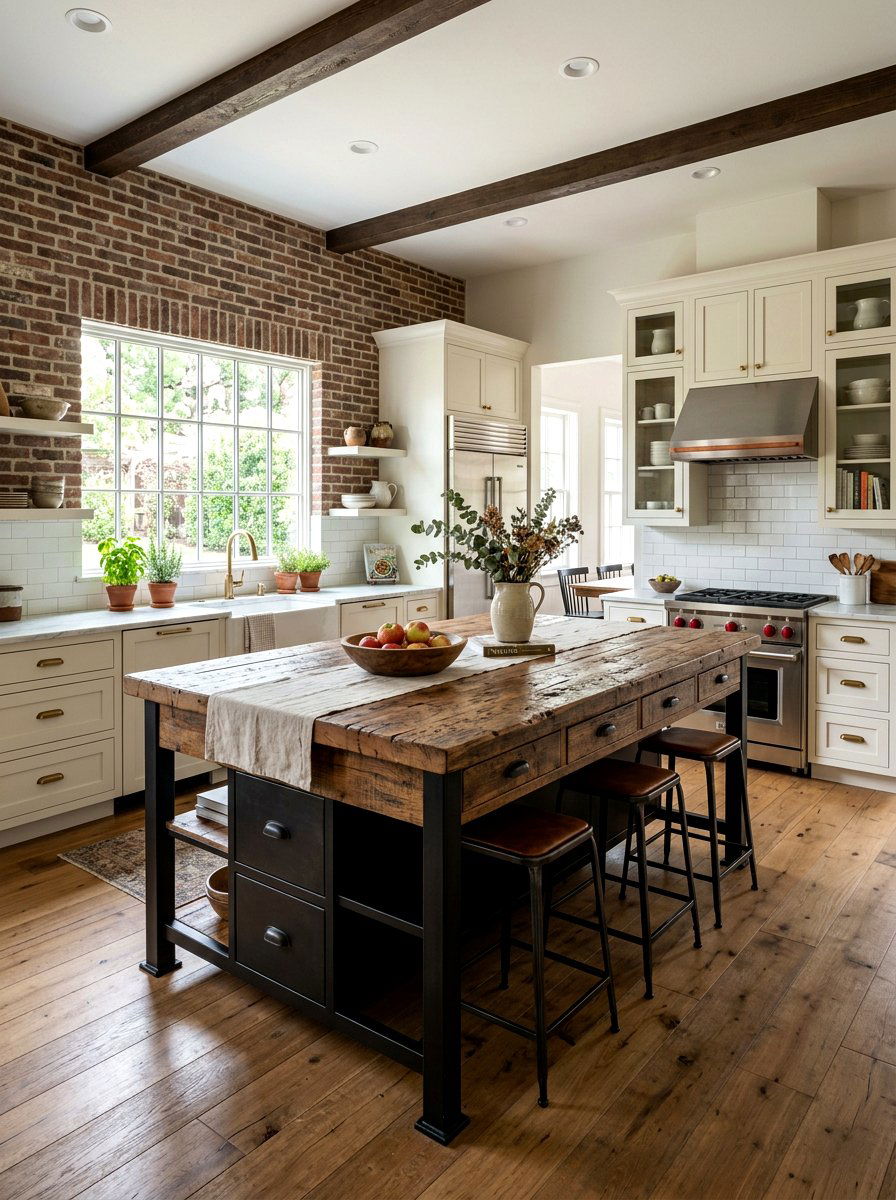
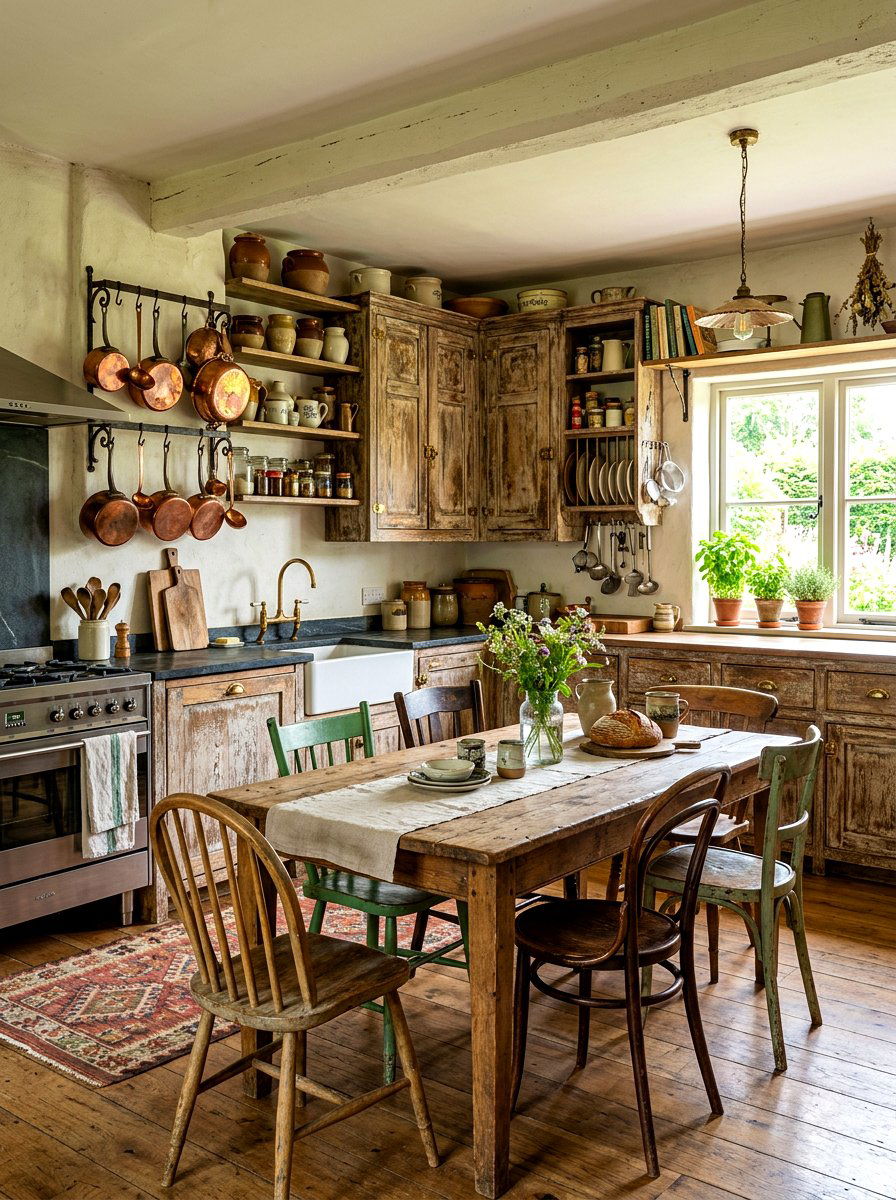
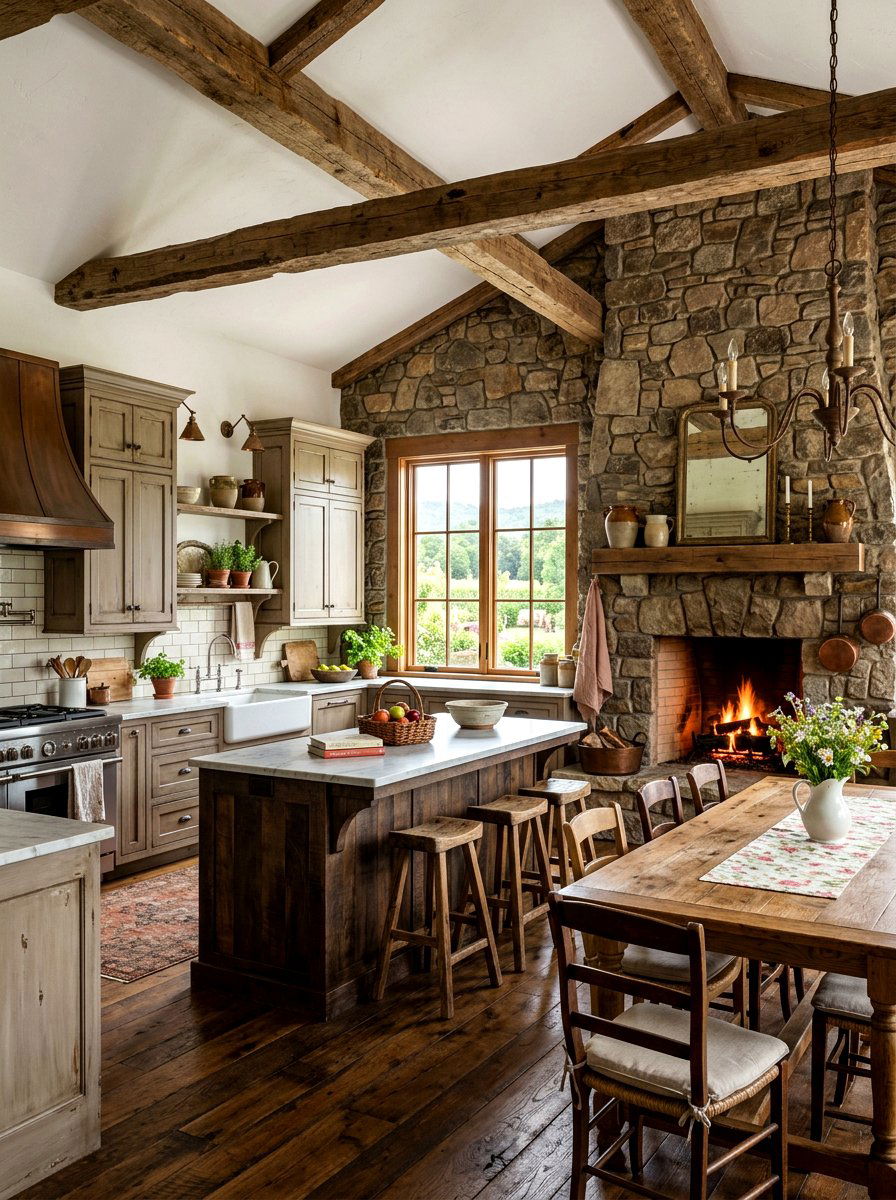
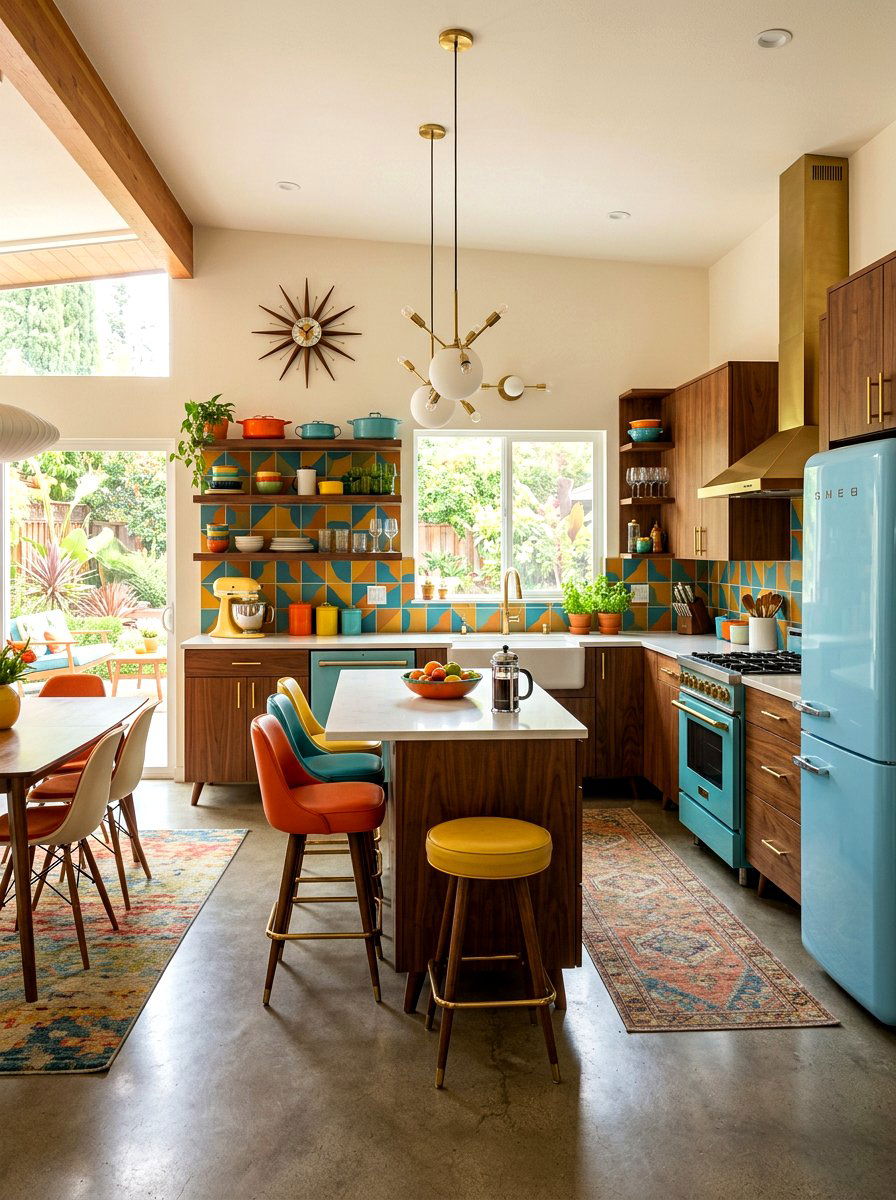
Stepping into a rustic European kitchen feels like traveling back to a simpler time when the heart of the home was defined by natural materials and timeless craftsmanship. These spaces beautifully blend the rugged charm of the countryside with a refined sense of history, creating an environment that is both functional and deeply soul-stirring. Whether you are inspired by the sun-drenched villas of Tuscany or the cozy cottages of the English countryside, there are many ways to bring this aesthetic into your modern dwelling. By focusing on authentic textures like stone, wood, and clay, you can transform a basic cooking area into a warm sanctuary. This guide explores thirty distinct ways to capture that quintessential European spirit, ensuring your kitchen remains inviting for your family.
1. French country kitchen
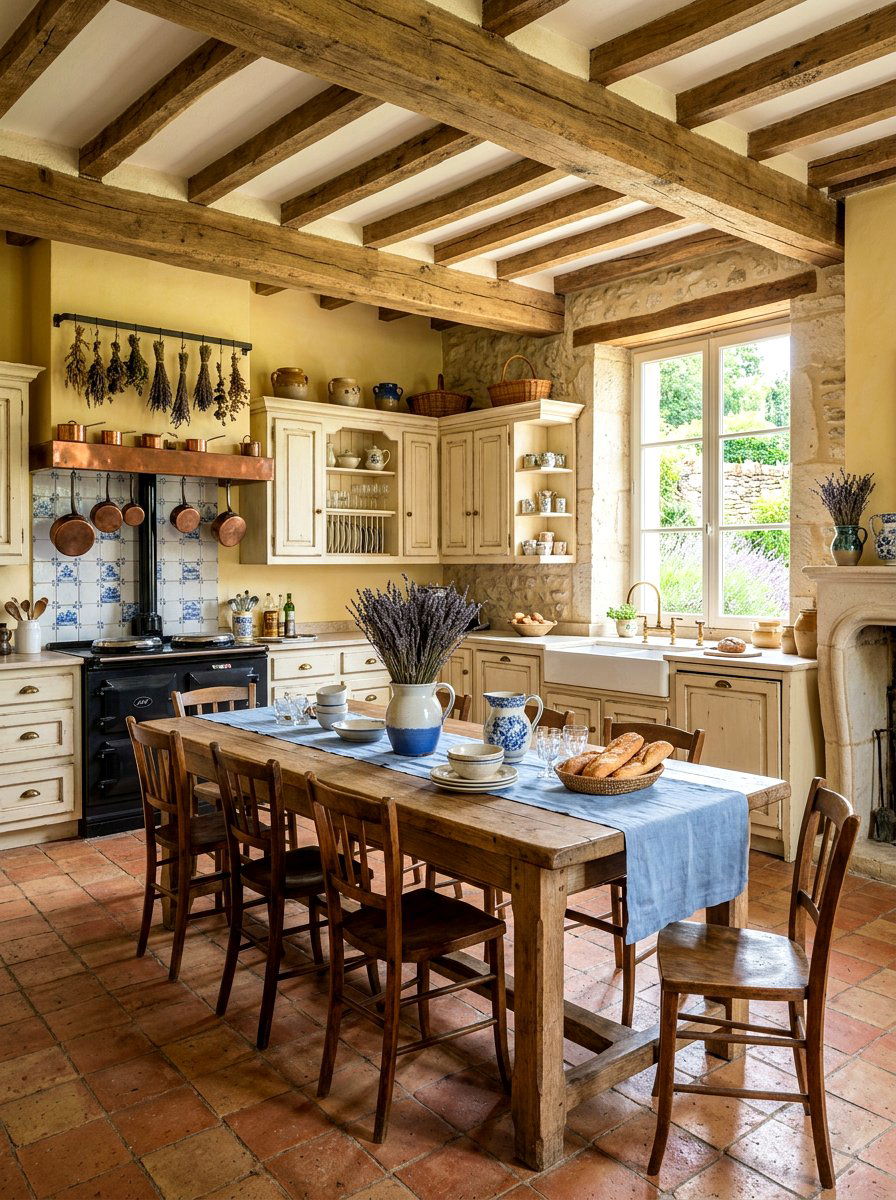
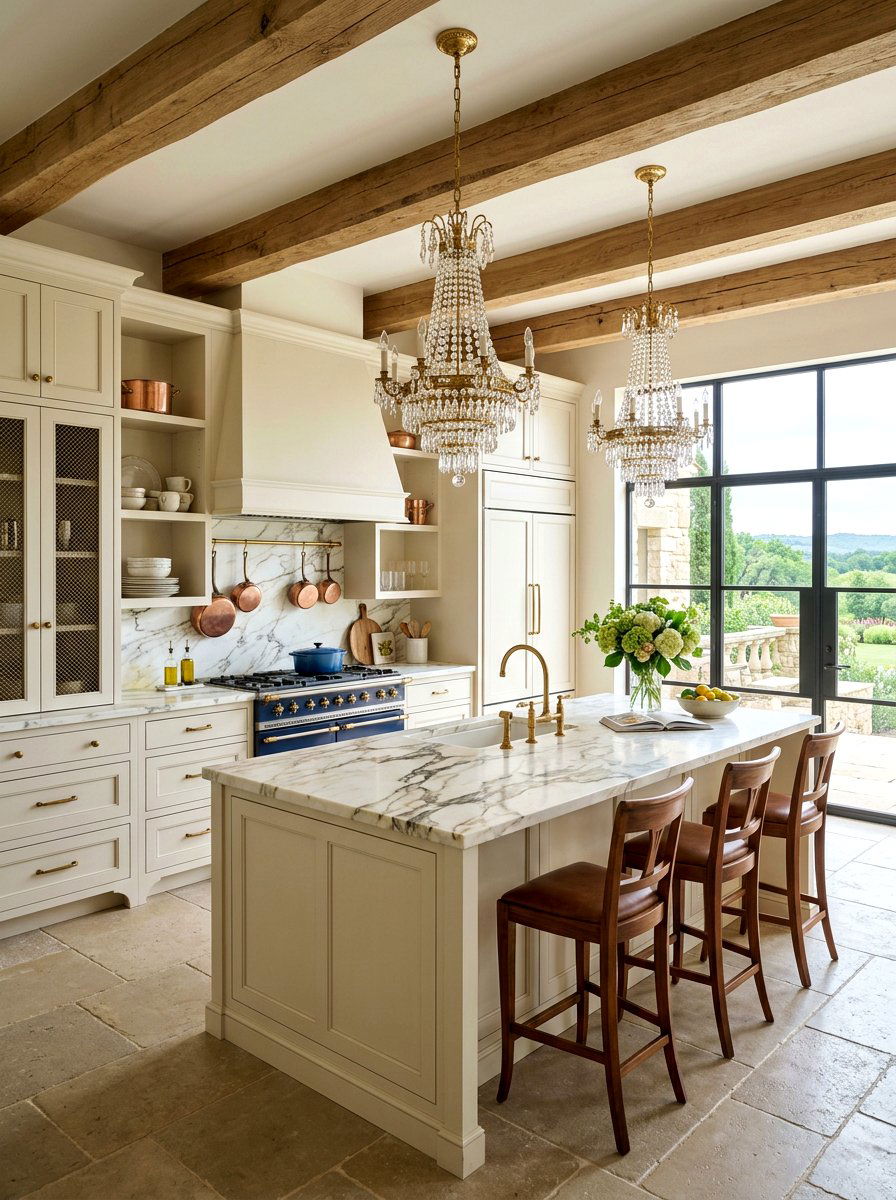
French country kitchen style brings a timeless elegance that feels both sophisticated and incredibly lived-in. This design often features a soft, muted color palette consisting of creams, buttery yellows, and gentle blues that reflect the natural landscape of Provence. To achieve this look, many homeowners incorporate distressed wood cabinetry paired with elegant stone countertops like honed marble or light granite. To make the space feel authentic, you should focus on adding vintage-inspired details such as a large farmhouse sink and ornate wrought iron chandeliers. The overall atmosphere should be airy and welcoming, inviting family members to gather around a large wooden table for long, leisurely meals. This style perfectly balances luxury with a cozy, farmhouse feel.
2. Tuscan kitchen remodel
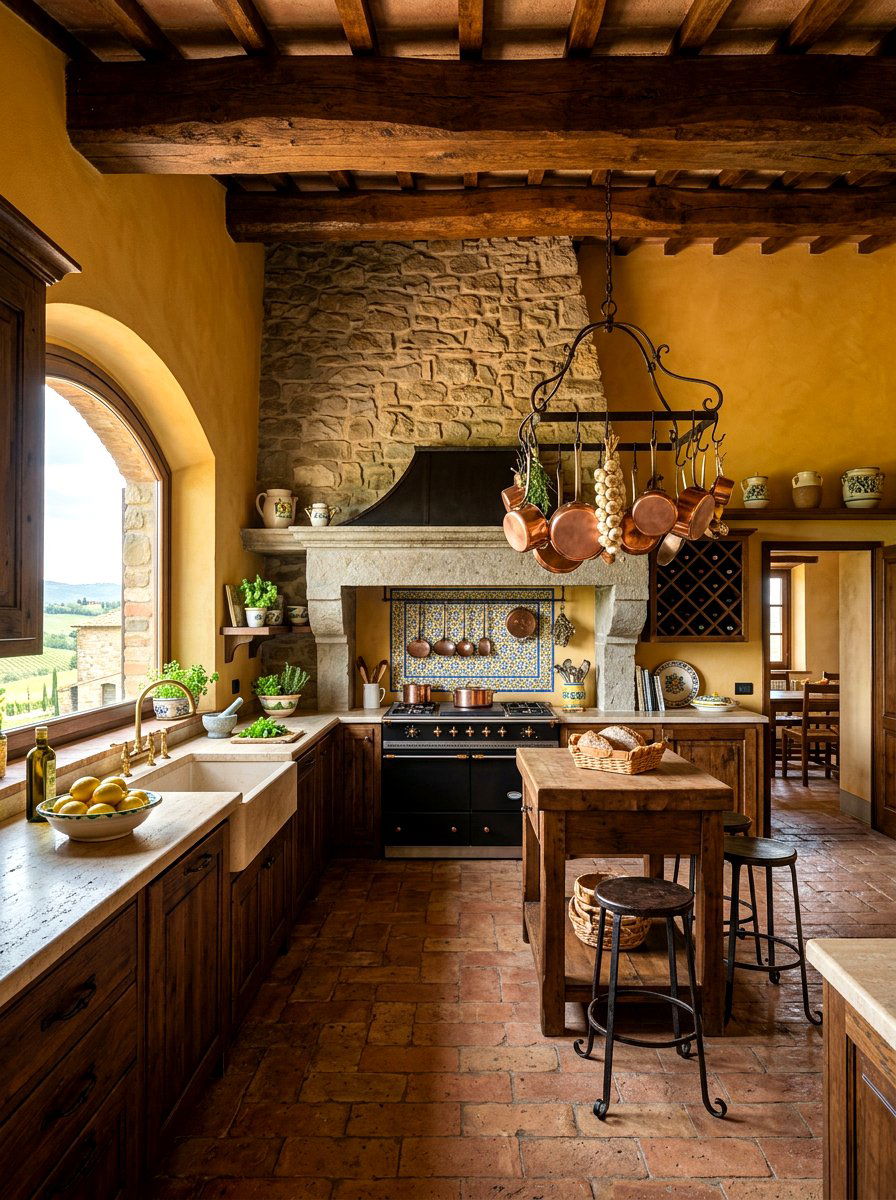
A Tuscan kitchen remodel focuses on warm, earthy tones and robust textures that evoke the sun-soaked hills of central Italy. You should prioritize materials like terracotta floor tiles, exposed brickwork, and heavy timber beams to ground the space in tradition. Deep ochre, burnt sienna, and olive green are perfect color choices for walls or accents, providing a rich backdrop for culinary adventures. An oversized hearth or a professional-grade range serves as the focal point, while wrought iron pot racks display copper cookware for both beauty and utility. Incorporating a mosaic backsplash or hand-painted ceramic tiles adds an artisanal touch that celebrates Italian heritage. The result is a kitchen that feels permanent, sturdy, and full of life.
3. English cottage kitchen
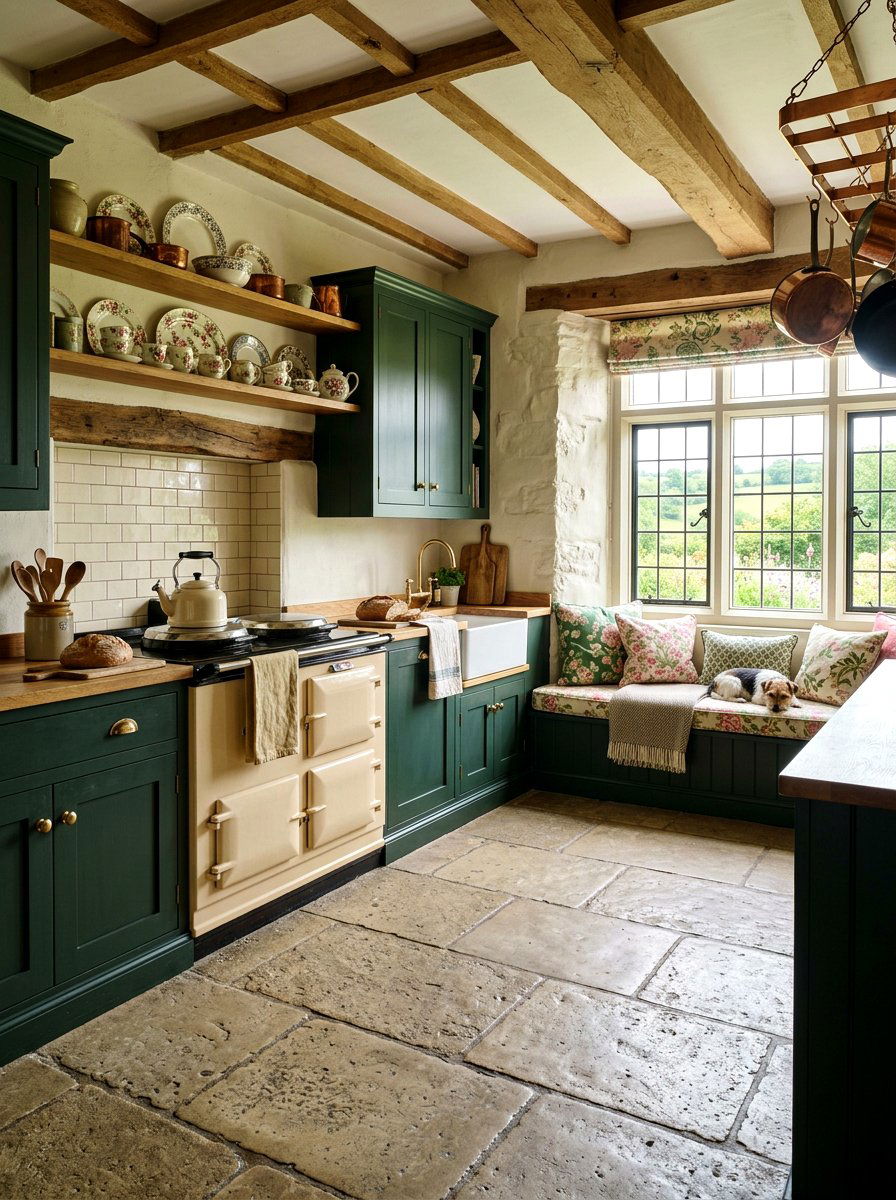
The English cottage kitchen is all about creating a sense of "clutter-core" charm and intimate warmth within a compact or sprawling space. This look typically involves painted cabinetry in traditional shades like hunter green, navy blue, or soft cream, often accented with unlacquered brass hardware. You might see flagstone flooring and a classic Aga range stove that provides both heat and a stunning visual center. Open shelving allows for the display of mismatched china, botanical prints, and woven baskets, enhancing the lived-in character. A cozy breakfast nook with floral cushions and a view of the garden completes the scene. This design approach prioritizes comfort and personality, making the kitchen feel like a protective and creative embrace.
4. Spanish colonial kitchen
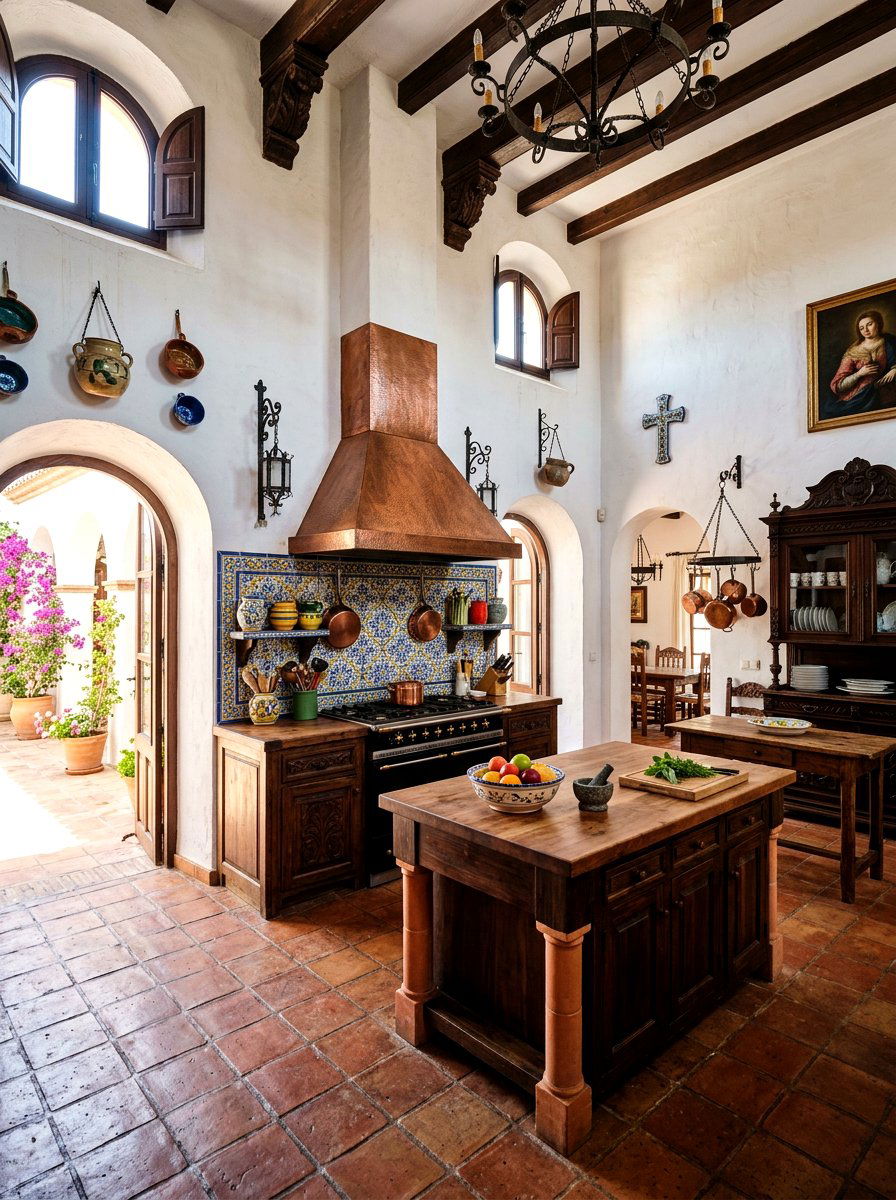
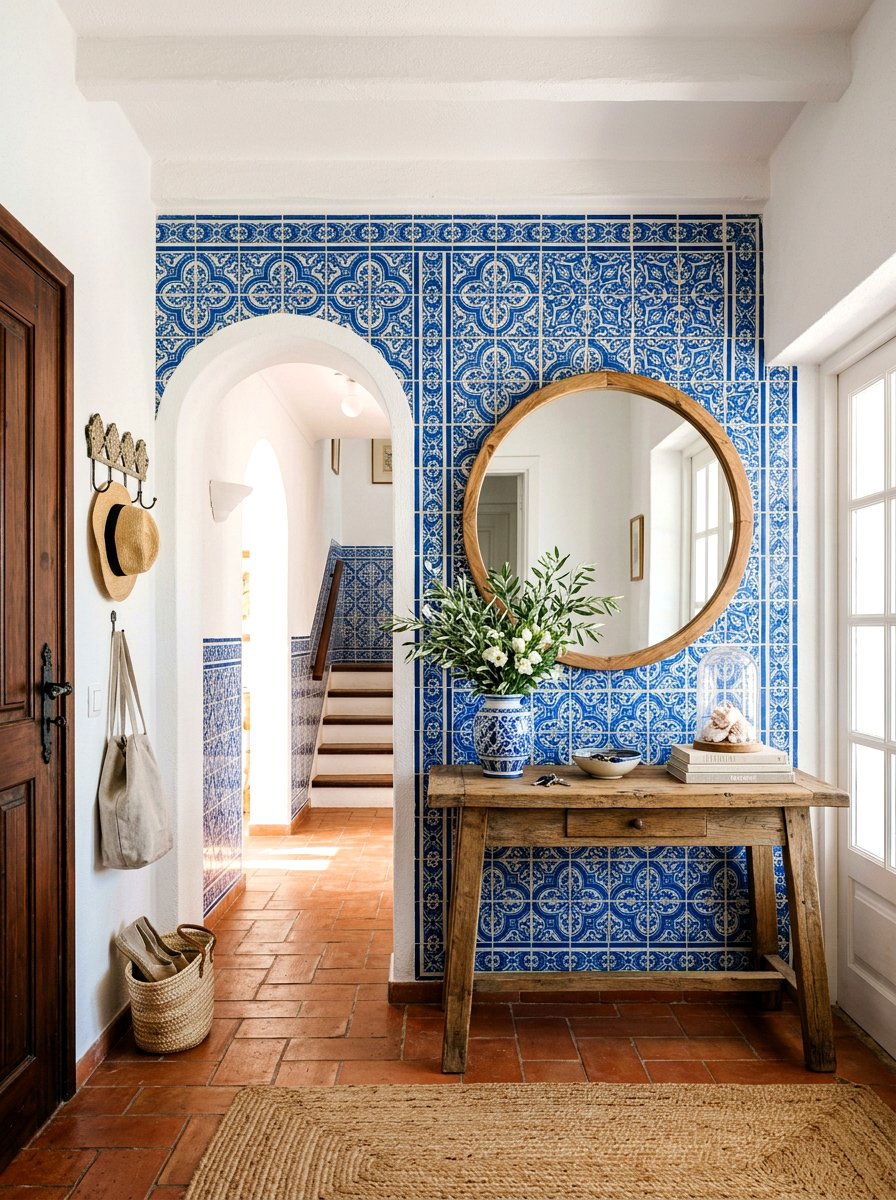
Spanish colonial kitchen design is characterized by dramatic architectural elements such as arched doorways and thick, white-washed plaster walls. This style utilizes a bold contrast between bright walls and dark, heavy wood furniture, often featuring intricate carvings or iron details. Hand-painted Talavera tiles are a hallmark of this look, appearing on backsplashes or stair risers to introduce vibrant patterns and colors. High ceilings with dark wood corbels and rafters add a sense of grandeur, while simple terracotta floors provide a grounded, practical surface. Large copper vent hoods and oversized clay urns serve as excellent decorative accents. This aesthetic is perfect for those who want a kitchen that feels historic, artistic, and exceptionally durable for daily use.
5. Modern rustic kitchen
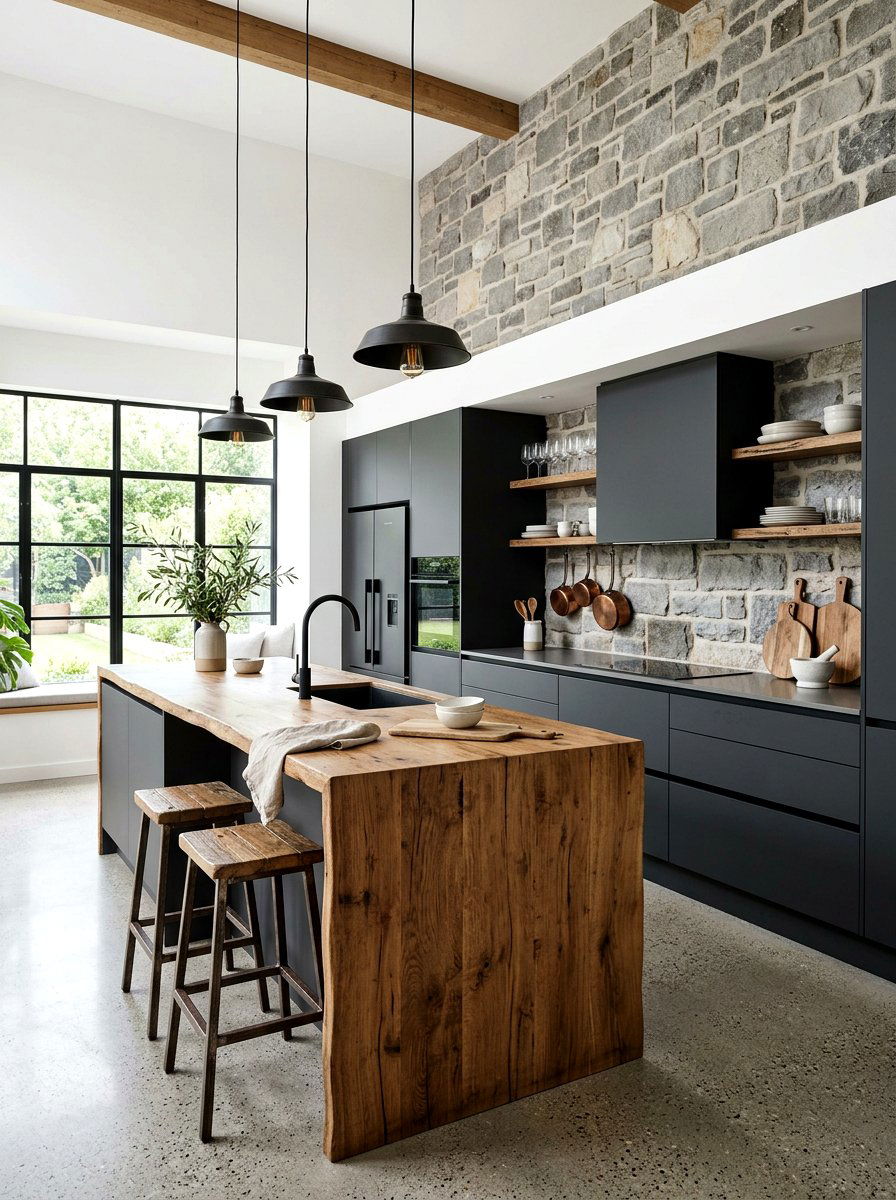
The modern rustic kitchen combines the clean lines of contemporary design with the warmth of organic, weathered materials for a balanced look. You can achieve this by pairing sleek, handle-free cabinetry with a massive reclaimed wood island or a raw stone accent wall. The color palette remains neutral, focusing on shades of charcoal, soft grey, and warm white to allow the natural textures to take center stage. Industrial elements like matte black faucets and minimalist pendant lighting provide a sharp contrast to the rough-hewn surfaces of the wood and stone. This style is ideal for homeowners who appreciate the simplicity of modern living but still crave the tactile connection to nature. It creates a serene and very sophisticated atmosphere.
6. Farmhouse pantry design
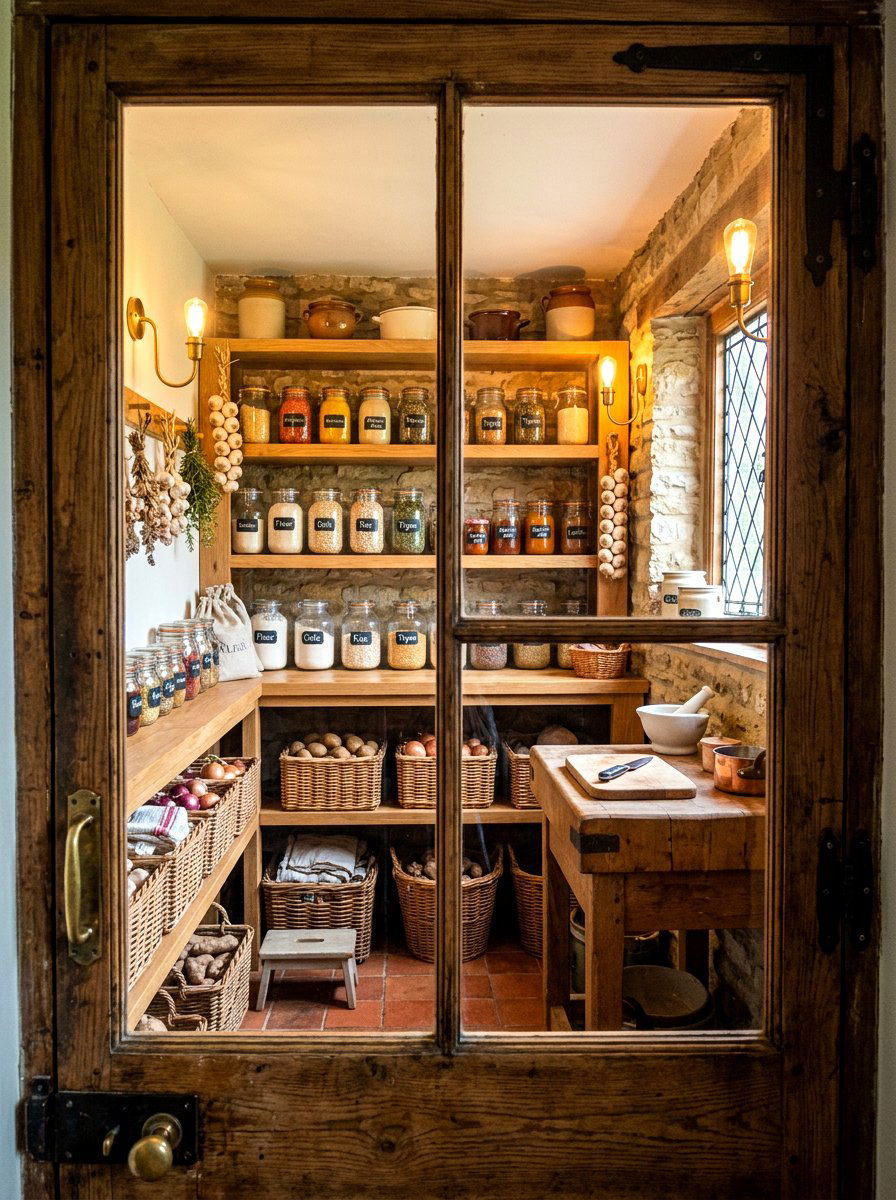
A farmhouse pantry design is both a functional storage solution and a beautiful extension of the main kitchen’s rustic aesthetic. You can create a stunning walk-in space by using vintage salvaged doors, perhaps with frosted glass or a distressed wood finish. Inside, use a combination of open wooden shelving and wicker baskets to keep ingredients organized while maintaining a charming, old-world look. Adding a small butcher block counter for prep work or a dedicated coffee station makes the pantry even more useful for a busy household. Soft, warm lighting from a small brass sconce ensures the space feels cozy rather than like a dark closet. This thoughtful approach turns a utilitarian area into a high-style highlight of the home.
7. Rustic wood kitchen
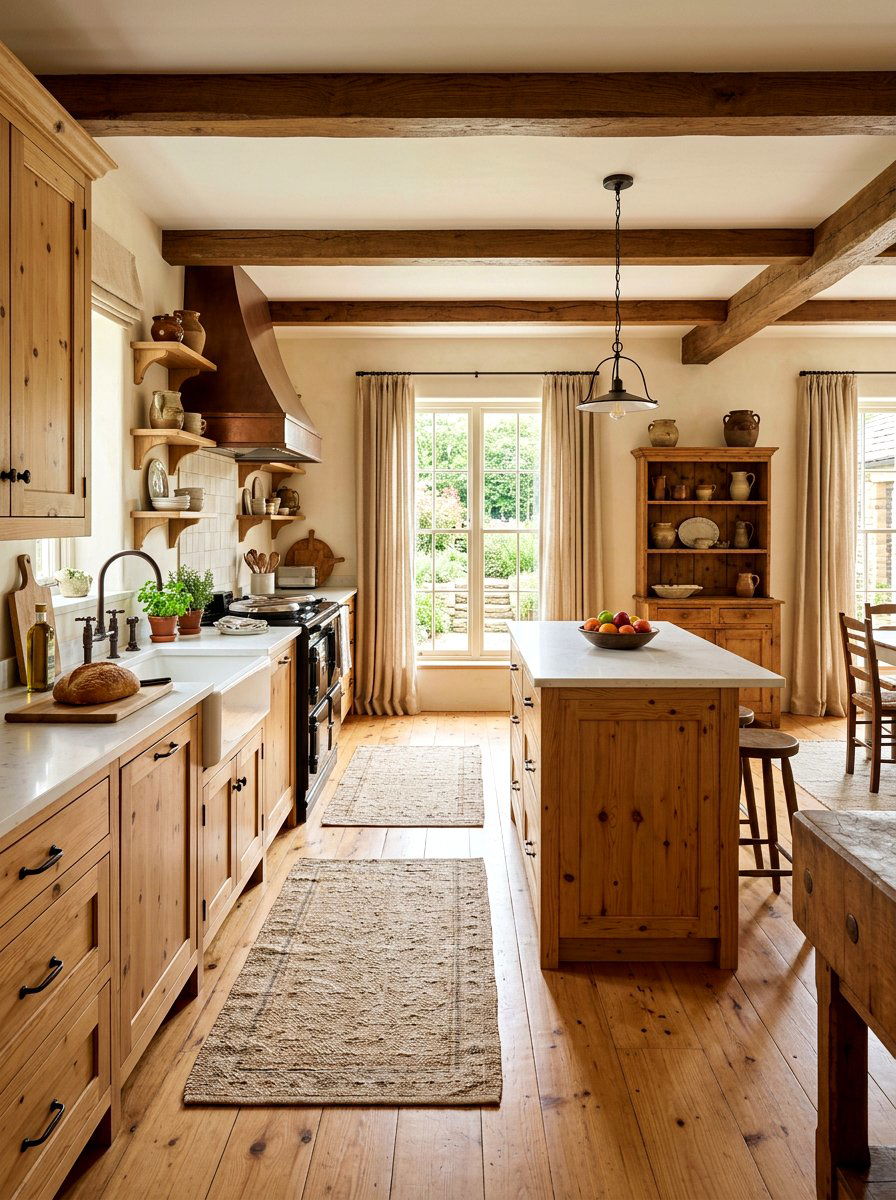
A rustic wood kitchen celebrates the inherent beauty of timber by making it the primary material for cabinetry, floors, and ceilings. Using different species of wood, such as knotty pine, reclaimed oak, or dark walnut, adds depth and visual interest through varied grains and tones. You should consider leaving the wood in its natural state or using a light oil finish to highlight its texture instead of heavy stains. Pairing these wood elements with neutral stone countertops prevents the room from feeling too dark or overwhelming. Woven rugs and linen curtains can soften the hard surfaces, creating a multi-layered and tactile environment. This design choice brings an incredible sense of warmth and a connection to the outdoors into your home.
8. Stone wall kitchen
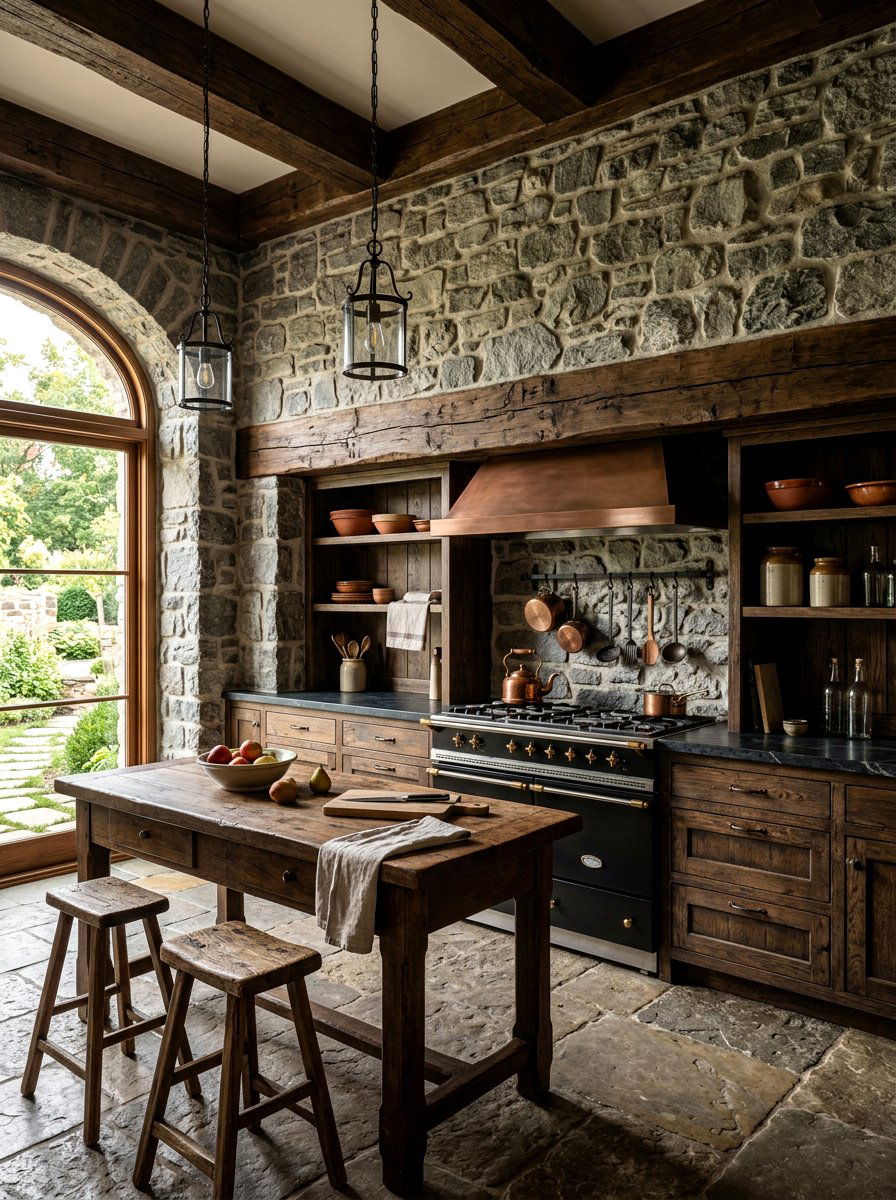
A stone wall kitchen utilizes the raw, architectural power of masonry to create a space that feels like it has stood for centuries. Whether you use real fieldstone, limestone, or high-quality stone veneer, the texture provides an immediate focal point that requires very little additional decor. You can choose to cover an entire wall or just use stone for a massive chimney breast over the cooking range. This feature pairs beautifully with heavy timber lintels and dark wood cabinetry, reinforcing the European farmhouse vibe. Lighting is crucial here; use warm, directional lamps to cast shadows that emphasize the irregular surfaces of the stone. This design creates a grounded, secure feeling that is perfect for a busy family hub.
9. Terracotta tile kitchen
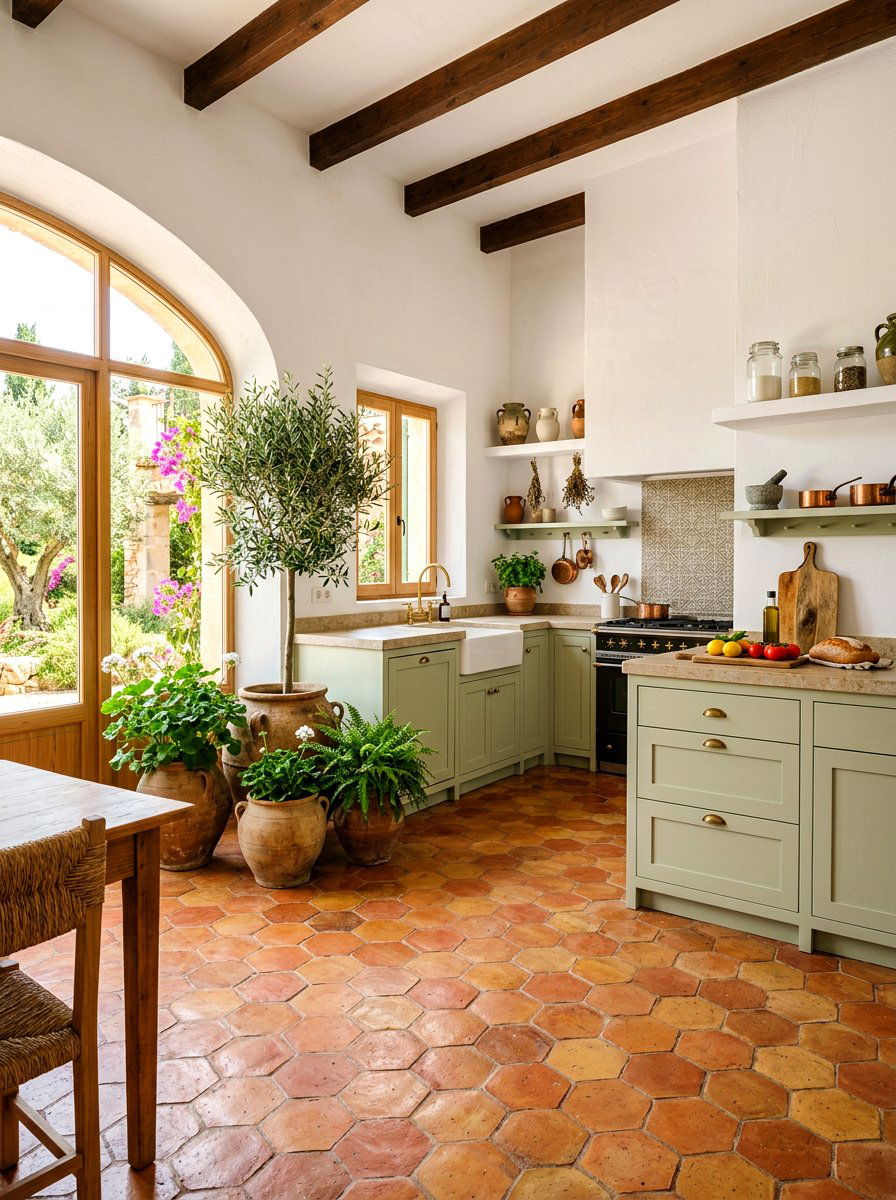
The terracotta tile kitchen is a classic choice for those seeking Mediterranean or Southern European warmth underfoot. These clay tiles come in various shapes, from standard squares to elegant hexagons, and offer a range of natural hues from pale peach to deep orange-red. The slight variations in color between tiles create a beautiful, "handmade" appearance that machine-made tiles simply cannot replicate. To keep the look fresh, pair these warm floors with crisp white walls and light-colored cabinetry. Adding blue and white ceramic accents or a few large green plants creates a vibrant, sun-soaked atmosphere. Terracotta is not only beautiful but also durable and feels wonderfully cool in the summer, making it a practical and very stylish choice.
10. Copper accent kitchen
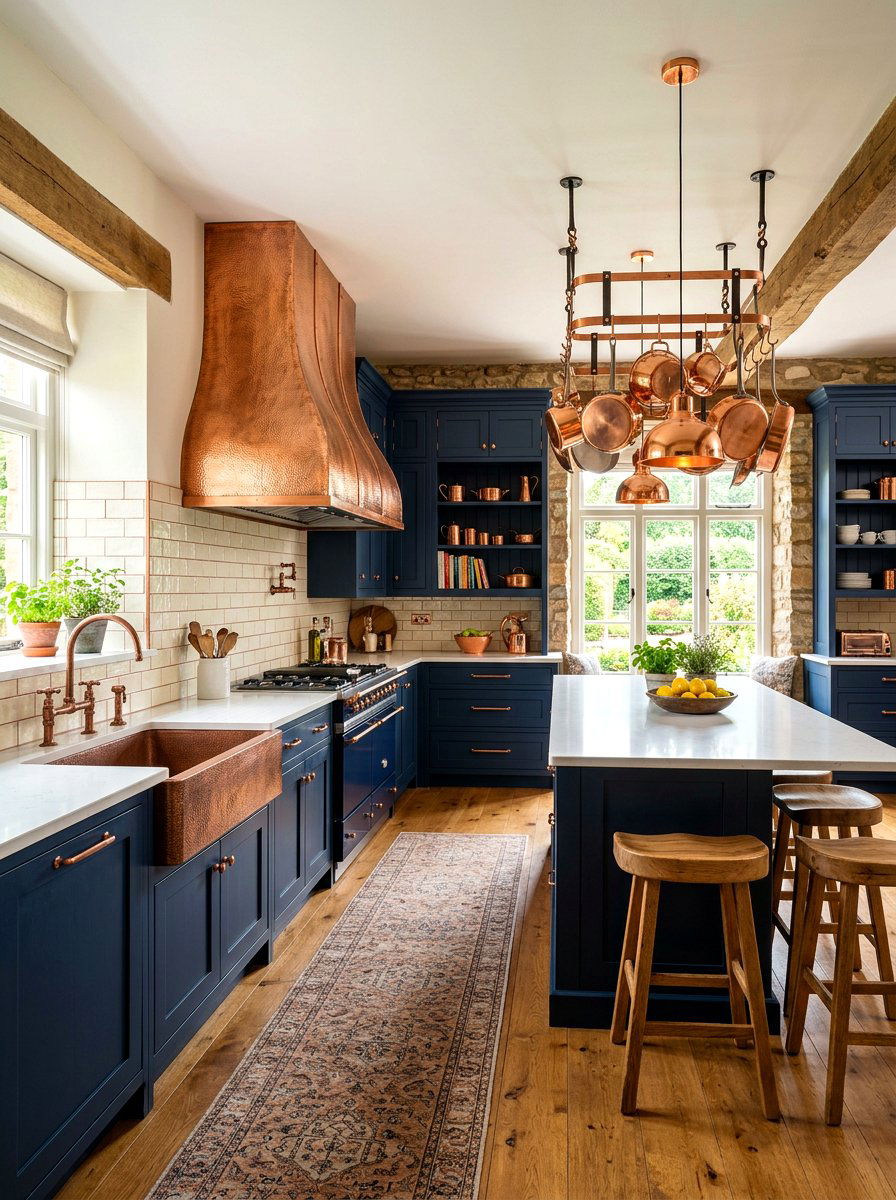
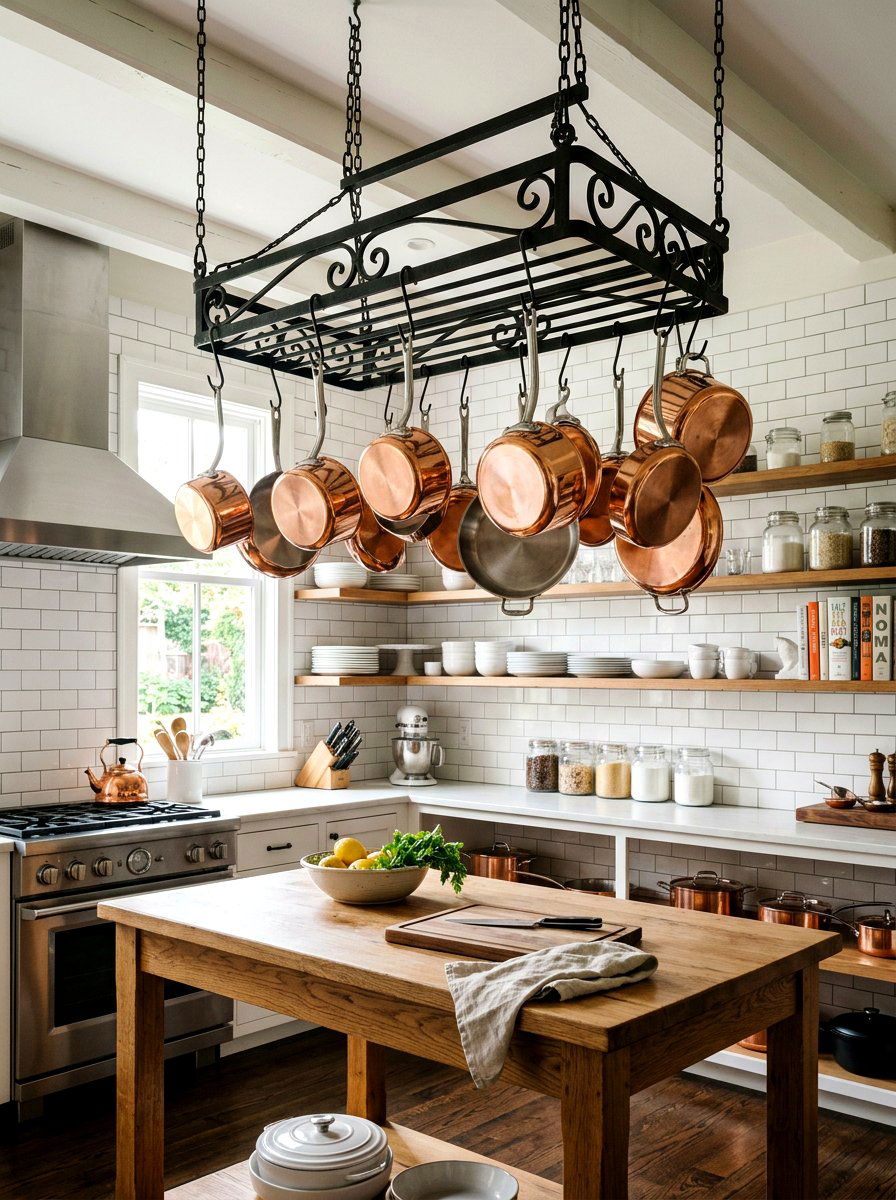
A copper accent kitchen uses this glowing metal to add a touch of warmth and luxury to a traditional rustic setting. You can incorporate copper through a large farmhouse sink, a custom-built vent hood, or even a collection of polished pots hanging from a wrought iron rack. The metal develops a beautiful patina over time, which only adds to the kitchen's sense of history and character. For a more subtle look, try using copper cabinet pulls or small pendant lights over the island to tie the theme together. Copper pairs exceptionally well with dark green or navy cabinetry, as the warm metal tones "pop" against the cooler colors. This material choice ensures your kitchen feels both expensive and deeply authentic.
11. Antique island kitchen
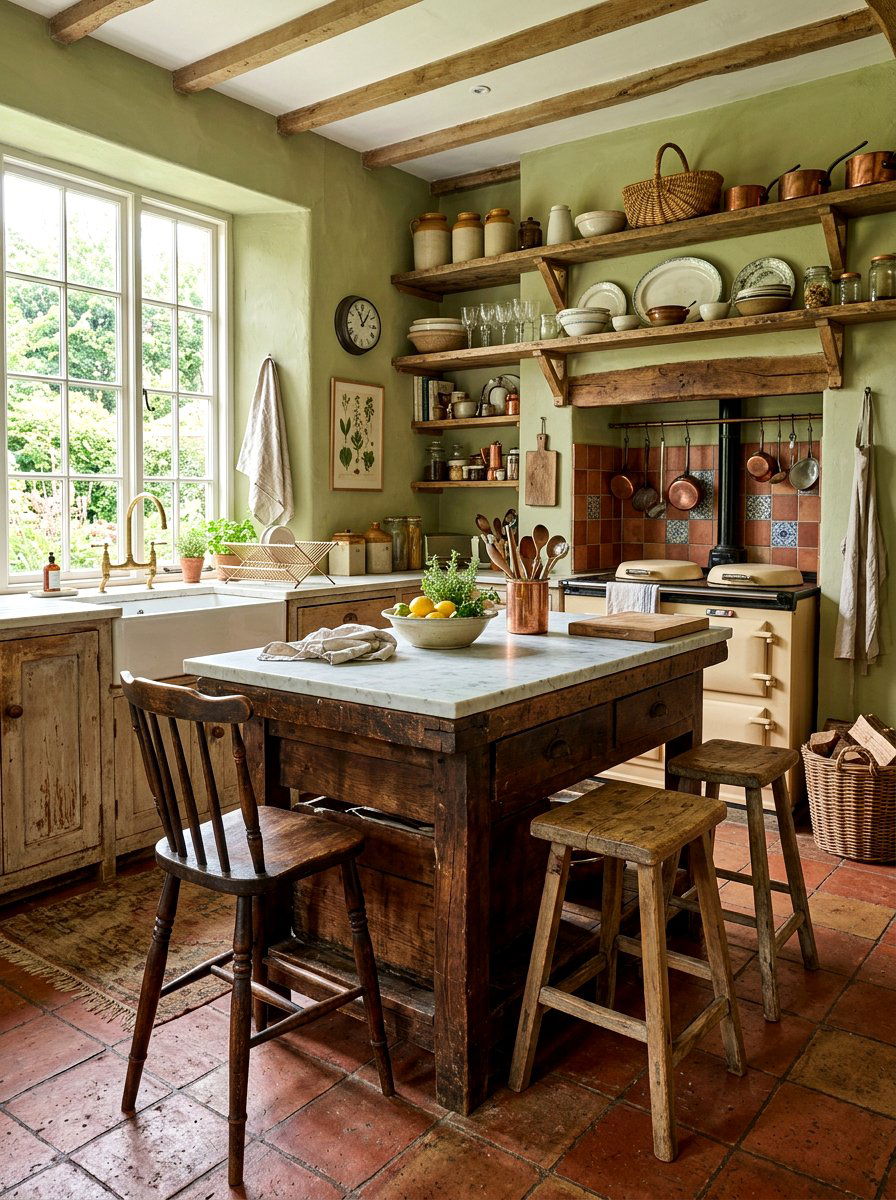
The antique island kitchen replaces the standard built-in island with a piece of repurposed furniture, such as an old draper's table or a rustic workbench. This approach adds immediate character and a unique focal point that guests will certainly notice and admire. Look for a piece with a sturdy base and a top that can be replaced with marble or reclaimed wood for a better food-prep surface. Leaving the original drawers and hardware intact maintains the history of the piece while providing useful storage for utensils and linens. Surround the island with mismatched wooden stools to further enhance the casual, "collected over time" aesthetic. This design choice makes the kitchen feel more like a living room and less like a showroom.
12. Plaster wall kitchen
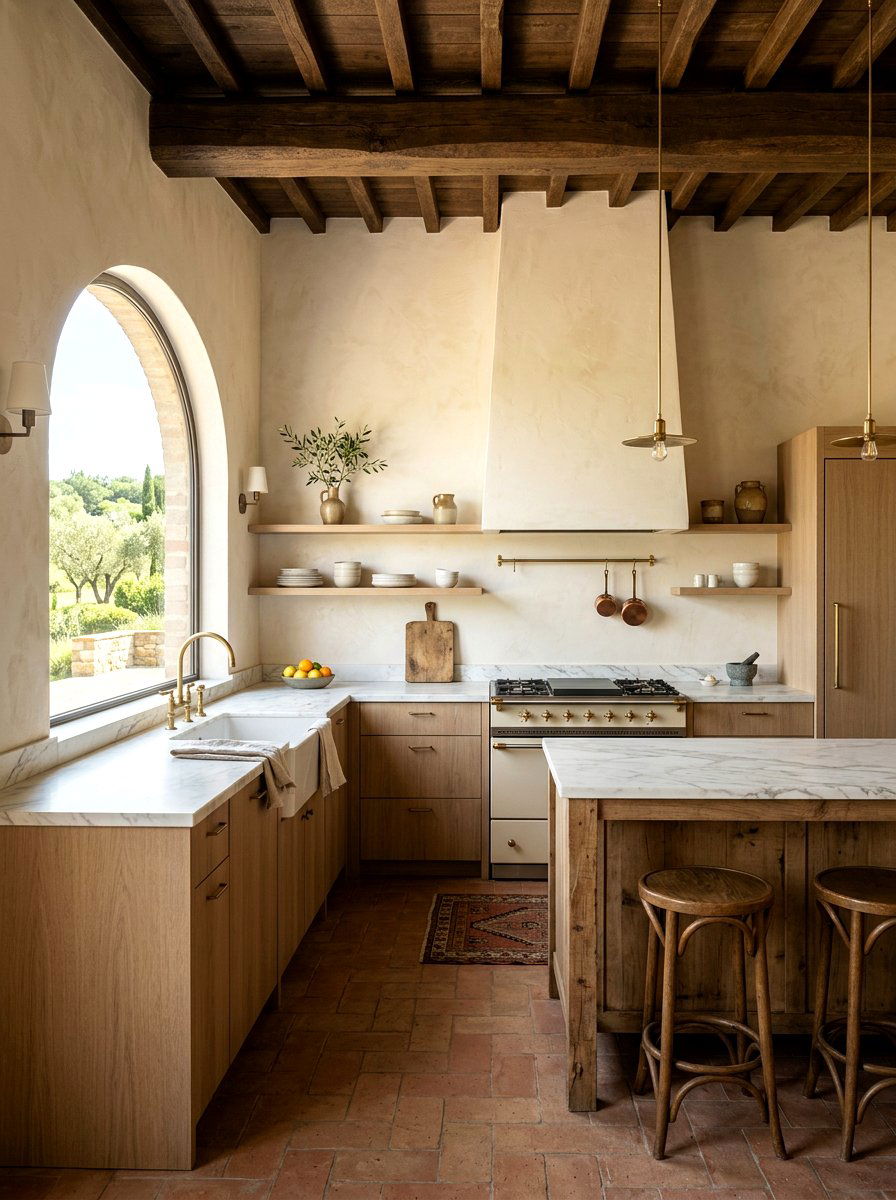
A plaster wall kitchen uses traditional lime or Venetian plaster to create walls with a soft, matte texture and subtle depth. Unlike flat paint, plaster reacts to light in a beautiful way, creating a gentle glow that enhances the rustic mood. You can choose a natural off-white for a clean, European farmhouse look or a warm terracotta hue for a more Mediterranean feel. This finish is also highly durable and breathable, making it a great choice for the high-moisture environment of a kitchen. Pairing textured plaster walls with smooth marble countertops and rough wood beams creates a high-contrast, tactile experience. This technique adds a layer of artisan craftsmanship that instantly elevates the overall design and feel of the space.
13. Open shelf kitchen
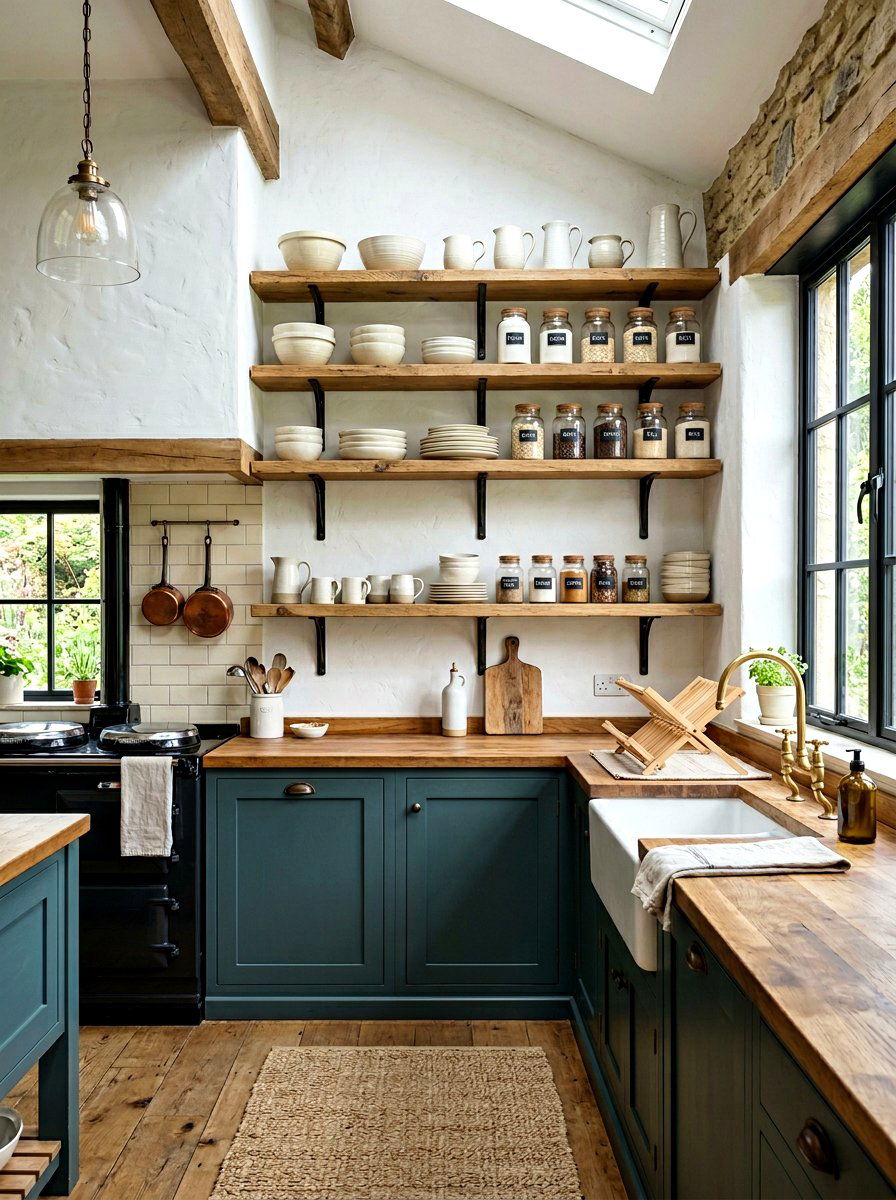
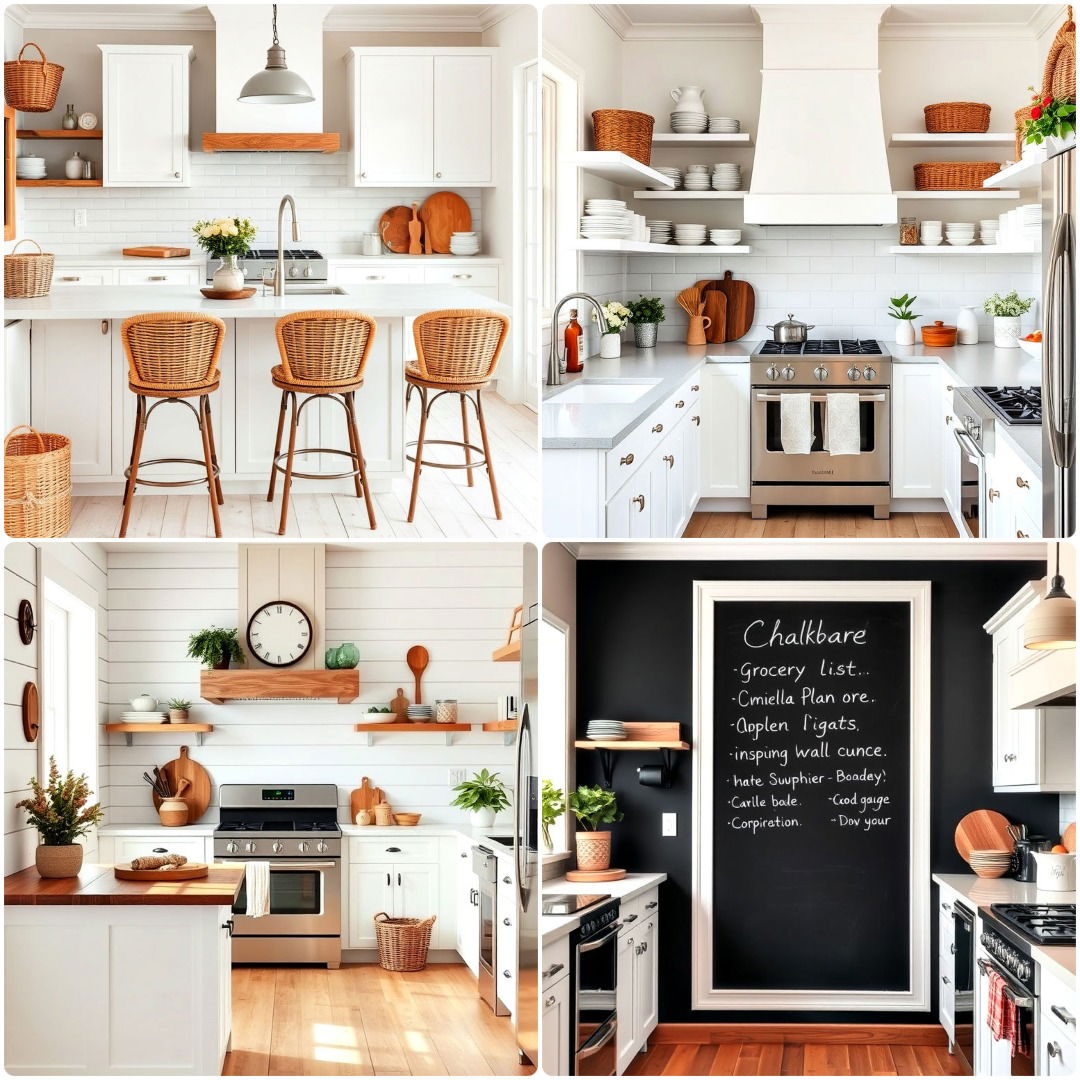
An open shelf kitchen swaps upper cabinets for thick, floating wooden shelves, creating a more open and airy feel in the room. This layout allows you to display your most beautiful dishes, vintage glassware, and copper canisters, turning everyday items into decor. To keep it from looking cluttered, choose a consistent color palette for your displayed items and use baskets for smaller things. The brackets for the shelves can be made of hand-forged iron or simple wood to match the kitchen's theme. This design encourages a more relaxed way of living where everything is within reach and easy to find. It is an excellent way to make a small kitchen feel larger while adding a lot of rustic charm.
14. Marble countertop kitchen
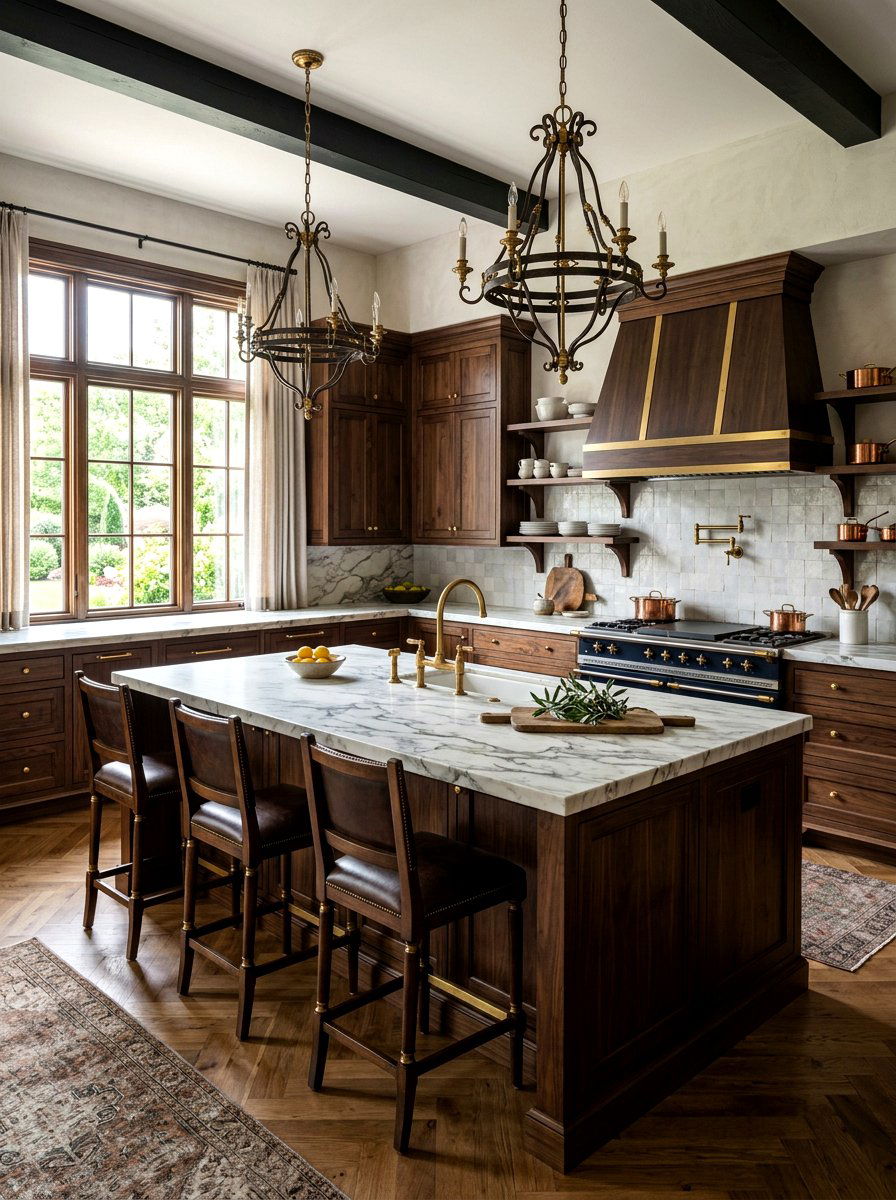
A marble countertop kitchen brings a sense of refined, old-world luxury to a rustic setting, especially when using a honed finish. Unlike polished marble, a honed surface is matte and more forgiving of the scratches and etches that come with heavy kitchen use. Classic white marble with grey veining, such as Carrara or Calacatta, pairs beautifully with reclaimed wood islands and dark-painted cabinetry. The cool surface of the stone is perfect for baking, while its natural beauty provides a timeless anchor for the entire room. To maintain the rustic balance, avoid overly ornate edge profiles and stick to simple, squared-off designs. This material choice bridges the gap between high-end elegance and rugged, farmhouse functionality perfectly.
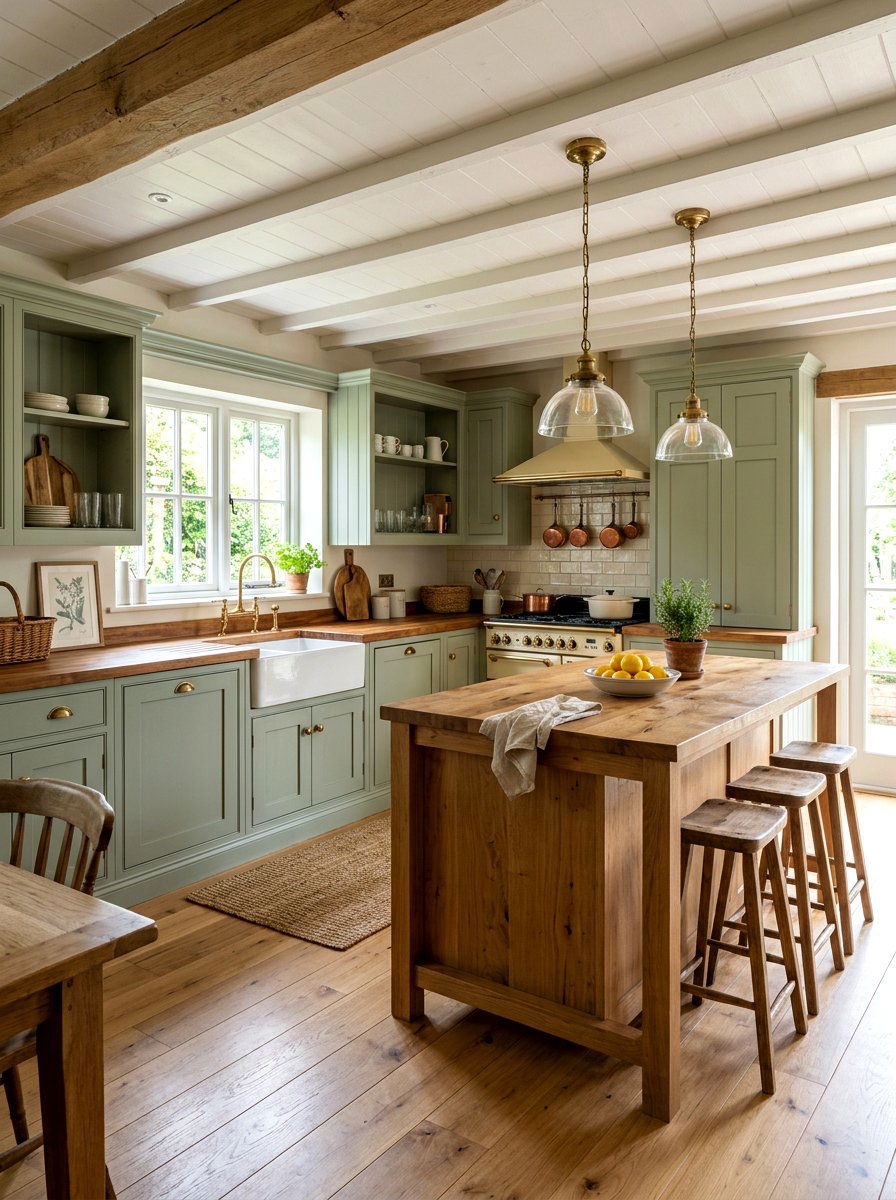
15. Exposed beam kitchen
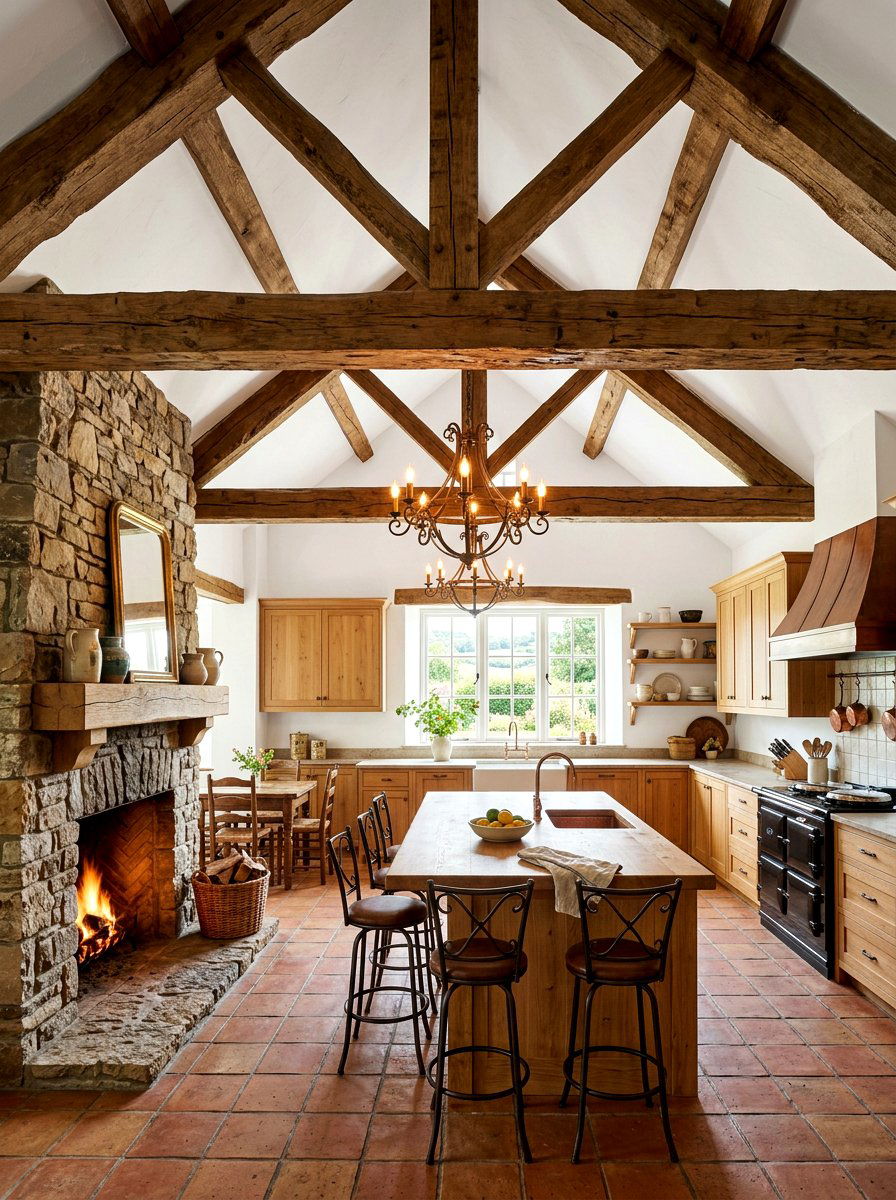
An exposed beam kitchen uses structural or decorative timber to add vertical interest and architectural drama to the ceiling. These beams can be left in their natural, rough-hewn state or painted white to match the ceiling for a more subtle, coastal rustic look. They help to ground a large room with high ceilings, making the space feel more intimate and cozy for family gatherings. You can also use the beams as a mounting point for hanging lights or pot racks, adding extra functionality to the design. Pairing these heavy wood elements with light-colored walls and flooring prevents the space from feeling top-heavy. This classic feature is perhaps the most recognizable hallmark of a truly authentic European country kitchen.
16. Sage green kitchen
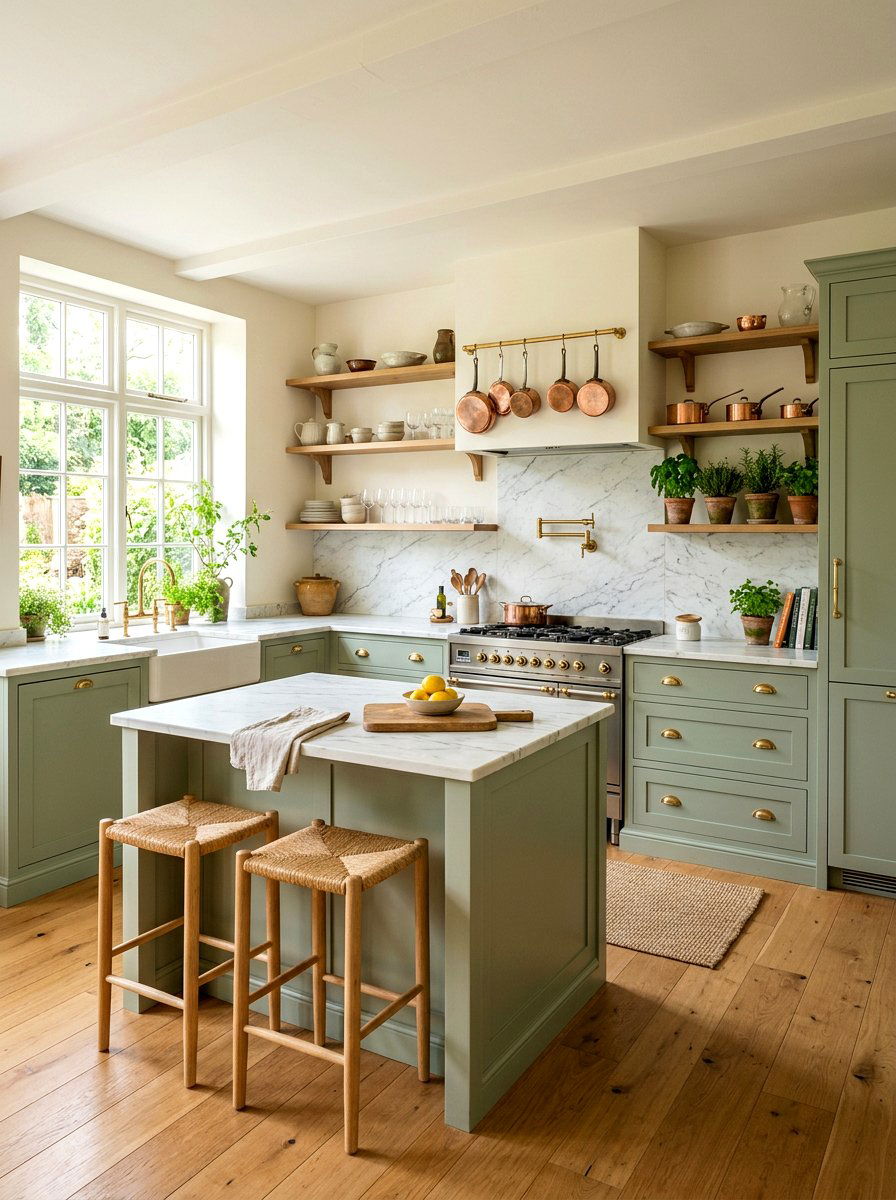
A sage green kitchen is a popular choice for those who want to introduce color while maintaining a calm, nature-inspired environment. This soft, earthy hue acts as a neutral, pairing effortlessly with natural wood tones, white marble, and brass hardware. You can use sage green on all the cabinetry for a cohesive look or just on a central island to create a subtle focal point. This color feels particularly at home in an English or French country setting, where it mimics the surrounding gardens and fields. To complete the look, add some botanical art and plenty of fresh herbs in terracotta pots on the windowsills. This palette creates a serene and timeless space that feels fresh every single day.
17. Moody burgundy kitchen
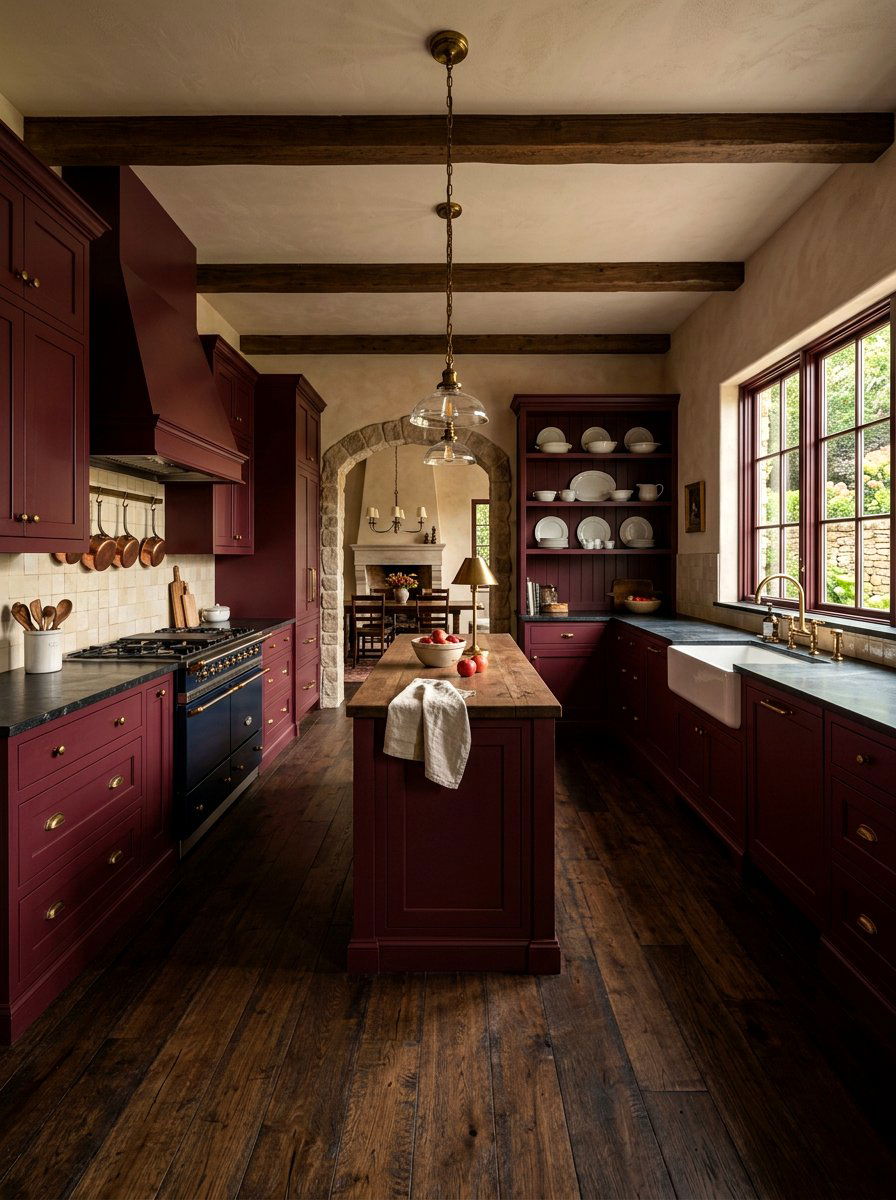
A moody burgundy kitchen is a bold, sophisticated take on the rustic European theme, perfect for creating a cozy and dramatic atmosphere. This deep, wine-red color looks incredible on traditional Shaker-style cabinets, especially when paired with dark wood floors and antique brass accents. The richness of the color provides a stunning backdrop for white ceramic dishes and copper cookware on open shelves. To keep the space from feeling too dark, ensure there is plenty of natural light and consider using a lighter stone for the countertops. This color choice evokes the feeling of a historic manor or a cozy tavern, making the kitchen feel like a truly special place to gather in the evening.
18. Brick backsplash kitchen
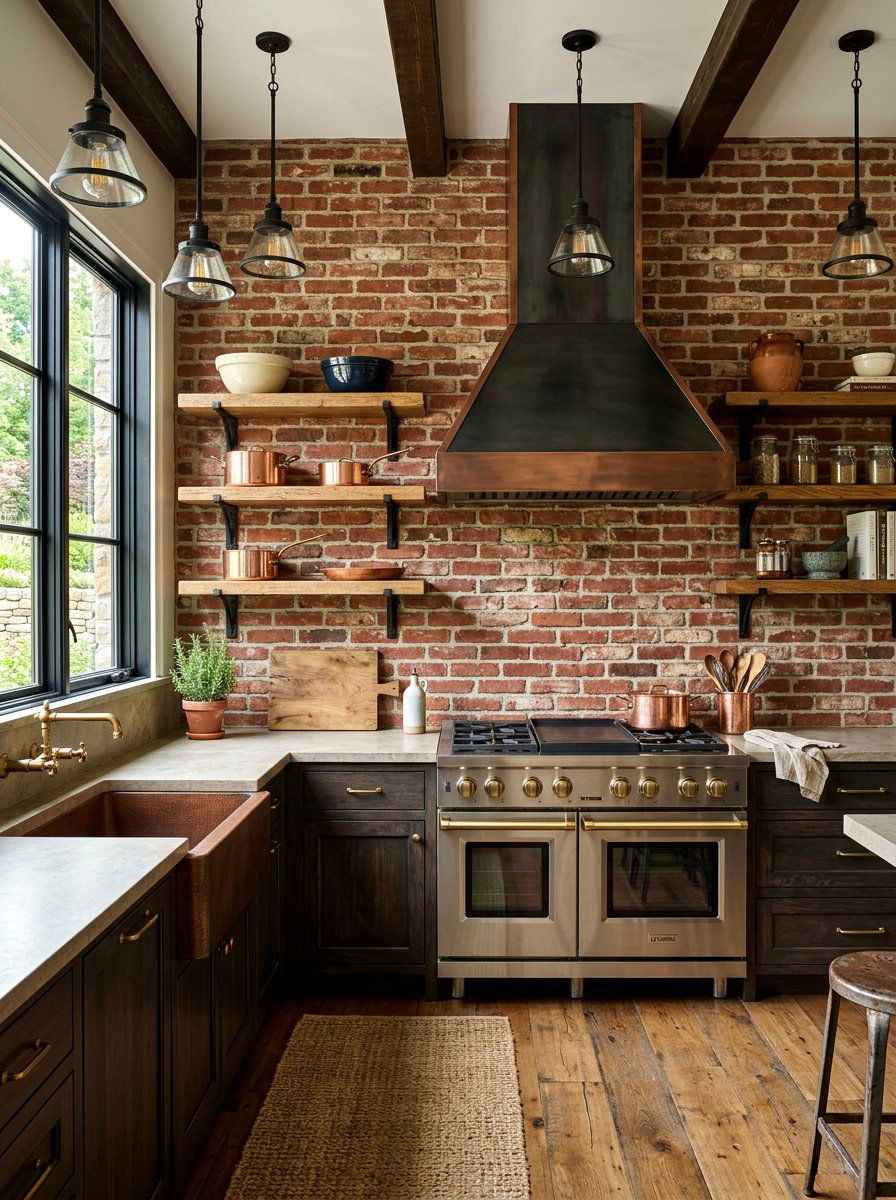
A brick backsplash kitchen introduces a rugged, industrial-meets-country texture that adds instant warmth and history to the cooking area. You can use reclaimed thin-brick veneers to achieve this look without the weight of full bricks, making it an easy addition to any remodel. The varied tones of the brick — from deep reds to sandy oranges — complement wood cabinetry and neutral stone countertops beautifully. Leaving the grout slightly messy or "over-grouted" can enhance the authentic, aged appearance of the wall. This feature is particularly effective behind a large professional range, where it acts as a durable and visually striking focal point. Brick is timeless, easy to maintain, and adds a great deal of character to the room.
19. Traditional range kitchen
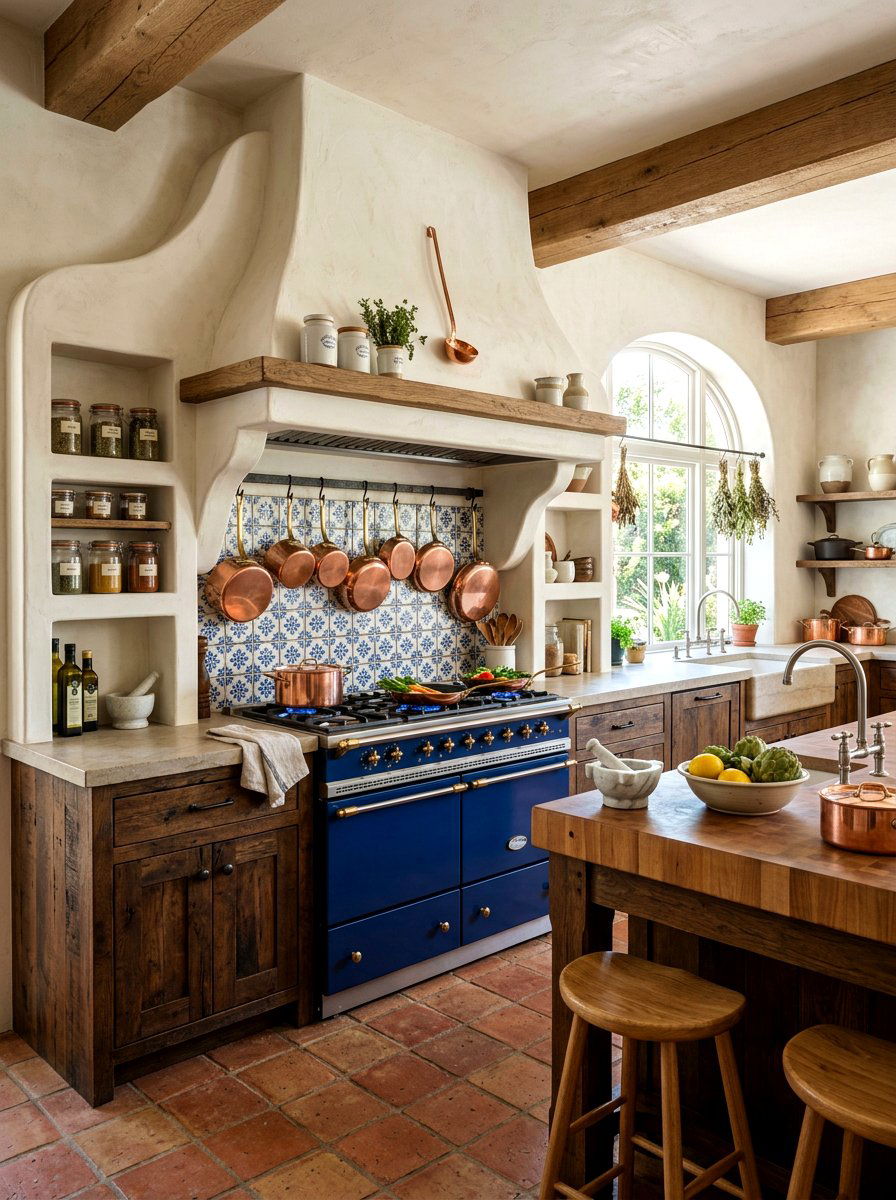
A traditional range kitchen centers around a heavy-duty, cast iron stove like an Aga or a Lacanche, which serves as the room 's mechanical and visual heart. These ranges often come in beautiful enameled colors like cream, British racing green, or deep blue, allowing you to personalize the space. Because these stoves are often quite large, they require a substantial vent hood, which can be custom-clad in wood, stone, or plaster to match the kitchen' s theme. Surrounding the range with open shelving or spice niches makes the cooking process feel more intuitive and artisanal. This setup is perfect for serious home cooks who want a kitchen that performs as well as it looks. It truly anchors the entire design.
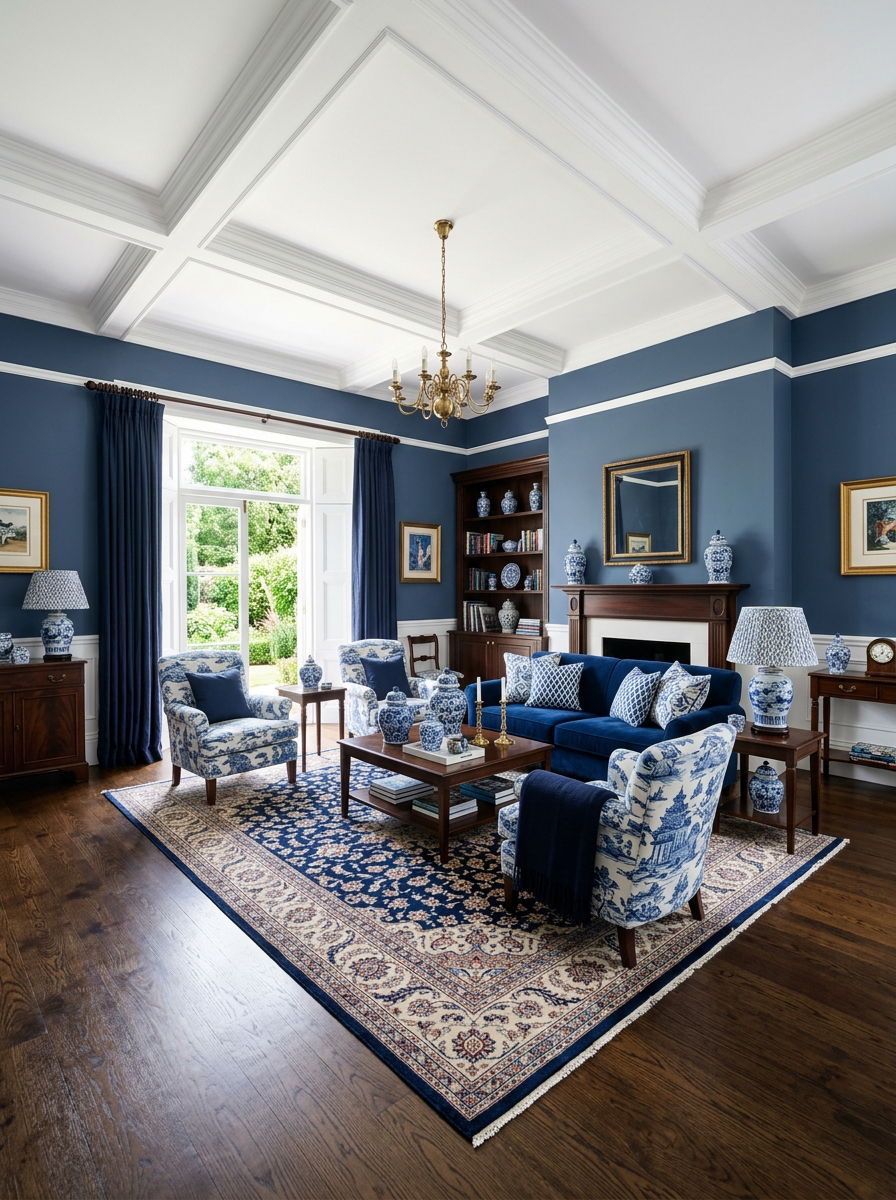
20. Breakfast nook kitchen
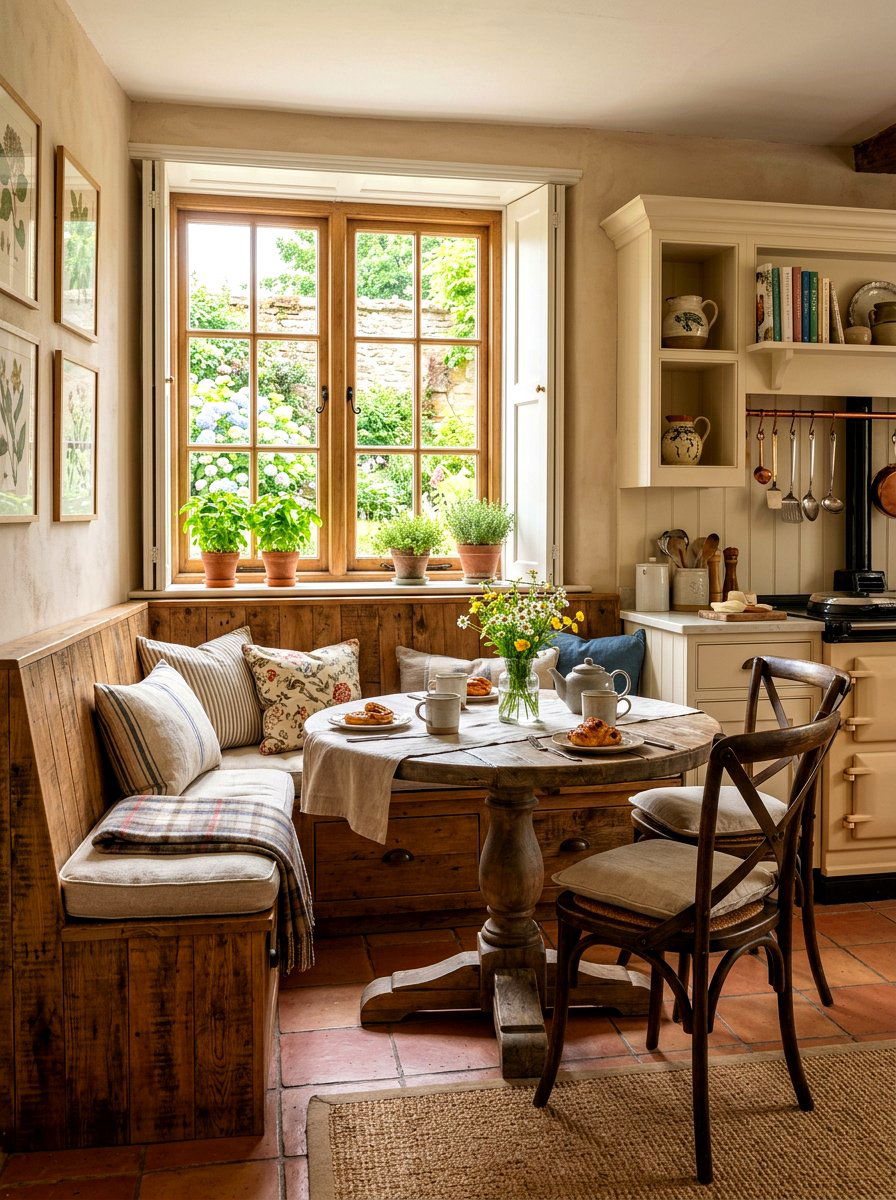
A breakfast nook kitchen incorporates a built-in seating area, often in a corner or under a large window, to create a cozy spot for casual meals. Use a simple wooden bench or a banquette upholstered in durable linen or a subtle plaid fabric to maintain the rustic theme. A pedestal-style wooden table allows for easy movement in and out of the seating area without bumping into legs. Adding a few throw pillows and a low-hanging pendant light makes the nook feel like a separate, intimate room within the kitchen. This is the perfect place for kids to do homework or for you to enjoy a quiet cup of coffee while looking out at the garden. It adds immense charm.
21. Large window kitchen
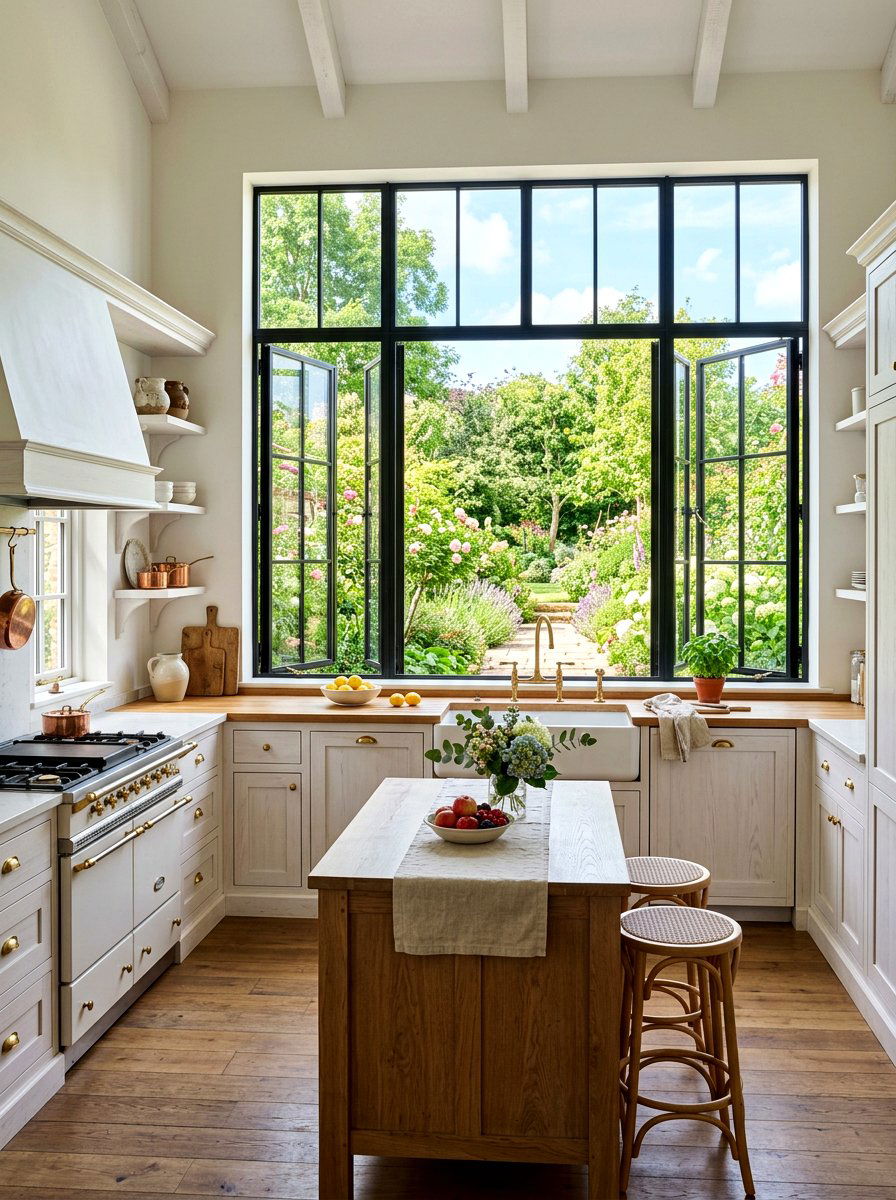
A large window kitchen prioritizes natural light and a connection to the outdoors, often featuring oversized casement windows or even a full wall of glass. Placing the sink directly in front of a window allows you to enjoy the view while doing daily chores, making the task much more pleasant. You should consider using simple, unadorned window frames in wood or black metal to keep the focus on the landscape outside. To maintain the rustic feel, use light-filtering linen shades or simple cafe curtains rather than heavy drapery. The abundance of light makes natural materials like wood and stone look their best and helps the kitchen feel much larger and more inviting throughout the day.
22. Limestone floor kitchen
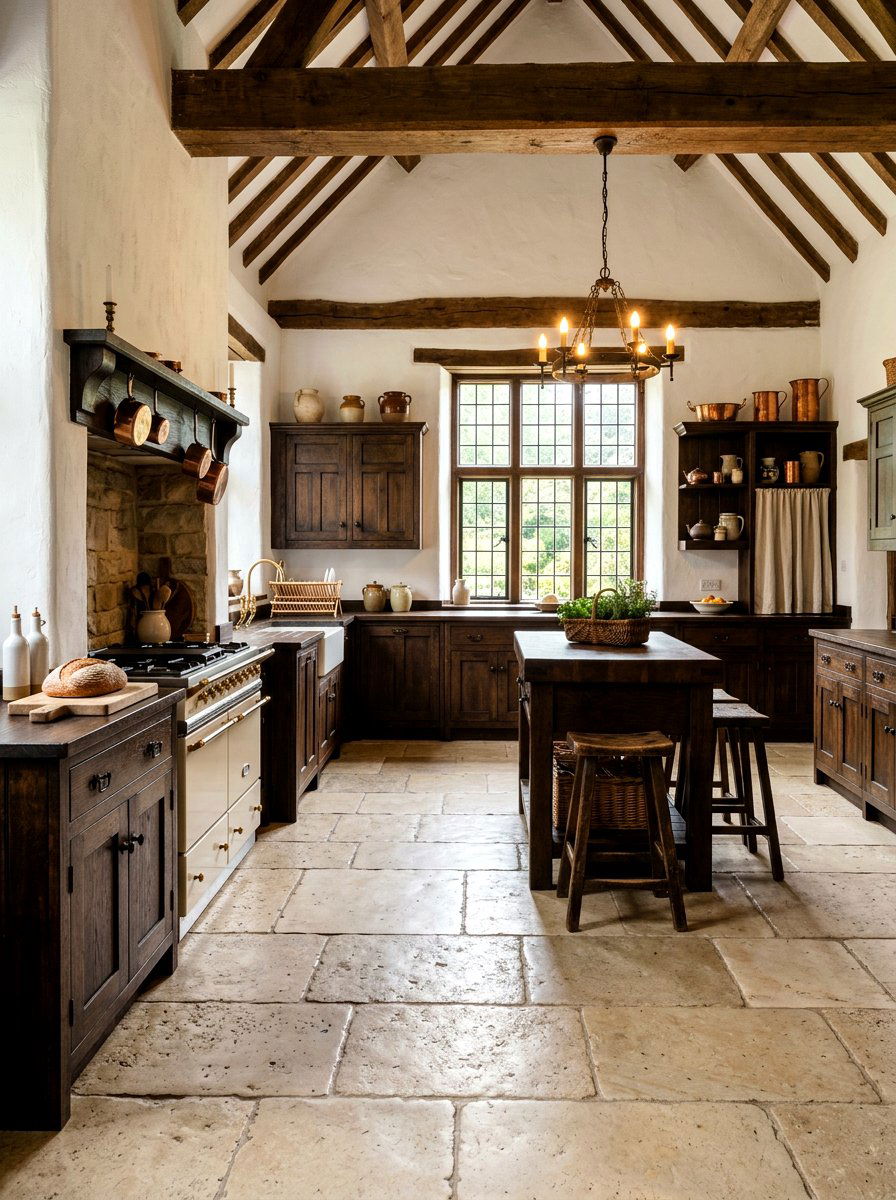
A limestone floor kitchen offers a soft, elegant foundation that feels both ancient and incredibly durable for a high-traffic area. Limestone comes in beautiful, muted shades of cream, beige, and grey, often containing tiny fossils that add a layer of natural history to the floor. Choosing large, irregular flagstones with tumbled edges enhances the rustic, "paved" look of an old European manor. This stone is naturally cool and comfortable underfoot, and it develops a lovely soft patina as it ages over many years. Pairing a light limestone floor with dark wood cabinetry creates a beautiful visual balance that keeps the room feeling grounded but not heavy. It is a sophisticated choice for any rustic home.
23. Brass hardware kitchen
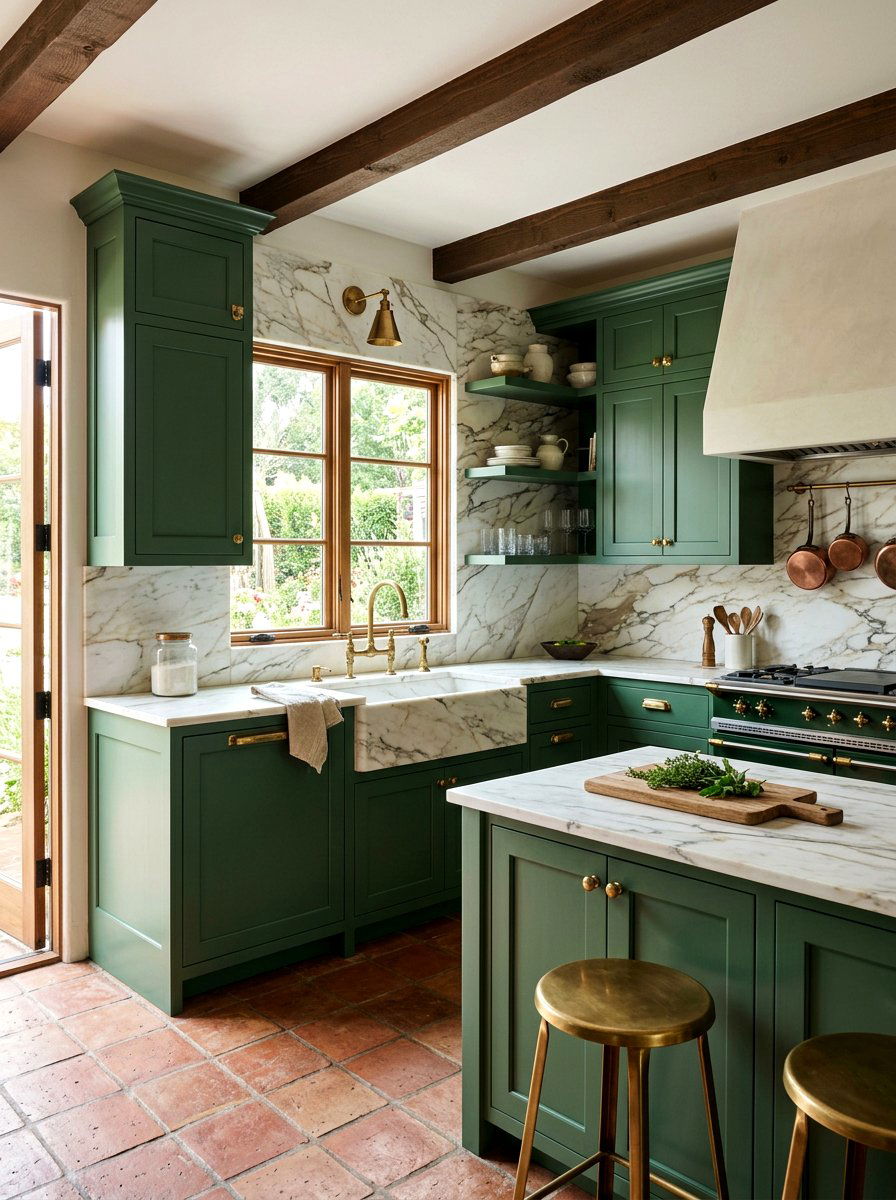
A brass hardware kitchen uses unlacquered or antiqued brass to add a touch of warmth and vintage shine to the cabinetry and fixtures. Unlike modern polished gold, unlacquered brass will naturally tarnish over time, developing a unique patina that fits perfectly with a lived-in rustic aesthetic. You can use brass for everything from cabinet pulls and hinges to the main kitchen faucet and even the pot filler over the stove. This metal looks particularly stunning against dark-painted cabinets in shades like navy, forest green, or charcoal. It provides a subtle "pop" of light that feels historic rather than flashy. This small detail is one of the easiest ways to give a new kitchen an authentic, high-end European feel.
24. Glass cabinet kitchen
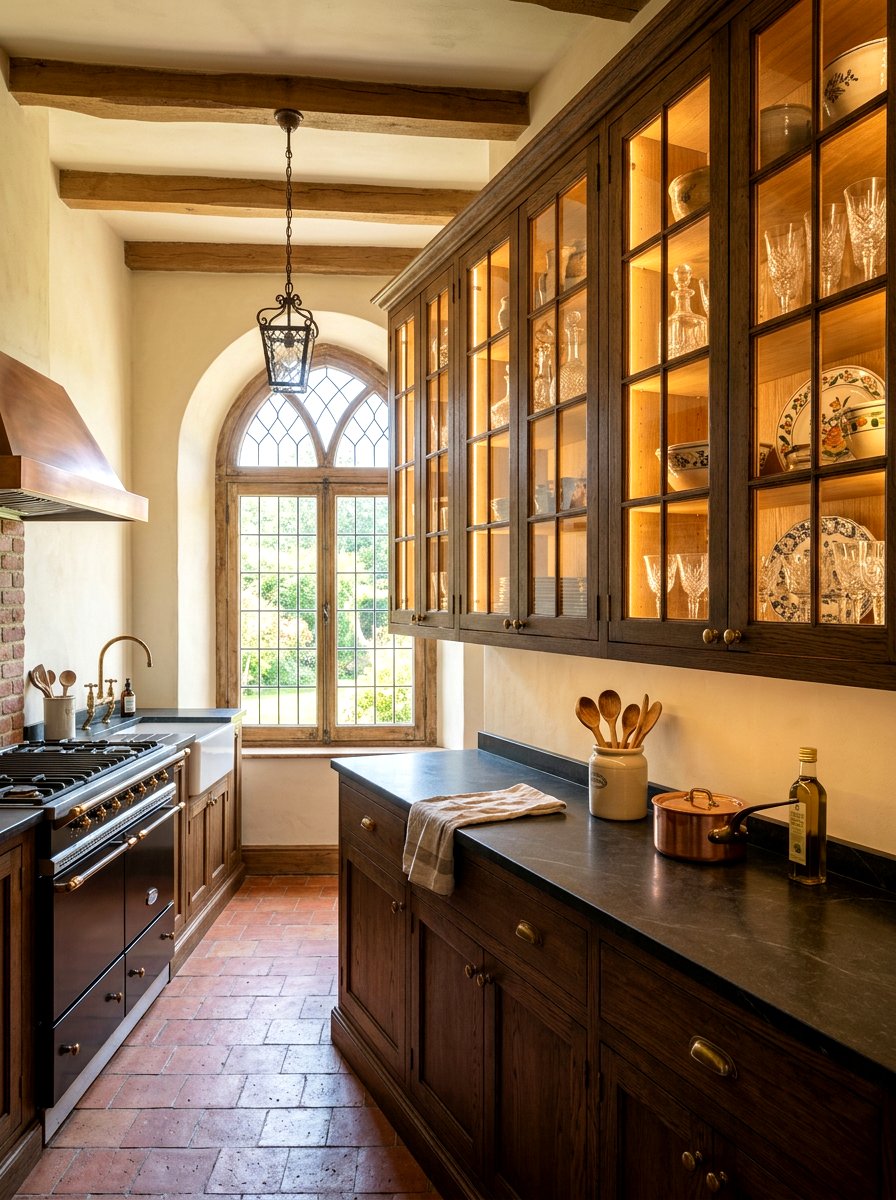
A glass cabinet kitchen uses upper cabinets with glass-front doors to create a lighter look and provide a space to display curated collections. Whether you choose clear, seeded, or ribbed glass, these cabinets allow you to show off your favorite pottery, antique glassware, and stacked linens. This design choice prevents a wall of cabinetry from feeling too heavy or closed-in, making the room feel more spacious and bright. To keep the look rustic, use wooden frames for the doors and consider adding interior lighting to highlight the items on display. This approach encourages organization and adds a layer of visual interest that changes as you use and rotate your items throughout the seasons.
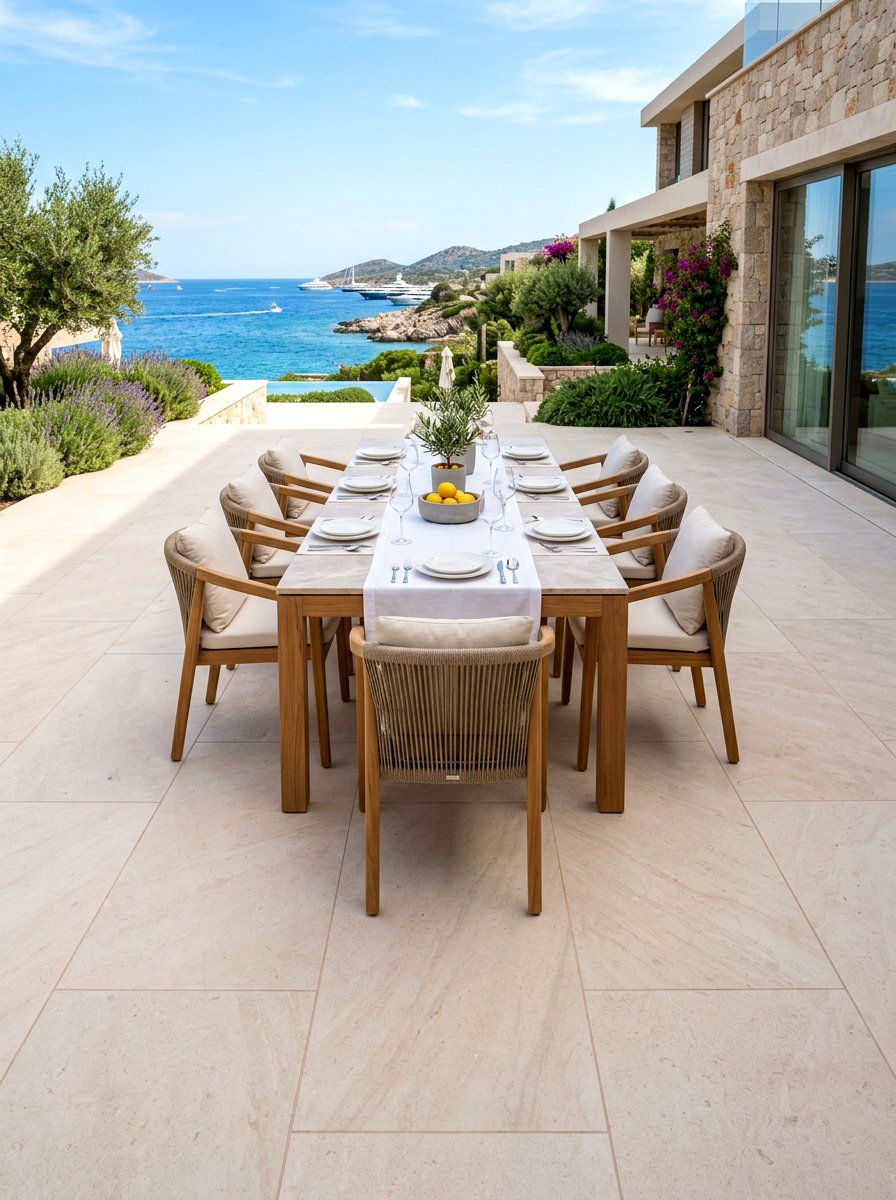
25. Vaulted ceiling kitchen
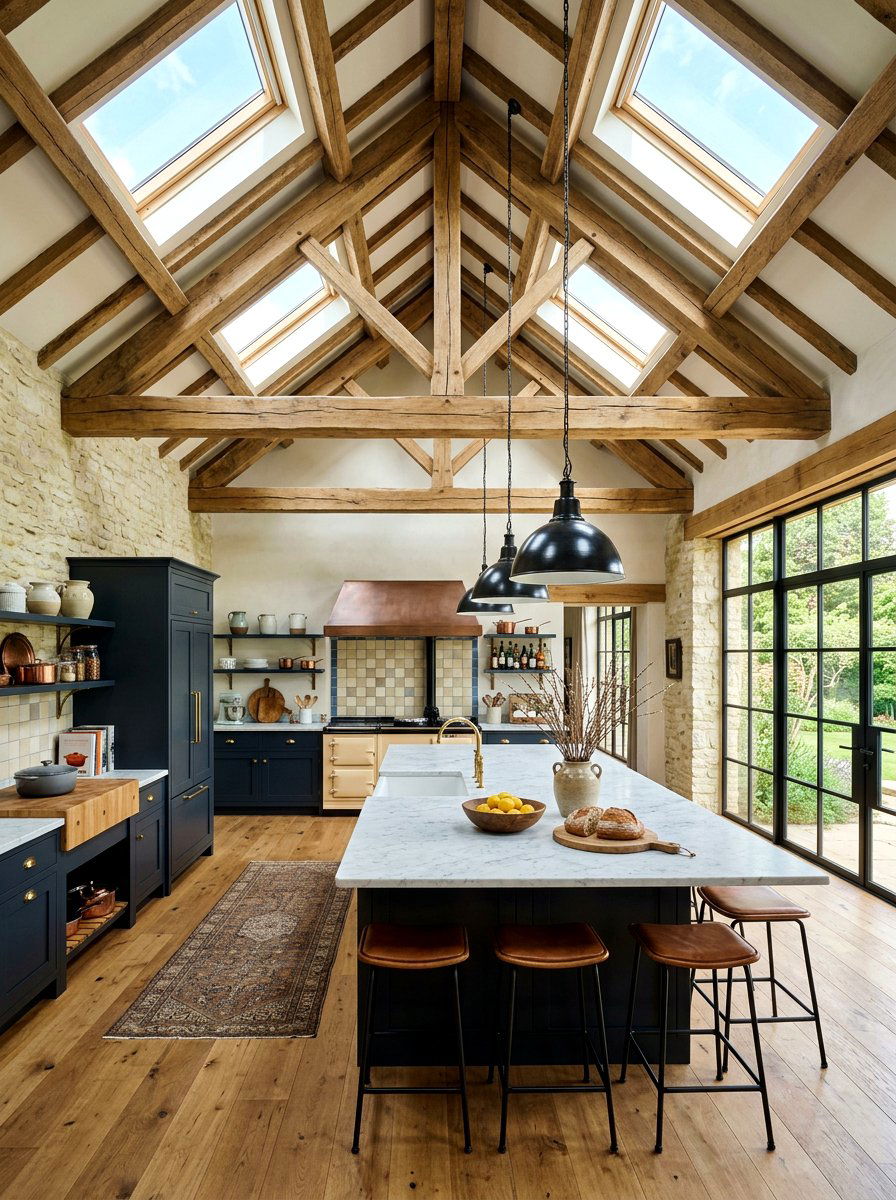
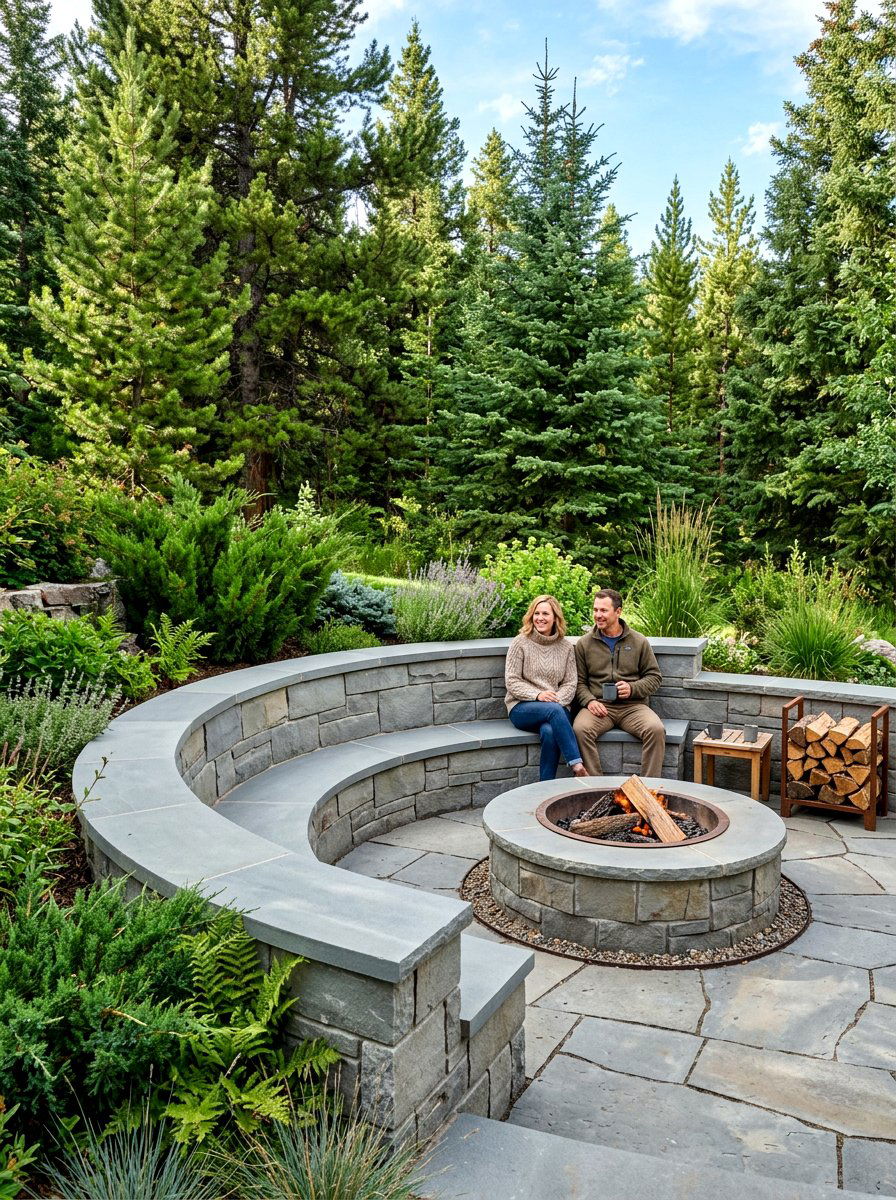
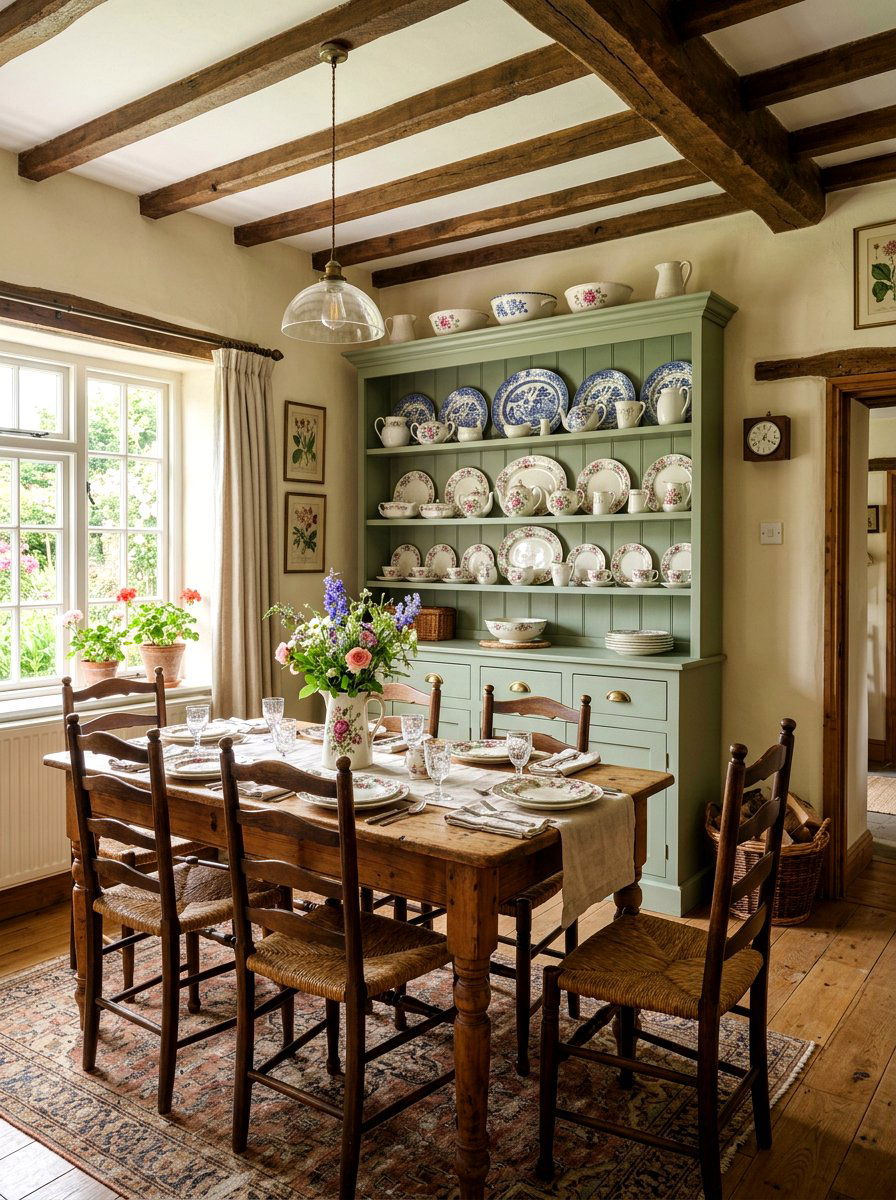
A vaulted ceiling kitchen creates a grand, airy atmosphere by opening the space up to the roofline, often exposing the structural rafters. This architectural feature makes even a small kitchen feel vast and impressive, providing plenty of room for large pendant lights or a massive vent hood. You can clad the ceiling in tongue-and-groove wood planks or keep it simple with white plaster to emphasize the height. Adding a few large skylights can bring in even more natural light, making the wood and stone elements shine. This design is perfect for those who want their kitchen to be a dramatic statement piece while still maintaining a sense of traditional warmth and comfort for the whole family.
26. Patterned tile kitchen
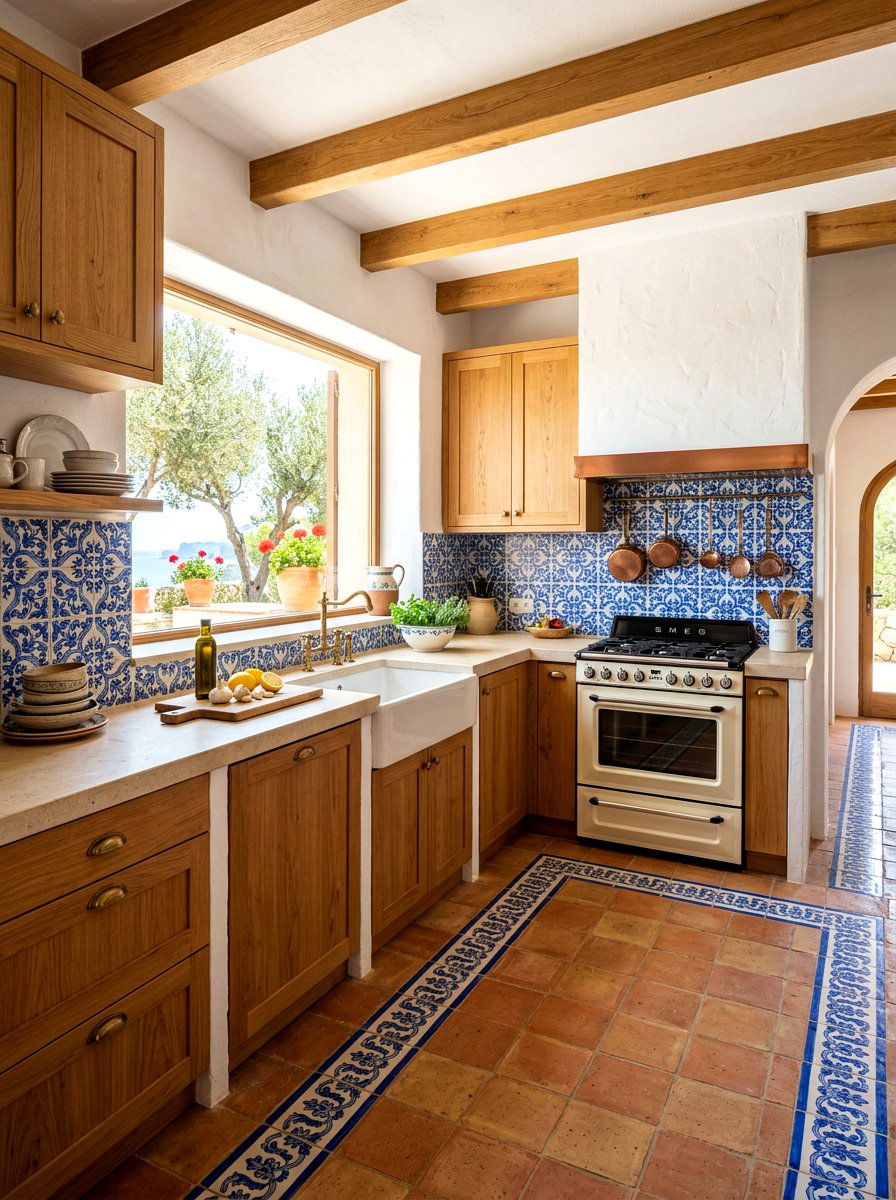
A patterned tile kitchen uses hand-painted or cement tiles to introduce color, history, and artistry into the room’s design. These tiles can be used as a striking backsplash, a decorative border on the floor, or even to cover the entire surface of a kitchen island. Mediterranean-inspired patterns in shades of blue, yellow, and terracotta are classic choices that add a cheerful, sun-filled vibe to the space. To prevent the patterns from overwhelming the room, pair them with simple wood cabinetry and neutral countertops. This artisanal touch makes the kitchen feel unique and personal, reflecting a love for craftsmanship and global style. It is a wonderful way to add a lot of personality to a rustic space.
27. Pot filler kitchen
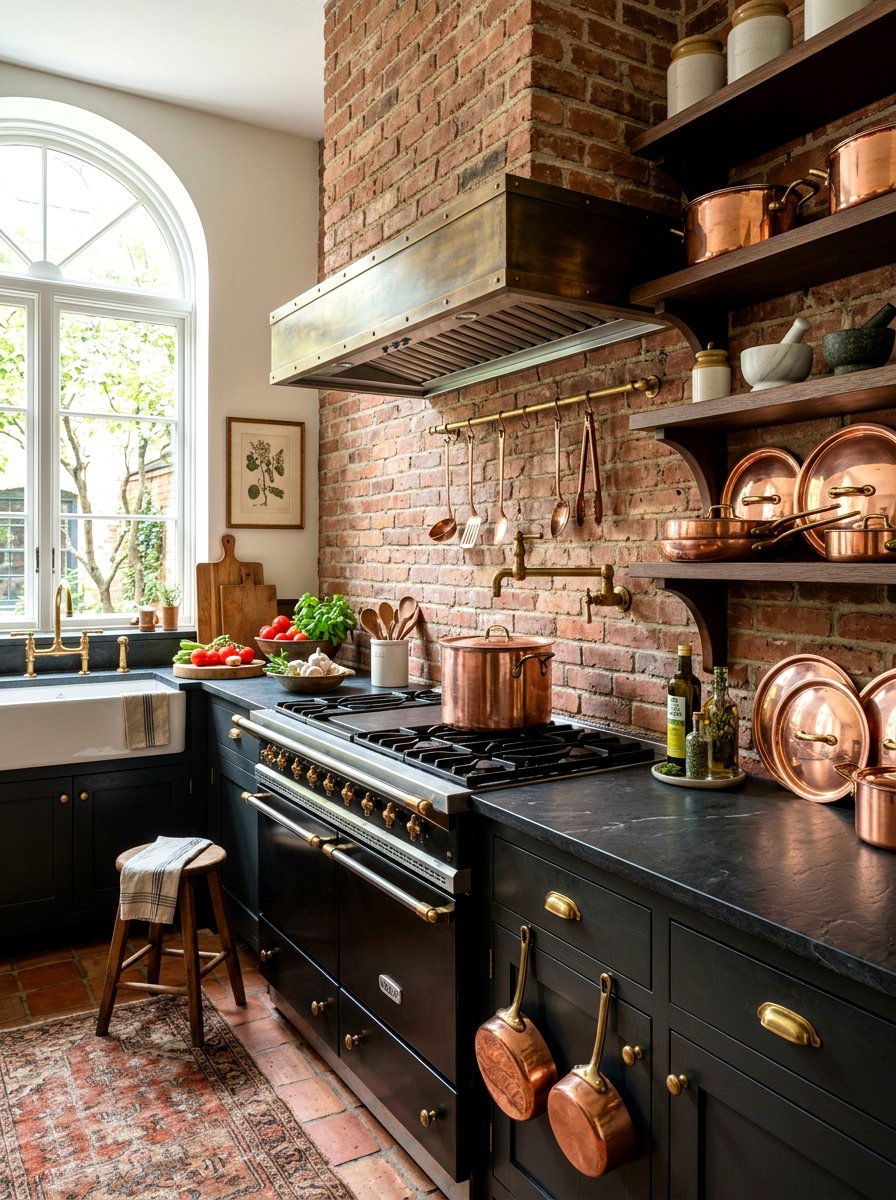
A pot filler kitchen includes a traditional swing-out faucet installed directly over the stove, adding both convenience and a professional, old-world look. This functional detail is a hallmark of high-end European kitchens, allowing you to fill large pasta pots without carrying them from the sink. Choosing a pot filler in a classic finish like oil-rubbed bronze or unlacquered brass ties the feature into the overall rustic theme. It also serves as a beautiful architectural element against a brick or stone backsplash, adding a layer of depth and interest to the cooking zone. This small luxury makes the kitchen feel like a space designed for serious culinary work while enhancing its traditional, vintage-inspired aesthetic.
28. Dutch door kitchen
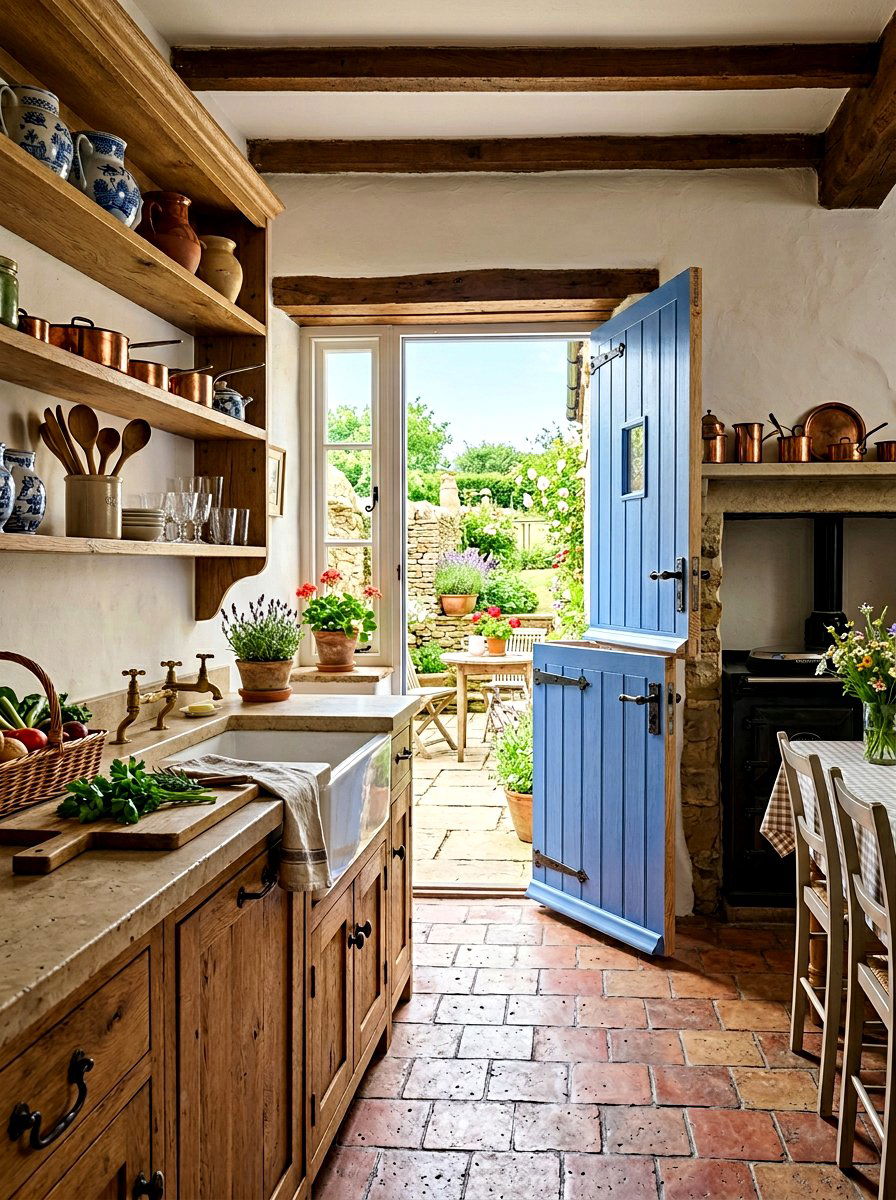
A Dutch door kitchen features a split door that allows the top half to open while the bottom remains closed, providing light and air. This charming element is perfect for kitchens that lead directly to a garden or patio, creating a seamless connection between the indoors and outdoors. It also helps to keep pets or small children safely inside (or outside) while still allowing you to enjoy the breeze and the view. Painting the door in a bright, cheerful color like cornflower blue or a deep sage green can make it a lovely focal point from both sides. This classic countryside feature adds a sense of whimsy and practical utility that defines the cozy, welcoming European lifestyle.
29. Mixed metal kitchen
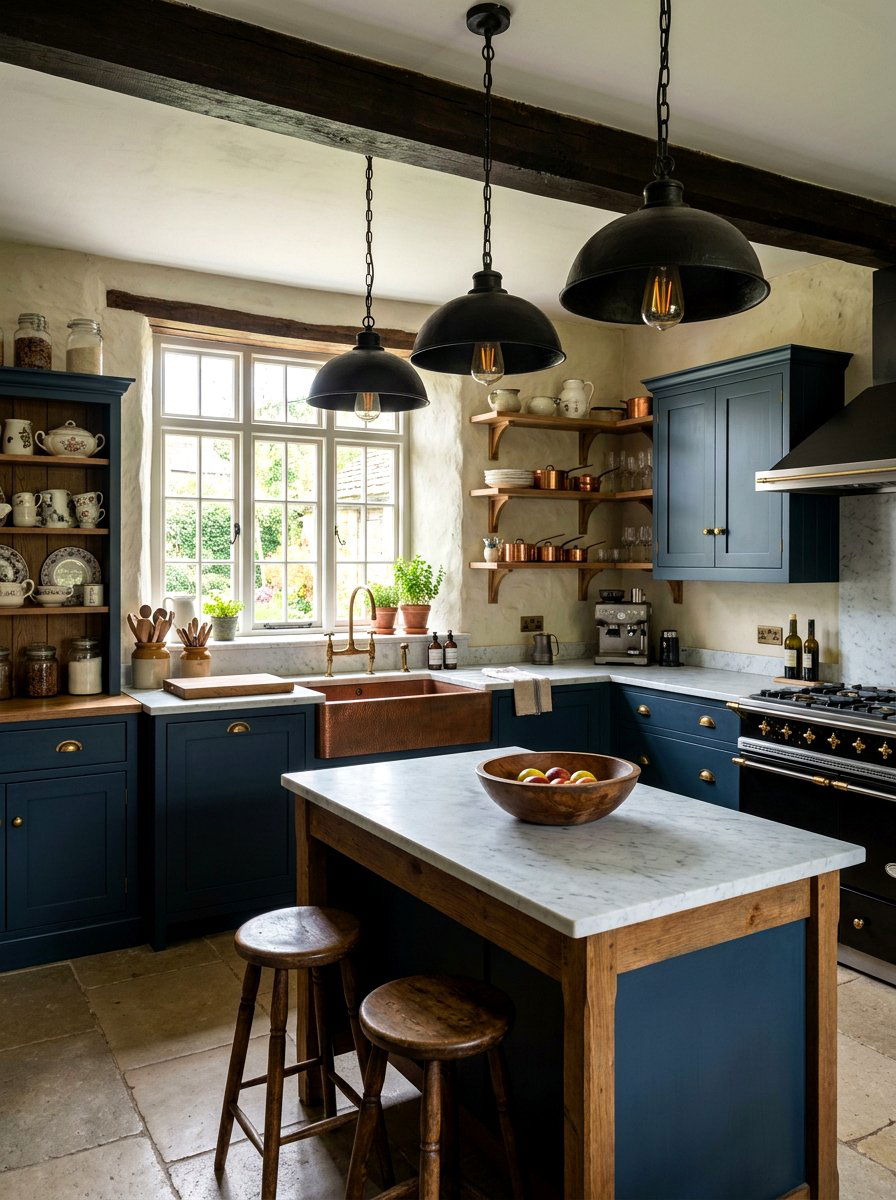
A mixed metal kitchen intentionally combines different finishes, such as a copper sink with iron lighting and brass cabinet pulls, for a curated look. This approach avoids the "matchy-matchy" feel of modern showrooms, instead creating a space that feels like it has been updated and improved over generations. The key to success is to choose one dominant metal and use the others as accents throughout the room to maintain some visual harmony. For example, you might use matte black for your faucets and lighting while incorporating warm brass for the hardware and a large copper vent hood. This layered look adds incredible depth and a sense of sophisticated, lived-in character to any rustic kitchen design.
30. Minimalist rustic kitchen
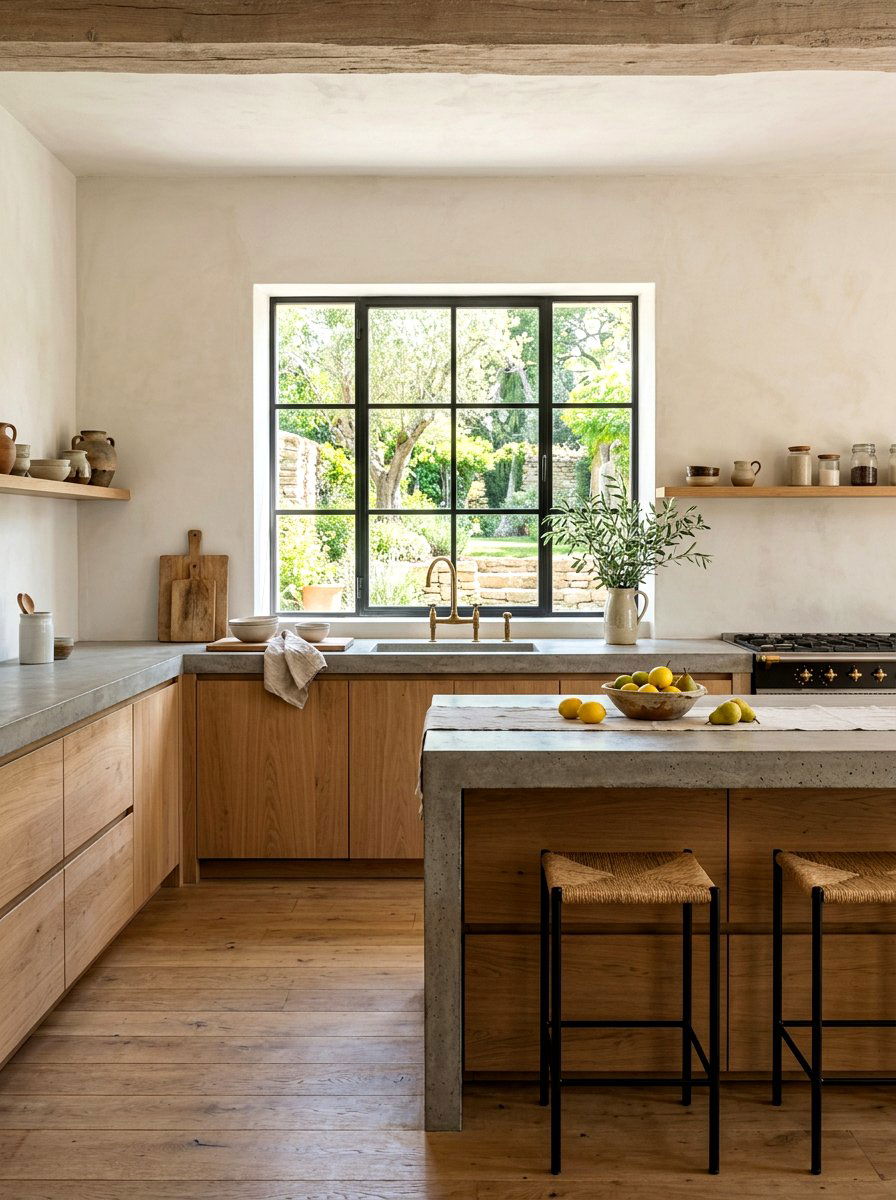
A minimalist rustic kitchen strips away the excess to focus on a few high-quality, natural materials and clean, functional lines. You might see a simple row of flat-front oak cabinets paired with a thick concrete countertop and a single, oversized window for light. There are no upper cabinets and very few decorative accessories, allowing the texture of the wood and stone to be the primary focus of the room. This style is perfect for those who crave a calm, clutter-free environment but still want the warmth and soul of natural materials. It proves that you don't need a lot of "stuff" to create a space that feels deeply inviting, authentic, and beautifully connected to the earth.
Conclusion:
Designing a rustic European kitchen is an exercise in balancing history, texture, and warmth to create a space that feels timeless. By focusing on quality materials like reclaimed wood, natural stone, and traditional metals, you can build a room that serves as a sanctuary for your family. Whether you prefer the elegance of a French manor or the cozy clutter of an English cottage, the key is to embrace the "perfectly imperfect" nature of these designs. These thirty ideas provide a comprehensive roadmap for anyone looking to infuse their home with soul and character. Your kitchen will eventually become more than just a place for cooking; it will be a beautiful reflection of your personal style and a gathering place for those you love most.

Related posts: