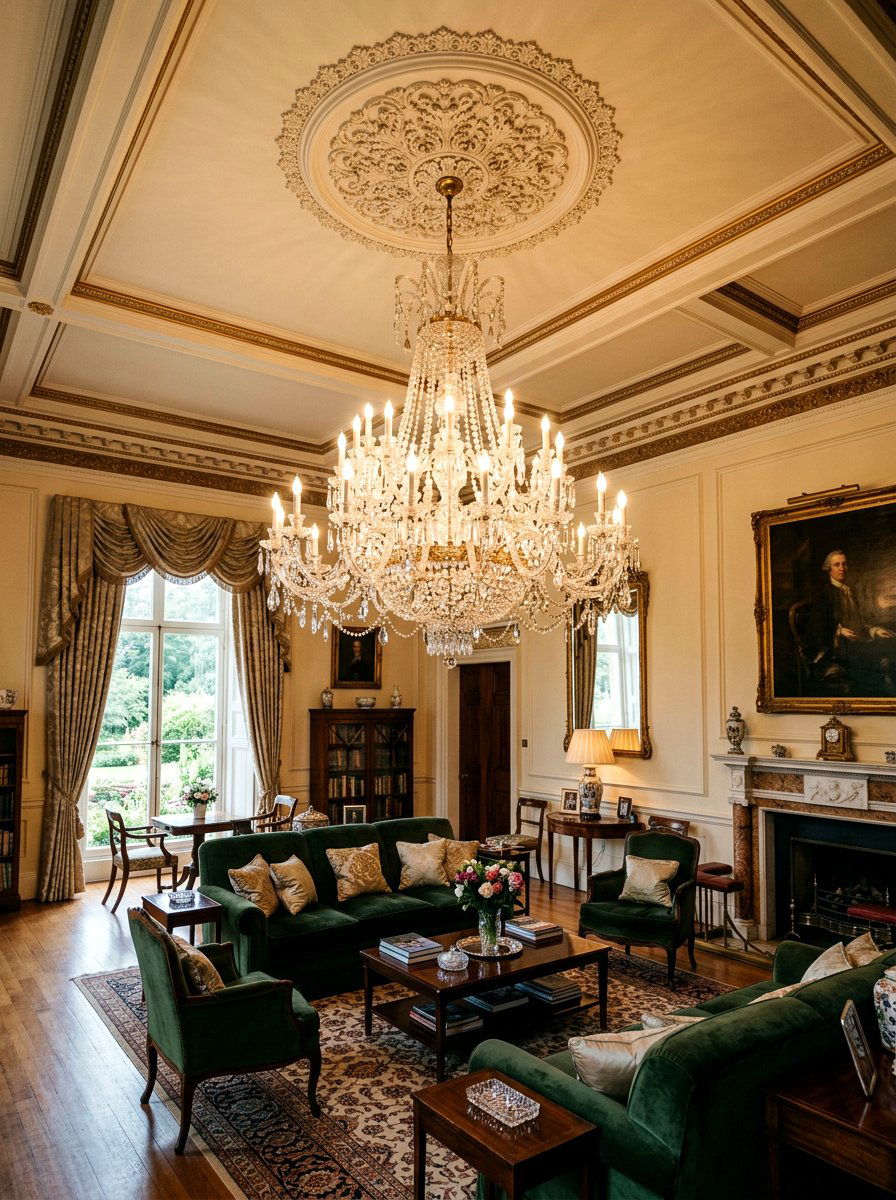
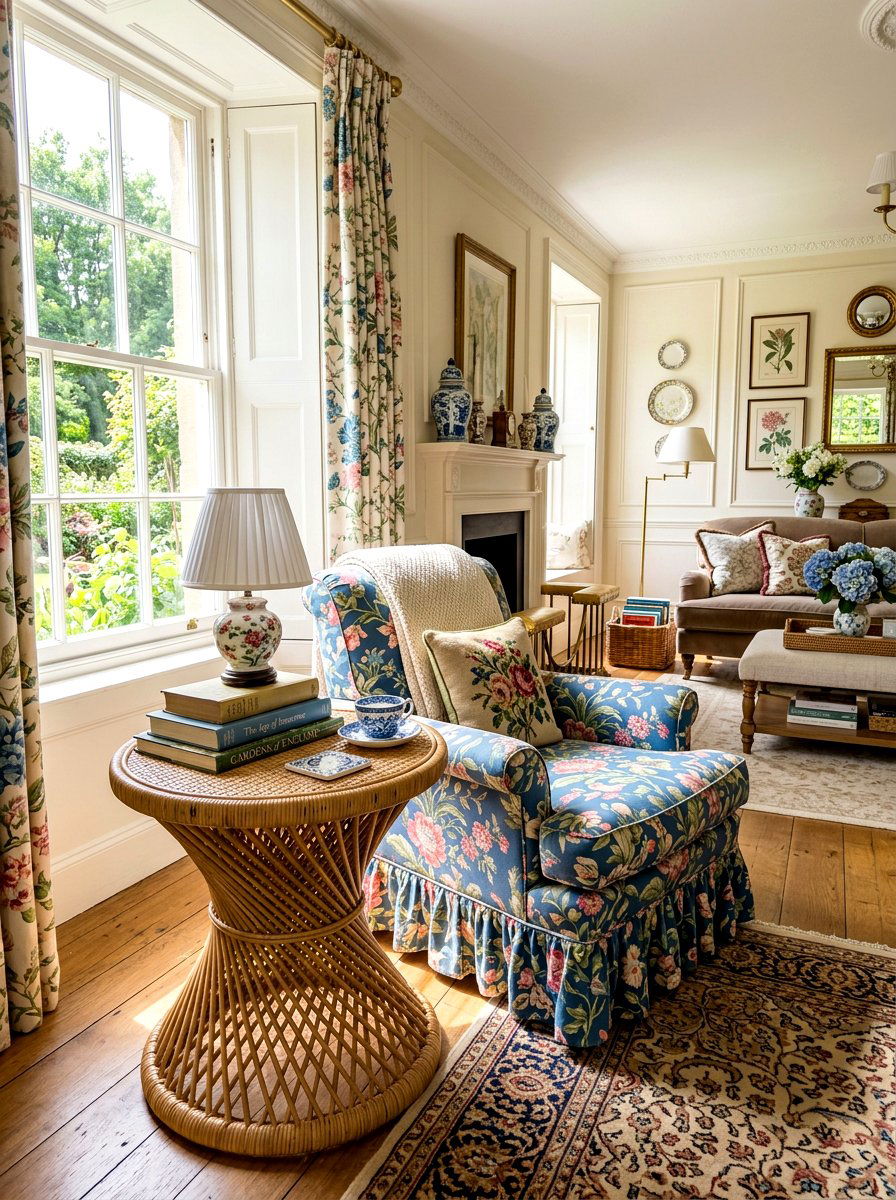
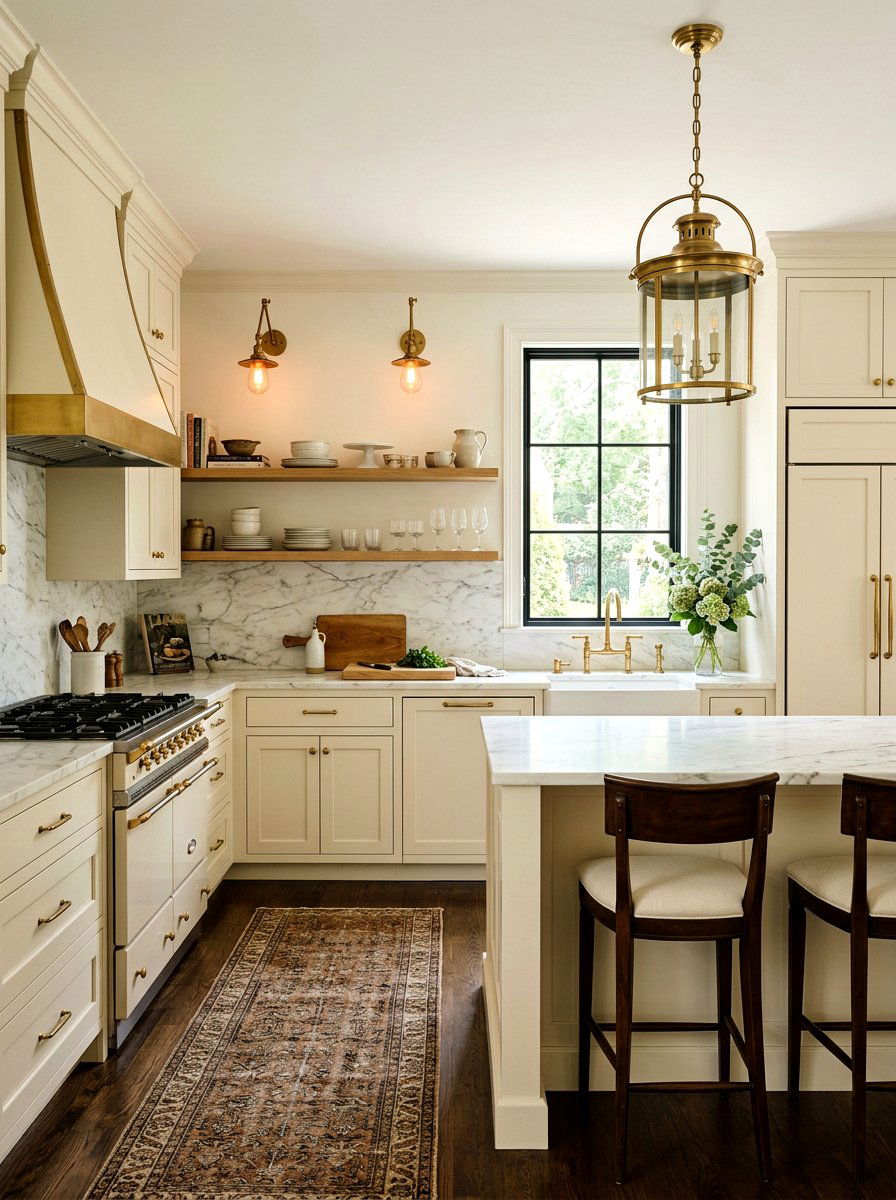
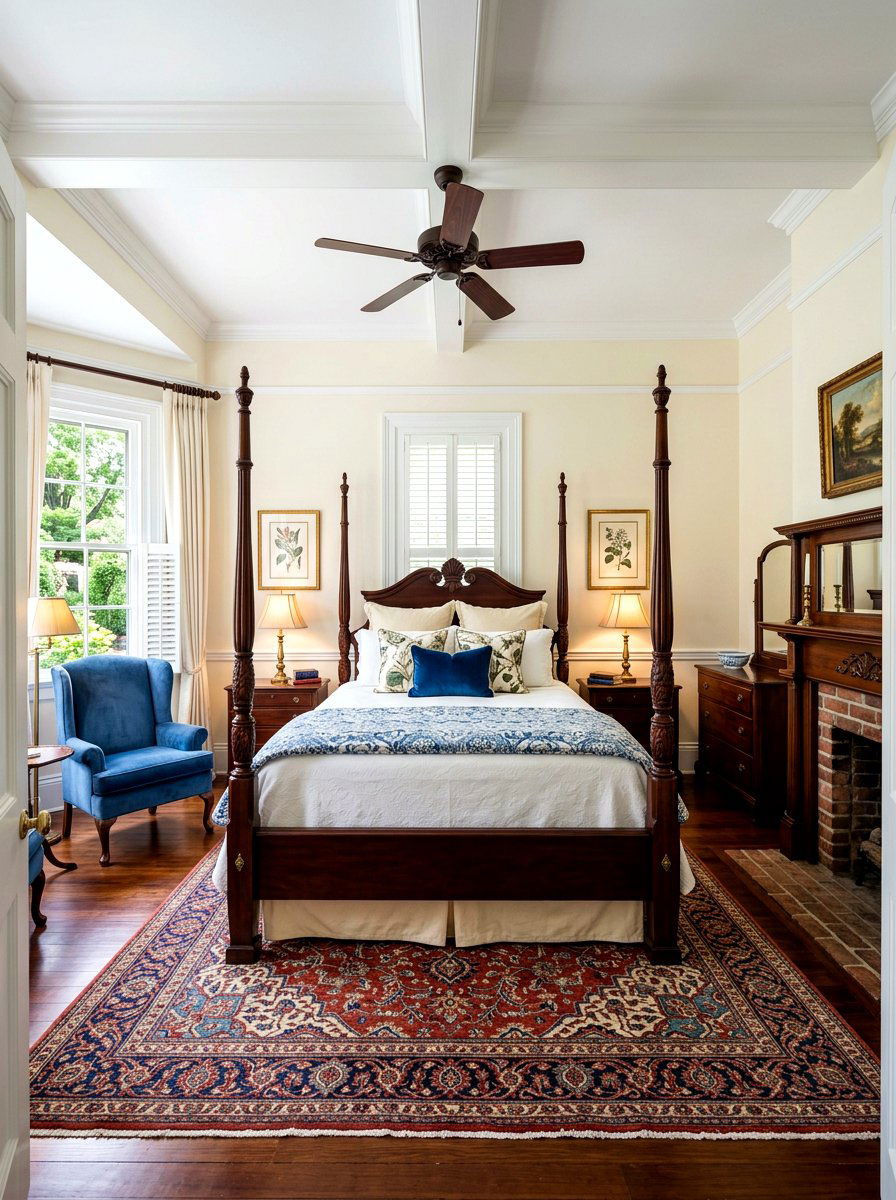
Creating a seamless bridge between the comfort of your interior and the natural beauty of the outdoors is the hallmark of transitional design. This style successfully blends the timeless warmth of traditional elements with the sleek, clean lines of modern aesthetics, resulting in a space that feels both sophisticated and incredibly inviting. Whether you are looking to revamp a sprawling backyard or maximize a small balcony, transitional patio concepts offer a versatile foundation that adapts to any home architecture. By focusing on neutral color palettes, high-quality mixed materials, and functional layouts, you can transform your outdoor area into a true sanctuary that remains stylish for many years.
1. Covered Transitional Patio
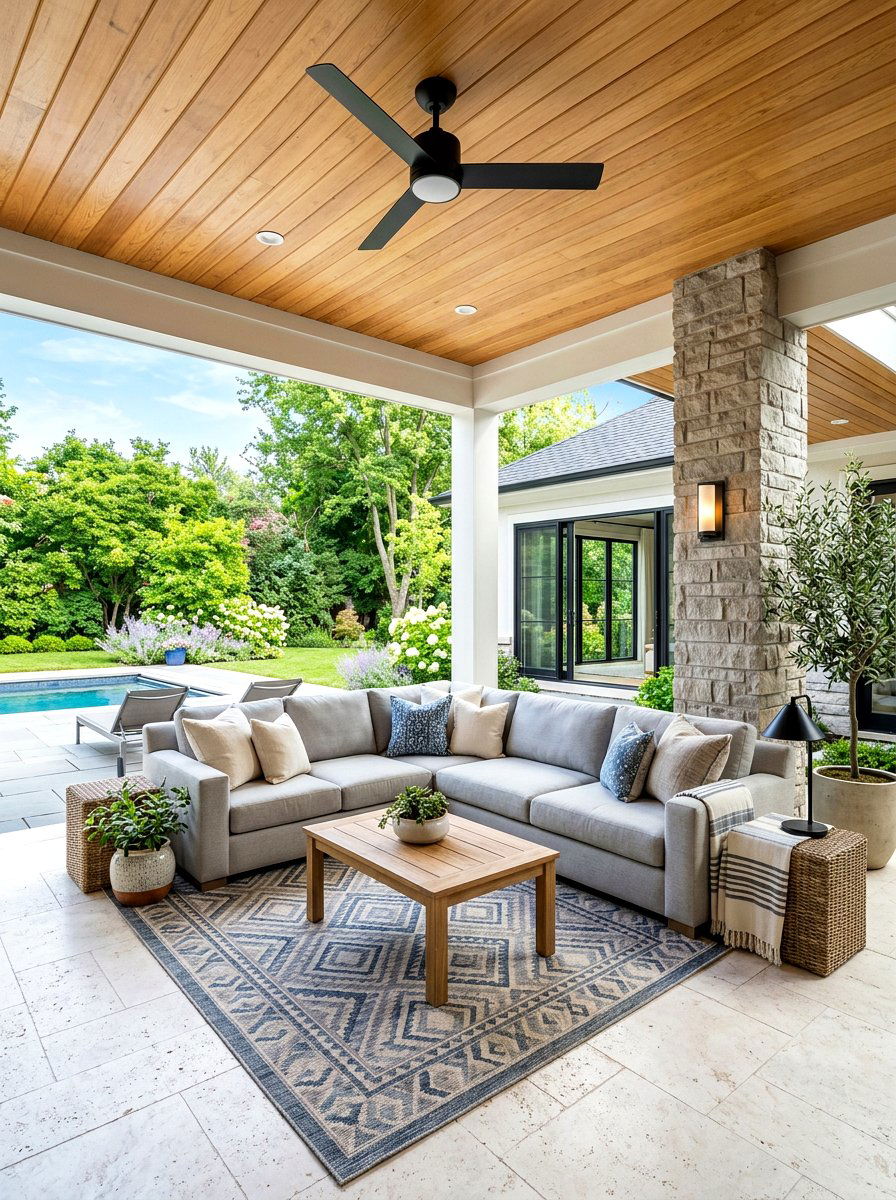
A covered transitional patio provides the ultimate sanctuary for year-round enjoyment by offering protection from the elements while maintaining an open-air feel. These structures often feature a solid roof extension that matches the existing architecture of the home, creating a cohesive visual flow. Inside this space, you can incorporate recessed lighting and ceiling fans to enhance comfort during warmer months. The furniture typically consists of plush, deep-seated sofas in neutral tones like sand or dove gray, paired with a sturdy teak coffee table. This setup ensures that the transition from your indoor living room to the outdoor space feels completely natural and incredibly luxurious for every guest.
2. Transitional Patio Furniture
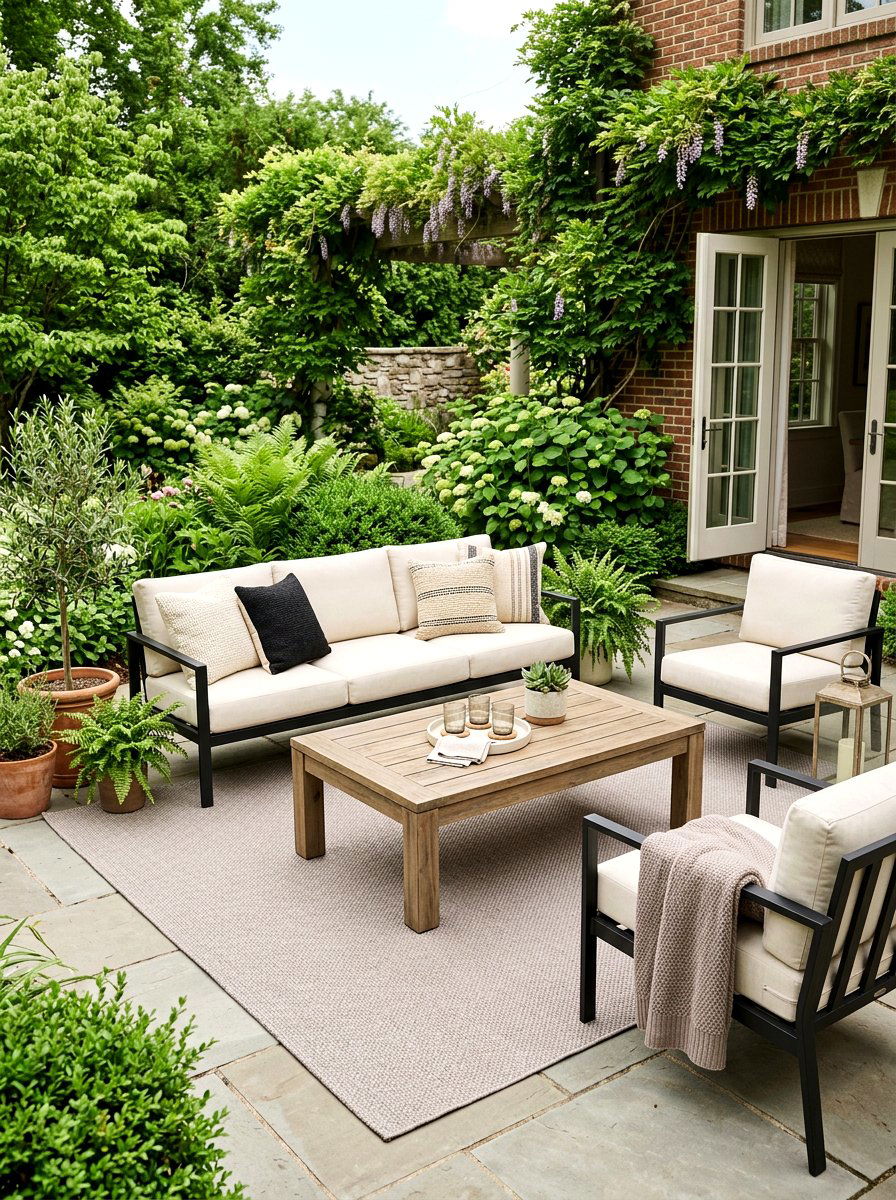
Selecting the right transitional patio furniture involves finding a balance between ornate traditional details and minimalist contemporary silhouettes. Look for seating sets that utilize durable materials such as powder-coated aluminum frames paired with thick, weather-resistant cushions in solid cream or taupe. These pieces often feature clean lines but might include subtle curves in the armrests to soften the overall appearance. Adding a few accent chairs with a woven rope texture can introduce a touch of organic warmth without cluttering the visual field. This furniture style is designed to be timeless, ensuring your patio remains relevant as interior trends evolve over the coming decades.
3. Modern Traditional Outdoor Fireplace
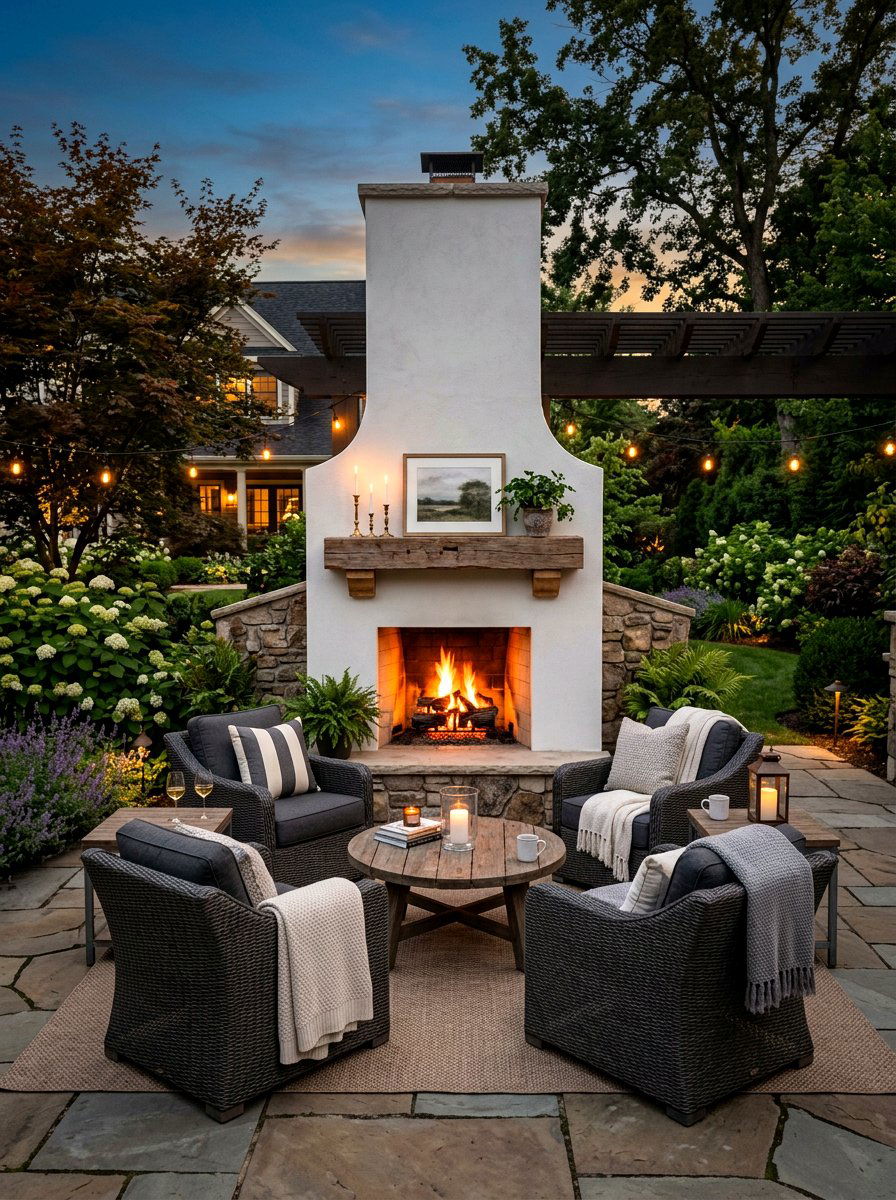
A modern traditional outdoor fireplace serves as a stunning focal point that anchors the entire transitional patio layout. Typically constructed from natural stone or smooth stucco, these fireplaces combine a classic hearth shape with a simplified, chimney-less or streamlined design. The mantel can be a thick piece of reclaimed wood, providing a rustic touch that contrasts beautifully against a sleek stone facade. Surrounding the fireplace with comfortable club chairs creates an intimate "outdoor room" feel that encourages long conversations late into the evening. This feature not only adds significant value to your home but also extends the usability of your patio into the colder seasons.
4. Transitional Stone Paver Patio
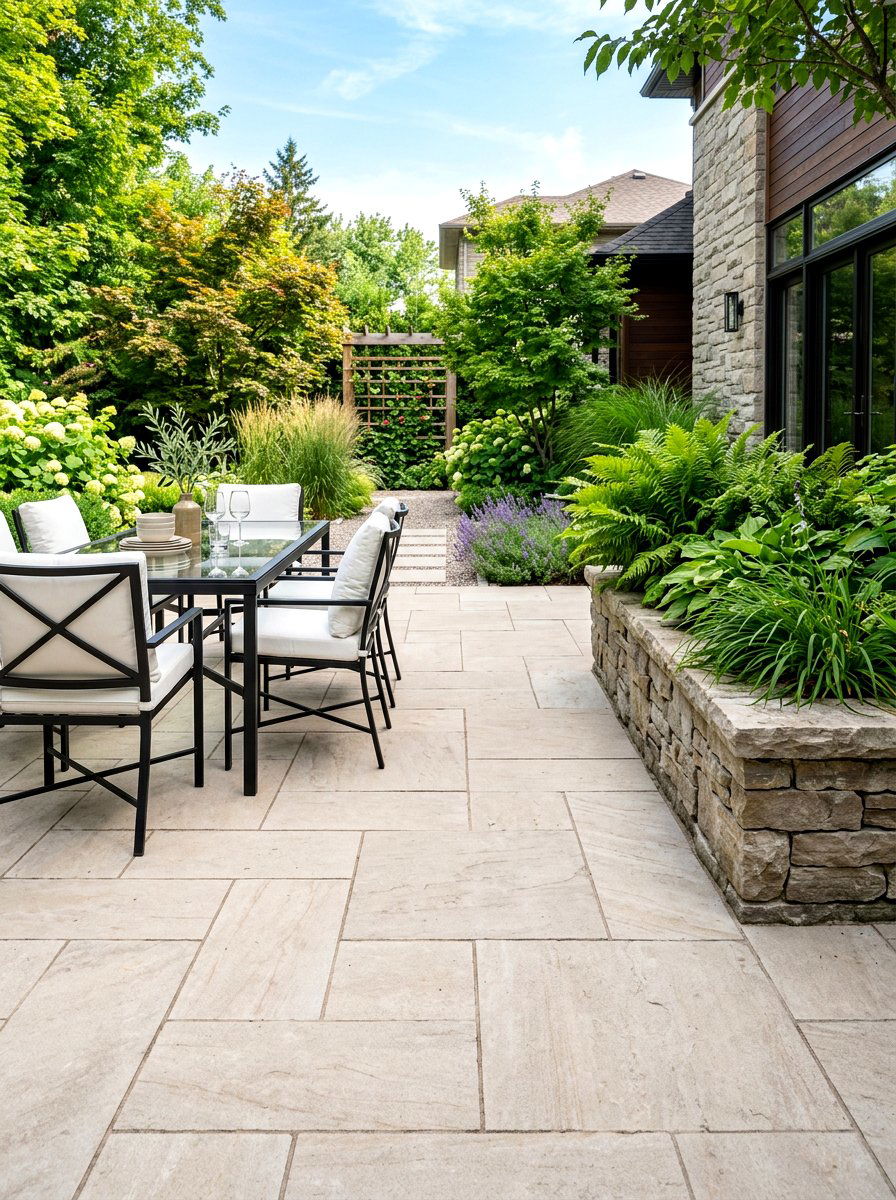
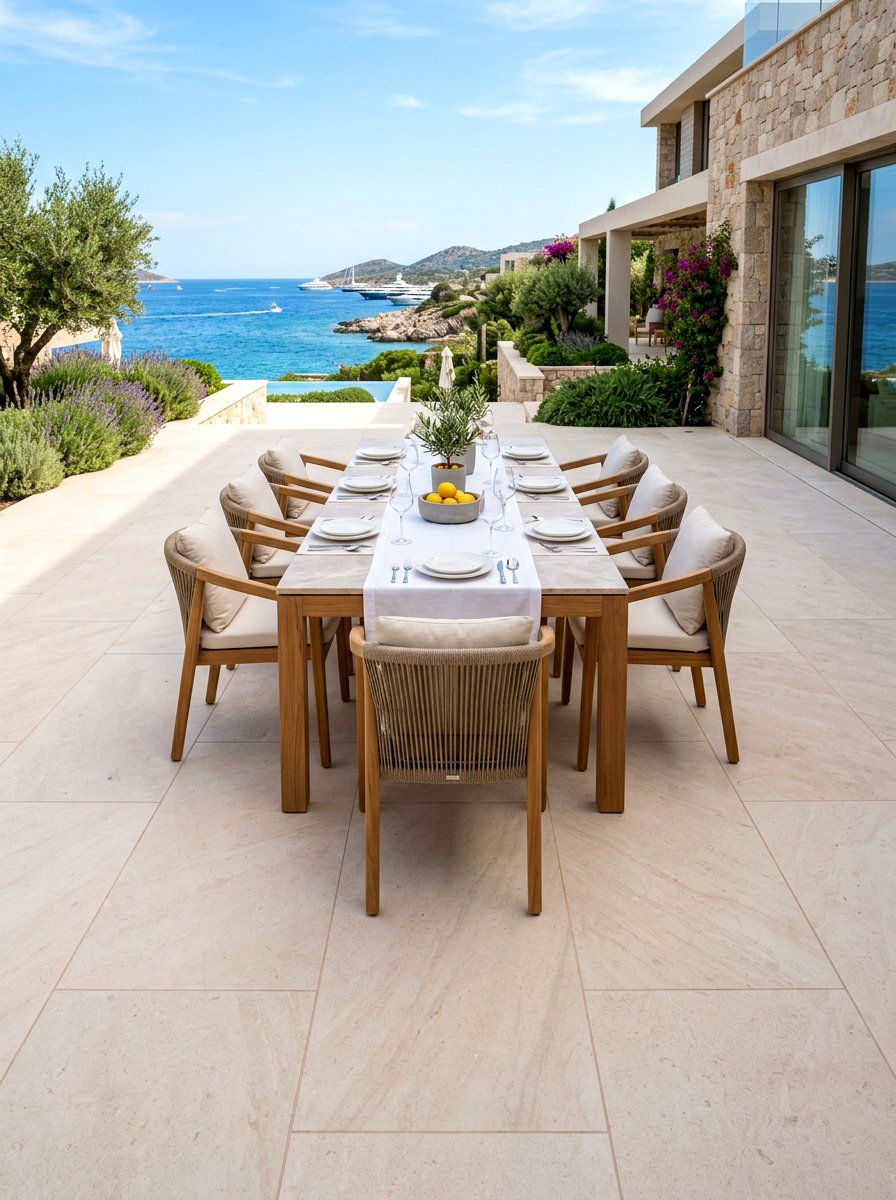
The foundation of a beautiful transitional space often begins with a high-quality stone paver patio. Using large-format rectangular pavers in a light limestone or cool gray granite creates a clean, modern grid pattern that feels very contemporary. To maintain the transitional balance, you can use tumbled edges on the stones or incorporate a border of traditional red bricks to ground the design. These pavers are incredibly durable and provide a level surface for furniture, dining sets, and fire features. The subtle variation in stone color adds depth and texture to the ground plane, preventing the large surface area from looking flat or industrial.
5. Neutral Outdoor Living Room
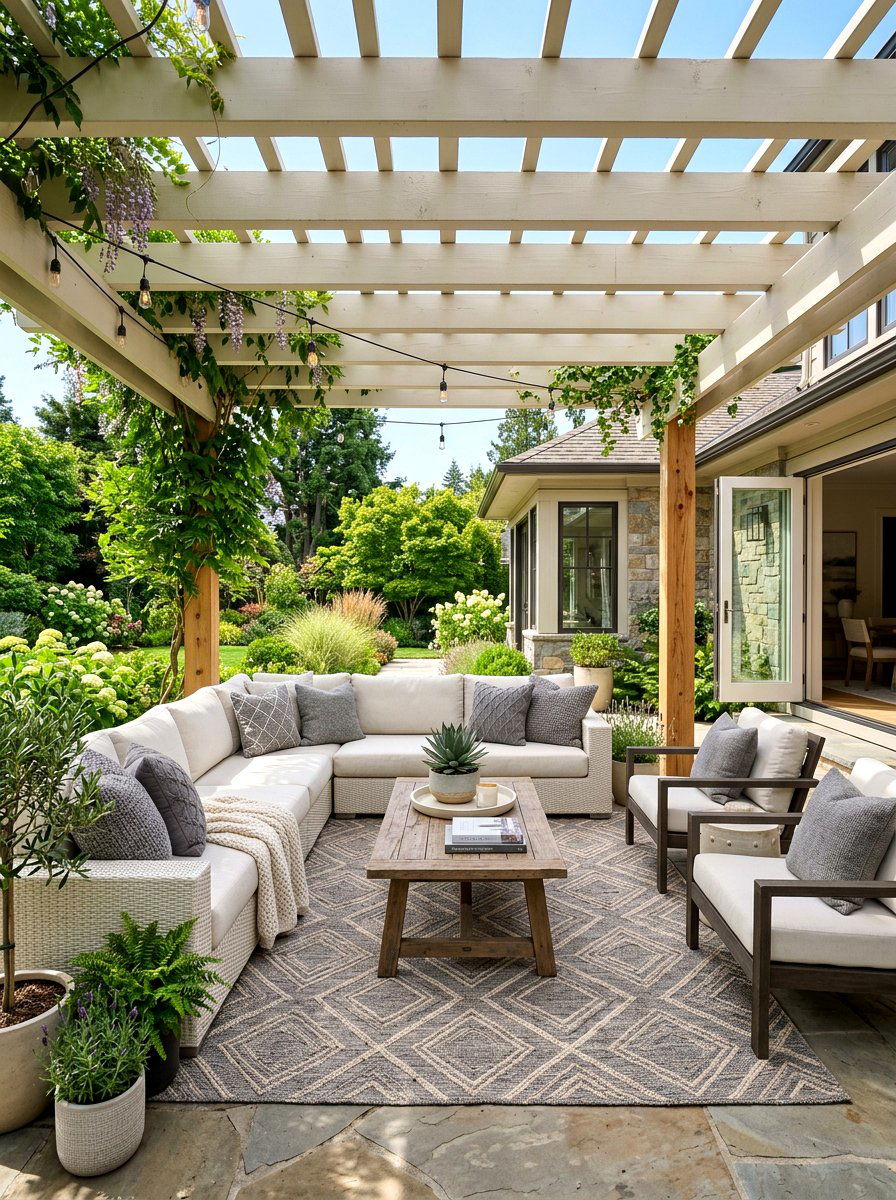
Designing a neutral outdoor living room is all about layering textures within a restricted color palette to create a sophisticated atmosphere. Start with a large, low-profile sectional upholstered in a light beige performance fabric that can withstand sun and rain. Add a variety of throw pillows in shades of charcoal, ivory, and slate to provide visual interest without relying on busy patterns. A large outdoor rug with a subtle geometric weave can define the seating area and add softness underfoot. By keeping the colors muted, the focus remains on the quality of the materials and the beauty of the surrounding garden greenery.
6. Transitional Patio Dining
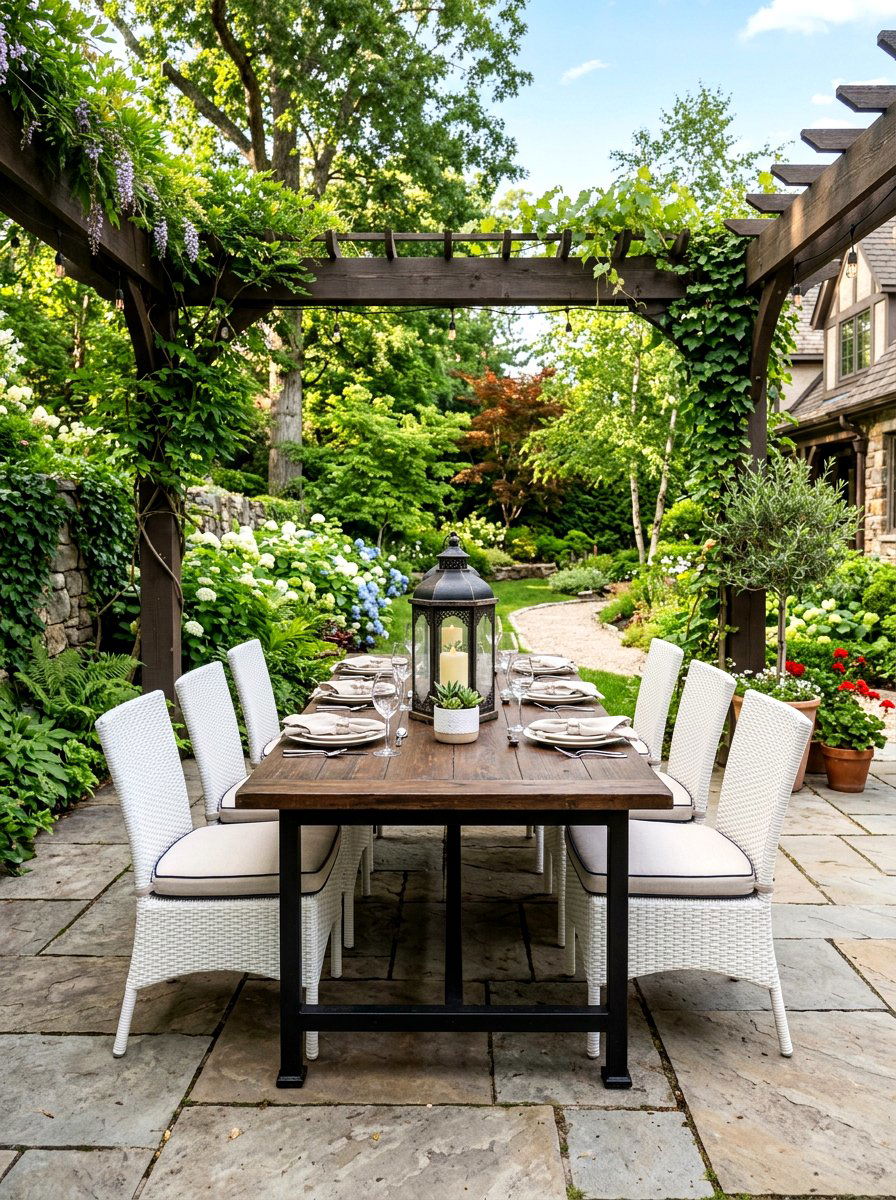
A transitional patio dining area bridges the gap between formal indoor dining and casual backyard barbecues with effortless elegance. Choose a dining table made from a mix of materials, such as a dark metal frame with a light wood or stone top, to achieve that signature look. Surround the table with chairs that feature clean, straight legs but include comfortable, traditional wicker or upholstered backs. Overhead, a modern linear chandelier or a series of oversized lanterns can provide necessary task lighting while serving as a major design statement. This space becomes the perfect setting for hosting elegant dinner parties under the stars.
7. Outdoor Kitchen Transitional Style
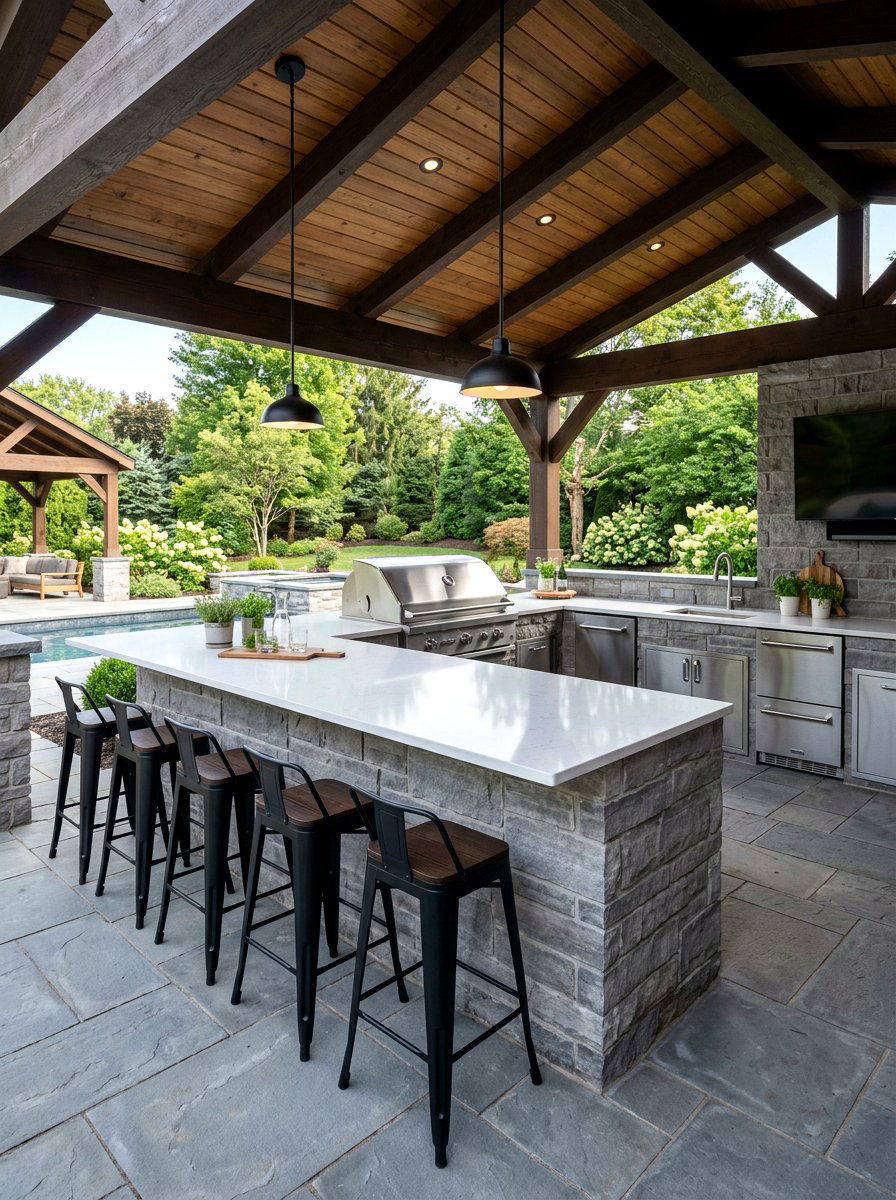
An outdoor kitchen in a transitional style focuses on sleek functionality wrapped in timeless finishes that won't go out of style. Stainless steel appliances are often integrated into cabinetry made from weather-resistant polymer or natural stone veneers that mimic interior kitchen islands. Use a smooth quartz or granite countertop to provide plenty of prep space while maintaining a polished, high-end look. To keep the design transitional, avoid overly rustic stone and instead opt for clean-cut tiles or a simple stucco finish on the island base. This approach ensures your cooking area feels like a sophisticated extension of your home’s interior culinary space.
8. Transitional Pergola
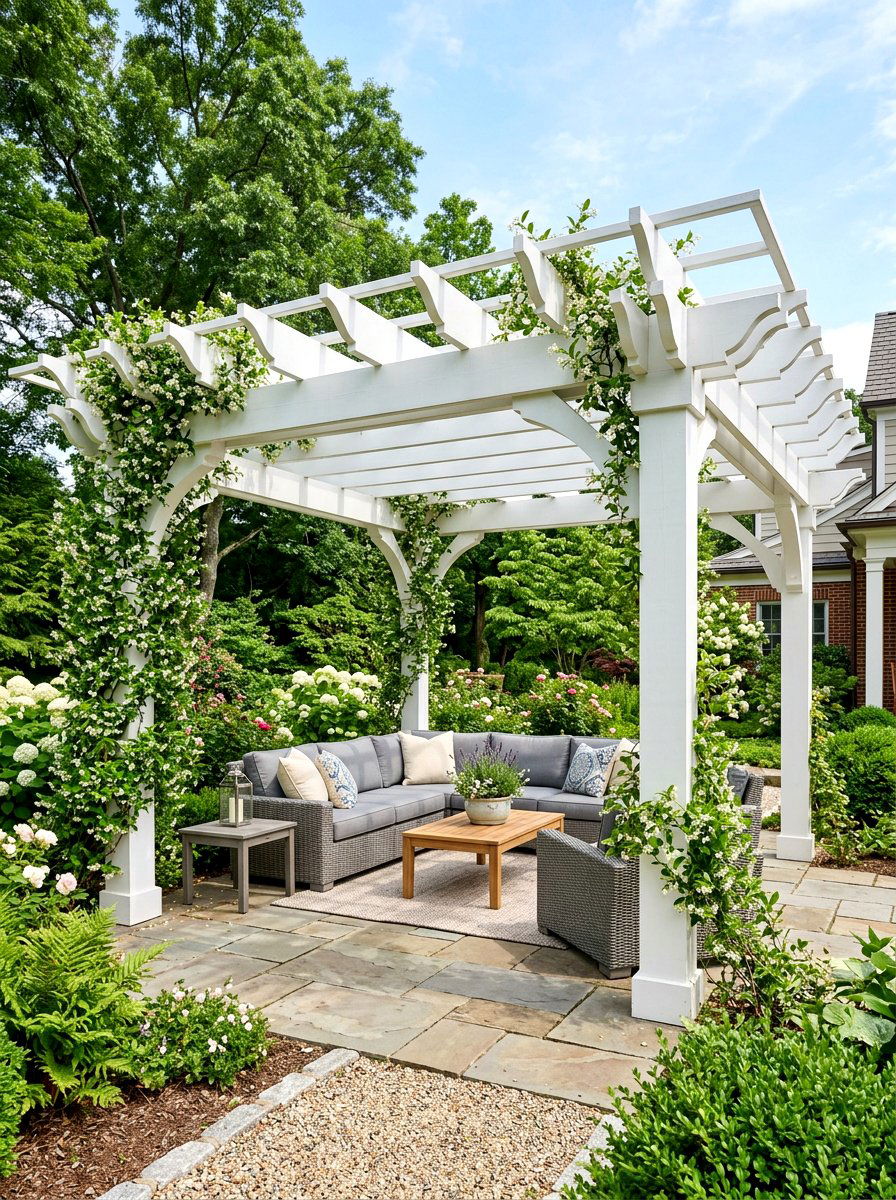
A transitional pergola offers a beautiful way to provide dappled shade while adding architectural interest to your backyard design. Unlike traditional rustic wooden structures, a transitional version might feature painted white or black beams with very clean, squared-off ends. Some modern designs even incorporate adjustable louvers, allowing you to control the amount of sunlight that filters through to the seating area below. Training climbing vines like white wisteria or jasmine over the structure adds a touch of classic romance that balances the modern, linear frame. This structure helps define the patio as a distinct room, providing a sense of enclosure without blocking the views.
9. Black And White Transitional Patio
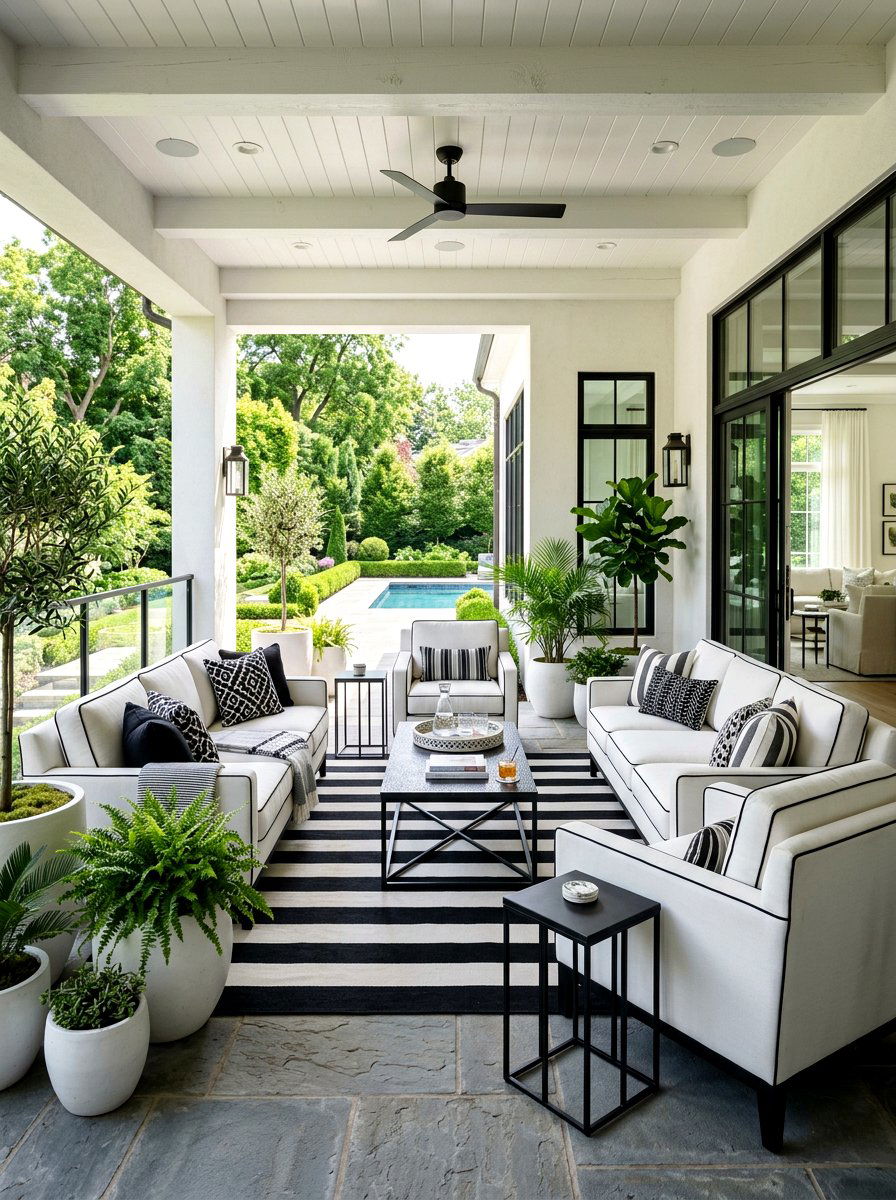
The black and white transitional patio is a classic color scheme that never fails to look sharp and sophisticated in any setting. This look is often achieved by using white upholstered furniture with black piping or frames, creating a high-contrast aesthetic that feels very intentional. You can further enhance this theme by using black metal lanterns, white ceramic planters, and a monochromatic striped outdoor rug to tie everything together. The simplicity of the palette allows the architectural details of your home to shine while providing a clean backdrop for lush green plants. It is a foolproof way to achieve an upscale, boutique hotel vibe.
10. Transitional Patio Lighting
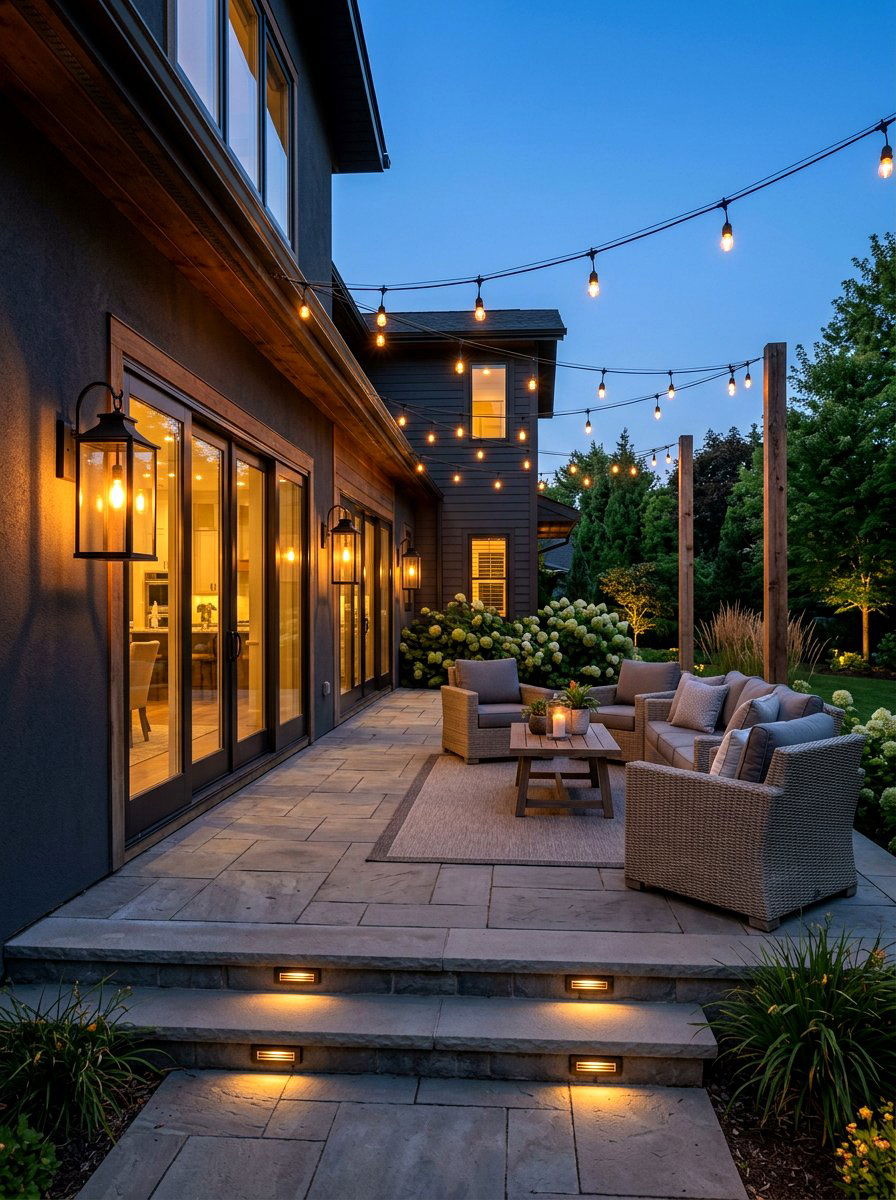
Proper transitional patio lighting is essential for creating a warm and inviting ambiance once the sun begins to set. Instead of harsh floodlights, use a combination of different light sources to layer the illumination across the entire outdoor space. Large, modern wall sconces with clear glass and Edison bulbs provide a traditional touch with a contemporary frame. Stringing high-quality cafe lights across the seating area adds a whimsical, classic feel, while recessed LED strips along the steps offer safety and a modern glow. By varying the heights and intensities of the lights, you can create a cozy atmosphere that is perfect for relaxing.
11. Transitional Deck
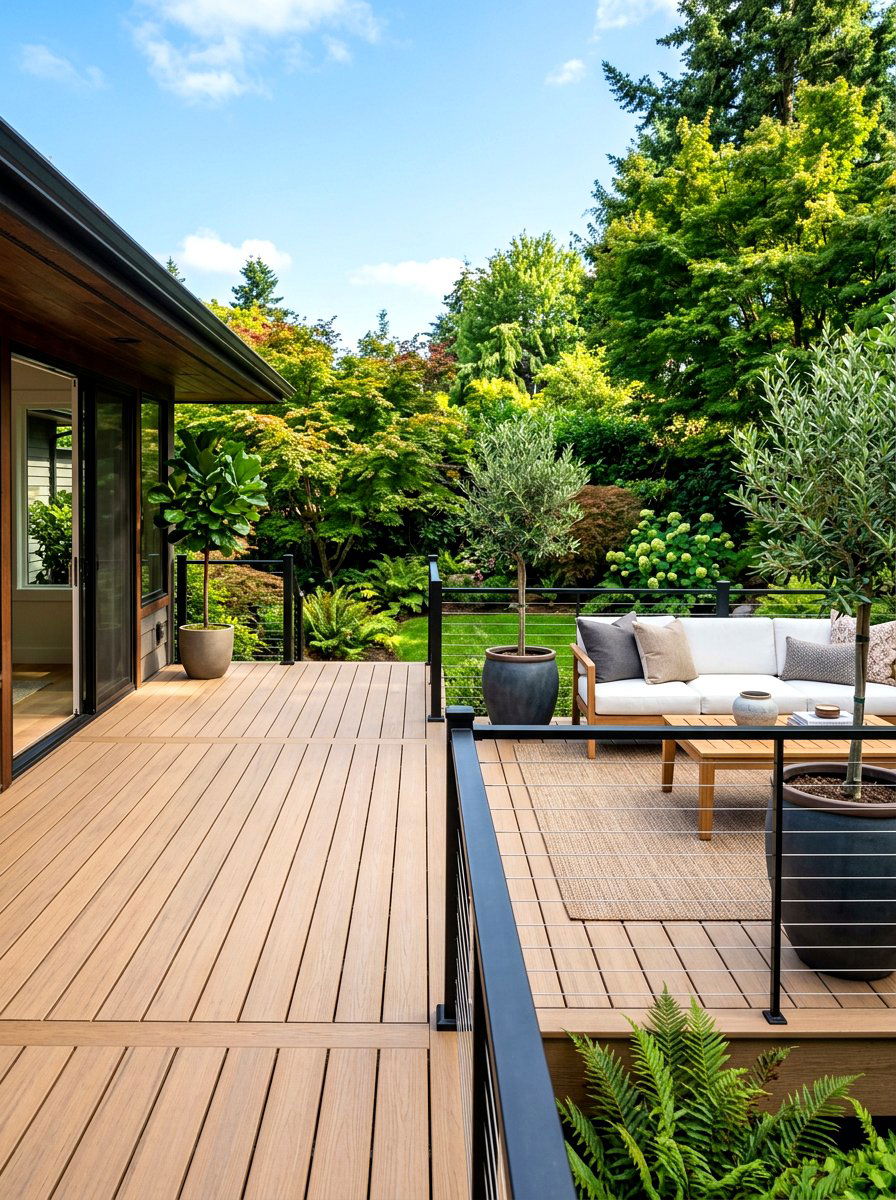
A transitional deck moves away from the traditional brown pressure-treated wood and instead utilizes high-end composite materials in shades of gray or light oak. These decks often feature hidden fastening systems to create a smooth, modern surface that is free of visible screws or nails. To maintain the transitional aesthetic, consider using a railing system that combines traditional wooden posts with modern black cable or glass inserts. This allows for unobstructed views of the yard while providing a sturdy and safe enclosure. This type of deck requires very little maintenance, making it a practical choice for busy homeowners who want lasting beauty.
12. Small Transitional Patio
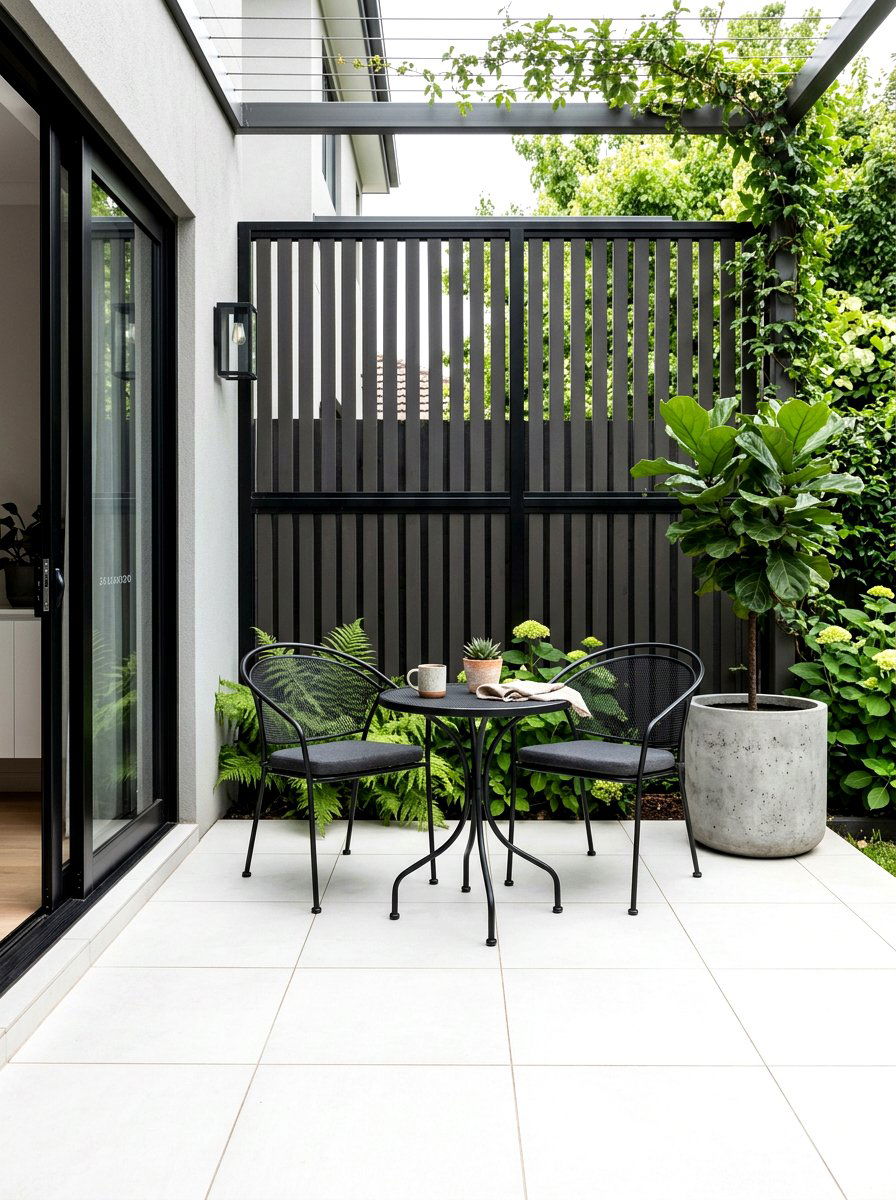
A small transitional patio proves that you don't need a massive backyard to create a stylish and functional outdoor retreat. Focus on multi-functional furniture, such as a bistro set with slender metal frames and comfortable cushions that can be easily moved. Using large, light-colored floor tiles can help make a cramped area feel much more spacious and airy. Incorporating vertical elements, like a slender privacy screen or a tall potted tree, adds height and visual interest without taking up valuable floor space. By carefully selecting every piece, you can create a high-impact design that feels curated rather than cluttered.
13. Transitional Fire Pit
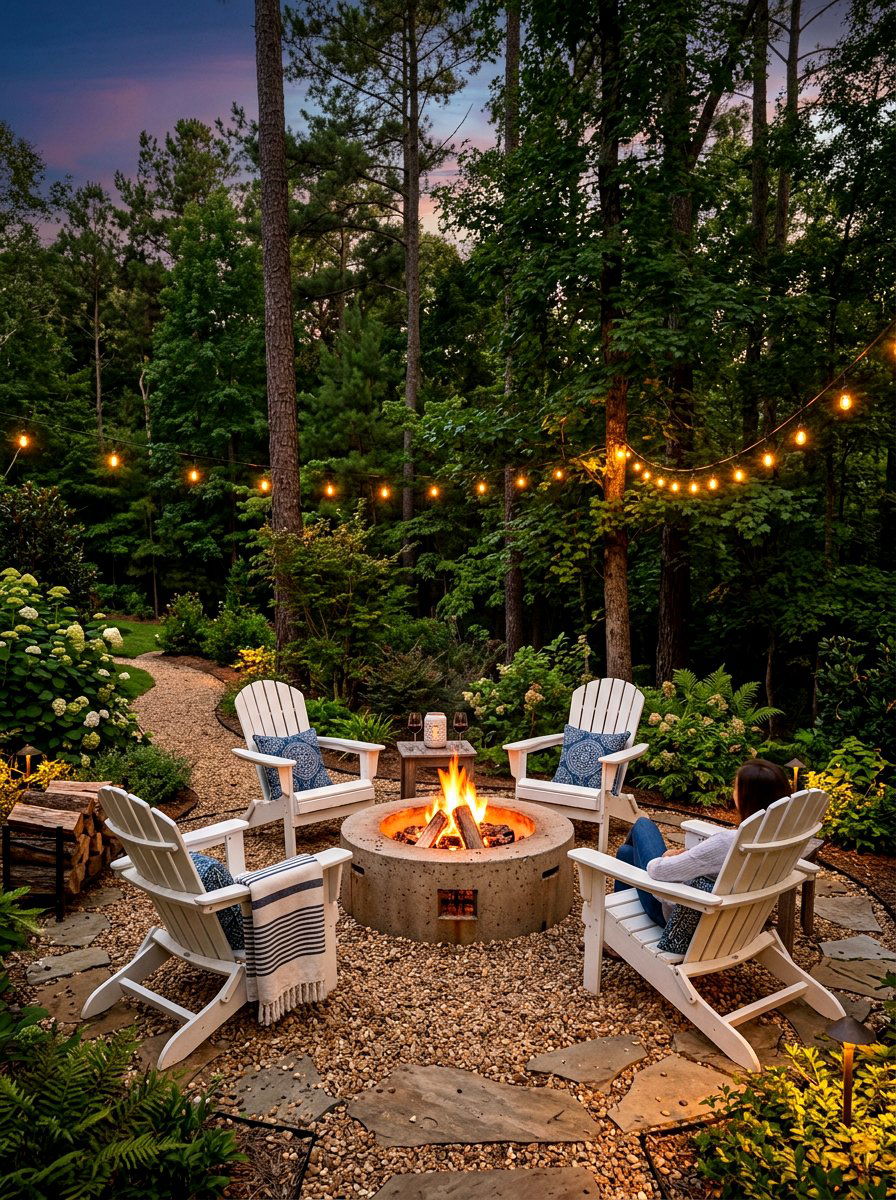
The transitional fire pit is a versatile alternative to a full fireplace, offering a communal gathering spot that feels relaxed and modern. Look for fire pits with a clean, circular or square silhouette made from smooth concrete or blackened steel. Surrounding the fire pit with a set of classic Adirondack chairs in a neutral gray or white finish creates a perfect blend of old and new. For a more modern twist, use recycled glass pebbles inside the pit instead of traditional lava rocks. This setup creates an inviting destination in your yard where guests can gather to roast marshmallows or enjoy a glass of wine.
14. Wicker Furniture Transitional Patio
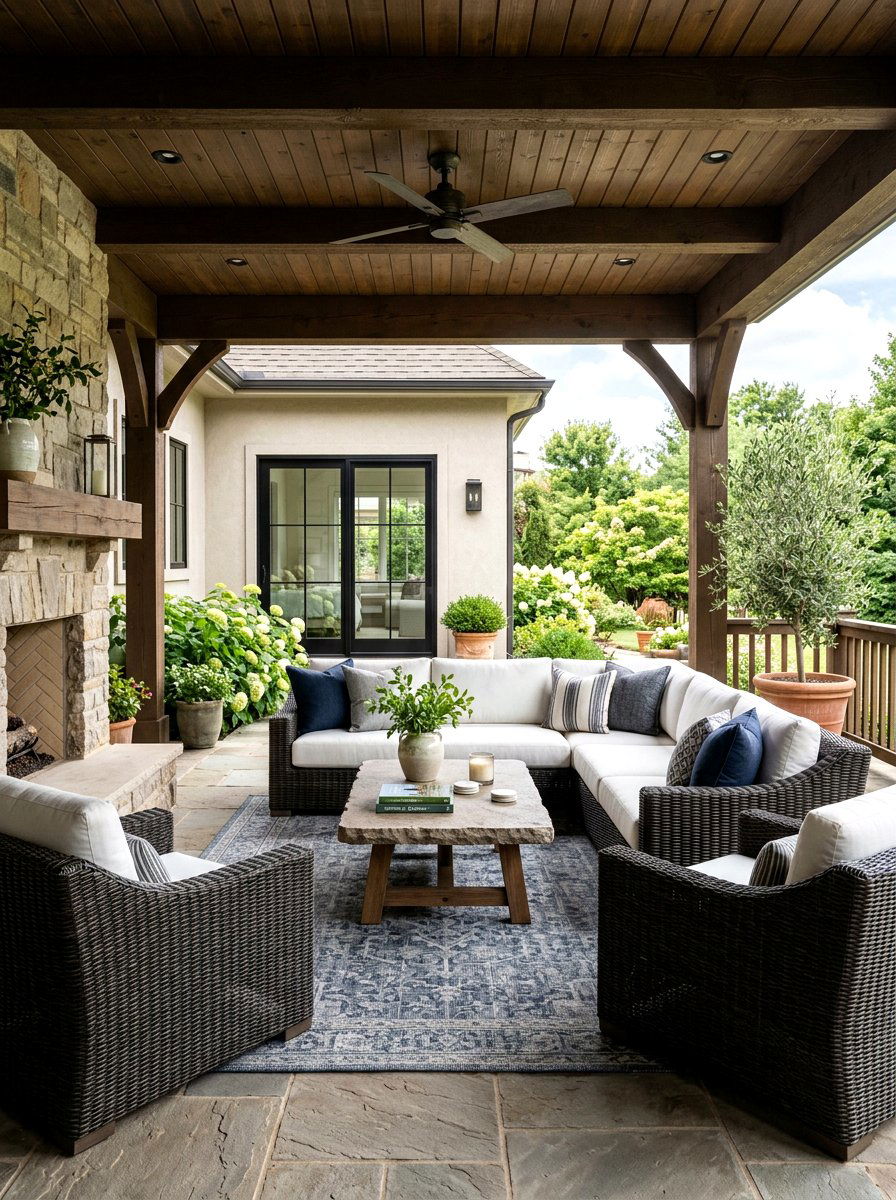
Wicker furniture on a transitional patio uses updated weaves and shapes to avoid looking dated or purely traditional. Modern resin wicker is designed to look like natural rattan but is much more durable and resistant to fading or cracking in the sun. Choose pieces with chunky, squared-off silhouettes and oversized cushions to give the wicker a more contemporary and substantial feel. Mixing a wicker sofa with metal side tables or a stone coffee table adds a layered look that is a key component of transitional design. This material brings an essential organic texture to the space, making it feel warm and lived-in.
15. Transitional Patio Pool
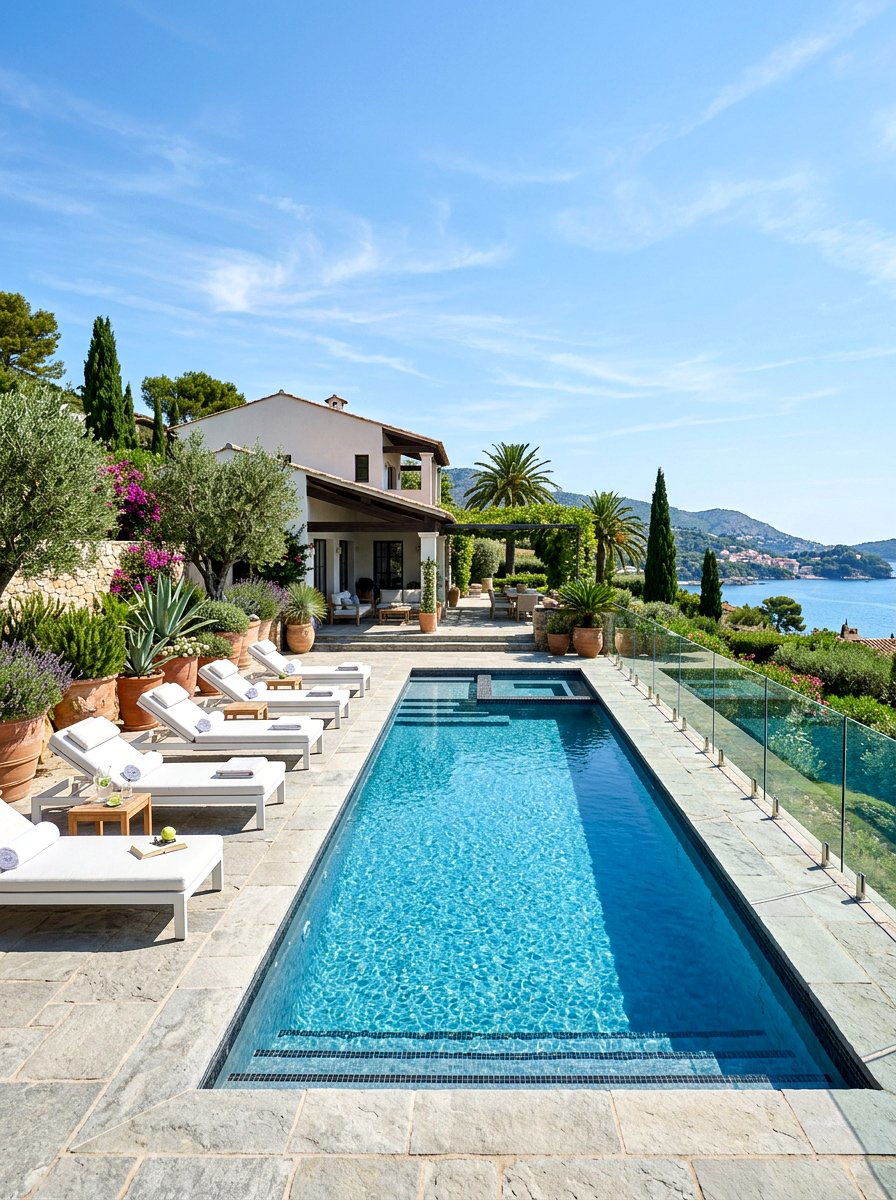
A transitional patio pool area emphasizes clean lines and high-end materials to create a resort-like atmosphere in your own backyard. Surround the pool with a wide deck of natural stone or non-slip porcelain tiles that match the main patio area for a seamless look. Use low-profile sun loungers with adjustable backs and neutral cushions to provide a sleek place for sunbathing. To add a traditional touch, consider incorporating a small water feature with a classic stone spout or a row of oversized Mediterranean-style planters. The goal is to create a serene environment that feels balanced, organized, and deeply refreshing for every swimmer.
16. Screened In Transitional Porch
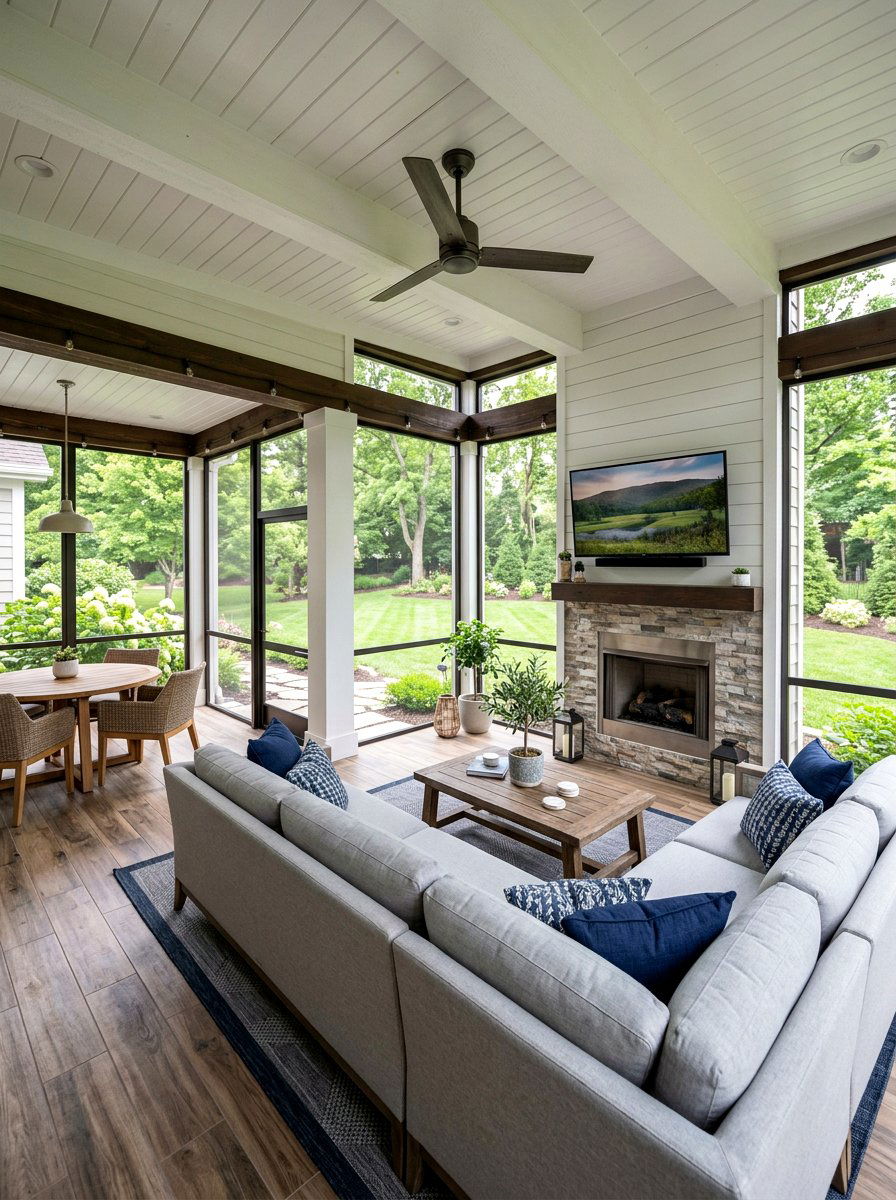
A screened-in transitional porch offers the best of both worlds by providing a bug-free environment that still feels connected to the outdoors. The framing of the screens should be thin and unobtrusive, often painted in a dark charcoal or black to disappear into the landscape. Inside, the decor can mirror your interior living room with a full sectional, a coffee table, and even an outdoor-rated television. Using a wood-look tile on the floor provides a warm, traditional foundation that is easy to clean. This space becomes a favorite spot for morning coffee or evening relaxation, regardless of the local insect population or light rain.
17. Transitional Landscaping
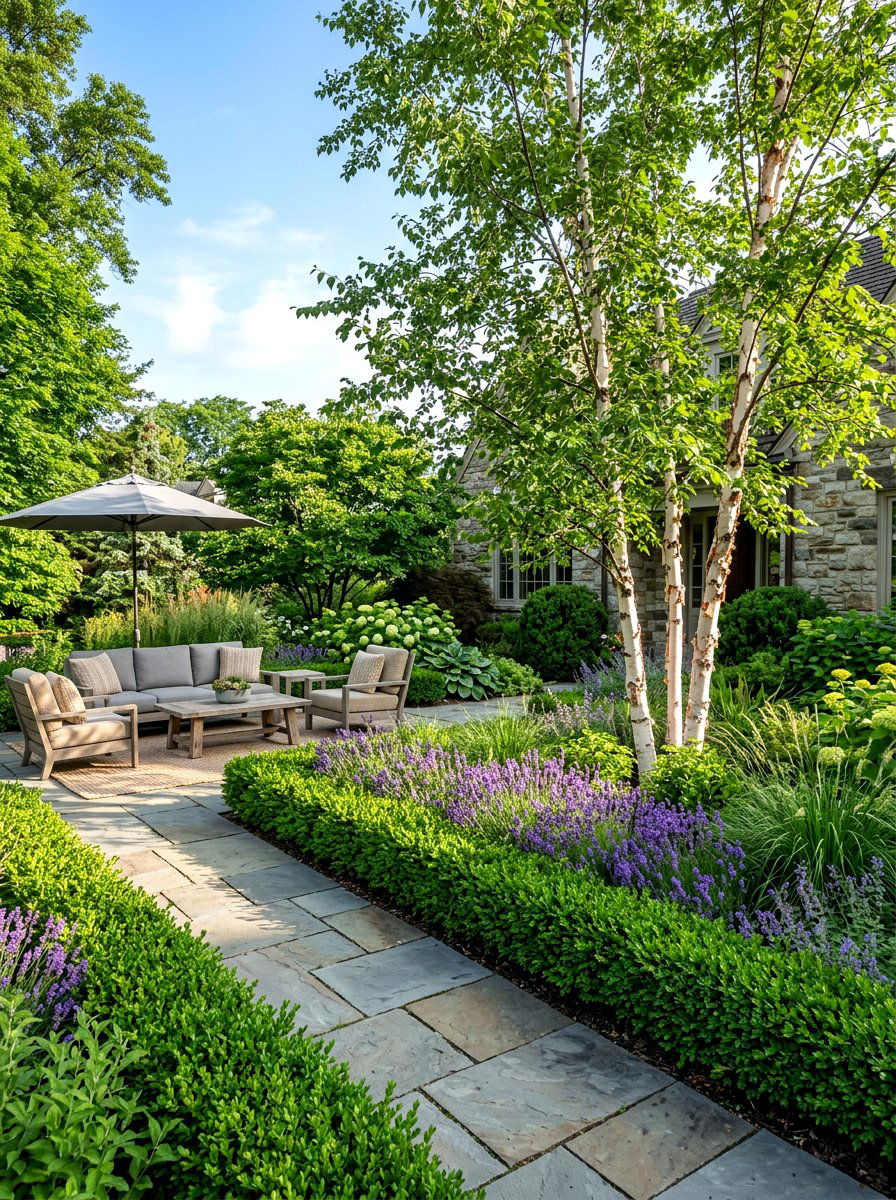
Transitional landscaping focuses on a structured layout that combines formal garden elements with more natural, loose plantings for a balanced look. Use low boxwood hedges or stone borders to define specific zones, such as a dining area or a lounge spot. Within these borders, plant a variety of perennials like lavender, hydrangeas, and ornamental grasses to provide soft movement and color. Incorporating a few sculptural trees, such as a Japanese Maple or a multi-stem birch, adds a focal point that feels artistic and modern. This approach creates a garden that feels intentional and organized while still embracing the wild beauty of the natural world.
18. Wood And Metal Patio Furniture
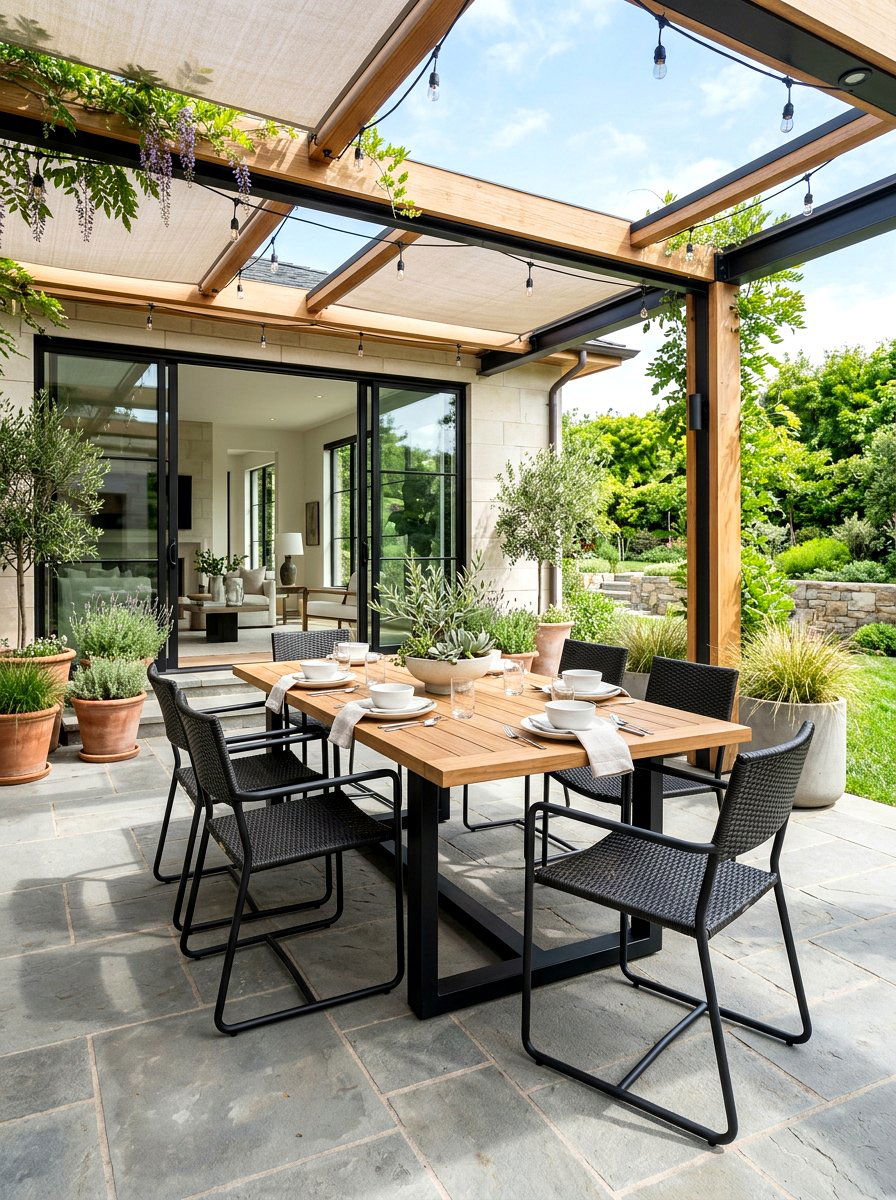
Mixing wood and metal in your patio furniture is one of the easiest ways to achieve a successful transitional aesthetic. The warmth of natural teak or eucalyptus wood provides a traditional feel, while black or brushed steel frames introduce a modern, industrial edge. A popular choice is a large wooden dining table paired with sleek metal chairs, or a metal-framed sofa with thick wooden armrests. This combination of materials is not only visually interesting but also incredibly durable for outdoor use. It creates a high-contrast look that feels very contemporary while still being grounded in classic craftsmanship and timeless design.
19. Transitional Patio Rug
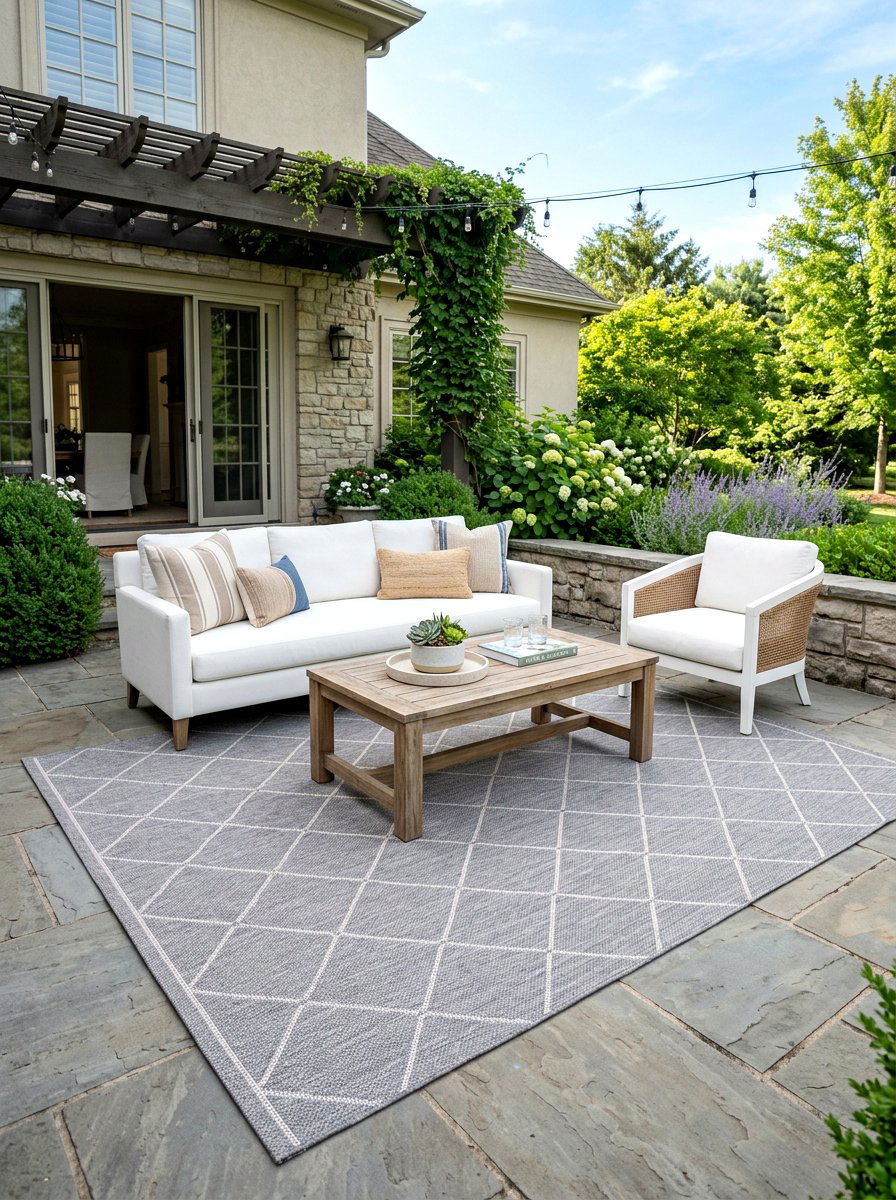
A transitional patio rug is the perfect accessory to tie different furniture pieces together and add a layer of comfort to the space. Look for rugs made from high-quality polypropylene that can be easily hosed off and are resistant to mold and mildew. Designs often feature subtle geometric patterns, such as a soft Moroccan trellis or a simple border, in neutral colors like navy, gray, or tan. The rug helps to "ground" the furniture, making the seating area feel like a true room rather than just a collection of chairs on a slab. It also provides a soft surface for bare feet during the summer.
20. Outdoor Lounge Transitional Decor
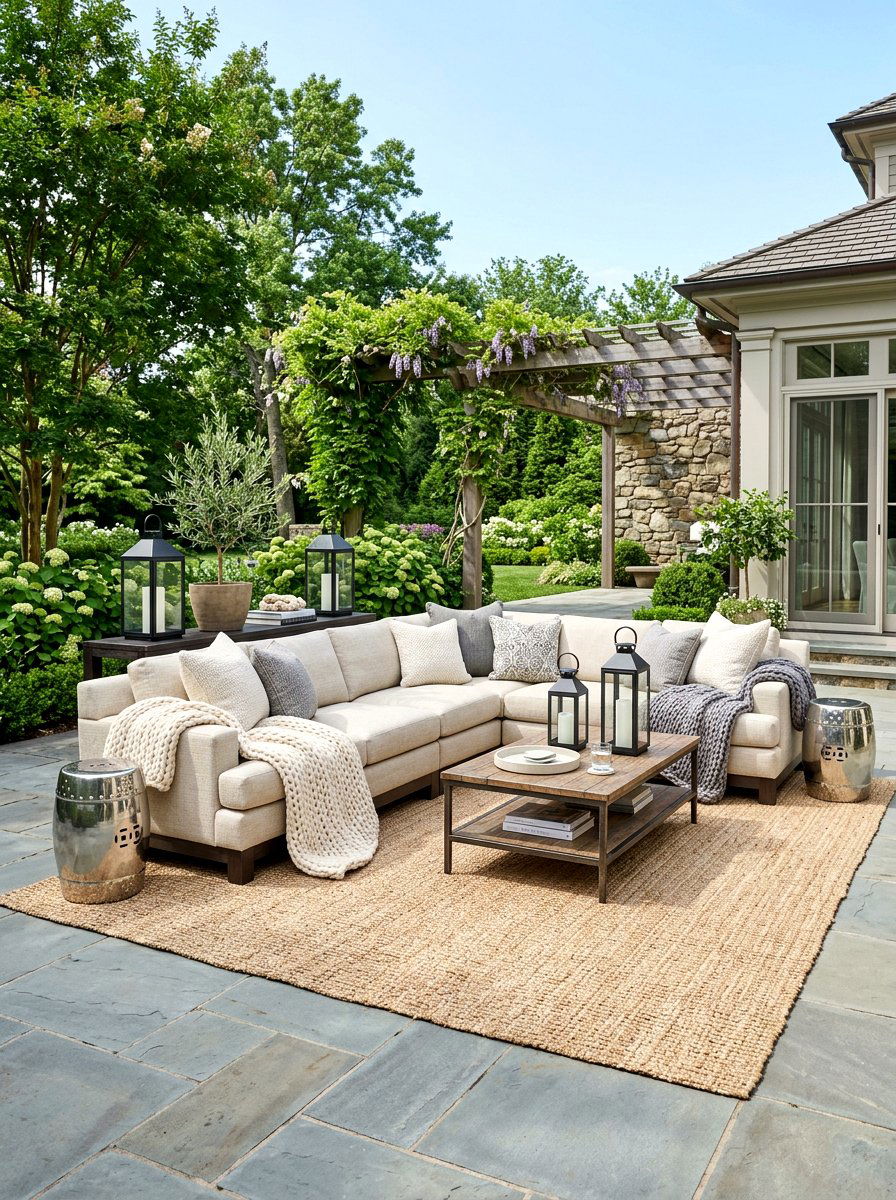
Creating a transitional outdoor lounge involves more than just seating; it requires the right decor to feel fully finished and luxurious. Use oversized ceramic garden stools in metallic finishes or soft glazes to serve as both side tables and extra seating when needed. Layering different heights of candle lanterns on the coffee table adds a romantic glow and a touch of traditional charm. Don't forget to include high-quality outdoor throw blankets in chunky knits for cool evenings. These small details are what make a patio feel like a curated living space, showing off your personal style while maintaining a cohesive and sophisticated design.
21. Transitional Stone Wall
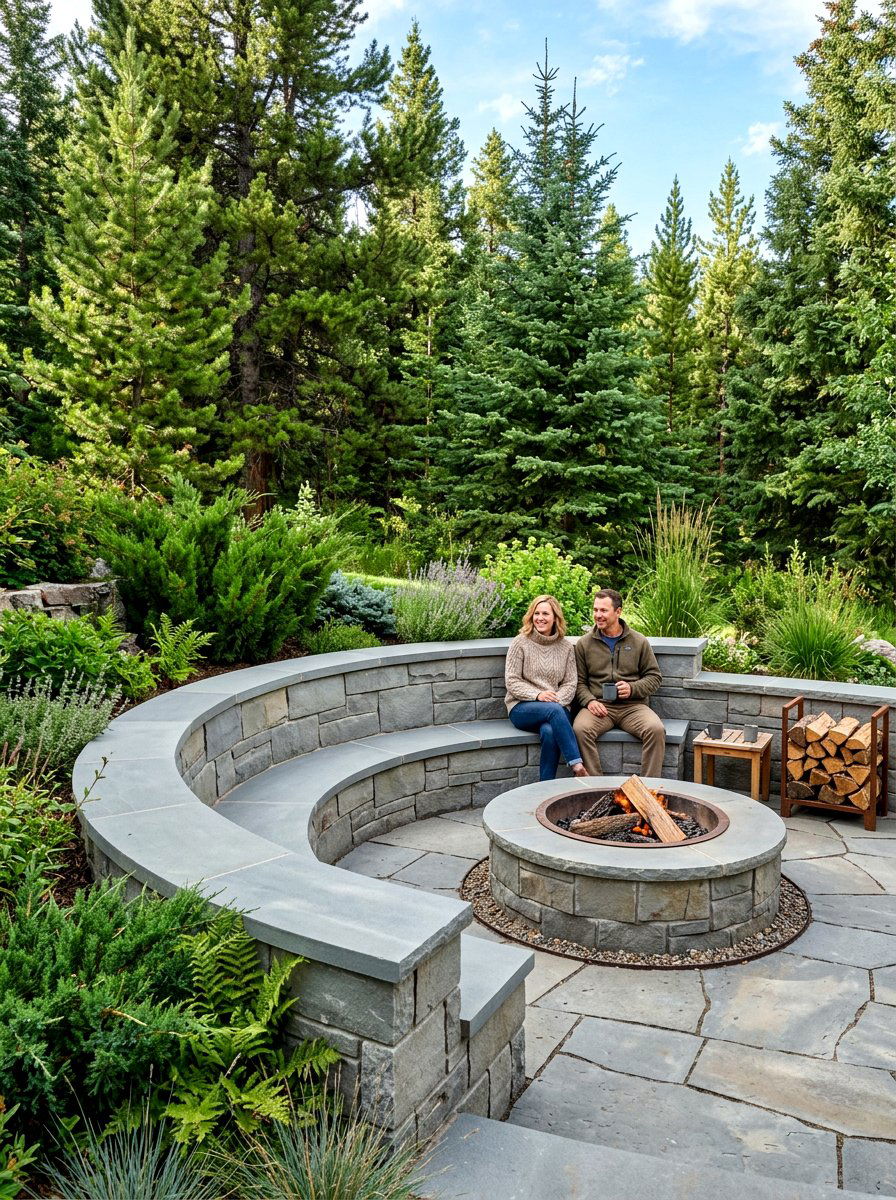
A transitional stone wall can serve multiple purposes, from providing extra seating to acting as a retaining wall for a tiered garden. Use smooth, saw-cut stones laid in a tight, mortar-less pattern to achieve a modern look that still celebrates the natural material. A flat capstone on top of the wall creates a comfortable place for guests to sit during a large party, eliminating the need for extra chairs. This architectural feature adds a sense of permanency and structure to the patio, making the entire yard feel more "built-in" and professionally designed. It is a functional element that adds significant visual weight.
22. Coastal Transitional Patio
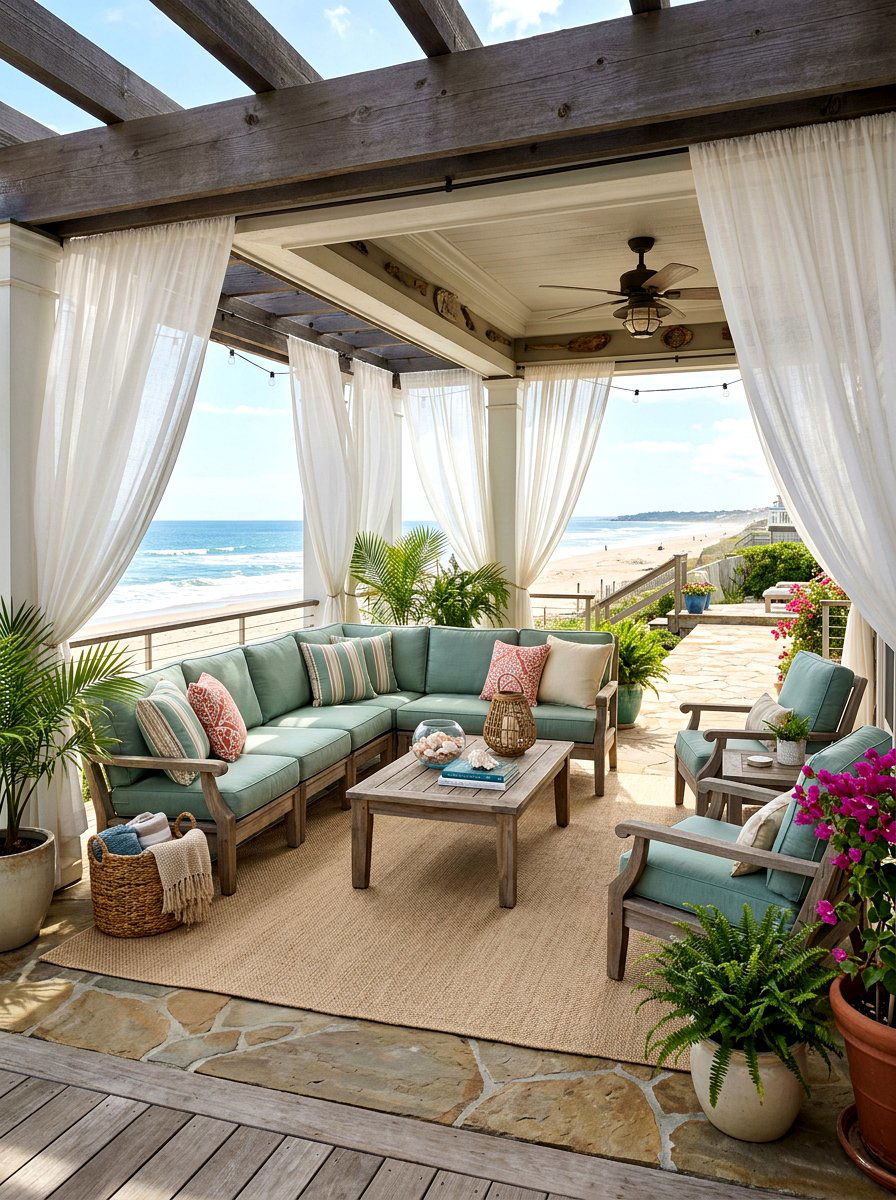
The coastal transitional patio takes the traditional beach house look and updates it with cleaner lines and a more refined color palette. Instead of literal nautical decor, focus on colors like sandy beige, seafoam green, and crisp white to evoke a seaside feeling. Use light-toned woods like weathered teak and plenty of woven textures in the furniture and rugs. Large glass lanterns and sheer outdoor curtains can add a sense of movement and airiness to the space. This style is perfect for those who want a relaxing, breezy atmosphere that still feels sophisticated enough for formal entertaining or quiet afternoon reading sessions.
23. Farmhouse Transitional Patio
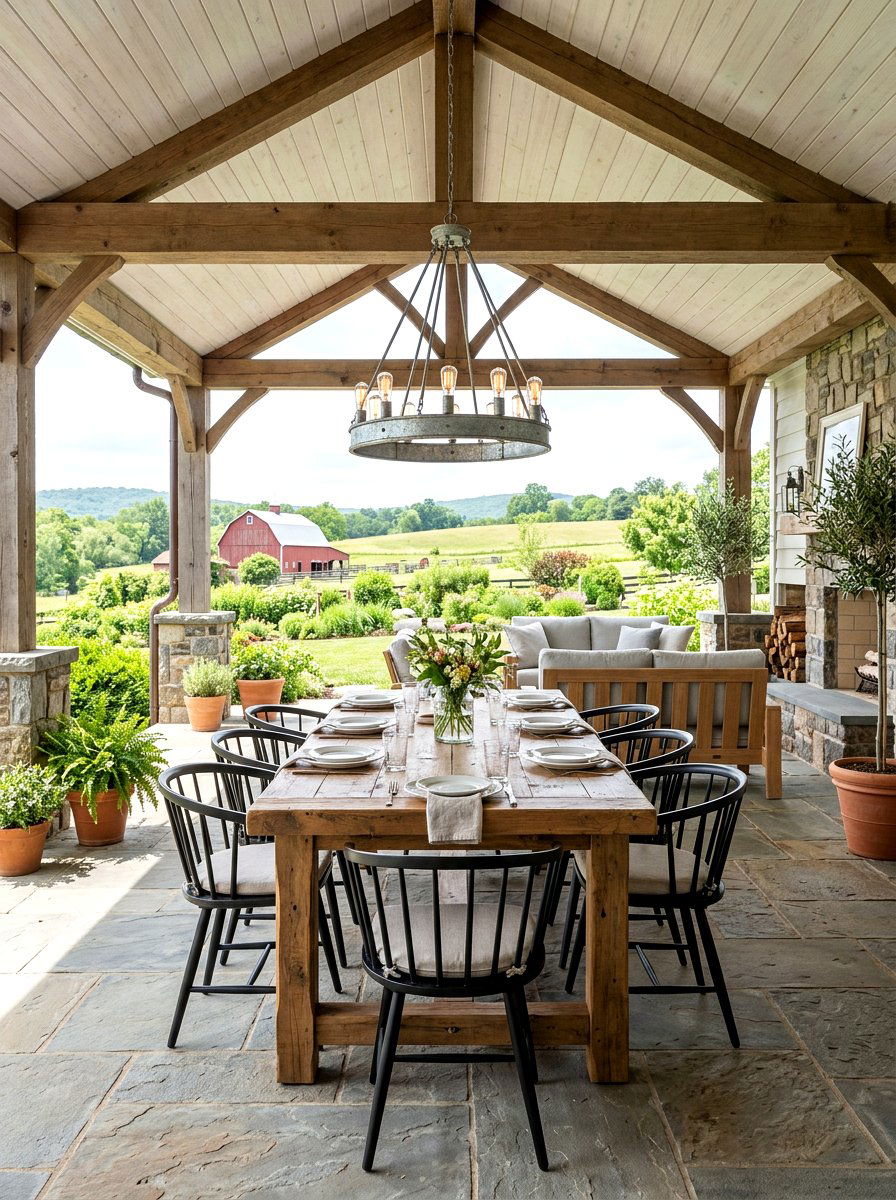
A farmhouse transitional patio blends the cozy, rustic charm of a traditional farmstead with modern, industrial-inspired accents. Think of a large, chunky wooden dining table paired with black metal "Tolix" style chairs and a large, galvanized metal chandelier. The use of natural materials like stone and wood is prominent, but the shapes are kept simple and the layout remains uncluttered. Incorporating a few vintage-inspired elements, like a weathered milk crate for a planter or a classic rocking chair, adds a sense of history and personality. It is a warm and welcoming style that feels incredibly grounded and perfect for a family-centered home.
24. Transitional Patio Planters
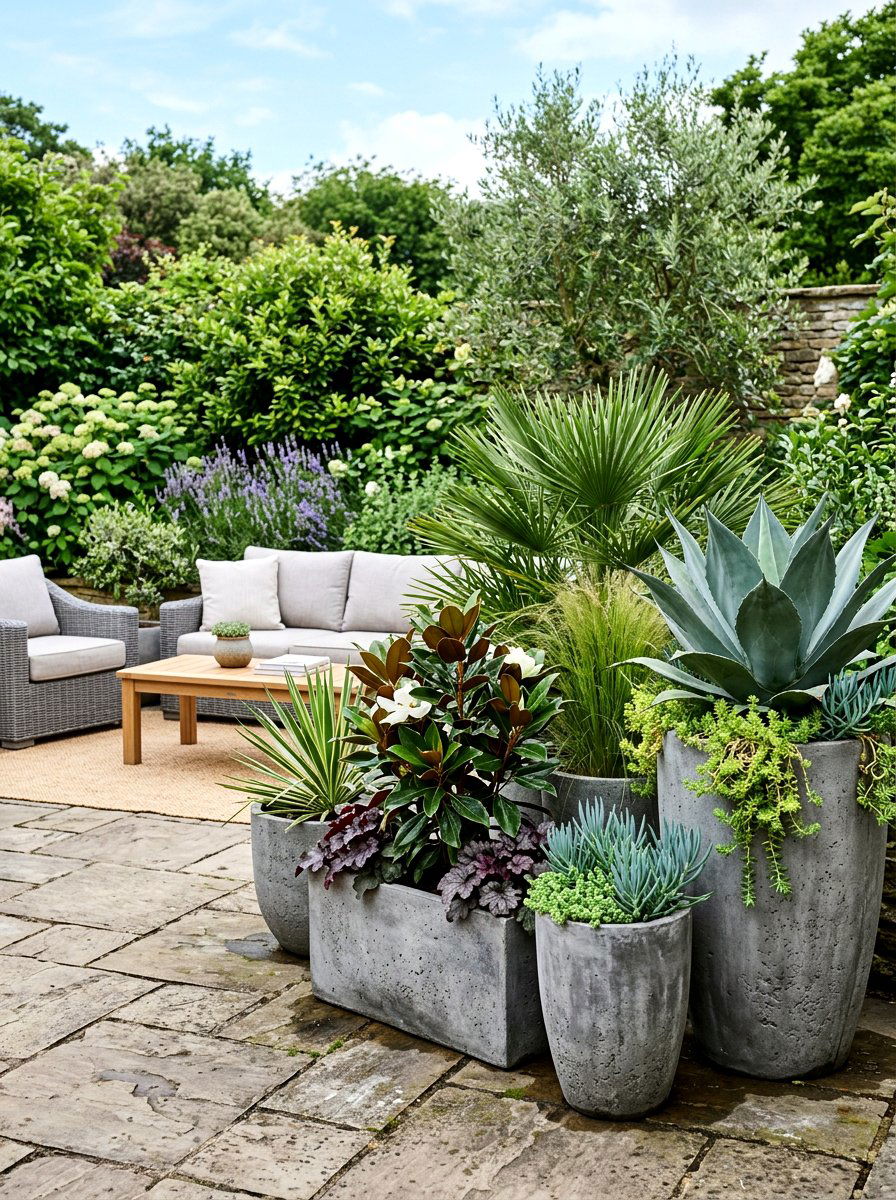
Transitional patio planters are essential for bringing greenery into the space in a way that complements the overall design. Opt for large, simple silhouettes in materials like concrete, fiberstone, or matte-finished ceramics. Neutral colors like charcoal, white, and terracotta are best for maintaining the transitional look. Grouping planters of different heights together creates a dynamic visual display without feeling messy or overdone. Planting a mix of architectural evergreens for year-round structure and flowing annuals for seasonal color ensures your patio always looks vibrant and well-maintained. These planters act as living sculptures that soften the hard edges of the stone or wood.
25. Modern Transitional Patio Tiles
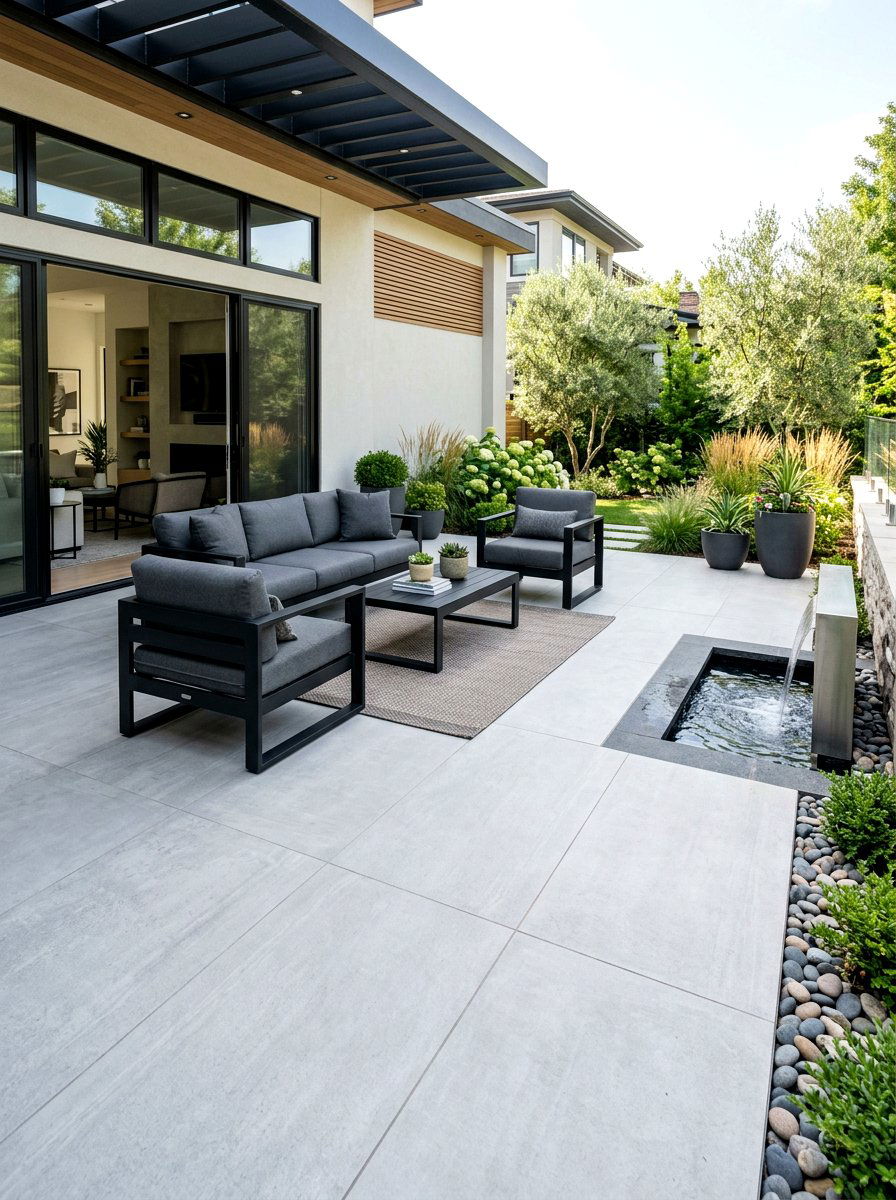
Modern transitional patio tiles offer a sophisticated alternative to traditional pavers, providing a sleek and uniform surface that is easy to maintain. Porcelain tiles that mimic the look of natural stone or wood are incredibly popular because they are resistant to staining and freezing. Large-format tiles with minimal grout lines create a clean, contemporary floor that makes the entire patio feel like an extension of your indoor flooring. To keep it transitional, choose tiles with a bit of texture or a subtle color variation to avoid a flat, clinical look. This flooring choice is perfect for creating a high-end, polished outdoor environment.
26. Transitional Patio Curtains
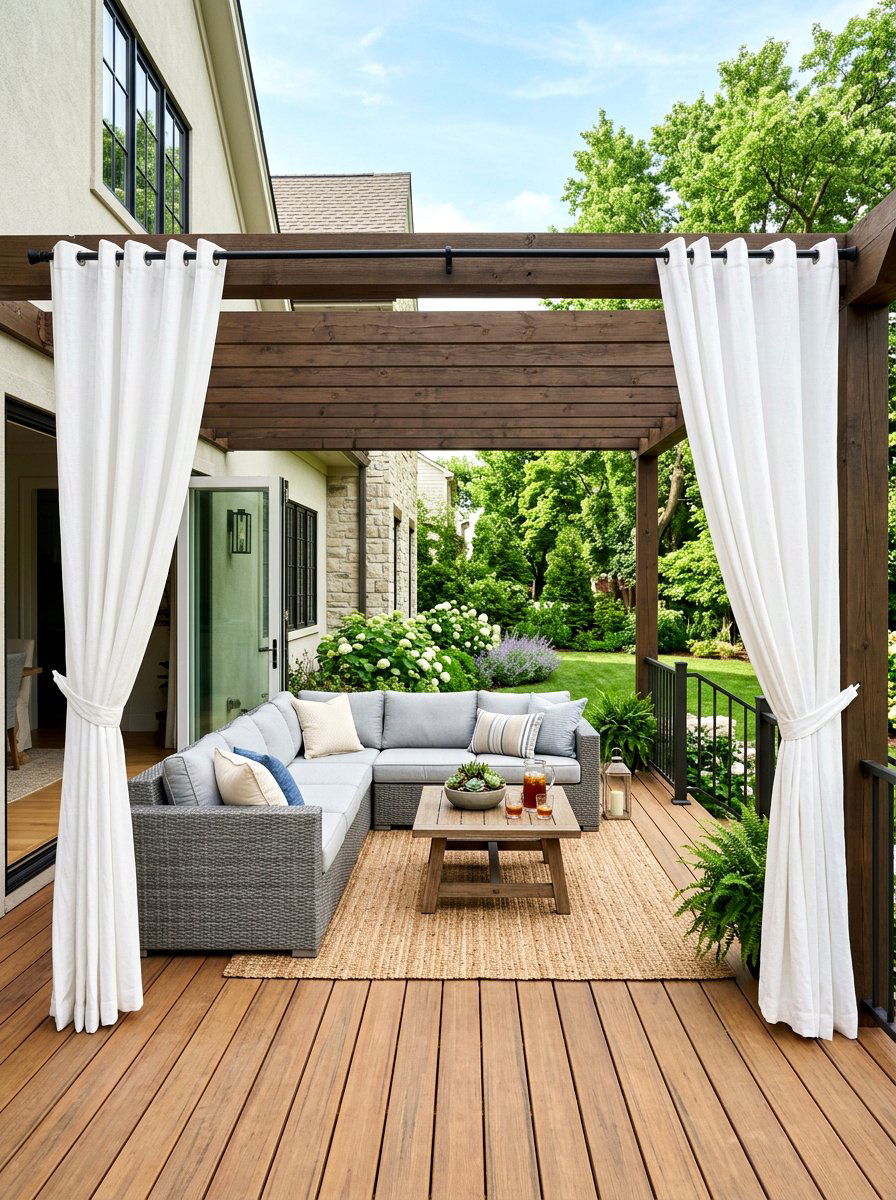
Adding transitional patio curtains is a fantastic way to introduce softness, privacy, and shade to an outdoor space. Use high-quality outdoor fabrics like Sunbrella in a light, neutral color to ensure they don't fade or mildew over time. Hanging the curtains from a simple black or silver rod adds a touch of modern sophistication, while the flowing fabric provides a traditional, romantic feel. Curtains can be used to frame a view or to completely close off a section of the patio for a more intimate atmosphere. They are especially effective on covered patios or under pergolas, adding an extra layer of luxury.
27. Multi Level Transitional Patio
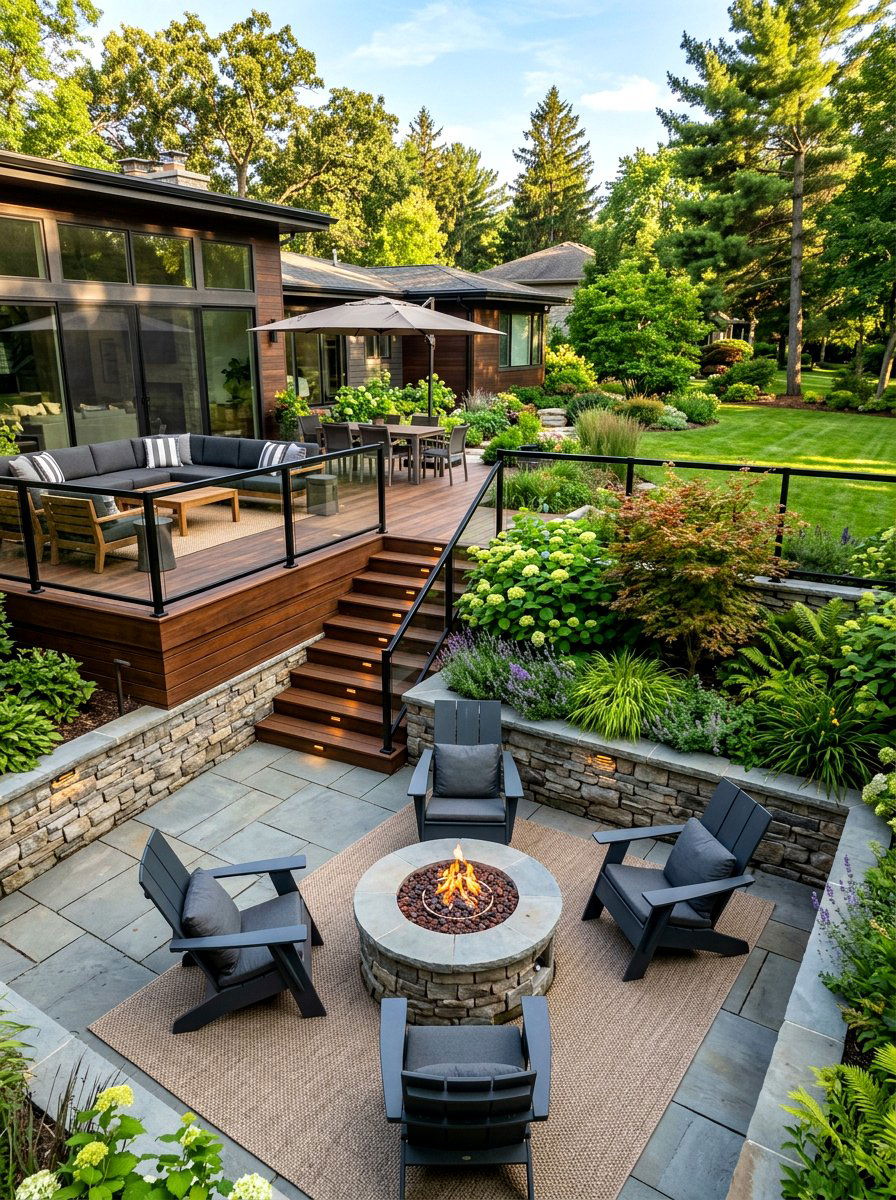
A multi-level transitional patio is a great way to handle a sloped yard while creating distinct zones for different activities. You might have a higher deck for dining that steps down to a larger stone patio for lounging and a fire pit area. Using the same materials across both levels, such as matching stone or wood accents, ensures that the spaces feel connected rather than fragmented. This layout adds a sense of architectural drama and makes a large yard feel more manageable and organized. It also allows for unique landscaping opportunities, with built-in planters nestled between the different levels of the patio.
28. Transitional Outdoor Bar
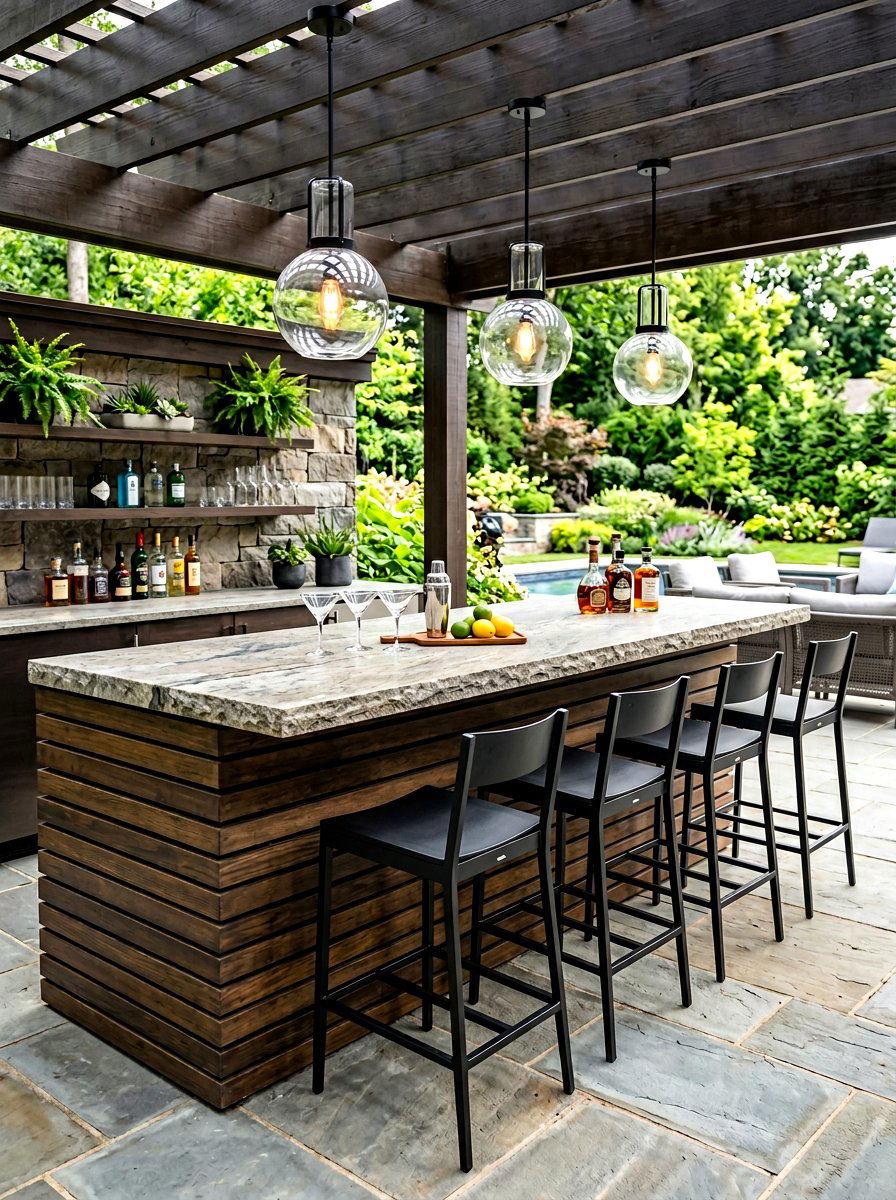
A transitional outdoor bar provides a dedicated spot for entertaining and serving drinks, making your patio the go-to destination for summer parties. Design the bar with a sleek stone countertop and a base made from clean-lined wood or stucco. High-backed bar stools with metal frames and comfortable cushions provide a sophisticated seating option that encourages guests to linger. Adding a few floating shelves behind the bar for glassware and bottles keeps the area organized and stylish. This feature adds a fun, social element to the patio that feels like a high-end lounge, perfect for hosting friends and family during the weekend.
29. Cozy Transitional Patio Corner
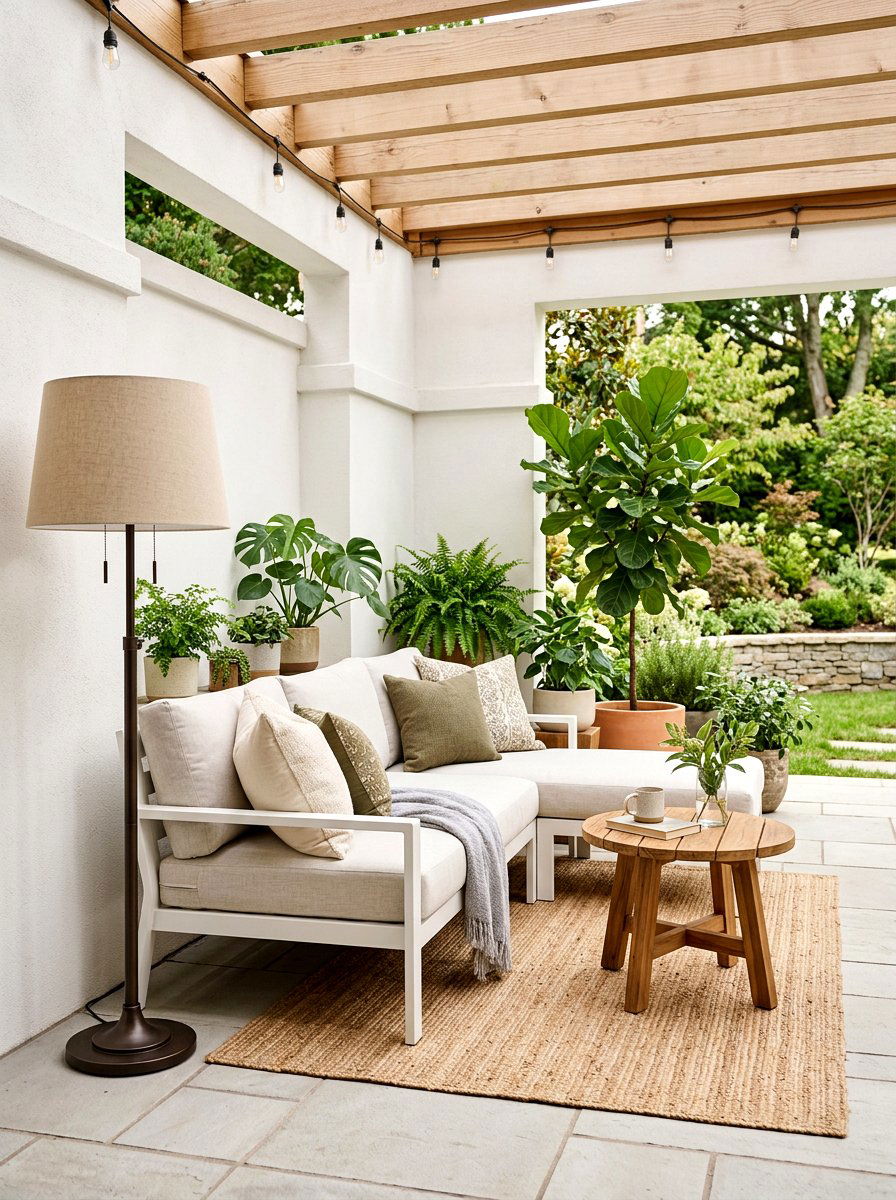
Creating a cozy transitional patio corner is perfect for smaller yards or for carving out a private reading nook within a larger space. Use a small L-shaped sectional or a pair of deep-seated armchairs tucked into a corner of the patio. A small round side table and a tall floor lamp designed for outdoor use can make the area feel like a true interior room. Surround the corner with tall plants or a privacy screen to create a sense of seclusion and quiet. This little retreat is the ideal spot for a morning meditation or a peaceful evening with a good book.
30. Transitional Patio Swing
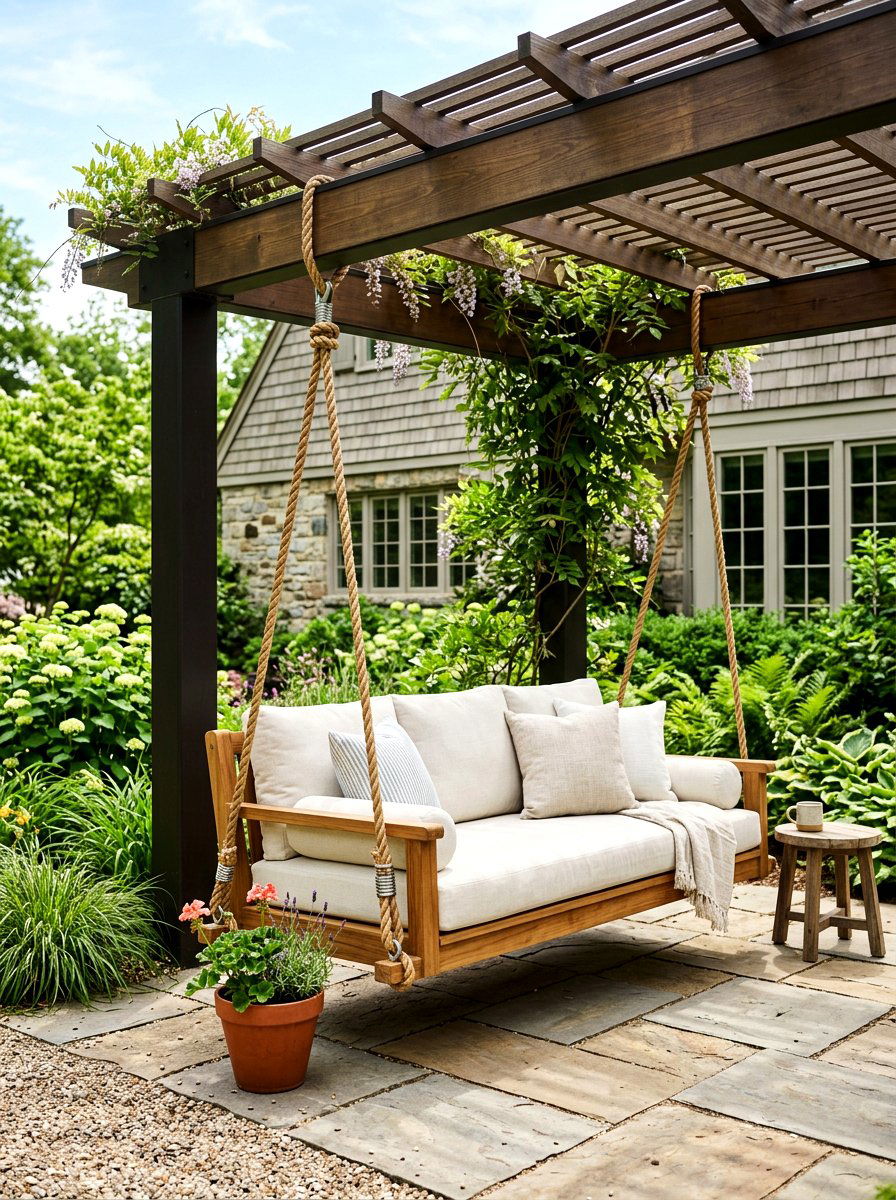
The transitional patio swing is a modern update on the classic porch swing, offering a relaxing and playful seating option for any outdoor area. Look for swings with a simple, rectangular wooden frame and thick, comfortable cushions in a solid neutral color. Instead of traditional chains, use thick nautical rope to hang the swing for a more organic and updated look. This piece can be hung from a sturdy pergola or a dedicated stand, providing a soothing place to enjoy the breeze. It adds a touch of whimsical charm to the patio while maintaining the clean lines and sophisticated feel of transitional design.
Conclusion:
Designing a transitional patio is a rewarding way to enhance your home’s outdoor living potential by combining the best of two distinct worlds. By prioritizing high-quality materials, a cohesive neutral color palette, and a layout that encourages both relaxation and social interaction, you can create a space that feels like a natural extension of your interior. Whether you choose a grand outdoor fireplace, a sleek porcelain tile floor, or a cozy corner for quiet reflection, the transitional style ensures your patio remains a beautiful and functional retreat for years to come. It is about creating a timeless balance that truly celebrates the art of outdoor living.

Related posts: