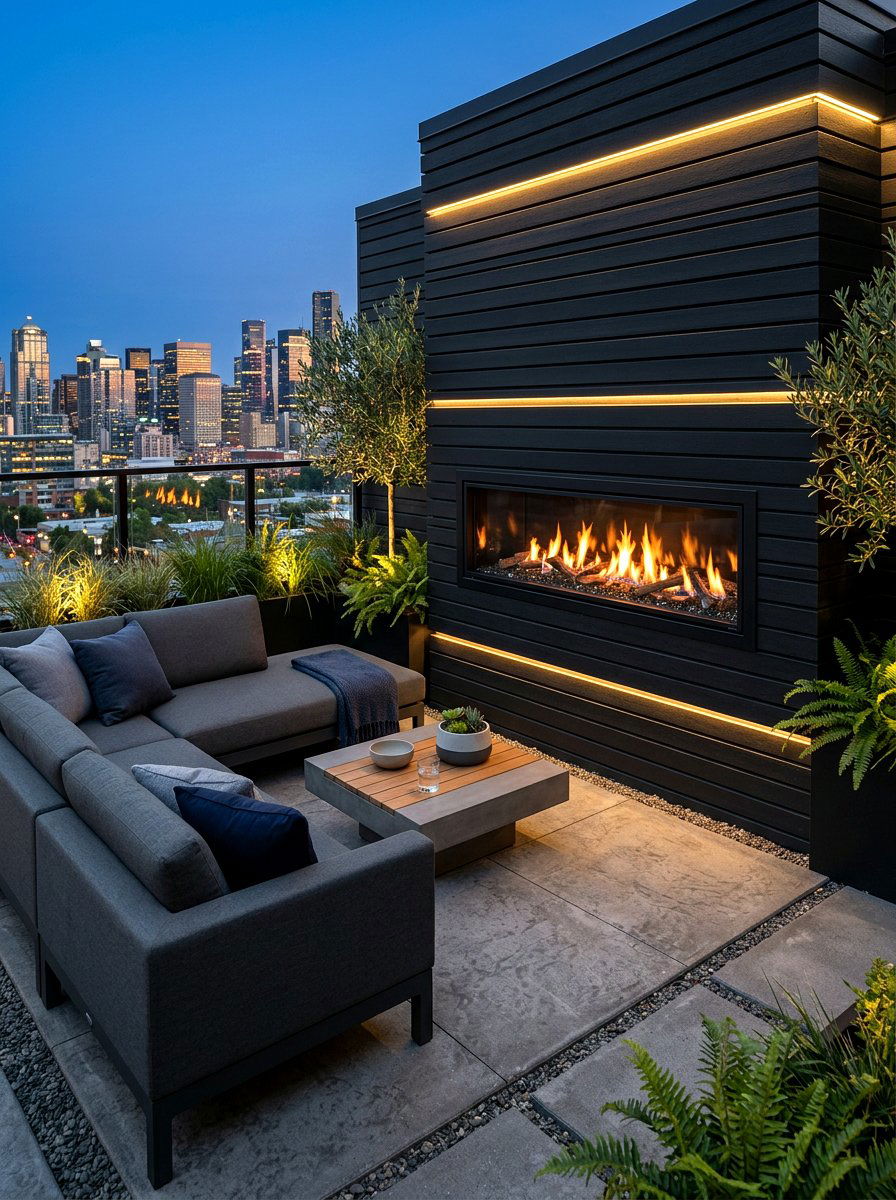
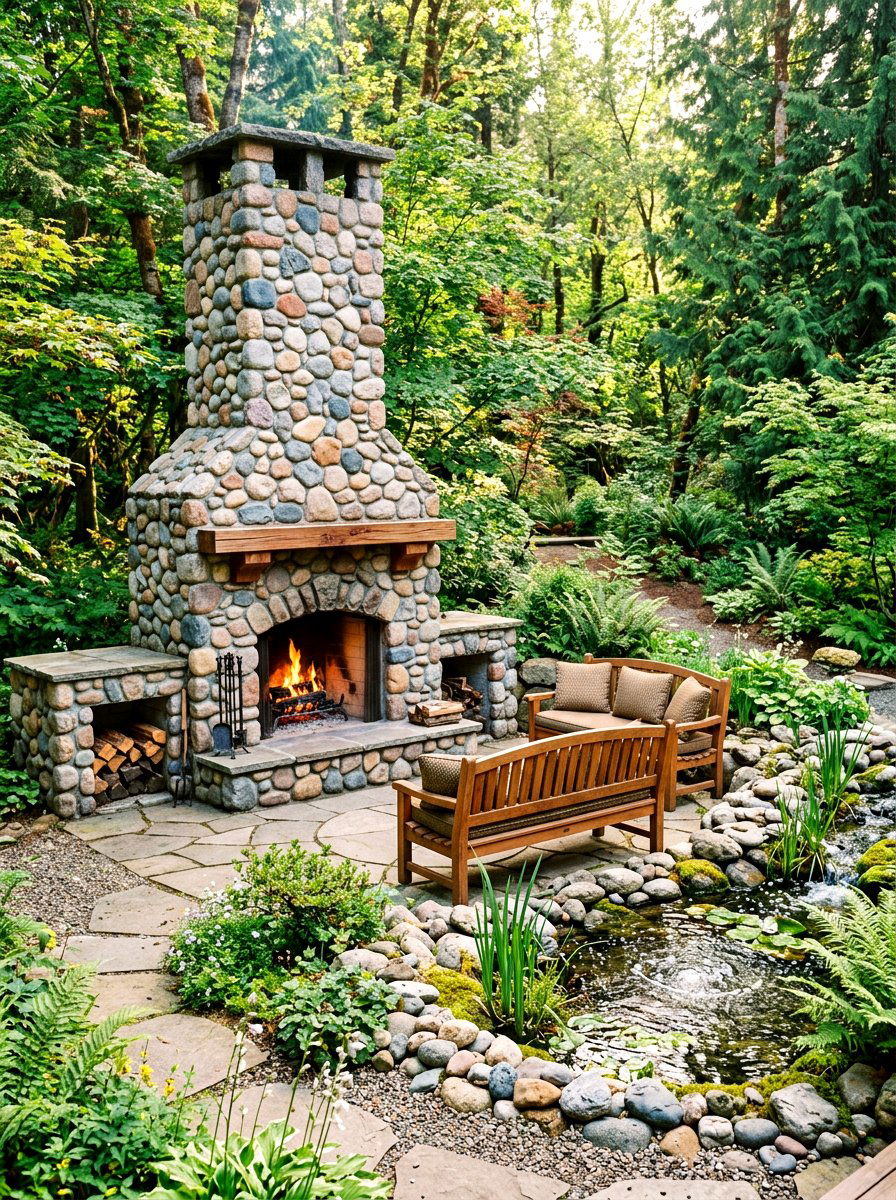
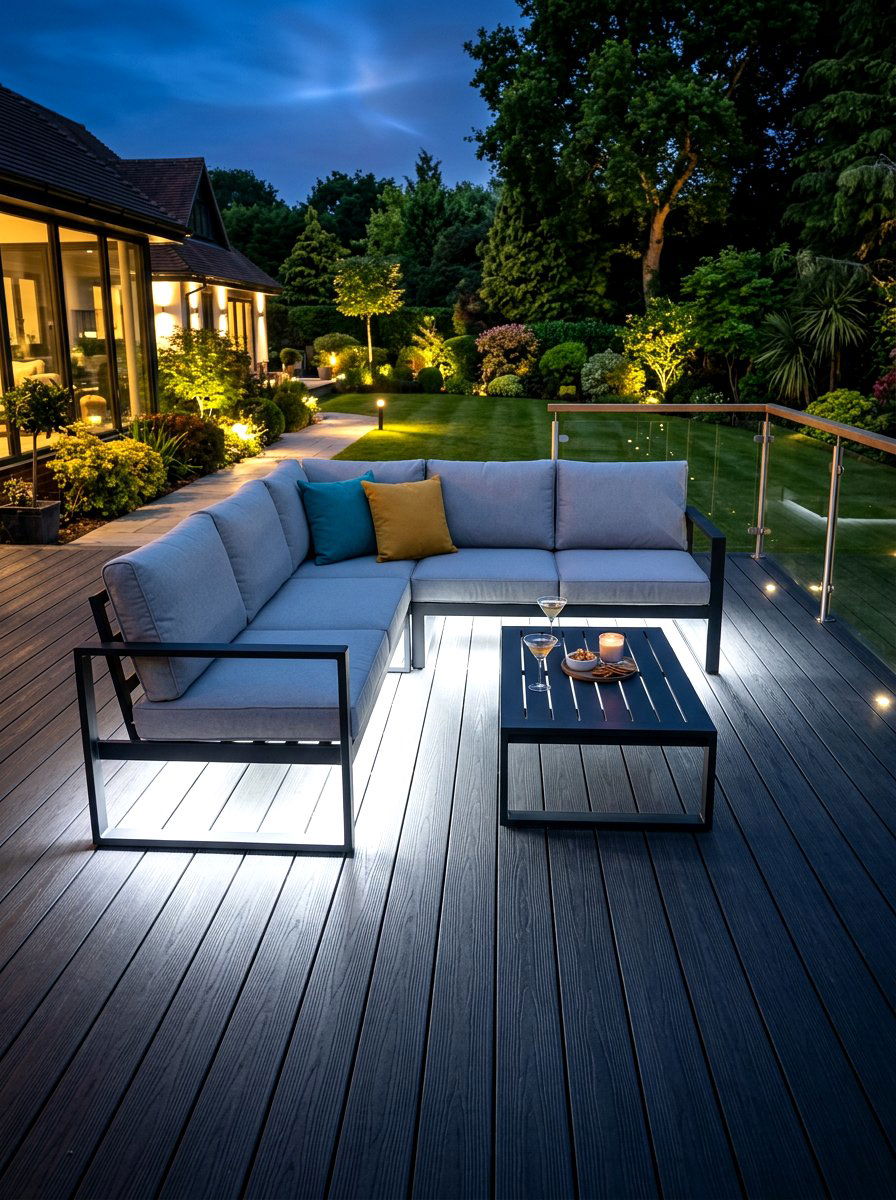
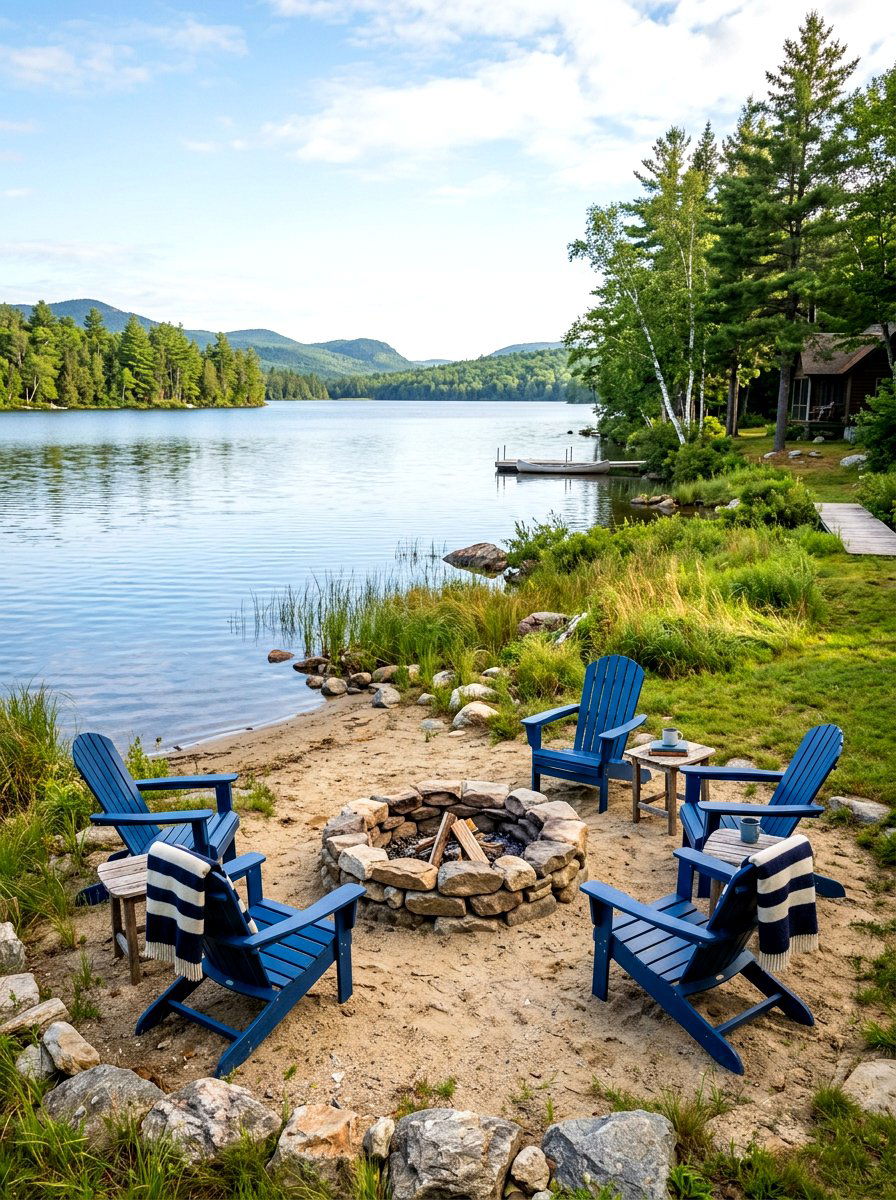
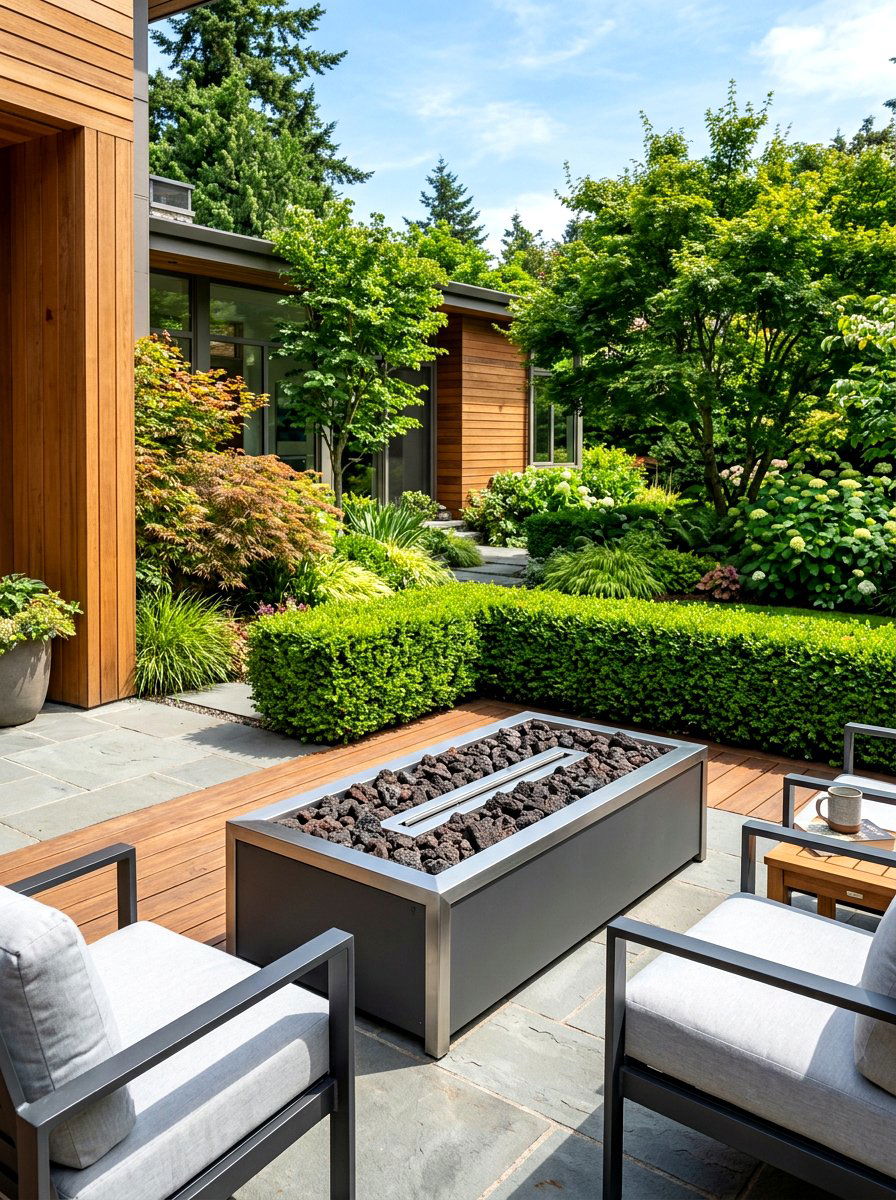
Creating a cozy outdoor gathering space often starts with the perfect fire feature, but adding a permanent seat wall elevates the entire experience. These built-in seating solutions provide a structured, architectural feel to your backyard while offering plenty of room for friends and family to gather around the flames. Instead of dragging out heavy lawn chairs every time you want to roast marshmallows, a seat wall offers a ready-made solution that stays beautiful year-round. It defines the perimeter of your patio, acts as a functional retaining wall if needed, and adds significant value to your property. Let’s explore various ways to integrate these stunning elements into your landscape to create a functional retreat.
1. Circular Stone Seat Wall Fire Pit
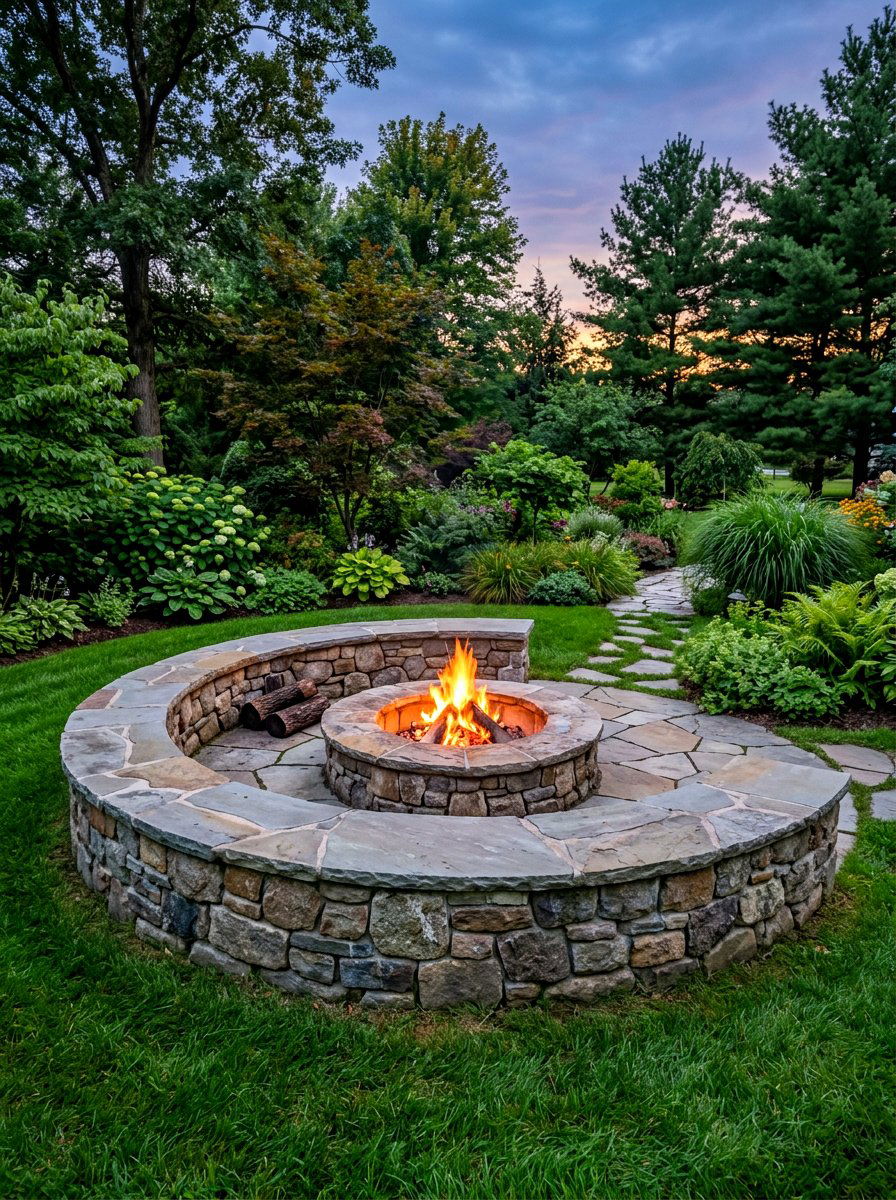
A circular layout is the most classic choice for a fire pit because it naturally encourages conversation and ensures everyone has an equal view of the dancing flames. When you build a stone seat wall in a full or semi-circle around the pit, you create a cohesive outdoor room that feels intimate and secure. Using natural fieldstone or tumbled pavers can give the structure a timeless, rustic look that blends seamlessly with the surrounding landscape. The wall should typically stand about eighteen inches high to provide comfortable seating for adults and children alike. Adding a wide flagstone cap on top of the wall provides a smooth surface for sitting and a convenient spot to place drinks.
2. Modern Square Fire Pit With Seating
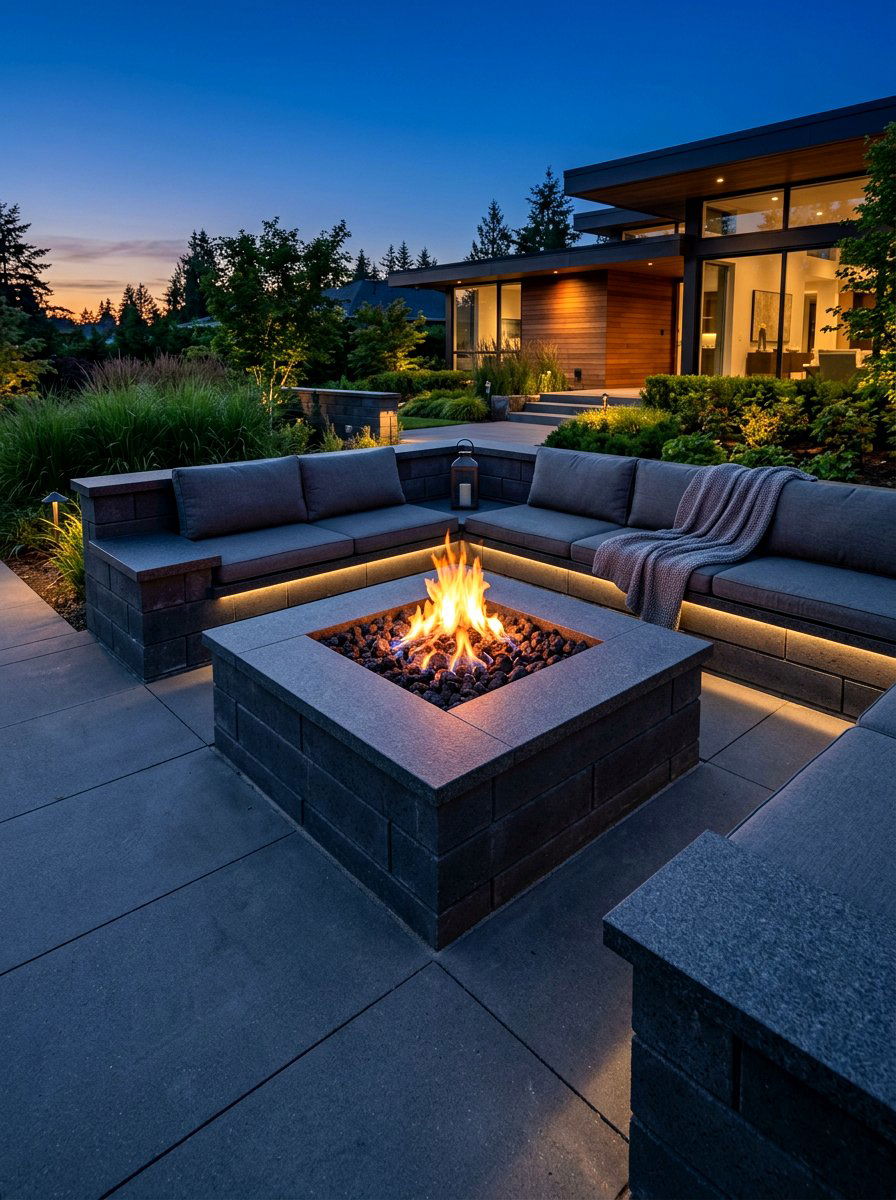
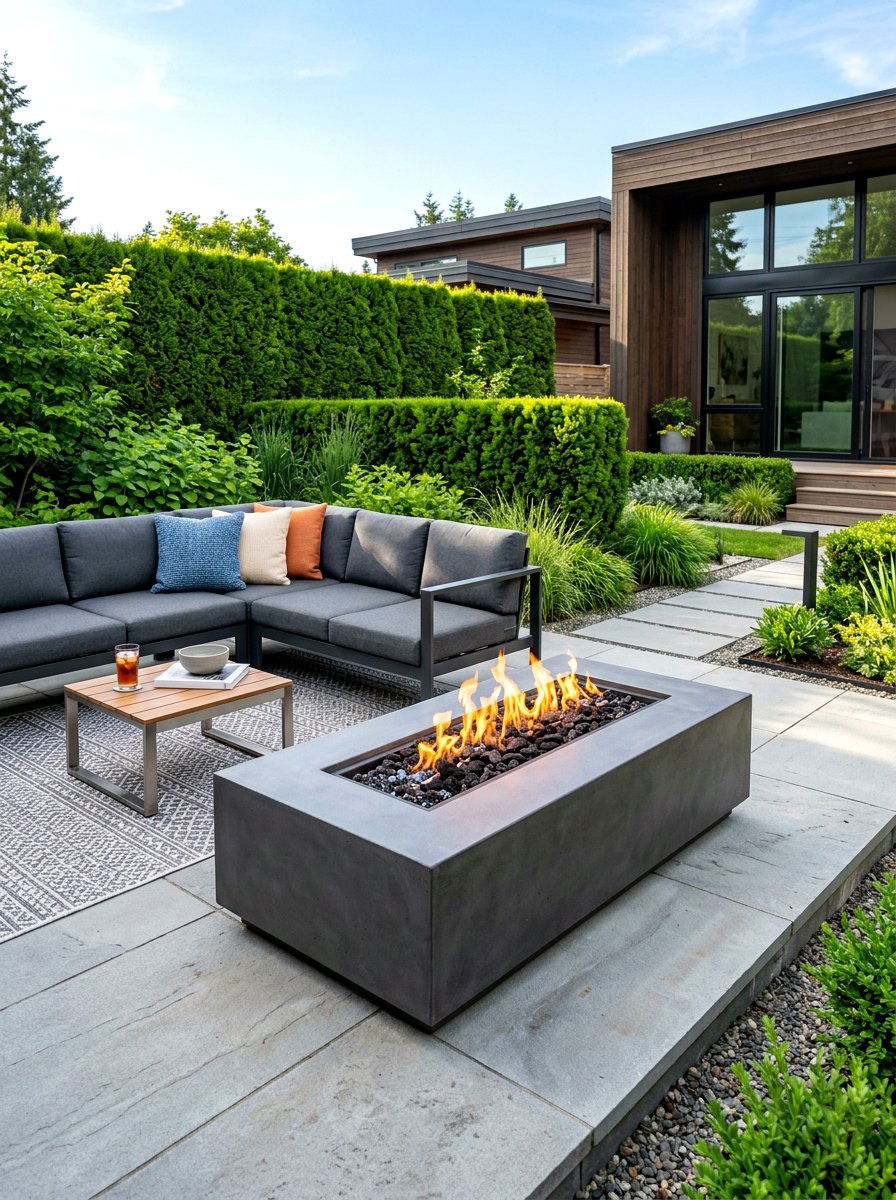
Square fire pits are becoming increasingly popular for their clean lines and contemporary appeal, making them a perfect fit for modern landscape designs. To complement this geometric shape, a straight or L-shaped seat wall can be constructed using sleek concrete blocks or smooth-cut stone. This setup works exceptionally well in corners or against the edge of a rectangular patio, maximizing the available space while providing a structured lounge area. You can enhance the modern vibe by using neutral colors like charcoal, slate gray, or crisp white for the masonry. Integrating under-cap lighting along the straight edges of the wall adds a sophisticated glow that highlights the architectural form of the fire pit during the evening.
3. Sunken Patio Fire Pit With Wall
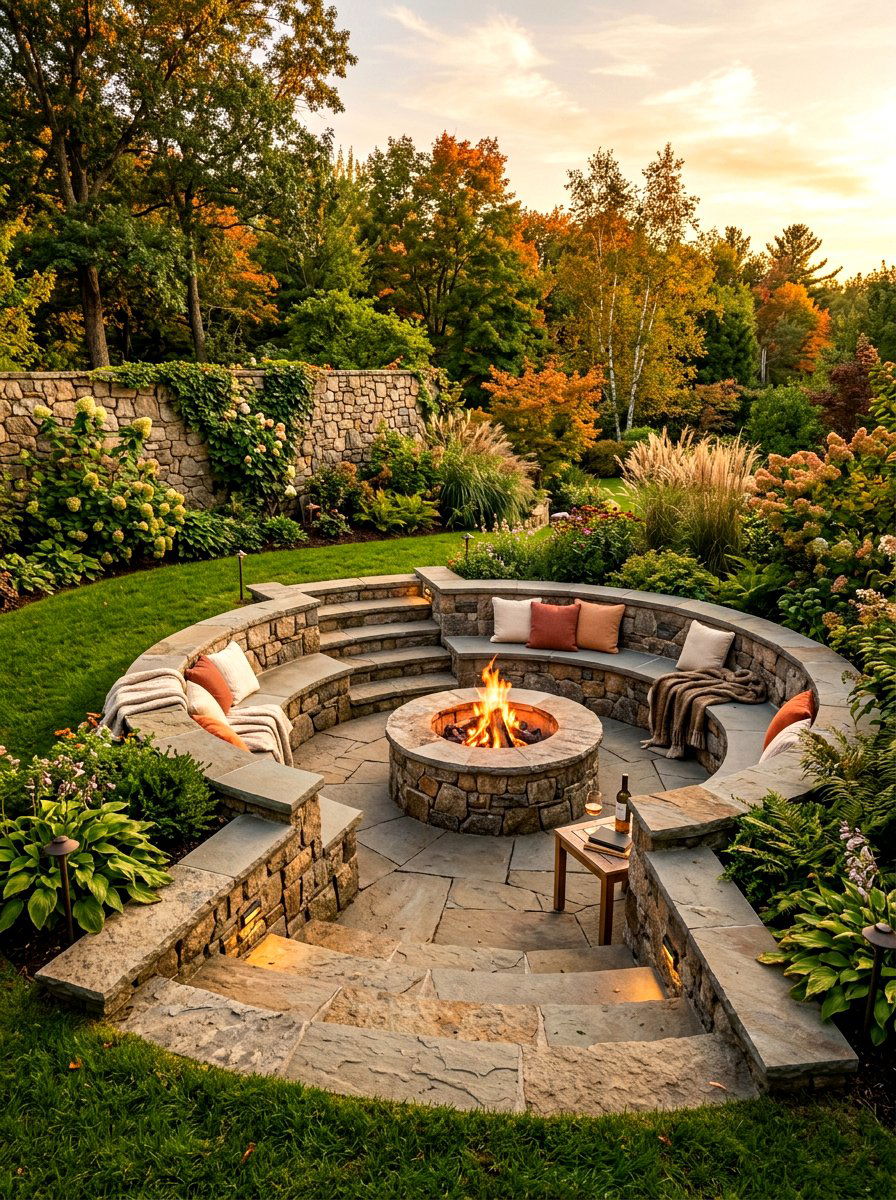
Creating a sunken fire pit area offers a unique sense of enclosure and privacy that traditional ground-level patios simply cannot match. By excavating a portion of your yard and lining the perimeter with a sturdy seat wall, you essentially build a private outdoor sanctuary. The surrounding earth acts as a natural insulator, keeping the warmth of the fire contained within the seating area for a more comfortable experience on chilly nights. This design often incorporates stone steps leading down into the "pit, " adding a grand architectural element to your garden. The walls serve a dual purpose as both structural support for the higher ground and permanent, multi-tiered seating for large groups of guests.
4. L-Shaped Seat Wall Fire Pit
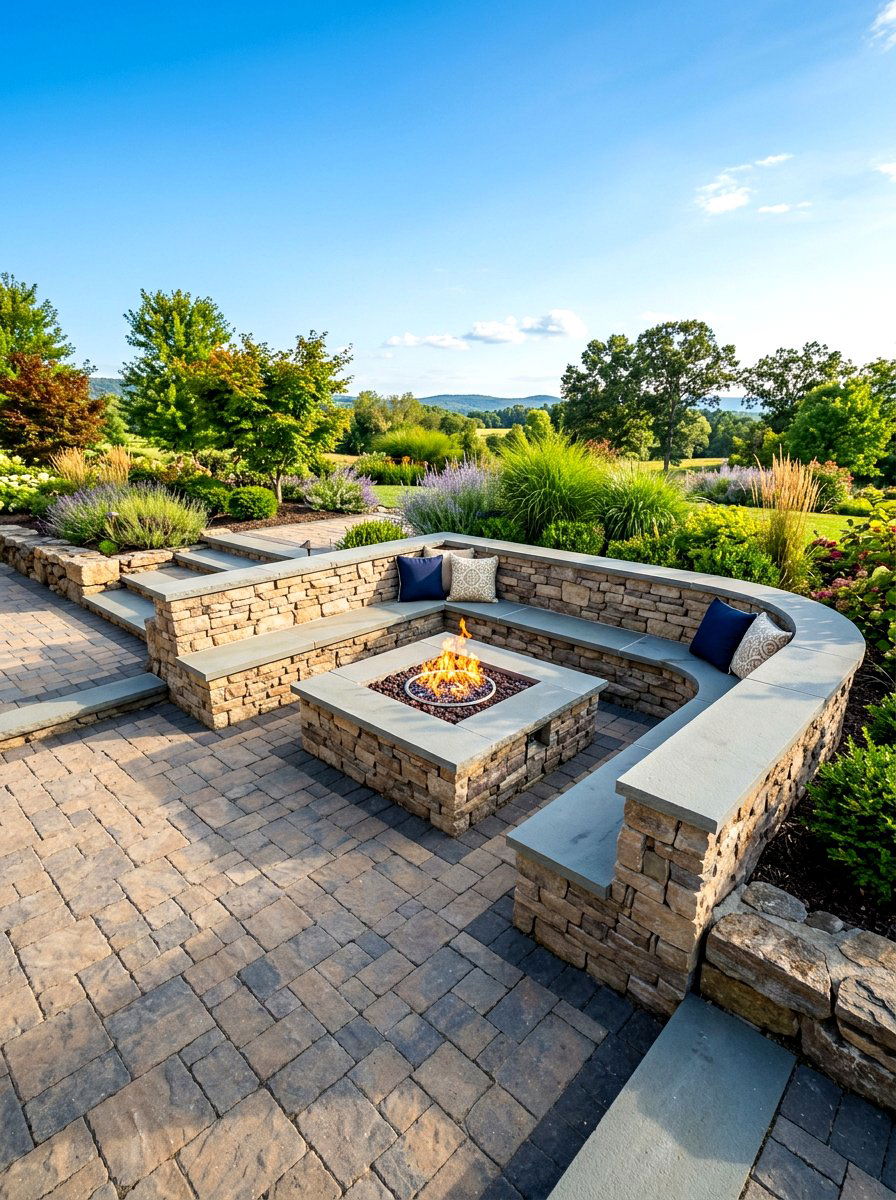
An L-shaped seat wall is an excellent choice for those who want to define a specific corner of their patio without fully enclosing the fire area. This configuration allows for easy movement in and out of the seating zone while still providing a substantial amount of built-in comfort. It pairs beautifully with either square or rectangular fire pits, echoing the sharp angles of the burner for a high-end, custom look. You can use large, flat stones for the seating surface to create a bench-like feel that is both sturdy and attractive. This layout also leaves plenty of room for additional flexible seating, such as Adirondack chairs, on the open sides of the fire pit area.
5. Flagstone Seat Wall Fire Pit Area
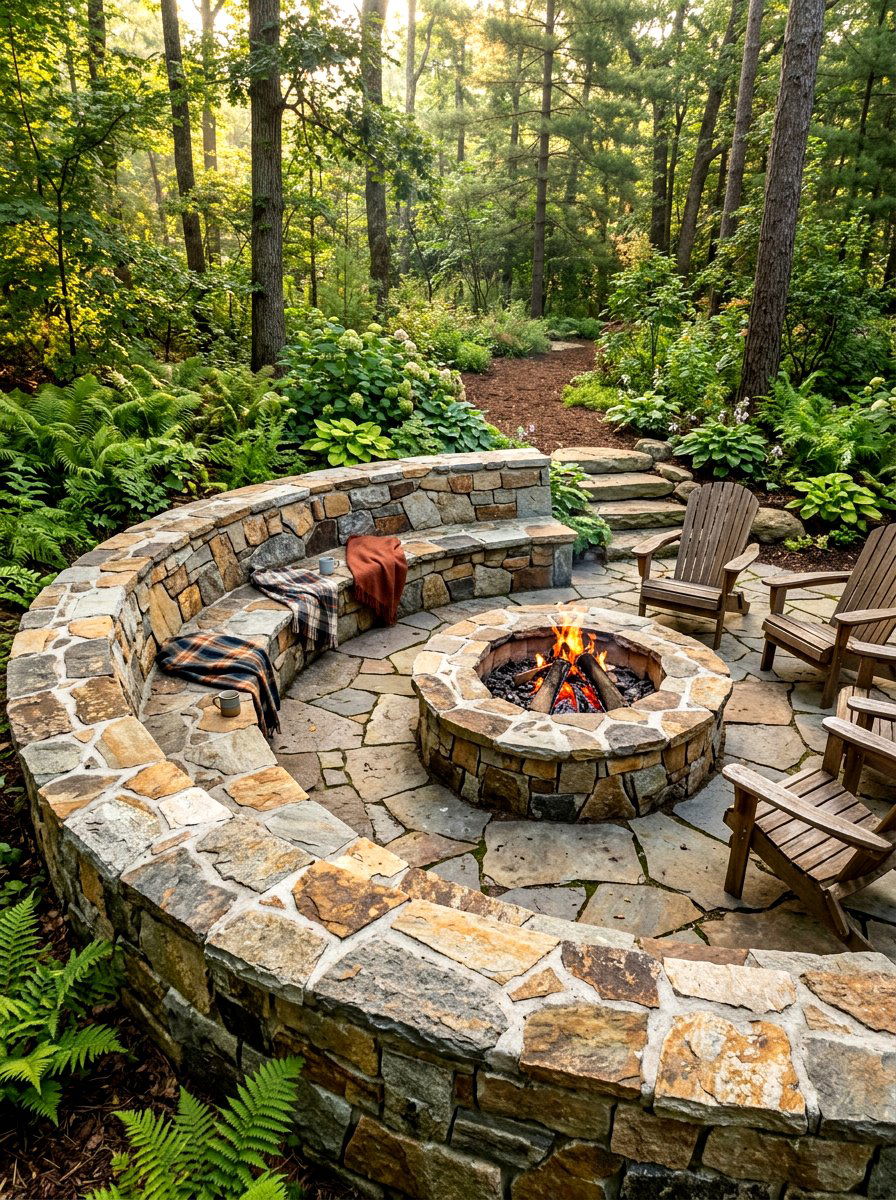
Flagstone is a favorite material for outdoor projects because of its natural durability and the beautiful variety of earthy colors it brings to a space. Building both the fire pit and its surrounding seat wall from flagstone creates a unified, organic appearance that looks as if it has always been part of the garden. The irregular shapes of the stones can be stacked to create a textured wall with a lot of character and visual interest. Using a thicker slab of flagstone as the "cap" or seating ledge ensures a smooth, comfortable surface that won't snag clothing. This design thrives in wooded backyards or rustic landscapes where a more naturalistic aesthetic is desired for the seating.
6. Curved Retaining Wall Fire Pit Seating
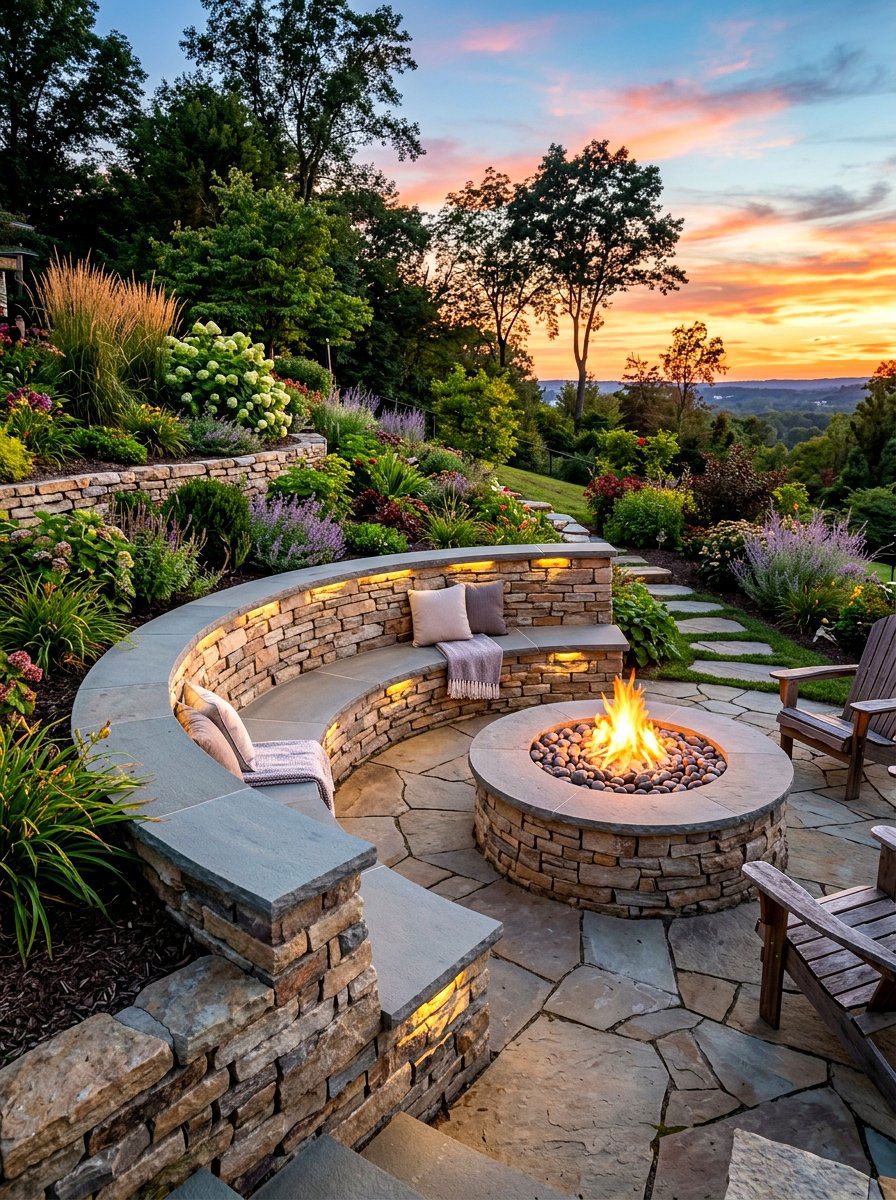
If your backyard has a slope, you can turn a functional necessity into a stunning design feature by integrating a fire pit with a curved retaining wall. The retaining wall holds back the soil while its lower portion is designed specifically to serve as a long, winding bench for guests. This approach saves space and resources by combining two structural elements into one cohesive unit. The curvature of the wall helps to wrap the seating around the fire, creating a warm and inviting focal point that feels deeply integrated into the landscape. You can use stacked stone or modular wall blocks to achieve a consistent curve that perfectly follows the contour of your yard.
7. Gas Fire Pit With Built-In Bench
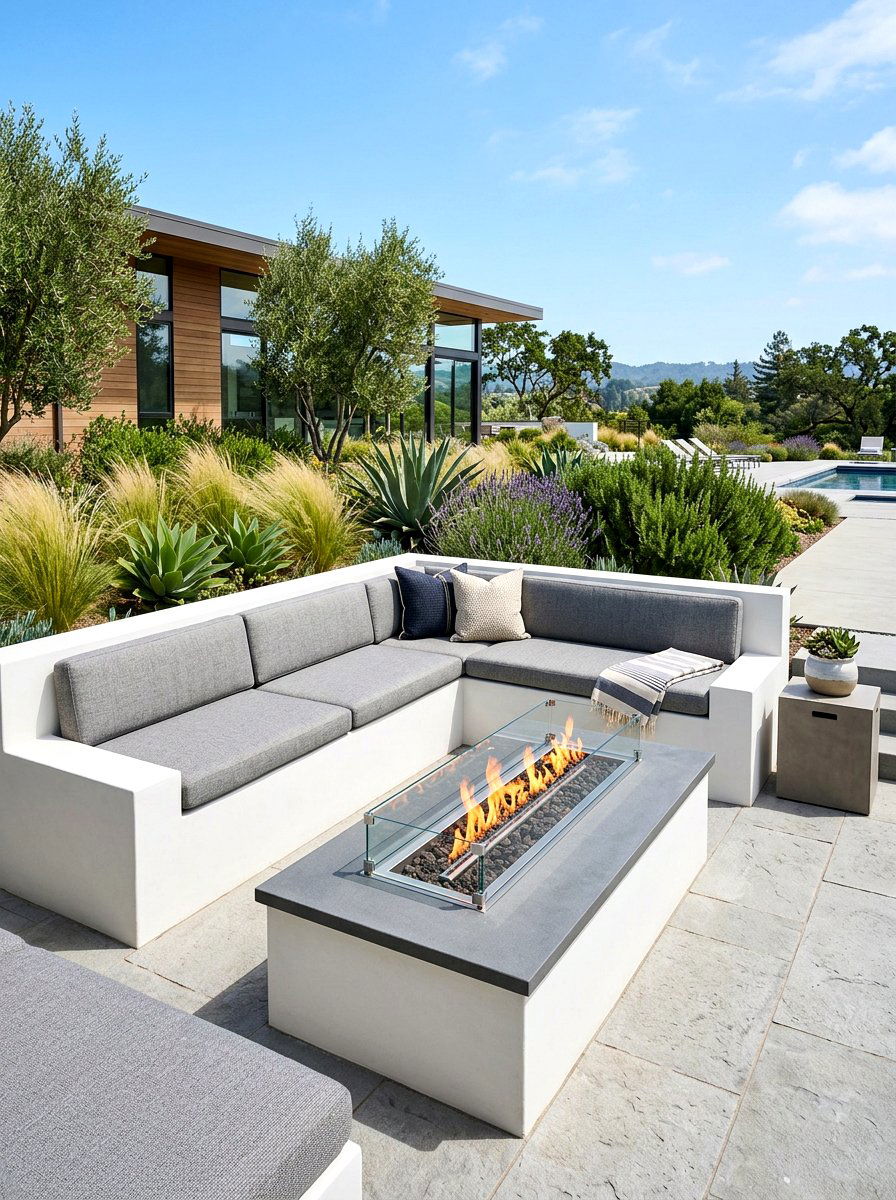
Gas fire pits offer the ultimate convenience with their quick-start functionality and smoke-free flames, making them ideal for frequent evening use. Pairing a gas-powered burner with a custom-built masonry bench allows you to create a high-functioning lounge area that feels like a natural extension of your home 's living room. Since there are no embers to worry about, you can use more delicate materials for the wall' s finish, such as polished concrete or decorative tiles. Many homeowners choose to add comfortable outdoor cushions to the top of the bench to encourage long hours of relaxation. The internal space within the seat wall can also be used to discreetly house the propane tank or gas lines.
8. Paver Patio Fire Pit With Seat Wall
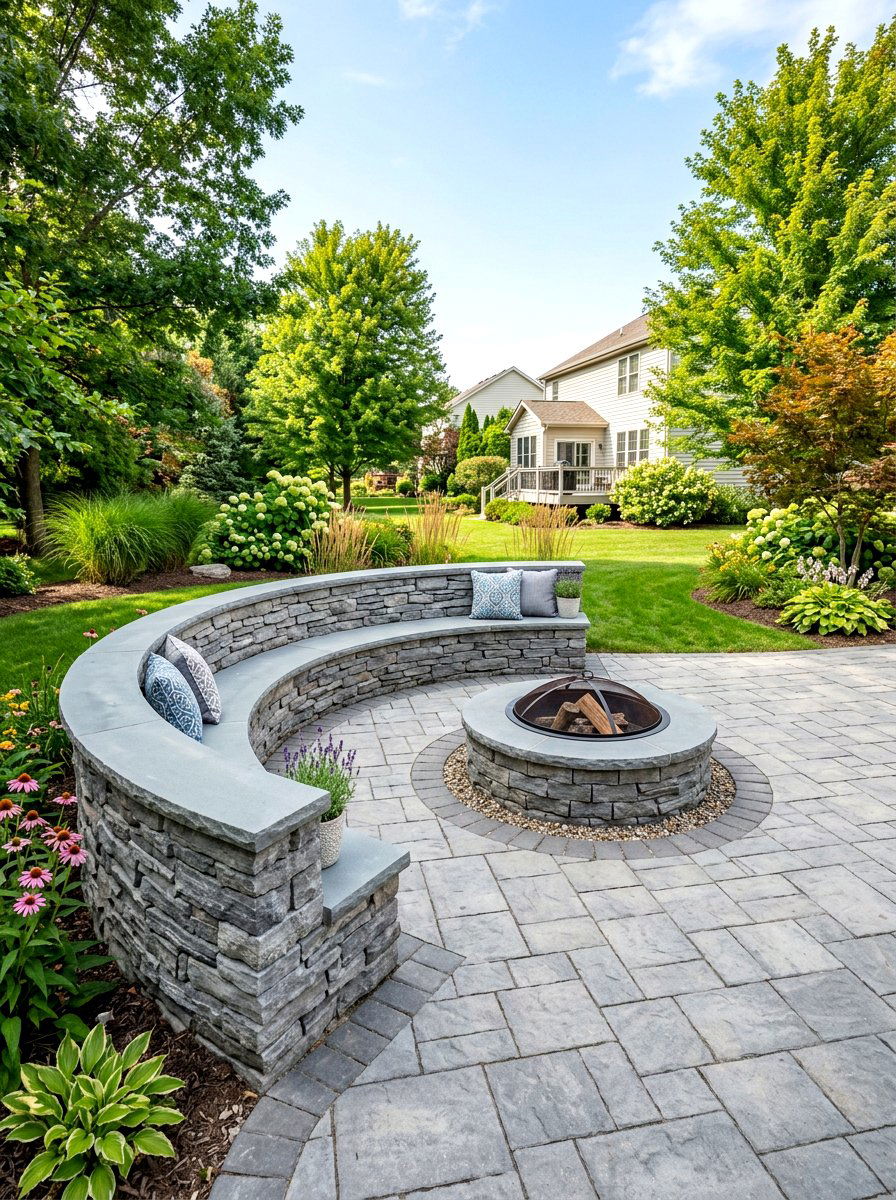
Integrating a seat wall directly onto a paver patio creates a seamless transition between the ground surface and the vertical seating elements. By using the same type of pavers for the patio floor, the fire pit, and the wall, you achieve a highly professional and coordinated look. This design often utilizes interlocking wall blocks that are specifically designed for easy assembly and long-lasting stability. You can add visual interest by choosing a contrasting color for the wall 's capstone or by incorporating a decorative "ribbon" of darker stones throughout the wall' s face. This setup is perfect for suburban backyards where a clean, polished, and low-maintenance outdoor entertainment area is the top priority for the family.
9. Stacked Stone Fire Pit And Wall
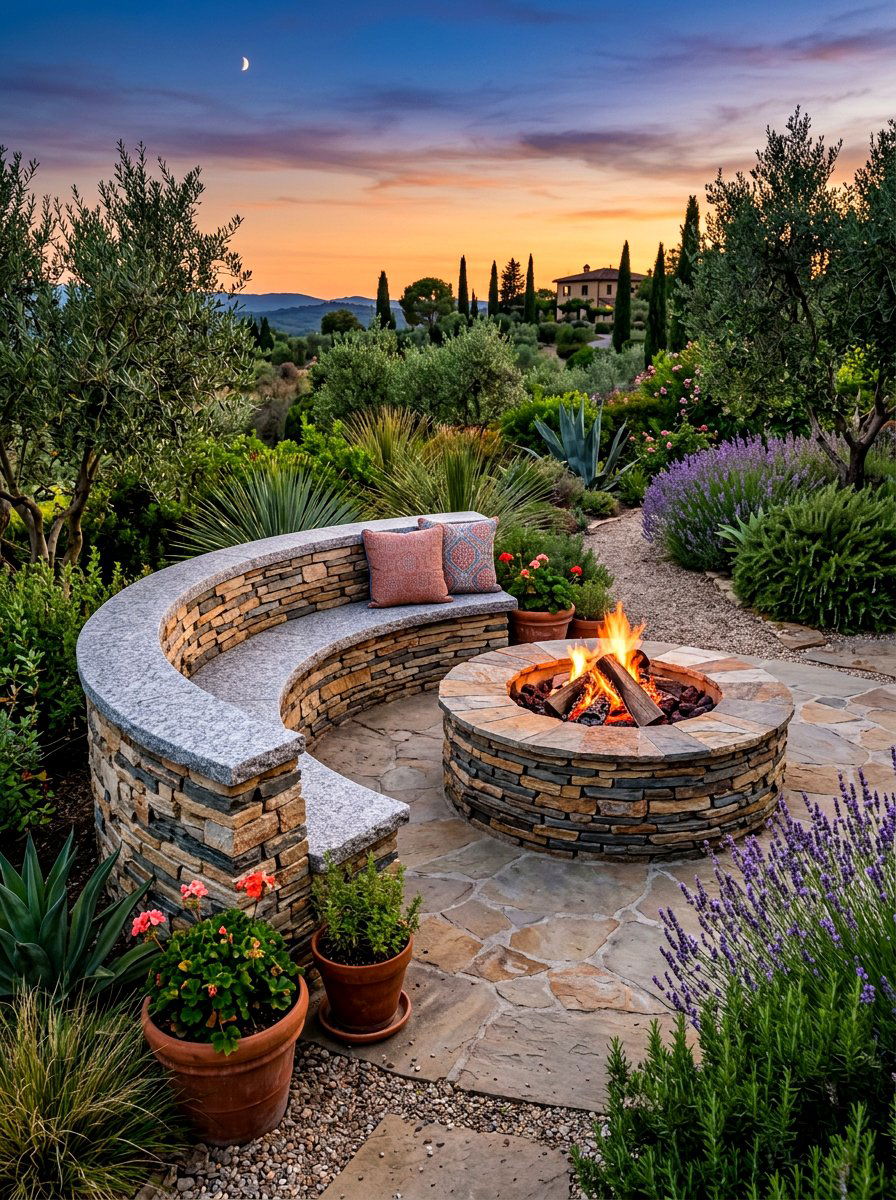
Stacked stone is a timeless masonry technique that uses layers of thin, flat stones to create a rich, textured surface with deep shadows and organic beauty. A fire pit and seat wall built with this method look incredibly high-end and provide a tactile quality that is hard to replicate with other materials. The varied heights and widths of the stones give the wall a hand-crafted feel that works well in both traditional and Mediterranean-style gardens. For maximum comfort, it is essential to finish the top of the stacked stone wall with a smooth, wide coping stone. This prevents the uneven edges of the stacked stones from being uncomfortable to sit on while adding a clean horizontal line.
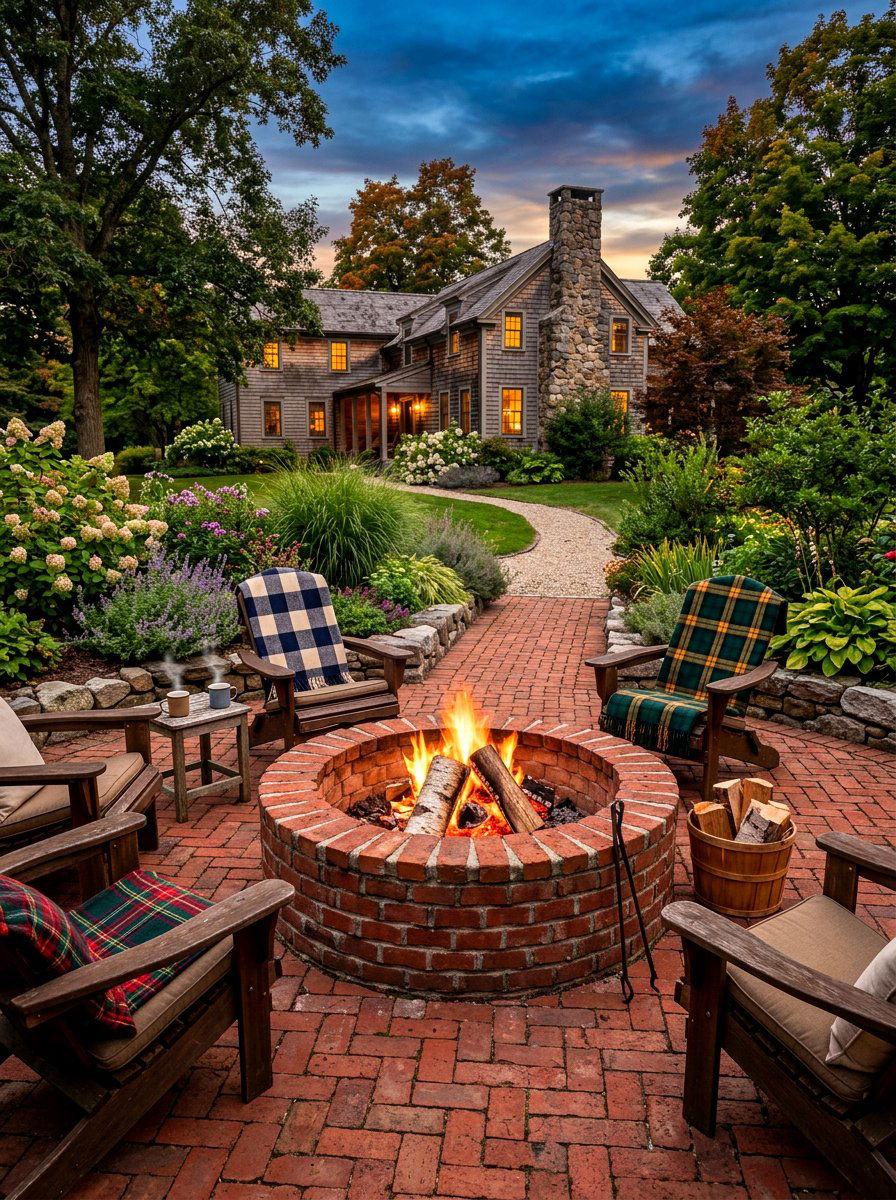
10. Semi-Circle Fire Pit Seating Wall
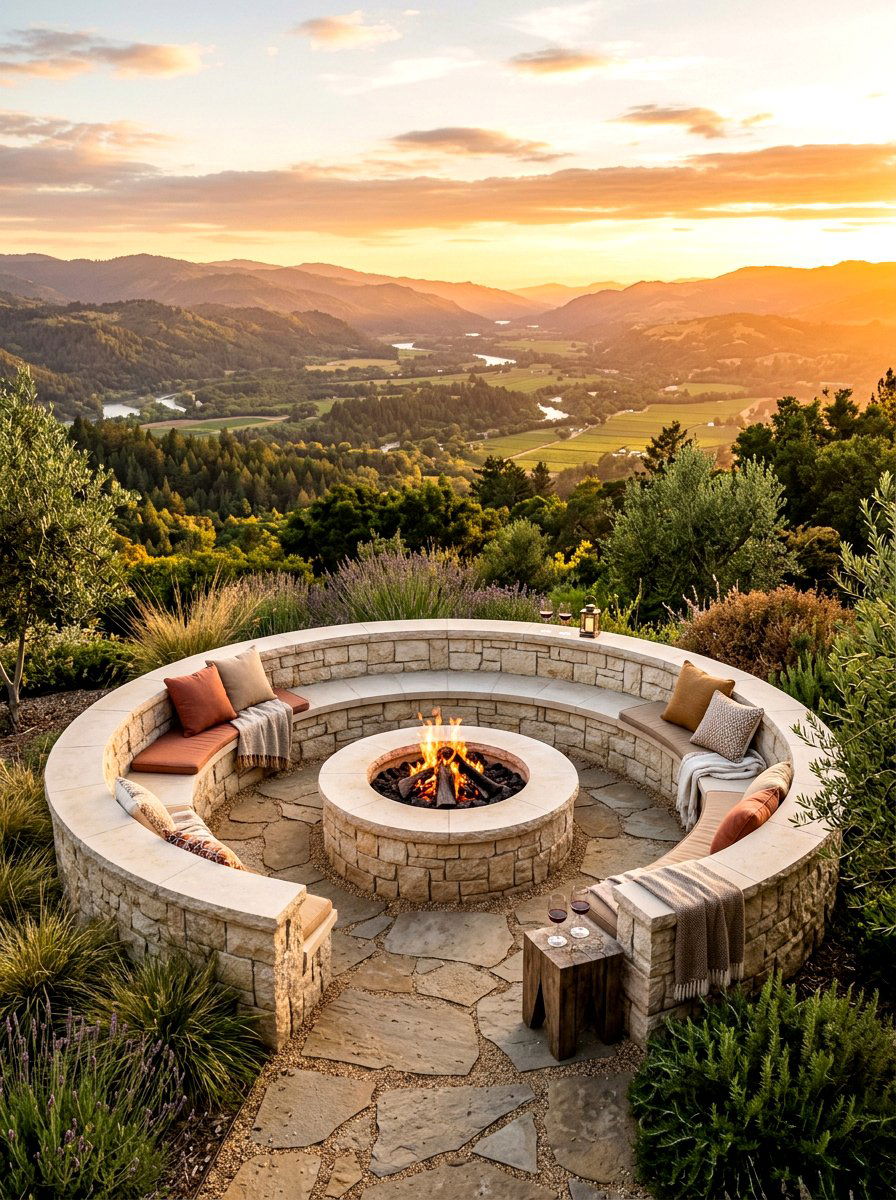
A semi-circle seat wall provides a focused "stage" for your fire pit, directing everyone's attention toward the flames while leaving one side open for access. This is a great solution for smaller patios where a full circle might feel too restrictive or crowded. The arch of the wall creates a cozy nook that naturally traps heat, making it the warmest spot on the patio during autumn and winter. You can position the opening of the semi-circle toward a scenic view or toward the back door of your house to create a welcoming path. Using heavy stone blocks for the construction ensures the wall is durable enough to withstand the elements while providing a solid, permanent seat.
11. Fire Pit With Wood Storage Seating
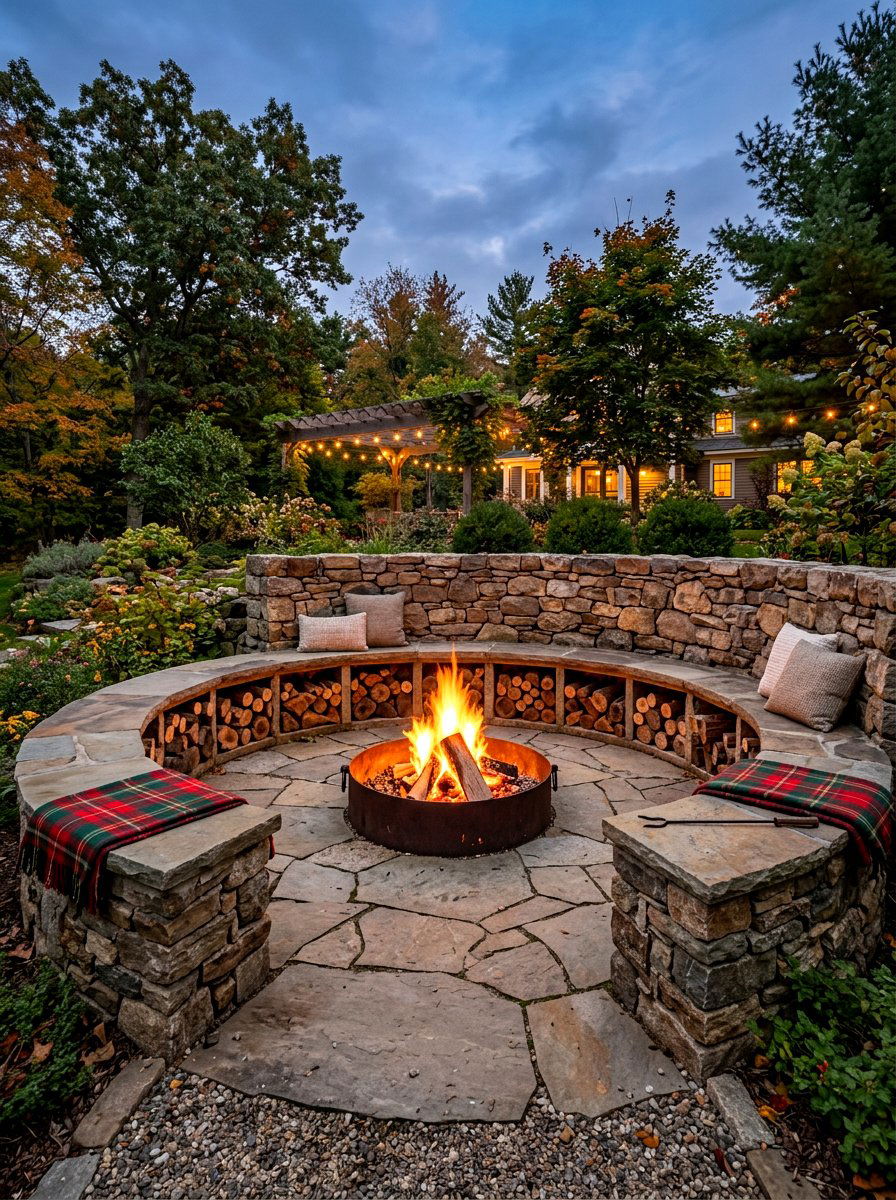
For those who prefer the authentic crackle and scent of a real wood fire, building a seat wall with integrated wood storage is a game-changer. You can design the wall with open "cubbies" or niches underneath the seating area where logs can be stacked neatly and kept dry. This keeps your fuel source within arm's reach while turning the firewood itself into a decorative element of the landscape. The weight of the stored wood adds extra stability to the structure, and the organized look prevents the mess often associated with loose wood piles. This functional design is perfect for rustic retreats or farmhouse-style backyards where the practical beauty of natural materials is celebrated by everyone.
12. Contemporary Concrete Fire Pit Seat Wall
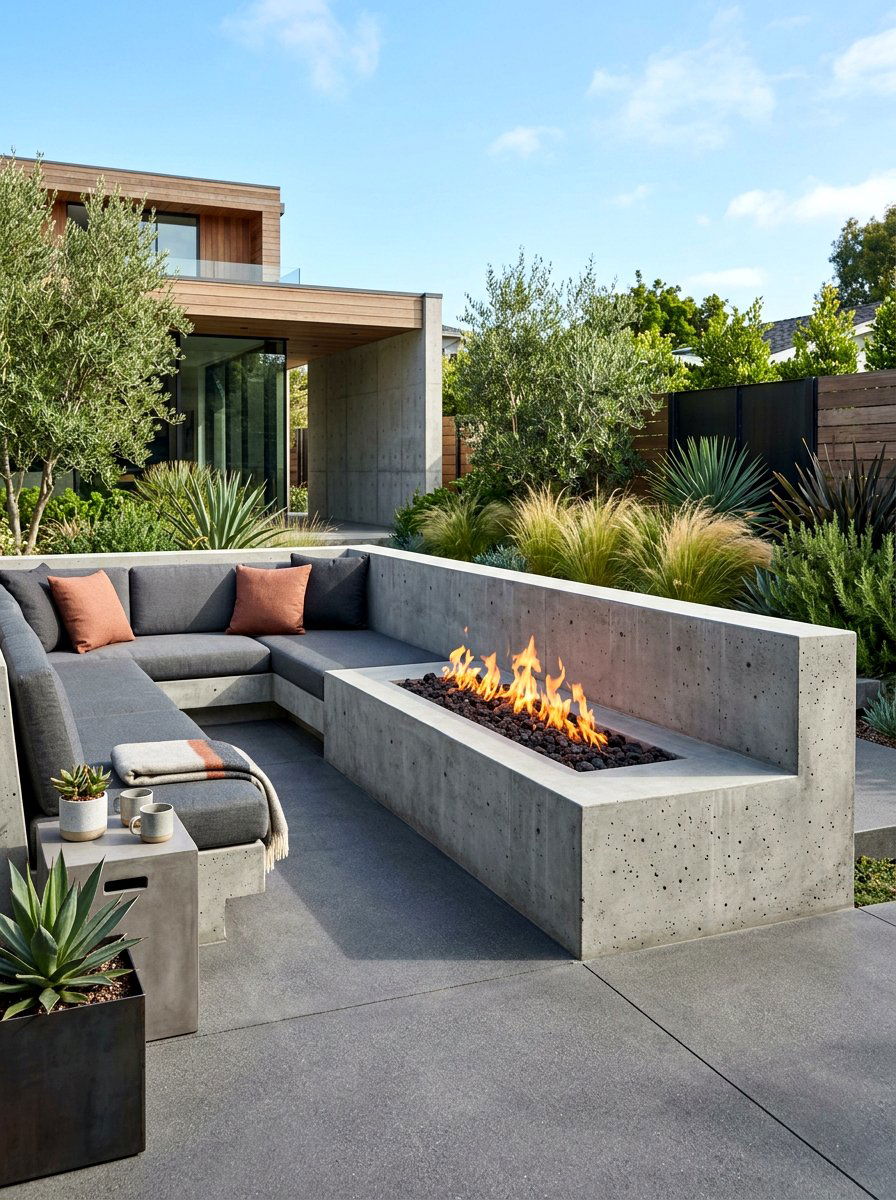
Poured concrete offers a sleek, industrial aesthetic that is perfect for ultra-modern homes and minimalist landscape designs. A concrete seat wall can be cast in almost any shape, allowing for smooth, continuous surfaces without the visible joints of traditional stone or brick masonry. You can opt for a natural gray finish for a raw look or choose stained concrete in shades of tan or charcoal to better match your home's exterior. The flat, wide top of a concrete wall is inherently comfortable and provides a perfect surface for modern outdoor cushions or minimalist decor. This material is incredibly durable and easy to clean, making it a practical choice for high-traffic outdoor entertainment zones.
13. Natural Boulder Fire Pit Seat Wall
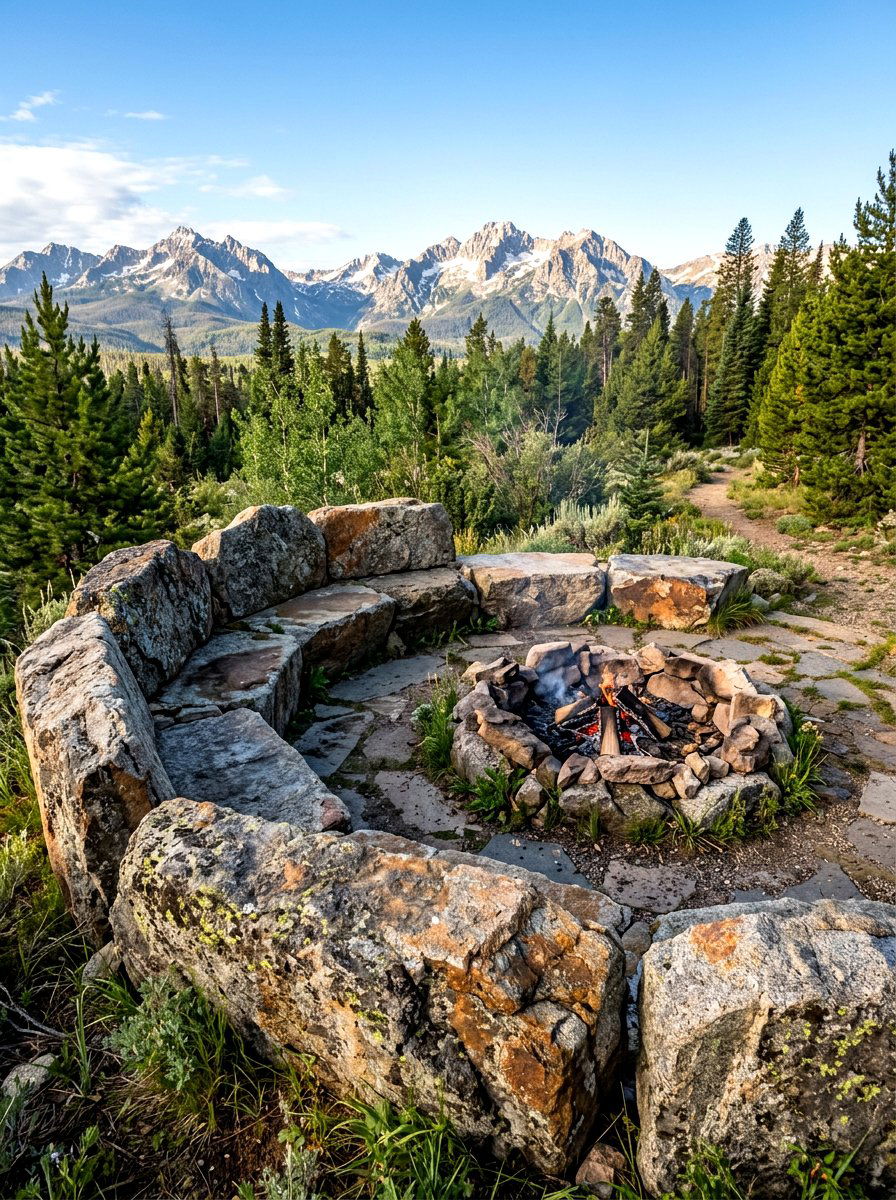
If you want a fire pit area that looks like it was naturally formed by the earth, using large boulders for your seat wall is the way to go. Instead of traditional masonry, you can carefully arrange massive, flat-topped rocks to create a rugged and primitive seating area. This style works best in sprawling landscapes, mountainous regions, or yards with a lot of existing natural stone. The gaps between the boulders can be filled with moss, groundcover plants, or smaller river rocks to further enhance the organic look. While this design requires heavy machinery for installation, the result is a one-of-a-kind feature that provides a powerful sense of permanence and timeless beauty in your backyard.
14. Brick Fire Pit With Seat Wall
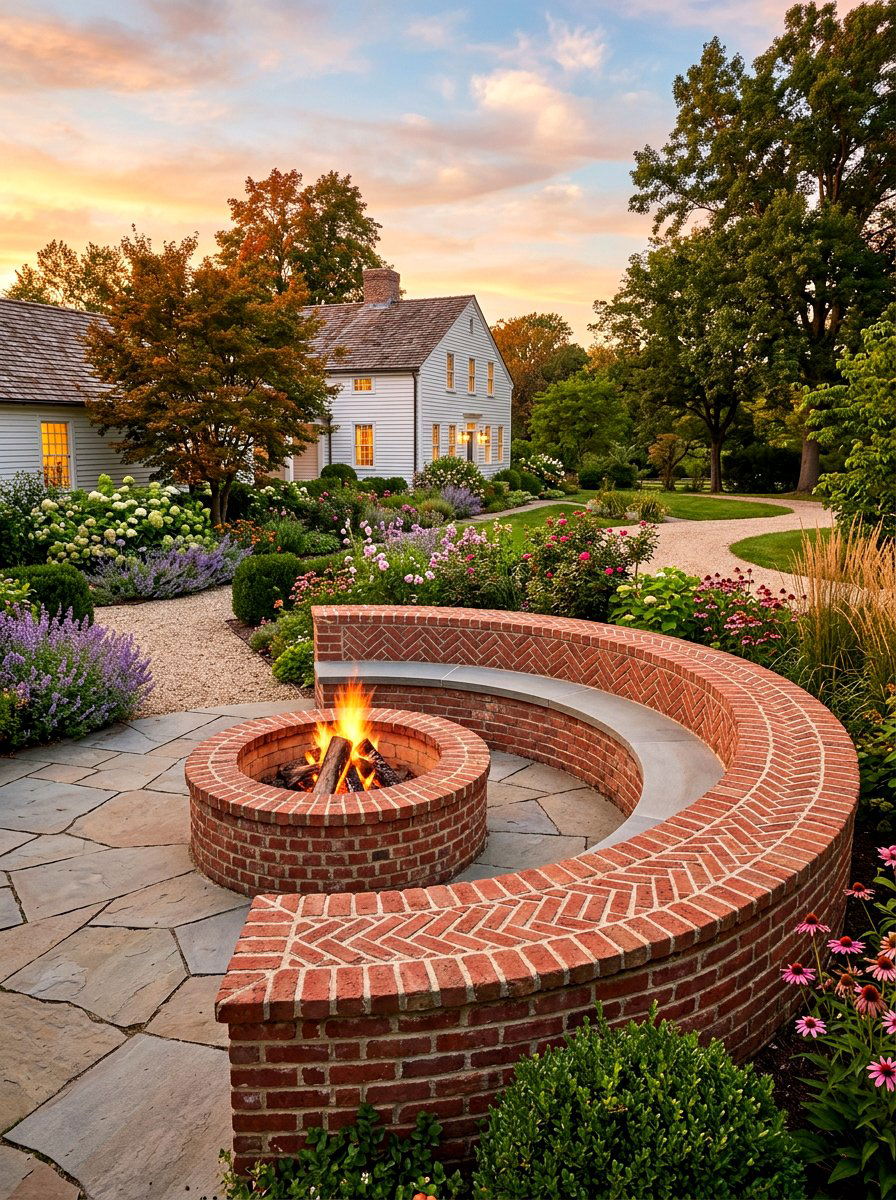
Brick is a classic building material that brings a sense of warmth, history, and traditional charm to any outdoor space. A fire pit and seat wall constructed from red or reclaimed bricks can complement a wide variety of architectural styles, from colonial to industrial loft. The small, uniform size of bricks allows for creative patterns such as herringbone or basketweave on the wall's surface or the surrounding patio. To ensure longevity, it is important to use fire-rated bricks for the interior of the pit while using standard exterior bricks for the seat wall. A row of soldier-course bricks or a limestone cap can provide a beautiful finish to the top of the seating area.
15. Rectangular Fire Pit With Stone Bench
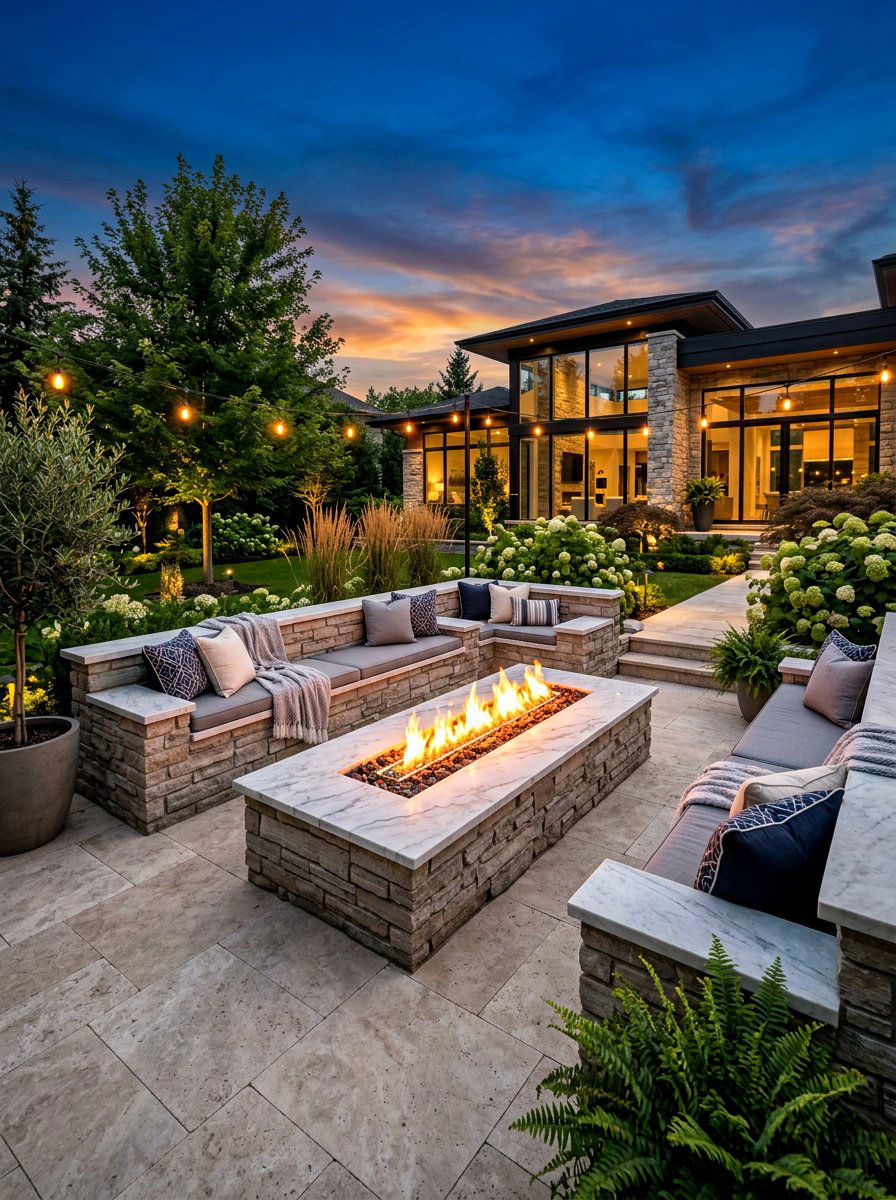
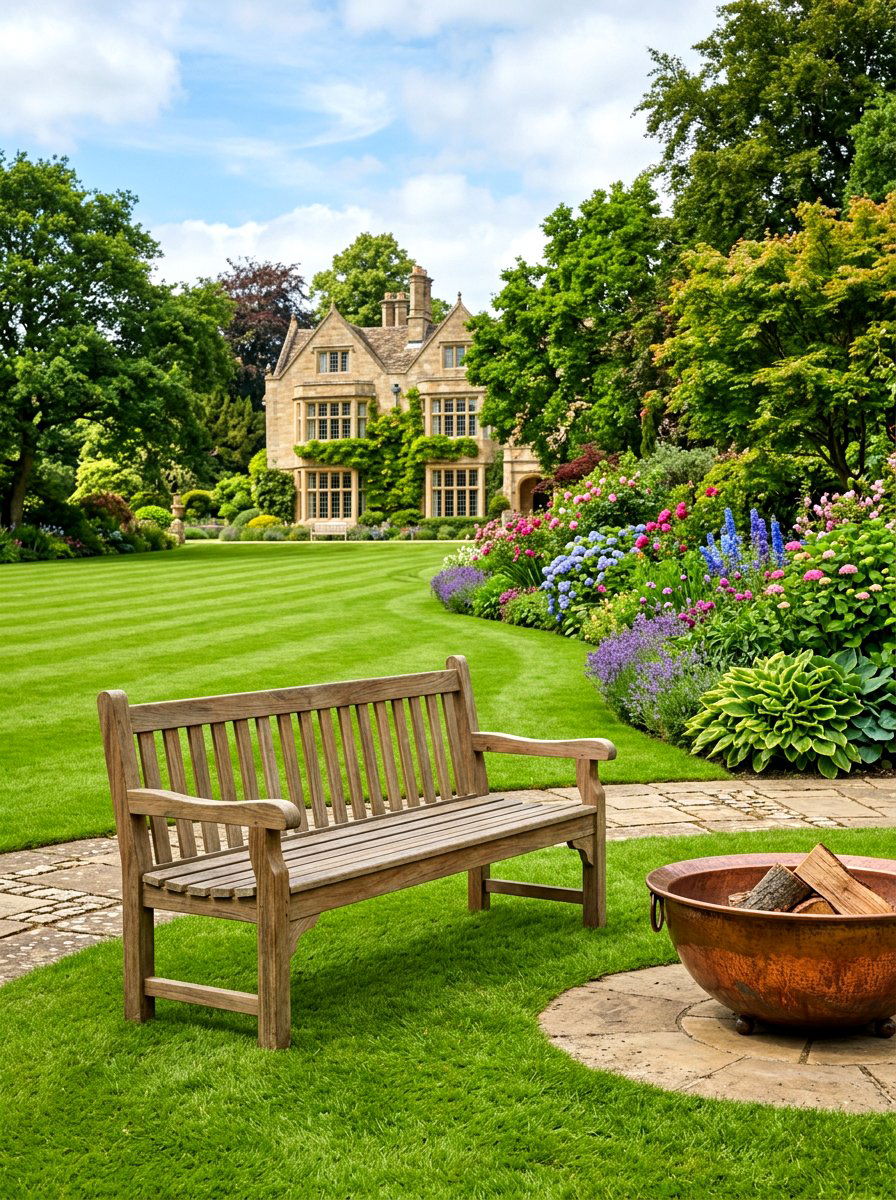
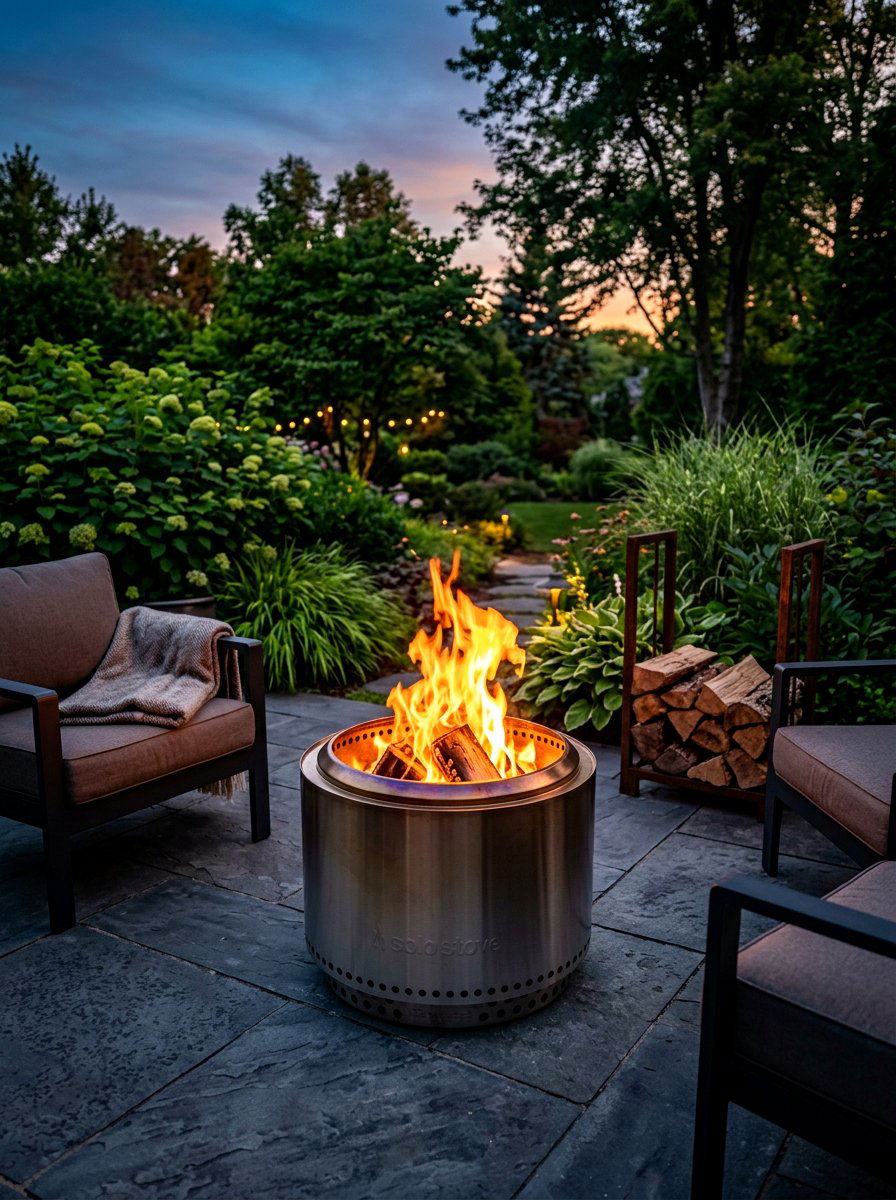
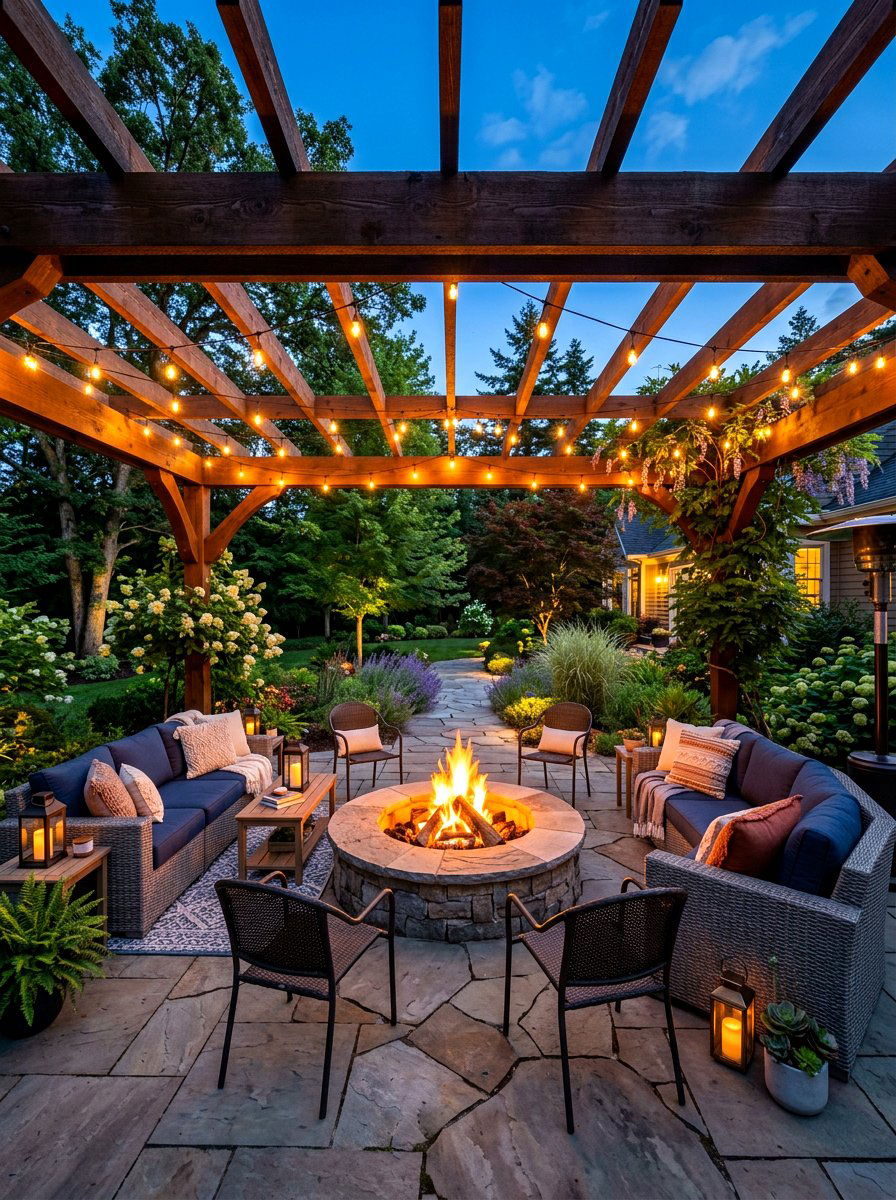
Rectangular fire pits are ideal for long, narrow patios or for creating a dramatic "fire table" effect that anchors a large outdoor room. A matching stone bench or seat wall that runs parallel to the long side of the pit provides a clean, architectural look that is both functional and stylish. This arrangement allows for a larger number of people to sit side-by-side, making it perfect for hosting big dinner parties or family reunions. You can enhance the design by using a contrasting stone for the bench cap, such as a dark granite or a light limestone, to make the seating area stand out. This layout is sophisticated and works well for formal entertainment spaces.
16. Fire Pit Seat Wall With Lighting
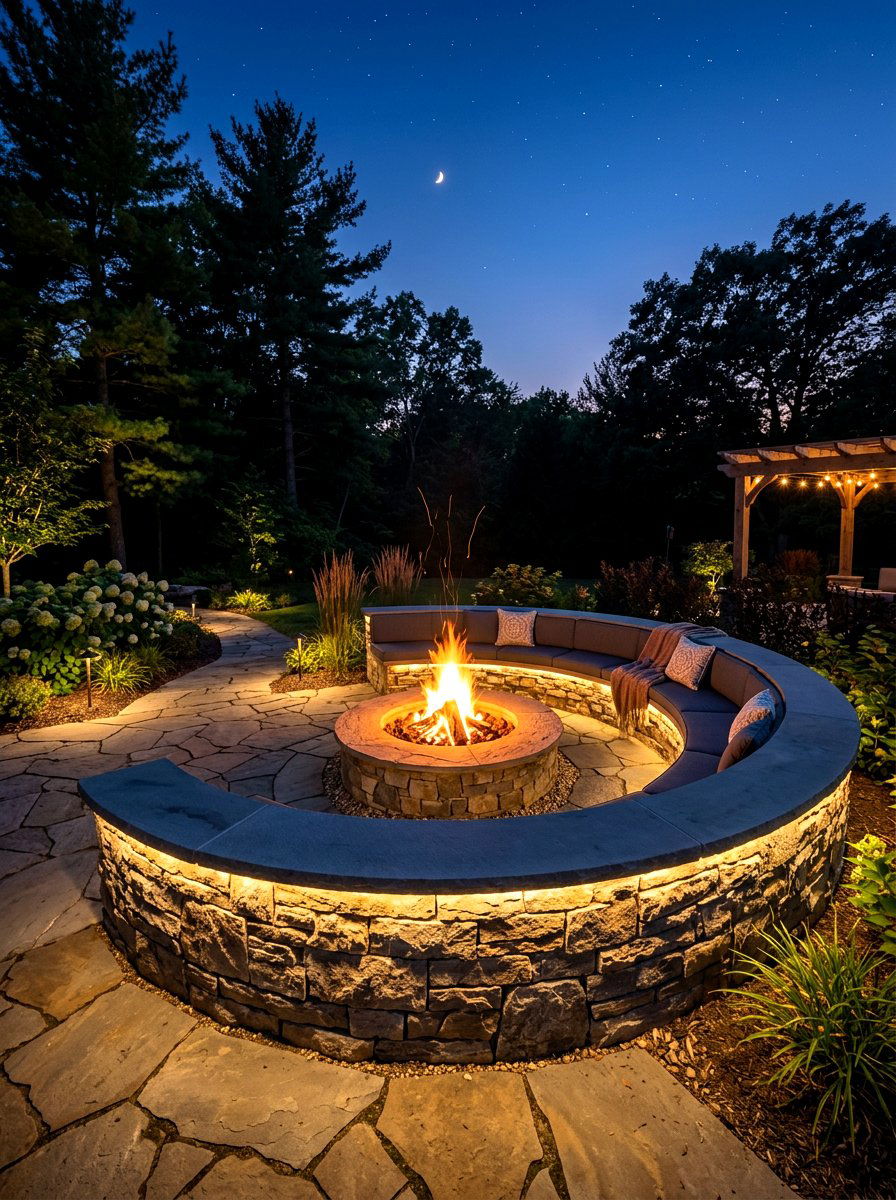
Integrating lighting directly into your seat wall is one of the best ways to improve the safety and ambiance of your fire pit area. Small LED "cap lights" or "under-mount lights" can be tucked beneath the ledge of the wall, casting a soft glow downward onto the patio surface. This not only highlights the texture of the stone but also ensures that guests can see where they are walking after the sun goes down. The subtle light provides enough visibility for conversation without overpowering the natural flicker of the fire. You can even use smart lighting systems that allow you to dim the brightness or change the color temperature to suit the mood of the evening.
17. Rustic Fire Pit With Log Seating
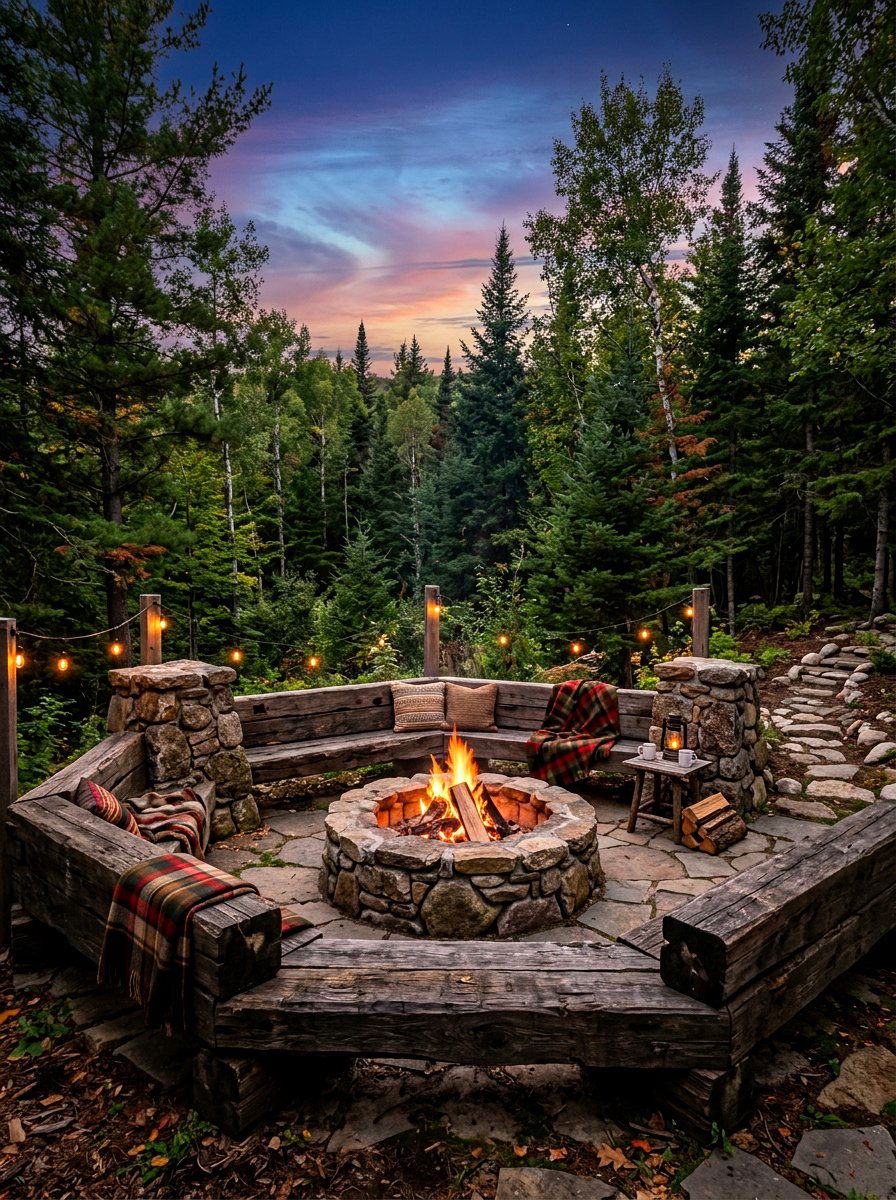
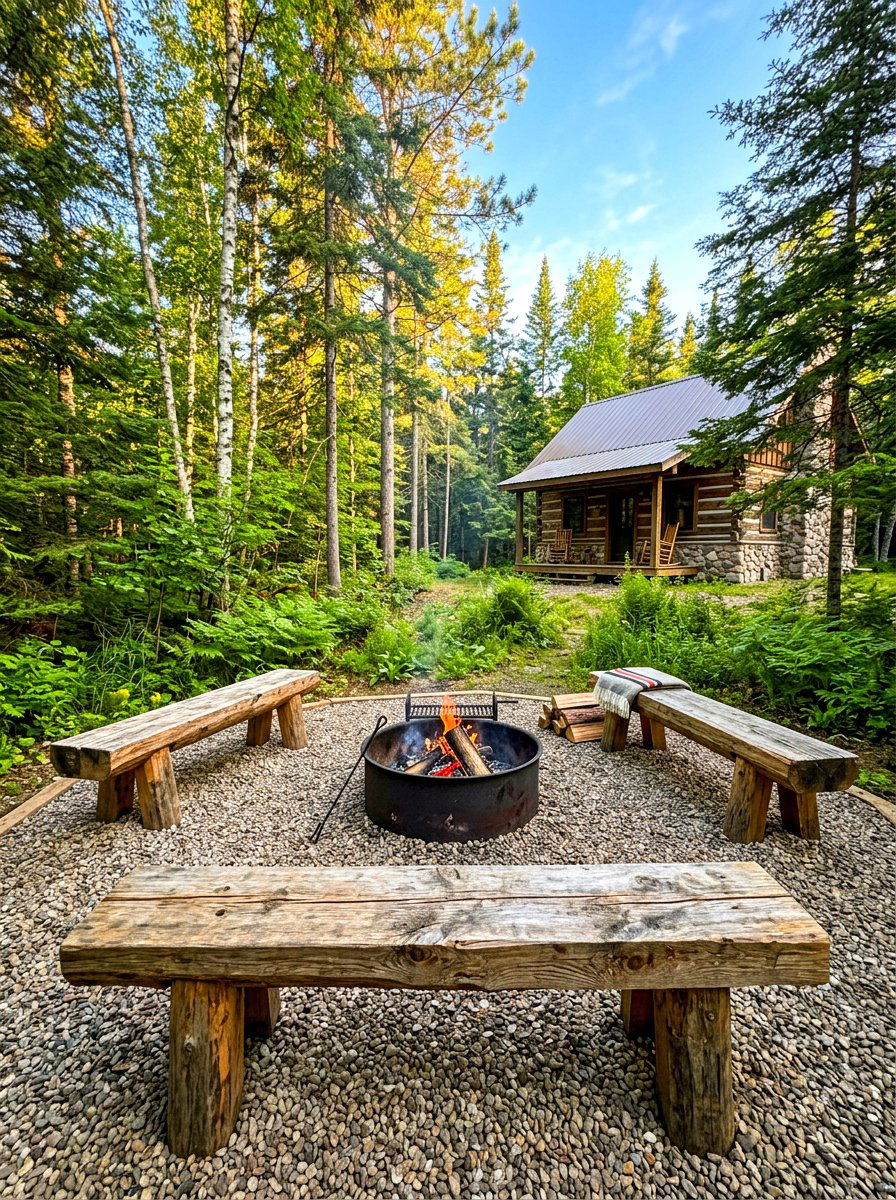
For a truly rustic and budget-friendly approach, you can create a seat wall effect using large, horizontal logs or heavy timber beams. This design is perfect for "cabincore" aesthetics, woodland properties, or even a cozy corner of a large suburban lot. The logs can be partially buried or set on stone footings to prevent rot and ensure they are at a comfortable sitting height. Using reclaimed wood or fallen timber from your own property adds a personal and sustainable touch to the design. To create a more permanent feel, you can anchor the logs between stone pillars, which provides a beautiful contrast between the organic texture of the wood and the solid masonry.
18. Tiered Garden Wall Fire Pit Seating
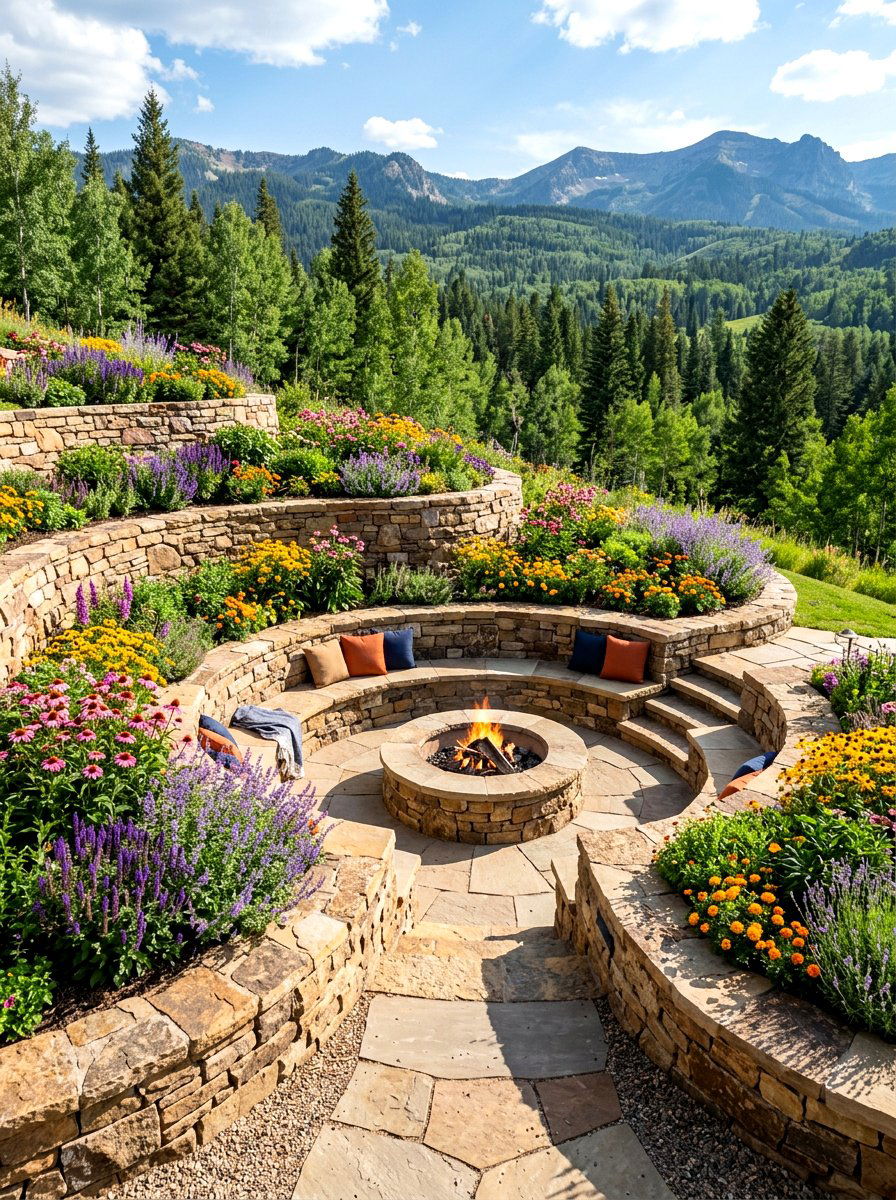
When a fire pit is located at the base of a terraced garden, the various levels of the retaining walls can be designed to serve as multi-tiered seating. This "stadium seating" approach is fantastic for large gatherings because it provides everyone with an unobstructed view of the fire from different heights. The lower wall acts as the primary seat wall, while the upper tiers can hold plants, decorative lanterns, or even act as additional perches for guests. This design effectively merges your landscaping with your living space, making the fire pit feel like a natural part of the garden. Using consistent materials across all tiers ensures a cohesive and professionally designed appearance.
19. Granite Fire Pit With Seat Wall
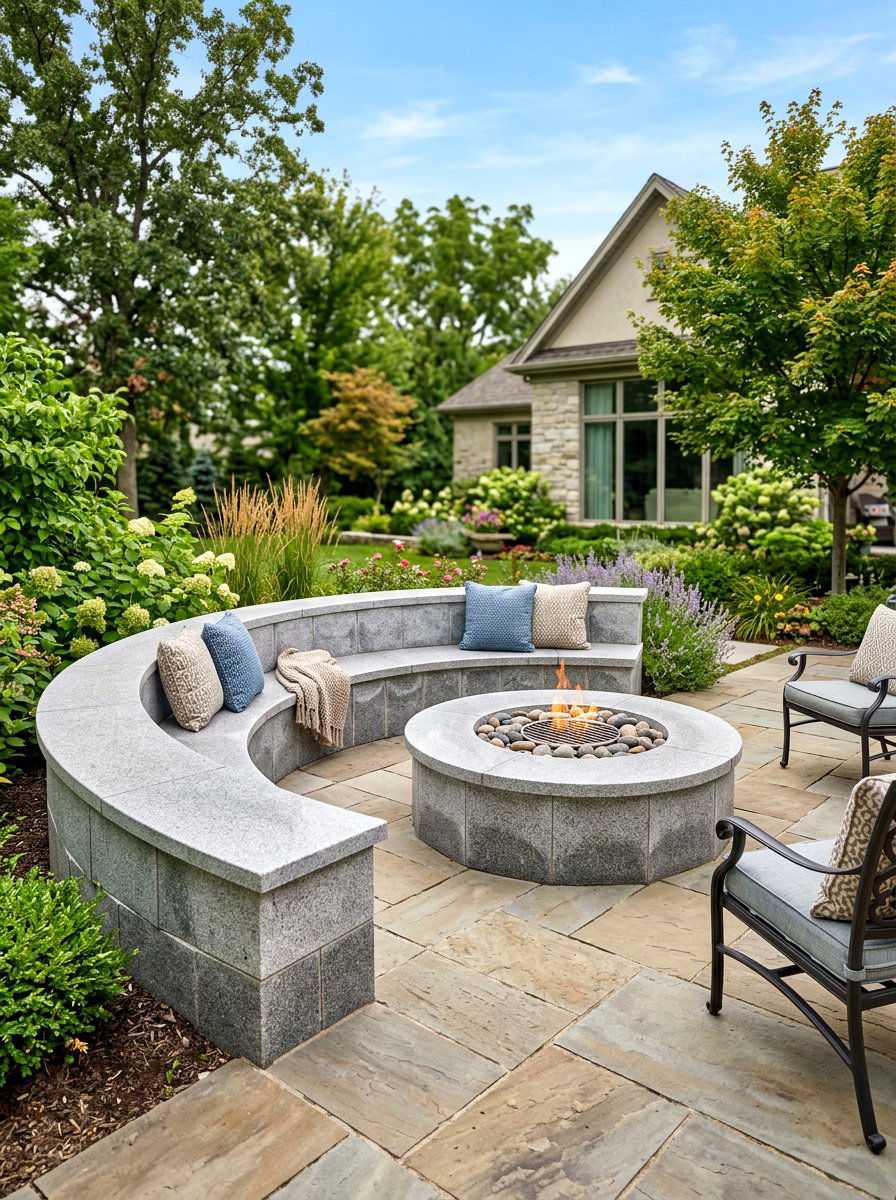
Granite is one of the most durable and prestigious stones available for outdoor construction, known for its extreme hardness and beautiful speckled appearance. A fire pit and seat wall made from granite blocks or slabs will last a lifetime and withstand the harshest weather conditions without fading or cracking. Because granite comes in a wide range of colors — from snowy white and silver gray to deep blacks and pinks — it is easy to find a variety that matches your home's color palette. A polished granite cap on the seat wall provides a luxurious, smooth surface that stays cool in the sun and is very easy to wipe clean after a rainy day.
20. Blue Stone Seat Wall Fire Pit
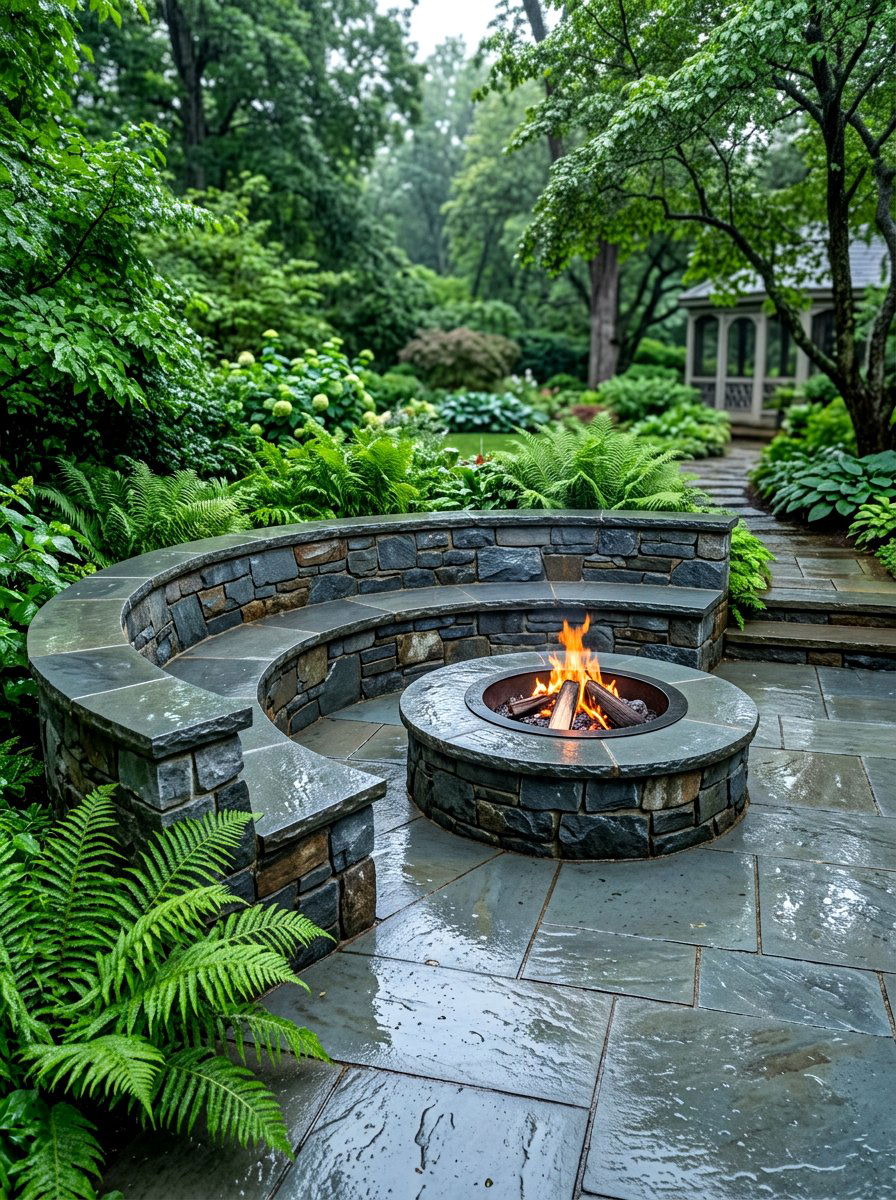
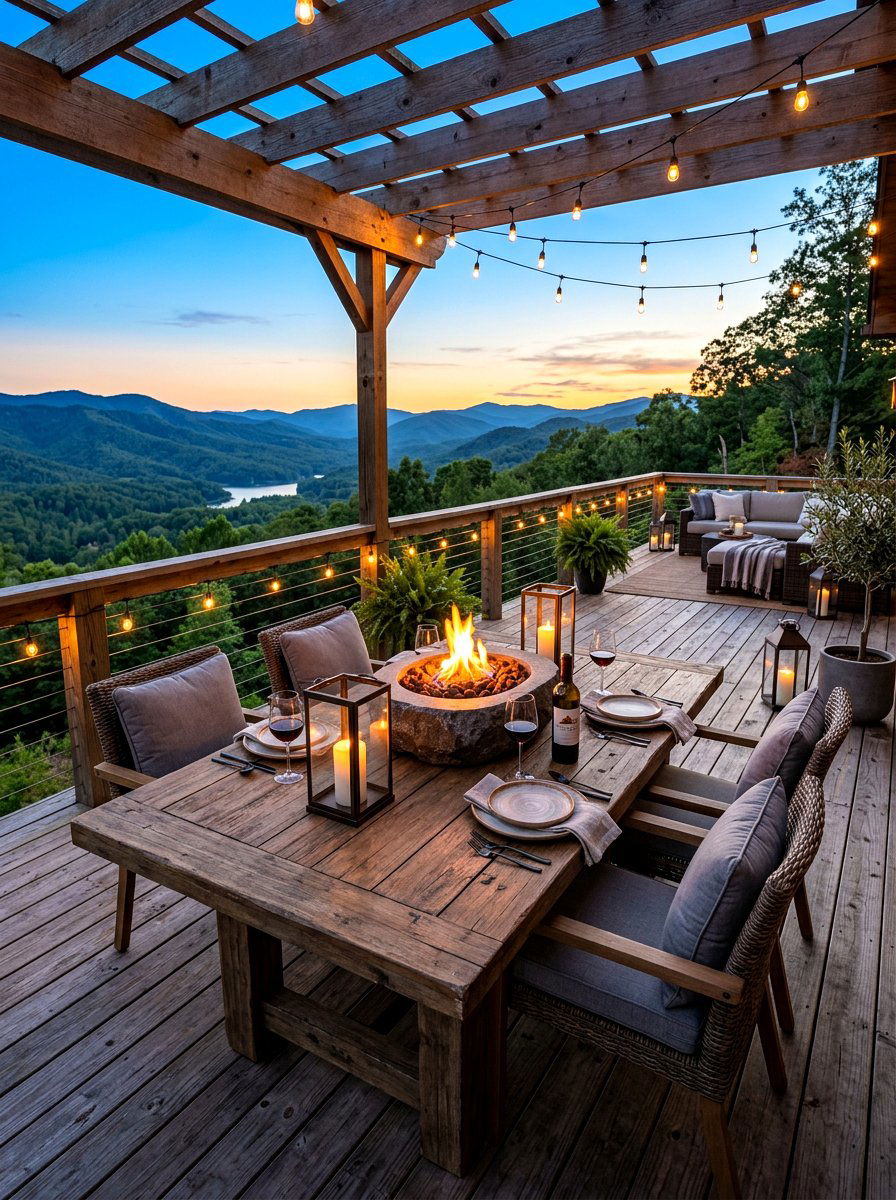
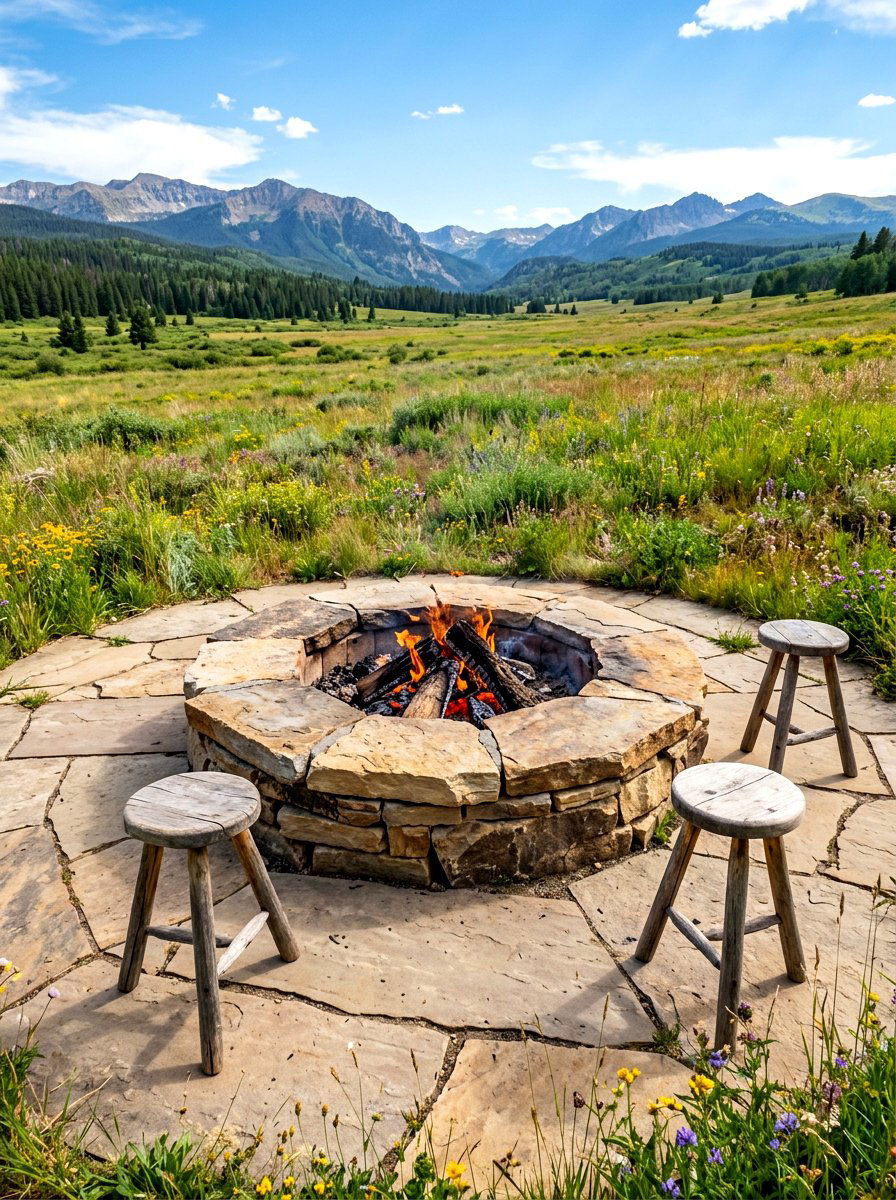
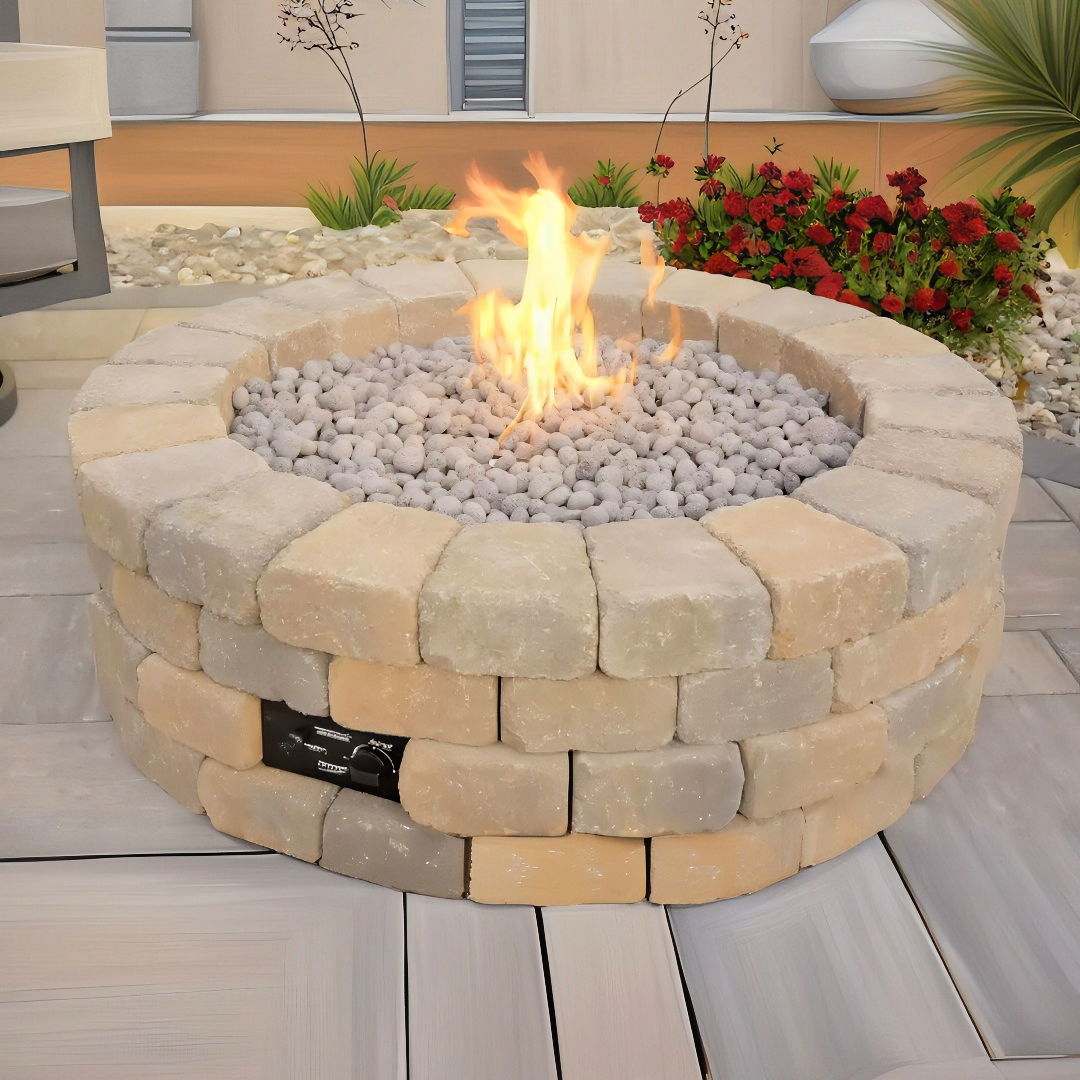
Bluestone is a popular variety of sandstone that is prized for its unique blue-gray hue and its naturally slip-resistant surface. Using bluestone for both the fire pit cap and the seat wall creates a sophisticated, cool-toned outdoor area that looks especially stunning when wet. The stone can be cut into precise, rectangular tiles for a modern look or used in its natural, irregular "cleft" form for a more traditional aesthetic. The subtle variations in the stone's color provide a rich, layered look that changes throughout the day as the light shifts. This material pairs beautifully with lush green lawns and dark wood accents, making it a versatile choice for many different backyard styles.
21. U-Shaped Seat Wall Fire Pit
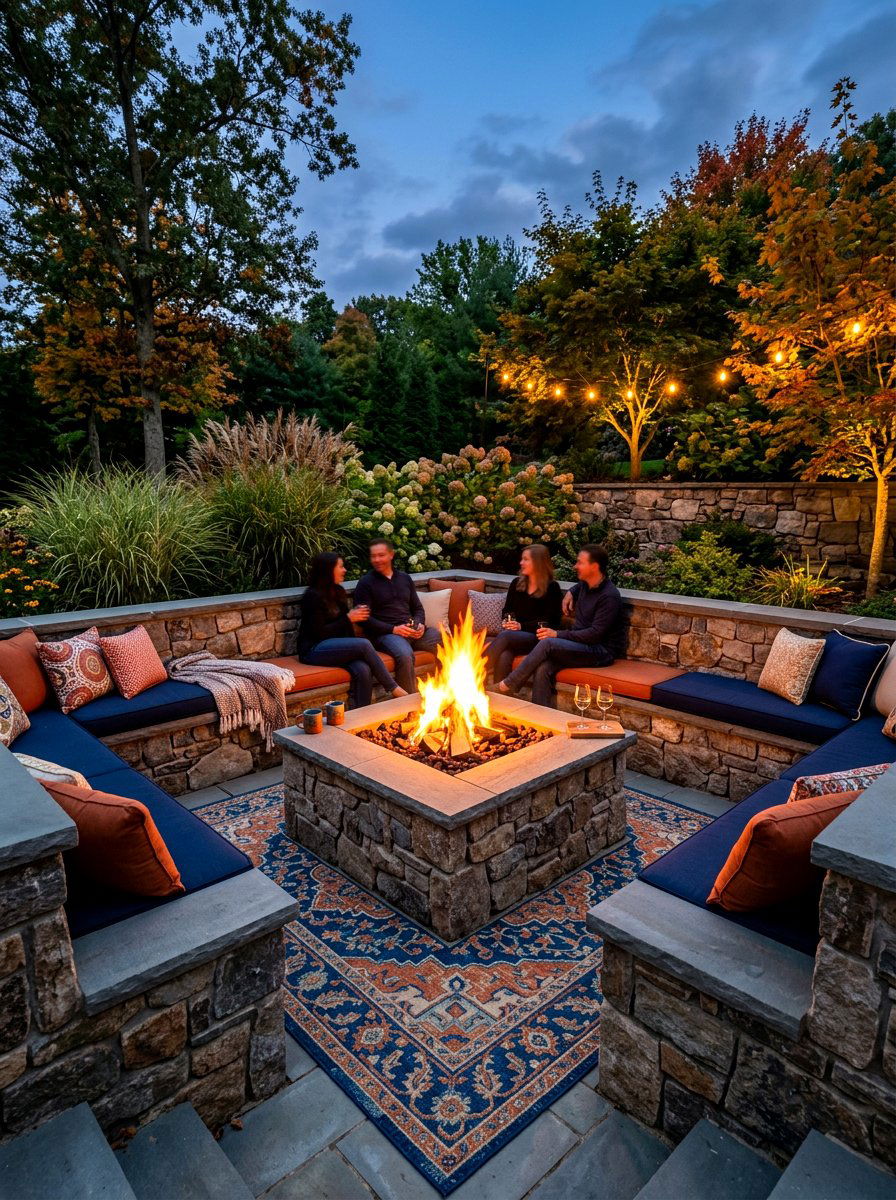
A U-shaped seat wall creates a deeply immersive and cozy environment, essentially wrapping three sides of the fire pit in a warm embrace. This configuration is the ultimate choice for those who love to host "conversation pits" where guests can feel completely tucked away from the rest of the world. The closed-in nature of the U-shape helps to block wind from multiple directions, ensuring the fire stays steady and the seating area remains warm. This layout works particularly well with large square or rectangular fire pits, providing ample room for several people to lounge comfortably. You can add decorative pillars at the ends of the "U" to give the structure a finished, architectural look.
22. Limestone Fire Pit With Seating Wall
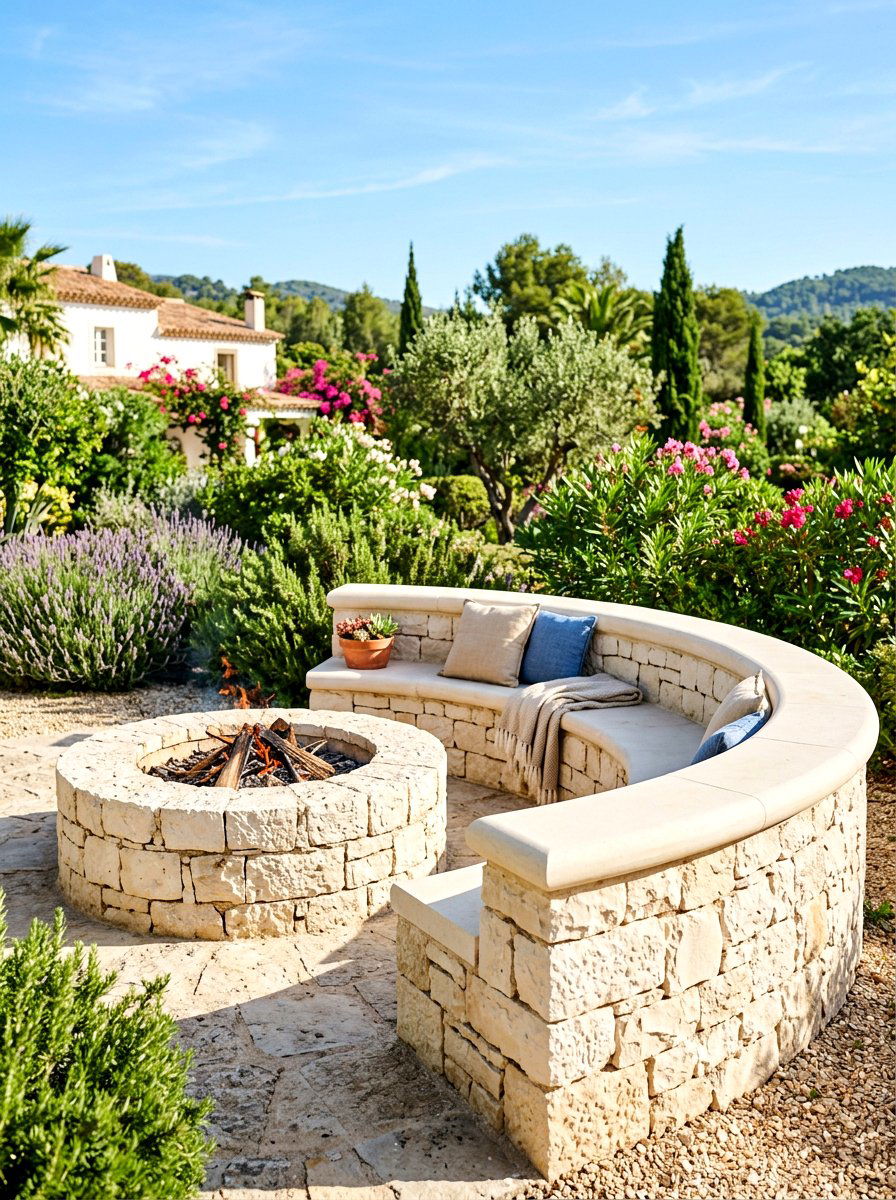
Limestone is a gorgeous natural stone that offers a light, airy feel with its creamy whites, tans, and soft grays. Building a seat wall from limestone can brighten up a shaded corner of the yard and provide a clean, elegant backdrop for a roaring fire. While limestone is slightly more porous than granite, it is still incredibly durable and develops a beautiful patina over time that adds character to the space. The stone's soft texture is very pleasant to the touch, making it a comfortable choice for built-in seating. Finishing the wall with a bullnose edge — a rounded-off corner — can further enhance the comfort and safety of the seating area for families.
23. Fire Pit With Cushion Topped Wall
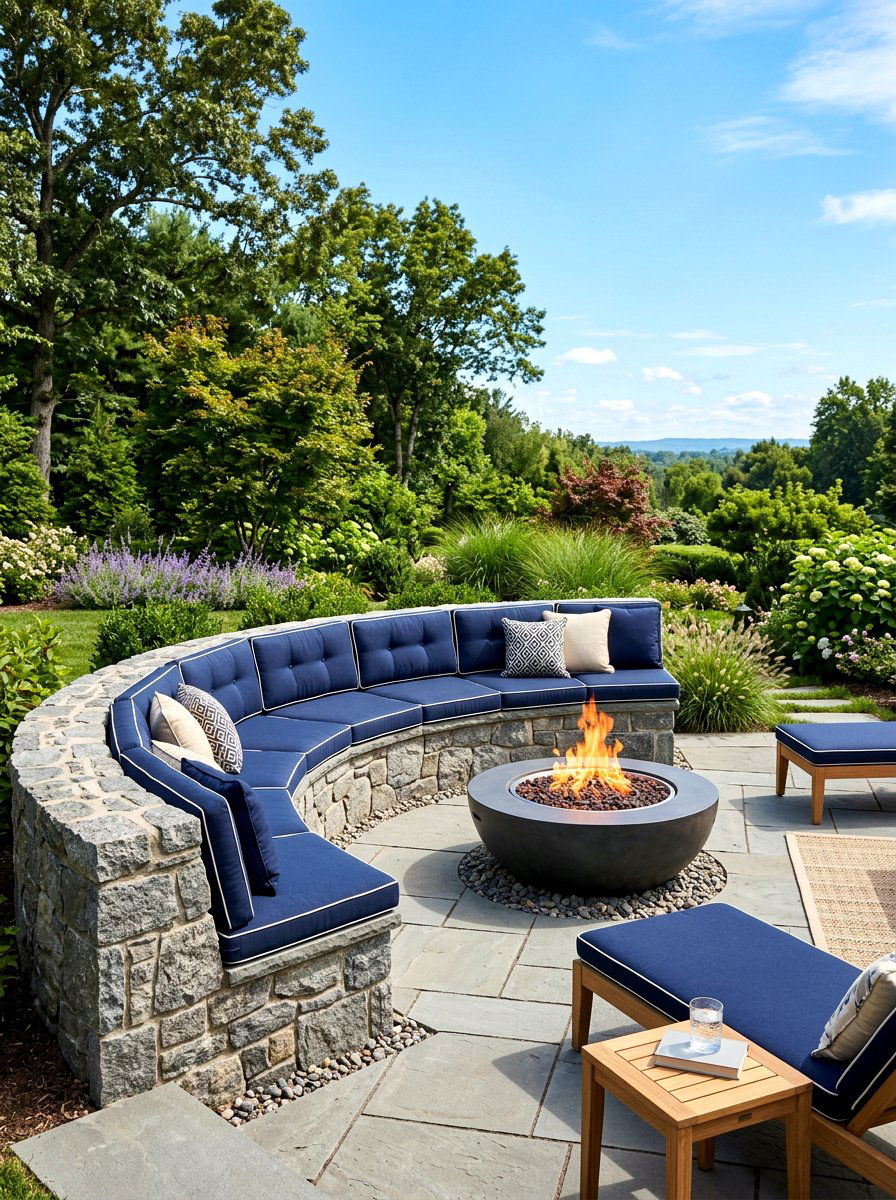
While stone and concrete are beautiful, they can sometimes be a bit hard for long periods of sitting. Adding custom-fitted outdoor cushions to the top of your seat wall can transform a simple masonry feature into a luxury lounge area. Many homeowners choose high-performance, weather-resistant fabrics that can withstand sun and rain while providing the comfort of an indoor sofa. This approach allows you to introduce color and pattern into your landscape design, which can be easily updated every few seasons. To keep the cushions in place, you can design the seat wall with a slight "lip" or use hidden fasteners to ensure they don't slide around during use.
24. Small Backyard Fire Pit Seat Wall
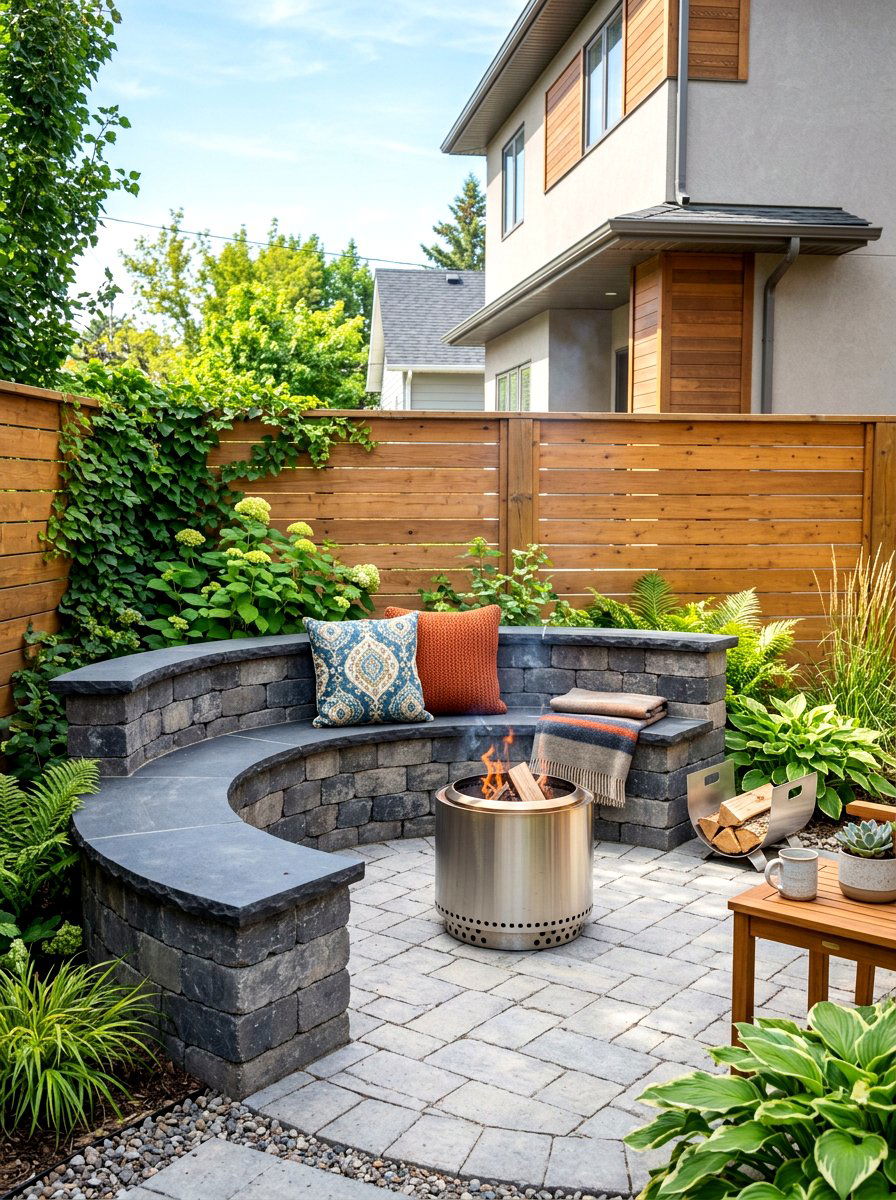
You don't need a massive estate to enjoy the benefits of a seat wall fire pit; in fact, built-in seating is one of the best ways to save space in a small backyard. By placing a seat wall along the perimeter of a small patio or against a fence, you eliminate the need for bulky chairs that take up valuable floor space. A simple semi-circular wall made from slim pavers can comfortably seat four or five people without making the yard feel cramped. Opting for a smaller, smokeless fire pit or a compact gas bowl ensures that the scale of the feature matches the size of the space, creating a perfectly proportioned and functional retreat.
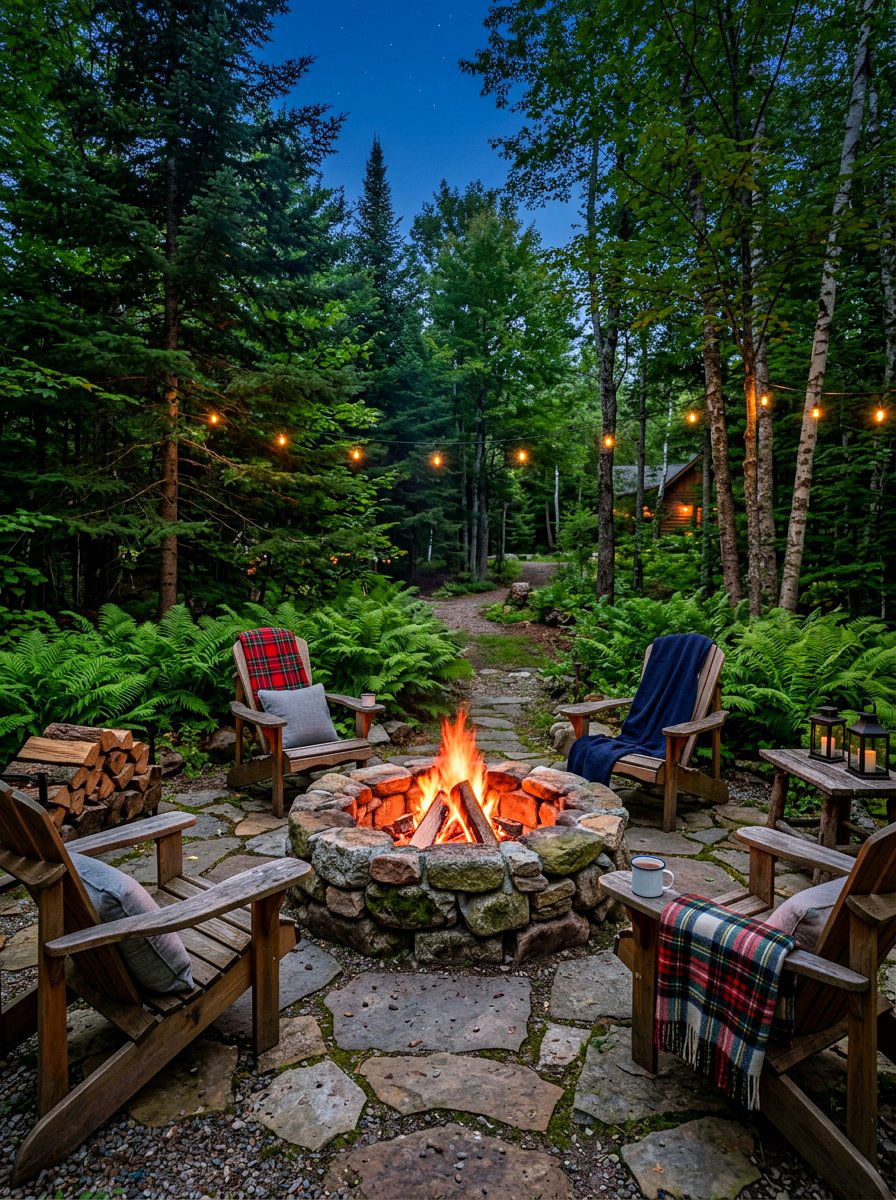
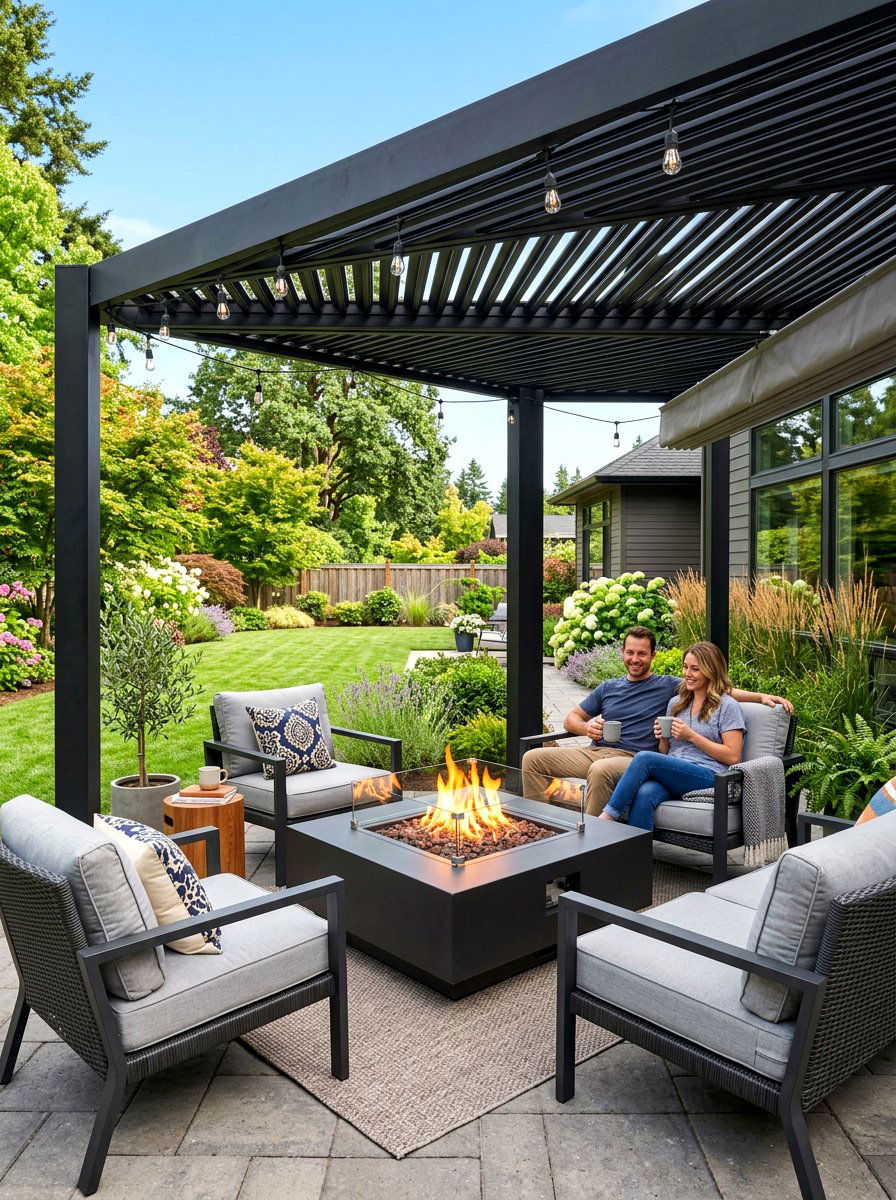
25. Poolside Fire Pit With Seat Wall
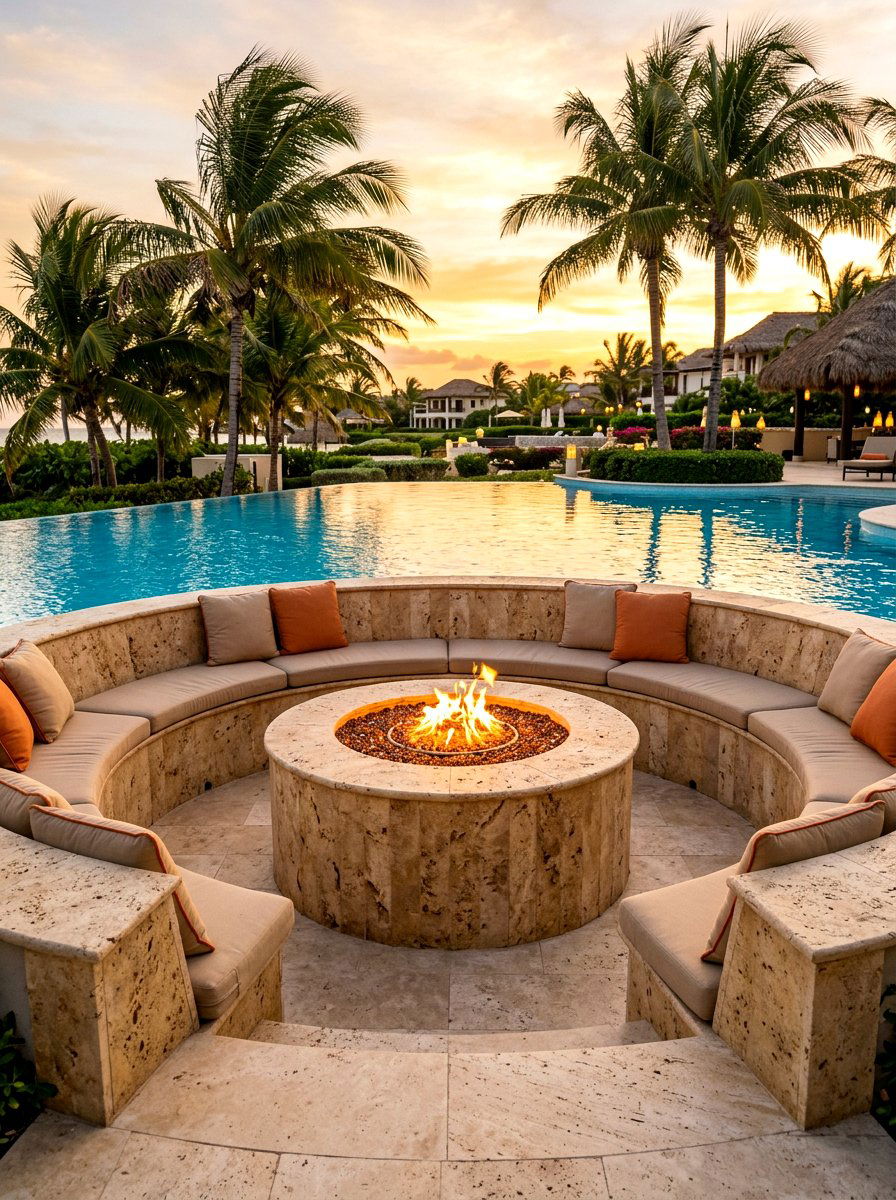
Locating a fire pit and seat wall near your swimming pool creates a spectacular multi-functional entertainment zone that can be used day and night. The warmth of the fire is especially welcome for swimmers who have just stepped out of the water on a cool evening. You can design the seat wall to match the materials used for the pool coping, such as travertine or stamped concrete, for a high-end resort-style look. This setup often serves as a "wet" seating area where people in bathing suits can relax by the fire without damaging traditional furniture. The reflection of the flames on the pool water adds an extra layer of visual magic to your nighttime gatherings.
26. Gravel Patio Fire Pit With Wall
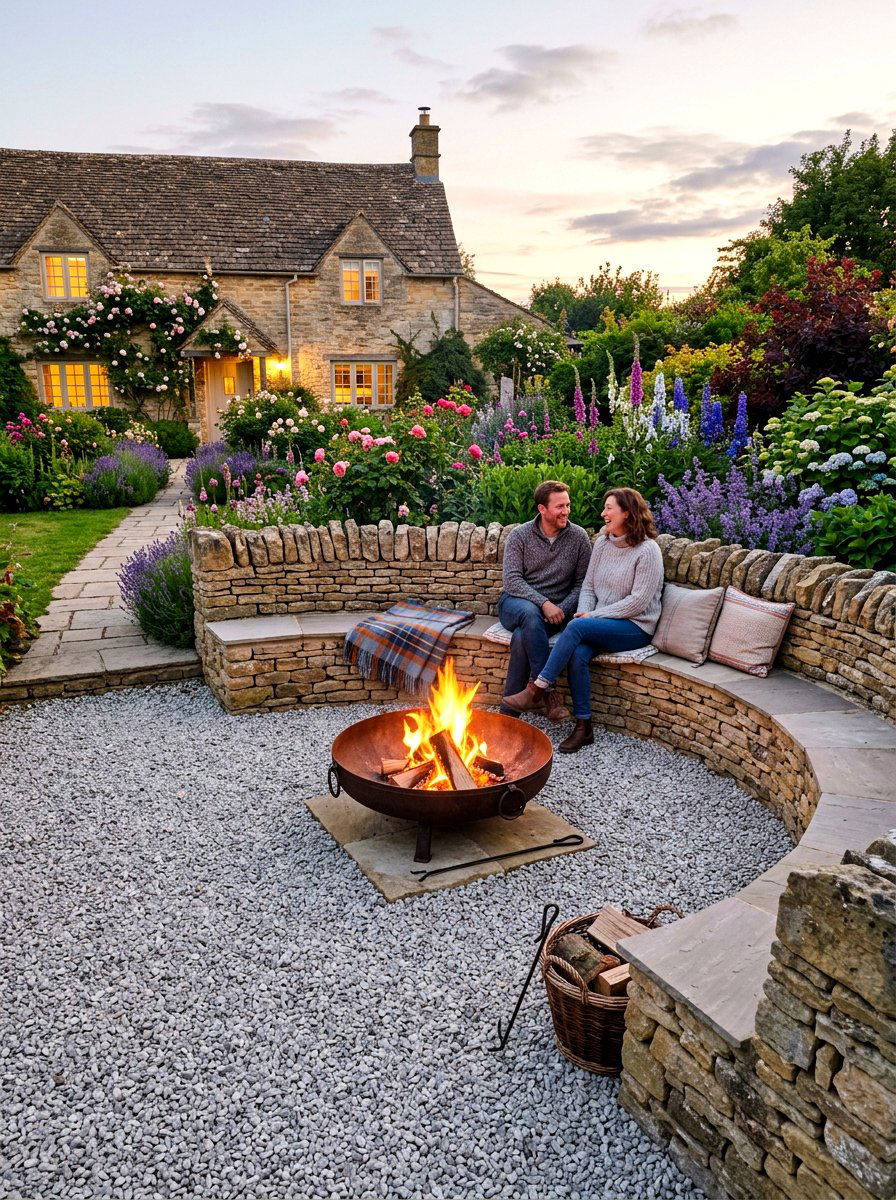
If you are looking for a more relaxed, Mediterranean, or English cottage vibe, pairing a stone seat wall with a gravel patio is a fantastic option. Gravel is an affordable and permeable surface that provides a satisfying crunch underfoot and drains water quickly. A circular or curved seat wall made from dry-stacked stone looks beautiful against the loose texture of pea gravel or crushed granite. This design feels less formal than a fully paved patio and is much easier to install for a DIY enthusiast. The contrast between the solid, vertical wall and the fluid, horizontal gravel creates a dynamic and inviting texture that makes the fire pit area feel very special.
27. Modern Minimalist Fire Pit Seating Wall
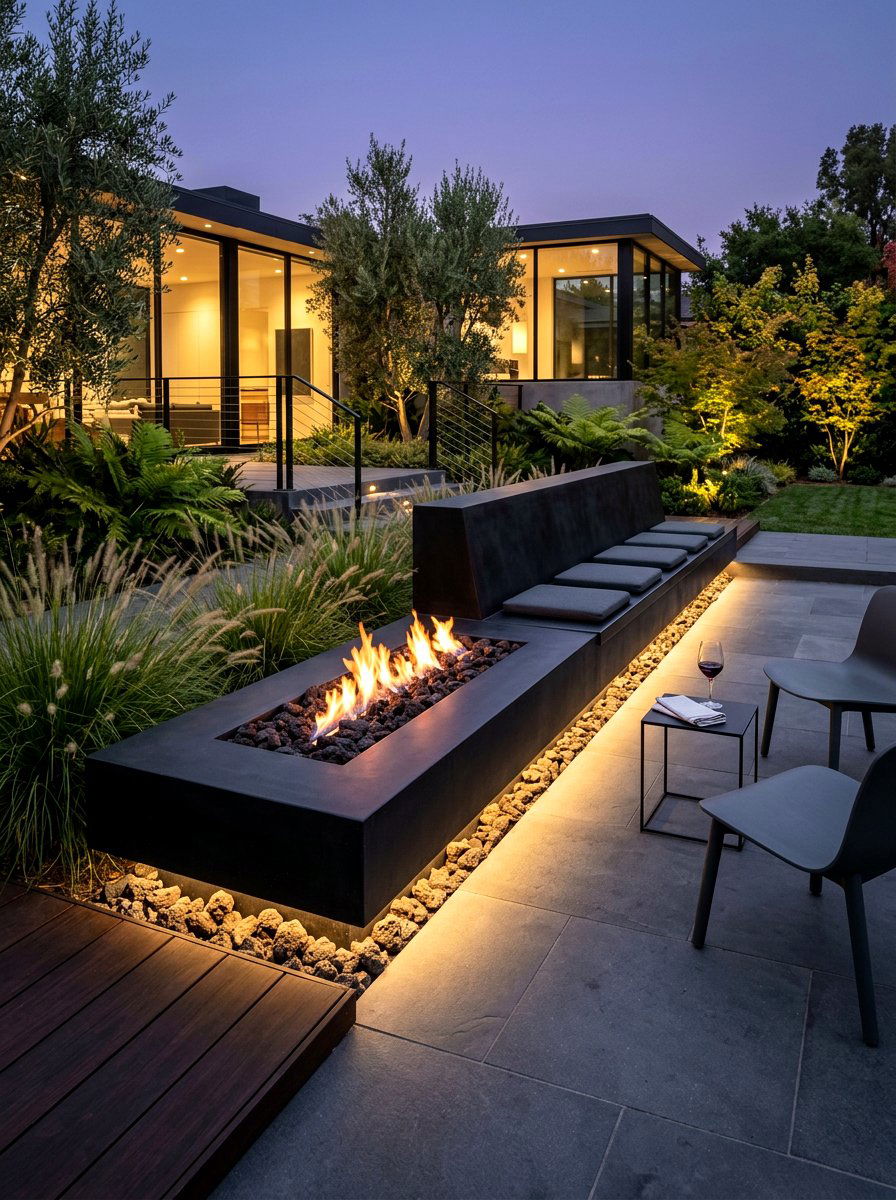
Minimalist design is all about "less is more, " focusing on high-quality materials and simple, powerful shapes. A minimalist seat wall might consist of a single, long slab of polished concrete or a low, monochromatic block wall with no decorative embellishments. The fire pit itself should follow suit, perhaps featuring a simple metal ring or a recessed burner with black lava rocks. This style creates a very calm and orderly environment that allows the natural beauty of the surrounding trees and sky to take center stage. Using a dark color palette, such as charcoal or deep bronze, can make the flickering orange flames of the fire look even more dramatic and captivating.
28. Fire Pit With Backrest Seat Wall
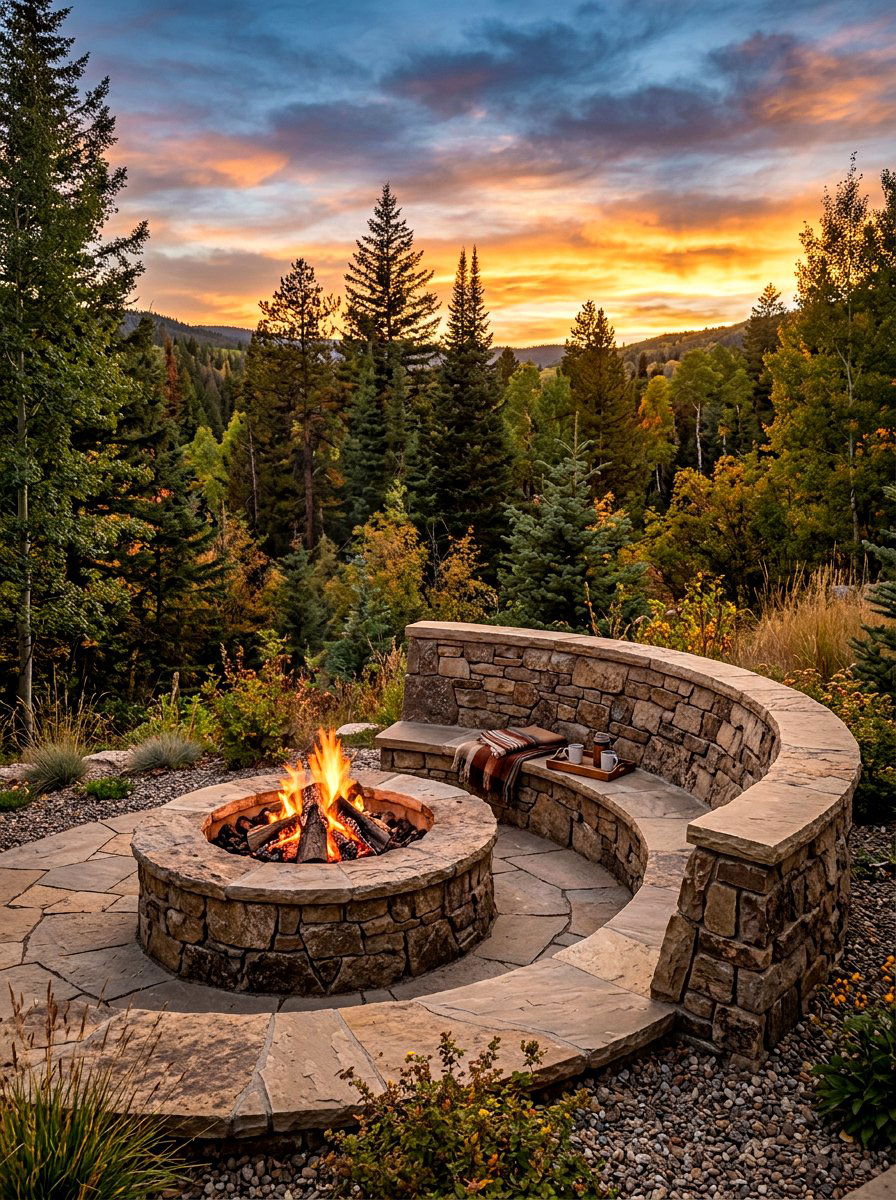
Most seat walls are bench-style, but adding a built-in backrest can significantly increase the comfort and usability of your fire pit area. You can design the wall with a taller rear section that guests can lean against, creating a more ergonomic and relaxing experience. This taller wall can also serve as a windbreak, protecting the fire from gusts and keeping the heat concentrated around the people sitting there. The backrest can be finished with the same stone as the seat or with a contrasting material like wood slats or smooth stucco. This design is perfect for those who plan to spend hours outside and want the comfort of a real chair.
29. River Rock Fire Pit Seat Wall
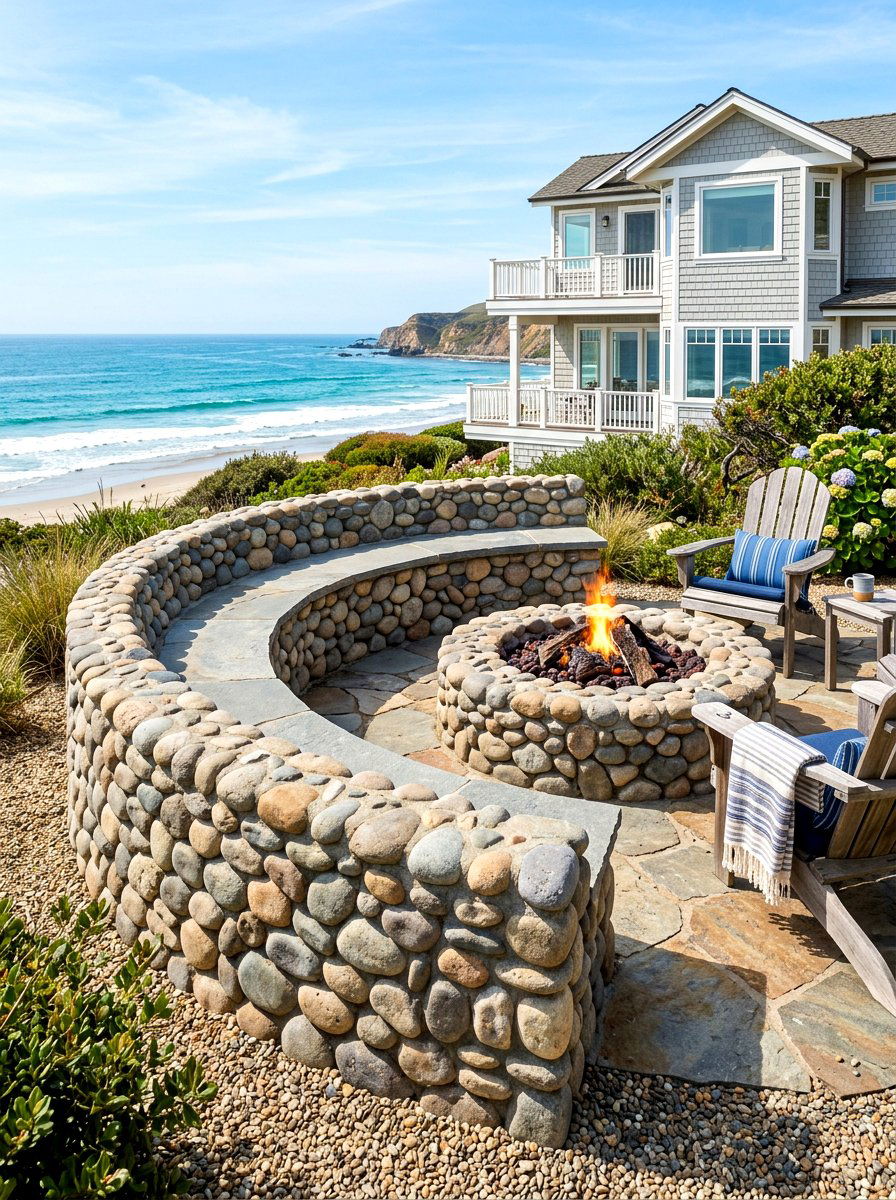
River rocks are characterized by their smooth, rounded shapes and wide variety of natural colors, ranging from blue-gray to earthy browns. Using these stones to face a concrete seat wall creates a beautiful, water-inspired look that feels very soothing and natural. This style is particularly effective in coastal regions or for homes with water features like ponds or waterfalls. Because river rocks are rounded, it is essential to use a very flat, sturdy capstone for the actual seating surface to ensure it is functional and safe. The organic texture of the river rocks looks stunning when illuminated by the glow of the fire, highlighting the unique shape of every individual stone.
30. Fire Pit With Flagstone Cap Wall
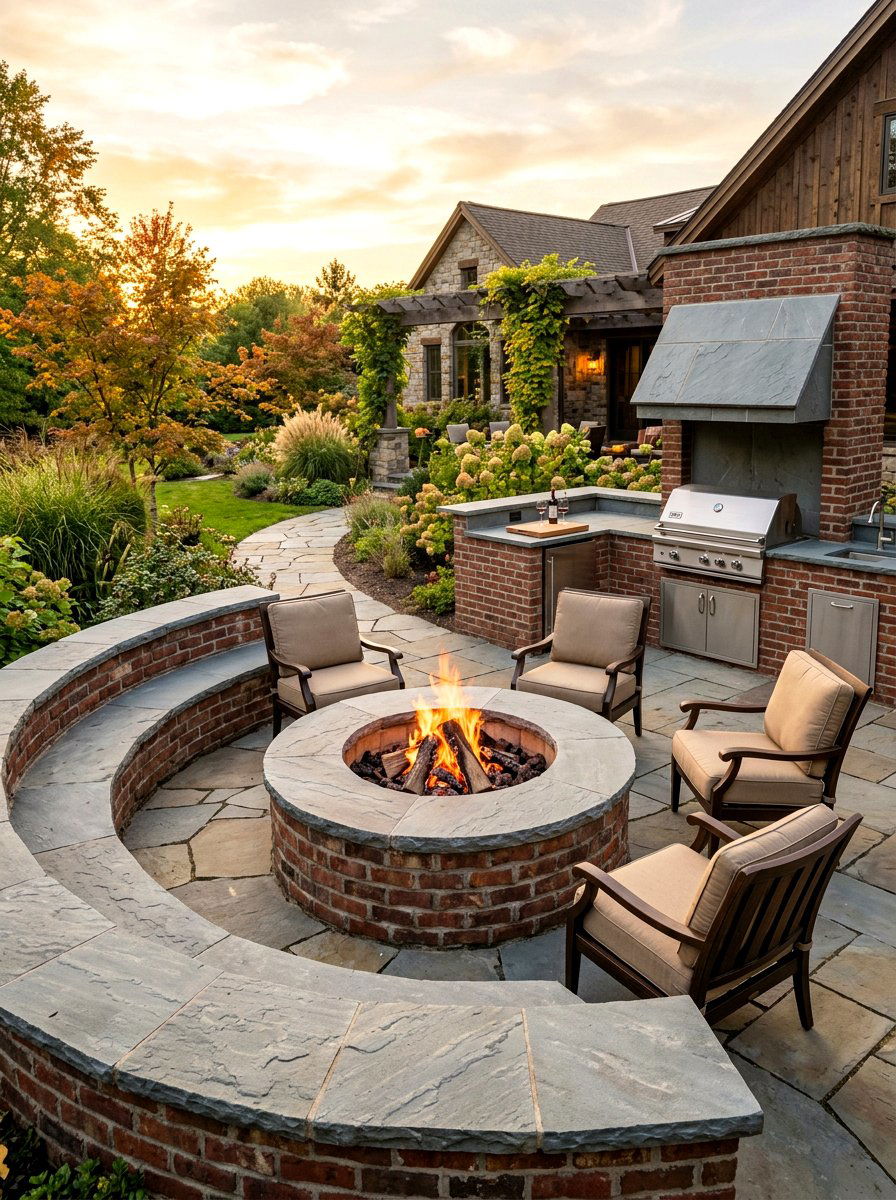
Regardless of what material you use for the base of your seat wall, finishing it with a flagstone cap is one of the most popular and practical design choices. A flagstone cap is a large, flat slab of stone that covers the top of the wall, providing a wide and comfortable surface for sitting or resting a plate of food. The overhanging edge of the cap — known as the "reveal" — can also hide light strips and protect the wall's face from dripping rainwater. You can choose a capstone that matches the base for a uniform look or a contrasting stone to create a bold, horizontal line that defines the seating area and adds architectural depth.
Conclusion:
Investing in a seat wall fire pit is one of the most effective ways to transform your backyard into a permanent destination for relaxation and social gathering. Whether you prefer the sleek lines of modern concrete, the rustic charm of natural stone, or the traditional warmth of brick, there is a design that will perfectly complement your home's architecture and your personal style. These built-in features offer a level of stability, durability, and year-round beauty that temporary furniture simply cannot provide. By thoughtfully considering your materials, layout, and additional features like lighting and storage, you can create an outdoor sanctuary that provides warmth and joy for many years.

Related posts: