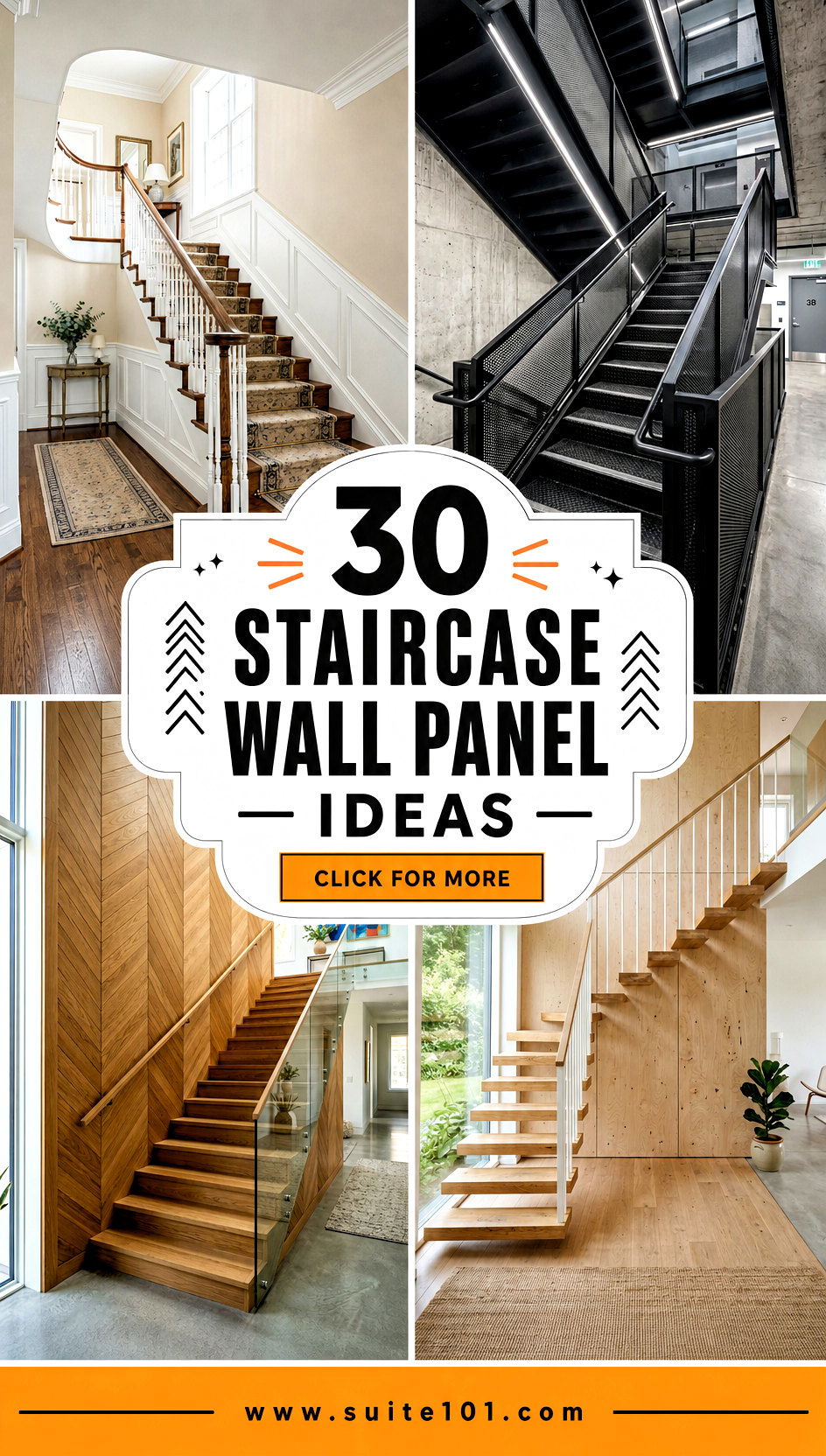
Updating the look of your staircase is one of the most effective ways to enhance your home's interior design and overall value. While many people focus on the flooring or the railing, the staircase wall offers a massive canvas for creative expression through various paneling styles. From classic wainscoting that protects high-traffic areas to modern vertical slats that add height and texture, there are endless ways to transform this transition space. Choosing the right wall panel can turn a plain hallway into a sophisticated architectural feature that greets every guest. This guide explores thirty unique and inspiring ways to use wall panels to elevate your staircase today.
1. White Wainscoting
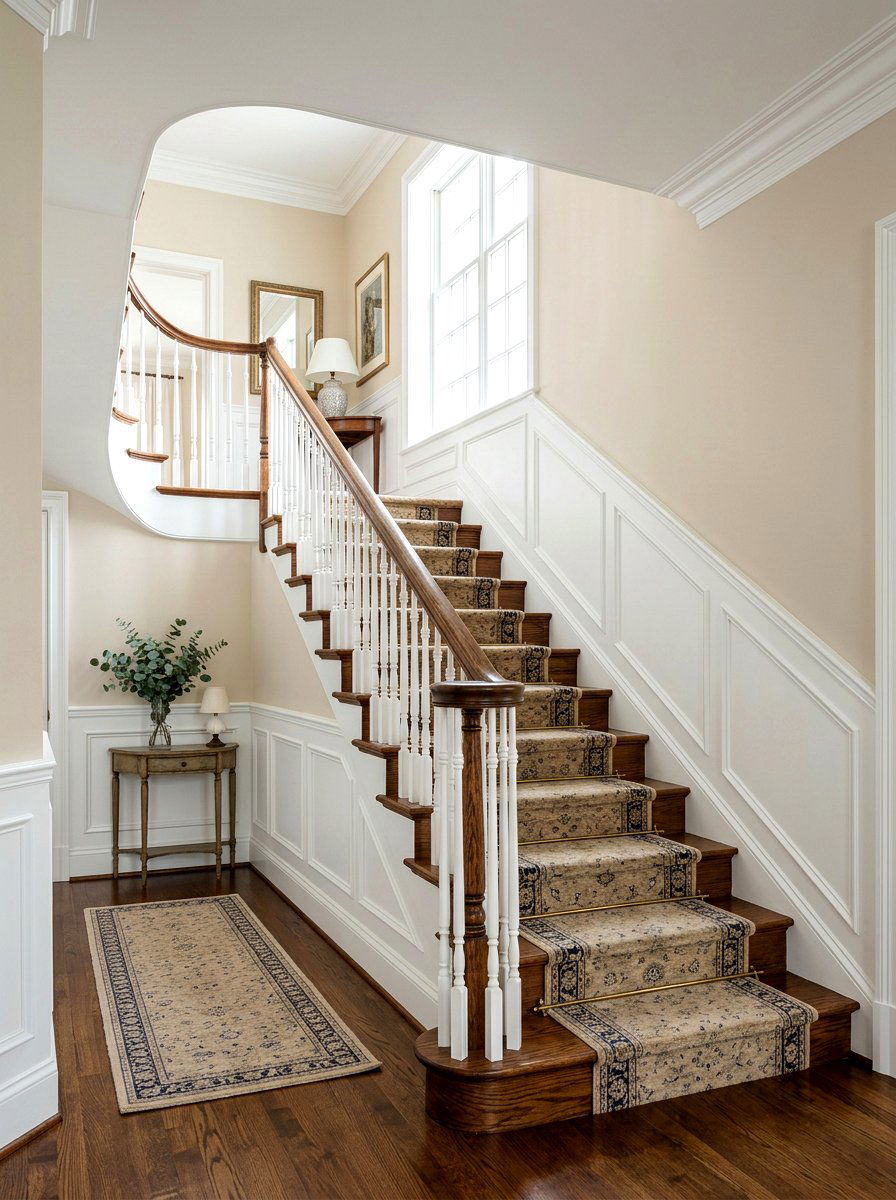
White wainscoting remains a timeless choice for many homeowners because it adds immediate architectural interest to a plain staircase. This traditional wall treatment typically covers the lower half of the wall, providing a sturdy barrier against scuffs and handprints in high-traffic areas. When you install white wainscoting, you create a bright and airy atmosphere that makes even a narrow staircase feel much larger than it actually is. The clean lines of the panels offer a sense of order and sophistication that complements both modern and classic home styles. You can pair this look with bold wall paint or soft neutrals to achieve your desired aesthetic easily.
2. Modern Wood Slat Wall
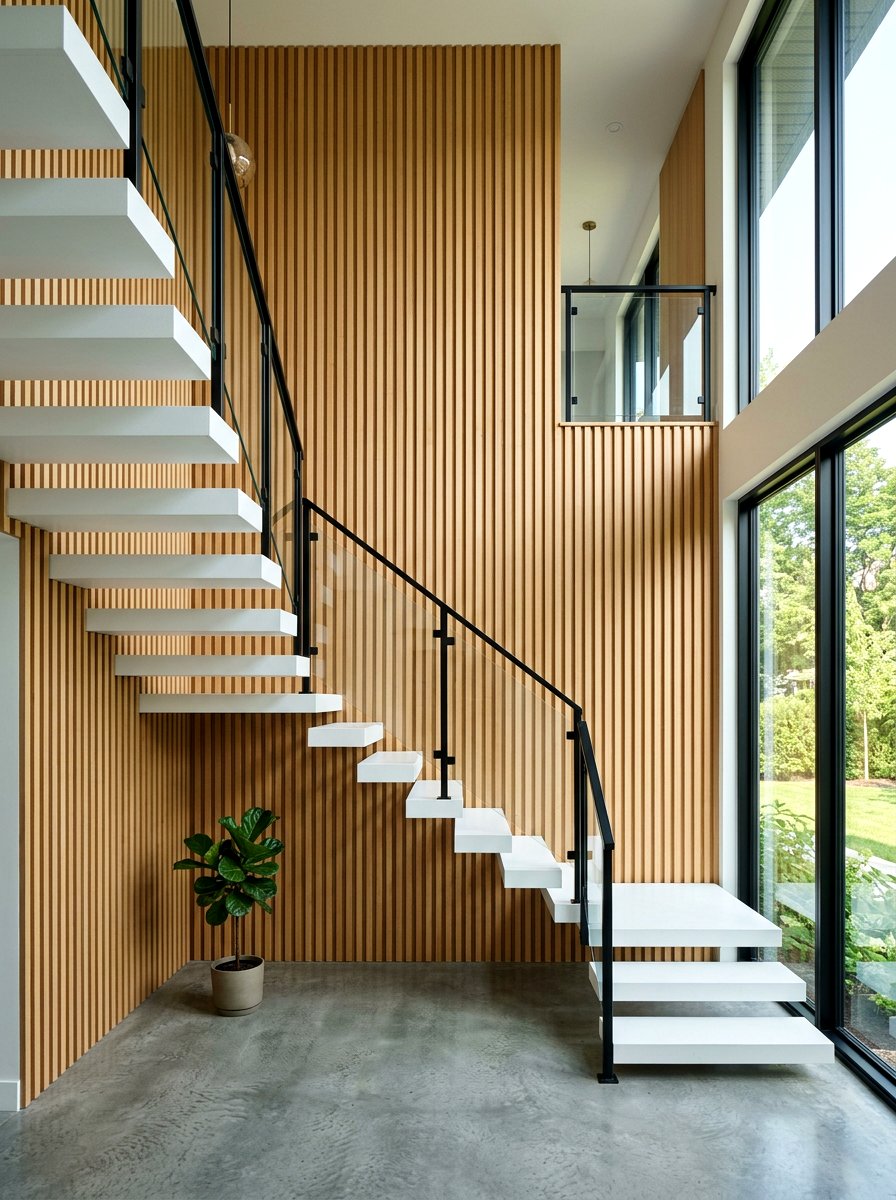
A modern wood slat wall is an excellent way to introduce warmth and organic texture to your staircase area. These vertical timber strips create a rhythmic pattern that draws the eye upward, making the ceiling feel significantly higher than it is. Most designers prefer using light oak or ash for these slats to keep the space feeling contemporary and fresh. The gaps between the wooden pieces add depth and shadow, which brings a dynamic quality to the hallway as lighting changes throughout the day. It is a perfect choice for those who love Scandinavian or Japandi design and want a clean, minimalist focal point.
3. Dark Charcoal Shiplap
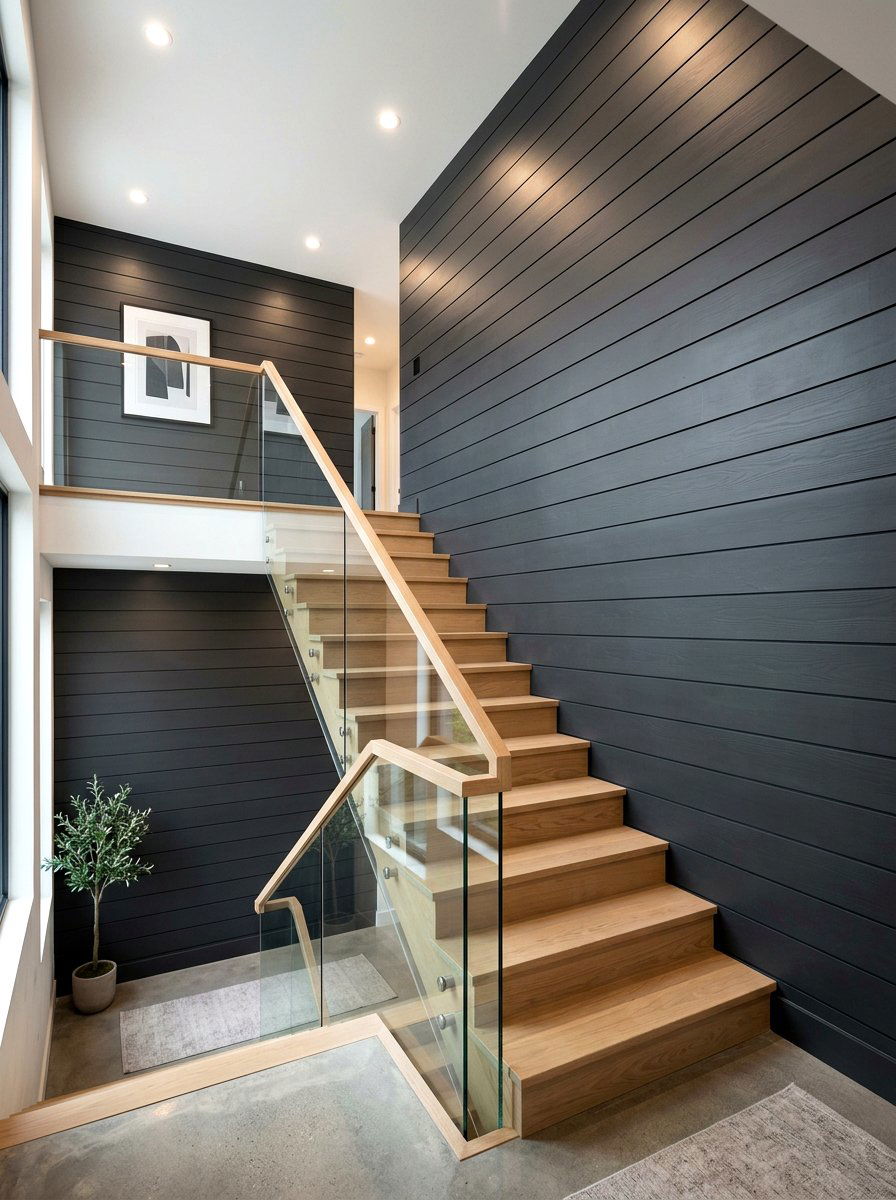
Dark charcoal shiplap offers a moody and sophisticated twist on the classic farmhouse aesthetic that has dominated interior design lately. Installing these horizontal boards in a deep gray or black tone creates a dramatic backdrop that makes lighter furniture or wooden steps stand out beautifully. Shiplap is particularly durable, making it ideal for the busy environment of a staircase where walls often get bumped. The subtle grooves between the boards provide just enough detail to prevent the dark color from feeling flat or overwhelming. It works exceptionally well in modern homes looking for a touch of industrial or coastal-inspired character with a bold edge.
4. Geometric Wall Molding
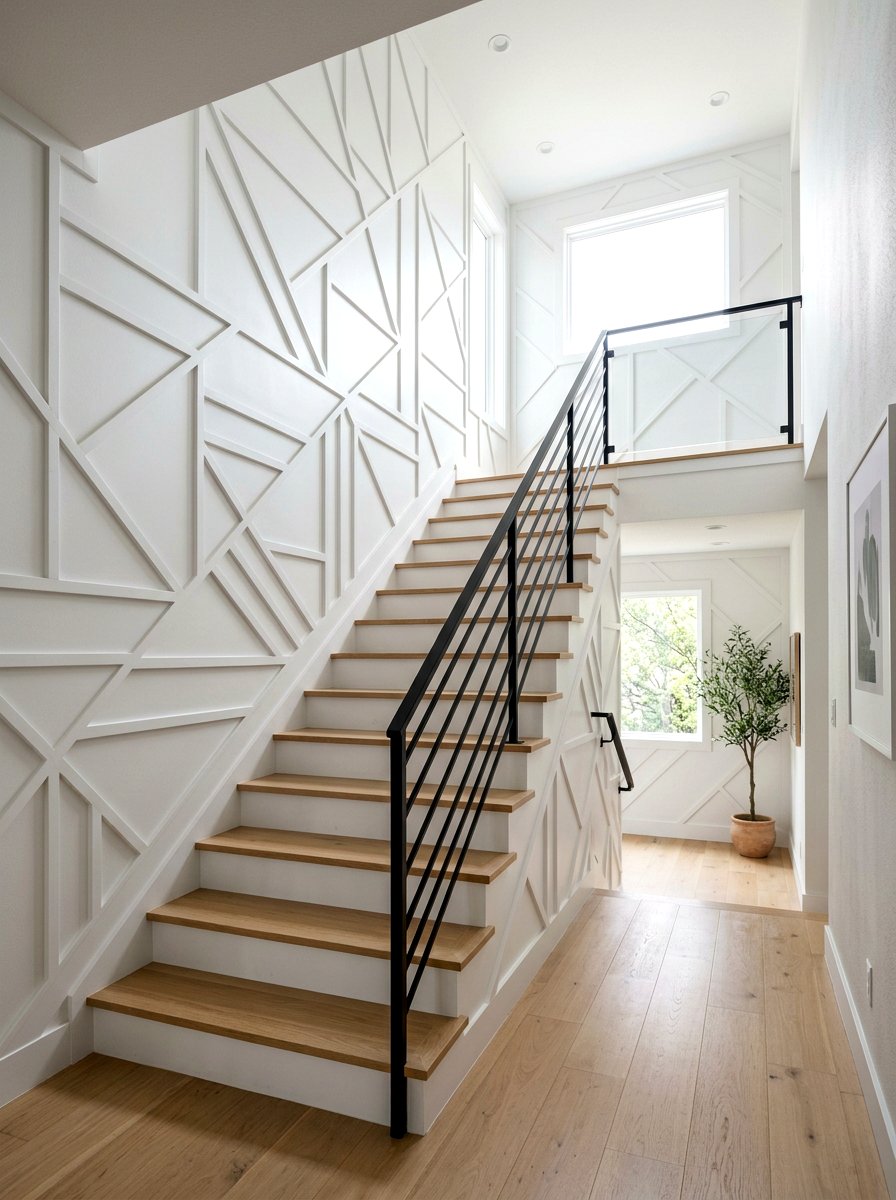
Geometric wall molding is a fantastic way to add a custom, high-end look to your staircase without a massive renovation. By using thin strips of wood or composite material, you can create intricate patterns like triangles, hexagons, or abstract shapes directly on the wall surface. This technique adds incredible depth and architectural detail, turning the entire staircase into a piece of art. When painted in a single monochromatic color, the light and shadows created by the raised molding become the main focus. It is a popular choice for contemporary homes where the owner wants to showcase unique style and a bit of creative flair.
5. Oak Vertical Slats
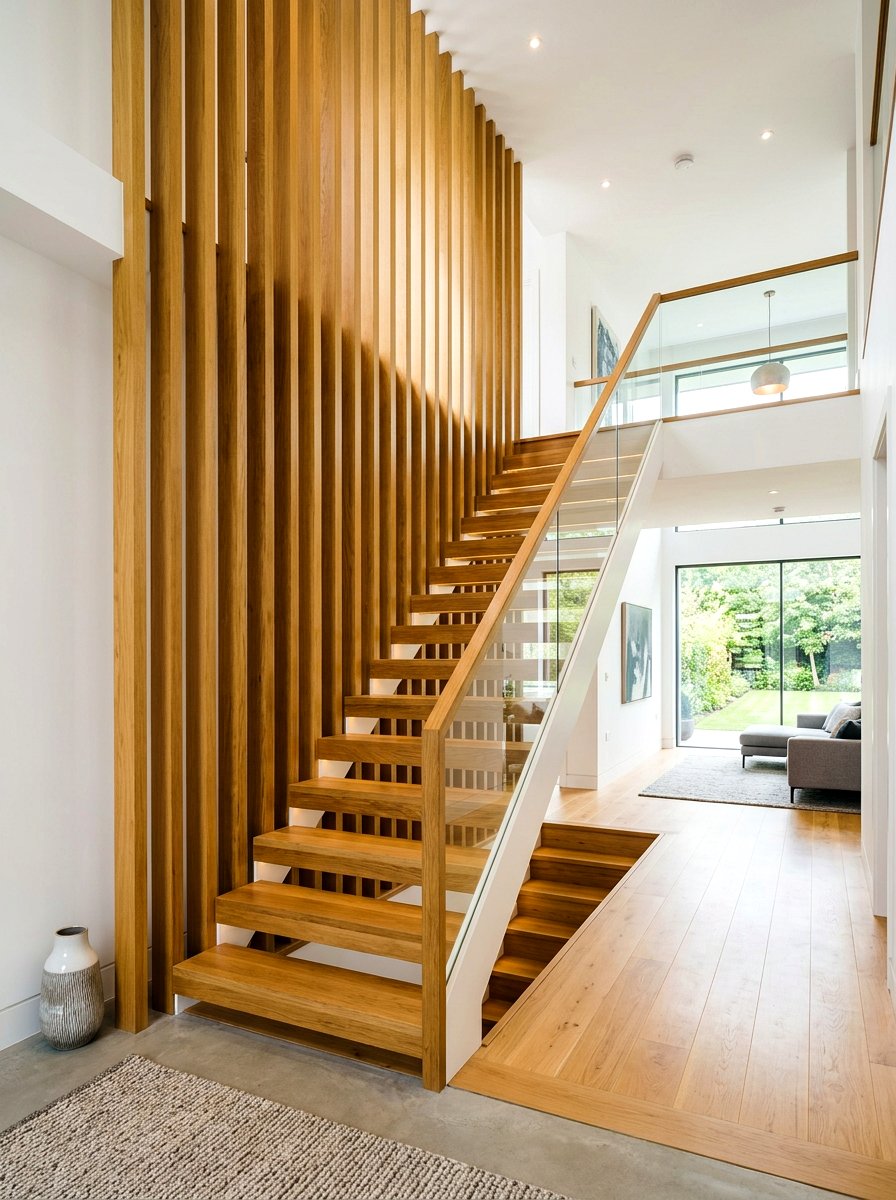
Oak vertical slats provide a premium and sturdy wall treatment that brings a sense of luxury and permanence to your home. Using real oak ensures that the wall has beautiful grain patterns and a natural durability that synthetic materials simply cannot replicate. These slats can be spaced closely together for a more private, screened effect or further apart to let the background wall color peek through. The warm golden tones of the oak complement many different types of flooring and banister finishes. This design choice is especially effective in open-concept homes where the staircase is visible from the main living and dining areas.
6. Marble Wall Panel
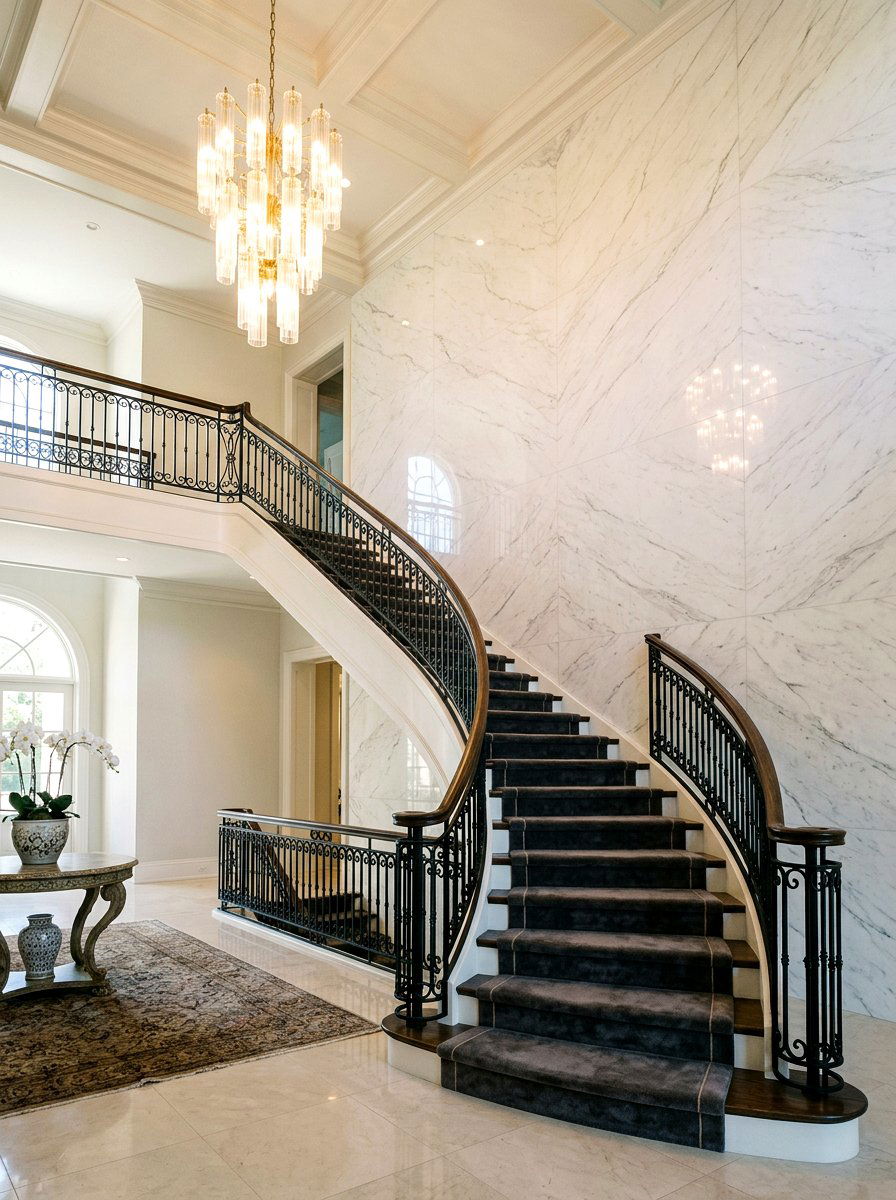
Installing marble wall panels along your staircase is the ultimate way to achieve a luxurious and sophisticated atmosphere. This material brings a cool, sleek surface to the space that is both elegant and incredibly easy to maintain over time. Large-format marble slabs or composite marble panels can minimize grout lines, creating a seamless and expensive look that resembles high-end hotel lobbies. The natural veining of the stone adds unique visual movement to the walls, ensuring that no two staircases look exactly alike. While it is a more significant investment, the timeless beauty of marble ensures that your home stays stylish for many years.
7. Rustic Reclaimed Wood
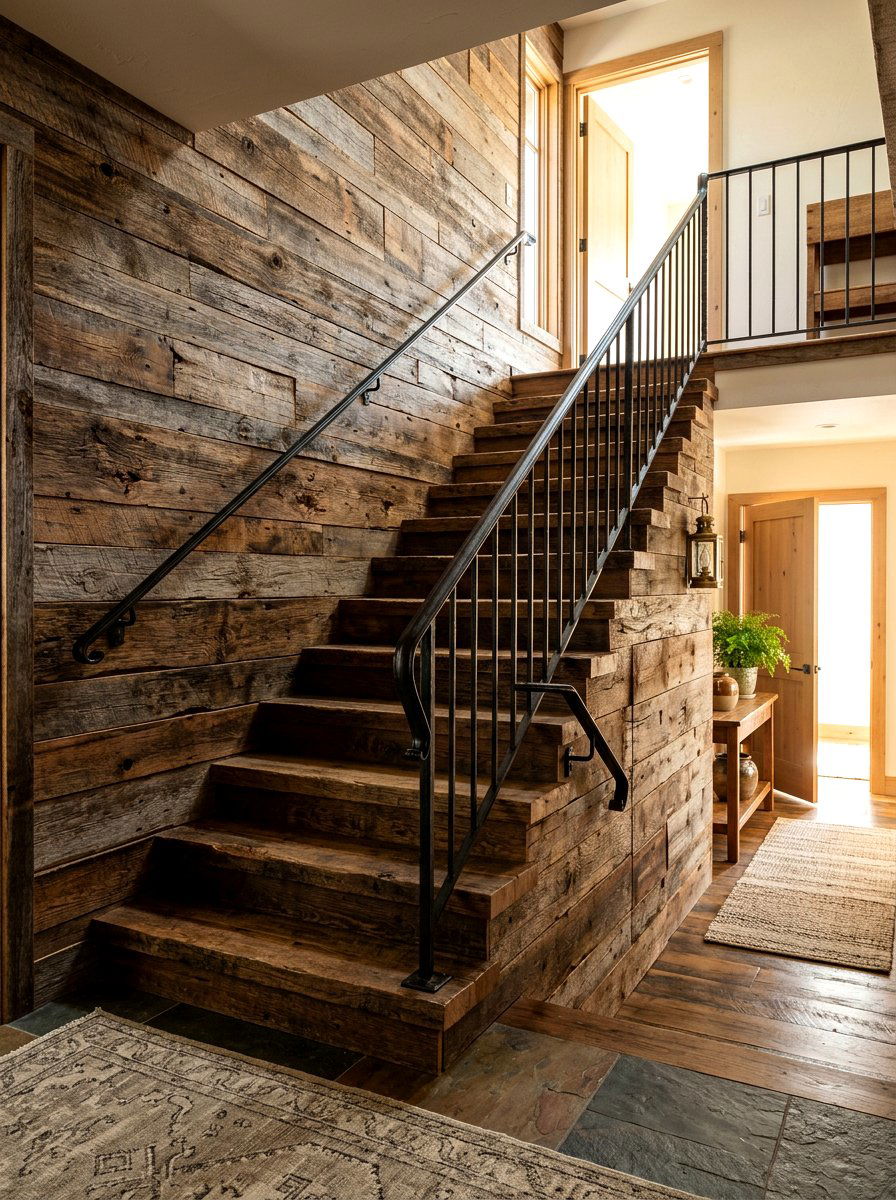
Rustic reclaimed wood panels are perfect for homeowners who want to bring a sense of history and warmth into their interiors. These panels often feature varied textures, original nail holes, and weathered finishes that tell a unique story. Using reclaimed timber on a staircase wall adds a cozy, cabin-like feel that works well with traditional or farmhouse decor. Because the wood has already been aged, it is very forgiving of new scratches or dings, making it a practical choice for families with pets or children. It creates an inviting and tactile surface that balances the harder lines of metal railings or stone steps.
8. Traditional Picture Frame Molding
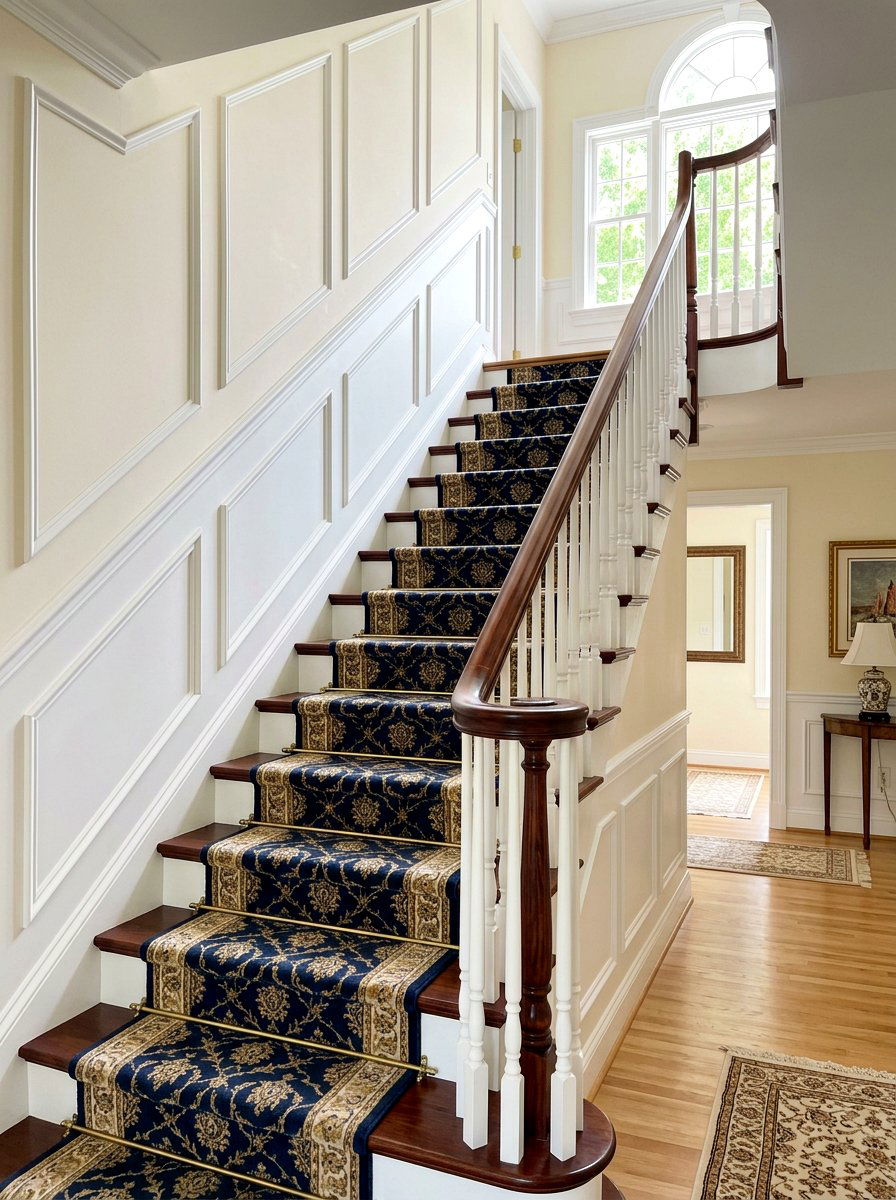
Traditional picture frame molding is a classic technique that uses decorative trim to create rectangular sections on the staircase wall. This style mimics the look of historic estates and adds a formal touch to the home's transition spaces. You can leave the centers of the frames empty for a subtle look or fill them with contrasting paint or wallpaper for a more decorative effect. The symmetry of these boxes provides a sense of balance and calm as you move between different levels of the house. It is an affordable DIY project that can significantly increase the perceived value and elegance of any entryway hallway.
9. Black Fluted Wall
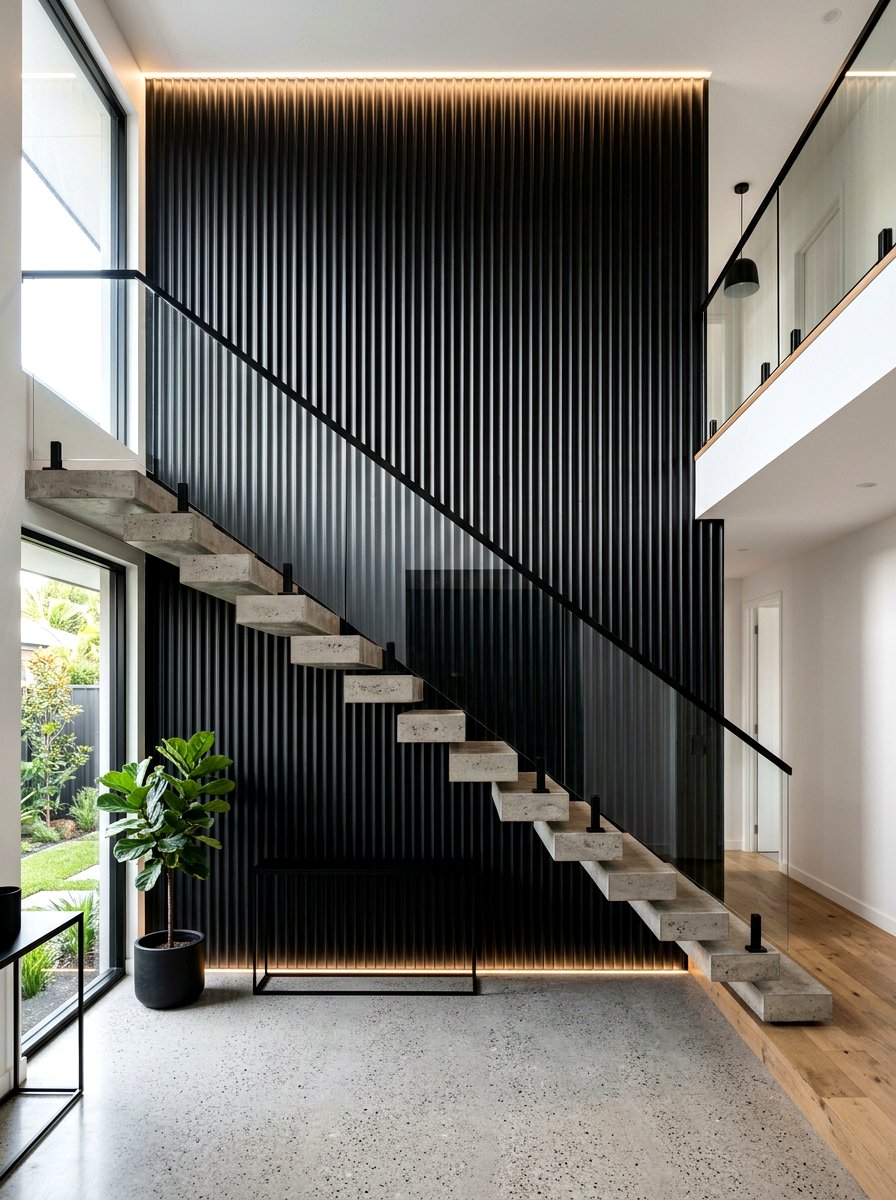
A black fluted wall panel introduces a highly tactile and sophisticated element to modern staircase designs. The repeated vertical grooves create a beautiful play of light and shadow, especially when paired with recessed ceiling lights or wall sconces. Choosing a matte black finish gives the space a contemporary, high-fashion vibe that feels grounded and solid. Fluted panels are also excellent for sound absorption, helping to dampen the echoes that often occur in tall, open stairwells. This design choice works best when you want to create a strong statement wall that serves as a backdrop for a sleek, glass or metal banister system.
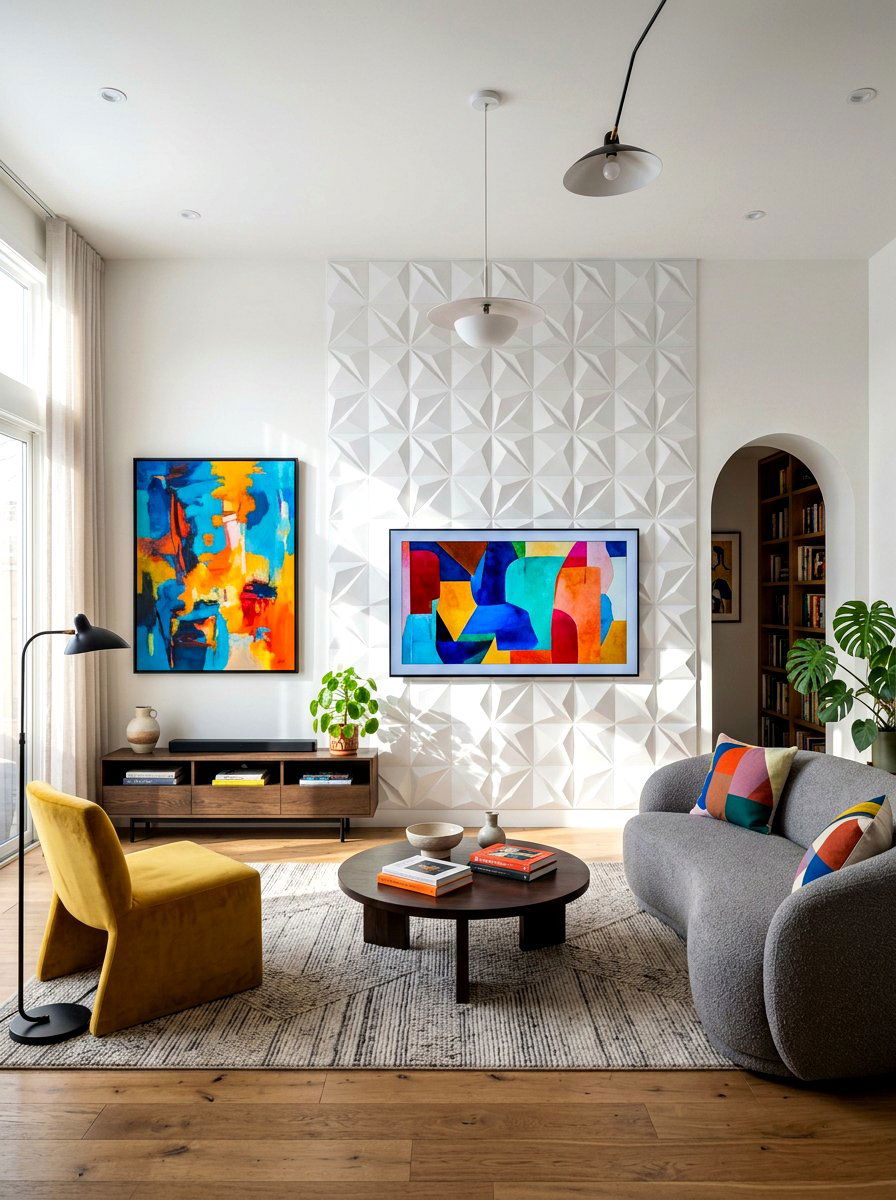
10. Light Gray Beadboard
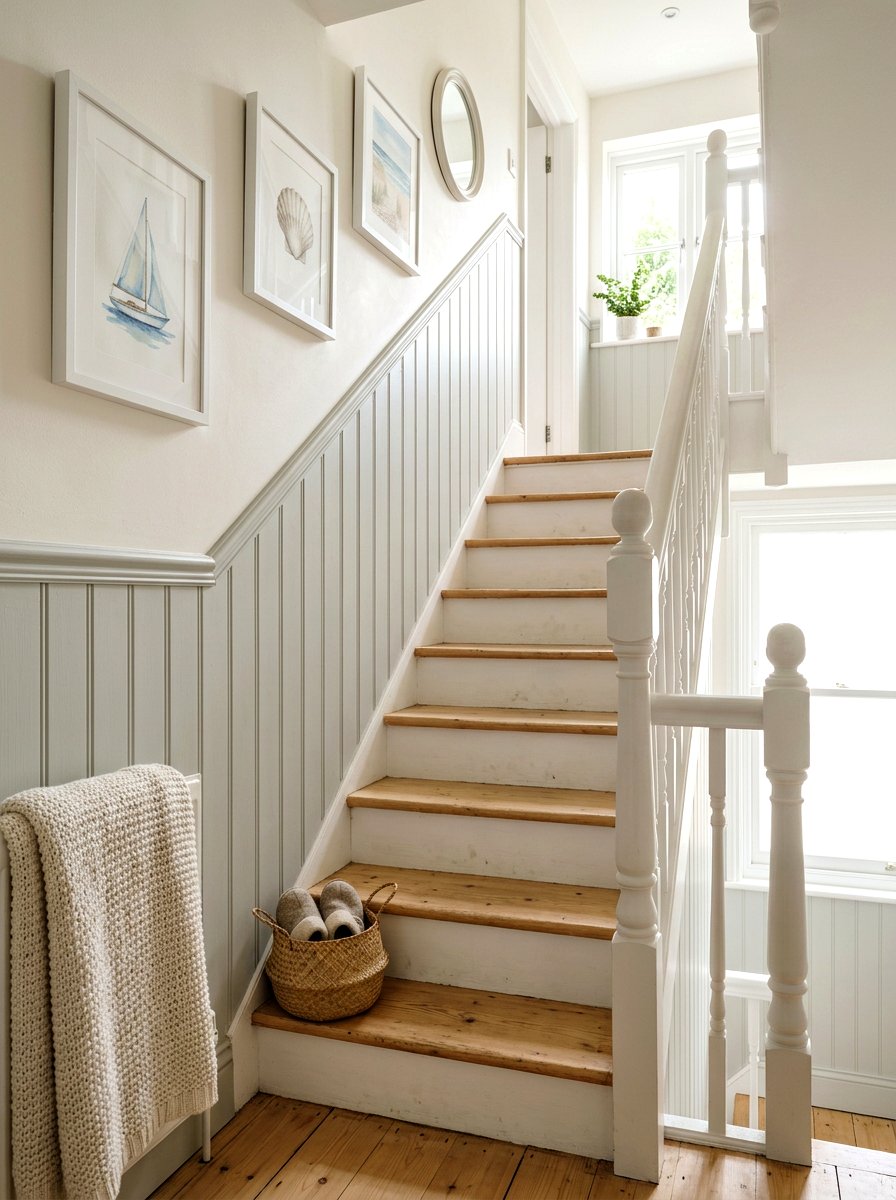
Light gray beadboard is a charming and versatile wall treatment that fits perfectly into cottage-style or coastal homes. The narrow vertical grooves provide a subtle texture that is more interesting than a flat wall but less formal than traditional wainscoting. Painting the beadboard in a soft, light gray helps to modernize the look while maintaining a cozy and welcoming feeling. This type of paneling is often installed as a half-wall treatment, capped with a simple chair rail to create a clean finish. It is a durable solution that protects the lower portion of the wall while adding a layer of classic architectural character.
11. Gold Trimmed Panels
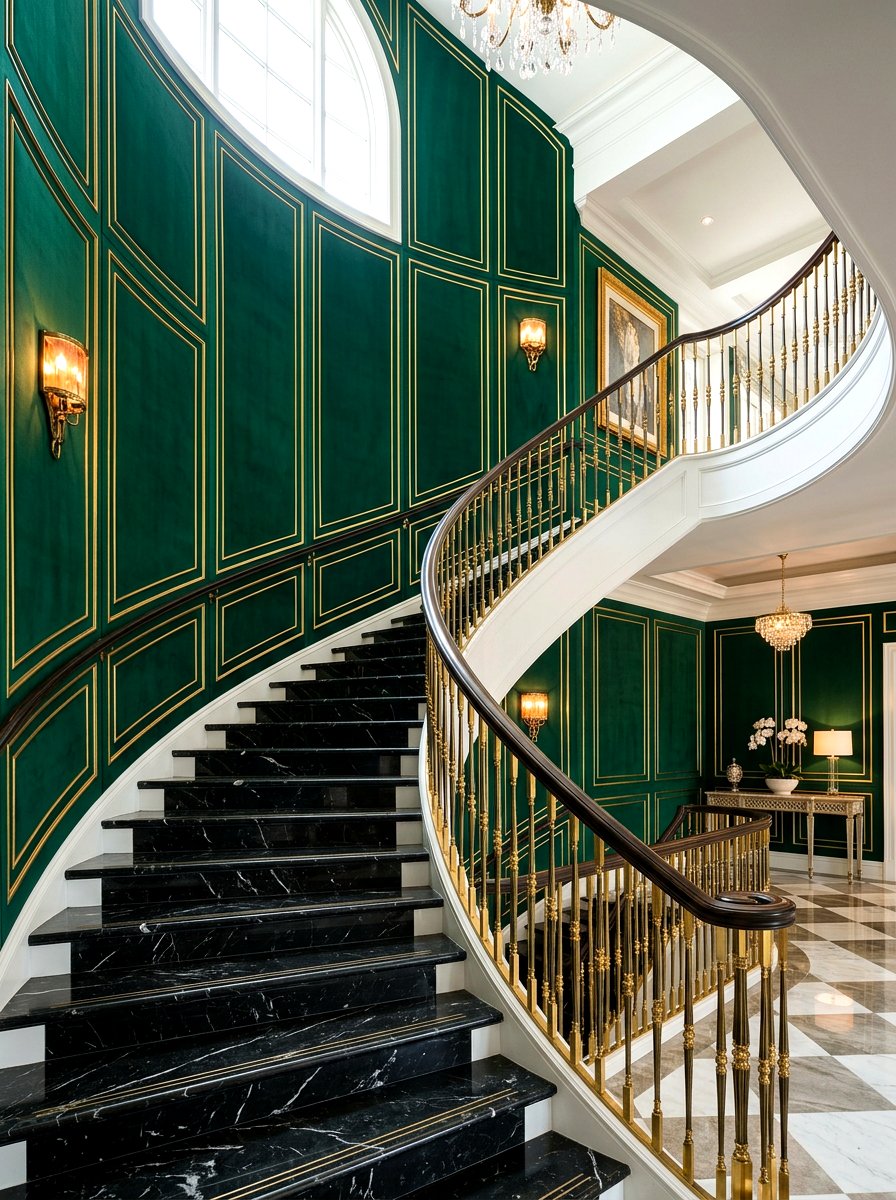
Gold trimmed panels are a bold choice for anyone looking to infuse their home with a touch of Hollywood Regency or glam style. This design involves using metallic gold strips or paint to accent the edges of recessed or raised wall panels along the staircase. The gold details catch the light beautifully, creating a shimmering effect that adds a sense of luxury to the entire hallway. This look is most effective when paired with deep, moody colors like navy blue, emerald green, or even crisp white. It transforms a functional area into a high-end design statement that feels curated and very intentional in its overall execution.
12. Concrete Texture Panel
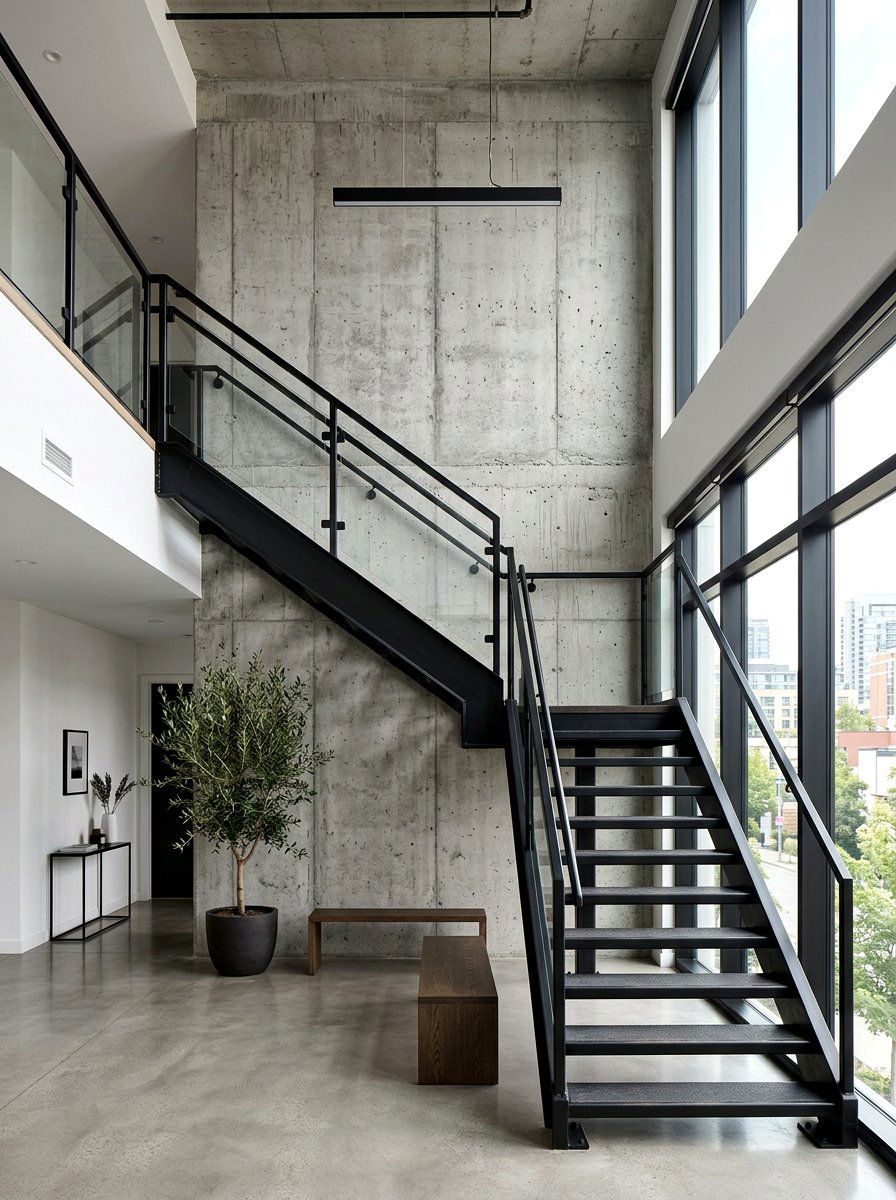
Concrete texture panels offer an industrial and raw aesthetic that is perfect for modern lofts or contemporary minimalist homes. These panels provide the look of solid poured concrete without the extreme weight or complexity of traditional construction. The subtle variations in color and texture found in these panels add a rugged, urban feel to the staircase area. They pair exceptionally well with black metal railings and floating wooden steps to create a balanced, modern look. Using concrete panels also introduces a durable and low-maintenance surface that is resistant to daily wear and tear, making it ideal for busy urban residential living spaces.
13. Floor To Ceiling Glass Panel
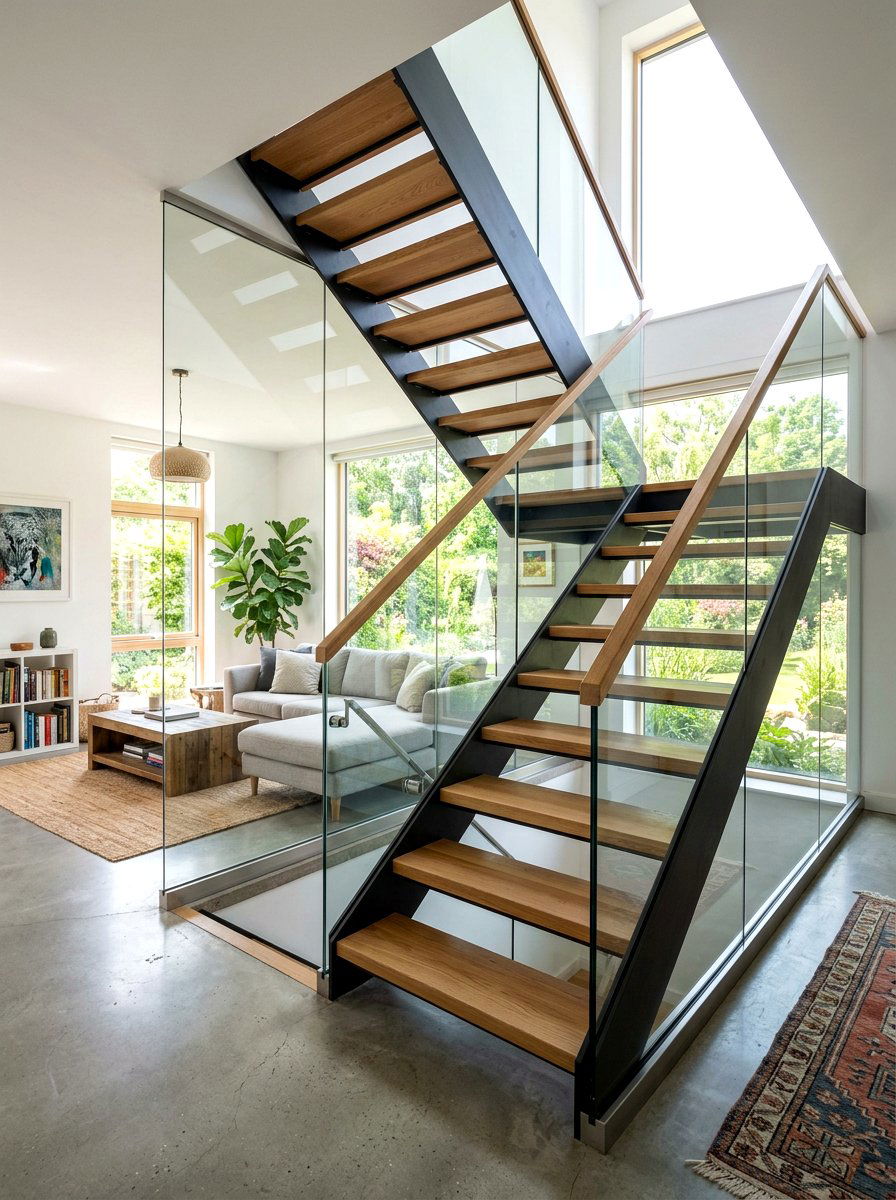
Floor to ceiling glass panels are a revolutionary way to handle staircase walls, especially in homes where natural light is a priority. Instead of a traditional solid wall, using large tempered glass sheets allows light to flow freely between different levels and rooms. This creates an incredibly open and airy feeling that can make a small home feel much more spacious. The transparency of the glass puts the focus on the craftsmanship of the staircase itself, such as beautiful wooden treads or a unique metal structure. It is a sleek, high-tech option that defines modern luxury and architectural transparency in contemporary home design today.
14. Mid Century Modern Walnut Panel
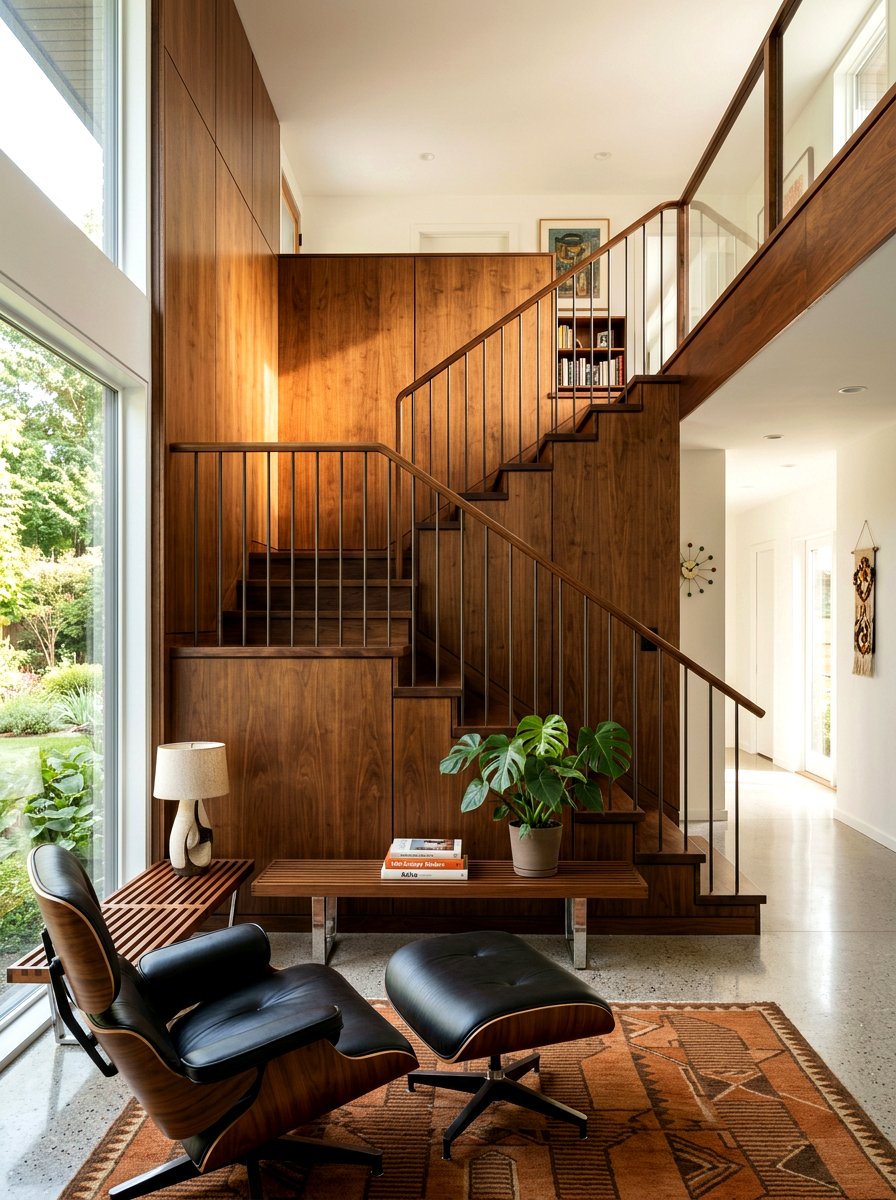
Mid-century modern walnut panels bring a rich, nostalgic warmth to the staircase that feels both retro and completely current. The deep brown tones and distinct grain of walnut wood create a sophisticated backdrop that complements iconic furniture styles from the 1950s and 60s. These panels are often installed in large, flat sheets to emphasize the natural beauty of the timber rather than complex moldings. The smooth, satin finish of walnut adds a layer of quiet luxury that makes the staircase feel like a high-quality piece of custom cabinetry. It is an excellent choice for creating a cozy yet elevated atmosphere in any home interior.
15. Minimalist White Slat Wall
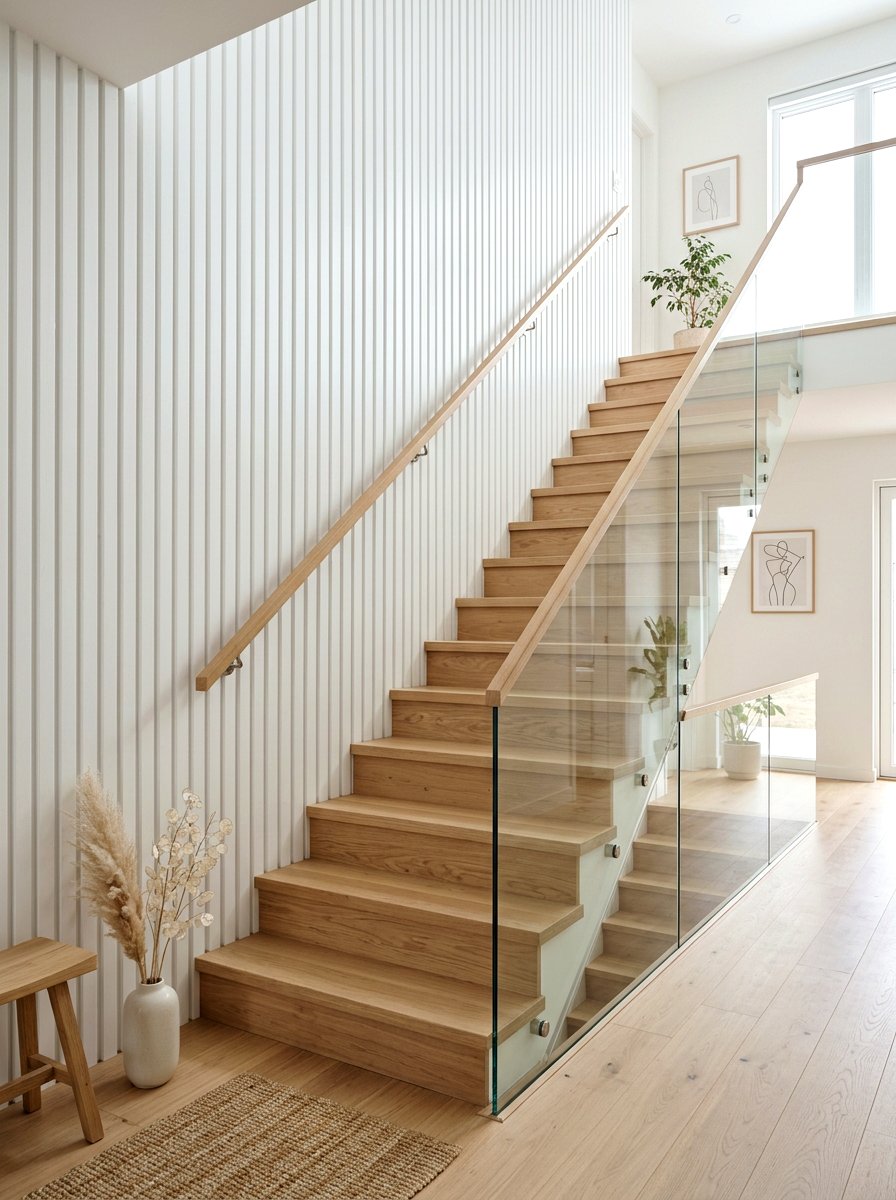
A minimalist white slat wall is the perfect solution for homeowners who want texture without introducing new colors or heavy materials. By using white-painted vertical slats on a white background, you create a subtle 3D effect that relies entirely on shadow and light for interest. This approach keeps the staircase looking incredibly clean, bright, and modern while avoiding the boredom of a flat, empty wall. It is especially effective in smaller homes or narrow hallways where you want to add design depth without making the space feel cluttered. The vertical lines also help to visually elongate the wall, making the ceiling appear much higher.
16. Navy Blue Raised Panels
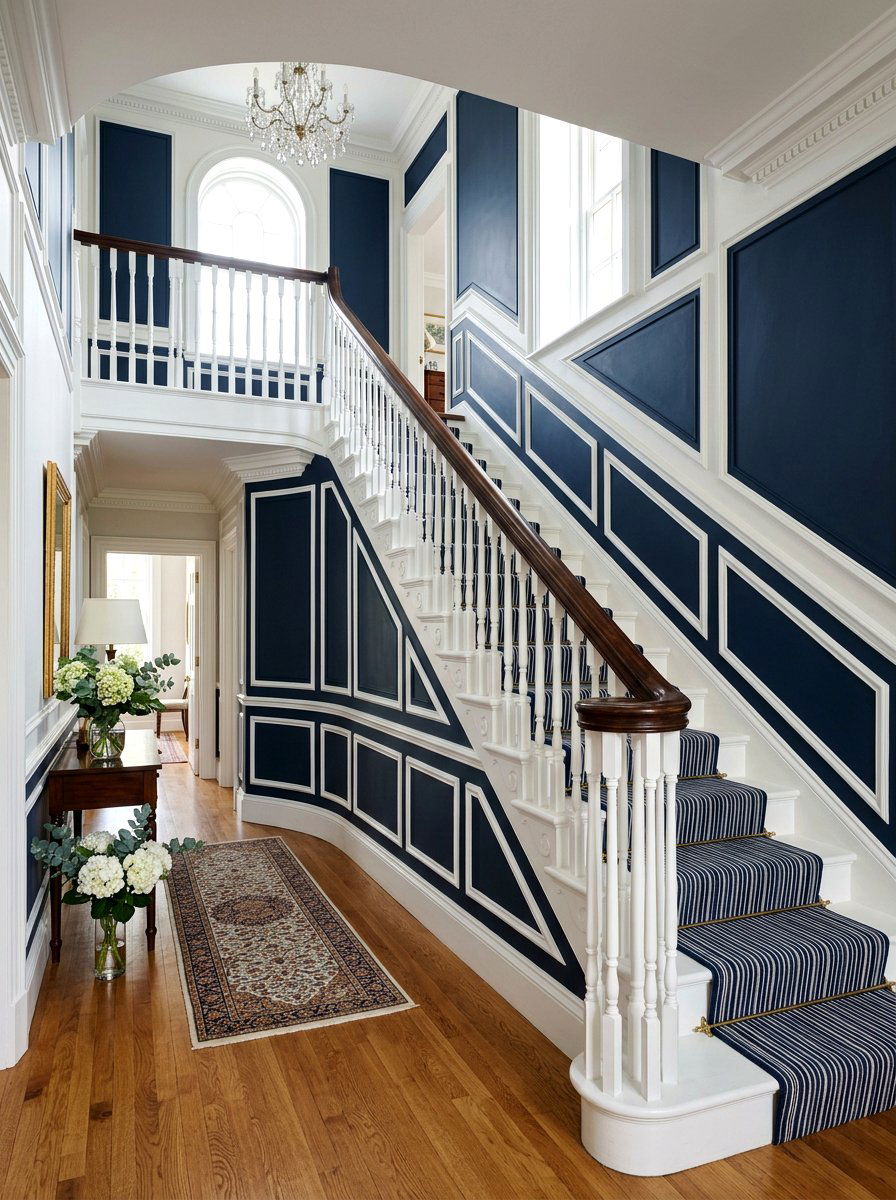
Navy blue raised panels offer a stunning and sophisticated look that combines traditional molding with a modern, bold color palette. The deep blue hue provides a sense of stability and calmness, making it a great choice for the transition areas of a home. Raised panels add significant depth, as the center portion of each panel sits higher than the surrounding frame, creating a layered architectural effect. This style looks particularly striking when paired with crisp white trim or light-colored wooden stairs for a classic high-contrast look. It is an elegant way to introduce color into your home while maintaining a formal and polished overall feel.
17. Industrial Metal Panel
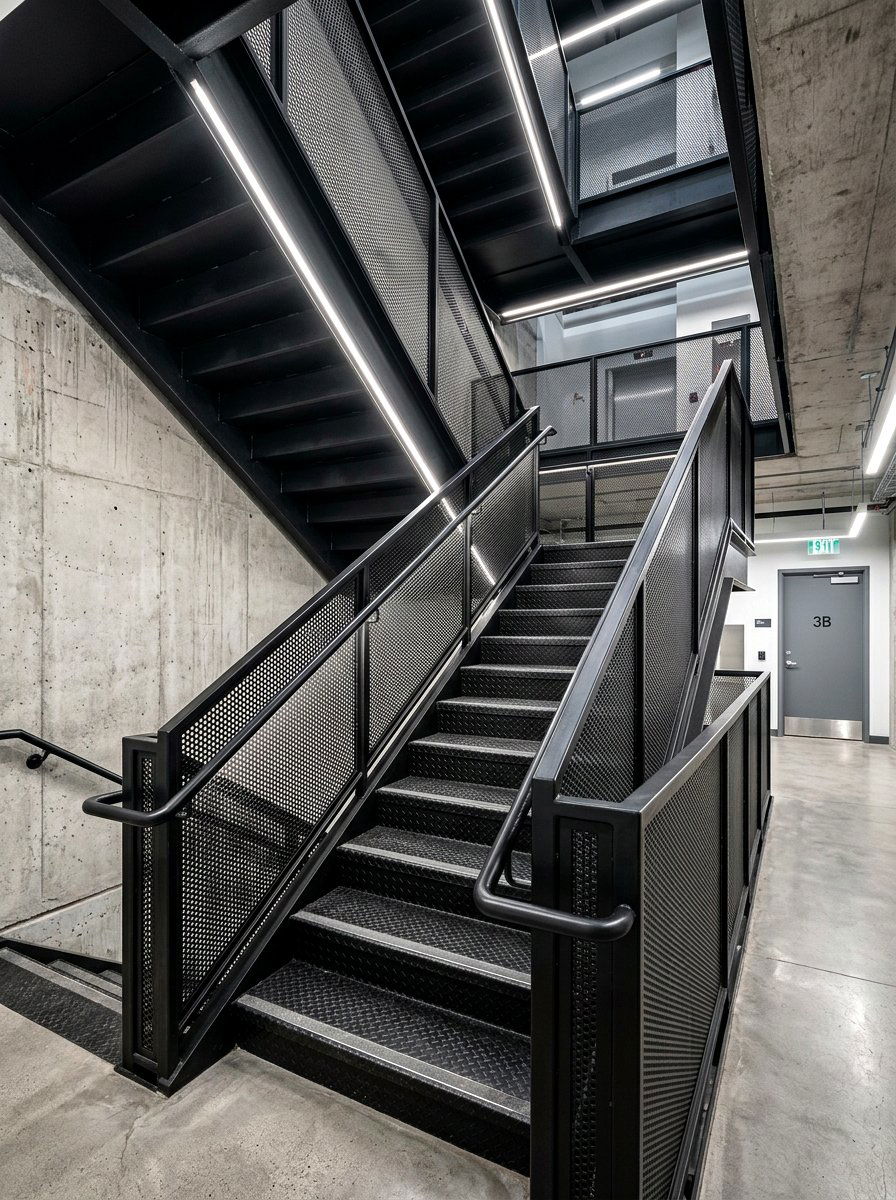
Industrial metal panels can transform a staircase into a bold, edgy architectural feature that feels like it belongs in a high-end urban gallery. Using materials like perforated steel, brushed aluminum, or even rusted Corten steel adds a unique texture that is rarely seen in residential homes. These panels are incredibly durable and easy to clean, making them a practical choice for active households. The reflective or textured surfaces of the metal react interestingly to different lighting conditions, changing the mood of the space throughout the day. It is an ideal option for those who want to embrace a raw, honest aesthetic with a very modern finish.
18. Herringbone Wood Wall
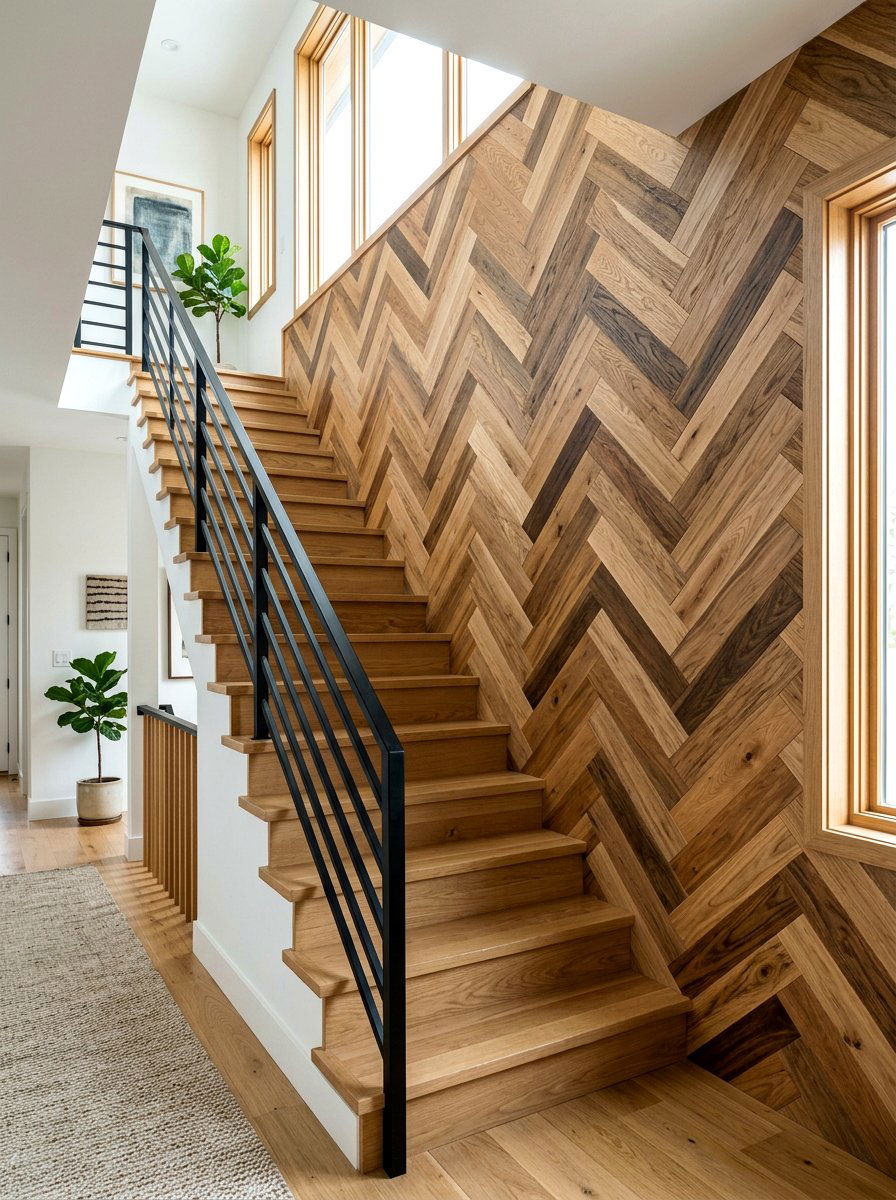
A herringbone wood wall adds a high level of craftsmanship and visual energy to the staircase area. This pattern involves laying wooden planks in a diagonal, zigzagging fashion that creates a sense of movement and direction. Using varied wood tones within the herringbone pattern can further emphasize the design and add a rustic or modern touch depending on the finish. This type of paneling acts as a massive piece of art, drawing the eye along the path of the stairs. It is a sophisticated way to use traditional wood materials in a creative way that feels fresh and exciting for anyone walking through the house.
19. Natural Bamboo Slat
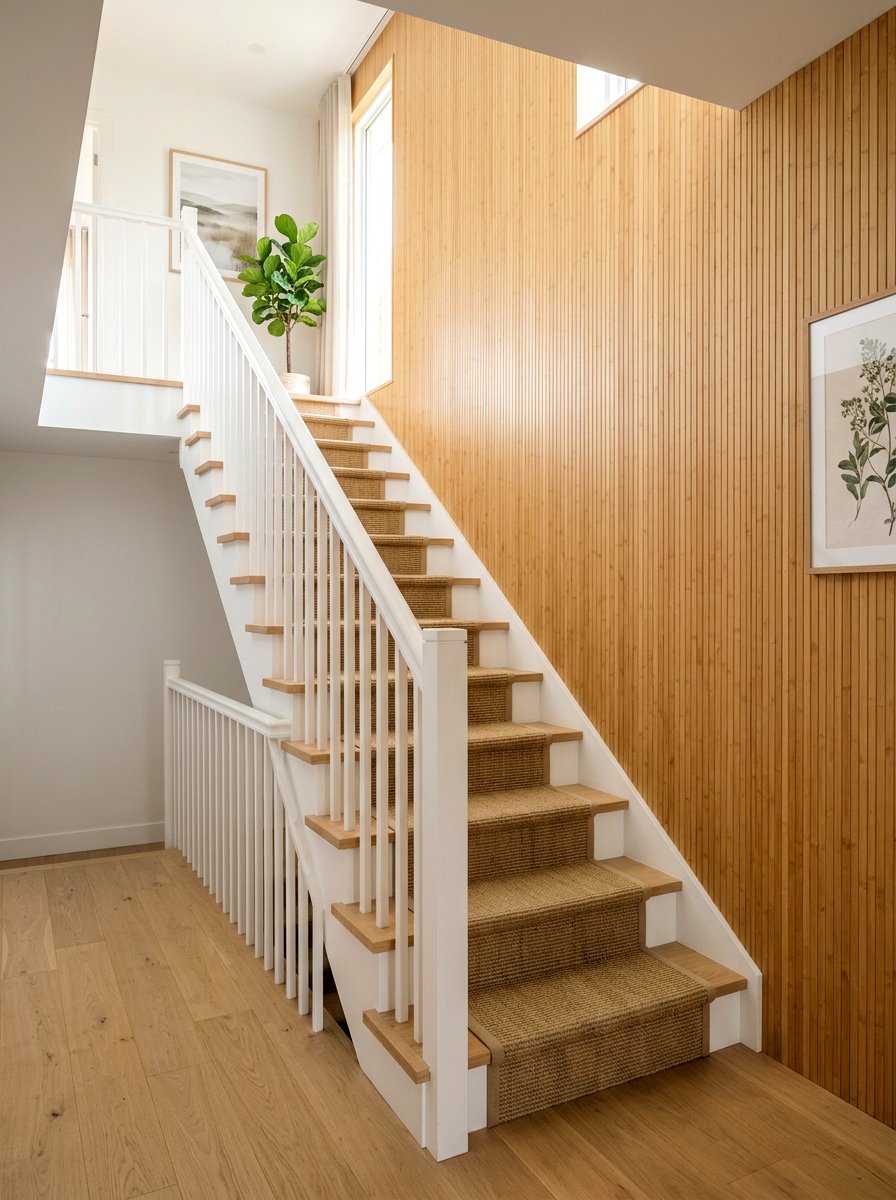
Natural bamboo slats are an eco-friendly and stylish wall paneling option that brings a light, airy feel to your home. Bamboo is a fast-growing, sustainable material that offers a unique vertical grain and a soft, honey-colored tone. These slats can be used to create a minimalist, Zen-like atmosphere that promotes a sense of tranquility as you move between floors. Because bamboo is naturally resistant to moisture and very durable, it is a great choice for long-lasting staircase wall treatments. The fine texture of the thin slats adds a delicate visual interest that complements modern organic or tropical-inspired interior design themes perfectly.
20. Brick Effect Wall Panel
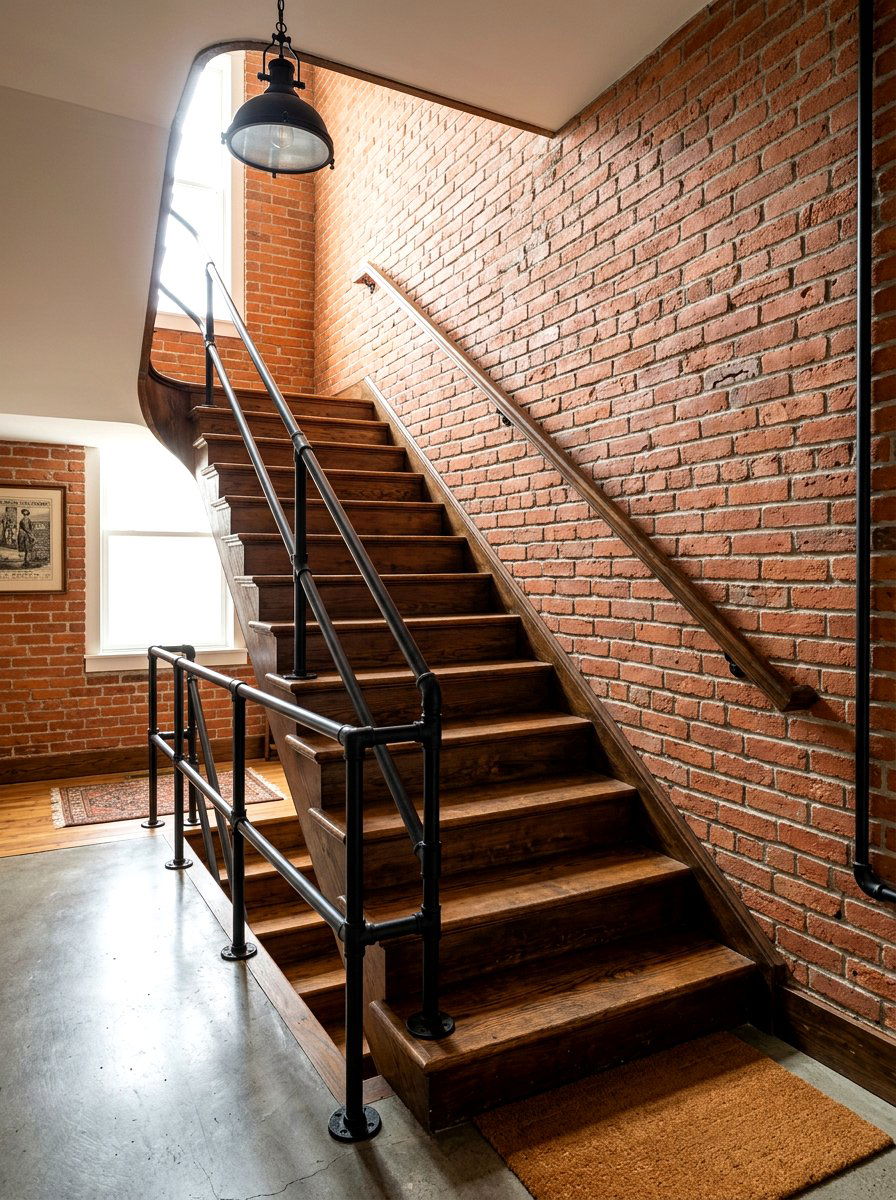
Brick effect wall panels allow you to achieve the classic, rugged look of an exposed brick wall without the cost or weight of real masonry. These panels are often made from high-quality resins or composites that mimic the texture, color, and even the mortar lines of authentic brickwork. Installing these along a staircase can give your home an instant industrial loft vibe or a charming historical feel. They provide a warm, earthy backdrop that looks fantastic with both wooden and metal staircase elements. It is an easy way to add character and a sense of permanence to a newer home that might lack original architectural details.
21. Mirrored Wall Panel
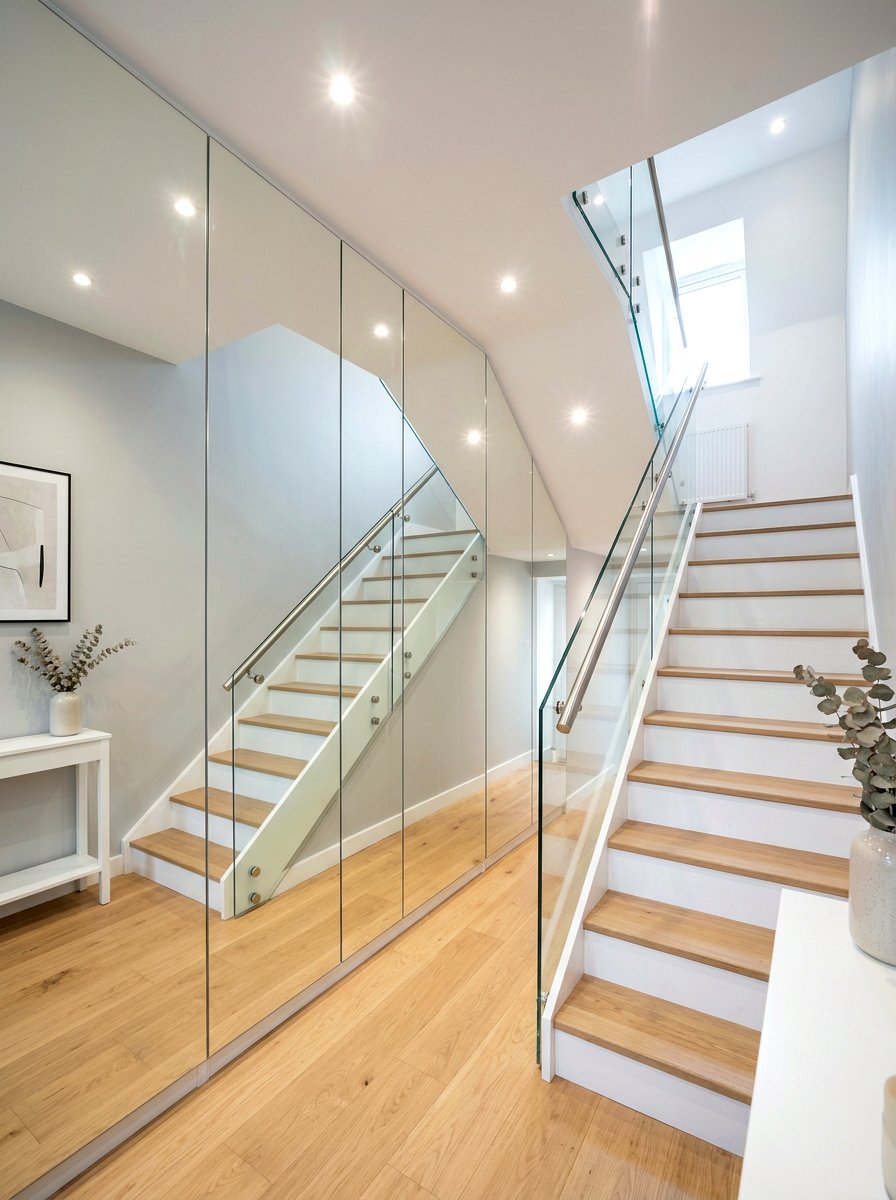
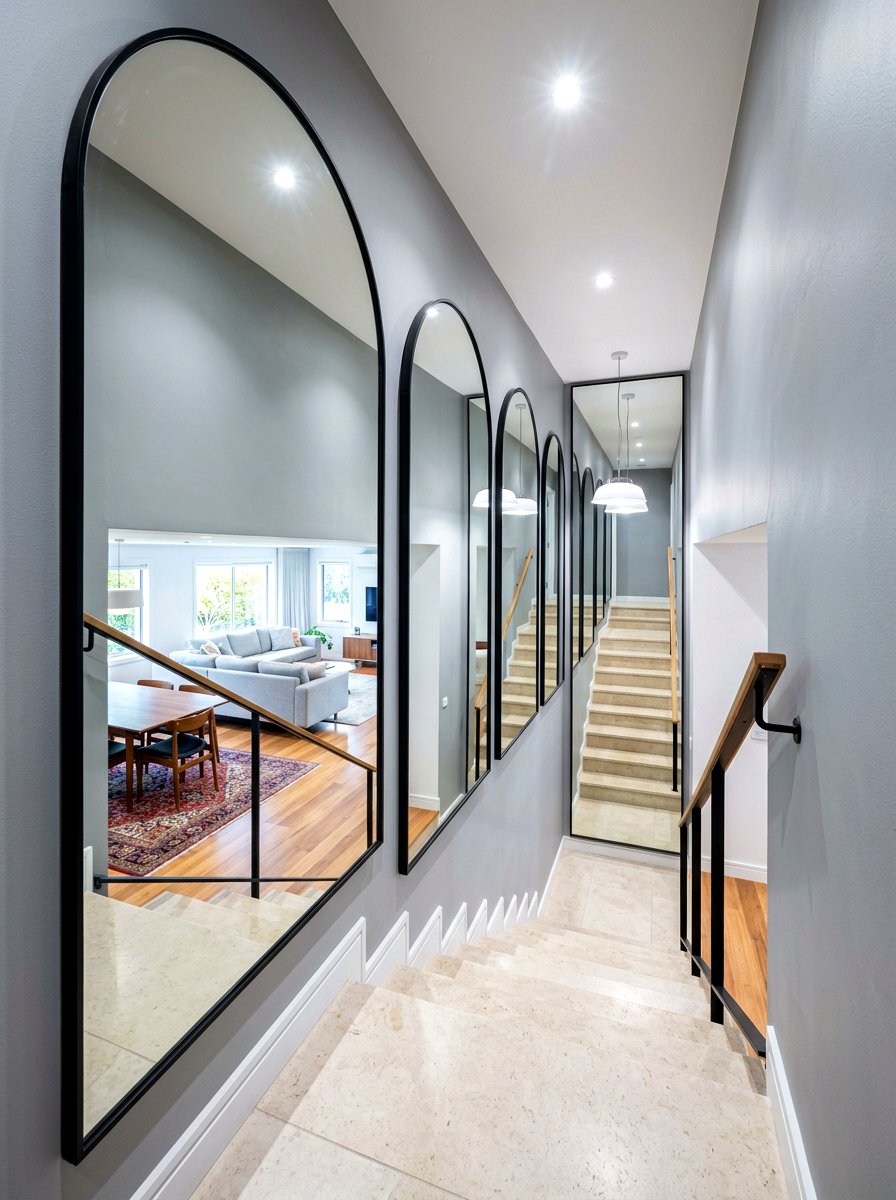
Mirrored wall panels are a brilliant design trick for making a narrow or dark staircase feel twice as large and much brighter. By reflecting the light from nearby windows or fixtures, these panels can illuminate the entire hallway and create a sense of infinite space. You can use large, seamless mirrors for a very modern look or antique-style mirrored tiles to add a touch of vintage glamour. Mirrors also allow you to see the architectural details of the staircase from multiple angles, adding a new layer of visual interest to the space. This is a practical and stunning choice for homes with limited natural light sources.
22. Scalloped Wall Detail
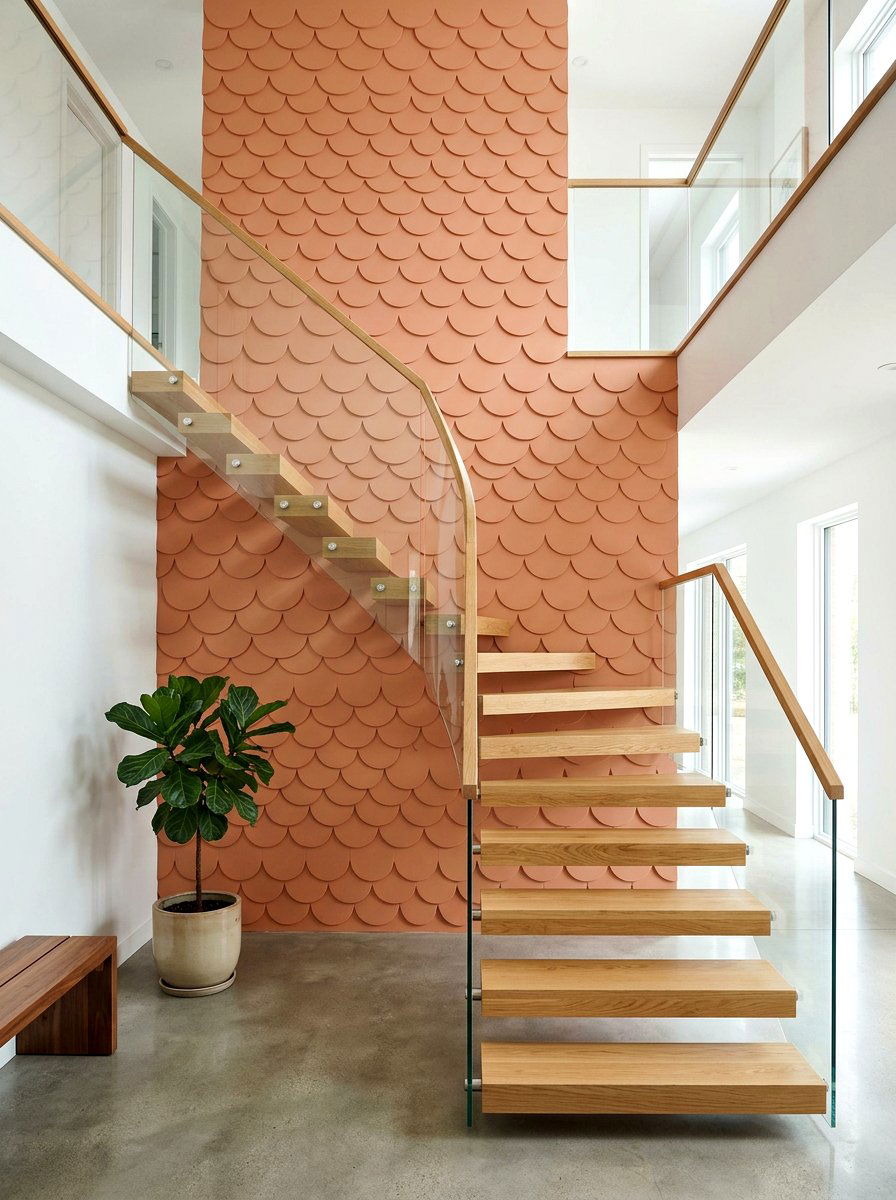
Scalloped wall details are a trendy and playful way to add soft, curved lines to an area that is usually dominated by sharp angles and straight edges. These panels feature a series of rounded, shell-like shapes that create a rhythmic and organic pattern on the staircase wall. When painted in a soft pastel or a warm neutral, scalloped panels bring a sense of whimsy and elegance to the home. This design is particularly popular in contemporary interiors where homeowners want to introduce more feminine or decorative elements. The overlapping curves create interesting shadows that give the wall a beautiful, 3D texture and a unique personality.
23. Stone Veneer Wall
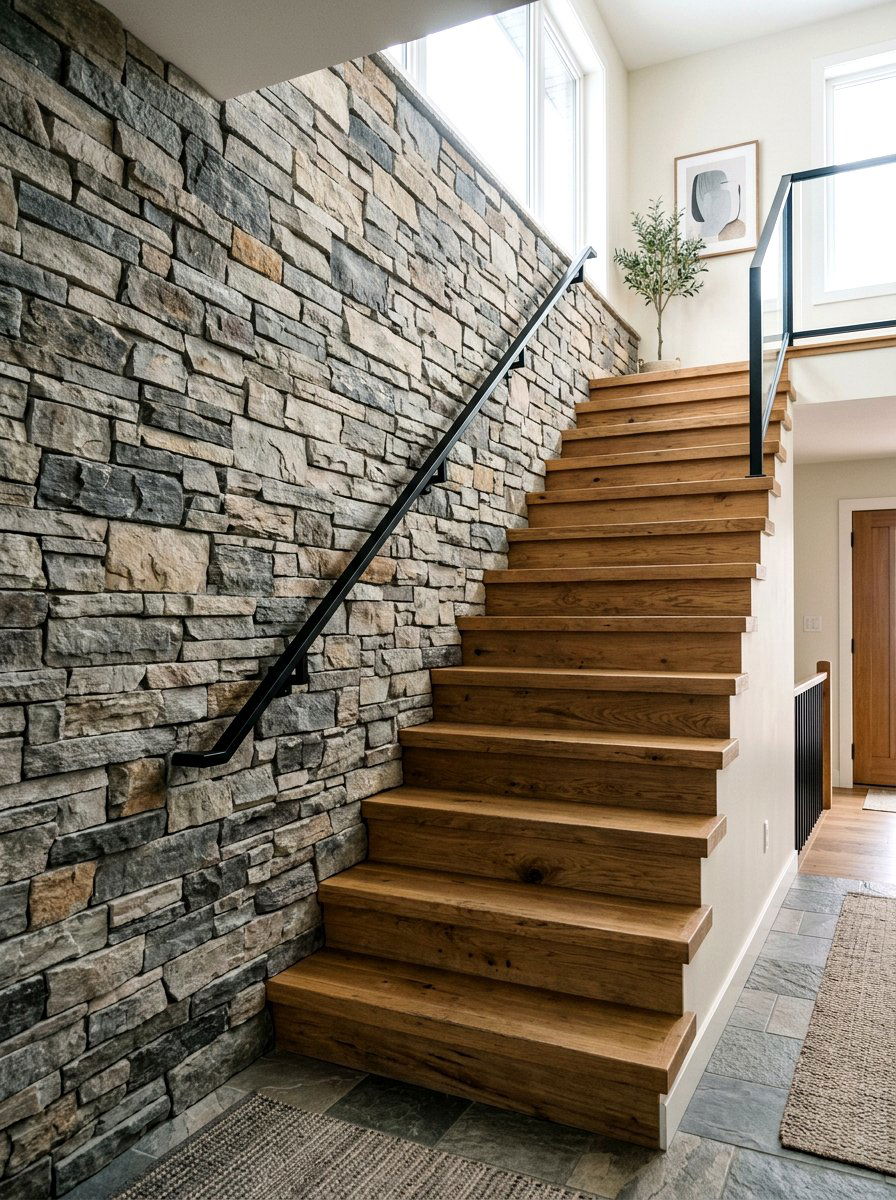
A stone veneer wall brings the natural beauty and rugged texture of the outdoors into your home’s staircase design. These thin layers of real stone or high-quality cast stone provide a massive visual impact while being light enough to install on standard interior walls. Whether you choose stacked slate, rugged fieldstone, or smooth limestone, the result is a wall that feels solid and timeless. Stone adds an earthy element that grounds the space and pairs beautifully with natural wood railings or minimalist glass balustrades. It is a fantastic way to create a feature wall that feels luxurious, permanent, and deeply connected to nature’s raw materials.
24. Recessed Lighting Panel
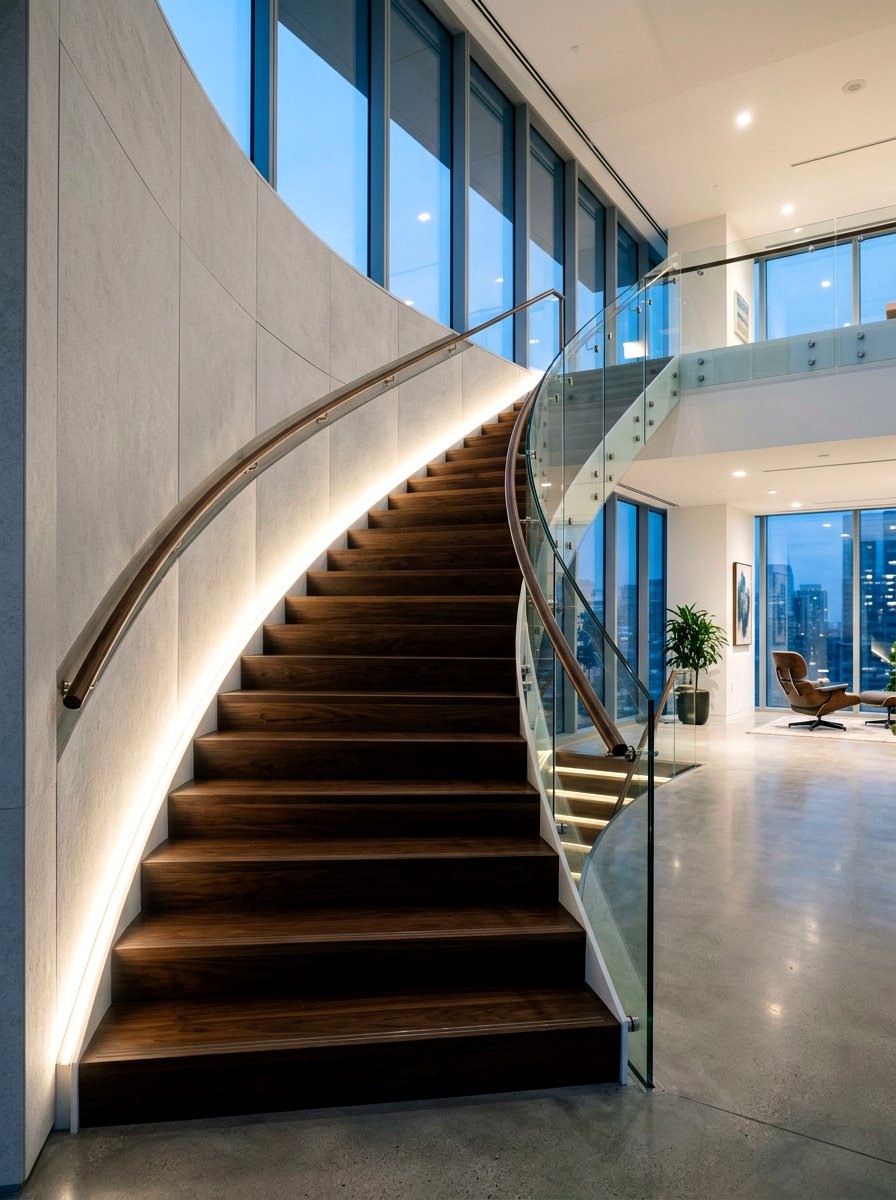
Recessed lighting panels are a high-tech and functional way to enhance your staircase wall while providing essential safety lighting. These panels are designed with built-in channels for LED strips, allowing a soft glow to emanate from behind or within the wall treatment itself. This creates a floating effect that looks incredibly modern and adds a layer of sophistication to the entire hallway. During the evening, these panels provide a clear path without the need for bright overhead lights, creating a calm and moody ambiance. It is a perfect fusion of architectural design and practical utility for any contemporary home looking for a sleek, futuristic upgrade.
25. Arched Wall Molding
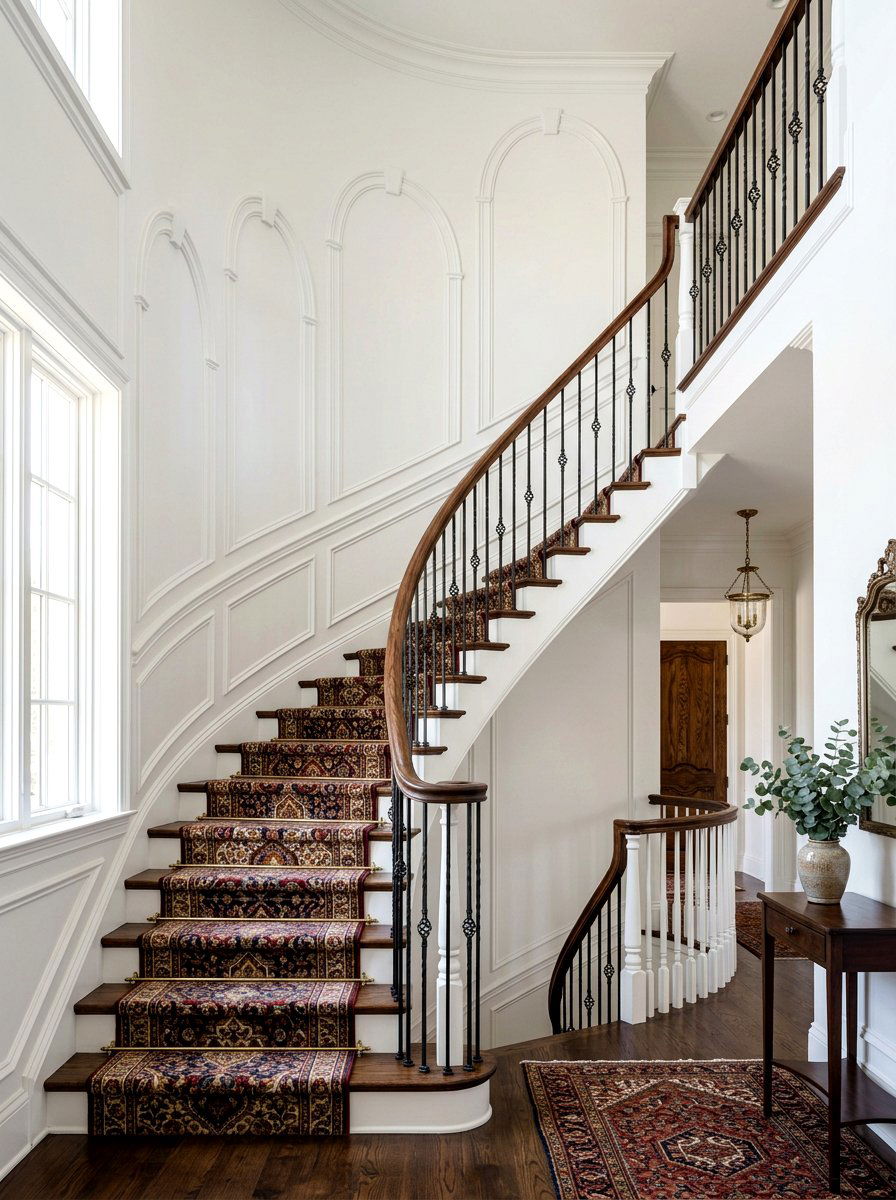
Arched wall molding is a sophisticated way to introduce classical architectural shapes into a modern staircase environment. By adding curved trim pieces to create arched frames on the wall, you can soften the look of a steep staircase and add a sense of height. This style takes inspiration from Mediterranean and traditional European design, giving your home a more curated and established feel. You can paint the inside of the arches a different color to make them pop or keep them monochromatic for a subtle, textured look. It is an elegant way to break up long, flat walls and add a touch of timeless architectural grace.
26. Two Tone Wall Panel
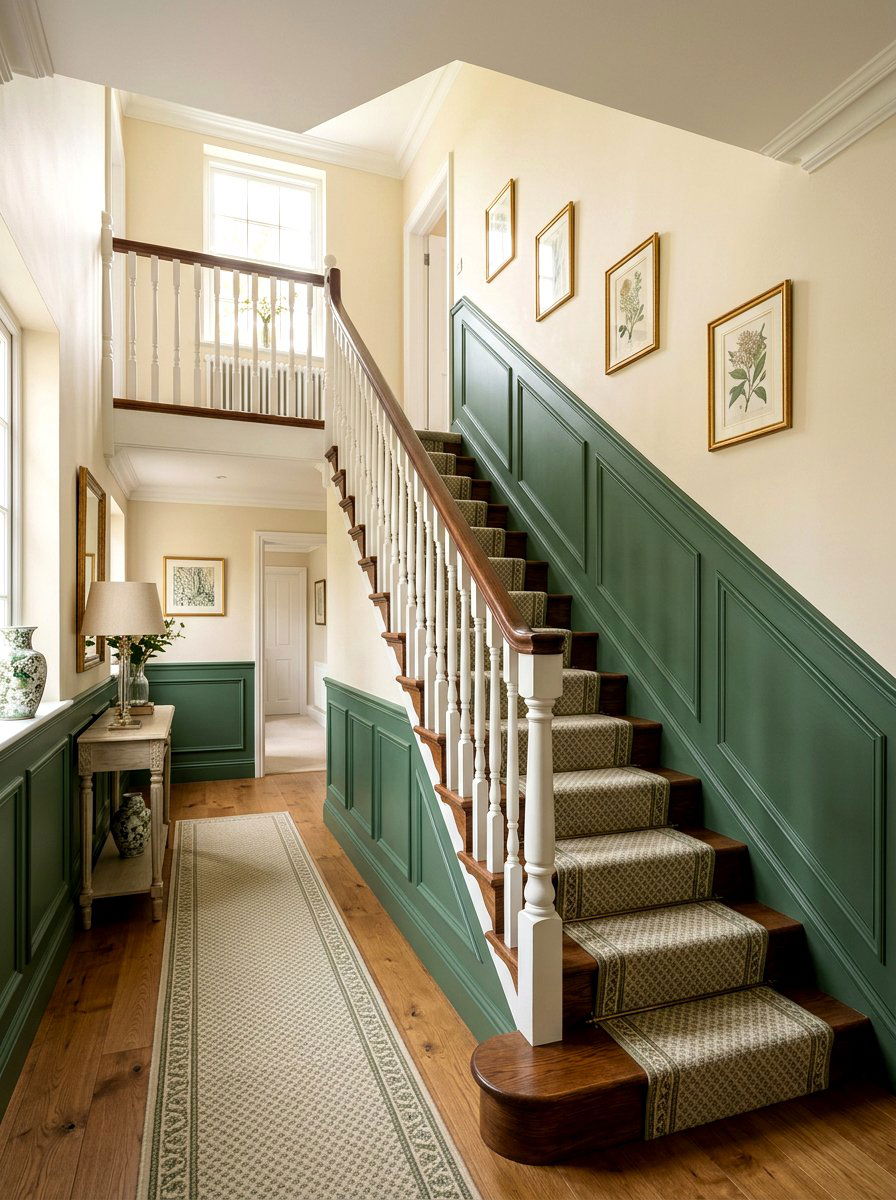
Two tone wall panels are a great way to add visual variety and define different sections of your staircase wall. This design usually involves painting the lower paneling one color, such as a deep navy or forest green, and the upper wall a lighter, contrasting shade like cream or soft gray. This approach helps to ground the space and can prevent a tall stairwell from feeling too cavernous or empty. The horizontal line created by the different colors also adds a sense of order and can be used to hide scuffs on the lower, more durable surface. It is a simple yet very effective way to customize your home.
27. Acoustic Felt Panel
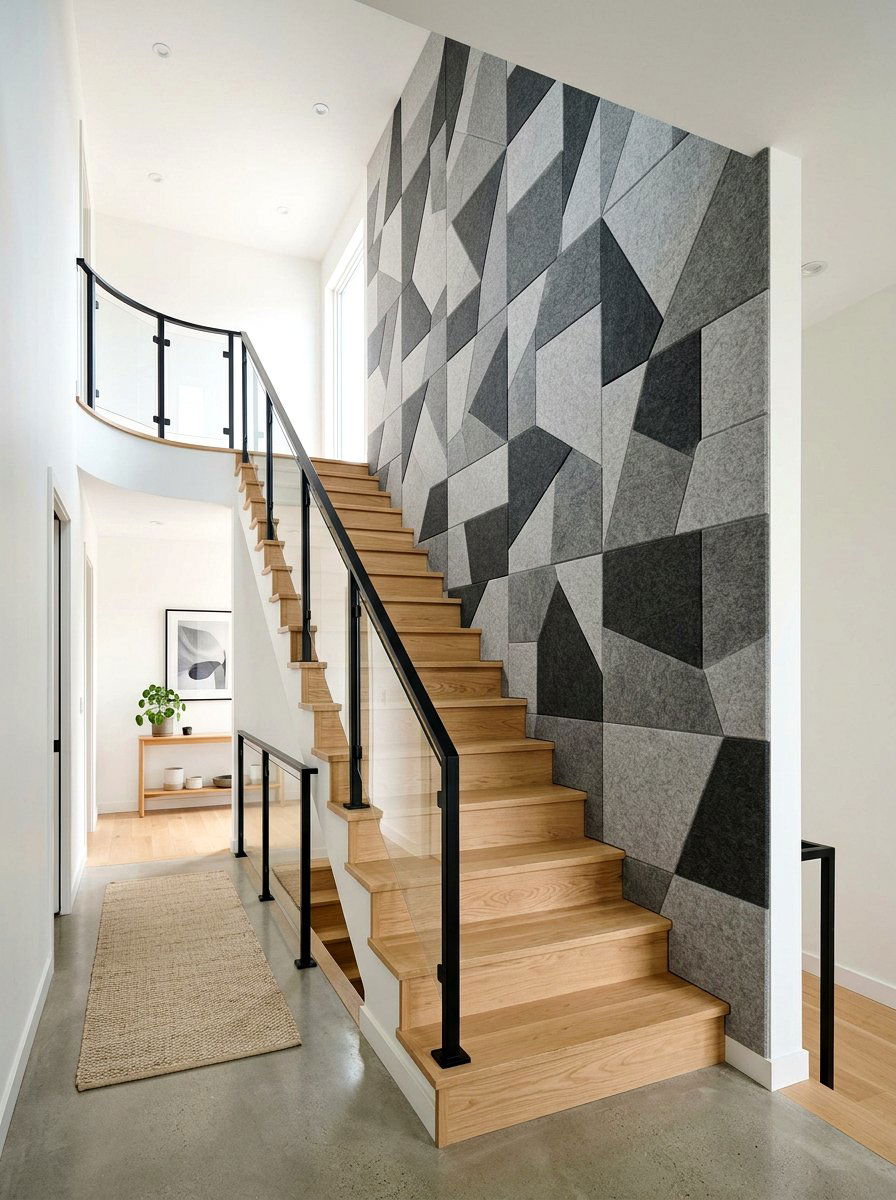
Acoustic felt panels are becoming increasingly popular for staircase walls because they combine modern aesthetics with excellent sound-dampening properties. Stairwells are notorious for being noisy and echoing, but these soft, fabric-based panels can absorb sound waves and make your home feel much quieter. They come in a wide variety of colors and geometric shapes, allowing you to create a custom patterned wall that looks like modern art. The felt texture adds a unique warmth and softness to the space that contrasts beautifully with hard wooden or stone steps. It is a practical and stylish solution for open-plan homes where noise control is a priority.
28. Chevron Pattern Wood
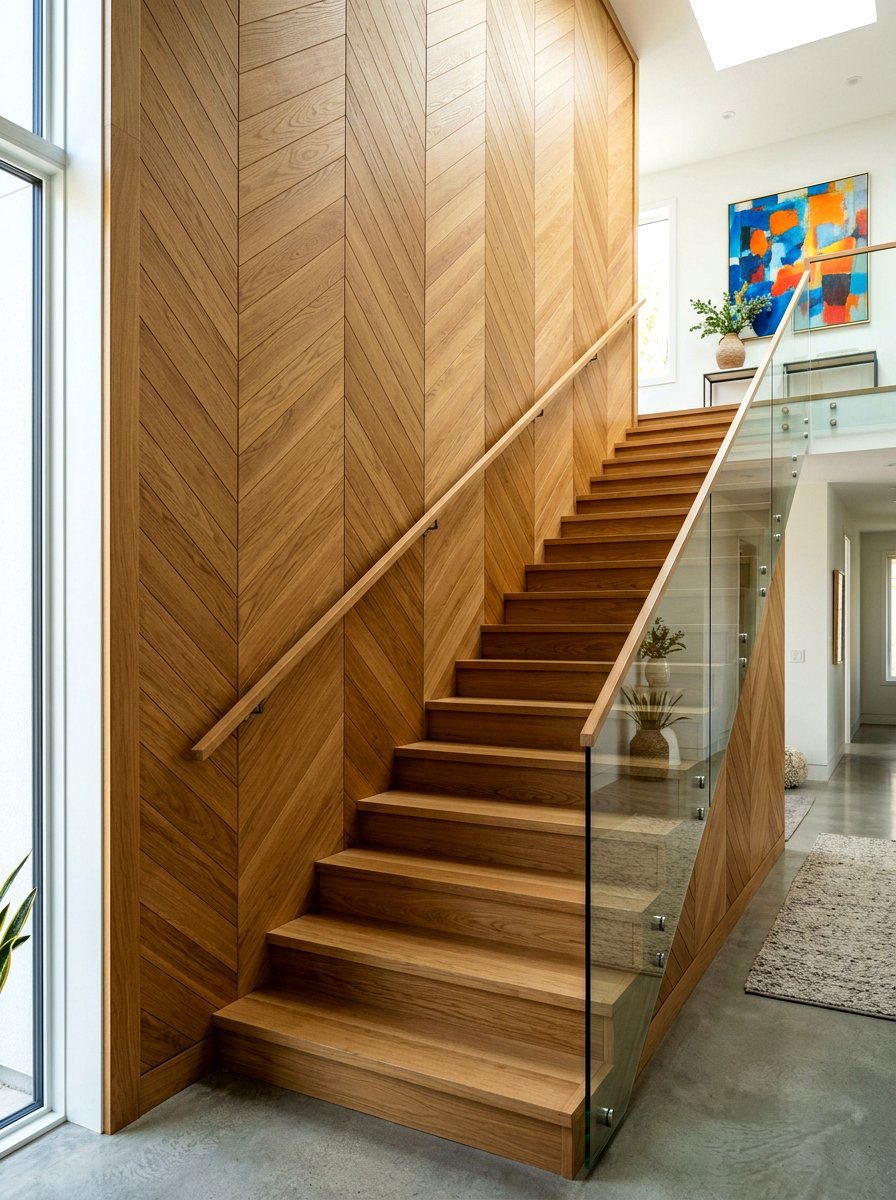
Chevron pattern wood panels offer a high-energy and sophisticated look that immediately draws attention to the staircase. Unlike herringbone, the planks in a chevron pattern are cut at an angle to meet perfectly in a continuous V-shape, creating a very clean and symmetrical design. This pattern creates a strong sense of direction, which naturally guides people up or down the stairs. Using a light-colored wood can make the pattern feel modern and airy, while a darker stain can give it a more formal and traditional look. It is a premium wall treatment that showcases fine craftsmanship and a keen eye for high-end interior design details.
29. Plywood Accent Wall
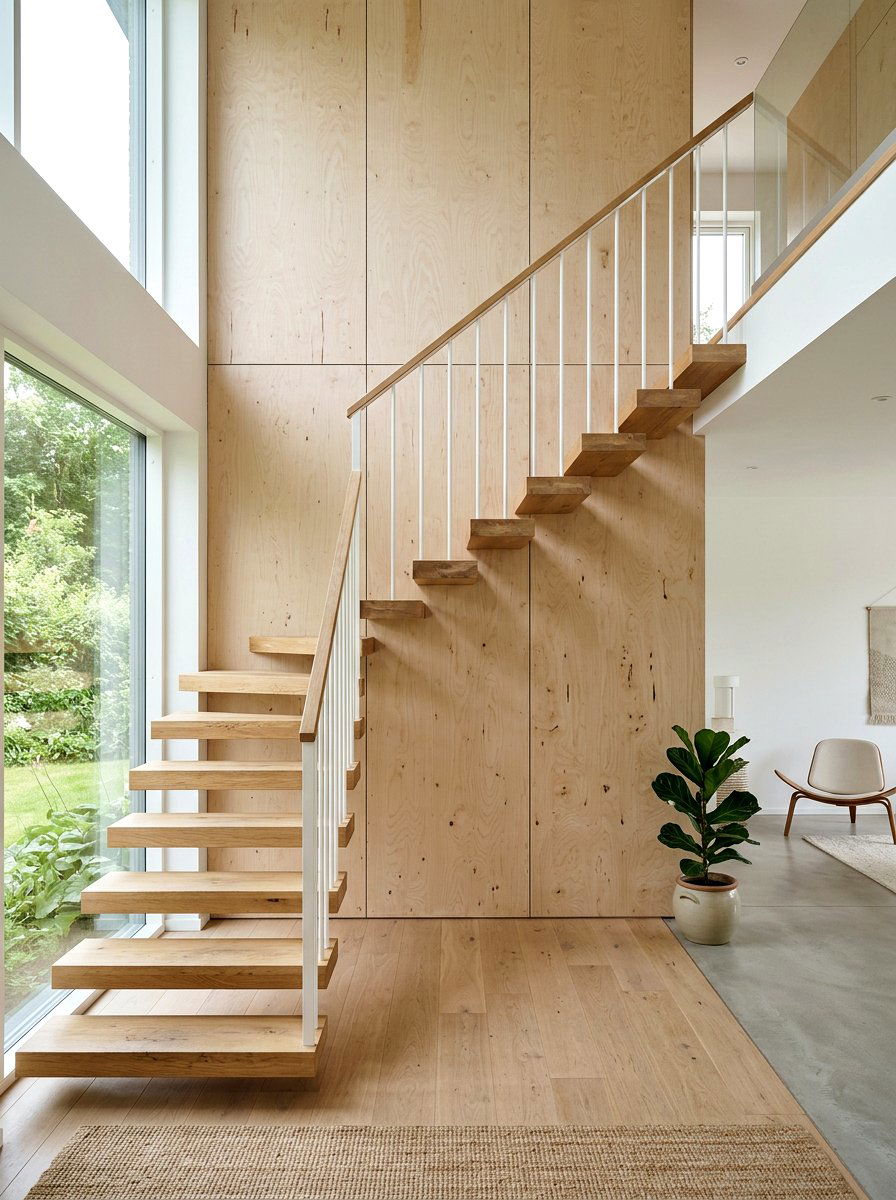
A plywood accent wall is a budget-friendly and surprisingly chic option for a modern, minimalist staircase. When high-quality birch or maple plywood is used, the subtle grain and pale color create a warm and bright atmosphere that feels very contemporary. The visible edges of the plywood can be left exposed to embrace the material’s raw, industrial nature, which is a hallmark of many modern architectural styles. This type of paneling is incredibly versatile and can be installed in large sheets for a seamless look or cut into smaller tiles for a more patterned effect. It is a great way to achieve a high-end designer look.
30. Plaster Effect Panel
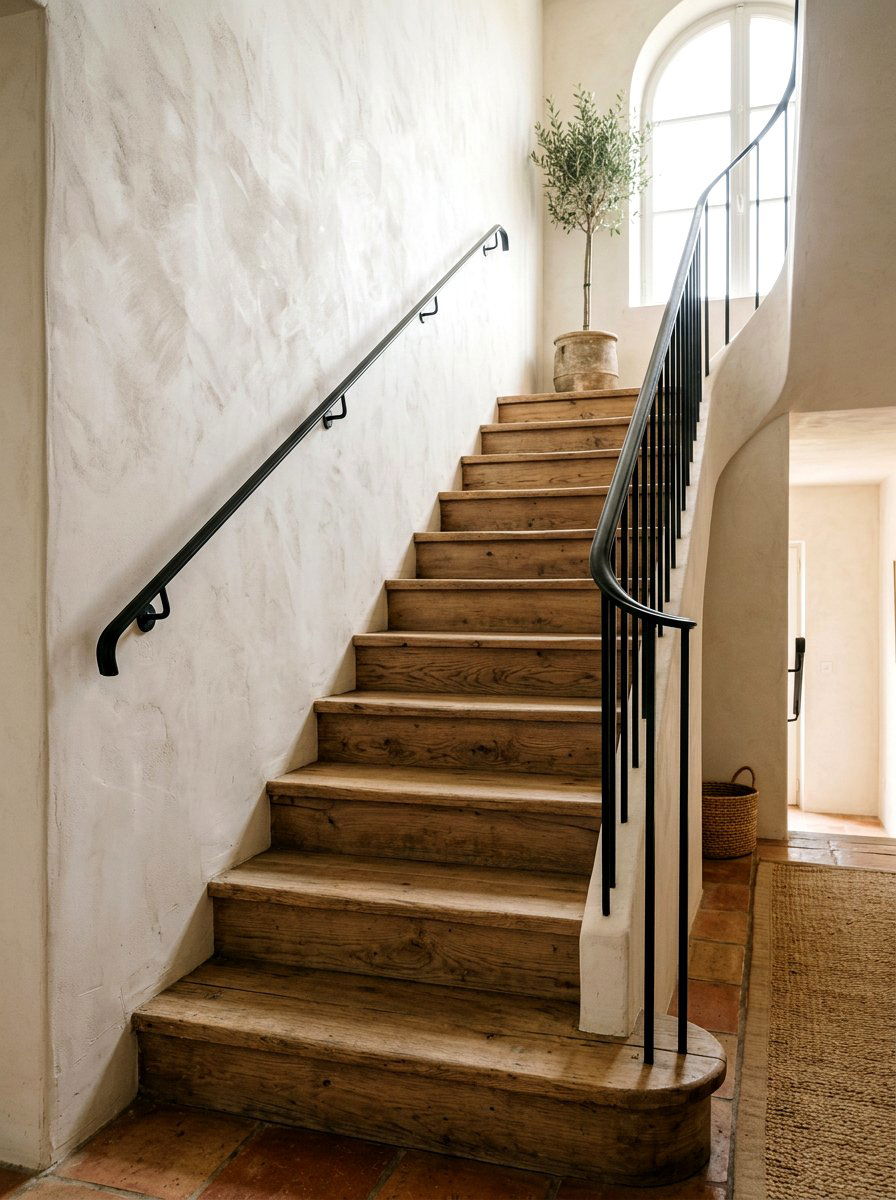
Plaster effect panels provide the look of hand-applied Mediterranean plaster without the time-consuming and messy application process. These panels feature subtle swirls, textures, and color variations that give the wall a sense of history and artisan craft. Installing these along a staircase adds a soft, organic quality that makes the space feel more lived-in and comfortable. They work exceptionally well in homes with a "modern farmhouse" or "organic modern" aesthetic, where natural textures are highly valued. The non-reflective surface of the plaster effect panels creates a calm, diffused lighting environment that is very pleasant to move through every day and night.
Conclusion:
Selecting the perfect wall panel for your staircase is an investment in both the style and functionality of your home. Whether you prefer the timeless elegance of traditional wainscoting or the bold, modern look of vertical wood slats, each of these thirty ideas offers a unique way to personalize your space. A well-designed staircase wall not only protects your interior from daily wear but also acts as a stunning focal point that connects different levels of your living environment. By considering your home's overall aesthetic and lighting, you can choose a paneling style that brings warmth, texture, and lasting beauty to your daily transitions.

Related posts: