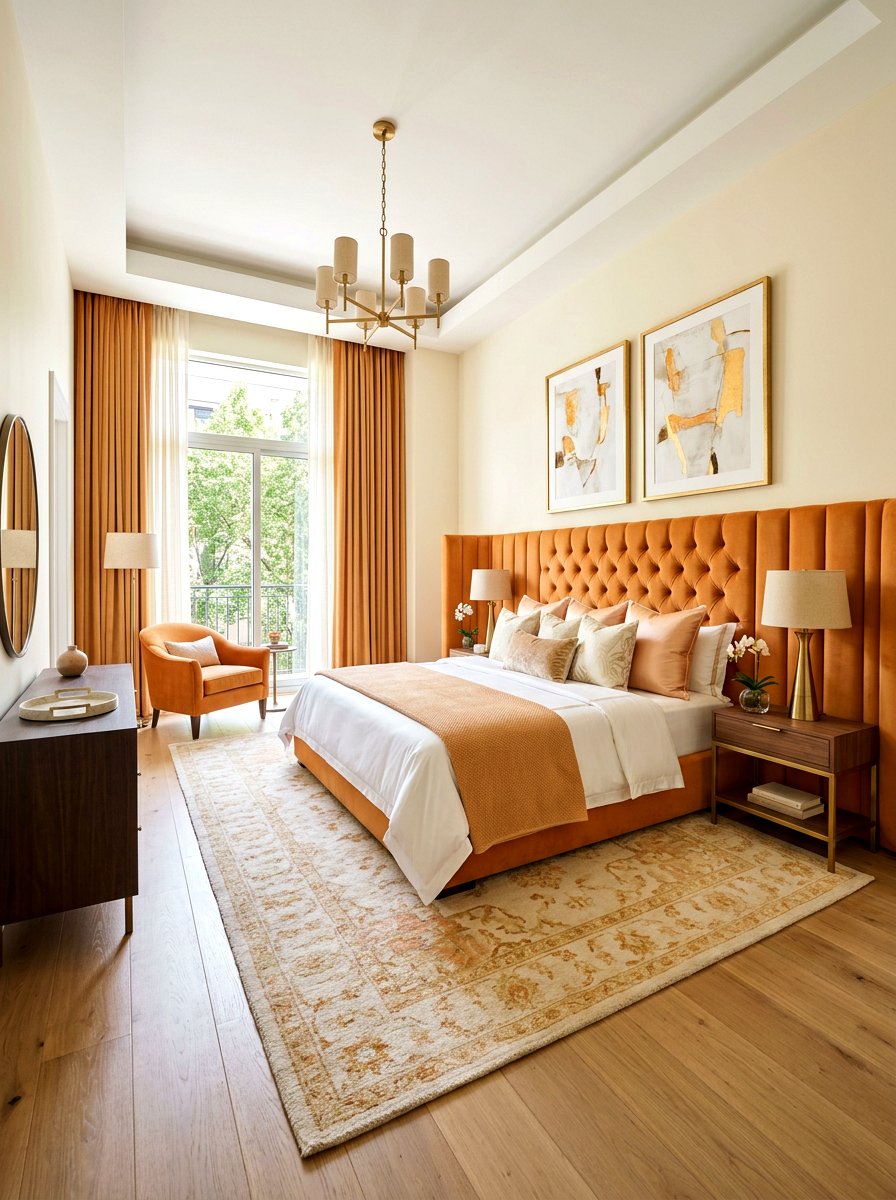
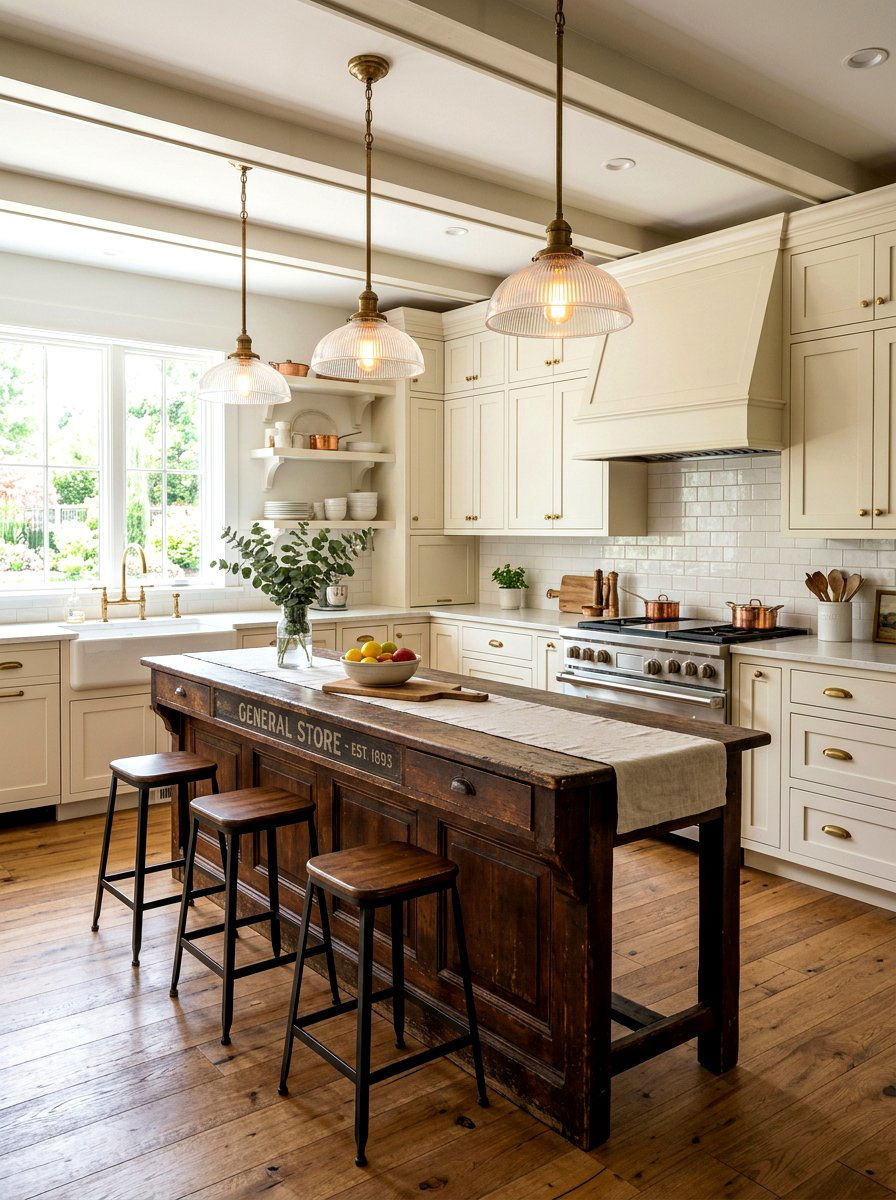
Apricot is becoming the breakout star of modern home design because it offers a perfect balance between vibrant energy and soothing warmth. Unlike the harsh oranges of the past, this soft, peachy hue acts as a sophisticated neutral that breathes life into the heart of the home. It reflects natural light beautifully, making even the darkest corners feel sunny and inviting throughout the day. Whether you are planning a full renovation or just looking for a refreshing accent, apricot provides a versatile palette that pairs effortlessly with natural woods, cool stones, and various metallic finishes. This color choice creates a space where family and friends want to linger long after the meal is over.
1. Apricot kitchen cabinets
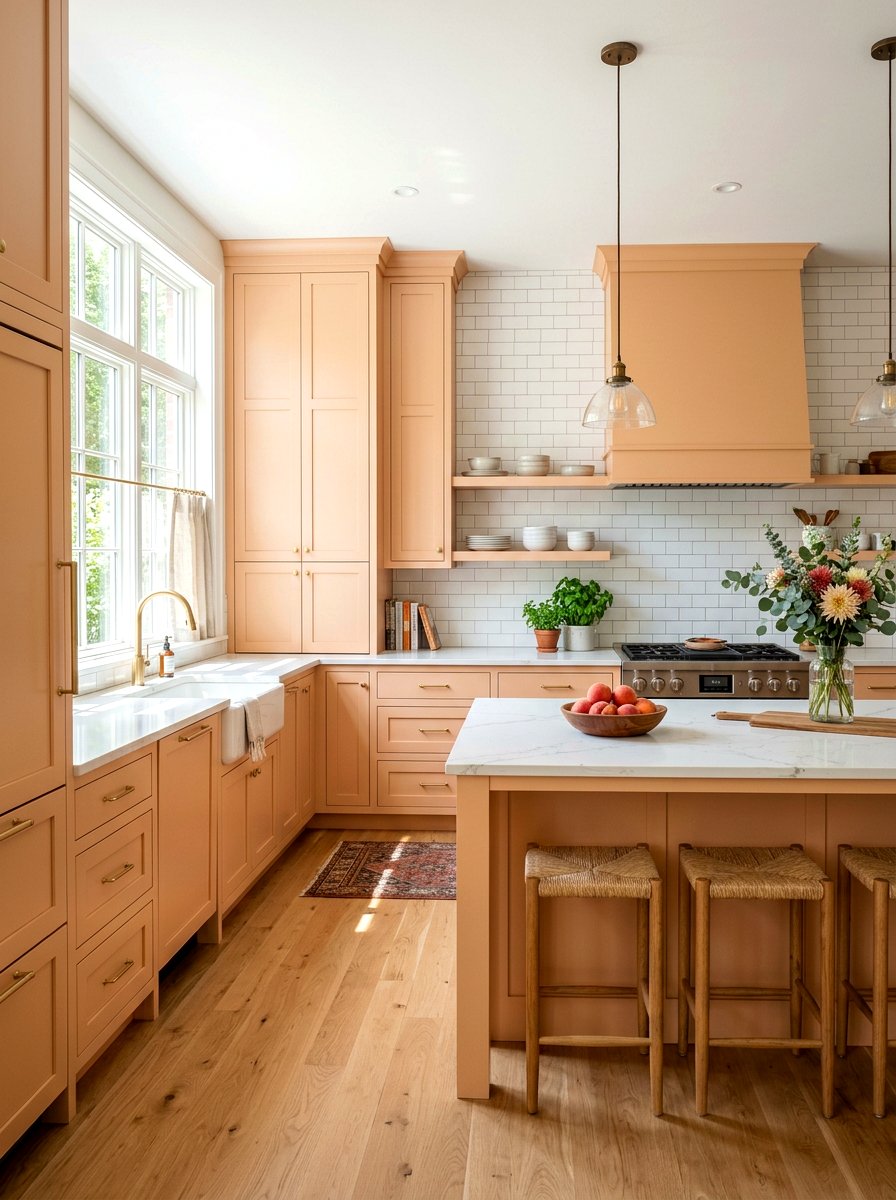
Choosing apricot for your primary cabinetry is a bold way to move away from the traditional white or grey kitchen without losing a sense of timelessness. This warm, muted orange shade works exceptionally well on Shaker-style doors, where the subtle shadows of the recessed panels add depth to the color. When applied across a full wall of cabinets, apricot creates a cohesive and glowing backdrop that feels both modern and incredibly cozy. To keep the look balanced, consider pairing these cabinets with light-colored countertops like white quartz or soft marble. The result is a kitchen that feels permanently bathed in the soft, golden light of a summer sunset.
2. Apricot and white kitchen
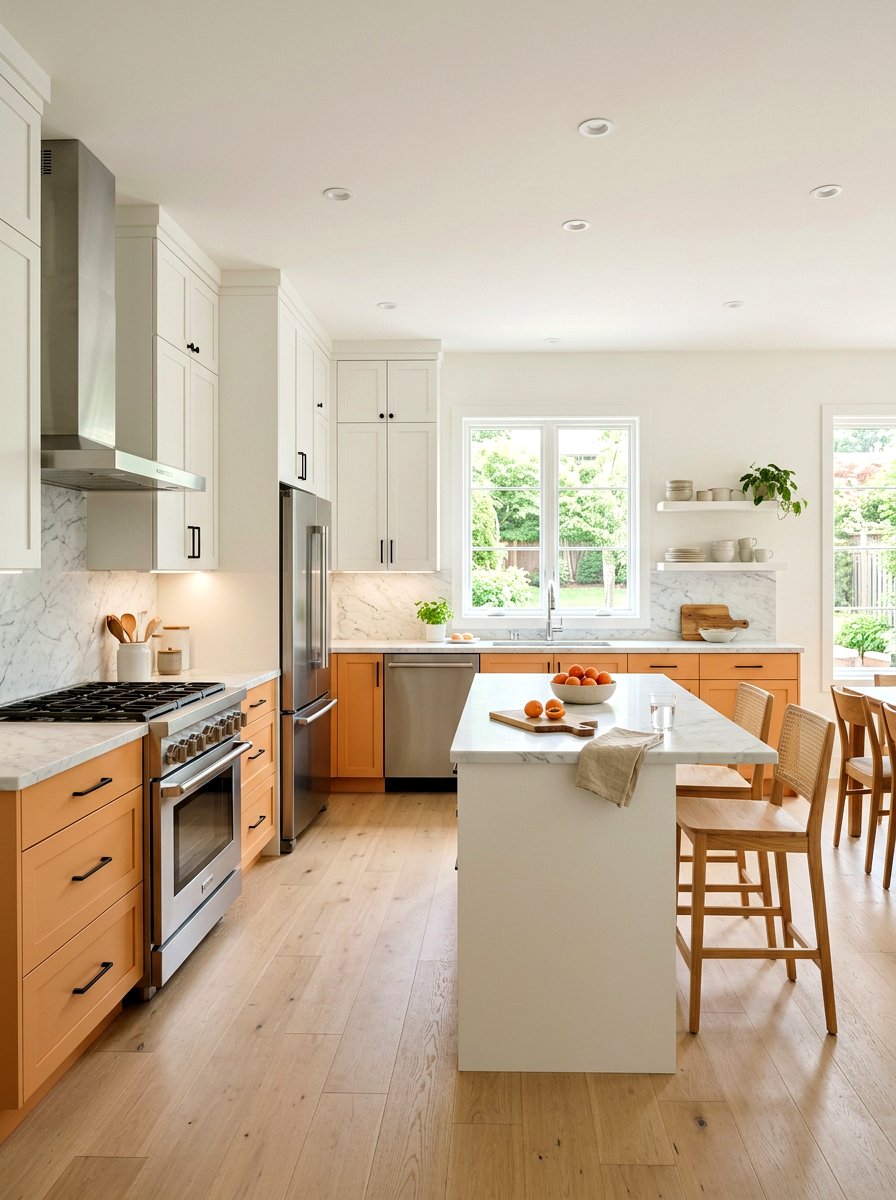
The combination of apricot and white creates a crisp, airy environment that feels remarkably clean and energized. In this design scheme, you might use apricot for the base cabinets while keeping the upper walls and shelving a bright, clinical white. This high-contrast approach prevents the warm tones from feeling too heavy or overwhelming in a smaller space. White subway tiles or a simple slab backsplash help bounce light around the room, highlighting the juicy undertones of the apricot paint. This look is perfect for homeowners who want a cheerful morning atmosphere that feels organized, spacious, and deeply connected to a contemporary, minimalist aesthetic.
3. Apricot backsplash tiles
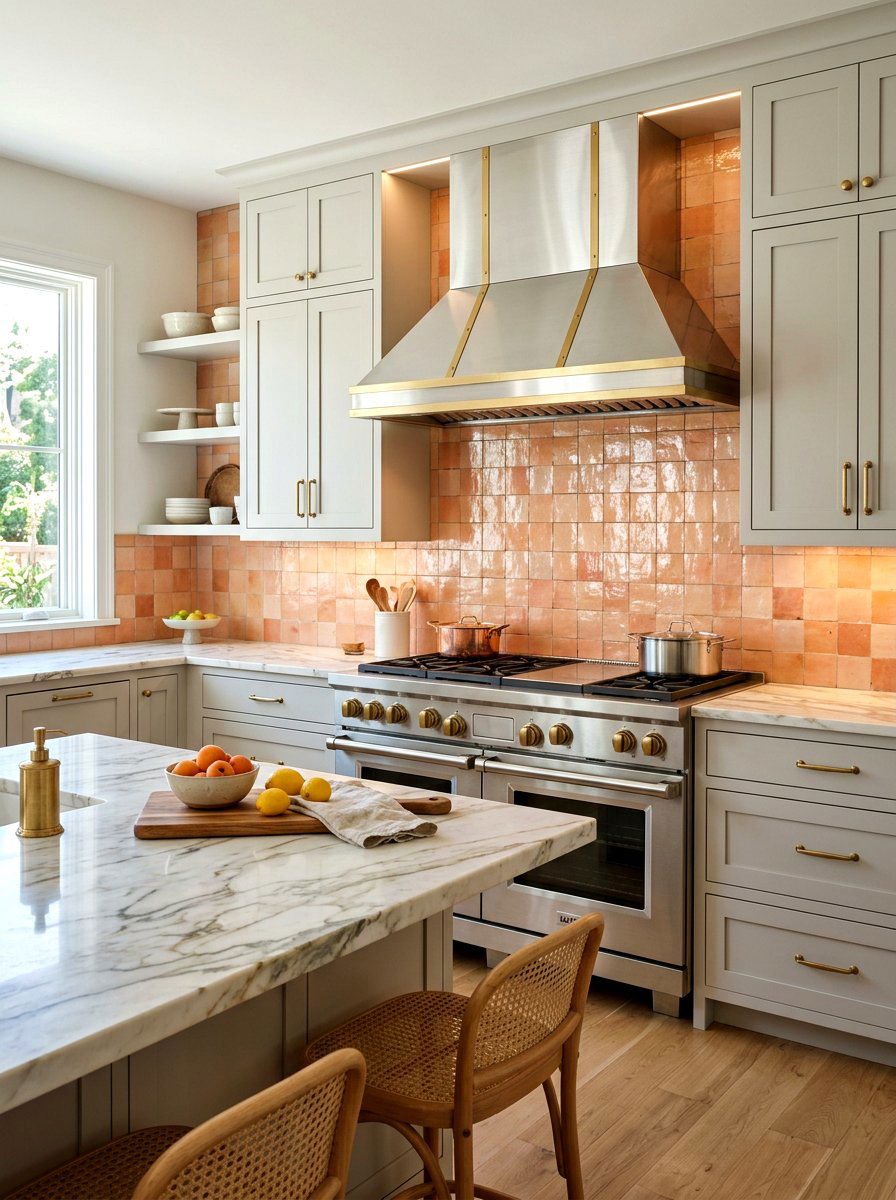
If you are hesitant to commit to colorful cabinetry, an apricot backsplash is the perfect way to introduce this trending hue. Zellige tiles in various shades of apricot offer a handcrafted, shimmering quality that catches the light from different angles, creating a dynamic focal point behind the stove or sink. These tiles often feature natural variations in tone, ranging from pale peach to deeper amber, which adds an organic texture to the room. Pairing these warm tiles with neutral cabinets allows the backsplash to stand out as a piece of art. It is a sophisticated way to add personality and a splash of color to a functional area.
4. Modern apricot kitchen
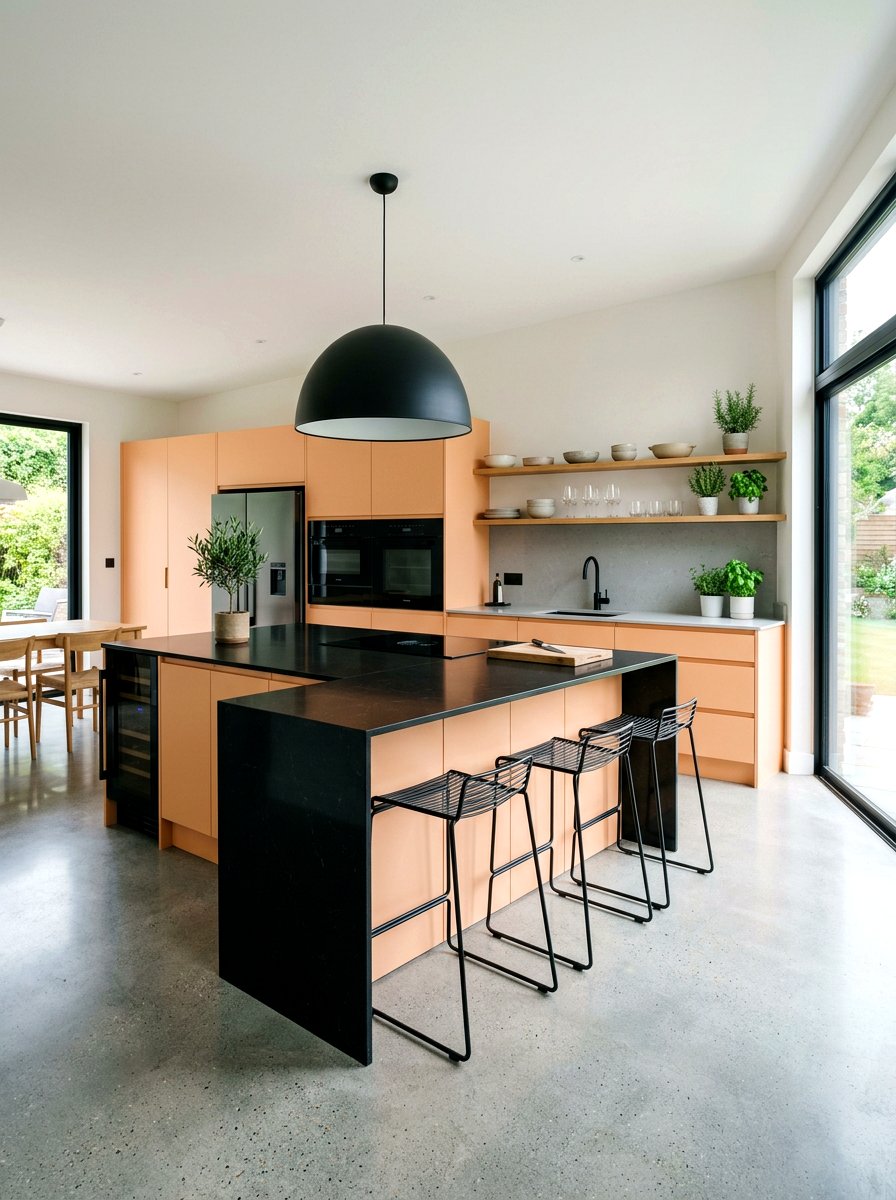
A modern approach to an apricot-themed kitchen involves clean lines, flat-panel cabinetry, and integrated appliances for a seamless look. In this context, apricot serves as a sleek, sophisticated finish that defies the "retro" stereotypes often associated with orange tones. Using a matte finish on the cabinets provides a velvety texture that feels incredibly high-end and luxurious to the touch. Complement the warm apricot surfaces with industrial elements like polished concrete floors or stainless steel accents to create a balanced, architectural feel. This design style proves that warm colors can be used in highly disciplined, minimalist environments to add much-needed soul and character to a home.
5. Apricot and sage green kitchen
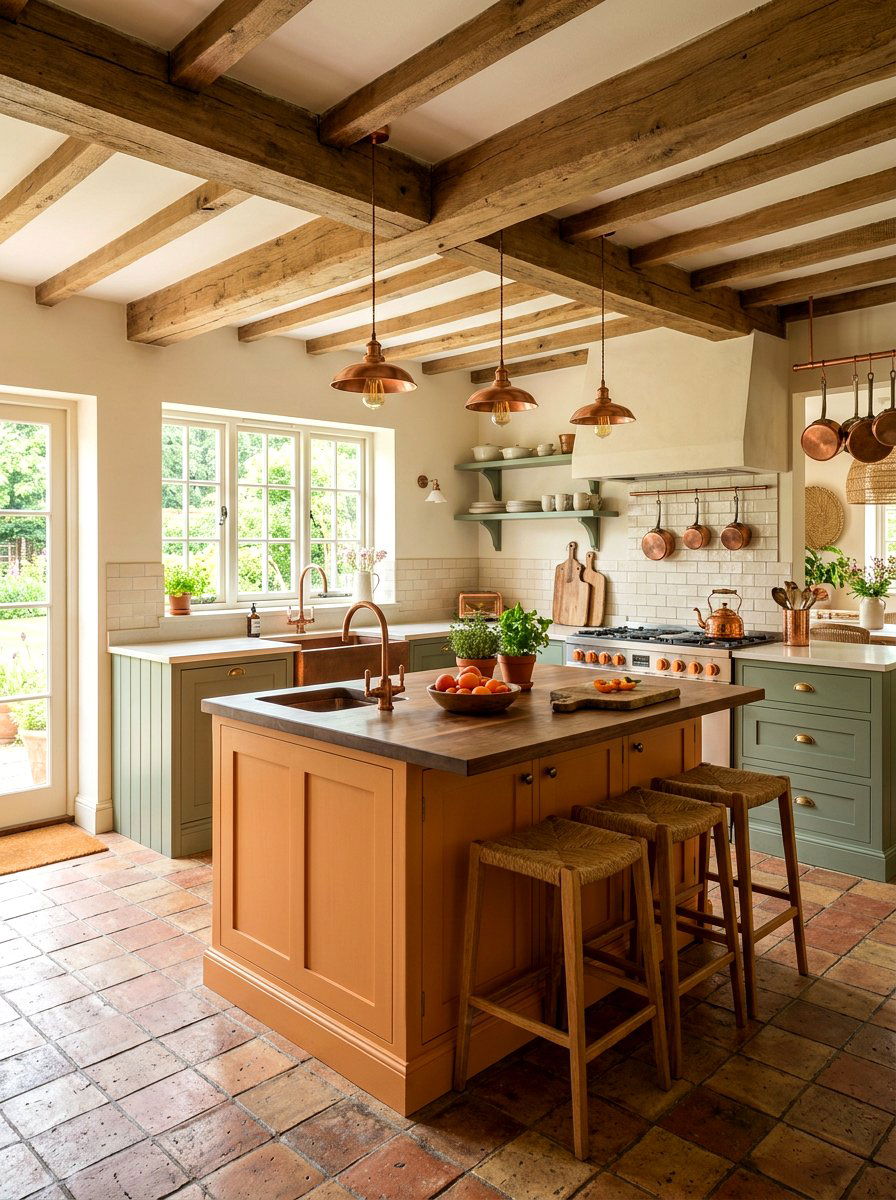
Pairing apricot with sage green creates a nature-inspired palette that feels like a lush Mediterranean garden. These two colors are complementary on the color wheel, meaning they naturally enhance one another’s best qualities without clashing. You might choose apricot for the kitchen island while surrounding it with muted green perimeter cabinets for a layered, grounded effect. This combination works beautifully with natural materials like terracotta flooring and exposed wooden beams. It creates a space that feels calm and restorative, making it an ideal choice for those who view their kitchen as a sanctuary from the busy outside world and a place for creativity.
6. Apricot kitchen island
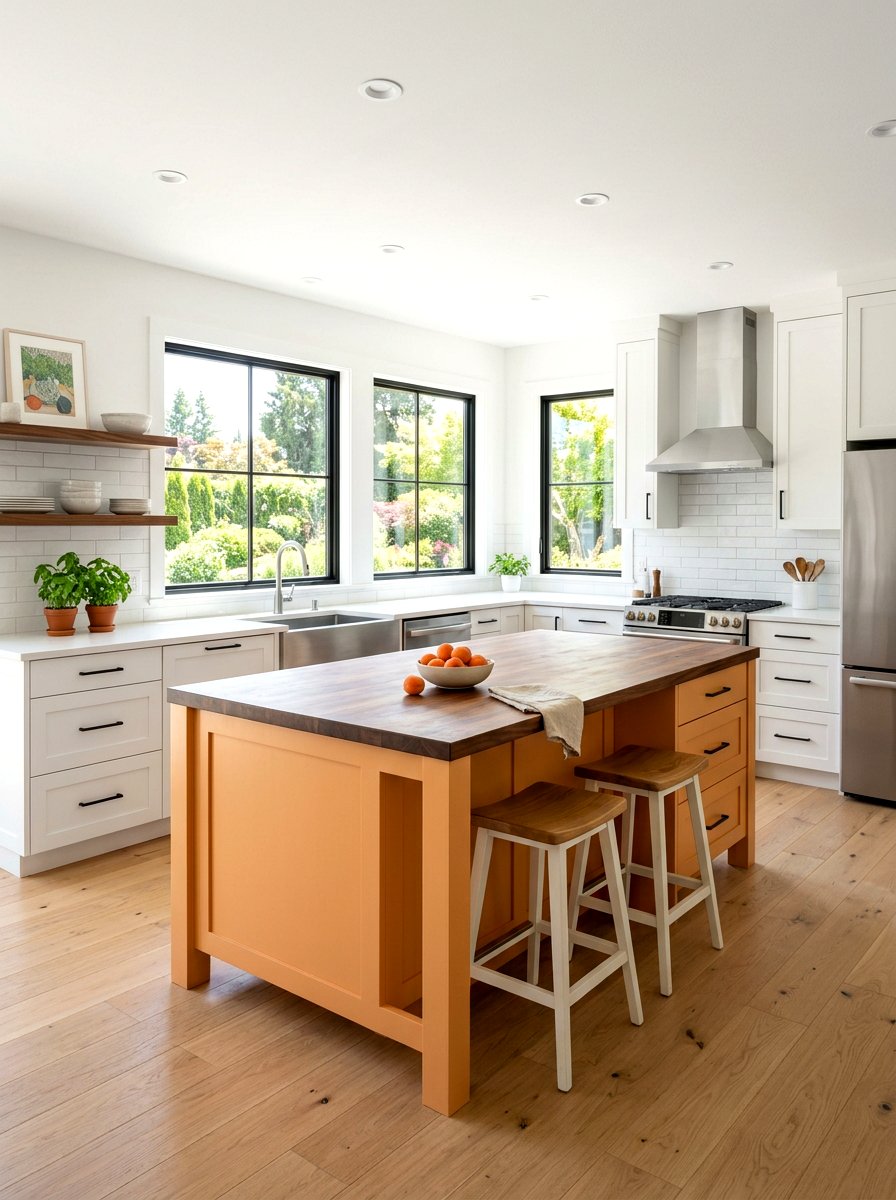
An apricot kitchen island serves as a stunning centerpiece that anchors the entire room and provides a pop of unexpected color. By painting only the island in this sunny hue, you create a dedicated focal point that draws people toward the center of the kitchen for gathering and conversation. This works particularly well in an otherwise neutral kitchen featuring white or light wood cabinetry. Top the island with a thick butcher block or a dramatic stone slab to enhance the furniture-like feel of the piece. This approach allows you to experiment with a trend without the commitment of painting every single cabinet in your kitchen area.
7. Apricot and gold kitchen
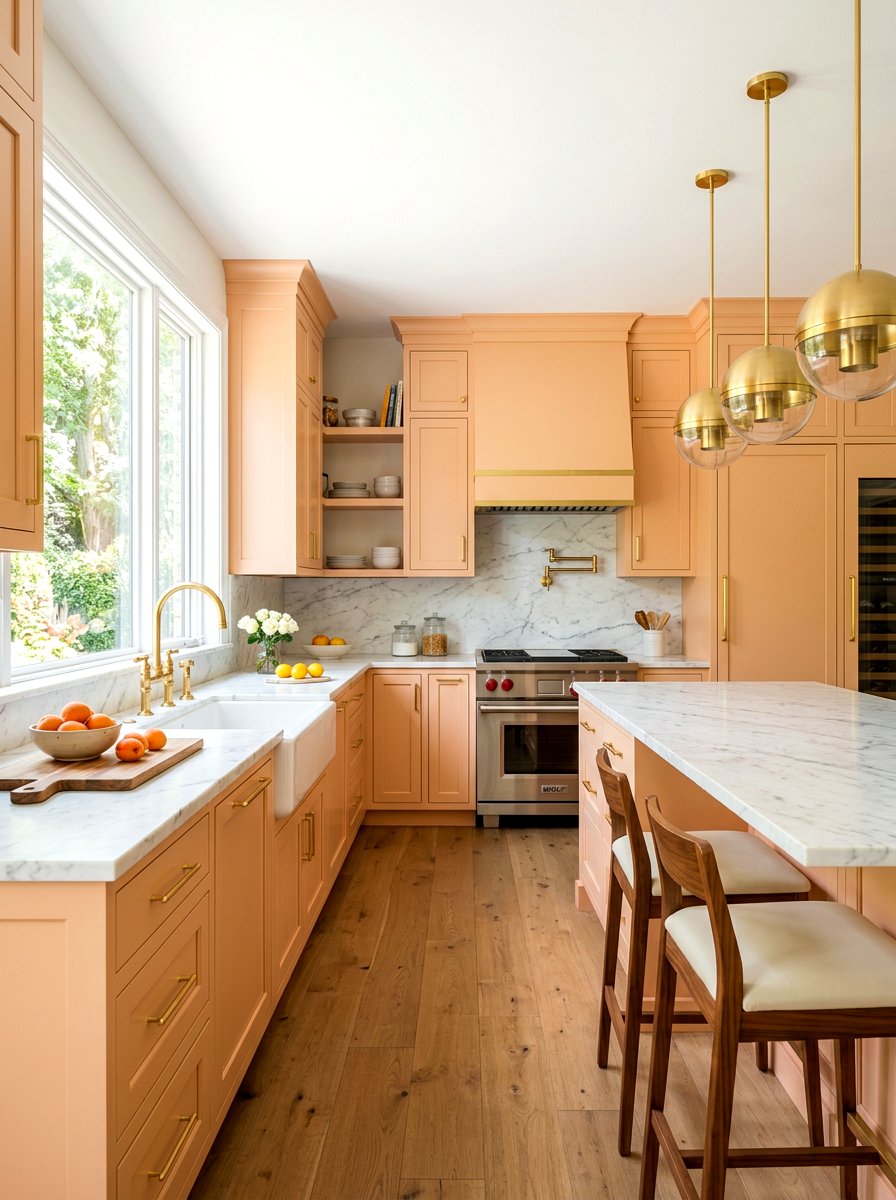
Integrating gold or brass hardware into an apricot kitchen elevates the warmth of the space and adds a touch of undeniable glamour. The yellow undertones in apricot and the metallic sheen of gold create a harmonious, high-glow environment that looks particularly stunning under warm pendant lighting. Consider using brushed gold faucets, cabinet pulls, and even light fixtures to tie the entire look together seamlessly. This pairing feels sophisticated and expensive, transforming a simple cooking space into a designer-curated room. It is a perfect choice for those who love a bit of sparkle and want their kitchen to feel like a high-end boutique or a luxury hotel.
8. Rustic apricot kitchen
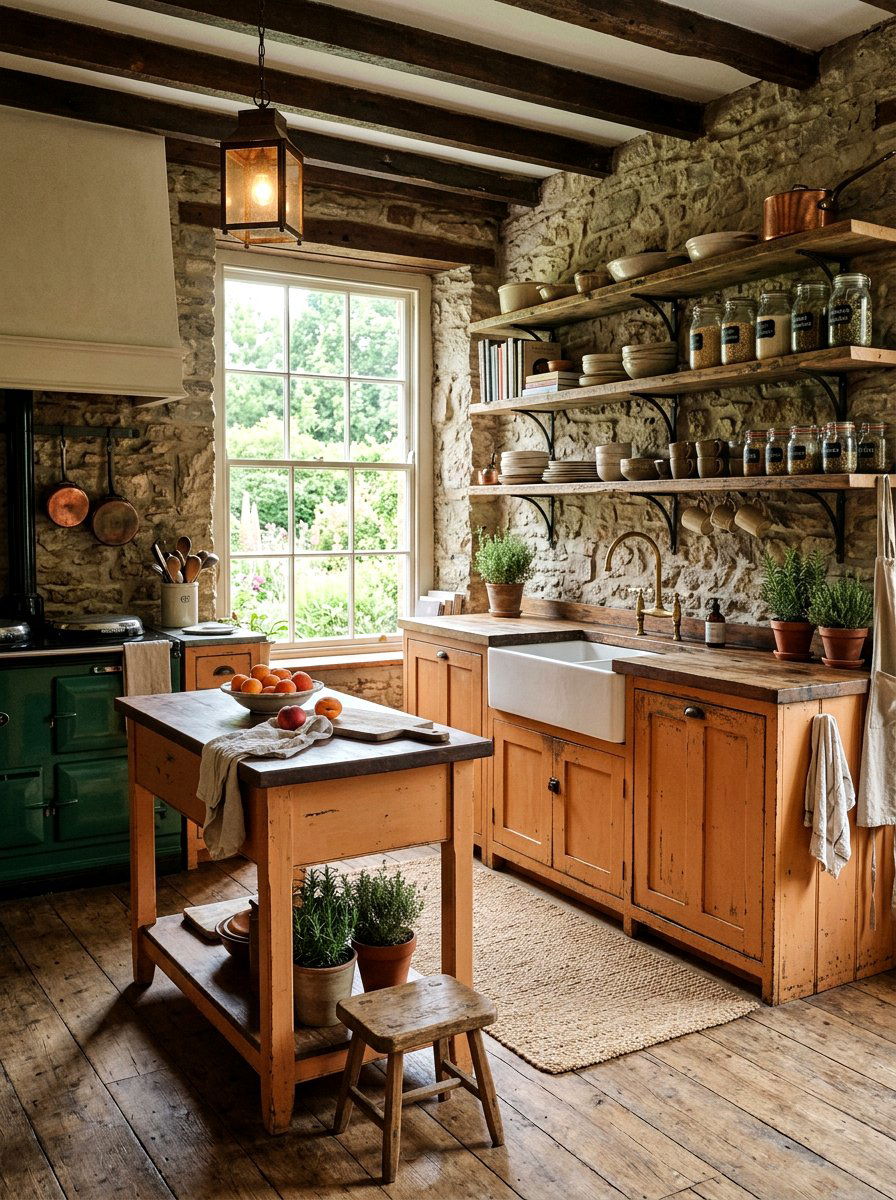
A rustic kitchen benefits immensely from the addition of apricot tones, as they complement the raw textures of reclaimed wood and weathered stone. Instead of a flat paint, consider a lime wash or a distressed finish on the cabinetry to give the apricot color more history and depth. This look is all about comfort and "lived-in" charm, where the warm orange hue mimics the glow of an open hearth. Pair these cabinets with open timber shelving, wrought iron accents, and farmhouse sinks to complete the look. The apricot color softens the ruggedness of rustic materials, ensuring the kitchen remains inviting and bright rather than dark or heavy.
9. Apricot and grey kitchen
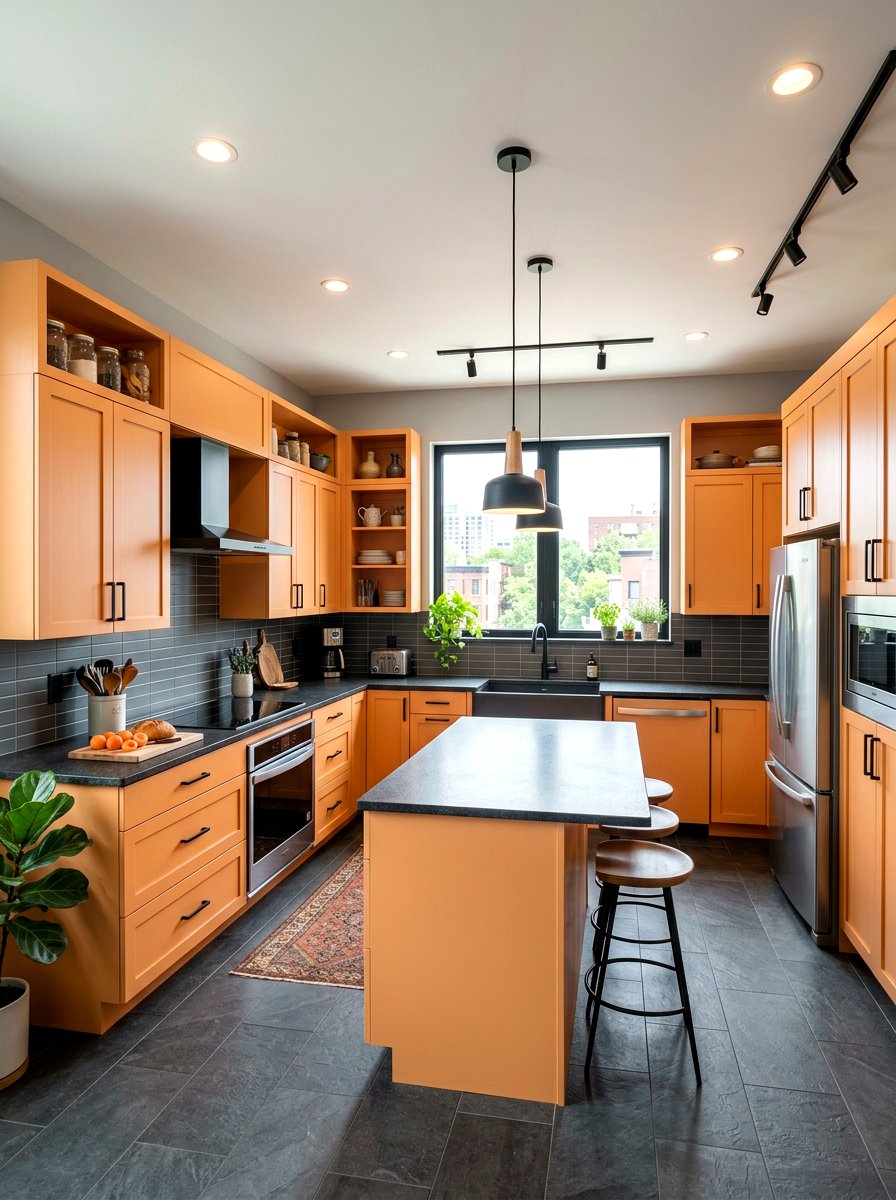
Combining apricot with various shades of grey provides a sophisticated, urban take on this warm color trend. Cool charcoal or soft dove grey acts as a grounding force, preventing the apricot from feeling too whimsical or overly bright. This palette is highly effective when you use grey for the countertops or flooring and apricot for the wall cabinetry. The interaction between the cool and warm tones creates a balanced visual temperature that is easy on the eyes. It is an excellent choice for modern apartments or contemporary homes where you want to maintain a professional, sleek vibe while still expressing a unique and personal sense of style.
10. Small apricot kitchen
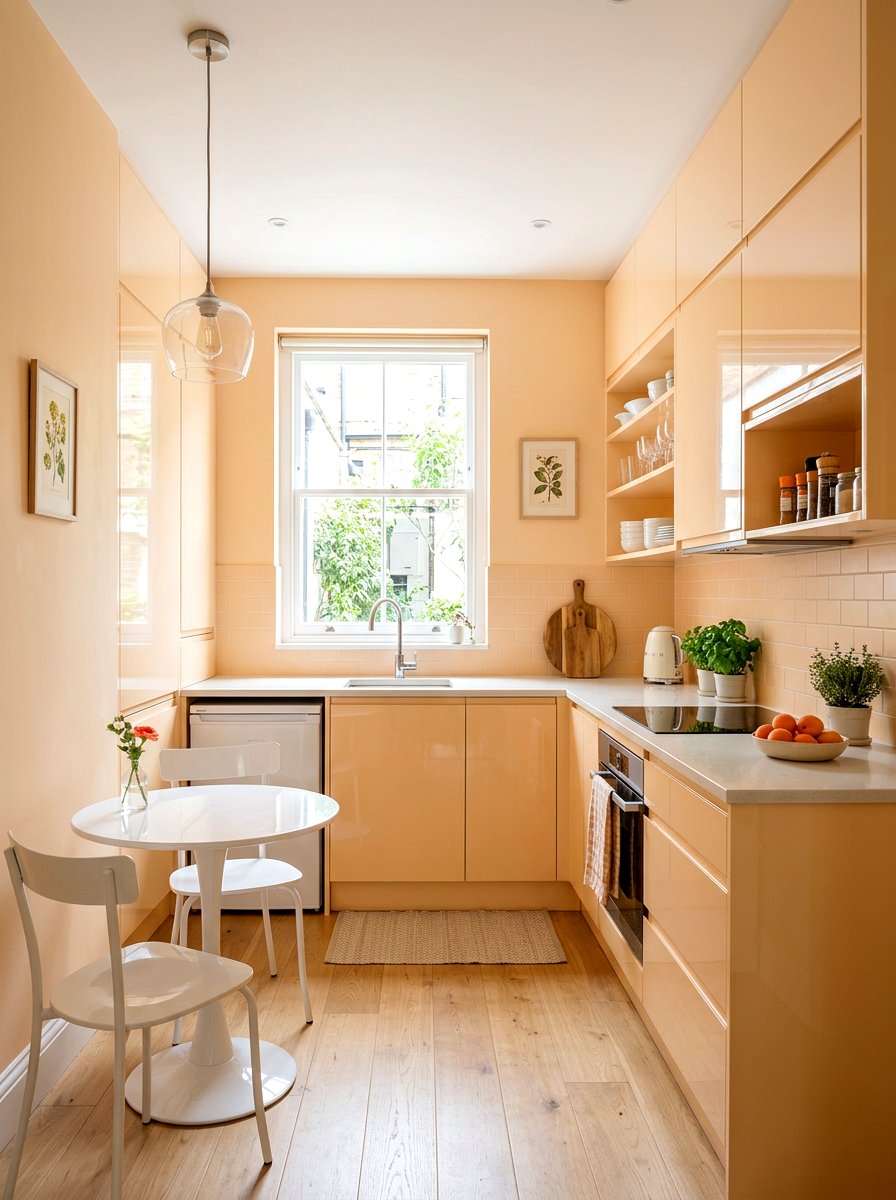
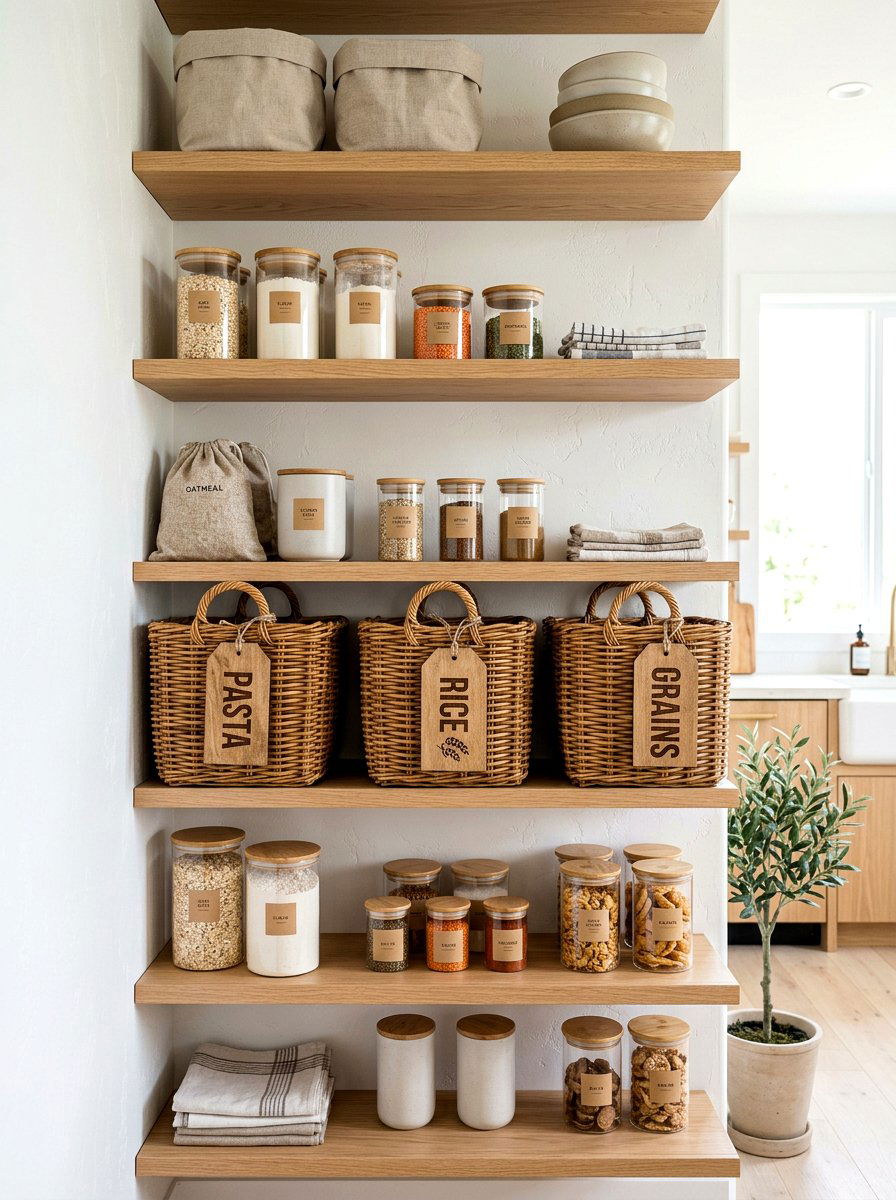
In a small kitchen, apricot can actually help make the space feel larger and more open by reflecting light in a way that white sometimes cannot. Use a pale, desaturated apricot on the walls and cabinets to create a seamless, monochromatic look that blurs the boundaries of the room. This prevents the "choppy" feel that occurs when you use too many different colors in a tight area. Adding mirrors or high-gloss finishes can further enhance the light-reflecting properties of this cheerful hue. A small apricot kitchen feels like a cozy, glowing jewel box, turning a potentially cramped area into a delightful and high-energy part of the entire home.
11. Apricot and navy blue kitchen
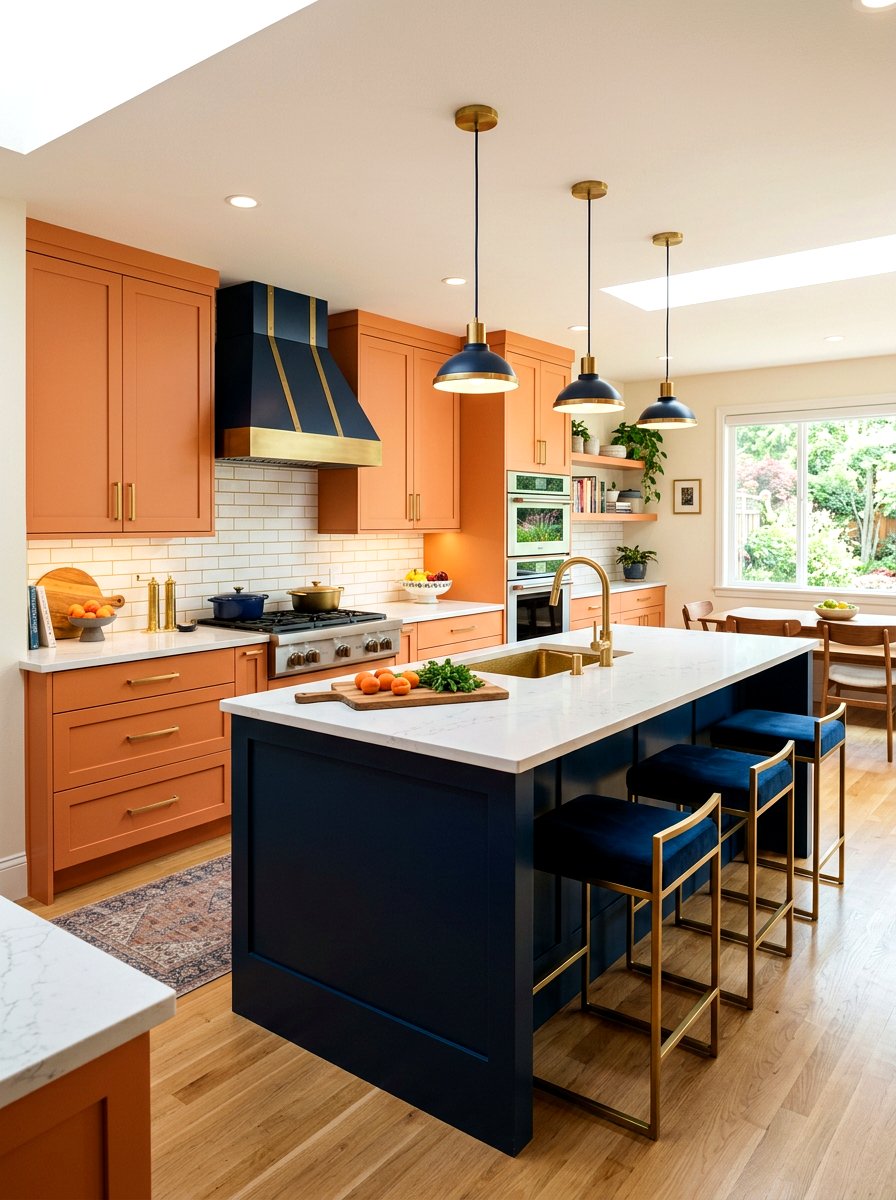
For a high-drama, high-contrast look, pairing apricot with deep navy blue is an exceptionally stylish choice. The cool, dark depths of navy provide a stunning backdrop that makes the warm apricot tones practically pop off the surface. This combination is often seen in high-end transitional designs where the island is navy and the perimeter cabinets are apricot, or vice versa. The blue adds a sense of tradition and stability, while the apricot provides the necessary warmth and modern edge. It is a bold, sophisticated palette that works well with both silver and gold accents, offering a truly custom and designer-level aesthetic for the home.
12. Matte apricot kitchen
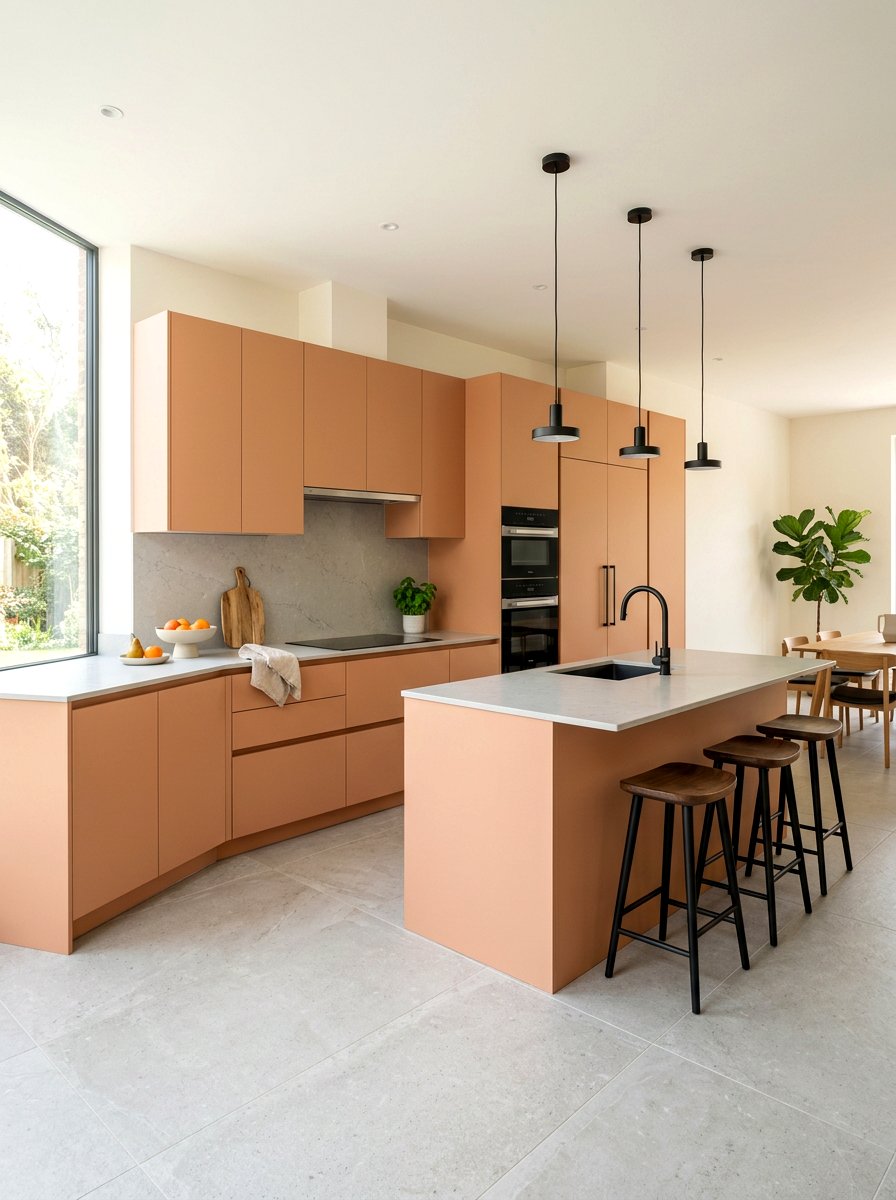
A matte finish on apricot surfaces offers a contemporary and sophisticated look that is remarkably soft to the eye. Unlike glossy finishes, matte apricot does not reflect harsh glares, allowing the true depth and richness of the pigment to shine through in all lighting conditions. This velvety appearance is perfect for large expanses of cabinetry or even painted walls, as it creates a calm and consistent backdrop. Matte surfaces are also highly practical in a busy kitchen because they are much better at hiding fingerprints and water spots. This choice emphasizes the tactile nature of the color, making the kitchen feel more like a comfortable living space.
13. Apricot and wood kitchen
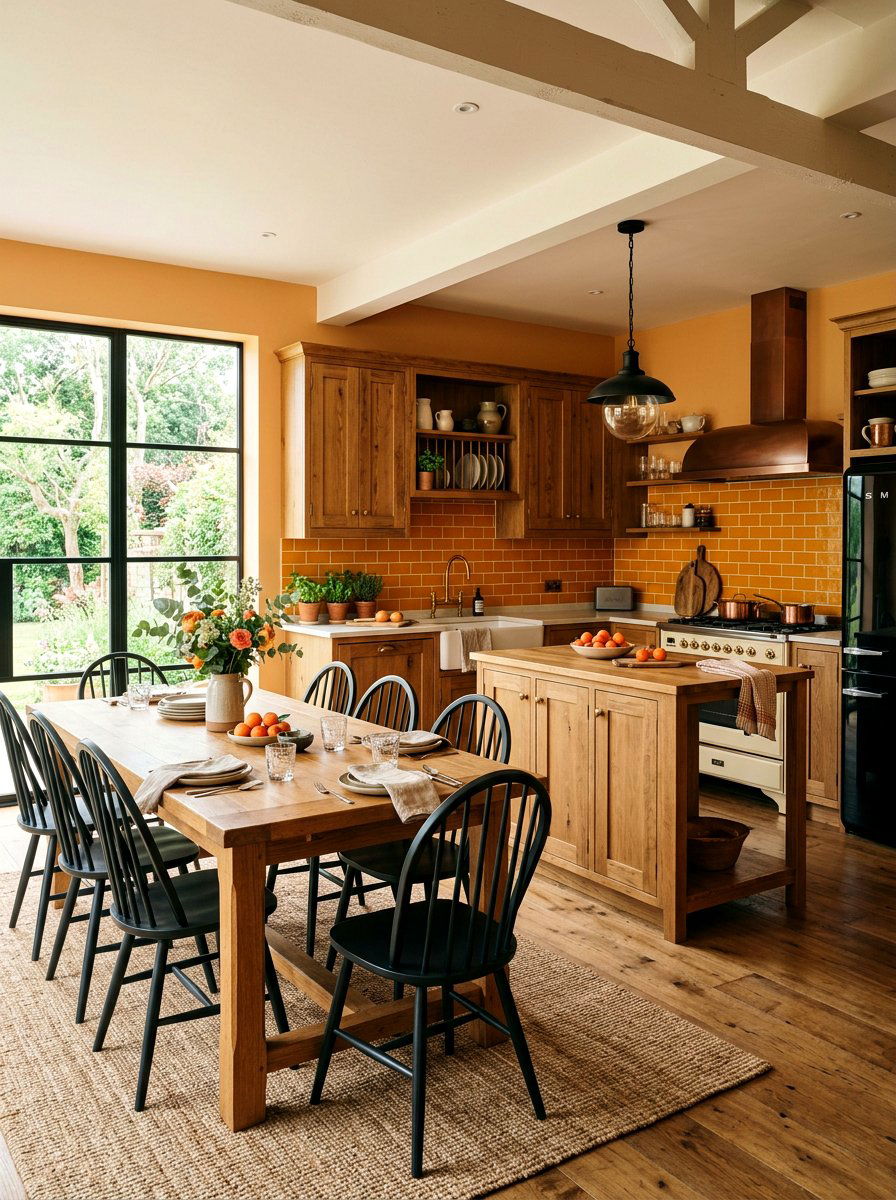
Apricot is naturally found in the warm undertones of many wood species, making it an ideal partner for natural timber elements. Whether you are using light oak, warm cherry, or dark walnut, apricot accents or cabinetry will enhance the natural grain and beauty of the wood. This combination creates a grounded, organic feel that is deeply connected to the natural world. Consider using apricot for a tiled backsplash against floating wood shelves for a look that is both modern and timeless. The mixture of textures — the smooth painted surface and the organic wood grain — adds a layer of sophistication and warmth that is hard to beat.
14. Minimalist apricot kitchen
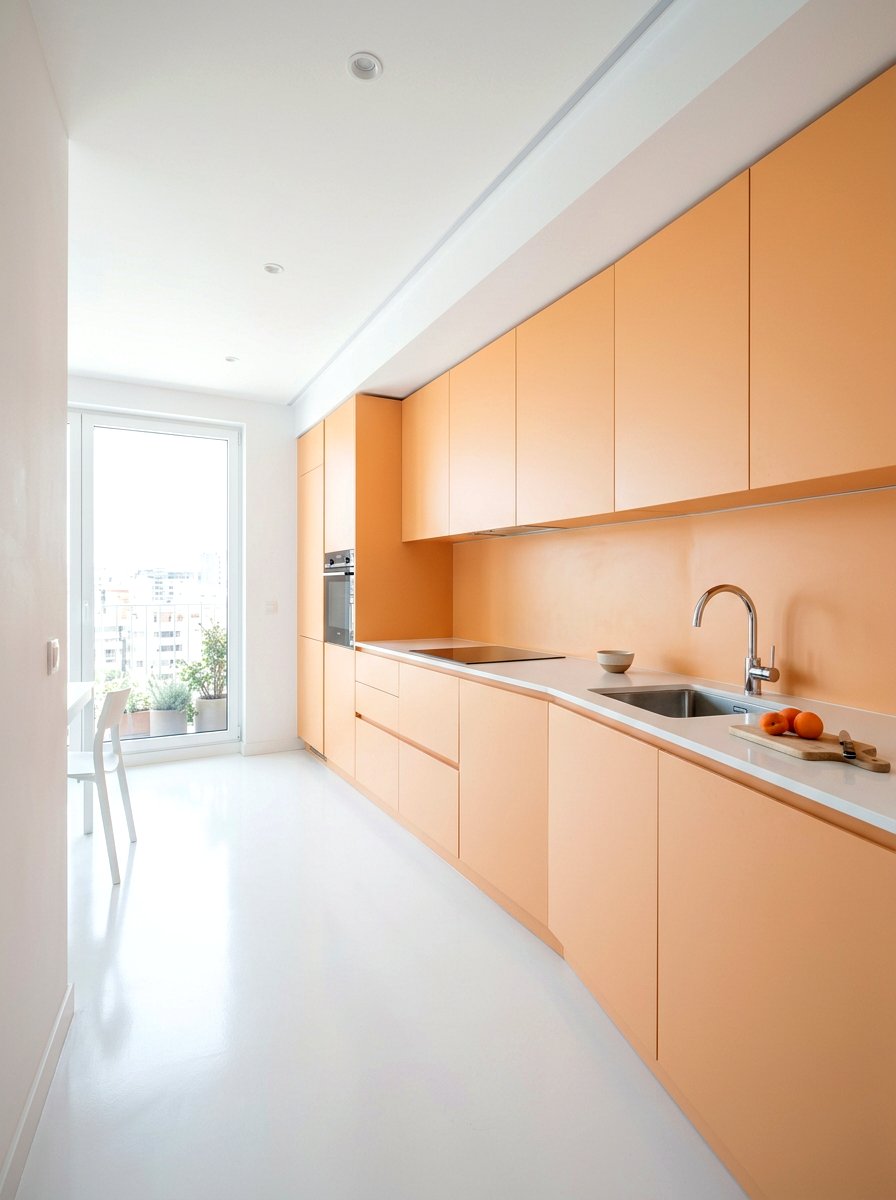
The minimalist approach to apricot design focuses on using the color as the primary decorative element, reducing the need for excess clutter or ornaments. In a minimalist kitchen, every line is intentional, and the apricot hue provides the emotional warmth that prevents the space from feeling cold or sterile. Large-format apricot tiles or seamless cabinetry panels create a sense of calm and order. By keeping hardware hidden or very simple, the focus remains entirely on the beautiful interaction between the color and the light. This is a perfect strategy for those who want a serene, clutter-free environment that still feels full of personality and sunshine.
15. Apricot accent wall kitchen
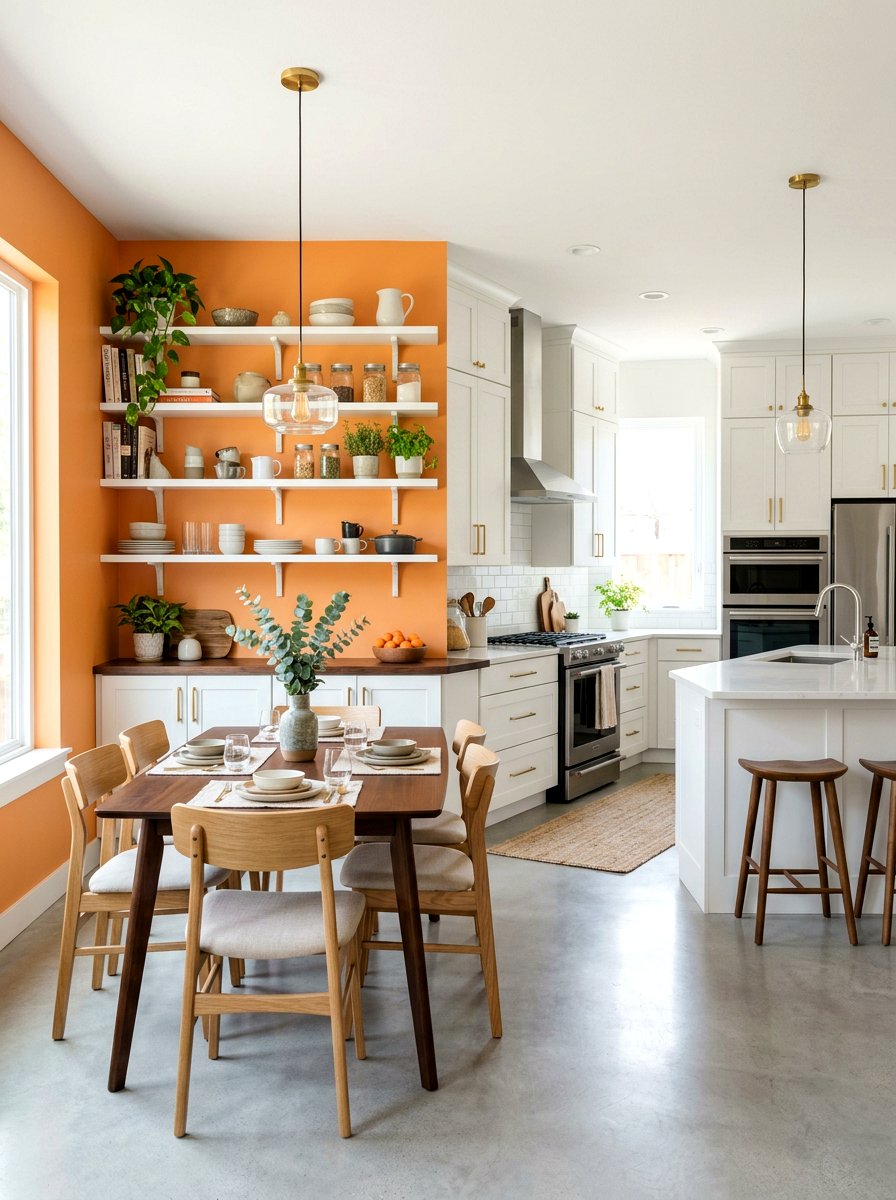
If you are not ready to change your cabinets, an apricot accent wall is a quick and effective way to transform your kitchen's atmosphere. This single splash of color can define a dining area or highlight a beautiful set of open shelves. Because apricot is a warm color, it visually "advances, " which can help a long, narrow kitchen feel more balanced and intimate. It acts as a stunning backdrop for art pieces, indoor plants, or even a collection of white ceramic dishes. This simple update brings an immediate sense of energy and trendiness to the space without the need for a major, expensive renovation project.
16. Apricot and black kitchen
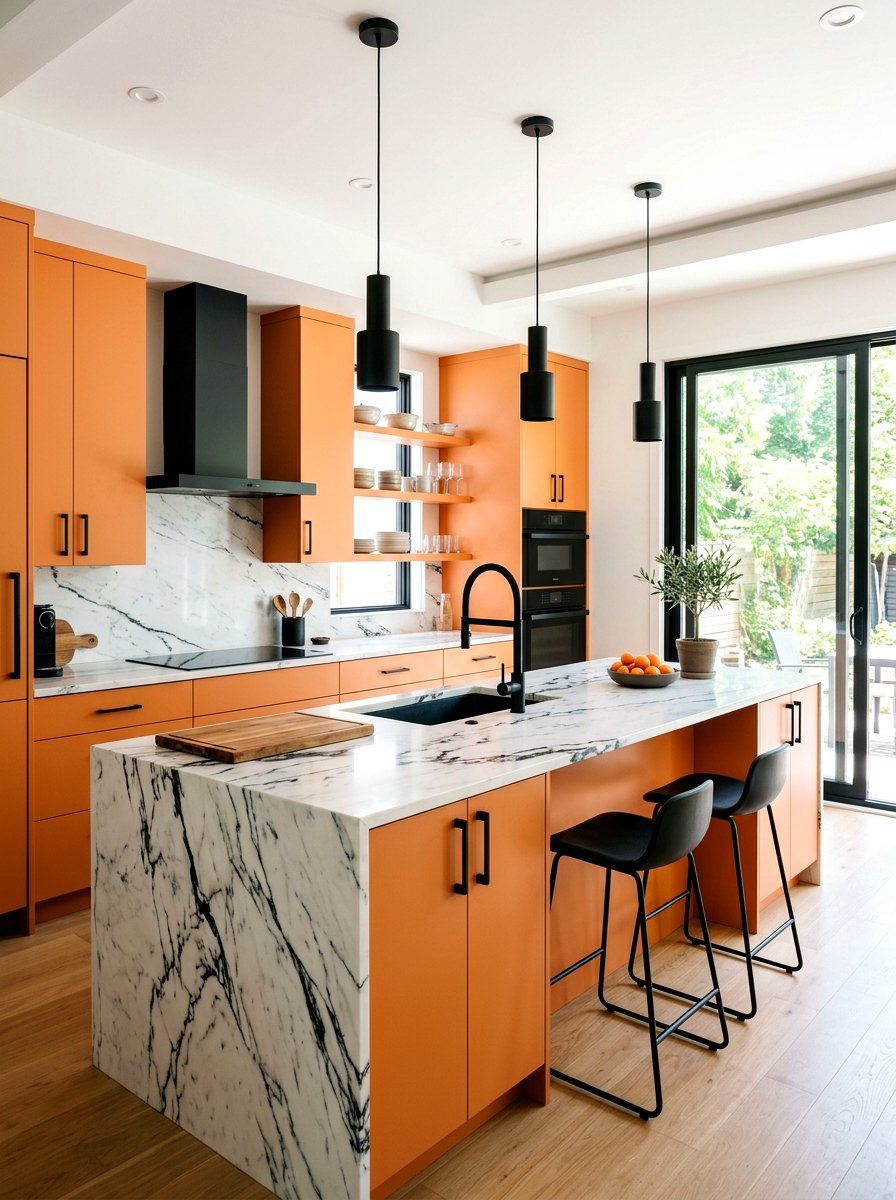
For those who prefer a sharp, edgy aesthetic, combining apricot with matte black accents is a powerful design move. Black provides a modern, graphic contrast that grounds the softness of the apricot, giving it a more "grown-up" and architectural feel. Imagine apricot cabinetry paired with black metal light fixtures, a black faucet, and black cabinet handles. This high-contrast look is very popular in contemporary urban designs where the goal is to create a space that feels bold and fashionable. The black elements act like eyeliner for the room, defining the shapes and ensuring the apricot color feels intentional, structured, and very chic.
17. Boho apricot kitchen
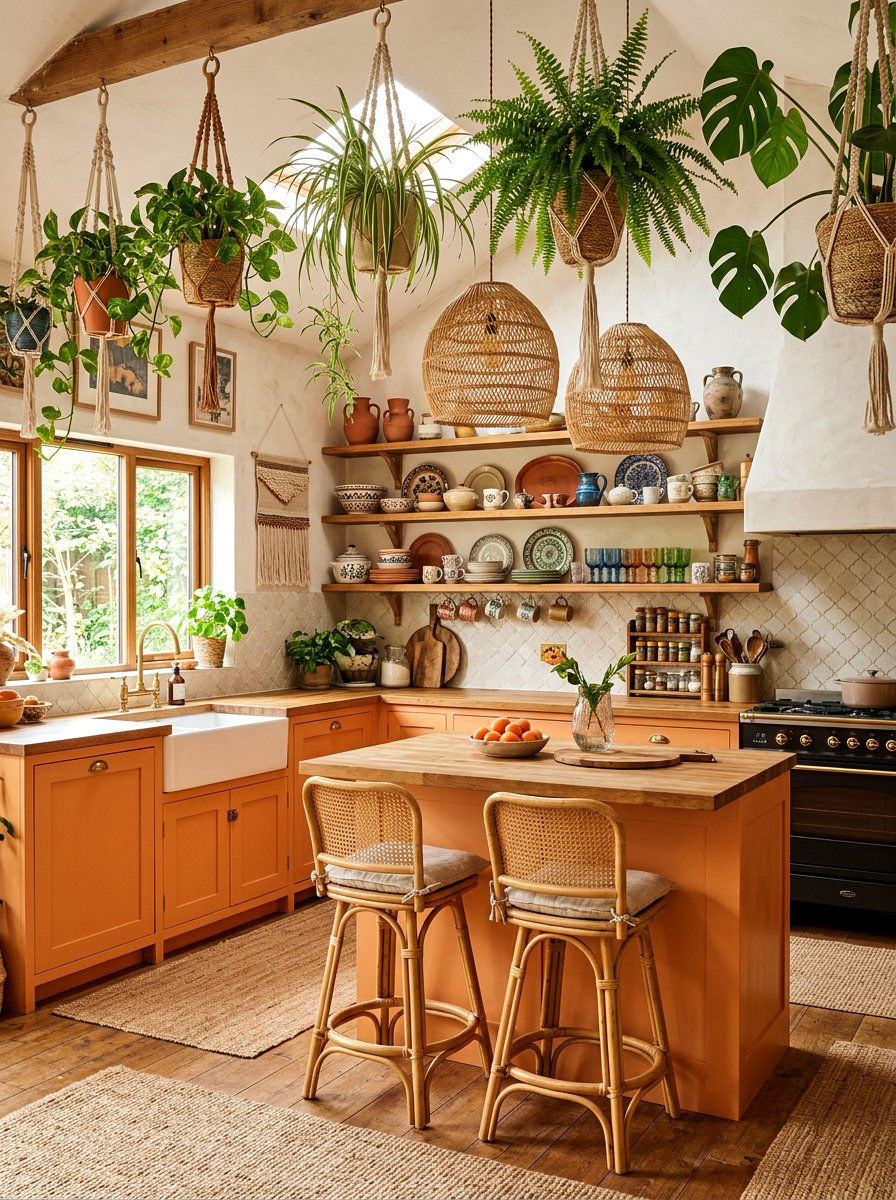
The bohemian style thrives on warm, sunset-inspired colors, making apricot a natural choice for this eclectic and relaxed design theme. In a boho kitchen, you can mix apricot with plenty of natural textures like rattan, jute, and woven baskets. Think about using apricot for your lower cabinets while keeping the rest of the space filled with trailing plants and vintage finds. The warmth of the apricot tone complements the "earthy" vibe of boho decor perfectly, creating a kitchen that feels artistic, traveled, and incredibly welcoming. It is a space designed for slow mornings, herbal teas, and a very laid-back, creative lifestyle.
18. Apricot marble kitchen
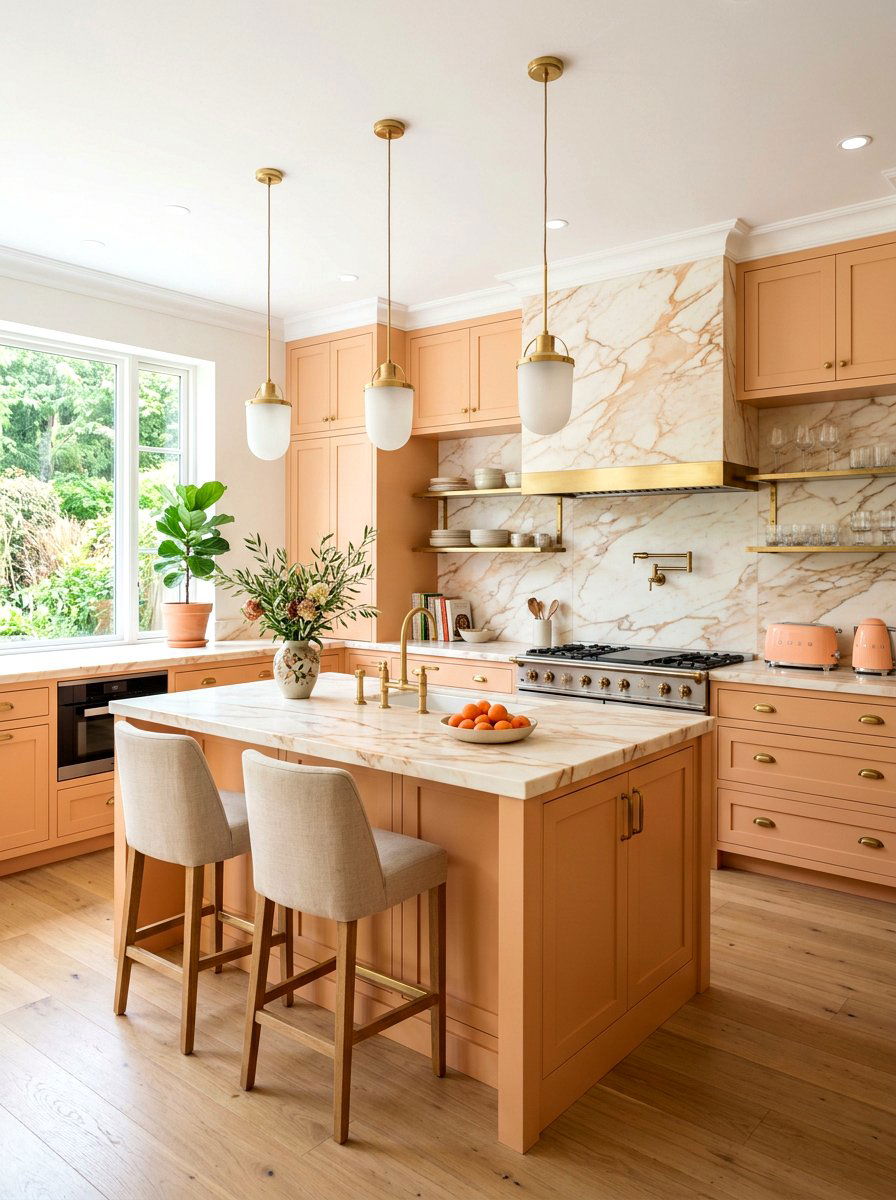
Marble with warm veining can be paired with apricot cabinetry to create a truly luxurious and high-end kitchen environment. Some varieties of Calacatta or Breccia marble feature subtle hints of peach, gold, and apricot within their natural patterns, which ties the stone and the paint color together beautifully. Using this marble for both the countertops and a full-height backsplash creates a seamless, expensive look that radiates elegance. The natural coolness of the stone balances the warmth of the apricot cabinets, resulting in a space that feels perfectly calibrated. This is a top-tier design choice for anyone looking to create a show-stopping, luxury kitchen area.
19. Vintage apricot kitchen
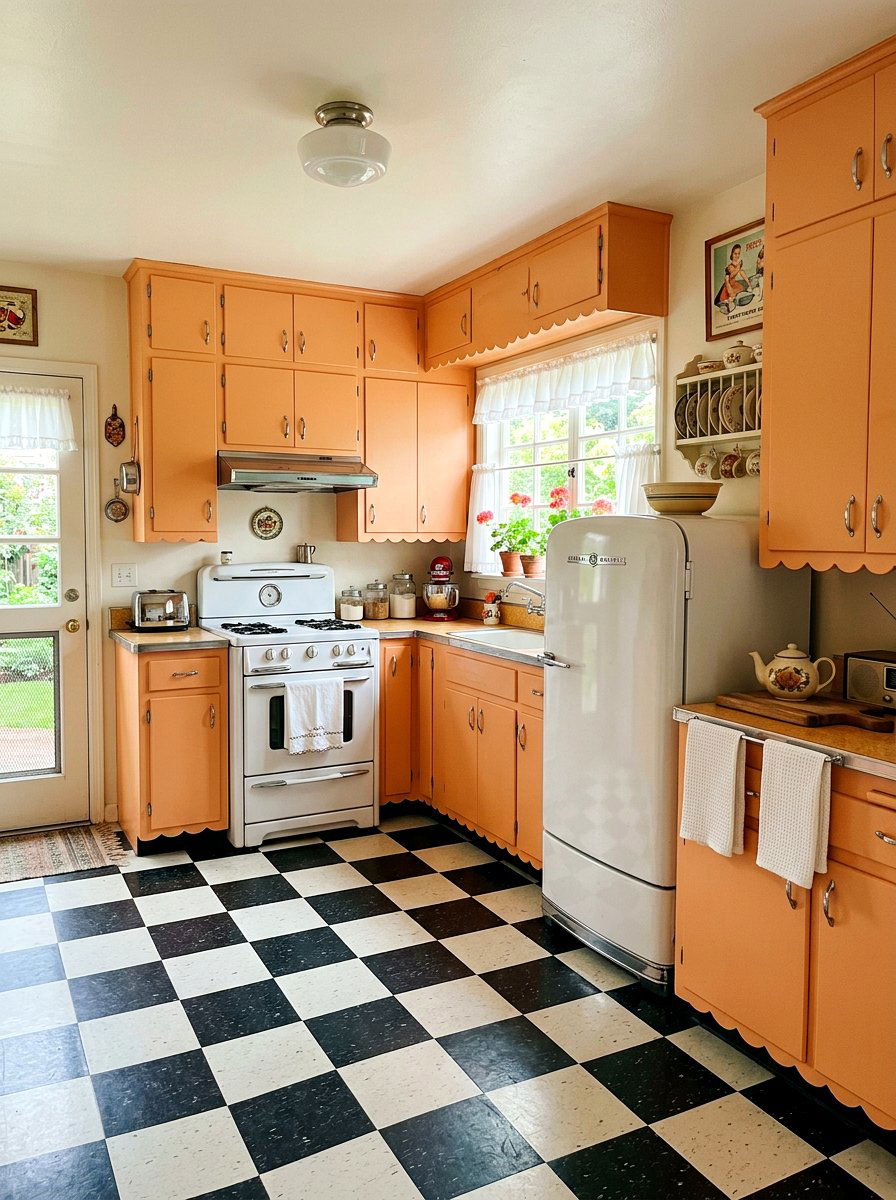
Apricot has a wonderful retro appeal that can be harnessed to create a charming vintage-style kitchen. This color was popular in mid-century design, and when paired with retro-style appliances and checkered floors, it creates a nostalgic yet fresh atmosphere. Think about using a slightly more saturated apricot hue and pairing it with scalloped edges or glass-front cabinet doors. It is a playful approach that celebrates the history of kitchen design while still feeling relevant for today’s living. Adding some antique brass tins and classic linens can further enhance the vintage charm, making the kitchen feel like a storied, heart-of-the-home space with lots of character.

20. Apricot and cream kitchen
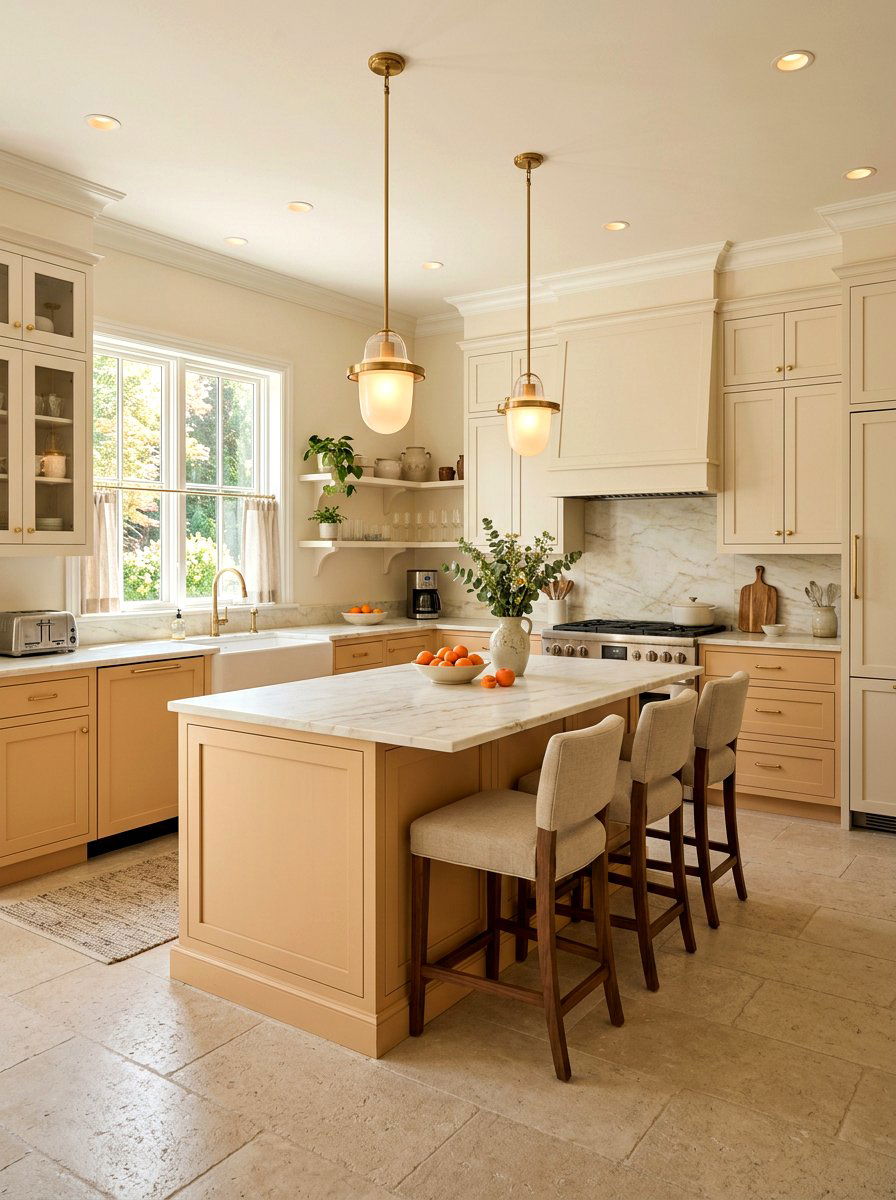
An apricot and cream kitchen is the ultimate choice for those who want a soft, "vanilla-sunset" glow in their home. Unlike the high contrast of white, cream offers a buttery richness that blends seamlessly with the warm undertones of apricot. This creates a monochromatic-like effect that is incredibly soothing and easy to live with for long periods. Use cream for the walls and upper cabinets, while reserving apricot for the base units and the kitchen island. This combination feels traditional and sophisticated, evoking the feeling of a high-end country estate. It is a timeless palette that will never feel dated or too aggressive.
21. Two tone apricot kitchen
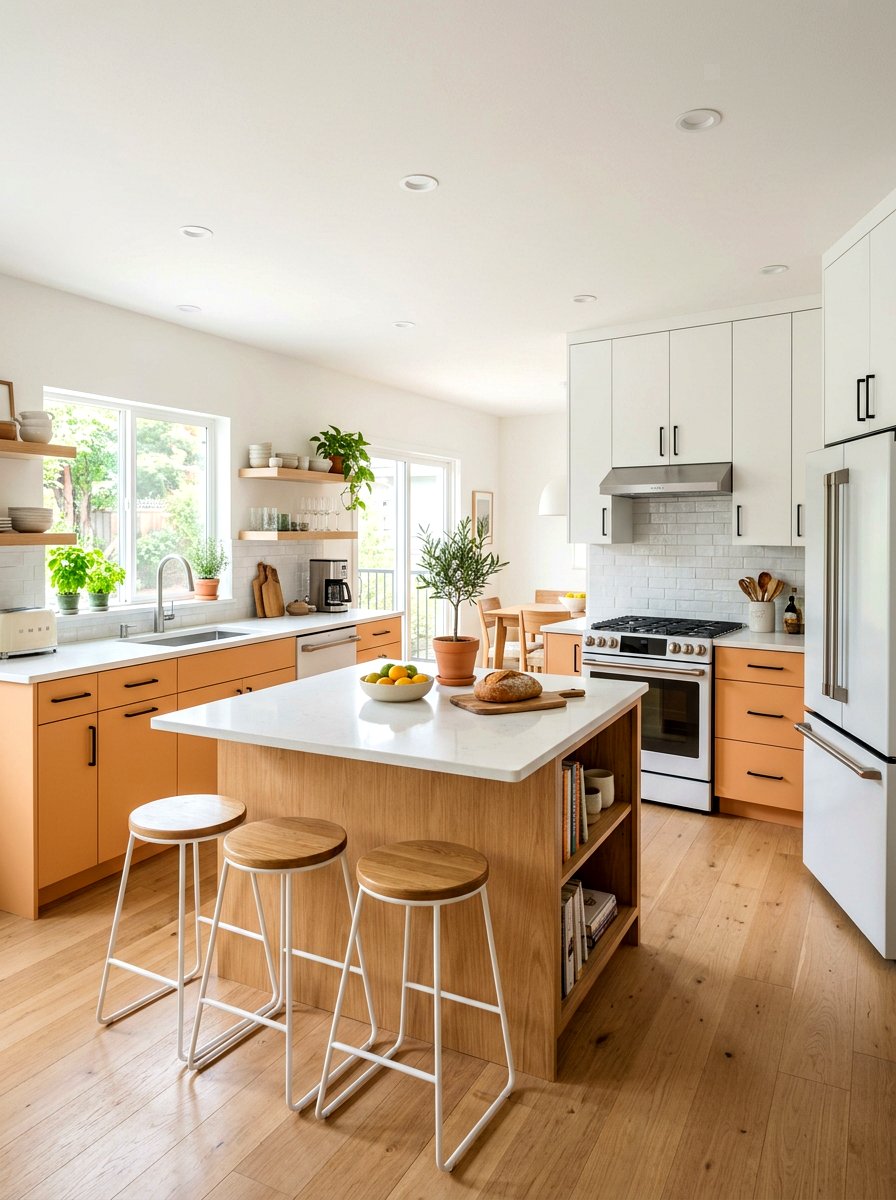
The two-tone cabinet trend is perfect for experimenting with apricot without going overboard on color. By using apricot on the bottom cabinets and a lighter neutral like white or light wood on top, you ground the space while keeping the eye level bright and airy. This technique is especially useful in kitchens with lower ceilings, as it prevents the color from making the room feel enclosed. The apricot "base" adds a layer of warmth that flows into the flooring, while the lighter uppers keep the room feeling spacious. It is a smart, balanced way to incorporate color while maintaining a very clean and professional layout.
22. Apricot open shelving kitchen
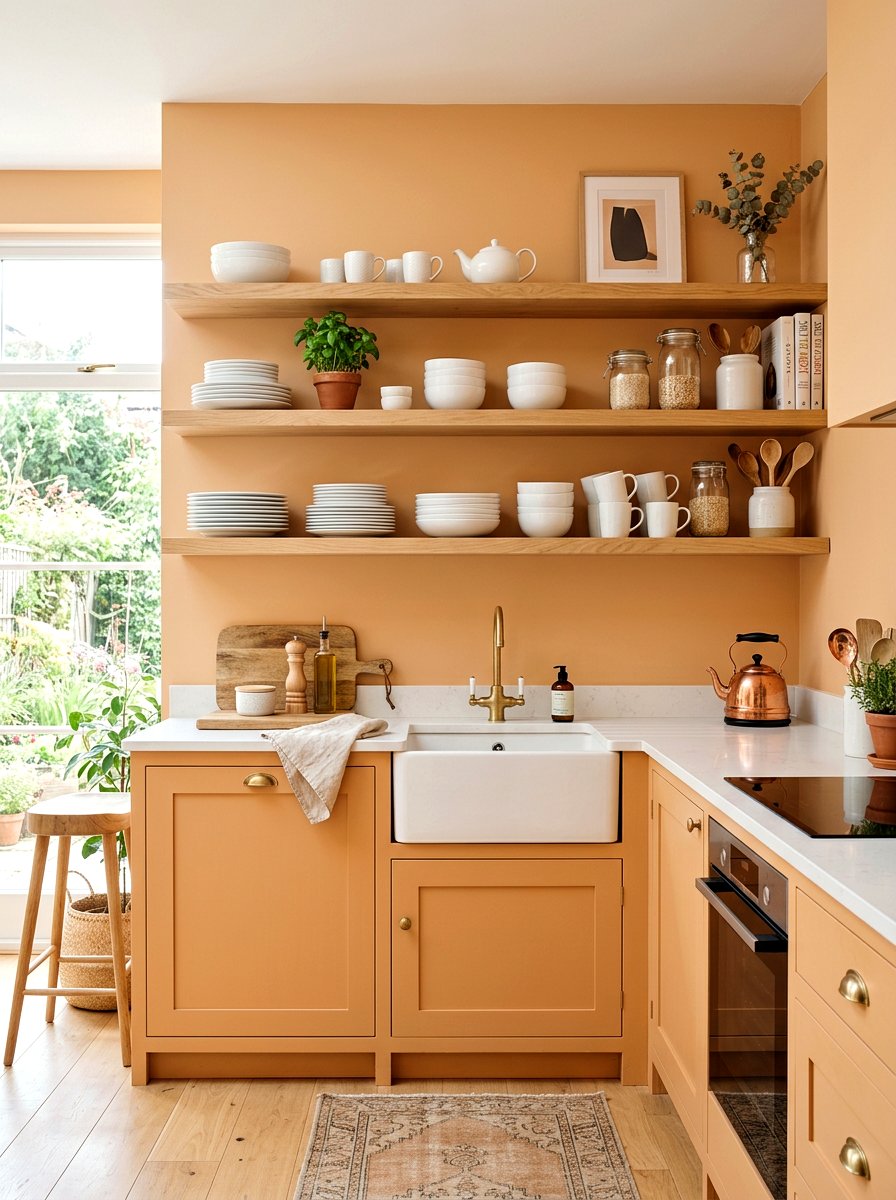
Open shelving against an apricot-painted wall or featuring apricot-colored brackets is a great way to add a layer of functional decor to your kitchen. The warm background makes white dishes and glassware stand out beautifully, turning your everyday items into a curated display. This design choice encourages a more casual and accessible kitchen environment where everything is within reach. You can also use apricot-stained wood for the shelves themselves to add a subtle hint of color that feels more organic. It is an ideal solution for small kitchens or for anyone who wants to showcase their personality through their kitchenware and accessories.
23. Scandi apricot kitchen
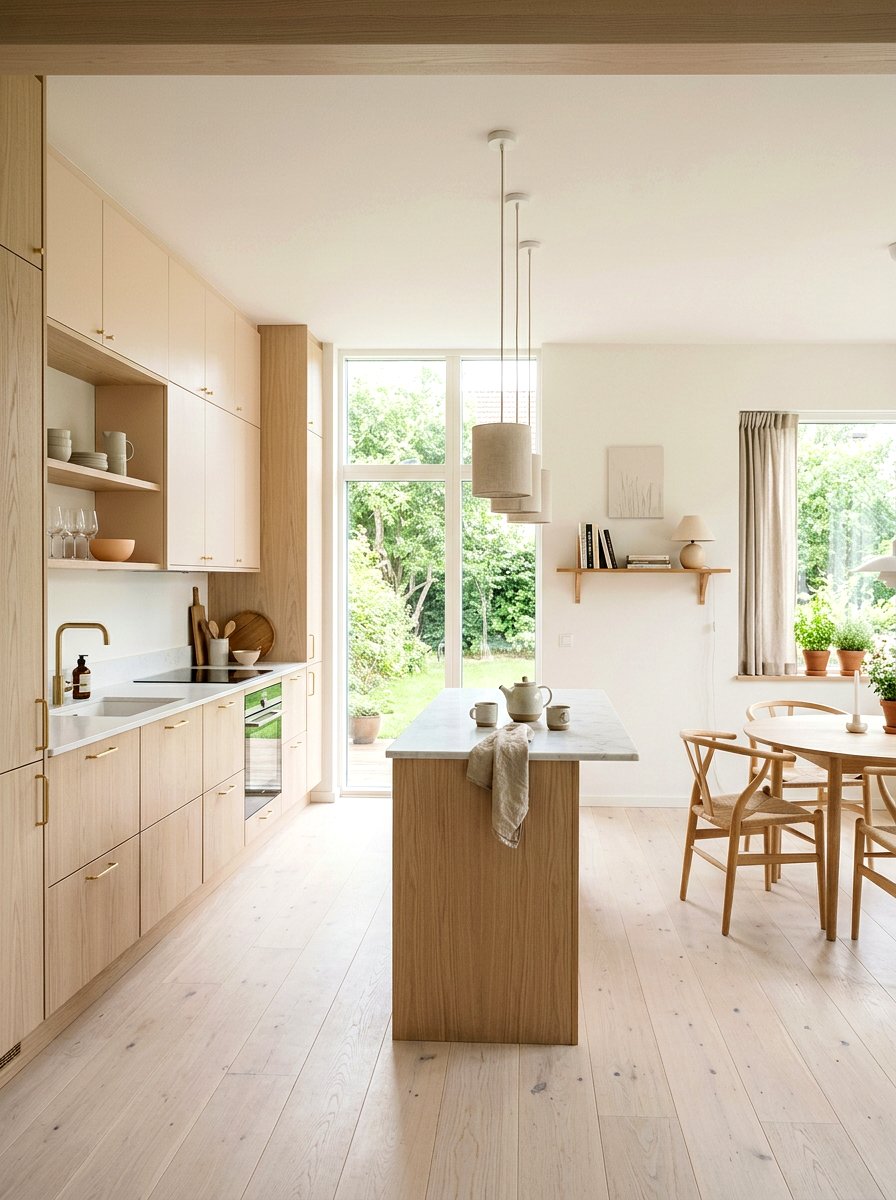
Scandinavian design is known for its light woods and neutral palettes, but adding a soft apricot hue can bring a much-needed "hygge" warmth to the look. In a Scandi-style kitchen, apricot is used sparingly and in very desaturated tones, almost like a warm blush. Pair this with light ash or birch wood cabinets and simple, functional furniture. The result is a space that feels incredibly bright, clean, and modern, but with a sunny disposition that guards against the cold. It is a perfect example of how a single color choice can transform a minimalist aesthetic into something that feels deeply personal, warm, and cozy.
24. Apricot breakfast nook
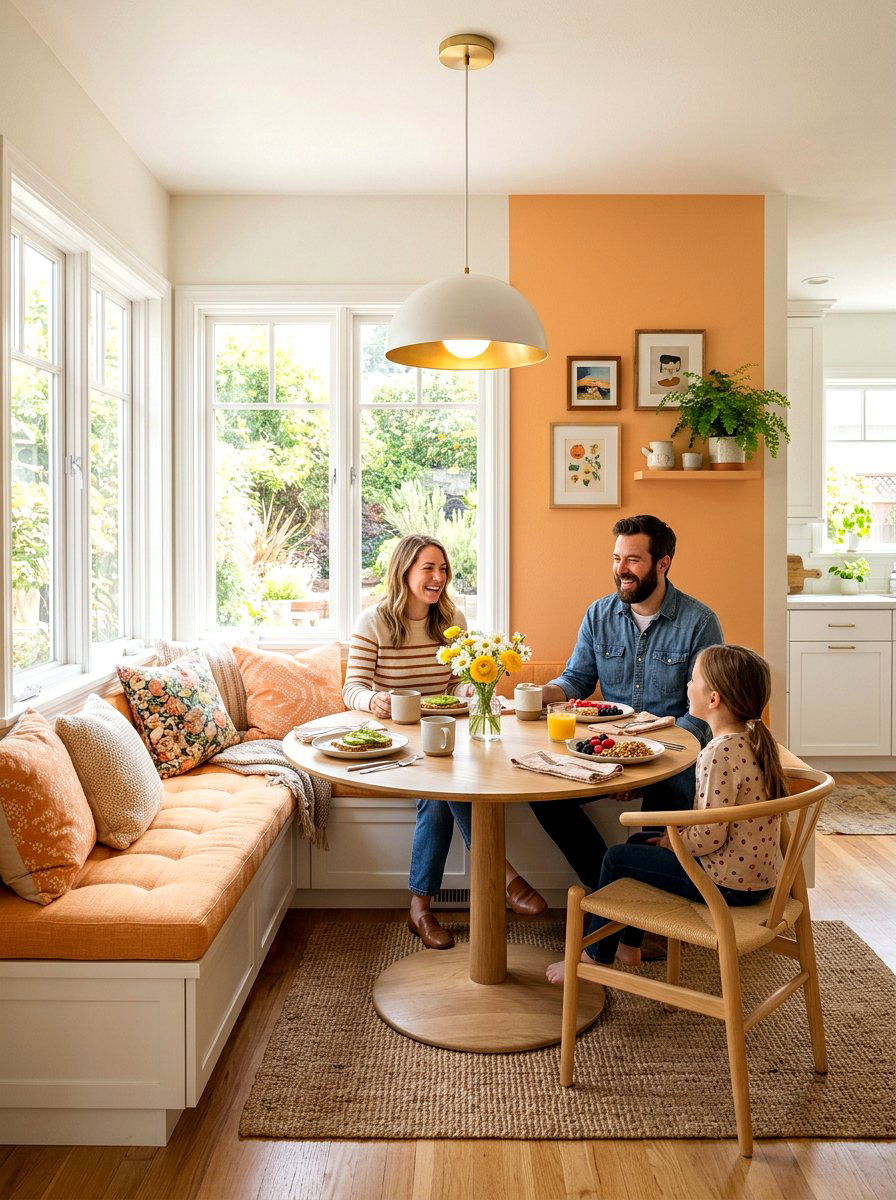
Incorporating apricot into a breakfast nook or built-in banquet seating is a wonderful way to start your day with a sense of optimism. Use apricot for the seat cushions, the wall color, or even a dedicated pendant light over the table to define this area. The warm color stimulates the appetite and creates a cheerful environment for family meals. When the sun hits an apricot-colored nook, the whole area seems to glow, making it the favorite spot in the house for morning coffee or casual weekend brunches. It’s a simple way to create a "room within a room" that feels specially designated for comfort.

25. Industrial apricot kitchen
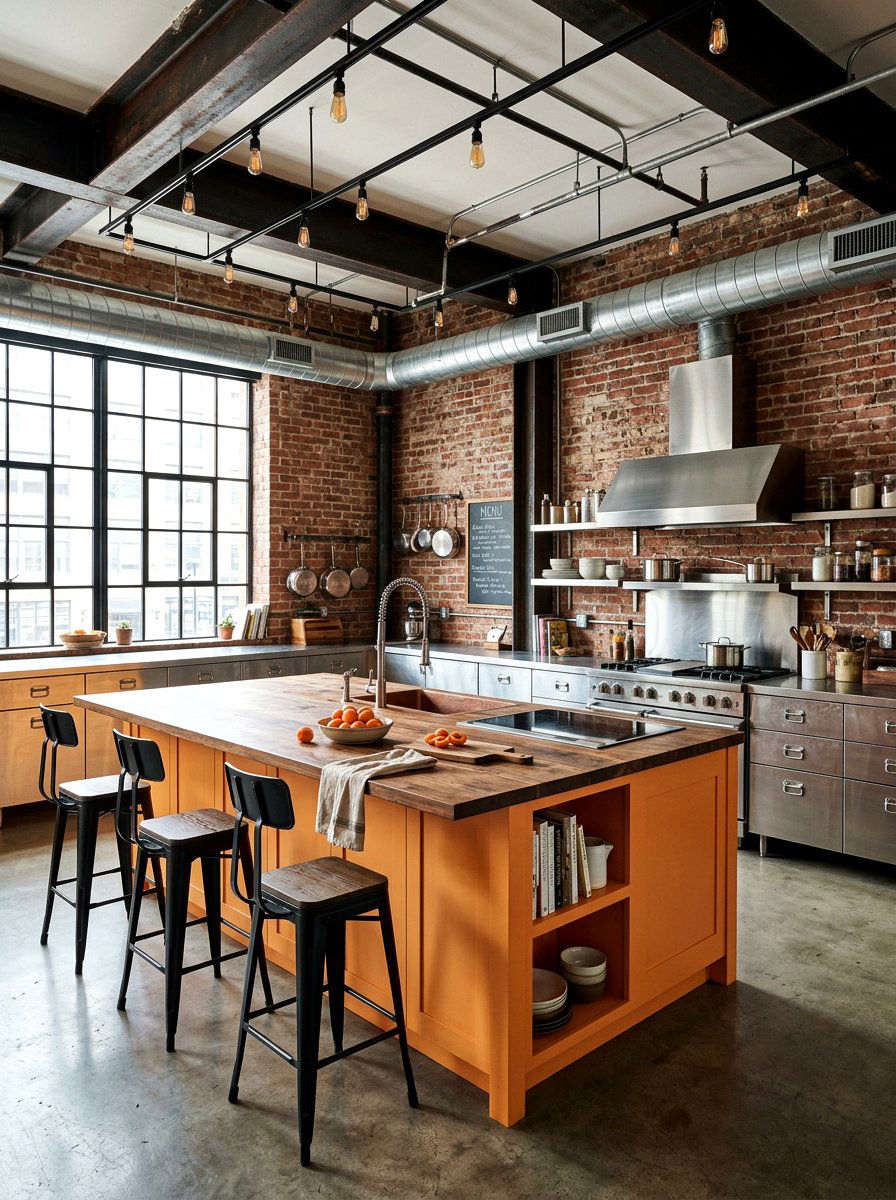
Industrial kitchens often feature cold materials like stainless steel, brick, and concrete, which can sometimes feel a bit harsh. Adding apricot cabinetry or a large apricot-colored statement piece can soften these industrial elements and make the space feel more livable. The contrast between the "hard" materials and the "soft" color creates a dynamic, urban look that is very popular in loft-style renovations. Consider using apricot for a large range hood or an accent wall behind a metal shelving unit. This infusion of warmth ensures that the industrial style remains inviting and stylish rather than purely utilitarian or cold in its overall execution.
26. Apricot and brass kitchen
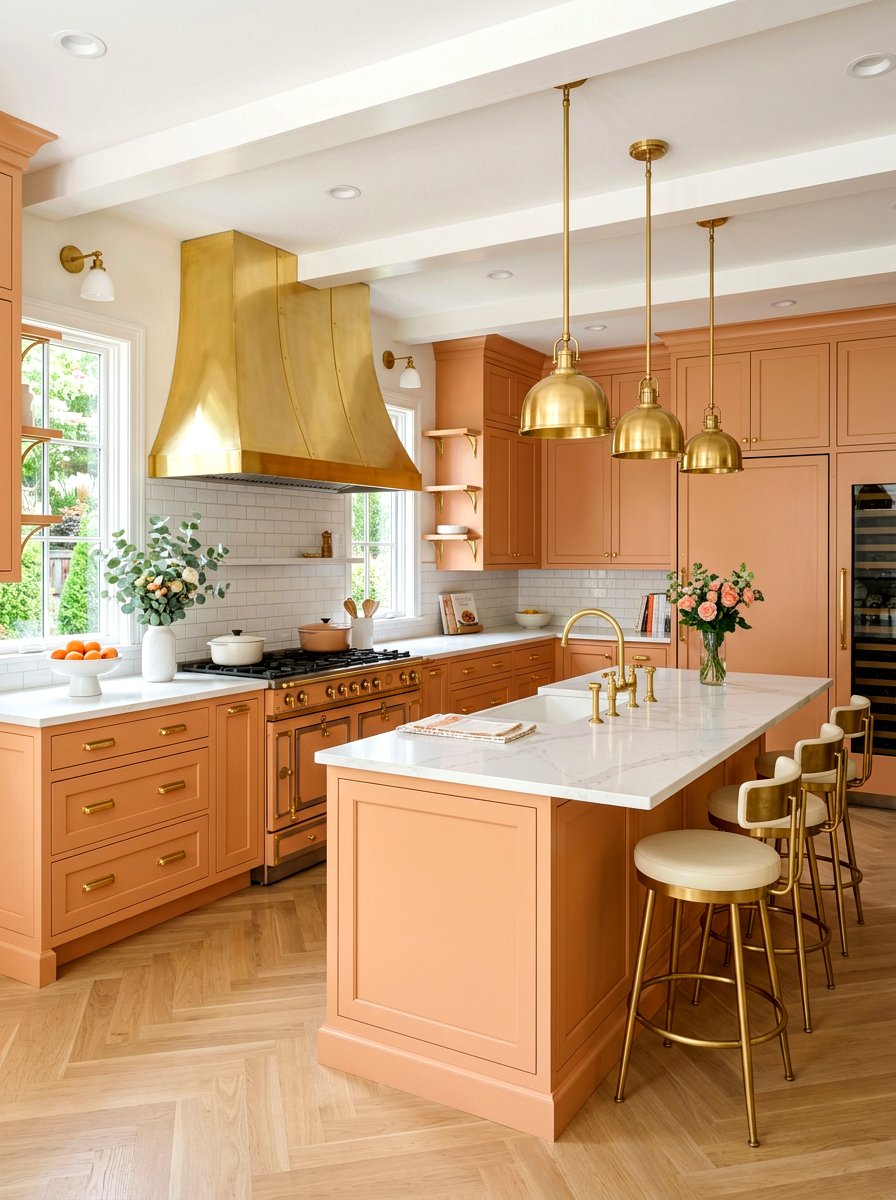
The combination of apricot and brass is a classic designer secret for creating a high-end, glowing kitchen space. Brass has a natural yellow-gold tone that perfectly complements the orange-pink base of apricot. Use brass for the cabinet handles, the kitchen faucet, and even the trim on a custom range hood to create a cohesive and luxury feel. This pairing works exceptionally well in kitchens with lots of natural light, as the brass surfaces will reflect the warm apricot tones around the room. It is a sophisticated, warm-toned palette that feels rich and well-considered, providing a beautiful backdrop for both cooking and entertaining guests.
27. Glossy apricot kitchen
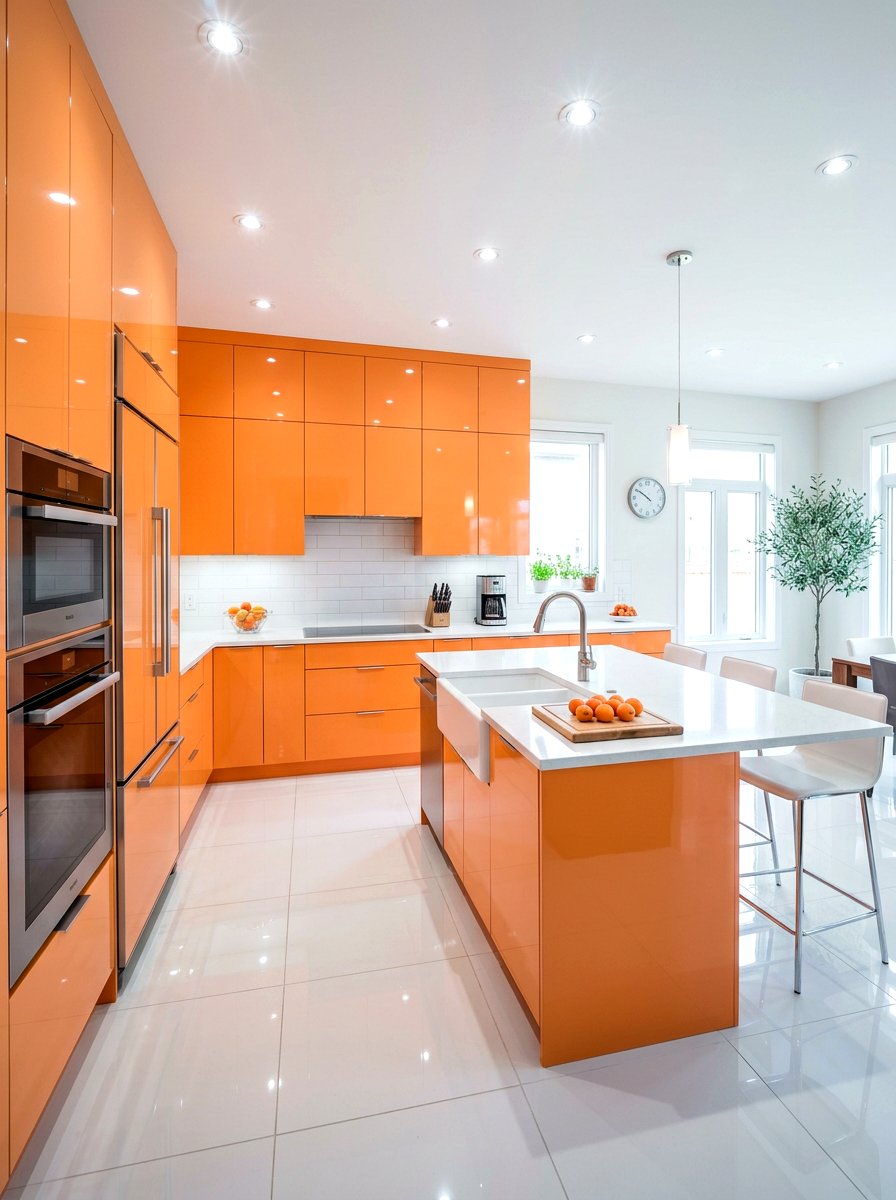
For a high-energy, high-impact kitchen, a glossy apricot finish is an excellent choice. The shiny surface reflects light and color, making the apricot hue appear even more vibrant and saturated. This look is very popular in modern European-style kitchens where flat-panel cabinets and a sleek, polished look are preferred. The gloss adds a sense of depth and luxury, and it is also very easy to wipe clean, making it a practical choice for busy families. When paired with high-tech appliances and integrated lighting, a glossy apricot kitchen feels cutting-edge, fashionable, and full of life, creating a truly memorable heart for any modern home.
28. Apricot wallpaper kitchen
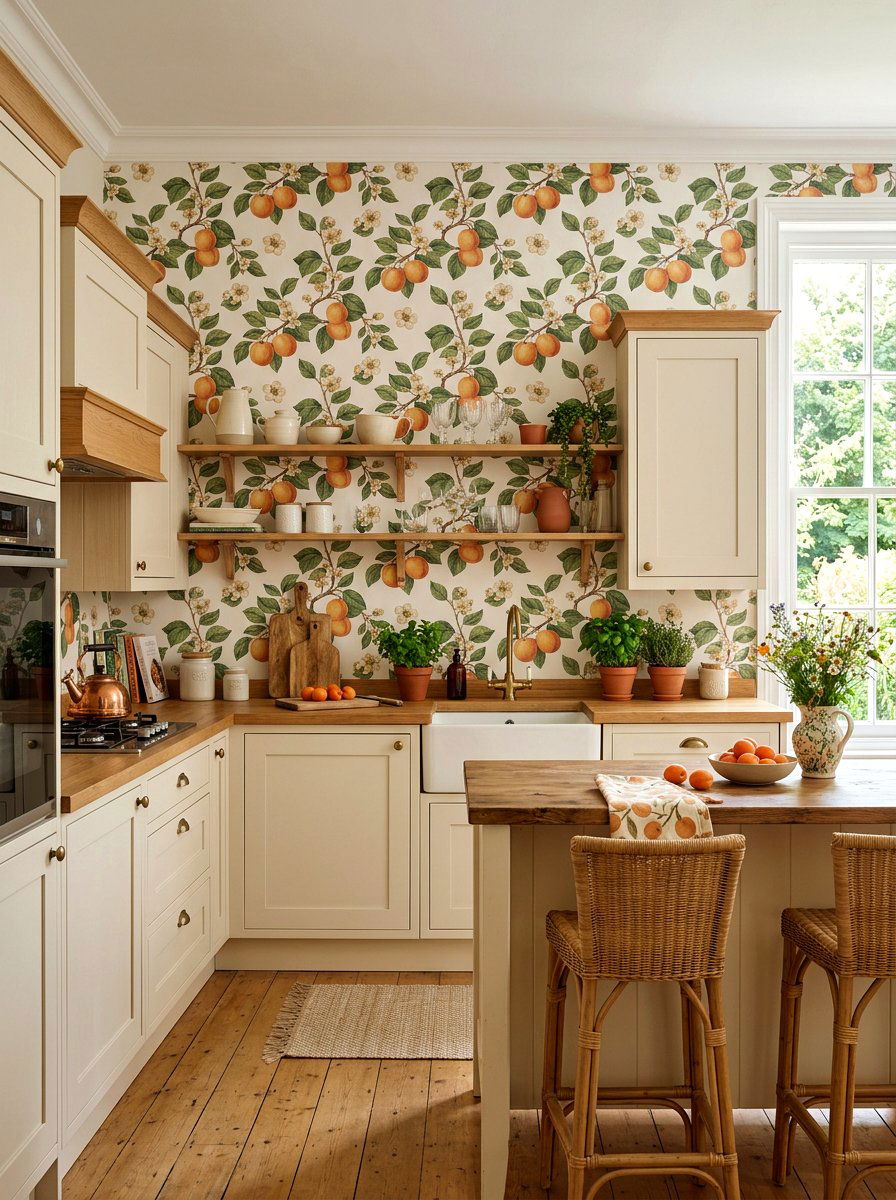
Wallpaper is a fantastic way to introduce apricot through patterns and textures rather than solid blocks of paint. Look for nature-inspired prints featuring apricot-colored fruits, floral motifs, or even subtle geometric shapes. Applying wallpaper to a single wall or inside a pantry adds a layer of surprise and whimsy to the kitchen design. It allows you to bring in multiple shades of apricot alongside other accent colors like green or blue. This is a great way to add "soul" to a new construction home or to give a dated kitchen a quick, personality-filled update that feels curated, artistic, and deeply personal.
29. Farmhouse apricot kitchen
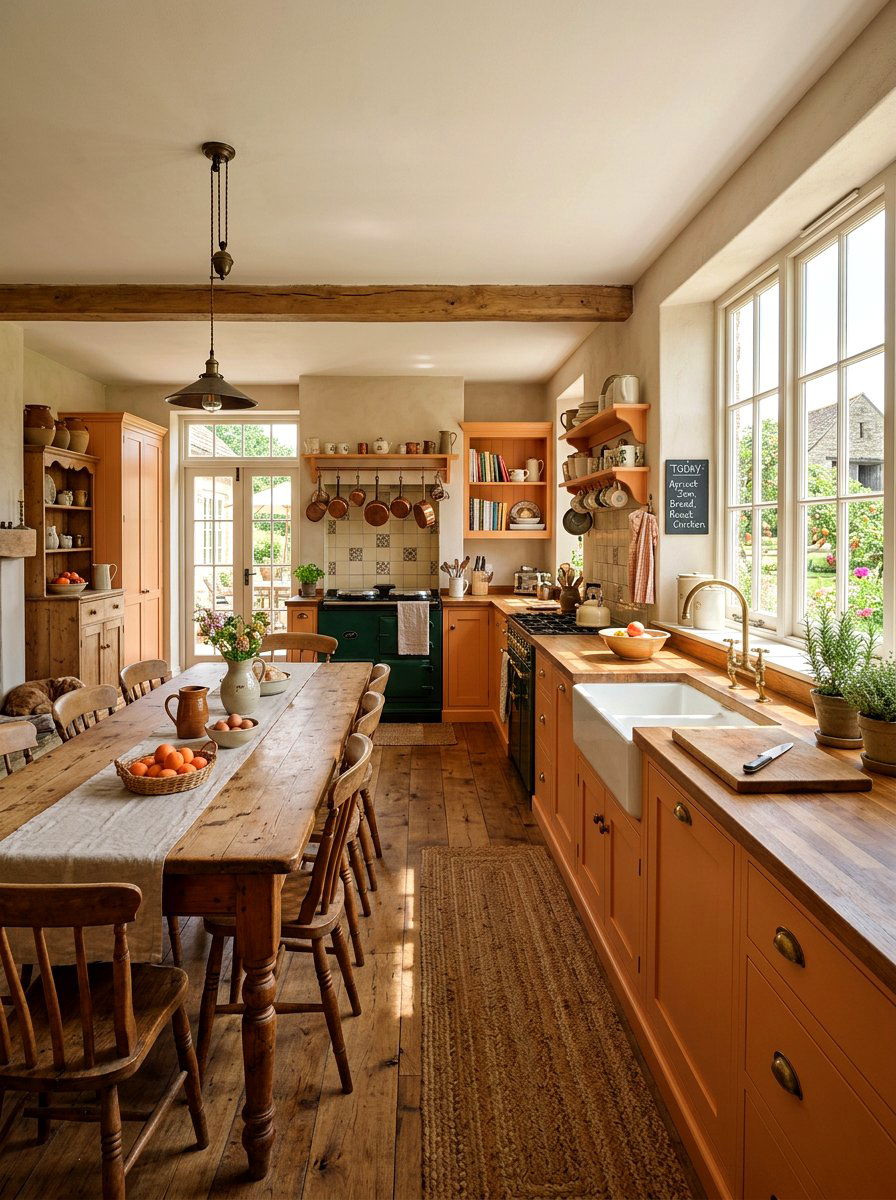
The classic farmhouse kitchen is given a fresh, modern update when the traditional white or cream is swapped for a soft apricot. This color looks beautiful on large Shaker cabinets and pairs perfectly with a white porcelain apron-front sink. The warmth of the apricot complements the rustic nature of butcher block countertops and woven accessories. It keeps the farmhouse vibe but moves it away from the overused "all-white" look, offering something more unique and sunny. Adding some copper pots and vintage-style lighting will complete this look, making the kitchen feel like a cozy, productive space that is always ready for some home-style baking.
30. Apricot floor tile kitchen
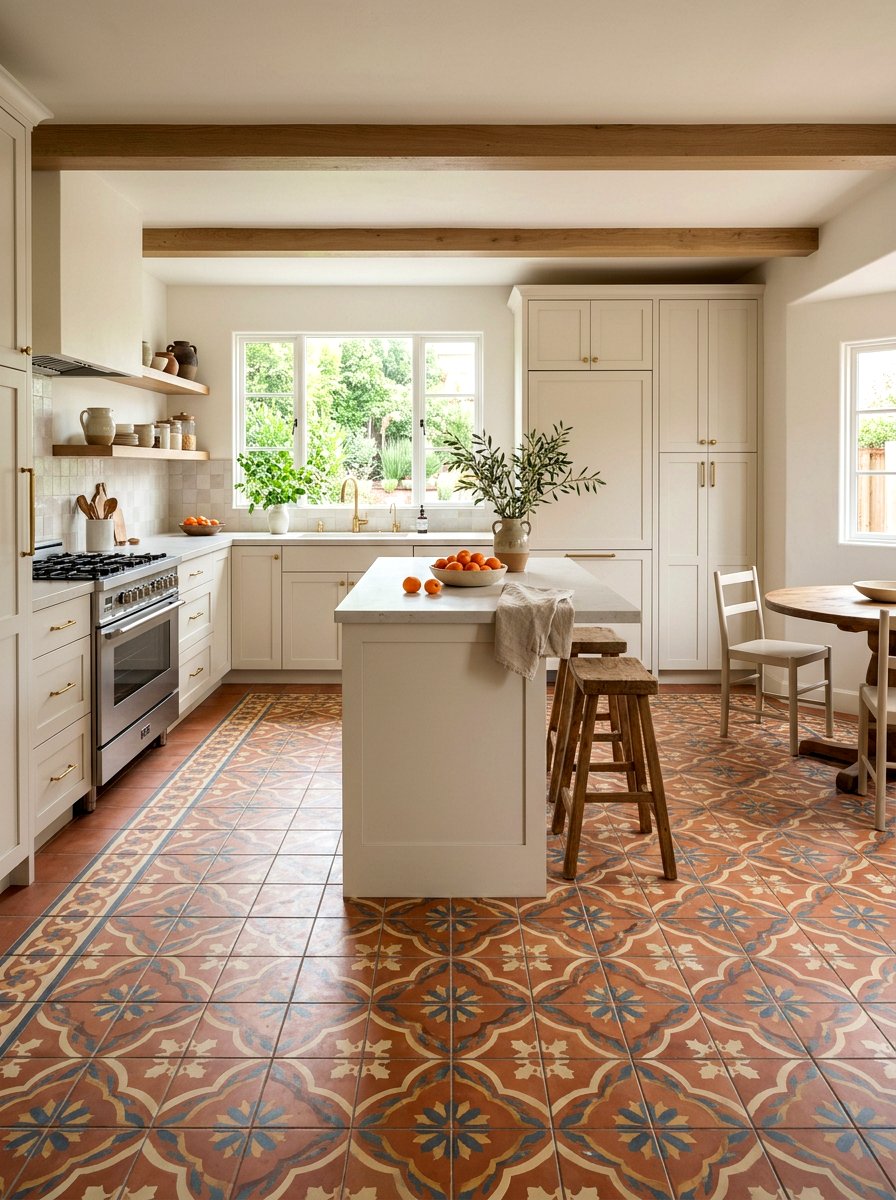
Apricot floor tiles, particularly in a terracotta or encaustic style, provide a warm and grounded foundation for the entire kitchen. Whether you choose a solid color or a patterned tile that incorporates apricot tones, the floor becomes a major design element that radiates warmth from the ground up. This works especially well in Mediterranean or Southwestern-style kitchens where earthy colors are a staple. The warm floor tiles pair beautifully with light-colored cabinets, creating a balanced visual weight in the room. It is a durable and stylish way to ensure your kitchen feels sun-drenched and inviting, regardless of the weather outside or the time of year.
Conclusion:
Exploring these apricot kitchen ideas reveals just how versatile and transformative this warm hue can be for the modern home. From full cabinetry transformations to subtle accent walls and textured tiles, apricot offers a unique way to inject personality and sunshine into your cooking space. It bridges the gap between bold creativity and timeless comfort, making it a sustainable choice for long-term enjoyment. Whether you prefer a sleek minimalist look or a cozy rustic environment, there is an apricot application that will perfectly suit your style. We hope these detailed concepts inspire you to embrace this juicy, elegant color and create a kitchen that feels truly special.

Related posts: