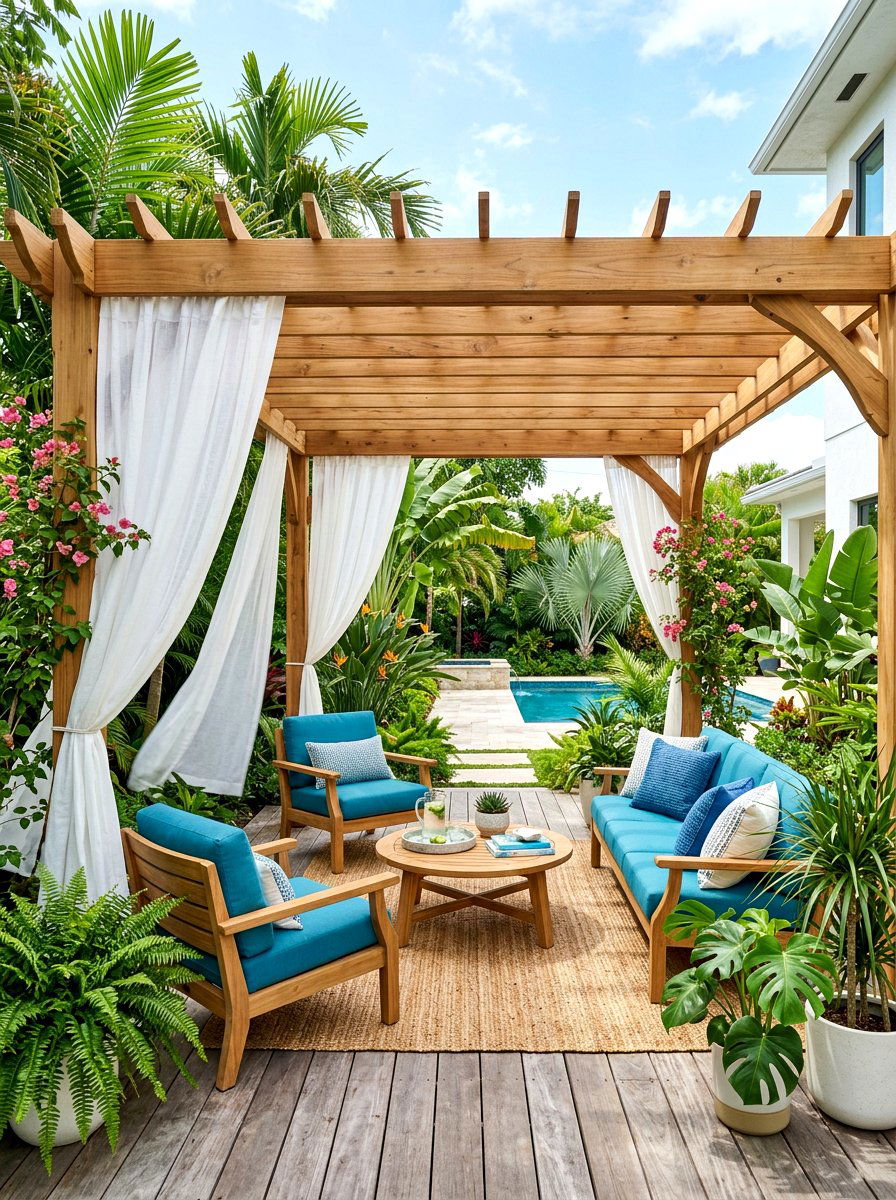
Creating a dedicated massage corner within your home is more than just a luxury; it is a vital step toward long-term wellness and stress management. By designing a specific area for physical recovery, you establish a ritual of self-care that can significantly improve your daily quality of life. Whether you have an entire spare room or just a quiet nook in your bedroom, the right environment makes all the difference. This guide explores a diverse range of design concepts, focusing on atmosphere, lighting, and layout to help you build a sanctuary. From Zen-inspired retreats to modern high-tech recovery zones, these professional setups bring the luxury spa experience directly into your personal living space.
1. Zen Bedroom Massage
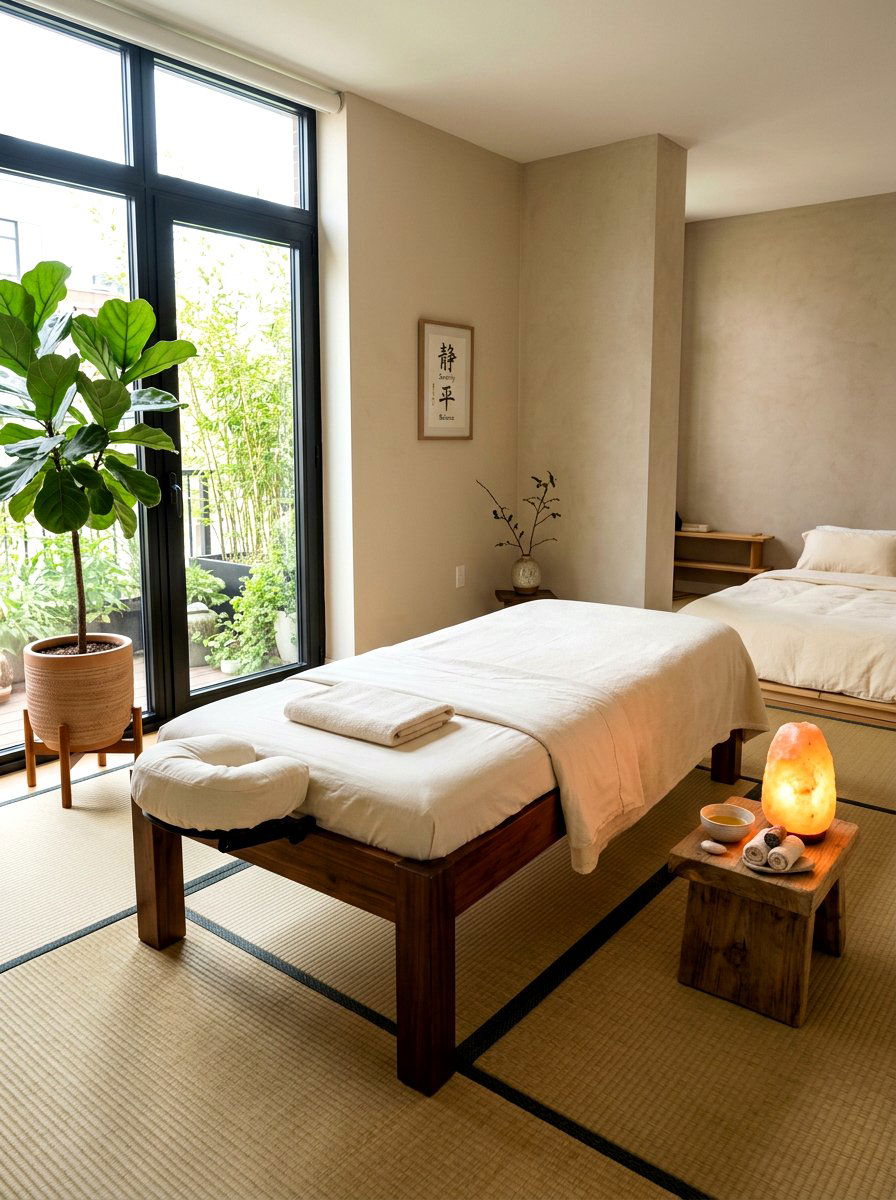
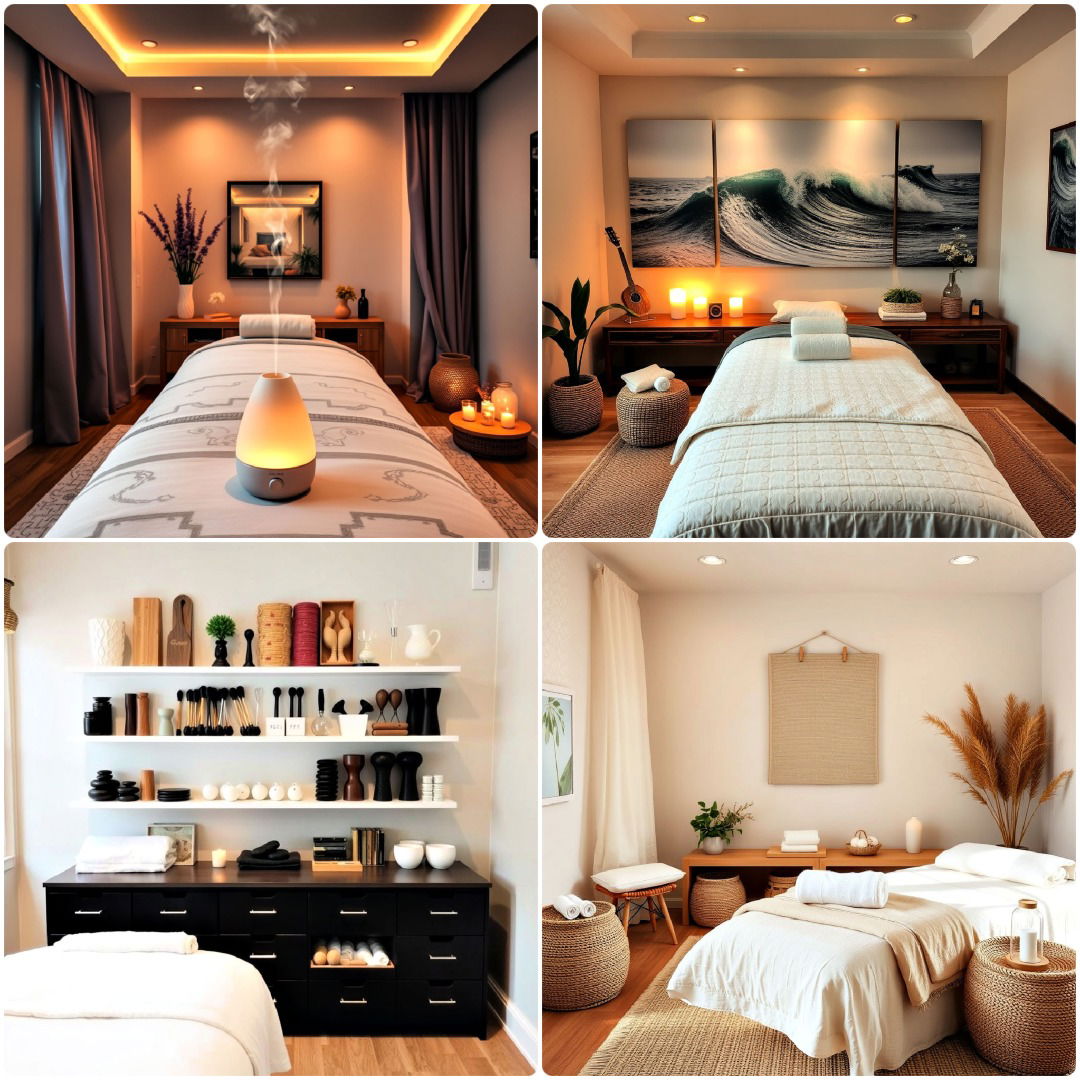
Integrating a massage station into your bedroom creates a seamless transition between sleep and restoration without needing a separate floor plan. This design utilizes a low-profile massage table positioned near the foot of the bed, maintaining a clean visual line across the suite. Soft, woven floor mats like tatami provide an organic texture that grounds the space, while neutral linens in flax or cream enhance the calming atmosphere. To complete the look, use a small wooden side table for essential oils and a warm salt lamp for amber-toned lighting. This arrangement transforms a standard sleeping area into a holistic wellness hub where relaxation becomes a natural part of your nightly routine.
2. Home Spa Room
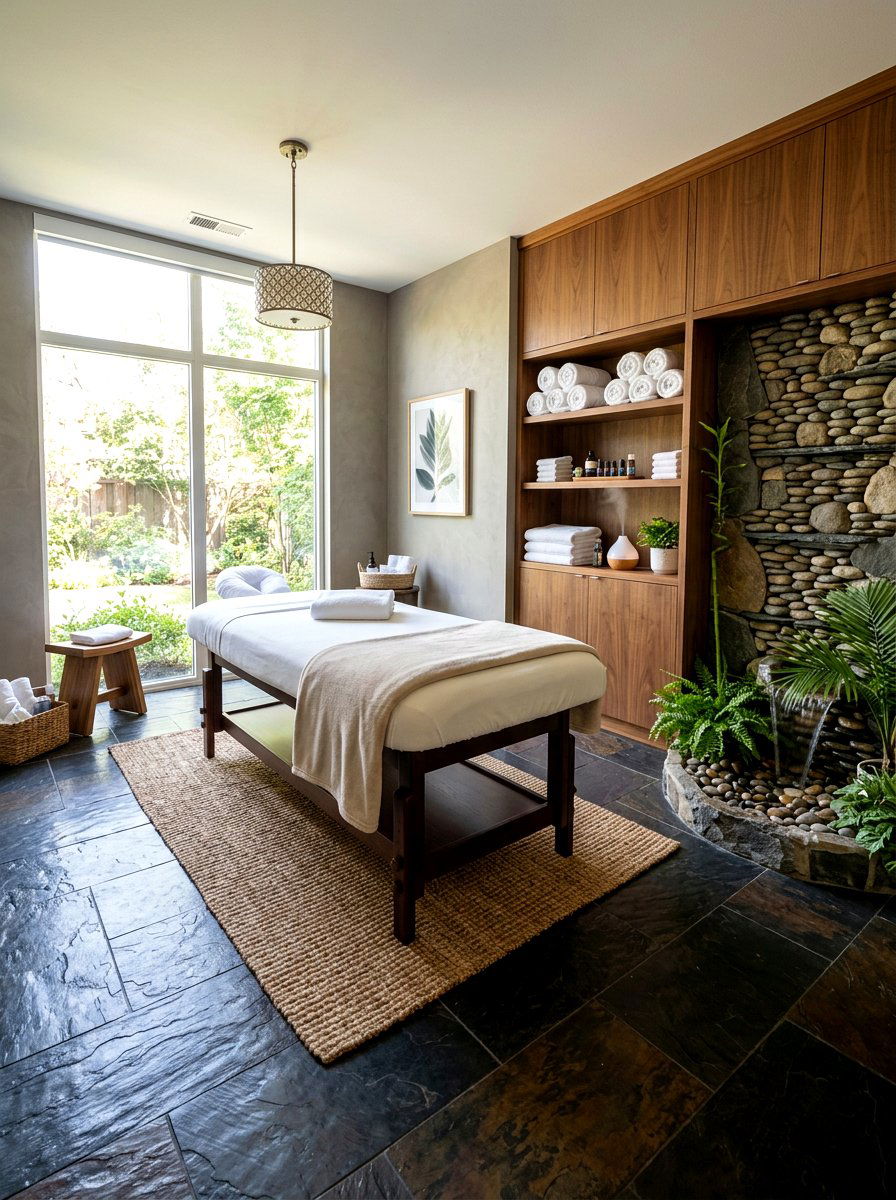
Dedicated home spa rooms focus on total sensory immersion by combining professional equipment with high-end architectural finishes for a true retreat. This full-room design often features a center-placed professional massage table with plenty of walking space for a therapist or partner to move freely. Floor-to-ceiling cabinetry stores fresh white towels and massage stones, keeping the floor area free of any clutter or distractions. Recessed ceiling lights with dimmer switches allow you to control the mood, while a small water feature provides a soothing background soundscape. Using moisture-resistant materials like tile or treated wood ensures the room stays pristine even if you incorporate steam or heated treatments.
3. Garden Massage Area
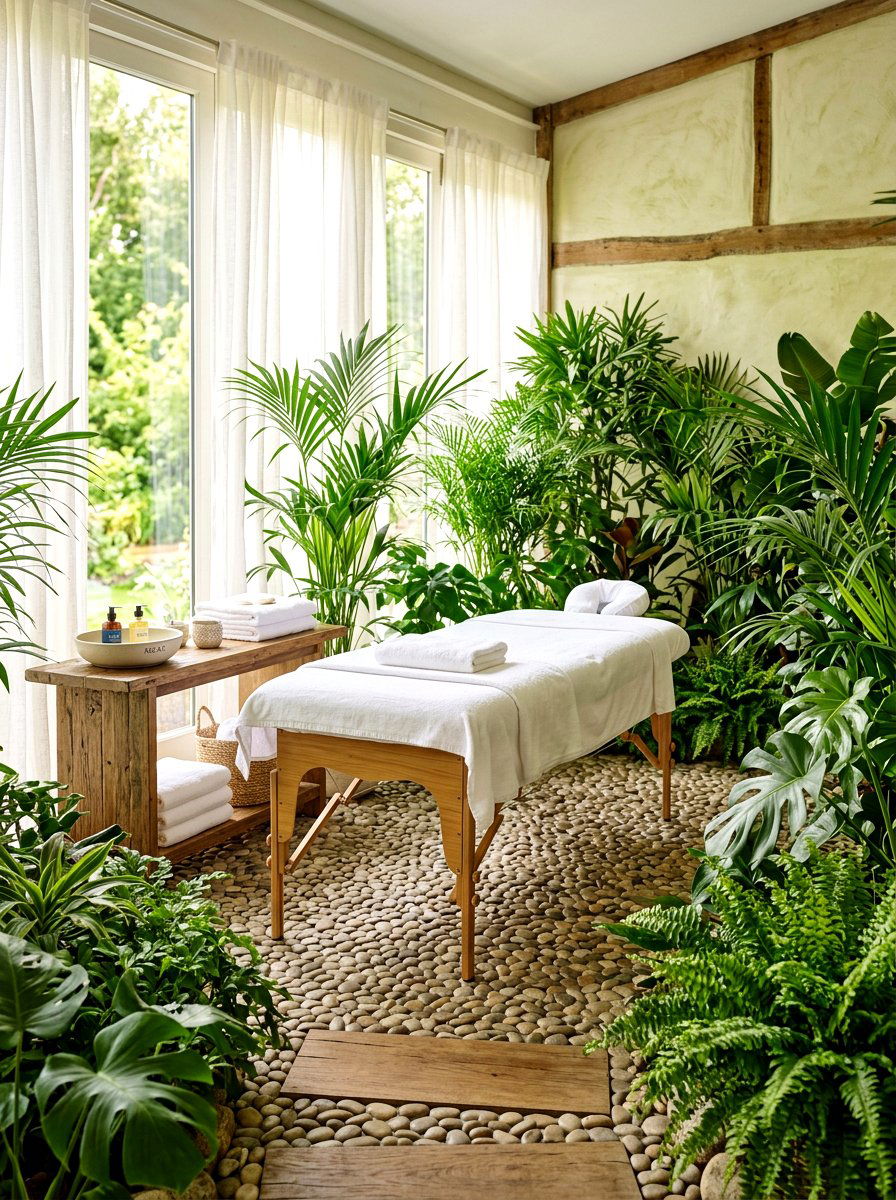
Bringing your wellness practice into an indoor garden setting uses biophilic design to lower cortisol levels and enhance the overall healing experience. This setup places a sturdy massage table among lush potted palms, ferns, and hanging vines to create a living green sanctuary within the home. Natural sunlight filters through sheer white curtains, providing a bright yet soft illumination that feels warm on the skin during a morning session. The floor should consist of natural materials like slate or pebble tile to mimic an outdoor path while remaining easy to sanitize. This theme bridges the gap between interior comfort and the restorative power of nature for ultimate relaxation.
4. Minimalist Massage Nook
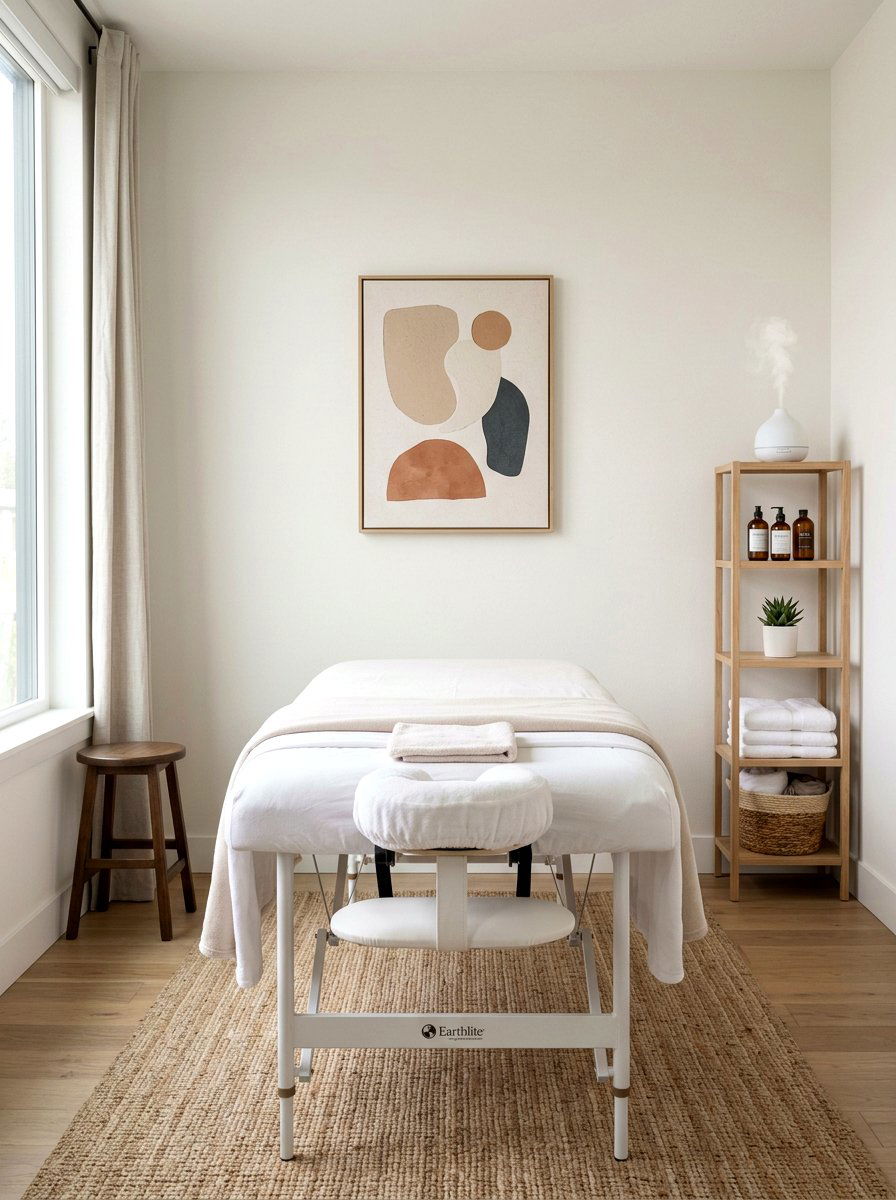
A minimalist massage nook prioritizes function and empty space to reduce mental clutter and allow for a deep, focused therapeutic session. The design typically features a sleek, foldable massage table in a light wood finish that can be tucked away or left as a sculptural element. Walls are kept bare or decorated with a single piece of abstract art to prevent visual overstimulation while you are resting. Soft gray or off-white wall colors reflect natural light, making even a small corner feel expansive and airy during use. This approach is perfect for modern apartments where every square foot must serve a clear purpose without feeling overcrowded.
5. Attic Massage Setup
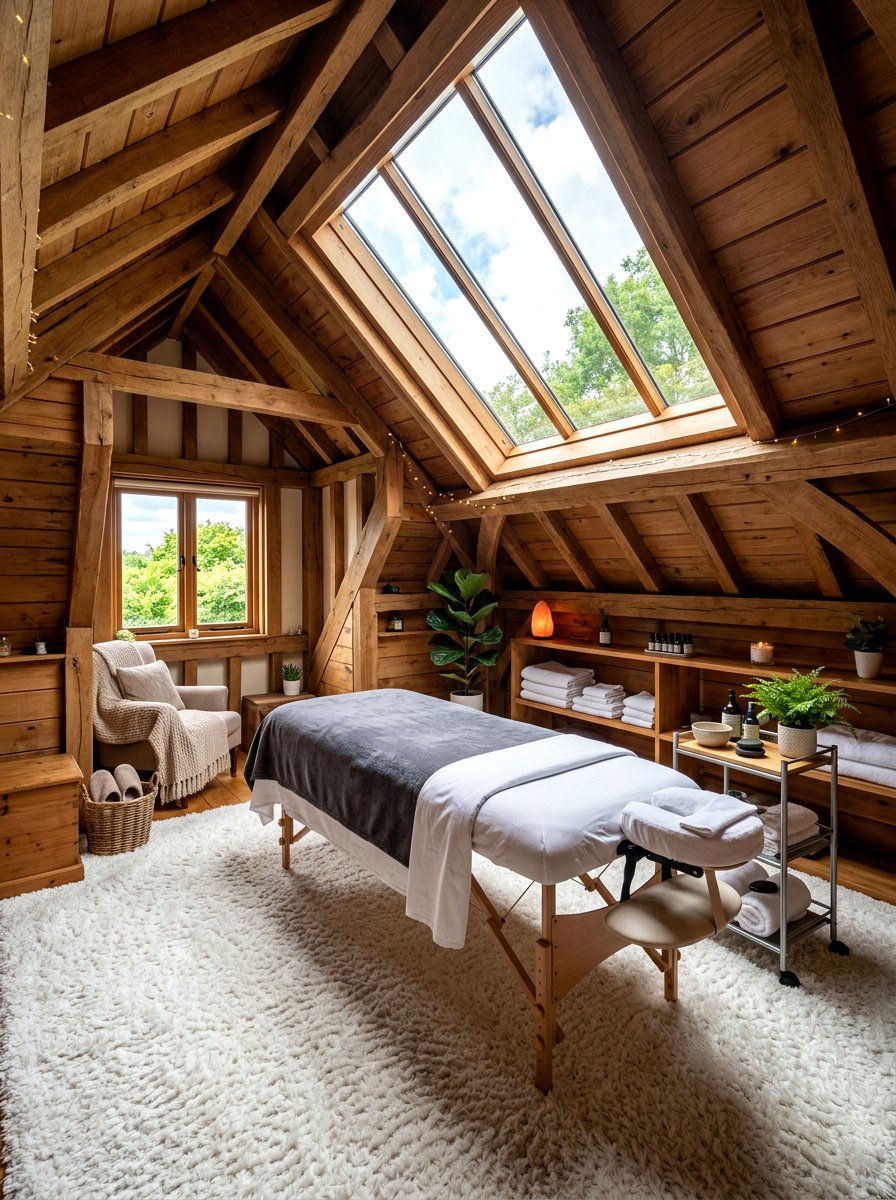
Converting an attic into a massage retreat utilizes the secluded nature of the top floor to ensure complete privacy away from household noise. The sloped ceilings of an attic provide a cozy, cocoon-like feeling that naturally lends itself to a quiet and intimate wellness environment. Position the massage table directly under a skylight to benefit from natural light and a view of the sky during daytime treatments. Use plush area rugs to dampen sound and add a layer of warmth to the floor, creating a soft landing for your feet. Built-in shelving along the low walls stores linens and supplies efficiently without eating into the central floor space.
6. Boho Massage Corner
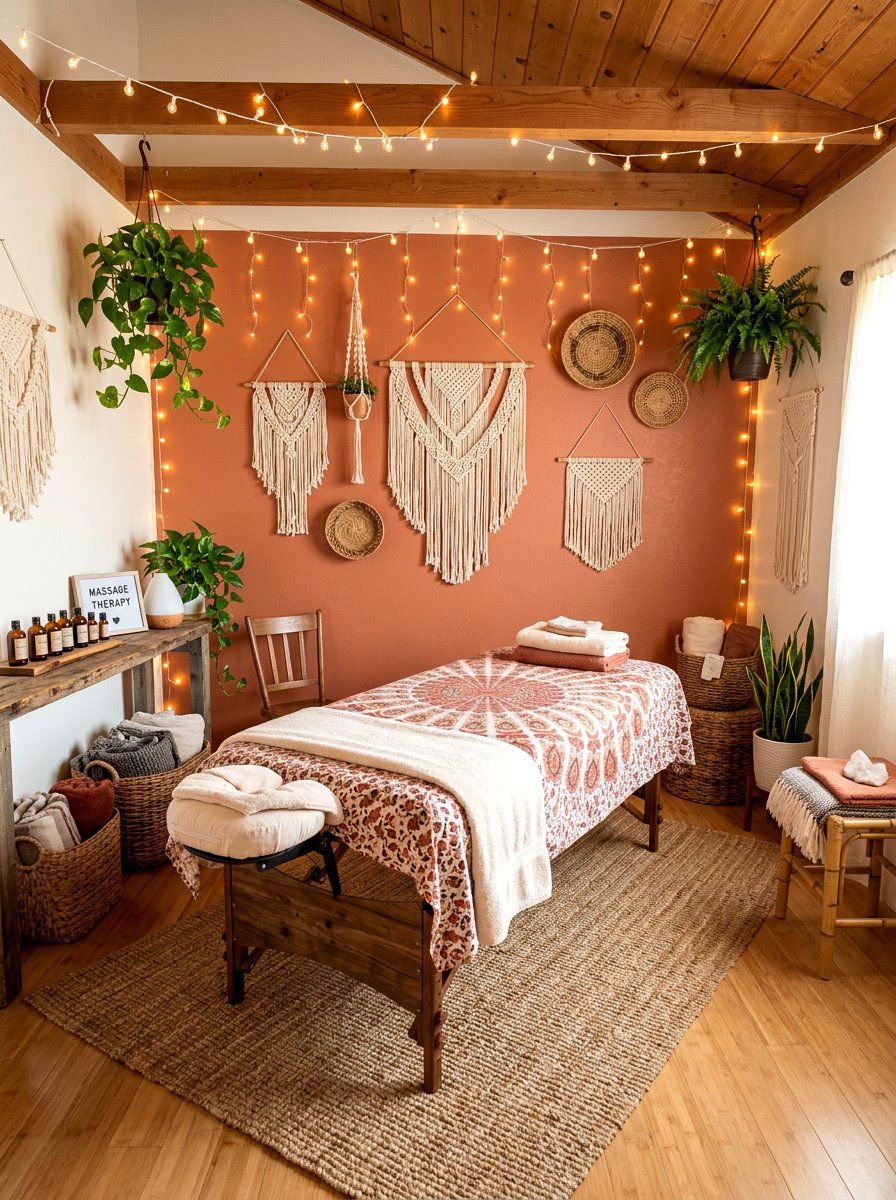
A bohemian-themed massage corner uses rich textures, warm colors, and layered fabrics to create a cozy and inviting space for physical therapy. This design incorporates a massage table draped in a colorful mandala throw or a high-quality textured linen cover for a relaxed look. Macramé wall hangings and woven baskets for towel storage add a handcrafted feel that makes the area feel personal and deeply comfortable. Warm string lights or lanterns replace harsh overhead lighting, casting a soft and playful glow across the room during evening massages. Potted plants and incense holders complete the sensory experience, making the corner feel like a creative and soulful sanctuary.
7. Luxury Massage Space
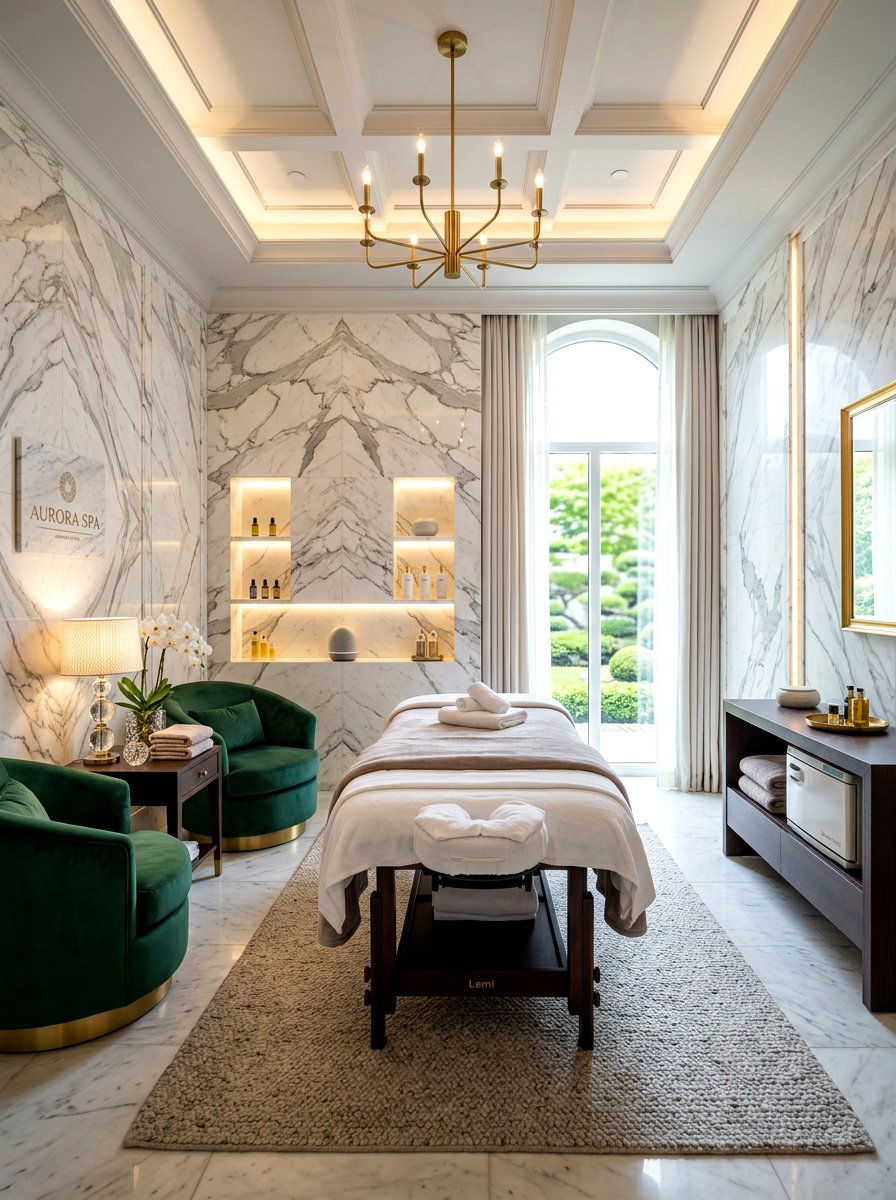
Luxury massage spaces rely on premium materials and sophisticated lighting to replicate the atmosphere of a world-class hotel spa within your residence. High-end features like marble wall panels, heated floors, and a professional-grade adjustable massage table serve as the focal points of this design. Integrated sound systems hidden within the walls or ceiling provide high-fidelity ambient music that enhances the deep state of relaxation. Large mirrors can be used to reflect light and make the suite feel larger, while velvet seating provides a place to rest before or after. The color palette remains elegant, using deep jewel tones or rich metallics to convey a sense of opulence.
8. Window Massage Section
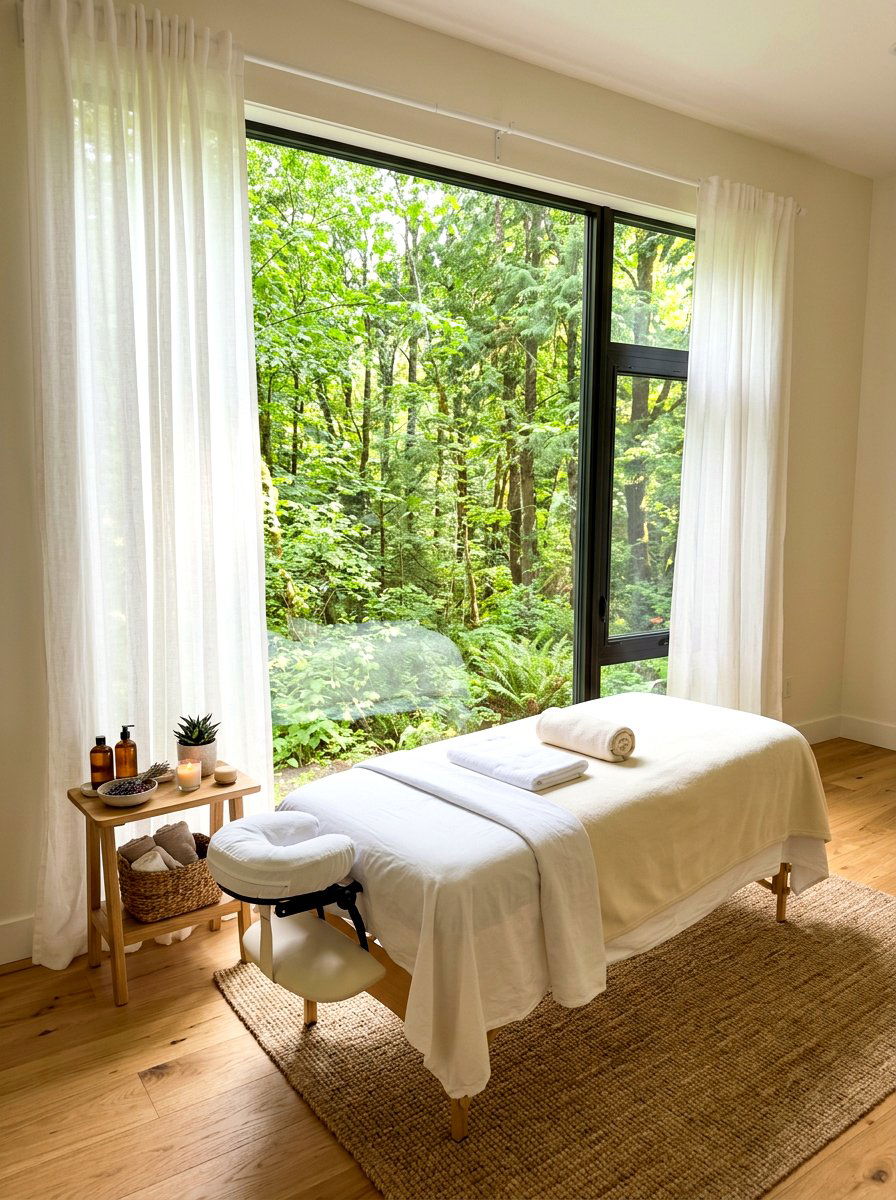
Setting up a massage area near a large window allows you to capitalize on natural vistas and a sense of openness during sessions. This design places the table parallel to the glass, using light-filtering blinds or sheer drapes to maintain privacy while letting in soft, diffused light. The surrounding decor should remain simple to keep the focus on the view outside, whether it is a garden, forest, or cityscape. Choose a color palette that complements the exterior scenery, such as earth tones for a wooded view or soft blues for a coastal setting. This connection to the outside world helps to ground the body and refresh the mind.
9. Basement Wellness Massage
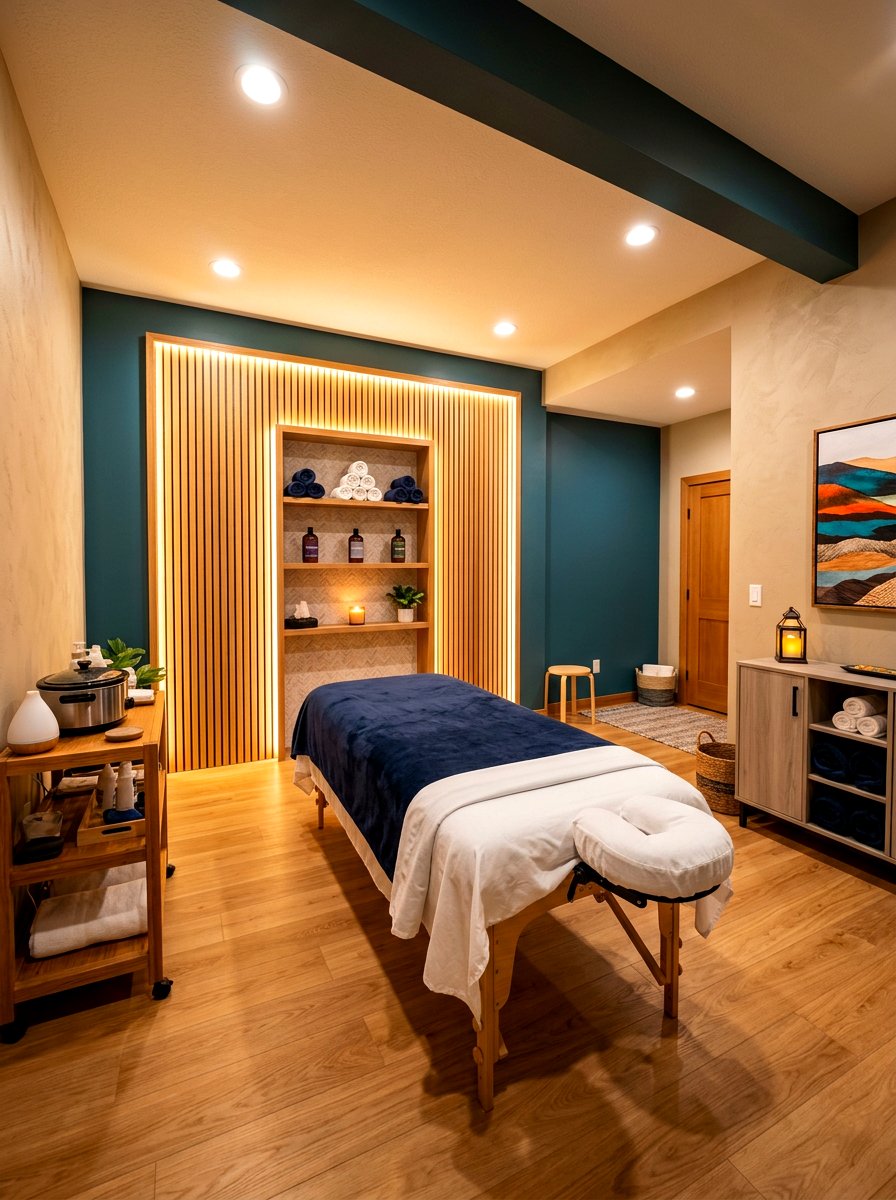
Transforming a basement into a wellness zone is an excellent way to use subterranean space where light and temperature are easily controlled. Because basements often lack windows, this design focuses on artificial lighting schemes like backlit panels or "faux skylights" to create a bright atmosphere. Moisture-proof flooring and wall treatments are essential to keep the space fresh, while acoustic panels help block out noise from the floors above. A dedicated massage table sits in the center of the room, surrounded by organized storage for oils, stones, and towels. This setup provides a private, cave-like retreat that is perfect for those who want total seclusion.
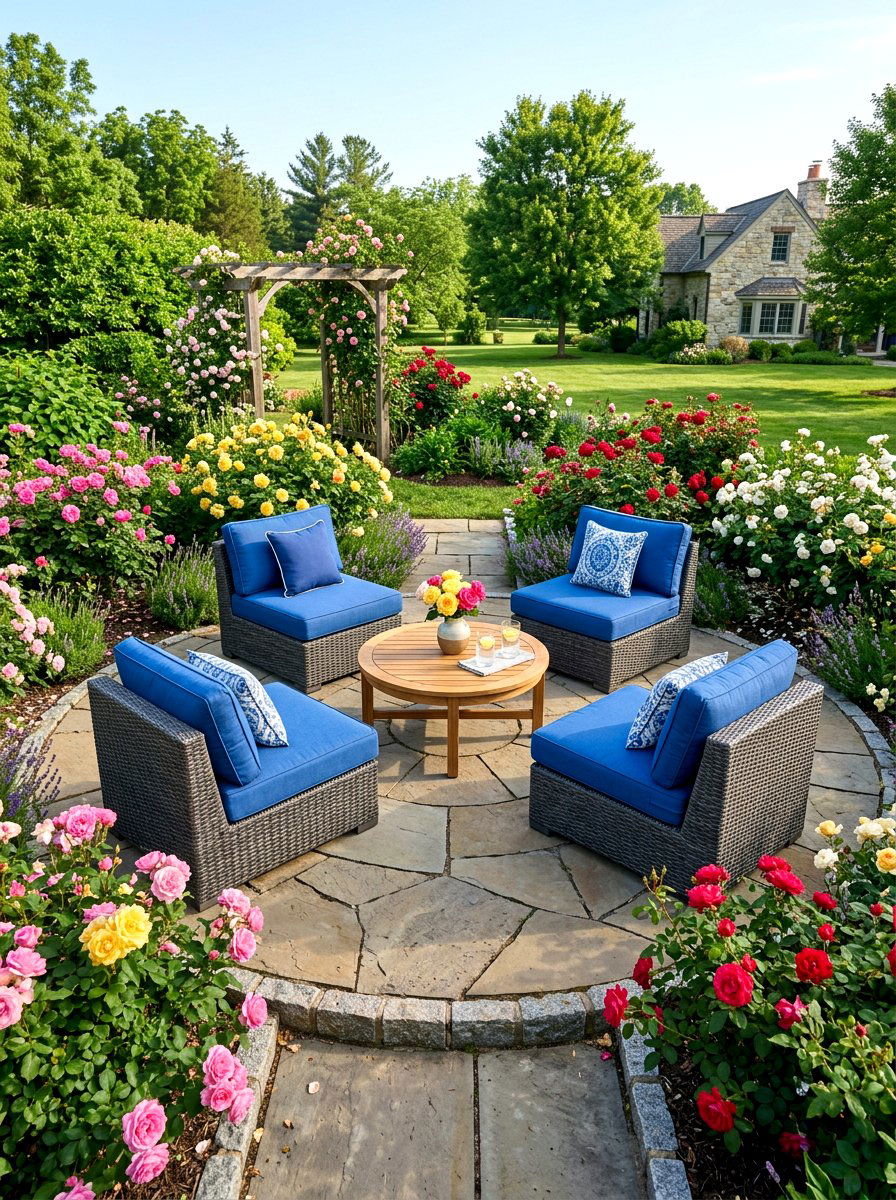
10. Modern Massage Suite
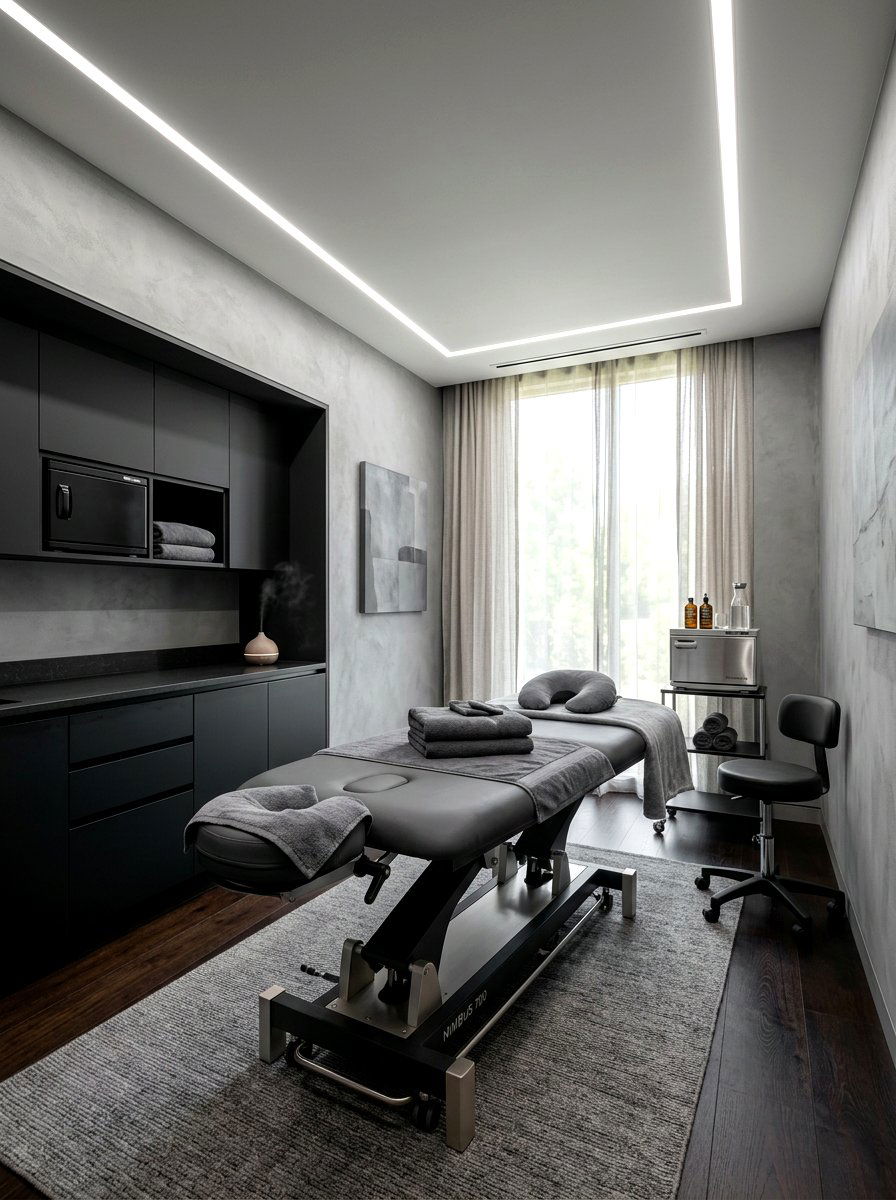
The modern massage suite focuses on clean lines, high-tech features, and a monochromatic color scheme for a professional and efficient wellness environment. This design often incorporates smart home technology, such as voice-activated lighting and temperature controls that can be adjusted without leaving the massage table. The furniture is sleek and ergonomic, featuring metal or dark wood accents that coordinate with the overall architectural style of a contemporary home. Storage is typically hidden behind handle-less cabinet doors to maintain a seamless look that emphasizes order and cleanliness. This style is ideal for those who appreciate a structured and technologically advanced approach to their personal recovery routines.
11. Bamboo Massage Room
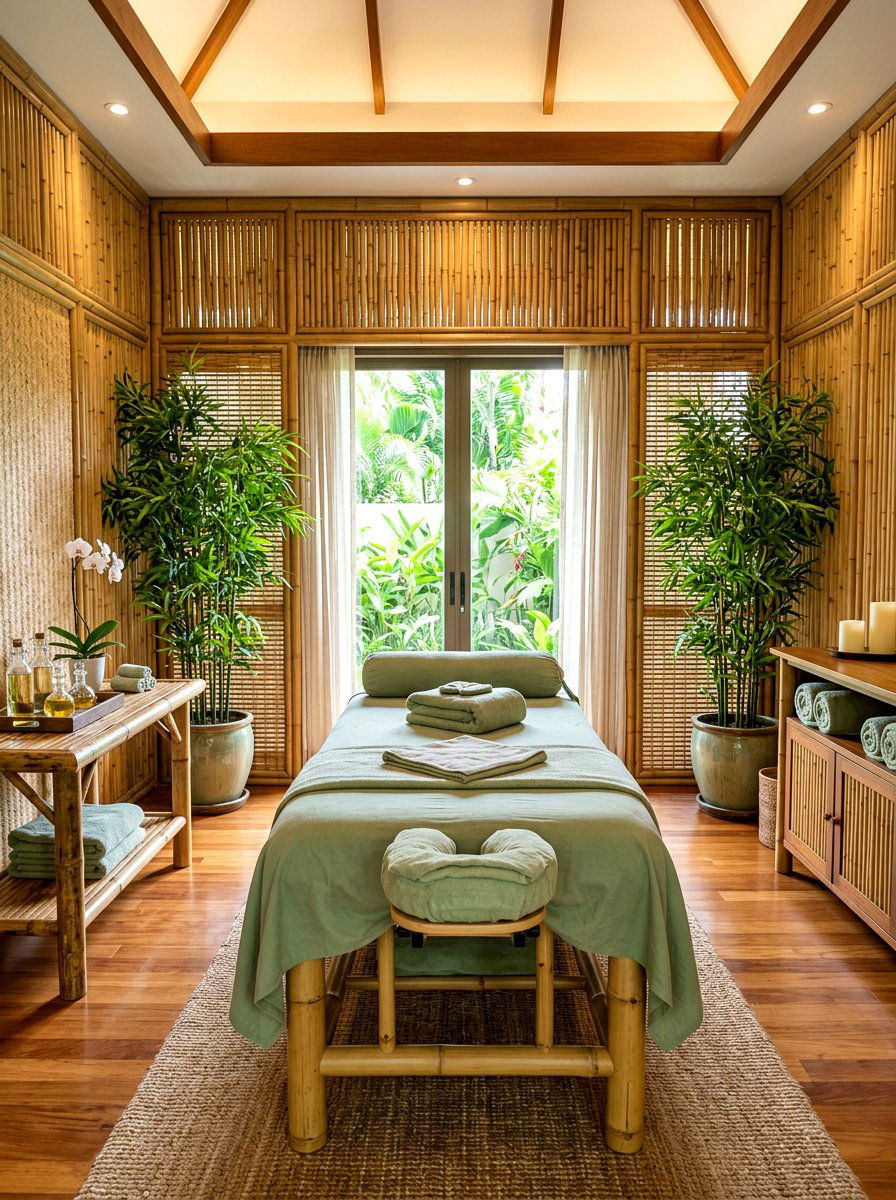
A bamboo-themed massage room uses sustainable materials and organic textures to create an eco-friendly sanctuary that feels light and tropical. Bamboo wall coverings or screens provide a rhythmic visual pattern that is naturally calming and helps to define the boundaries of the space. The massage table itself should feature a bamboo frame, paired with organic cotton linens in soft greens or tan shades to match. Incorporating a small indoor bamboo plant and a stone bowl for water creates a serene focal point that reinforces the tropical theme. This design is highly breathable and visually refreshing, making it perfect for a warm and humid climate.
12. Industrial Massage Loft
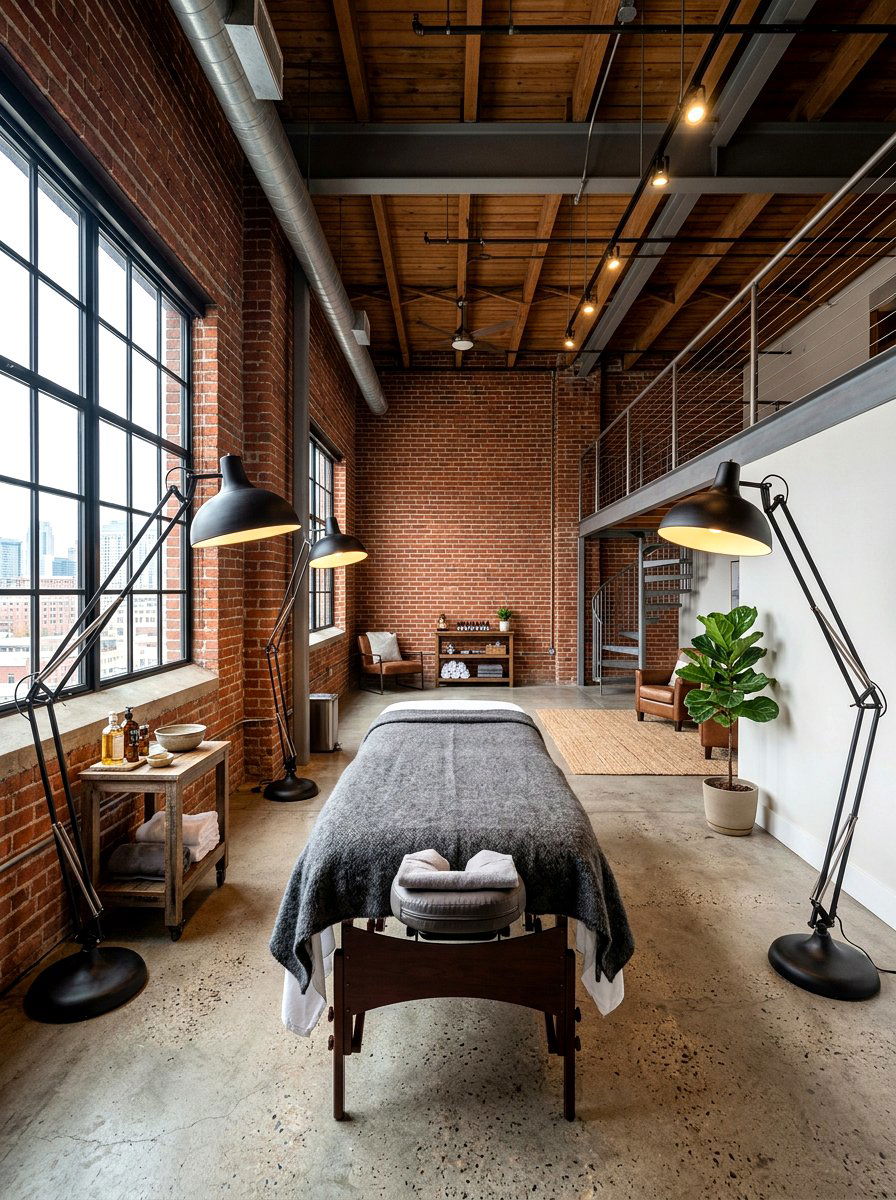
An industrial massage loft takes advantage of raw architectural elements like exposed brick, concrete floors, and metal beams to create a unique atmosphere. To soften the hardness of these materials, the design uses heavy wool rugs, plush massage table covers, and warm-toned wood furniture. Large floor lamps with Edison bulbs provide a vintage glow that contrasts beautifully with the rugged textures of the walls and ceiling. This style is perfect for urban dwellers who want to integrate a wellness space into an open-concept loft without losing the character. The result is a cool, sophisticated environment that feels grounded, stable, and very masculine in its design.
13. Scandinavian Massage Corner
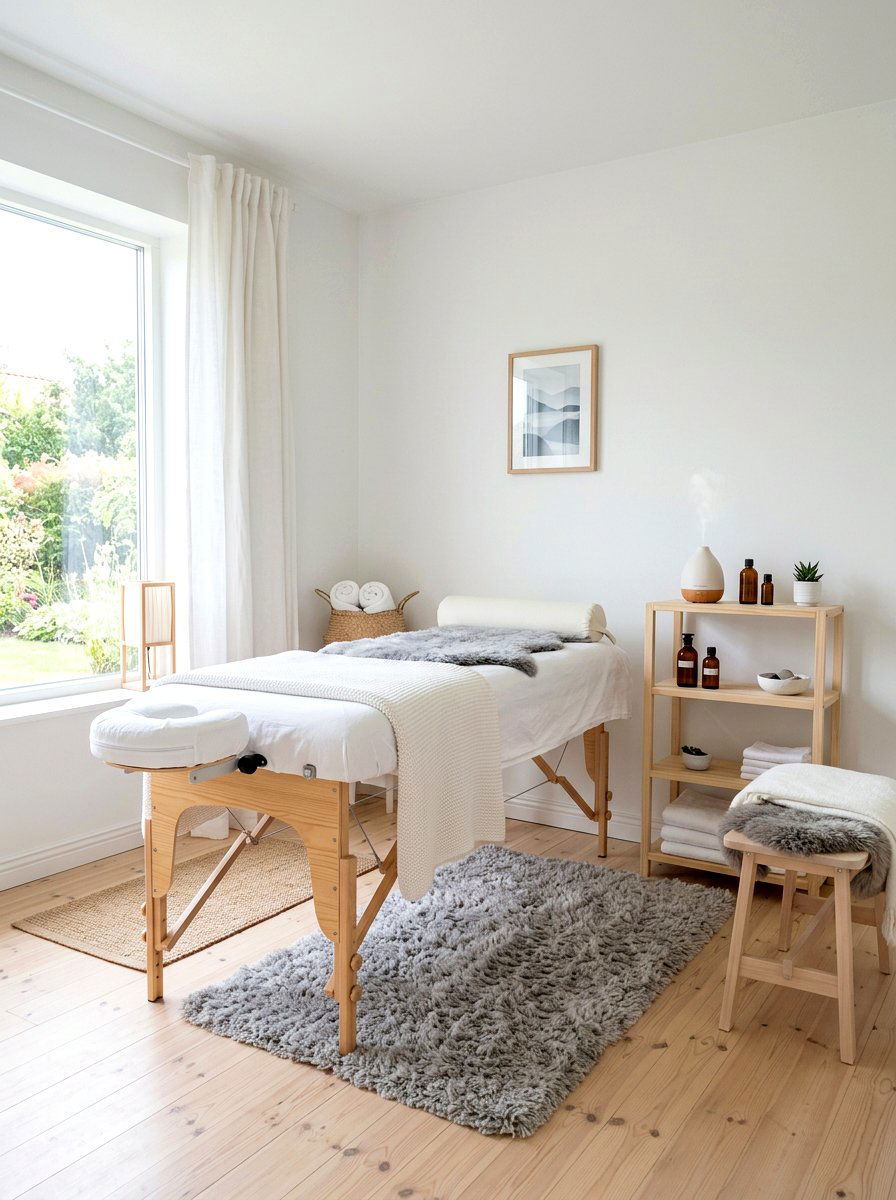
Scandinavian design focuses on "hygge, " or a sense of cozy contentment, making it a perfect theme for a home massage and wellness area. This look uses light-colored woods like pine or ash for the table and storage, paired with a palette of whites and soft grays. Sheepskin rugs and chunky knit blankets add the necessary warmth and texture to make the space feel inviting rather than cold. Large windows with minimal treatments maximize daylight, while simple candles provide a flicker of warmth during the darker winter months. This clean and functional aesthetic promotes a sense of peace through its utter simplicity and focus on comfort.
14. Tropical Massage Space
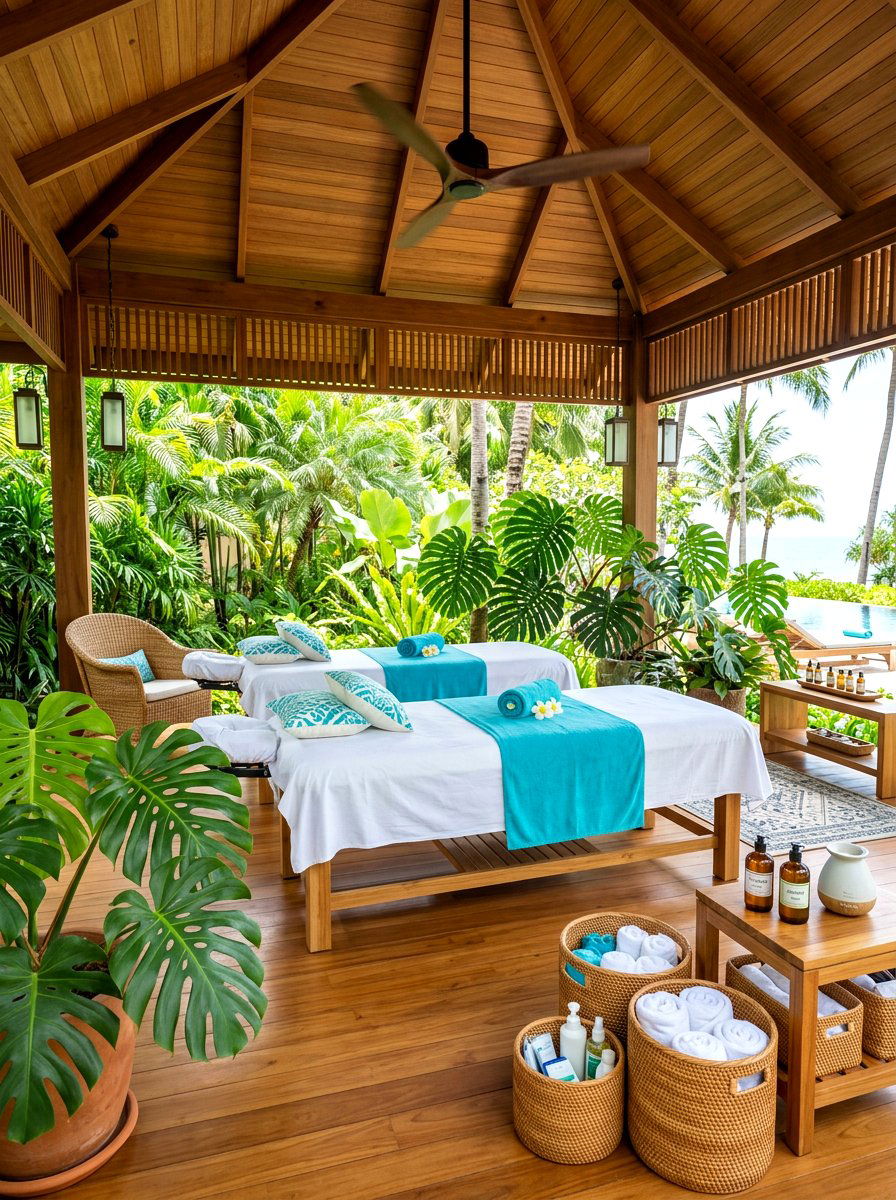
A tropical massage space aims to recreate the feeling of an island getaway through the use of vibrant greenery and natural textures. This room design features large-leafed plants like Monsteras or Birds of Paradise that surround the massage table to create a private jungle. Use rattan or wicker furniture for storage and seating to keep the atmosphere light and breezy, even in a small indoor room. A ceiling fan with wooden blades can help circulate air and provide a rhythmic, relaxing sound that mimics a tropical breeze. Bright white linens and turquoise accents help to finish the look, making the space feel energetic and deeply restorative.
15. Moody Massage Room
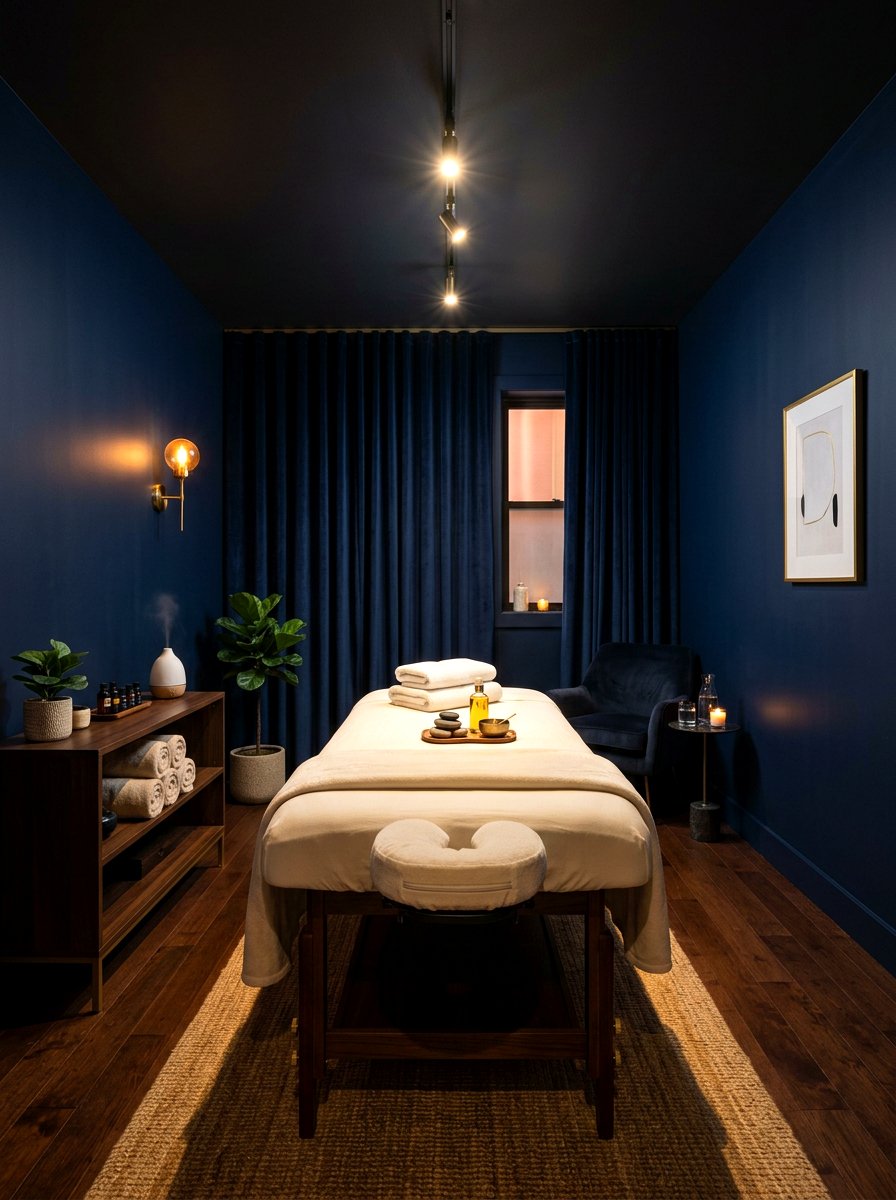
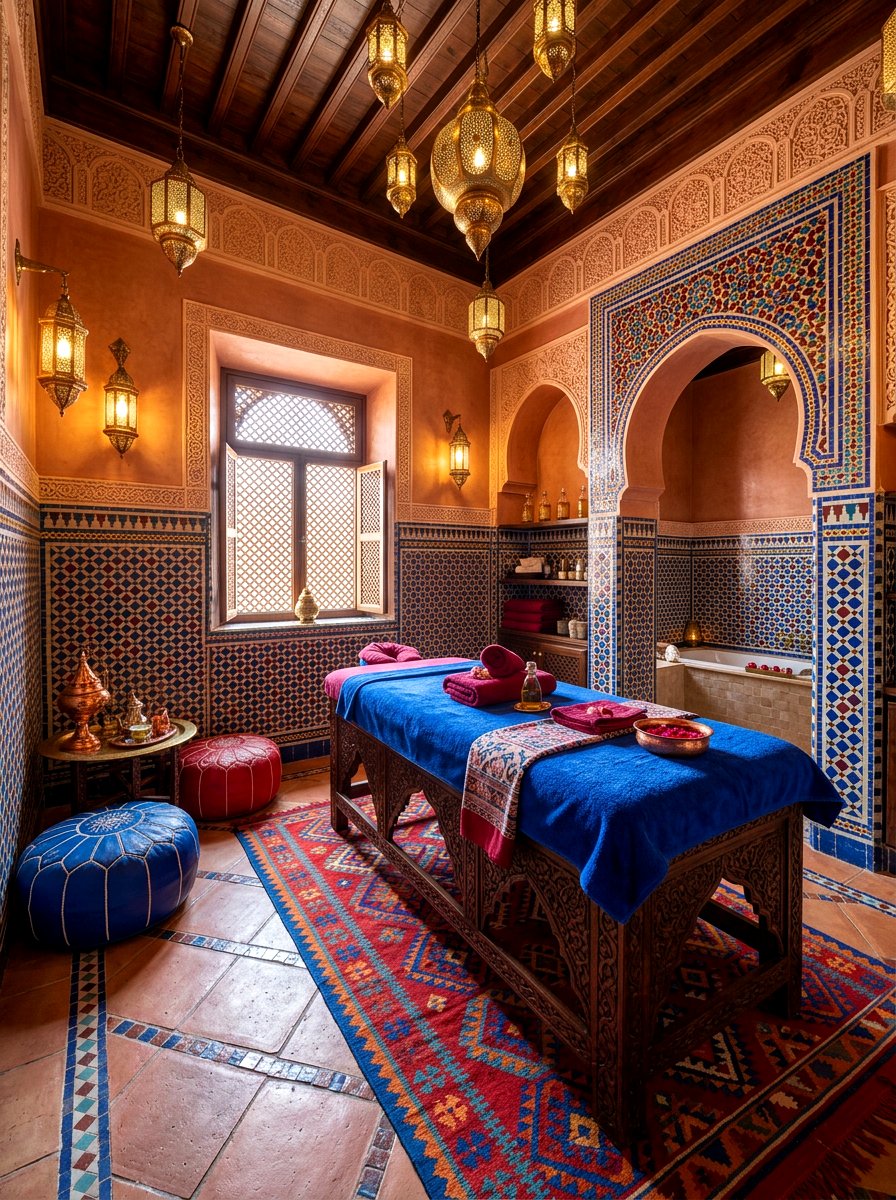
Moody massage rooms use dark colors and dramatic lighting to create a deeply immersive environment that encourages the brain to shut off completely. Deep navy, charcoal, or forest green walls minimize light reflection, making it easier for the eyes to relax during a long massage session. Focal lighting, such as a spotlight on a piece of sculpture or a low-hanging pendant lamp, adds a layer of sophistication. Gold or brass accents on the massage table or side furniture provide a touch of warmth against the darker background. This design is perfect for those who prefer a more intimate, nighttime vibe for their regular muscle recovery work.
16. Small Massage Corner
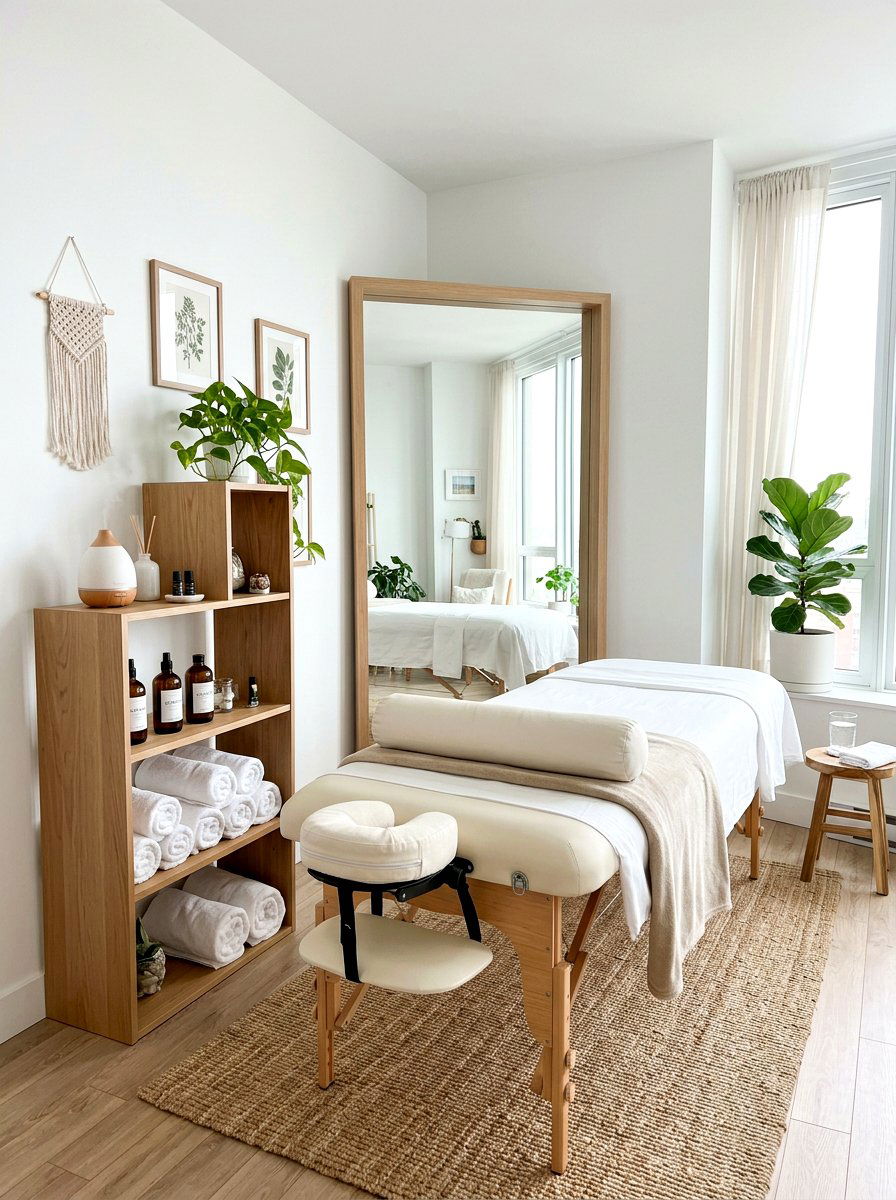
Creating a massage space in a small apartment requires clever organization and multi-functional furniture to ensure the area remains useful and uncluttered. A folding massage table that can be stored against the wall when not in use is the central component of this compact design. Use a tall, narrow shelving unit to hold all your massage supplies vertically, saving valuable floor space for movement around the table. Neutral colors and a large wall mirror can help the small corner feel much larger and more open than it actually is. This setup proves that you do not need a massive room to enjoy the benefits of professional-grade wellness.
17. Sunroom Massage Area
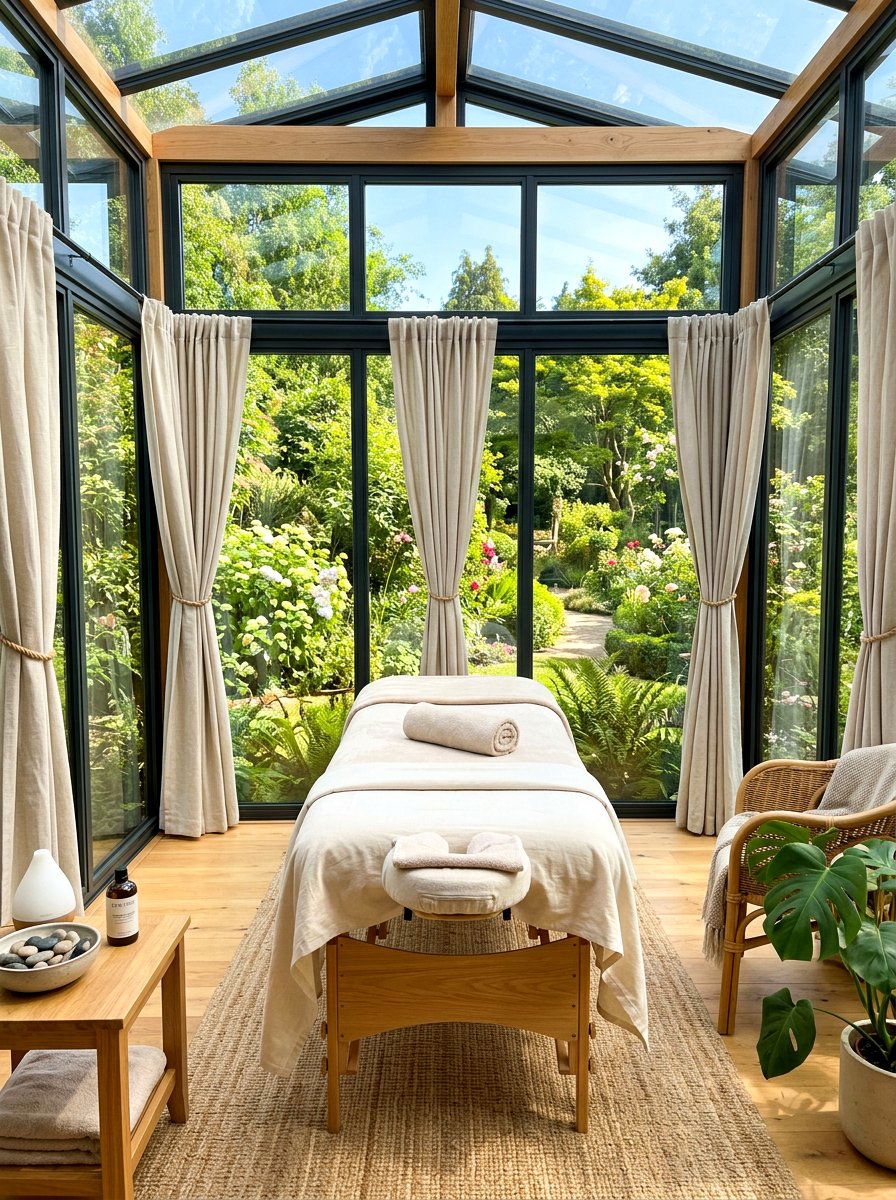
A sunroom provides a unique opportunity to experience a massage while being completely surrounded by the beauty of the outdoors and natural light. This design uses the glass walls of the sunroom to provide a 360-degree view of the property, creating a truly expansive feeling. To prevent the room from getting too hot, use solar shades or thin linen curtains that can be drawn for privacy or shade. The floor is often tile or stone to handle the temperature fluctuations, while the massage table is placed centrally to enjoy the breeze. This setup is perfect for morning sessions when the sun is gentle and the birds are singing.
18. Guest Room Massage
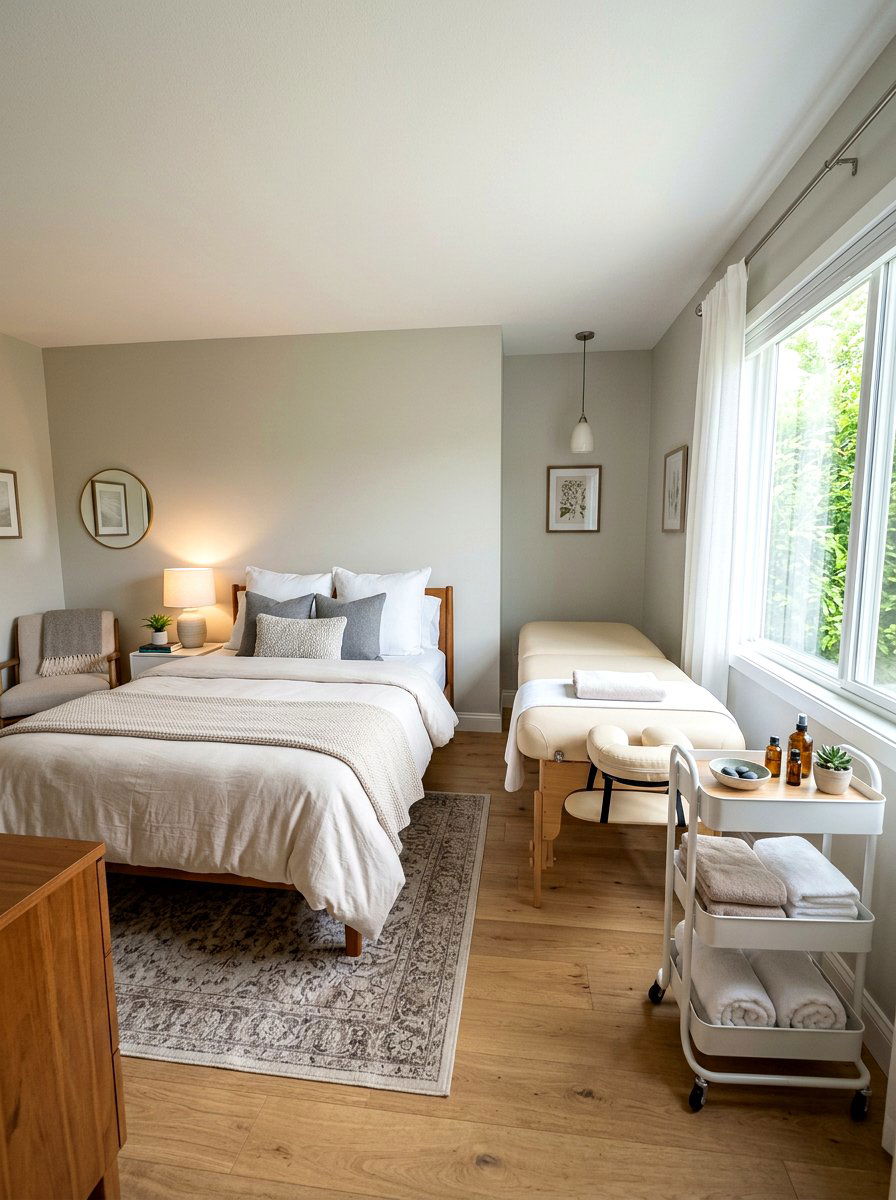
A multi-purpose guest room can easily be adapted to include a massage corner that serves both visitors and the homeowners on a daily basis. By choosing a massage table that coordinates with the guest bed’s linens, the two areas can coexist without clashing in style. A corner of the room is dedicated to a small cart filled with towels, oils, and a wireless speaker for ambient music. When guests are not staying over, the room becomes a private sanctuary for regular physical therapy sessions away from the main living areas. This efficient use of space ensures that a guest room remains functional year-round for the family.
19. Natural Wood Massage
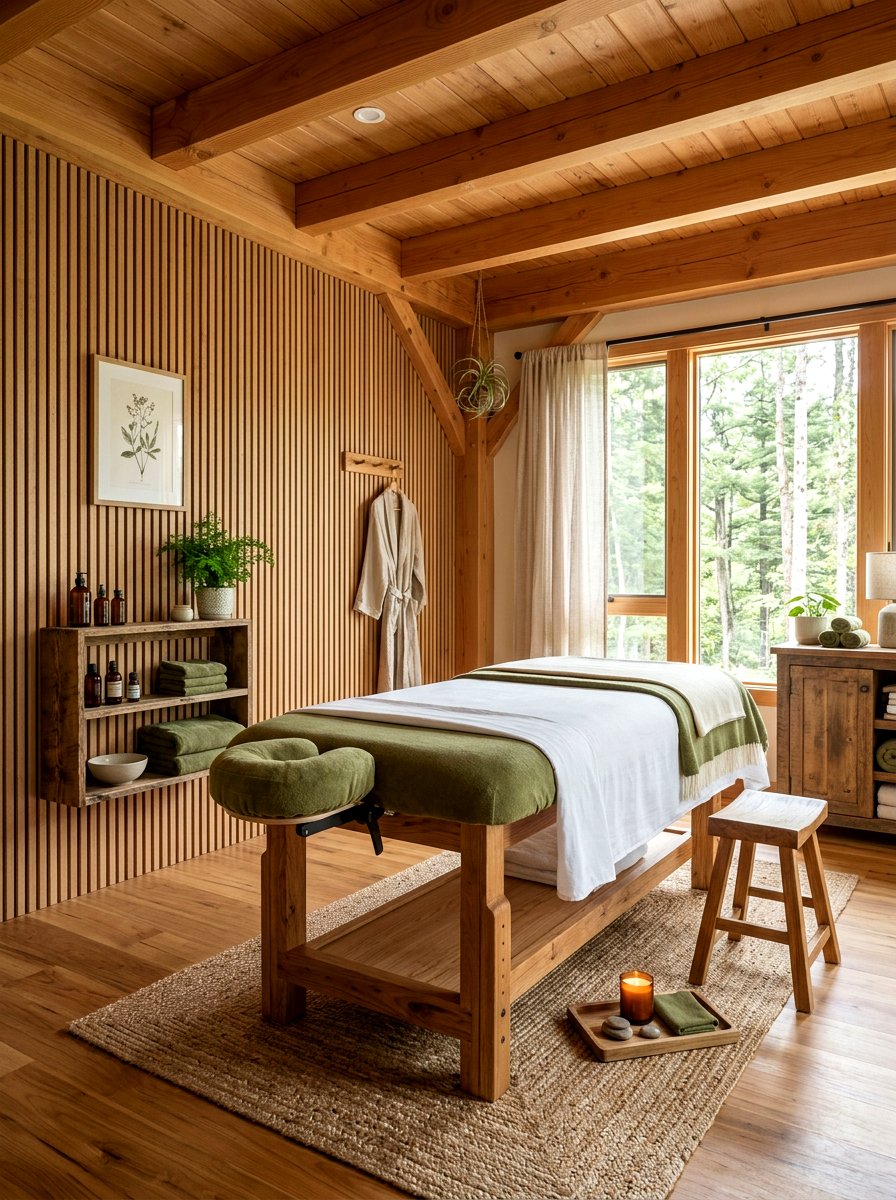
Focusing on natural wood surfaces creates a warm and grounding environment that is ideal for a therapeutic massage and wellness area. This design features wood slat walls or a reclaimed timber ceiling that adds a sense of history and organic beauty to the room. The massage table should be made from a matching solid wood to create a cohesive and high-quality look that feels very sturdy. Earthy tones like ochre, sienna, and olive green work perfectly with the wood grain to enhance the natural forest-like atmosphere. This setup is particularly effective for those who want a space that feels timeless, durable, and deeply connected.
20. Stone Wall Massage
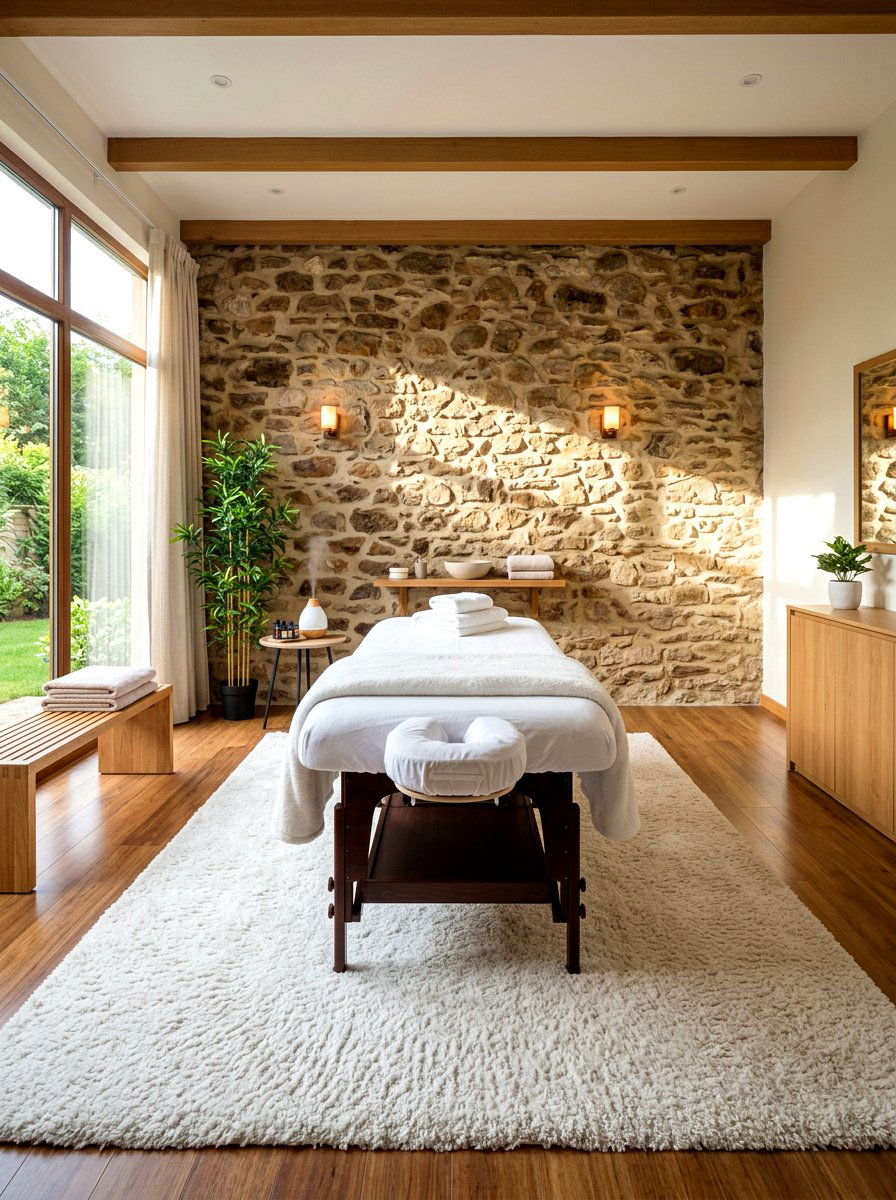
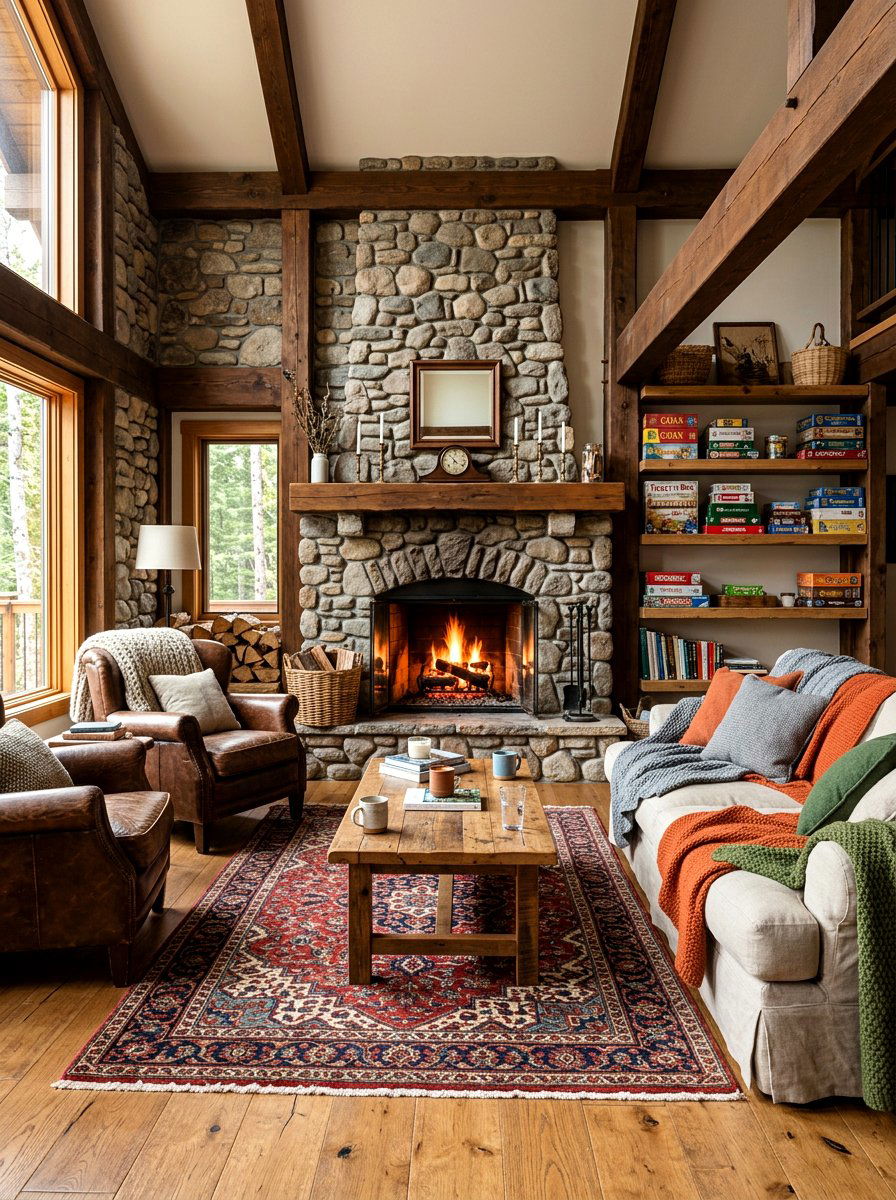
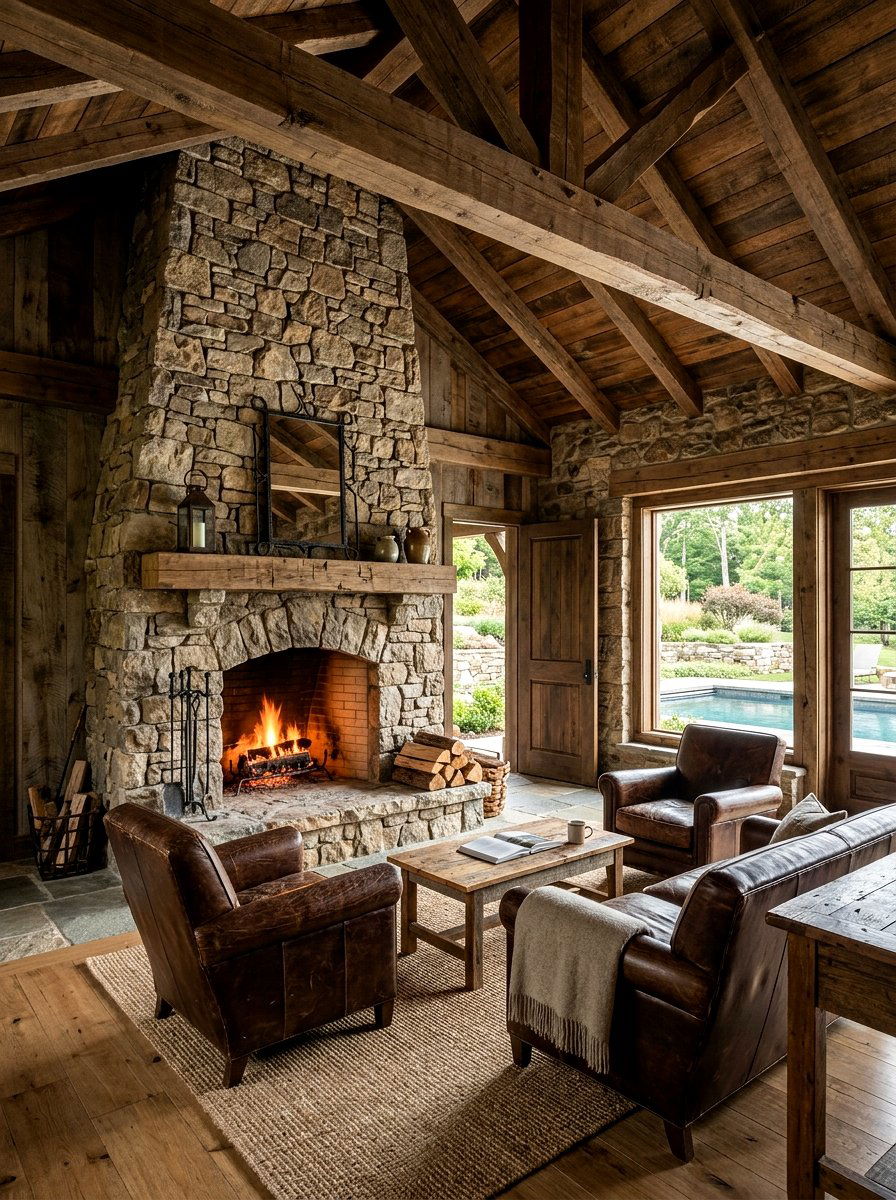
Using a stone feature wall provides an incredible texture and a sense of permanence that makes a massage room feel like a mountain spa. The cool touch of the stone and its varied colors create a stunning backdrop for a professional massage table and simple decor. Integrated lighting can be used to graze the surface of the stone, highlighting the natural crags and shadows for a dramatic visual effect. Pair the stone with a soft, thick rug and high-quality cotton linens to balance the hardness of the rock with soft comfort. This theme is exceptionally grounding and provides a strong sense of protection and quiet for the user.
21. Japanese Massage Room
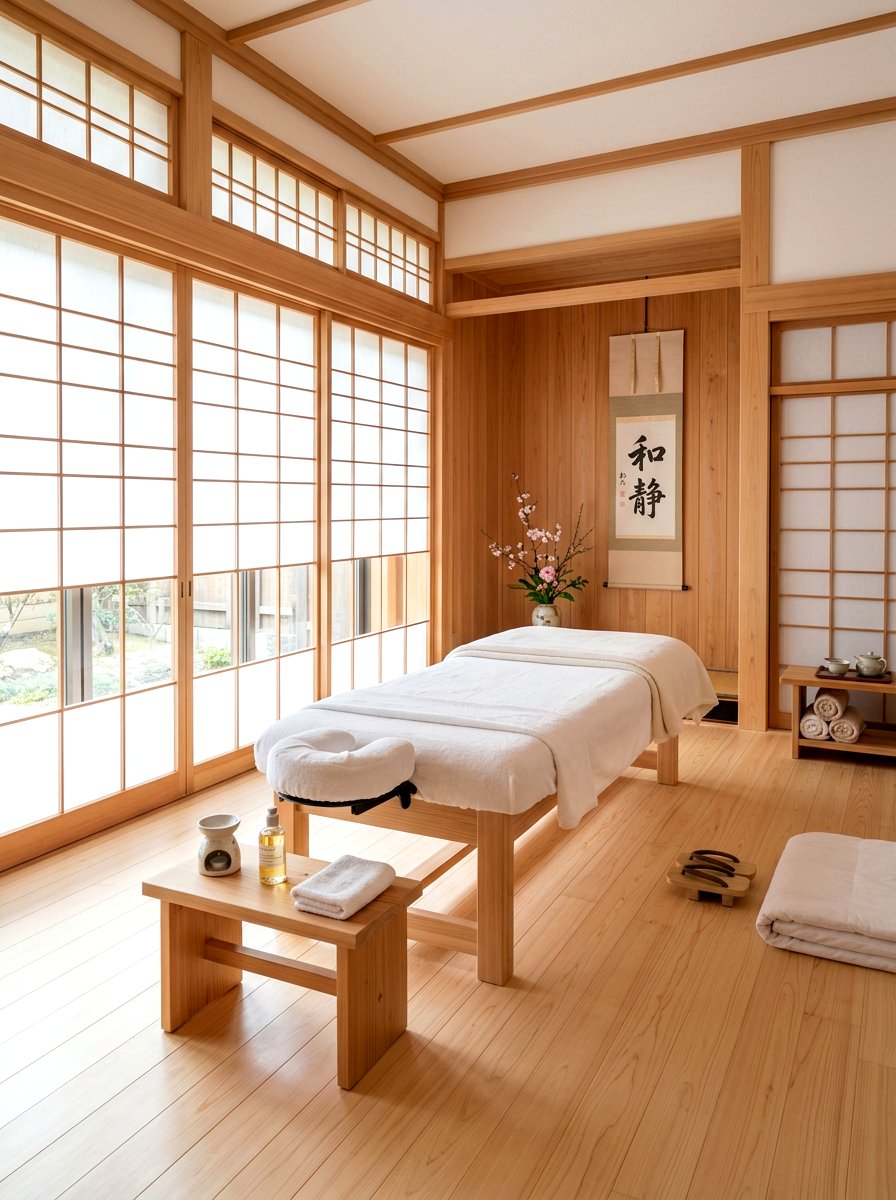
A Japanese-inspired massage room focuses on the concept of "Ma, " or the beauty of empty space, to create a profound sense of calm. This design utilizes low-to-the-ground furniture, sliding shoji screens for privacy, and natural materials like cedar and rice paper. A futon-style massage mat can be used on the floor for traditional bodywork, or a standard table can be integrated with minimalist styling. The color palette is strictly limited to blacks, whites, and natural wood tones to prevent any form of visual distraction. This disciplined approach to design helps to clear the mind and prepare the body for deep relaxation and healing.
22. White Aesthetic Massage
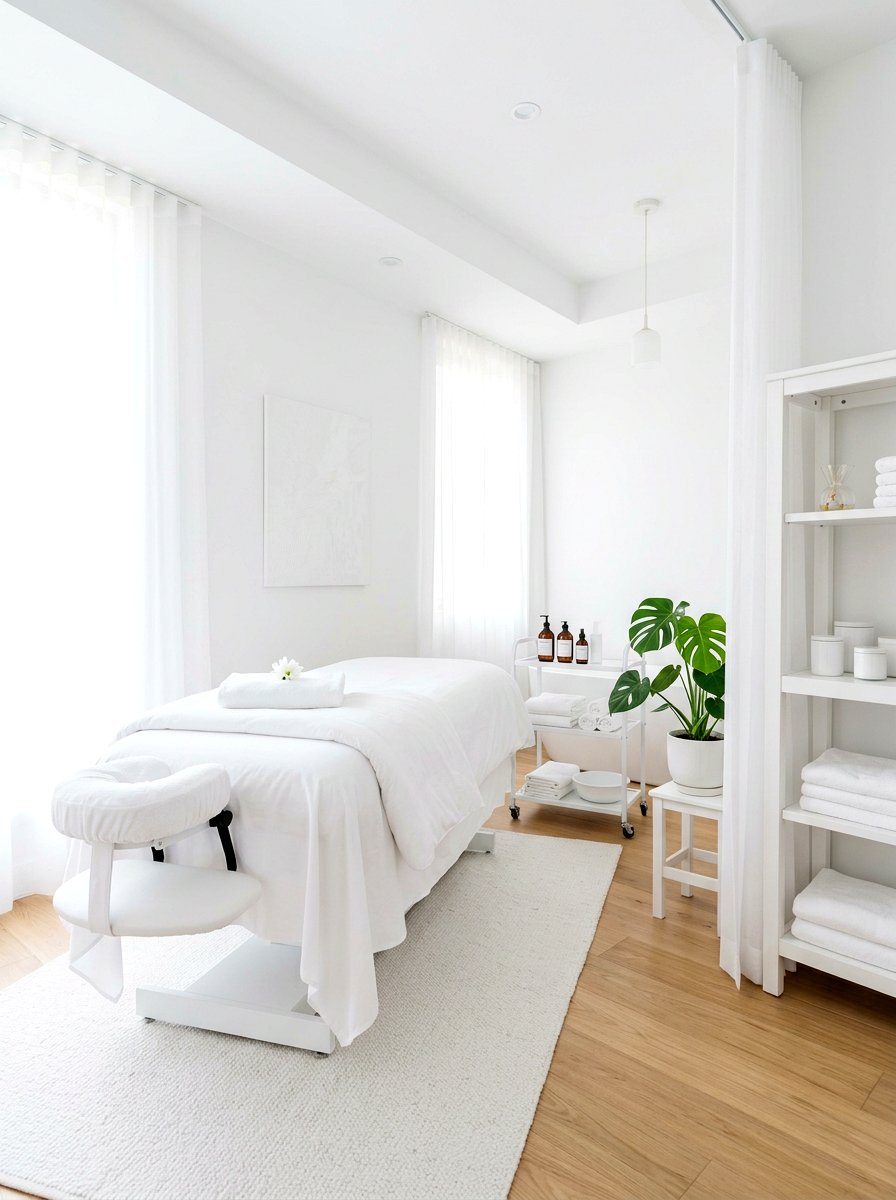
A bright white massage corner creates a clean, clinical, yet incredibly peaceful environment that emphasizes hygiene and a fresh start for the day. This design uses various shades of white — from cream to stark snow — to add depth without introducing distracting colors that could stimulate the brain. Glossy surfaces, white-painted wood, and sheer white fabrics work together to bounce light around the room, making it feel heavenly and light. A few glass bottles of essential oils and a single green plant are all that is needed to add a tiny touch of life to the space. This look is perfect for a modern, high-end residential aesthetic.
23. Modern Wellness Suite
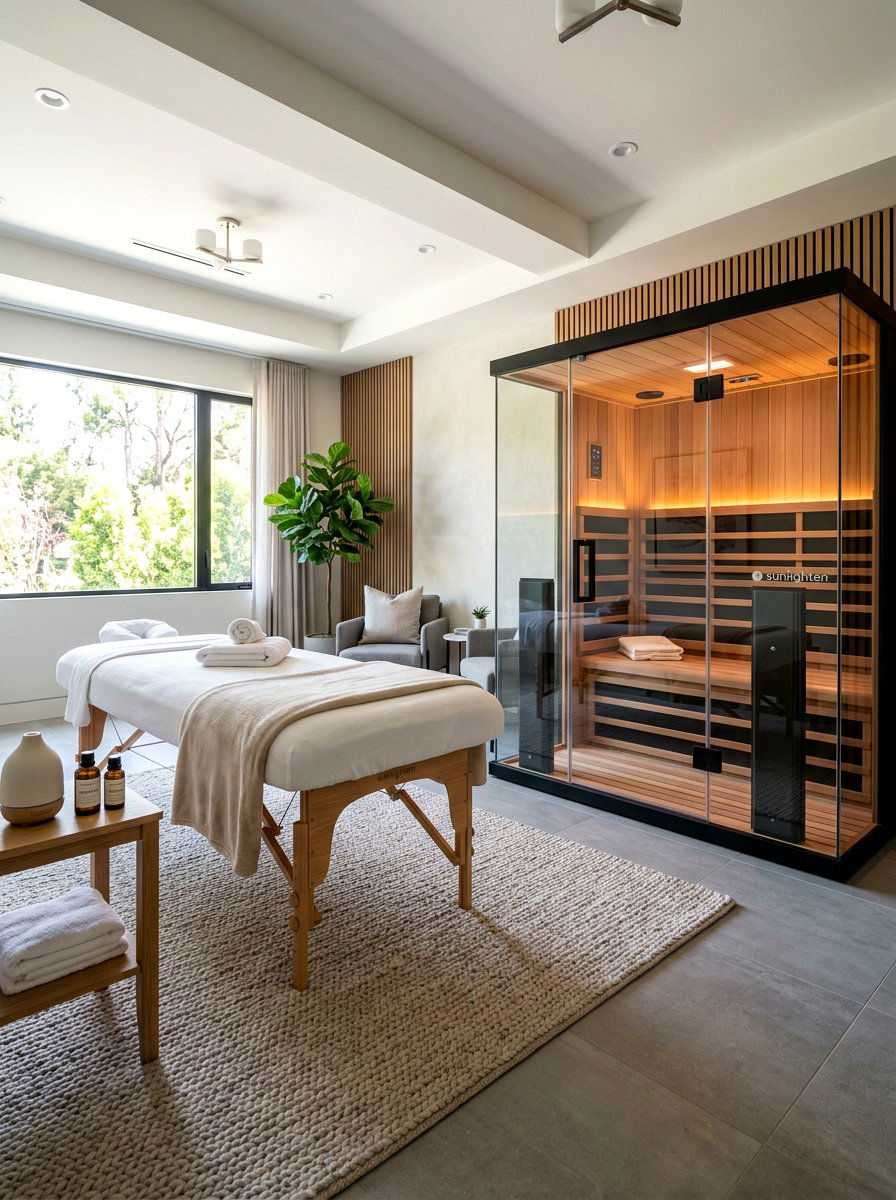
A modern wellness suite is a comprehensive space that often combines a massage table with other recovery tools like an infrared sauna or a cold plunge. This layout requires careful zoning to ensure that the massage area remains a dry and quiet sanctuary amidst the more active recovery zones. Use waterproof flooring throughout the suite for easy maintenance, but add a soft area rug specifically under the massage table for comfort. Sleek, built-in storage keeps all the different types of equipment organized and ready for use at a moment's notice. This design is for the ultimate health enthusiast who wants a complete spa experience at home.
24. Coastal Massage Space
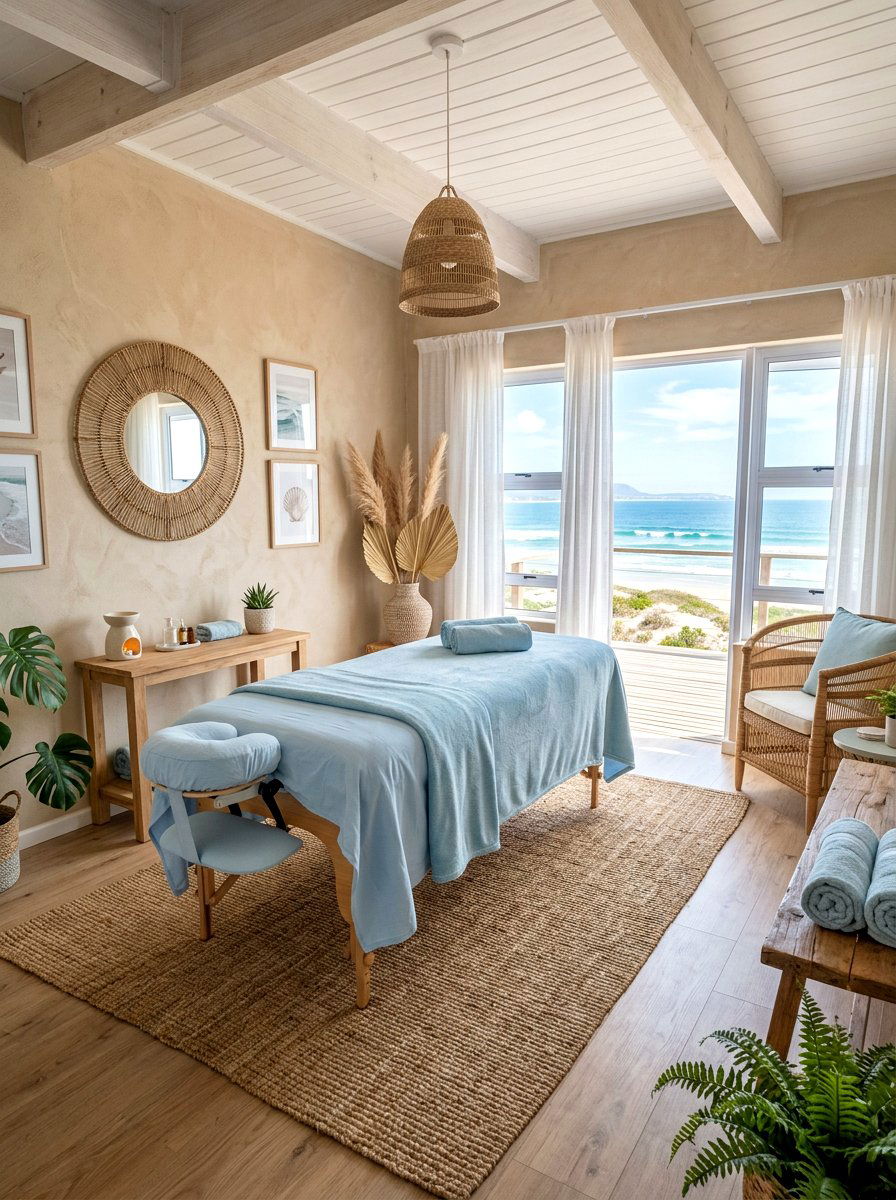
Coastal design brings the relaxing vibes of the seaside into your home massage room through a palette of blues, sandy beiges, and crisp whites. This setup often features light-washed wood furniture and decor made from natural fibers like seagrass or jute to mimic the beach environment. Large windows or artwork depicting ocean scenes help to transport the mind to the coast, even if you are miles away from the water. Soft, billowy curtains that move with the air can simulate the feeling of a sea breeze during your treatment. The overall mood is light, airy, and refreshing, making it easy to drift away during a session.
25. Aromatherapy Massage Area
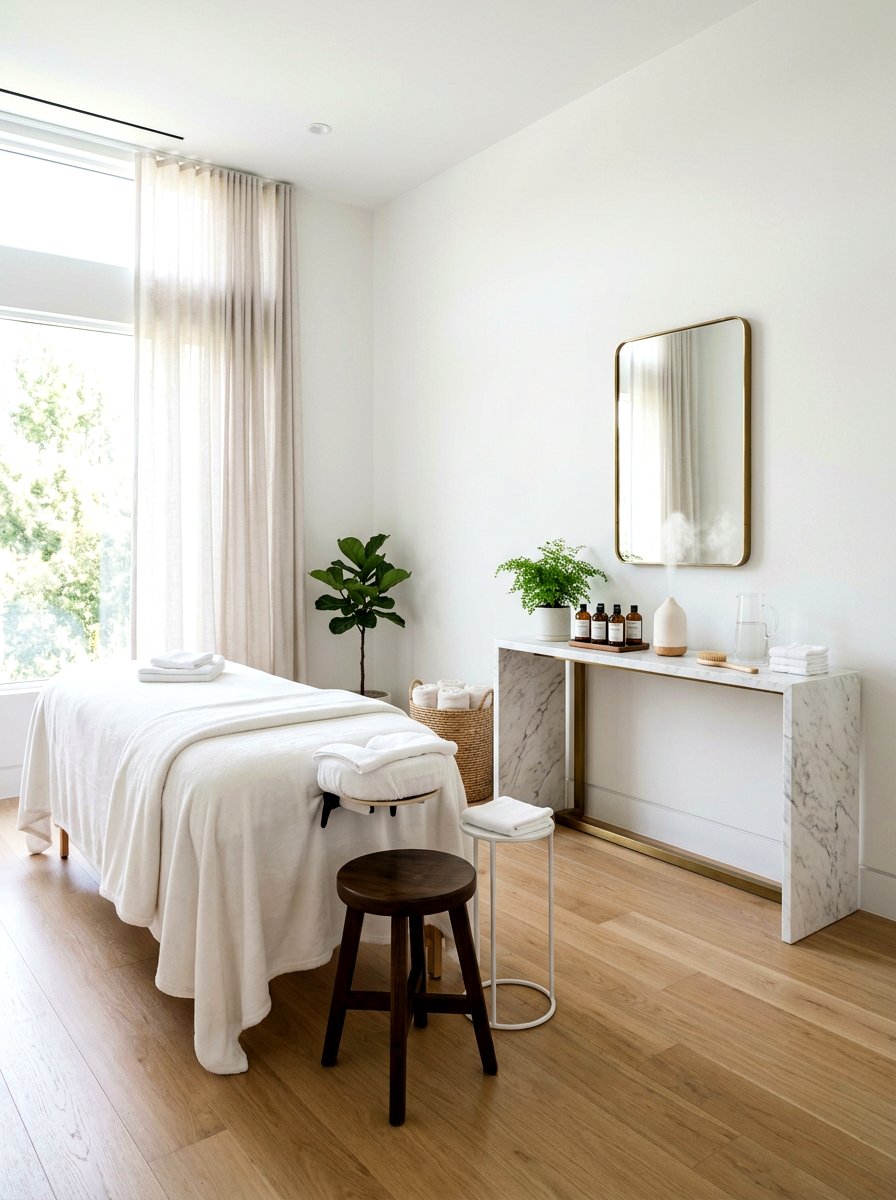
While all massage rooms use scent, an aromatherapy-focused corner makes the diffuser and oil storage the visual and functional center of the design. This setup features a dedicated shelving unit or a beautiful marble-topped console table that displays a collection of essential oils in uniform glass bottles. A high-quality nebulizing diffuser is placed near the head of the massage table to ensure the scent is prominent during the treatment for maximum effect. The decor should be minimal to allow the olfactory experience to take the lead, perhaps with a few botanical prints on the wall. This design prioritizes the healing power of scent above all other elements.
26. Color Therapy Massage
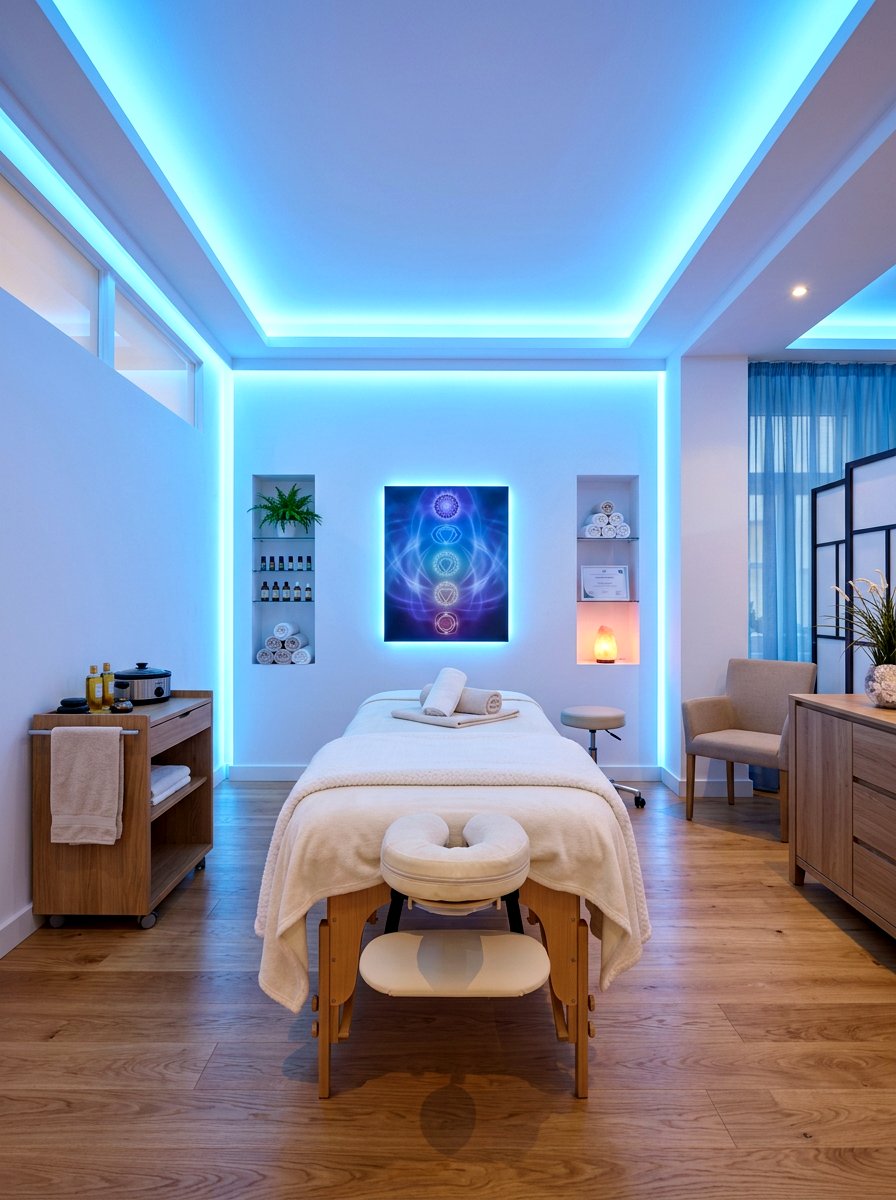
Color therapy massage rooms use adjustable LED lighting systems to change the entire atmosphere of the space based on your current physical or emotional needs. This high-tech design features cove lighting or backlit panels that can be programmed to glow in calming blues, energizing oranges, or healing greens. The walls and furniture should be a neutral white or light gray to allow the projected colors to truly saturate the environment without clashing. This flexible approach allows you to customize every massage session to match your mood, turning the room into a reactive sanctuary. It is a perfect fusion of modern technology and ancient healing principles for a home.
27. Soundproof Massage Room
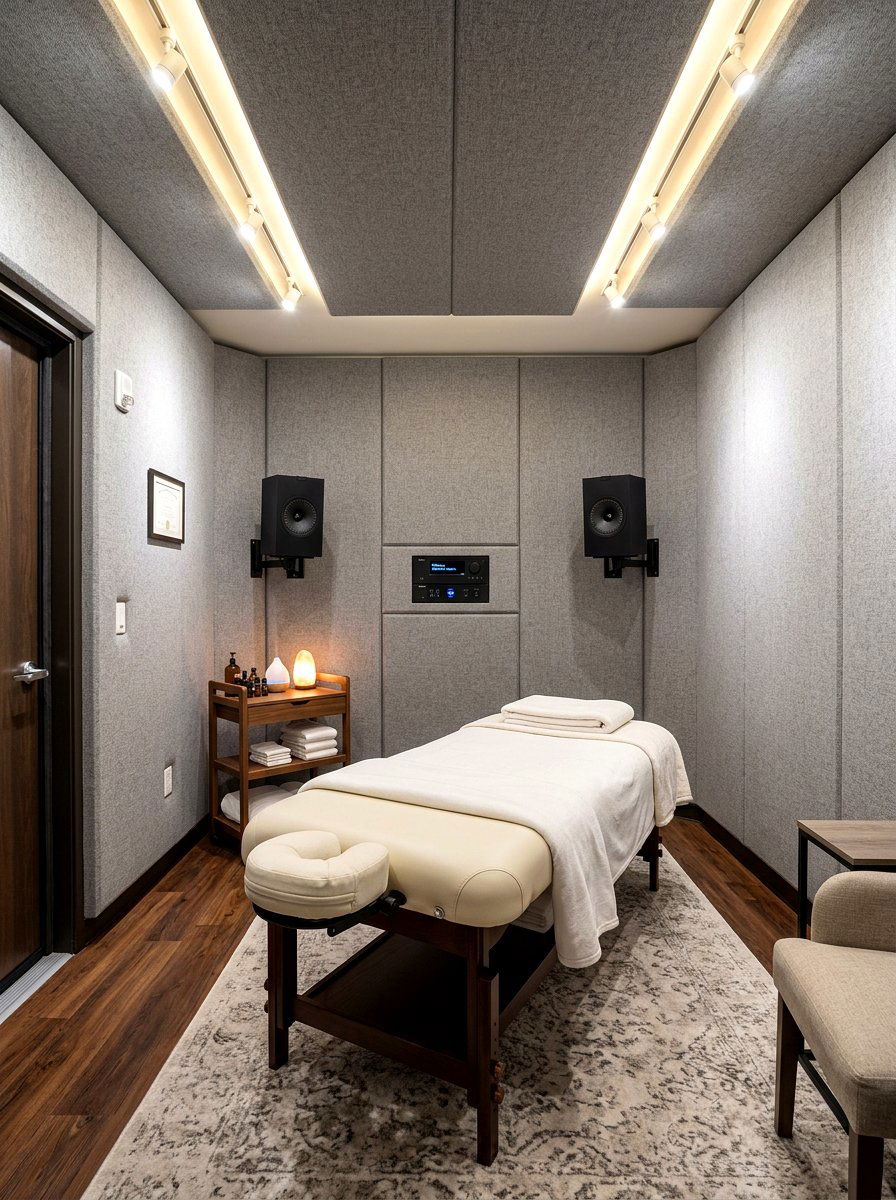
A soundproof massage room is essential for homes in busy urban areas or for those with large, active families where quiet is hard to find. This design utilizes acoustic wall panels, heavy sound-dampening curtains, and thick floor underlayment to create a silent void within the house. The interior features a professional massage table and a high-end sound system for playing binaural beats or white noise to further mask any external sounds. Soft lighting and comfortable textures inside the room contrast with the "hard" soundproofing elements on the walls. This setup ensures that your massage time is completely undisturbed by the noise of the outside world.
28. Privacy Screen Massage
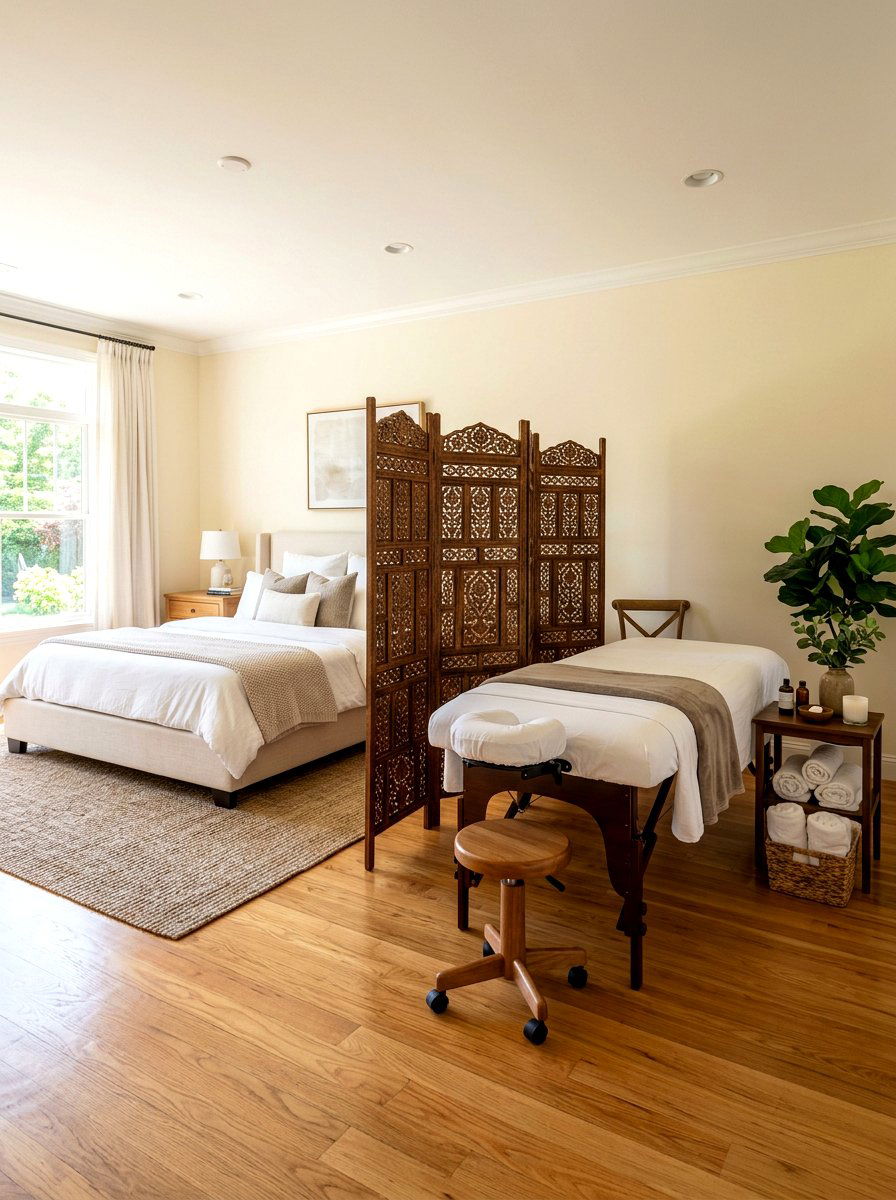
Using a privacy screen is a fantastic way to carve out a dedicated massage corner within a larger, open-plan living room or master suite. This design features a tall, decorative folding screen made of wood, fabric, or carved metal that hides the massage table from the rest of the room. This creates a psychological boundary that signals it is time to relax, even if the rest of the house is still active. The area behind the screen should be fully self-contained with its own lighting and a small table for supplies. This flexible solution allows you to have a private wellness retreat without needing a permanent wall.
29. Open Plan Massage
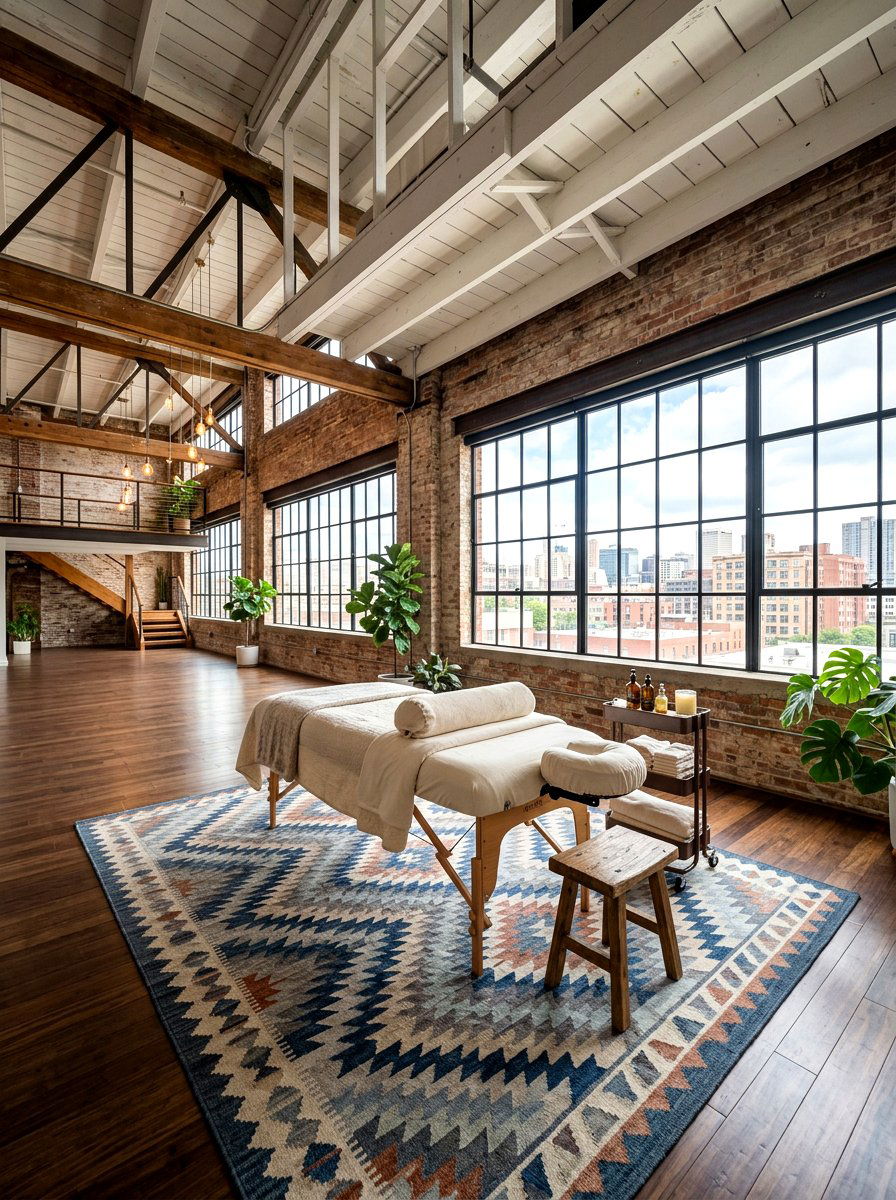
An open-plan massage area integrates the wellness station directly into the layout of a modern home, treating the massage table as a piece of furniture. This design works best in homes with high ceilings and plenty of natural light, where the table is placed in a quiet corner of a large mezzanine or loft. To maintain the open feeling, use low-profile storage and minimal decor that matches the existing furniture in the rest of the house. A large area rug helps to define the "zone" for the massage without closing it off with walls or screens. This is a very social and integrated way to view home wellness.
30. Enclosed Balcony Massage
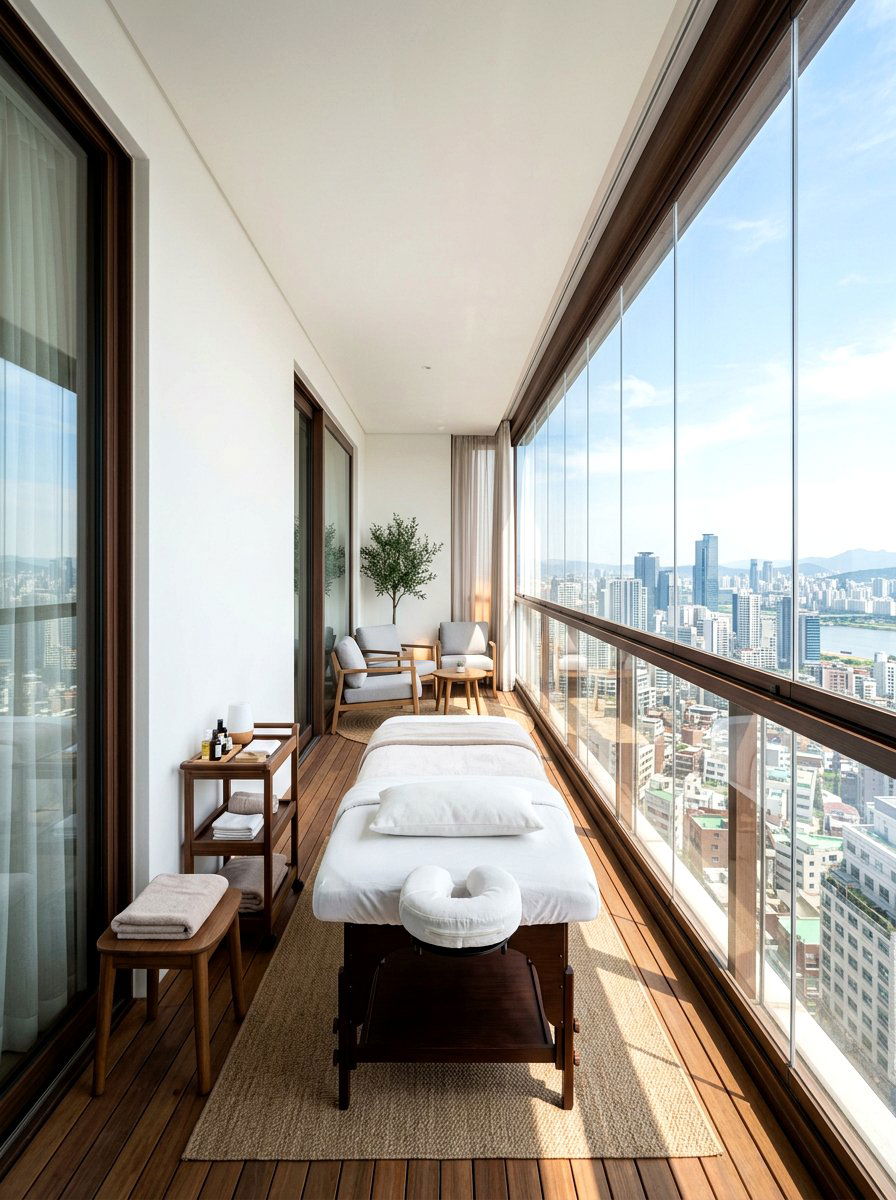
An enclosed balcony or loggia can be converted into a stunning, narrow massage room that offers incredible views while remaining protected from the weather. This design uses the long, rectangular shape of the balcony to place the table in the center, with storage units at either end for towels and oils. Glass enclosures keep the space warm in winter and cool in summer, allowing for year-round use of the outdoor-adjacent space. Use outdoor-rated fabrics and furniture to ensure the setup remains durable in the face of direct sunlight. This unique location provides a sense of being "suspended" in nature during your daily massage.
Conclusion:
Building a professional massage corner in your home is an investment that pays dividends in both physical health and mental clarity. By carefully selecting a theme that resonates with your personal style, you create an inviting space that encourages regular use and deep relaxation. Whether you choose the organic warmth of a bamboo-themed room or the high-tech features of a modern wellness suite, the key is consistency and comfort. Remember that even the smallest corner can be transformed into a sanctuary with the right lighting, textures, and organization. Your home should be a place of recovery, and a dedicated massage space is the perfect way to achieve that balance.

Related posts: