Transforming an underutilized attic into a welcoming guest sanctuary is a brilliant way to maximize your home’s square footage while providing a private escape for visitors. These tucked-away spaces offer a unique architectural charm that standard bedrooms often lack, thanks to their sloped ceilings, cozy nooks, and secluded feel. When designing an attic retreat, the goal is to balance functionality with comfort, ensuring the awkward angles become intentional design features rather than obstacles. By focusing on light, clever storage, and thoughtful furniture placement, you can turn a dusty storage area into a high-end suite. Guests will appreciate the quiet separation from the rest of the busy household.
1. Small attic guest room
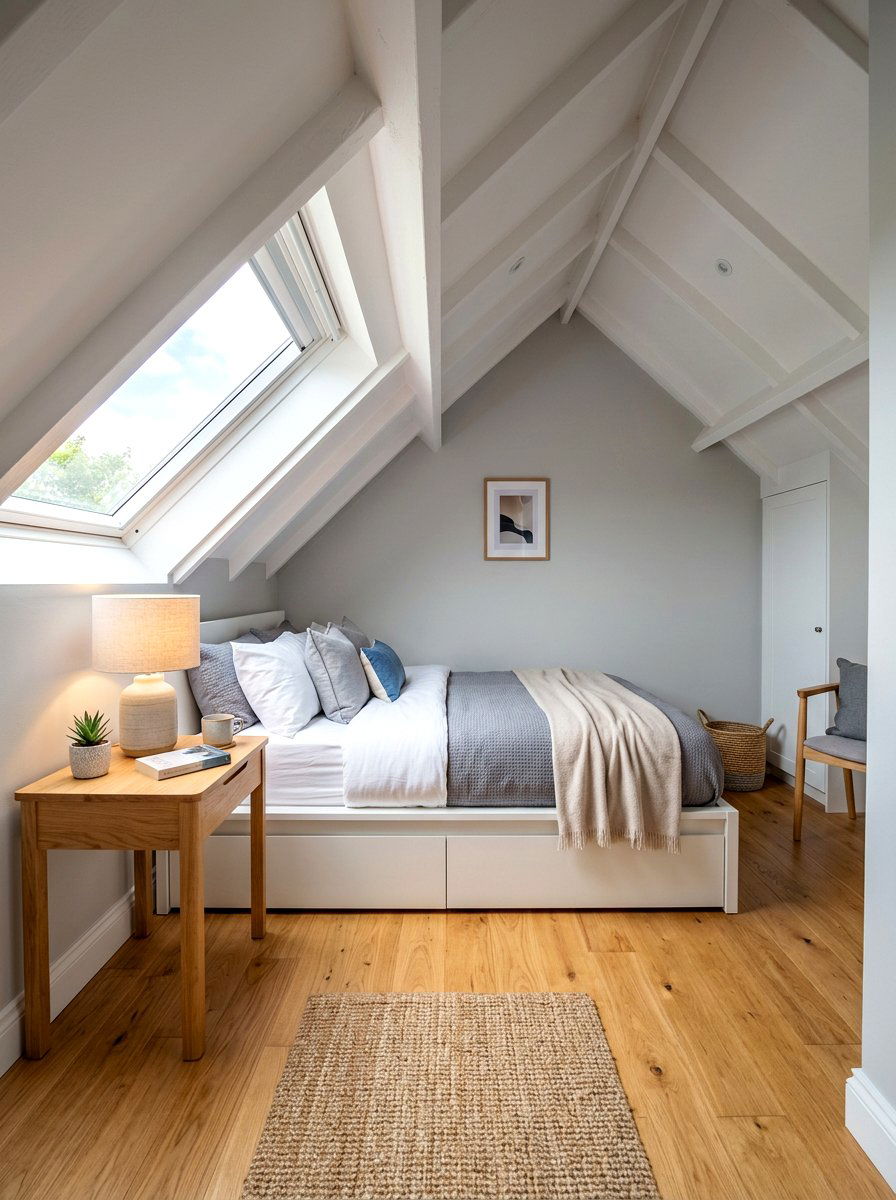
Designing a small attic guest room requires a focus on verticality and light to prevent a cramped feeling. Start by painting the walls and the sloped ceiling in a single light shade to blur the boundaries of the room. This technique makes the space feel significantly larger and more cohesive. Choose low-profile furniture, such as a platform bed, to maintain as much headspace as possible. Incorporate multi-functional pieces like a storage ottoman or a small desk that doubles as a nightstand. Using mirrors strategically will reflect natural light from small windows, further opening up the area. Soft, neutral textiles add warmth without overwhelming the limited square footage available.
2. Sloped ceiling guest bedroom
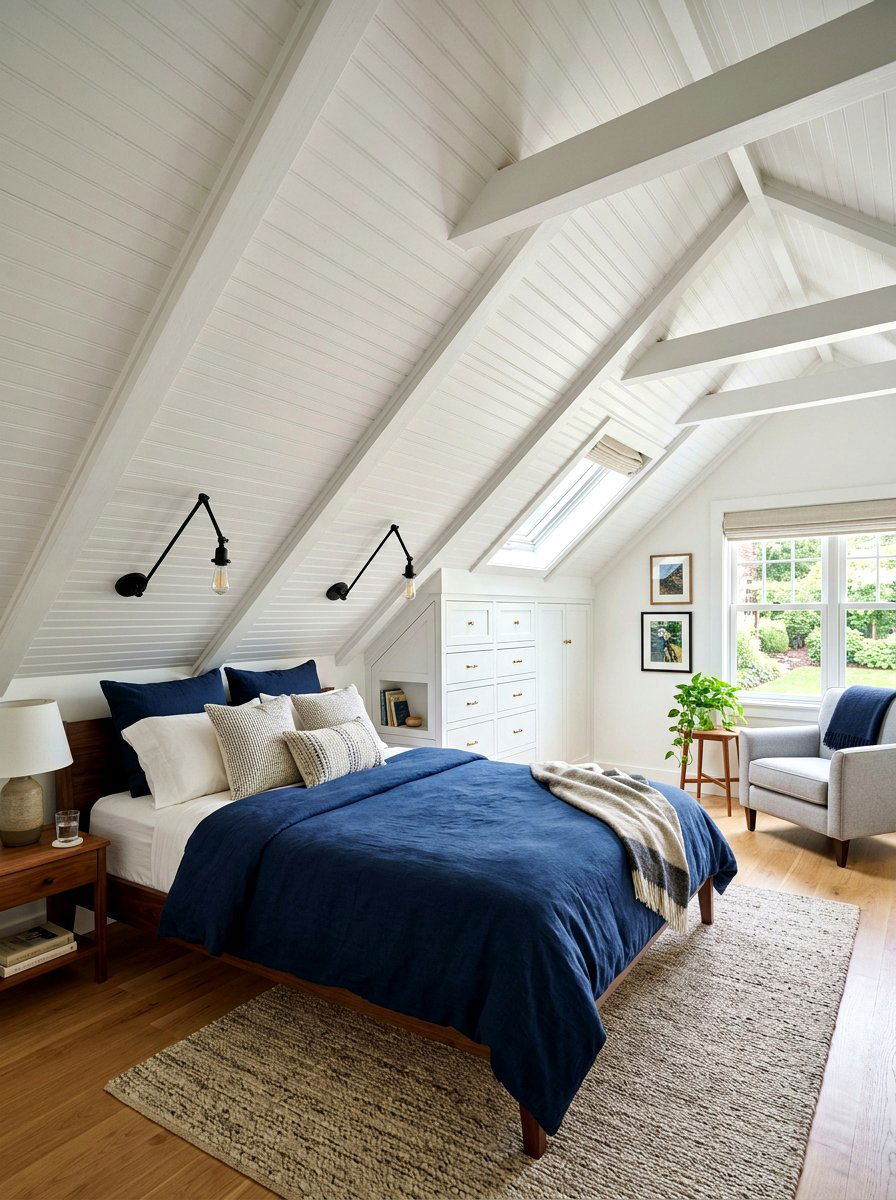
Managing a sloped ceiling guest bedroom involves embracing the unique geometry of the roofline rather than fighting it. Position the bed under the steepest part of the slope to create a cozy, cocoon-like sleeping area that feels intentional and snug. Use wall-mounted lighting or slim floor lamps to save precious floor space where headrooms are restricted. Custom-built cabinetry can be installed into the knee walls to provide ample storage for guest belongings without encroaching on the main walking path. Choosing a monochromatic color palette for the walls and ceiling helps minimize the visual impact of sharp angles, creating a peaceful and unified atmosphere for visitors.
3. Modern attic suite
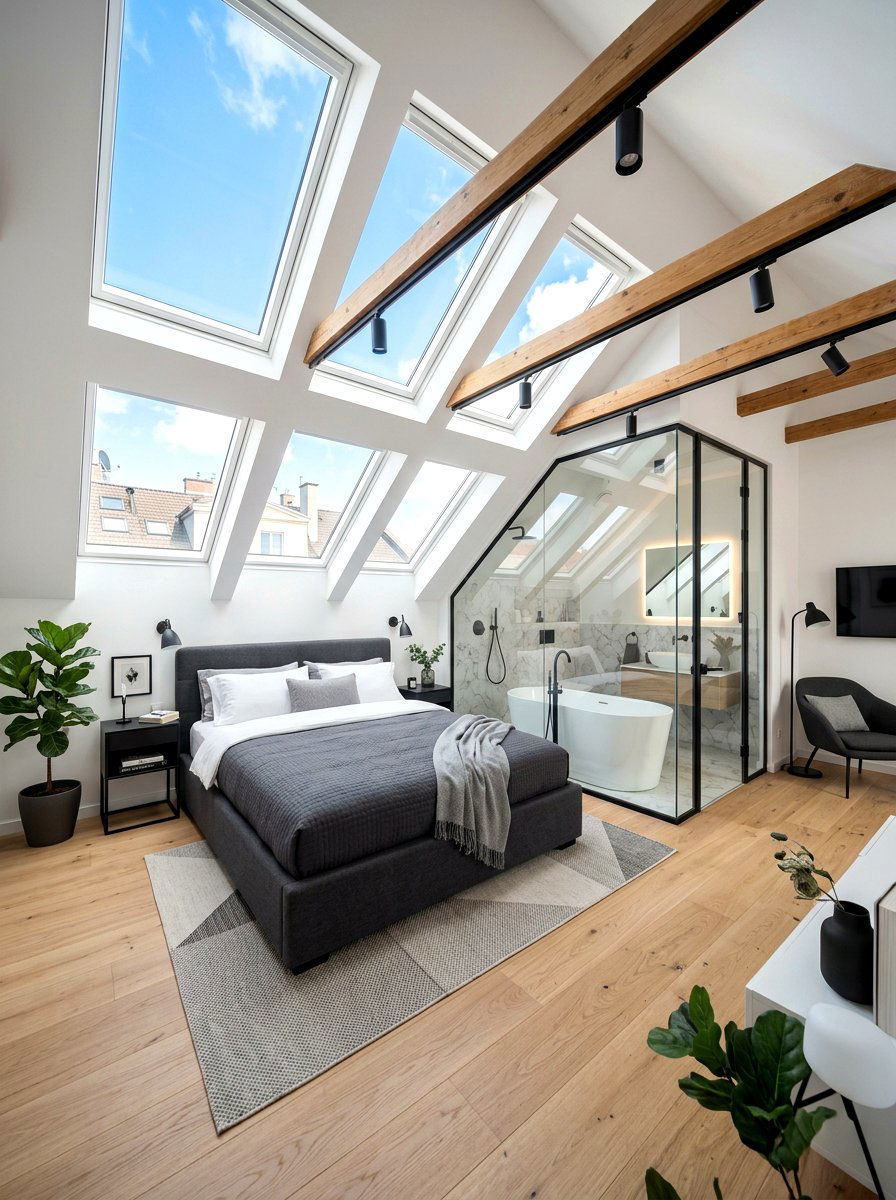
A modern attic suite focuses on clean lines, high-quality materials, and a sophisticated minimalist aesthetic. Incorporate a sleek glass partition if you are adding an en-suite bathroom to maintain a sense of openness and flow. Use a palette of cool grays, crisp whites, and matte black accents to ground the design in contemporary style. Large skylights are essential for flooding the space with natural light and providing a view of the sky, which serves as a moving piece of art. High-end bedding in natural linen and a simple area rug over hardwood floors complete the look. This approach transforms a traditional attic into a luxury hotel-style experience.
4. Rustic attic guest space
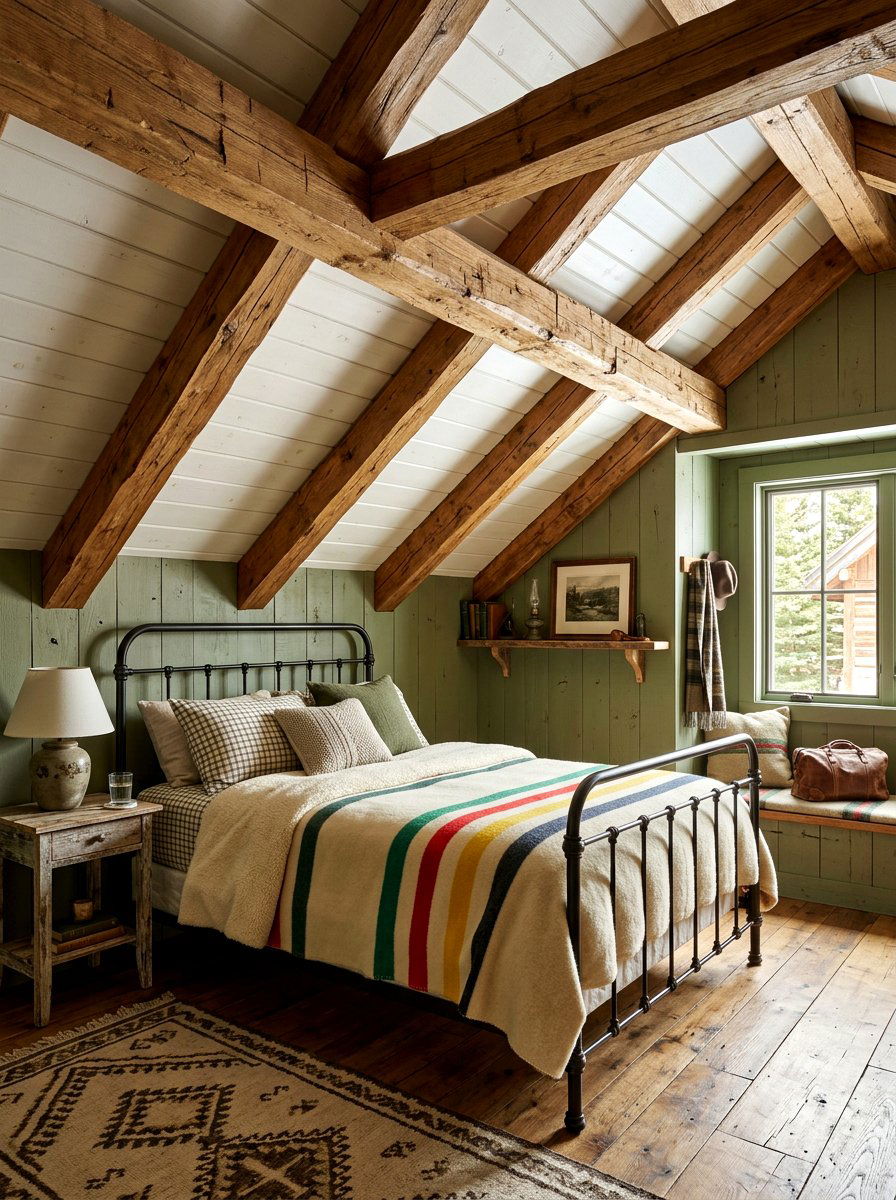
Creating a rustic attic guest space involves highlighting original architectural details like exposed wooden rafters and brickwork. If your attic lacks these, you can add reclaimed wood beams to the ceiling to evoke a weathered, historic feel. Use a warm color palette consisting of earthy browns, deep forest greens, and soft creams to enhance the cozy cabin vibe. Furnish the room with sturdy wooden furniture and vintage-inspired metal bed frames. Layering textures is key, so include wool blankets, faux fur throws, and woven baskets for storage. This design direction makes guests feel as though they have stepped into a peaceful mountain retreat or a traditional barn.
5. White attic bedroom
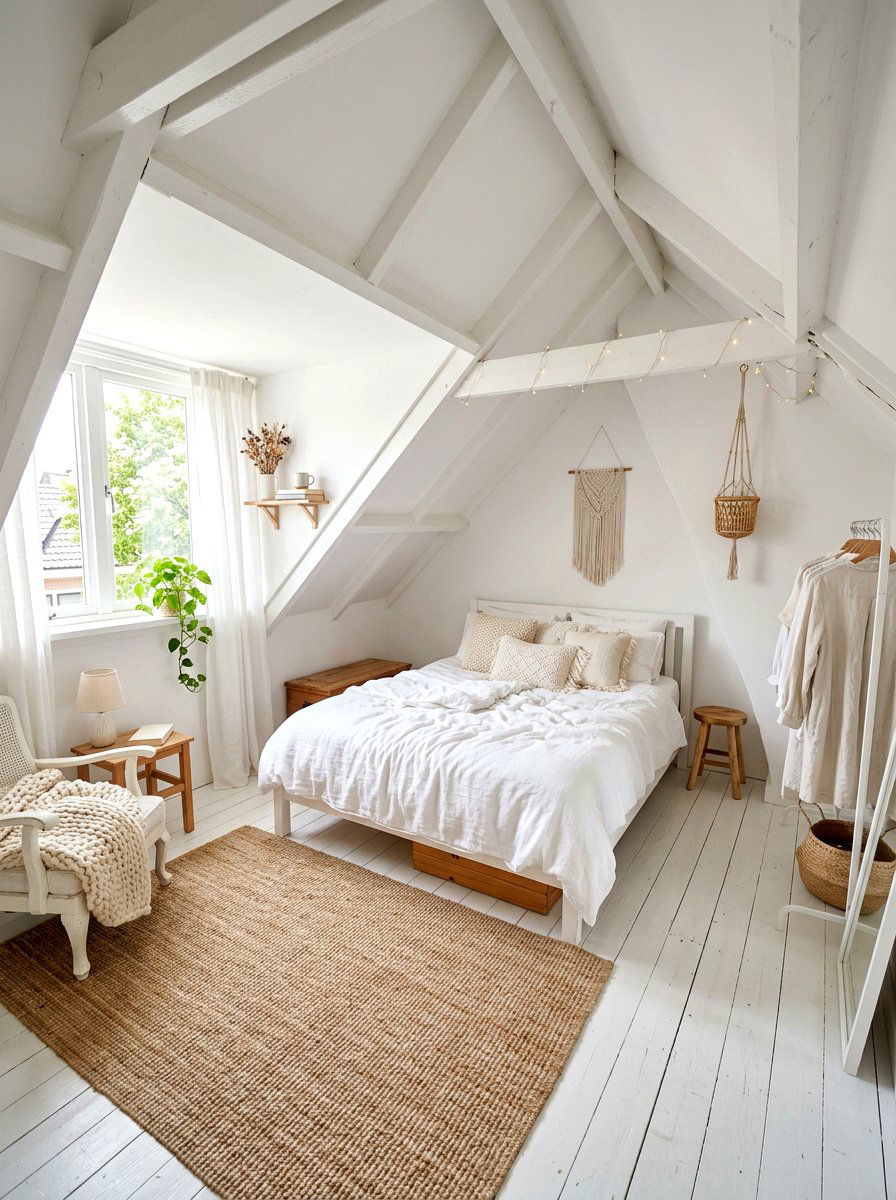
A white attic bedroom is the ultimate solution for spaces that lack sufficient natural light or feel overly enclosed. By using various shades of white — from crisp snow to warm cream — you create a layered, sophisticated look that feels incredibly airy and fresh. Paint the floorboards white to further bounce light around the room, making the entire space glow during the day. Introduce different textures like chunky knit pillows, cotton duvets, and sheer curtains to prevent the room from feeling clinical or cold. A few light wood accents or a single green plant can provide just enough contrast to keep the monochromatic design interesting and vibrant.
6. Attic skylight bedroom
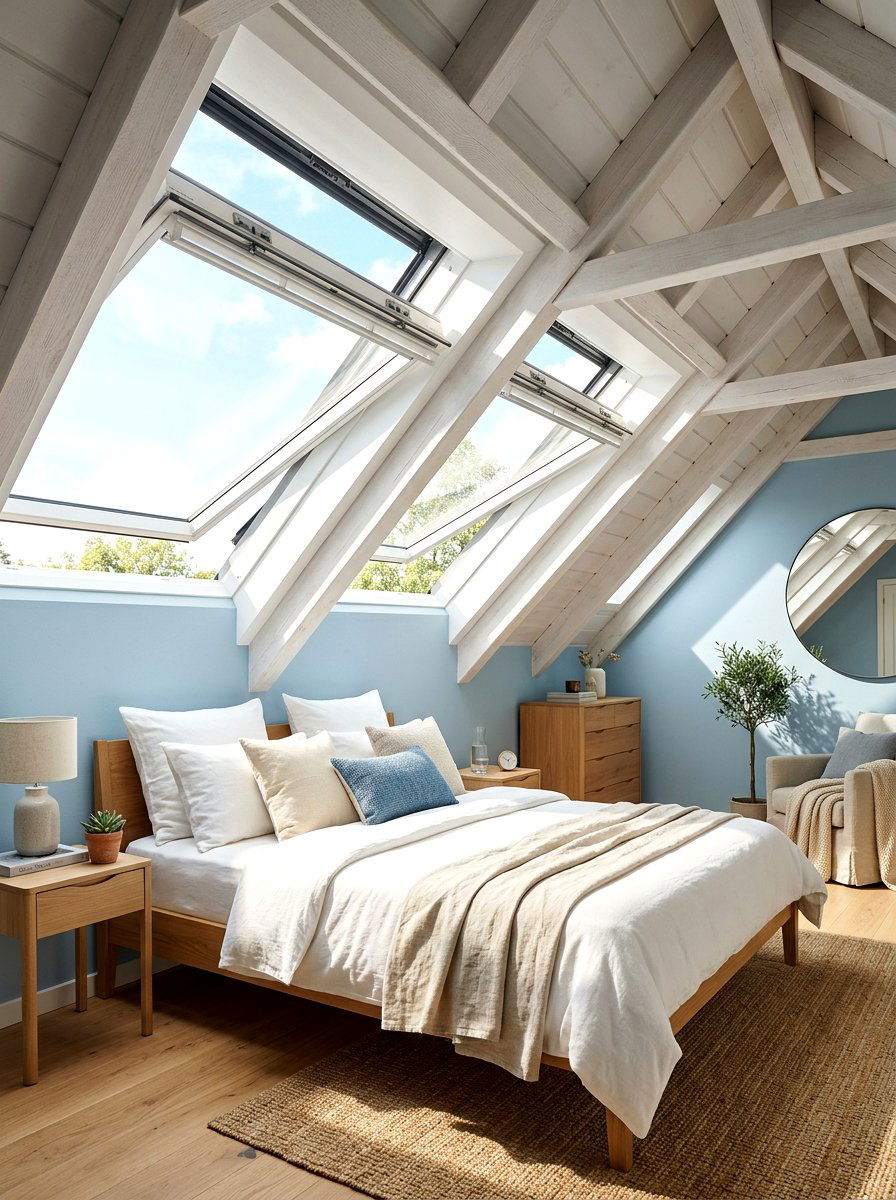
In an attic skylight bedroom, the windows are the primary focal point and dictate the entire room’s layout. Place the bed directly beneath a large skylight to allow guests to gaze at the stars before falling asleep. This arrangement maximizes the use of natural light, making the room feel bright and connected to the outdoors. Consider installing remote-controlled blackout blinds to ensure guests can sleep comfortably past sunrise. Complement the natural light with simple, low-key furniture that doesn't compete with the view. The constant influx of sunlight makes even the smallest attic feel expansive, providing a cheerful and energizing environment for any visitor.
7. Boho attic guest room
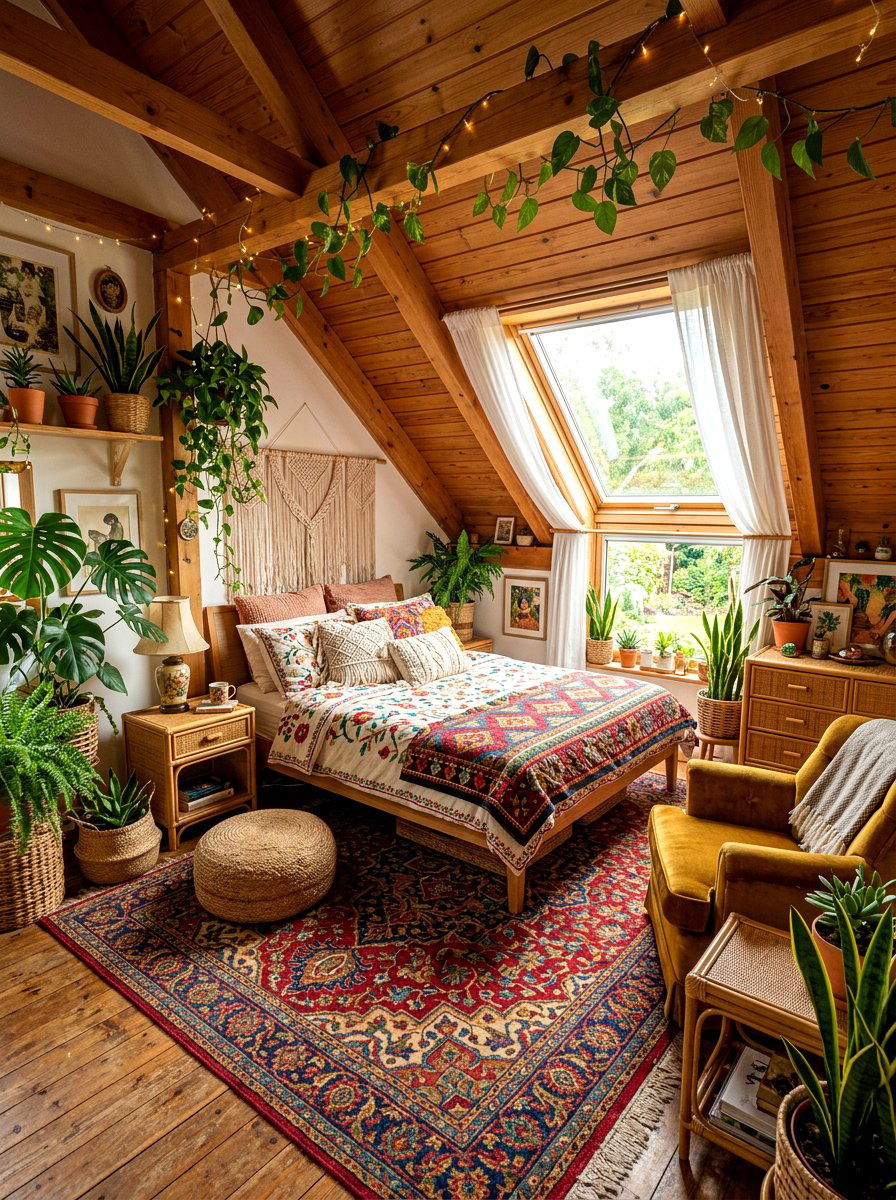
A boho attic guest room thrives on a relaxed, eclectic atmosphere that embraces imperfections and artistic flair. Start with a neutral base and layer in vibrant patterns through Persian rugs, macramé wall hangings, and colorful floor cushions. Incorporate plenty of greenery, such as hanging ivy or potted ferns, to breathe life into the often-stuffy attic air. Rattan furniture and wicker storage baskets add a natural, organic touch that fits the bohemian aesthetic perfectly. Use soft, warm lighting like string lights or lantern-style lamps to create a magical, whimsical glow in the evening. This style turns a simple guest room into a creative, soulful sanctuary.
8. Minimalist attic bedroom
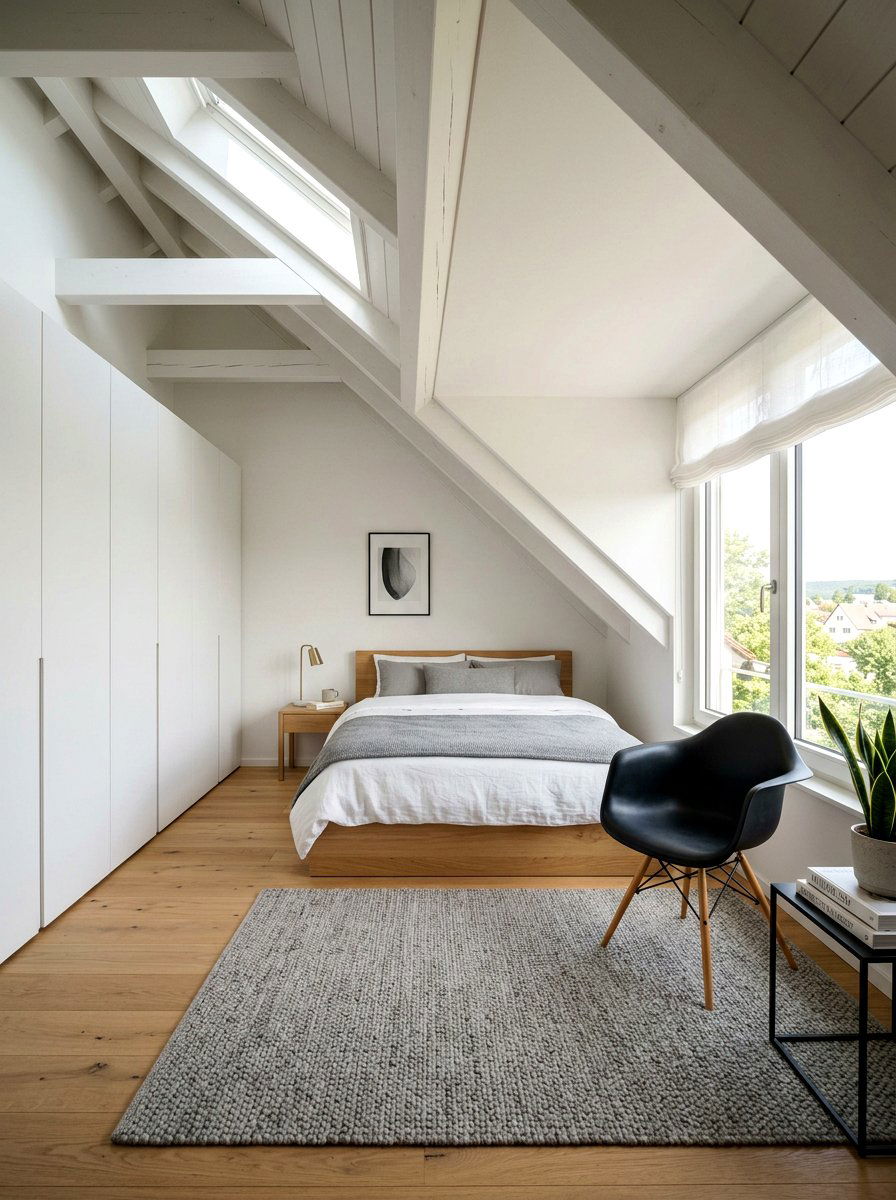
A minimalist attic bedroom is all about stripping away the unnecessary to create a calm, clutter-free environment. Focus on a few high-quality furniture pieces with simple silhouettes and avoid any decorative excess. A low-platform bed with a hidden frame works perfectly under low ceilings, keeping the visual line low and unobstructed. Use a neutral color scheme with plenty of negative space to promote a sense of tranquility and order. Built-in wardrobes with flat-front panels can hide all guest belongings, maintaining the room's sleek appearance. This design style is ideal for guests who appreciate a quiet, meditative space to unwind during their stay.
9. Built in attic beds
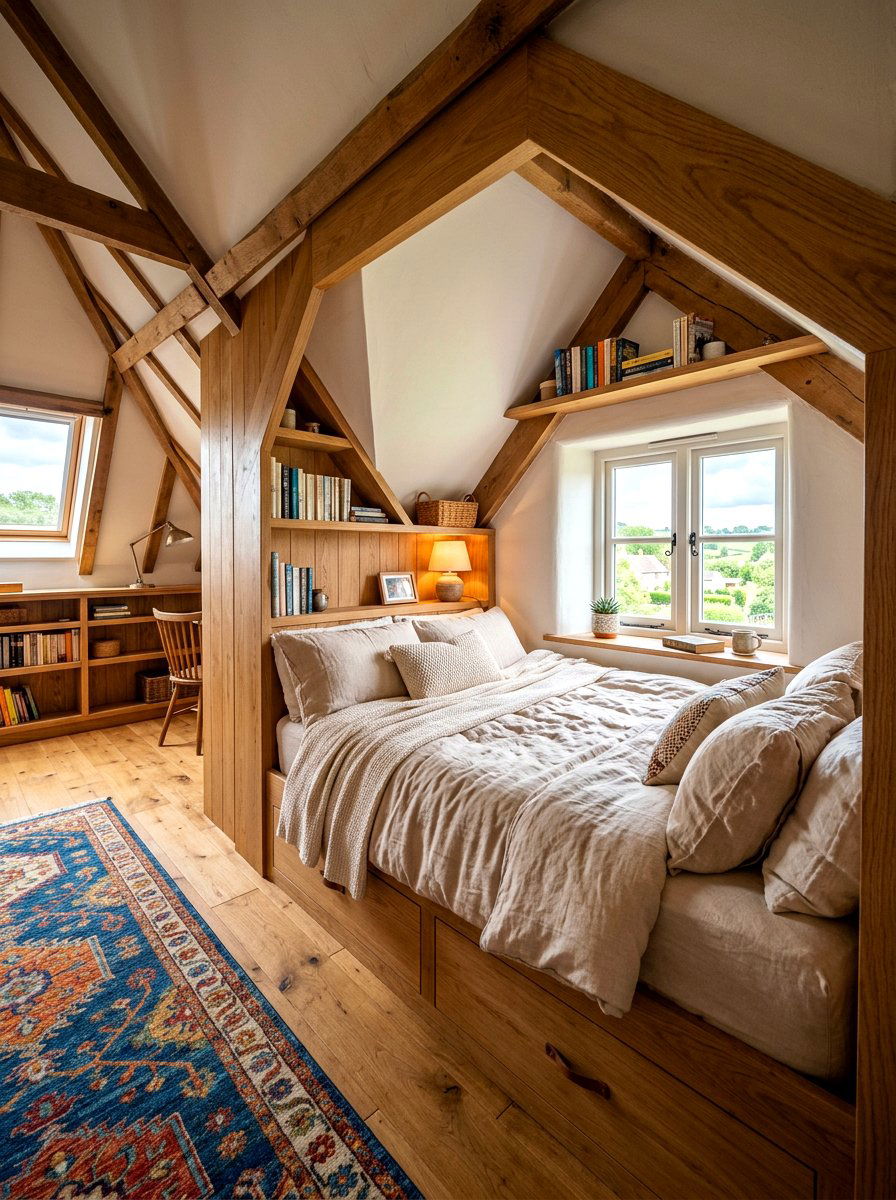
Built in attic beds are the most efficient way to handle awkward corners and limited floor space. By tucking the bed into a dormer or under the eaves, you free up the center of the room for movement or other furniture. These custom installations often include integrated drawers underneath and shelving at the head of the bed, eliminating the need for bulky dressers or nightstands. You can even add curtains to the bed nook to create a private, cabin-like feel for the sleeper. This approach is particularly effective in shared guest rooms, as it provides each person with a defined, personal space that feels safe and cozy.

10. Industrial attic guest room
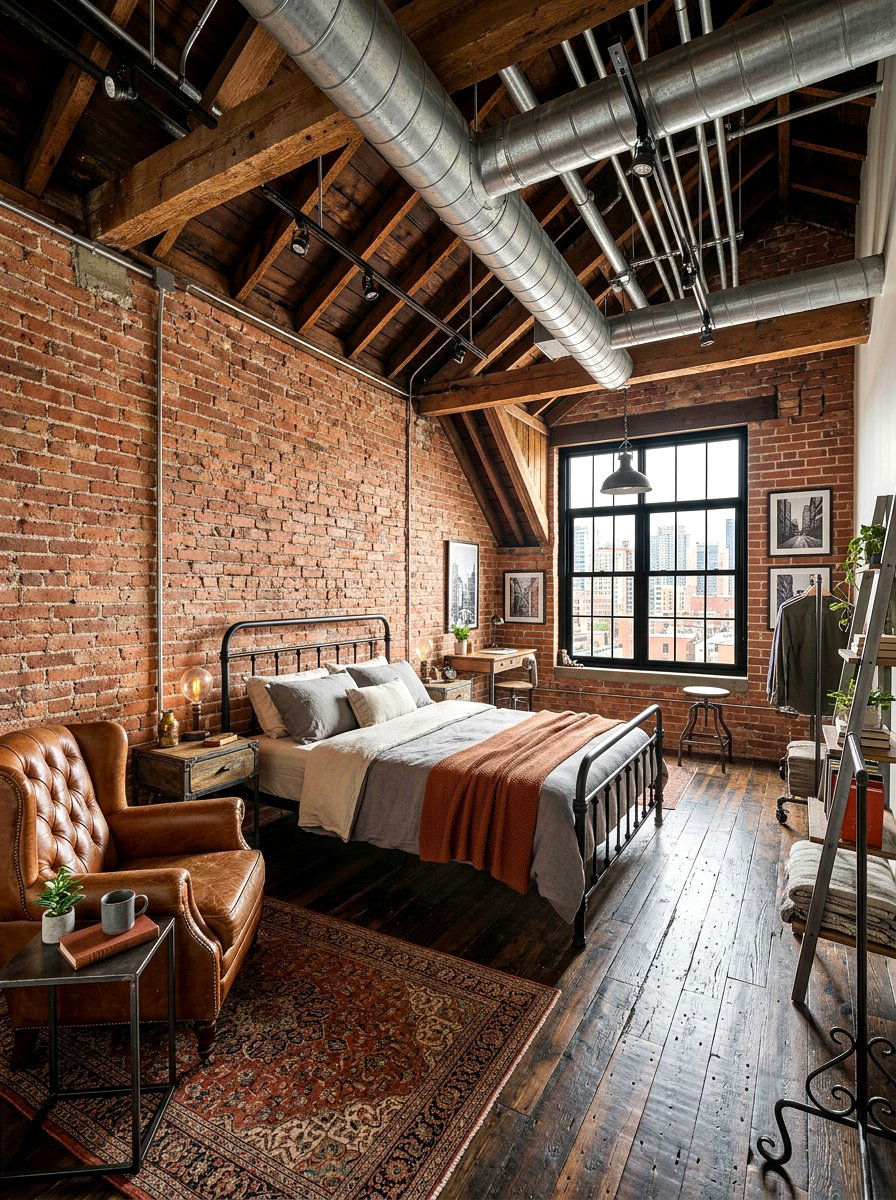
An industrial attic guest room utilizes the raw, structural elements of the home to create a trendy and masculine aesthetic. Leave pipes, ductwork, and brick walls exposed to lean into the warehouse-inspired look. Choose furniture made from a combination of dark wood and blackened steel for a sturdy and modern feel. A neutral palette of charcoal, slate, and brick red works best to complement the rugged materials. Large, factory-style windows or oversized metal pendant lights act as bold statement pieces. Soften the space with leather accents and a heavy wool rug to ensure the room remains comfortable and inviting for overnight visitors.
11. Twin bed attic room
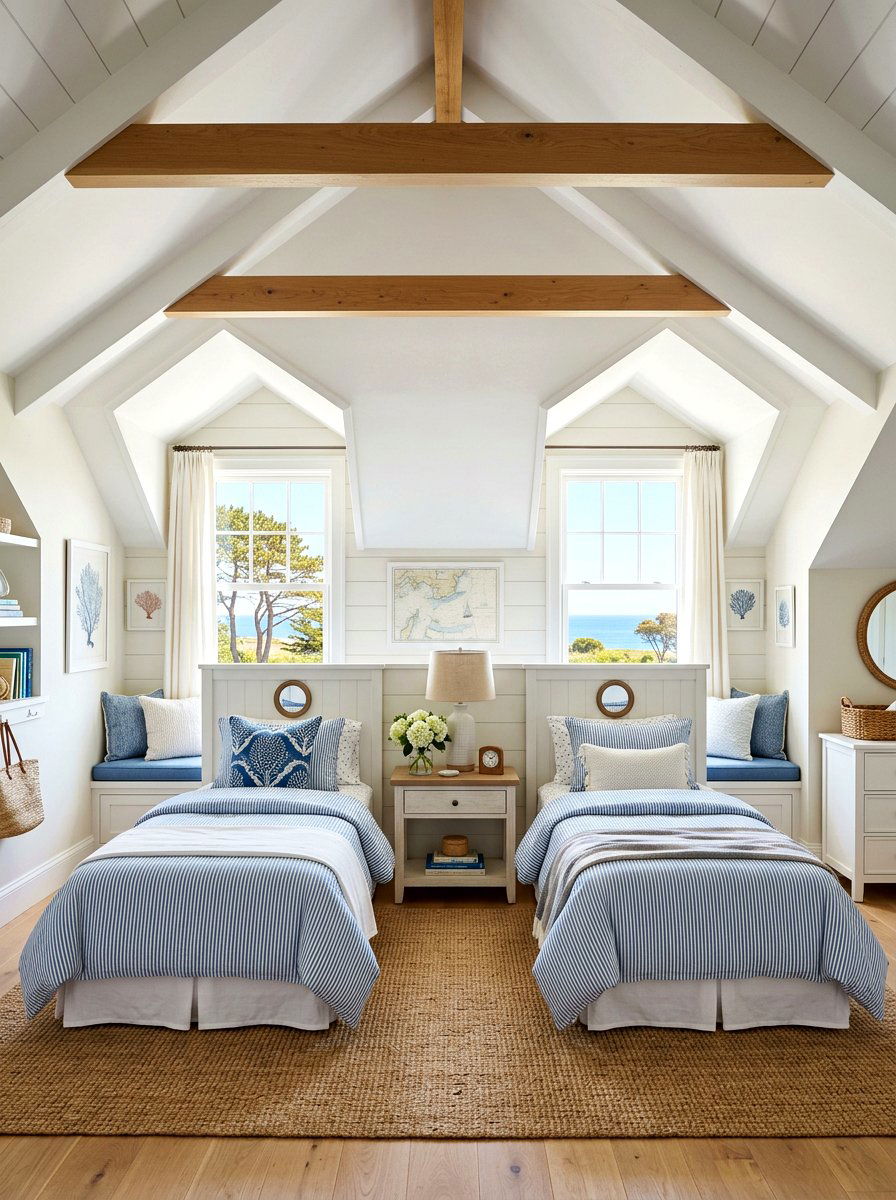
A twin bed attic room is the perfect solution for accommodating multiple guests or children in a narrow space. Position the beds opposite each other along the long walls or end-to-end under the eaves to maximize the central walking area. Using matching bedding and symmetrical decor creates a sense of balance and order, which is helpful in rooms with irregular shapes. A shared nightstand in the middle can save space while providing a landing spot for lamps and books. Opt for light colors to keep the room from feeling overcrowded. This layout is practical, versatile, and makes the most of every square inch available.
12. Farmhouse attic bedroom
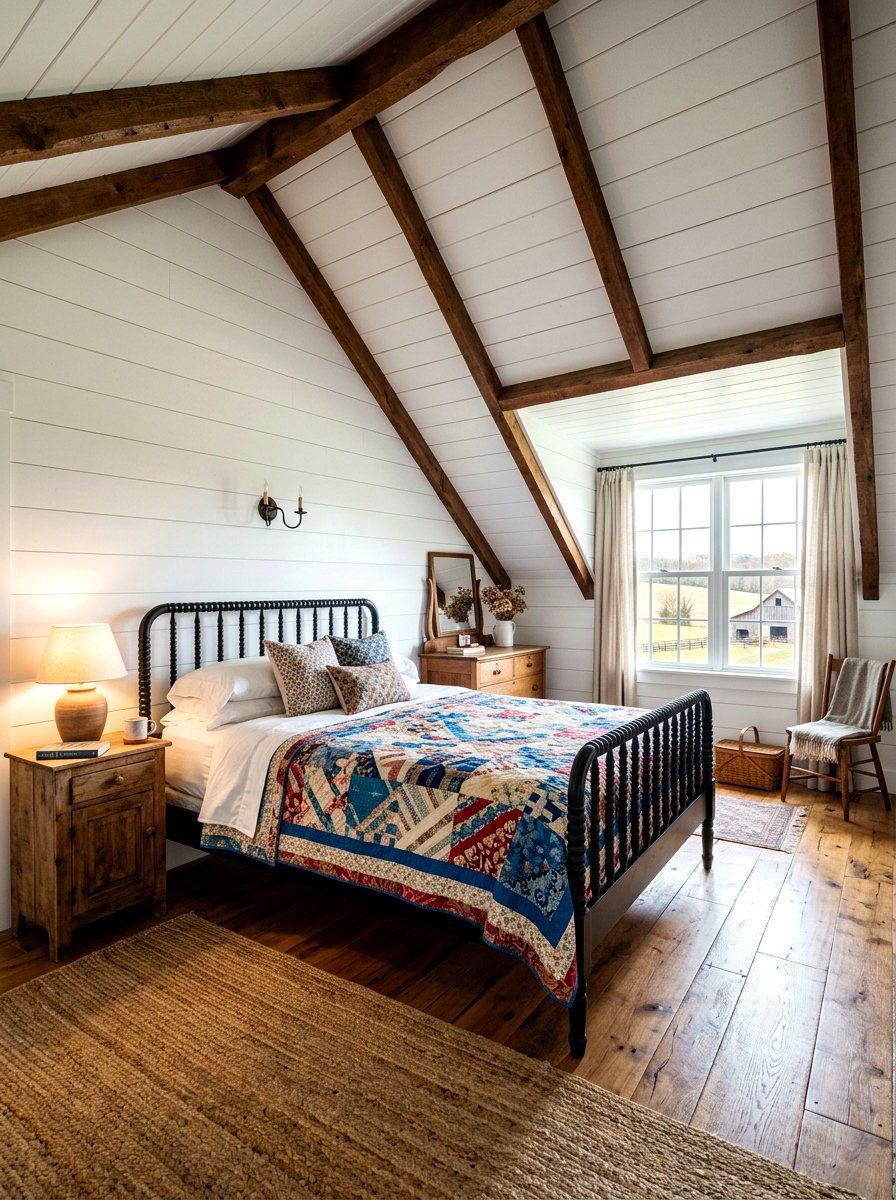
The farmhouse attic bedroom combines traditional charm with modern comfort to create a timeless guest retreat. Use shiplap on the walls or ceiling to add architectural interest and a sense of history to the space. A classic metal or spindle wooden bed frame serves as a beautiful focal point. Choose a color palette of soft whites, muted blues, and warm wood tones for a relaxed, lived-in feel. Incorporate vintage-inspired textiles like ticking stripe pillows or a handmade quilt to enhance the rustic appeal. Finishing touches like a wooden trunk at the foot of the bed provide both style and practical storage for extra linens.
13. Attic master guest suite
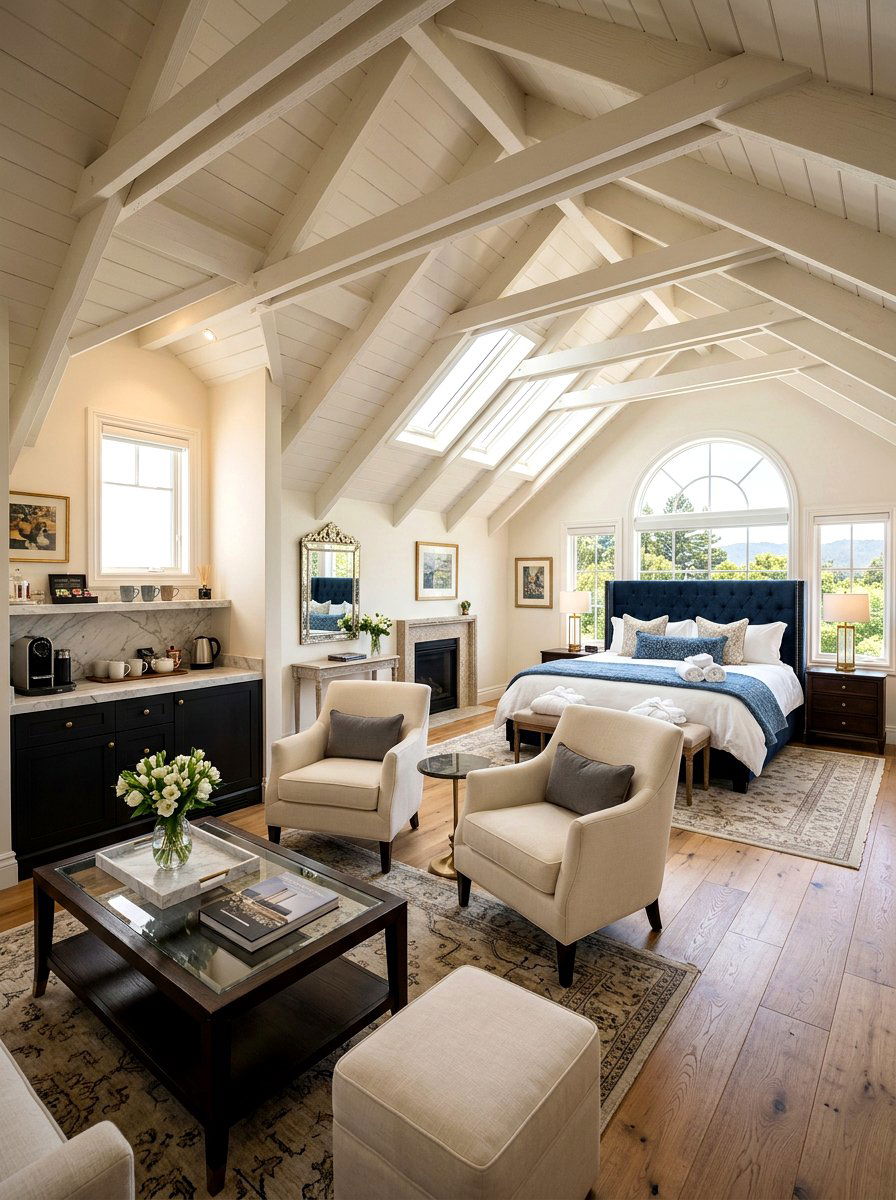
An attic master guest suite is a high-end option that includes a sleeping area, a small lounge, and a private bathroom. If the floor plan allows, use a partial wall or a double-sided fireplace to separate the bed from a cozy seating area with two armchairs. This layout gives guests a truly private living space where they can relax away from the rest of the house. Use consistent flooring and a unified color scheme to tie the different zones together seamlessly. High ceilings can be emphasized with a statement chandelier, while low areas are perfect for a quiet reading nook or a coffee bar.
14. Dark moody attic bedroom
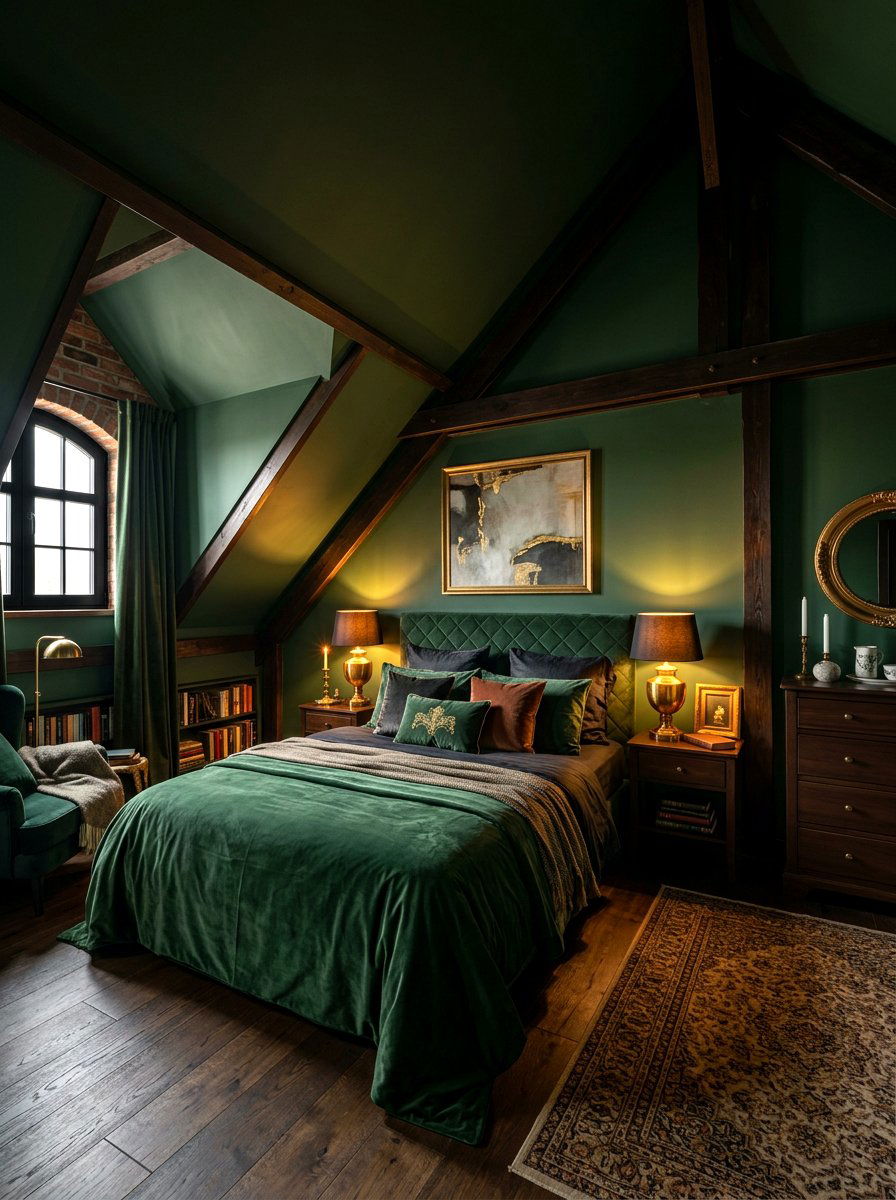
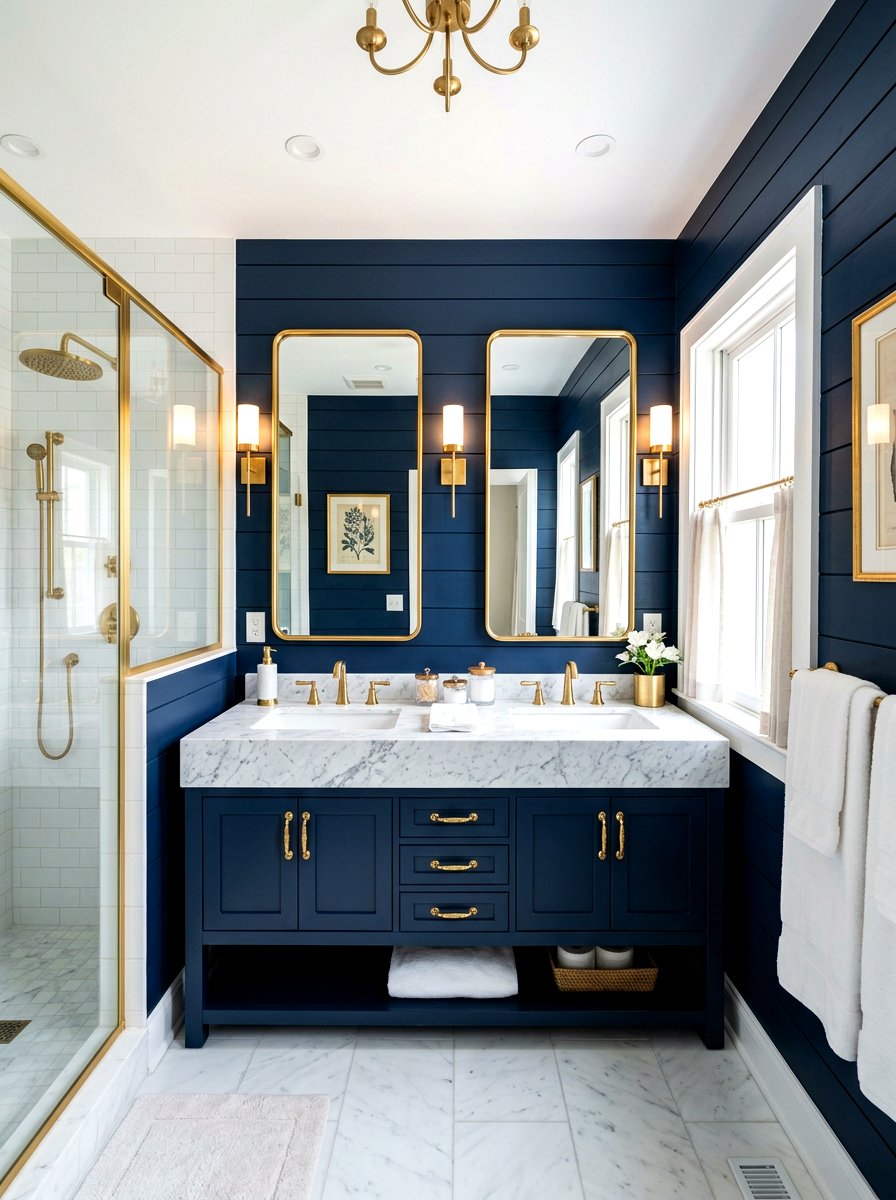
A dark moody attic bedroom leans into the small, enclosed nature of the space to create a sophisticated and intimate cocoon. Choose deep colors like navy blue, forest green, or charcoal gray for both the walls and the ceiling. This "color drenching" technique makes the corners disappear, giving the room an infinite, luxurious feel. Use rich fabrics like velvet for the bedding and heavy drapes to enhance the sense of opulence. To prevent the room from being too dark, incorporate metallic accents in gold or brass and use layered lighting with warm-toned bulbs. This style is perfect for creating a dramatic and memorable guest experience.
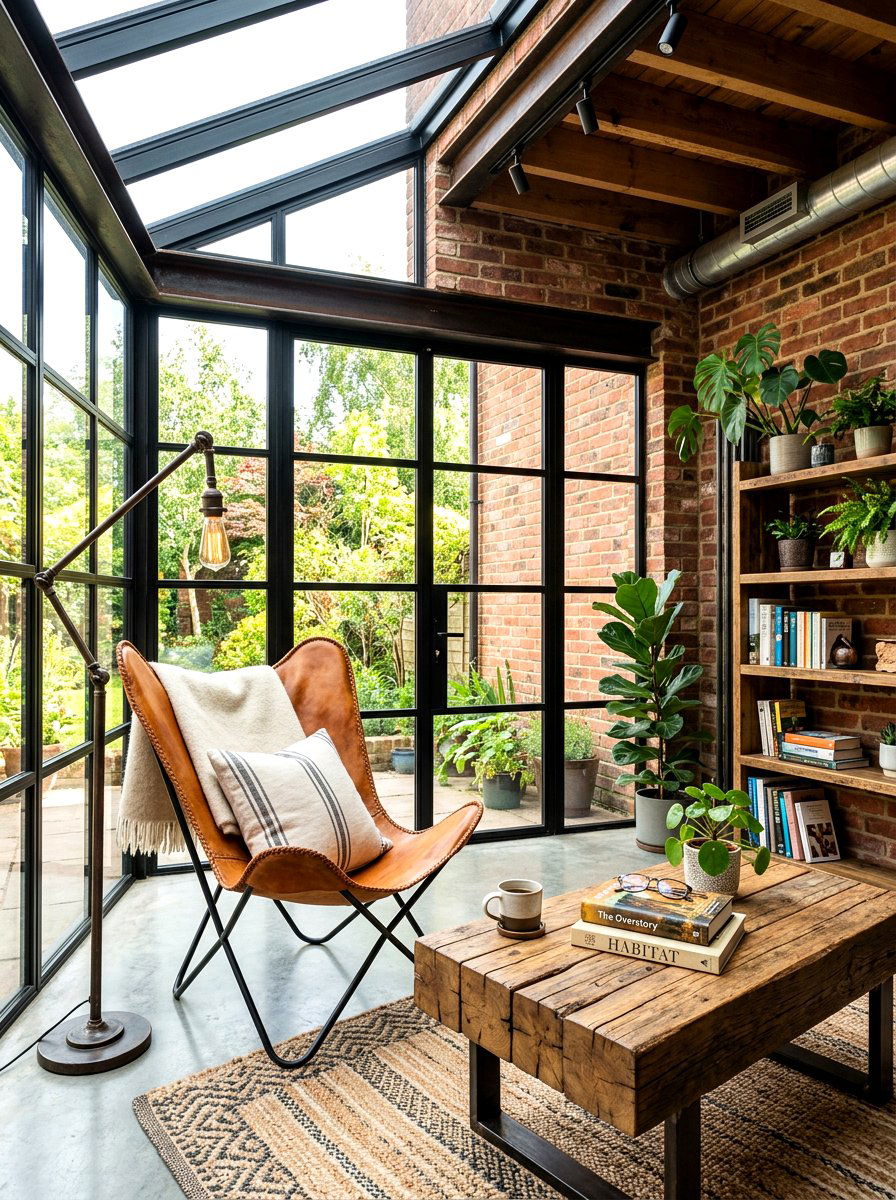
15. Scandi attic guest room
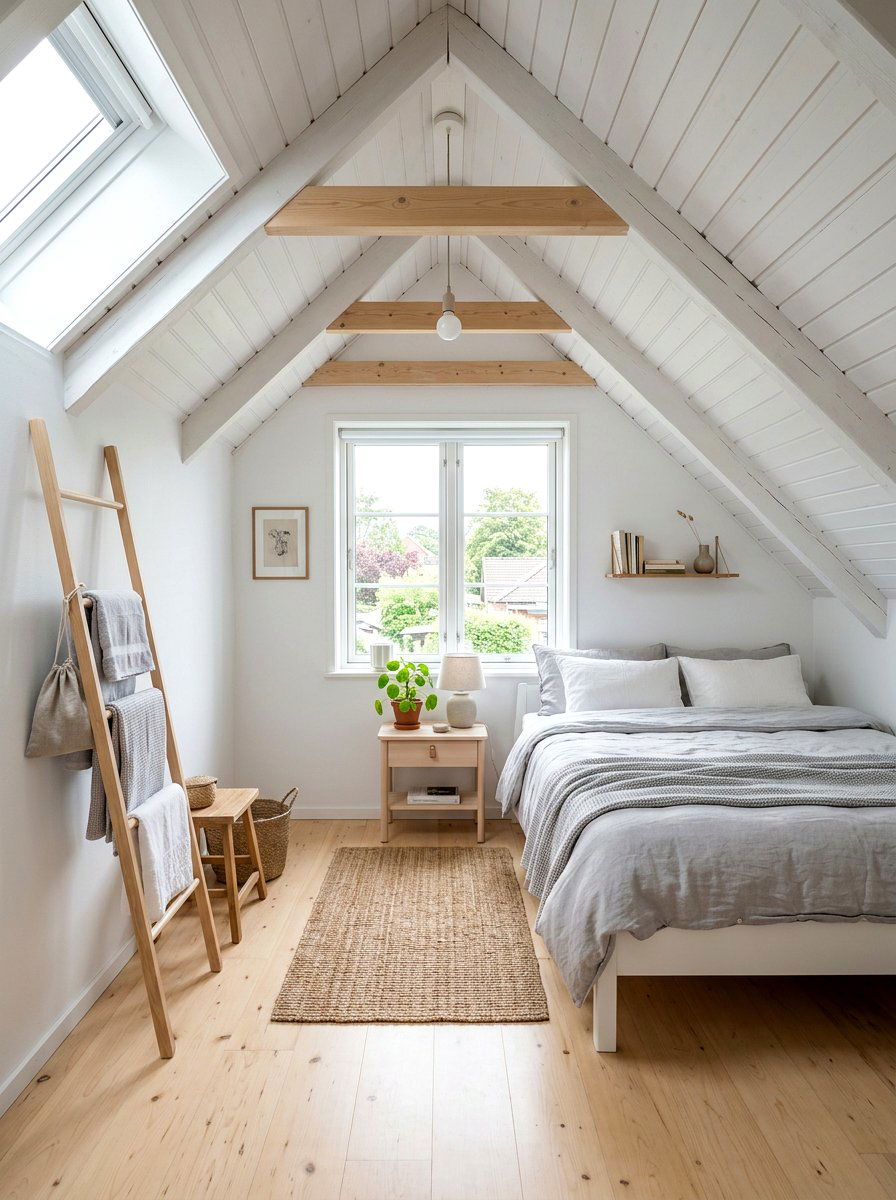
A Scandi attic guest room focuses on light, simplicity, and natural elements to create a functional yet beautiful space. Use light-toned wood like birch or pine for the flooring and furniture to bring a sense of warmth to the room. The color palette should be primarily white and light gray, with occasional pops of pastel or black for contrast. Large windows are crucial for the Scandinavian look, letting in as much natural light as possible. Decorate with a few well-chosen items, such as a simple ceramic vase or a geometric wool rug. The result is a clean, serene environment that feels modern and incredibly welcoming.
16. Attic dormer bedroom
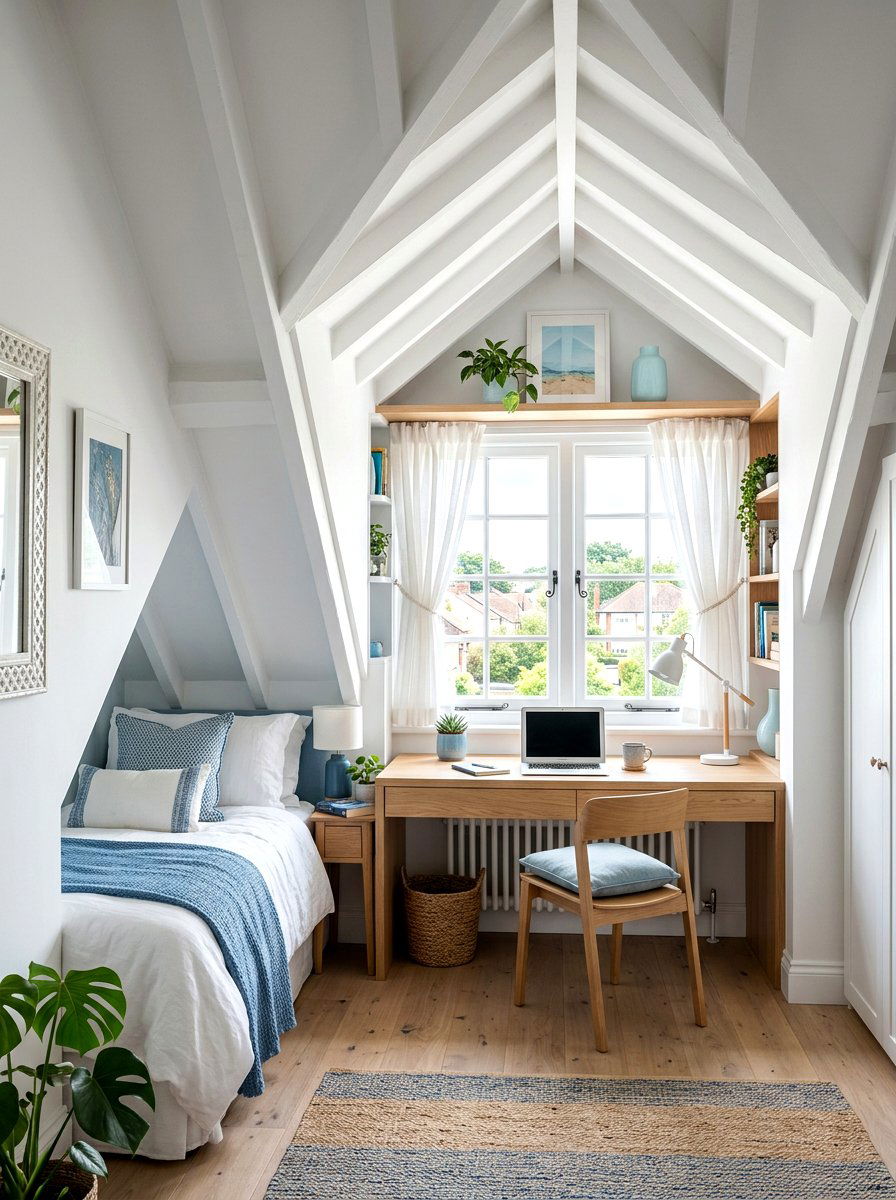
An attic dormer bedroom utilizes the extra headroom and light provided by a dormer window to create a functional living zone. This bump-out area is the perfect spot for a writing desk, a vanity, or a built-in window seat where guests can enjoy the view. By placing the primary furniture away from the dormer, you allow the window to act as a secondary architectural feature. Use light curtains that can be easily pulled back to fully expose the window during the day. Painting the interior of the dormer a slightly different shade can highlight the feature and add depth to the room’s overall design.
17. Blue attic guest room
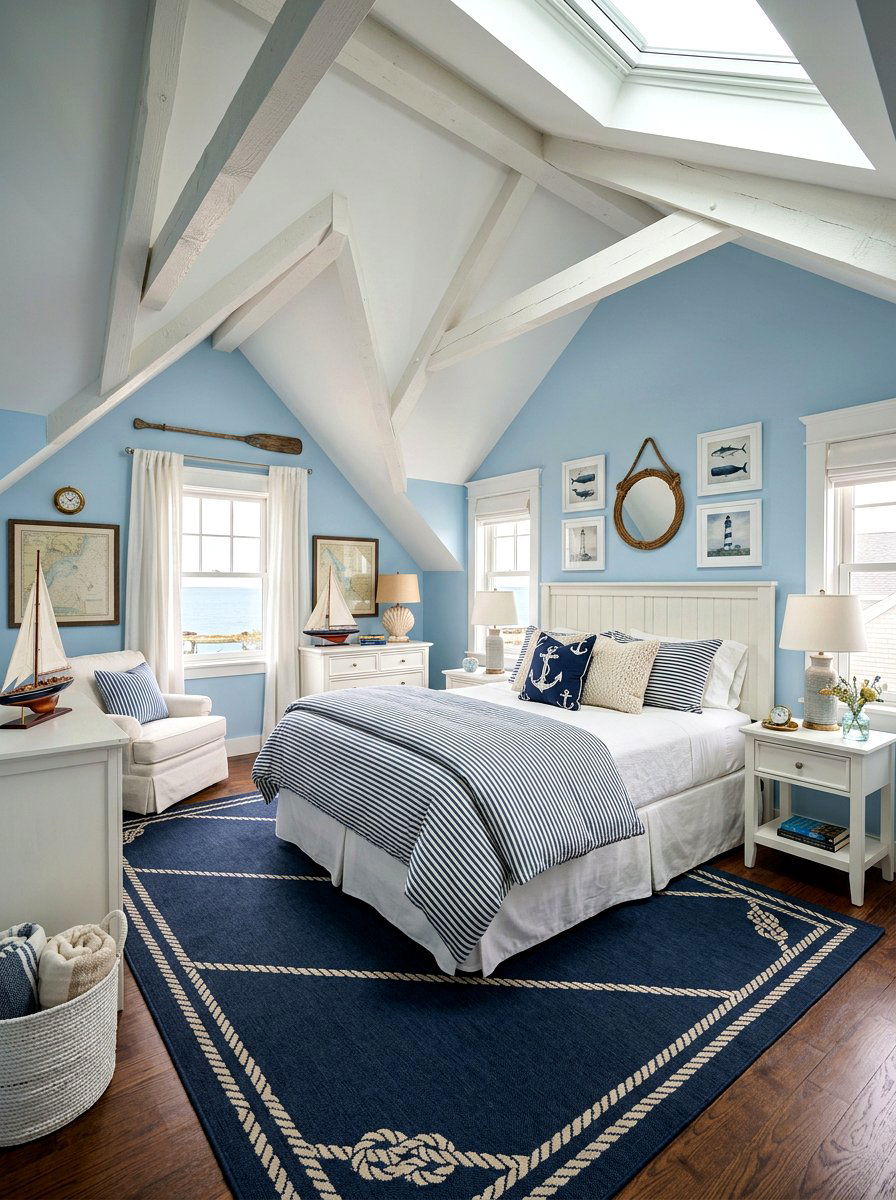
A blue attic guest room uses the psychology of color to create a peaceful and calming environment for rest. Light sky blues or soft aqua tones can make the room feel breezy and more expansive, which is excellent for smaller attics. Alternatively, deep indigo or navy can be used on a focal wall to ground the space and add a touch of elegance. Pair blue walls with crisp white trim and light wood furniture for a classic, clean look. Using blue patterns in the rugs and curtains adds visual interest without being overwhelming. This versatile color works well in both traditional and contemporary attic designs.
18. Attic office guest room combo
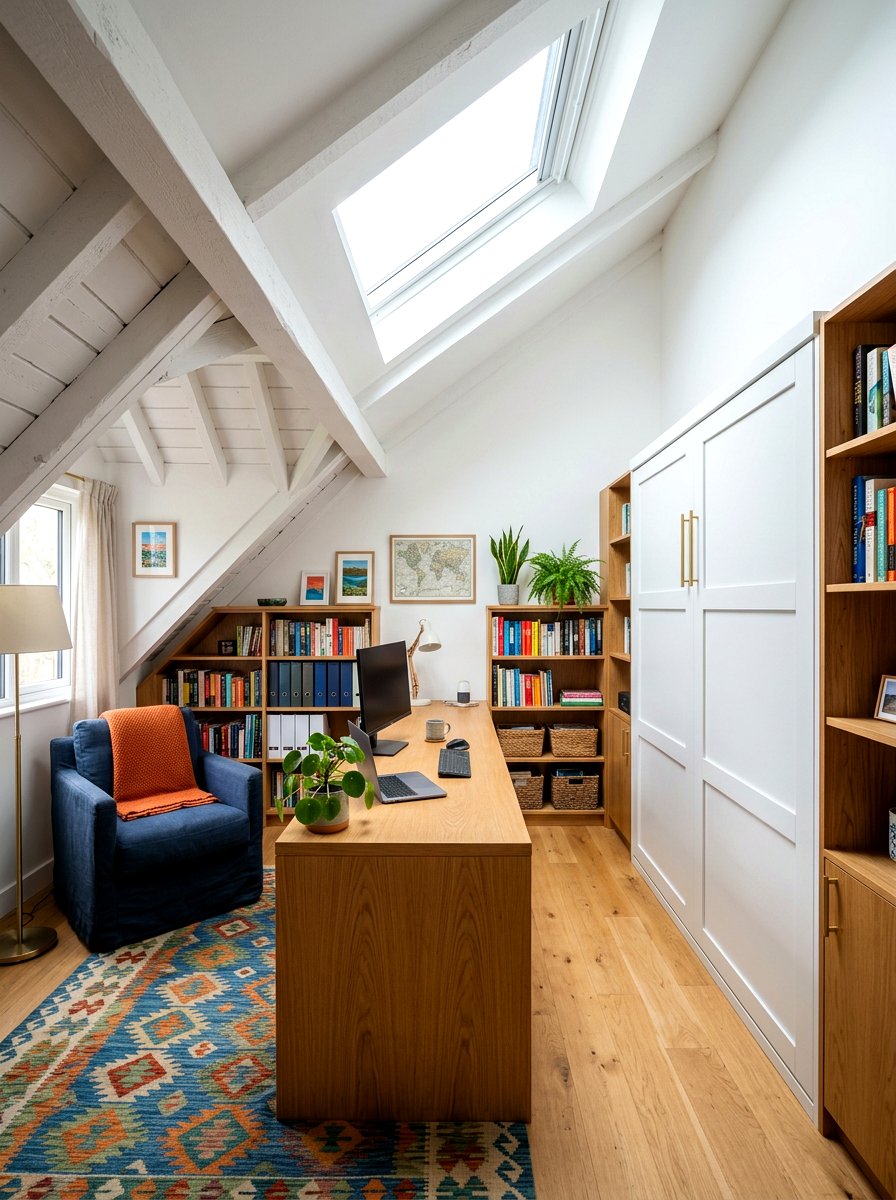
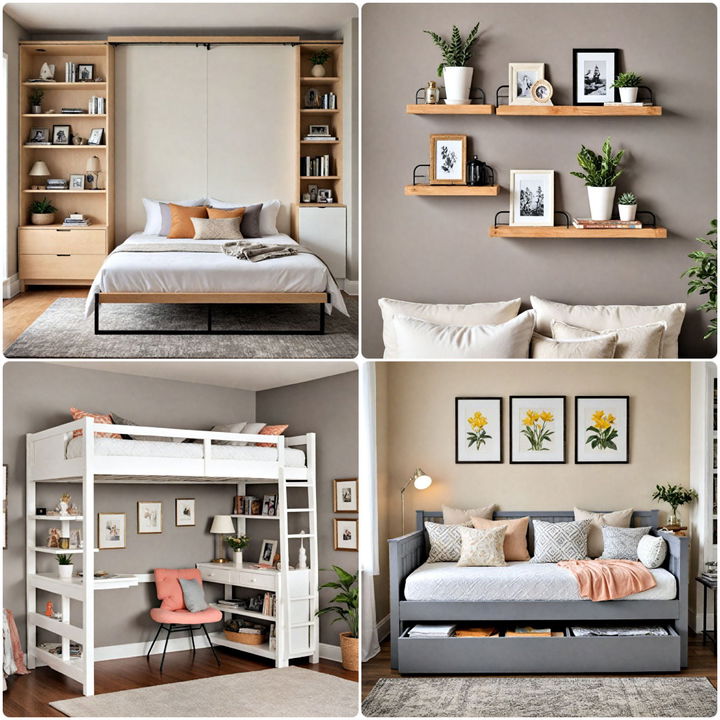
The attic office guest room combo is a highly practical way to use a spare room throughout the year. Use a Murphy bed or a high-quality sofa bed that can be tucked away when guests are not visiting, leaving plenty of floor space for a desk and chair. Position the workstation near a window to take advantage of natural light during the workday. Use built-in shelving to organize both office supplies and guest amenities like extra towels and books. A consistent decor style ensures that the room feels cohesive, whether it is being used for professional tasks or as a comfortable overnight sleeping area.
19. Coastal attic guest room
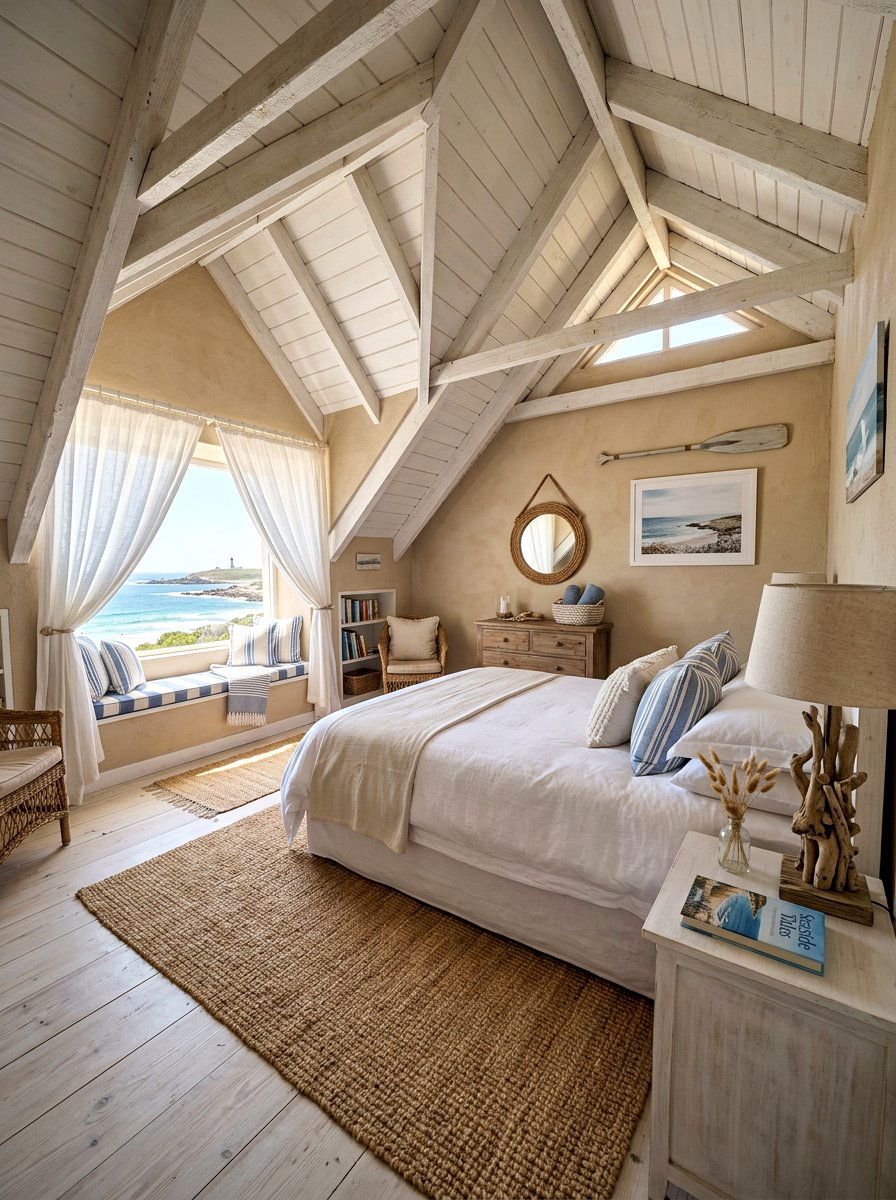
A coastal attic guest room brings the relaxed vibe of the seaside into the top floor of your home. Use a palette of sandy beiges, seafoam greens, and crisp whites to evoke a beachy atmosphere. Incorporate natural textures like jute rugs, linen bedding, and driftwood accents to reinforce the theme. If the attic has a view, keep window treatments minimal to emphasize the connection to the outdoors. Striped patterns in blue and white are a classic choice for pillows or a cozy throw blanket. This design style makes guests feel like they are on a permanent vacation, even if you are far from the shore.
20. Kids attic guest room
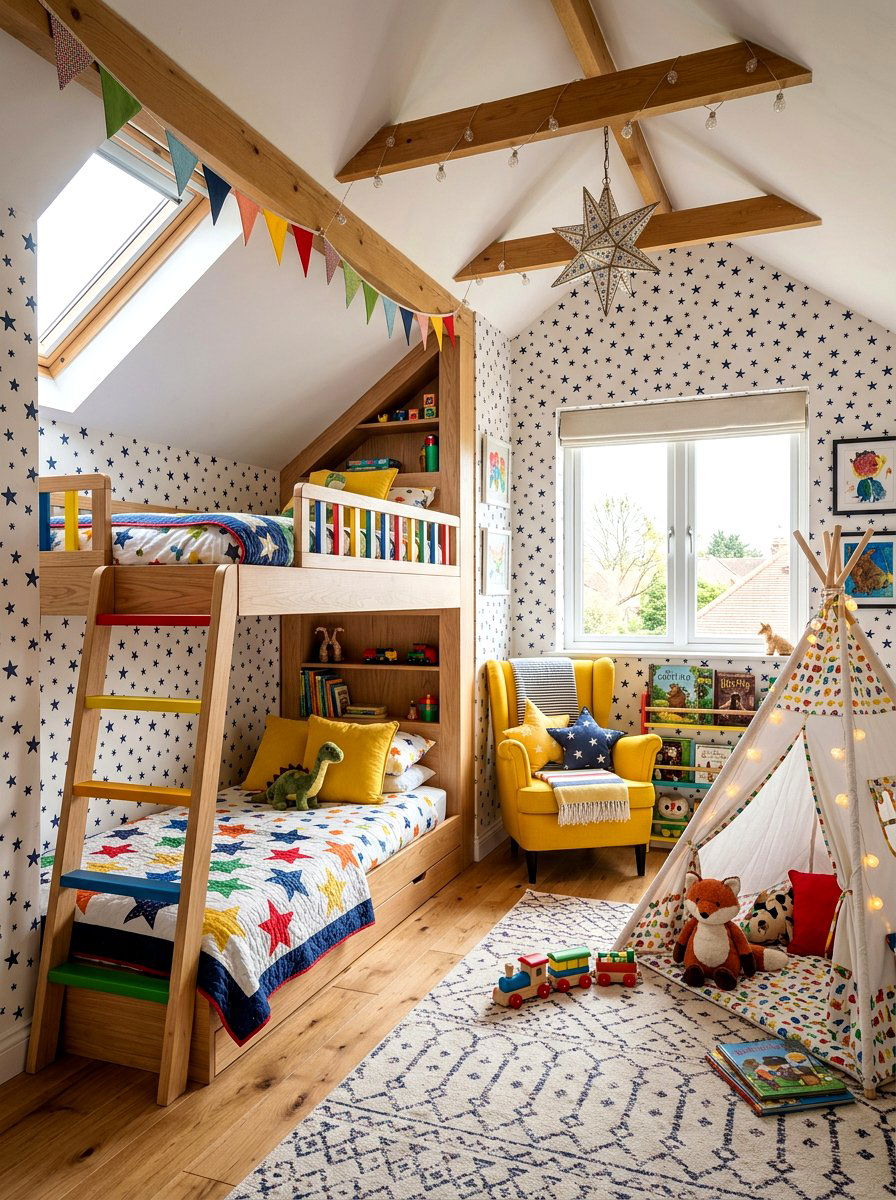
A kids attic guest room is a playful and adventurous space that utilizes the sloped ceilings to create a "secret clubhouse" vibe. Built-in bunk beds are a fantastic way to save space and provide a sense of excitement for younger guests. Use bright colors, fun wallpaper, and soft floor mats to create a safe and engaging environment. Low bookshelves and bins make it easy for children to access toys and books. You can even include a small play tent or a hanging swing if the ceiling beams are strong enough. This design turns an ordinary attic into a magical destination for the family’s youngest visitors.
21. Luxury attic guest suite
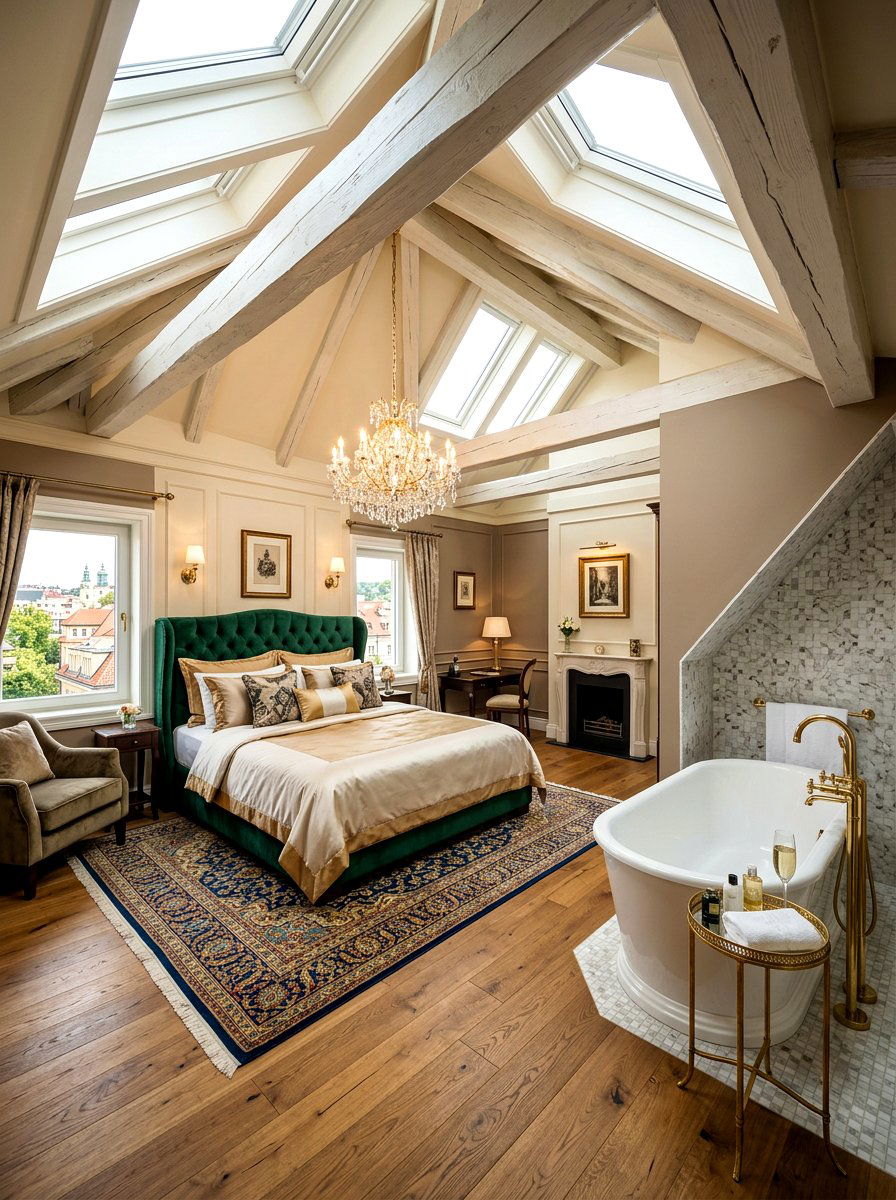
A luxury attic guest suite prioritizes high-end finishes and comfort to create an upscale retreat. Think about adding a plush velvet headboard, high-thread-count linens, and a thick silk rug that feels wonderful underfoot. If space allows, an en-suite bathroom with a freestanding soaking tub and marble tiling adds significant value and appeal. Use sophisticated lighting fixtures, such as crystal sconces or a designer pendant, to act as jewelry for the room. A small bar cart with a coffee station and high-quality snacks makes the experience feel like a five-star hotel. This approach is perfect for making long-term guests feel truly pampered and valued.
22. Attic guest room window seat
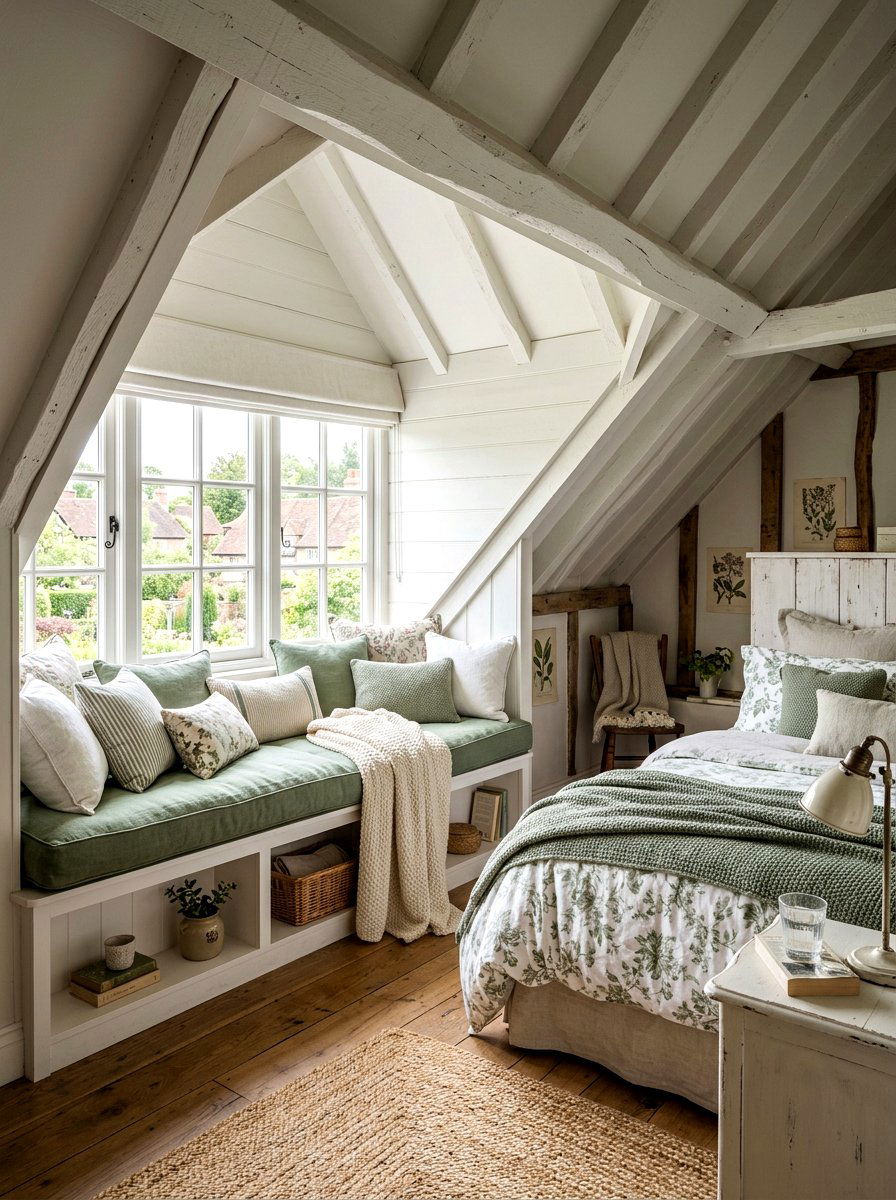
An attic guest room window seat is a charming addition that provides a secondary place for guests to relax and enjoy the view. Built directly into a dormer or under a large window, the seat can also serve as hidden storage for extra blankets or pillows. Use a thick, comfortable cushion upholstered in a durable fabric and add several plush throw pillows to create a cozy reading nook. This feature utilizes what might otherwise be wasted floor space under a low-hanging roof. It adds a layer of custom architectural detail that makes the room feel much more expensive and well-thought-out for visitors.
23. Exposed beam attic bedroom
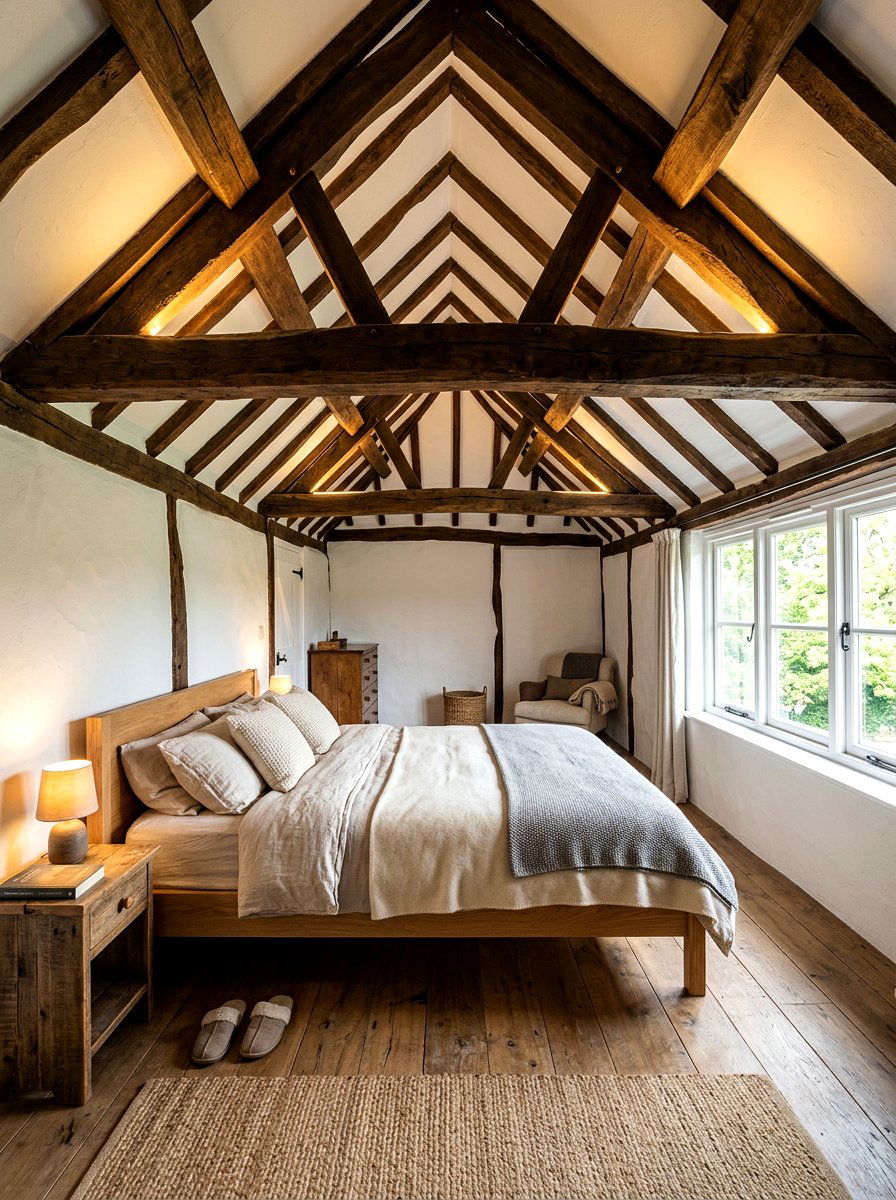
An exposed beam attic bedroom celebrates the structural bones of the house, adding immediate character and a sense of history. Whether the beams are dark stained wood or painted a crisp white, they provide a strong visual rhythm that guides the eye through the space. Keep the rest of the decor relatively simple to let the architectural lines remain the star of the show. Neutral wall colors work best to provide a clean backdrop for the texture of the wood. Using warm lighting that shines upward can highlight the beams in the evening, creating a dramatic and cozy atmosphere that guests will love.
24. Cozy attic guest nook
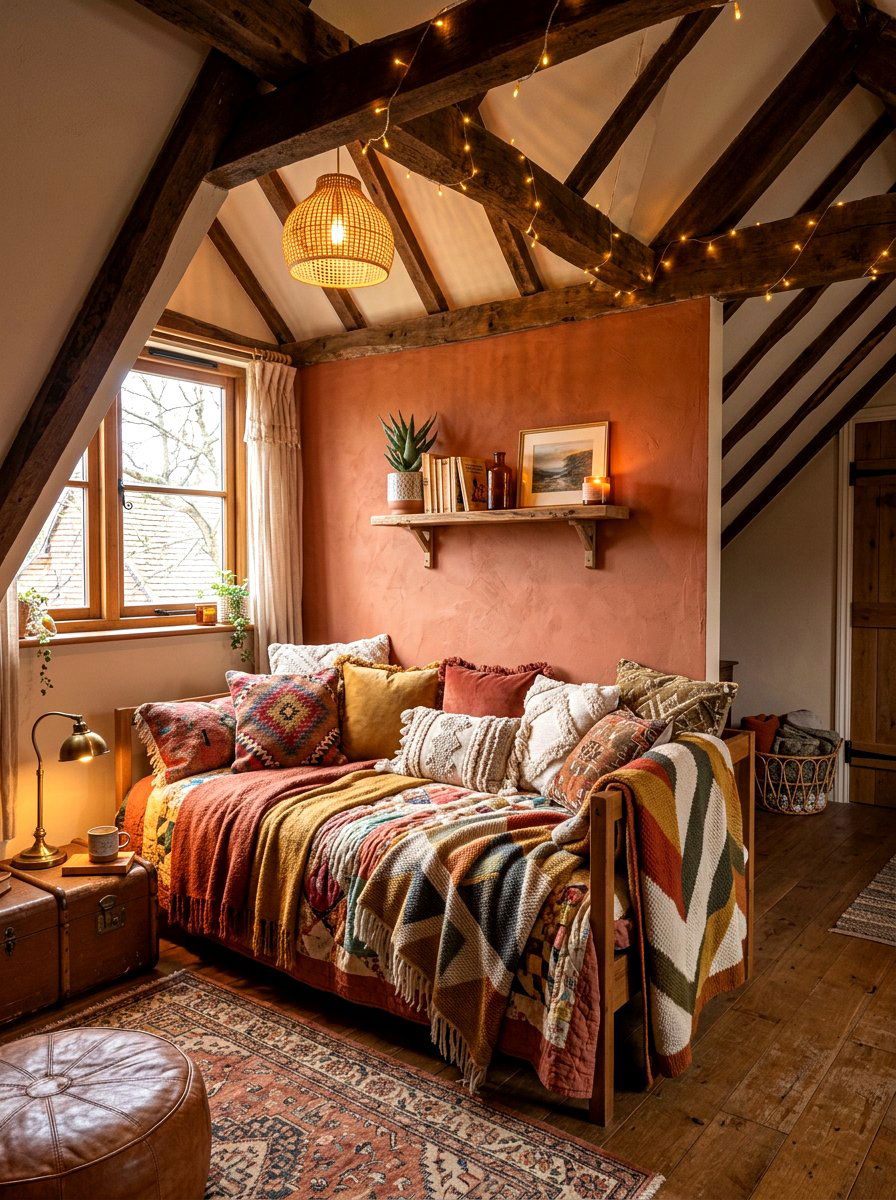
A cozy attic guest nook is the perfect solution for very small spaces where a full bedroom suite isn't possible. Focus on creating a high-quality sleeping environment within a tight footprint by using a daybed or a built-in mattress platform. Use warm, soft lighting and plenty of textiles to make the small area feel like a snug retreat rather than a cramped closet. A small floating shelf can serve as a nightstand for a phone and a glass of water. Painting the entire nook a warm, inviting color helps to define the space and makes it feel like an intentional and charming hideaway for guests.
25. Attic wallpaper bedroom
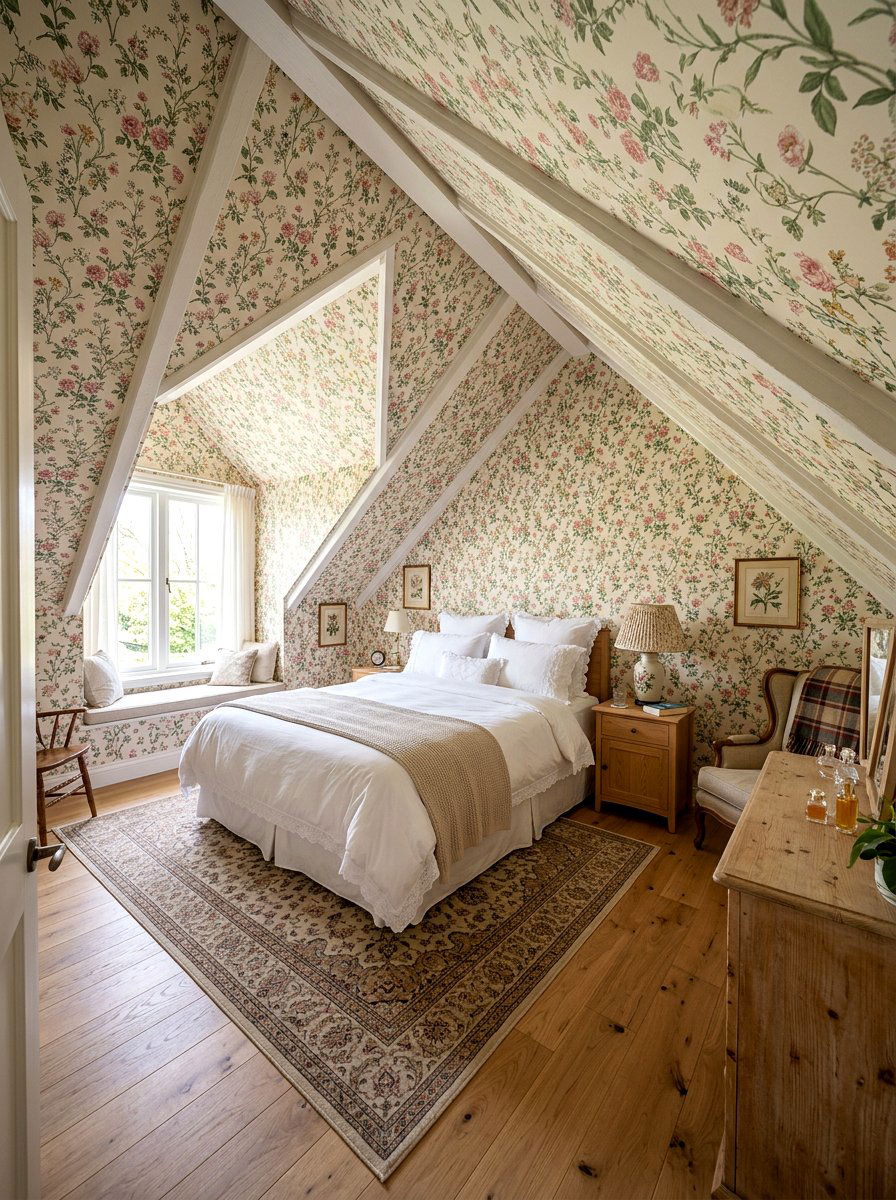
An attic wallpaper bedroom uses bold patterns to add personality and visual interest to the uniquely shaped walls. Because attics have so many angles, wallpaper can help to unify the surfaces and draw the eye away from awkward transitions. Choose a small-scale floral or a subtle geometric print to avoid overwhelming the space. You can apply the wallpaper to all walls or just a single focal wall behind the bed for a dramatic statement. Pair the pattern with simple, solid-colored bedding to keep the room balanced. This is a great way to inject color and style into a room that might otherwise feel plain.
26. Contemporary attic guest room
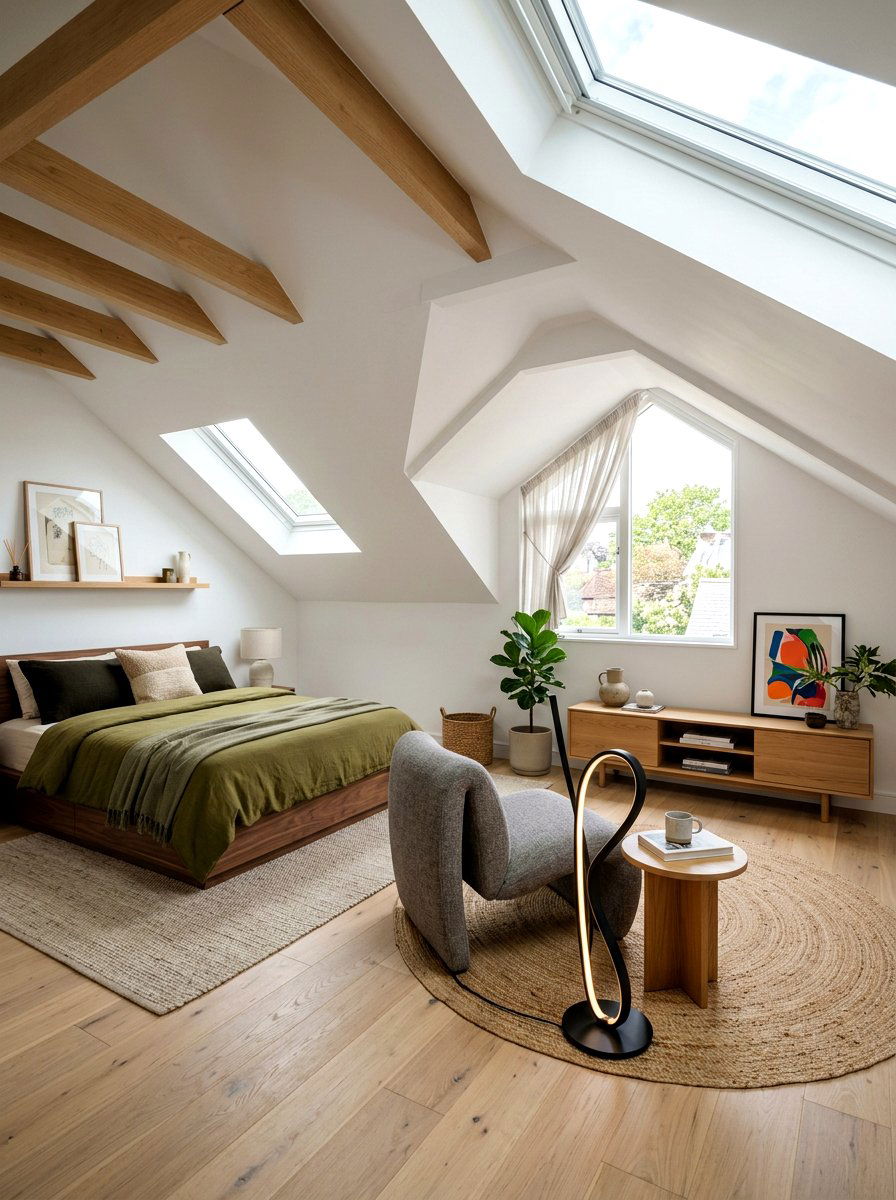
A contemporary attic guest room blends current design trends with functional living to create a stylish and efficient space. Incorporate furniture with interesting shapes, such as a curved armchair or a sculptural floor lamp, to add a modern edge. Use a sophisticated color palette of taupe, cream, and olive green to create a grounded and peaceful environment. Hardwood floors with a low-pile area rug provide a clean, updated look that is easy to maintain. By focusing on a mix of textures and sleek finishes, you create a space that feels fresh, relevant, and extremely comfortable for any modern traveler staying in your home.
27. Low ceiling attic bedroom
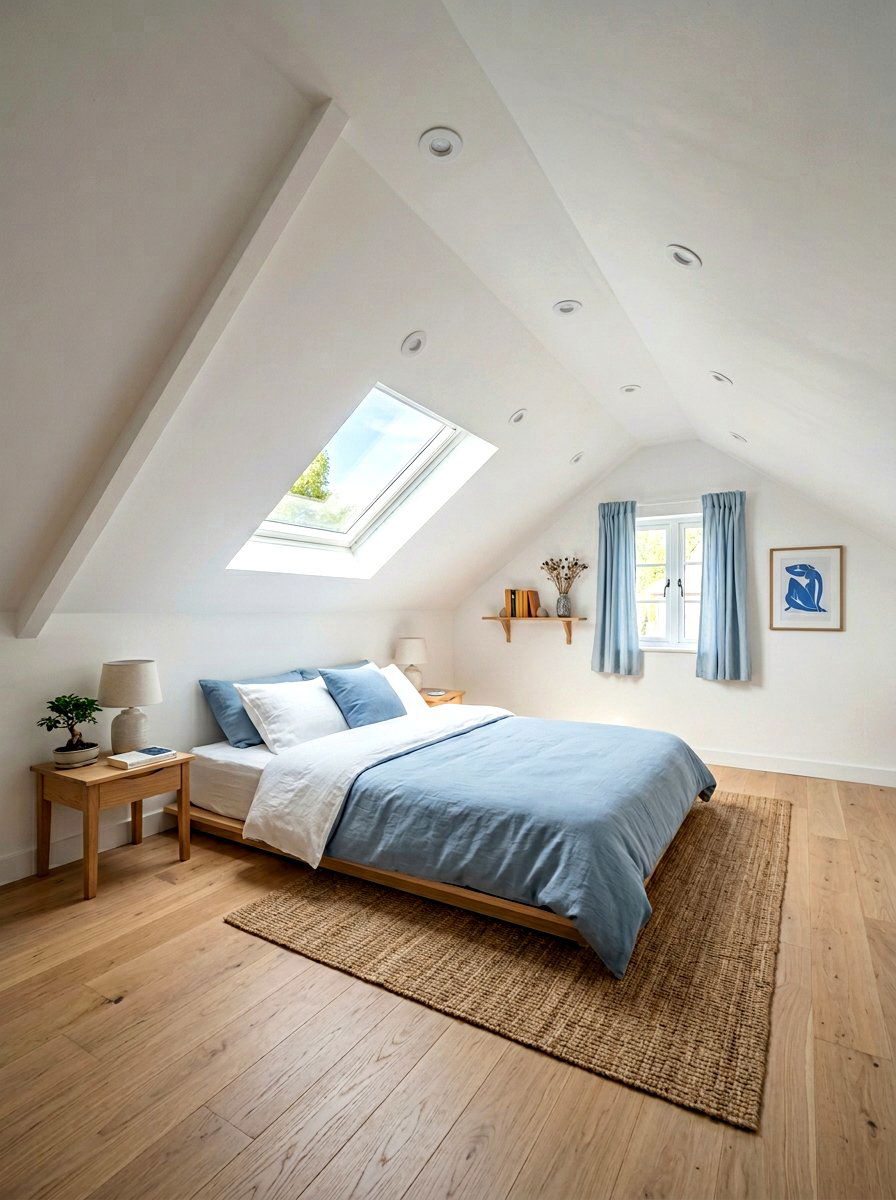
Designing a low ceiling attic bedroom requires careful attention to furniture scale and light. Use extremely low-profile furniture, like a Japanese-style floor bed, to maximize the distance between the mattress and the ceiling. This prevents the room from feeling claustrophobic and makes the most of the limited vertical height. Avoid overhead lighting fixtures that hang down; instead, use recessed lights or wall-mounted sconces that keep the ceiling line clean. Light, cool colors on the walls and ceiling will help the space feel more open. This approach turns a challenging architectural limitation into a cozy and intentional design choice that feels like a snug retreat.
28. Vintage attic guest room
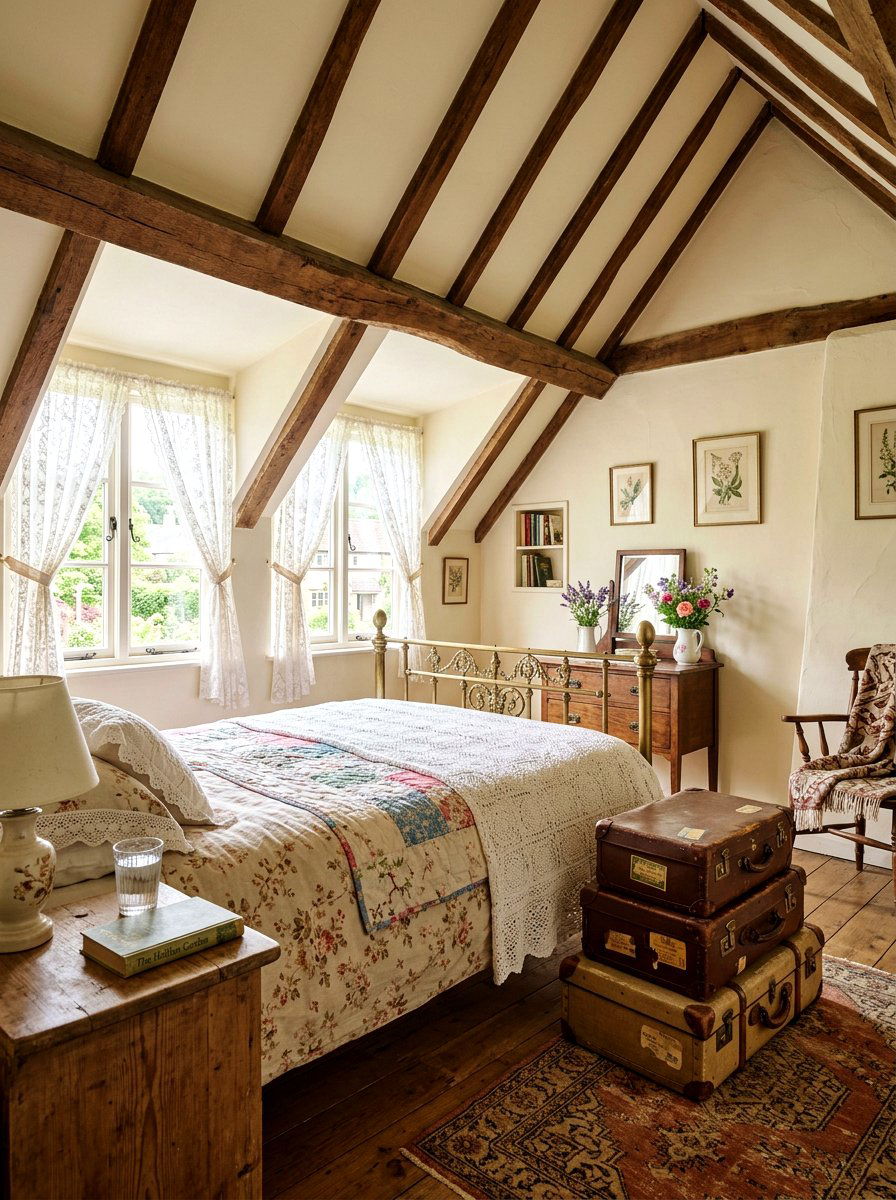
A vintage attic guest room embraces the nostalgia of an old house with antique furniture and classic decor. Look for a wrought-iron bed frame or a refinished wooden dresser to ground the room in a traditional style. Use lace curtains and floral textiles to add a touch of romance and softness to the space. Displaying a collection of old books or vintage suitcases as decor enhances the "hidden attic" charm. A warm, cream-colored palette with muted pastel accents works perfectly to create a lived-in, comfortable atmosphere. This style is perfect for those who want their guest room to feel like a timeless sanctuary.
29. Attic guest room storage
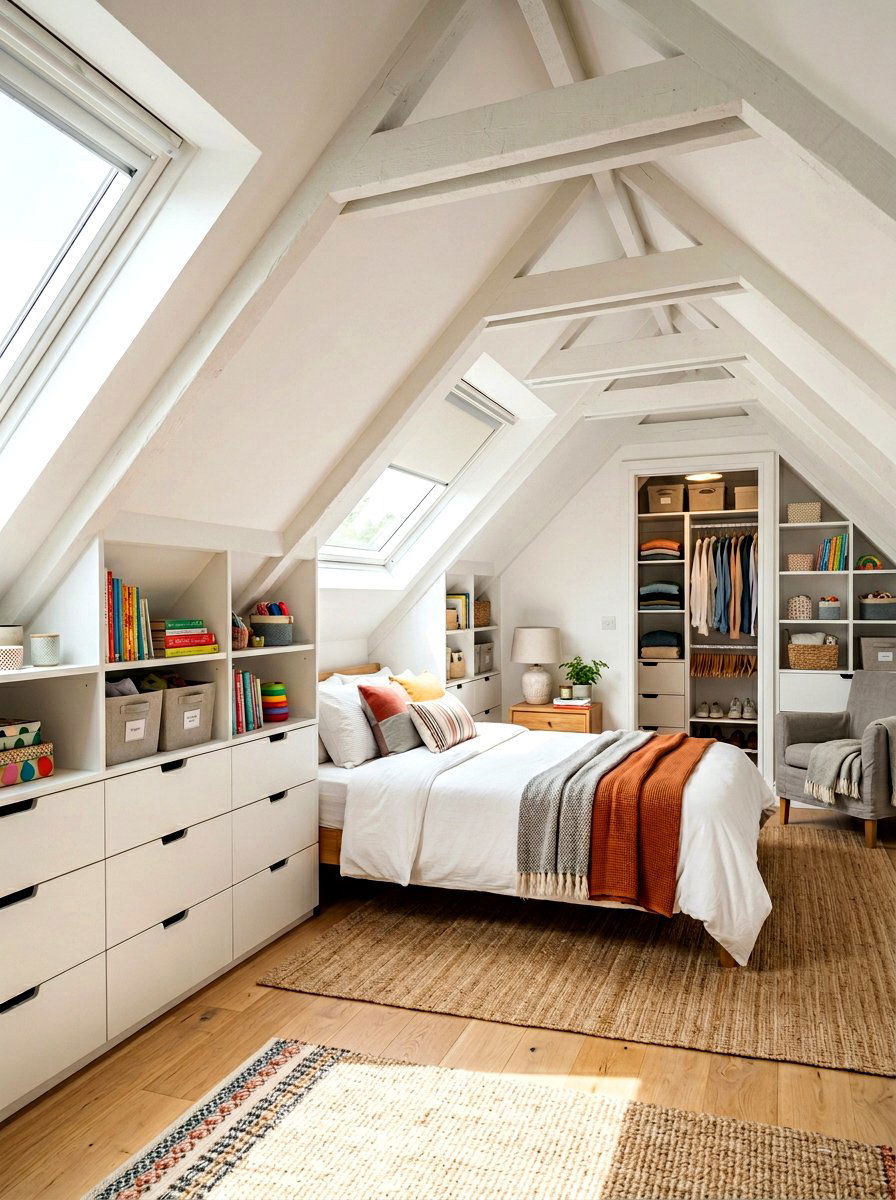
Effective attic guest room storage is essential for keeping the uniquely shaped space tidy and functional. Utilize the low areas of the room, known as knee walls, by installing custom drawers or cabinets that follow the slope of the roof. This provides plenty of space for guests to unpack their clothes without using up valuable floor area in the center of the room. Floating shelves are another great option for displaying decor or providing a place for guests to set their belongings. By integrating storage into the architecture, you maintain a clean and open feel, ensuring the room remains a relaxing environment for visitors.
30. Bright airy attic bedroom
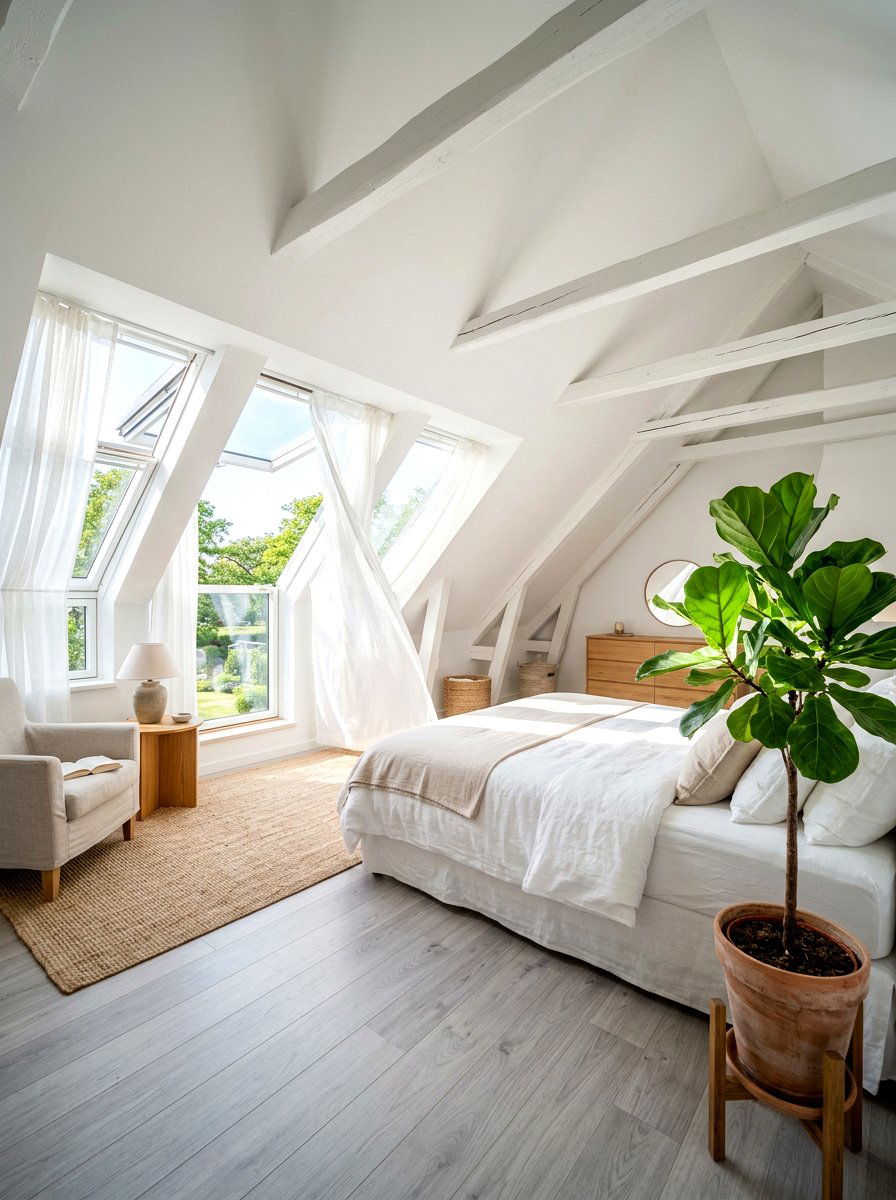
A bright airy attic bedroom is achieved through a combination of large windows, light colors, and minimal furniture. Use sheer white curtains that allow sunlight to filter through while still providing privacy for your guests. A palette of soft whites and very light grays will reflect every bit of available light, making the room feel fresh and expansive. Keep the decor simple with a few natural elements like a wooden bench or a large leafy plant. This design philosophy focuses on creating a sense of peace and openness, making the attic feel like a breezy, high-altitude escape from the rest of the world.
Conclusion:
Designing a successful attic guest room is an exercise in creativity and spatial planning that results in a truly unique living space. By embracing the architectural quirks of the top floor — from sloped ceilings to tucked-away nooks — you can create a retreat that offers unparalleled privacy and charm. Whether you choose a modern minimalist aesthetic or a cozy rustic vibe, the key lies in maximizing light and prioritizing guest comfort. A well-designed attic not only adds significant value to your home but also provides your visitors with a memorable and peaceful sanctuary. With thoughtful planning, even the smallest attic can become the most sought-after room in the house.

Related posts: