Choosing the right rug for your dining room is one of the most effective ways to transform the entire look and feel of your home. A well-placed rug serves as a visual anchor, bringing together various design elements like furniture, lighting, and wall decor into a cohesive and inviting space. Beyond aesthetics, rugs provide essential functionality by protecting your hardwood or tile floors from the constant movement of heavy chairs. They also improve the acoustics of the room, dampening the sound of conversation and clinking silverware during busy family gatherings. By understanding the principles of scale, shape, and material, you can create a dining area that feels both professionally designed and comfortably lived-in for years.

1. Rectangular Rug Under Rectangular Dining Table
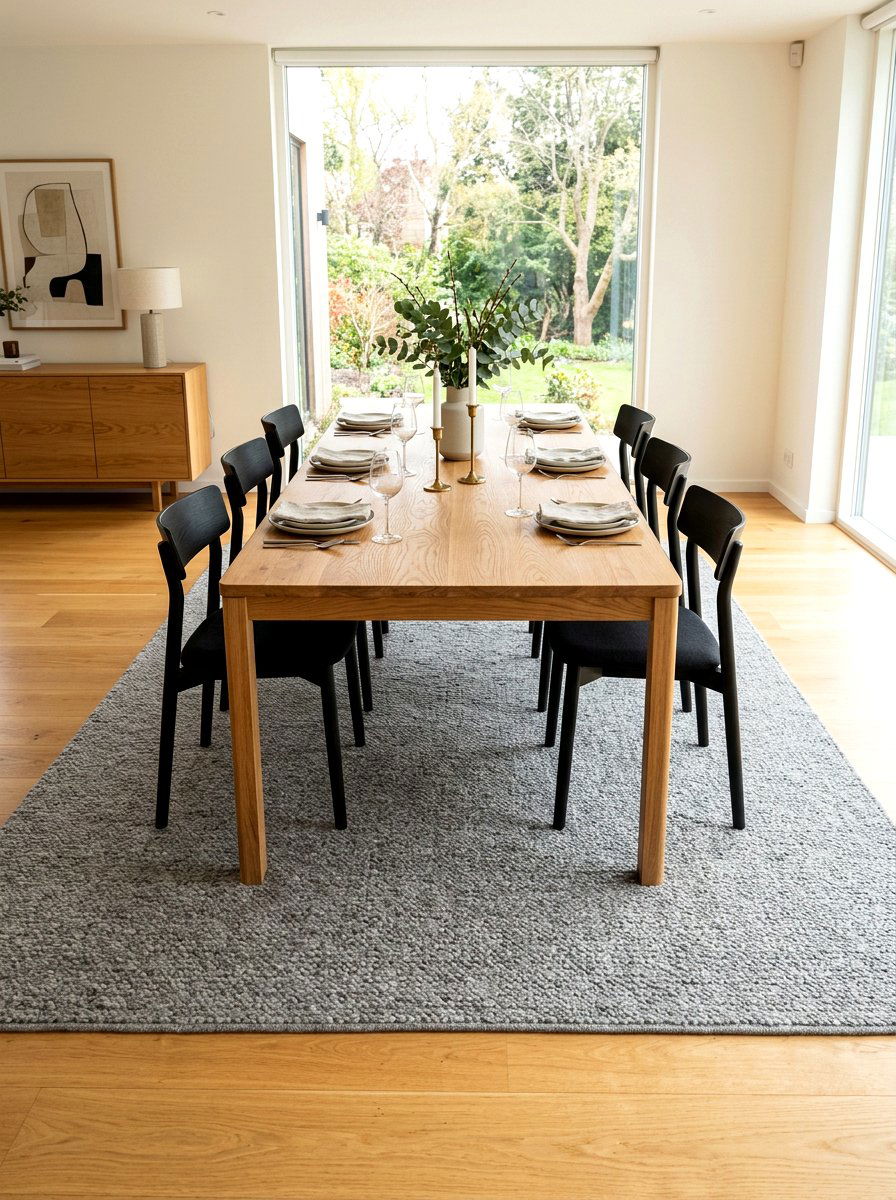
Choosing a rectangular rug for your rectangular dining table is perhaps the most traditional and visually satisfying approach you can take in interior design. This layout works because the echoing shapes create a sense of symmetry and order that grounds the entire room. When you place a rug this way, ensure it is large enough so that all chair legs remain on the rug even when pulled out for guests to sit. Ideally, you want about twenty-four to thirty inches of rug extending past the table edges on all sides. This prevents the chairs from catching on the rug edge, which can be a safety hazard and look unfinished in a formal setting.
2. Round Rug Under Round Dining Table
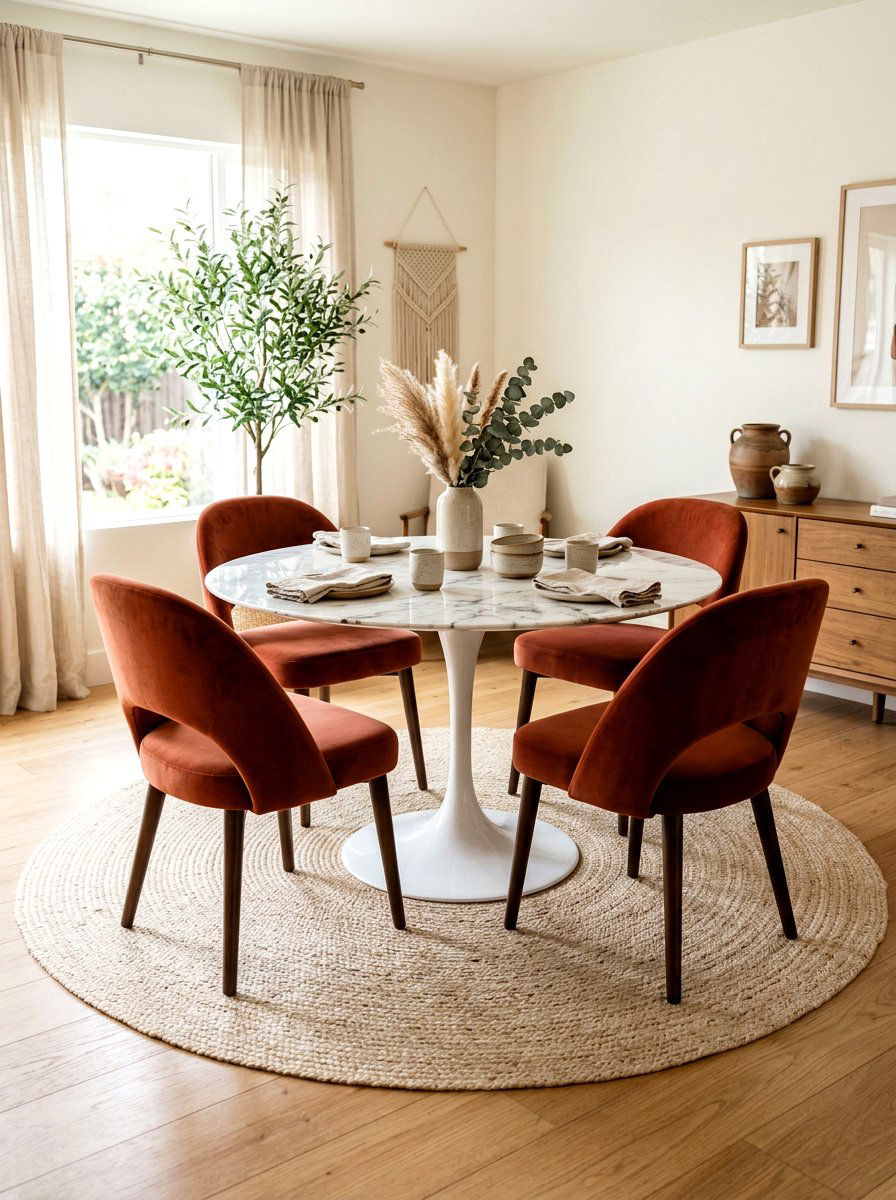
A round rug placed beneath a round dining table creates a harmonious and balanced look that softens the sharp corners of a room. This placement is particularly effective in smaller dining areas or circular breakfast nooks where space is at a premium. The circular silhouette encourages a sense of flow and intimacy, making the dining experience feel more inclusive for everyone at the table. To get the sizing right, measure the diameter of your table and add at least four feet to ensure that the chairs stay firmly on the rug. This specific arrangement draws the eye toward the center of the room, highlighting your beautiful centerpiece and lighting.
3. Square Rug Under Square Dining Table
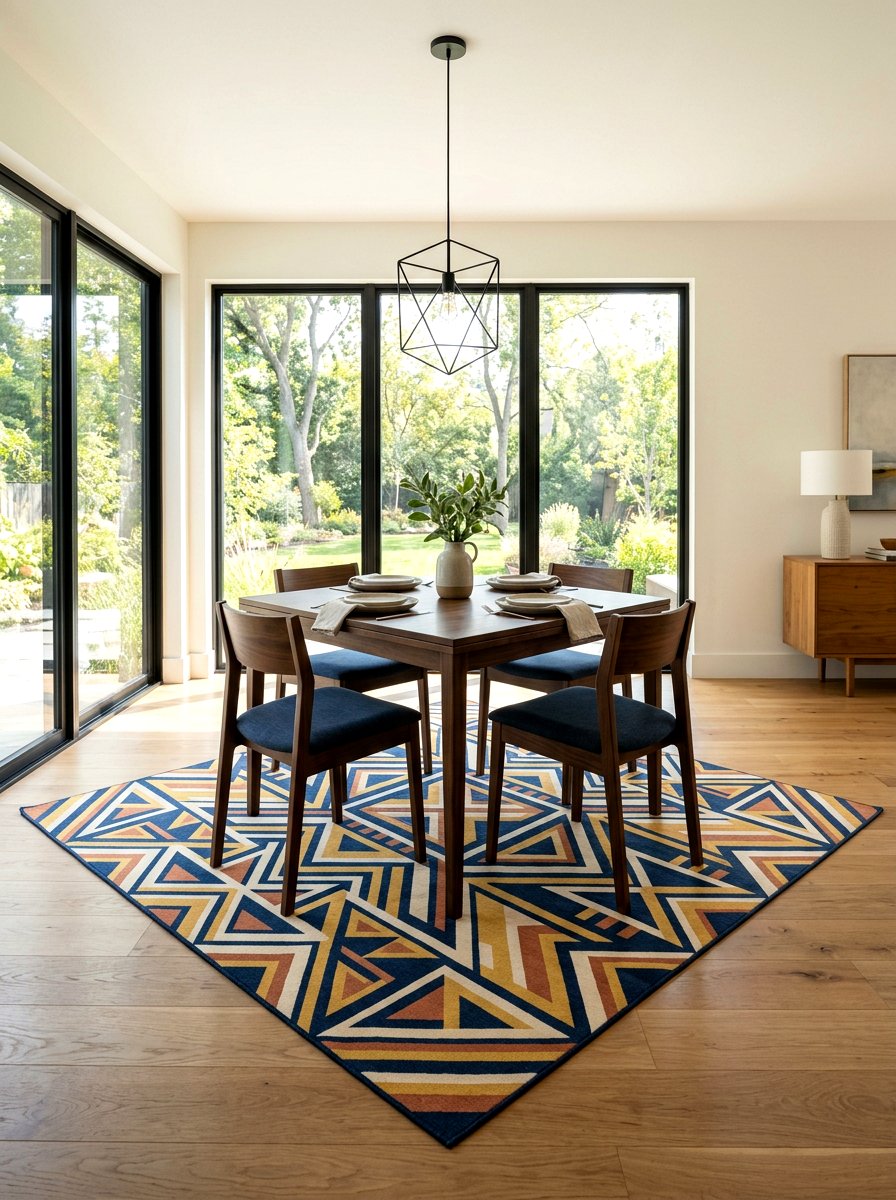
Placing a square rug under a square dining table is a bold design choice that emphasizes geometric precision and modern style. This arrangement works best in rooms that are also square or have symmetrical architectural features. The rug acts as a frame, highlighting the unique proportions of the square table and creating a very intentional, curated vibe. It is crucial to maintain equal clearance on all four sides of the table to keep the look balanced. If you find a square rug that is slightly too small, it can make the table look cramped, so always err on the side of a larger size to maintain a luxurious feel.
4. Layered Rugs Under Dining Table
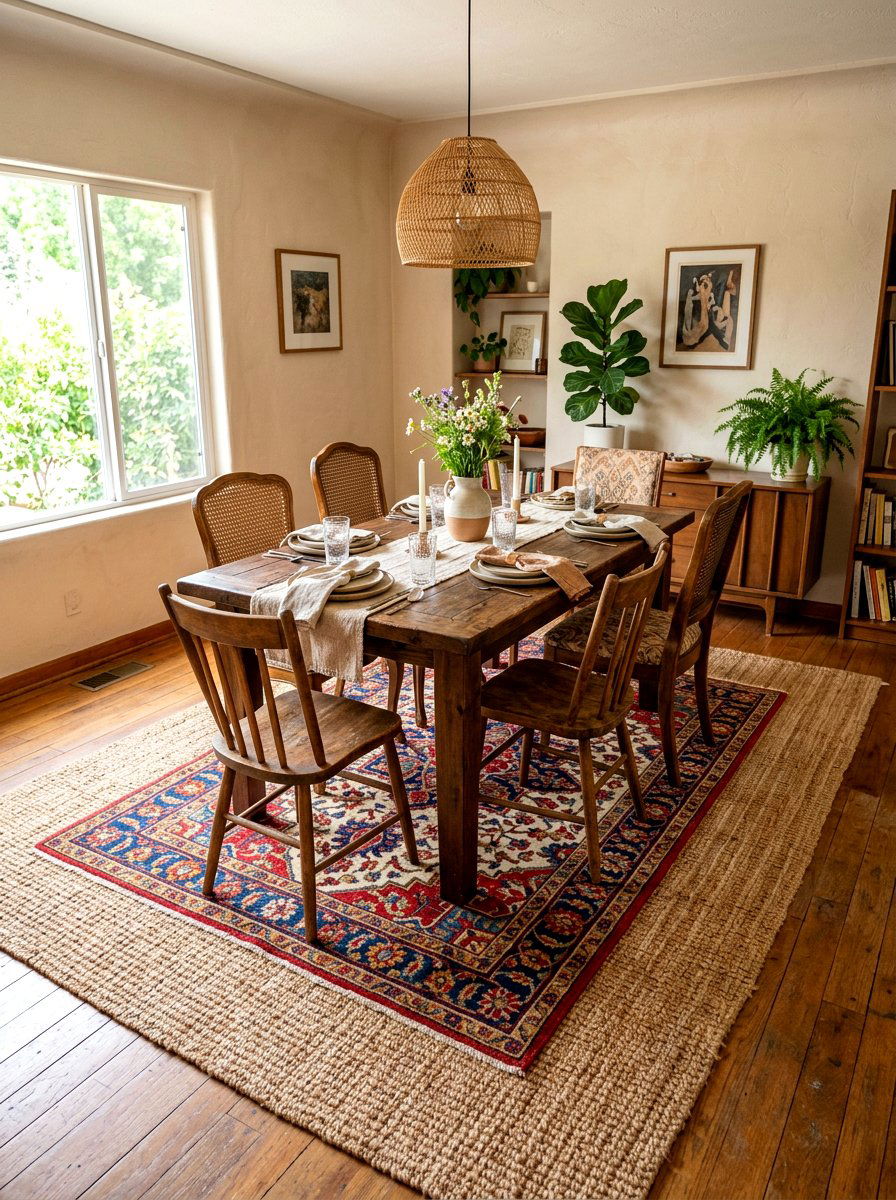
Layering rugs in the dining room is a fantastic way to introduce extra texture, color, and personality into your home. Start with a large, neutral base rug made of a durable material like jute or sisal to cover a significant portion of the floor. Then, place a smaller, more decorative patterned rug directly under the table to serve as a focal point. This technique adds depth and a cozy, lived-in feel that is perfect for bohemian or eclectic interior styles. The layered look also provides extra cushioning underfoot and allows you to swap out the top rug easily if you want to refresh the room's color palette.
5. Large Rug For 8 Chair Dining Table
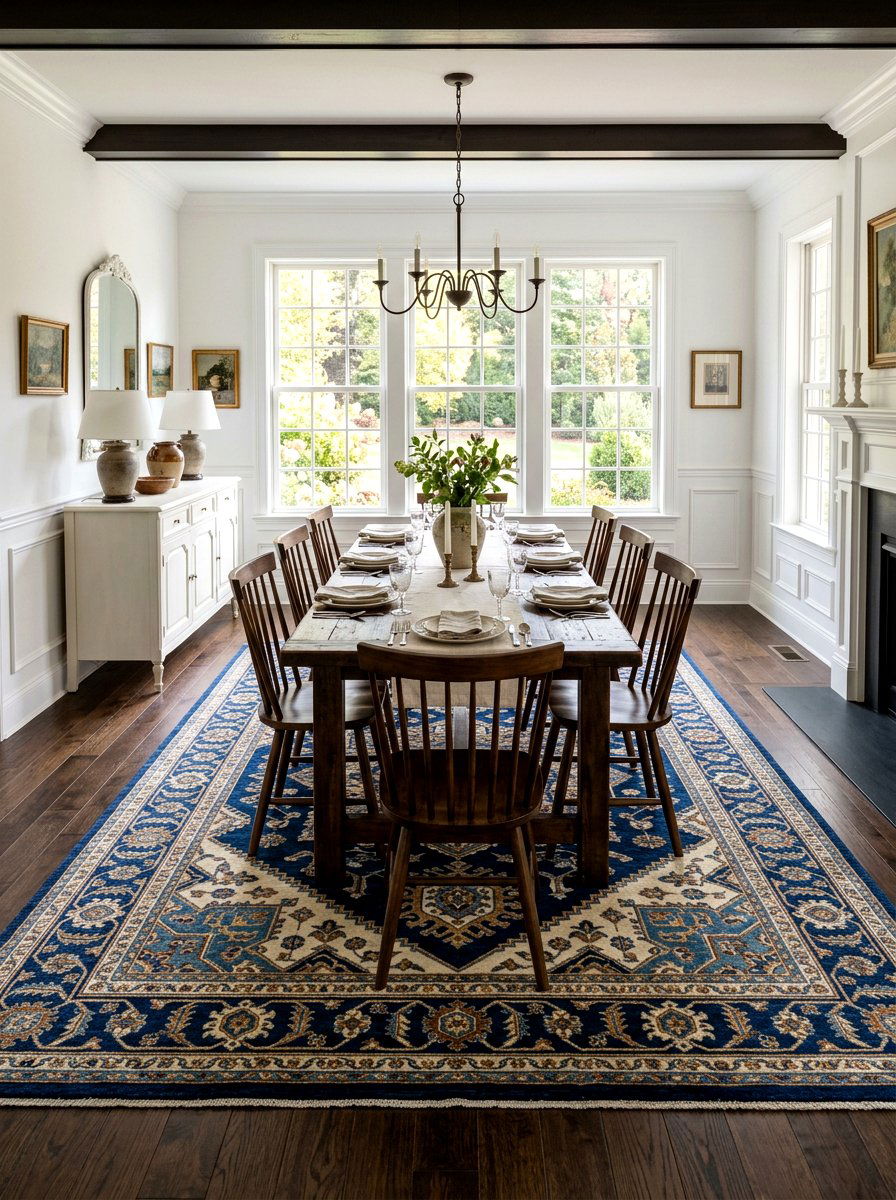
When you are dealing with a large table that seats eight people, rug size becomes the most important factor for both comfort and style. A common mistake is choosing a rug that is too small, which causes the chairs to wobble as they half-rest on the floor. For an eight-chair setup, you typically need at least a nine-by-twelve-foot rug to provide adequate coverage. This size ensures that even the chairs at the head of the table have plenty of room to move back without falling off the edge. A large rug also helps define the dining zone in a spacious, open-concept floor plan beautifully.
6. Jute Rug Under Farmhouse Dining Table
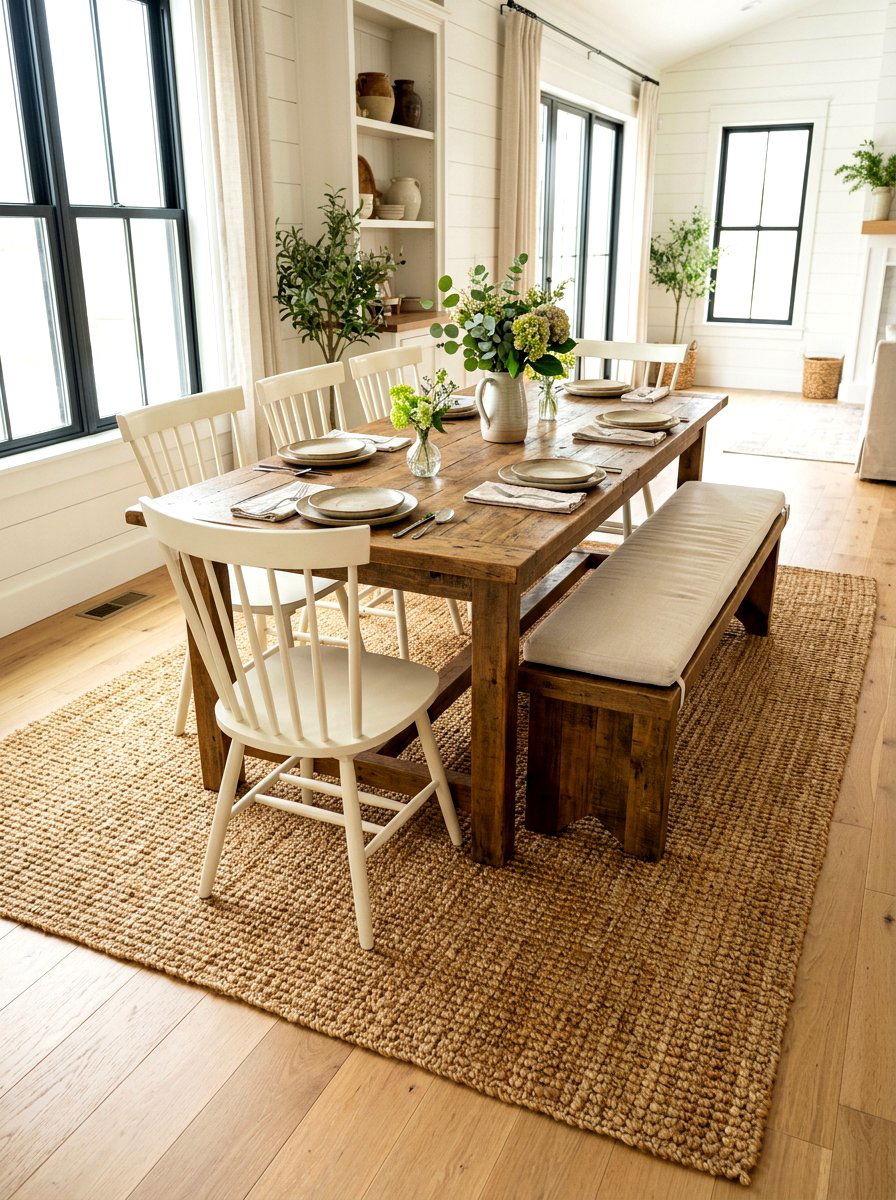
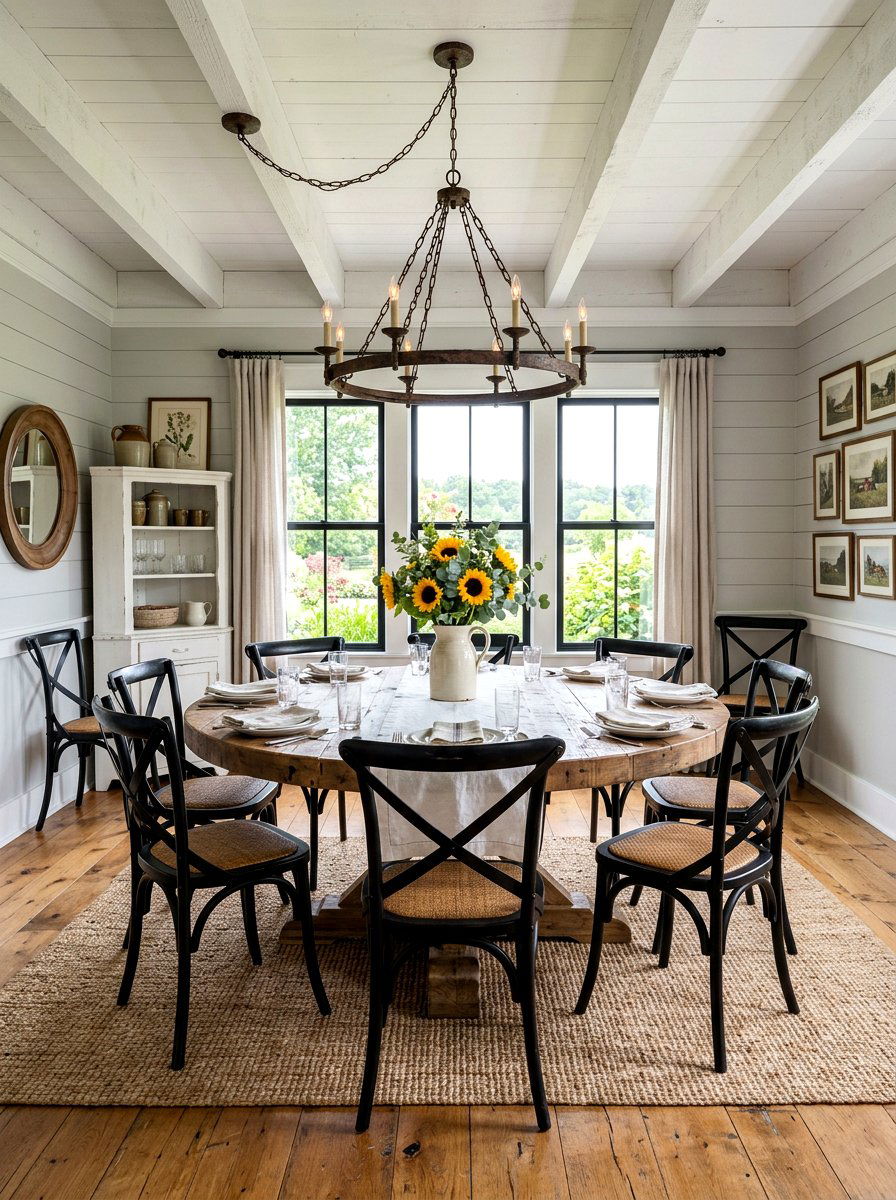
A jute rug is the perfect companion for a rustic farmhouse dining table, offering a natural and organic texture that complements wood finishes. These rugs are incredibly durable and can withstand the heavy foot traffic and chair movement common in busy family dining rooms. The golden tones of the jute fibers bring warmth to the space, making it feel more approachable and relaxed. Because jute is a flatweave material, chairs glide over it with ease, which is a major practical advantage. To keep the look fresh, choose a jute rug with a subtle border or a chunky weave to add more visual interest.
7. Low Pile Rug Under Dining Table
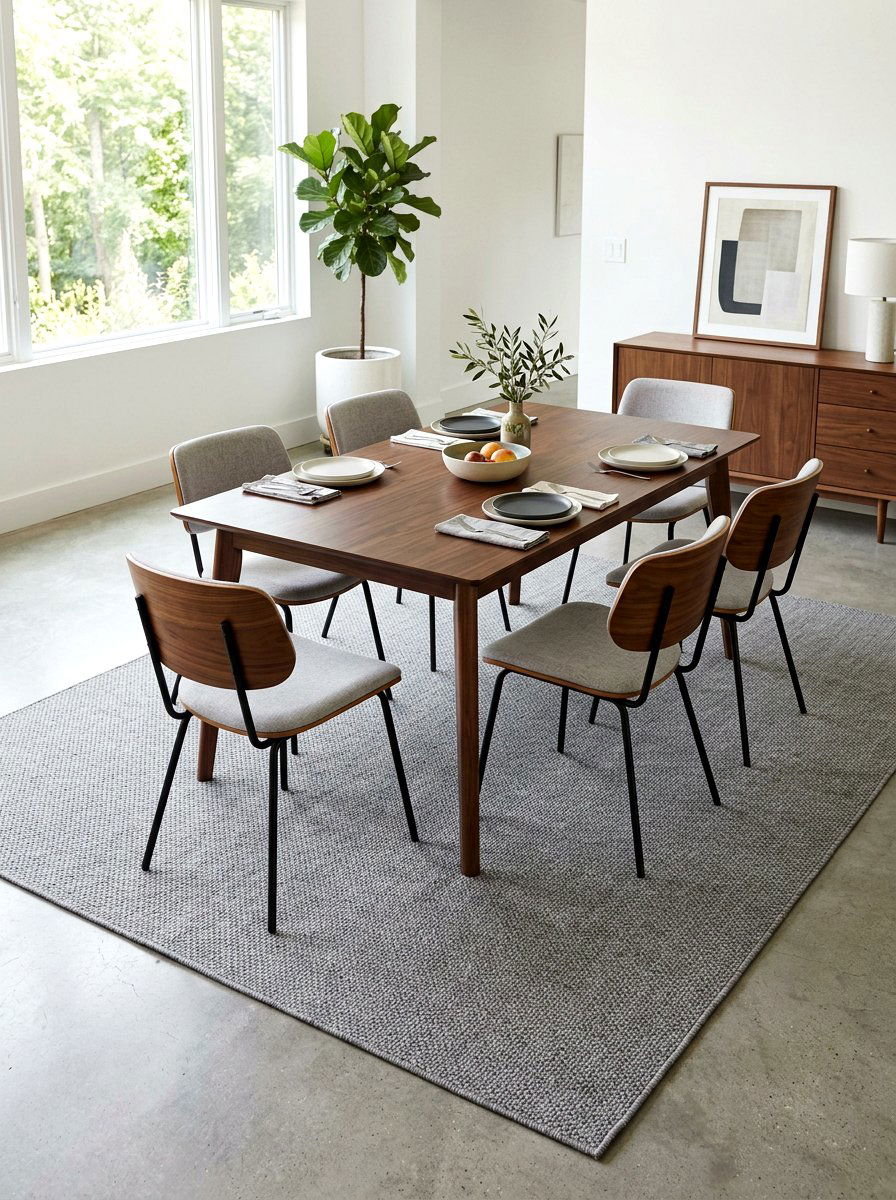
Functionality is key in the dining room, which is why a low pile rug is often the best choice for placement under a table. High-pile or shag rugs can trap food crumbs and make it very difficult to slide chairs back and forth smoothly. A low pile rug, such as a flatweave or a tightly woven wool rug, offers a much more stable surface for furniture and is significantly easier to vacuum and maintain. This type of rug provides a sleek, modern aesthetic that fits well in contemporary homes. It offers the comfort of a soft floor covering without the maintenance headaches of longer fibers.
8. Cowhide Rug Under Small Dining Table
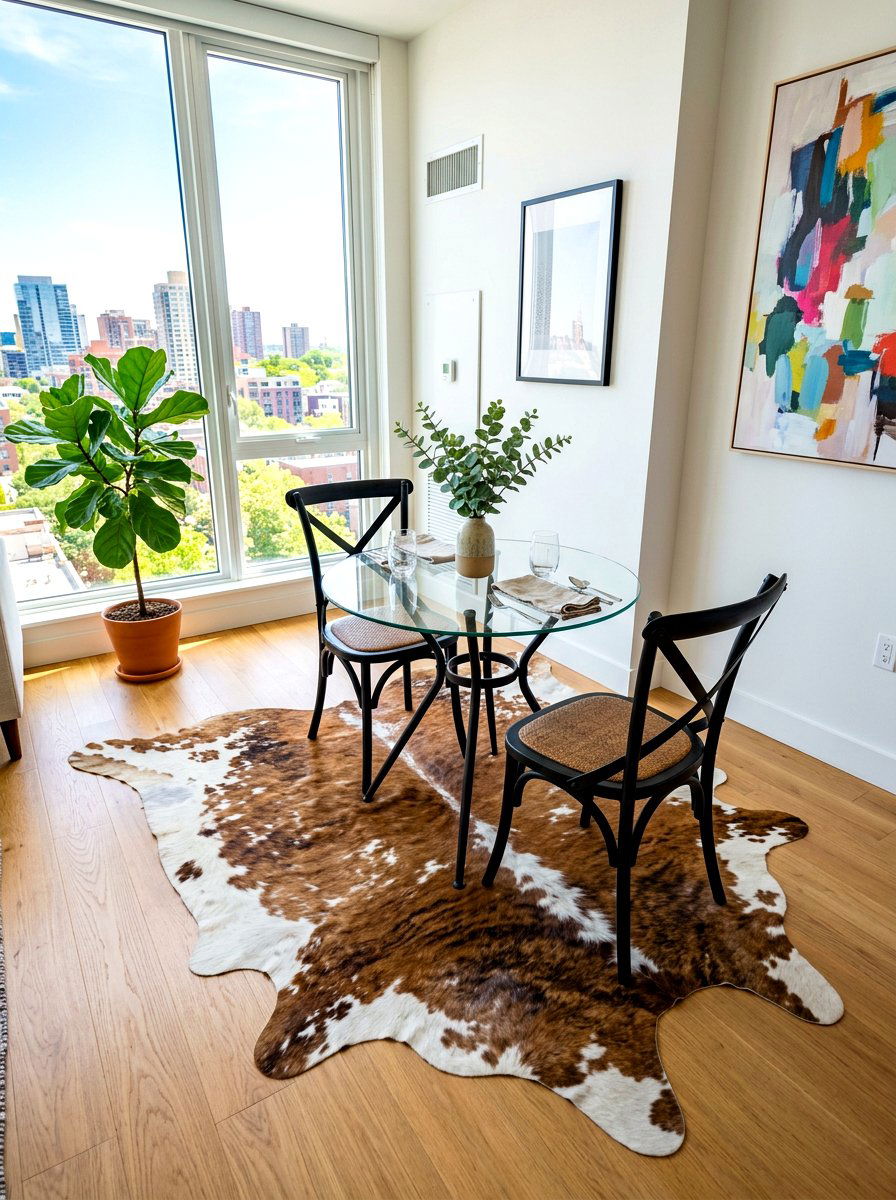
For a more unconventional and artistic look, consider placing a cowhide rug under a small dining table or a bistro set. Cowhide rugs have unique, organic shapes that break up the rigid lines of traditional furniture and architecture. This placement adds a touch of modern flair and luxury to a compact space, making it feel more high-end and curated. Because cowhides are naturally thin and durable, they are surprisingly easy to clean and handle the weight of chairs well. This look is particularly effective in minimalist apartments or as a statement piece in a corner dining nook that needs a bit of personality.
9. Rug Placement For 6 Chair Dining Table
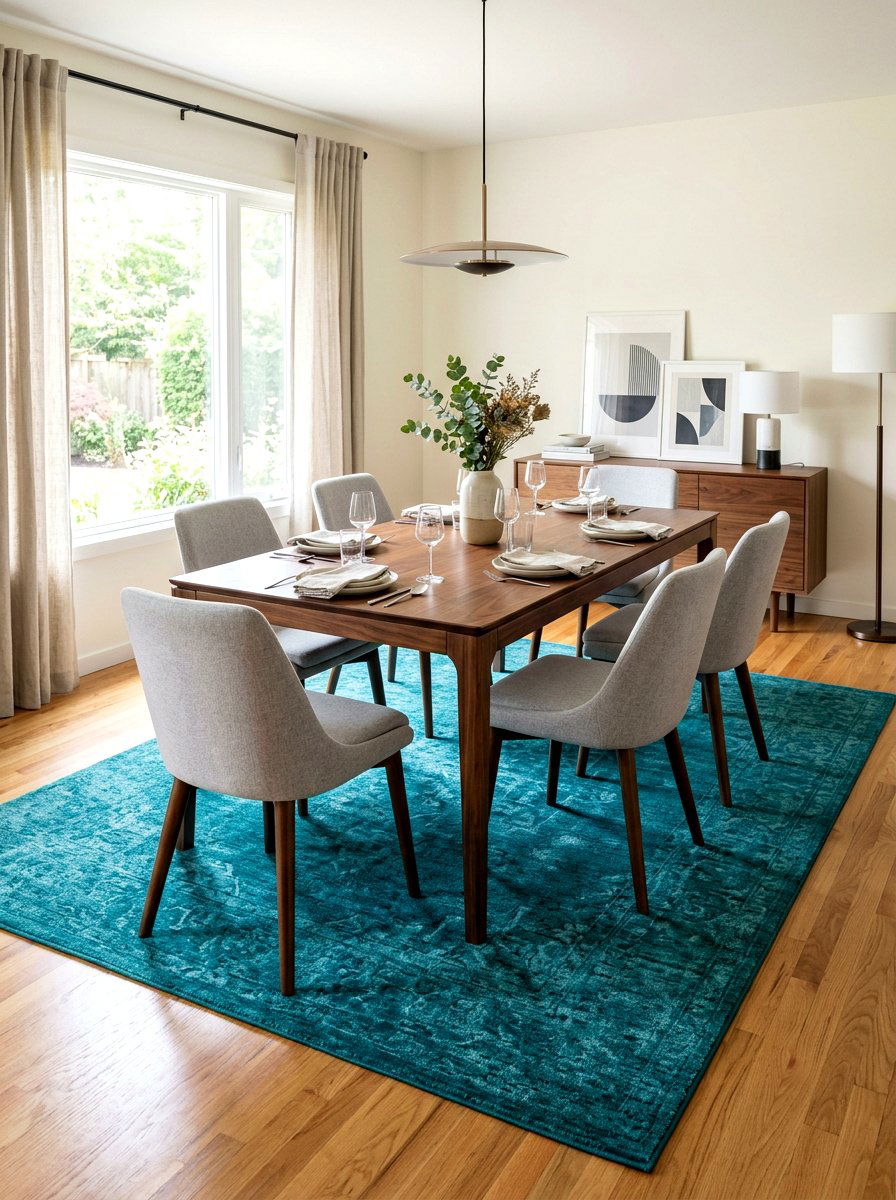
A six-chair dining table is a standard size for many homes, and the rug placement should reflect this balance of intimacy and space. An eight-by-ten-foot rug is usually the ideal size for this configuration, providing a twenty-four-inch border around the table edges. This allows all six chairs to remain on the rug even when guests are seated, which creates a much more comfortable dining experience. When centering the rug, align it with the table itself rather than the room's walls to ensure the furniture feels grounded. This creates a professional look that ties the chairs and table together as one cohesive unit.
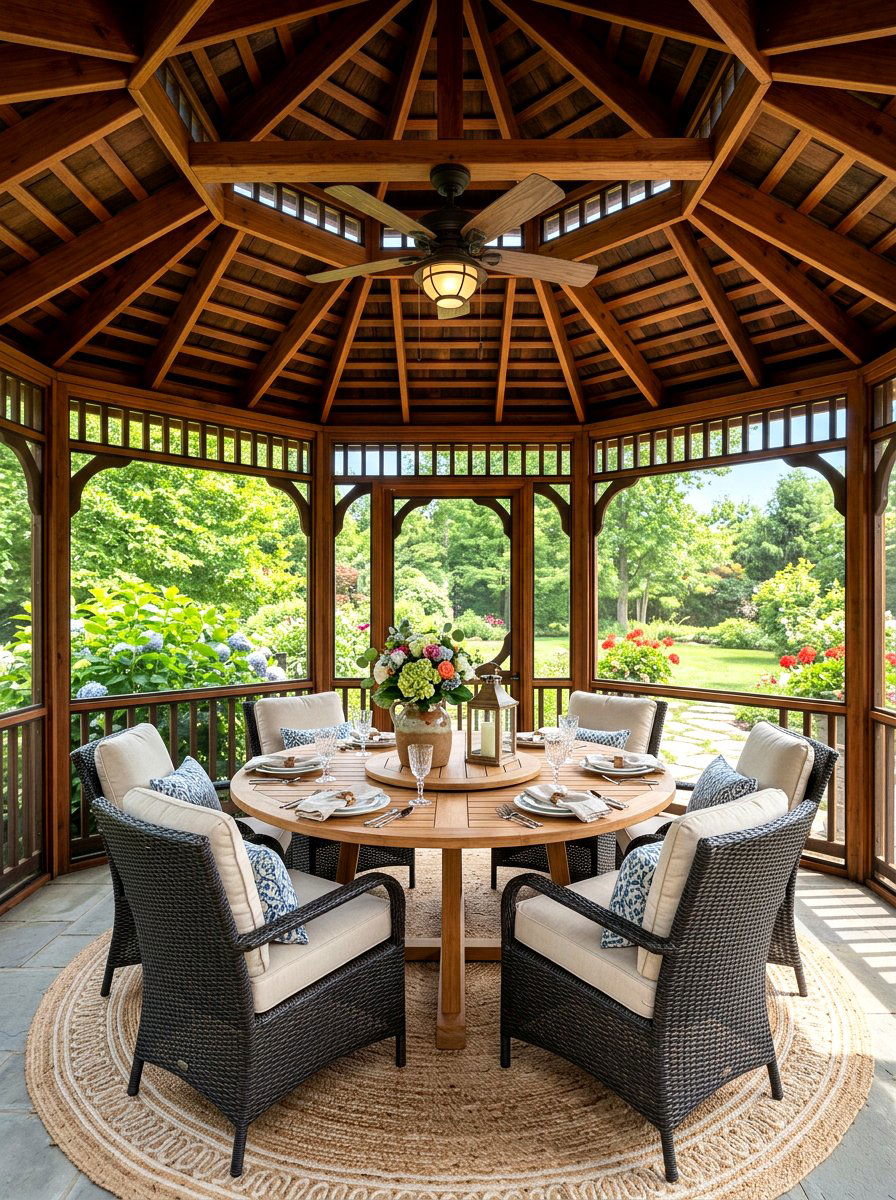
10. Rug Placement For 10 Chair Dining Table
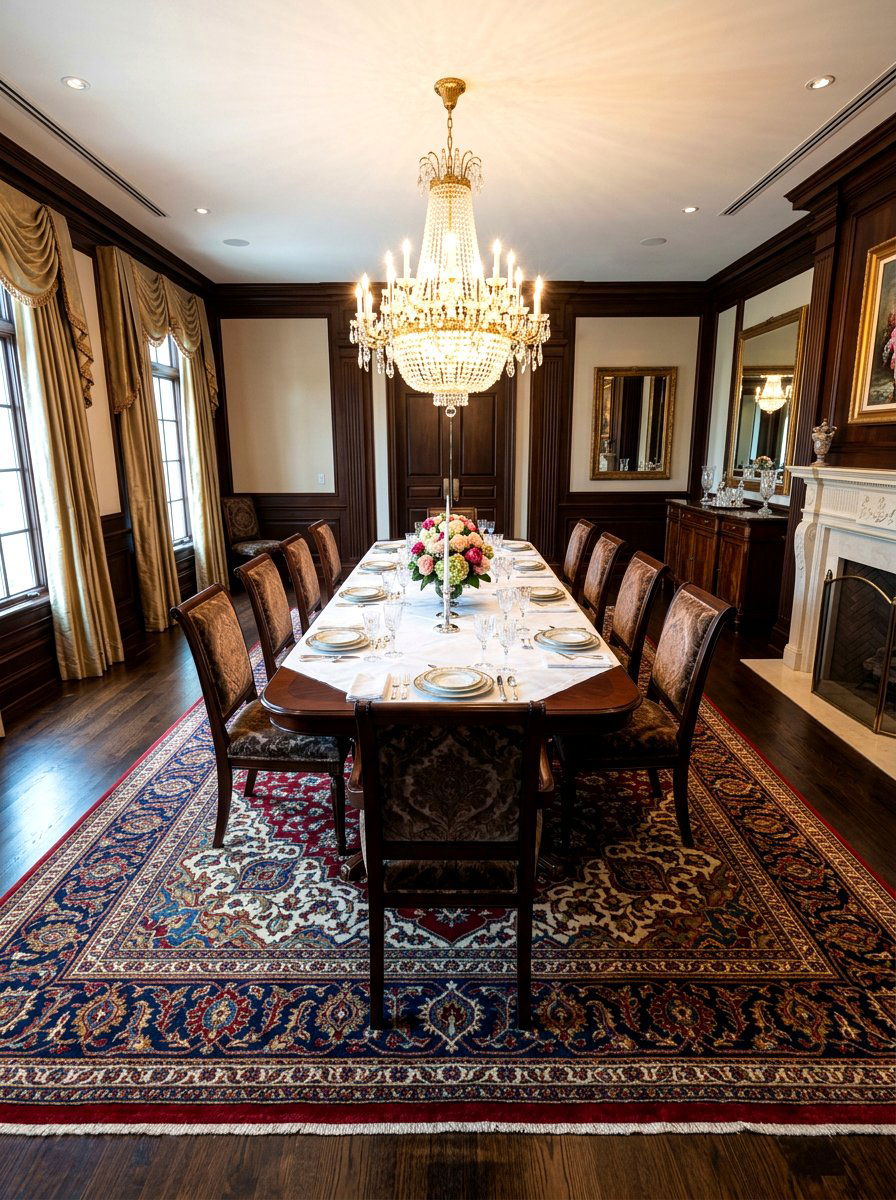
Placing a rug under a massive ten-chair dining table requires a significant amount of floor space and a very large rug, often ten-by-fourteen feet or larger. In these grand dining rooms, the rug serves as the foundation for the entire room's design, so choosing a high-quality material is essential. The rug needs to extend far enough to accommodate the long sides of the table while still leaving a visible border of flooring around the perimeter of the room. This prevents the space from feeling like it is fully carpeted and maintains a sense of elegance. A grand rug in this setting adds luxury and sophistication.
11. Diagonal Rug Under Dining Table
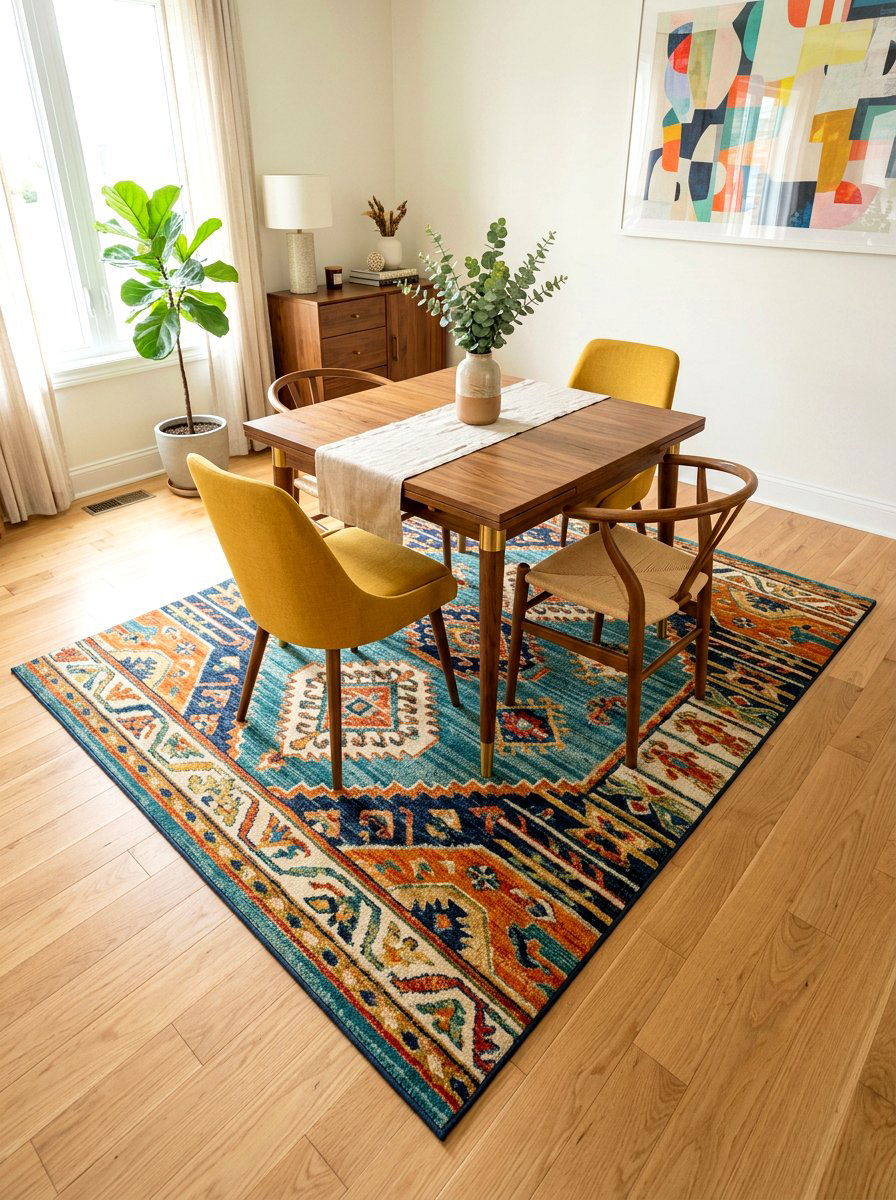
If you want to add a sense of movement and energy to a static dining room, try placing your rug at a diagonal angle. This unconventional placement works best with rectangular or square rugs and creates a dynamic focal point that draws the eye. Diagonal placement can actually make a small room feel larger by drawing attention to the longest dimensions of the space. It is a great way to break up the "boxy" feel of a standard room and works particularly well in eclectic or modern homes. Just ensure that the table remains centered on the rug to maintain a sense of functional balance.
12. Centered Rug In Formal Dining Room
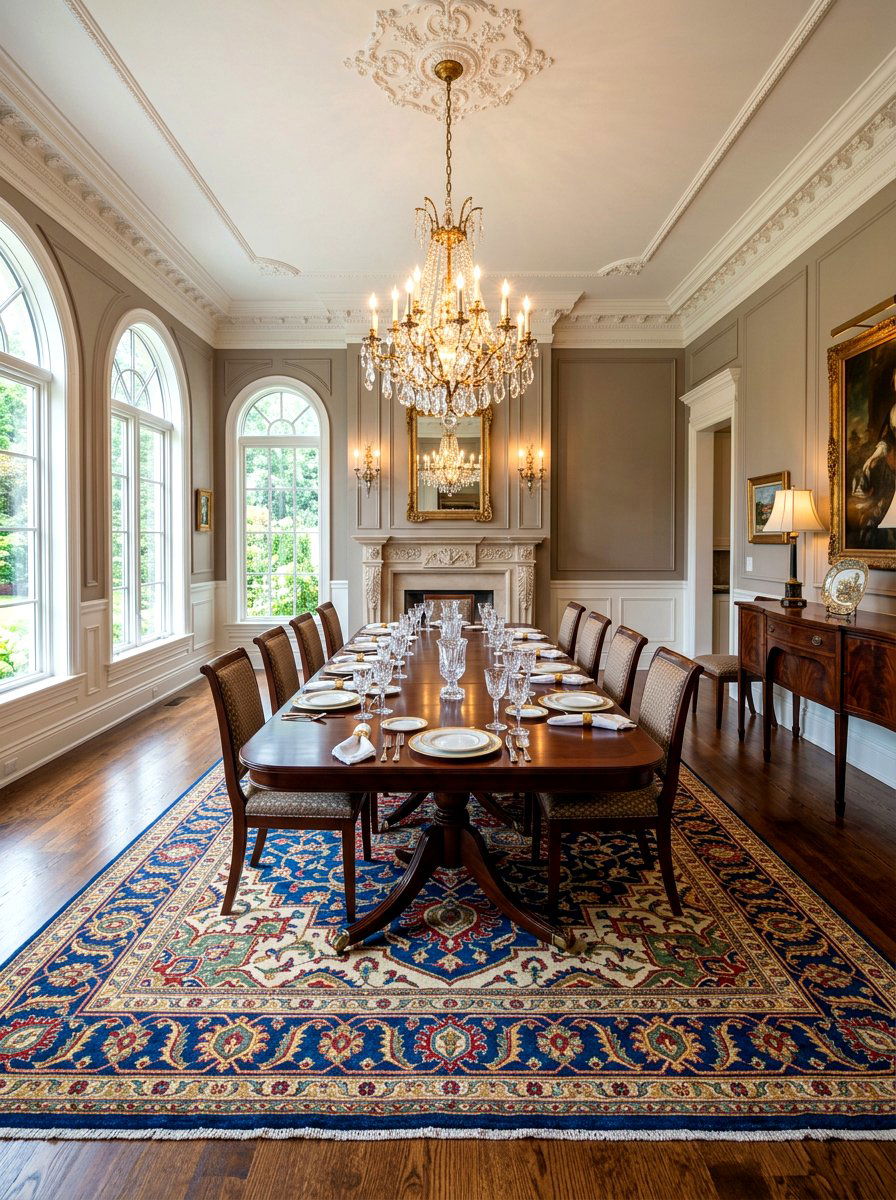
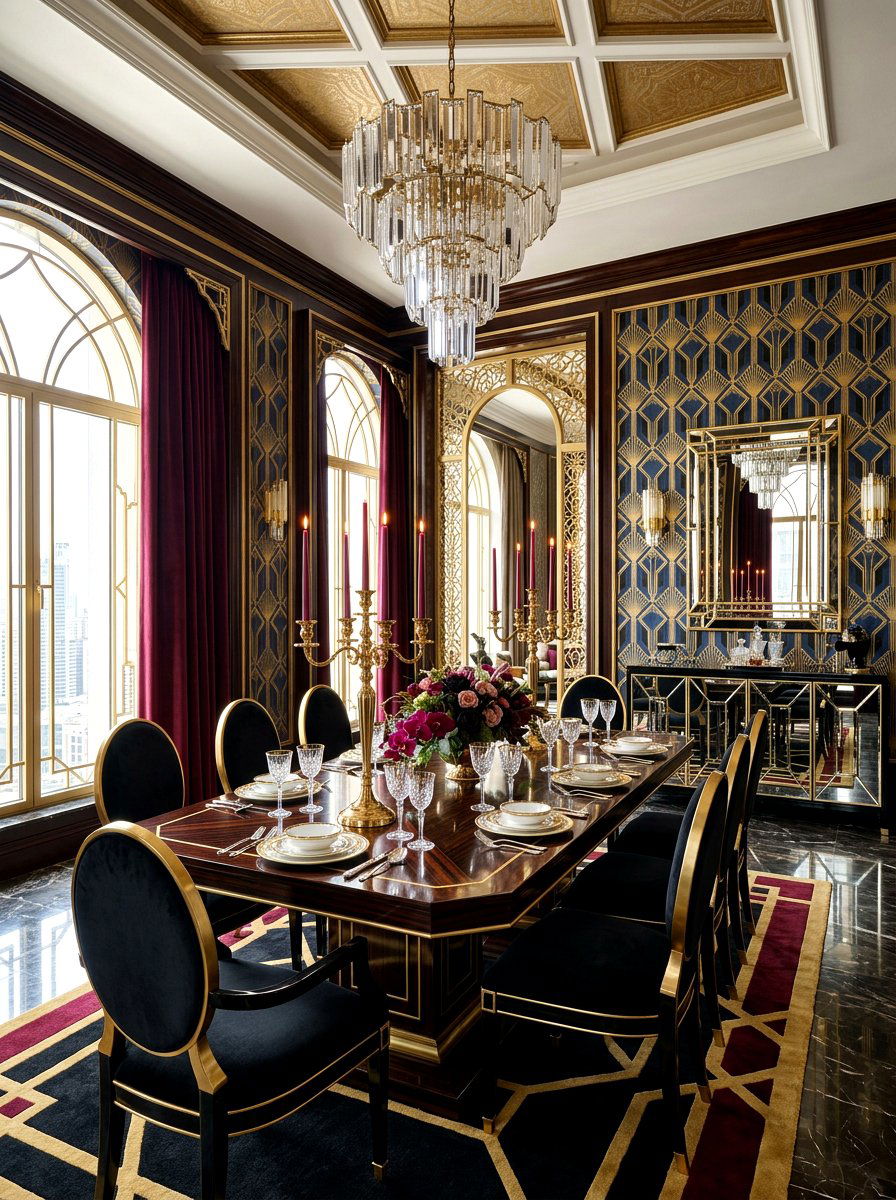
In a formal dining room, the rug should always be perfectly centered under the dining table to create a sense of grandeur and tradition. This symmetrical placement is the hallmark of classic interior design and provides a stable, anchored feel to the space. When the rug is centered, it frames the table and highlights the chandelier or overhead lighting above. This layout works best with traditional Persian or Oriental rugs that feature a central medallion, as it emphasizes the heart of the room. For a polished finish, ensure the rug edges are equidistant from the walls to create a perfectly balanced environment.
13. Rug For Dining Table With Bench
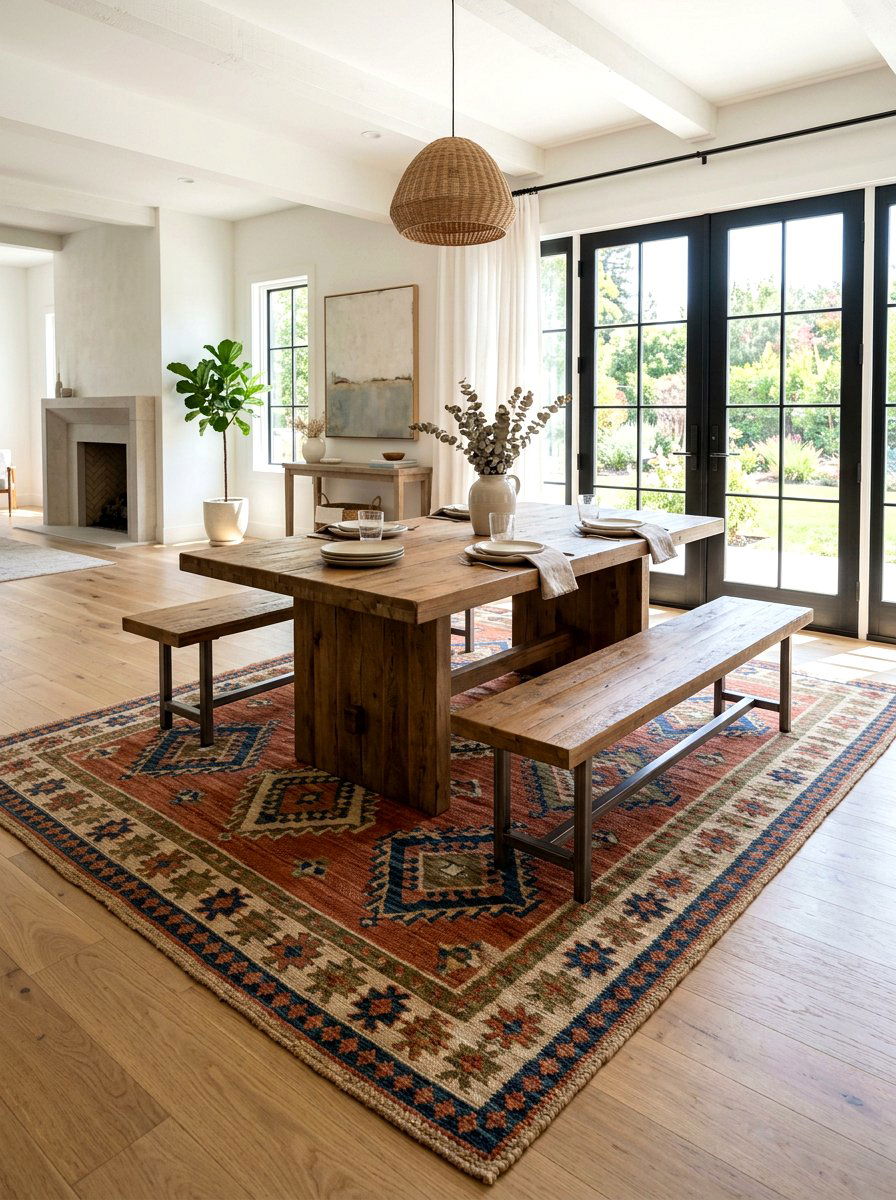
If your dining set includes a bench on one or both sides, the rug placement needs to account for the extra depth required to move the bench. Benches often require more clearance than standard chairs because they are longer and heavier to slide. Choose a rug that extends at least thirty inches beyond the table edge where the bench is located. This ensures that the entire bench remains on a level surface, preventing it from wobbling or tipping. Using a rug with a bench creates a cozy, communal dining vibe that is perfect for family-style meals and casual gatherings in the kitchen.
14. Rug Placement In Open Concept Dining Area
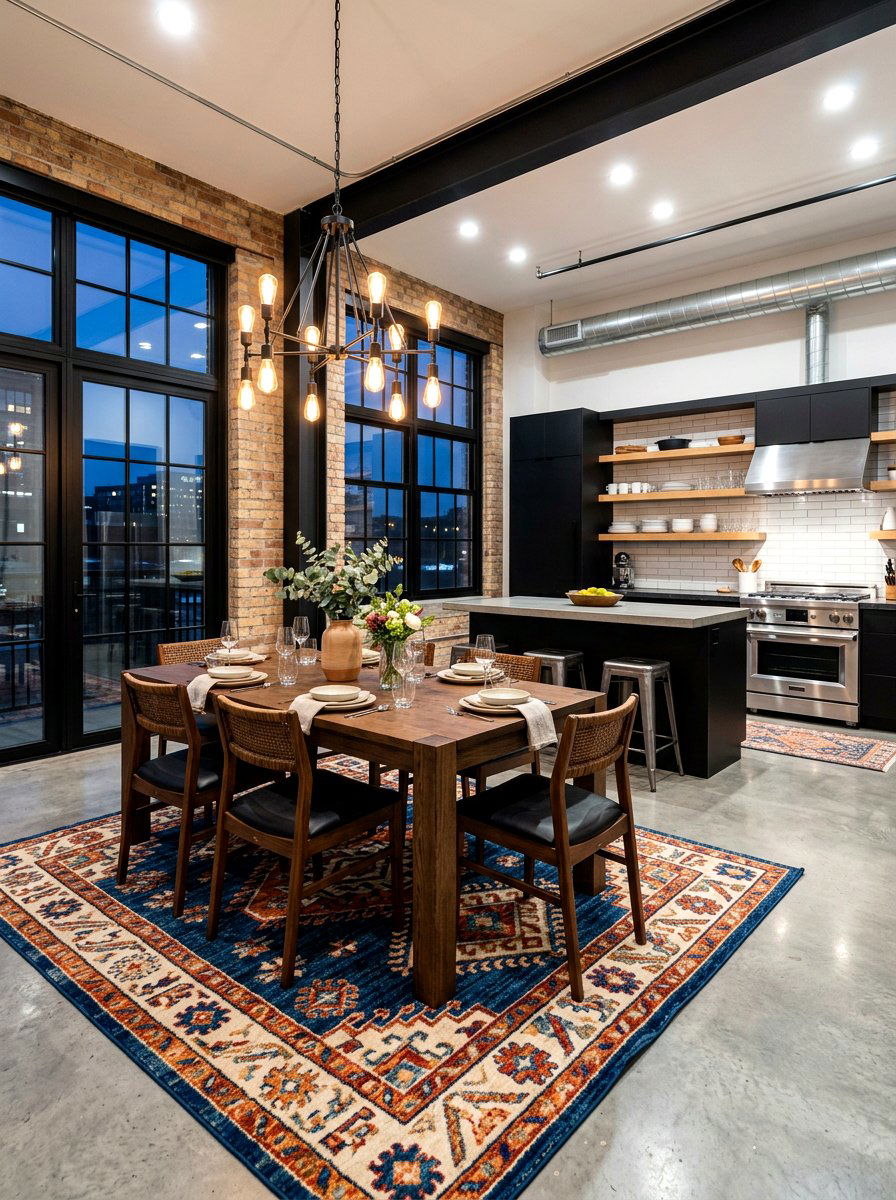
In an open-concept home, a rug is the most powerful tool you have for defining the dining area without using physical walls. Placing a rug specifically under the dining table creates a "room within a room, " signaling that this specific area is dedicated to eating and socializing. For the best results, choose a rug that contrasts slightly with the flooring and the rugs used in the living area to create clear boundaries. The rug should be large enough to contain the entire dining set, acting as a visual island that separates the dining zone from the kitchen or the lounge area.
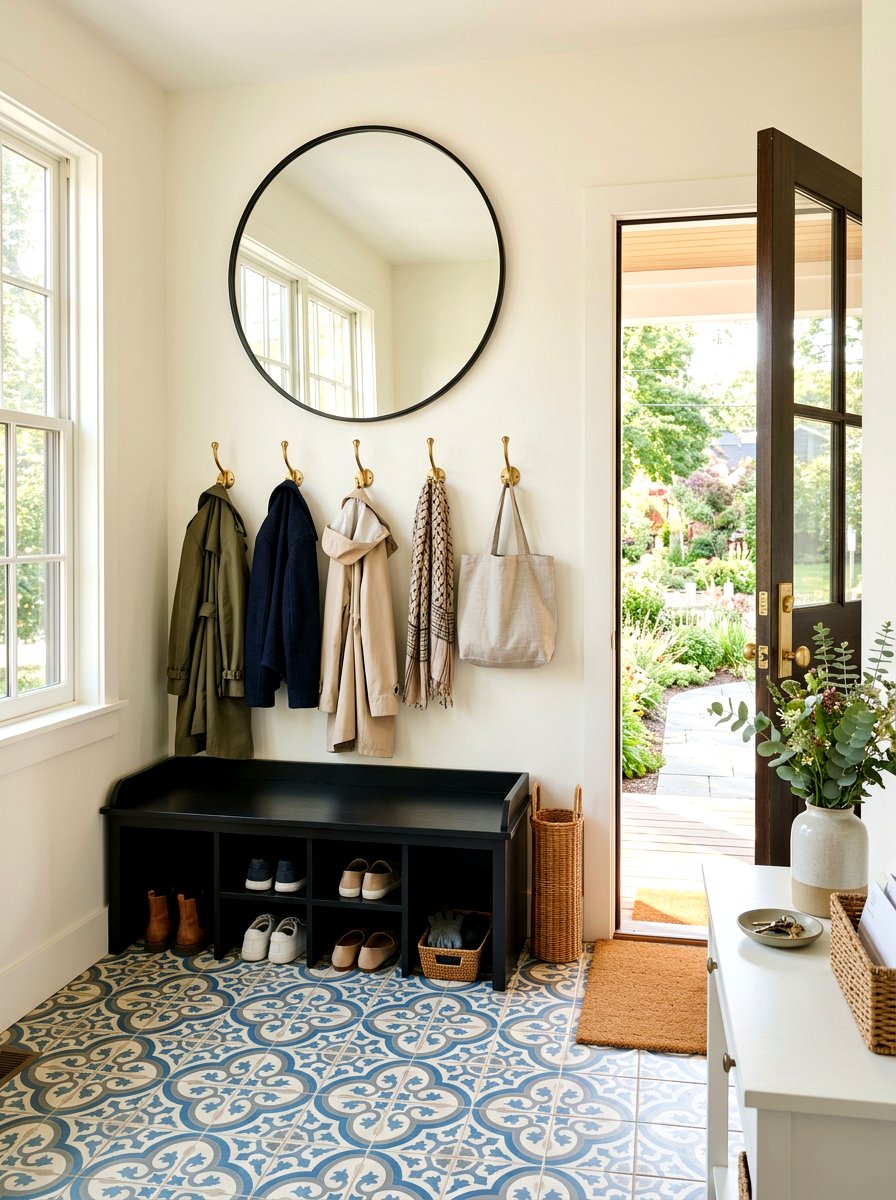

15. Wall To Wall Rug In Dining Room
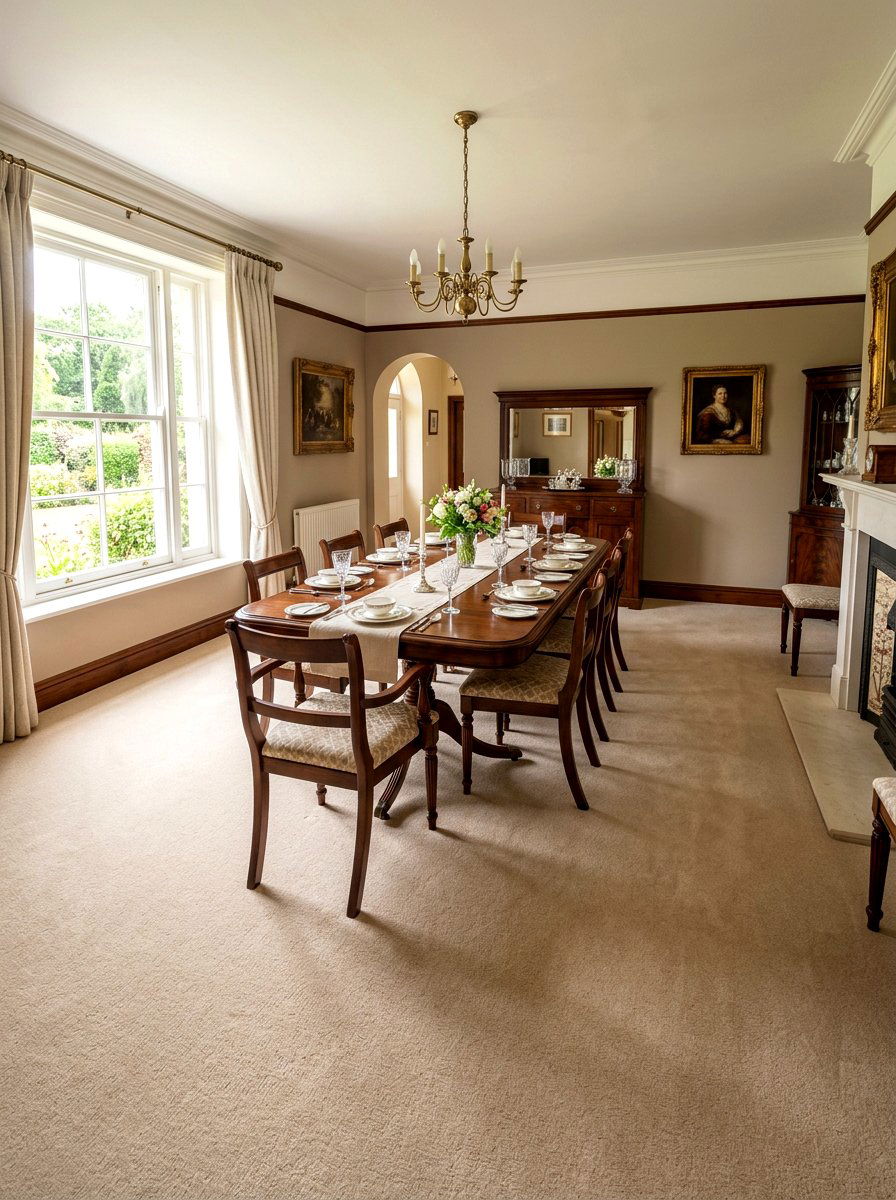
While not a traditional area rug, a wall-to-wall rug or large custom-fitted carpet in the dining room offers a seamless and luxurious look. this placement is excellent for noise reduction and provides a soft, warm surface throughout the entire room. It works particularly well in formal dining rooms where you want to emphasize a sense of comfort and high-end style. When choosing this option, opt for a low-pile, high-density carpet that can handle the weight of heavy furniture without leaving deep indentations. A neutral color will keep the room feeling spacious, while a subtle pattern can hide any inevitable minor spills.
16. Indoor Outdoor Rug For High Traffic Dining
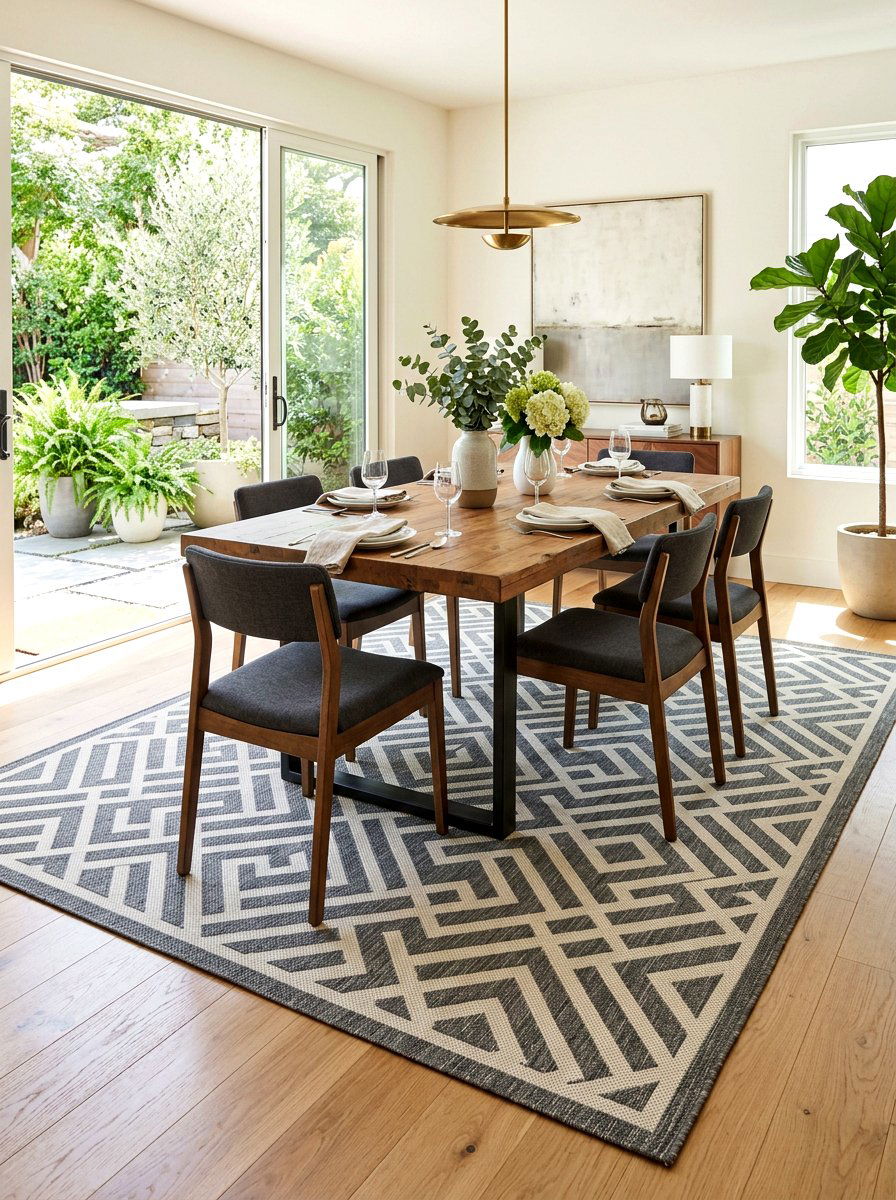
For families with children or pets, placing an indoor-outdoor rug under the dining table is a smart and practical design move. These rugs are specifically designed to be stain-resistant and easy to clean, often allowing you to simply blot away spills with water. Modern indoor-outdoor rugs come in a wide variety of sophisticated patterns and textures that look just like traditional indoor rugs. Placing one in your dining room provides the durability you need for high-traffic areas without sacrificing style. This is an ideal solution for a dining area that is used for crafts, homework, and messy family meals.
17. Sheepskin Rug Under Dining Chairs
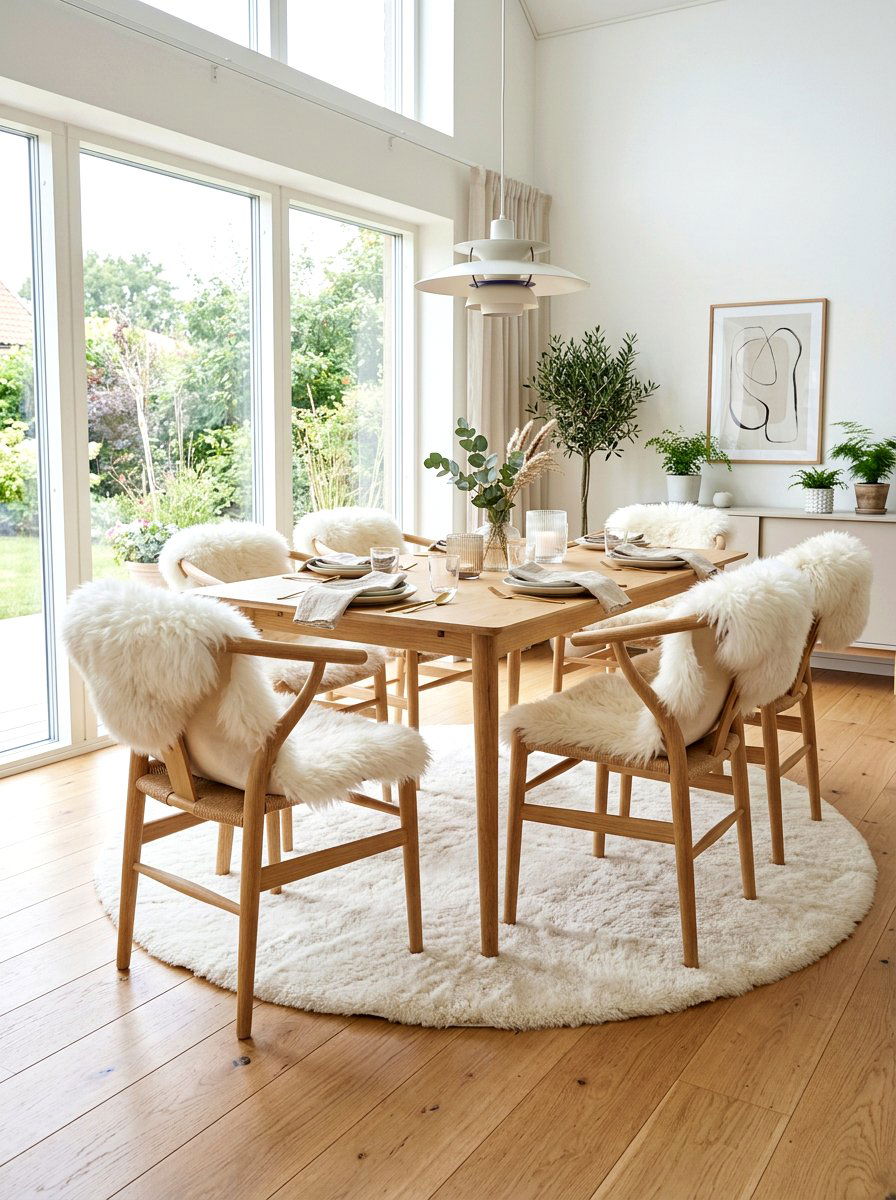
To add a touch of Scandinavian "hygge" and luxurious comfort to your dining room, consider placing small sheepskin rugs over the back of your dining chairs or directly under the chairs. While not a single large rug, this placement strategy adds soft texture and warmth to the seating area. It makes the chairs feel much more inviting and comfortable for long dinner parties and evening conversations. You can pair these with a larger, flatweave rug under the table to create a layered and cozy aesthetic. This look works beautifully with modern wooden chairs, adding a soft contrast to the hard surfaces of the room.
18. Dark Rug Under Light Wood Dining Table
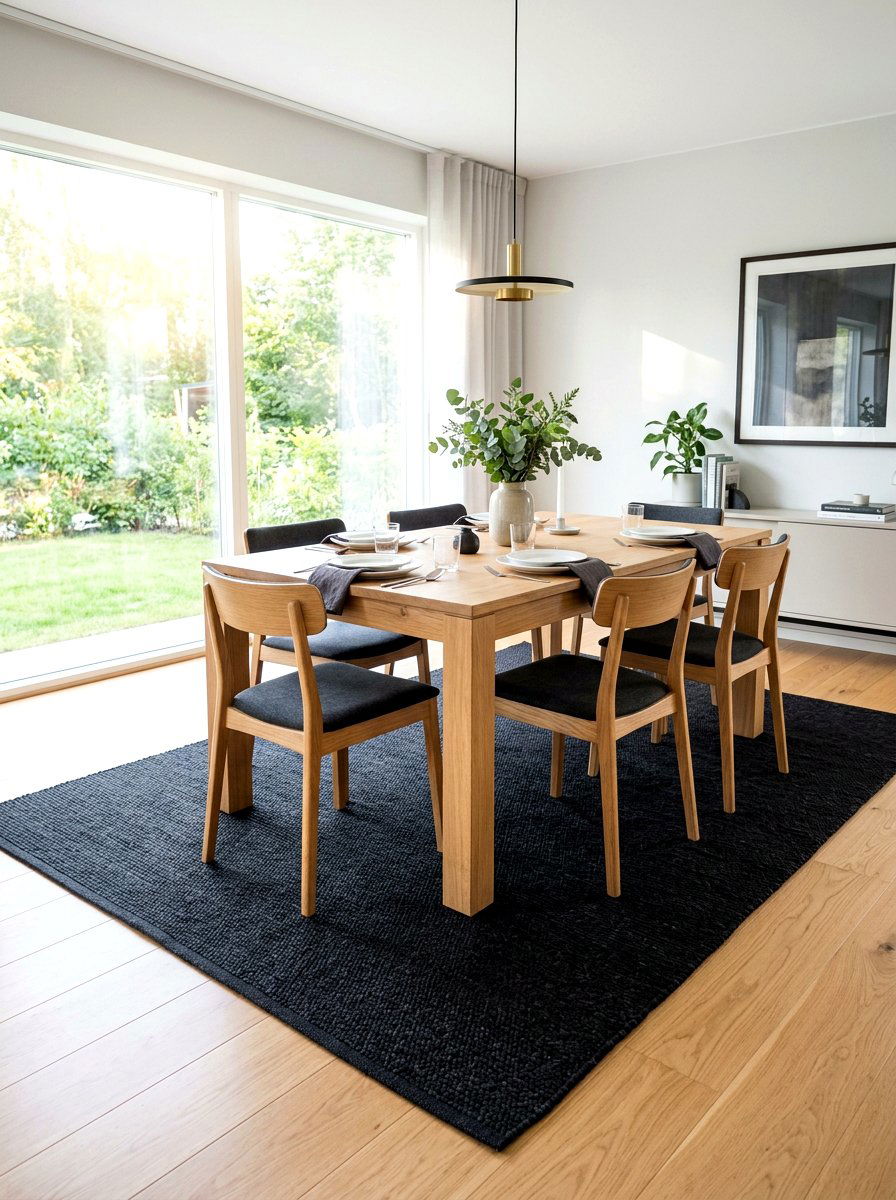
Creating a high-contrast look by placing a dark rug under a light wood dining table is a fantastic way to make your furniture pop. A deep navy, charcoal, or forest green rug provides a dramatic foundation that highlights the natural grain and color of a light oak or pine table. This placement adds depth and a sense of sophistication to the room, preventing the light wood from looking washed out against pale floors. The dark color is also very practical for a dining room, as it is much more forgiving when it comes to minor stains and everyday wear and tear.
19. Patterned Rug Under Glass Dining Table
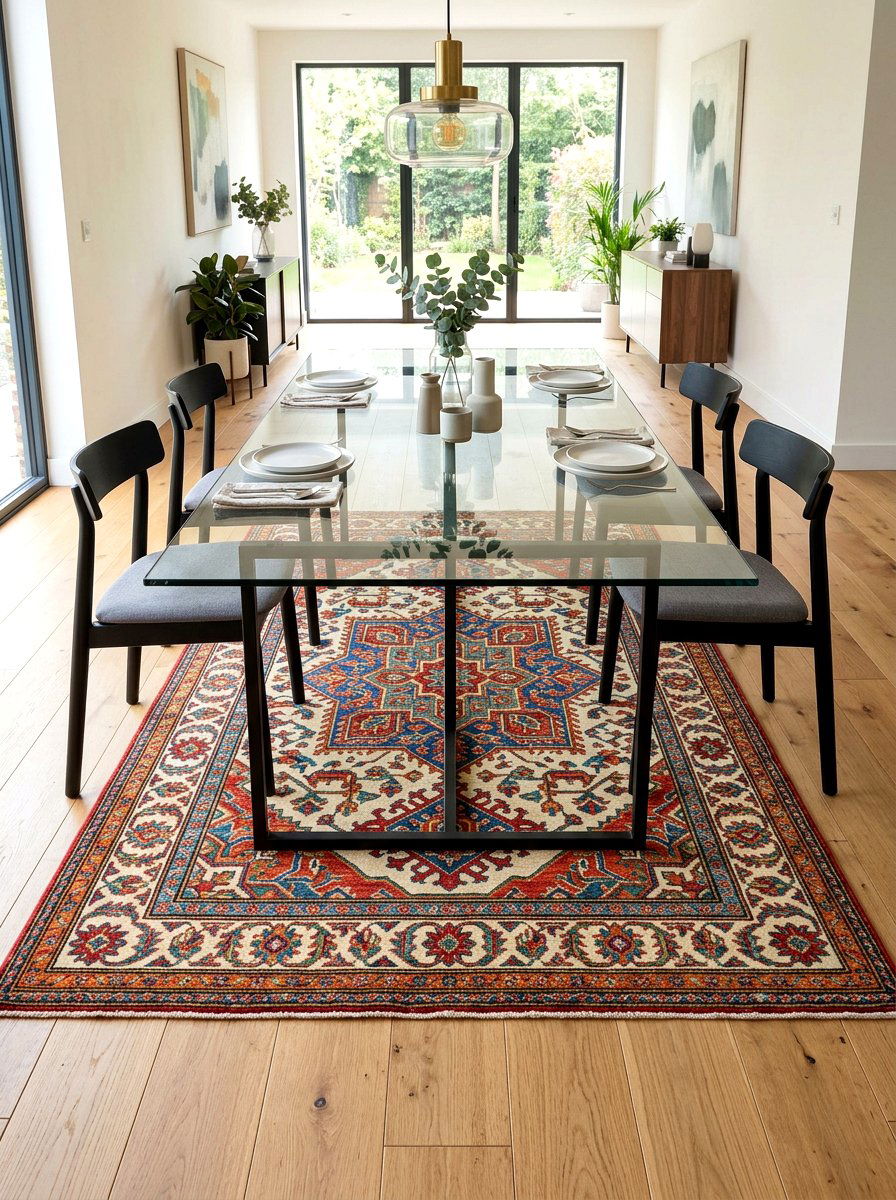
A glass dining table is the perfect piece of furniture to showcase a beautiful, patterned rug underneath. Because the table is transparent, the rug becomes the star of the show, and its design can be appreciated from every angle. This is a great opportunity to choose a rug with a bold, intricate pattern or a vibrant color palette that might otherwise feel overwhelming. The glass table allows the space to feel airy and light while the rug provides the necessary visual weight to ground the room. It creates a modern, artistic look that feels both sophisticated and visually interesting.
20. Natural Fiber Rug Under Pedestal Table
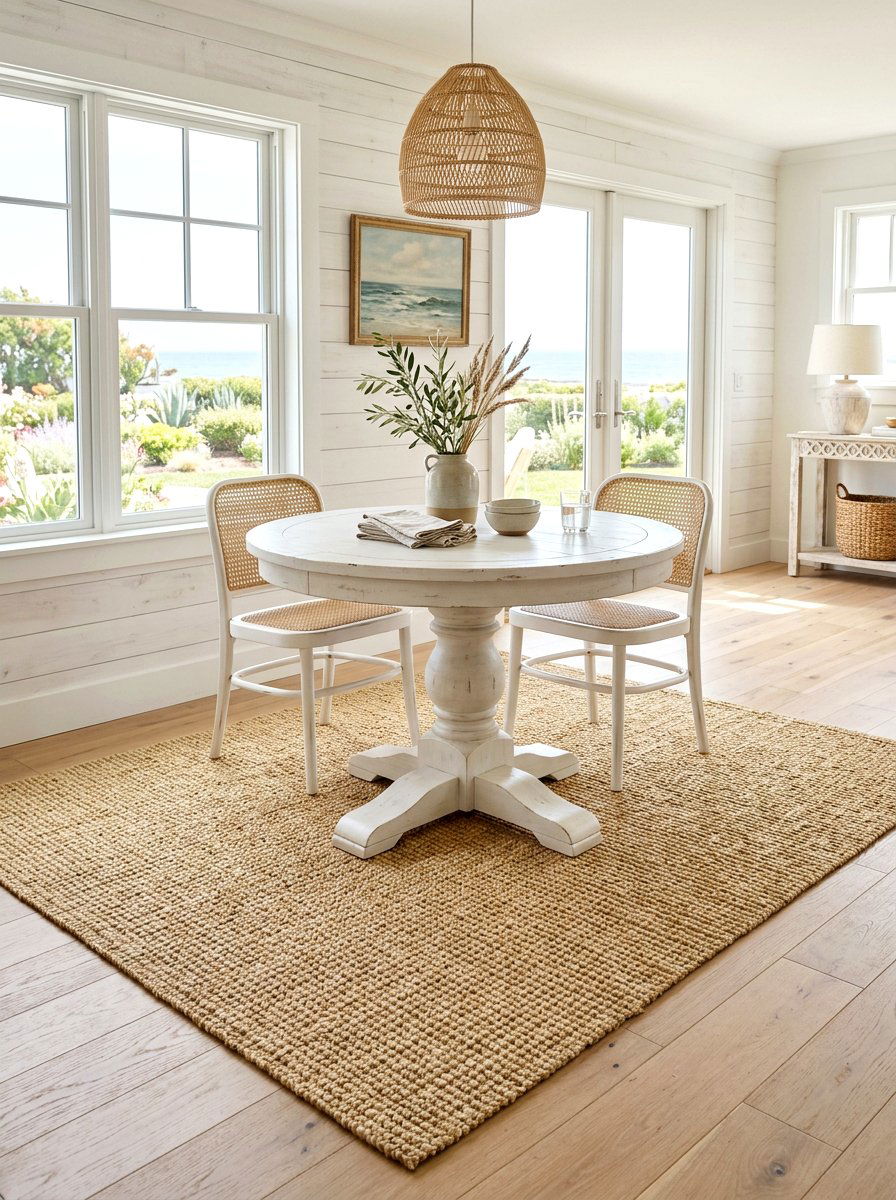
A pedestal dining table, characterized by its central support rather than four legs, looks stunning when paired with a natural fiber rug like sisal or seagrass. The organic texture of the rug complements the sculptural silhouette of the pedestal base, creating a balanced and earthy aesthetic. This placement is particularly effective in coastal or transitional homes where a relaxed, breezy vibe is desired. Because the center of the rug is where the pedestal sits, you can choose a rug with a beautiful central border or weave pattern that will be fully visible, adding an extra layer of detail to the room.
21. Oval Rug Under Oval Dining Table
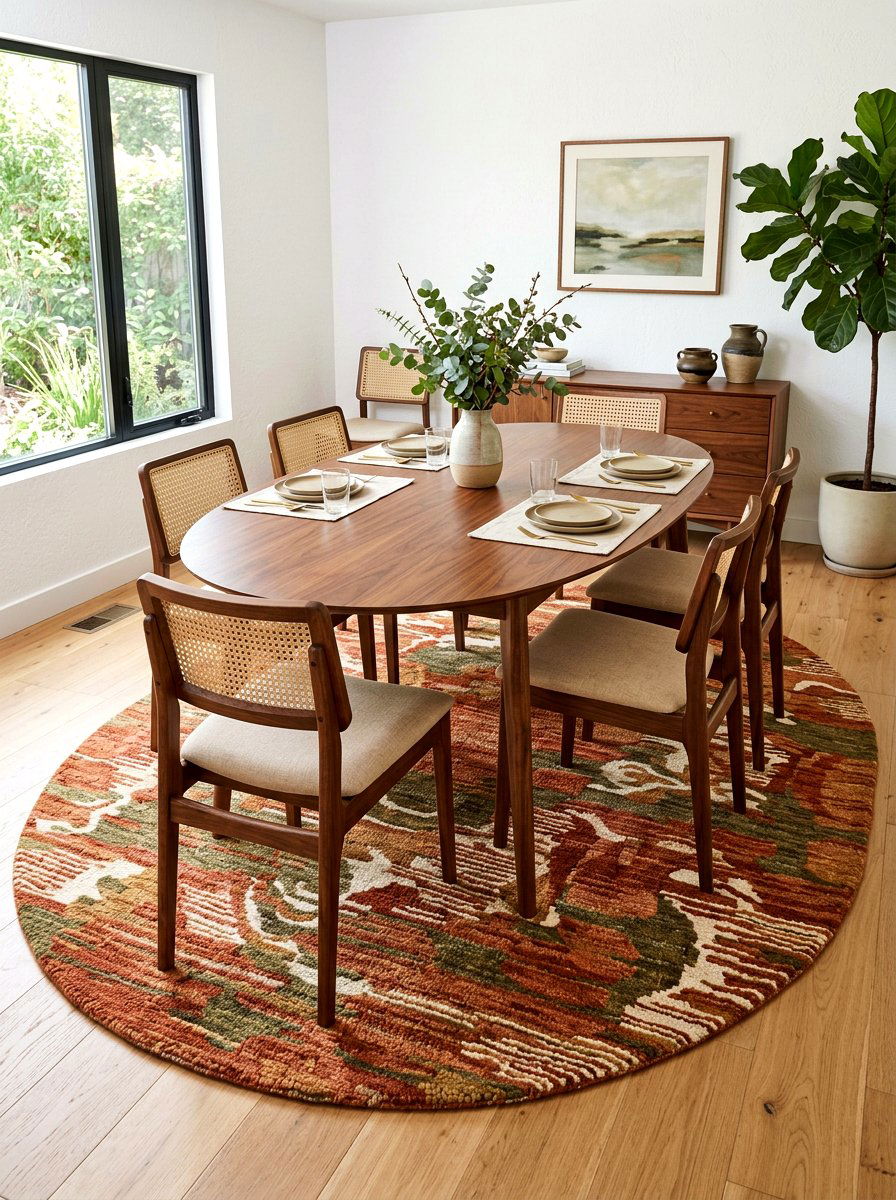
An oval dining table presents a unique opportunity to use an oval rug, which mirrors the table's elongated and curved shape. This placement creates a soft, fluid look that is very pleasing to the eye and works well in long, narrow dining rooms. The lack of sharp corners on both the table and the rug makes the room feel more spacious and easier to navigate. Like other shapes, ensure the rug is wide and long enough to allow chairs to stay on the rug when pulled out. An oval rug is a sophisticated alternative to the standard rectangular option for many homes.
22. Double Rug Placement For Long Dining Room
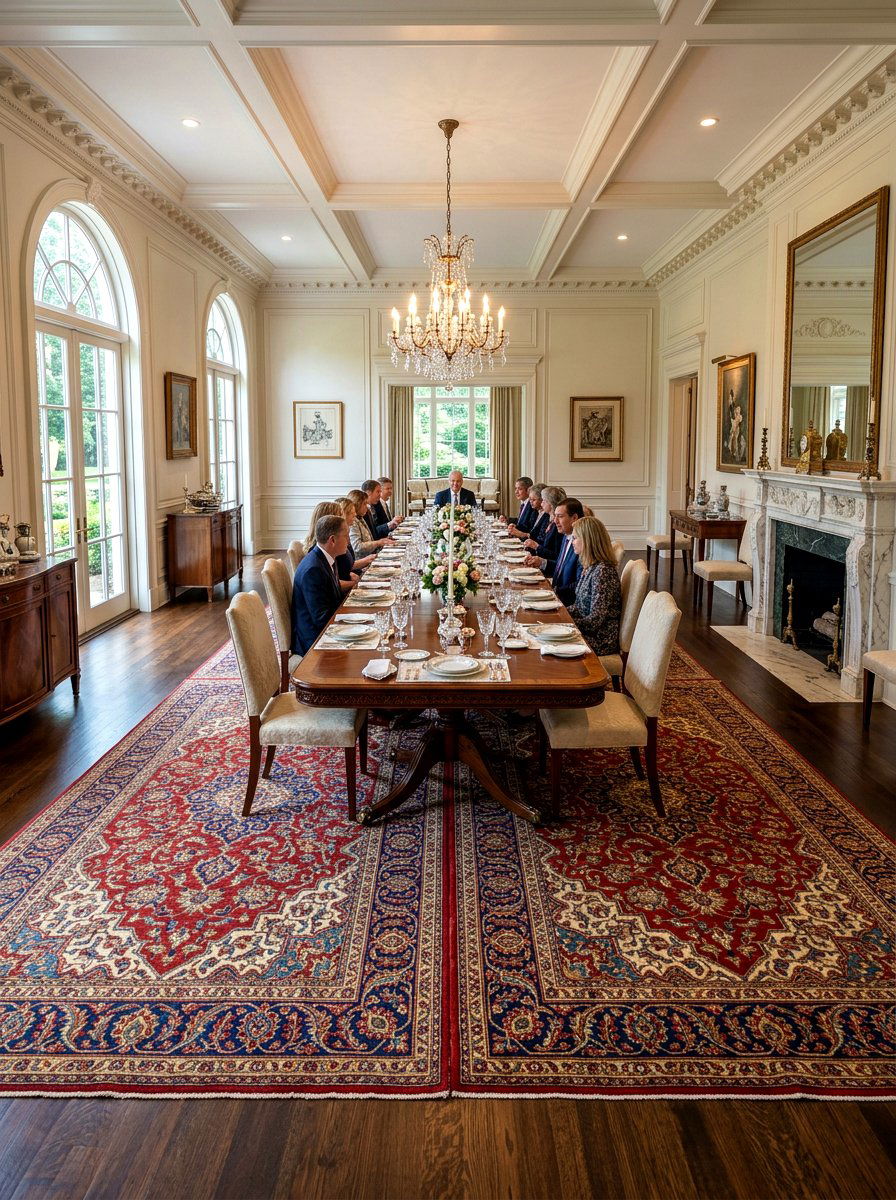
If you have an exceptionally long dining room with a table that seats twelve or more, you might find that a single rug isn't large enough. In this case, a double rug placement can be a stylish and functional solution. You can place two identical rugs side-by-side or end-to-end to cover the necessary area under the long table. To make this look intentional, choose rugs with a very subtle pattern or a solid color so the seam between them is less noticeable. This approach allows you to achieve the coverage you need without the high cost of a custom-sized rug.
23. Rug Placement Near Buffet Or Sideboard
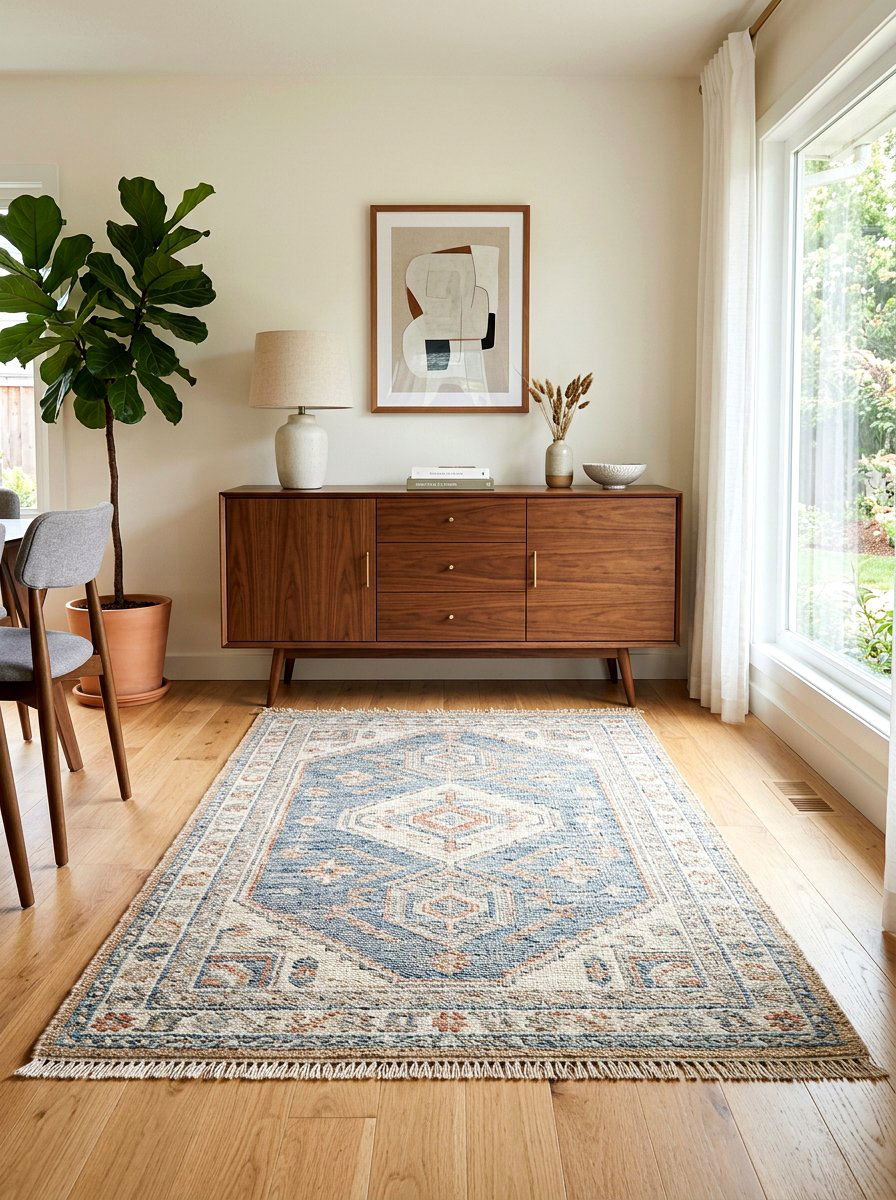
When placing a rug in a dining room that includes a buffet or sideboard, you have to decide whether the rug should extend under these pieces of furniture. A popular design choice is to have the rug stop just before the buffet, leaving a small gap of flooring visible. This helps define the dining area as a separate zone from the storage furniture. Alternatively, if the room is large enough, you can choose an oversized rug that fits both the table and the sideboard, creating a unified and grand look. Either way, ensure the rug is centered relative to the main table.
24. Colorful Rug In Minimalist Dining Room
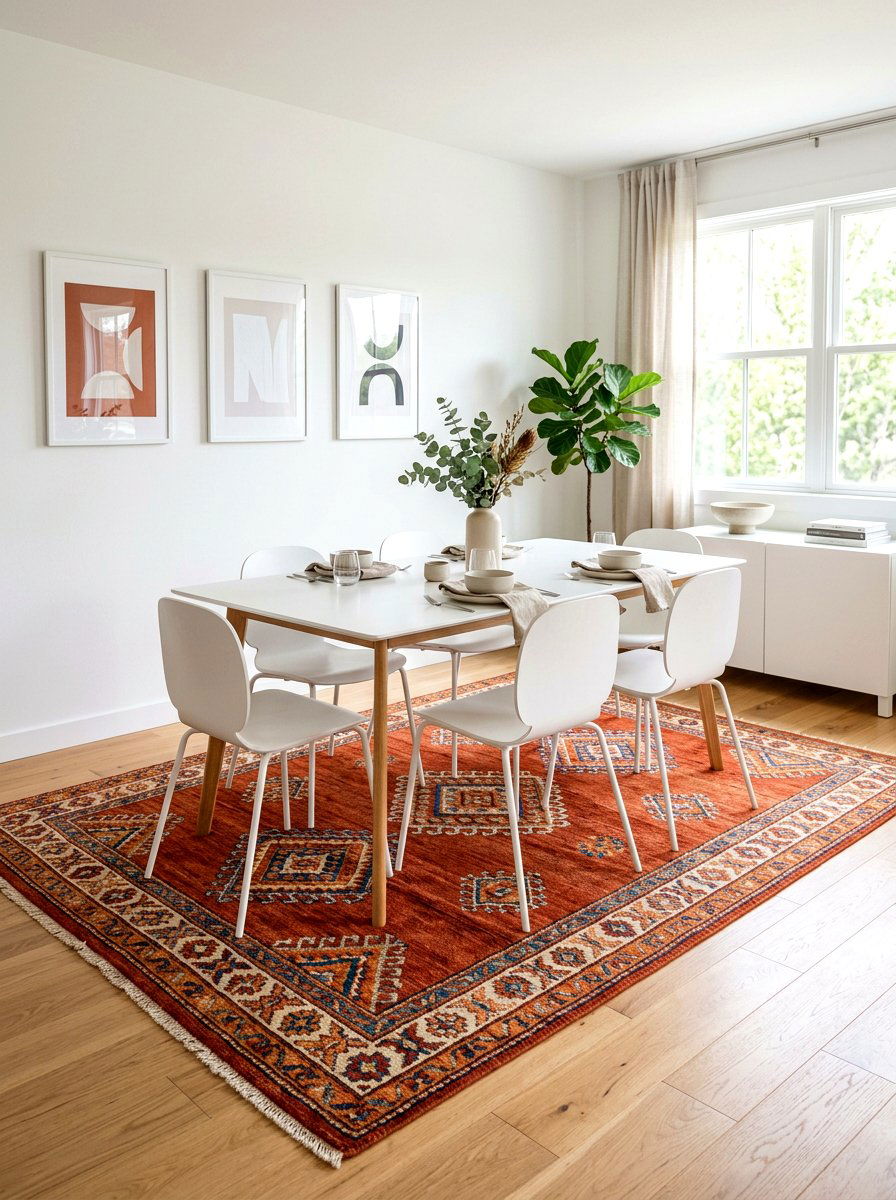
In a minimalist dining room with simple furniture and neutral walls, a colorful rug can serve as the primary source of personality and warmth. Placing a vibrant rug under the table instantly transforms a sterile space into an inviting and energetic environment. This is a low-commitment way to experiment with bold hues like terracotta, teal, or ochre without painting the walls. The rug acts as an anchor for the room, drawing the eye down and making the ceiling feel higher. Pair the rug colors with a few small accessories, like a vase or artwork, to tie the whole design together.


25. Vintage Rug Under Modern Dining Set
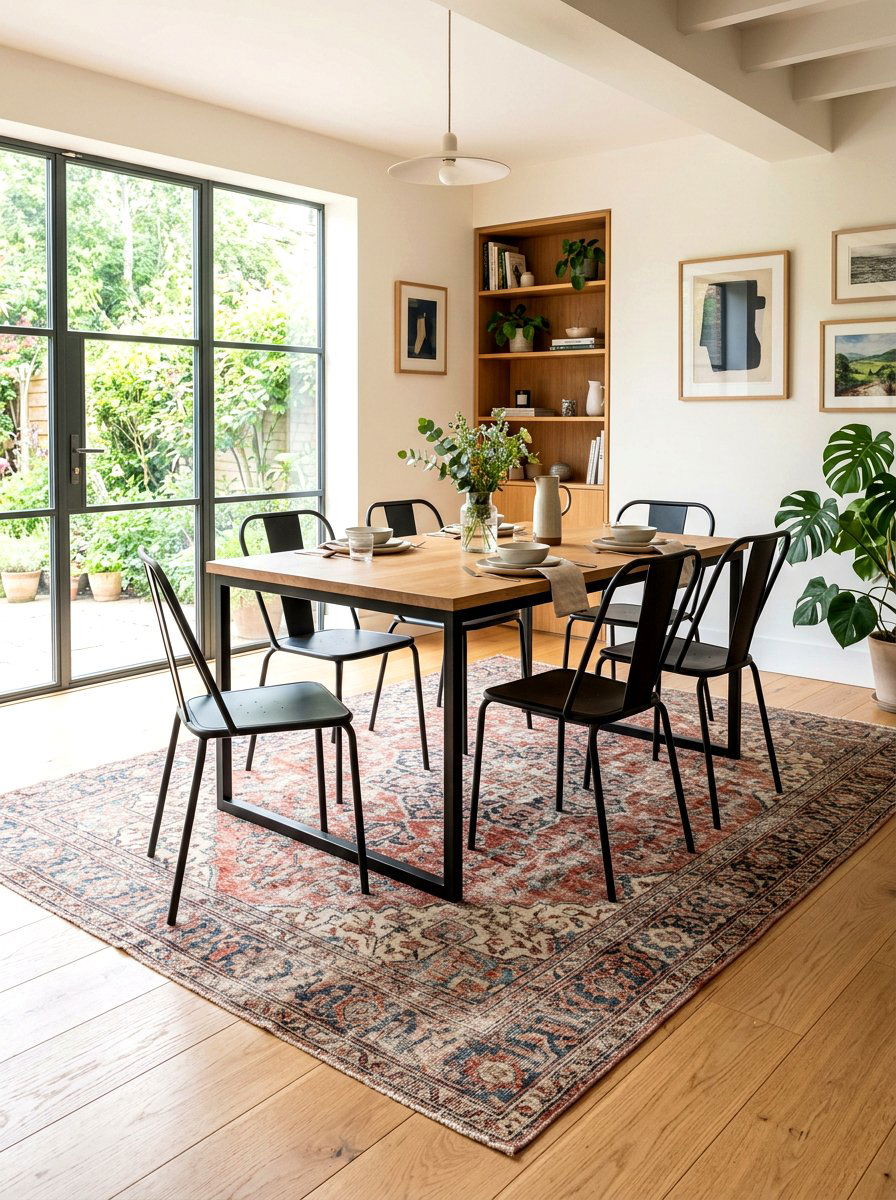
Mixing styles by placing a vintage or antique rug under a sleek, modern dining set is a classic designer trick for creating a curated home. The intricate patterns and faded colors of a vintage rug provide a beautiful contrast to the clean lines and smooth surfaces of contemporary furniture. This placement adds history and soul to a new home, making the dining room feel like it has been thoughtfully put together over time. The key is to find a vintage rug with colors that complement the modern finishes of your chairs and table for a truly harmonious and high-end look.
26. Rug Placement For Breakfast Nook
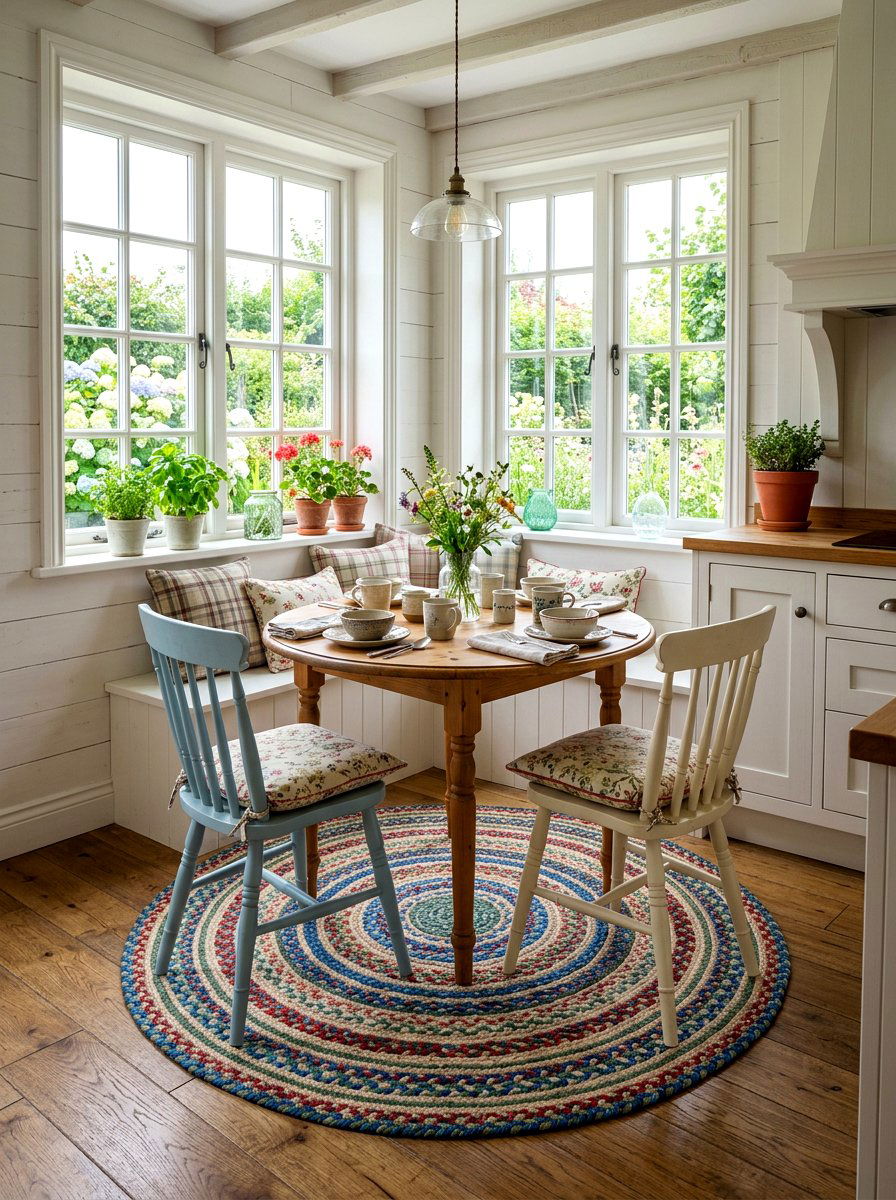
A breakfast nook is often a smaller, more casual dining area that requires a different approach to rug placement. A small, durable rug that fits snugly into the nook creates a cozy and intimate atmosphere for morning coffee and family meals. Round rugs are particularly popular for nooks because they fit well into corners and work with built-in bench seating. Since breakfast nooks are often located near the kitchen, choose a material that is easy to clean and can handle the high traffic of a busy morning routine. This adds a layer of comfort to a functional kitchen corner.
27. Neutral Rug In Coastal Dining Room
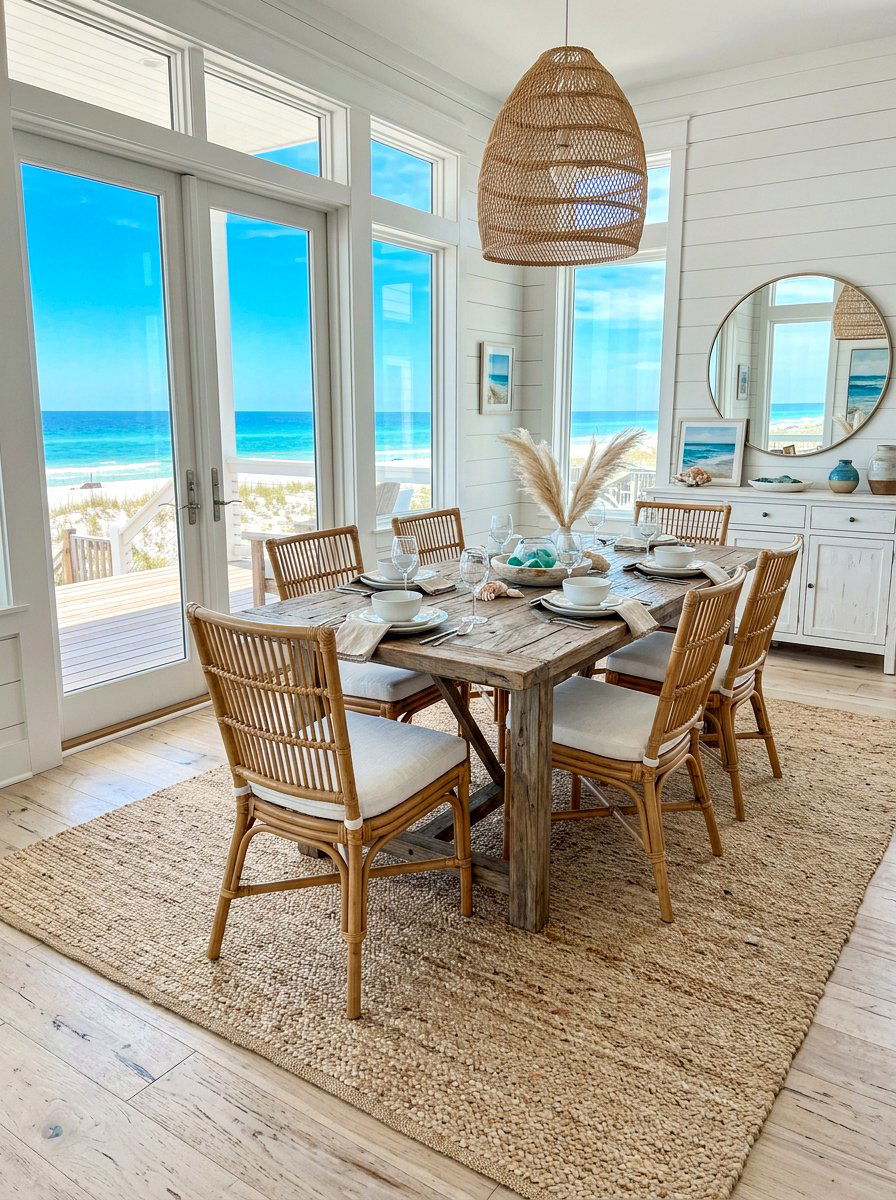
For a coastal-inspired dining room, a large neutral rug in shades of sandy beige, soft grey, or crisp white is the perfect foundation. This placement creates a light and airy feel that mimics the beach and allows the blue or green accents in the room to shine. Look for rugs with a bit of texture, like a subtle high-low pile or a woven pattern, to add interest without using bold colors. A neutral rug provides a calm and serene backdrop for relaxed family dinners and coastal-themed decor. It makes the room feel larger and more connected to the natural world.
28. Sisal Rug For Durable Dining Space
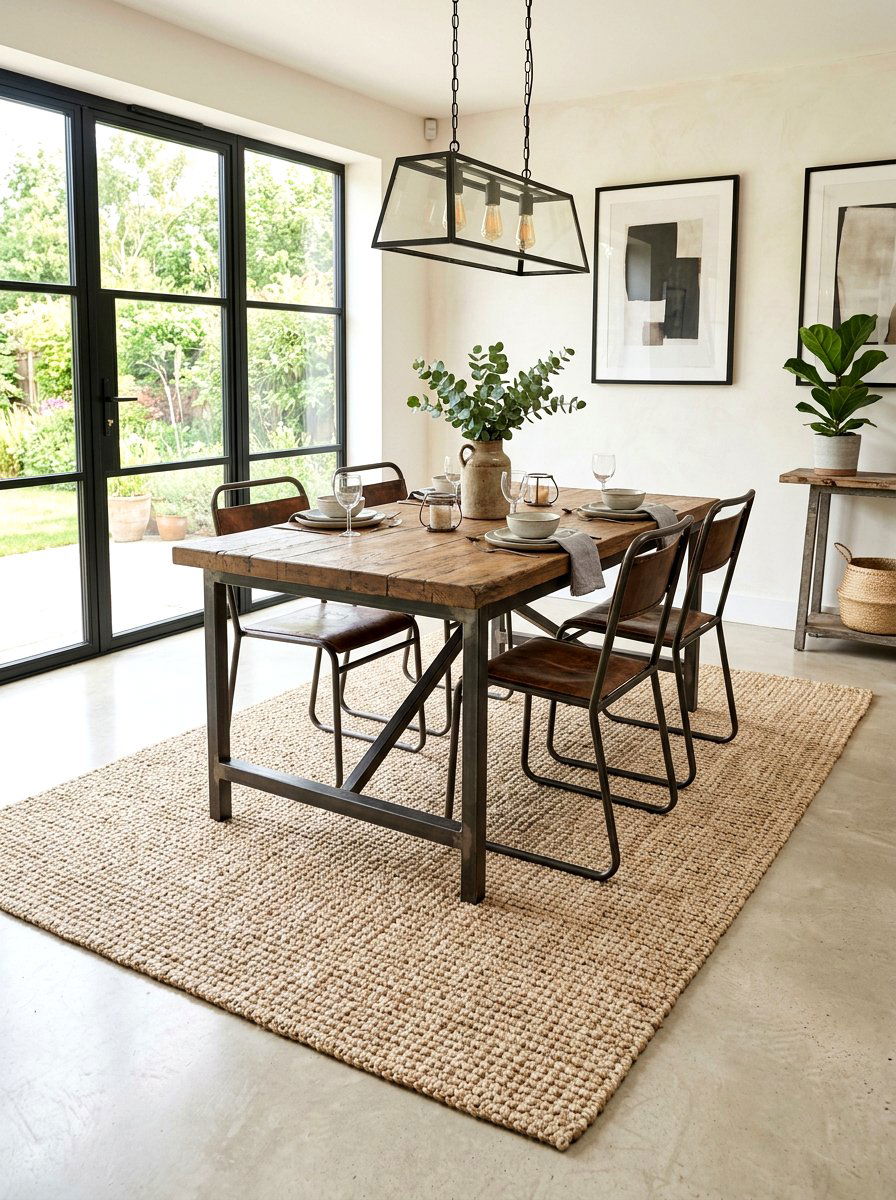
Sisal is one of the most durable natural fibers available, making a sisal rug an excellent choice for a dining room that gets a lot of use. Placing a sisal rug under your table provides a tough, resilient surface that can stand up to the constant movement of chairs and the occasional spill. These rugs have a beautiful, golden-brown hue that adds a touch of organic warmth to any room. Because sisal is quite flat, it is very easy to move furniture across it, and it won't show wear as quickly as softer materials. It is a practical and stylish choice for modern homes.
29. Bold Geometric Rug Placement
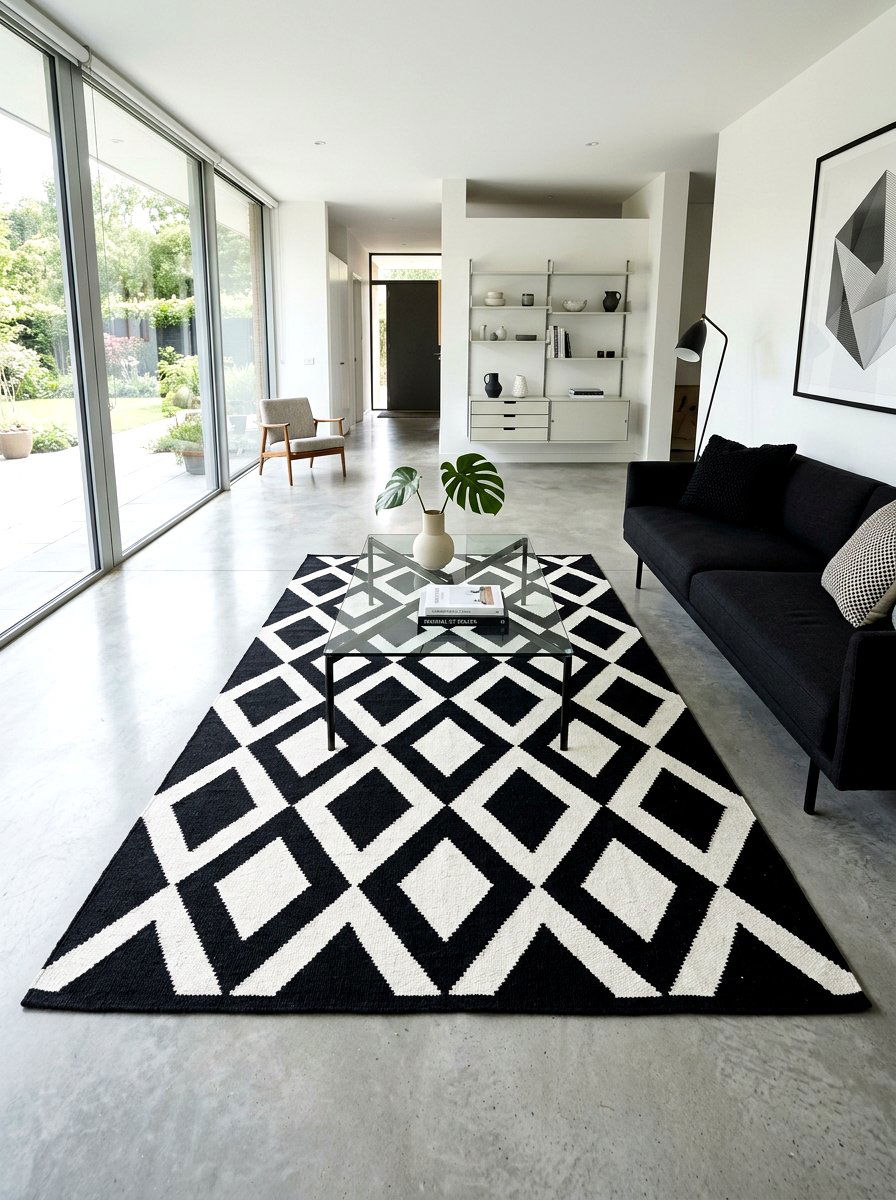
A bold geometric rug can act as a stunning modern art piece for your floor when placed under a simple dining set. The strong lines and shapes of the rug create a sense of order and visual interest that can ground a room with very little other decor. This placement works best when the furniture is relatively understated, allowing the rug's pattern to be the main focus. It is a great way to add a masculine or architectural touch to your dining room. Ensure the rug is large enough so that the geometric pattern is visible around the edges of the chairs.
30. Offset Rug Under Dining Table
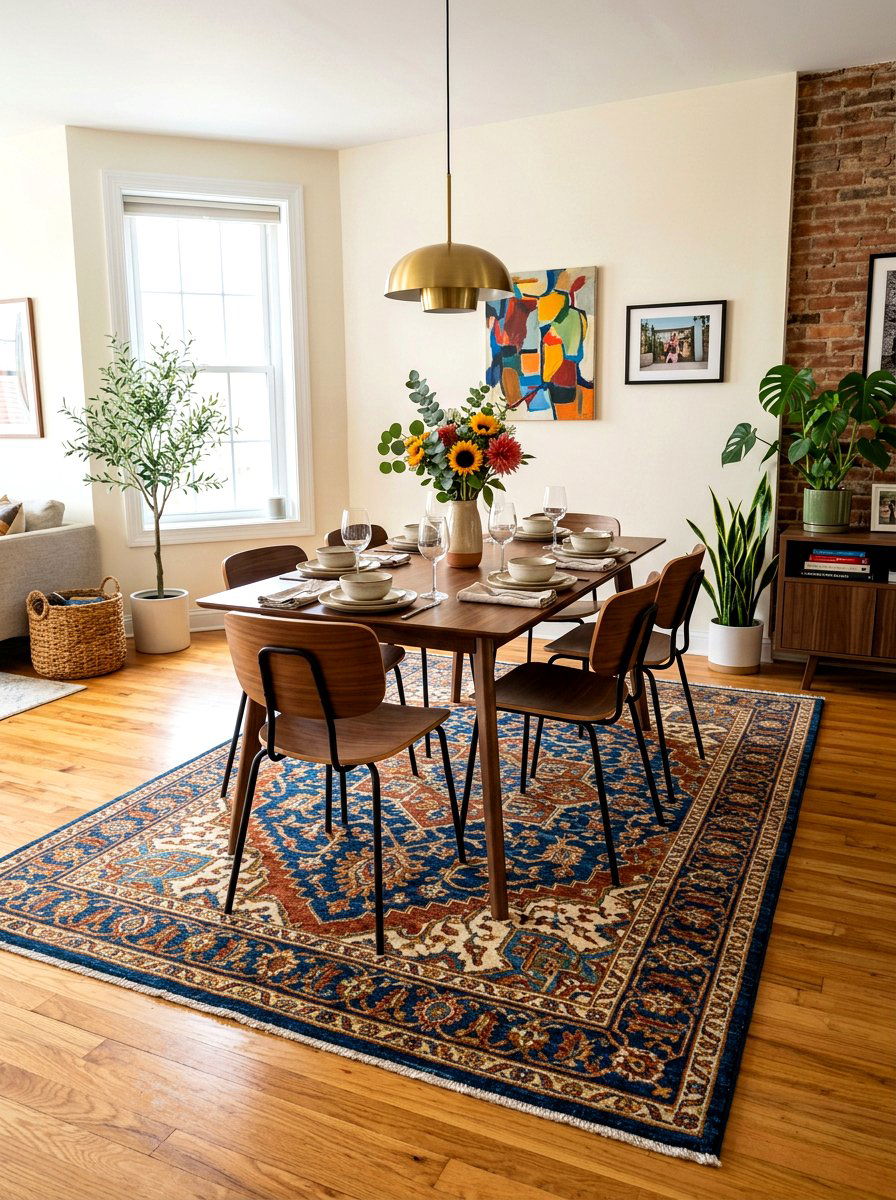
If your dining table is located in an unusual spot or the room is asymmetrical, an offset rug placement can be a clever solution. Instead of centering the rug in the room, center it specifically under the dining table. This creates a balanced "island" of furniture that feels intentional, even if the surrounding space is uneven. Offset placement is often used in large living-dining combos where the dining area is tucked into a corner. By anchoring the table with its own rug, you define that specific zone as a separate functional area, regardless of the overall room's proportions or wall layout.
Conclusion:
Finding the perfect rug placement for your dining room is a journey that balances personal style with practical everyday needs. Whether you choose a traditional rectangular rug or a more unconventional cowhide, the key is to ensure the rug is large enough to handle the movement of your chairs comfortably. A well-chosen rug not only protects your floors and improves the room's acoustics but also serves as the design foundation that ties all your furniture and decor together. By following these professional placement ideas, you can create a dining space that is not only beautiful and viral-worthy but also functional and inviting for all your guests.

Related posts: