Creating a sustainable home often starts with the most functional spaces, and transforming your utility area into an eco-friendly sanctuary is a brilliant place to begin. The laundry room is a high-consumption zone where water, energy, and chemicals converge, making it the perfect candidate for a green makeover that balances style with environmental responsibility. By choosing natural materials, energy-efficient technology, and plastic-free organization, you can significantly reduce your household’s carbon footprint while enjoying a more serene atmosphere. This guide explores a variety of innovative ways to integrate sustainability into your daily chores, from choosing renewable cabinetry to implementing smart water-saving solutions. Each thoughtful adjustment contributes to a healthier planet and a more efficient home.
1. Natural light laundry room
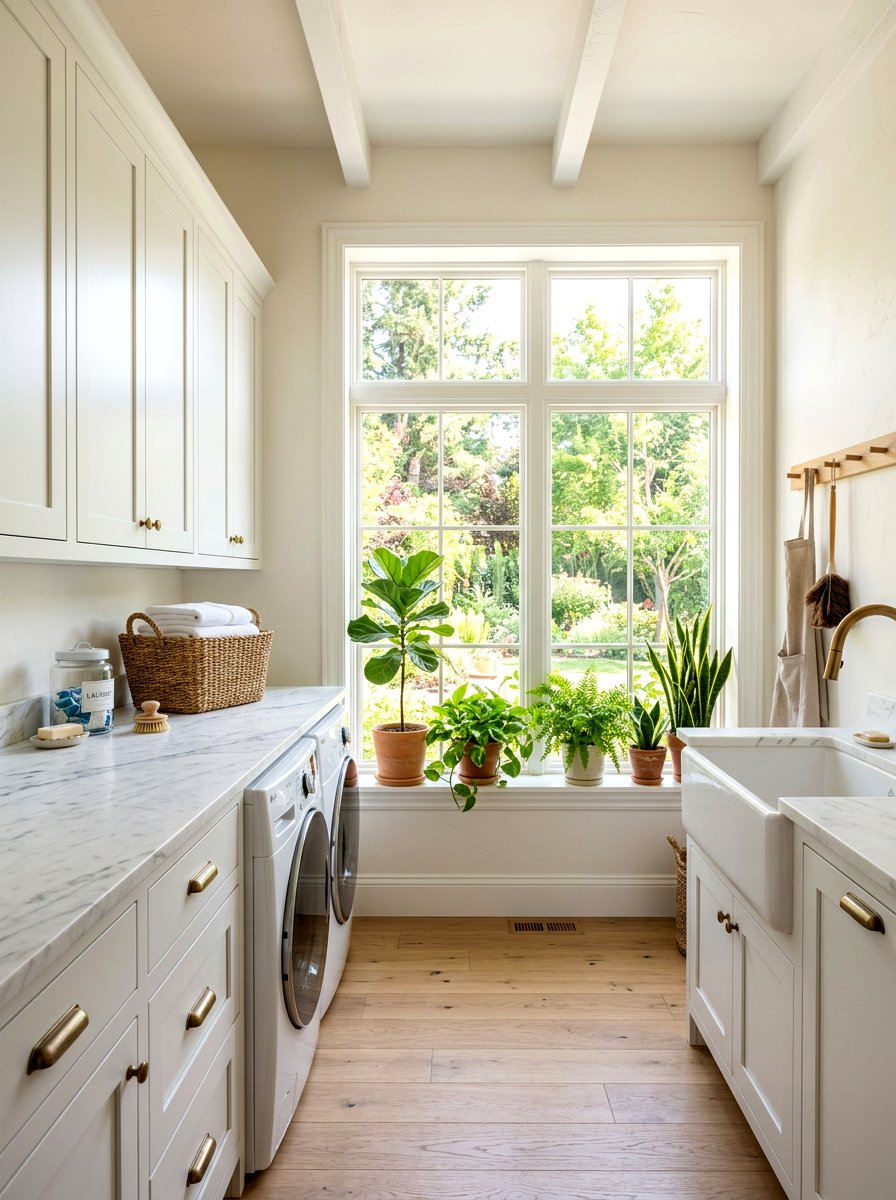
How much energy can you save simply by utilizing the sun? Designing a laundry room with large windows or a skylight transforms the entire vibe while reducing your reliance on artificial overhead lighting. Natural light makes the space feel airy and significantly larger, which is a huge plus for typically small utility areas. Beyond the aesthetic appeal, sunlight has natural antibacterial properties that help keep your workspace fresh. Positioning your folding station directly under a window allows you to see stains more clearly without flicking a switch. This simple architectural choice creates a bright, cheerful environment that makes the chore of washing clothes much more enjoyable and environmentally conscious.
2. Bamboo laundry room cabinets
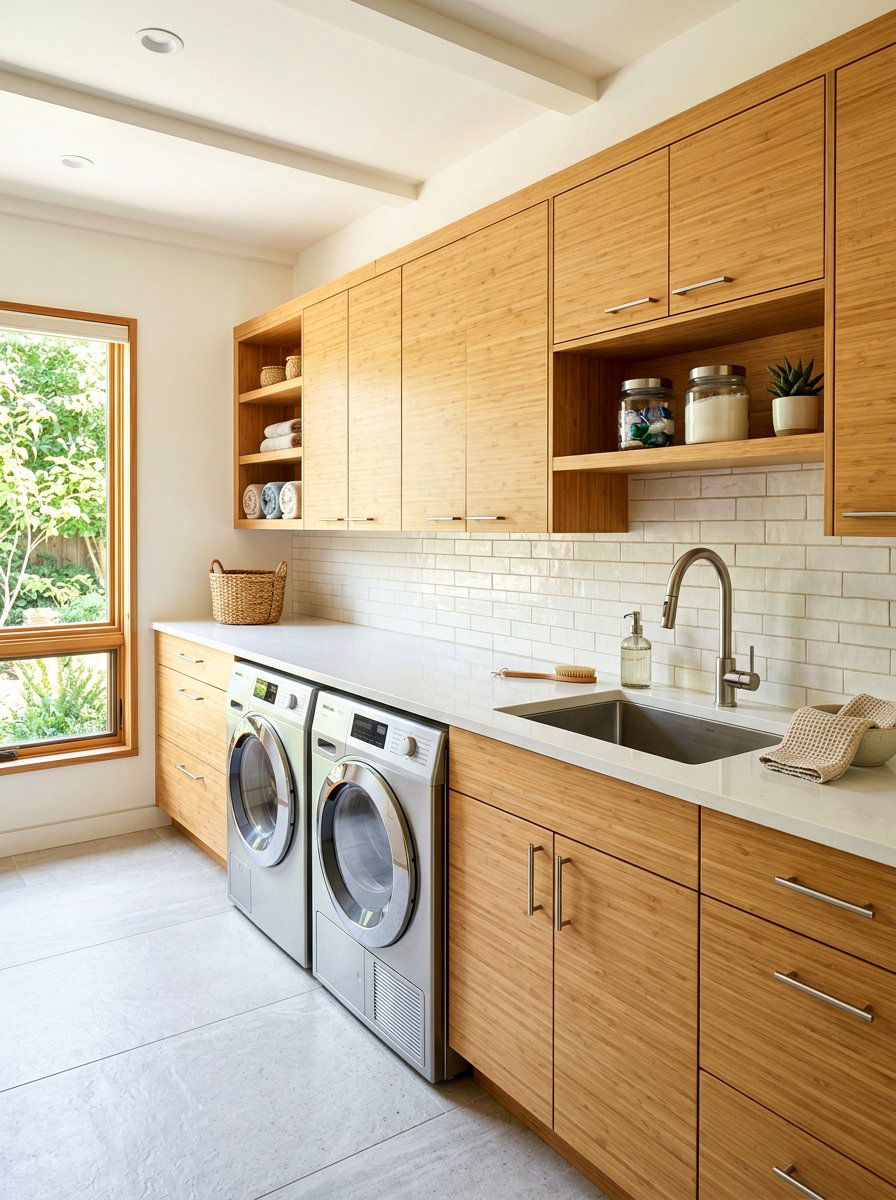
Bamboo is one of the most sustainable materials on the planet because it grows incredibly fast and requires no pesticides. Choosing bamboo for your laundry room cabinetry provides a durable and water-resistant alternative to traditional hardwoods. The natural grain of bamboo adds a warm, organic texture to the room, creating a spa-like atmosphere that feels far from utilitarian. Unlike some composite woods, bamboo is sturdy enough to handle the weight of heavy detergents and constant use. Its resistance to humidity makes it ideal for a room prone to steam and moisture. It is a stylish, eco-conscious investment that brings a modern, clean look to your storage.
3. Energy star laundry appliances
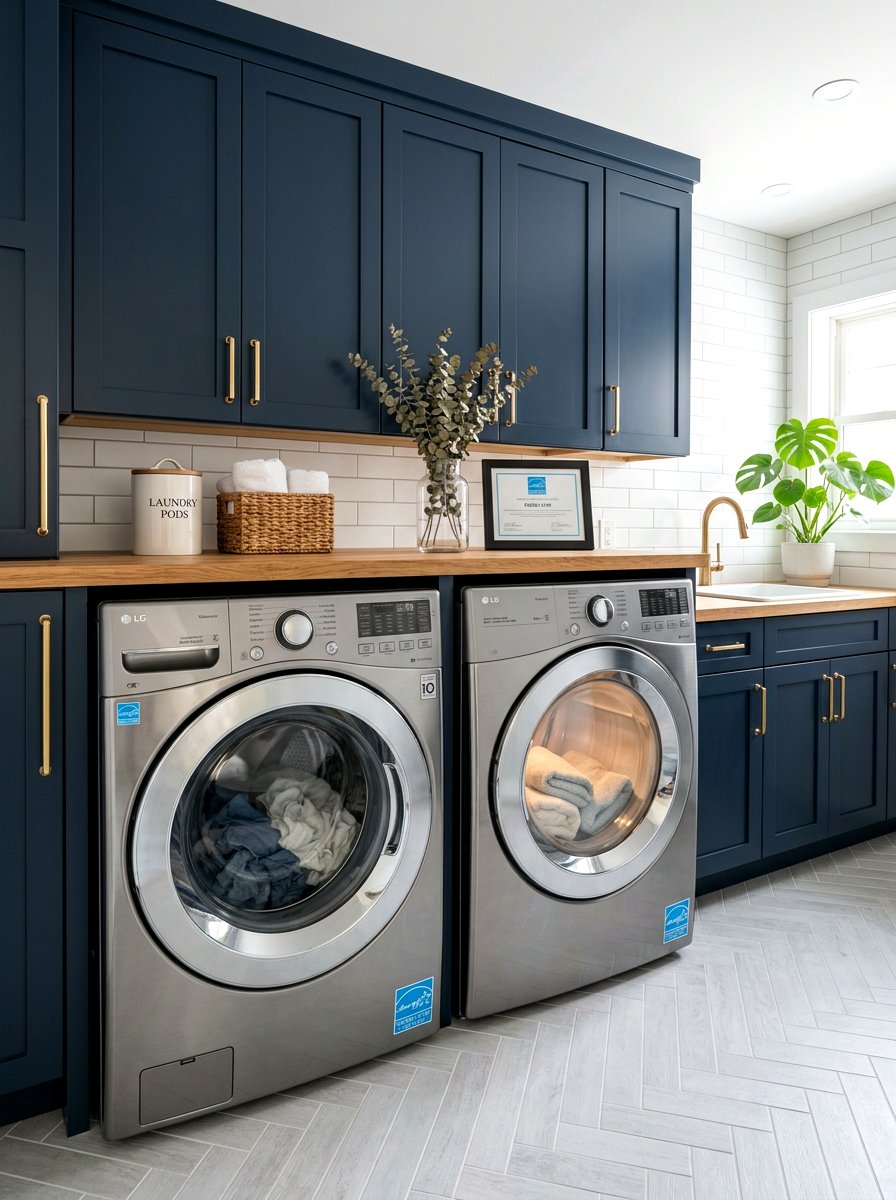
Imagine lowering your monthly utility bills while also protecting the environment. Upgrading to Energy Star-certified washers and dryers is a cornerstone of any eco-friendly renovation. These modern machines are engineered to use significantly less water and electricity than older models, often paying for themselves in energy savings over time. Front-loading washers are particularly efficient because they use a tumbling motion that requires less water than top-loaders with agitators. Many of these smart appliances also feature advanced moisture sensors that stop the drying cycle the moment your clothes are ready. This prevents over-drying, saves energy, and helps your favorite garments last much longer by reducing heat damage.
4. Reclaimed wood laundry shelves
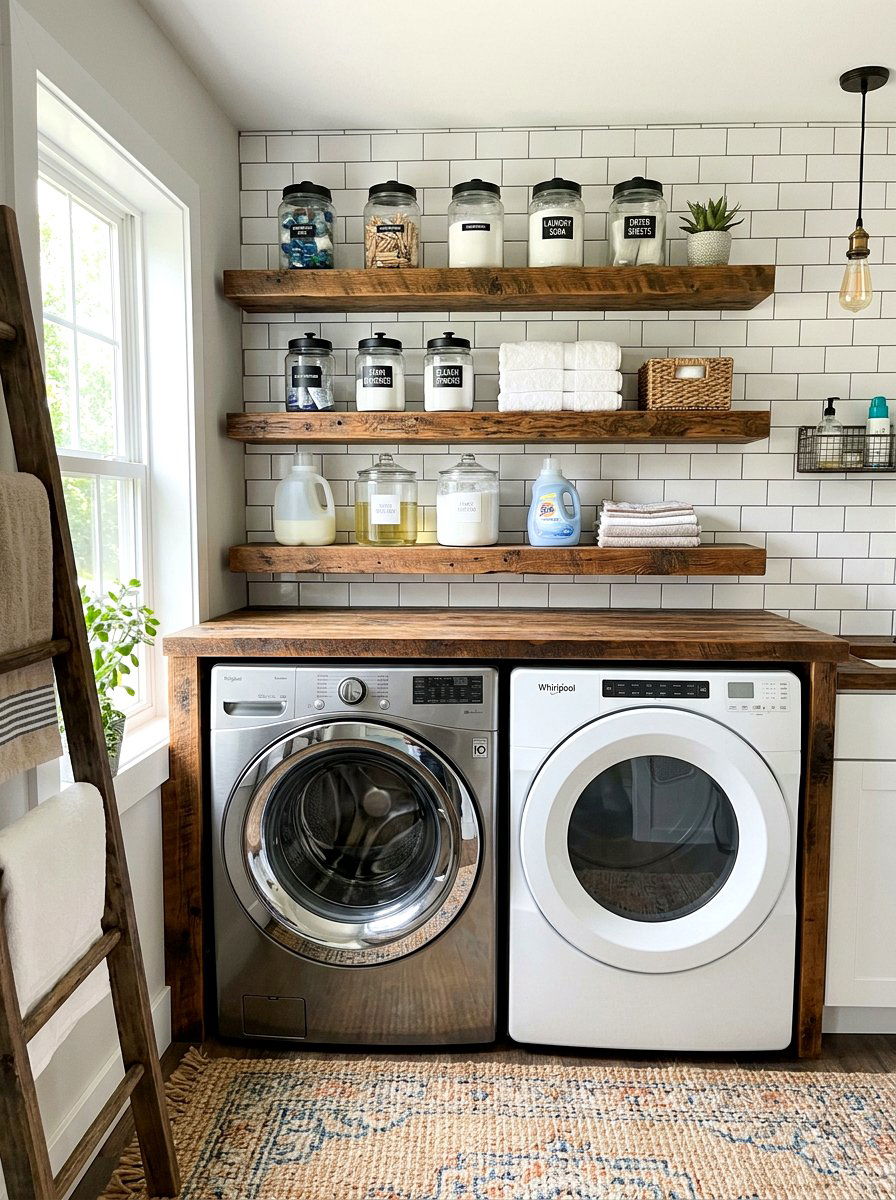
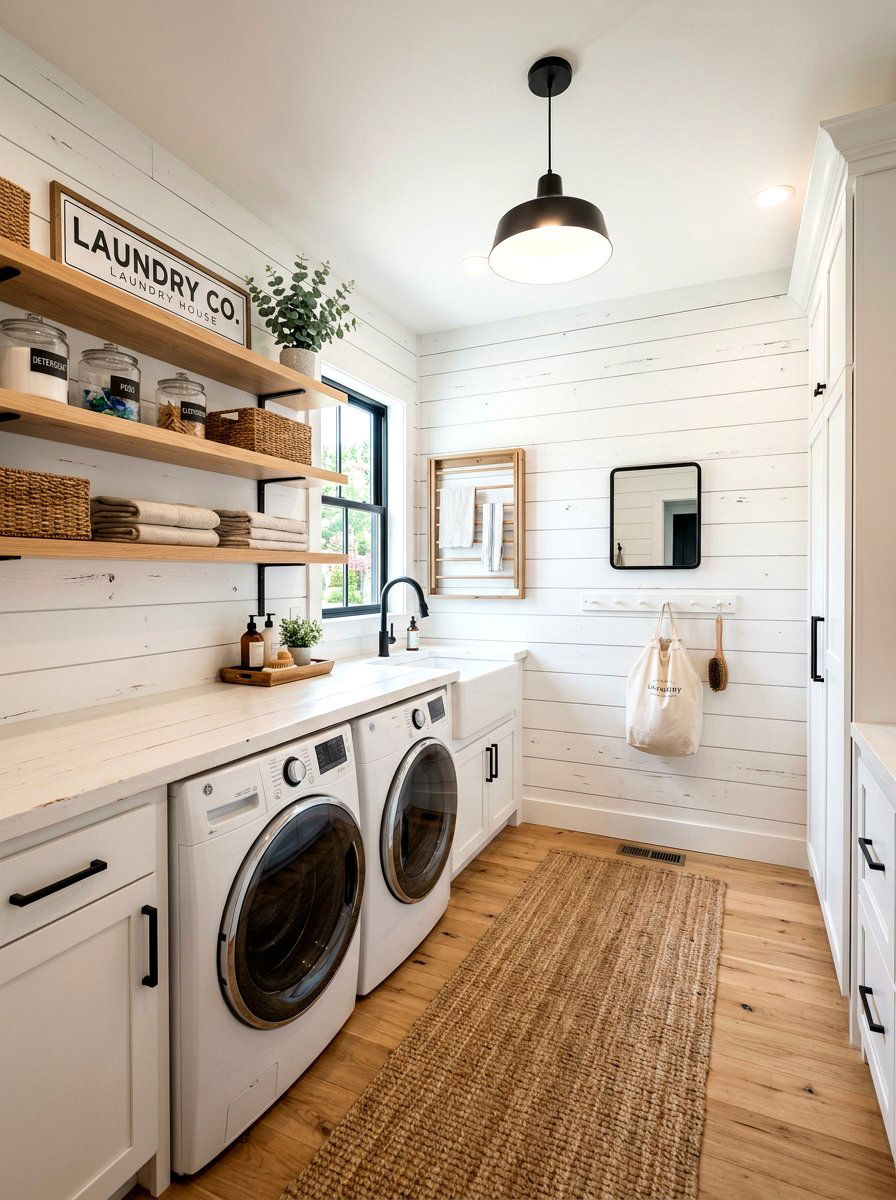
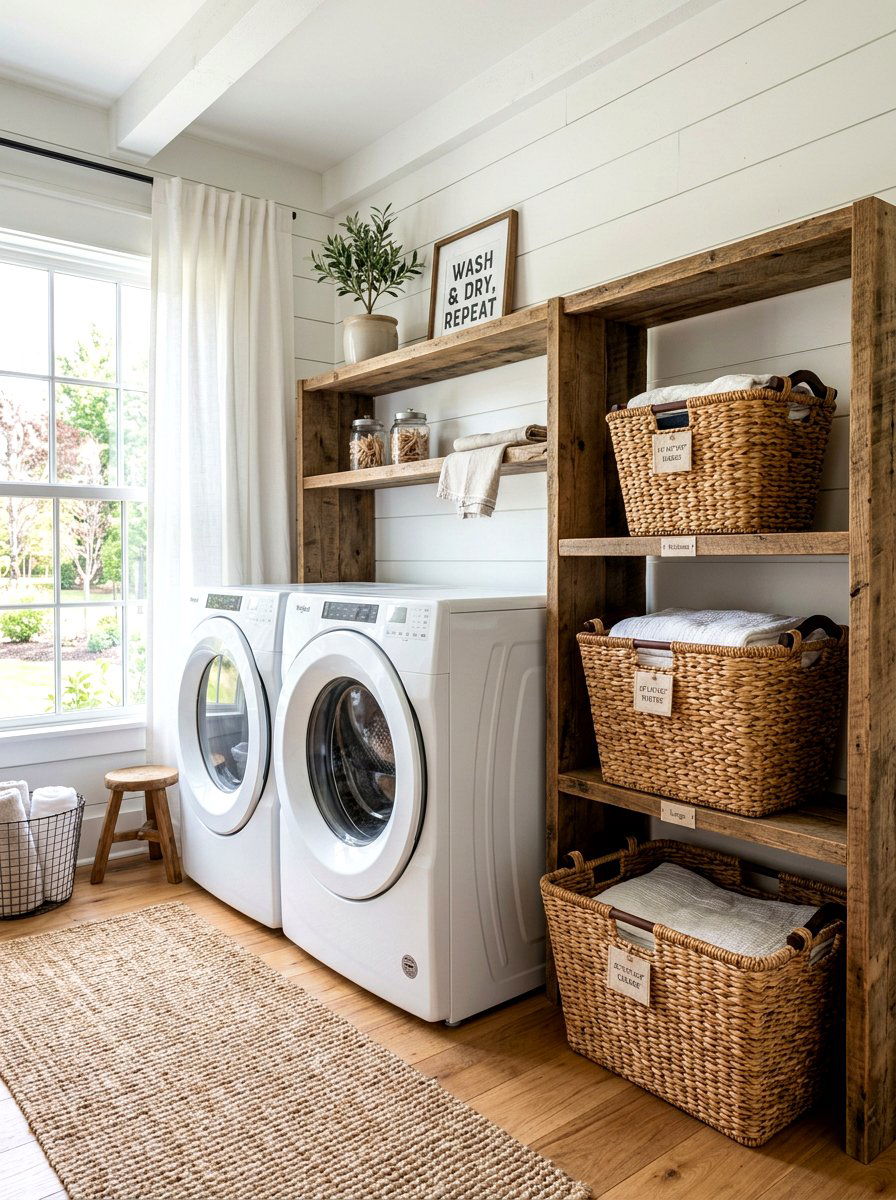
Using reclaimed wood for your shelving is a beautiful way to breathe new life into old materials while avoiding the need for new timber. Each piece of salvaged wood tells a unique story through its knots, grain patterns, and weathered texture, adding instant character to your laundry room. These sturdy shelves are perfect for holding heavy glass jars or woven baskets, keeping your supplies organized and within reach. By choosing reclaimed materials, you are directly contributing to the circular economy and keeping high-quality wood out of landfills. It creates a rustic yet refined focal point that pairs perfectly with a neutral, earth-toned color scheme for a cozy feel.
5. Glass jar laundry detergent storage
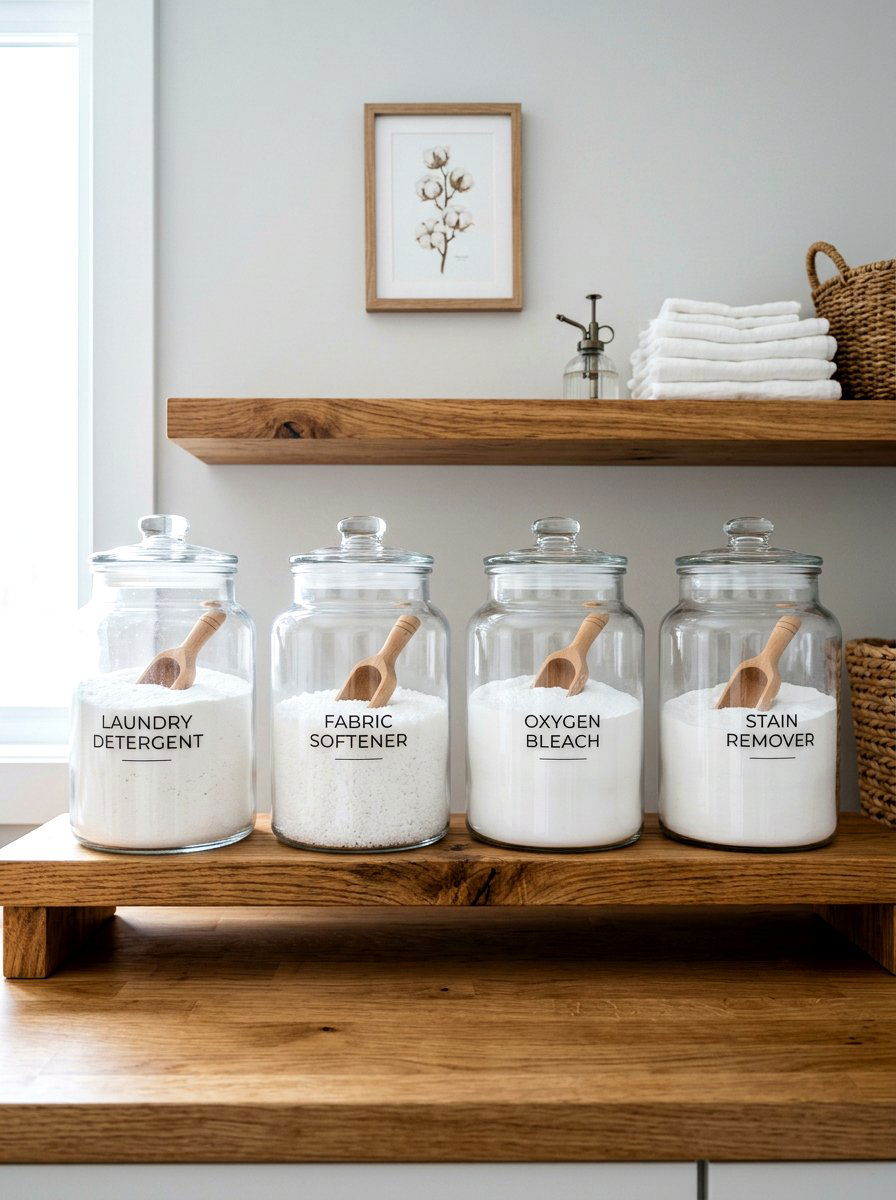
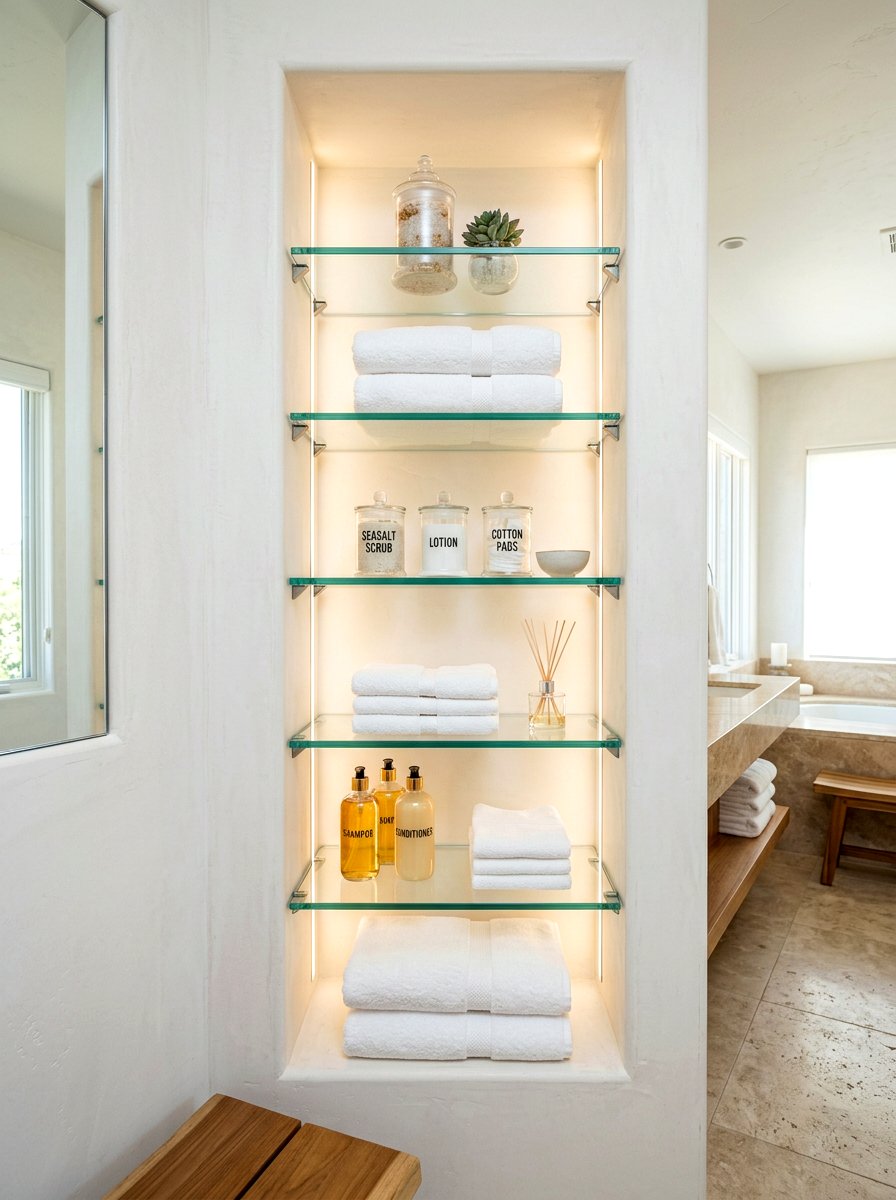
Have you noticed how much plastic waste accumulates from bulky detergent bottles? Swapping out those unsightly plastic containers for elegant glass jars is a simple yet impactful eco-friendly switch. Large apothecary jars or mason jars allow you to buy laundry powders, pods, or soap nuts in bulk, which reduces packaging waste significantly. This organization method also provides a clear visual of when you are running low on supplies, preventing last-minute trips to the store. Labeling the jars with wooden tags or minimalist stickers adds a professional, organized touch to your open shelving. It turns basic cleaning supplies into a decorative feature that enhances the room’s overall aesthetic.
6. Indoor hanging clothes drying rack
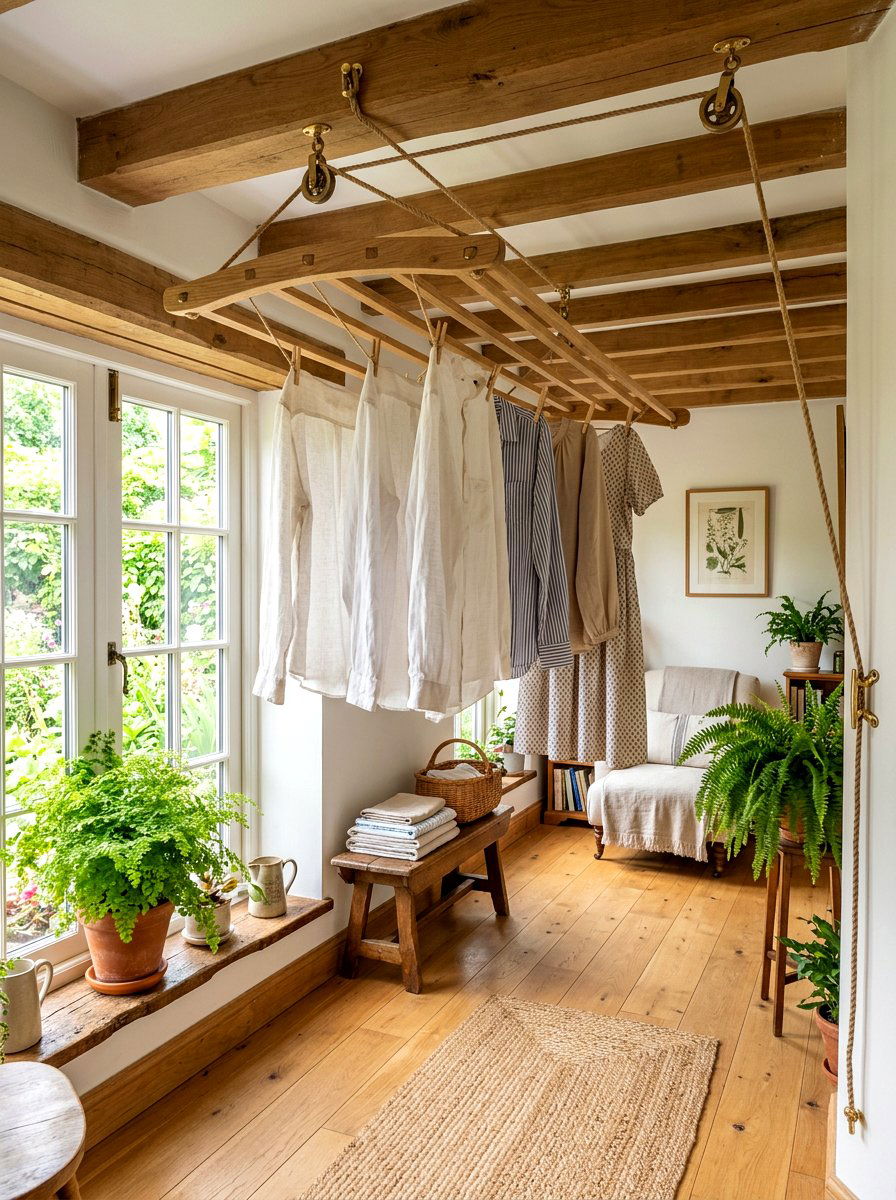
One of the most effective ways to slash your home's energy consumption is to skip the dryer whenever possible. Installing a permanent indoor hanging rack allows you to air-dry your clothes regardless of the weather outside. These racks can be suspended from the ceiling or mounted on the wall to save valuable floor space. Air-drying is much gentler on fabrics than the high heat of a machine, preventing shrinkage and preserving the elasticity of your clothes. It also adds a touch of old-world charm to the room. Utilizing the natural airflow in your home to dry laundry is a quiet, zero-energy solution that benefits both your wallet and the planet.
7. Wool dryer ball basket
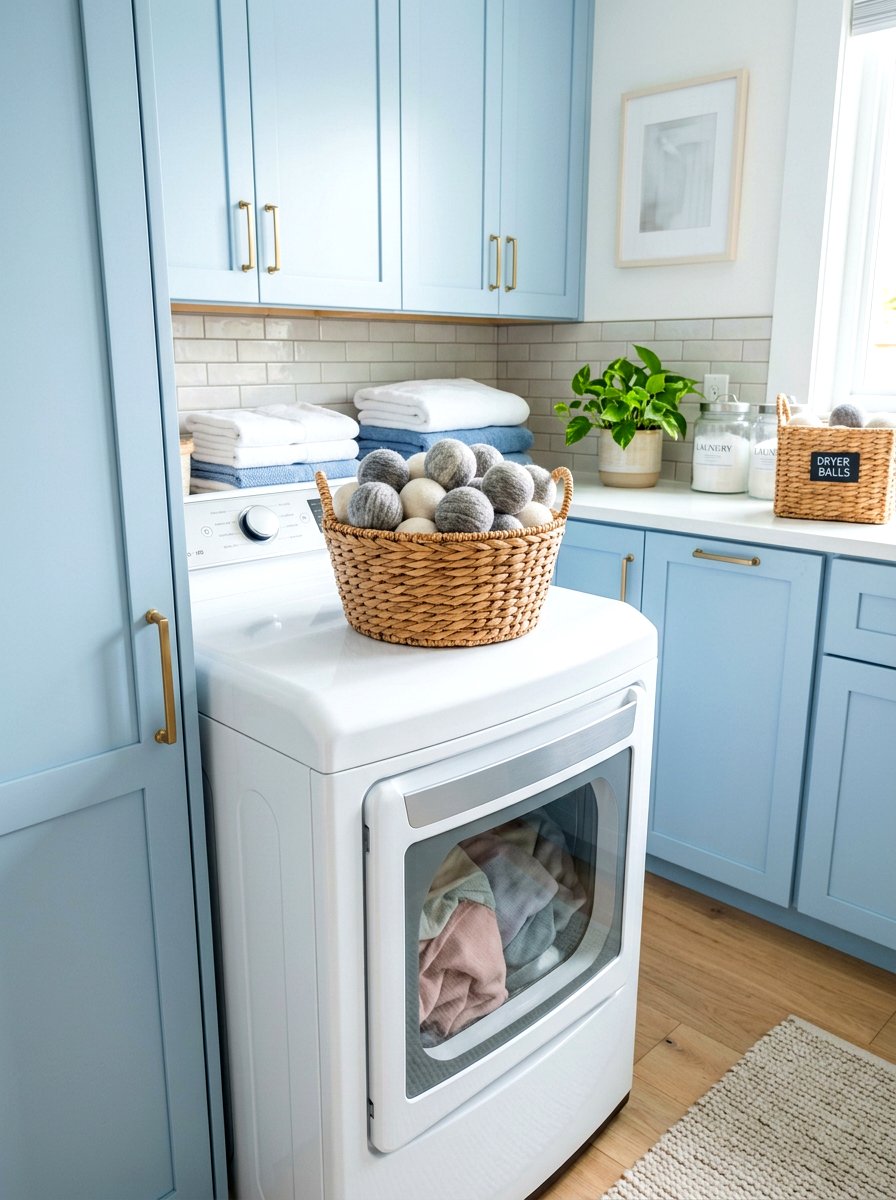
If you still need to use the dryer for heavy towels or bedding, wool dryer balls are a must-have eco-accessory. Instead of using single-use plastic-coated dryer sheets, keep a small woven basket filled with 100% wool balls near your machine. These natural balls bounce around between layers of wet fabric, improving airflow and significantly reducing drying time. They also naturally soften clothes and reduce static without the use of harsh synthetic fragrances or chemicals. You can even add a few drops of essential oils directly to the wool for a subtle, natural scent. It is a simple, cost-effective change that eliminates waste and chemicals from your laundry routine.
8. Low voc paint laundry room
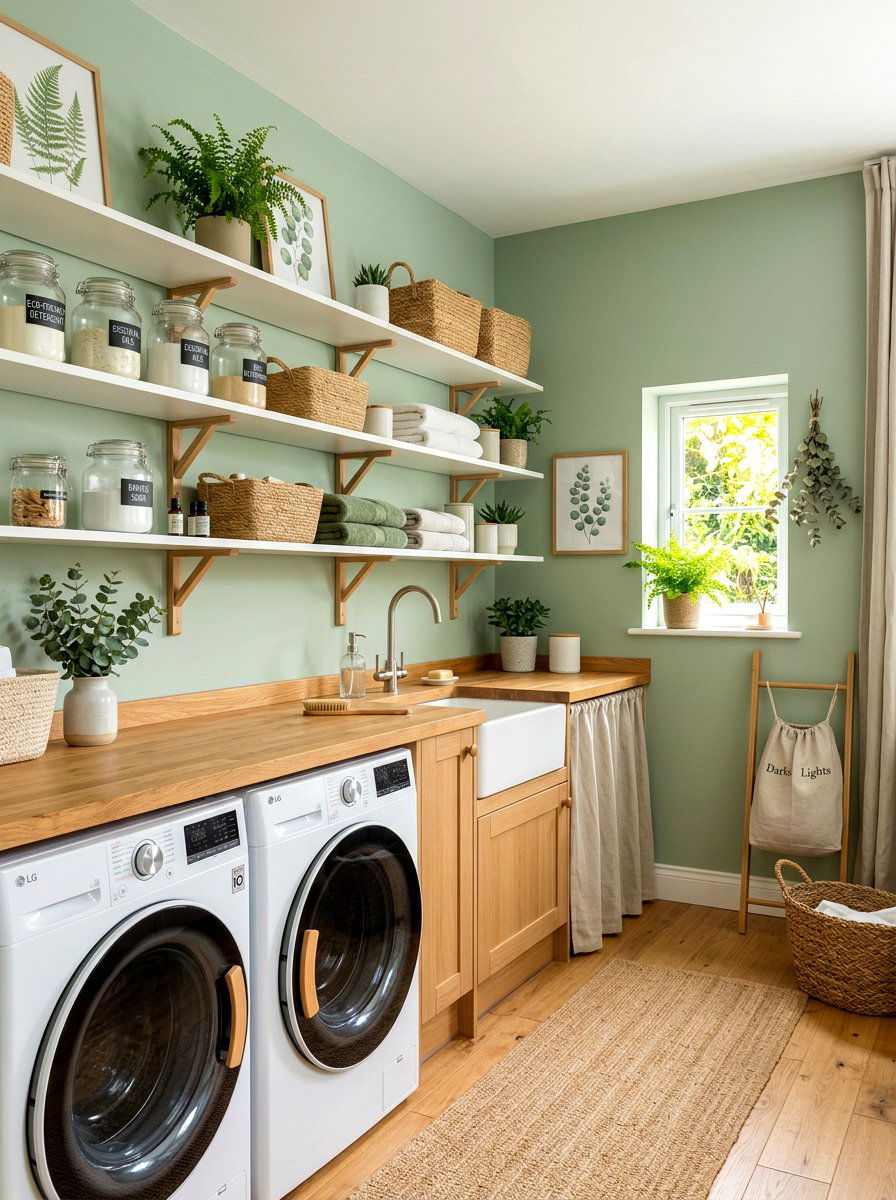
The air quality inside your home is just as important as the materials you use for construction. When refreshing your laundry room, choose low-VOC or zero-VOC paints to ensure your space remains free from harmful chemical off-gassing. Conventional paints often release volatile organic compounds that can cause headaches or respiratory issues over time. Eco-friendly paints are now available in a massive range of beautiful, high-performance colors that are specifically formulated to withstand the moisture and humidity typical of a laundry area. A soft sage green or a warm taupe can create a calming environment, making the time you spend doing chores feel much more relaxed and healthy.
9. Cork flooring laundry room
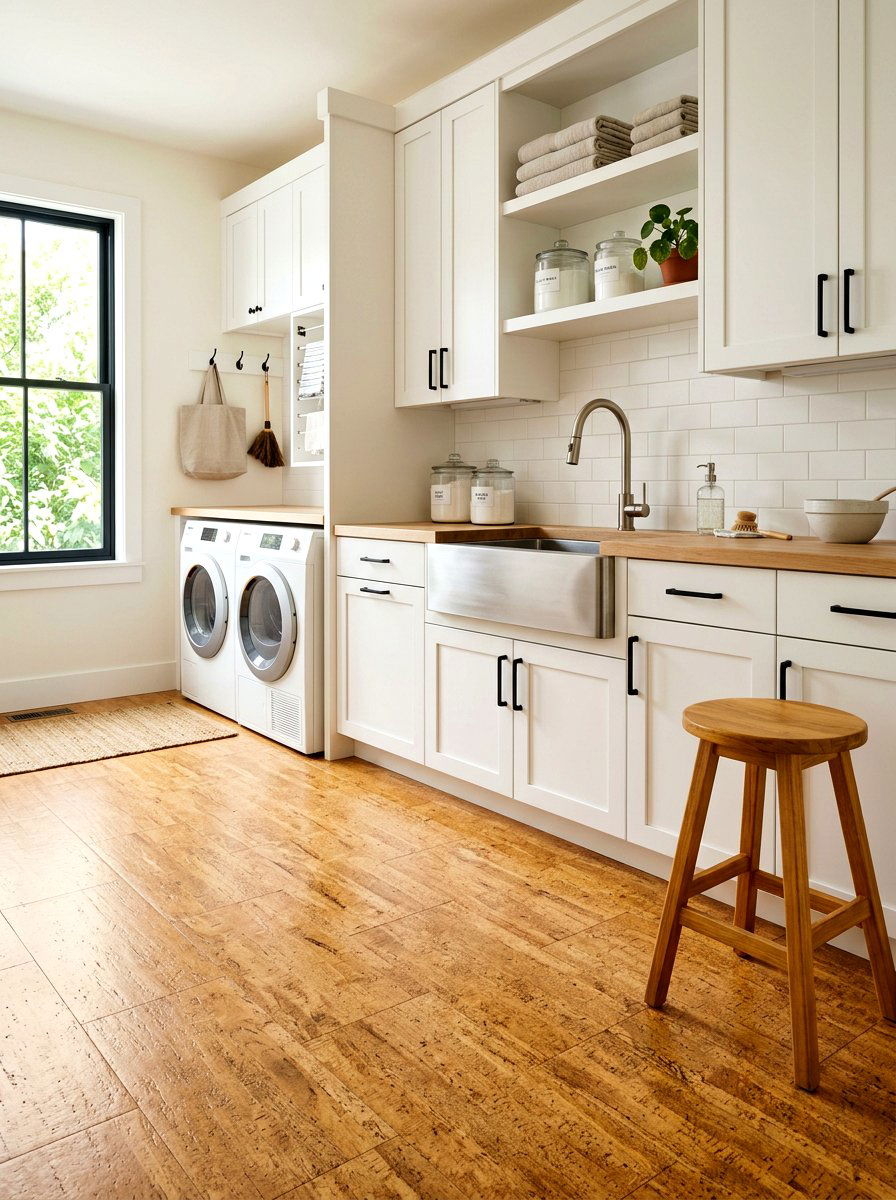
Cork is a fantastic sustainable flooring choice for a laundry room because it is harvested from the bark of trees without harming them. This material is naturally antimicrobial and water-resistant, making it perfect for a space that occasionally sees spills or dampness. One of the best features of cork is its natural elasticity; it provides a soft, cushioned surface that is incredibly comfortable to stand on while you are sorting or folding clothes. It also acts as an excellent thermal and acoustic insulator, helping to muffle the sound of vibrating machines. The unique, textured appearance of cork adds a warm and modern organic feel to the overall design.
10. Linen laundry hamper
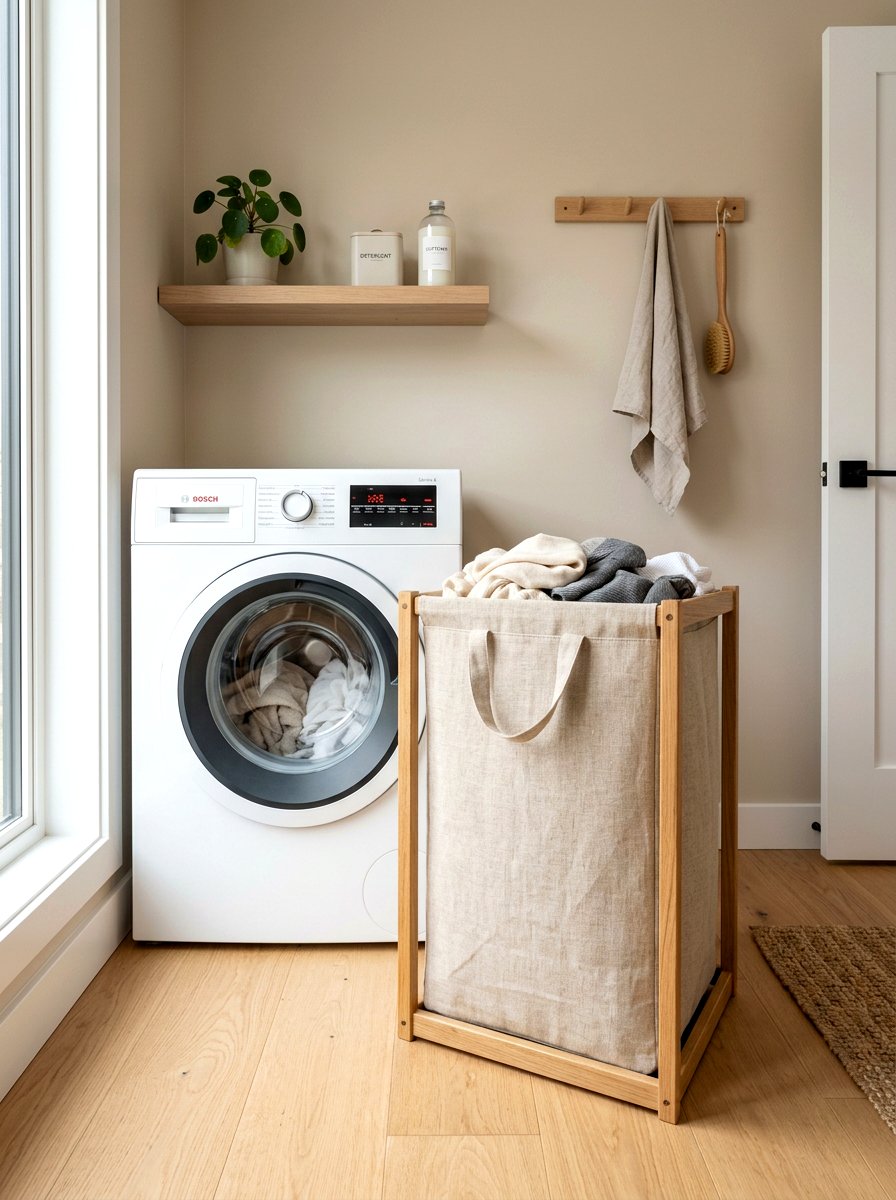
Ditch the plastic hampers and opt for laundry baskets made from natural, biodegradable fibers like linen or organic cotton. Linen is a highly sustainable material derived from the flax plant, which requires very little water and fewer pesticides than traditional cotton. A linen-lined wicker basket or a standalone linen bag on a wooden frame looks elegant and allows your dirty clothes to breathe, preventing musty odors from building up. These hampers are easy to clean, often featuring removable liners that can be tossed right into the wash. Choosing natural textiles for your storage solutions helps maintain a plastic-free environment while adding a soft, tactile element to your decor.
11. Vintage utility sink
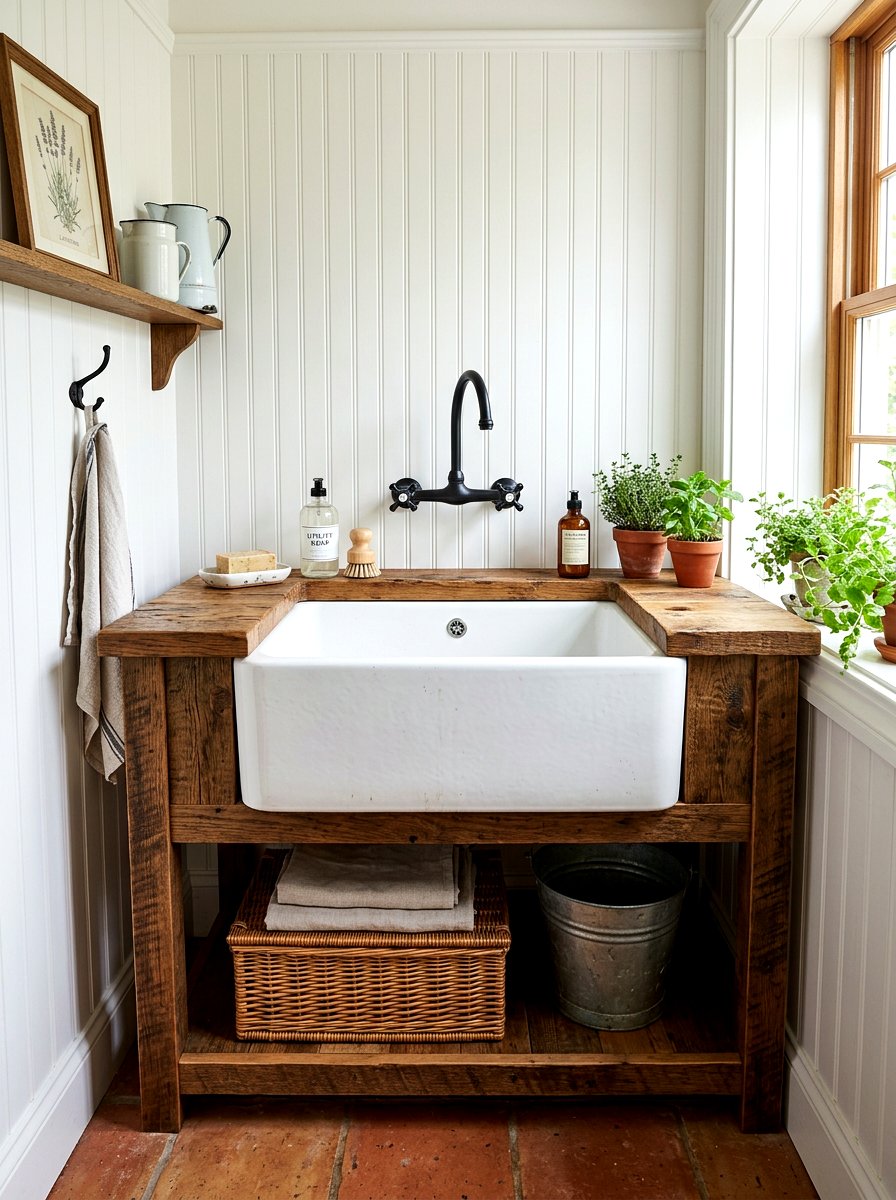
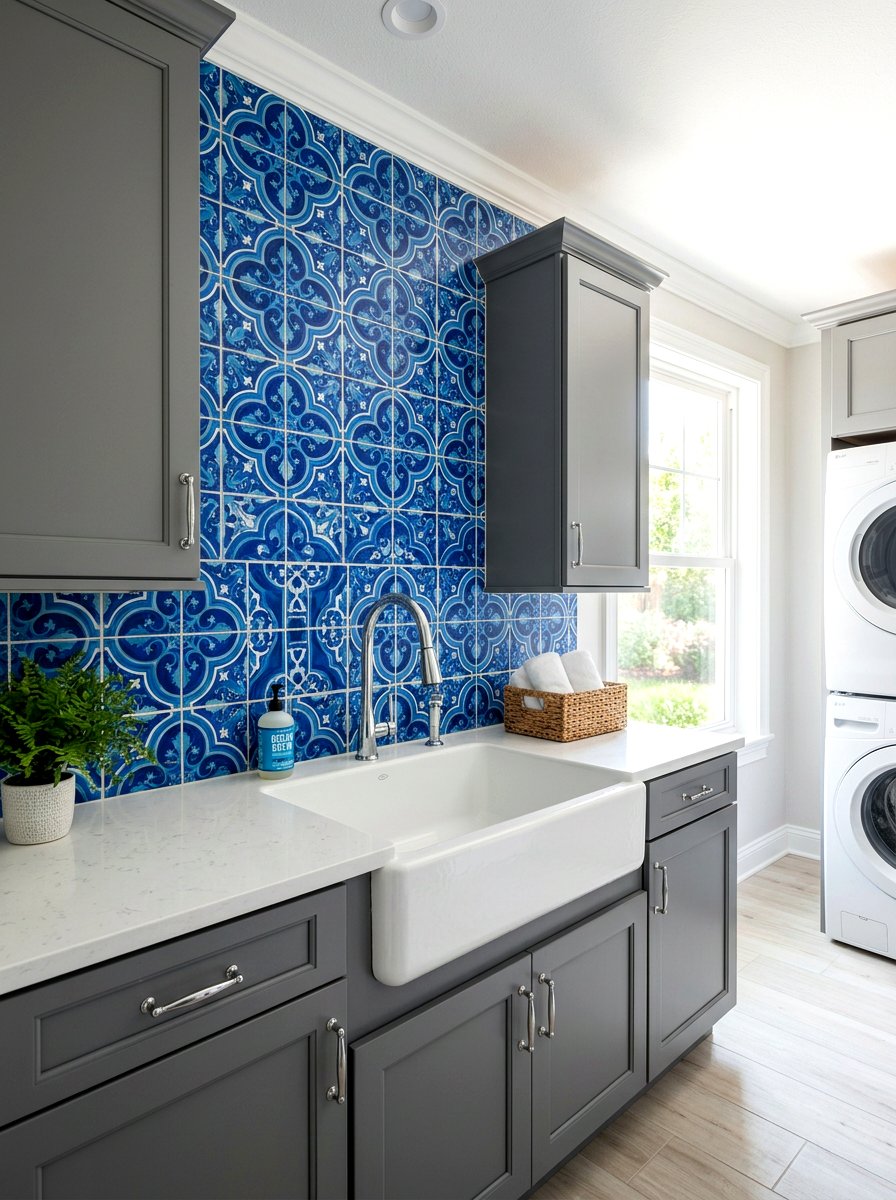
Repurposing a vintage utility sink is a brilliant way to add soul and sustainability to your laundry room design. Instead of buying a new plastic or mass-produced acrylic sink, look for a salvaged cast iron or farmhouse-style porcelain basin. These older pieces were built to last for decades and offer a deep, practical space for hand-washing delicates or pre-treating tough stains. Reclaiming a vintage item prevents the carbon emissions associated with manufacturing new products and keeps historical pieces in use. Pairing a classic white sink with a modern, water-saving bridge faucet creates a beautiful "new-meets-old" aesthetic that anchors the room with a sense of timelessness and environmental care.
12. Solar tube laundry room lighting
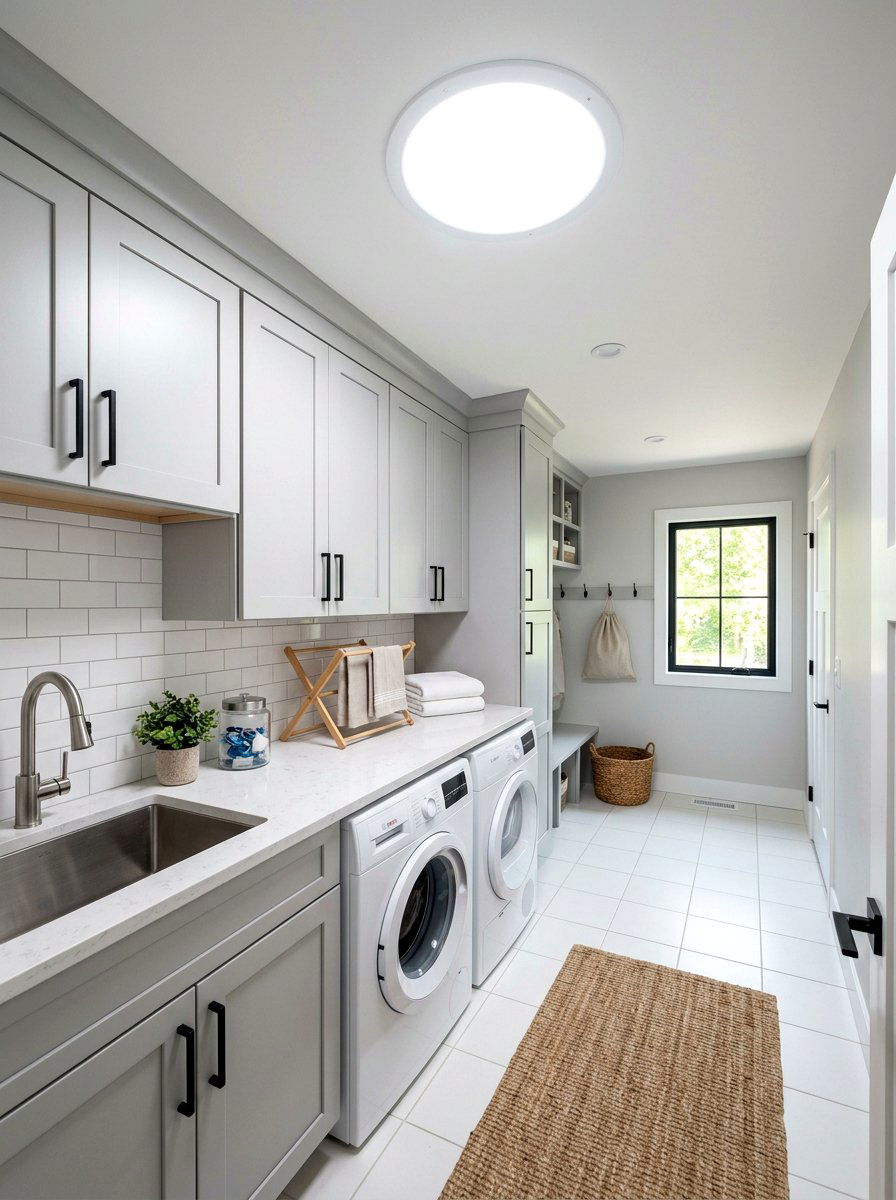
If your laundry room is located in a windowless area or a basement, solar tubes are an ingenious eco-friendly solution. Also known as light pipes, these devices capture sunlight on your roof and funnel it down through a reflective tube into your ceiling. They provide an incredible amount of bright, natural light without requiring any electricity at all. This not only cuts down on your energy usage but also boosts your mood while you work in an otherwise dark space. Solar tubes are generally easier and more affordable to install than traditional skylights. They bring a clear, daylight glow to your laundry room, making the entire space feel more connected to the outdoors.
13. Potted plants for laundry room
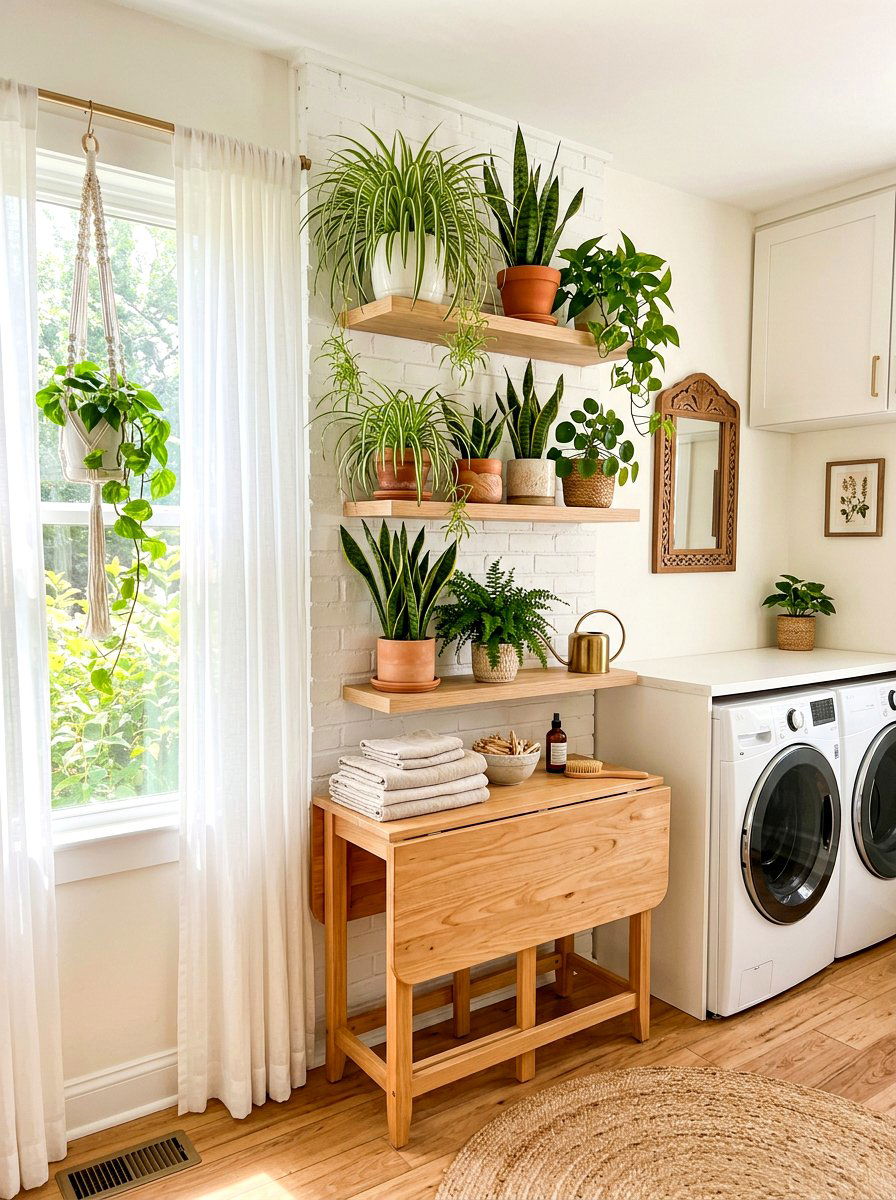
Integrating living greenery into your laundry room is a simple way to improve indoor air quality and create a vibrant, fresh atmosphere. Many houseplants, such as spider plants or peace lilies, are known for their ability to filter toxins out of the air, which is especially helpful in a room where detergents are used. Placing a few potted plants on open shelves or hanging them from the ceiling adds a pop of natural color against a neutral backdrop. Plants also help regulate humidity levels in the room. This natural decor choice makes the space feel more like an extension of your living area rather than a hidden chore room.
14. Recycled glass tile backsplash
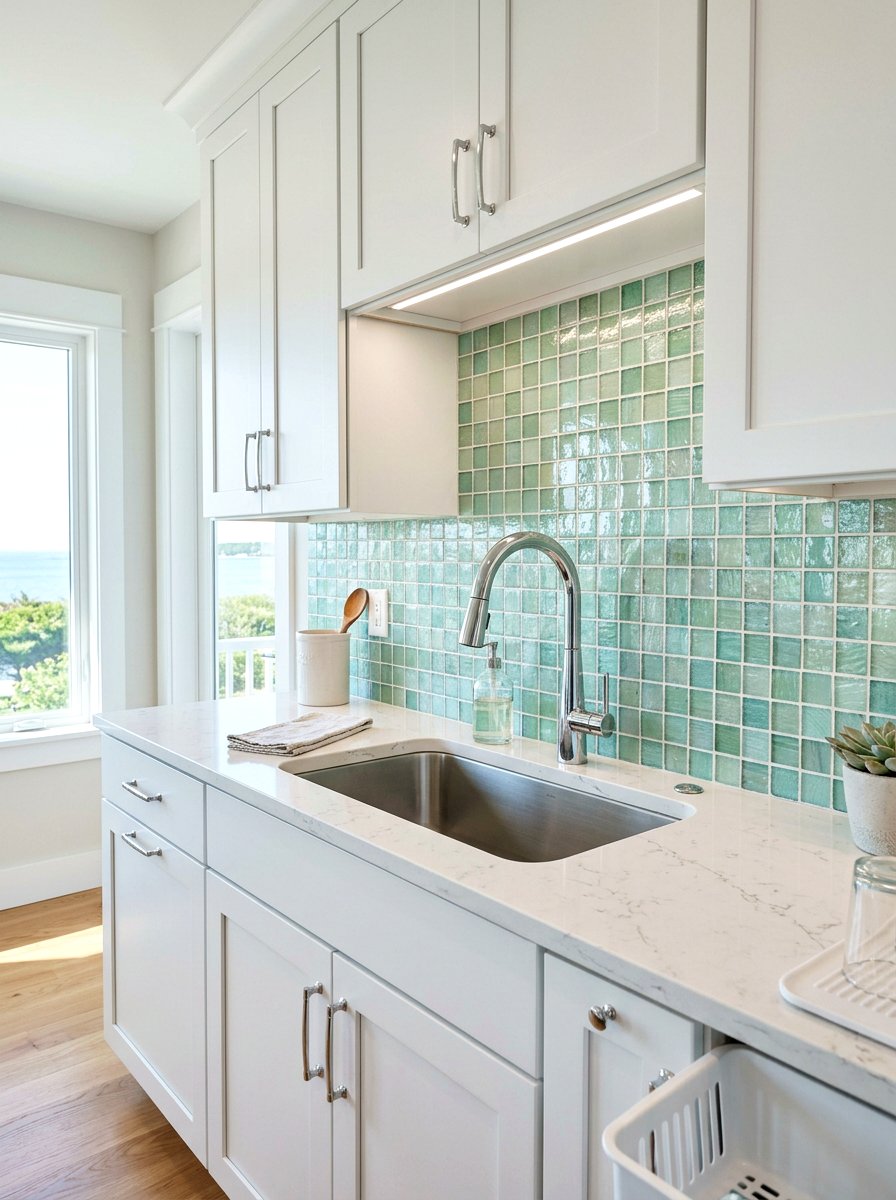
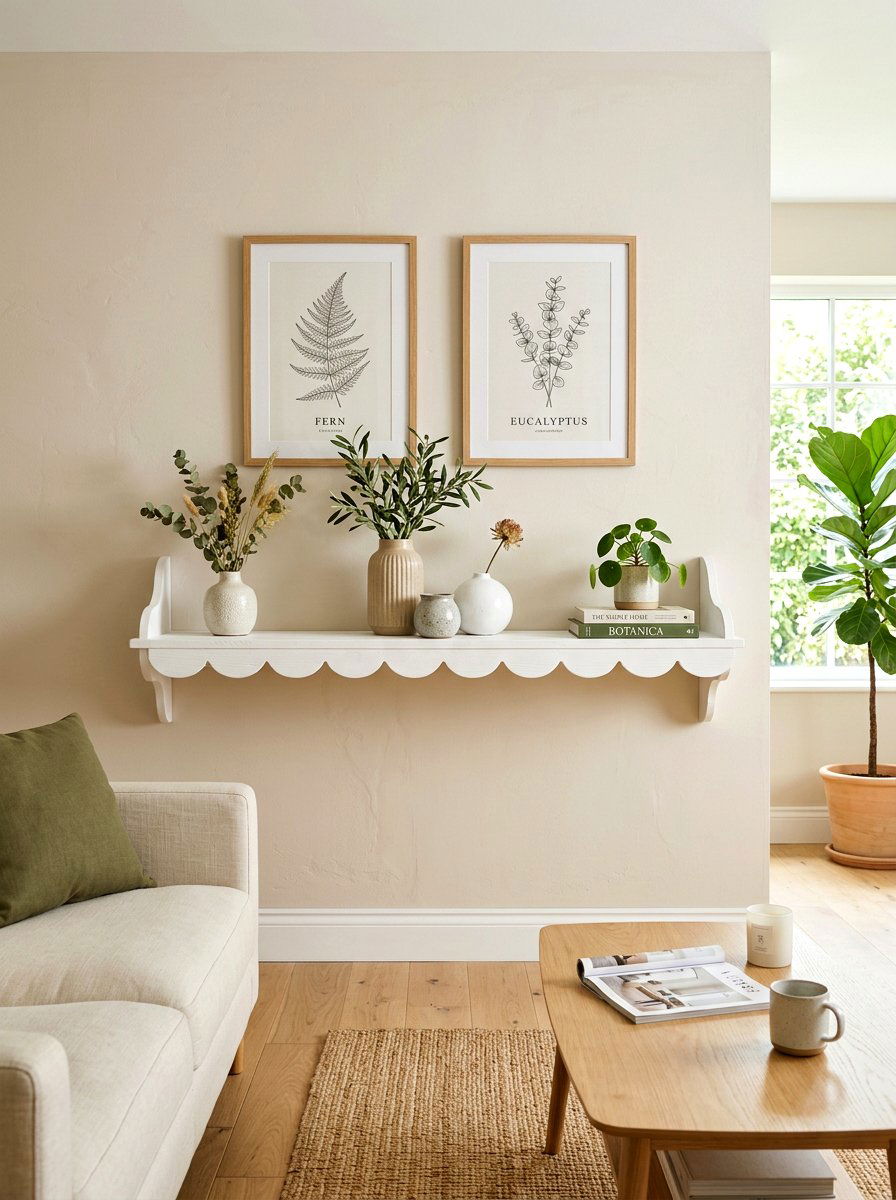
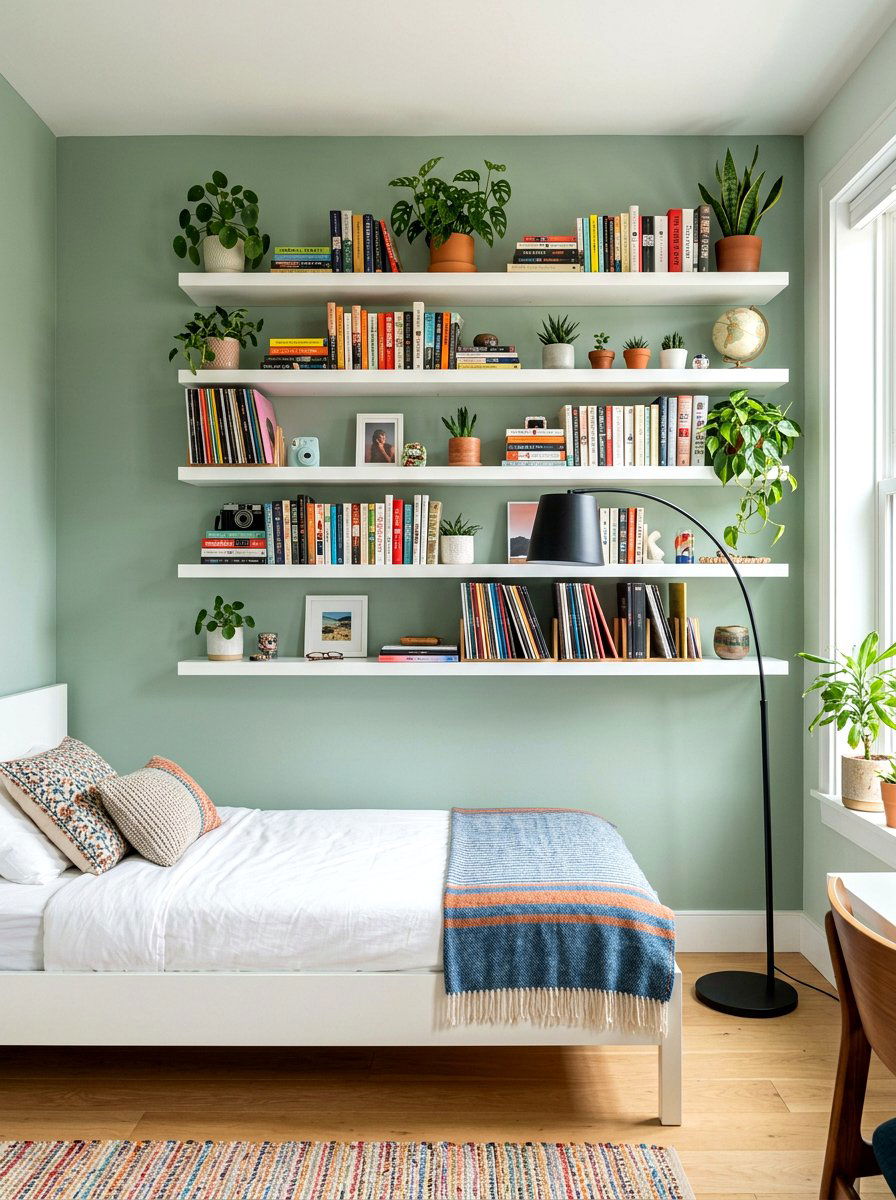
A backsplash is a perfect opportunity to use recycled materials to create a stunning visual focal point. Recycled glass tiles are made from post-consumer or post-industrial glass, turning waste into beautiful, shimmering surfaces. These tiles are non-porous and incredibly easy to clean, making them ideal for the splash zone behind a utility sink or washing machine. They come in a variety of colors and finishes, from frosted sea glass to high-gloss iridescent shades. Using recycled glass reduces the demand for raw materials and saves energy in the manufacturing process. It’s a sustainable design choice that adds a touch of luxury and modern flair to your eco-friendly laundry space.

15. Smart water leak detector
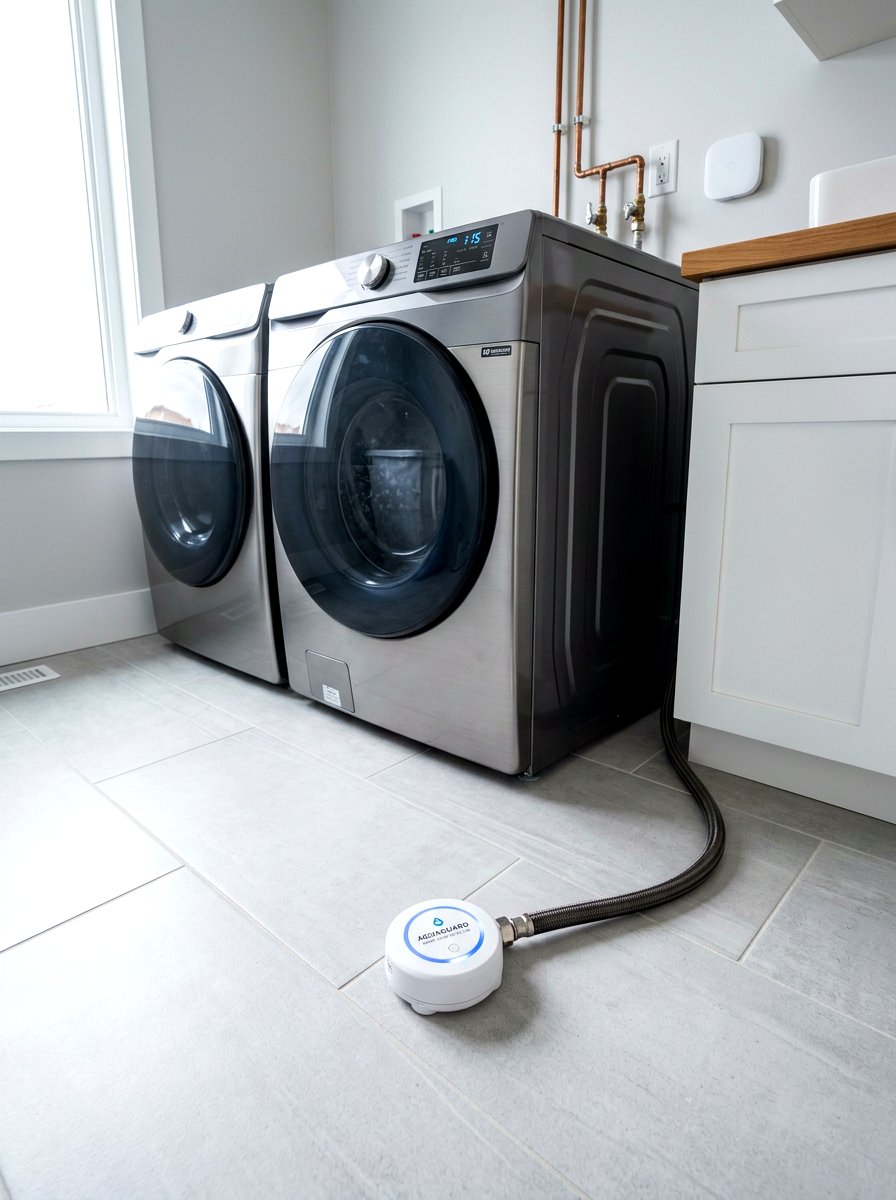
Sustainability also means protecting your home from unnecessary waste and damage. Installing a smart water leak detector under your washing machine or sink is a proactive way to prevent massive water waste. These small, unobtrusive devices connect to your Wi-Fi and send an instant alert to your smartphone the moment they detect even a tiny amount of moisture. Some advanced models can even automatically shut off the main water valve to prevent flooding. By catching leaks early, you save gallons of water and avoid the environmental cost of repairing water-damaged walls or flooring. It is a high-tech safety net that ensures your laundry room remains efficient and secure.
16. Wall mounted folding drying rack
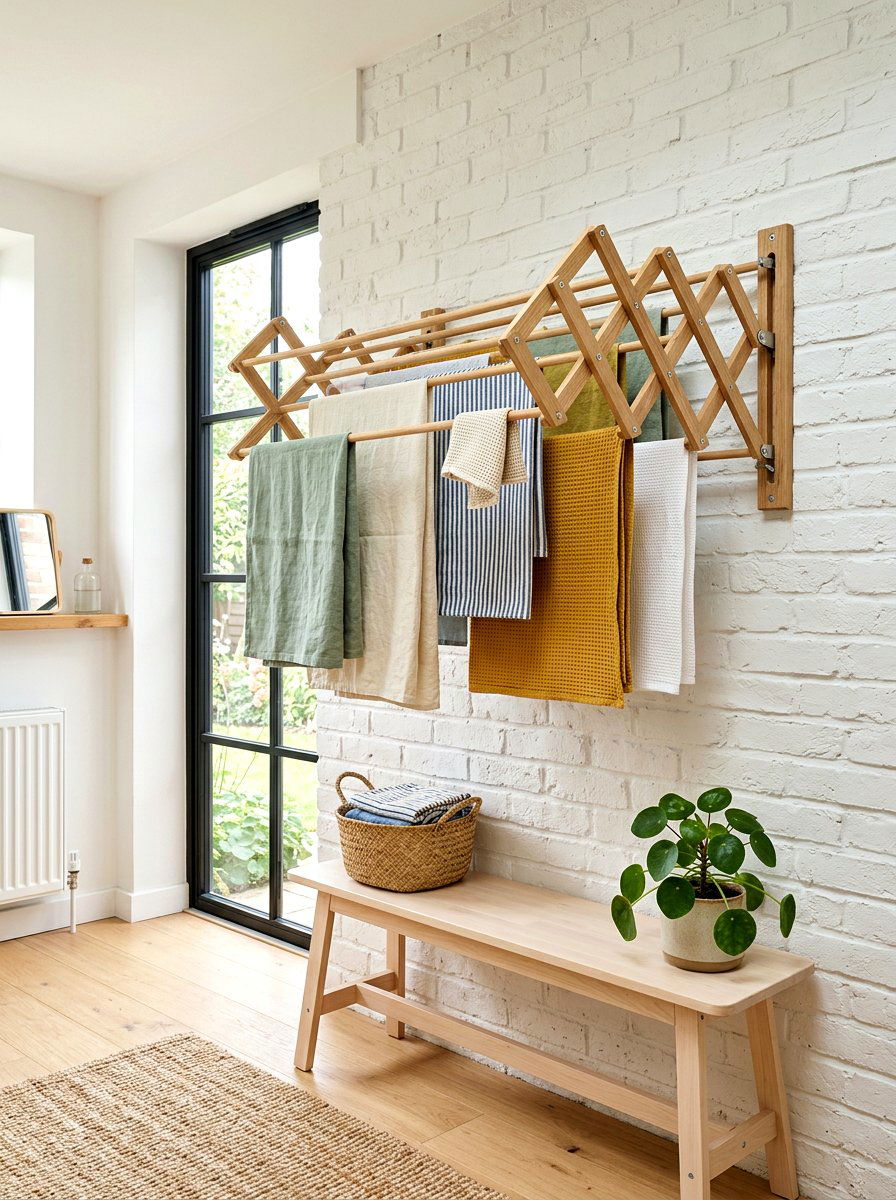
For those with limited square footage, a wall-mounted folding rack is a space-saving and energy-efficient essential. These racks remain flat against the wall when not in use, maintaining a clutter-free look. When it’s time to dry clothes, they easily pull out or fold down to provide multiple rungs for hanging garments. Made from sustainable materials like wood or durable stainless steel, these racks offer a long-lasting alternative to flimsy plastic dryers. Air-drying your clothes this way is completely free and much better for the longevity of your wardrobe. It’s a functional design element that perfectly illustrates how small, thoughtful changes can have a big impact on your home’s overall sustainability.
17. Quartz laundry room countertop
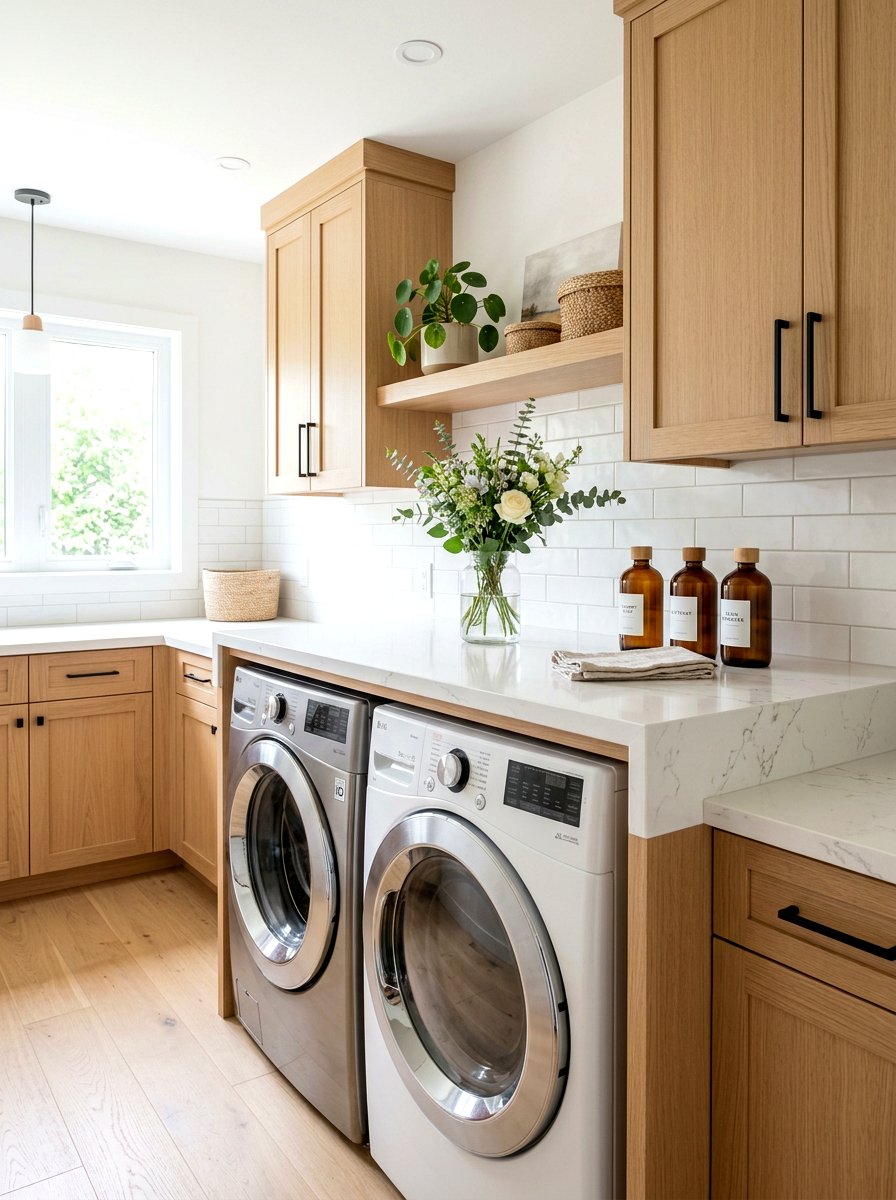
When selecting a surface for folding clothes, quartz is an excellent eco-friendly option that combines durability with style. High-quality quartz countertops are often made using recycled stone materials and resin, making them a more sustainable choice than some natural stones that require extensive quarrying. Quartz is incredibly hard, non-porous, and resistant to stains and scratches, ensuring it will last for a lifetime without needing replacement. This longevity is key to a sustainable home. The smooth, easy-to-clean surface is perfect for a laundry room, providing a hygienic area to sort and fold clean linens. Its sleek, modern appearance elevates the room's design while supporting an environmentally conscious lifestyle.
18. Rattan laundry storage baskets
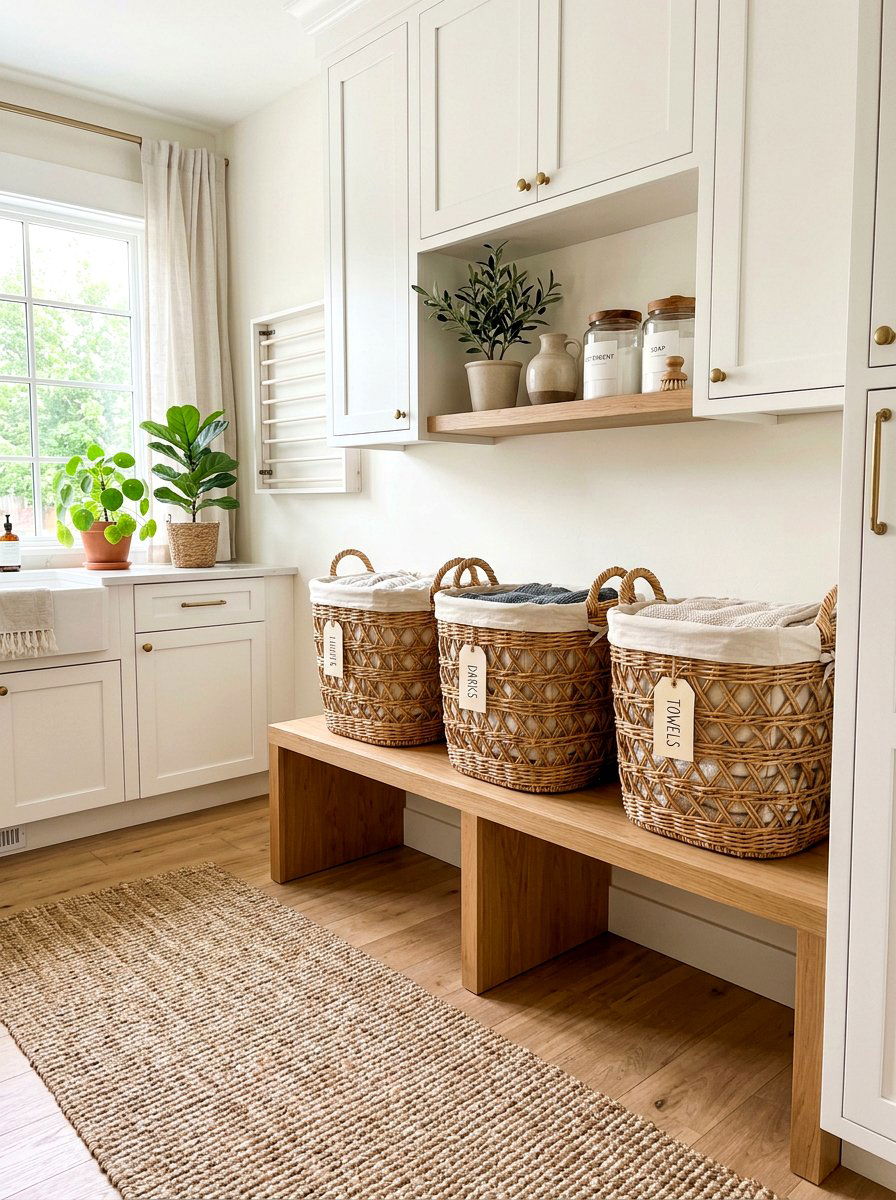
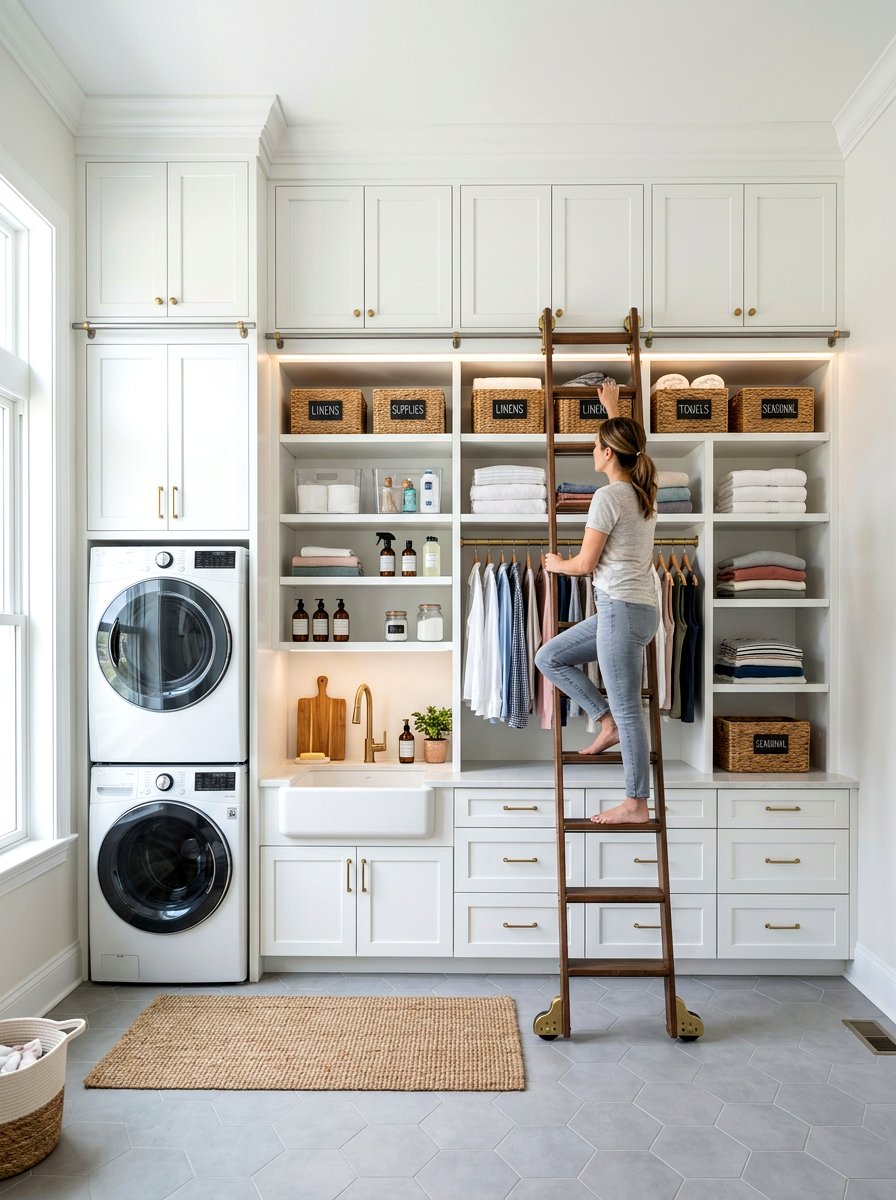
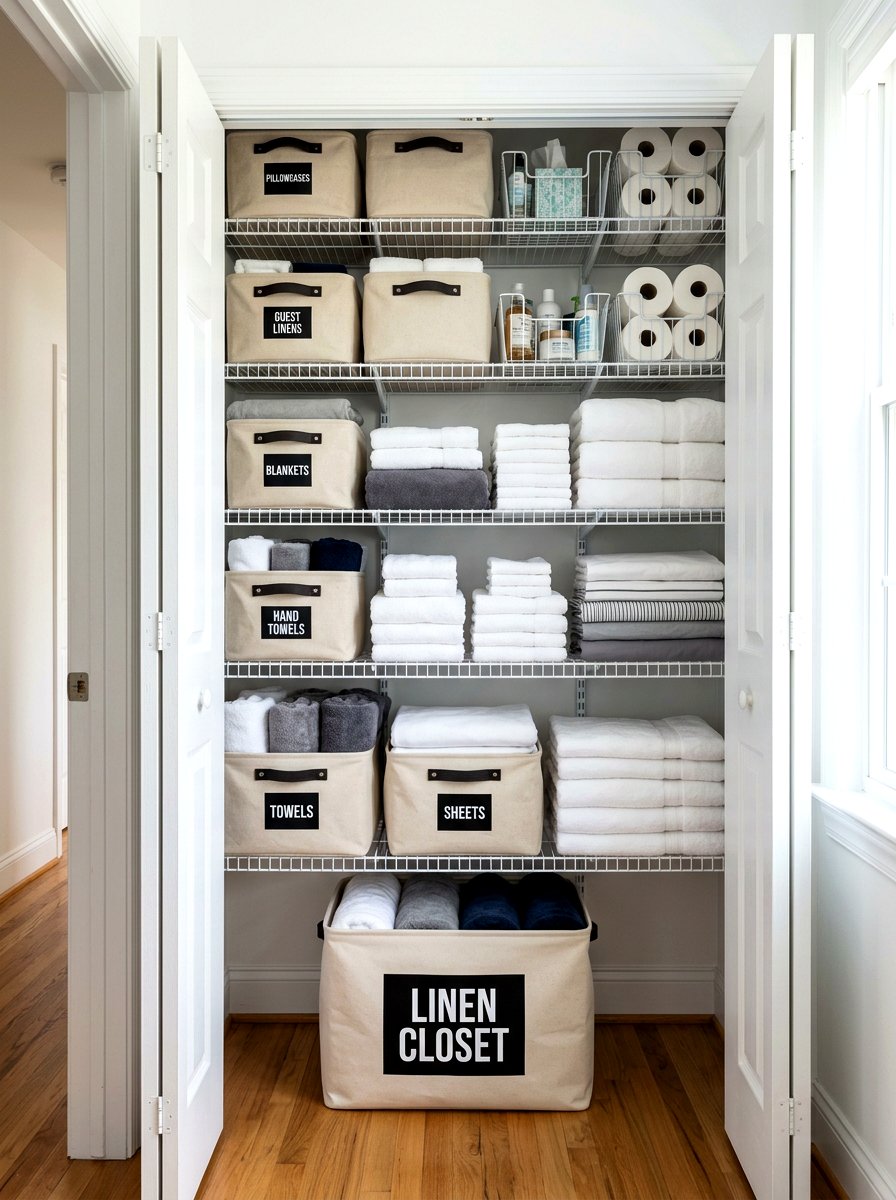
Natural textures are a staple of eco-friendly design, and rattan baskets are both functional and beautiful storage solutions. Rattan is a renewable, biodegradable material that adds a warm, bohemian touch to your laundry room shelving. These breathable baskets are perfect for organizing clean towels, sorting different types of laundry, or hiding miscellaneous supplies. Unlike plastic bins, rattan is durable and ages gracefully, fitting into various design styles from coastal to modern farmhouse. Using natural woven materials connects the room to nature and reduces the presence of synthetic materials in your home. They provide a sturdy, lightweight way to keep your utility space organized and visually appealing for years.
19. Water saving laundry faucet
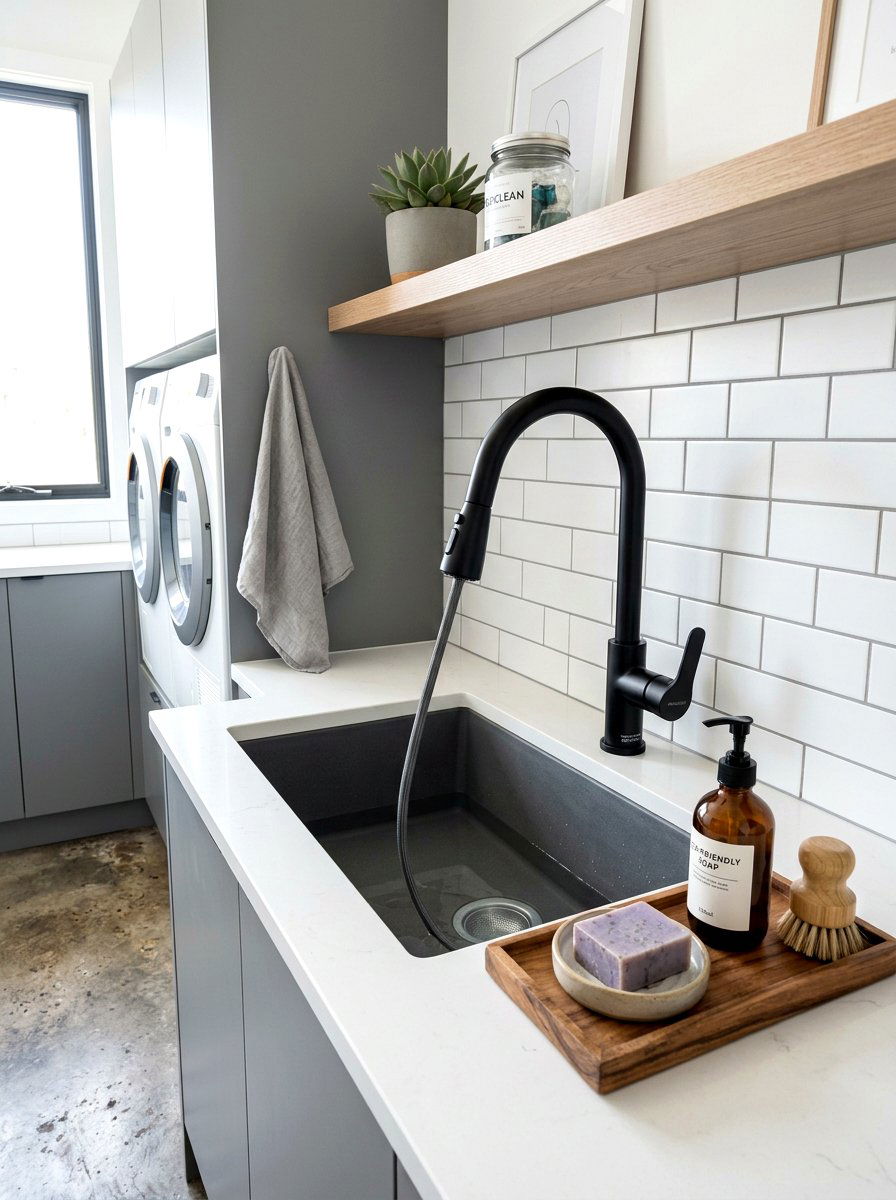
Every drop counts when you are aiming for a truly green home. Replacing a standard utility faucet with a high-efficiency, water-saving model can significantly reduce your daily consumption. Look for faucets with a high-performance aerator that maintains strong pressure while using less water. Many modern eco-faucets also include pull-down sprayers, which make it easier to rinse out the sink or pre-treat stains efficiently without wasting water. Choosing a durable finish like brushed nickel or matte black ensures the fixture remains stylish and functional for a long time. This small mechanical upgrade is a simple way to practice water conservation every time you use your laundry room’s utility sink.
20. Second hand laundry room furniture
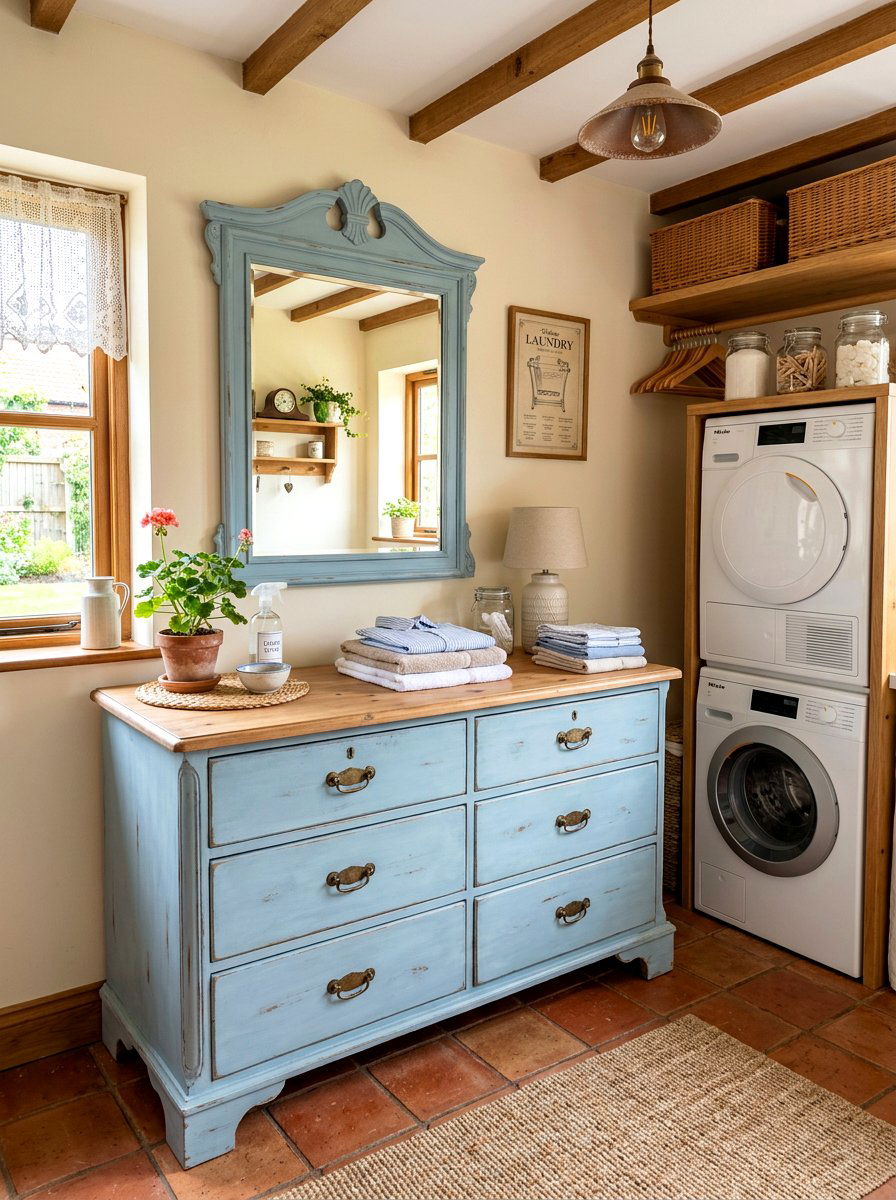
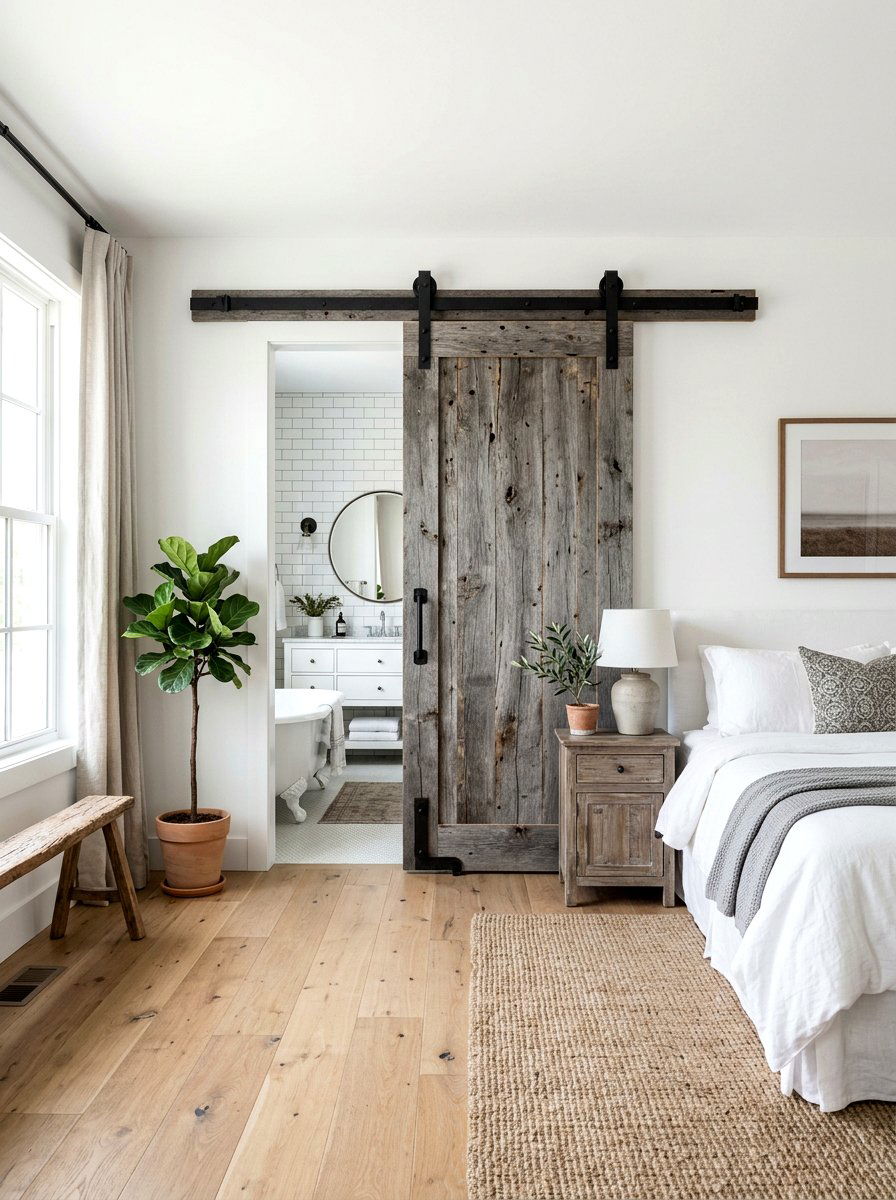
One of the most sustainable things you can do is to avoid buying new whenever possible. Furnishing your laundry room with second-hand or upcycled pieces is an excellent way to reduce waste and save money. An old wooden dresser can be repurposed into a folding station with added storage, or a vintage cabinet can be repainted with low-VOC paint to house your cleaning supplies. Shopping at thrift stores or online marketplaces keeps perfectly good furniture out of landfills and gives your space a unique, curated feel. This approach encourages creativity and ensures that your laundry room has a one-of-a-kind personality that reflects your commitment to the environment.
21. Natural fiber laundry rug
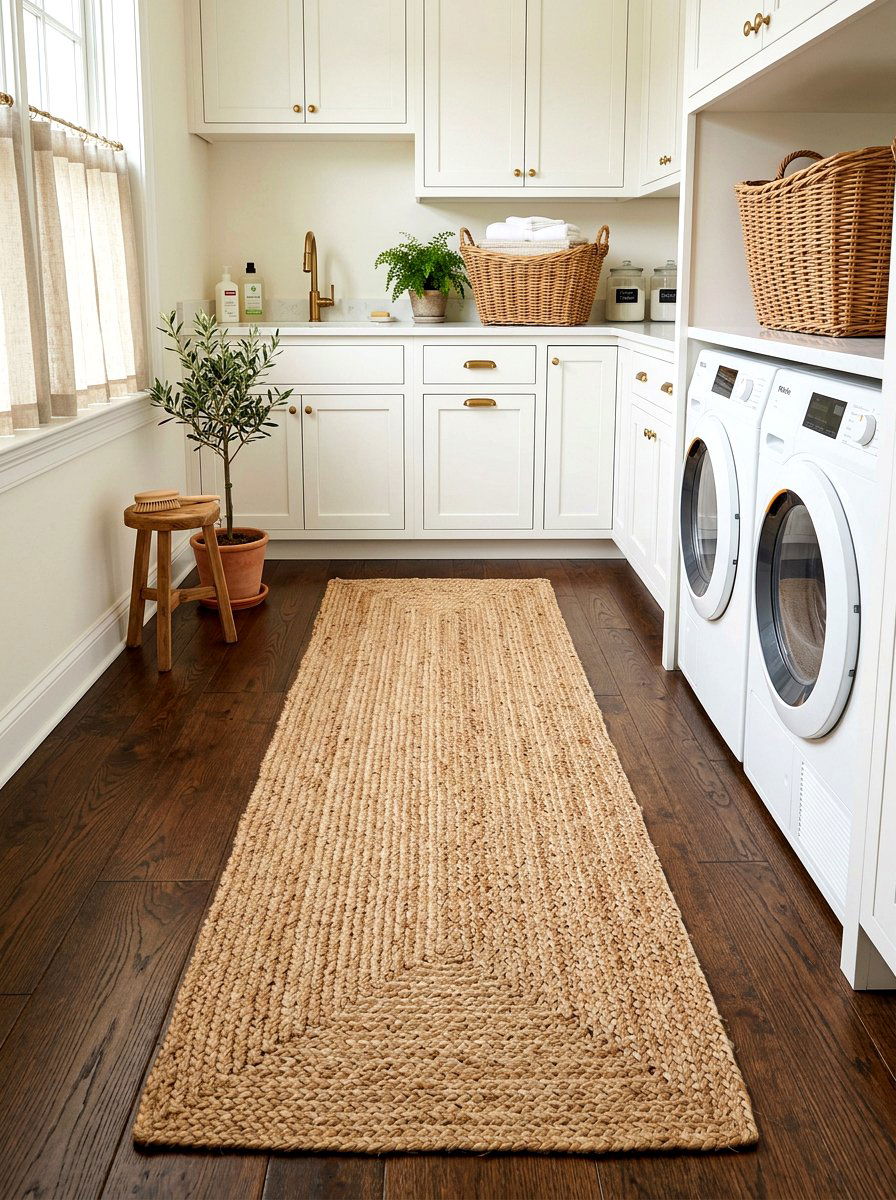
Adding a rug to your laundry room can make the space feel much more inviting and comfortable. To stay eco-friendly, choose a rug made from natural, renewable fibers like jute, sisal, or organic cotton. These materials are biodegradable and often produced with fewer chemicals than synthetic nylon or polyester rugs. A jute runner provides a durable, textured surface that can handle high foot traffic and adds a grounded, earthy feel to the room. These natural rugs are also easier on indoor air quality since they don't release the same synthetic odors as plastic-backed carpets. It is a simple way to introduce warmth and style while maintaining a commitment to sustainable living.
22. Open shelving laundry organization
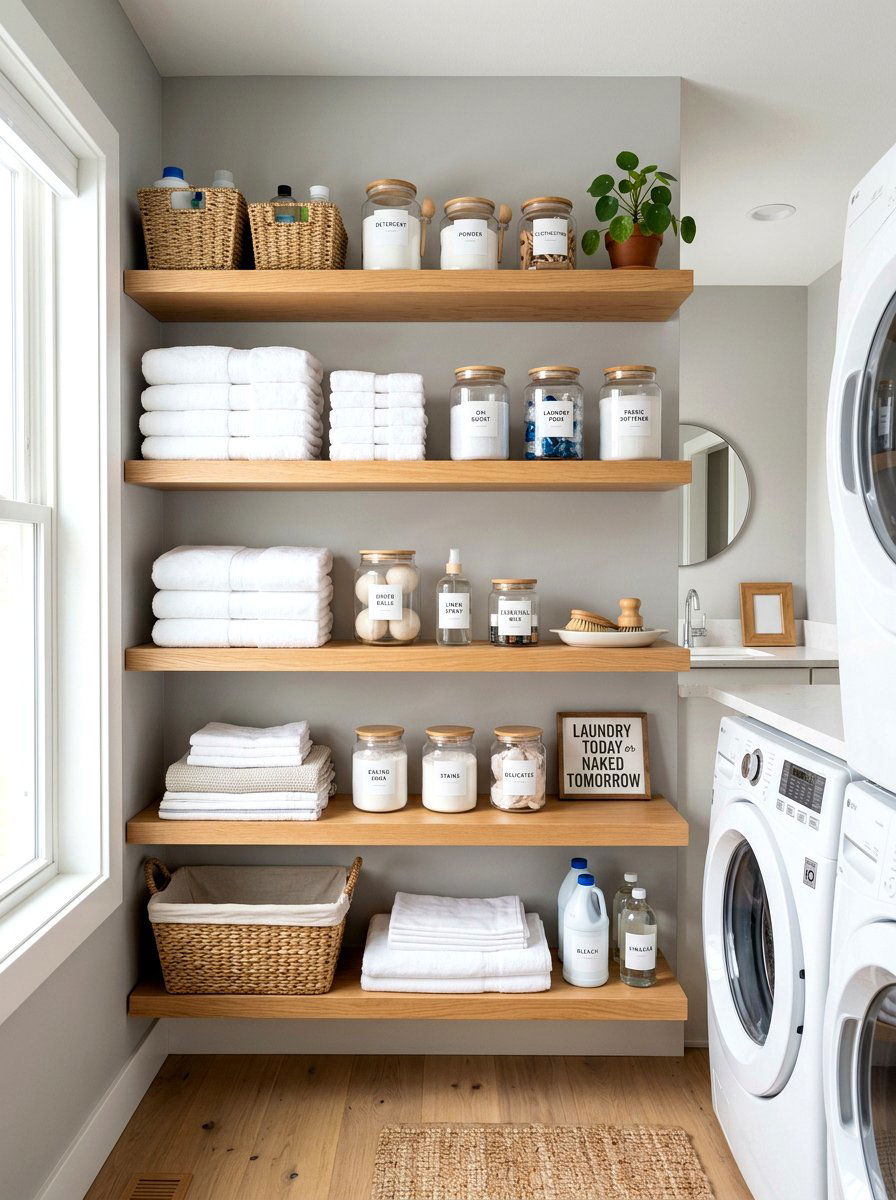
Open shelving made from FSC-certified wood or reclaimed timber is a popular eco-friendly design trend that promotes transparency and organization. By displaying your supplies openly, you are more likely to keep only what you truly need, reducing household clutter. This layout also encourages the use of attractive, sustainable containers like glass jars and wooden boxes. Open shelves allow for better airflow throughout the room, which helps prevent moisture buildup. They make the space feel larger and more accessible, as everything is within easy reach. This minimalist approach to storage emphasizes quality over quantity and highlights the beautiful, natural materials that make up your sustainable laundry room design.
23. Heat pump clothes dryer
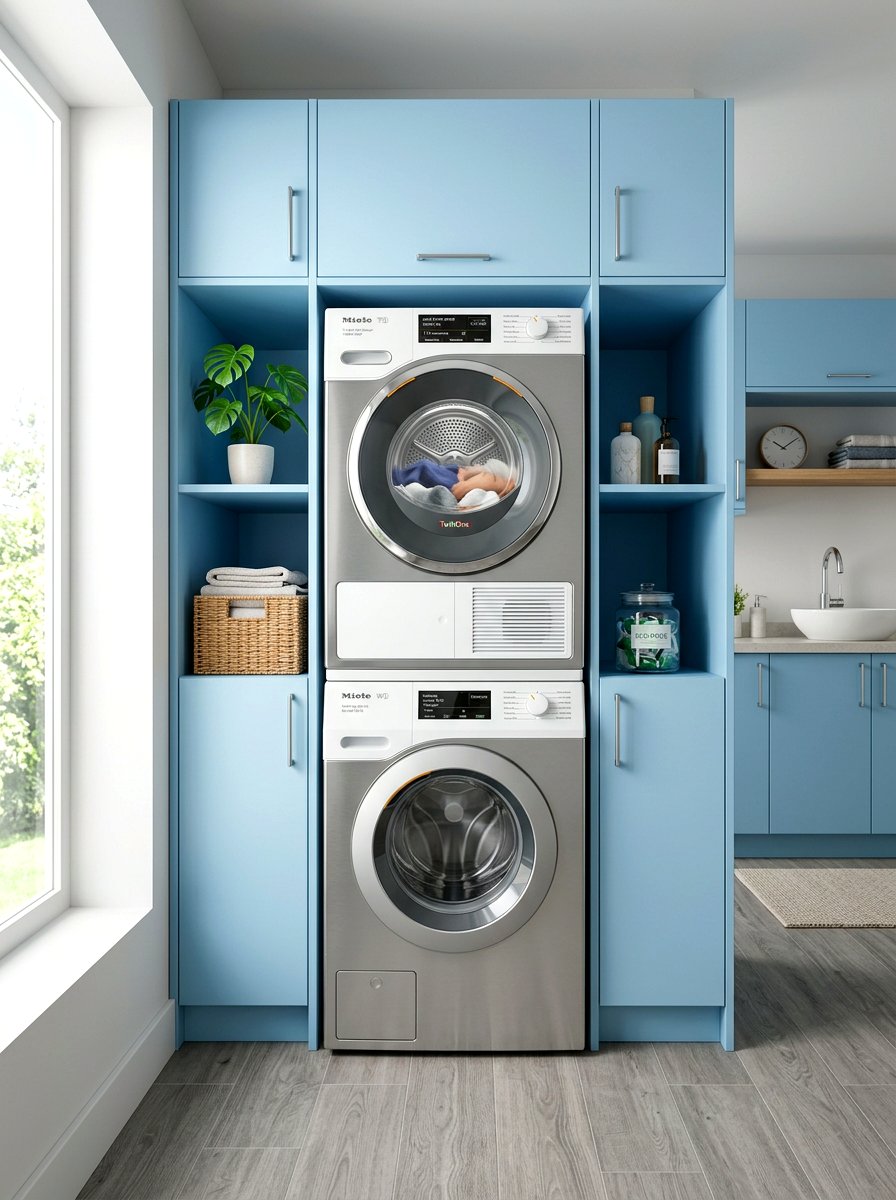
If you are looking for the absolute latest in energy-efficient appliance technology, a heat pump dryer is the ultimate choice. Unlike traditional vented dryers that blast hot air out of your house, heat pump models recycle the heat, making them up to 50% more efficient. They operate at lower temperatures, which is much gentler on your clothing and helps them last longer. Because they don't require external venting, they can be installed almost anywhere in your home, offering great flexibility for small apartments or basement laundry rooms. While they may have a higher upfront cost, the massive energy savings and reduced environmental impact make them a smart long-term investment.
24. Minimalist laundry room decor
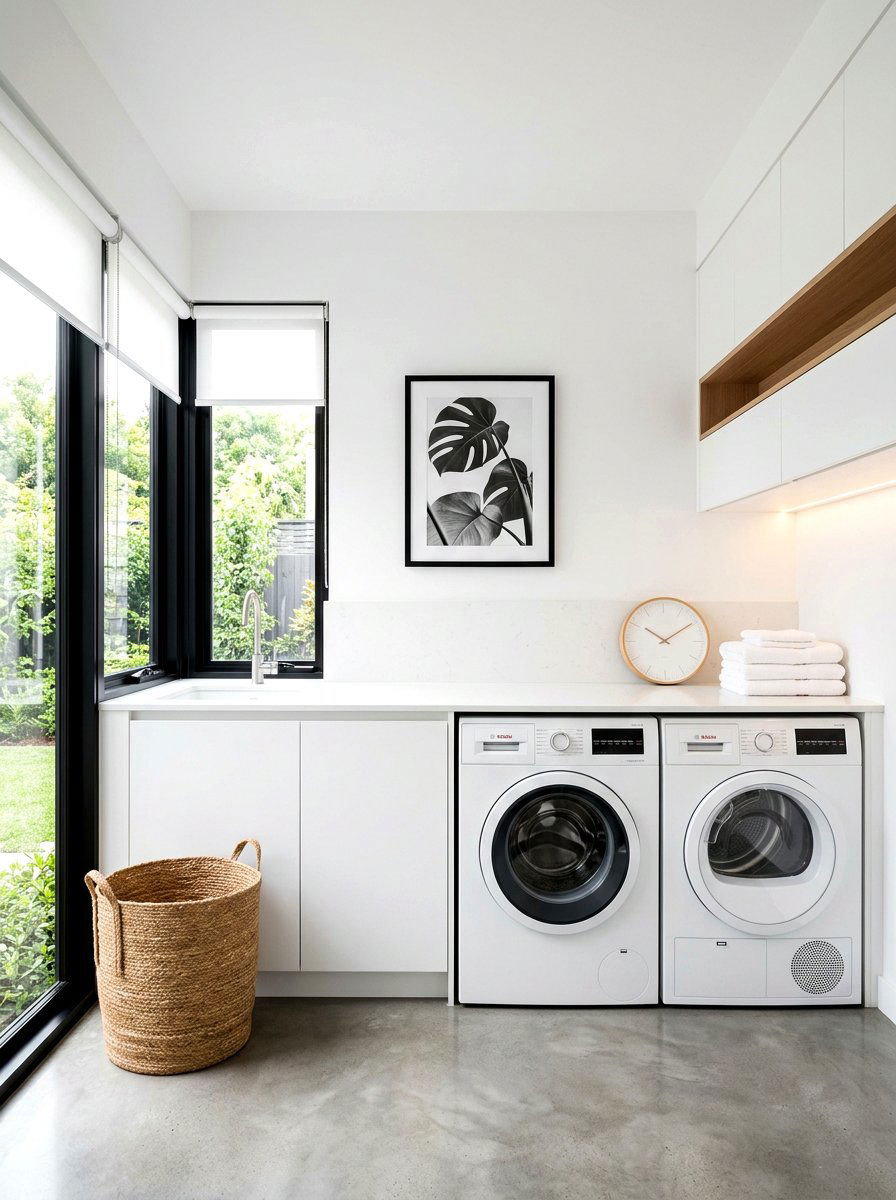
Embracing a minimalist aesthetic in your laundry room naturally aligns with eco-friendly principles. By focusing on a "less is more" philosophy, you reduce the consumption of unnecessary plastic decor and mass-produced items. Choose a few high-quality, functional pieces that serve a purpose, such as a beautiful wooden clock or a single piece of framed botanical art. Keeping surfaces clear and clutter-free makes the room easier to clean and creates a calm, focused environment for doing chores. This design direction highlights the architectural details and the beauty of the sustainable materials you've chosen, such as your bamboo cabinets or stone countertops. It’s about creating a space that feels intentional and peaceful.

25. Small compost bin for lint
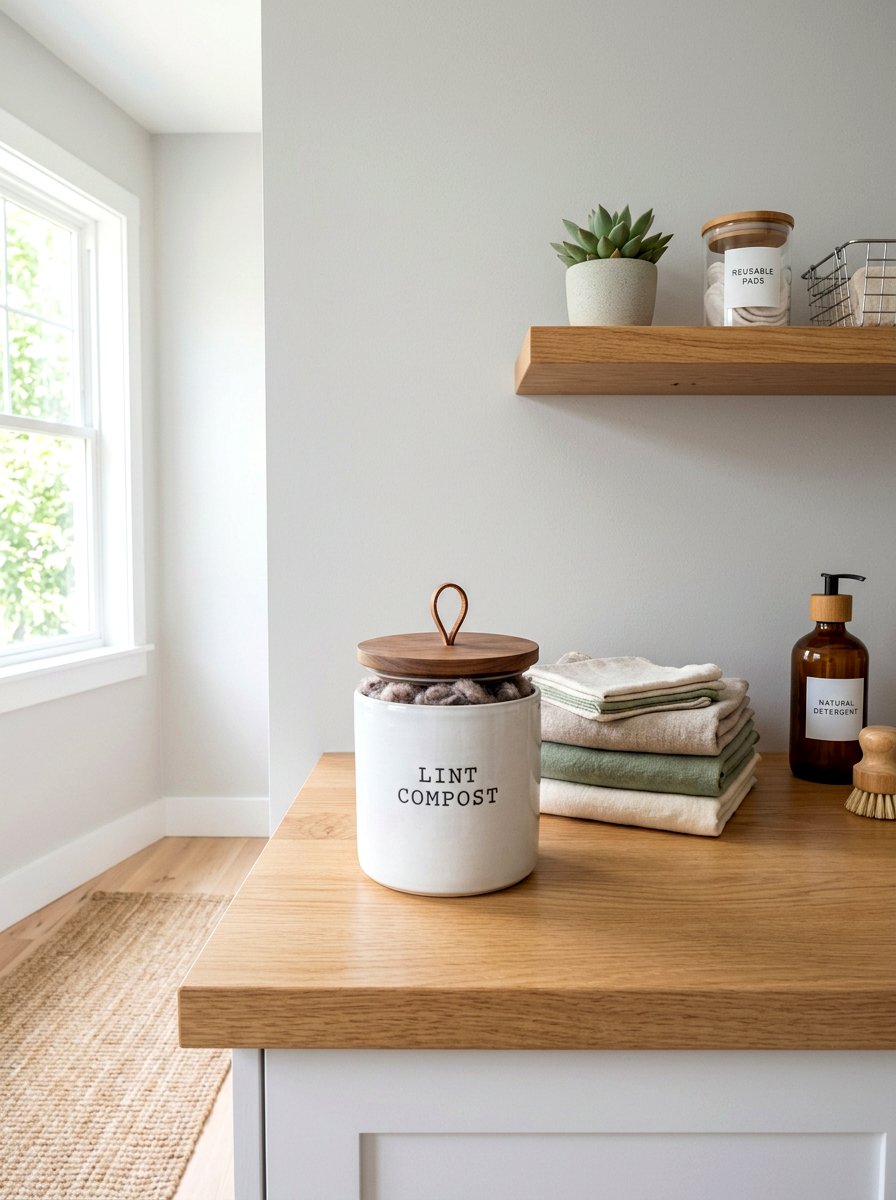
Did you know that dryer lint from natural fabrics like cotton and linen is actually compostable? Keeping a small, stylish compost bin on your laundry room counter is a creative way to reduce what goes into your trash can. Instead of tossing that handful of lint after every load, simply drop it into the bin. You can also use this bin for small bits of thread or natural fiber scraps. Just ensure you only compost lint from loads containing 100% natural materials, as synthetic fibers contain microplastics. This small habit reinforces a zero-waste lifestyle and turns a common household byproduct into something useful for your garden or local composting program.
26. Biodegradable laundry supplies display
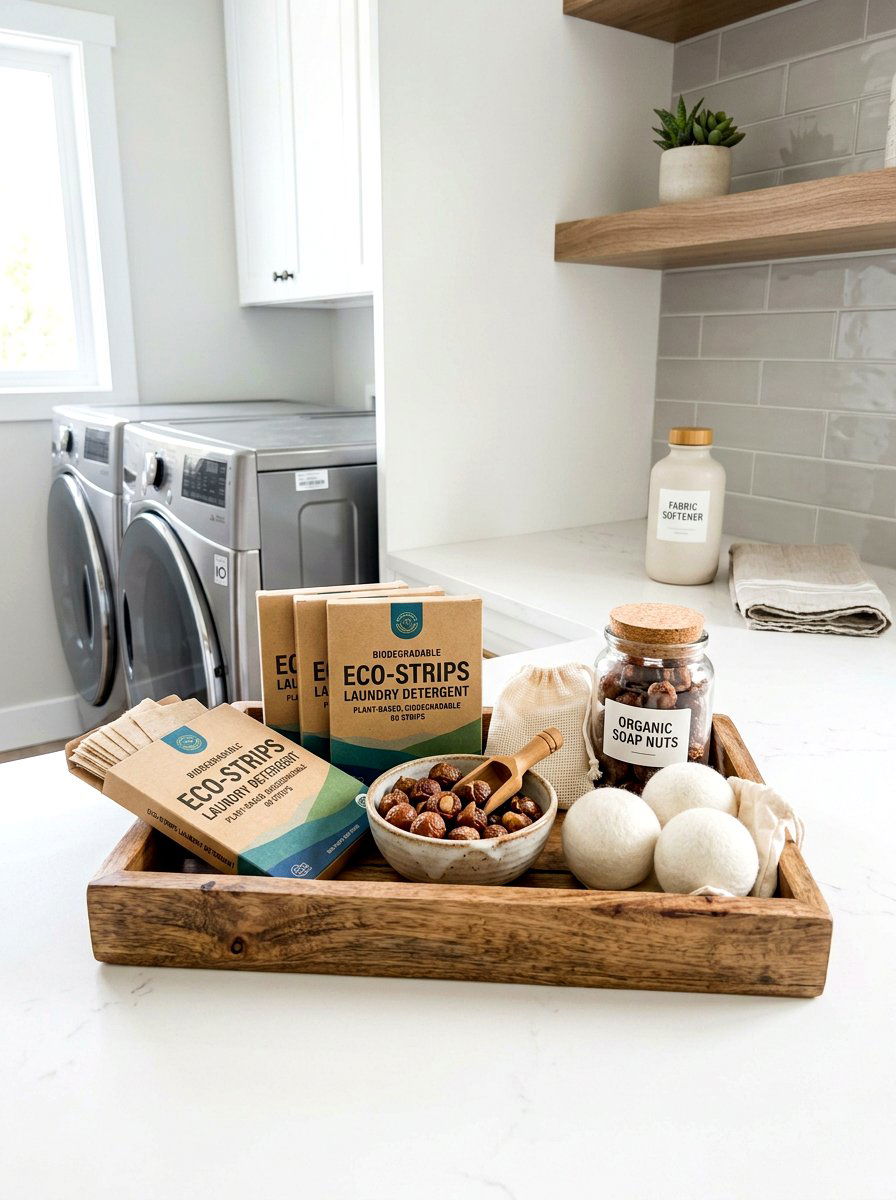
Transform your laundry routine by switching to biodegradable and plastic-free supplies, and display them as part of your decor. Look for laundry detergent strips, soap nuts, or concentrated powders that come in compostable cardboard packaging. These items are much lighter to ship, reducing the carbon footprint of your purchases. Arranging these eco-friendly products on a reclaimed wood tray or inside a ceramic bowl makes them look intentional and high-end. Moving away from heavy plastic jugs and chemical-laden liquids is better for your skin, your clothes, and the water systems. Highlighting these choices on your shelves serves as a daily reminder of your commitment to a more sustainable and healthy home.
27. Sliding laundry drying rack
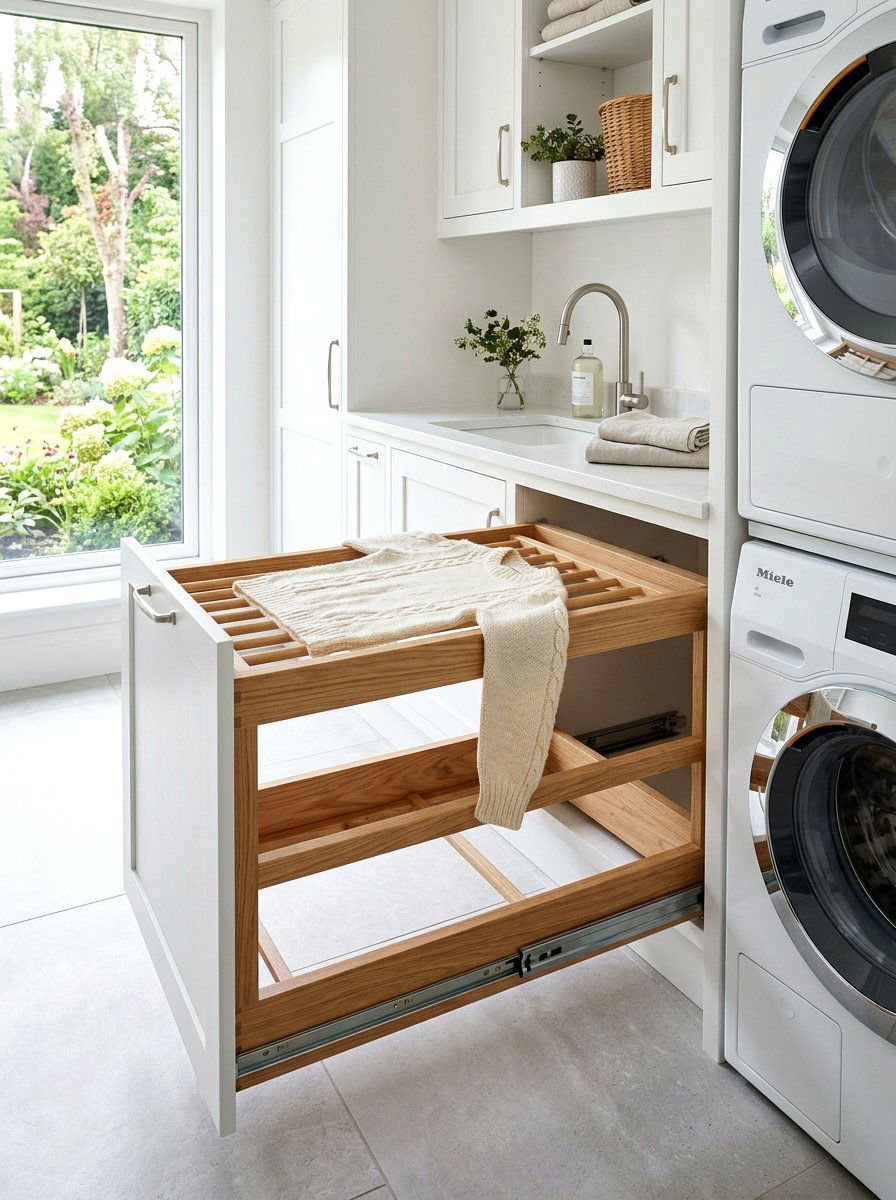
A sliding drying rack integrated into your cabinetry is a sophisticated, space-saving solution for the modern eco-friendly laundry room. These racks slide out like a drawer, providing a hidden area to flat-dry delicate sweaters or hang smaller items without taking up any permanent floor space. When you are finished, the rack simply glides back into the cabinet, leaving your room looking perfectly tidy. This feature encourages air-drying by making it incredibly convenient and out of sight. It is a custom design element that adds high-end functionality while supporting energy conservation. By building drying solutions directly into your layout, you make sustainable habits a seamless part of your daily life.
28. Vertical laundry room garden
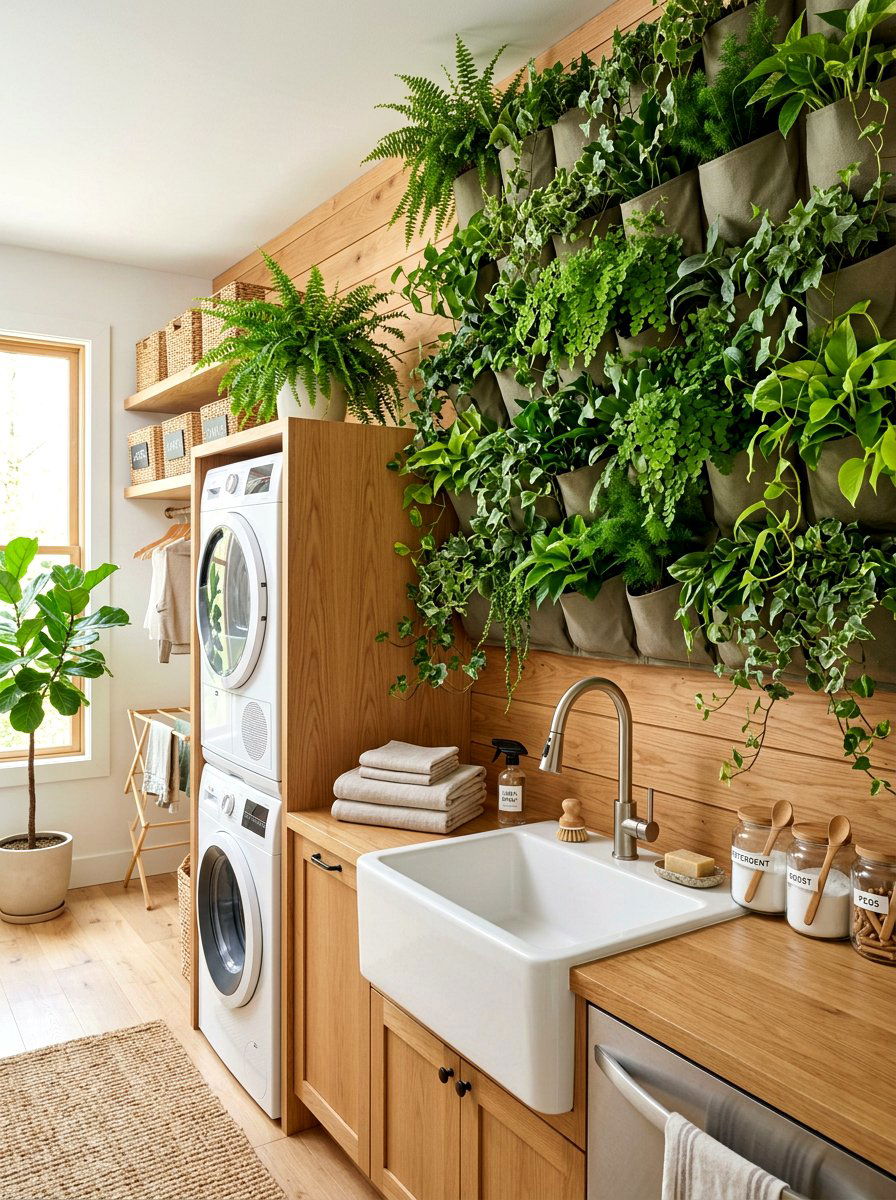
Why not use your laundry room’s humidity to your advantage by installing a vertical garden? A wall-mounted planter system can house moisture-loving plants like ferns or ivy, which thrive in the damp air of a utility space. This living wall acts as a natural air purifier, absorbing carbon dioxide and releasing fresh oxygen. It also brings a stunning, lush element of nature indoors, softening the hard surfaces of the room. A vertical garden is a brilliant use of wall space that would otherwise remain empty. It transforms a functional chore room into a vibrant, living ecosystem that makes the time you spend washing and folding feel much more connected to the earth.
29. Microplastic filter for washing machine
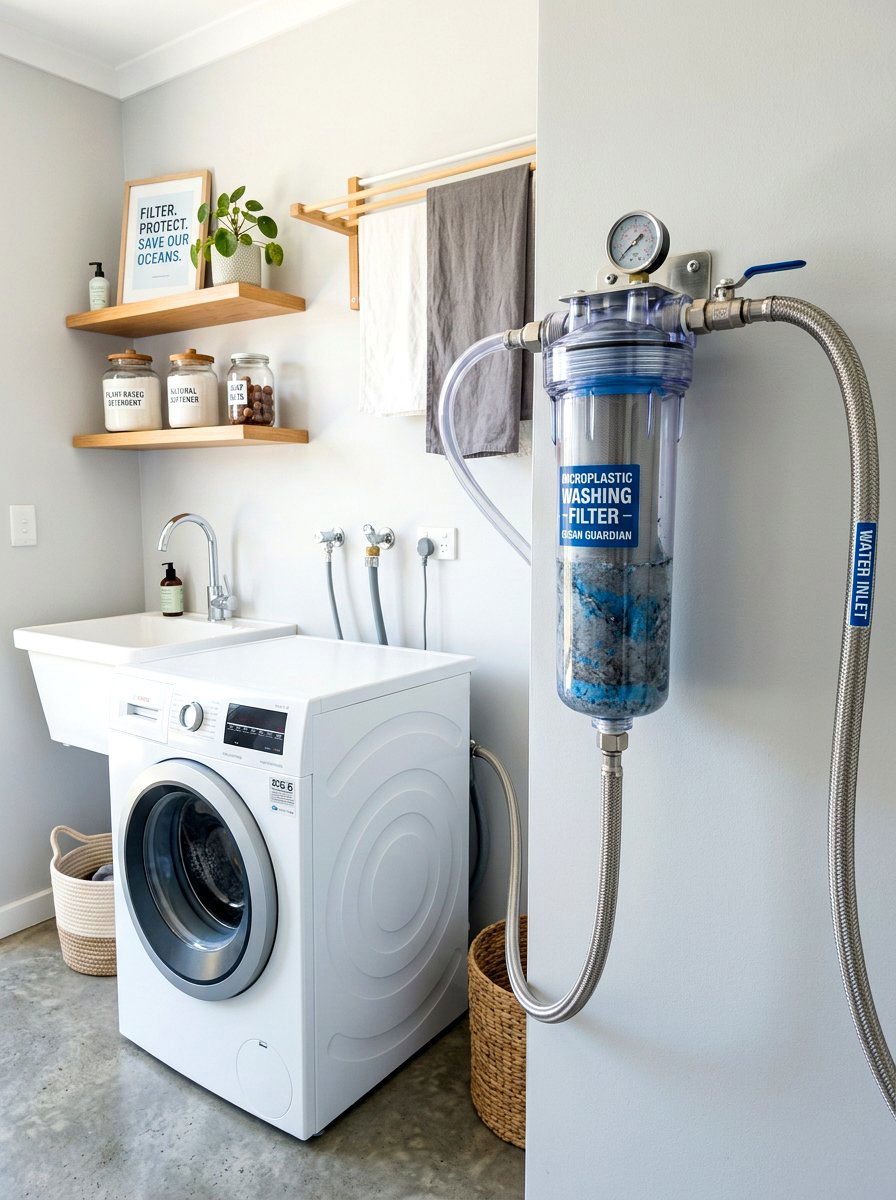
Many modern garments are made from synthetic fibers like polyester and nylon, which release tiny microplastics into the water during every wash. Installing a microplastic filter on your washing machine’s discharge hose is a powerful way to protect our oceans and waterways. These filters catch the microscopic fibers before they can enter the sewage system. It is a relatively simple addition that has a massive positive impact on the environment. Regularly cleaning the filter and disposing of the collected fibers in the trash ensures that plastic waste doesn't end up in the food chain. This technical upgrade shows a deep level of commitment to true environmental stewardship within your home.
30. Earth tone laundry room color palette
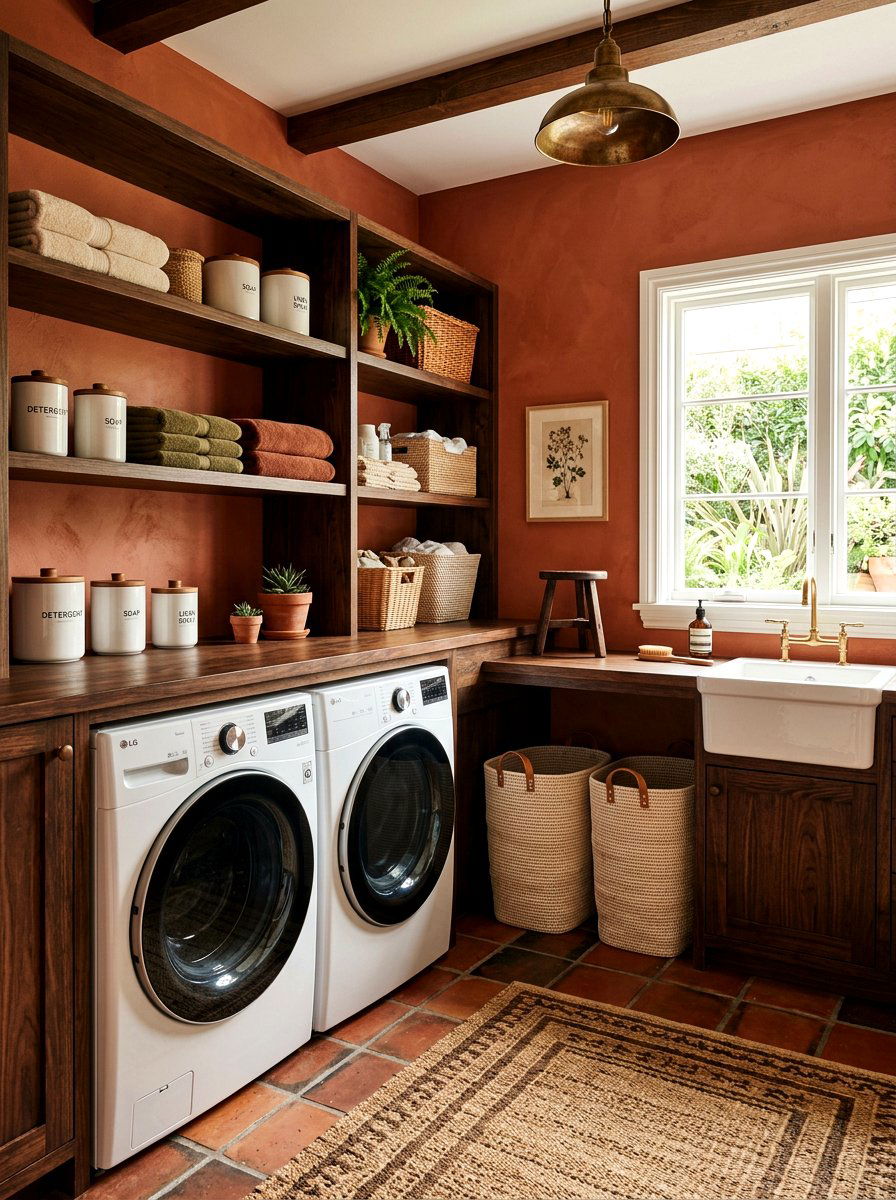
The colors you choose for your laundry room can set a calming, eco-conscious mood for the entire space. An earth-toned palette consisting of soft terracottas, muted sages, warm sands, and deep forest greens creates an immediate connection to the natural world. These colors pair beautifully with organic materials like wood, bamboo, and stone. Using natural pigments and earth tones makes the room feel warm and inviting, rather than sterile or industrial. It’s a timeless aesthetic that won't go out of style, reducing the need for frequent redecorating. This cohesive color story ties all your eco-friendly elements together, resulting in a beautiful, harmonious space that celebrates sustainable living and thoughtful design.
Conclusion:
Building an eco-friendly laundry room is an inspiring journey that proves sustainability and style can perfectly coexist. By thoughtfully selecting renewable materials, investing in high-efficiency technology, and embracing mindful organization, you create a space that respects the environment while enhancing your daily life. Every choice, from a reclaimed wood shelf to a water-saving faucet, plays a vital role in reducing waste and conserving precious resources. This transformation turns a routine chore into a more pleasant experience within a healthy, beautiful environment. Ultimately, a sustainable laundry room serves as a powerful testament to your commitment to a greener future, showing that every small change makes a difference.

Related posts: