Creating a workspace that prioritizes sustainability is more than just a trend; it is a lifestyle choice that benefits both the planet and your wallet. As remote work becomes a permanent fixture for many professionals, the need for an energy-efficient home office has skyrocketed. You can easily transform a standard spare room into a high-functioning, eco-friendly sanctuary without sacrificing style or comfort. This transition involves choosing the right materials, optimizing natural resources, and integrating smart technology. By focusing on energy conservation, you create a healthier environment that boosts productivity while significantly reducing your monthly utility bills. Let’s explore various ways to build a truly green workspace today.
1. Natural Light Home Office Layout
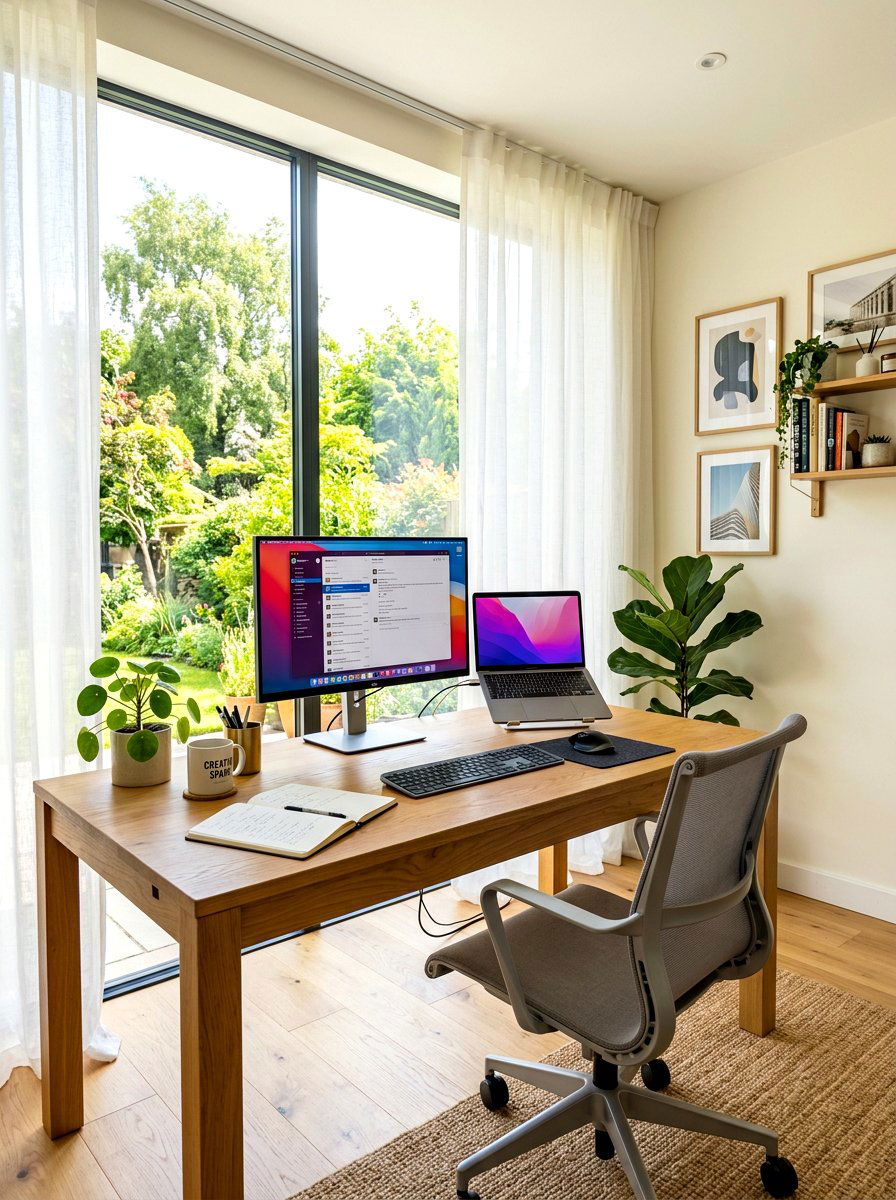
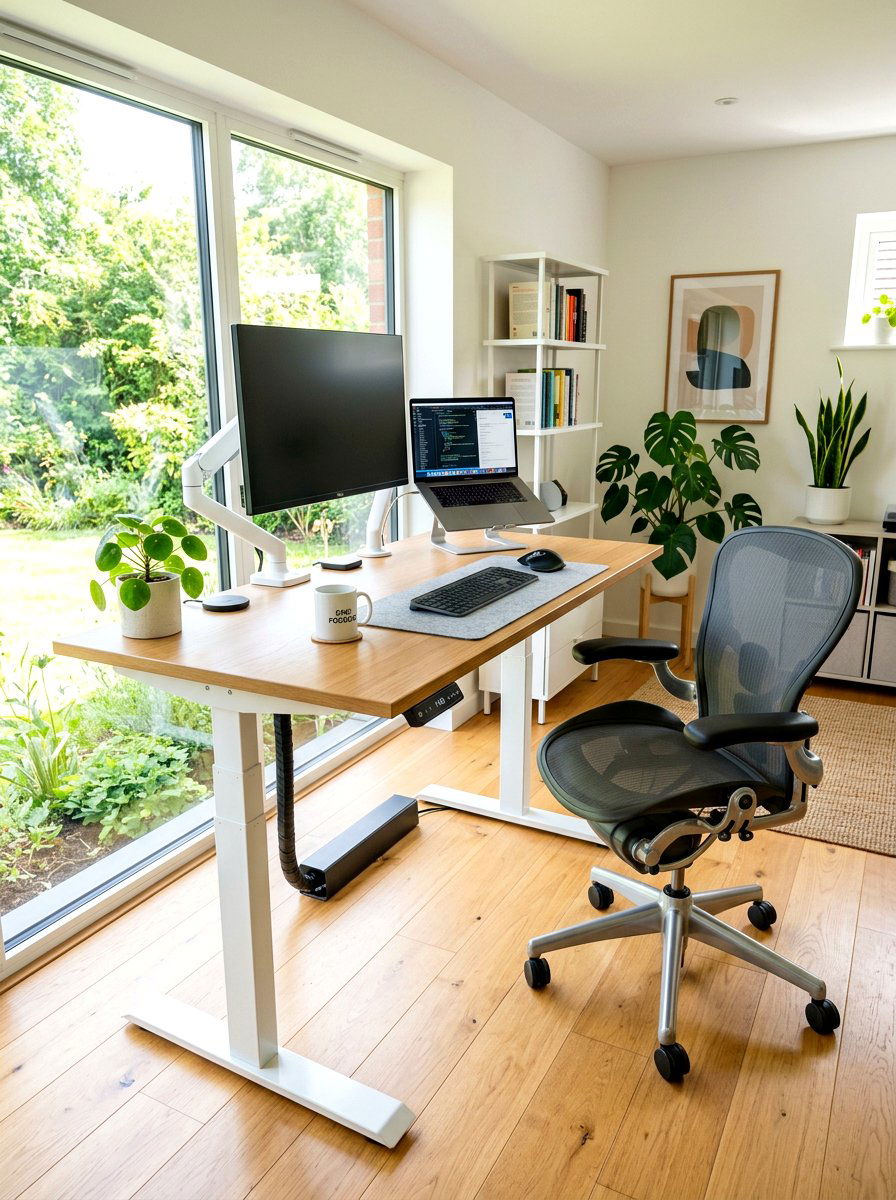
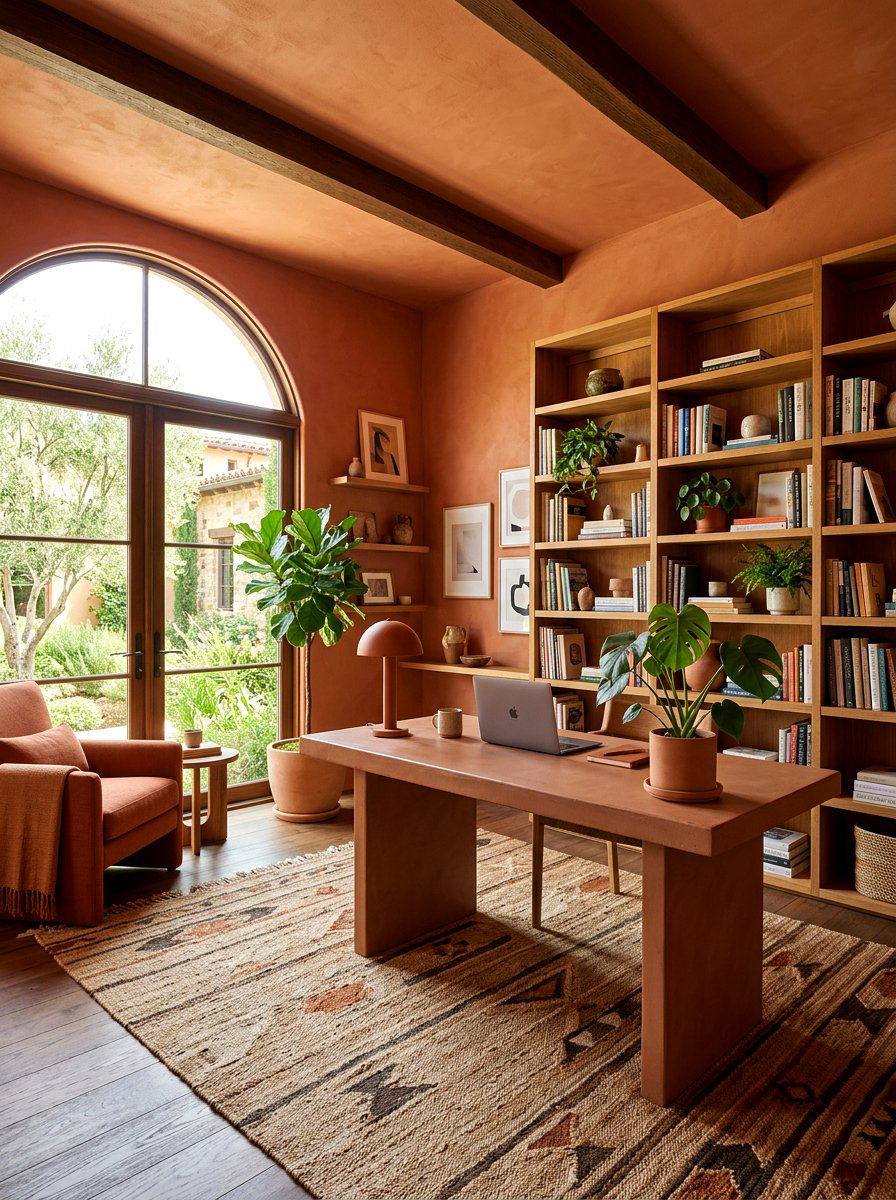
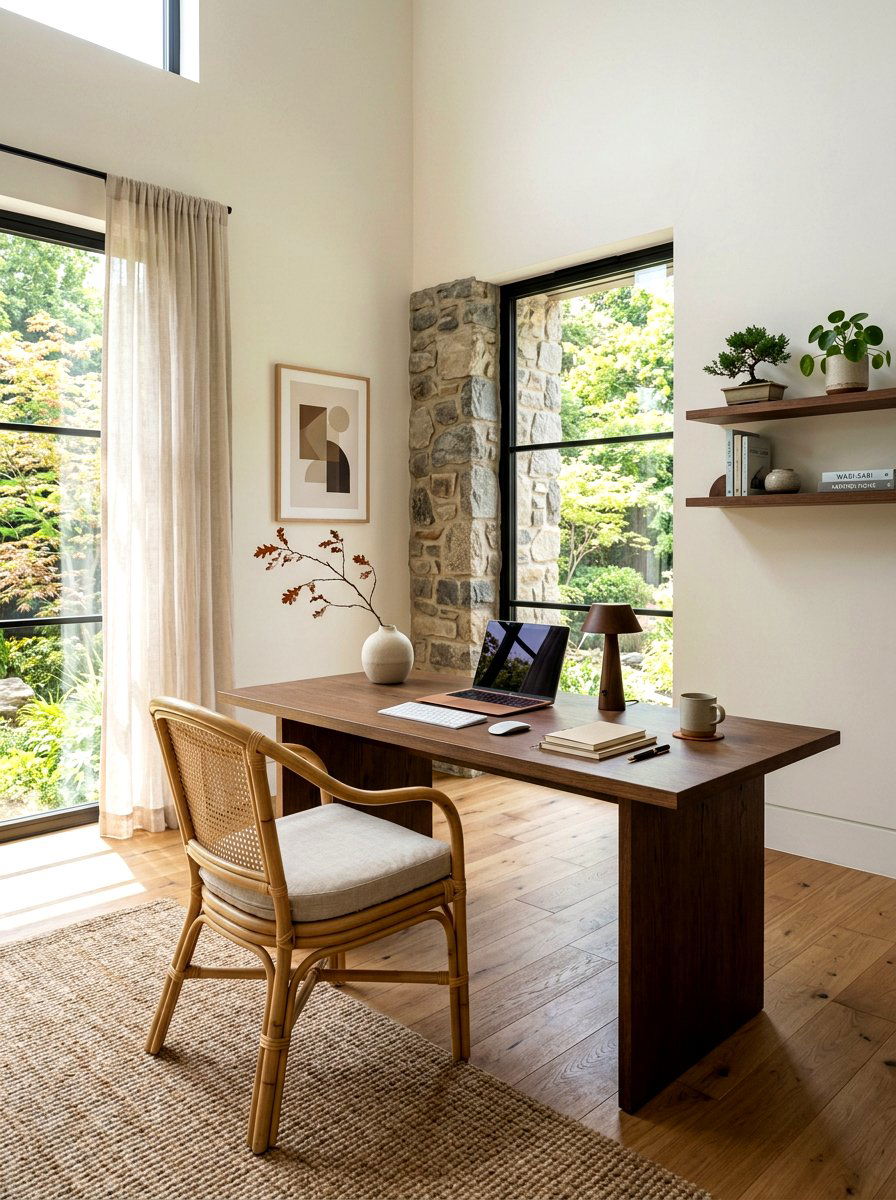
A workspace centered around natural illumination reduces the need for artificial bulbs and lowers electricity consumption. By positioning your desk directly in front of or perpendicular to a large window, you maximize daylight hours and boost your overall mood. This design strategy utilizes the sun as a primary light source, which is perfect for video calls and detailed tasks. To prevent glare on your monitor, use sheer linen curtains that diffuse the light without blocking it entirely. Integrating light-colored furniture and mirrors can further bounce the sun's rays around the room, creating an airy, bright, and highly productive atmosphere that feels connected to the outdoors.
2. Solar Powered Home Office
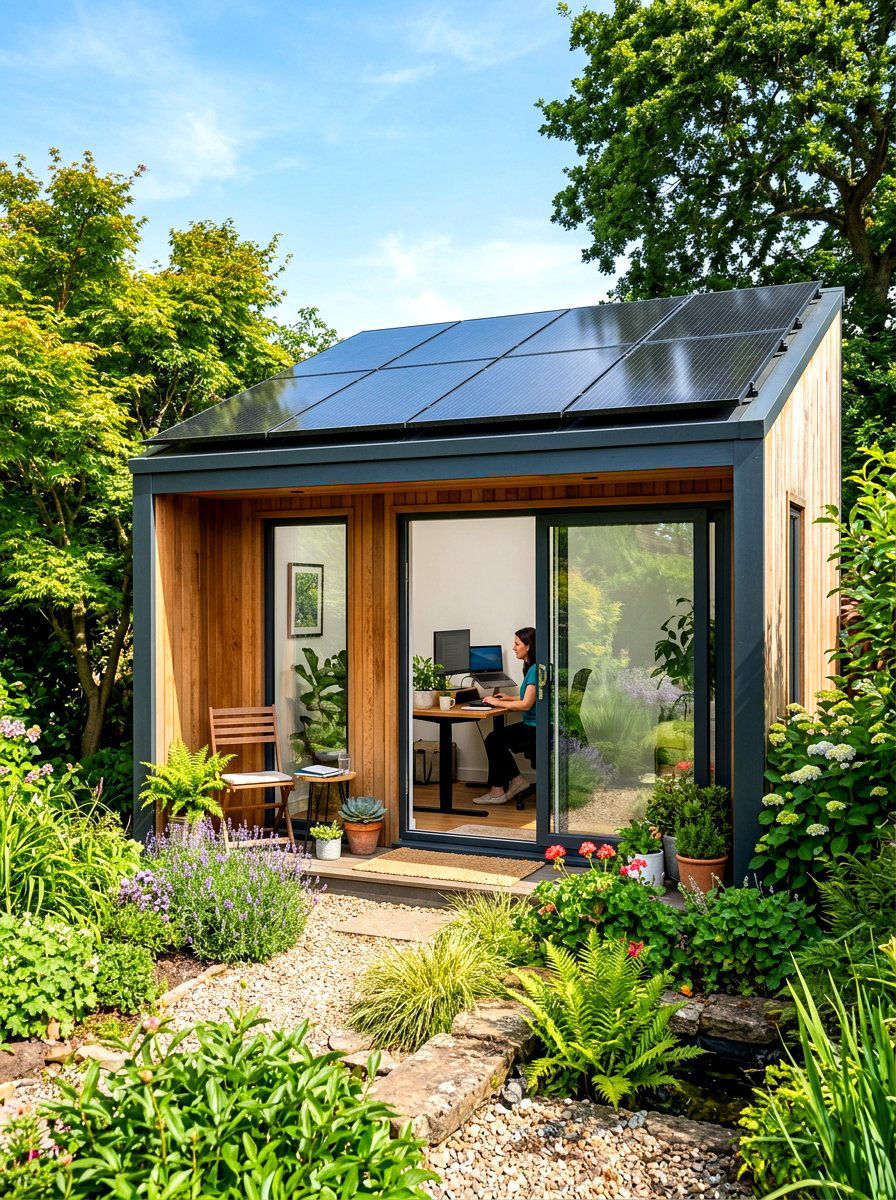
Harnessing renewable energy through dedicated solar panels can make your workspace entirely self-sufficient and carbon-neutral. You can install small-scale solar kits specifically for your office equipment or utilize portable solar generators that sit on a sunny balcony or windowsill. This setup allows you to charge laptops, tablets, and smartphones using clean energy harvested throughout the day. A solar-powered office often features high-tech battery storage units that keep your gear running even after the sun goes down. This approach not only slashes your utility costs but also provides a reliable power backup during local outages, ensuring your workflow remains completely uninterrupted and eco-friendly.
3. Energy Efficient LED Lighting
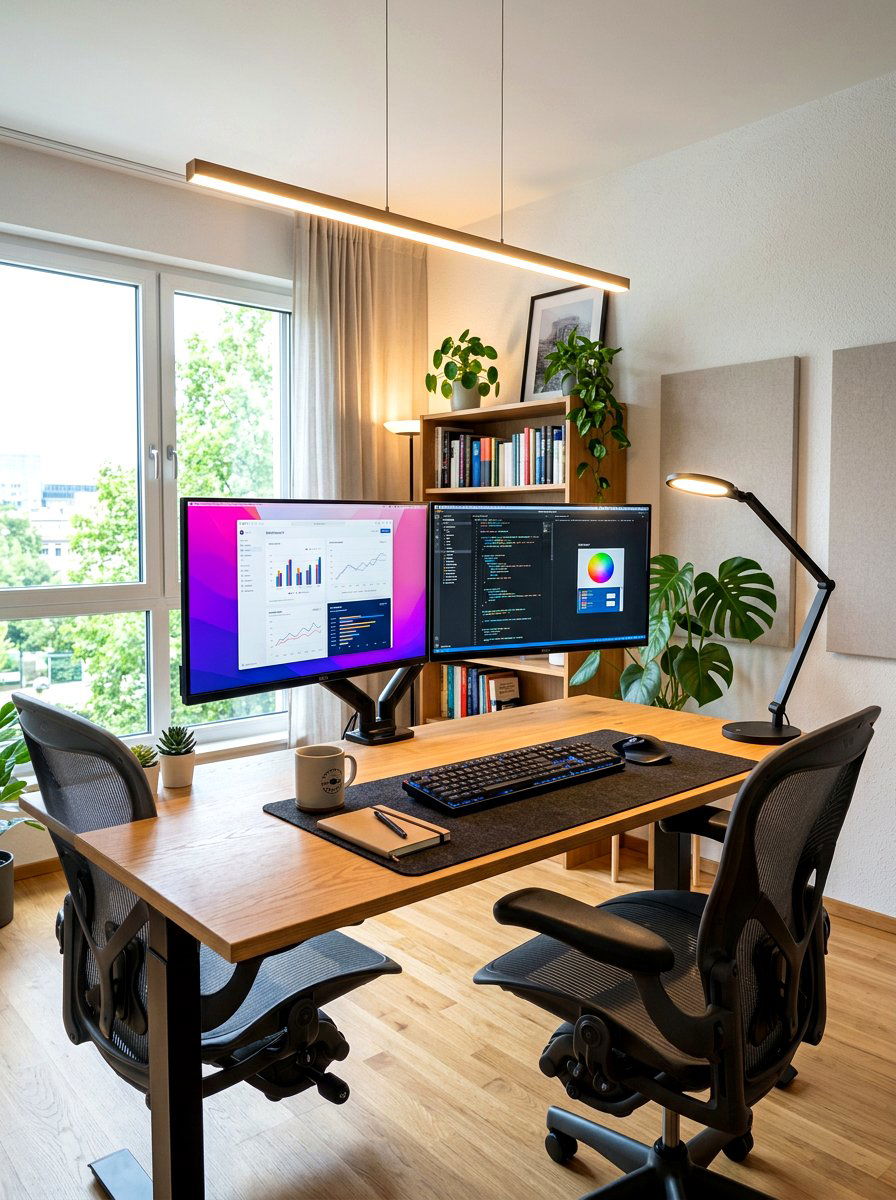
Upgrading your entire lighting scheme to high-performance LED technology is one of the fastest ways to improve office efficiency. Unlike traditional bulbs, LEDs consume minimal power and generate almost no heat, which helps keep your workspace cool during the summer. You can install dimmable overhead panels or sleek task lamps that offer adjustable color temperatures to match your circadian rhythm. Using smart LEDs allows you to automate schedules so lights never stay on in an empty room. This modern lighting design provides crisp, clear visibility for all your professional needs while significantly extending the lifespan of your fixtures and lowering your carbon footprint.
4. Smart Power Strip Setup
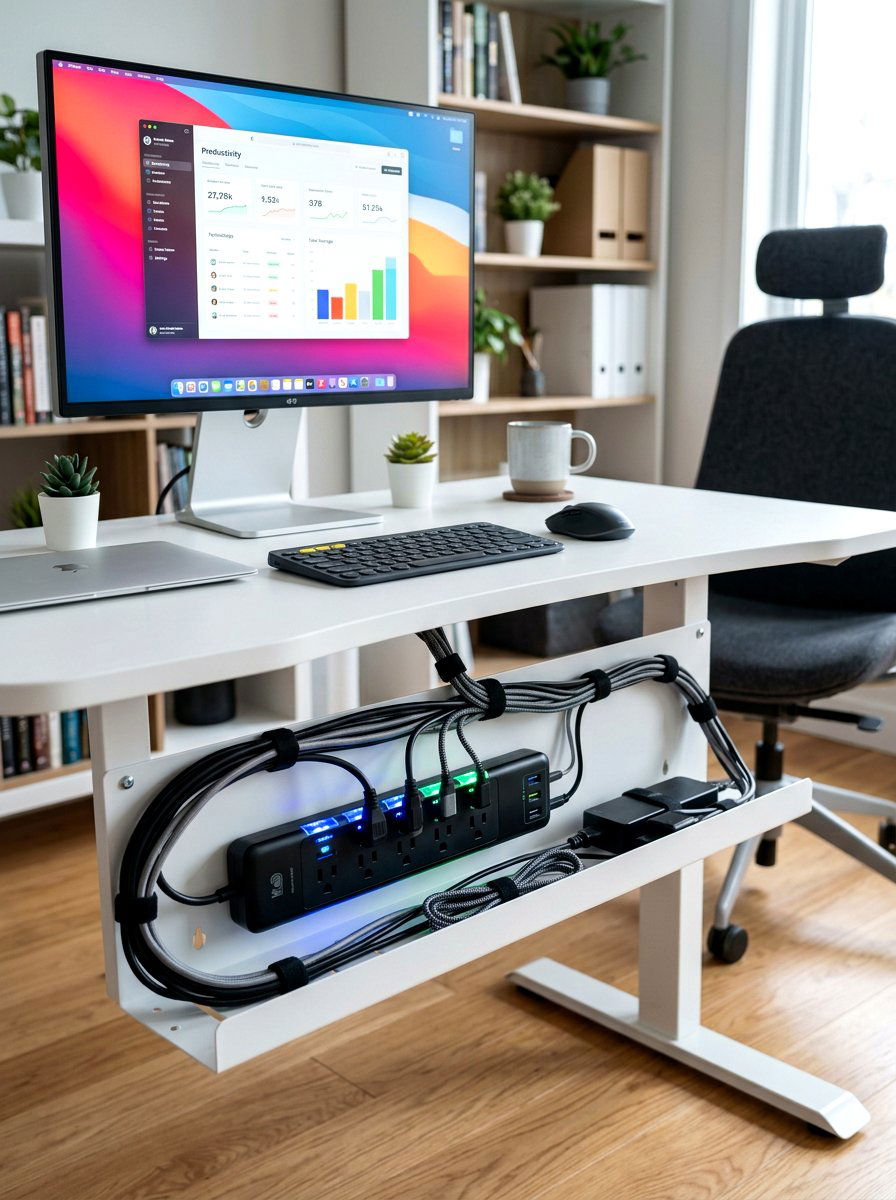
Eliminating "vampire" energy loss is a crucial component of a sustainable workspace design. Many electronic devices continue to draw power even when turned off, but a smart power strip automatically cuts electricity to peripheral gear like printers and monitors when they are not in use. This system usually features a primary outlet for your computer that triggers the other outlets to shut down. Integrating this technology into your cable management plan keeps your office organized while silently saving money every single day. It is a simple yet powerful way to ensure that your home office remains as energy-efficient as possible without requiring manual effort.
5. Eco Friendly Office Furniture
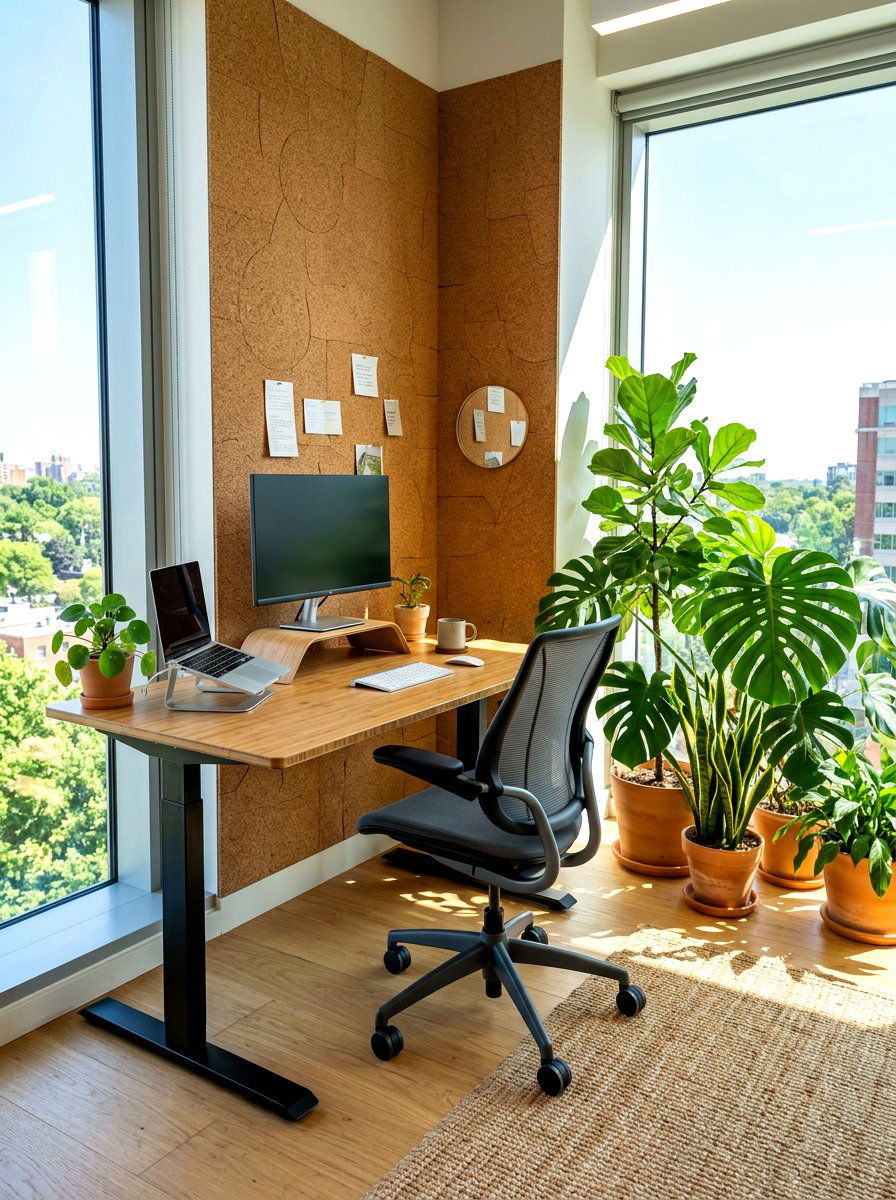
Selecting furniture made from sustainable, non-toxic materials is essential for creating a healthy and green professional environment. Look for desks and shelving units crafted from FSC-certified wood, reclaimed timber, or rapidly renewable bamboo that minimizes environmental impact. These pieces are often finished with natural oils rather than harsh chemicals, improving the indoor air quality of your home. A sustainable office design emphasizes durability and timeless aesthetics, ensuring that your furniture lasts for decades rather than ending up in a landfill. Combining these organic textures with modern ergonomic features creates a workspace that is as comfortable for your body as it is for the planet.
6. Thermal Curtains For Office
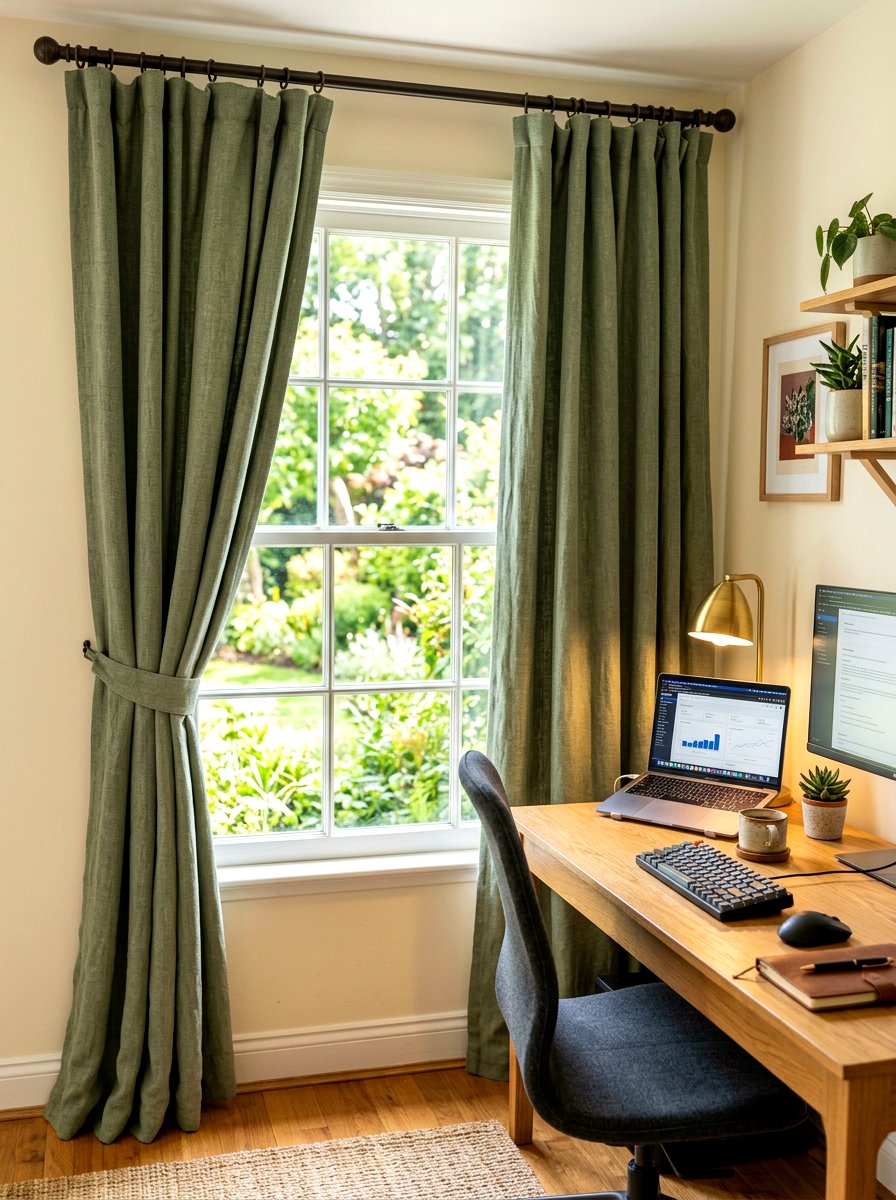
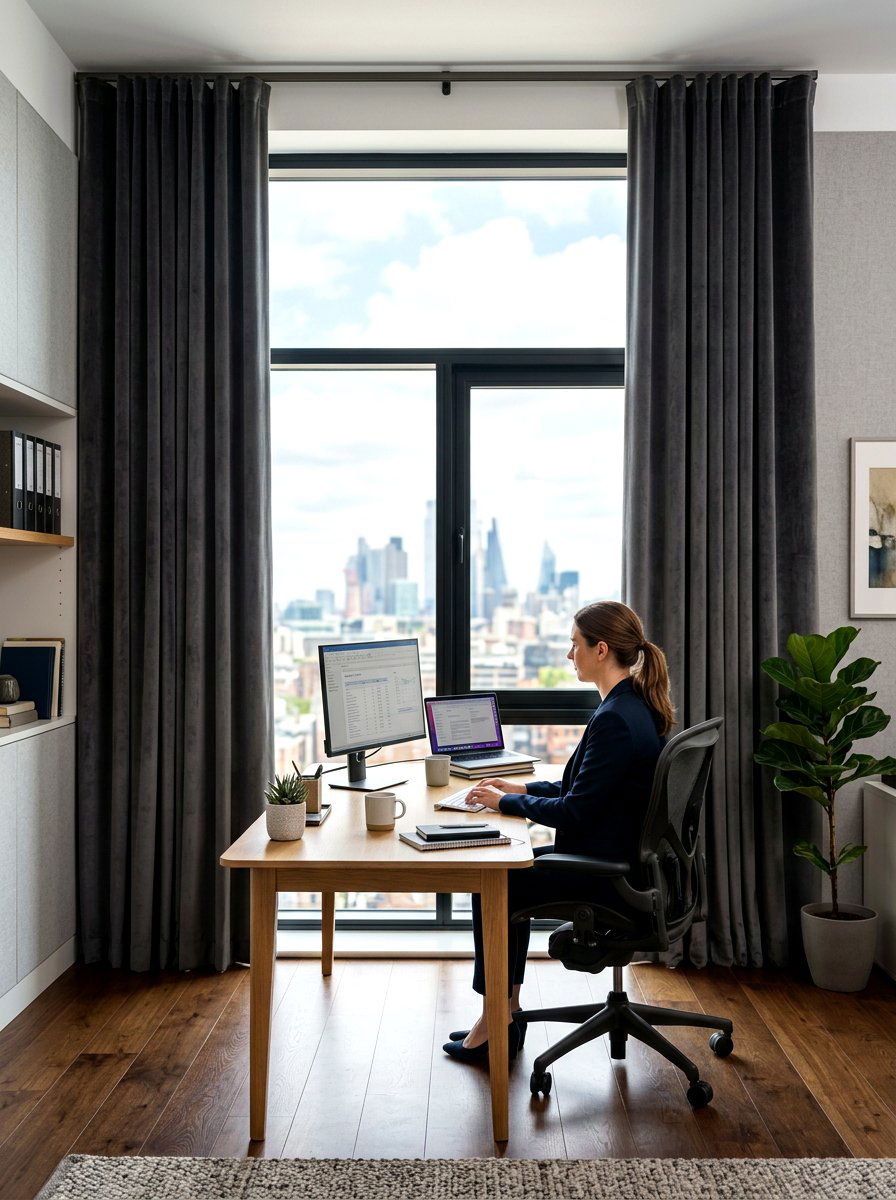
Regulating the temperature of your workspace without relying on heavy air conditioning or heating is easier with high-quality thermal window treatments. These thick, multi-layered curtains provide an extra layer of insulation that keeps heat out during the summer and traps warmth inside during the winter. By reducing the thermal transfer through your windows, you maintain a consistent and comfortable climate for working throughout the year. Thermal curtains come in a variety of stylish fabrics and colors, allowing them to serve as a beautiful focal point while performing a critical functional role. This simple addition helps stabilize your home’s energy usage while creating a cozy, private atmosphere.
7. Indoor Plants For Air Quality
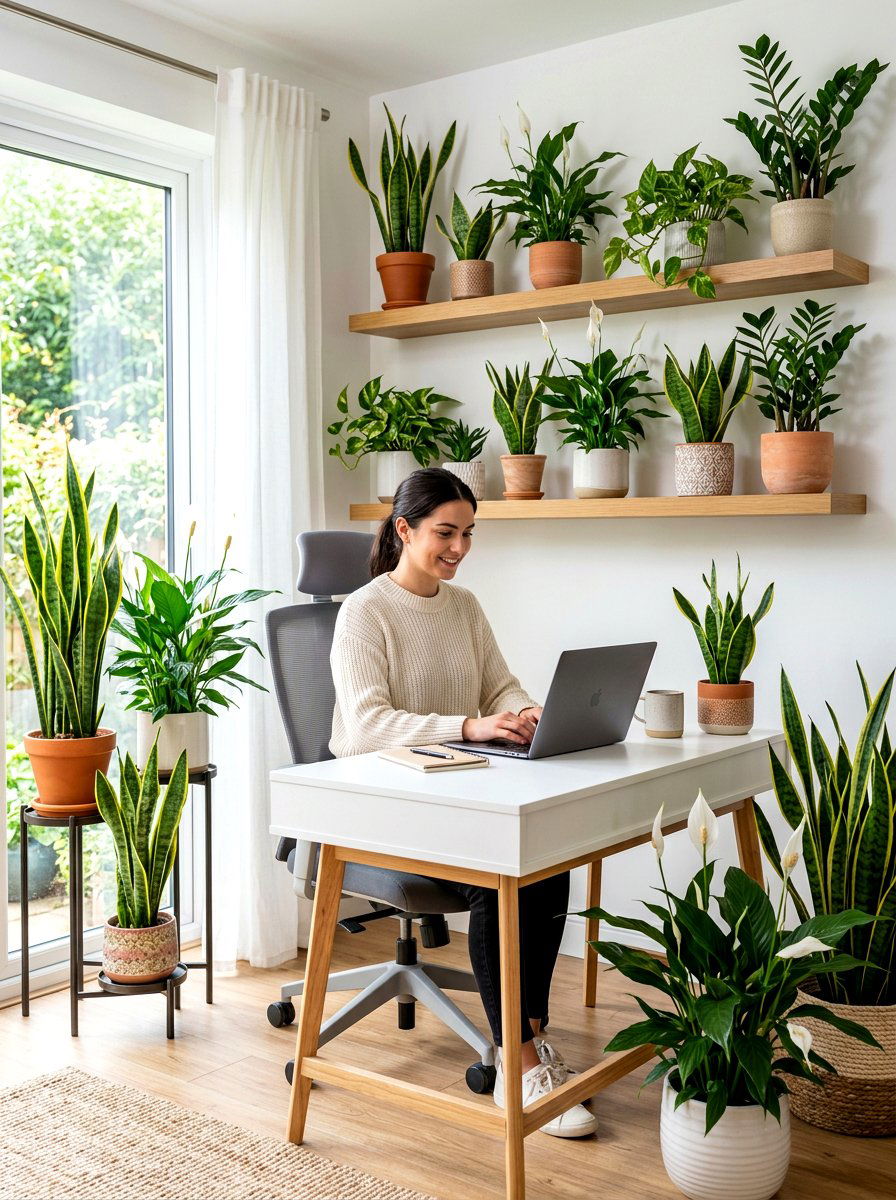
Integrating a variety of lush greenery into your office design does more than just enhance the aesthetic; it creates a natural air filtration system. Specific plants like snake plants, peace lilies, and spider plants are known for their ability to remove toxins and increase oxygen levels in enclosed spaces. A biophilic office layout uses these plants as living decor elements that improve mental clarity and reduce stress levels during long workdays. By naturally purifying the air, you reduce the need for electronic air purifiers, further saving on energy costs. Surrounding yourself with nature fosters a tranquil, inspiring environment that directly supports your long-term health and focus.
8. Low Energy Computer Hardware
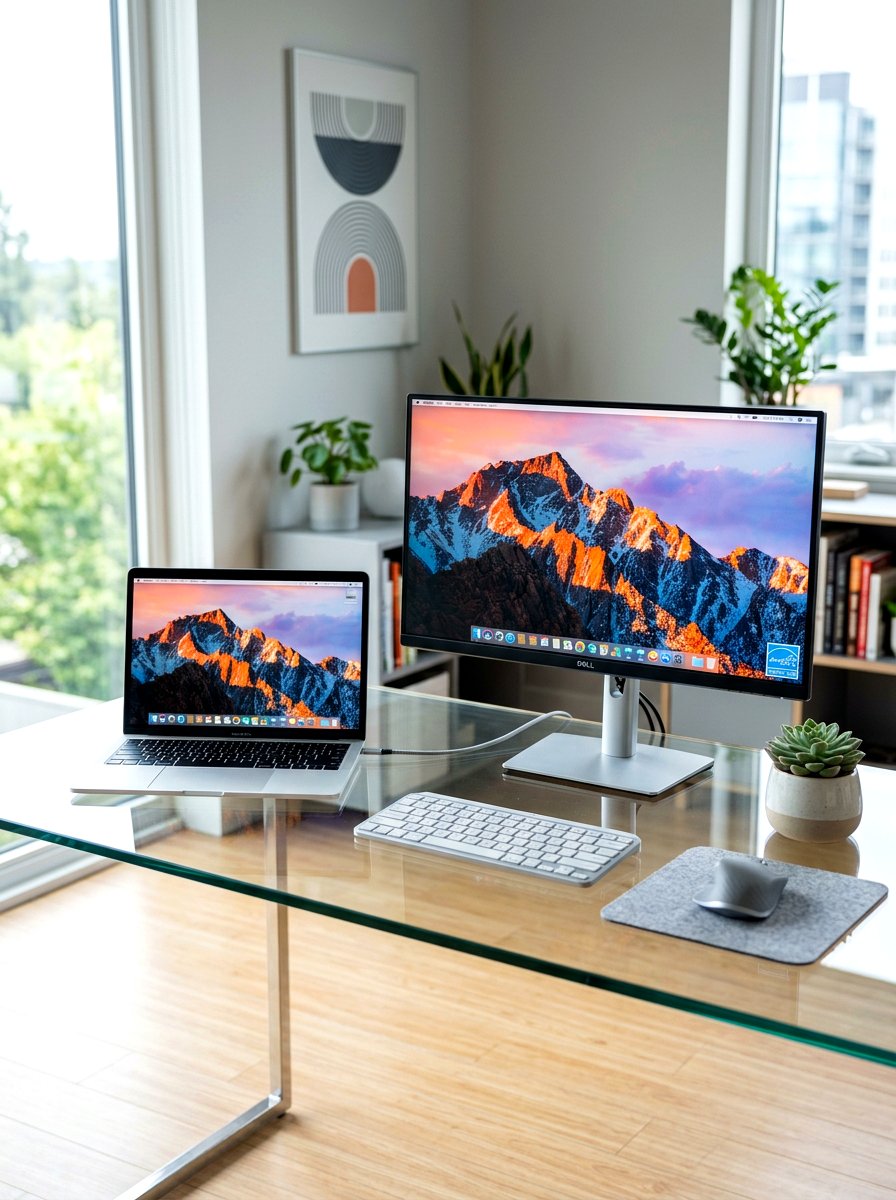
The core of any modern home office is the technology, and choosing high-efficiency hardware is vital for a green workspace. Opting for a high-end laptop over a traditional desktop computer can reduce your energy consumption by up to eighty percent. If you require multiple screens, look for monitors with high Energy Star ratings and low-power standby modes that minimize waste. Utilizing solid-state drives and efficient processors further ensures that your machine runs cool and consumes less power during intensive tasks. This hardware-focused approach ensures that your professional tools are optimized for performance while remaining extremely gentle on your monthly electricity bill and the environment.
9. Recycled Material Office Decor
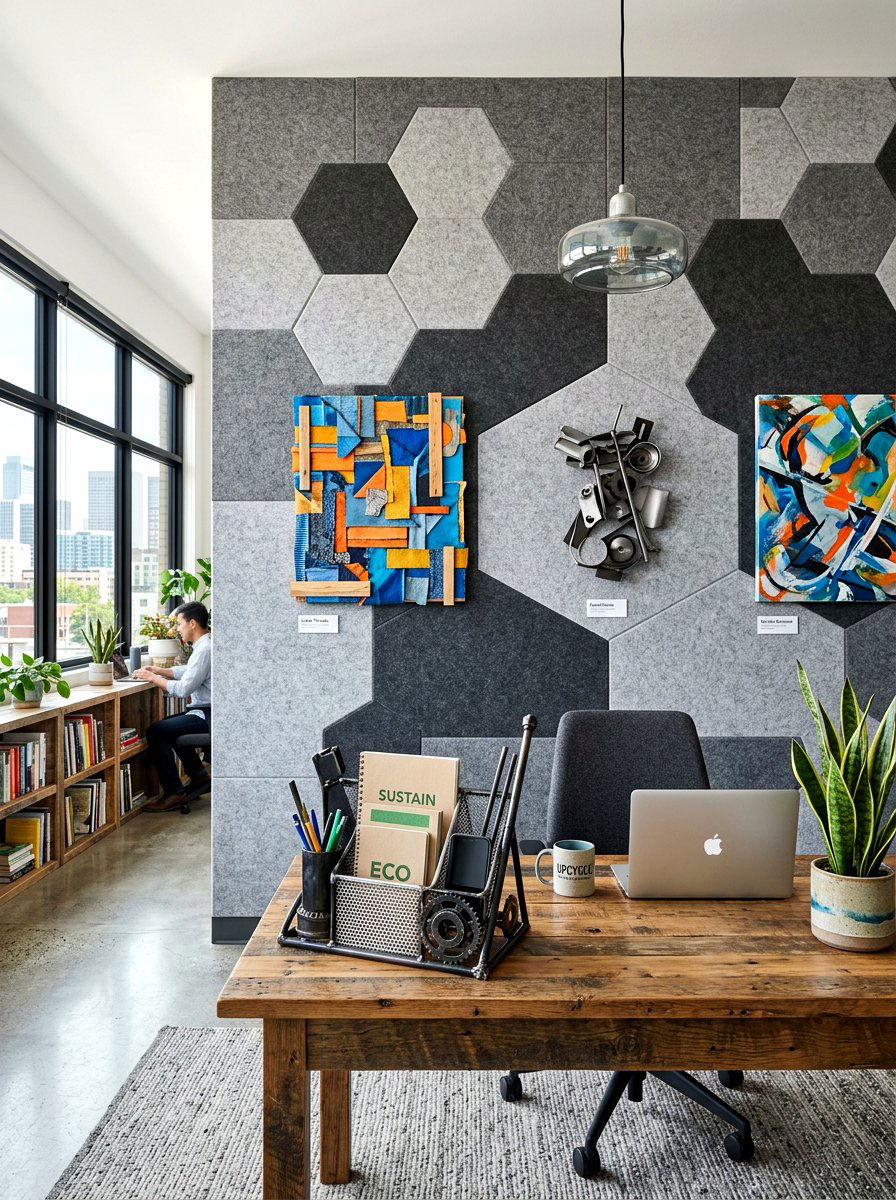
Creating a viral-worthy Pinterest aesthetic often involves unique, soulful decor pieces made from repurposed or recycled components. You can use organizers made from ocean-bound plastics, felt acoustic panels crafted from recycled bottles, or wall art framed in salvaged metal. These decorative elements add character and texture to your workspace while preventing waste from reaching the landfill. A recycled decor theme tells a story of sustainability and creativity, making your office feel personalized and thoughtfully curated. This design philosophy proves that you do not need brand-new items to create a high-end, professional look that inspires your best work and reflects your environmental values.
10. Sustainable Cork Flooring
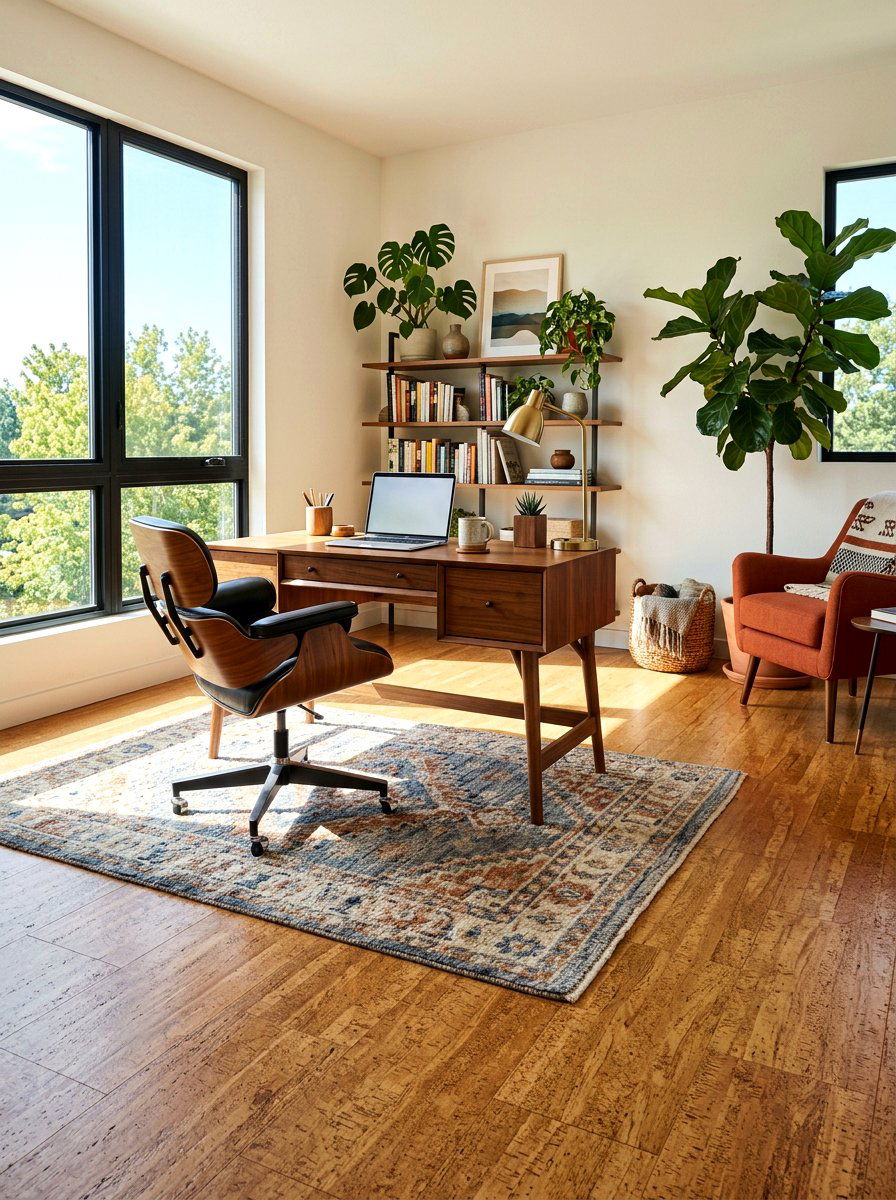
Choosing the right flooring for your office can significantly impact both the room's insulation and its overall sustainability. Cork is an incredible renewable resource that is harvested without harming the tree, and it provides natural thermal resistance that keeps the floor warm underfoot. Its unique cellular structure also offers excellent sound absorption, which is perfect for maintaining a quiet environment during important client calls. A cork-floored office feels soft and comfortable, reducing the need for heavy rugs or underfloor heating systems. This eco-friendly material is naturally antimicrobial and water-resistant, making it a durable and low-maintenance choice for a high-traffic, modern home workspace.
11. Smart Thermostat For Workspace
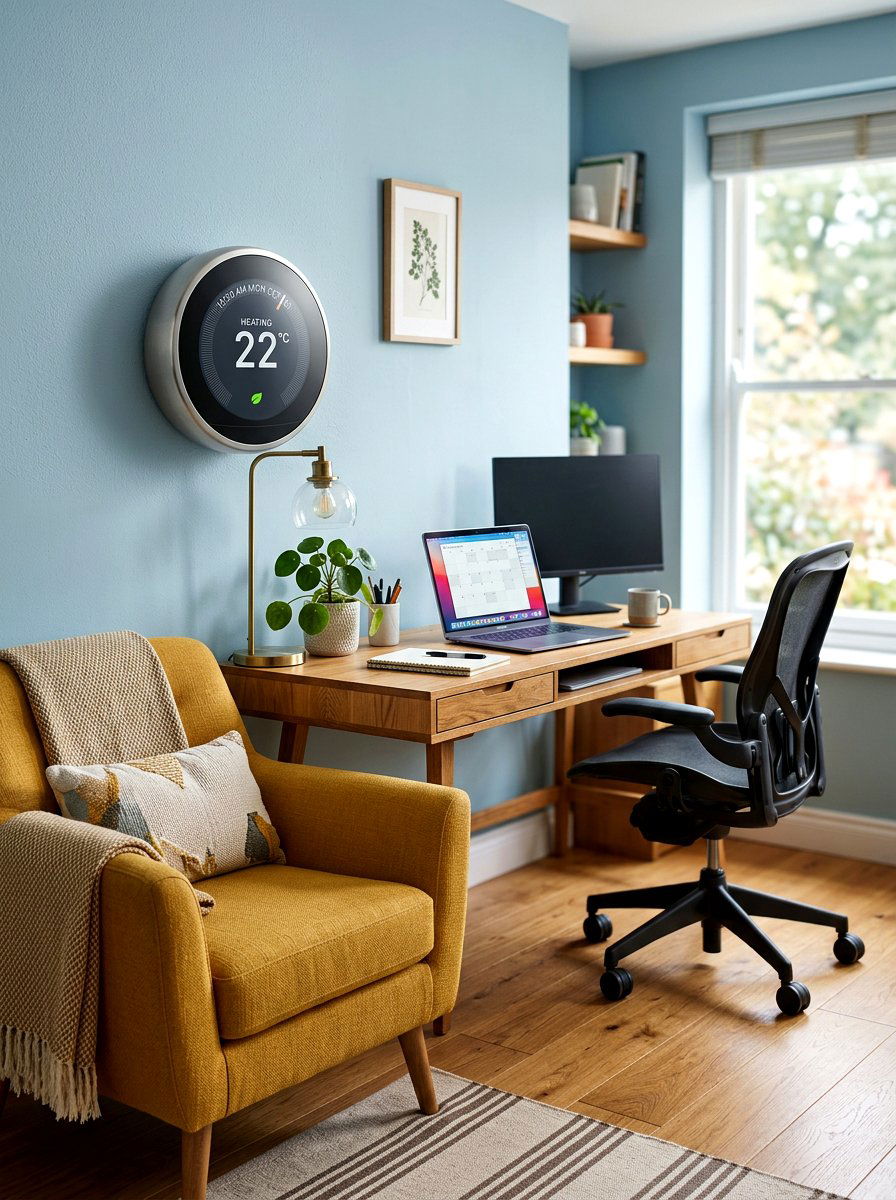
Precise climate control is a hallmark of an energy-efficient home, and a smart thermostat allows you to manage your office temperature with extreme accuracy. These devices can be programmed to heat or cool your workspace only during your specific working hours, preventing energy waste when you are in other parts of the house. Many models use motion sensors to detect when you are at your desk and adjust the settings automatically for maximum comfort. Integrating a smart thermostat into your office design ensures that you are never too hot or too cold, which directly helps maintain your focus and productivity throughout the day.
12. Energy Star Office Equipment
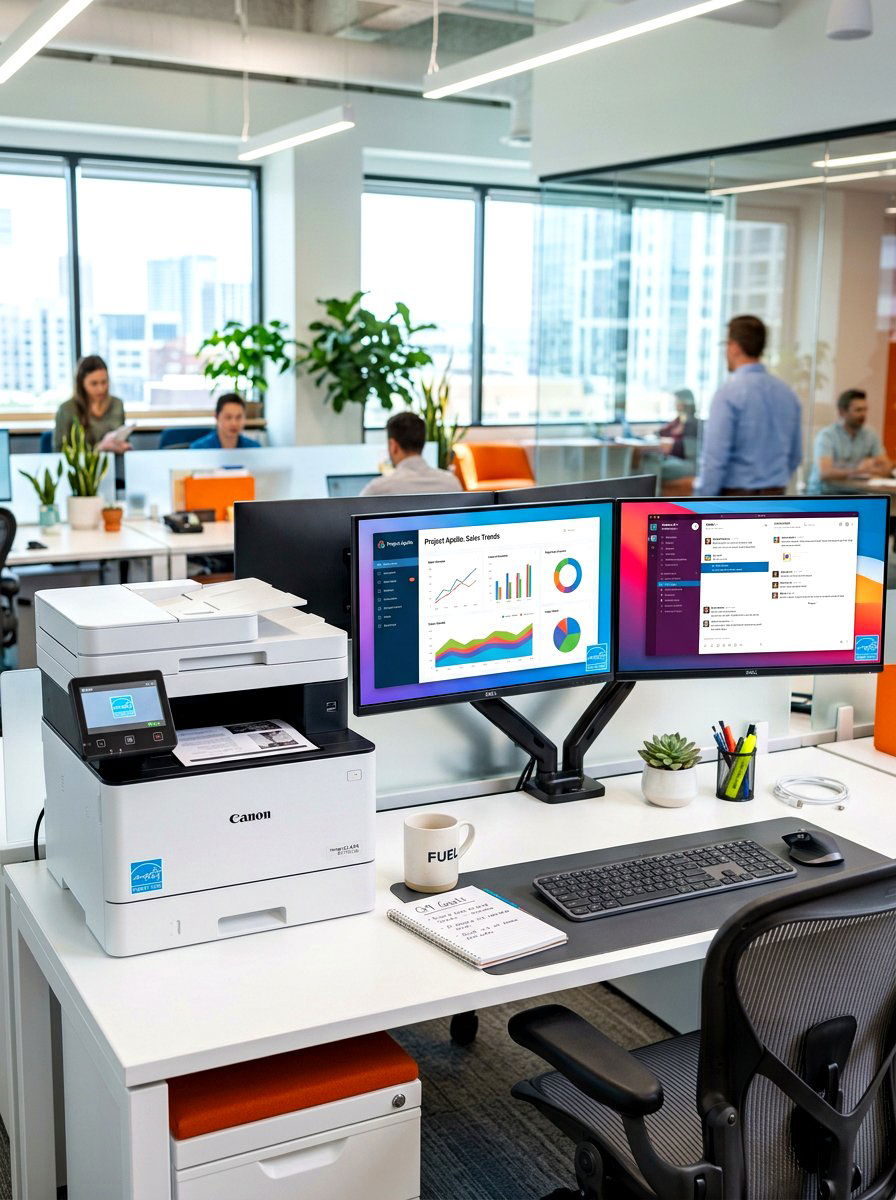
When it comes time to purchase new electronics, looking for the Energy Star certification ensures that your devices meet strict efficiency guidelines. This applies to everything from printers and scanners to monitors and even small office refrigerators. Energy Star equipment is designed to perform the same tasks as standard models while using significantly less electricity, especially when in sleep or idle modes. By populating your office with these certified products, you create a high-tech environment that operates with minimal waste. This commitment to efficiency adds up over time, resulting in a sustainable workspace that supports your professional goals while protecting your financial resources.
13. Passive Solar Office Design
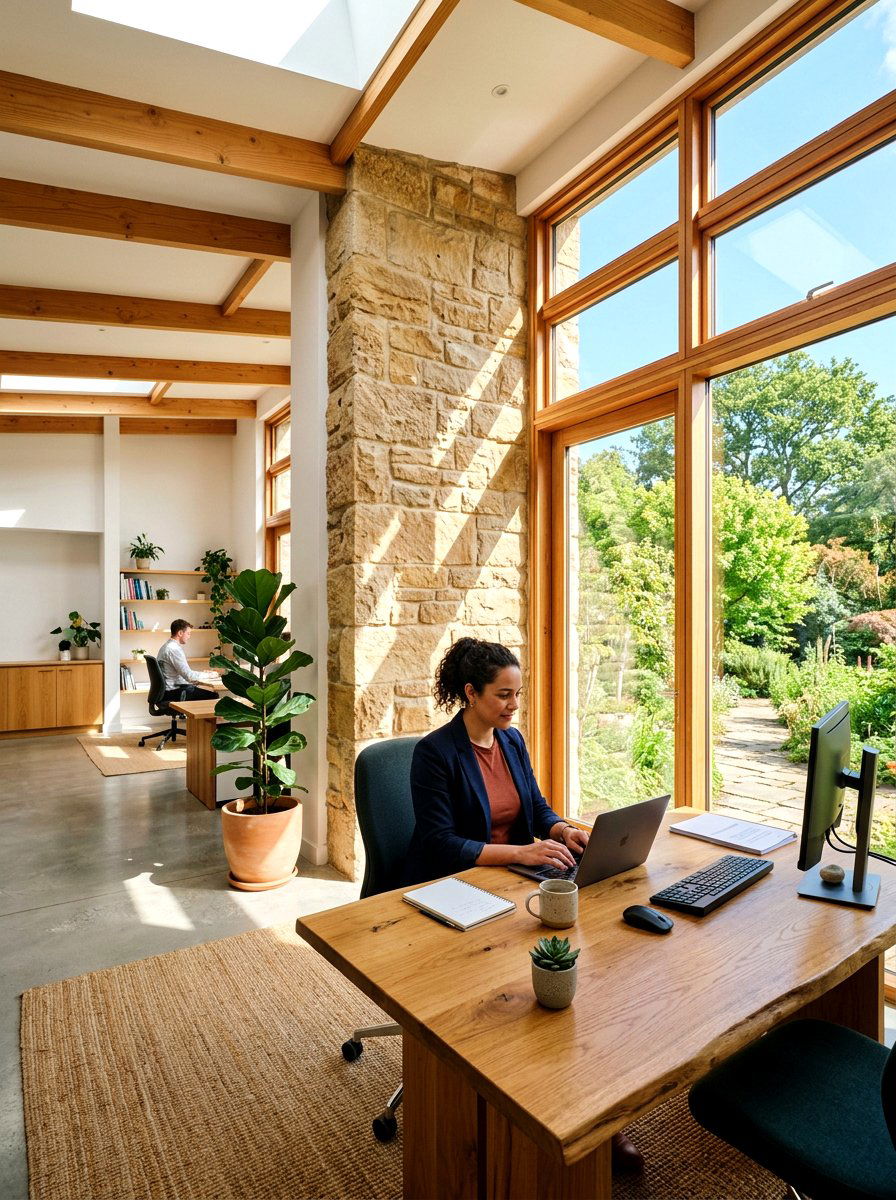
Planning your office layout to take advantage of the sun 's natural movement can drastically reduce your heating and lighting needs. A passive solar approach involves placing heavy furniture or stone elements in sun-drenched areas to absorb heat during the day and release it slowly in the evening. This natural thermal mass helps regulate the room' s temperature without any mechanical assistance. During the summer, strategic shading or outdoor deciduous trees can block the harsh midday sun to keep the room cool. This thoughtful architectural strategy creates a workspace that works in harmony with the environment, providing a comfortable and light-filled area year-round.
14. Reclaimed Wood Desk Setup
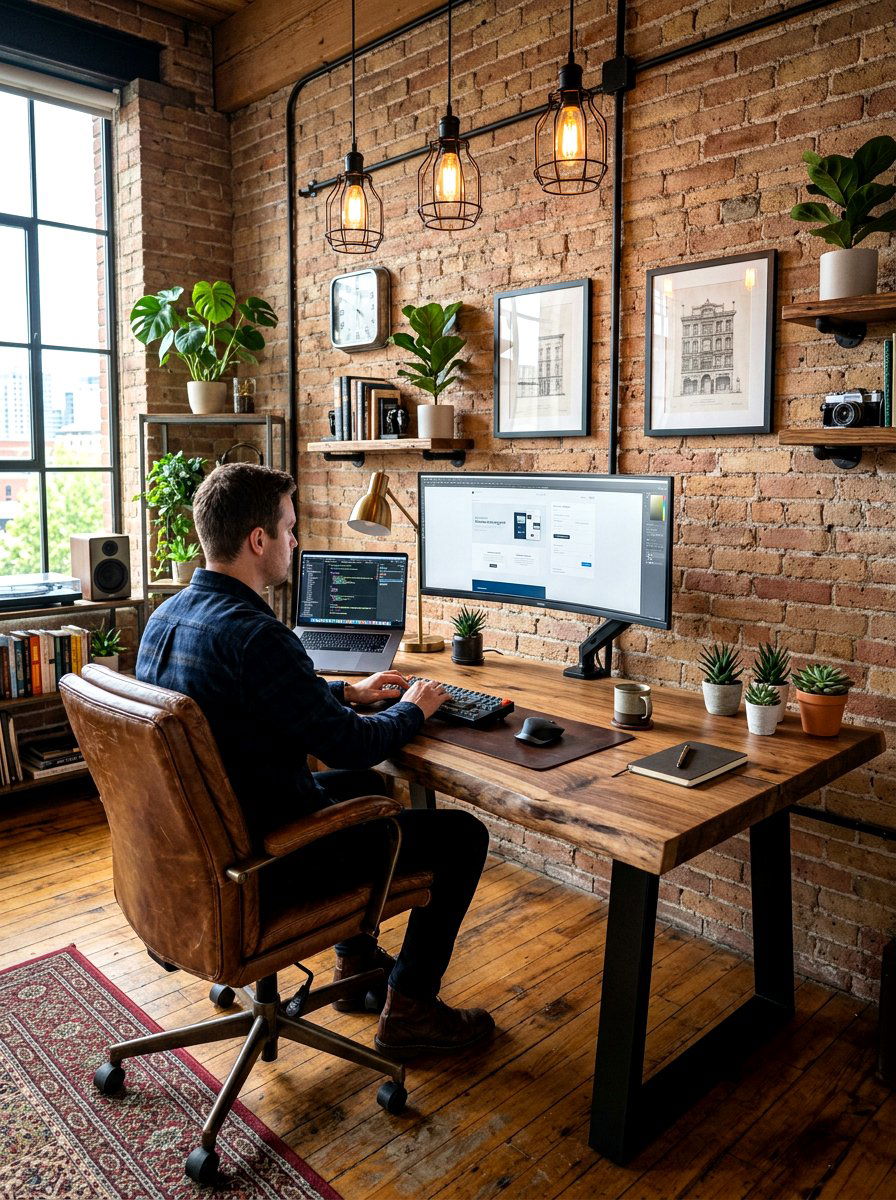
A desk made from reclaimed wood serves as a stunning, eco-friendly focal point that anchors the entire room's design. These pieces often feature unique grains, knots, and history that new mass-produced furniture simply cannot replicate. By choosing reclaimed materials, you are directly participating in the circular economy and preventing perfectly good timber from being wasted. Pair this rustic element with modern, minimalist metal legs for an industrial-chic look that is very popular on social media. A reclaimed wood workspace brings warmth and an organic feel to your office, making it a place where you truly enjoy spending your time every single day.


15. Battery Backup Power Station
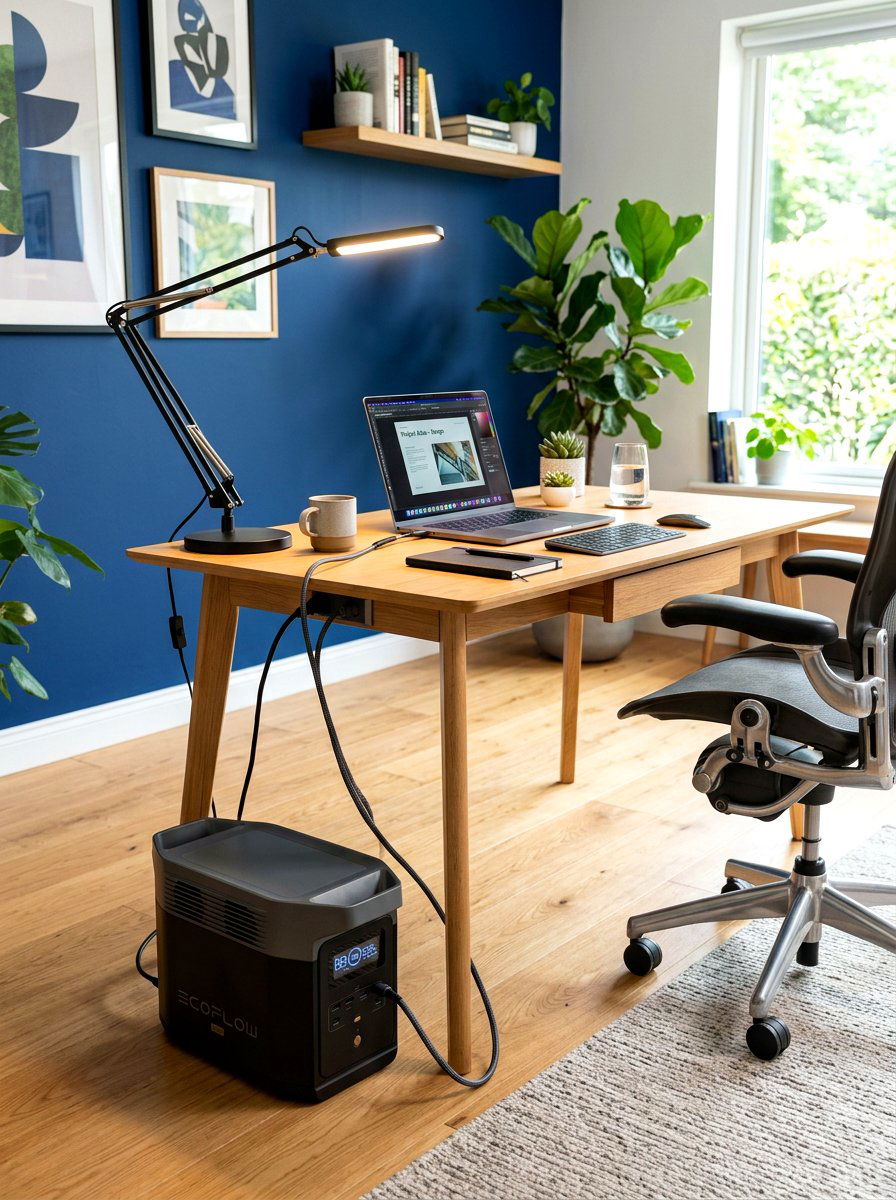
Installing a high-capacity portable power station in your home office provides both energy security and a way to manage your power consumption. These units can be charged during off-peak hours when electricity is cheaper and then used to power your computer and peripherals during the day. This "peak shaving" technique helps reduce your overall demand on the grid and lowers your costs. Furthermore, having a dedicated battery backup ensures that your work is never lost during a sudden power surge or blackout. This modern energy solution is quiet, emission-free, and fits perfectly into a tech-forward, sustainable home office layout.
16. Motion Sensor Light Switches
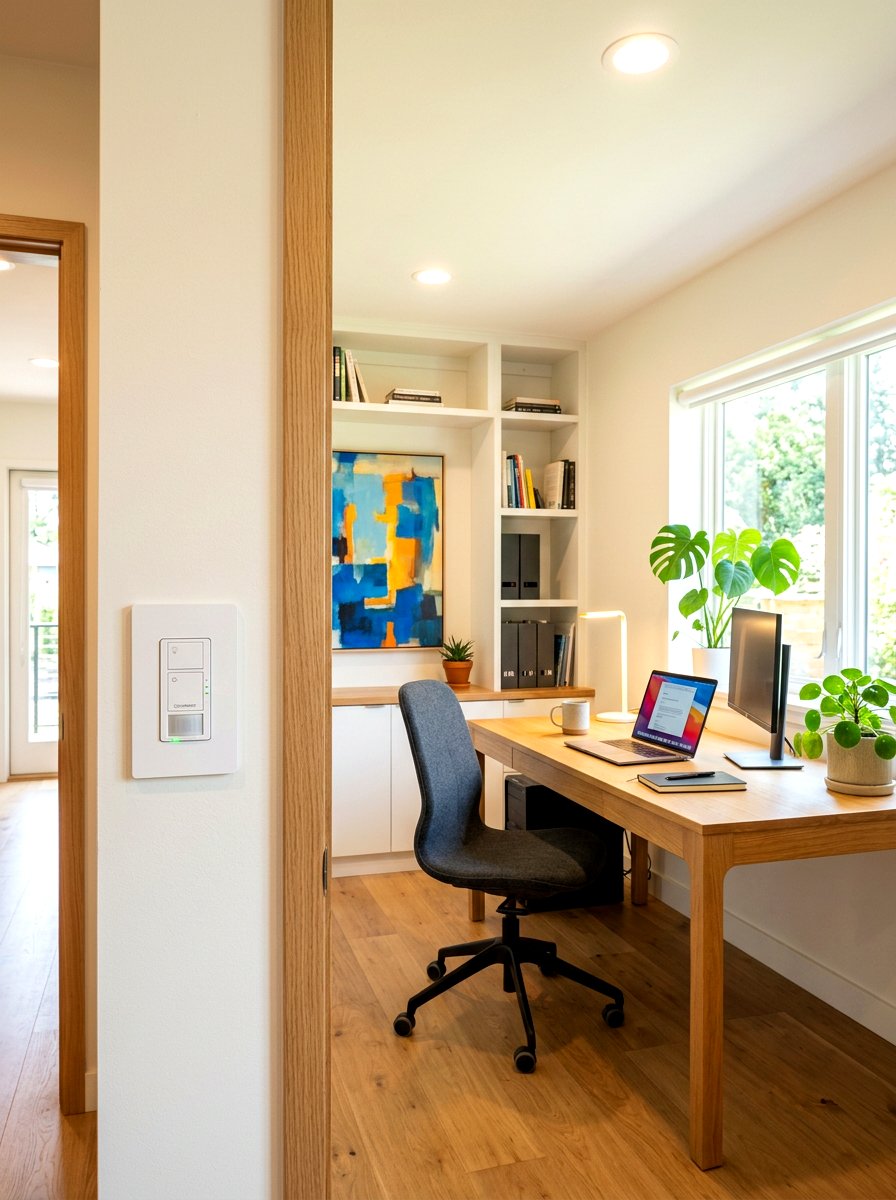
Installing motion-sensing switches is a foolproof way to ensure that your office lights are never left on accidentally. These sensors detect when you enter the room and immediately provide illumination, then turn the lights off after a set period of inactivity. This is especially useful in multi-functional spaces or "cloffices" where you might be moving in and out frequently. In addition to saving energy, motion sensors offer a high-end, automated feel to your workspace. By eliminating the need to touch switches, you also maintain a cleaner and more streamlined look on your walls, contributing to a modern and efficient design.
17. Double Pane Office Windows
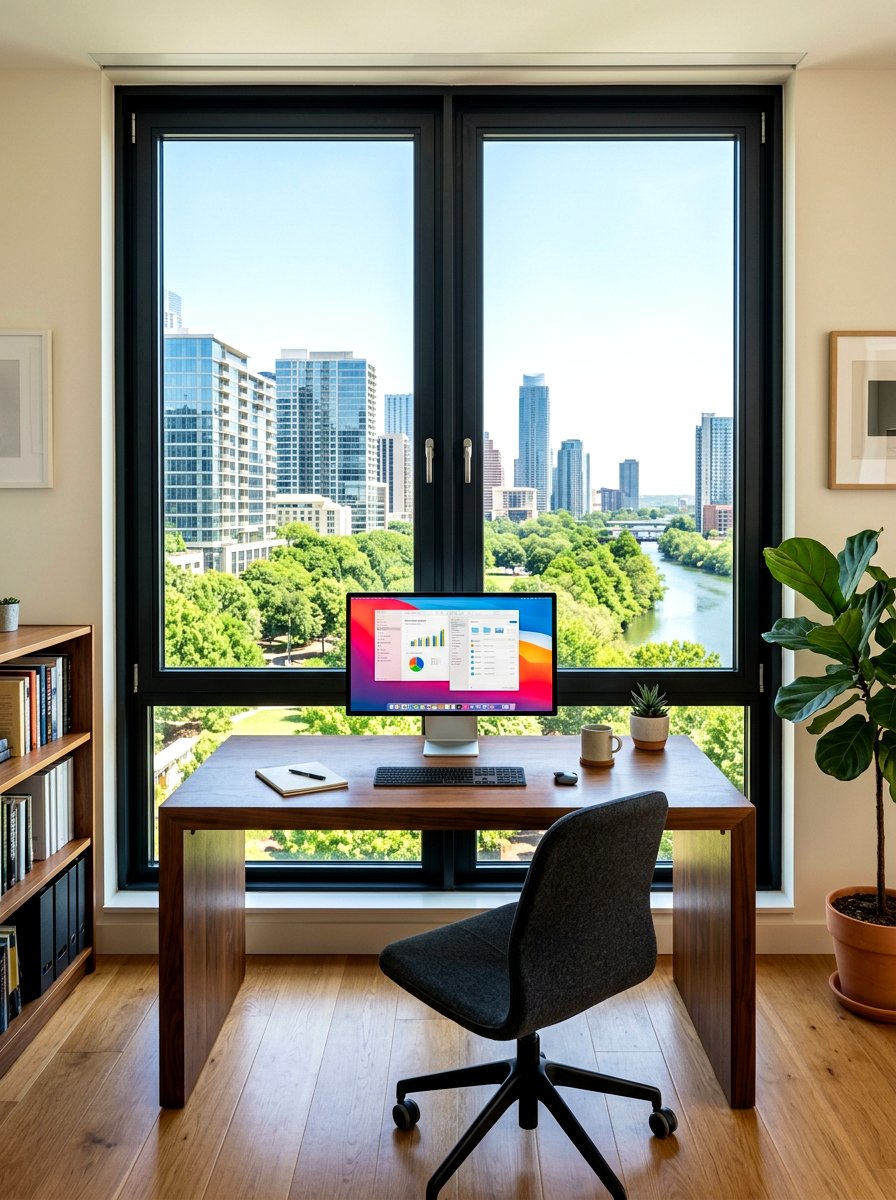
Upgrading to high-efficiency double-pane windows is a major structural improvement that pays dividends in both energy savings and comfort. These windows feature two layers of glass with an insulating gas trapped in between, which significantly reduces heat transfer and outside noise. In a home office, this means you can work in a quiet, temperature-controlled environment regardless of the weather or neighborhood activity. The added insulation prevents drafts and reduces the workload on your HVAC system, leading to lower monthly bills. This investment not only makes your workspace more professional but also increases the overall value and efficiency of your entire home.
18. Zero VOC Paint Office
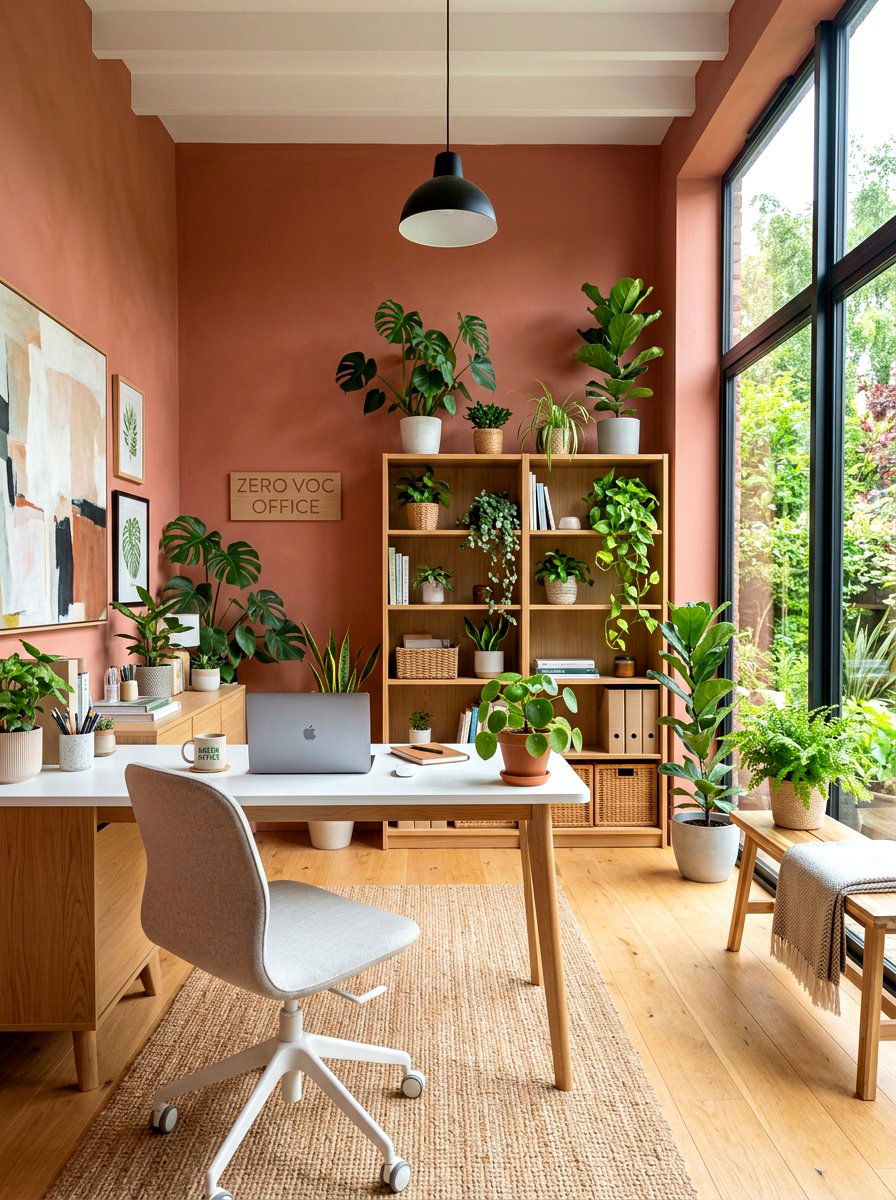
Transforming your office with a fresh coat of paint is a great way to define the space, but using zero-VOC options is essential for health and sustainability. Volatile Organic Compounds are chemicals that off-gas into the air, potentially causing headaches and reducing indoor air quality. Zero-VOC paints provide the same vibrant colors and durability as traditional paints without the harmful emissions or strong odors. Choosing earthy, reflective tones like sage green or soft beige can also help maximize natural light and create a calming atmosphere. This health-conscious design choice ensures that your workspace remains a safe and pleasant environment for long-term concentration.
19. Natural Fiber Rugs
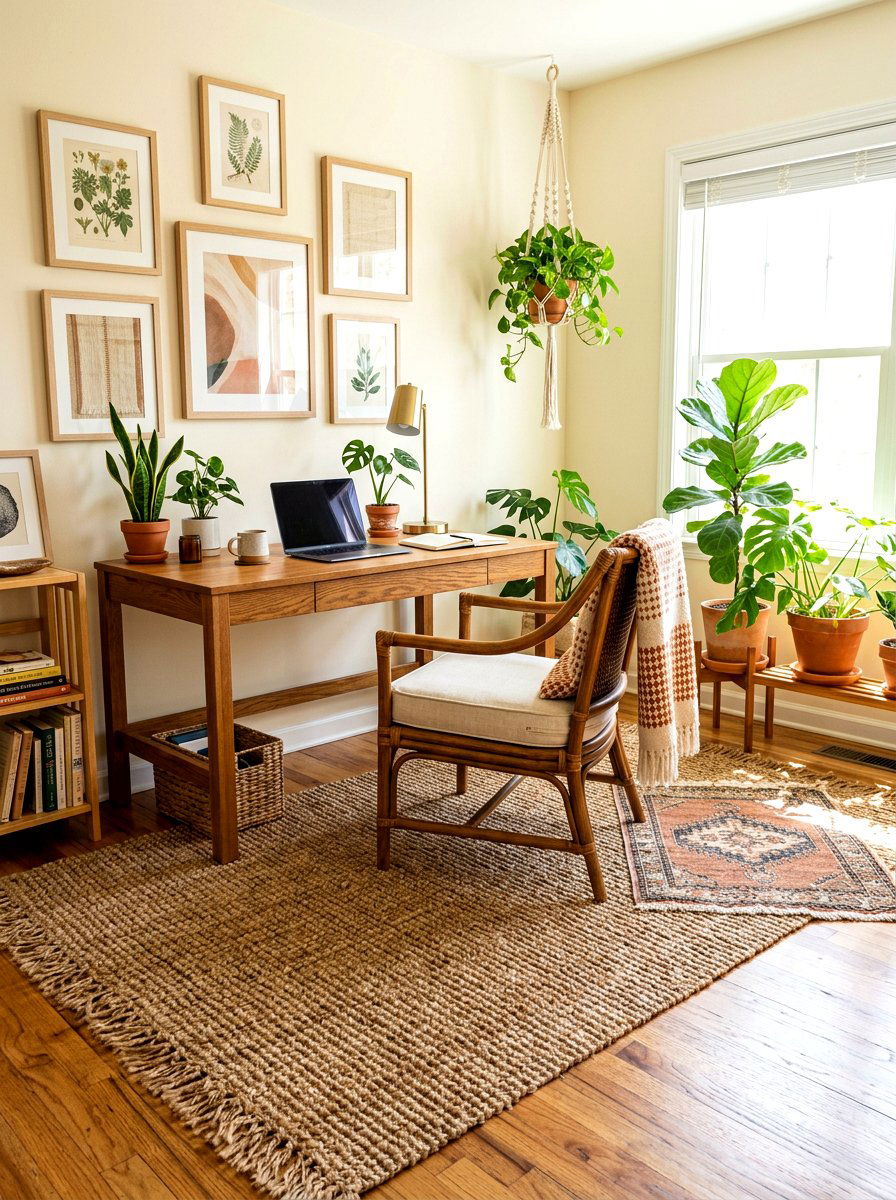
Softening your workspace with rugs made from natural fibers like jute, sisal, or wool adds warmth and texture without the environmental cost of synthetic materials. These organic fibers are renewable, biodegradable, and often produced using fewer chemicals and dyes. A large area rug helps define the boundaries of your office within a larger room while providing extra insulation for the floor. The natural textures of these materials complement a biophilic or Scandinavian design style, making the space feel grounded and inviting. Using natural fiber rugs is a simple way to introduce sustainable materials into your decor while improving the room's overall acoustics and comfort.
20. Laptop Instead Of Desktop
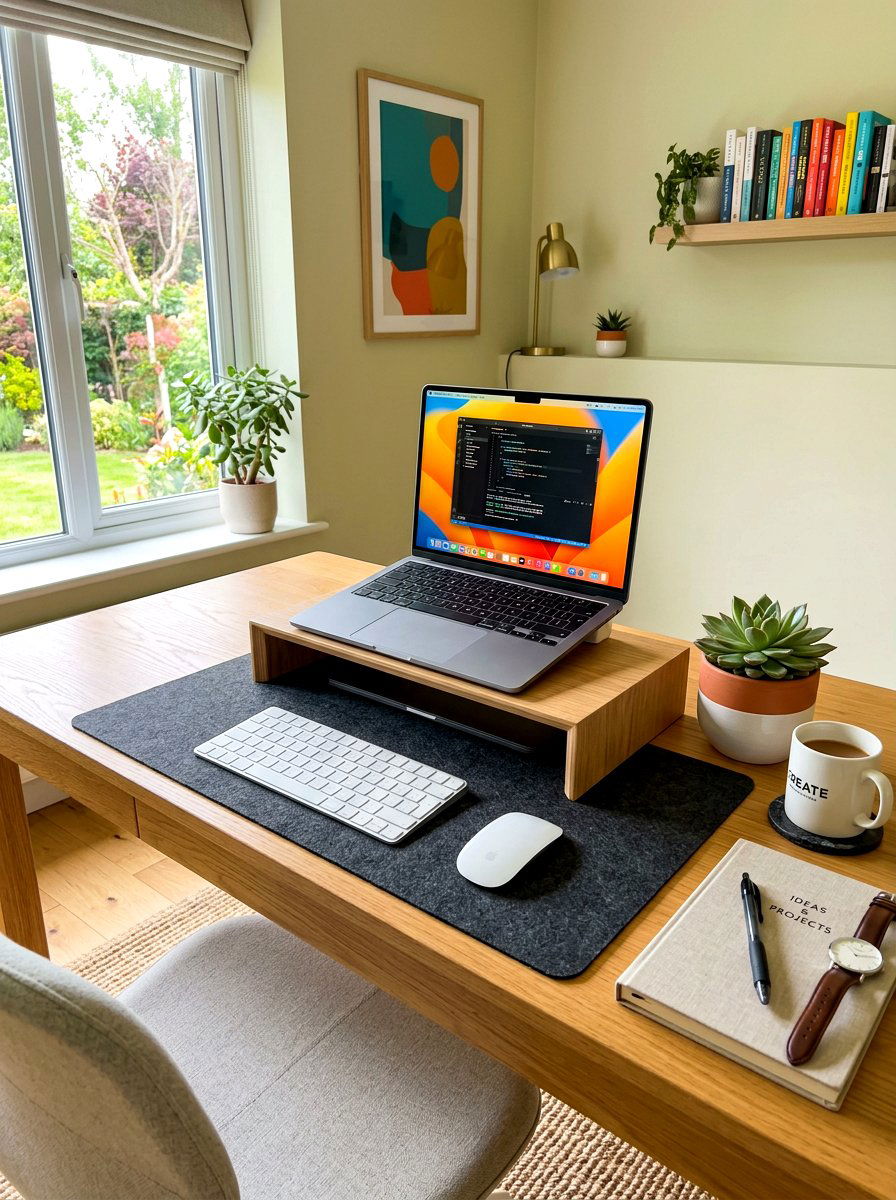
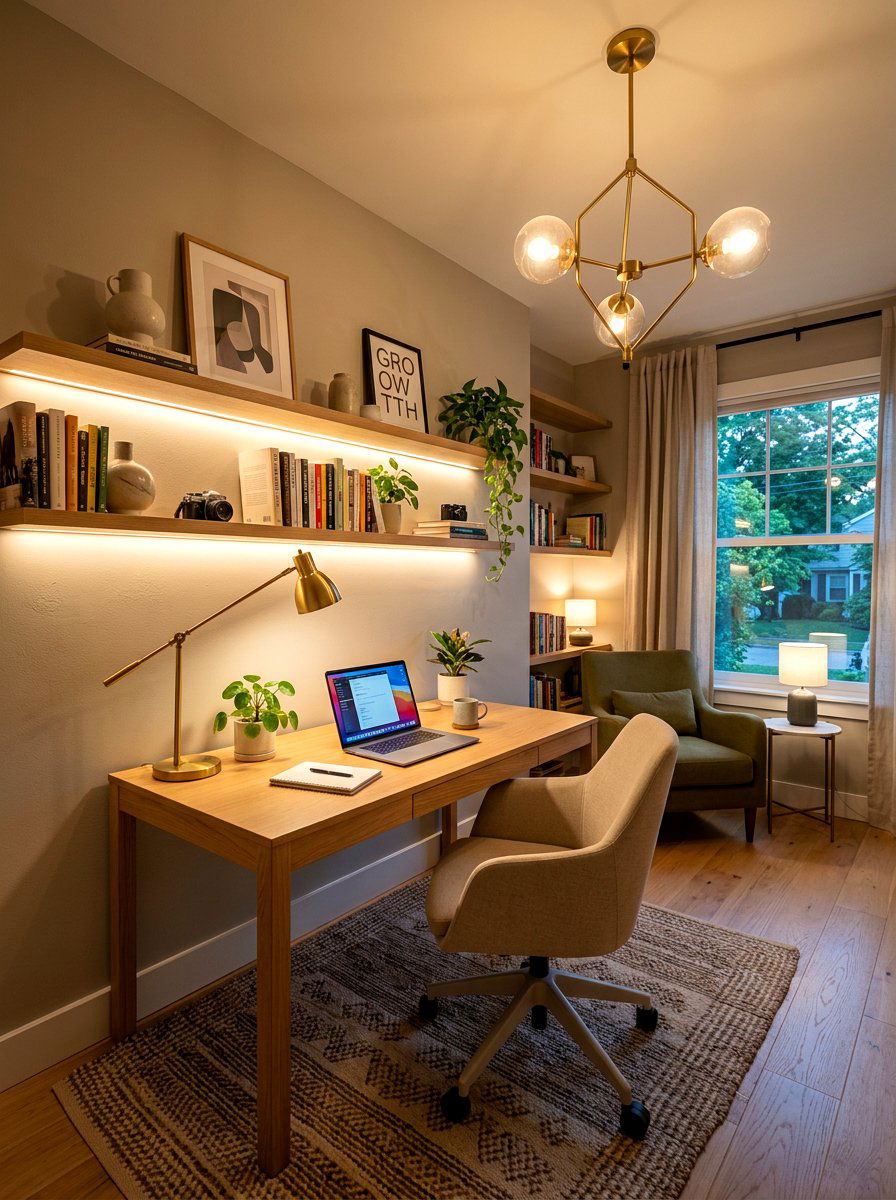
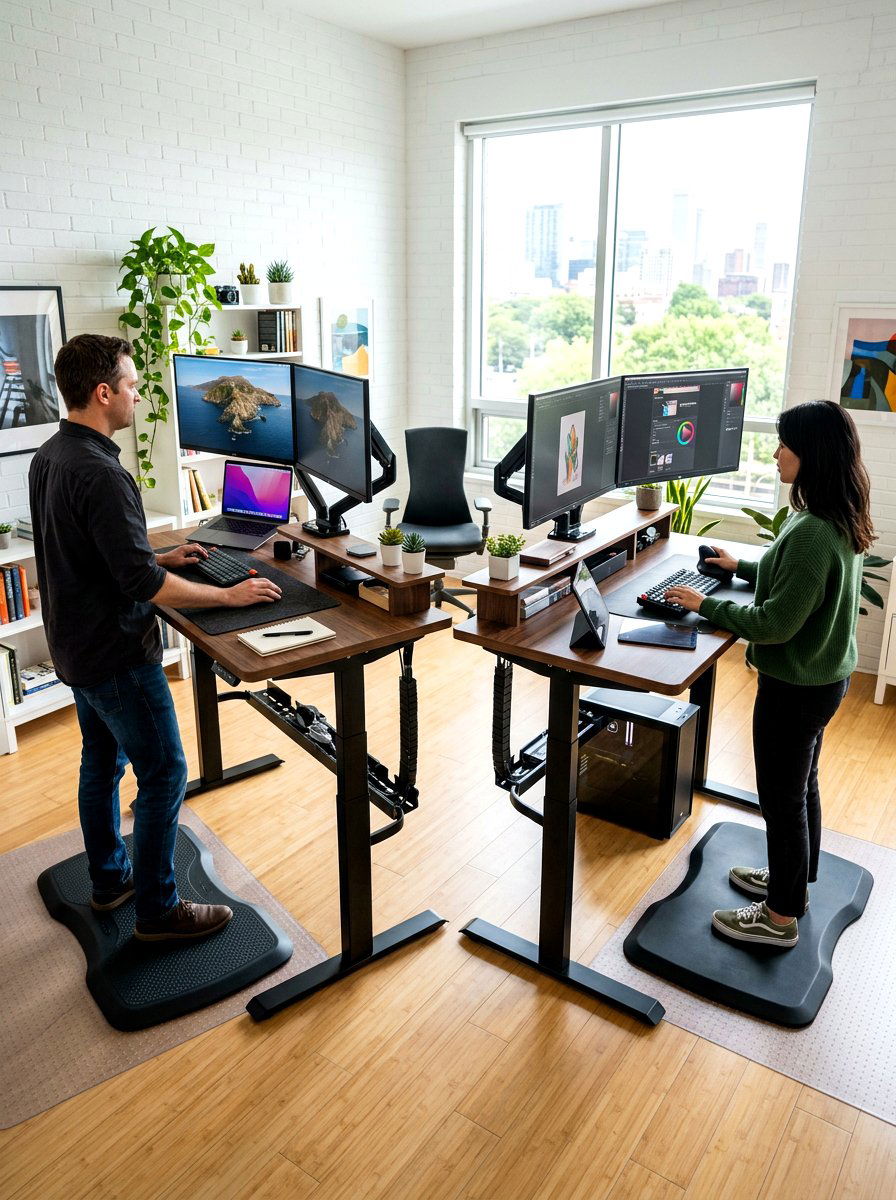
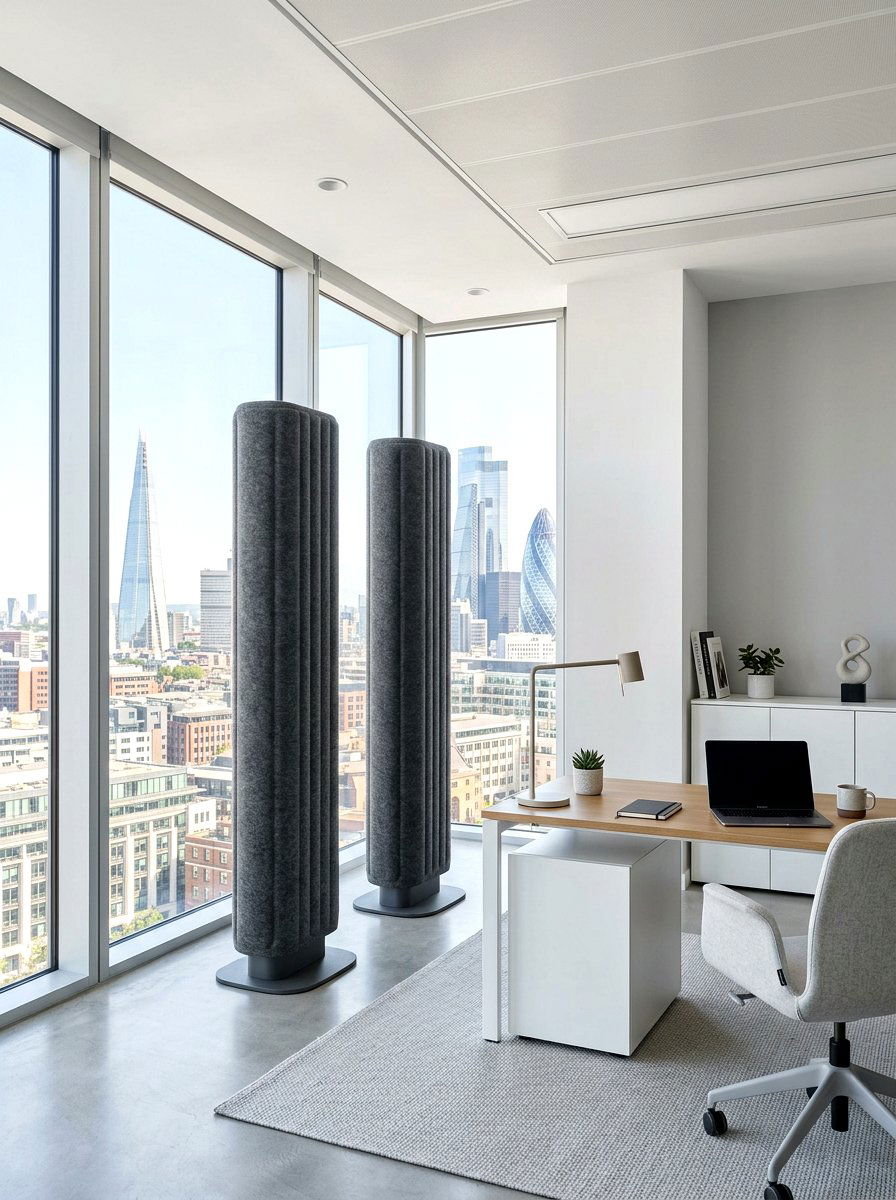
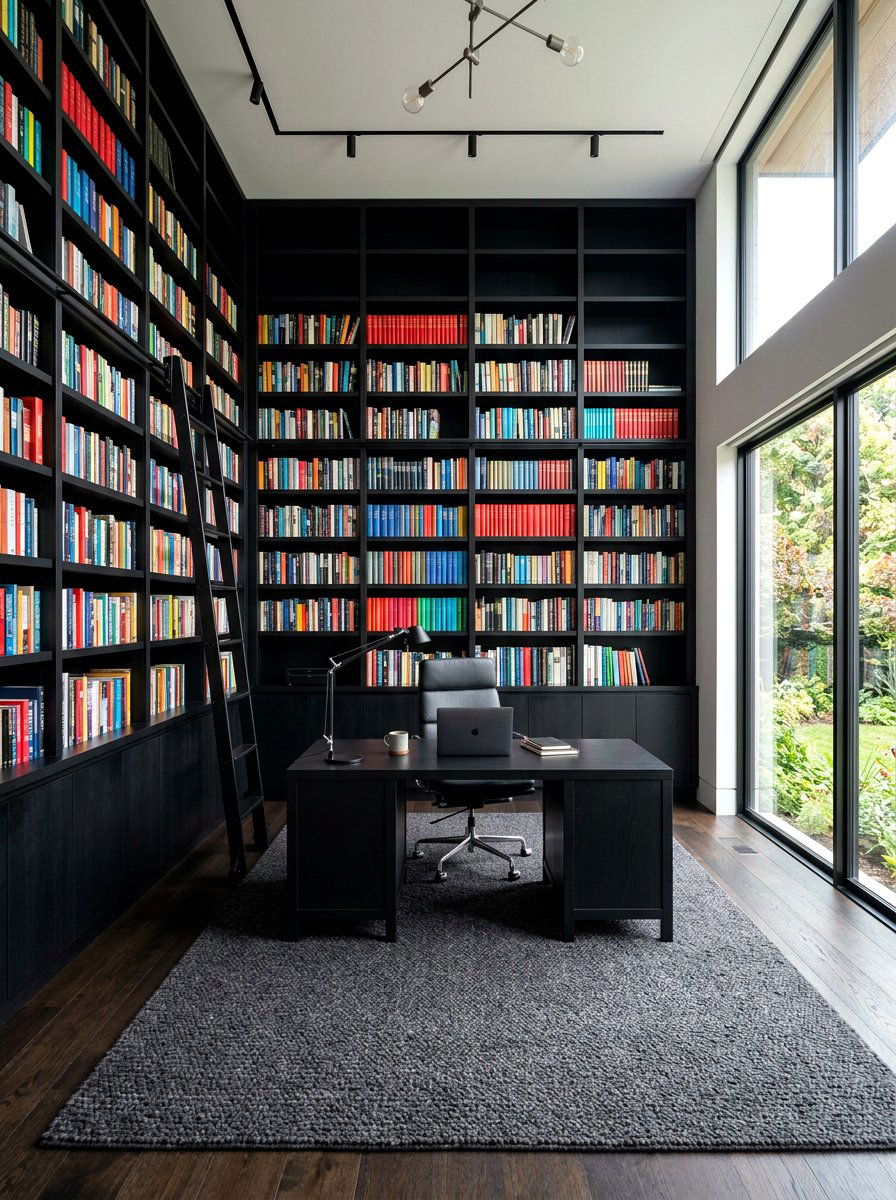
Choosing a high-performance laptop as your primary workstation is a significant step toward an energy-efficient home office. Modern laptops are engineered to be extremely power-efficient to maximize battery life, which means they draw far less wattage from the wall than a standard desktop tower. When paired with a docking station and a single energy-efficient monitor, you get the ergonomics of a desktop with the power savings of a mobile device. This setup also provides the flexibility to work from different locations, reducing the need for multiple heated or cooled rooms. It is a smart, versatile choice for the modern eco-conscious professional.
21. Task Lighting Instead Of Overhead
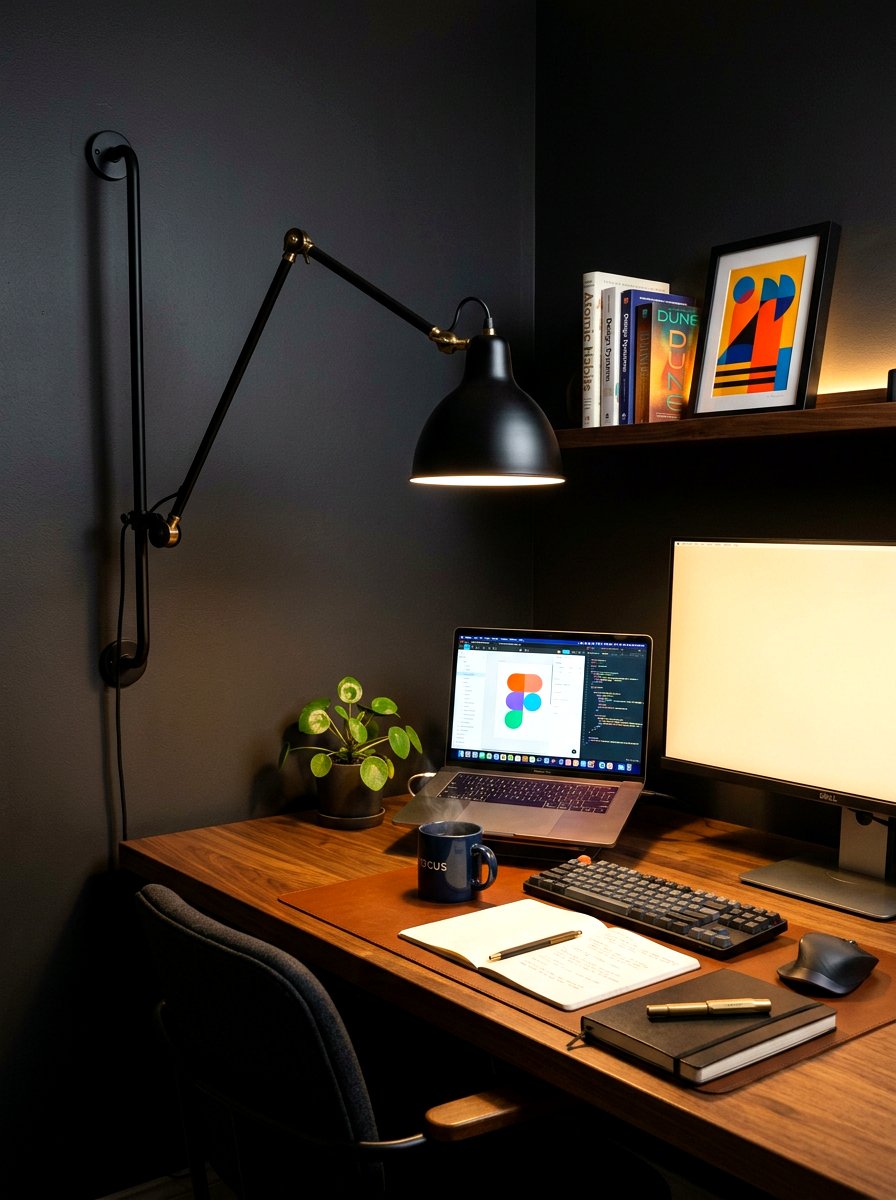
Designing your lighting plan to focus on specific work zones rather than illuminating the entire room can lead to substantial energy savings. By using high-quality LED desk lamps for your primary tasks, you can keep the overhead lights off or dimmed, creating a more focused and atmospheric environment. Task lighting allows you to direct light exactly where you need it, which reduces eye strain and prevents unnecessary glare on your screen. This layered lighting approach makes the office feel more sophisticated and professional while lowering your daily power consumption. It is an effective way to customize your workspace to suit your specific needs.
22. Draft Stoppers For Office Doors
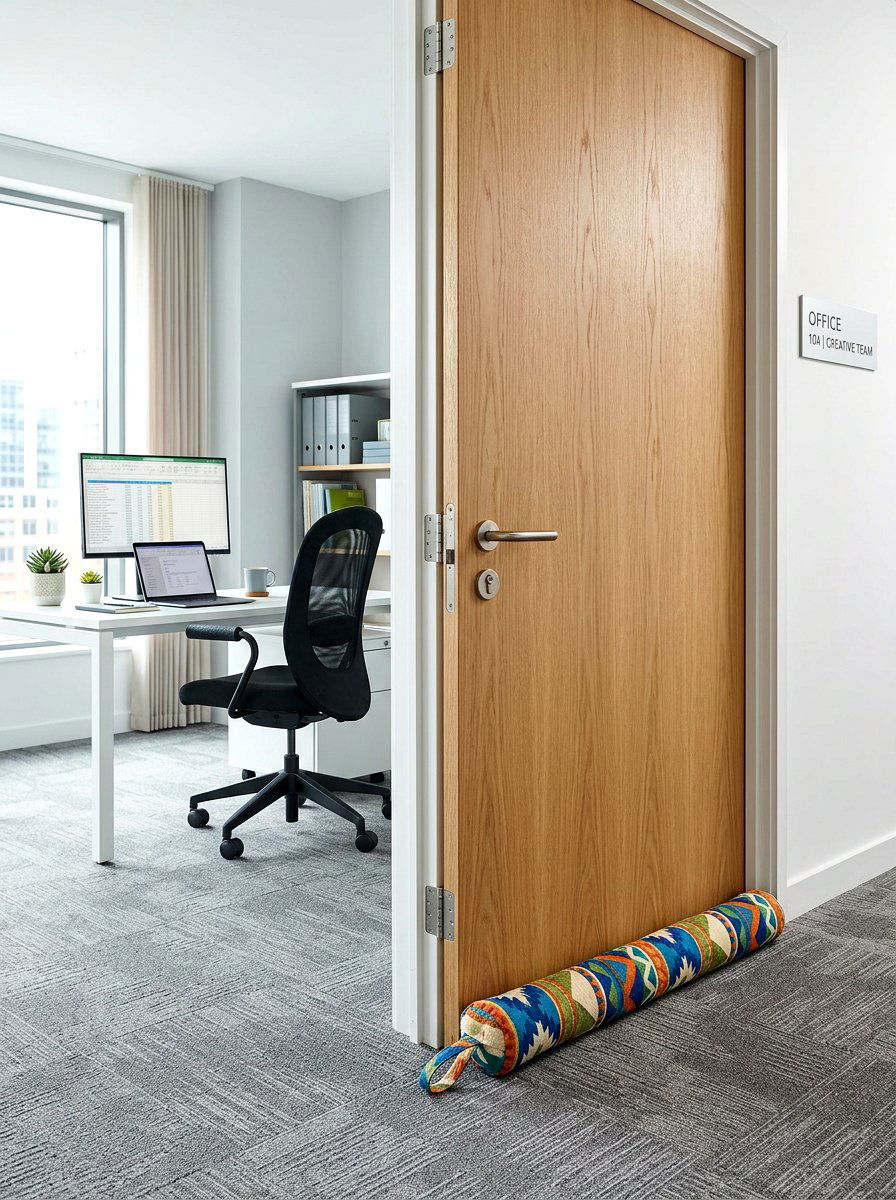
If your home office is located in a room with a door, using a simple draft stopper can prevent conditioned air from escaping and keep unwanted drafts out. This low-cost solution helps maintain a stable temperature within your workspace, reducing the need for supplemental space heaters or fans. You can find stylish draft stoppers made from recycled fabrics or heavy natural grains that blend perfectly with your decor. By sealing the gap at the bottom of the door, you also create a better sound barrier, helping you stay focused during important meetings. This small but effective detail contributes significantly to the overall efficiency of your room.
23. Bamboo Office Furniture
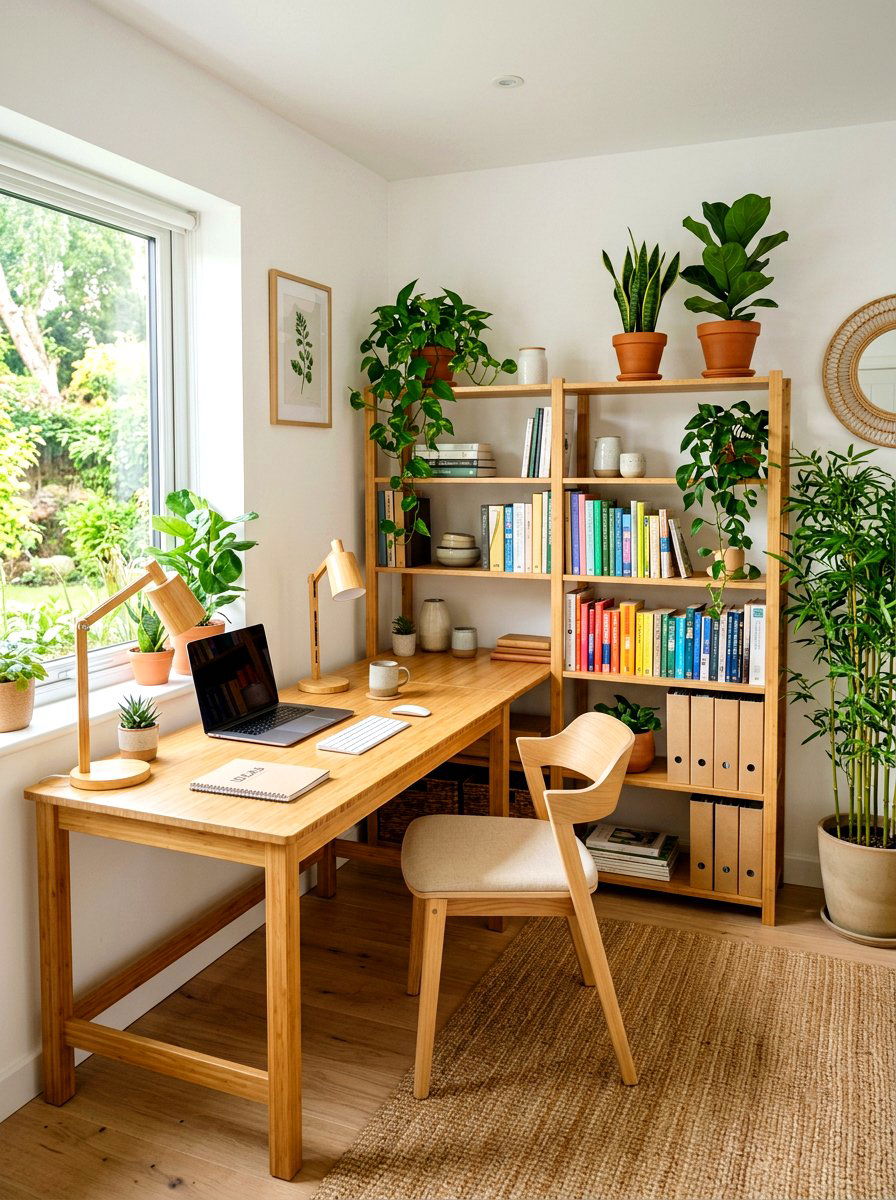
Bamboo is one of the most sustainable materials on the planet because it grows incredibly fast and requires no pesticides or fertilizers. Using bamboo for your office desk, shelving, or storage bins provides a sleek, modern look that is both durable and lightweight. Its natural light color helps brighten the room and pairs beautifully with a minimalist or Zen-inspired office aesthetic. Because bamboo is stronger than many hardwoods, it can withstand the rigors of daily use for years to come. Choosing this rapidly renewable material shows a commitment to sustainability while adding a fresh, organic element to your professional environment.
24. Solar Window Film
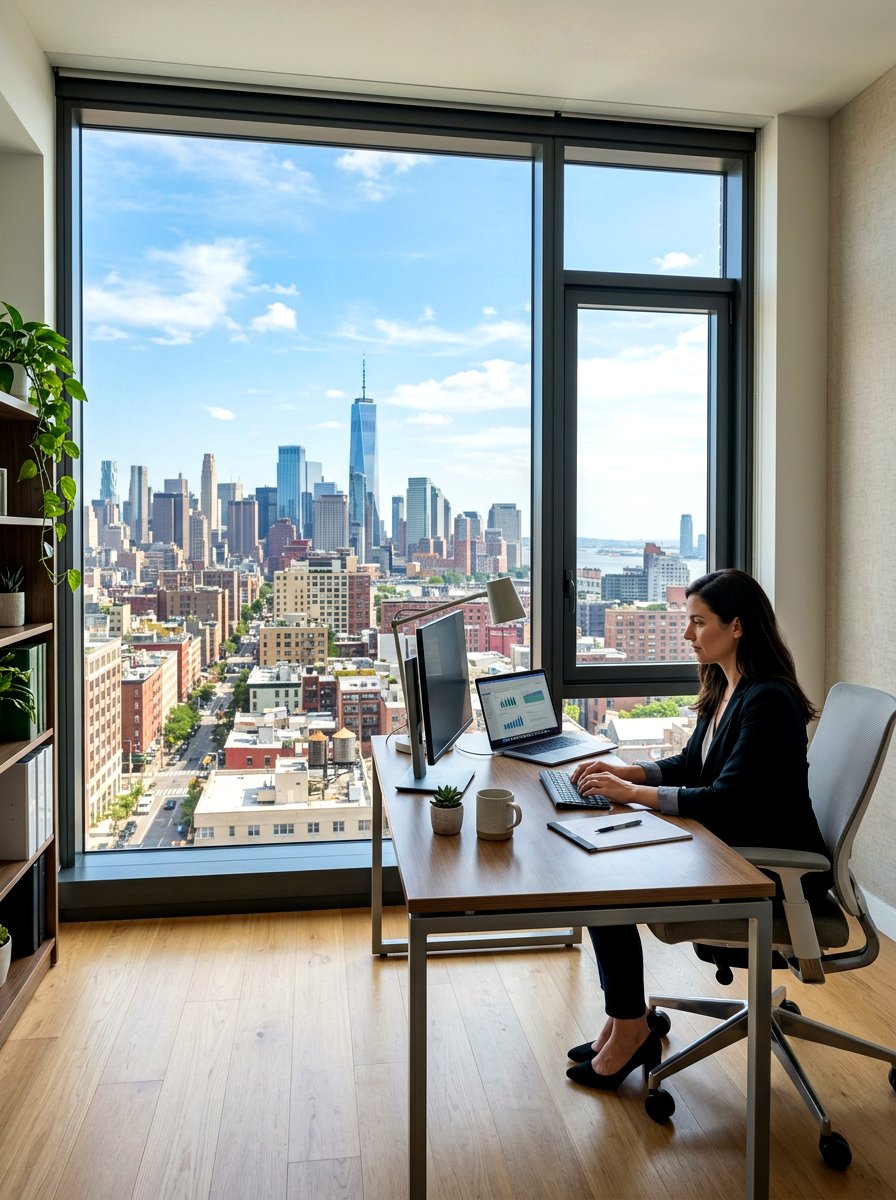
Applying a thin layer of solar-rejecting film to your office windows is an invisible way to boost energy efficiency. This high-tech film blocks a significant percentage of solar heat gain and harmful UV rays without obstructing your view of the outside world. By keeping the room cooler in the summer, you reduce your reliance on air conditioning and prevent your furniture from fading over time. Solar window film is an excellent alternative to heavy blinds if you prefer a clean, open look with plenty of natural light. It is an affordable and effective upgrade that makes your workspace more comfortable and efficient year-round.

25. Energy Monitoring Smart Plug
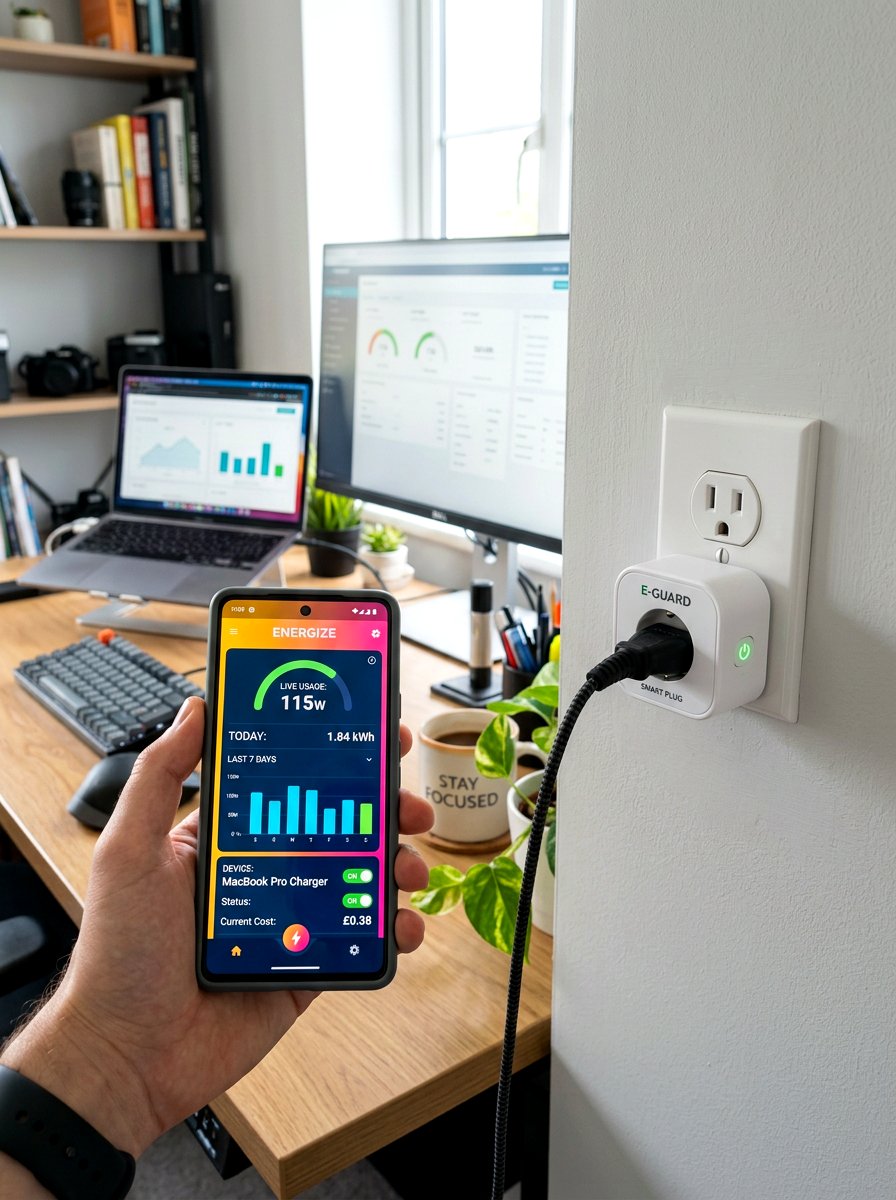
Knowledge is power when it comes to saving energy, and an energy-monitoring smart plug allows you to see exactly how much electricity your equipment is using. These devices plug into your standard outlets and connect to an app on your smartphone, providing real-time data and historical usage charts. You can use this information to identify power-hungry devices and set schedules to turn them off when they aren 't needed. This level of control helps you fine-tune your office' s energy consumption and motivates you to make more sustainable choices. It is a fantastic tool for anyone looking to optimize their workspace for maximum efficiency.
26. Insulated Cellular Shades
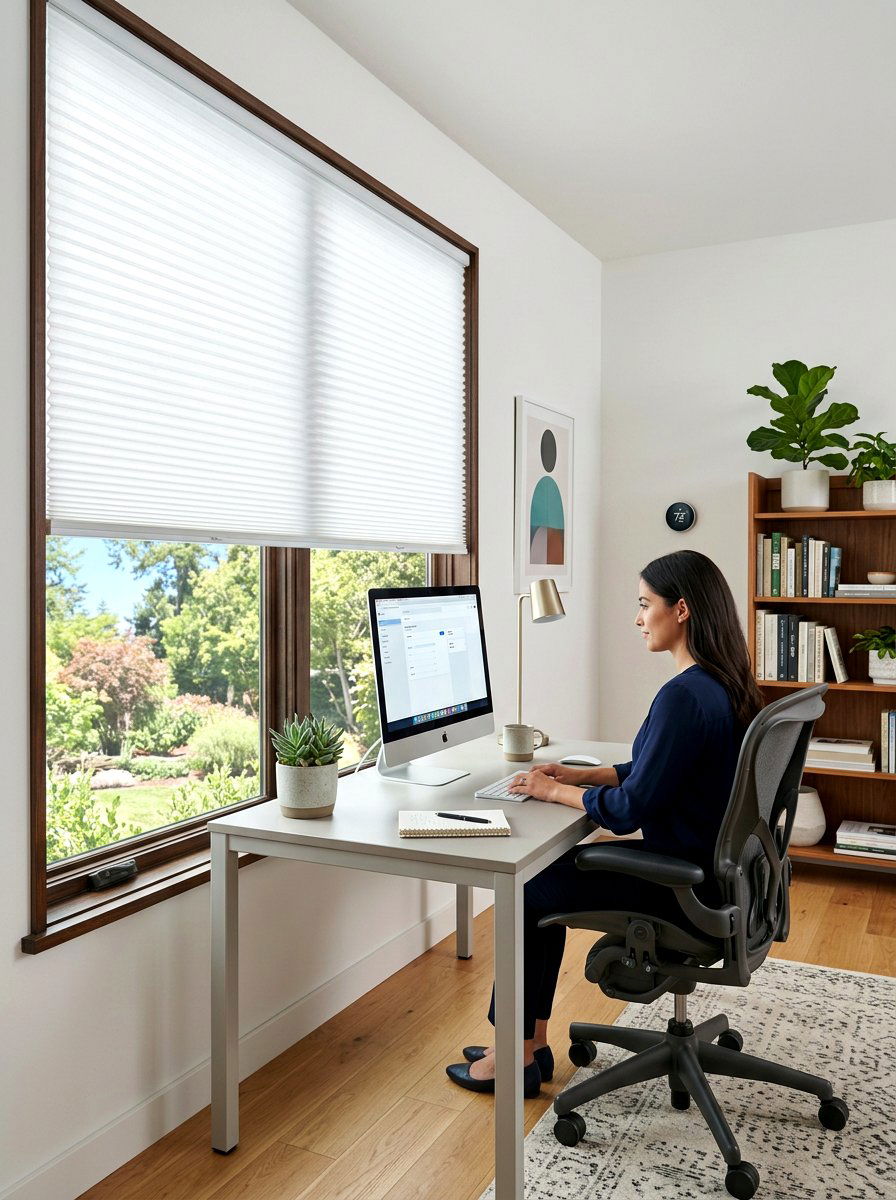
Cellular shades, also known as honeycomb shades, are specifically designed with air-trapping pockets that provide exceptional insulation at the window. In an energy-efficient home office, these shades act as a barrier against heat and cold, helping to keep your workspace at a perfect temperature. They are available in various opacities, from sheer to complete blackout, allowing you to control privacy and light levels with ease. The clean, crisp lines of cellular shades offer a modern look that suits a professional environment. By reducing the energy needed for climate control, these shades are a smart and stylish investment for any eco-friendly remote worker.
27. Upcycled Office Furniture
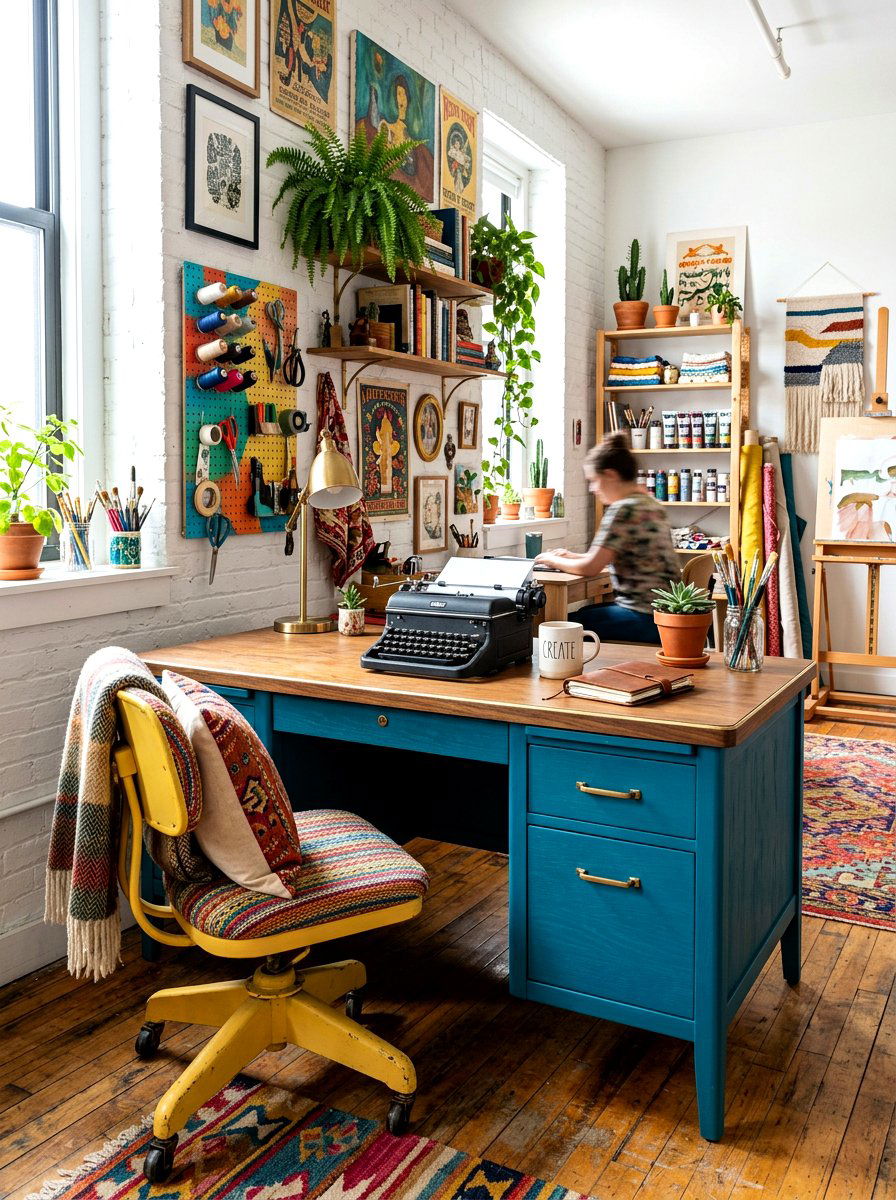
Giving new life to old pieces of furniture is the ultimate way to create a sustainable and unique home office. You can refinish an old dining table to use as a spacious desk or turn vintage wooden crates into charming wall-mounted bookshelves. Upcycling prevents waste, saves money, and ensures that your office has a one-of-a-kind personality that cannot be found in a store. This creative approach to design is highly celebrated on Pinterest and social media, providing endless inspiration for a personalized workspace. By mixing upcycled items with modern tech, you create a sophisticated and environmentally responsible office that truly reflects your style.
28. Attic Office Insulation
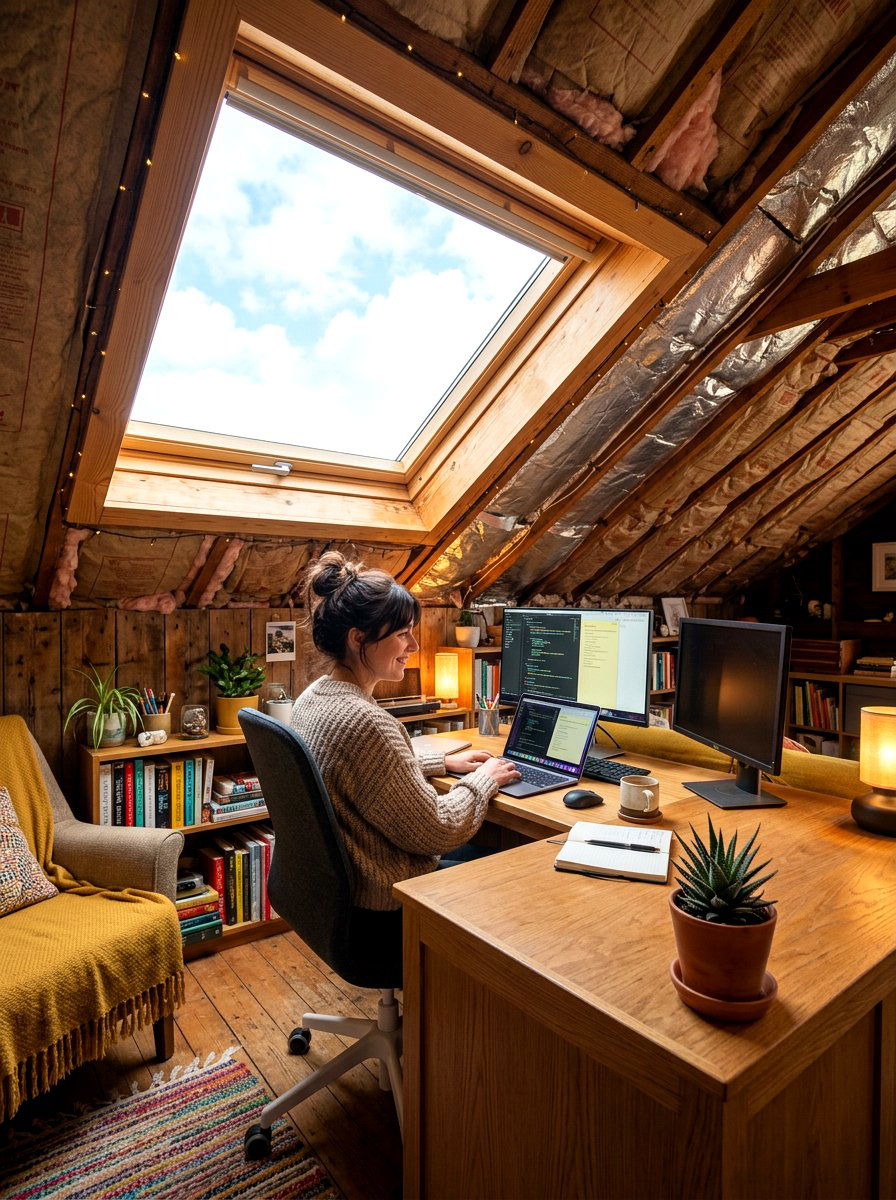
If your workspace is located in a converted attic or upper floor, ensuring proper insulation is the most critical factor for energy efficiency. Attics are often the areas most affected by outdoor temperature swings, but high-quality insulation keeps the space comfortable without overworking your heating or cooling systems. You can use eco-friendly insulation materials like recycled denim or sheep's wool for a non-toxic approach. A well-insulated attic office is quiet, cozy, and highly efficient, providing a secluded sanctuary away from the distractions of the rest of the house. This structural improvement is a foundational step in creating a long-term, sustainable professional environment.
29. Reflective Wall Colors
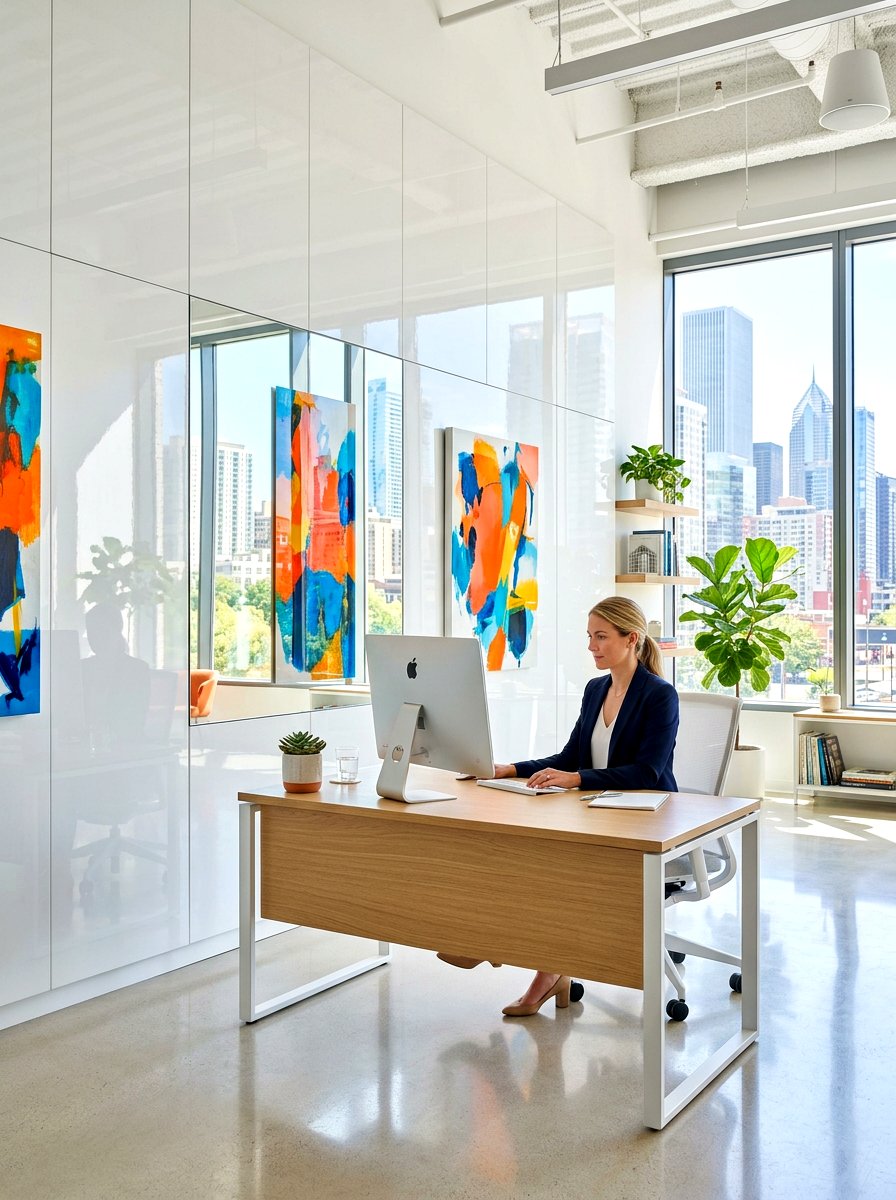
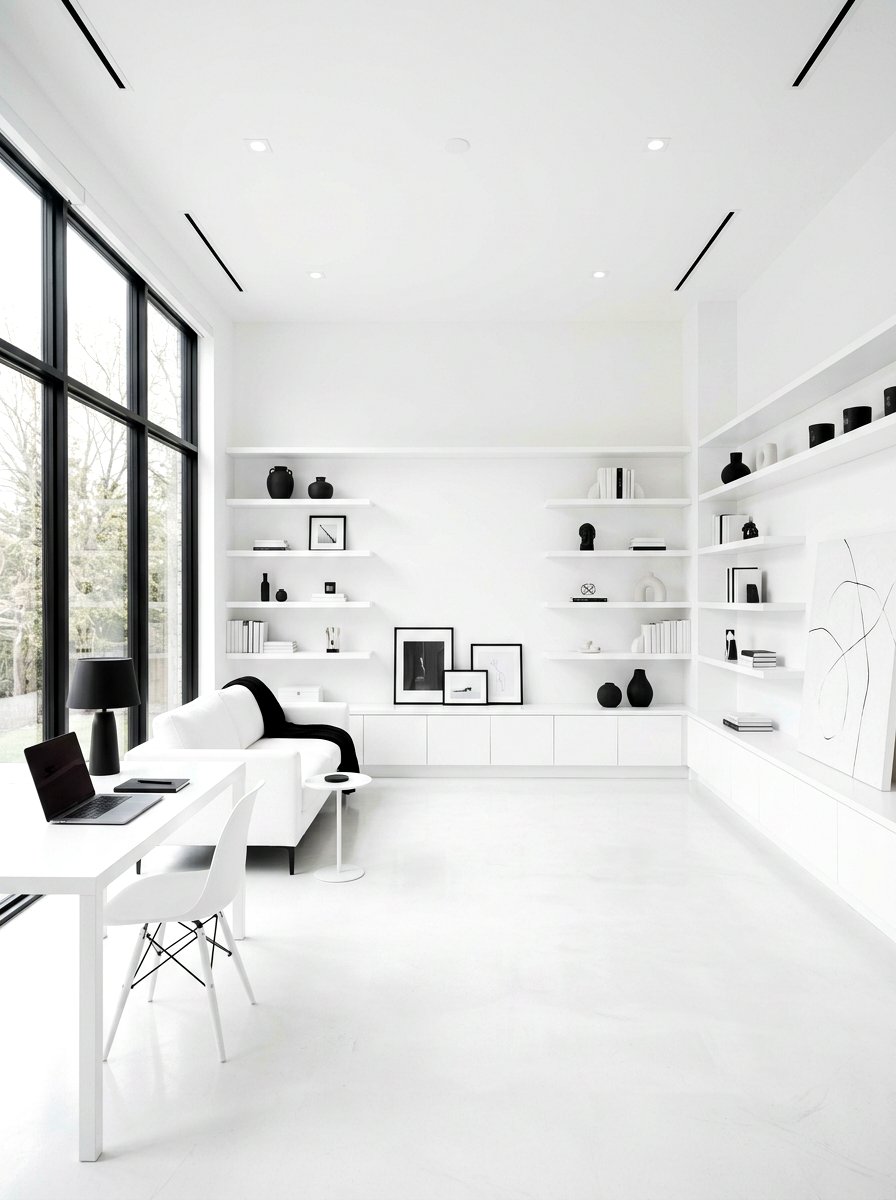
The color of your office walls plays a massive role in how much artificial light you need to use during the day. Painting your workspace in light, reflective shades like soft white, pale gray, or light cream helps bounce both natural and lamp light throughout the room. This makes the space feel larger, brighter, and more energetic, reducing the need for high-wattage bulbs. Look for paints with a high Light Reflectance Value (LRV) to maximize this effect. Using reflective colors is a simple design trick that enhances the overall mood of your office while naturally lowering your electricity usage for lighting tasks.
30. Off Grid Home Office
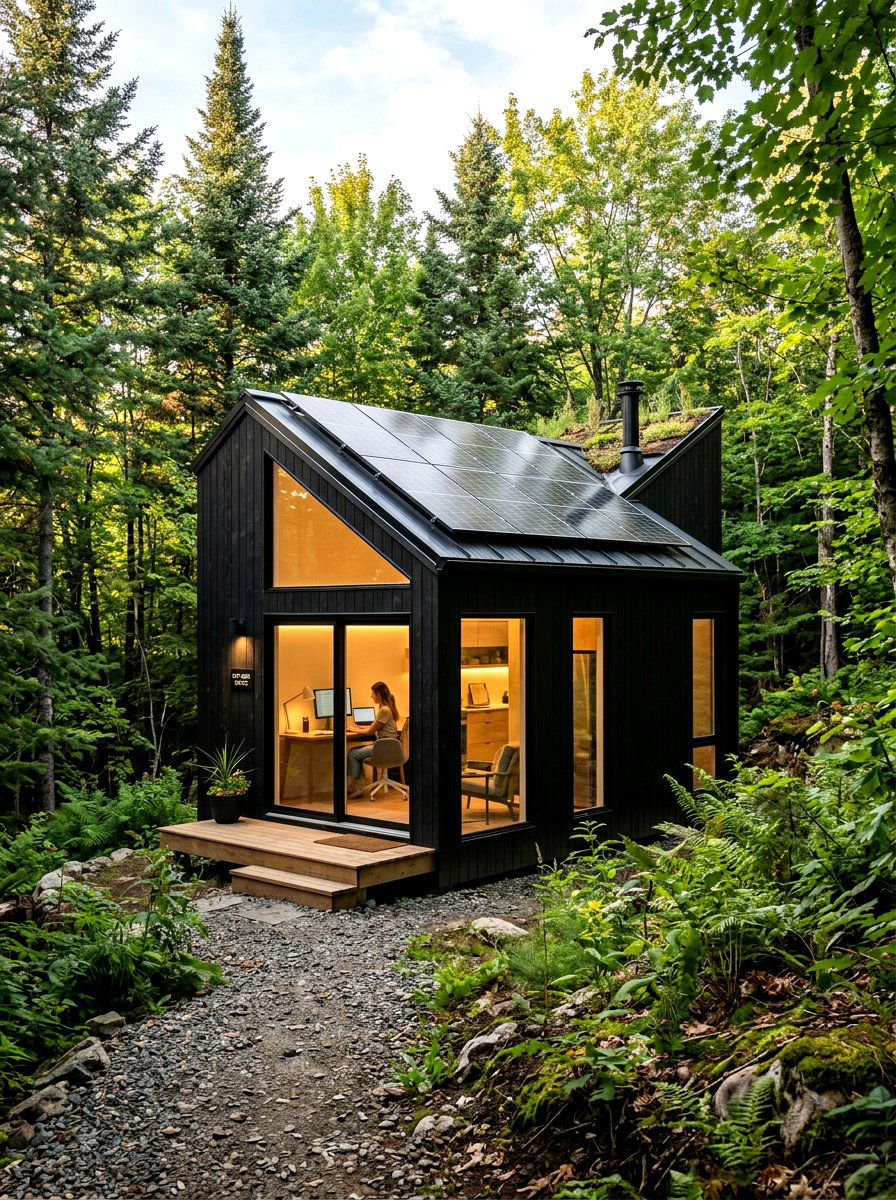
For the ultimate in sustainability, an off-grid home office is designed to operate completely independently of the municipal power grid. This setup typically involves a robust combination of solar panels, large-scale battery storage, and highly efficient appliances. Often housed in a dedicated backyard shed or a tiny house, these workspaces offer total privacy and a zero-carbon footprint. The design focuses on extreme insulation, passive ventilation, and multi-functional furniture to make the most of a compact area. An off-grid office represents the peak of energy efficiency, providing a quiet, dedicated space where you can work in total harmony with the natural environment.
Conclusion:
Transforming your workspace into an energy-efficient haven is a rewarding journey that blends personal style with environmental responsibility. By implementing these thirty ideas, you can create a professional environment that is productive, healthy, and cost-effective. Whether you start with small changes like LED bulbs and plants or invest in larger upgrades like solar panels and attic insulation, every step contributes to a more sustainable future. A green home office not only reduces your carbon footprint but also enhances your daily well-being and focus. Embrace the harmony of technology and nature to build a workspace that truly reflects your values and supports your professional success.

Related posts: