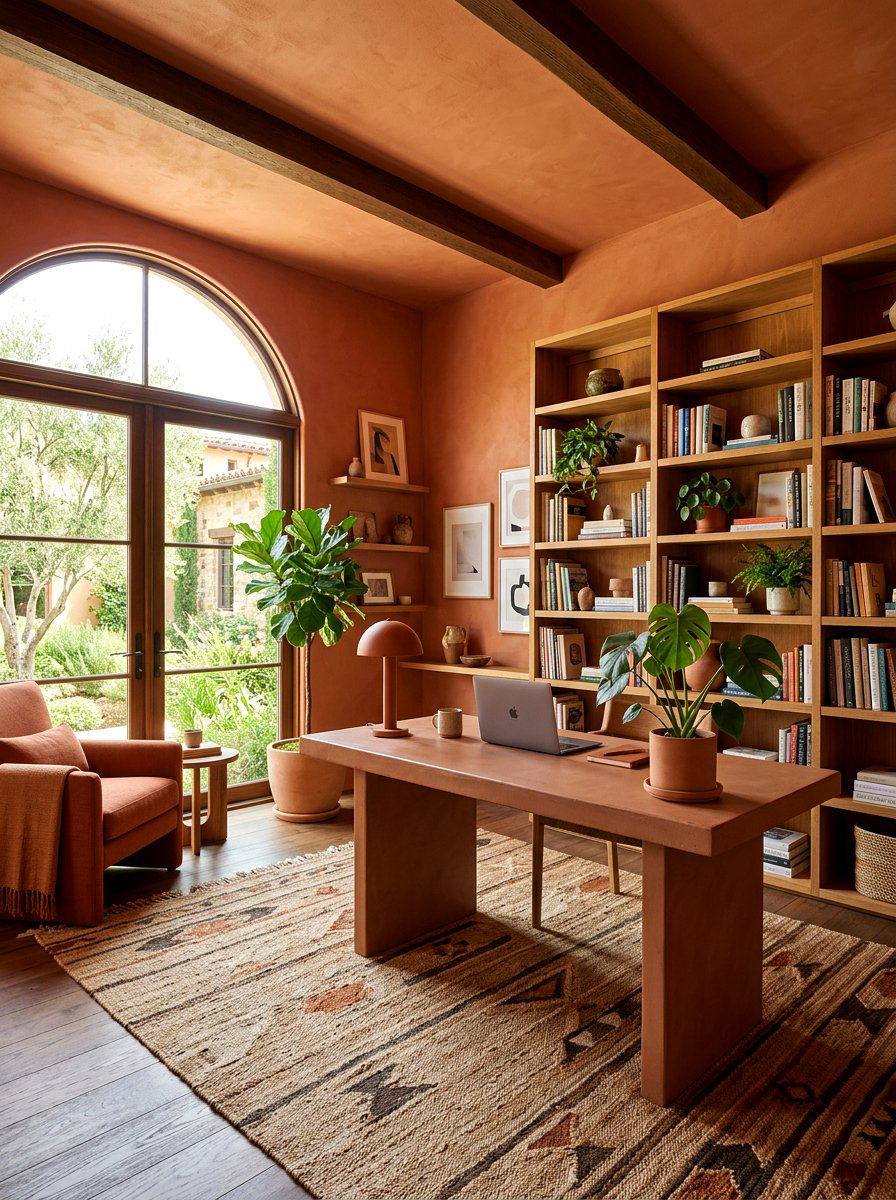
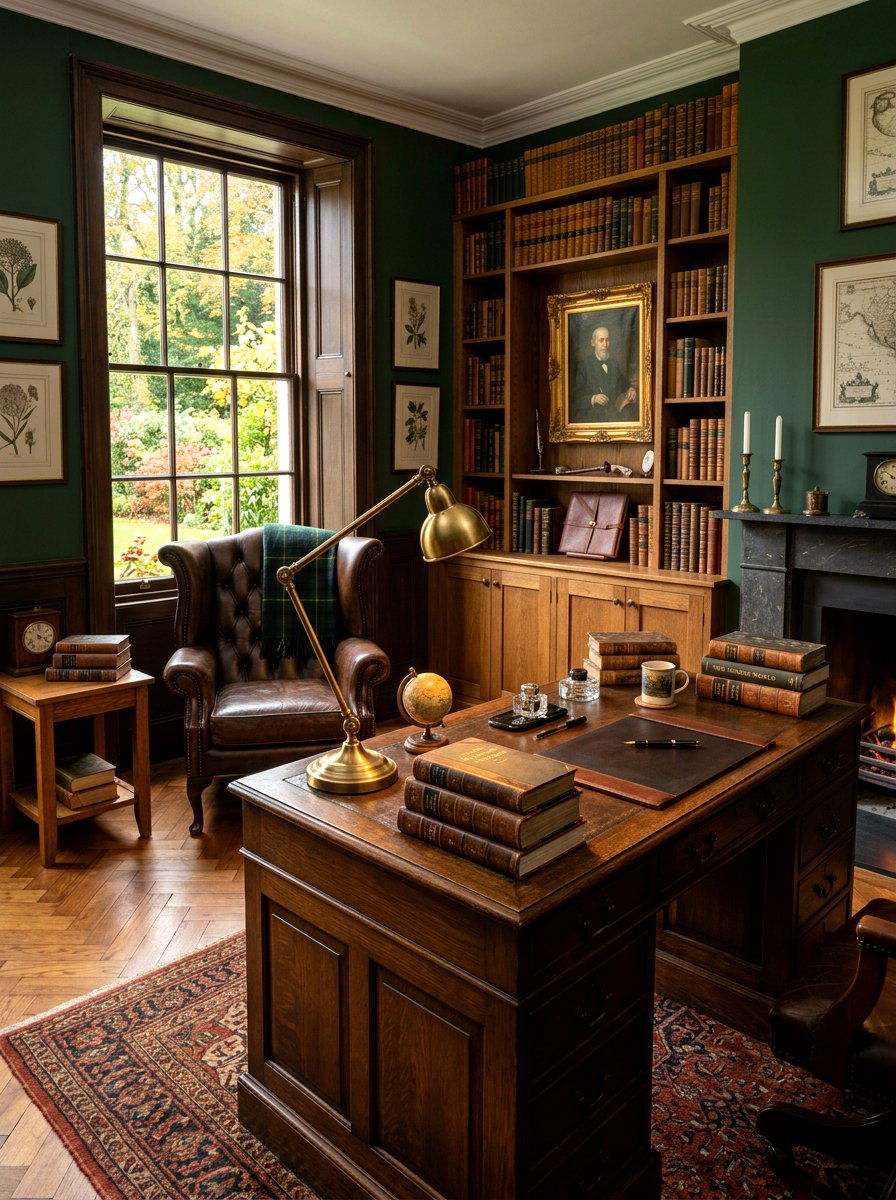
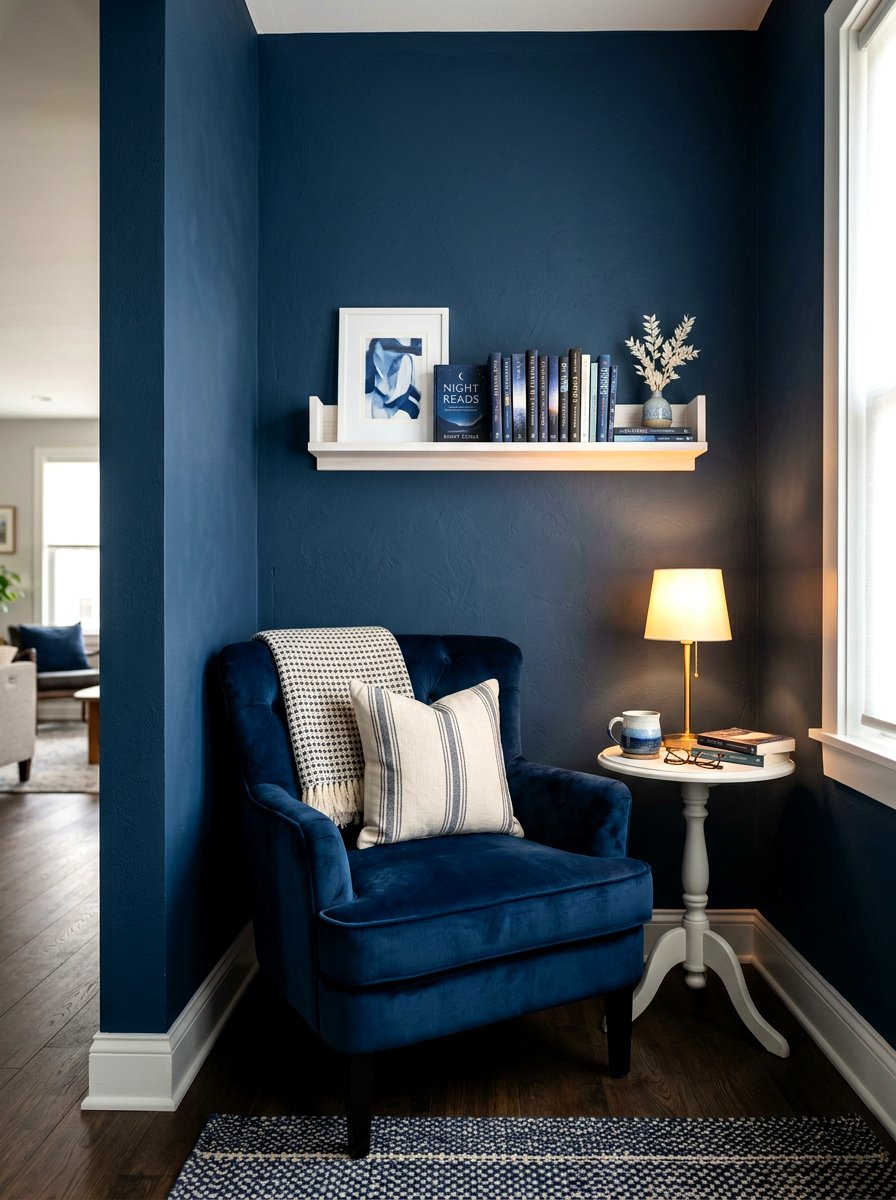
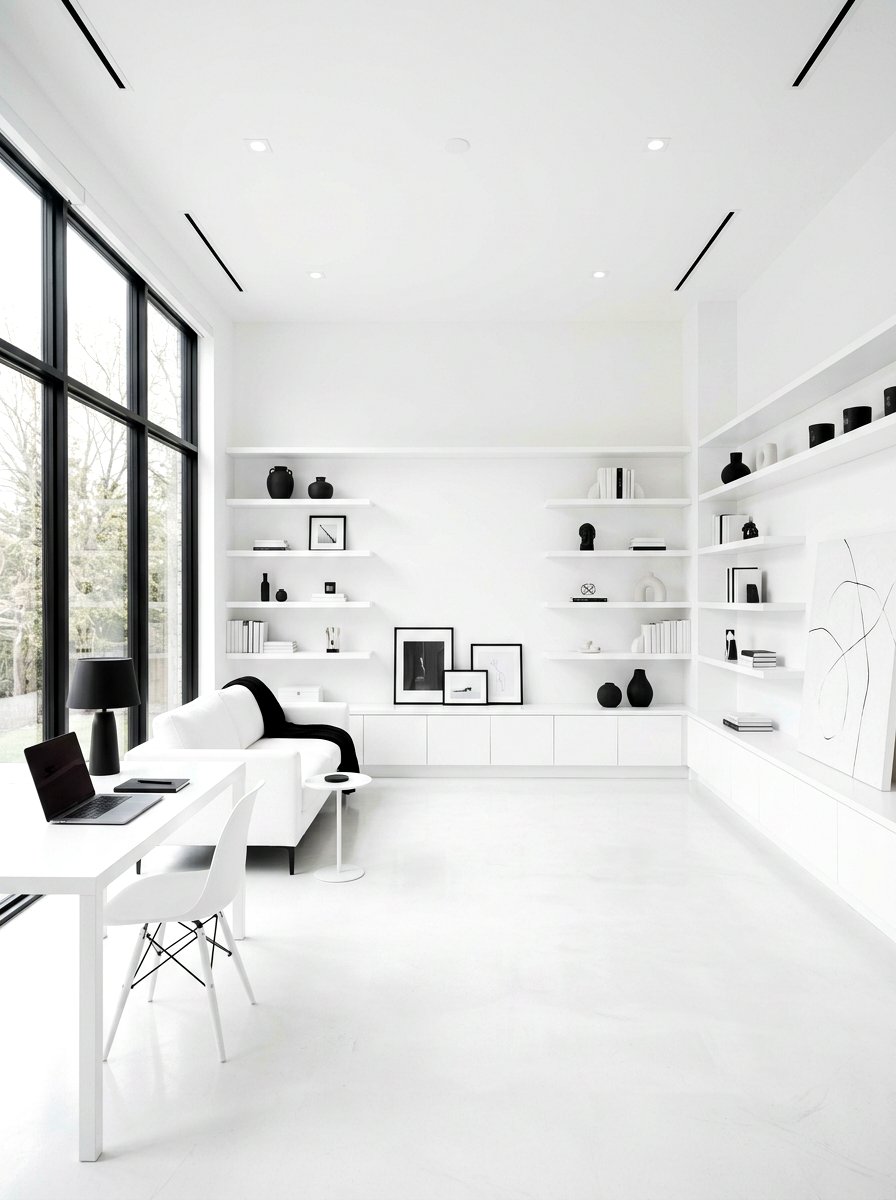
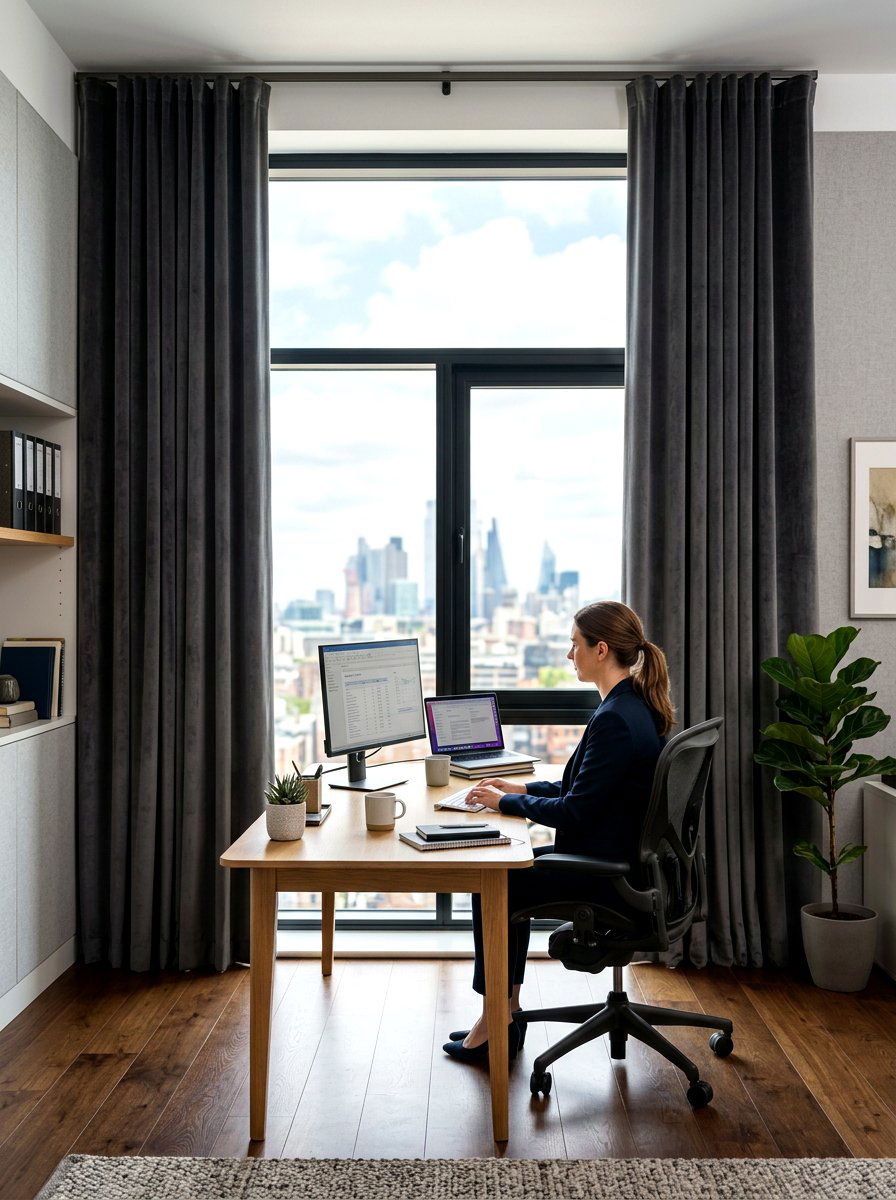
Creating a moody editor office is all about blending deep, sophisticated color palettes with functional design to spark creativity and intense focus. For many professionals, the shift away from sterile white rooms toward darker, more intimate environments has become a hallmark of modern interior style. These spaces provide a cocoon-like atmosphere where distractions fade away, allowing your mind to dive deep into manuscripts or complex digital projects. By layering rich textures like velvet and leather against charcoal or emerald backdrops, you create a visual sanctuary that feels both grounded and inspiring. Whether you prefer a vintage academic vibe or a sleek industrial look, these ideas offer the perfect blueprint for a workspace that truly means business.
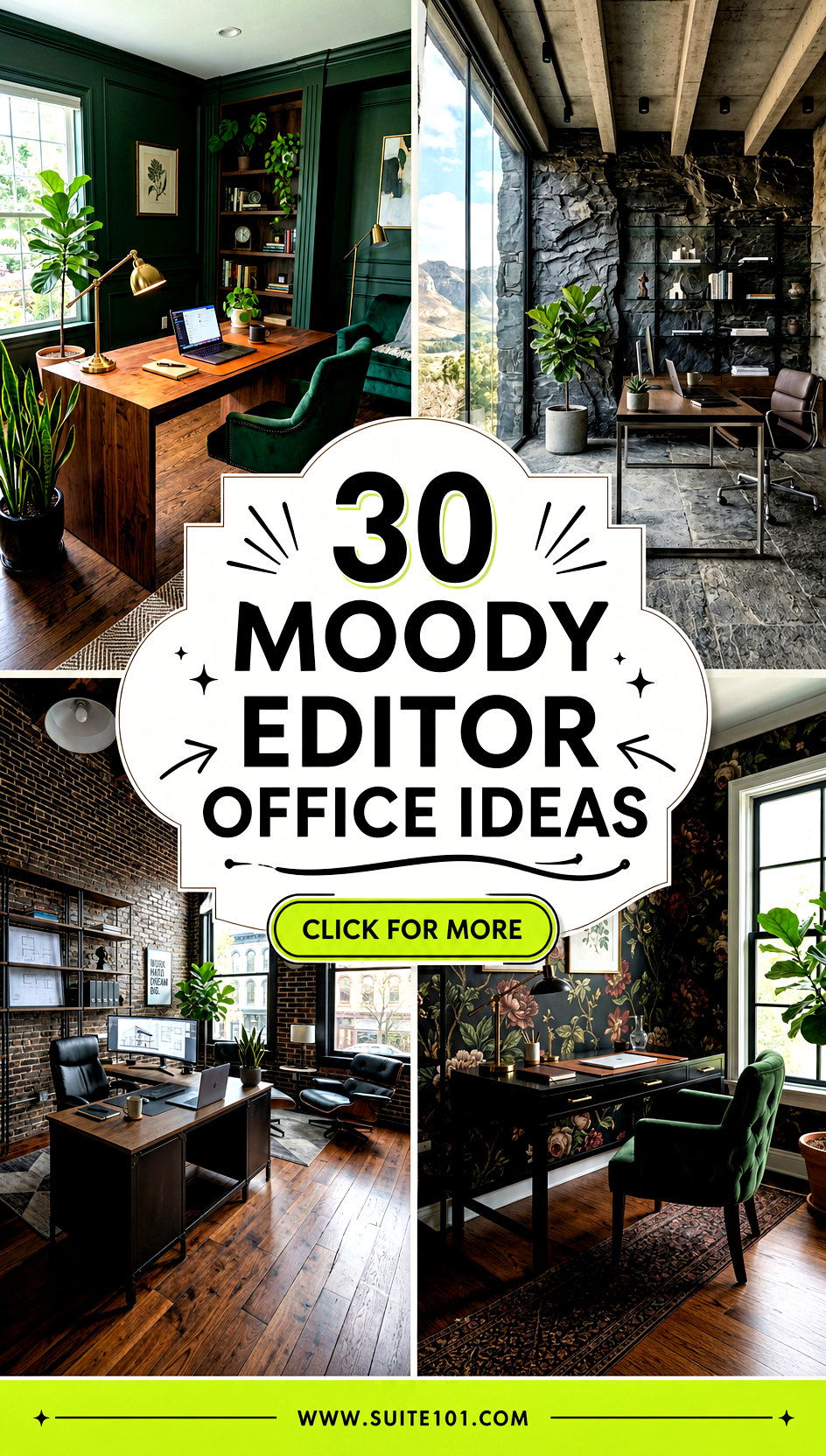
1. Dark Green Workspace
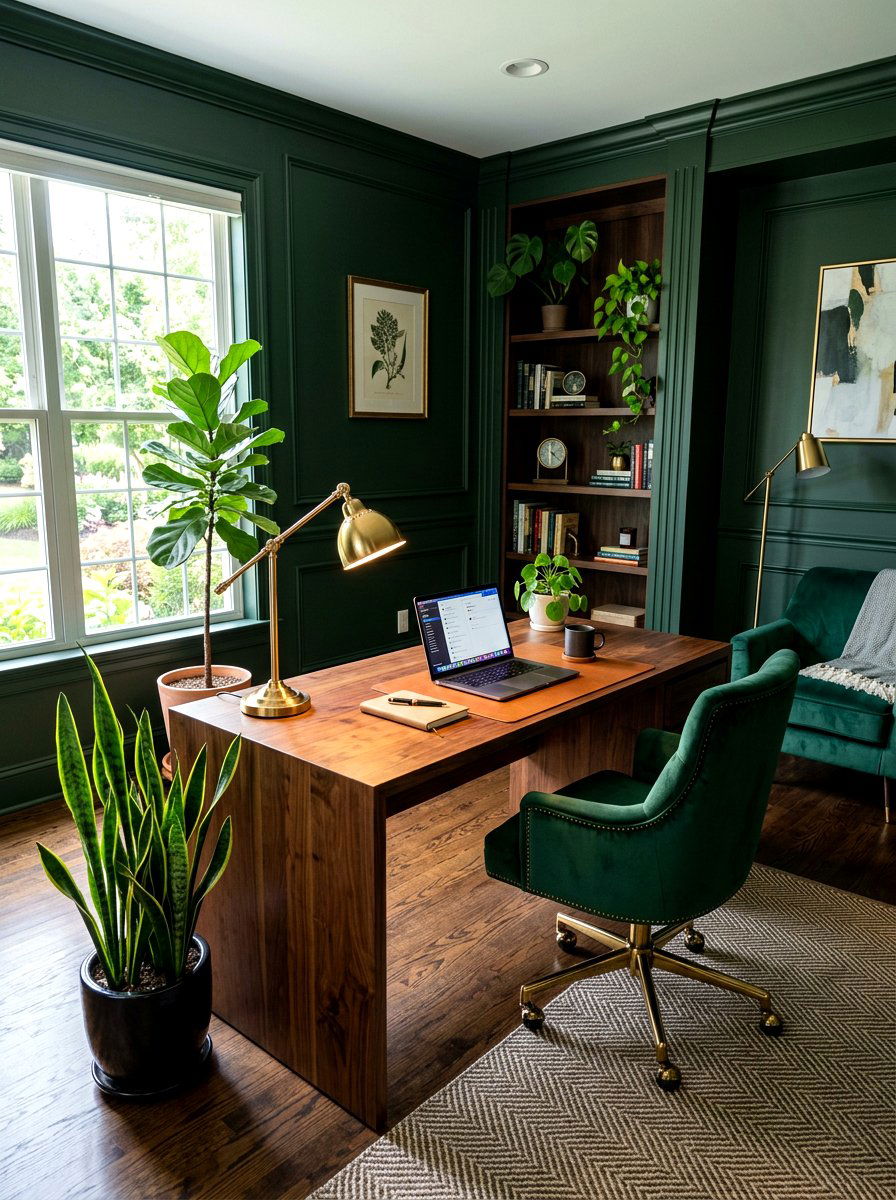
Stepping into a workspace bathed in deep forest green immediately calms the mind and prepares the spirit for deep creative work. This specific hue is renowned for its ability to reduce eye strain while providing a rich, organic backdrop that feels both luxurious and grounded. In a complete editor’s suite, you might pair these saturated walls with a heavy walnut desk and brass accents to create a timeless, executive atmosphere. The mood is further enhanced by incorporating various indoor plants that pop against the dark pigment, bringing a touch of life to the sophisticated gloom. This design theme is perfect for those who want a nature-inspired sanctuary that feels high-end and focused.
2. Black Library Office
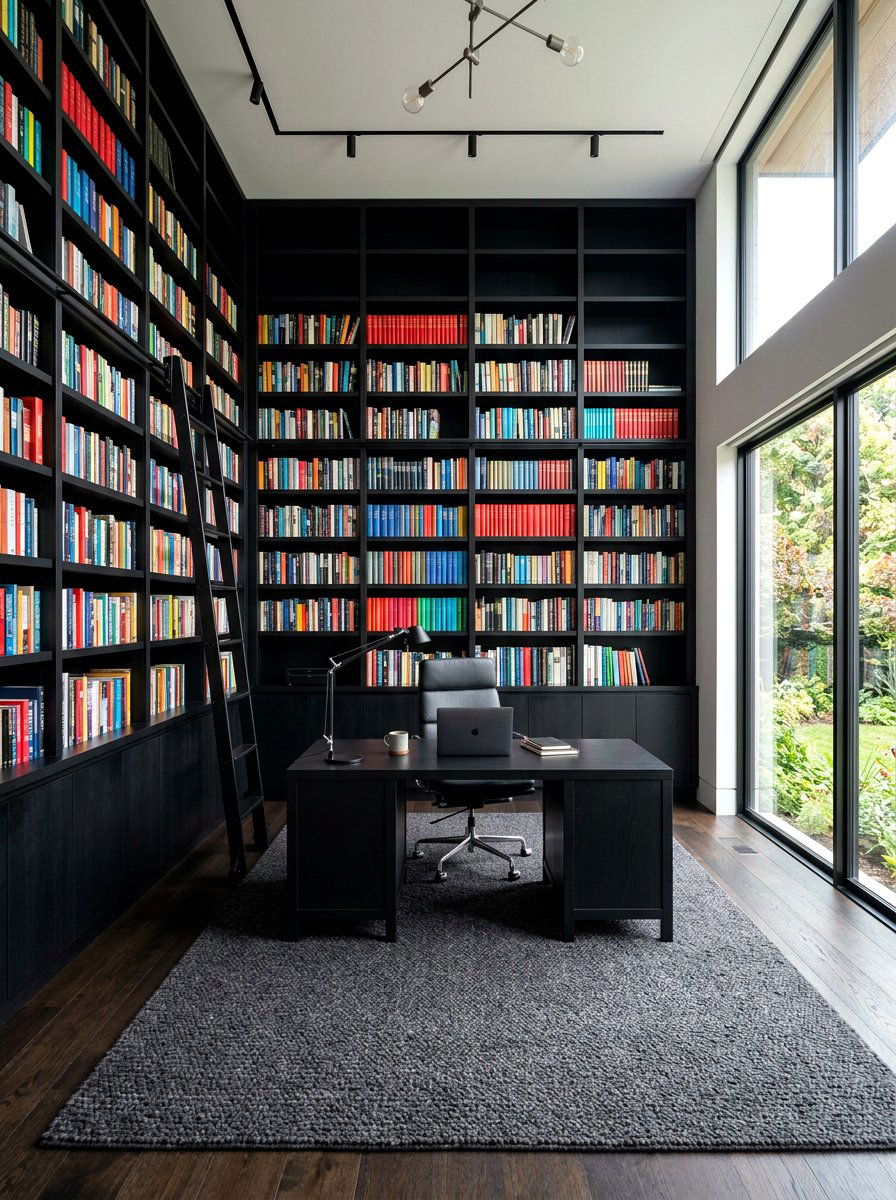
A black library office serves as the ultimate retreat for an editor who values silence and a high-contrast aesthetic. By painting every wall and all built-in shelving in a matte black finish, the room effectively disappears, leaving only your illuminated screen and open books as the focal points. This total immersion into darkness creates a dramatic visual hierarchy where colorful book spines become the primary decor. A large, plush area rug in a charcoal tone adds a layer of softness underfoot, ensuring the space feels cozy rather than cold. It is a bold, monochromatic choice that emphasizes architectural lines and creates a quiet, distraction-free environment for intense daily editing sessions.
3. Industrial Style Workspace
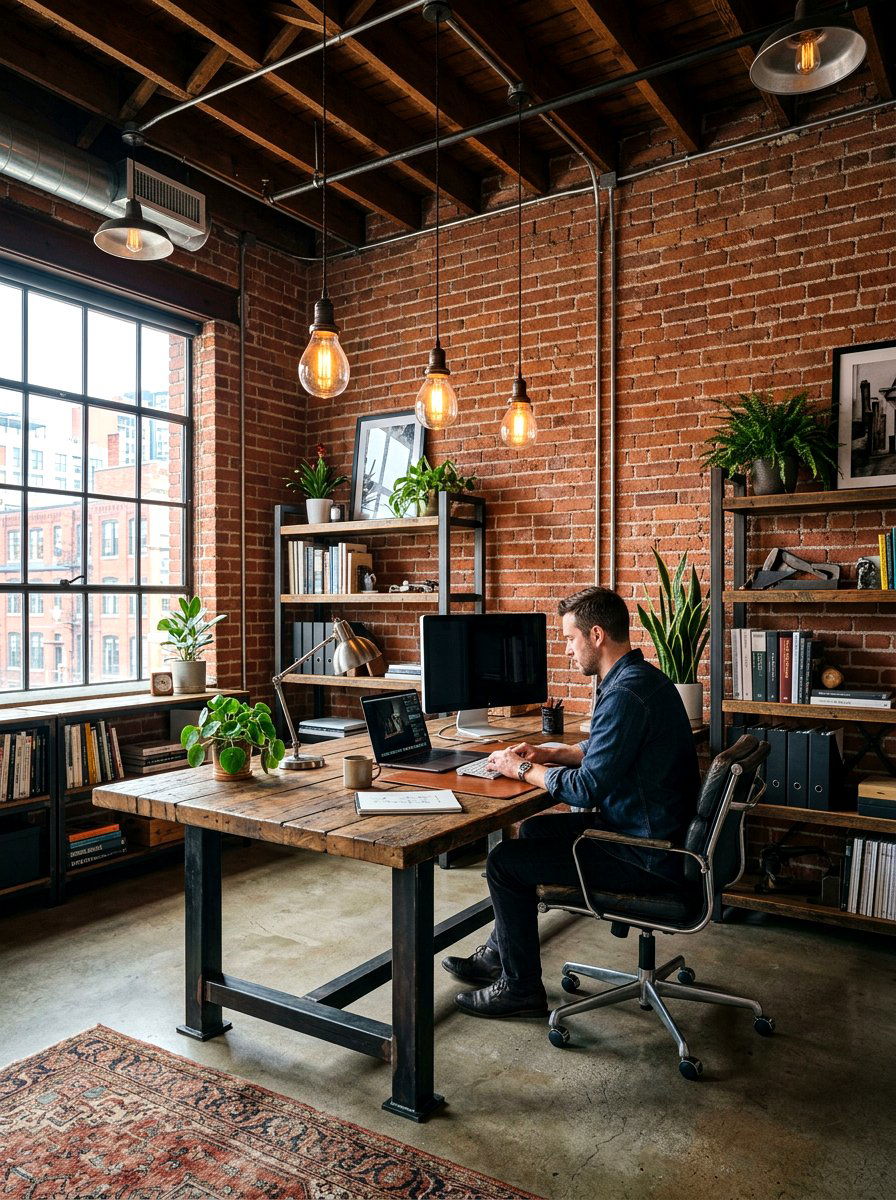
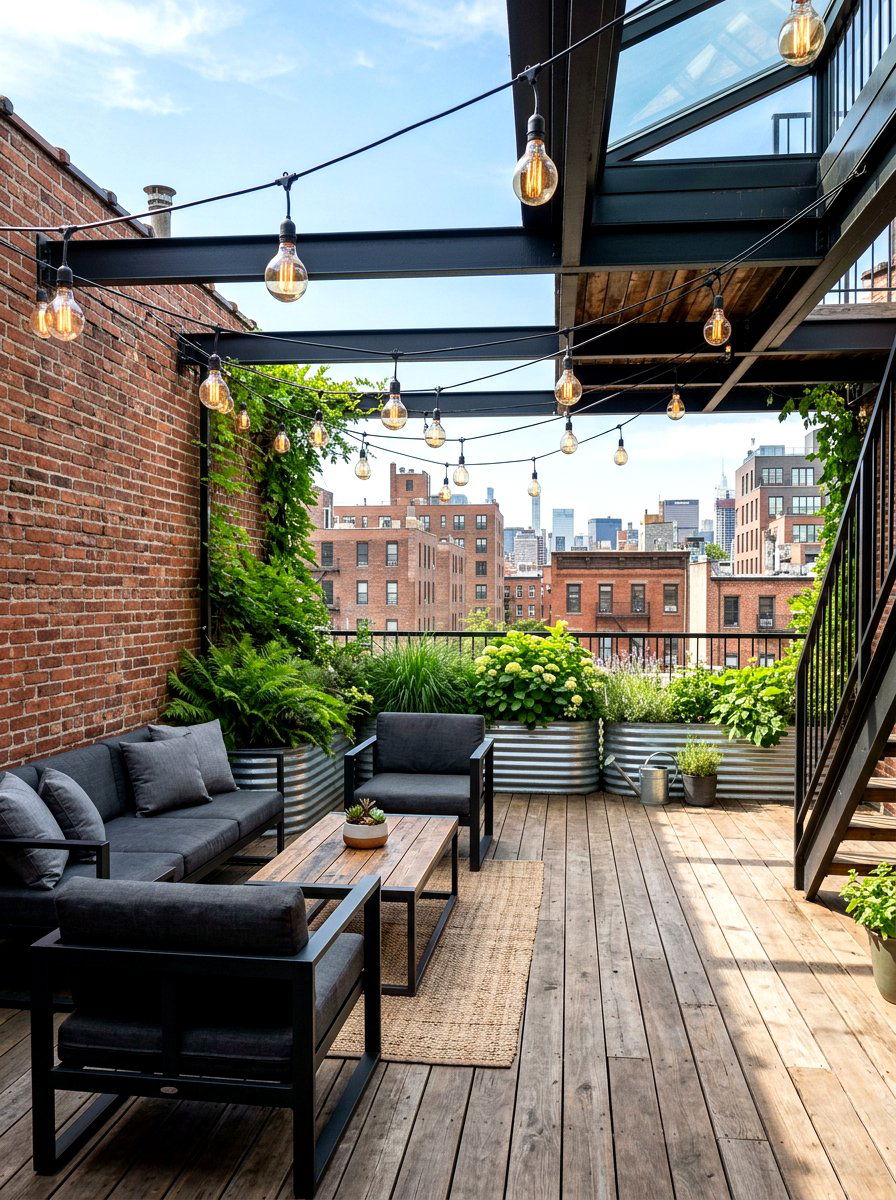
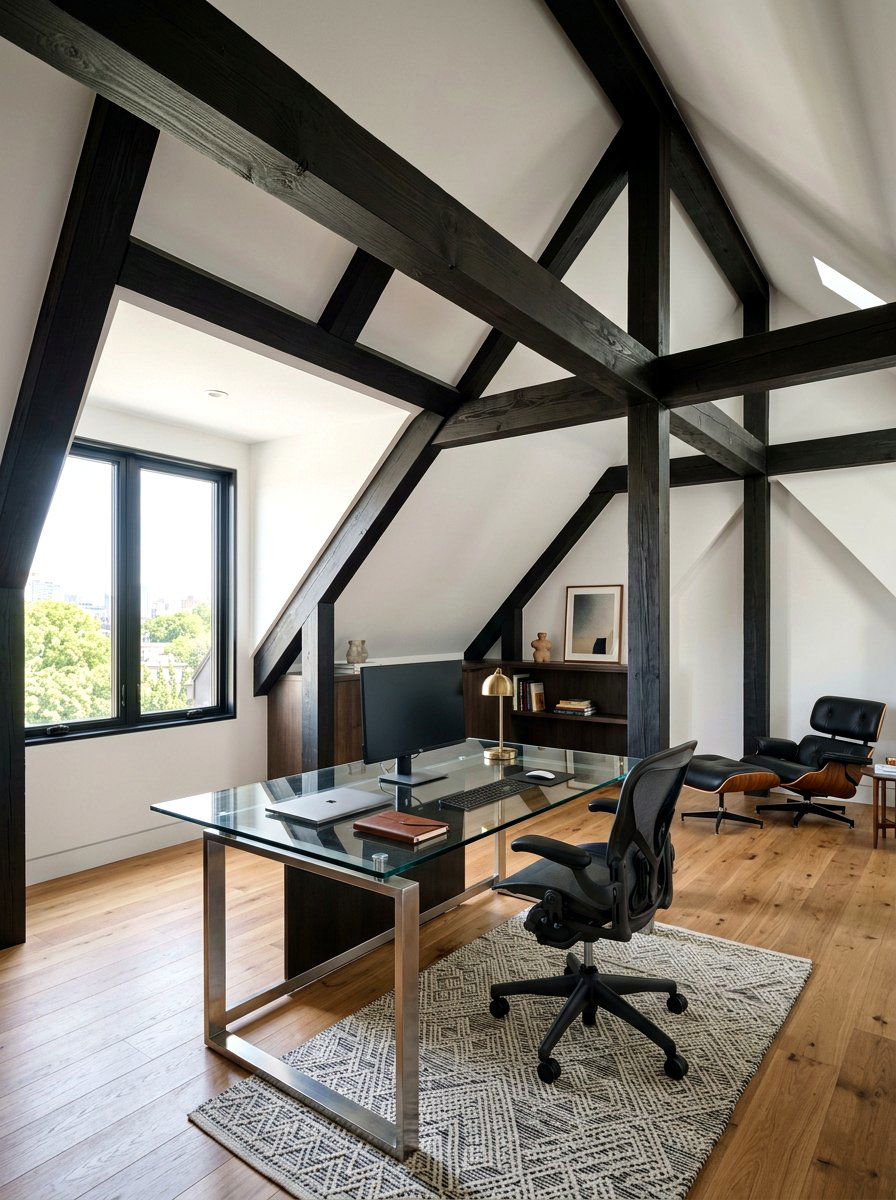
Embracing the rugged beauty of an industrial style workspace allows an editor to feel connected to a raw, productive energy. This design theme typically features a mix of exposed brick walls, metal structural elements, and reclaimed wood surfaces that tell a story of longevity and craftsmanship. The moody vibe is achieved through the use of heavy iron desk frames and dark-stained timber tops that provide a sturdy foundation for tech-heavy setups. Large, industrial-style pendant lights with Edison bulbs cast a warm, amber glow, softening the hard edges of the room. It is a practical yet visually striking choice for anyone who appreciates a workspace with an edgy, urban personality.
4. Dark Wood Paneling
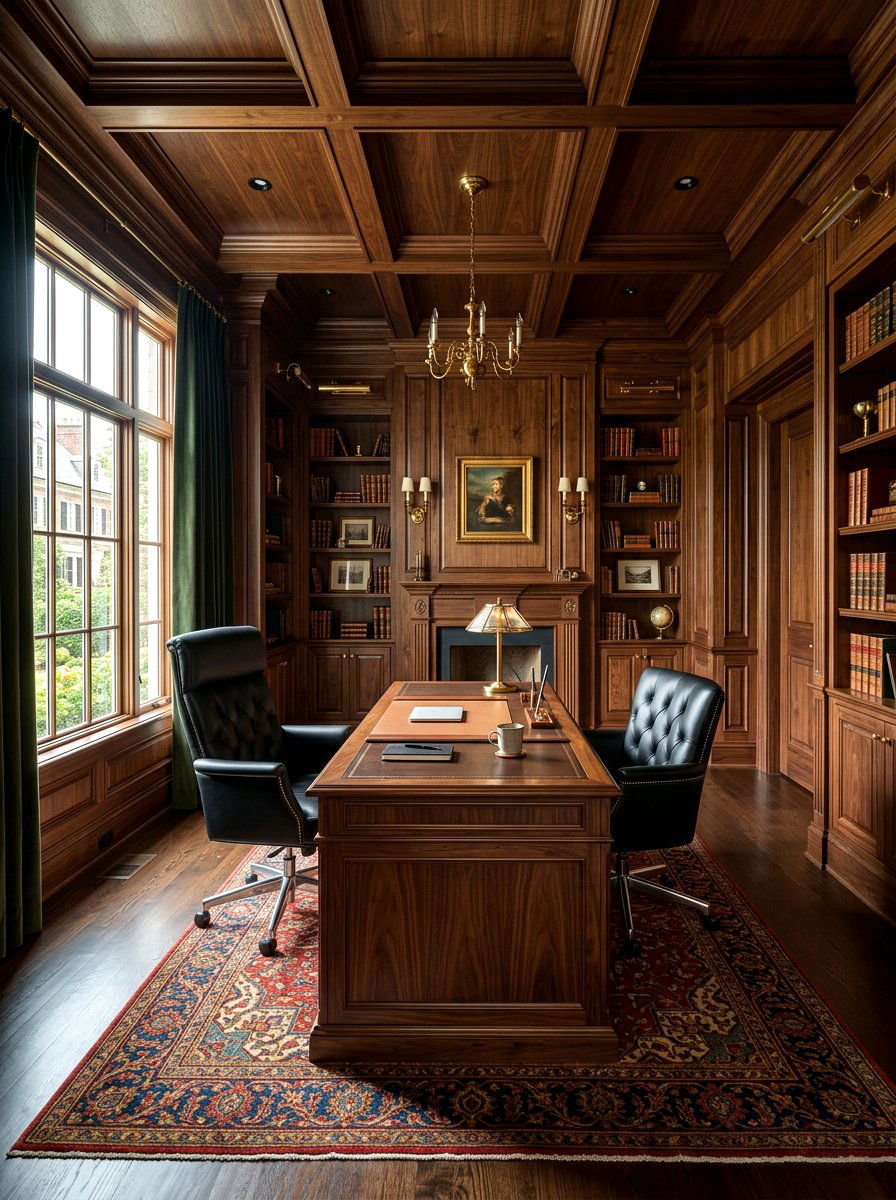
Integrating dark wood paneling into an office design transforms a standard room into a classic, stately den that exudes authority and warmth. Floor-to-ceiling walnut or oak panels create a rhythmic texture along the walls, providing an acoustic dampening effect that is highly beneficial for focused editing tasks. When combined with a matching executive desk and built-in cabinetry, the entire room feels like a cohesive, well-crafted piece of furniture. To prevent the space from feeling too heavy, editors often incorporate a sleek, modern leather chair and minimalist lighting fixtures. This blend of traditional architectural details and contemporary furniture creates a sophisticated environment that bridges the gap between old-world charm and modern productivity.
5. Deep Navy Theme
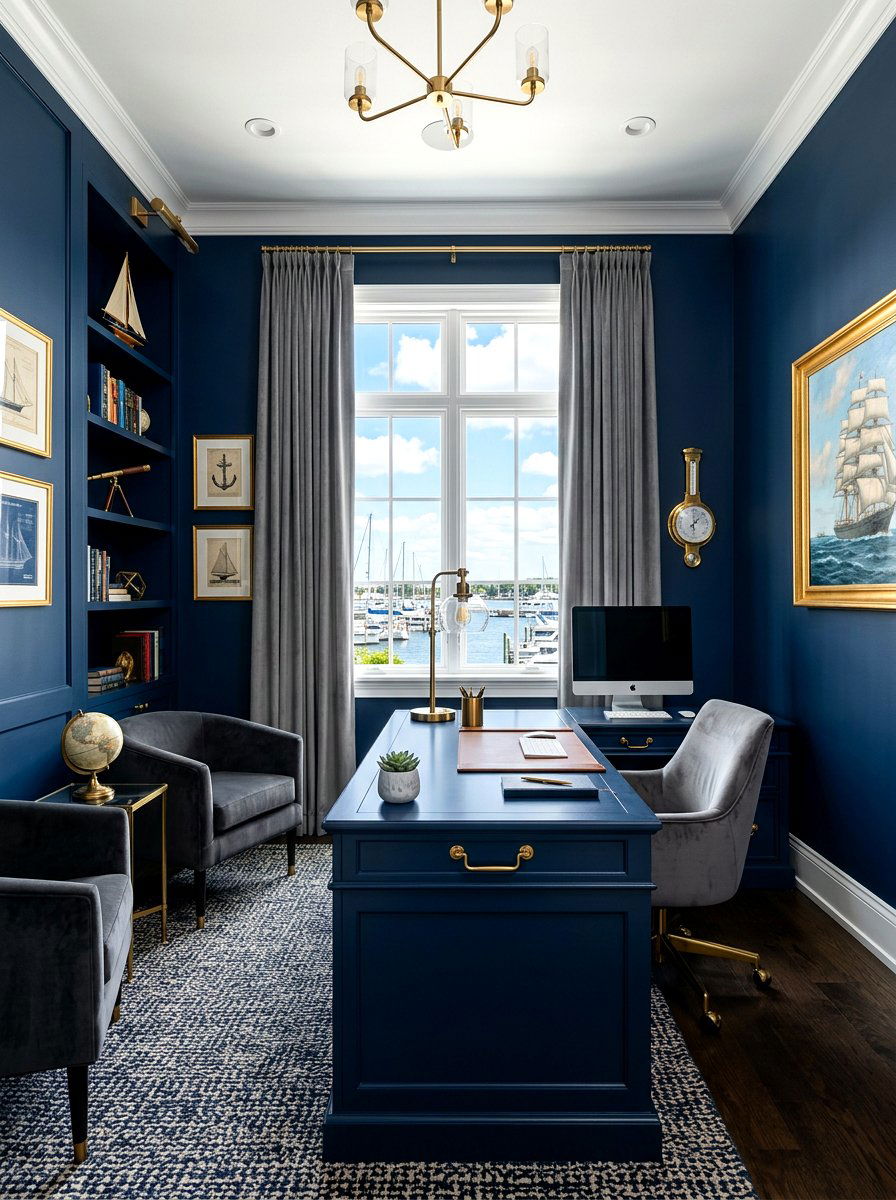
A deep navy theme offers a sophisticated alternative to black, providing a cool and calming atmosphere that encourages clear thinking and productivity. This oceanic hue works beautifully across all four walls, especially when paired with crisp white trim or metallic gold hardware for a touch of nautical elegance. The spatial layout usually centers around a large, dark blue desk that blends into the walls, making the room feel expansive and seamless. Incorporating soft, grey textiles through curtains or upholstery helps to balance the intensity of the blue, creating a layered and inviting look. It is an ideal choice for editors who want a moody space that feels vibrant yet professional.
6. Vintage Executive Office
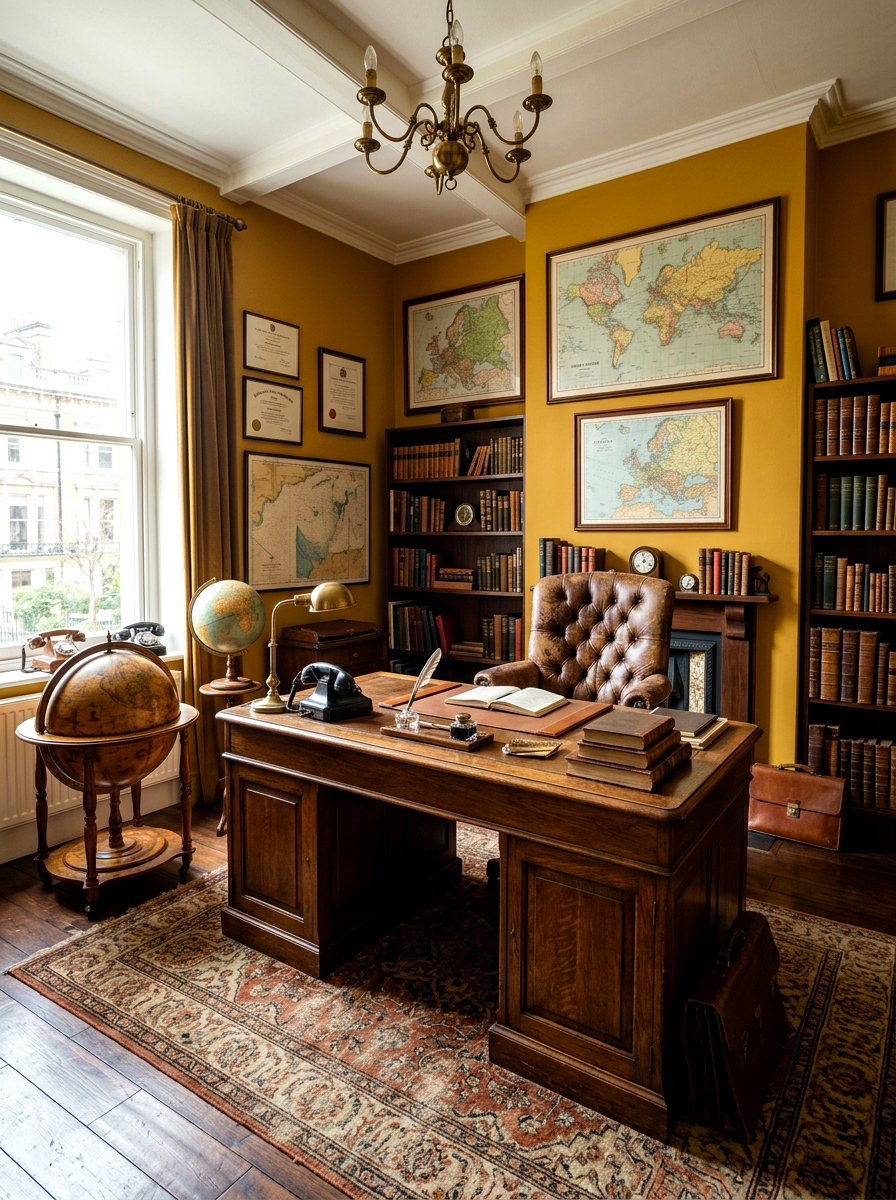
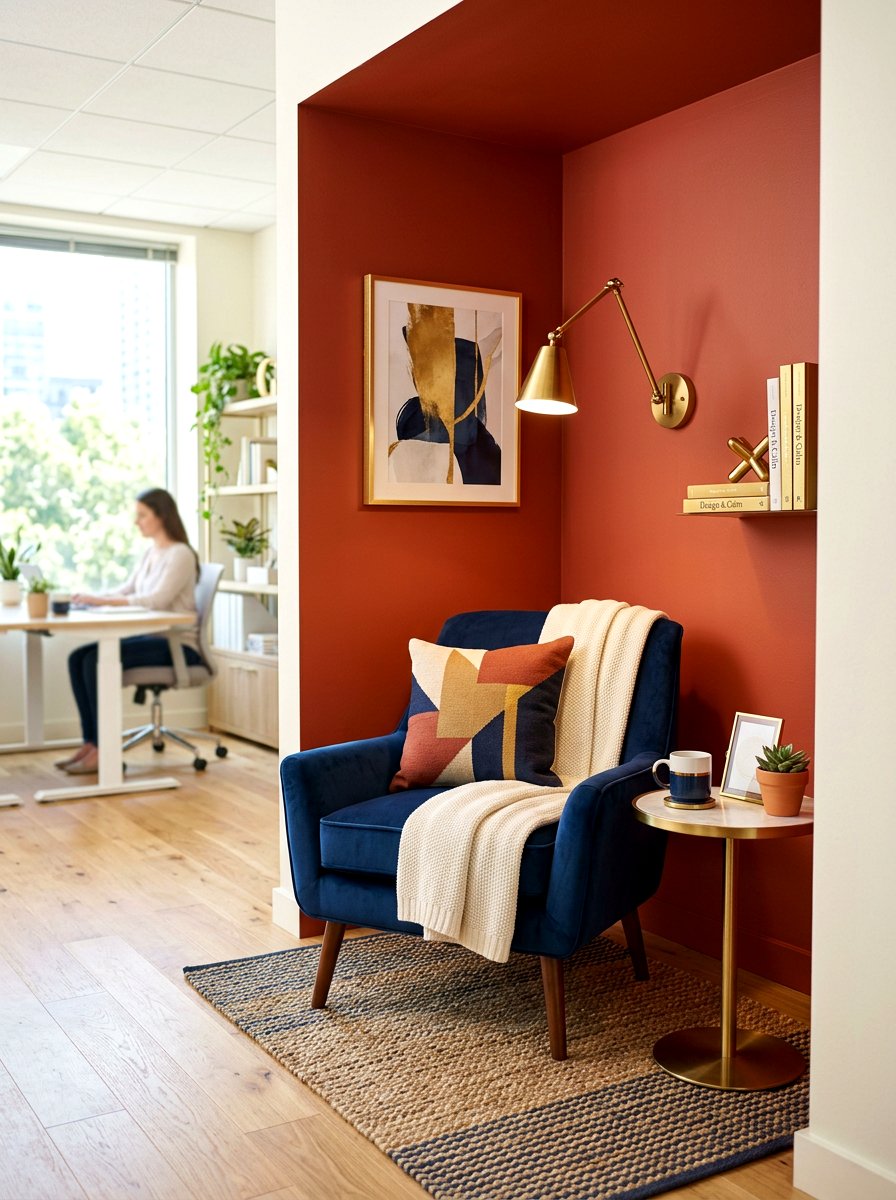
Designing a vintage executive office is about capturing the nostalgic essence of a mid-century newsroom or a private scholar’s study. The centerpiece of this theme is often a substantial, weathered leather armchair and a large pedestal desk with visible wood grain and brass handles. Moody elements are introduced through a palette of oxblood, deep brown, and mustard yellow, which evoke a sense of history and intellectual weight. Styling the room with antique globes, rotary phones, and framed vintage maps adds a layer of storytelling to the environment. This design approach creates a rich, sensory experience that makes every hour spent at the desk feel like part of a significant creative legacy.
7. Charcoal Grey Decor
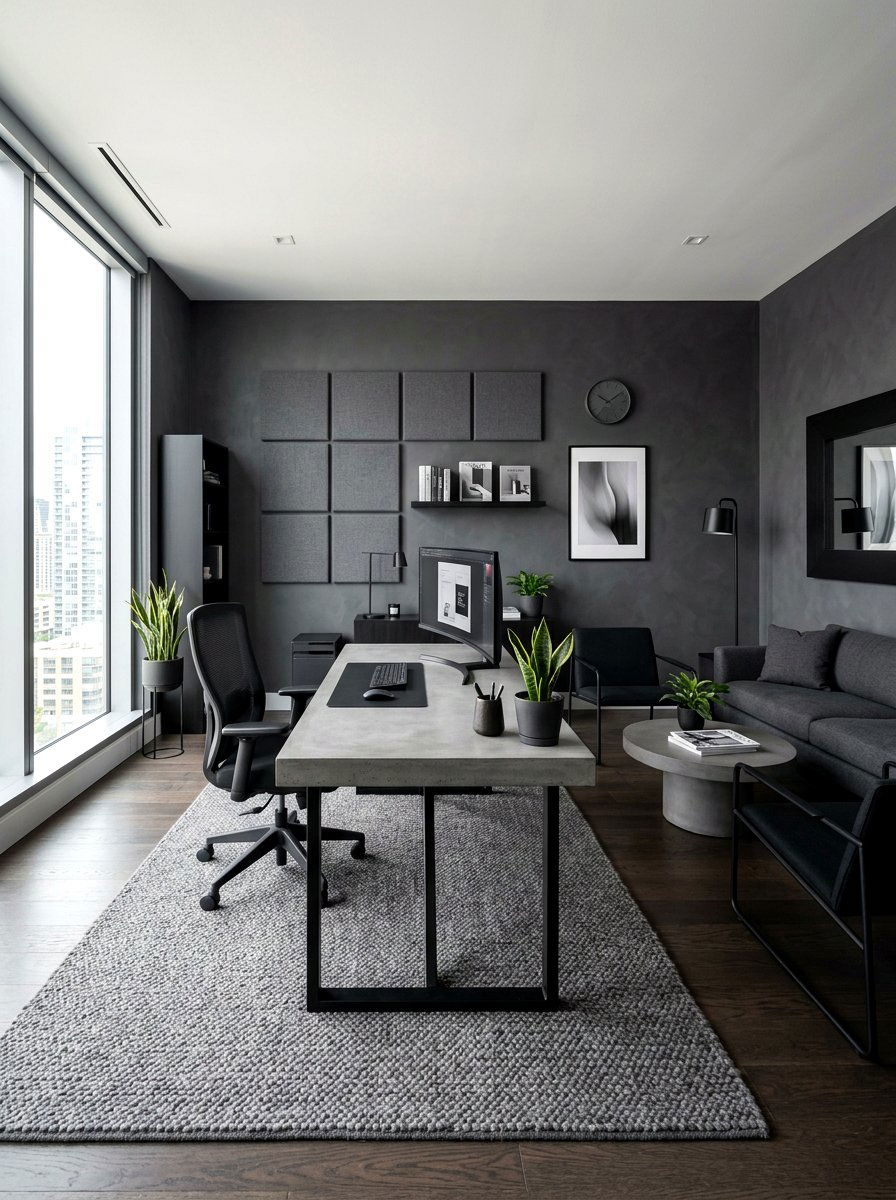
Utilizing charcoal grey decor throughout an entire office creates a sleek, contemporary atmosphere that is remarkably versatile for various editing styles. This smoky palette provides a neutral yet dramatic canvas that highlights professional equipment and artistic accents without overwhelming the senses. A matte grey finish on the walls can be beautifully complemented by a lighter grey concrete-top desk and charcoal fabric-wrapped acoustic panels. This monochromatic approach simplifies the visual field, allowing for better concentration during long hours of screen work. To add depth, editors often layer different shades of grey through textured throws, rugs, and stone coasters, resulting in a workspace that is both modern and incredibly cozy.
8. Dark Academic Library
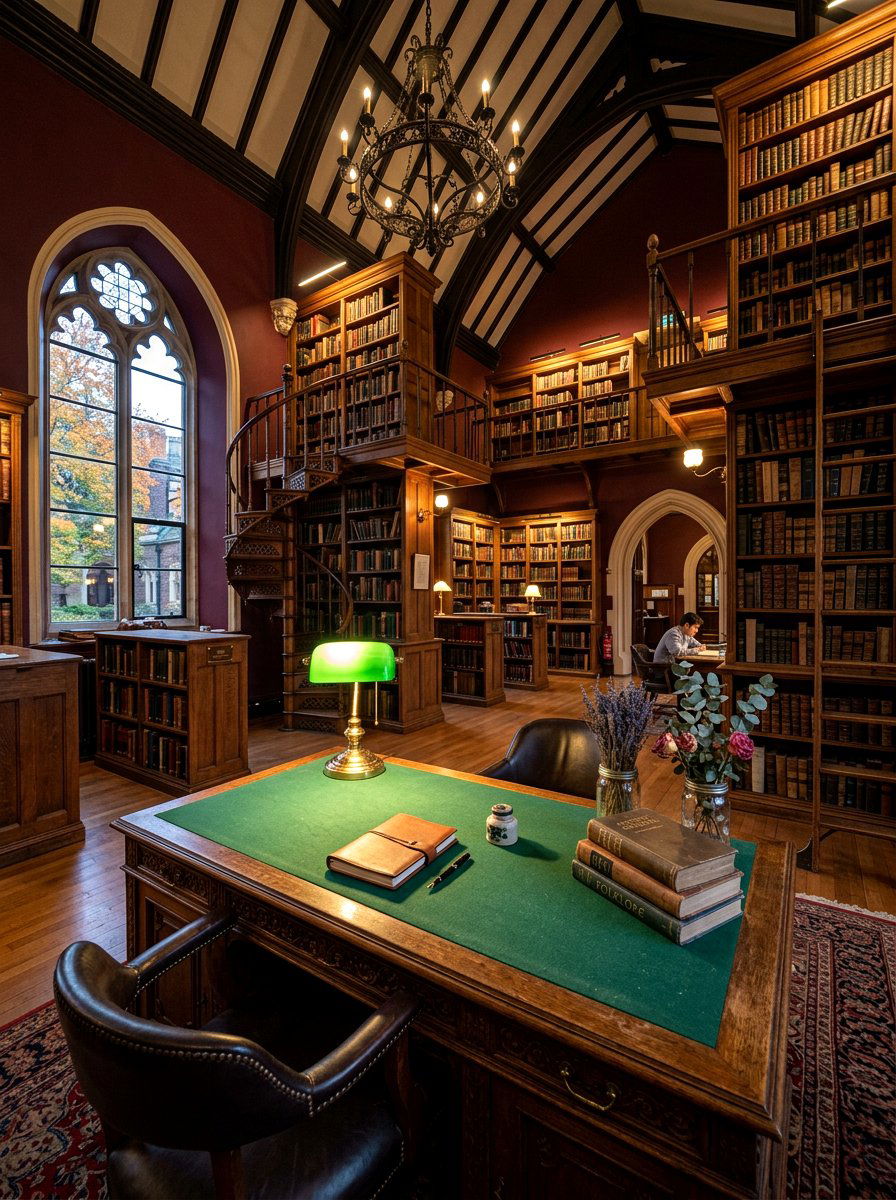
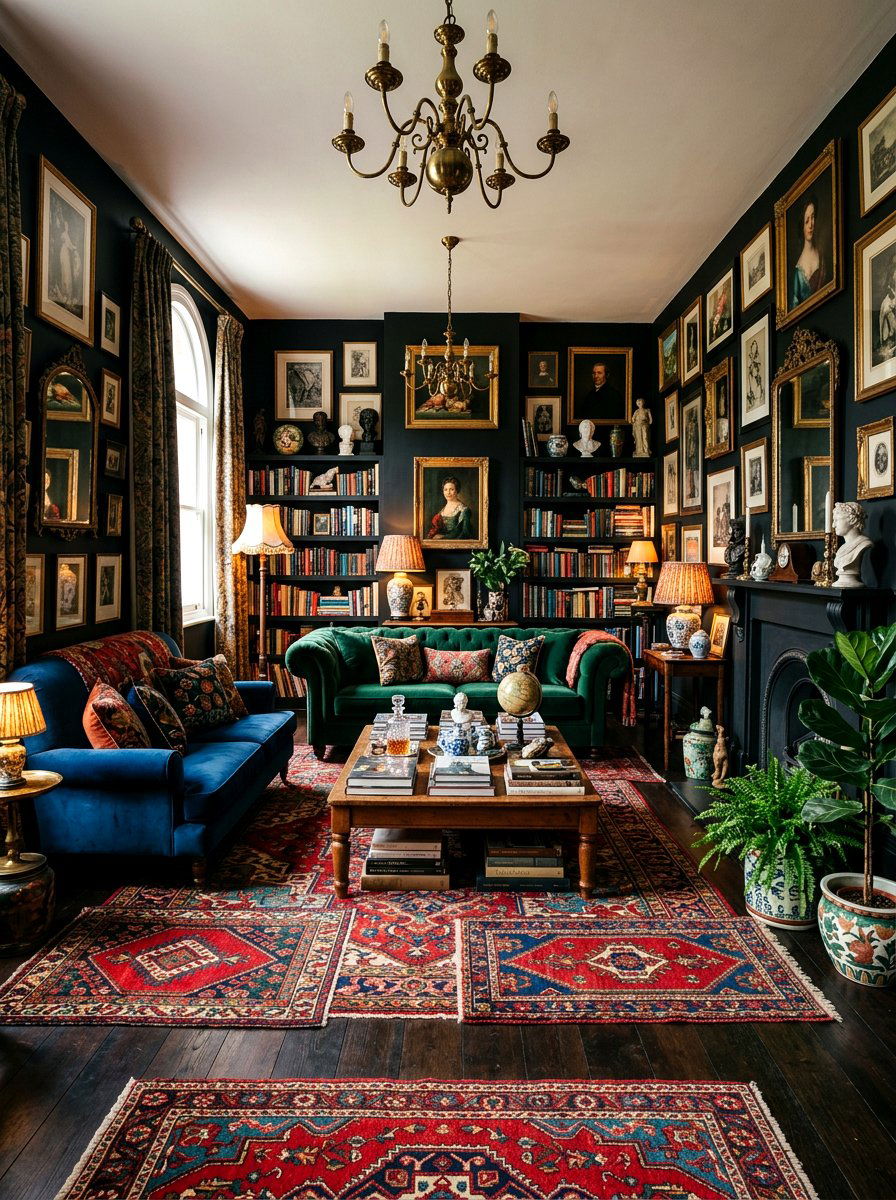
The dark academic library theme is perhaps the most iconic choice for editors, drawing inspiration from historic universities and gothic literature. This style prioritizes floor-to-ceiling bookshelves overflowing with manuscripts, reference books, and personal collections, all set against a backdrop of deep burgundy or chocolate brown. A heavy wooden desk with a green felt blotter and a banker’s lamp provides the perfect workstation for tactile editing and brainstorming. Whimsical touches like dried flowers in glass jars, old inkwells, and framed botanical prints complete the look. It is a highly textured, lived-in space that celebrates the beauty of knowledge and the quiet romance of the written word in a moody setting.
9. Modern Gothic Interior
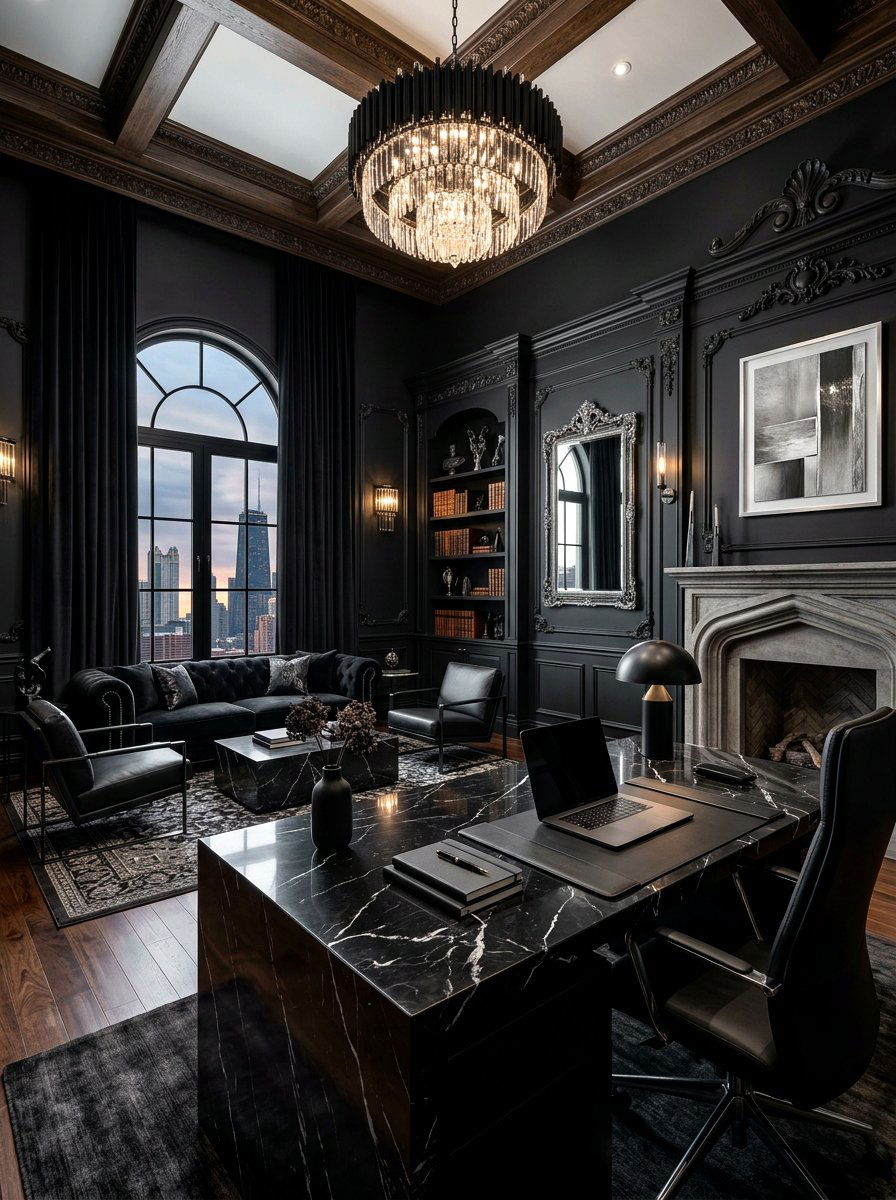
Creating a modern gothic interior involves blending dark, dramatic elements with clean lines and contemporary furniture for a look that is both edgy and elegant. This design theme often features matte black walls paired with ornate architectural moldings and a large, sleek marble desk. The moodiness is amplified through the use of velvet drapes and metallic accents in silver or pewter, which catch the light in a subtle, mysterious way. For an editor, this style offers a unique aesthetic that feels private and unconventional, providing a strong sense of personal identity within the workspace. It is a sophisticated take on dark design that feels current while nodding to classic dramatic influences.
10. Mid Century Office
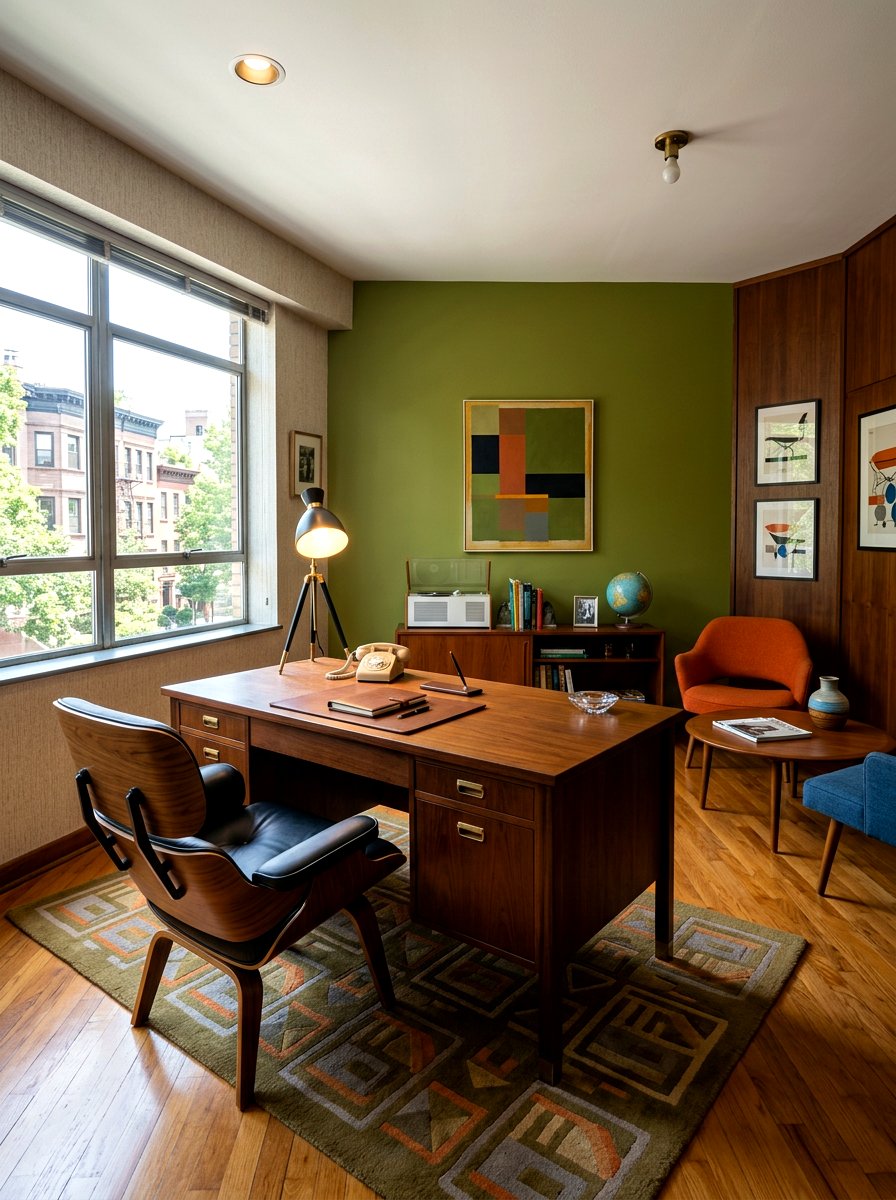
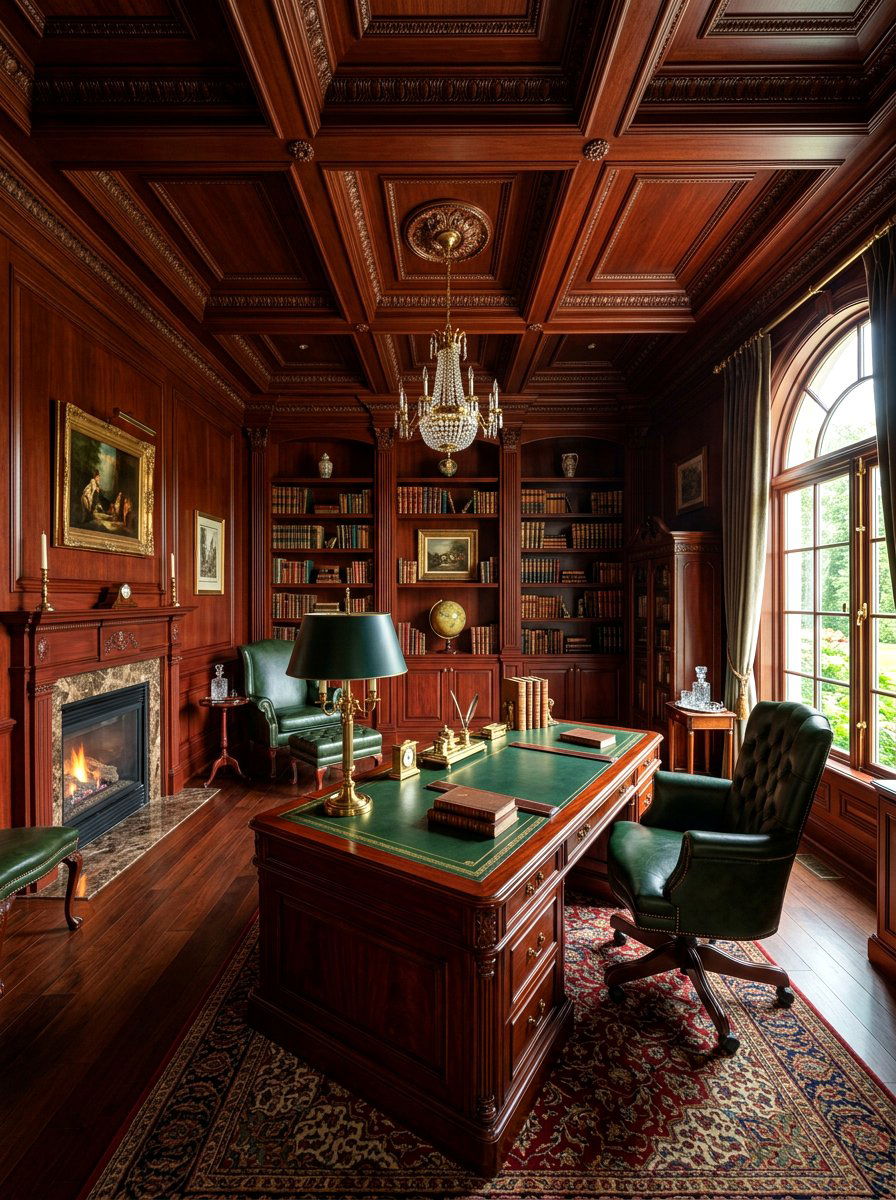
A mid-century office theme focuses on the perfect marriage of form and function, utilizing dark teak or rosewood furniture to create a moody, retro vibe. The spatial layout often emphasizes low-profile furniture and open floor space, allowing for a sense of flow and movement even in a smaller room. Deep olive green or burnt orange accents provide a pop of color that remains grounded within the darker overall palette of the wood. Iconic silhouettes like a curved plywood chair or a tripod desk lamp serve as artistic focal points that enhance the professional atmosphere. This design choice is excellent for editors who appreciate a clean, organized workspace with a timeless and somewhat rebellious artistic flair.
11. Textured Stone Walls
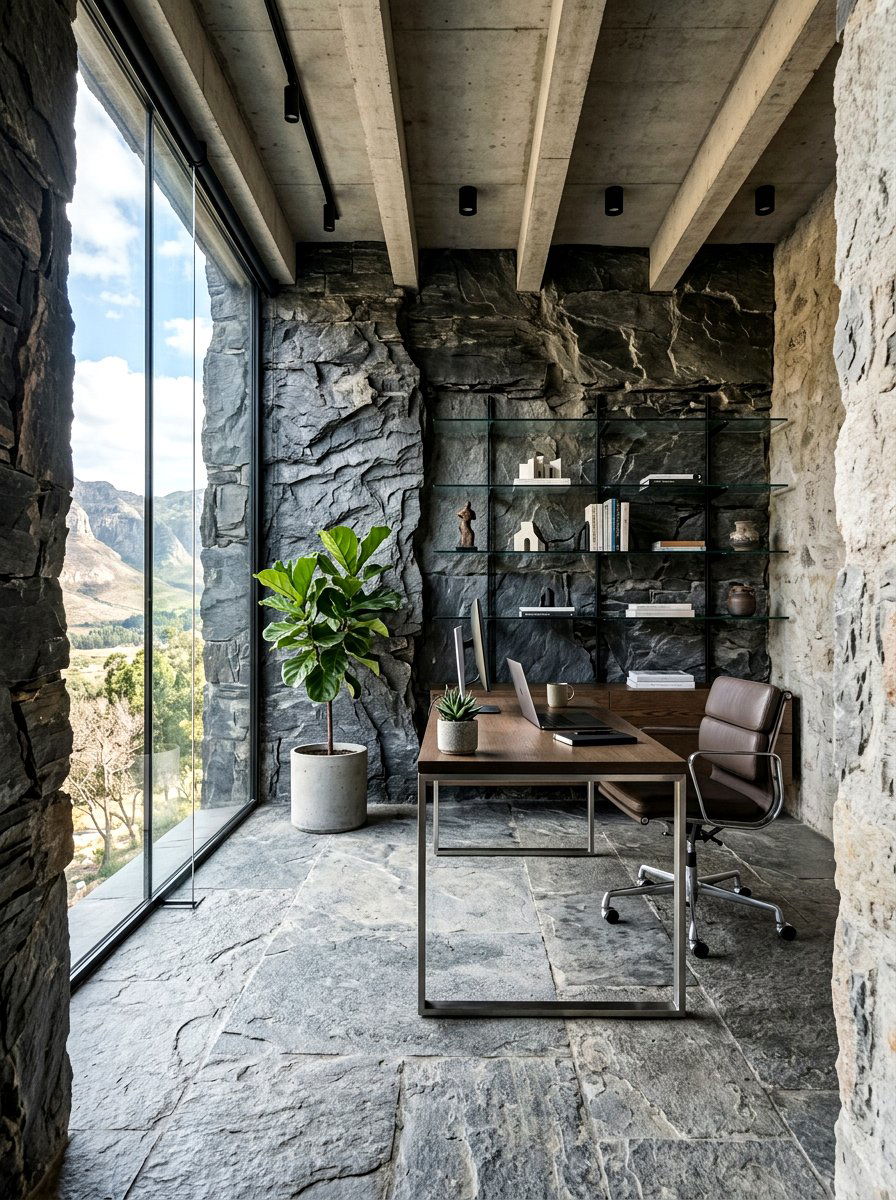
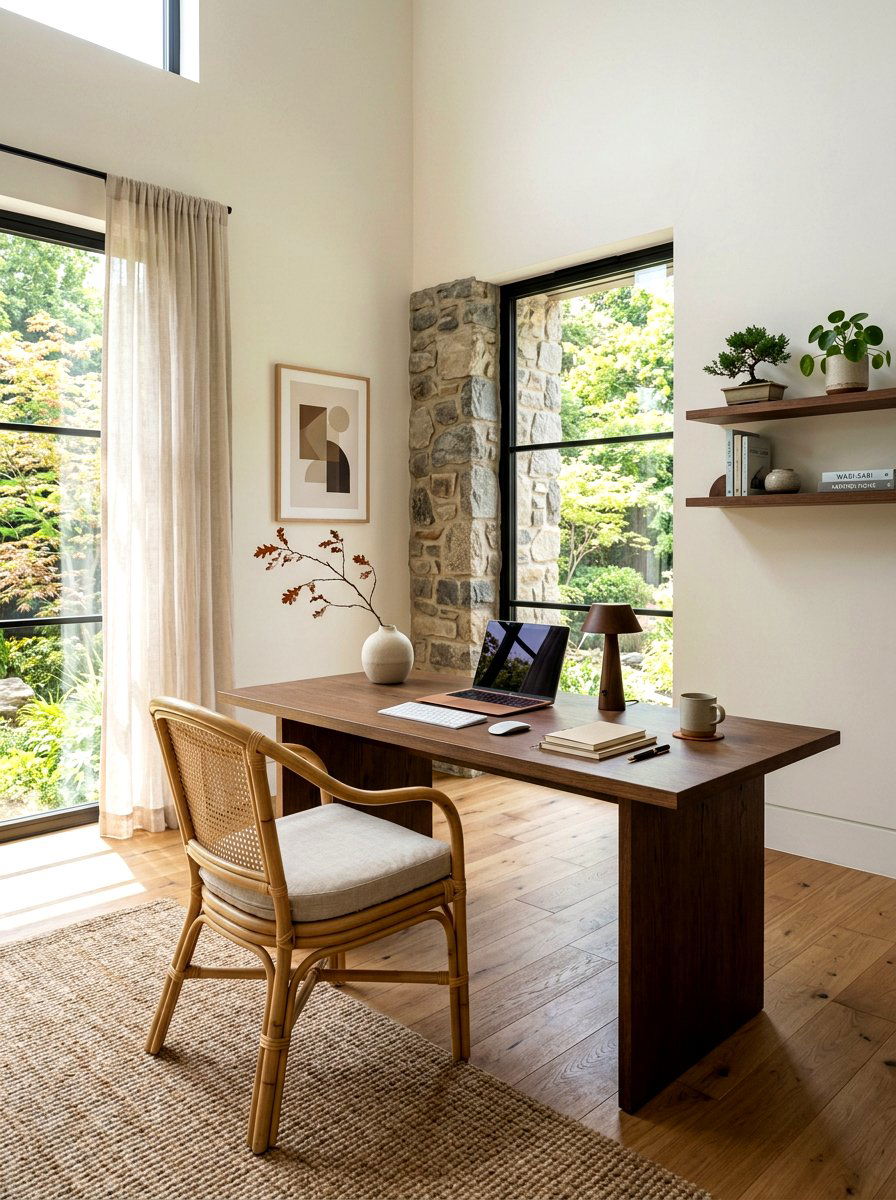
Incorporating textured stone walls into an office design brings a rugged, elemental feel to the workspace that is both visually stunning and physically grounding. Whether using slate, basalt, or dark limestone, the natural variations in the stone provide a complex backdrop that changes throughout the day as light shifts. This theme is often paired with minimalist furniture made from steel or glass to allow the raw beauty of the rock to remain the primary focus. The result is a moody, cavern-like environment that feels incredibly private and shielded from the outside world. It is a bold architectural choice that offers a permanent sense of stability and permanence to a high-pressure editing environment.
12. Velvet Upholstered Accents
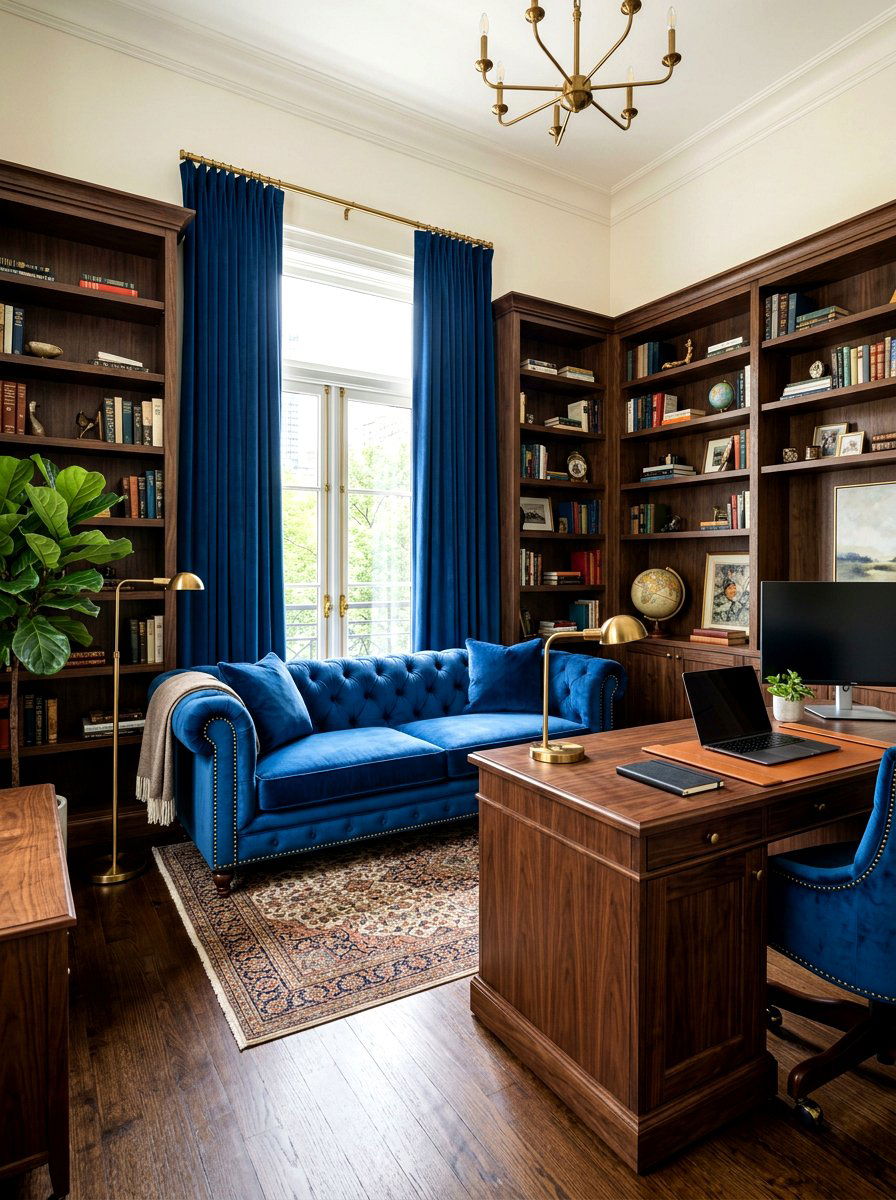
A workspace designed around velvet upholstered accents offers a soft, tactile luxury that makes long hours of editing feel much more comfortable and indulgent. This theme typically features a large, tufted velvet sofa in a jewel tone like emerald or sapphire, positioned near a dark-stained bookshelf. The plush fabric absorbs light, contributing to the overall moody atmosphere while providing a sophisticated contrast to hard wooden or metal surfaces. Velvet window treatments that pool on the floor add a sense of drama and help with sound insulation, which is vital for focused work. This design approach creates a sanctuary that feels expensive and soft, perfect for creative professionals who value physical comfort.
13. Brass Hardware Finishes
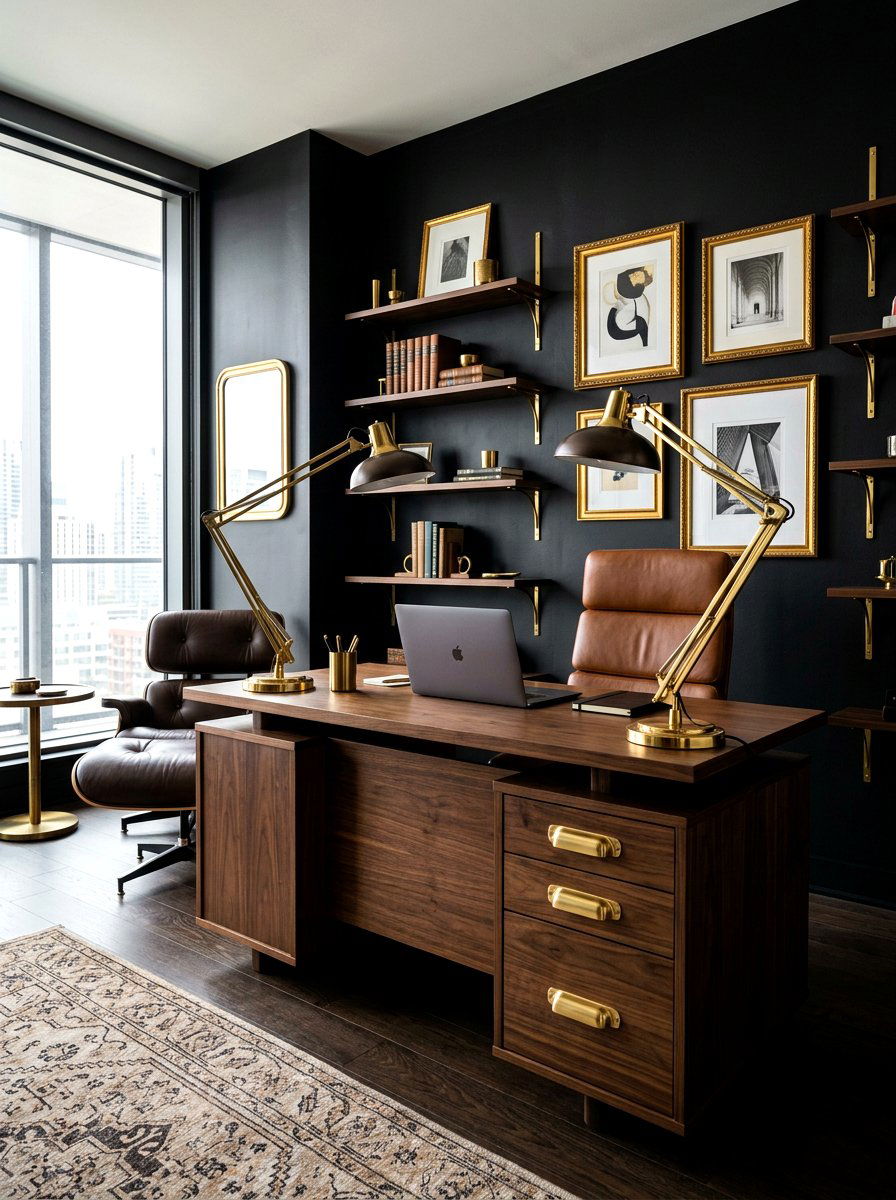
Focusing on brass hardware finishes as a primary design element allows an editor to introduce warmth and a touch of vintage glamour into a dark office. This theme works best when the metallic accents are repeated across desk handles, light fixtures, shelving brackets, and even picture frames. The golden glow of the brass stands out beautifully against matte charcoal or deep purple walls, creating a high-end, curated look. A large brass-based desk lamp provides a functional focal point that ties the entire room’s aesthetic together. This design strategy is about small details that make a huge impact, elevating a moody workspace into a space that feels professional, deliberate, and undeniably stylish.
14. Exposed Brick Walls
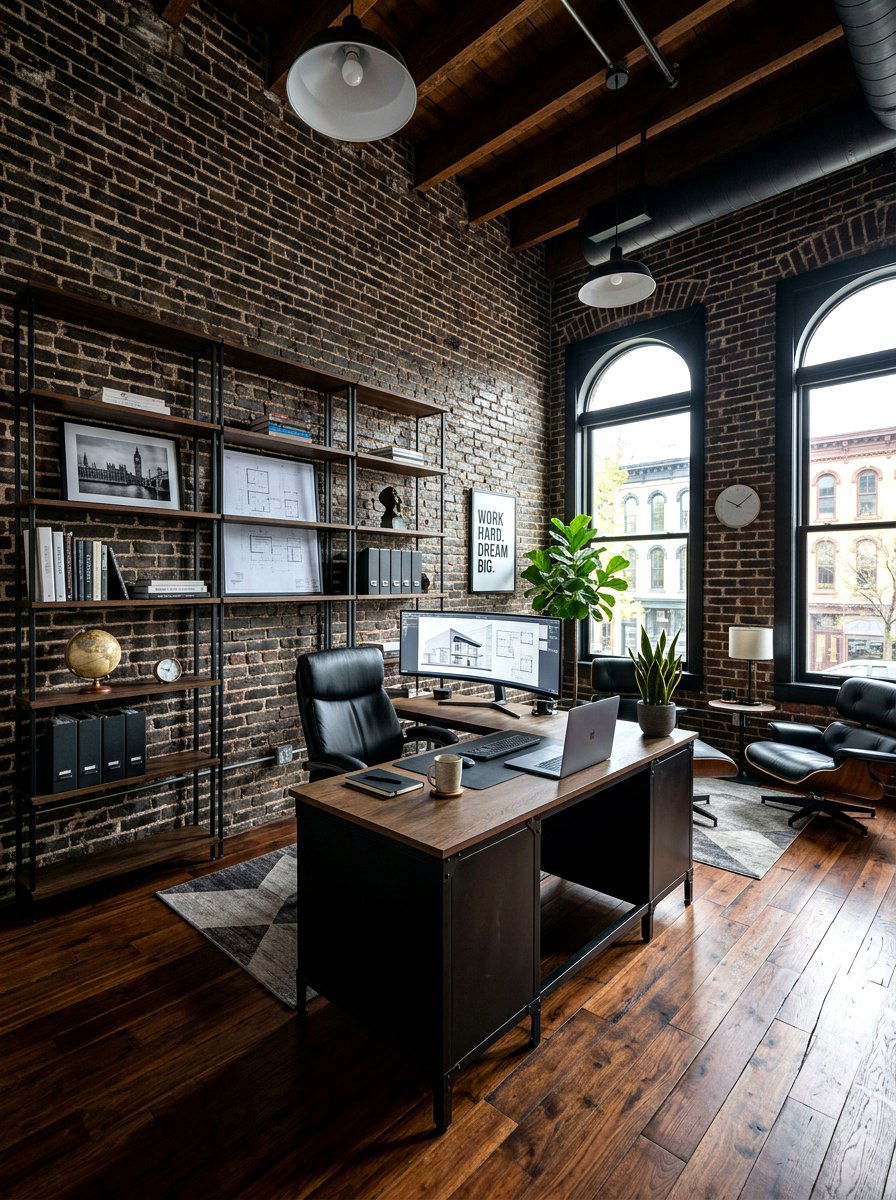
The use of exposed brick walls in an office design creates a textured, historic atmosphere that feels both industrial and incredibly cozy. For a moody editor’s office, the bricks can be stained a darker shade or left in their natural deep red tones to provide a rich, multi-colored backdrop. This theme is usually complemented by dark wood flooring and heavy black metal shelving that reinforces the structural, architectural feel of the space. Large windows with black frames can provide a view while maintaining the room's darker tone during the evening hours. It is a timeless design choice that adds character and a sense of history to a modern professional editing suite.
15. Minimalist Black Aesthetic
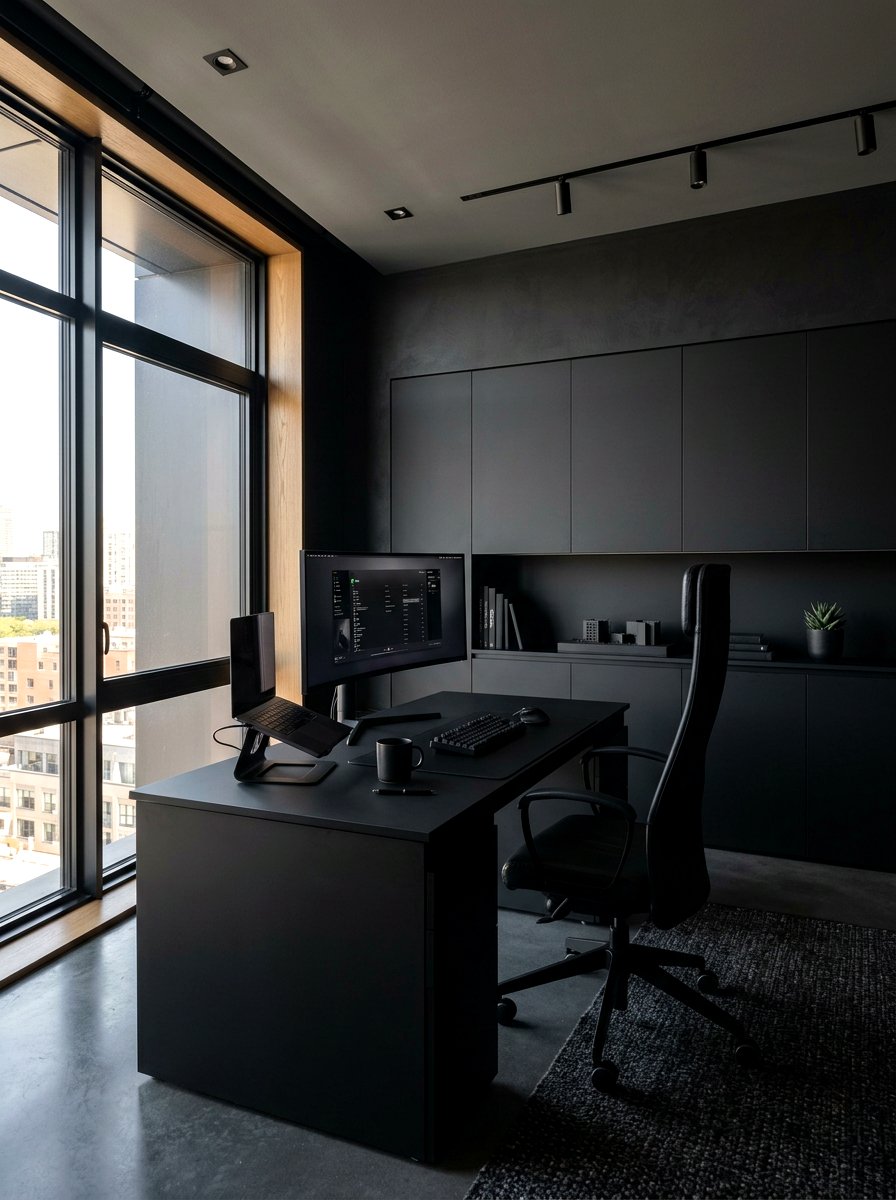
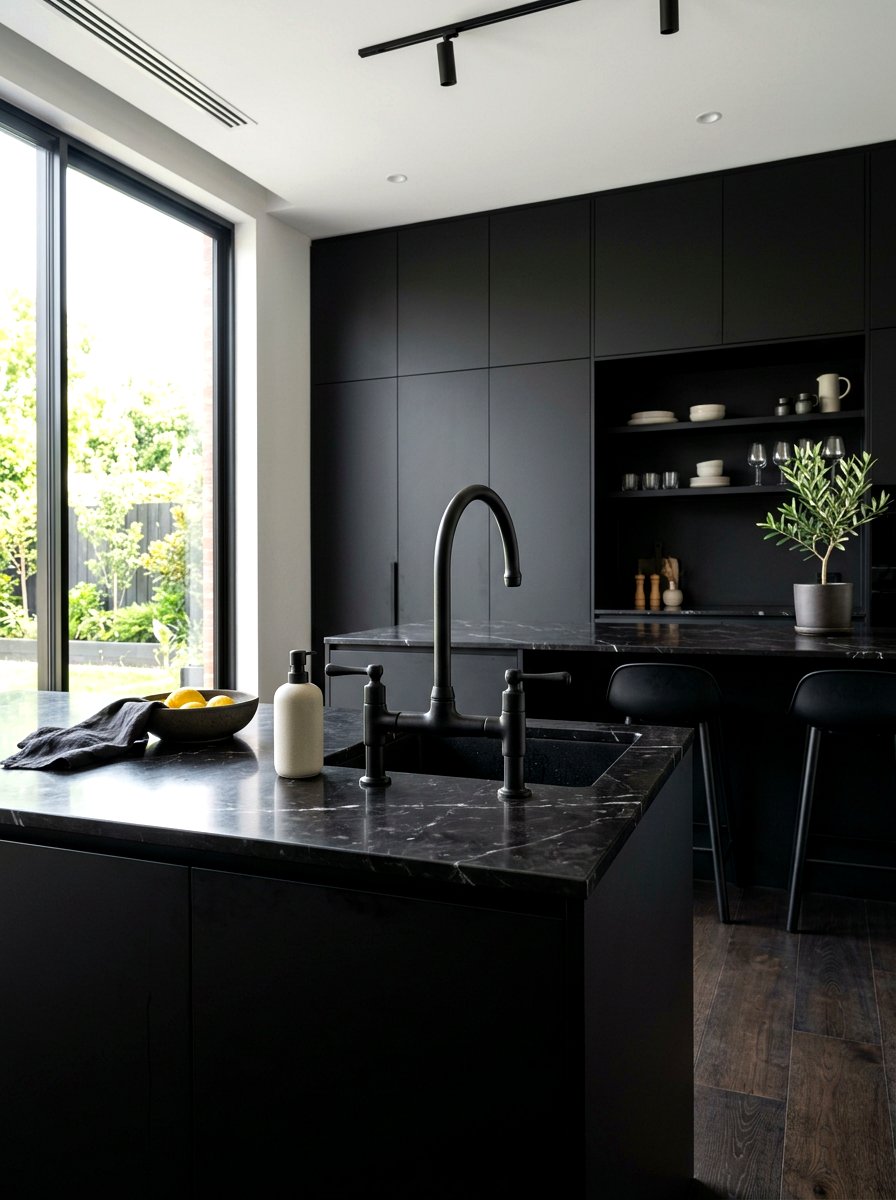
A minimalist black aesthetic is the ultimate expression of modern focus, removing all visual clutter to create a streamlined and powerful workspace. In this theme, the walls, desk, chair, and even the desk accessories are chosen in various shades of black and matte grey. The spatial layout is kept open and simple, emphasizing clean lines and high-quality materials rather than decorative items. This "stealth" look is highly effective for editors who work primarily in digital media, as it minimizes reflections and keeps the attention strictly on the monitor. It is a bold, confident design choice that prioritizes productivity and a clean mental state above all else in a moody environment.
16. Antique Writing Nook
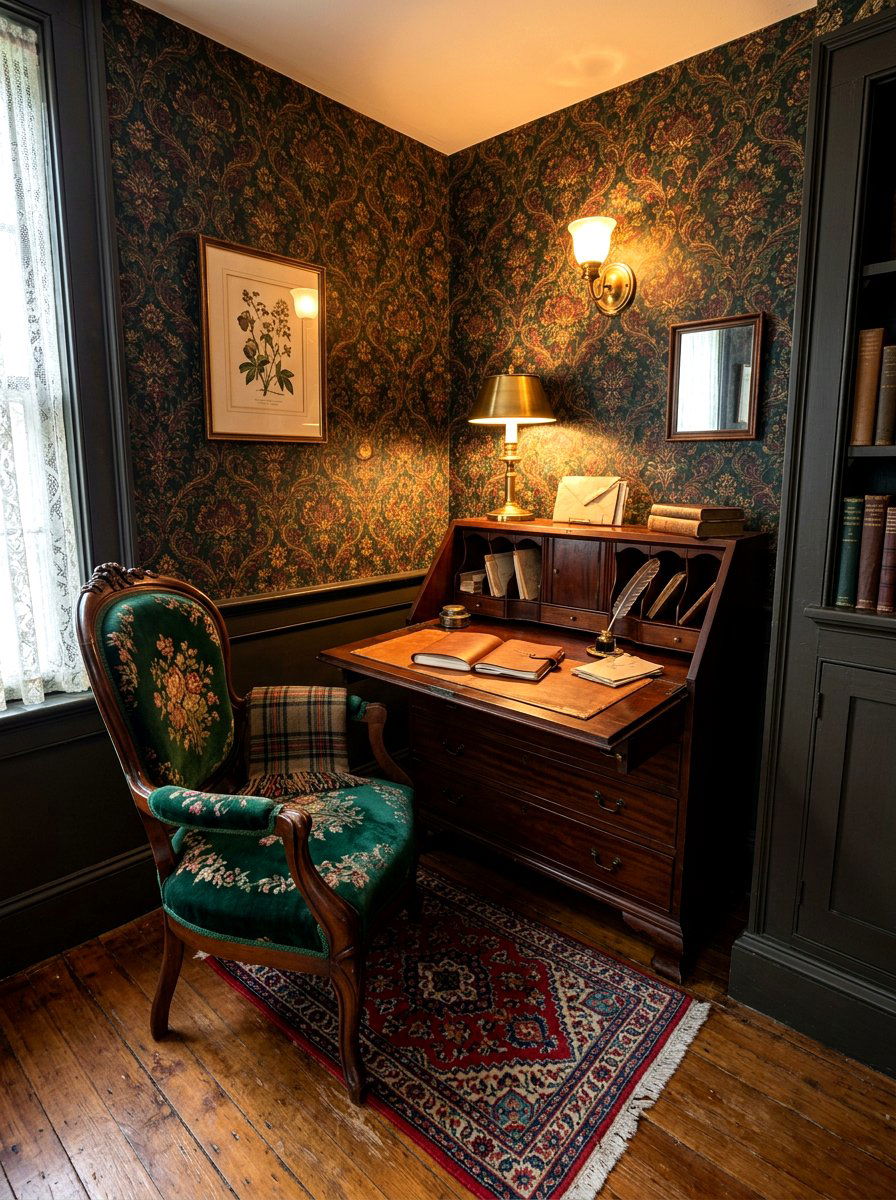
Creating an antique writing nook within a larger room provides a dedicated, moody space for brainstorming and manual editing tasks. This theme often utilizes a vintage secretary desk or a small roll-top unit placed in a corner with its own dedicated warm lighting. Deep, wallpapered walls with subtle historic patterns can define the area, making it feel like a separate, private world within the office. Soft touches like an upholstered antique chair and a small woven rug add to the intimate, cozy vibe of the space. It is a perfect design solution for editors who need a mental break from their digital screens and want a more tactile, nostalgic environment for creative thinking.
17. Abstract Gallery Wall
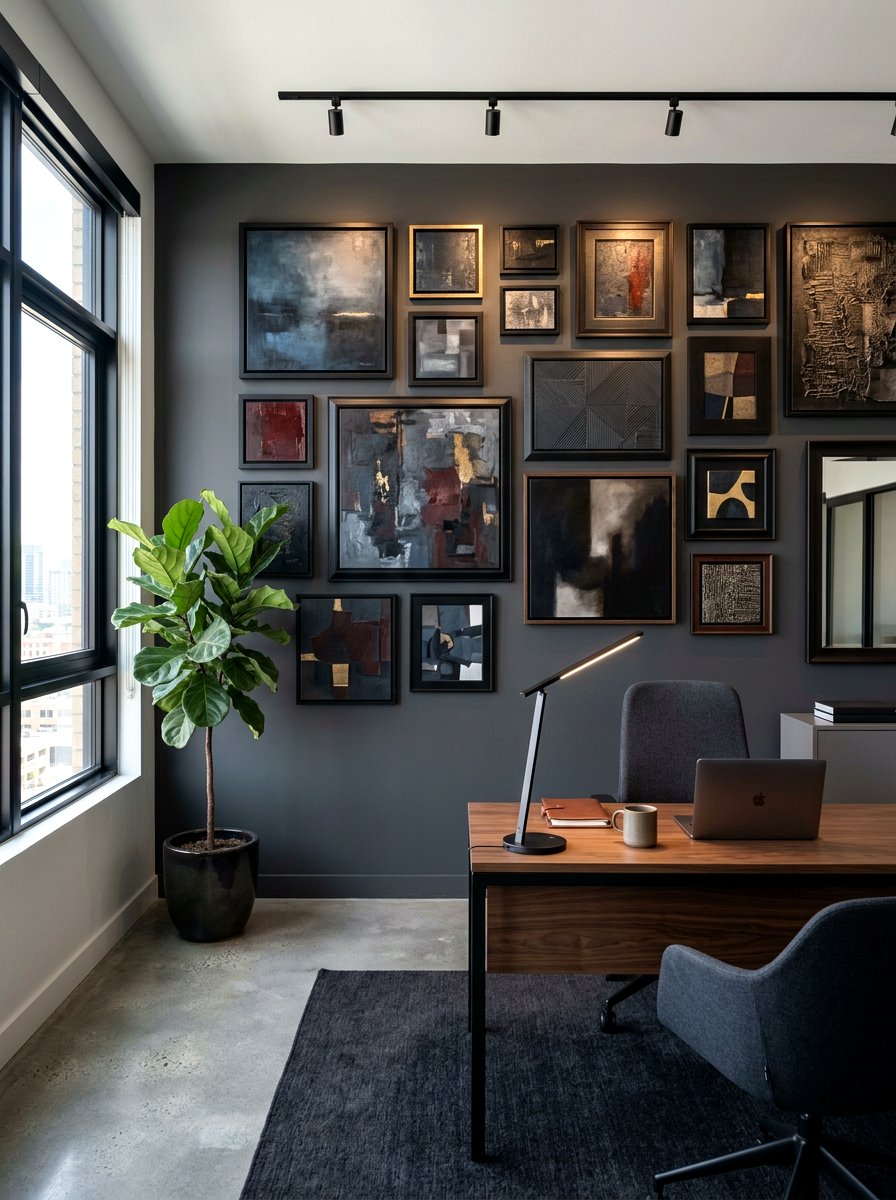
Designing an office around an abstract gallery wall allows an editor to infuse their workspace with personal inspiration and a moody, artistic energy. This theme involves curating a collection of dark-toned paintings, sketches, and photography, all framed in black or dark wood to create a cohesive visual statement. When arranged on a charcoal or deep forest green wall, the art pieces create a rich tapestry of texture and color that stimulates the imagination. A sleek, modern desk and a simple task light ensure that the artwork remains the star of the show. This design approach transforms a functional office into a personal gallery, making every workday feel like a creative exploration.
18. Warm Ambient Lighting
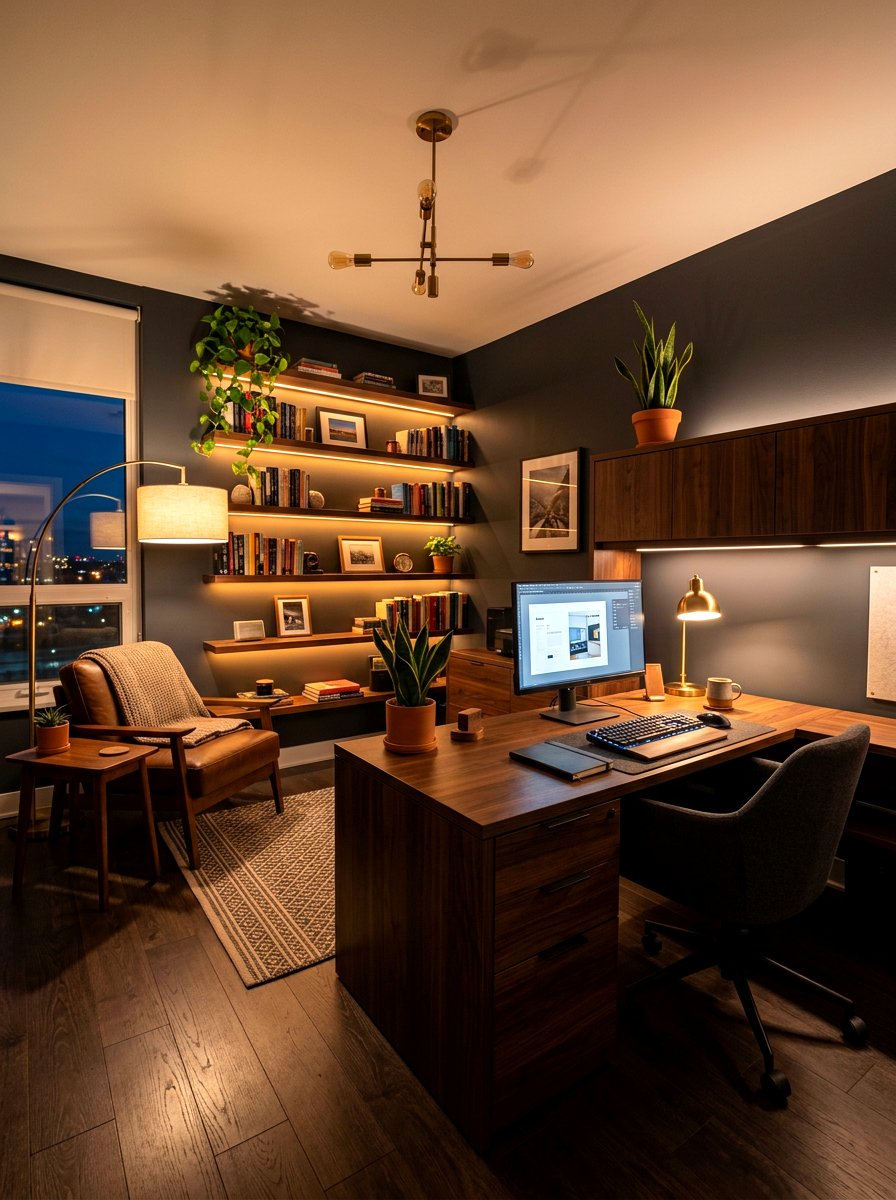
An office theme centered on warm ambient lighting is essential for creating a moody atmosphere that remains functional for detailed editing work. Instead of harsh overhead lights, this design utilizes multiple light sources such as floor lamps, table lamps, and even recessed LED strips to create a soft, layered glow. Deep, warm tones from amber bulbs help to highlight the textures of dark walls and wooden furniture, making the entire room feel inviting and intimate. For an editor, this type of lighting reduces glare and creates a calming environment that is perfect for late-night sessions. It is a thoughtful design strategy that prioritizes mood and comfort without sacrificing the clarity needed for professional tasks.
19. Dark Floral Wallpaper
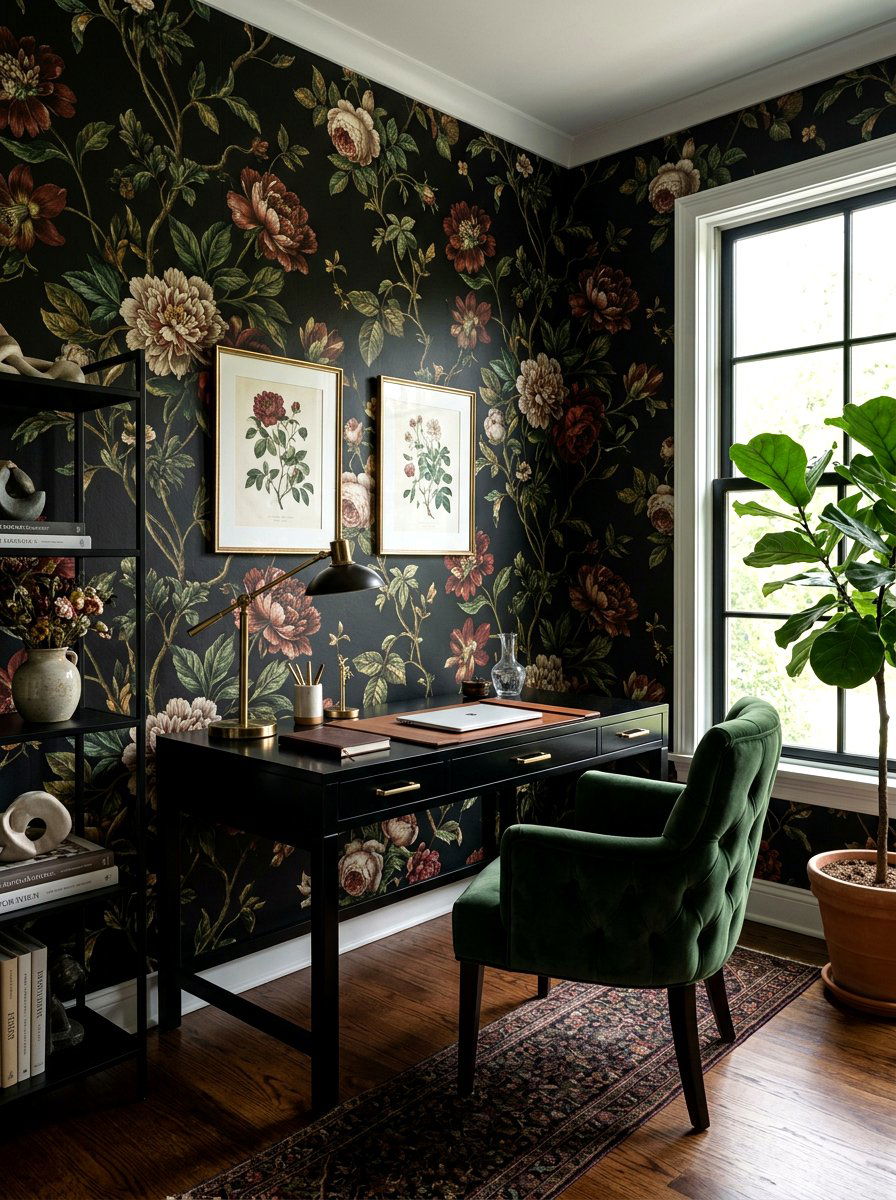
Using dark floral wallpaper as the foundation for an office design adds a romantic, moody elegance that feels both classic and surprisingly modern. These wallpapers typically feature large-scale botanical prints on a black or navy background, creating a dramatic and immersive environment. To balance the intricate pattern, editors often choose solid-colored furniture in complementary tones, such as a dark green velvet chair or a black lacquered desk. The result is a workspace that feels like a hidden garden at midnight, providing a unique and inspiring backdrop for creative writing and editing. It is a bold choice that brings a touch of natural beauty and sophisticated drama to any professional home office.
20. Library Ladder Feature
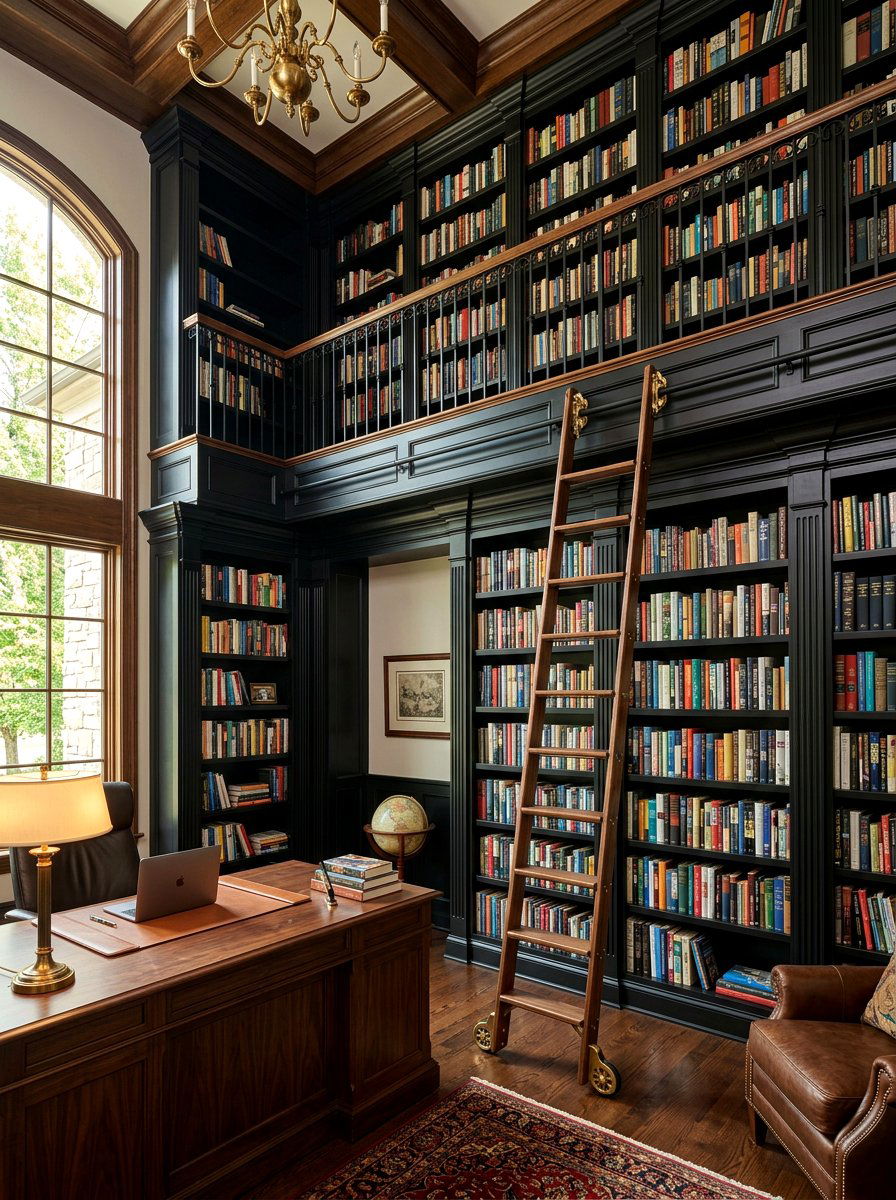
A library ladder feature is the ultimate functional and aesthetic addition to a moody editor’s office with high ceilings. This theme revolves around floor-to-ceiling built-in bookshelves painted in a dark, saturated color, with a matching wooden or metal ladder on a rail. Not only does this provide incredible storage for a vast collection of books and archives, but it also creates a dramatic vertical element that defines the room's character. The ladder adds a sense of adventure and classic scholarship to the space, making the office feel like a grand private library. It is a dream design for any editor who views their book collection as a primary source of daily inspiration and professional pride.
21. Rustic Reclaimed Wood
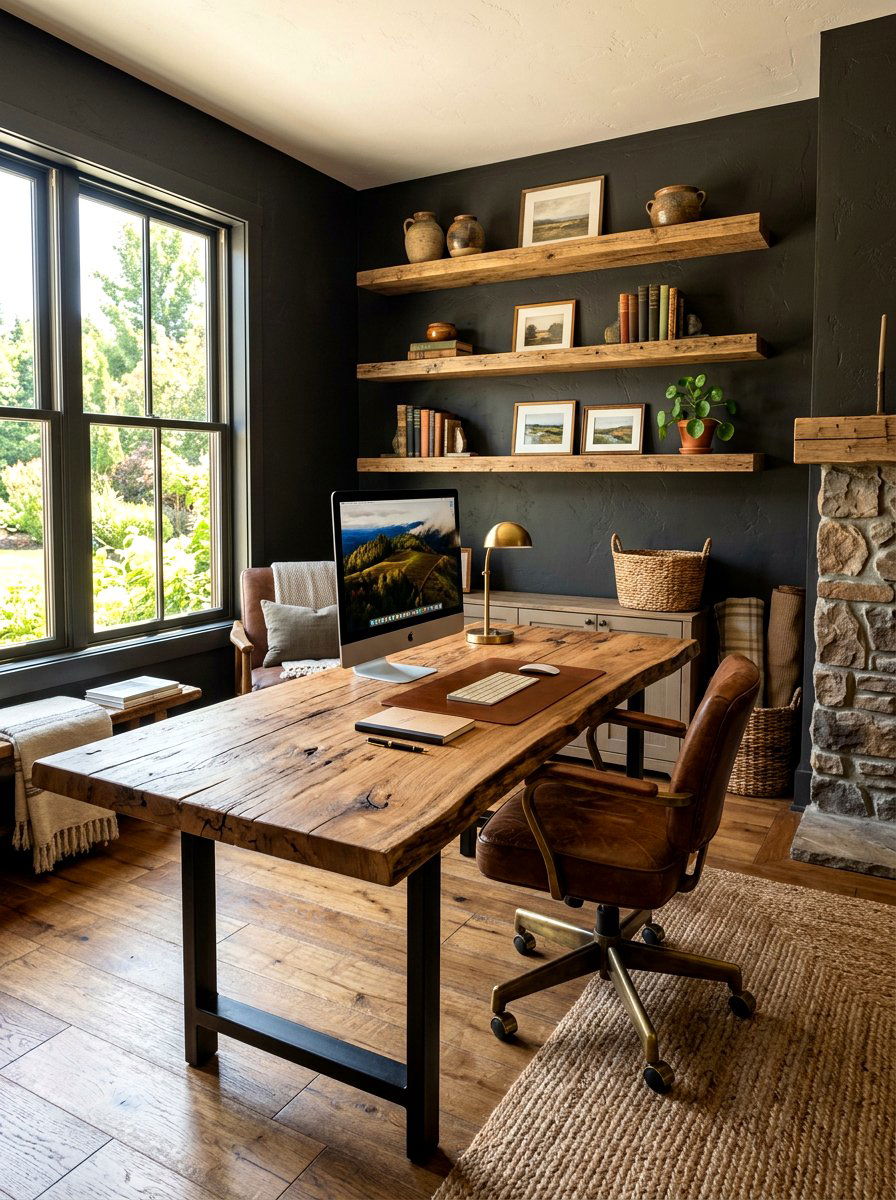
Integrating rustic reclaimed wood throughout an office design brings a sense of warmth, history, and organic texture to a moody environment. This theme often features a large desk made from a solid slab of salvaged timber, paired with matching floating shelves that showcase natural knots and grain patterns. The dark, weathered tones of the wood provide a beautiful contrast to smooth, dark-painted walls and modern tech equipment. By incorporating other natural materials like leather and stone, the workspace feels grounded and authentic, fostering a connection to the physical world during digital work. It is a sustainable and visually rich design choice that offers a cozy, cottage-inspired take on the moody aesthetic.
22. Luxury Marble Elements
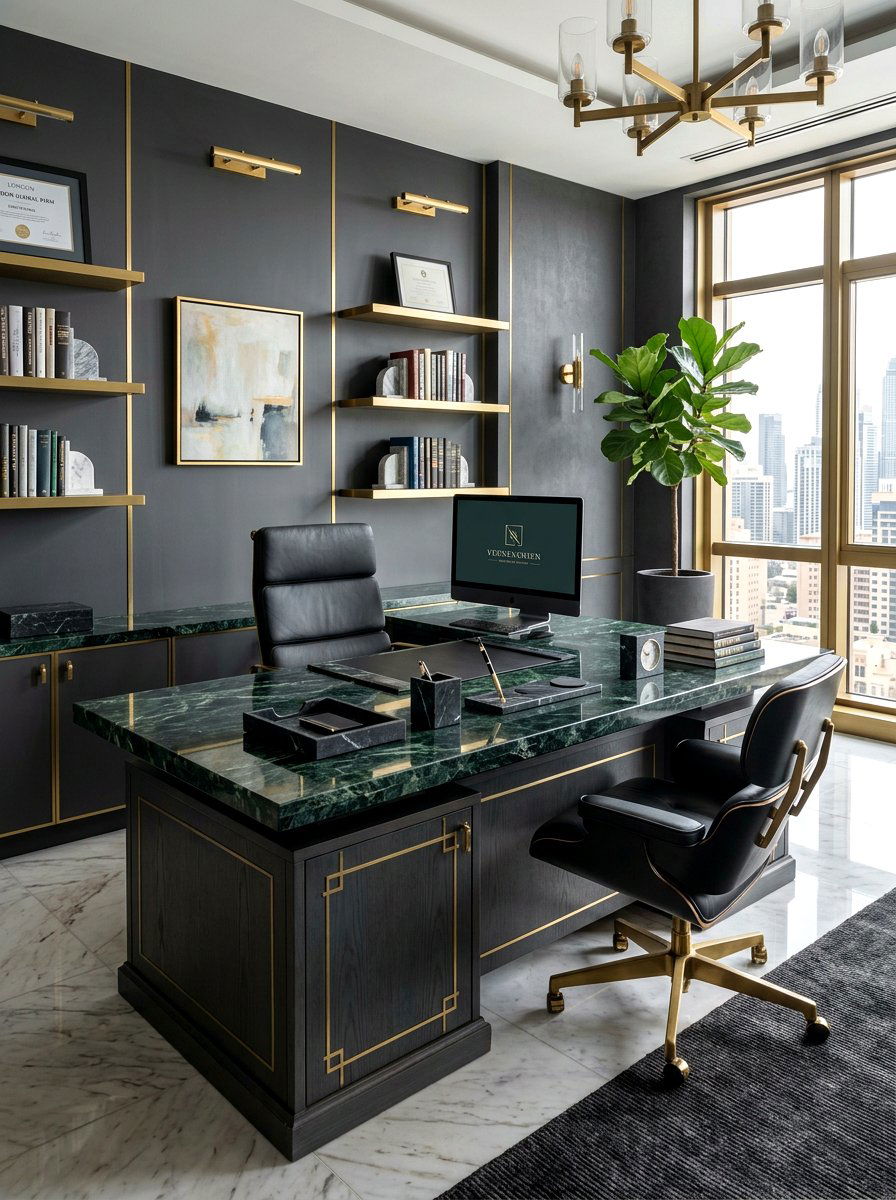
Designing an office with luxury marble elements introduces a sophisticated, high-end feel that perfectly complements a moody color palette. A desk with a dark Nero Marquina or green marble top serves as a stunning focal point, offering a cool, smooth surface for working. This theme is often enhanced with marble-patterned wallpaper or stone accessories that repeat the veining throughout the room. When paired with gold or brass hardware and deep charcoal walls, the overall effect is one of immense elegance and professional power. For an editor, this design provides a polished and prestigious environment that feels both substantial and incredibly stylish, making every task feel like a high-stakes creative endeavor.
23. Floor To Ceiling Curtains
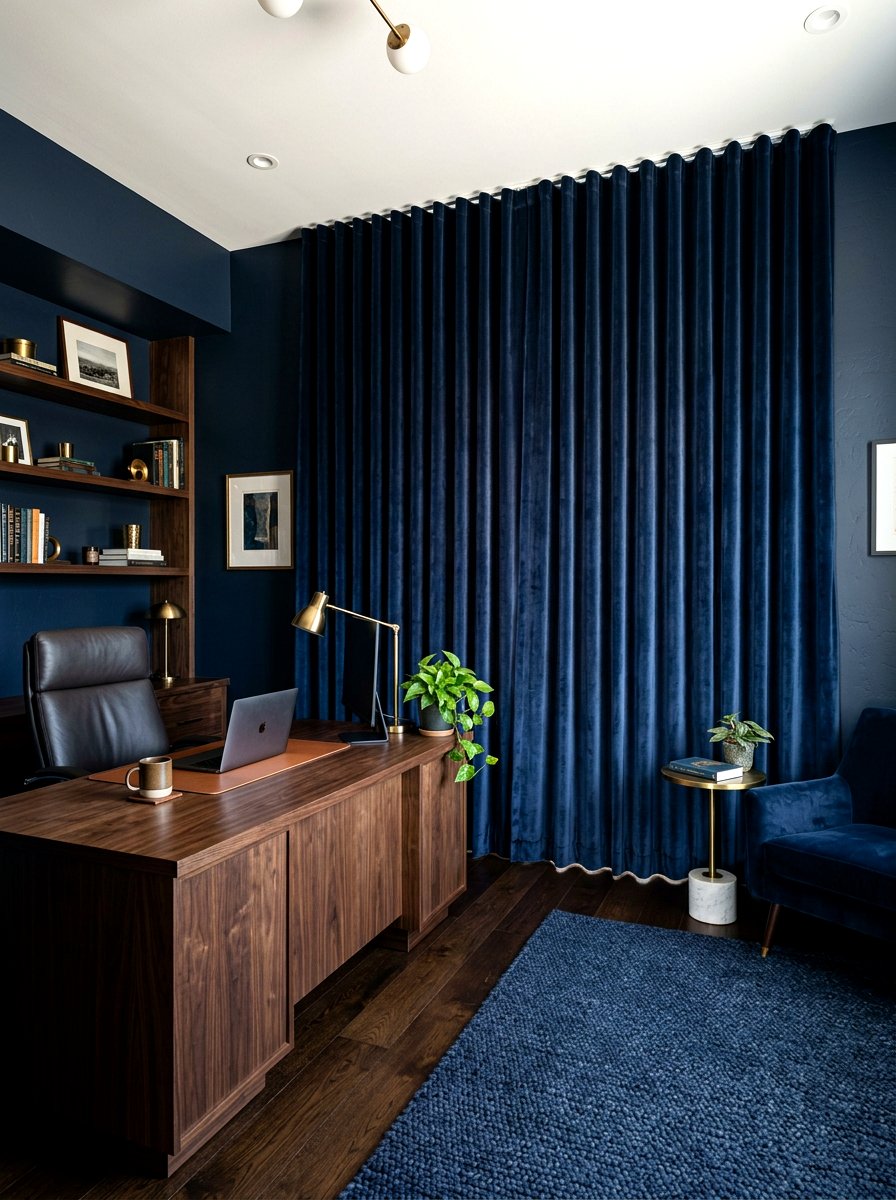
A workspace defined by floor-to-ceiling curtains offers a soft, enveloping atmosphere that is perfect for creating a moody and private sanctuary. Using heavy, dark fabrics like velvet or thick linen in shades of charcoal, navy, or forest green allows an editor to completely control the light and sound in the room. When the curtains are drawn, they create a seamless wall of texture that adds a layer of sophisticated drama to the space. This design theme is particularly effective in rooms with large windows, as it provides a way to transition from a bright daytime office to a cozy, focused evening retreat. It is a simple yet impactful way to introduce luxury and comfort.
24. Smart Tech Integration
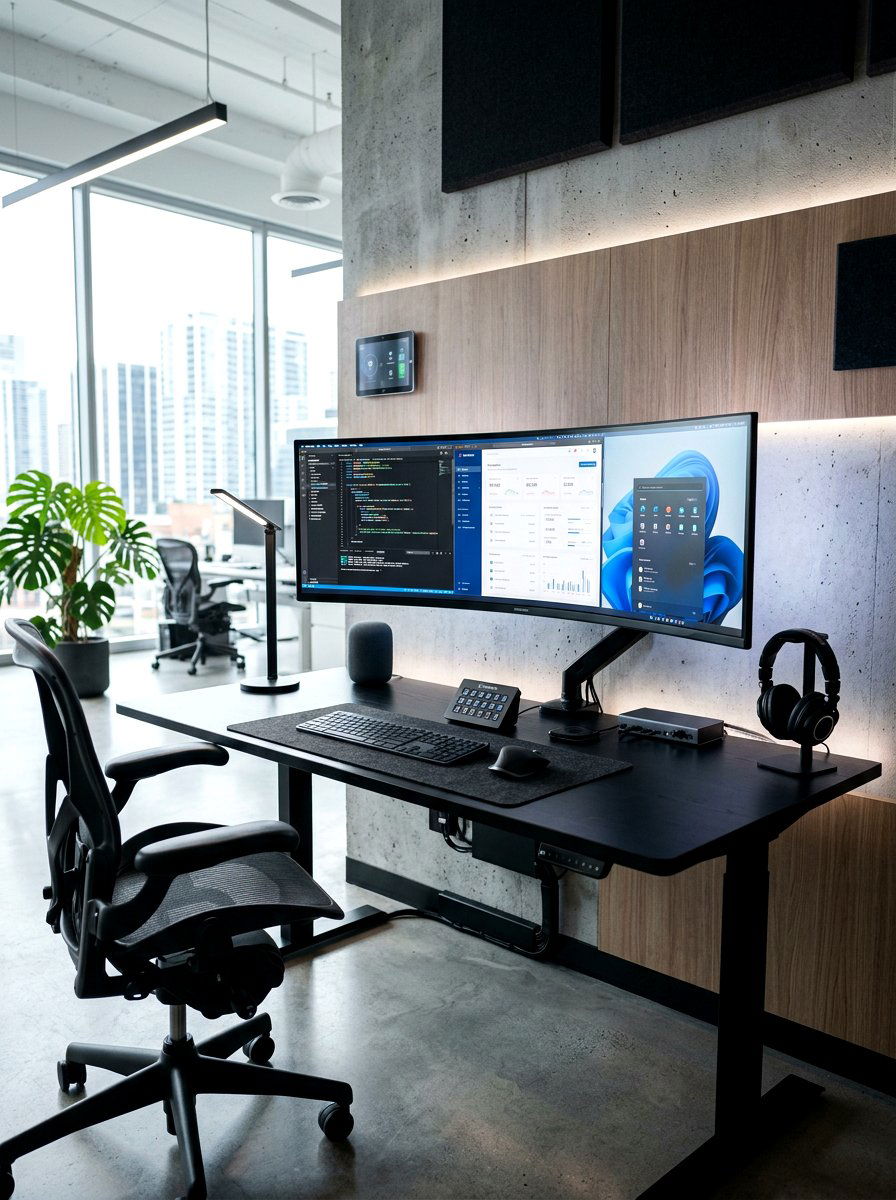
Integrating smart tech into a moody office design allows for a seamless blend of modern productivity and high-end aesthetic. This theme focuses on hidden cables, built-in wireless chargers, and smart lighting systems that can change the room's mood with a single command. A large, ultra-wide monitor mounted on a dark wall becomes a functional piece of art, while smart speakers tucked into bookshelves provide a customized acoustic environment. The moody vibe is maintained through the use of dark-colored hardware and sleek, minimalist tech stands that disappear into the background. It is the perfect design solution for the modern editor who needs cutting-edge tools within a sophisticated and distraction-free environment.
25. Botanical Greenery Accents
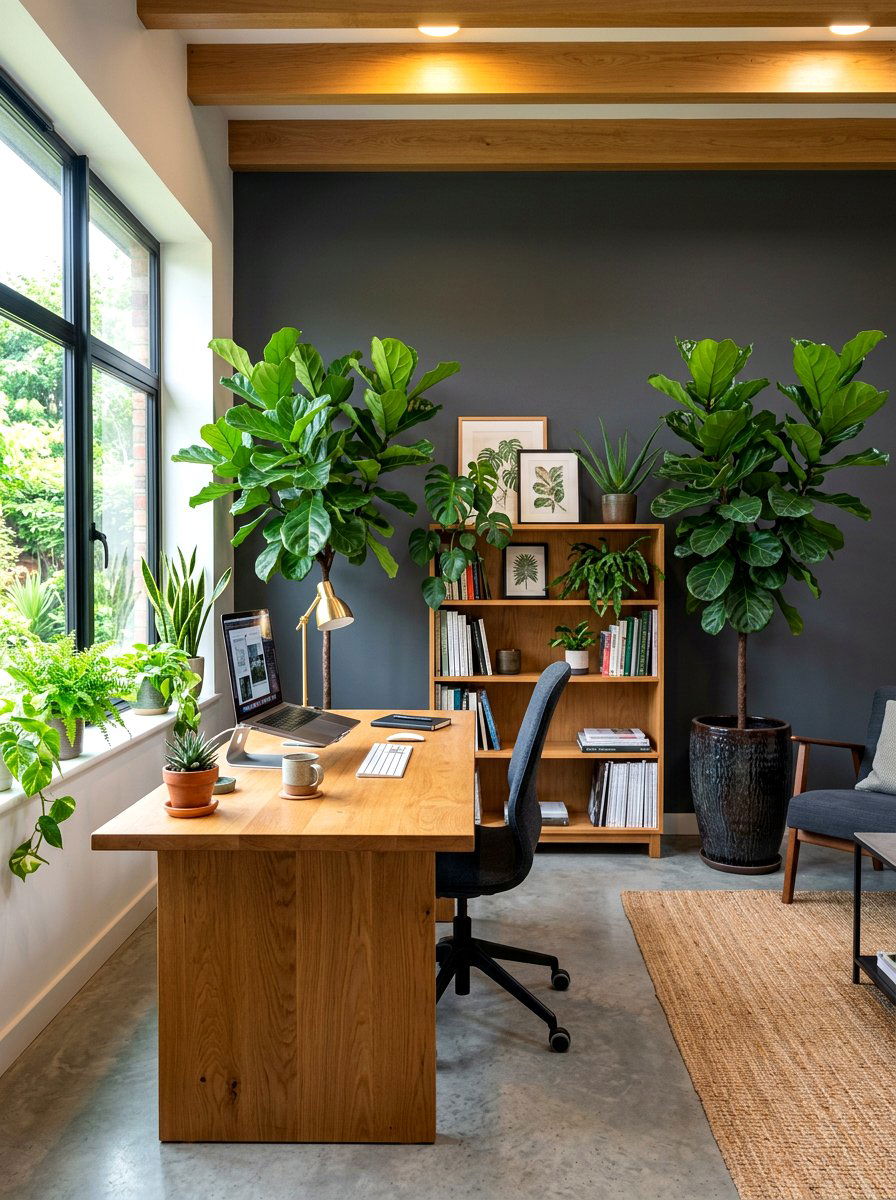
Focusing on botanical greenery accents as a core design element brings a vibrant, living energy to a moody and dark workspace. This theme involves placing large-scale plants like fiddle-leaf figs or monstera in dark ceramic pots throughout the room, creating a "jungle-lite" feel. The bright green leaves provide a stunning visual contrast to charcoal or black walls, making the space feel fresh and less claustrophobic. For an editor, having living plants in the workspace has been shown to improve mood and air quality, which is essential for long working hours. It is a balanced design approach that pairs the intensity of a dark office with the calming presence of nature.
26. Open Shelving Organization
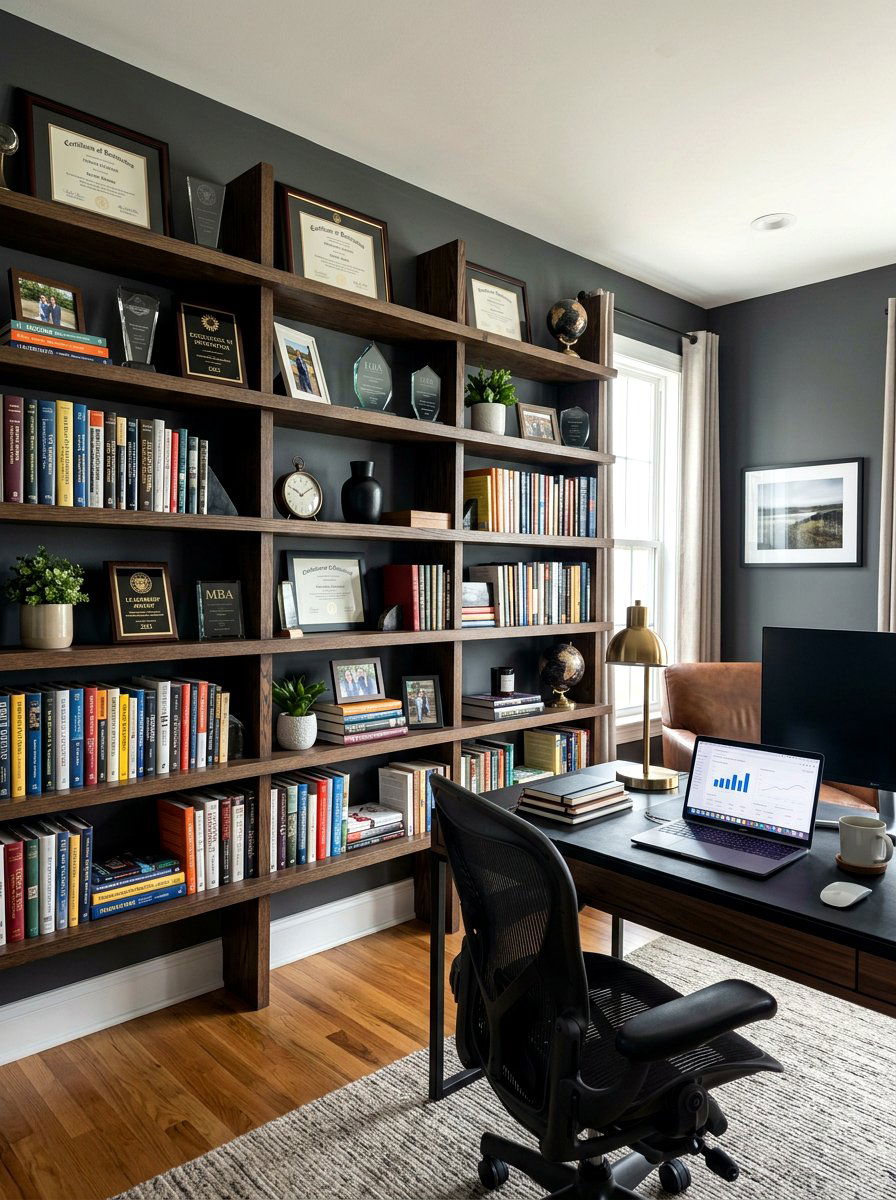
An office designed around open shelving organization offers a dynamic and personalized backdrop for an editor's daily work. This theme utilizes dark-stained wooden or black metal shelves to display a curated mix of books, awards, and personal memorabilia against a moody wall color. The key is to arrange items with enough "breathing room" to prevent the space from feeling cluttered, while still providing a rich visual texture. This layout allows for quick access to important reference materials and inspires creativity through the display of meaningful objects. It is a practical and aesthetically pleasing design choice that turns an editor’s professional history and personal tastes into a primary decorative element.
27. Geometric Wall Molding
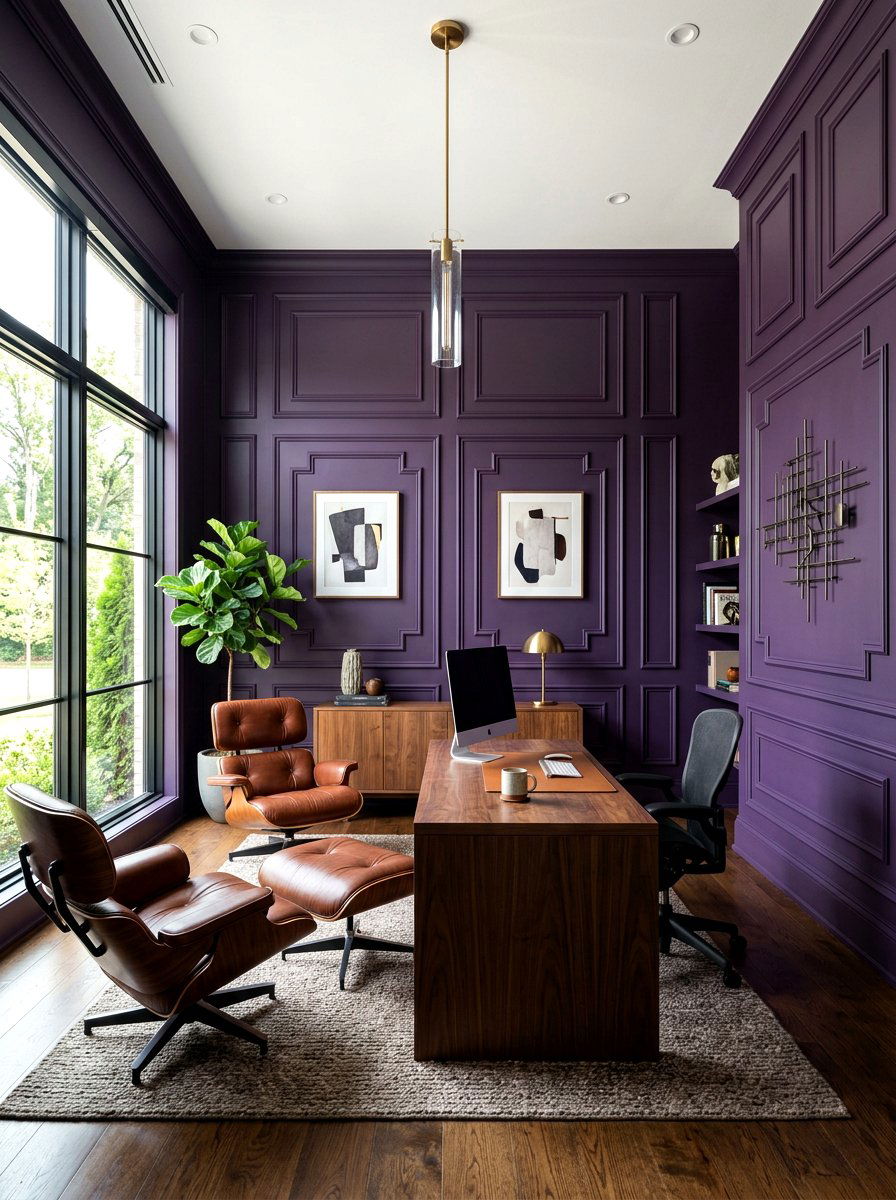
Utilizing geometric wall molding adds a layer of architectural depth and classic sophistication to a moody office design. By installing wainscoting or picture frame molding and painting it the same dark color as the walls, you create a rhythmic pattern of shadows and highlights. This theme gives the room a custom, built-in look that feels incredibly high-end and permanent. A sleek, modern desk and a statement chair provide a contemporary contrast to the traditional wall details, resulting in a workspace that feels both timeless and current. It is an excellent way to elevate a standard room into a professional suite that exudes authority and a meticulous attention to detail.
28. Monochromatic Grey Space
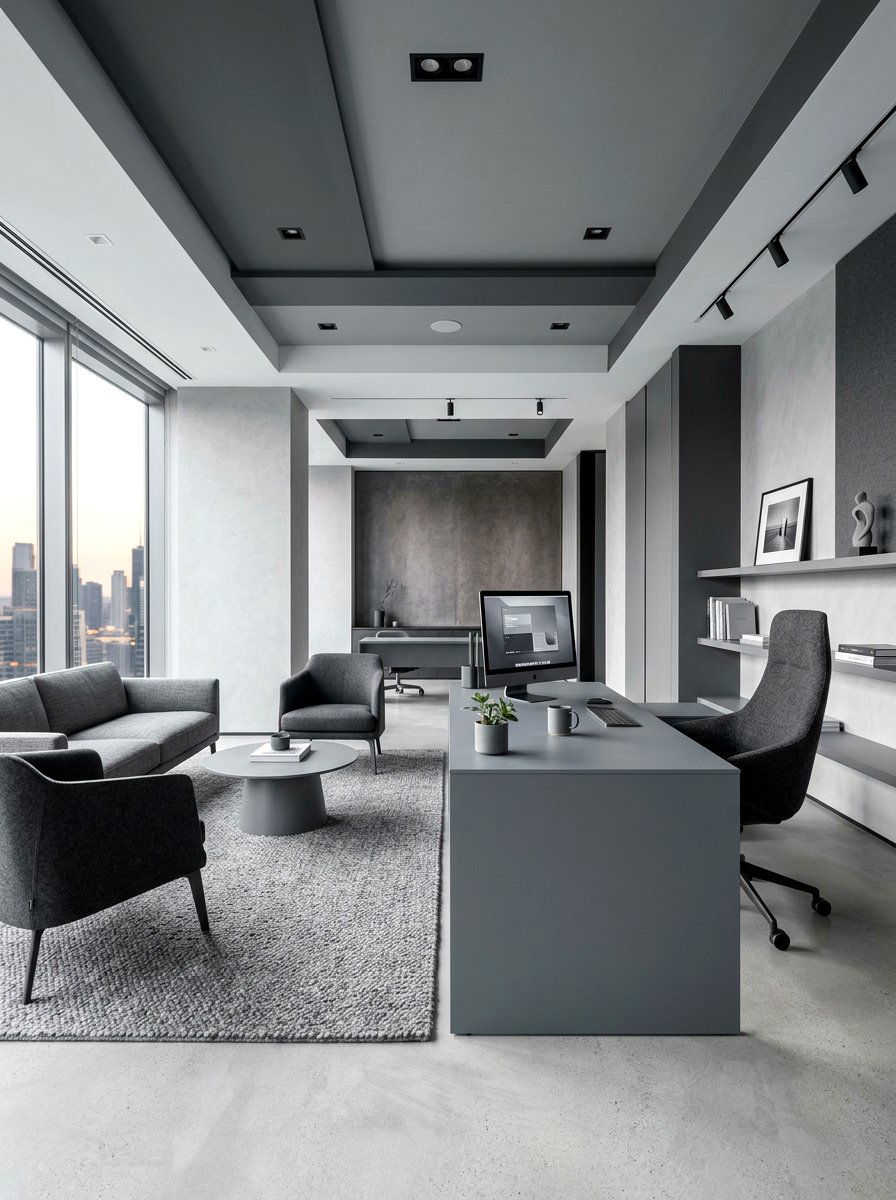
Creating a monochromatic grey space involves using various shades and textures of grey to build a layered, sophisticated environment that feels incredibly calm and focused. From light ash grey on the ceiling to deep charcoal on the walls and a medium slate grey for the desk, this palette simplifies the visual landscape. This theme is perfect for editors who find bright colors distracting, as it provides a neutral field that is easy on the eyes. To prevent the room from feeling flat, it is essential to incorporate different materials like wool rugs, stone coasters, and fabric-wrapped chairs. The result is a modern, high-fashion workspace that feels professional and serene.
29. Ergonomic Executive Suite
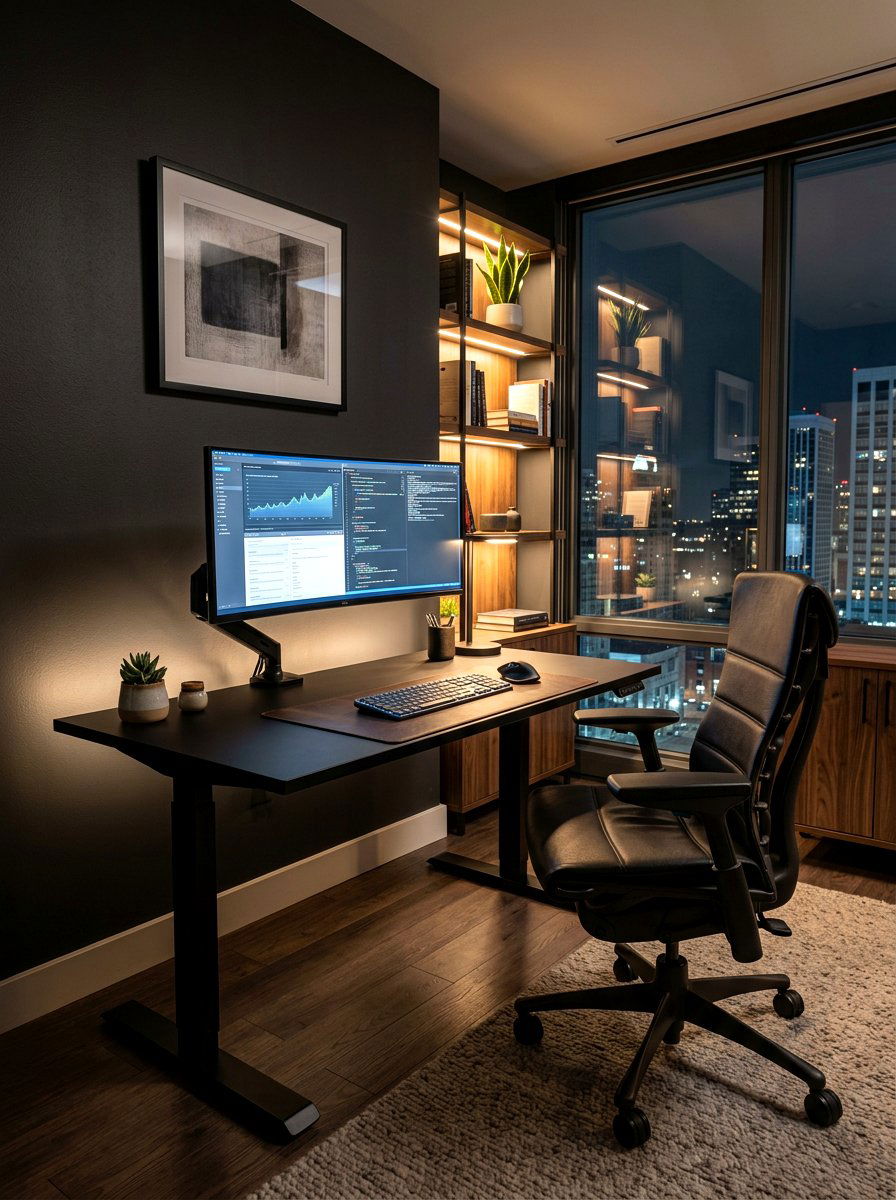
An ergonomic executive suite theme prioritizes physical health and comfort without compromising on the dark and moody aesthetic. This design centers around a high-quality, adjustable chair in black leather or dark mesh, paired with a standing desk that features a dark wood or matte black top. The workspace is organized to reduce strain, with monitor arms and keyboard trays that blend into the darker surroundings. Moody lighting and soft textiles ensure that the room still feels like a personal sanctuary rather than a sterile medical office. It is an essential design choice for professionals who spend long hours at their desk and want to stay healthy and productive in a beautiful space.
30. Soft Texture Rugs
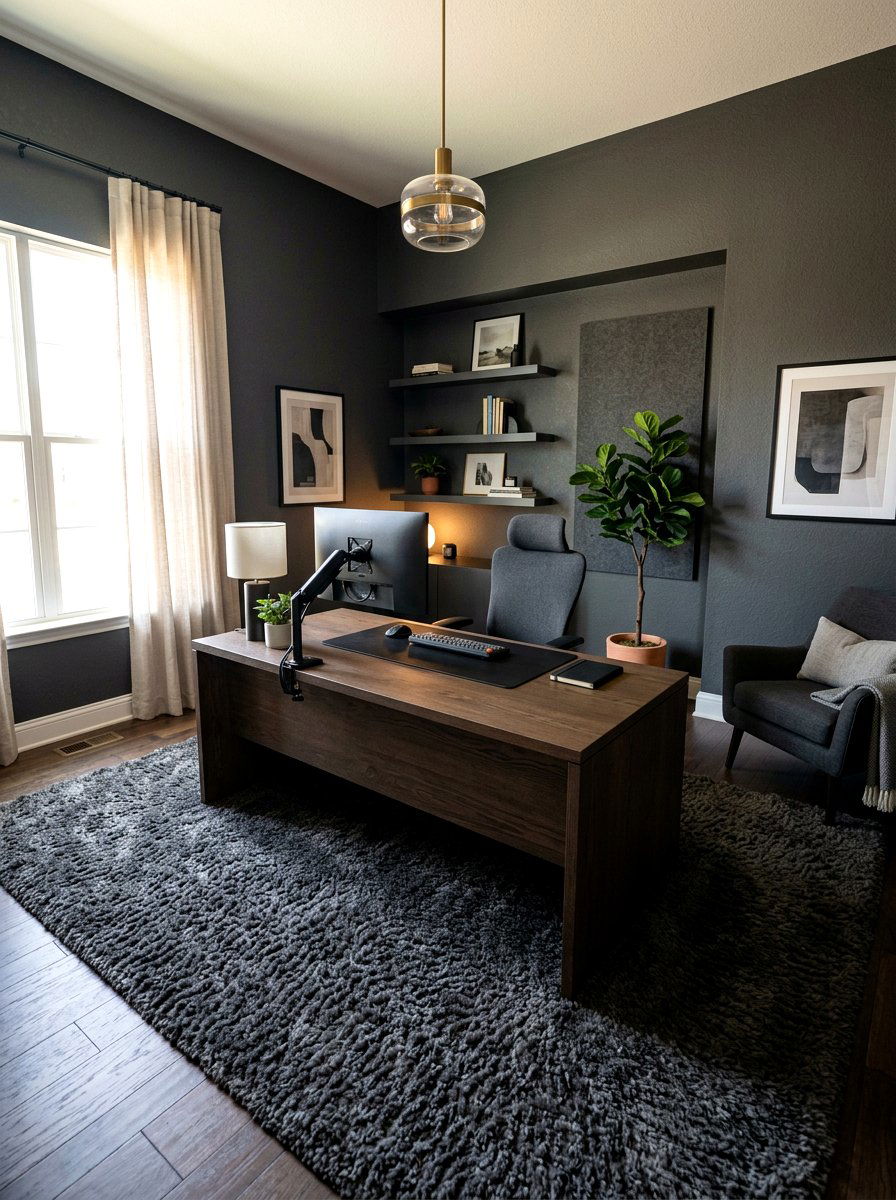
Focusing on soft texture rugs as a foundation for an office design adds an essential layer of warmth and comfort to a moody room. This theme typically features a large, high-pile rug in a dark, solid color or a subtle vintage pattern that anchors the furniture and defines the workspace. The rug serves to dampen sound, making the office feel even more private and quiet, while providing a soft surface for bare feet during long editing sessions. When paired with dark walls and heavy furniture, the rug adds a sense of "finish" to the room, making it feel complete and lived-in. It is a simple addition that significantly enhances the luxury and coziness of the space.
Conclusion:
Designing a moody editor office is a rewarding journey into creating a space that truly reflects your professional identity and creative needs. By embracing darker tones, you are not just choosing a color palette, but rather deciding to cultivate an environment of focus, depth, and sophisticated inspiration. Each of these thirty ideas demonstrates that a moody workspace can be incredibly diverse, ranging from the raw energy of industrial design to the quiet elegance of a dark academic library. Ultimately, the best editor’s office is one that provides both the tools you need for modern productivity and the aesthetic sanctuary your mind requires for deep creative work.

Related posts: