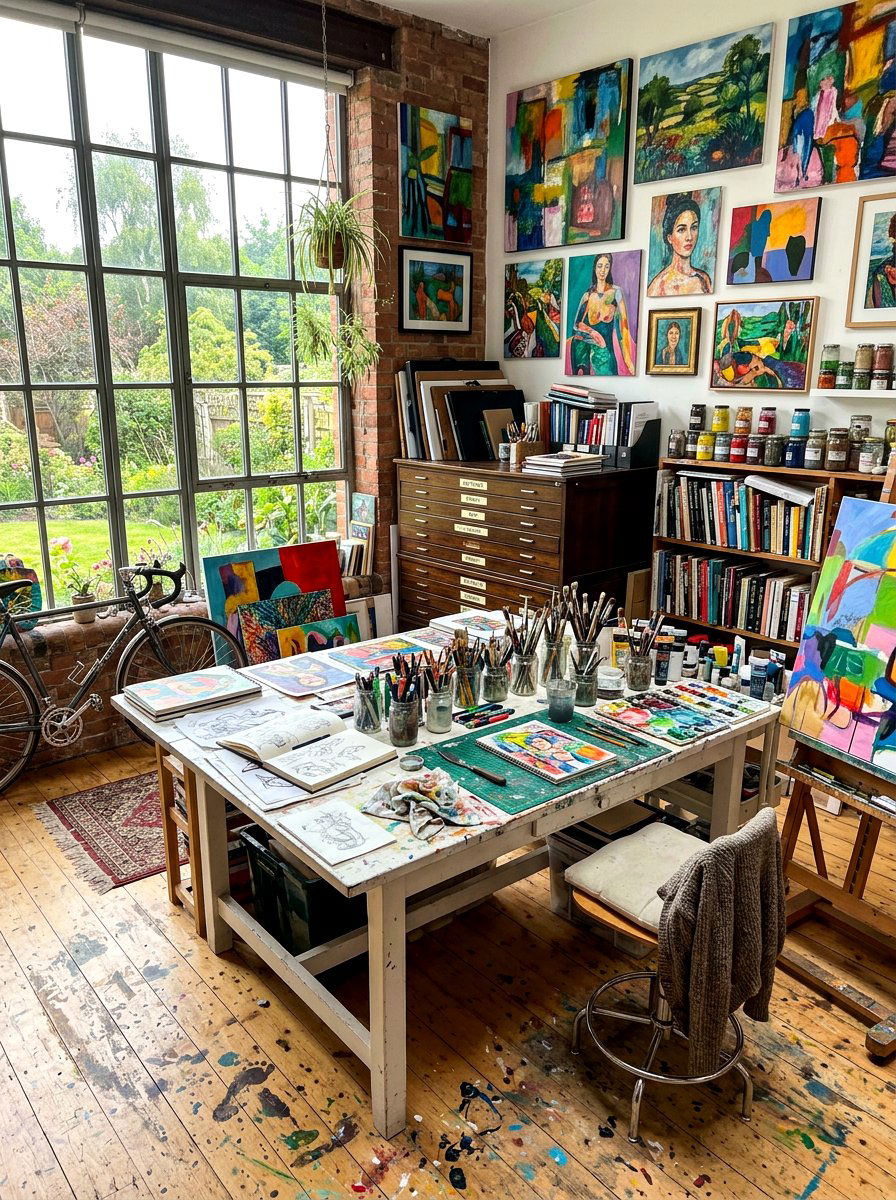
Creating a minimalist home office is about more than just stripping away clutter; it is about curating a space that fosters deep focus and professional creativity. When you remove visual noise, your mind is free to process complex tasks without the constant distraction of a messy desk or overwhelming decor. This approach to interior design prioritizes functionality while maintaining a high level of aesthetic sophistication. Whether you have a dedicated room or just a small corner, a minimalist setup can transform your work-life balance. By choosing quality over quantity and focusing on essential elements, you build a sanctuary for productivity that feels both modern and incredibly calming every single day.
1. Small Scandinavian Home Office
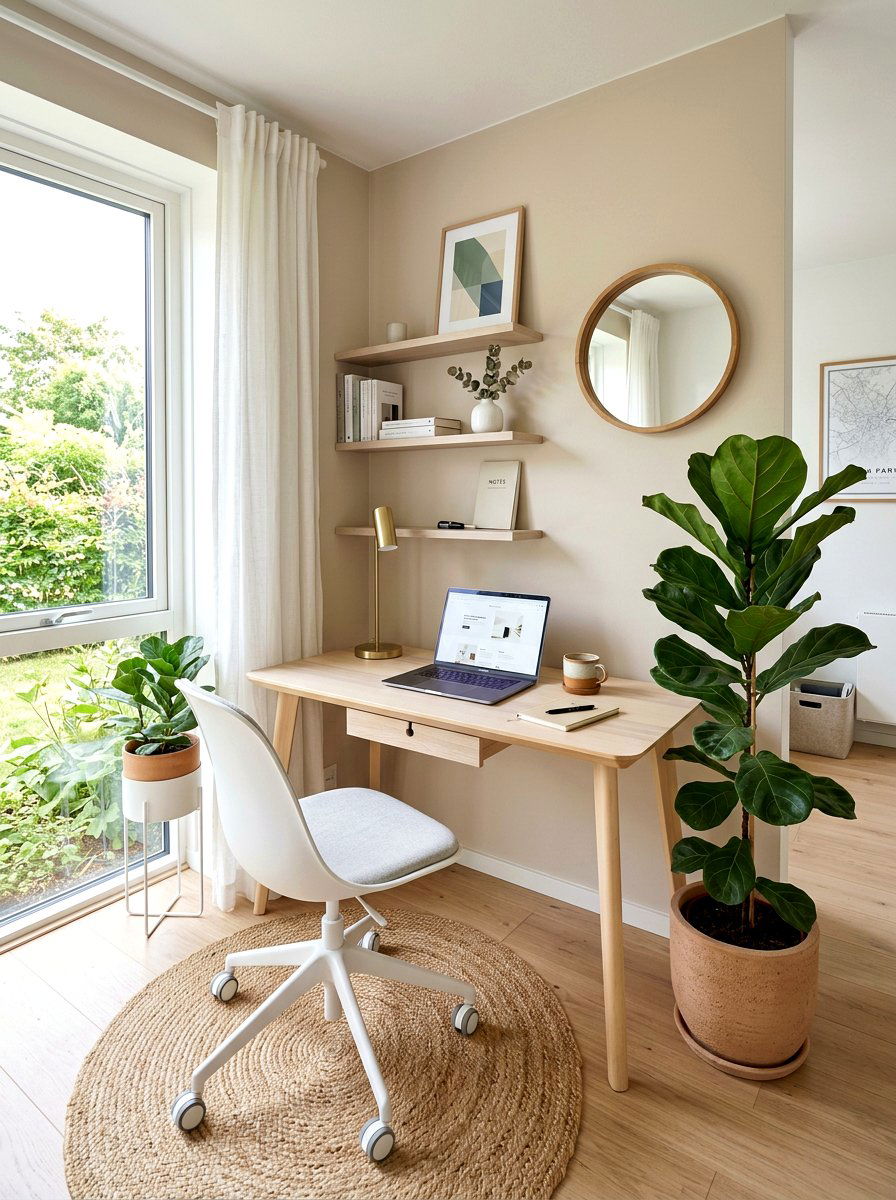
Imagine walking into a room where light wood tones and soft white walls create an immediate sense of peace. A Scandinavian-inspired home office focuses on the beauty of simplicity and natural materials to keep the atmosphere light and airy. You will often see a sleek wooden desk paired with a classic ergonomic chair that offers both style and support. Large windows are usually left unobstructed to let in as much natural sunlight as possible, which helps boost your mood during long working hours. This specific setup is perfect for those who appreciate clean lines and a functional layout that never feels cramped or overly busy while working from home.
2. Modern White Home Office
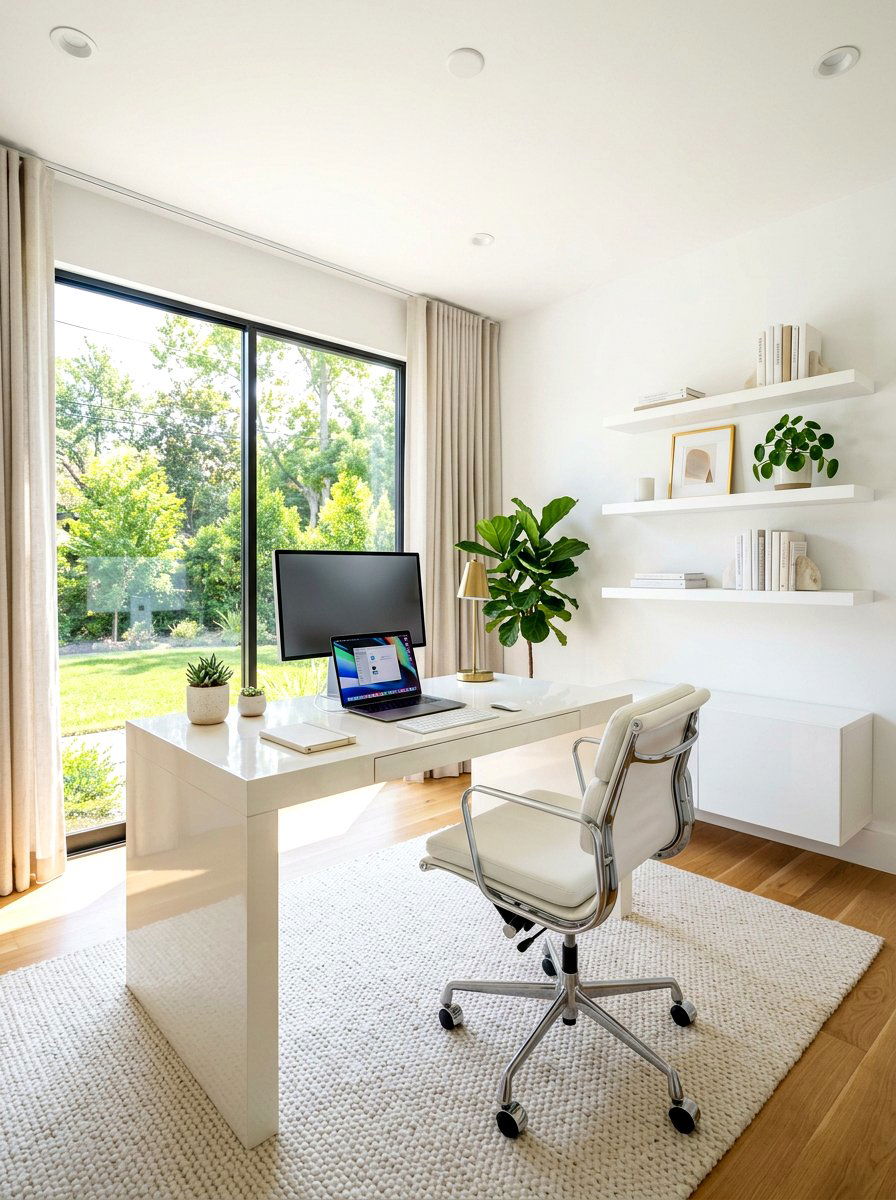
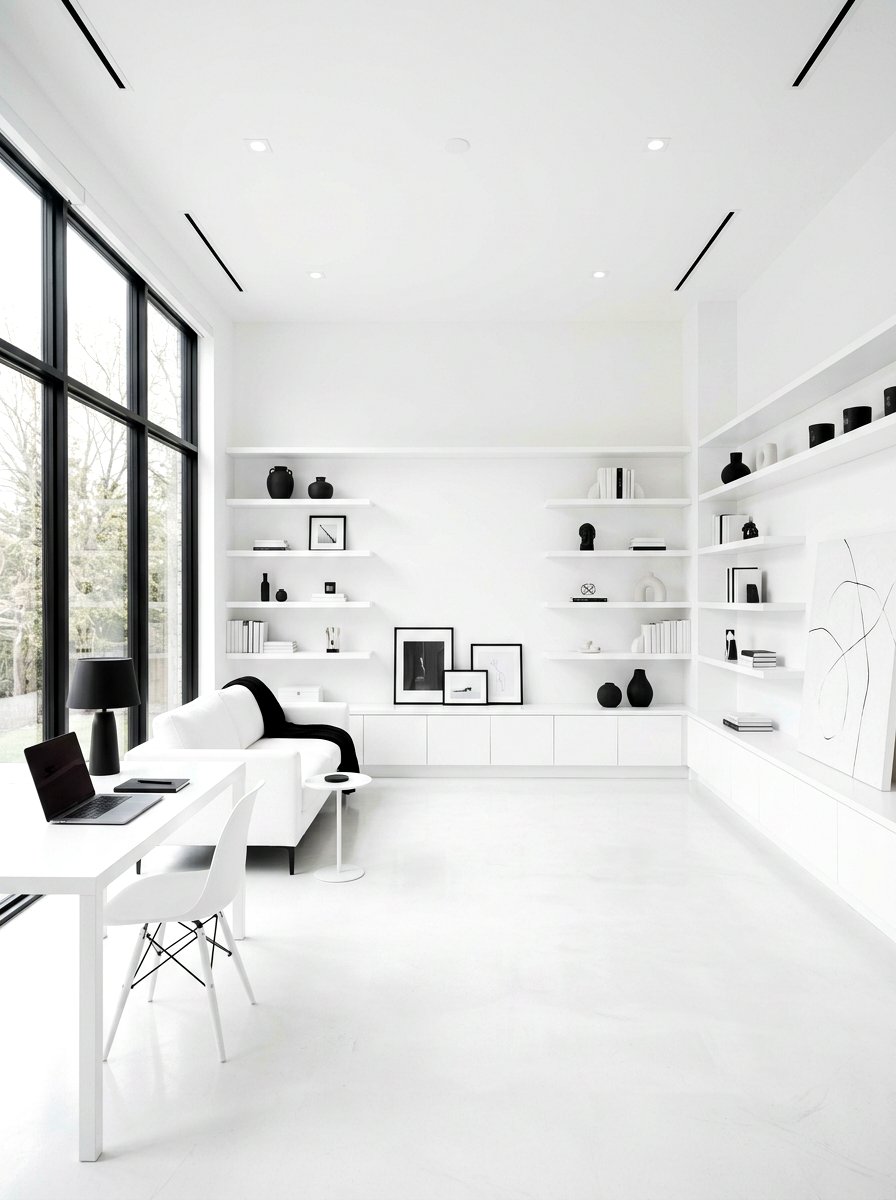
Does a purely white environment help you concentrate better during the day? A modern white home office uses various shades of ivory, cream, and eggshell to create a seamless and expansive look. This design strategy makes even the smallest rooms feel much larger and more open than they actually are in reality. You should choose furniture with glossy finishes to reflect light and keep the surfaces looking pristine. To prevent the space from feeling too cold, you can add subtle textures like a soft rug or a textured ceramic vase. It is a timeless choice that remains popular for its professional and polished appearance throughout the entire year.
3. Japandi Home Office
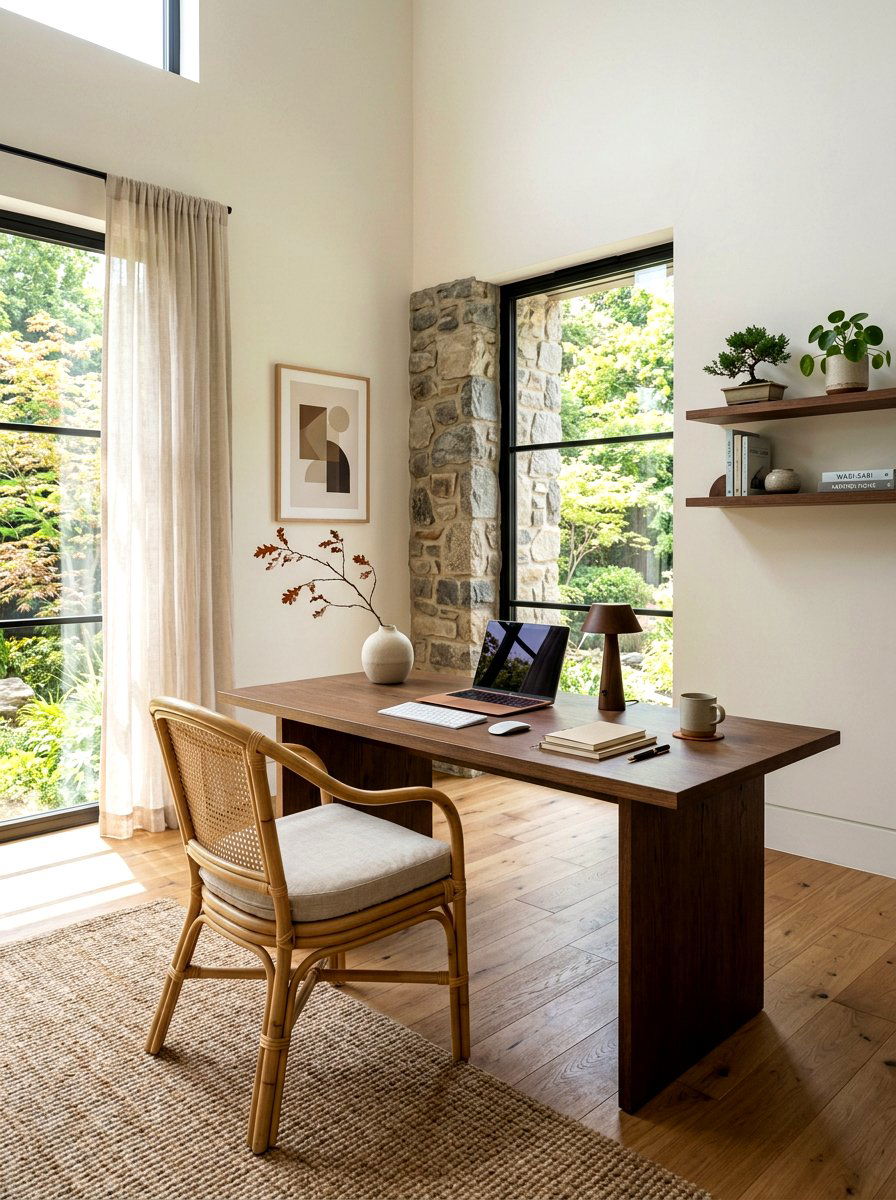
Merging the rustic warmth of Japanese style with the cool functionality of Scandinavian design creates the perfect Japandi home office. This aesthetic relies heavily on low-profile furniture and a palette of warm neutrals mixed with dark, moody accents. You might find a simple dark oak desk surrounded by light bamboo elements and stone textures. The goal is to achieve a balanced look that feels grounded and tranquil, making it easier to enter a state of deep work. By using organic shapes and avoiding unnecessary ornamentation, this style provides a sophisticated backdrop for your professional life without ever feeling distracting or cluttered during your meetings.
4. Floating Desk Home Office
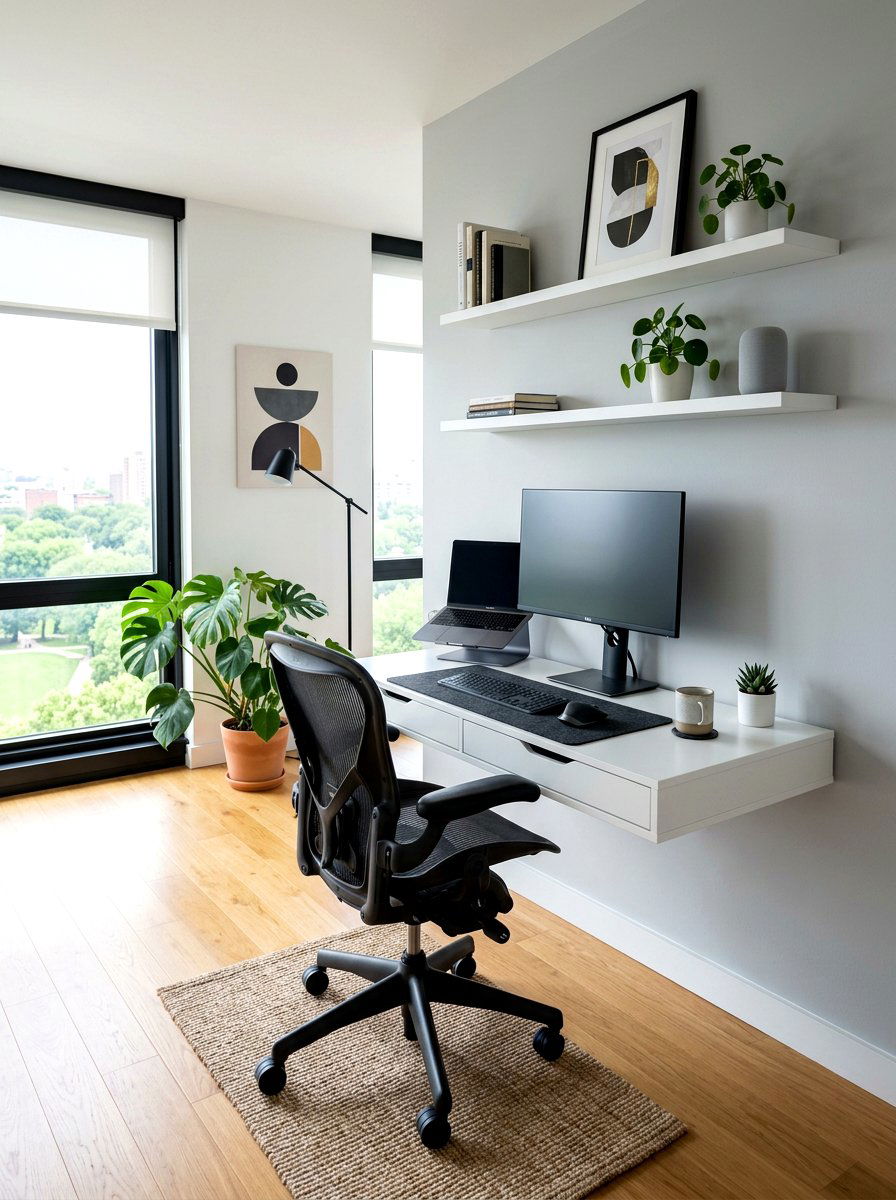
A floating desk is a brilliant way to maximize floor space in a minimalist home office while maintaining a sharp, contemporary look. By mounting the desktop directly to the wall, you eliminate the need for bulky legs, which makes the entire room feel much more open. This setup is ideal for small apartments where every square inch matters for your daily comfort. You can pair the floating surface with a sleek, low-profile chair that slides easily underneath when not in use. It creates a very streamlined silhouette that emphasizes the architectural lines of your home, proving that a dedicated workspace does not have to dominate the entire room.
5. Biophilic Home Office
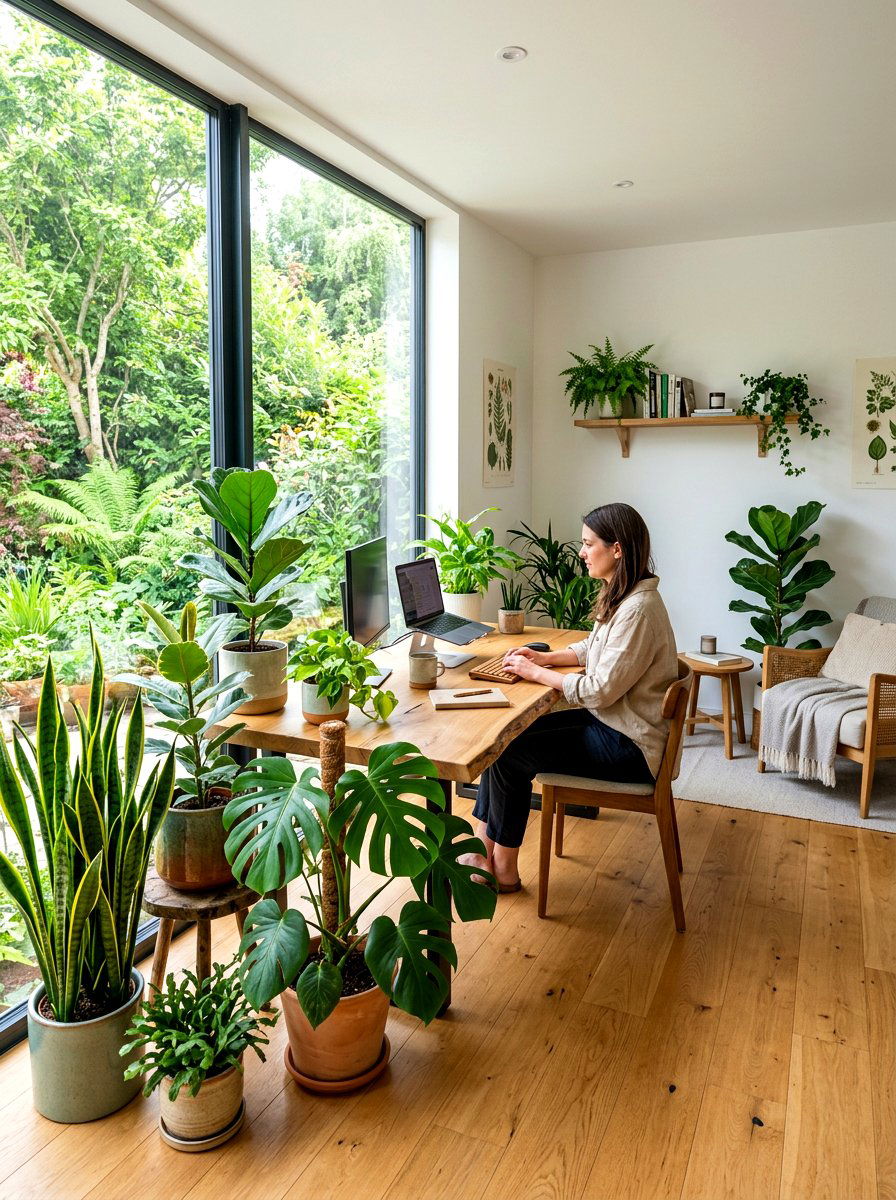
Bringing nature indoors is a core principle of a biophilic home office, which uses greenery to enhance well-being and productivity. In a minimalist context, this means choosing a few statement plants rather than overcrowding the desk with small pots. A large monstera or a tall snake plant can act as a natural focal point against a neutral wall. Combining these living elements with natural wood furniture and plenty of sunlight creates a refreshing environment that reduces stress. You will feel more energized and connected to the outside world, even when you are stuck indoors finishing a difficult project or attending a long video conference.
6. Industrial Minimalist Home Office
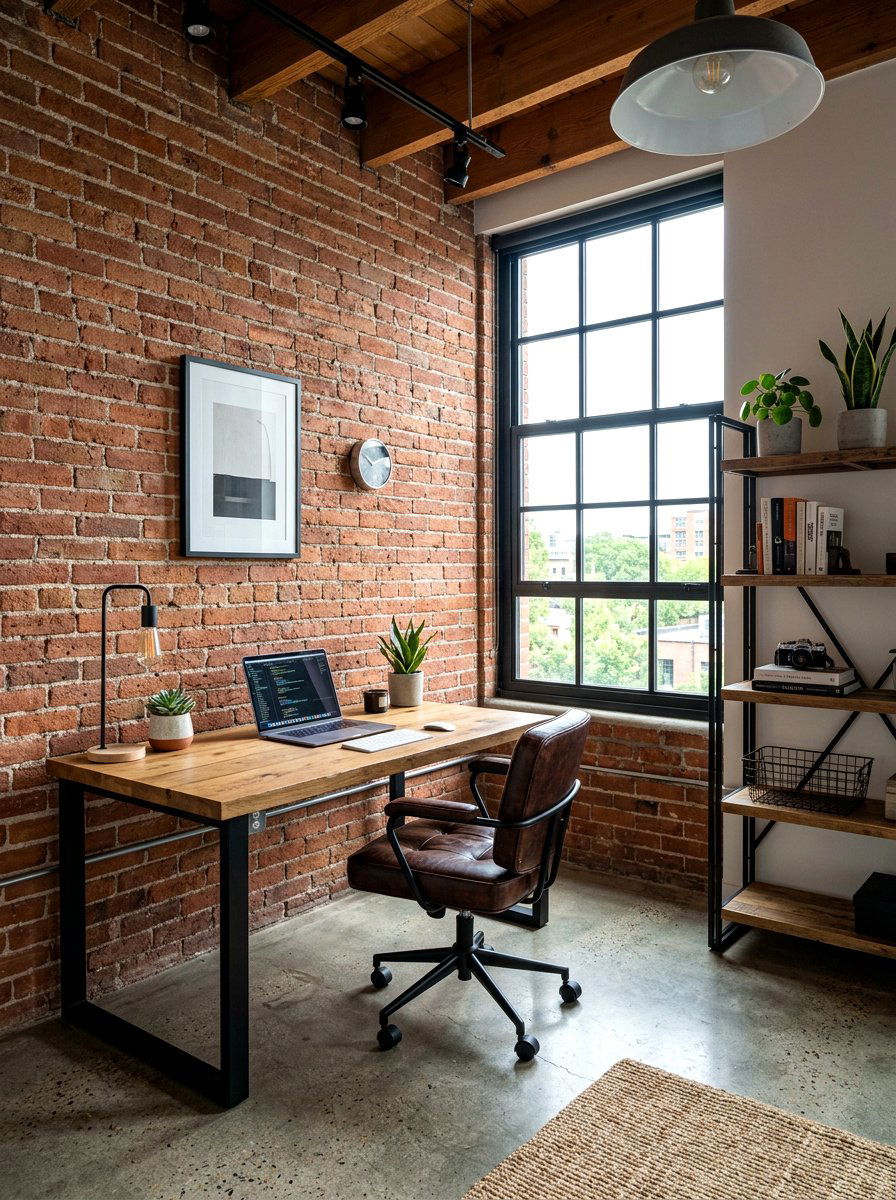
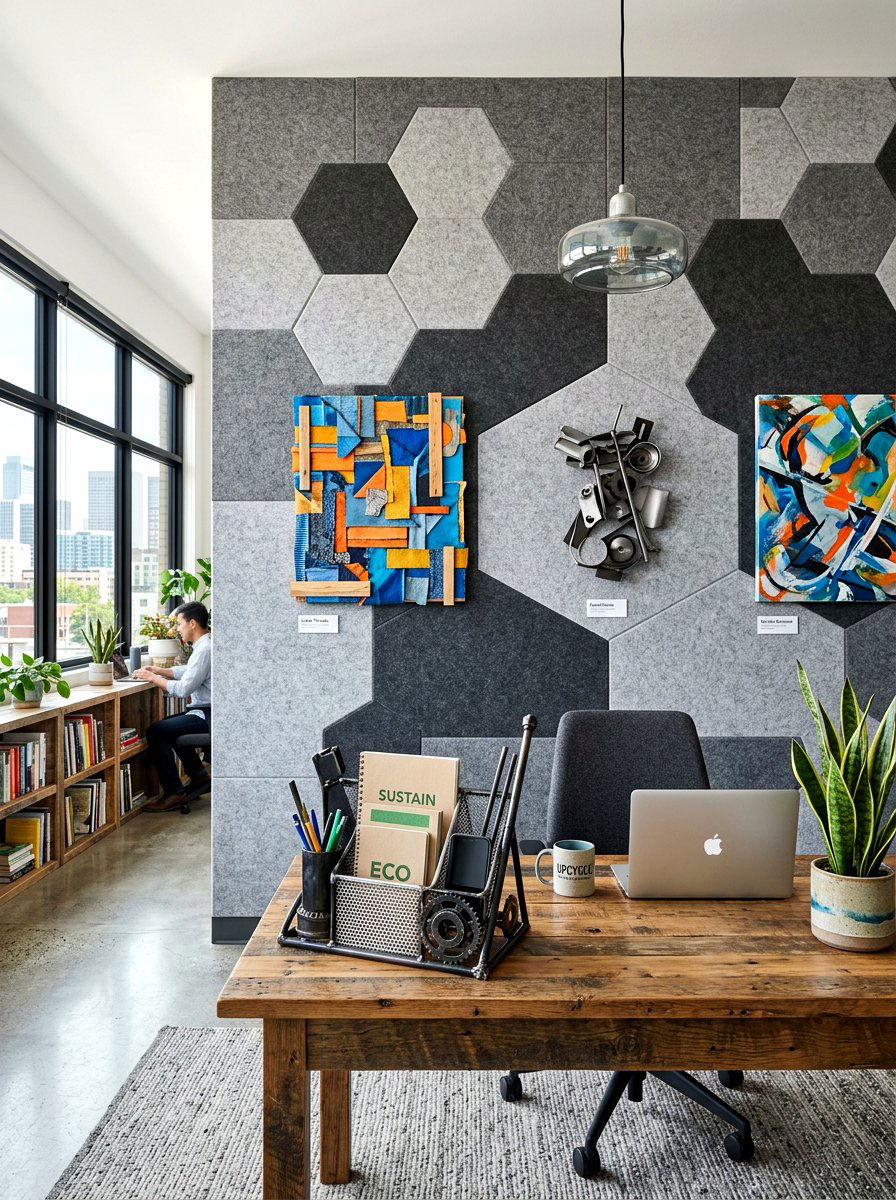
Can a workspace be both rugged and refined at the same time? An industrial minimalist home office achieves this balance by pairing raw materials like exposed brick and metal with clean, modern furniture. Instead of the typical heavy industrial look, this version keeps things light by limiting the number of textures used in the space. A desk with thin black steel legs and a reclaimed wood top provides plenty of character without overwhelming the senses. This style is excellent for creative professionals who want a workspace that feels sturdy, professional, and full of unique personality while remaining completely free of any unnecessary visual clutter.
7. Black And White Home Office
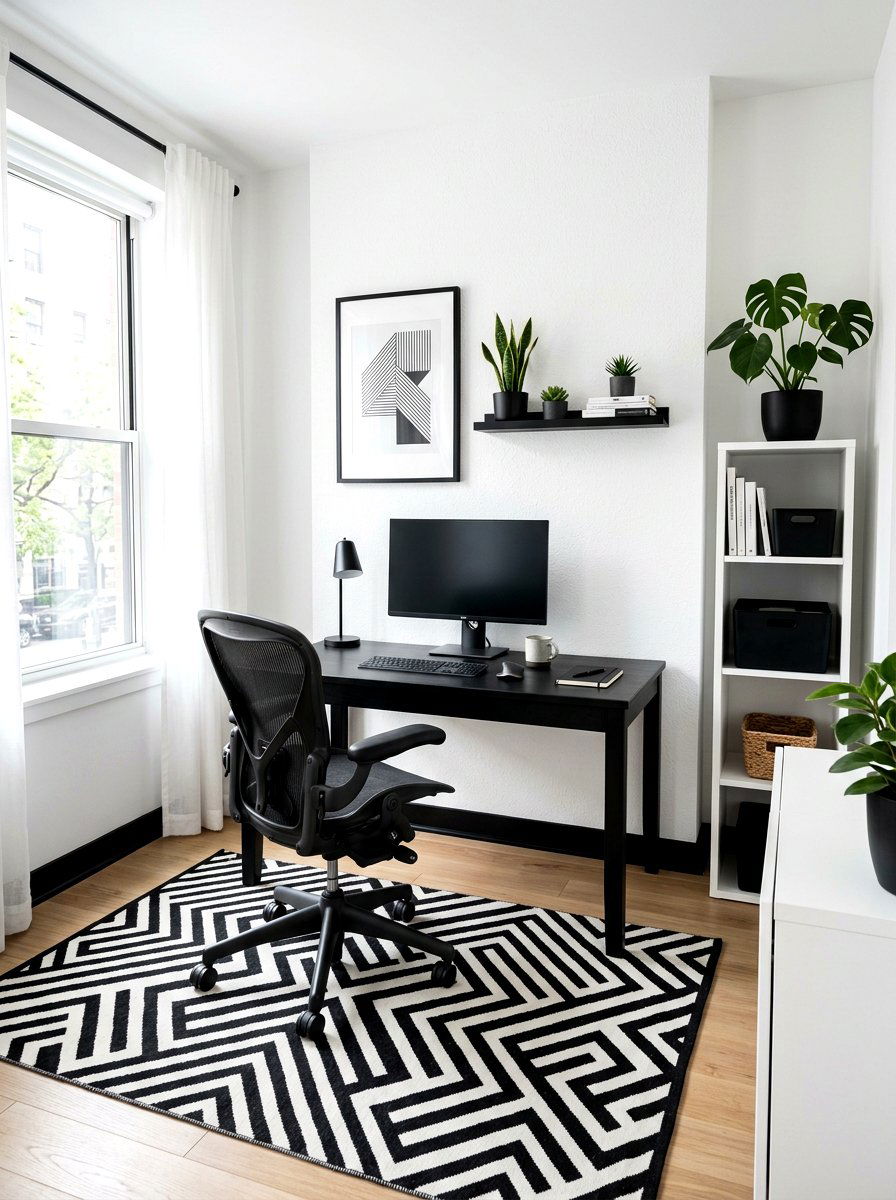
Have you ever considered how a high-contrast palette can sharpen your focus during work? A black and white home office offers a sophisticated and bold environment that feels both disciplined and stylish. By using a dark desk against a bright white wall, you create a visual anchor that defines your work zone clearly. This minimalist approach relies on geometric shapes and clean silhouettes to provide interest without needing extra decor. It is a fantastic option for someone who wants a professional, executive feel in their own home. Adding a few metallic accents can further elevate the luxury of this striking and very modern workspace design.
8. Hidden Closet Home Office
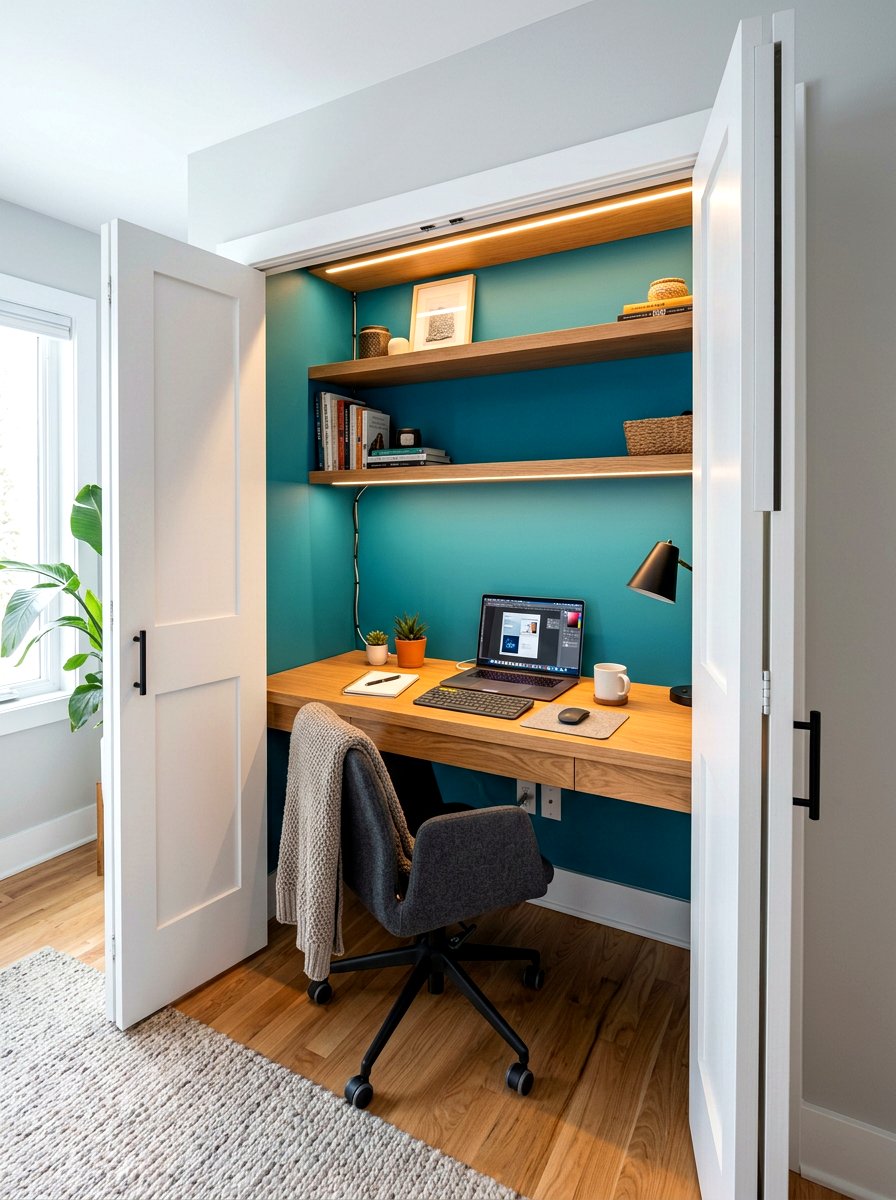
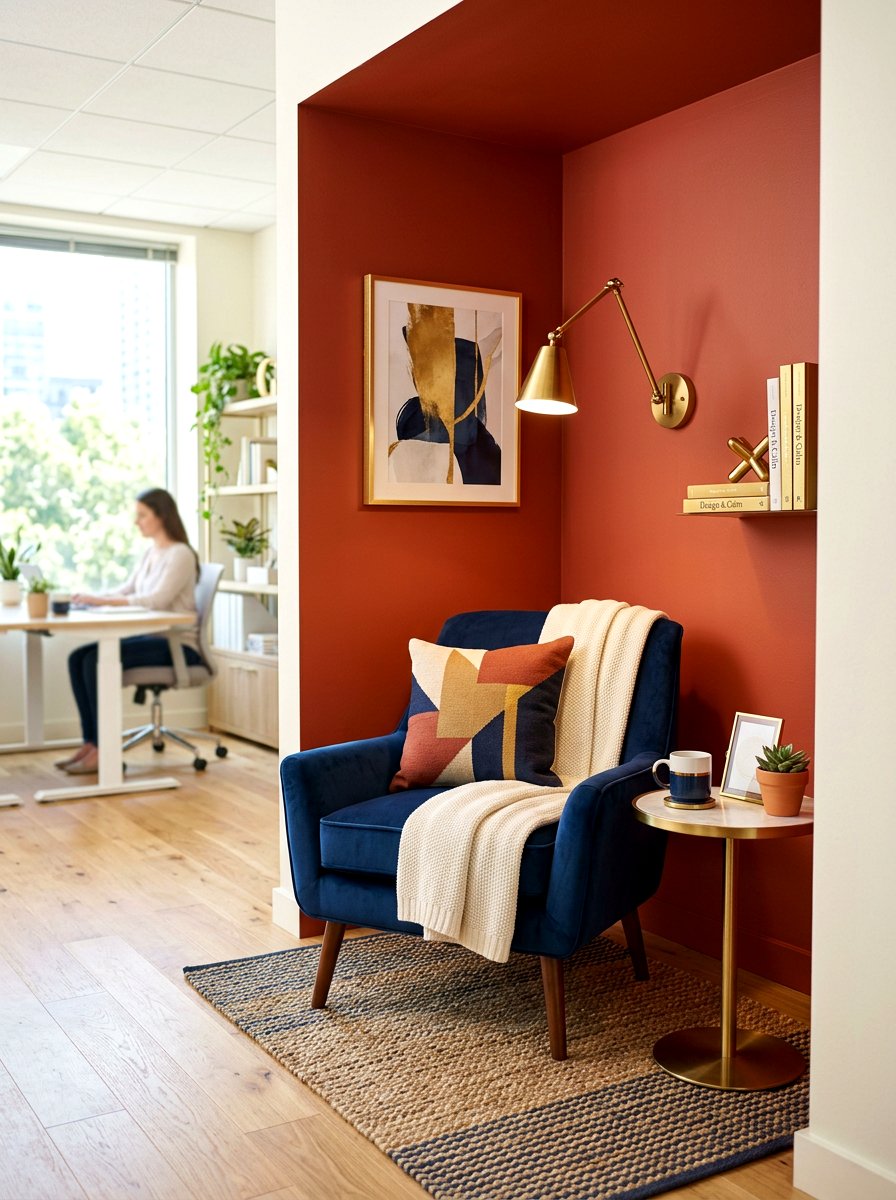
Transforming a spare closet into a hidden home office is a genius move for anyone living in a multi-use space. This "cloffice" concept allows you to tuck your entire workstation away behind closed doors once the workday is finished. Inside, you can install custom shelving and a built-in desk that fits the space perfectly to maximize efficiency. By painting the interior a bright, contrasting color, you can create a distinct sense of place that separates your professional life from your personal home environment. It is the ultimate minimalist solution for maintaining a clear boundary between work and relaxation in a small living area.
9. Corner Desk Home Office
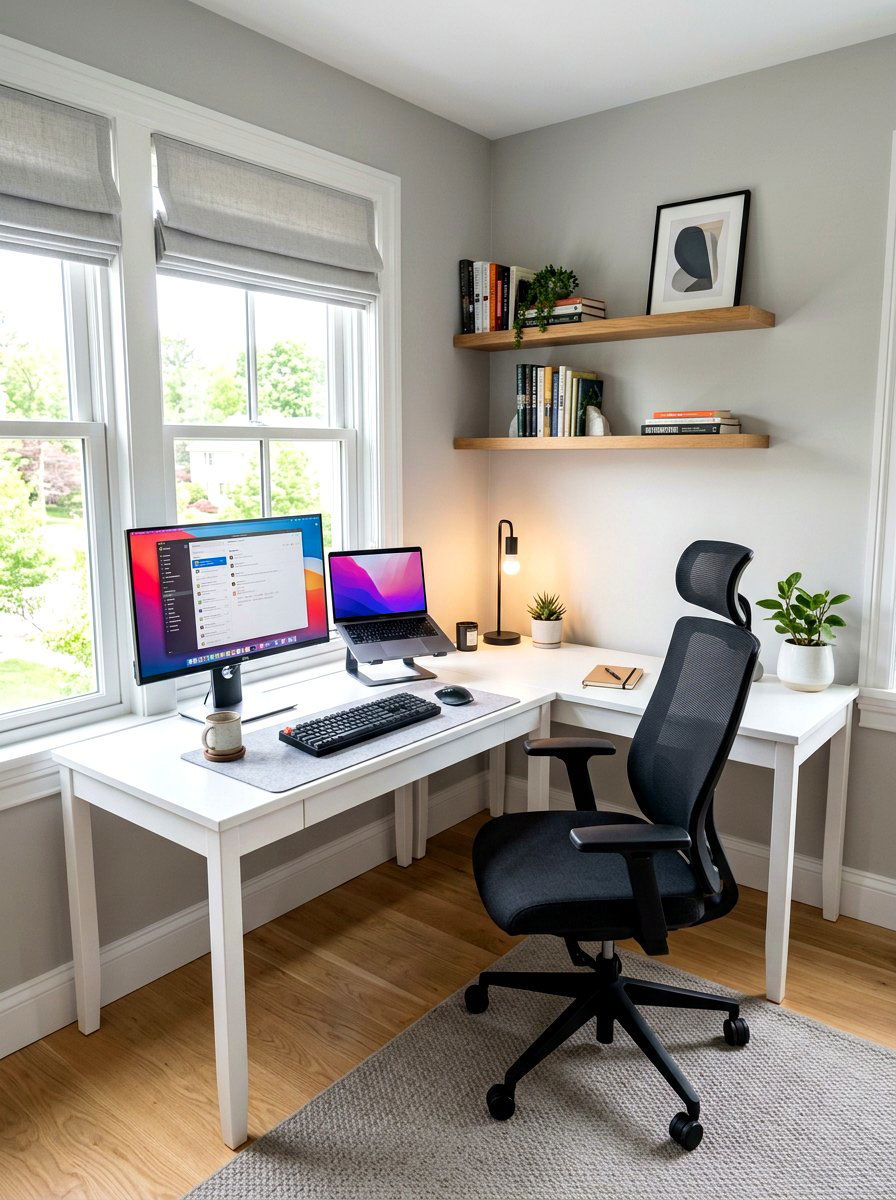
Utilizing an empty corner is often the best way to integrate a minimalist home office into an existing room layout. A corner desk provides a wrap-around surface that gives you plenty of room for your computer and documents without taking up much floor space. To keep it minimalist, choose a desk with a thin profile and integrated cable management to hide messy wires from view. This setup works particularly well in bedrooms or living areas where you need to maintain a quiet, unobtrusive presence. By keeping the decor to a minimum, the corner office blends seamlessly into the architecture of the room for a cohesive look.
10. Built In Shelf Home Office
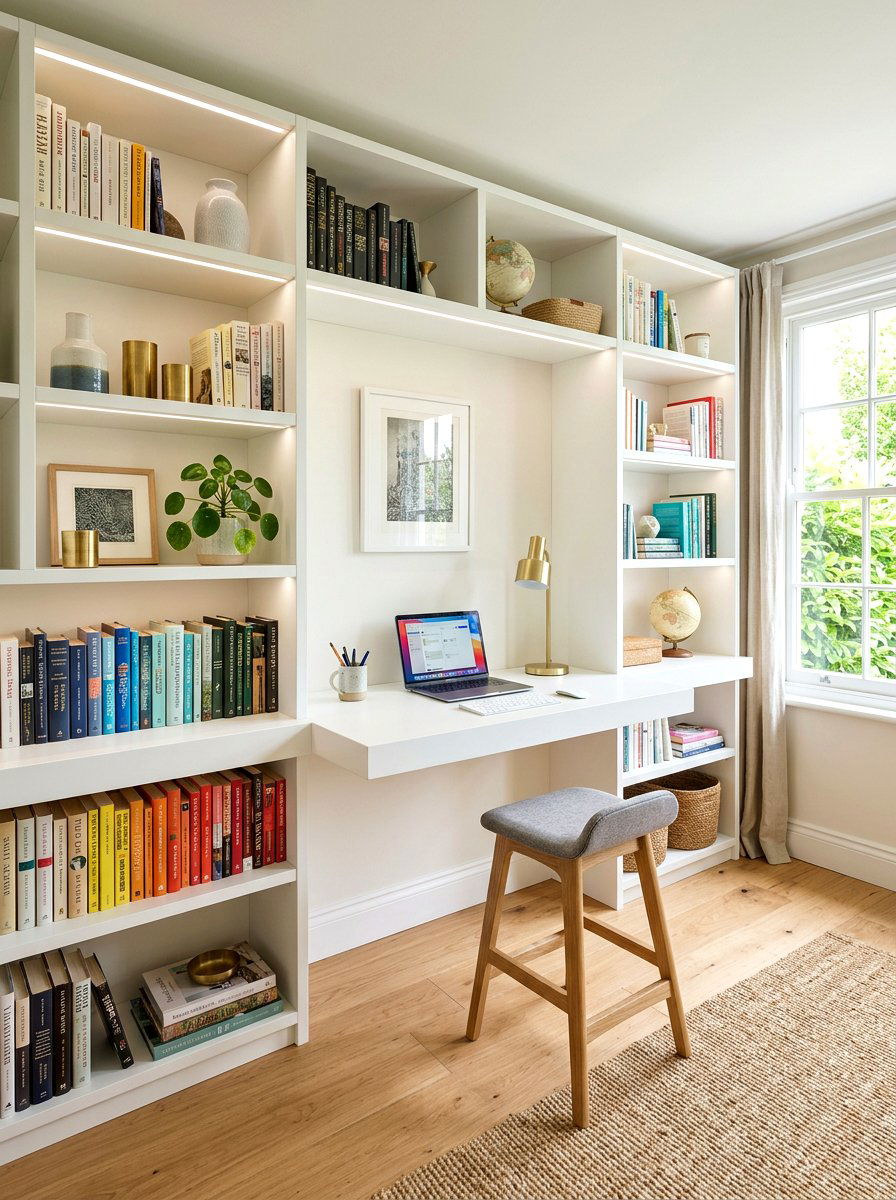
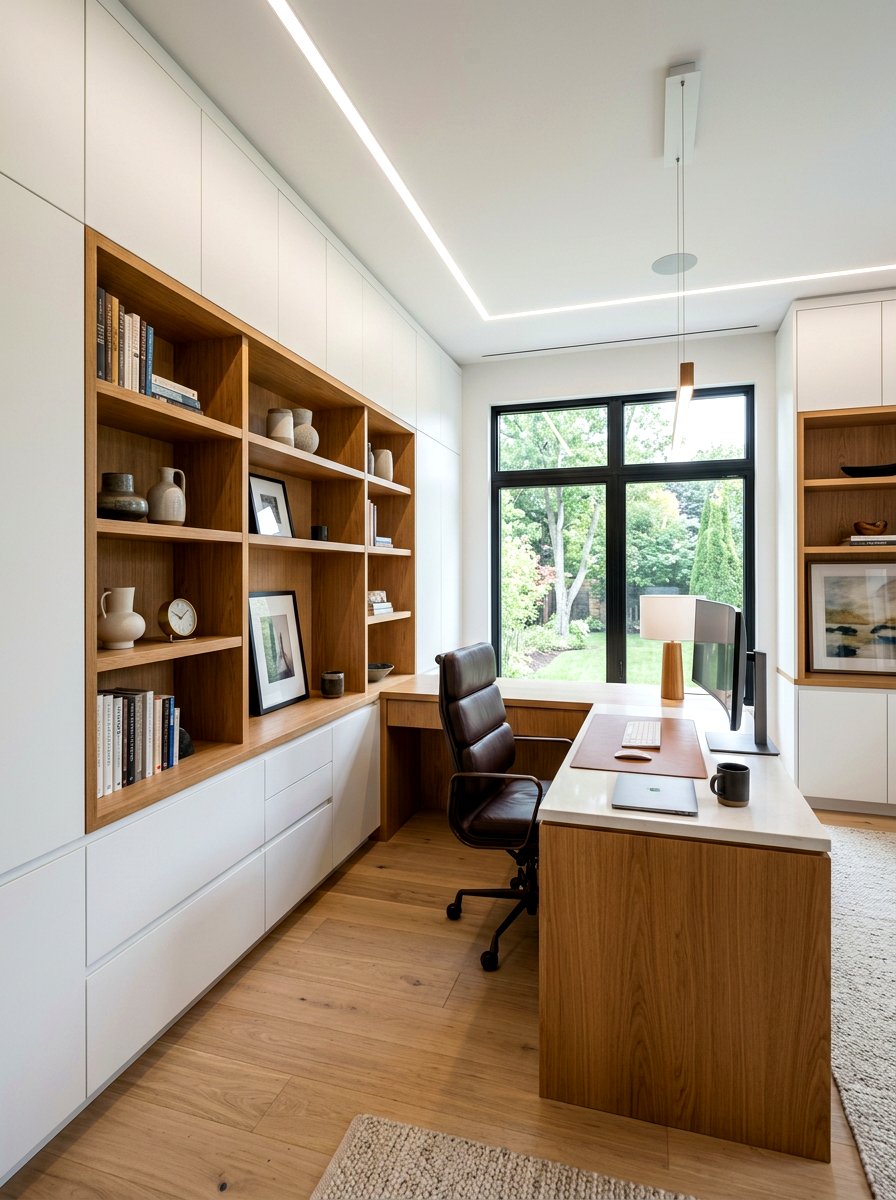
A built-in shelf home office uses existing wall architecture to create a permanent and highly organized workspace that feels part of the home. Instead of buying a separate desk, you can extend a library shelf to serve as your primary working surface. This design ensures that all your books and supplies are neatly tucked away in the surrounding cabinets, leaving the desktop clear for focused tasks. It creates a sense of continuity that free-standing furniture often lacks, making the office feel integrated and intentional. This approach is perfect for homeowners who want a high-end, custom look that prioritizes long-term organization and a clean aesthetic.
11. Glass Partition Home Office
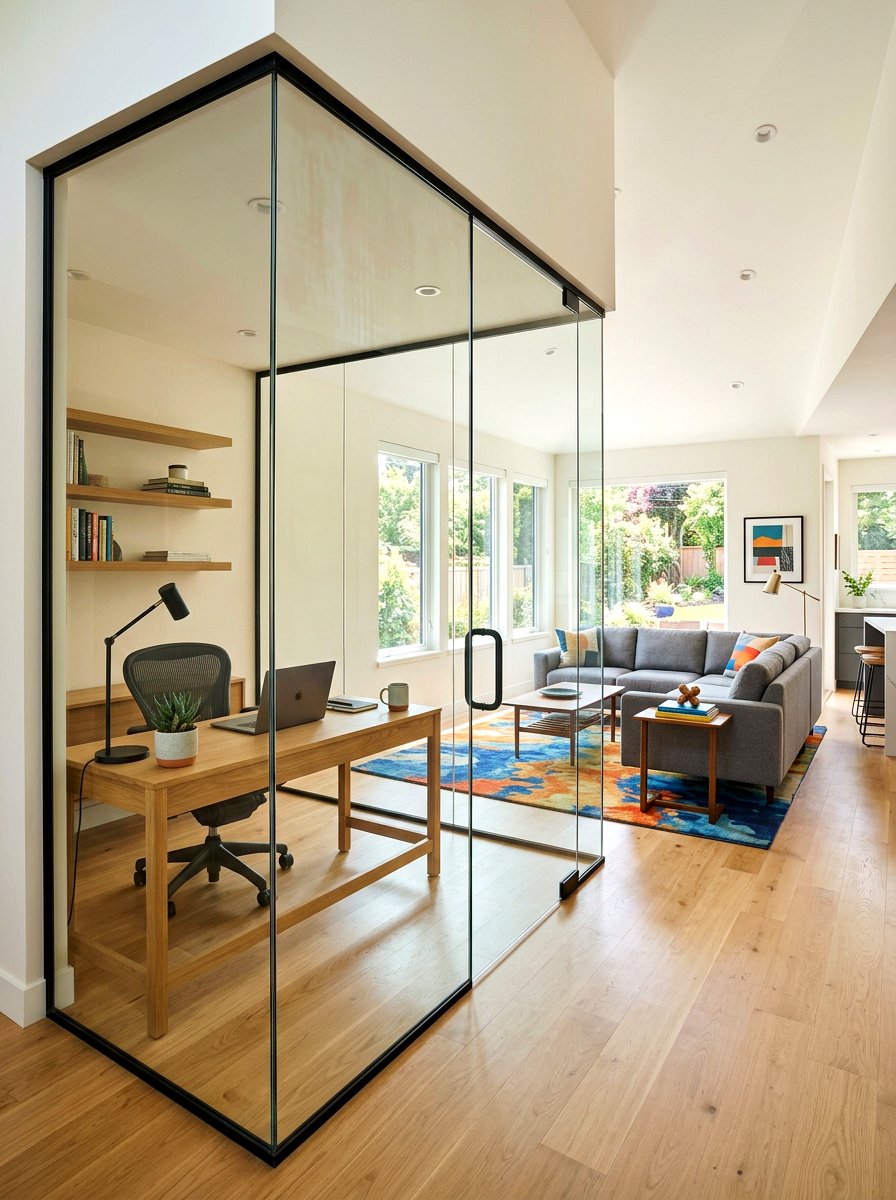
Using a glass partition is a modern way to define a home office while maintaining an open-concept feel throughout the house. This transparent barrier provides the necessary acoustic privacy for calls without making the workspace feel isolated or dark. In a minimalist home, the thin black or white frames of the glass panels add a subtle industrial touch that looks incredibly sleek. It allows natural light to flow deep into the home, ensuring your office remains bright and inviting all day long. This design is perfect for those who want a dedicated quiet zone that still feels connected to the beauty of their living space.
12. Monochrome Grey Home Office
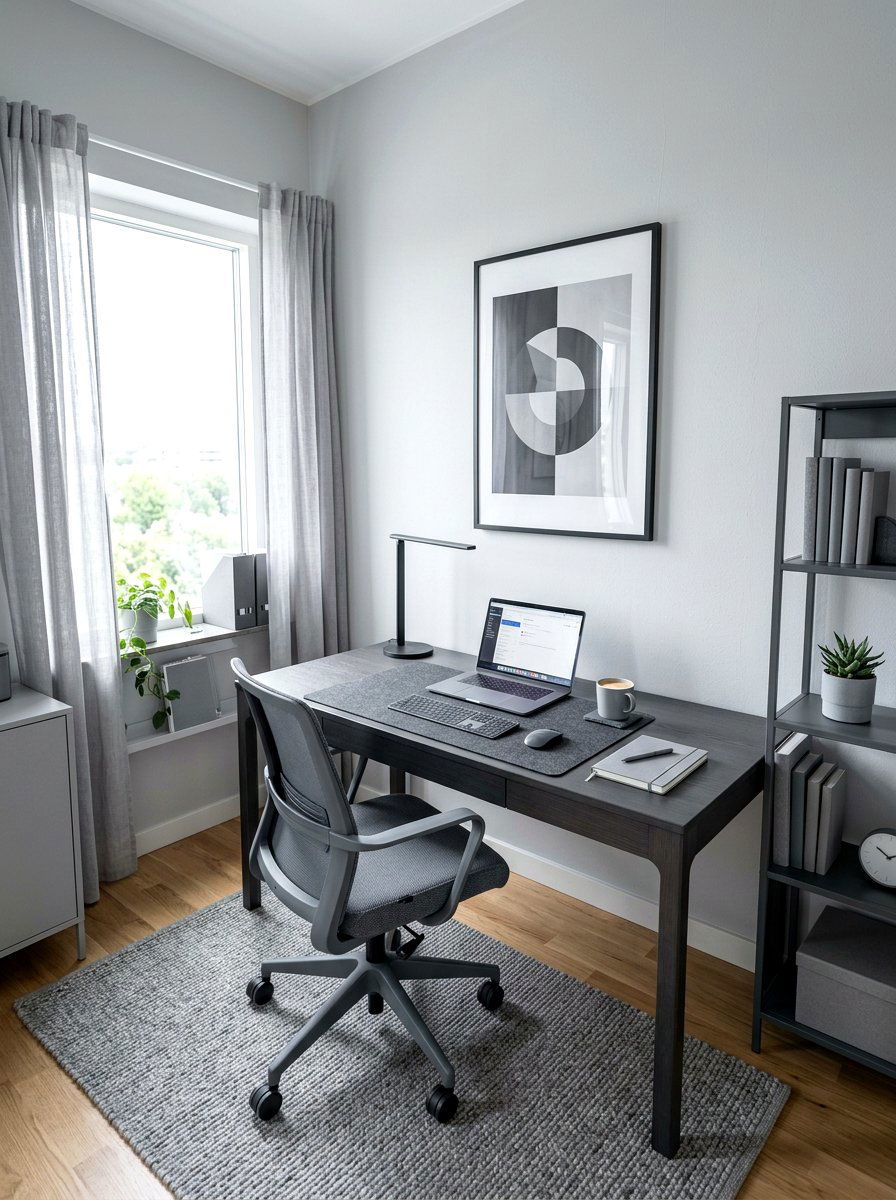
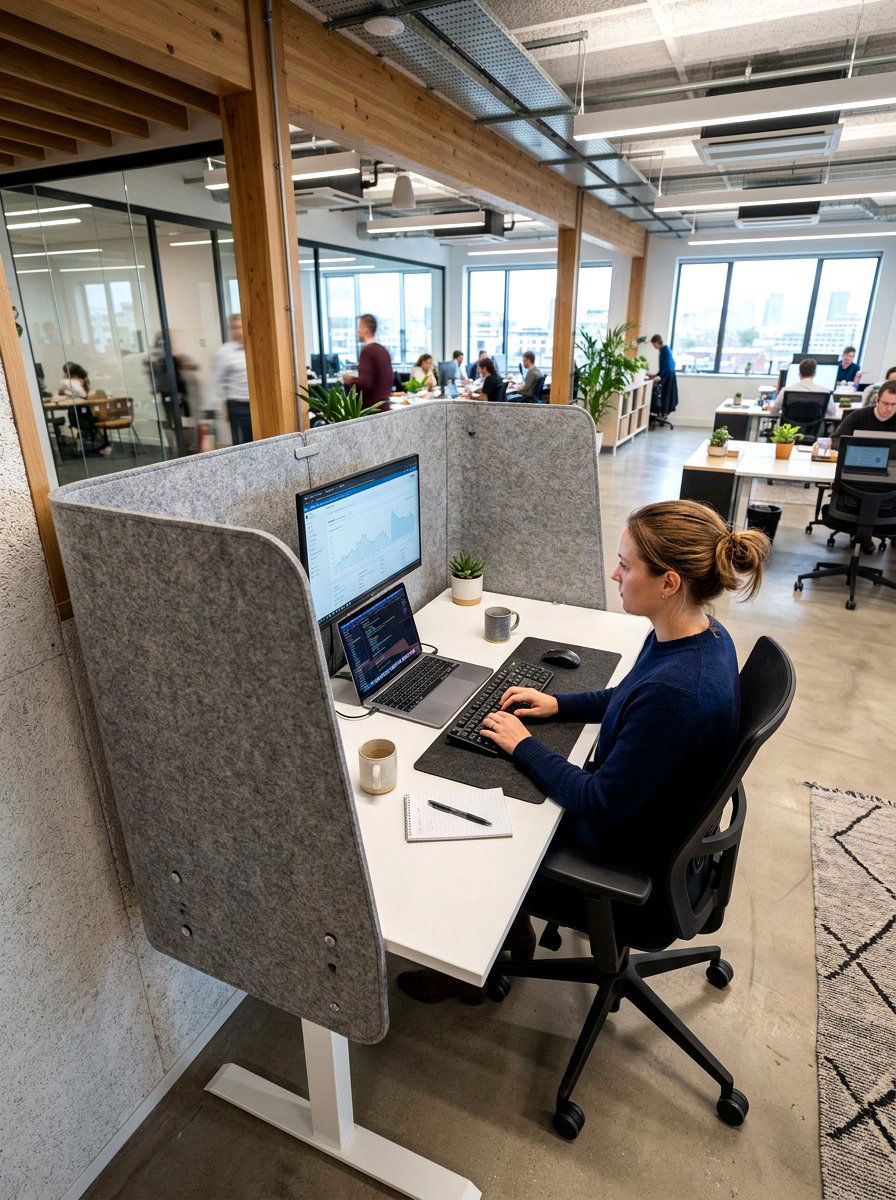
A monochrome grey home office creates a soothing, low-stimulus environment that is perfect for intense concentration and long periods of deep work. By using varying tones of charcoal, slate, and dove grey, you add depth and visual interest without the need for bright colors. This palette feels incredibly professional and sophisticated, often mimicking the look of a high-end corporate suite. You can use different textures, like a felt desk mat or a matte metal lamp, to prevent the grey from looking flat or boring. It is a smart choice for anyone who wants a serious, calm workspace that feels modern and consistently polished.
13. Natural Wood Home Office
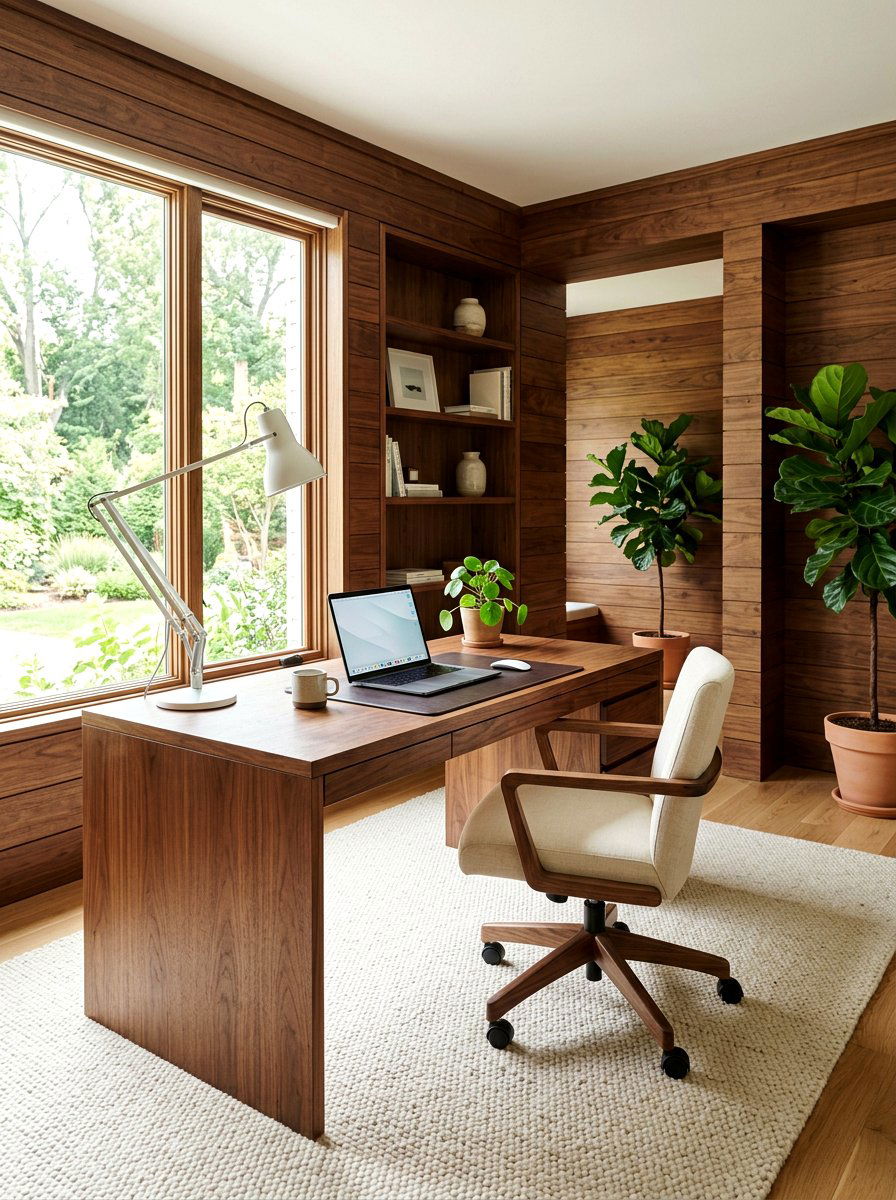
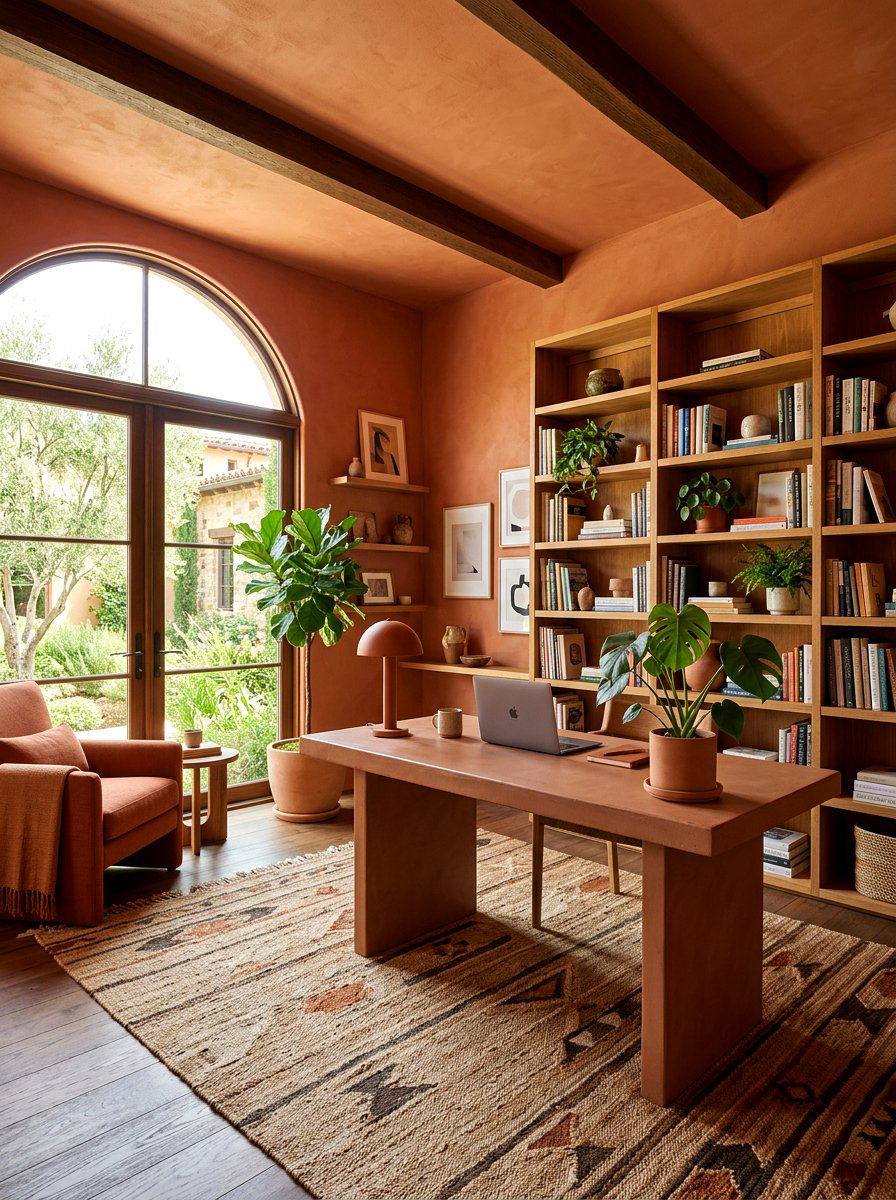
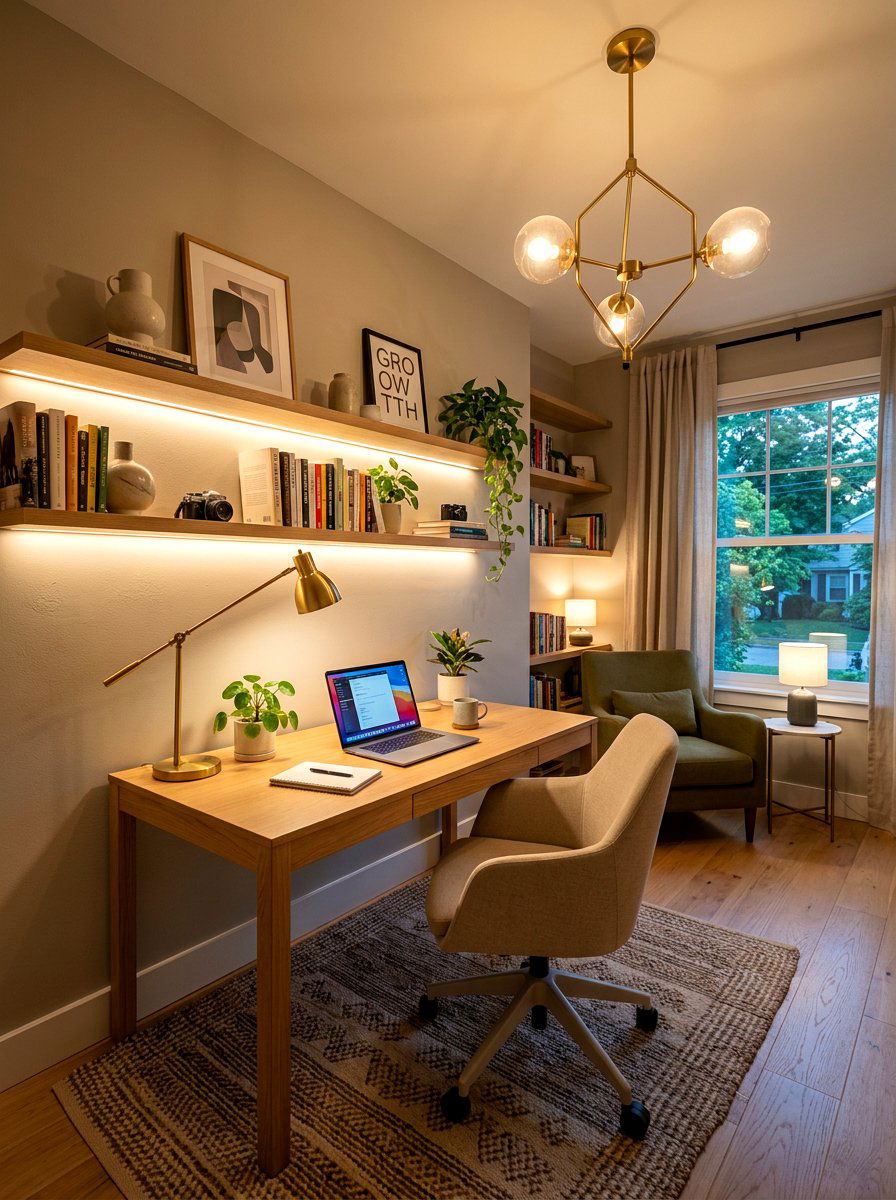
Embracing the warmth of natural wood is a fantastic way to make a minimalist home office feel more inviting and organic. A solid oak or walnut desk serves as a beautiful focal point that brings a touch of the outdoors into your professional space. To keep the look minimalist, you should pair the wooden furniture with simple white walls and very few decorative accessories. The natural grain of the wood provides enough visual texture to keep the room from feeling empty or clinical. This style is particularly popular because it creates a cozy yet productive atmosphere that feels timeless and exceptionally high-quality.
14. Mid Century Modern Home Office
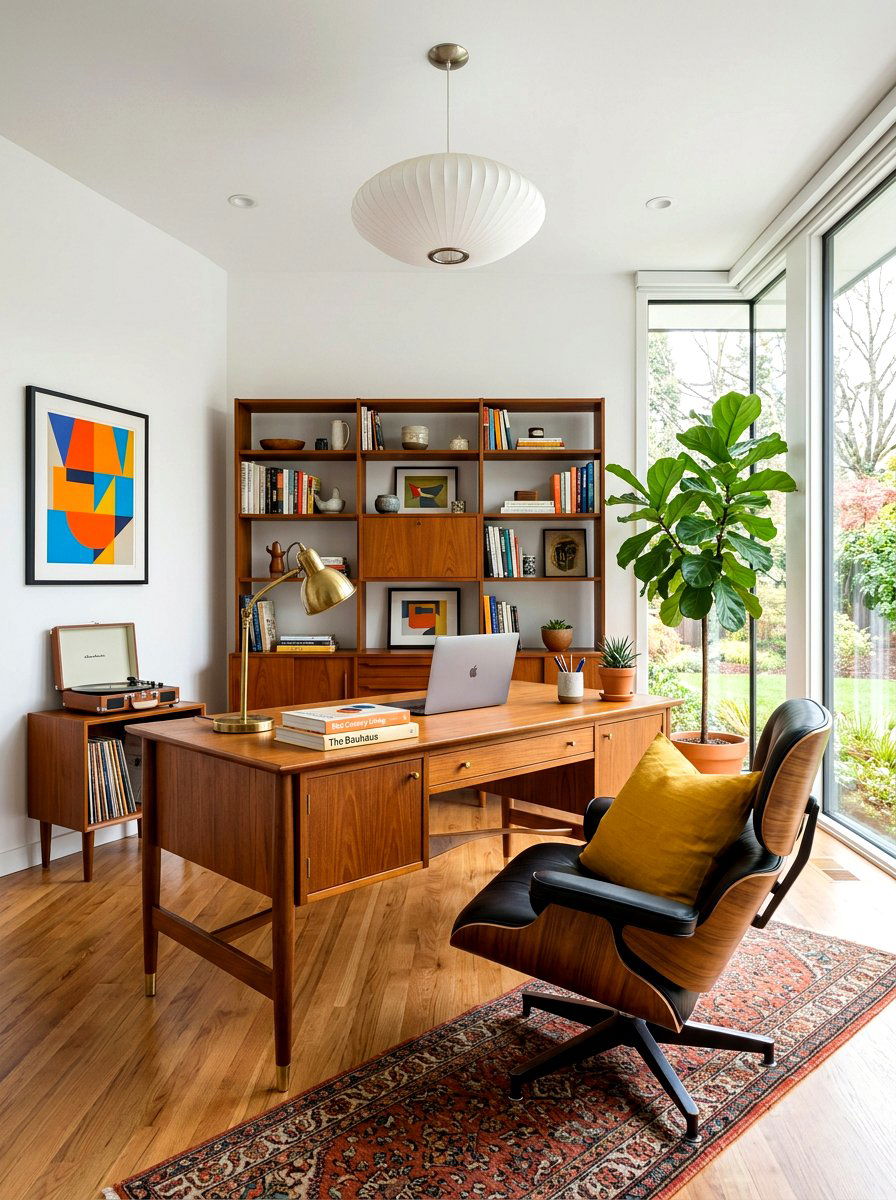
Mid-century modern design fits perfectly with a minimalist philosophy because it emphasizes clean lines and functional beauty above all else. A desk with tapered legs and a sleek silhouette provides an iconic look that never goes out of style for a home. You can pair it with a vintage-inspired chair that offers great lumbar support while looking like a piece of art. By keeping the color palette limited to warm wood tones and a few muted accents, you create a space that feels nostalgic yet completely modern. It is an excellent choice for those who want their office to feel curated and stylishly minimalist.
15. Standing Desk Home Office
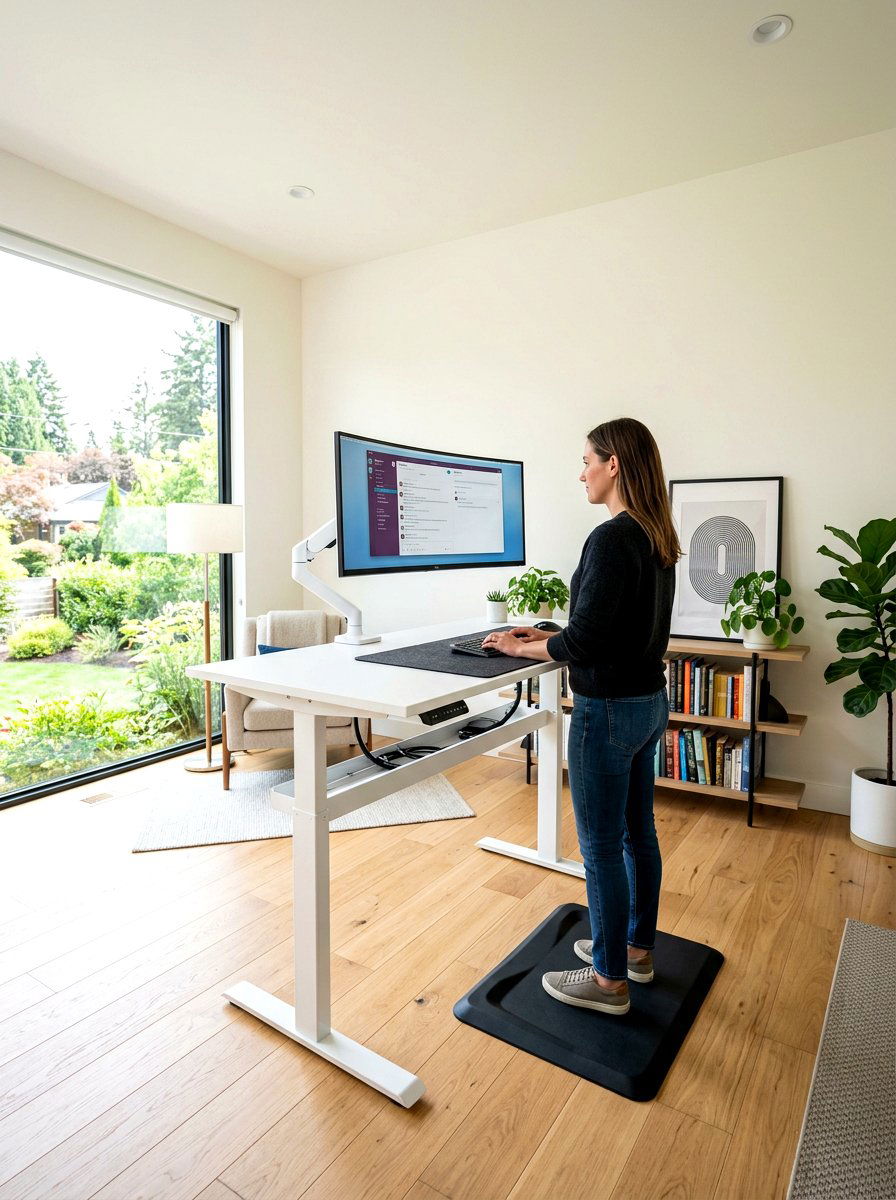
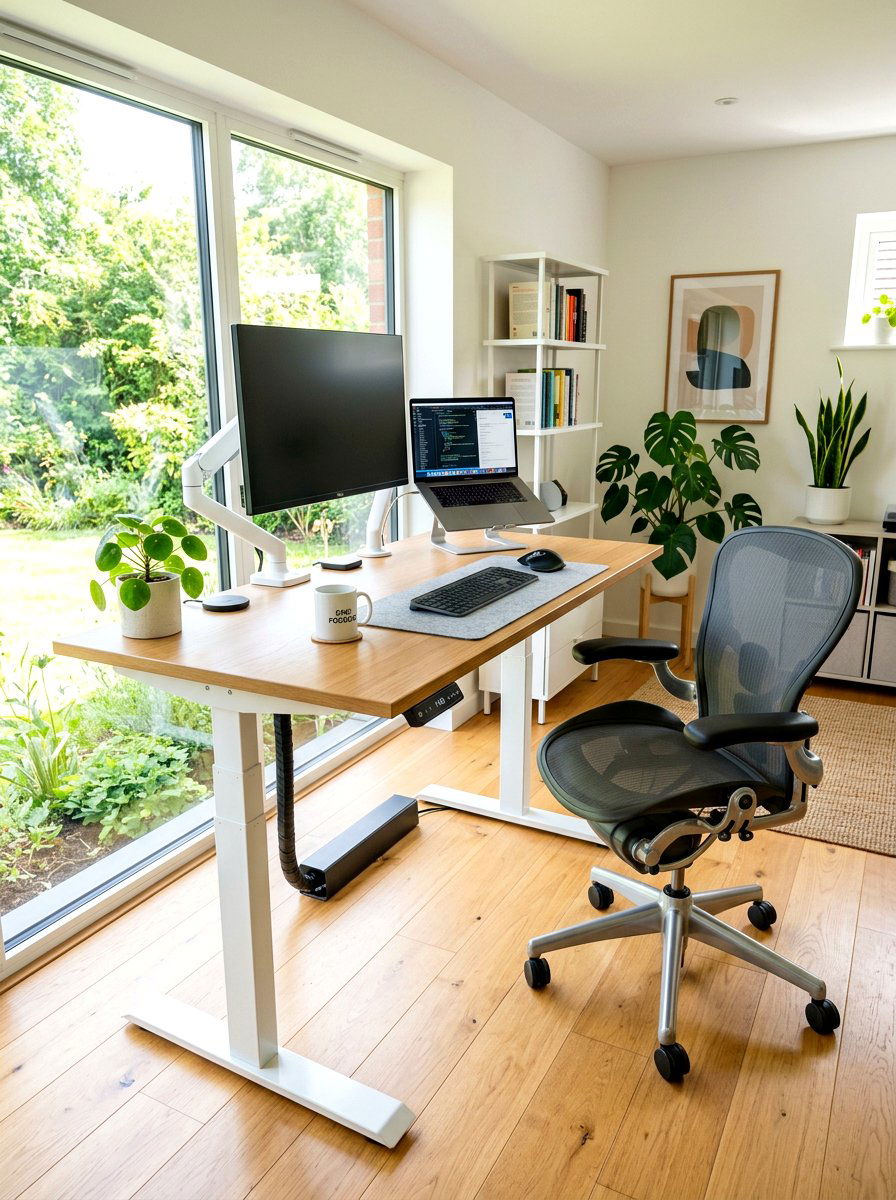
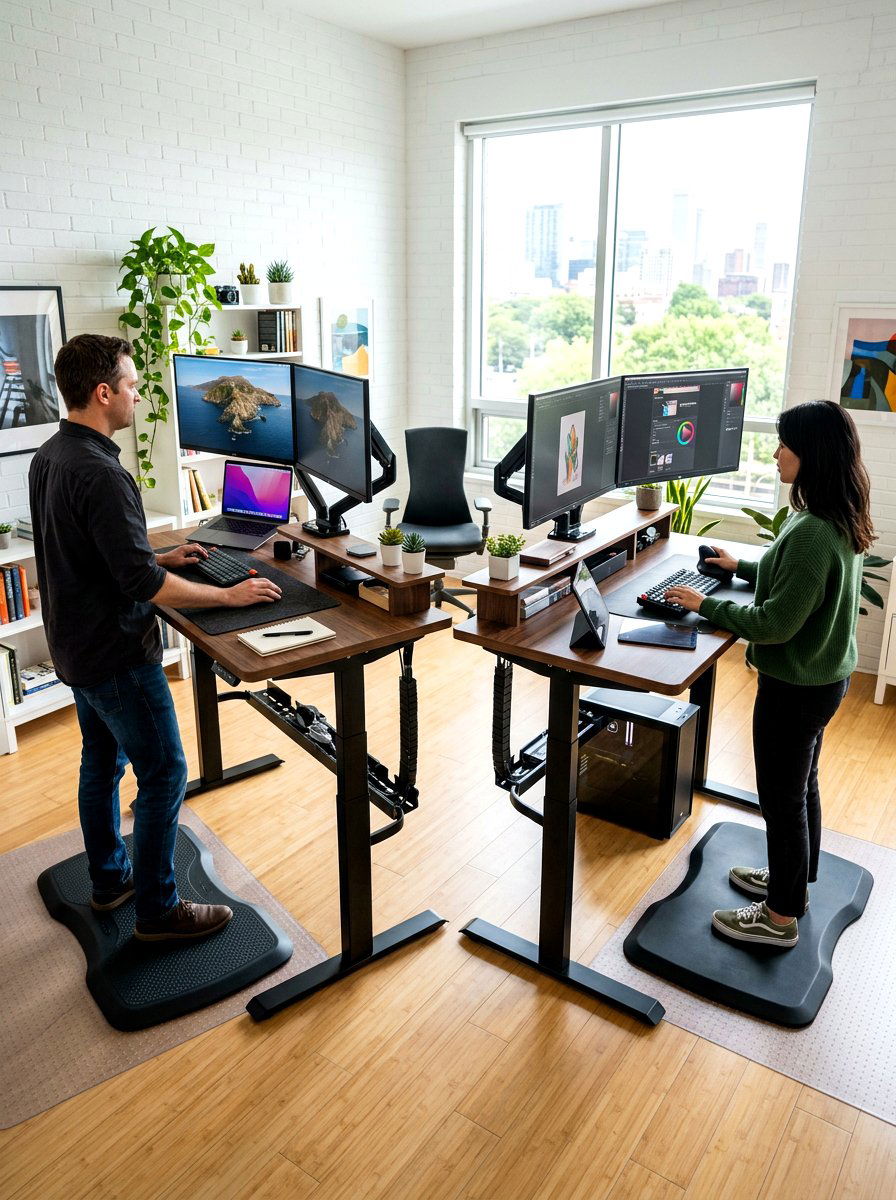
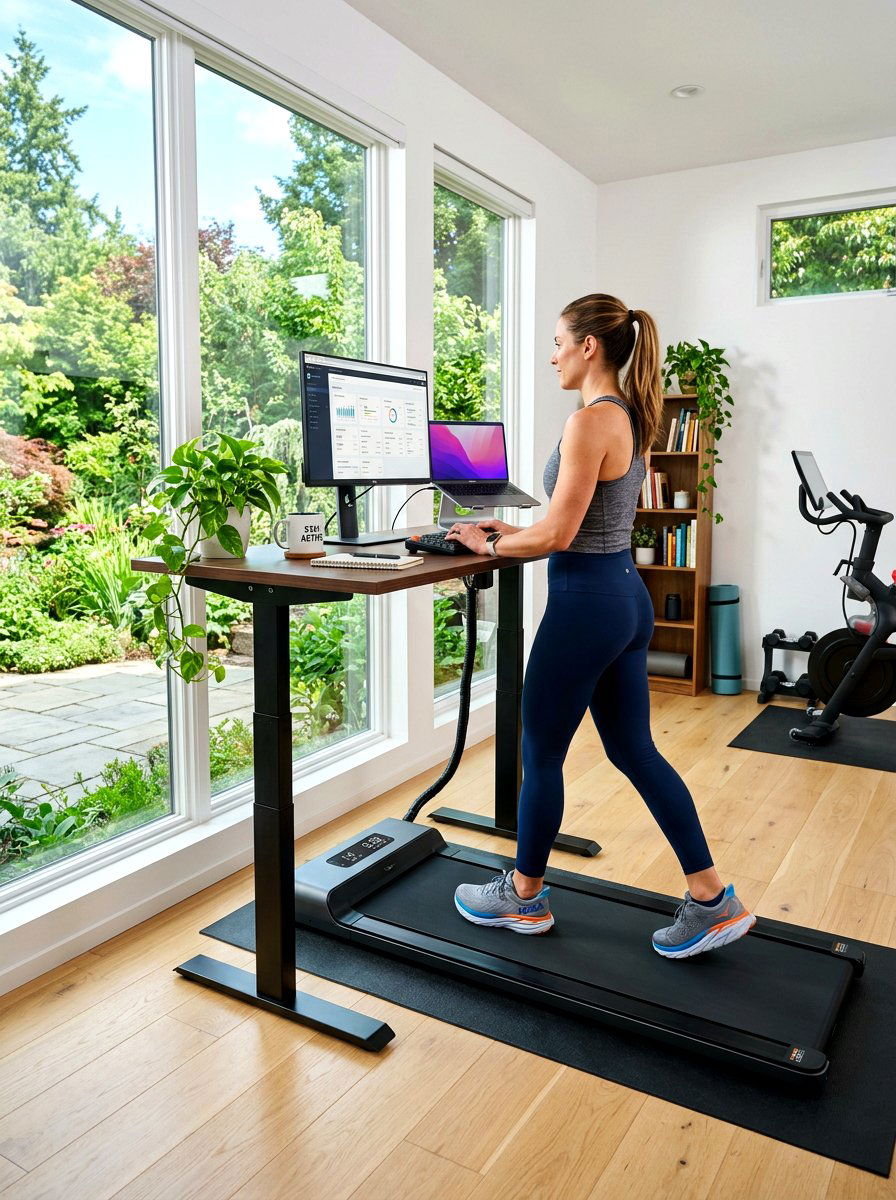
A standing desk is a practical addition to a minimalist home office that prioritizes health and movement during the long work week. Many modern standing desks feature very slim profiles and motorized legs that hide away for a clean, unobtrusive look. By choosing a model with integrated drawers or cable trays, you can keep your workspace completely free of clutter. This setup encourages you to stay active while you work, which can lead to better focus and higher energy levels. The minimalist aesthetic ensures that the desk looks like a piece of high-end furniture rather than a piece of bulky gym equipment.
16. Attic Workspace Home Office
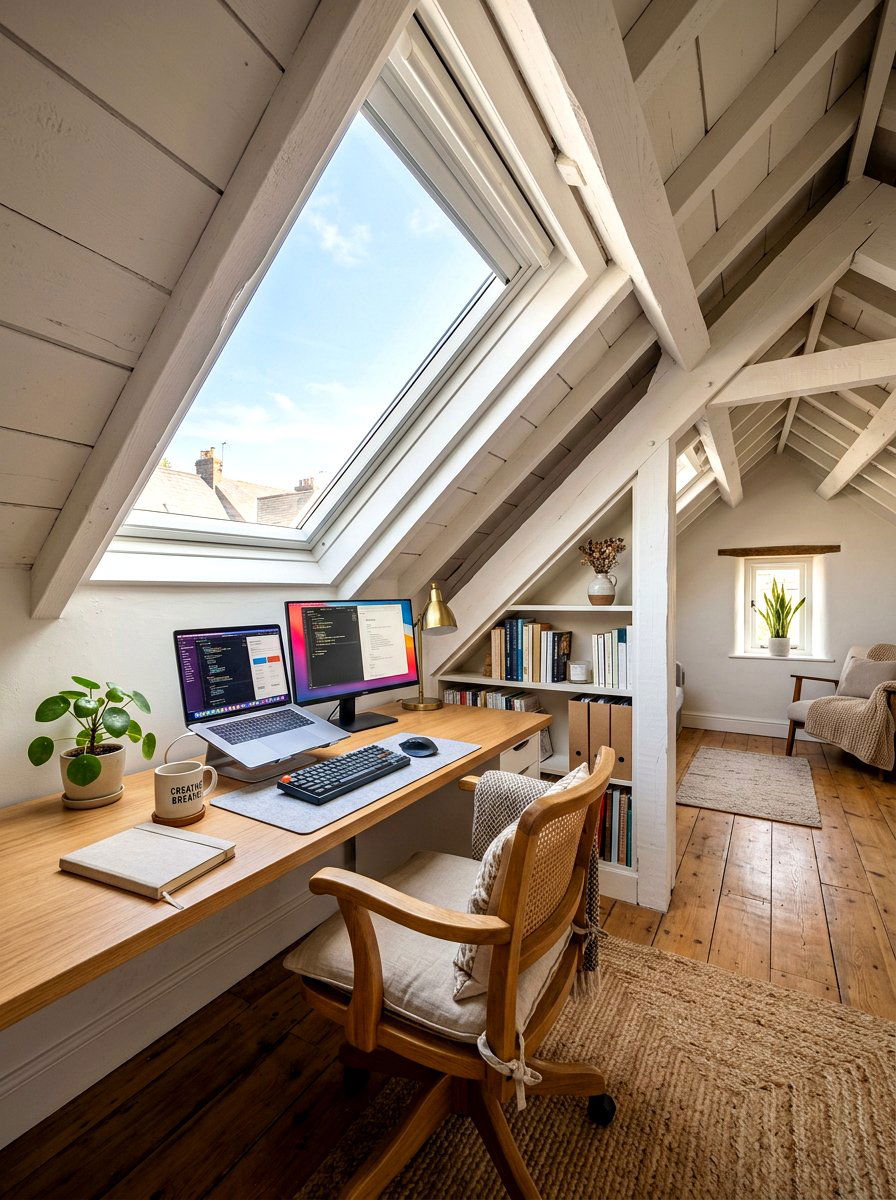
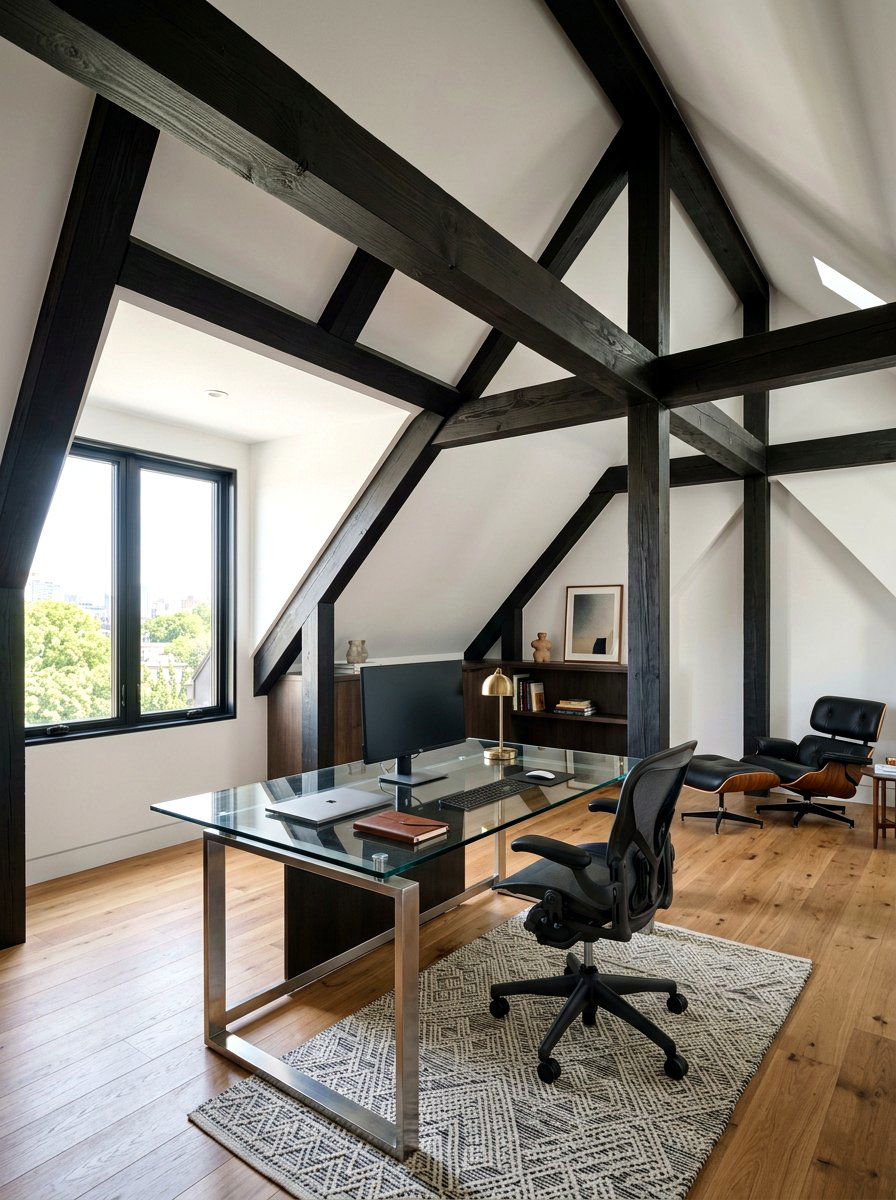
The unique angles of an attic provide a cozy and secluded spot for a minimalist home office that is away from the noise of the house. By placing a desk under a skylight, you can take advantage of the best natural light available in your entire home. The sloped ceilings naturally create a sense of intimacy that helps you stay focused on your tasks without any distractions. To keep the space feeling open, use light colors on the walls and choose furniture that fits into the low-clearance areas perfectly. It is a wonderful way to utilize often-forgotten space for a quiet and highly productive work retreat.
17. Bedroom Corner Home Office
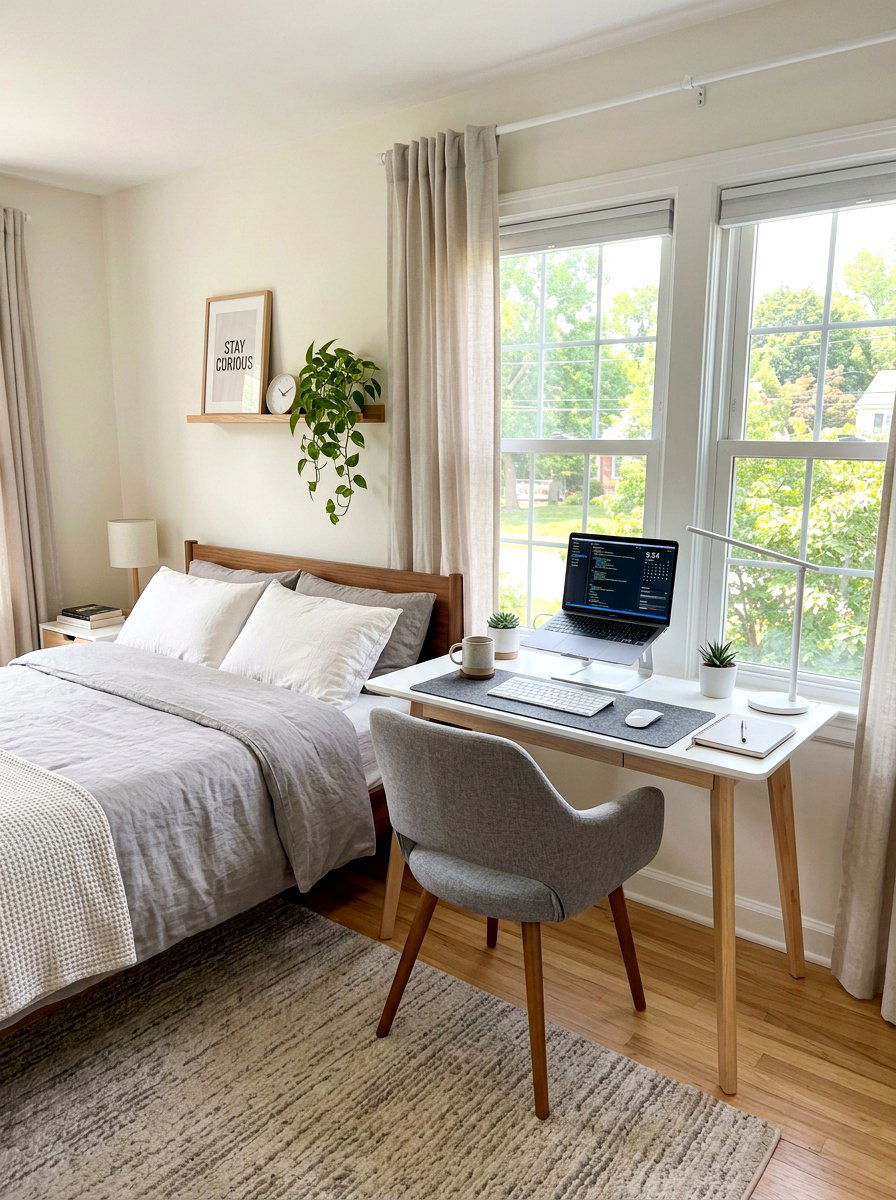
Integrating a workspace into a bedroom requires a very careful minimalist touch to ensure the room remains a place of rest and relaxation. A small, sleek desk placed in a corner can provide enough room for a laptop without disrupting the flow of the sleeping area. You should choose a chair that can double as a side chair and use hidden storage to put away work items at night. By keeping the desk clear and the decor minimal, you prevent work stress from bleeding into your personal sanctuary. It is a practical solution for those who need a quiet spot to work but have limited room elsewhere.
18. Living Room Nook Home Office
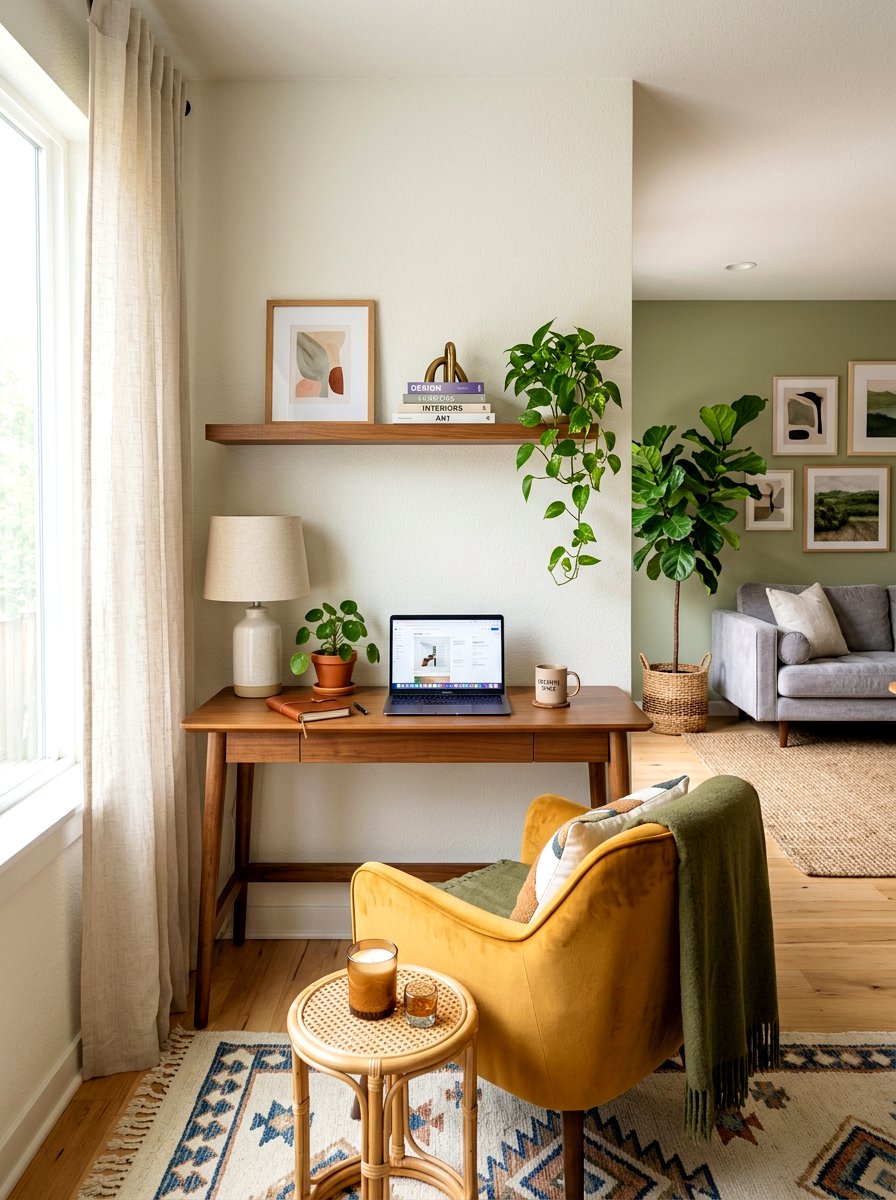
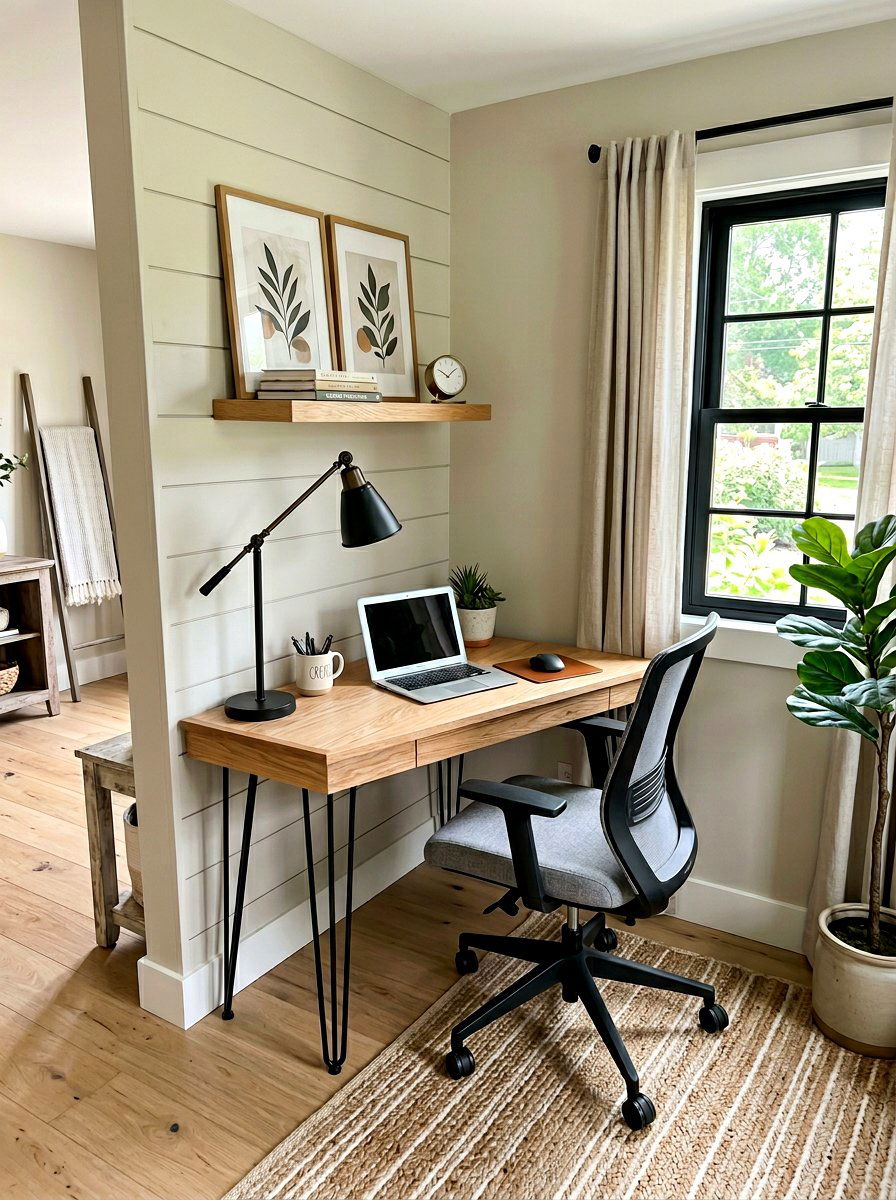
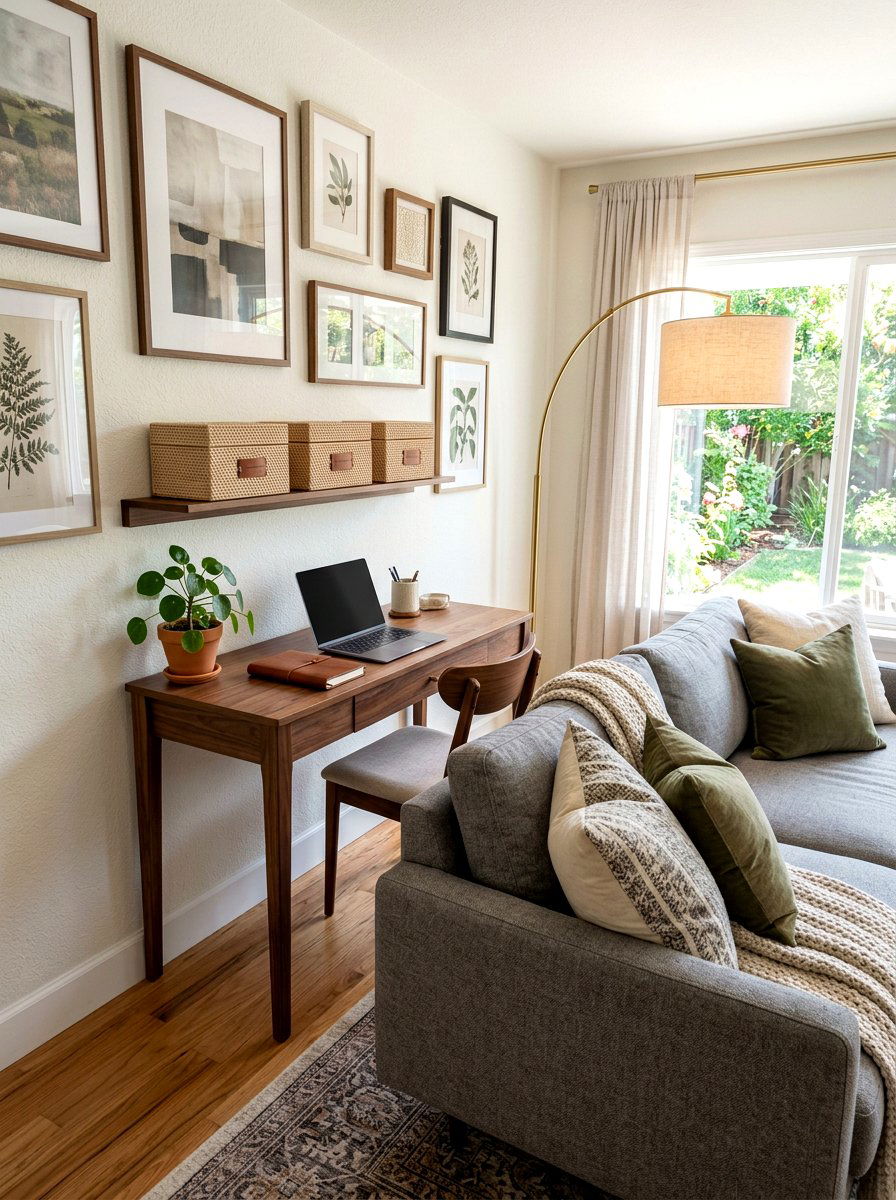
Creating a minimalist home office in a living room nook allows you to stay connected to the rest of the house while you work. To keep it from looking messy, use furniture that matches the existing style of your living area, such as a desk that looks like a console table. A floating shelf above the desk can hold a few essential items while keeping the surface below entirely clear for your computer. This setup is perfect for parents who need to keep an eye on things or anyone who prefers a more social working environment. The key is to keep everything tidy and well-organized.
19. Double Sided Home Office
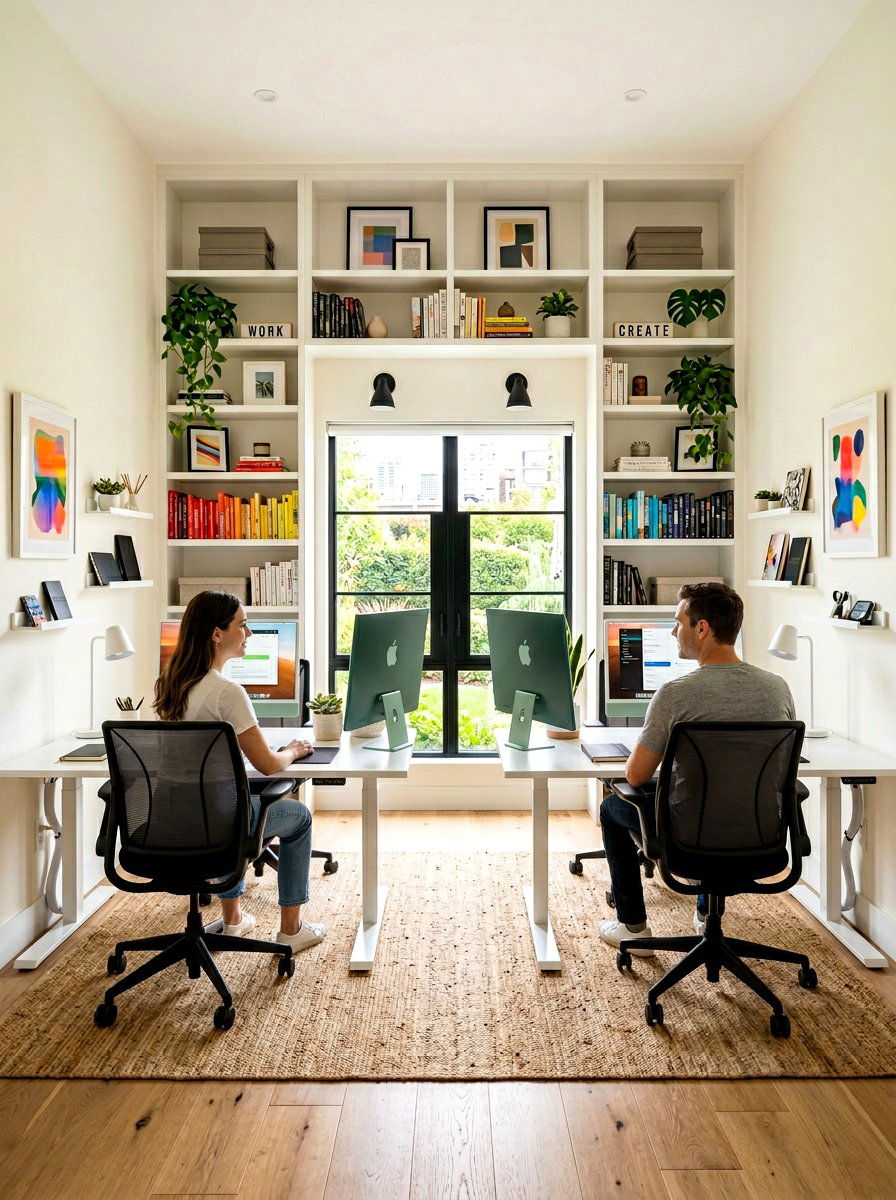
A double-sided home office is a great solution for couples or roommates who need to share a workspace without feeling crowded. By placing two identical desks back-to-back or side-by-side, you create a symmetrical and balanced look that feels very intentional and minimalist. Each person has their own dedicated zone, which helps maintain personal organization and reduces the chance of clutter spreading. Using matching chairs and accessories ensures that the room looks cohesive and professionally designed. It is a functional way to maximize a shared room while keeping the aesthetic clean and focused on productivity for both people working in the same space.
20. Window View Home Office
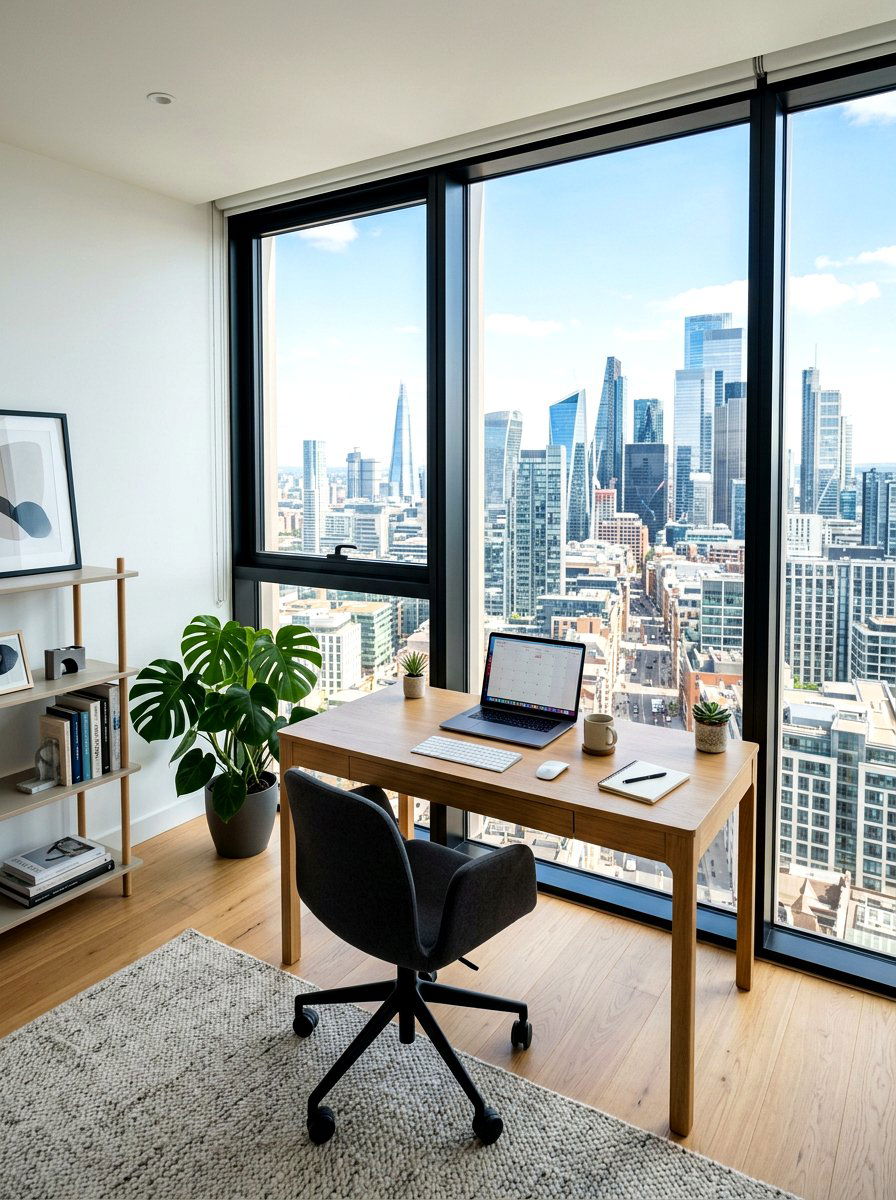
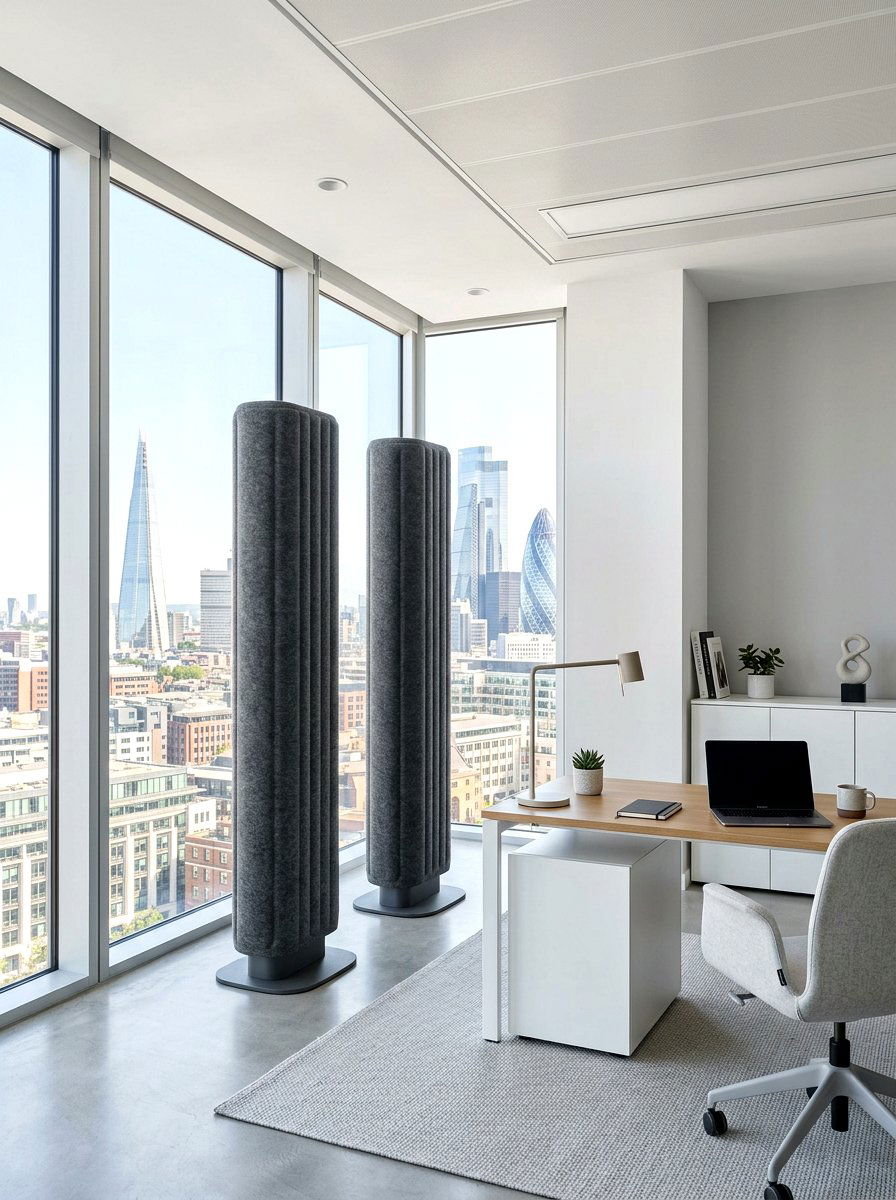
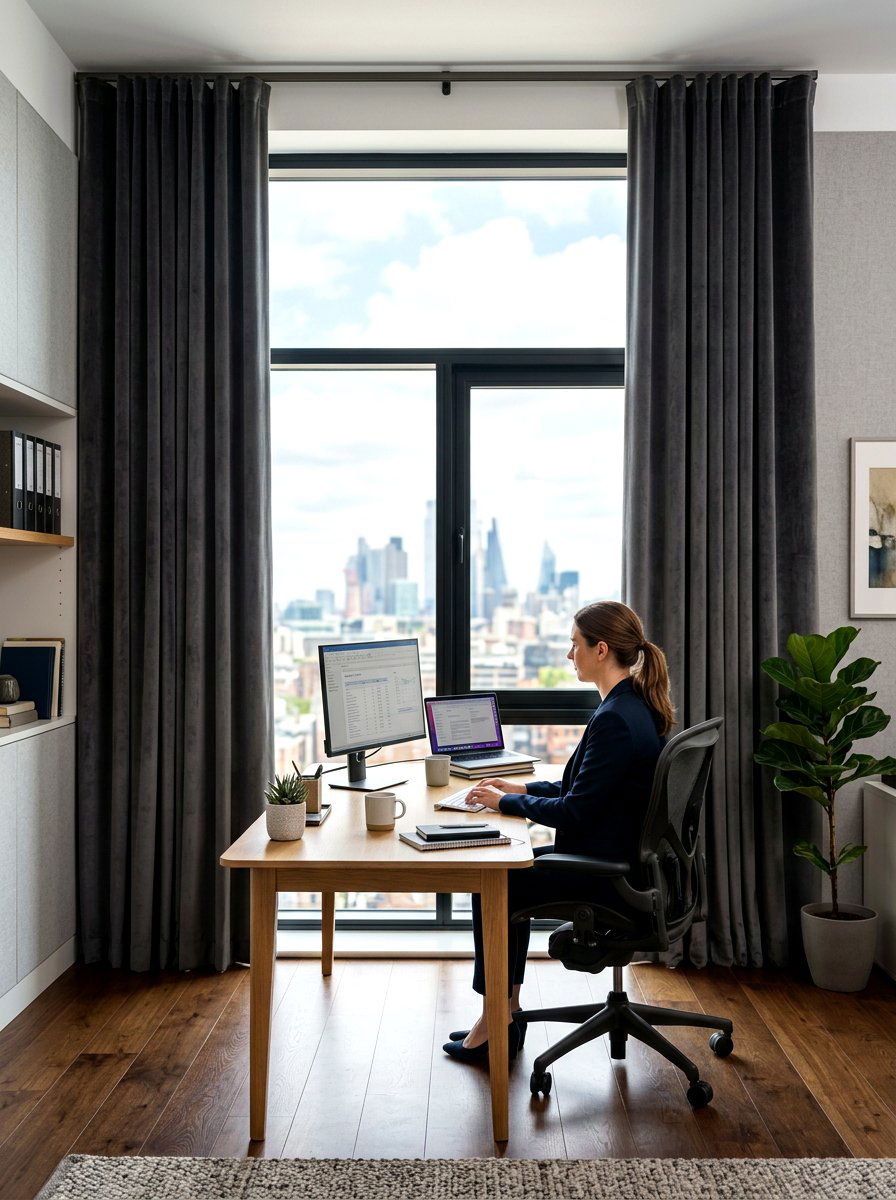
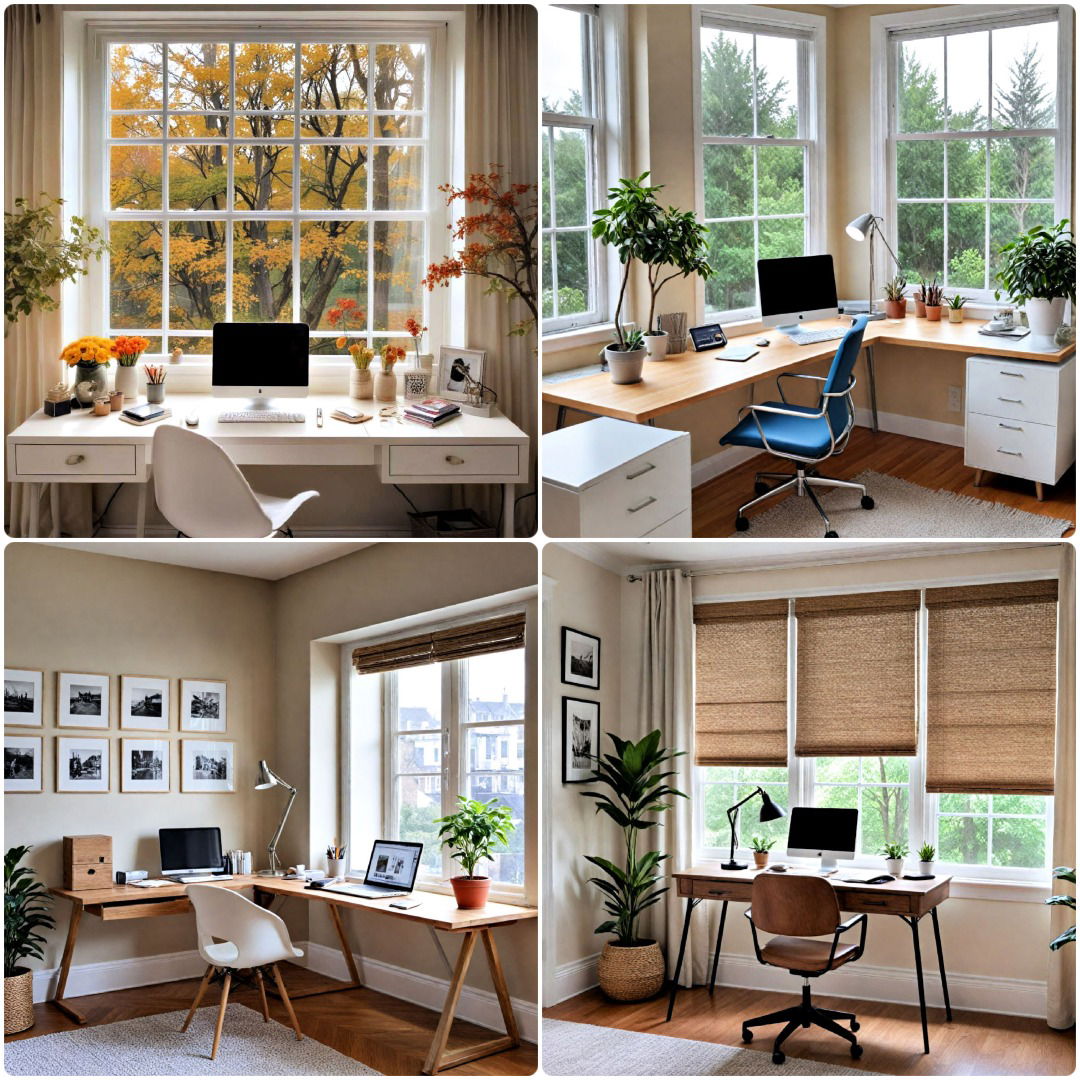
Placing your minimalist home office directly in front of a window is one of the best ways to stay inspired throughout the day. The changing view of the outside world provides a natural break for your eyes and helps prevent feelings of isolation. To keep the setup minimalist, avoid heavy curtains and instead use simple roller shades or leave the window completely bare. A thin-profile desk ensures that the view remains the main attraction of the room. This layout maximizes the use of natural light, which is proven to boost productivity and improve your overall mood while you handle your daily professional responsibilities.
21. Compact Apartment Home Office
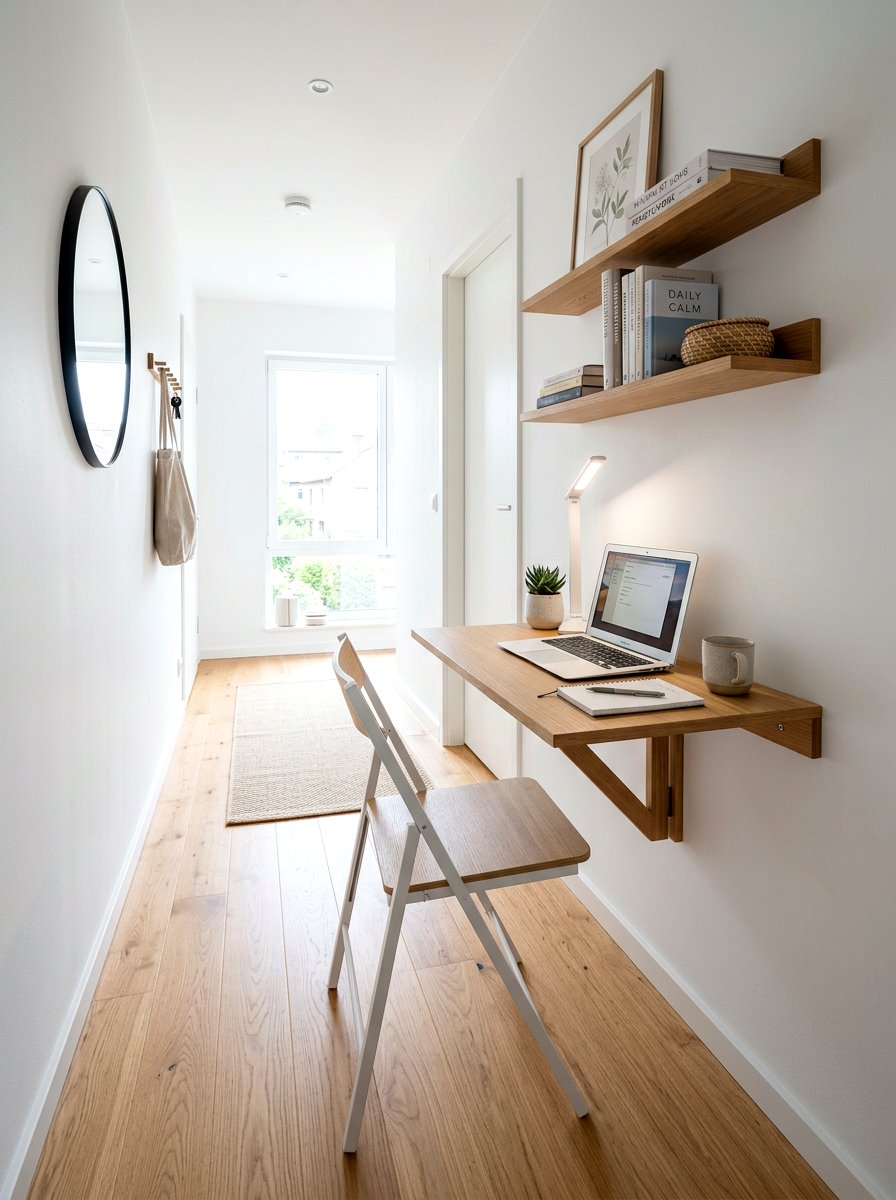
Living in a compact apartment means you have to be very creative with your minimalist home office layout to stay organized. A wall-mounted desk or a small secretary-style table can provide a functional workspace that takes up almost no floor space at all. You should look for furniture that serves multiple purposes, such as a desk that can also be used as a dining table if needed. By utilizing vertical space with high shelves, you can keep your essential supplies within reach without cluttering your limited walking areas. This approach proves that you do not need a large room to have a professional and effective office.
22. Matte Black Home Office
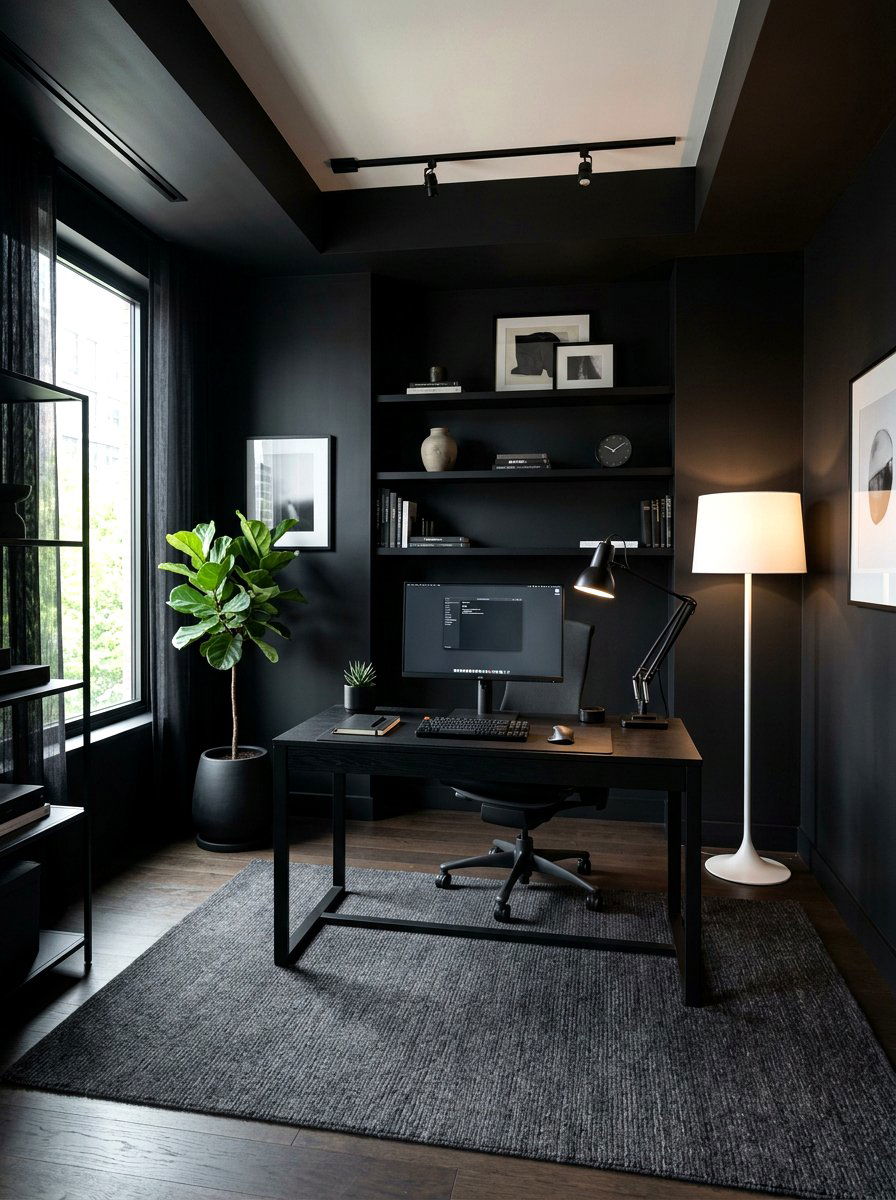
A matte black home office is the epitome of modern sophistication and offers a dramatic, high-end feel for your professional workspace. When you use black for the desk, chair, and lighting fixtures, you create a cohesive and powerful aesthetic that feels very disciplined. To prevent the room from feeling too dark, you can use white walls or light-colored floors to provide a necessary visual contrast. The matte finish is excellent because it does not show fingerprints easily and adds a velvety texture to the room. It is a bold choice for someone who wants their office to reflect a sense of authority and modern style.
23. Pegboard Wall Home Office
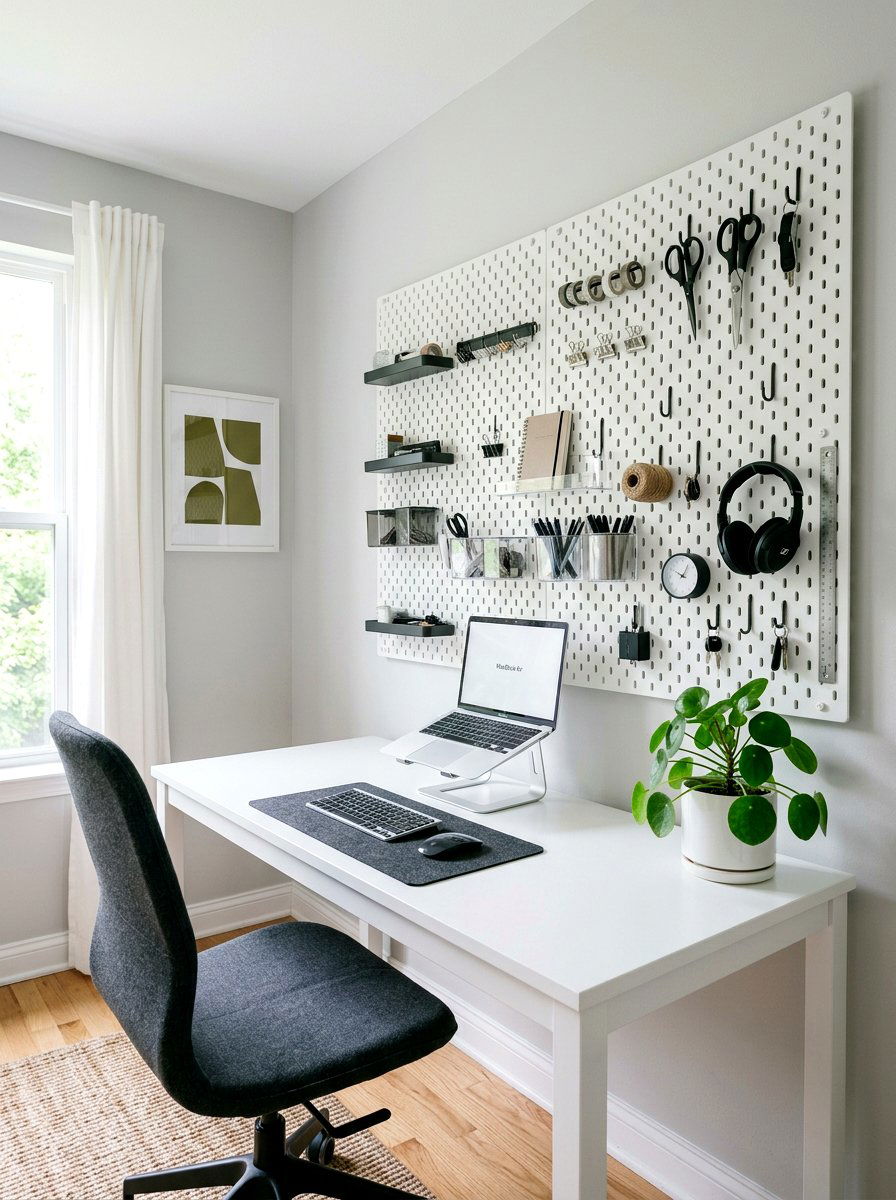
A pegboard wall is a classic minimalist tool that helps you organize your home office tools while keeping them off your desk surface. By mounting a large board behind your workspace, you can hang your headphones, cables, and stationery in a way that looks like a piece of art. This functional decor allows you to change the layout whenever you like, keeping your office adaptable to your current needs. In a minimalist setting, choosing a white or natural wood pegboard keeps the look clean and organized. It is a fantastic way to display your essentials while maintaining a completely clear and distraction-free desktop.
24. Under Stairs Home Office
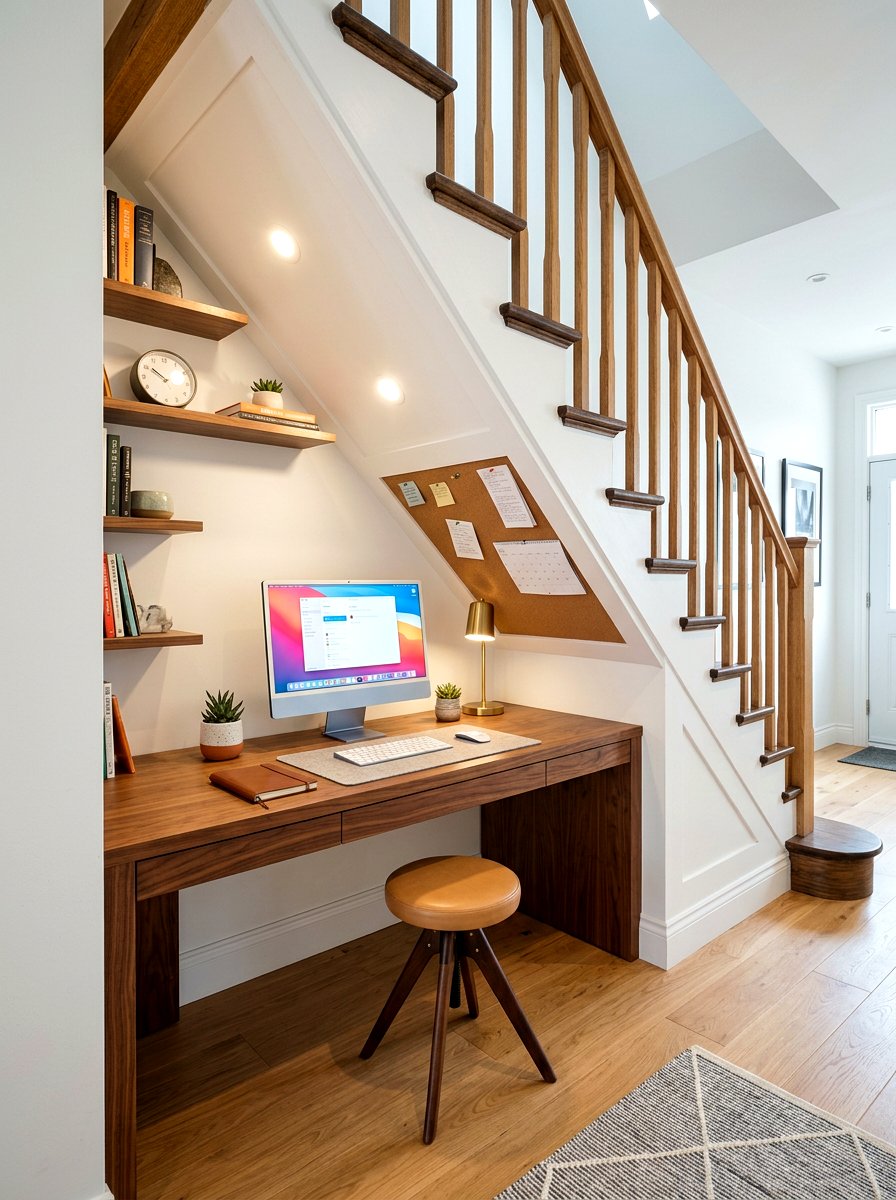
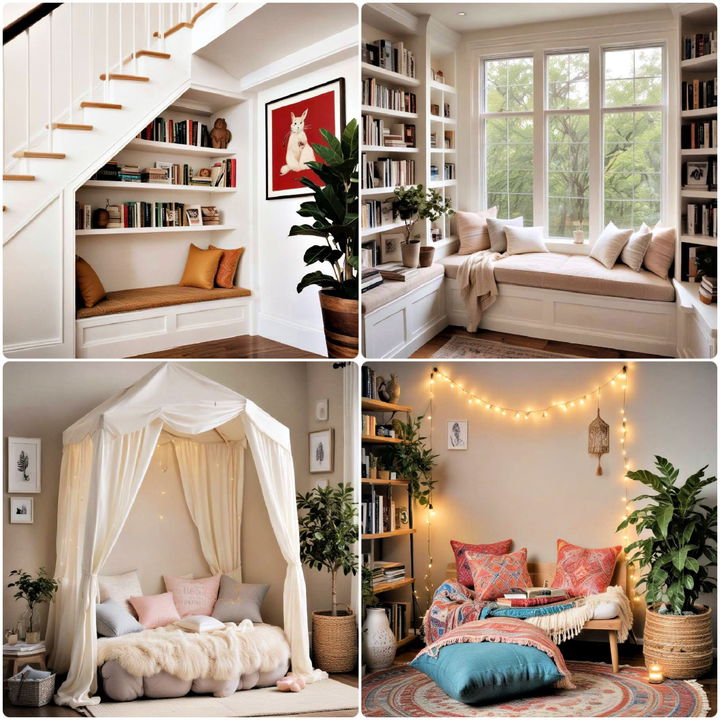
The space under a staircase is often wasted, but it can be transformed into a perfectly cozy and minimalist home office with a bit of planning. Because the area is naturally tucked away, it provides a sense of privacy that is ideal for focused work sessions. You can install a custom-built desk that follows the angle of the stairs to make the most of every inch. Use simple lighting to brighten up the nook and keep the decor minimal to prevent the space from feeling cramped or dark. This clever use of architecture shows how any small corner can become a professional and highly productive zone.
25. High Ceiling Home Office
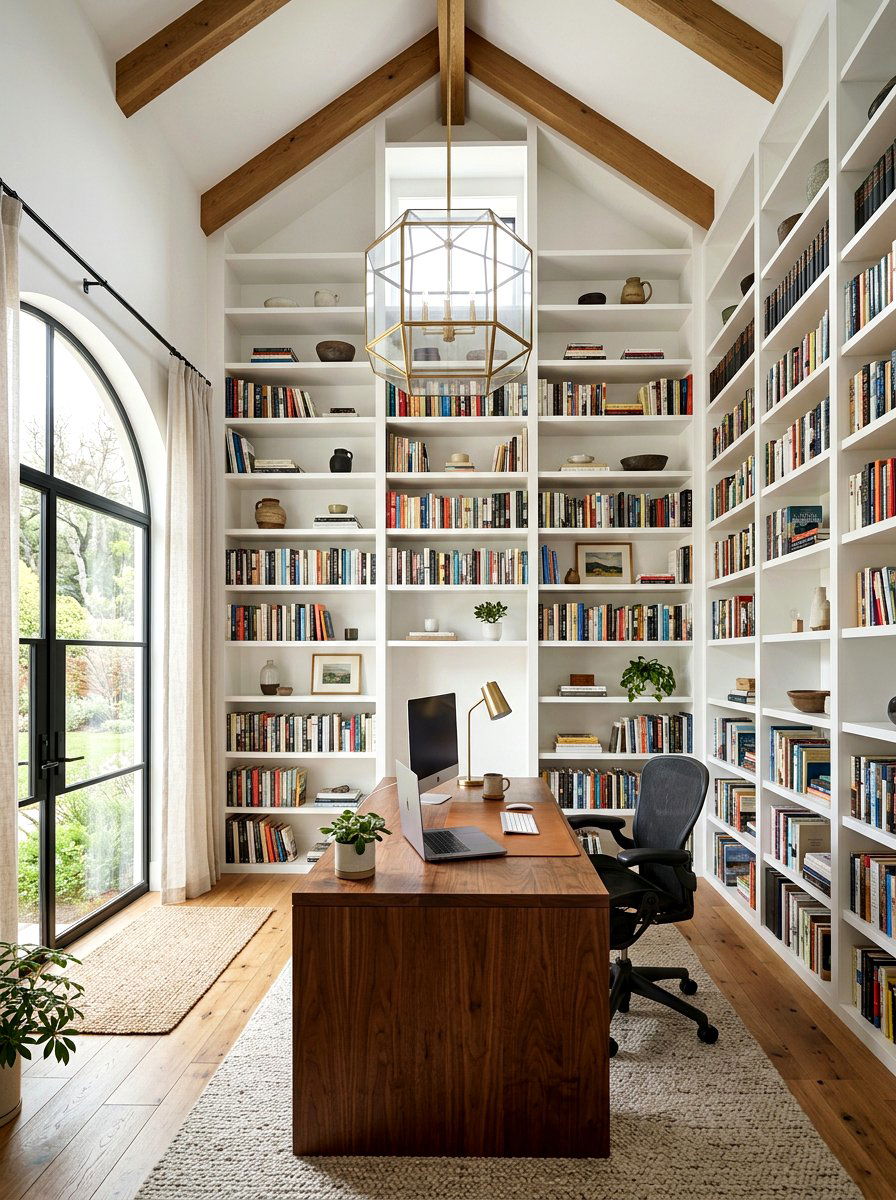
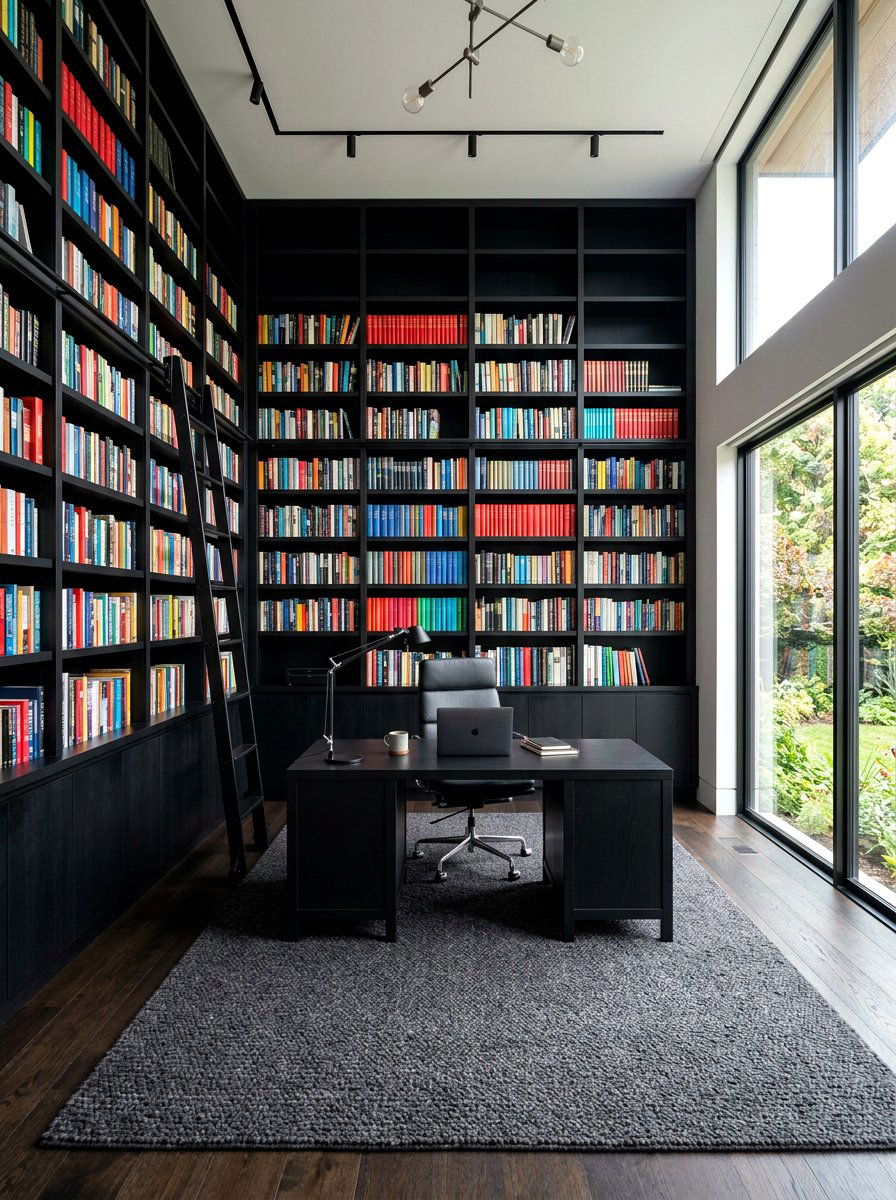
If you are lucky enough to have high ceilings, you can use that vertical space to create a stunning minimalist home office. Tall, thin bookshelves that reach toward the ceiling can provide a dramatic backdrop while keeping all your documents organized and out of sight. A large, simple pendant light hanging low over the desk can help anchor the workspace and make the room feel more intimate. By keeping the floor area clear and focusing on the height of the room, you create a sense of grandeur and airiness. It is a great way to make a minimalist space feel luxurious and very inspiring.
26. Gallery Wall Home Office
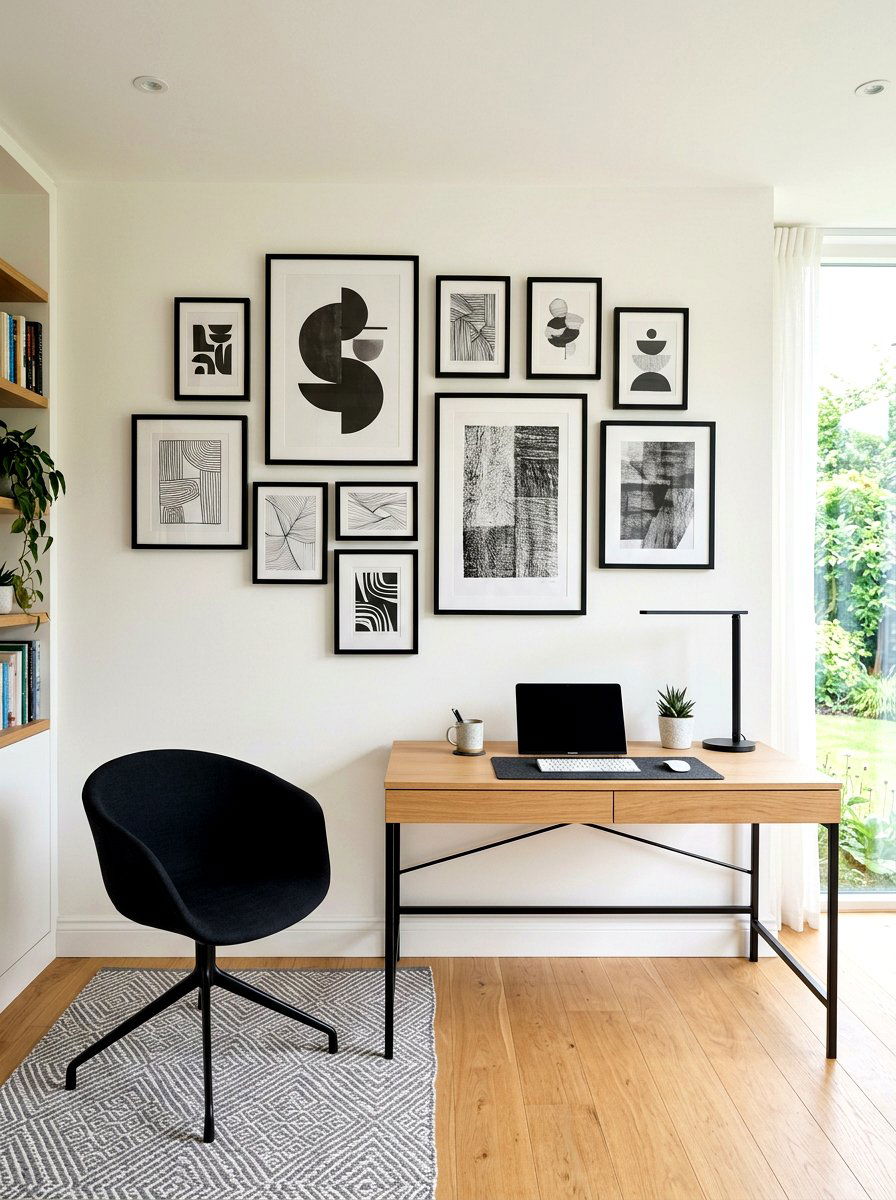
A minimalist gallery wall can add a touch of personal inspiration to your home office without creating a sense of visual chaos. By choosing a few black and white prints or simple line art, you can create a professional look that reflects your unique personality. Use matching frames and keep the layout symmetrical to maintain a clean and organized aesthetic on the wall. This approach allows you to surround yourself with art that motivates you while keeping the focus on your work. It is a simple way to bring character to a minimalist space without needing to add extra furniture or bulky decorative objects.
27. Oak Wood Home Office
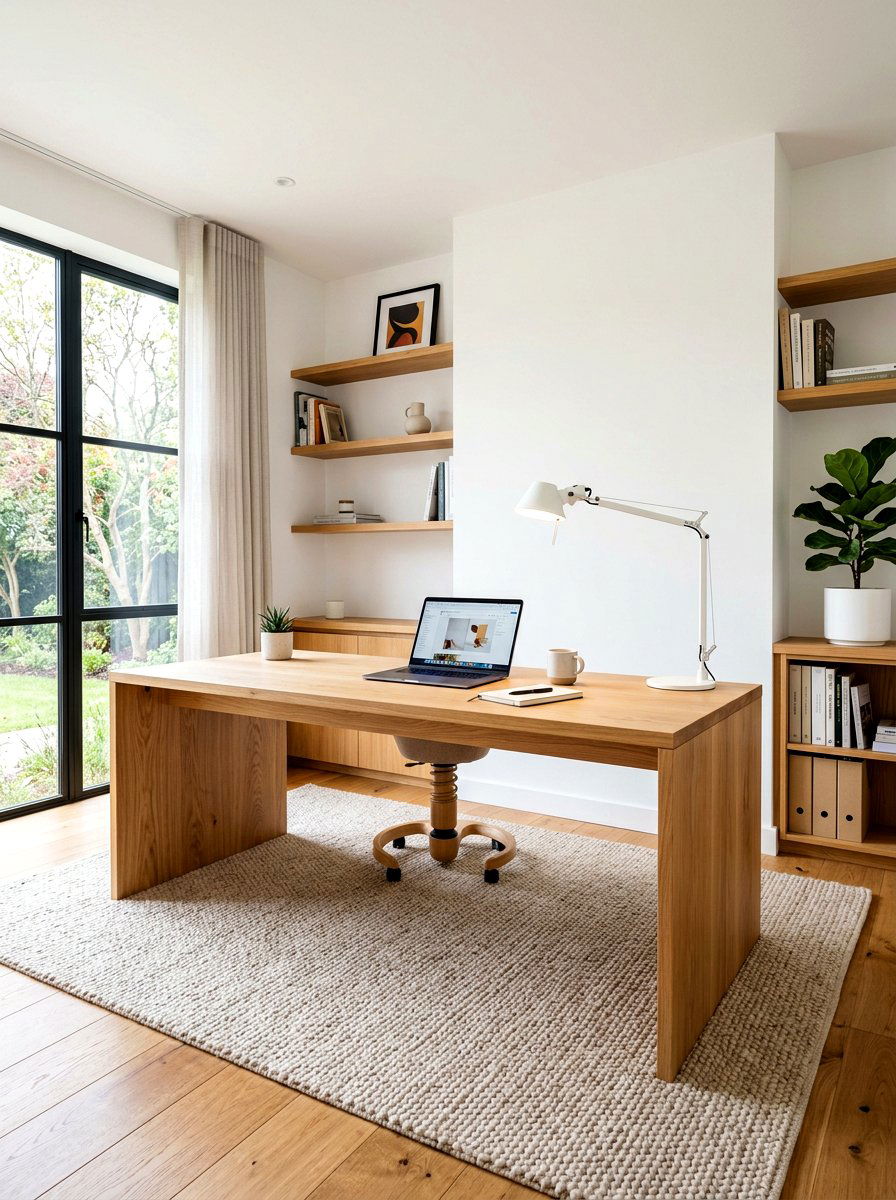
Oak wood is a favorite material for minimalist home offices because of its beautiful grain and durable nature. An oak desk brings a sense of warmth and reliability to your workspace, making it feel like a high-quality environment. To maintain a minimalist look, you should pair the oak furniture with other natural materials like wool or linen. The light color of the oak helps keep the room feeling bright and open, which is essential for a productive work atmosphere. This design style is perfect for those who want a workspace that feels grounded, organic, and built to last for many years to come.
28. Concrete Wall Home Office
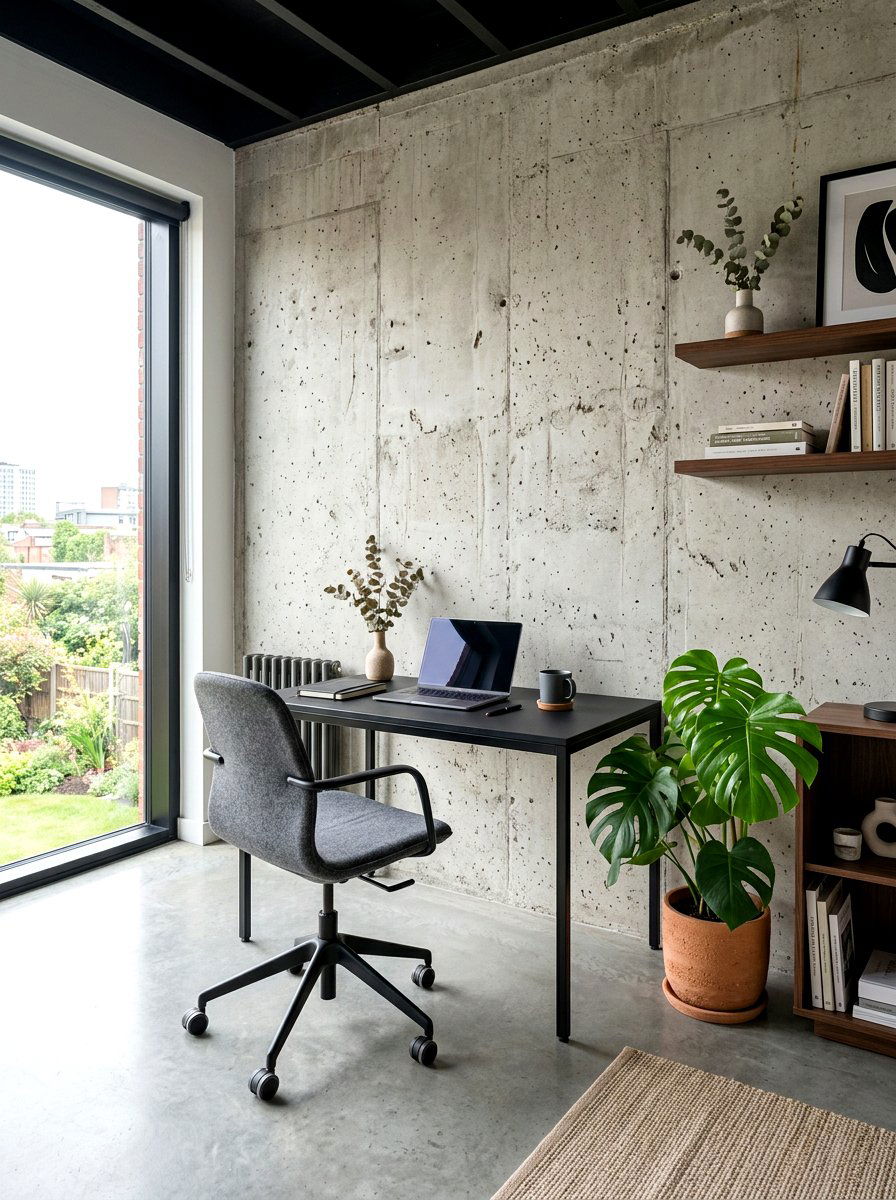
For a truly modern and edgy minimalist home office, consider using an architectural concrete wall as your primary backdrop. The raw, grey texture of the concrete provides a neutral yet visually interesting surface that pairs perfectly with sleek metal furniture. You can soften the industrial feel by adding a plush rug or a few green plants to the space. This design is all about the beauty of raw materials and simple forms, creating a workspace that feels very solid and permanent. It is a fantastic choice for anyone who appreciates contemporary architecture and wants a home office that feels cool, calm, and professional.
29. Minimalist Shelving Home Office
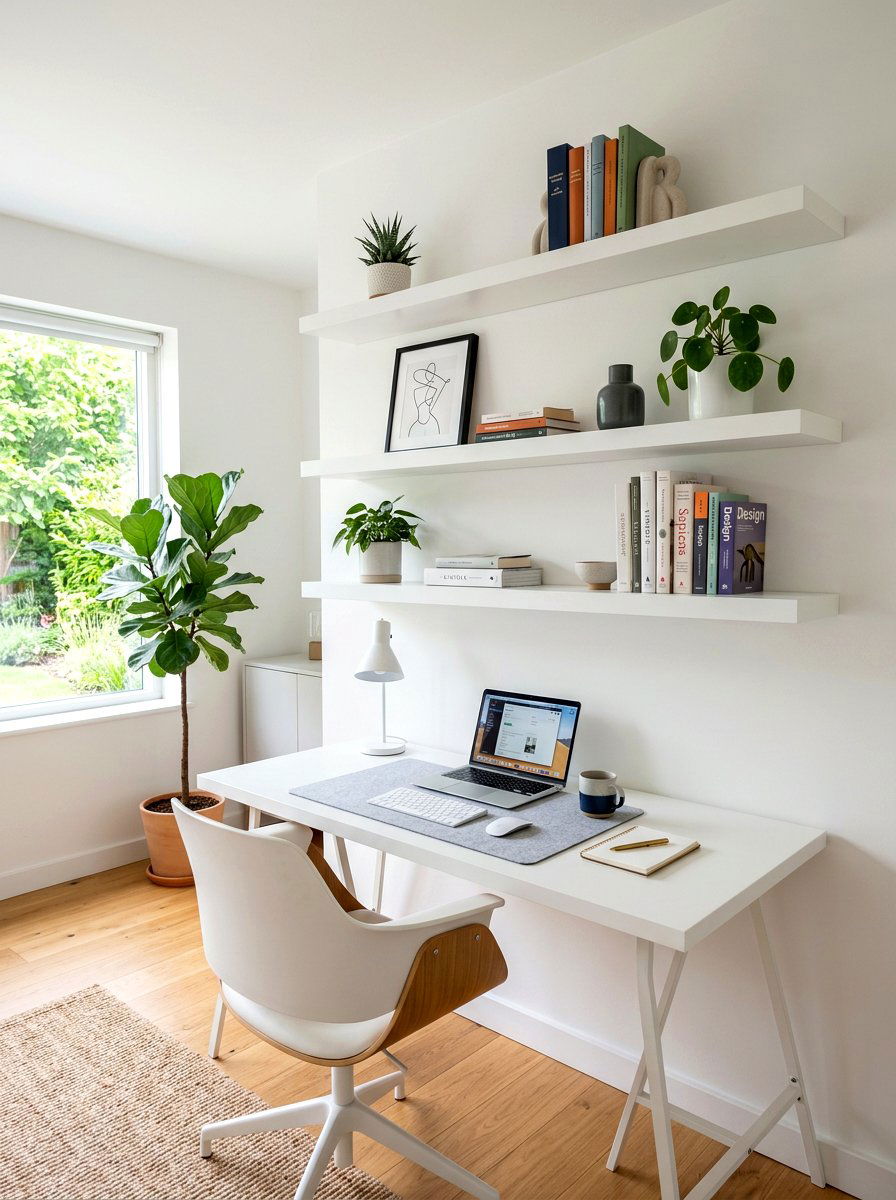
A home office that focuses on minimalist shelving uses thin, open shelves to display only the most essential items for your work. By avoiding heavy cabinets, you keep the walls looking light and the room feeling much more spacious than it would otherwise. You should group items by color or function and leave plenty of empty space on the shelves to maintain a clean look. This approach encourages you to only keep what you truly need and use, which is a core tenet of the minimalist lifestyle. It results in a workspace that is both highly organized and visually very soothing for your daily tasks.
30. Sunlight Filled Home Office
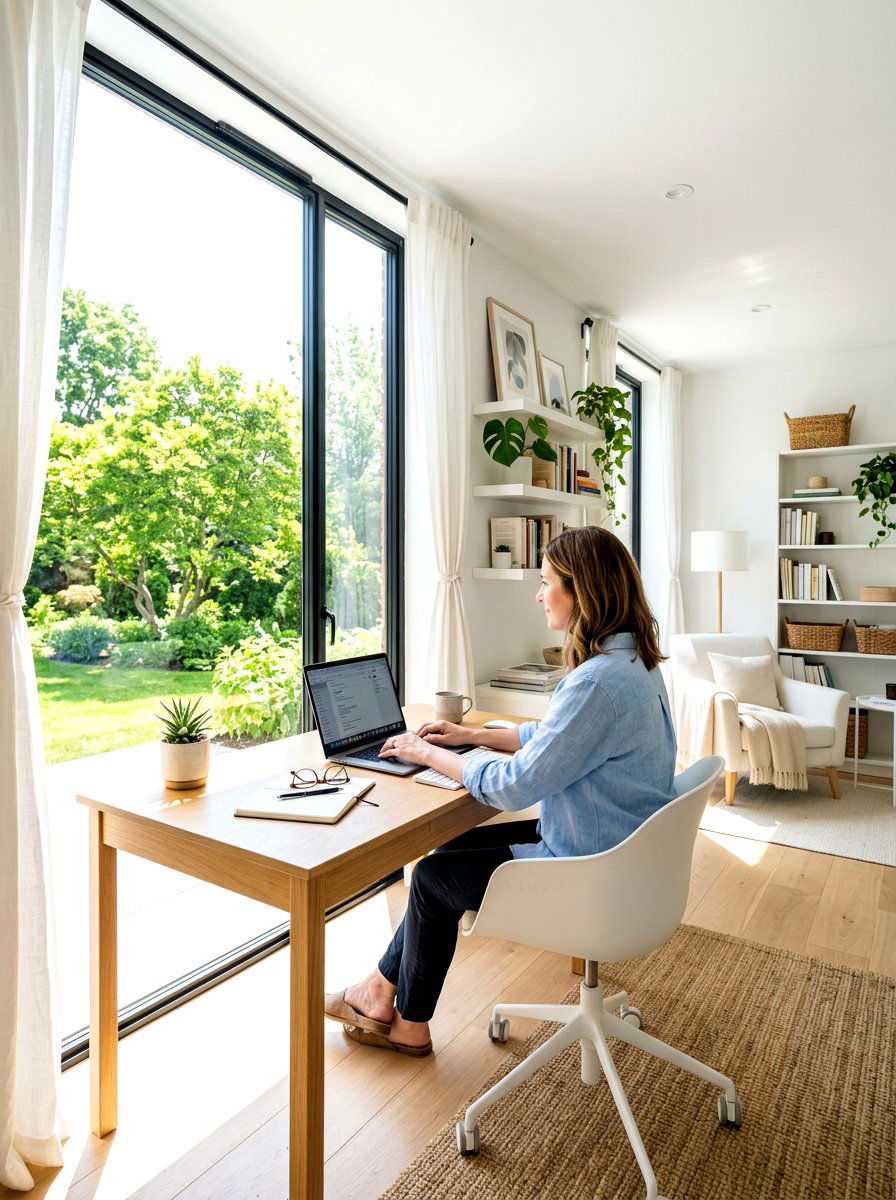
Maximilizing natural light is the ultimate goal for a sunlight-filled minimalist home office. Large windows, light-reflecting surfaces, and a bright color palette all work together to create a space that feels incredibly energizing and healthy. You should position your desk to take full advantage of the morning sun to help reset your internal clock and improve your focus. Using sheer blinds allows you to control the glare while still letting in plenty of diffused light. This bright and airy environment makes even the most difficult work feel more manageable and keeps you feeling refreshed and motivated throughout your entire professional day.
Conclusion:
Designing a minimalist home office is a powerful way to enhance your productivity while creating a beautiful environment that complements your lifestyle. By focusing on essential furniture, high-quality materials, and a clutter-free layout, you can transform any area of your home into a professional sanctuary. Whether you prefer the warmth of Scandinavian wood or the sharp contrast of a black and white palette, the core principles of minimalism remain the same: simplicity, functionality, and clarity. As you curate your space, remember that every object should serve a purpose or bring you joy. A well-designed workspace is an investment in your personal success and long-term well-being.

Related posts: