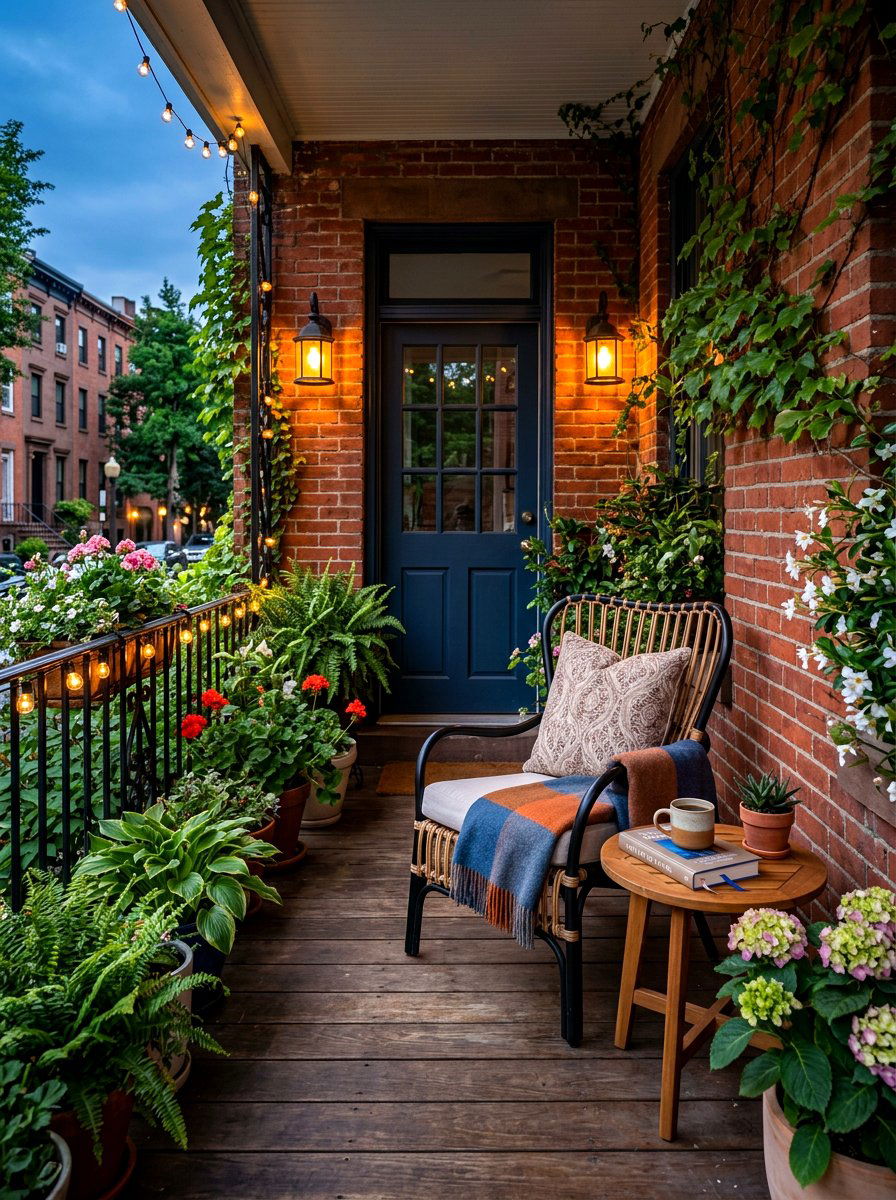
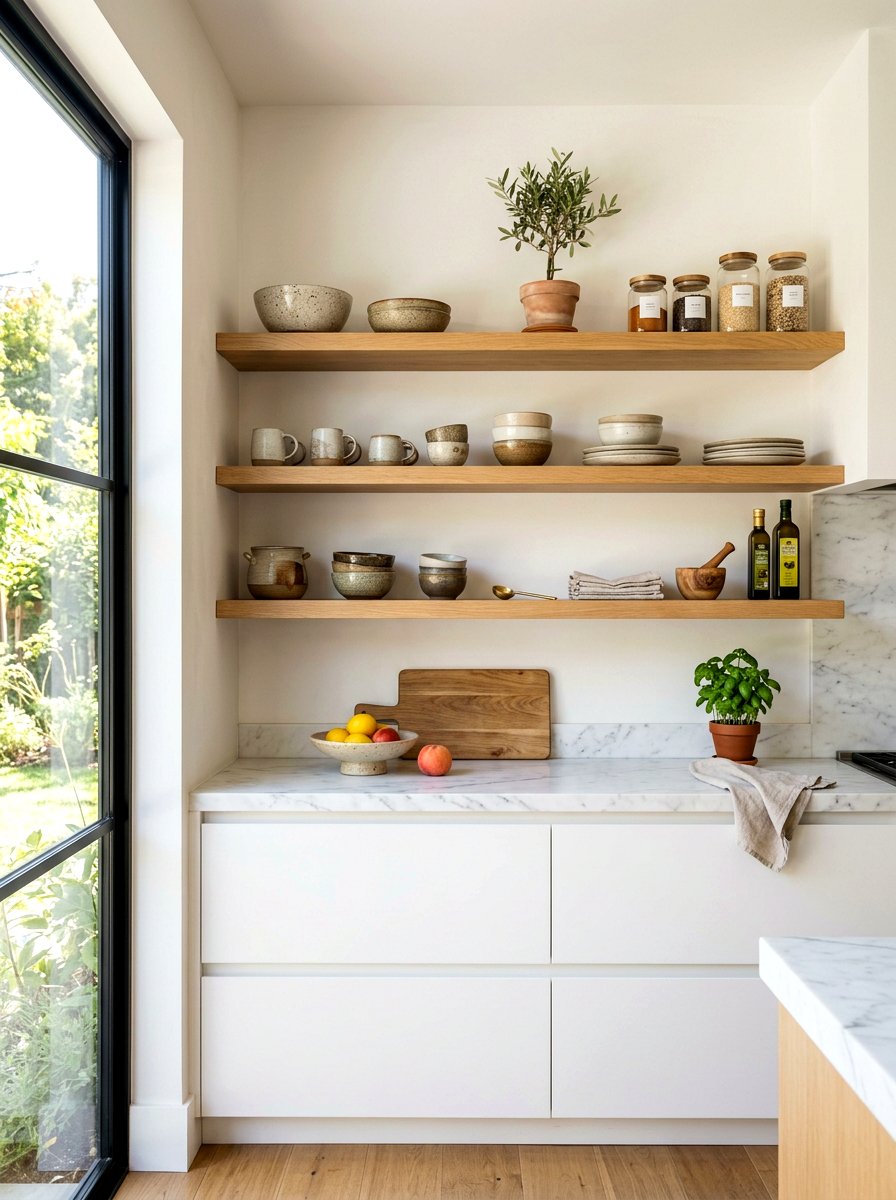
Japandi style has taken the interior world by storm because it perfectly bridges the gap between the cozy functionality of Scandinavian design and the timeless, minimalist elegance of Japanese aesthetics. If you are looking to create a home that feels like a peaceful sanctuary, this hybrid approach offers the best of both worlds. It emphasizes intentionality, natural materials, and a clutter-free environment that promotes mental clarity and physical relaxation. By focusing on quality over quantity, you can transform your living spaces into curated areas that celebrate craftsmanship and the beauty of imperfection. This guide will help you understand how to implement these core principles across every room in your house while maintaining a warm and inviting atmosphere.
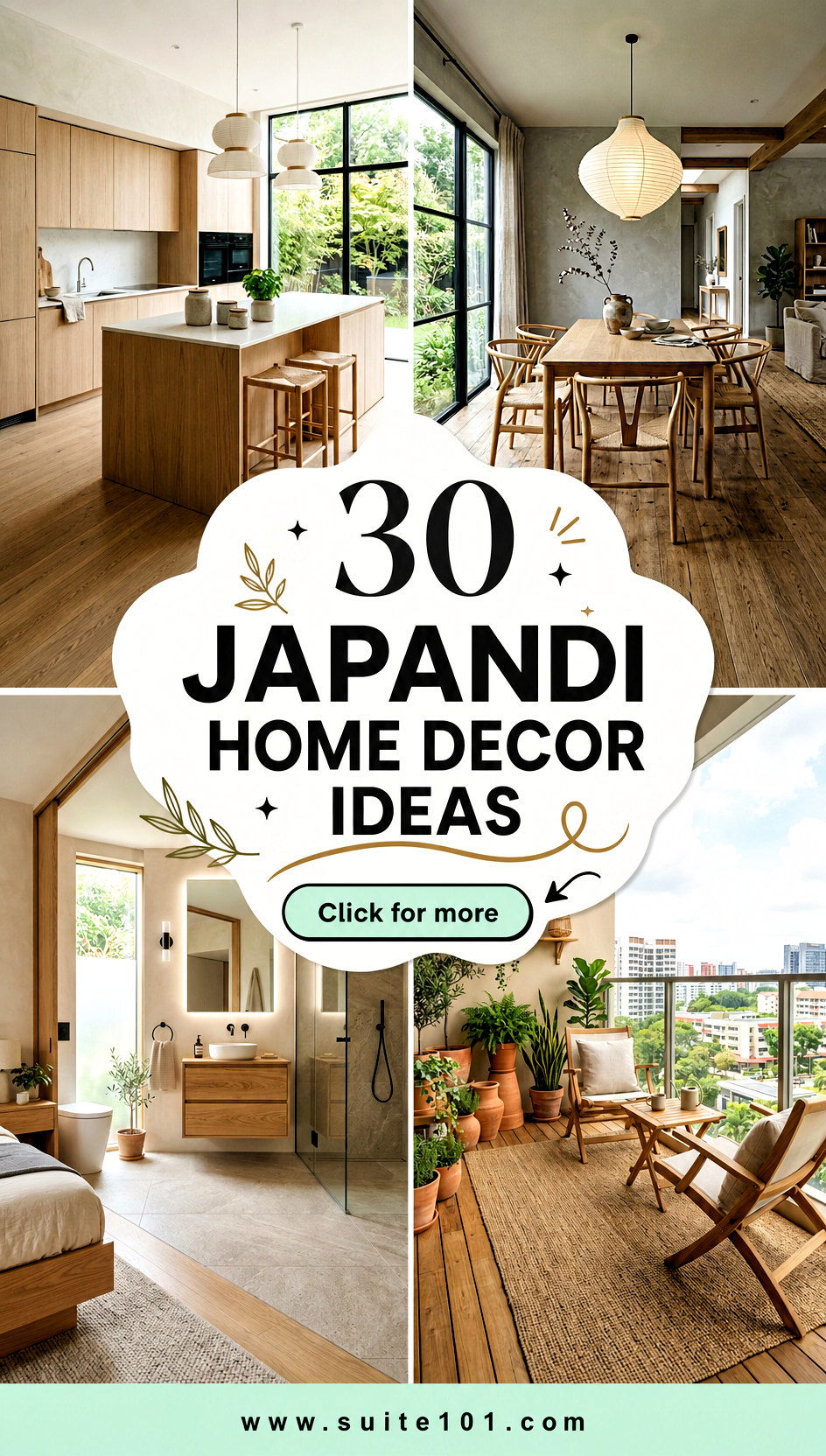
1. Japandi living room
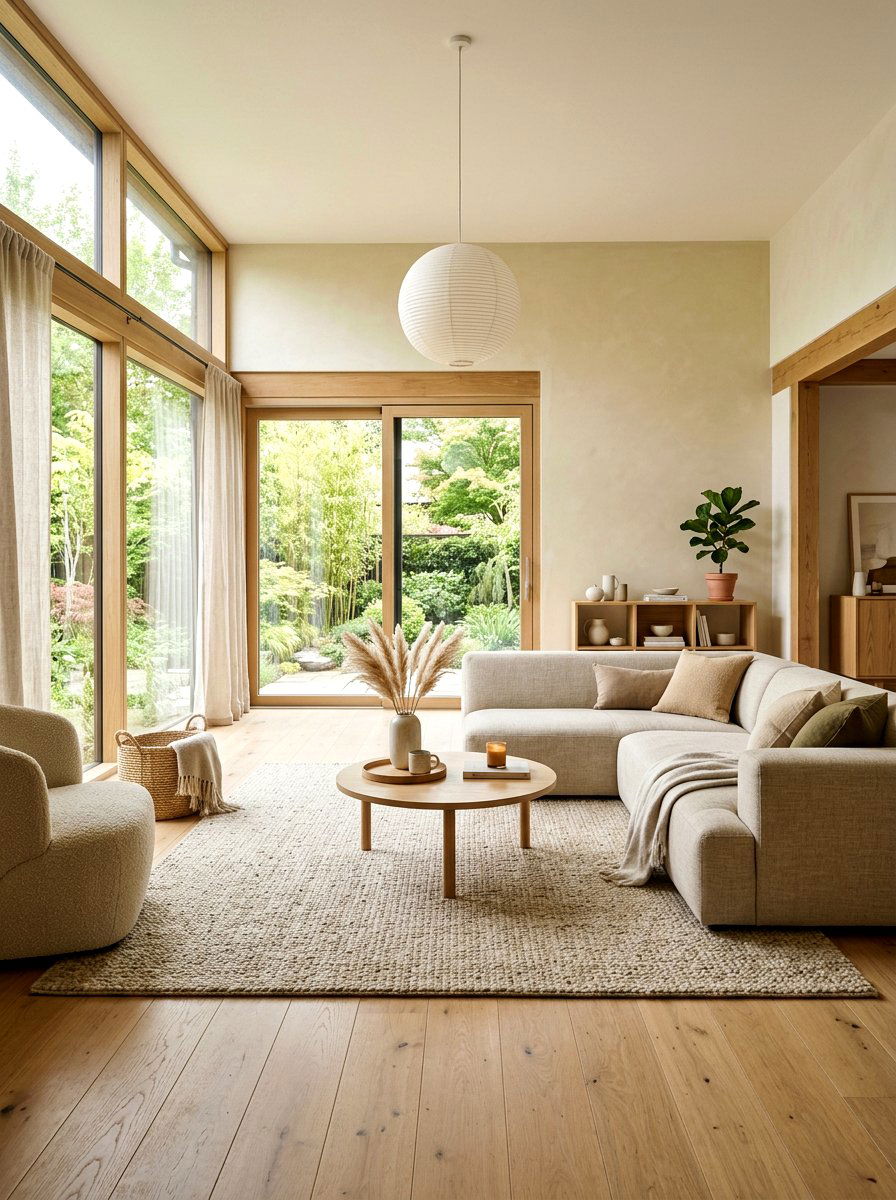
Creating a Japandi living room requires a delicate balance between open space and cozy comfort. You should start with a low-profile sofa in a neutral fabric like linen or cotton to keep the sightlines clear and the room feeling airy. A large, textured wool rug can anchor the seating area while providing the necessary warmth associated with Scandinavian hygge. Opt for a solid oak coffee table with clean lines to introduce a natural element that feels both grounded and sophisticated. By keeping your surfaces mostly clear of trinkets, you allow the high-quality furniture and organic textures to shine. This approach ensures your primary gathering space remains tranquil and incredibly functional for daily life.
2. Japandi master bedroom
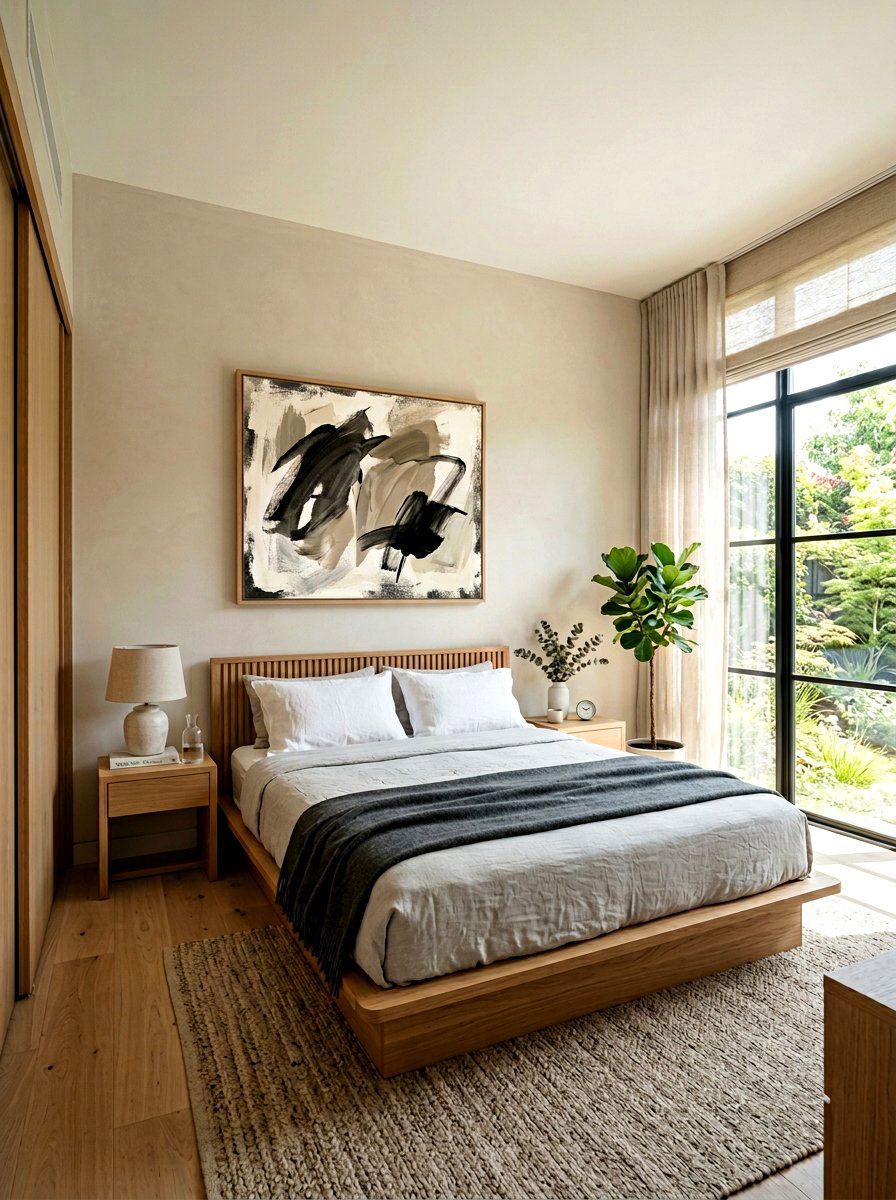
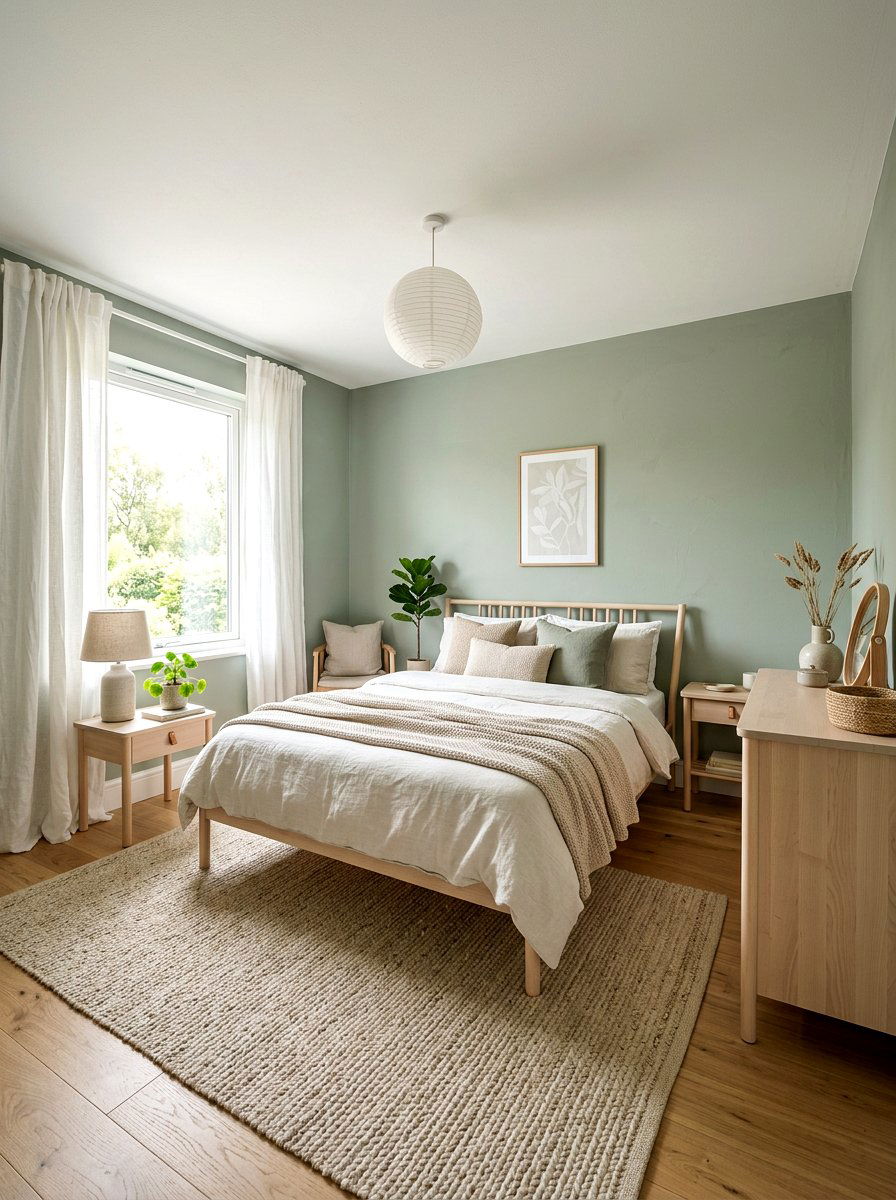
Your master bedroom should serve as a serene retreat from the outside world by utilizing soft, earthy tones. A low wooden platform bed is the quintessential centerpiece for this style, echoing Japanese tradition while offering a modern, sleek look. Use high-quality linen bedding in muted shades of beige, clay, or soft grey to create a layered, inviting texture that feels luxurious yet simple. Minimalist bedside tables with hidden storage help keep the area clutter-free, which is essential for a restful night’s sleep. Consider adding a single piece of statement wall art, such as a large abstract brushstroke, to provide a focal point without overwhelming the calm and peaceful atmosphere.
3. Japandi minimalist kitchen
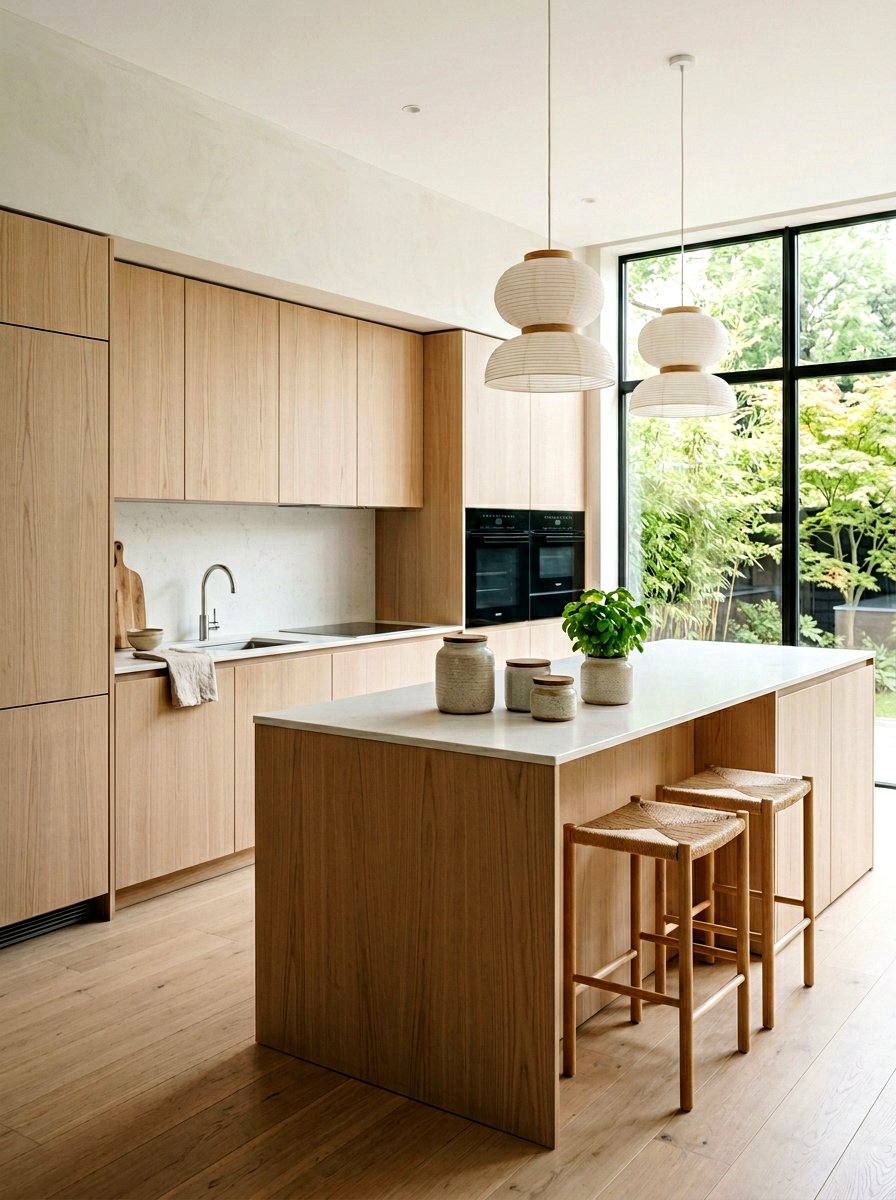
The heart of the home becomes a masterpiece of efficiency and beauty when you adopt a Japandi minimalist kitchen theme. Focus on handleless cabinetry in light wood finishes like ash or birch to create a seamless, furniture-like appearance. Pair these warm wood tones with slim white or grey stone countertops for a clean, contemporary contrast that feels timeless. To maintain the minimalist aesthetic, keep your small appliances tucked away in integrated storage and only display a few functional items like ceramic jars. This setup not only looks stunning but also makes cleaning and meal preparation much easier. The result is a bright, organized space that feels professional yet welcoming for your family.
4. Japandi dining room
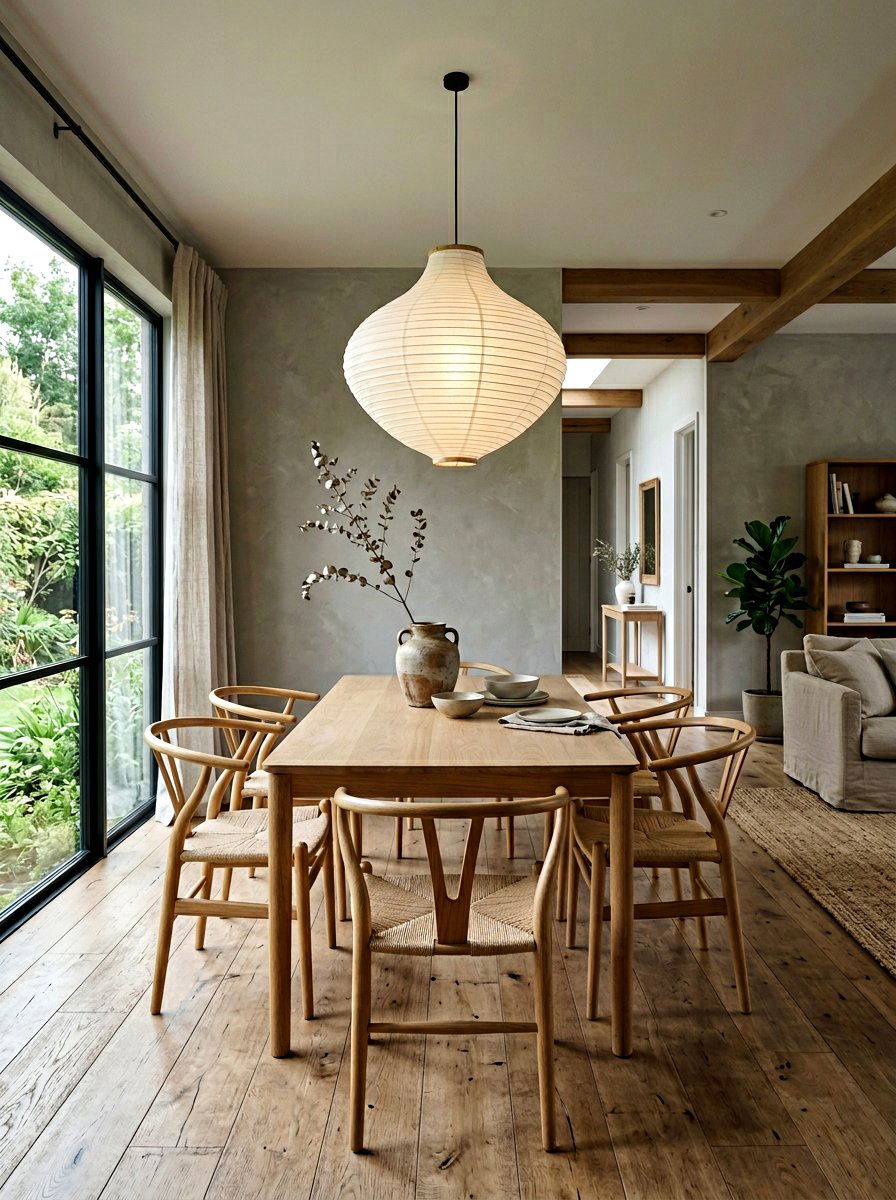
A Japandi dining room focuses on the beauty of shared meals and the craftsmanship of the furniture itself. Choose a sturdy, rectangular dining table made from light oak or walnut to serve as the main focal point of the space. Surround the table with wishbone chairs or other slim-profile wooden seating to keep the arrangement looking light and unobstructed. A large paper lantern pendant light hanging low over the table provides a soft, diffused glow that enhances the intimate mood during evening dinners. By adding a simple ceramic vase with a single dried branch, you introduce a touch of wabi-sabi beauty that completes the overall organic and intentional look.
5. Japandi bathroom
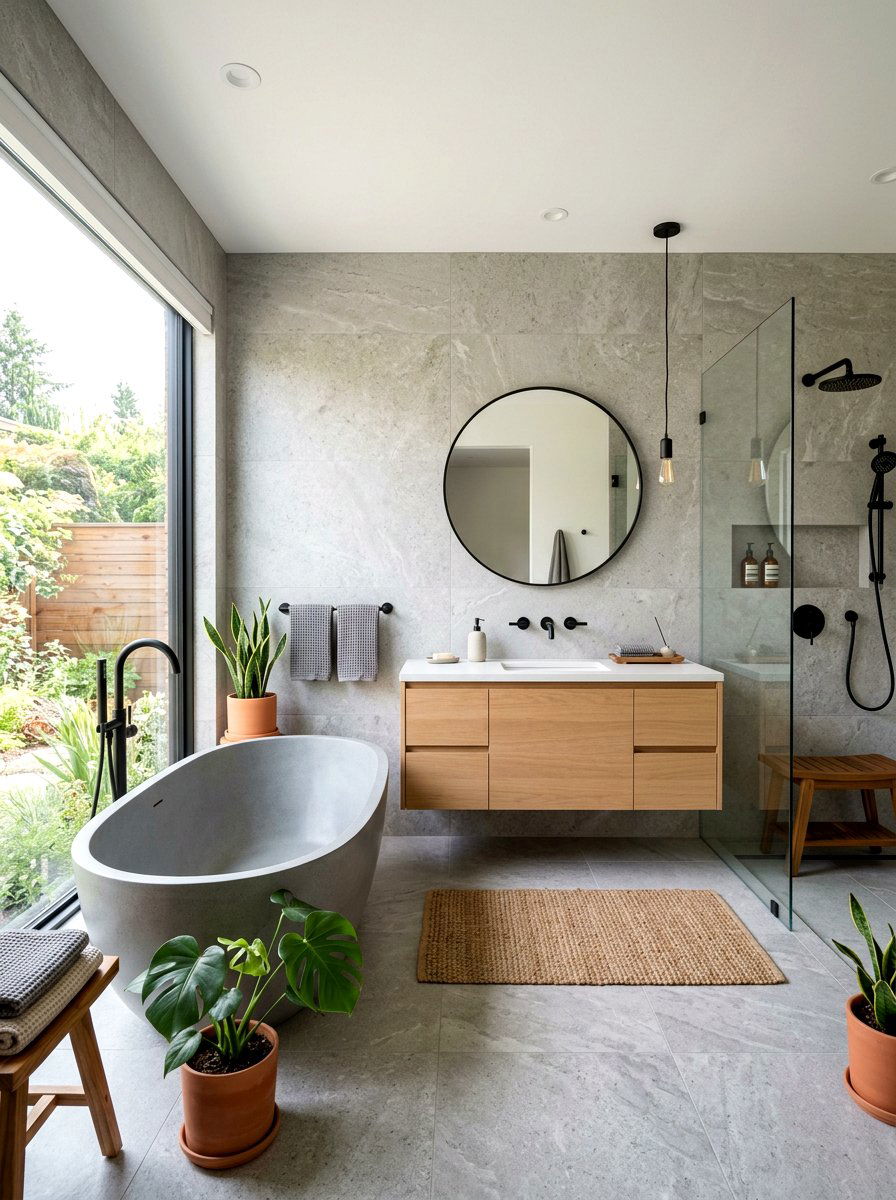
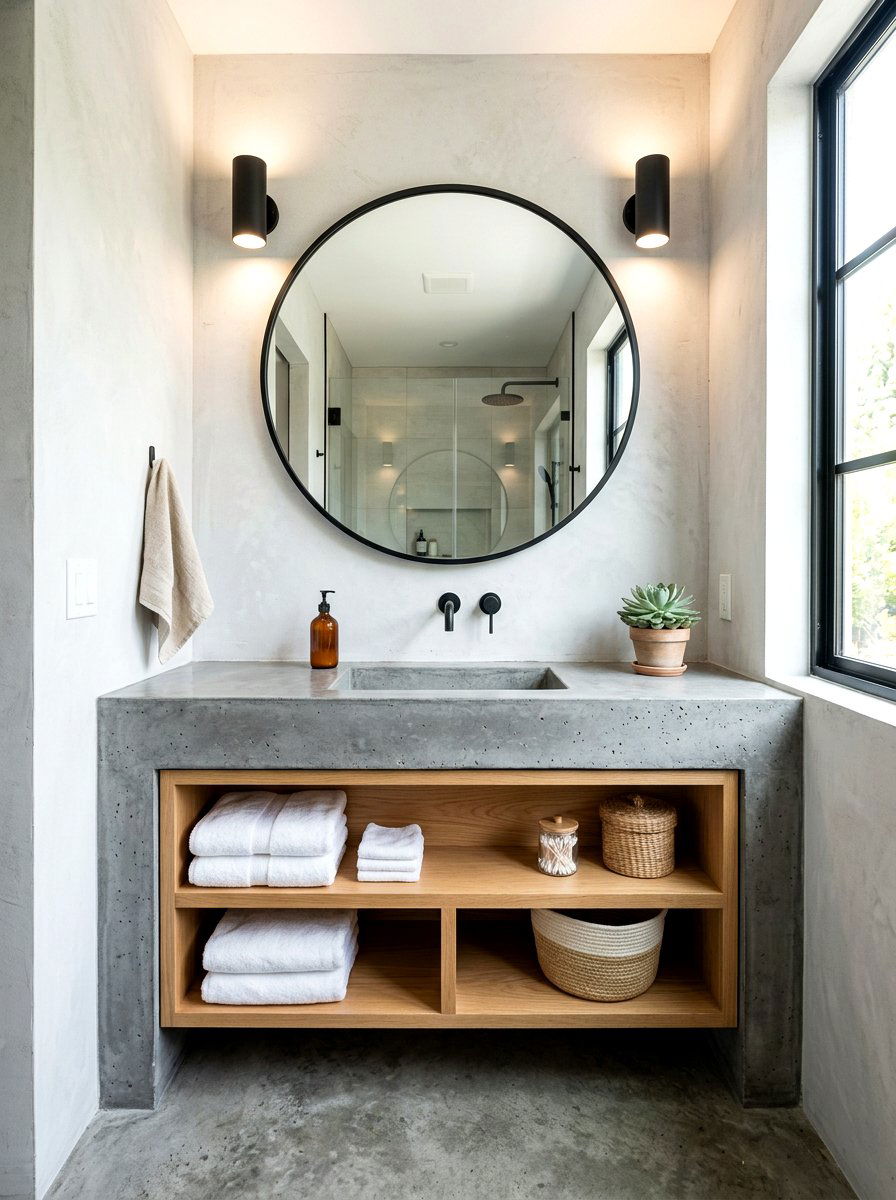
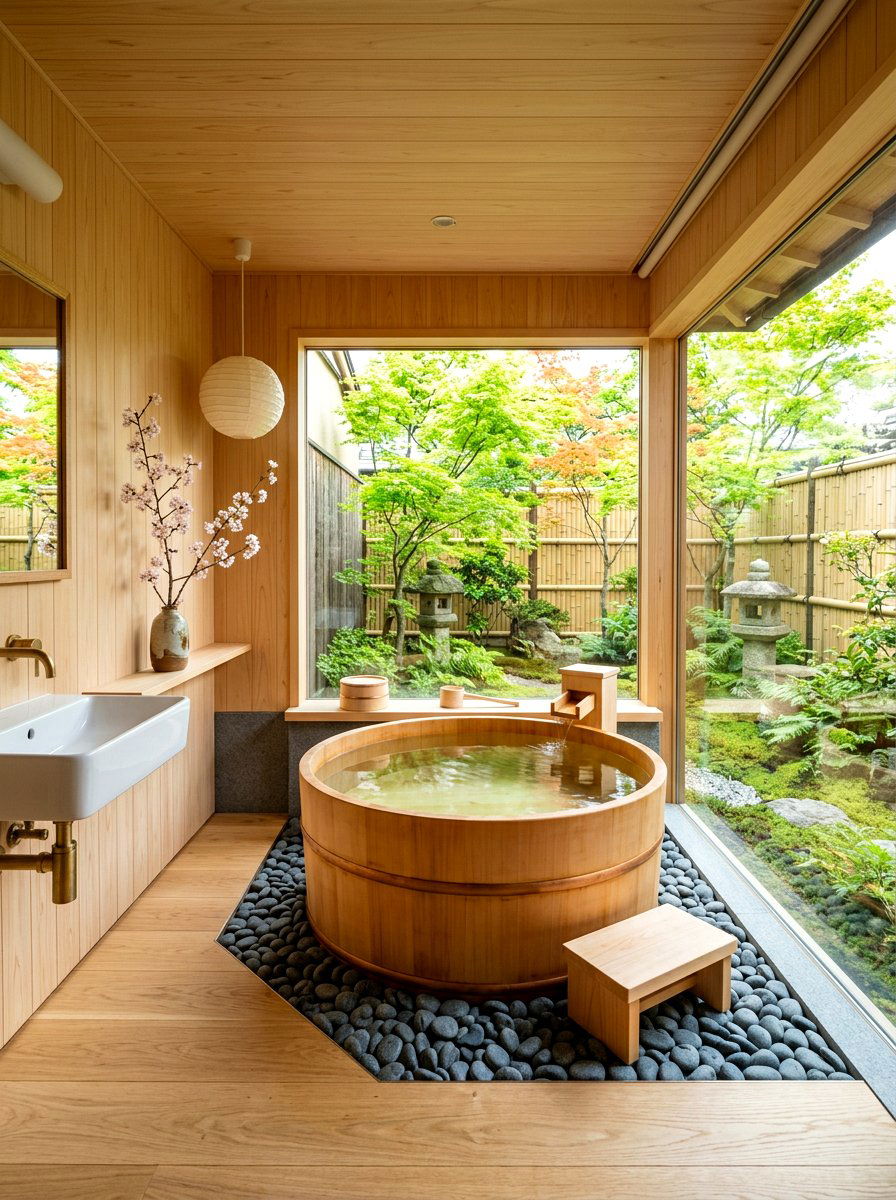
Transform your daily routine into a luxurious experience by designing a Japandi bathroom that resembles a high-end spa. Utilize natural stone tiles in soft grey or beige across the floors and walls to create a cohesive and grounding environment. A floating wooden vanity adds a touch of Scandinavian warmth while keeping the floor area clear, which makes the bathroom feel significantly larger. Incorporate a deep soaking tub or a rainfall shower with minimalist black fixtures to provide a modern, high-contrast accent. By adding a few well-placed plants and using woven baskets for towel storage, you bring in organic textures that soften the hard surfaces and promote a deep sense of relaxation.
6. Japandi entryway
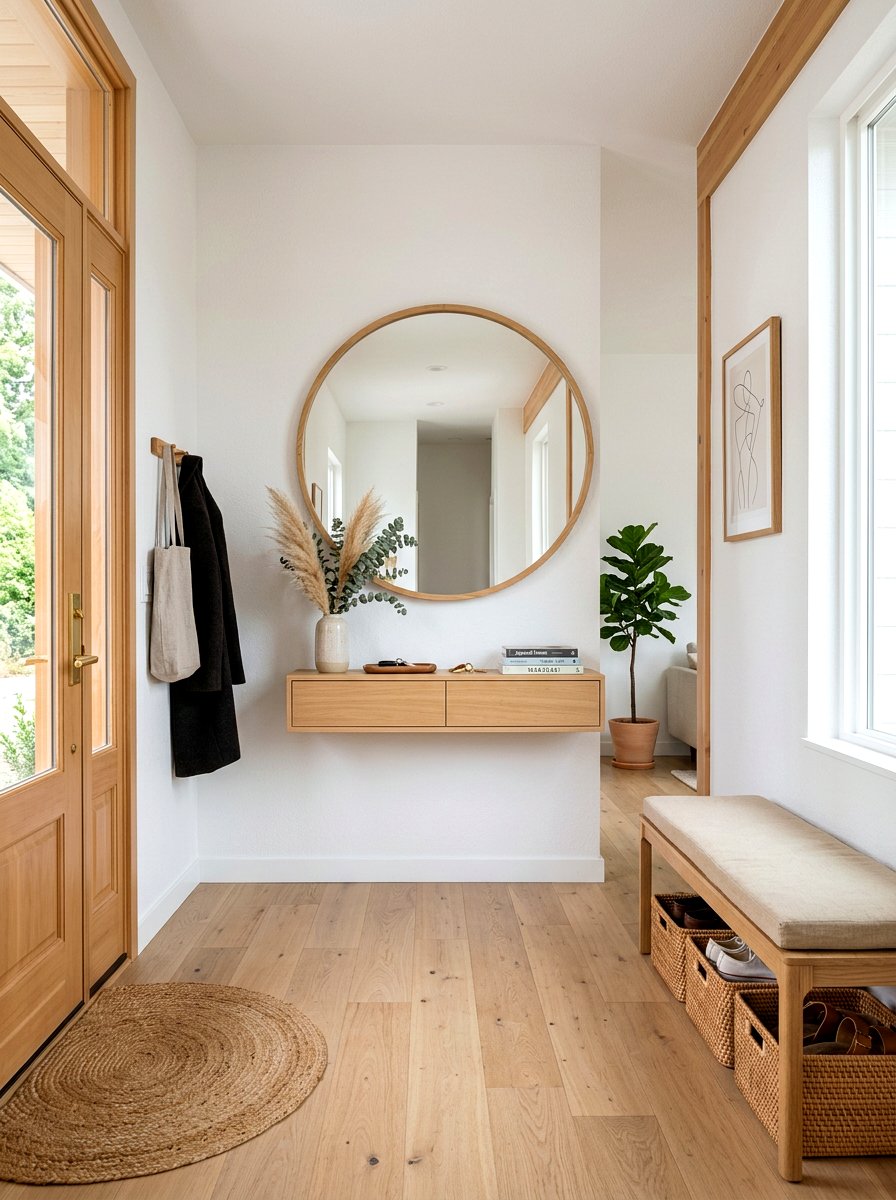
The first impression of your home should feel organized and inviting, making a Japandi entryway the perfect choice for a calm transition. Use a sleek, wall-mounted wooden console table to provide a surface for keys without taking up valuable floor space in a narrow hallway. A large, circular mirror with a thin frame can help bounce light around the area and make the entrance feel much more open and bright. Include a simple wooden bench for putting on shoes, paired with a few woven baskets tucked underneath to hide any potential clutter. This functional yet beautiful setup ensures that your home feels peaceful from the very moment you step through the front door.
7. Japandi workspace
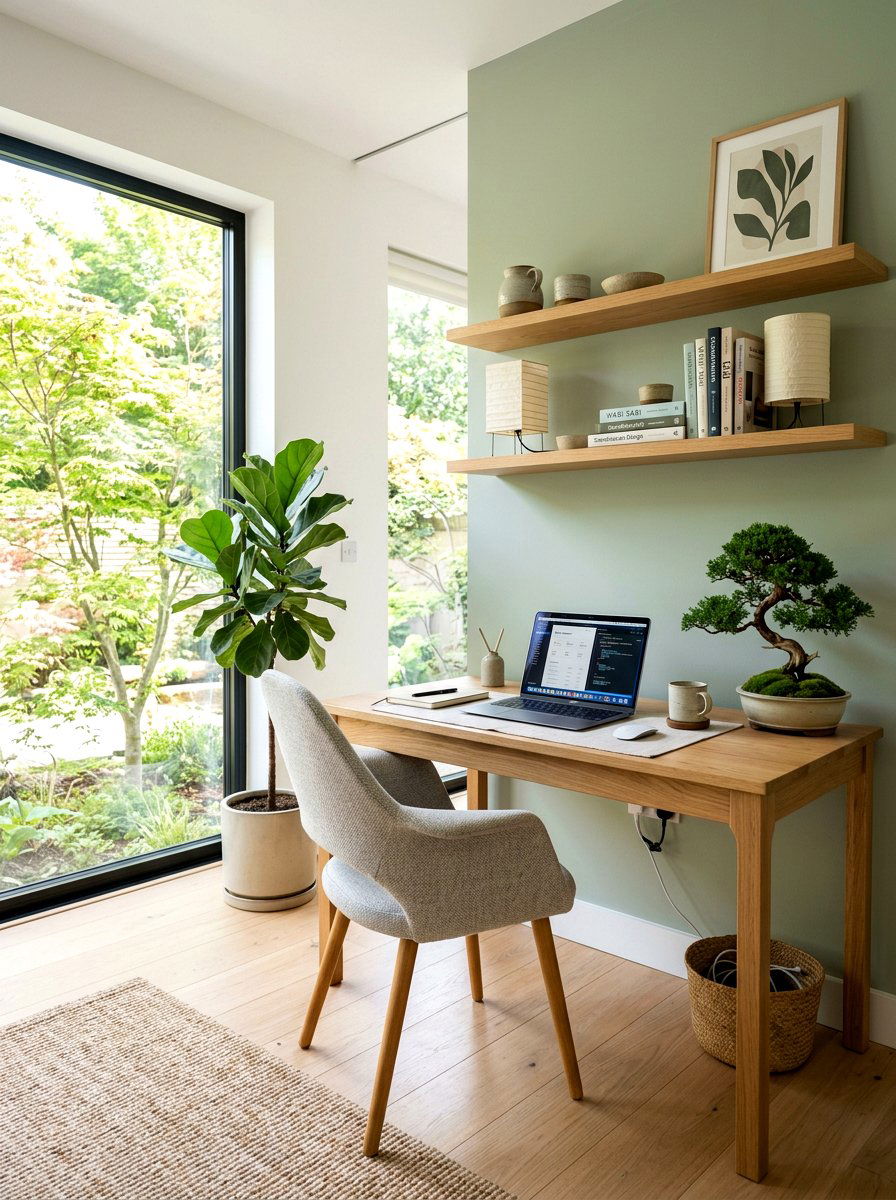
Productivity flourishes in a Japandi workspace that prioritizes clean lines and natural light. Select a minimalist desk made from solid wood and pair it with a comfortable, ergonomically designed chair that features a soft fabric finish. To keep the desk surface clear, use wall-mounted floating shelves for books and essential office supplies, ensuring everything has a dedicated home. The color palette should remain neutral, perhaps with a soft sage green or muted blue accent wall to provide a sense of calm during stressful work hours. Adding a small potted plant like a bonsai or a snake plant brings life to the room and helps maintain a connection to the natural world.
8. Japandi nursery
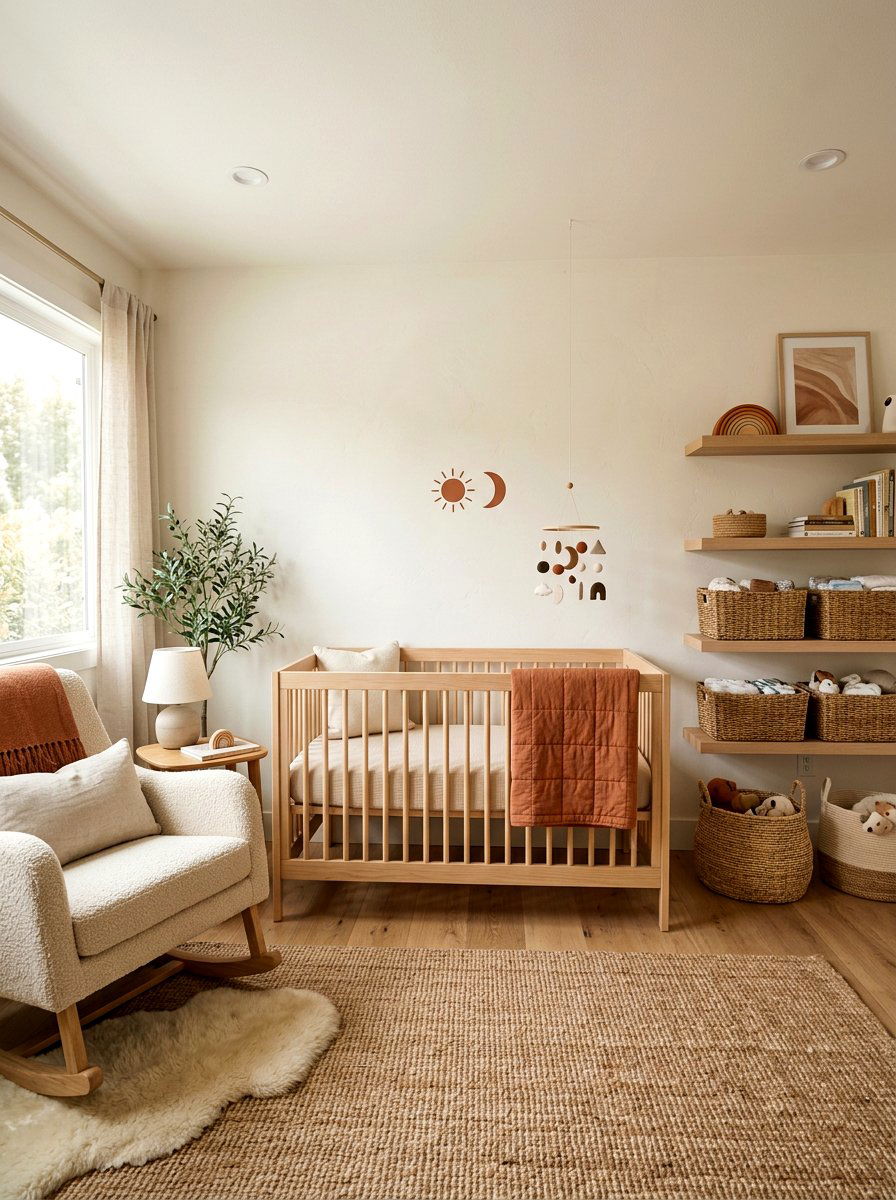
Designing a Japandi nursery allows you to create a soothing environment that is both stylish and incredibly practical for a growing child. Choose a crib with a simple wooden frame and use organic cotton textiles in soft, earthy tones like oatmeal or terracotta. Instead of bright, overstimulating plastic toys, opt for high-quality wooden blocks and woven storage bins that look beautiful on open shelving. A cozy rocking chair in a neutral fabric provides a comfortable spot for late-night feedings while fitting perfectly into the minimalist aesthetic. This design approach ensures the nursery remains a peaceful sanctuary for both you and your baby, promoting better rest and a calm daily rhythm.
9. Japandi reading nook
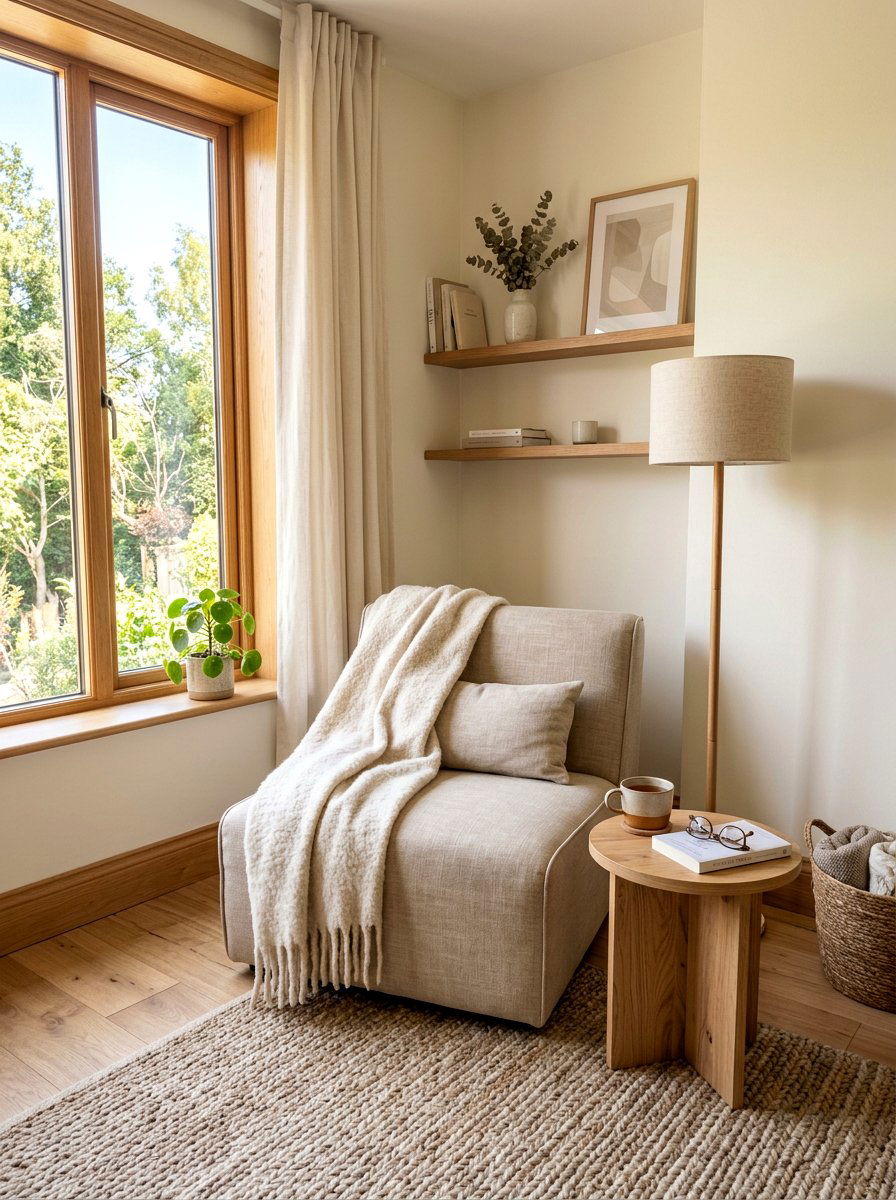
A cozy Japandi reading nook is the ultimate way to utilize a quiet corner of your home for relaxation. Place a comfortable, low-profile armchair next to a window to take full advantage of natural light for reading during the day. Add a small, circular wooden side table for your tea and a soft wool throw blanket to provide that essential Scandinavian hygge feeling. A floor lamp with a paper or linen shade can provide gentle, warm light for evening reading sessions without being too harsh on the eyes. This dedicated space encourages you to slow down and enjoy a quiet moment of mindfulness away from the distractions of modern technology and daily stress.
10. Japandi patio
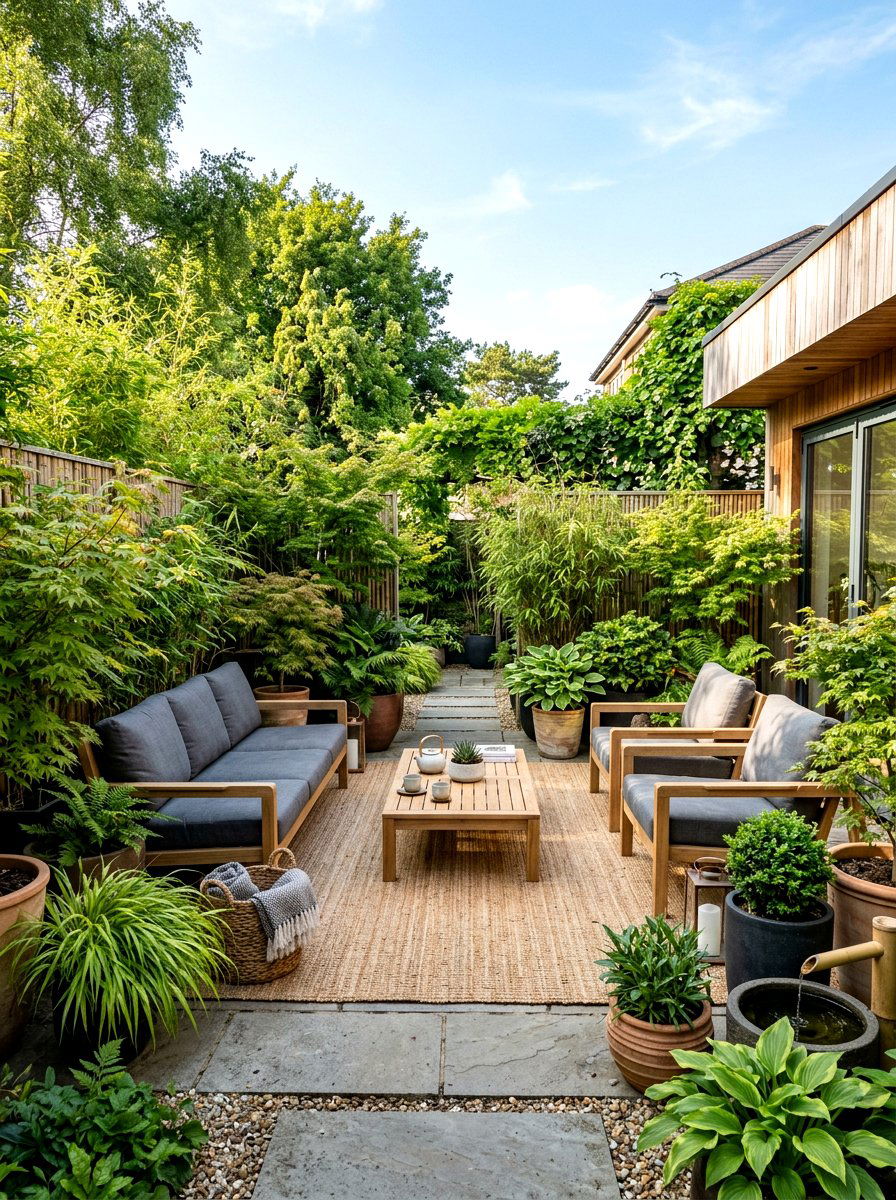
Extend your interior style to the outdoors by creating a Japandi patio that feels like a natural extension of your living room. Use low-slung wooden lounge furniture with weatherproof cushions in neutral shades like charcoal or sand to maintain a cohesive look. Incorporate a variety of potted plants in ceramic or stone containers to create a lush, biophilic environment that feels private and secluded. A simple outdoor rug made from natural fibers like jute can define the seating area and add a layer of tactile comfort underfoot. By keeping the decor minimal and focused on natural materials, you create an outdoor sanctuary that is perfect for peaceful morning coffees or relaxing evening conversations.
11. Japandi mudroom
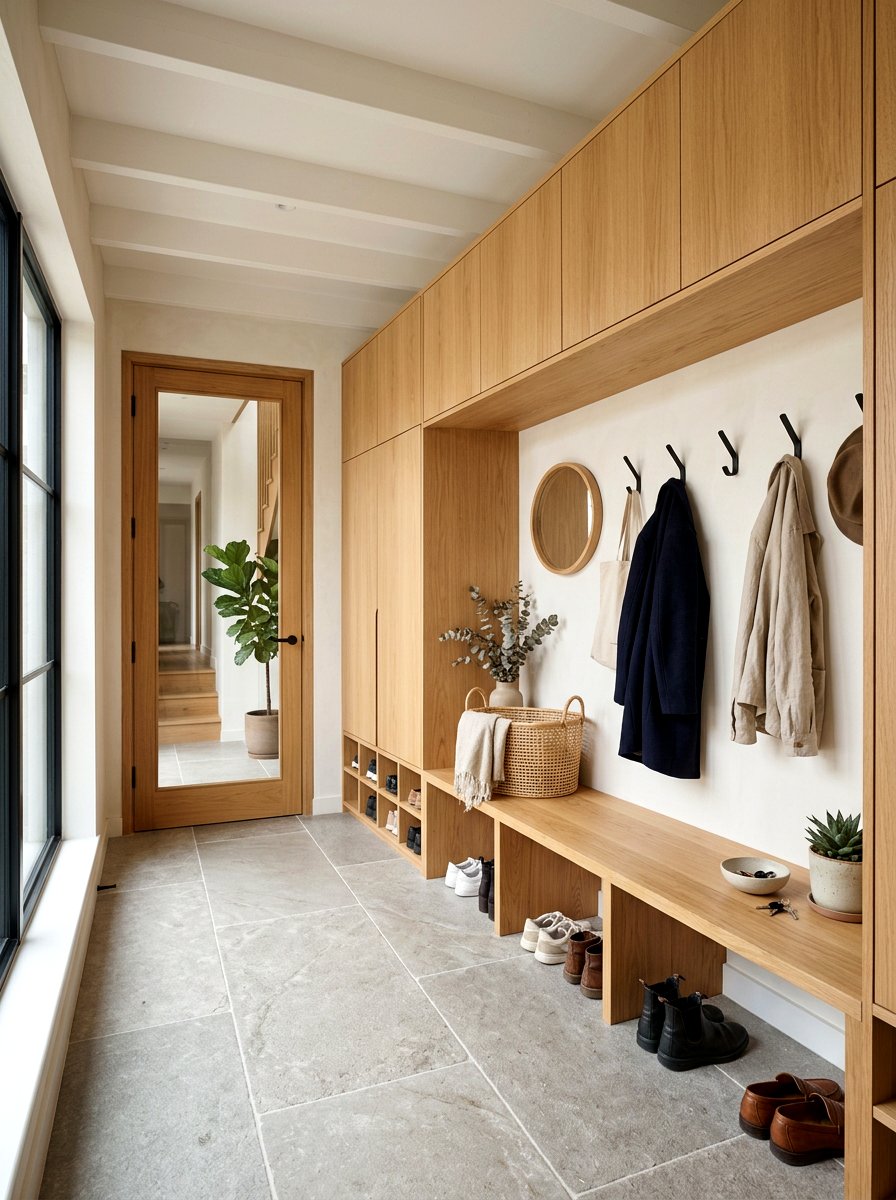
The Japandi mudroom is all about maximizing functionality without sacrificing the clean, minimalist look that defines the overall style. Install custom wooden cabinetry with flat fronts to hide coats, bags, and shoes, ensuring the space remains completely free of visual clutter. A long, sturdy wooden bench provides a practical spot for the family to get ready, while hooks in a matte black finish add a touch of modern contrast. Use durable stone or tile flooring in a neutral grey to handle the wear and tear of daily life while staying within the earthy color palette. This organized approach helps manage the chaos of a busy household while maintaining a serene and welcoming atmosphere.
12. Japandi laundry room
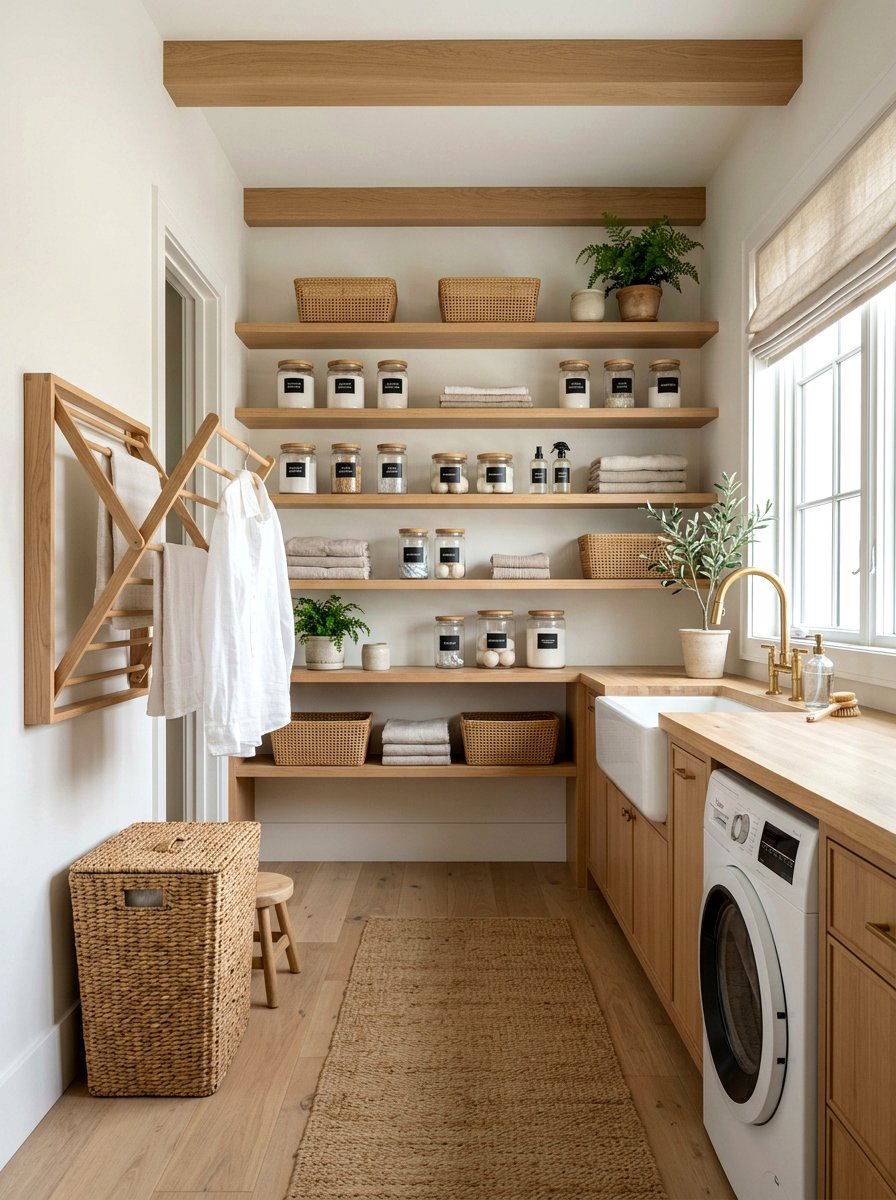
Even the most functional spaces can be beautiful, and a Japandi laundry room proves that utility and style can coexist perfectly. Use light wood shelving to store glass jars filled with detergents and wool dryer balls, creating a look that is both organized and organic. White or soft grey walls keep the small space feeling bright and clean, which is essential for a room dedicated to chores. Incorporate a farmhouse-style sink and a simple wooden drying rack to add a touch of traditional craftsmanship to the modern environment. By treating the laundry room with the same design care as the rest of the house, you make daily tasks feel much more pleasant and intentional.
13. Japandi guest room
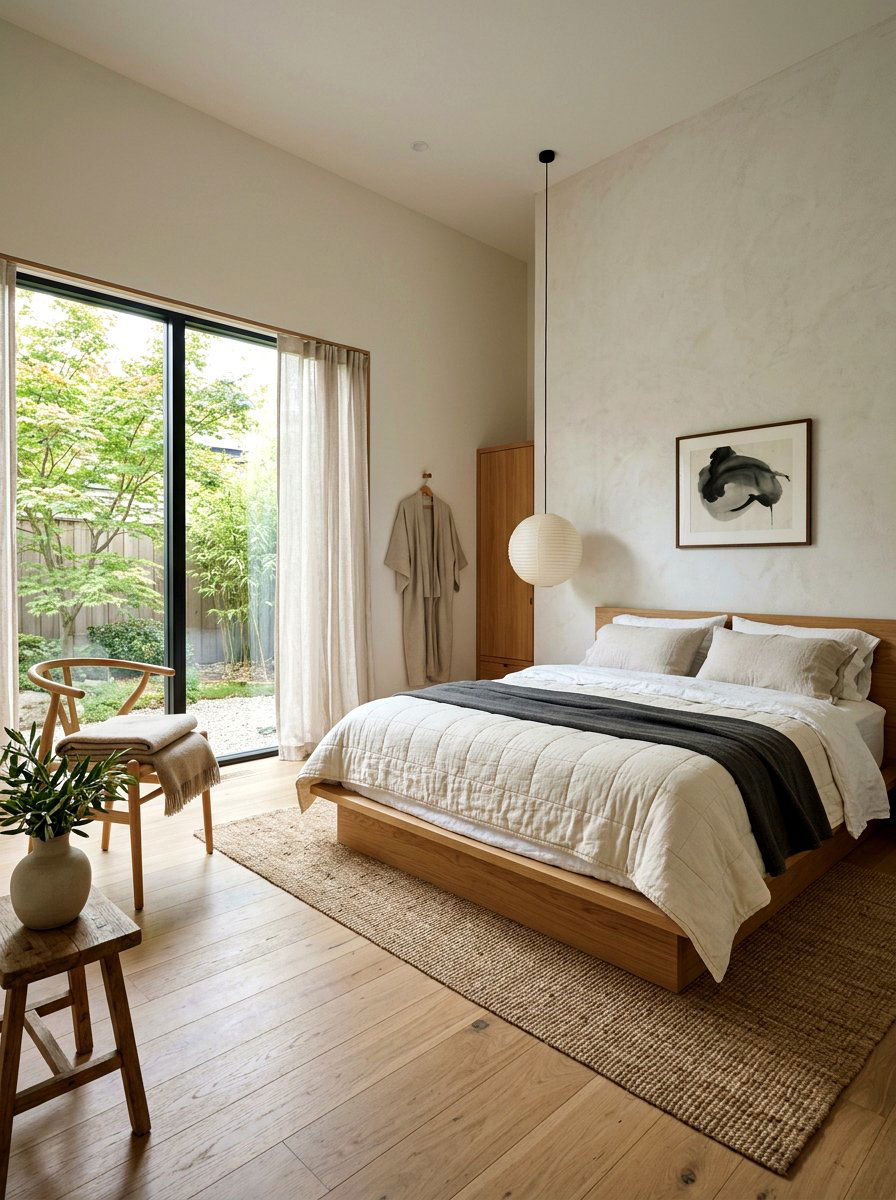
An inviting Japandi guest room makes your visitors feel immediately at home by providing a clutter-free and highly comfortable environment. Stick to a low platform bed with a high-quality mattress and layer it with soft linen sheets and a heavy cotton quilt. A simple wooden chair in the corner provides a place for guests to put their belongings, while a minimalist wall mirror adds functionality without taking up space. Keep the decor very sparse, perhaps just a single ceramic vase with fresh greenery to breathe life into the room. This thoughtful, minimalist approach ensures your guests have a peaceful place to rest, free from the distractions and personal items of the main household.
14. Japandi hallway
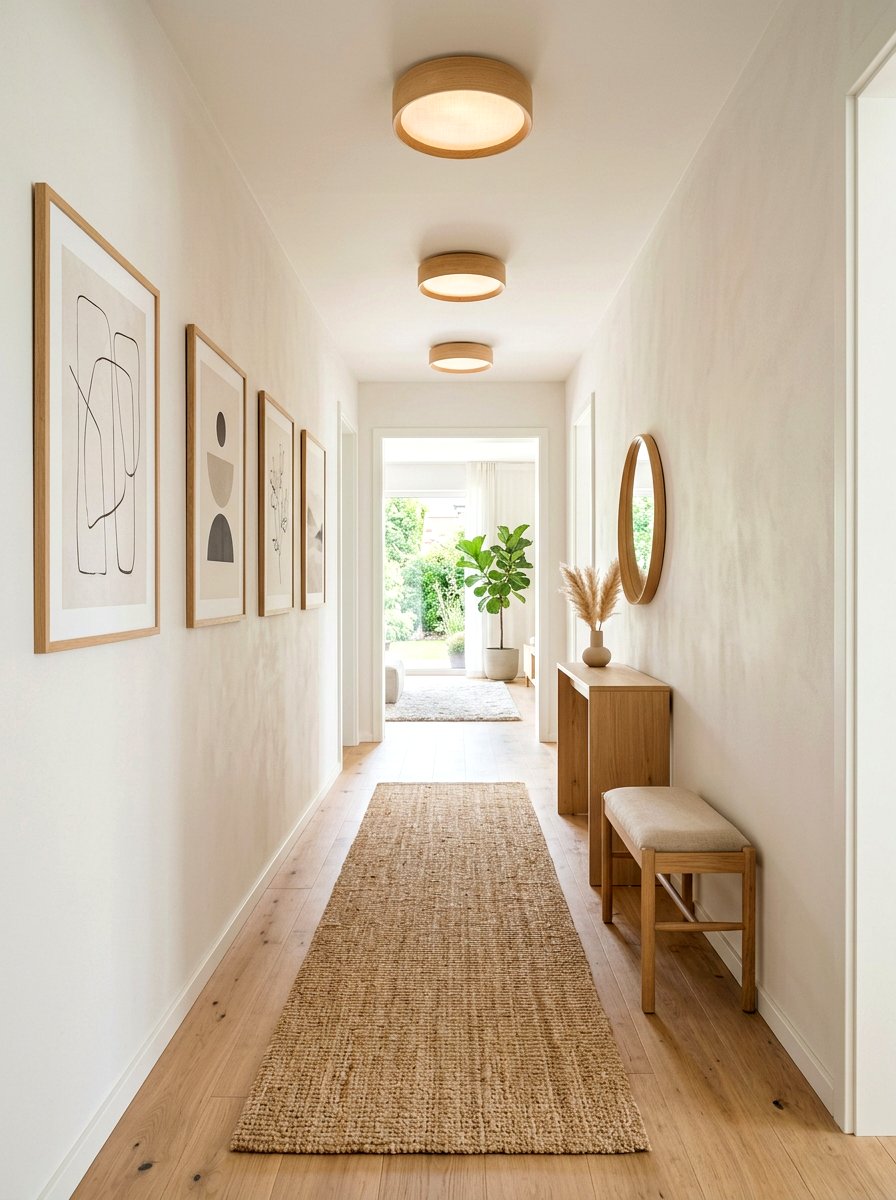
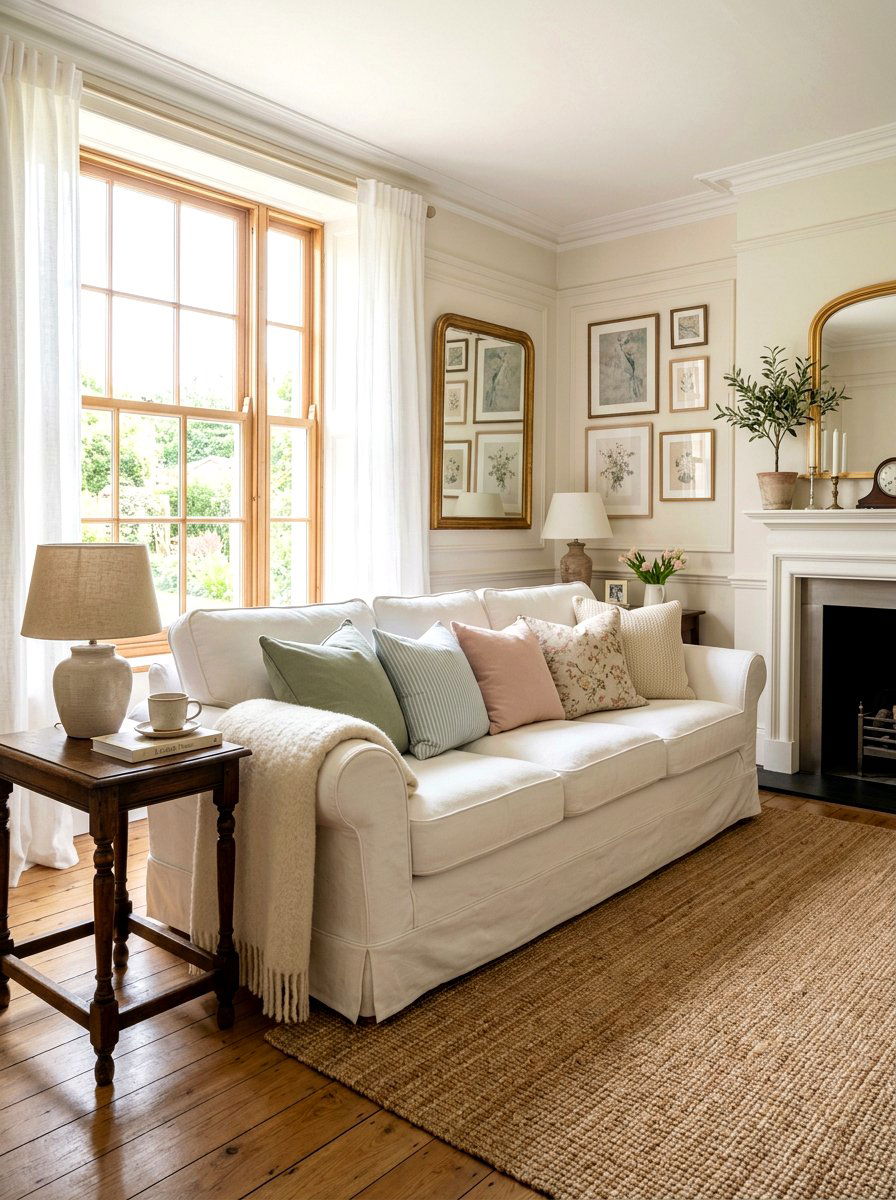
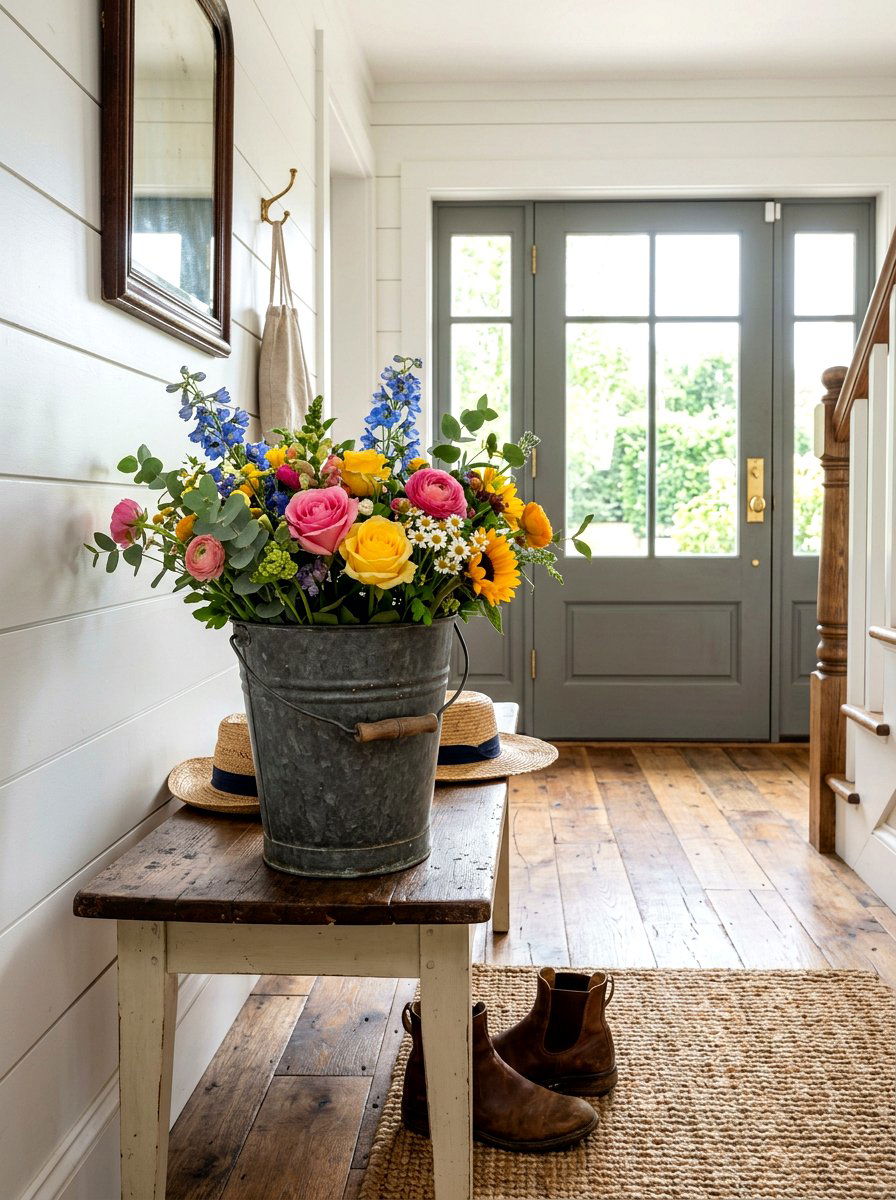
Often overlooked, a Japandi hallway can become a beautiful transitional space that links the various rooms of your home together seamlessly. Use a long, narrow jute runner to add texture and protect the floors while guiding the eye through the house. Instead of a traditional gallery wall, consider hanging a single, large-scale piece of art or a series of minimalist prints with generous spacing between them. Recessed lighting or simple, flush-mount wooden fixtures can provide enough light without cluttering the ceiling. By keeping the hallway clear of furniture and excessive decor, you maintain a sense of flow and openness that is central to the Japandi philosophy of intentional living.

15. Japandi meditation space
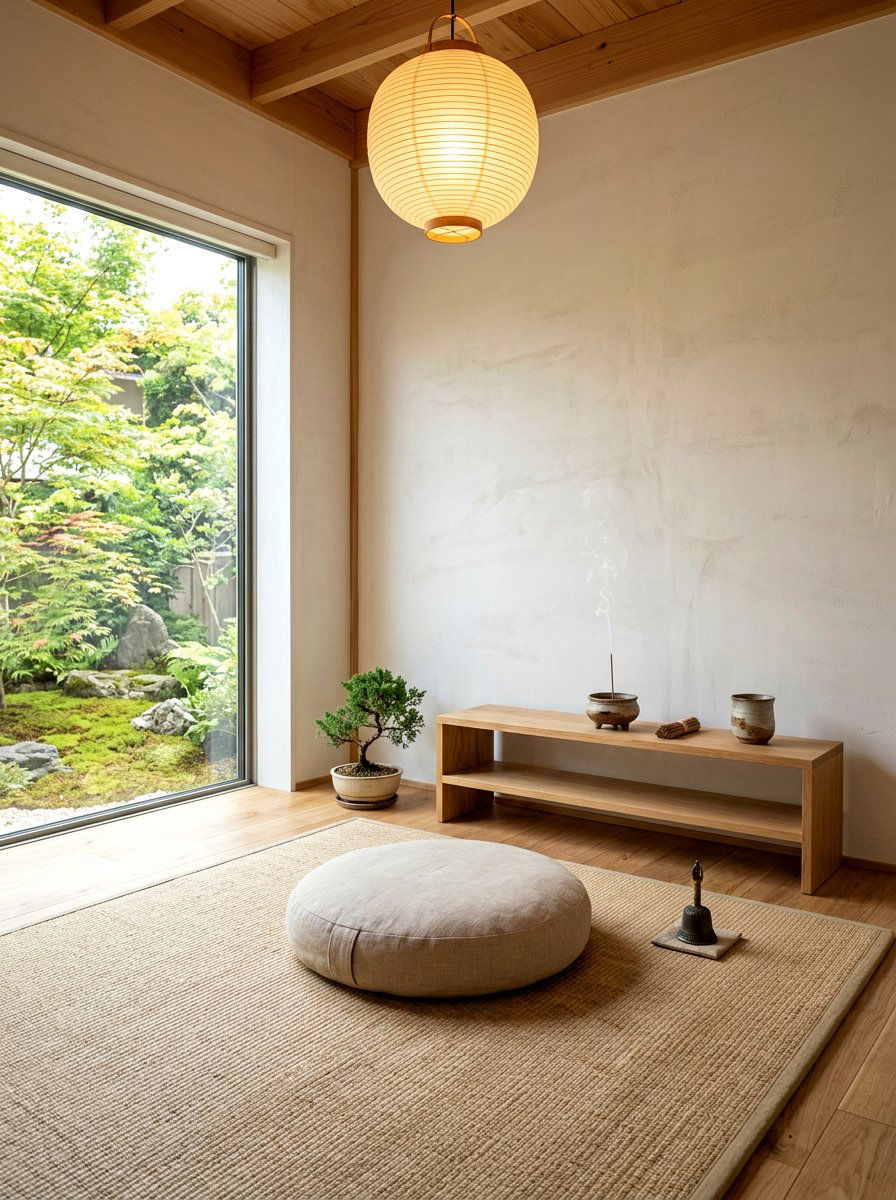
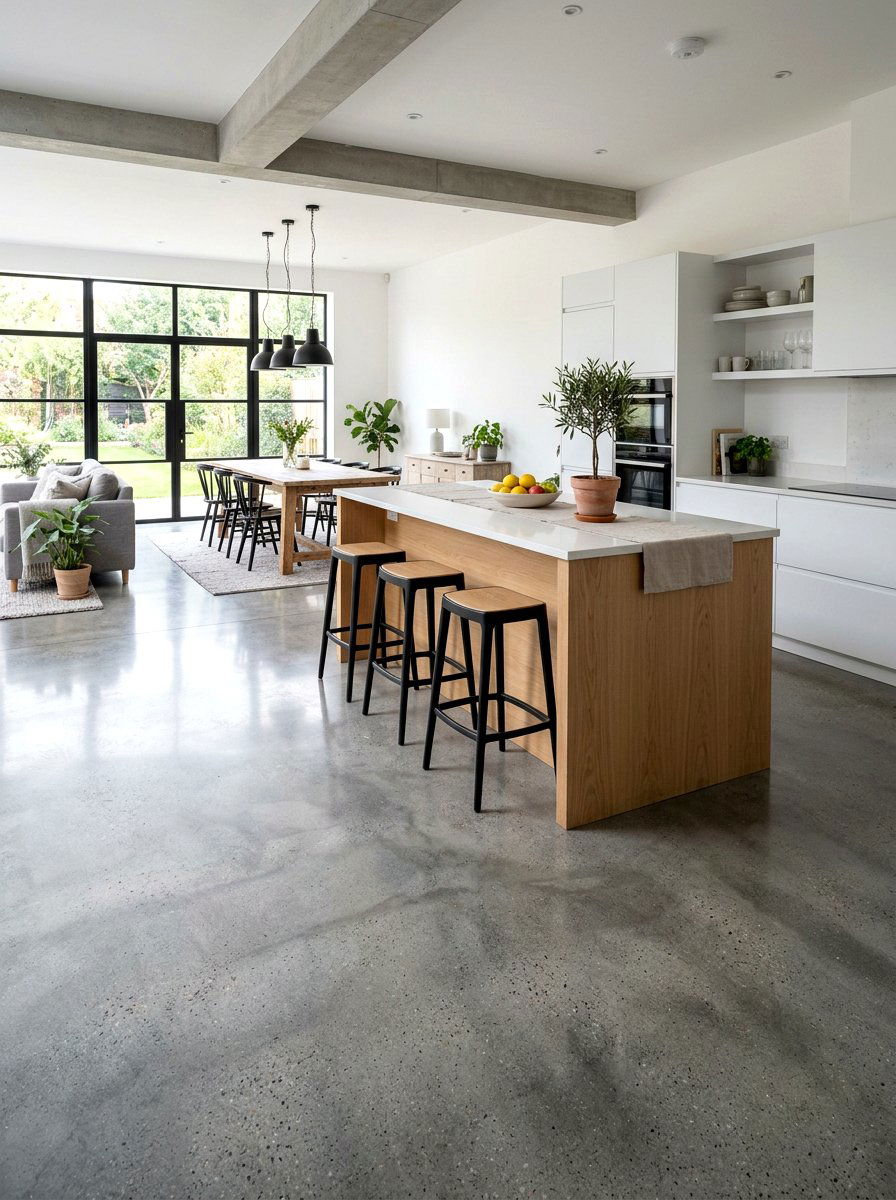
A dedicated Japandi meditation space provides a quiet corner of your home where you can focus on mindfulness and inner peace. Use a soft tatami mat or a thick floor cushion as the primary seating area, keeping everything very close to the ground. A small wooden altar or low shelf can hold a few meaningful items like a ceramic incense burner or a small singing bowl. Soft, diffused light from a paper lantern creates the perfect atmosphere for deep breathing and contemplation. By keeping the walls bare and the color palette incredibly neutral, you minimize external distractions, allowing you to fully immerse yourself in the present moment and find true mental clarity.
16. Japandi breakfast nook
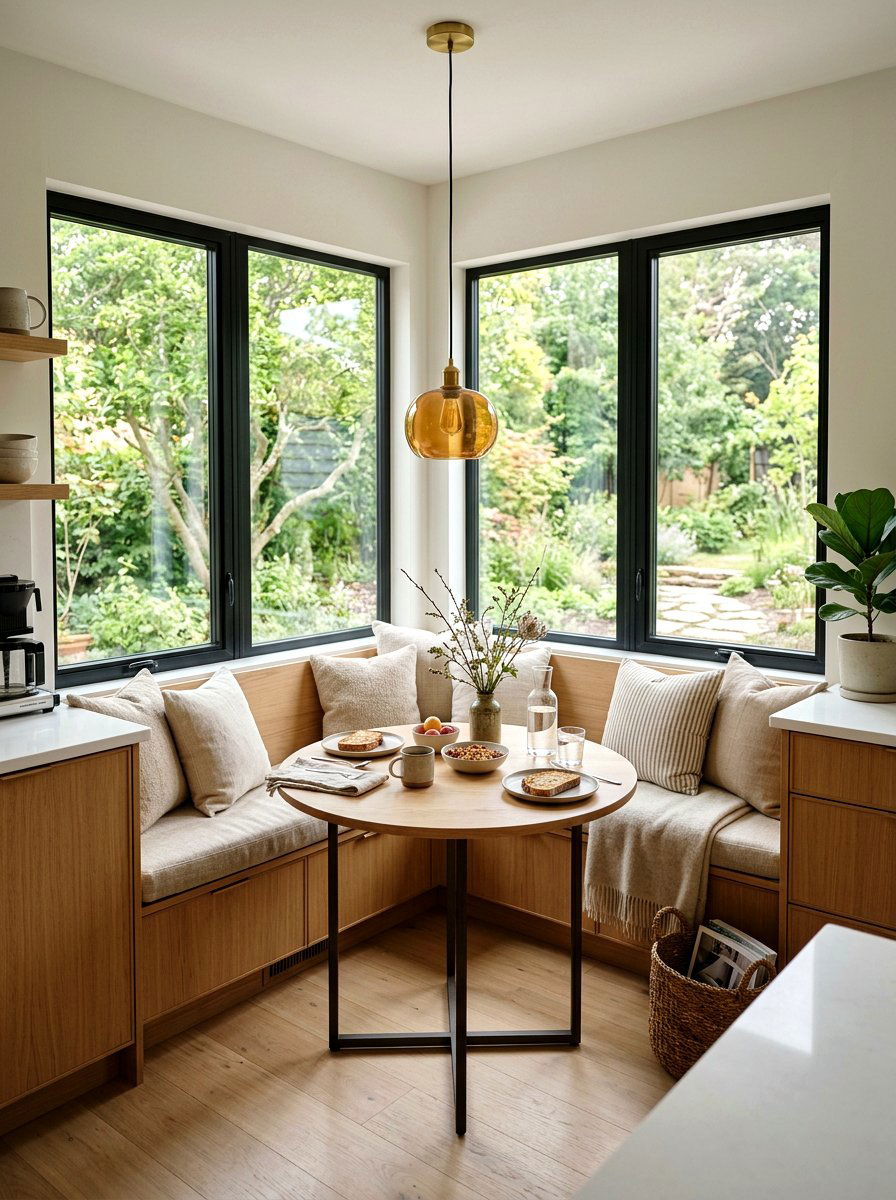
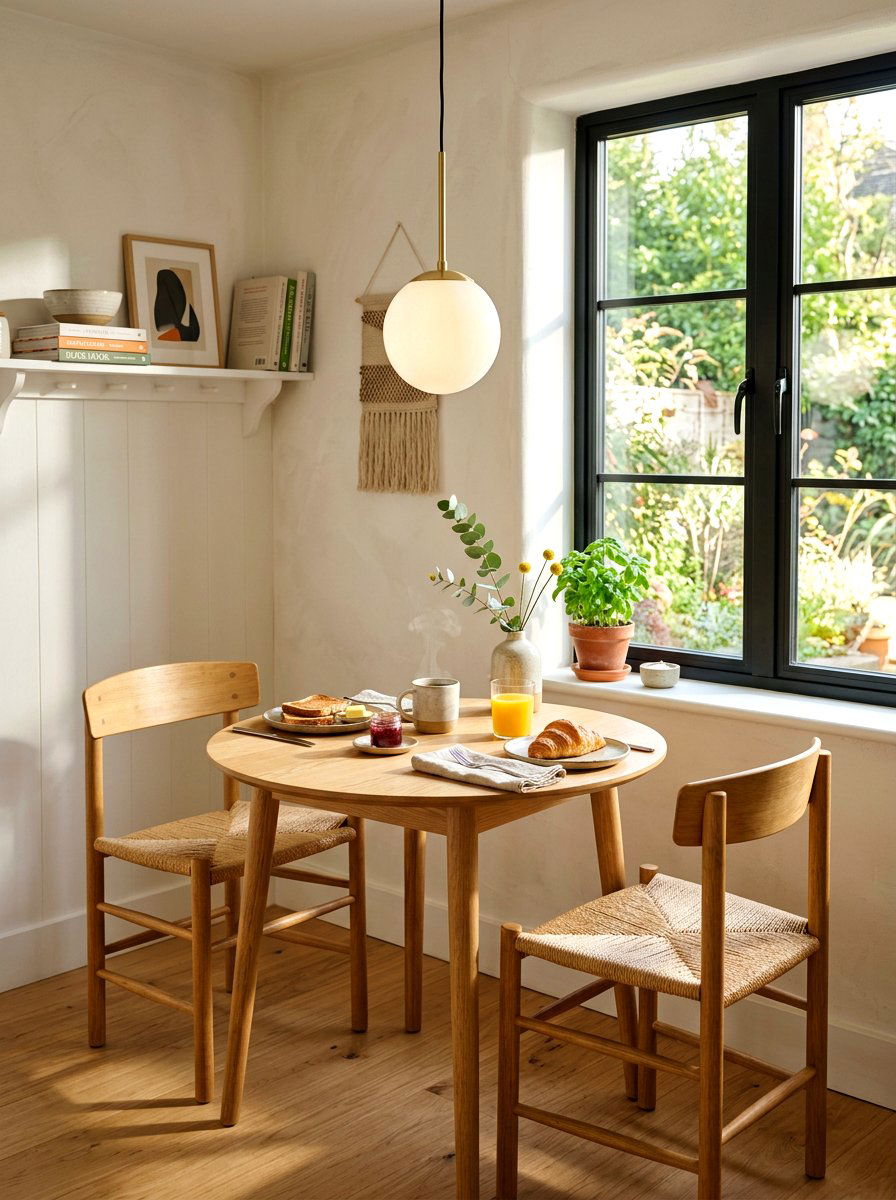
Start your day with a sense of calm in a Japandi breakfast nook that emphasizes light and natural materials. A small, round wooden table paired with built-in bench seating can maximize space in a kitchen corner while providing a cozy spot for morning coffee. Use linen cushions in soft earthy tones to add comfort and a touch of Scandinavian warmth to the wooden surfaces. A minimalist pendant light hanging directly over the table defines the space and provides a warm glow for early mornings. This intimate dining area encourages slow starts and thoughtful conversation, making it a favorite spot for the whole family to gather before the busy day begins.
17. Japandi attic
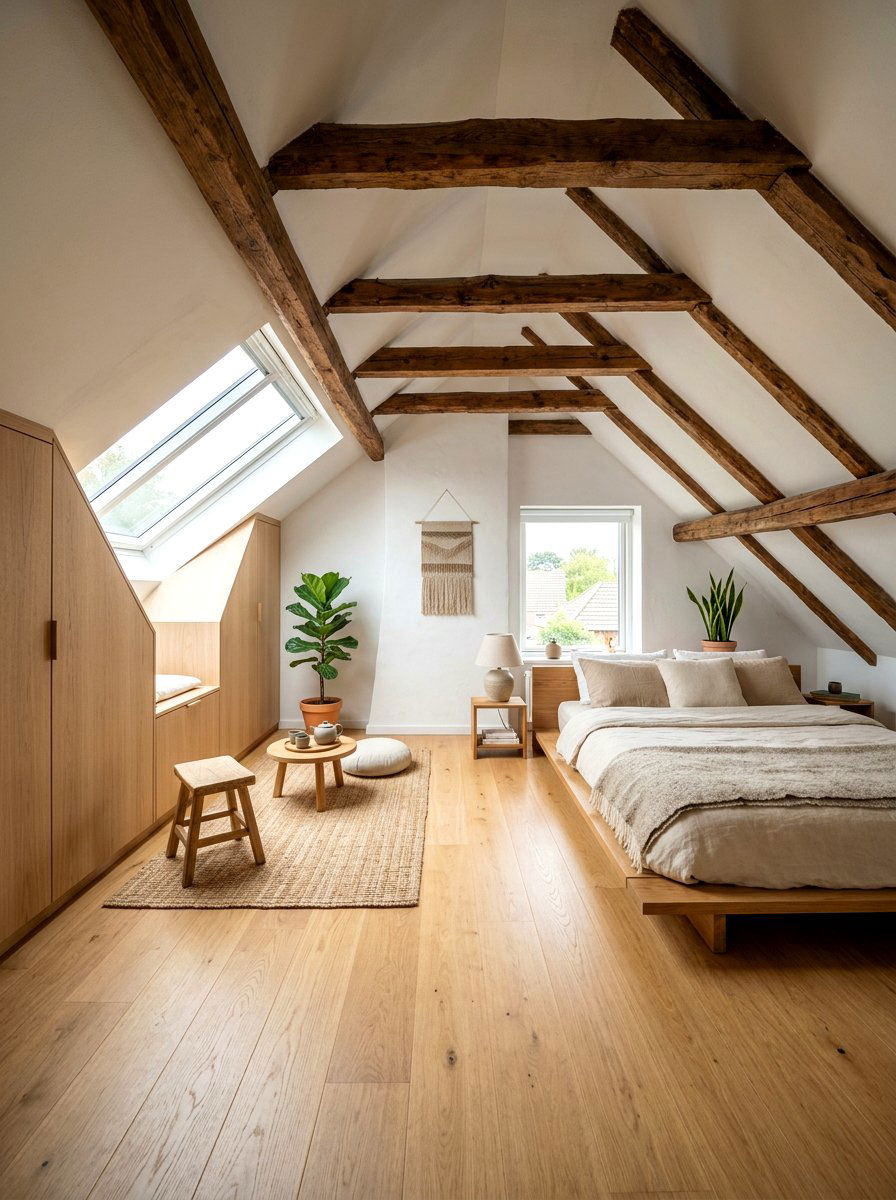
Converting an attic into a Japandi-style living area is a fantastic way to utilize unique architectural features like sloped ceilings and exposed beams. Keep the walls painted in a bright white to reflect as much natural light as possible, making the often-cramped space feel much more expansive. Low-profile furniture is especially effective here, as it works with the lower ceiling heights without making the room feel closed in. Use the alcoves for built-in wooden storage to keep the main floor area clear and uncluttered. Whether used as a guest suite or a private lounge, a Japandi attic offers a cozy, nest-like atmosphere that is incredibly peaceful and stylishly modern.
18. Japandi lounge
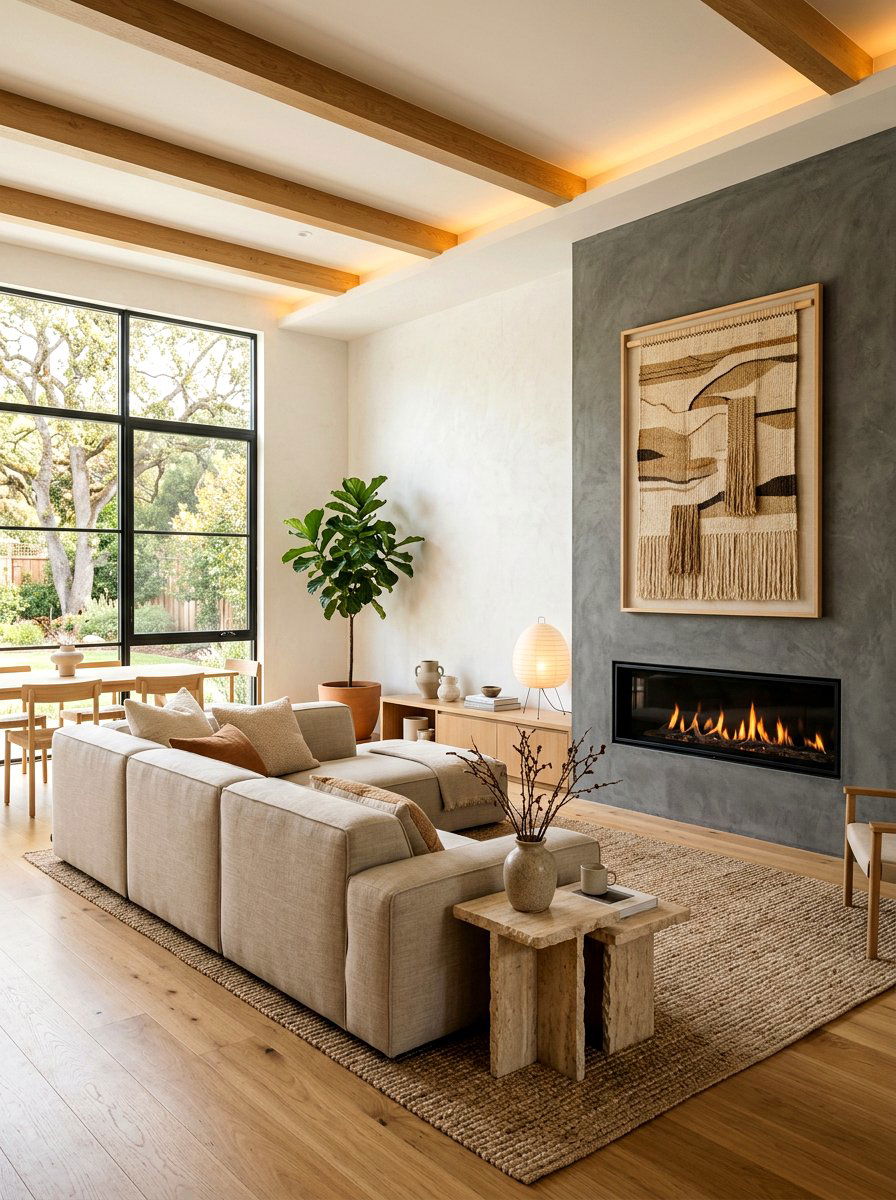
A Japandi lounge is designed for ultimate relaxation and social connection, featuring comfortable seating and a warm, inviting atmosphere. Focus on a large, modular sofa in a neutral tone that allows for flexible arrangements depending on your needs. Introduce different textures through woven wall hangings, stone side tables, and plush wool pillows to add depth and interest without using bright colors. A sleek, modern fireplace can serve as the focal point, providing both physical warmth and a mesmerizing visual element for quiet evenings. By balancing the clean lines of the furniture with the soft textures of the decor, you create a sophisticated space that feels both luxurious and incredibly comfortable.
19. Japandi sunroom
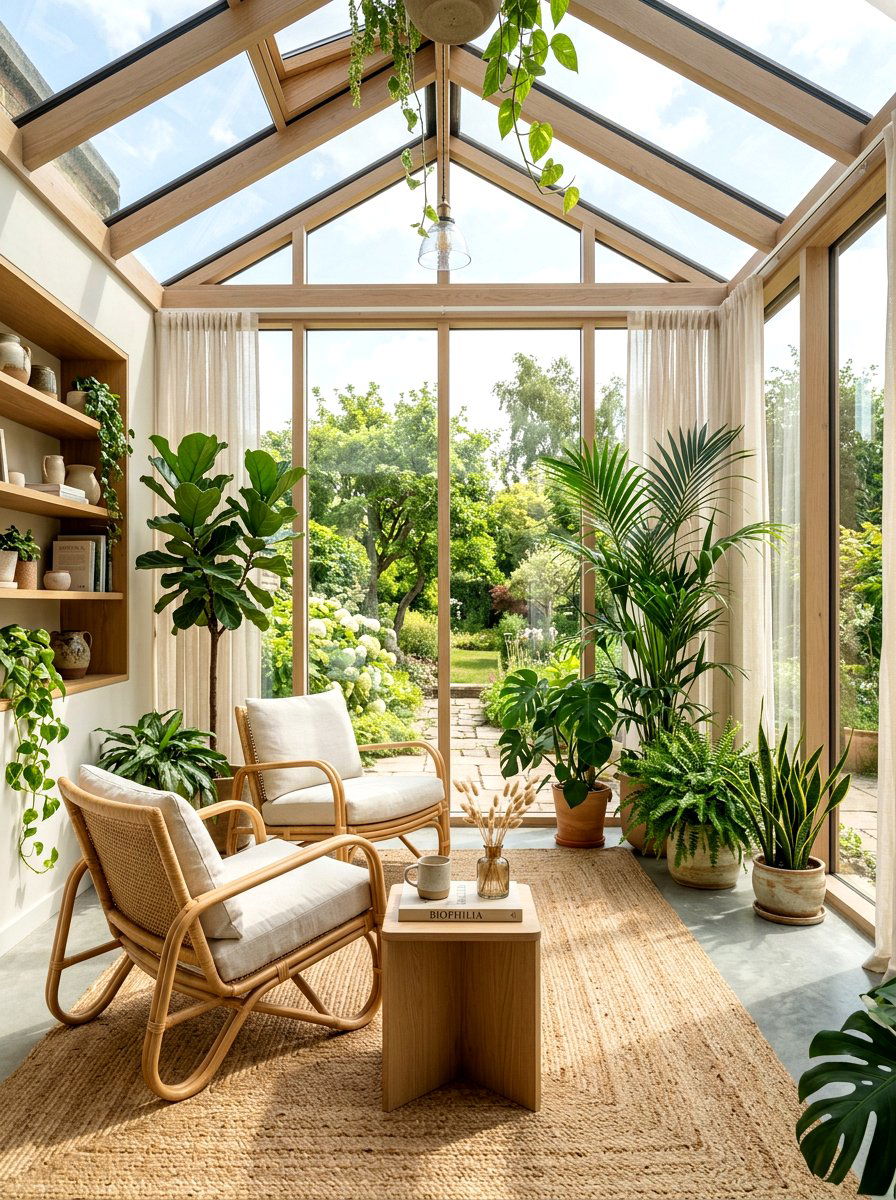
A Japandi sunroom acts as a bridge between your indoor comforts and the natural beauty of the outdoors. Fill the space with lightweight furniture made from rattan or light wood to maintain an airy and bright feeling throughout the day. Large glass windows should be left mostly unobstructed, perhaps using only thin linen sheers to provide privacy without blocking the vital sunlight. Incorporate plenty of large indoor plants to enhance the biophilic connection and make the room feel like an indoor garden. This bright, plant-filled sanctuary is the perfect place for morning yoga, reading, or simply enjoying the changing seasons from the comfort of your beautifully designed home interior.

20. Japandi studio
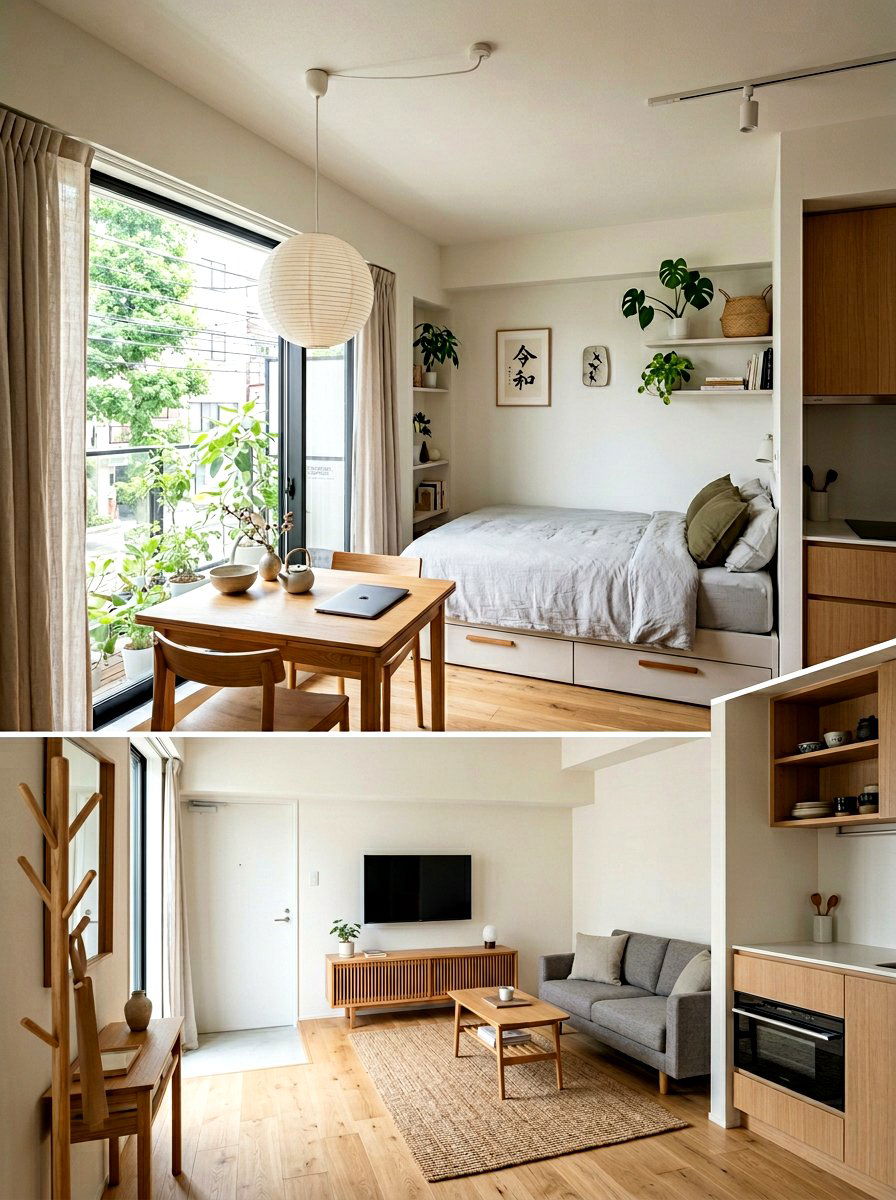
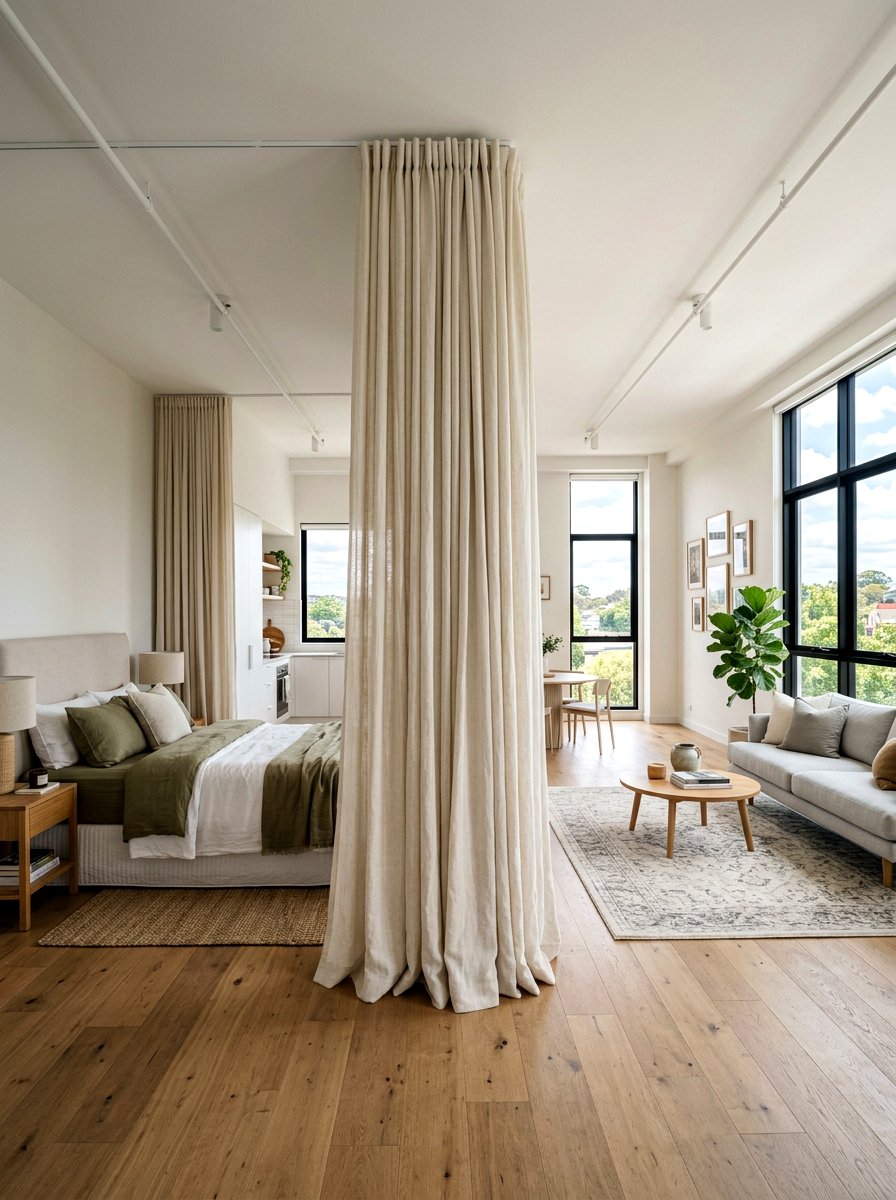
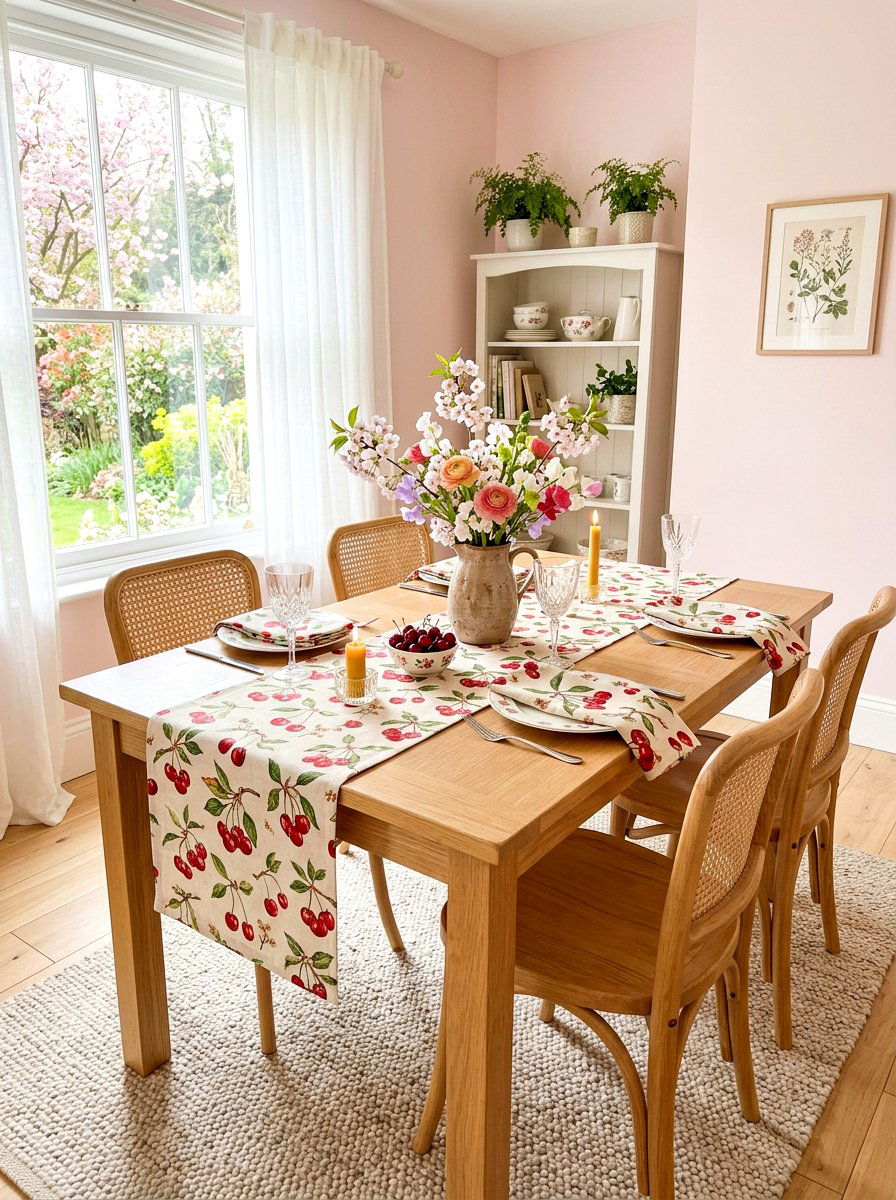
Living in a small space requires smart design, and a Japandi studio uses minimalism and functionality to make an apartment feel much larger. Use multi-functional furniture like a bed with built-in drawers or a dining table that can double as a desk to maximize every square inch. Light-colored wood flooring and white walls help the space feel open, while strategically placed mirrors can create the illusion of more depth. Use open shelving to display a few curated items, but keep most belongings hidden in sleek, handleless cabinets. This organized and intentional approach ensures that your small home remains a peaceful and functional environment that never feels cramped or cluttered.
21. Japandi closet
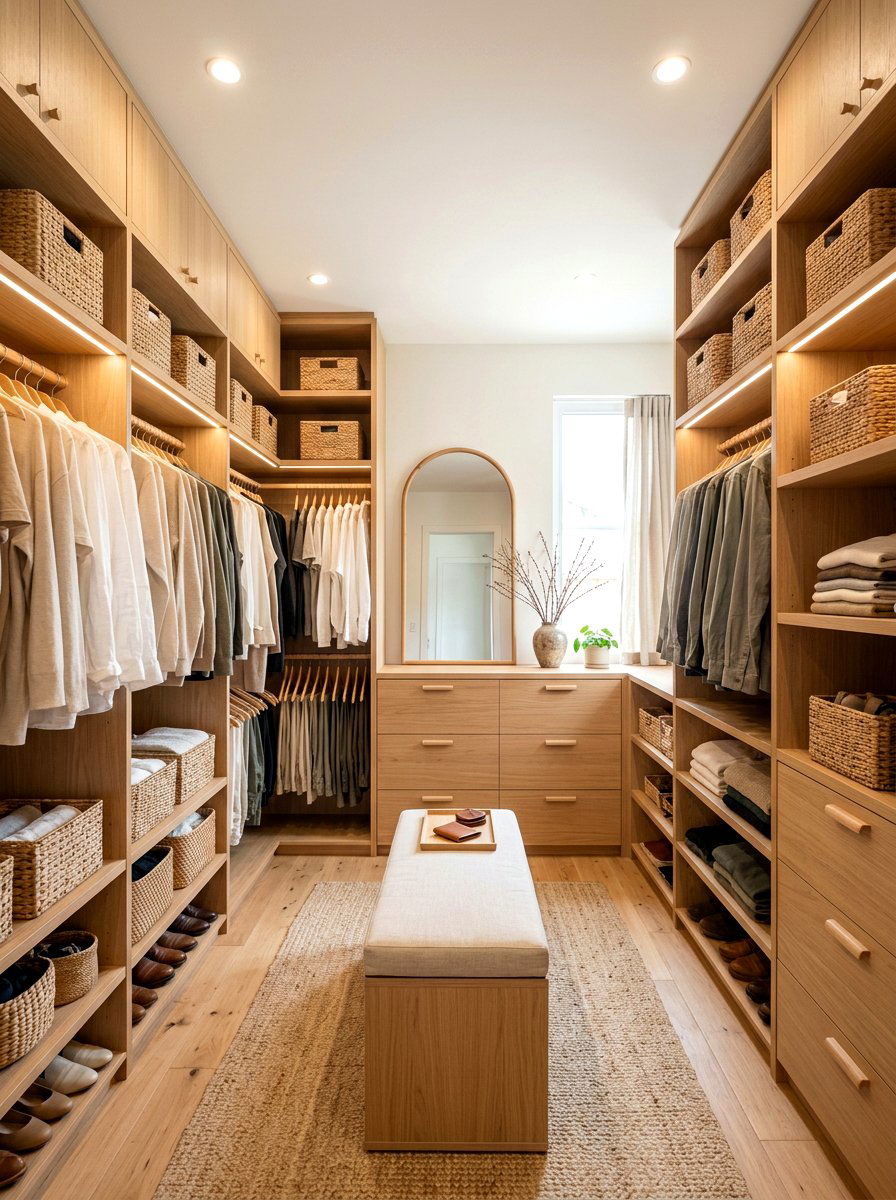
A Japandi closet turns your daily dressing routine into a moment of calm and organization. Utilize custom wooden shelving and drawers with clean lines to provide a dedicated space for every item of clothing and accessory. Keep the color palette light and neutral, which helps you see your clothes more clearly and makes the small space feel less claustrophobic. Use matching wooden hangers and woven baskets for smaller items to maintain a cohesive and visually pleasing look inside the wardrobe. By organizing your clothes intentionally and keeping the area tidy, you reduce morning stress and start your day with the same sense of peace that permeates the rest of your home.
22. Japandi ensuite
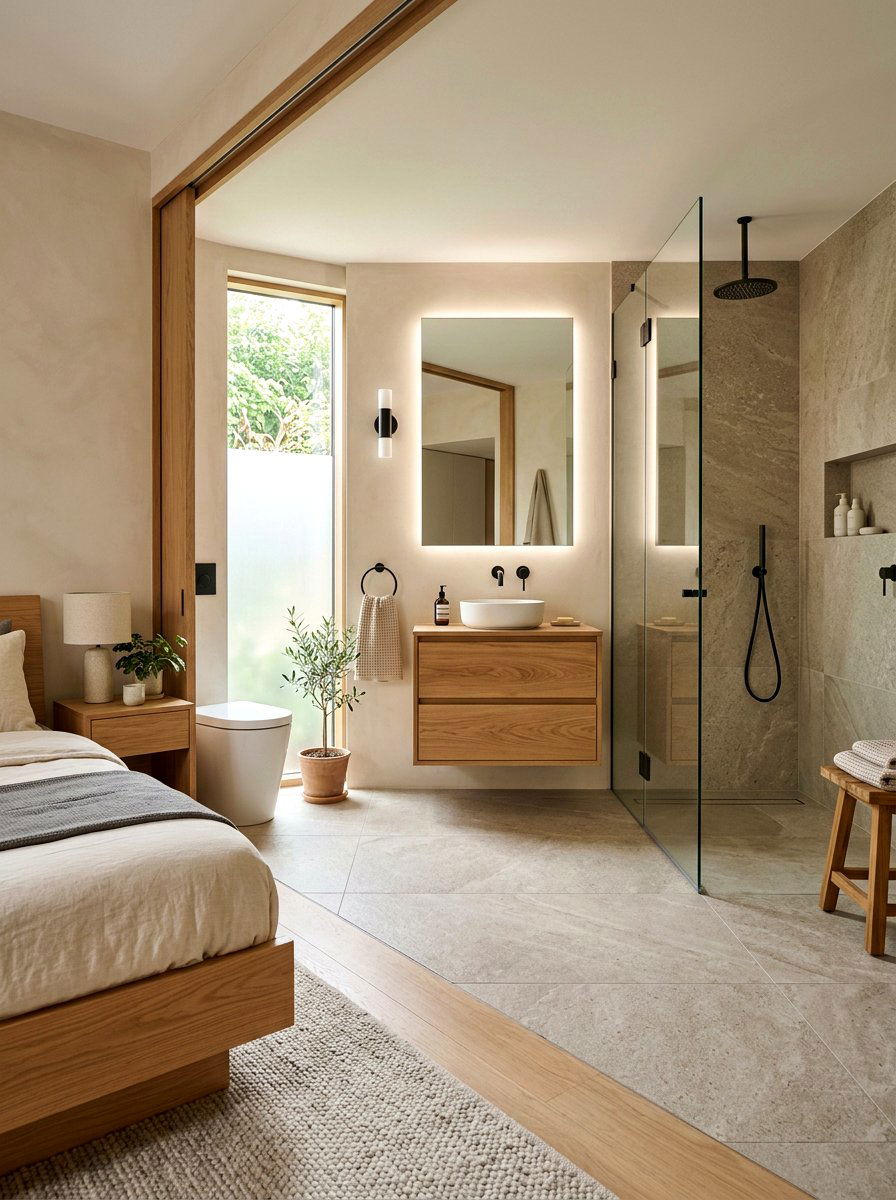
An ensuite bathroom should feel like a private extension of your bedroom sanctuary, and the Japandi style achieves this through seamless design and natural materials. Use the same wood finish for the vanity as you did for your bedroom furniture to create a sense of continuity between the two spaces. A walk-in shower with glass panels keeps the view unobstructed, making the ensuite feel much more spacious and modern. Incorporate stone-effect tiles and minimalist black or brass hardware to add a touch of quiet luxury. This cohesive approach ensures that your private bathroom remains a tranquil and stylish retreat that perfectly complements your overall bedroom design and color palette.
23. Japandi floor plan
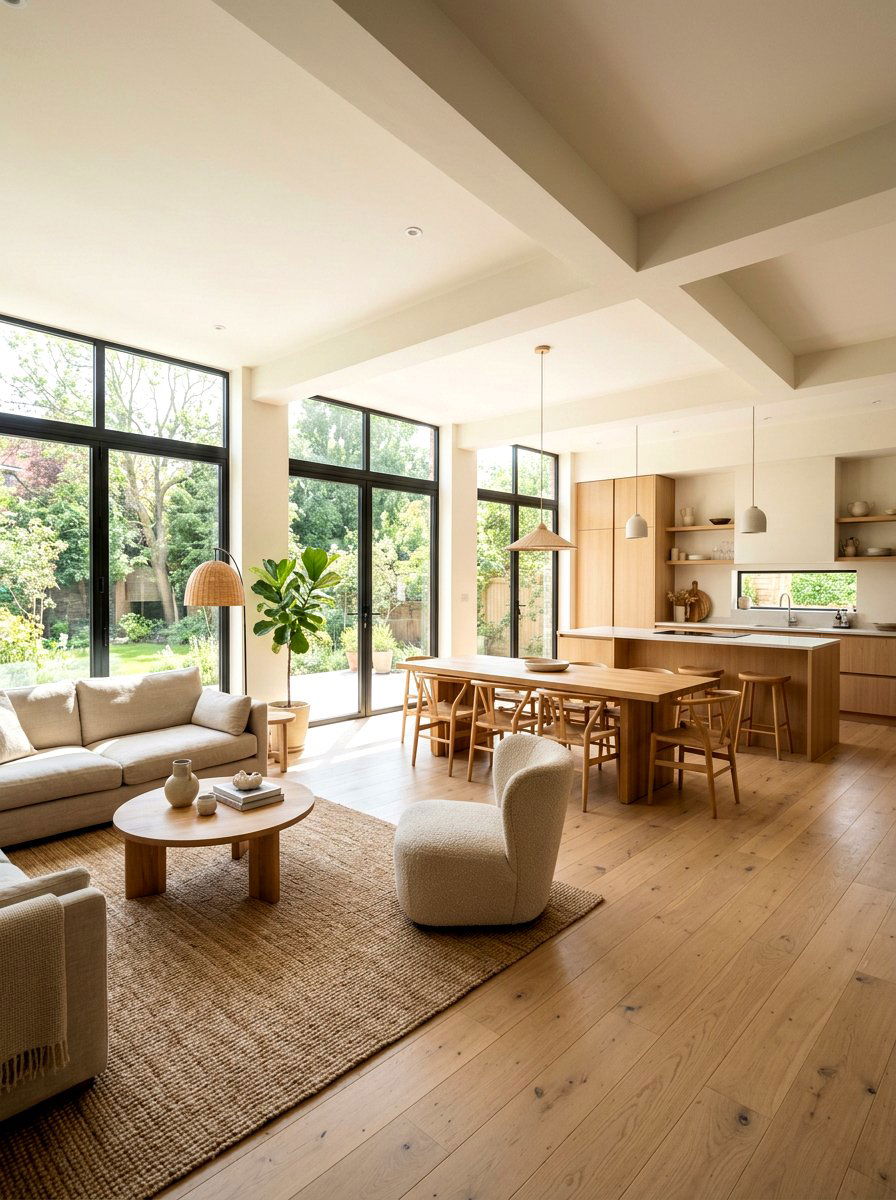
An open Japandi floor plan prioritizes flow, light, and the intentional use of space to create a harmonious home environment. Use different textures and low-profile furniture to define separate zones, such as the living and dining areas, without using heavy walls or dividers. Large windows allow natural light to penetrate deep into the home, highlighting the natural grain of the wooden floors and the soft textures of the rugs. By keeping the central areas clear of obstacles, you encourage a sense of movement and energy throughout the house. This layout feels incredibly modern and spacious, making it perfect for both quiet family life and entertaining guests in a beautiful setting.
24. Japandi fireplace
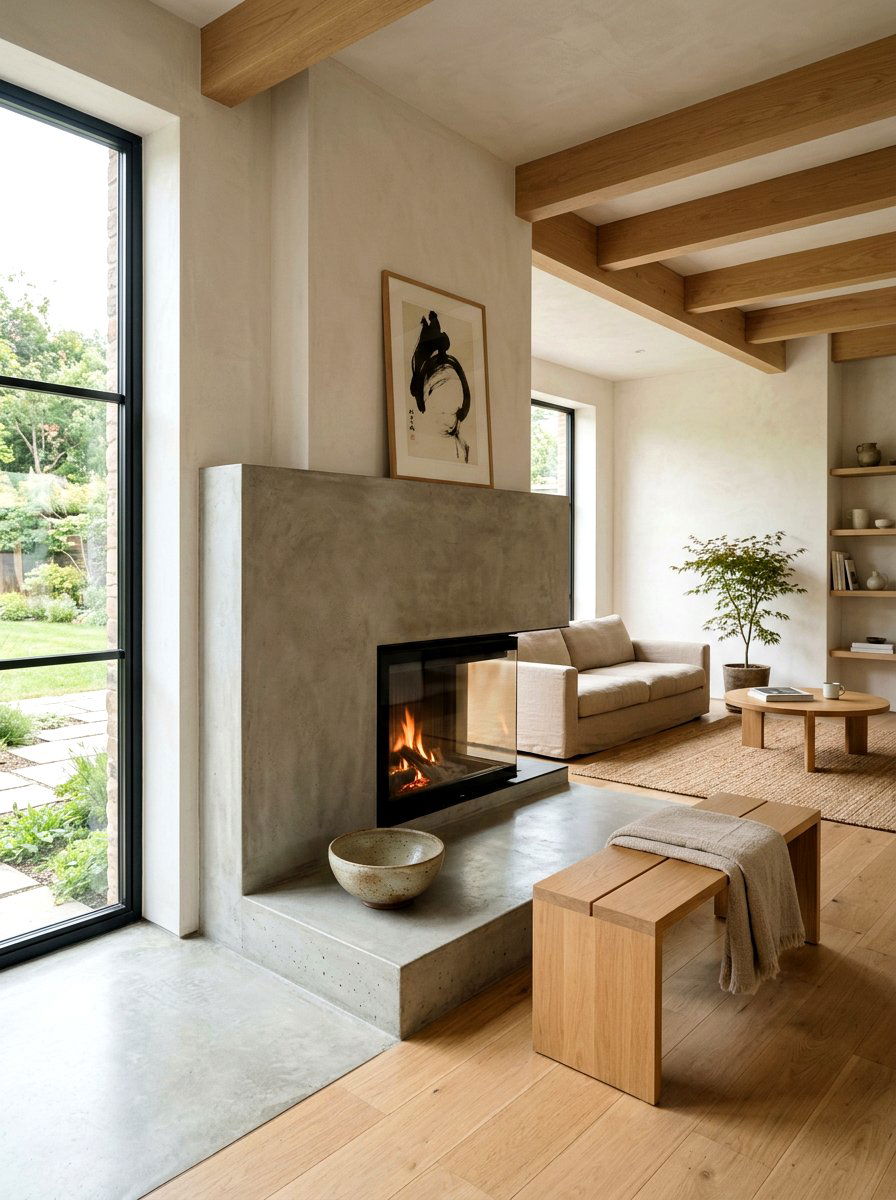
A Japandi fireplace serves as a minimalist focal point that provides both physical and visual warmth to a room. Opt for a clean, streamlined surround made from natural stone or smooth concrete to keep the design modern and understated. Avoid cluttered mantels, instead choosing to display only one or two high-quality items like a handcrafted ceramic bowl or a small piece of abstract art. The area around the fireplace should remain open, perhaps with a simple wooden bench or a stack of neatly cut logs to add a touch of rustic charm. This approach ensures the fireplace enhances the room's atmosphere without overwhelming the minimalist aesthetic or disrupting the overall sense of calm.
25. Japandi window seat
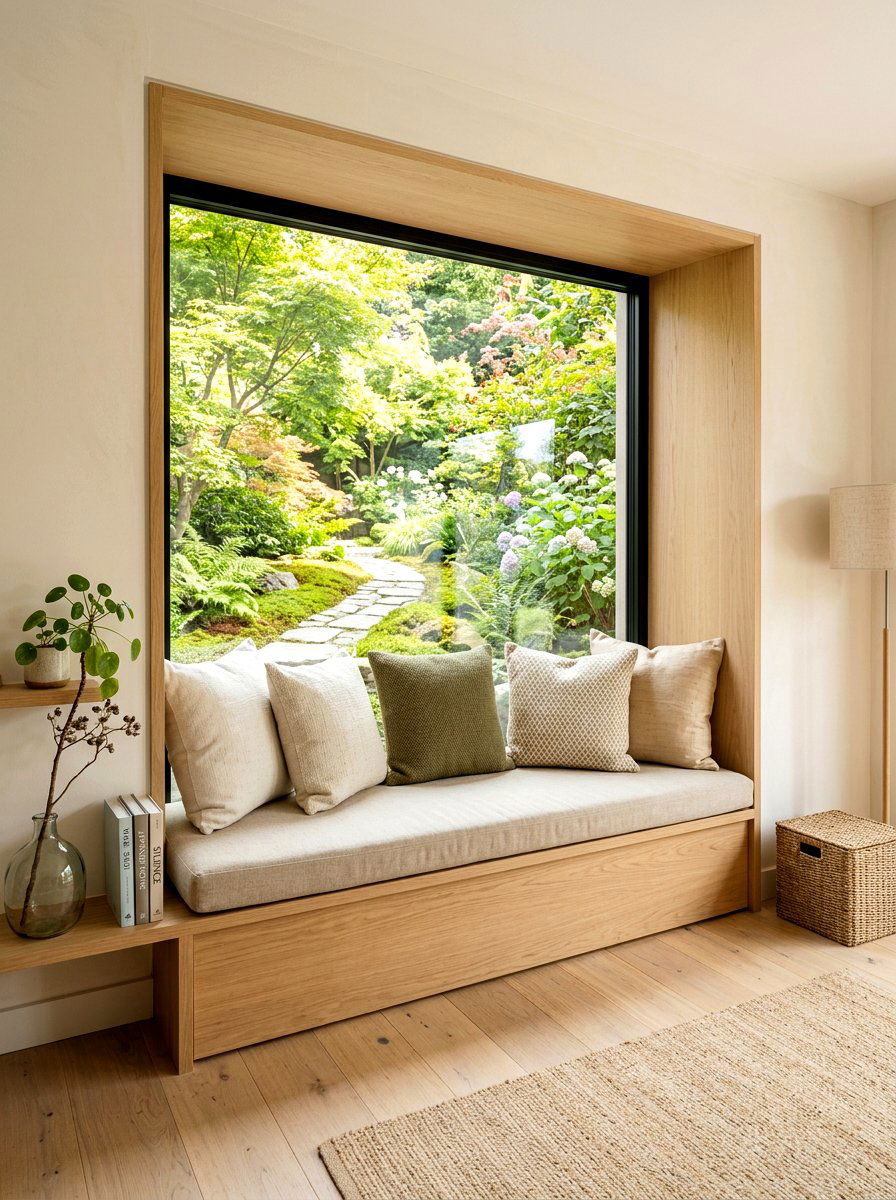
A Japandi window seat is a beautiful way to utilize architectural features while creating a cozy spot to enjoy the view. Build a simple wooden bench into a window alcove and top it with a custom-fitted cushion in a neutral, durable fabric like heavy linen. Add a few small throw pillows in muted tones to provide extra comfort and a touch of Scandinavian hygge. The space underneath the seat can be used for hidden storage, helping to keep the surrounding area free of clutter and organized. This quiet nook becomes a favorite place for morning reflection, watching the rain, or simply enjoying the natural light as it floods into your home.
26. Japandi kitchen island
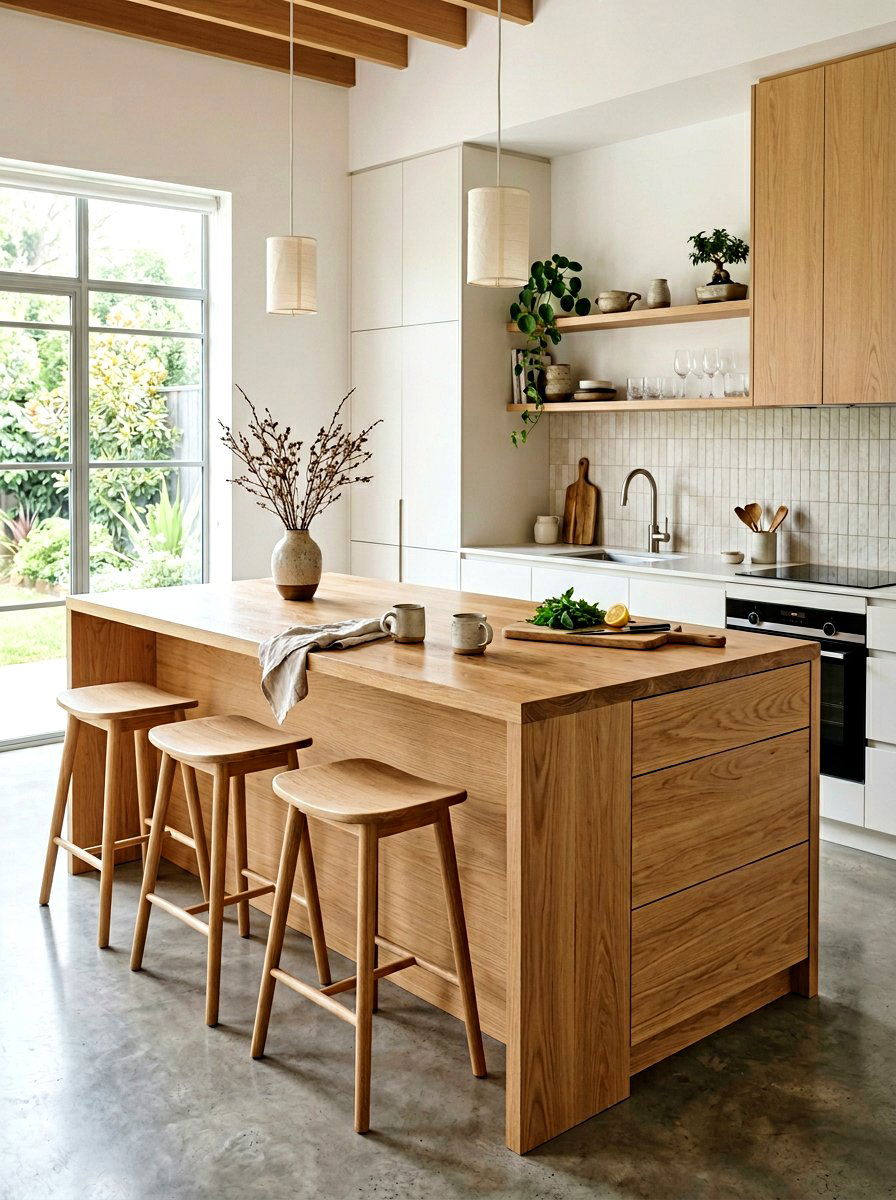
A Japandi kitchen island combines massive functionality with a sleek, minimalist aesthetic that anchors the entire cooking area. Choose a design with a thick stone or wood countertop and waterfall edges to create a solid, furniture-like appearance that feels grounded. Incorporate hidden storage and integrated appliances on one side to keep the overall look clean and uncluttered from the living area. Pair the island with a set of slim wooden stools that can be tucked away when not in use to keep the floor space clear. This large, central feature provides a practical workspace for meal prep while serving as a beautiful gathering spot for family and friends in the kitchen.
27. Japandi staircase
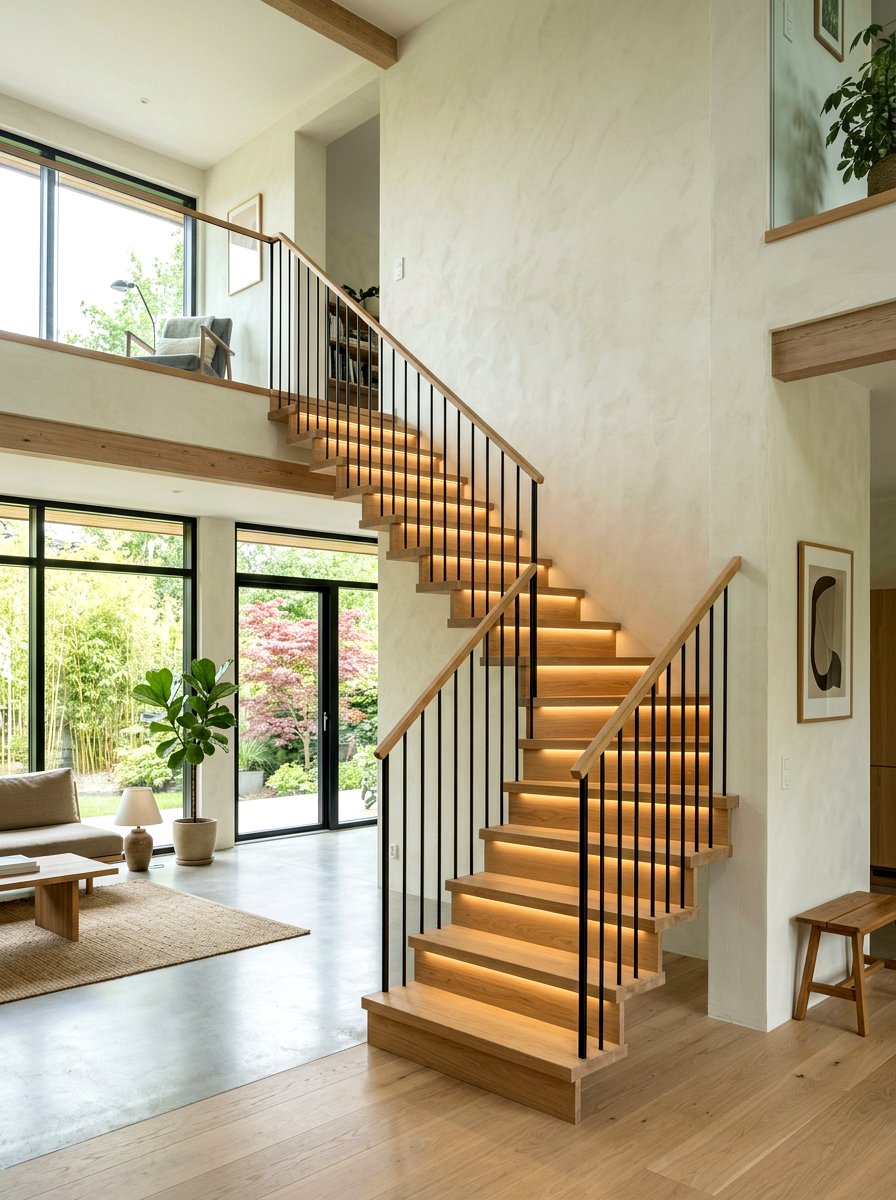
A Japandi staircase is often a work of architectural art, focusing on clean lines, natural materials, and the play of light. Use solid wood treads with a visible grain to add warmth, paired with a minimalist railing made from thin metal or glass to keep the view open. The space under the stairs should be kept clear or utilized for very discreet, built-in storage to maintain the minimalist look. Soft, recessed lighting along the steps provides safety while creating a beautiful visual effect during the evening. This design turns a functional element into a stunning focal point that enhances the overall flow and modern feel of your multi-level home interior.
28. Japandi balcony
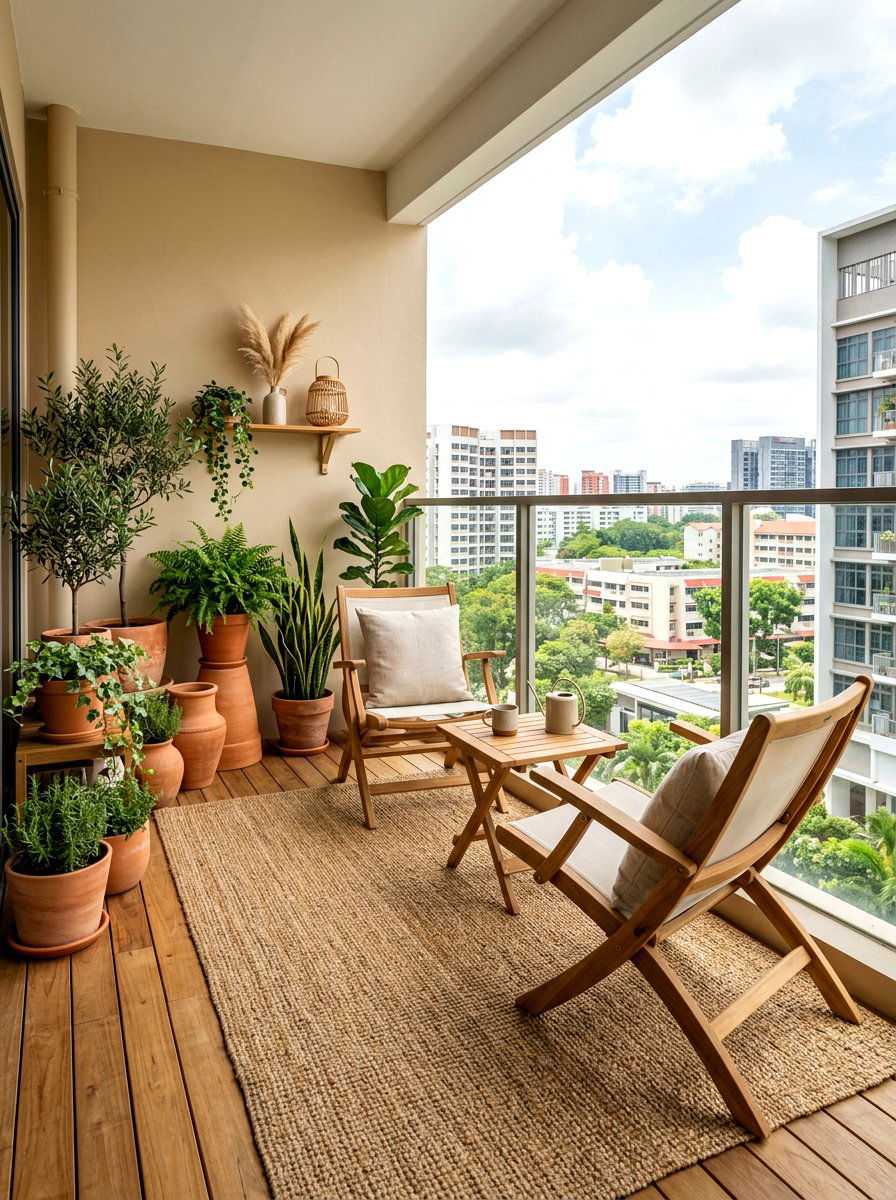
Even a small Japandi balcony can be transformed into a peaceful outdoor retreat by focusing on essential elements and natural textures. Use a few pieces of foldable wooden furniture that can be easily moved, paired with soft outdoor cushions in earthy tones for comfort. Add a collection of potted plants in varying sizes to create a mini garden that brings a touch of nature to an urban environment. A simple outdoor rug made from woven seagrass can define the space and provide a soft surface for your feet. This minimalist outdoor area offers a quiet place to breathe fresh air and enjoy a moment of peace away from the indoor world.
29. Japandi library
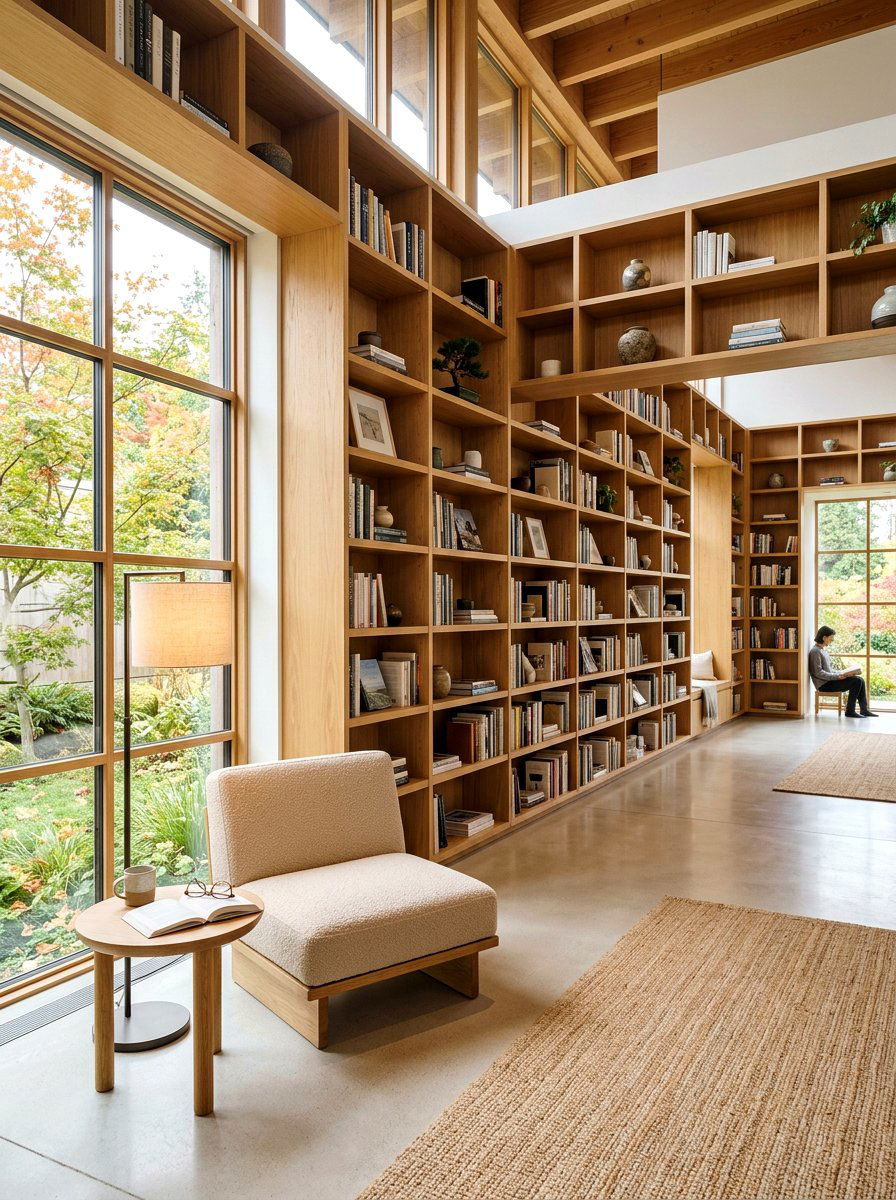
A Japandi library is a sanctuary for knowledge and reflection, where books are displayed with intentionality and care. Use wall-to-wall wooden shelving with clean lines to hold your collection, leaving some empty spaces to allow the design to breathe. Incorporate a comfortable, low-profile reading chair and a minimalist floor lamp to create a perfect spot for deep focus. The color palette should remain very neutral to ensure the books themselves provide the primary visual interest without making the room feel cluttered. This dedicated space encourages a love for reading and provides a quiet retreat where you can disconnect from technology and immerse yourself in the world of literature and ideas.
30. Japandi gym
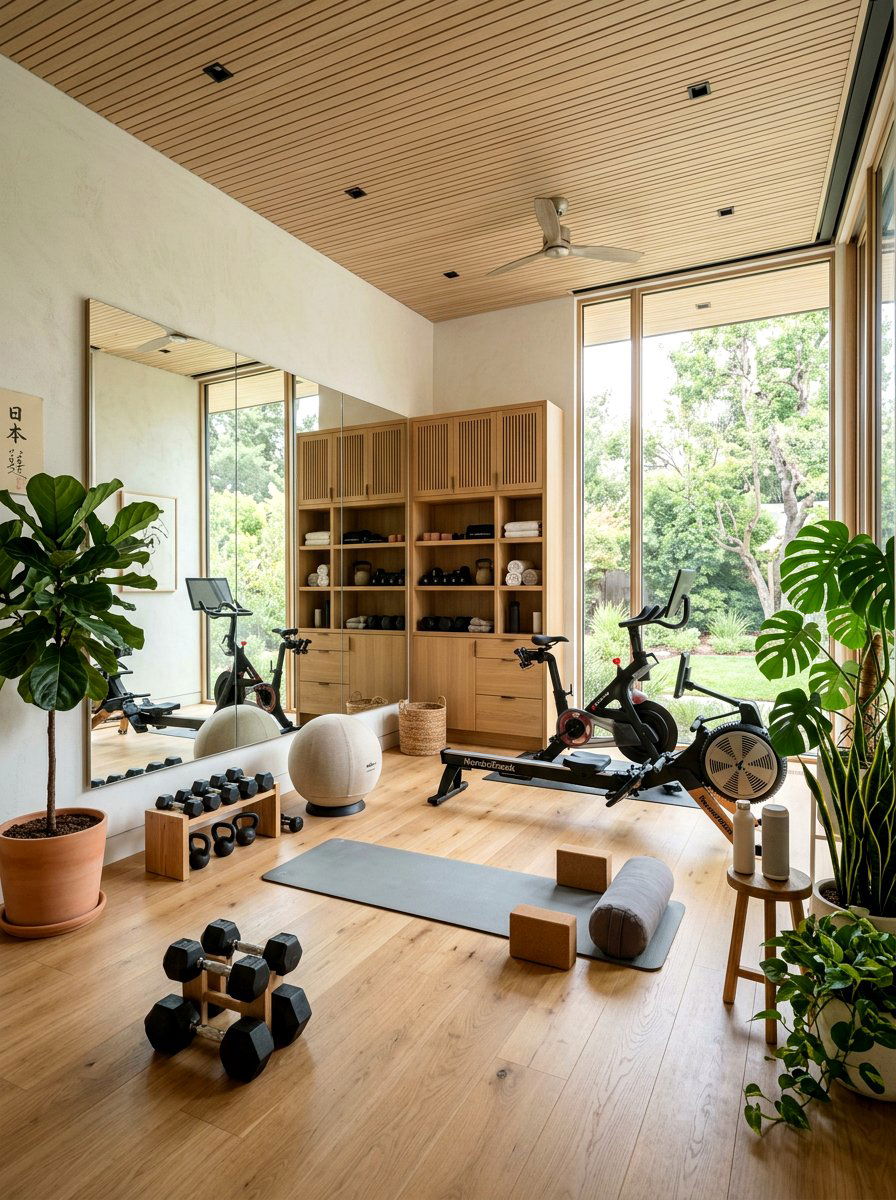
A Japandi gym proves that fitness spaces can be both functional and incredibly beautiful, promoting a holistic approach to health and wellness. Use natural wood flooring and mirrors with simple frames to create a bright, motivating environment that feels high-end and intentional. Store your equipment in custom wooden cabinets or on sleek open shelves to keep the floor area clear for movement and stretching. Incorporate a few indoor plants to improve air quality and provide a calming, biophilic connection during your workouts. By designing your gym with the same minimalist principles as the rest of your home, you create a space where exercise feels like a peaceful and rewarding part of your daily routine.
Conclusion:
The beauty of Japandi design lies in its ability to transform any home into a harmonious sanctuary that supports both your physical needs and your mental well-being. By combining the functional, cozy nature of Scandinavian style with the disciplined minimalism of Japanese tradition, you create spaces that are timeless, elegant, and deeply personal. Every intentional choice — from the natural materials to the neutral color palettes — contributes to a larger sense of peace and clarity. As you implement these ideas, remember that the goal is not perfection, but rather a curated environment that celebrates the quiet beauty of everyday life. Embrace the balance, declutter your surroundings, and enjoy the serene atmosphere of your new Japandi-inspired home.

Related posts: