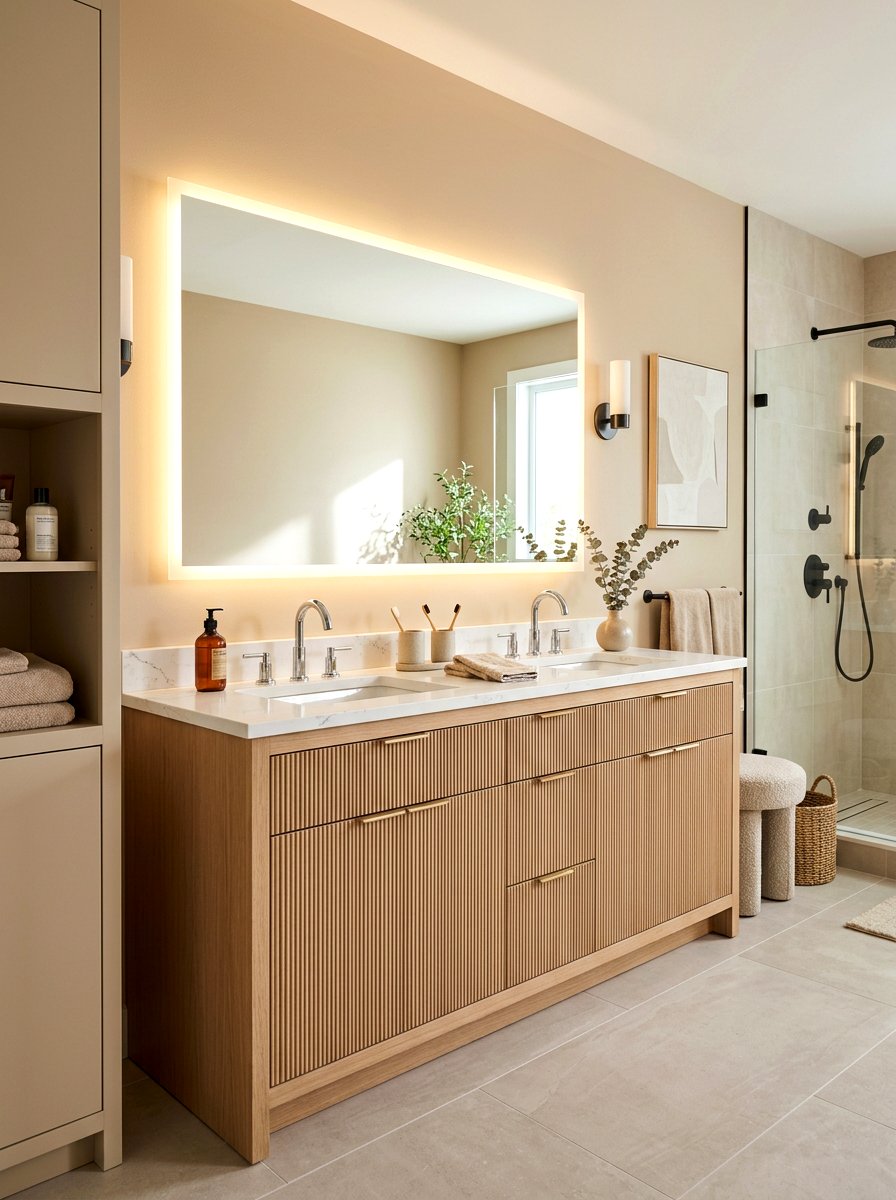
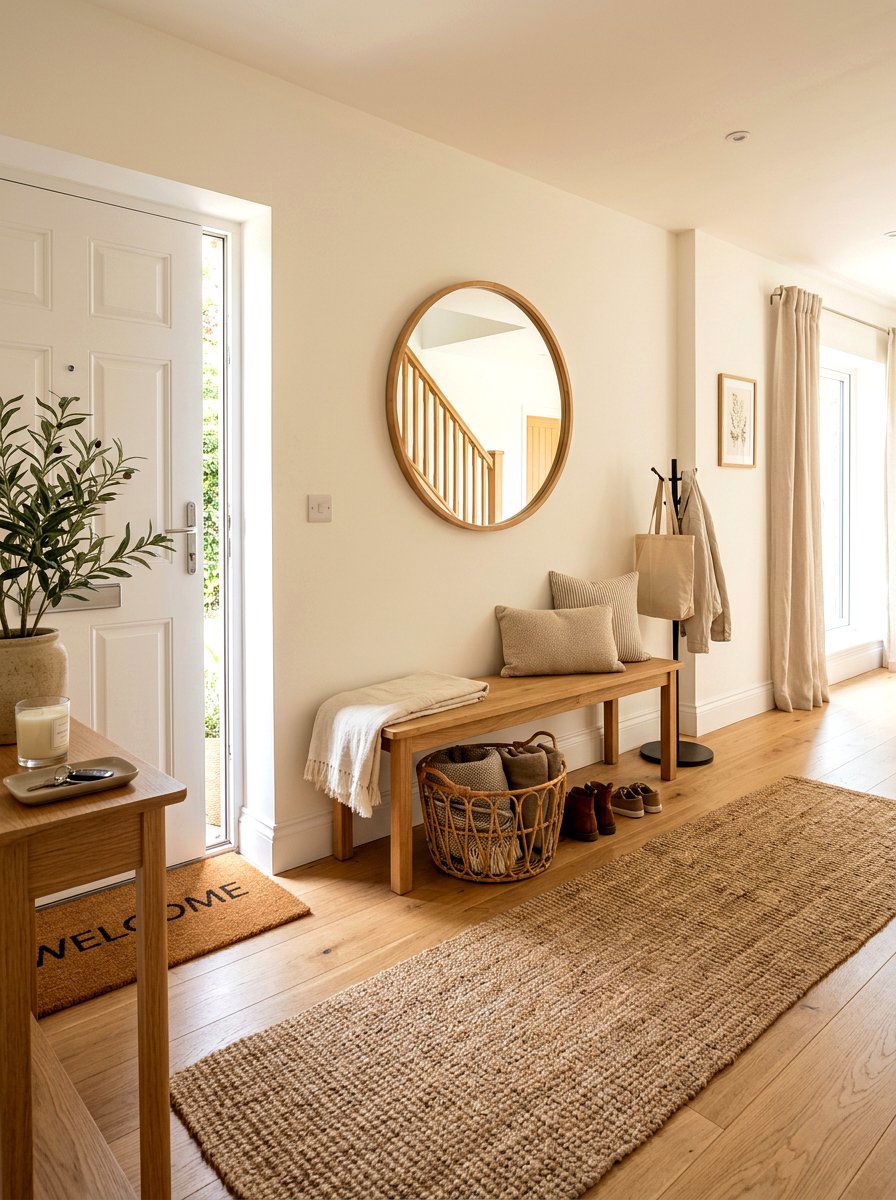
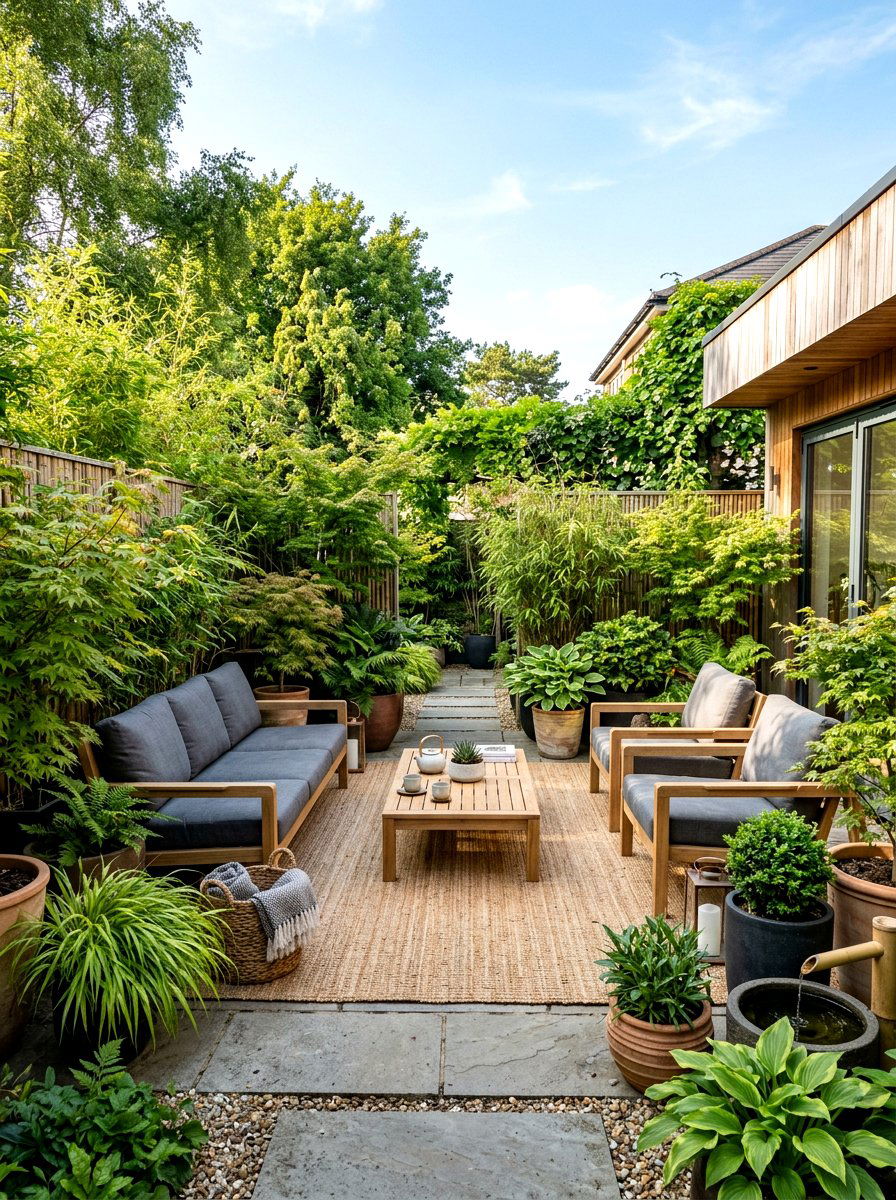
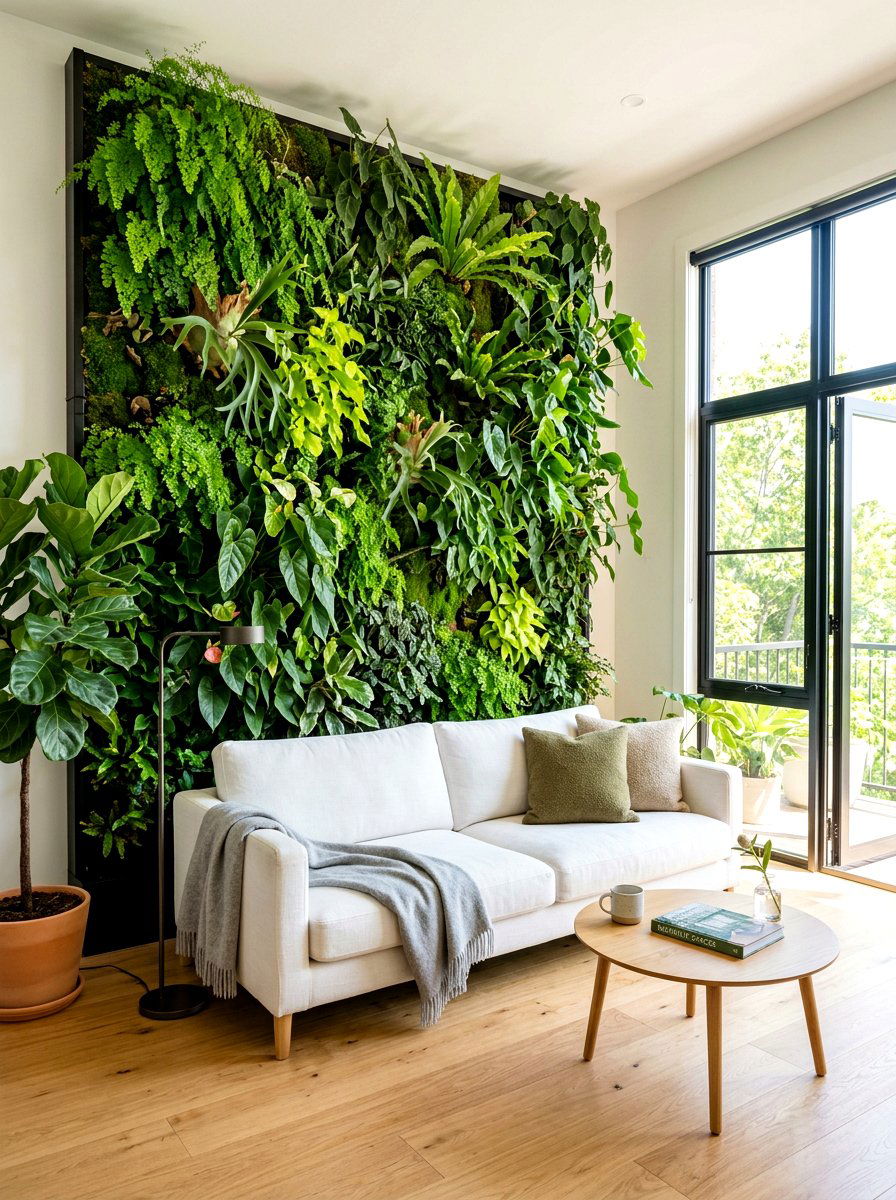
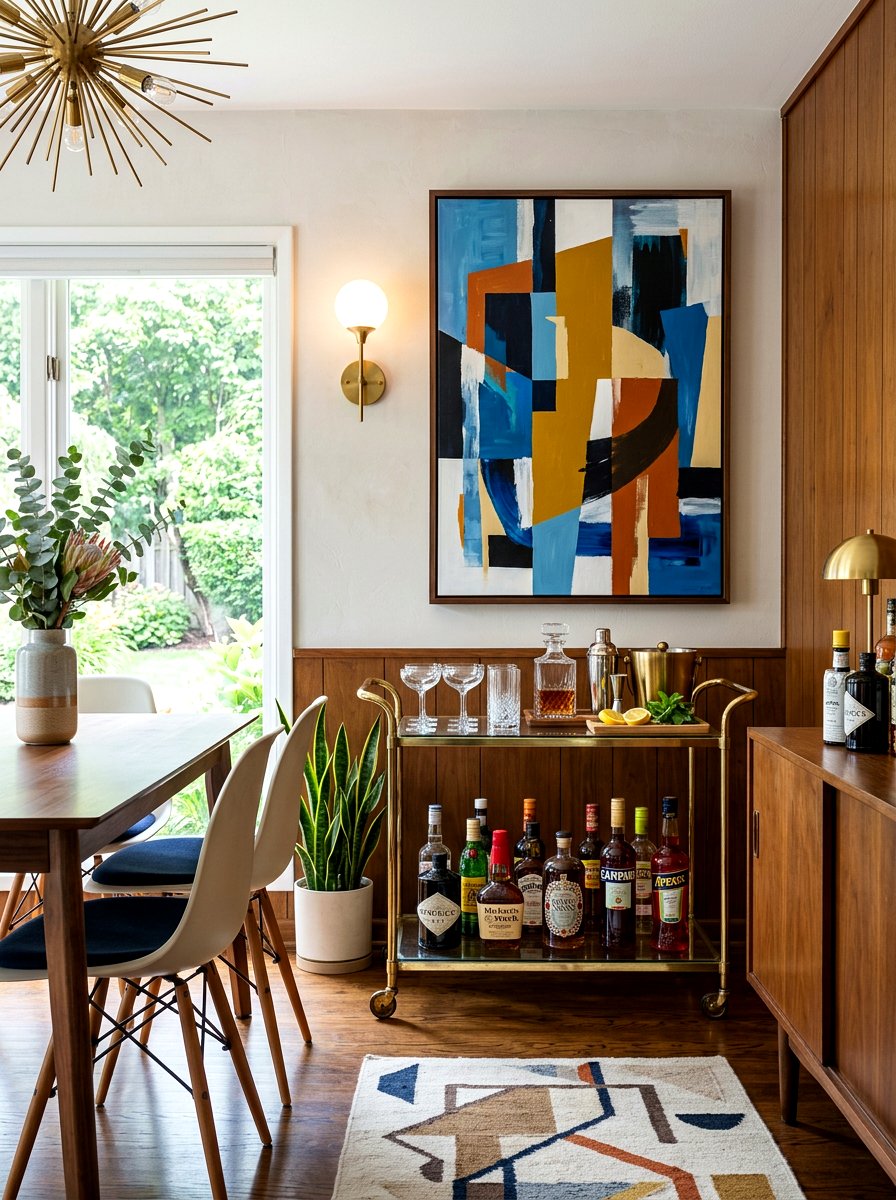
Japandi kitchen design is more than just a passing interior trend; it represents a thoughtful fusion of two distinct yet complementary worlds. By blending the functional warmth of Scandinavian hygge with the intentional minimalism of Japanese wabi-sabi, this style creates a space that feels both grounded and incredibly airy. In a modern home, the kitchen serves as the heart of daily life, making the tranquil aesthetic of Japandi an ideal choice for those seeking a sanctuary. You will find that these designs prioritize natural materials, clean lines, and a neutral color palette to foster a sense of peace. This guide explores thirty unique ways to implement this harmonious look in your own home today.
1. Minimalist wood kitchen
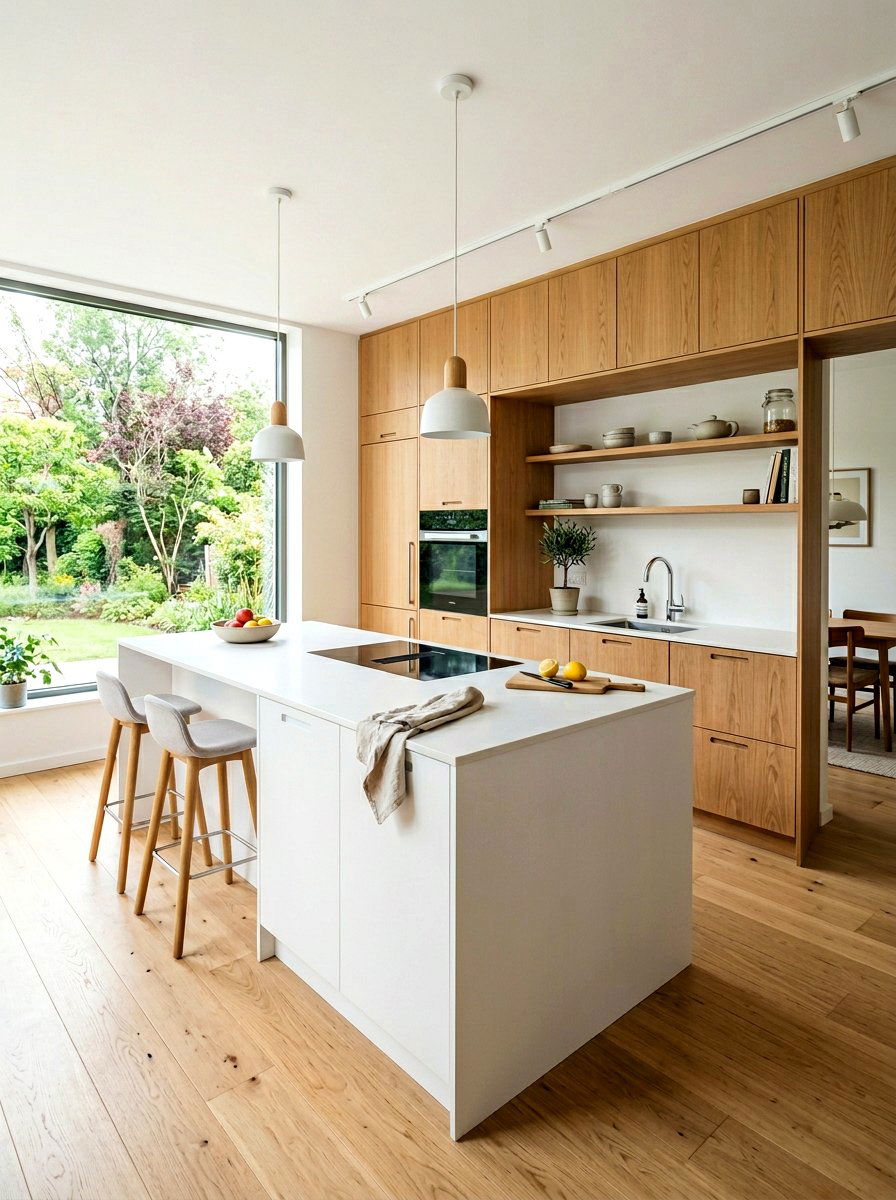
Have you ever stepped into a kitchen that immediately made you feel at ease? A minimalist wood kitchen is the cornerstone of the Japandi aesthetic because it brings raw, natural beauty into a highly functional space. To achieve this, designers often use light-colored timbers like white oak or ash for the cabinetry and flooring. The wood is typically left with a matte or oiled finish to highlight the organic grain patterns rather than masking them with heavy gloss. This design approach creates a seamless look where the furniture feels like an extension of the natural world, promoting a warm, inviting atmosphere for cooking and gathering with friends and family.
2. Natural stone kitchen
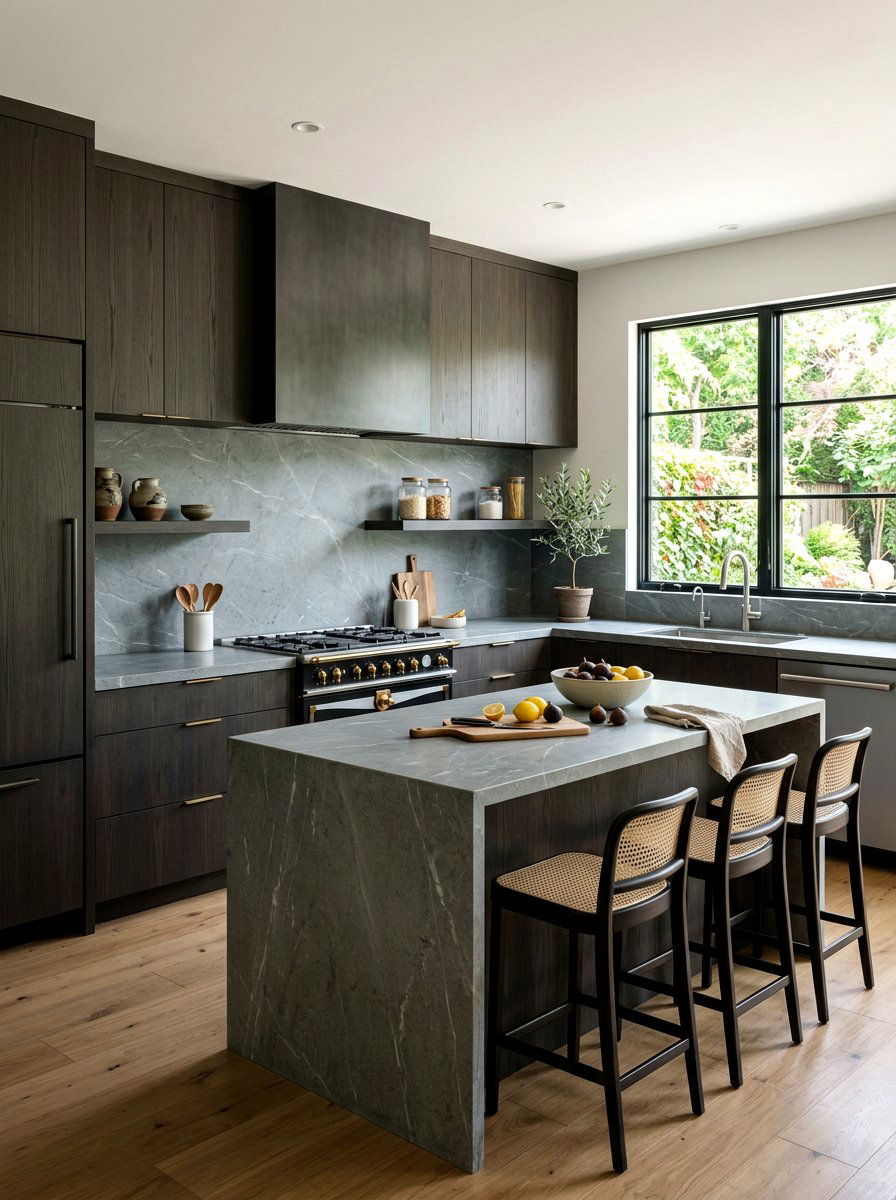
Integrating a natural stone kitchen design is a fantastic way to add a sense of permanence and luxury to your home. In Japandi interiors, stone surfaces like honed marble, soapstone, or granite provide a tactile contrast to the warmth of wooden cabinets. Instead of choosing stones with busy or dramatic veining, look for subtle patterns that mimic the quiet elegance of a riverbed. These durable surfaces anchor the room and offer a cooling element that balances the softer textures found elsewhere. When paired with simple, clean-lined cabinetry, the stone becomes a quiet focal point that emphasizes high-quality craftsmanship and timelessness without appearing overly flashy or cluttered.
3. Black hardware kitchen
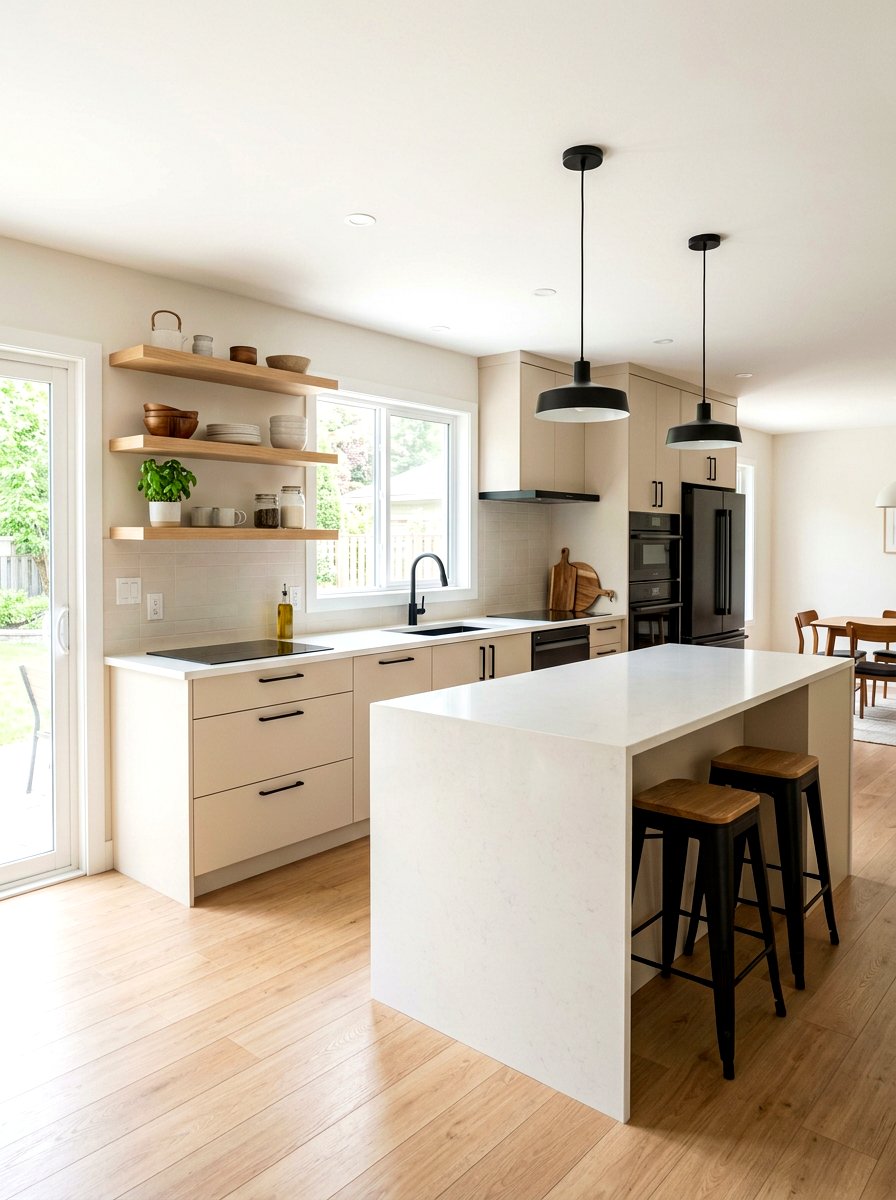
Does your kitchen need a touch of modern definition to break up a sea of neutrals? A black hardware kitchen uses dark accents to ground the airy Scandinavian and Japanese elements. Matte black handles, drawer pulls, and light fixtures act like calligraphy on a blank canvas, adding a sophisticated edge to the room. This high-contrast approach ensures that the minimalist design does not feel washed out or flat. By keeping the hardware sleek and geometric, you maintain the clean lines essential to the style. It is a simple way to introduce depth and character while staying true to the functional nature of both design philosophies.
4. Slat wood wall kitchen
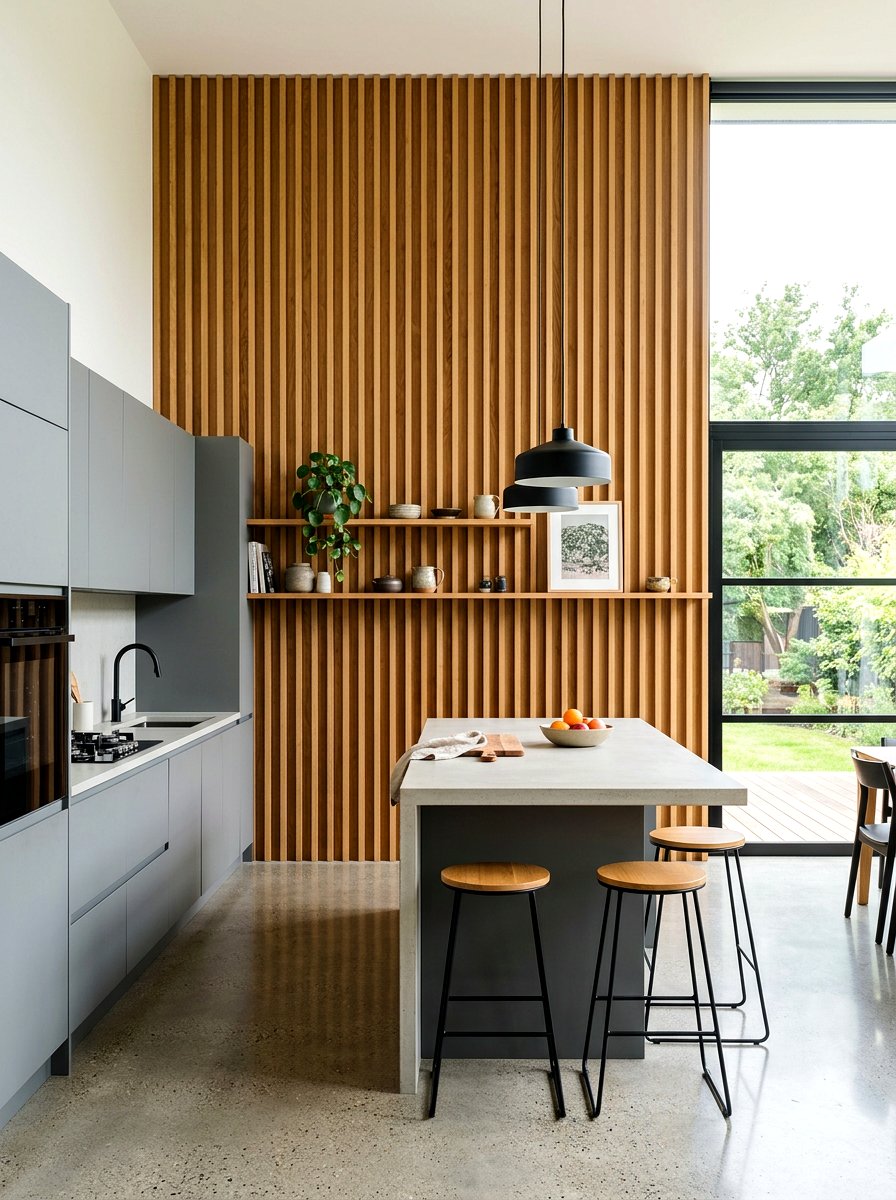
A slat wood wall kitchen adds incredible architectural interest and texture without the need for traditional decorative art. These vertical wood panels, often inspired by traditional Japanese architecture, create a sense of height and rhythm in the space. They can be used to hide storage, define a dining nook, or simply act as a warm backdrop for a kitchen island. The repetitive lines of the slats provide a visual "anchor" that feels both organized and organic. Because the gaps between the slats create subtle shadows, the wall changes appearance throughout the day as natural light moves across the room, enhancing the overall sensory experience.
5. Neutral palette kitchen
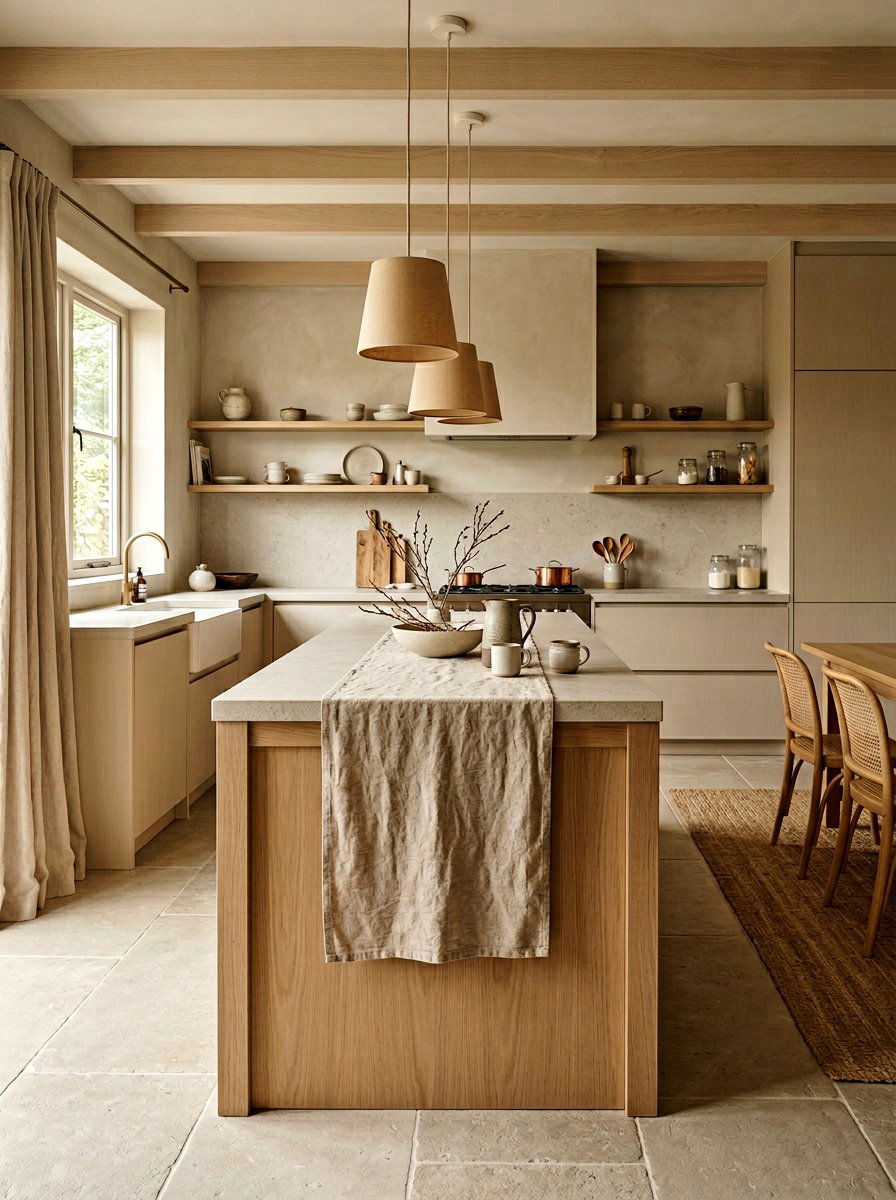
Choosing a neutral palette kitchen is the most effective way to create a bright, spacious, and calming environment. Instead of relying on stark white, Japandi designs utilize warmer tones like oatmeal, sand, and soft greige to prevent the space from feeling clinical. This layered approach to neutrals creates a cozy atmosphere that reflects light beautifully during the day. By keeping the walls and large surfaces in similar tones, the eye is allowed to rest, making the kitchen feel much larger than it actually is. It also provides a versatile foundation that allows the natural textures of wood and stone to truly stand out.
6. Open shelving kitchen
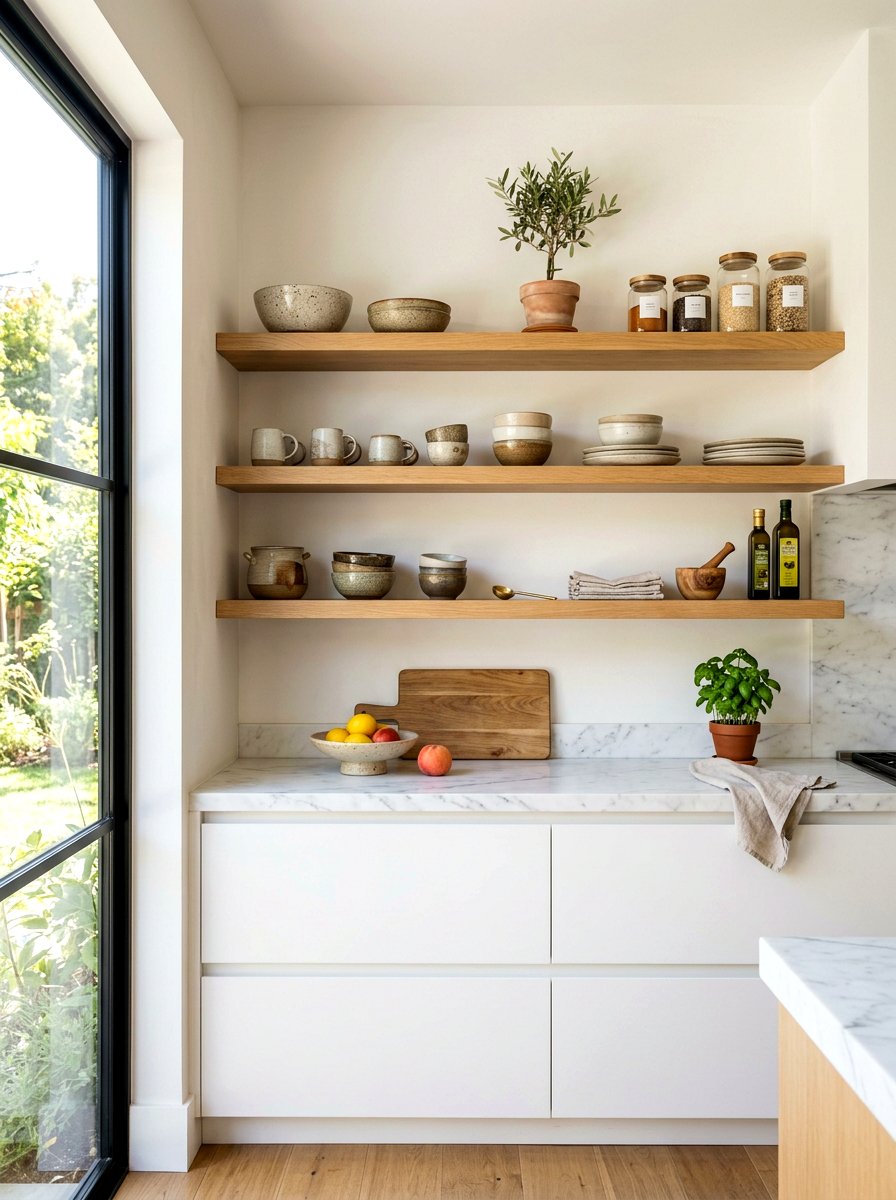
An open shelving kitchen encourages a more mindful and intentional way of living by displaying only what you truly use and love. This Scandinavian-inspired feature keeps the upper walls from feeling heavy or enclosed, making the entire room appear more open. In a Japandi setting, these shelves are often crafted from thick timber or simple metal and used to hold artisanal ceramics, wooden bowls, and glass jars. The key is to avoid overcrowding the space; leaving plenty of "negative space" between items creates a gallery-like feel. This design choice turns everyday kitchenware into a curated display that reflects your personal style and functional needs.
7. Large island kitchen
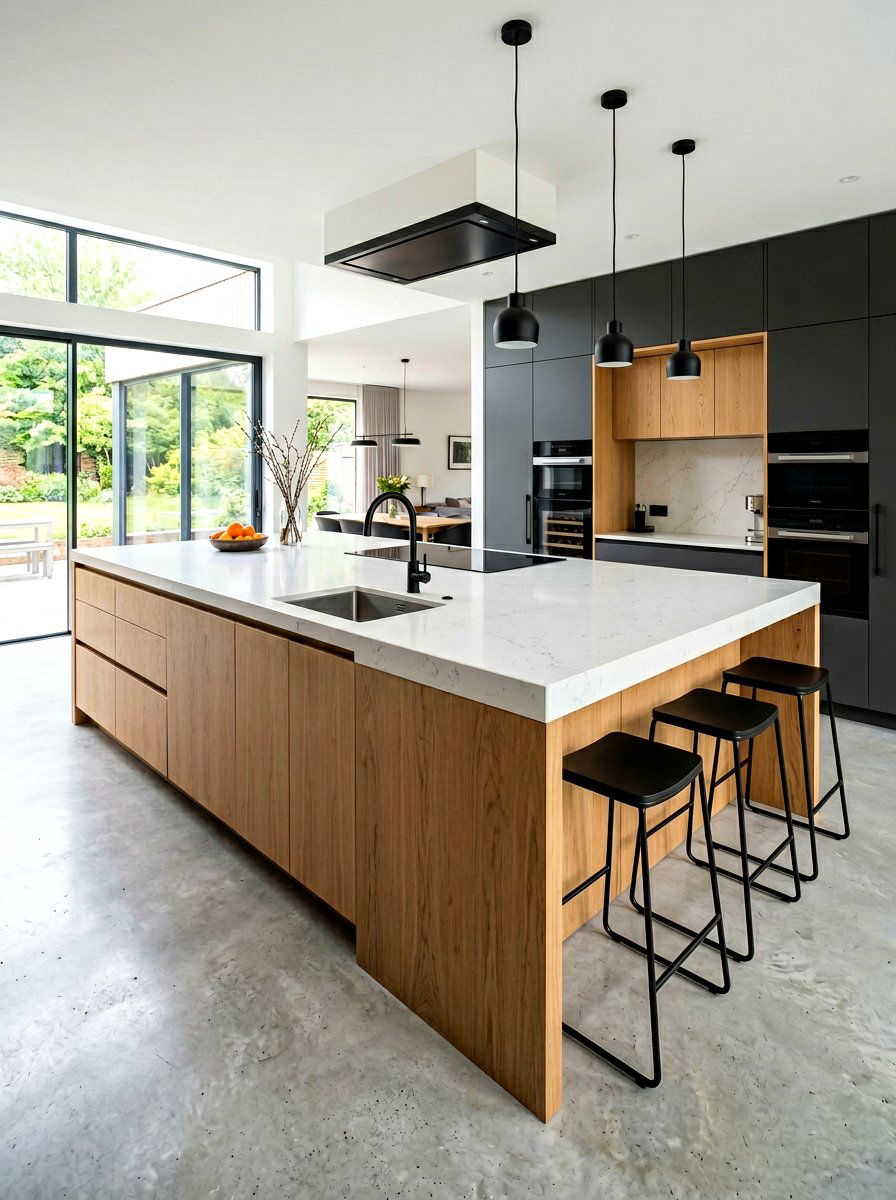
A large island kitchen serves as the ultimate multifunctional hub, providing a dedicated space for food preparation, dining, and socializing. In Japandi design, the island is often treated as a monolithic piece of furniture with clean, unadorned sides. Whether topped with thick butcher block or a matte stone slab, it becomes the anchor of the room. By incorporating hidden storage on all sides and integrated seating, you keep the rest of the kitchen uncluttered and free of unnecessary furniture. This layout promotes a natural flow of movement, allowing the chef to remain part of the conversation while maintaining a tidy, efficient workspace.
8. Wabi sabi kitchen
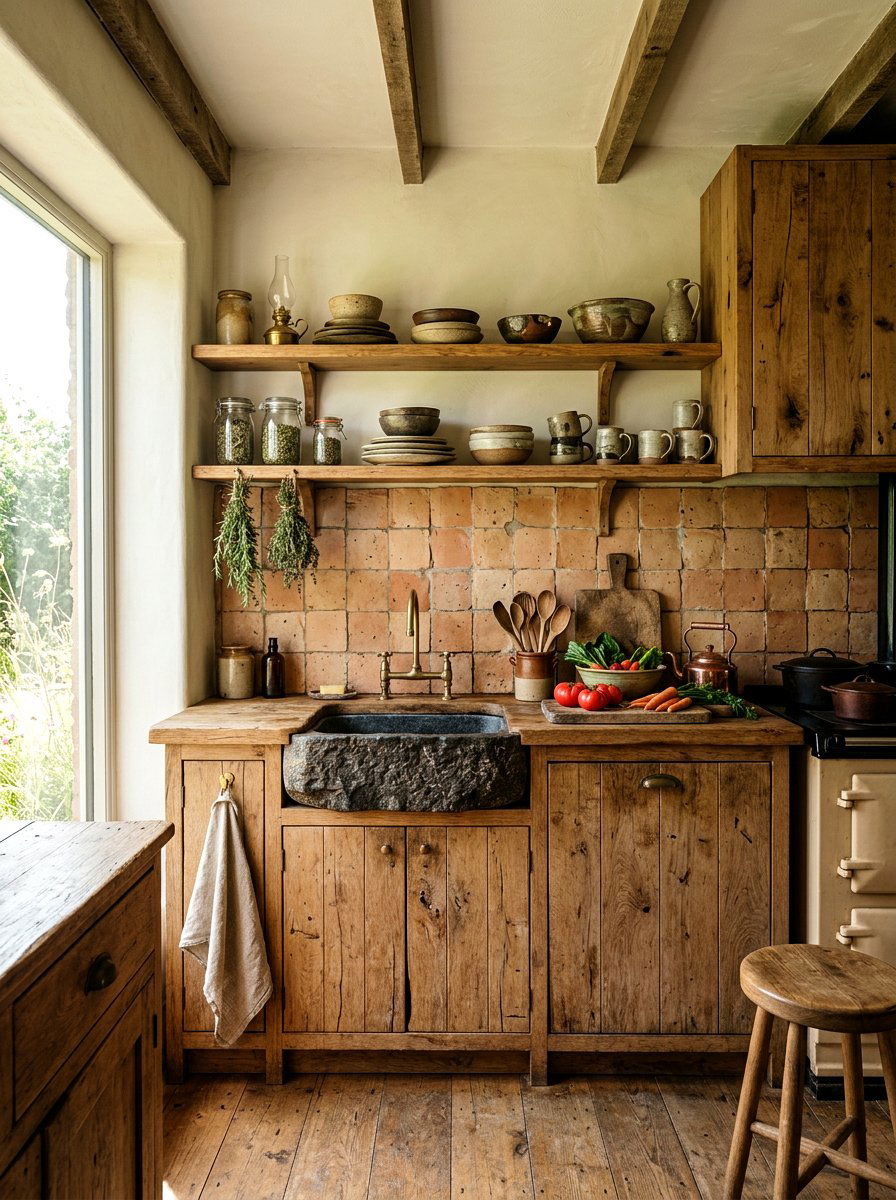
The philosophy of a wabi sabi kitchen is to embrace imperfection and the natural aging process of materials. Instead of seeking a "perfect" look, this design style celebrates the patina on a copper sink, the visible knots in a wood table, or the slight irregularities in handmade clay tiles. This approach creates a homey, lived-in feel that is deeply comforting and authentic. By choosing materials that age gracefully, you create a kitchen that feels timeless rather than dated. It encourages a shift away from mass-produced items toward unique, artisanal pieces that tell a story, making the space feel uniquely yours and full of soul.
9. Matte black kitchen
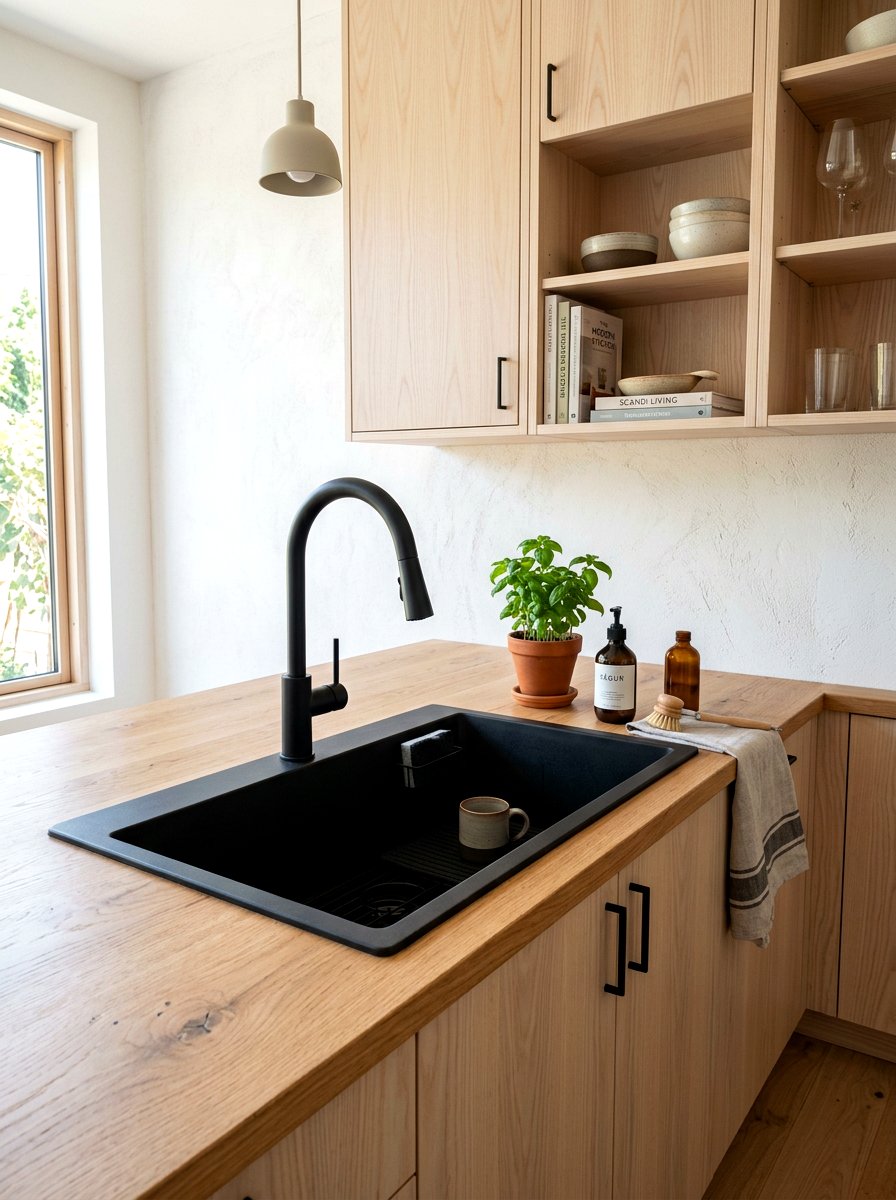
A matte black kitchen faucet or sink can instantly elevate a minimalist design by adding a sharp, contemporary focus. This design choice is particularly effective in Japandi spaces because the non-reflective finish feels softer and more organic than shiny chrome or polished steel. It pairs beautifully with natural wood cabinets, providing a modern contrast that feels intentional and high-end. When used consistently across fixtures, black elements help to unify the room's design language. This subtle use of dark tones adds a layer of sophistication that prevents a neutral kitchen from feeling too monotonous, ensuring that the final result remains visually engaging.
10. Light oak kitchen
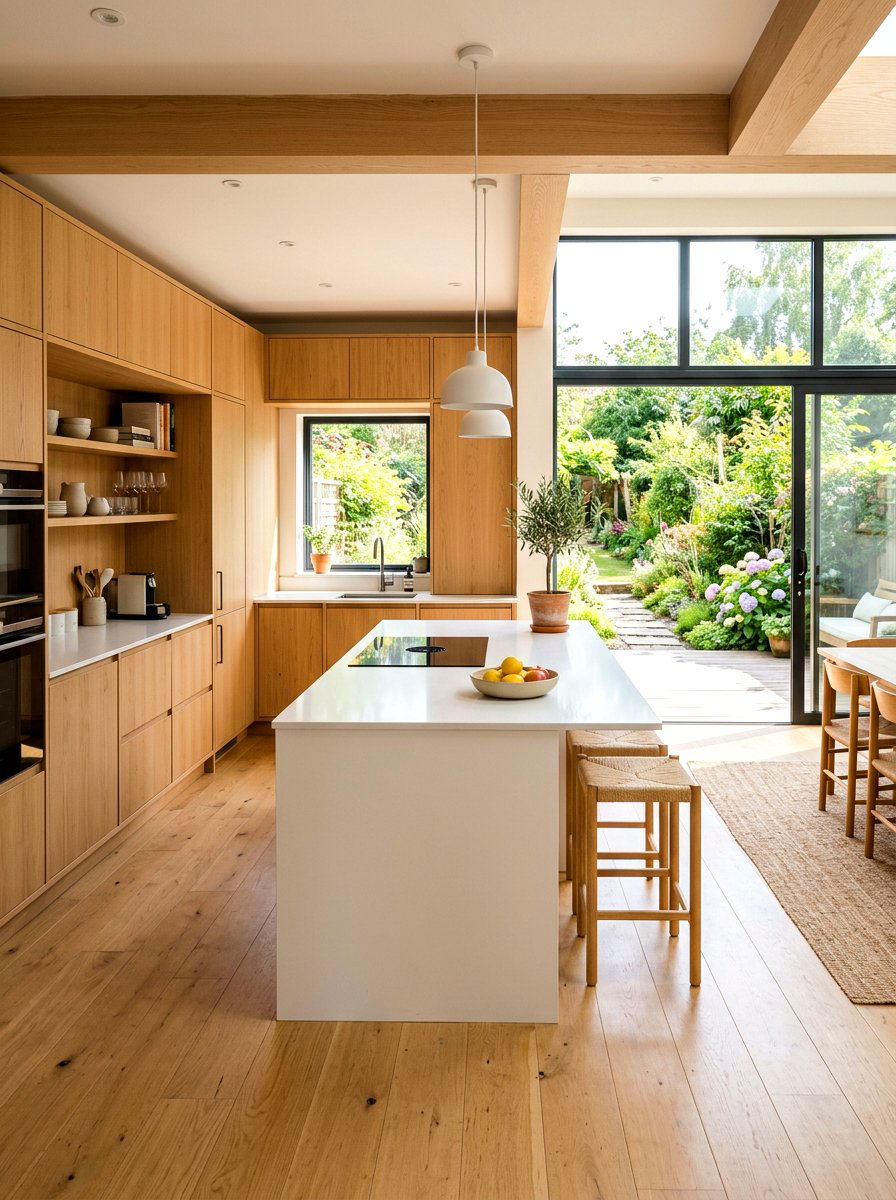
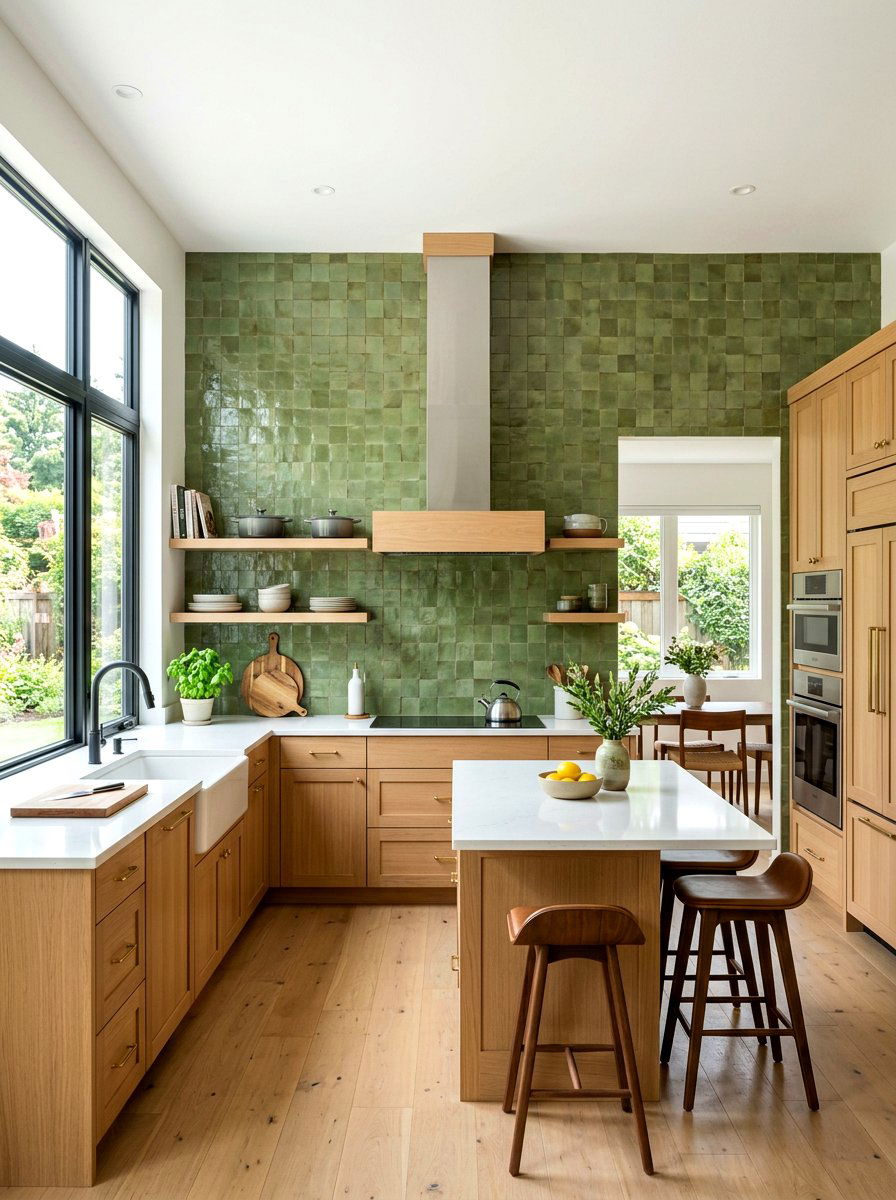
The warmth of a light oak kitchen is perhaps the most recognizable feature of the Scandinavian influence within the Japandi fusion. White oak is favored for its durability and its beautiful, fine grain that adds subtle texture without being overwhelming. When used for both the cabinetry and the kitchen flooring, it creates a seamless, wrap-around effect that feels incredibly cozy and bright. This light wood reflects natural sunlight, making even small kitchens feel airy and expansive. By pairing oak with white countertops and simple hardware, you create a timeless look that feels fresh, modern, and deeply connected to the natural world.
11. Bamboo light kitchen
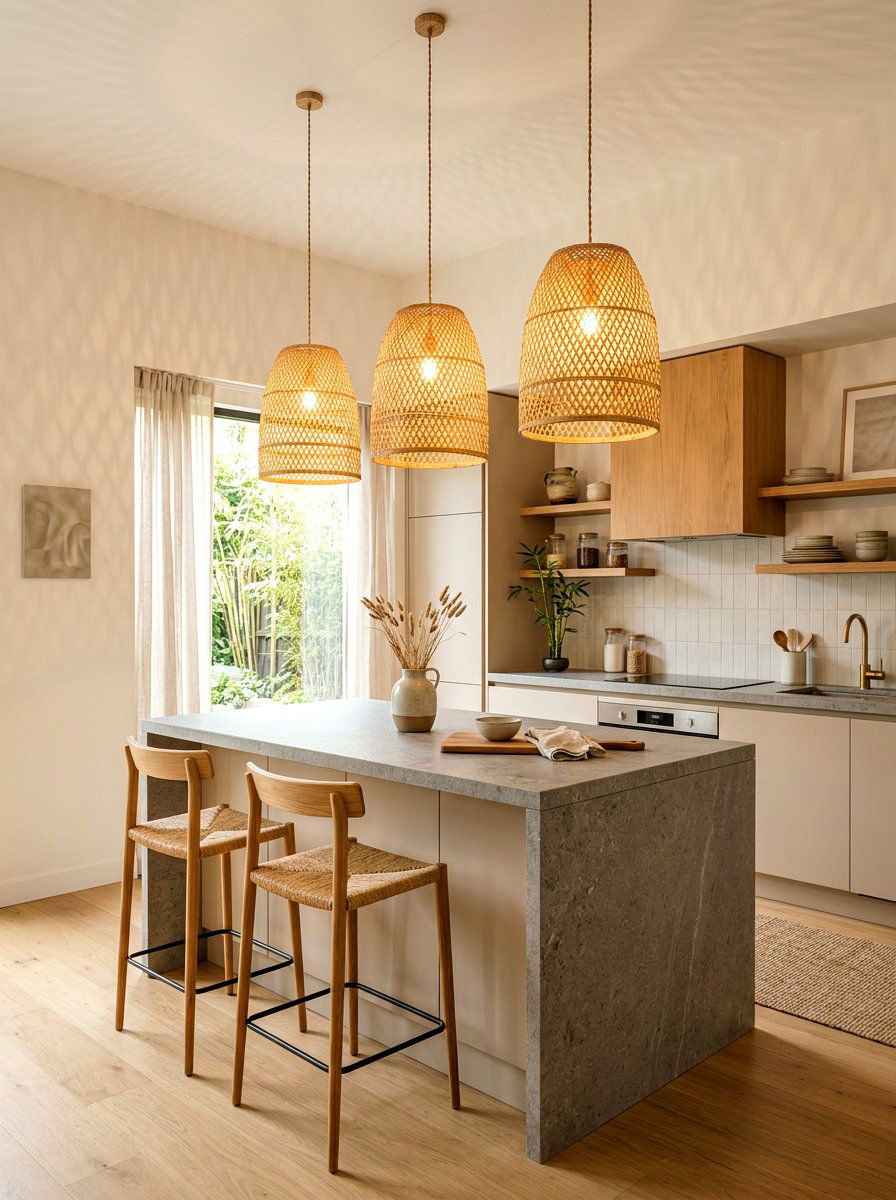
Installing a bamboo light kitchen fixture is an excellent way to introduce an organic, artisanal element into the room. These woven pendant lights are a staple of Japanese design, casting beautiful, diffused shadows across the kitchen when lit. Because they are made from natural fibers, they add warmth and a soft texture that contrasts perfectly with the hard surfaces of countertops and appliances. Placing a large bamboo lantern over a dining table or kitchen island creates a stunning focal point that draws the eye upward. This simple addition brings a sense of handcrafted elegance and "zen" tranquility to the modern home environment.
12. Integrated appliance kitchen
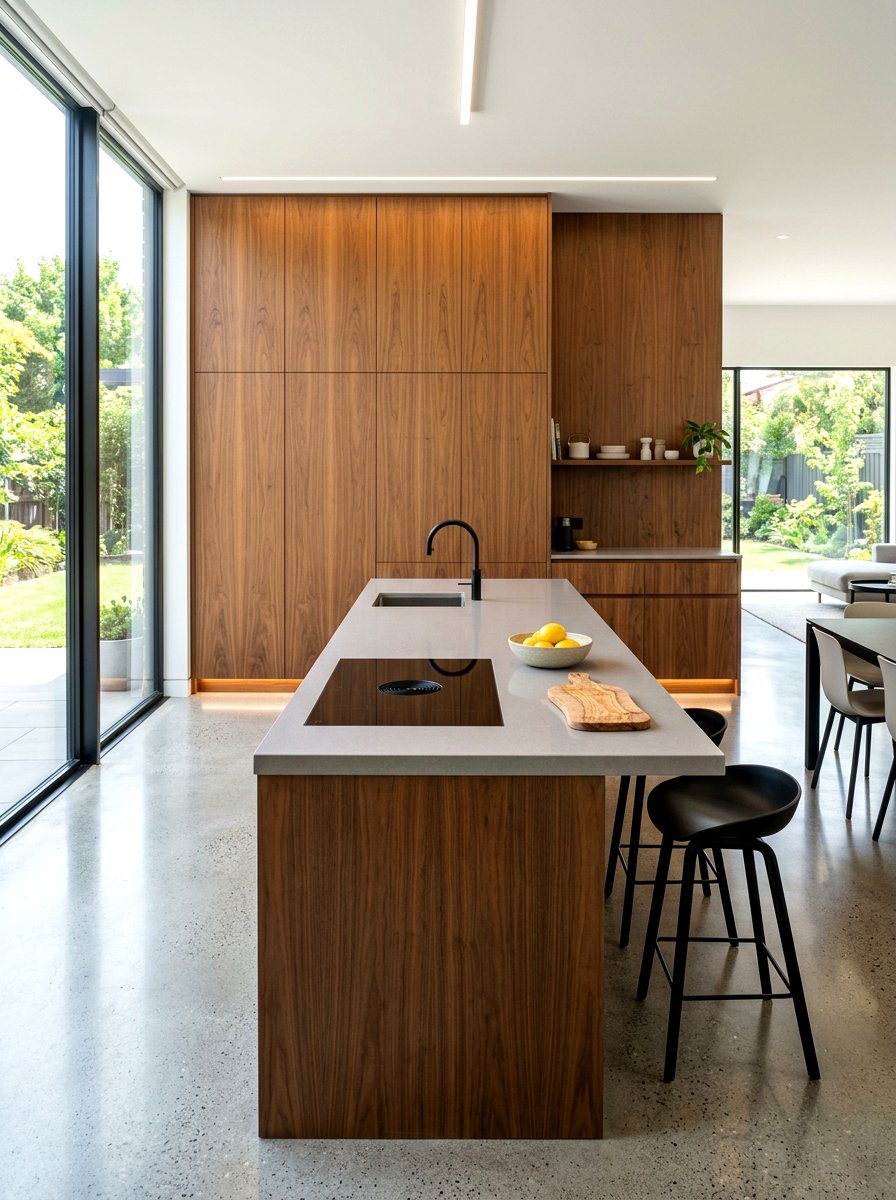
An integrated appliance kitchen is essential for achieving the ultra-clean, streamlined look that defines Japandi style. By hiding dishwashers, refrigerators, and ovens behind custom cabinetry panels that match the rest of the kitchen, you eliminate the visual clutter of bulky stainless steel. This creates a continuous flow of material across the walls, making the kitchen feel more like a living space than a utility room. Integrated designs emphasize the architectural lines of the cabinetry rather than the industrial look of the machines. This level of minimalism ensures that the focus remains on the beautiful textures and natural materials chosen for the space.
13. Concrete backsplash texture
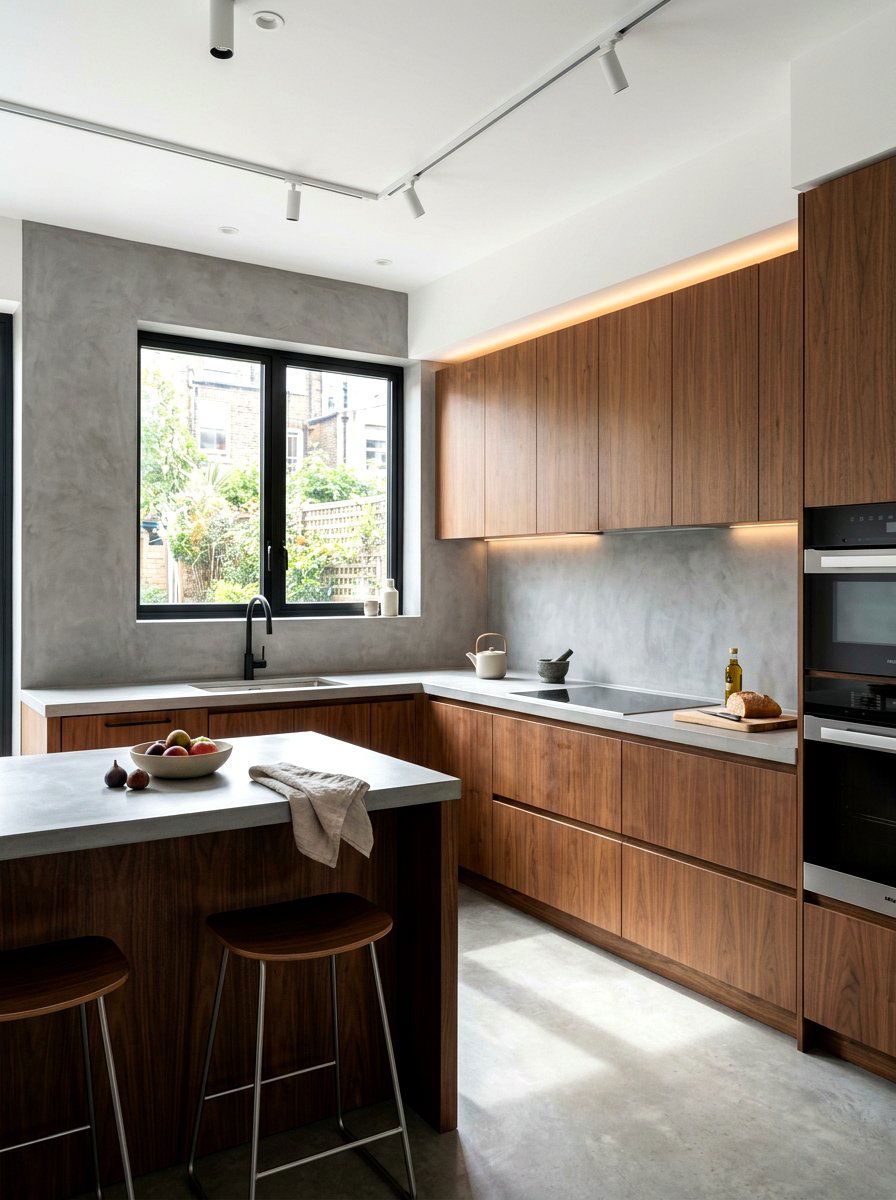
Adding a concrete backsplash texture provides a modern, industrial edge that balances the softness of wood in a Japandi kitchen. Concrete offers a matte, slightly variegated surface that mimics the look of natural stone but with a more contemporary feel. It is highly durable and easy to maintain, making it a practical choice for high-use areas. Whether you choose large poured panels or micro-cement finishes, the subtle grey tones pair exceptionally well with light oak or dark walnut cabinets. This material choice adds a touch of "urban zen" to the home, creating a grounded and sophisticated atmosphere that feels incredibly current.
14. Organic shape kitchen
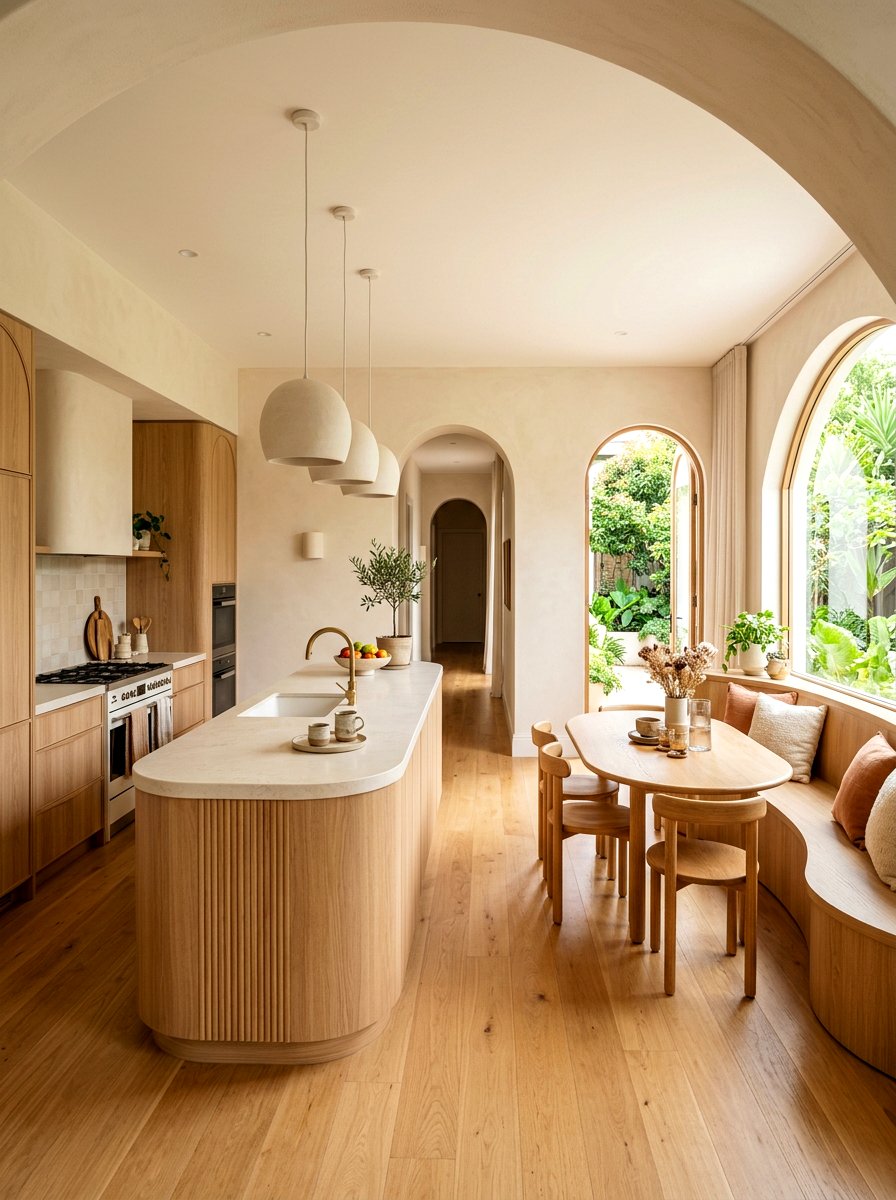
Incorporating an organic shape kitchen design involves moving away from sharp, rigid corners and embracing softer, curved silhouettes. This might mean a kitchen island with rounded ends, arched doorways, or dining chairs with curved wooden backs. These fluid lines mimic the shapes found in nature, making the kitchen feel more inviting and less structured. Soft edges are also more ergonomically friendly, improving the flow of traffic in busy spaces. By introducing these gentle forms, you soften the overall look of the room, creating a harmonious balance between the straight lines of the cabinetry and the natural movement of life.
15. Indoor plant kitchen
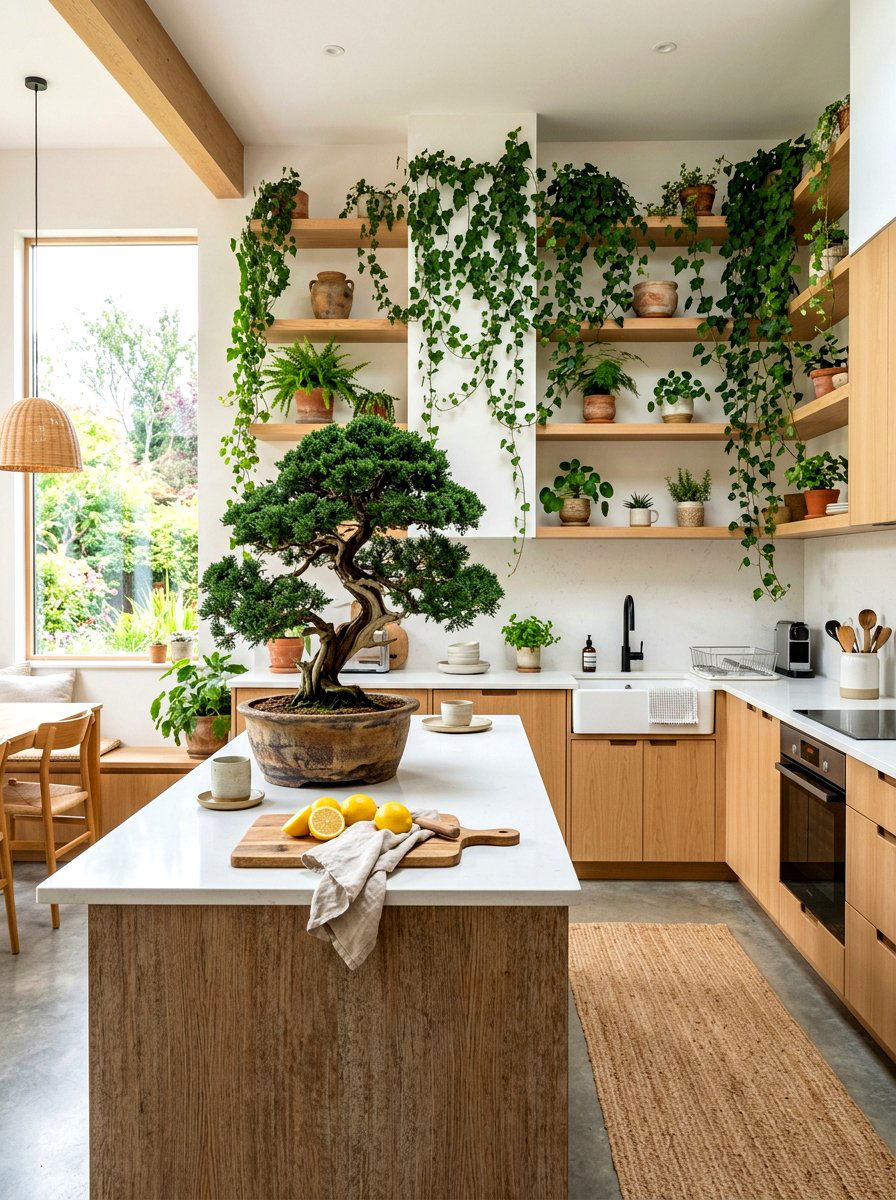
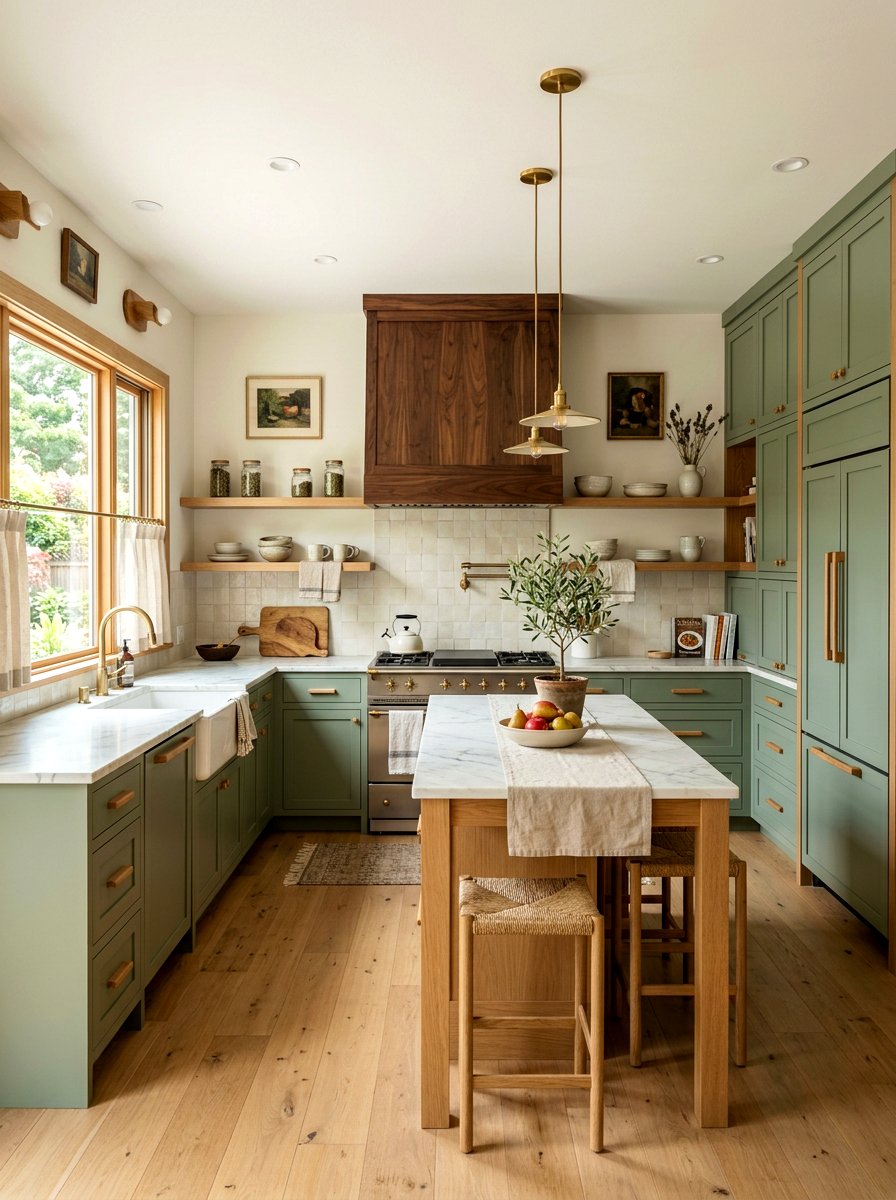
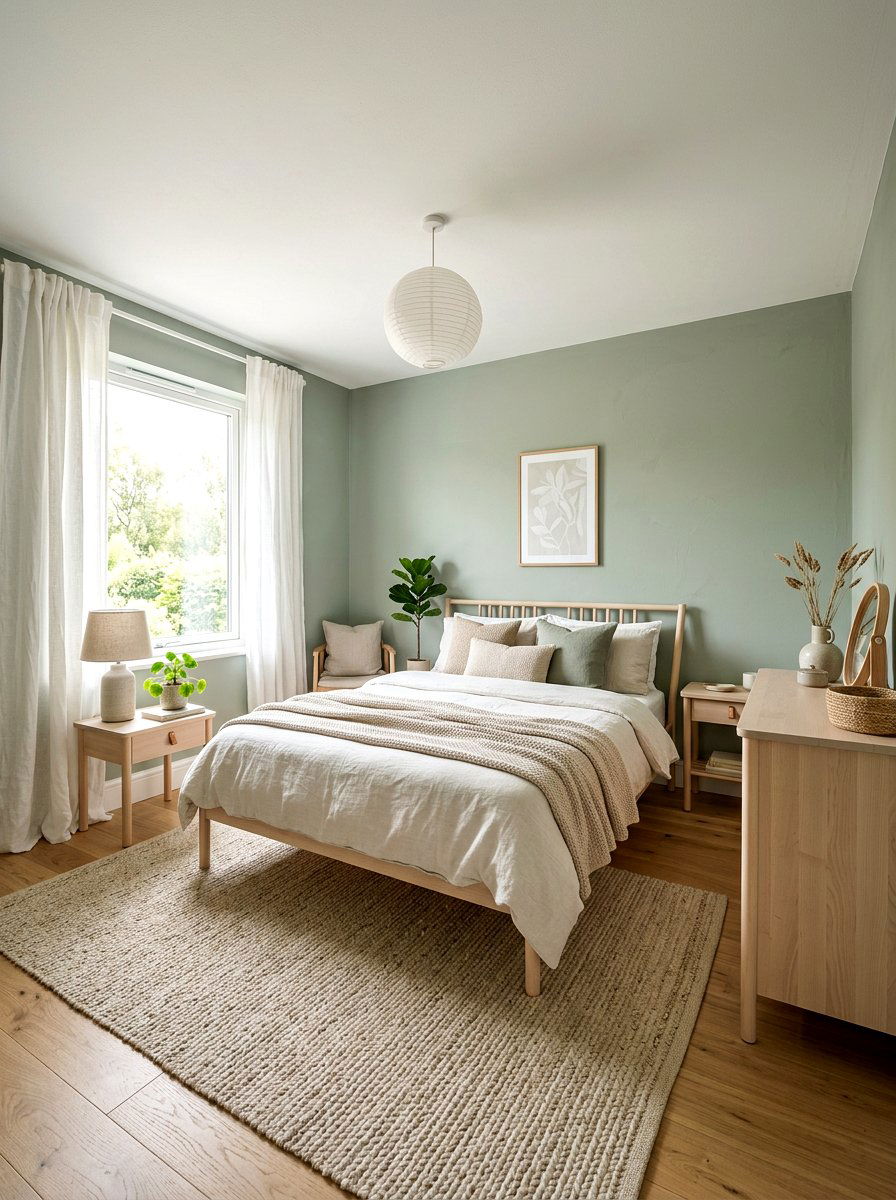
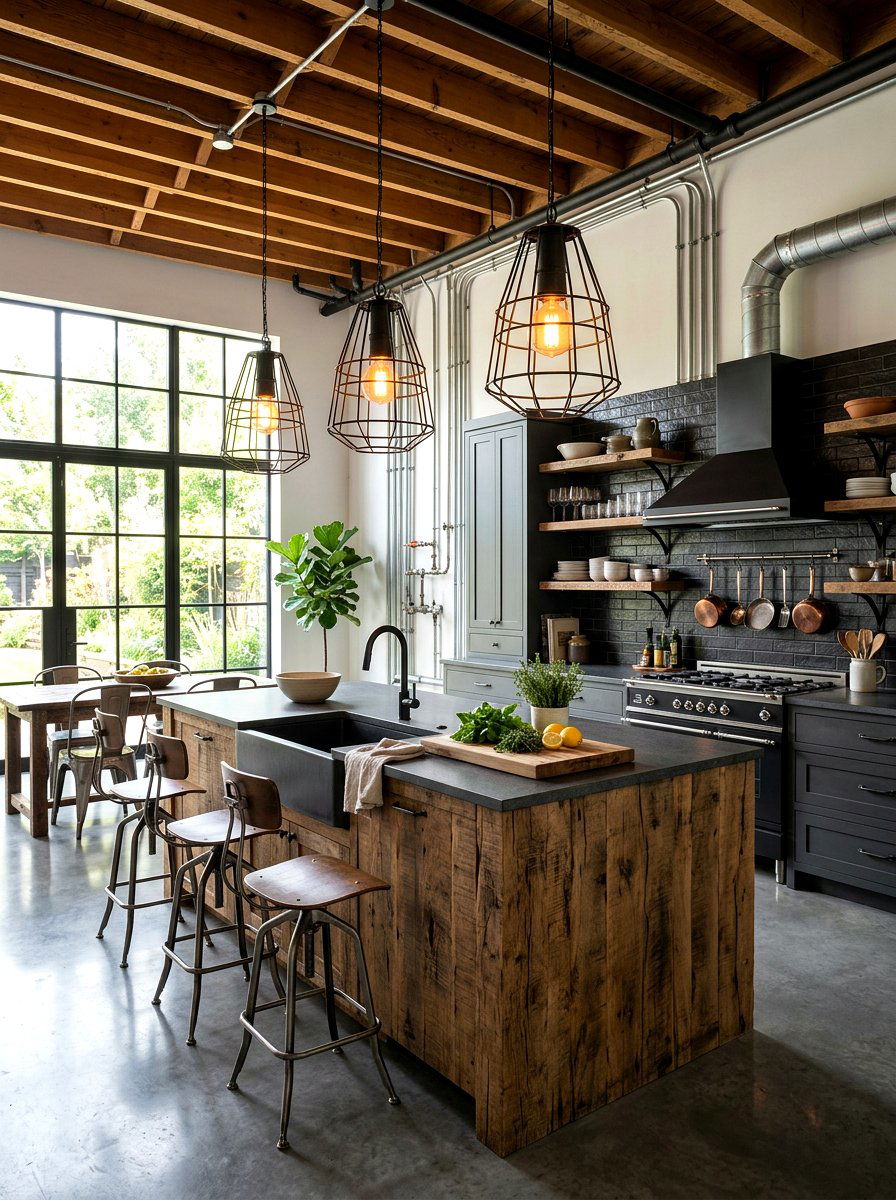
An indoor plant kitchen brings the outdoors inside, which is a key principle of both Japanese and Nordic design. Whether it is a single large bonsai on the island or a collection of small succulents on a floating shelf, greenery adds life and color to a neutral palette. Plants not only improve air quality but also provide a calming, biophilic connection to nature that reduces stress. In a Japandi kitchen, choose pots made of natural terracotta, stone, or ceramic to maintain a cohesive look. This simple addition of organic life makes the space feel more vibrant, lived-in, and peaceful.
16. Flat panel kitchen
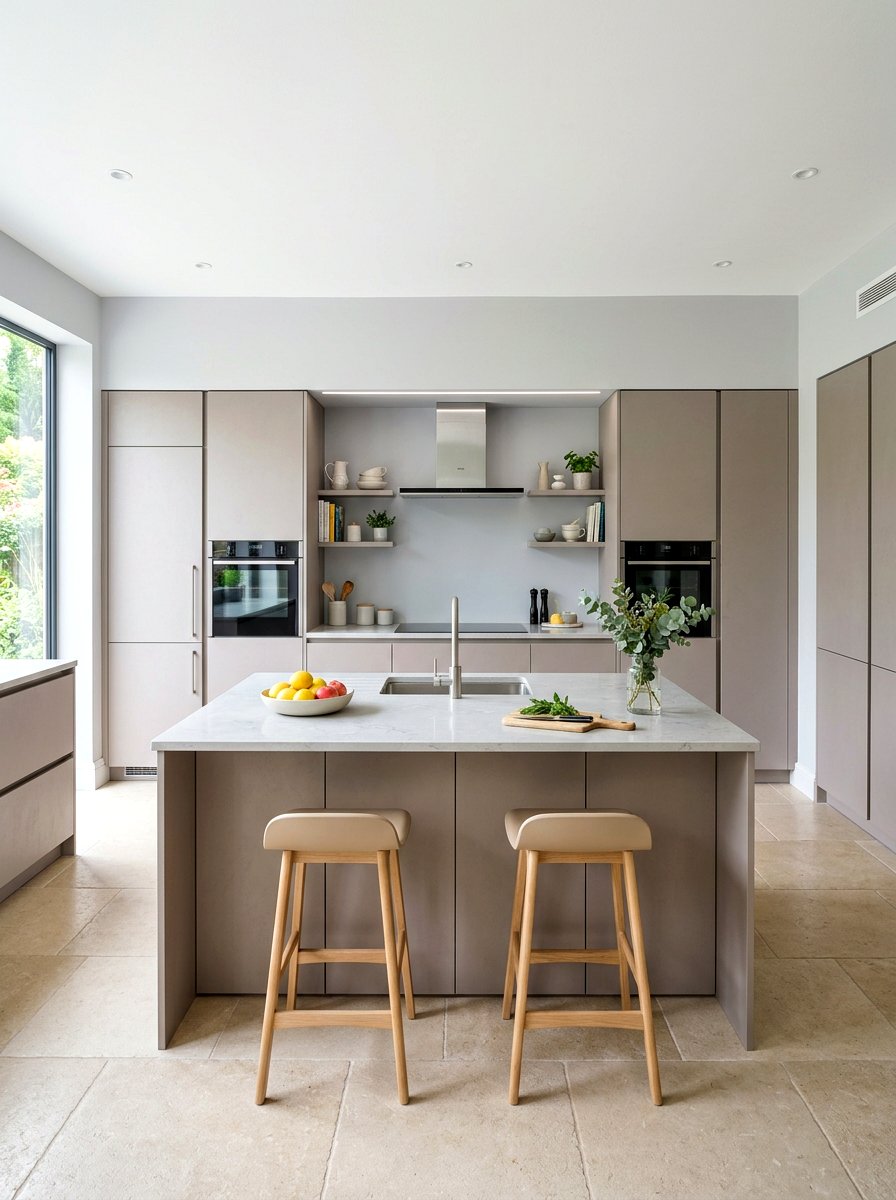
The flat panel kitchen cabinet style is the ultimate choice for those who crave a handleless and minimalist aesthetic. These "slab" doors have no raised edges or decorative molding, resulting in a perfectly smooth surface that highlights the material itself. In a Japandi kitchen, these panels are often finished in natural wood veneers or soft matte lacquers. This design choice minimizes visual distractions and makes cleaning much easier, as there are no nooks or crannies to collect dust. It creates a calm, architectural background that allows other design elements, like a statement light fixture or stone island, to take center stage.
17. Ambient lighting kitchen
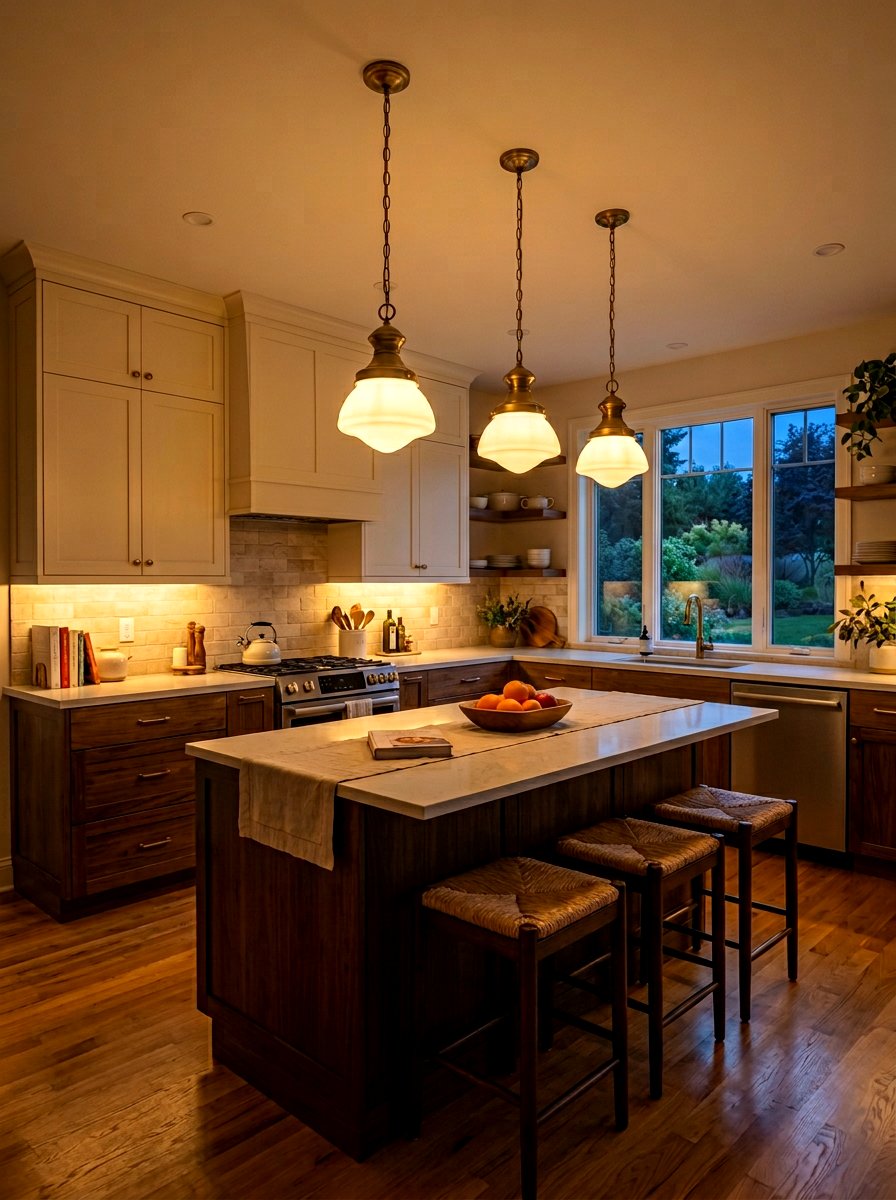
Achieving the right ambient lighting kitchen setup is crucial for setting a cozy, inviting mood after the sun goes down. Instead of relying on a single bright overhead light, Japandi design uses "layers" of light to create warmth and depth. This includes recessed ceiling lights for general visibility, under-cabinet LED strips for task lighting, and soft pendant lamps for character. Using warm-toned bulbs rather than cool blue light ensures the wood tones look rich and welcoming. This thoughtful approach to lighting transforms the kitchen into a soothing retreat, making it the perfect place to unwind while preparing a quiet evening meal.
18. Earthy tile kitchen
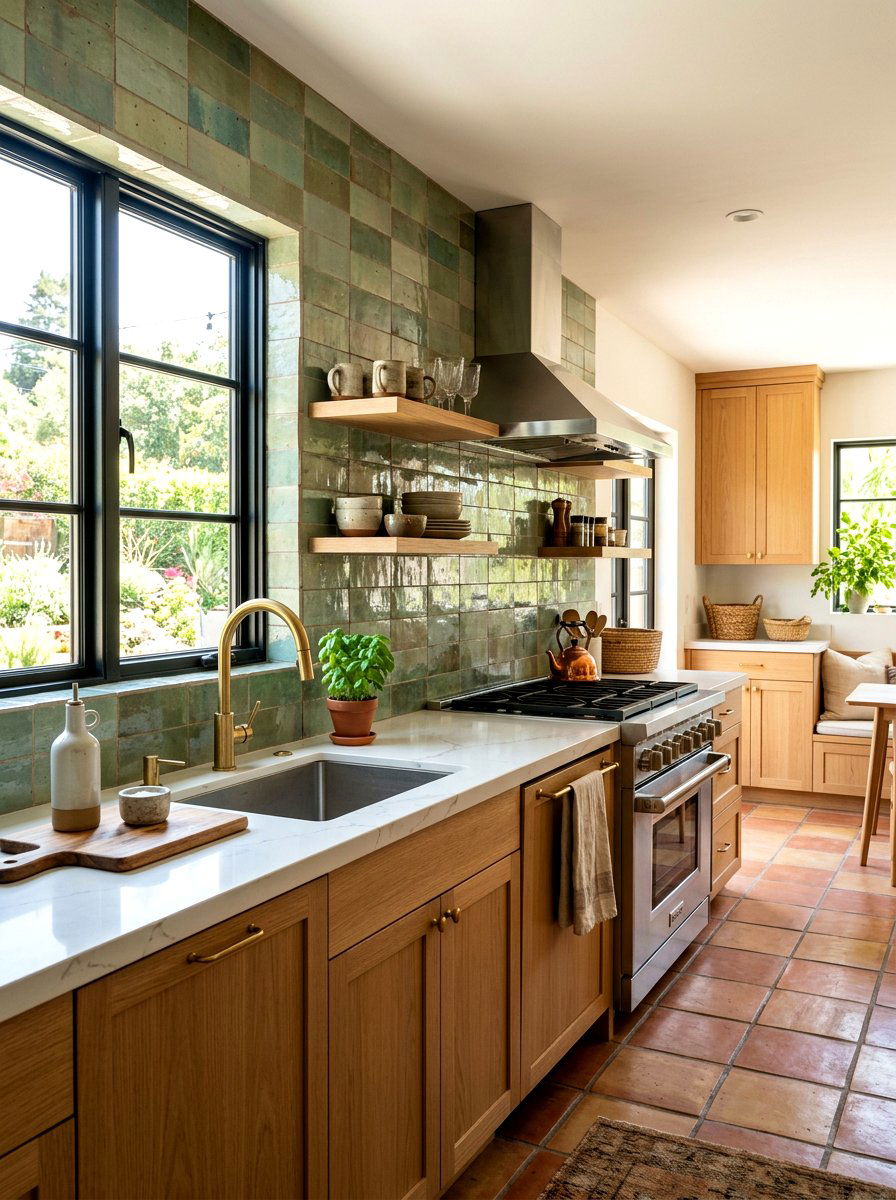
An earthy tile kitchen backsplash adds a touch of handmade charm and subtle color to the room. Look for tiles in muted shades like terracotta, sage green, or soft clay to bring a grounded, natural feel to the space. Zellige tiles or other hand-glazed varieties are particularly popular because their slight variations in color and texture embody the wabi-sabi philosophy. These small imperfections catch the light beautifully, adding a layer of depth that machine-made tiles cannot replicate. When paired with neutral cabinets, these tiles provide a soft focal point that feels both traditional and modern, enhancing the kitchen's organic character.
19. Marble island kitchen
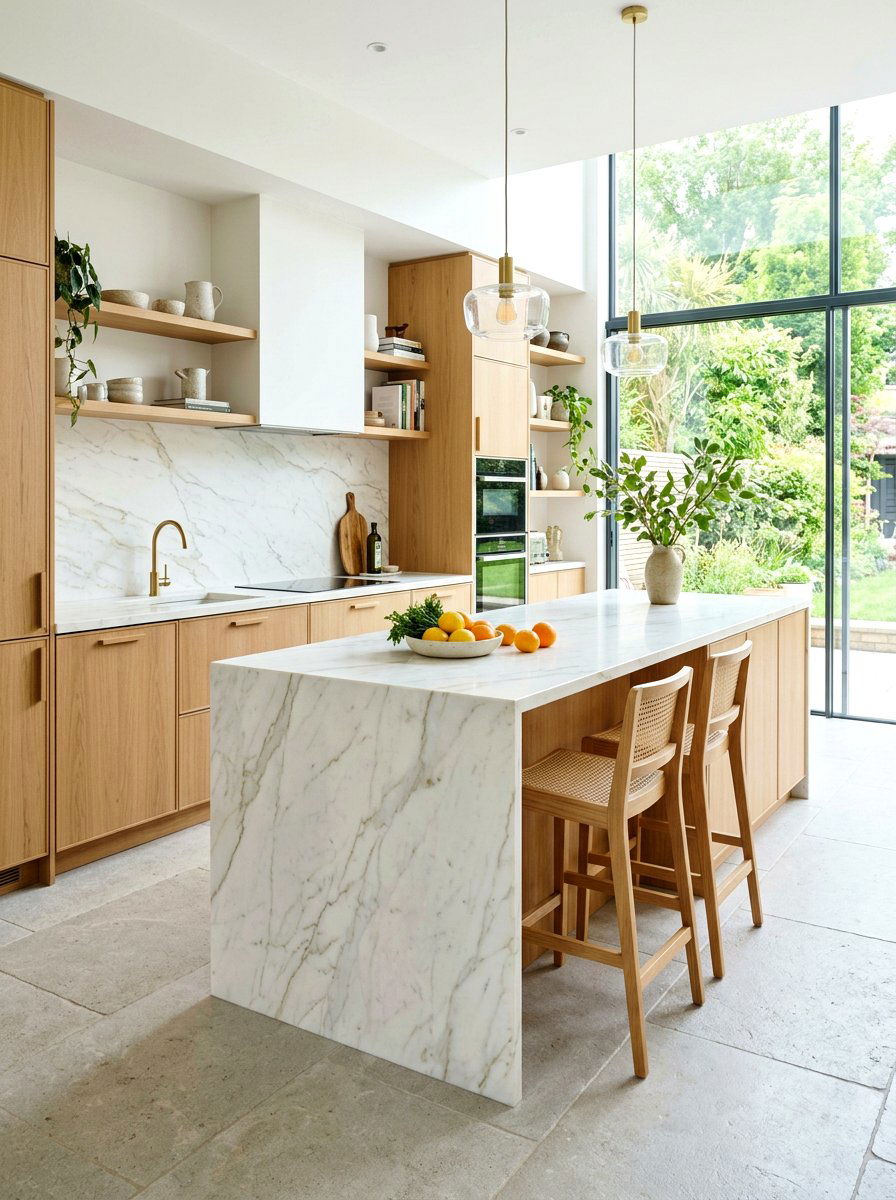
A marble island kitchen combines the classic beauty of natural stone with the clean lines of modern design. For a Japandi look, choose marble with soft, grey, or beige veining rather than bold, high-contrast patterns. A "waterfall" edge island, where the marble extends down the sides to the floor, creates a stunning sculptural effect that feels solid and grounded. Marble is naturally cool to the touch, providing a tactile contrast to the warmth of a wooden floor. This luxurious material choice adds a sense of timelessness and elegance, ensuring that the kitchen remains a sophisticated focal point for years to come.
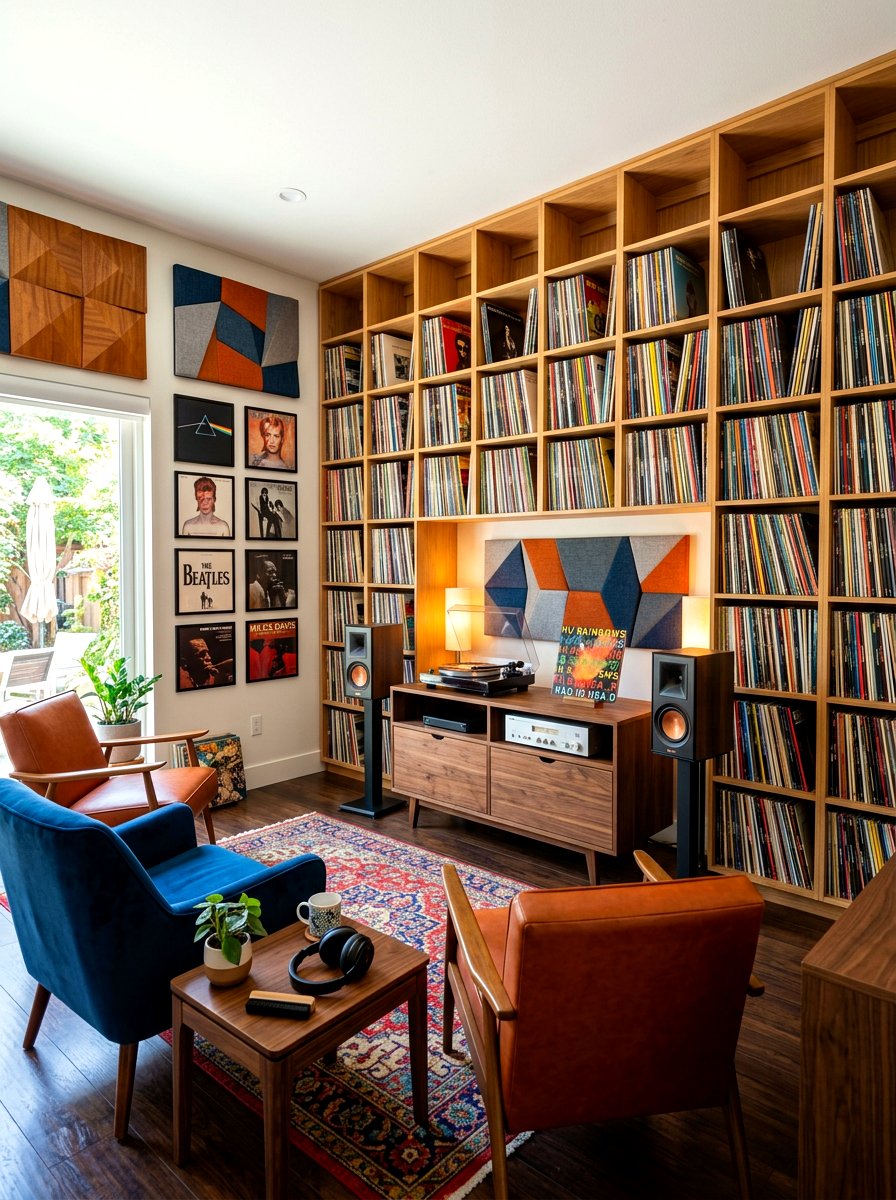

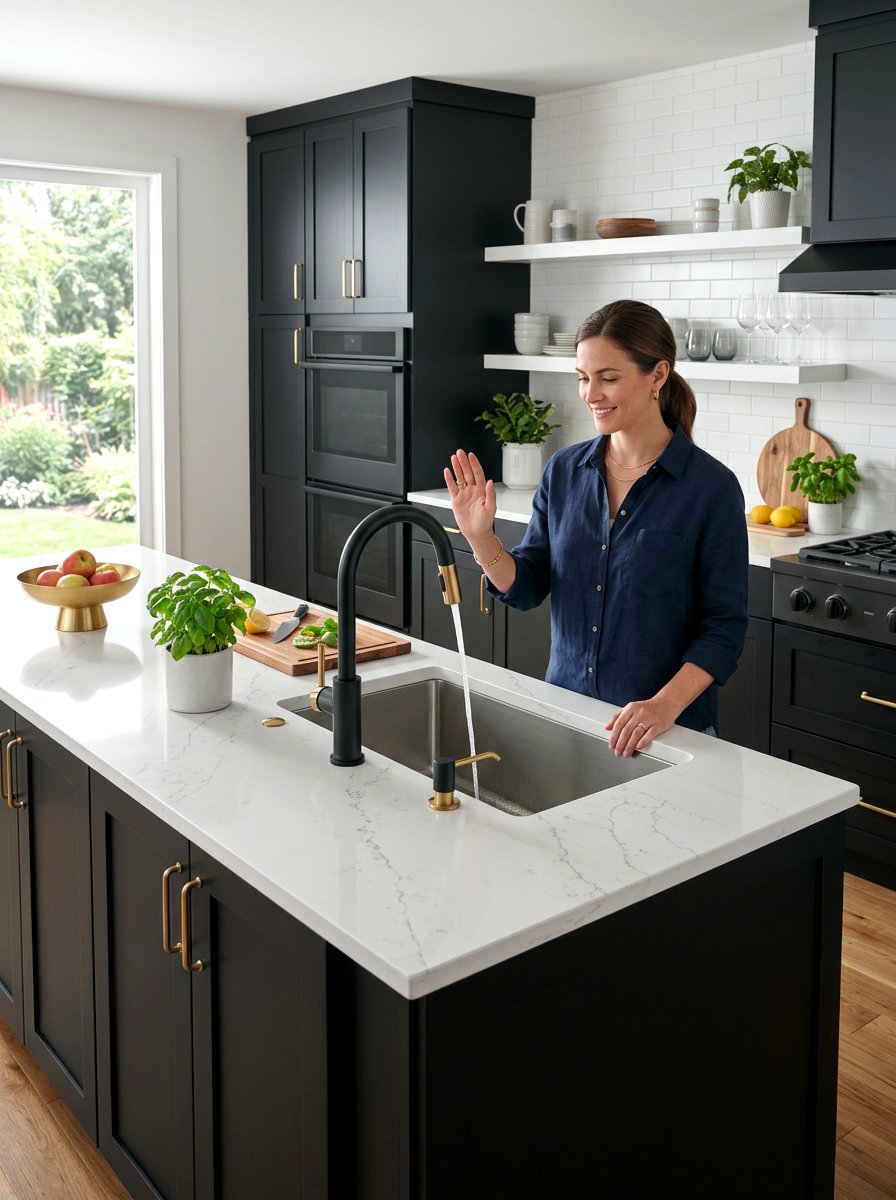
20. Hidden storage kitchen
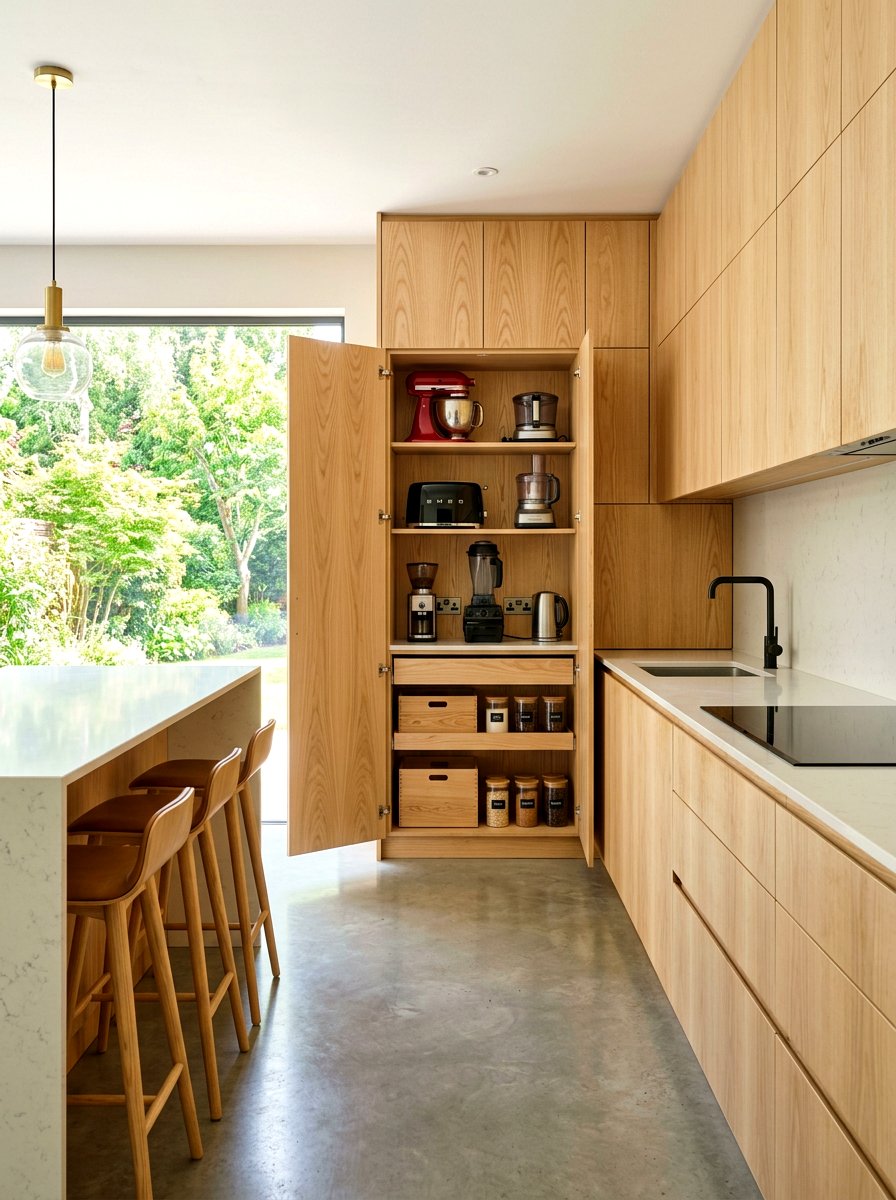
A hidden storage kitchen is the secret to maintaining the clutter-free environment that is essential for a peaceful Japandi home. This involves using floor-to-ceiling cabinetry, appliance garages, and deep drawers with internal organizers to keep everything out of sight. When every pot, pan, and spice jar has a dedicated home behind closed doors, the kitchen always looks tidy and intentional. Hidden storage allows you to maximize every inch of space, which is especially important in smaller homes. By removing visual noise, you create a serene environment where you can focus on the joy of cooking and the beauty of your surroundings.
21. Shoji screen kitchen
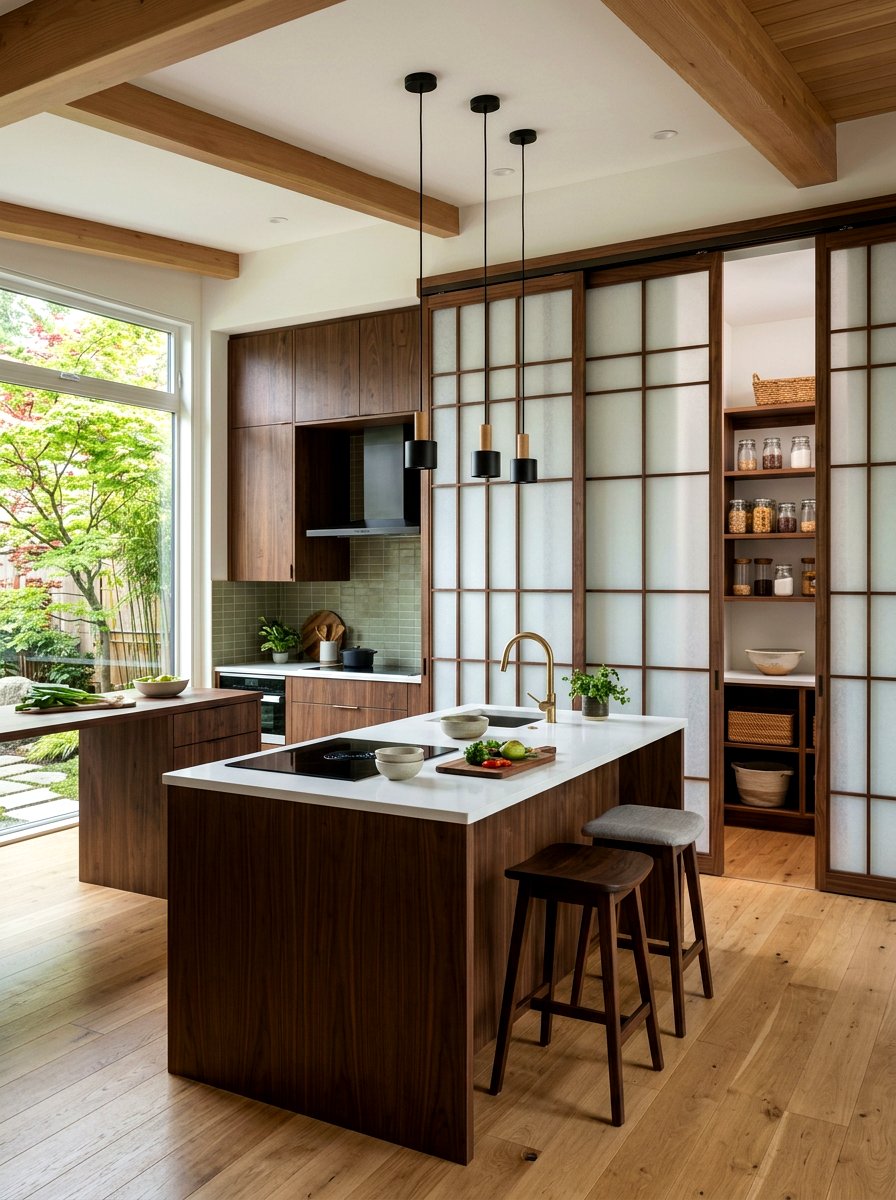
A shoji screen kitchen design uses translucent panels to divide spaces while still allowing light to flow through. Inspired by traditional Japanese architecture, these screens can be used as sliding doors for a pantry or as a decorative partition between the kitchen and dining area. The grid-like wooden frame and white paper-look panels add a sense of delicate rhythm and privacy without feeling heavy. In a modern kitchen, you can use frosted glass or high-quality synthetic materials that mimic the look of rice paper for better durability. It is a beautiful way to introduce a classic cultural element into a contemporary interior.
22. Ceramic display kitchen
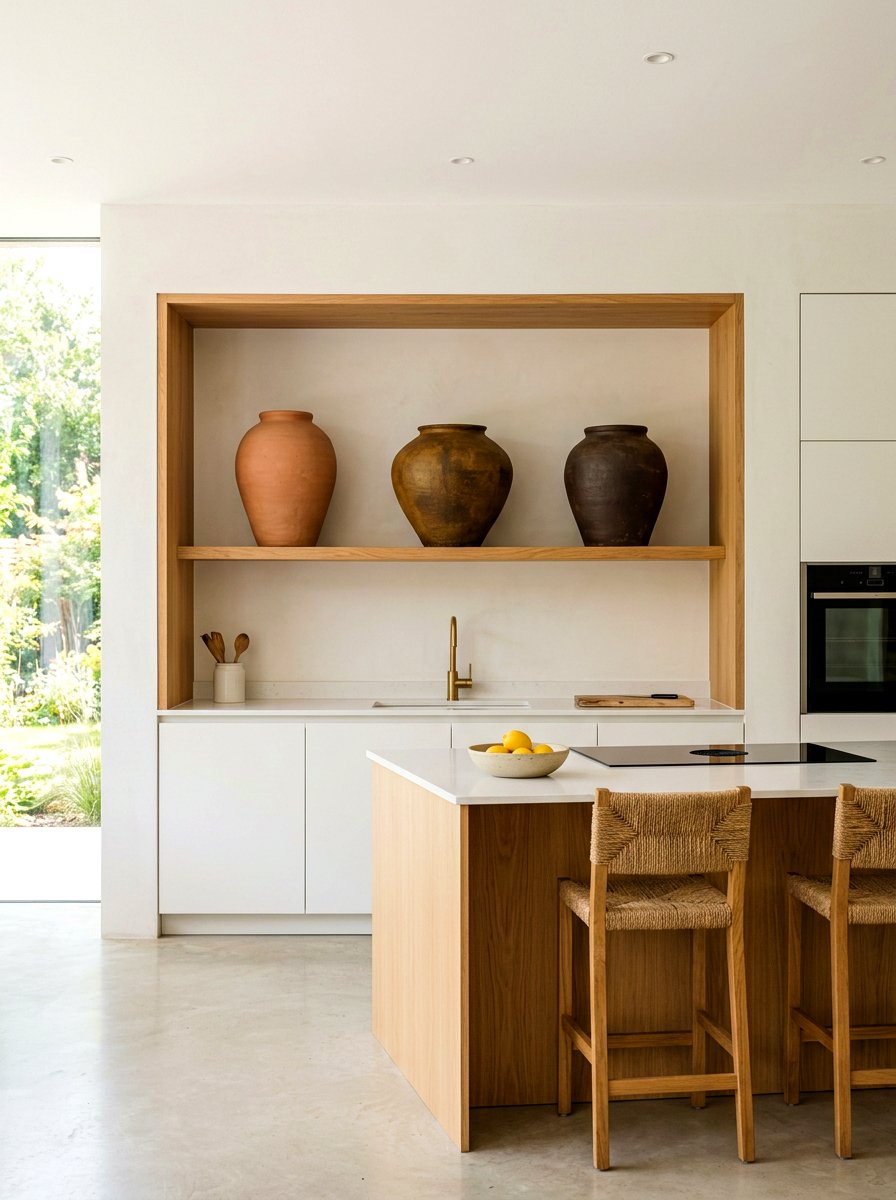
Creating a ceramic display kitchen area is a wonderful way to showcase handmade craftsmanship and add personality to your space. Japandi style values the "fewer, better" approach, so choose a few high-quality ceramic pieces that feature organic shapes and matte glazes. Placing these items on a single open shelf or a dedicated niche turns functional objects into works of art. The tactile nature of clay and stoneware adds a layer of warmth and "earthiness" that balances the sleeker elements of the room. This curated display encourages you to slow down and appreciate the simple beauty of the items you use every day.
23. Dark wood kitchen
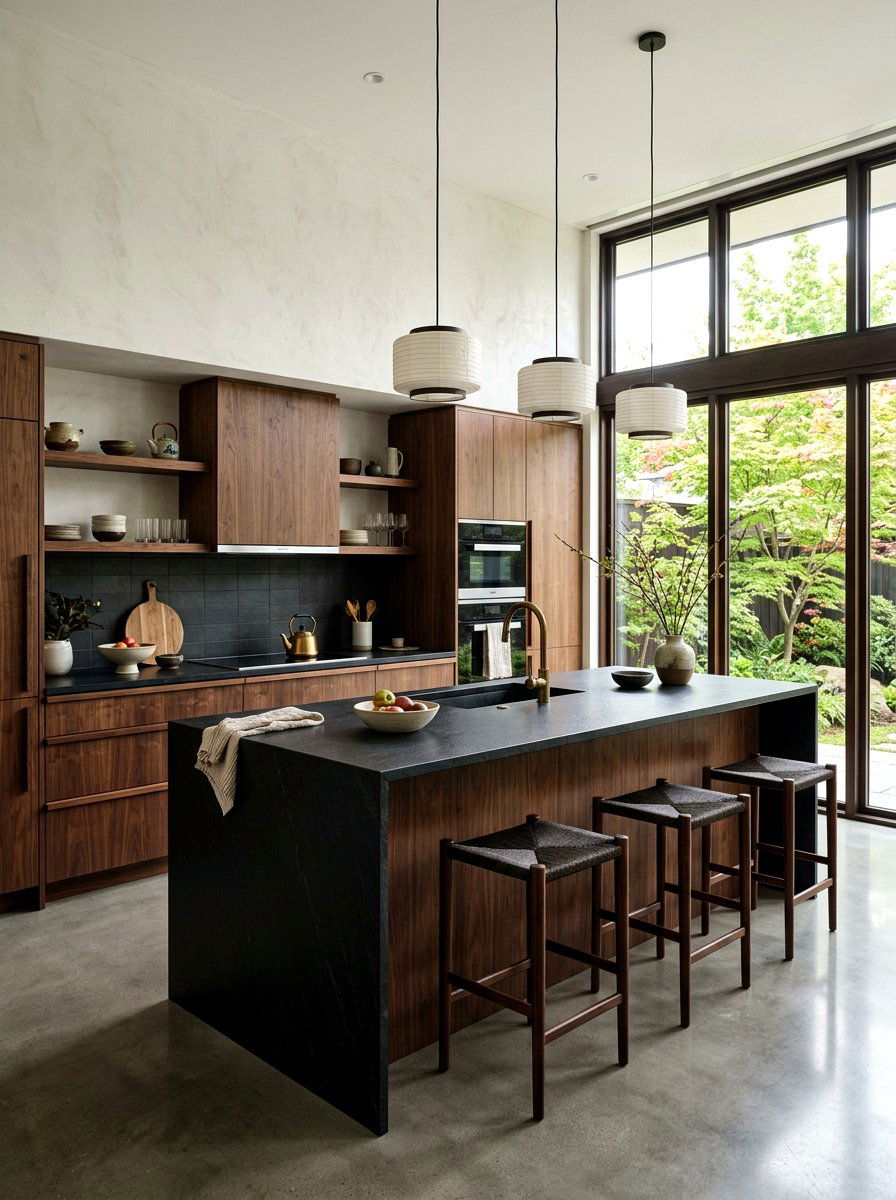
While light oak is common, a dark wood kitchen using walnut or charred timber can add incredible depth and sophistication to a Japandi home. Darker tones provide a dramatic contrast against light-colored walls and floors, creating a space that feels grounded and high-end. To keep the room from feeling too heavy, ensure there is plenty of natural light and use lighter-colored countertops. The rich brown or charcoal tones of the wood bring a masculine elegance to the design, echoing the aesthetic of traditional Japanese tea houses. This choice is perfect for those who want a minimalist space with a bold, atmospheric personality.
24. Round table kitchen
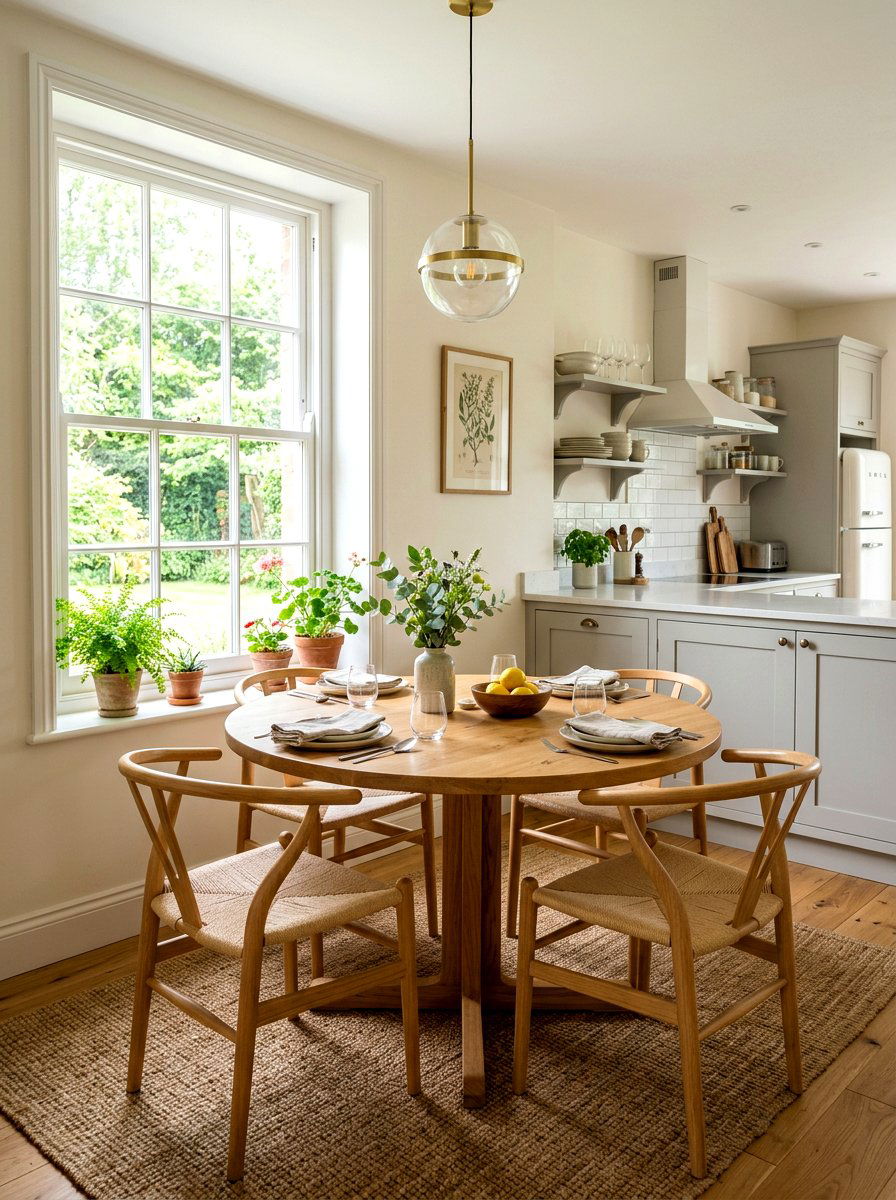
Incorporating a round table kitchen nook is a great way to encourage conversation and improve the flow of a small space. Unlike rectangular tables, round designs have no sharp corners, which makes them feel more approachable and fluid. In a Japandi kitchen, a simple wooden pedestal table made of ash or oak is a perfect choice. It fits neatly into a corner or alongside a window, creating a cozy spot for morning coffee or casual meals. The circular form breaks up the straight lines of the cabinetry, adding a sense of softness and balance that aligns with the organic nature of the style.
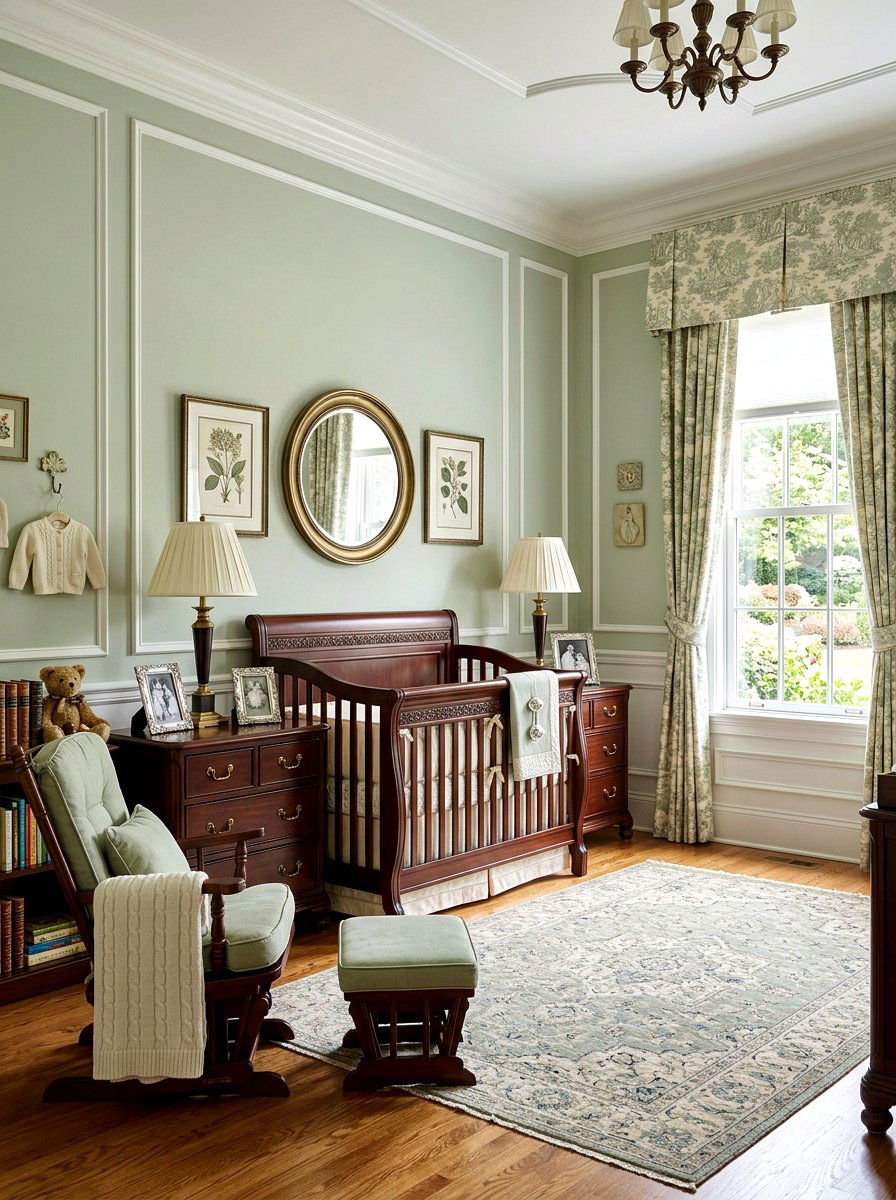
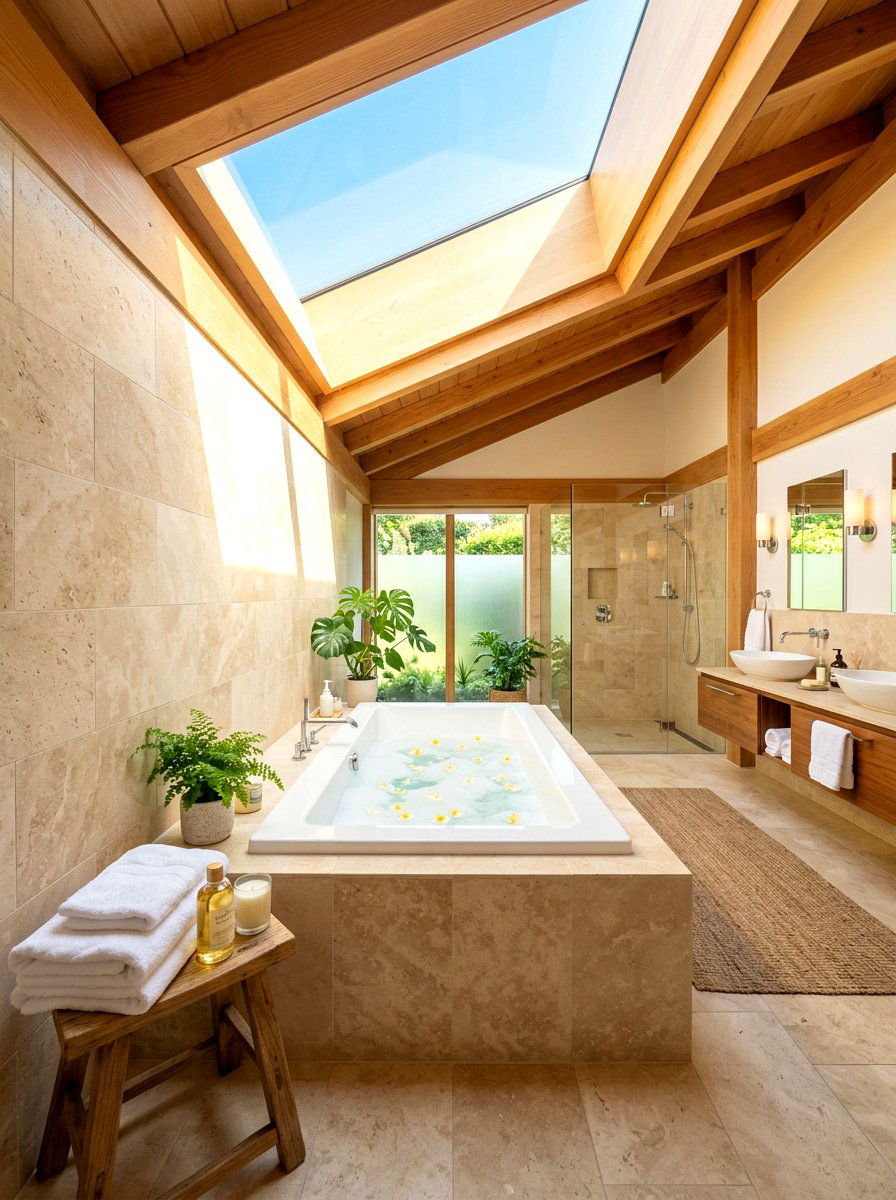

25. Modern stool kitchen
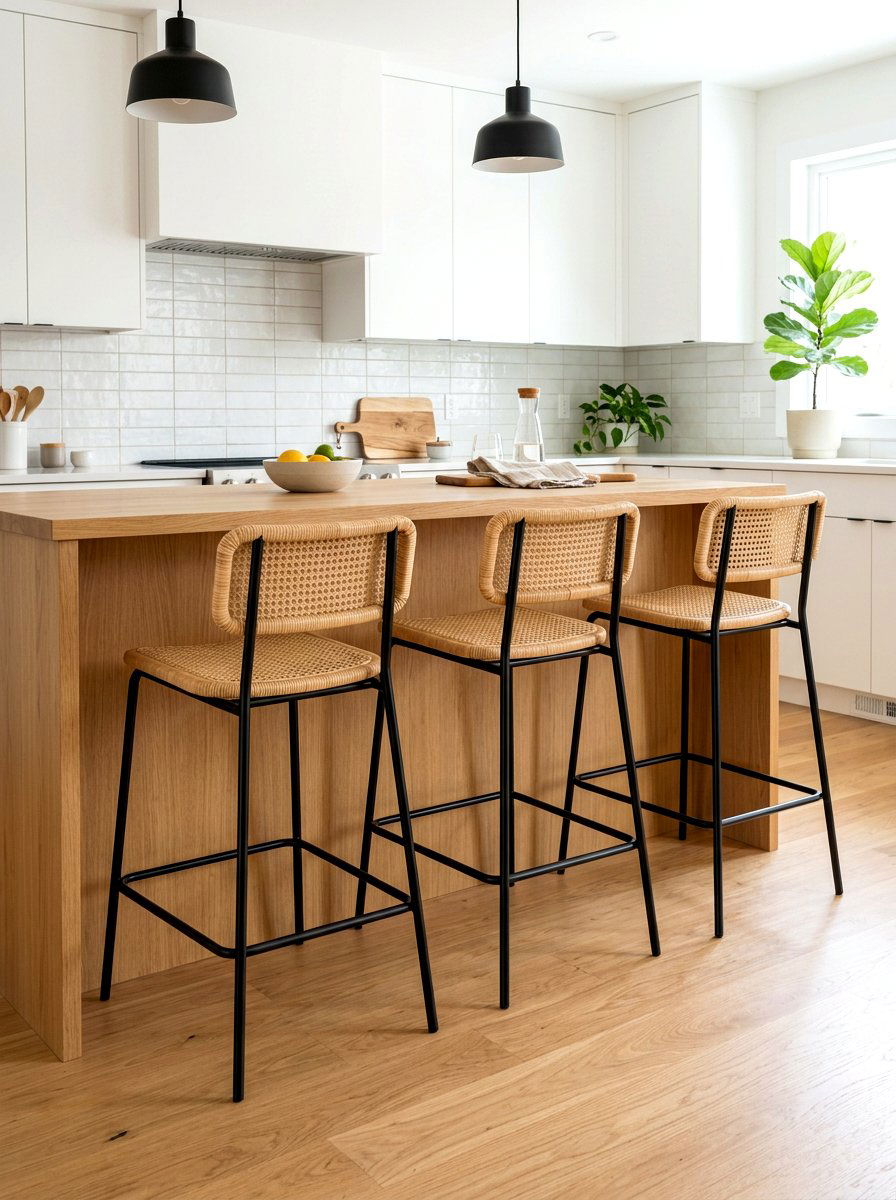
The right modern stool kitchen seating can anchor your island and provide a comfortable place for guests to sit. Look for stools that feature slim black metal legs and seats made of natural materials like wood, woven rattan, or pale leather. The silhouette should be simple and unobtrusive, allowing the stools to tuck neatly under the counter when not in use. In Japandi design, furniture is often low-profile to maintain an open field of vision. By choosing stools with a mix of industrial and organic materials, you bridge the gap between Scandinavian functionality and Japanese minimalism, creating a cohesive and stylish look.
26. Window seat kitchen
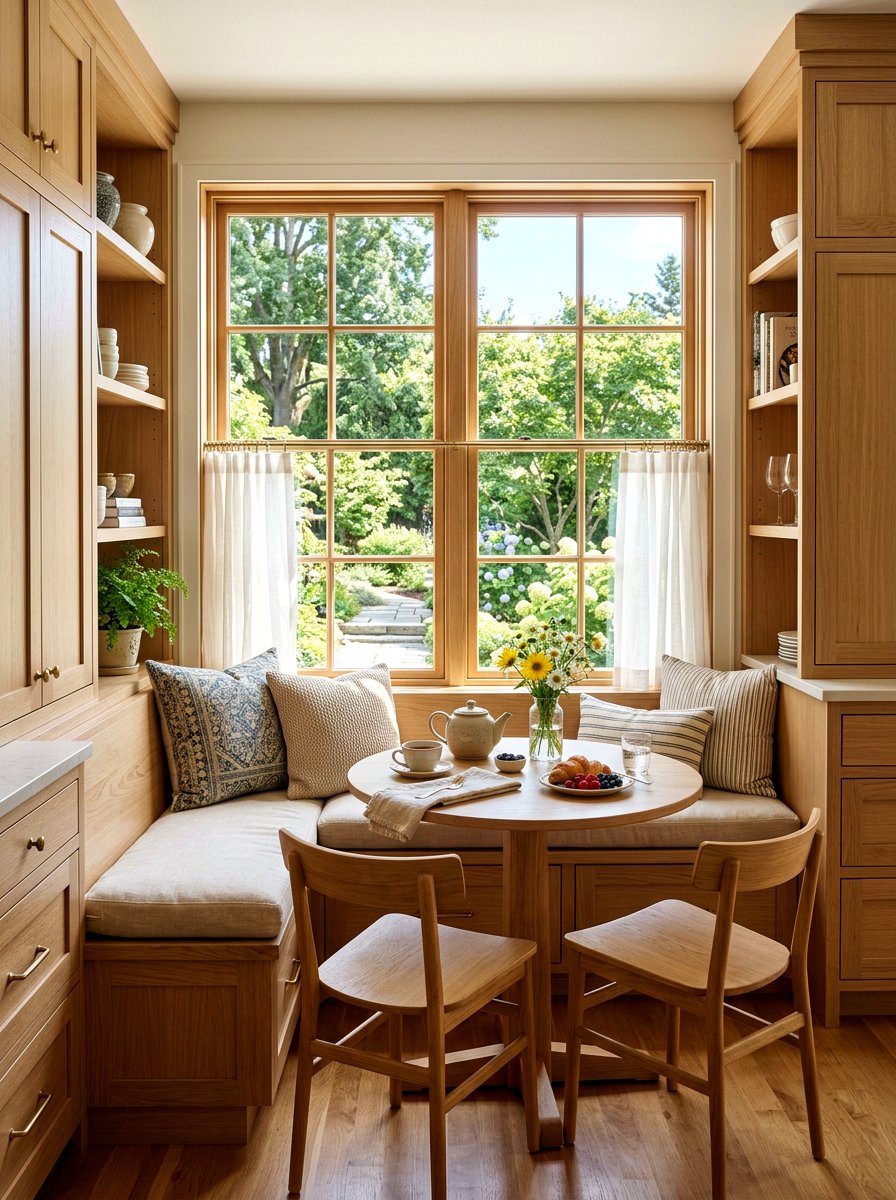
A window seat kitchen nook offers a peaceful place to sit and enjoy the view while waiting for a meal to cook. Building a simple wooden bench into a window alcove maximizes space and provides additional hidden storage underneath the seat. To keep the look Japandi, use a thin seat cushion in a neutral linen fabric and add a few textured pillows in earthy tones. This feature connects the kitchen to the outdoors, bringing in natural light and a sense of calm. It turns a functional corner into a multipurpose retreat, making the kitchen feel more like a comfortable living room than just a workspace.
27. Brass detail kitchen
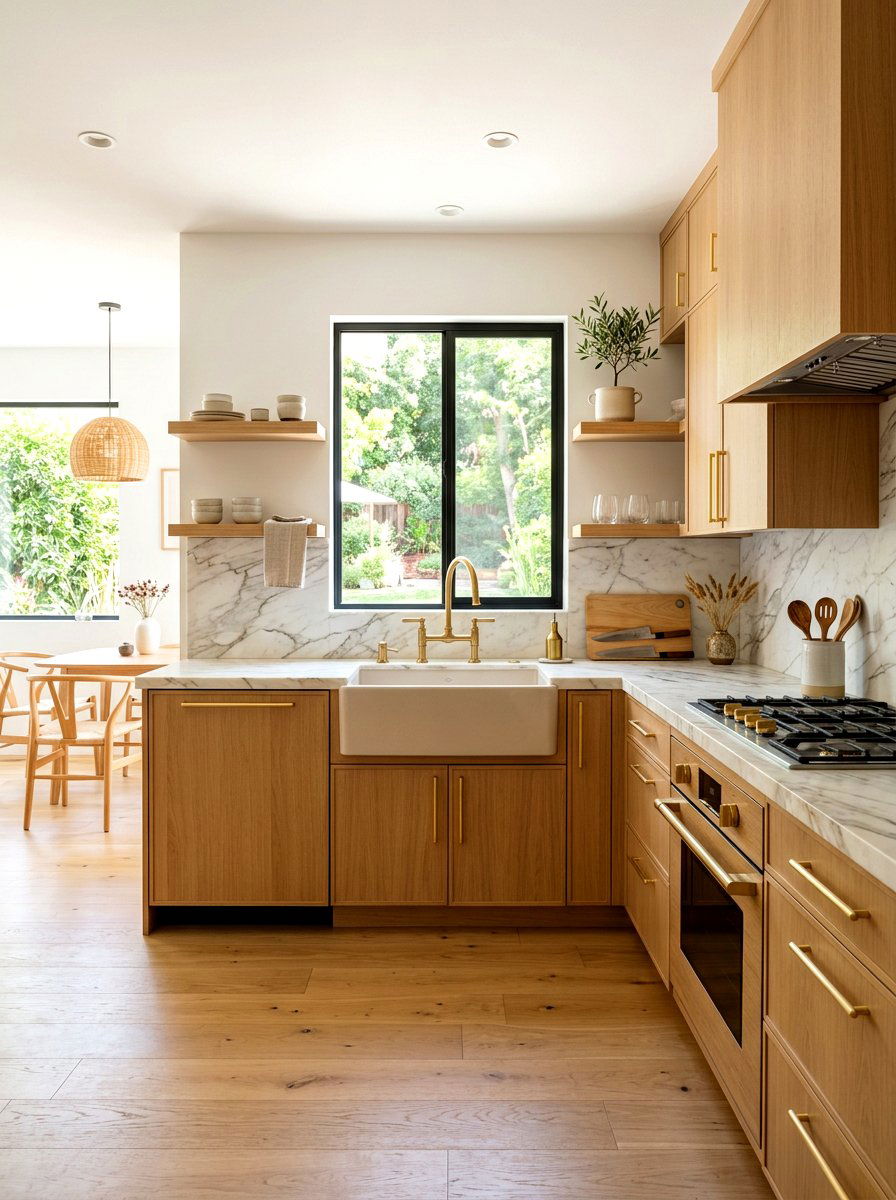
Adding a brass detail kitchen element introduces a warm, metallic glow that feels more classic than silver or chrome. In a Japandi setting, brushed or unlacquered brass is preferred because it develops a natural patina over time, aligning with the wabi-sabi appreciation for aging materials. Use brass sparingly for cabinet hardware, light fixtures, or even a simple pot rail. The gold-toned metal pairs beautifully with both light oak and dark walnut, adding a touch of understated luxury without being ostentatious. This subtle shine adds a layer of warmth that makes the kitchen feel more expensive and thoughtfully designed while remaining minimal.
28. Plaster wall kitchen
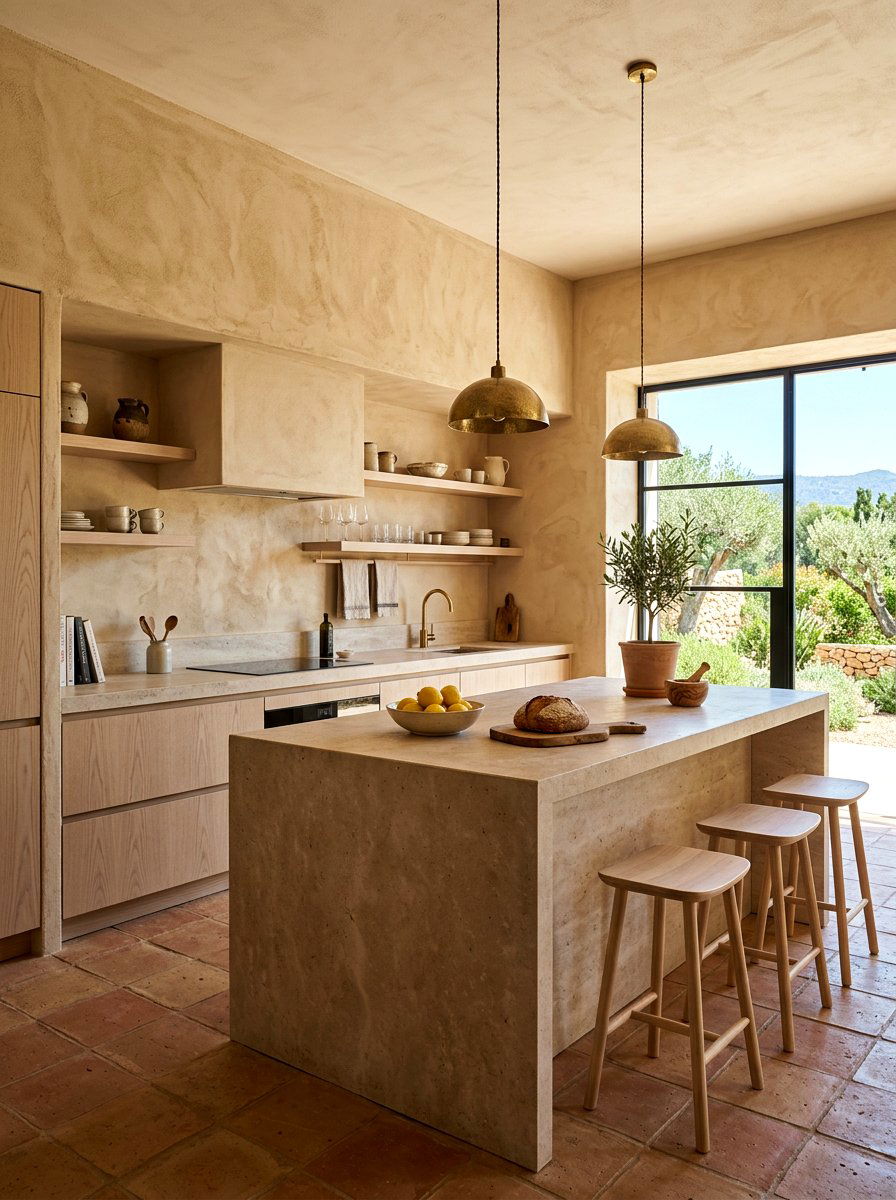
A plaster wall kitchen finish provides a soft, matte texture that adds depth to the room without the need for busy patterns or bold colors. Limewash or Venetian plaster creates a variegated, stone-like appearance that feels organic and handcrafted. This treatment is perfect for Japandi interiors because it reflects light in a soft, diffused way, creating a serene and atmospheric backdrop for wooden cabinets. Unlike flat paint, plaster walls have a tactile quality that makes the space feel more solid and architectural. This simple yet sophisticated wall treatment enhances the "zen" feeling of the room, making the entire kitchen feel more grounded.
29. Recessed light kitchen
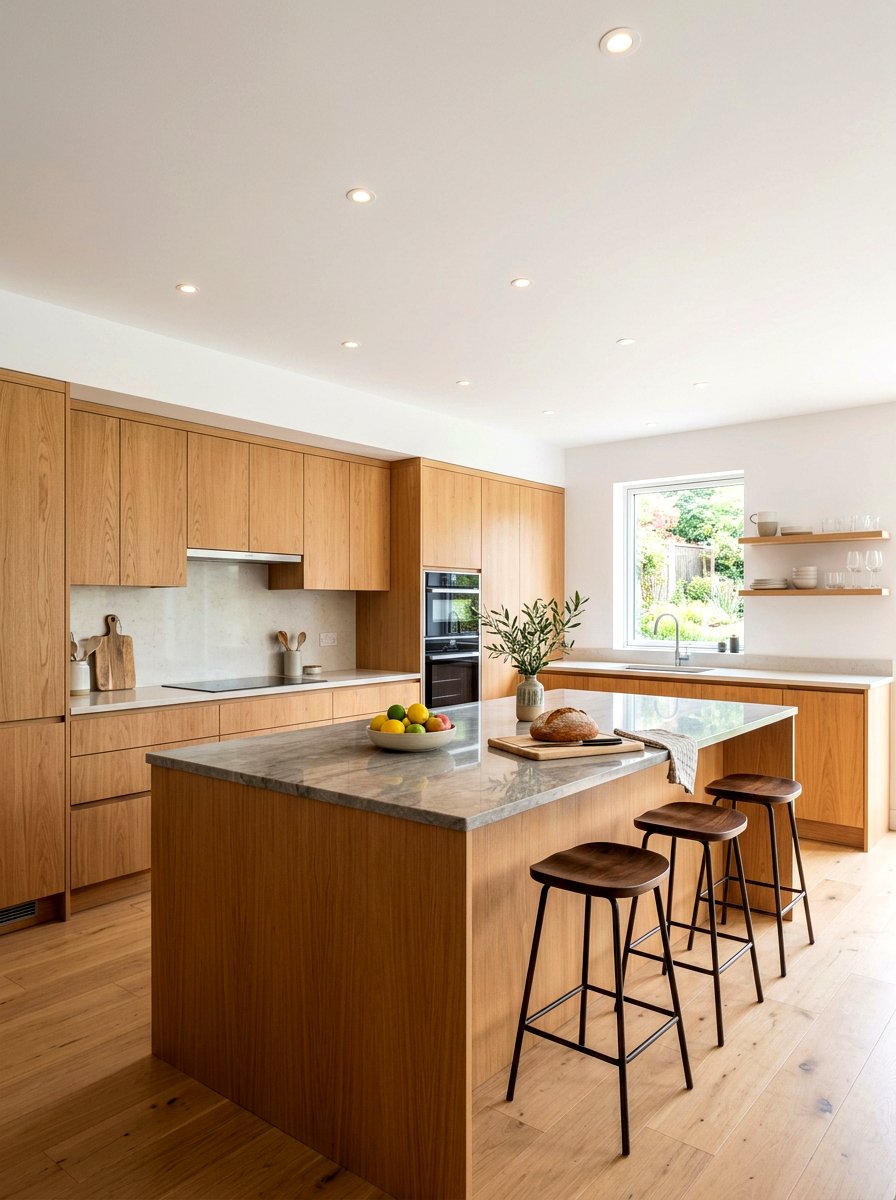
Using a recessed light kitchen layout ensures that the ceiling remains clean and uncluttered, which is essential for a minimalist look. Small, high-quality downlights can be strategically placed to illuminate work surfaces without being a visual distraction. In Japandi design, the goal is to make the lighting feel as natural and invisible as possible. By keeping the fixtures flush with the ceiling, you maintain a sense of height and openness in the room. This architectural approach to lighting allows other decorative elements, like a single statement pendant or the natural grain of the wood, to be the primary focus of the design.
30. Minimalist hood kitchen
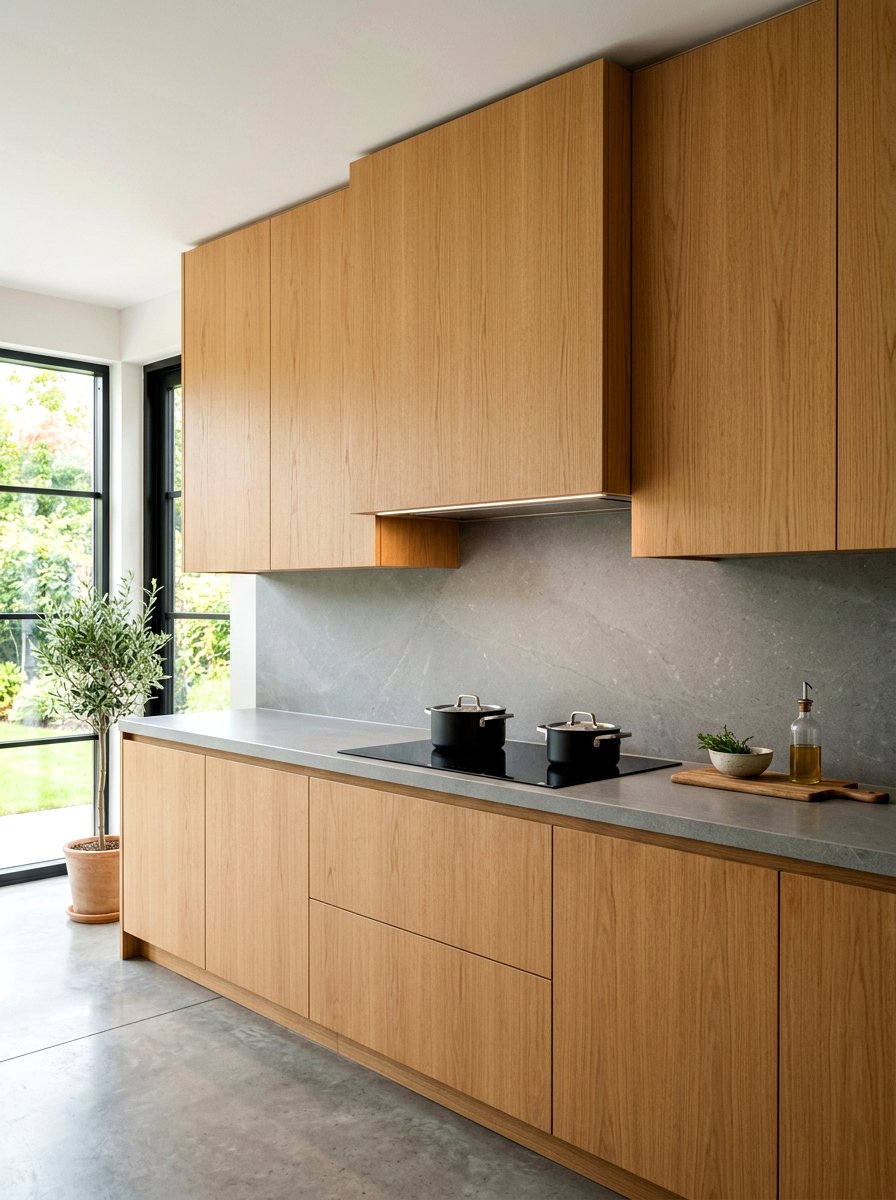
A minimalist hood kitchen design involves hiding the extractor fan behind custom cabinetry or using a sleek, flush-mount ceiling vent. In many Japandi kitchens, the range hood is integrated into a simple wooden or plastered box that matches the walls, making it almost invisible. This prevents the large metal appliance from disrupting the clean lines of the upper walls. For those who prefer a modern look, a slim black or white cylindrical hood can act as a sculptural element. By streamlining the cooking area, you ensure that the kitchen remains a peaceful, organized space that feels more like a designed interior than a utility zone.
Conclusion:
Creating a Japandi kitchen is about finding the perfect balance between two worlds to build a home that supports both your physical needs and your mental well-being. By focusing on high-quality natural materials, a soft neutral color palette, and clever storage solutions, you can transform the most functional room in your house into a serene retreat. Whether you prefer the brightness of light oak or the dramatic depth of dark walnut, the principles of minimalism and functionality remain constant. We hope these thirty ideas inspire you to embrace a more intentional and harmonious way of living. Your dream kitchen is just a few thoughtful design choices away.

Related posts: