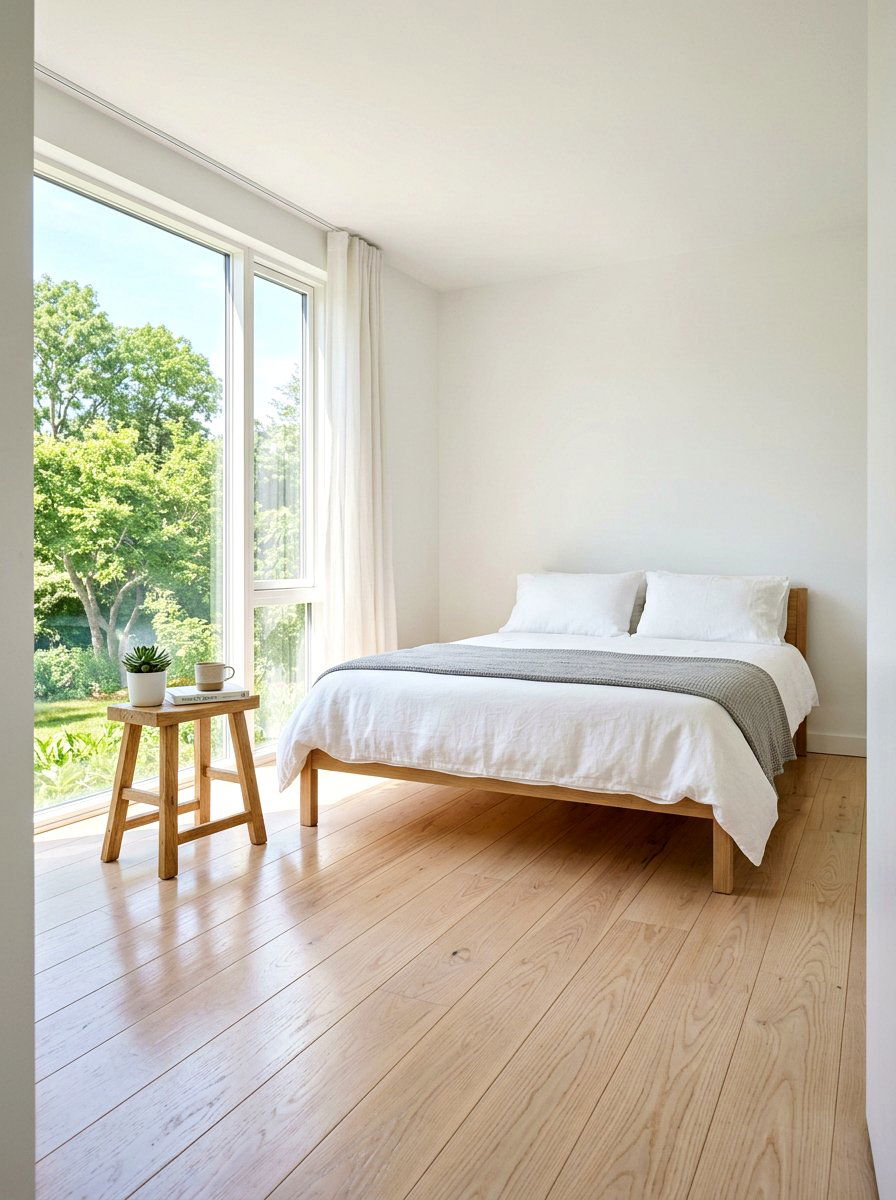
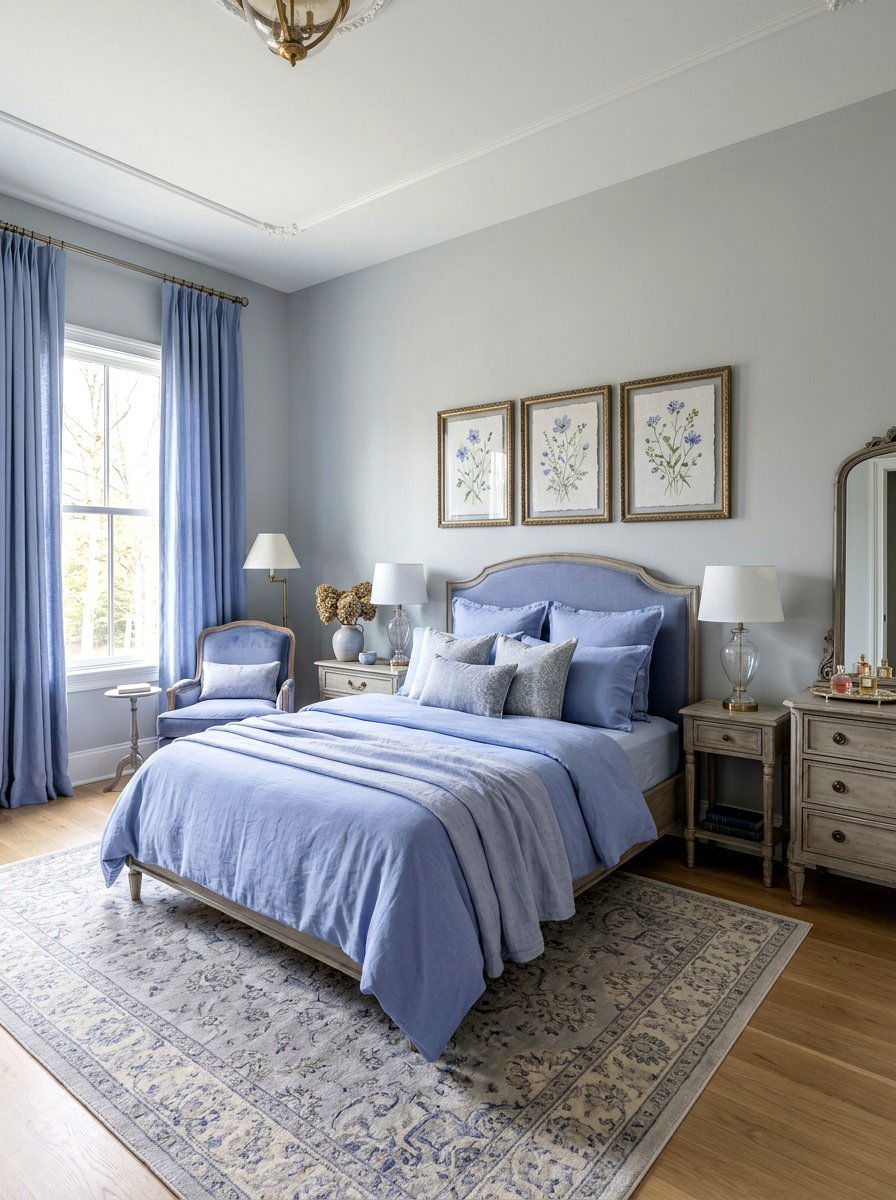
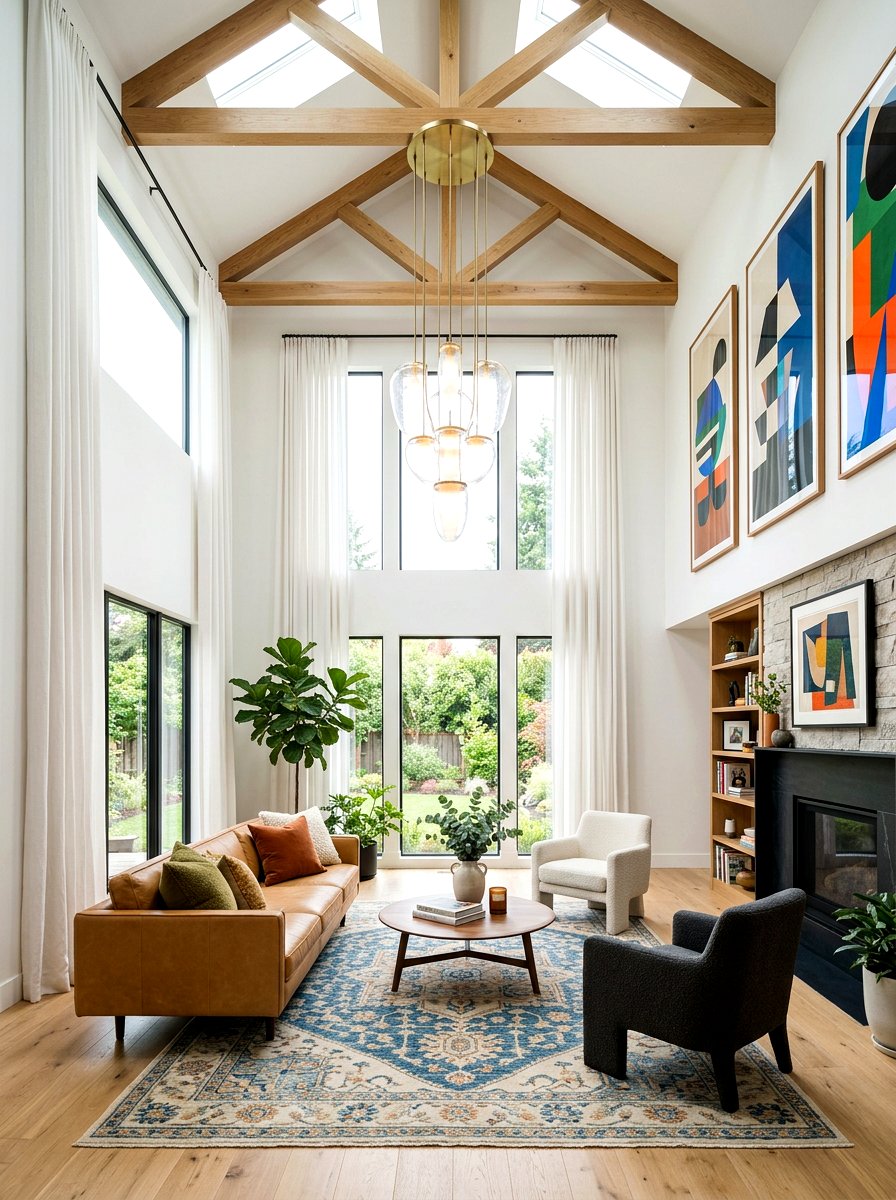
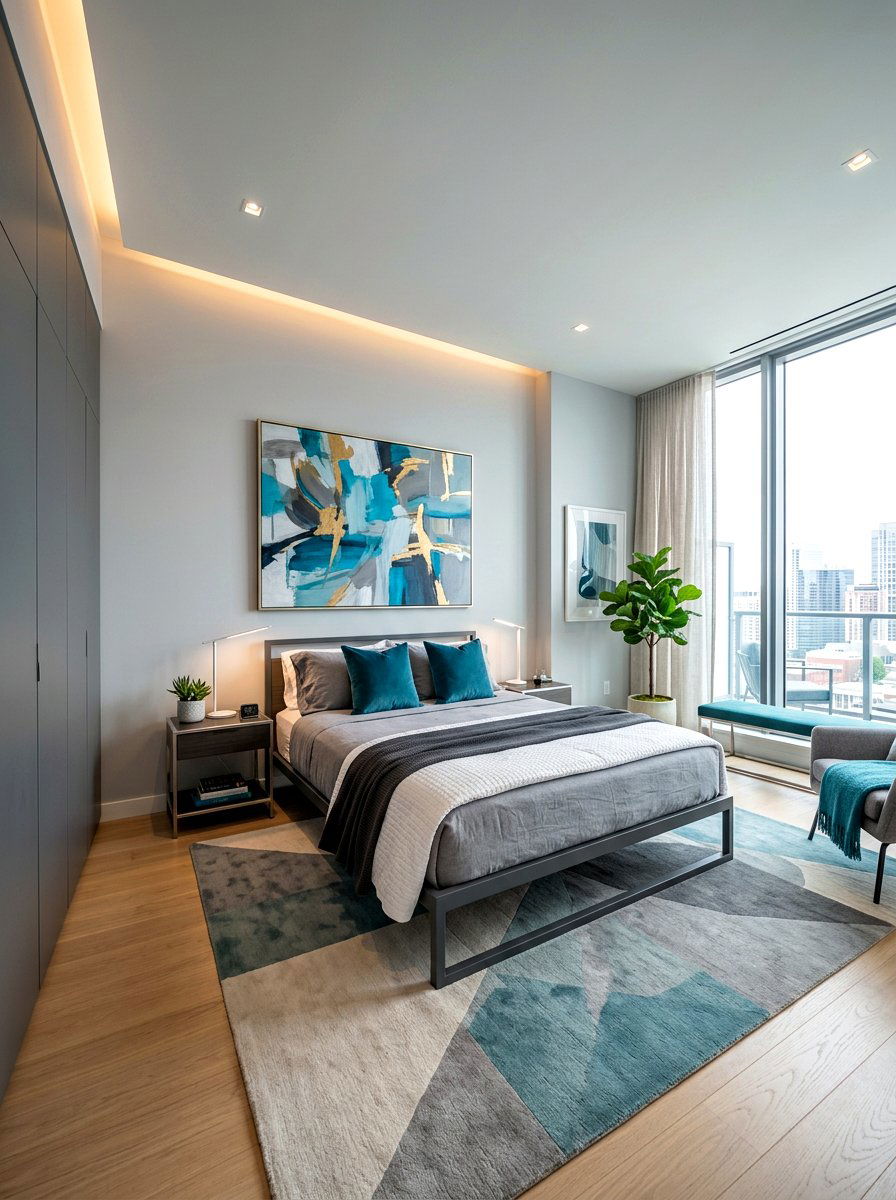
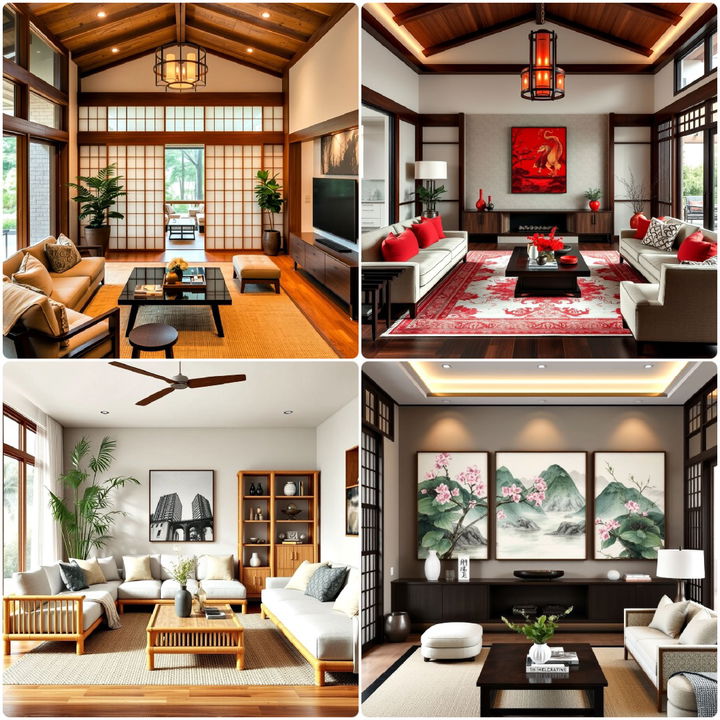
Imagine walking into a room that feels like a deep, calming breath after a very long day at work. This is the essence of Japandi style, which beautifully blends Japanese minimalism with Scandinavian functionality and cozy warmth. It has become a viral sensation on Pinterest because it offers a peaceful refuge from our busy, modern lives. By focusing on natural materials, neutral color palettes, and intentional furniture choices, you can create a space that feels both sophisticated and incredibly inviting. Whether you prefer light oak or dark walnut, this aesthetic celebrates the beauty of simplicity and the perfection of imperfection in every single corner of your home.
1. Minimalist Neutral Living Room
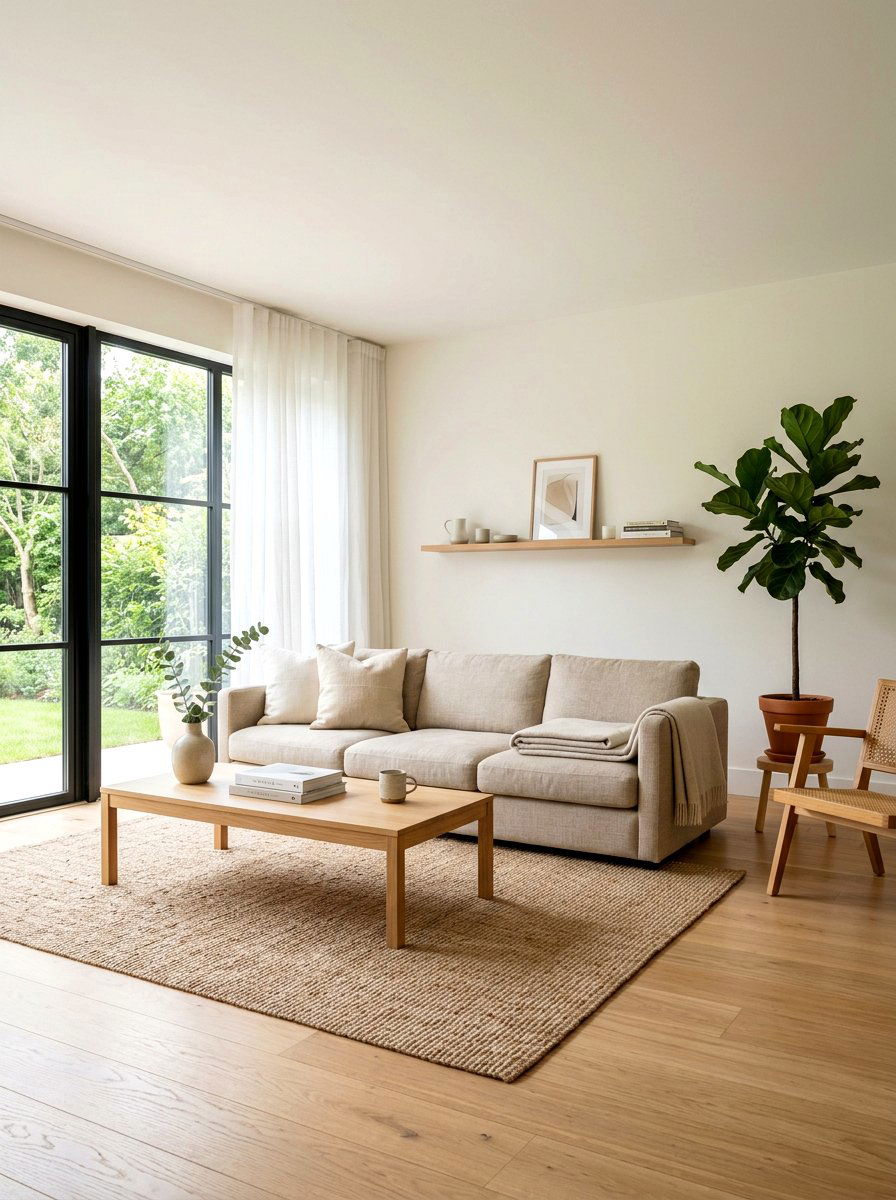
Does your current living space feel cluttered and overwhelming to your senses? A minimalist neutral living room focuses on a restricted color palette of beige, cream, and soft gray to create immediate visual harmony. This design approach prioritizes open space and breathing room over excessive decoration or bold patterns. By selecting high-quality furniture with clean lines, you ensure that every piece serves a clear purpose without crowding the environment. The result is an airy, light-filled sanctuary that promotes mental clarity and physical relaxation. Natural light plays a vital role here, bouncing off the pale surfaces to make even the smallest rooms feel much larger and more serene than before.
2. Low Profile Furniture
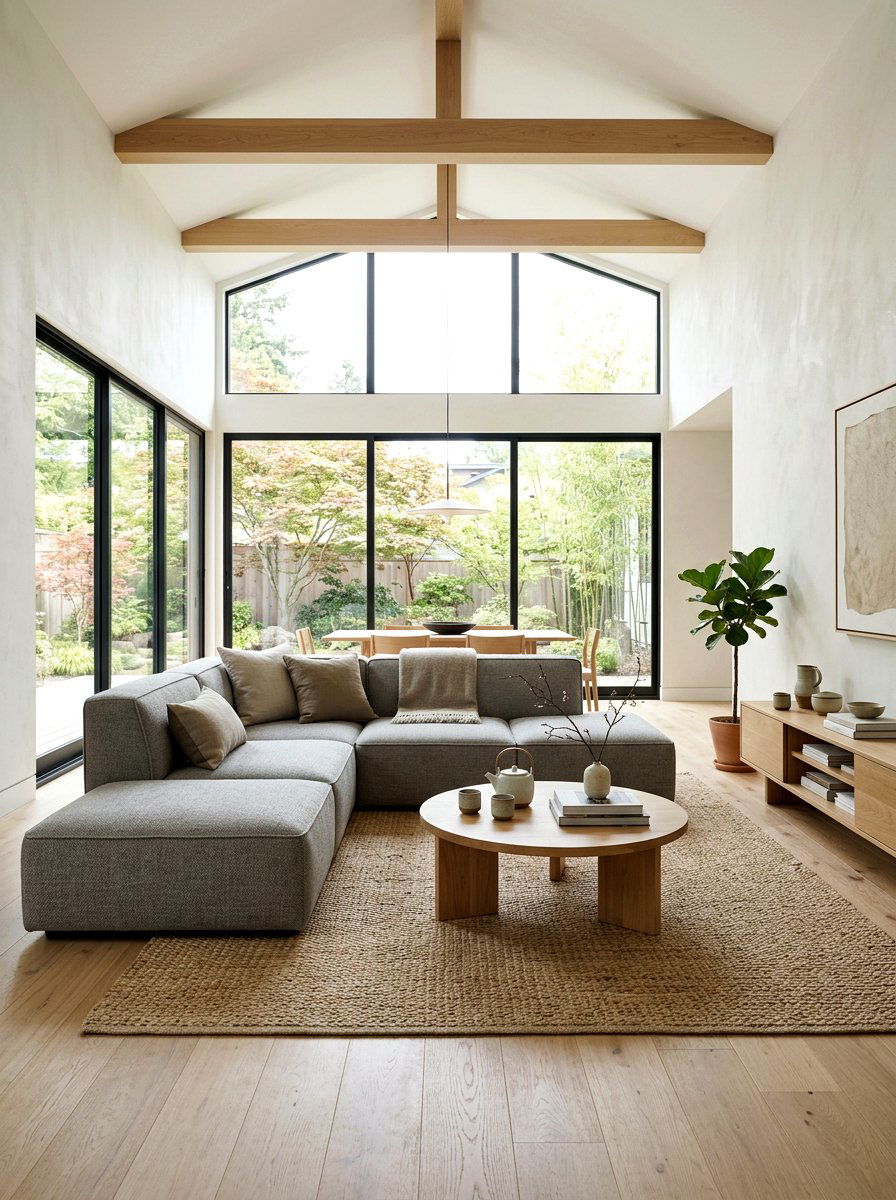
Have you ever noticed how much taller a ceiling looks when the furniture sits closer to the ground? Low profile furniture is a staple of Japanese tradition that anchors the room and creates a grounded, stable feeling. Choosing a sofa or coffee table with a lower height encourages a different perspective of the space and fosters a cozy, intimate atmosphere. This style works perfectly in Japandi settings because it maintains clear sightlines across the room, enhancing the feeling of openness. Pair a low-slung sectional with a simple rug to define the seating area without adding unnecessary height. It is a functional choice that looks modern while honoring ancient heritage.
3. Wooden Slat Wall
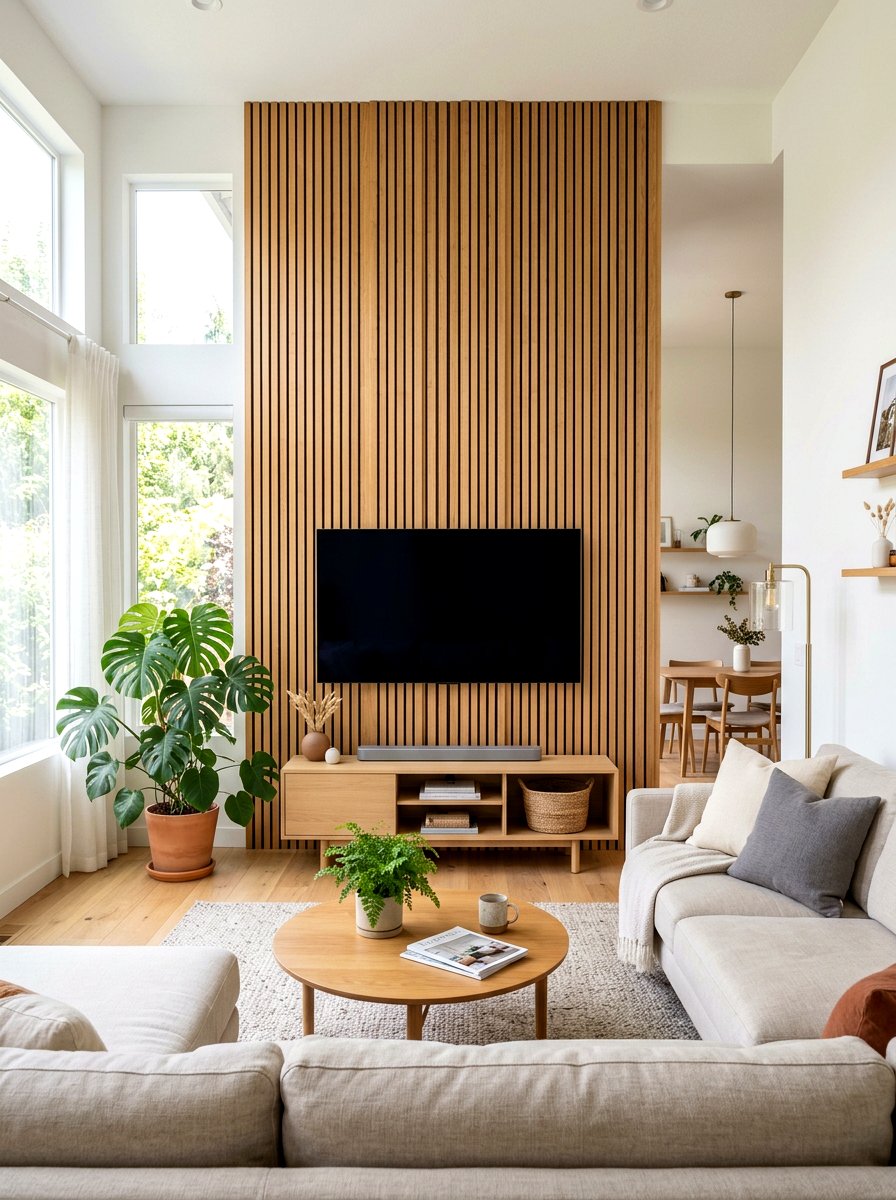
Can a single architectural feature completely transform the texture and warmth of a modern home? A wooden slat wall adds vertical lines that draw the eye upward while introducing the organic beauty of natural timber. These panels are excellent for adding depth to a flat wall without the need for busy wallpaper or heavy paint colors. The repetitive pattern of the slats creates a rhythmic, calming effect that is very popular in Scandi-inspired interiors. You can use light oak for a bright feel or dark walnut for a more dramatic, traditional Japanese look. This feature also helps with sound absorption, making your living area much quieter and more peaceful overall.
4. Wabi Sabi Textured Wall
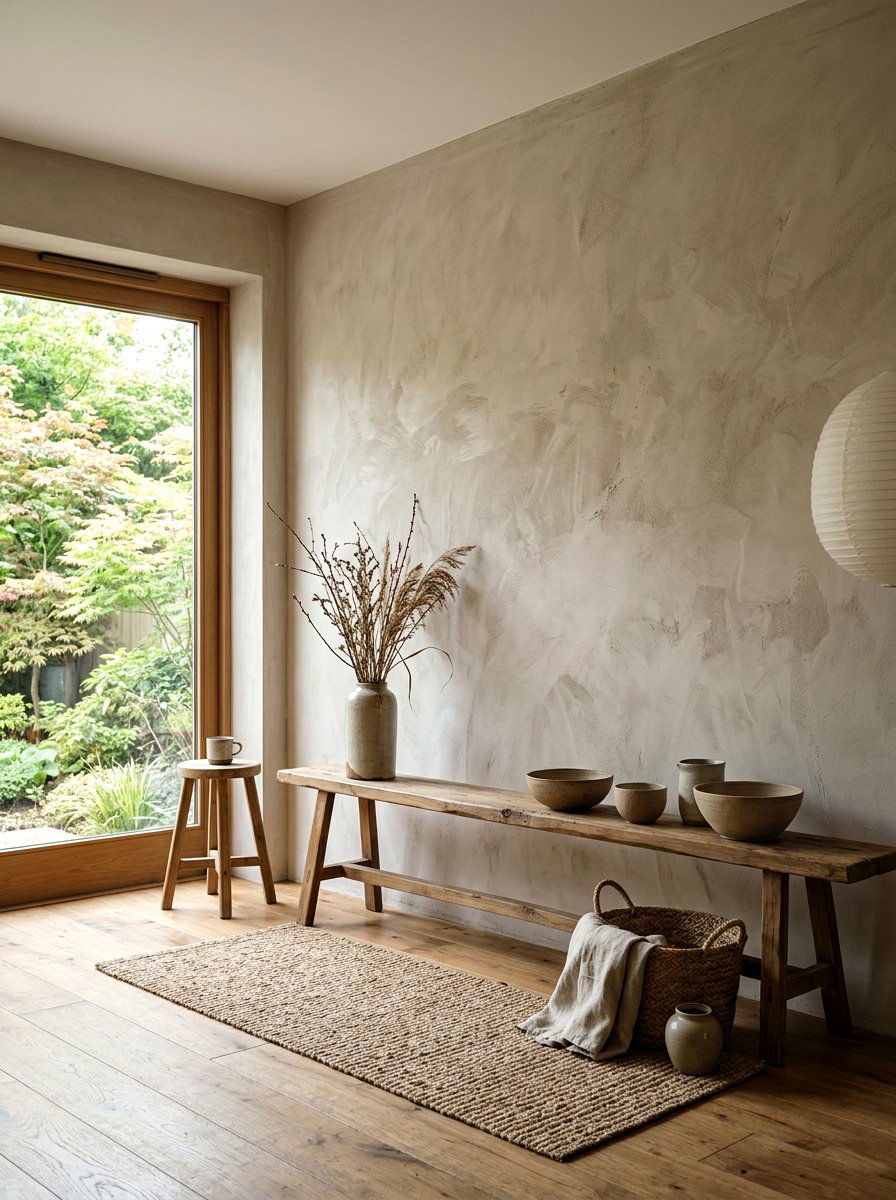
What if you embraced the beauty of imperfection instead of searching for a perfectly smooth, sterile finish? A Wabi Sabi textured wall often uses lime wash or clay plaster to create a soft, mottled appearance that feels alive. This organic finish adds a tactile quality to the room that reflects light in a beautiful, diffused manner throughout the day. It celebrates the natural variations in material, proving that a simple wall can be a work of art in itself. By avoiding high-gloss paints, you create a matte backdrop that feels warm and grounded. This subtle texture provides the perfect foundation for minimalist furniture and simple, natural wood accents.
5. Large Paper Lantern
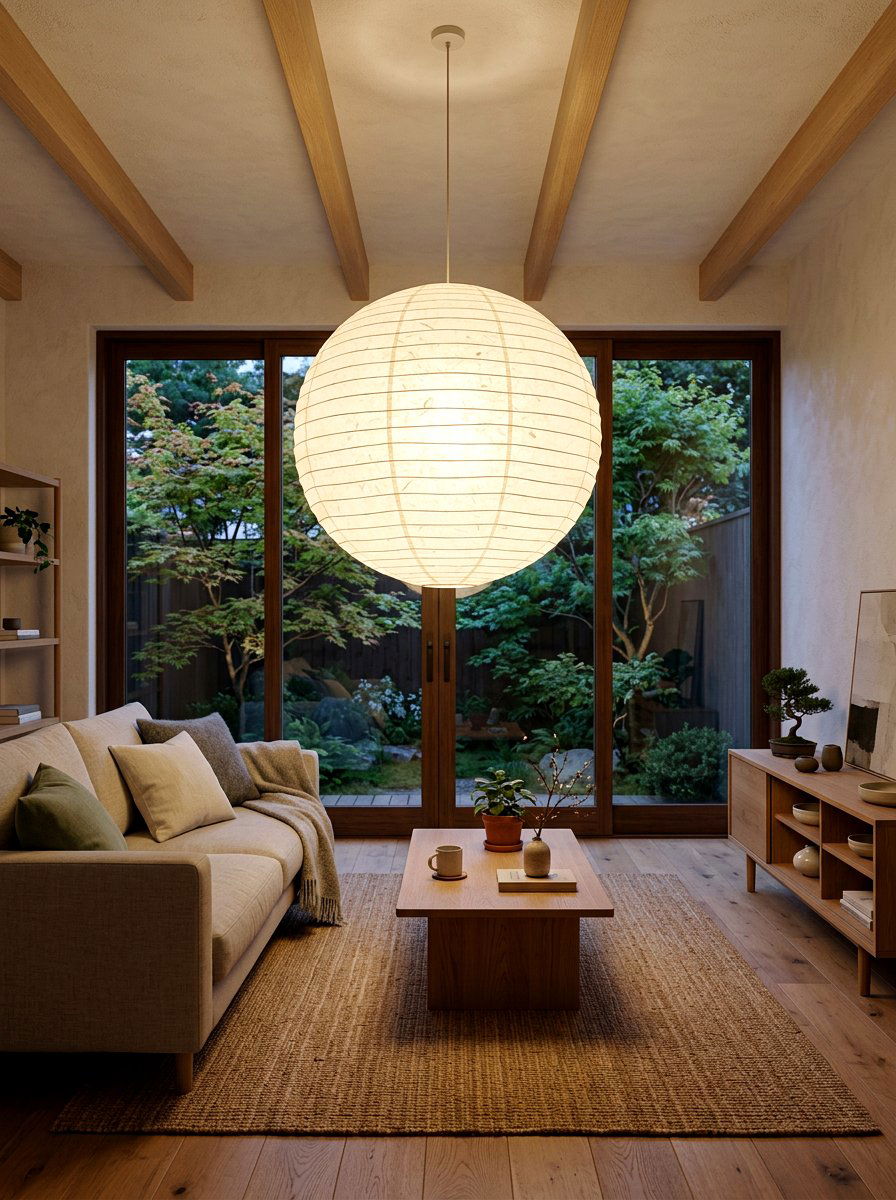
Is there anything more iconic in a minimalist space than the soft, glowing light of a traditional paper lamp? A large paper lantern serves as a stunning focal point while providing gentle, indirect illumination that never feels harsh or cold. These oversized light fixtures are often inspired by the famous Akari designs and bring a sense of weightless elegance to the ceiling. The translucent washi paper diffuses the light perfectly, creating a warm ambiance that is essential for a relaxing evening at home. Whether you hang a single giant globe or a cluster of different shapes, these lanterns tie the entire Japanese-Scandi aesthetic together with ease.
6. Indoor Tree Decor
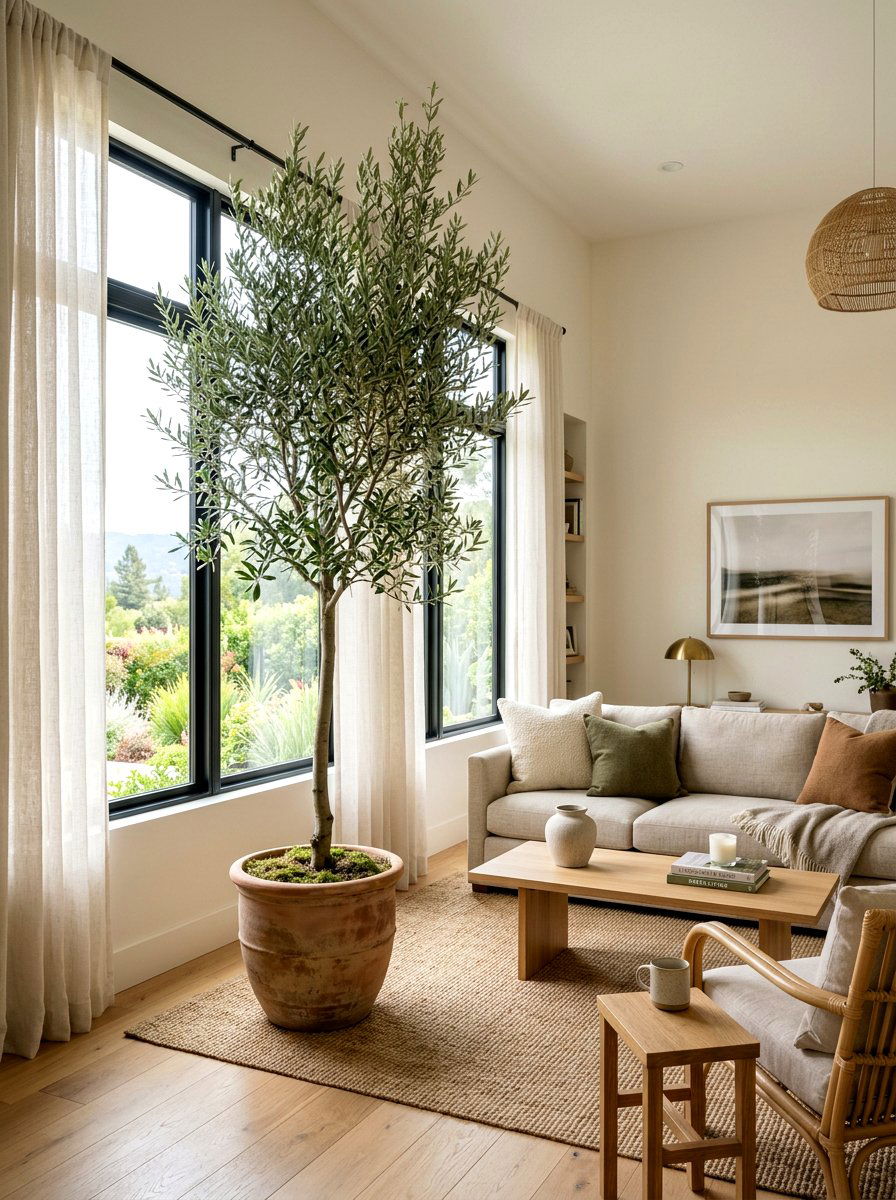
How can you bring the refreshing energy of the great outdoors into your main sitting area? Indoor tree decor, such as a tall Fiddle Leaf Fig or a delicate Japanese Maple, adds a vibrant touch of life. Placing a large potted tree in a corner creates a vertical element that softens the clean lines of the furniture. The green leaves provide a natural pop of color that perfectly complements a neutral palette of beige and wood tones. Using a simple ceramic or stone pot keeps the look cohesive and grounded. This biophilic design choice not only improves the air quality but also fosters a deep, calming connection to nature.
7. Natural Oak Coffee Table
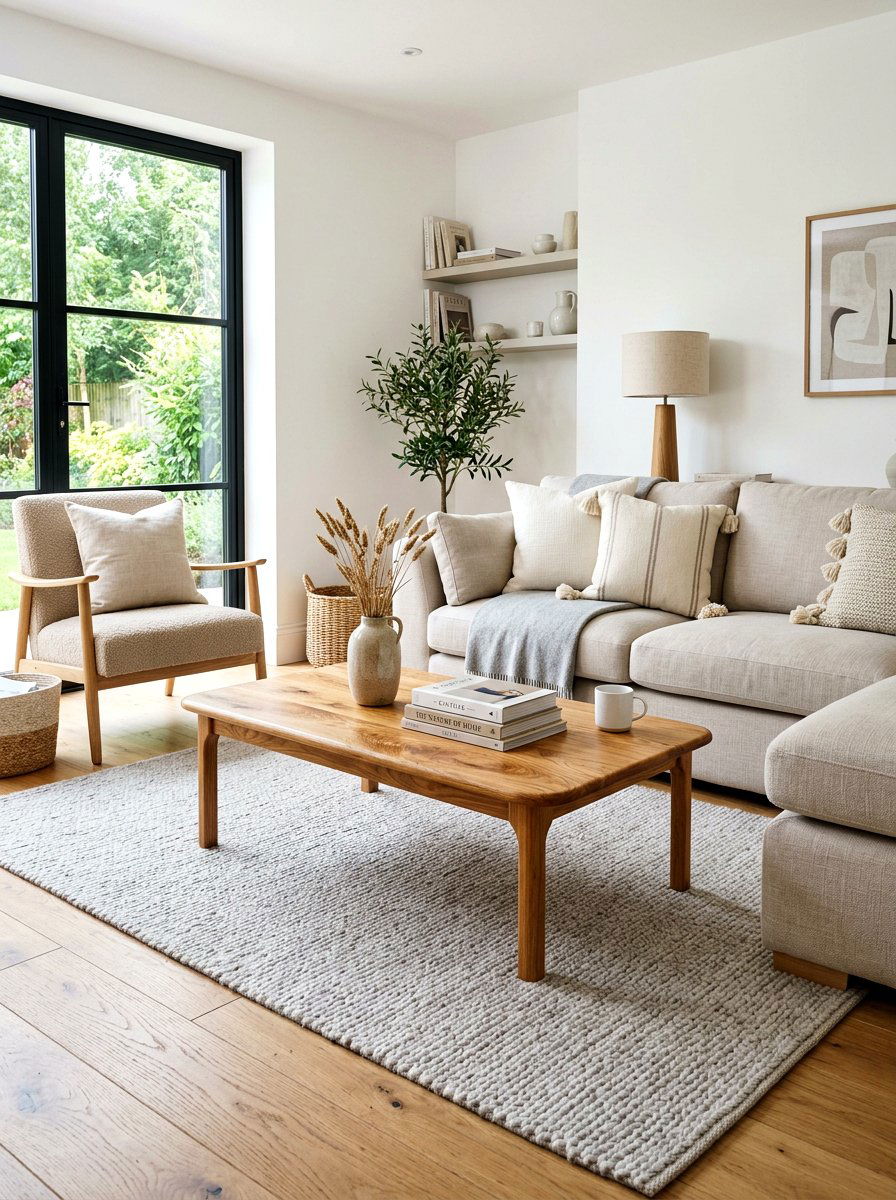
Why is wood such a central part of creating a welcoming and functional home environment? A natural oak coffee table brings a sense of durability and organic warmth to the center of your seating arrangement. The light, golden tones of oak are a classic Scandinavian element that makes the room feel bright and cheerful even on cloudy days. Look for designs with rounded edges or a simple rectangular shape to maintain the minimalist vibe of the room. A solid wood piece becomes a tactile center point where you can place a single book or a ceramic vase. This material ages beautifully, developing a unique character that enhances the room.
8. Beige Sectional Sofa
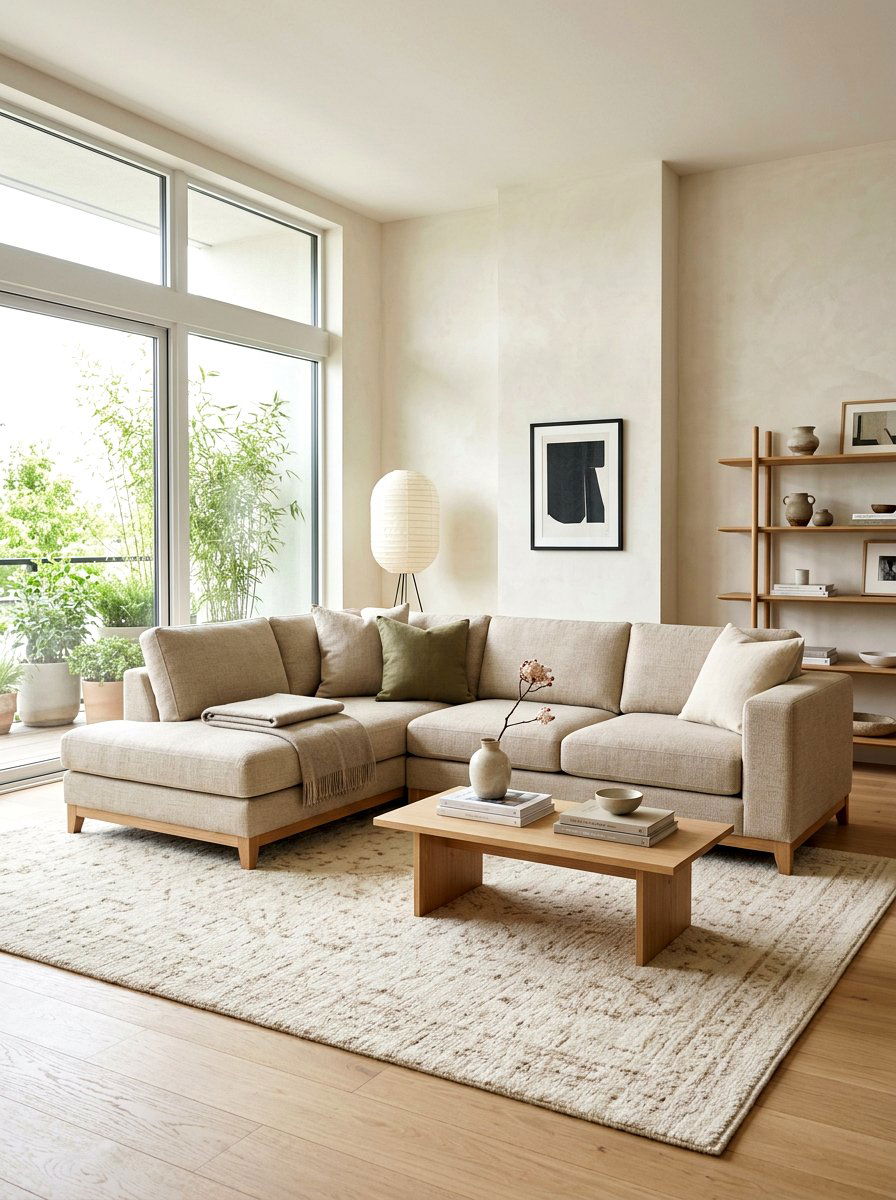
Can a large piece of furniture actually make a room feel more organized and peaceful instead of cramped? A beige sectional sofa provides ample seating while blending seamlessly into the neutral walls and flooring of a Japandi space. Choosing a fabric with a visible weave, like linen or heavy cotton, adds necessary texture without the need for loud colors. The sectional shape helps define the living area within an open floor plan, creating a cozy nook for family gatherings. By keeping the color light, the sofa feels less heavy and bulky, allowing the rest of the room to remain open, airy, and visually light.
9. Linen Curtains Living Room
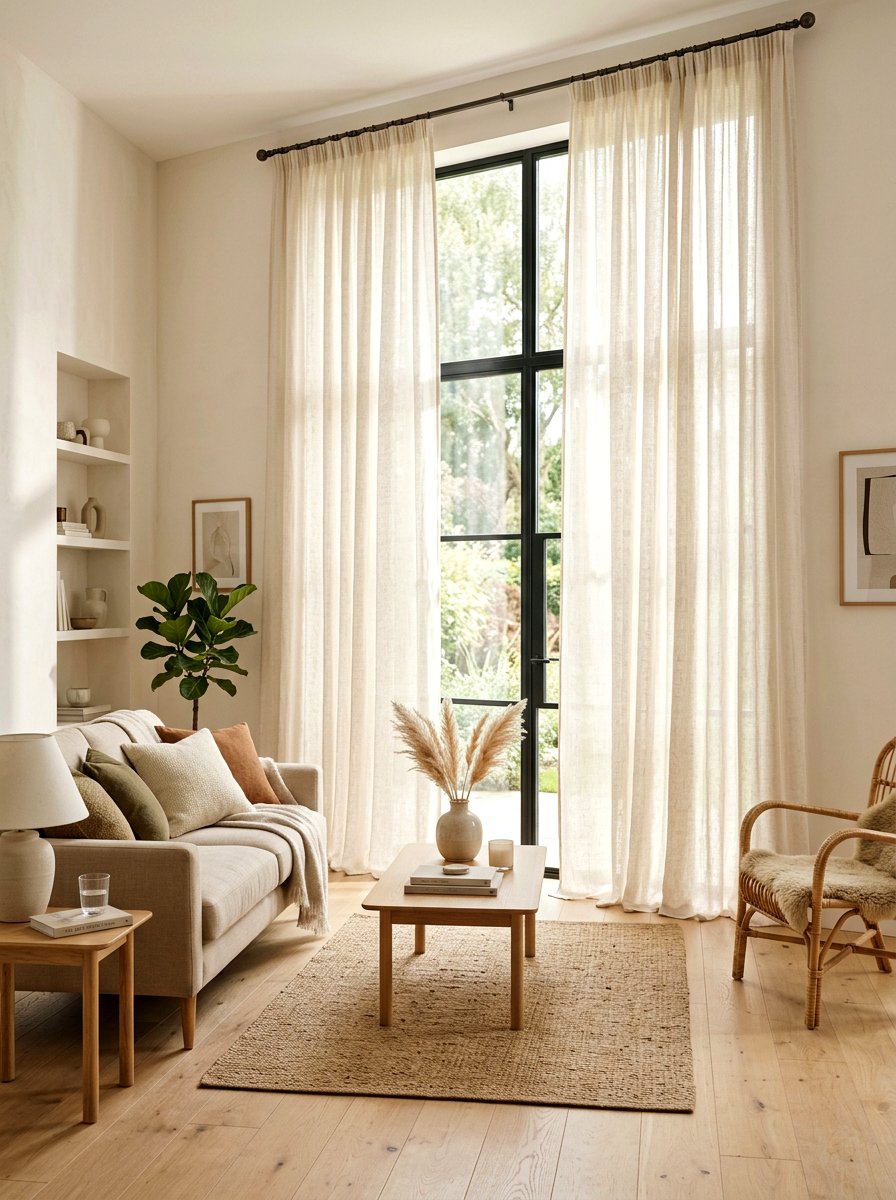
Do you want to enjoy natural sunlight without the glare and heat that often comes with bare windows? Linen curtains for the living room offer a soft, breezy way to filter light while maintaining a high level of privacy. The natural texture of linen is a key element in both Scandi and Japanese design, providing a relaxed and organic feel. These drapes should hang loosely to the floor to create a sense of height and elegance in the room. By choosing shades of off-white or oatmeal, you ensure that the window treatments complement the rest of your neutral decor perfectly and never feel too heavy.
10. Black Accent Furniture
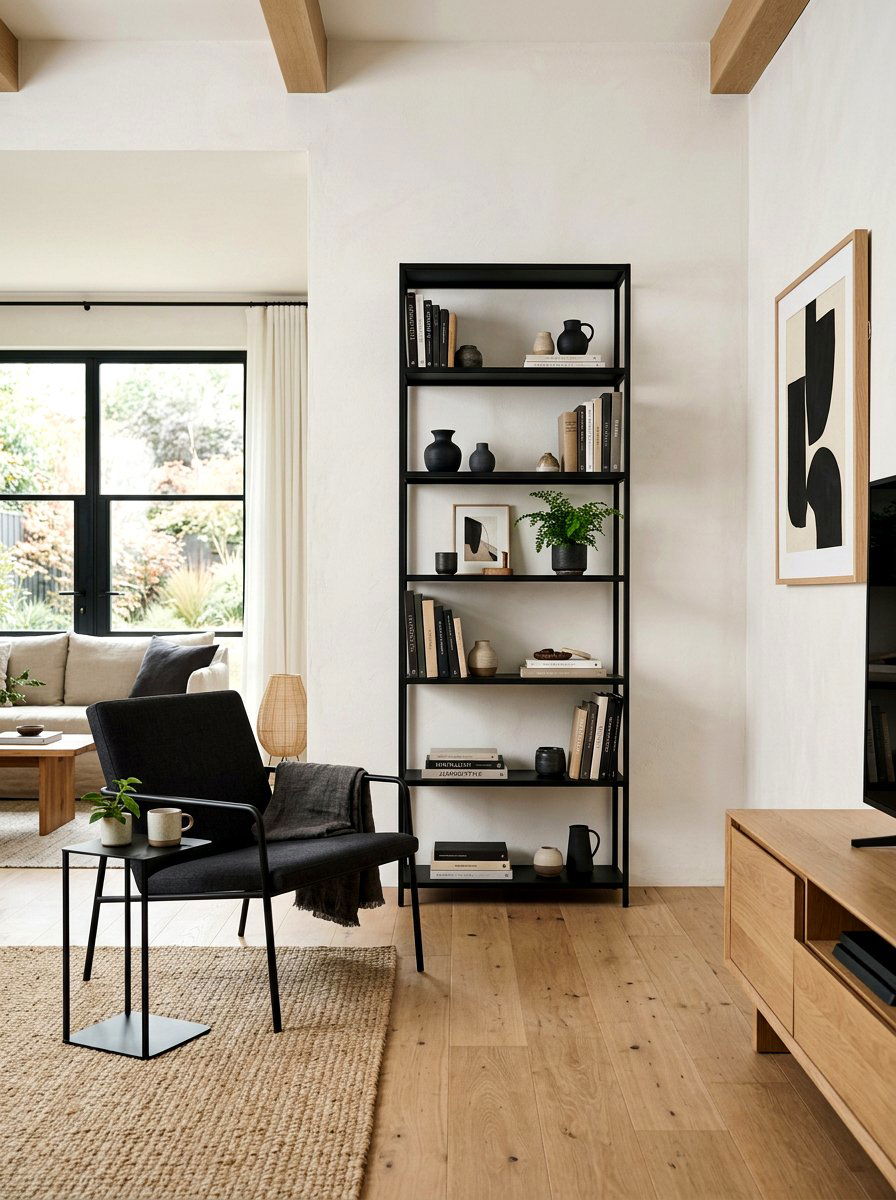
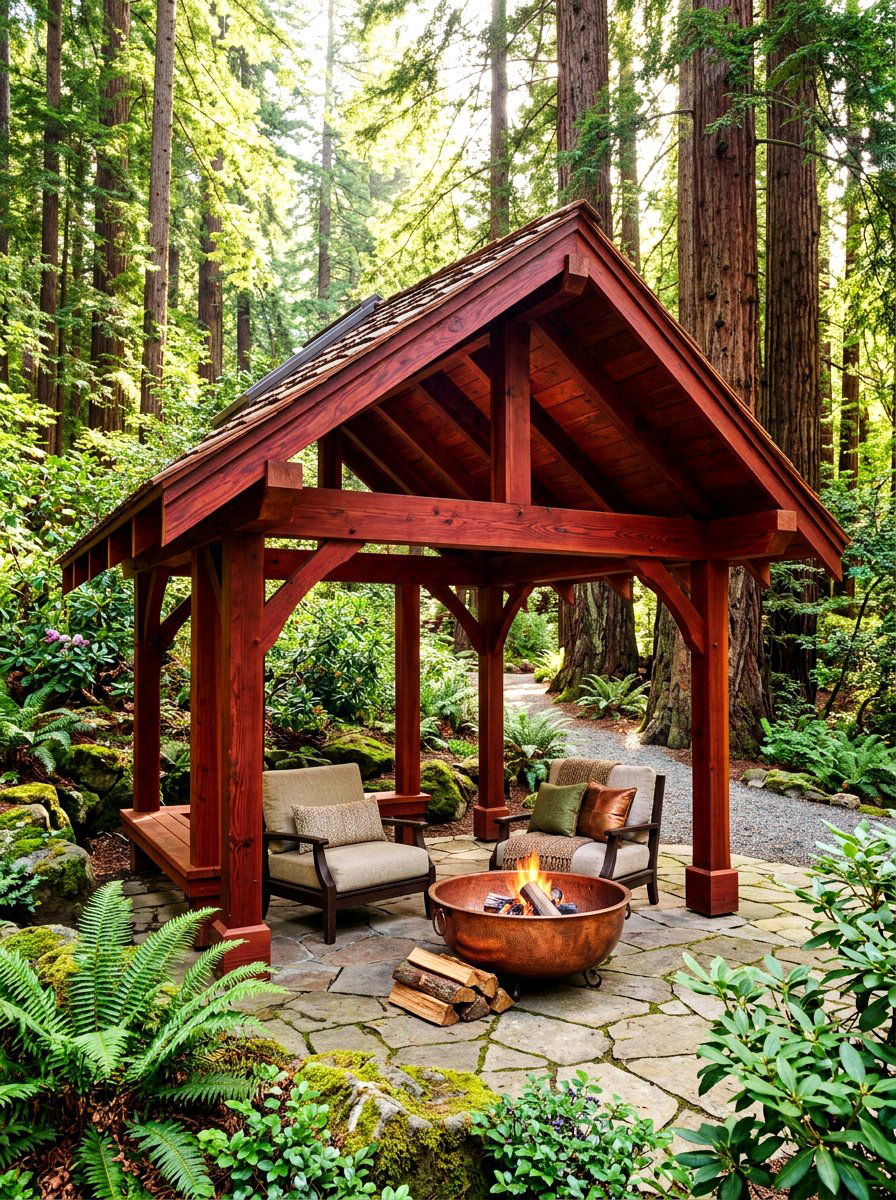
How do you add depth and visual interest to a room that is primarily filled with light colors? Black accent furniture, such as a slim metal bookshelf or a dark stained chair, provides a necessary contrast that grounds the space. This use of dark tones is a common technique in Japanese interiors to create a sense of sophistication and modern elegance. A few well-placed black items prevent the room from looking washed out or flat by drawing the eye to specific areas. It is important to use these accents sparingly so they don't overwhelm the airy feel of the Japandi style, maintaining a perfect balance.
11. Stone Material Coffee Table
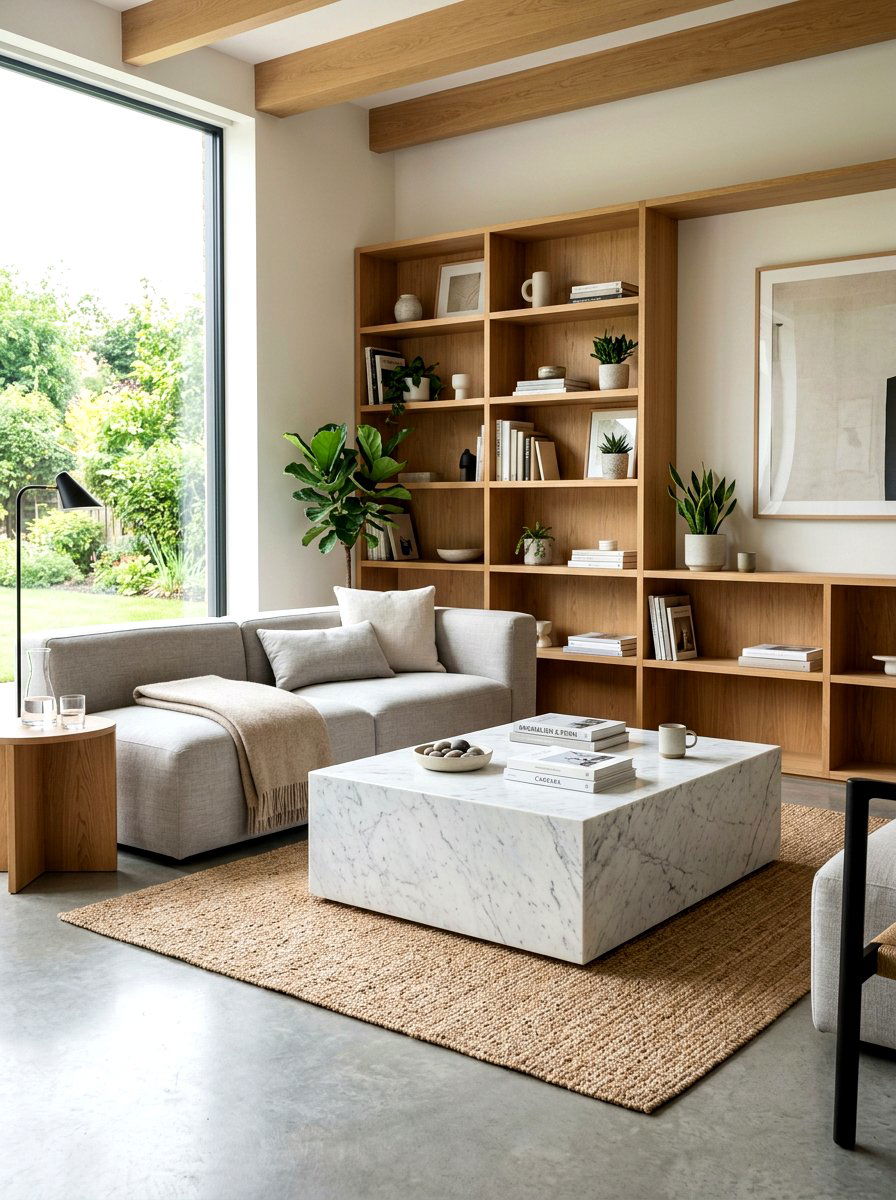
What happens when you bring the solid, permanent feeling of natural stone into your indoor living environment? A stone material coffee table, made from marble, travertine, or concrete, adds an earthy and luxurious element to the room. The cool surface of the stone contrasts beautifully with the warm wood tones of the flooring and other furniture pieces. Because stone has unique veining and natural patterns, no two tables are exactly the same, celebrating the beauty of nature. This heavy, durable material provides a sense of stability and permanence that is very grounding. It serves as a functional piece of art that anchors the entire seating area.
12. Wool Area Rug
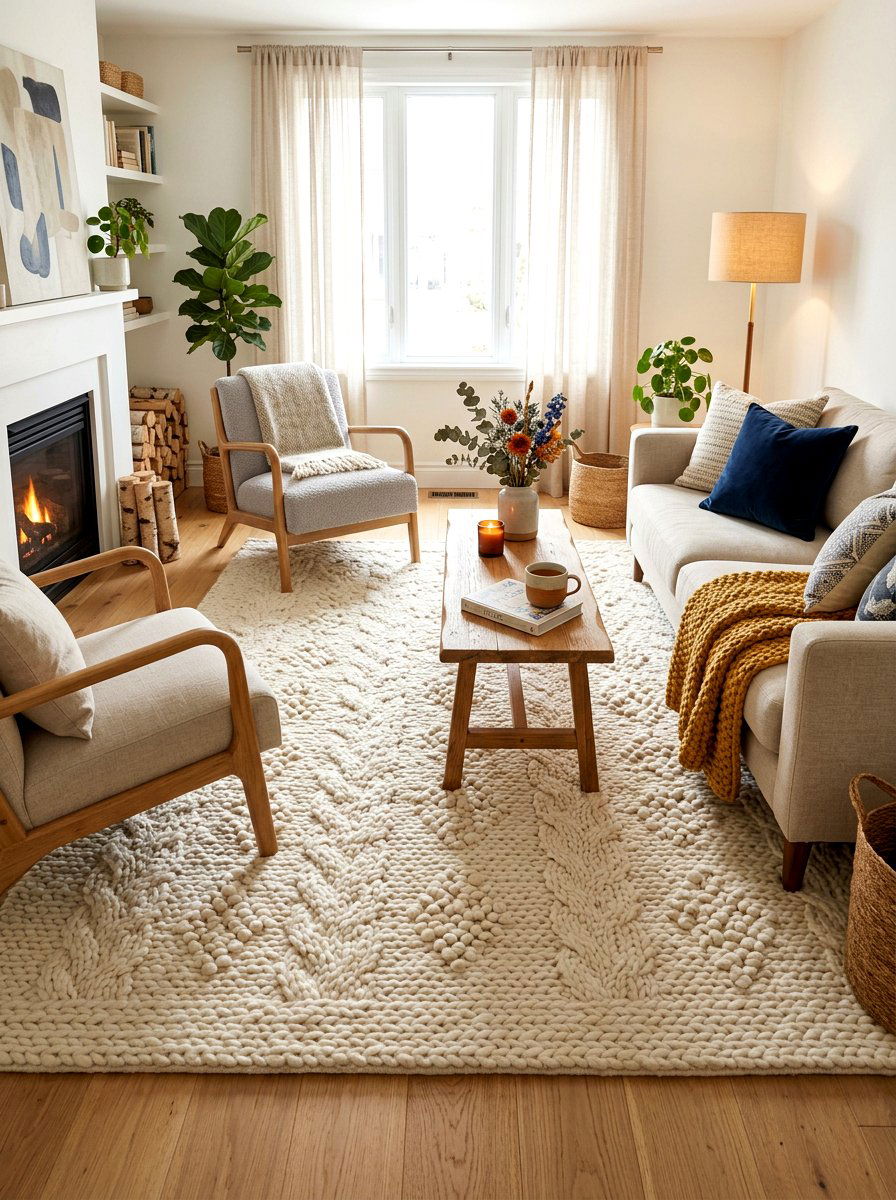
Is there anything better than the feeling of a soft, natural fiber under your feet when you wake up? A wool area rug adds a layer of essential warmth and comfort that is a core part of the Scandinavian concept. Choosing a rug with a high pile or a chunky knit texture provides a cozy contrast to the smooth wood or stone surfaces in the room. Stick to neutral colors like cream or soft gray to keep the floor looking clean and spacious. A large rug also helps to define the conversation area and improves the room's acoustics by absorbing excess sound and echoes for a quieter home.
13. Open Floor Plan Space
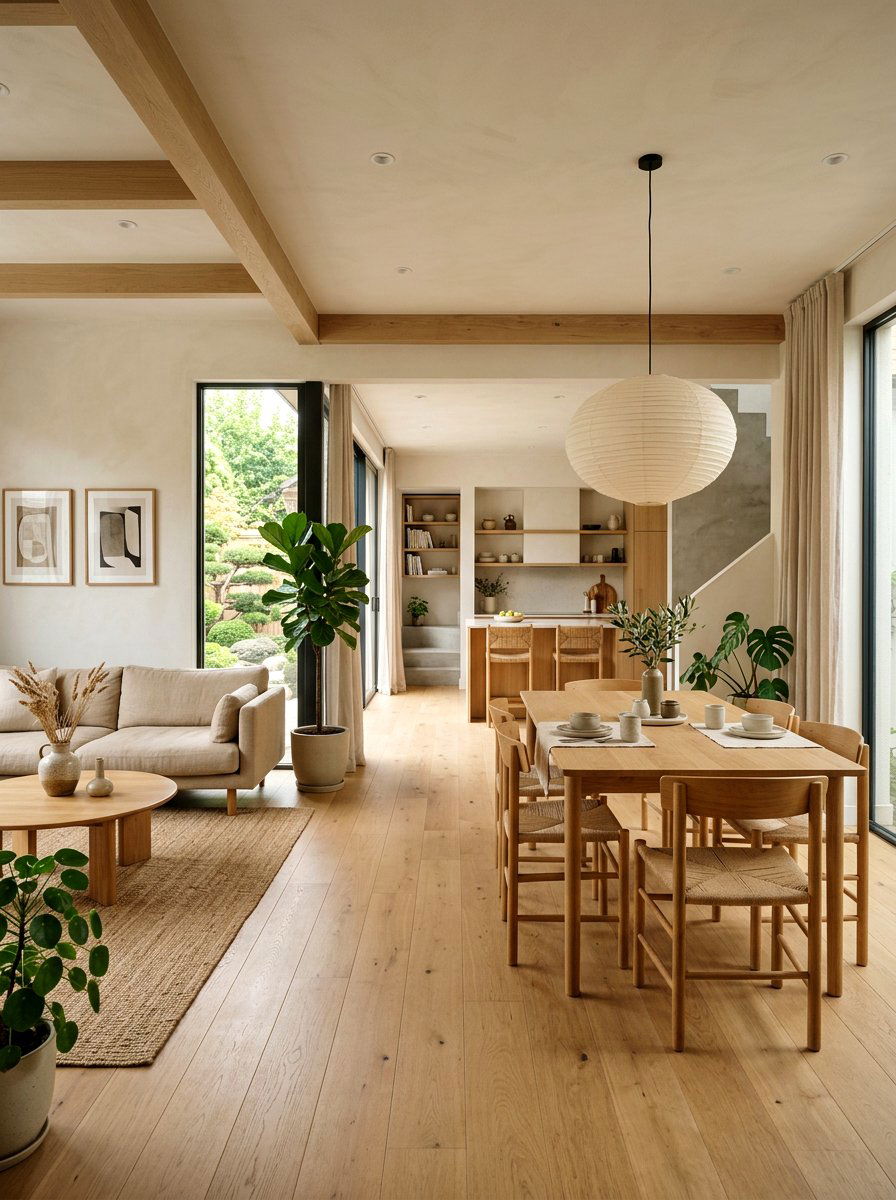
Why is the flow of air and movement so important in creating a home that feels truly relaxing? An open floor plan space allows light to travel freely from one end of the house to the other. In a Japandi living room, this means keeping the transitions between the kitchen, dining, and seating areas very subtle and unobstructed. Using consistent flooring and a unified color palette throughout the entire area helps to connect the different zones. This layout prioritizes a sense of freedom and prevents the home from feeling boxed in. It encourages a lifestyle of simplicity and social connection with your friends and family.
14. Bamboo Living Room Accents
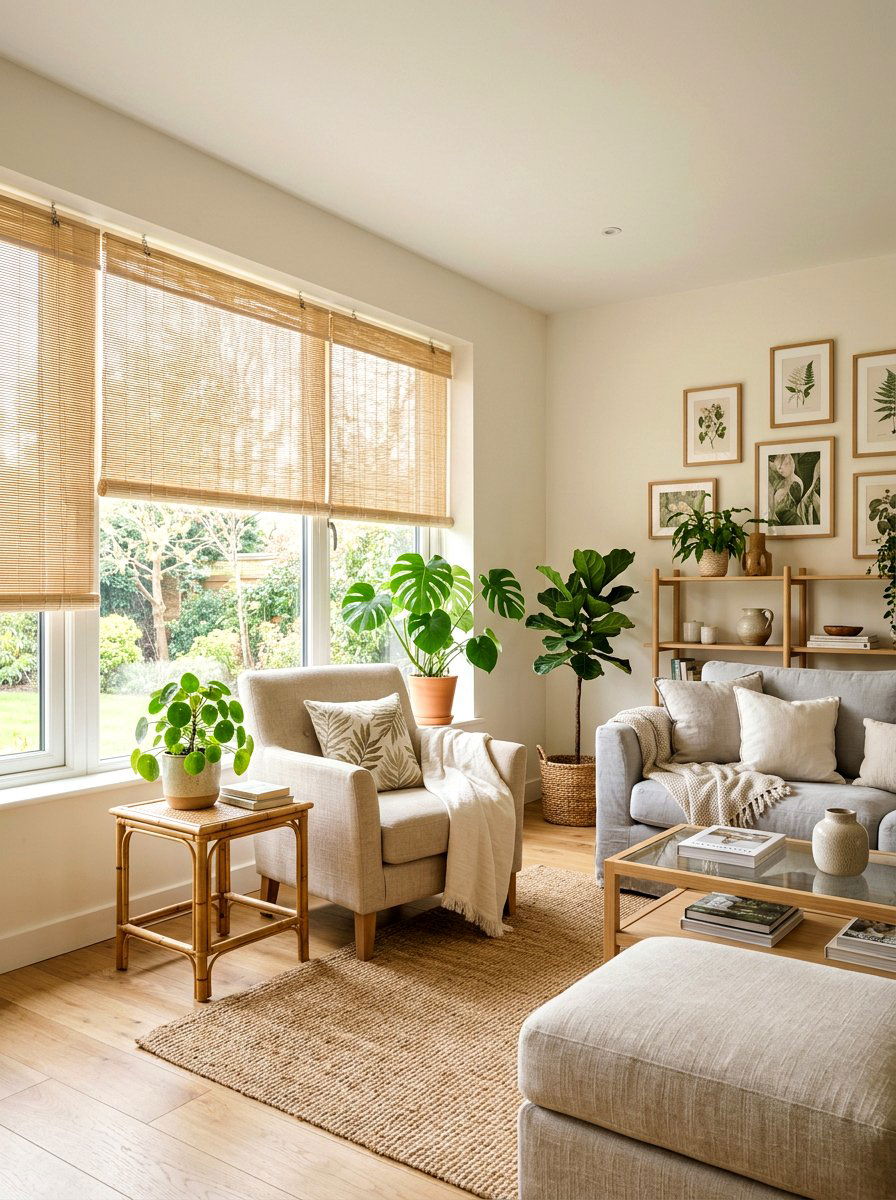
How can you incorporate sustainable materials that also look incredibly stylish and culturally significant? Bamboo living room accents, such as window blinds, side tables, or decorative trays, bring a lightweight and organic feel to the home. Bamboo is a fast-growing, eco-friendly resource that fits perfectly with the sustainable values of Japandi design. Its unique texture and light color provide a subtle nod to traditional Japanese craftsmanship while remaining modern and fresh. Using bamboo helps to break up larger surfaces of oak or walnut, adding a different type of wood grain to the mix. These accents are durable, beautiful, and add a refreshing natural energy.


15. Built In Bookshelf
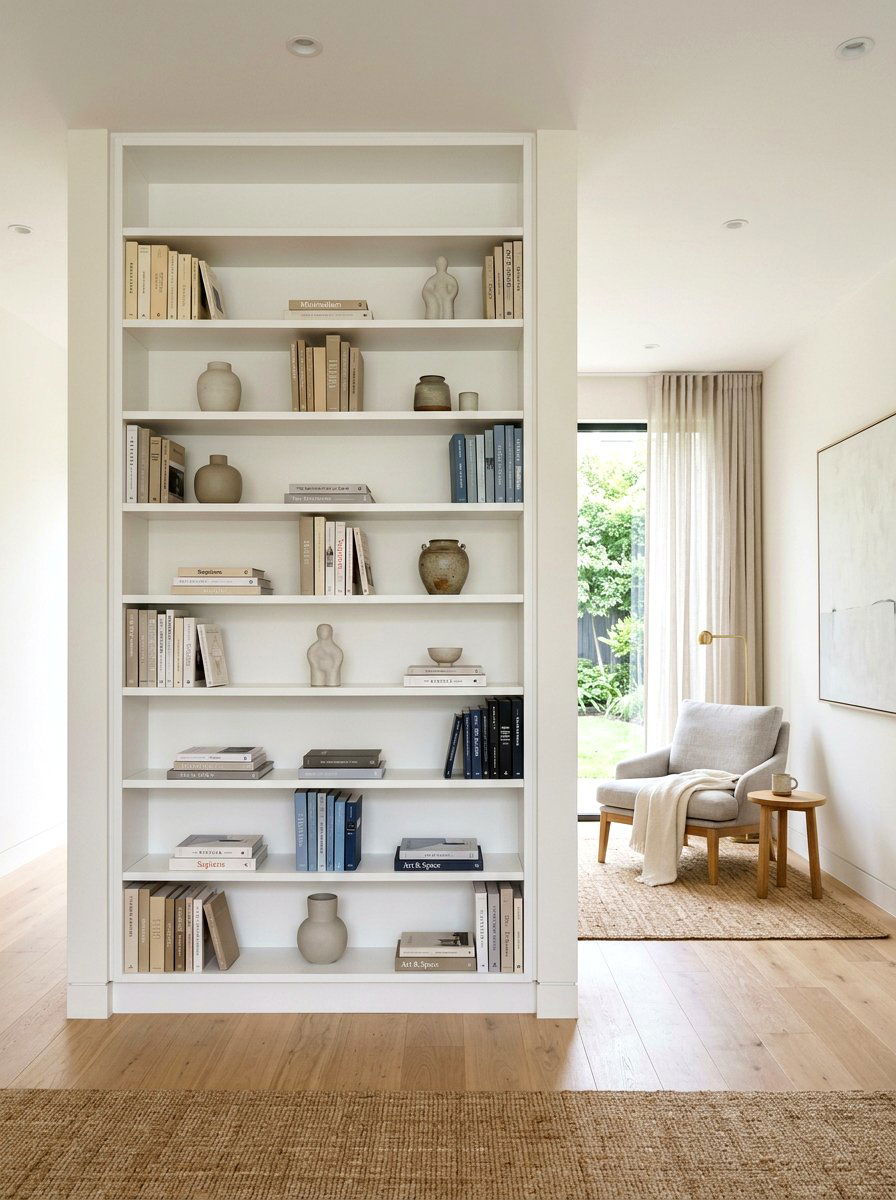
Can storage actually be a decorative element that makes your home feel more curated and less messy? A built-in bookshelf that stretches from floor to ceiling provides a clean way to display your favorite items without cluttering the floor. By painting the shelves the same color as the walls, you create a seamless look that integrates perfectly with the architecture of the room. Use the shelves to house a mix of books, handcrafted ceramics, and small plants for a balanced appearance. This organized approach to storage keeps the living room feeling tidy while still reflecting your personal style and interests in a very intentional way.
16. Large Picture Window
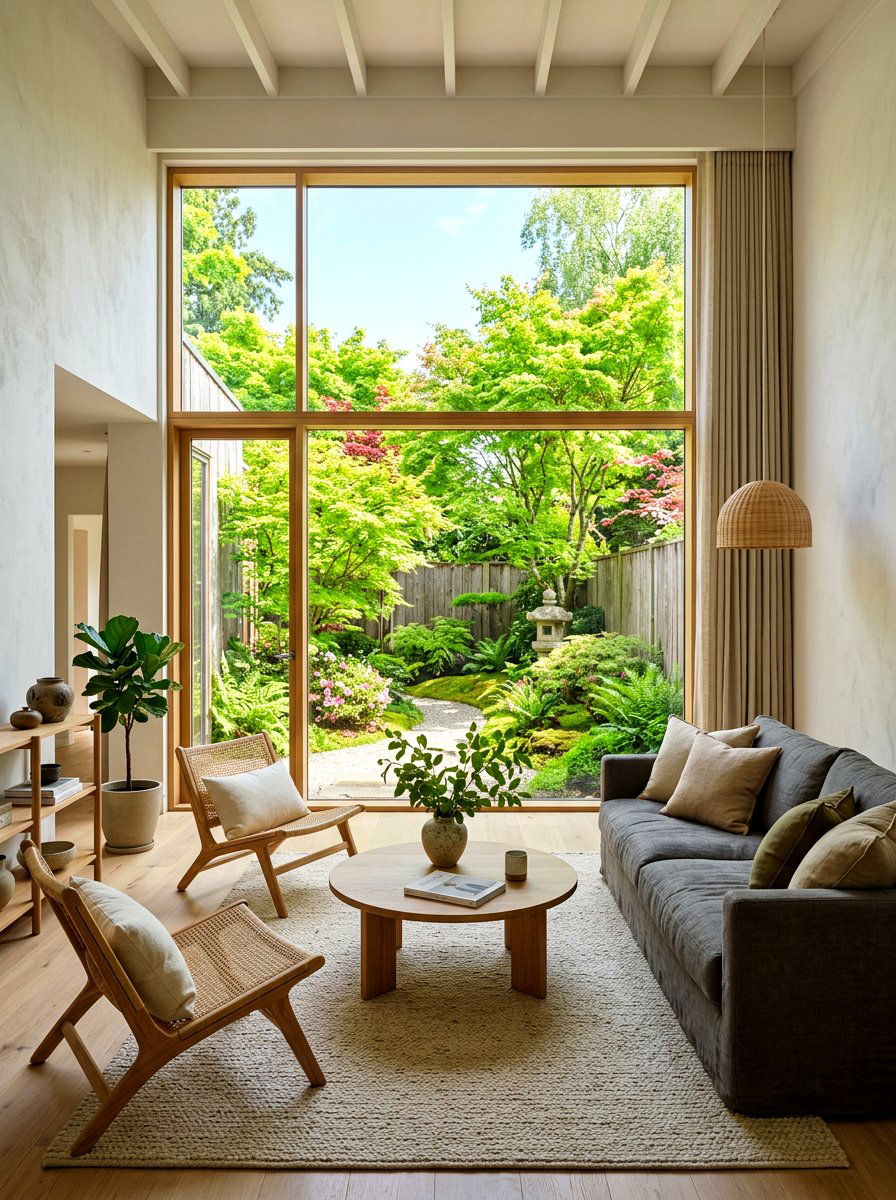
What if your wall was replaced with a giant view of the sky or your garden trees? A large picture window acts as a living piece of art that changes with the seasons and the time of day. This connection to the outside world is a fundamental part of the Japandi philosophy, which seeks to blur the lines between indoors and outdoors. Flooding the room with natural light reduces the need for artificial lamps during the day and improves your overall mood. Keeping the window frames simple and the view unobstructed ensures that the focus remains on the beauty of the natural landscape just outside your door.
17. Concrete Floor Interior
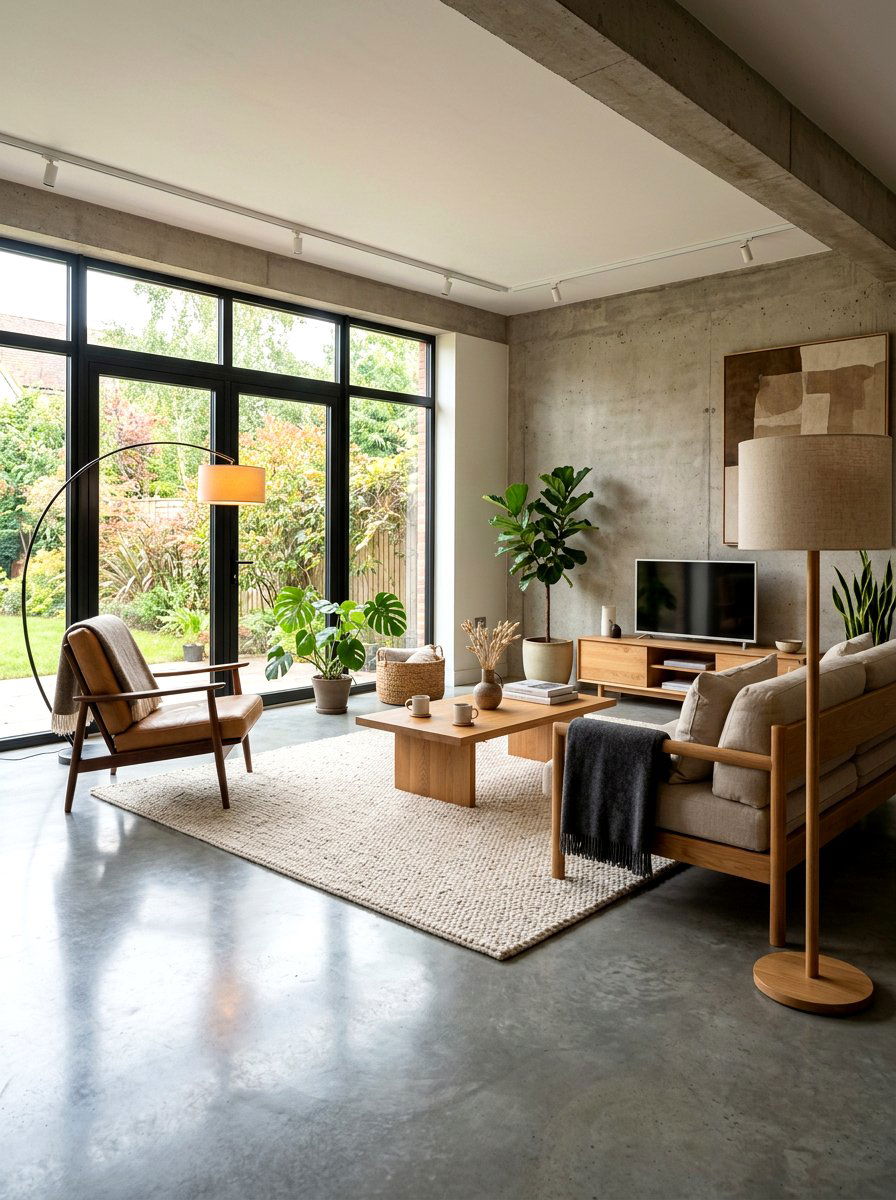
Can a material that is typically seen as cold and industrial actually feel warm and inviting in a home? A concrete floor interior provides a smooth, seamless surface that is incredibly easy to clean and maintain over time. When paired with warm wood furniture and soft wool rugs, the concrete acts as a neutral canvas that highlights the textures of the other items. The subtle gray tones of the floor provide a modern edge that balances the more traditional Japanese elements in the room. Concrete also has great thermal mass, helping to keep the living area cool in the summer and warm in the winter.
18. Slatted Wood Room Divider
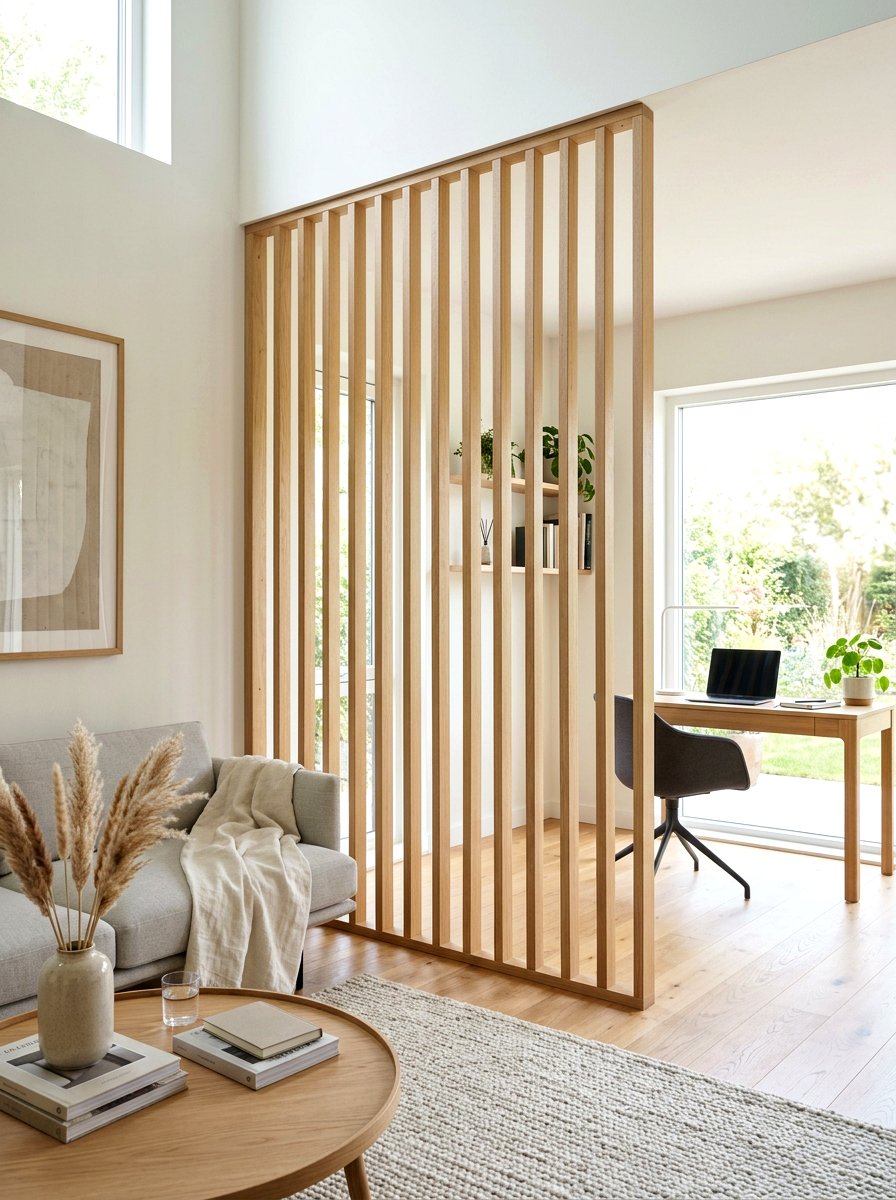
Do you need a way to separate different areas of your home without building heavy, permanent walls? A slatted wood room divider offers a stylish solution that maintains a sense of openness and light throughout the space. The vertical wooden bars create a visual barrier that provides privacy while still allowing you to see through to the next room. This architectural feature is deeply rooted in Japanese design and adds a beautiful rhythmic pattern to the interior. It is perfect for defining a home office or a dining nook within a larger living area. The warm wood adds texture and a cozy, architectural interest.
19. Rattan Chair Seating
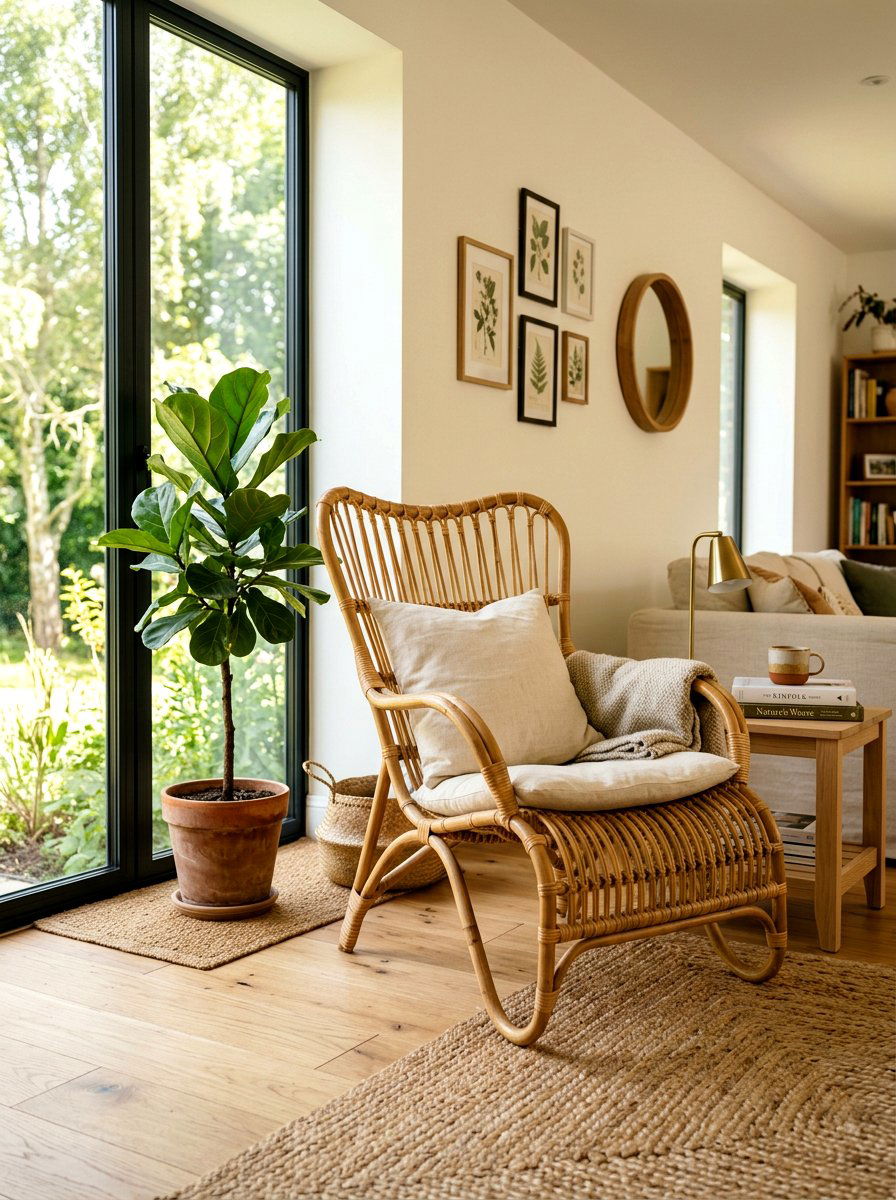
How do you add a sense of lightweight, tropical warmth to a room that feels a bit too structured? Rattan chair seating introduces a woven texture that is both comfortable and visually interesting to the eye. The natural honey color of rattan pairs beautifully with light oak and neutral fabrics like linen or cotton. Because these chairs are often handmade, they bring a sense of artisanal craftsmanship and human touch to the space. Their curved shapes help to soften the straight lines of minimalist sofas and tables. Rattan is also very durable, making it a practical choice for a busy living room used by family.
20. Neutral Abstract Wall Art
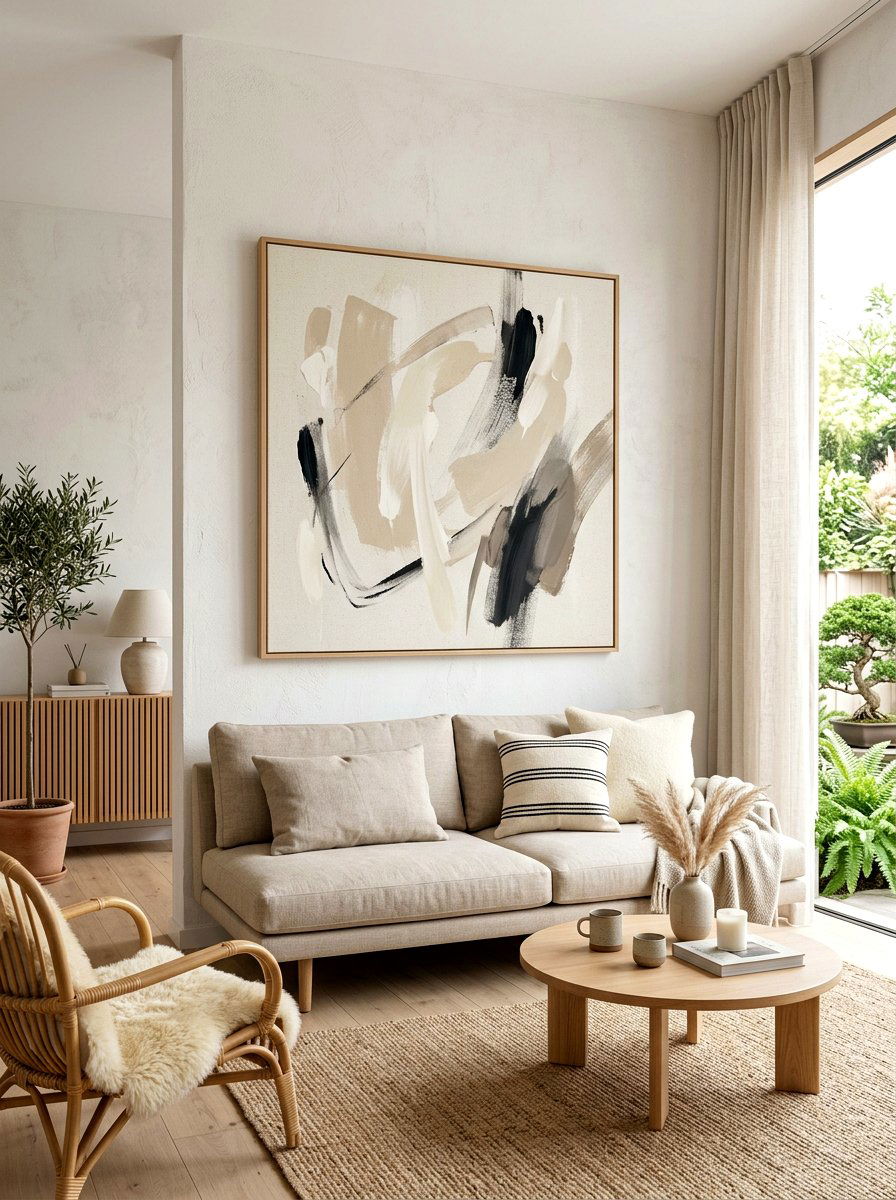
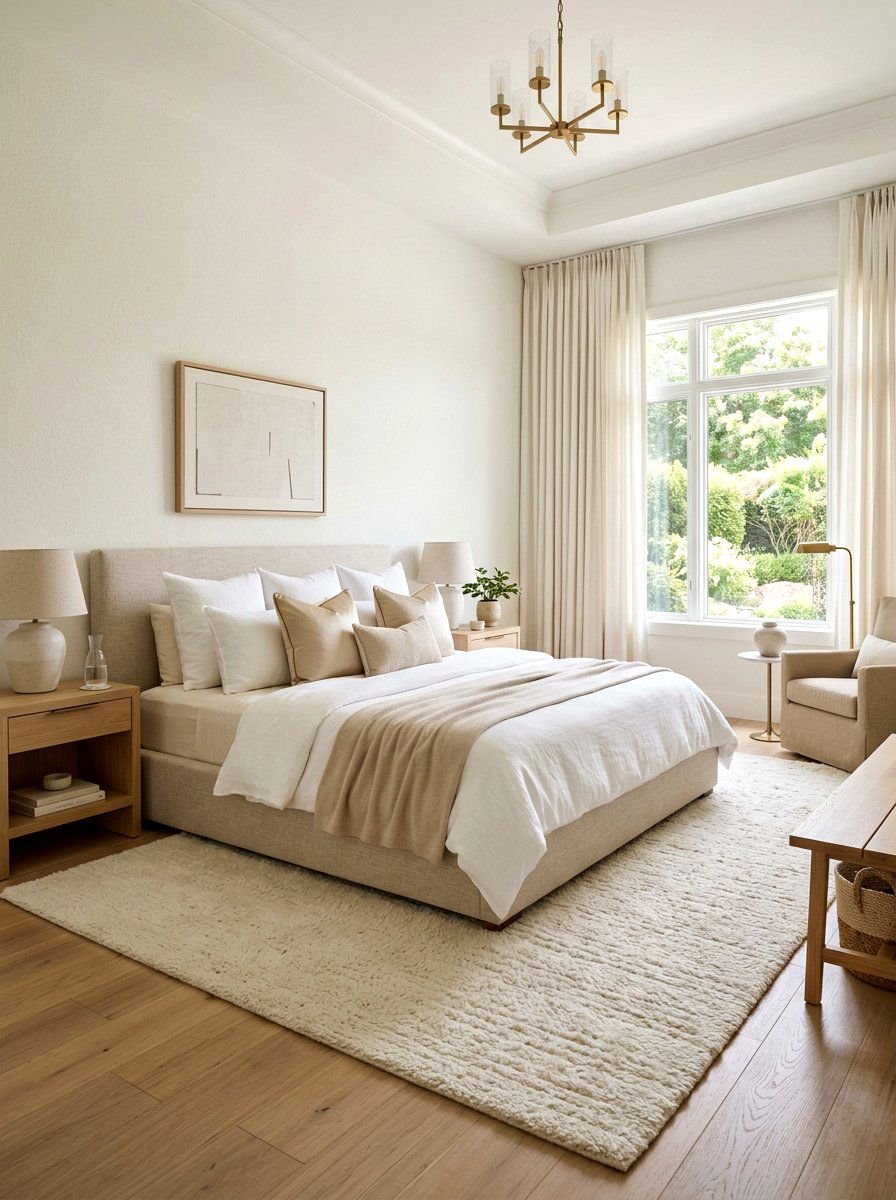
Is it possible to decorate your walls without making the room feel busy or visually loud? Neutral abstract wall art uses simple shapes, lines, and textures to add character without overwhelming the minimalist aesthetic of the home. Think of large canvases with subtle brushstrokes in beige, white, and black that invite quiet contemplation. This type of art complements the Japandi style by focusing on form and mood rather than detailed imagery or bright colors. Hanging a single large piece creates a sophisticated focal point that ties all the different elements of the room together. It provides a sense of personality while maintaining a serene vibe.
21. Low Seating Floor Cushion
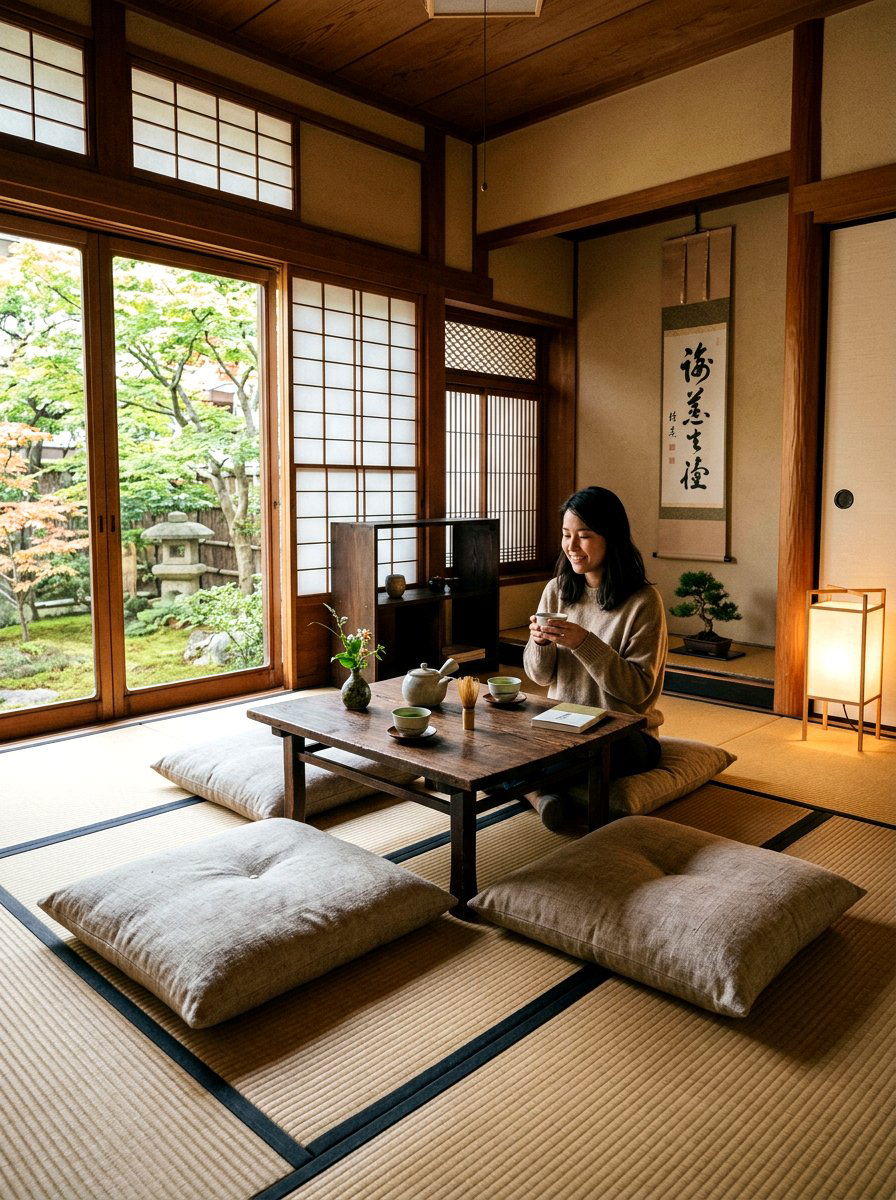
Why not embrace a more relaxed and informal way of lounging that brings you closer to the earth? A low seating floor cushion, or zabuton, is a wonderful way to add extra comfort and a traditional Japanese touch. These thick, soft cushions can be used for meditation, reading, or simply chatting with friends around a low coffee table. They are easy to move around and can be tucked away when not in use to keep the floor clear. Choosing cushions in natural fabrics like linen or heavy canvas ensures they feel high-quality and durable. This seating style encourages a slower, more mindful pace of life.
22. Ceramic Vase Decor
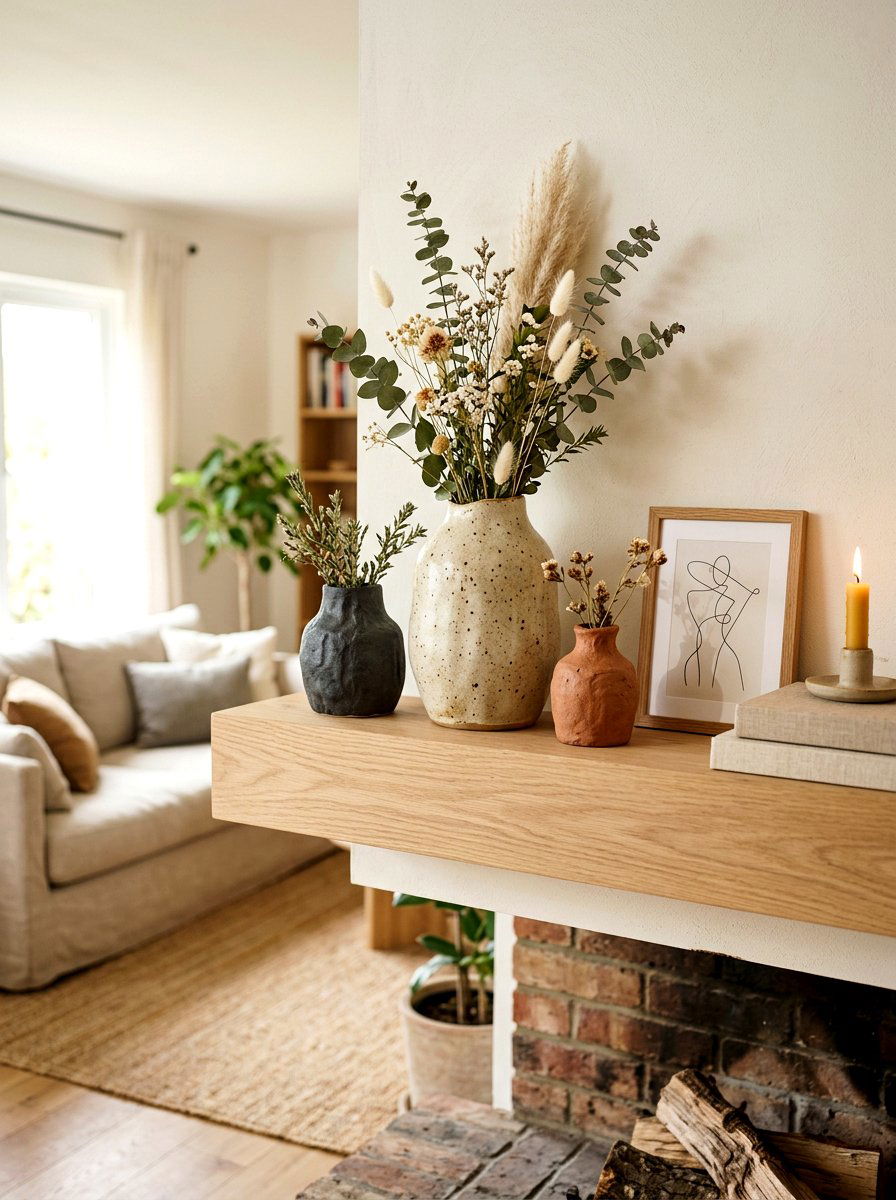
How can small accessories make a big impact in a room that values simplicity above all else? Ceramic vase decor in organic, handmade shapes provides a tactile and artistic element to your shelves or tables. Look for vases with matte finishes and earthy colors like terracotta, sand, or charcoal to stay within the Japandi palette. Placing a single dried branch or a few fresh flowers in a vase adds a natural touch that changes with the seasons. These items celebrate the beauty of handcrafted goods and the small imperfections that make them unique. They act as quiet statements of beauty that don't need to shout.
23. Clay Plaster Walls
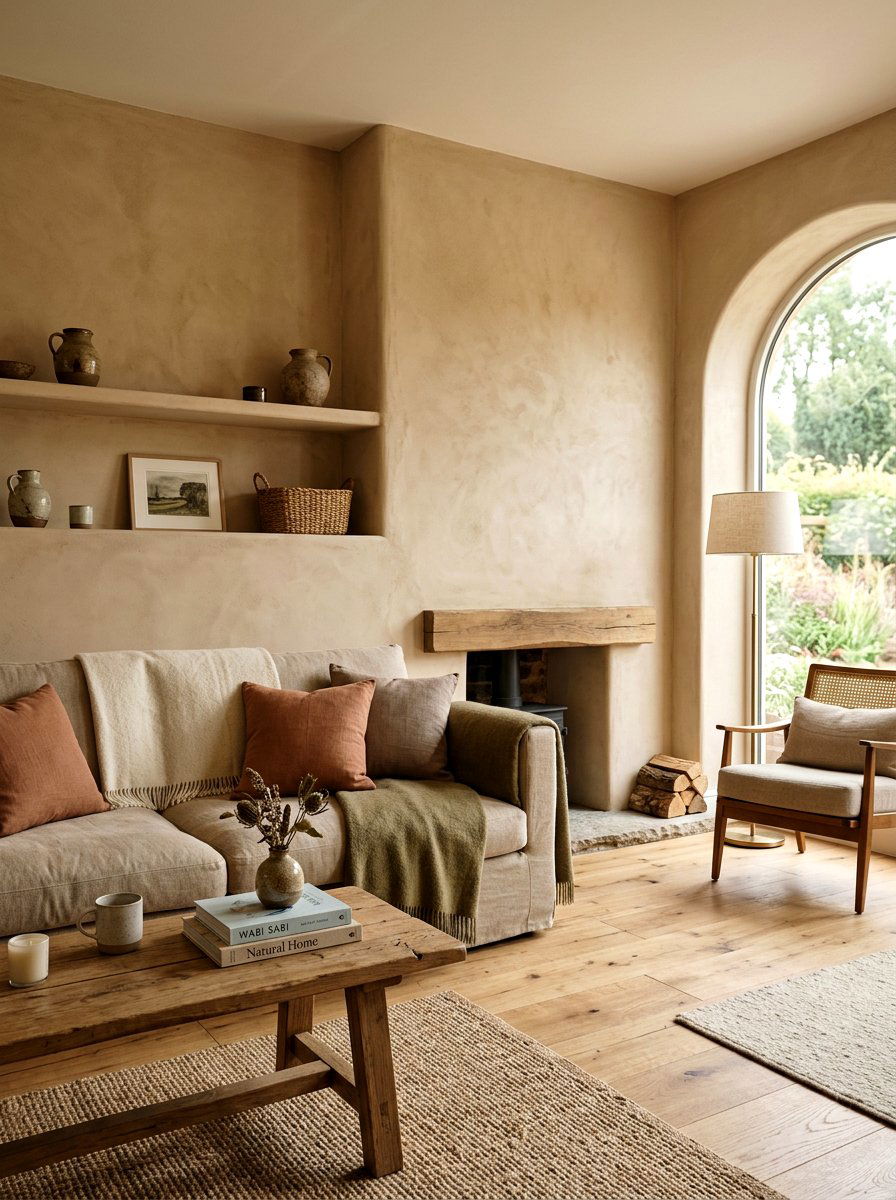
What if your walls felt like they were made of the earth itself, providing a warm and protective atmosphere? Clay plaster walls are an eco-friendly alternative to traditional paint that offers a unique, velvety texture and a natural matte finish. This material is breathable and helps to regulate humidity in the room, making the indoor environment much healthier and more comfortable. The soft, uneven surface catches the light in a way that creates subtle shadows and a sense of depth. It is a perfect choice for those who want to create a space that feels grounded, authentic, and connected to the natural world.
24. Minimalist Fireplace
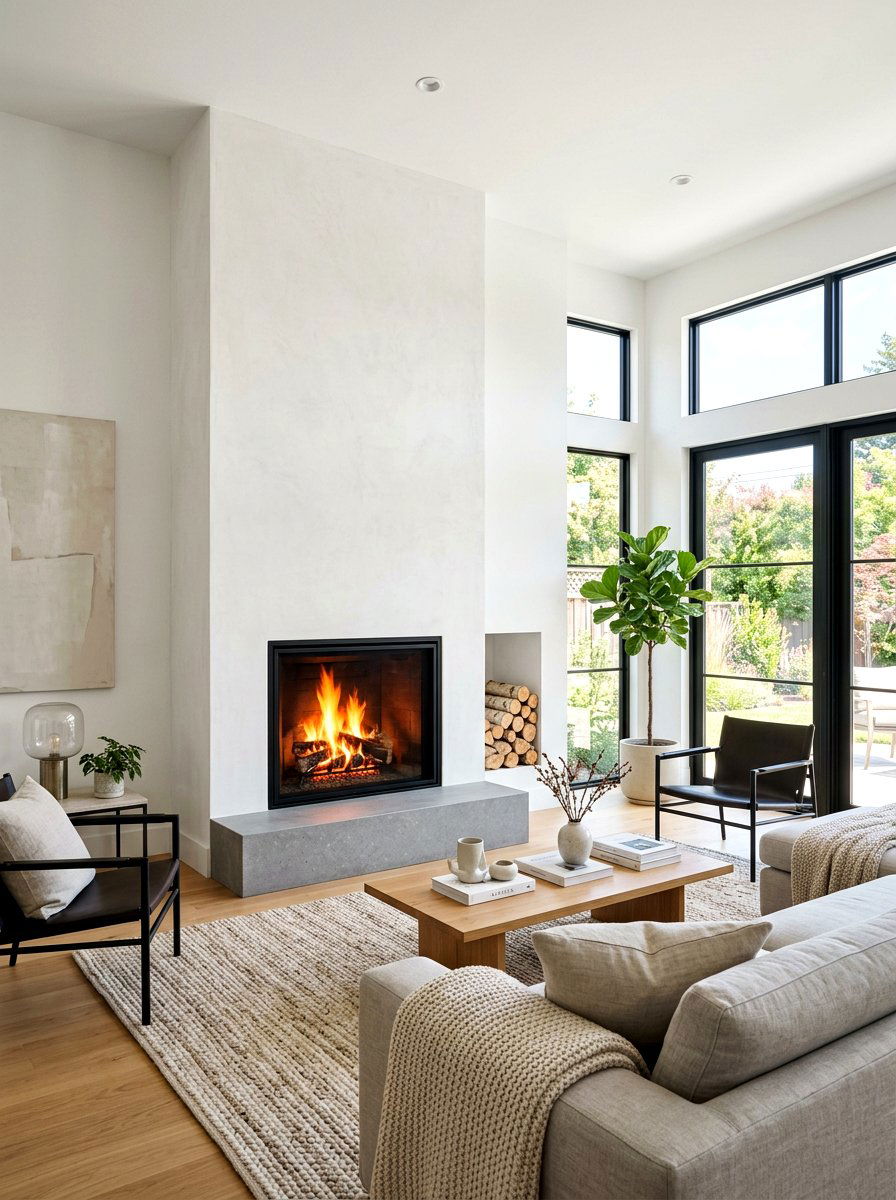
Can a fireplace be a modern architectural feature that adds warmth without looking old-fashioned or overly rustic? A minimalist fireplace features clean lines and a simple hearth that integrates seamlessly into the wall of your living room. Instead of a busy mantel, consider a smooth plaster finish or a subtle stone surround that keeps the focus on the flames. This design choice provides a cozy center for the room during cold winter months while maintaining the tidy, uncluttered look of Japandi style. The warm glow of the fire creates a beautiful contrast with the cool, neutral tones of the surrounding furniture and decor items.
25. Soft Indirect Lighting
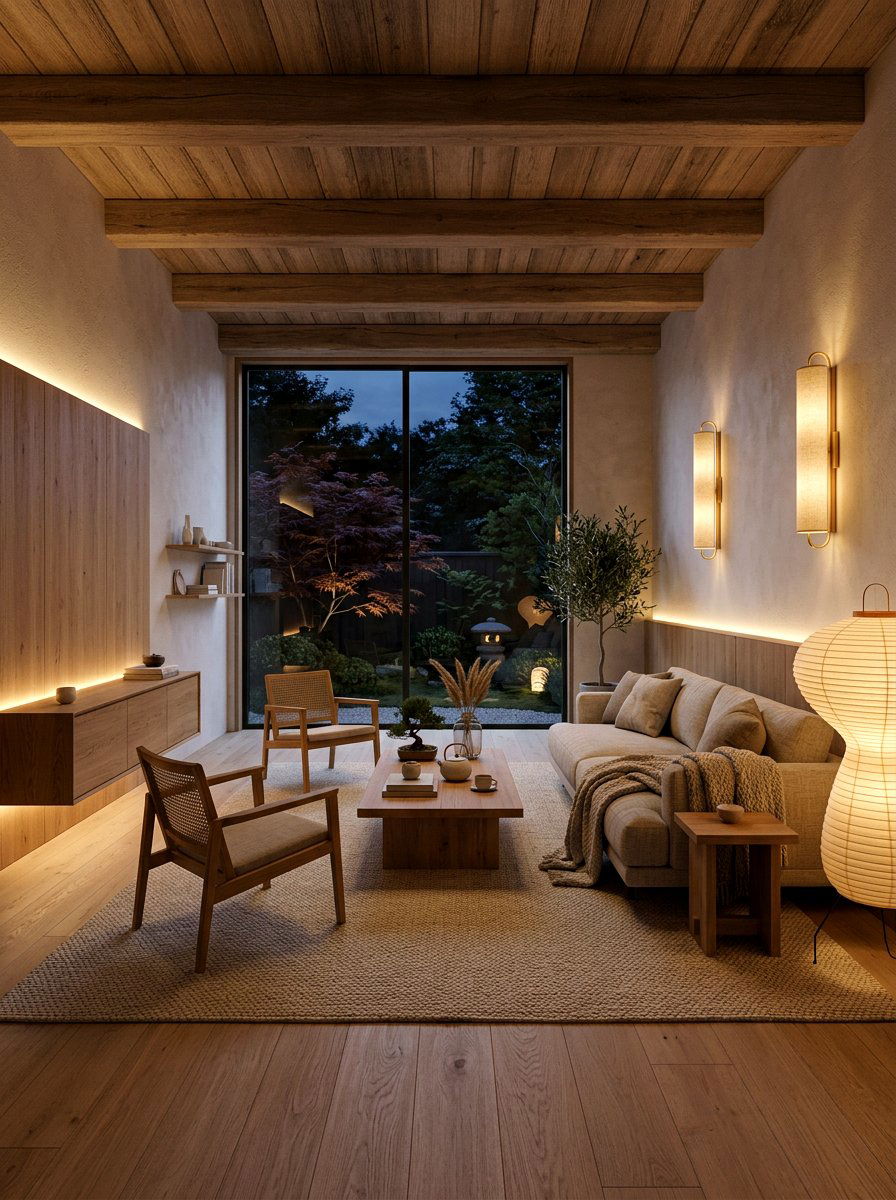
How do you create a relaxing evening mood that makes everyone feel immediately at ease in your home? Soft indirect lighting uses hidden LED strips, floor lamps, and wall sconces to bounce light off the walls and ceiling. This prevents harsh shadows and bright glares that can make a room feel cold or clinical at night. In a Japandi living room, the goal is to create a warm, layered glow that feels like a gentle embrace. Using warm-toned bulbs and dimmers allows you to adjust the ambiance to suit different activities, whether you are hosting a dinner party or enjoying a quiet book.
26. Dark Wood Interior
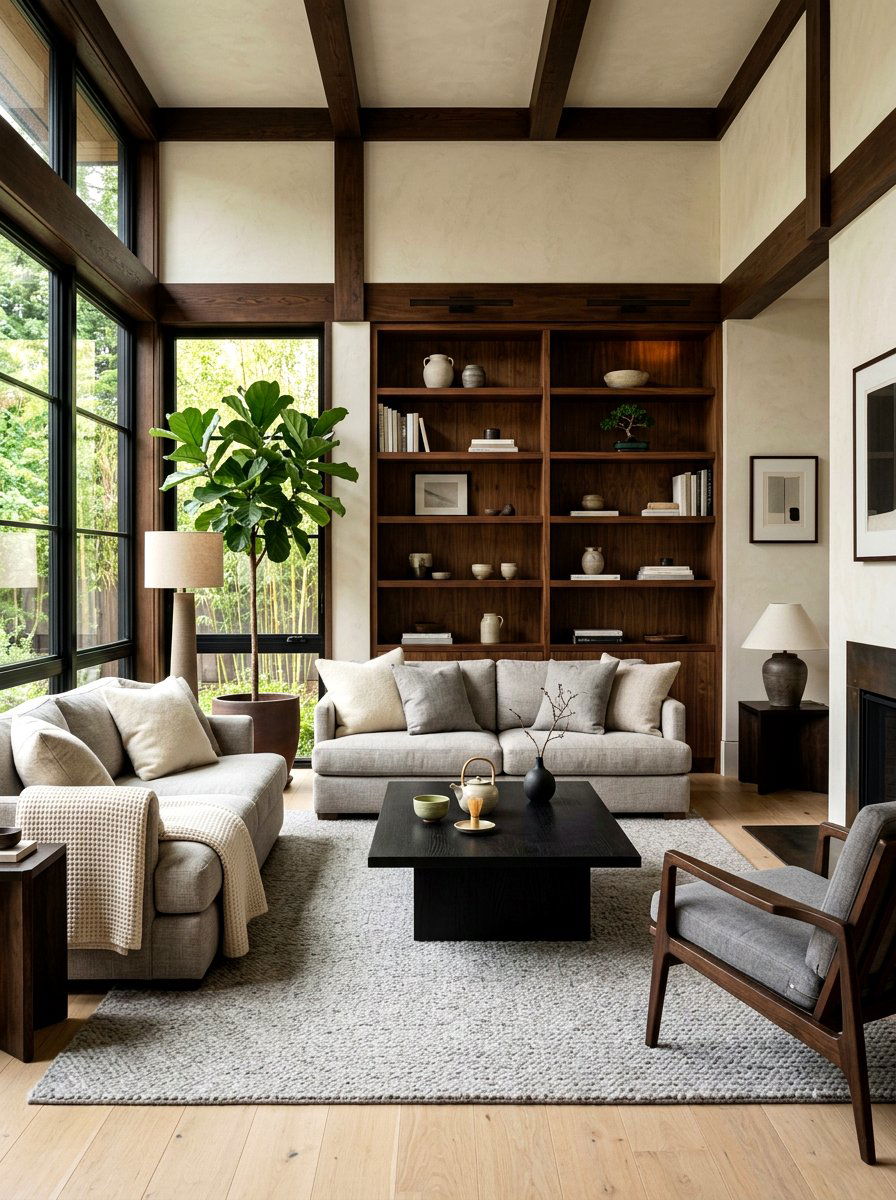
While many people think of Japandi as only using light colors, did you know that dark wood can add a stunning layer of luxury? A dark wood interior, featuring walnut or charred cedar accents, brings a sense of history and depth to the room. Using darker timber for a media console or a set of chairs provides a grounded feeling that contrasts beautifully with light walls. This look is heavily influenced by traditional Japanese architecture, which often uses rich, dark tones to create a sense of permanence. It adds a masculine, sophisticated edge to the space while still feeling warm and very natural.
27. Cozy Hygge Reading Nook
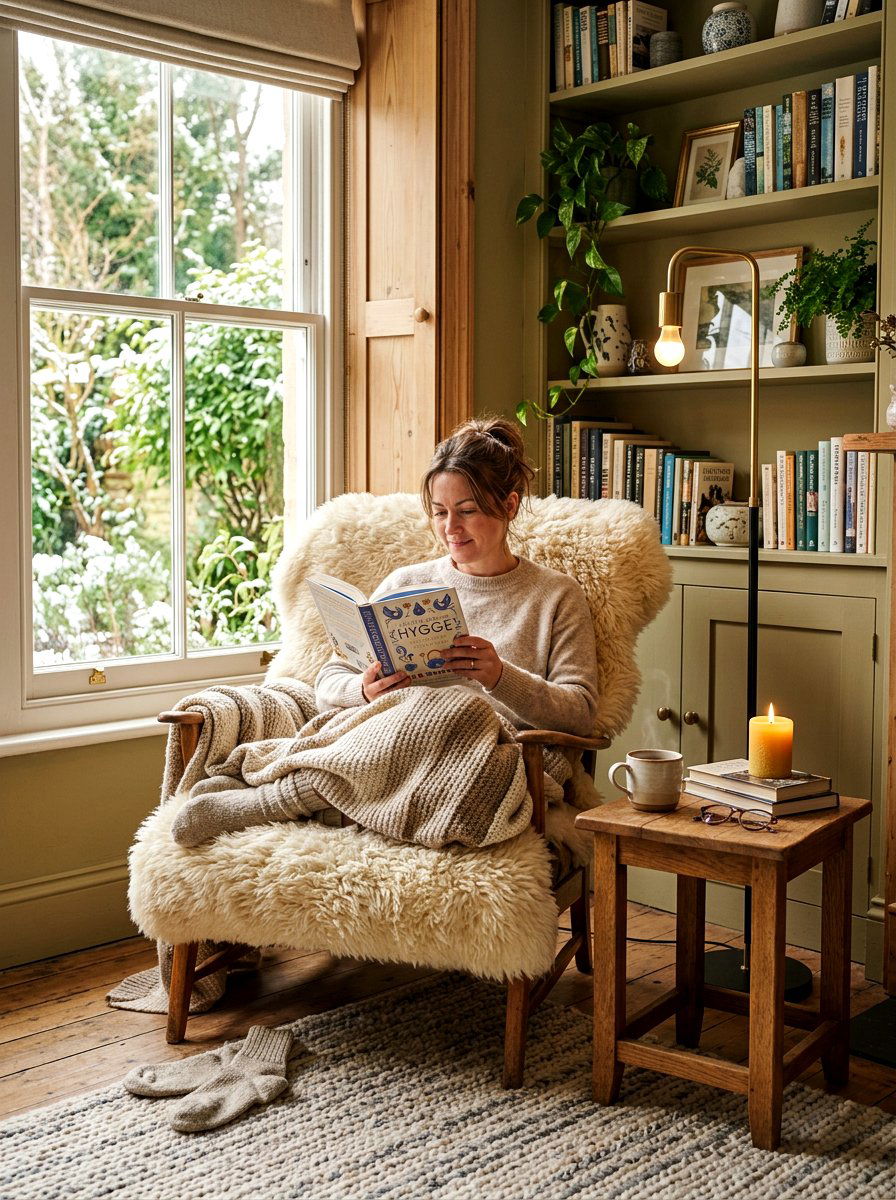
Is there a corner of your house where you can truly escape the world and get lost in a good story? A cozy Hygge reading nook combines a comfortable armchair with soft textiles and a small side table for your tea. Use a sheepskin throw or a chunky wool blanket to add a layer of Scandinavian comfort that invites you to sit and stay for a while. Placing this nook near a window allows you to enjoy the natural light while you read. This small, intentional space focuses on the feeling of well-being and contentment, which is a key pillar of the Japandi design philosophy.
28. Jute Area Rug
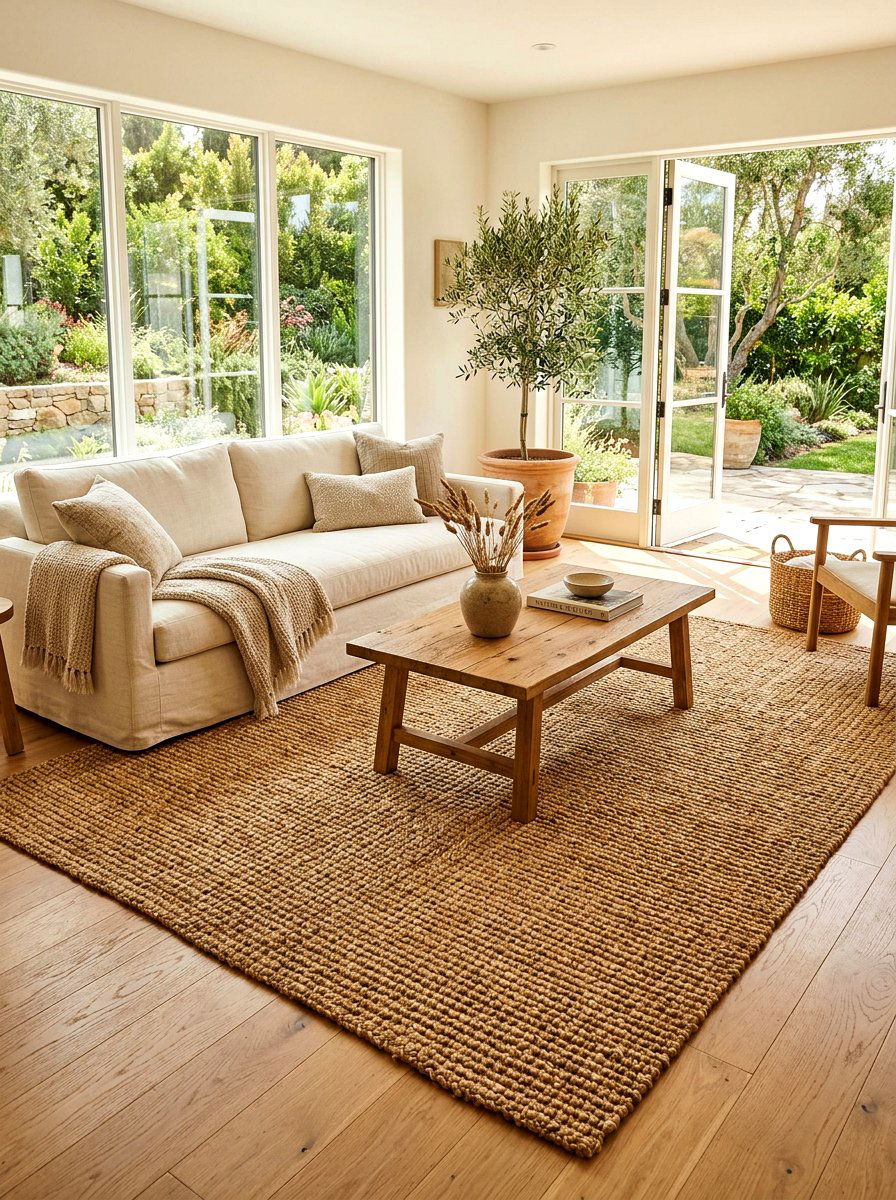
How do you add a rugged, natural texture to your floor that is also incredibly durable for high-traffic areas? A jute area rug is made from plant fibers and brings a beautiful golden-brown color and a tactile feel to the living room. It is a sustainable choice that works perfectly underneath a more delicate wool rug or on its own for a more rustic look. The natural imperfections in the jute weave add a sense of character and organic beauty to the space. Jute is also very easy to maintain, making it a practical and stylish foundation for any minimalist or Scandi-inspired interior design.
29. Floating Media Console
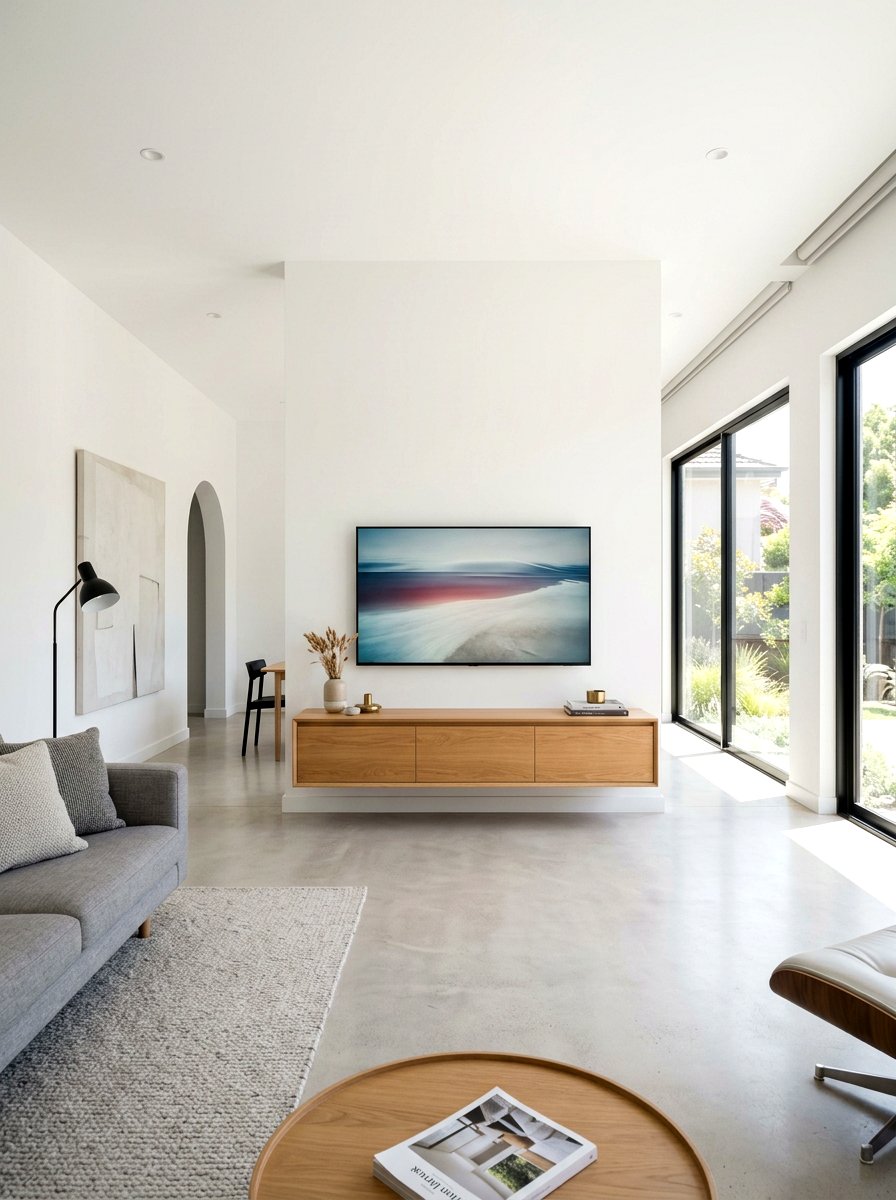
Why let a bulky TV stand take up precious floor space and make your room feel smaller than it actually is? A floating media console mounts directly to the wall, creating a clean and modern look that keeps the floor area completely clear. This design choice enhances the sense of openness and makes it much easier to clean the room. Look for a simple wooden design with hidden storage to keep all your cables and electronics out of sight. By removing the legs of the furniture, you create a lighter visual appearance that perfectly aligns with the minimalist and functional goals of the Japandi style home.
30. Layered Natural Textures
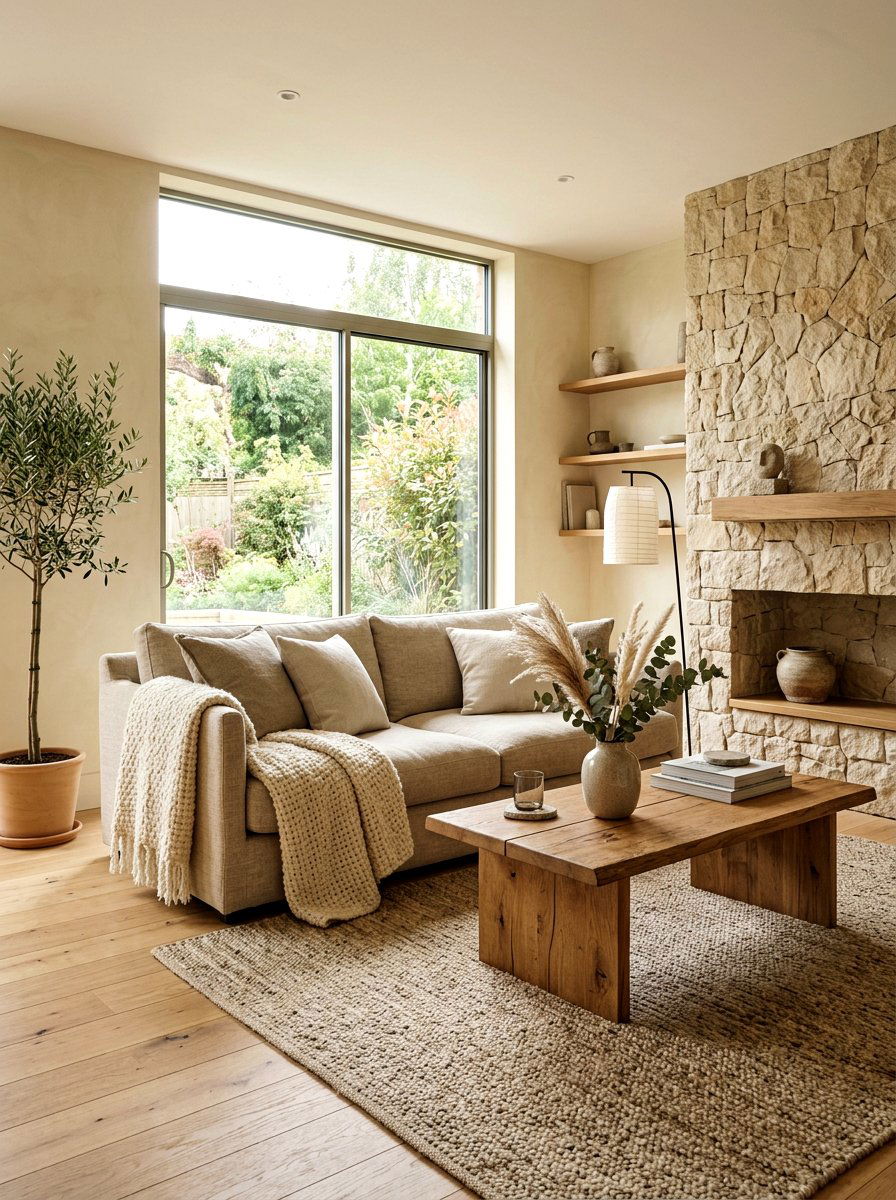
Can you create a room that feels rich and interesting without using any bright colors or busy patterns at all? Layered natural textures are the secret to a successful Japandi living room, combining wood, stone, linen, wool, and ceramic. By mixing different tactile surfaces, you add visual depth and a sense of luxury that feels organic and unforced. Think of a smooth oak table sitting on a rough jute rug, topped with a soft linen cushion and a textured ceramic bowl. These subtle variations in material keep the eye moving and make the space feel warm, lived-in, and incredibly sophisticated despite its overall simplicity and minimalism.
Conclusion:
Creating a Japandi living room is about much more than just following a current design trend; it is about crafting a lifestyle focused on peace. By carefully blending the best elements of Japanese and Scandinavian traditions, you can build a home that supports your well-being and provides a true sanctuary. Every piece of furniture, every natural material, and every soft light source should be chosen with the intention of fostering a sense of calm and clarity. As you simplify your surroundings and embrace the beauty of nature, you will find that your home becomes a place where you can truly relax and reconnect with yourself daily.

Related posts: