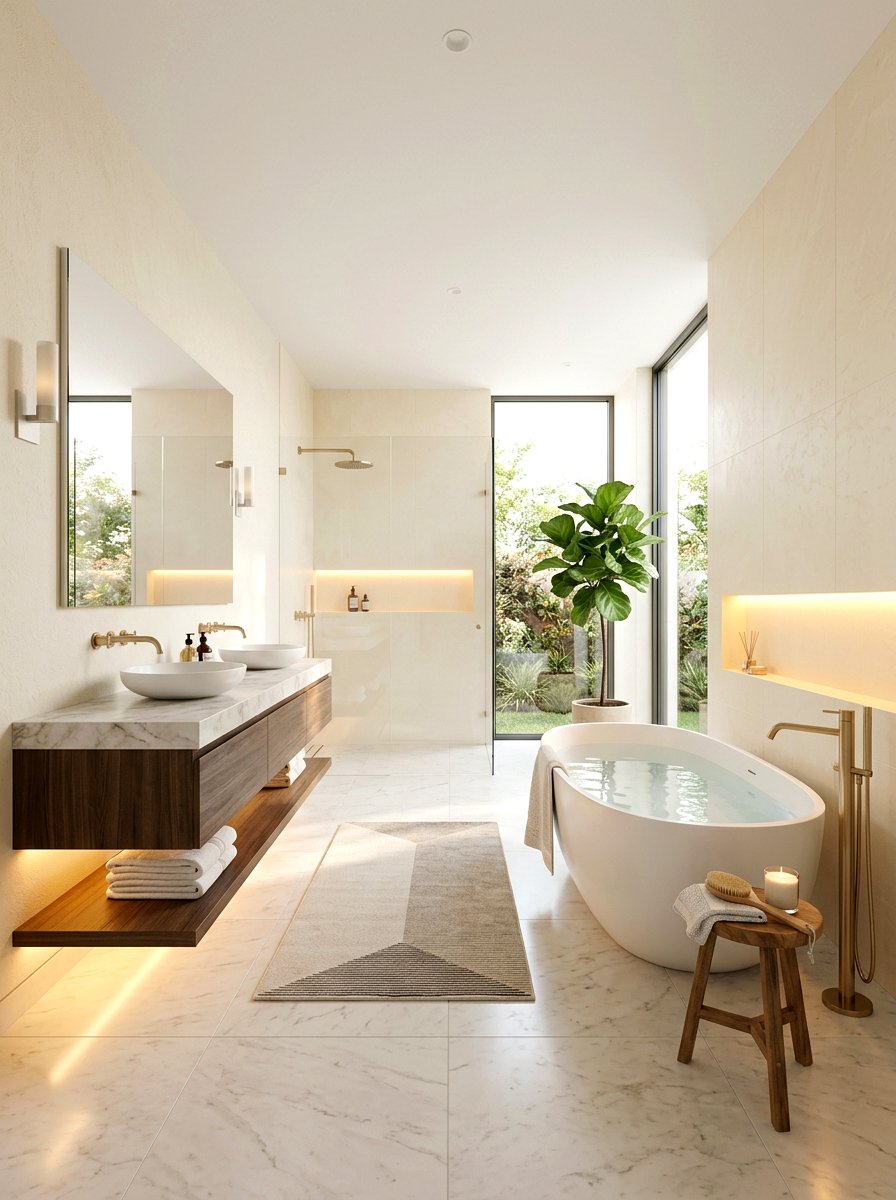
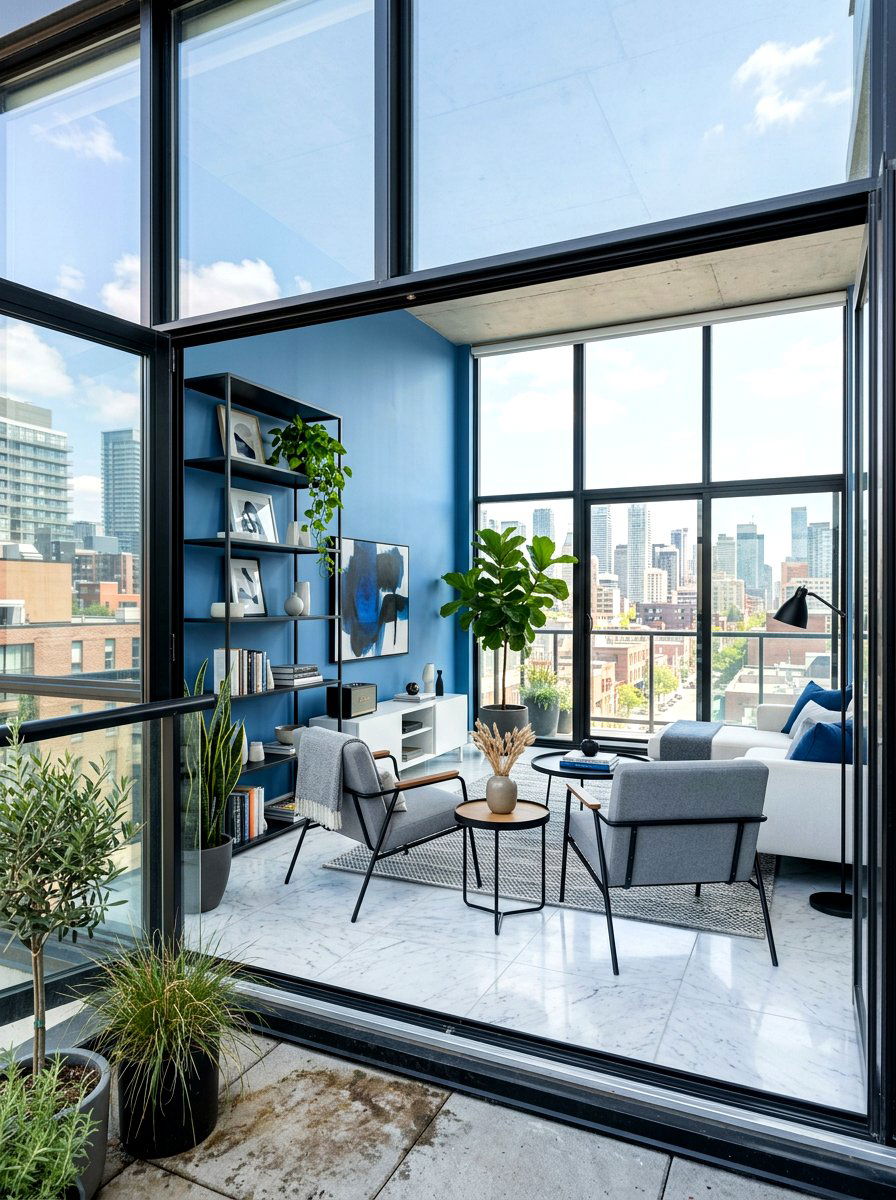
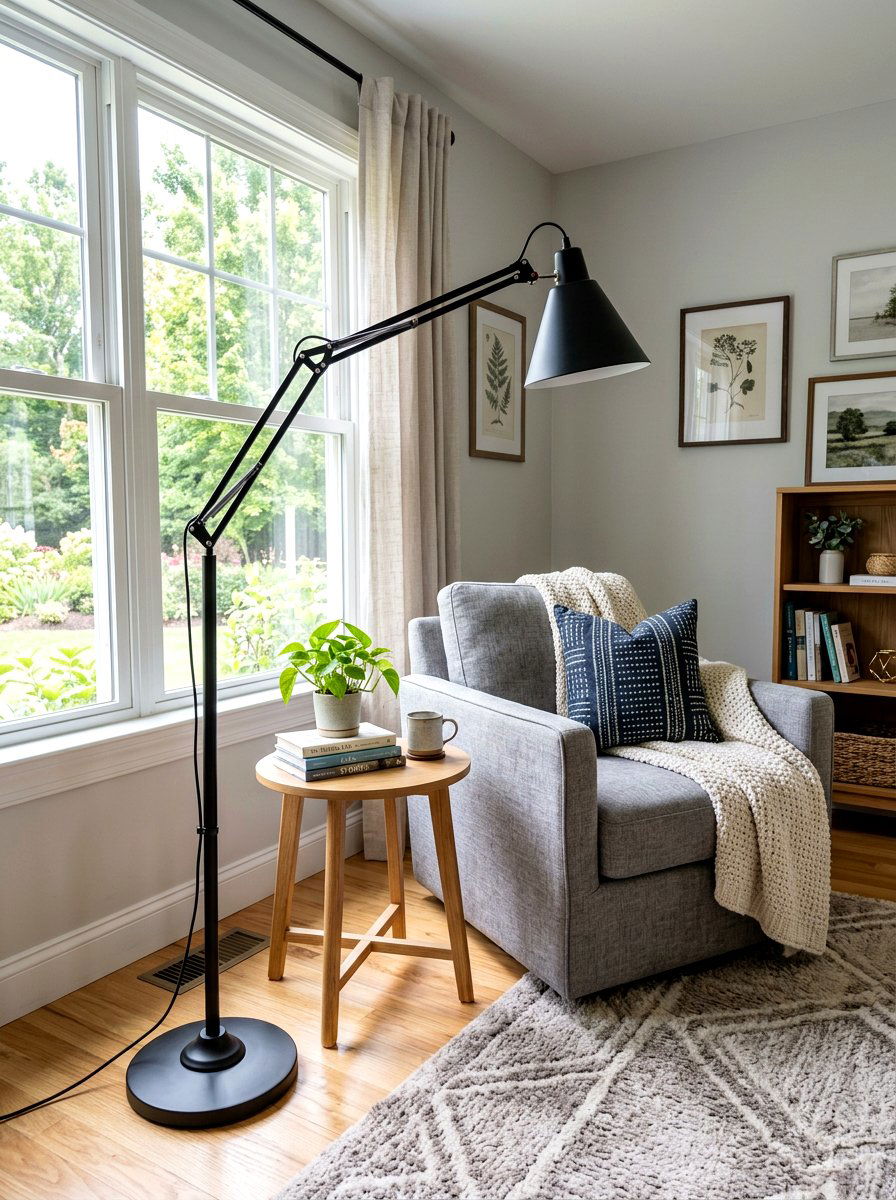
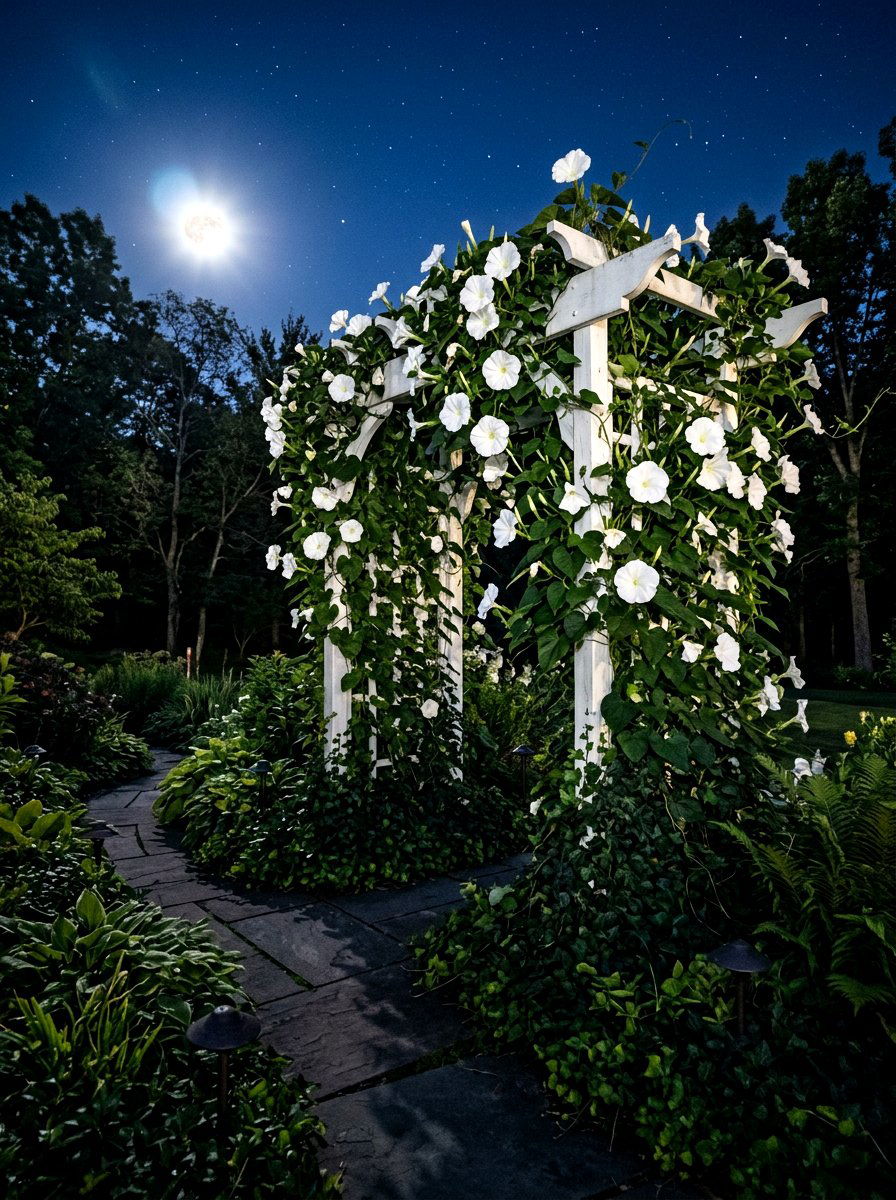
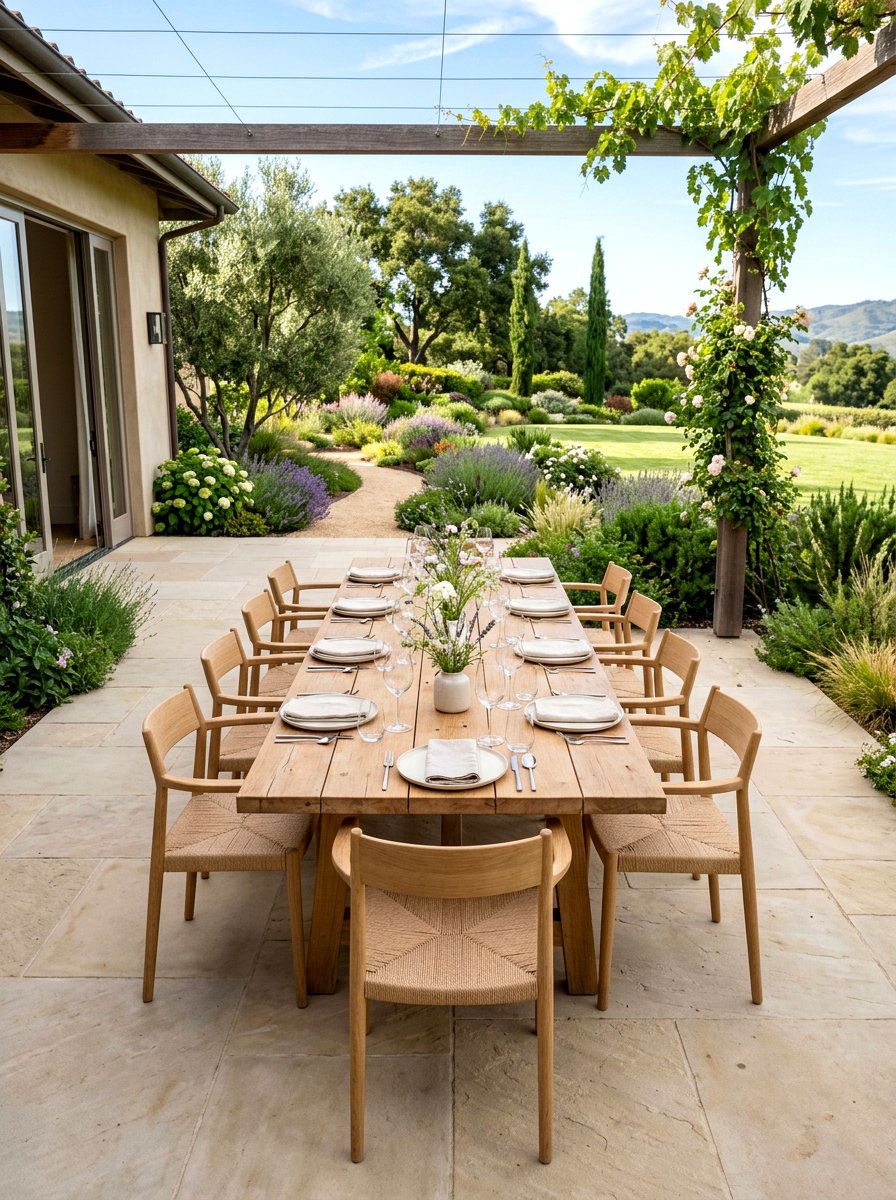
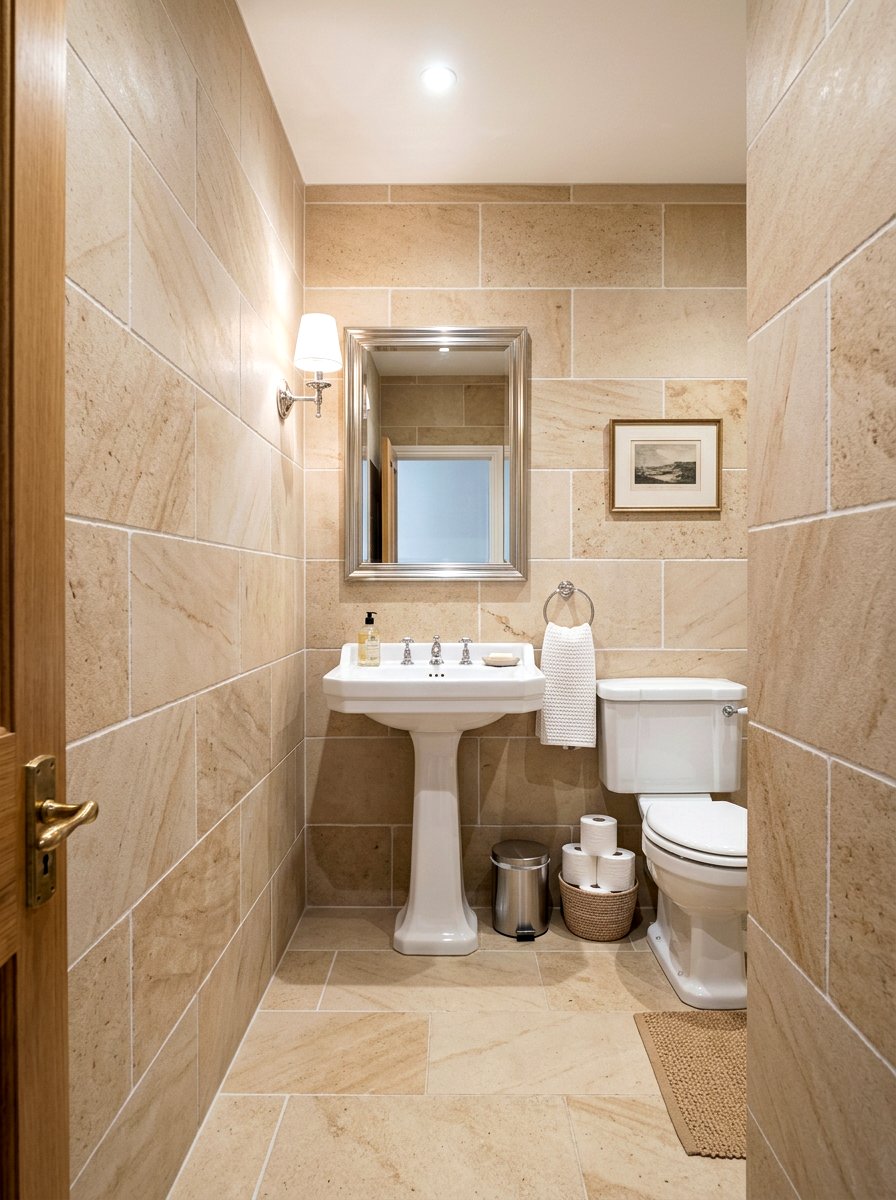
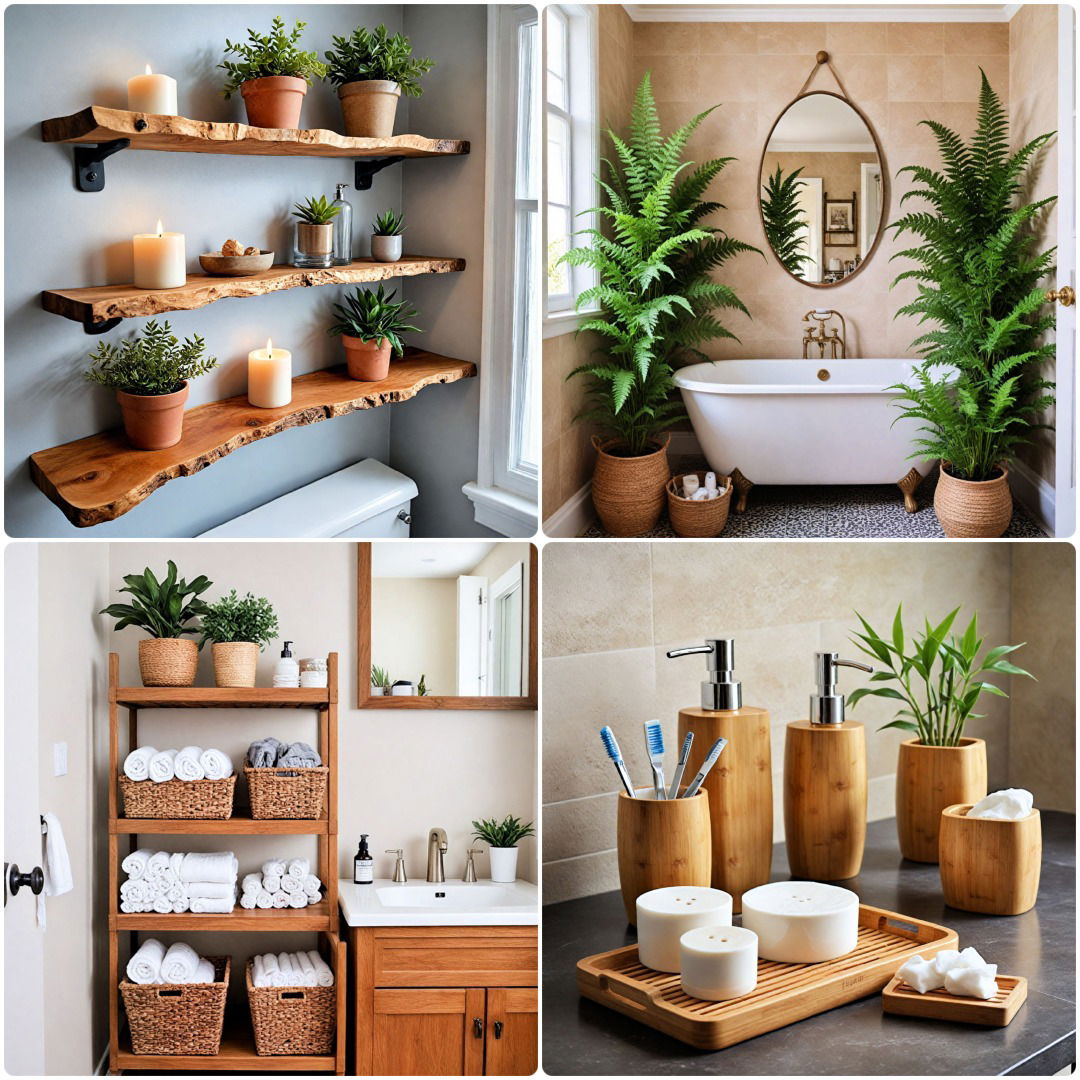
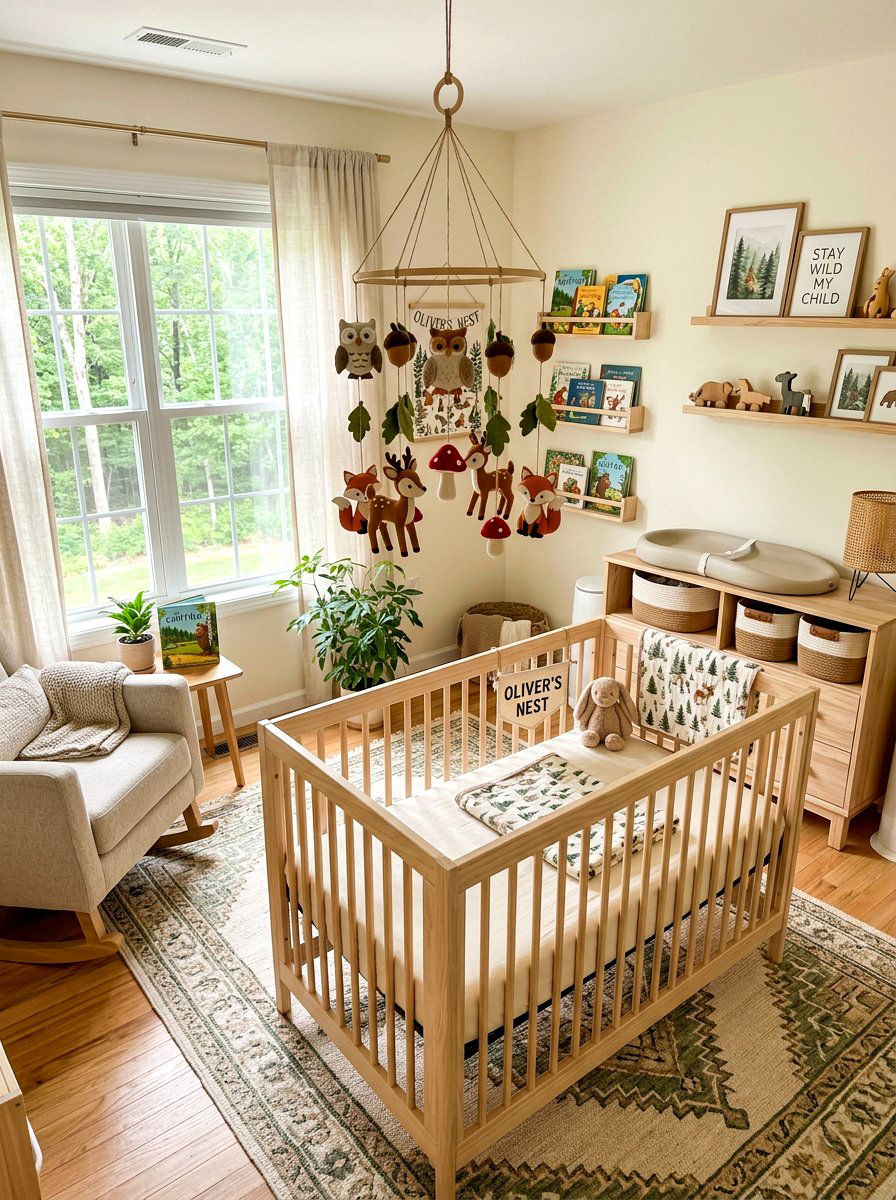
Imagine stepping into a space where the boundaries between the indoors and the natural world completely dissolve. Nature inspired living rooms are more than just a passing design trend; they represent a fundamental shift toward wellness and environmental connection. By integrating organic materials, lush greenery, and earthy color palettes, you can transform a standard living area into a restorative sanctuary. These designs focus on biophilia, the innate human desire to connect with life-like processes. Whether through expansive windows that flood a room with sunlight or the tactile warmth of reclaimed wood, these ideas bring serenity and balance to your home while promoting daily relaxation.
1. Biophilic living room
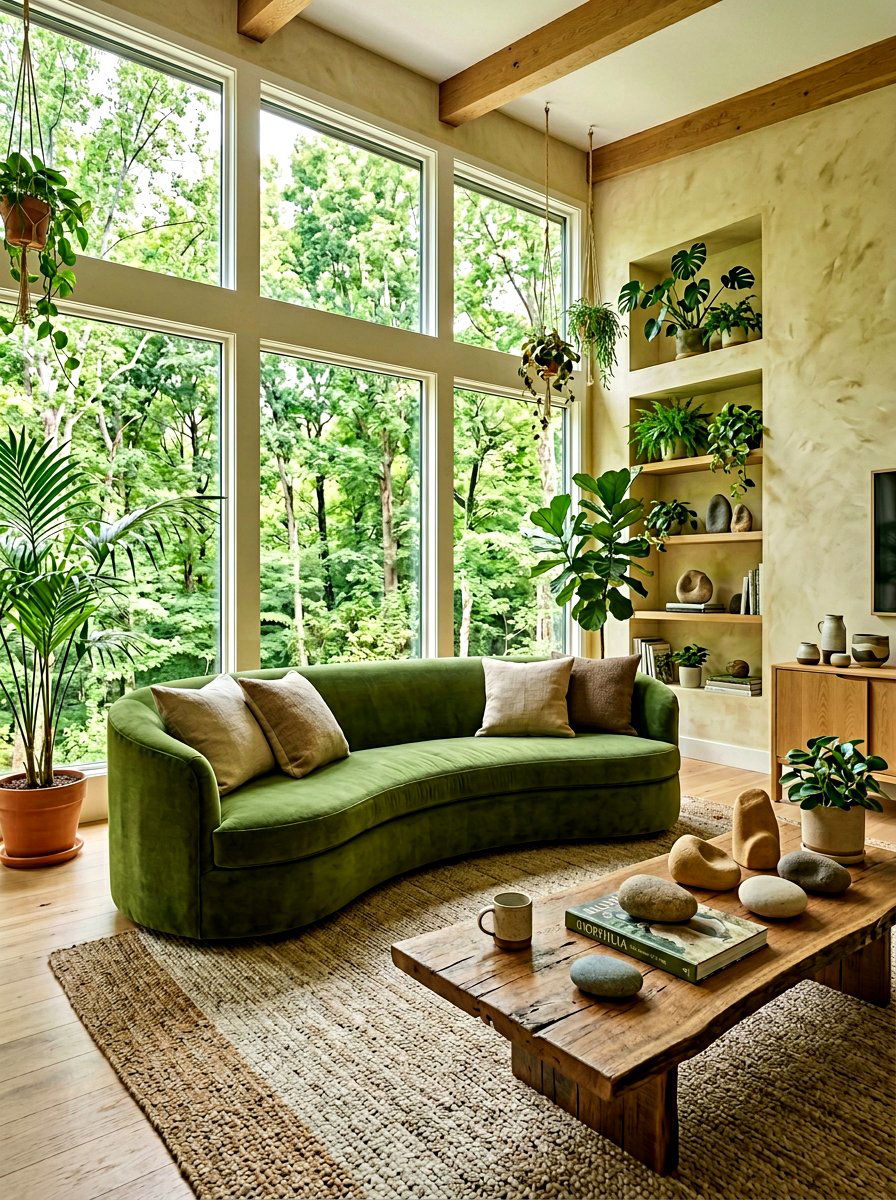
A biophilic living room focuses on the deep-rooted connection between humans and the natural world. This design approach goes beyond simply adding a few plants; it involves integrating natural patterns, light, and materials to improve mental well-being. You might choose to incorporate organic shapes in your furniture or use textures that mimic the feel of the outdoors, such as raw stone or untreated wood. The goal is to create a multi-sensory experience that reduces stress and increases your overall happiness. By prioritizing air quality and natural rhythms, this space becomes a functional retreat that supports your health and helps you feel more grounded every day.
2. Indoor garden living room
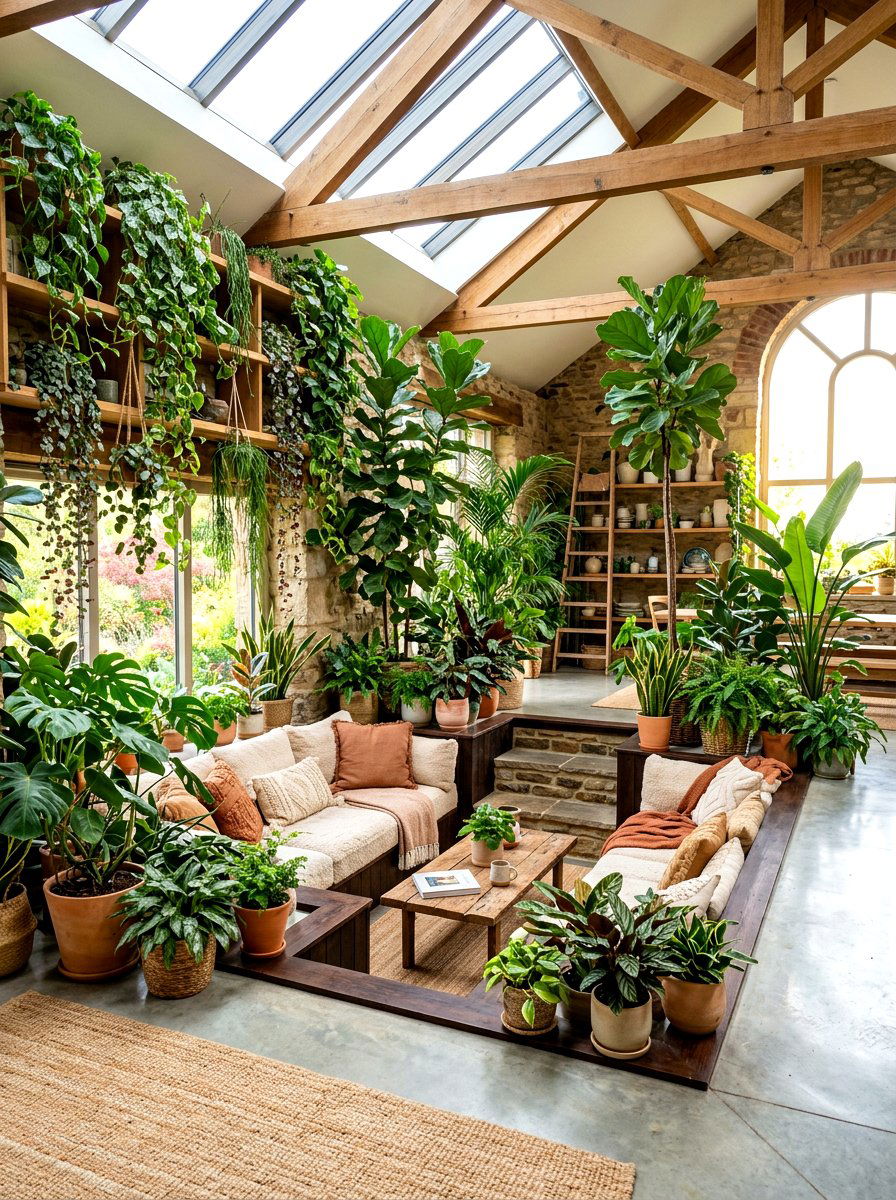
Creating an indoor garden living room allows you to enjoy the vibrancy of a lush forest without ever stepping outside. This concept involves layering various types of greenery, from tall floor plants like fiddle leaf figs to smaller succulents nestled on coffee tables. You can use diverse planter styles to add visual interest and height to different corners of the room. The abundance of plants acts as a natural air purifier while providing a soft, organic texture that contrasts beautifully with modern architecture. This living green environment fosters a sense of tranquility and life, making the space feel incredibly fresh, vibrant, and always inviting.
3. Earth tone living room
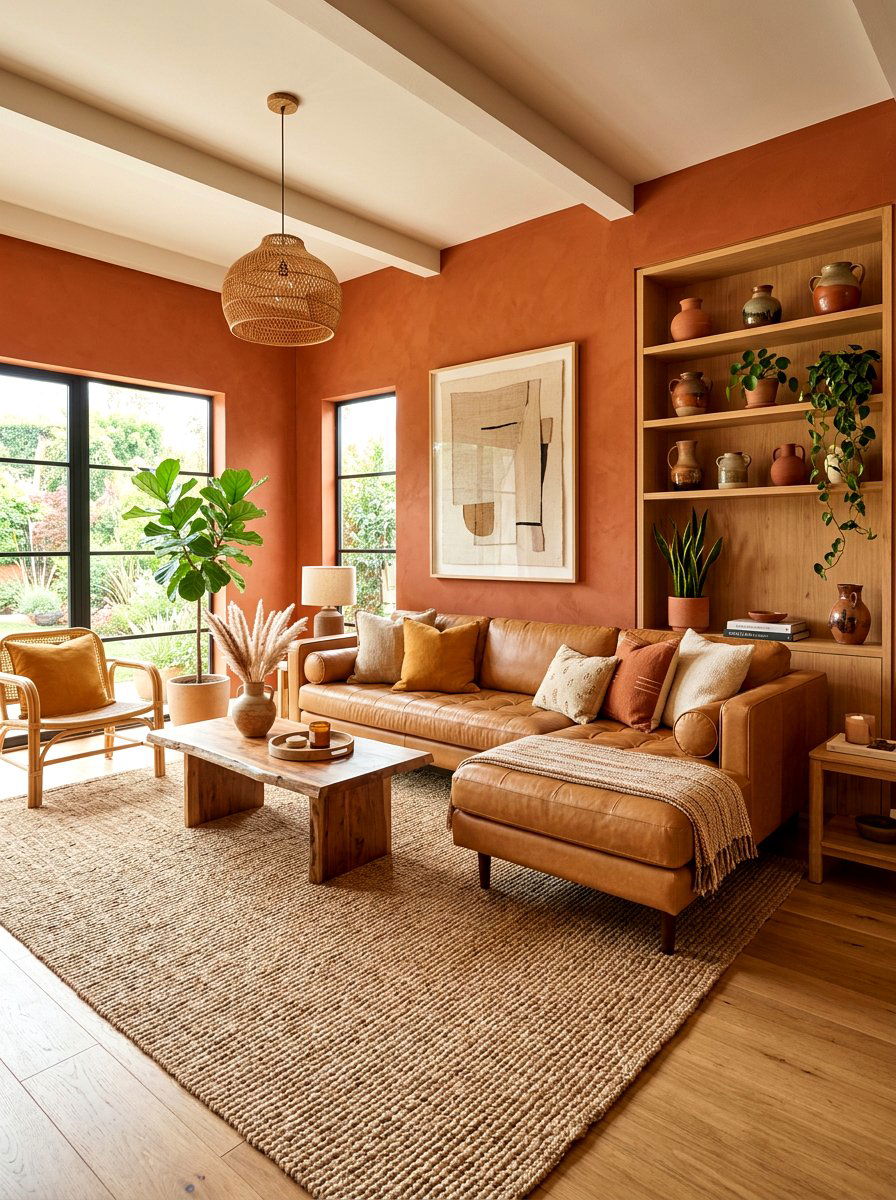
An earth tone living room relies on a palette of warm, grounded colors inspired by the soil, sand, and forest floor. You can use shades like deep terracotta, soft ochre, sandy beige, and muted olive to create a cohesive and calming environment. These colors work harmoniously together to provide a sense of stability and comfort that bright, synthetic colors often lack. By painting the walls in a gentle taupe or choosing a sofa in a rich forest green, you establish a natural foundation for the space. This approach makes the room feel sophisticated yet approachable, offering a timeless aesthetic that feels cozy throughout every season.
4. Modern rustic living room
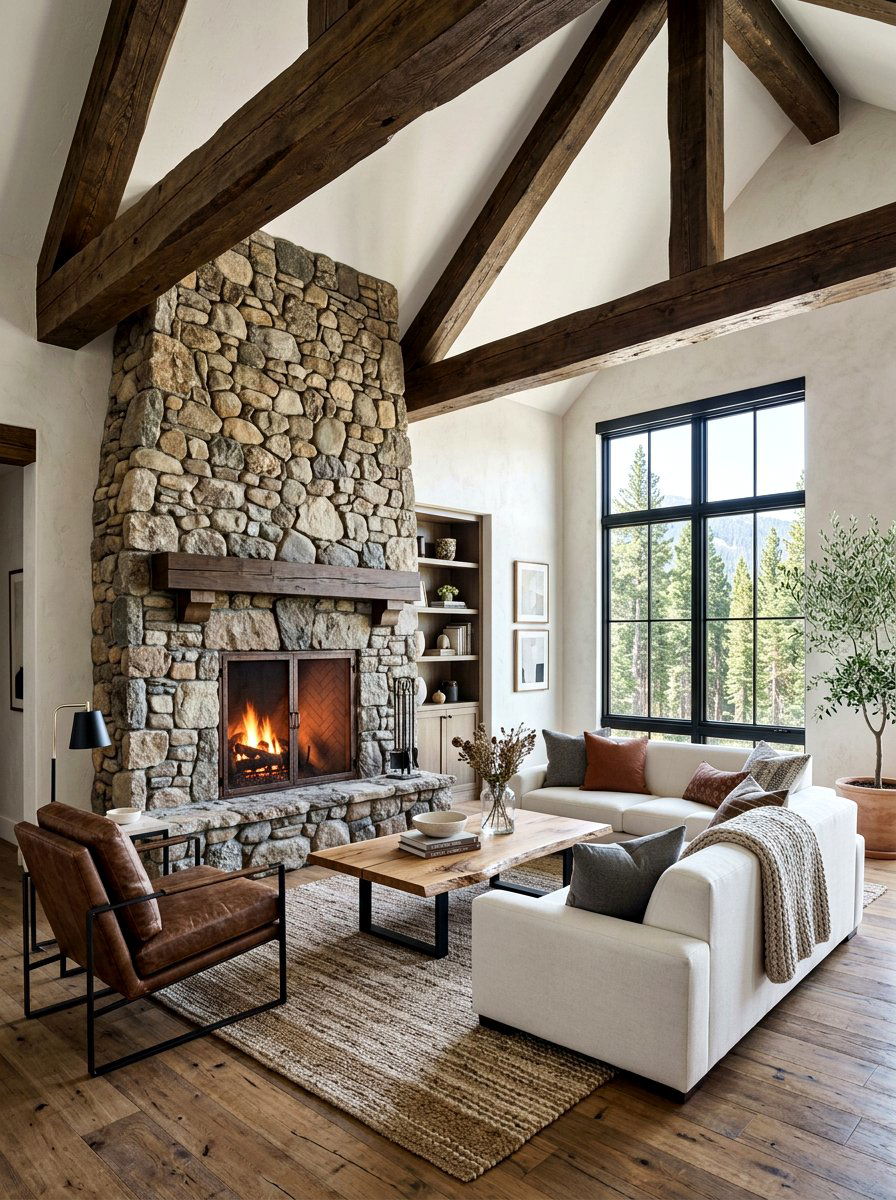
Blending sleek lines with raw materials defines the modern rustic living room. This style often features clean, contemporary furniture paired with rugged elements like hand-hewn beams or a live-edge coffee table. The juxtaposition of smooth surfaces and rough textures creates a visually captivating space that feels both high-end and deeply connected to the earth. You can emphasize this look by using a neutral color scheme that allows the natural imperfections of the wood and stone to take center stage. It is a perfect choice for those who want a sophisticated home that still feels warm, textured, and authentically inspired by rugged landscapes.
5. Large window living room
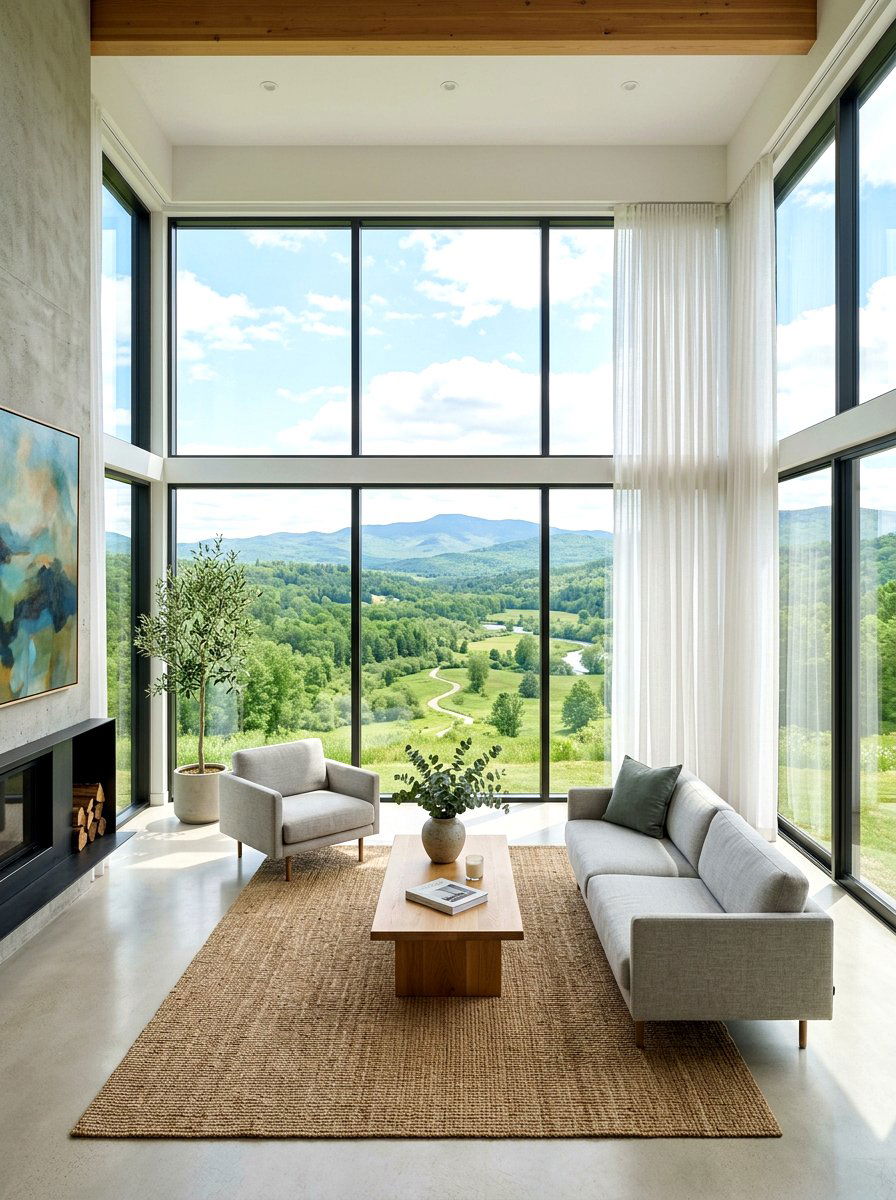
A large window living room prioritizes the views of the outside world, effectively turning the landscape into living artwork. Expansive glass panels allow natural light to drench the space, which highlights the textures of your furniture and decor. This design choice blurs the lines between your indoor seating area and the garden or sky beyond. To enhance this effect, you should keep window treatments minimal or use sheer fabrics that don't block the light. The constant connection to the changing weather and shifting sun patterns creates a dynamic atmosphere that feels open, airy, and much larger than its actual physical dimensions.
6. Rattan furniture living room
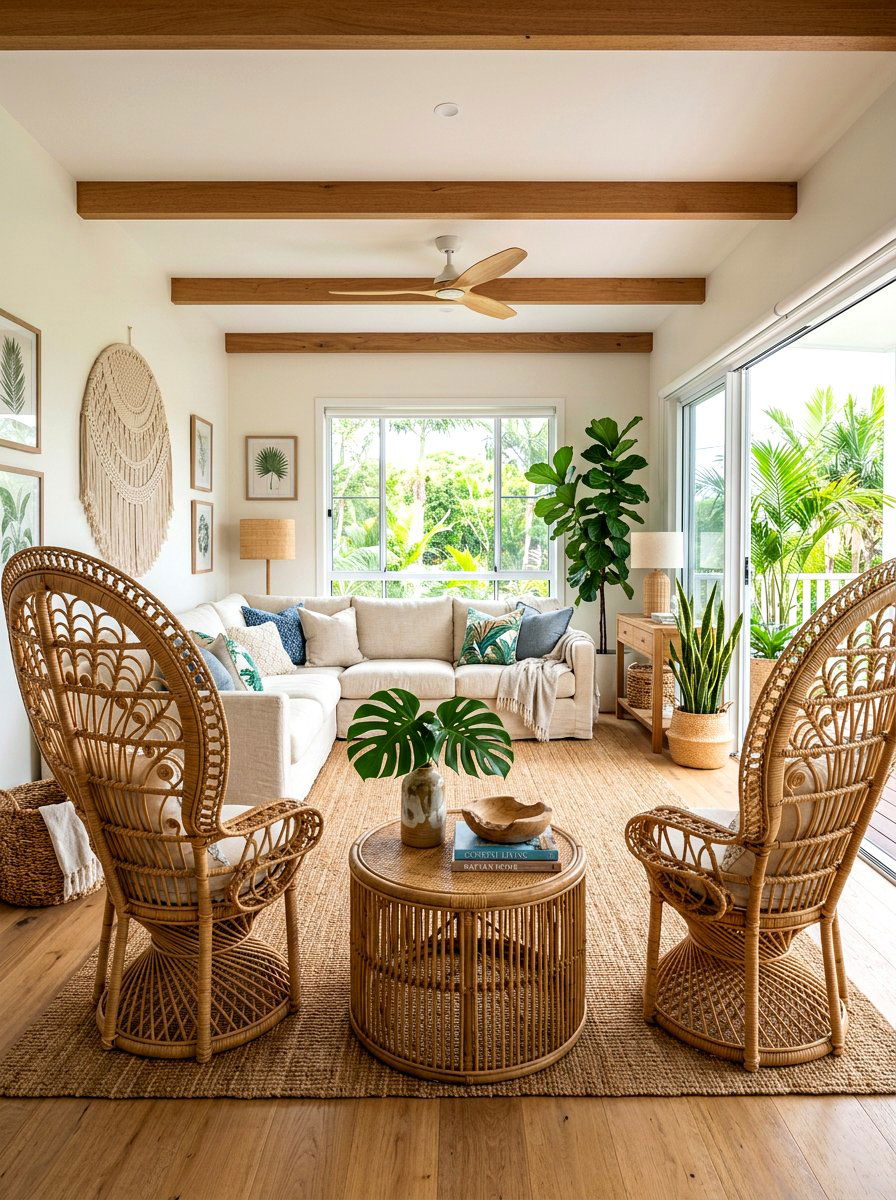
Integrating rattan furniture into your living room brings an instant sense of warmth and artisanal craftsmanship. Rattan is a sustainable material that offers a lightweight yet durable option for chairs, side tables, and decorative baskets. Its woven texture adds a tropical or bohemian flair that feels relaxed and unpretentious. You can pair a large rattan armchair with soft linen cushions to create a cozy reading nook that feels like a porch retreat. The golden hues of the natural fibers complement both bright and dark color schemes, making it a versatile choice for anyone looking to add organic, hand-crafted elements to their home.
7. Stone wall living room
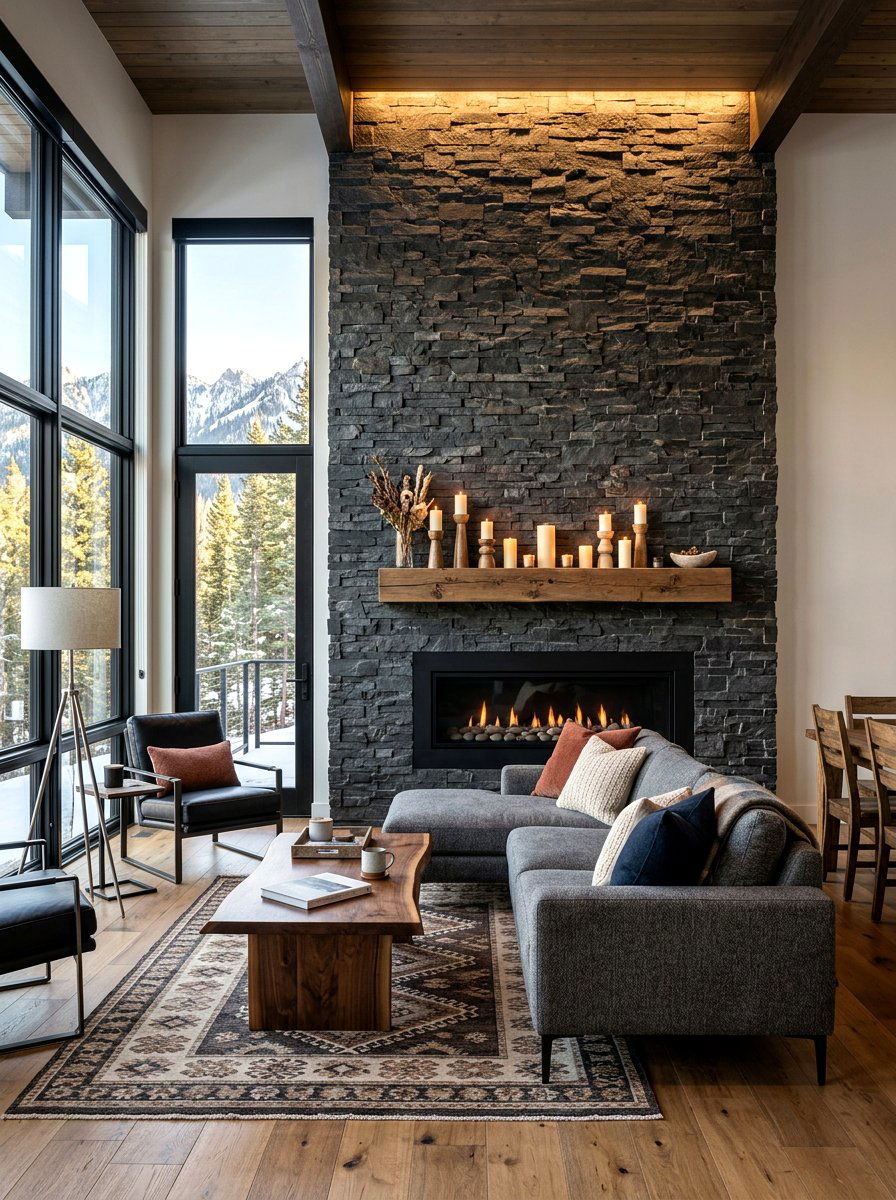
A stone wall living room introduces a powerful architectural element that feels permanent and ancient. Whether you use stacked slate, rough fieldstone, or smooth river rocks, a stone accent wall provides incredible depth and a tactile quality to the space. It serves as a dramatic backdrop for a fireplace or a television, grounding the room with its heavy, natural presence. The variations in color and shape within the stone ensure that no two walls are ever exactly alike. This design choice is excellent for creating a focal point that feels incredibly sturdy, natural, and adds a touch of historical grandeur to modern interiors.
8. Vertical plant wall living room
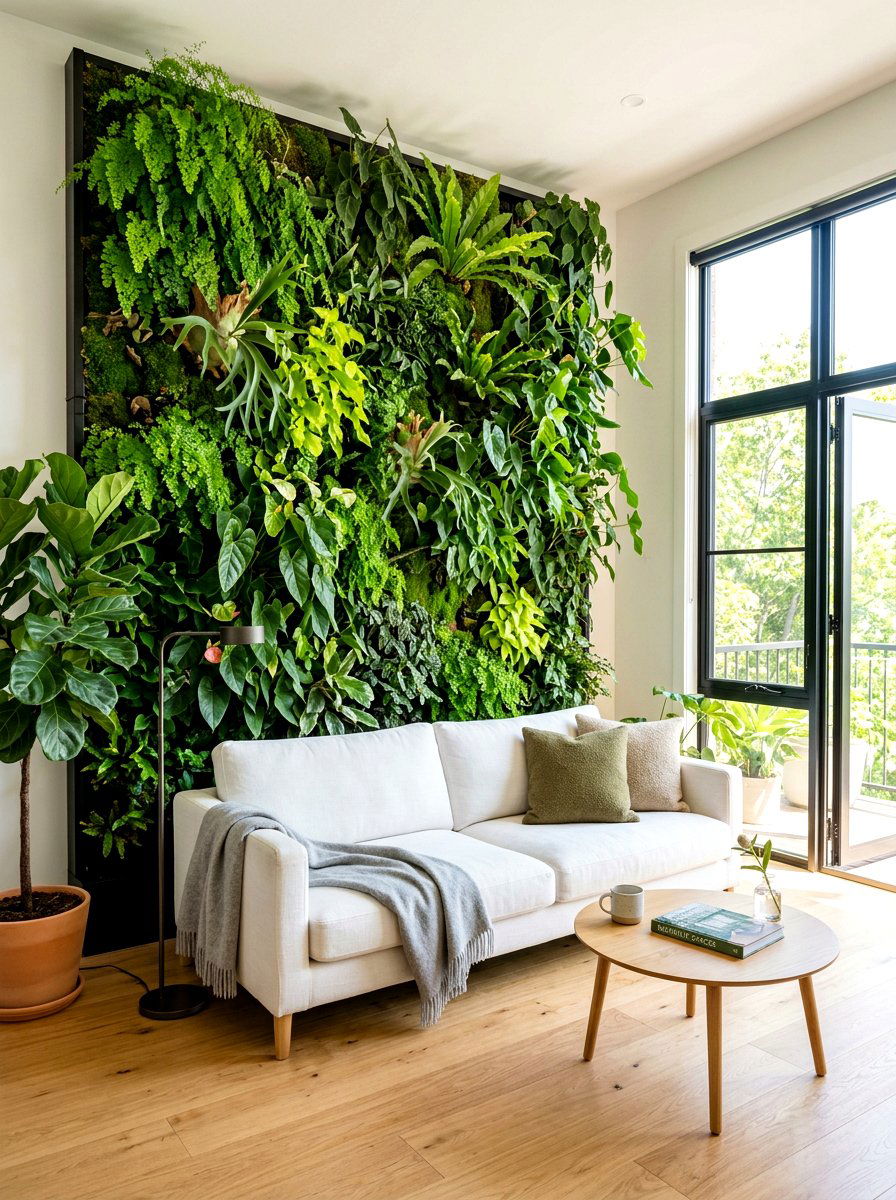
Installing a vertical plant wall in your living room is a bold way to incorporate maximum greenery without sacrificing valuable floor space. These living walls, often called green walls, act as a stunning piece of biological art that evolves over time. You can choose a variety of ferns, ivies, and tropical plants to create a lush, textured tapestry of foliage. Beyond its striking visual appeal, a vertical garden significantly improves indoor air quality and acts as a natural sound insulator. It transforms a plain wall into a breathing ecosystem, providing a refreshing and immersive experience for anyone who enters the room.
9. Coastal beach living room
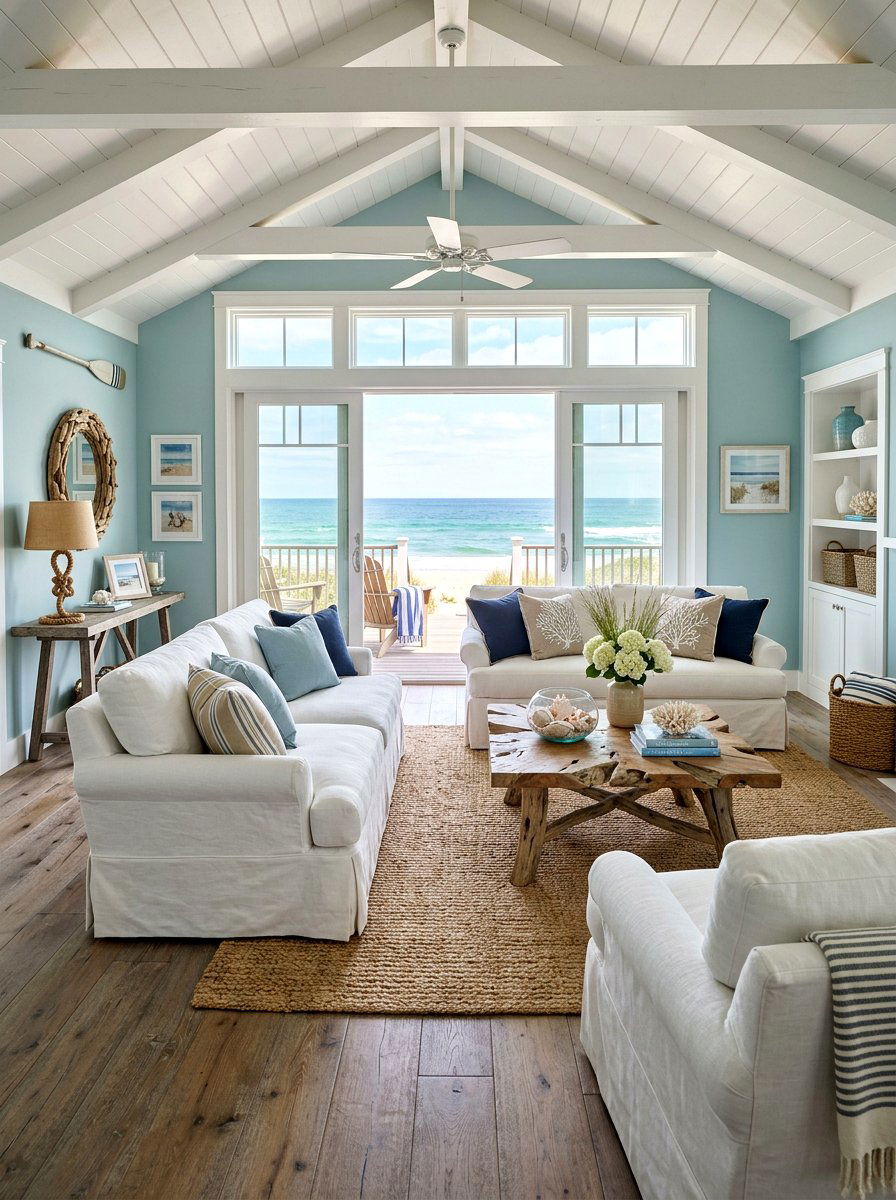
A coastal beach living room captures the breezy, light-filled essence of the seaside using natural materials and a soft color palette. You can focus on shades of seafoam green, sky blue, and sandy white to evoke a sense of coastal calm. Incorporating elements like weathered driftwood, sea glass accents, and jute rugs adds the necessary texture to complete the look. This design style avoids literal nautical cliches in favor of a more sophisticated, organic interpretation of the coast. The result is a space that feels bright, airy, and incredibly relaxing, reminiscent of a peaceful walk along a quiet, sun-drenched shoreline.
10. Botanical wallpaper living room
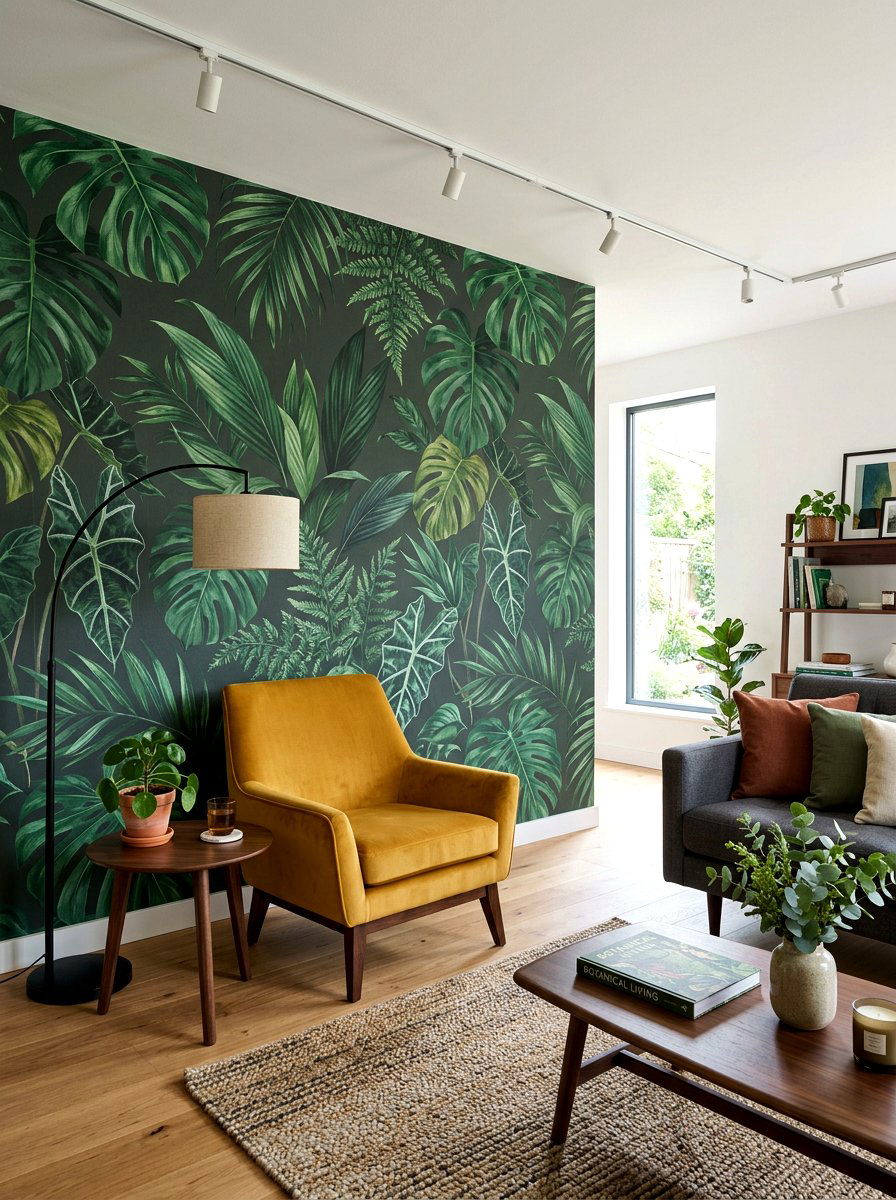
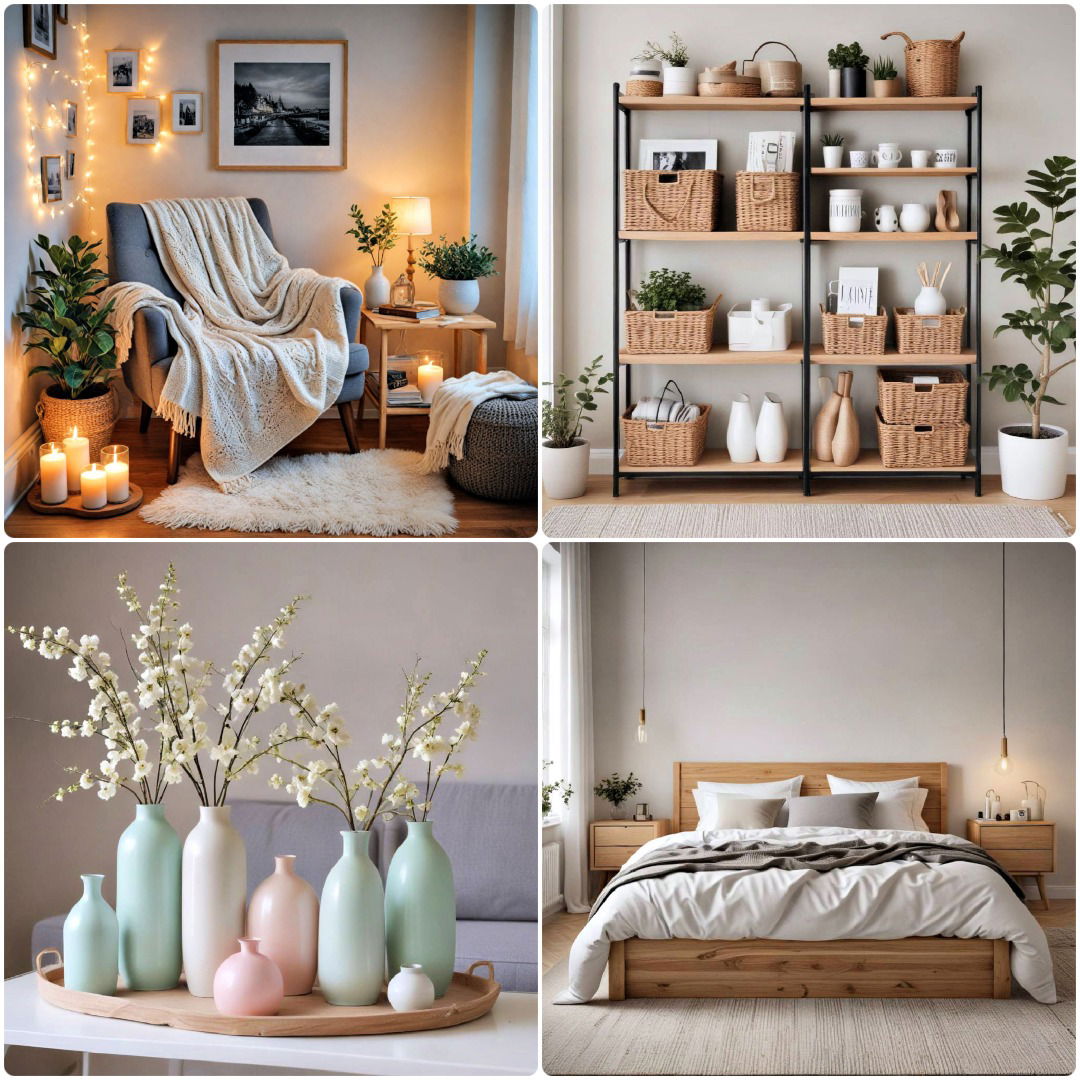
Using botanical wallpaper in your living room is a creative way to introduce intricate natural patterns and vibrant colors. Large-scale floral prints or delicate leaf motifs can transform a simple wall into a lush garden scene. You can choose a dark, moody background for a sophisticated look or a light, airy pattern to make the room feel more spacious and cheerful. This approach allows you to bring the beauty of nature into the home through artful illustration. Pairing the wallpaper with solid-colored furniture ensures the space remains balanced and not overly cluttered, making the natural patterns the undisputed star of the room.
11. Natural wood beam living room
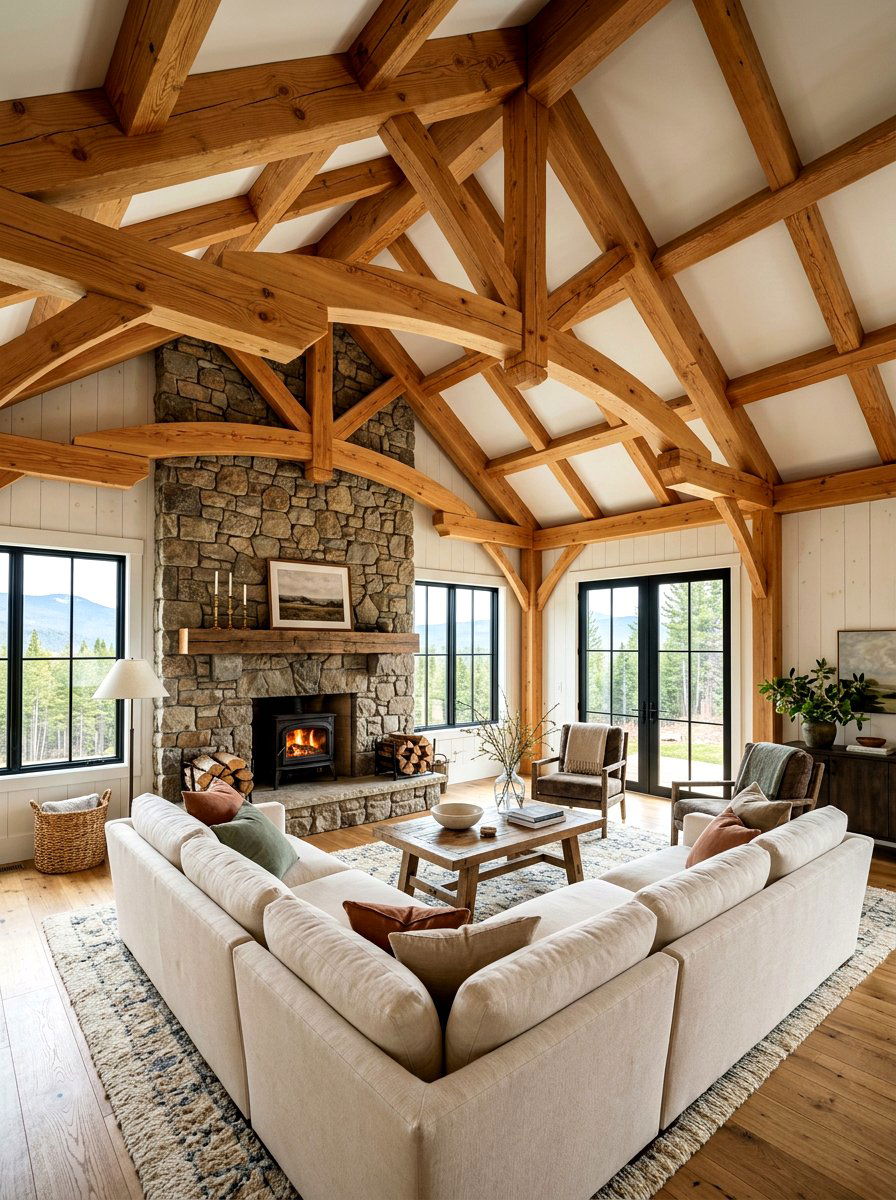
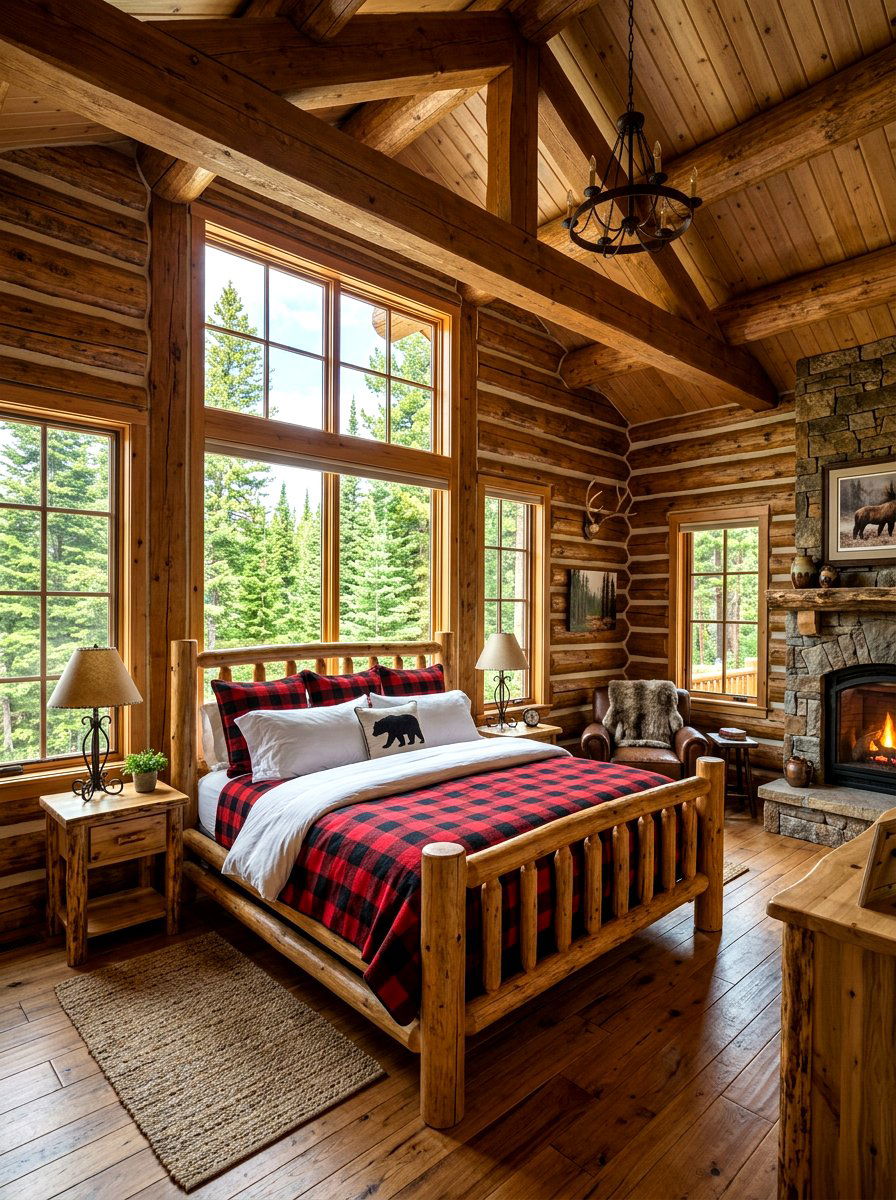
Exposing natural wood beams on the ceiling adds a sense of history and architectural character to any living room. These structural elements provide a warm, rhythmic pattern that draws the eye upward and makes the ceiling feel more integrated into the overall design. You can opt for rough-sawn oak for a more traditional look or clean, reclaimed pine for a contemporary feel. The presence of heavy timber overhead creates a cozy, "cabin-like" atmosphere that feels secure and grounded. This design choice perfectly complements other natural materials like leather, wool, and stone, enhancing the overall organic aesthetic of the living space.
12. Sage green living room
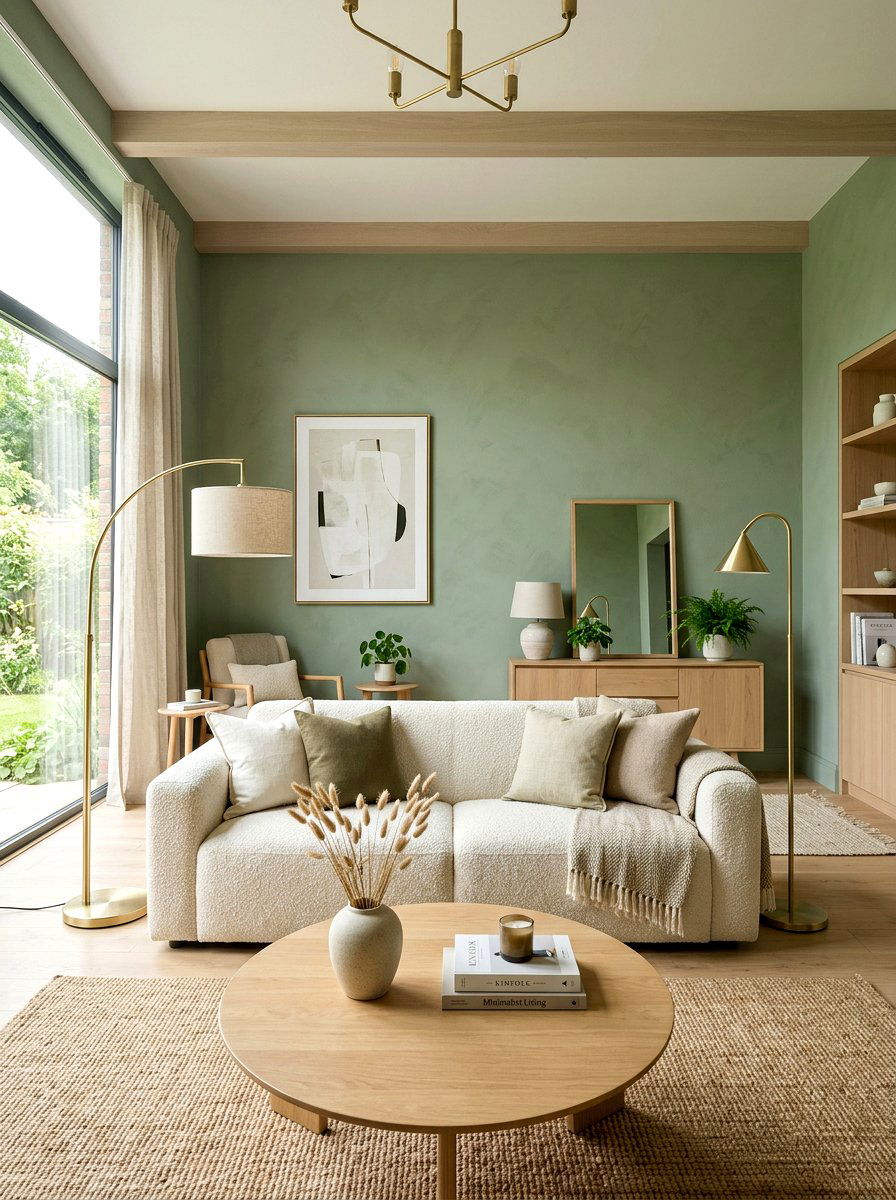
A sage green living room offers a soft, sophisticated way to bring the essence of herbs and foliage indoors. This specific shade of green is widely loved for its calming properties and its ability to act as a "new neutral. " It pairs beautifully with light wood tones, cream textiles, and metallic accents like brass or copper. You can paint all four walls for an immersive forest-like feel or use it as an accent color for cabinetry and upholstered chairs. Sage green provides a refreshing pop of color that remains subtle enough to foster a peaceful environment, making it perfect for relaxation and quiet conversation.
13. Jute rug living room
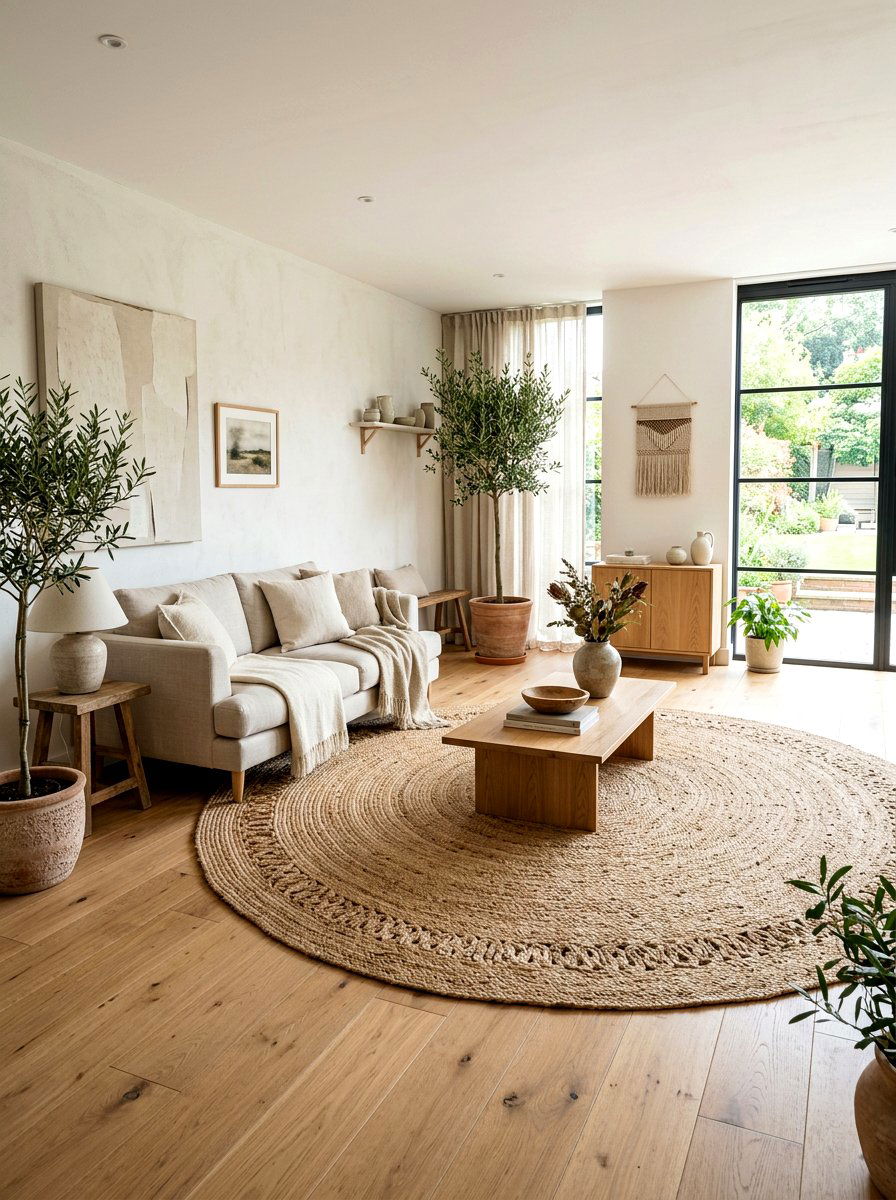
Placing a jute rug in your living room adds a layer of raw, organic texture that is both durable and stylish. Jute is a natural fiber that brings an earthy, golden-brown hue to the floor, providing a neutral base for any furniture arrangement. Its chunky weave feels wonderful underfoot and introduces a tactile element that complements other natural materials like cotton and wood. Because it is highly sustainable and biodegradable, it is an excellent choice for eco-conscious homeowners. Whether layered under a softer wool rug or used on its own, a jute rug grounds the space with its simple, unrefined beauty.
14. Terracotta accent living room
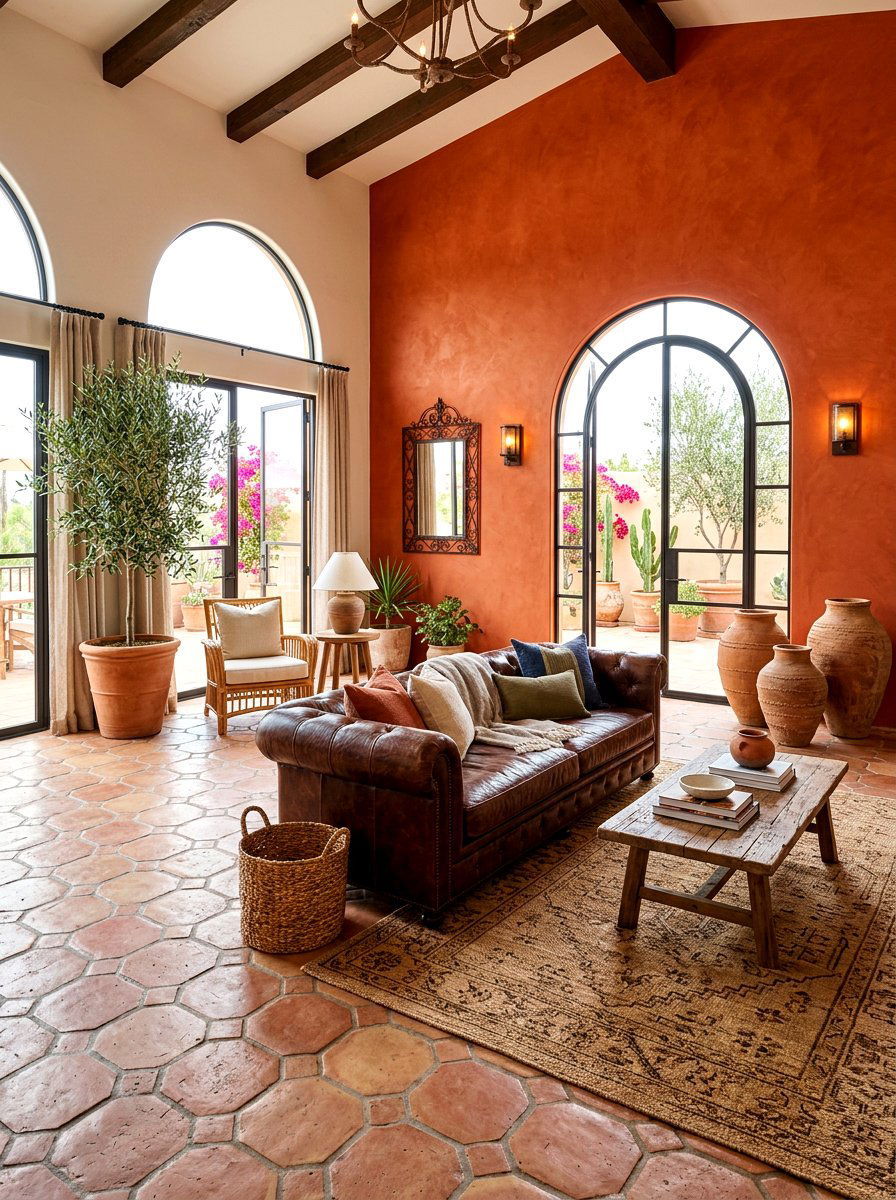
A terracotta accent living room utilizes the warm, sun-baked tones of clay to create a welcoming and Mediterranean-inspired atmosphere. You can incorporate this color through oversized floor vases, decorative bowls, or even a feature wall painted in a rich burnt orange hue. Terracotta brings a sense of traditional craftsmanship and earthiness that pairs exceptionally well with lush green plants. This color adds a much-needed pop of warmth to a room, especially when balanced with cooler tones like slate gray or crisp white. It evokes the feeling of warm summer evenings and natural pottery, giving the space a soul-stirring, artisanal quality.
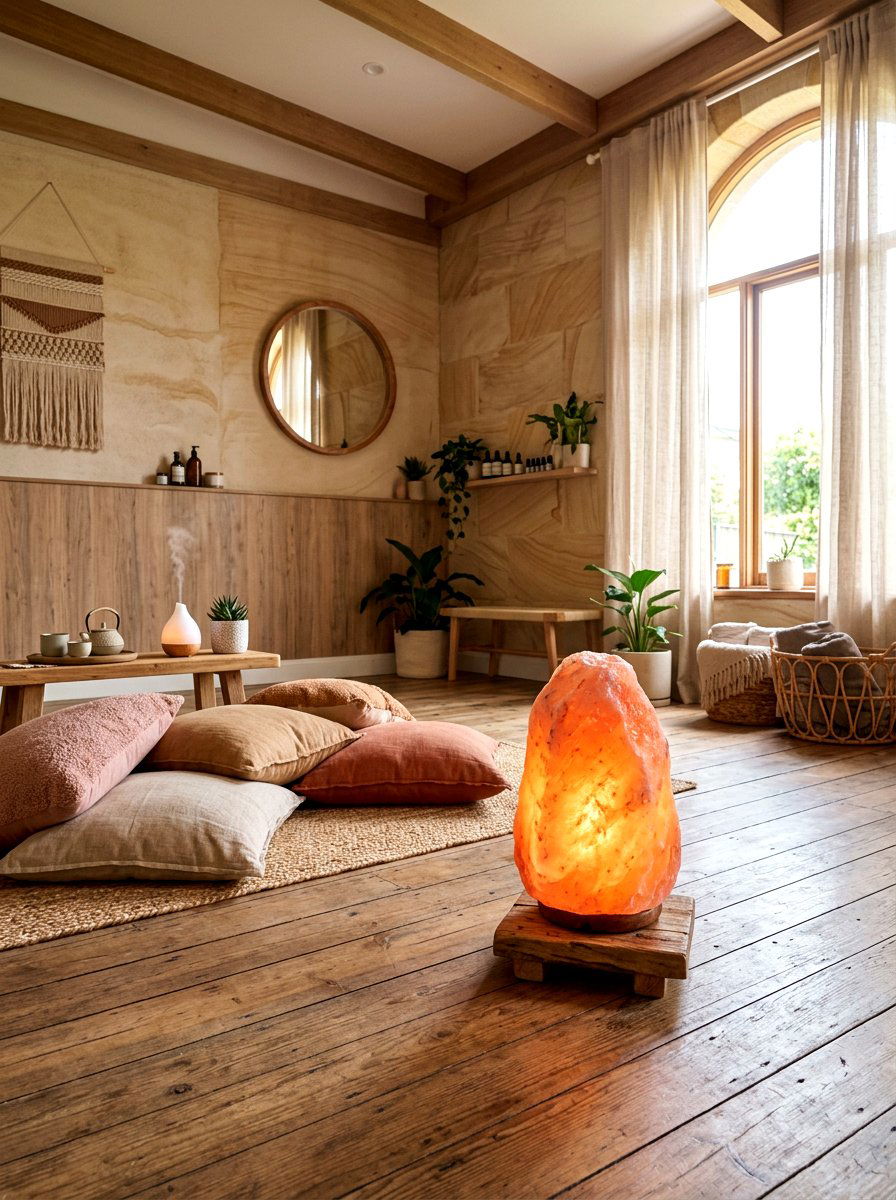
15. Organic shape furniture living room
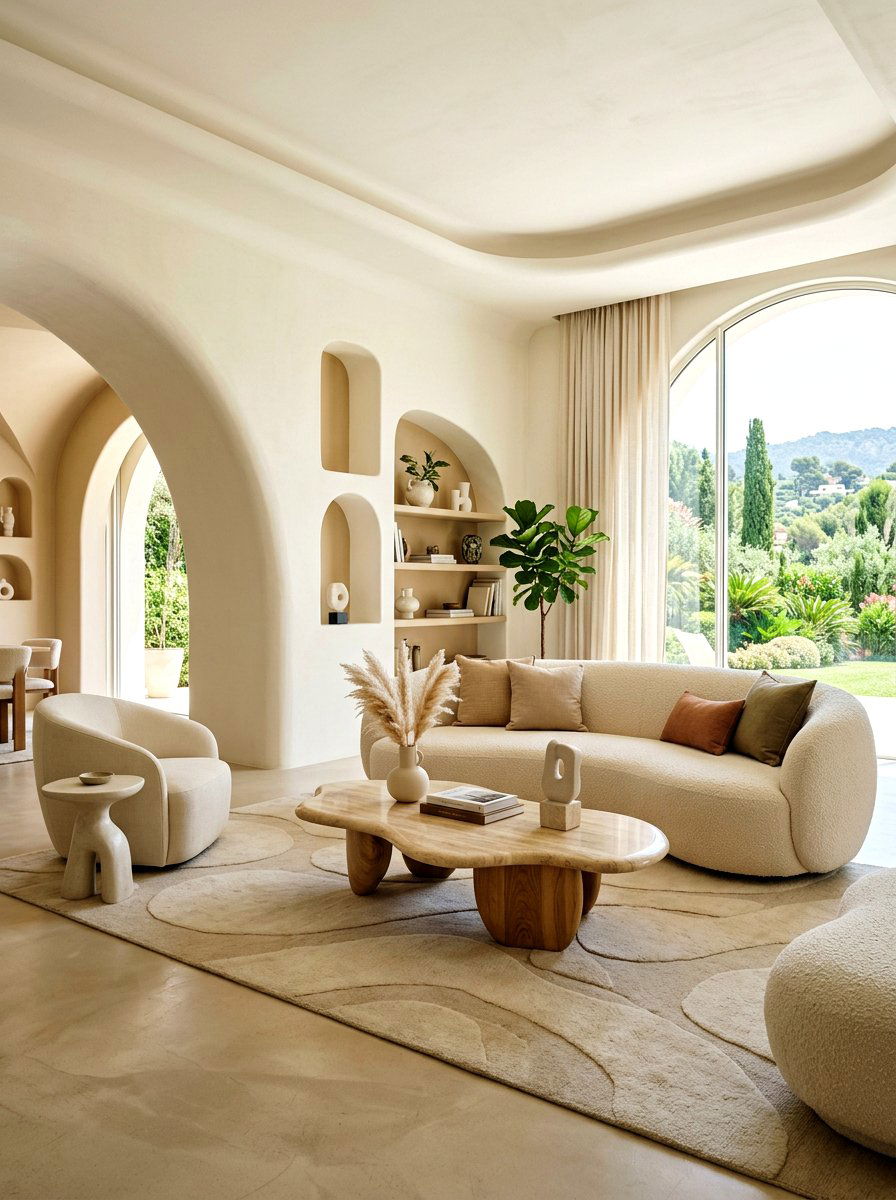
Choosing organic shape furniture for your living room moves away from rigid, industrial lines in favor of soft curves and fluid forms. Think of sofas with rounded backs, coffee tables that resemble smooth river stones, or armchairs with sweeping, sculptural silhouettes. These shapes mimic the randomness found in nature, which makes the environment feel more harmonious and less structured. By avoiding sharp corners, you create a space that feels safe, inviting, and comfortable. This design philosophy encourages a natural flow of movement throughout the room, making it feel more like a living, breathing space rather than a collection of static objects.
16. Natural light living room
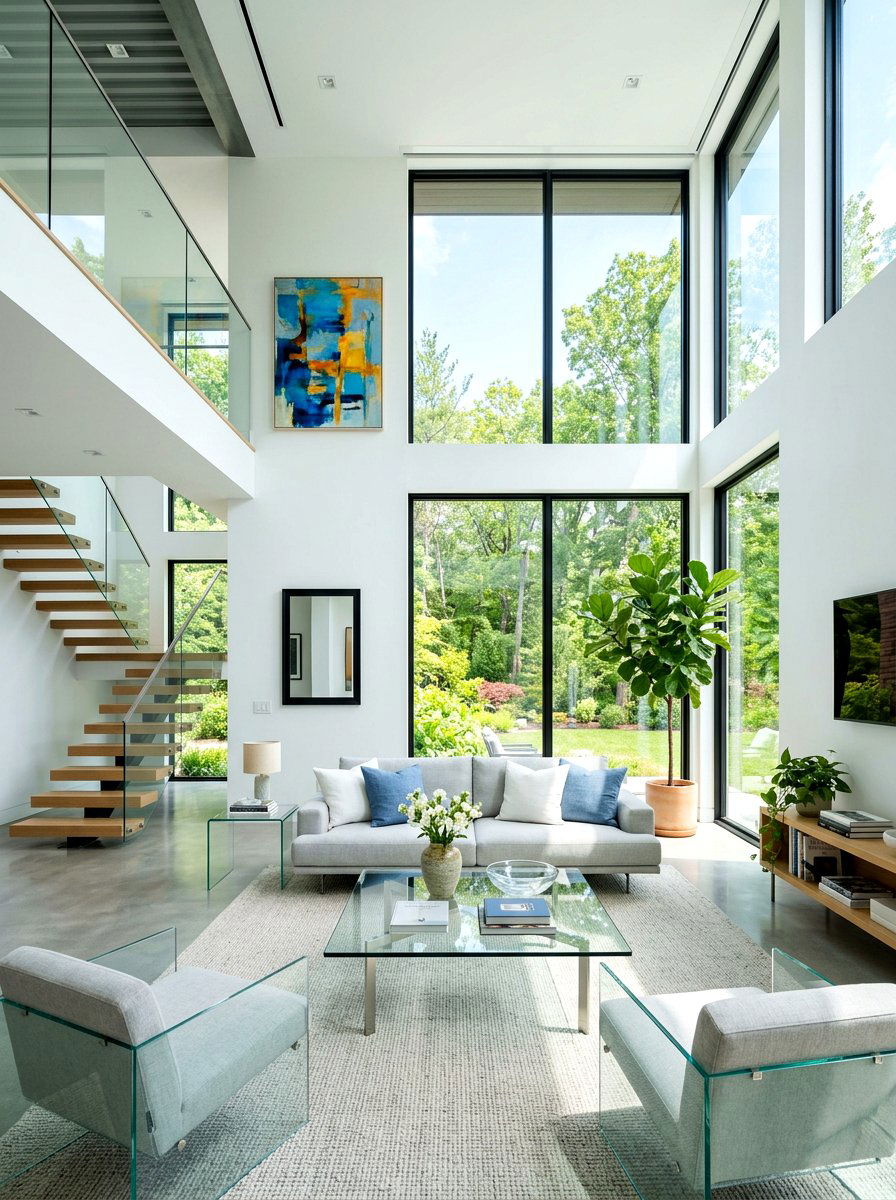
A natural light living room is designed to harness the power of the sun to create a bright and uplifting environment. Beyond just large windows, this concept involves using reflective surfaces, light-colored walls, and mirrors to bounce sunlight deep into the room. High ceilings and open floor plans further allow light to travel freely, eliminating dark corners and making the space feel more connected to the outside world. This constant exposure to daylight can improve your mood, regulate your sleep-wake cycle, and make the colors in your room appear more vivid and true. It is the ultimate nature-inspired luxury for any modern home.
17. Minimalist nature living room
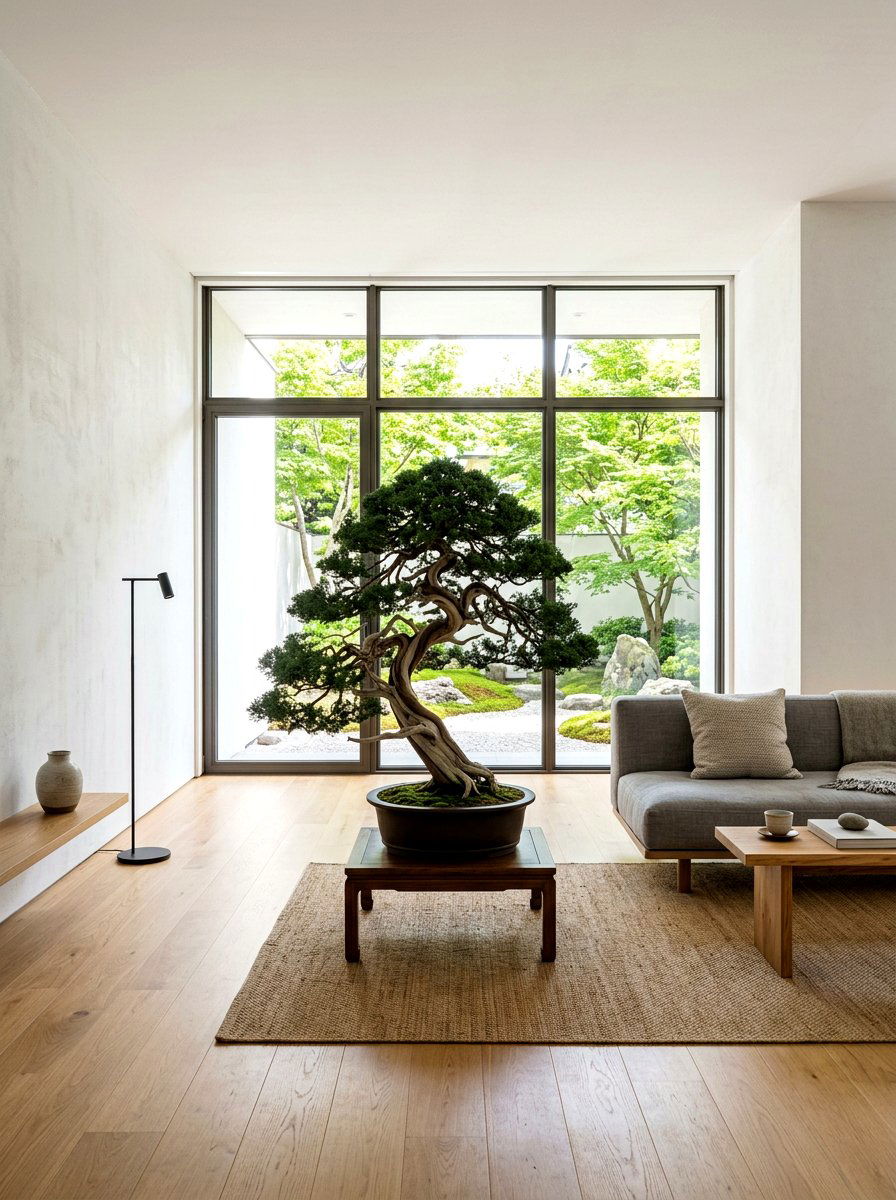
A minimalist nature living room focuses on the "less is more" philosophy, allowing a few high-quality natural elements to shine. Instead of cluttering the space with many small items, you might choose one large indoor tree and a single, stunning reclaimed wood bench. The color palette remains strictly neutral, using whites, grays, and wood tones to create a serene and uncluttered atmosphere. This approach highlights the inherent beauty and texture of each material without distractions. It is a perfect style for those who find peace in simplicity and want a home that feels like a quiet, meditative clearing in a dense forest.
18. Tropical leaf living room
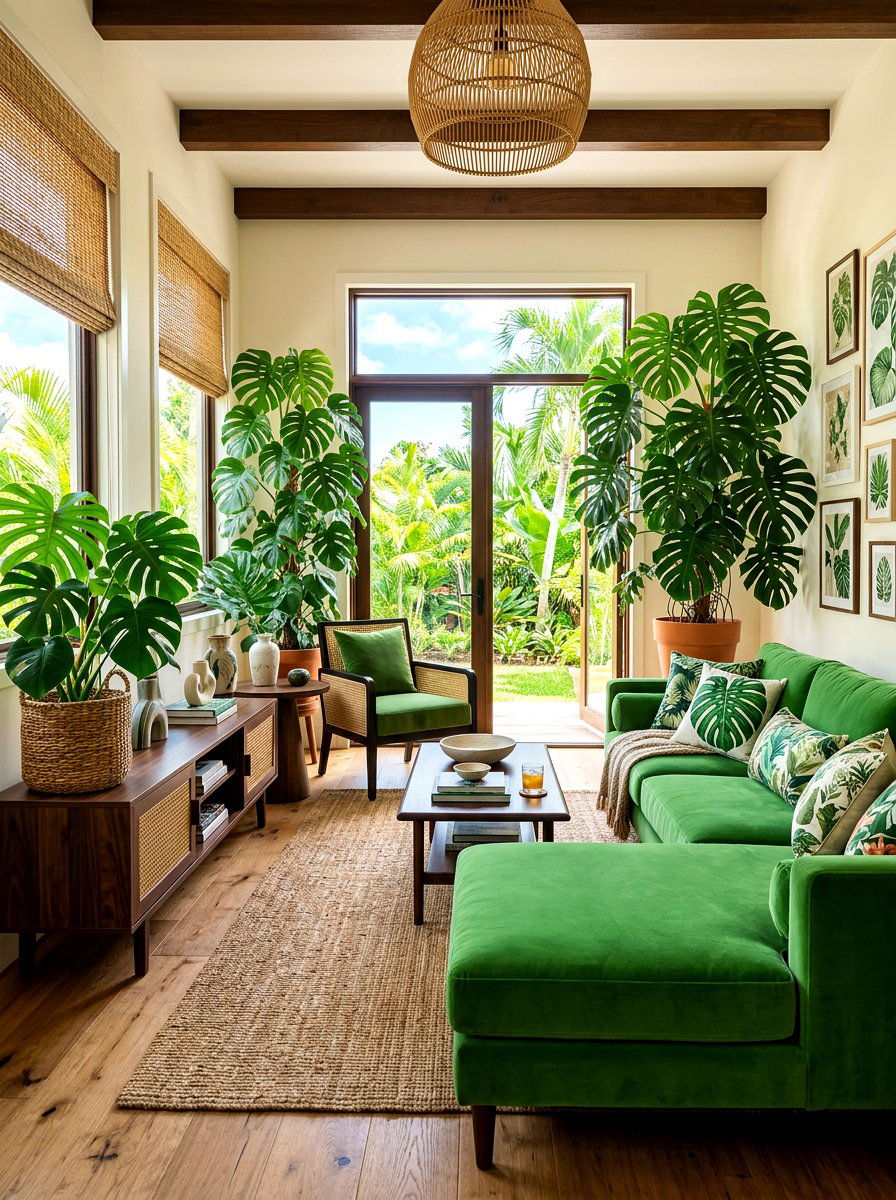
Designing a tropical leaf living room brings a bold, exotic energy to your home using large-scale greenery and vibrant textures. You can achieve this look by incorporating plants with massive leaves, such as Monstera Deliciosa or Bird of Paradise. Complement these living elements with botanical prints on throw pillows or a statement rug featuring palm motifs. The goal is to create a space that feels lush, humid, and full of life, reminiscent of a tropical island retreat. Using materials like bamboo, dark wood, and vibrant green accents will help ground the look, making your living room feel like a permanent vacation destination.
19. Linen fabric living room
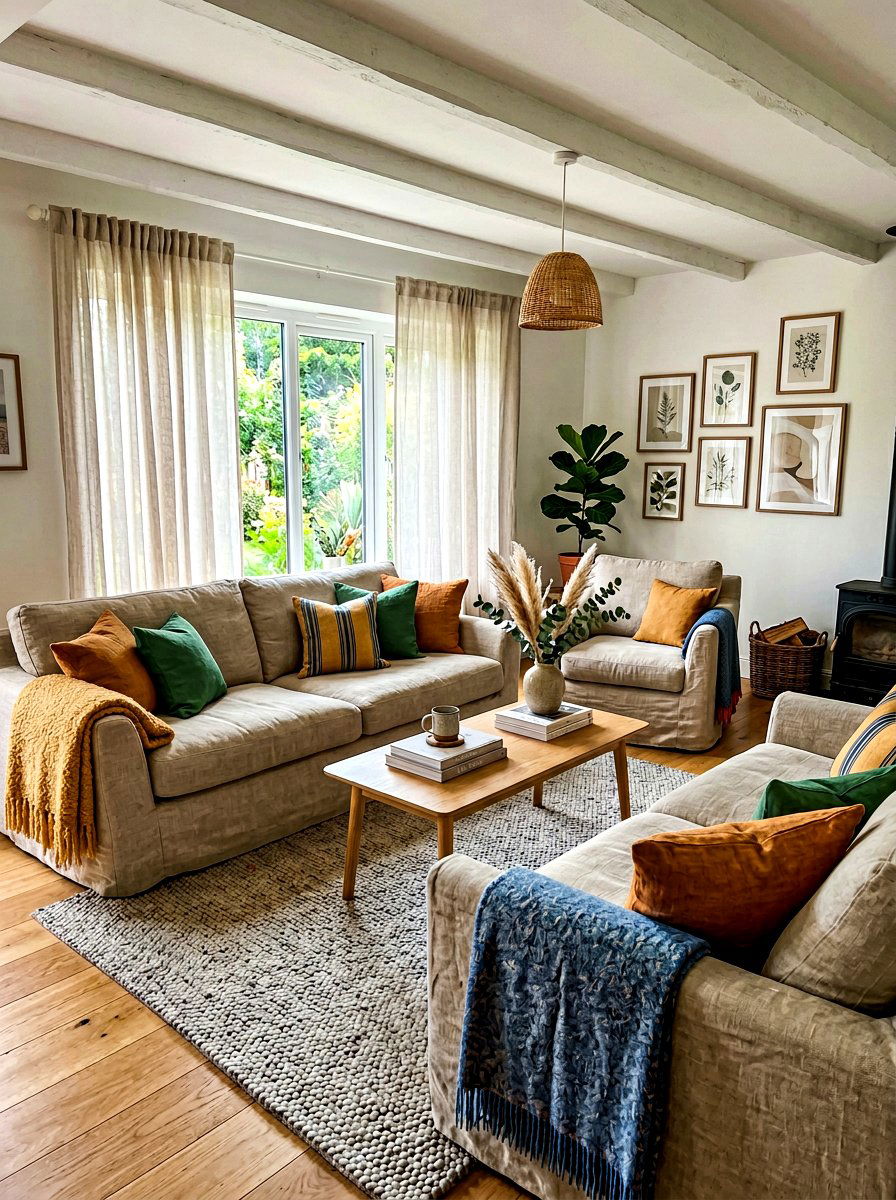
A linen fabric living room emphasizes softness, breathability, and a relaxed, lived-in aesthetic. Linen is a natural textile made from flax fibers, known for its beautiful drape and unique texture that only gets better with age. You can use linen for oversized sofas, lightweight curtains, and plush throw pillows to create a space that feels effortless and airy. Because it is highly absorbent and cool to the touch, it is an ideal choice for creating a comfortable seating area. The natural wrinkles in the fabric add a layer of casual charm, proving that a nature-inspired home doesn't need to be perfect to be beautiful.
20. Indoor fountain living room
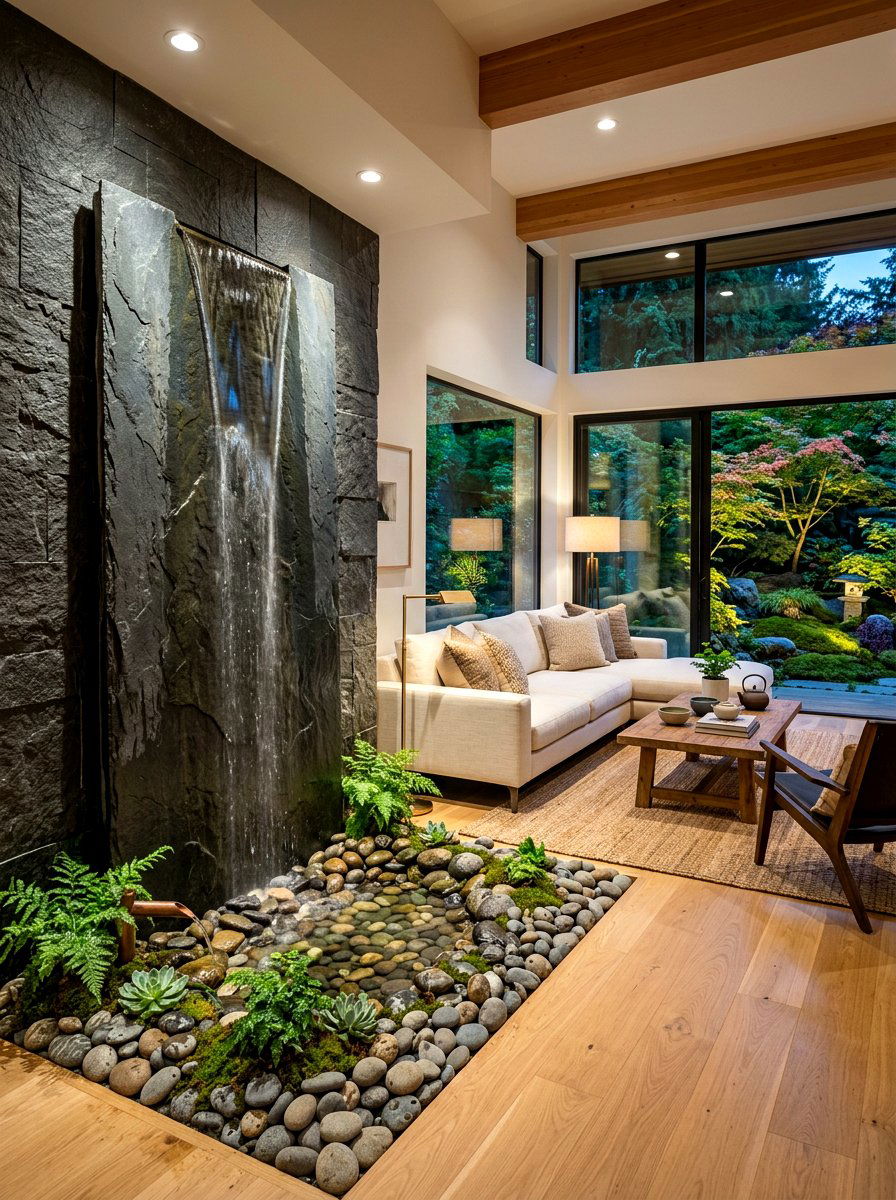
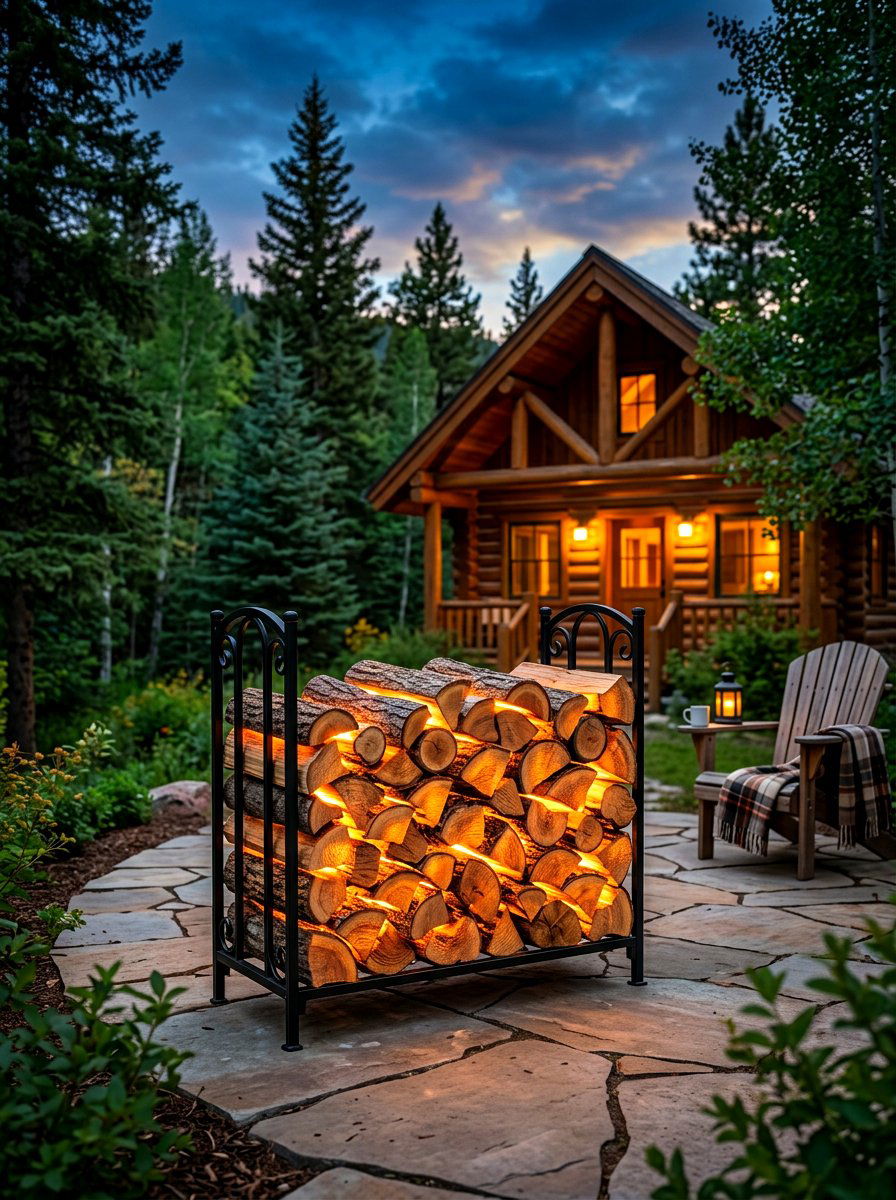
Adding an indoor fountain to your living room introduces the soothing element of water, creating a multi-sensory nature experience. The gentle sound of trickling water can mask background noise and provide a calming soundtrack for relaxation or work. Fountains come in many styles, from minimalist slate walls to organic stone bowls, allowing you to choose one that fits your specific decor. Beyond the auditory benefits, a water feature adds moisture to the air and serves as a unique visual focal point. It brings a sense of movement and life to the room, making the environment feel more balanced, cool, and spiritually refreshing.
21. Reclaimed wood living room
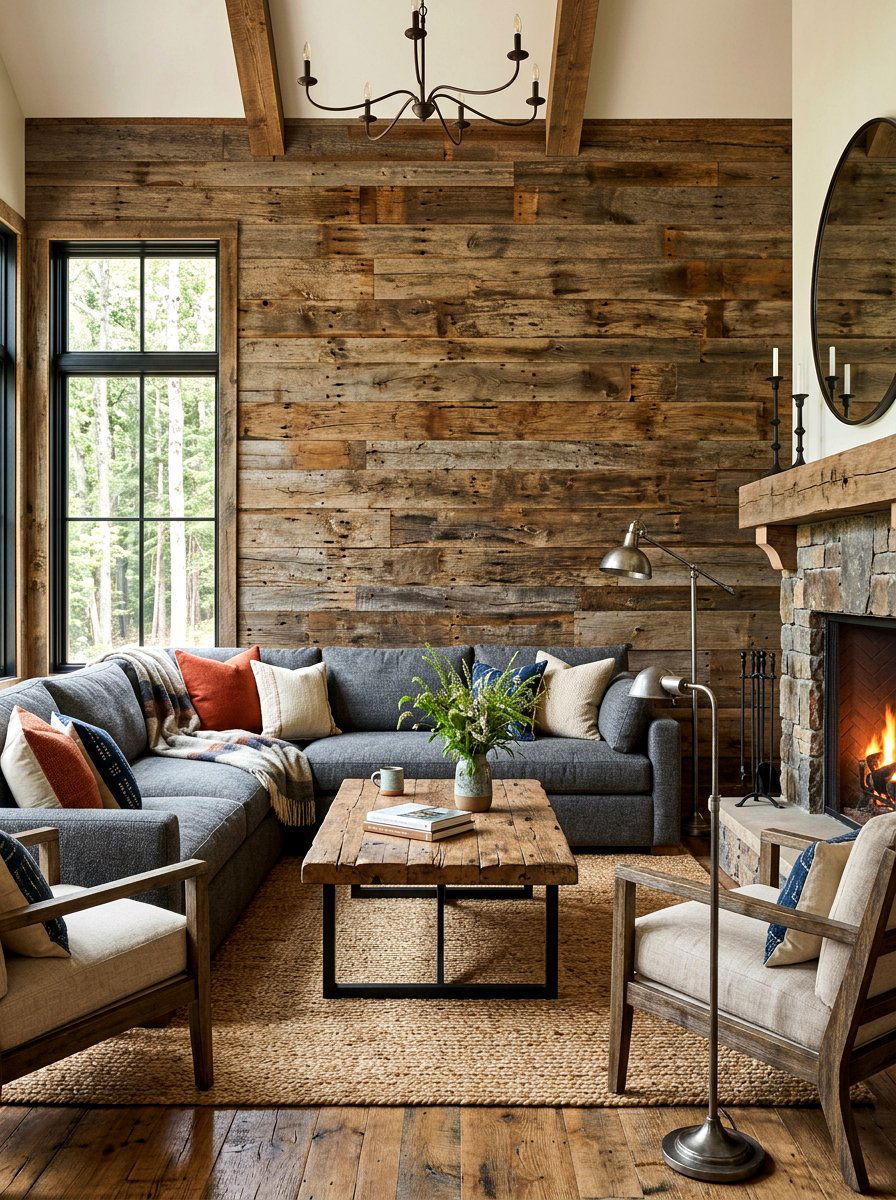
A reclaimed wood living room tells a story through the history and character of repurposed timber. Using wood salvaged from old barns, factories, or ships adds a level of texture and warmth that new materials simply cannot replicate. You might see knots, nail holes, and weathered grain patterns that give the room a sense of age and authenticity. Whether used for flooring, wall paneling, or a custom-built shelving unit, reclaimed wood is an eco-friendly choice that reduces waste. It grounds the room in a rustic, historical context, making the space feel incredibly cozy, unique, and deeply connected to the natural passage of time.
22. Forest green living room
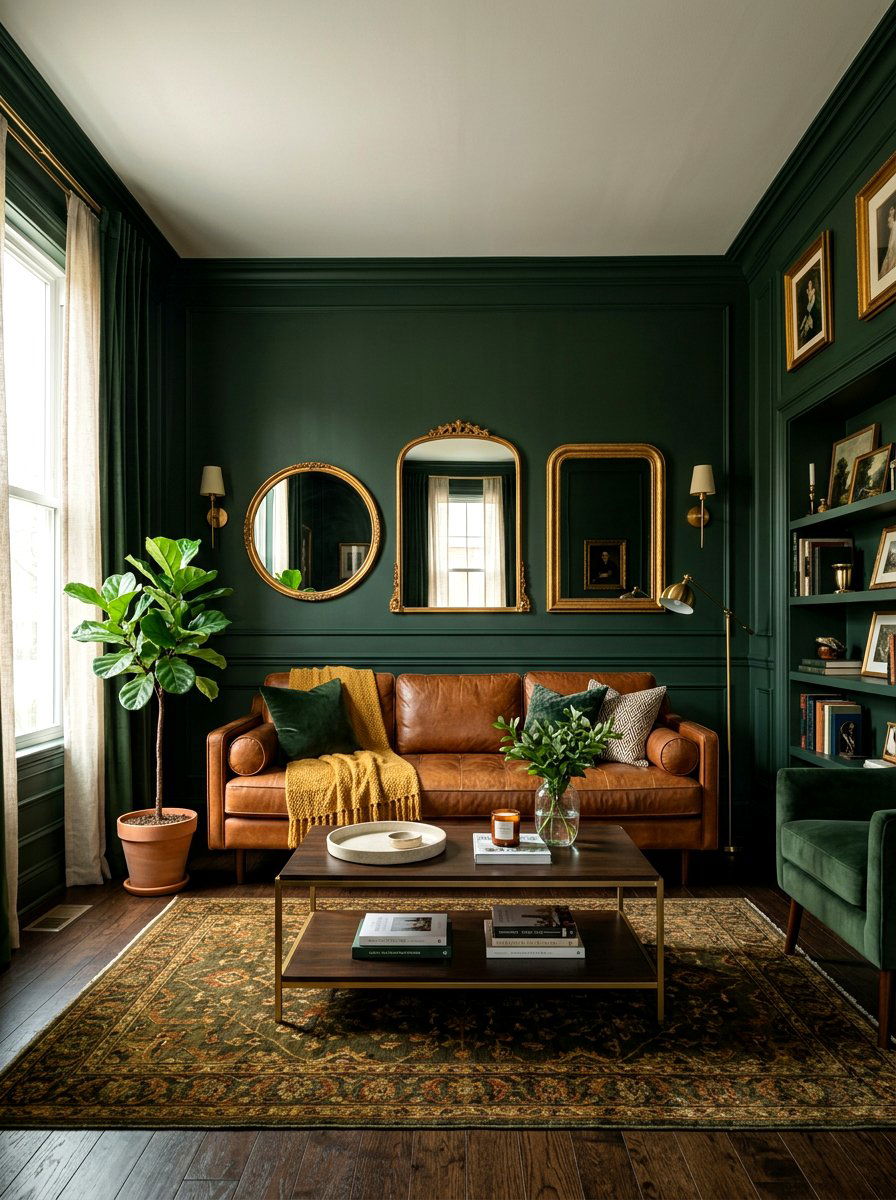
A forest green living room uses a deep, moody shade of green to evoke the mystery and stillness of a dense woodland. This color is incredibly versatile, acting as a rich backdrop for gold accents, leather furniture, and light wood tones. Painting the walls in a matte forest green can make a large room feel more intimate and "cocoon-like. " It is a color that feels sophisticated and expensive, yet it remains firmly rooted in the natural world. By layering different shades of green through velvet sofas and potted plants, you create a monochromatic look that is visually complex, calming, and undeniably elegant.
23. Skylight living room
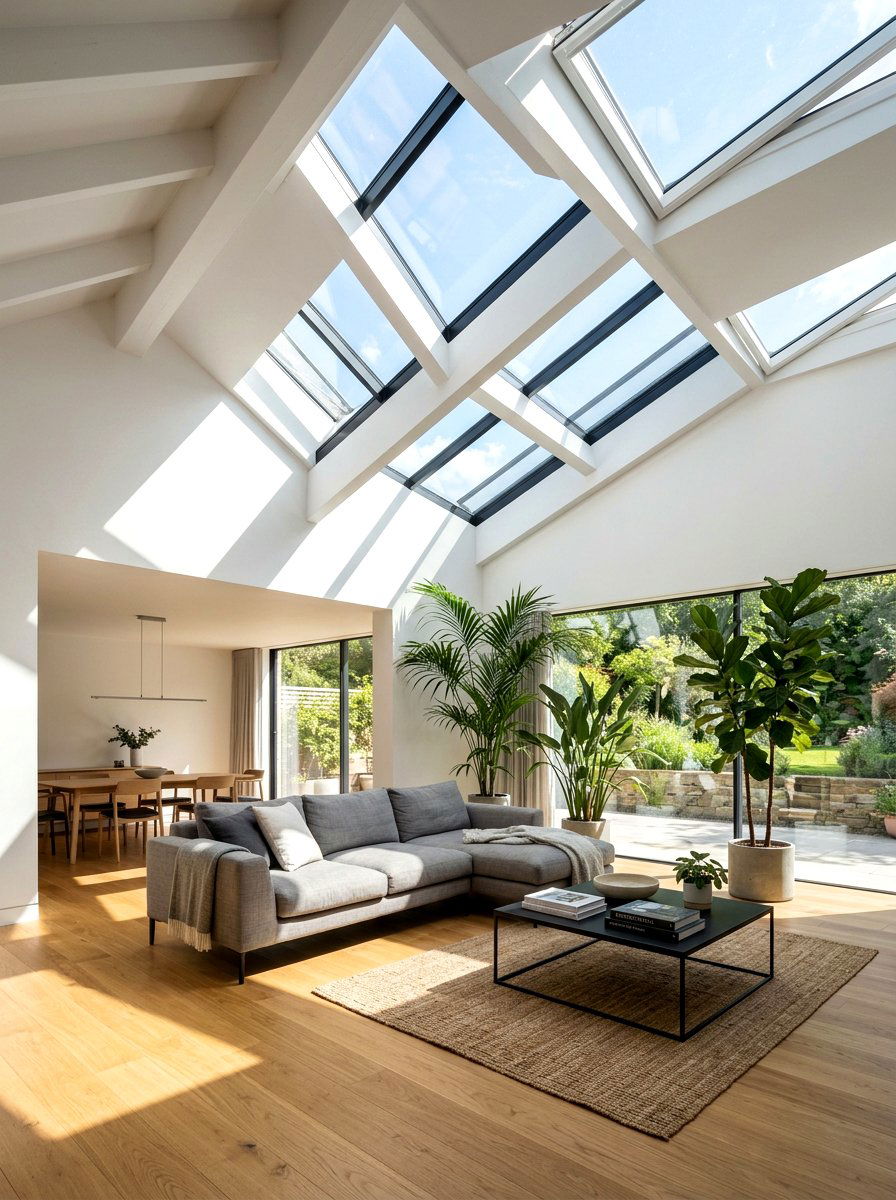
A skylight living room brings the beauty of the sky directly into your home, providing a unique upward perspective. Placing windows in the ceiling allows sunlight to stream in from above, which is often much brighter than light from side windows. During the day, you can watch clouds drift by, and at night, the room is illuminated by the moon and stars. This architectural feature makes the living room feel like an atrium or an outdoor courtyard. It significantly reduces the need for artificial lighting during the day and creates a dramatic sense of openness that connects you to the vastness of the atmosphere above.
24. Hanging plant living room
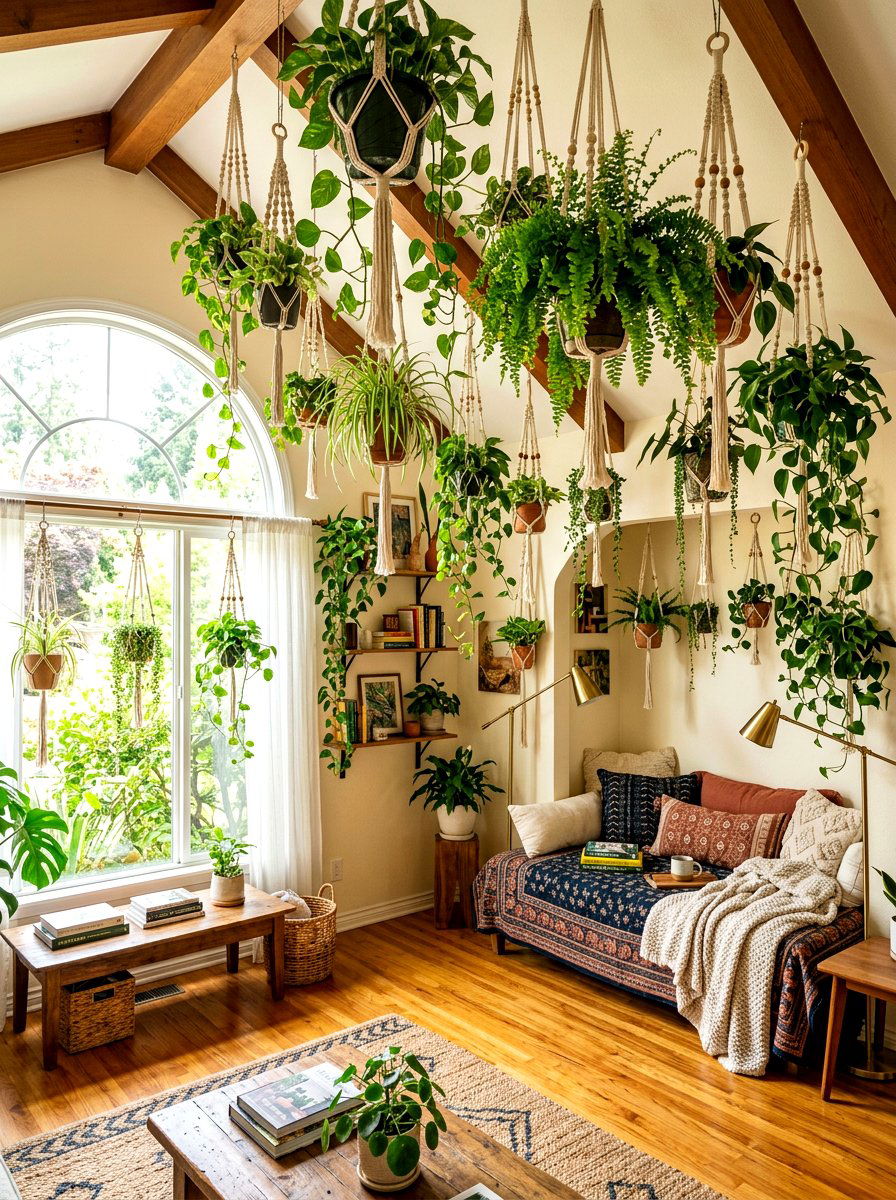
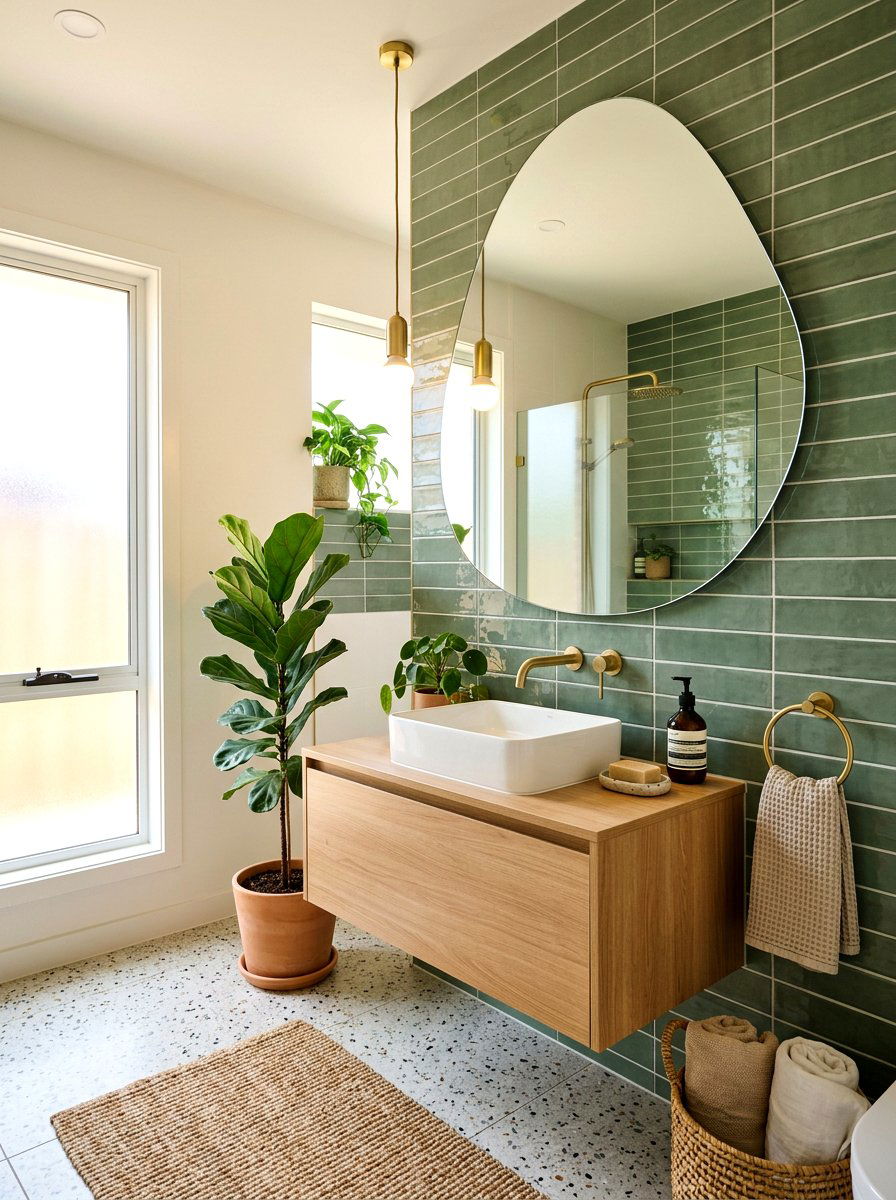
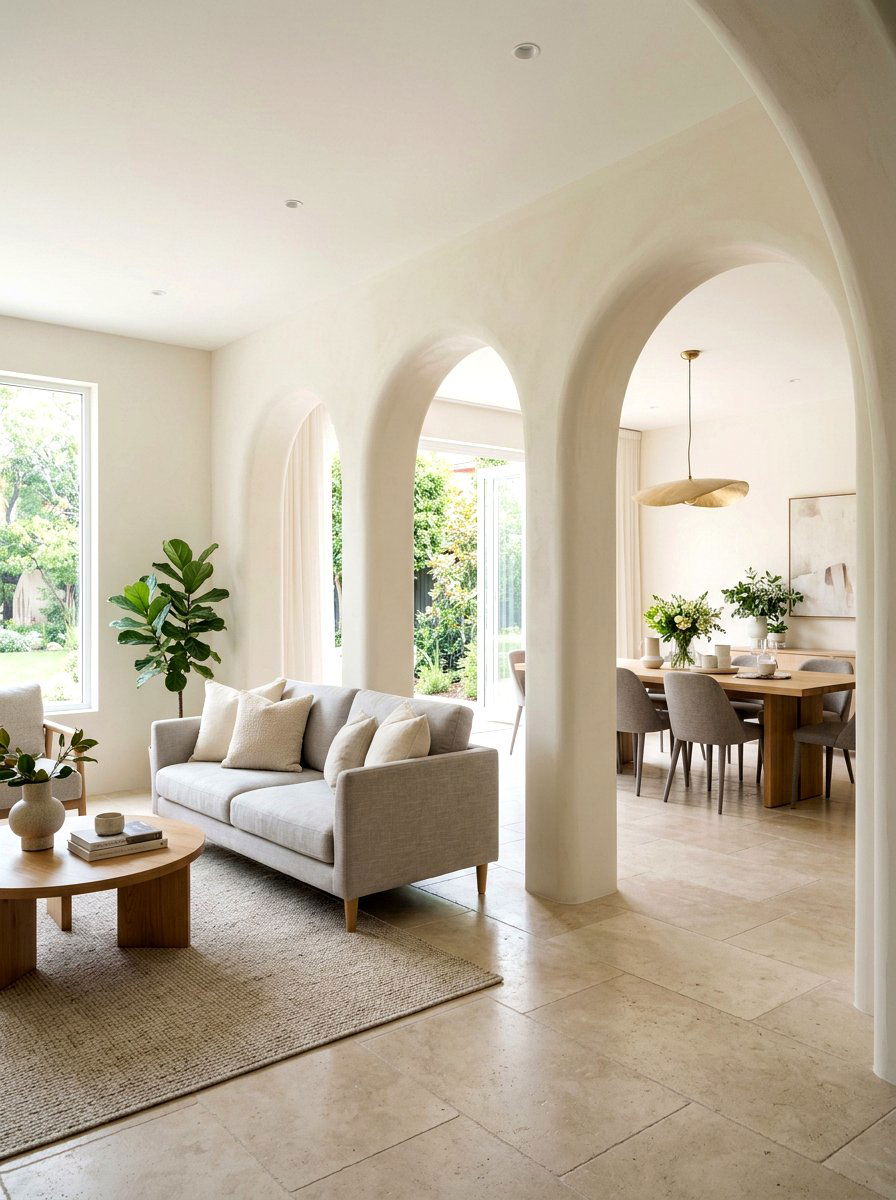
A hanging plant living room utilizes vertical space to create a cascading "jungle" effect that feels whimsical and vibrant. By suspending trailing plants like Pothos, String of Pearls, or Spider Plants from the ceiling or high shelves, you draw the eye upward and add layers of green at different heights. This technique is especially useful in smaller rooms where floor space is limited but you still want a high density of greenery. Macrame hangers or minimalist ceramic pots can be used to match your decor style. These floating islands of life make the room feel more three-dimensional and bring nature into your immediate line of sight.
25. Sand color living room
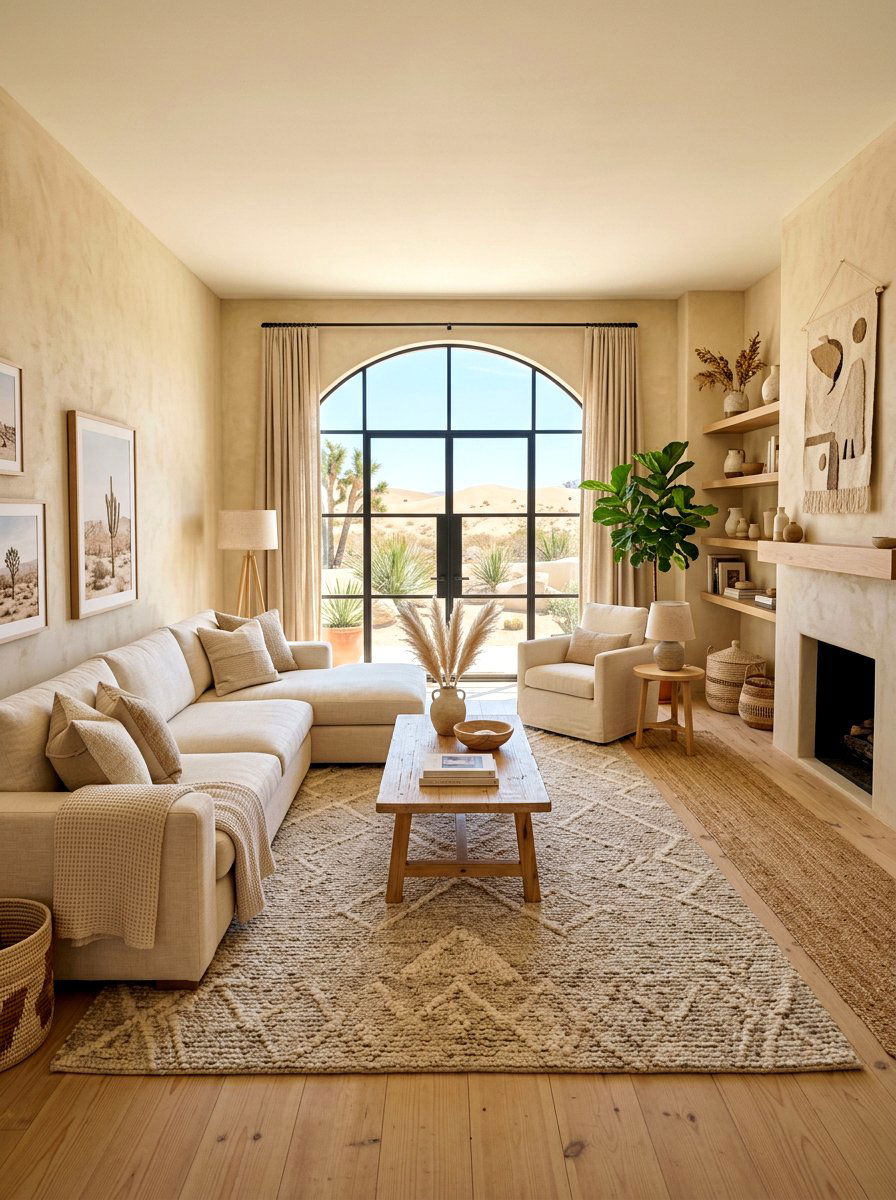
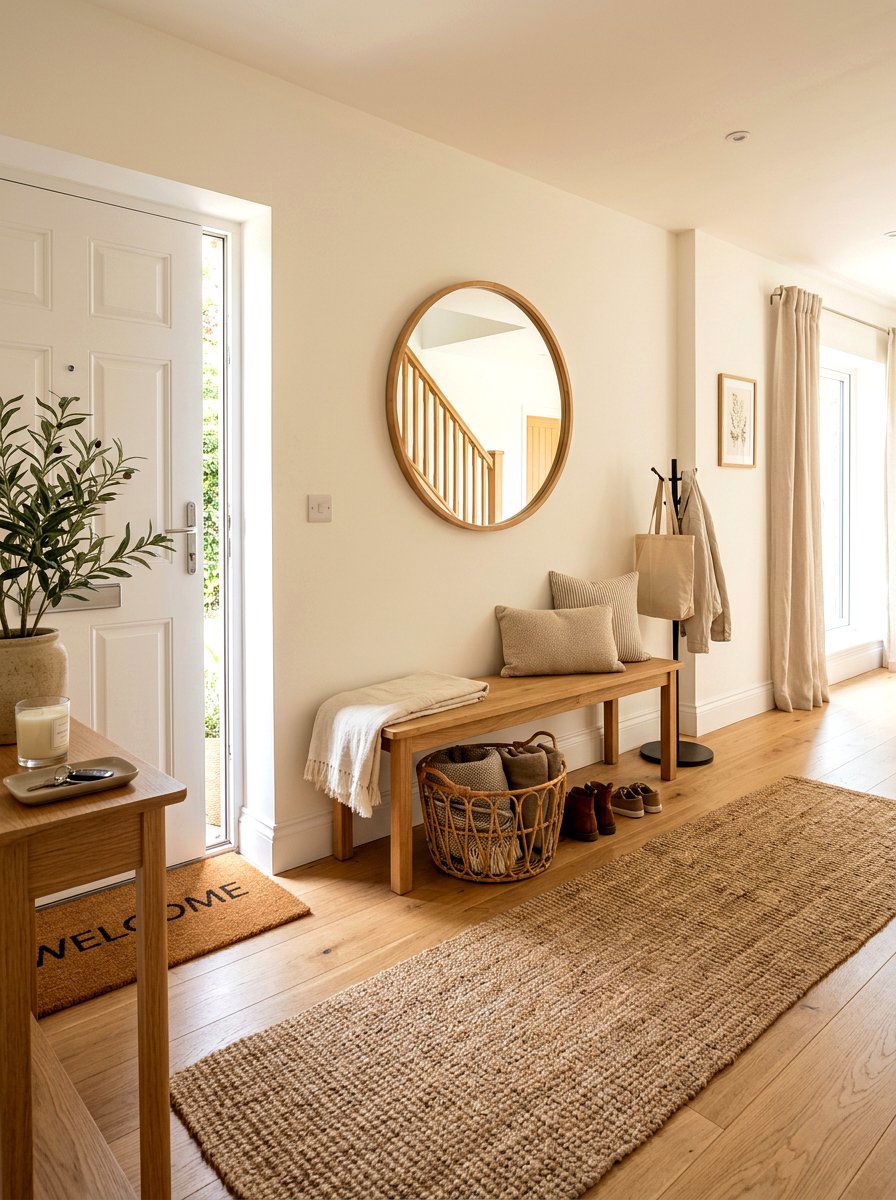
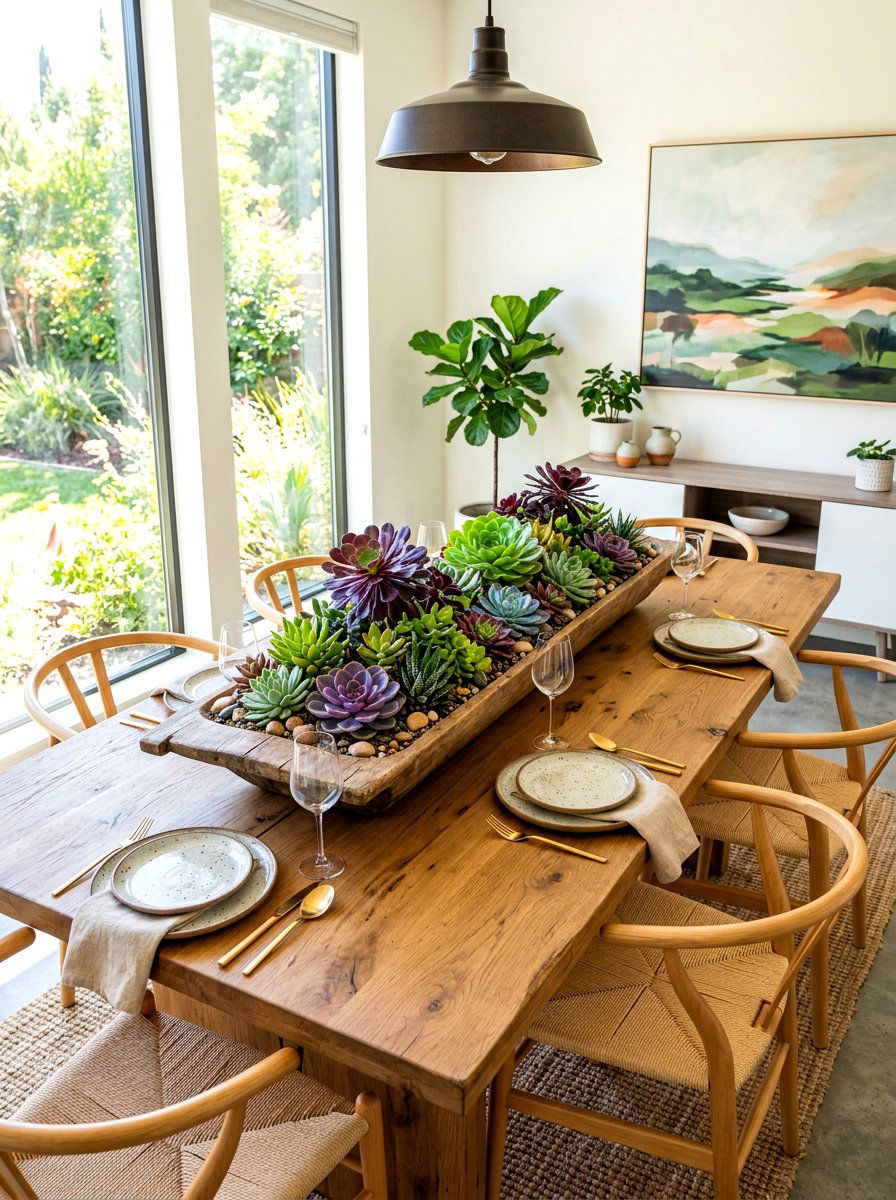
A sand color living room focuses on a palette of pale yellows, soft creams, and light tans to create a warm and sun-drenched environment. These colors are inspired by desert dunes and coastal shores, offering a neutral backdrop that feels incredibly peaceful. You can enhance this look by using textured wall finishes like lime wash or plaster, which mimic the appearance of natural stone or dried earth. Adding wooden furniture and white linen textiles keeps the space feeling light and airy. This color scheme is perfect for creating a bright, optimistic room that feels like it is permanently filled with soft, glowing afternoon sunlight.
26. Exposed stone living room
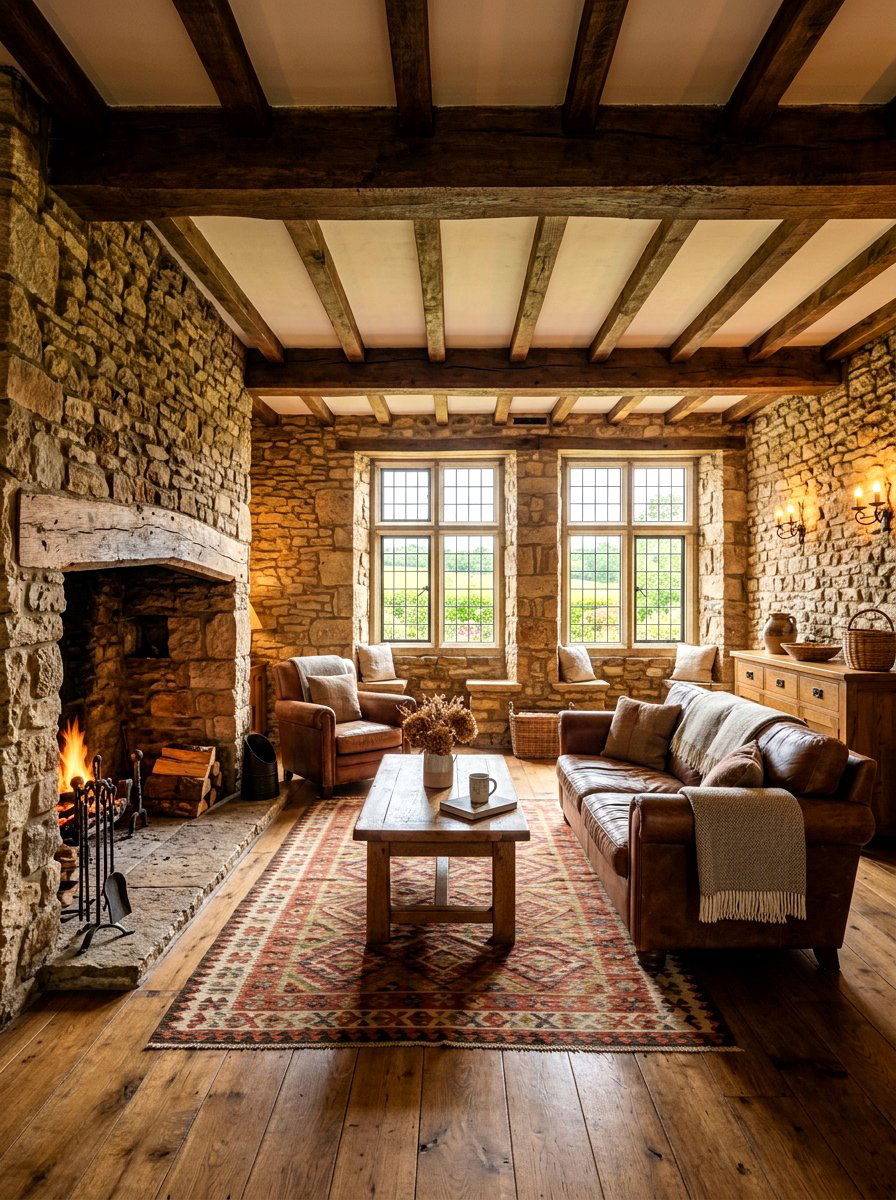
An exposed stone living room celebrates the raw, unrefined beauty of masonry as a primary design feature. If your home has original stone walls, stripping away plaster to reveal the underlying rock can add incredible character and a historic feel. The varied shapes, sizes, and colors of the stones create a natural mosaic that serves as a stunning focal point. Even if your walls are modern, you can add high-quality stone veneers to achieve a similar look. This design choice provides excellent thermal mass, keeping the room cool in summer and warm in winter, while grounding the space in a very literal, earthy way.
27. Large indoor tree living room
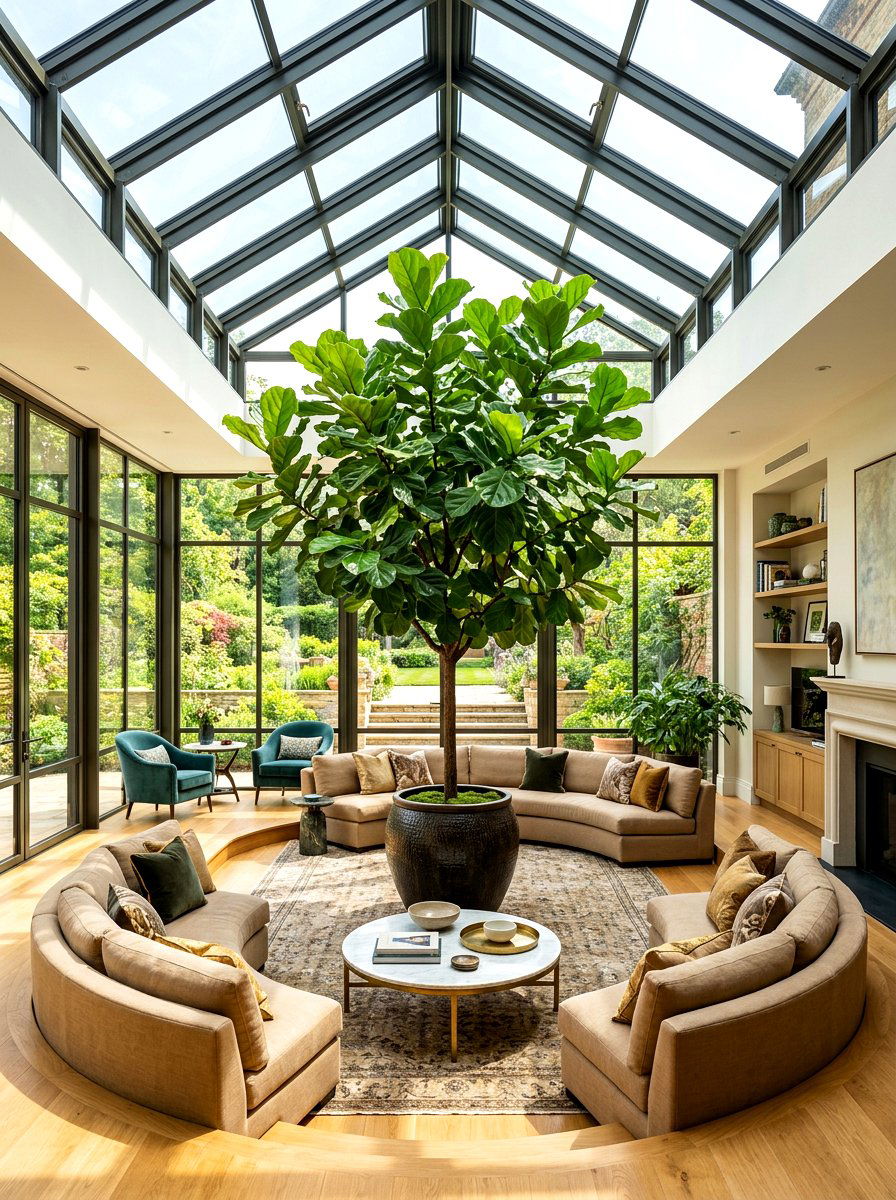
Placing a large indoor tree in your living room creates a magnificent focal point that anchors the entire design. Trees like the Ficus Lyrata, Olive Tree, or Dracaena bring a sense of scale and grandeur that smaller houseplants cannot match. A tall tree can fill an empty corner or stand beside a sofa, providing a canopy of green that makes the ceiling feel higher. The woody trunk and expansive leaves introduce a structural element that feels like a piece of living furniture. Having a large tree indoors creates a powerful connection to the forest, making your living room feel like a true outdoor retreat.
28. Bamboo furniture living room
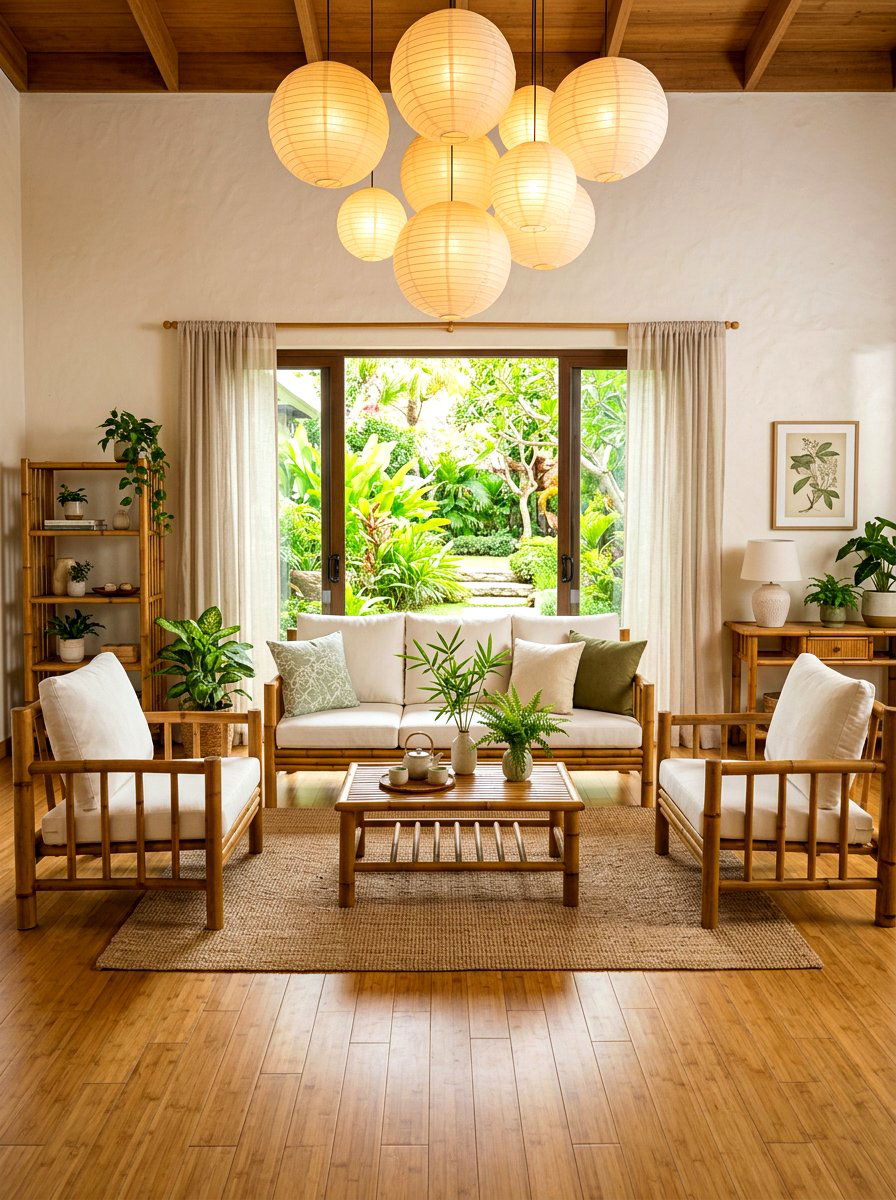
A bamboo furniture living room emphasizes sustainability and a light, organic aesthetic. Bamboo is one of the fastest-growing plants on earth, making it an incredibly eco-friendly material for chairs, tables, and flooring. Its natural pale color and distinct jointed texture add a touch of Zen or tropical style to the room. Bamboo is also surprisingly strong and flexible, allowing for beautiful curved designs that feel modern yet traditional. You can pair bamboo pieces with neutral fabrics and green accents to create a space that feels clean, renewable, and harmonious. It is a perfect choice for those who value both style and environmental responsibility.
29. Cork decor living room
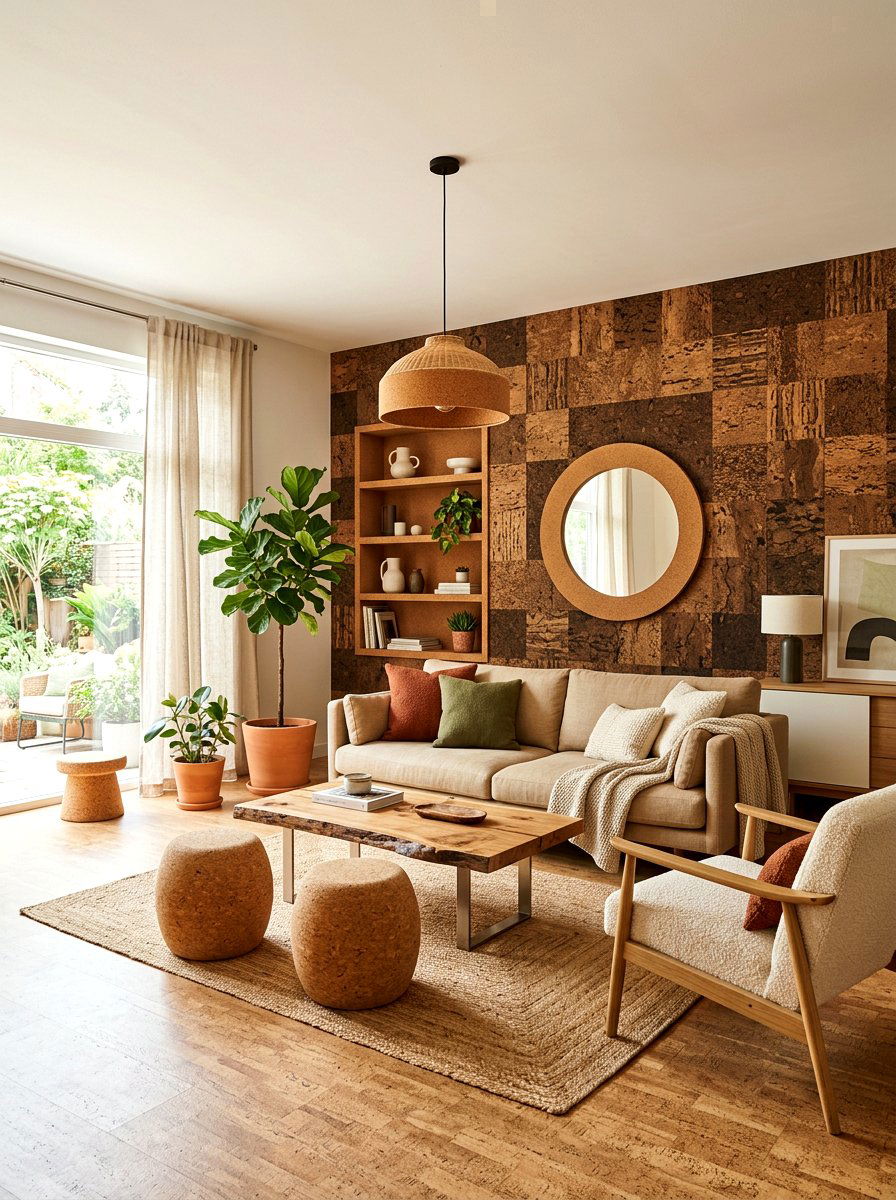
Integrating cork decor into your living room is a clever way to add warmth, sound insulation, and a unique textured look. Cork is harvested from the bark of oak trees without harming them, making it a highly sustainable material choice. You can use cork for wall tiles, flooring, or even as a material for stools and side tables. Its naturally mottled appearance and soft, honey-brown color provide a subtle earthy vibe that complements minimalist and modern designs. Beyond its looks, cork is naturally antimicrobial and soft underfoot, adding a layer of functional comfort and eco-conscious sophistication to your nature-inspired living area.
30. Preserved moss living room
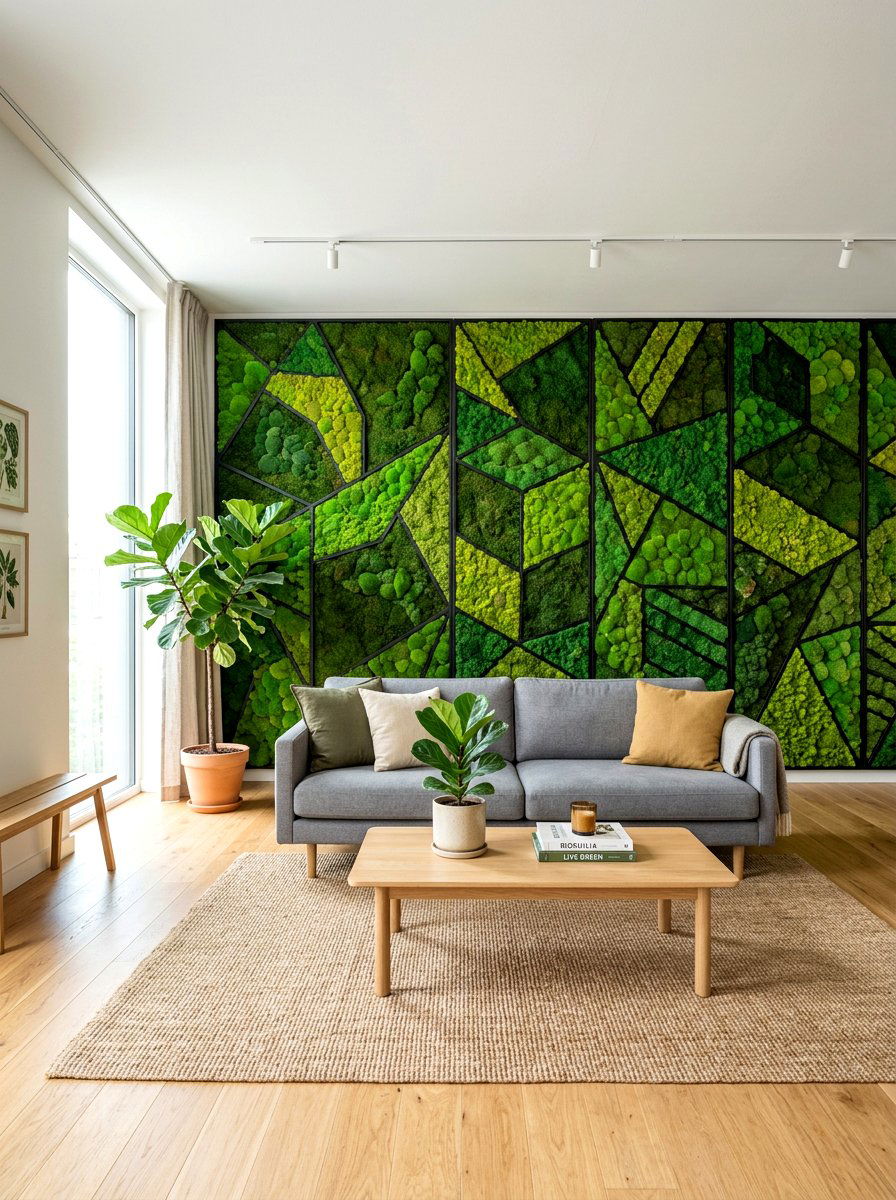
A preserved moss living room uses stabilized moss to create maintenance-free green art that remains vibrant for years. You can install large moss panels as a feature wall or frame smaller sections as unique wall decor. Unlike living walls, preserved moss doesn't require watering, sunlight, or soil, making it perfect for darker rooms or busy homeowners. The soft, spongy texture and deep green hues of the moss provide a powerful biophilic connection that feels incredibly tactile. This design idea brings a piece of the forest floor into your home, offering a serene and unchanging element of nature that adds depth and tranquility to any space.
Conclusion:
Embracing a nature-inspired living room is a transformative journey that harmonizes your indoor environment with the beauty of the earth. By carefully selecting materials like reclaimed wood, linen, and stone, and integrating lush greenery, you create a space that nurtures your soul. These thirty design concepts demonstrate that connecting with nature doesn't require a total renovation; often, it is about the thoughtful layering of textures and colors. Whether you prefer the drama of a vertical plant wall or the subtle calm of a sand-colored palette, your living room can become a true sanctuary. This approach ultimately fosters a deeper appreciation for the natural world every single day.

Related posts: