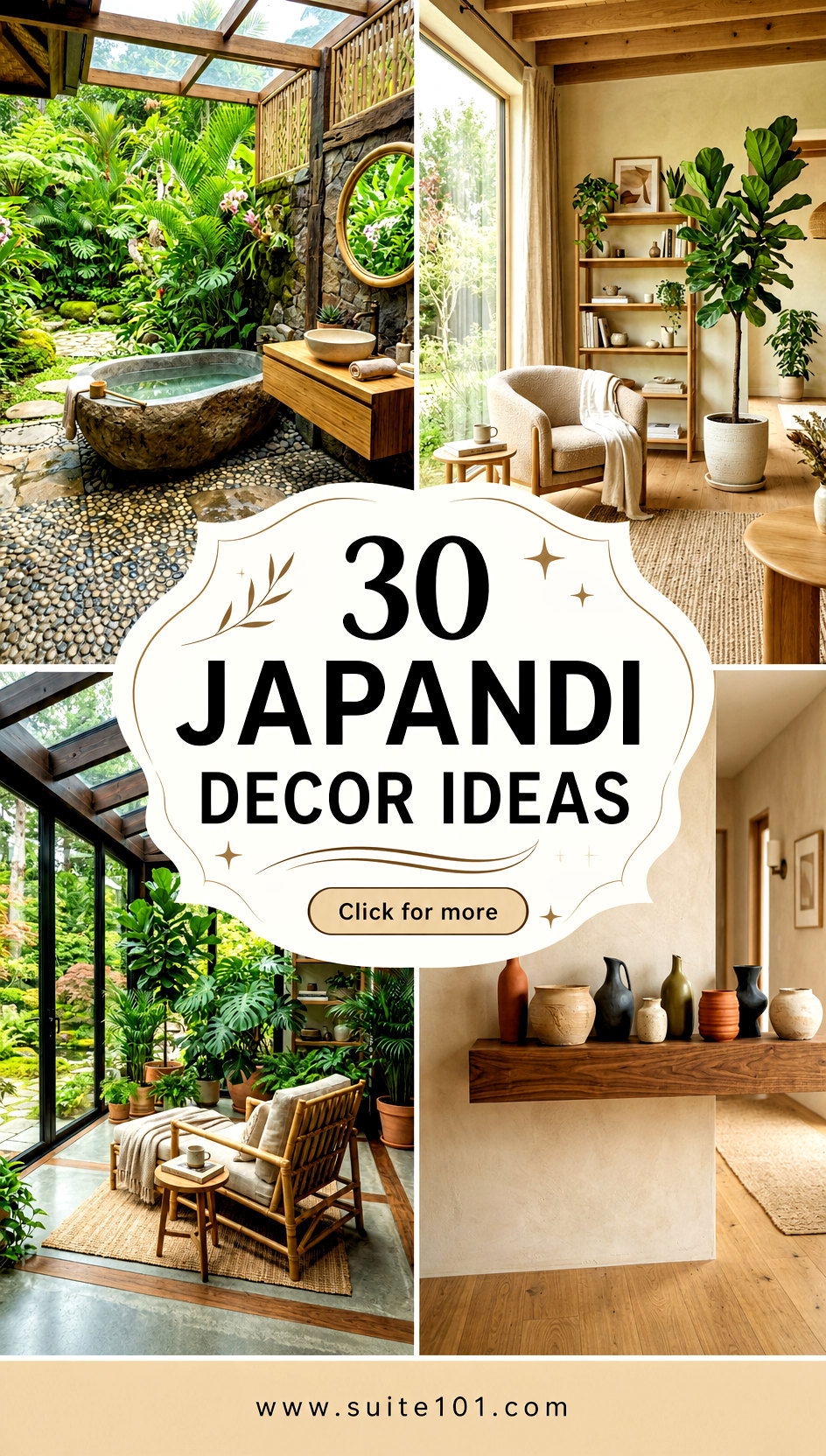
Japandi style is the ultimate fusion of Japanese minimalism and Scandinavian functionality, creating a home environment that feels both serene and incredibly warm. This design movement has taken Pinterest by storm because it prioritizes high-quality materials and intentional living over cluttered spaces. By blending the cozy concept of hygge with the ancient Japanese philosophy of wabi-sabi, homeowners can achieve a balanced look that celebrates natural beauty and simple lines. Whether you are looking to refresh a single room or redesign your entire house, these curated concepts offer a roadmap to a more peaceful, organized, and aesthetically pleasing lifestyle that remains timeless and modern.
1. Neutral Living Room
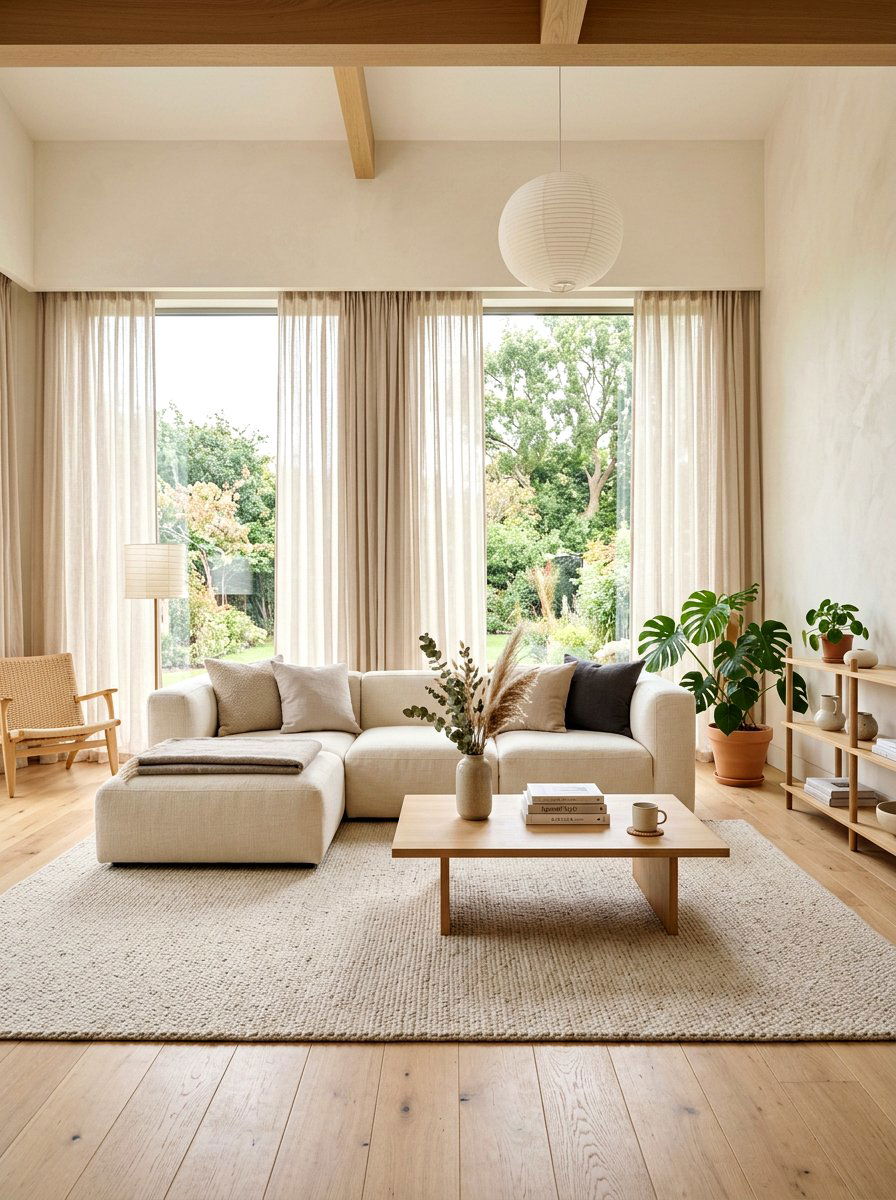
A neutral living room serves as the perfect foundation for any Japandi-inspired home. By focusing on a palette of soft beiges, warm whites, and muted grays, you create a space that feels instantly calming. The goal is to let the architecture and high-quality furniture pieces speak for themselves without the distraction of loud colors. Use a mix of light oak wood and cream-colored upholstery to maintain a soft, inviting atmosphere. This approach emphasizes the Scandinavian side of the fusion, ensuring the room remains bright and airy. Natural light is essential here, so keep windows unobstructed to let the sun highlight the subtle textures throughout the entire living area.
2. Low Profile Bed
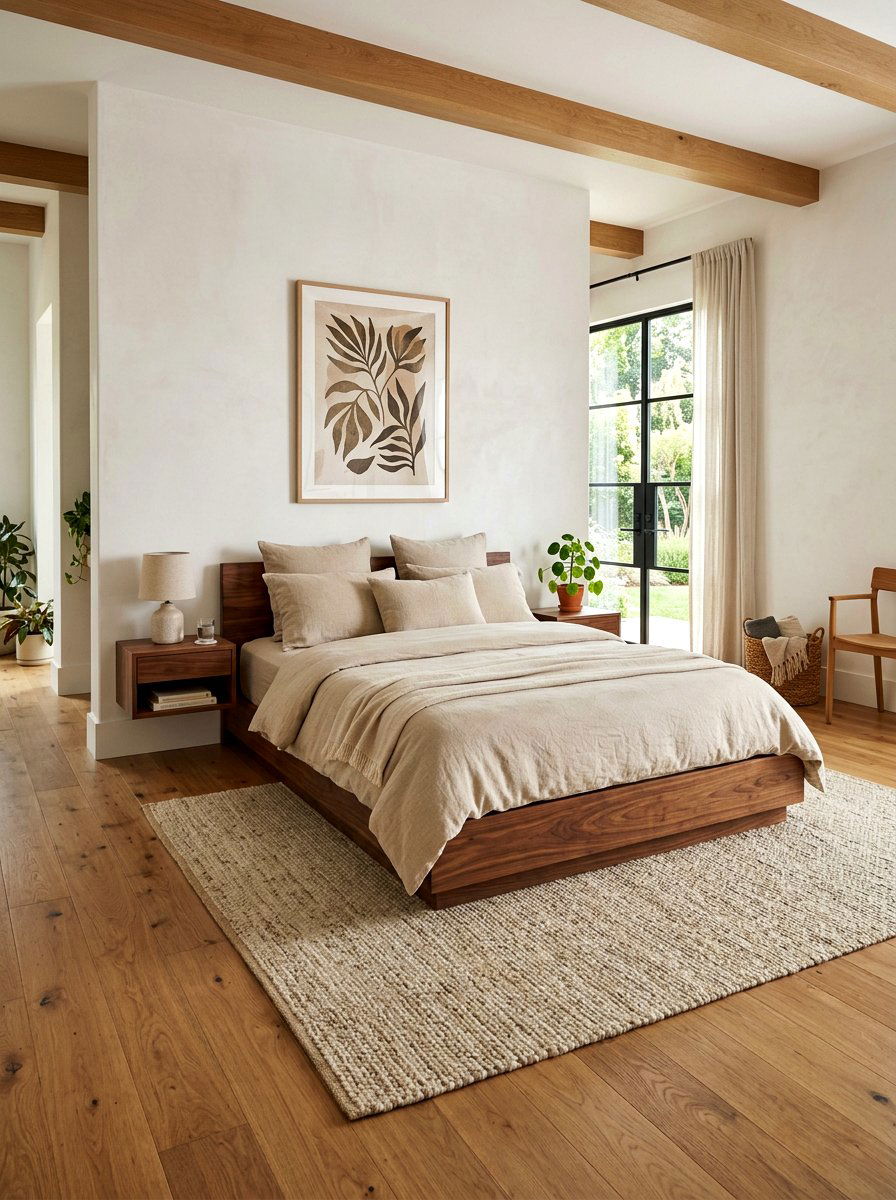
Bringing the furniture closer to the ground is a classic Japanese design technique that makes any bedroom feel more expansive and grounded. A low-profile bed frame made from solid walnut or light ash wood creates a focal point that is both stylish and functional. This setup reduces visual clutter at eye level, allowing the mind to rest more easily in the evening. Pair the bed with minimal linens in earthy tones like terracotta or sand to enhance the grounded feeling. By stripping away heavy headboards and ornate frames, you focus on the essential purpose of the room, which is deep relaxation and undisturbed, peaceful sleep every single night.
3. Slatted Wood Wall
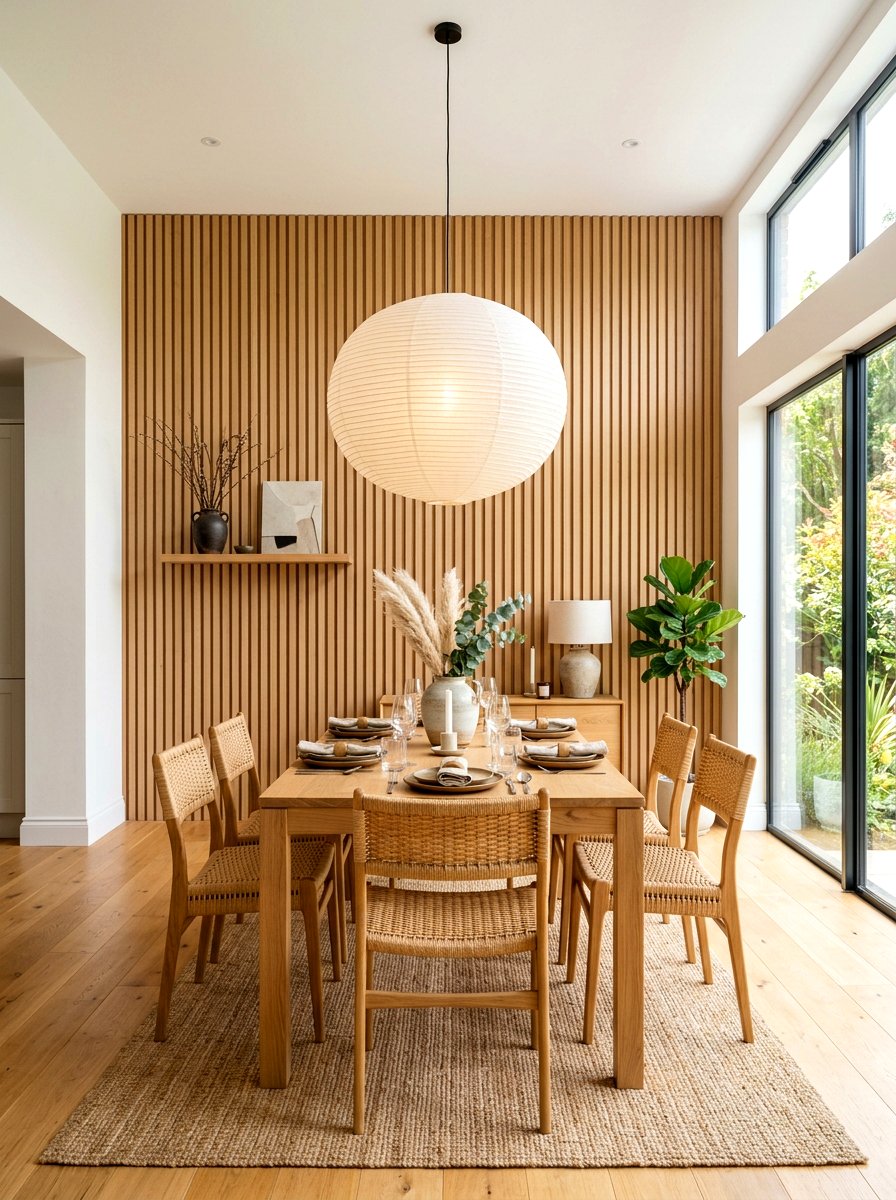
Incorporating a slatted wood wall adds incredible architectural depth and texture to a room without needing traditional decor pieces. These vertical lines create a sense of height and order, reflecting the precision of Japanese craftsmanship. You can use light-colored wood slats behind a dining table or as a headboard alternative in the bedroom. This feature provides a rhythmic visual element that draws the eye and makes the space feel more high-end and custom. The gaps between the slats also allow for subtle shadows, which change throughout the day as the sun moves. It is a sophisticated way to introduce natural materials while keeping the overall design clean.
4. Minimalist Dining Area
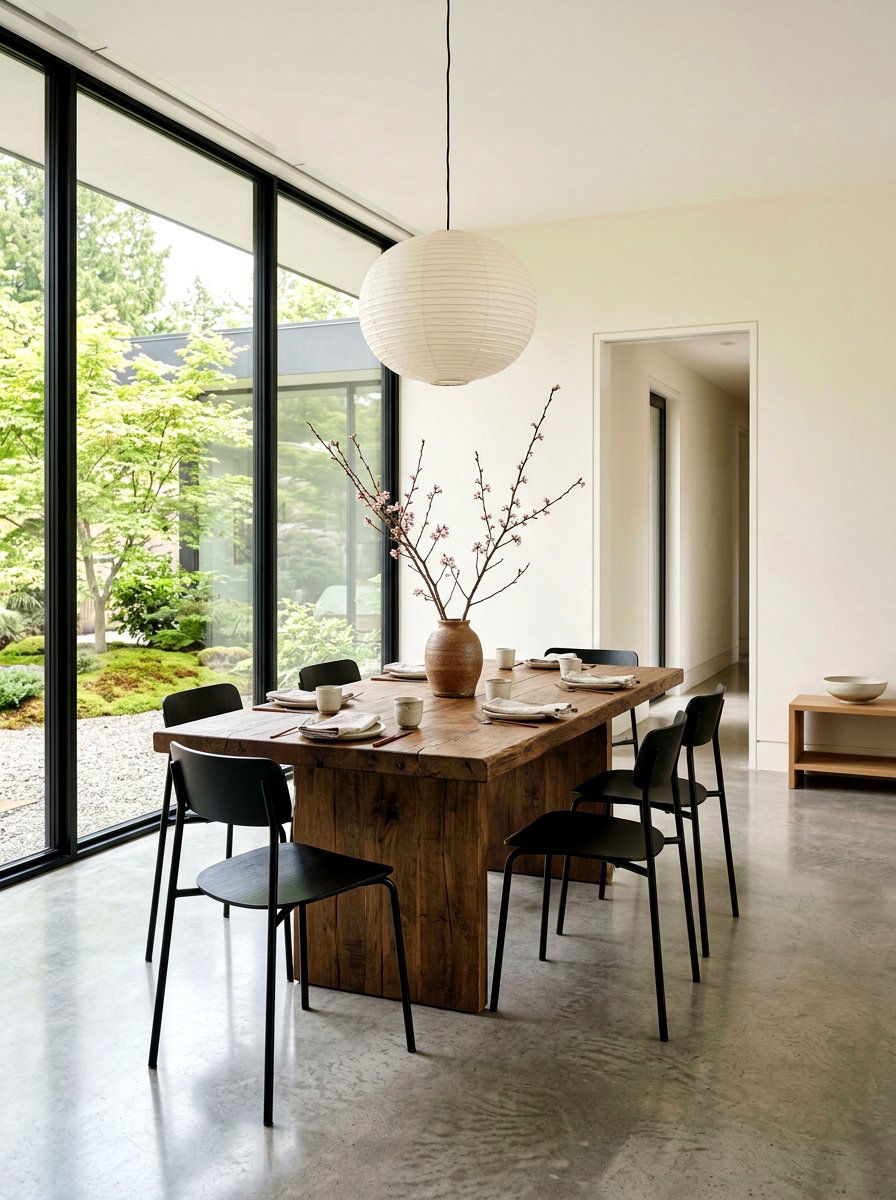
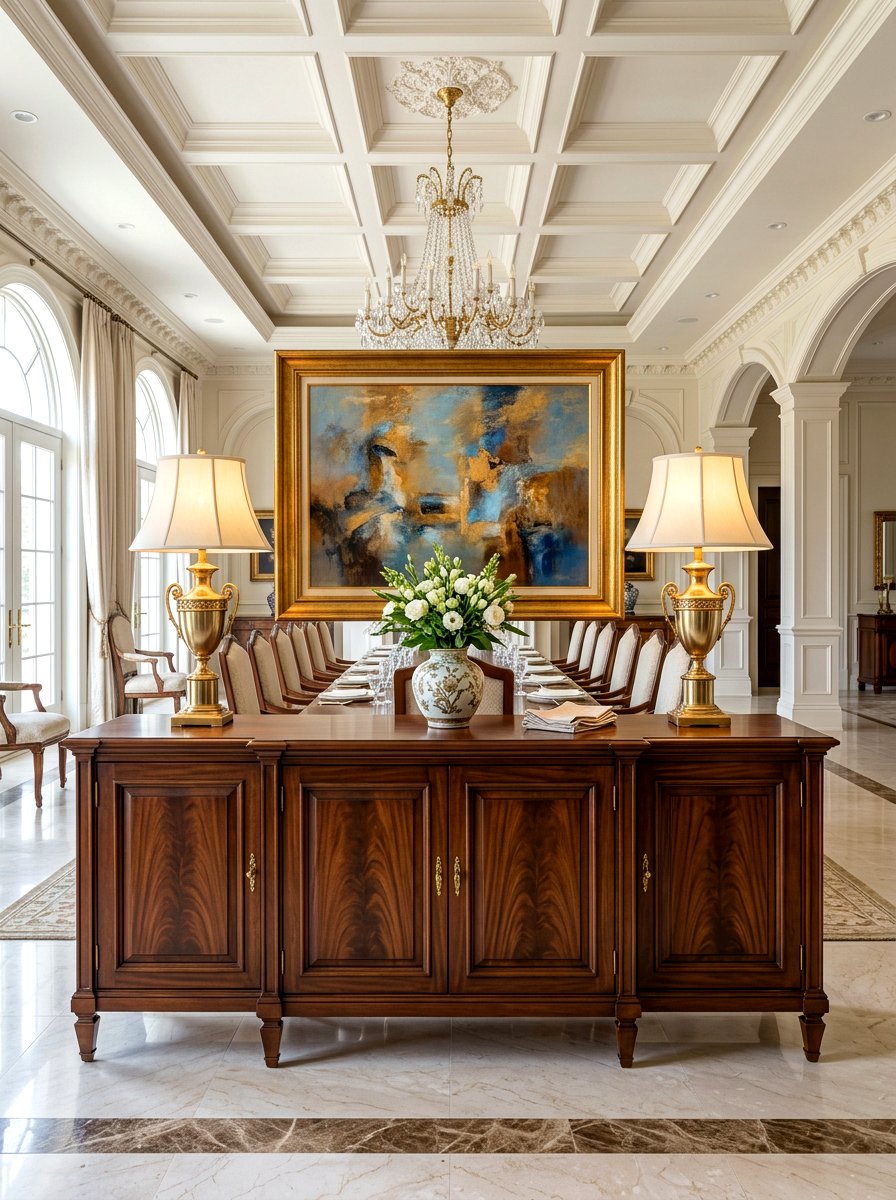
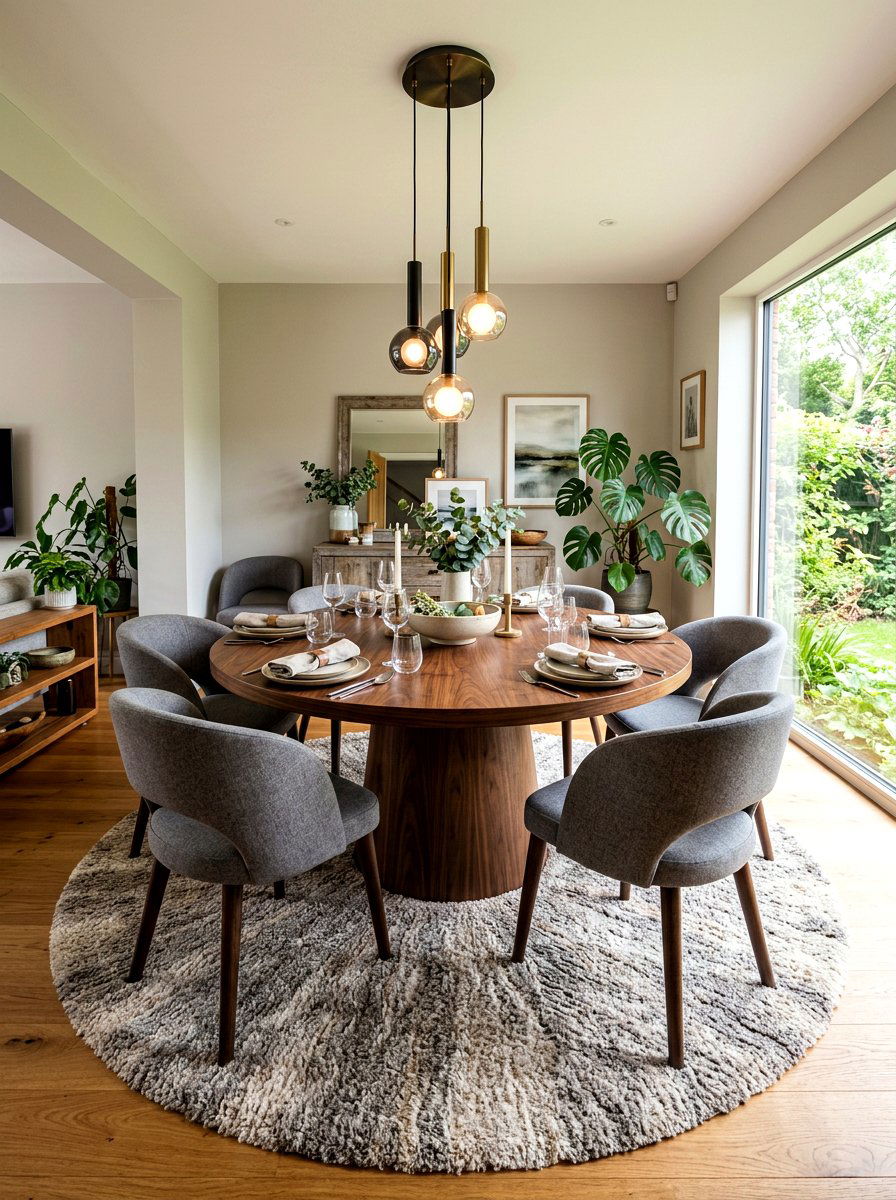
Creating a minimalist dining area requires a careful balance between sleek lines and organic shapes to ensure the space feels welcoming. Choose a large, solid wood dining table with a matte finish as the centerpiece of the room. Surround it with chairs that feature simple silhouettes and woven seats for a touch of texture. The lack of heavy centerpieces or elaborate rugs allows the focus to remain on the act of sharing a meal with loved ones. Keep the walls mostly bare, perhaps adding a single piece of abstract art or a simple clock. This design philosophy turns the dining room into a distraction-free zone for mindful eating.
5. Zen Bathroom
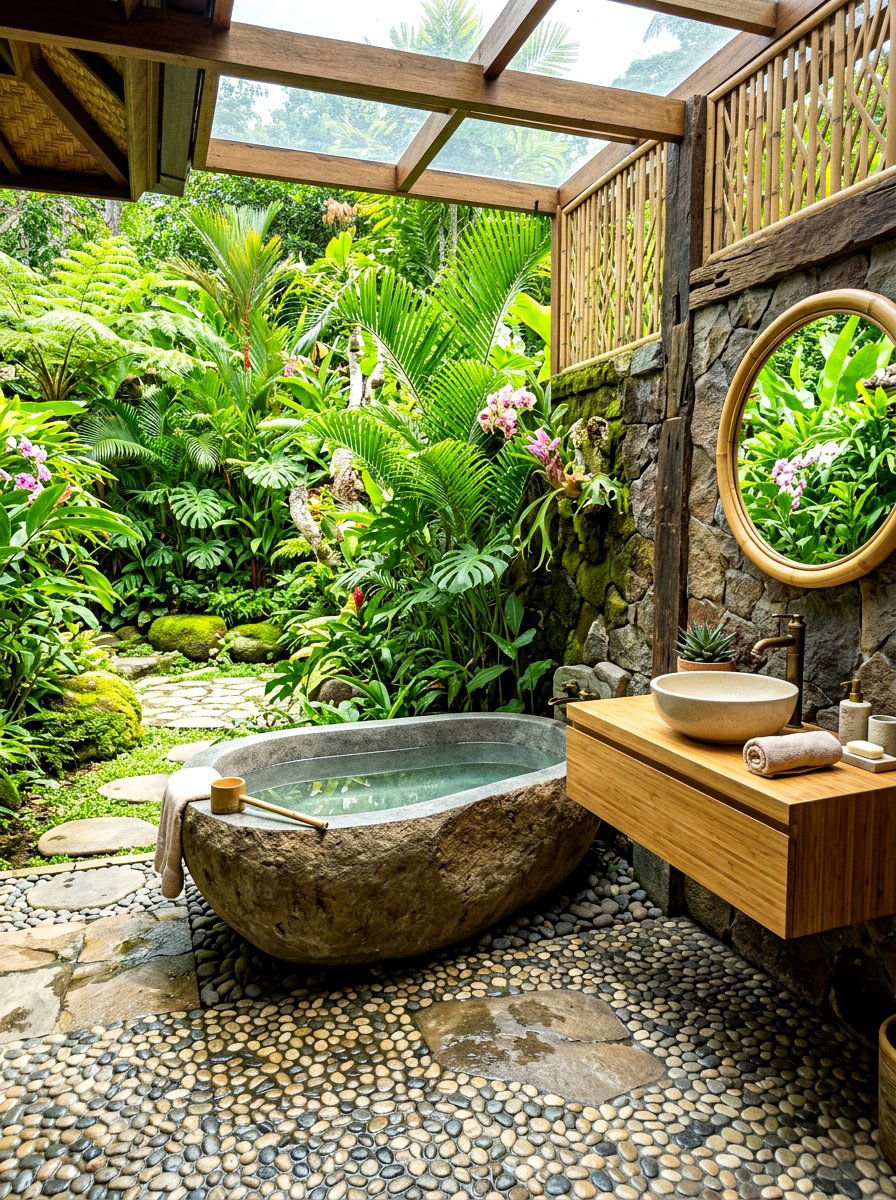
A zen bathroom transforms your daily routine into a spa-like experience by using natural stone and light wood elements. Focus on a clean layout with floating vanities and walk-in showers that use frameless glass to maintain an open feel. Incorporating a deep soaking tub made of stone or high-quality acrylic provides a place for meditation and relaxation. Use pebble tiles on the floor to bring a tactile, natural sensation to the space. Neutral towels and wooden bath accessories complete the look, while hidden storage keeps toiletries out of sight. The result is a clutter-free sanctuary that encourages you to slow down and practice self-care in a beautiful setting.
6. Paper Lantern Lighting
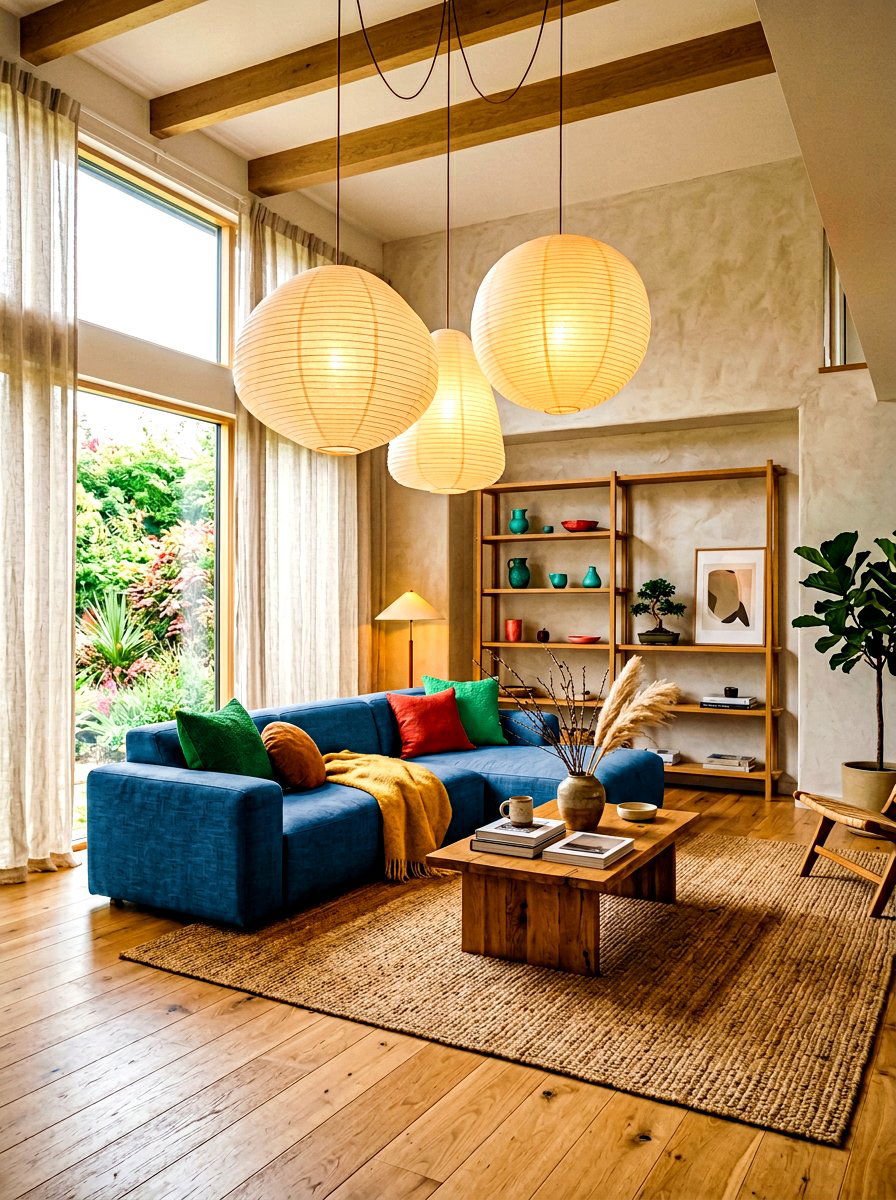
Lighting plays a crucial role in Japandi decor, and paper lantern lighting is the most iconic way to achieve a soft glow. These oversized, sculptural fixtures are made from rice paper and bamboo, providing a diffused light that eliminates harsh shadows. Hanging a large pendant light over a coffee table or bed adds a sense of airy elegance to the entire room. The organic shape of the lantern contrasts beautifully with the straight lines of modern furniture. This specific choice adds a traditional Japanese touch that feels incredibly contemporary. It is an affordable yet impactful way to make a room feel cozy, artistic, and visually balanced.
7. Indoor Tree Decor
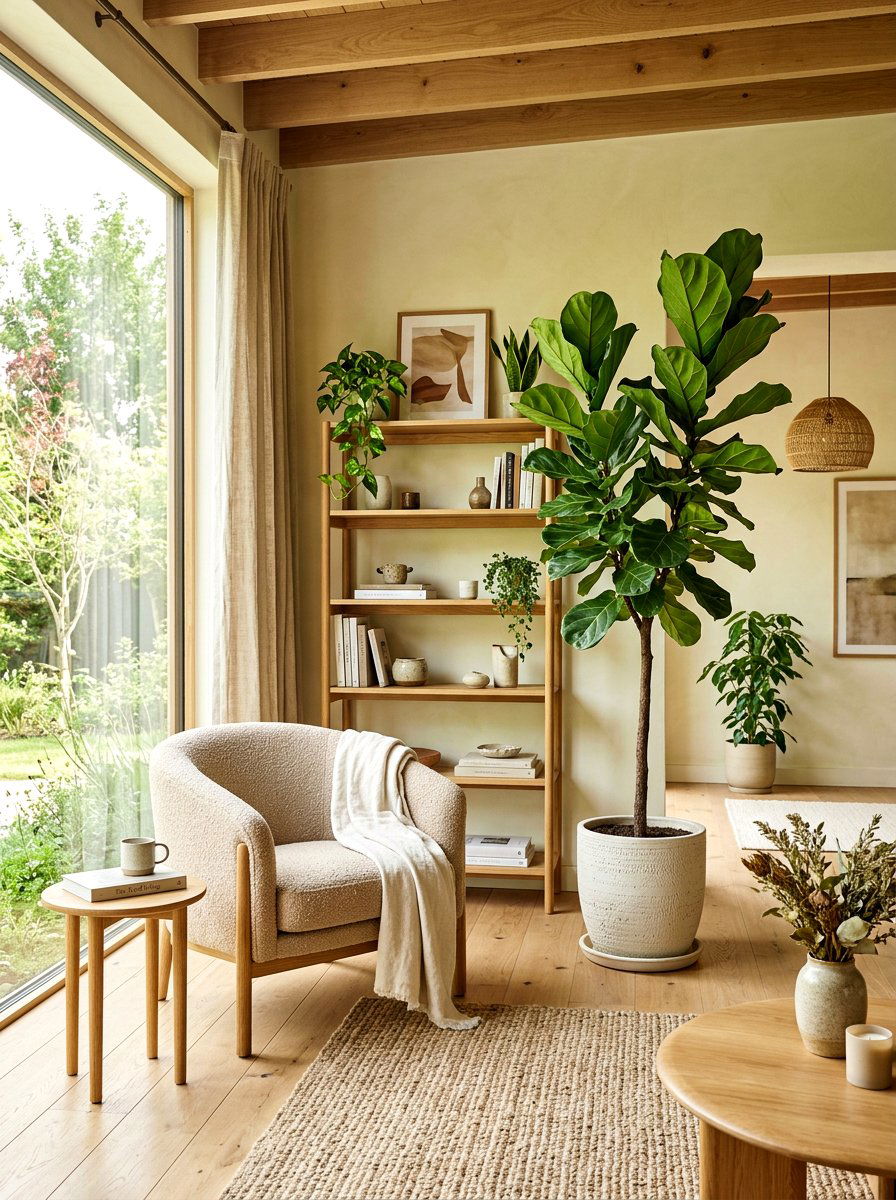
Adding a large indoor tree is the best way to embrace biophilic design within a minimalist home. A tall Fiddle Leaf Fig or a delicate Olive Tree placed in a corner brings life and vibrant greenery to a neutral palette. Use a large ceramic or terracotta pot that matches the earthy tones of your furniture to house the plant. This single, bold natural element acts as a living sculpture, filling empty vertical space without the need for extra furniture. The presence of nature indoors has been proven to reduce stress and improve air quality. It perfectly bridges the gap between the indoor living space and the natural world outside.
8. Woven Texture Seating
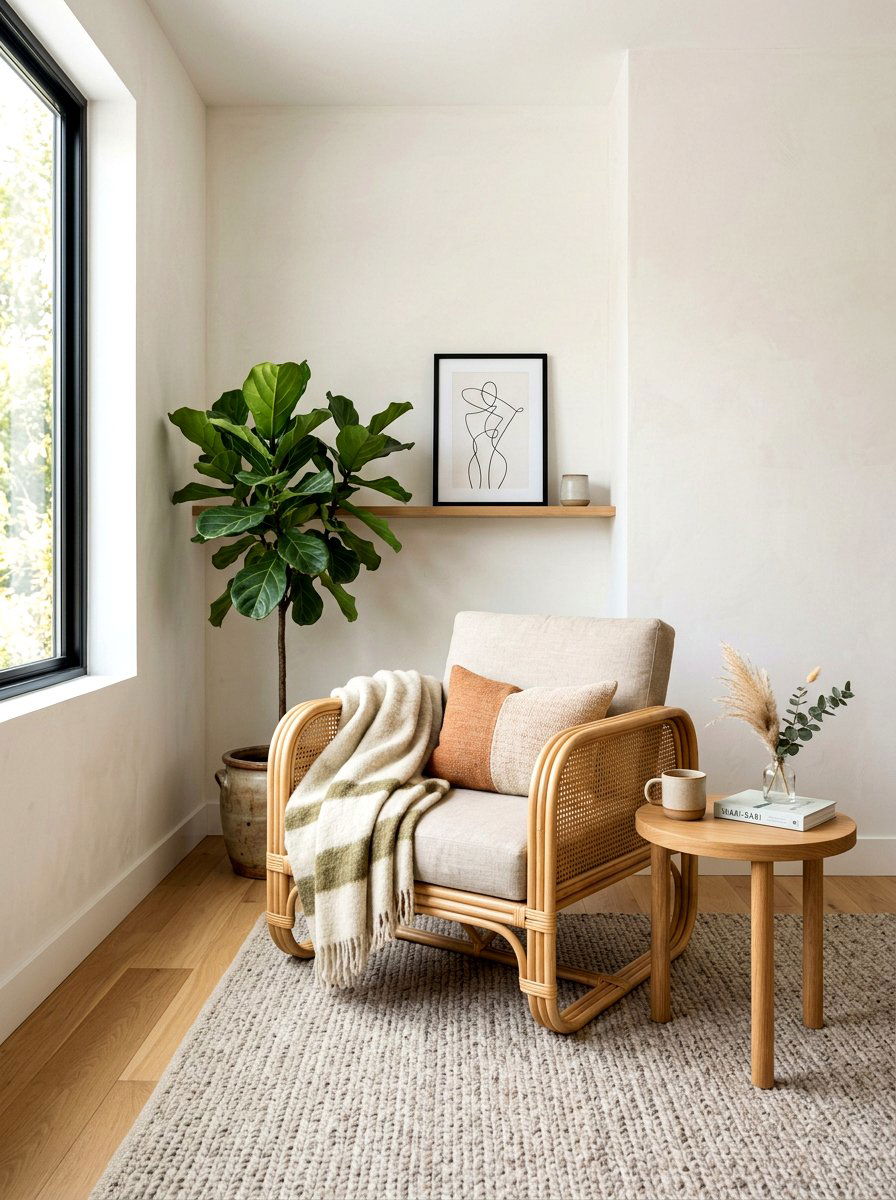
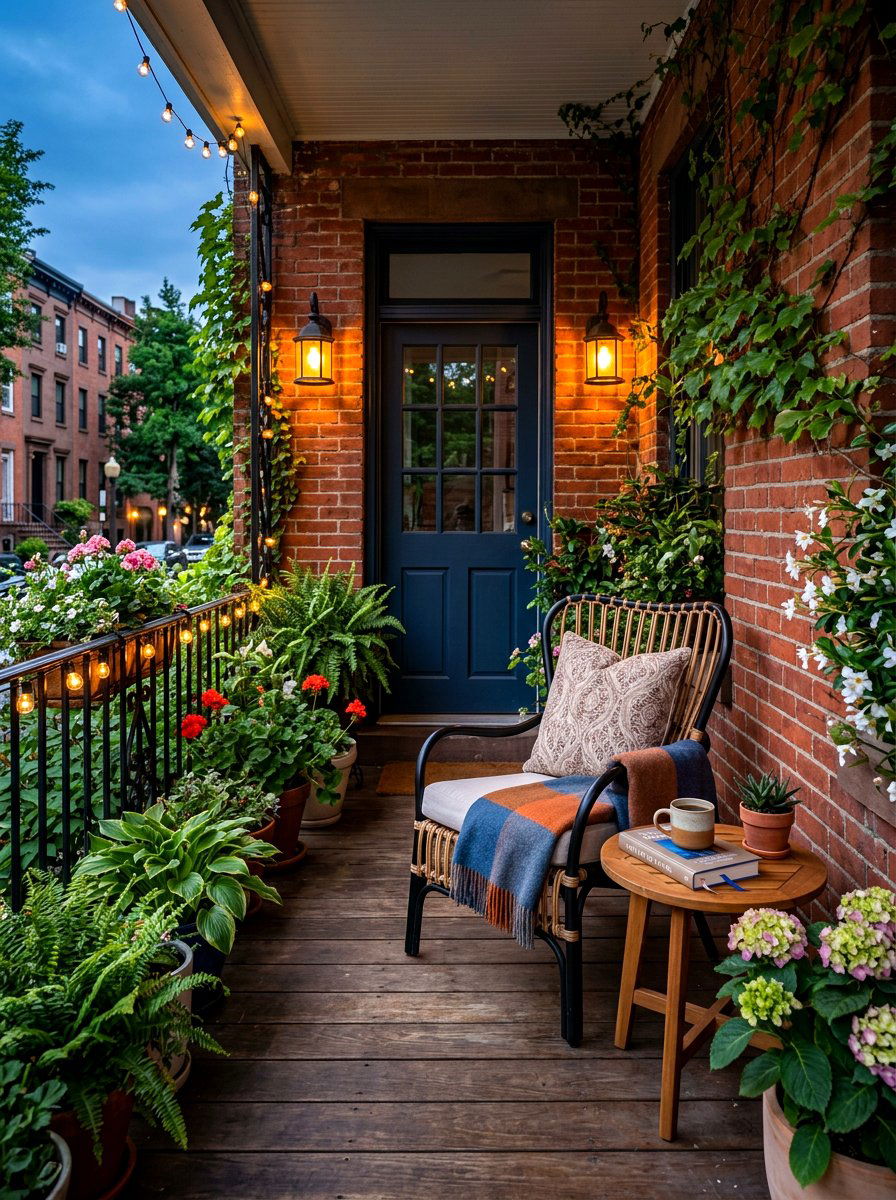
Woven texture seating, such as rattan armchairs or cane-back benches, introduces a layer of warmth and craftsmanship to any room. These materials are highly durable and offer a tactile quality that smooth surfaces lack. Placing a pair of woven chairs in a reading nook or using a long bench at the end of a bed adds visual interest without overwhelming the space. The natural fibers complement the wood tones used throughout a Japandi home. This style of furniture is often lightweight and easy to move, which supports the Scandinavian focus on functionality and flexibility. It creates a lived-in, cozy feel that balances the strictness of minimalism.
9. Natural Wood Kitchen
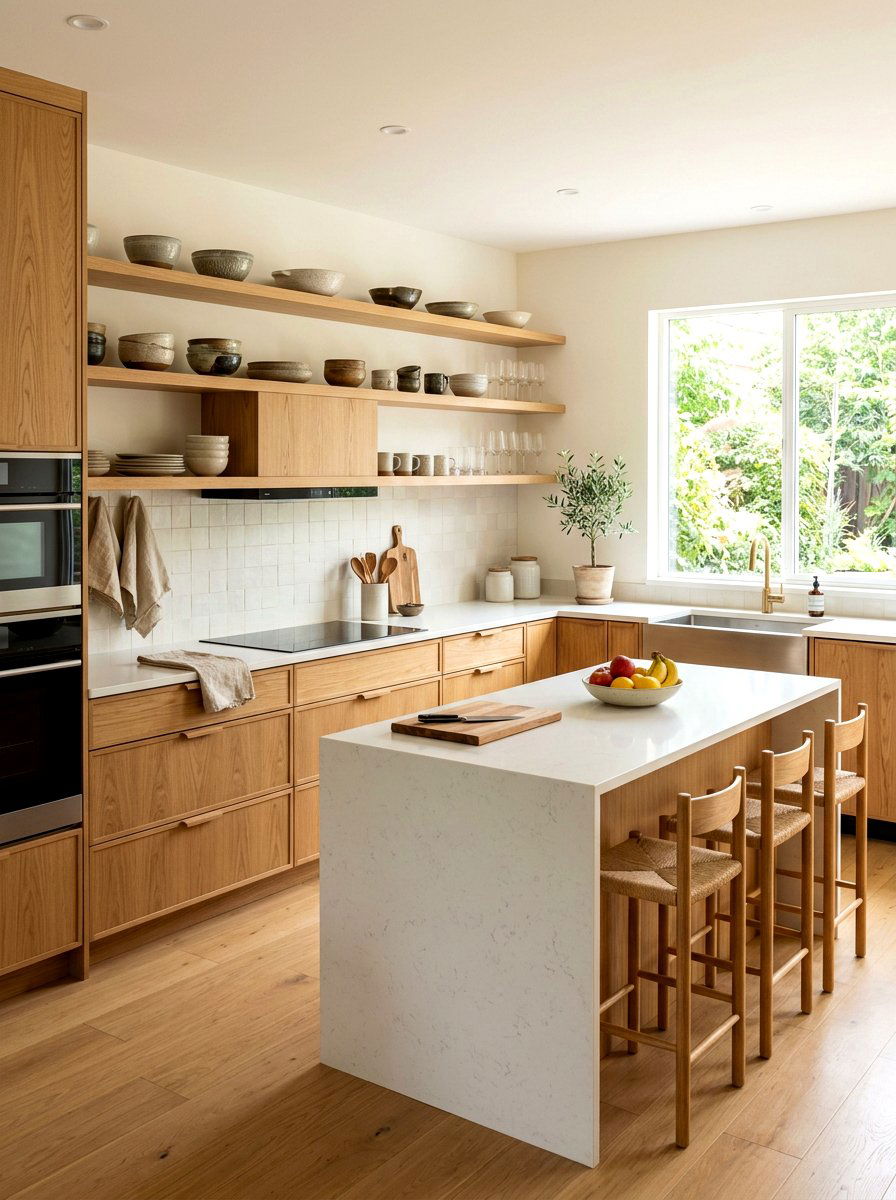
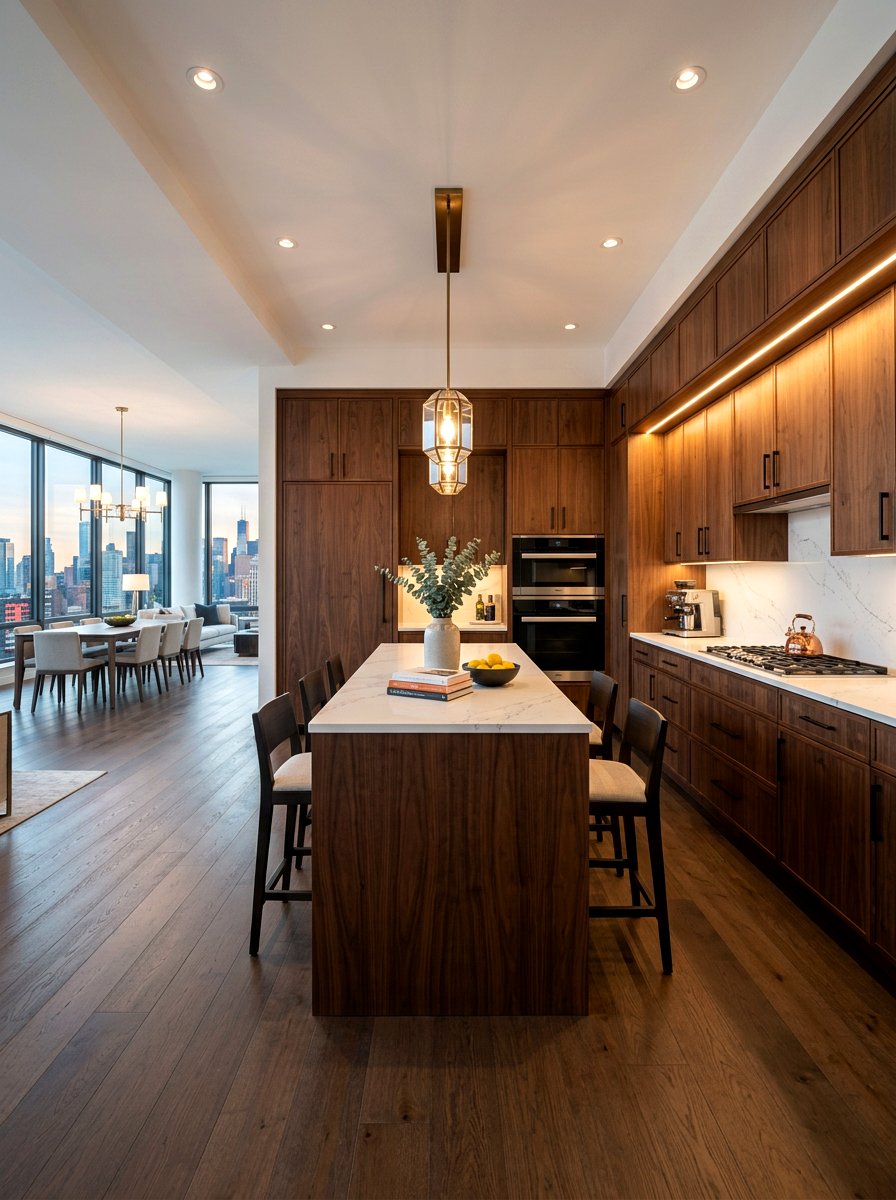
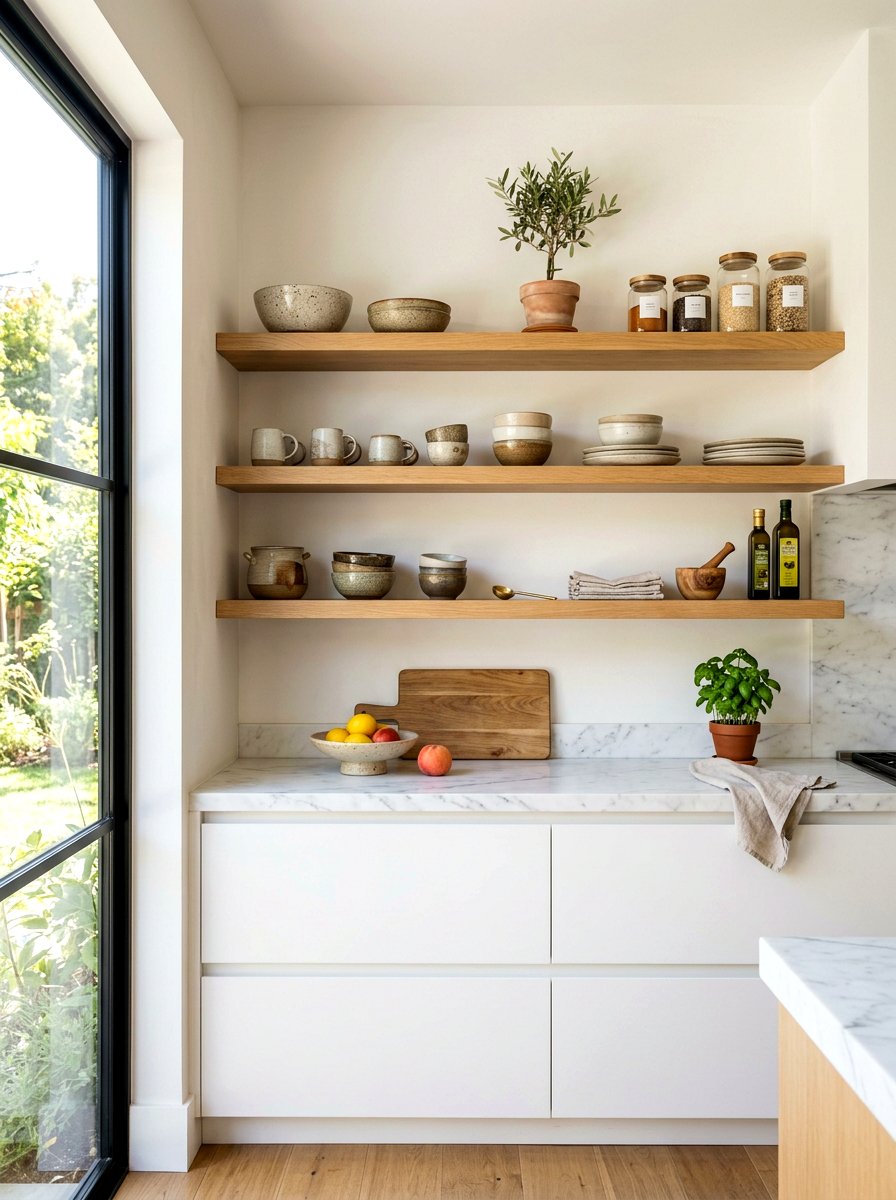
A natural wood kitchen focuses on the beauty of the grain and the warmth of the material rather than shiny finishes. Opt for flat-panel cabinets in light oak or ash to create a seamless and modern look. Pairing these wooden elements with white quartz countertops and a simple tile backsplash keeps the space feeling bright and clean. Open shelving can be used to display a few pieces of high-quality ceramic dinnerware, adding to the functional beauty of the design. By avoiding heavy hardware and choosing integrated handles, the kitchen maintains a streamlined appearance. This design makes the heart of the home feel organic, peaceful, and highly efficient.
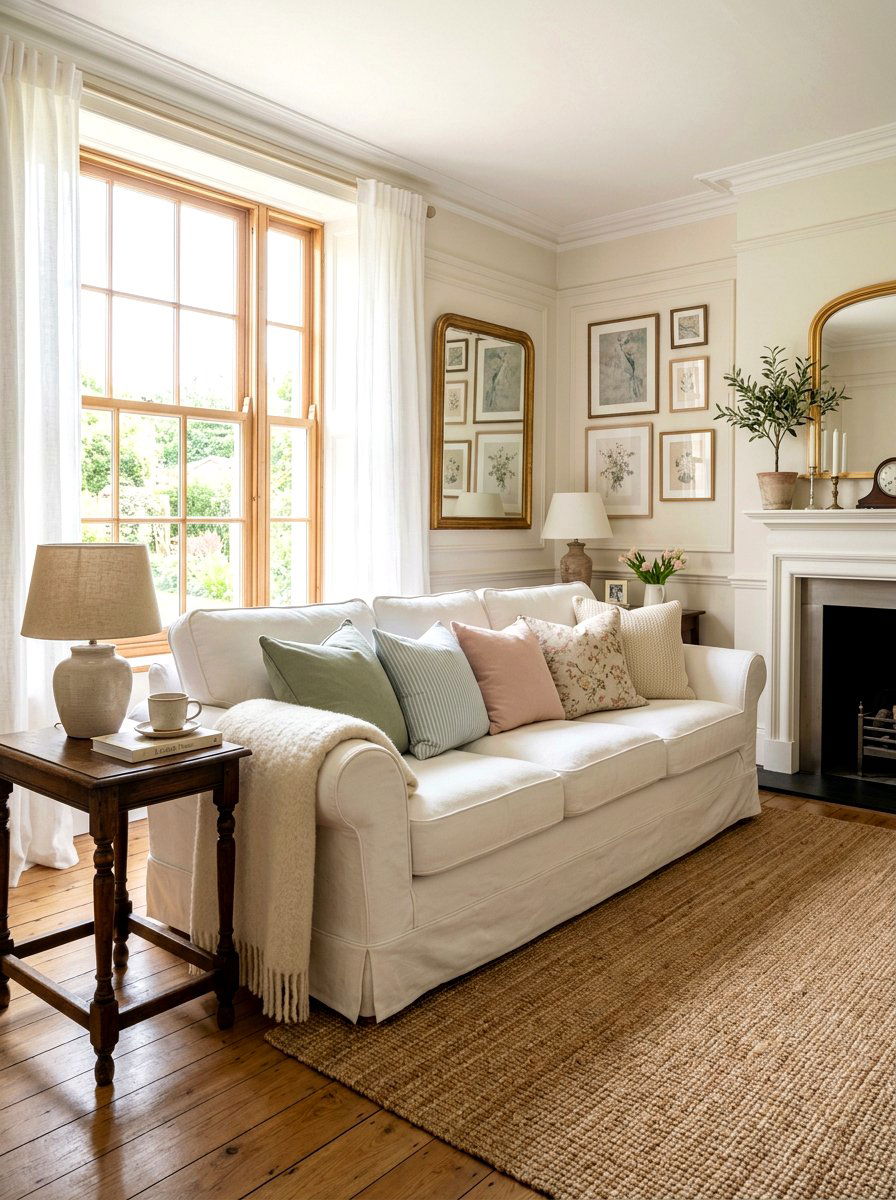
10. Earthy Home Office
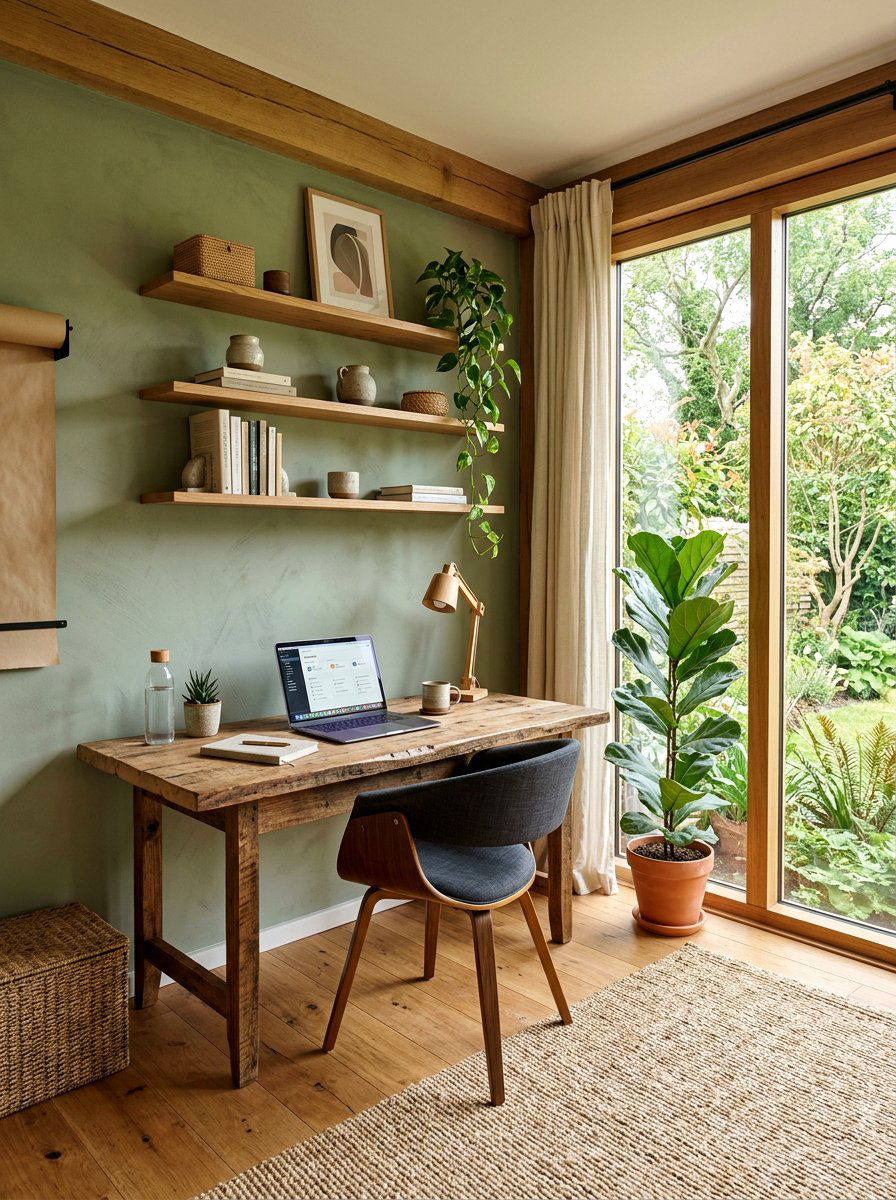
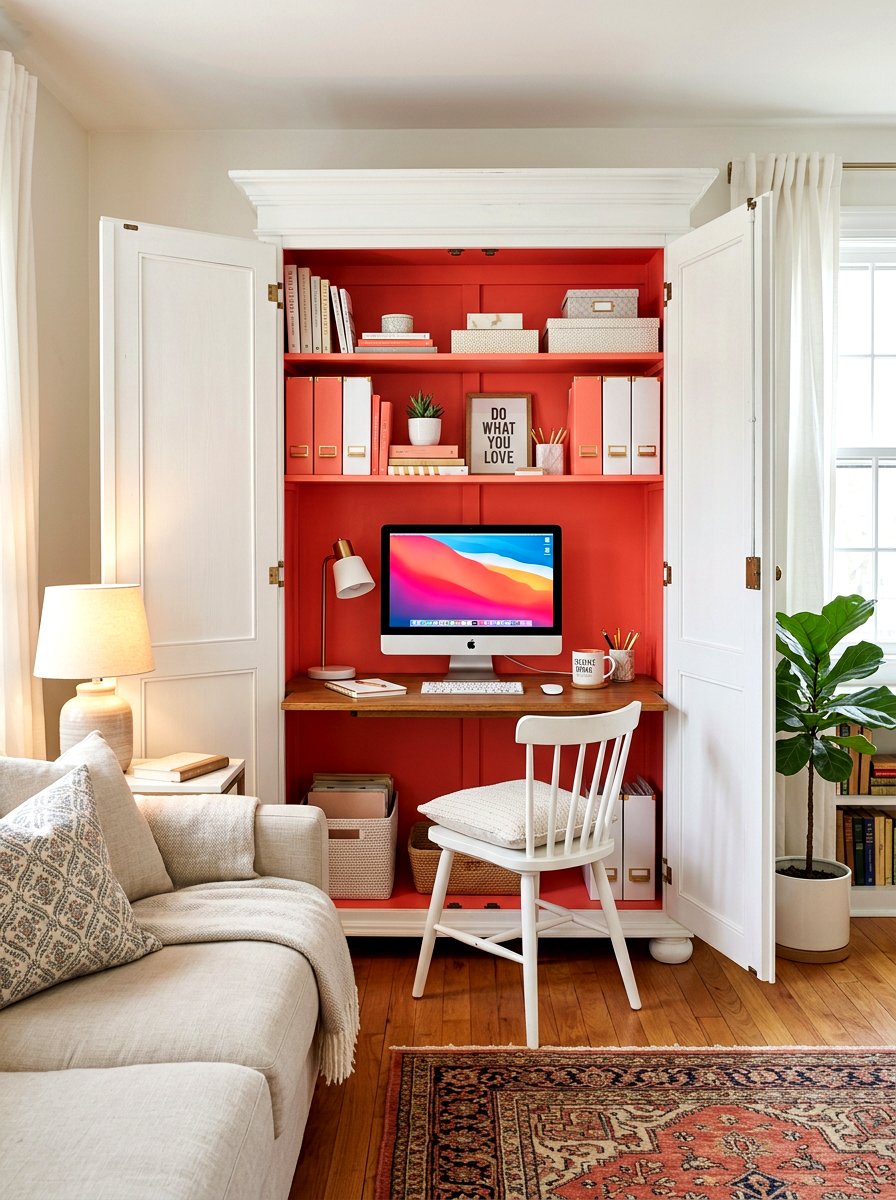
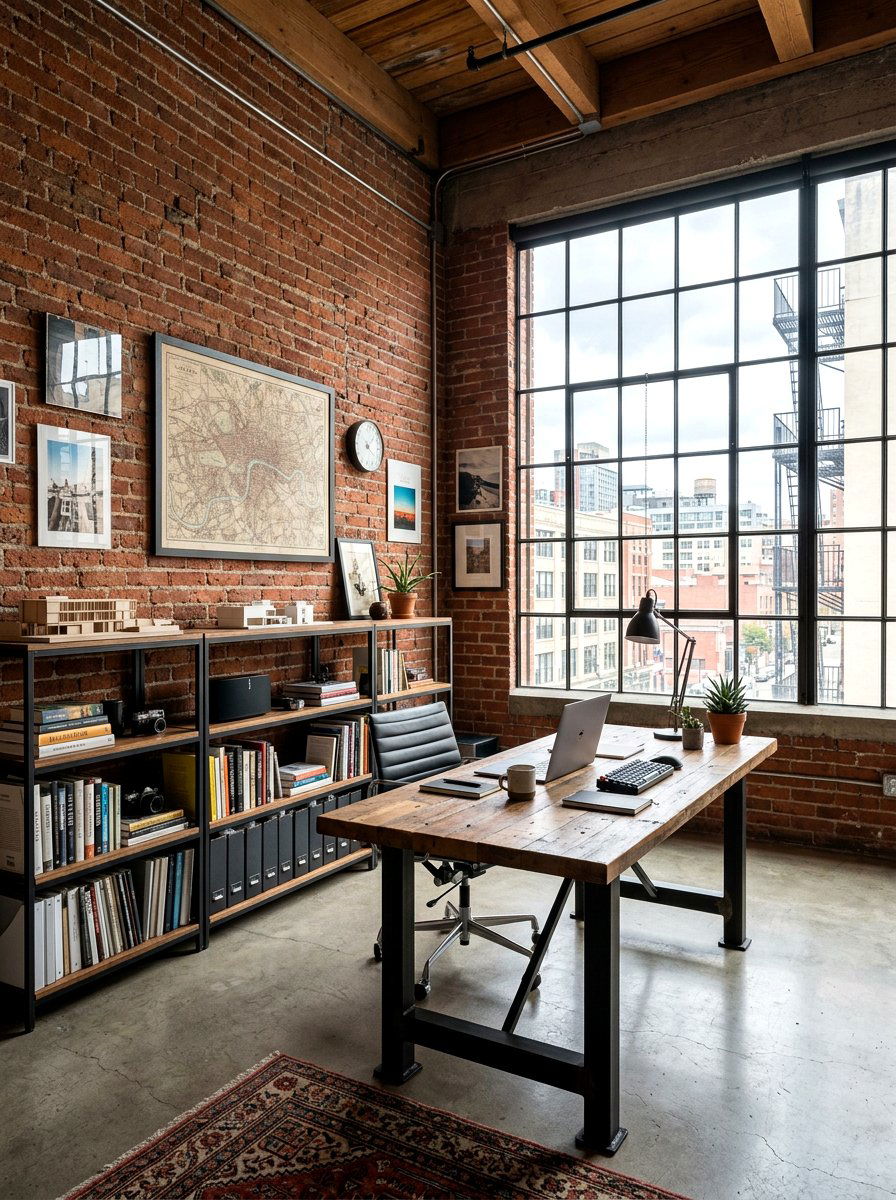
An earthy home office is designed to boost productivity by minimizing visual distractions and using calming colors. A simple desk made from reclaimed wood paired with a comfortable, ergonomic chair creates an inviting workspace. Use a palette of sage green, clay, or charcoal to ground the room and provide a professional yet cozy atmosphere. Floating shelves provide space for essential books and a small plant, keeping the desk surface clear for work. Natural light should be maximized to keep the energy levels high during the day. This setup ensures that your work environment feels like a natural extension of your home rather than a cold, corporate office space.
11. Wabi Sabi Corner
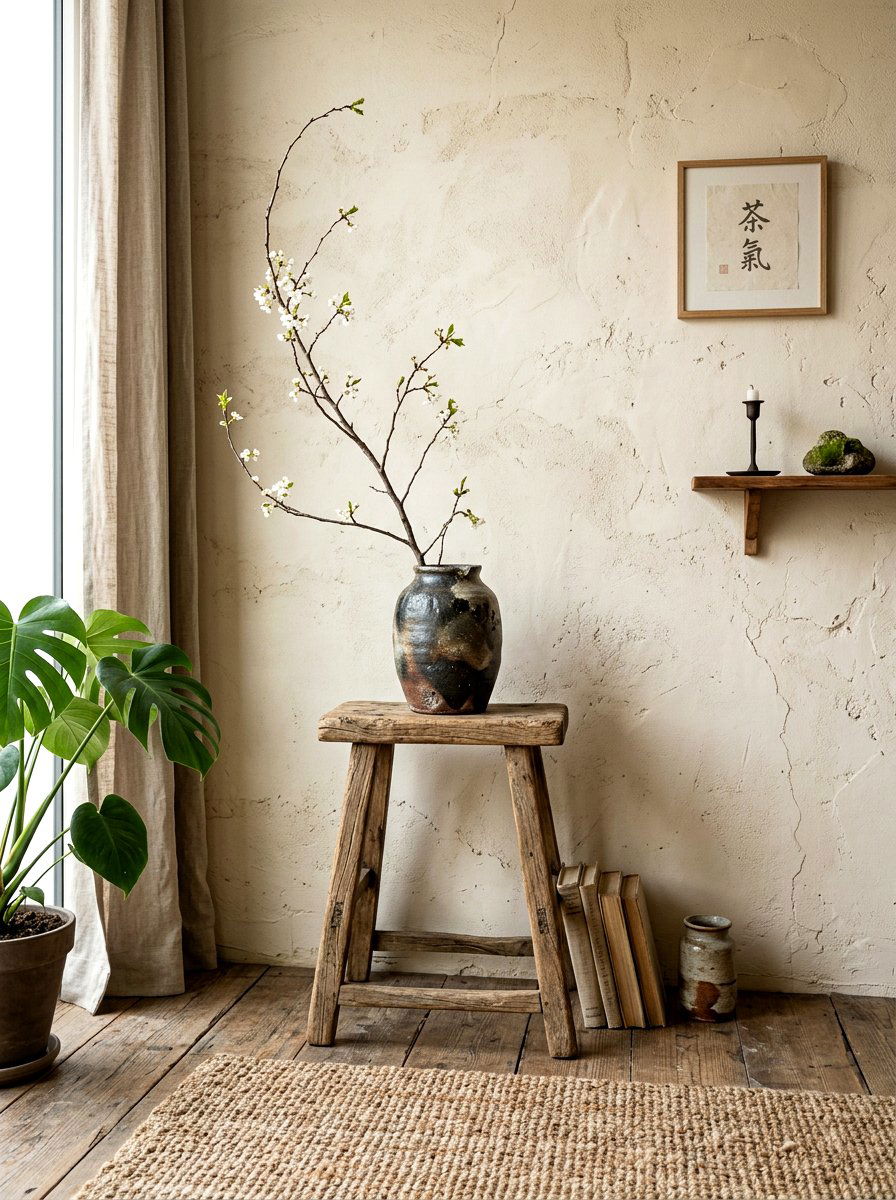
Creating a wabi-sabi corner is about celebrating the beauty of imperfection and the passage of time. This can be achieved by displaying a piece of handmade pottery with a visible crack or a weathered wooden stool. The idea is to create a small vignette that feels personal and unpolished in an otherwise pristine home. Use a mix of aged materials and organic shapes to tell a story of longevity and character. This concept reminds us that things do not have to be perfect to be beautiful. It adds a layer of soul and history to the Japandi aesthetic, making the home feel more authentic and deeply personal.
12. Bamboo Room Divider
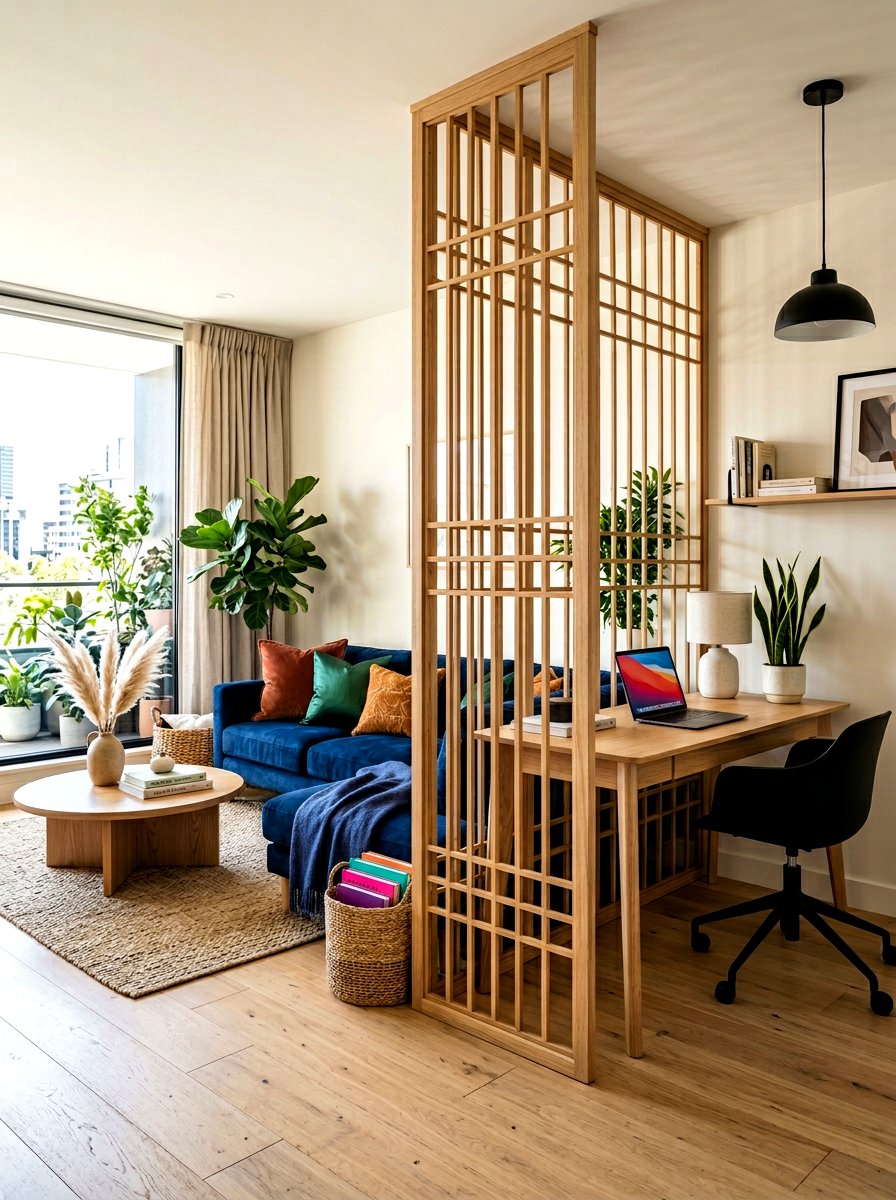
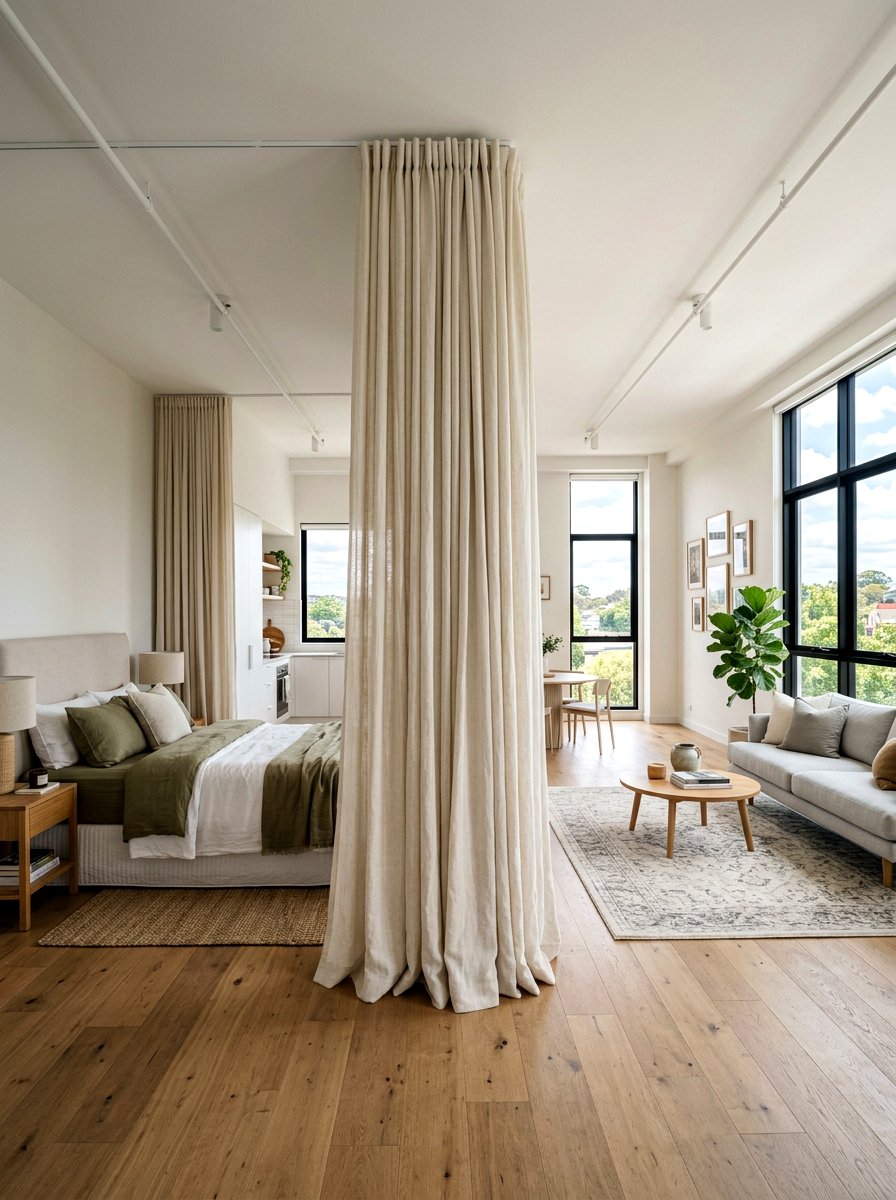
A bamboo room divider is a functional and stylish way to define different zones in an open-concept living space. These screens, often inspired by traditional shoji panels, allow light to filter through while providing a sense of privacy. They are perfect for separating a sleeping area from a living room in a studio apartment or hiding a home office nook. The vertical lines of the bamboo add a rhythmic texture that fits perfectly with the Japandi theme. Because they are often lightweight, they can be moved easily to adapt to your changing needs. It is a versatile decor piece that provides structure without blocking the flow of air.
13. Stone Accent Wall
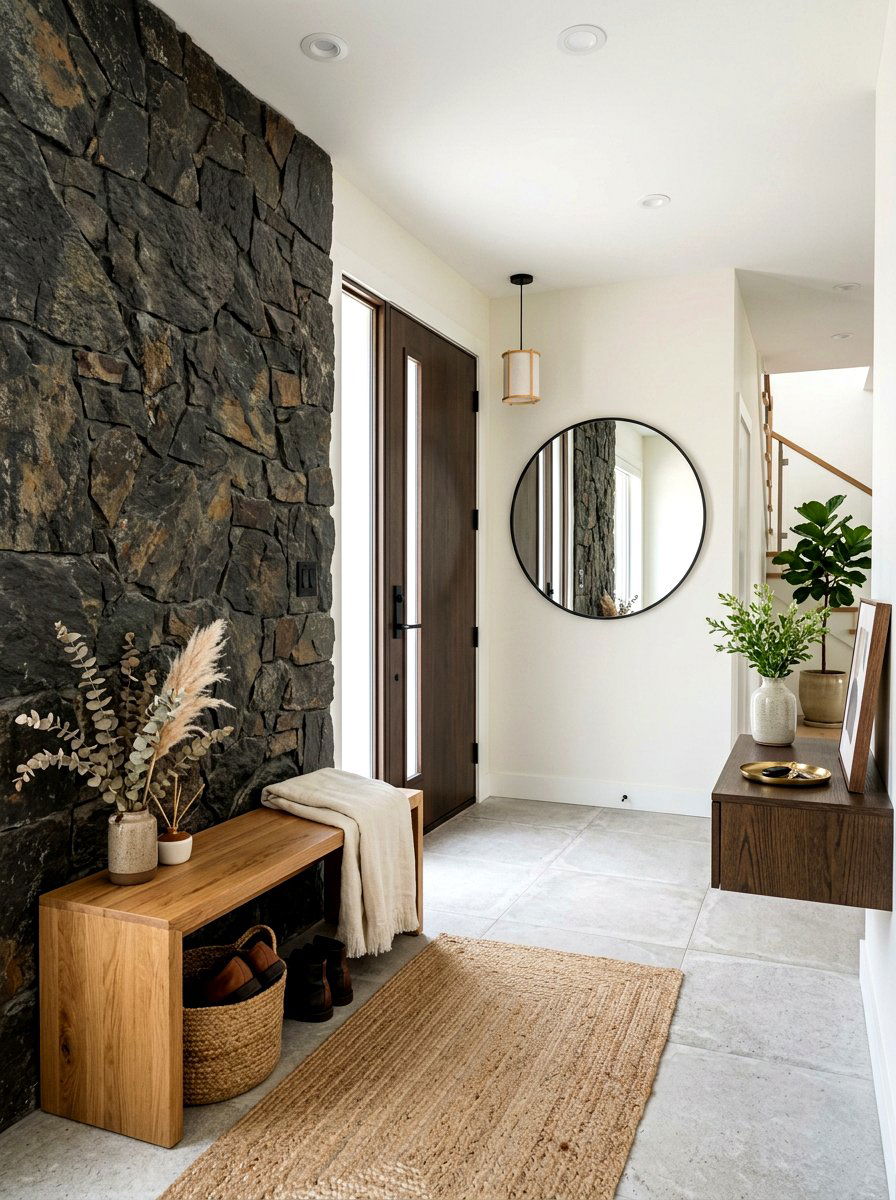
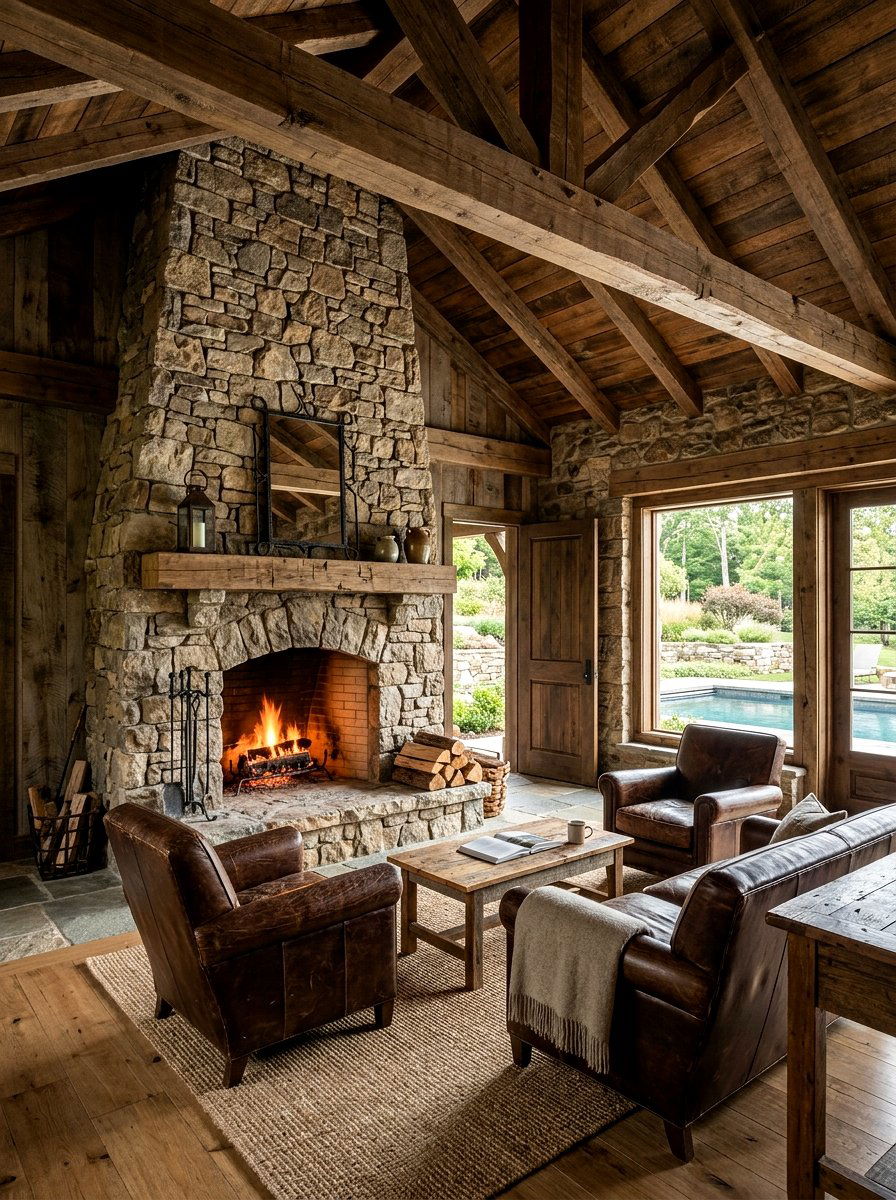
A stone accent wall brings a rugged, natural element into the home that contrasts beautifully with soft textiles and wood. Using slate, limestone, or large river rocks creates a massive focal point that feels grounded and permanent. This feature works exceptionally well behind a fireplace or as a backdrop in a modern entryway. The variation in color and texture of the stone adds a layer of visual complexity that requires no additional decoration. It grounds the entire room in nature, making the space feel more connected to the earth. The cool temperature of the stone also provides a nice balance to the warmth of wooden furniture pieces.
14. Dark Japandi Decor
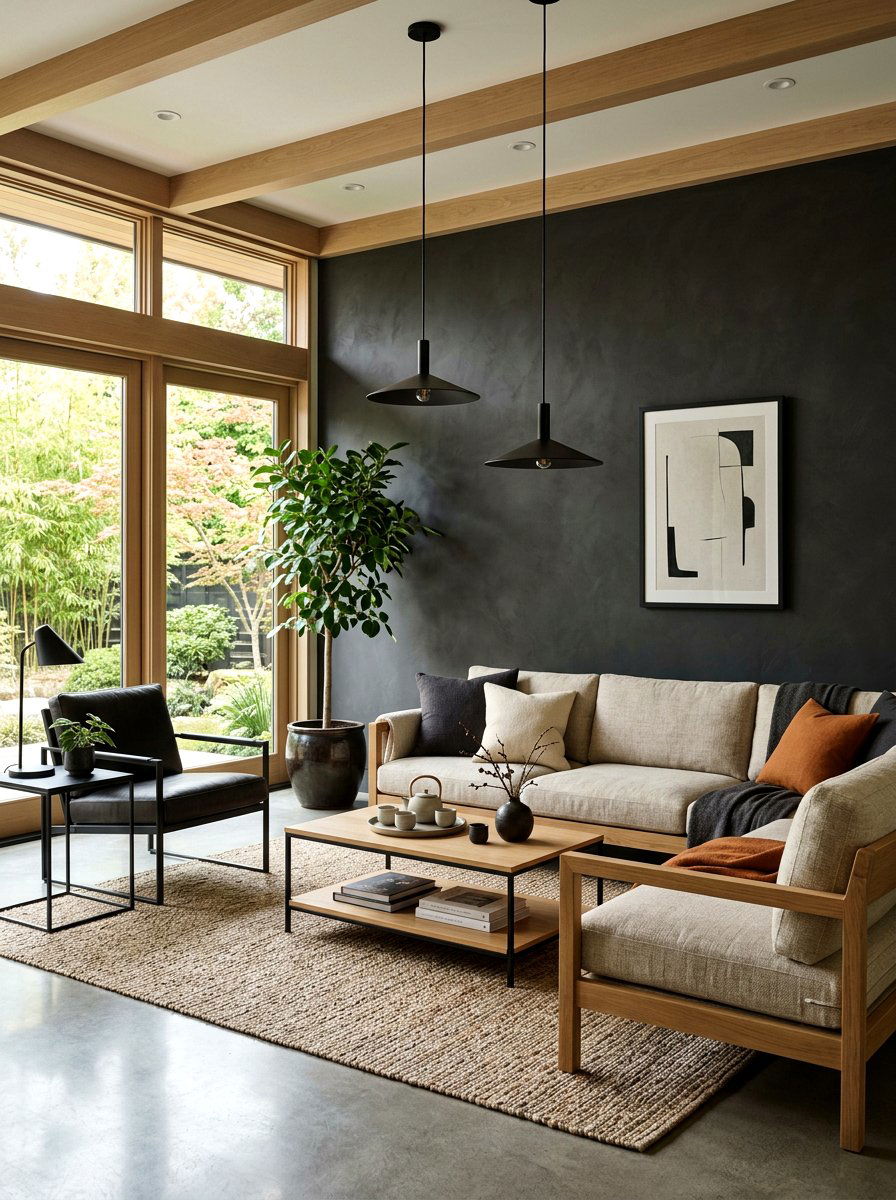
While most Japandi homes are light and airy, dark Japandi decor uses deep charcoal and black tones to create a moody atmosphere. This approach often involves painting a single wall in a dark matte finish or choosing black-stained wood furniture. The key is to balance these heavy tones with plenty of light-colored textiles and natural wood accents. This high-contrast look feels incredibly sophisticated and modern, providing a sense of drama that still feels quiet and restrained. It is a great way to add depth to a large room or create a cozy, intimate feel in a bedroom or a small, private library space.


15. Curved Sofa Layout
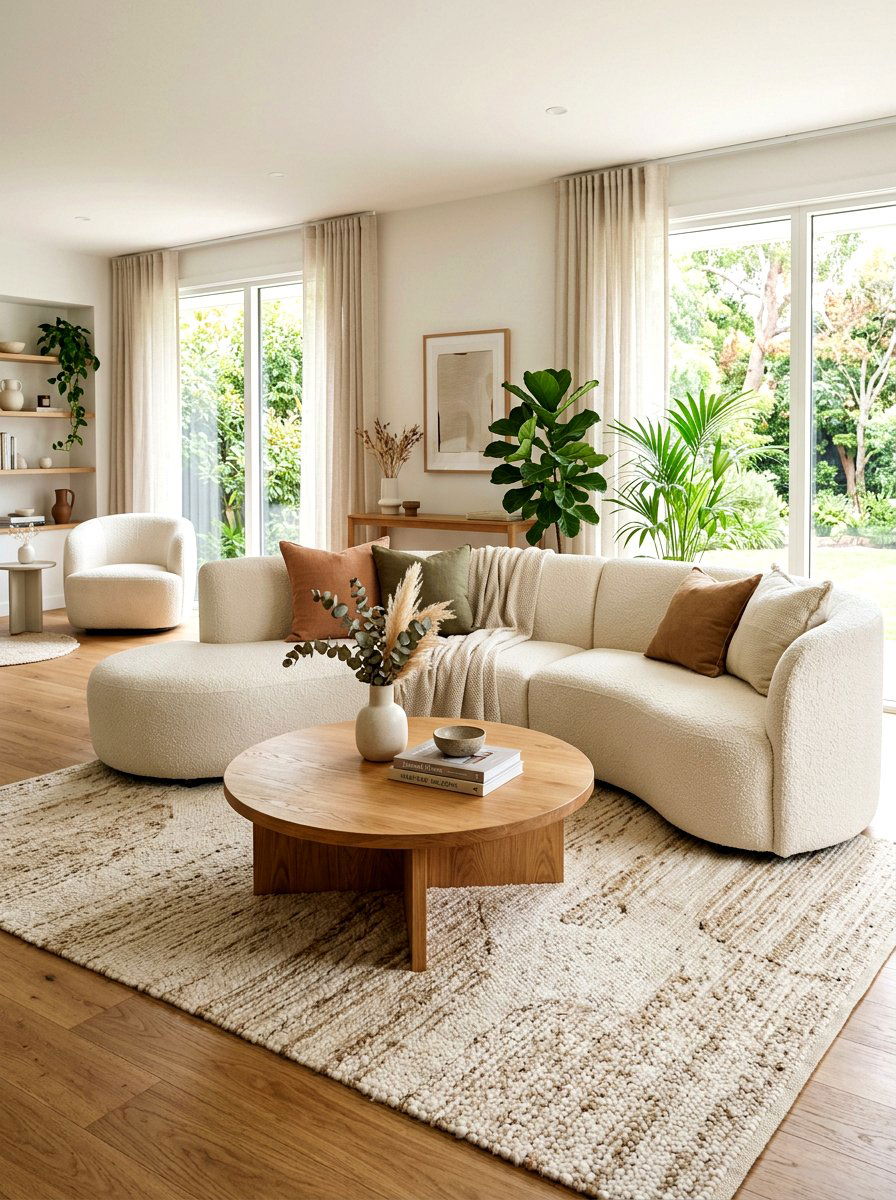
A curved sofa layout breaks up the straight lines often found in minimalist design, adding a sense of softness and flow. These organic shapes invite conversation and make a large living room feel more intimate and approachable. Choose a sofa upholstered in a textured fabric like boucle or linen in a soft cream or light gray. The lack of sharp edges makes the room feel safer and more comfortable for daily living. Pair the sofa with a round wooden coffee table to continue the circular theme throughout the seating area. This layout encourages a more natural movement through the space, making the home feel less rigid.
16. Tatami Mat Flooring
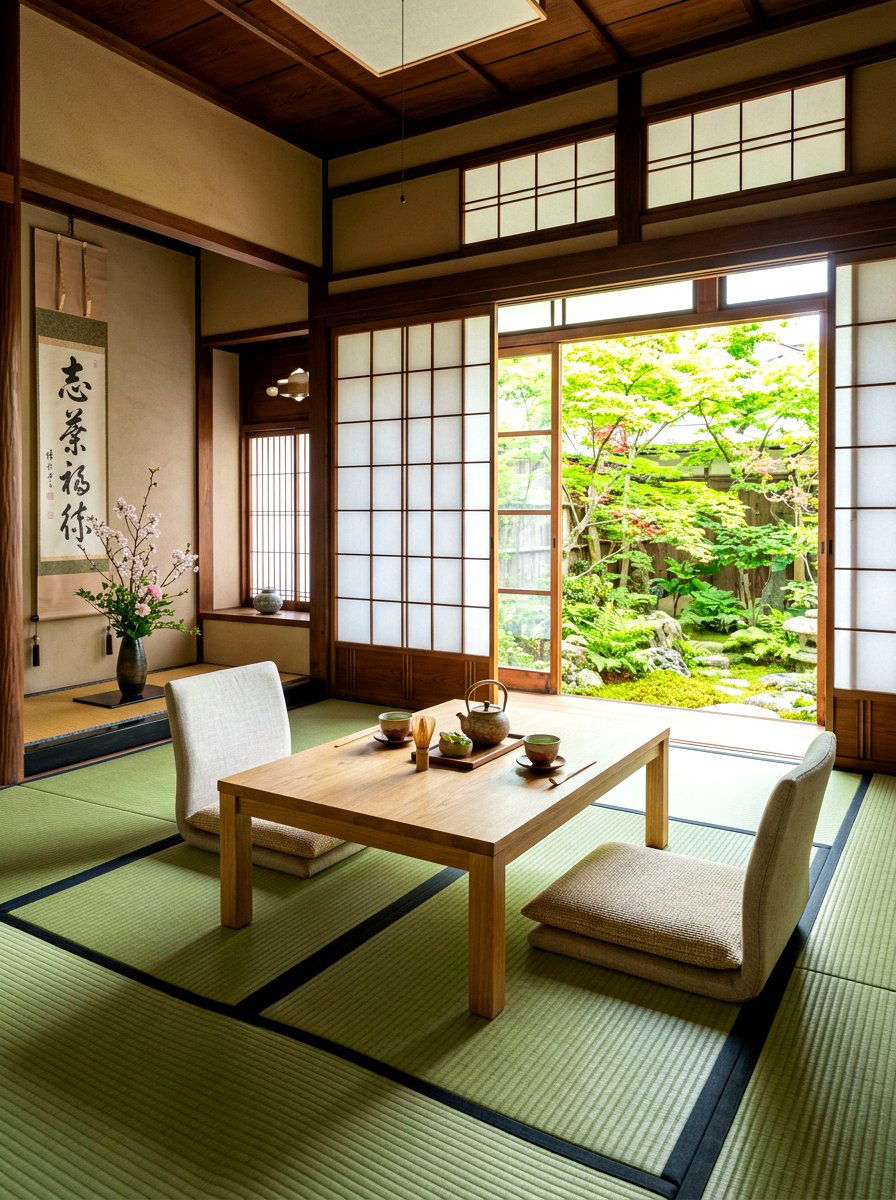
Tatami mat flooring is a traditional Japanese element that brings a unique texture and scent into a modern home. These mats are made from woven rush grass and provide a soft, resilient surface that is comfortable for walking or sitting. You can use a few mats in a dedicated meditation room or as a large area rug in a bedroom. The natural green-beige color of the grass fits perfectly within the Japandi color palette. It adds a layer of cultural heritage and sensory experience to the home. The subtle, earthy aroma of the dried grass further enhances the calming atmosphere of any room it is in.
17. Modular Seating Area
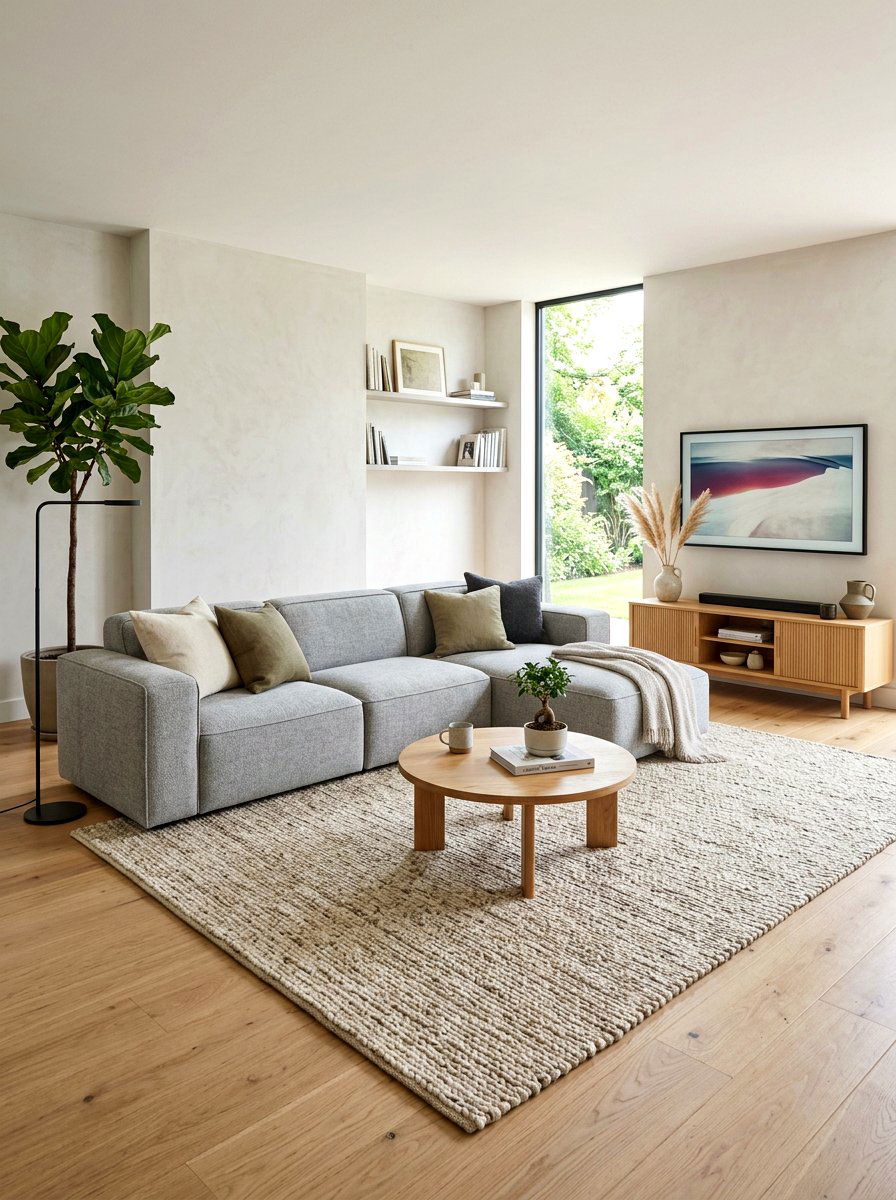
A modular seating area offers the ultimate flexibility for a modern lifestyle, allowing you to rearrange your furniture as needed. These low-profile sectional pieces can be combined into one large unit for movie nights or separated for smaller social gatherings. Choose pieces with clean lines and hidden feet to maintain the minimalist Japandi look. Using a single neutral color for all the modules ensures the space remains cohesive and calm. This approach to furniture design focuses on functionality and long-term value, as the pieces can grow and change with your living situation. It is a practical solution for both small apartments and large open living rooms.
18. Linen Bedroom Textiles
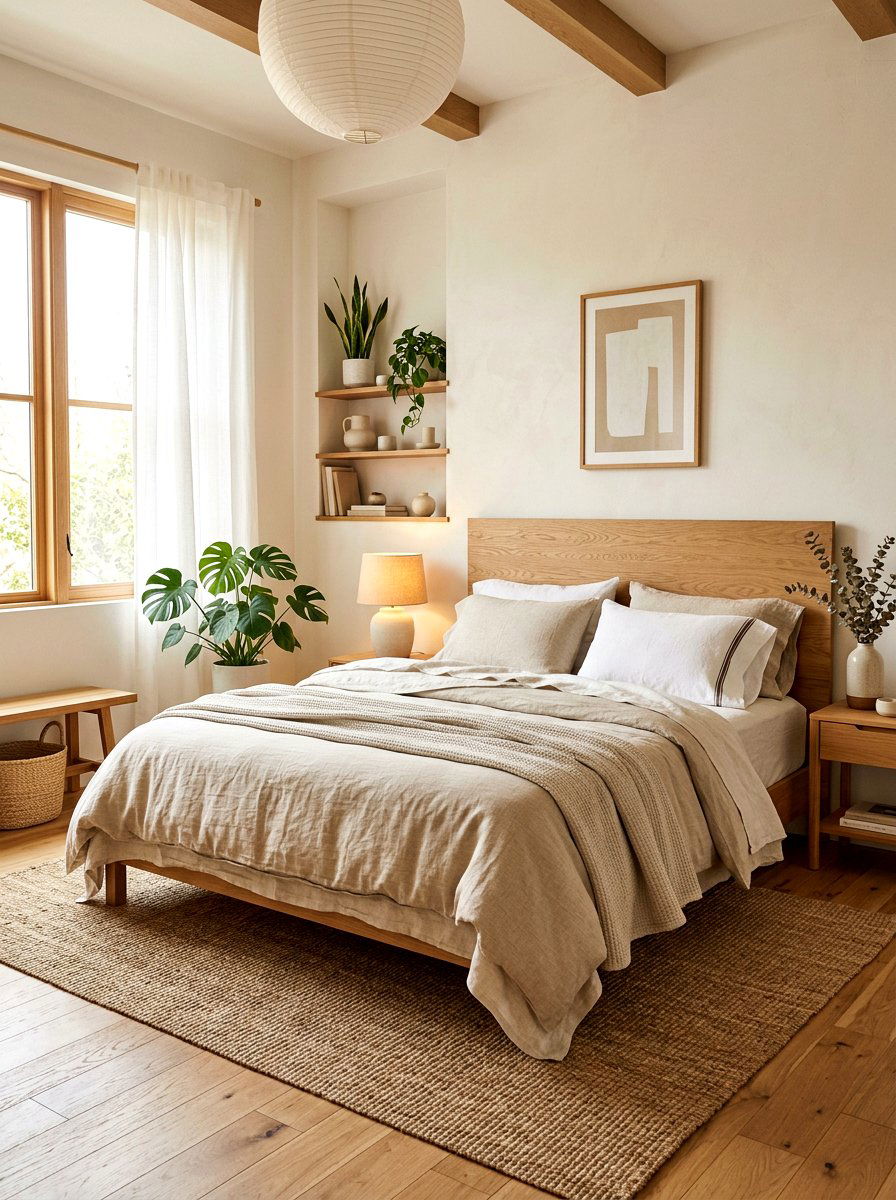
Using linen bedroom textiles is essential for achieving the effortless, cozy look of a Scandi-inspired retreat. Linen is a natural fiber that is highly breathable and features a beautiful, slightly wrinkled texture that fits the wabi-sabi philosophy. Layering a linen duvet cover with cotton throws and wool pillows creates a bed that looks and feels luxurious without being overly formal. Stick to a monochromatic color scheme like soft white, oatmeal, and sand to keep the bedroom looking clean and bright. These high-quality fabrics improve with age and washing, making them a sustainable choice for your home. They provide the perfect soft touch to balance wooden furniture.
19. Biophilic Sunroom Design
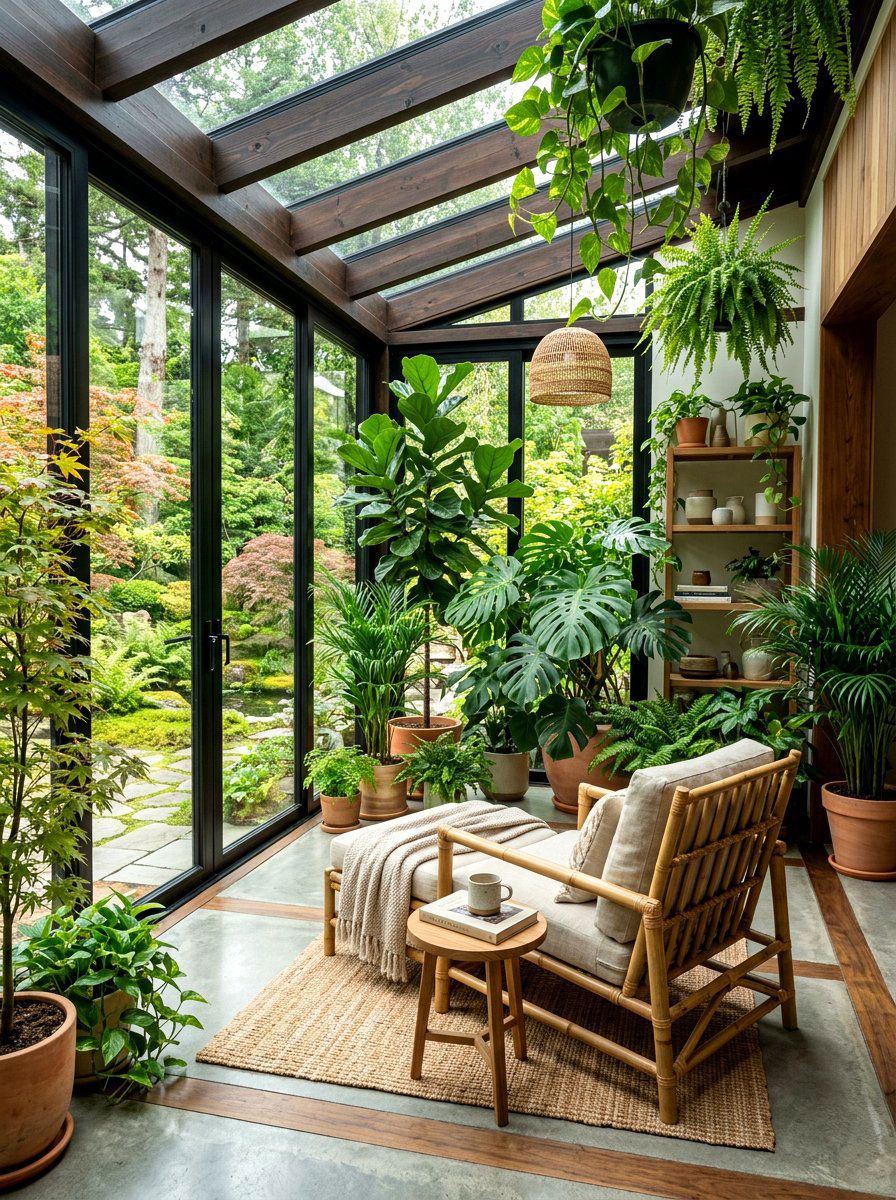
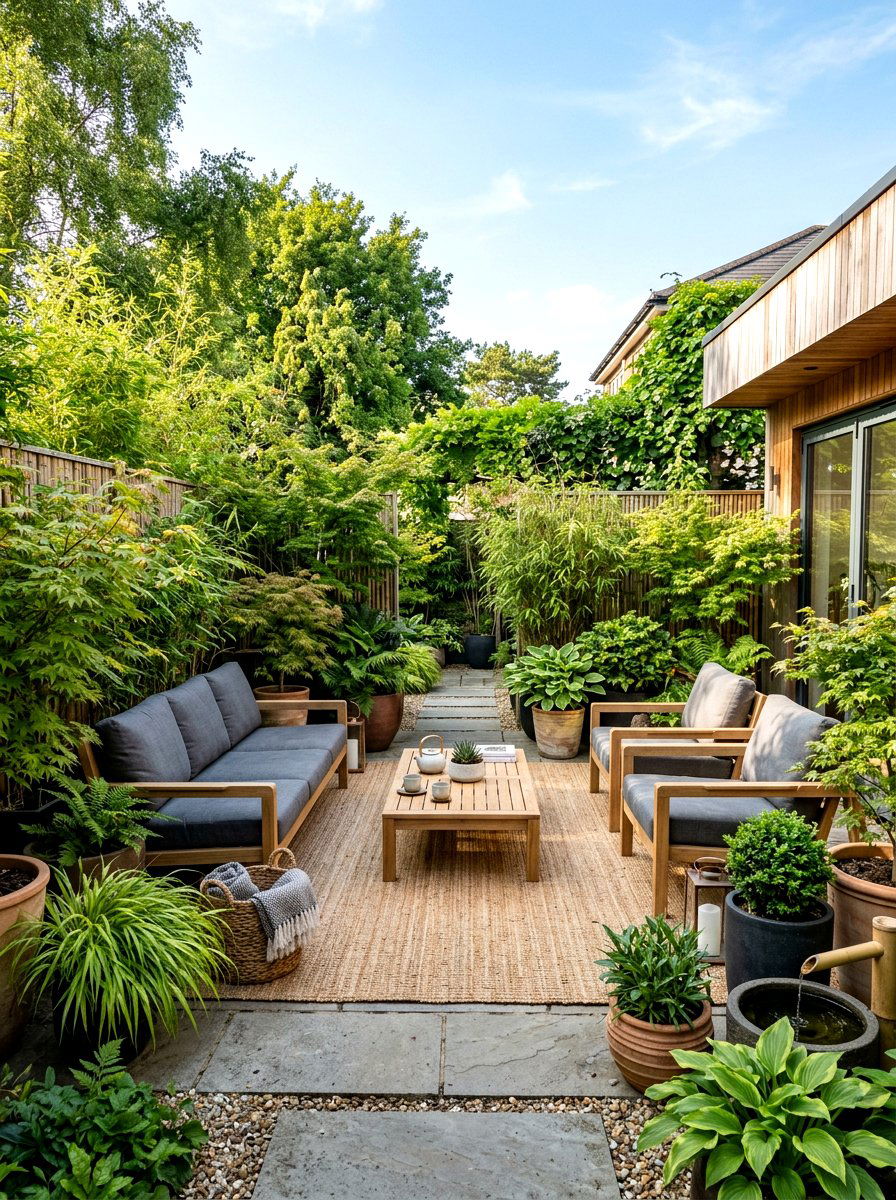
A biophilic sunroom design maximizes the connection to the outdoors through large windows and an abundance of indoor plants. This space should feel like an indoor garden, filled with light and greenery to boost your mood and well-being. Use furniture made from sustainable materials like bamboo or recycled wood to keep the environmental impact low. A comfortable lounge chair or a small daybed provides the perfect spot for reading or afternoon naps. By blurring the lines between the interior and the exterior, the sunroom becomes a peaceful transition zone. It is the perfect place to enjoy the beauty of every season while staying comfortable inside your home.
20. Fluted Wall Panel
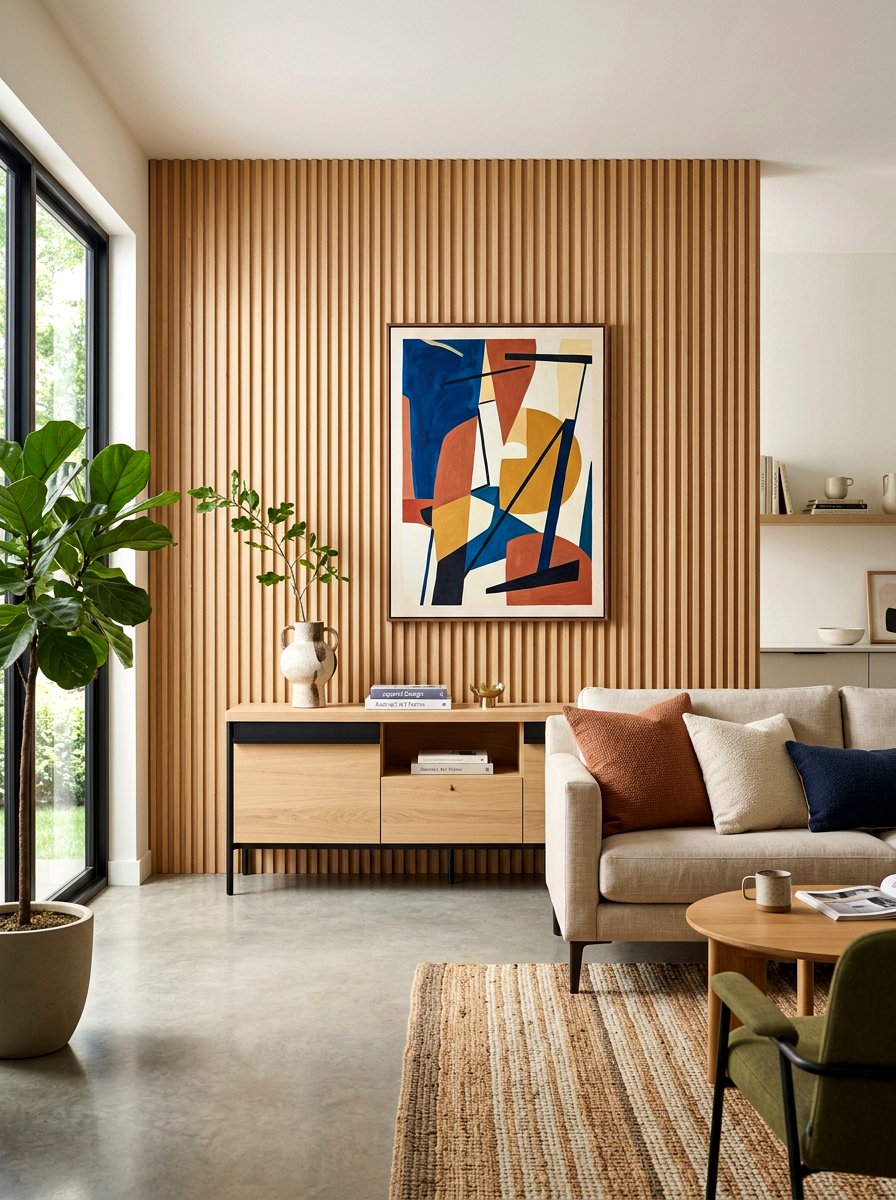
A fluted wall panel adds a sophisticated, three-dimensional texture to vertical surfaces, making any room feel more upscale. These panels feature repetitive vertical grooves that create a play of light and shadow, adding depth to a flat wall. You can use them on a kitchen island, as a decorative backdrop in a hallway, or around a fireplace. Choosing a light wood finish keeps the look natural and warm, while a painted matte finish can add a modern touch. This design element is a great way to introduce architectural interest without cluttering the space with traditional decor. It feels intentional, clean, and very on-trend for 2025.
21. Clay Pottery Display
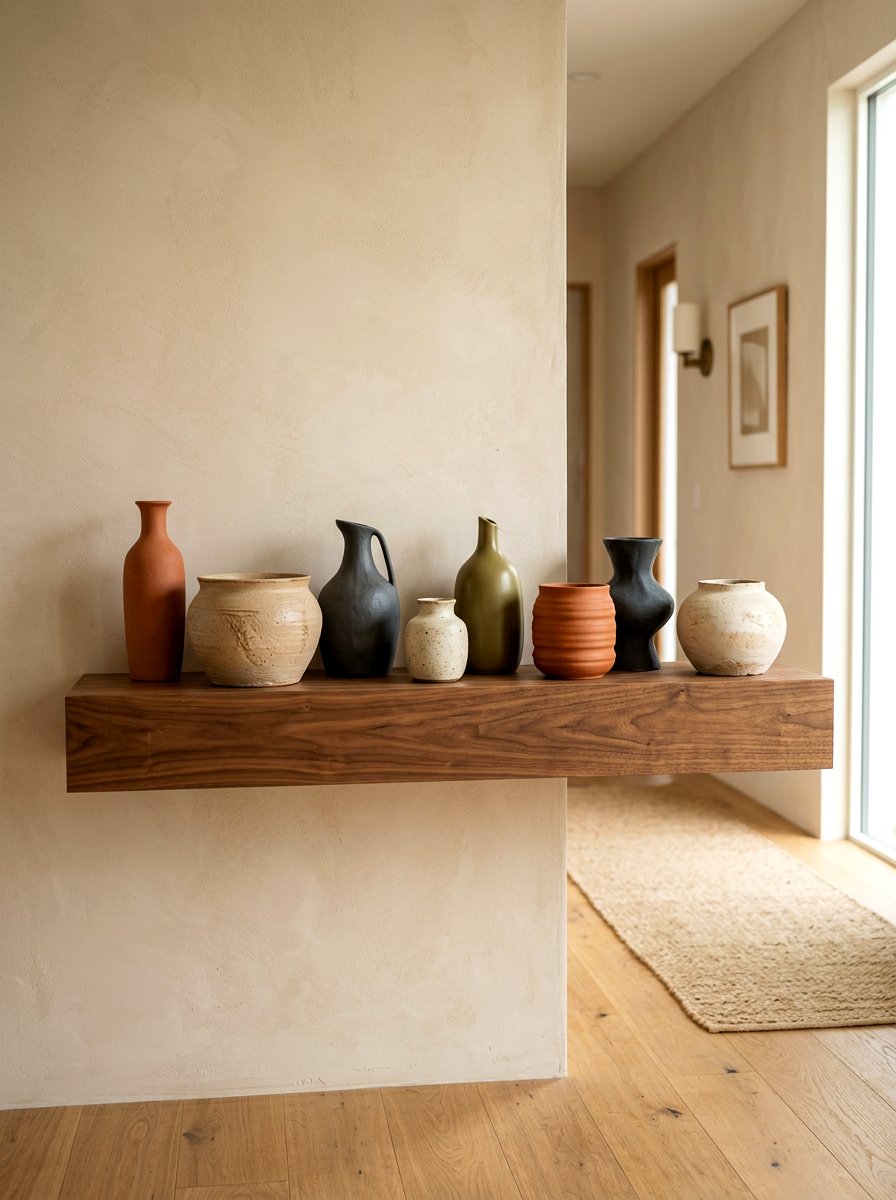
A clay pottery display focuses on the beauty of handmade objects and the raw texture of natural earth. Arrange a few carefully selected vases, bowls, and plates on a wooden shelf or a low console table. Look for pieces with matte glazes and organic, slightly irregular shapes to emphasize the handcrafted quality of the work. Grouping items in odd numbers, like three or five, creates a more visually pleasing and balanced arrangement. These functional art pieces add warmth and personality to a room without feeling like unnecessary clutter. They serve as a reminder of the craftsmanship and the natural materials that are central to the Japandi design style.
22. Shoji Screen Door
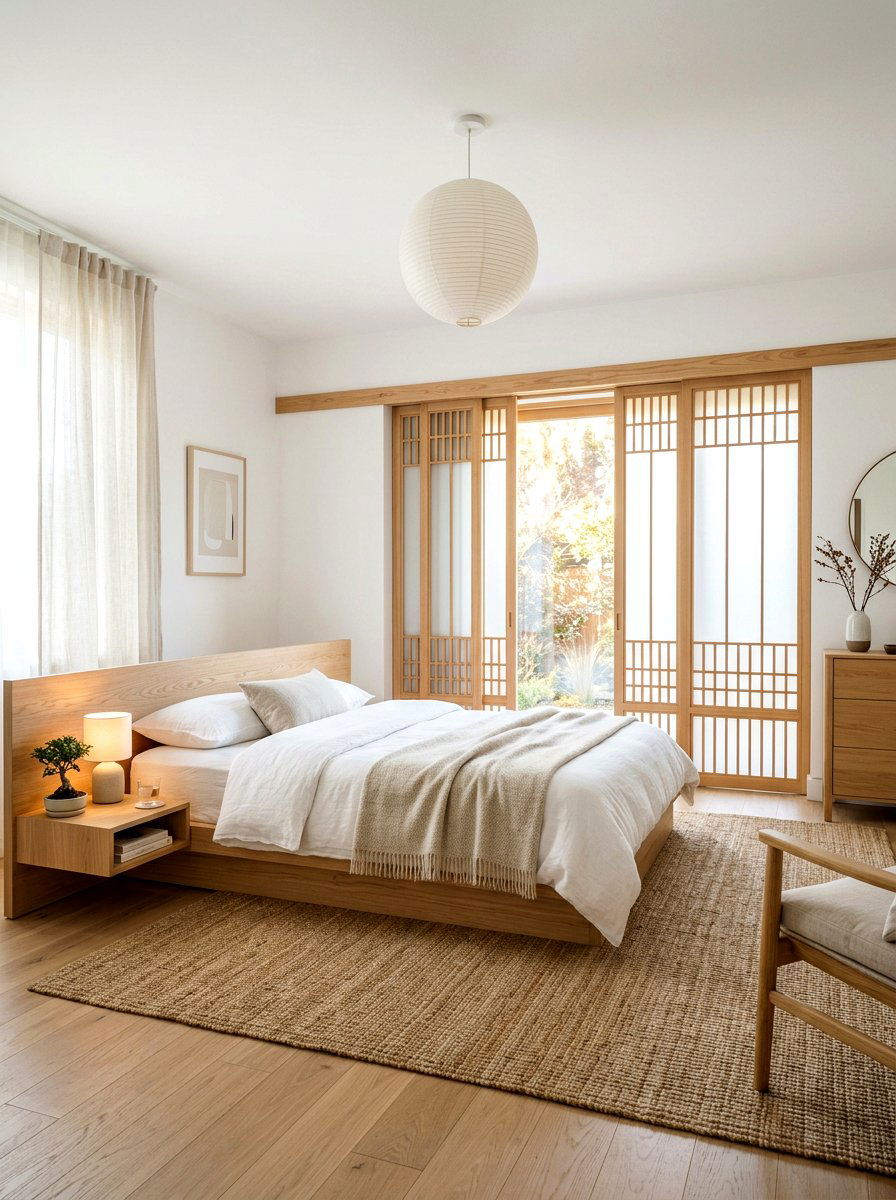
A shoji screen door is a classic Japanese architectural feature that has been updated for modern Japandi homes. These sliding doors are made from a wooden lattice and translucent paper or frosted glass, allowing light to pass between rooms while maintaining privacy. They are an excellent solution for saving space, as they do not swing out into the room like traditional doors. The geometric pattern of the lattice adds a subtle visual rhythm to the interior design. Using these screens for a closet or a bedroom door adds an elegant, airy feel to the entire home. It is a beautiful way to incorporate traditional craftsmanship into a contemporary layout.
23. Sustainable Living Room
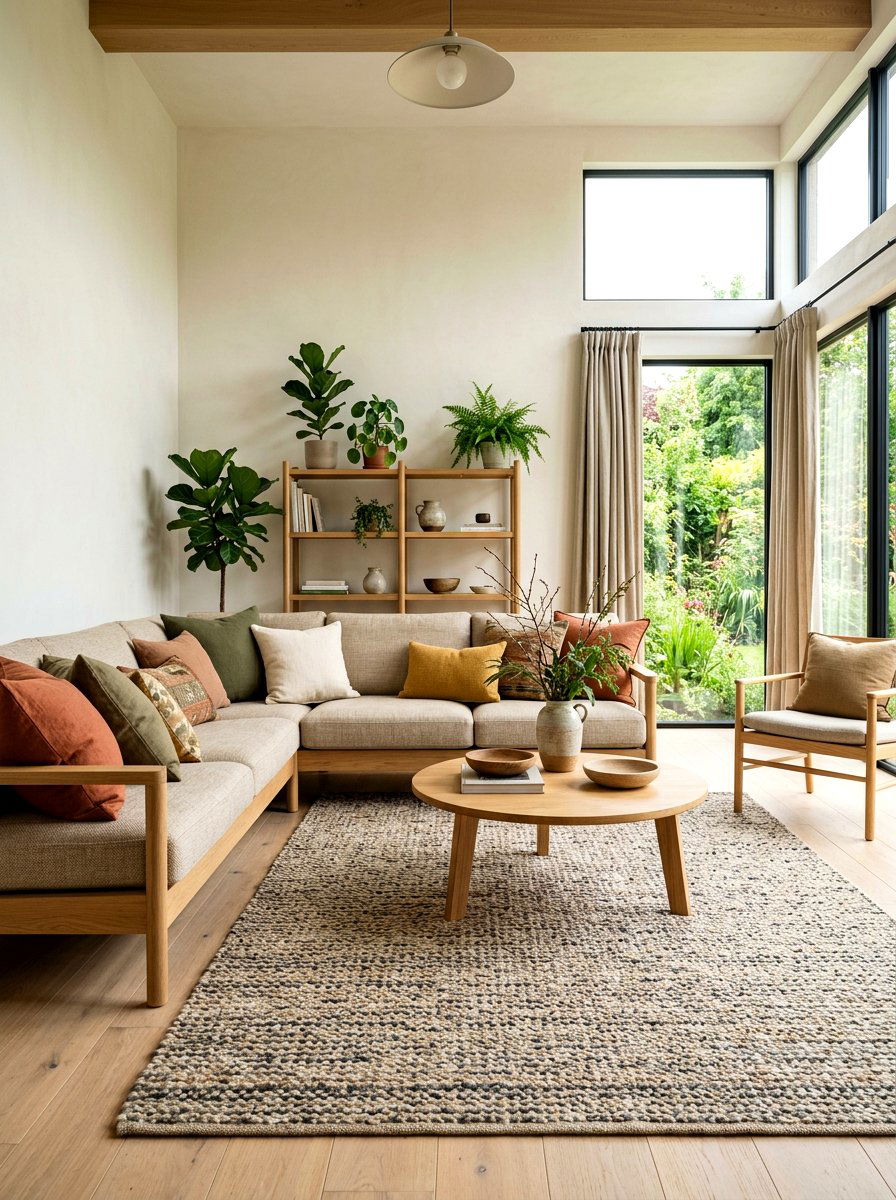
A sustainable living room prioritizes eco-friendly materials and ethical manufacturing to create a home that is good for you and the planet. Choose furniture made from FSC-certified wood, rugs woven from recycled fibers, and cushions filled with organic cotton. This approach to decor ensures that your home environment is free from harmful chemicals and supports responsible production. The Japandi style naturally lends itself to sustainability because it focuses on quality over quantity and timeless design over fleeting trends. By investing in well-made pieces that last for decades, you reduce waste and create a home that feels meaningful. This mindful approach to decorating brings a deep sense of peace.
24. Sage Green Bedroom
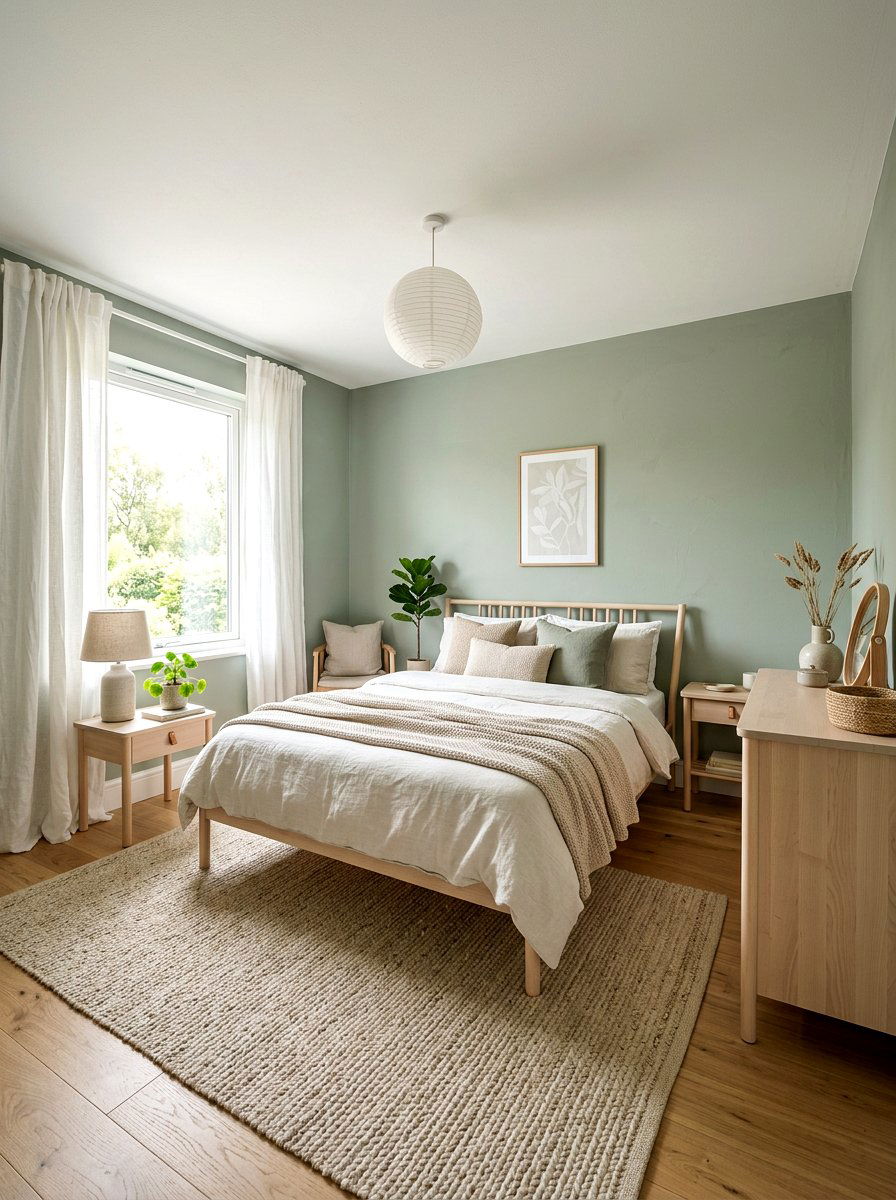
A sage green bedroom introduces a soft, natural color that feels incredibly restful and connected to the earth. This muted shade of green works as a neutral, pairing beautifully with light oak furniture and white linens. You can paint all four walls for a cocoon-like effect or use it on a single accent wall behind the bed. The color evokes a sense of being in a forest or a peaceful garden, which helps to lower stress levels before sleep. Adding a few botanical prints or a single potted plant enhances the botanical theme. It is a subtle way to add color without disrupting the minimalist harmony of the room.
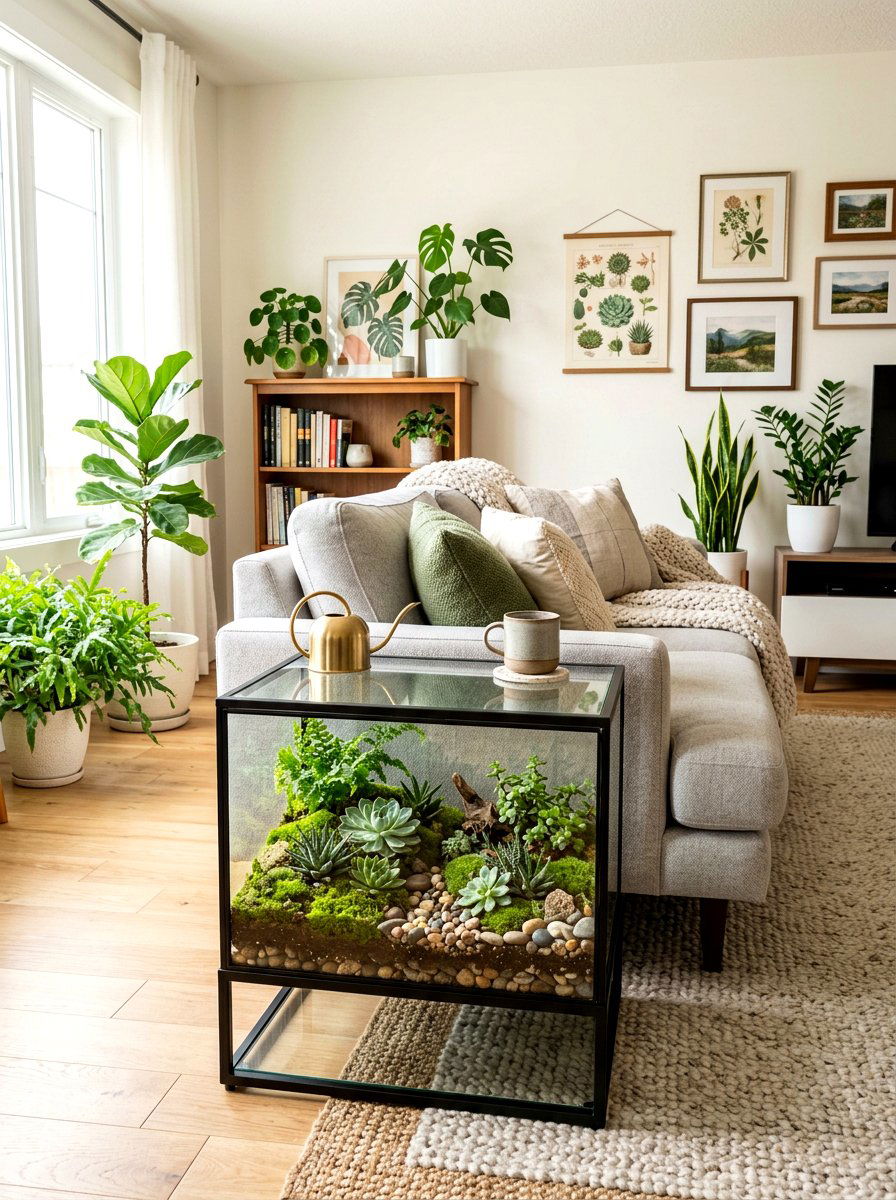
25. Charcoal Accent Space
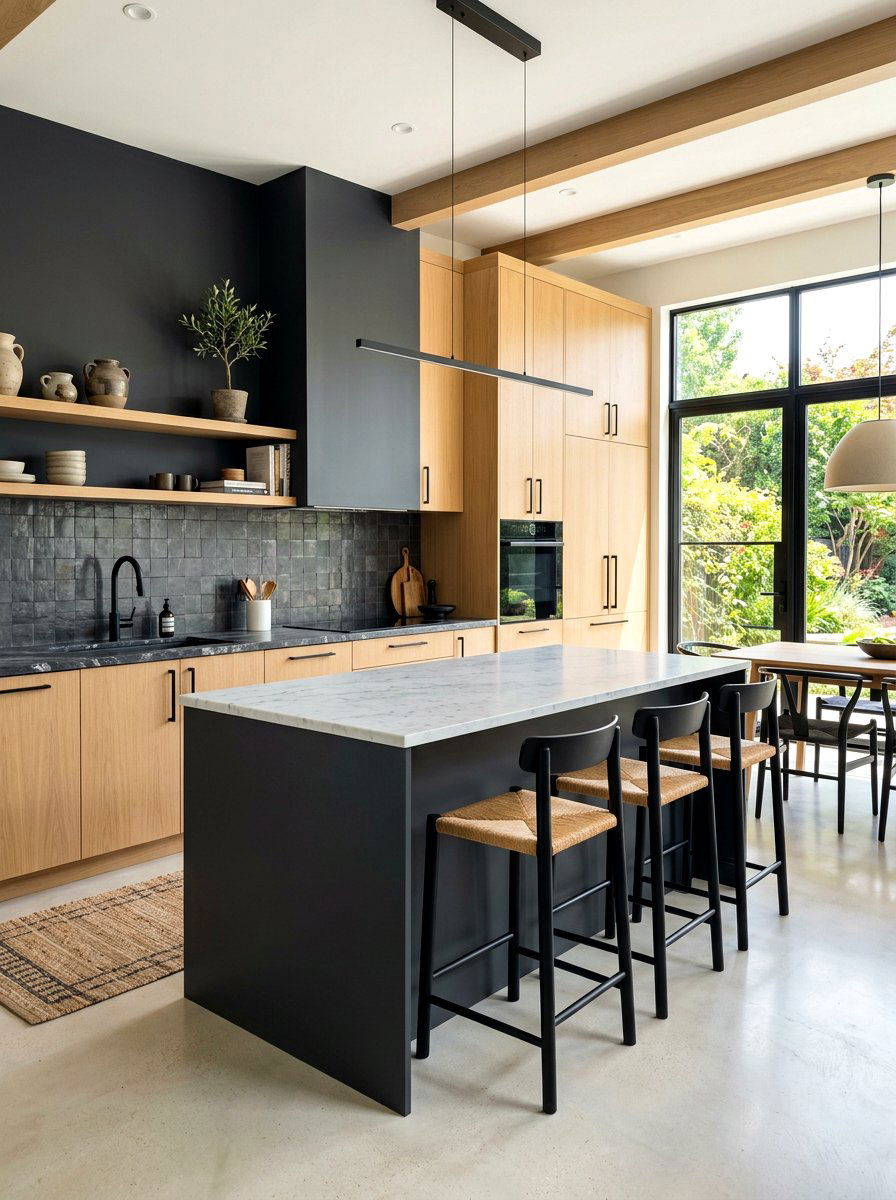
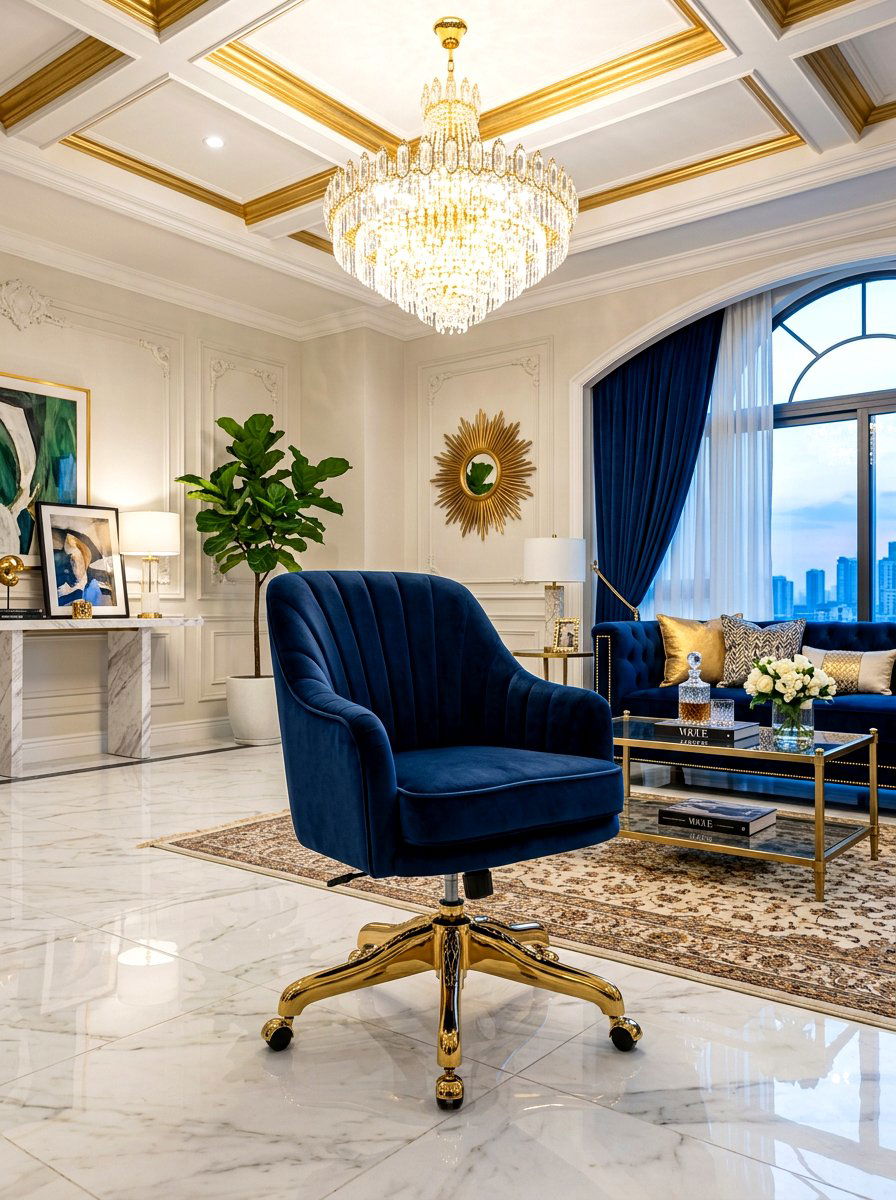
A charcoal accent space provides a bold, sophisticated contrast to the lighter elements of a Japandi home. Using a deep gray for a kitchen island, a fireplace surround, or a large rug grounds the room and adds a sense of luxury. This dark tone works best when paired with plenty of natural wood and soft, warm lighting to prevent it from feeling too cold. It creates a focal point that draws the eye and gives the space a clear sense of structure. Charcoal is a timeless color that feels more modern than traditional black, making it a perfect choice for a contemporary living room or a high-end home office.
26. Built In Storage
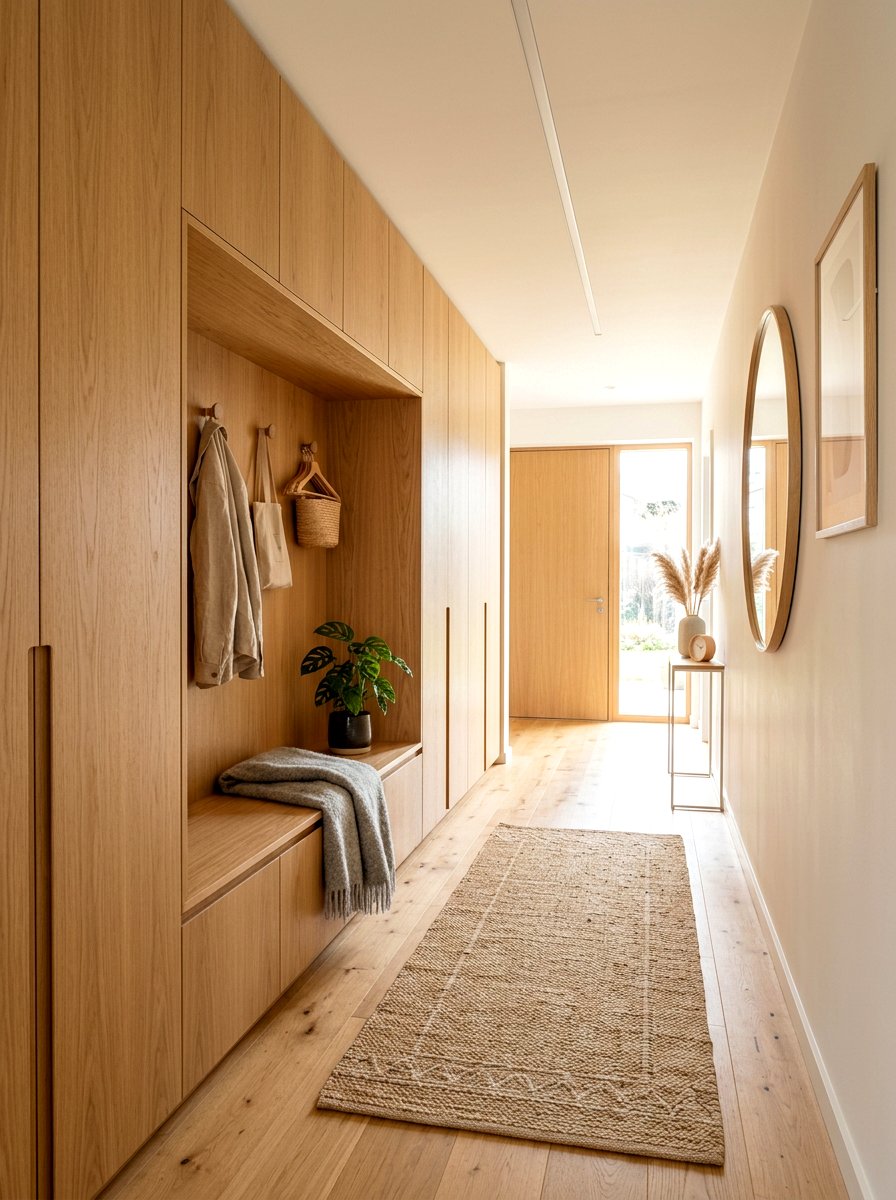
Built-in storage is the secret to maintaining a clutter-free Japandi home, as it allows you to hide everyday items behind seamless panels. Custom cabinetry that blends into the walls creates a clean, architectural look that maximizes space in every room. In the living room, a full wall of hidden storage can house everything from electronics to children's toys, leaving only a few decorative items on display. This focus on organization is a core part of the Japanese influence, ensuring that the home remains a tranquil environment. When everything has a dedicated place, it is much easier to keep the space looking pristine and peaceful with minimal effort.
27. Floating Wood Shelf
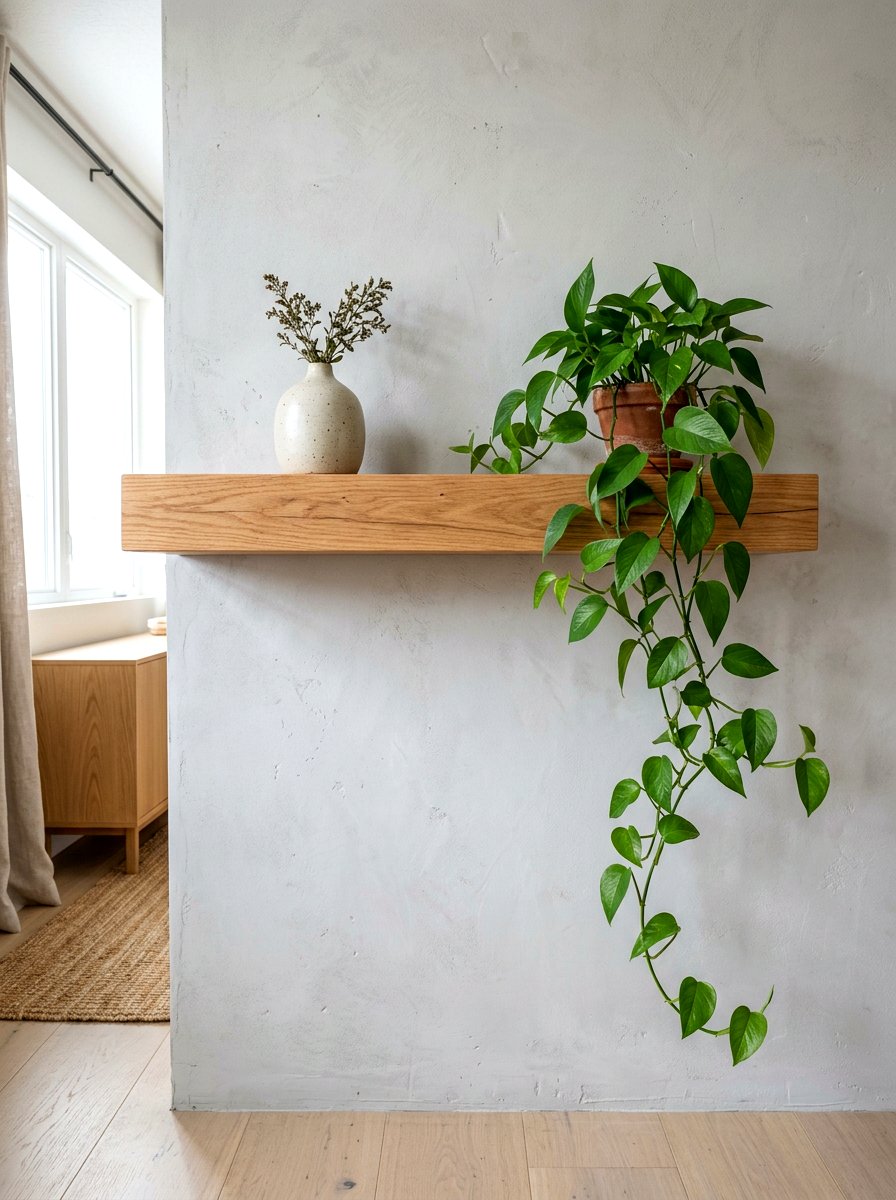
A floating wood shelf is a simple yet effective way to display curated items while keeping the floor space clear. These shelves offer a clean, minimalist look because they lack visible brackets or supports. Use a thick piece of solid oak or walnut to add a sense of weight and quality to the wall. They are perfect for displaying a few pieces of ceramic art, a small plant, or a stack of favorite books in a living room or bedroom. By limiting the number of items on the shelf, you maintain the "less is more" philosophy. This decorative approach adds character and warmth to the room without overwhelming the visual senses.
28. Ambient Light Bedroom
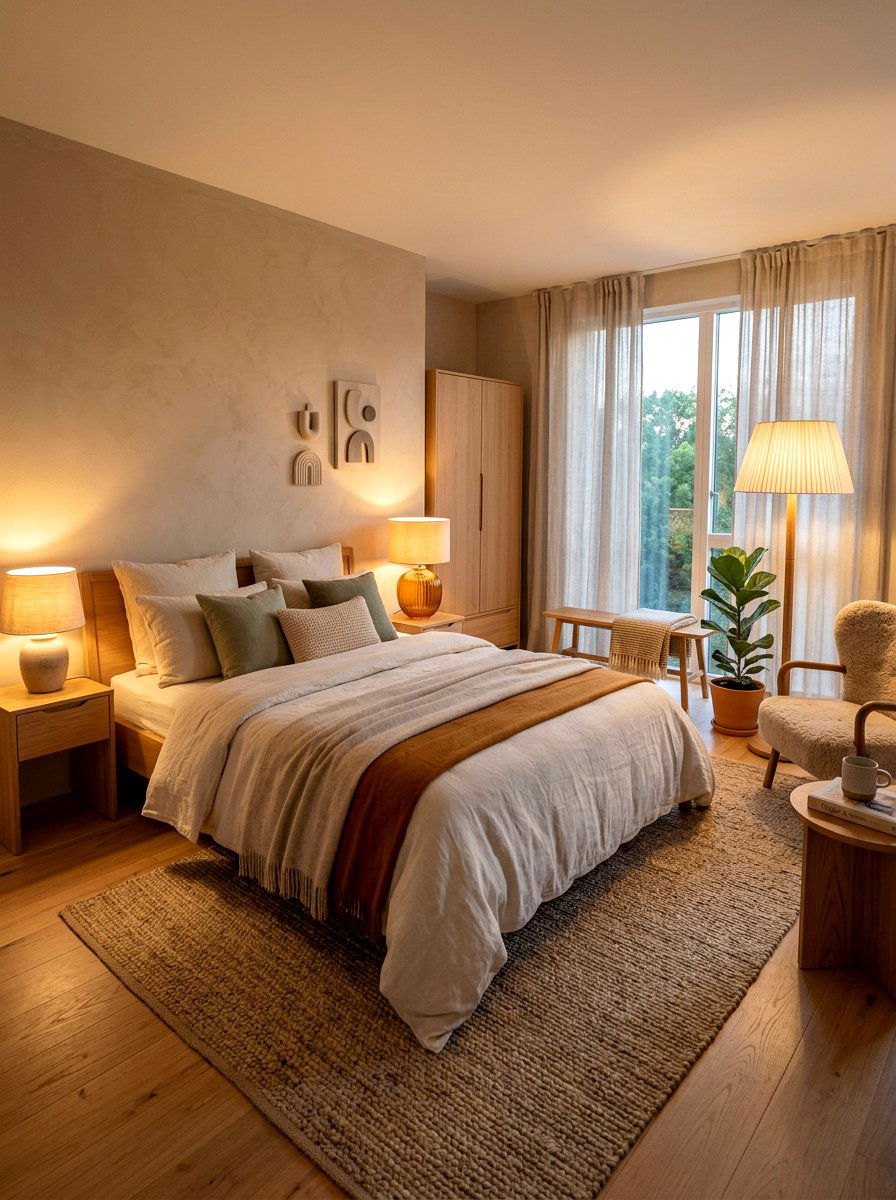
An ambient light bedroom focuses on creating a warm, cozy atmosphere through layers of soft, indirect lighting. Avoid harsh overhead lights and instead use a combination of floor lamps, table lamps, and wall sconces with warm-toned bulbs. Using dimmable switches allows you to adjust the brightness to match your mood throughout the evening. Soft lighting enhances the textures of your linens and the grain of your wooden furniture, making the entire room feel more inviting. This approach to lighting is inspired by the Scandinavian concept of hygge, which prioritizes comfort and well-being. It turns your bedroom into a sanctuary where you can truly unwind and escape the outside world.
29. Raw Timber Dining
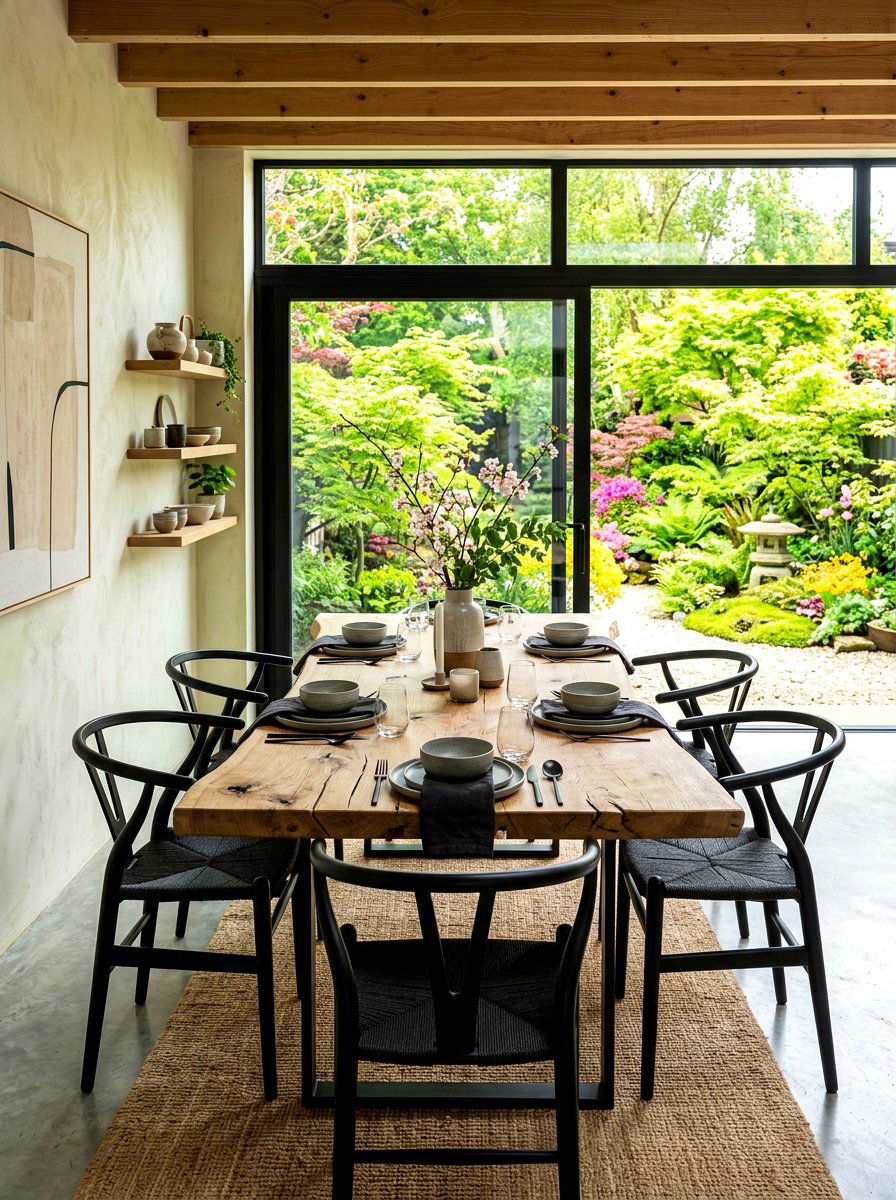
A raw timber dining table serves as a powerful statement piece that highlights the natural beauty and texture of real wood. Choose a live-edge table or a piece with a visible grain and natural knots to embrace the wabi-sabi philosophy of imperfection. This rugged element provides a beautiful contrast to the clean, straight lines of modern dining chairs and minimalist lighting. The tactile quality of the raw wood makes every meal feel more grounded and connected to nature. Over time, the timber will develop a unique patina, telling the story of your home and the people who gather around it. It is a durable, timeless investment that becomes the heart of the home.
30. Yoga Meditation Space
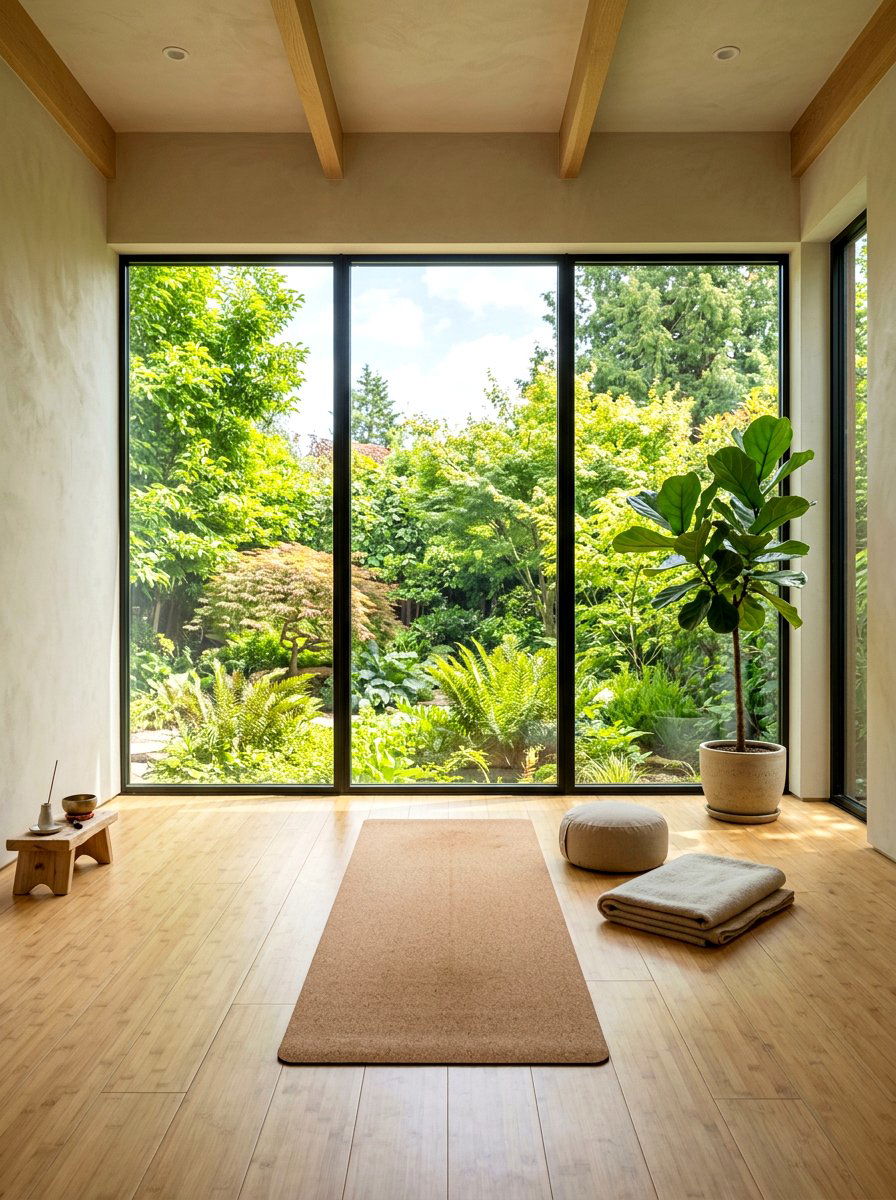
A yoga meditation space is a dedicated area designed for mindfulness and physical well-being within the comfort of your home. Keep this room extremely simple, with a high-quality cork mat, a few floor cushions, and perhaps a single piece of art on the wall. Use natural materials like bamboo flooring and linen curtains to create a serene environment. Large windows that let in natural light are ideal for staying energized during your practice. This room should be free from technology and clutter to allow for complete mental focus. By creating a physical space for wellness, you are making a commitment to your health and finding peace in your daily life.
Conclusion:
Embracing Japandi decor is more than just a design trend; it is a lifestyle choice that prioritizes tranquility, quality, and intentionality. By combining the best elements of Japanese and Scandinavian styles, you create a home that feels both modern and deeply rooted in natural beauty. The focus on neutral palettes, sustainable materials, and clutter-free living ensures that your space remains a sanctuary in an increasingly busy world. These 30 ideas demonstrate how versatile and timeless this aesthetic can be, offering solutions for every room in your house. Whether you start with a single low-profile bed or a full kitchen renovation, the result will be a harmonious environment that supports your well-being.

Related posts: