Designing a dedicated space for children to explore their artistic side is a wonderful way to foster imagination and development. A kids craft room provides a sanctuary where messy projects are encouraged rather than feared. When you create an environment tailored to their height and interests, you empower them to take ownership of their creative journey. This guide explores thirty distinct ways to set up a functional and beautiful art space that balances organization with inspiration. From clever storage hacks to full-room layouts, these concepts will help you transform any spare corner or dedicated room into a vibrant studio that your little ones will cherish for years to come.
1. Wall pegboard organization
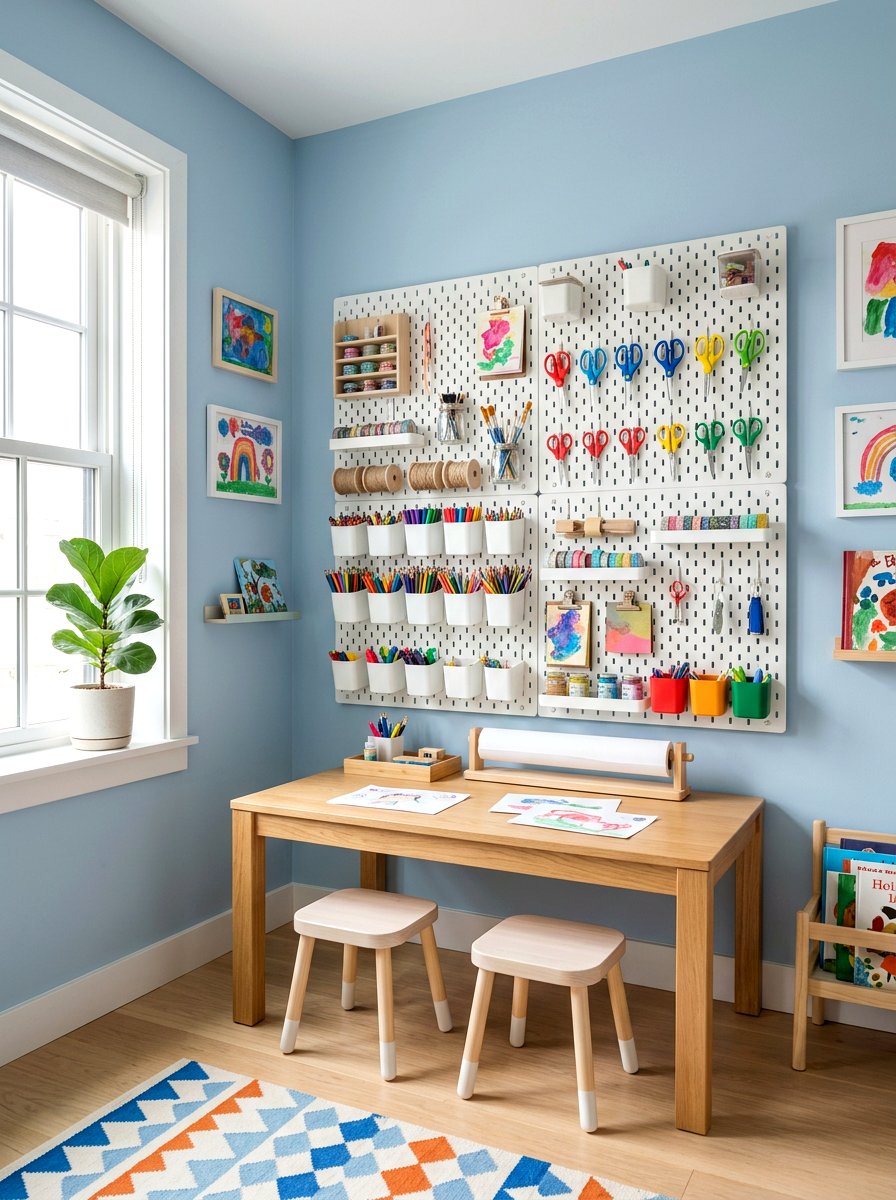
Have you ever looked at a messy pile of markers and felt overwhelmed? Implementing a comprehensive wall pegboard organization system transforms a chaotic room into a streamlined creative hub. This setup typically covers one entire wall with a large white or pastel-colored pegboard sheet. By using various hooks, baskets, and small cups, you can keep every single crayon and pair of scissors within easy reach. The surrounding room should feature a simple white craft table and light wood flooring to keep the focus on the colorful supplies. This approach not only saves valuable floor space but also teaches children how to categorize and return their tools to the correct spot.
2. Chalkboard wall paint
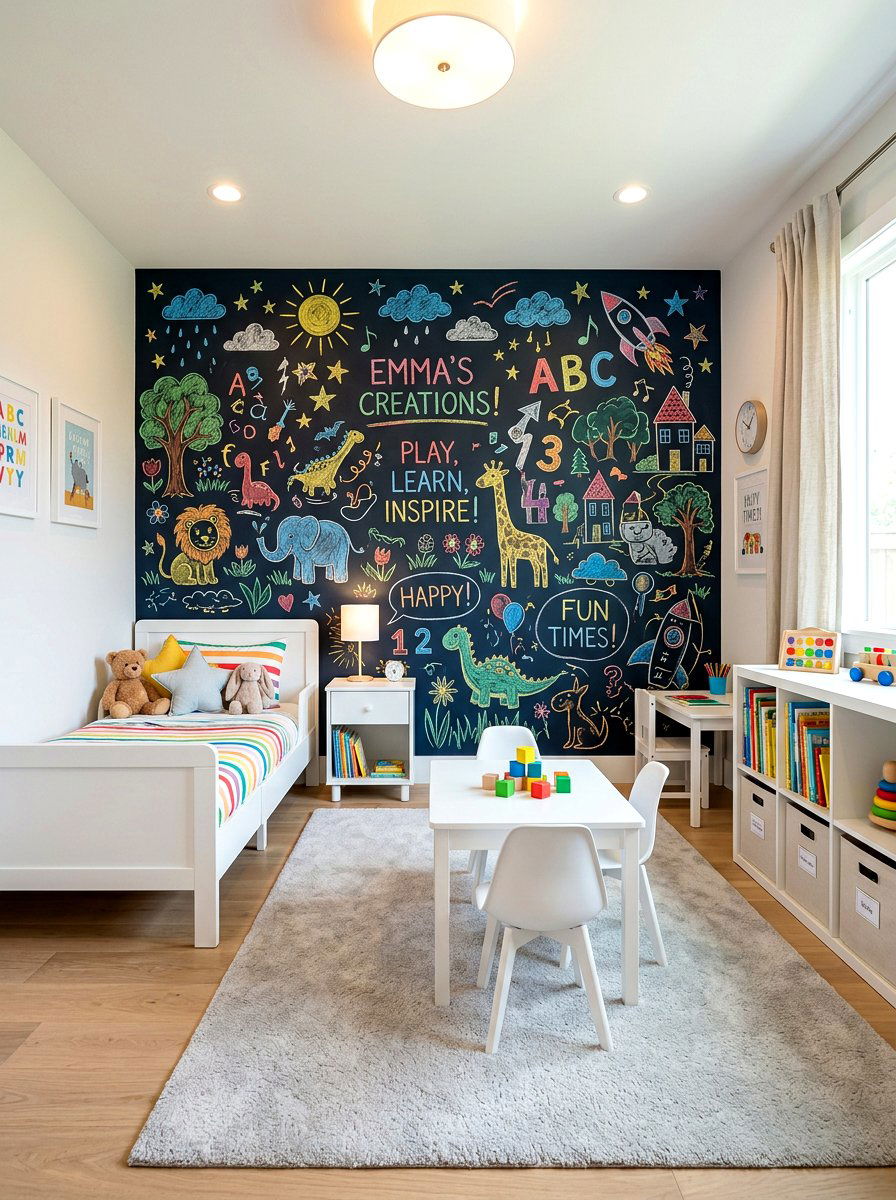
Imagine a room where drawing on the walls is actually encouraged instead of being a household rule violation. Applying chalkboard wall paint to a primary focal wall creates an ever-changing canvas for giant murals and scribbles. To balance the dark charcoal tone of the chalkboard, keep the rest of the room bright with white furniture and light-colored rugs. Pair this feature with a nearby storage cabinet for multi-colored chalk and erasers to prevent dust from spreading. This design encourages large-scale motor skills as children reach high and low to complete their masterpieces. It makes the entire room feel like a giant interactive sketchbook for daily creative expression.
3. Art supply rolling cart
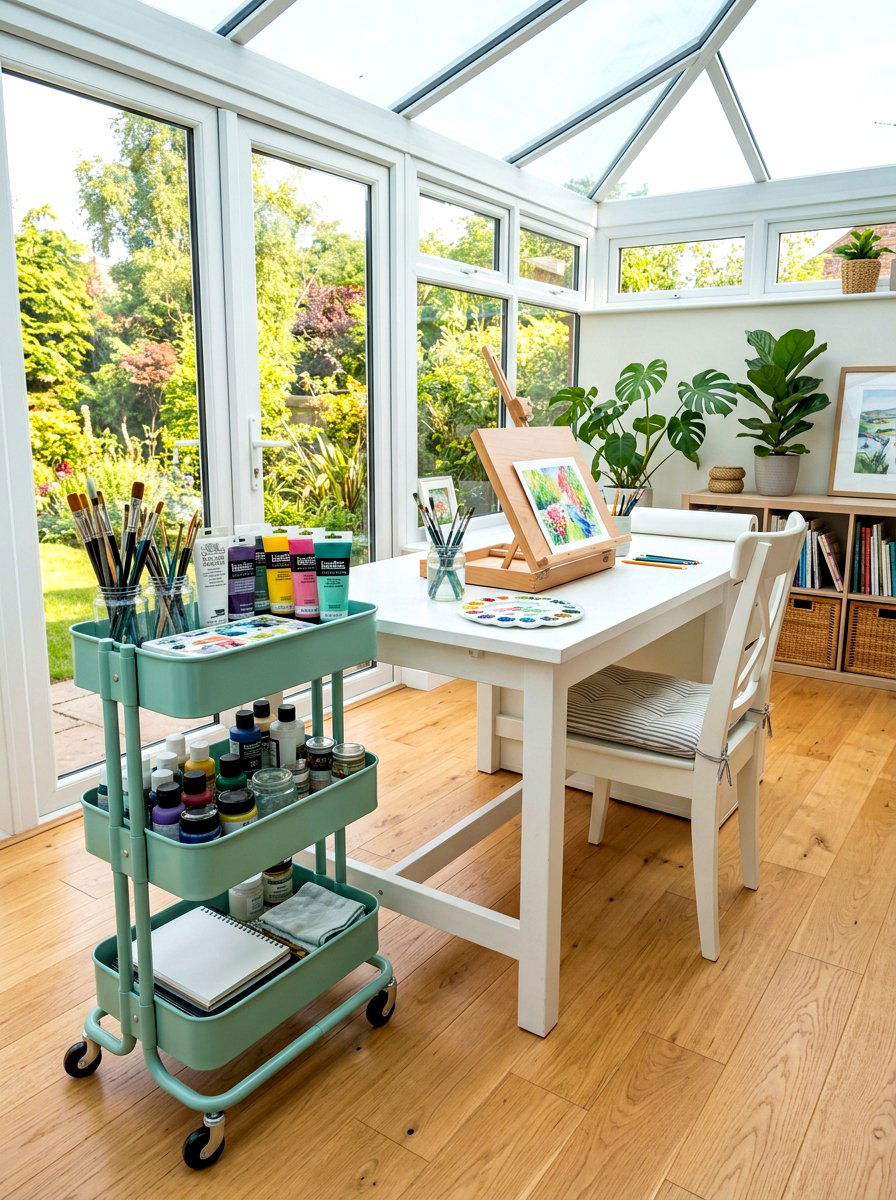
Are you tired of carrying heavy bins of paint from one room to another during craft time? An art supply rolling cart offers a mobile solution that brings the studio to wherever the inspiration strikes. These tiered metal carts can be organized by project type, with the top shelf for markers and the bottom for heavy construction paper. The room should include a sturdy central table with enough clearance for the cart to glide alongside. Using a cart allows for a flexible room layout where the center remains open for large floor projects. It is a perfect choice for multi-purpose rooms where the art station needs to be tucked away.
4. Montessori art station
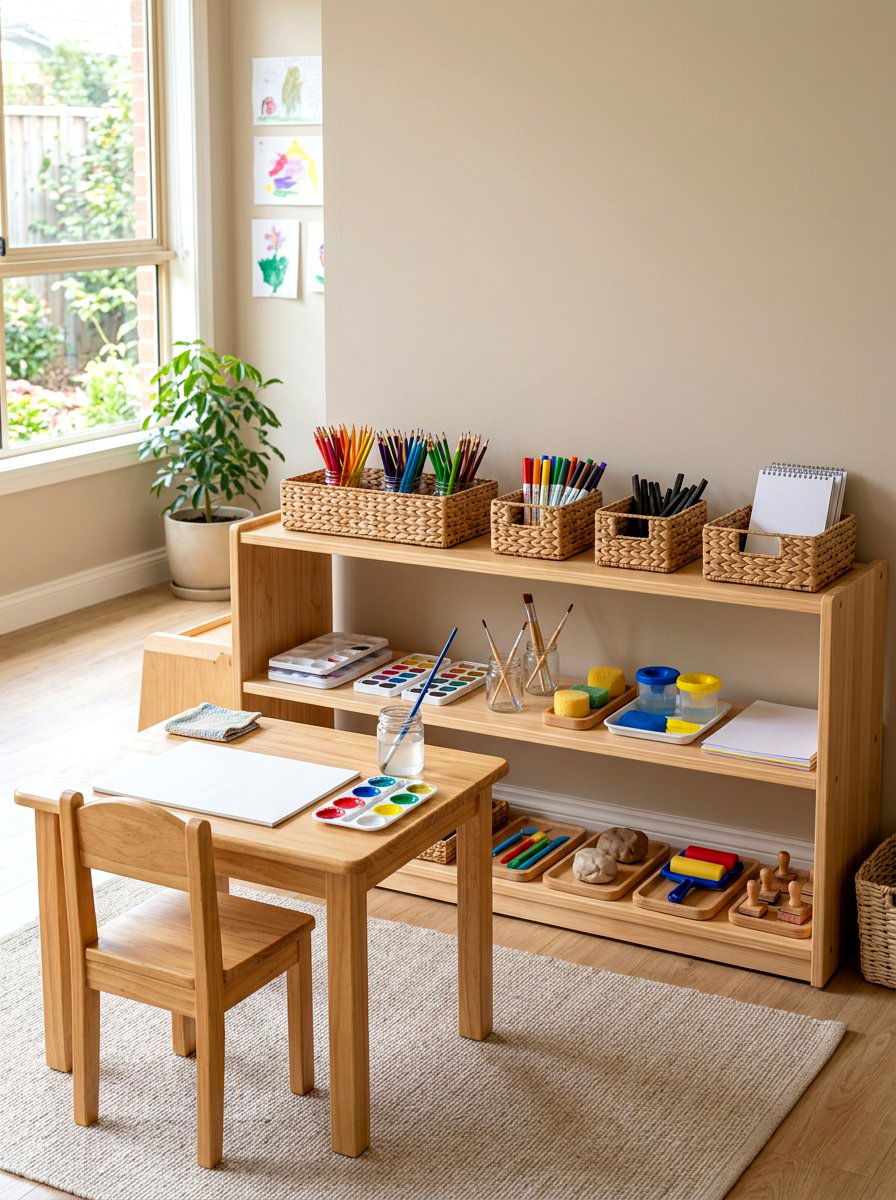
What if your child could access everything they needed for a project without asking for help once? A Montessori art station focuses on independence by using low-profile shelving and open-faced containers at the child's eye level. This room layout emphasizes order and simplicity, often featuring natural wood tones and soft, neutral wall colors. Each material has a specific home, which helps children develop a sense of responsibility for their environment. The furniture should be lightweight and appropriately sized for toddlers or young elementary students. This design fosters a calm atmosphere where the focus remains entirely on the creative process and the tactile experience of the chosen art materials.
5. Kids craft table with storage
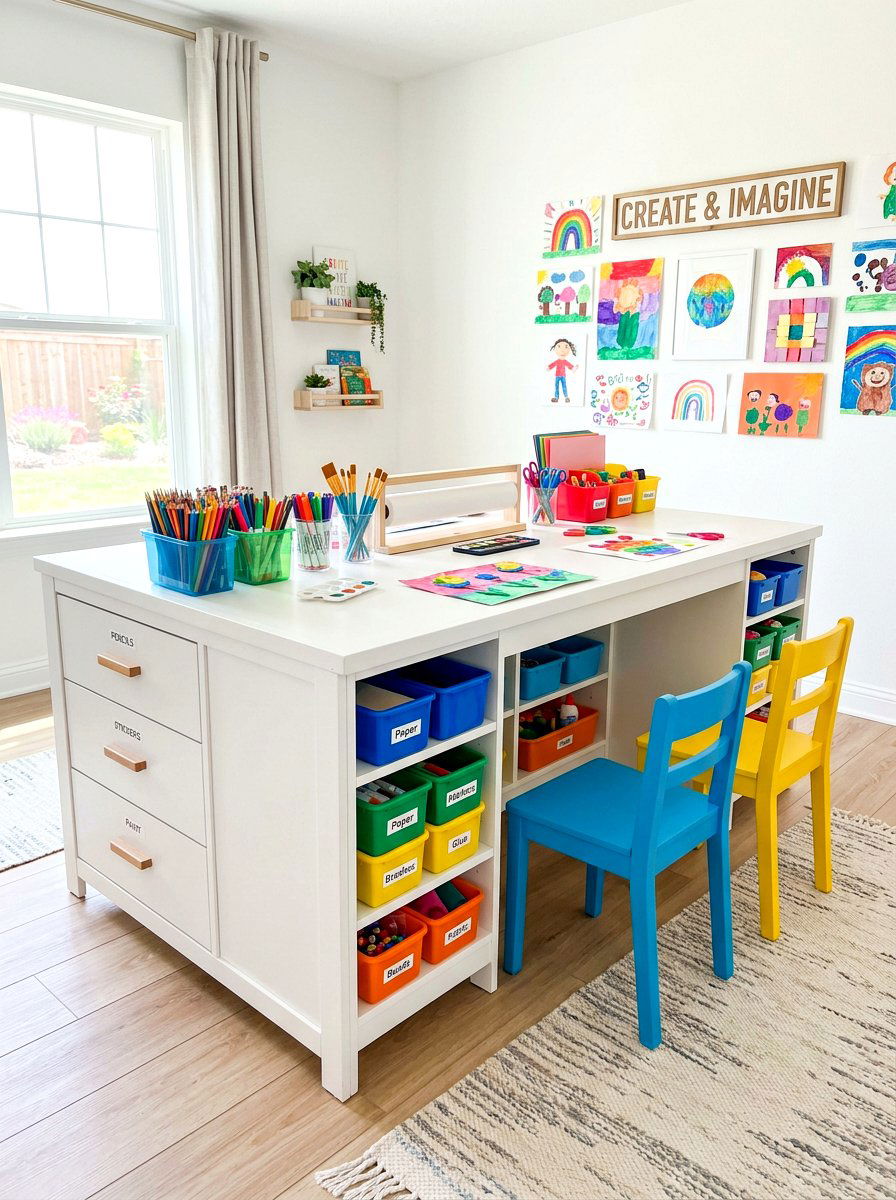
Does your current workspace get cluttered the moment a project begins? Choosing a kids craft table with storage built directly into the frame ensures that the tabletop stays clear for active creating. These tables often feature deep drawers on the sides or open cubbies underneath to hold bins of glitter, glue, and felt. The overall room aesthetic should remain clean and organized, with a focus on the central workstation as the primary anchor. Surrounding the table with ergonomic stools ensures comfort during long sessions of painting or clay modeling. This integrated approach minimizes the need for extra cabinetry and keeps all necessary tools right at the children's fingertips.
6. Wall mounted paper roll
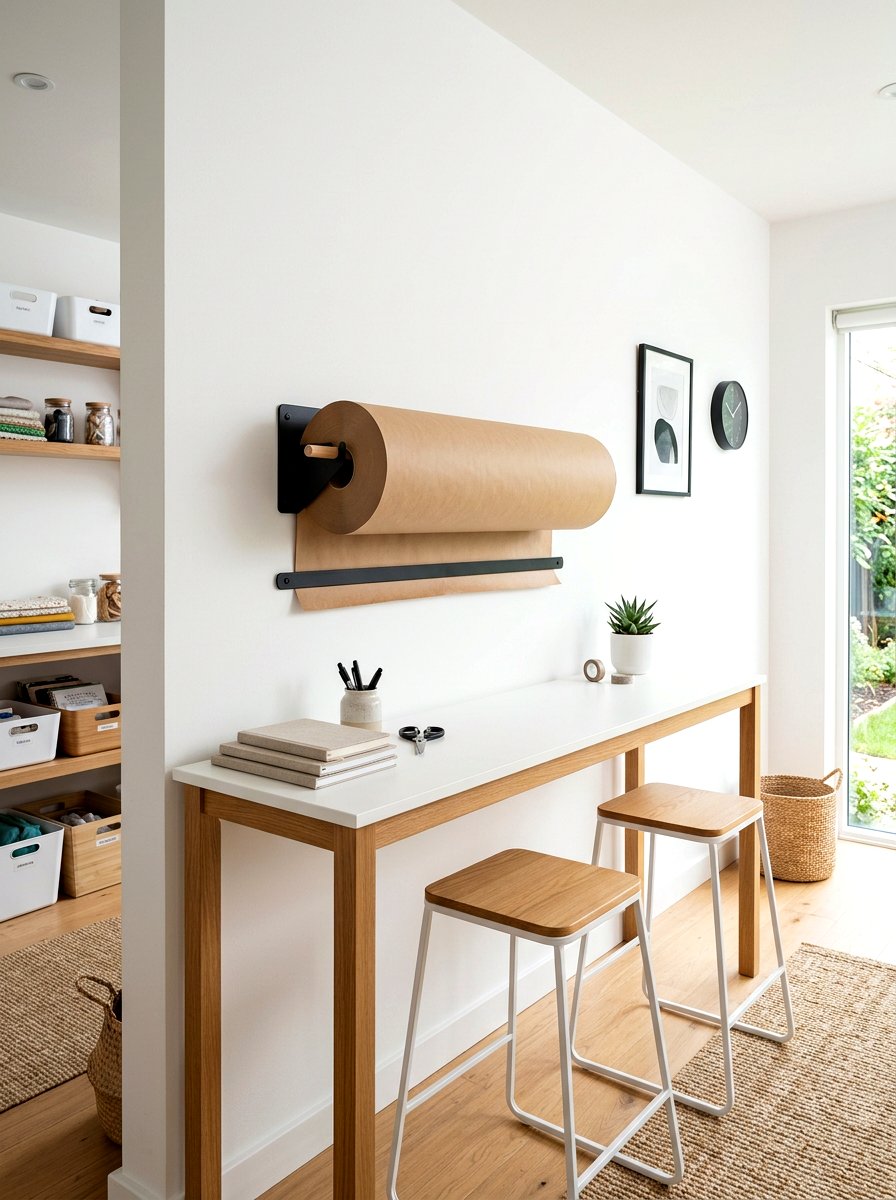
Have you ever seen a child’s eyes light up when they realize they have an infinite canvas to draw on? Installing a wall mounted paper roll provides a continuous stream of paper that can be pulled across a table or down a wall. This setup works best when paired with a long, narrow desk positioned directly beneath the dispenser. The room should have a minimalist feel to accommodate the large white space the paper creates. Using a metal or wooden bracket to hold the roll adds a professional studio touch to the room. It is a fantastic way to encourage collaborative drawing sessions between siblings or friends.
7. Hanging art display wire
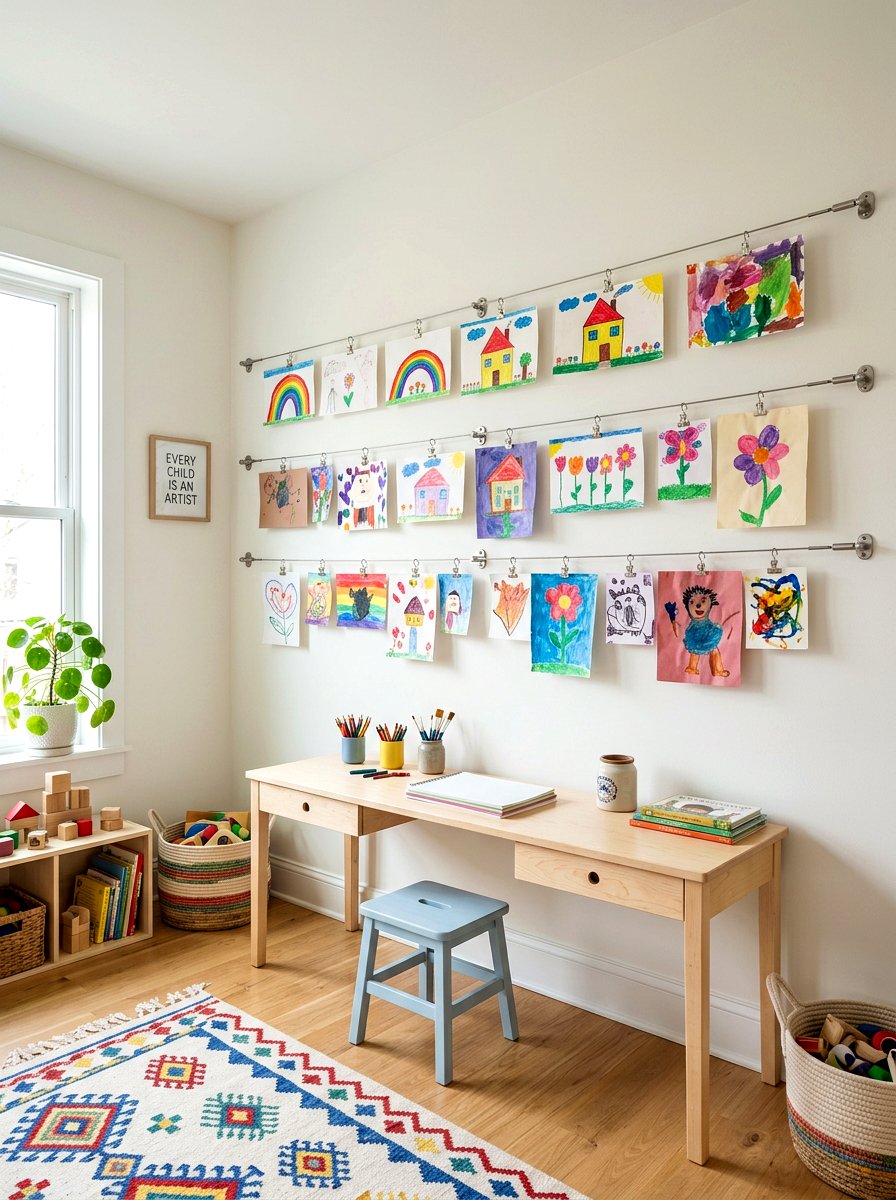
Where do you put all those wet paintings and finished masterpieces once the crafting is finally done? A hanging art display wire uses stainless steel cables and small clips to create a rotating gallery wall across the room. This design element looks best when stretched across a brightly lit wall above the main workstation. The rest of the room can feature colorful accents that match the vibrancy of the displayed artwork. It serves as a visual record of progress and gives children a sense of pride in their work. By using wires, you avoid the clutter of traditional frames and make it incredibly easy to swap out art daily.
8. Built in window seat desk
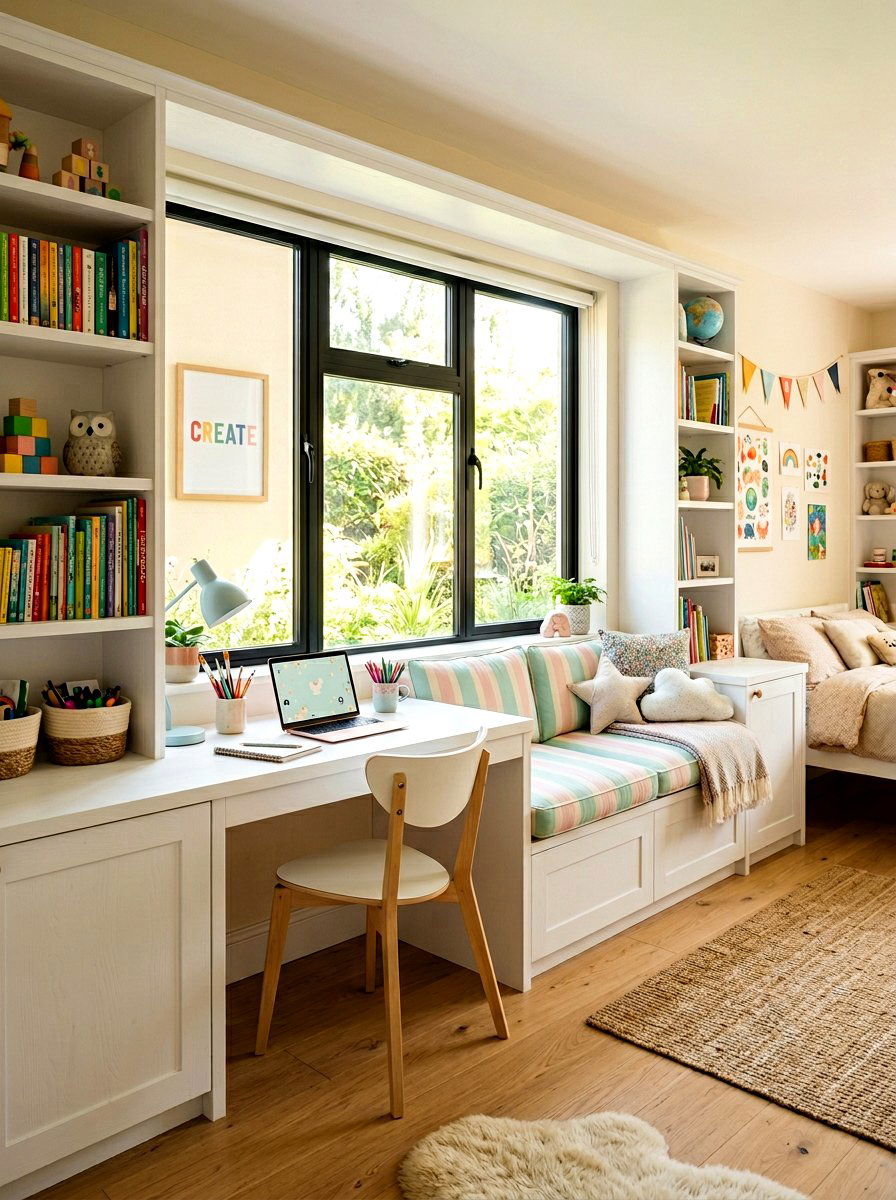
Is there a better way to spark creativity than by providing a workspace flooded with soft natural light? A built in window seat desk combines a comfortable reading nook with a functional art surface. The room should feel cozy and inviting, perhaps featuring soft cushions and built-in bookshelves surrounding the window. This layout maximizes unused architectural space and provides a scenic view to inspire landscape drawings or nature crafts. Underneath the window seat, you can add deep drawers to hide away messy supplies like clay or paint sets. This dual-purpose furniture piece creates a serene environment that encourages both quiet reflection and active artistic exploration.
9. Colorful cubby storage bins
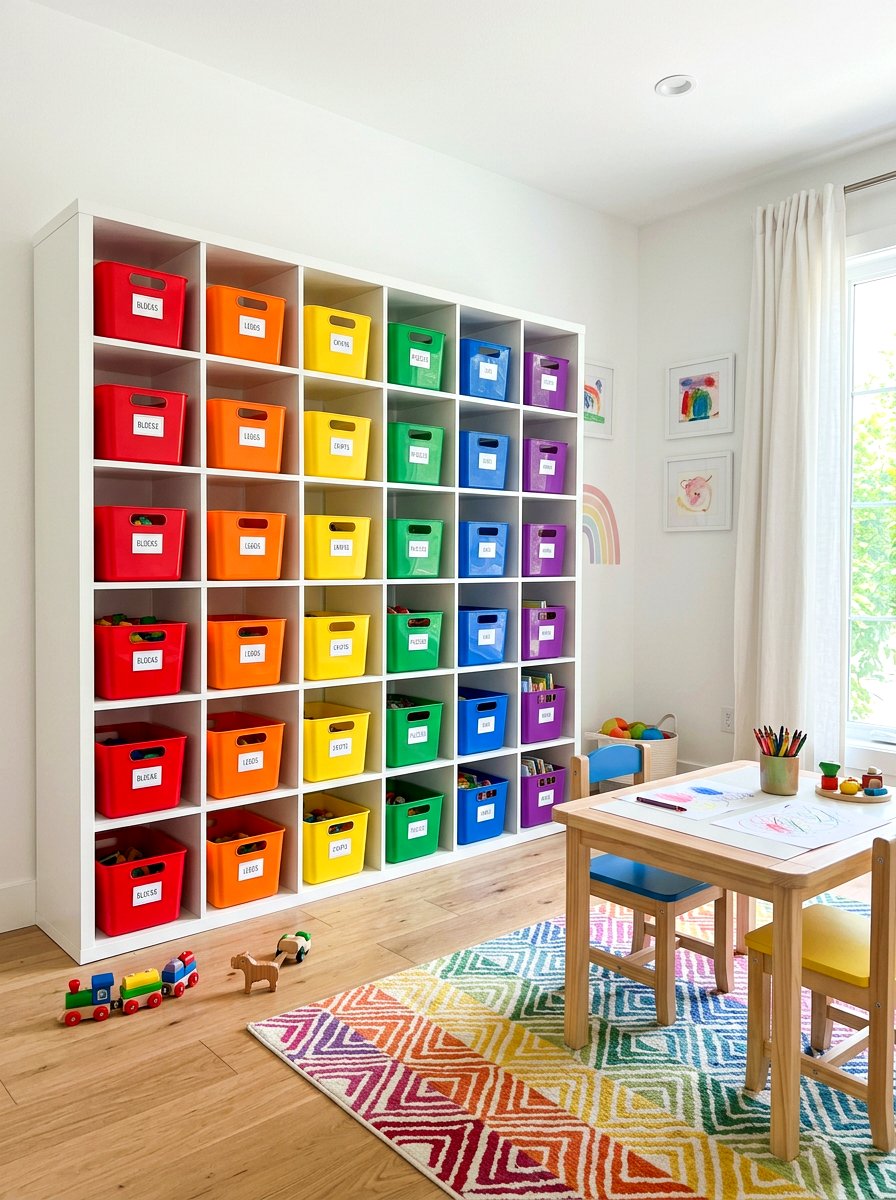
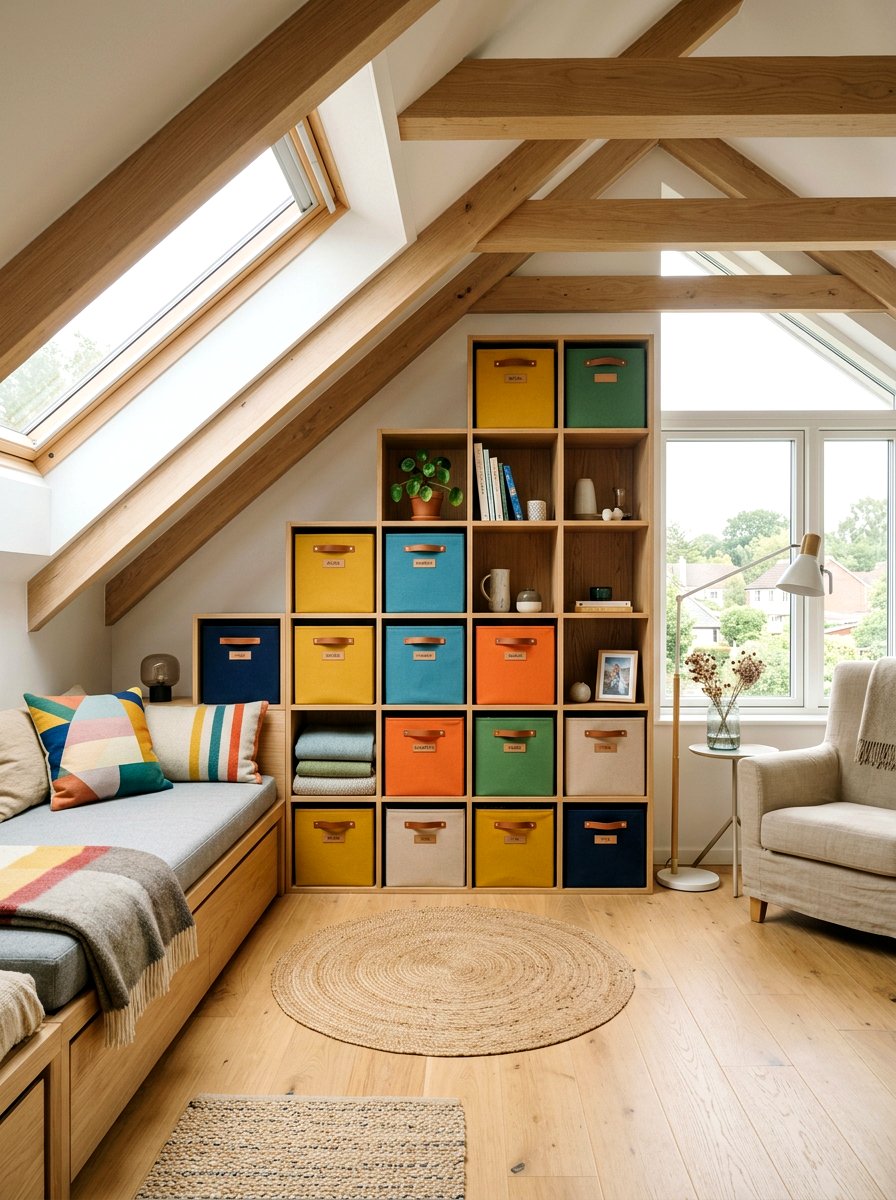
Can a storage system actually become the main decorative feature of a creative workspace? Utilizing colorful cubby storage bins allows you to organize supplies while adding a playful rainbow aesthetic to the entire room. The room design should feature a large grid-style shelving unit that houses these bins, making it easy for children to identify where items go. Coordinate the bin colors with other elements in the space, such as the chairs or wall art, for a cohesive look. This system is excellent for hiding small, mismatched items that usually create visual clutter. It provides a structured environment where every craft category has its own brightly colored home.
10. Recycled material craft center
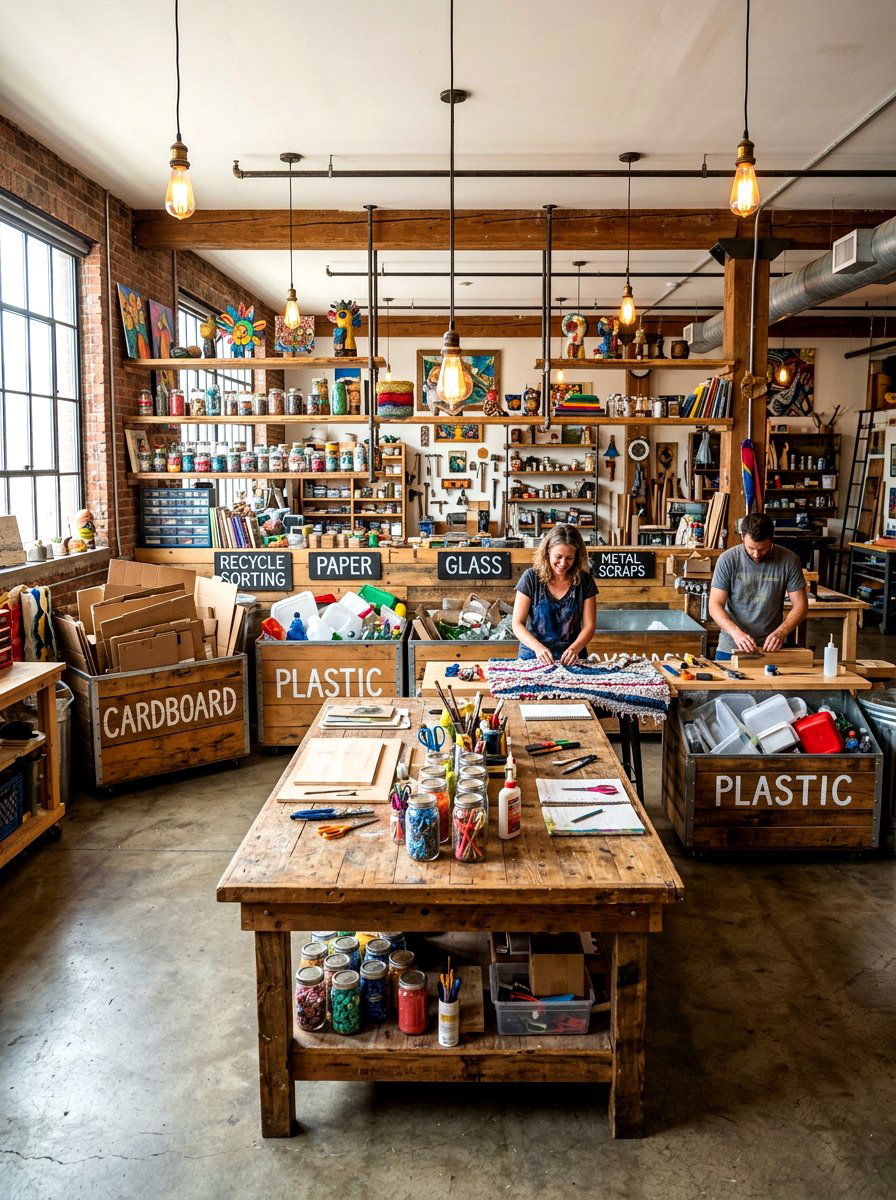
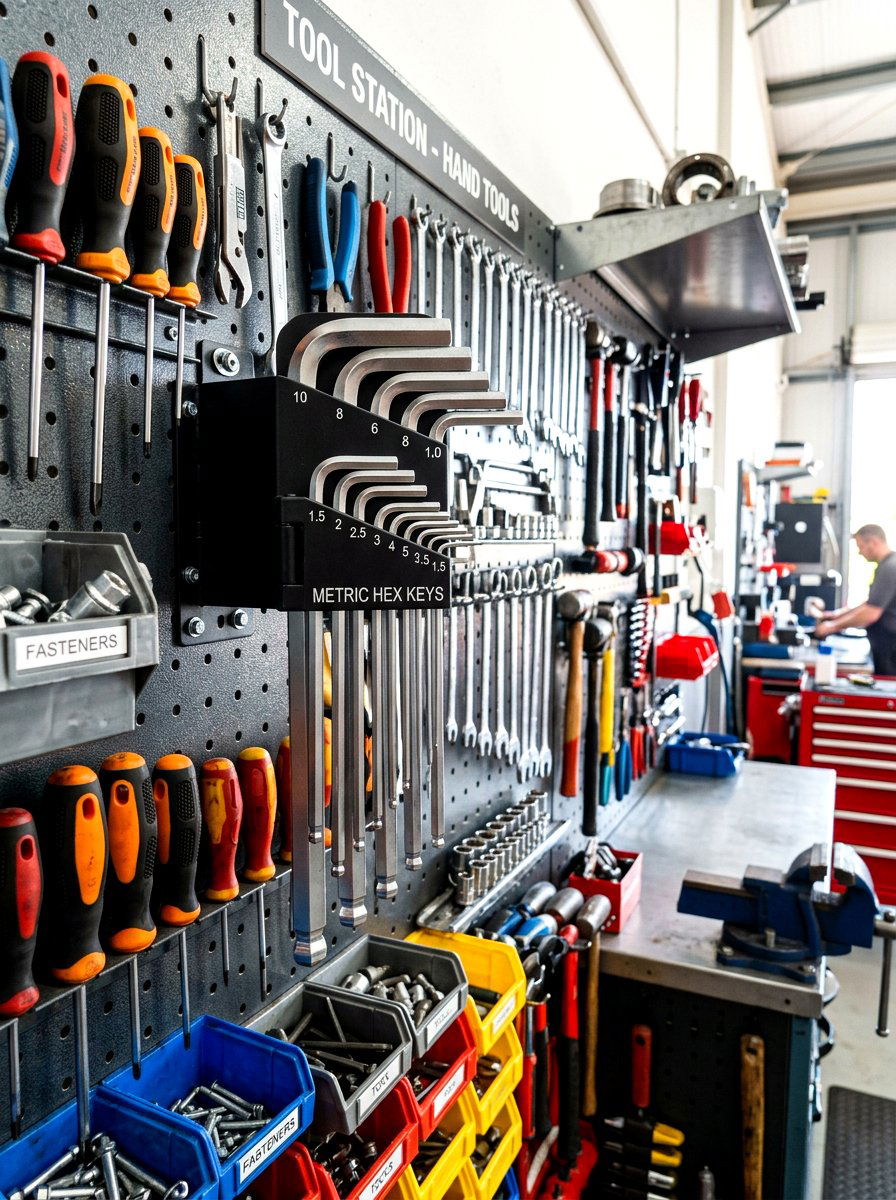
How can you teach sustainability while encouraging the next generation of creative thinkers? A recycled material craft center features dedicated bins for cardboard tubes, egg cartons, and plastic lids. This room should have a slightly industrial or rustic feel, with wooden crates and metal bins used to sort the "treasures. " The central table should be rugged and easy to clean, as these projects often involve lots of tape and glue. By giving these everyday objects a prominent place in the room, you encourage children to see potential in everything around them. This design promotes problem-solving and inventive thinking by turning household waste into imaginative 3D sculptures.
11. Splatter paint zone
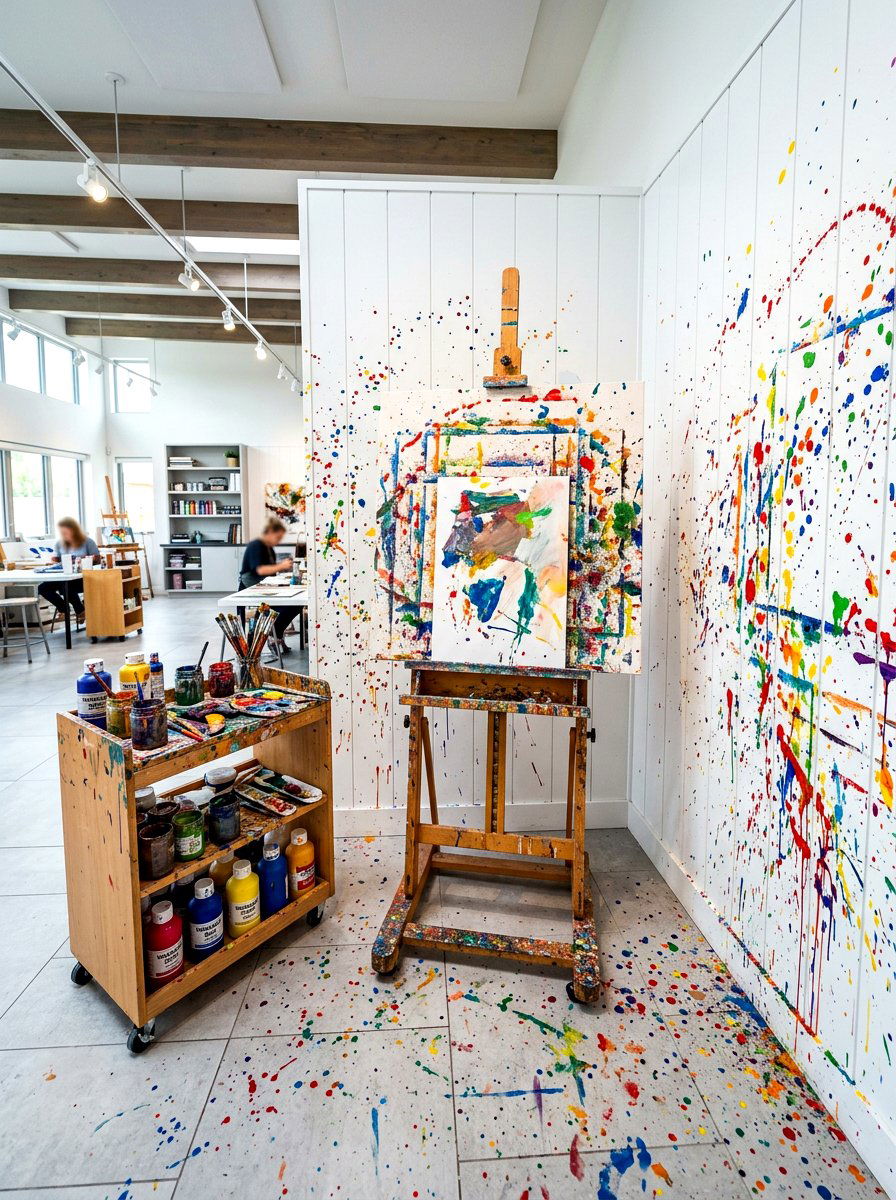
Does your child thrive in an environment where they can get truly messy without any restrictions? Creating a dedicated splatter paint zone involves using washable wall panels or floor-to-ceiling drop cloths in a specific corner. The room should have easy-to-clean surfaces, such as linoleum or tile flooring, and plenty of bright overhead lighting. Providing a large easel or a wall-mounted canvas allows for high-energy painting techniques that wouldn't be possible elsewhere. This space is all about freedom and expression, so the decor should be minimal and focused on durability. It is the perfect setup for energetic artists who love the physical action of throwing and splashing vibrant colors.
12. Double sided art easel
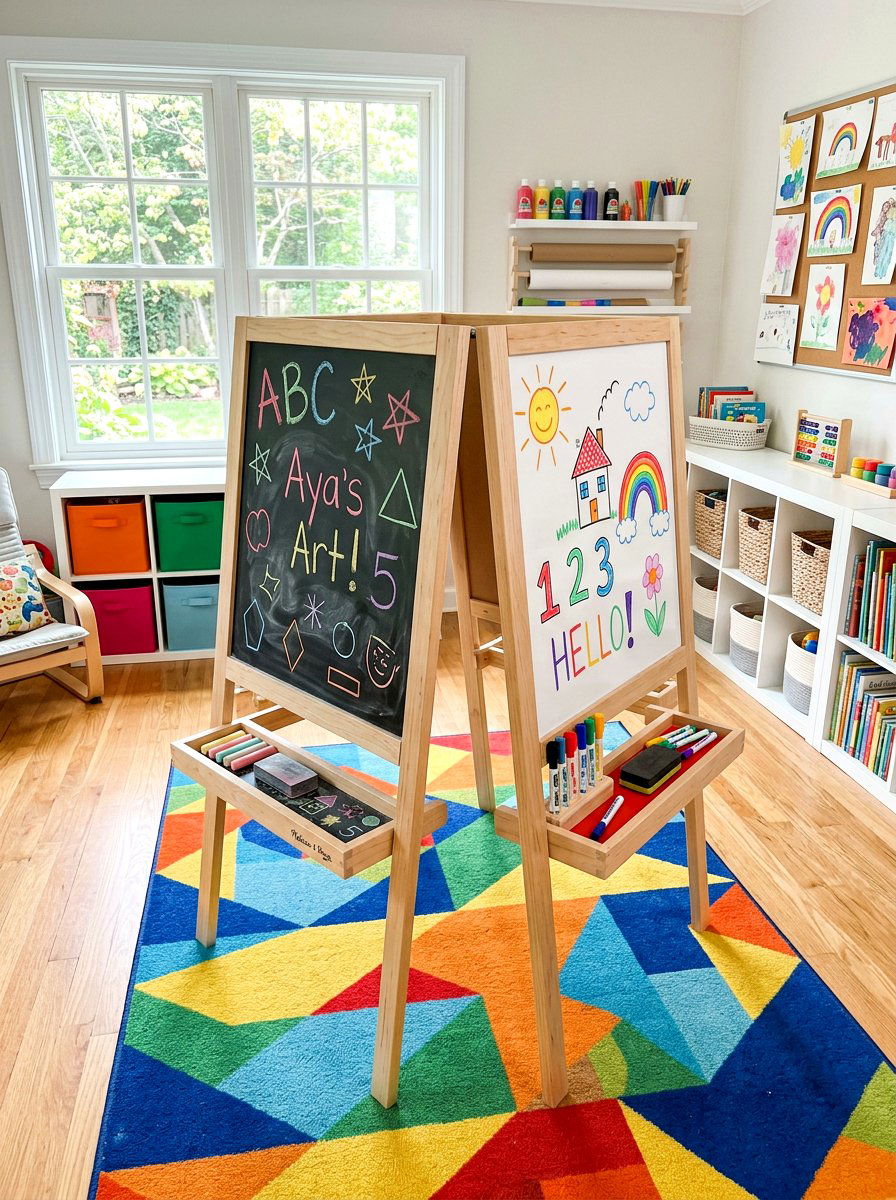
Why limit the creativity to just one child when you can have two working simultaneously? A double sided art easel serves as a fantastic focal point in the middle of a playroom or art studio. One side can feature a traditional chalkboard while the other offers a dry-erase surface or a paper attachment. The room surrounding the easel should have plenty of walking space to allow children to move freely around their work. Nearby, a small rug can define the creative zone, keeping the rest of the room tidy. This setup encourages social interaction and collaborative play as children watch and learn from each other’s artistic styles.
13. Under table storage bins
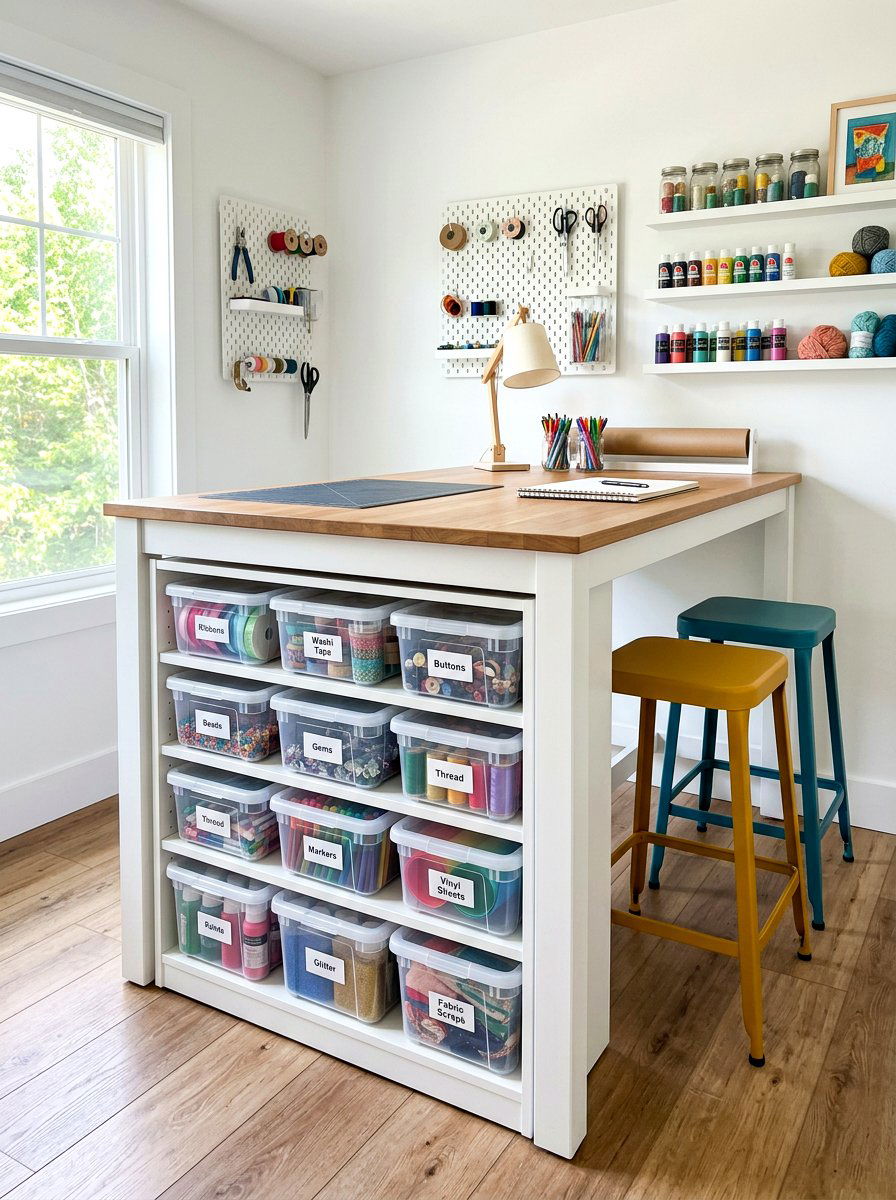
What do you do when your craft room is small but your supply list is massive? Placing under table storage bins is a clever way to utilize every square inch of available space. This design works best with a high-top table or a standard desk that has an open base. The bins should be clear or labeled so children can easily find what they need without pulling everything out. The room can maintain a sleek, modern look since the majority of the supplies are tucked away beneath the work surface. This layout keeps the floor clear for movement while ensuring that all the necessary materials are just a reach away.
14. Closet art station
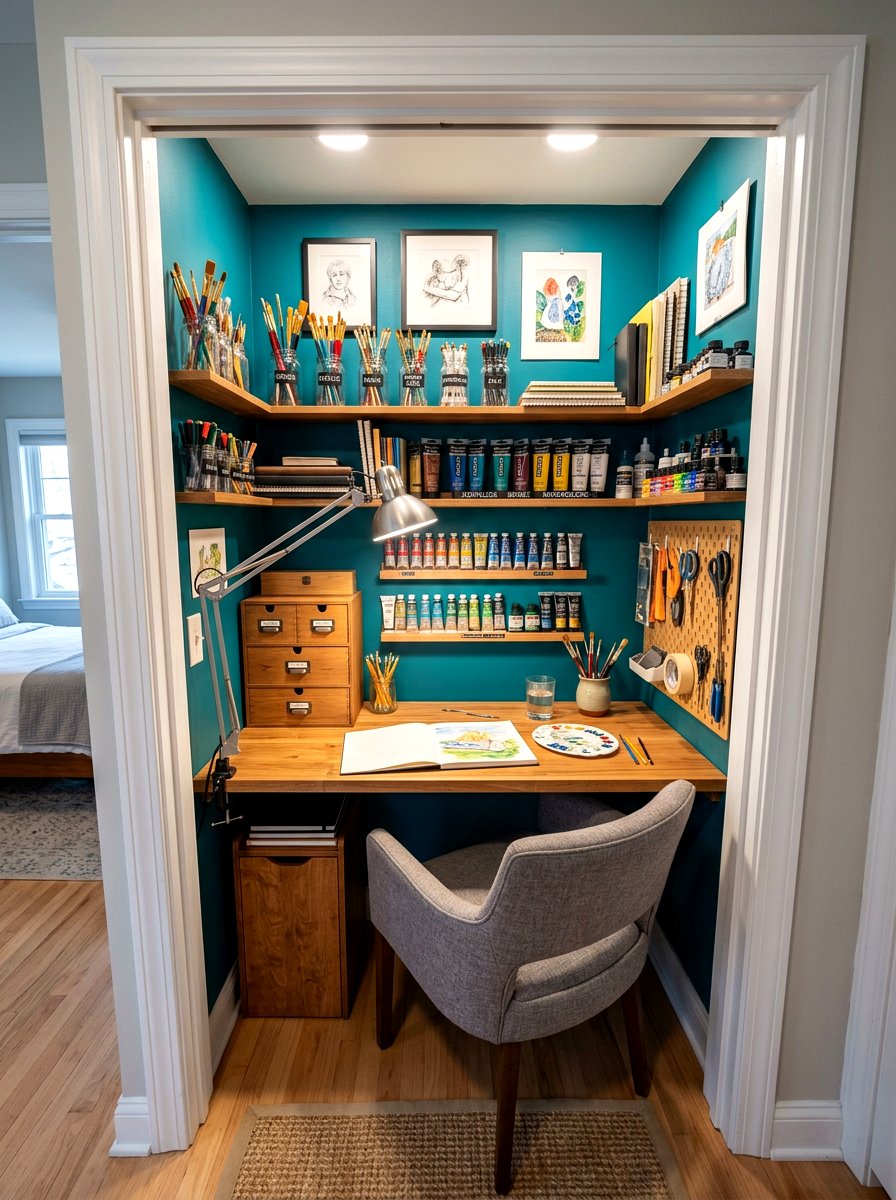
Can you turn a tiny, unused closet into a fully functioning creative retreat for your child? A closet art station involves removing the doors and installing a custom-fit desktop and overhead shelving. The interior of the closet can be painted a bright, contrasting color to make the "room" feel distinct from the rest of the bedroom. Adding a small LED strip light under the shelves ensures the workspace is well-lit and inviting. This compact design is ideal for homes where space is limited but a dedicated creative zone is still a priority. When the work is done, the chair can be tucked in, leaving the main room looking perfectly tidy.
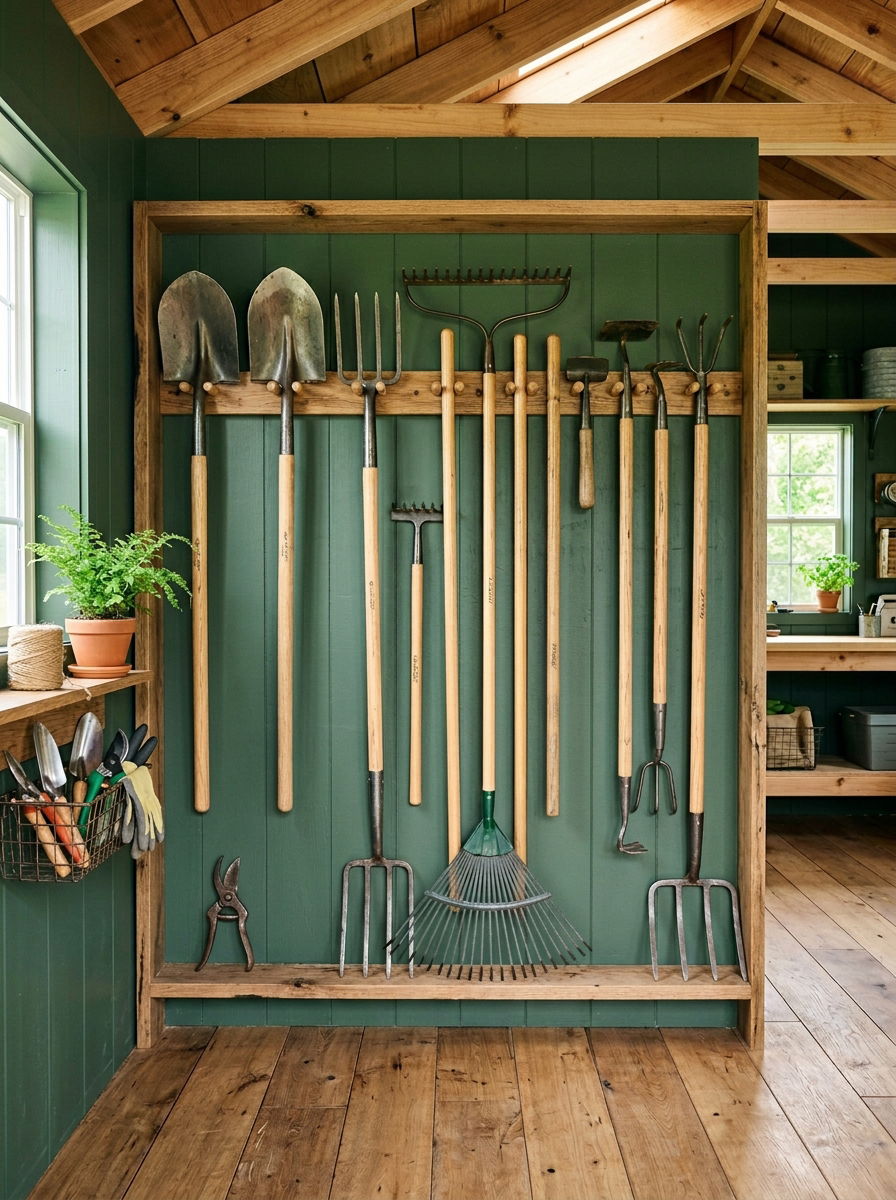
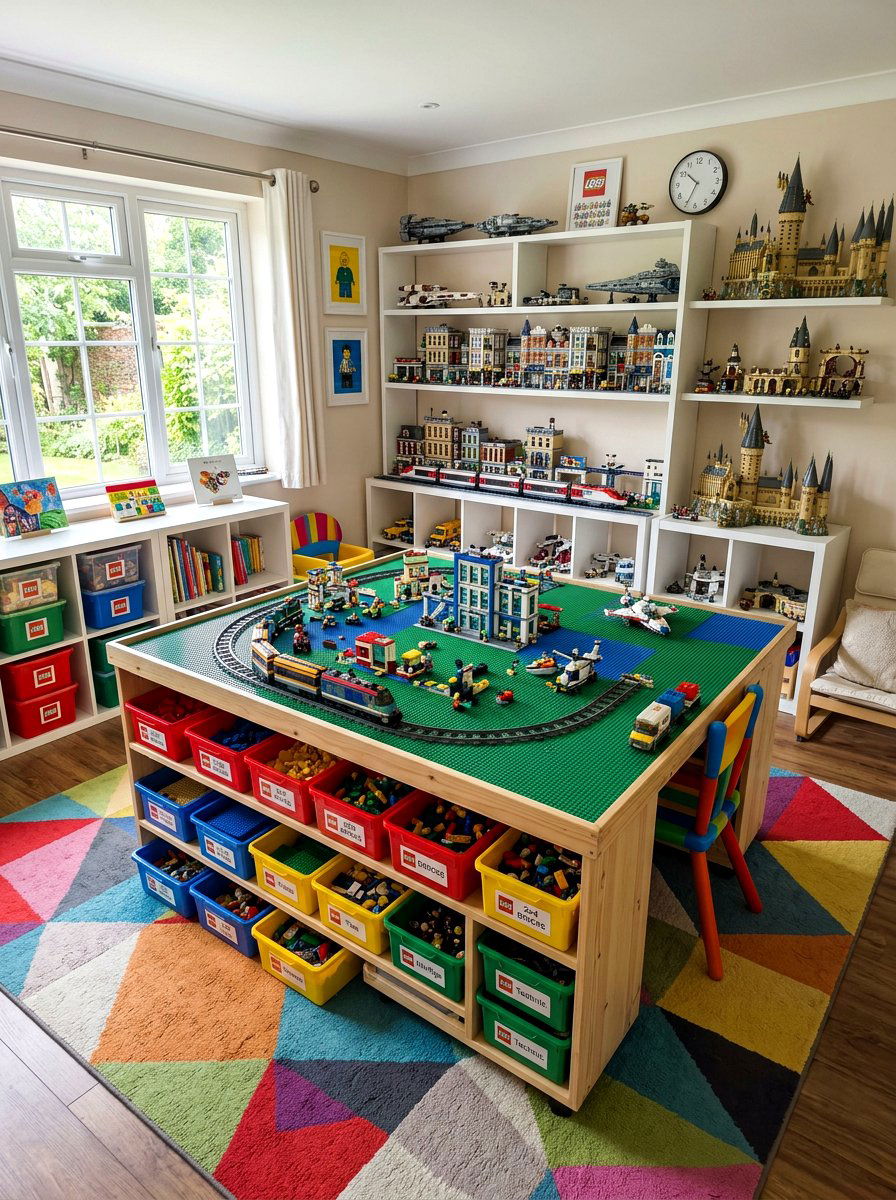
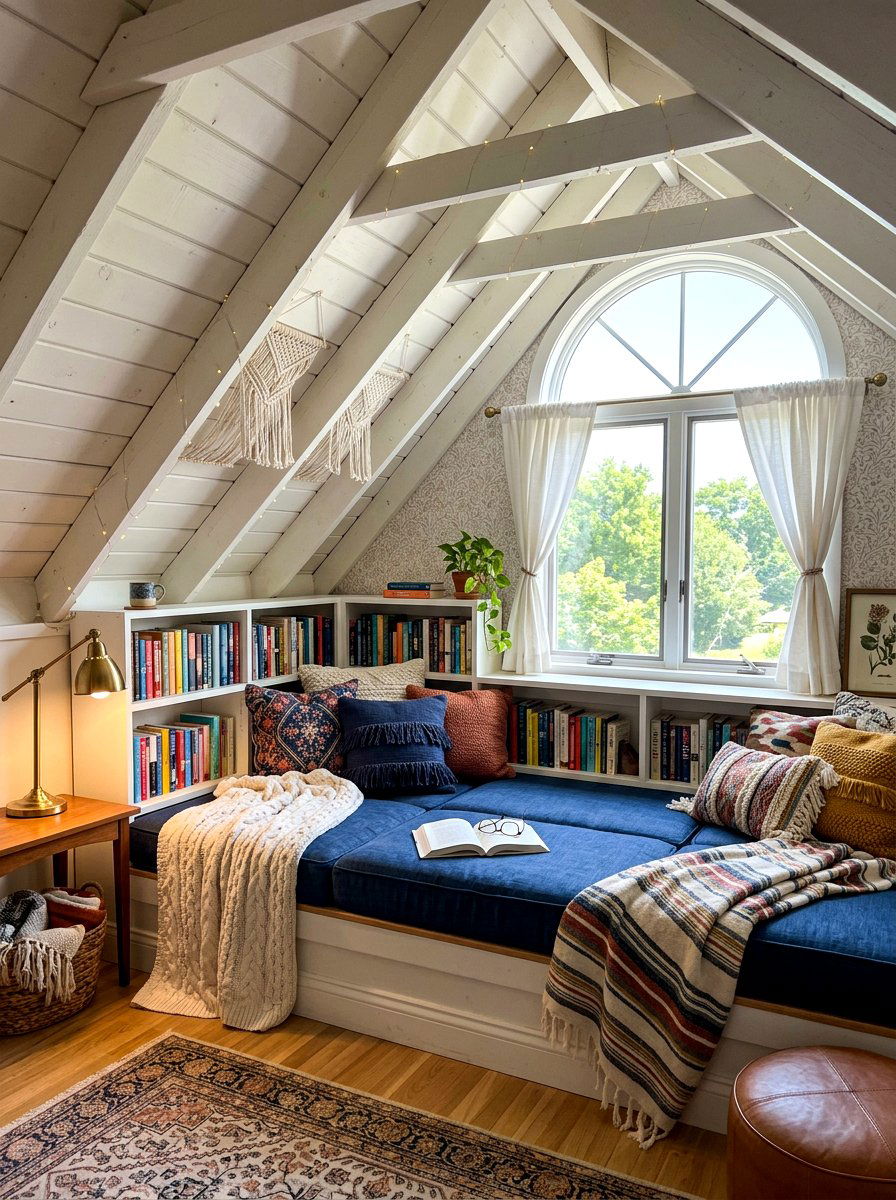
15. Playroom art corner
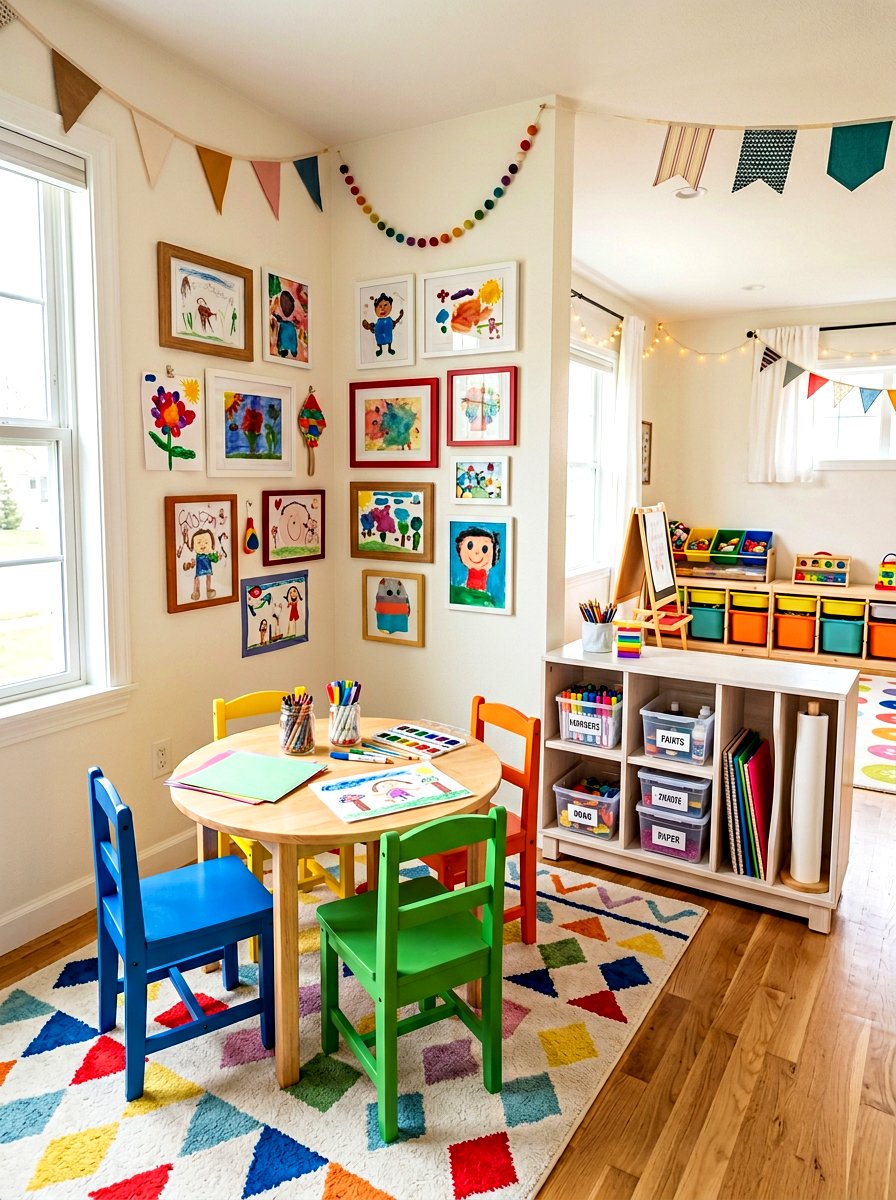
How can you integrate art into a space that is already filled with toys and games? A playroom art corner uses a specific area of a larger room to create a designated creative zone. This is usually achieved by placing a small table and a rug in one corner to visually separate it from the block or doll areas. The walls in this section can be decorated with art-themed decals or the children's own framed work. By keeping the art supplies in one specific spot, you contain the mess and provide a quiet place for focused work. It allows for a seamless transition between active play and creative quiet time.
16. Floating shelves for art supplies
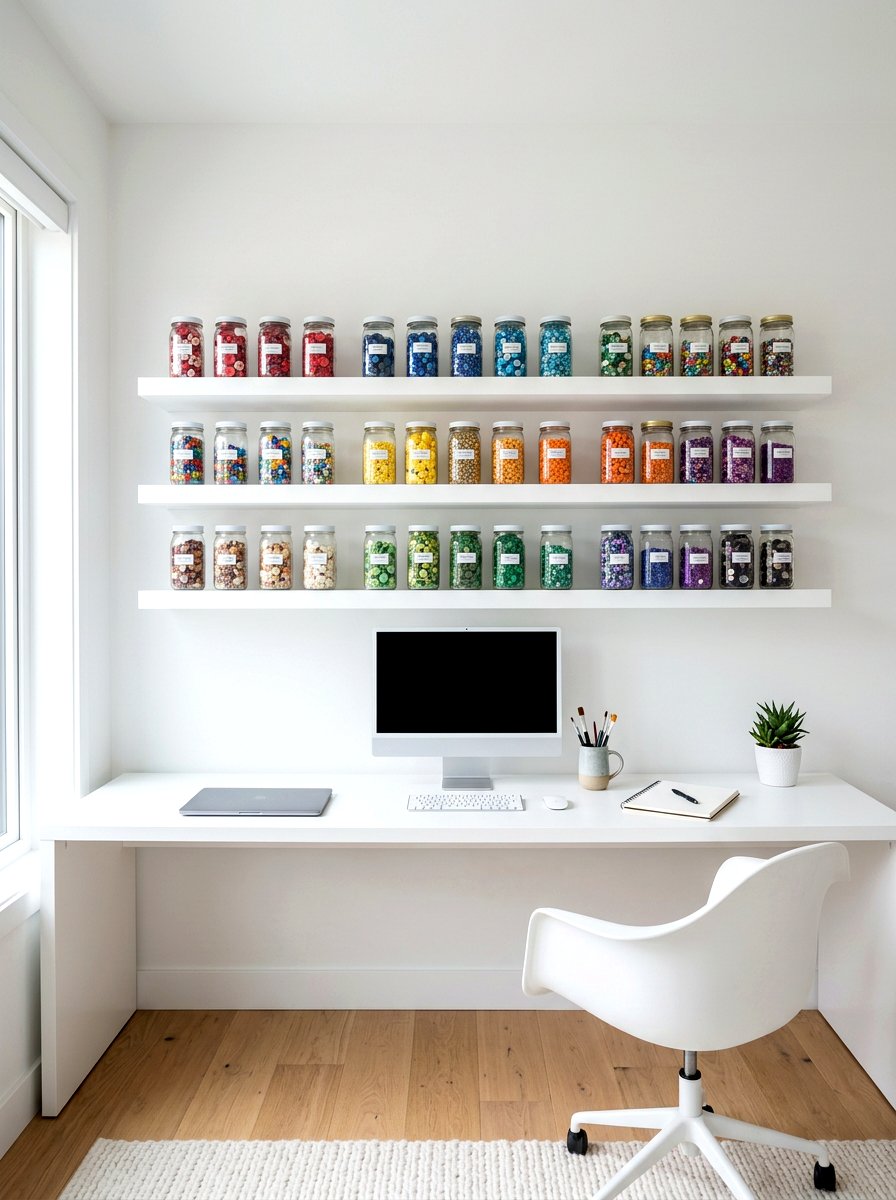
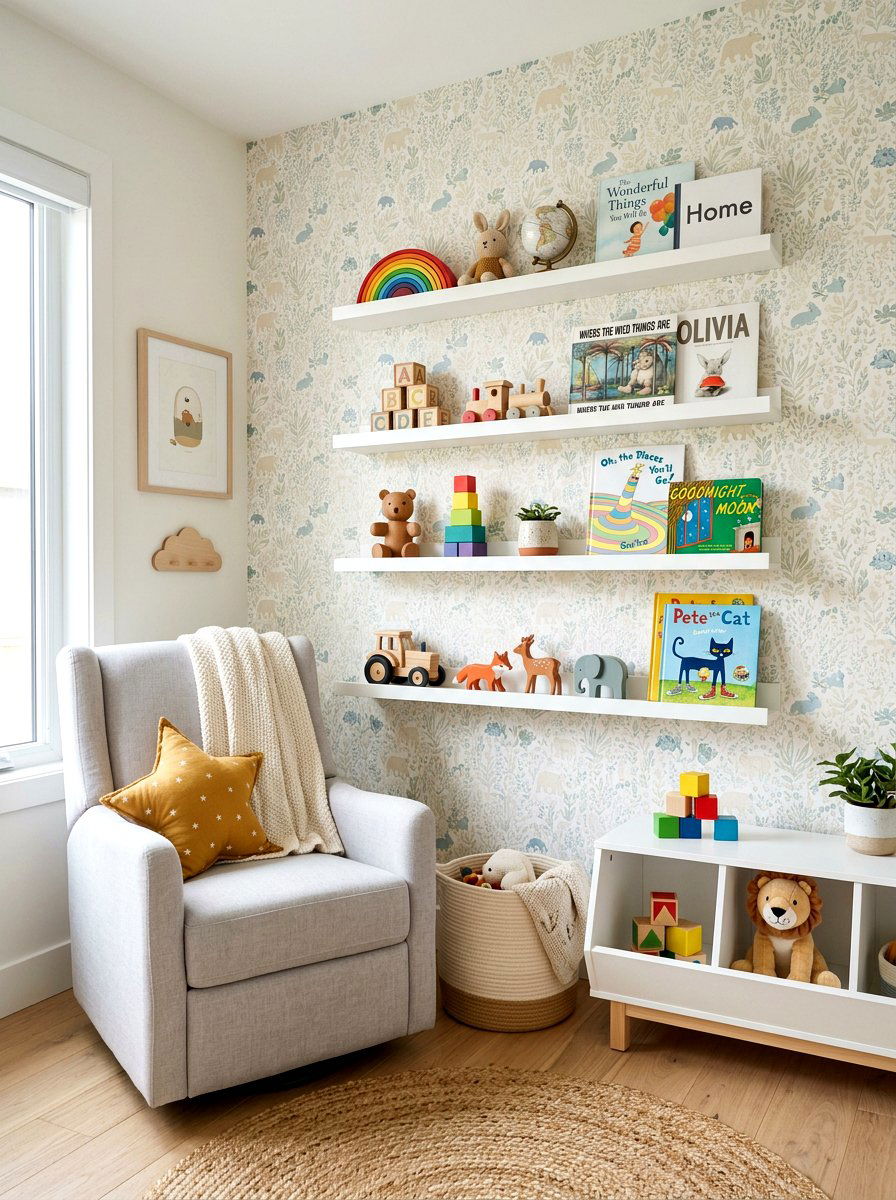
Do you want a way to keep messy paints away from curious toddlers while still looking stylish? Floating shelves for art supplies offer a vertical storage solution that keeps items off the floor and out of reach when necessary. This room design features multiple rows of sleek shelves that hold glass jars filled with colorful beads, buttons, and ribbons. The workspace below can be a simple, long desk that runs the length of the wall. This arrangement creates a sophisticated and airy feel in the room, making it feel larger than it actually is. It turns the supplies themselves into beautiful decorative elements that inspire new projects every day.
17. Magnetic wall board
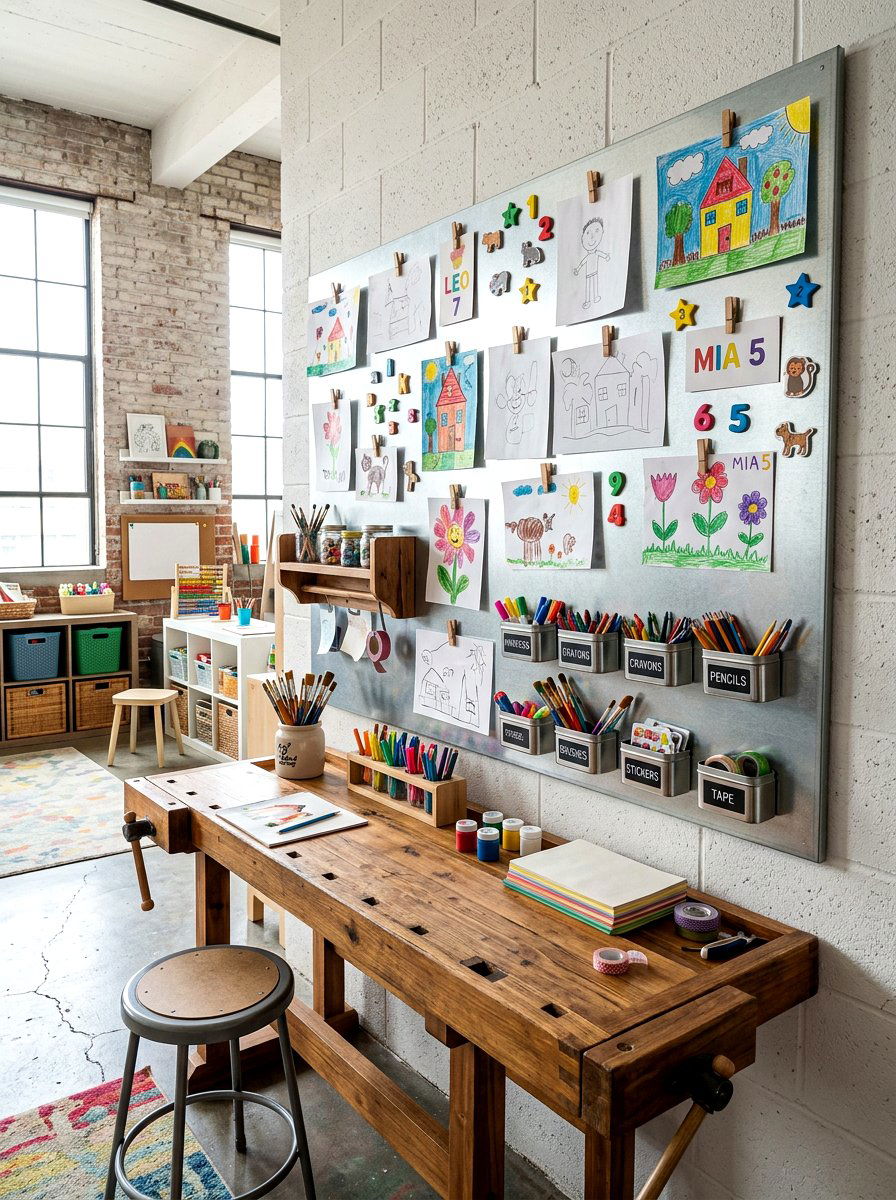
What if you could display art, organize metal tins, and play with magnetic letters all on the same surface? A magnetic wall board made of galvanized steel or magnetic paint adds a multi-functional layer to any craft room. The room should feature a mix of textures, such as soft rugs and smooth metal surfaces, to create a modern aesthetic. Small magnetic containers can be used to hold paperclips, pins, and other small metallic items. This setup allows children to easily pin up their latest sketches without the need for tape or tacks. It creates a dynamic wall that changes every day based on the child's current interests and projects.
18. Rainbow color coded craft room
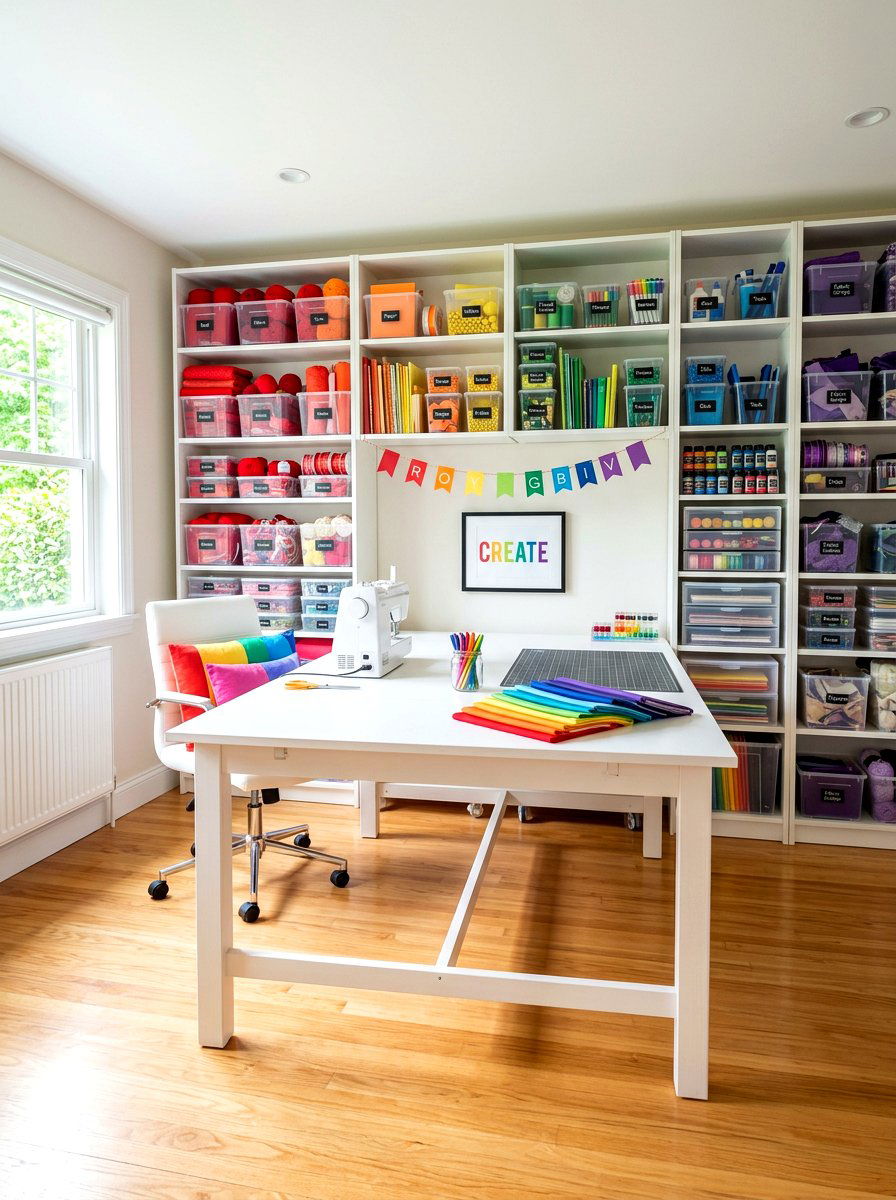
Is there anything more visually satisfying than a room where every single item is organized by the colors of the rainbow? A rainbow color coded craft room uses clear bins and open shelves to display markers, paper, and yarn in a strict spectral order. The walls of the room should be kept neutral, such as a crisp white, to allow the vibrant colors of the supplies to pop. This design not only looks incredible on camera but also helps children learn color theory and organizational skills. It creates a cheerful and energetic environment that makes the simple act of choosing a crayon feel like a special and inspiring event.
19. Fold down wall desk
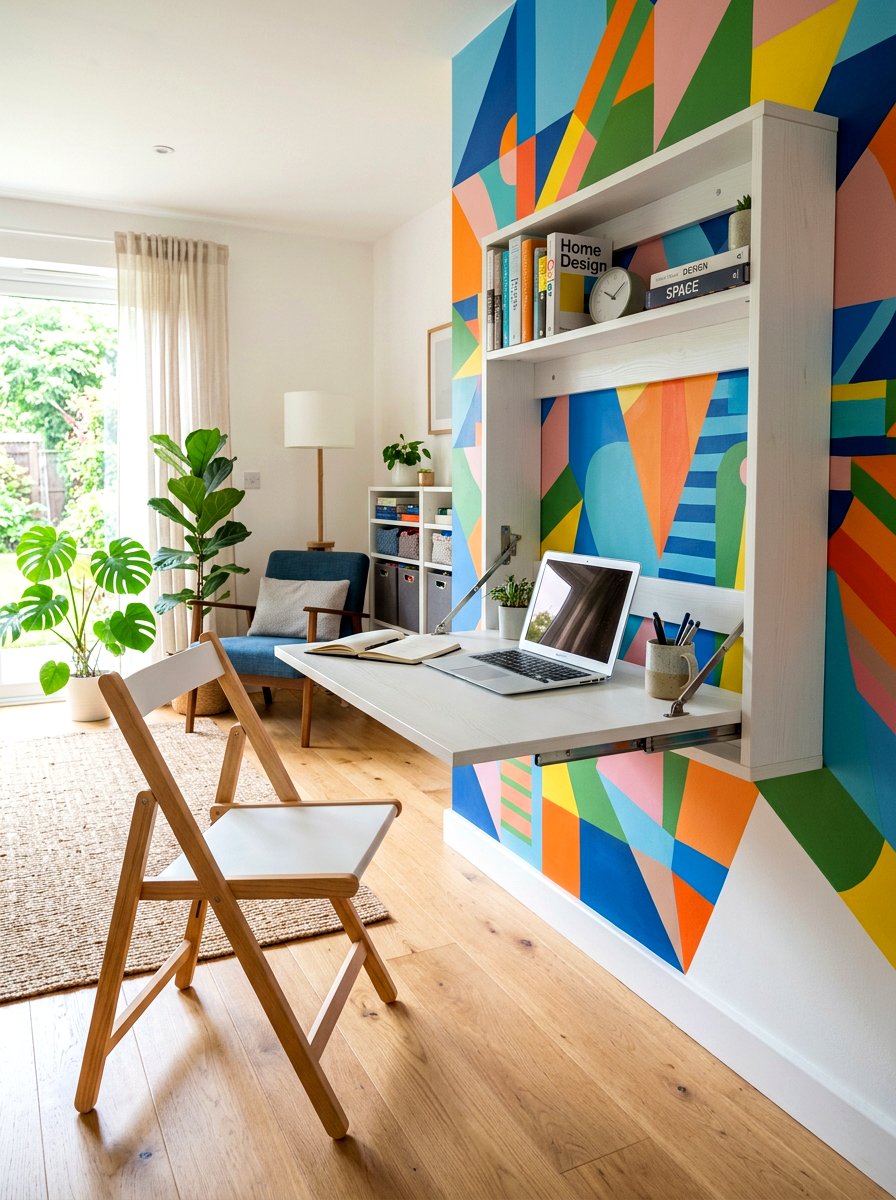
How do you provide a large workspace in a room that also needs to function as a guest bedroom or play area? A fold down wall desk is the ultimate space-saving solution that disappears when it is not in use. This room should have a flexible layout with lightweight furniture that can be easily moved. When the desk is folded down, it reveals a hidden storage area for paper and thin supplies. The wall behind the desk can be painted with a fun mural that is only visible when the station is open. This ingenious design allows you to have a dedicated art zone without sacrificing valuable square footage for other activities.
20. Large group craft table
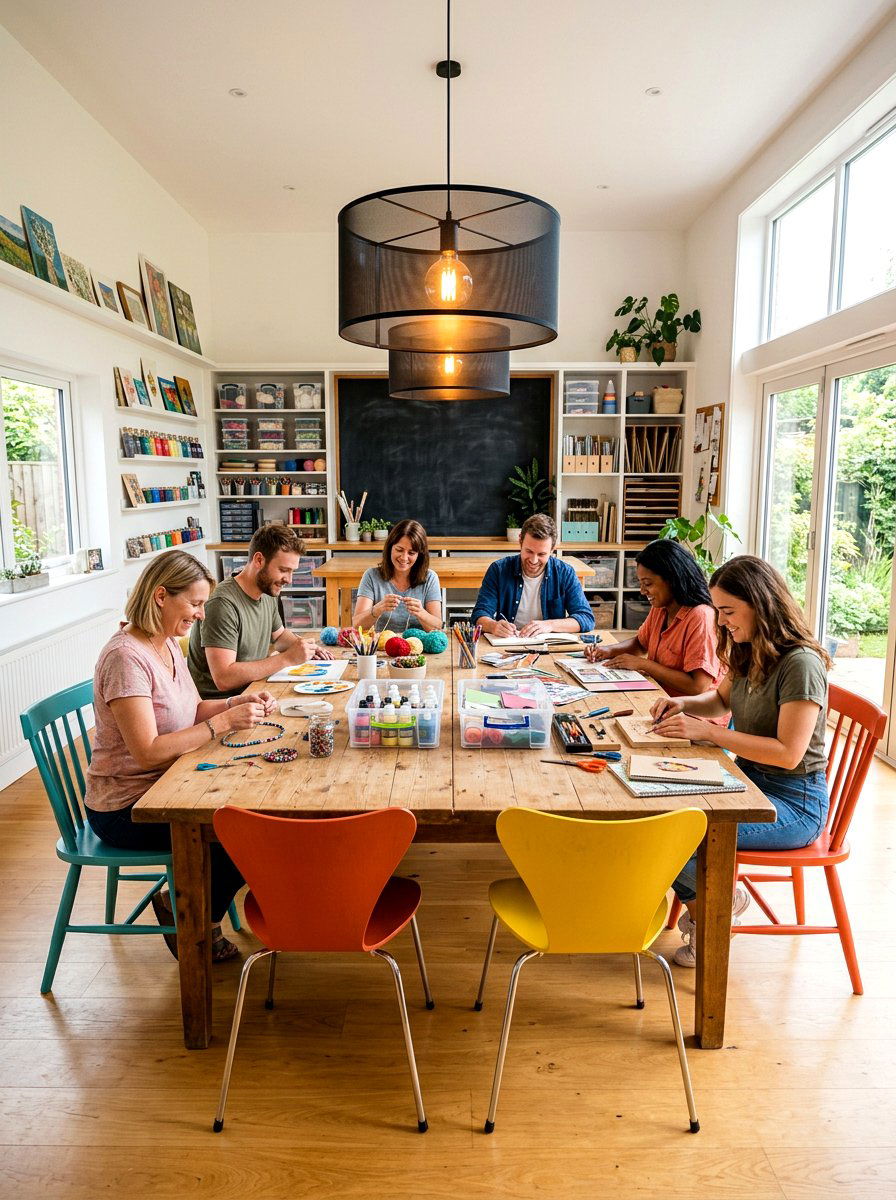
Do you frequently host playdates or have a large family that loves to create together? A large group craft table placed in the center of the room provides enough space for everyone to work comfortably. The room should be spacious with a durable floor that can handle the extra foot traffic. Using a long harvest-style table or two desks pushed together creates a communal atmosphere that encourages sharing and conversation. Above the table, a large pendant light can provide focused illumination for intricate projects. This setup is perfect for holiday crafting, birthday parties, or any time a project requires a massive amount of surface area for everyone involved.
21. Sensory play craft station
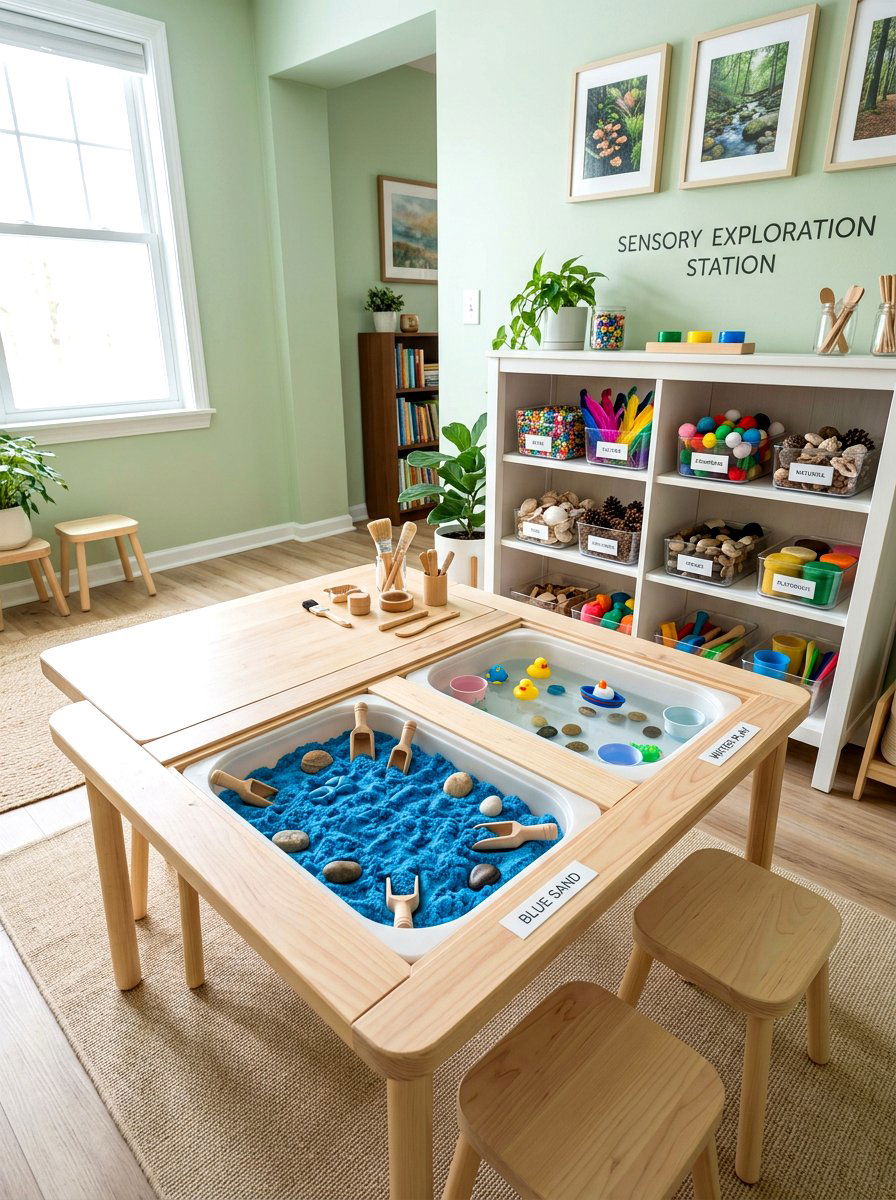
How can you engage multiple senses while your child explores their artistic side? A sensory play craft station features a specialized table with recessed bins for sand, water, or slime. The room should have a relaxed, spa-like feel with soft colors and perhaps some nature-inspired decor. Surrounding the sensory table, you can place shelves with tactile materials like textured paper, fabric scraps, and scented markers. This design focuses on the process of creation rather than the final product, allowing children to explore how different materials feel and react. It is an excellent environment for developing fine motor skills and encouraging deep focus through therapeutic and repetitive play.
22. Nature inspired art room
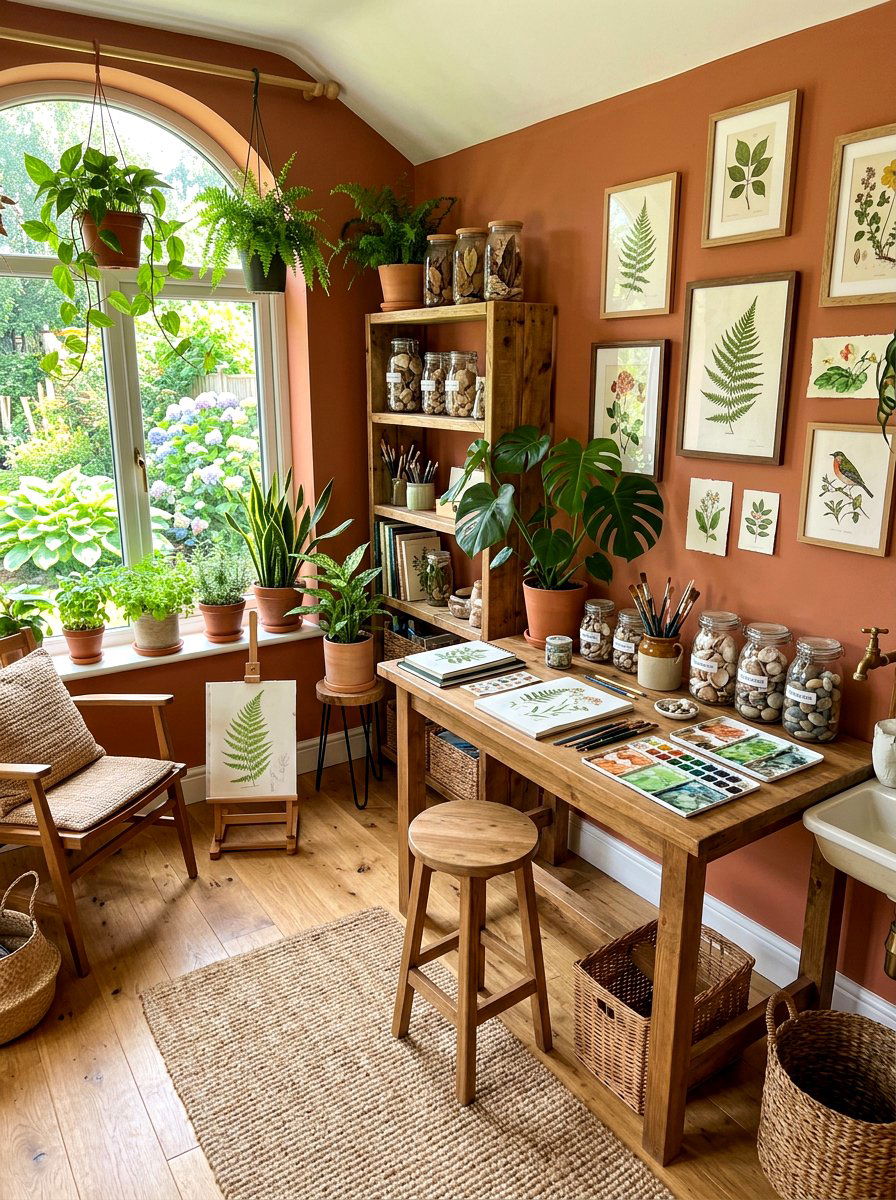
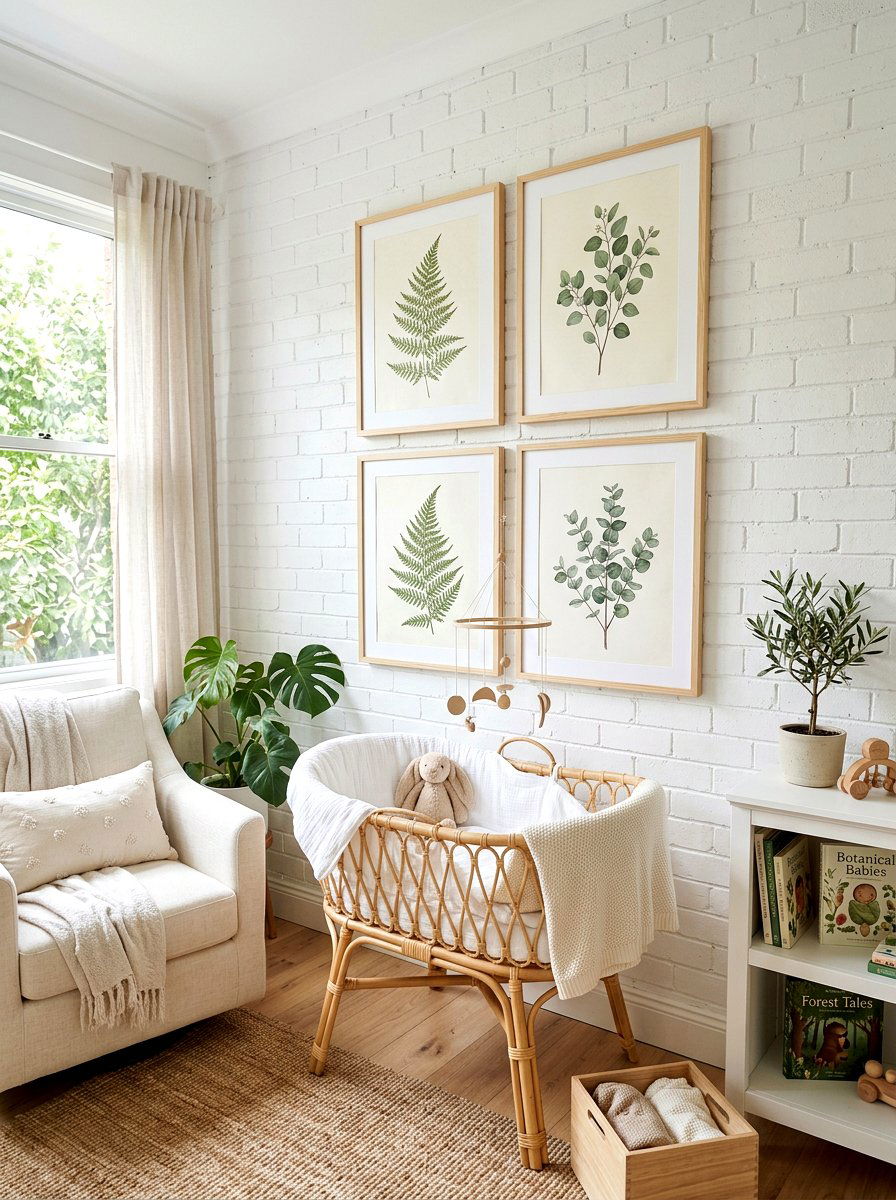
Is there any better inspiration for a young artist than the beauty of the natural world? A nature inspired art room uses earthy tones, botanical prints, and natural materials like wicker and wood. The workspace should be positioned near a window or include plenty of indoor plants to bring the outdoors in. Display jars filled with shells, pinecones, and stones can be used as both decor and art materials. The flooring might be a soft jute rug that adds a tactile element to the room. This serene environment encourages children to slow down and observe the details of the world around them, translating their findings into beautiful organic art.
23. Minimalist white craft room
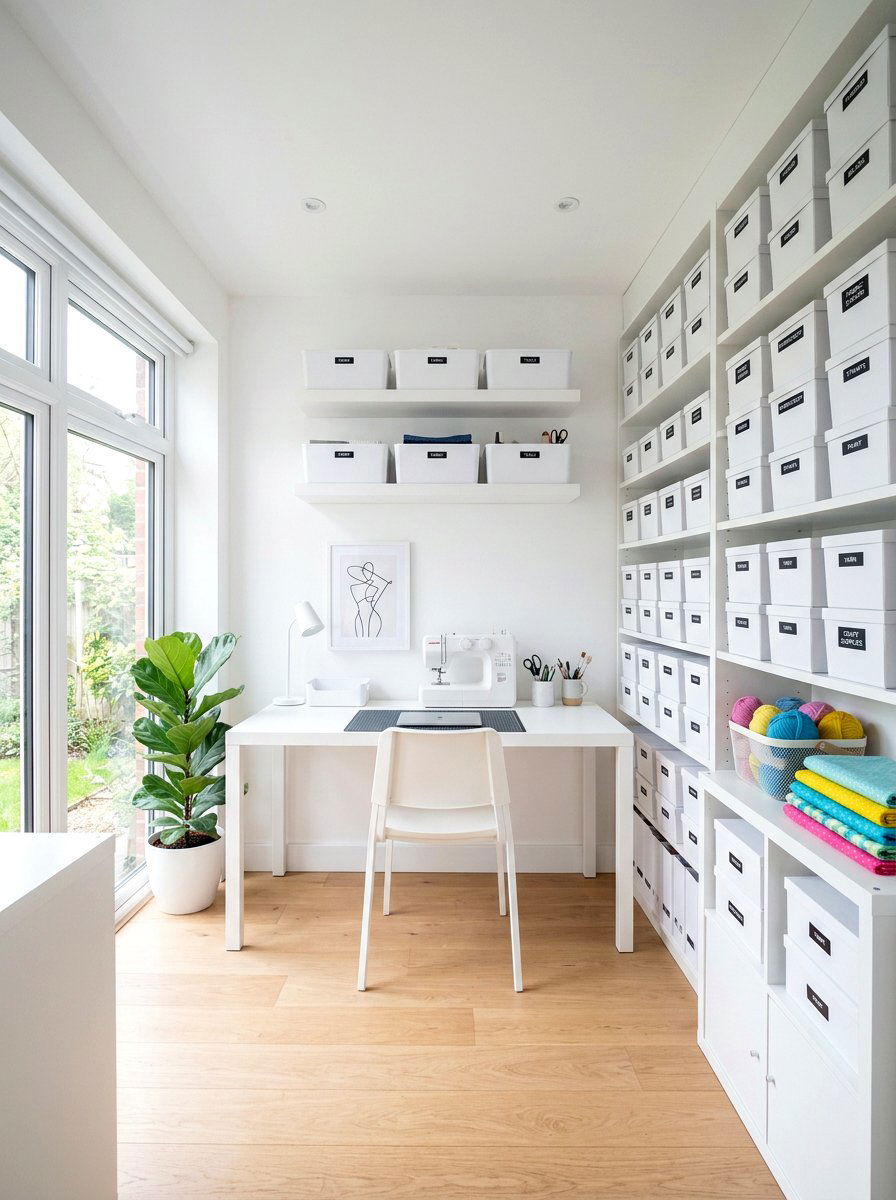
Can a room that is meant for messy art actually stay looking clean and sophisticated? A minimalist white craft room uses all-white furniture, walls, and storage to create a blank canvas for creativity. The only color in the room comes from the art supplies themselves, which are neatly stored in matching white bins. This design helps to reduce visual overstimulation, allowing the child to focus entirely on their current project. Easy-to-wipe surfaces and high-gloss finishes are essential to ensure the room remains pristine. This modern approach is perfect for older children or those who prefer a quiet, orderly environment for their more detailed and intricate artistic endeavors.
24. Industrial style art studio
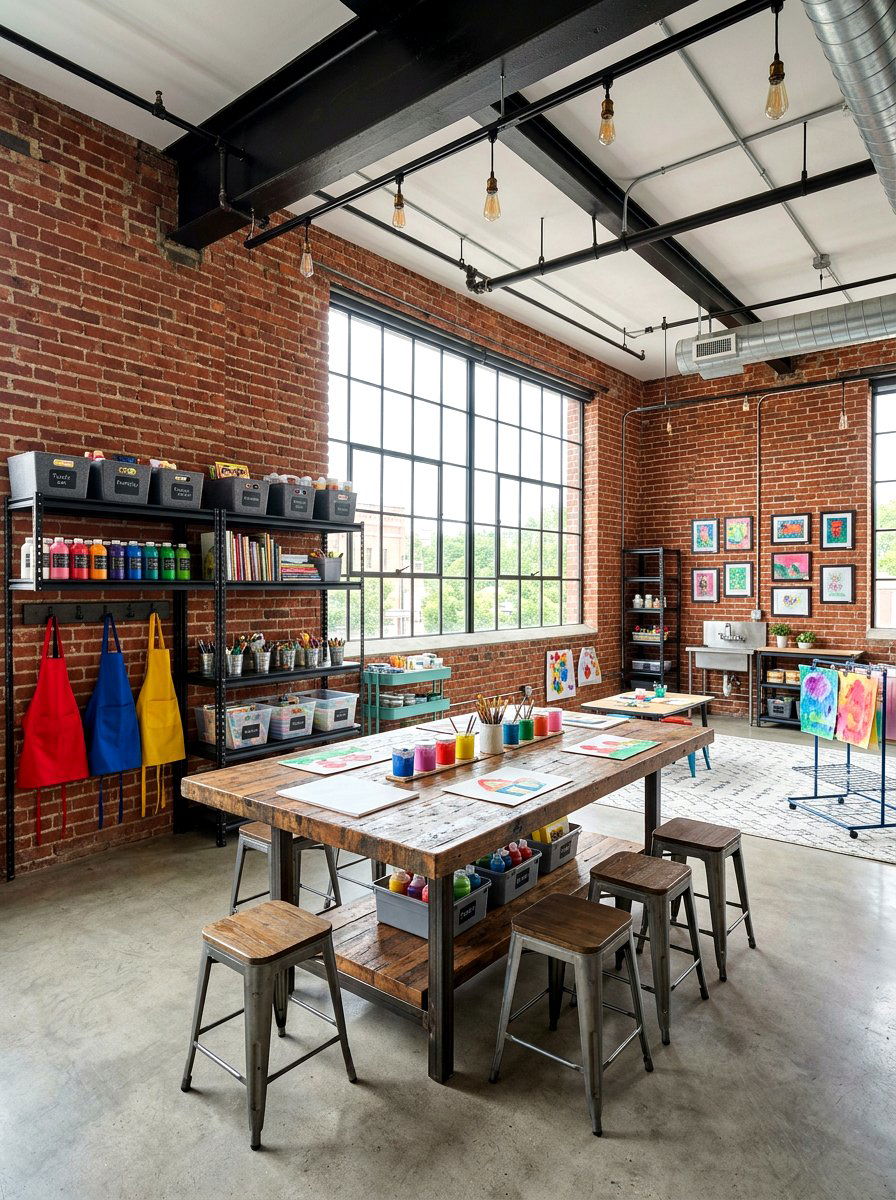
What if you wanted a room that felt like a professional artist’s workshop in a big city? An industrial style art studio features exposed brick, metal shelving, and heavy-duty wooden workbenches. The lighting should be bright and functional, often using oversized metal pendant lamps or track lighting. This design is incredibly durable, making it ideal for older kids who are working with more advanced tools like woodburning kits or heavy clay. The room should have a "lived-in" feel where a few paint splatters on the floor actually add to the overall aesthetic. It is a cool, edgy space that makes every young creator feel like a serious and professional artist.
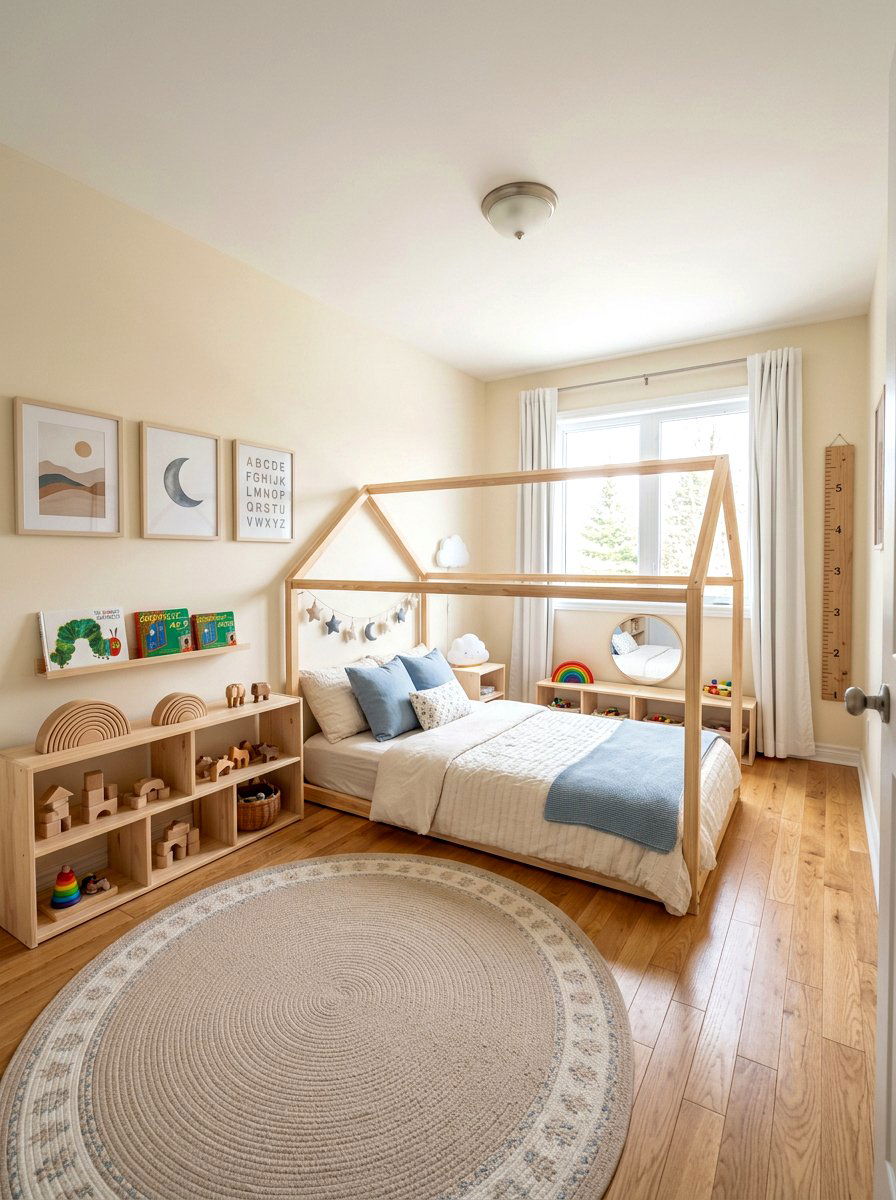
25. Attic craft room nook
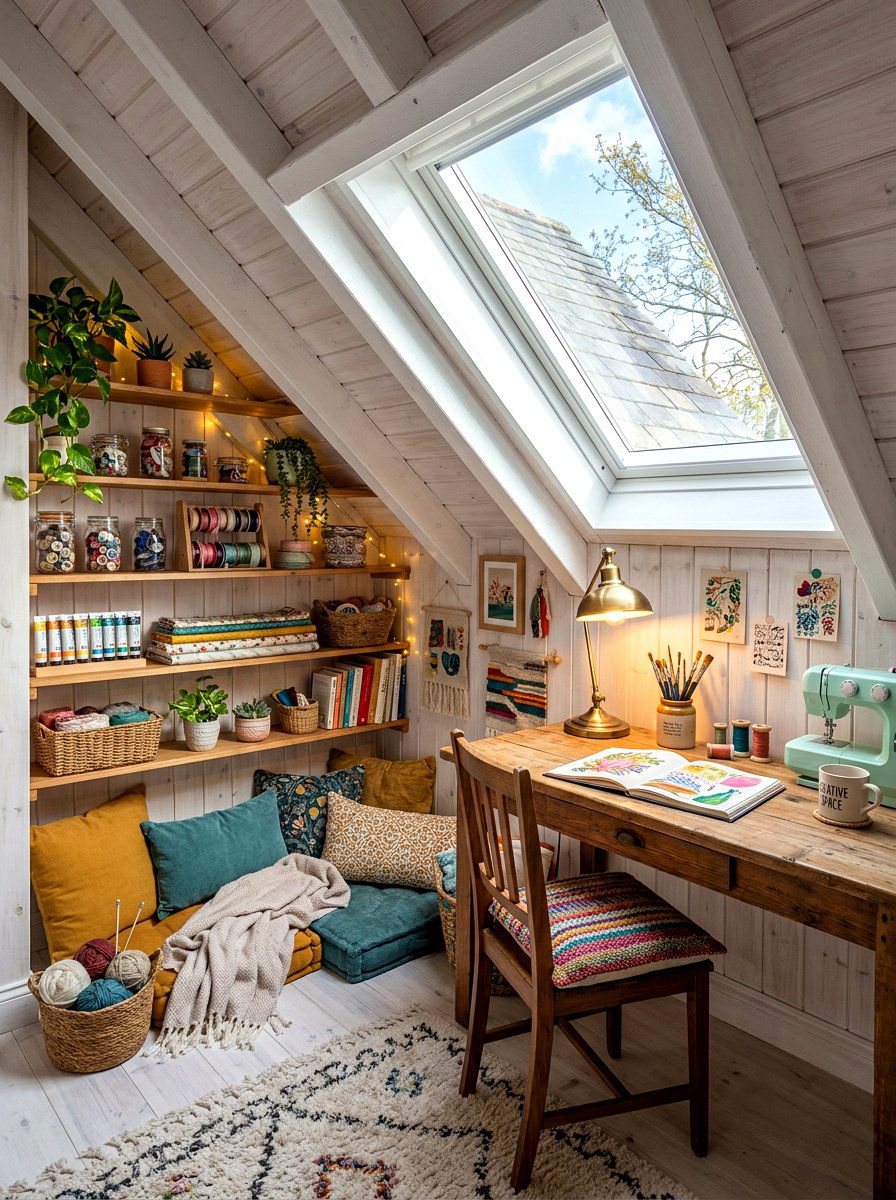
Is there a more magical place for a secret creative hideaway than at the very top of the house? An attic craft room nook takes advantage of the unique sloped ceilings and cozy corners found in upper-level spaces. The room should use bright white paint to counteract the lack of windows and make the space feel larger. Custom-built shelving can be tucked into the eaves to hold an impressive collection of supplies. A soft rug and a few floor cushions make the space feel inviting and private. This secluded environment is perfect for children who want to escape from the noise of the rest of the house to focus on their art.
26. Bright geometric mural room
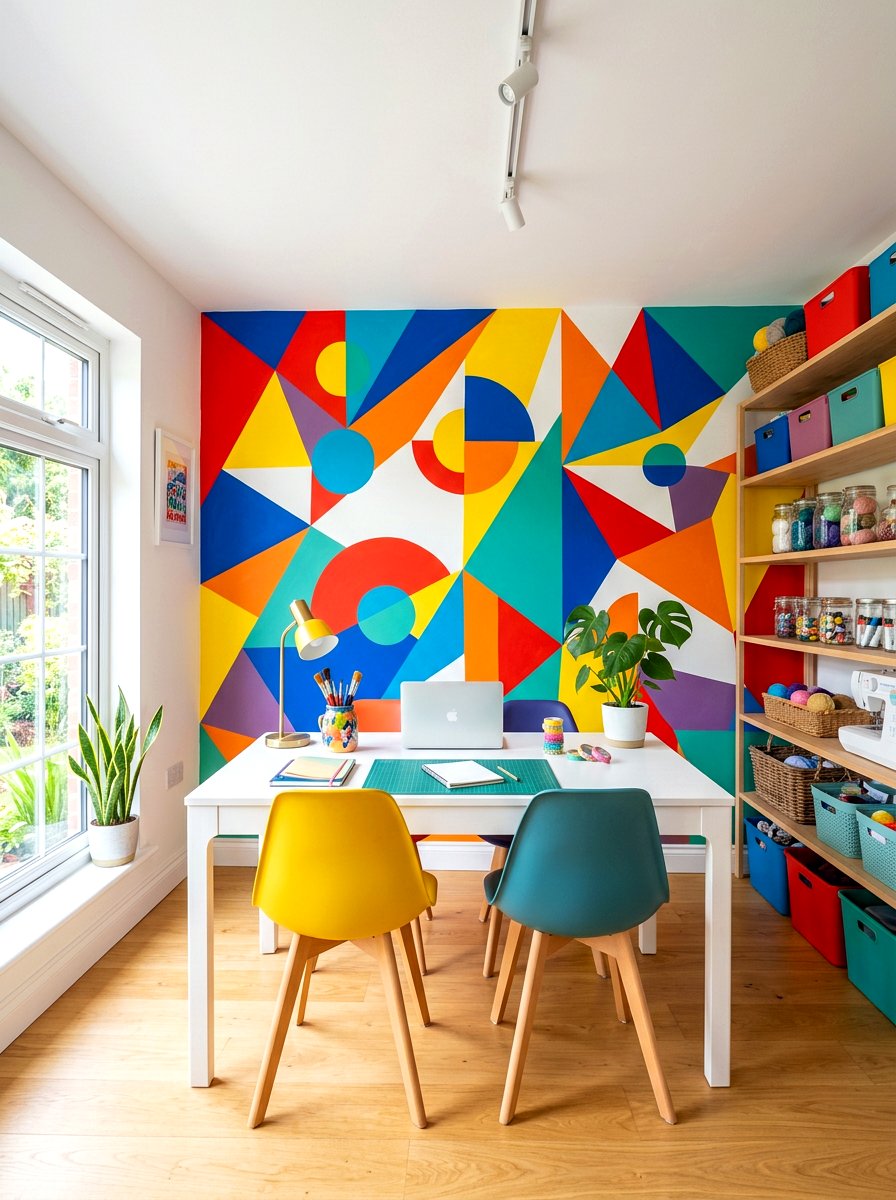
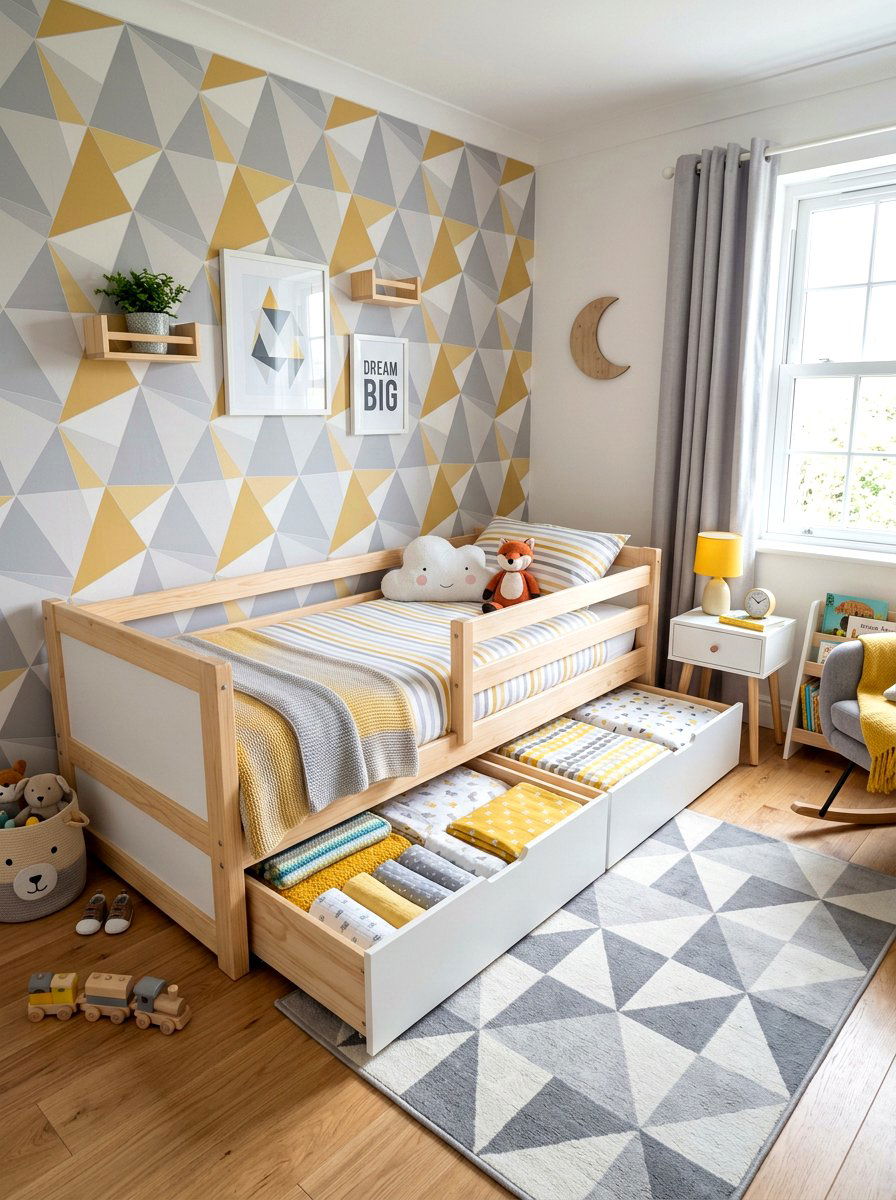
How can the walls of a room inspire bold and modern creative thinking in a child? A bright geometric mural room features a hand-painted wall with sharp triangles, circles, and squares in contrasting colors. This energetic backdrop sets a playful tone for the entire creative space. The furniture should be simple and modern to avoid competing with the busy wall pattern. Using furniture in primary colors that match the mural creates a cohesive and well-designed look. This room feels like a piece of pop art itself, encouraging children to experiment with shapes and bold color combinations in their own drawings and paintings.
27. Patterned wallpaper craft space
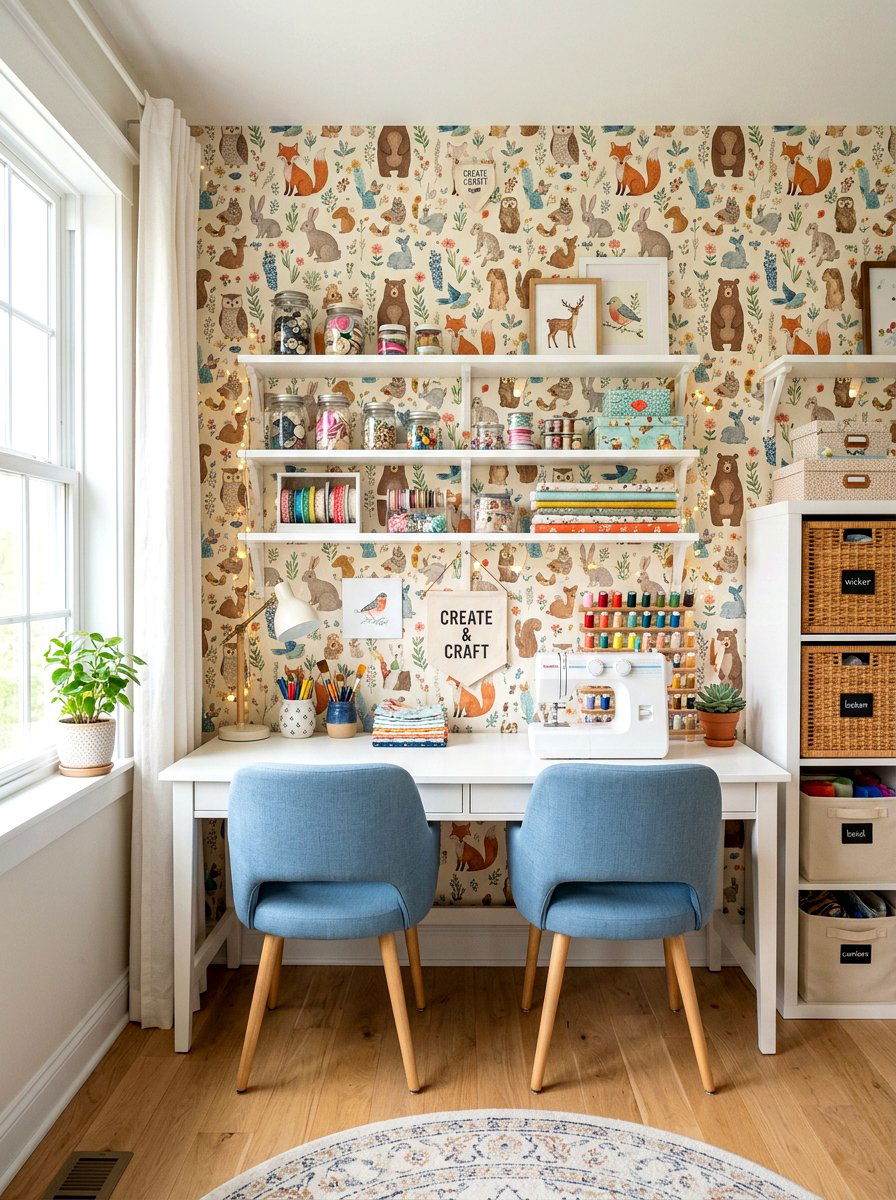
Can you use a specific theme to tie an entire creative room together? A patterned wallpaper craft space uses a bold print, such as whimsical animals or vintage maps, to define the room’s character. The room should be styled around the theme of the wallpaper, with matching storage bins and chair cushions. This approach creates a very "boutique" feel that is both charming and inspiring. To prevent the pattern from being overwhelming, keep the work surfaces and floor neutral. It is a great way to make a craft room feel like a fully integrated part of the home's interior design while still being a fun space for kids.
28. Clear acrylic supply bins
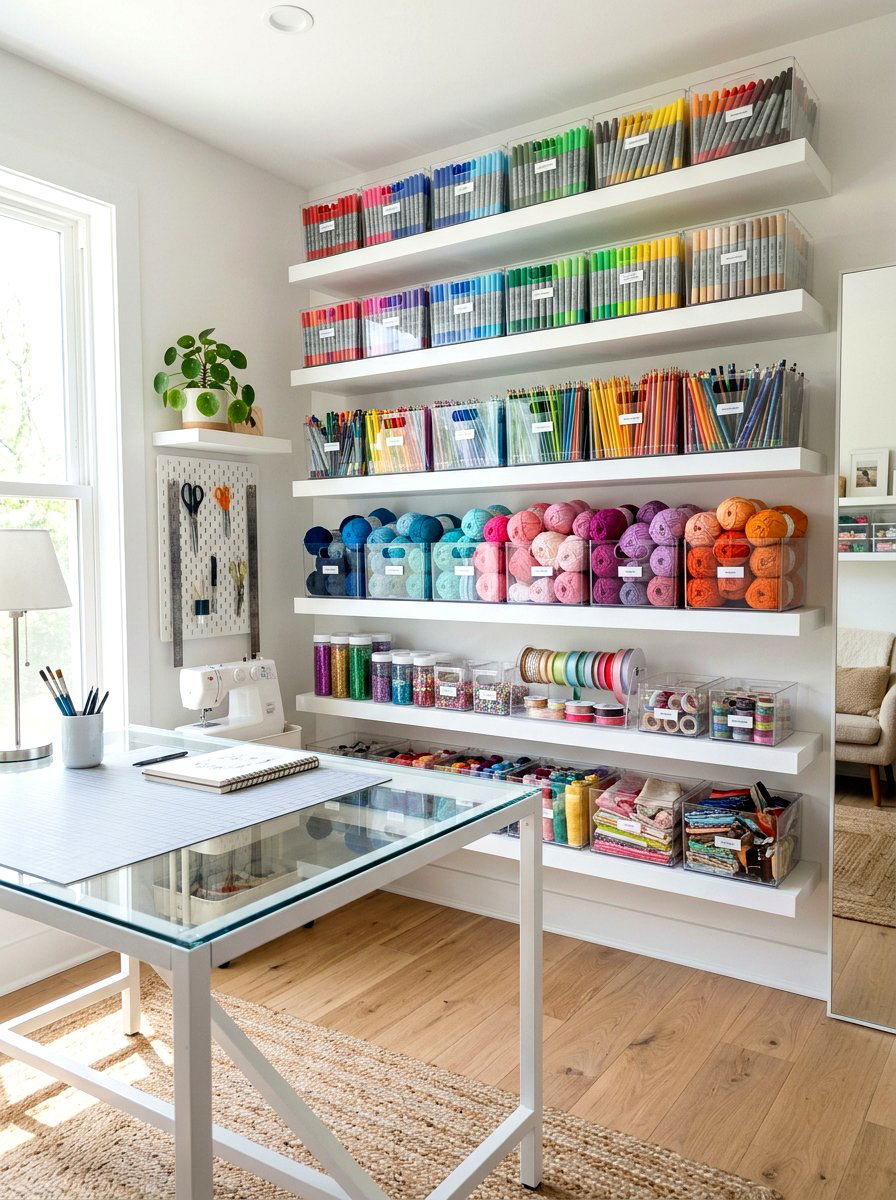
Do you love the look of a space where everything is visible and organized at the same time? Using clear acrylic supply bins allows the colors of the markers and paints to shine through, acting as their own decoration. The room should feature open shelving where these bins can be stacked neatly in rows. This transparency helps children see exactly what they have, which can often spark new ideas for projects. The surrounding room should be bright and airy, perhaps with glass-top tables to continue the transparent theme. It is a highly functional and modern look that makes the room feel incredibly organized and professional.
29. Washable flooring for crafts
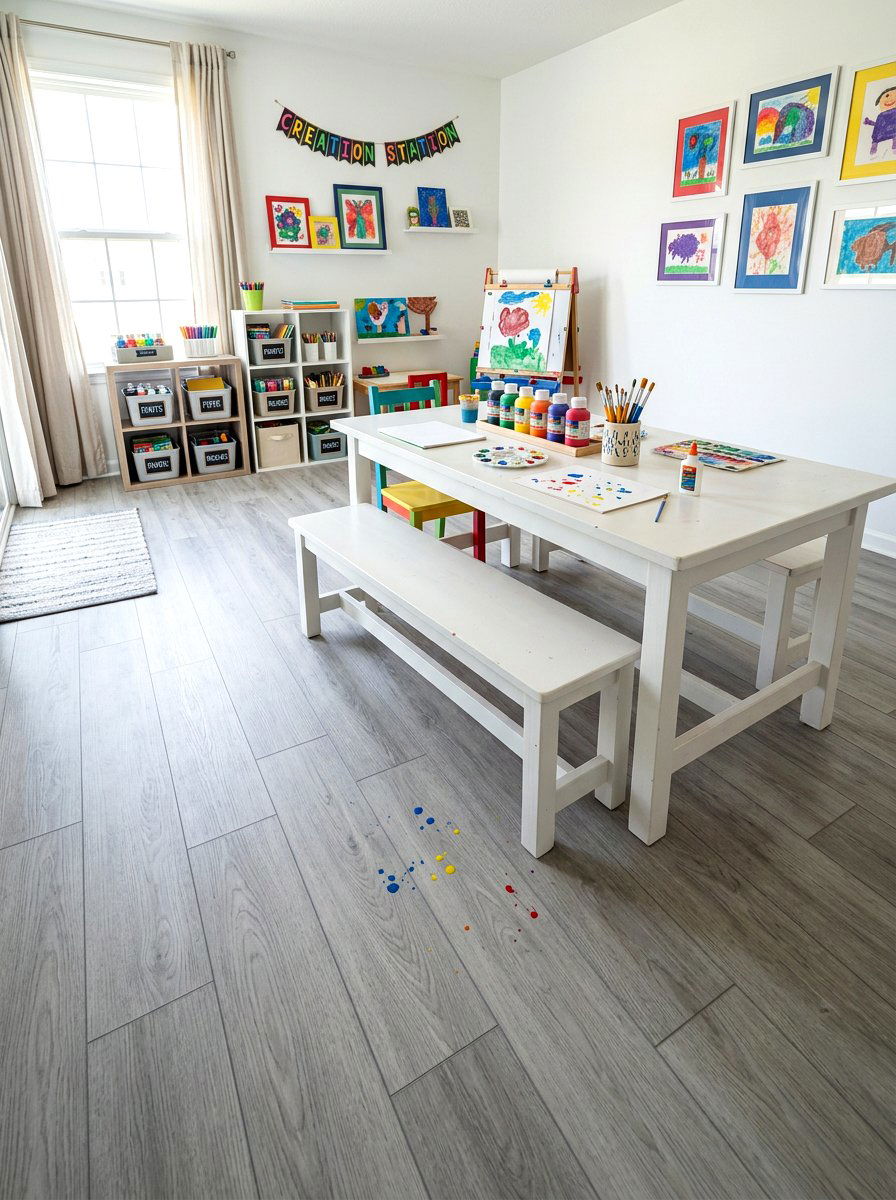
What is the secret to a stress-free craft room where you never have to worry about a spilled bottle of ink? Installing washable flooring for crafts, such as high-quality vinyl planks or interlocking rubber tiles, is a game-changer. The room should be designed with the floor as the foundation, choosing a color or pattern that can hide small marks between deep cleanings. This allows you to say "yes" to projects like slime-making or finger painting that might otherwise be too messy for the house. The rest of the room can be filled with durable, easy-to-clean furniture. This practical choice ensures that the room is always ready for any creative experiment your child can dream up.
30. Multi level craft workstation
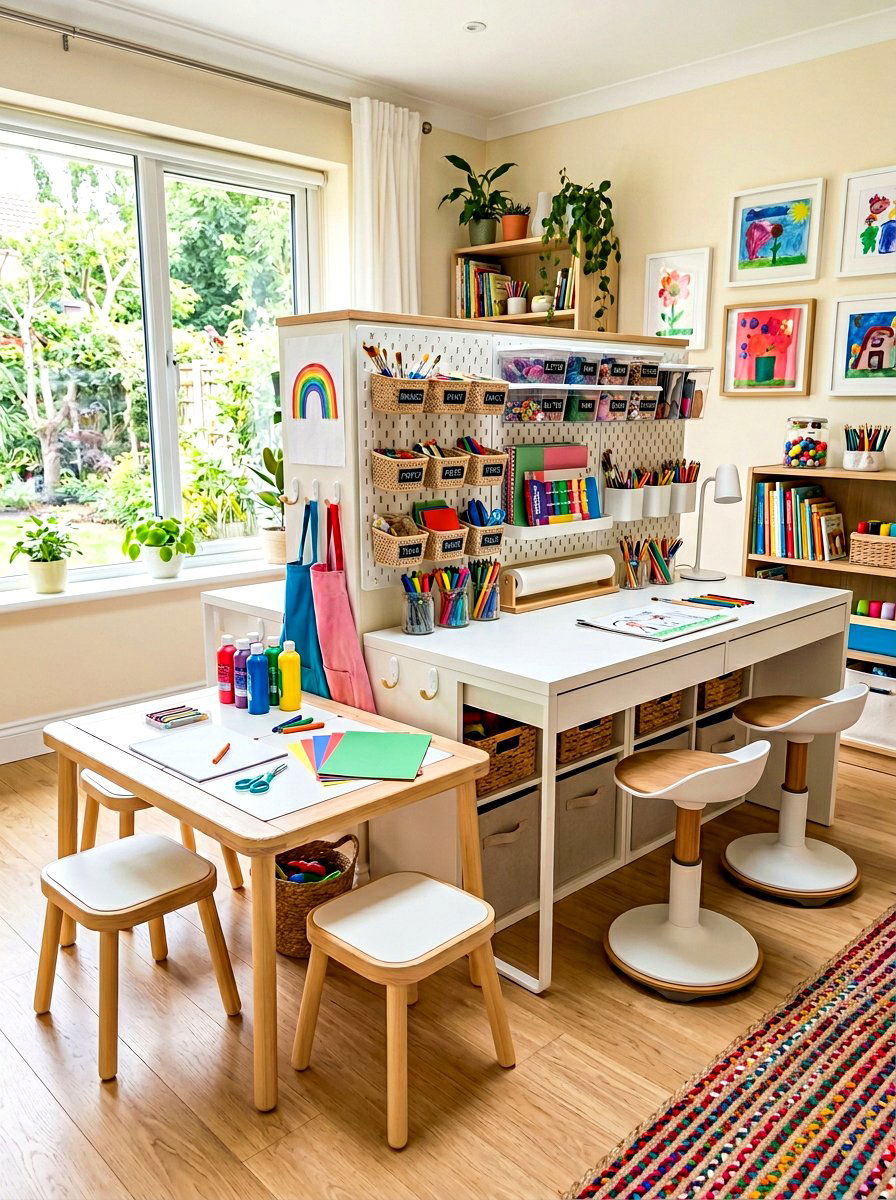
How do you accommodate children of different ages and heights in the same creative room? A multi level craft workstation features desks and chairs at various heights to ensure everyone is comfortable. The room layout should be divided into zones, with a low table for toddlers and a standard-height desk for older siblings. Using consistent colors and materials across the different levels keeps the room looking unified despite the varied furniture sizes. This design allows the whole family to work in the same space without anyone feeling like the furniture doesn't fit them. It is a thoughtful way to create a collaborative and inclusive environment for growing artists of all ages.
Conclusion:
Building a dedicated kids craft room is an investment in your child 's creative future and your home' s organizational sanity. Each of the thirty concepts shared provides a unique way to balance the inevitable mess of art with the need for a functional, beautiful space. Whether you have a tiny closet to spare or a large attic to transform, the key is to prioritize accessibility and durability. By creating an environment where supplies are organized and inspiration is everywhere, you give your children the tools they need to express themselves freely. We hope these detailed ideas help you design a vibrant studio that fosters a lifelong love for the arts.

Related posts: