Creating a functional and organized space for your children begins with finding the perfect storage solution that adapts as they grow. A well-planned kids closet system does more than just hold clothing; it fosters independence by allowing little ones to reach their own items easily. Whether you are dealing with a tiny reach-in or a spacious walk-in, the right configuration can eliminate morning stress and keep bedroom floors clear of clutter. From adjustable shelving to specialized toy bins, these systems transform chaotic corners into streamlined hubs of productivity. Discovering the best layout requires balancing accessibility with long-term durability to ensure the furniture serves your family for many years.
1. Low hanging clothes rod
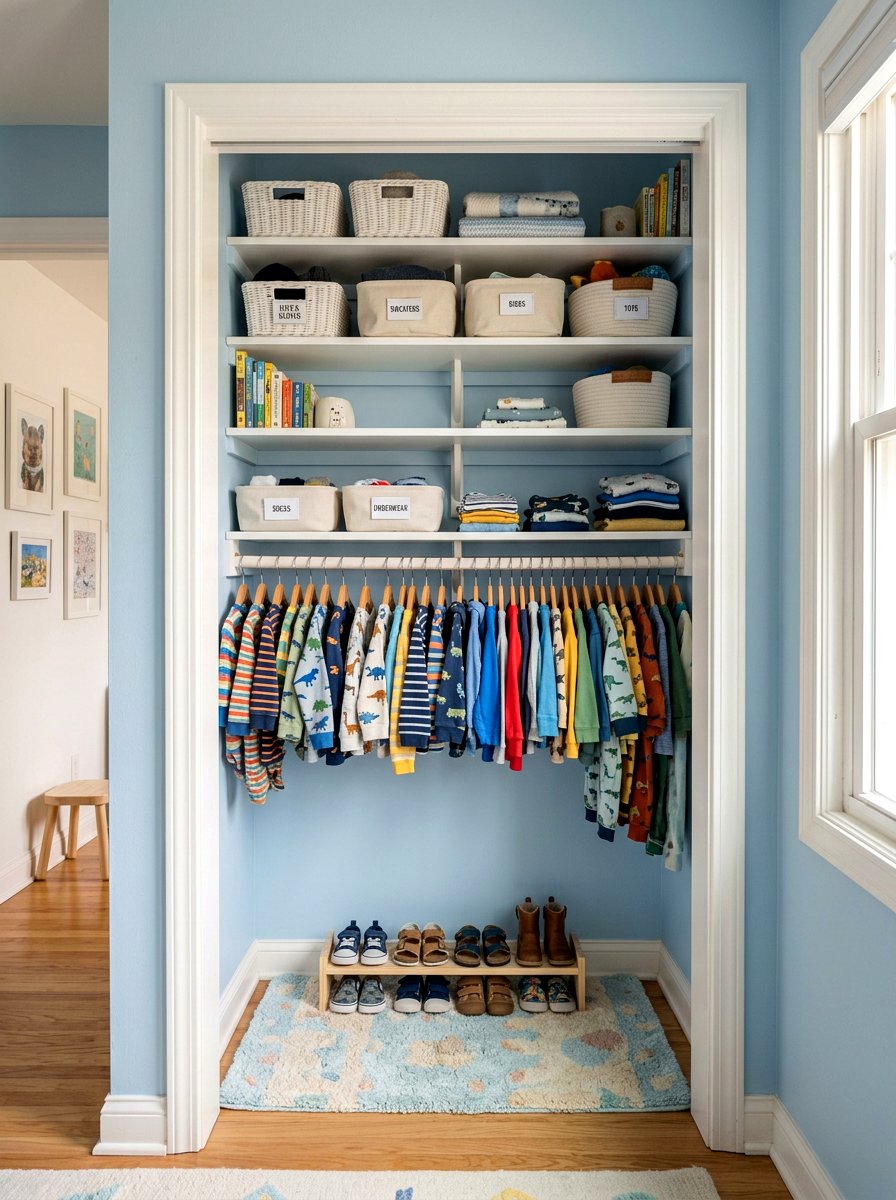
Installing a low hanging clothes rod is one of the most effective ways to encourage independence in younger children. When a rod is placed at a toddler’s eye level, they can easily select their own outfits and participate in putting clean laundry away. This setup usually involves a secondary bar positioned about thirty inches from the floor, leaving the upper space for seasonal items or adult-managed clothing. By bringing the wardrobe down to their scale, you empower them to manage their daily routine without constant assistance. It transforms the closet into a functional teaching tool that builds confidence while keeping their most-used shirts and jackets neatly organized and accessible.
2. Adjustable wire shelving
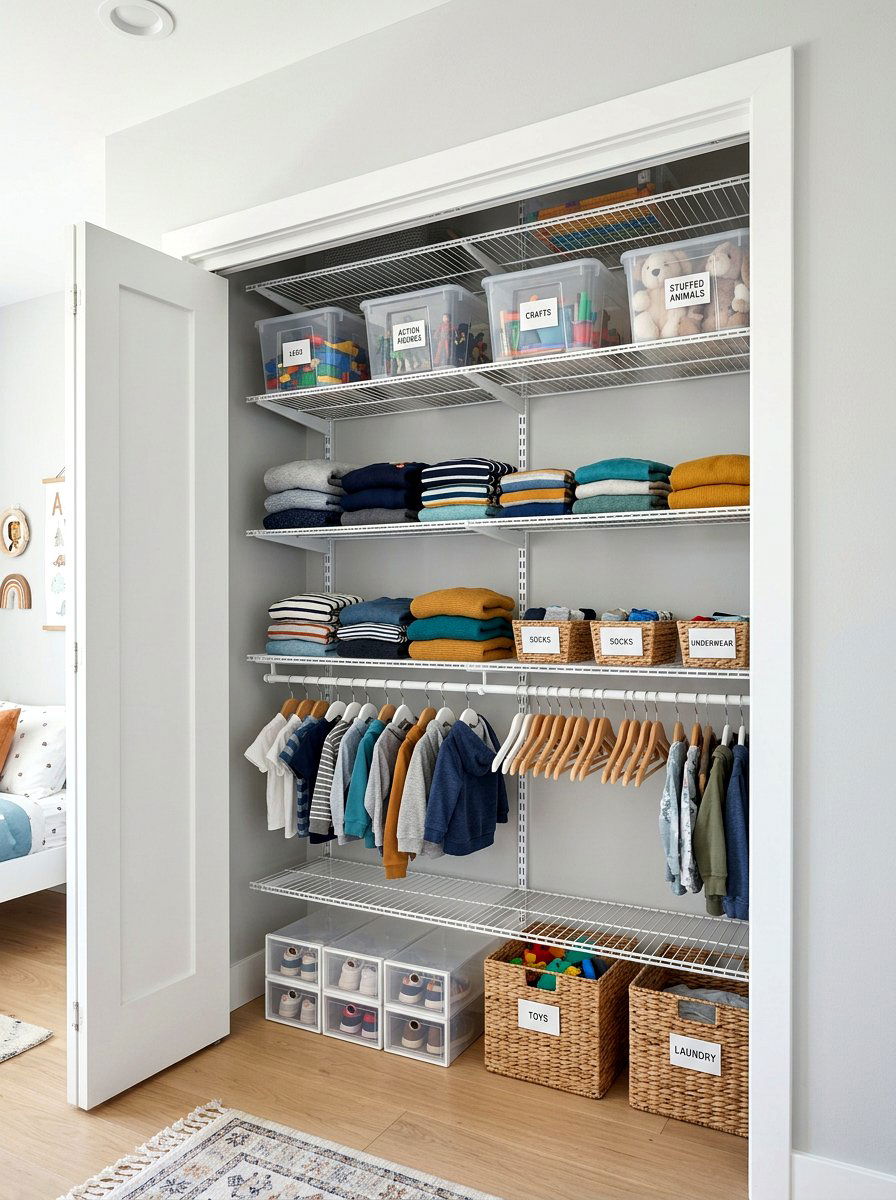
Adjustable wire shelving offers a highly versatile and cost-effective solution for a bedroom that needs to evolve over time. These systems utilize a wall-mounted track that allows you to move individual shelves up or down whenever your storage requirements change. The open-grid design of the wire promotes excellent airflow, which is essential for keeping fabrics fresh and preventing dust buildup in enclosed spaces. Because the brackets are easy to reposition, you can create taller gaps for bulky sweaters or narrower slots for small shoe boxes. This adaptability makes it an ideal choice for growing families who want a durable, long-lasting organization method that remains functional.
3. Built in dresser drawers
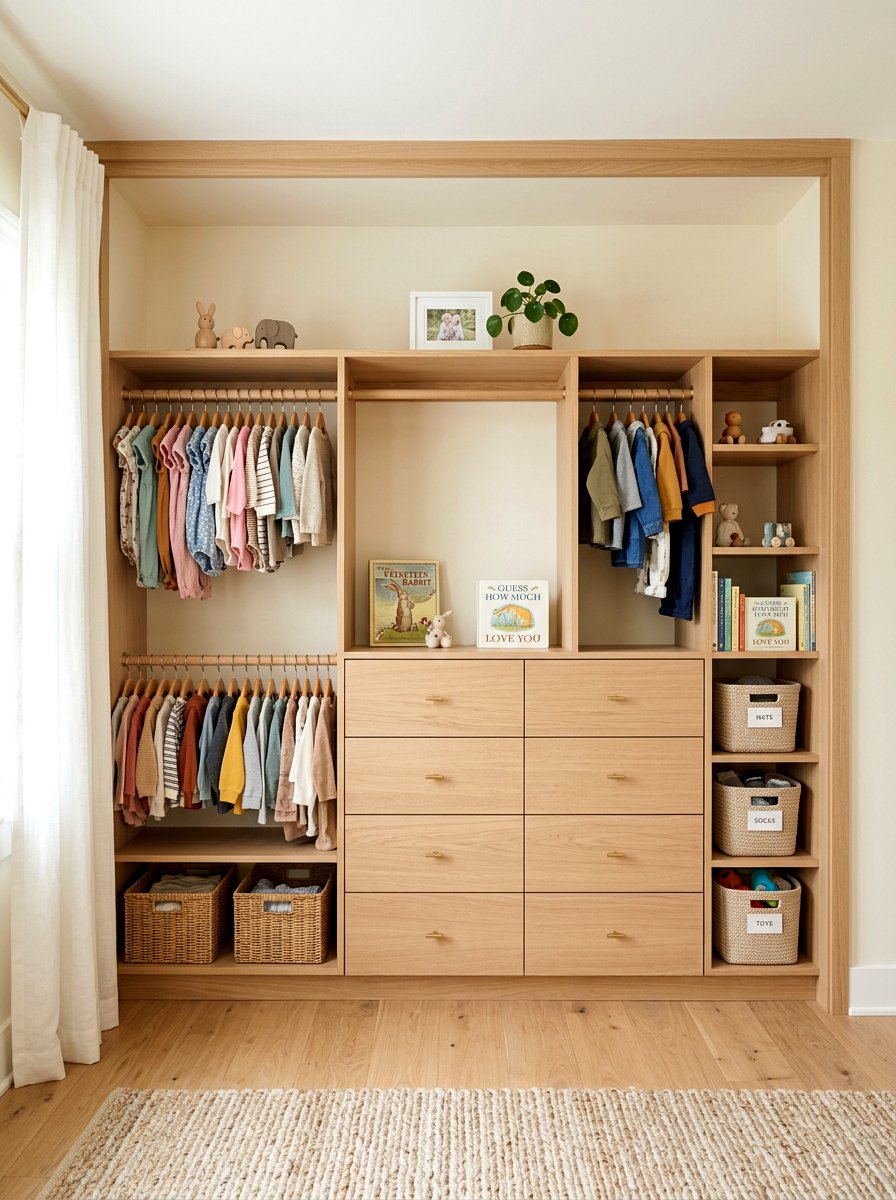
Integrating built in dresser drawers directly into a closet system is a brilliant way to save valuable floor space in a small bedroom. By moving the heavy furniture inside the storage area, you create more room for play and activities while maintaining a sleek, uncluttered aesthetic. These drawers provide a permanent home for folded items like pajamas, socks, and underwear, keeping them tucked away and out of sight. High-quality built-in units often feature soft-close glides to protect small fingers and ensure quiet operation during nap times. This design choice anchors the entire closet, providing a sturdy foundation that combines hanging space with essential drawer storage effortlessly.
4. Cubby storage bins
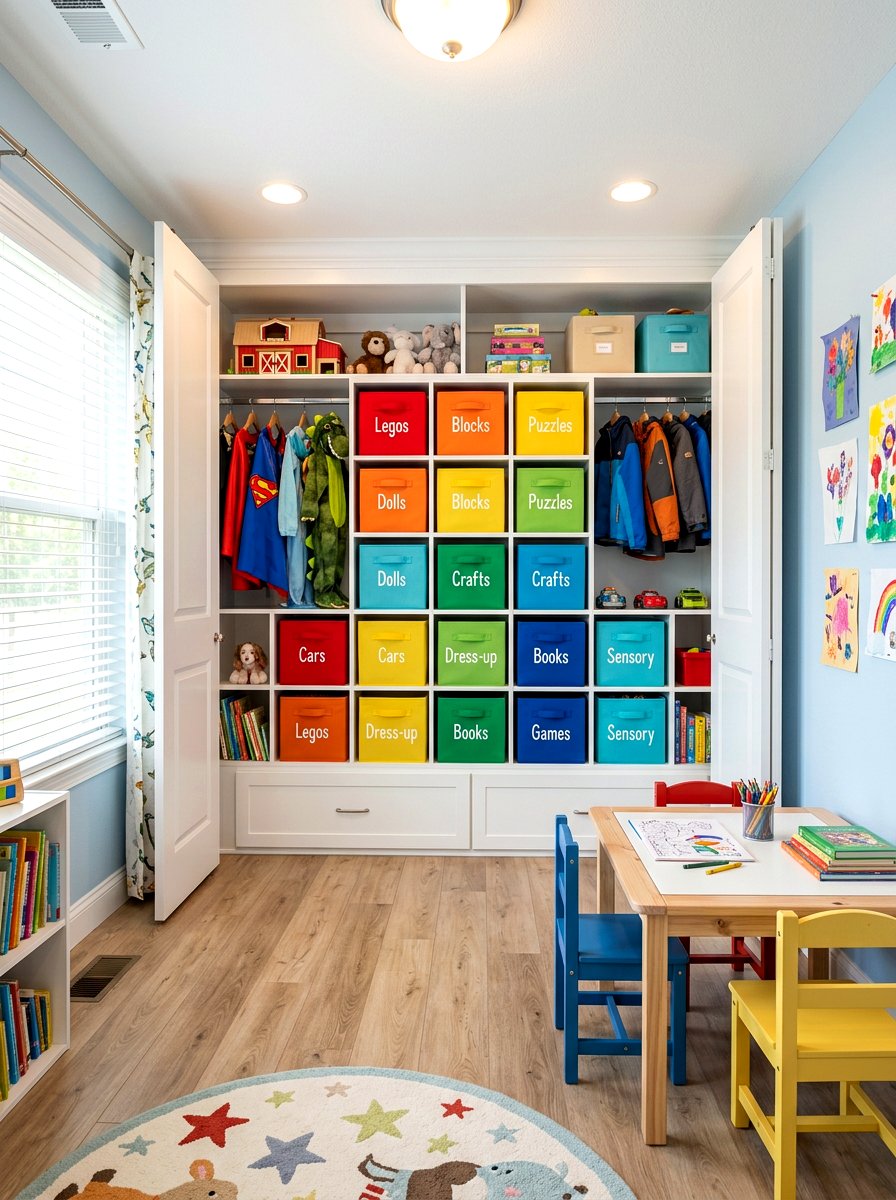
Utilizing cubby storage bins is a fantastic method for managing the diverse range of items found in a typical child's room. These square compartments provide a dedicated home for everything from building blocks and stuffed animals to folded sweatshirts and sports equipment. When paired with colorful or labeled fabric cubes, the entire closet takes on a tidy and cohesive appearance that hides visual clutter. Cubbies are especially helpful for younger children who might struggle with traditional hangers, as they can simply toss their belongings into the correct bin. This system simplifies the cleanup process, making it much easier for kids to maintain an organized environment on their own.
5. Nursery reach in closet
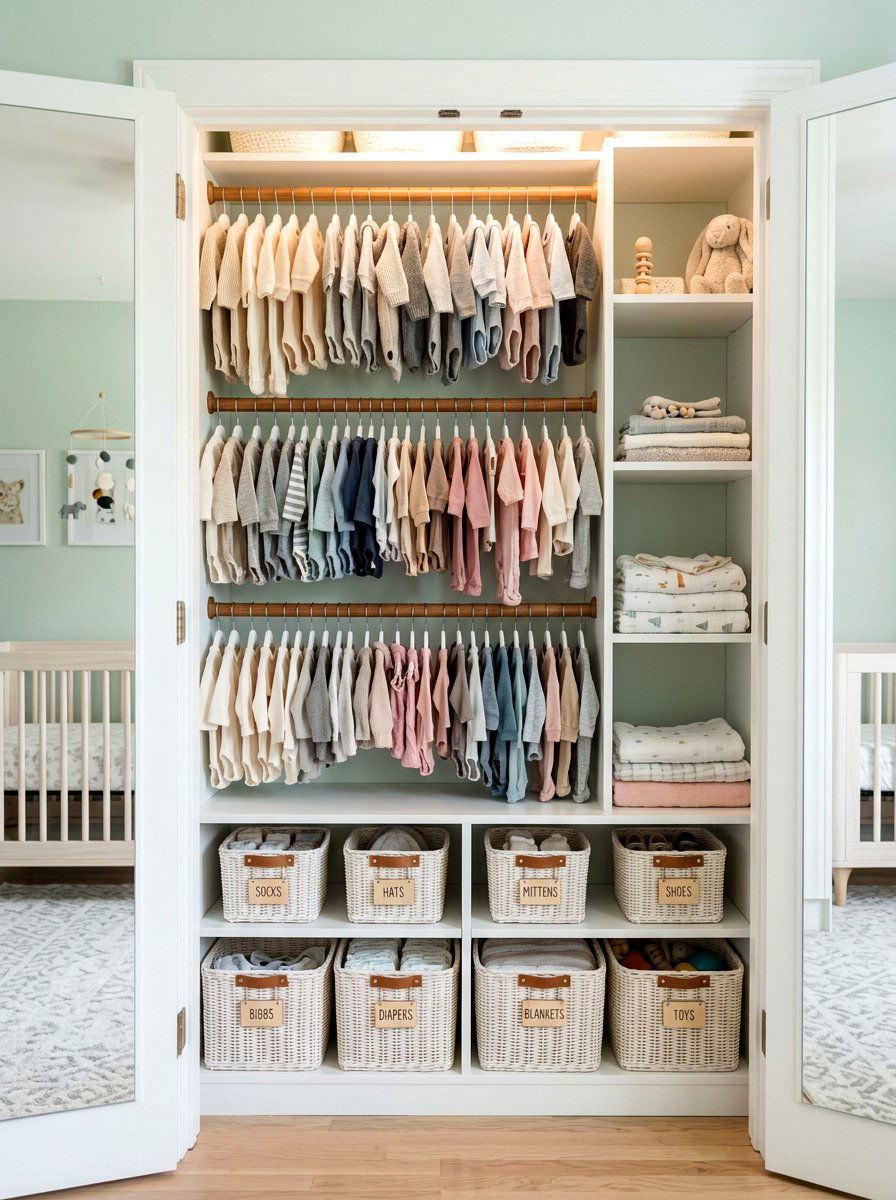
Designing a nursery reach in closet requires a focus on maximizing every inch of space for tiny garments and essential supplies. A popular approach involves using multiple short hanging rods stacked vertically to accommodate small baby outfits, which don't require much length. Surrounding these rods with open shelving allows for quick access to diapers, wipes, and blankets during late-night changes. Many parents choose to include small baskets for accessories like hats and booties to keep them from getting lost in larger bins. This organized setup ensures that everything a new parent needs is within reach, creating a calm and efficient environment for both baby and caregiver.
6. Color coded storage
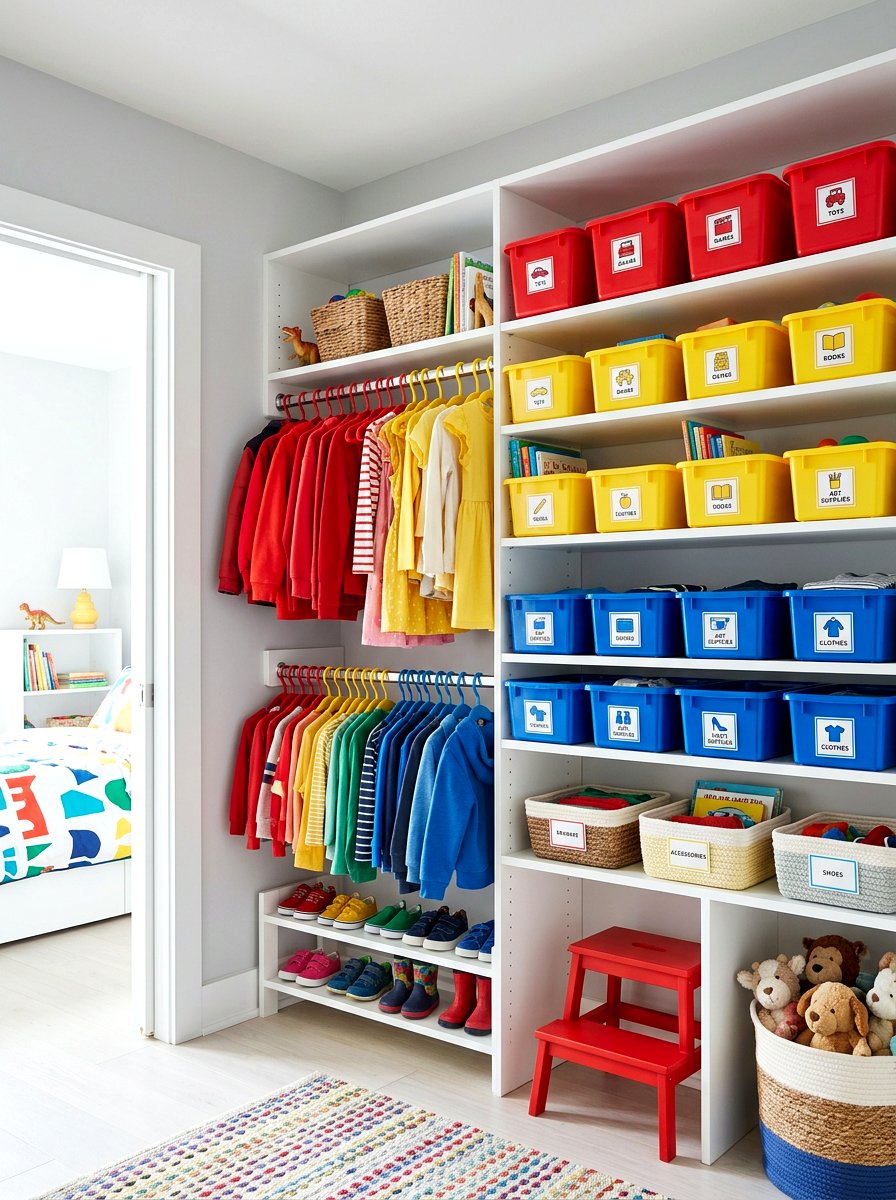
Implementing color coded storage is a visually stimulating way to help children understand organizational systems before they are even able to read. By assigning specific colors to different categories — such as blue for tops, green for bottoms, and yellow for toys — you create an intuitive roadmap for tidying up. This method works beautifully with plastic bins, hangers, or even painted shelf edges to define specific zones within the closet. It adds a cheerful and vibrant element to the room decor while serving a very practical purpose in daily maintenance. Children often find the matching game fun, which turns a standard chore into an engaging and educational activity for them.
7. Walk in kids closet
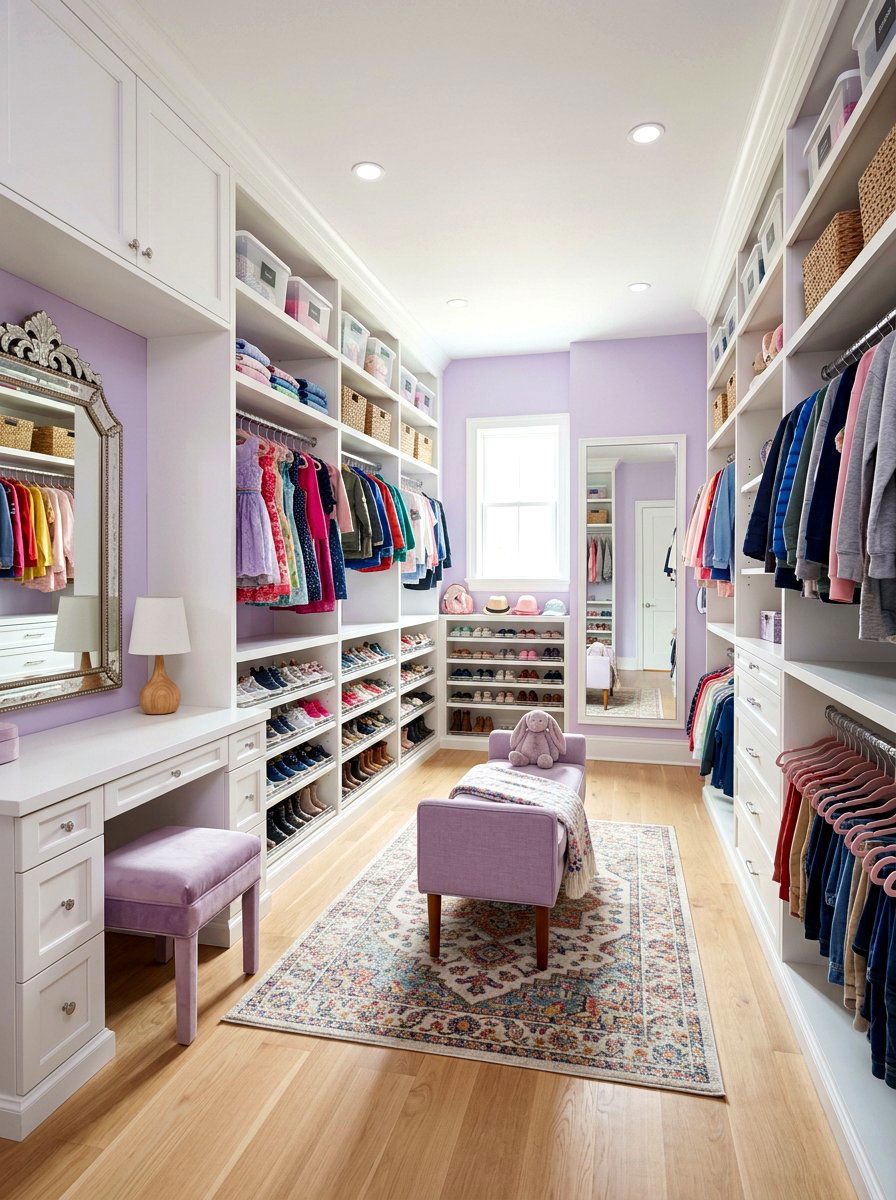
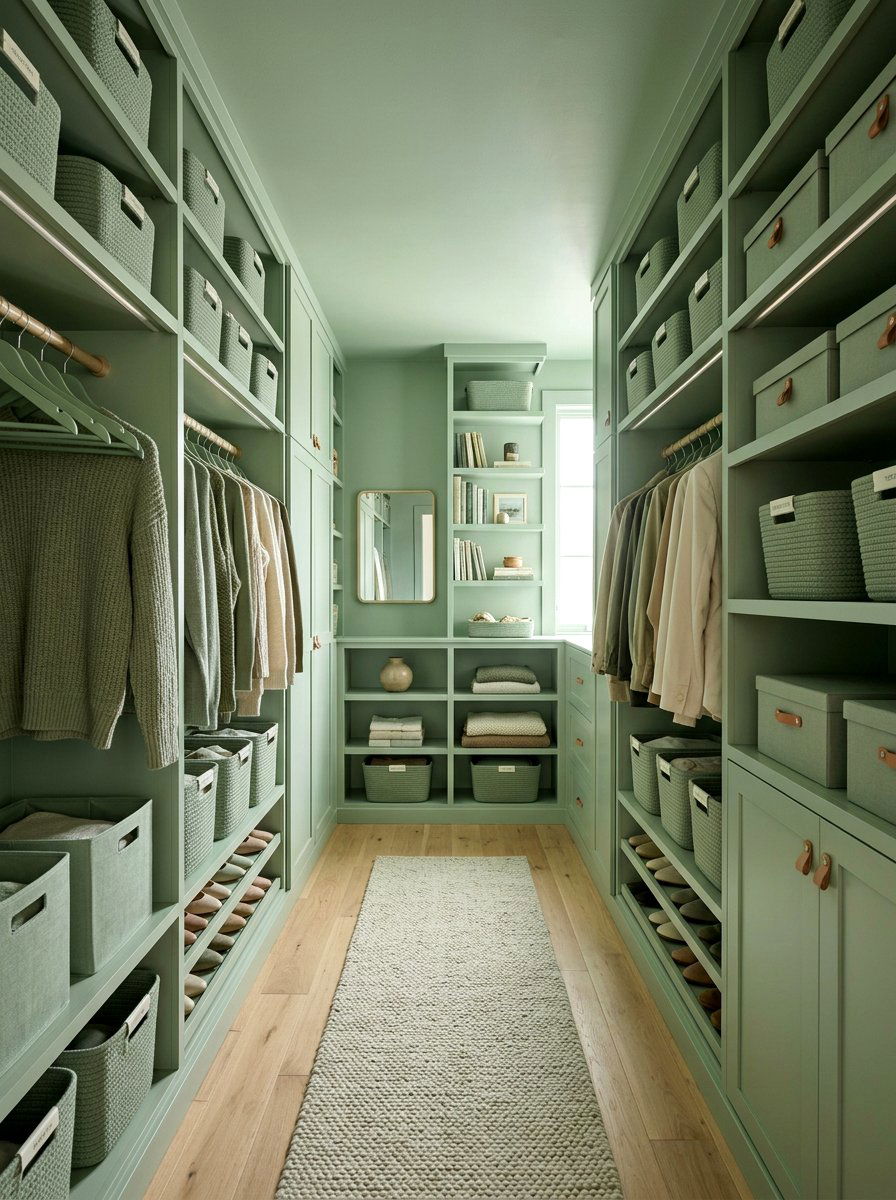
A walk in kids closet provides a luxurious amount of space that can serve as a multi-functional zone for storage and play. With enough room to move around inside, you can incorporate larger elements like a floor-length mirror, a small bench, or even a specialized dress-up station. This layout allows for deep shelving and double-sided hanging rods, significantly increasing the total storage capacity compared to standard closets. By creating distinct zones for school clothes, weekend wear, and hobby gear, the space remains easy to navigate even as the child's wardrobe expands. The extra square footage also offers a quiet place for children to pick out their daily outfits.
8. Vertical shelf dividers
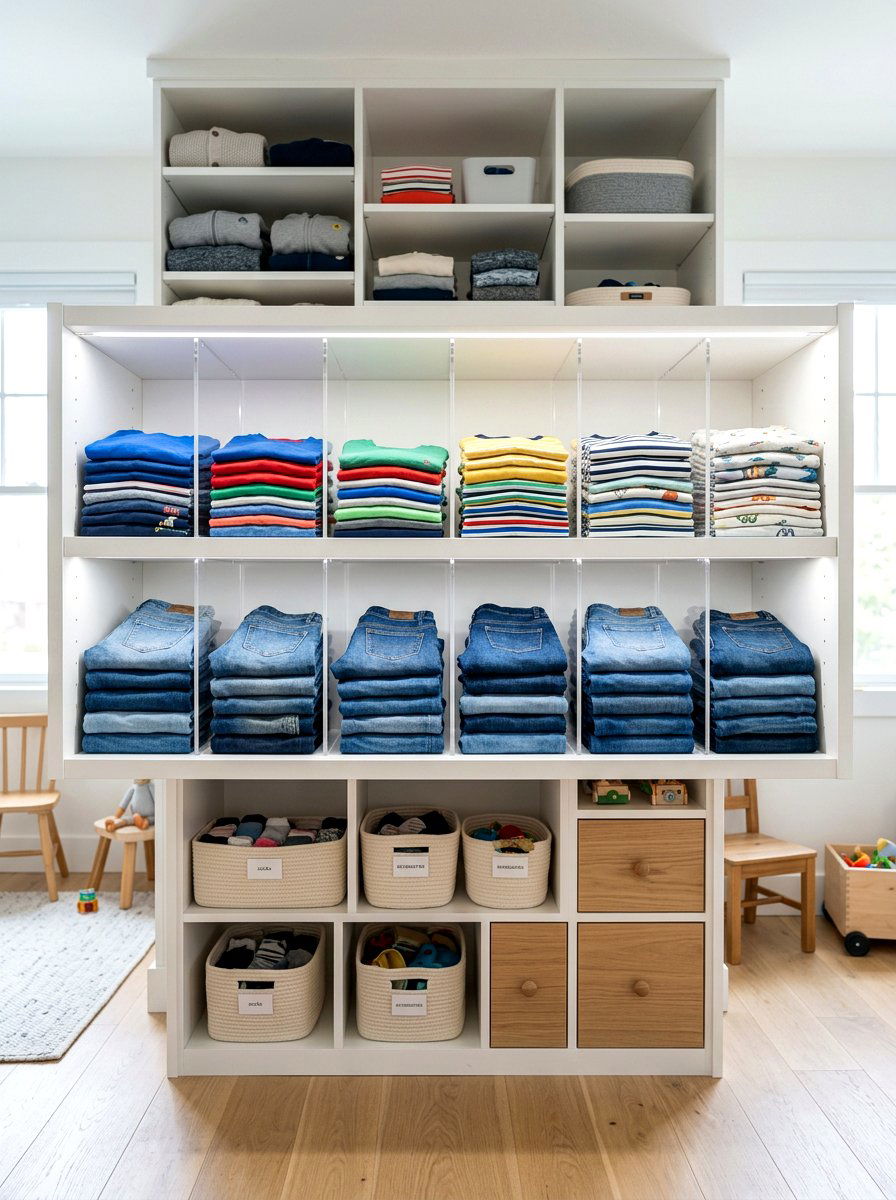
Vertical shelf dividers are essential tools for keeping stacked items from toppling over and creating a messy heap on open shelves. These slender inserts slide onto existing shelving to create individual slots for folded jeans, sweaters, or even a collection of thin picture books. By providing clear boundaries between different types of clothing, they help maintain the integrity of each stack whenever a single item is pulled out. This is particularly useful in a child's closet where small hands might accidentally disrupt a neatly folded pile. The result is a crisp, professional look that maximizes vertical space while ensuring that every item stays in its designated home.
9. Pull out baskets
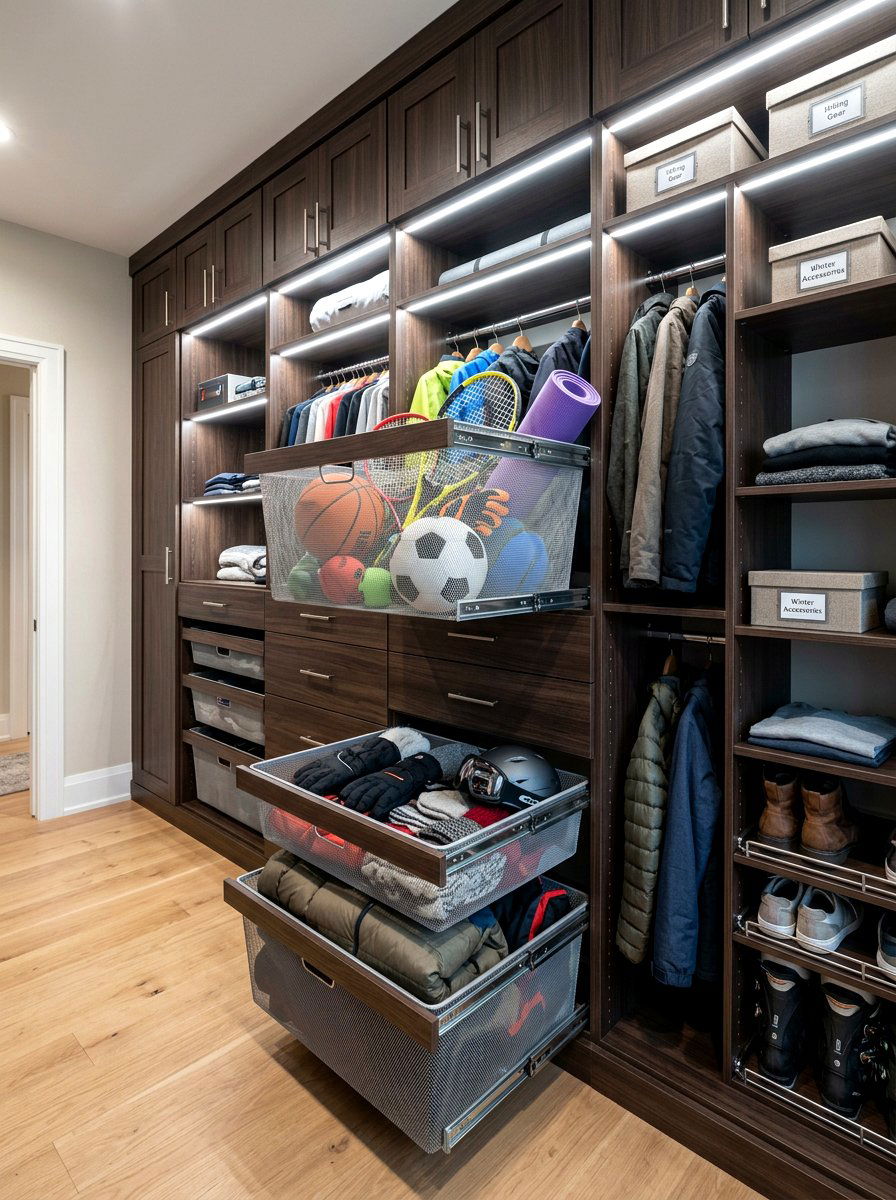
Incorporating pull out baskets into a closet system adds a layer of convenience that makes accessing deep storage much simpler for everyone. These sliding containers are perfect for holding loose items like sports balls, winter accessories, or large collections of toys that might otherwise get pushed to the back. Because the baskets extend fully, nothing gets lost in the dark corners of the closet, and kids can see exactly what they have available. Mesh or wire versions are popular because they allow for visibility and airflow, while solid plastic options are great for containing smaller parts. They combine the ease of a drawer with the versatility of a portable bin.
10. Over the door organizer
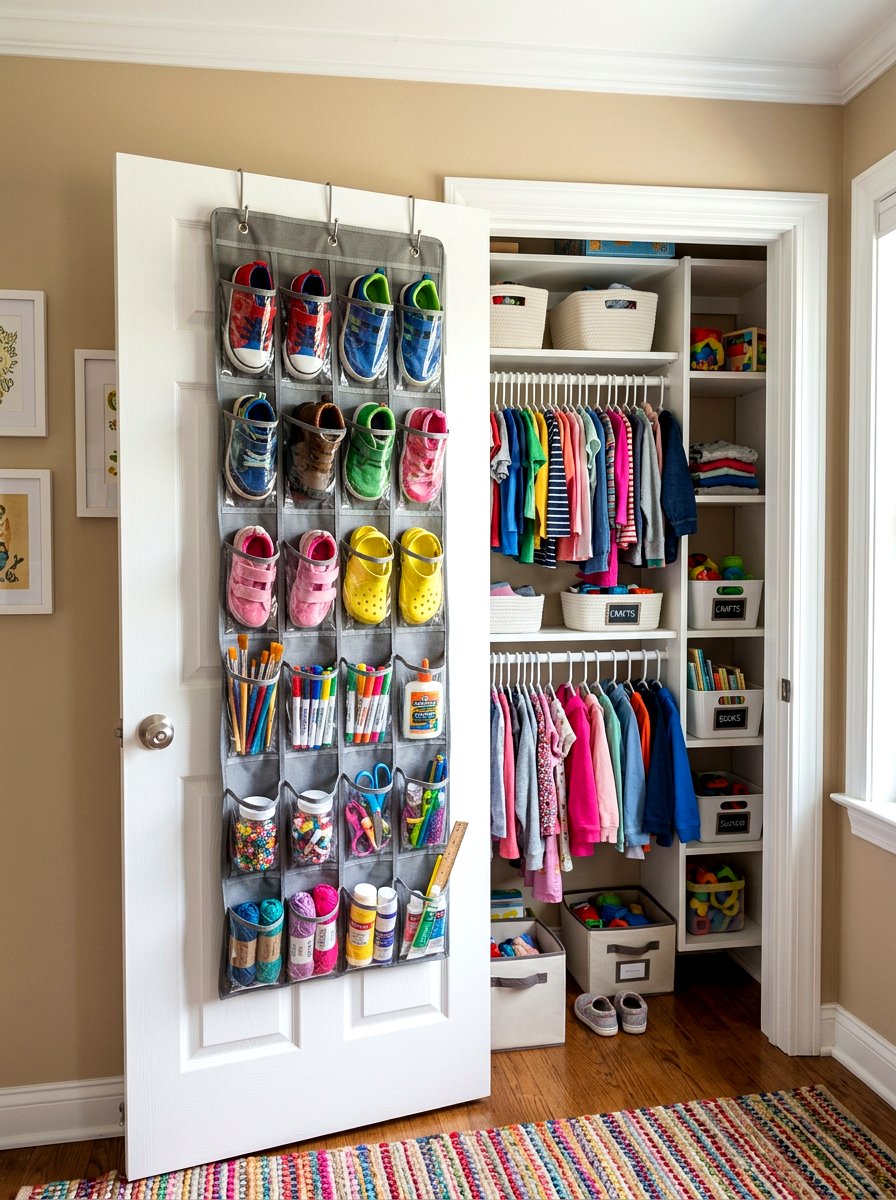
An over the door organizer is a classic space-saving hack that utilizes the often-ignored back of the closet door for extra storage. These multi-pocket units are ideal for stashing shoes, art supplies, hair accessories, or even rolled-up leggings and t-shirts. Because they hang at various heights, you can place the items the child needs most at their eye level while keeping restricted items higher up. This addition is particularly helpful in small bedrooms where every square inch of shelf space is precious. It keeps the floor clear of shoe piles and provides a visible, easy-to-access home for the many small objects that children tend to collect.
11. Sliding closet doors
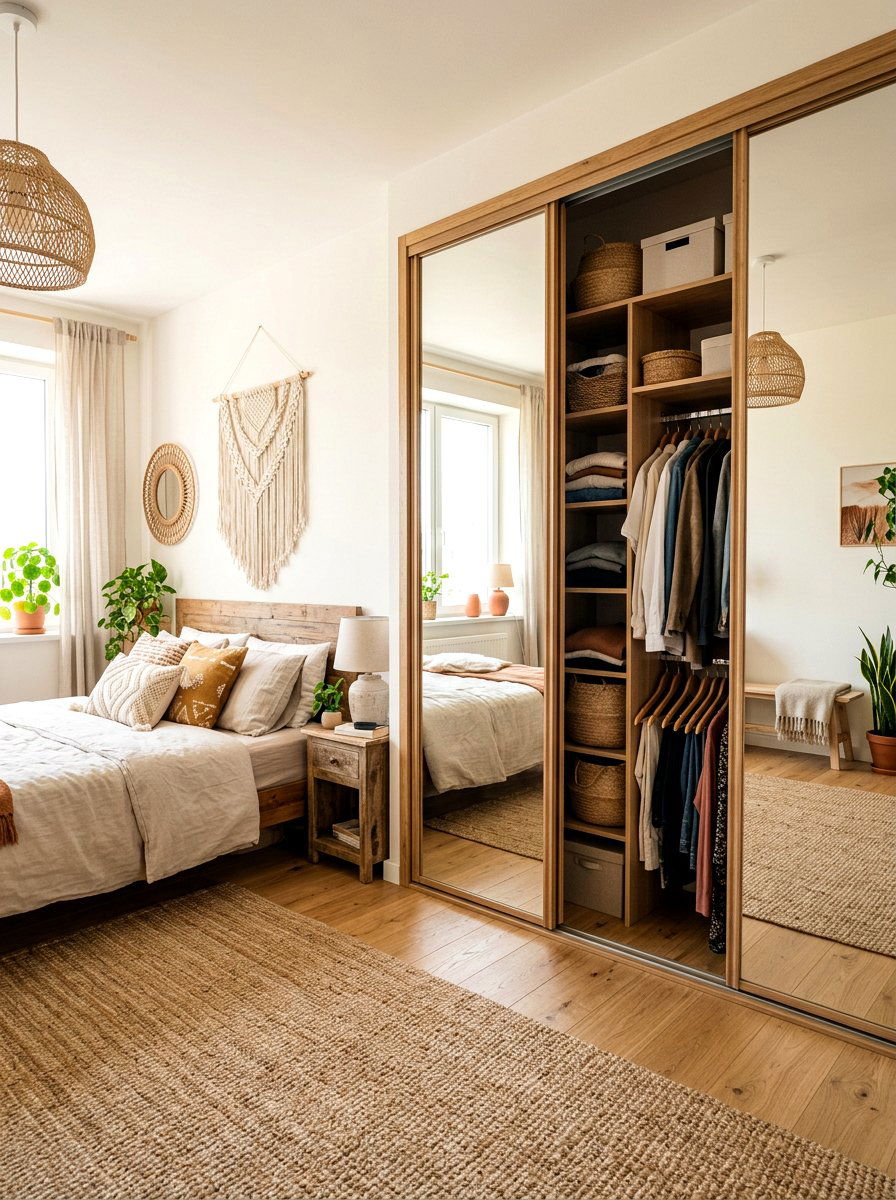
Choosing sliding closet doors is a smart design move for bedrooms where floor space is limited or furniture is placed close to the opening. Unlike traditional swing doors that require a wide arc to open, sliders move smoothly along a track, allowing for easy access without obstructing the room. Modern sliding systems can be customized with mirrors to make a small room feel larger or painted in fun colors to match the decor. Inside, the closet can be divided into sections that are revealed one at a time, helping a child focus on just their clothes or just their toys. This sleek, space-saving solution looks contemporary and functions perfectly.
12. Corner closet shelves
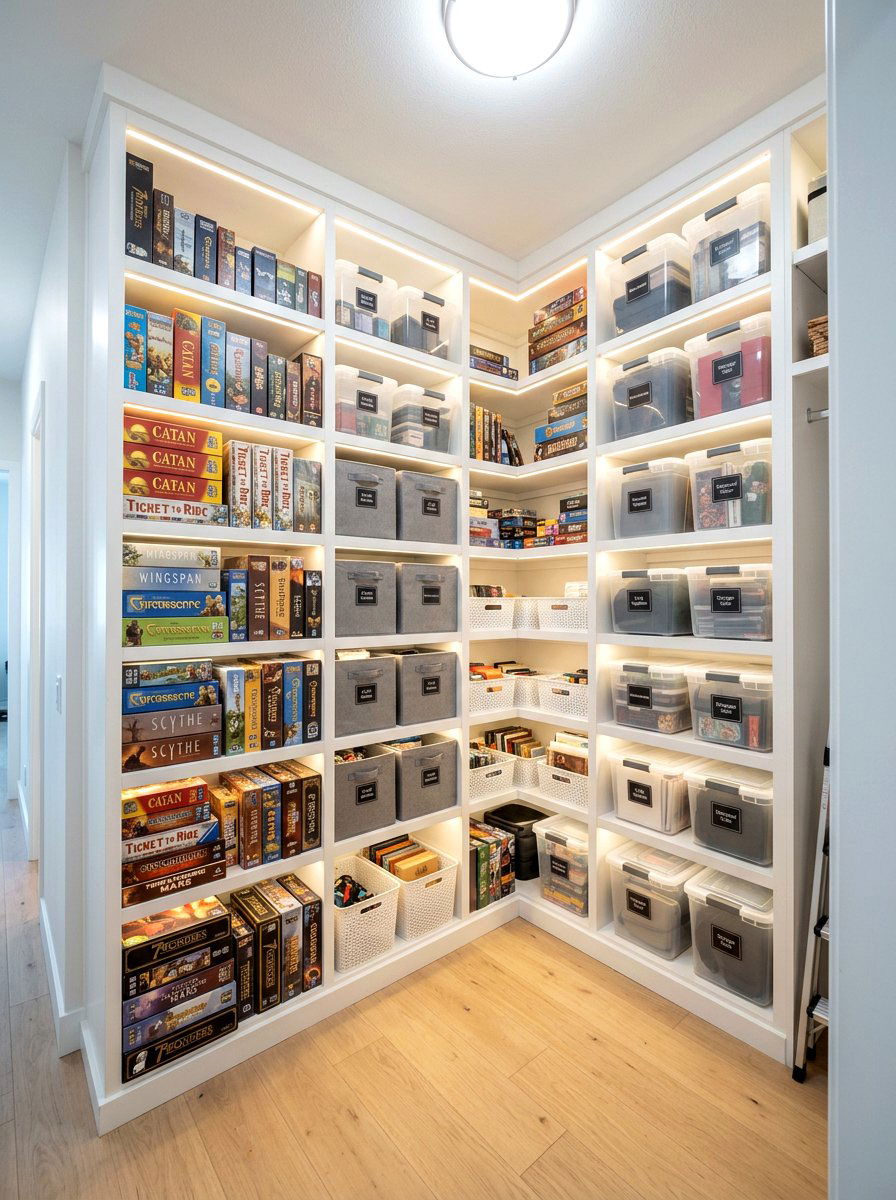
Maximizing the often-wasted space in a deep corner is easy when you install specialized corner closet shelves that wrap around the interior. These L-shaped or curved units provide a continuous surface for storing bulky items like board games, extra bedding, or large toy containers. By using the full depth of the corner, you eliminate "dead zones" where items are frequently forgotten or lost in the shadows. This configuration works exceptionally well in walk-in closets but can also be adapted for larger reach-in styles to increase overall capacity. It ensures that every part of the closet is working hard to keep the bedroom organized and completely free from clutter.
13. Open nursery closet
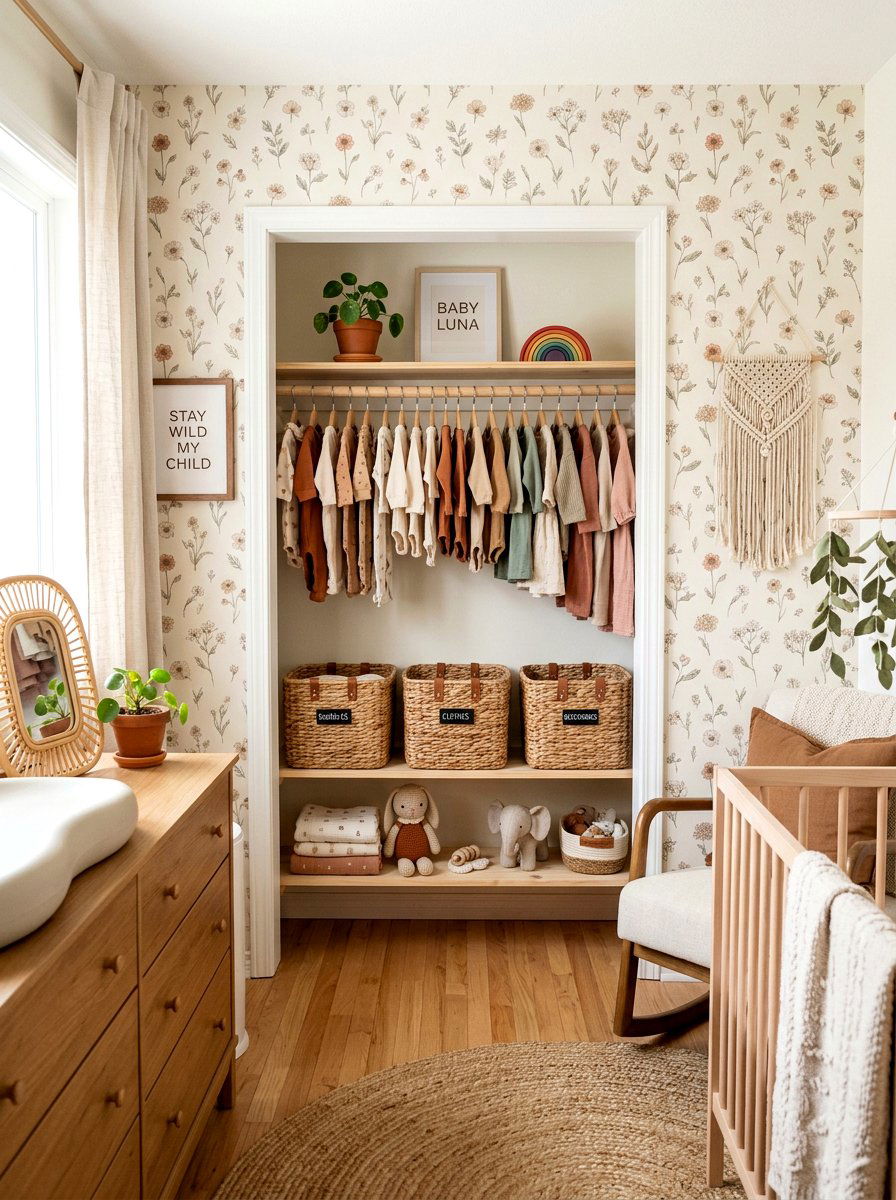
An open nursery closet removes the doors entirely to create a seamless, integrated look that showcases adorable baby clothing and decorative storage bins. This design choice is perfect for smaller nurseries as it eliminates the visual barrier of a door, making the entire room feel more spacious and airy. It encourages parents to keep the space tidy since the contents are always on display as part of the room's overall aesthetic. You can use pretty baskets, matching hangers, and framed art on the shelves to turn the storage area into a beautiful focal point. It also makes grabbing a clean onesie much faster during those busy morning transitions.
14. Labeled toy bins
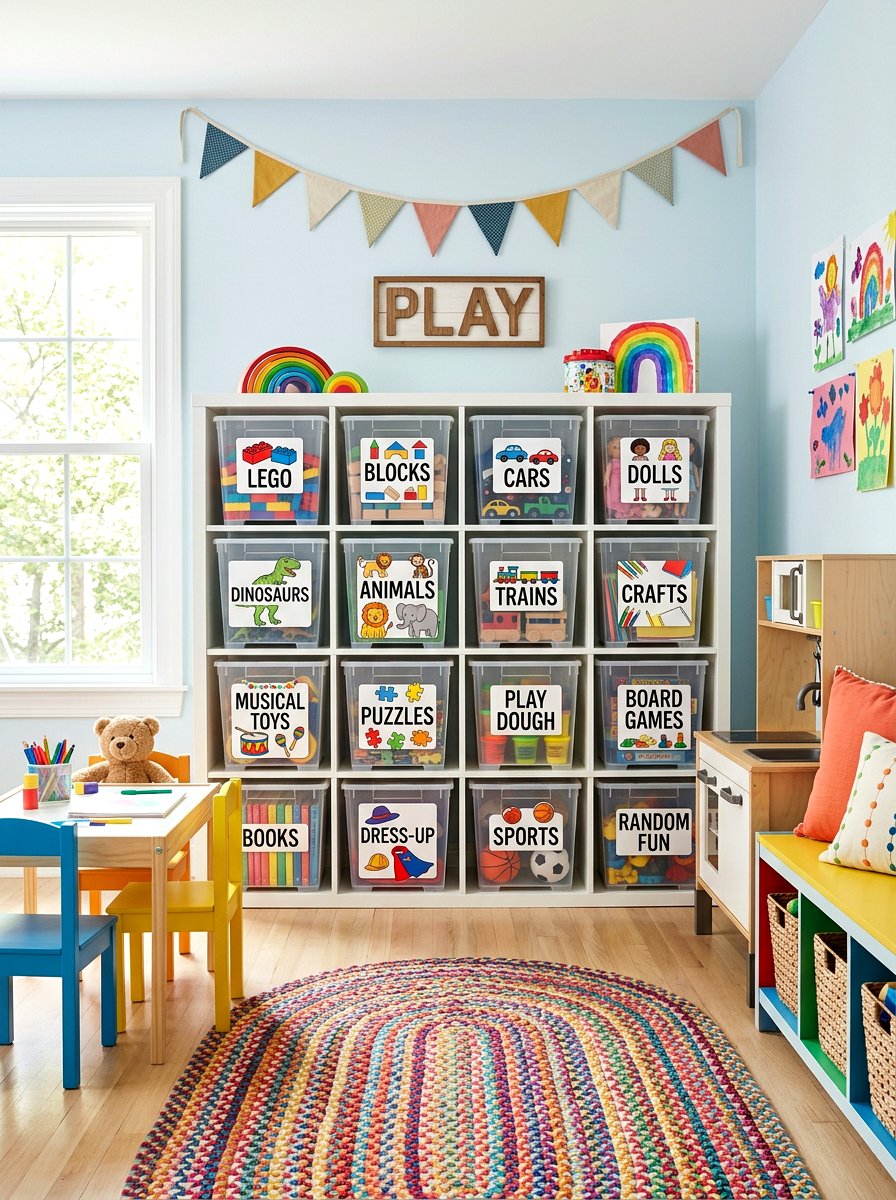
Labeled toy bins are the secret to maintaining a long-term organization system that children can actually follow without constant adult supervision. For younger kids, using picture labels allows them to identify where blocks, dolls, or cars belong even before they can read words. As they get older, you can transition to printed text labels to help reinforce literacy skills while keeping the closet orderly. Using consistent bin styles across the shelves creates a clean, uniform look that hides the colorful chaos of toys. When every category has a clearly marked home, the cleanup process becomes a simple matching game that reduces stress for the entire family.
15. Hidden laundry hamper
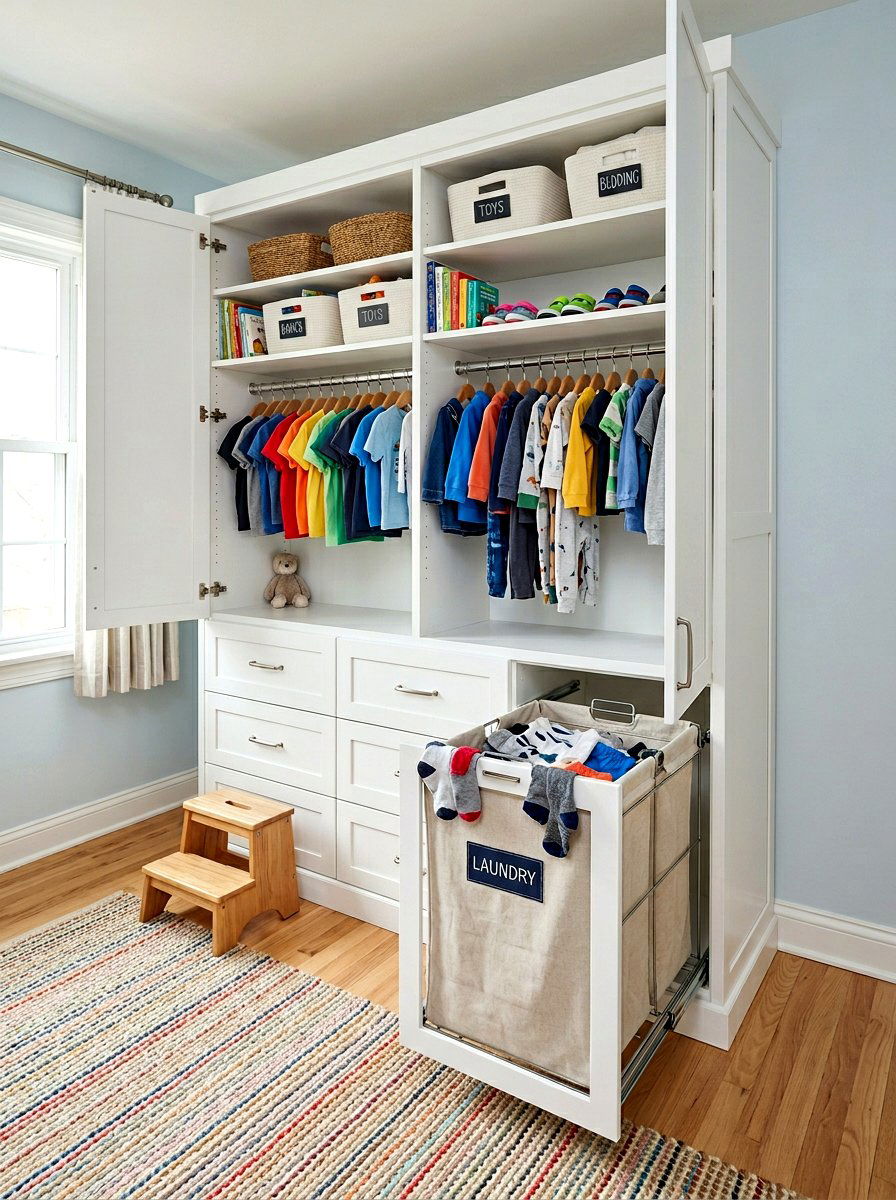
Integrating a hidden laundry hamper into the bottom of a closet system is a game-changer for keeping a child's bedroom floor tidy. By providing a designated spot for dirty clothes behind closed doors or within a pull-out drawer, you eliminate the need for an unsightly freestanding basket. This setup encourages children to develop good habits by making it just as easy to "file" their laundry as it is to drop it on the floor. Many systems feature removable cloth liners that make it simple to carry the load to the washing machine. It is a discreet and functional addition that keeps the room looking polished and smells much fresher.
16. Double hanging rods
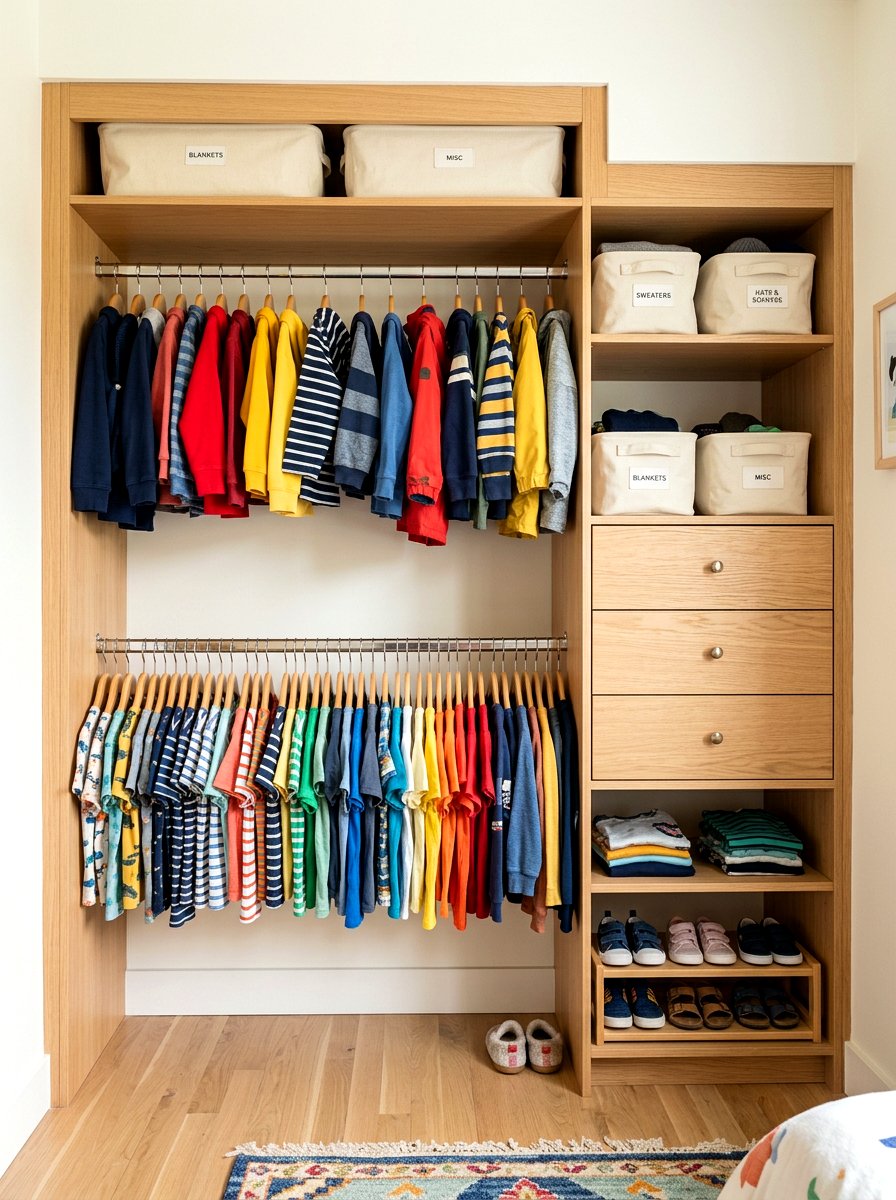
Installing double hanging rods is the most effective way to instantly double the amount of usable space for clothing in a standard closet. By placing one rod high and another about halfway down, you take advantage of the vertical height that often goes to waste. This configuration is perfect for kids 'clothing because their shirts and pants are shorter, allowing two rows to fit comfortably without overlapping. You can use the top rod for items that need adult help, like fancy dresses or heavy coats, while the bottom rod remains strictly for the child' s daily wear. It is a simple yet powerful upgrade for any growing wardrobe.
17. Slanted shoe racks
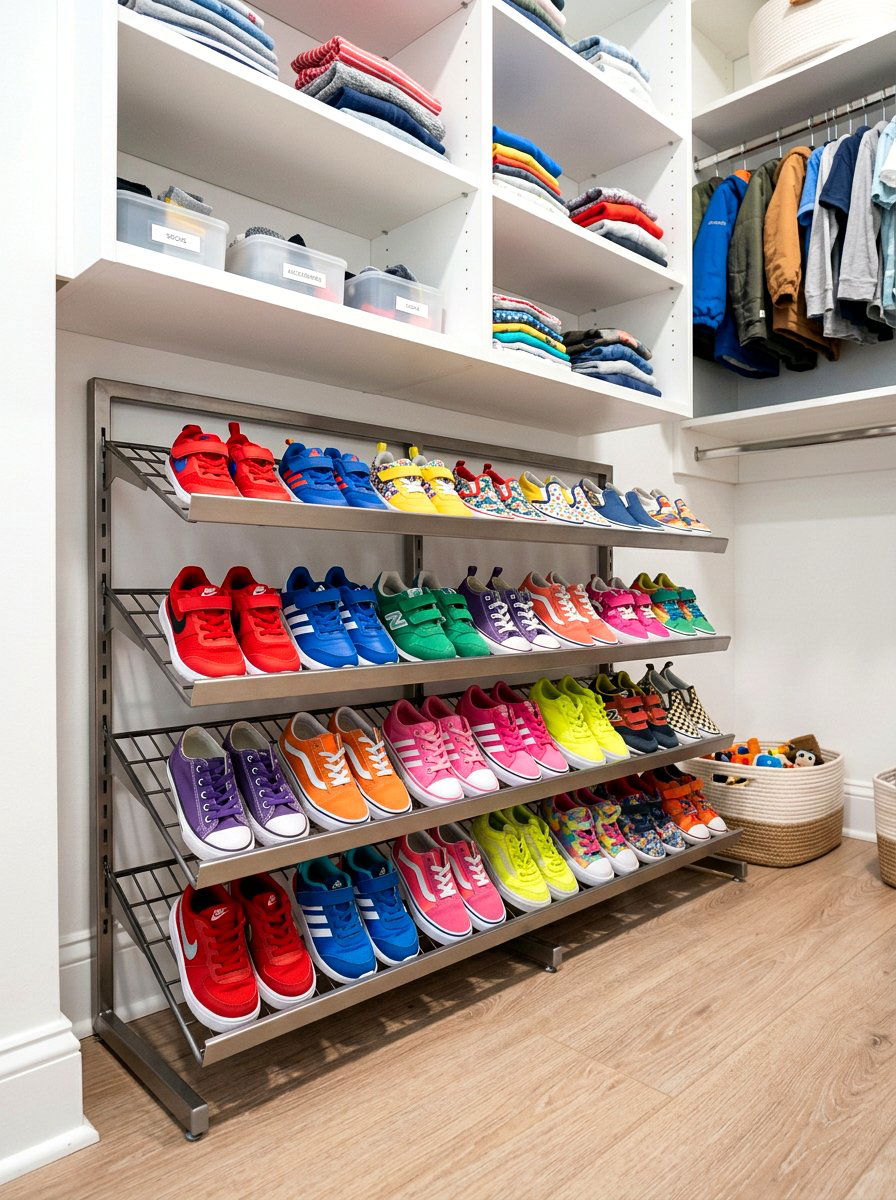
Slanted shoe racks provide a dedicated and highly visible place for a child's footwear, preventing the dreaded "shoe pile" at the bottom of the closet. These angled shelves often feature a small lip or rail to keep sneakers and boots from sliding off, making it easy for kids to see all their options at once. Because the shoes are kept off the floor, the bottom of the closet stays cleaner and is easier to vacuum. This system also helps children learn to keep their shoes in pairs, reducing the time spent searching for a missing mate during the busy morning rush out the door.
18. Wood laminate system
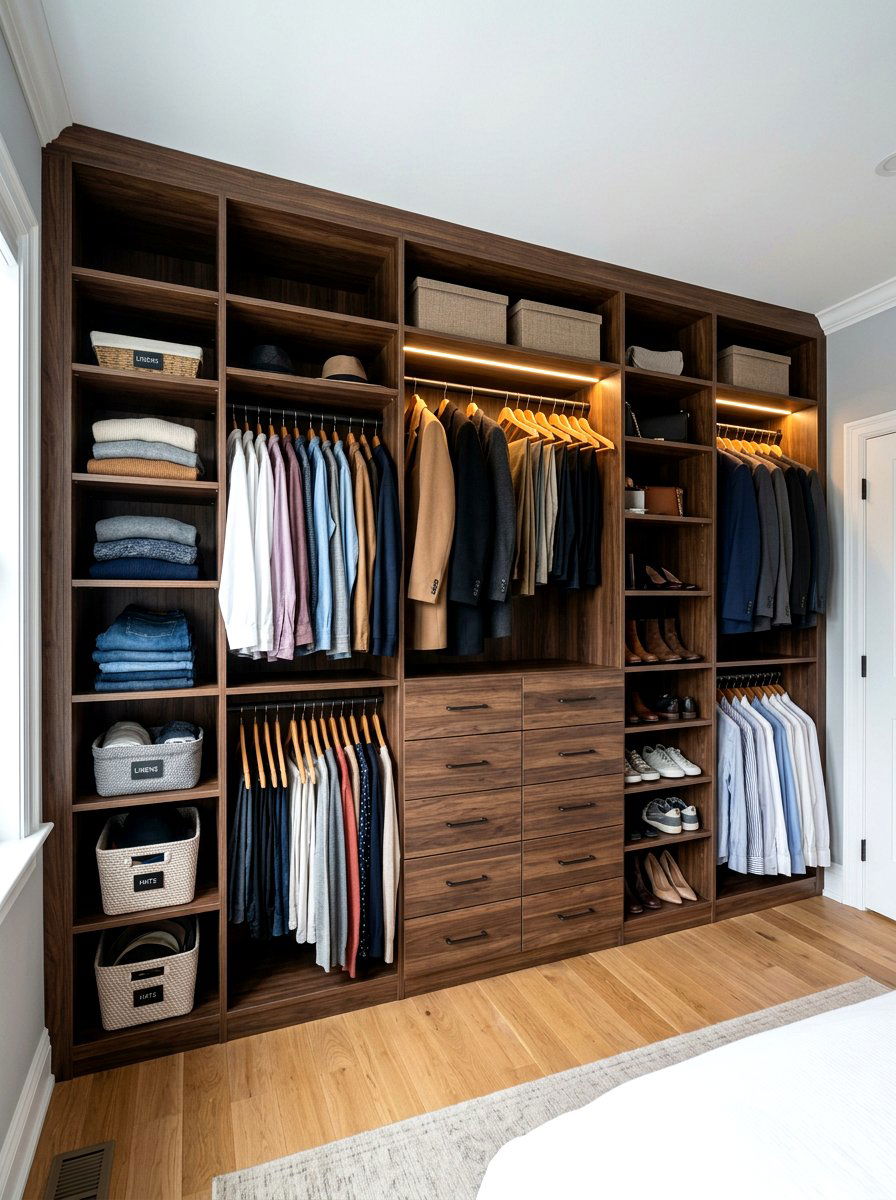
A wood laminate system offers a high-end, custom-built look that is both durable and incredibly easy to clean, making it perfect for a child 's room. These units are typically more sturdy than wire alternatives and come in a variety of finishes, from bright white to warm oak, to match any bedroom style. The solid surfaces provide a flat, stable base for books and small toys that might fall through wire gaps. Many laminate systems are modular, meaning you can add more drawers or shelves as your child’s needs change over the years. It provides a polished, permanent feel to the closet that increases the home' s value.
19. Wardrobe with mirror
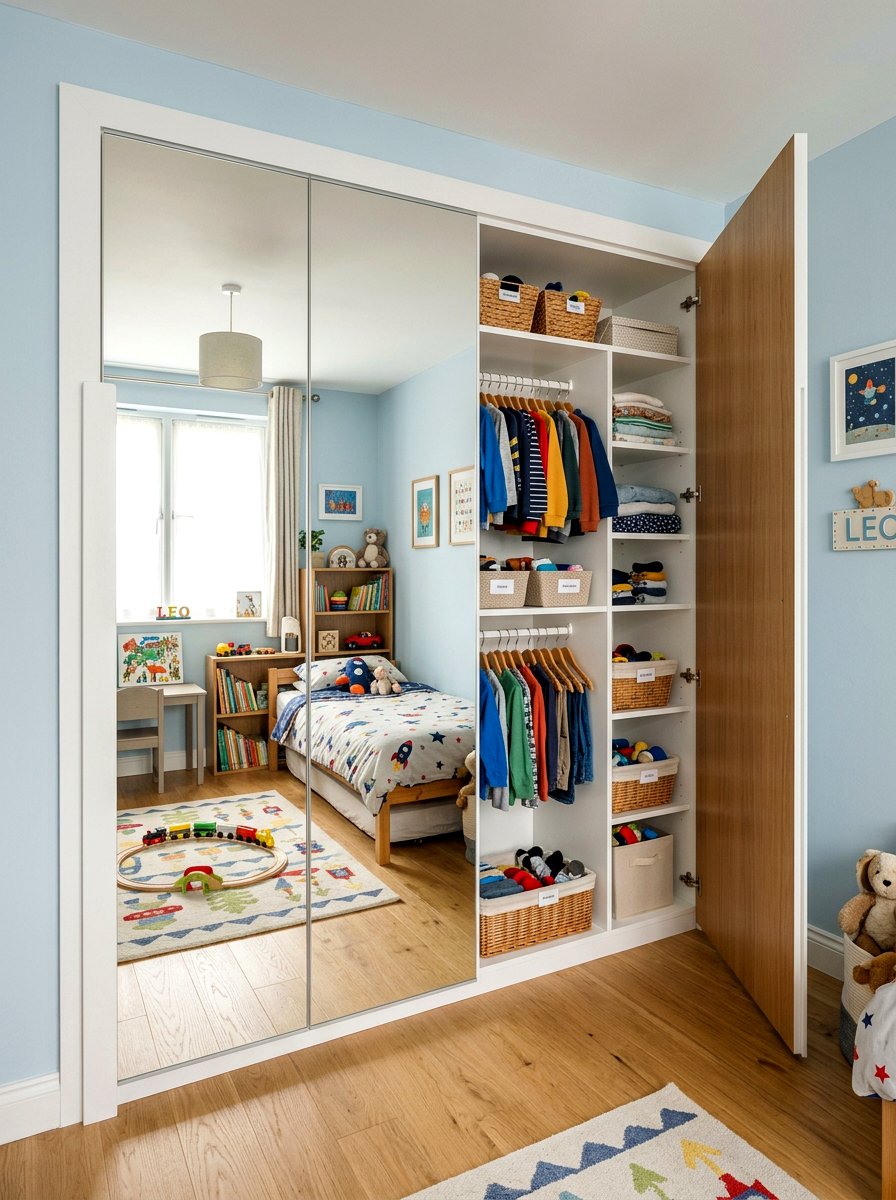
Adding a wardrobe with mirror into a child's closet setup provides a practical station for getting ready while adding light and depth to the room. Whether the mirror is mounted to the back of a door or integrated into a sliding panel, it allows kids to check their appearance and practice grooming skills independently. For older children and teenagers, this becomes an essential part of their daily routine as they develop their own personal style. In smaller rooms, the reflective surface helps bounce natural light around, making the entire space feel much larger and more inviting. It turns a simple storage area into a complete dressing room.
20. Playroom storage closet
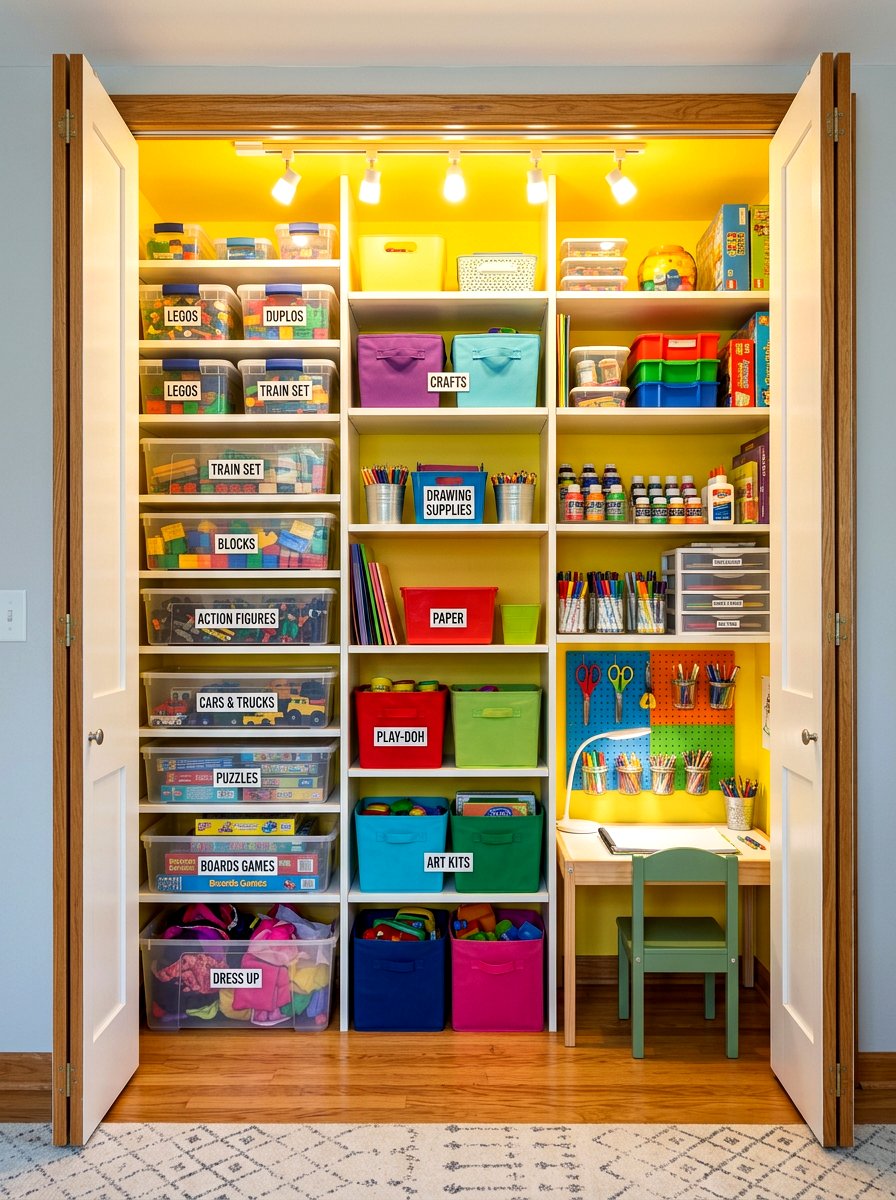
A playroom storage closet focuses specifically on managing toys, art supplies, and games, rather than just clothing, to keep the main play area clear. These systems often prioritize deep, sturdy shelving that can handle heavy bins of building blocks or stacks of board games. Incorporating low-level cubbies ensures that children can access their favorite toys safely and put them away when playtime is finished. You can also include a small desk surface or a craft station inside the closet for a "hidden" workspace. This specialized organization ensures that the playroom remains a flexible space for imagination rather than a cluttered warehouse of forgotten items and loose pieces.
21. Small reach in storage
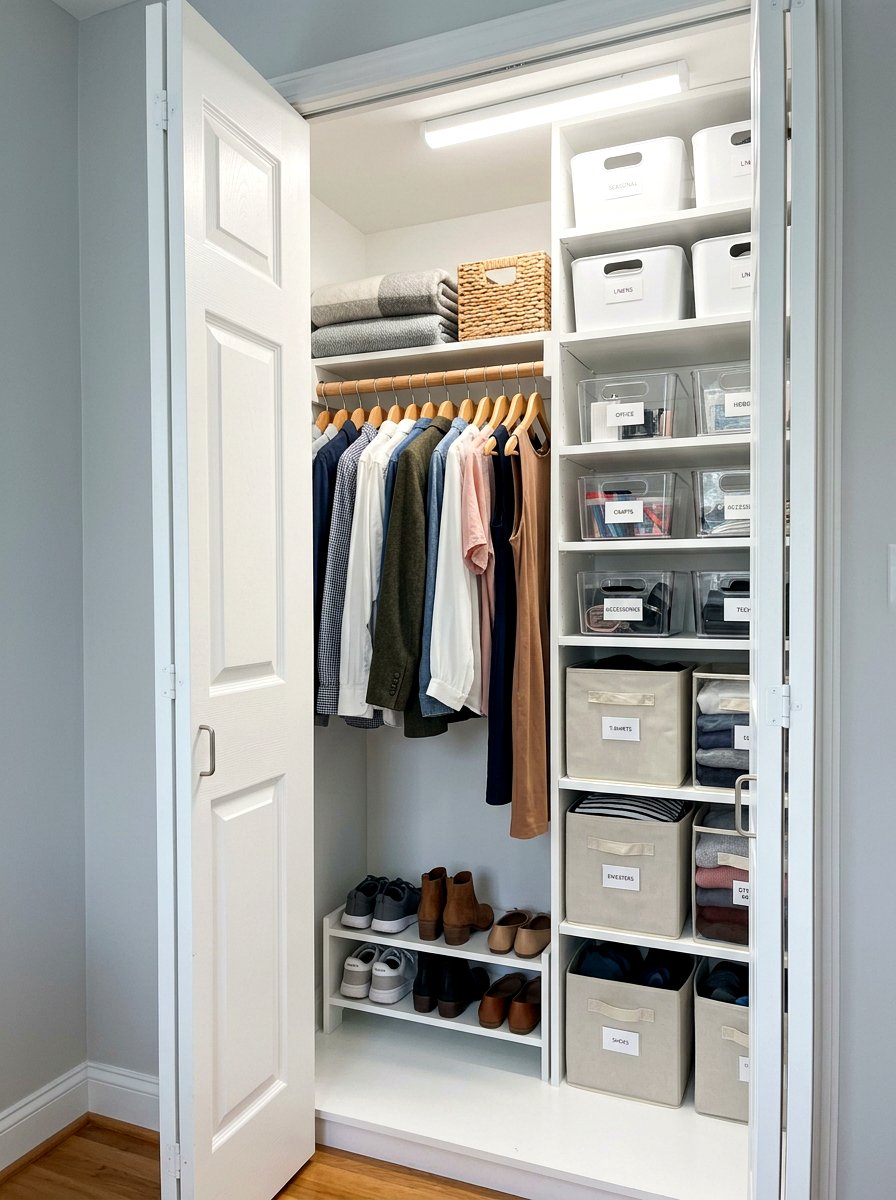
Maximizing a small reach in storage area requires a strategic layout that utilizes every available inch of the back wall and side returns. Using a combination of a single rod and several stacked shelves can accommodate a surprising amount of clothing and gear in a tight footprint. Many parents find that replacing a single long shelf with a vertical tower of smaller cubbies provides much better organization for folded items. Light-colored finishes and slim-profile hangers help the interior feel less cramped and more accessible. By prioritizing the items used most frequently, even the tiniest closet can become a highly efficient and organized space for a busy child.
22. Shared sibling closet
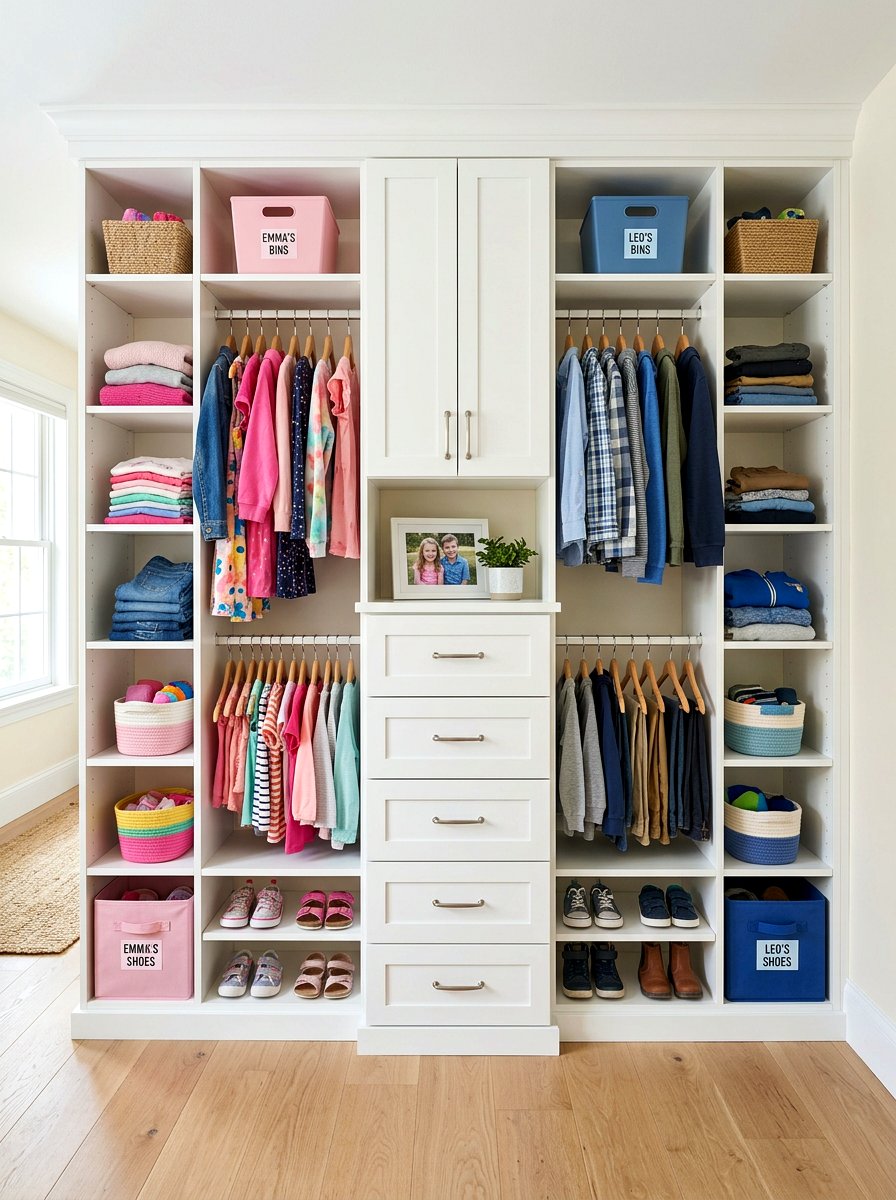
Designing a shared sibling closet requires a clear division of space to prevent arguments and keep different sizes of clothing organized. A common strategy is to use a central vertical divider, such as a tower of drawers or shelves, to split the closet into two equal halves. Assigning each child their own side with dedicated rods and bins helps them take ownership of their own belongings. You can even use different colored hangers or bin labels to further distinguish between the two areas. This organized approach ensures that each child has enough room for their specific needs while teaching them the valuable skill of sharing a communal space.
23. Teenager walk in closet
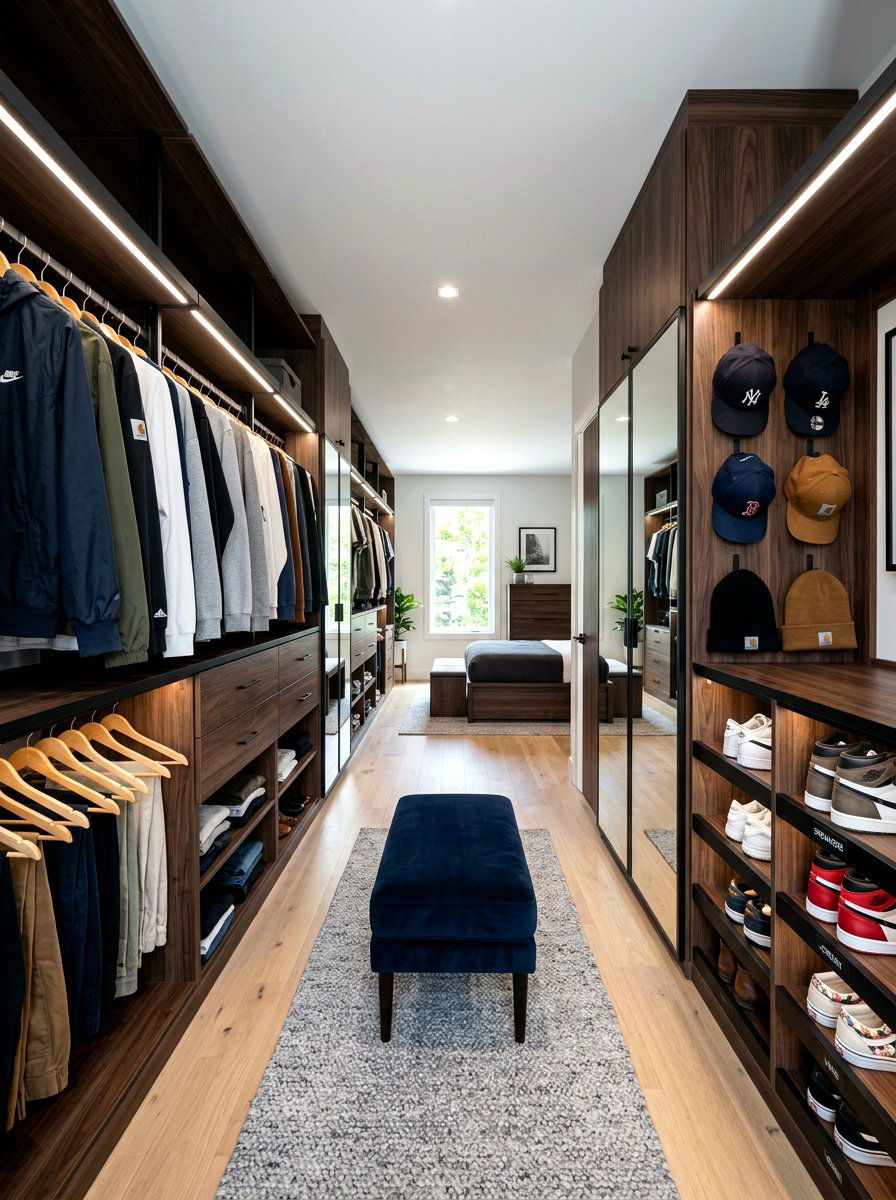
As children transition into their teen years, a teenager walk in closet needs to accommodate longer clothing, more shoes, and perhaps a dedicated space for accessories. The layout should shift toward more full-length hanging space for dresses or suits and specialized storage for items like hats, belts, and jewelry. Many teens appreciate a more sophisticated aesthetic, such as dark wood tones or sleek modern hardware, to reflect their maturing tastes. Including a small seating area or a charging station for electronics can turn the closet into a private retreat. This space should be flexible enough to handle a rapidly growing and changing wardrobe through the high school years.
24. Wall mounted hooks
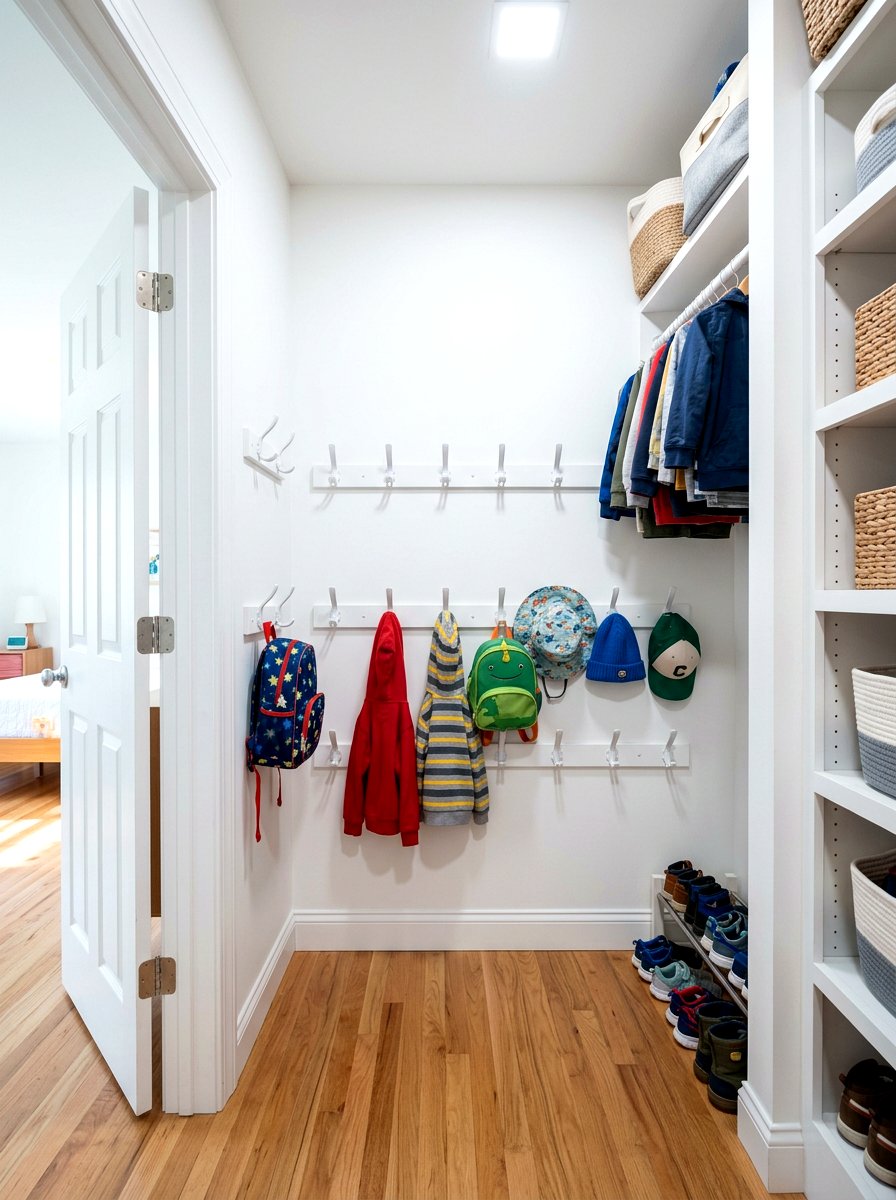
Wall mounted hooks are a simple and incredibly effective addition to any kids closet system for managing items that don't belong on a hanger. These are perfect for bulky backpacks, sweatshirts, hats, or even the dress-up capes that frequently end up in a heap on the floor. By placing hooks at a child-friendly height on the side walls or the back of the door, you provide an easy "one-step" storage solution. This is especially helpful for kids who find using hangers frustrating or time-consuming. Hooks keep frequently used items visible and within reach, making the transition from school to home much smoother and more organized.

25. Clear drawer dividers
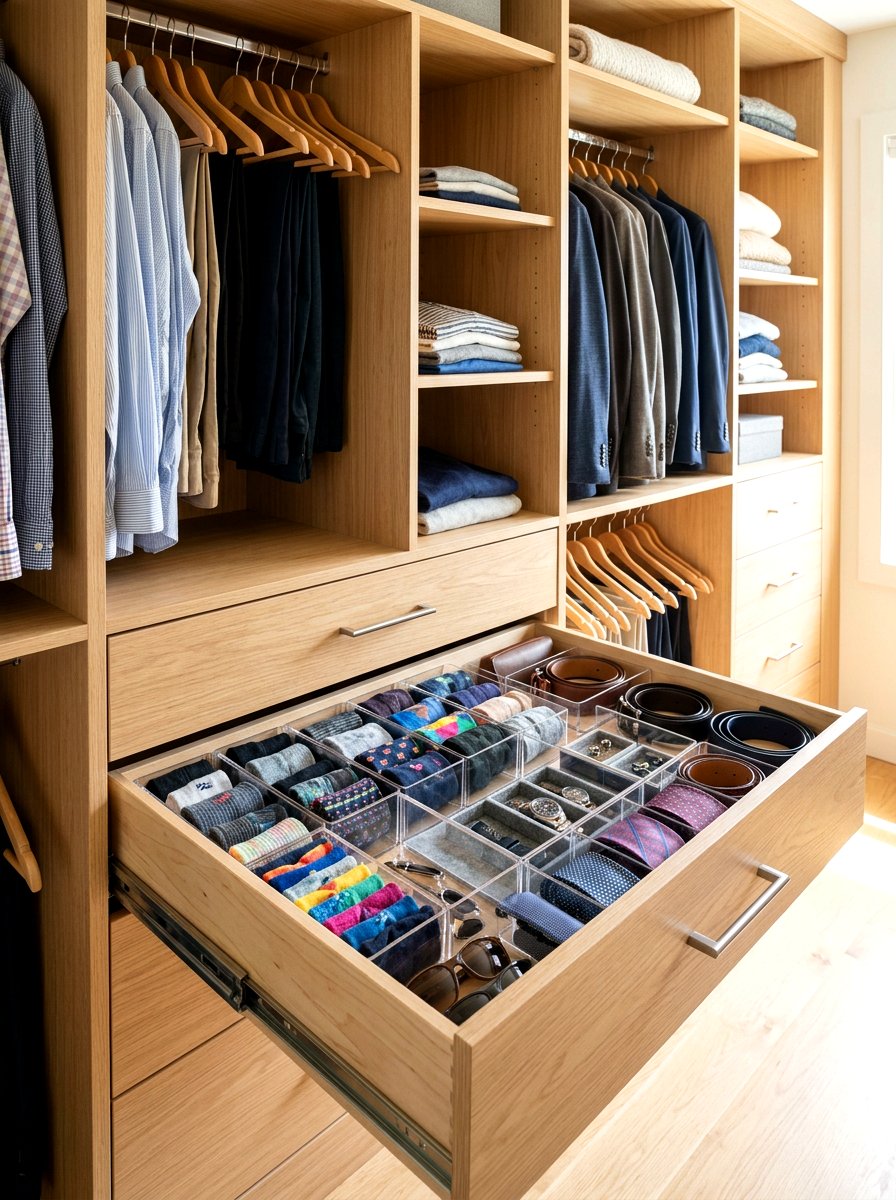
Clear drawer dividers are the ultimate secret to maintaining perfectly organized dresser drawers within a closet system. These transparent inserts allow you to separate socks from underwear and t-shirts from leggings, ensuring that everything stays in its proper place. Because they are clear, they don't add visual weight to the drawer and make it easy to see every item at a glance. They are particularly useful for small baby items like onesies and bibs that tend to shift around in larger drawers. By creating individual "homes" for every category, you prevent the common problem of drawers becoming a tangled mess of unfolded fabric and lost accessories.
26. Closet bench seating
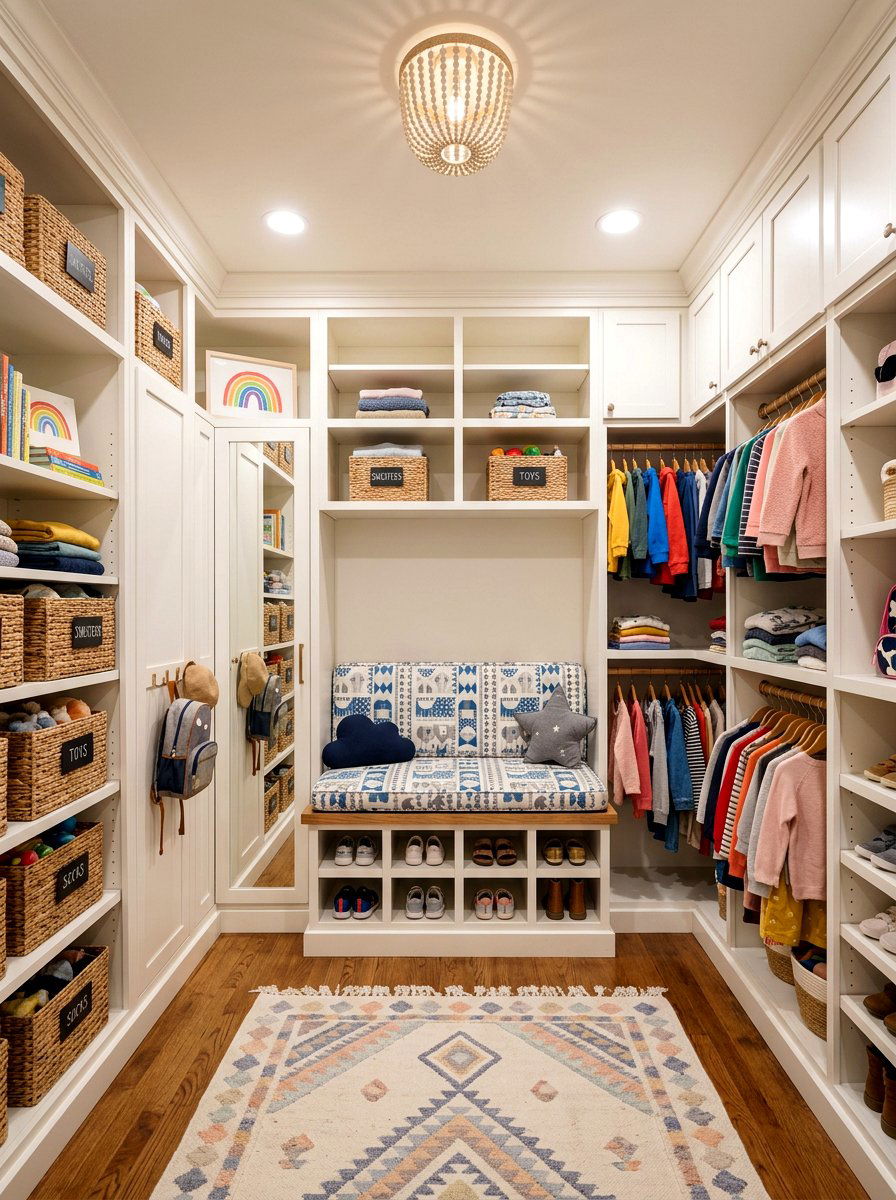
Incorporating closet bench seating into a larger walk-in or reach-in closet provides a comfortable place for children to sit while putting on their shoes. This feature often includes built-in storage underneath the seat, such as cubbies or a pull-out drawer, for frequently worn sneakers or boots. A bench helps anchor the space and gives it the feel of a high-end dressing room rather than just a storage closet. It also encourages kids to take their time getting ready and keeps them from sitting on the floor. Adding a soft cushion in a fun fabric can bring a pop of color and comfort to the functional space.
27. Wallpaper closet interior
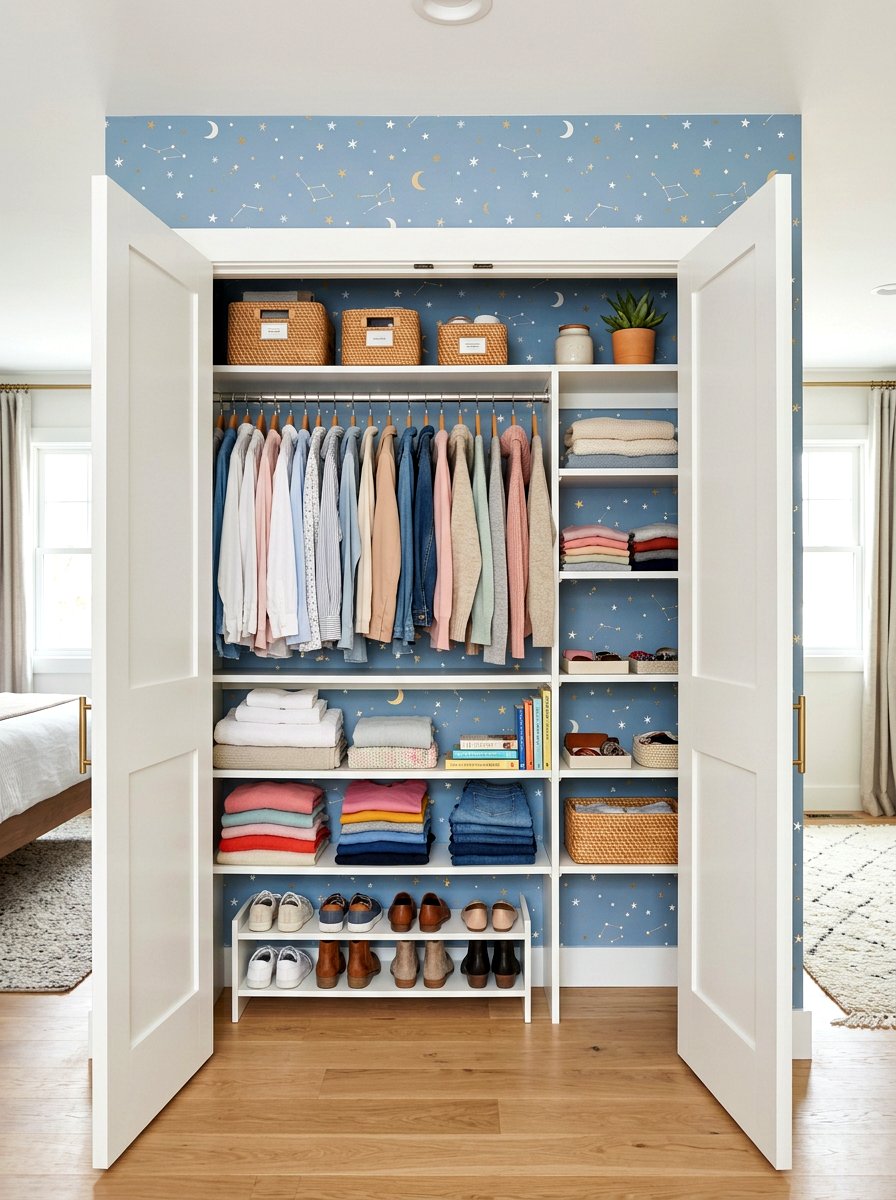
Applying a vibrant wallpaper closet interior is a delightful way to add a hidden pop of personality and style to a child 's bedroom. When the doors are opened, the colorful pattern or whimsical design creates an instant "wow" factor that makes the space feel special and customized. You can choose a pattern that reflects your child' s current interests, such as stars, animals, or bold geometric shapes. Removable peel-and-stick wallpaper is an excellent choice for kids 'rooms since it can be easily updated as their tastes change over time. This simple decorative touch turns a utilitarian storage area into an integrated part of the room' s creative design.
28. Ceiling height shelves
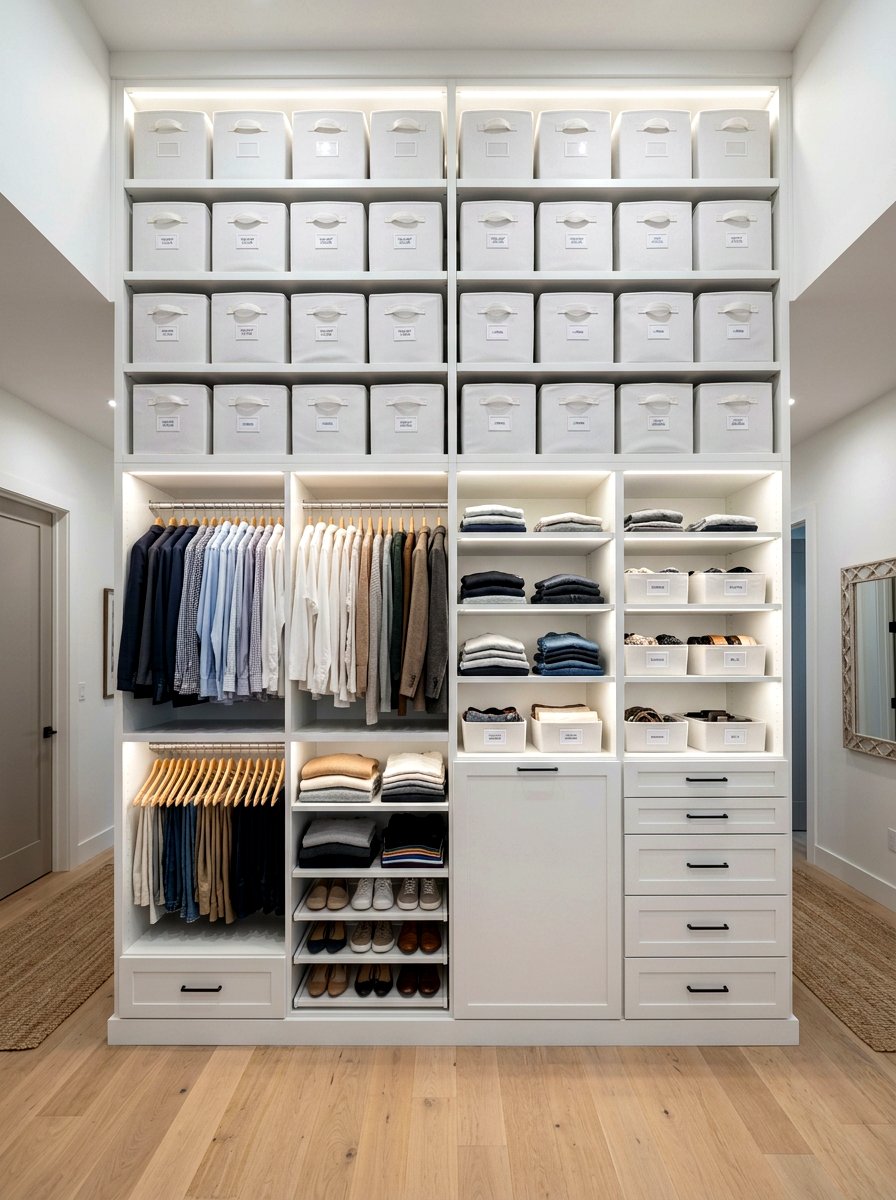
Utilizing ceiling height shelves is a smart strategy for storing items that are not needed on a daily basis, such as off-season clothing or extra bedding. By extending the shelving all the way to the top of the closet, you maximize the vertical storage potential that is often left as dead space. These high shelves are the perfect spot for lidded bins containing hand-me-downs for younger siblings or bulky holiday decorations. While the child won't be able to reach these items, they stay organized and out of the way, freeing up the lower, more accessible sections for their everyday wardrobe and favorite toys.
29. Pull out valet rod
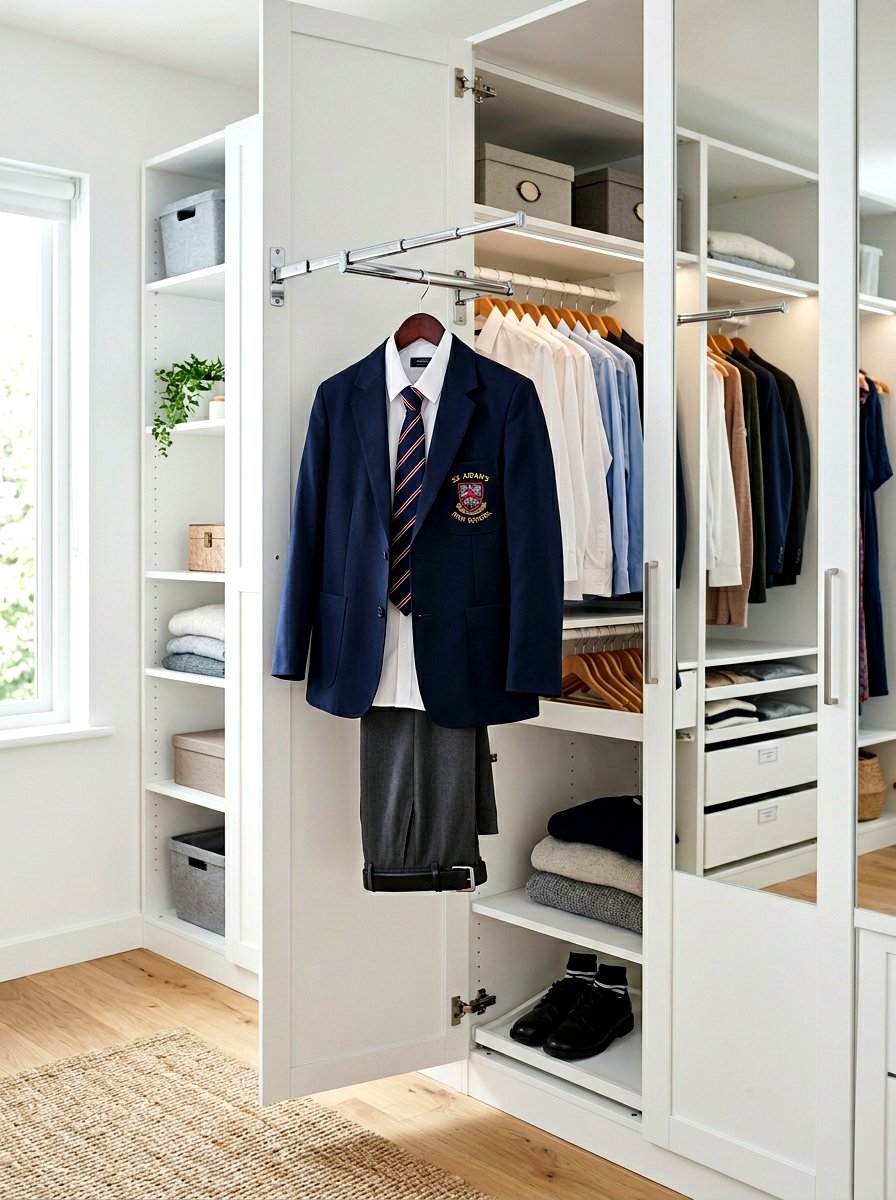
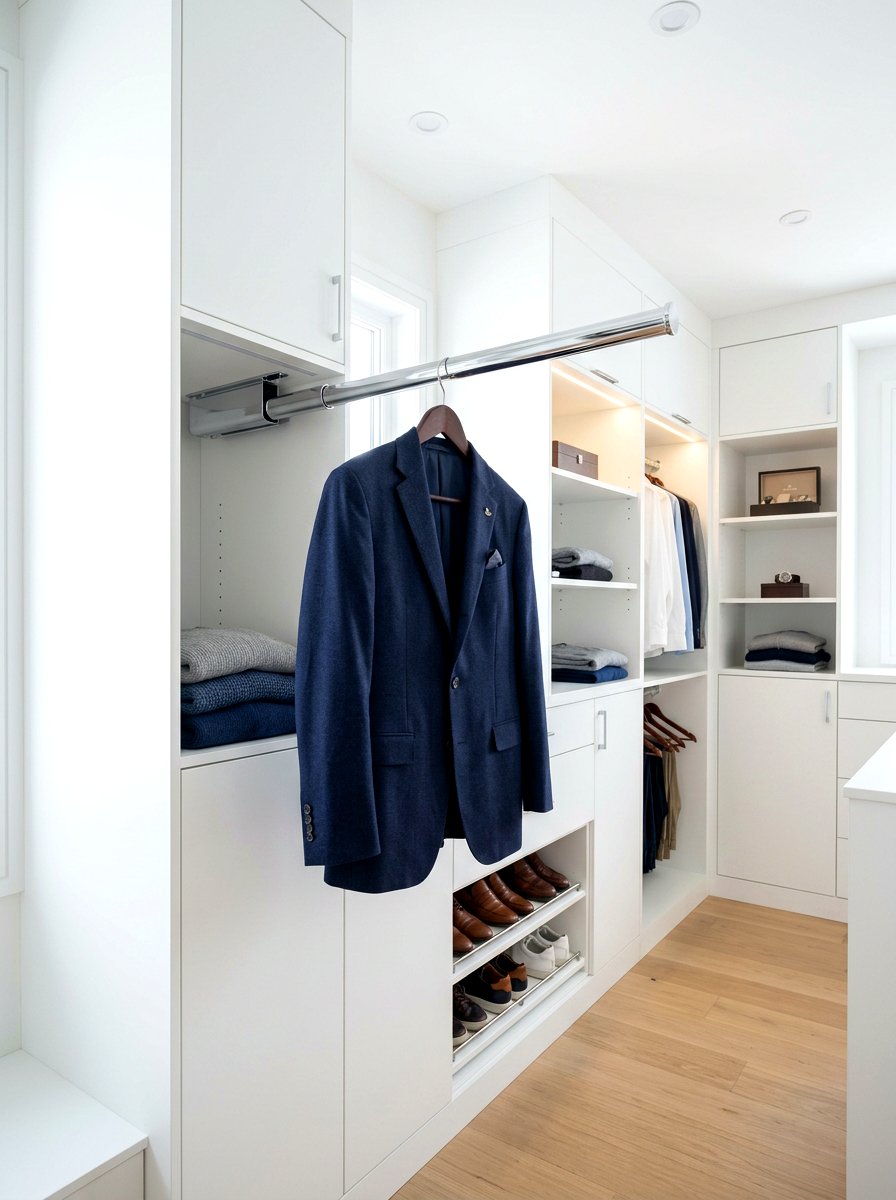
A pull out valet rod is a small but mighty accessory that makes daily outfit planning and laundry days much more manageable. This retractable metal rod extends from the side of a shelf or cabinet, providing a temporary spot to hang a school uniform or a special occasion dress. It is incredibly helpful for setting out the next day's clothing in the evening, which helps streamline the morning routine for both parents and kids. When not in use, it simply slides back out of the way, taking up almost no space. This clever addition teaches children the habit of preparing ahead and keeps their choices visible.
30. Modular closet kit
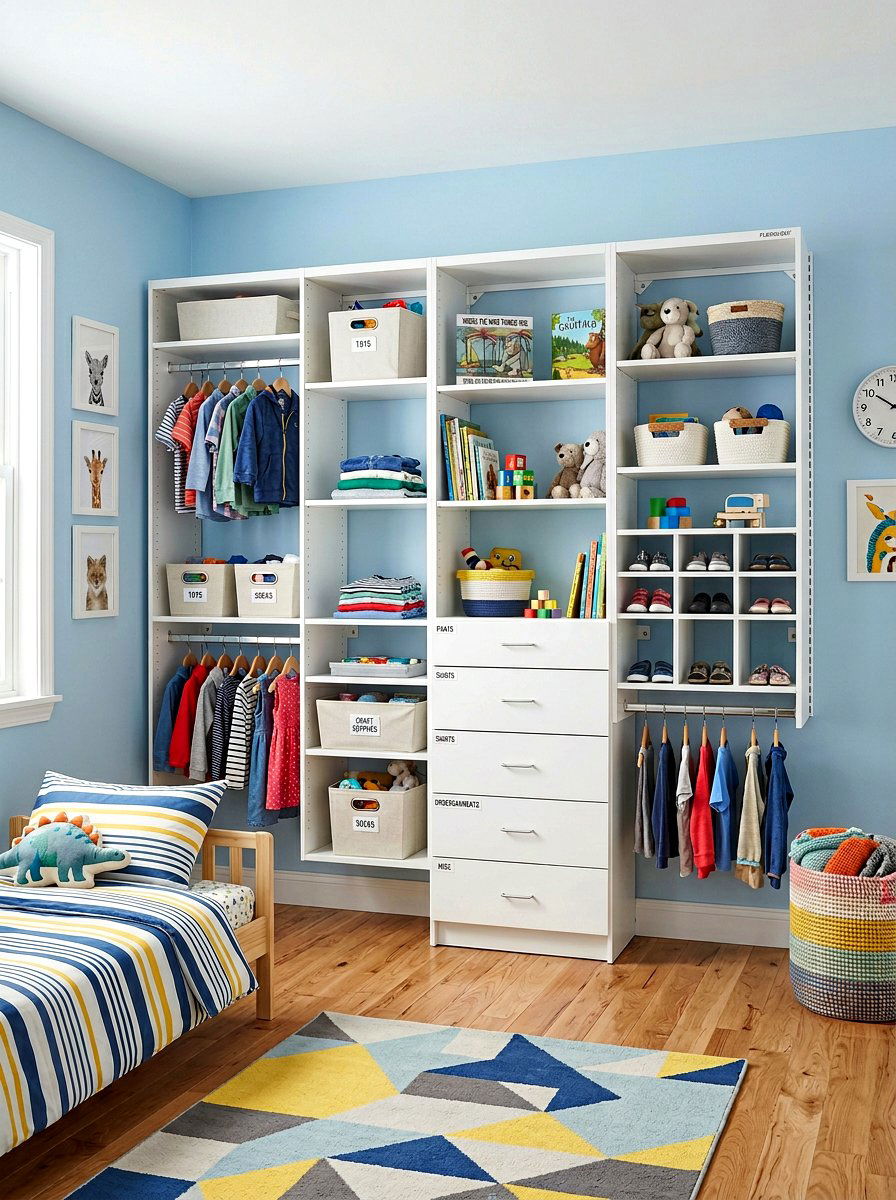
Choosing a modular closet kit is a fantastic way to get a customized storage solution that you can easily install and modify yourself. These kits come with a variety of interchangeable components, including rods, shelves, and drawers, that can be configured to fit your specific closet dimensions. The beauty of a modular system is its ability to grow; you can start with a basic setup for a toddler and add more complex elements as they become a teenager. Most kits are designed for easy assembly with standard tools, making them a popular project for DIY-inclined parents. It offers the perfect balance of professional organization and long-term flexibility.
Conclusion:
Investing in a thoughtful kids closet system is one of the best ways to bring order and harmony to your home while teaching your children essential life skills. By focusing on accessibility, durability, and flexibility, you create a space that supports their daily routines and adapts to their changing needs through every developmental stage. Whether you choose a simple wire rack or a luxurious custom wood build, the goal is to make organization feel like a natural part of their environment. A well-organized closet not only saves time during busy mornings but also provides a sense of calm and pride for children as they learn to care for their own belongings.

Related posts: