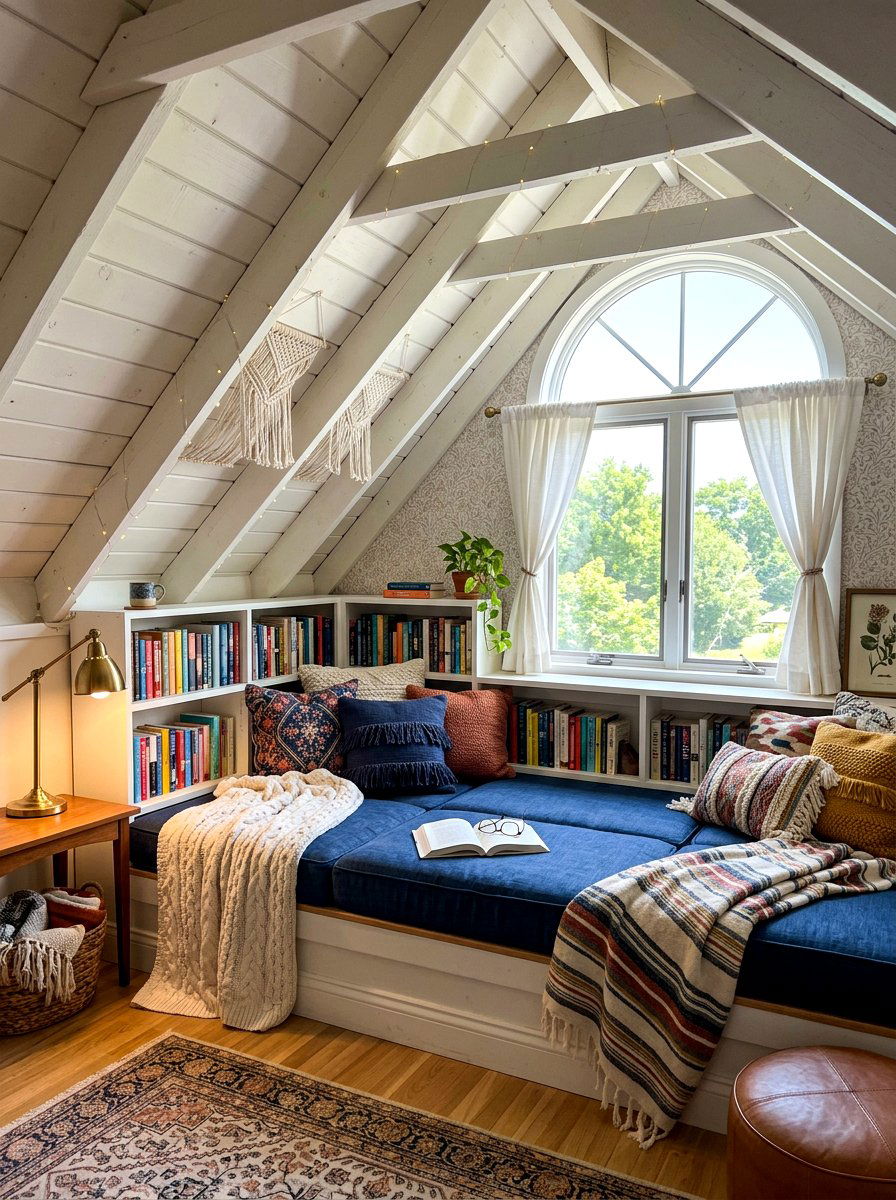
Loft living represents the ultimate fusion of urban history and modern lifestyle, offering a unique architectural canvas that standard apartments simply cannot match. These expansive, open-concept spaces often feature soaring ceilings, massive windows, and raw materials that tell a story of industrial heritage. Designing a loft living room requires a thoughtful balance between honoring those rugged roots and creating a comfortable, inviting home environment. Whether you are dealing with a converted warehouse or a modern new-build loft, the key is to embrace the verticality and openness while defining distinct functional zones. From exposed brickwork to sleek minimalist layouts, the possibilities for creative expression are truly endless in these versatile and airy dwellings.
1. Industrial loft living room
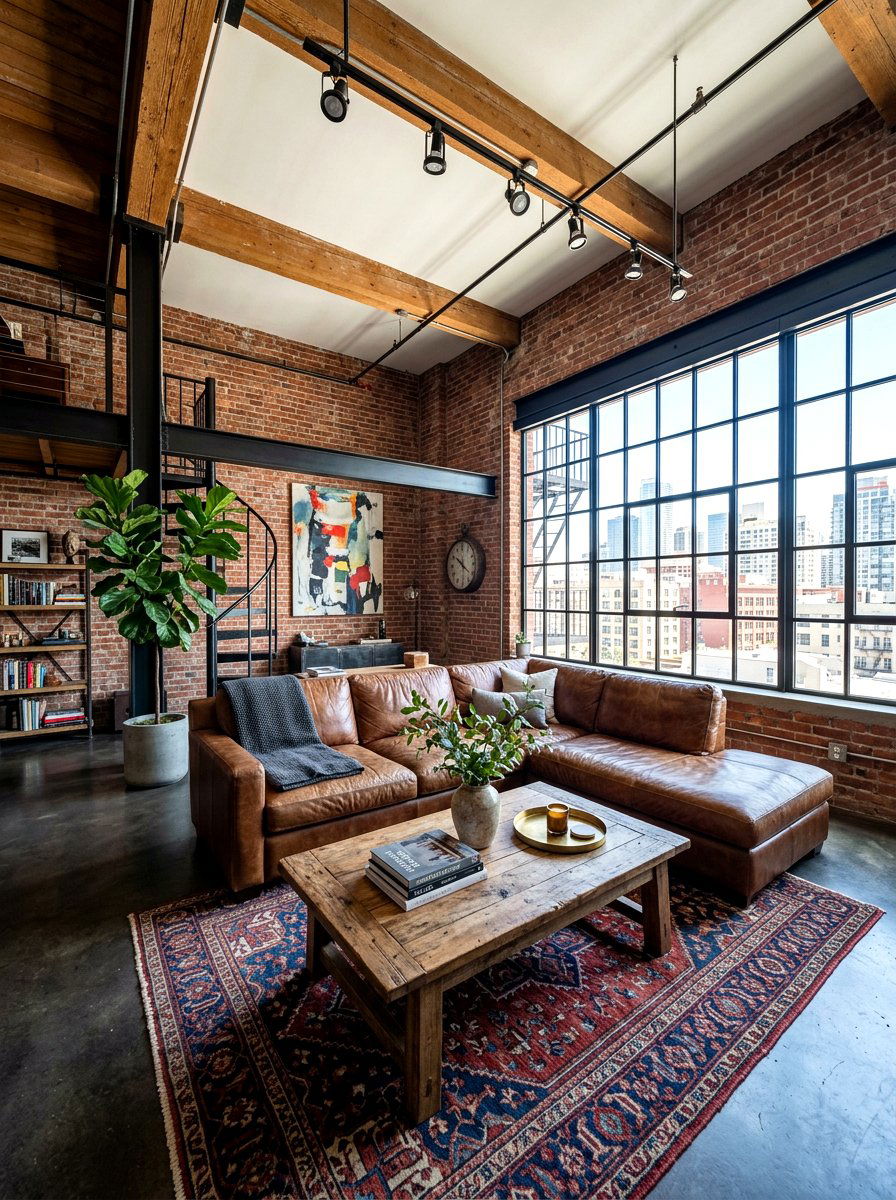
The classic industrial aesthetic remains a favorite for loft dwellers who want to celebrate the raw, unfinished beauty of urban architecture. This design typically features large-scale furniture that matches the grand proportions of the space, such as deep leather sofas in rich tobacco tones. Black metal accents are used throughout the room, appearing in window frames, track lighting, and structural columns to provide a grounded, masculine feel. To prevent the space from feeling too cold, designers often incorporate warm wood elements through coffee tables or reclaimed shelving units. Large area rugs are essential here to define the seating area and add a layer of much-needed softness underfoot against cold concrete or hardwood flooring.
2. Modern minimalist loft
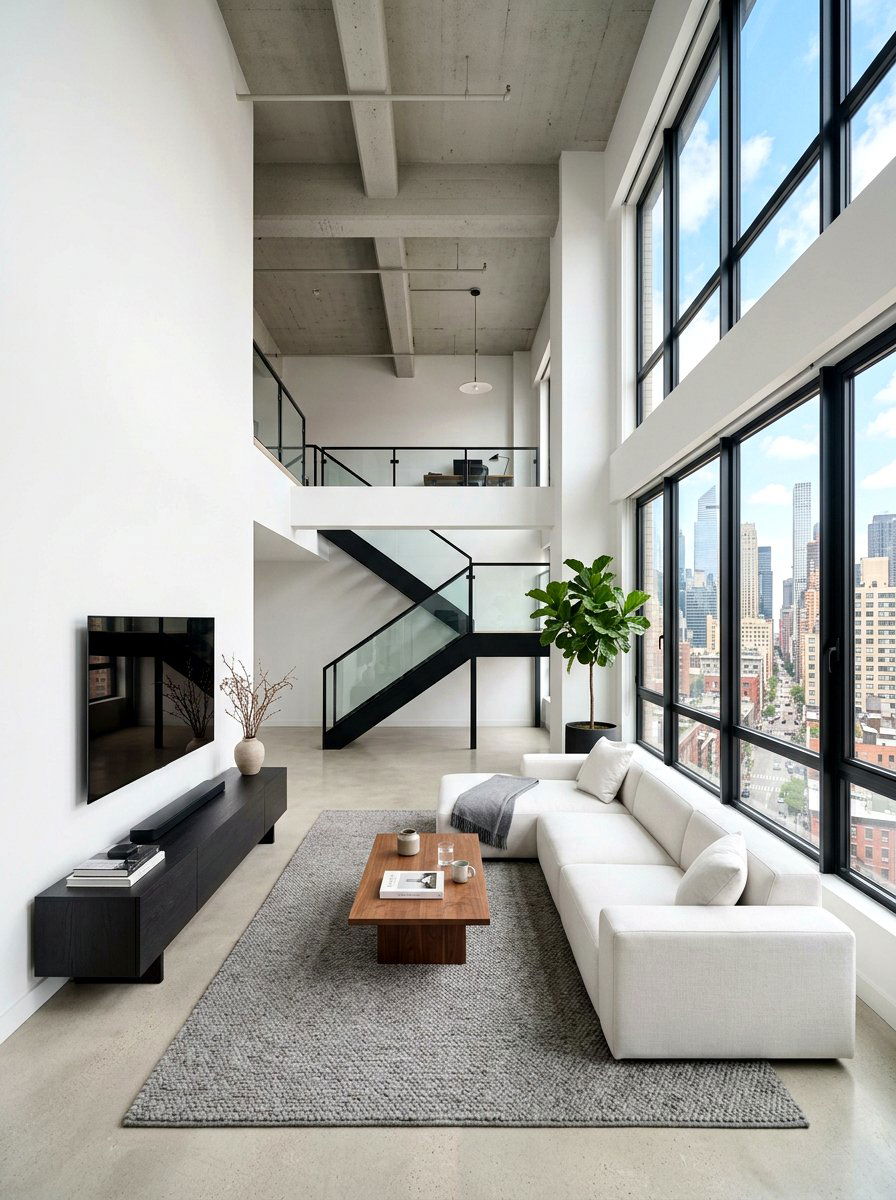
In a modern minimalist loft, the primary goal is to emphasize the sheer volume and natural light of the room without unnecessary clutter. This style favors a monochromatic or very limited color palette, often relying on shades of white, soft gray, and charcoal to create a serene atmosphere. Furniture pieces are selected for their clean lines and functional forms, such as low-profile modular sectionals and sleek, handle-less storage cabinets. Large-scale windows are left mostly untreated to maximize the panoramic city views and flood the interior with daylight. By keeping the floor plan extremely open and the decor sparse, the architectural details of the building become the focal point of the entire living experience.
3. Scandinavian loft apartment
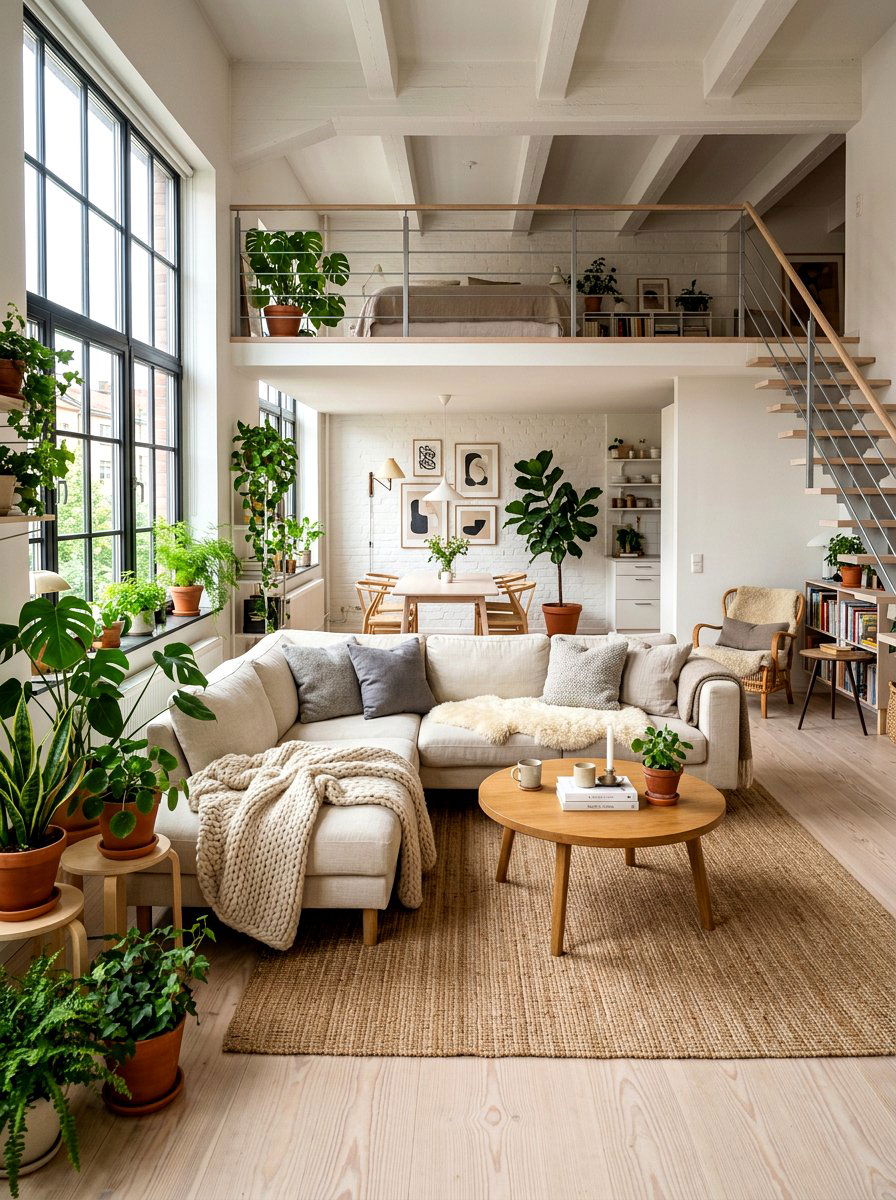
Scandinavian design brings a much-needed sense of warmth and "hygge" to the typically vast and cool environment of a city loft. This approach utilizes light-toned woods like ash or birch for flooring and furniture to brighten the space and create a natural connection. Comfortable textiles are layered throughout the room, including chunky knit throws, linen cushions, and plush wool rugs in soft, neutral hues. The color scheme is usually dominated by whites and creams, with occasional pops of muted blue or sage green to add visual interest. Indoor plants are also a staple in Scandi lofts, as they breathe life into the industrial shell and create a healthy, tranquil urban sanctuary.
4. Urban rustic loft
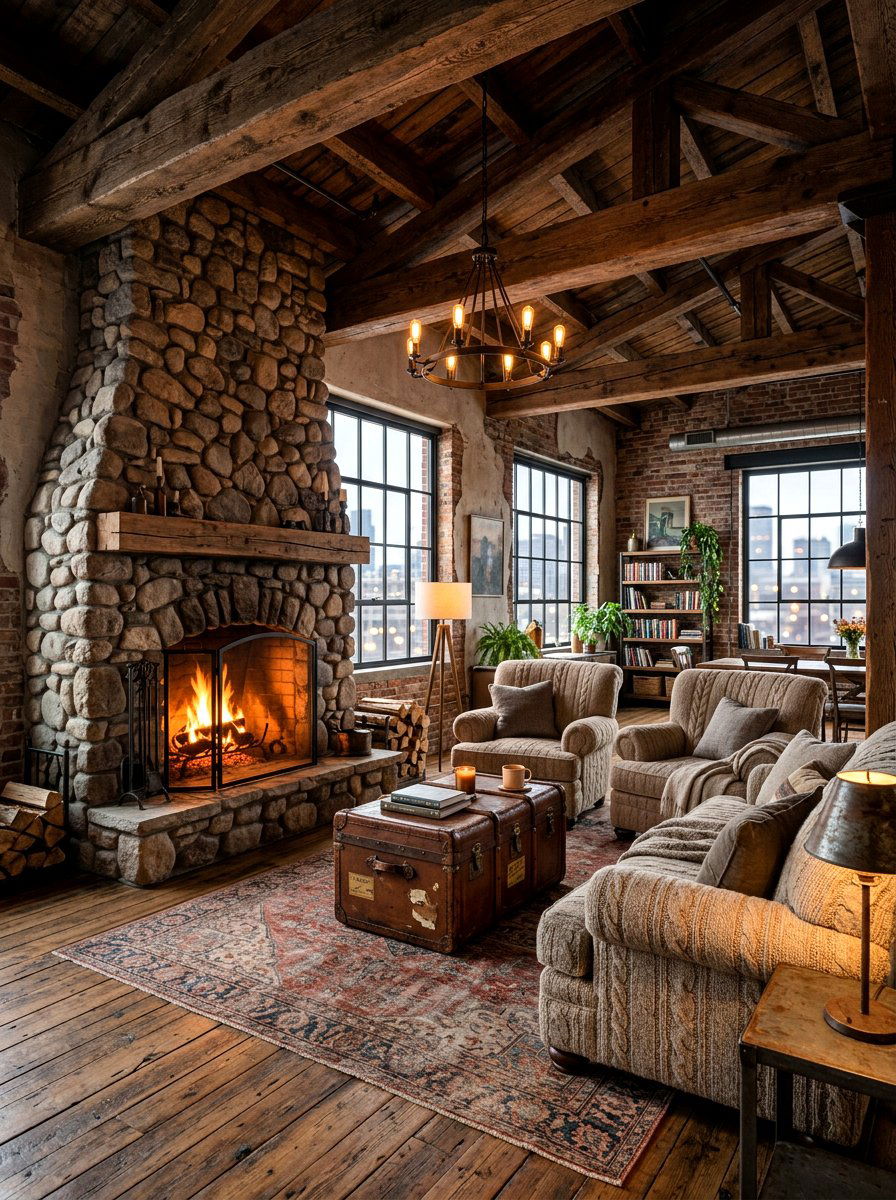
Blending the ruggedness of a warehouse with the coziness of a mountain lodge, the urban rustic style is perfect for creating a lived-in feel. This design emphasizes heavy textures, such as distressed wood ceiling beams, stone accents, and chunky wrought-iron fixtures. A large, oversized fireplace often serves as the heart of the living room, surrounded by comfortable armchairs upholstered in tactile fabrics like wool or worn-out canvas. The decor usually includes vintage finds, such as antique trunks used as coffee tables or old factory carts repurposed for storage. This mix of old and new creates a soulful environment that feels both historic and incredibly comfortable for everyday modern life.
5. Small studio loft layout
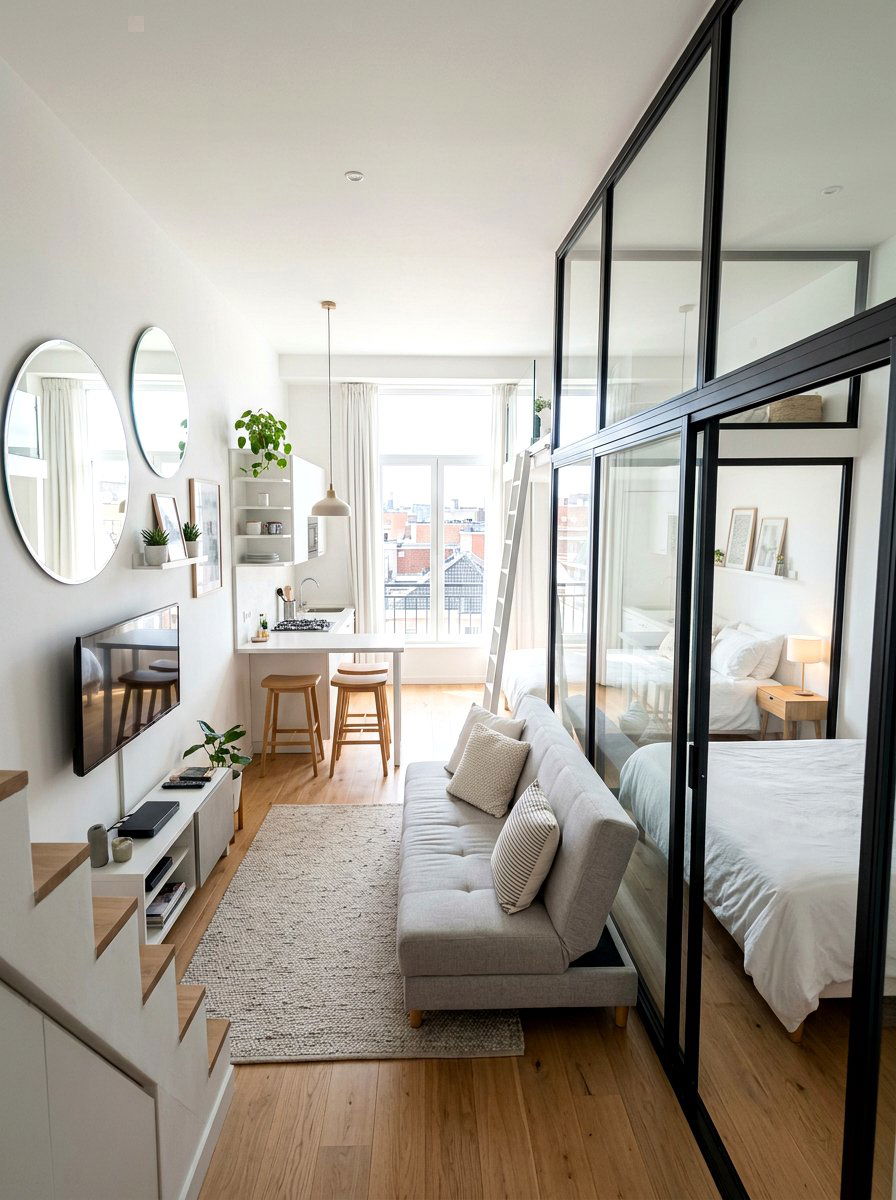
Designing a small studio loft requires a strategic approach to maximize every available square inch without making the room feel cramped or disorganized. Smart zoning is the key here, often achieved by using low-profile furniture or open shelving units that act as translucent room dividers. Light-reflective surfaces, such as large mirrors and glass coffee tables, help bounce light around the room to create the illusion of a much larger space. Multi-functional pieces, like a sofa bed or an ottoman with hidden storage, provide essential utility while keeping the floor plan clear. By sticking to a cohesive, light color palette, the small loft feels unified and surprisingly airy despite its limited footprint.
6. High ceiling loft decor
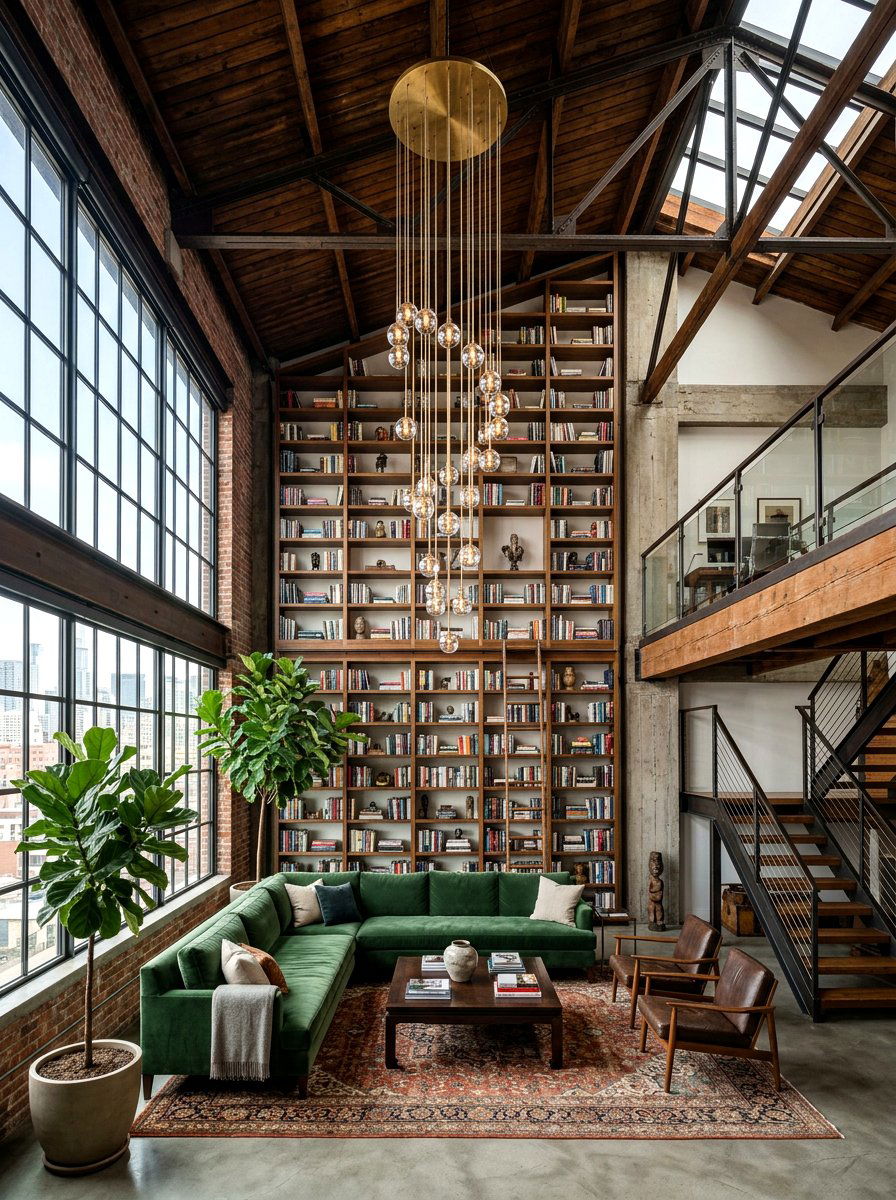
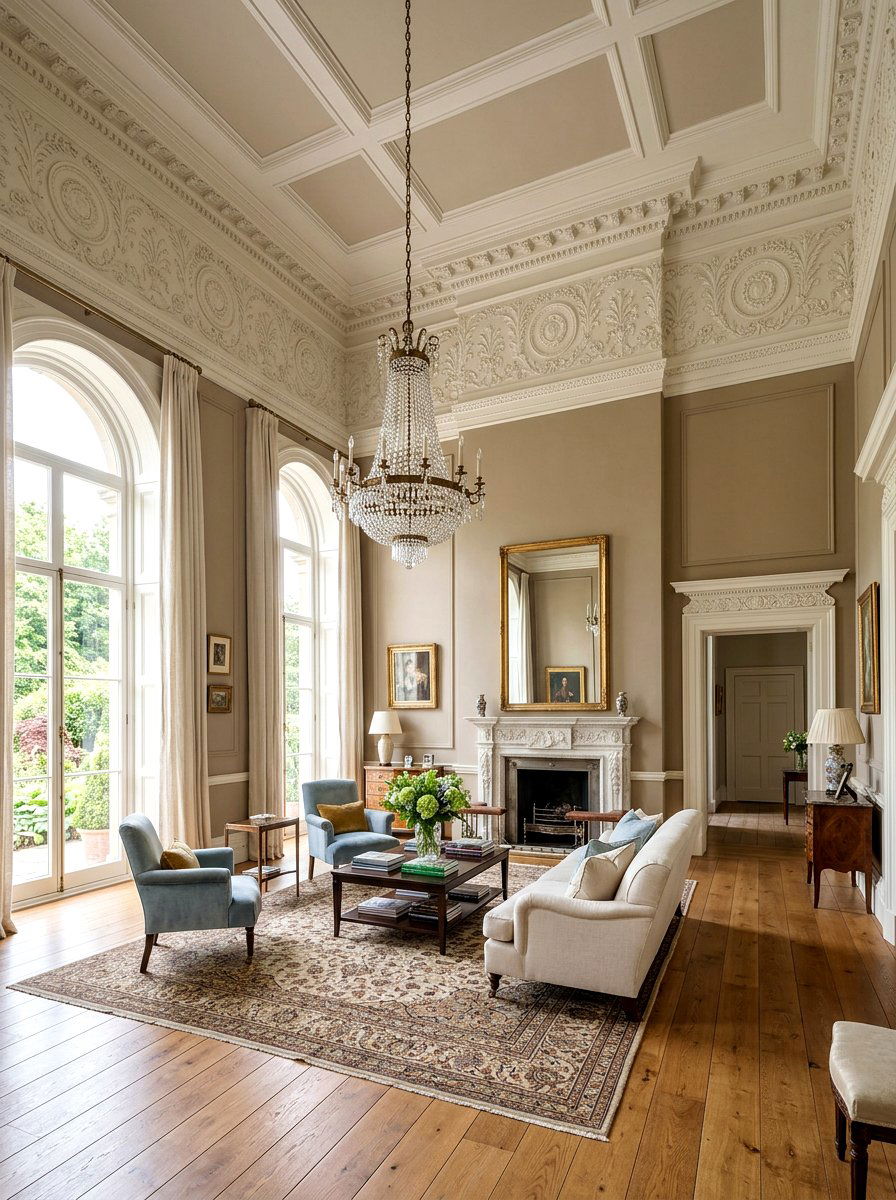
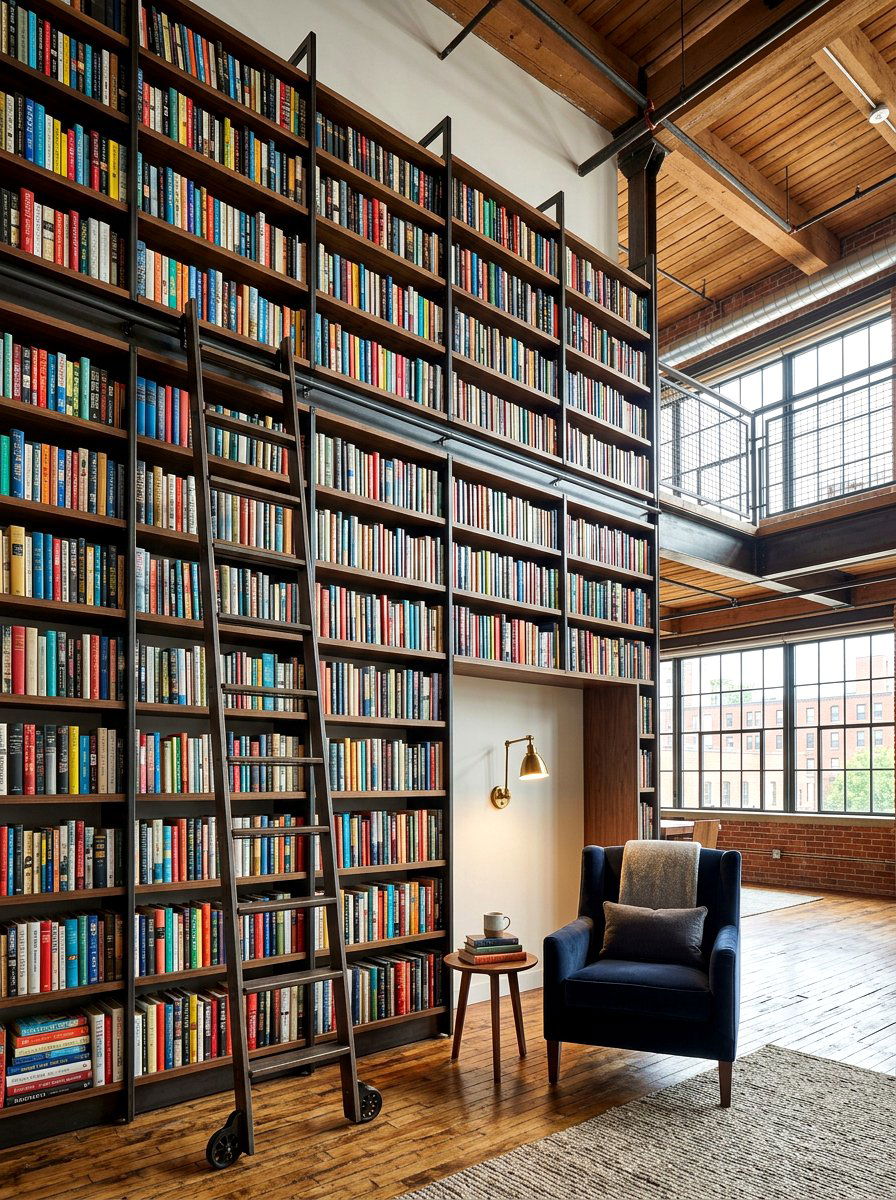
When you have the luxury of soaring heights, the decor must rise to the occasion to prevent the room from feeling empty. Grand vertical elements, such as floor-to-ceiling bookshelves or massive vertical art installations, are perfect for drawing the eye upward and celebrating the height. Long, dramatic pendant lights or multi-tiered chandeliers can hang low over the seating area to create a more intimate and human-scaled feel within the vastness. It is also common to use tall indoor trees or architectural plants to fill the vertical void and add a lush, organic quality. These high-reaching design choices ensure that the vertical space is treated as an asset rather than a challenge.
7. Bohemian loft interior
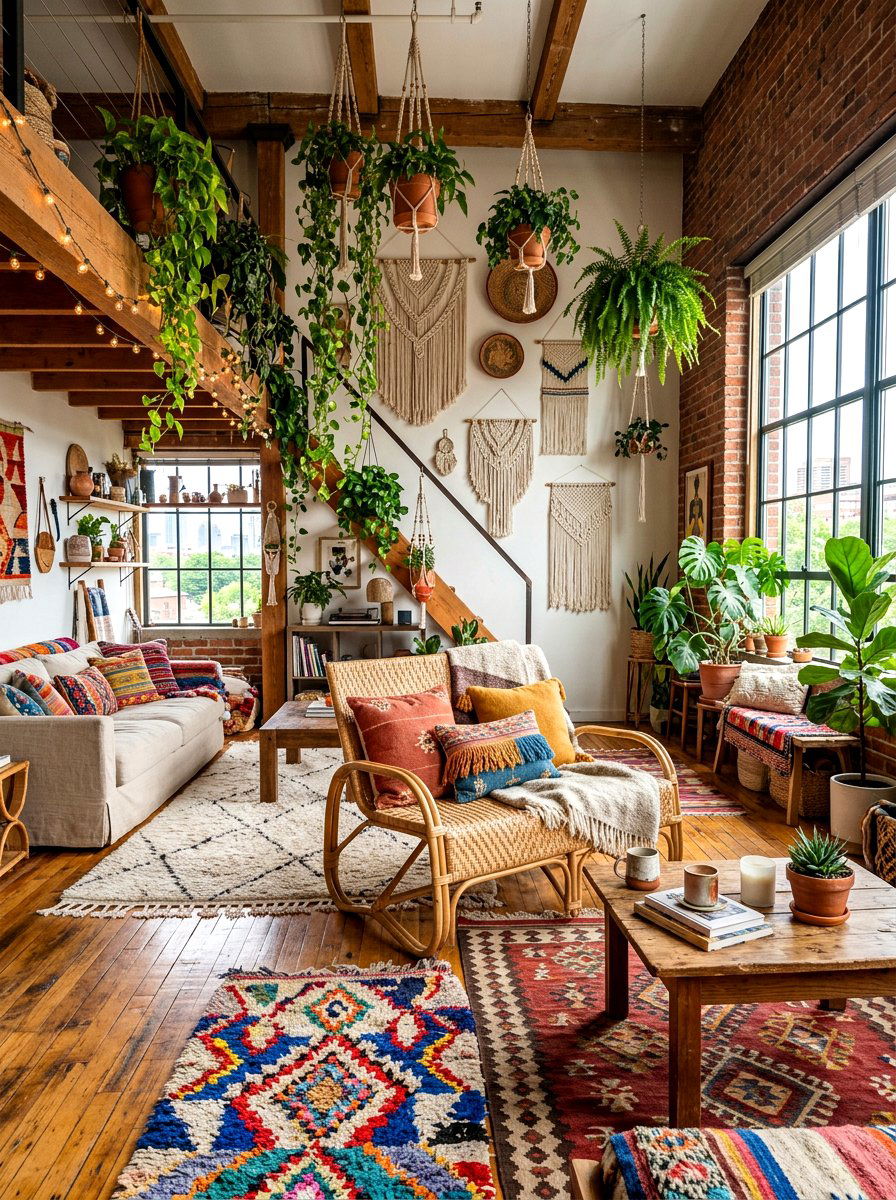
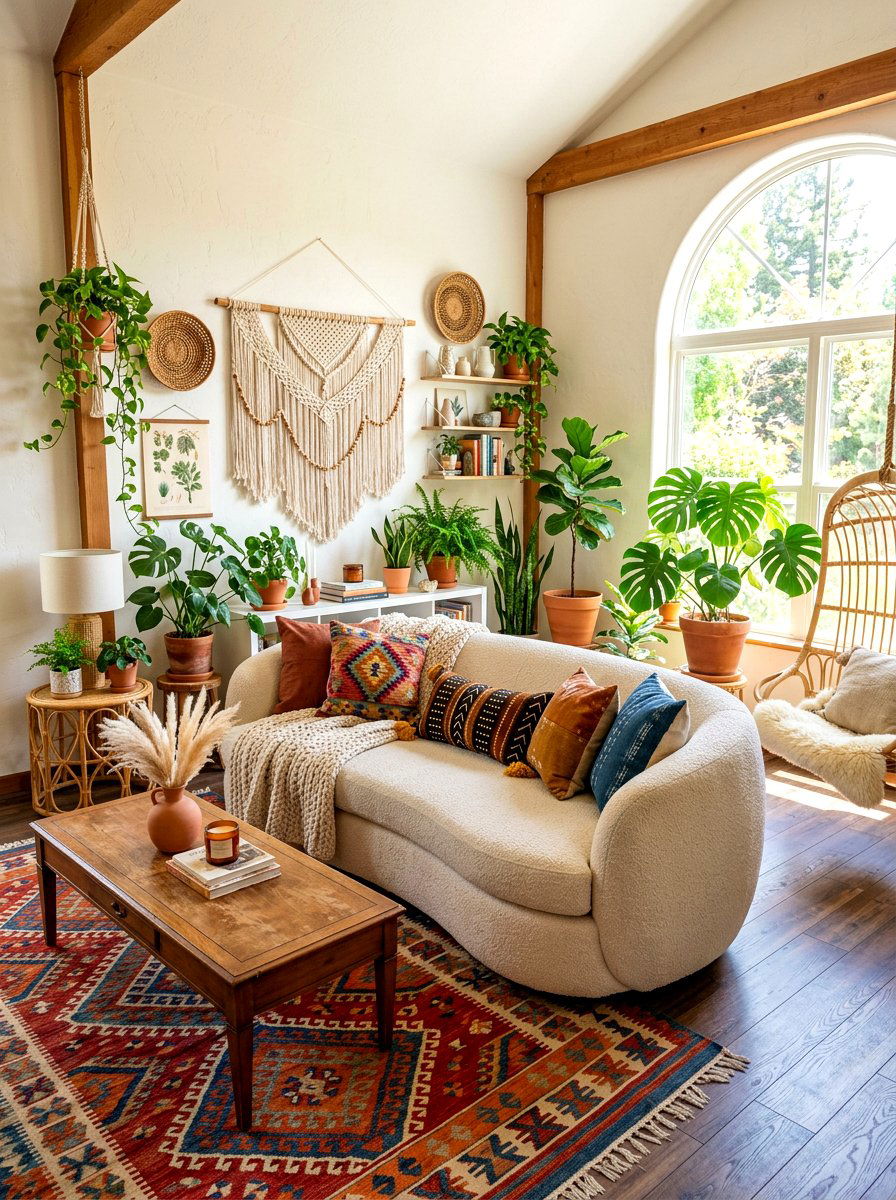
A bohemian loft is a vibrant celebration of color, texture, and global influences, making it one of the most expressive design styles. This look thrives on layering, with Moroccan rugs stacked over larger sisal mats and a variety of colorful floor cushions for extra seating. The furniture is often an eclectic mix of vintage finds, rattan pieces, and plush velvet sofas that invite you to sink in and relax. Macramé wall hangings and a "more is more" approach to indoor plants help soften the industrial edges of the building. This style turns a potentially stark loft into a cozy, artistic retreat that feels deeply personal and full of creative energy.
8. Mid century modern loft
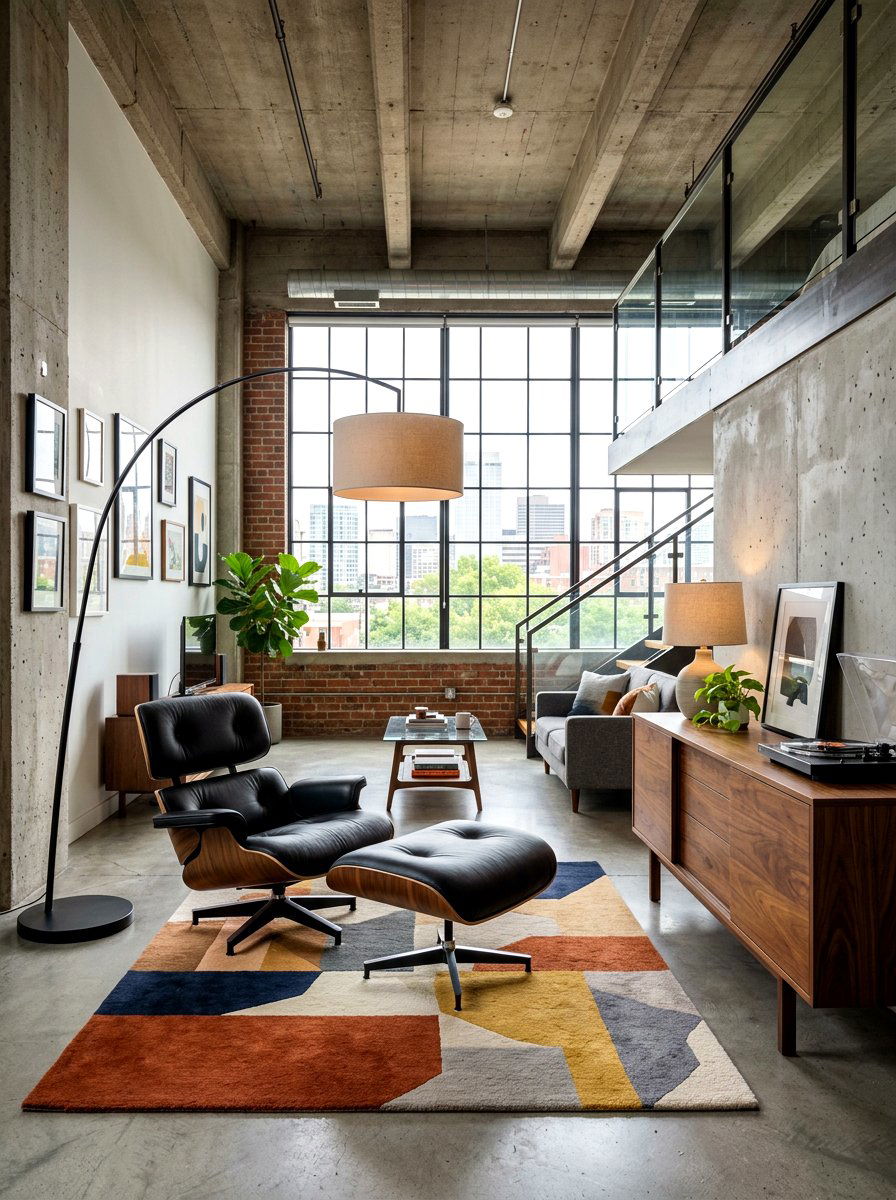
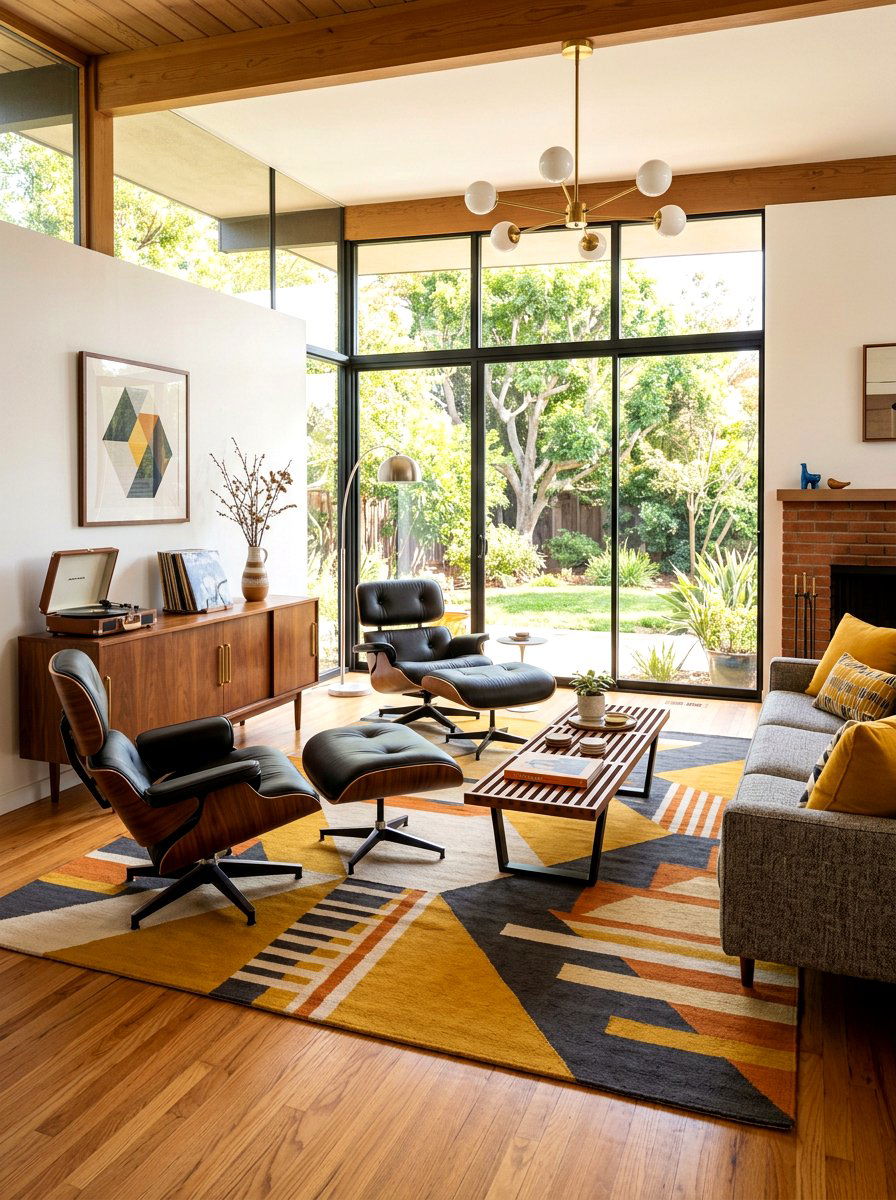
The clean silhouettes and organic shapes of mid-century modern furniture provide a beautiful contrast to the rigid lines of an industrial loft space. Iconic pieces like Eames chairs or tufted button sofas fit perfectly within the open layout, offering both style and comfort without overwhelming the room. Warm wood finishes like walnut or teak bring a sophisticated richness to the interior, while geometric patterns on rugs or pillows add a playful touch. Large, statement floor lamps with arched necks are often used to bridge the gap between the high ceilings and the low-profile furniture. This timeless aesthetic creates a polished, upscale environment that feels both nostalgic and contemporary in an urban setting.
9. Exposed brick loft living room
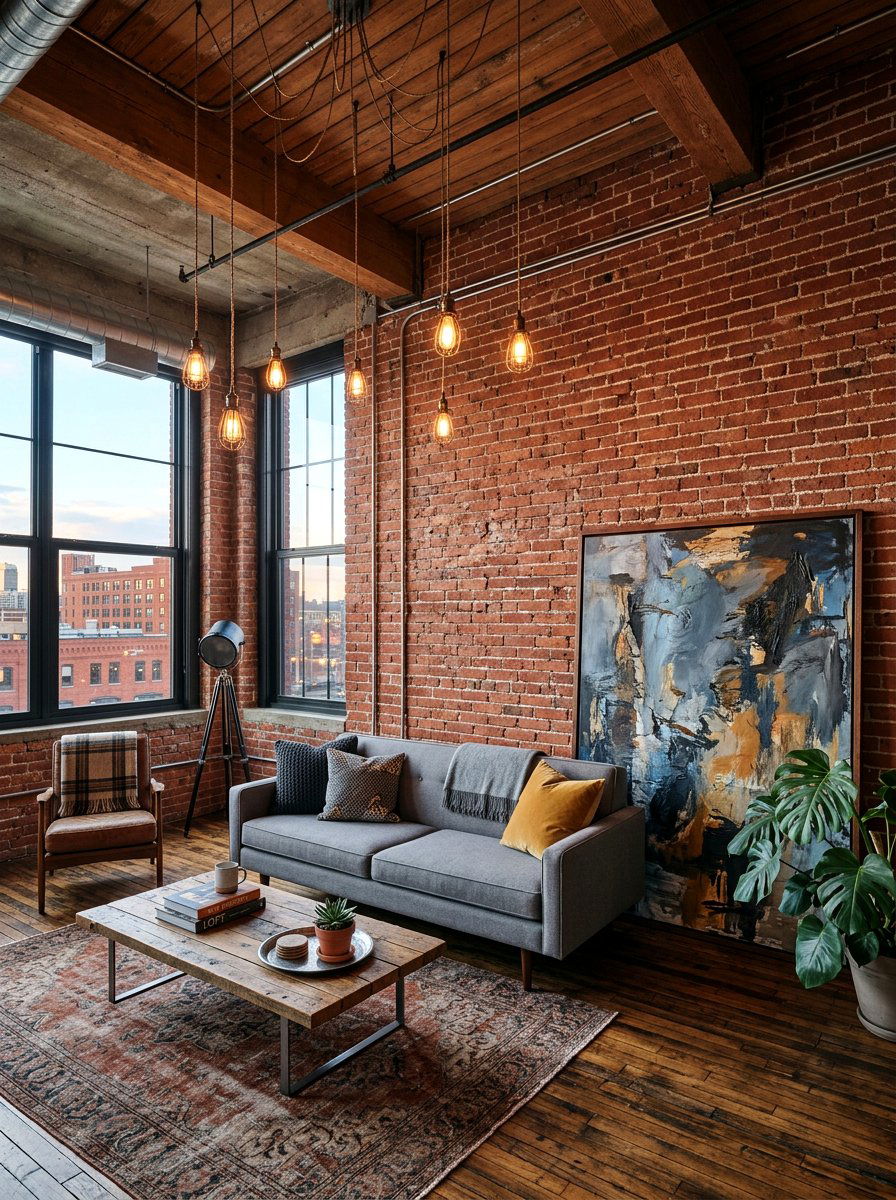
Exposed brick is perhaps the most iconic feature of a loft, and the living room should be designed to highlight its texture. Whether the brick is traditional red, weathered brown, or painted a crisp white, it provides a warm and tactile backdrop for the entire space. To complement the brick, designers often use metal conduits and vintage-style Edison bulb fixtures that emphasize the building’s industrial history. Neutral furniture allows the natural variations in the brickwork to stand out as a primary design feature. Large, colorful abstract paintings can be leaned against or hung on the brick walls to create a gallery-like feel that bridges industrial architecture with modern fine art.
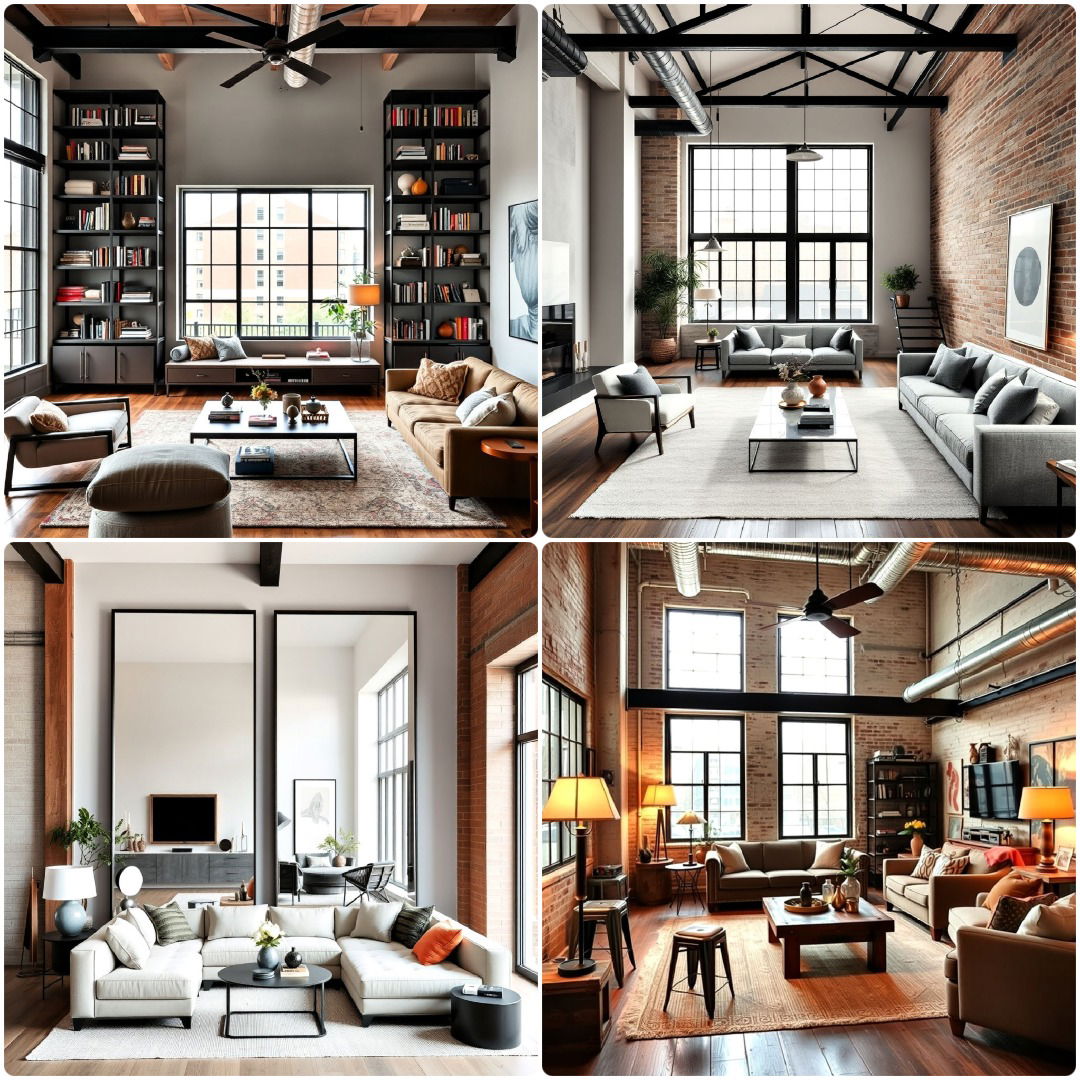
10. Concrete wall loft design
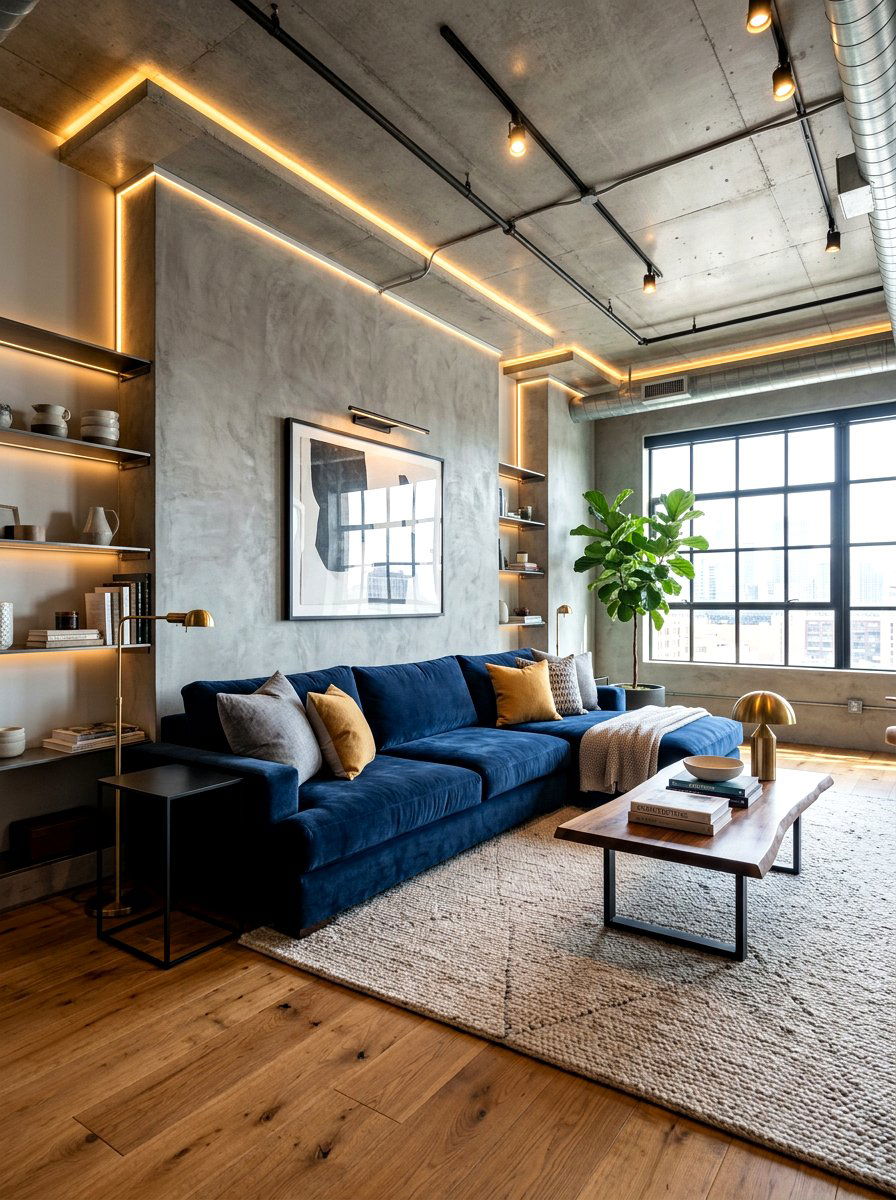
Raw concrete walls offer a cool, sophisticated, and slightly edgy aesthetic that is synonymous with modern urban living and high-end loft architecture. To keep a concrete-heavy room from feeling sterile, it is important to introduce plenty of warm textures like velvet, leather, and thick-pile rugs. Wood accents in furniture and flooring are particularly effective at balancing the cold gray tones of the concrete with natural warmth and depth. Dramatic accent lighting, such as recessed LED strips or spotlighting, can be used to highlight the unique imperfections and textures of the poured concrete surfaces. This design approach results in a sleek, gallery-like living space that feels incredibly modern and undeniably high-end.
11. Open concept loft area
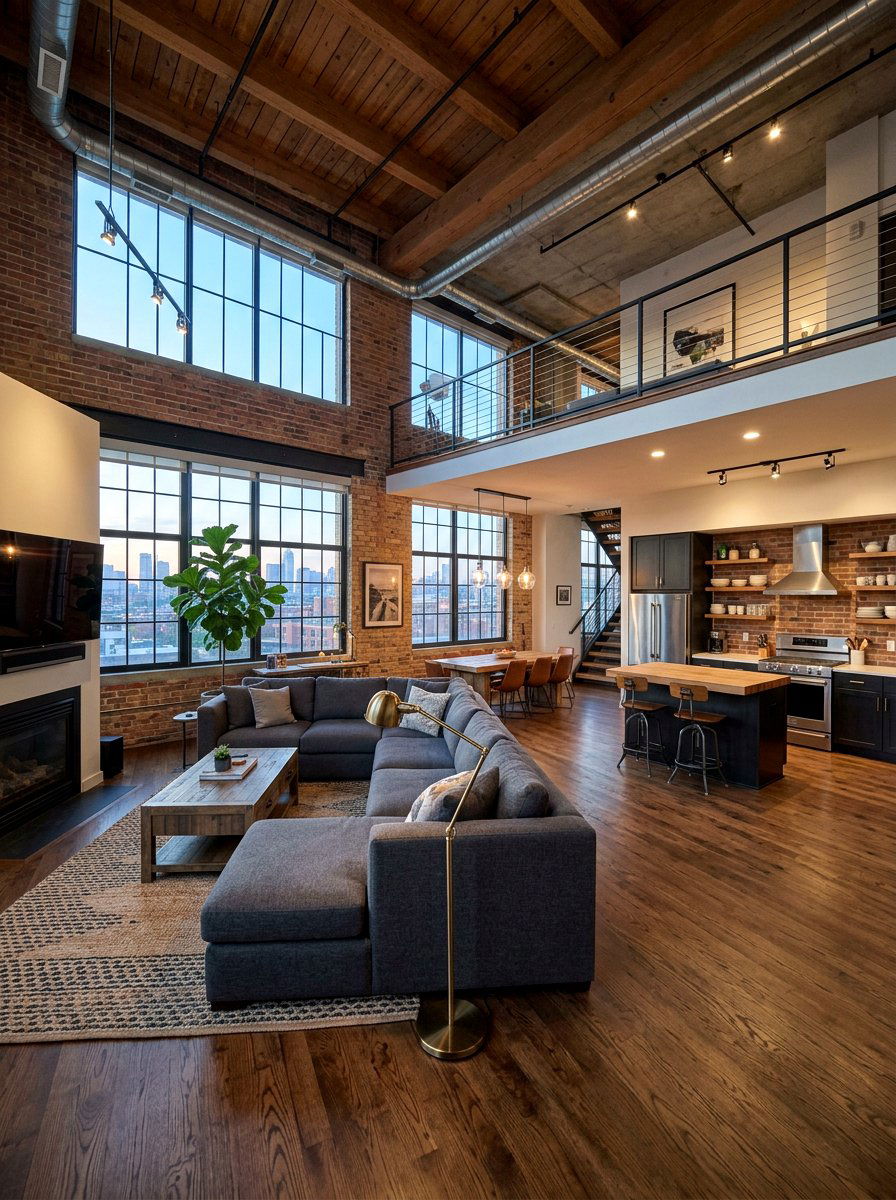
In a completely open-concept loft, the challenge is to create a sense of order and purpose without building any permanent walls. Interior designers achieve this by using furniture placement and area rugs to define "rooms" within the larger, undivided space. A large sectional sofa can act as a soft wall that separates the living zone from the kitchen or dining area. Consistent flooring throughout the entire loft helps maintain a sense of flow, while varied lighting levels help distinguish the different functional zones after sunset. By keeping the sightlines clear from one end to the other, the loft retains its impressive sense of scale and freedom.
12. Luxury penthouse loft living
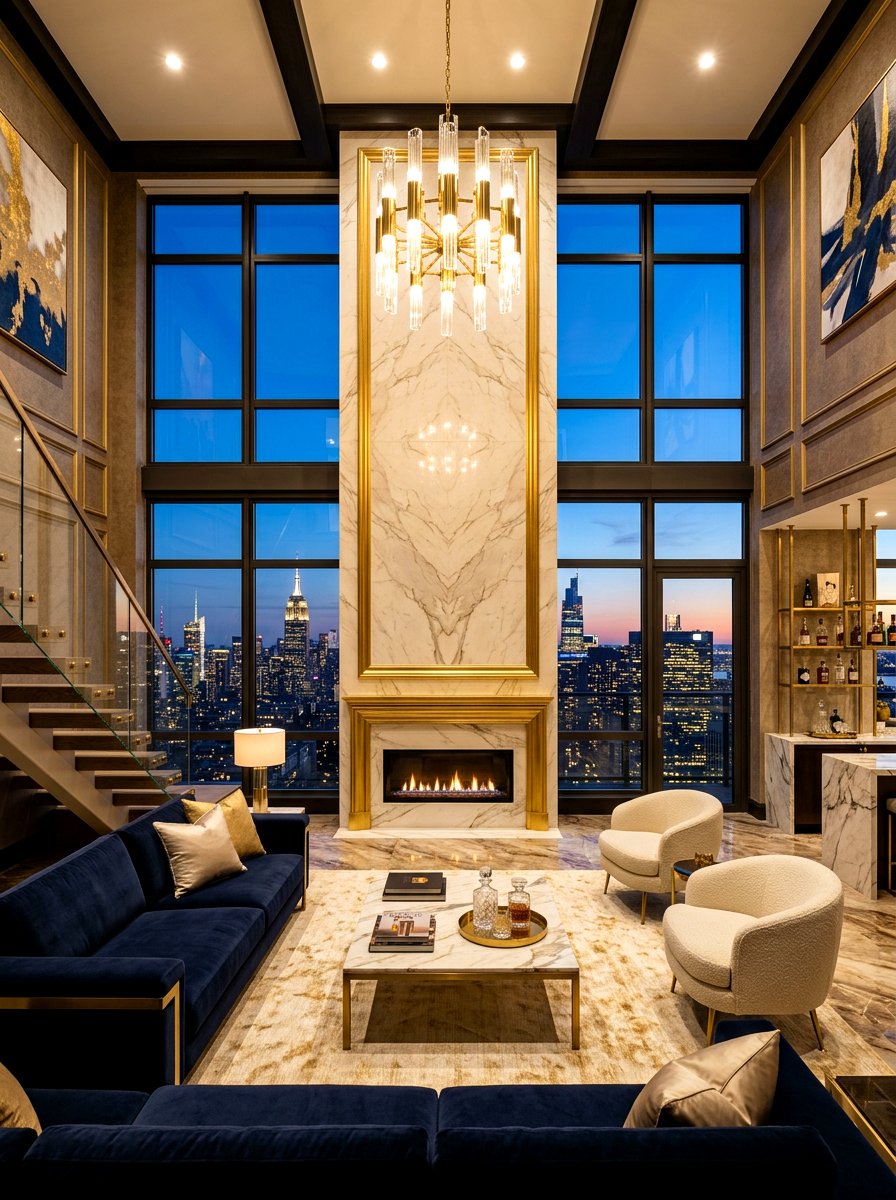
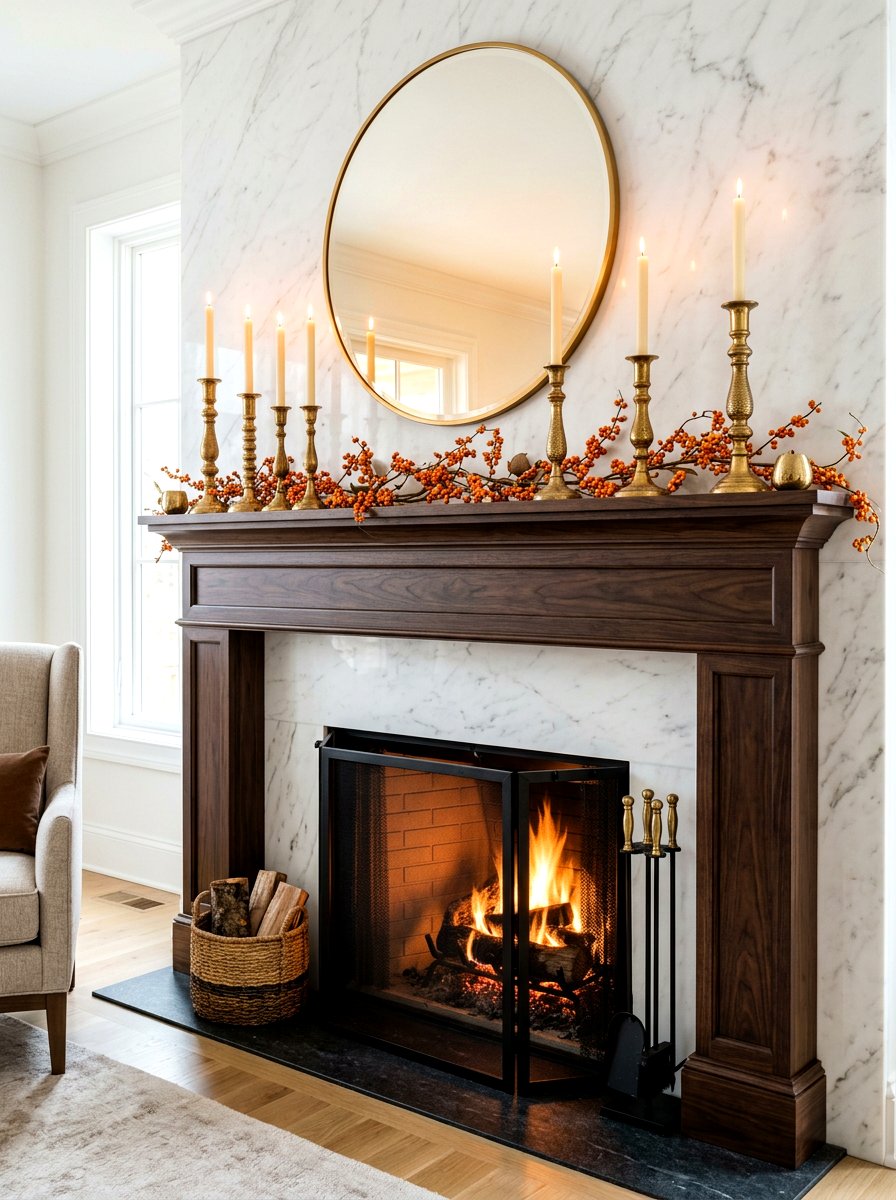
Luxury penthouse lofts take urban living to the next level by combining industrial architecture with high-end materials and sophisticated finishes. Think marble-clad fireplaces, custom-made designer furniture, and polished brass or gold accents that sparkle against the large expanses of glass. These spaces often feature double-height ceilings and private terraces that seamlessly extend the living room into the outdoors for an unparalleled hosting experience. Automated smart home systems control the lighting and motorized shades, ensuring that the environment is always perfectly adjusted for comfort or entertainment. This style is all about refined elegance, where every detail is curated to provide a world-class living experience in the heart of the city.
13. Black and white loft
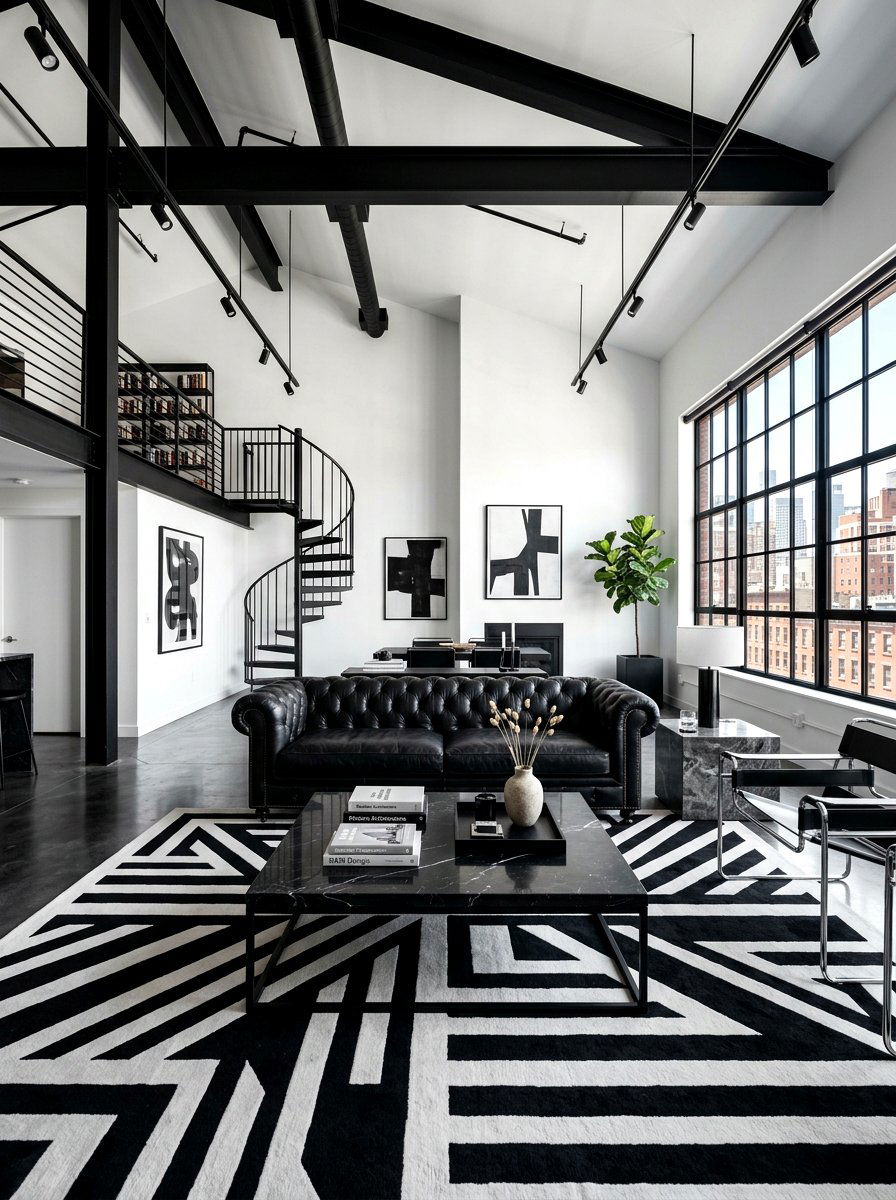
A black and white color scheme creates a high-contrast, graphic look that is both timeless and incredibly modern in a loft. The starkness of white walls and light-colored floors provides a clean backdrop that makes black furniture and architectural details really pop. This palette works particularly well when emphasizing structural elements like black steel beams, window mullions, and industrial-style track lighting fixtures. To prevent the room from feeling too flat, it is vital to incorporate a wide variety of textures, such as leather, wool, and polished stone. This sophisticated approach results in a very disciplined and stylish living room that feels like a piece of contemporary art itself.
14. Colorful eclectic loft room
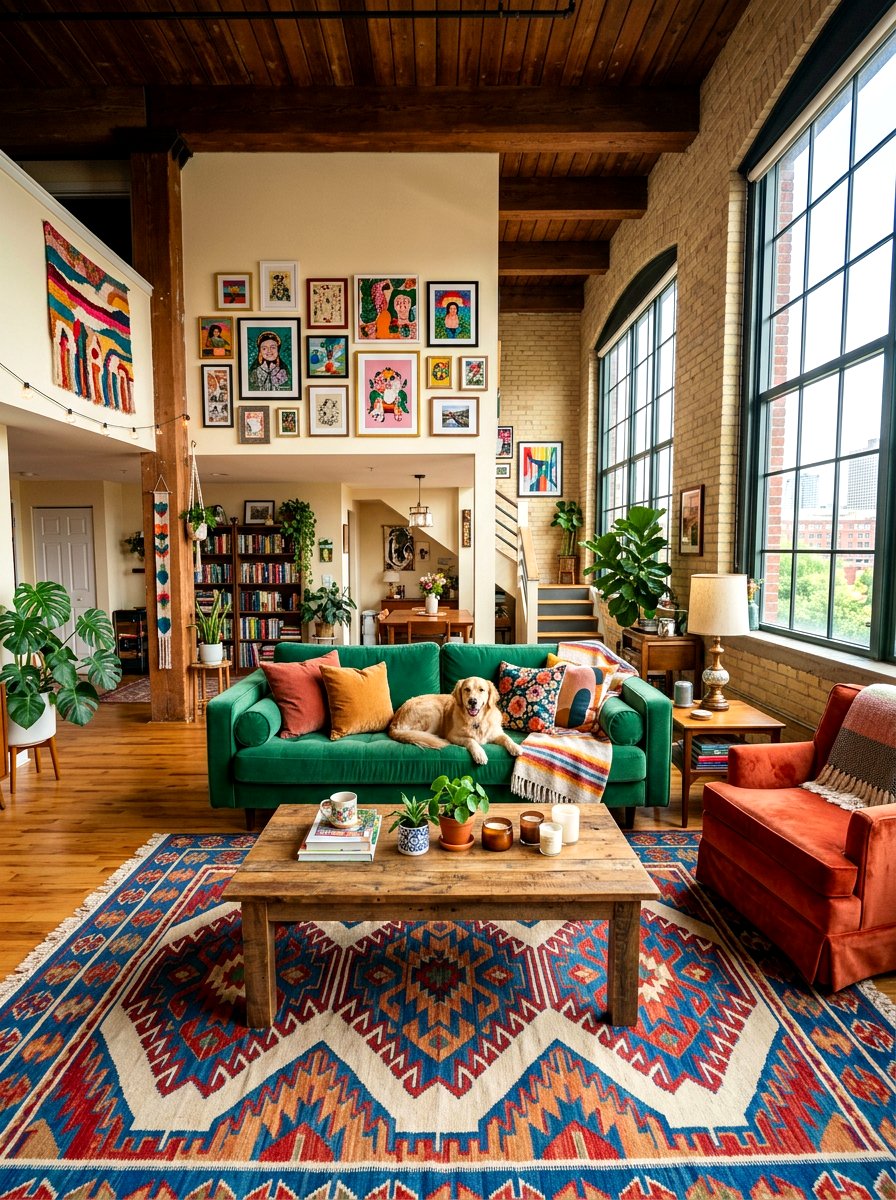
For those who find neutrals too quiet, a colorful eclectic loft is the perfect way to inject personality and joy into the home. This design style involves mixing bold hues like deep emerald green, sapphire blue, and vibrant terracotta across furniture and decor pieces. The vast white or gray walls of a loft act as a gallery space for large, colorful artworks that tie the various colors together. Pattern mixing is also encouraged, with geometric rugs playing off floral cushions or abstract wall tapestries for a rich visual feast. Despite the variety, a sense of cohesion is maintained through a consistent level of saturation and a few recurring accent colors.
15. Greenhouse style loft apartment
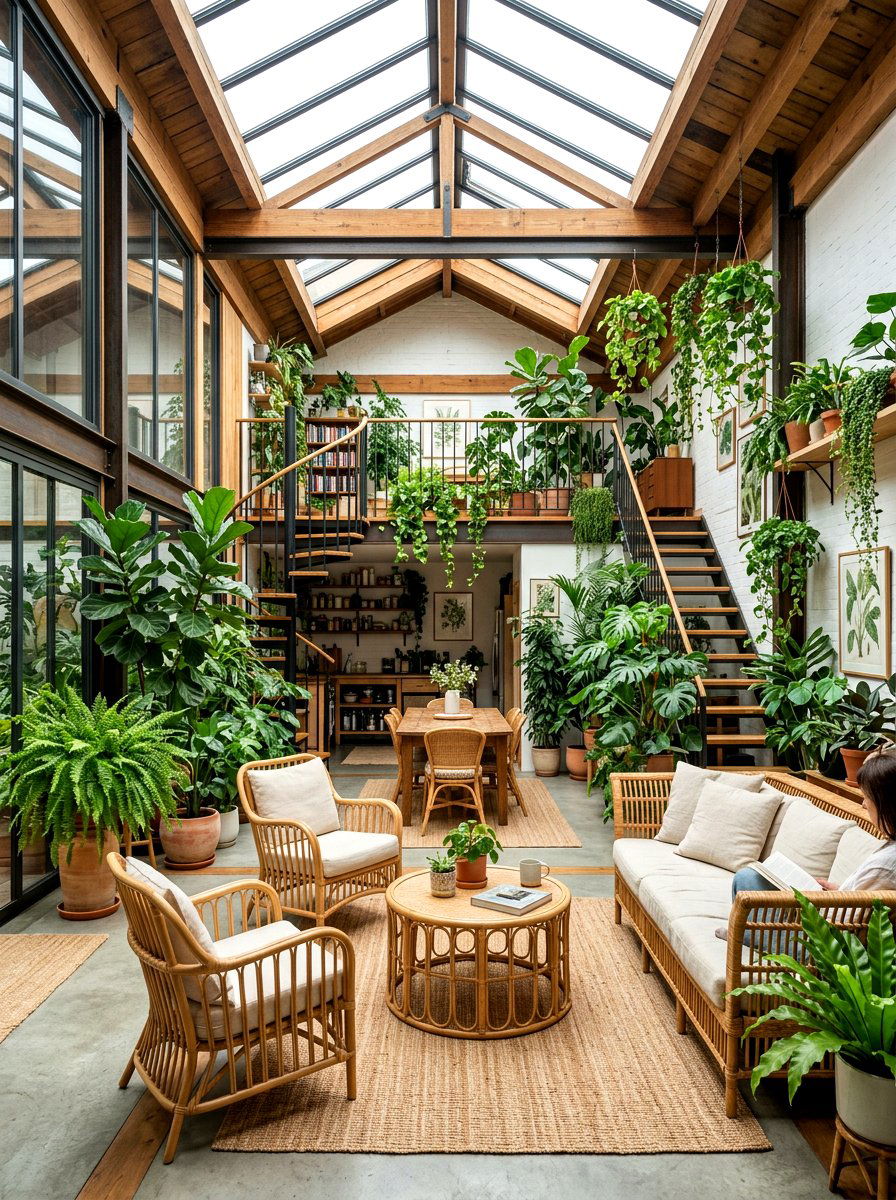
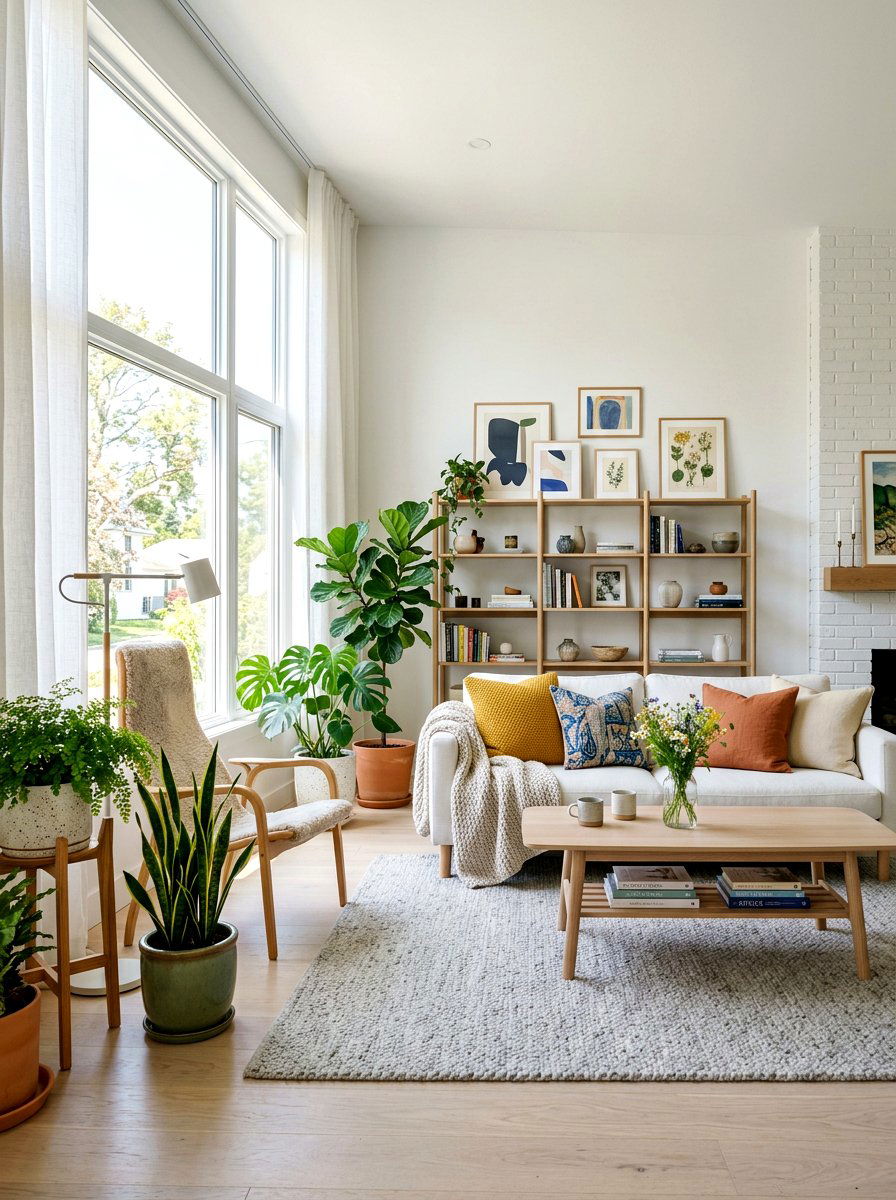
Bringing the outdoors inside is a growing trend, and the large windows of a loft make it the perfect environment for a greenhouse aesthetic. This design focuses on a "jungle" of indoor plants, from towering fiddle leaf figs in corners to cascading pothos hanging from high ceiling beams. Natural materials like rattan, light wood, and jute are used for furniture and decor to complement the abundance of living greenery. Large skylights or floor-to-ceiling windows ensure the plants thrive while filling the living room with a fresh, oxygen-rich, and tranquil vibe. This style effectively softens the industrial hardness of the loft, creating a serene and healthy oasis amidst the city.
16. Transitional loft living space
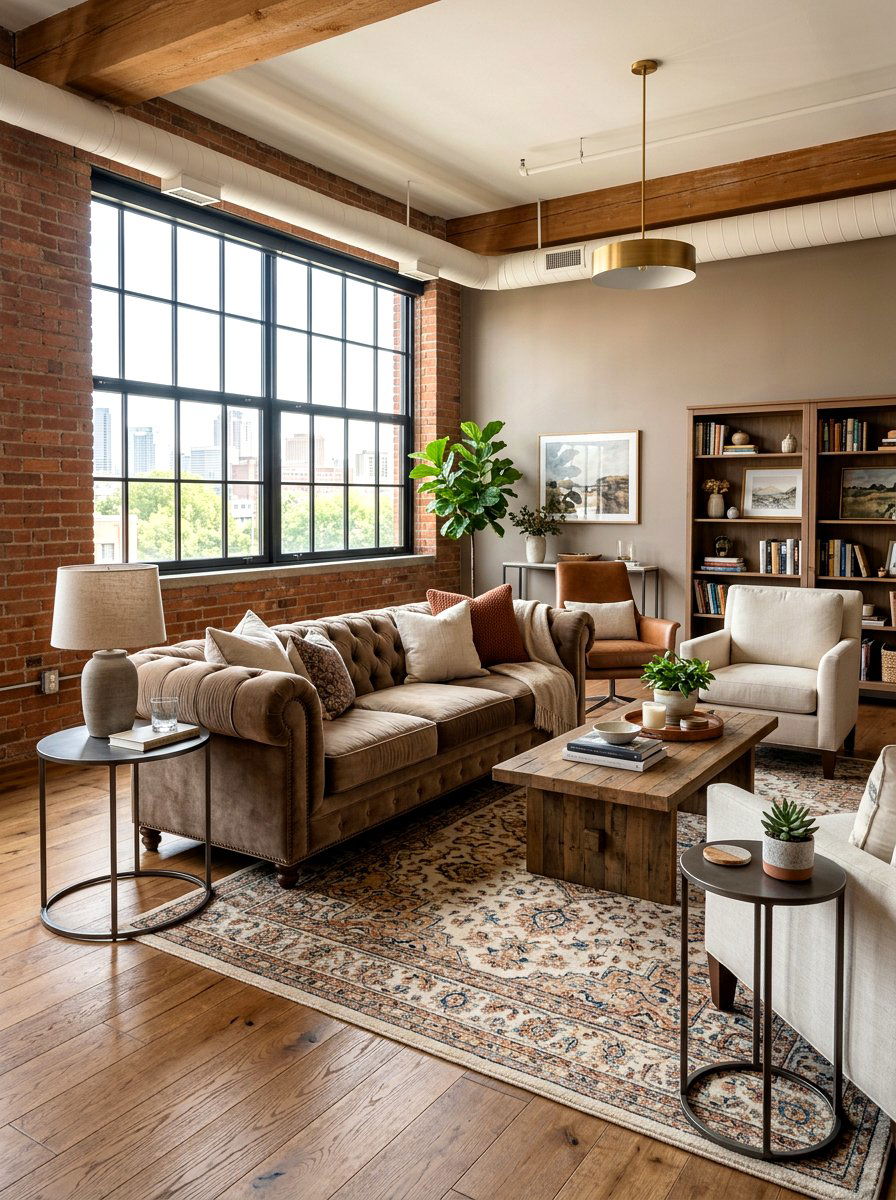
Transitional design bridges the gap between traditional comfort and modern loft living, making it an excellent choice for a family-friendly home. This style combines the clean lines of a contemporary loft with the soft curves and classic details of more traditional furniture pieces. A comfortable, deep-seated sofa might be paired with sleek metal side tables and a classic Persian rug for a balanced look. The color palette is usually soft and neutral, leaning toward warm taupes, creams, and grays to create a calm and inviting atmosphere. By mixing different eras and styles, the transitional loft feels timeless, approachable, and perfectly suited for relaxed everyday living without sacrificing style.
17. Art deco loft lounge
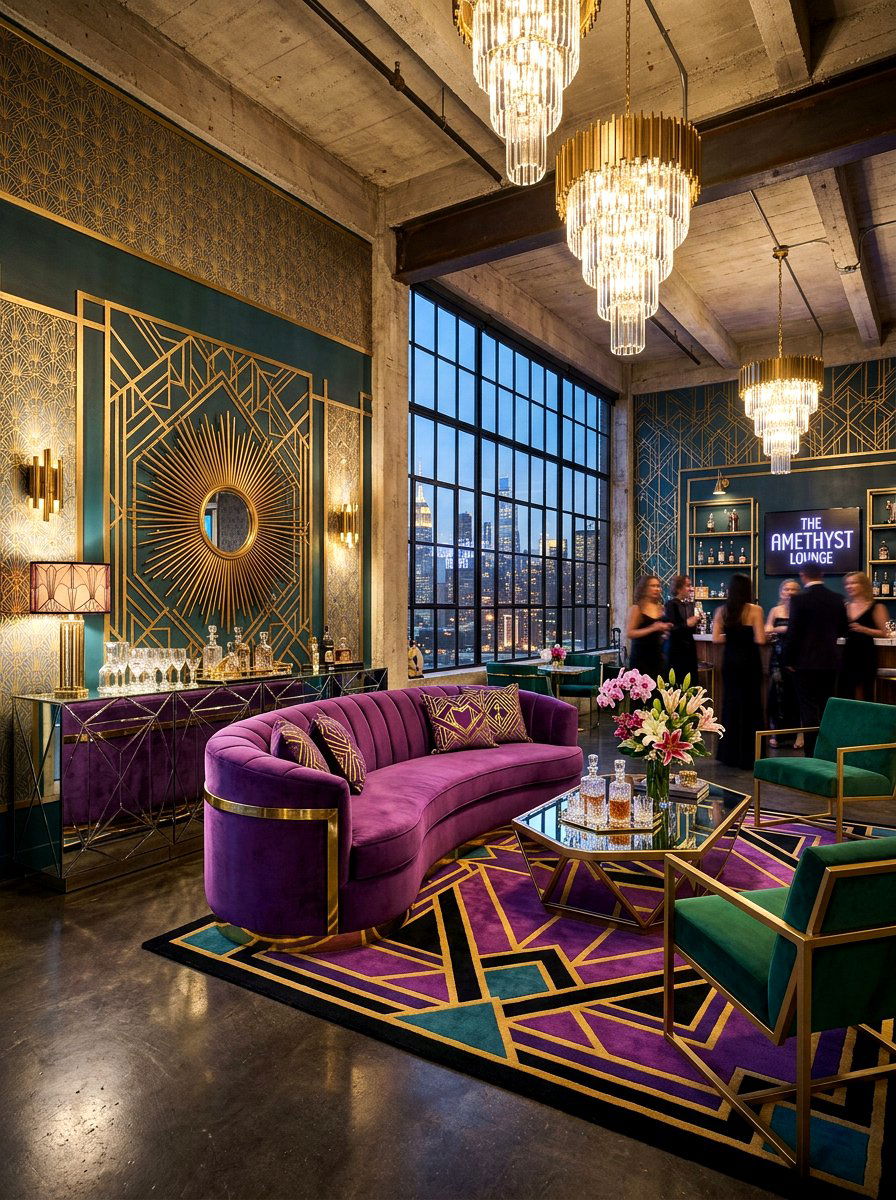
An Art Deco loft lounge brings 1920s glamour into the industrial age with bold geometric shapes, luxurious materials, and metallic accents. Curved velvet sofas in jewel tones like amethyst or topaz provide a soft, opulent place to sit while contrasting with the hard lines of the loft. Mirrored furniture and chrome or gold fixtures add a sense of luxury and help reflect light throughout the expansive open-concept space. Geometric patterns are often found in the rugs or custom wall treatments, adding a sophisticated rhythmic quality to the interior design. This style transforms a raw warehouse space into a high-end lounge that feels like a glamorous set from a classic Hollywood movie.
18. Contemporary gray loft interior
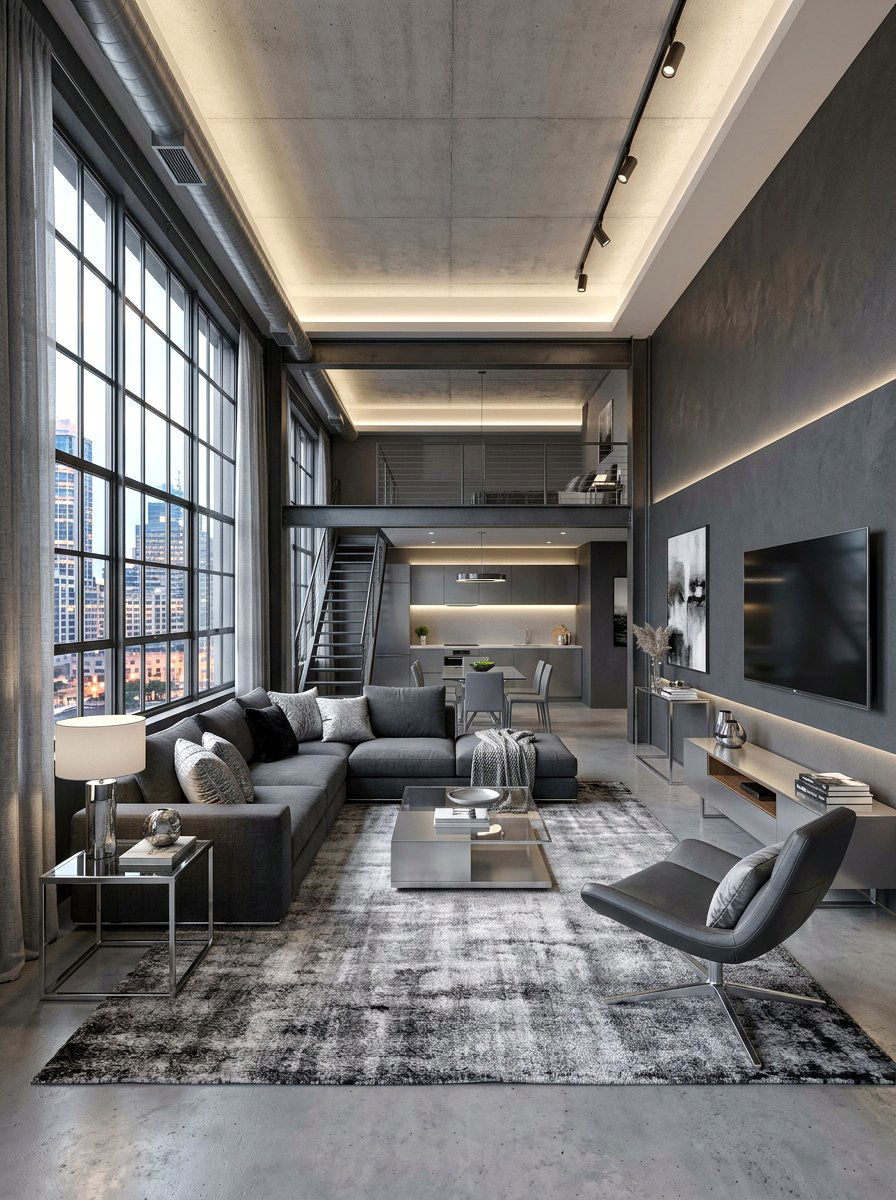
Gray is a versatile and sophisticated choice for a contemporary loft, offering a wide range of tones from soft silver to deep charcoal. A gray-themed living room uses these varying shades to create depth and interest without the need for bright colors or complex patterns. Soft gray upholstery on a large modular sectional looks incredibly sleek against a darker charcoal accent wall or a polished concrete floor. To keep the look from becoming too monochromatic, designers often add metallic accents in silver or brushed nickel and plenty of layered lighting. This resulting aesthetic is calm, professional, and very modern, perfect for a high-functioning urban home that values subtle elegance.
19. Warehouse conversion living room
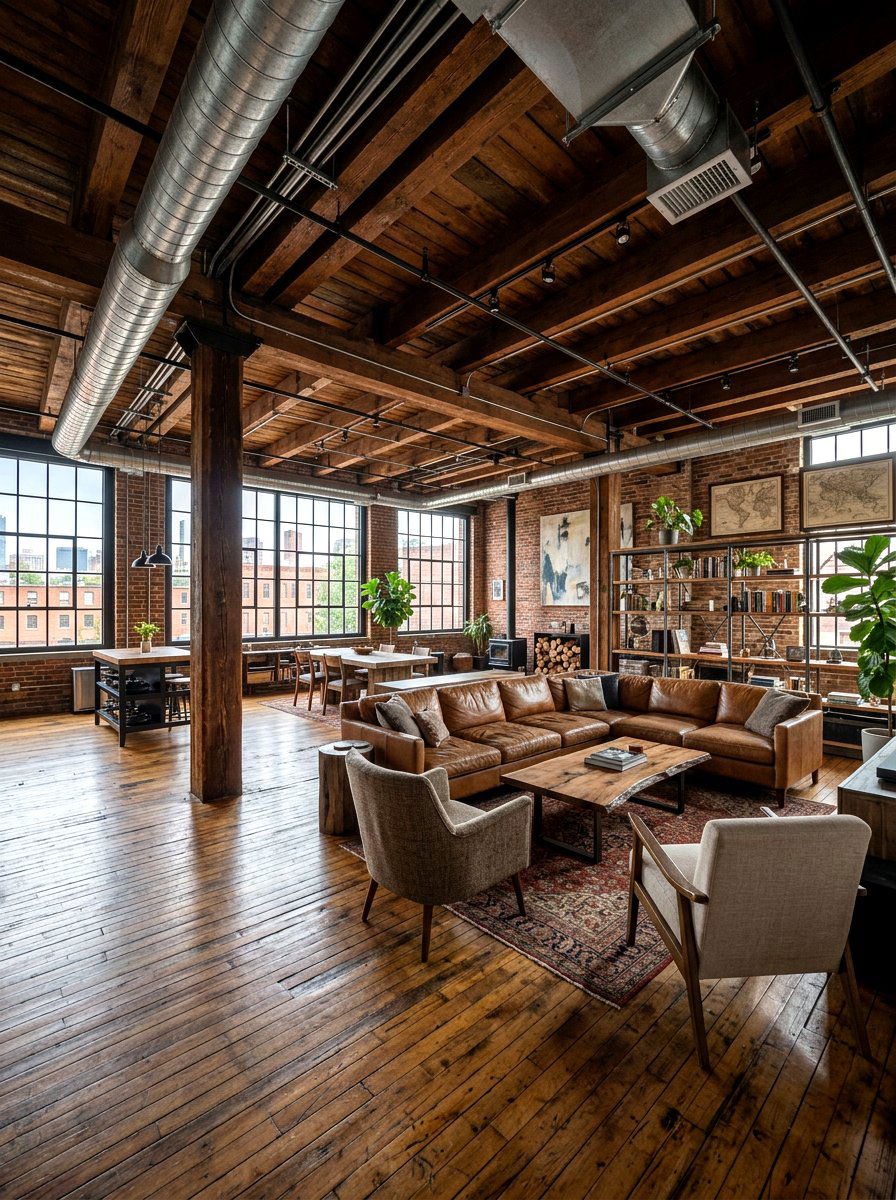
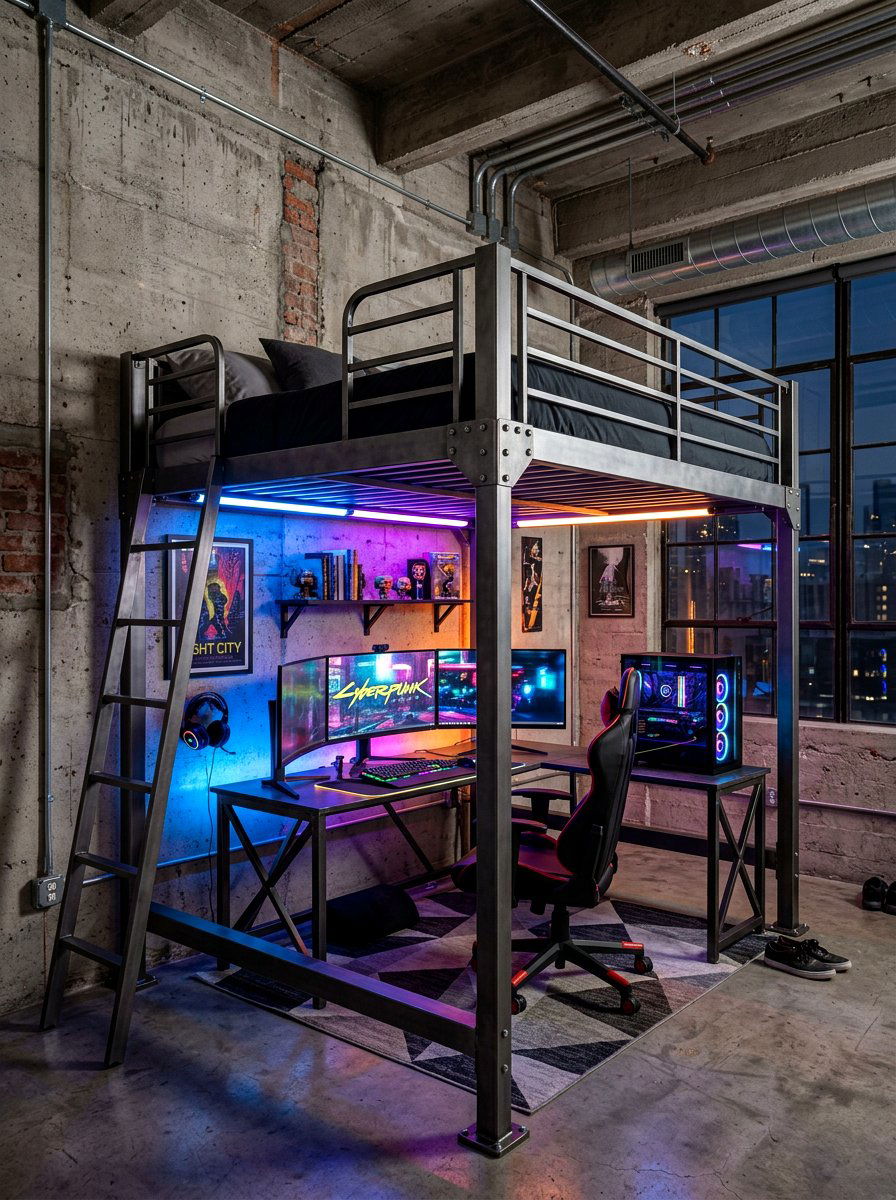
A warehouse conversion living room leans heavily into its history, preserving as many original features as possible to maintain an authentic vibe. You might see original wide-plank wooden floors that show decades of wear, alongside exposed ductwork and heavy timber support columns. The furniture is usually chosen to match this sturdy, large-scale environment, featuring chunky wood tables and heavy-duty metal shelving units. Large-scale factory windows are often a standout feature, and the decor is kept simple to let these historic architectural details speak for themselves. This style is about respecting the past while creating a functional and comfortable modern home that feels truly unique and full of character.

20. Coastal loft design
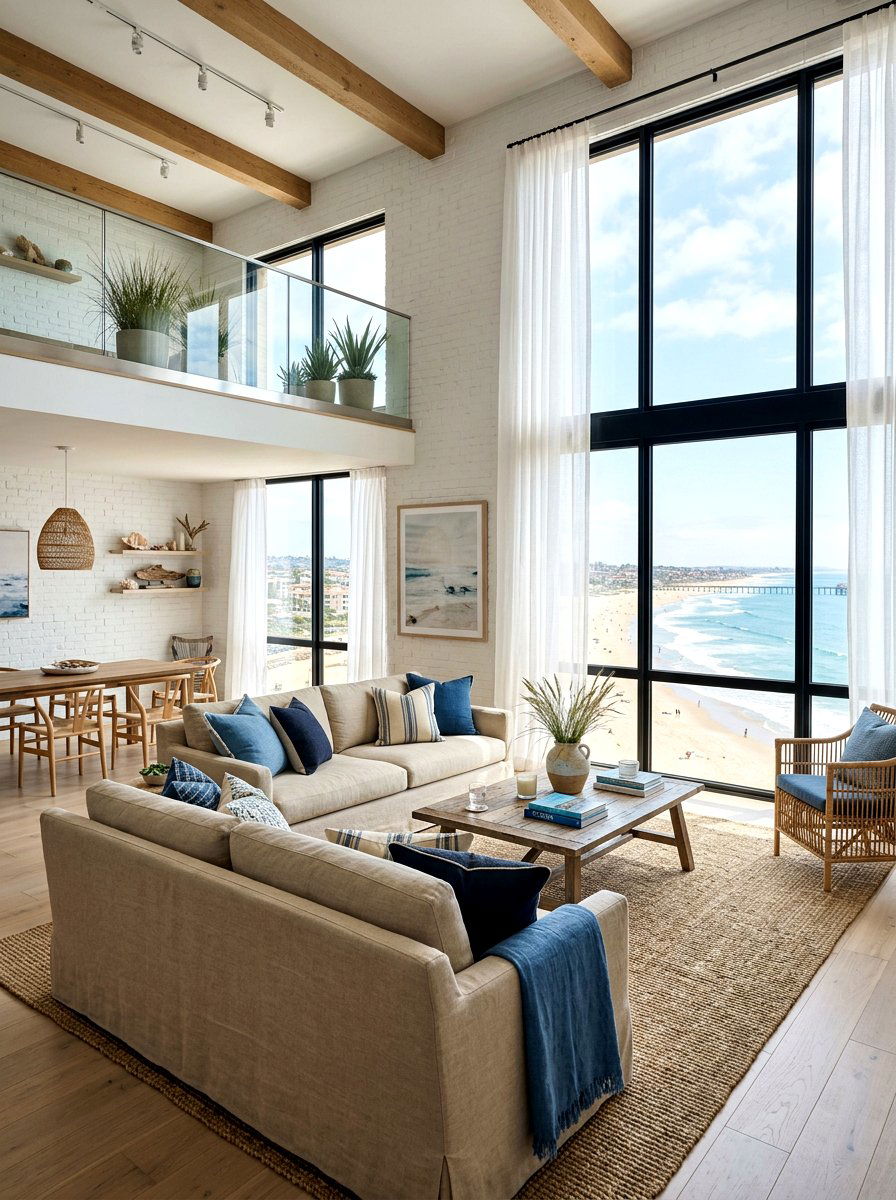
Bringing a breezy, coastal vibe to an urban loft can create a surprisingly successful and relaxing living environment that feels like a getaway. This style swaps out dark industrial metals for lighter finishes and uses a palette of sandy beiges, crisp whites, and ocean blues. Natural textures like seagrass rugs, linen upholstery, and driftwood accents help to soften the hard edges of the warehouse architecture. Large, airy windows are perfect for this look, especially when dressed with light, flowing sheer curtains that catch the breeze. The result is a bright and light-filled living room that offers a peaceful escape from the fast-paced energy of the city streets below.
21. Farmhouse loft style
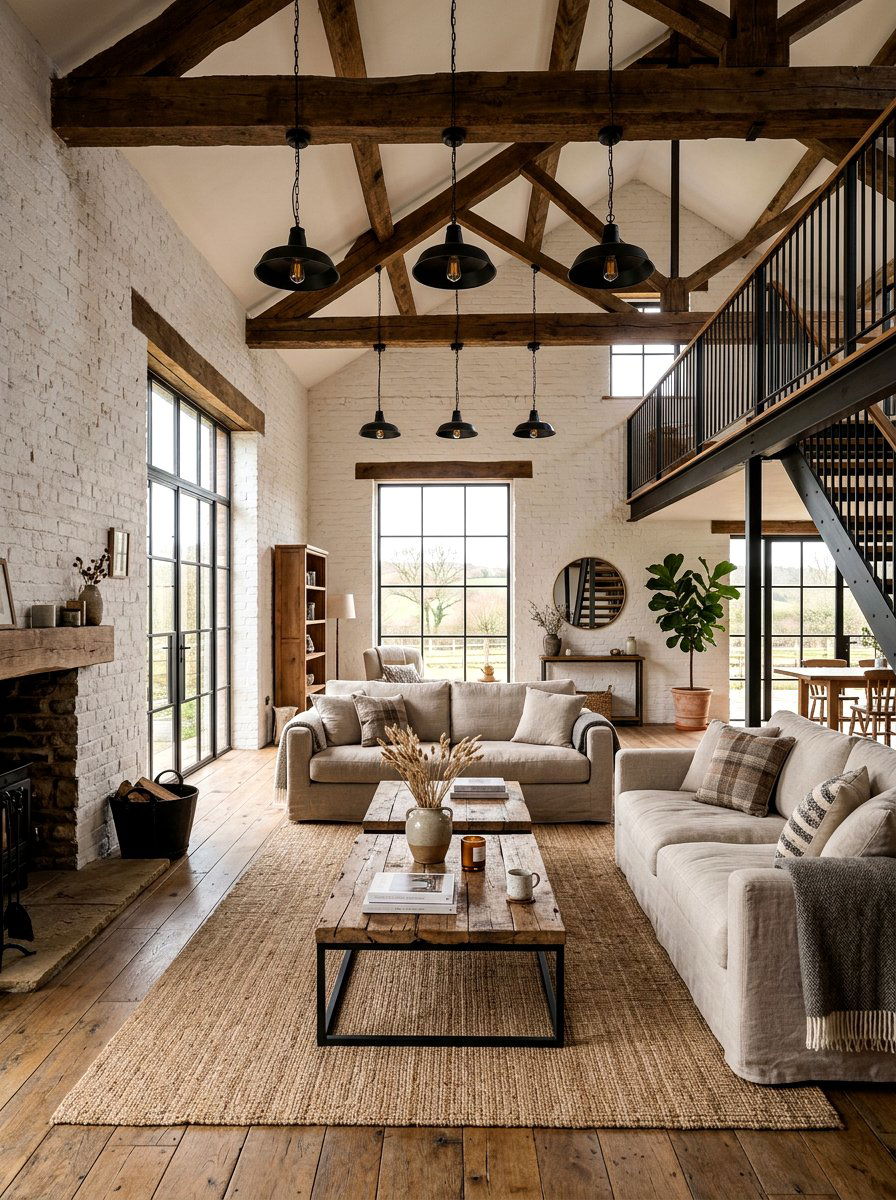
The farmhouse loft style is a charming blend of rustic comfort and industrial openness, creating a space that feels both trendy and cozy. This look often features whitewashed brick walls, shiplap accents, and large comfortable sofas draped in neutral-toned linen slipcovers. Reclaimed wood plays a major role, appearing in large dining tables, coffee tables, or even as decorative cladding on structural columns. Black iron light fixtures and hardware provide the necessary industrial touch to anchor the space within its loft setting. This design approach is perfect for those who want the spaciousness of a loft but desire the warm, welcoming feeling of a traditional country home.
22. Dark moody loft living
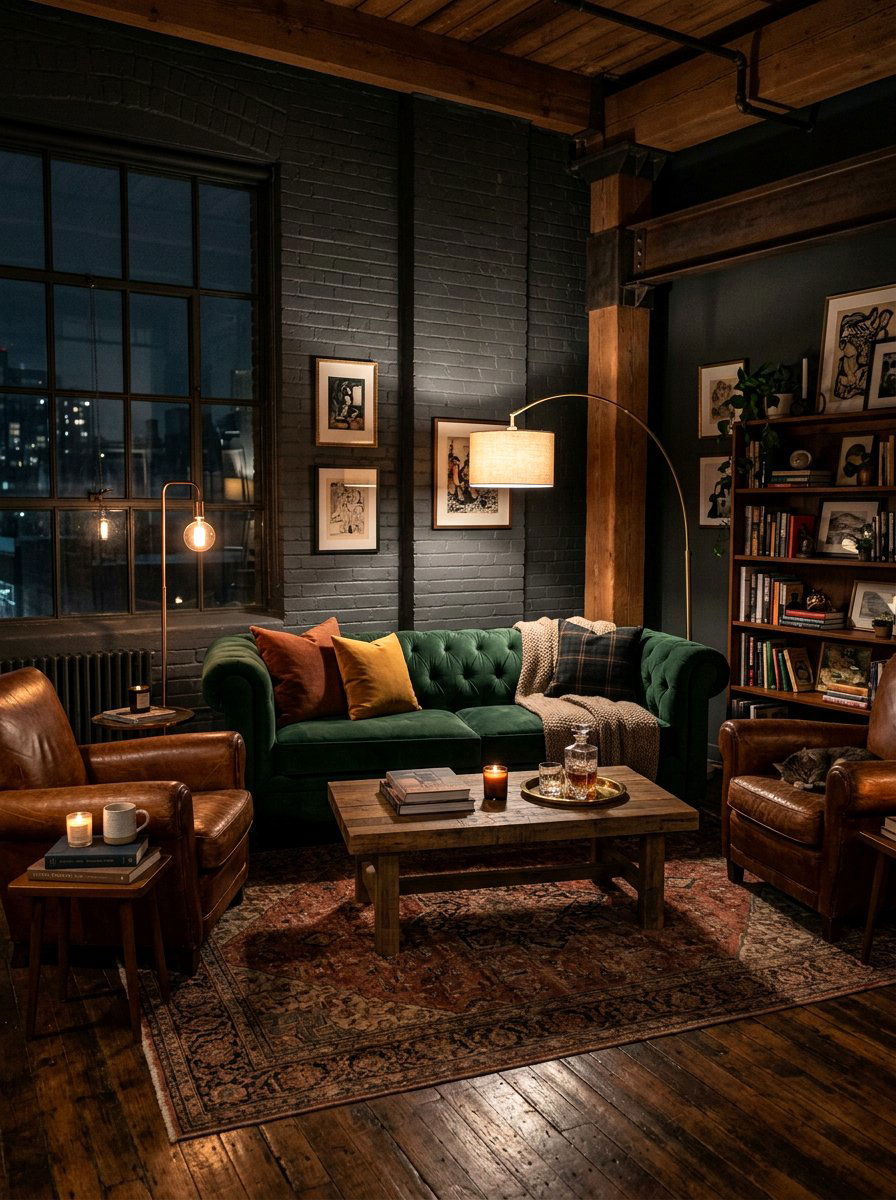
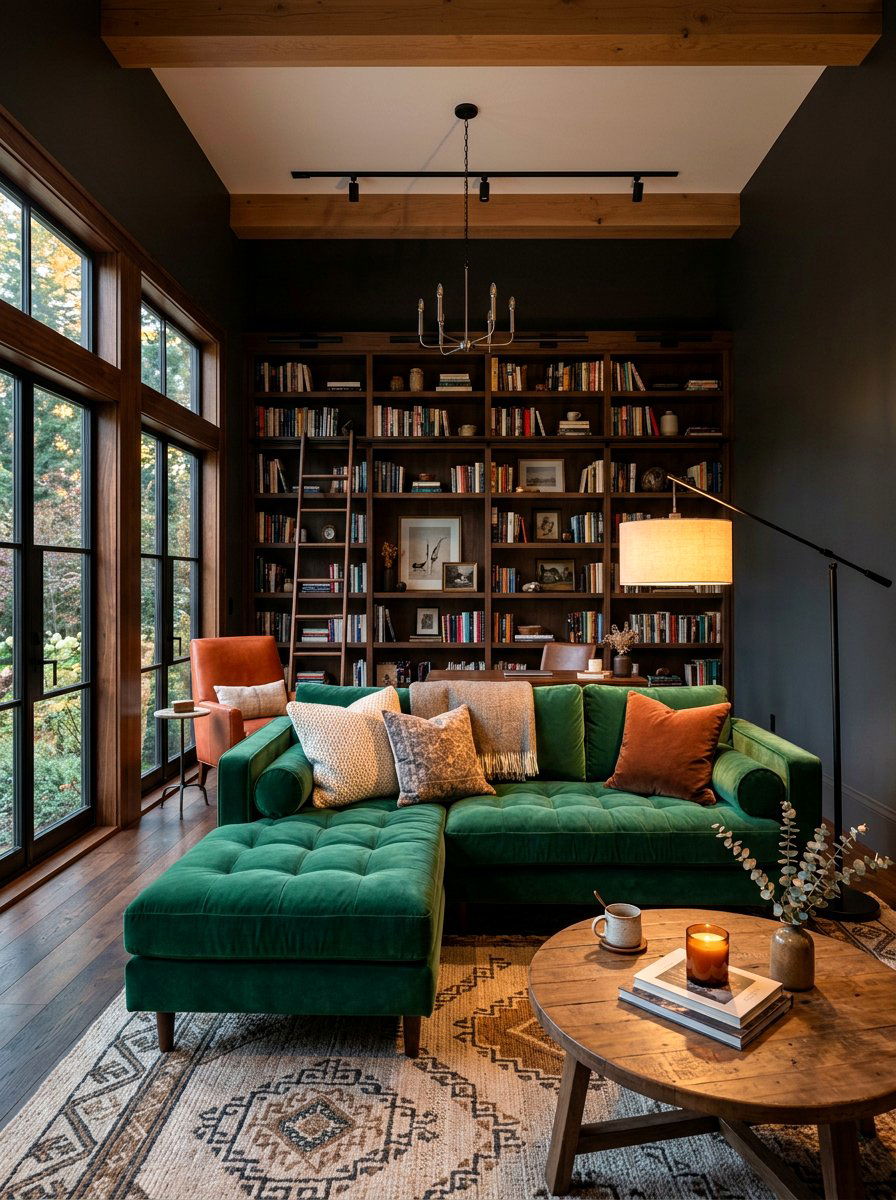
For a dramatic and intimate atmosphere, many loft owners are turning to a dark and moody color palette for their living spaces. Deep charcoal, navy blue, or even forest green walls create a cocoon-like effect that feels incredibly sophisticated and private within the city. Luxurious textures are key to making this look work, with velvet seating, silk pillows, and dark leather providing a rich sensory experience. Layered ambient lighting, such as low-hanging pendants and floor lamps, is essential to create a warm glow against the dark surfaces. This style turns a large, open loft into a cozy and mysterious sanctuary that is perfect for relaxing after a long day.
23. Gallery wall loft space
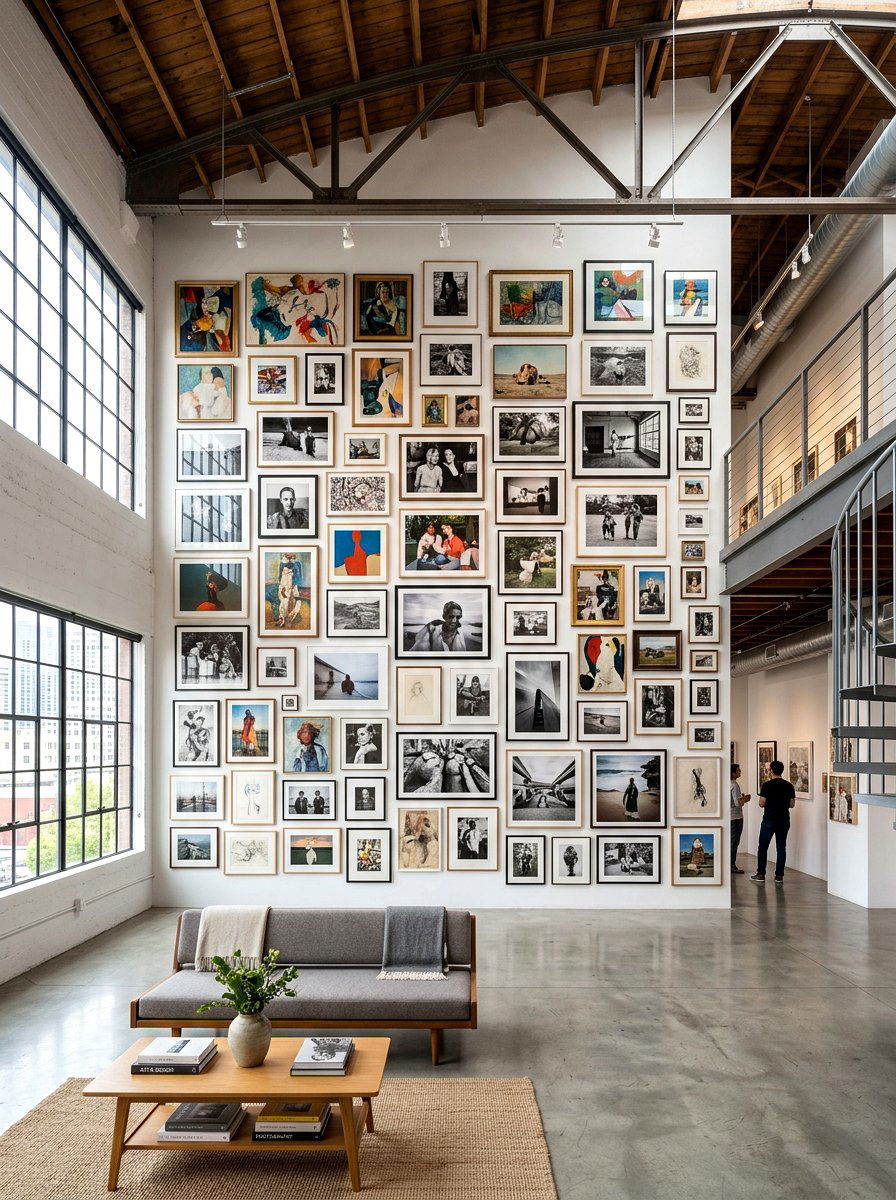
The massive walls of a loft are an art lover's dream, providing the perfect canvas for an expansive and curated gallery wall. This design idea involves arranging a large collection of paintings, photographs, and prints of various sizes to create a major focal point. Because lofts often have high ceilings, the gallery wall can extend quite high, making full use of the vertical space available. Minimalist furniture in neutral tones ensures that the focus remains entirely on the art collection and its creative arrangement. This approach allows the homeowner to showcase their personal style and travel memories while adding immense character and visual interest to the large living room.
24. Mezzanine level loft living
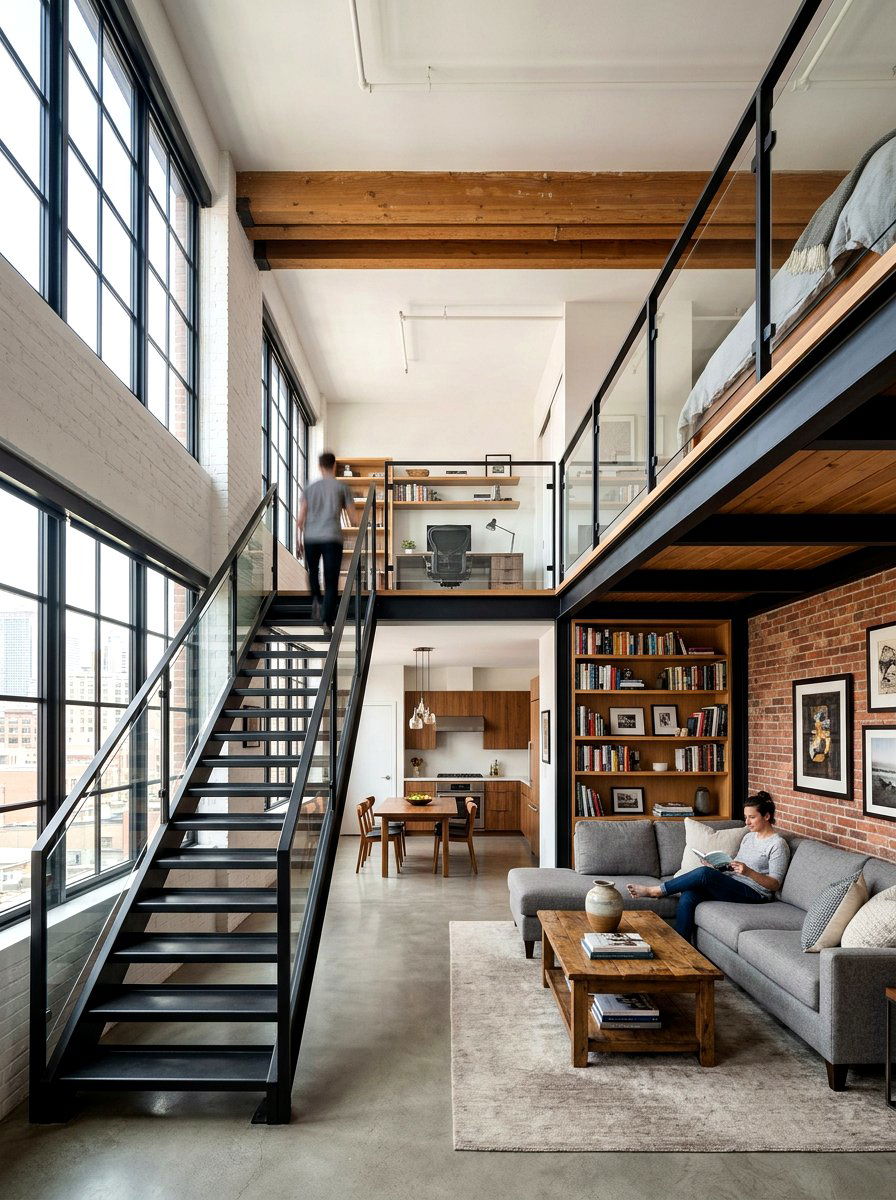
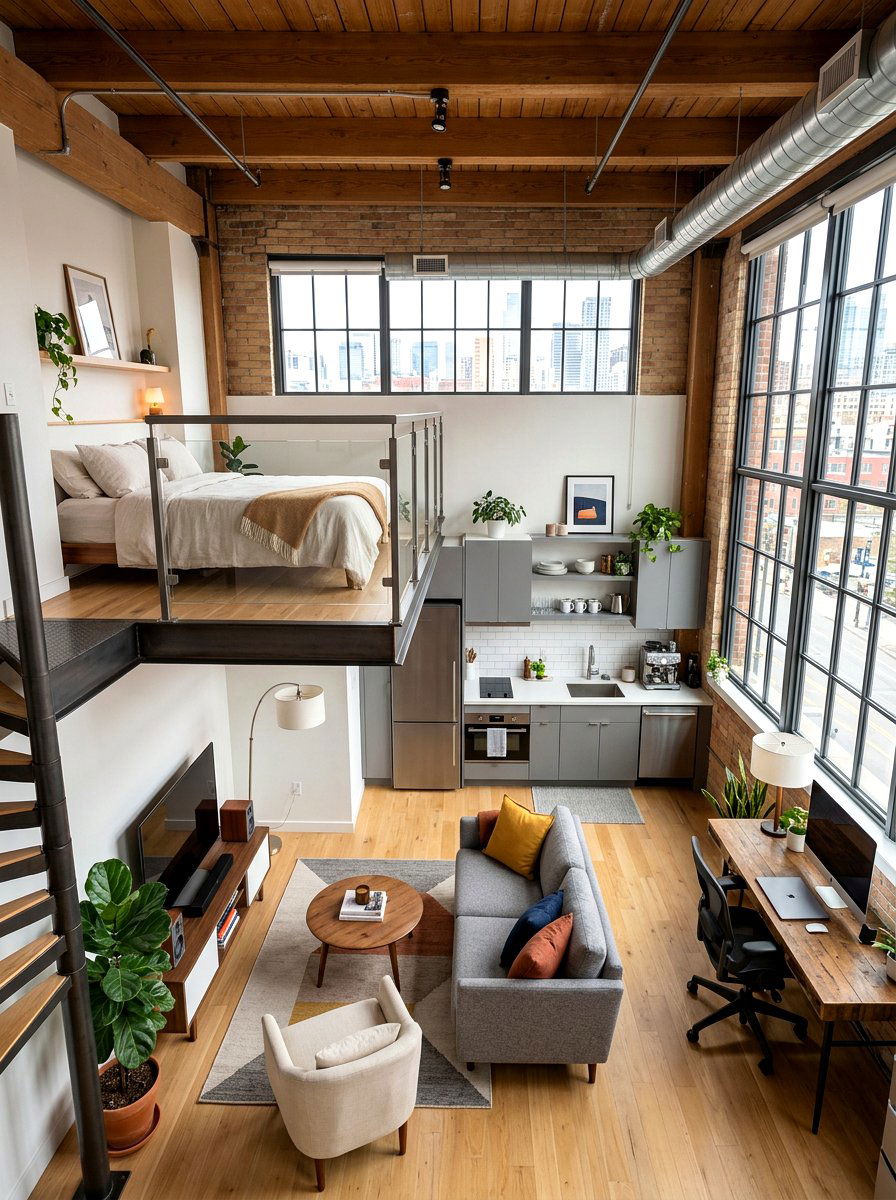
Many lofts utilize their high ceilings by incorporating a mezzanine level, which creates a dynamic and multi-layered living experience for the inhabitants. The space underneath the mezzanine is often used as a cozy, more intimate living room area with lower ceilings and focused lighting. A sleek staircase, often made of steel or wood, becomes a major architectural feature that connects the different levels of the home. The view from the mezzanine looking down into the main living area offers a unique perspective on the layout and design of the entire space. This vertical zoning adds a sense of adventure and architectural complexity that makes loft living so desirable and fun.
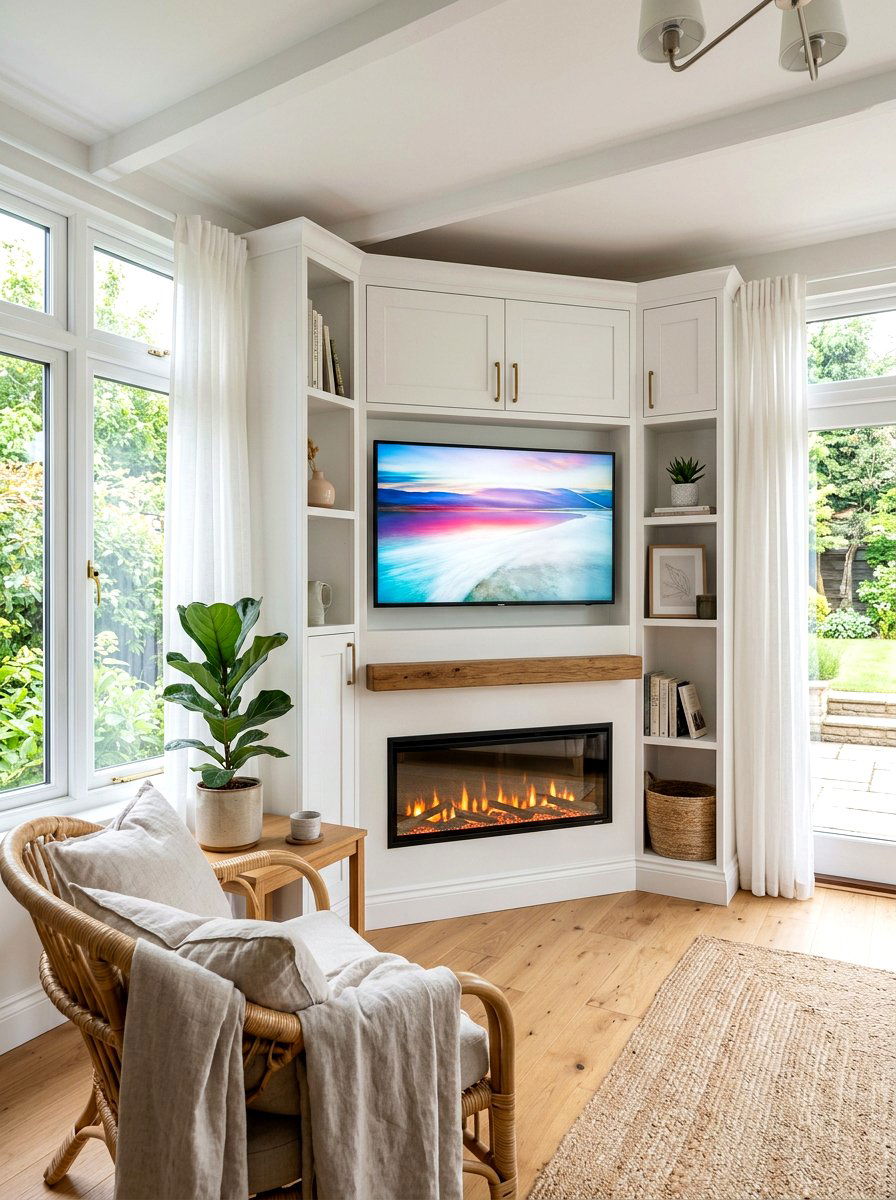
25. Soft neutral loft room
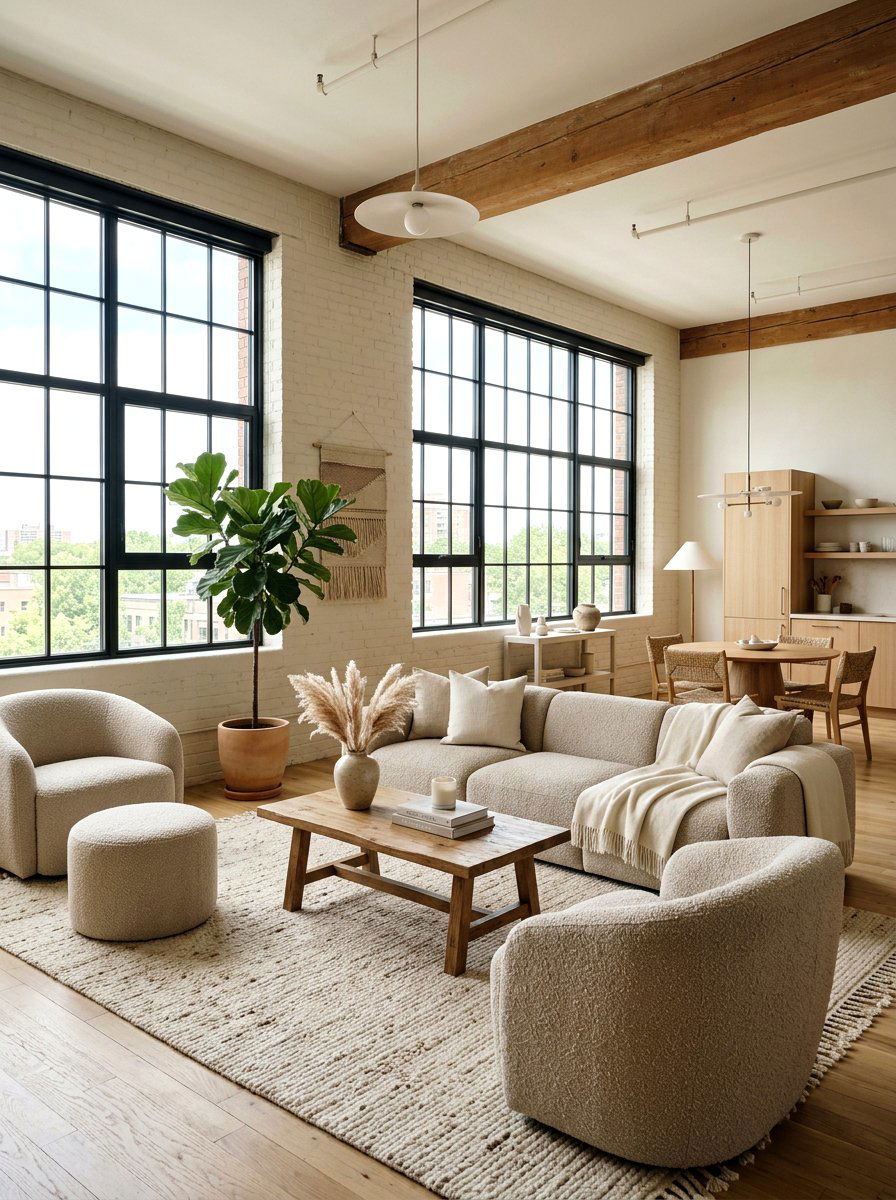
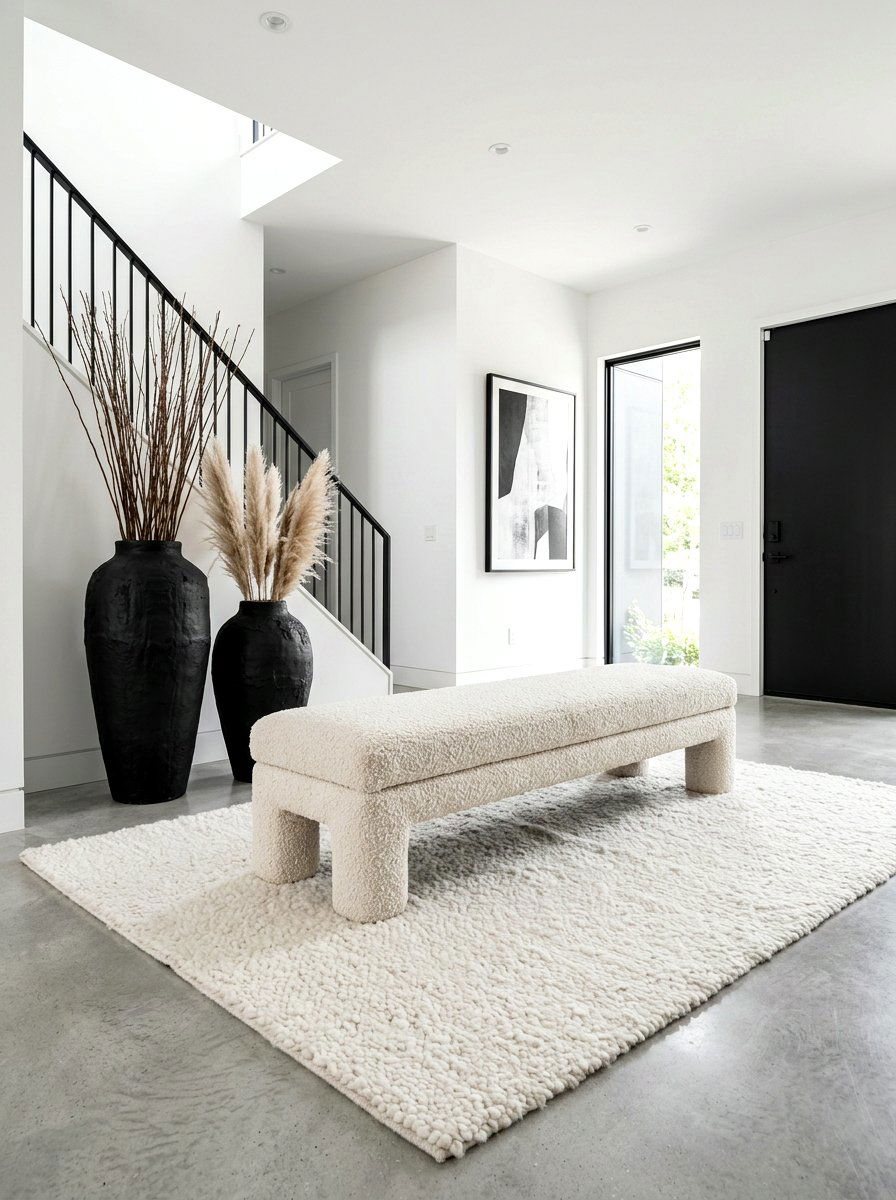
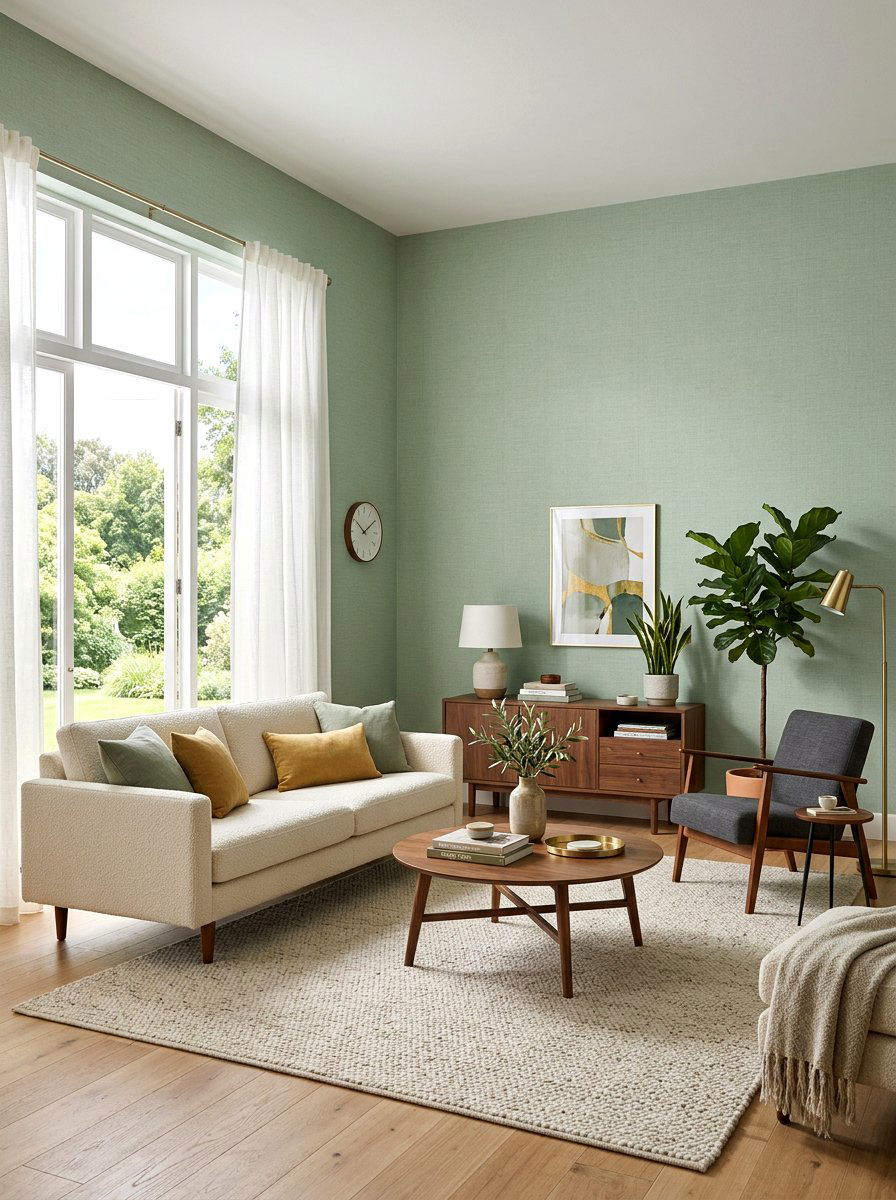
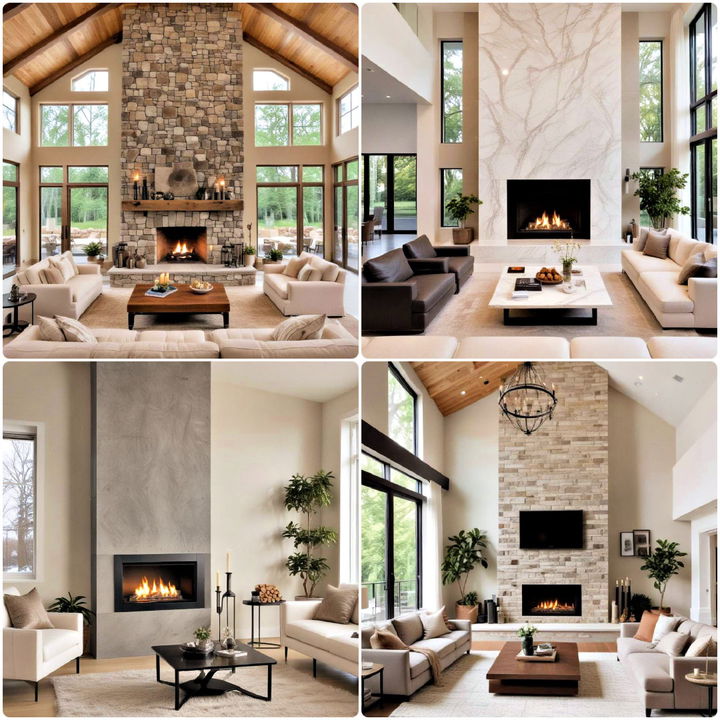
A soft neutral palette is perfect for creating a bright, calm, and cohesive living room that feels incredibly spacious and light. This design uses various shades of cream, beige, oatmeal, and soft taupe across the walls, furniture, and large-scale area rugs. To keep the neutral look from feeling boring, it is important to mix a wide variety of textures like boucle, wool, and smooth stone. Natural light is the star of the show here, as it bounces off the light surfaces to fill every corner of the room. This timeless aesthetic is easy to live with and provides a perfect, peaceful backdrop for any style of urban living.
26. Velvet furniture loft lounge
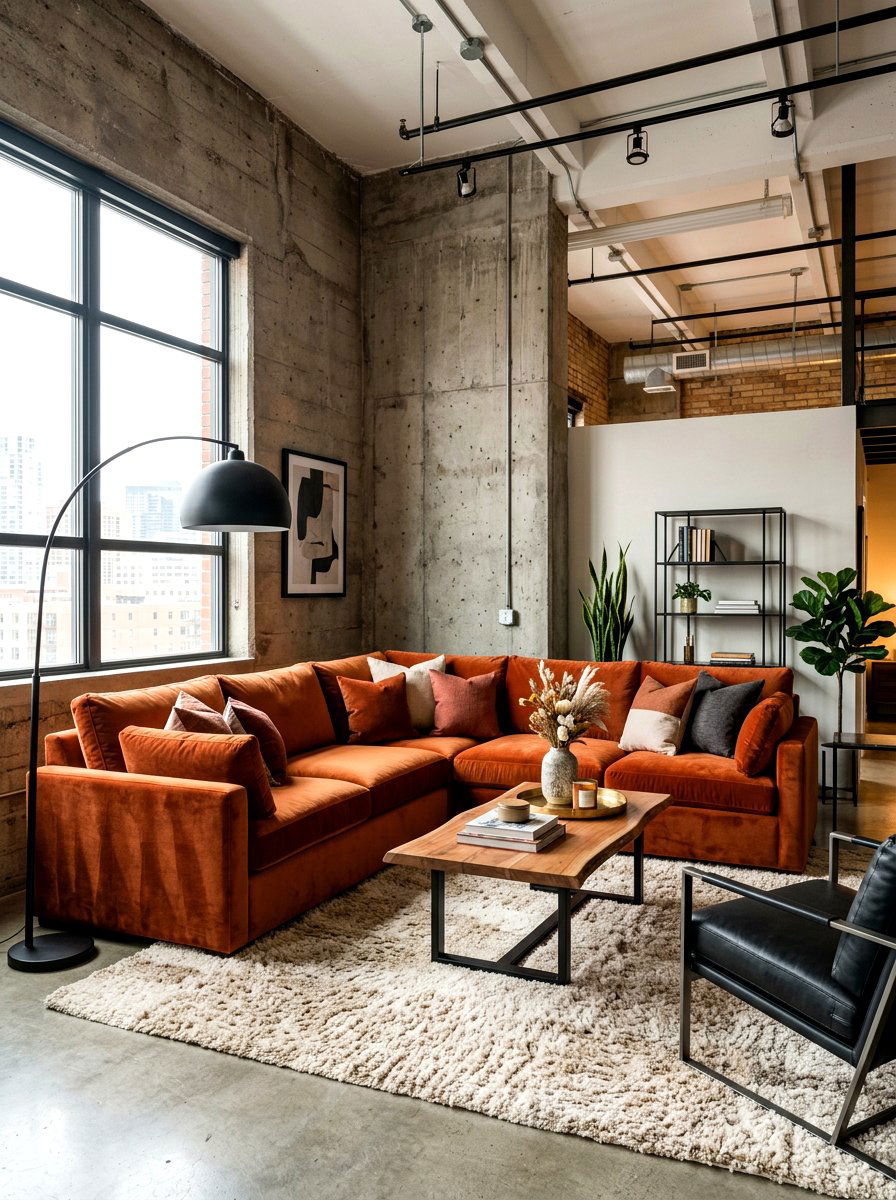
Velvet furniture is a fantastic way to introduce a touch of luxury and softness to the often-hard environment of an industrial loft. A large velvet sectional in a bold color like navy, emerald, or burnt orange can serve as a stunning focal point. The fabric's slight sheen catches the light from the large windows, adding a sense of depth and opulence to the seating area. Pairing velvet with industrial elements like exposed concrete or black metal creates a sophisticated contrast that feels very high-end and modern. This approach ensures that the living room is not just stylish to look at, but also incredibly comfortable and inviting to touch.
27. Wood beam loft ceiling
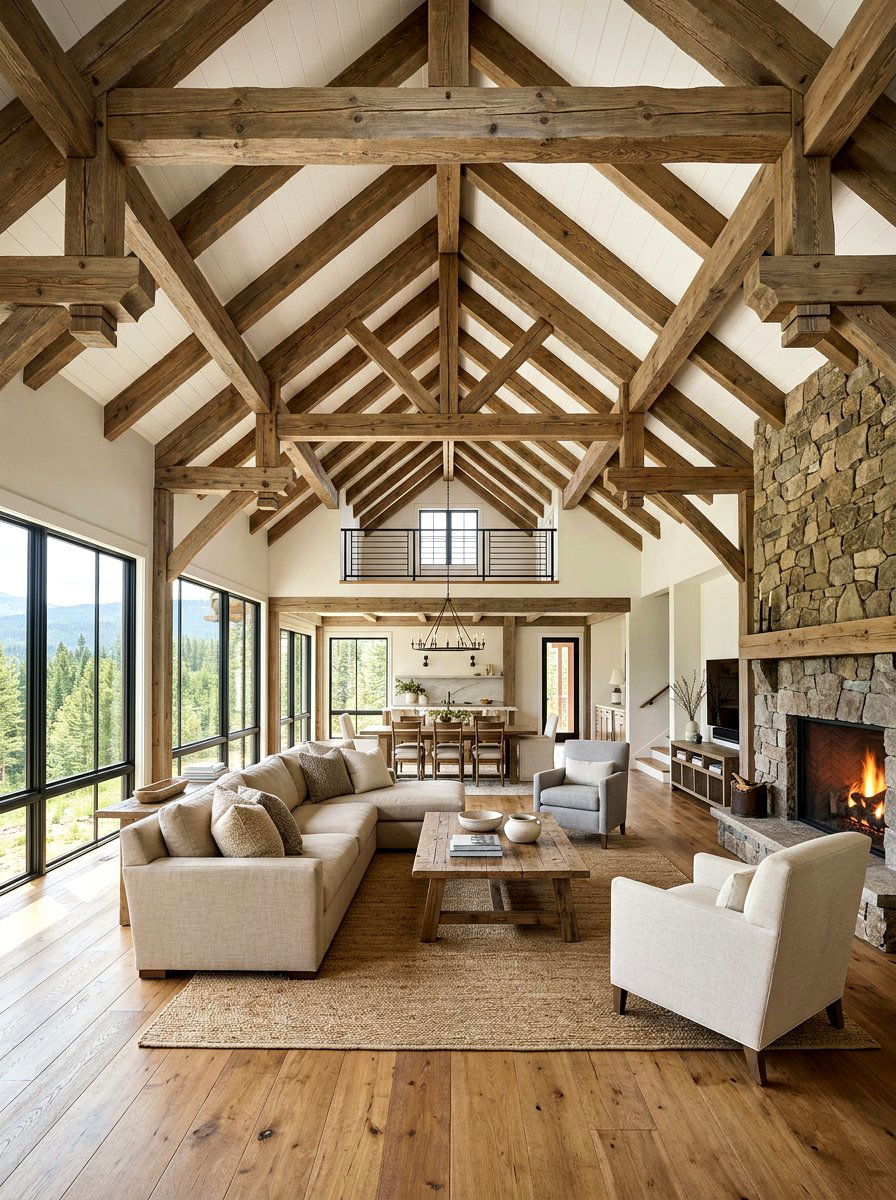
Exposed wood beams are a beautiful architectural feature that adds natural warmth and a sense of history to a loft ceiling. Whether they are original structural timbers or decorative additions, these beams draw the eye upward and add a rhythmic quality to the room. In the living area, the wood tones can be coordinated with the flooring or furniture to create a sense of harmony throughout the space. If the ceilings are very high, the beams help to break up the vastness and make the room feel more human-scaled and cozy. This feature works well with various styles, from industrial and rustic to modern and even more traditional interiors.
28. Large window loft interior
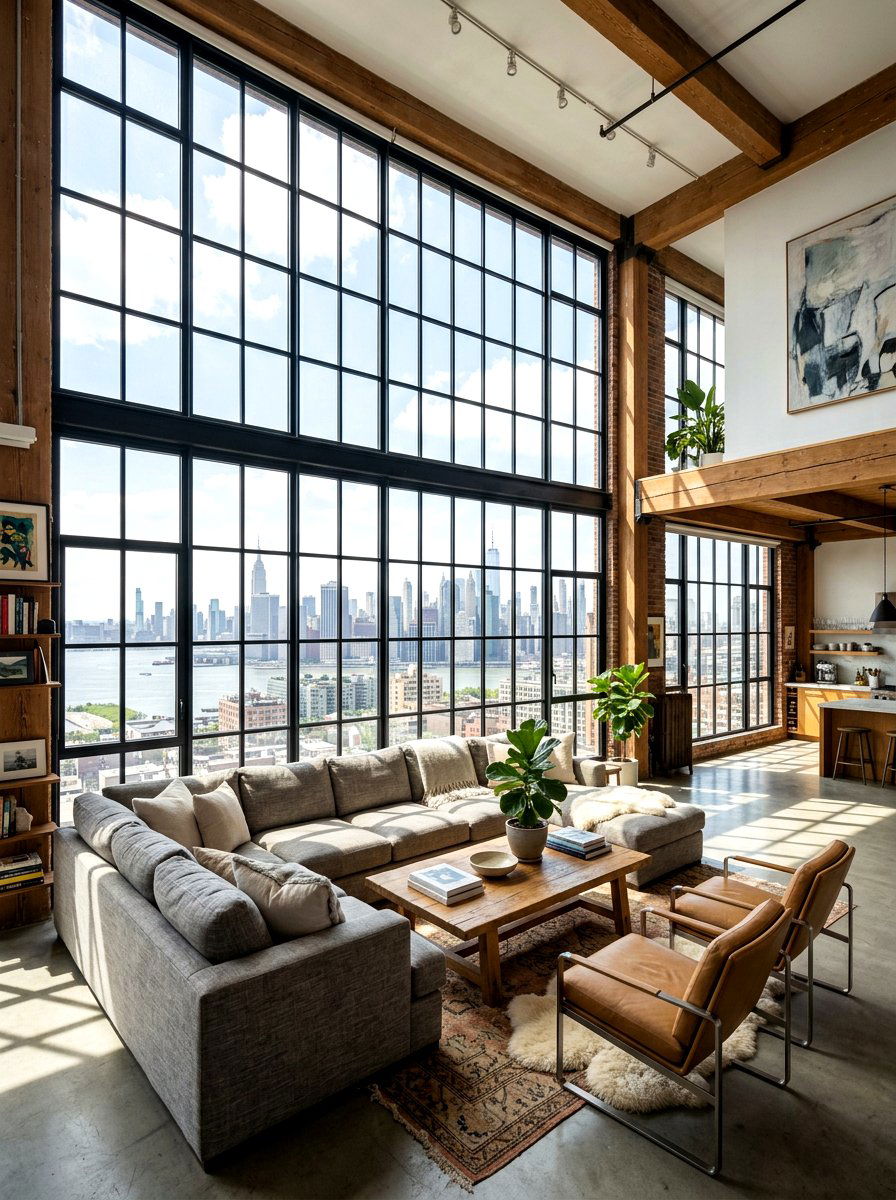
Lofts are famous for their massive, often floor-to-ceiling windows that provide incredible views and an abundance of natural light for the space. Designing around these windows means keeping the area immediately in front of them clear to preserve the view and allow light to penetrate deep. Minimalist window treatments, like sheer rollers or simple linen panels, provide privacy when needed without blocking the impressive architectural lines of the frames. The living room layout is often oriented toward the windows to make the city skyline part of the daily decor and overall experience. This connection to the outside world is a key part of what makes loft living so special and visually dramatic.
29. Cozy small loft nook
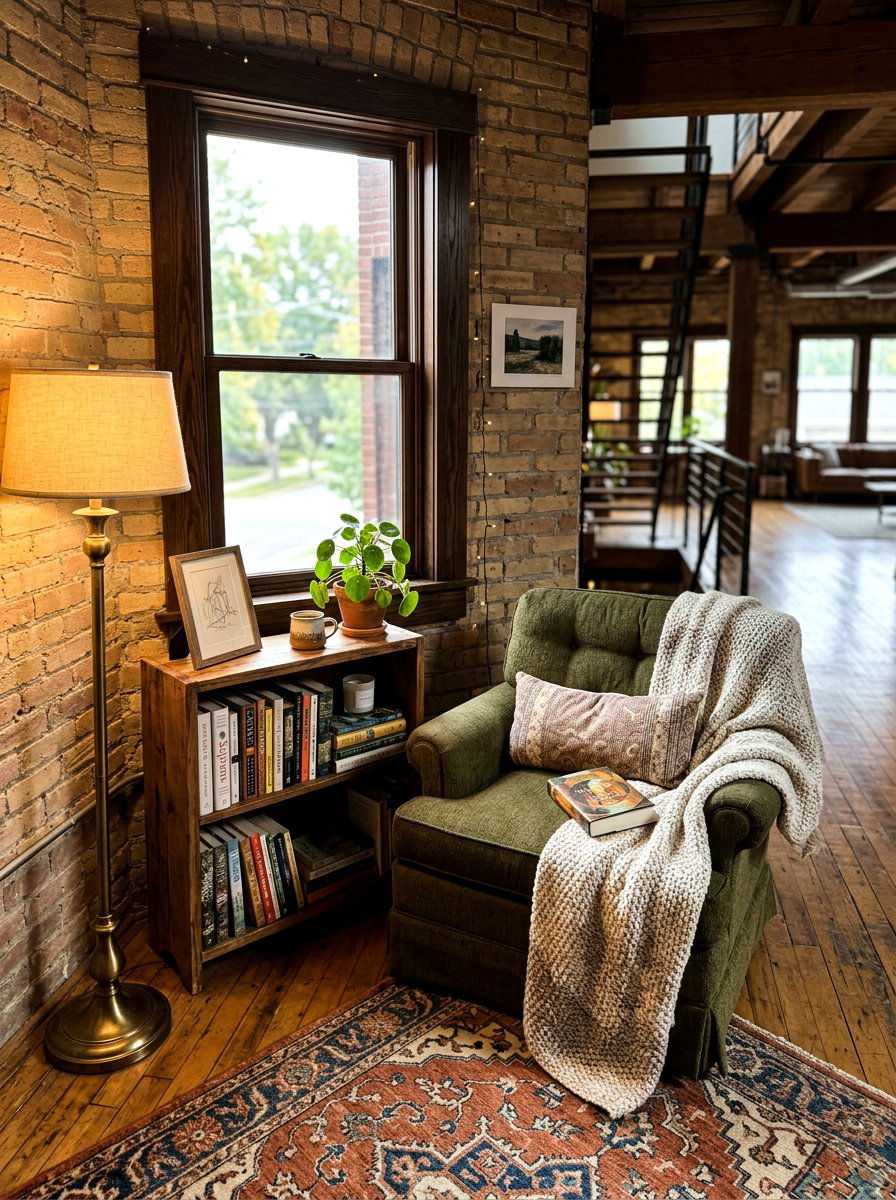
Even in a large loft, creating a small and cozy nook for reading or relaxing can provide a much-needed sense of intimacy. This is often achieved by tucking a comfortable armchair and a small side table into a corner or under a staircase. A dedicated floor lamp and a soft rug help to define this micro-zone as a separate space from the rest of the open living room. Wall-mounted shelving or a small bookcase can store favorite titles within easy reach for a perfect afternoon of quiet reading. These small pockets of comfort are essential for making a large, open-concept loft feel like a warm and truly liveable home.
30. Vintage industrial loft living
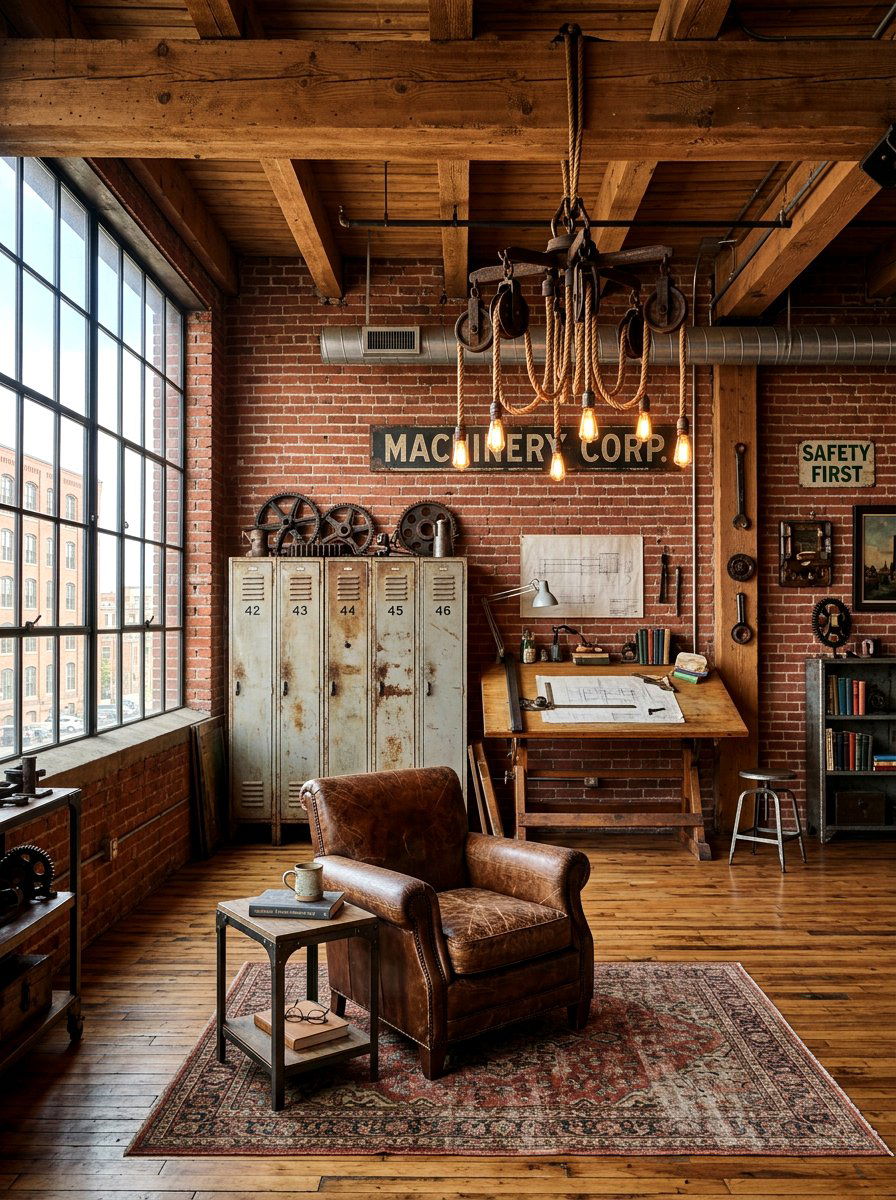
Vintage industrial style focuses on sourcing authentic pieces from old factories and workshops to give the loft a truly historical and unique feel. You might see old lockers used for storage, large drafting tables repurposed as desks, and vintage metal stools around a kitchen island. The living room often features weathered leather chairs and lighting fixtures made from repurposed pulleys and thick industrial ropes for a creative touch. This design style values the "perfectly imperfect" and celebrates the durability and craftsmanship of items from a bygone era of manufacturing. It results in a soulful, layered interior that feels like a curated museum of industrial history and personal treasures.
Conclusion:
Loft living rooms offer an extraordinary opportunity to experiment with scale, texture, and architectural history in a way that few other homes allow. By embracing the unique features of these spaces — such as high ceilings, exposed materials, and open floor plans — you can create a home that is both visually stunning and deeply comfortable. Whether you prefer the raw edge of industrial design, the serenity of minimalism, or the warmth of a bohemian retreat, the key is to create a balance that reflects your personal style. We hope these thirty diverse ideas have inspired you to view your loft space as a blank canvas for your own urban sanctuary.

Related posts: