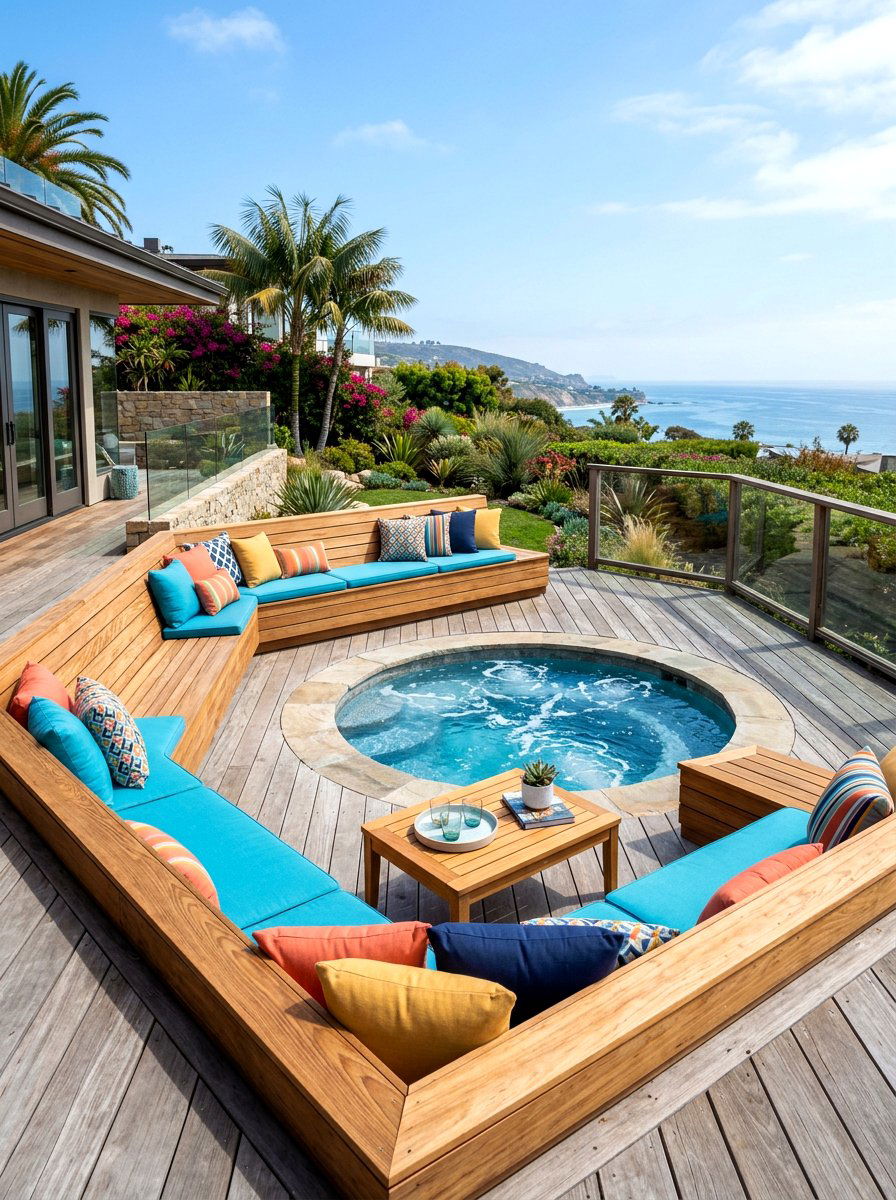
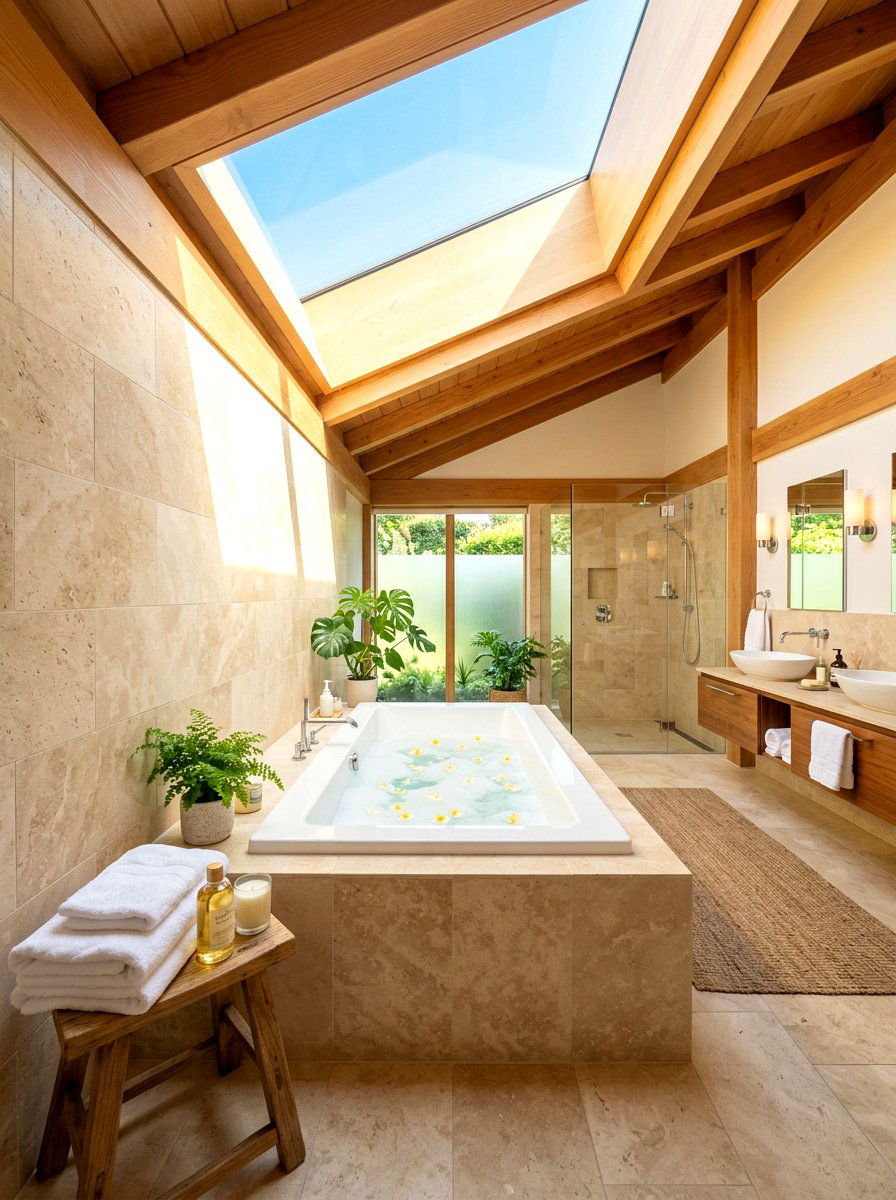
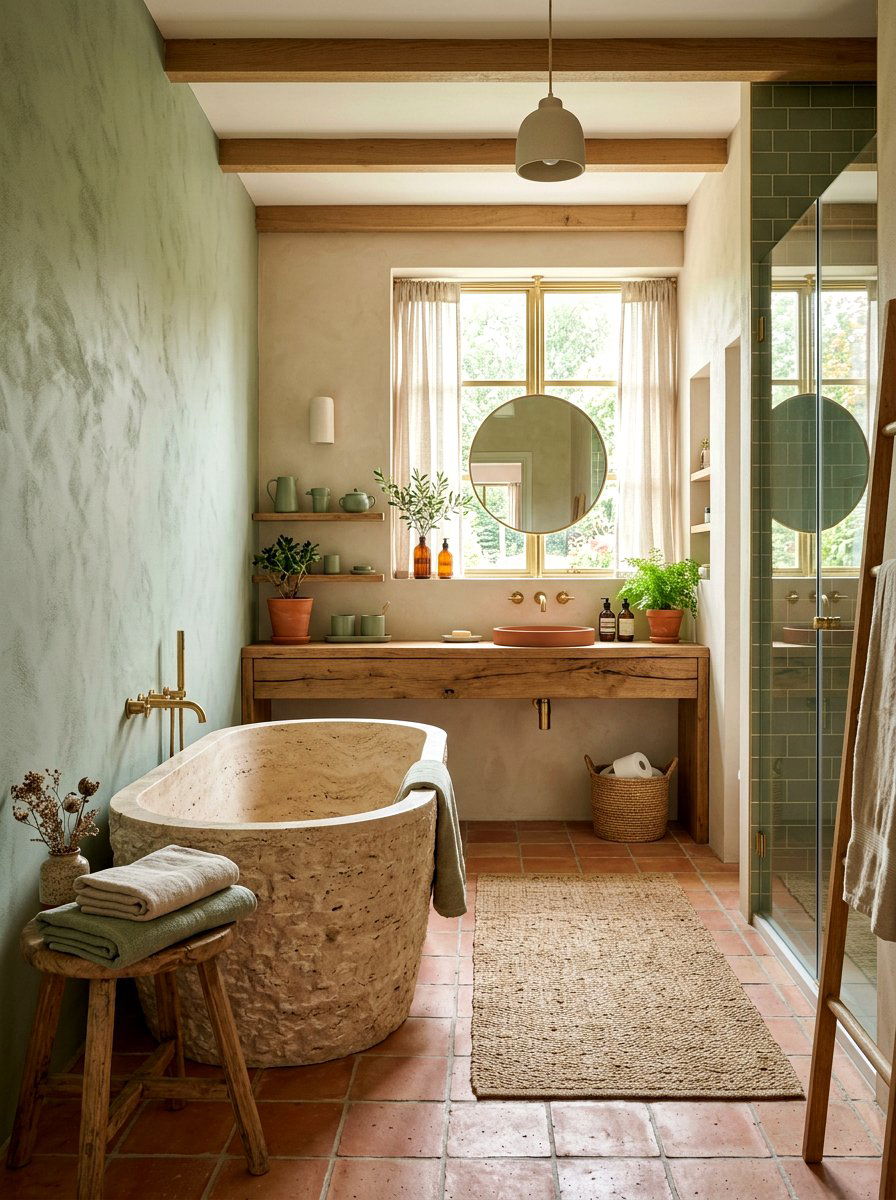
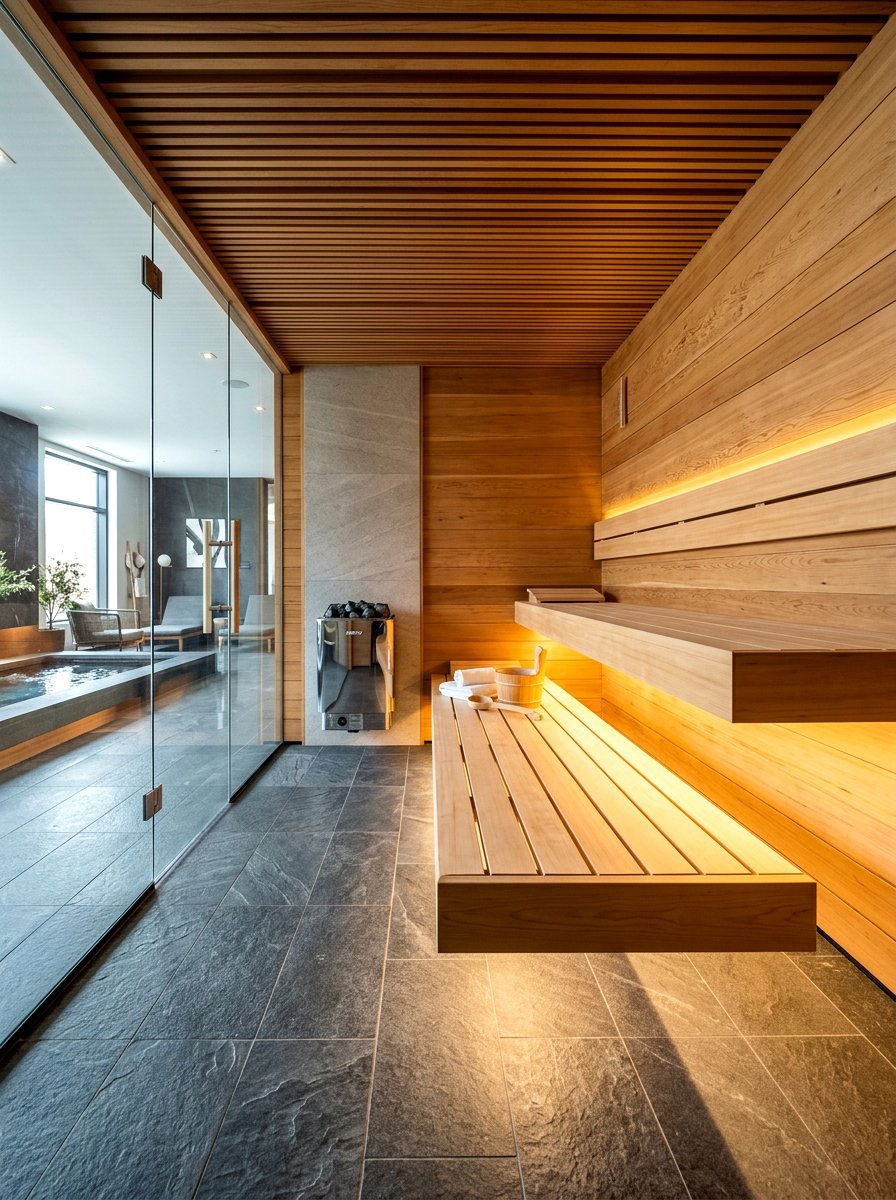
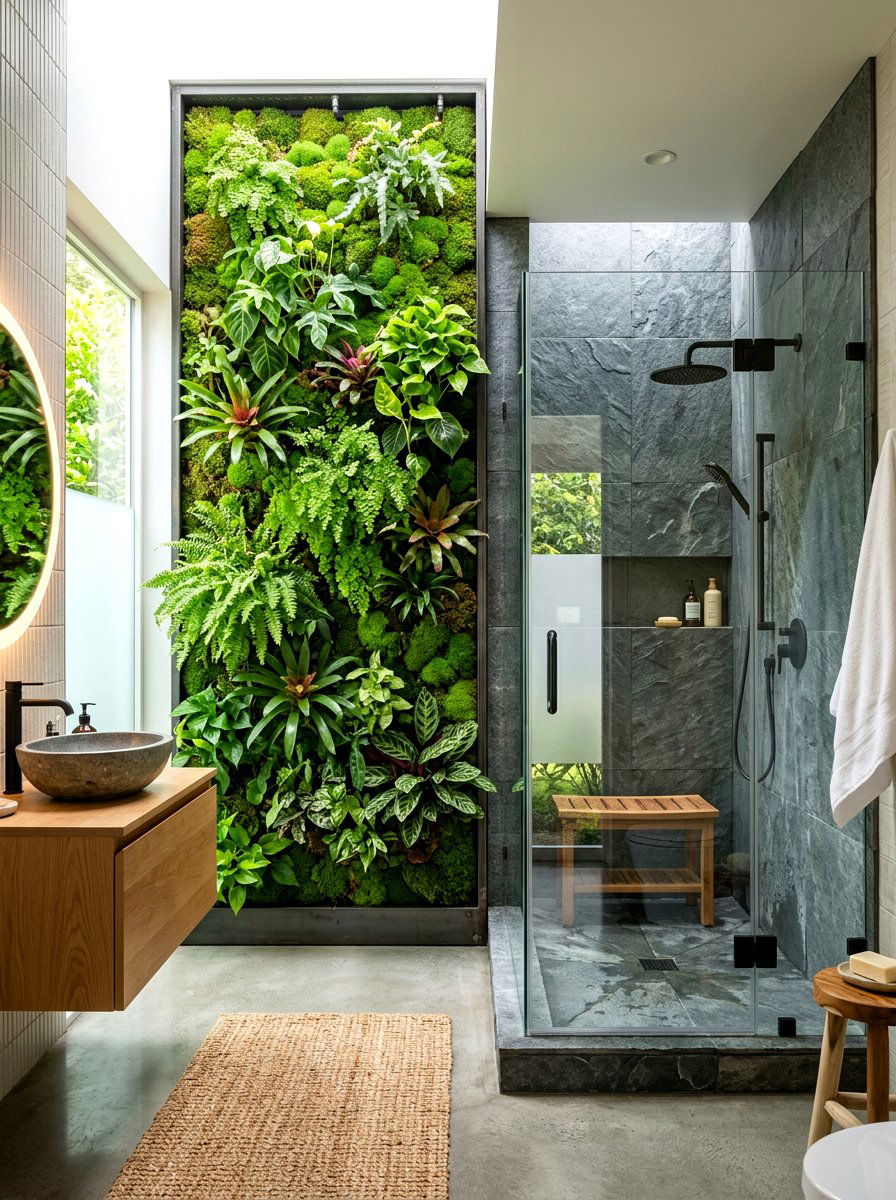
Creating a dedicated sanctuary for relaxation and therapeutic healing requires more than just a table and some oil. The environment plays a fundamental role in how a person responds to treatment, influencing both the mind and the body's nervous system. When you design a massage room, you are essentially crafting a sensory journey that begins the moment someone steps through the door. From the choice of wall colors to the strategic placement of greenery, every detail matters in building a cohesive atmosphere. This guide explores a wide range of styles and functional setups to help you create a professional or personal wellness space that feels inviting and restorative.
1. Zen Massage Room
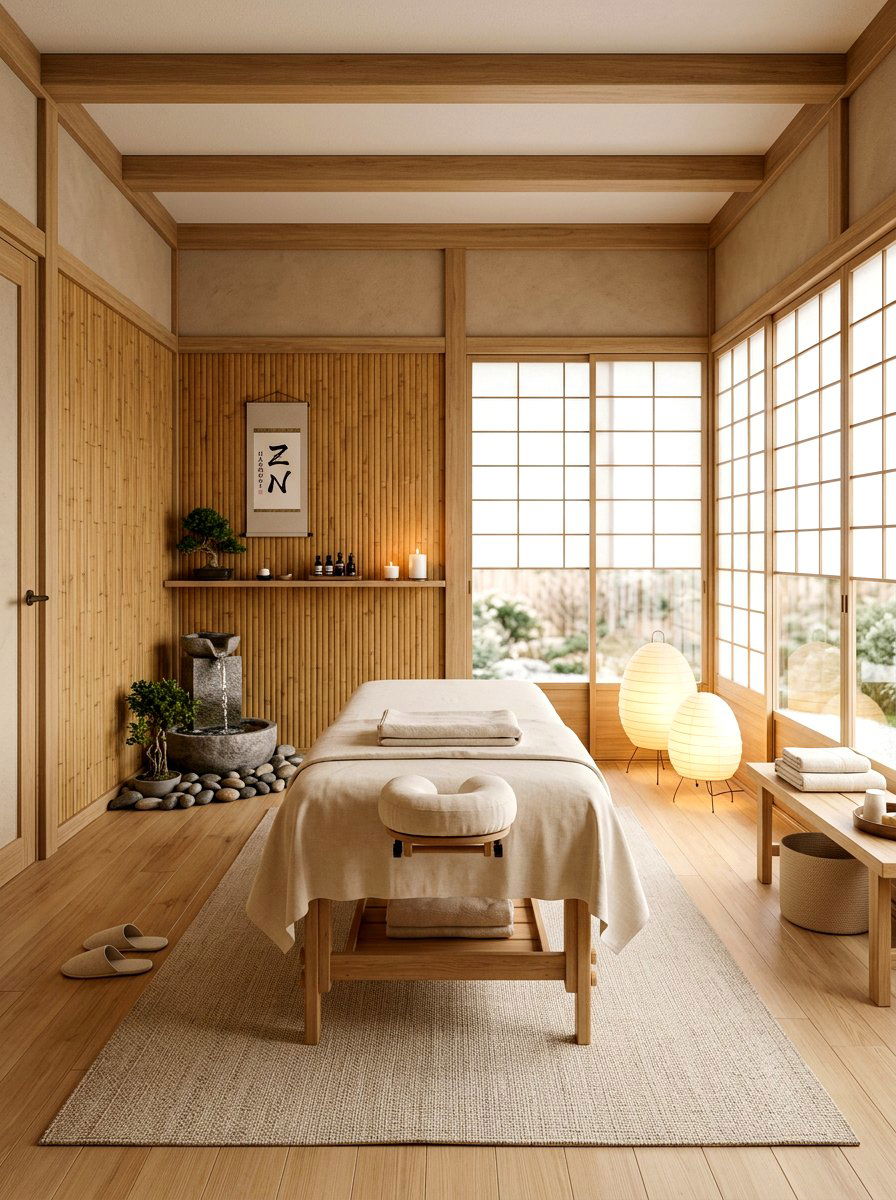
A Zen massage room focuses on the principle of simplicity and natural balance to encourage deep stillness. You should start by incorporating organic materials like light wood or bamboo to ground the entire space. Using a neutral color palette such as soft cream or warm beige helps reduce visual noise and fosters a sense of clarity. Strategic placement of a small indoor water feature can provide a calming auditory backdrop that masks outside distractions. Soft, diffused lighting from paper lanterns creates a gentle glow that is easy on the eyes. This approach creates a minimalist environment where every element serves the singular purpose of promoting peace.
2. Minimalist Massage Room
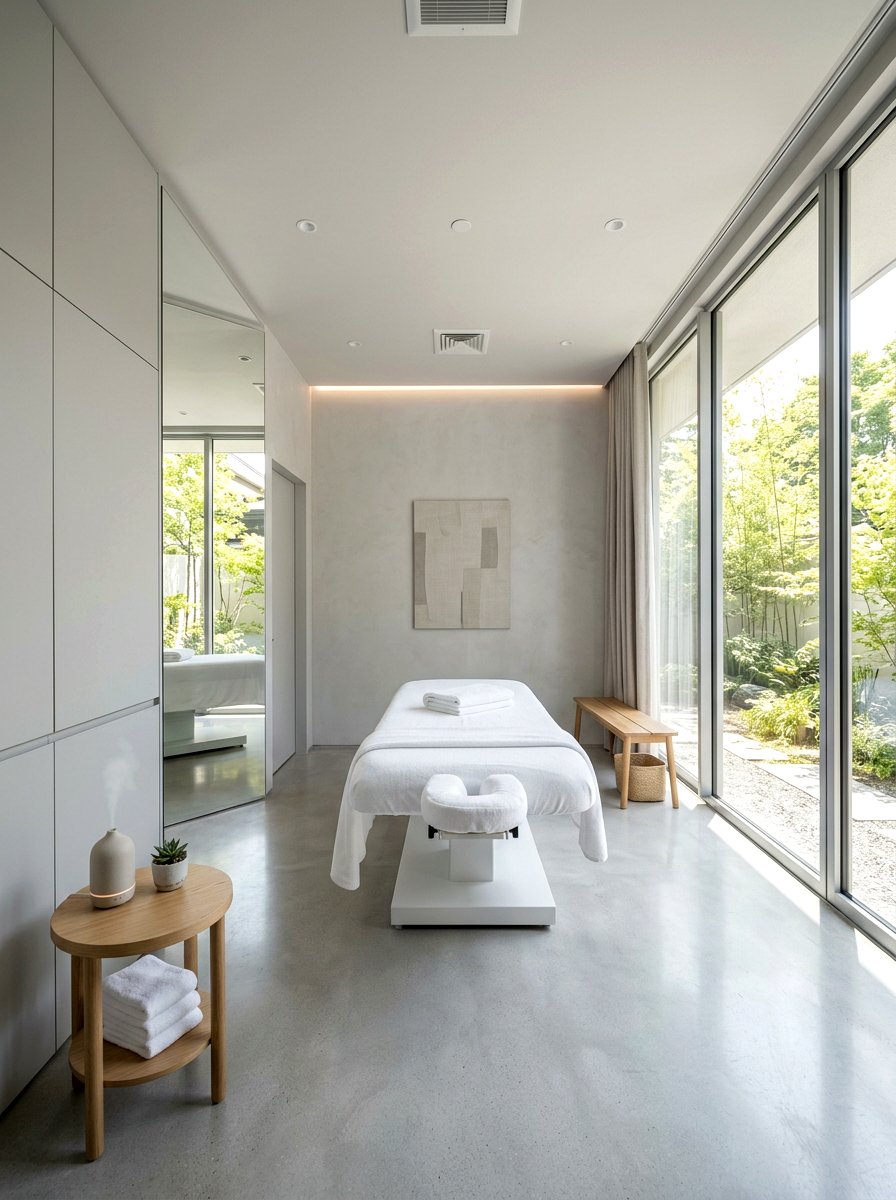
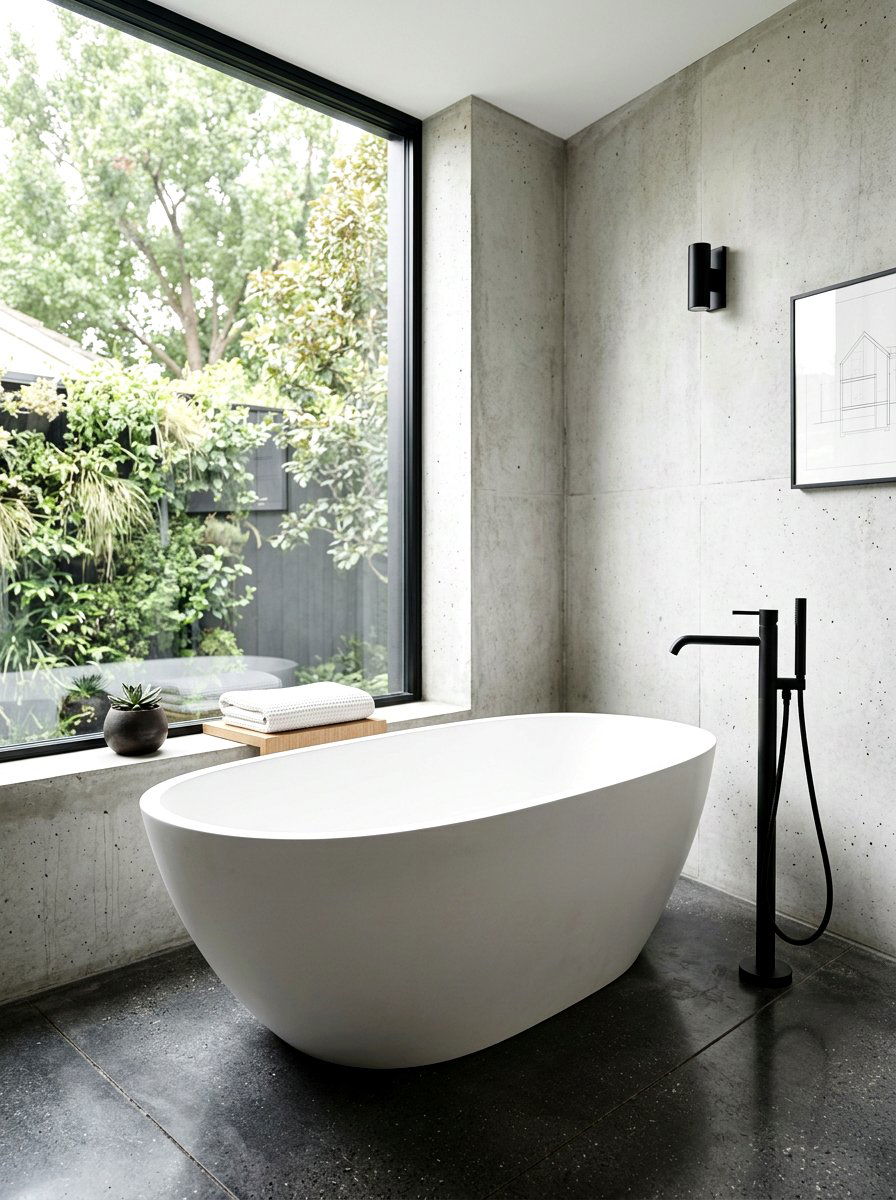
A minimalist massage room emphasizes the beauty of "less is more" by removing unnecessary clutter. You can achieve this look by selecting a few high-quality furniture pieces with clean, straight lines. Using a monochromatic color scheme, like varying shades of light gray or white, makes the room feel airy and expansive. Hidden storage solutions are essential to keep supplies out of sight and maintain a professional appearance. Natural light should be maximized whenever possible to create a fresh and clean vibe. By focusing on essential elements, you provide a distraction-free zone that allows the client to focus entirely on their physical and mental rejuvenation.
3. Bohemian Massage Room
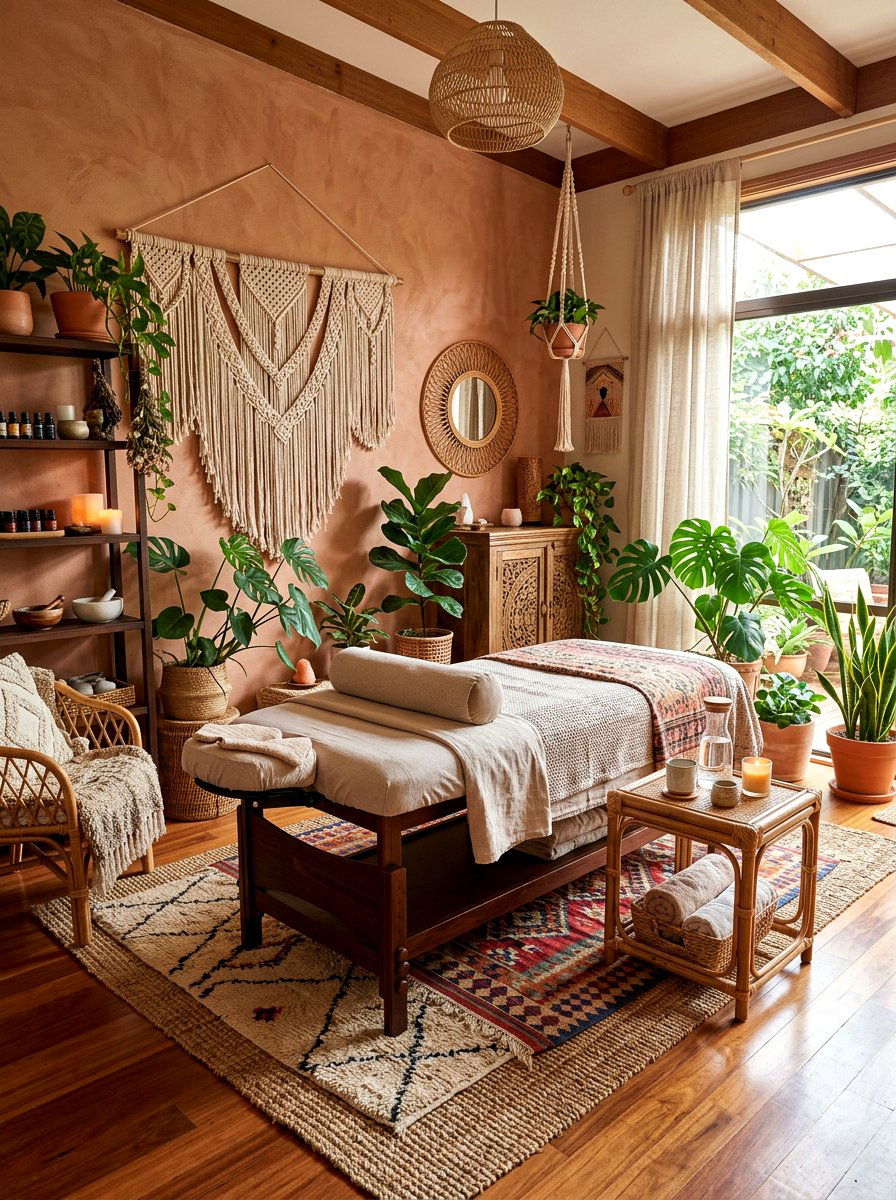
Creating a bohemian massage room allows you to play with rich textures and vibrant, earthy patterns. You might start by layering soft woven rugs on the floor to add warmth and a cozy feel to the space. Incorporating natural fiber decor like macrame wall hangings or rattan furniture adds a touch of artisanal charm. Using warm terracotta or deep forest green on the walls can create a cocooning effect that feels safe and grounded. Adding plenty of floor cushions and a variety of potted plants brings an organic, lived-in energy to the room. This style is perfect for those who want a therapy space that feels artistic.
4. Luxury Massage Room
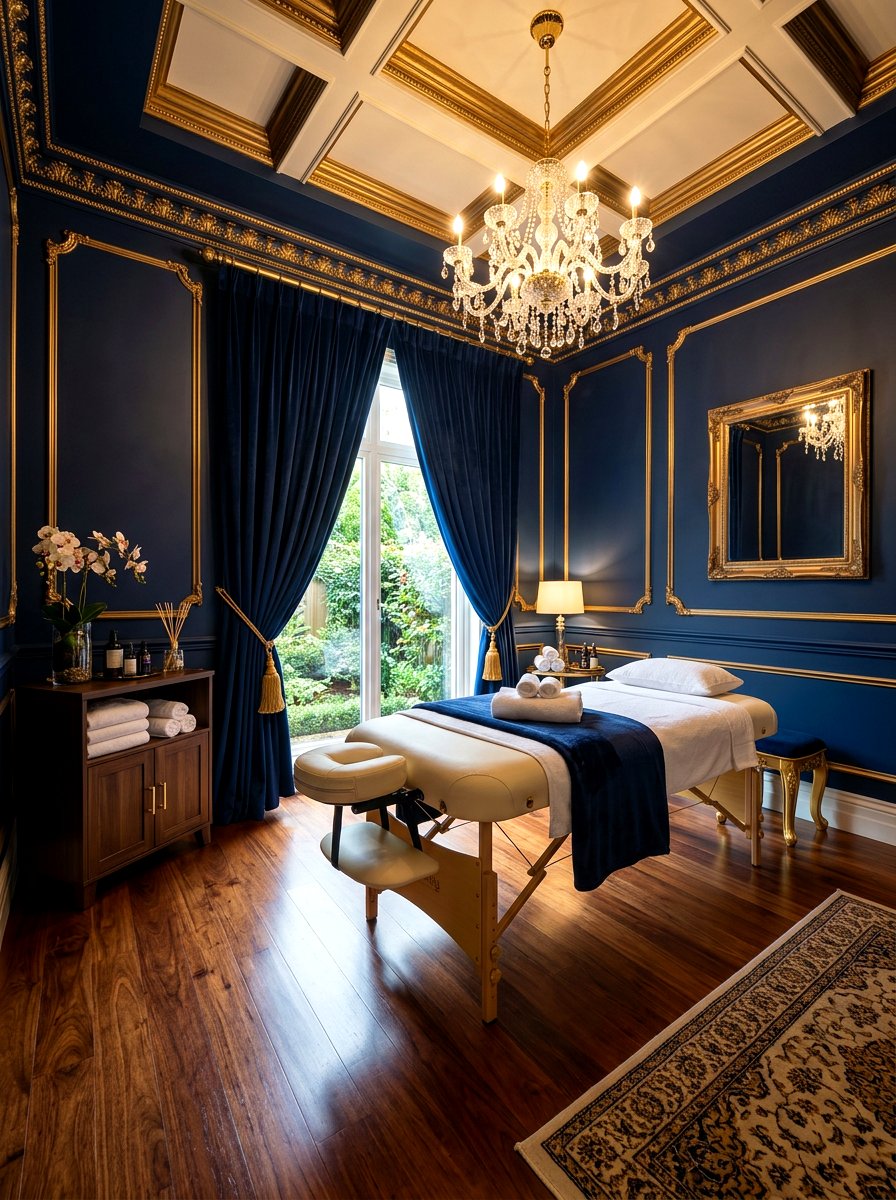
A luxury massage room is all about high-end materials and a sophisticated, polished aesthetic. You can start by choosing an adjustable, high-performance massage table with premium upholstery for maximum client comfort. Incorporating architectural details like crown molding or elegant wall paneling adds a sense of grandeur to the space. Using a color palette of gold, deep navy, or rich mocha creates a mood of exclusivity and opulence. Soft velvet curtains and high-thread-count linens further elevate the tactile experience for your visitors. Strategic accent lighting, such as a sleek modern chandelier, provides a stunning focal point while ensuring the room remains elegantly lit during every session.
5. Modern Massage Room
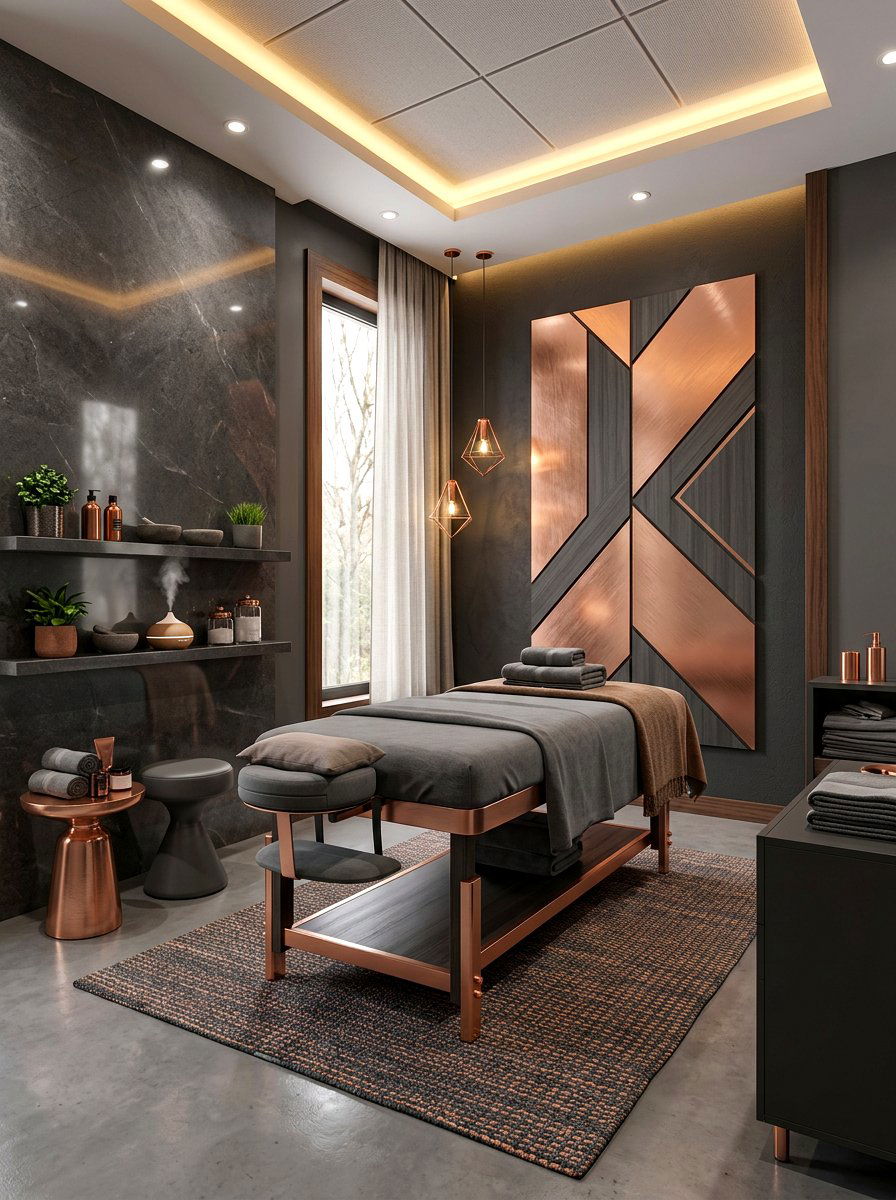
The modern massage room features sleek finishes and the latest wellness technology for a contemporary feel. You should look for furniture with metallic accents or smooth stone surfaces to create a crisp, clean environment. Integrating smart lighting systems allows you to change the room's ambiance with a simple touch. Using a neutral base with bold, geometric art pieces can add visual interest without overwhelming the senses. Floor-to-ceiling glass windows or mirrors can help make the space feel connected to the surrounding world while maintaining privacy with sheer tints. This design approach is ideal for a fast-paced urban clinic that values efficiency and style.
6. Rustic Massage Room
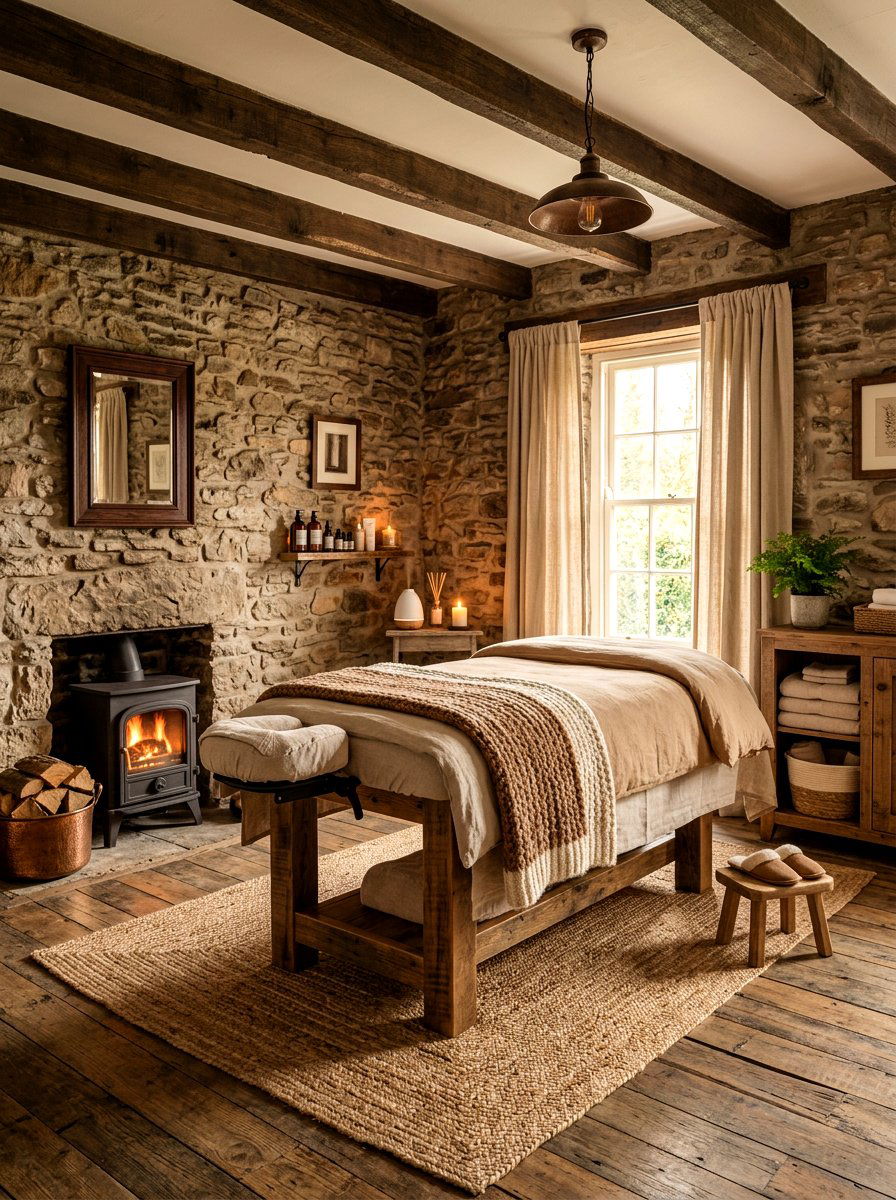
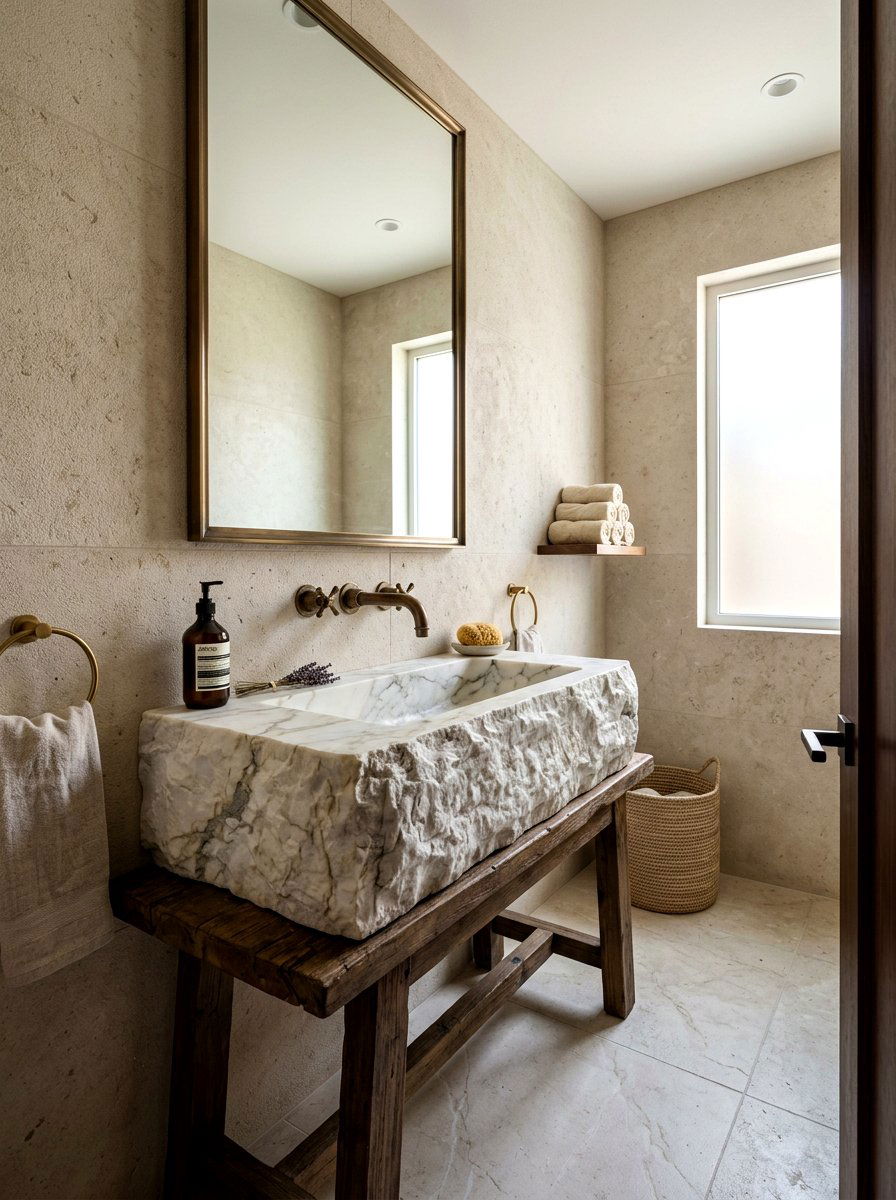
A rustic massage room brings the warmth and charm of the countryside into your therapeutic space. You can use reclaimed wood for the walls or flooring to provide an immediate sense of history and character. Incorporating natural stone elements, like a decorative fireplace or a textured feature wall, adds to the rugged aesthetic. Softening the look with chunky knit blankets and sheepskin rugs creates a cozy, mountain-retreat atmosphere. Choosing a color palette of warm browns, tans, and muted greens helps bridge the gap between the indoors and nature. This style is perfect for creating a sanctuary that feels timeless, sturdy, and deeply comforting.
7. Tropical Massage Room
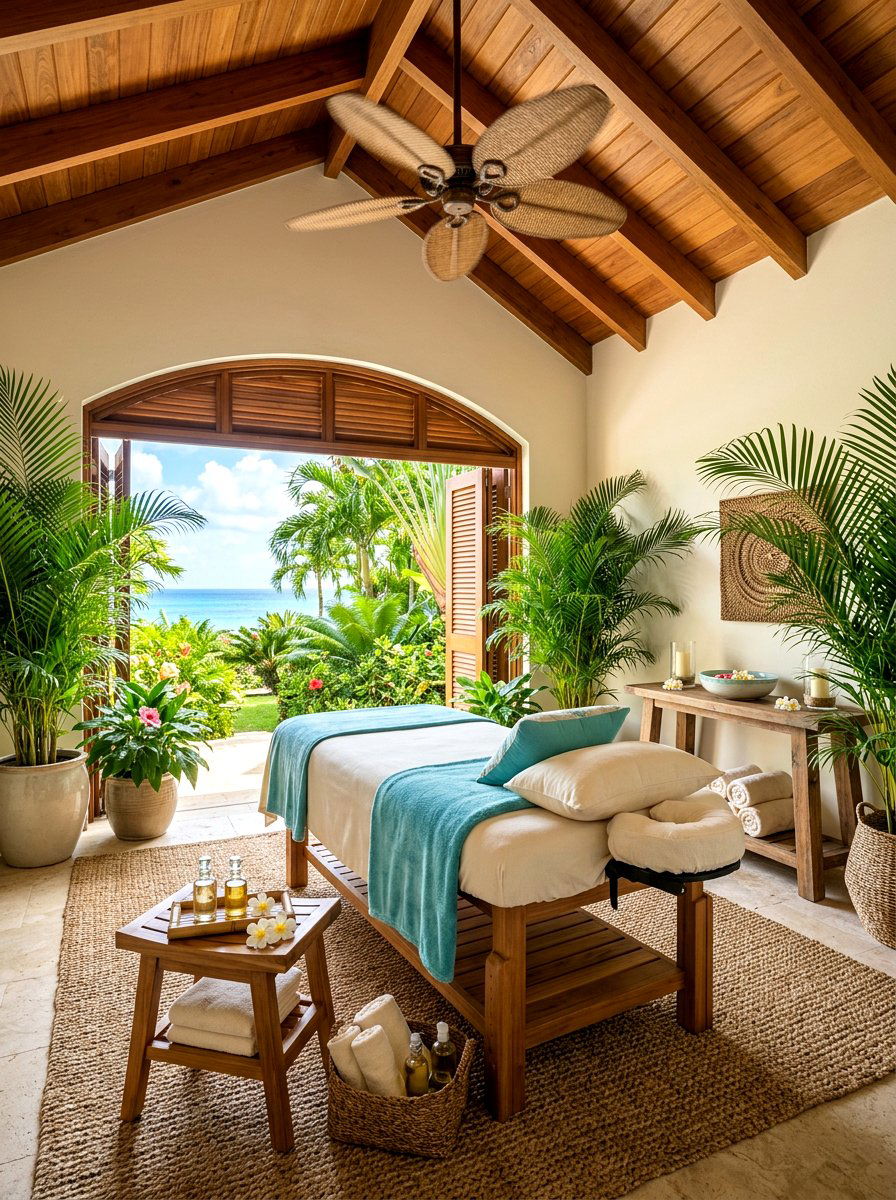
Designing a tropical massage room involves bringing the lushness of a resort getaway directly into the treatment space. You should focus on a bright and airy layout that utilizes natural materials like teak or seagrass. Incorporating large-leafed indoor plants like monstera or palm trees creates a vibrant, biophilic connection. Using a color palette inspired by the ocean and sand, such as turquoise and soft ivory, keeps the mood light. Adding a ceiling fan with wooden blades can help circulate the air while contributing to the island-themed decor. This approach transforms a standard session into a refreshing escape that feels like a summer vacation.
8. Industrial Massage Room
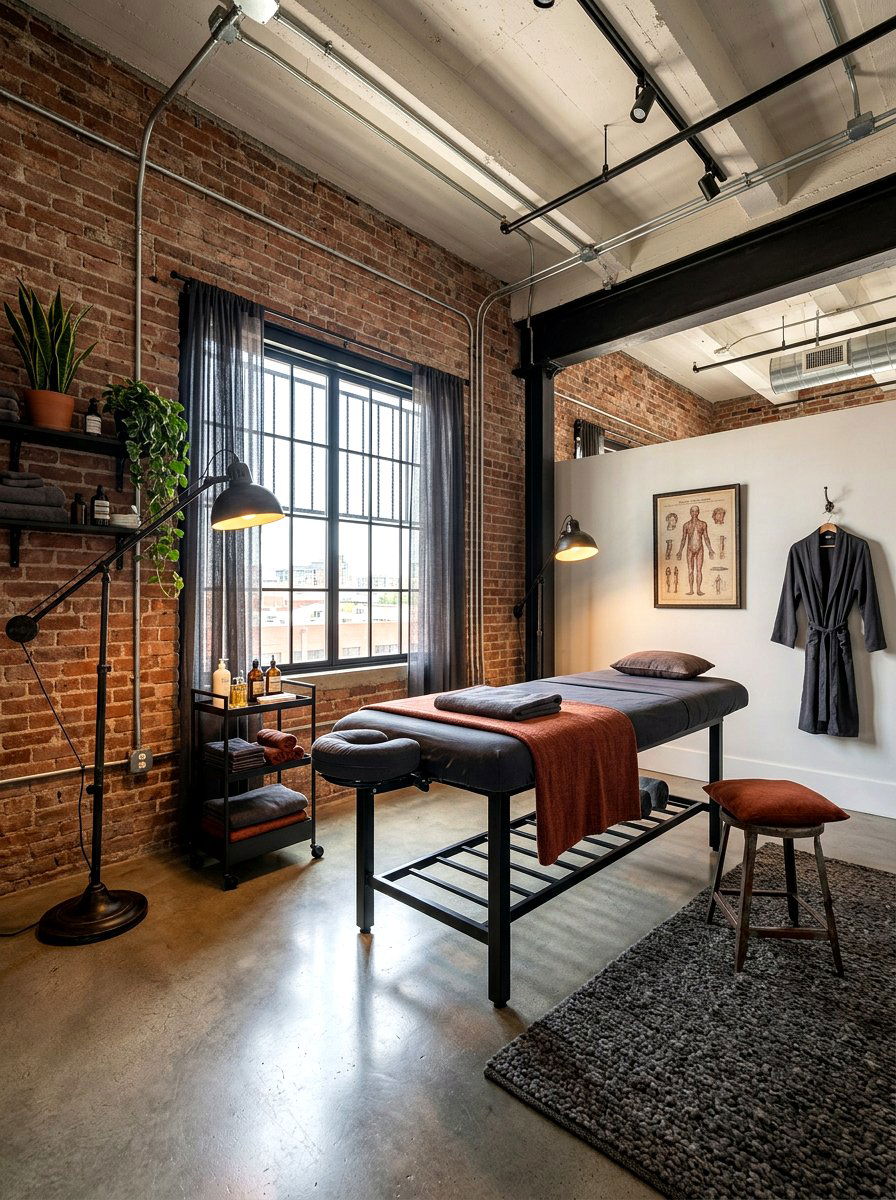
An industrial massage room offers a unique, edgy atmosphere by celebrating raw building materials and open layouts. You can leave brick walls exposed and highlight metal ductwork to create an authentic urban loft feel. Polished concrete floors provide a durable and sleek surface that is easy to keep clean and professional. Softening these hard surfaces with large area rugs and oversized floor lamps ensures the space remains warm and inviting. Using a color palette of charcoal, rust, and copper adds depth and sophistication to the overall design. This style is excellent for therapists working in converted urban spaces who want a bold, modern look.
9. Scandinavian Massage Room
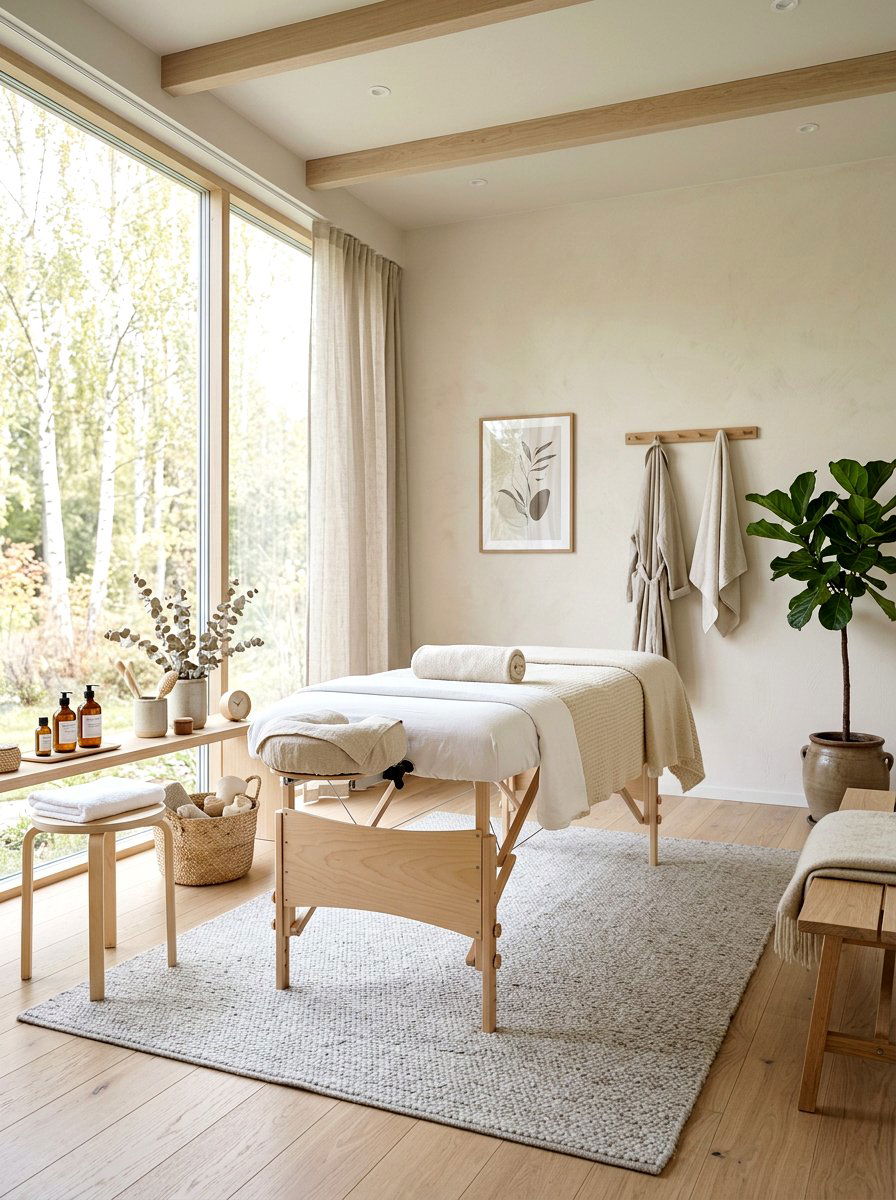
The Scandinavian massage room is defined by its functionality, light, and use of natural materials. You should focus on a "hygge" atmosphere by incorporating soft textiles like wool and linen in pale, neutral tones. Light-colored wood, such as pine or birch, should be used for the furniture and flooring to keep the space bright. Simple, functional decor like a single vase of dried flowers or a minimalist wall clock maintains the clean aesthetic. Utilizing large windows to flood the room with natural light is a core part of this design philosophy. This style creates a clean, honest, and serene environment that promotes mental clarity and relaxation.
10. Coastal Massage Room
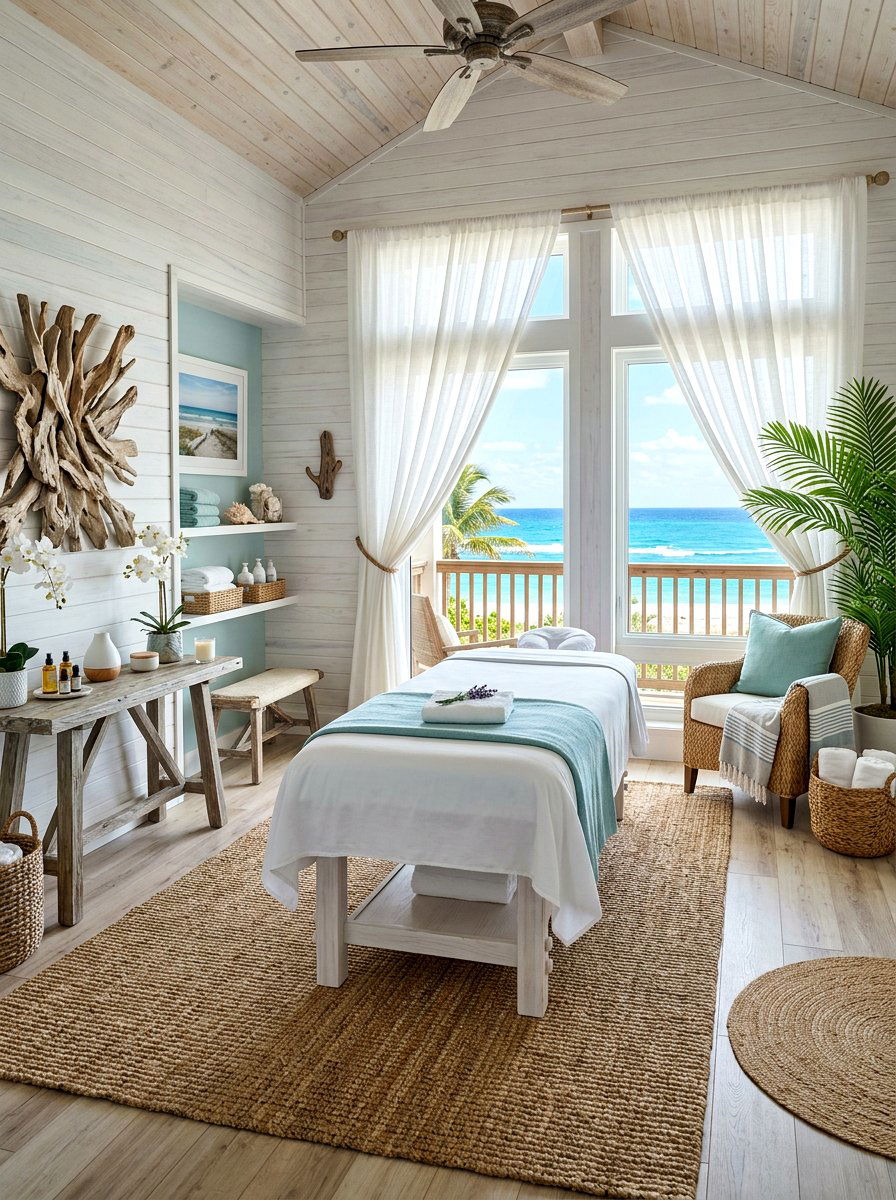
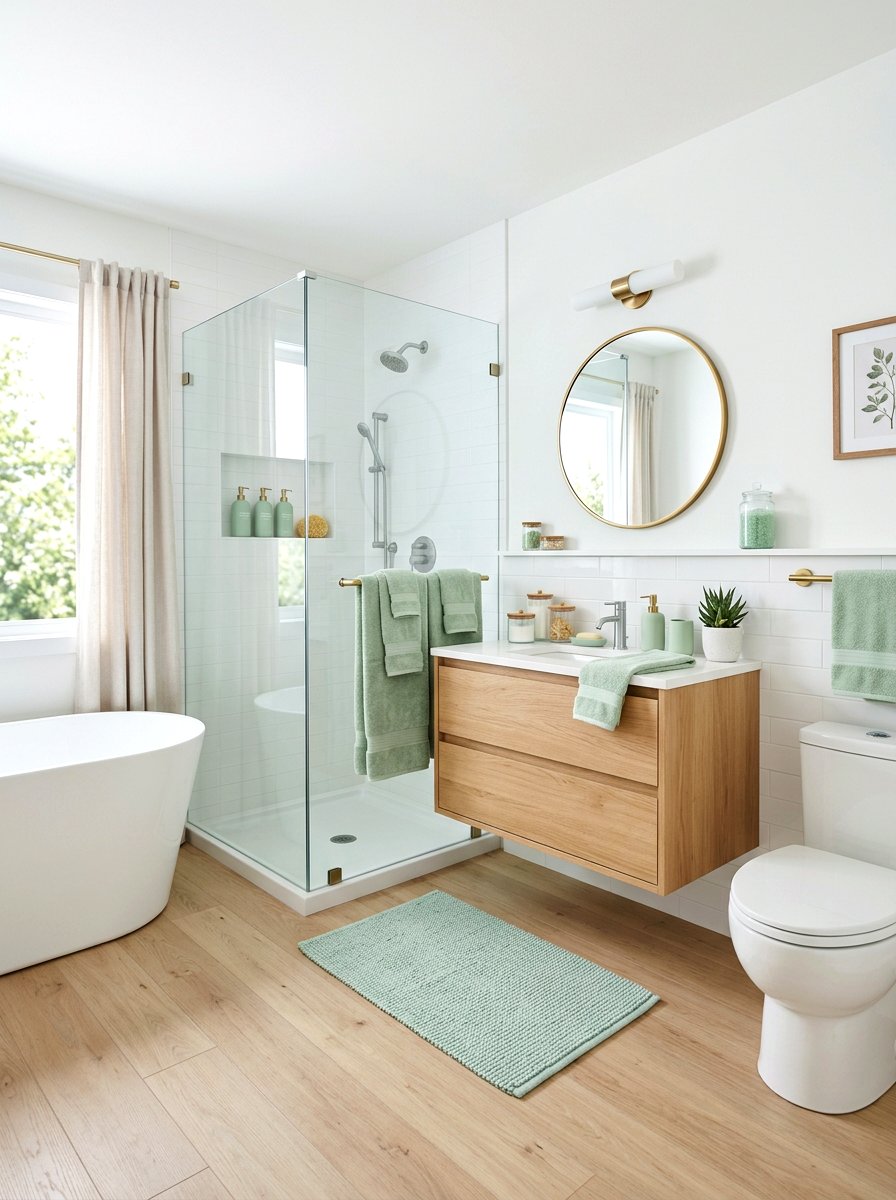
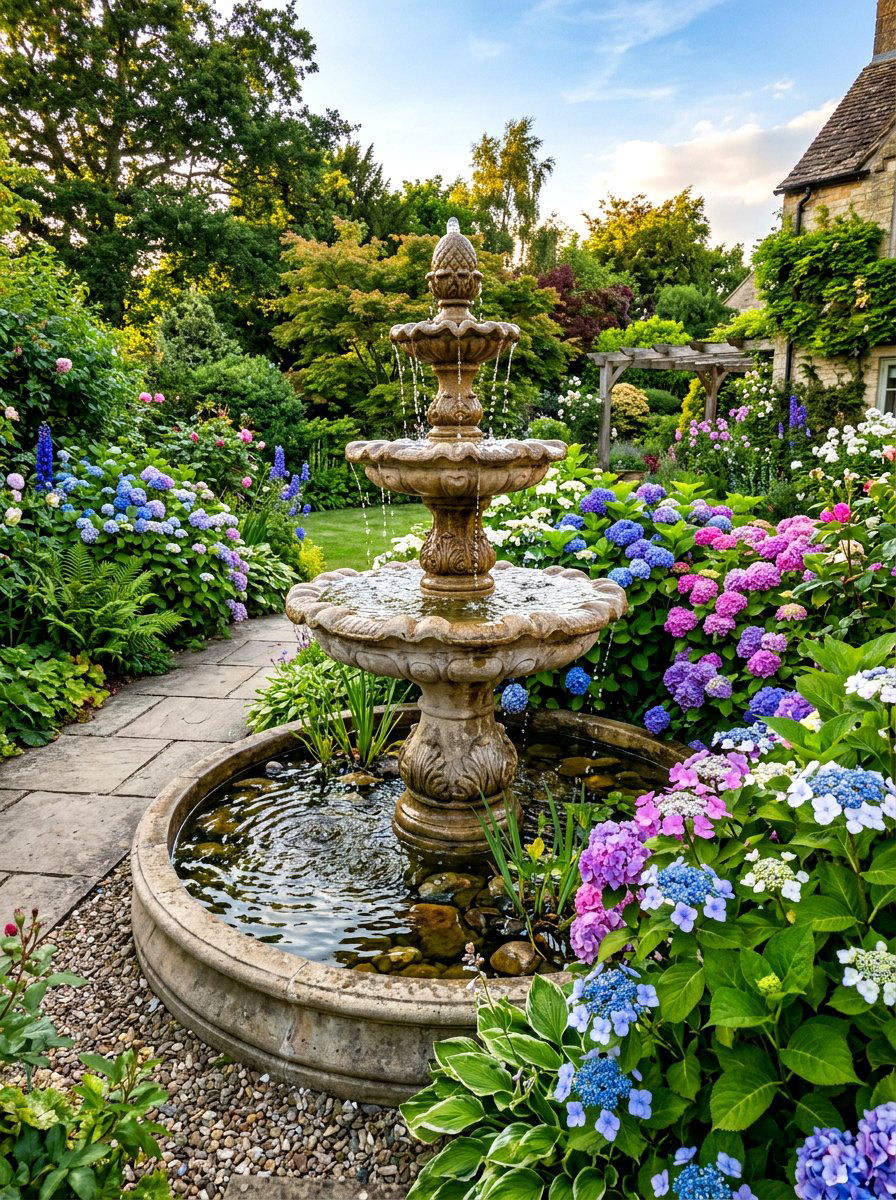
A coastal massage room uses the calming energy of the seaside to inspire a peaceful treatment environment. You can achieve this by choosing a palette of seafoam green, soft blue, and sandy beige throughout the room. Incorporating decor elements like driftwood accents or jars filled with smooth sea glass adds a subtle nautical touch. Using light, breezy curtains allows natural light to filter in while maintaining a sense of soft privacy. Light-washed wood flooring or jute rugs provide a tactile connection to the beach underfoot. This design strategy is perfect for creating a lighthearted and refreshing space where clients can wash away their daily stresses.
11. Japanese Massage Room
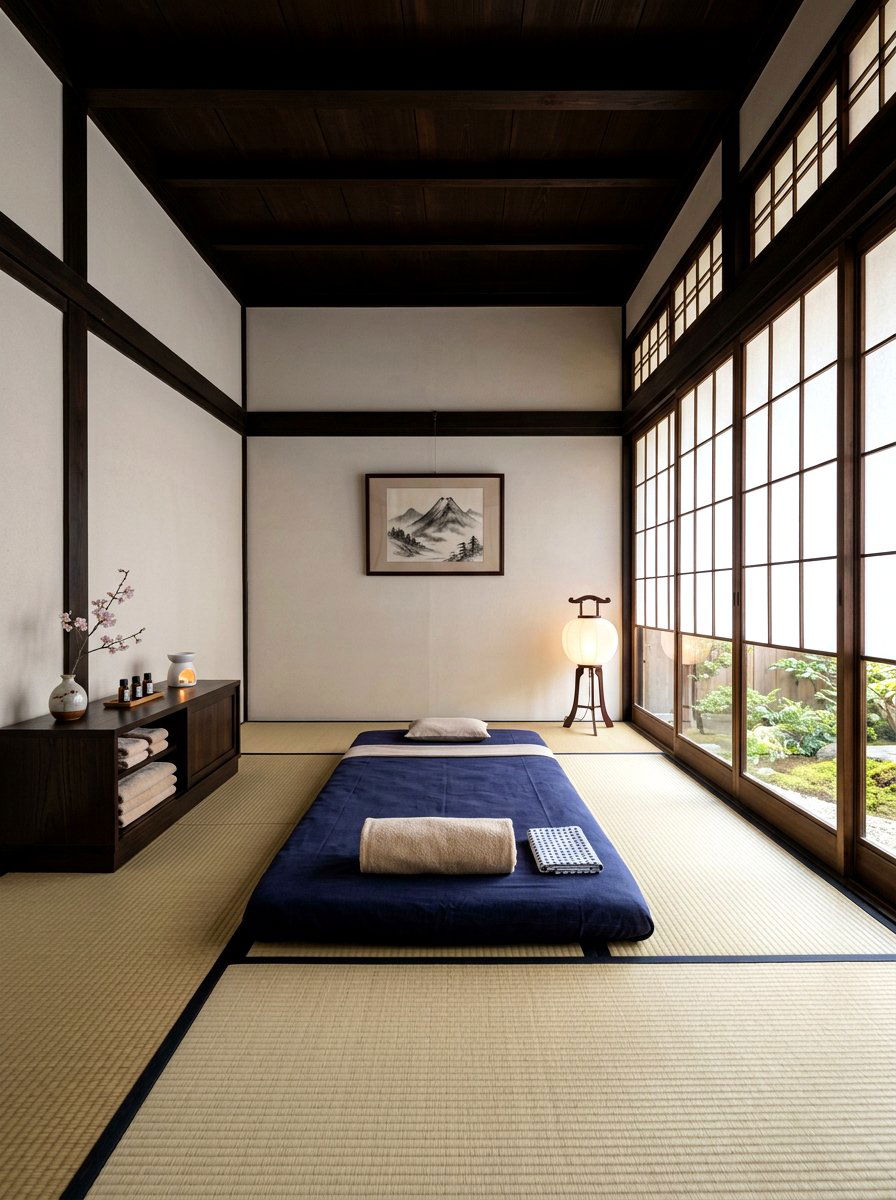
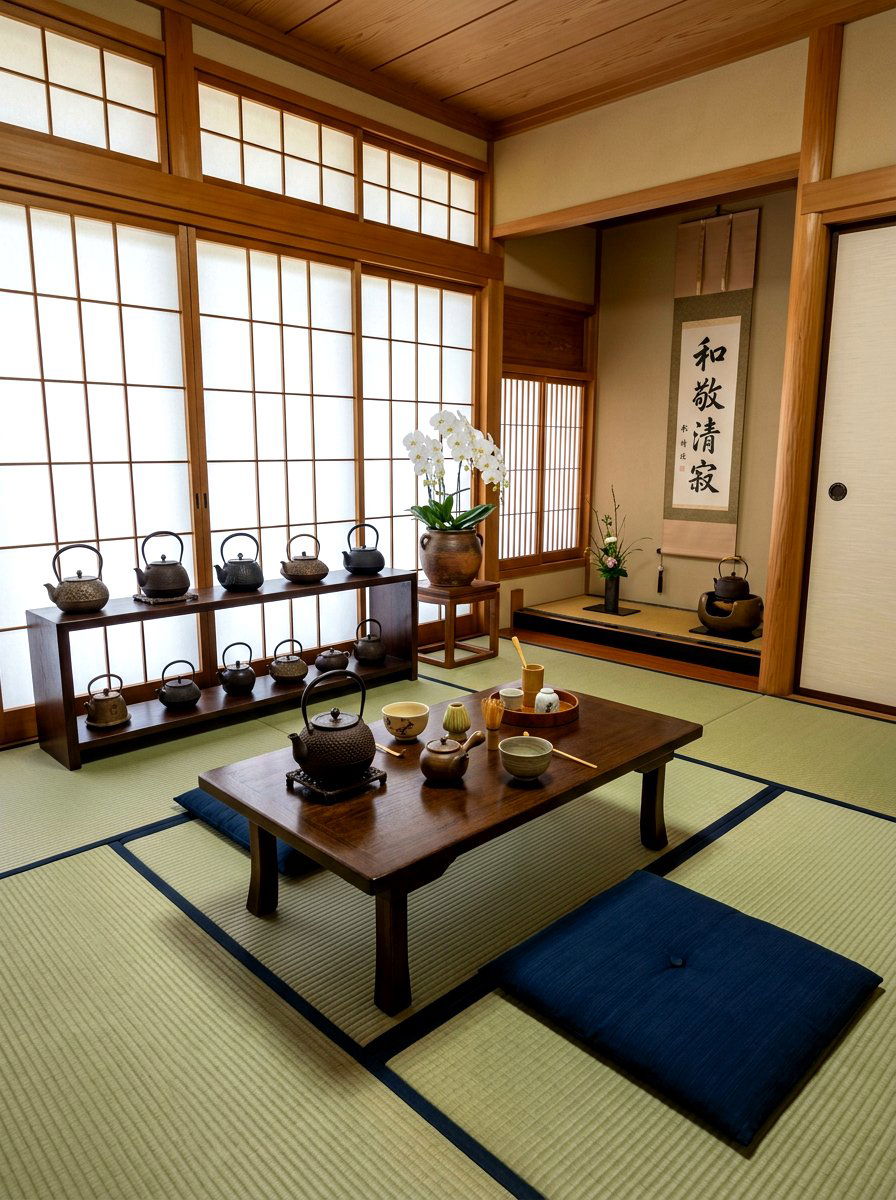
A Japanese massage room draws heavily from traditional aesthetics to create a structured and harmonious environment. You should consider using tatami mats on the floor to provide a traditional foundation for the therapy space. Shoji screens can be used as room dividers or window treatments to diffuse light and provide an elegant sense of privacy. Incorporating a low-profile massage table or floor futon keeps the visual lines of the room clean and humble. Using a palette of ink black, wood tones, and soft paper whites creates a sophisticated contrast. This style emphasizes a deep respect for tradition and a focused, meditative atmosphere for healing.
12. Botanical Massage Room
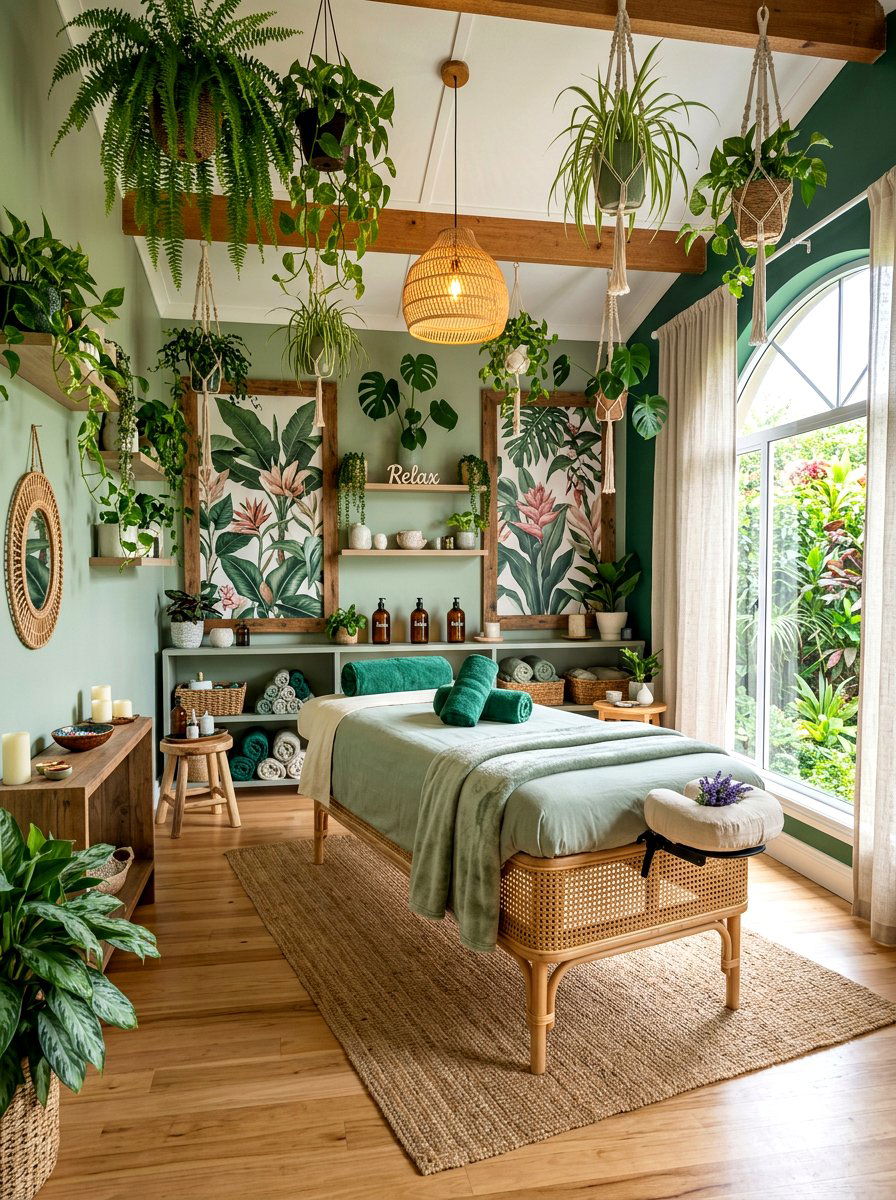
The botanical massage room turns the treatment area into a thriving indoor garden to promote wellness. You should fill the space with a variety of humidity-loving plants to improve air quality and provide a lush backdrop. Using botanical print wallpaper or large-scale floral art can reinforce the theme on the walls. Choosing natural materials like rattan, cork, and cotton for your furniture and linens supports the organic aesthetic. A color palette dominated by various shades of green, from sage to emerald, creates a restorative and lively mood. This design is ideal for therapists who believe in the healing power of nature and greenery.
13. Holistic Massage Room
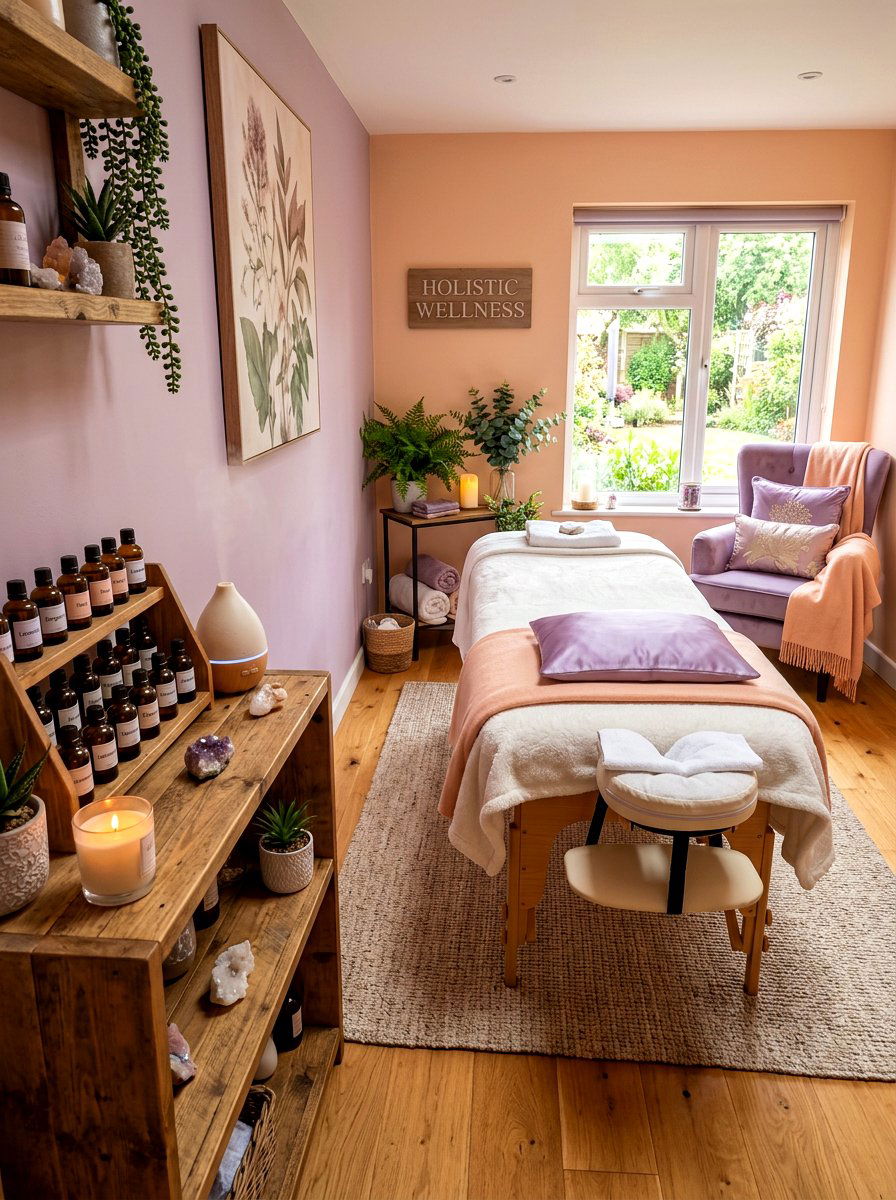
A holistic massage room is designed to treat the whole person by incorporating multiple sensory elements. You can start by setting up a dedicated aromatherapy station with a high-quality diffuser and organized essential oils. Using soft, warm colors like peach or lavender on the walls helps to soothe the nervous system upon entry. Incorporating a comfortable seating area for pre-session consultations allows for a better connection between therapist and client. Adding a variety of textures, such as silk pillows and cashmere throws, enhances the physical comfort of the space. This approach ensures every part of the environment contributes to a balanced and healing experience.
14. Medical Massage Room
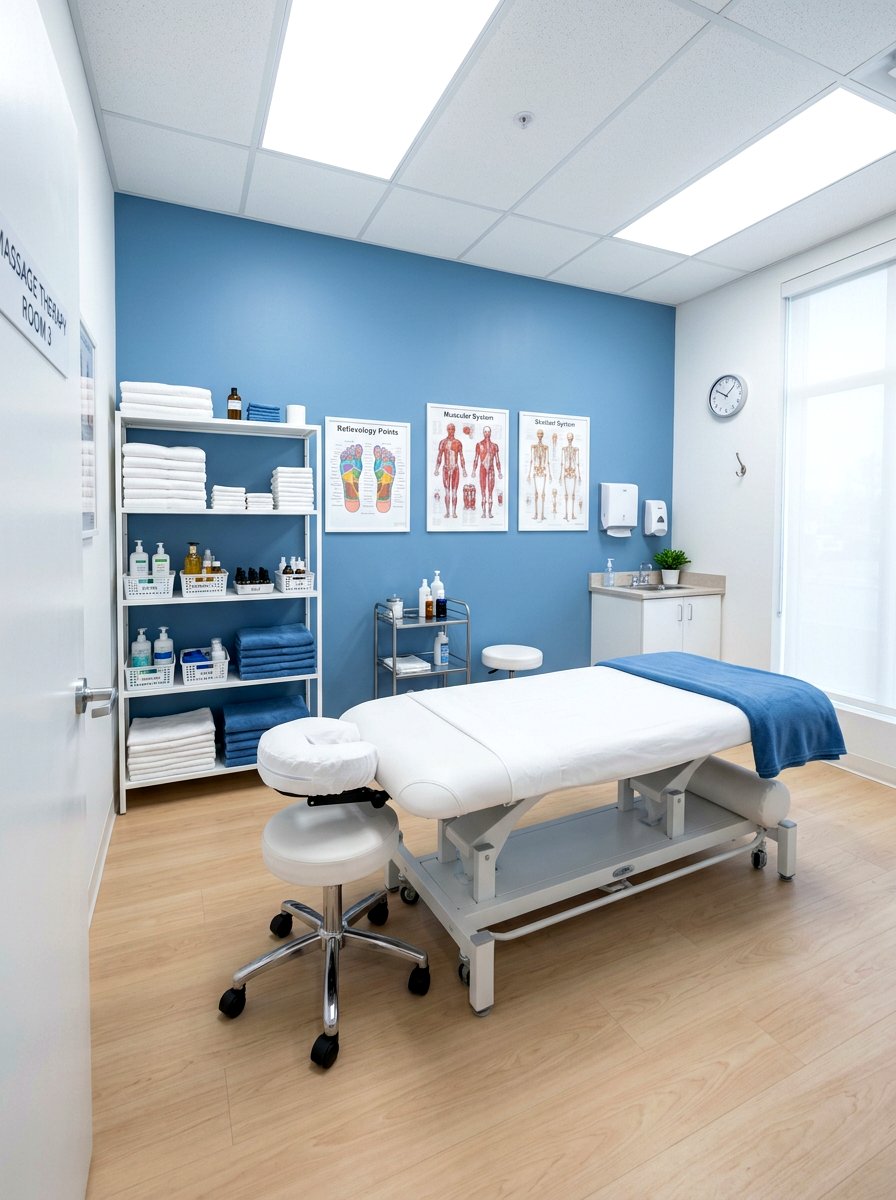
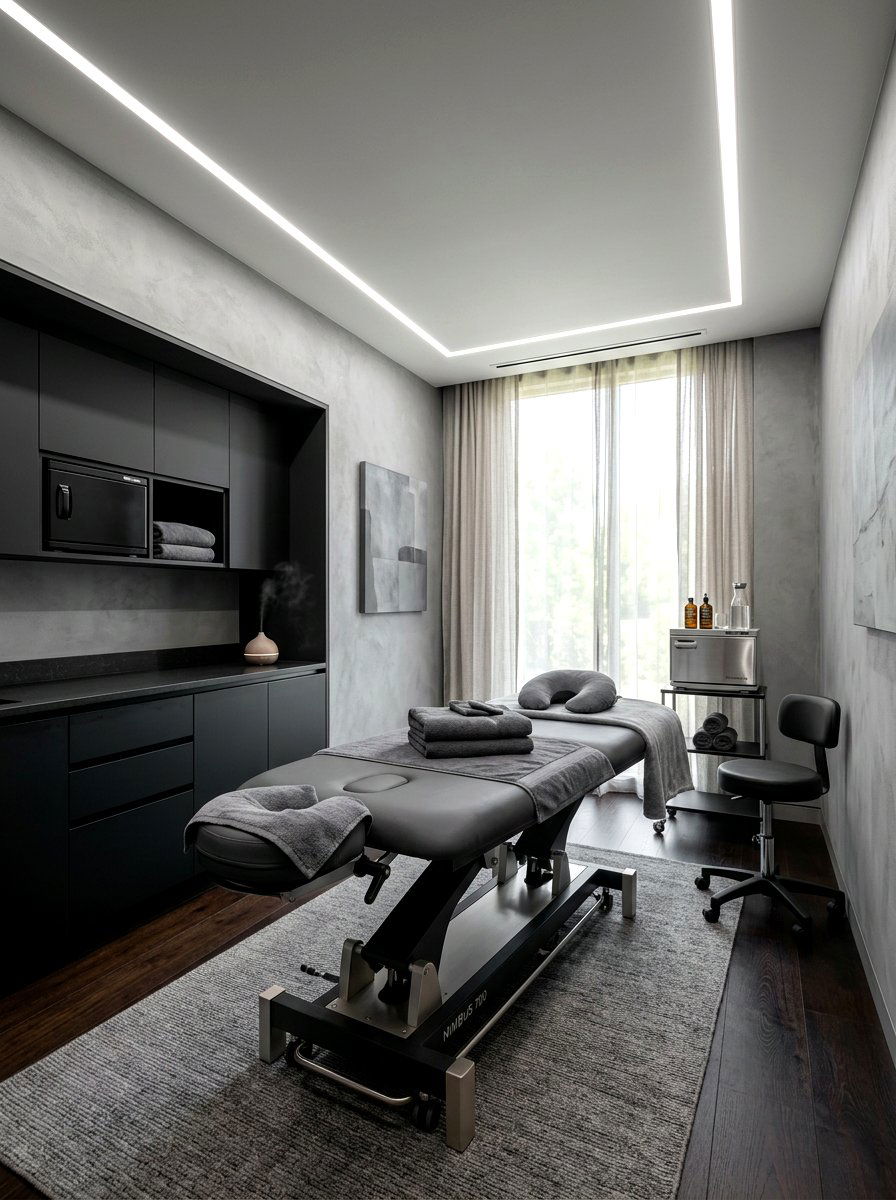
A medical massage room prioritizes hygiene and functionality while still maintaining a professional and welcoming atmosphere. You should choose surfaces that are non-porous and easy to sanitize, such as high-quality vinyl for the massage table. Using a clean, clinical color palette of soft whites and blues suggests a high level of professionalism and care. Incorporating organized storage for medical records, anatomical charts, and specialized equipment is essential for a smooth workflow. Good overhead lighting is important for assessments, but adding dimmable options allows for a more relaxed environment during the actual treatment. This design ensures that the focus remains on therapeutic results.
15. Home Massage Room
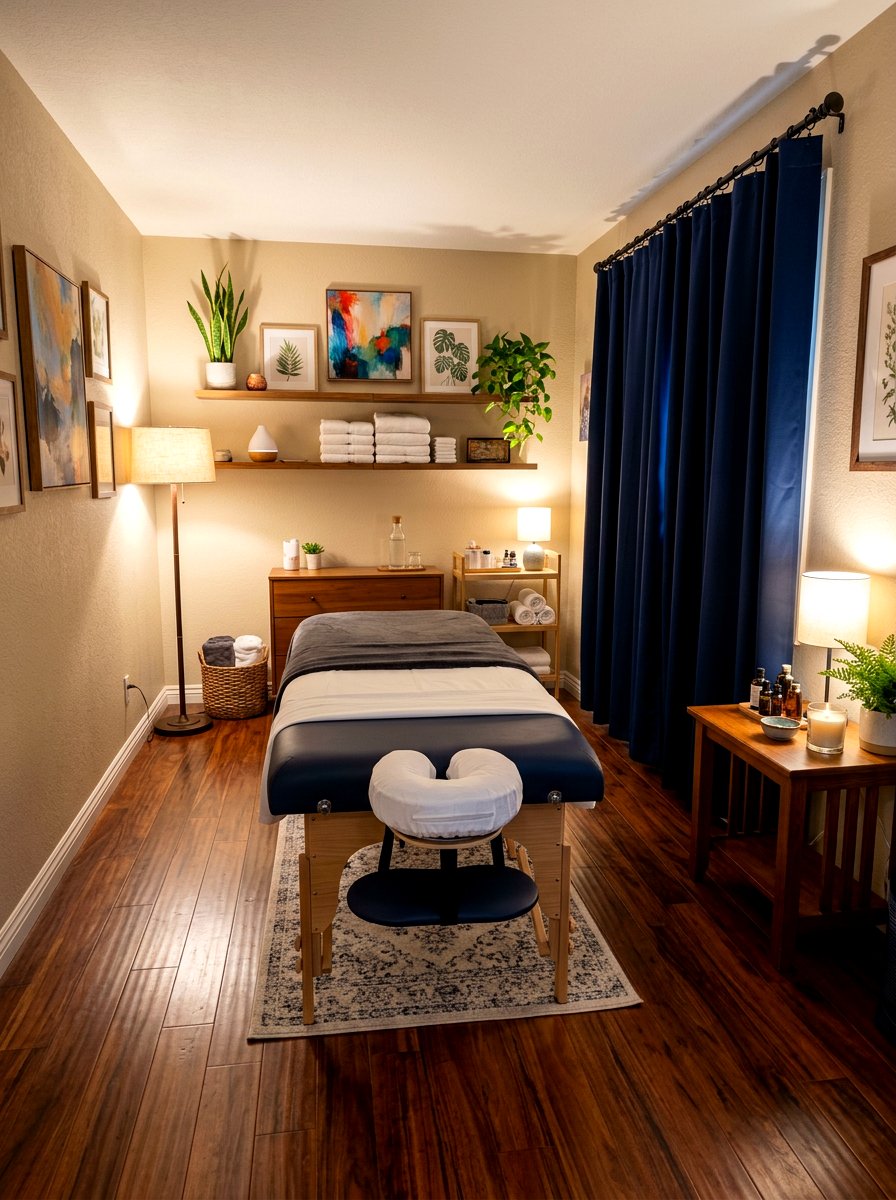
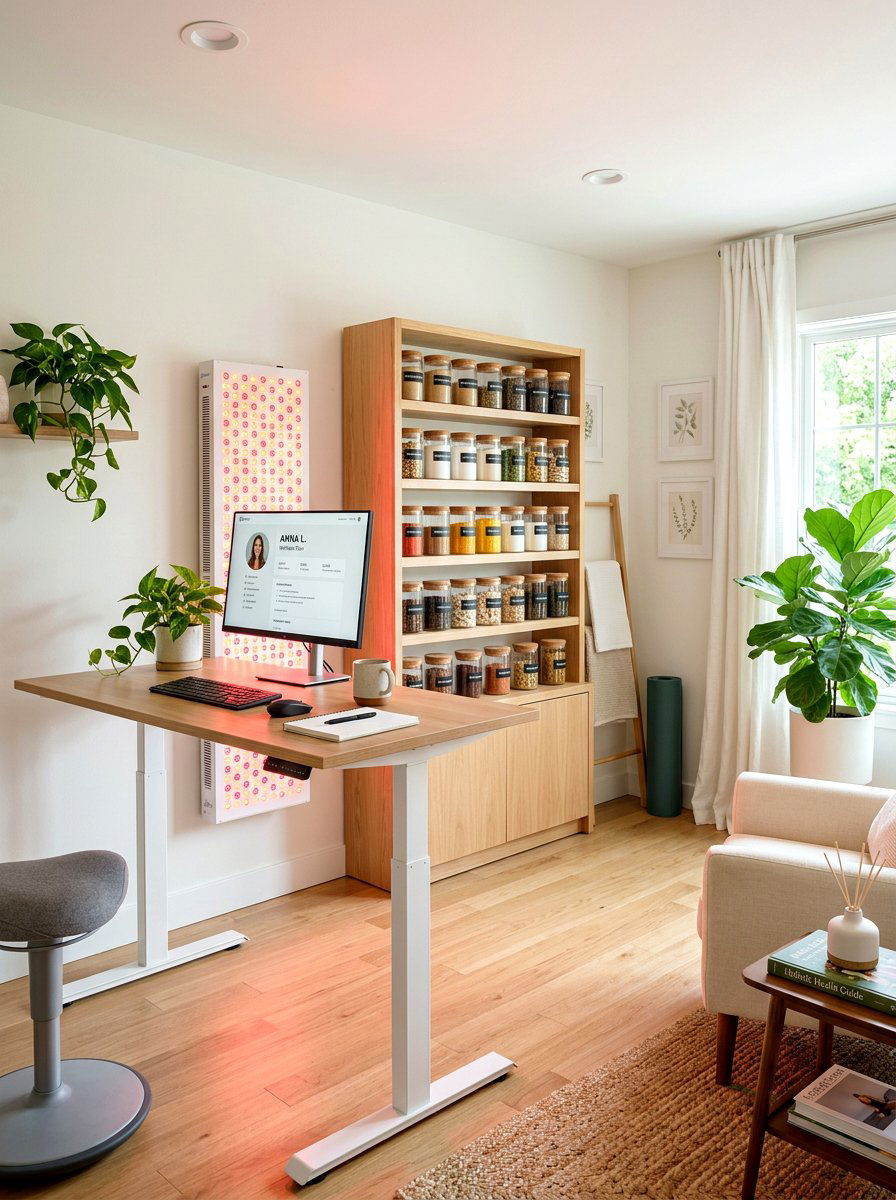
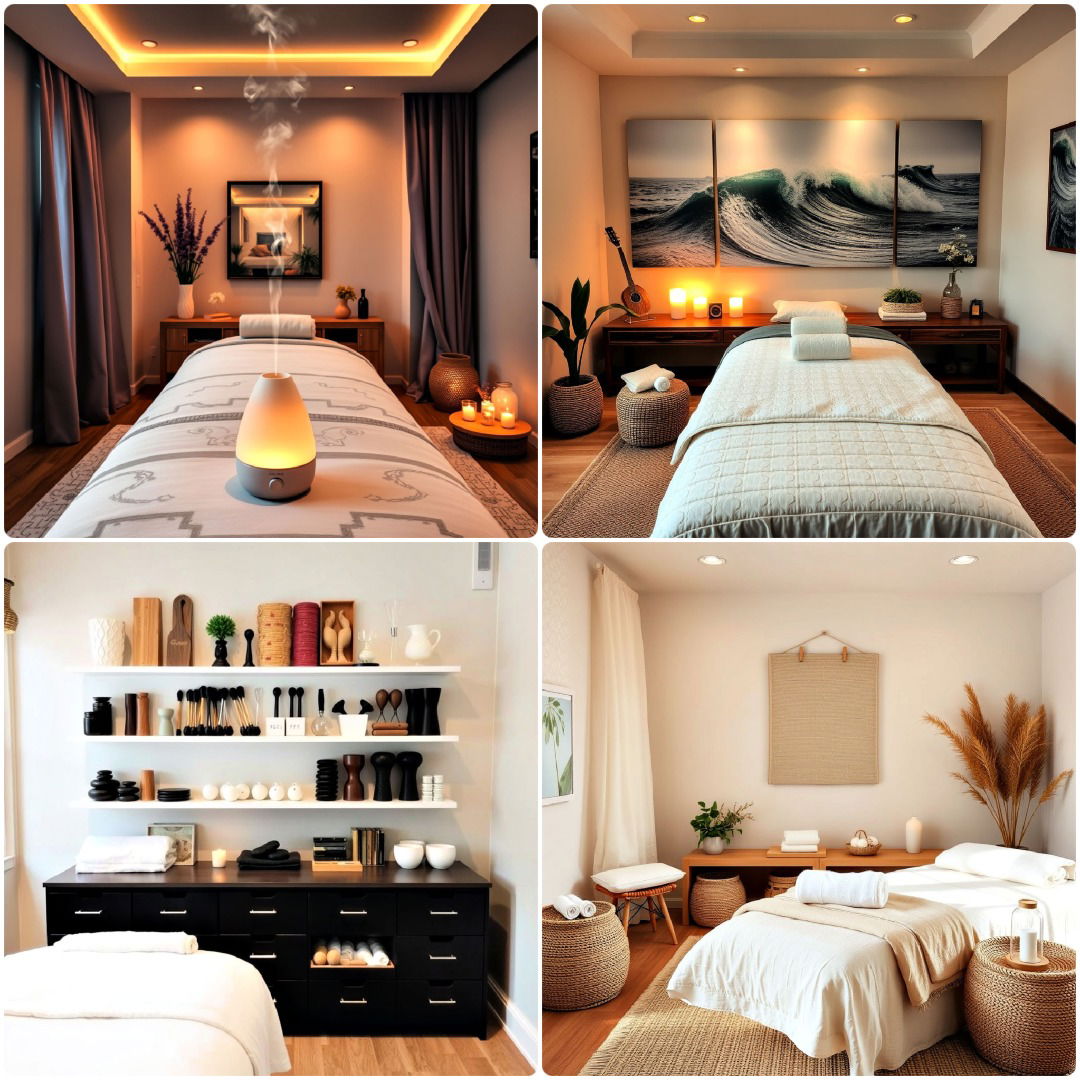
Creating a home massage room allows you to turn a spare bedroom or office into a private wellness retreat. You can start by choosing a portable but sturdy massage table that can be easily folded if the space is multifunctional. Using personal decor items like favorite art pieces or soft lighting makes the room feel uniquely comfortable and safe. High-quality black-out curtains are a great addition to ensure privacy and control over the room's brightness. Incorporating a small sound system to play calming music helps distinguish the space from the rest of the house. This setup provides a convenient and intimate environment for regular self-care.
16. Small Massage Room
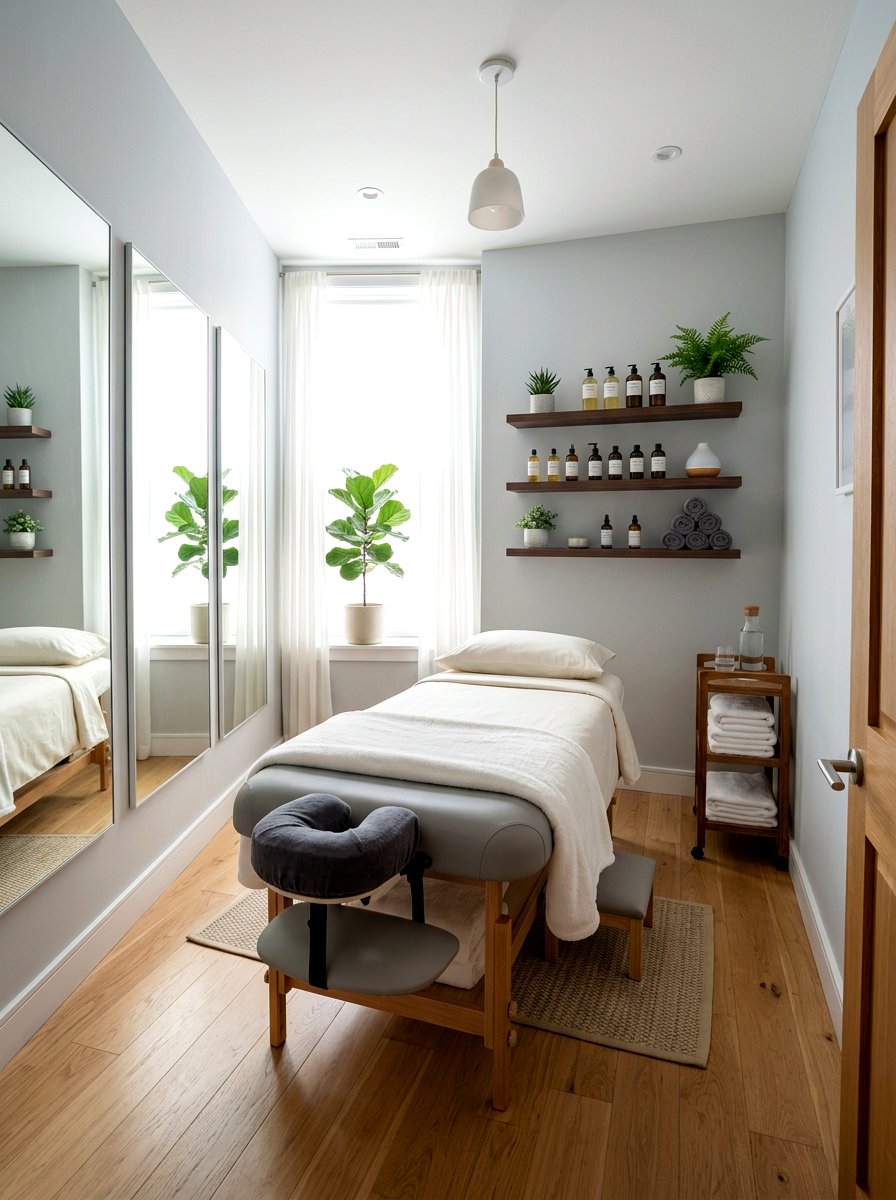
Designing a small massage room requires smart space planning to ensure the area feels cozy rather than cramped. You can use large mirrors on one wall to create the illusion of more depth and space. Choosing a light color palette for the walls and ceiling helps the room feel more open and airy. Utilizing vertical storage, like floating shelves, keeps the floor clear and maintains a clean visual path. A compact, streamlined massage table is essential to allow for easy movement around the perimeter of the room. This approach turns a limited area into a highly efficient and intimate sanctuary for focused healing work.
17. Earthy Massage Room
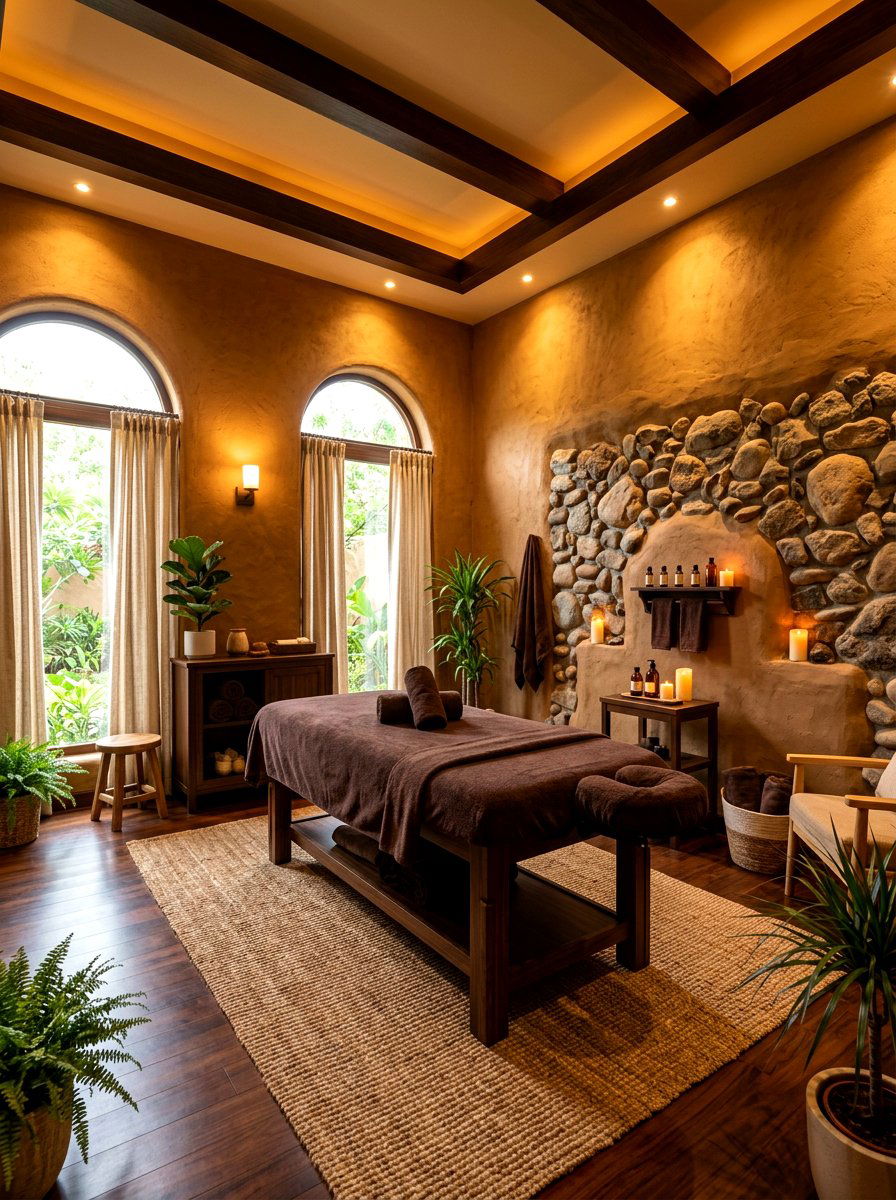
An earthy massage room focuses on deep, grounded tones and raw materials to create a sense of stability. You should use clay-based wall finishes or textured plaster to add a tactile quality to the environment. Choosing a color palette of deep ochre, burnt orange, and chocolate brown creates a warm and protective atmosphere. Incorporating natural elements like large river stones or hand-carved wooden bowls adds to the organic feel. Soft, amber-toned lighting can mimic the glow of a sunset, further enhancing the grounded mood of the space. This design is perfect for those who want their clients to feel completely supported and at home.
18. Neutral Massage Room
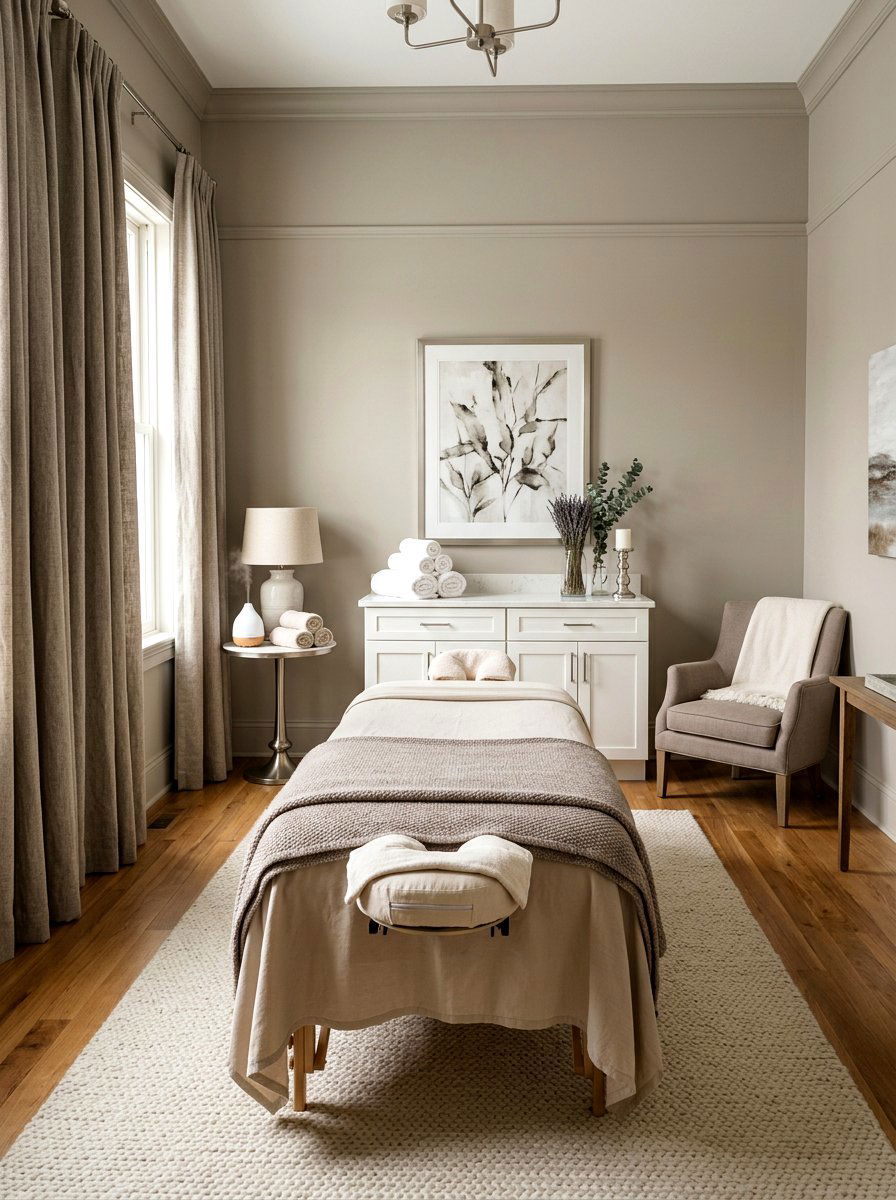
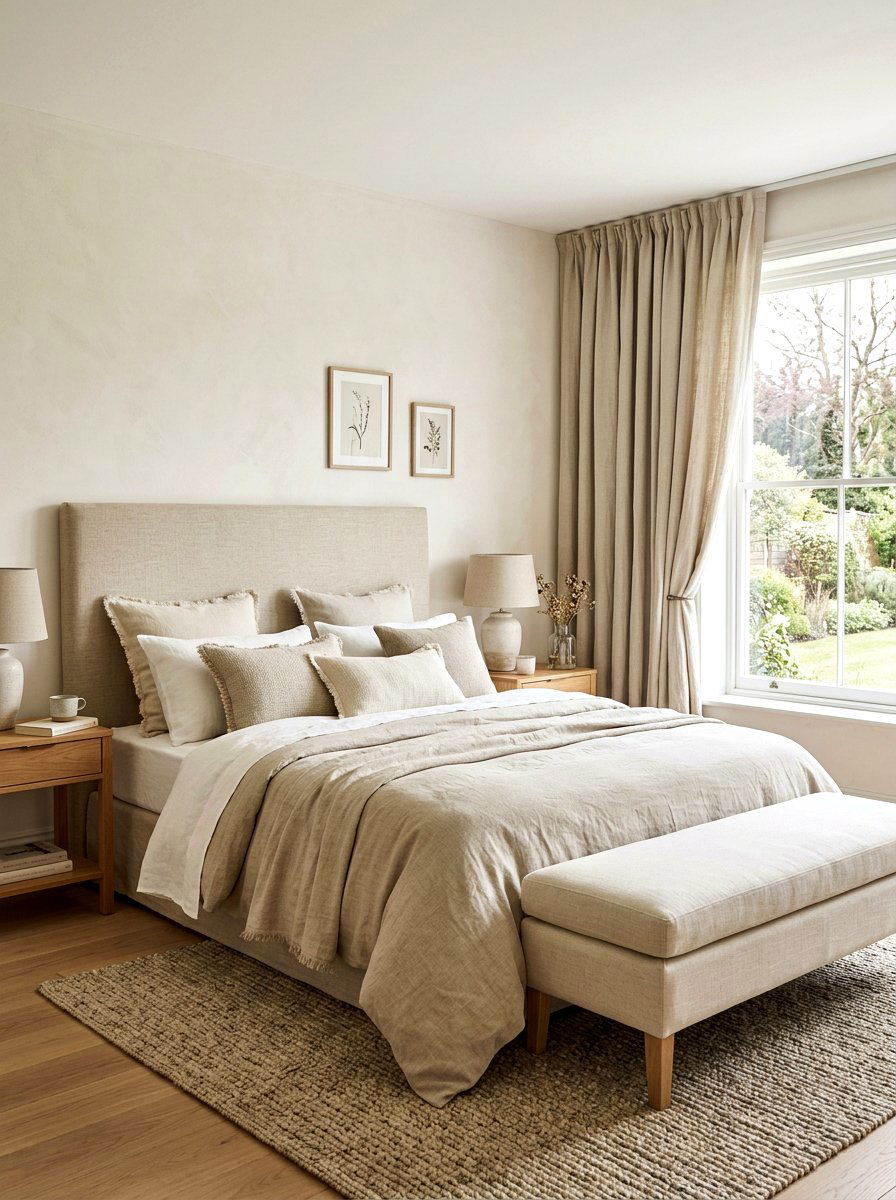
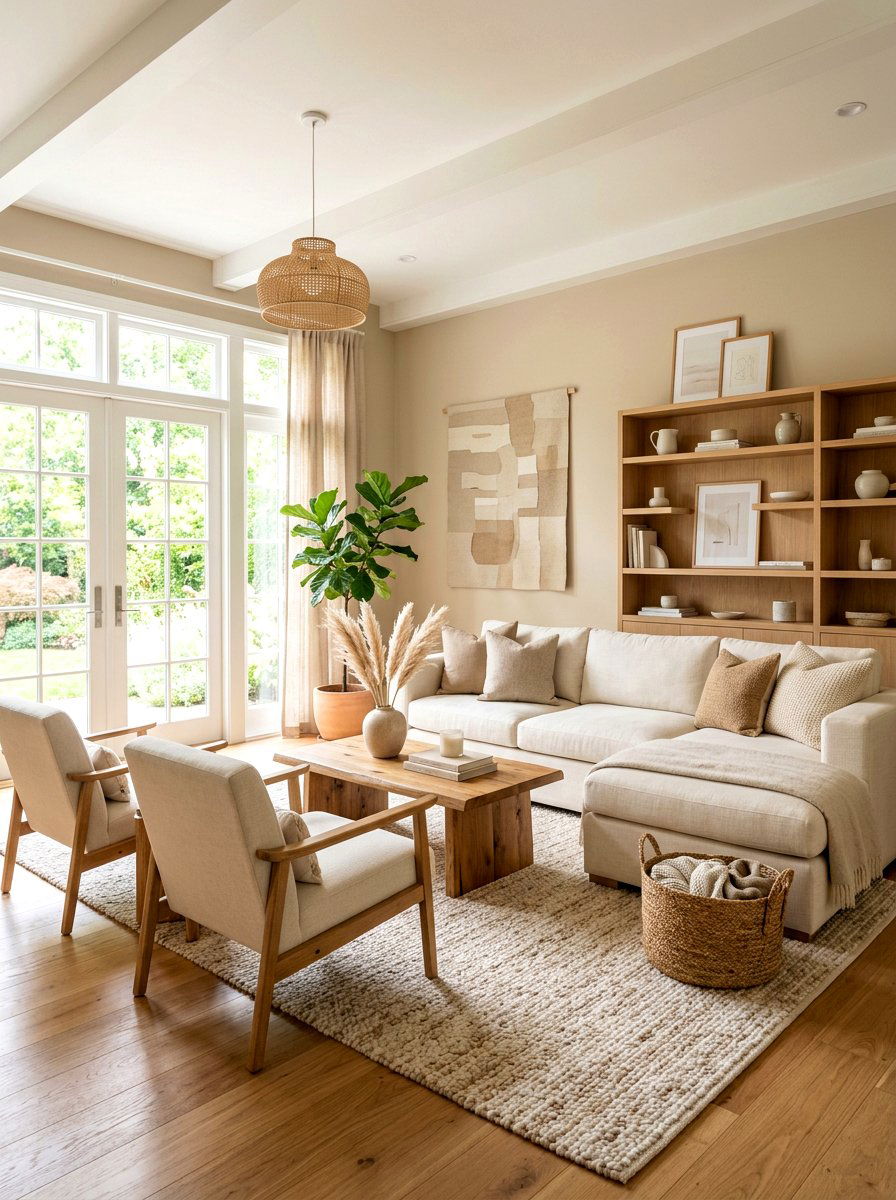
A neutral massage room provides a timeless and sophisticated backdrop that appeals to a wide variety of clients. You can start by layering different shades of beige, cream, and taupe to create visual depth without using bold colors. Using high-quality textiles like heavy linen and soft cotton adds a luxurious feel to the neutral palette. Incorporating subtle metallic accents in brushed nickel or brass can provide a modern touch of elegance. Simple, understated furniture ensures that the massage table remains the main focal point of the room. This style is versatile and easy to update with small accessories like pillows or candles.
19. Mid Century Massage Room
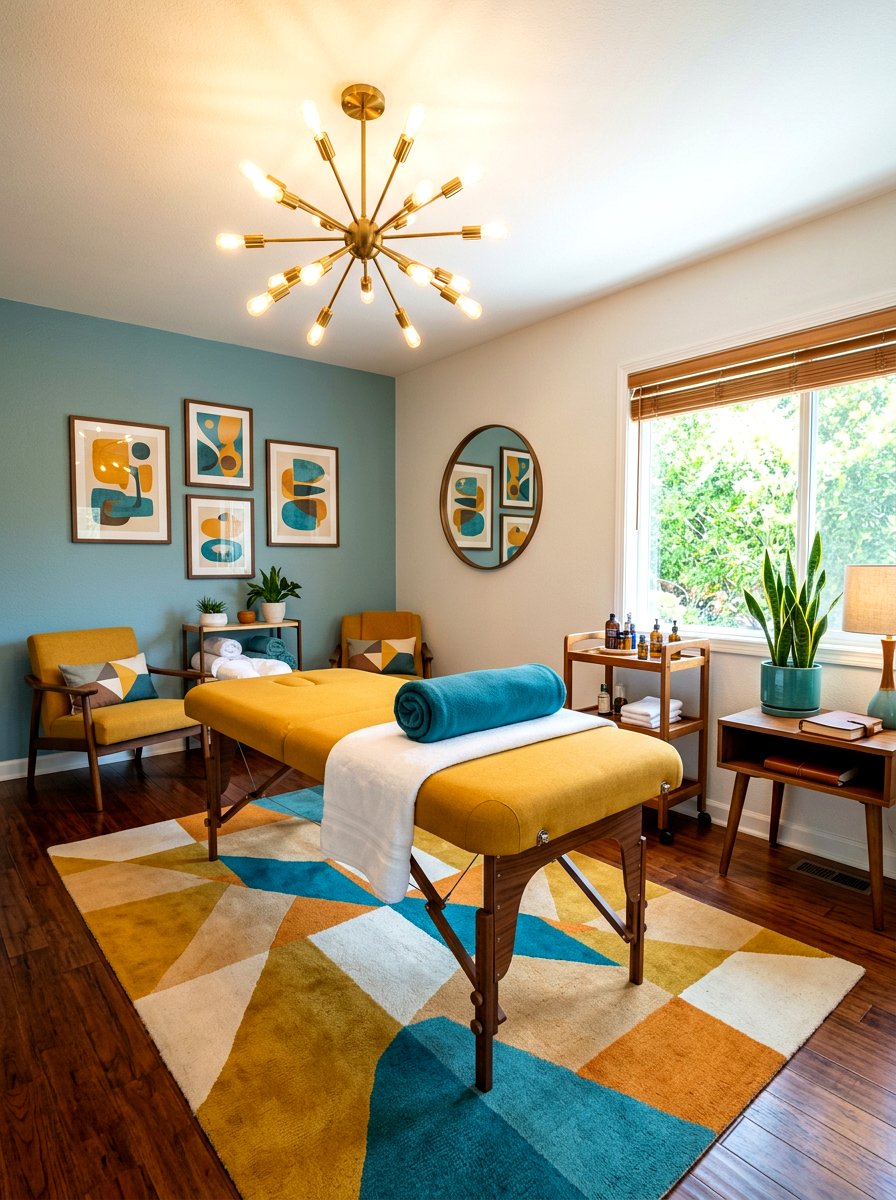
The mid century massage room brings a touch of retro style and iconic design into the wellness space. You can look for furniture with tapered legs and organic, curved shapes to capture the essence of this era. Using a palette of mustard yellow, teal, and warm wood tones provides a nostalgic and stylish atmosphere. Incorporating vintage-inspired lighting fixtures, such as a starburst pendant or a sleek floor lamp, adds a unique character to the room. Using simple, geometric patterns in the rugs or wall art keeps the space feeling energetic and well-curated. This design is perfect for a boutique studio with a strong aesthetic.
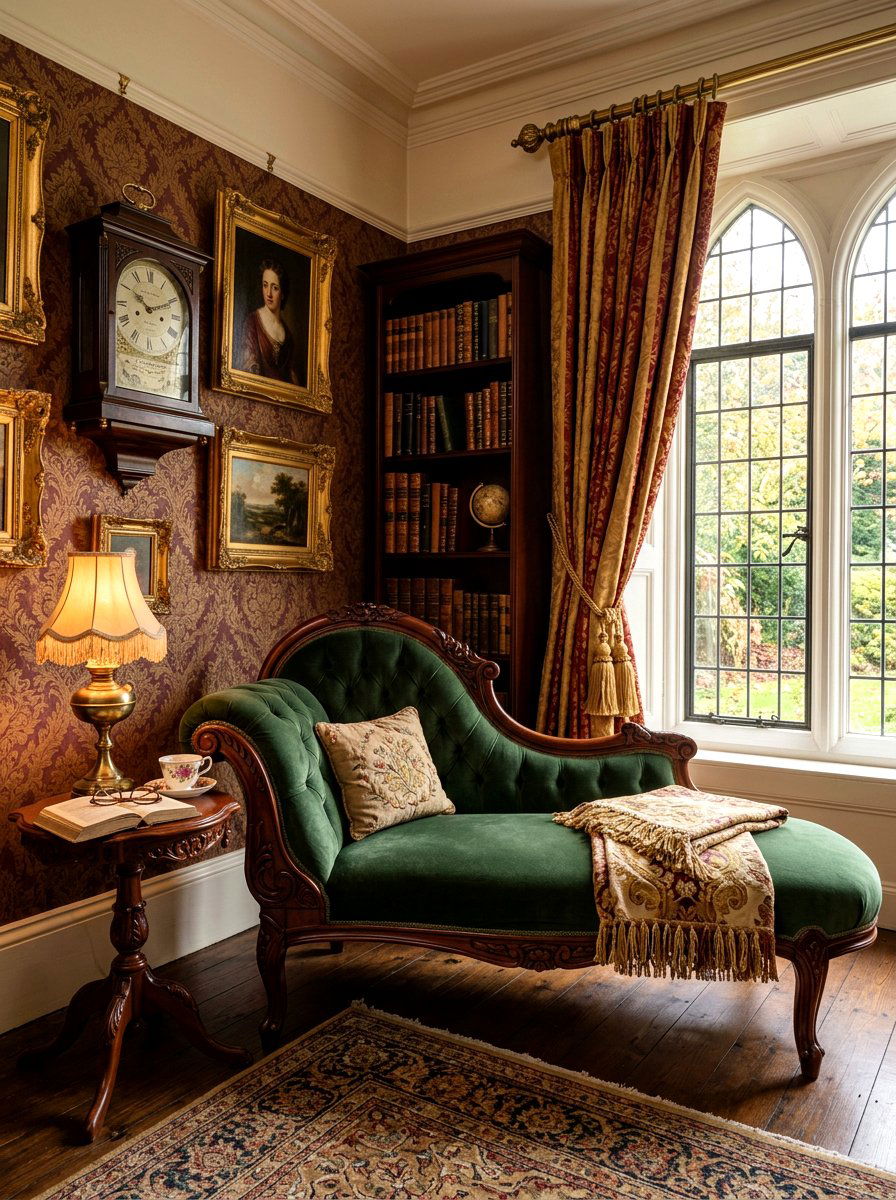
20. Moroccan Massage Room
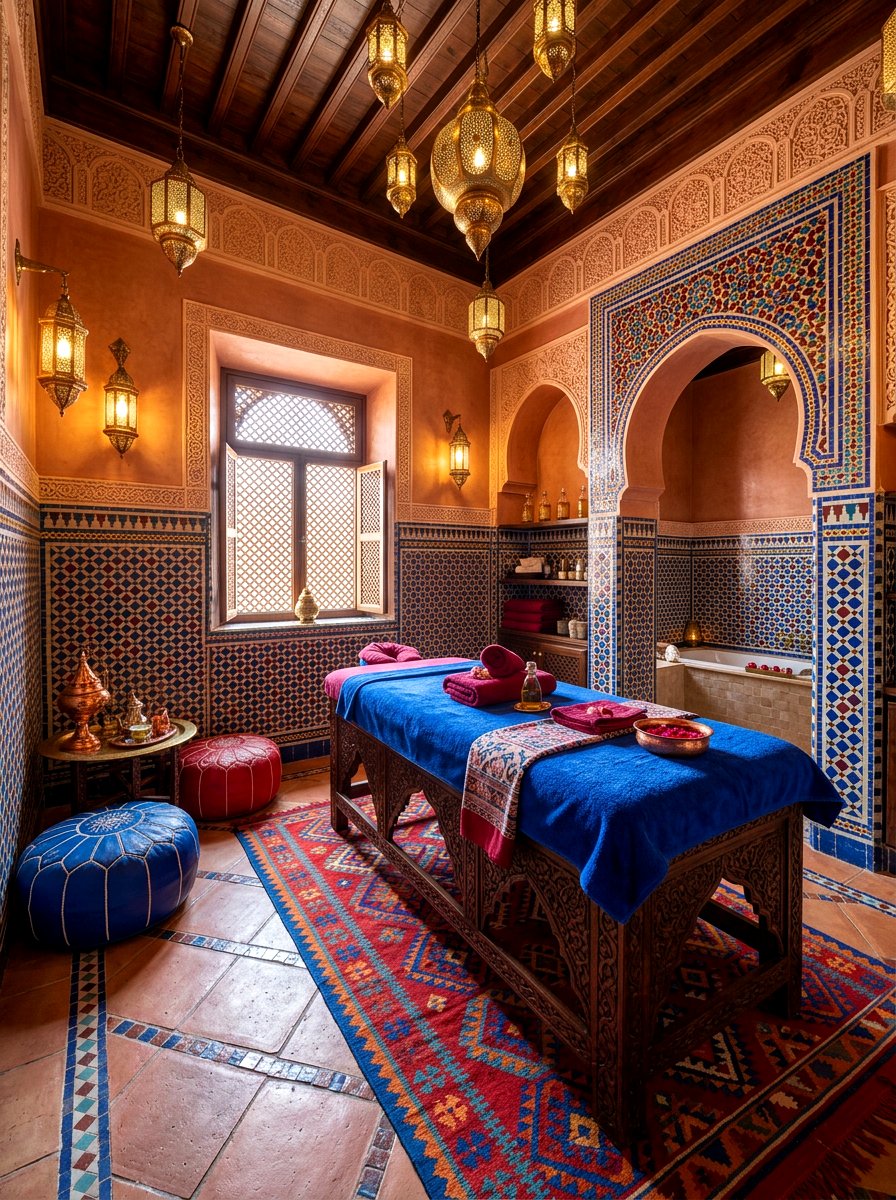
A Moroccan massage room offers a rich, exotic environment filled with intricate patterns and deep colors. You can use colorful mosaic tiles or patterned stencils on the walls to create a stunning visual feature. Incorporating plush floor poufs and low wooden tables adds to the authentic North African feel. Using a color palette of royal blue, deep red, and gold creates a sense of luxury and mystery. Hanging ornate metal lanterns provides beautiful, patterned shadows that dance across the room during a session. This style is ideal for creating a dramatic and immersive experience that transports the client to another part of the world.
21. Lavender Massage Room
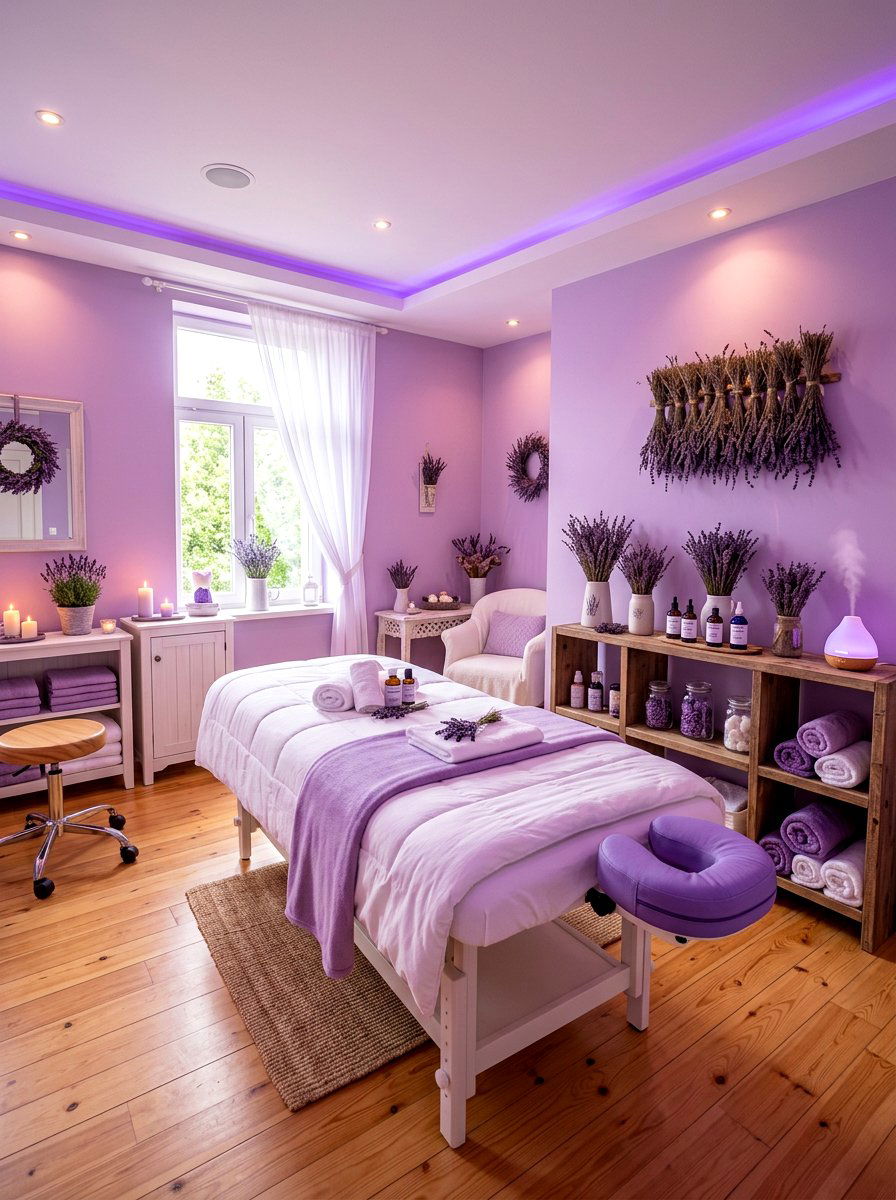
A lavender massage room uses color psychology and floral themes to promote an immediate sense of calm and relaxation. You should use soft lilac or muted purple tones on the walls to set a peaceful tone for the entire space. Incorporating bunches of dried lavender in vases provides a subtle, natural fragrance that helps reduce anxiety and stress. Using light-colored furniture and white linens ensures the purple tones remain the primary focus of the design. Adding soft, purple-hued lighting or candles can further enhance the thematic consistency of the room. This approach creates a gentle and soothing environment specifically designed for stress relief.
22. Ocean Massage Room
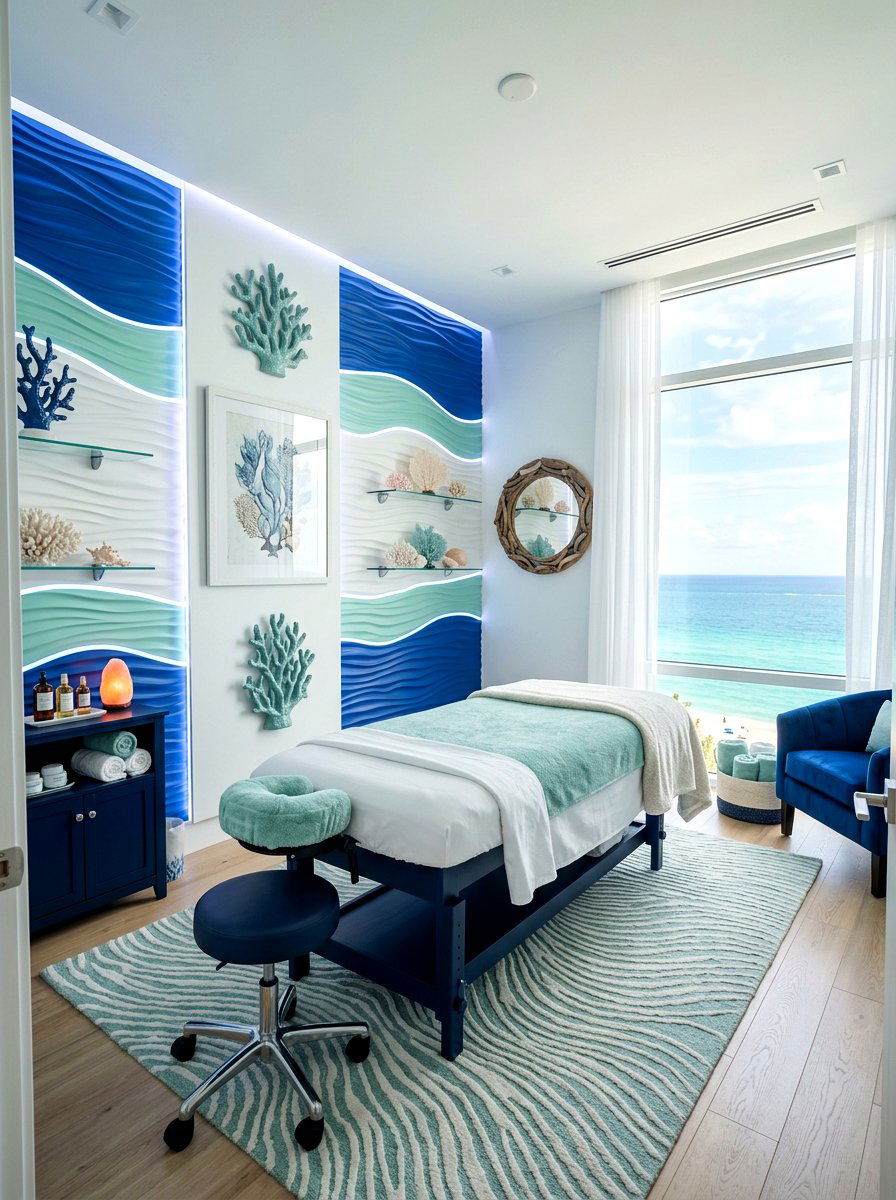
The ocean massage room draws inspiration from the deep sea to create a cool and tranquil atmosphere for healing. You can use varying shades of navy, cobalt, and seafoam to mimic the colors of the water. Incorporating textures like coral-inspired decor or wave-patterned wall panels adds a sense of movement to the space. Using cool-toned LED lighting can create a serene, underwater-like glow that is very relaxing for the eyes. White, crisp linens provide a clean contrast to the deeper blues of the room. This design is perfect for those who find the sound and sight of the ocean to be the ultimate form of therapy.
23. Bamboo Massage Room
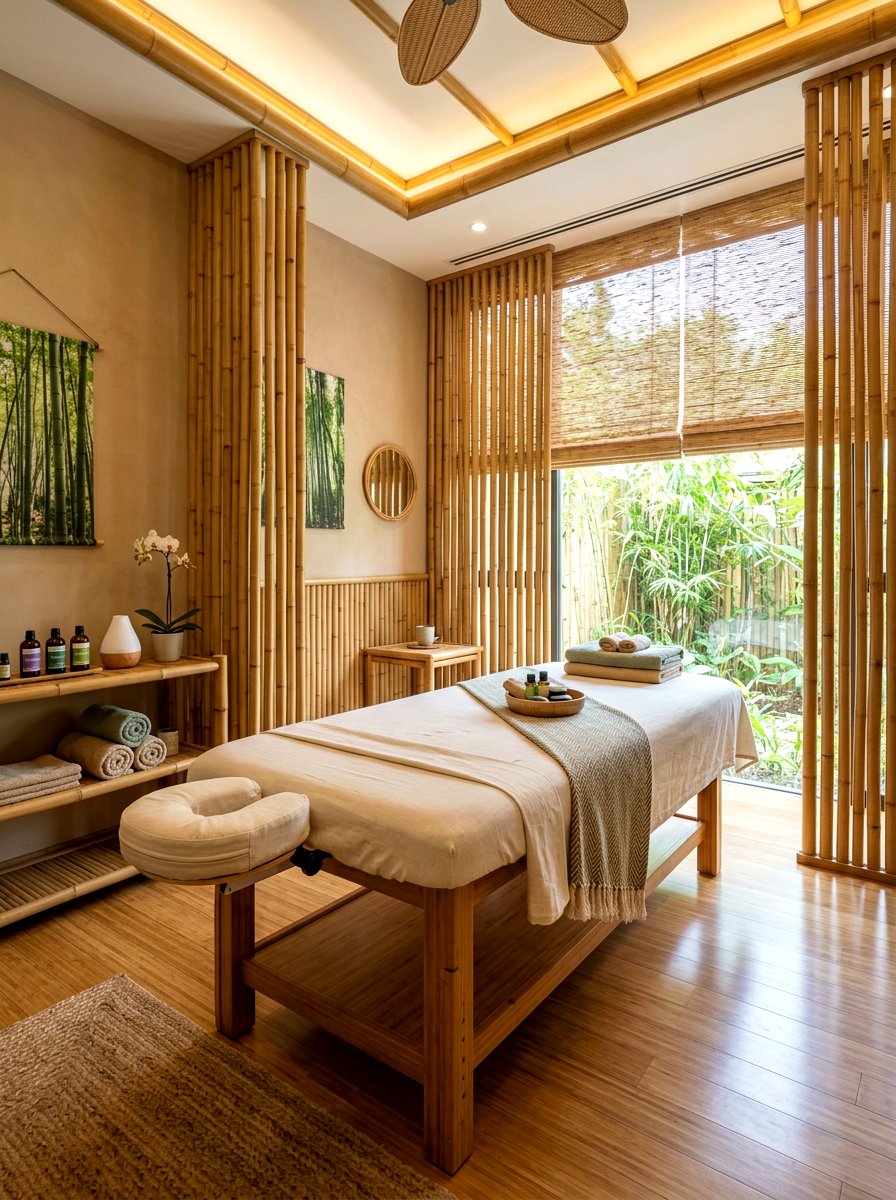
A bamboo massage room utilizes this sustainable material to create a space that feels fresh, organic, and eco-friendly. You can use bamboo poles as room dividers or decorative wall panels to provide a unique vertical texture. Incorporating bamboo flooring offers a durable and warm surface that is also environmentally conscious. Using a palette of light greens, tans, and natural wood tones keeps the room feeling connected to a forest environment. Simple, woven bamboo blinds allow for adjustable light control while adding to the thematic decor. This approach is excellent for therapists who want to highlight their commitment to sustainability and natural healing.
24. Crystal Massage Room
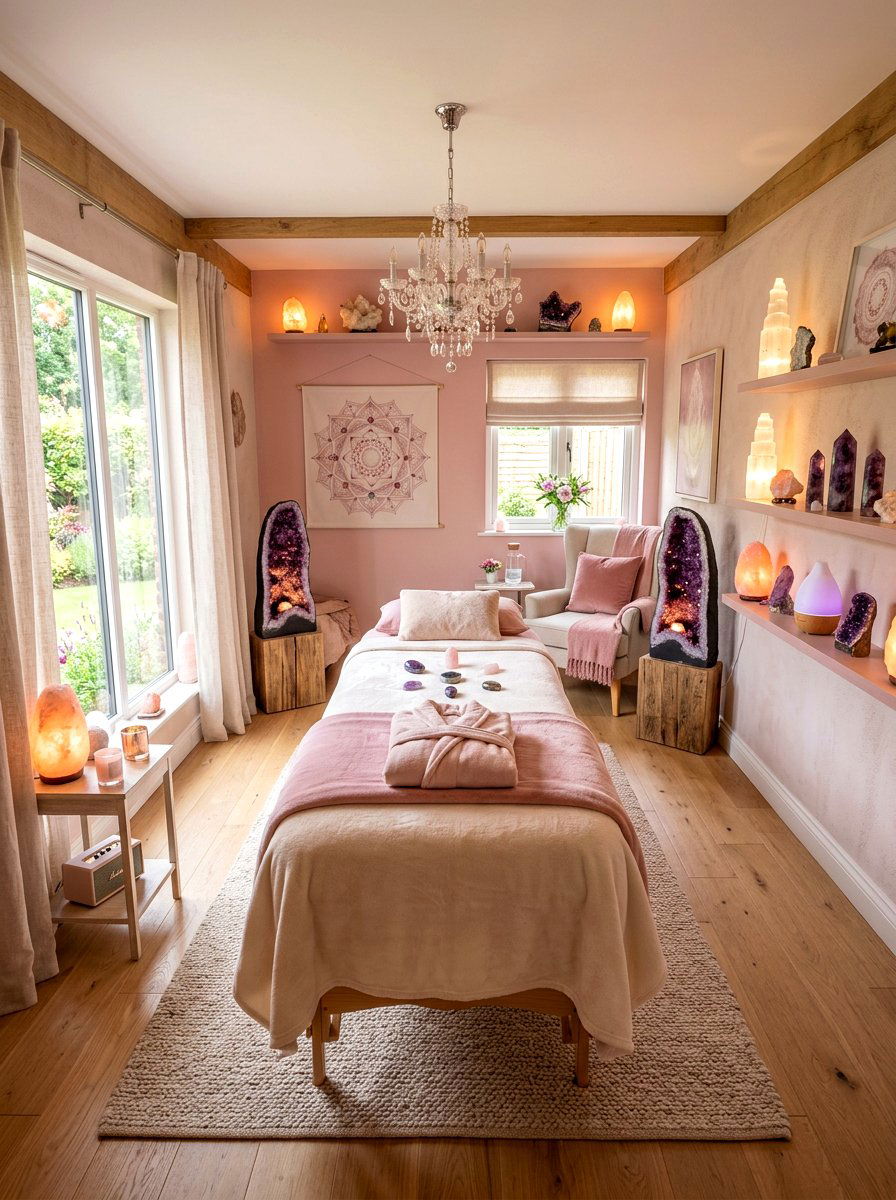
A crystal massage room integrates the beauty and energy of natural stones into the therapeutic environment. You can place large amethyst or quartz clusters in the corners of the room to serve as beautiful focal points. Incorporating a backlit salt wall or crystal lamps provides a soft, warm glow that is perfect for relaxation. Using a color palette inspired by precious stones, like emerald green or soft rose quartz pink, adds a touch of elegance. Displaying smaller crystals on floating shelves allows them to be part of the decor without cluttering the workspace. This style is perfect for those practicing energy work or specialized healing modalities.
25. Salt Massage Room
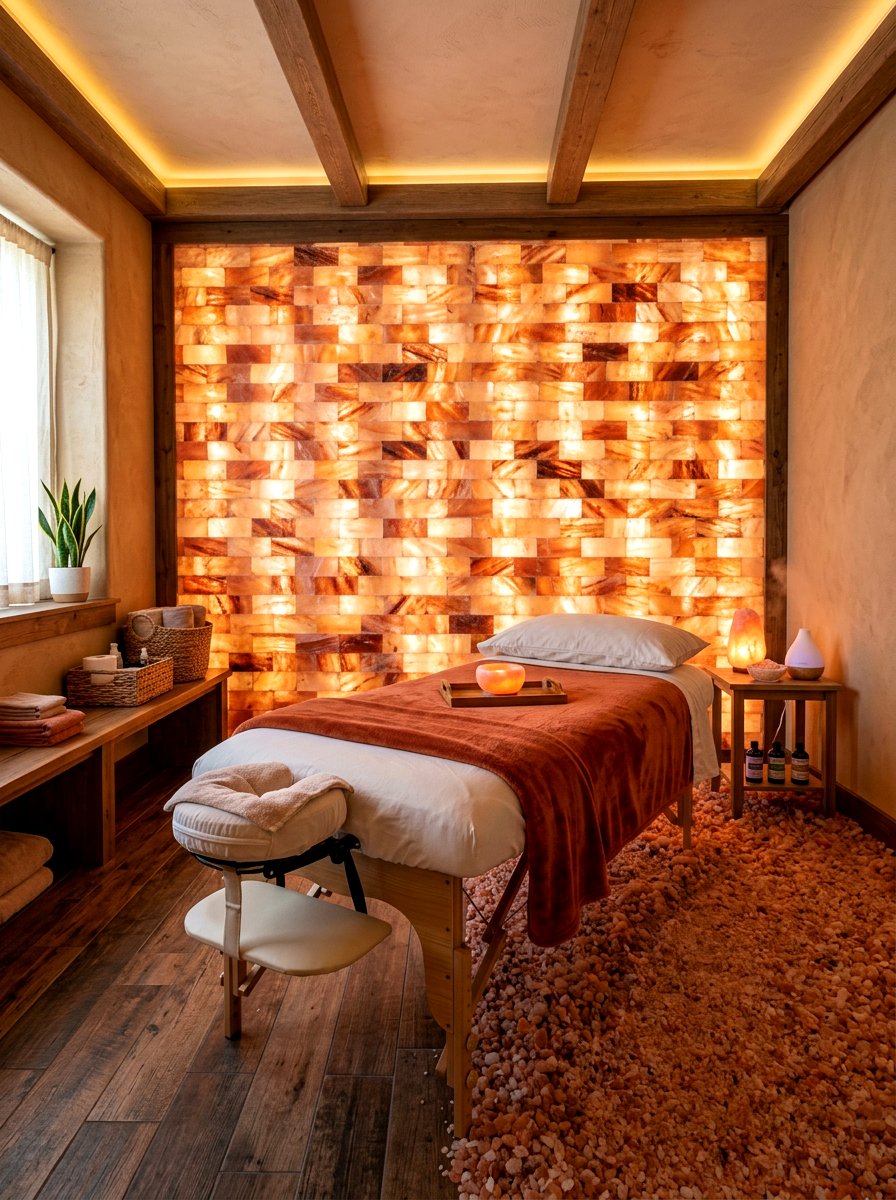
The salt massage room, often inspired by halotherapy, uses the purifying properties of salt to enhance the treatment experience. You can install a feature wall made of glowing Himalayan salt bricks to provide both beauty and health benefits. Using loose salt on a section of the floor can create a unique, beach-like tactile experience for the feet. A color palette of warm oranges, pinks, and creams naturally complements the salt elements throughout the room. Keeping the lighting low and warm highlights the natural translucency of the salt blocks. This specialized environment offers a deeply restorative experience that benefits the respiratory system and the skin.
26. Forest Massage Room
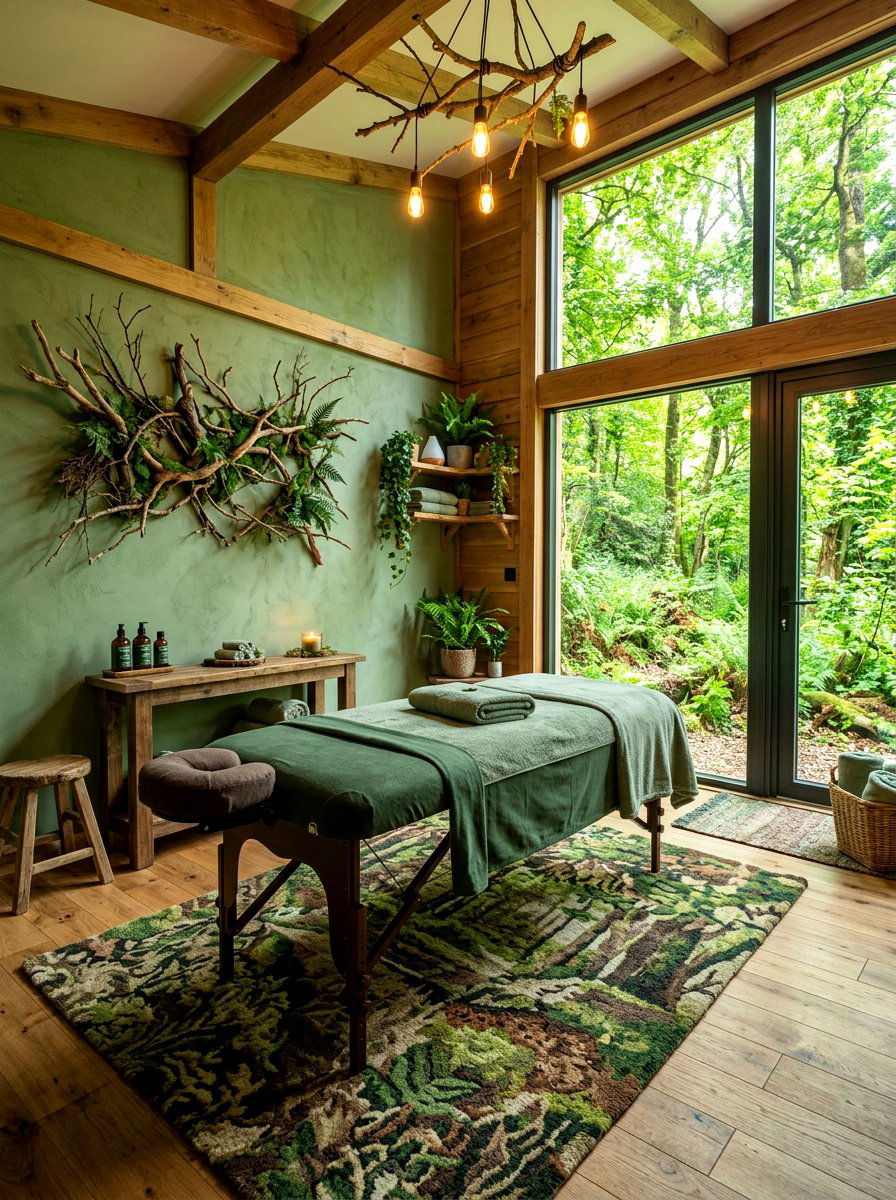
A forest massage room aims to replicate the experience of "forest bathing" through its immersive and natural design elements. You should use a deep palette of moss green, bark brown, and charcoal to create a cocooning, woodland feel. Incorporating real wood slices or branches as wall art brings the literal textures of the forest indoors. Using high-quality recordings of birdsong or rustling leaves provides an auditory experience that completes the theme. Soft, green-toned accent lighting can mimic the way sunlight filters through a thick canopy of trees. This design is ideal for creating a sanctuary that feels isolated from the noise of modern life.
27. Desert Massage Room
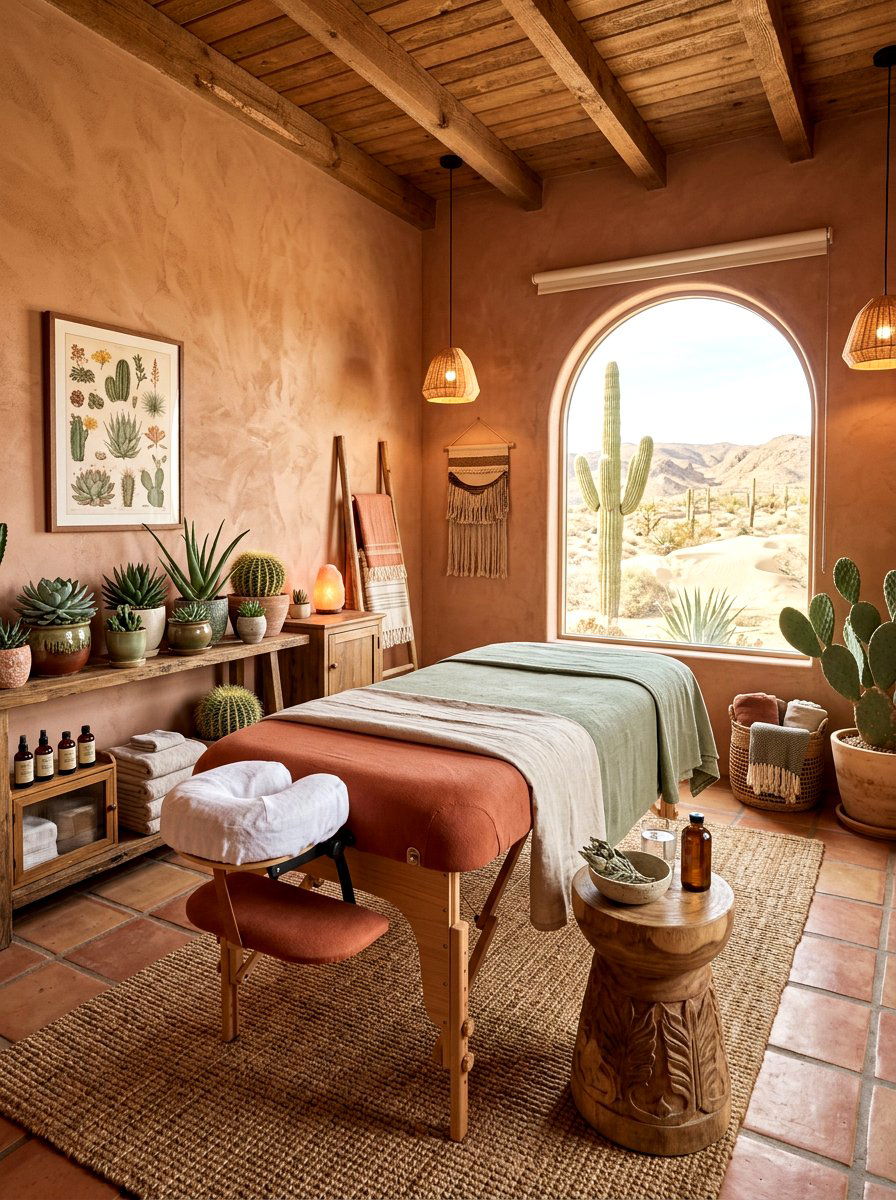
The desert massage room uses the warm, sun-baked tones of the southwest to create a grounded and peaceful environment. You can use a palette of sand, sage green, and muted terracotta to reflect the natural colors of a desert landscape. Incorporating succulent plants and cacti adds a touch of low-maintenance greenery that fits the theme perfectly. Using textured plaster walls and woven rugs provides a rustic and tactile quality to the treatment space. Simple, unpolished wooden furniture keeps the look honest and connected to the earth. This style is perfect for creating a warm, bright space that feels expansive and quiet.
28. Vintage Massage Room
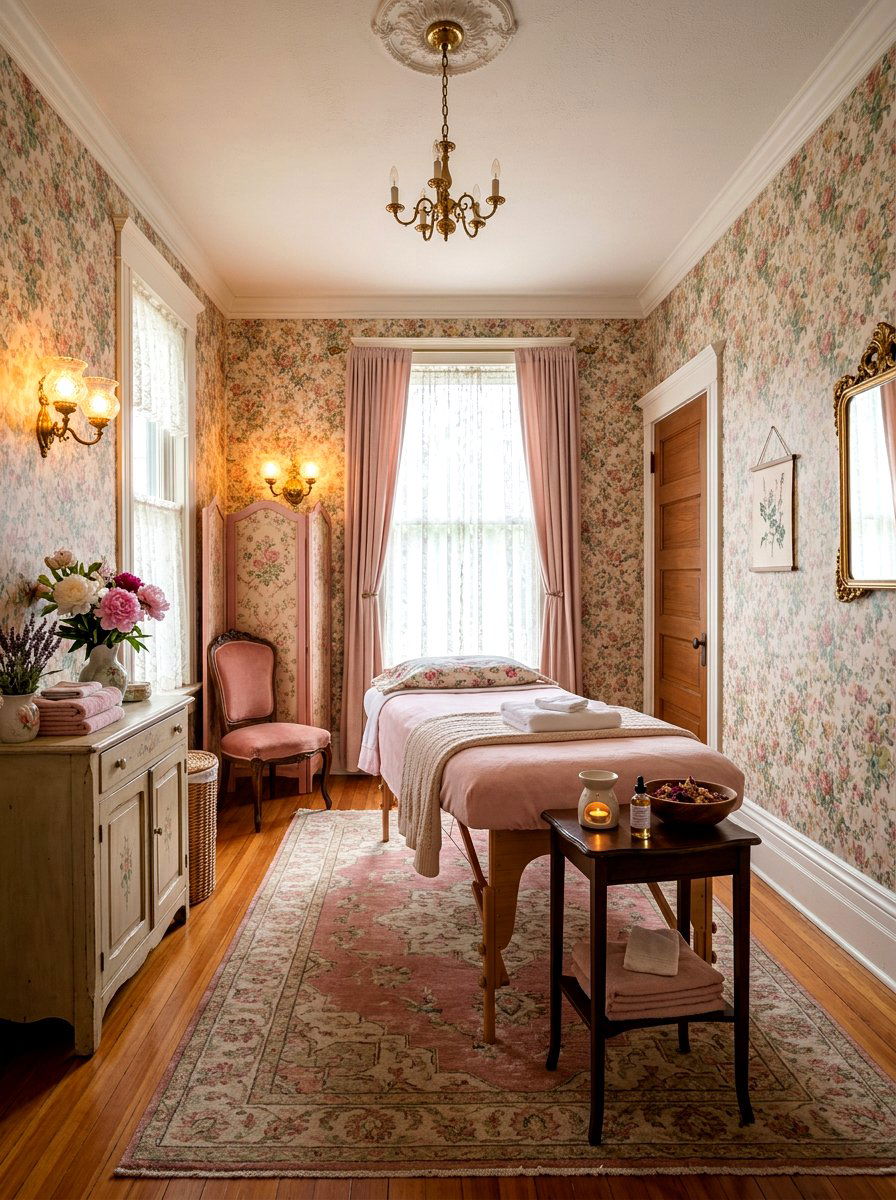
A vintage massage room uses antique-inspired furniture and classic decor to create a space filled with nostalgia and charm. You can look for a massage table with a classic wooden frame and pair it with an ornate, vintage-style vanity. Using floral wallpaper or soft pastel colors on the walls adds a gentle, feminine touch to the room. Incorporating lace curtains and embroidered linens provides a high level of detail and traditional craftsmanship. Old-fashioned lighting fixtures, like brass sconces or a crystal lamp, add a warm and historic glow. This design approach creates an intimate and timeless atmosphere that feels like stepping back into a gentler era.
29. Tech Massage Room
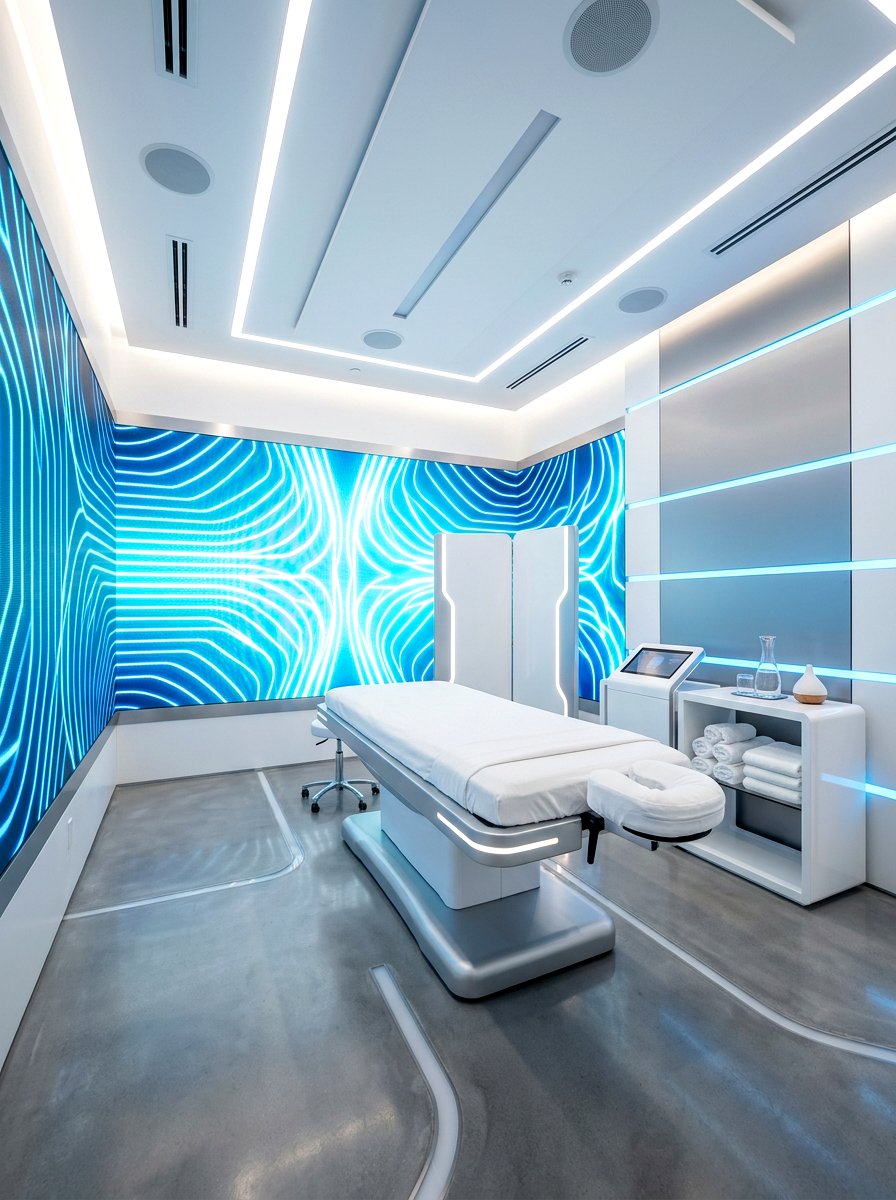
The tech massage room integrates the latest wellness innovations to provide a highly customizable and efficient treatment experience. You should focus on a sleek, futuristic aesthetic with hidden integrated sound systems and high-tech massage tables. Incorporating programmable LED light panels allows you to sync the room's color with the rhythm of the treatment. Using voice-activated controls for temperature and music ensures the therapist can remain focused on the client at all times. A clean color palette of silver, white, and electric blue supports the modern, innovative feel. This approach is perfect for a cutting-edge clinic that prides itself on using the best available technology.
30. Basement Massage Room
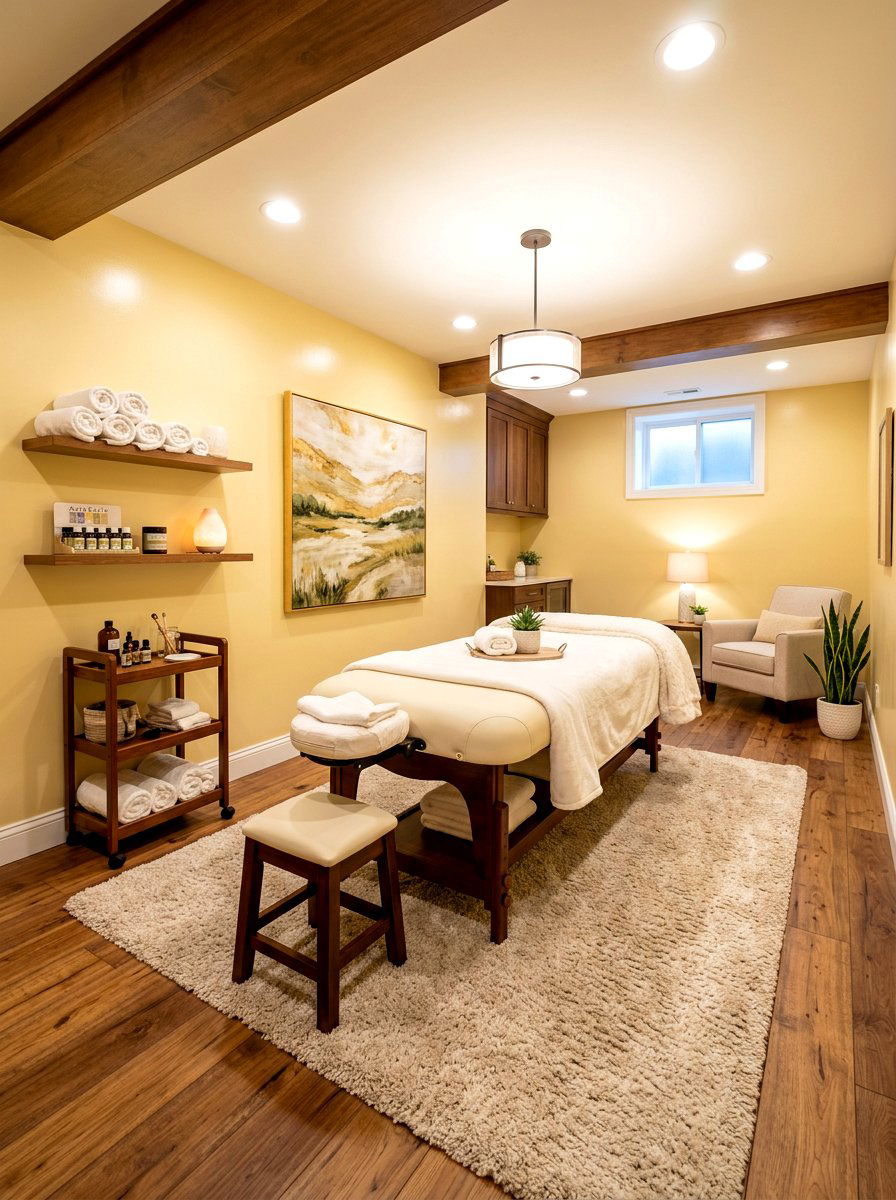
Creating a basement massage room allows you to turn a quiet, secluded part of the home into a professional-grade sanctuary. You should focus on high-quality lighting solutions to compensate for the lack of natural windows and keep the space bright. Using warm-toned wood flooring and soft area rugs helps to insulate the room and make it feel more inviting. Incorporating a dehumidifier and high-quality air filtration ensures the environment remains fresh and comfortable for long sessions. A color palette of light, reflective tones like ivory or pale yellow helps to open up the space. This location offers a naturally quiet environment away from the main living areas.
Conclusion:
Designing the perfect massage room is an ongoing process of refining the balance between aesthetics, functionality, and client comfort. Whether you choose a minimalist approach or an immersive thematic design, the ultimate goal is to create a space where healing can happen effortlessly. By paying close attention to sensory details like lighting, texture, and color, you can transform any ordinary room into a viral-worthy wellness retreat. Remember that the best designs are those that reflect your personal philosophy as a therapist while meeting the unique needs of your visitors. Every element you choose should contribute to a cohesive and restorative journey for everyone involved.

Related posts: