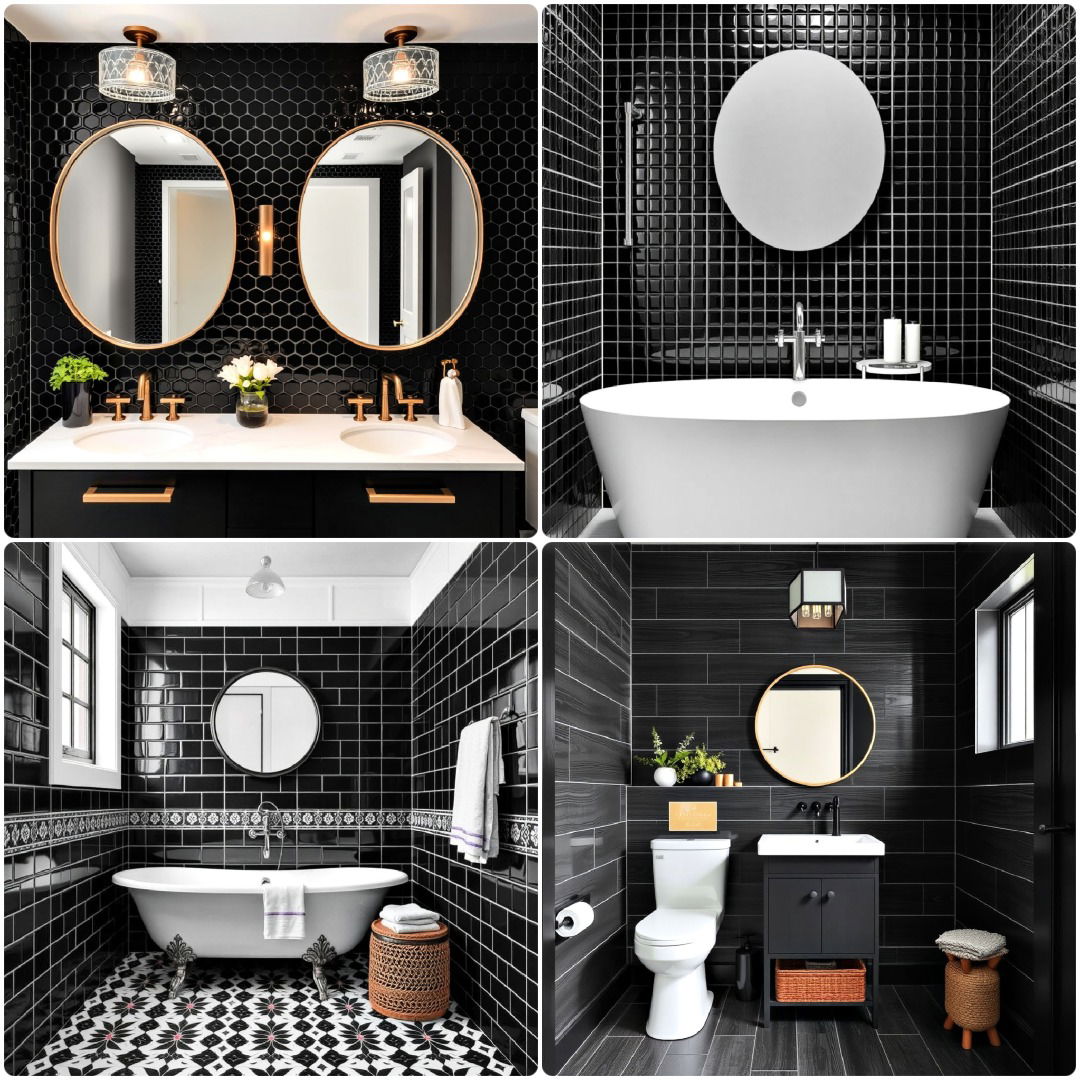
Choosing the right tile for your home often feels like a puzzle, but focusing on niche tile contrast ideas can unlock a level of sophistication you didn 't know was possible. Contrast isn' t just about mixing black and white; it is about the intentional play between textures, shapes, and finishes that define a room’s character. Whether you are aiming for a moody, spa-like bathroom or a vibrant, energetic kitchen, the way you pair your surfaces dictates the entire atmosphere. Using unexpected combinations allows you to highlight architectural features like shower niches or backsplashes, turning functional areas into stunning artistic focal points that feel high-end and deeply personal.
1. Matte black shower niche
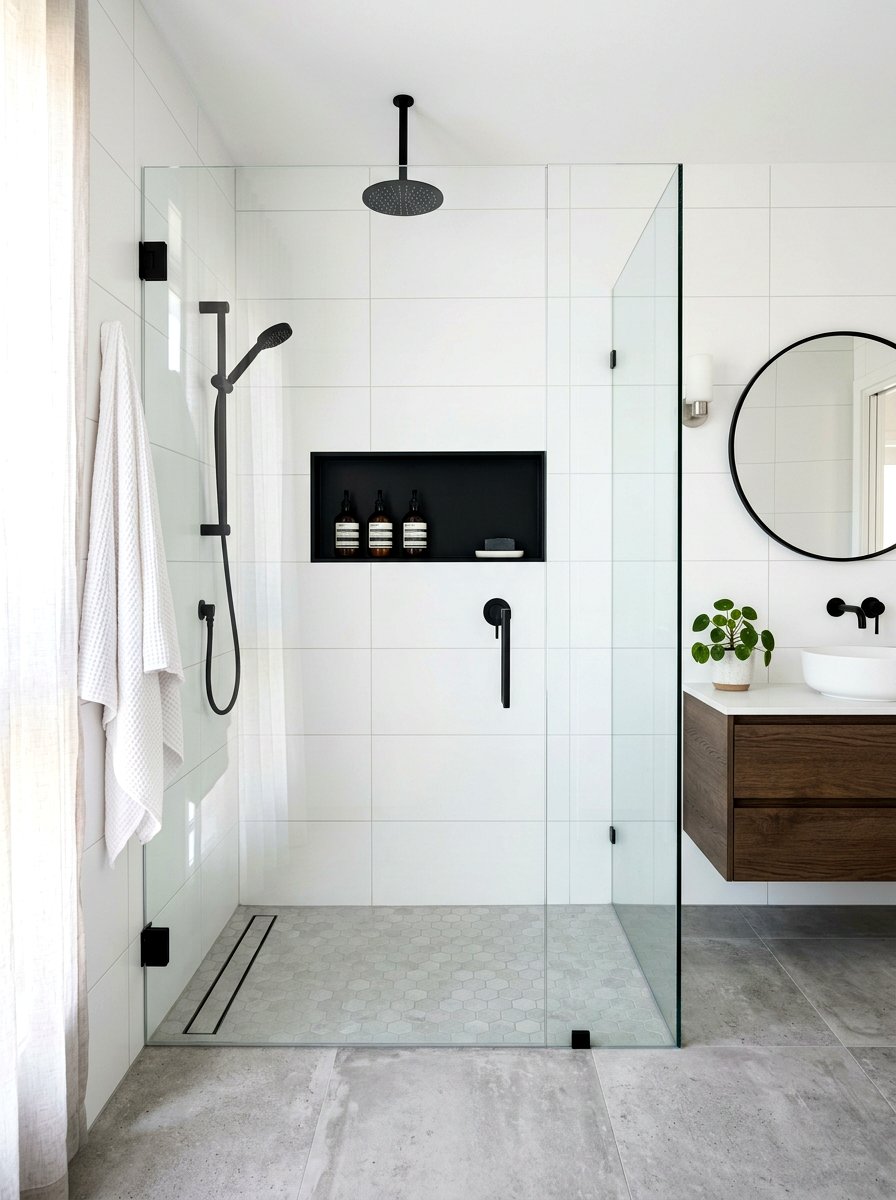
Imagine walking into a bright, airy bathroom where a striking matte black shower niche serves as the ultimate focal point. This design choice creates a sophisticated depth that immediately draws the eye toward the functional shelving area. By using a dark, velvet-like finish against lighter surroundings, you establish a modern architectural feel that looks both clean and intentional. The contrast isn't just about color; it is about the play between light-reflecting surfaces and light-absorbing depths. You can pair this look with sleek black faucets and a frameless glass door to complete the high-end aesthetic. It transforms a simple storage spot into a deliberate design statement that feels curated and professional.
2. White subway tile dark grout
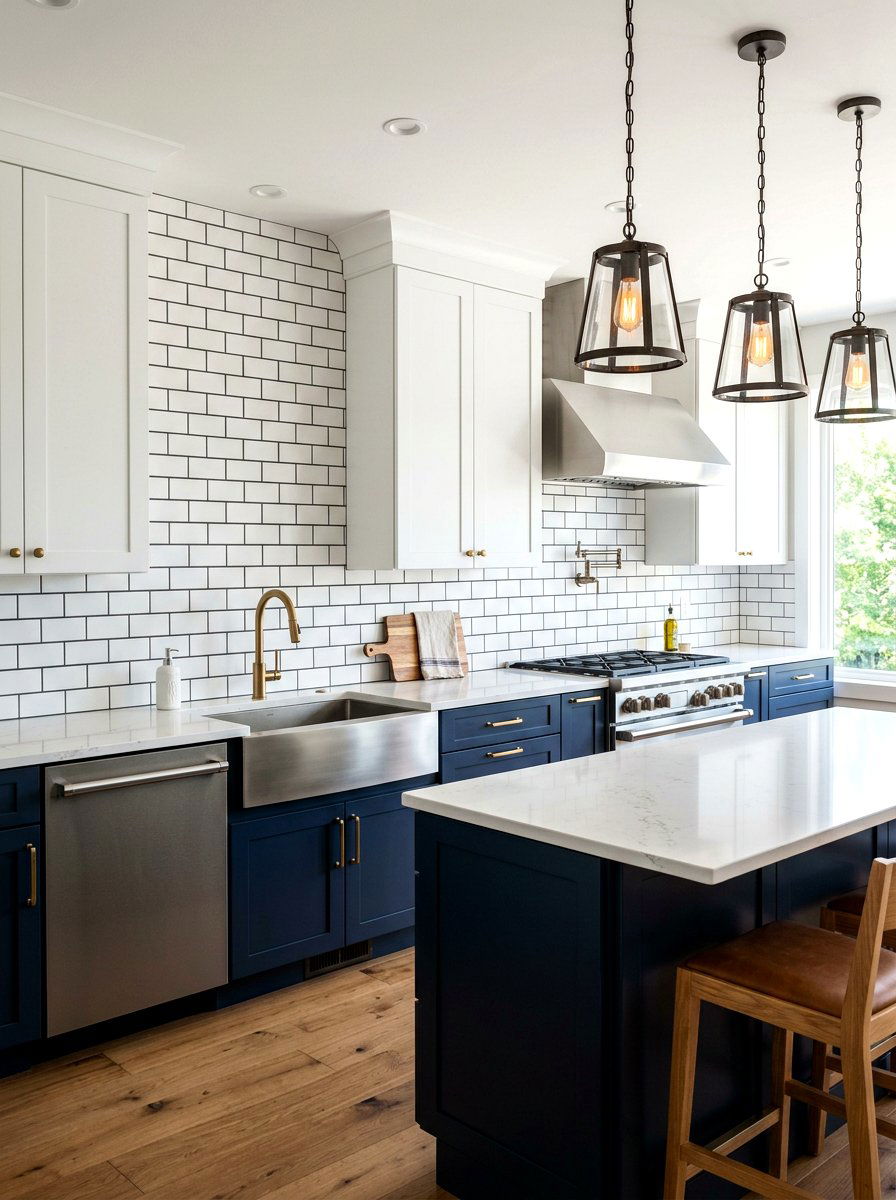
Sometimes the most classic choices offer the biggest impact when you add a simple twist. Using white subway tile with dark grout is a timeless way to emphasize the geometric grid of your walls. Instead of the tiles blending into a solid white surface, the dark lines define each individual rectangle, creating a graphic and bold appearance. This look works exceptionally well in industrial-style kitchens or traditional bathrooms that need a bit of edge. The darker grout is also highly practical because it hides stains and wear much better than white options. It provides a sharp, clean rhythm to the room that feels organized and visually stimulating.
3. Emerald green bathroom wall
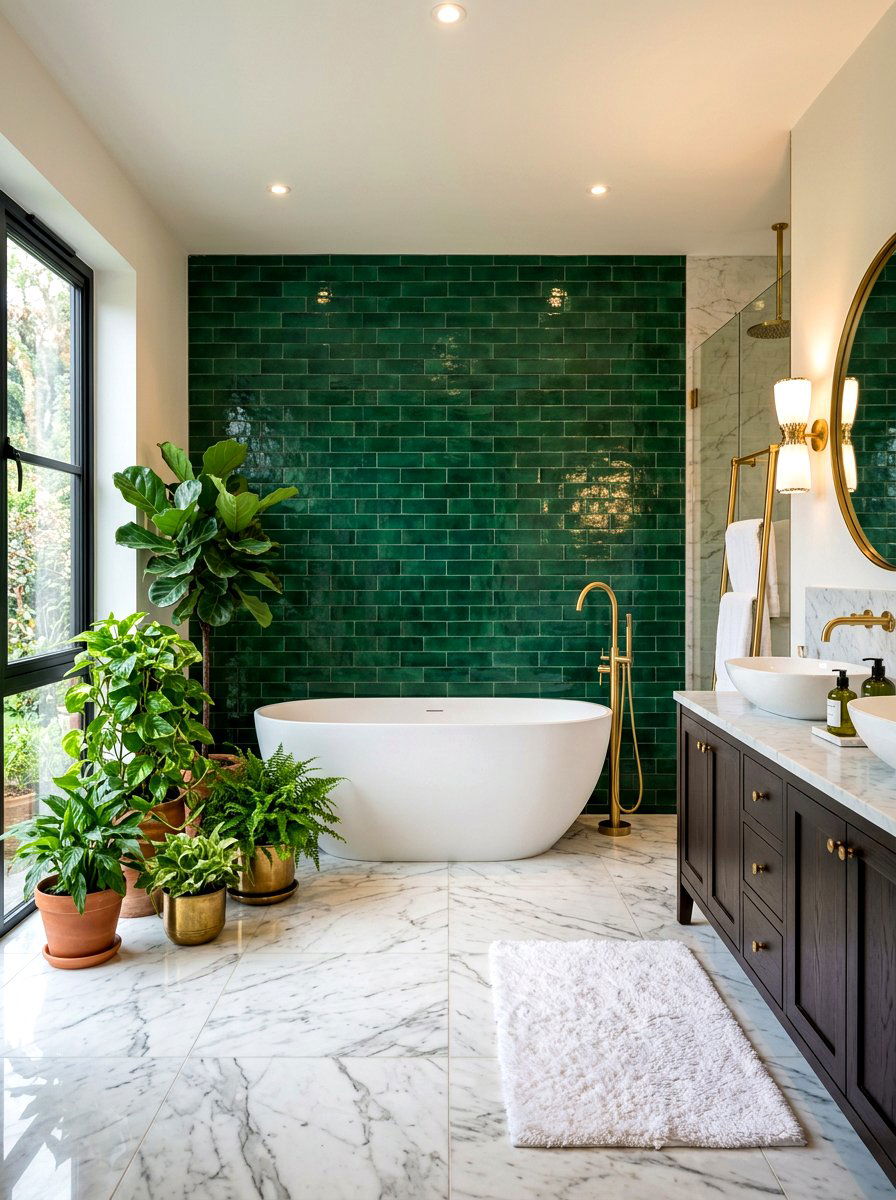
Deep jewel tones like emerald green bring a sense of luxury and organic warmth to any wet room. When you use these rich tiles on a single accent wall, they provide a stunning backdrop for white porcelain fixtures or golden hardware. The contrast between the dark, moody green and the bright white of a bathtub or vanity creates a high-end spa atmosphere. This color works beautifully in both glossy and matte finishes, depending on how much light you want to bounce around the space. It evokes a feeling of nature and tranquility, making your daily routine feel like a retreat into a lush, private forest sanctuary.
4. Marble herringbone floor contrast
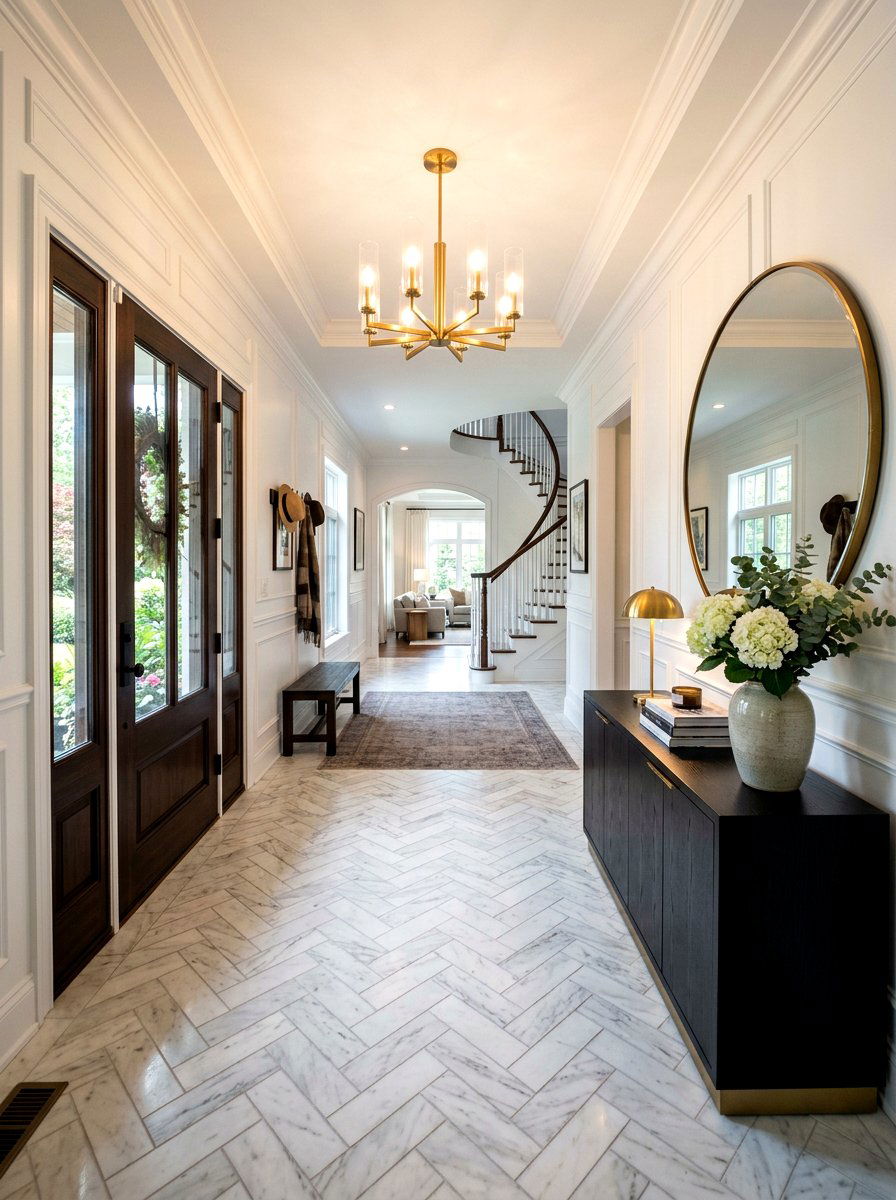
Marble is often associated with elegance, but laying it in a herringbone pattern adds a layer of dynamic movement to your floors. The natural veining of the stone creates a soft contrast within itself, while the sharp angles of the pattern provide a structured, architectural feel. This flooring choice works perfectly in entryways or master bathrooms where you want to make a lasting impression without using loud colors. Because the pattern is so intricate, it pairs best with simpler wall treatments to keep the room from feeling too busy. The result is a sophisticated space that feels both traditional and incredibly fresh for modern living.
5. Terrazzo shower shelf
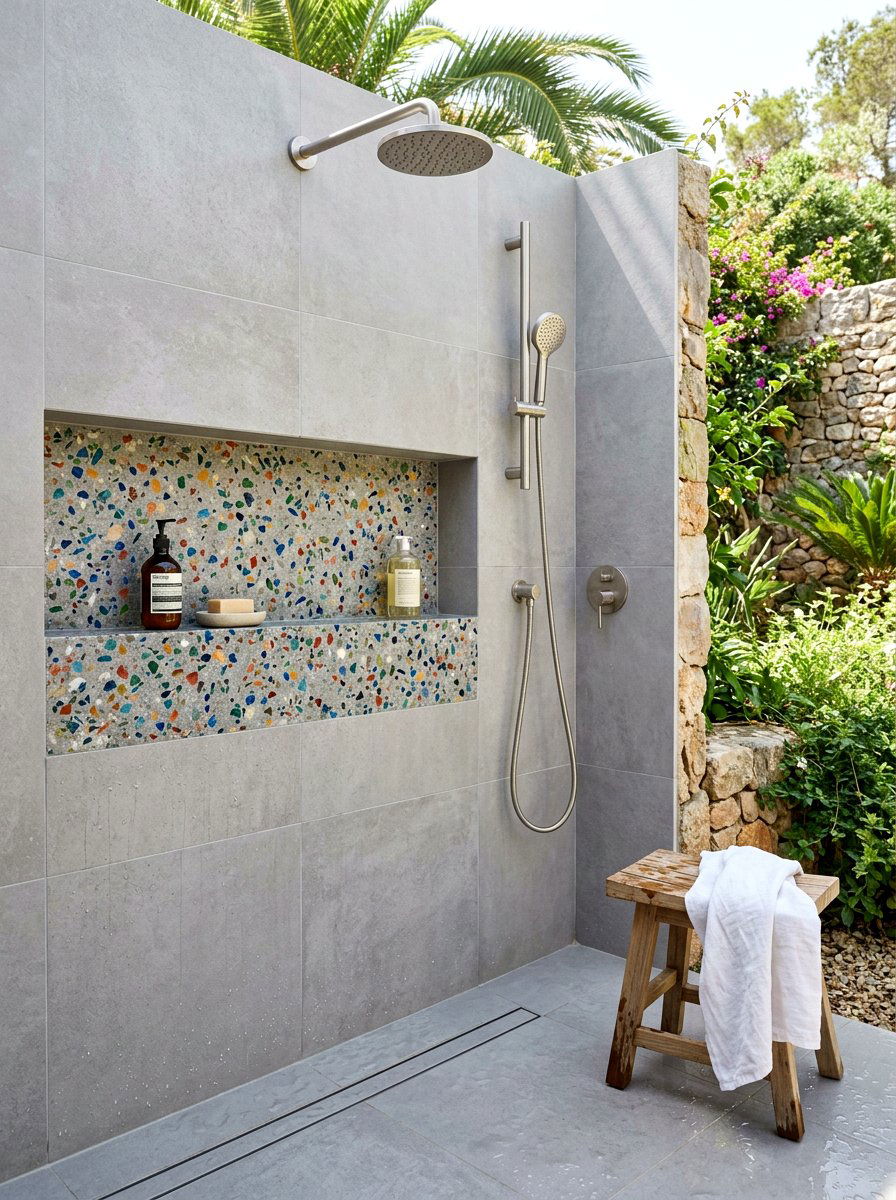
Terrazzo has made a massive comeback, and using it for a shower shelf or niche is a clever way to introduce subtle color. The speckled nature of terrazzo provides a built-in contrast of various stone chips against a solid base. When placed inside a monochromatic shower, it acts like a piece of jewelry for the room, offering a playful yet refined detail. This material is incredibly durable and adds a mid-century modern vibe that feels very current. You can choose a terrazzo with flecks that match your hardware or towels to tie the entire design together seamlessly while maintaining a unique, artisanal texture.
6. Wood look tile accent wall
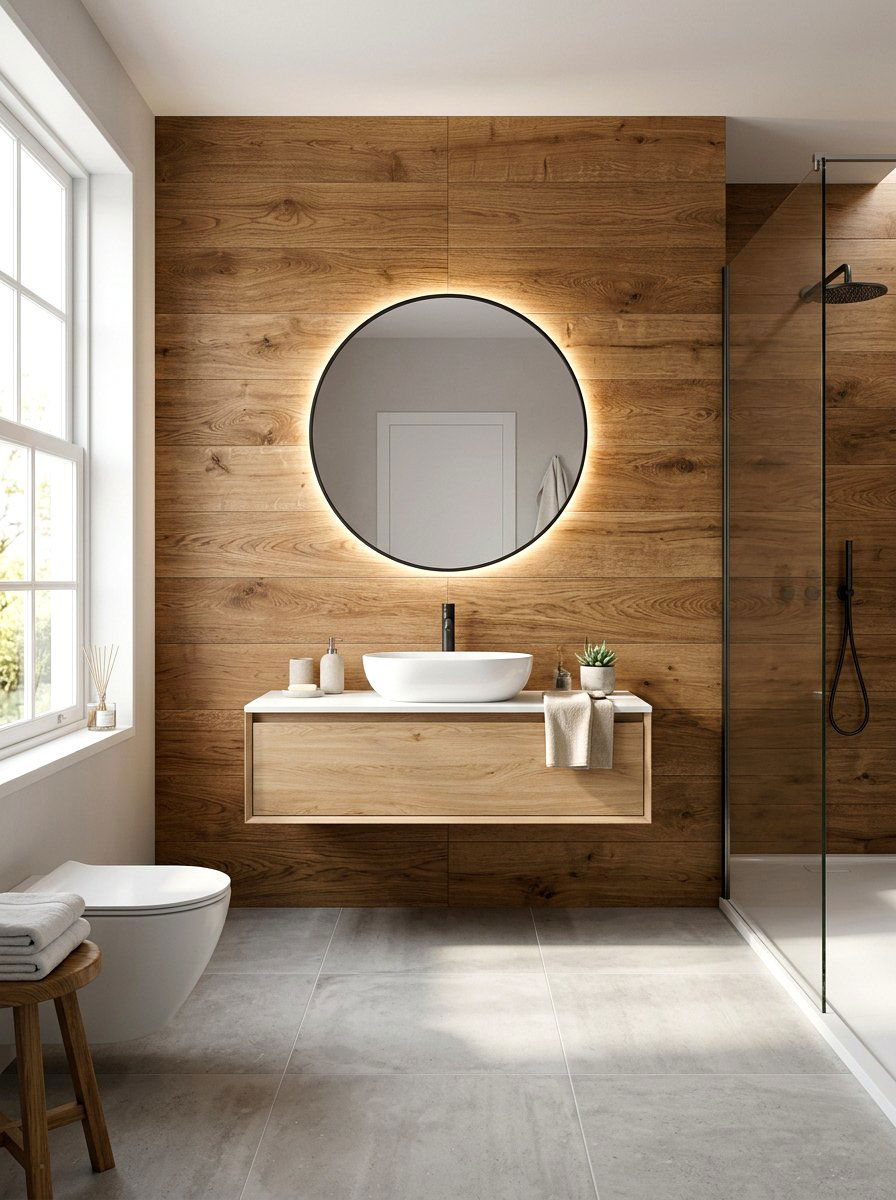
Bringing the warmth of wood into a bathroom can be tricky, but wood-look porcelain tiles solve that problem beautifully. Using these tiles for an accent wall creates a stunning organic contrast against traditional stone or ceramic surfaces. The rich grain and textured finish mimic natural timber while remaining completely waterproof and easy to clean. This design choice helps to soften the hard lines and cold surfaces typically found in bathrooms, making the space feel more like a cozy living area. It is an excellent way to create a "japandi" or rustic modern aesthetic that feels grounded, peaceful, and visually layered.
7. Navy blue kitchen backsplash
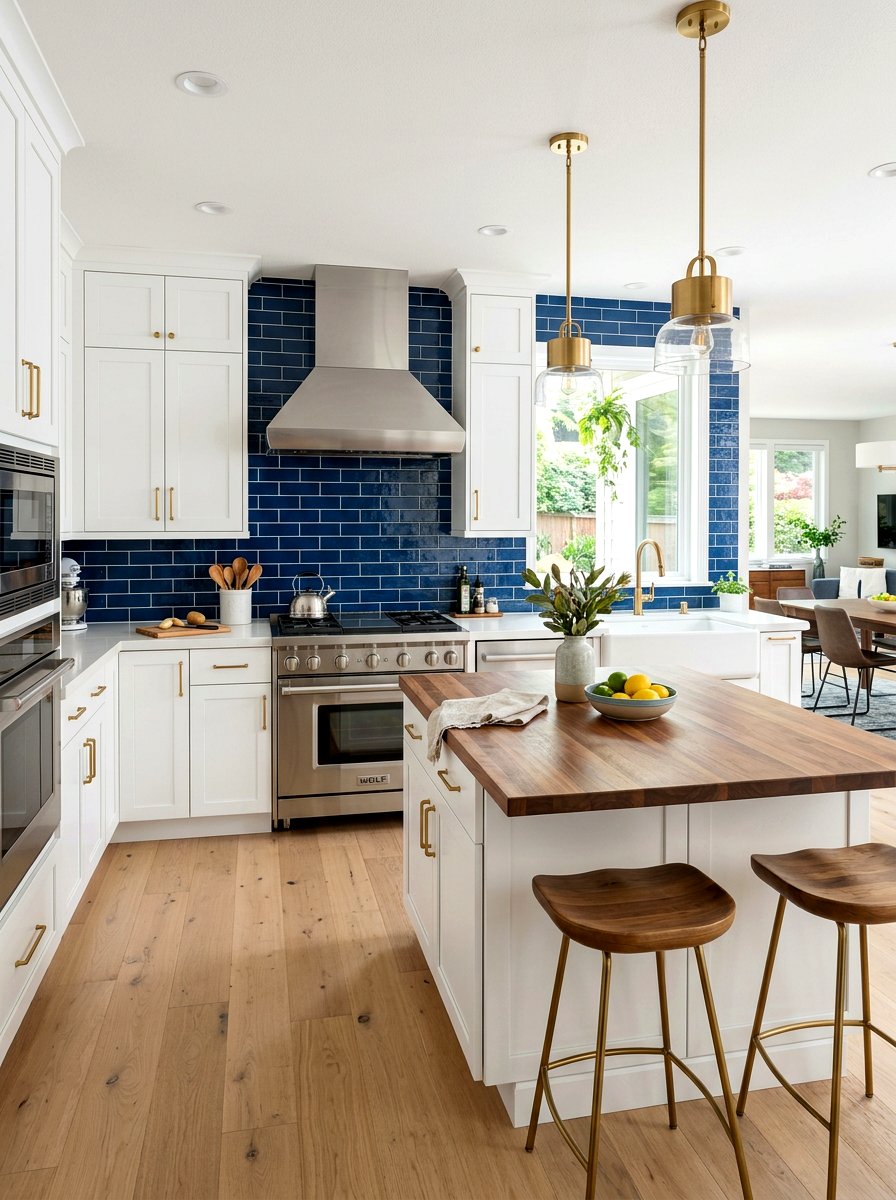
A navy blue kitchen backsplash is a bold alternative to traditional neutrals that provides a deep, calming anchor for the room. When paired with white or light gray cabinetry, the dark blue tiles create a crisp, nautical-inspired contrast that feels timeless. This color is versatile enough to work with various styles, from coastal to modern farmhouse. The dark surface behind the stove or sink adds a sense of depth and makes your countertop appliances and decor pop. It is a sophisticated way to introduce color without overwhelming the space, ensuring your kitchen remains a stylish and inviting heart of the home.
8. Geometric pattern bathroom floor
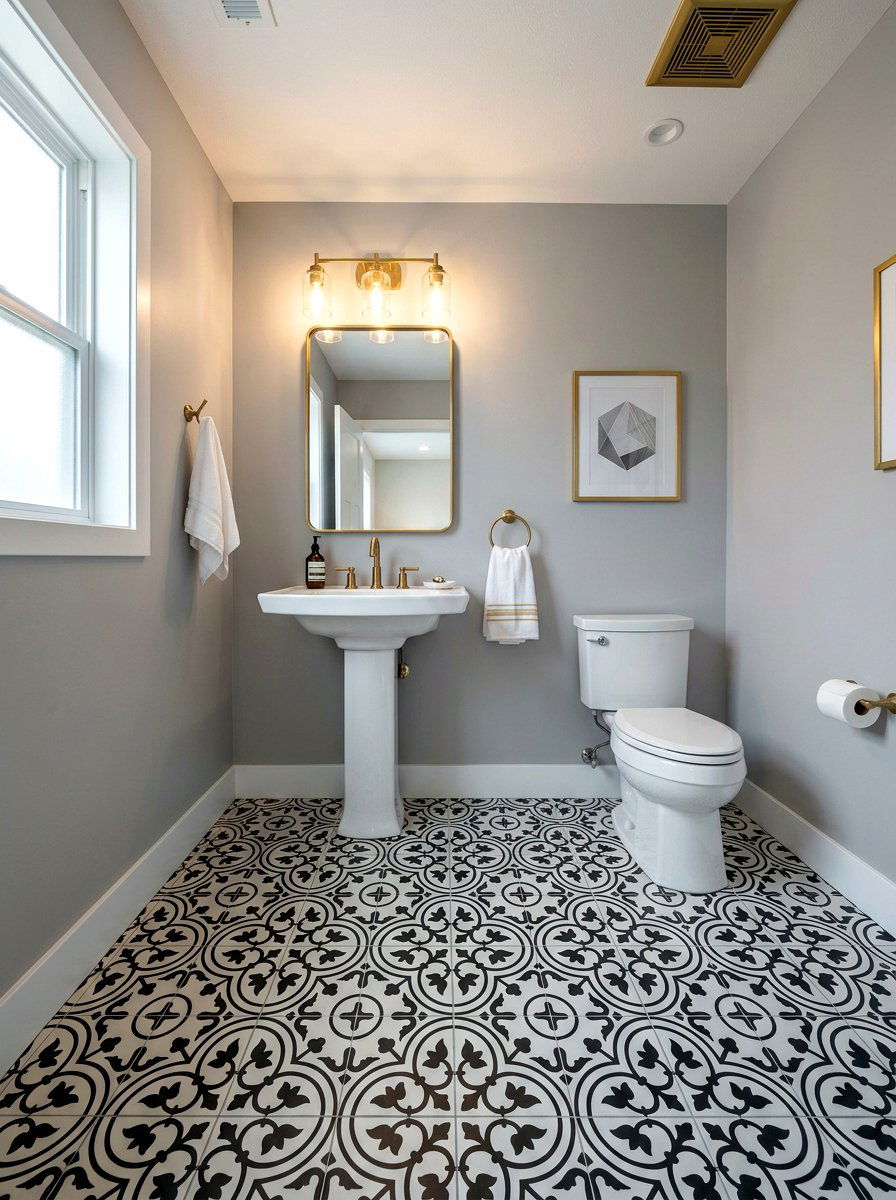
If you want to add instant personality to a small powder room, a geometric pattern on the floor is the way to go. Bold shapes like triangles, stars, or interlocking lines create a high-contrast visual that makes the floor the star of the show. Keeping the walls simple and neutral allows the intricate patterns to breathe and prevents the space from feeling cramped. This approach is perfect for expressing your personal style and can make even a tiny room feel grand and well-designed. The repeating patterns provide a sense of order and rhythm that is both energetic and incredibly satisfying to look at daily.
9. Terracotta tile shower
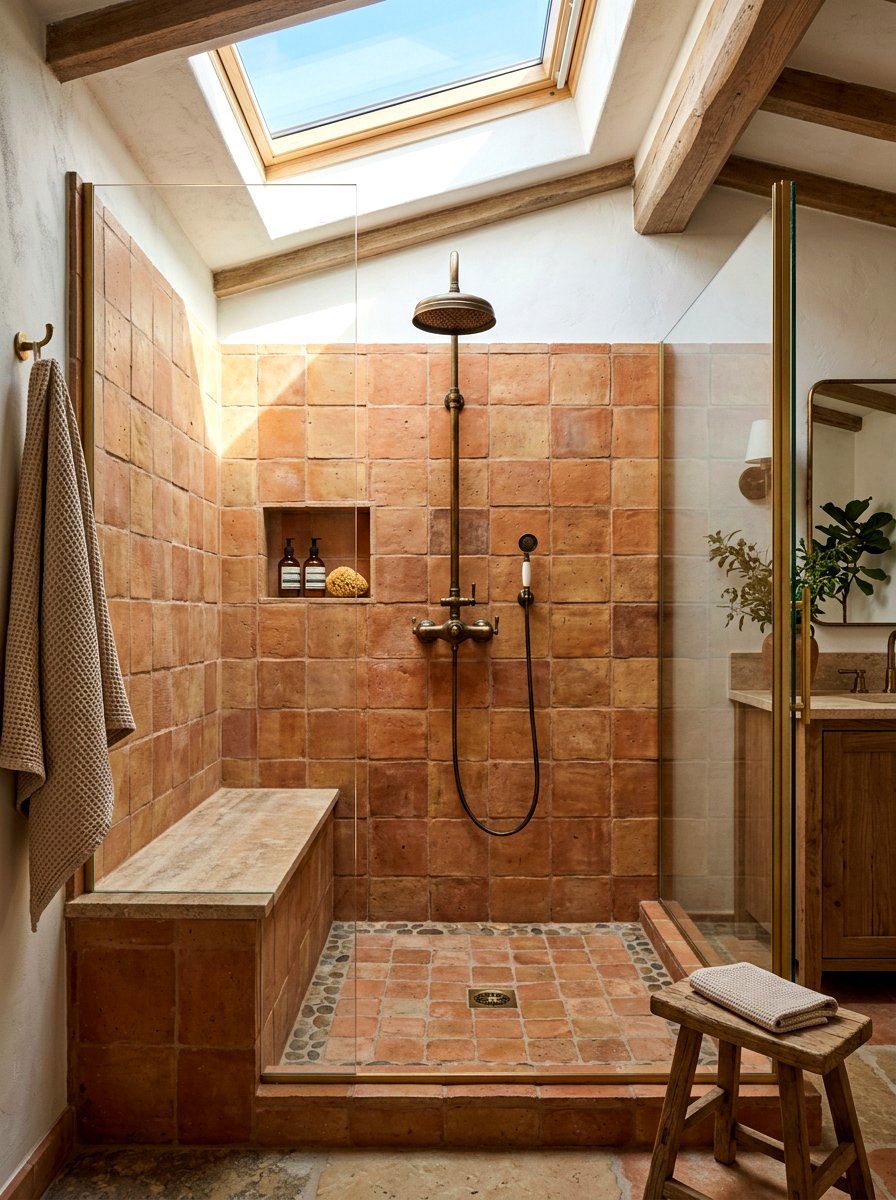
Terracotta tiles offer a raw, earthy warmth that contrasts beautifully with modern, sleek fixtures. Using these tiles in a shower area brings a Mediterranean or southwestern vibe that feels authentic and inviting. The natural variations in the burnt orange and clay tones provide a soft, tonal contrast that adds history and character to a new home. When paired with matte black or antique brass showerheads, the look becomes a perfect blend of old-world charm and contemporary style. It is a fantastic choice for anyone looking to step away from clinical white bathrooms and embrace a more tactile, sun-drenched aesthetic.
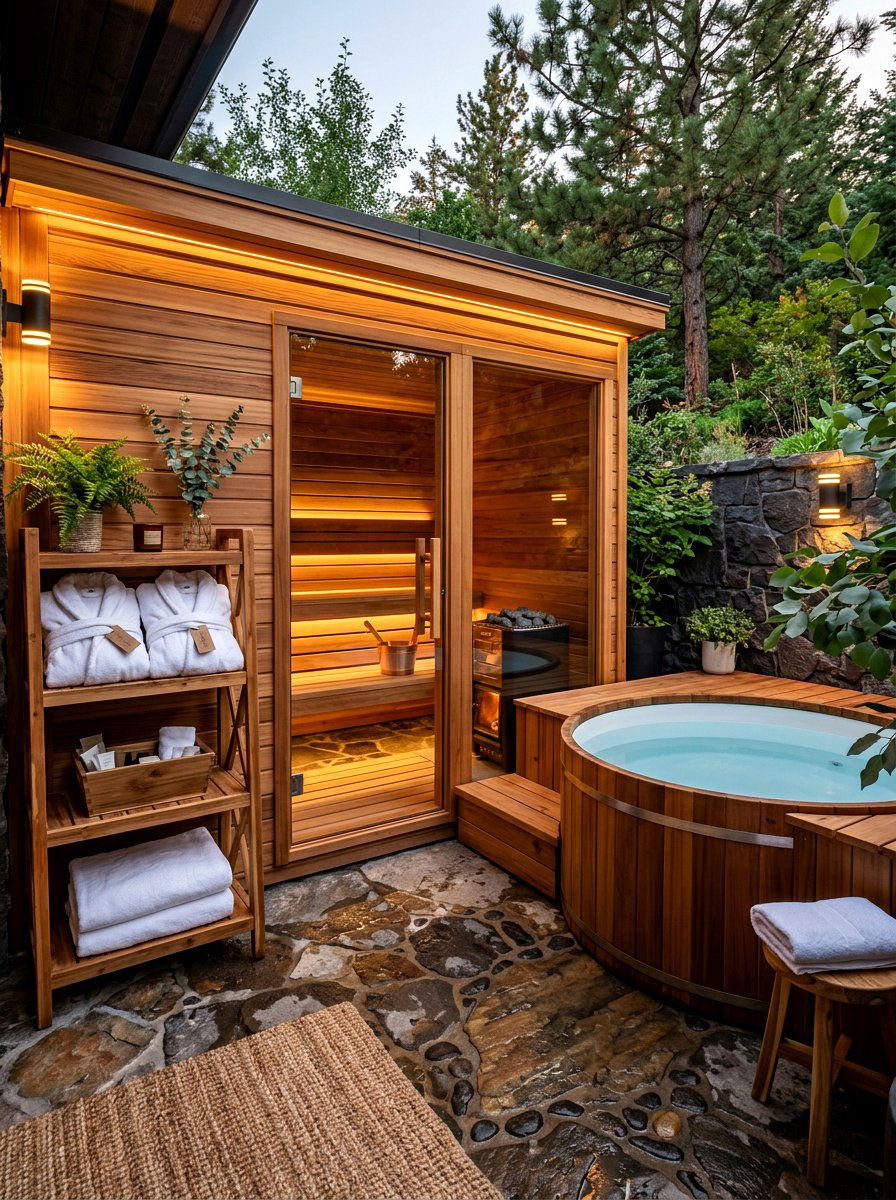
10. Gold metallic tile border
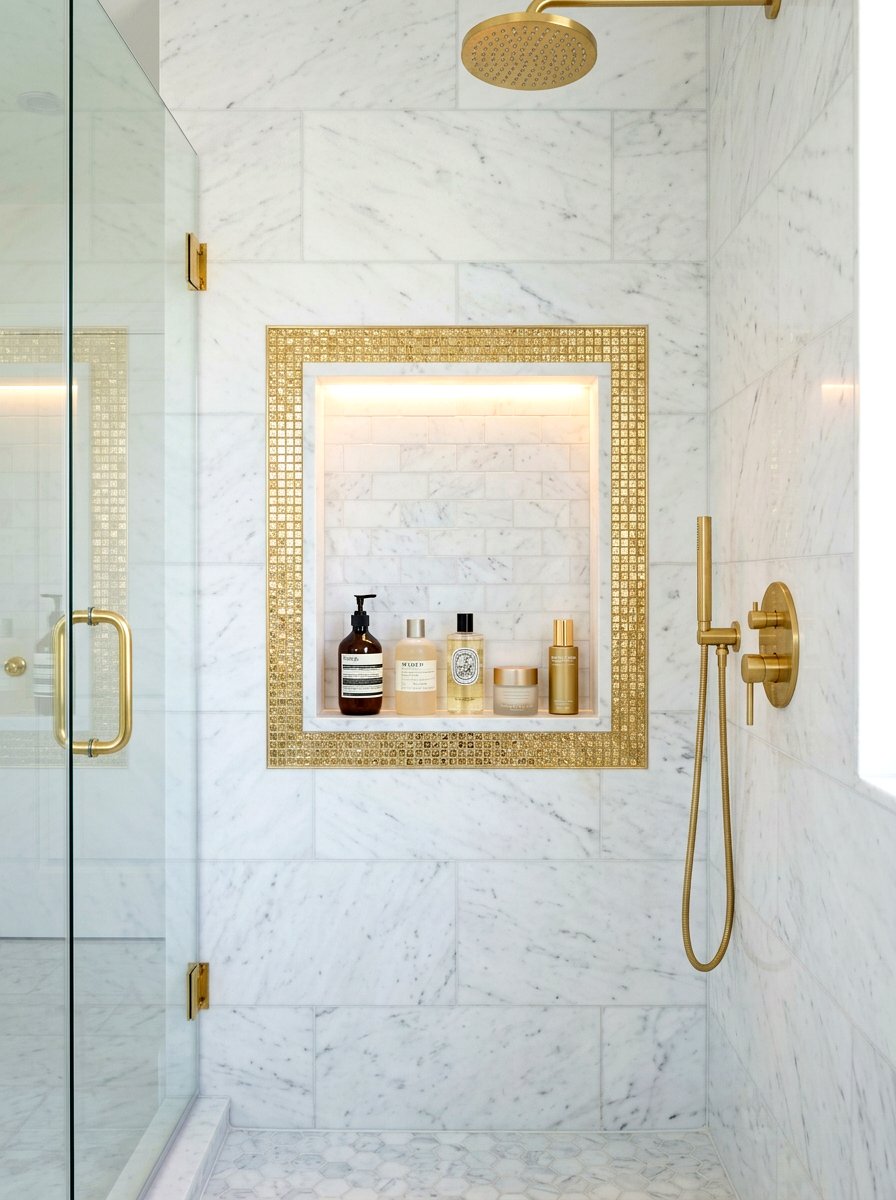
Adding a gold metallic tile border is like putting a frame around a beautiful piece of art. This niche design element provides a high-contrast glimmer against matte or natural stone tiles. It defines the edges of a backsplash or a shower niche with a touch of glamour that feels expensive and curated. The metallic surface reflects light in a way that regular ceramic cannot, adding a dynamic sparkle to the room as you move through it. This small detail can elevate a standard tiling job into a custom luxury installation, showing that you have an eye for the finer details of interior design.
11. Concrete look bathroom tile
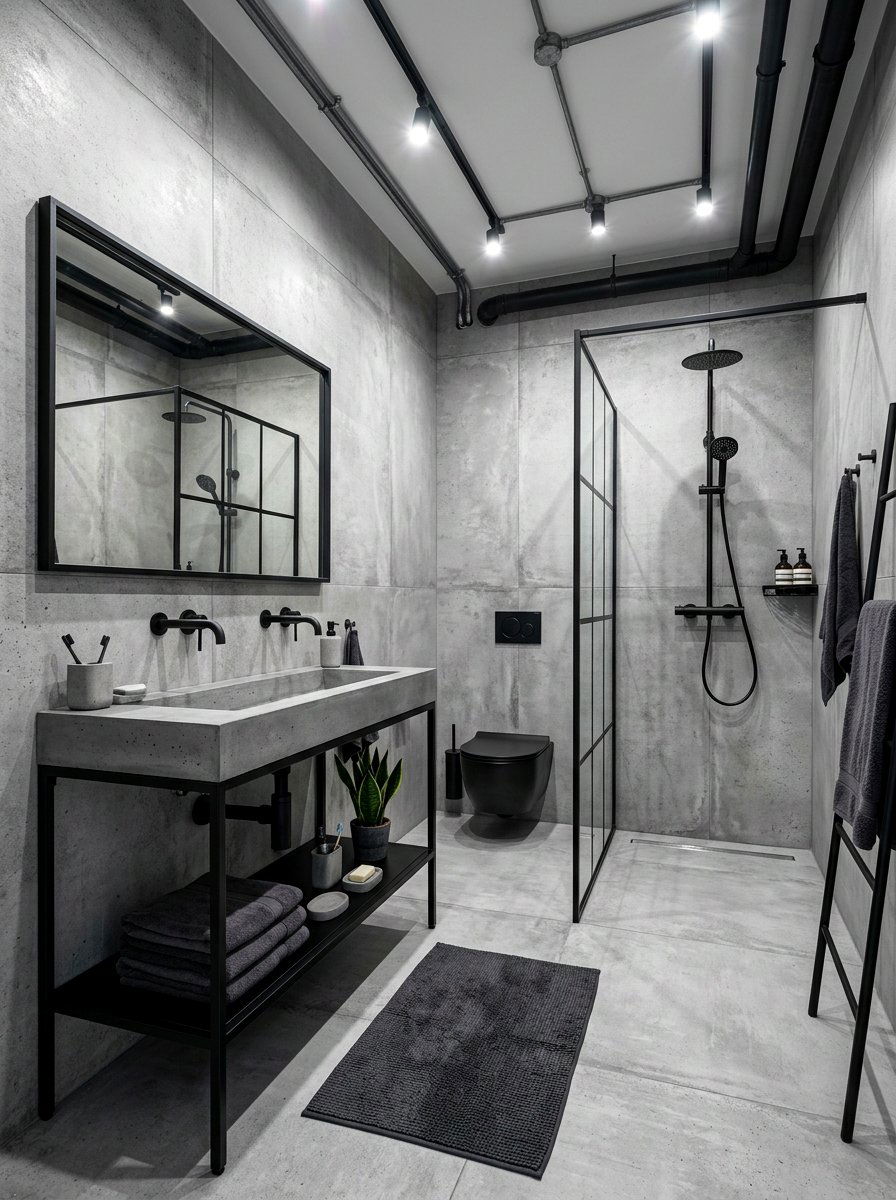
For those who love industrial design, concrete-look tiles offer a rugged contrast to the soft textures of towels and rugs. These large-format tiles provide a seamless, stony appearance that feels modern and minimalist. The cool gray tones act as a neutral canvas, allowing colorful accents or natural wood vanities to stand out. Unlike real concrete, these tiles are non-porous and easy to maintain, making them ideal for wet environments. They bring a sense of weight and permanence to the room, creating a solid, architectural foundation that feels both urban and incredibly sophisticated in a residential setting.
12. Hexagon tile transition floor
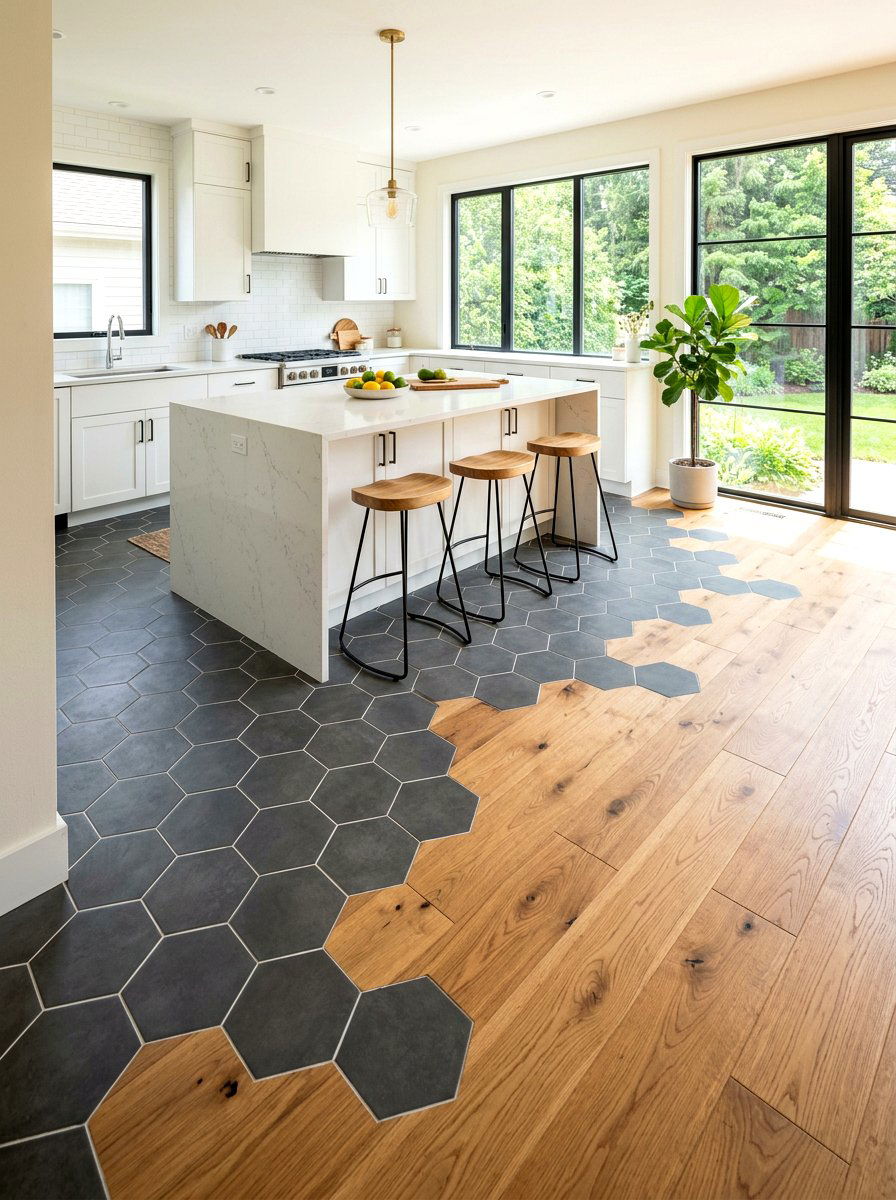
One of the most creative ways to use contrast is through a hexagon tile transition into hardwood flooring. Instead of a straight line, the hexagonal tiles "bloom" into the wood, creating a jagged, artistic edge. This technique is perfect for open-concept homes where the kitchen meets the living room. The contrast between the hard, geometric tile and the warm, linear wood planks is visually stunning and serves as a functional divider. It turns a necessary floor transition into a conversation piece. This look requires precision, but the result is a custom, high-end feel that showcases a modern and playful approach to flooring.
13. Zellige tile kitchen wall
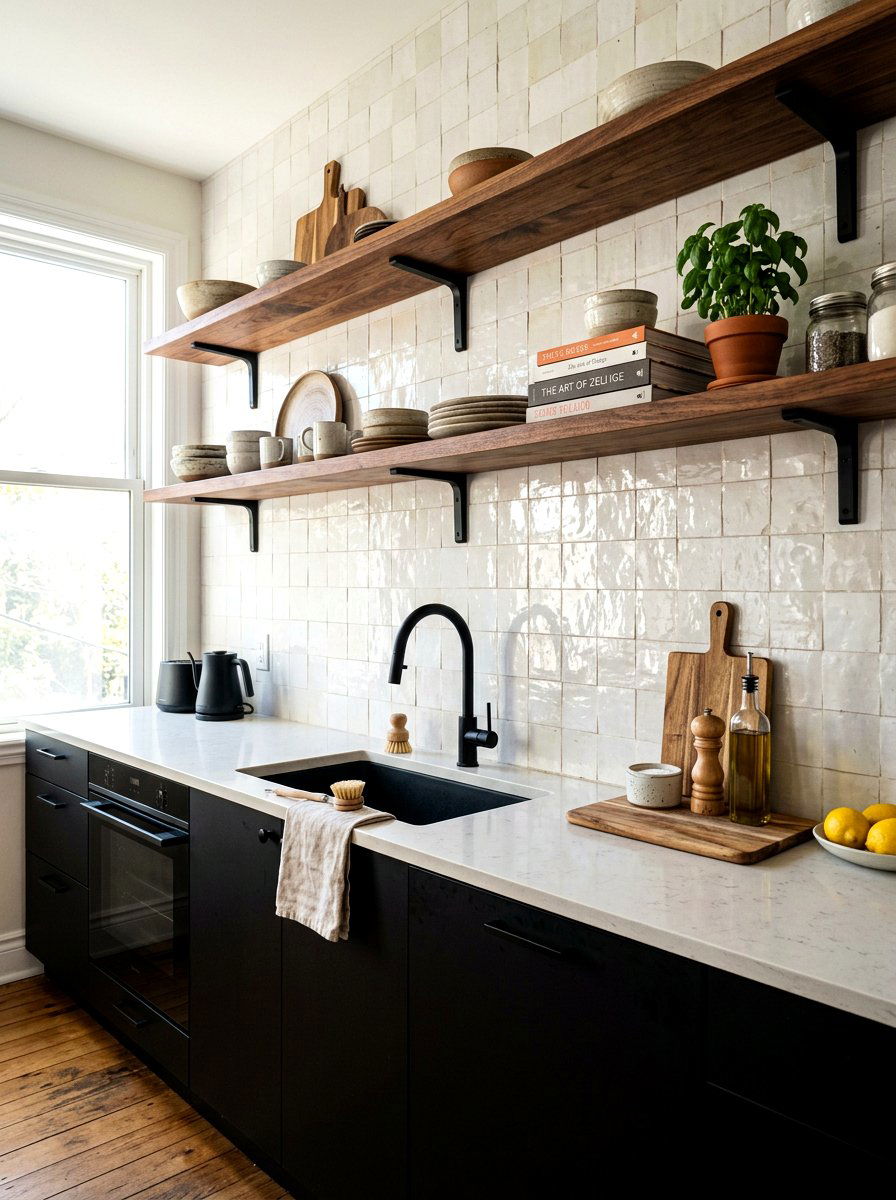
Zellige tiles are prized for their handmade imperfections, offering a shimmering, uneven surface that contrasts with modern, flat-panel cabinets. Each tile has a slightly different shade and texture, which creates a living, breathing wall that catches the light from every angle. This artisanal look adds soul and history to a kitchen, preventing it from feeling too sterile. The contrast here is more about texture and light than just color. Pairing these glossy, organic tiles with matte countertops creates a sophisticated balance that feels both ancient and perfectly on-trend. It is a beautiful way to celebrate craftsmanship in your most-used room.
14. Pink tile shower niche
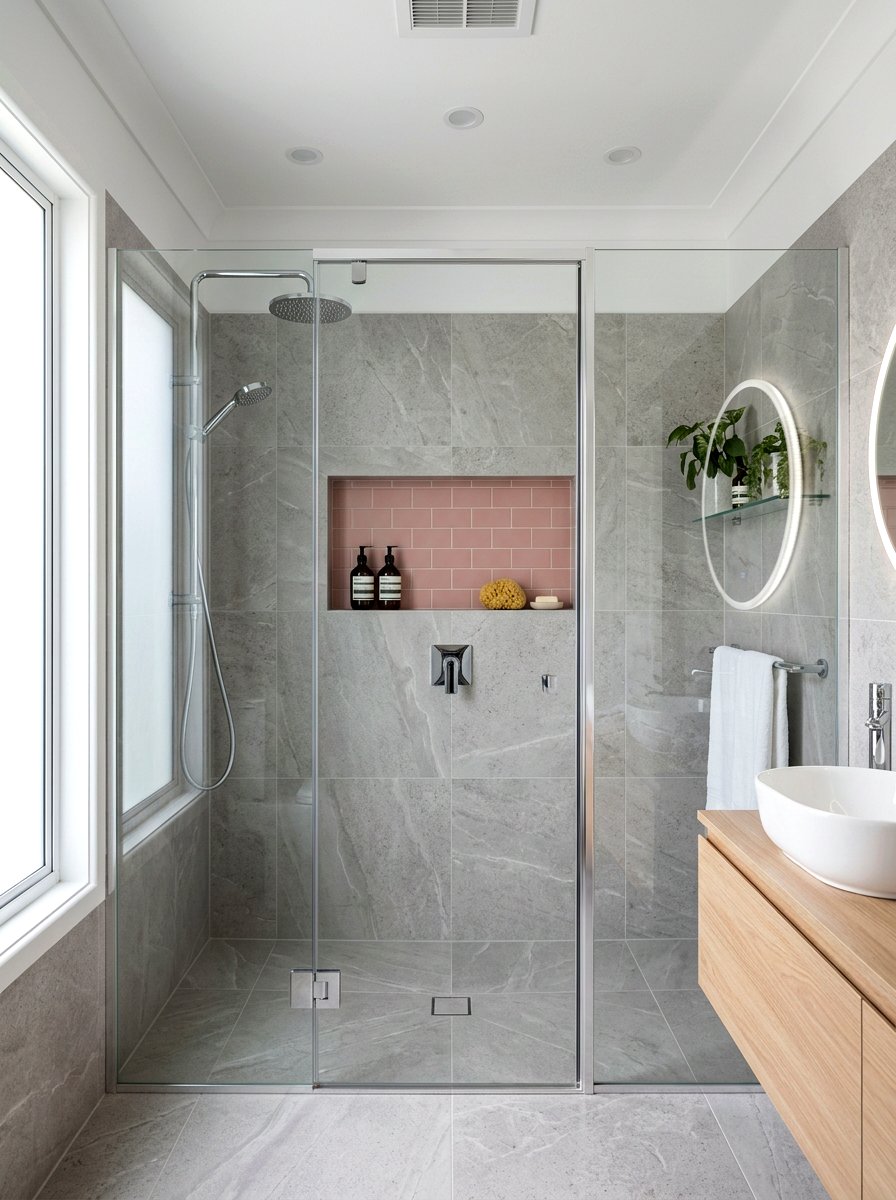
Don't be afraid to use color in small, controlled doses, like a soft pink tile inside a shower niche. This unexpected pop of color provides a gentle contrast against white or gray marble walls. It adds a touch of warmth and playfulness to the bathroom without feeling overly feminine or distracting. Pink works surprisingly well as a neutral when you choose muted, dusty tones. It creates a focal point that feels fresh and modern, especially when paired with brushed nickel or matte black hardware. This niche detail proves that a little bit of color can go a long way in defining a space.
15. Gray slate bathroom floor
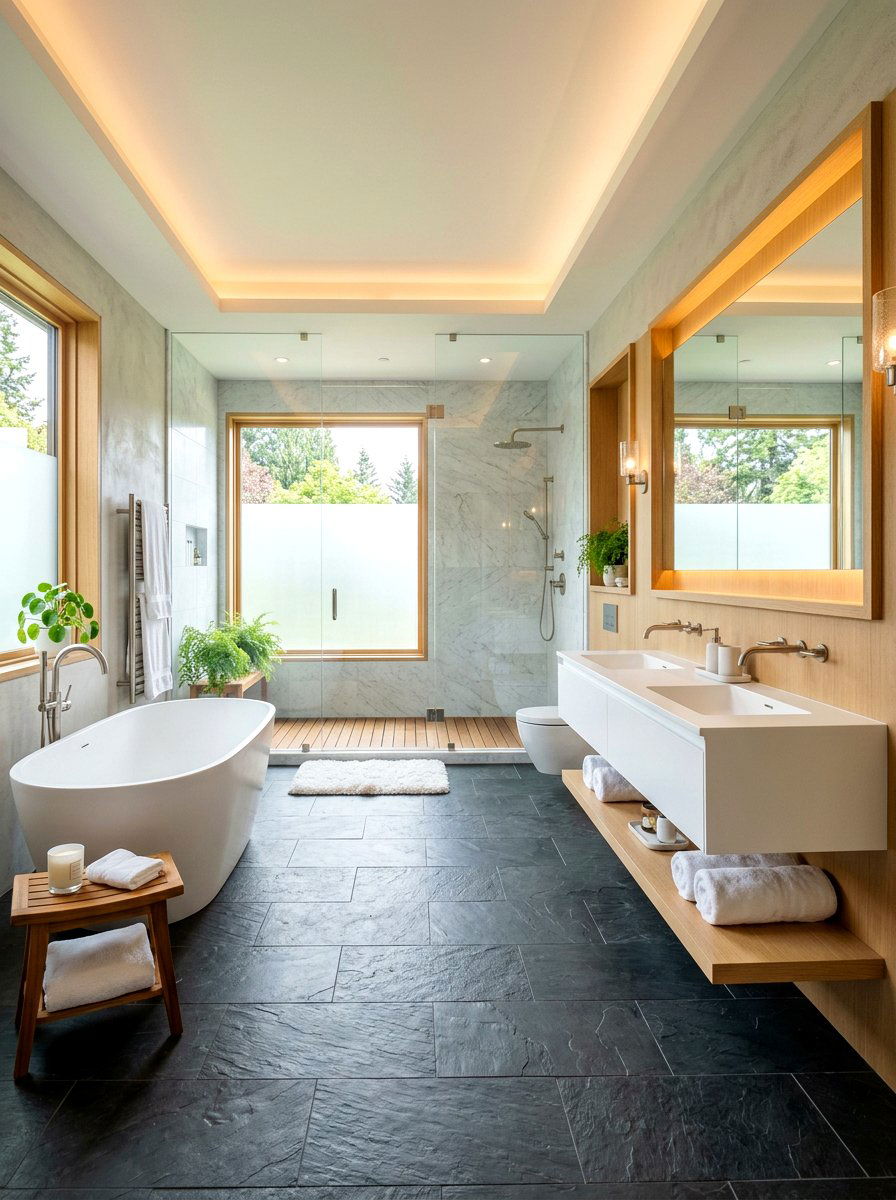
Gray slate tiles offer a moody, natural contrast that feels incredibly grounded and spa-like. The riven texture of the stone provides a slip-resistant surface that is both practical and beautiful. When used against white walls or light oak vanities, the dark slate creates a strong visual anchor that makes the room feel larger and more expensive. The natural variations in the stone mean no two tiles are exactly alike, providing a subtle, organic pattern that hides dust and footprints. It is a timeless choice for anyone who wants a bathroom that feels connected to the natural world while maintaining a modern edge.
16. Moroccan fish scale tile
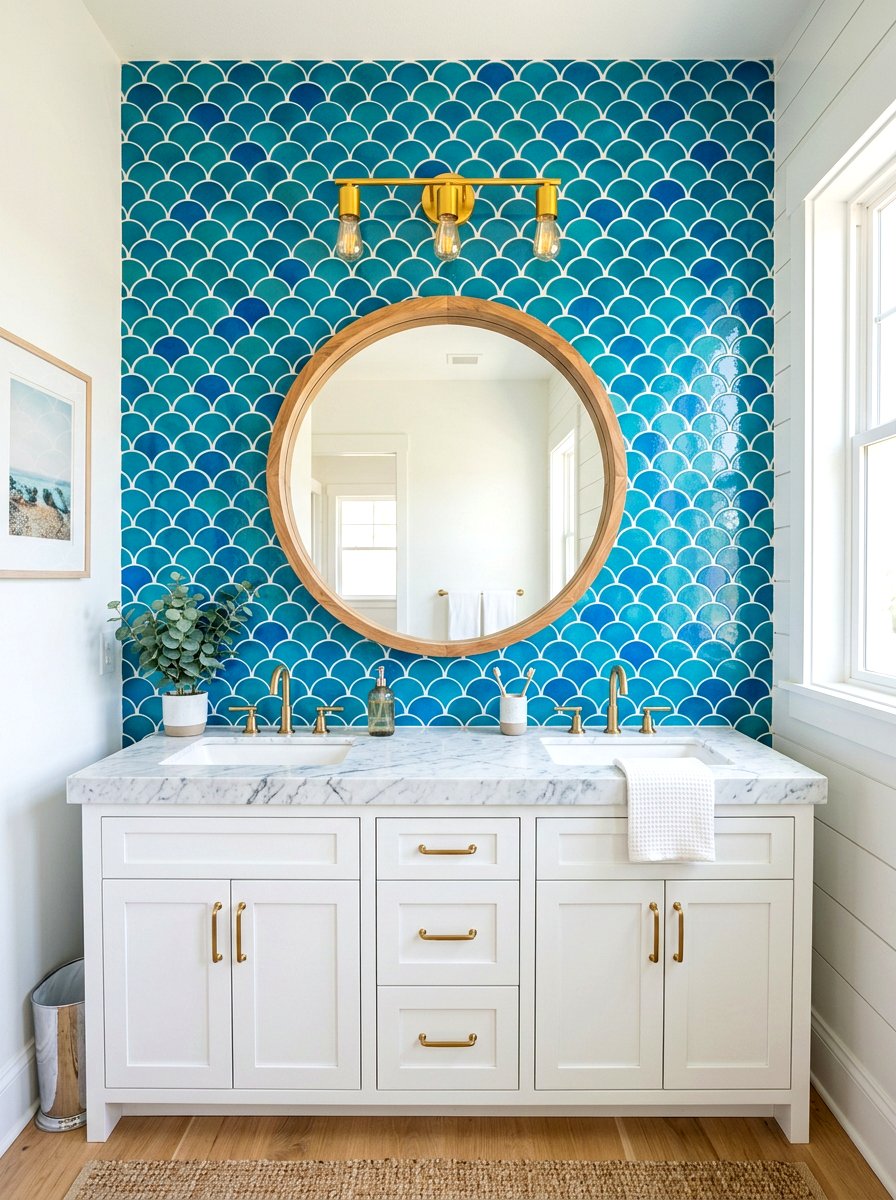
Moroccan fish scale tiles, also known as fan tiles, bring a soft, rhythmic contrast to the straight lines of a typical bathroom. The curved edges of these tiles create a sense of water and flow, making them perfect for shower walls or backsplashes. When you use them in varying shades of a single color, you get a beautiful tonal contrast that mimics the scales of a mermaid. This pattern is inherently decorative and works well as a feature wall behind a vanity. It breaks up the monotony of rectangular shapes and adds a whimsical, exotic flair that feels both unique and incredibly stylish.
17. Vertical stack bond tile
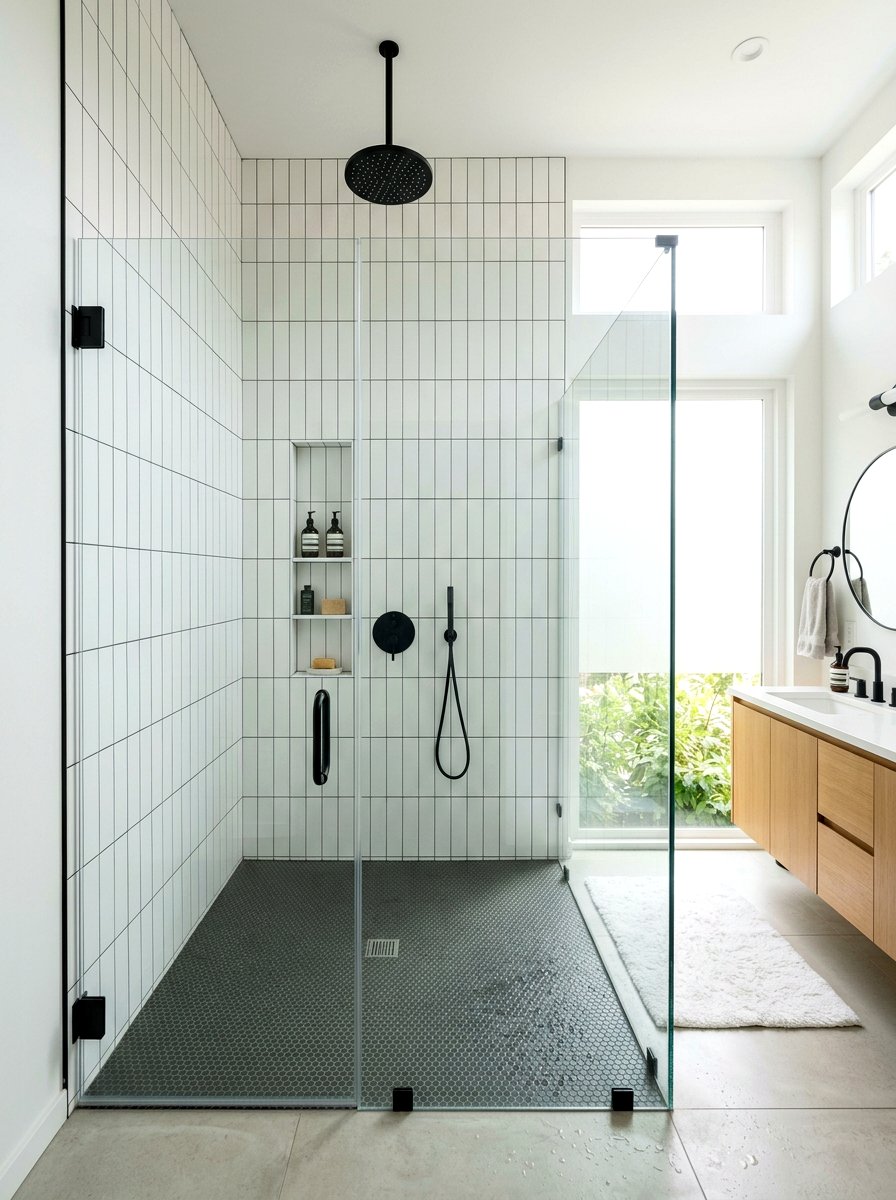
Changing the orientation of your tiles can create a powerful architectural contrast. A vertical stack bond layout, where rectangular tiles are stacked directly on top of each other, draws the eye upward and makes ceilings feel higher. This linear look is a sharp contrast to the traditional offset or brick patterns we see so often. It feels incredibly modern, clean, and organized. When used in a shower or as a kitchen backsplash, it provides a streamlined aesthetic that emphasizes height and volume. It is a simple way to make standard subway tiles look expensive and custom-designed for a contemporary home.
18. Checkerboard bathroom floor
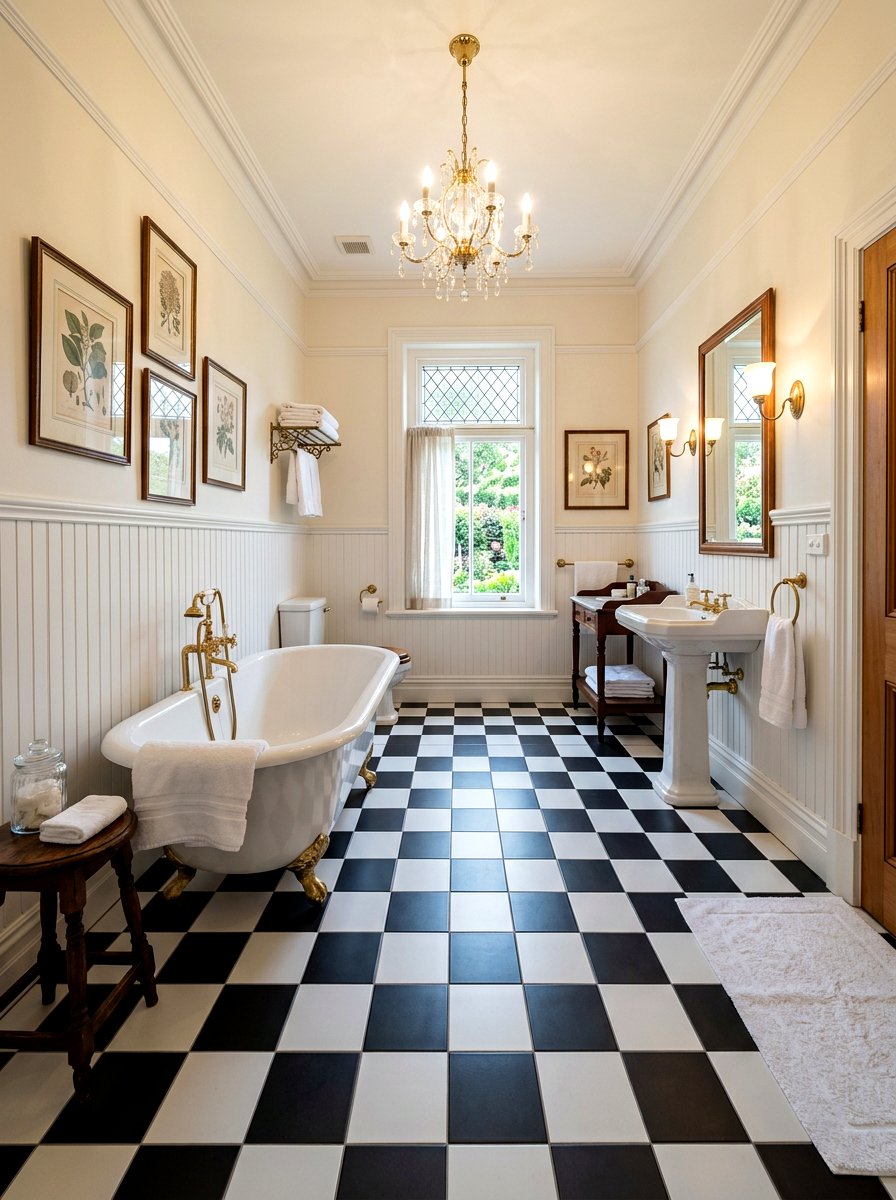
The checkerboard floor is a classic design staple that provides the ultimate high-contrast look. Using black and white tiles in a diagonal pattern creates a sense of grandness and tradition that never goes out of style. It works beautifully in entryways and bathrooms, offering a bold graphic punch that anchors the entire room. You can modernize this look by using larger format tiles or opting for softer contrasts like gray and cream. The checkerboard pattern is a great way to introduce a sense of heritage into a new build, making the space feel established, elegant, and full of historical charm.
19. Penny tile shower floor
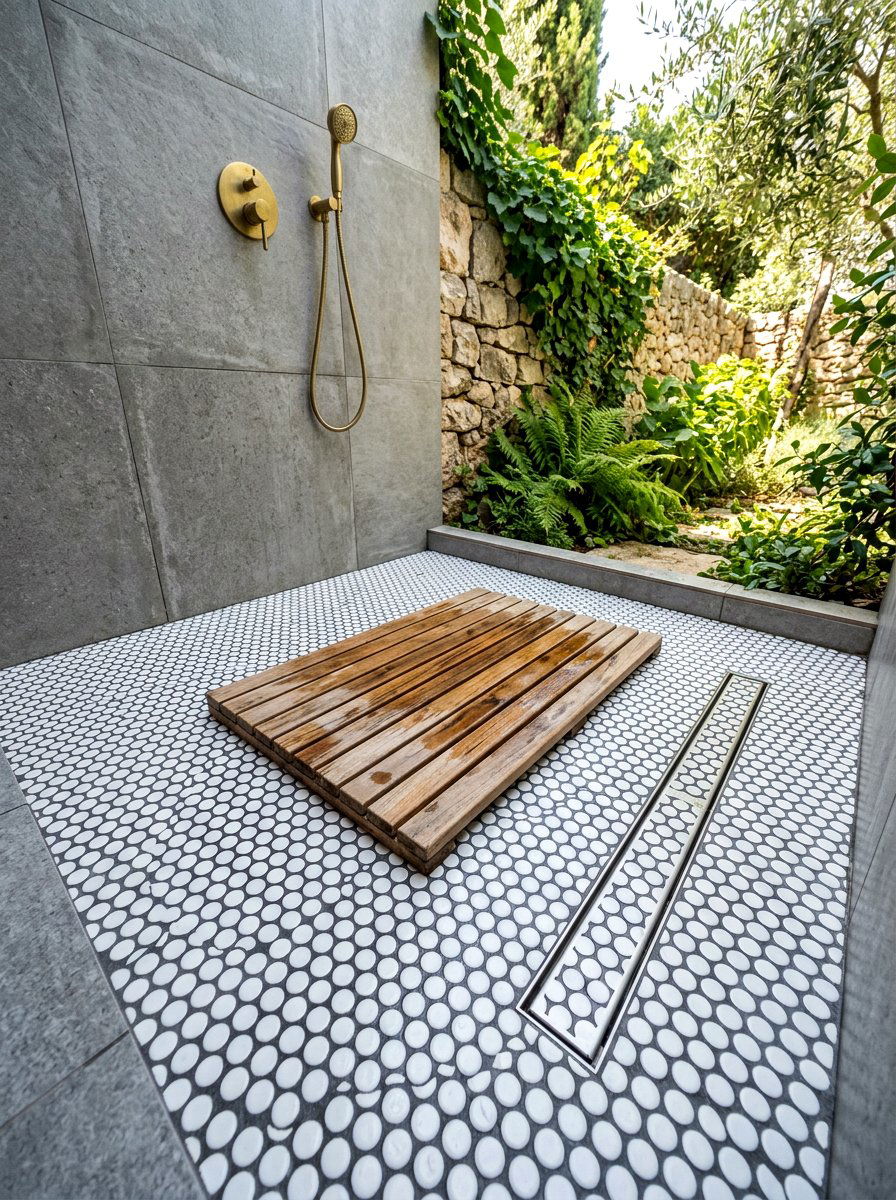
Penny tiles offer a wonderful contrast in scale when used alongside larger wall tiles. These tiny, circular tiles create a dense pattern that is both nostalgic and modern. On a shower floor, they provide excellent grip and a tactile feeling underfoot that larger tiles cannot match. The sheer number of grout lines creates a textured, slip-resistant surface that is as functional as it is beautiful. You can use a contrasting grout to make the "pennies" pop or a matching grout for a more subtle, fabric-like appearance. It is a versatile choice that adds a layer of intricate detail to any bathroom.
20. Copper mosaic backsplash
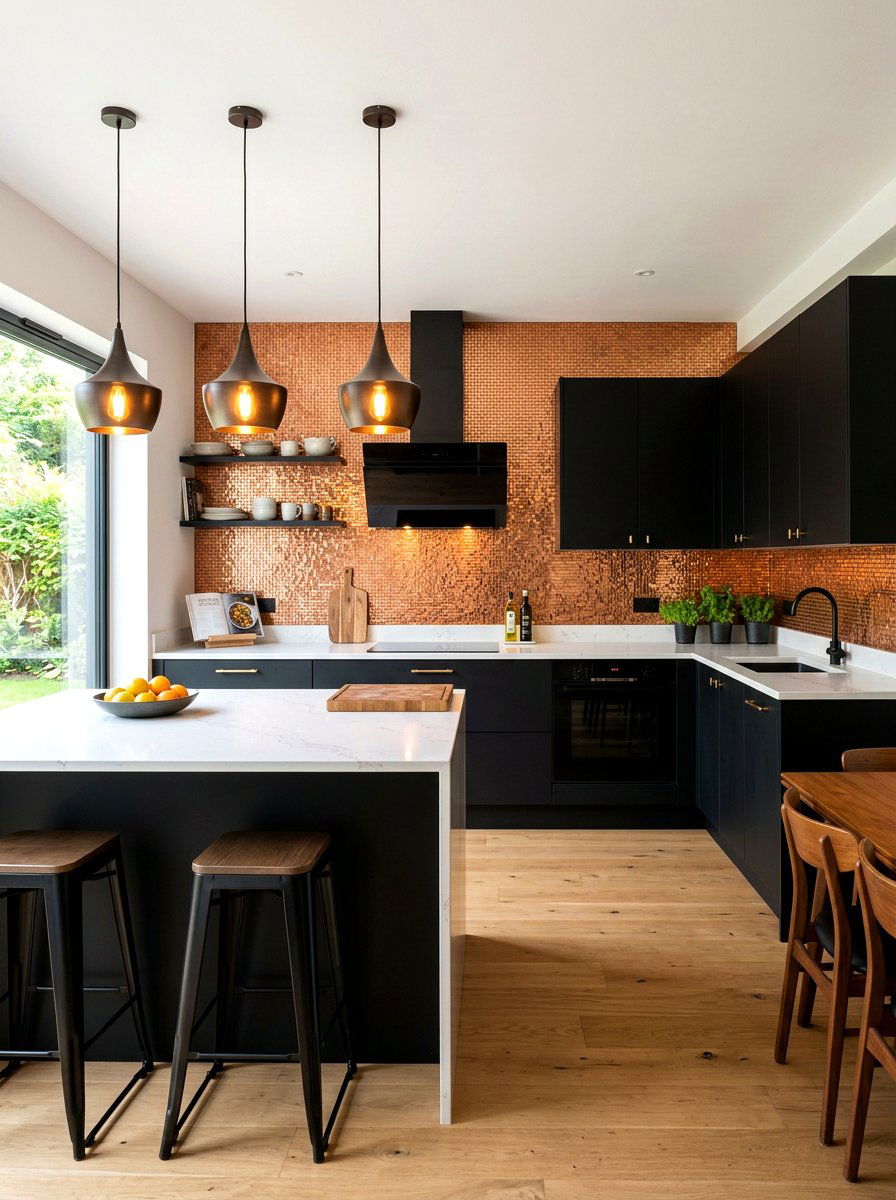
Metallic copper tiles bring a warm, glowing contrast to a dark or neutral kitchen. A mosaic backsplash made of copper reflects light in a way that makes the entire room feel cozy and expensive. The reddish-orange tones of the metal provide a stunning contrast against navy, black, or dark green cabinets. Over time, copper can develop a beautiful patina, adding even more character and organic contrast to your kitchen. It is a bold choice that acts as a focal point, drawing everyone into the heart of the home. This material is perfect for creating a high-end, chef-inspired kitchen that feels truly unique.
21. Picket tile bathroom wall
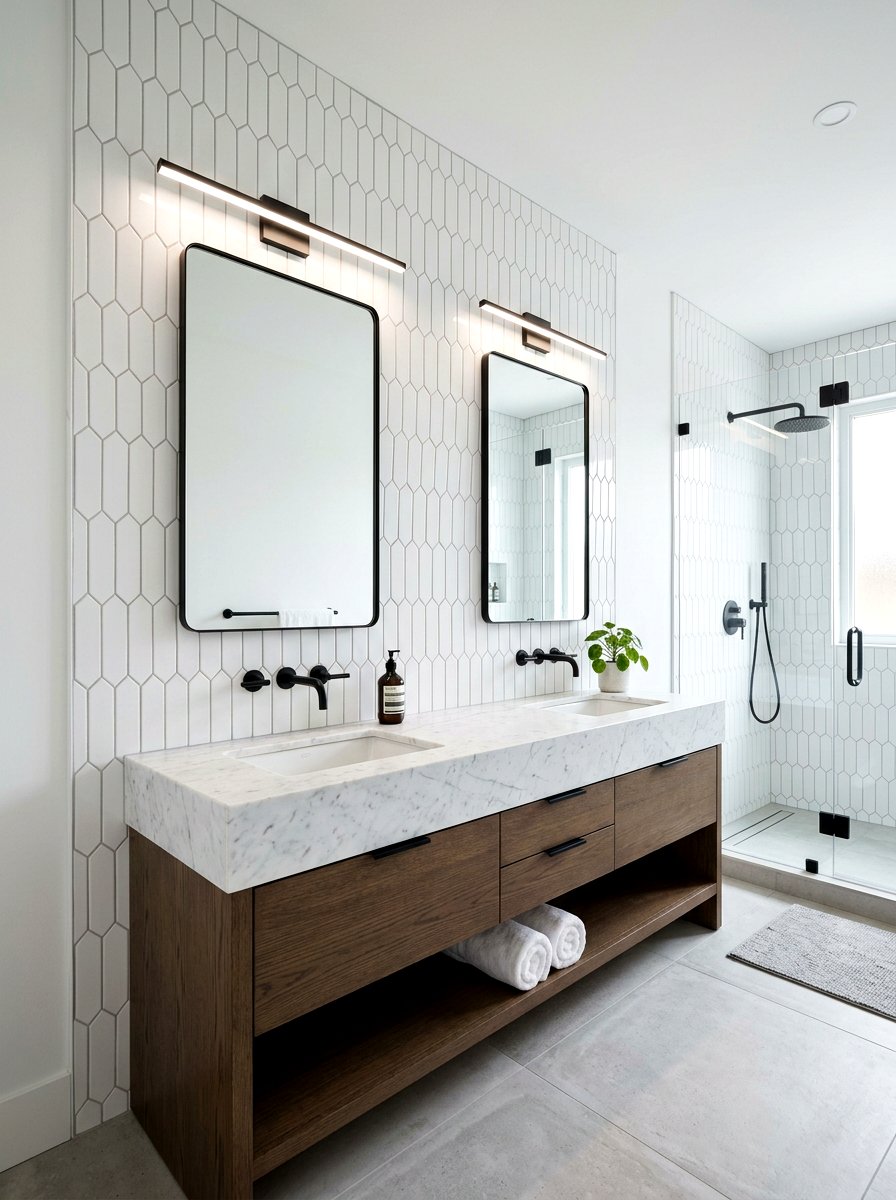
Picket tiles are an elongated hexagonal shape that provides a sharp, angular contrast to round mirrors and soft bathroom fixtures. Their pointed ends create a dynamic, arrow-like pattern that can be installed horizontally or vertically. This shape is a more unique alternative to subway tiles, offering a modern geometric look that feels fresh and sophisticated. When used as a floor-to-ceiling feature wall, picket tiles add a lot of visual interest without the need for bold colors. The clean lines and interesting shapes provide a structured, architectural feel that makes any bathroom look like it was designed by a professional.
22. Marble slab shower wall
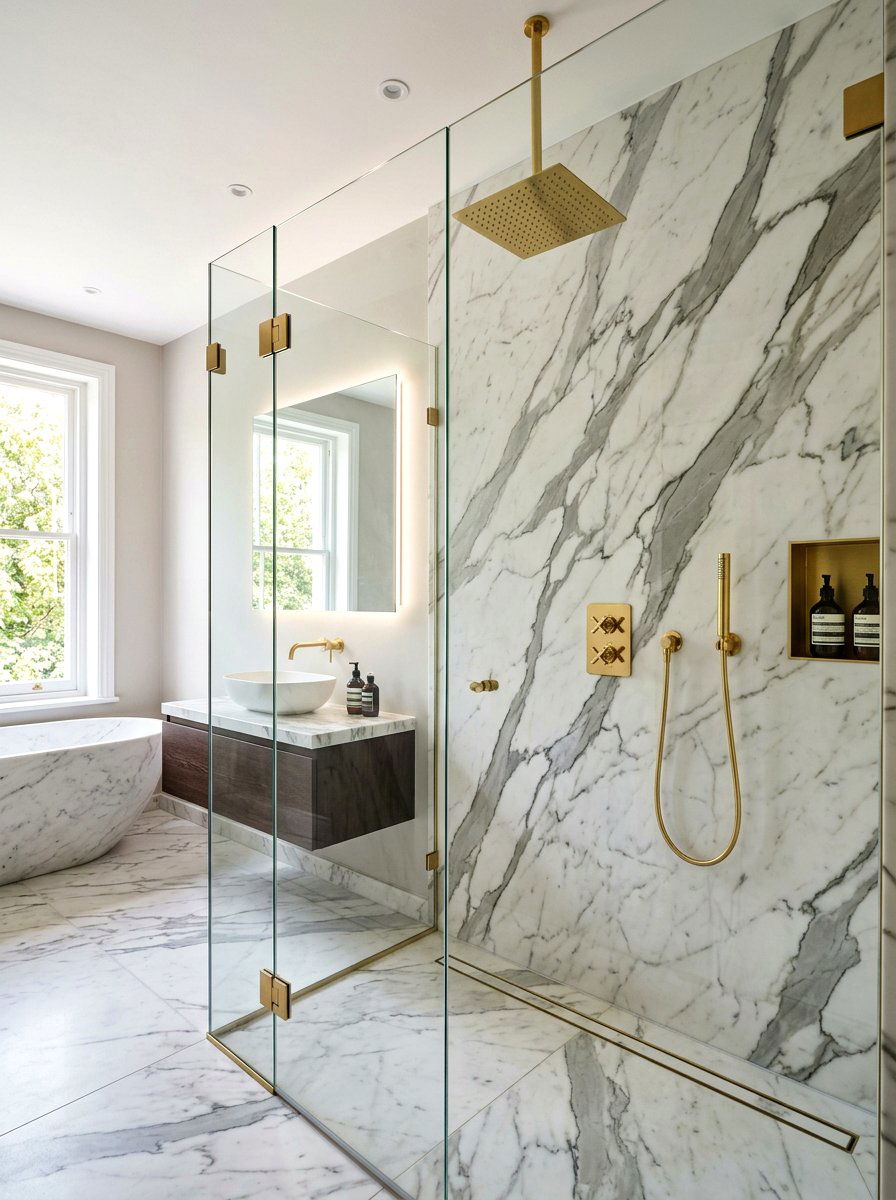
For the ultimate in luxury and contrast, nothing beats a seamless marble slab shower wall. Eliminating grout lines creates a sleek, continuous surface that emphasizes the natural, dramatic veining of the stone. The contrast here comes from the bold, dark veins flowing across a bright white or cream background. It turns your shower into a massive piece of natural art. This look is incredibly modern and easy to clean, as there are no seams for mold or grime to hide. It creates an expansive, high-end feel that makes your bathroom feel like a suite in a five-star hotel, focused on pure elegance.
23. Sage green stacked tile
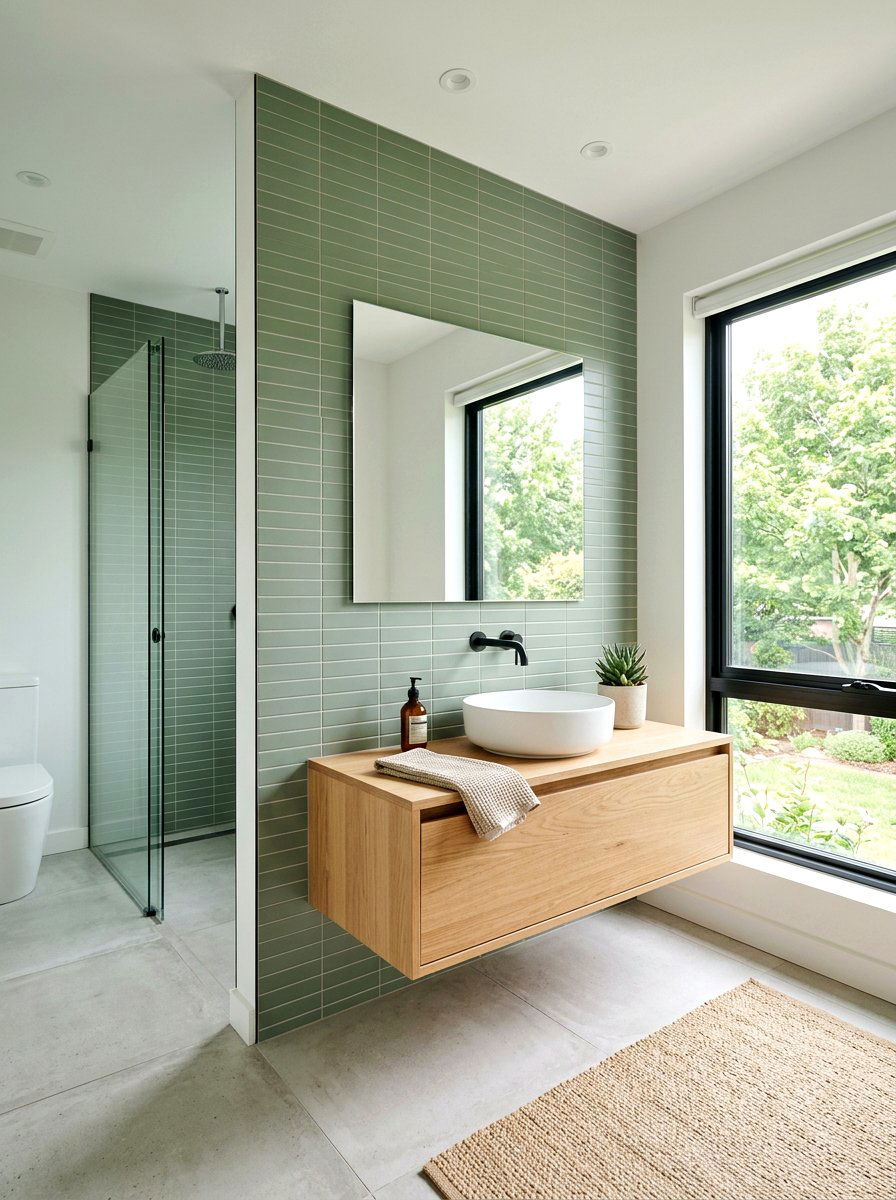
Sage green is a versatile, calming color that provides a soft, natural contrast to white porcelain and light wood tones. When laid in a stacked pattern, these tiles create a clean, contemporary look that feels very organic. The muted green tone brings the peace of a garden indoors, making your bathroom or kitchen feel like a tranquil sanctuary. This color is neutral enough to pair with almost any hardware finish, from matte black to polished chrome. It is a sophisticated way to add color that feels timeless rather than trendy, ensuring your space remains beautiful and relevant for many years to come.
24. Charcoal gray walk in shower
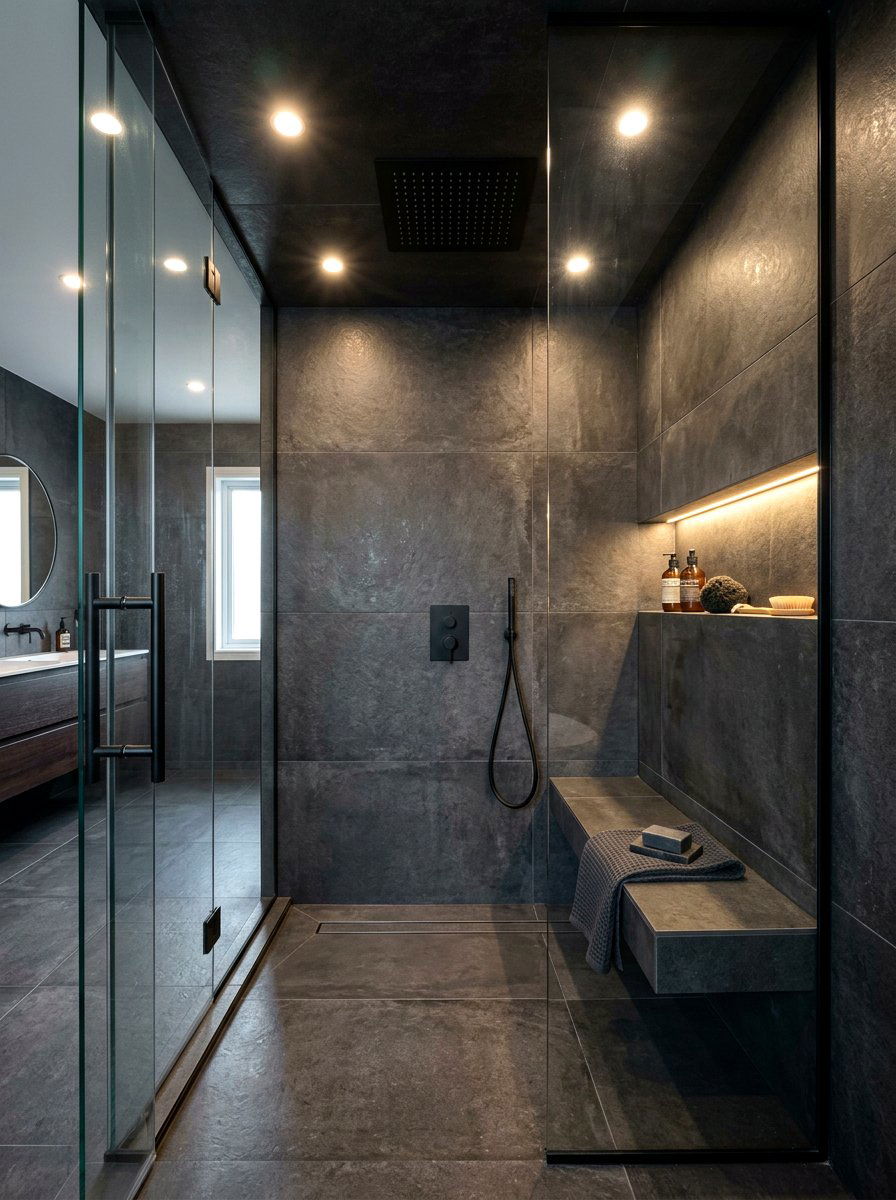
A charcoal gray walk-in shower creates a moody, enveloping contrast that feels both masculine and incredibly chic. Using large-format dark tiles on the walls and floor creates a seamless "wet room" look that hides water spots and adds a sense of drama. This dark backdrop makes white towels and bright lighting stand out beautifully. It is a bold choice that works best in bathrooms with plenty of light, as it creates a cozy, cave-like retreat for relaxation. The deep gray tones provide a sophisticated alternative to black, offering a slightly softer but equally impactful design direction for a modern home.
25. Pebble tile shower floor
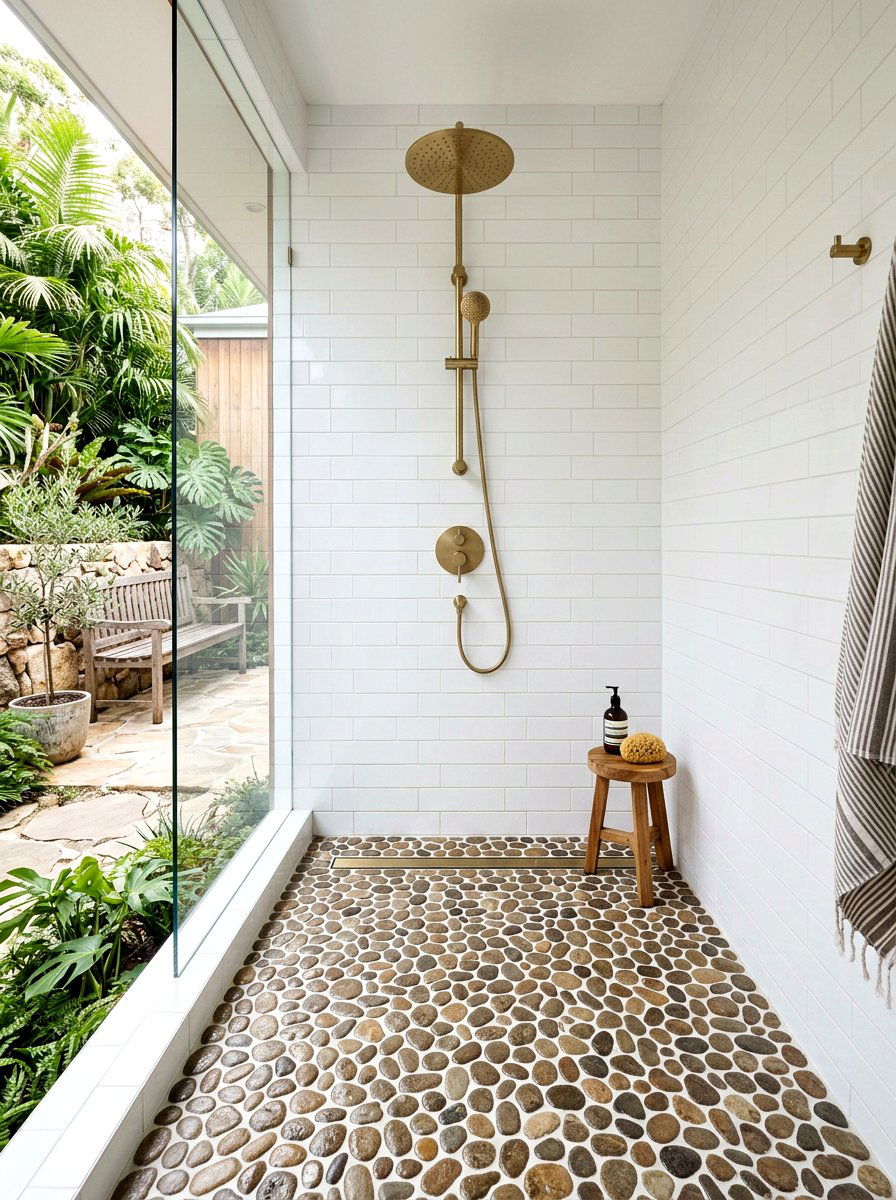
Pebble tiles bring an incredible tactile contrast to the smooth, flat surfaces of a typical bathroom. Walking on these rounded stones feels like a foot massage and brings an immediate connection to the outdoors. The irregular shapes and natural colors of the pebbles provide a soft, organic contrast to the hard lines of the shower walls. This look is perfect for a spa-themed or coastal bathroom where you want to emphasize a relaxed, natural vibe. The varying heights and textures of the stones create a visually rich floor that adds depth and interest to the most functional part of the room.
26. Patterned cement tile entryway
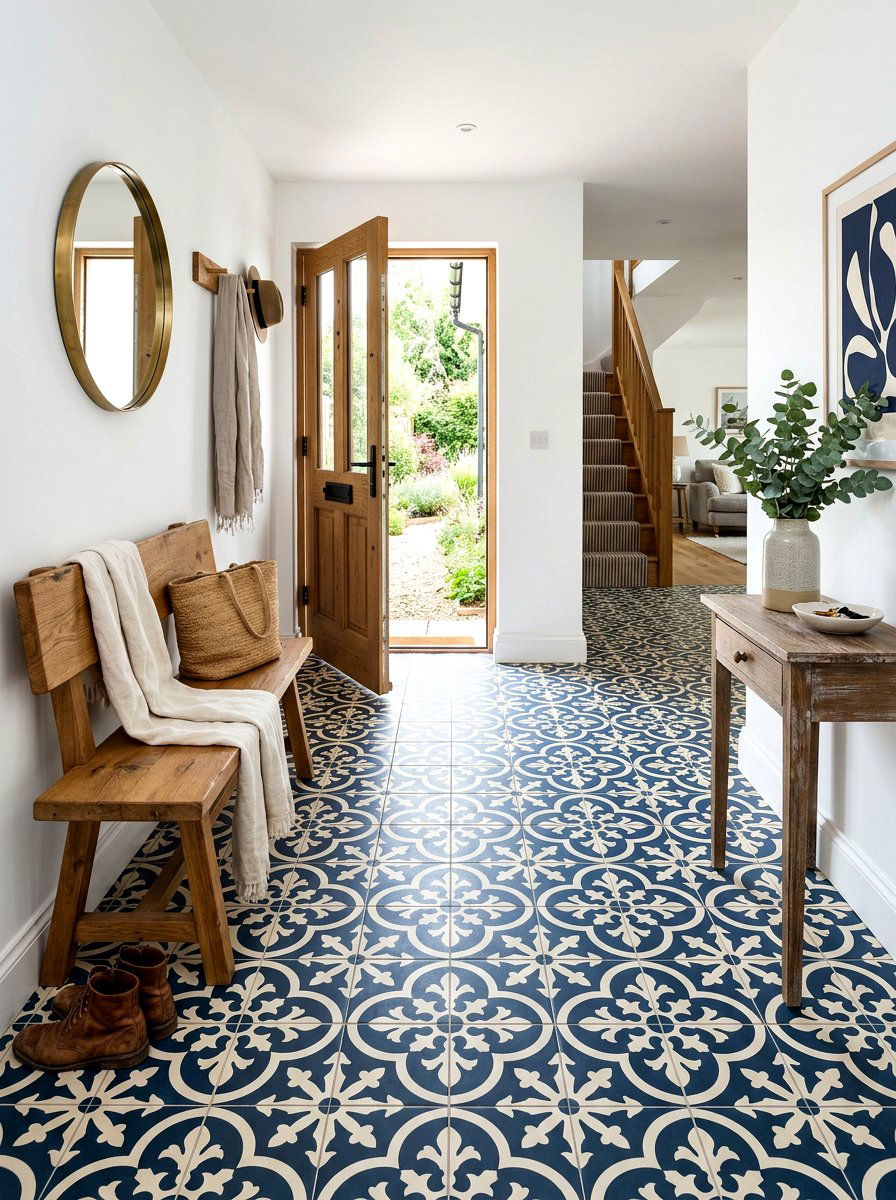
Cement tiles are known for their bold, matte patterns that provide a high-contrast welcome in any entryway. These tiles often feature intricate floral or geometric designs that can act as a "rug" for your foyer. The contrast between the colorful, patterned floor and the neutral walls of a hallway creates a stunning first impression for guests. Cement tiles are durable and develop a beautiful lived-in look over time. This design choice allows you to show off your personality right at the front door, turning a simple transition space into a vibrant and memorable part of your home’s overall design.
27. Glossy white tile matte black fixtures
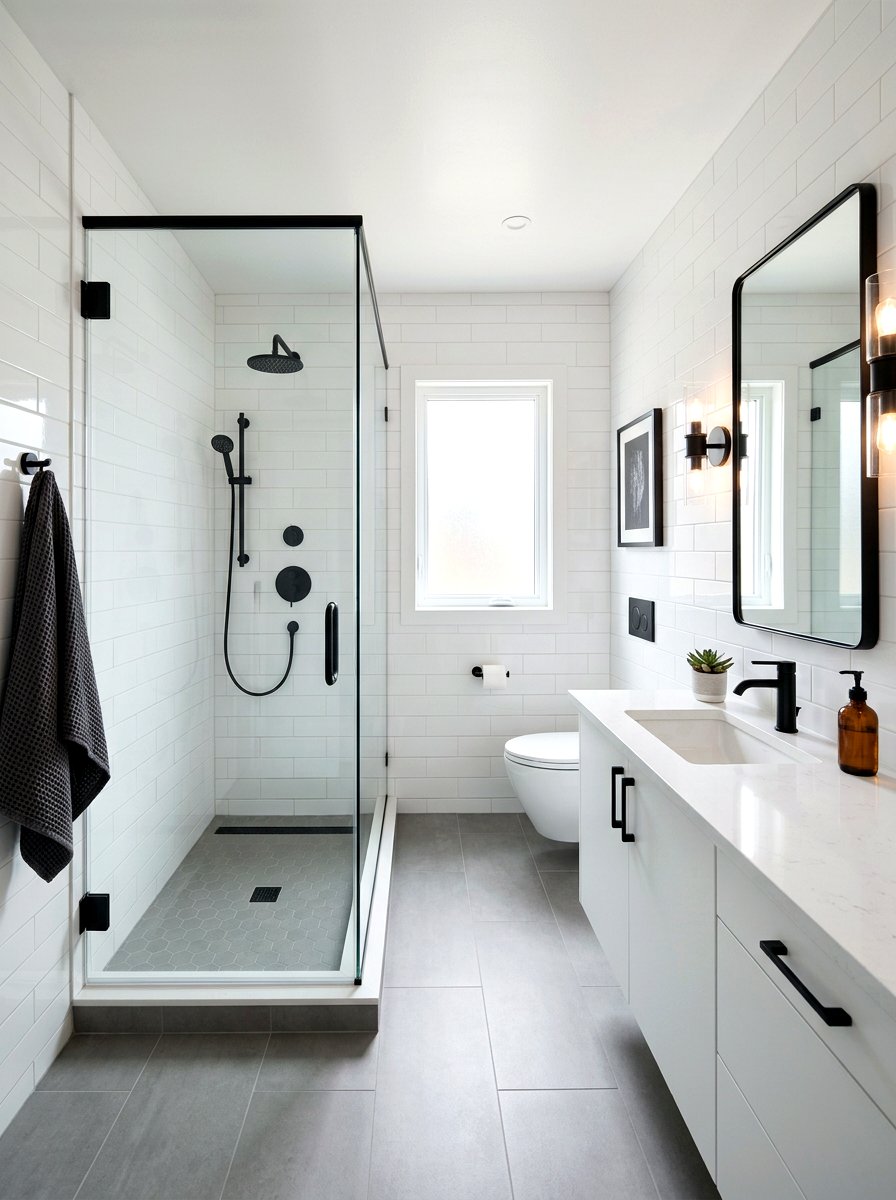
Contrast isn't always about the tiles themselves; it can be about how they interact with your hardware. Pairing high-gloss white tiles with matte black fixtures creates a sharp, modern contrast that feels incredibly clean and architectural. The glossy surface of the tile reflects light, while the matte black metal absorbs it, creating a dynamic visual balance. This look is a staple of modern minimalist design and works perfectly in both kitchens and bathrooms. It is a simple, effective way to make a space feel updated and expensive without using complex patterns or expensive materials, focusing instead on finish and form.
28. Brass inlay marble tile
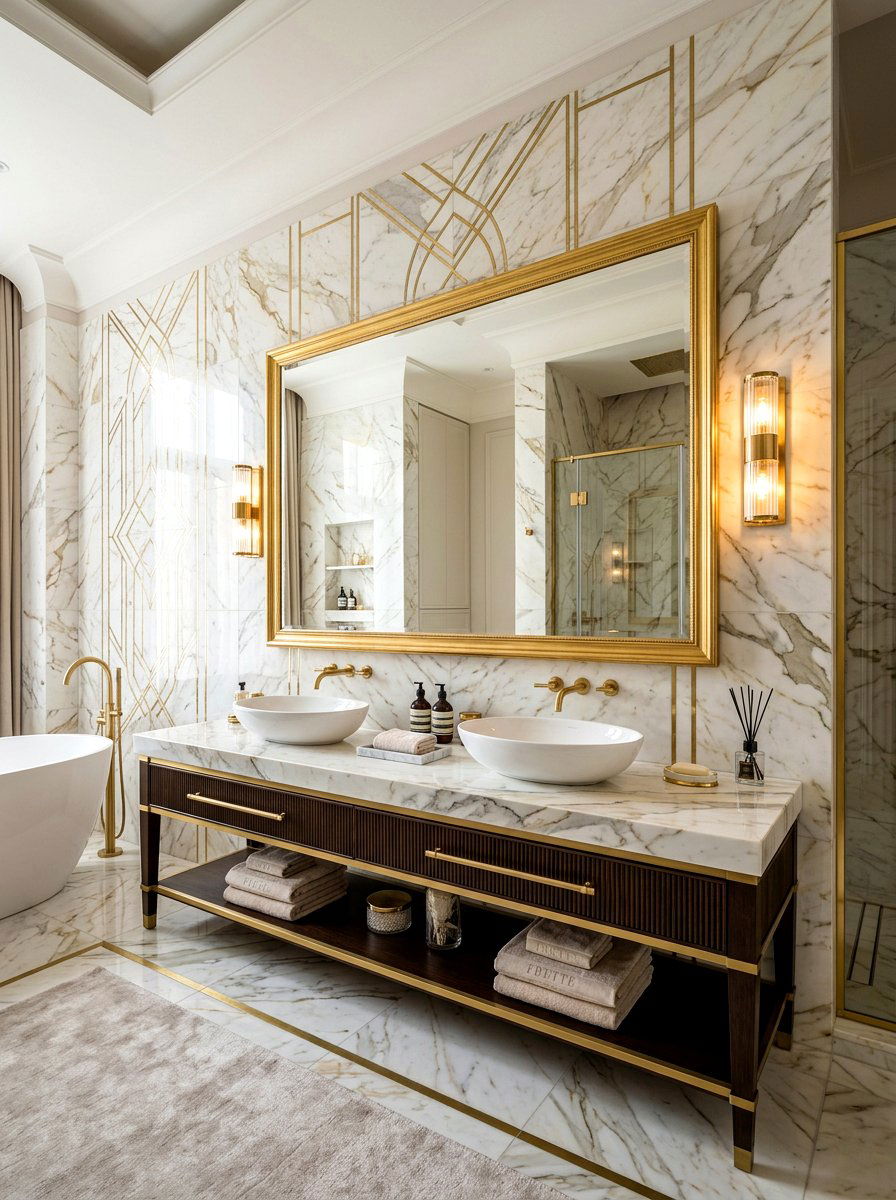
For a touch of Gatsby-era glamour, marble tiles with brass inlays offer a sophisticated metallic contrast. The thin lines of gold-toned metal set into the white or gray stone create a luxurious, geometric pattern that feels very high-end. This tile choice is perfect for a vanity backsplash or a feature floor in a small bathroom. The brass reflects light beautifully, adding a subtle sparkle that complements other gold hardware in the room. It is a refined way to incorporate metallic trends into your home in a way that feels permanent and integrated rather than just a temporary decorative accessory.
29. Teal blue glass tile
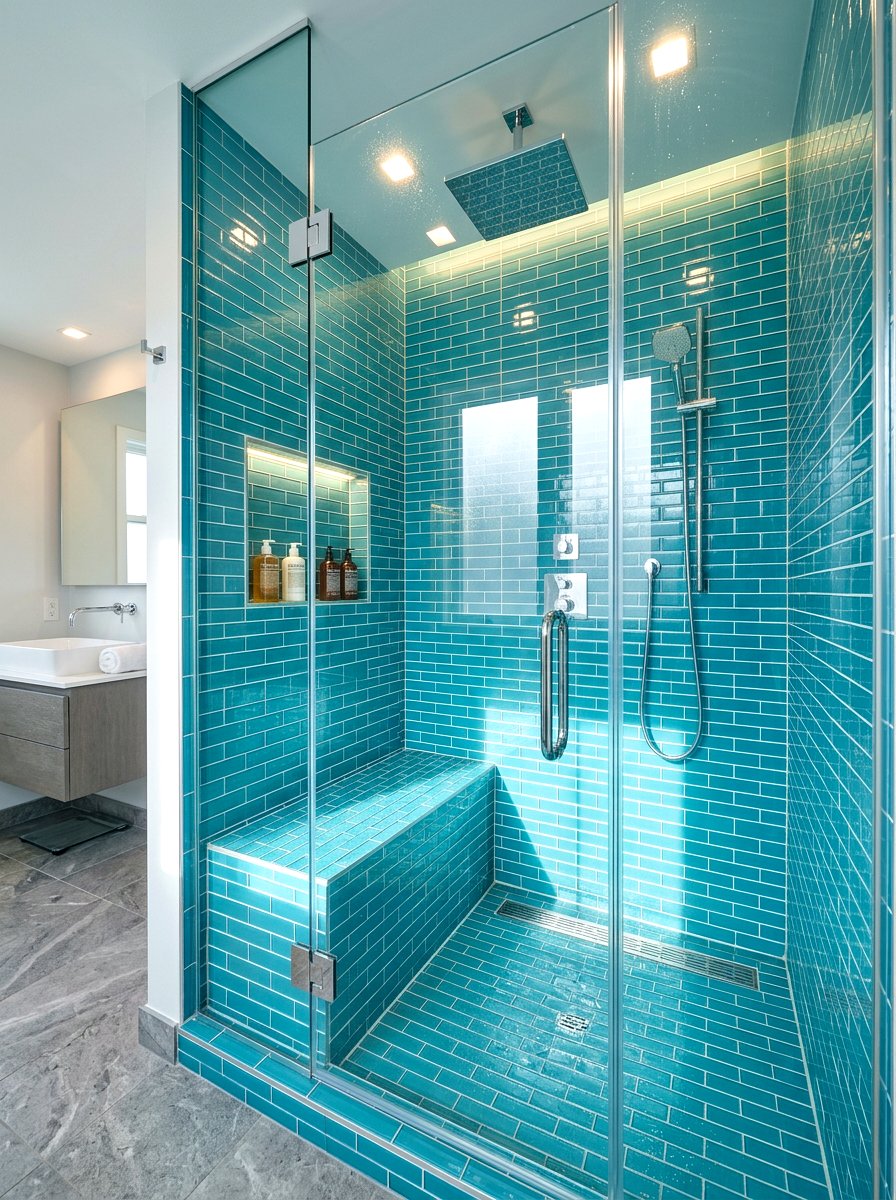
Glass tiles have a translucent quality that provides a unique depth of contrast compared to opaque ceramic. Teal blue glass tiles, in particular, evoke the feeling of water and bring a vibrant, jewel-like glow to a shower or kitchen. The way light passes through the glass creates a shimmering effect that changes throughout the day. When paired with neutral surroundings, these tiles become a vivid focal point that feels energetic and refreshing. This material is also incredibly easy to wipe clean, making it as practical as it is beautiful for areas prone to splashes and steam in a busy home.
30. Rustic stone shower wall
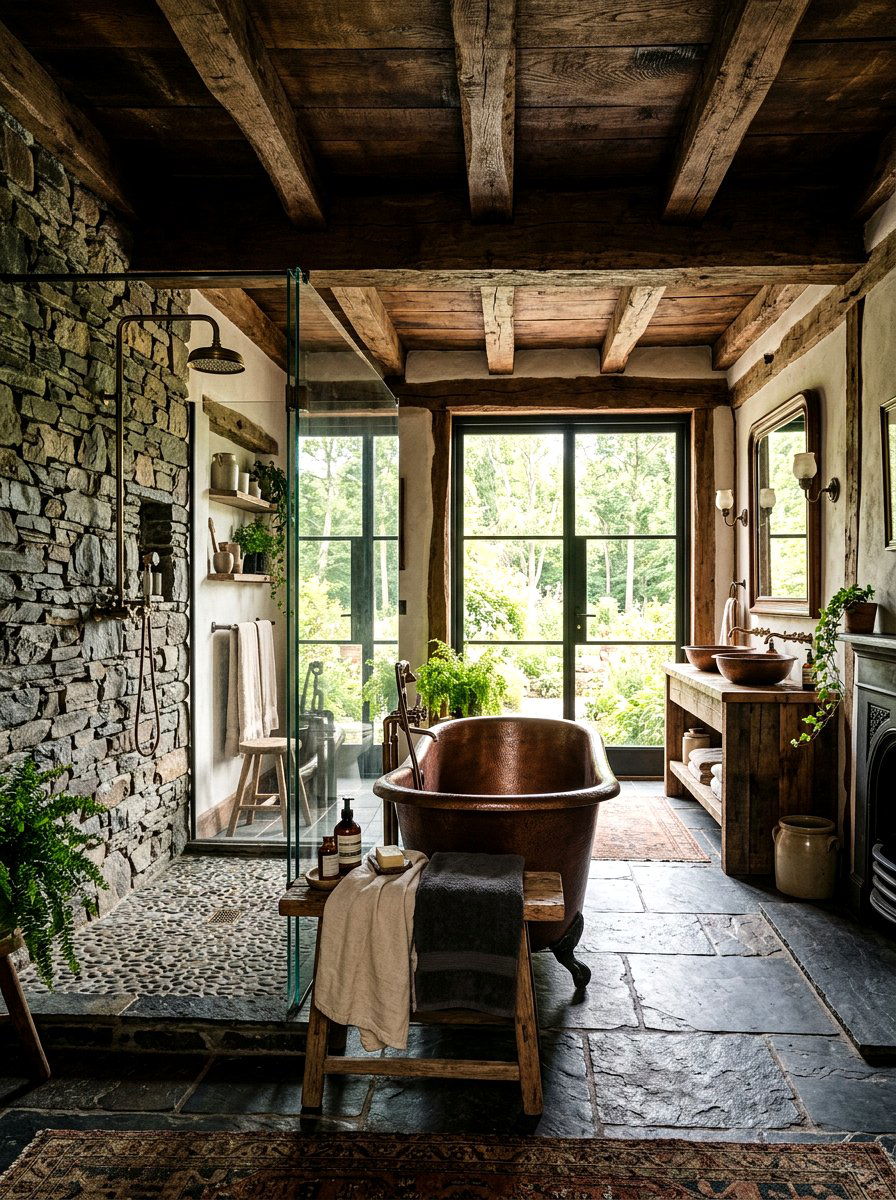
A rustic stone shower wall provides a heavy, textured contrast to the sleek glass and metal found in modern bathrooms. Using rough-cut stone or split-face slate creates a rugged, natural look that feels like a private grotto. The deep shadows and varied colors of the stone add immense visual weight and interest to the room. This contrast between "raw" and "refined" is a hallmark of high-end mountain or coastal homes. It transforms the act of showering into an immersive experience, surrounding you with the beauty of natural materials while you enjoy all the comforts of modern plumbing and design.
Conclusion:
The art of tile design lies in the balance of contrast, where every choice contributes to the overall narrative of your home. By exploring these niche ideas, you move beyond basic renovations and toward a space that reflects true craftsmanship and personal style. Whether you choose the bold graphic lines of dark grout or the tactile comfort of a pebble floor, the key is to be intentional with your pairings. Contrast adds the necessary "pop" that prevents a room from feeling flat or uninspired. Ultimately, a well-tiled space is one that harmonizes different elements to create a functional, beautiful, and lasting environment.

Related posts: